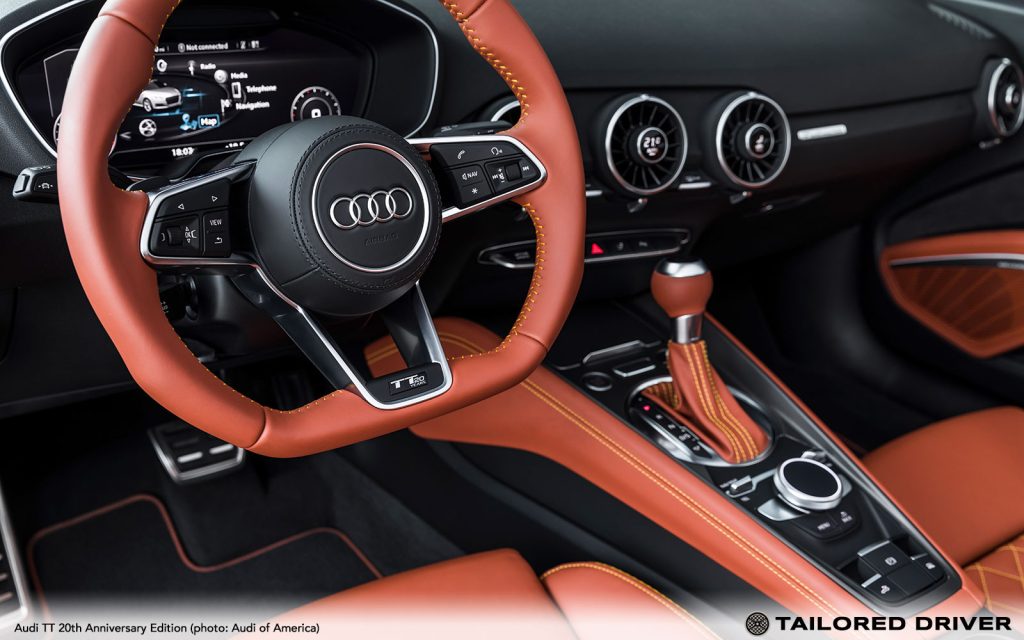
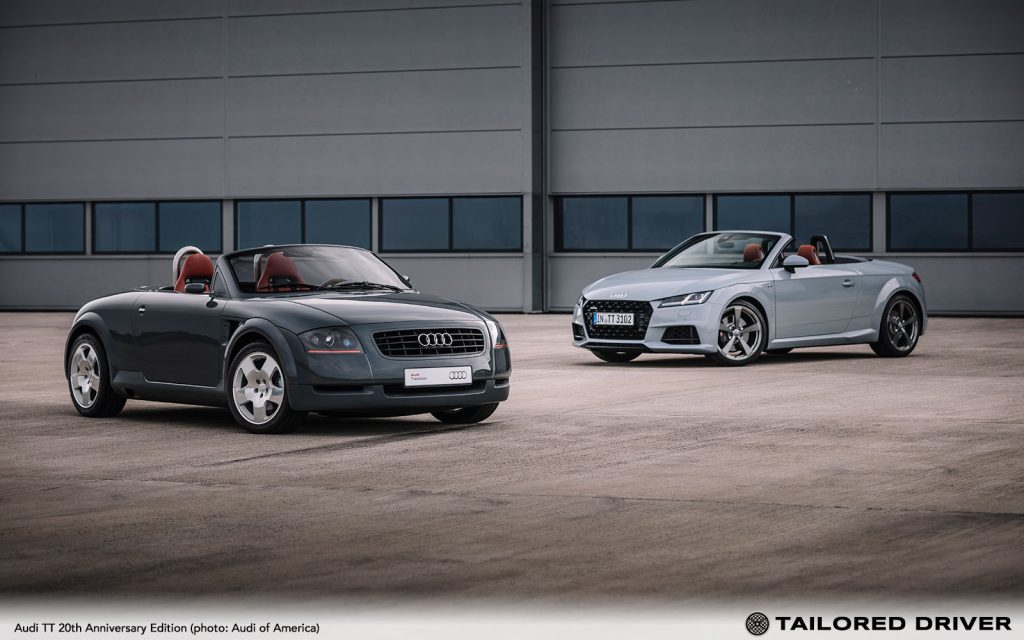
Featuring unique TT Anniversary Edition interior design details, including the original baseball stitch, and “20 Years of TT” badging
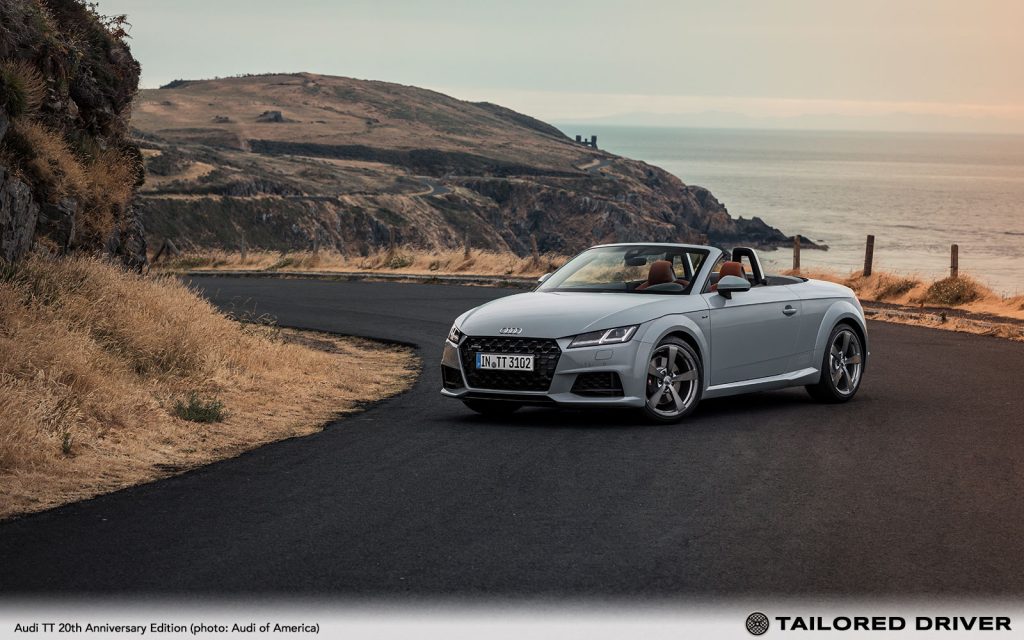
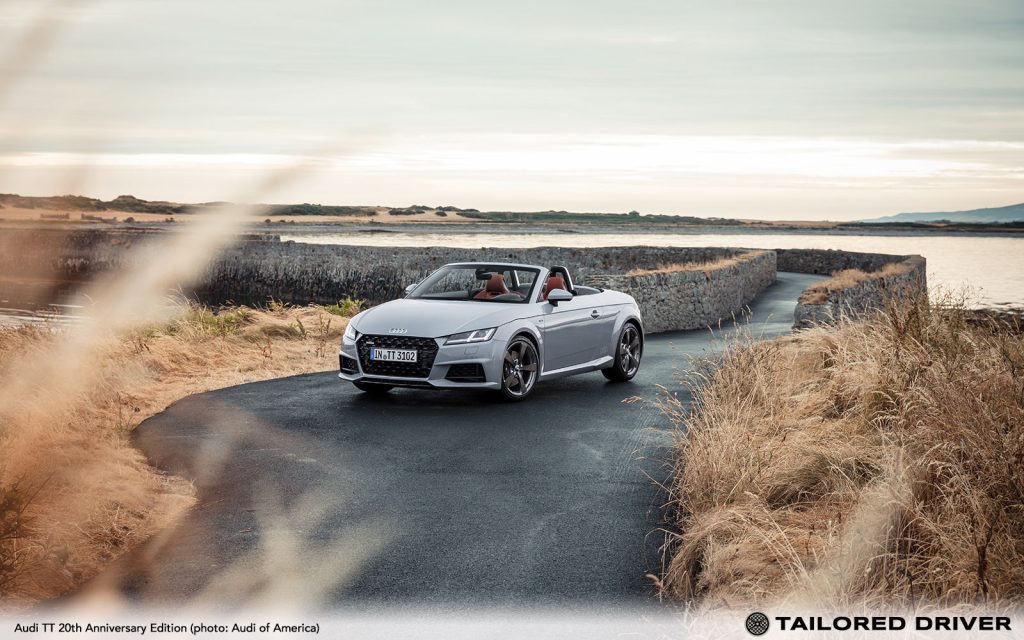
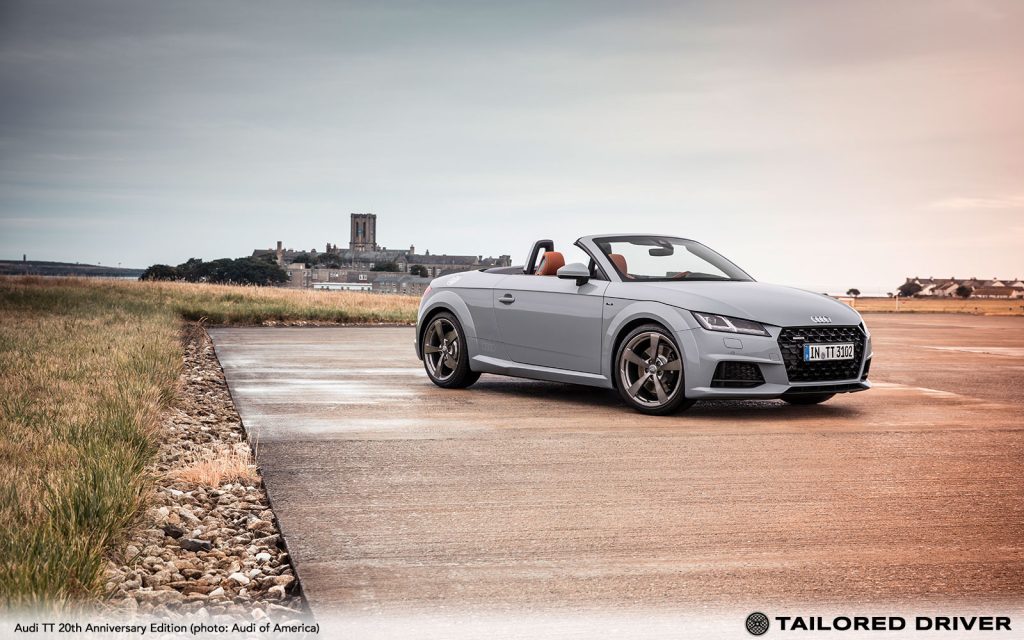
Available in coupe and roadster and painted in either Aviator Gray pearl effect, or – exclusive to the U.S. – Nimbus Gray metallic
Limited number available in U.S. and globally
HERNDON, VA – To celebrate two decades of iconic design, Audi of America announces the 20th Anniversary Edition of the Audi TT, now available in U.S. dealer showrooms.
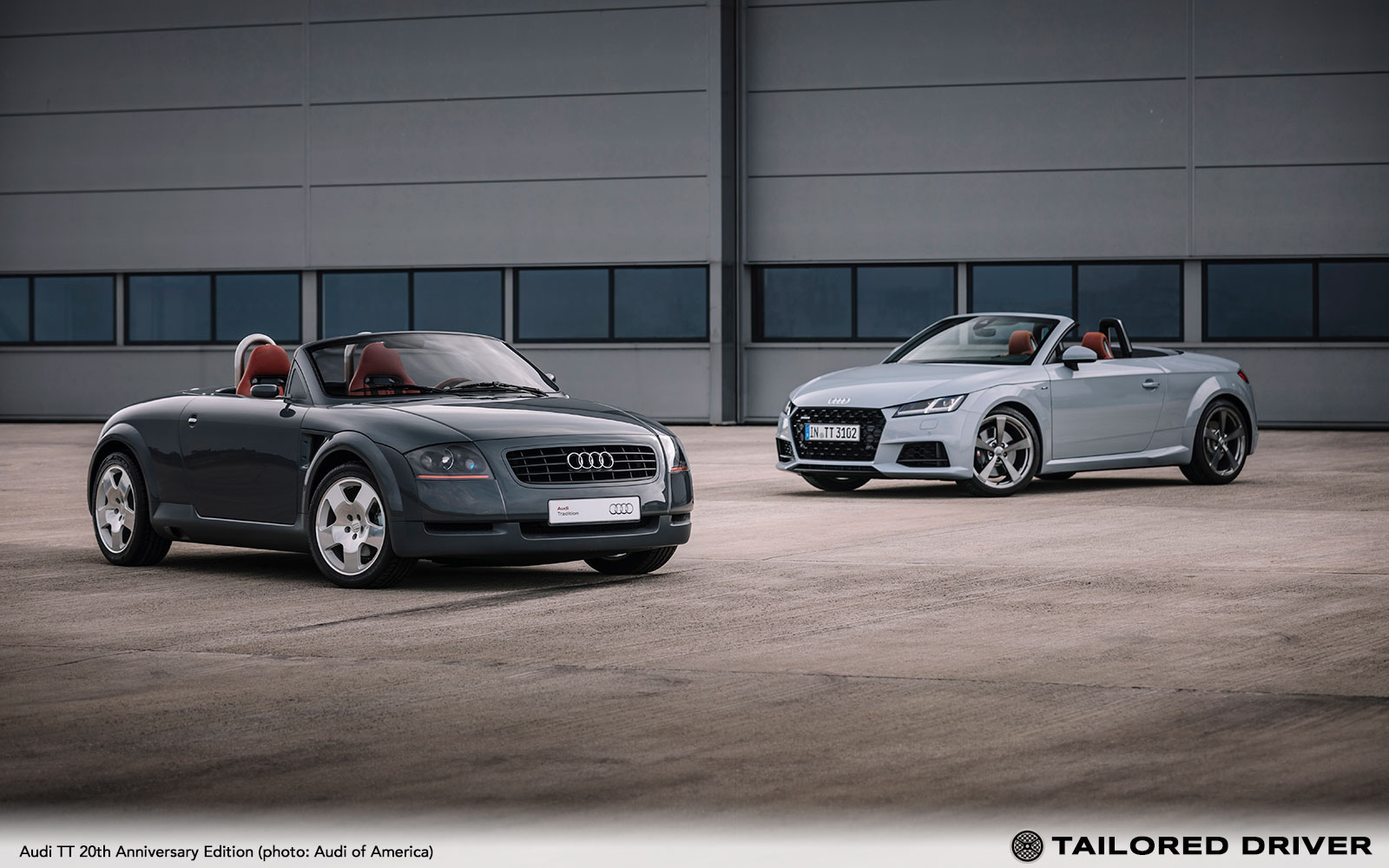
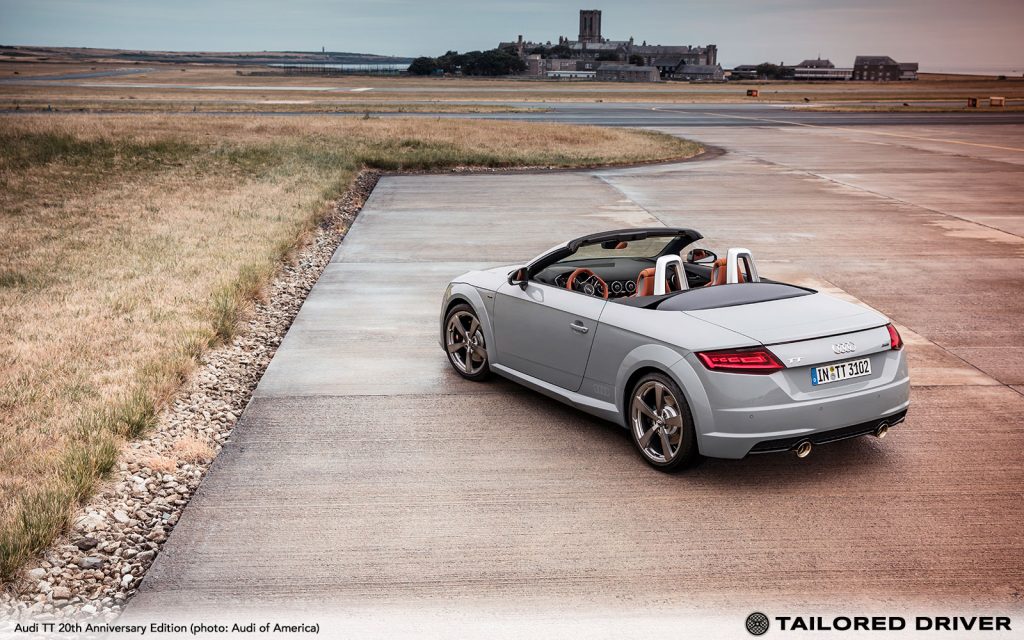
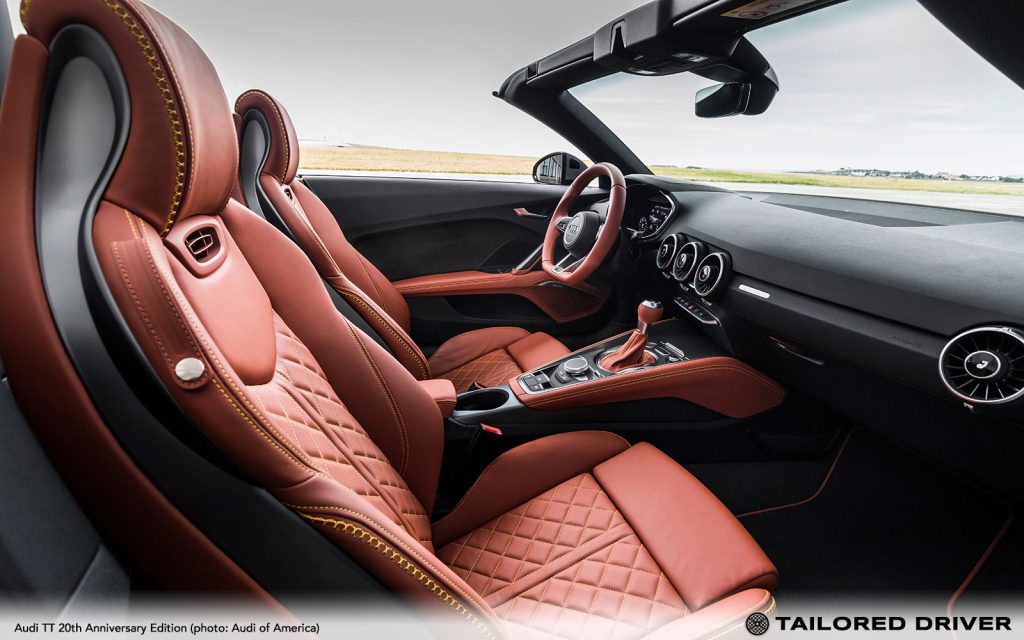
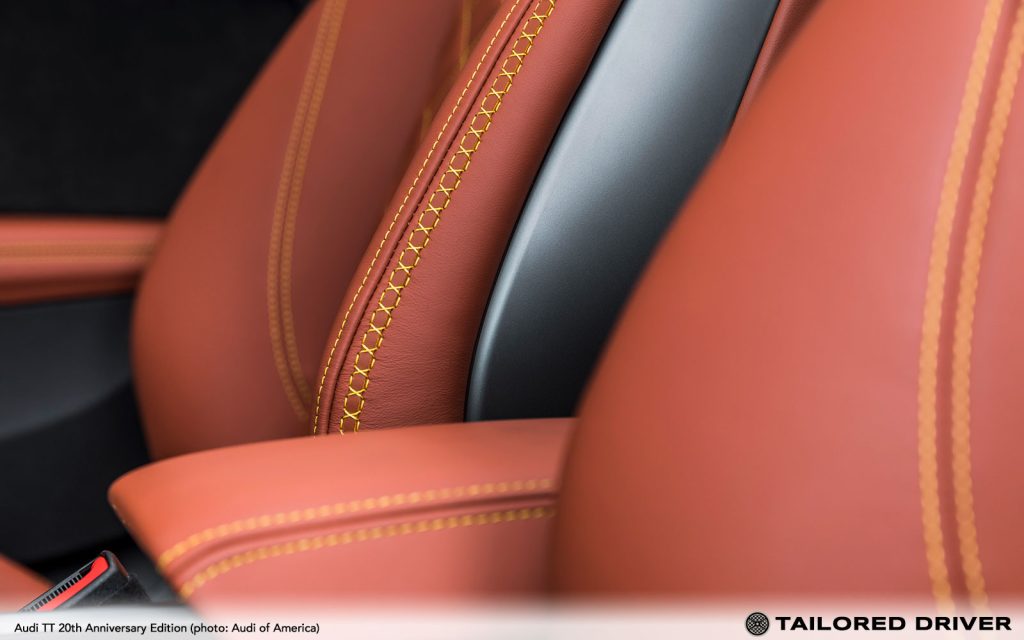
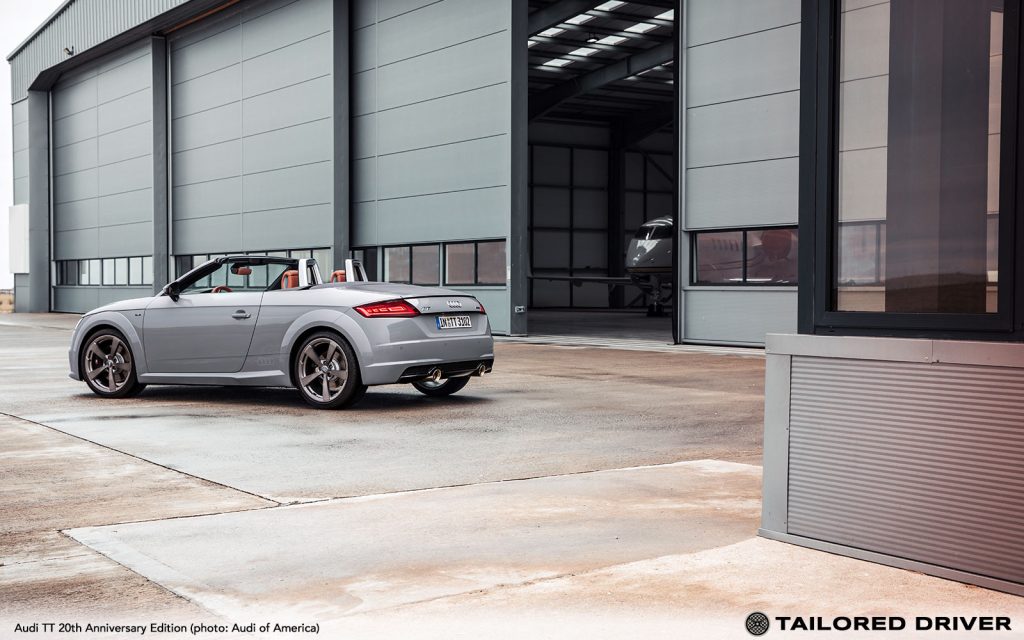
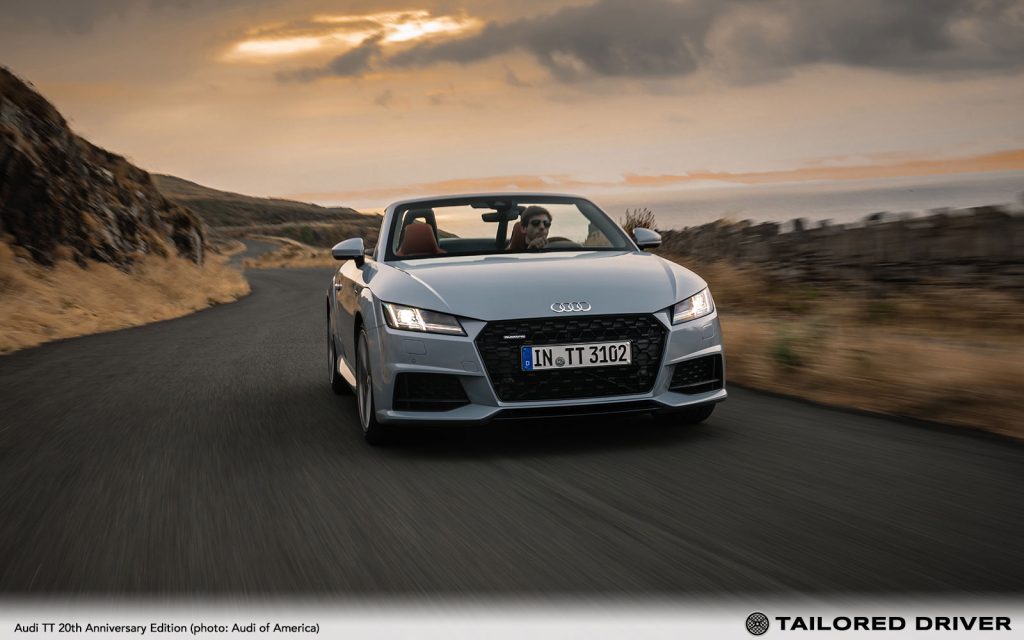
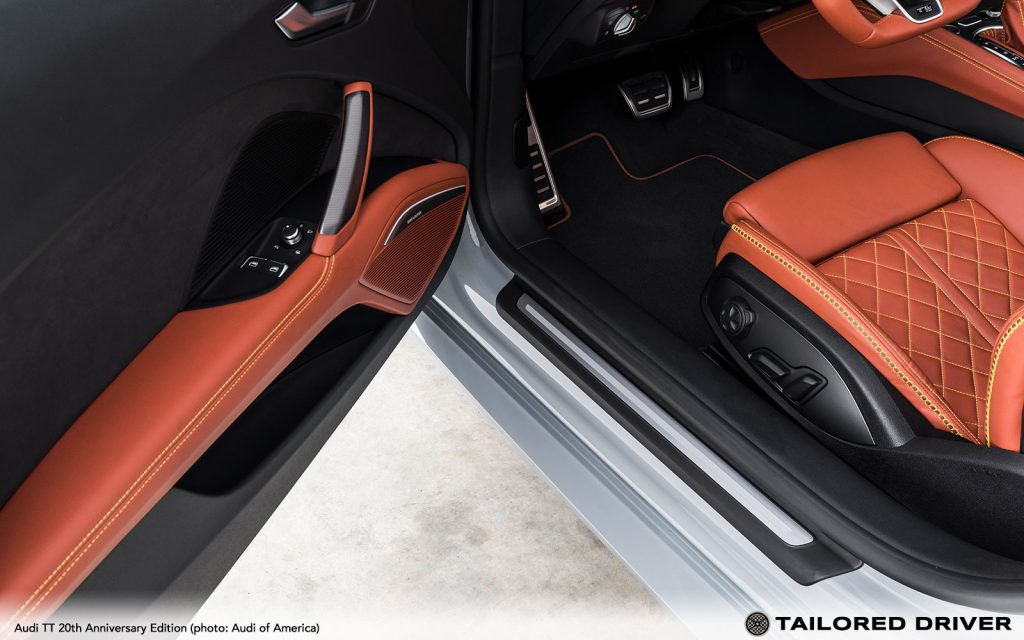
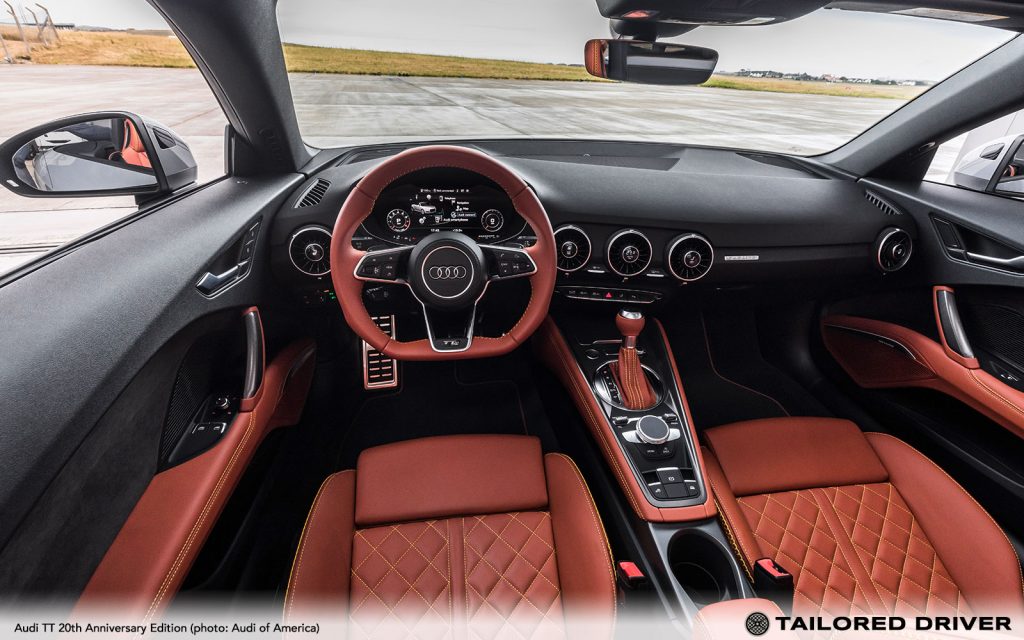
With a limited number of models available in the U.S. and globally, the TT 20th Anniversary Edition features unique design elements that celebrate the heritage of the Audi TT and embody the model’s transcendent design. The limited 20thAnniversary Edition is available in coupe and roadster body style – painted in either Aviator Gray pearl effect, or – exclusive to the U.S. – Nimbus Gray metallic. A nod to the original TT, all models feature Moccasin Brown Fine Nappa leather with custom-made yellow contrast stitching.
Unique design elements Paying homage to the success of the Audi TT since its series introduction, the TT 20th Anniversary Edition includes details inspired by the TTS Roadster concept study that premiered at the 1995 Tokyo Motor Show.
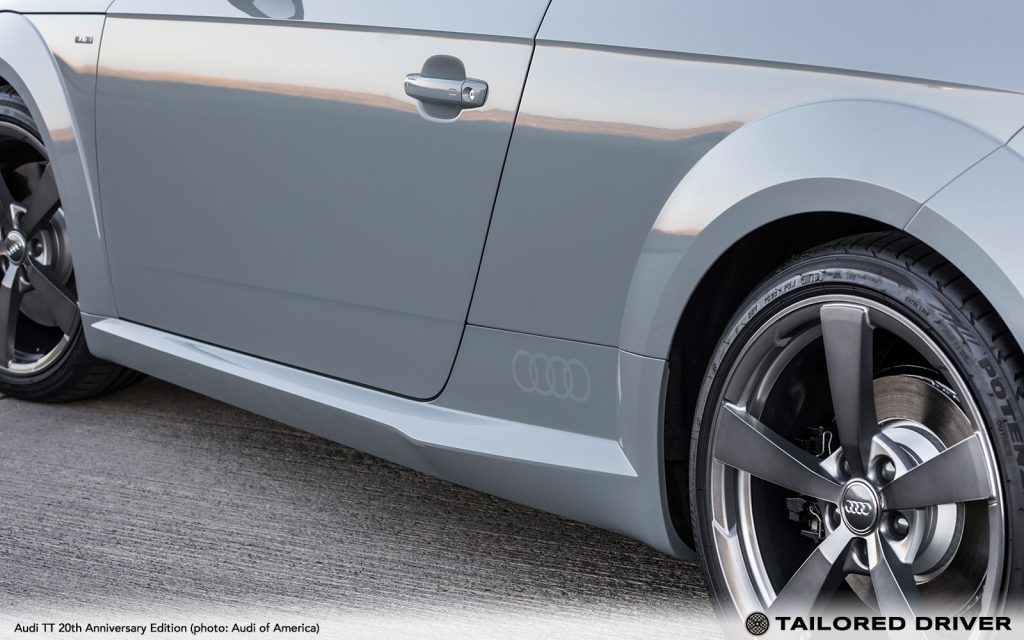
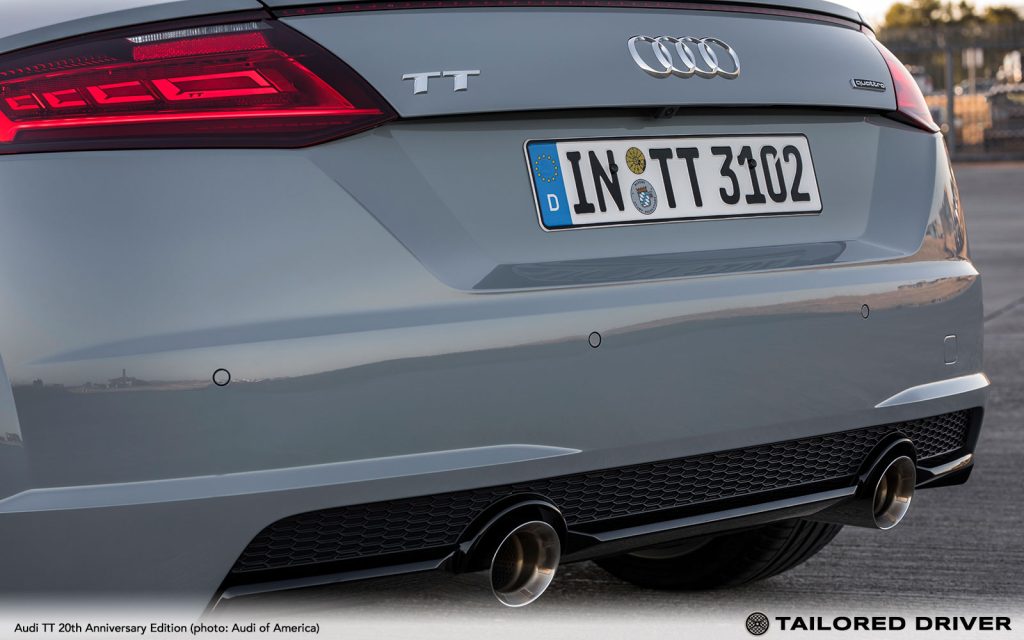
In addition to two exclusive exterior paint colors, the TT 20th Anniversary Edition features high-gloss black exterior trim elements and unique 19 inch 5-arm-design gunmetal wheels with summer tires. A trumpet-style stainless steel exhaust is exclusive to the model, accompanied by OLED taillights currently only available on the TT RS. “20 Years of TT” badges adorn the front fenders, alongside matte finish Audi rings etched into the rear sills.
Inside, the S Sport seats, door armrests, steering wheel, and center console are upholstered in Mocassin Brown Fine Nappa leather finished with bespoke yellow contrast stitching for a modern interpretation of the distinguished “baseball” stitching in the original TT. Interior badges denoting the vehicle’s unique production number alongside a “TT 20 Years” icon mark the vehicle’s exclusive status.
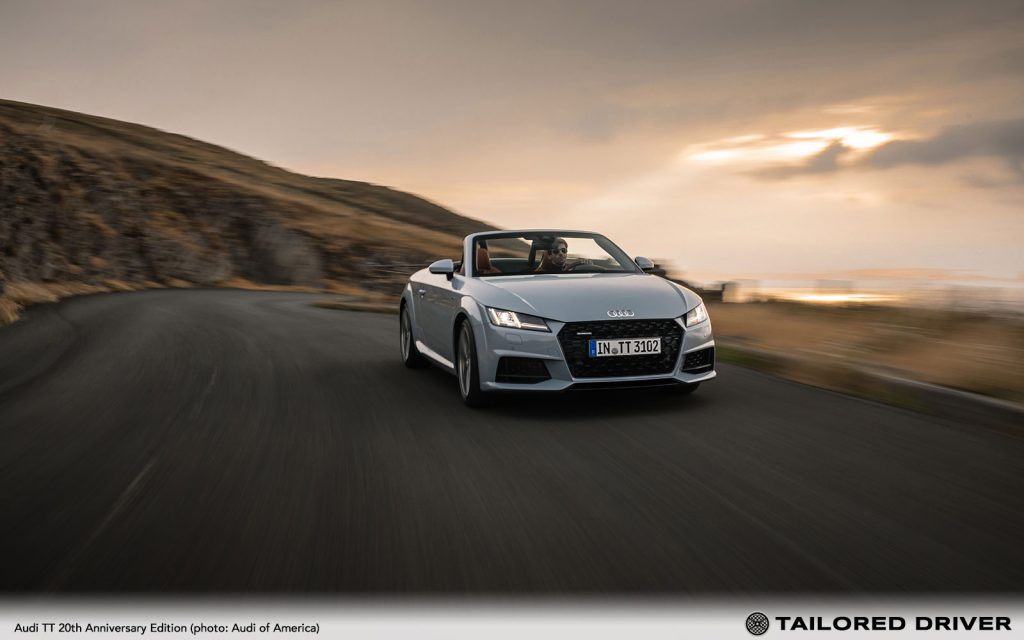
Classic TT performance From design icon to driving machine, the Audi TT 20th Anniversary Edition features a 2.0 liter four-cylinder turbocharged engine with 228 horsepower and a standard seven-speed S tronic dual-clutch transmission. The coupe can sprint from 0-60 mph in 5.2 seconds, with the roadster achieving the same in 5.5 seconds.
Upgraded technology The TT 20th Anniversary Edition includes the new innovative technology and connectivity features seen in other 2019 Audi TT models, including standard Audi phone box with wireless charging and signal booster. All TT 20th Anniversary Edition models come equipped with the Technology package, including Audi virtual cockpit, MMI navigation plus, Audi smartphone integration (Apple CarPlay and Android Auto), Bang & Olufsen® Sound System, and Audi side assist.
The Audi TT 20th Anniversary Edition is on sale now with an MSRP of $52,900 plus destination for the coupe, and $56,800 plus destination for the roadster.
Always obey all local speed and traffic laws.
When using MMI touch response system, always pay careful attention to the road, and do not drive while distracted. See Owner’s Manual for further details, and important limitations.
MMI Navigation plus depends on signals from the worldwide Global Positioning Satellite network. The vehicle’s electrical system, and existing wireless and satellite technologies, must be available and operating properly for the system to function. The system is designed to provide you with suggested routes in locating addresses, destination and other points of interest. Changes in street names, construction zones, traffic flow, points of interest and other road system changes are beyond the control of Audi of America, Inc. Complete detailed mapping of lanes, roads, streets, toll roads, highways, etc., is not possible, therefore you may encounter discrepancies between the mapping and your actual location. Please rely on your individual judgment in determining whether or not to follow a suggested MMI Navigation plus route.
Driver Assistance features are not substitute for attentive driving. See Owner’s Manual for further details, and important limitations.
ABOUT AUDI OF AMERICA Audi of America, Inc. and its U.S. dealers offer a full line of German-engineered luxury vehicles. AUDI AG is among the most successful luxury automotive brands, delivering about 1.812 million vehicles globally in 2018. In the U.S., Audi of America sold nearly 224,000 vehicles in 2018. 2019 marks 50 years for the brand in the U.S. Visit audiusa.com or media.audiusa.com for more information regarding Audi vehicles and business topics.
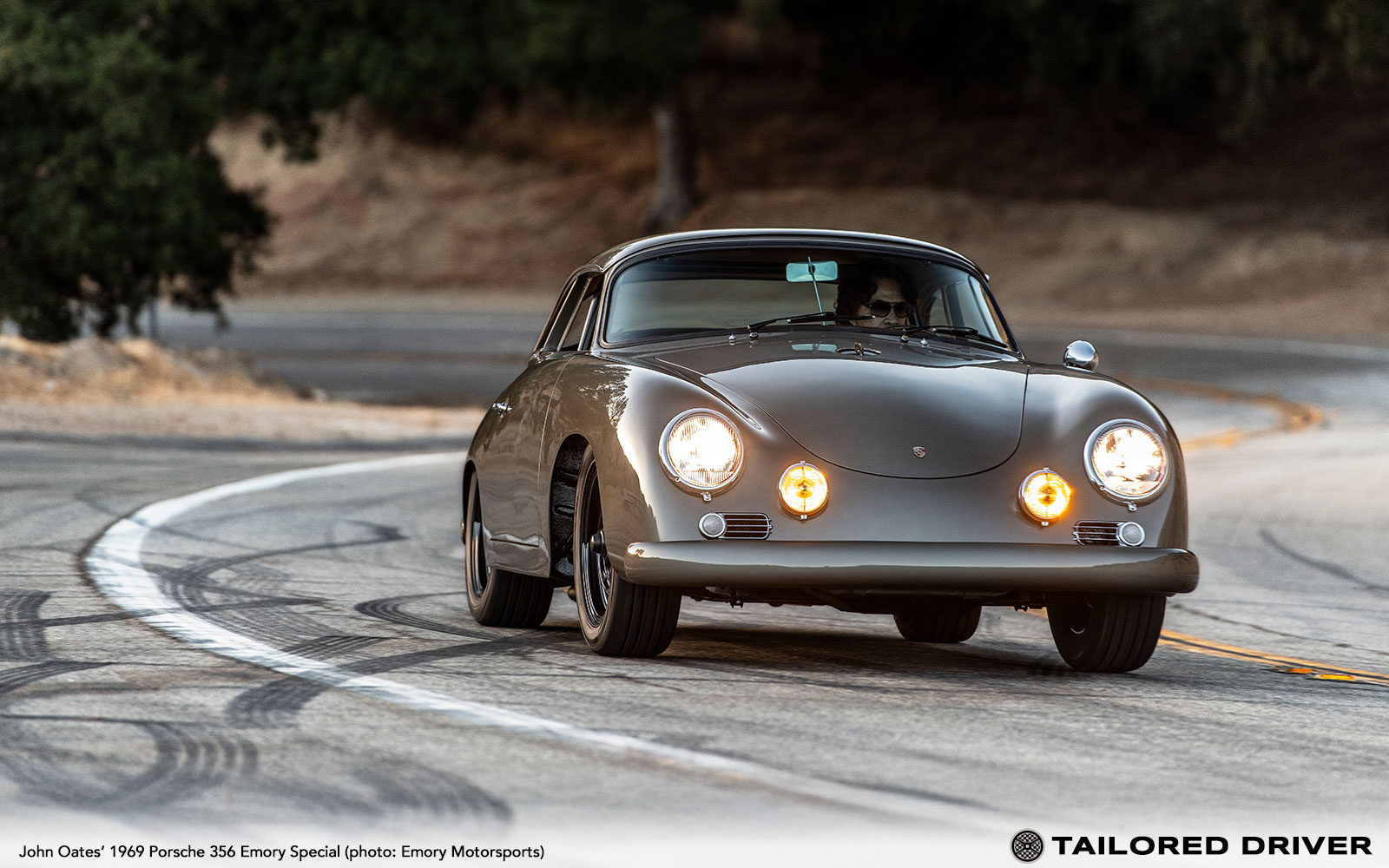
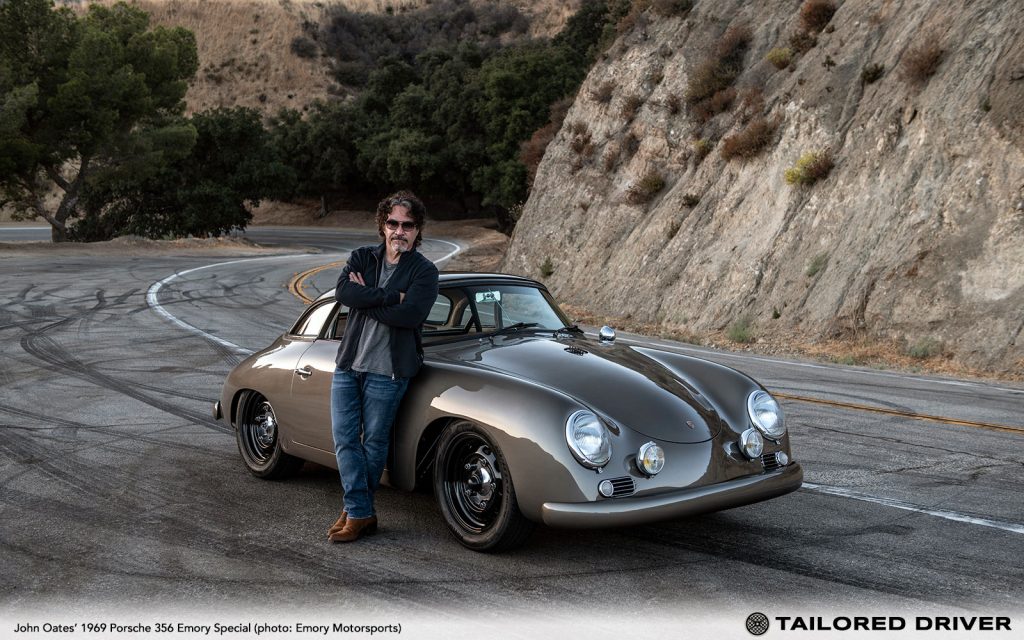
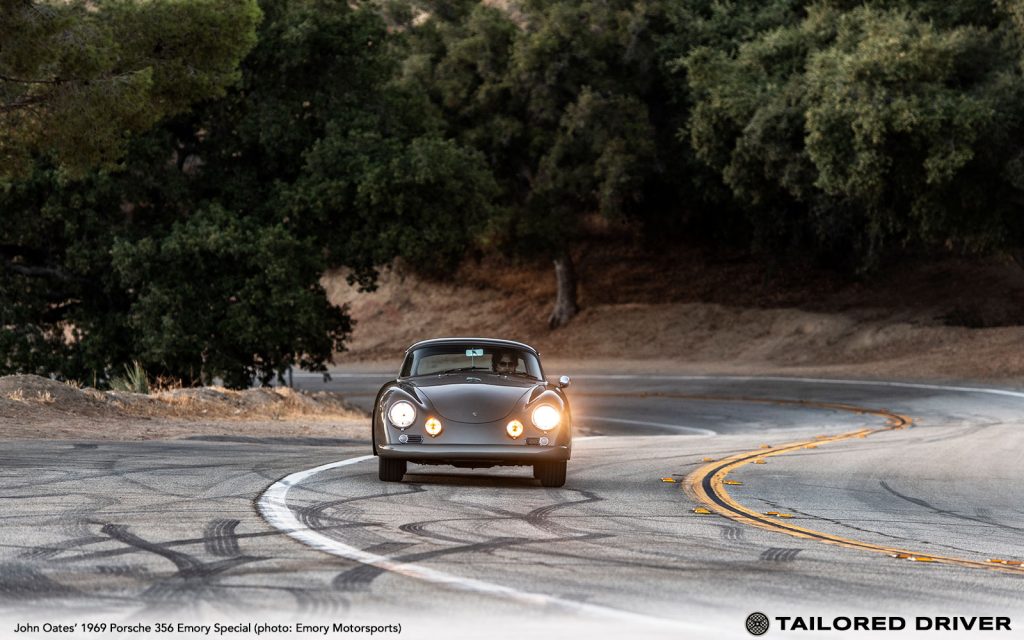
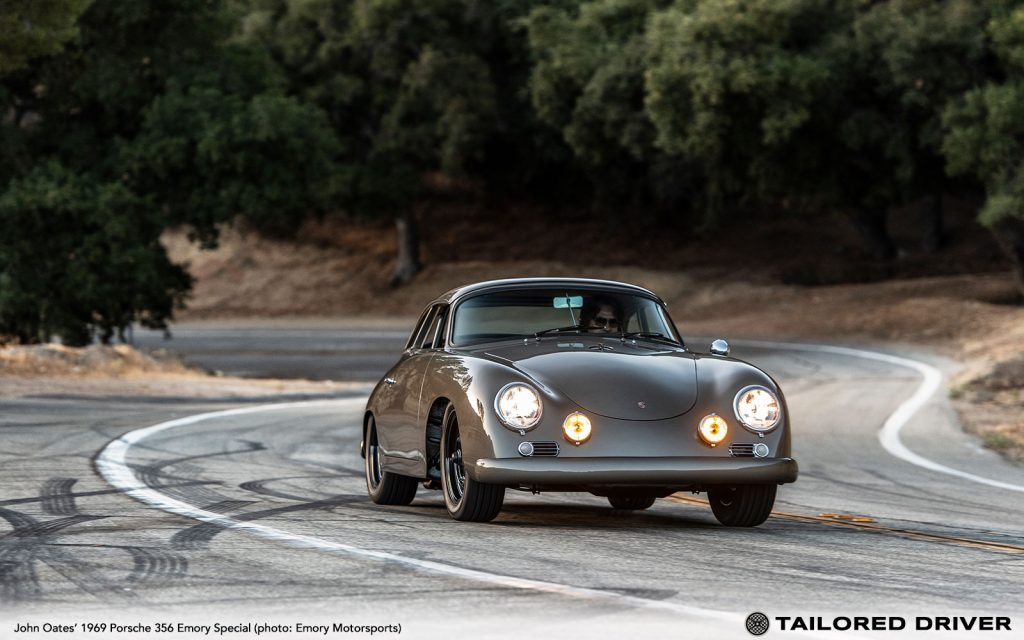
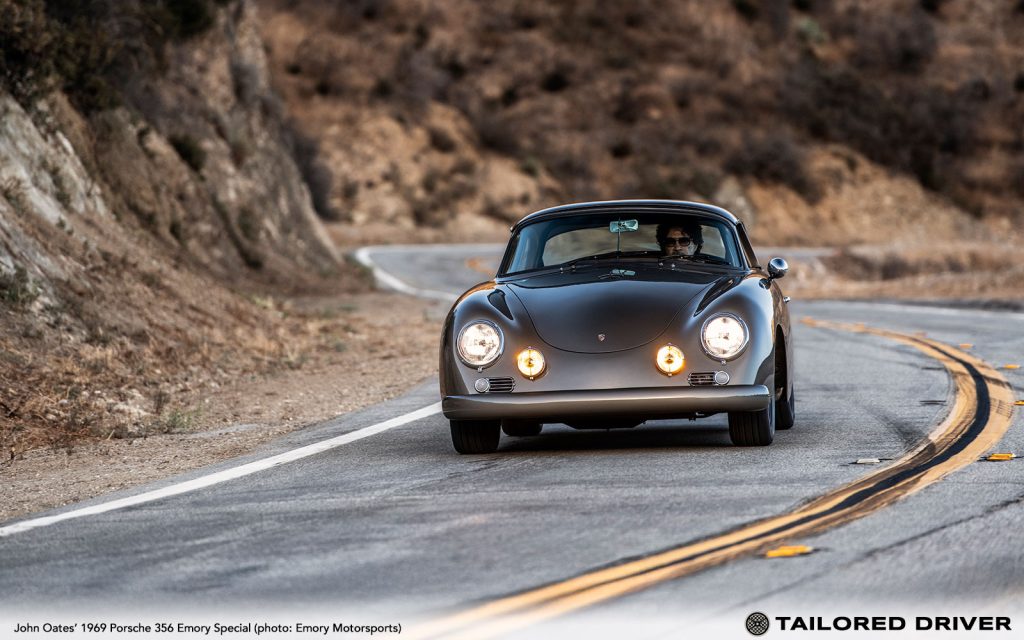
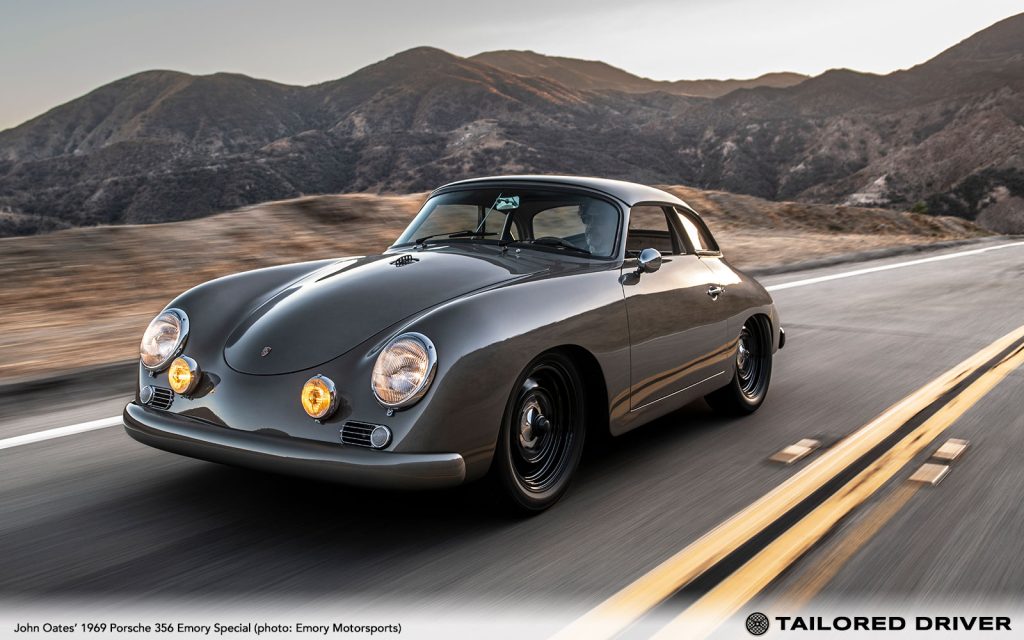
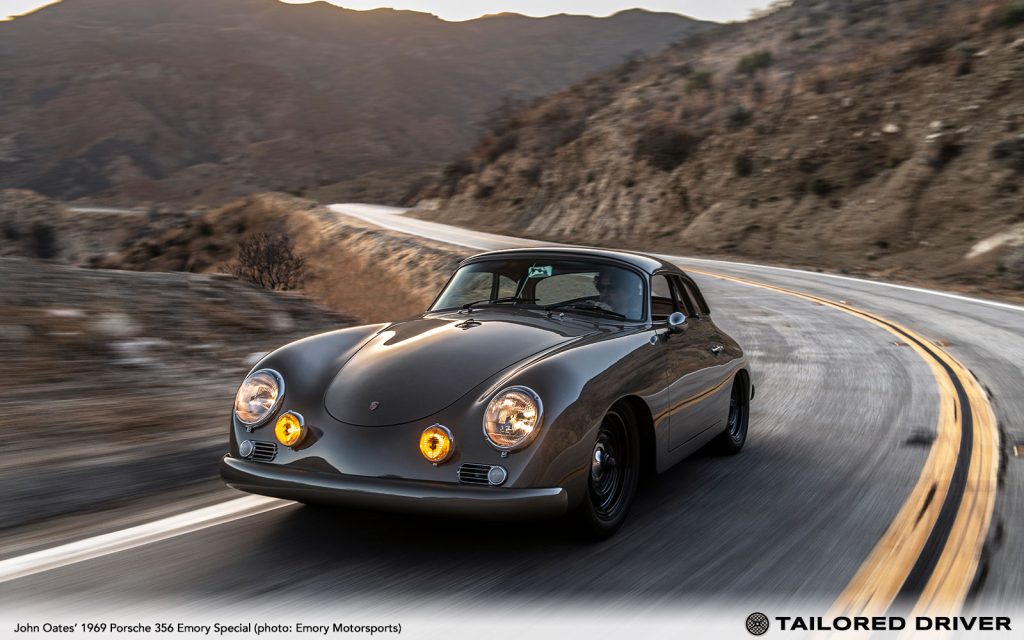
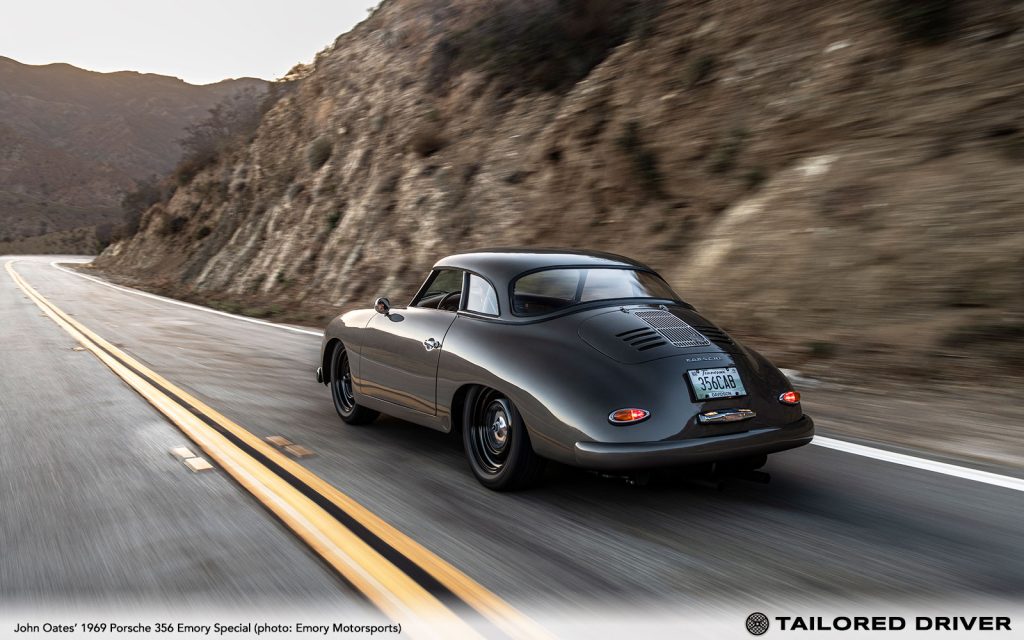
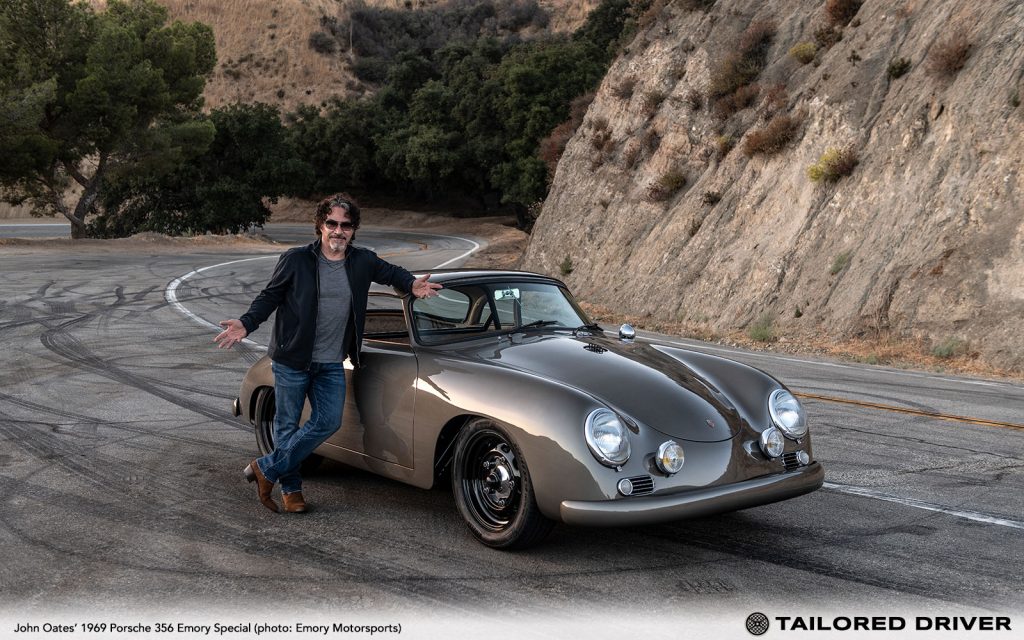
Legendary Hall & Oates Guitarist Unveils His Car Alongside Celebrated Porsche Outlaw Builder Rod Emory During Porsche Cars’ 70th Anniversary Party
[source: Emory Motorsports]
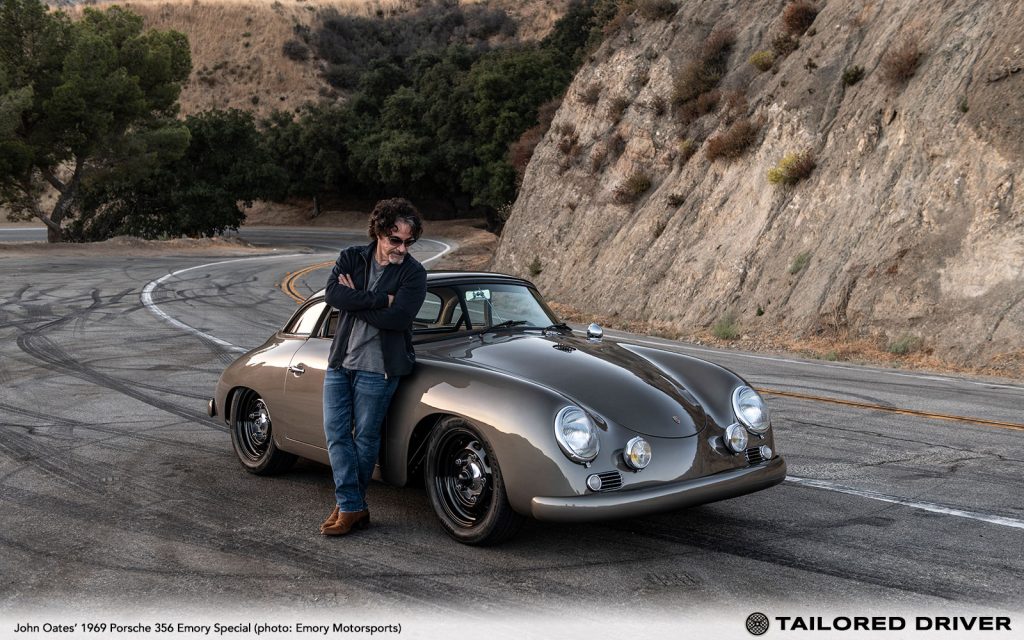
NORTH HOLLYWOOD, CA — Having sold some 40 million records worldwide, Hall & Oates are considered the world’s best-selling music duo in history. The record-breaking band was famously inducted into the Rock and Roll Hall of Fame in 2014, but what many fans don’t know is celebrated guitarist/vocalist/composer John Oates is also a long-time Porsche fan.
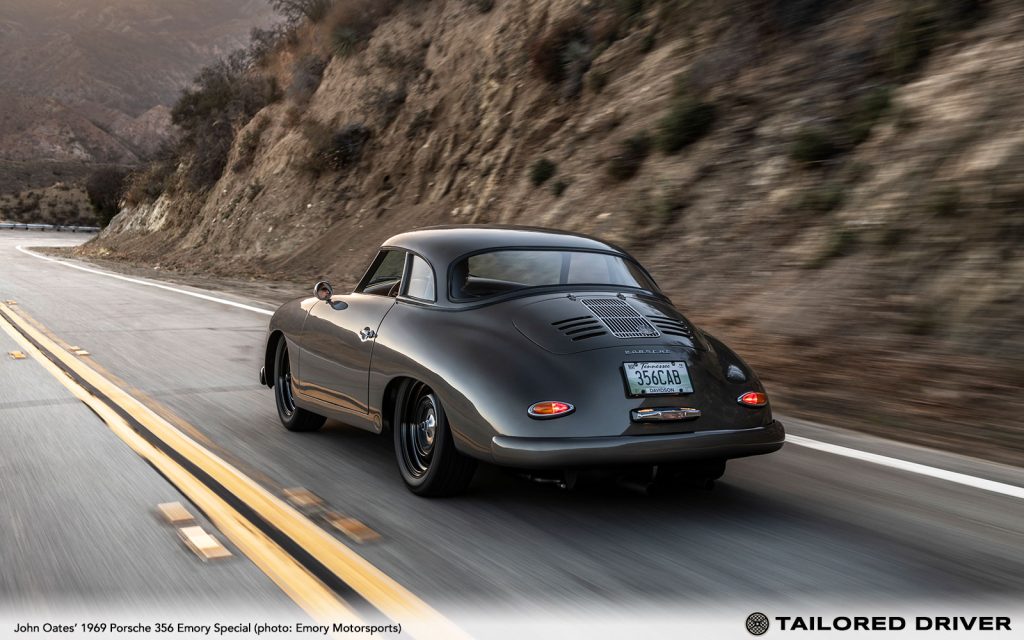
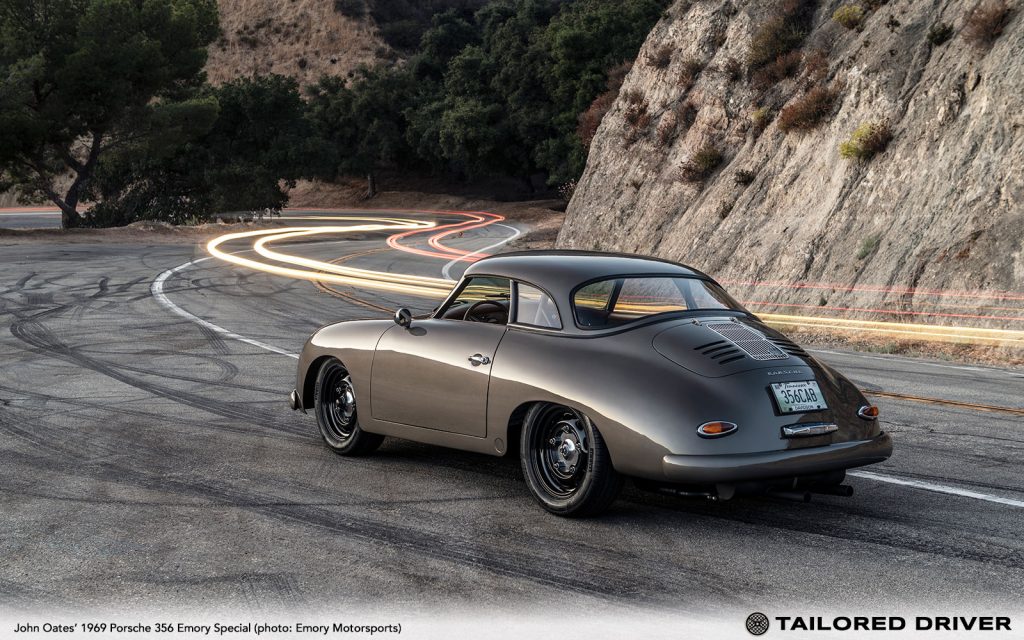
The consummate collaborator, Oates contacted Emory Motorsports Founder Rod Emory about creating a truly one-of-a-kind classic Porsche. As a longtime Porsche enthusiast and collector, Oates wanted the perfect Porsche 356. Working closely with Emory, Oates made it clear he wanted to preserve the elegant styling of the 356 but imbue the car with more-modern performance and other custom touches. Rod found the ideal donor car, a 1960 356B Cabriolet, and went to work alongside Oates on the build.
Long known by enthusiasts for creating the Porsche Outlaw movement with his custom 356s, Rod Emory also offers his clients more-subtle Emory Special builds. Growing up in a family of auto customizers and designers, Rod Emory created John Oates’ Emory Special using many of the same customizing techniques – and many of the same actual tools – that his grandfather Neil pioneered dating back to 1948 when he founded Valley Custom in Burbank, California. Known as one of the seminal minds in the golden age of hot-rodding, Neil built a reputation for stately, understated coachwork that Rod employs to this day at Emory Motorsports.
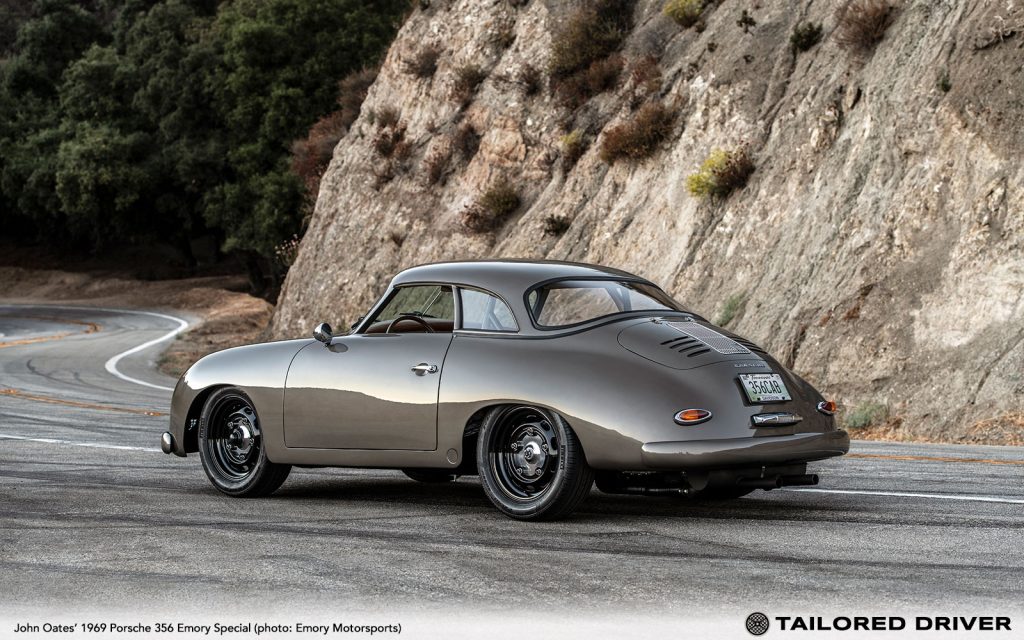
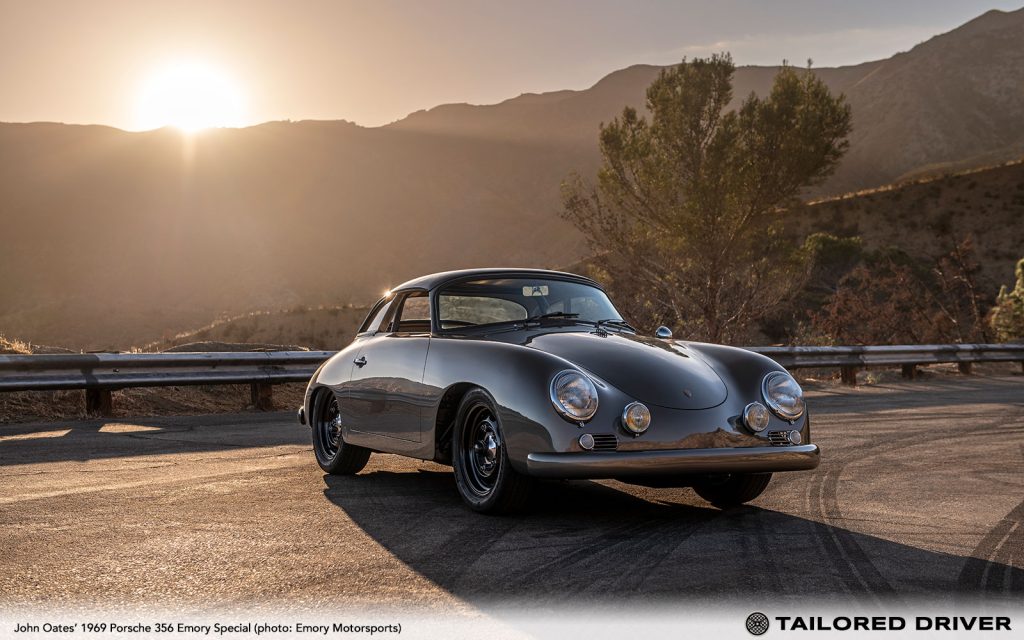
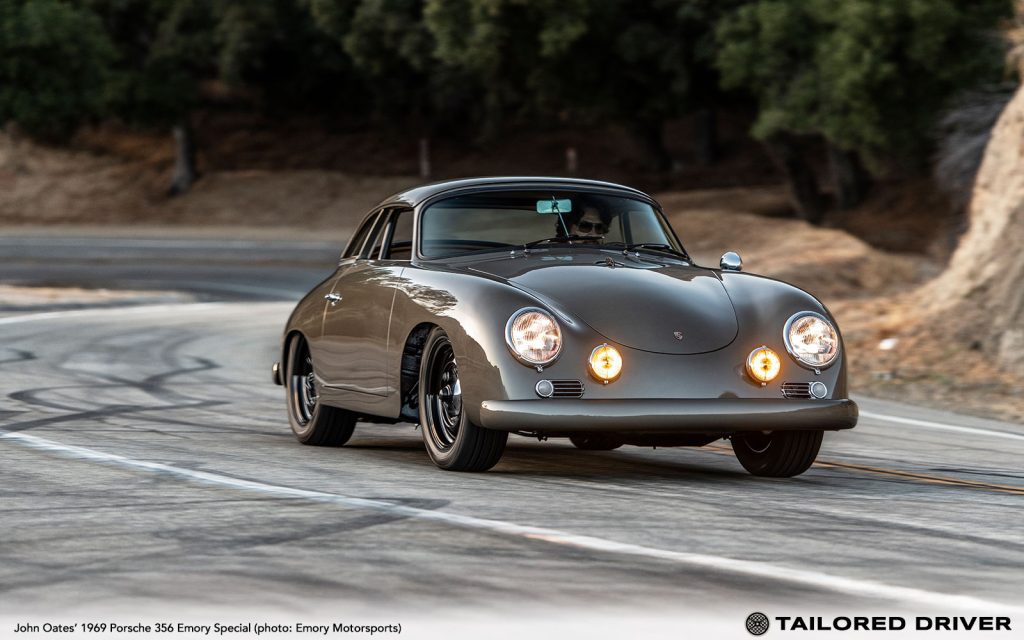
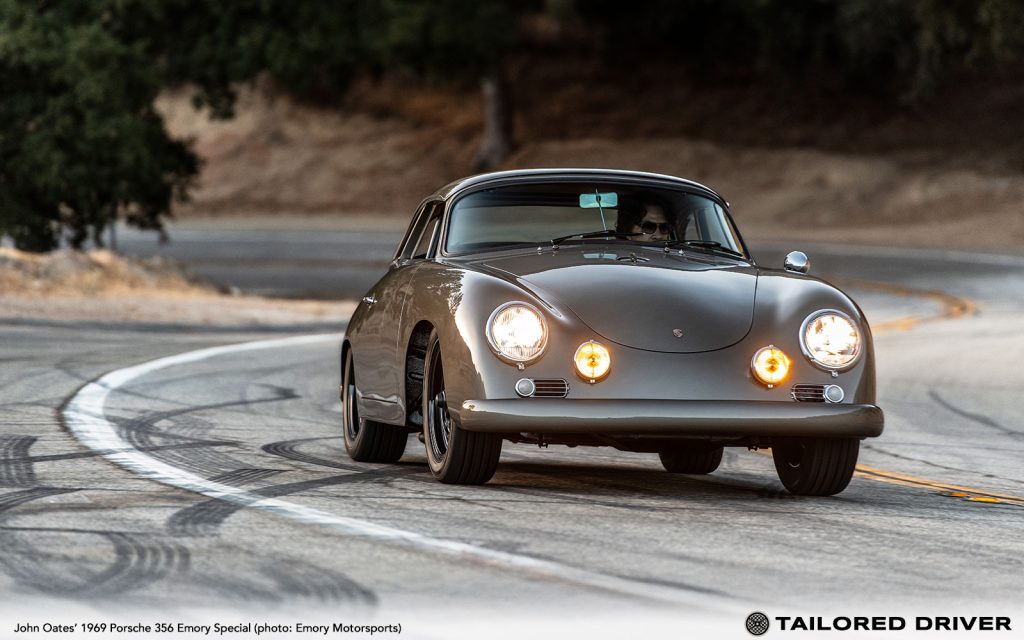
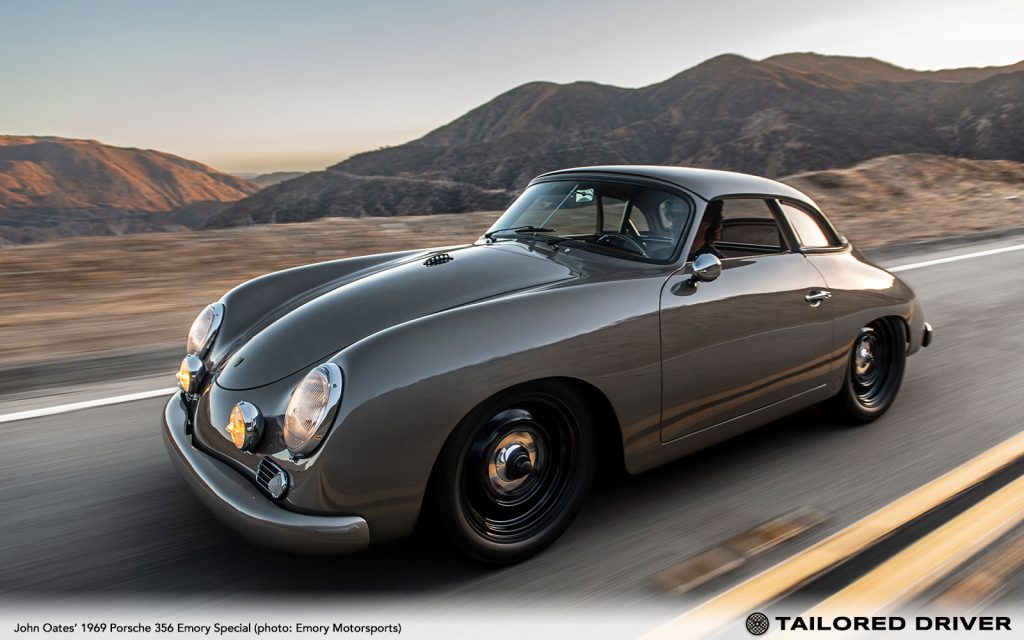
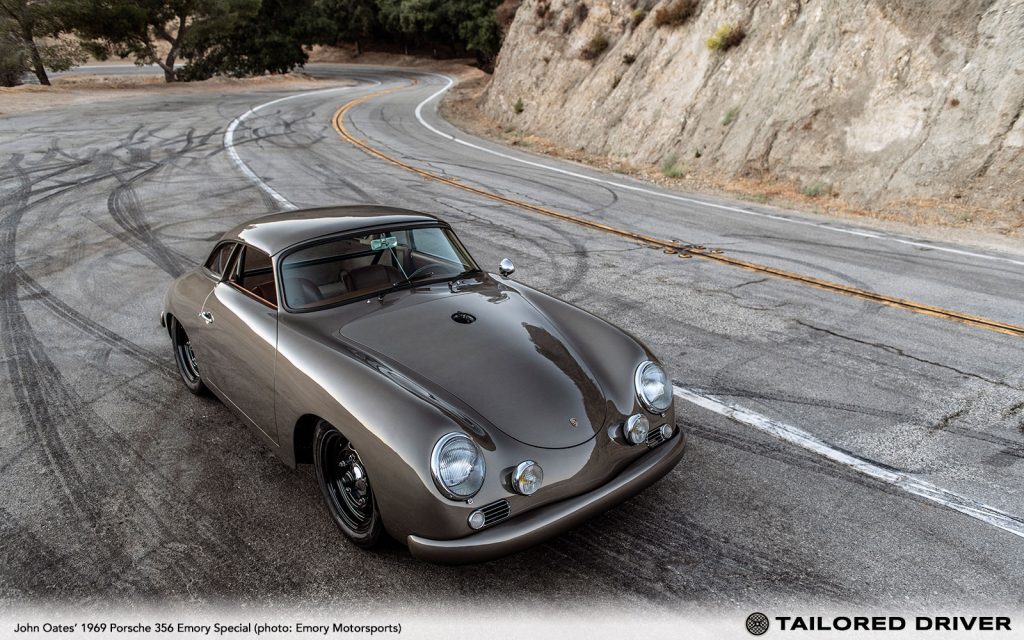
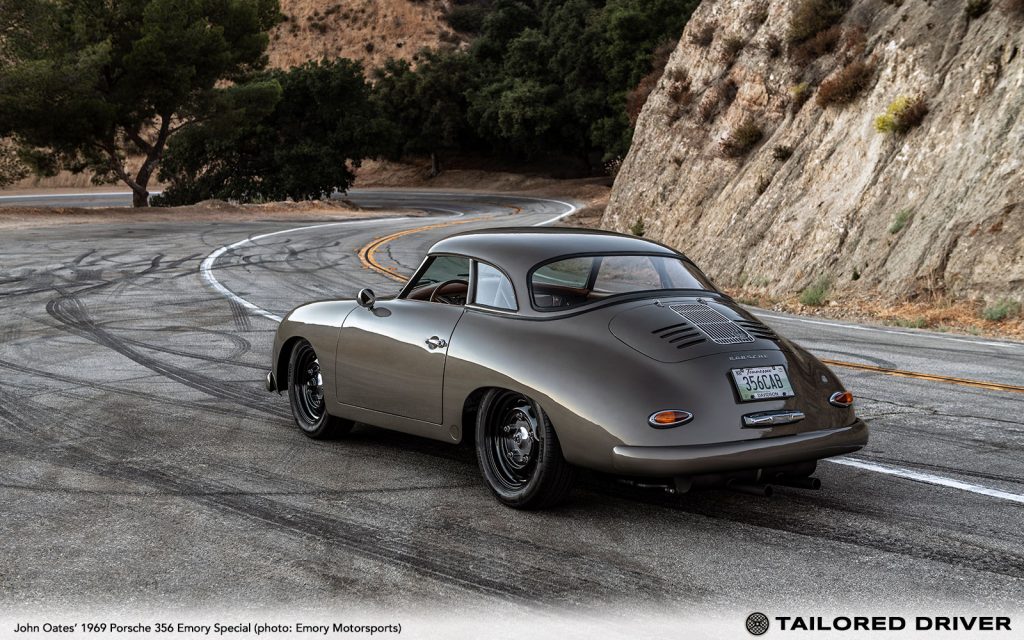
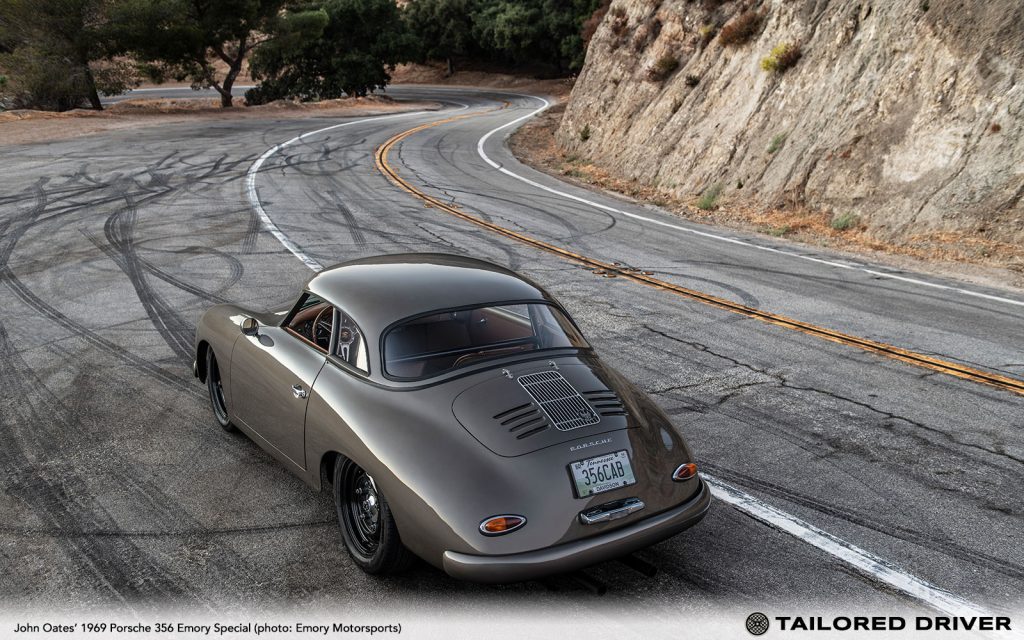
Oates’ 1960 356 Emory Specialis no exception. The overall designfurther enhances the original 356 body with seamless, subtle alterations. Working together, Oates and Emory succeeded in restoring and designing one of the most beautiful 356 cars to ever grace the road. Bespoke cars like the Oates 1960 Emory Special are built to order by Emory Motorsports, beginning with damaged donor cars that Rod secures from all over the country. During the build, body modifications are done to change the 356’s profile while still retaining its iconic design language and proportions.
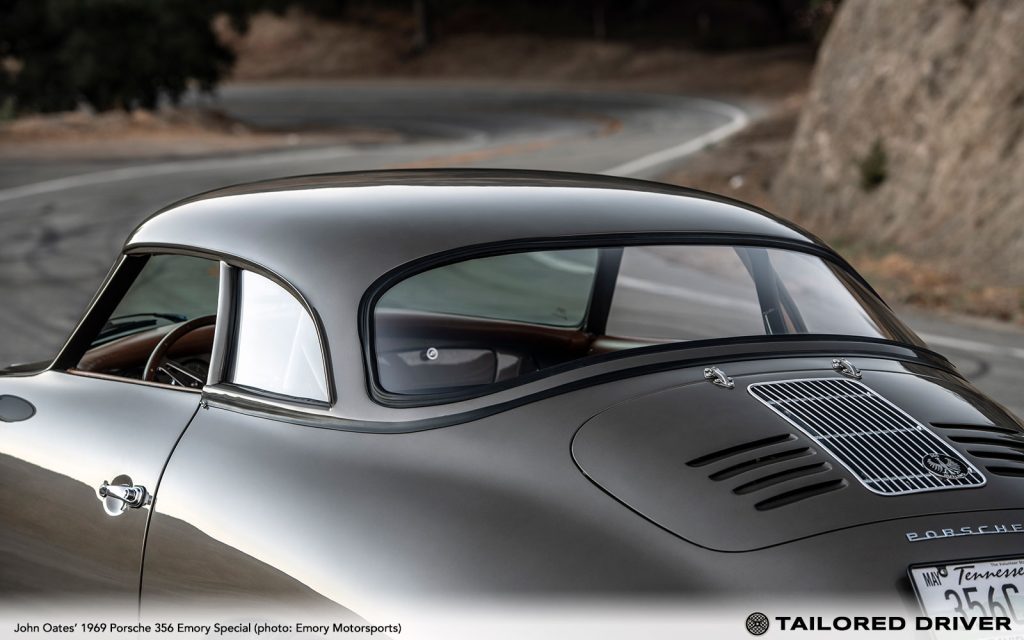
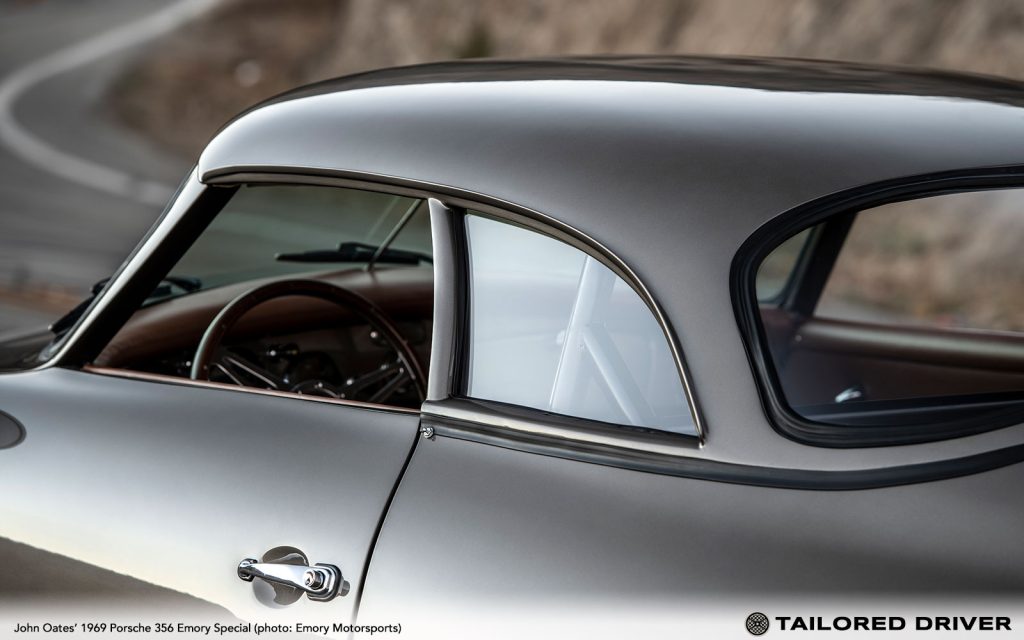
“When people hear custom, their minds tend to go to the outrageous, but our work is all about restraint,” explains Emory Motorsports Founder Rod Emory. “John’s 356 is perfect example. The body began life as a 1960 356B Cabriolet, which had a removable hard top. We replaced the car’s damaged nose with 356A-style bodywork, but leaned it back for a sleeker appearance. We also modified the windshield frame the same way. The removable hard top was tailored to create a more streamlined roof profile, and we integrated body-hugging 356A-style bumpers. Everything is presented in the same way a new 356 would be rolling off the line. The key difference is the subtle changes Emory Motorsports makes to the original design.”
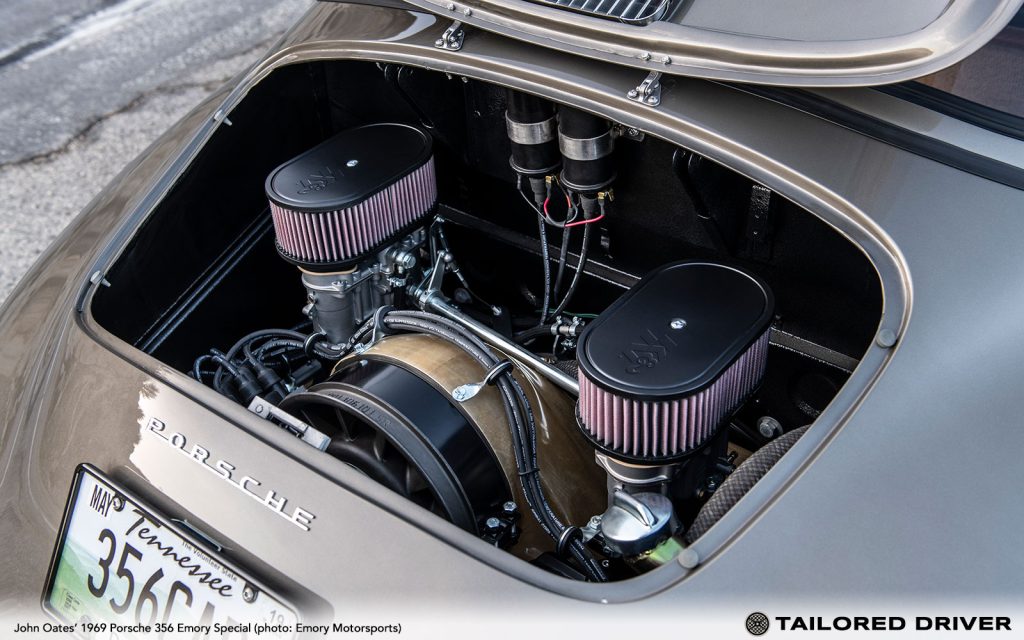
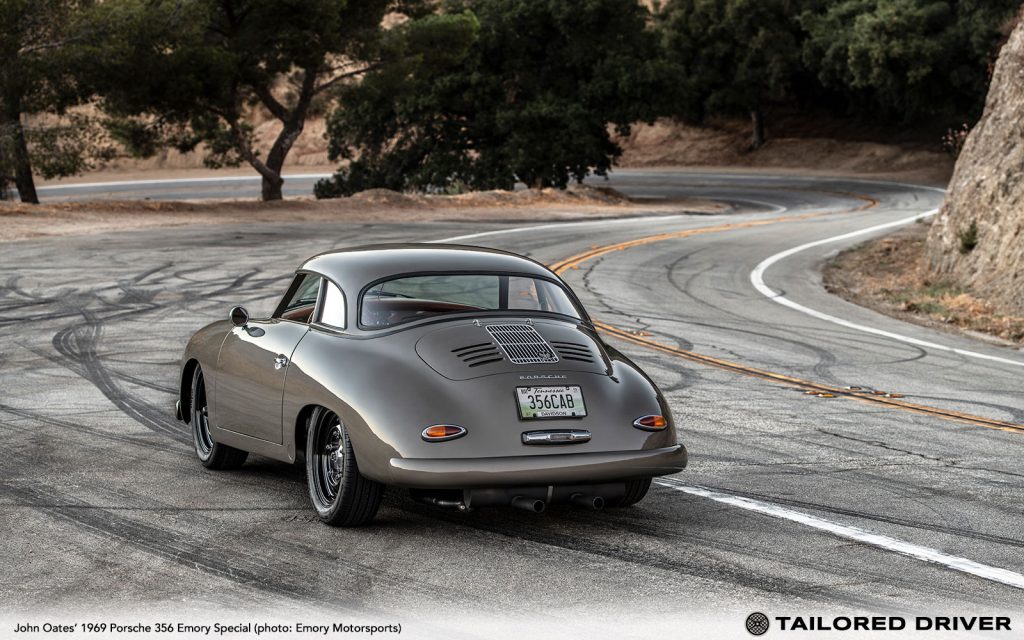
Emory Motorsports surrounds vintage sheetmetal with later Porsche-performance DNA for Emory Special and Emory Outlaw builds. John Oates’ 1960 356 is a prime example. Power is supplied by the new Emory-Rothsport “Outlaw-4” engine. Emory collaborated with Porsche GT racing team crew chief Jeff Gamroth of Rothsport Racing to create an all-new air-cooled four-cylinder engine block, based on the dry-sump Porsche 3.6L Type 964 engine – but also incorporating the best features of three generations of the 911 powerplant. Custom cam housings, camshafts, and crankshafts are designed to work with OE Porsche engine components.
The Outlaw-4 engine makes use of the 3.6L twin-plug and dry-sump design features for the sake of performance. However, the new engine takes advantage of MSD computer-controlled ignition, augmented by a custom distributor and full-flow oiling with remote filter and cooler. John Oates’ engine is the 2.4L Outlaw-4 configuration with custom headers leading to a 911 sport muffler. It is fed by a through-hood fuel filler atop a custom 18-gallon GT Fuel Safe cell. The Outlaw-4 engine is mated to an early Porsche 911 901l aluminum-case 5-speed transmission.
Chassis modernizing was also part of the plan from the outset. Emory adapted early Porsche 911 independent rear suspension with custom-narrowed trailing arms. Adjustable Koni shocks control the ride, and Emory added front and rear swaybars to control body roll during aggressive cornering. Handling is also improved with a proprietary Emory four-wheel disc-brake system, which stops the 205/55ZR16 Pirelli P Zero Rosso tires on custom 15×6 billet alloy wheels. The wheels were powdercoated black and have mirror-polished hubs.
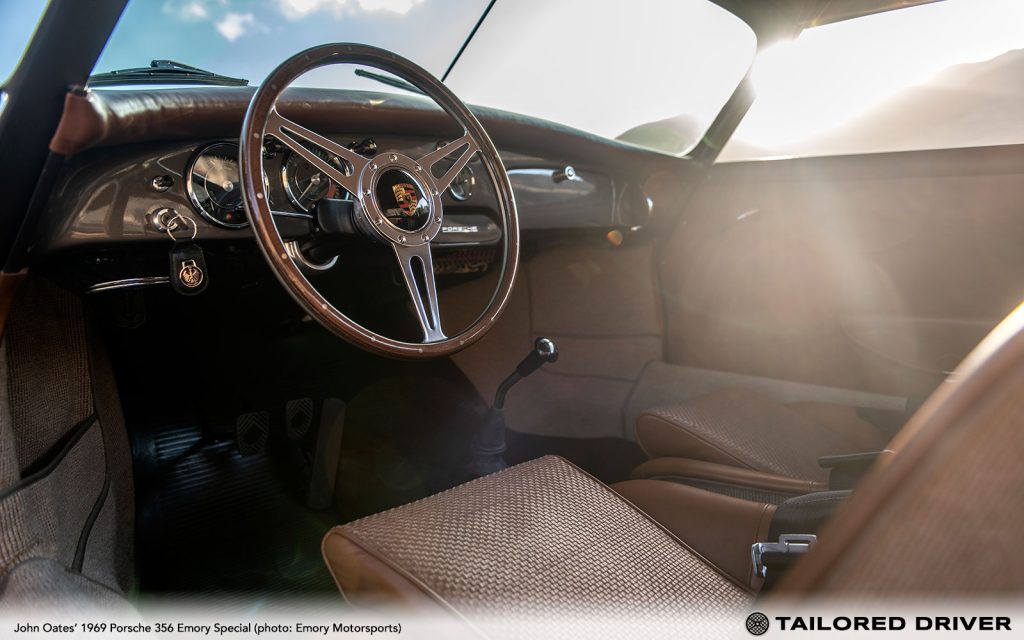
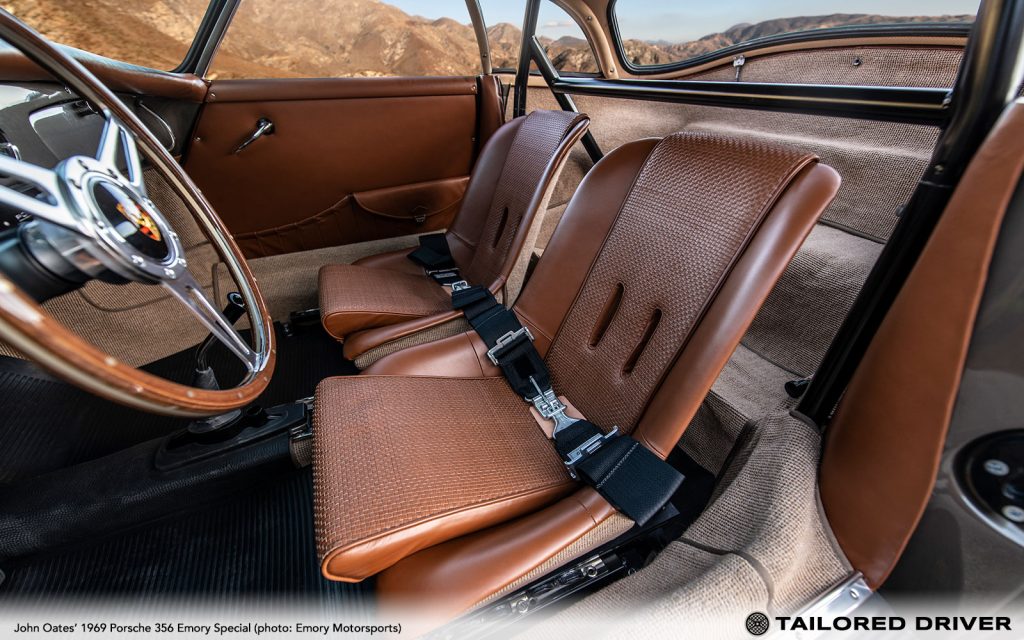
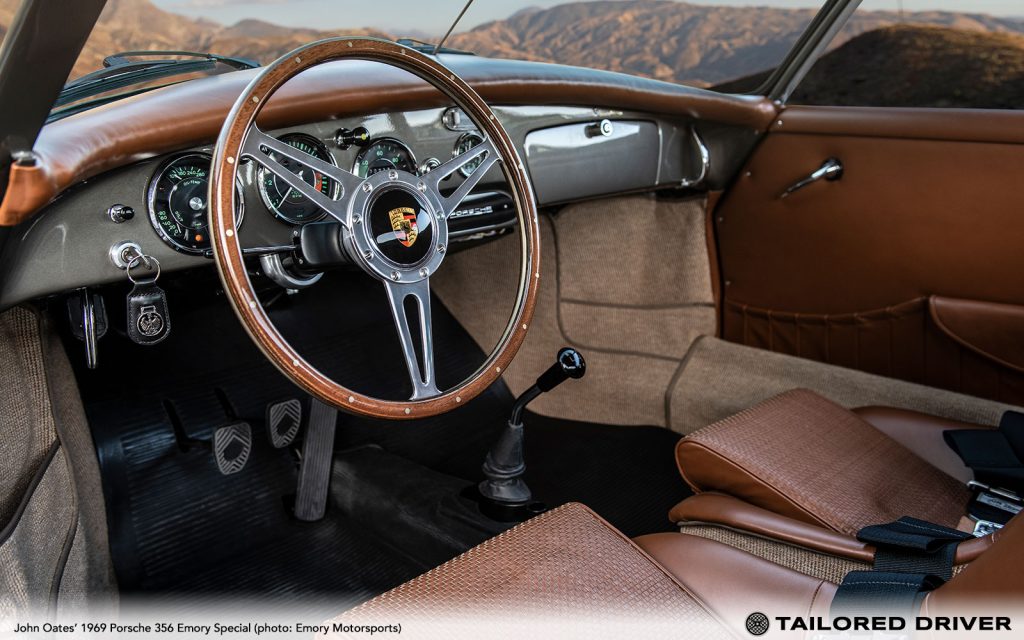
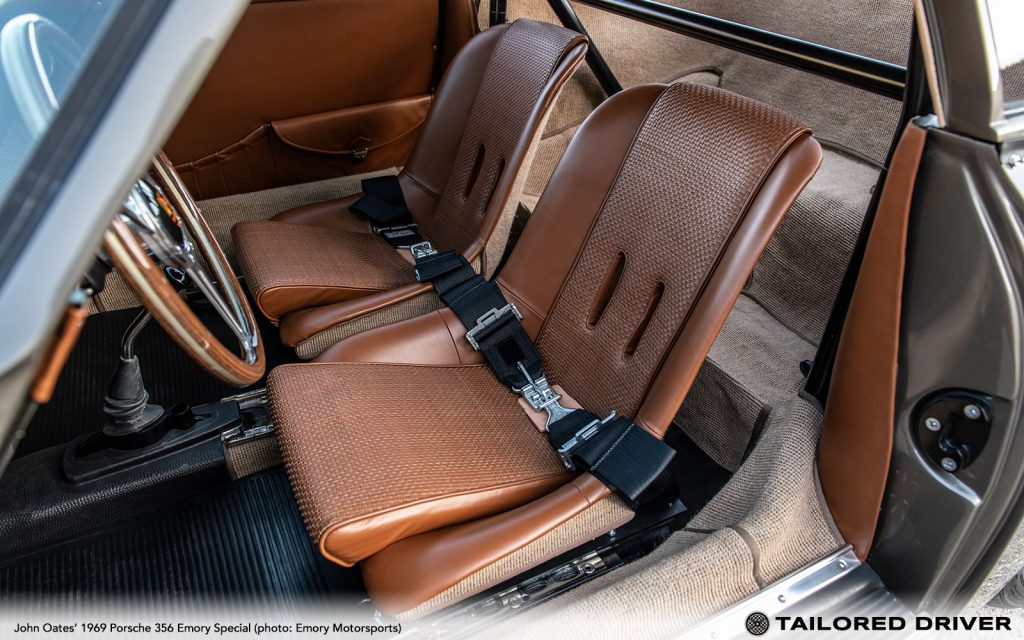
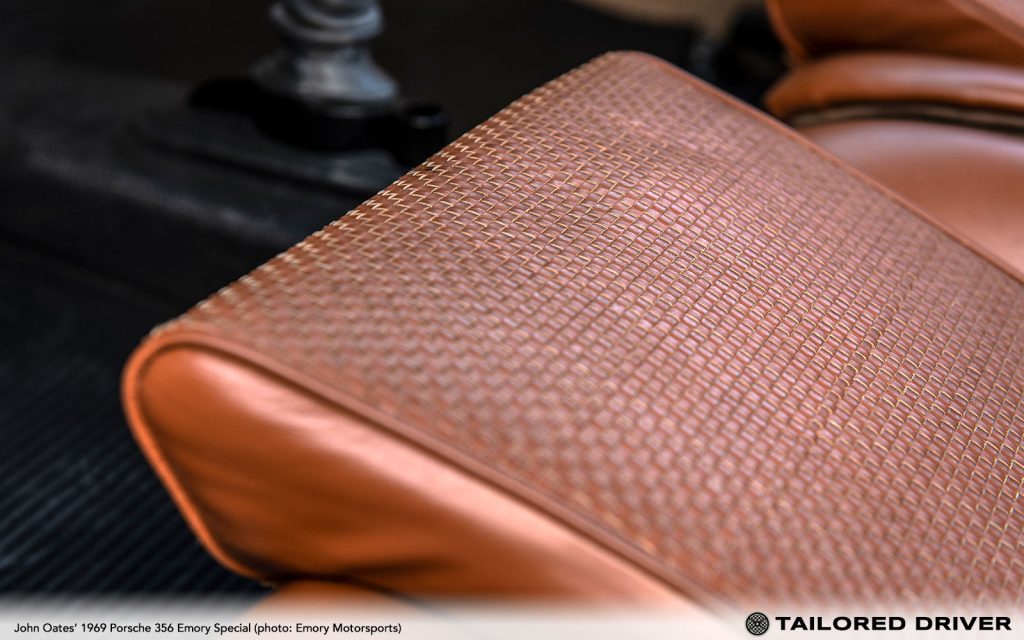
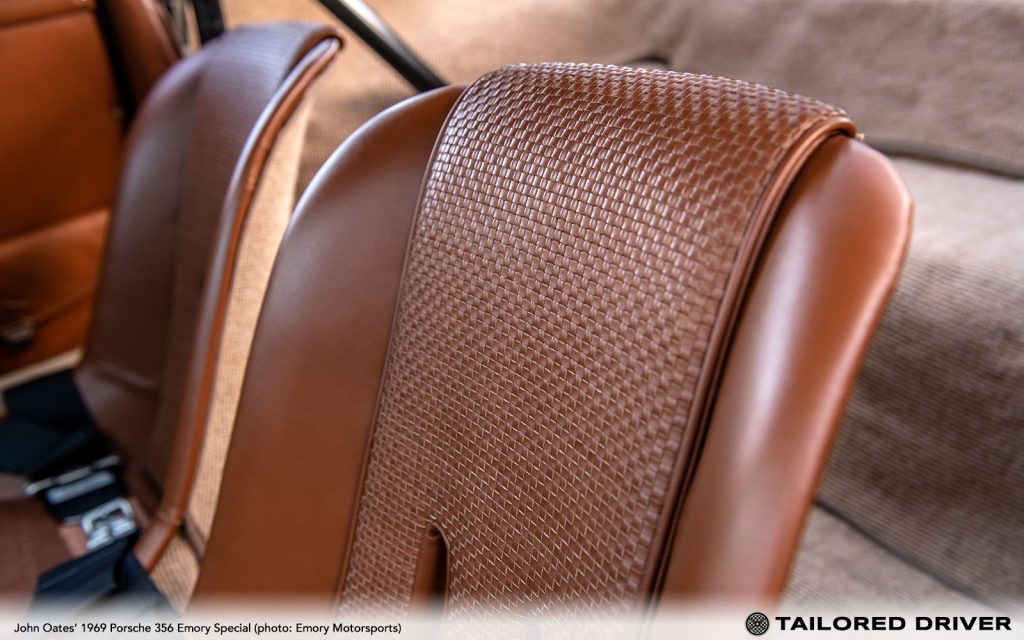
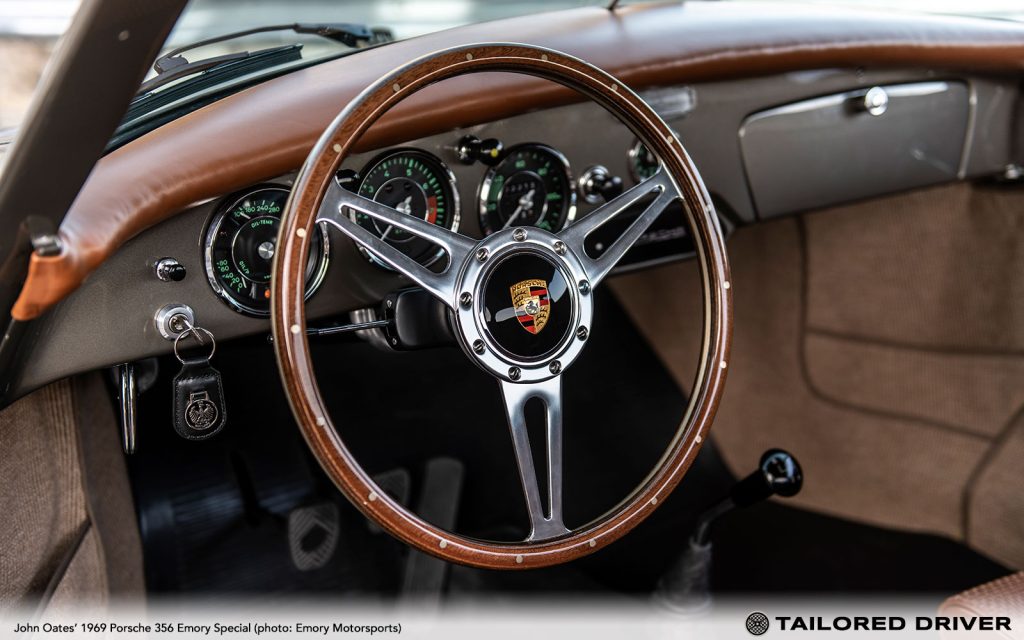
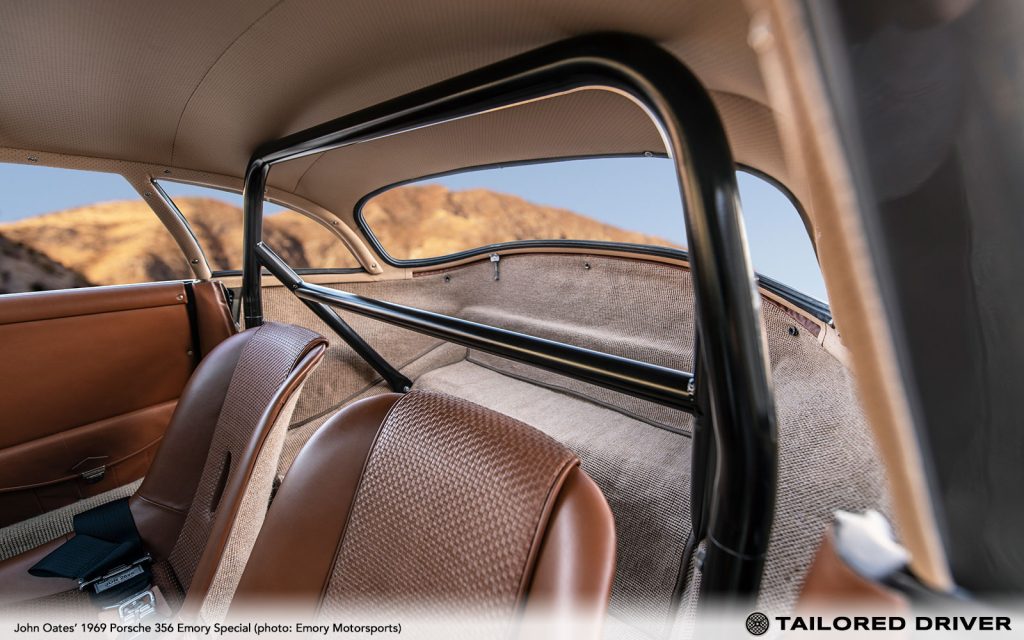
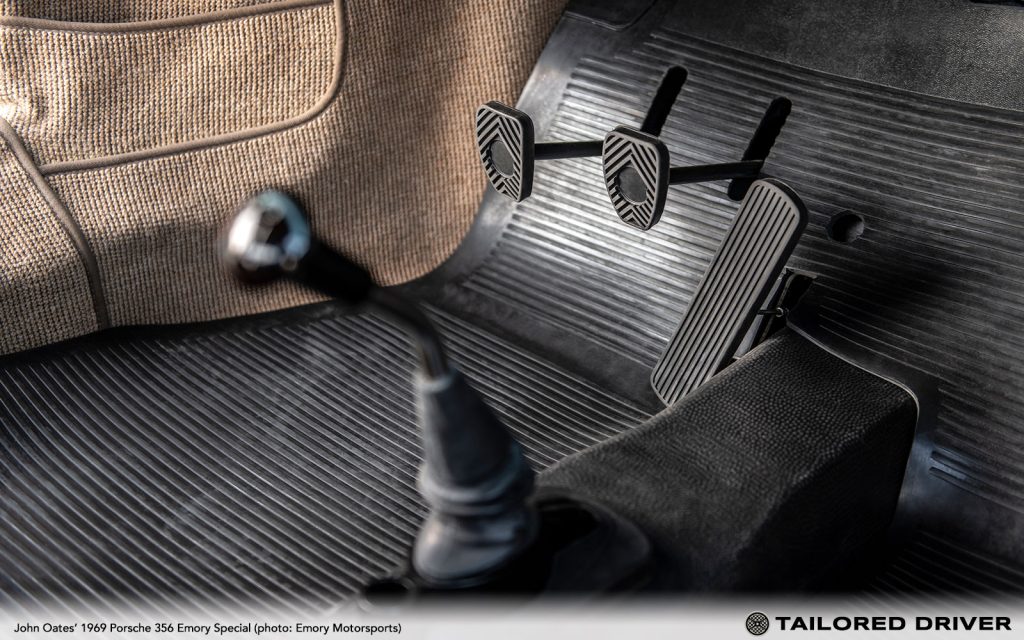
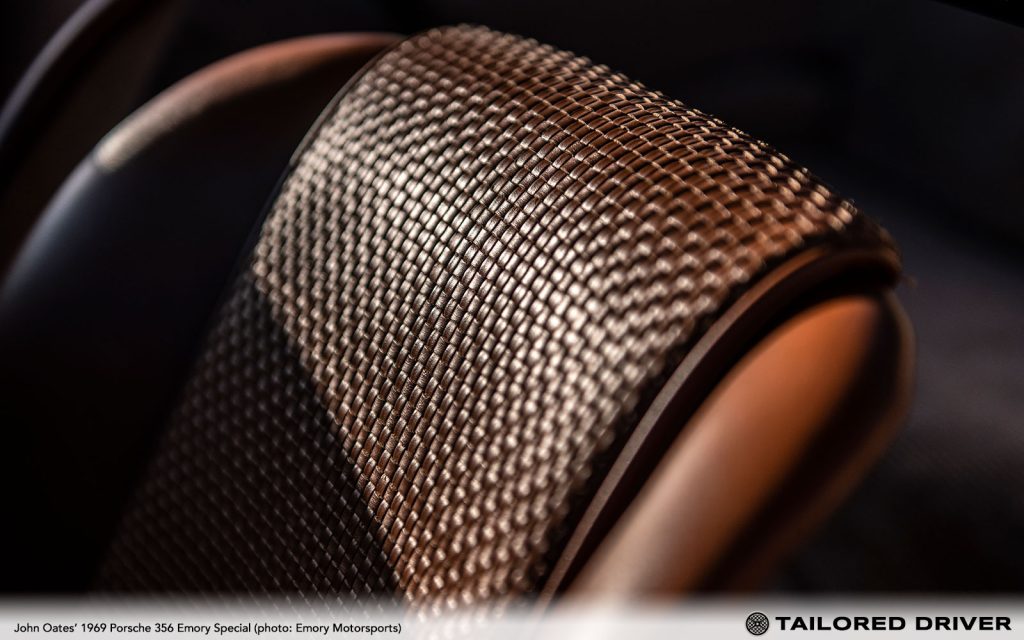
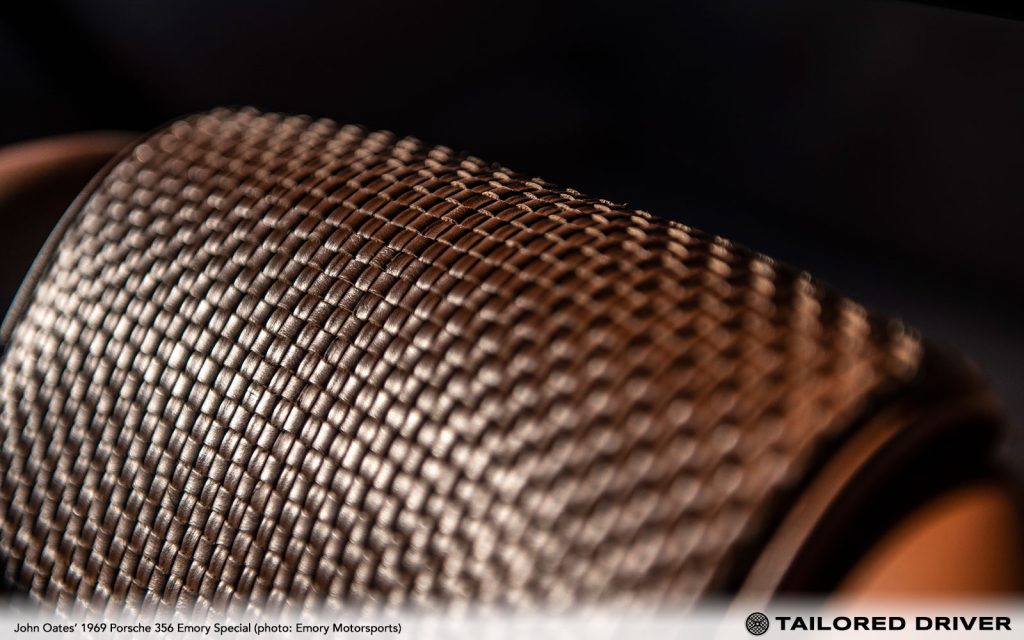
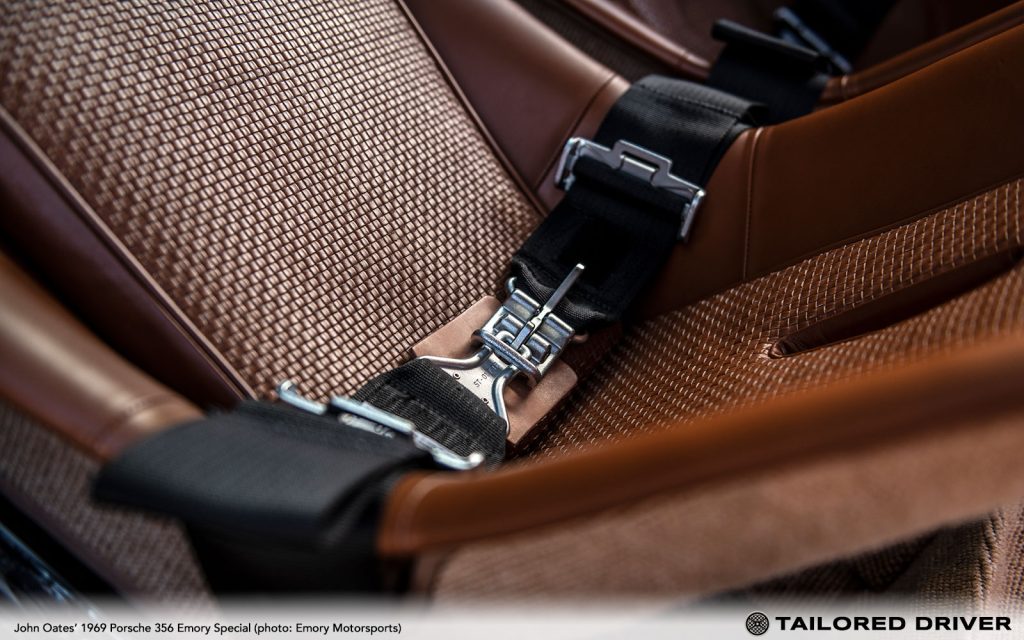
John Oates worked directly with Rod Emory to map out the interior cabin. Hydes cognac leather is showcased throughout. The Speedster-style seats received basketweave inserts and 2-point competition harnesses. German square-weave carpet in is augmented by traditional rubber floormats.
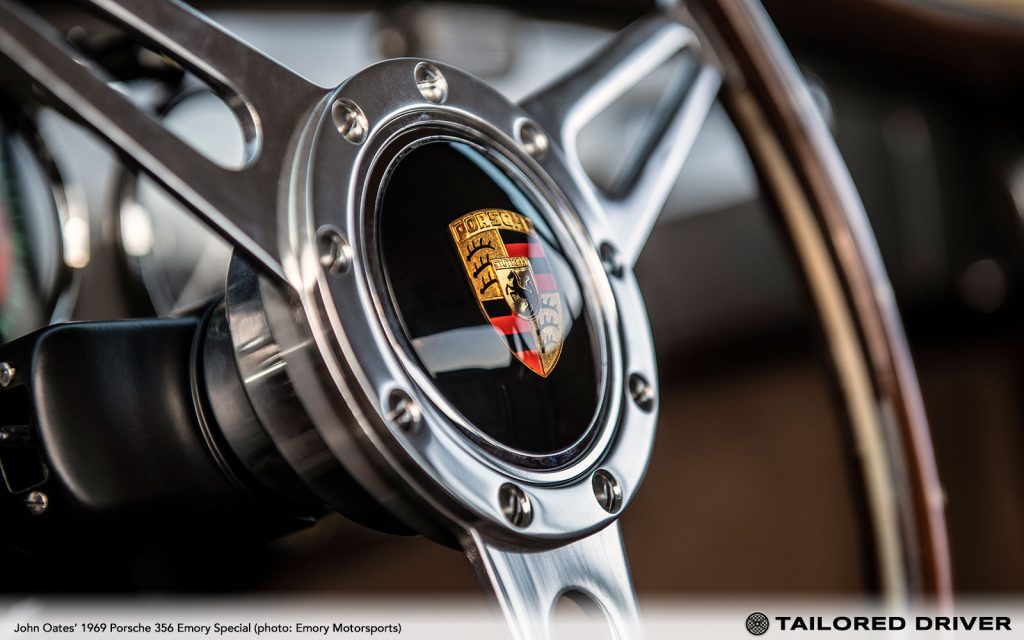
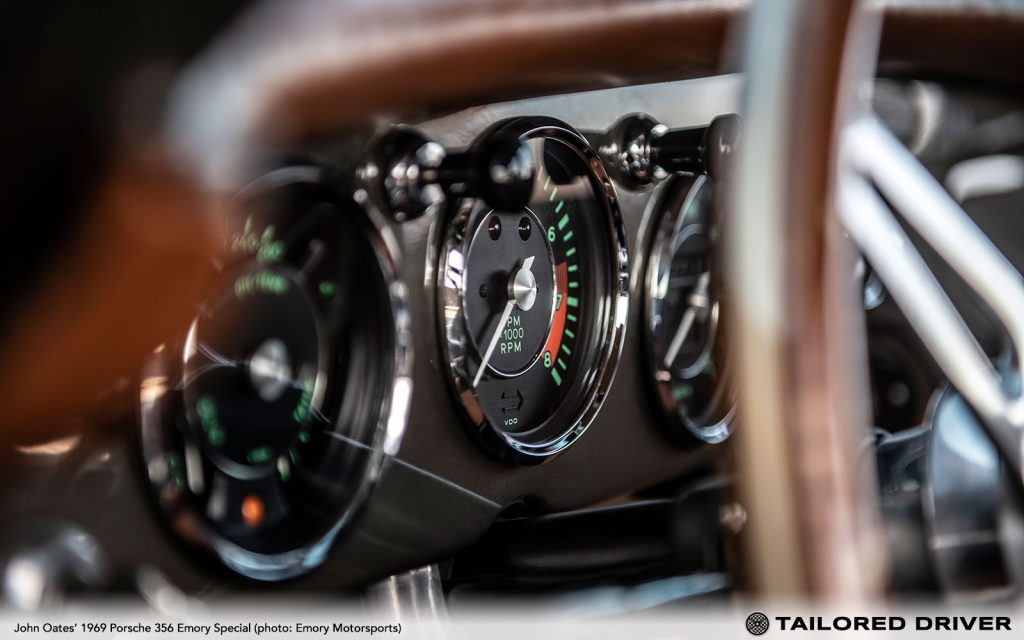
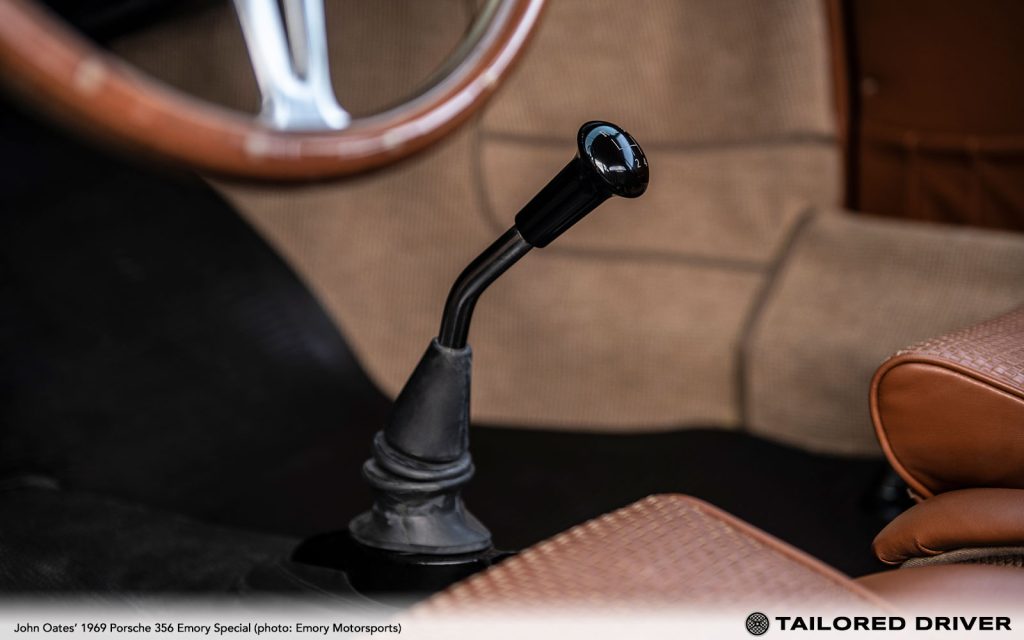
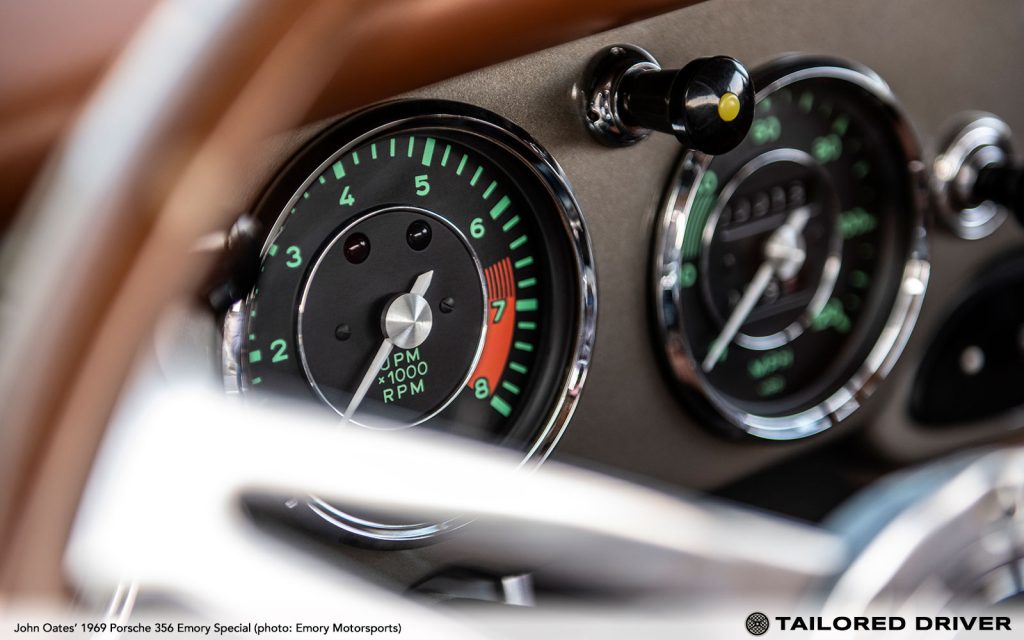
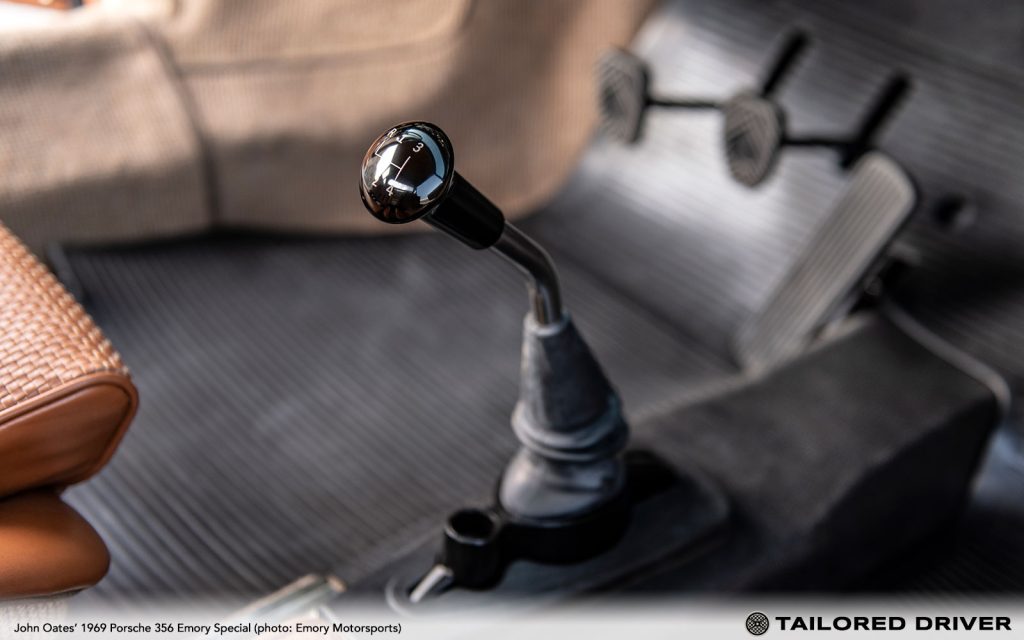
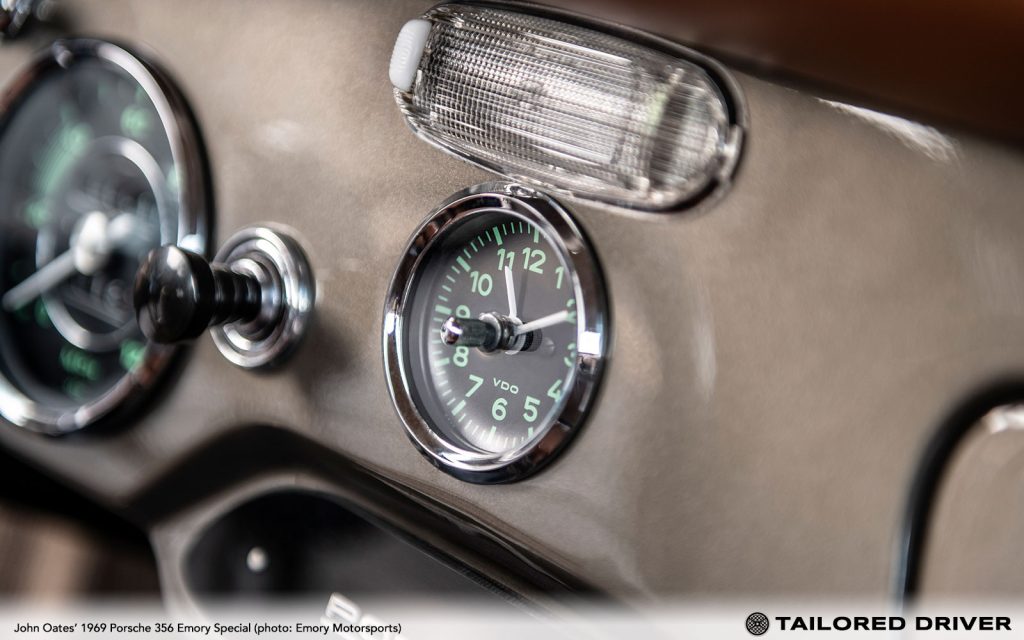
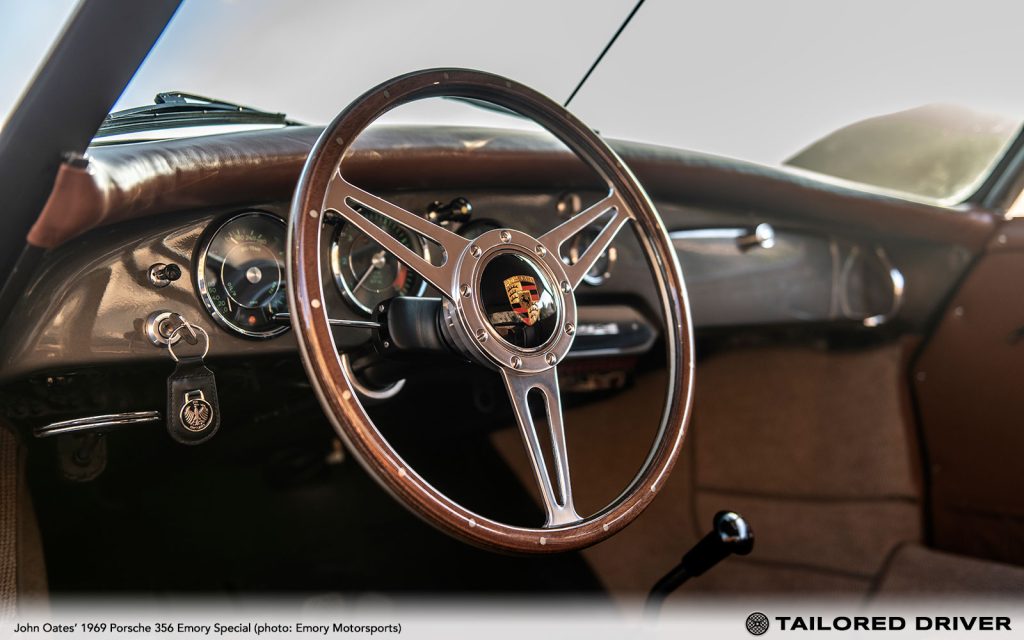
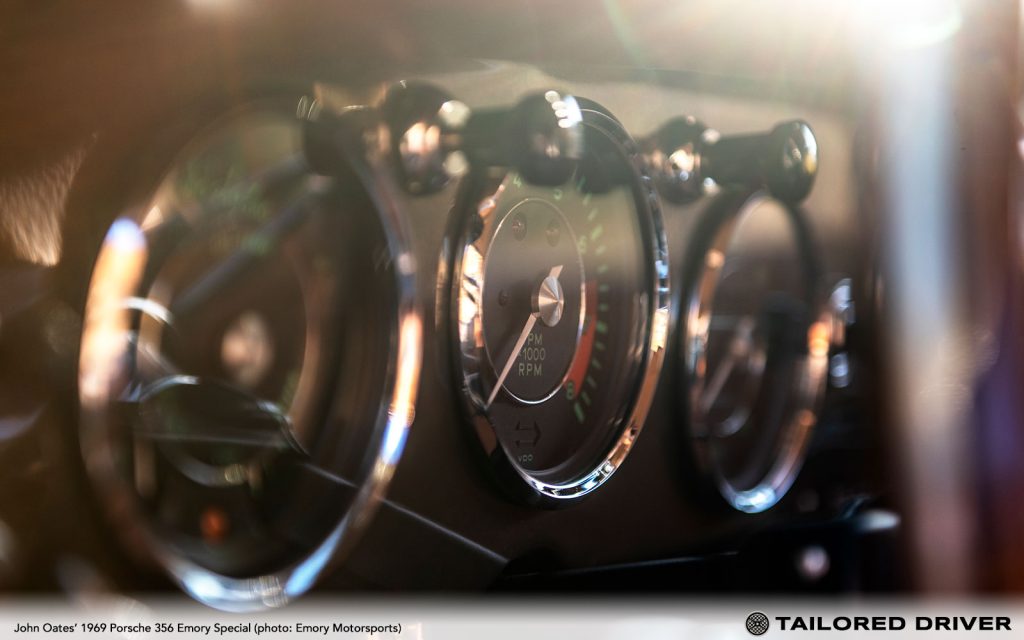
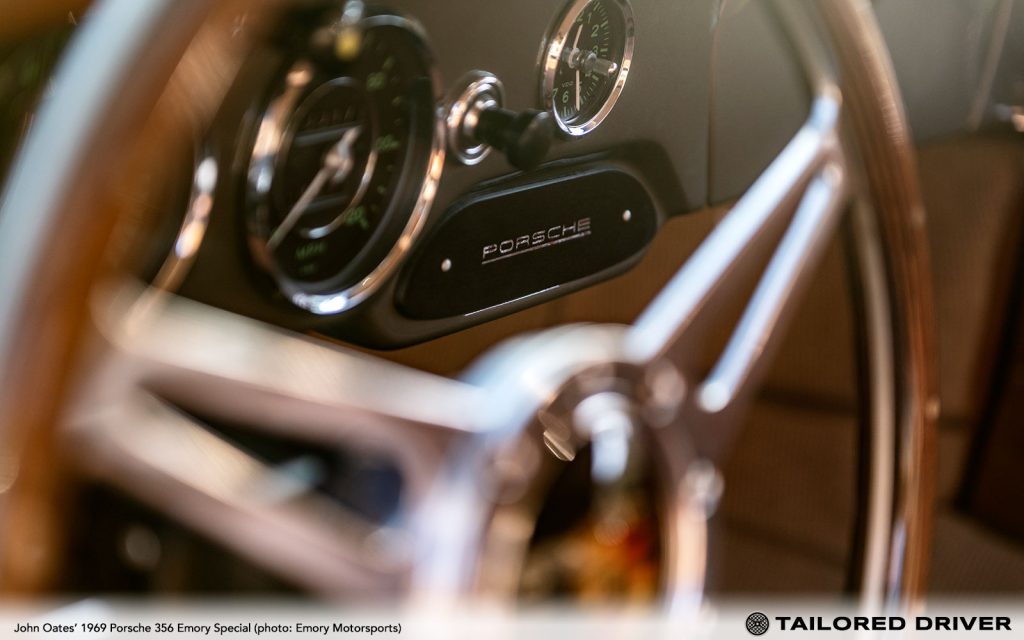
Other interior features include the mid-1960s Porsche 904-style triple gauge, accented by a Derrington steering wheel, an Emory Outlaw shift knob, black control knobs and escutcheons, and the radio-delete option. A removable rollbar was added in case Oates decides to track his 356.
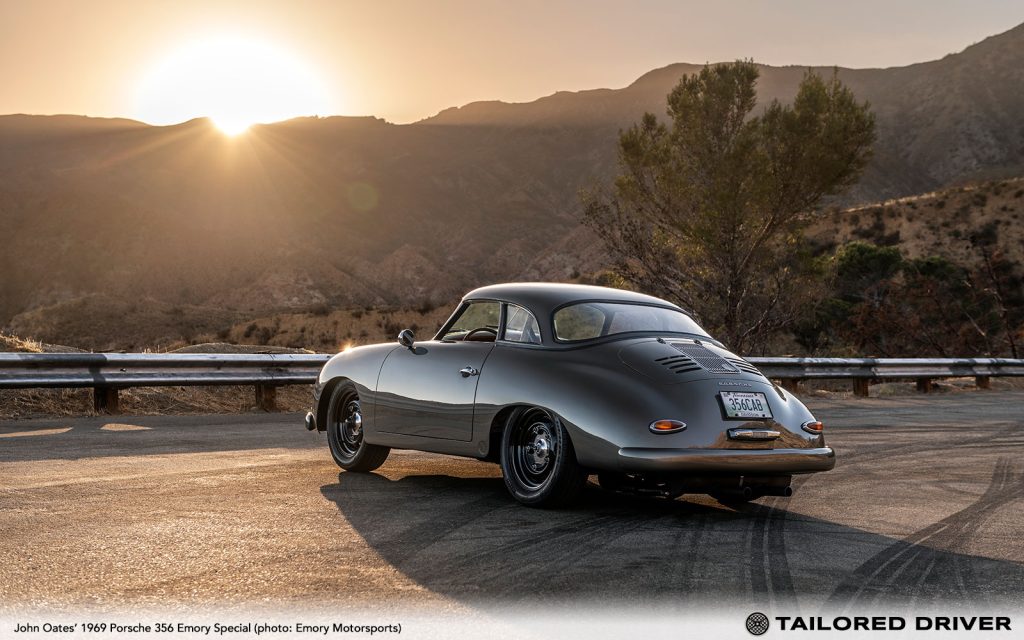
Final exterior details really set this car apart. To complement the removable rollbar, Emory created interchangeable hard and soft tops. The re-profiled OE hardtop is pictured; the car also has a custom soft top for summer cruising.
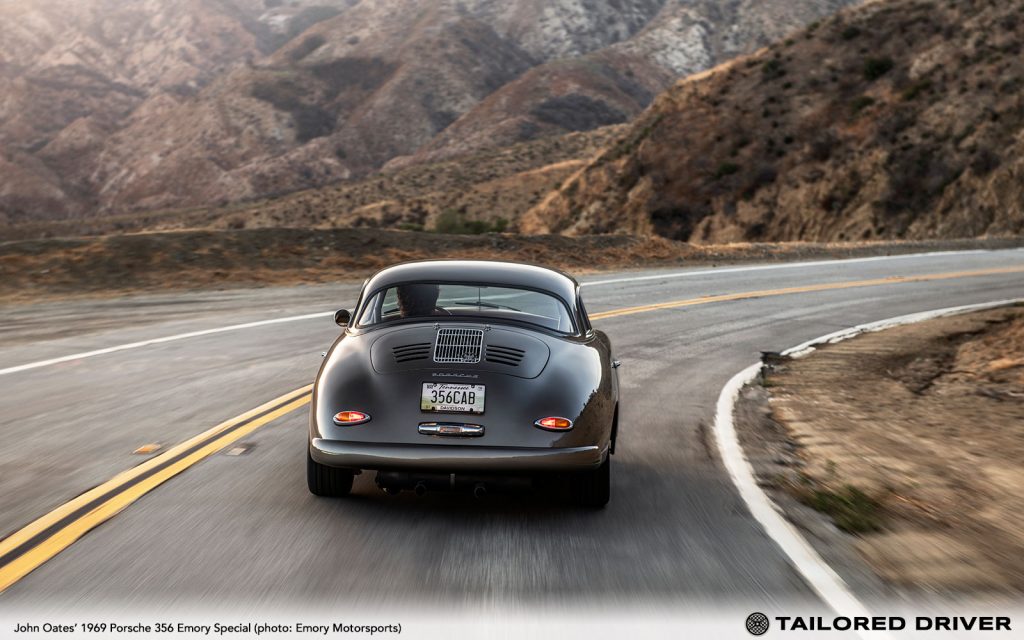
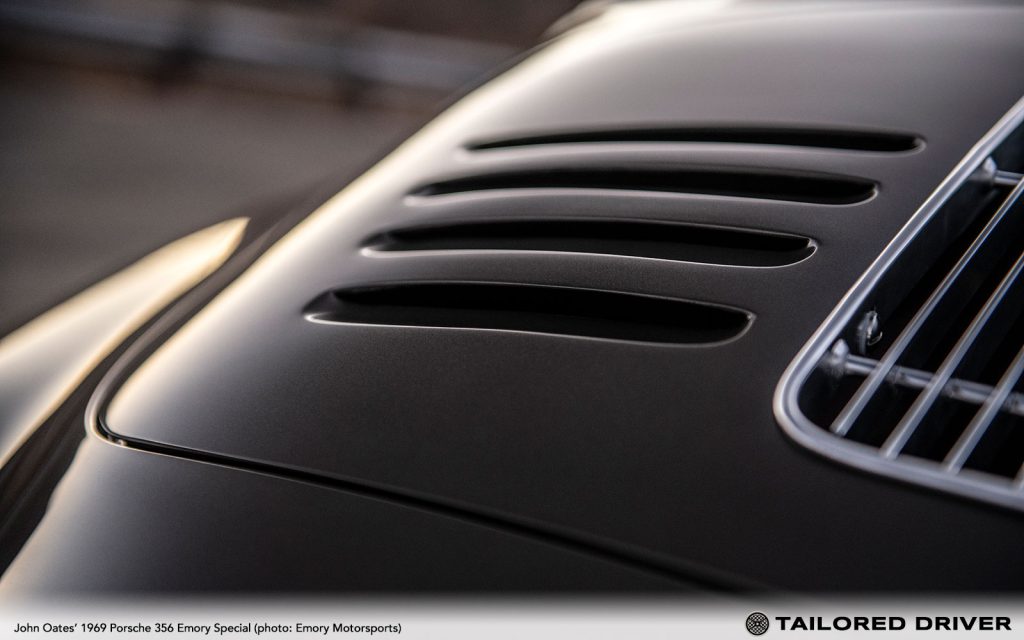
Finished in Graphite Grey Metallic RM paint, Oates’ 1960 356 Emory Special has a few additional bespoke body modifications. These include a hood-handle delete, body-hugging bumpers, body-mounted driving lights, and a signature Emory reverse-louvered deck lid. The 200-horsepower car weighs 1,850 pounds.
John Oates debuted his Emory Special 356 in late October at an intimate party and private concert at the Porsche Experience Center in Atlanta as part of the marque’s 70th Anniversary celebration. For more information on Emory Motorsports, please call 971.241.7017 or visit EmoryMotorsports.com.
About Emory Motorsports
Founded in 1996 by Amy and Rod Emory, Emory Motorsports initially provided turn-key prep, repairs, and logistics for vintage racers. When Rod Emory began doing custom street builds, the company evolved into one of the world’s leading resources for Porsche 356 customization and restoration.
Rod Emory’s automotive roots date to 1948, when his grandfather Neil Emory founded Valley Custom Shop. An innovator in body chopping and channeling, Neil Emory created the bodywork for the infamous land-speed record-holding SoCal Streamliner. Rod’s dad, Gary, created the first Baja Bug while working as parts manager at Chick Iverson Porsche in the 1960s. He later founded (Porsche) Parts Obsolete and became the go-to source for hard-to-find replacement parts.
Rod applied his grandfather’s sheetmetal skills and dad’s Porsche obsession and design sensibility to the 356 models. Porsche purists labeled the Emorys’ cars “outlaws” when they dared attempt to enter shows in the 1990s with subtly modified 356s that combined OE parts from different eras. The Emorys happily became champions of what is now known as the “Porsche Outlaw” customizing movement.
Emory Motorsports has created some of the most stunning early Porsches ever built. The company also did a meticulous Pebble Beach Concours-recognized restoration of the most historically significant werks Porsche ever, a 356 SL Gmund that took a class victory at the 1951 24 Hours of LeMans – Porsche’s first international race win.
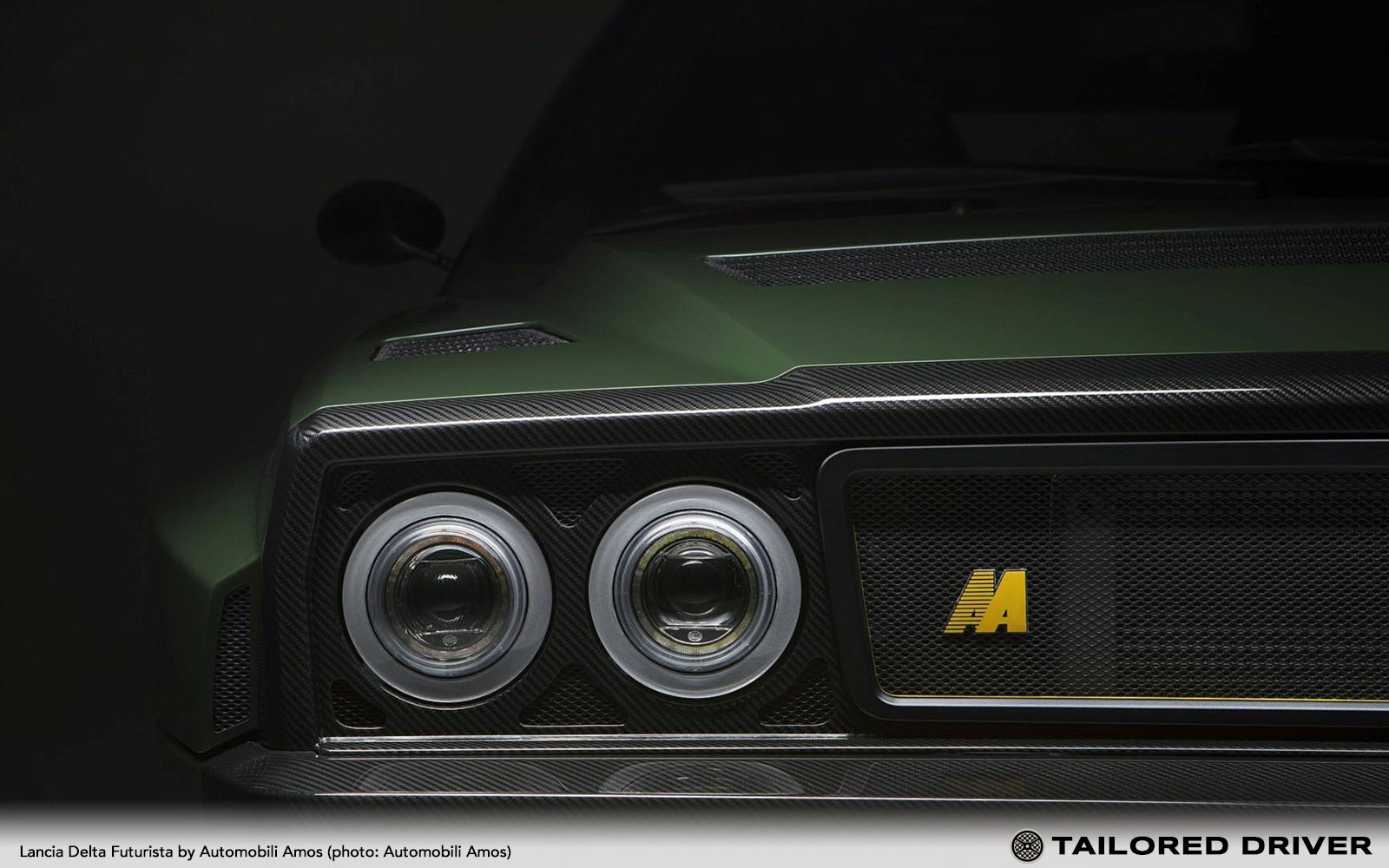
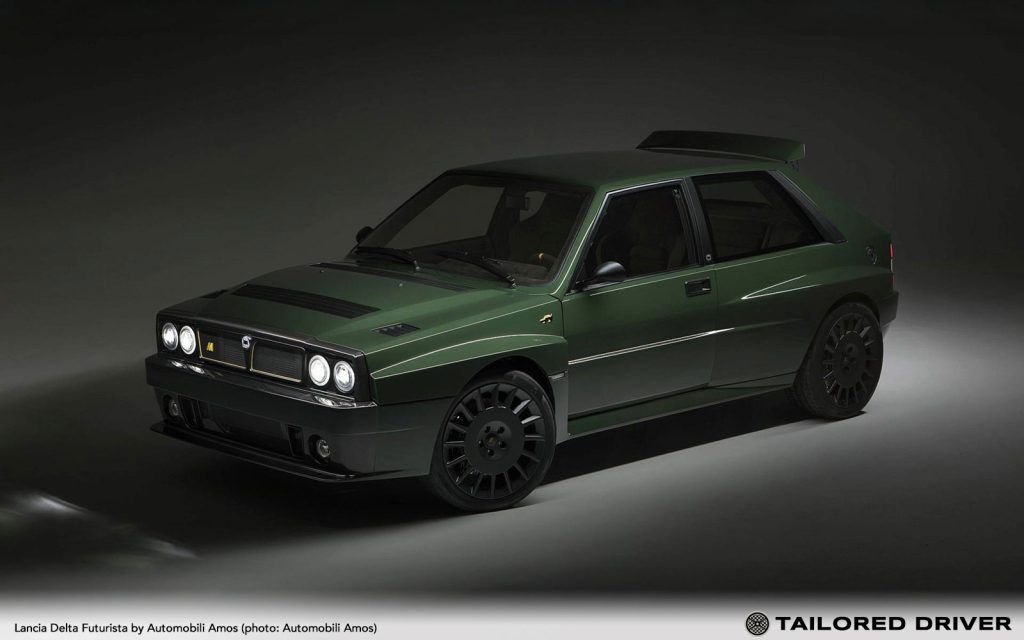
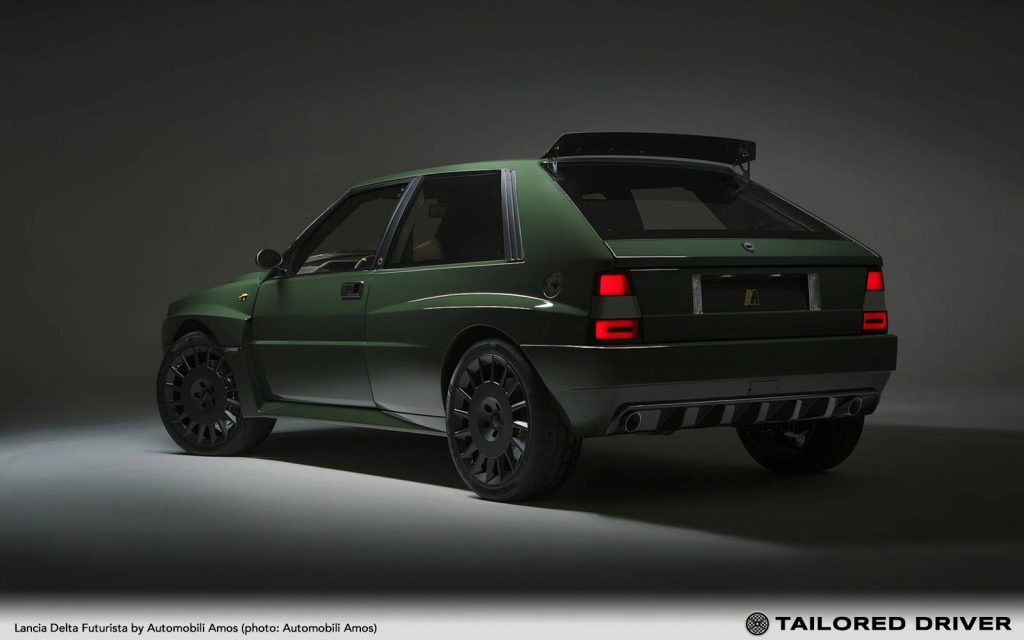
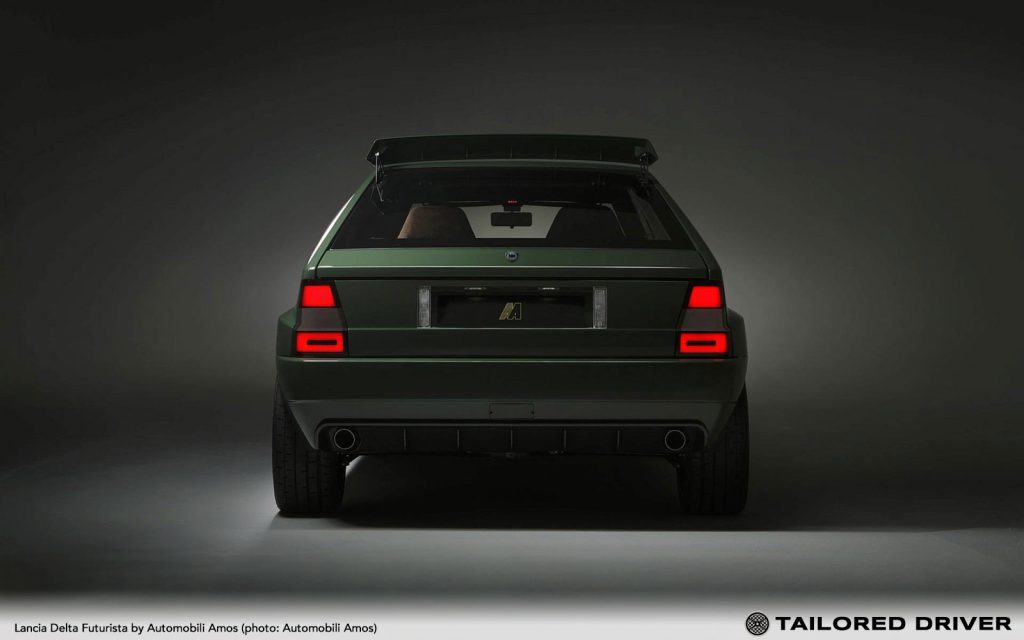
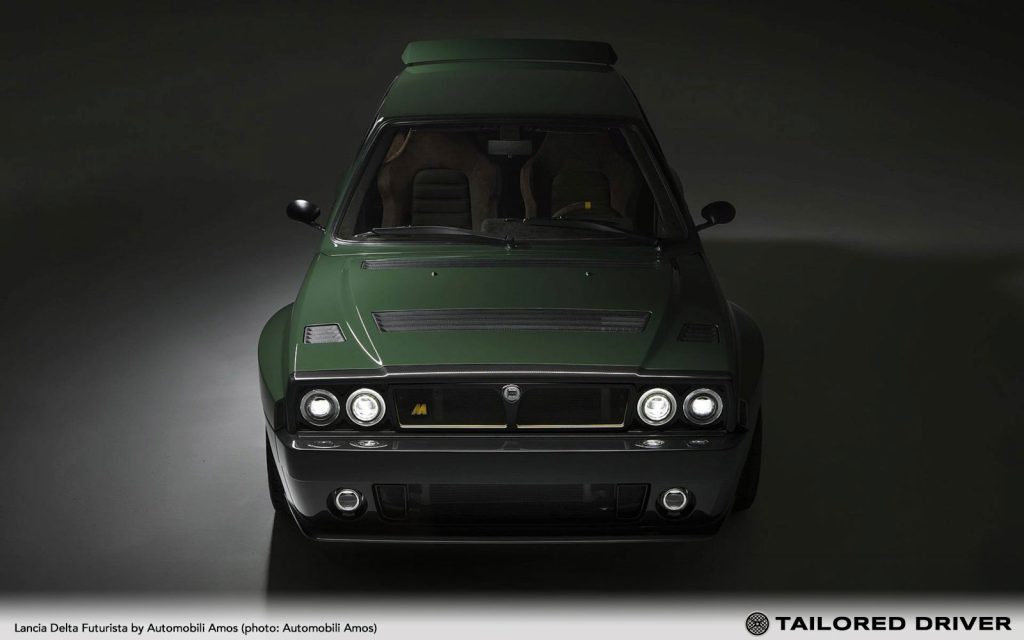
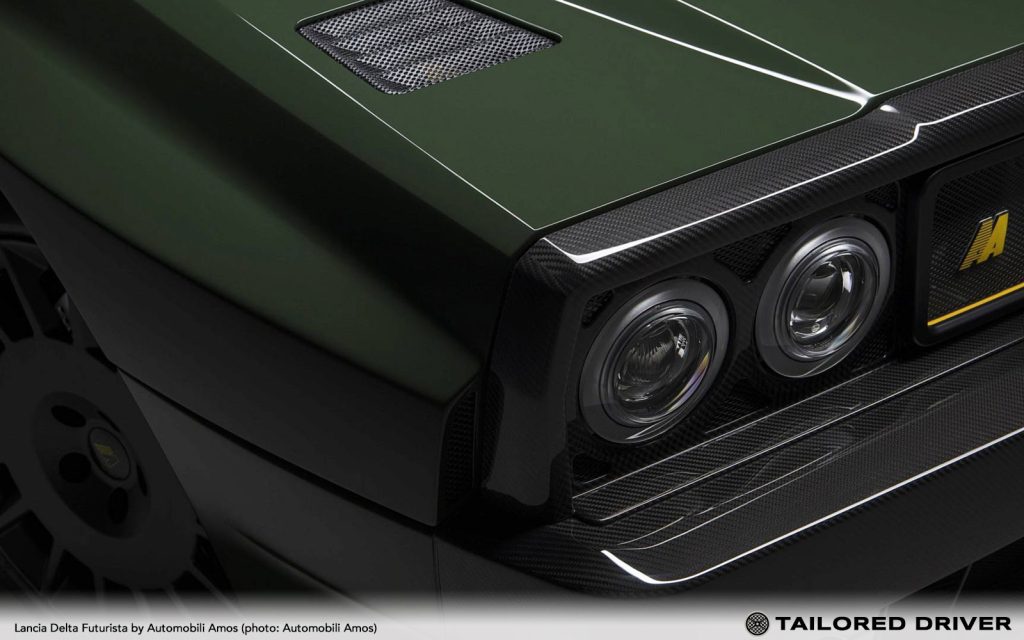
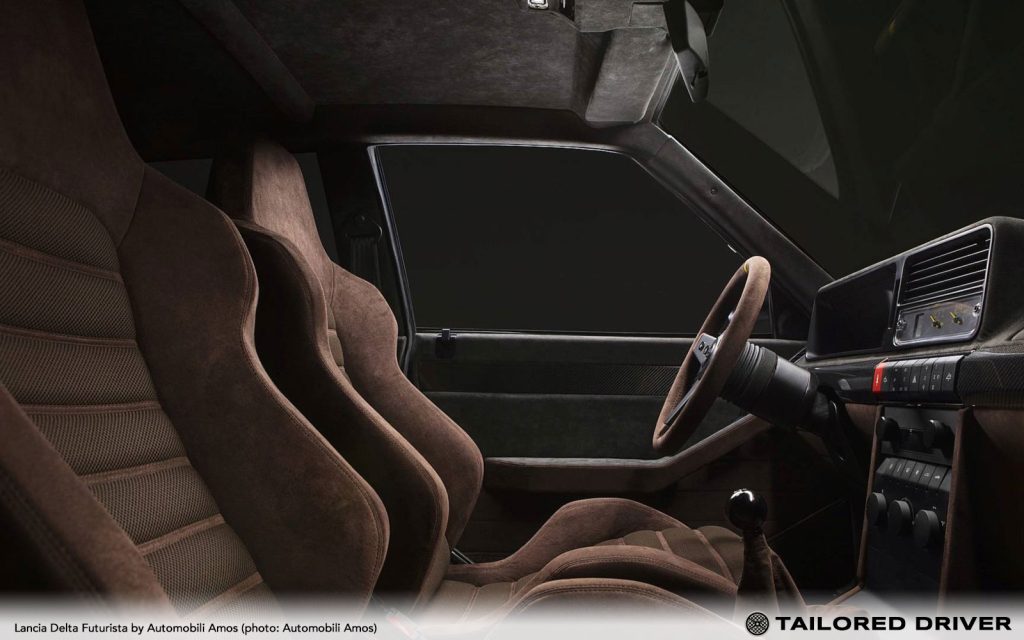
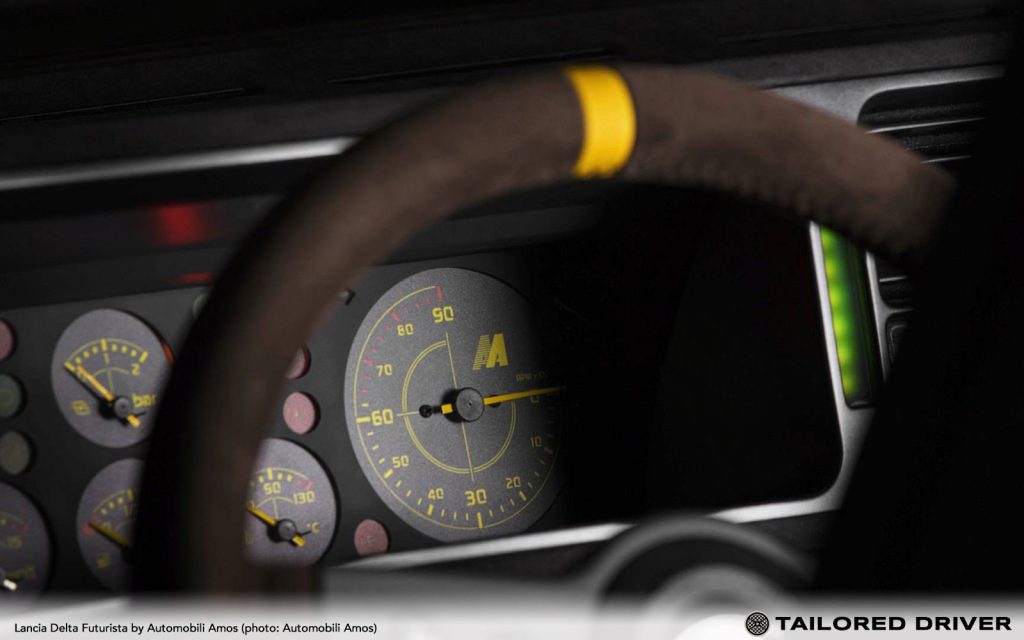
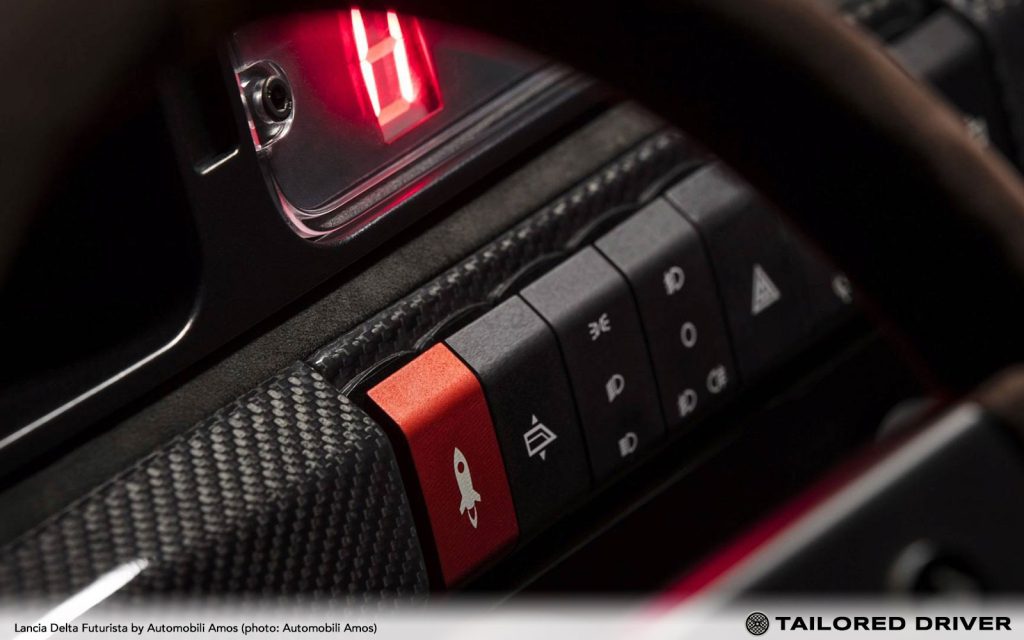
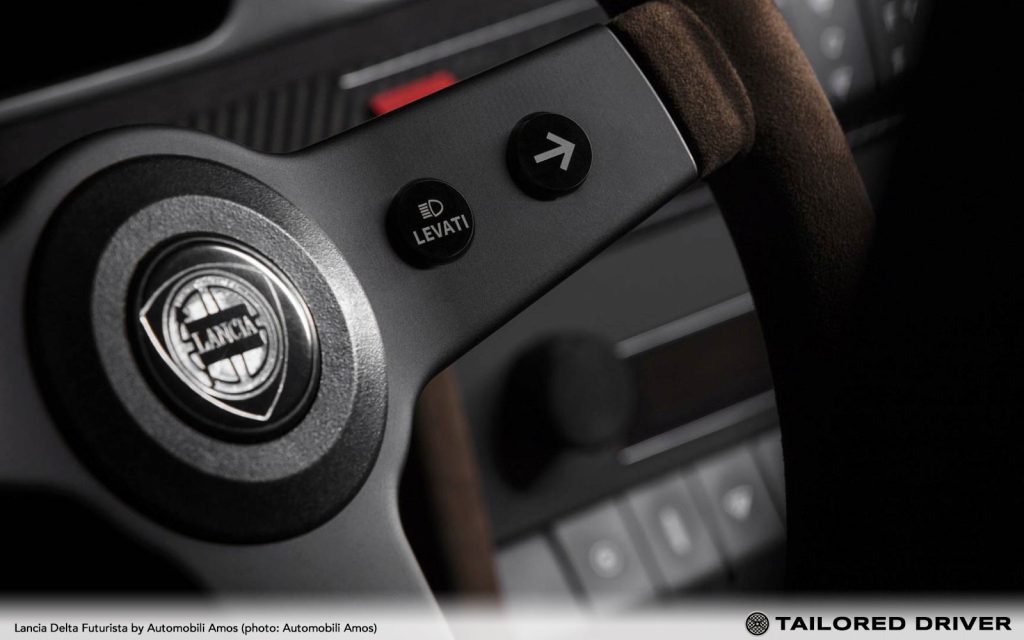
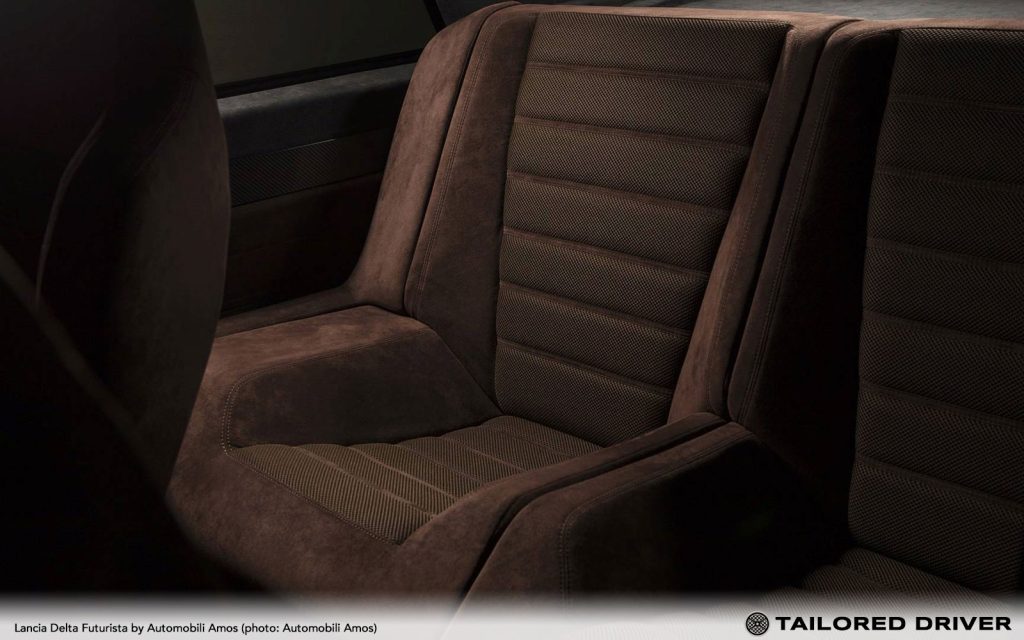
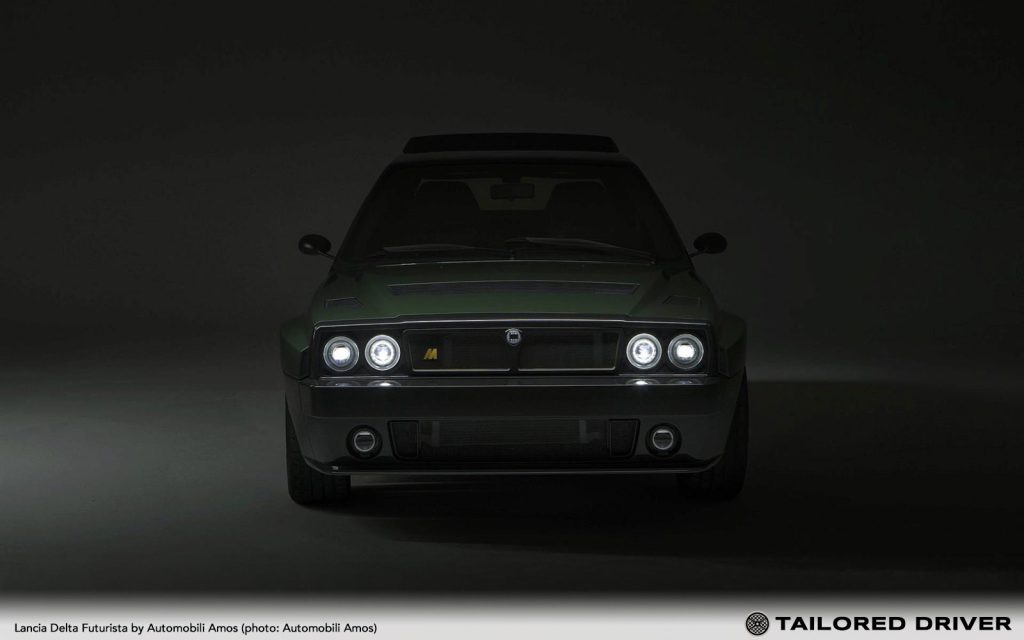
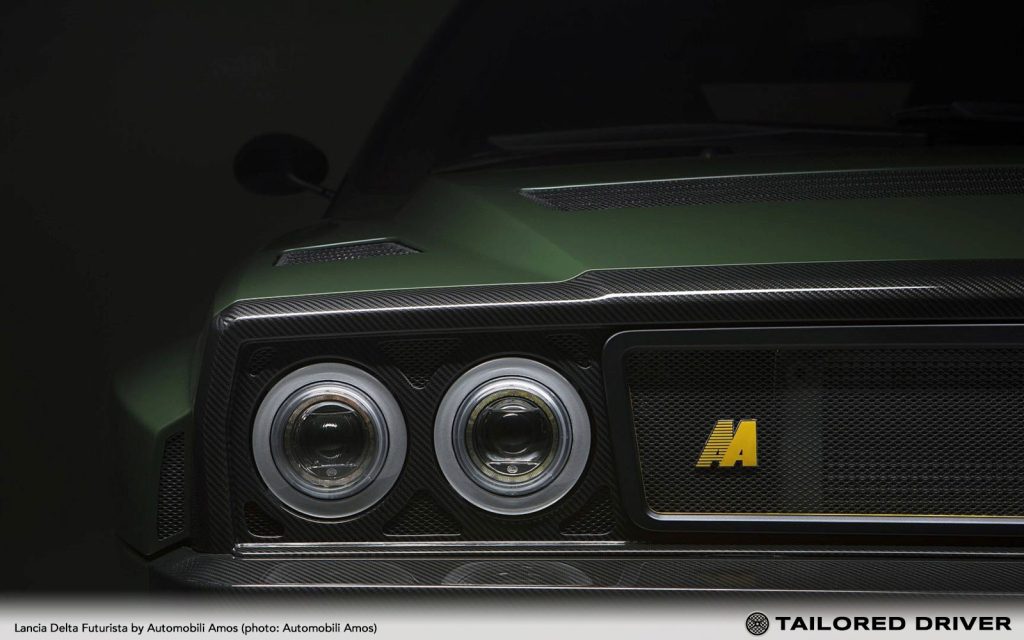
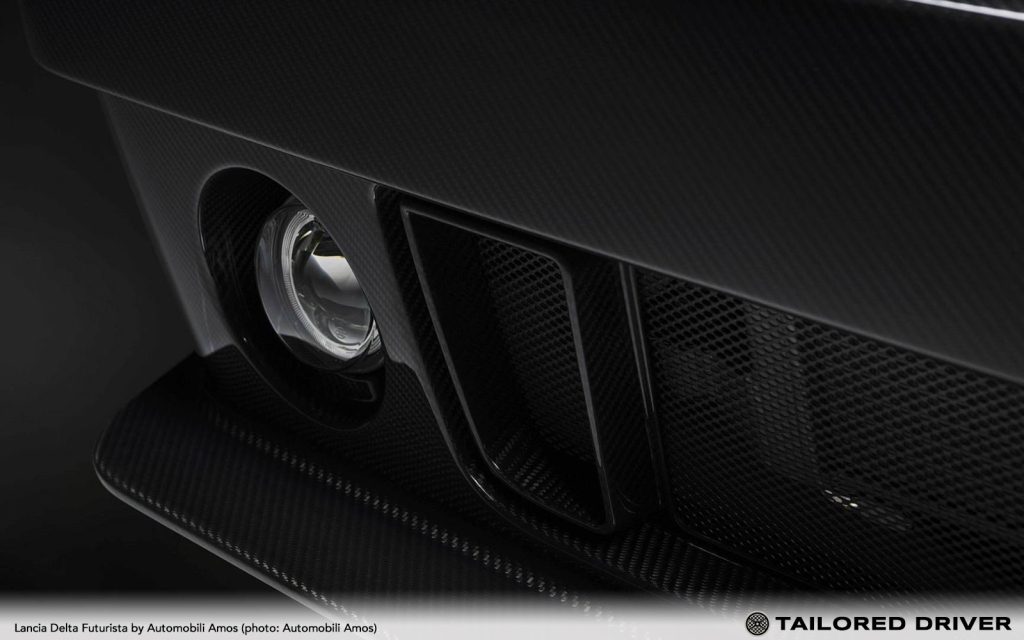
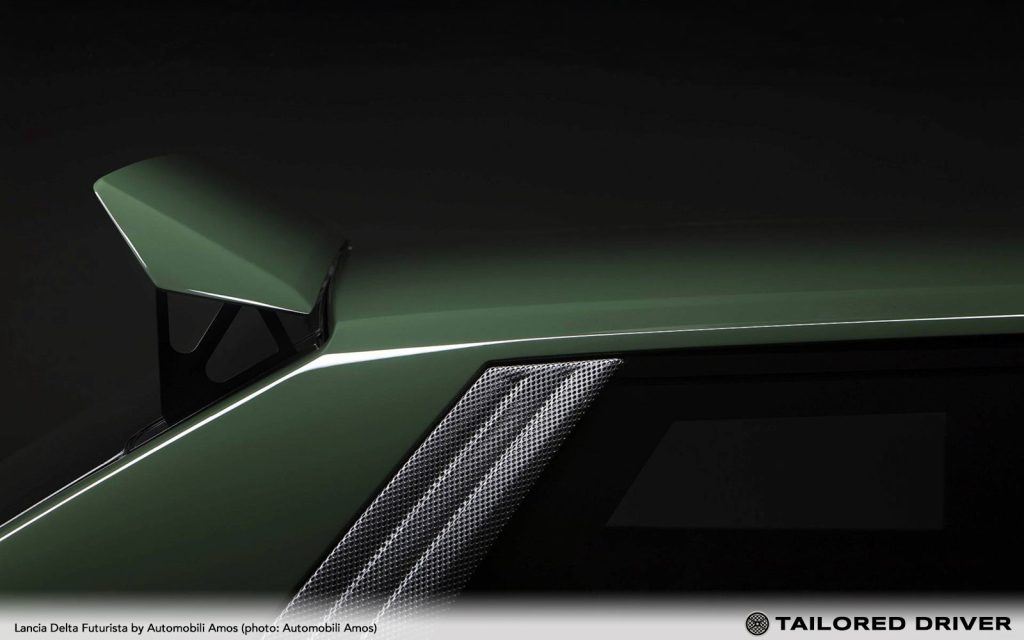
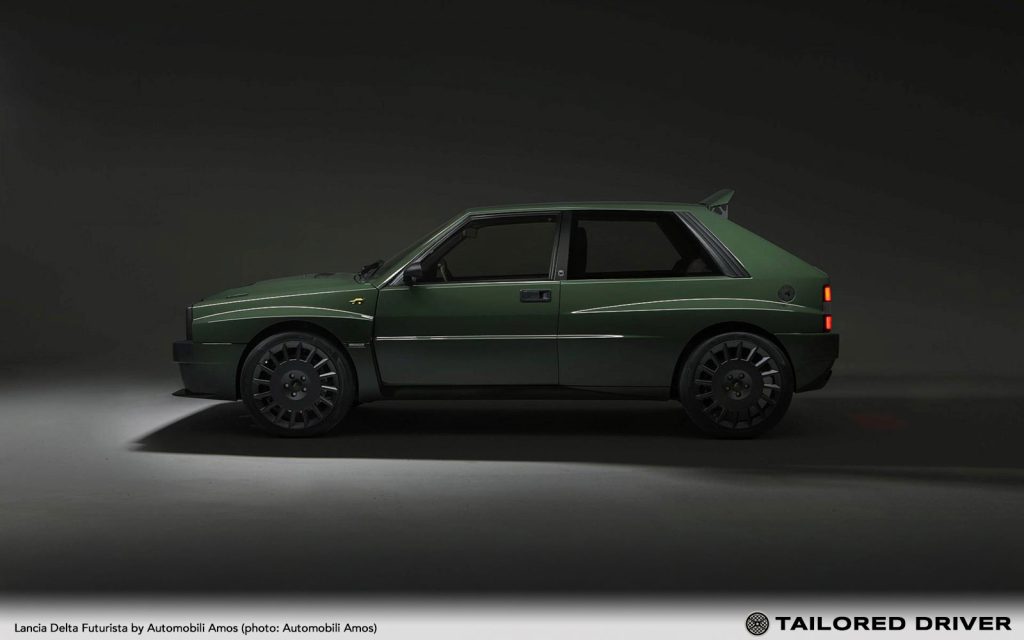
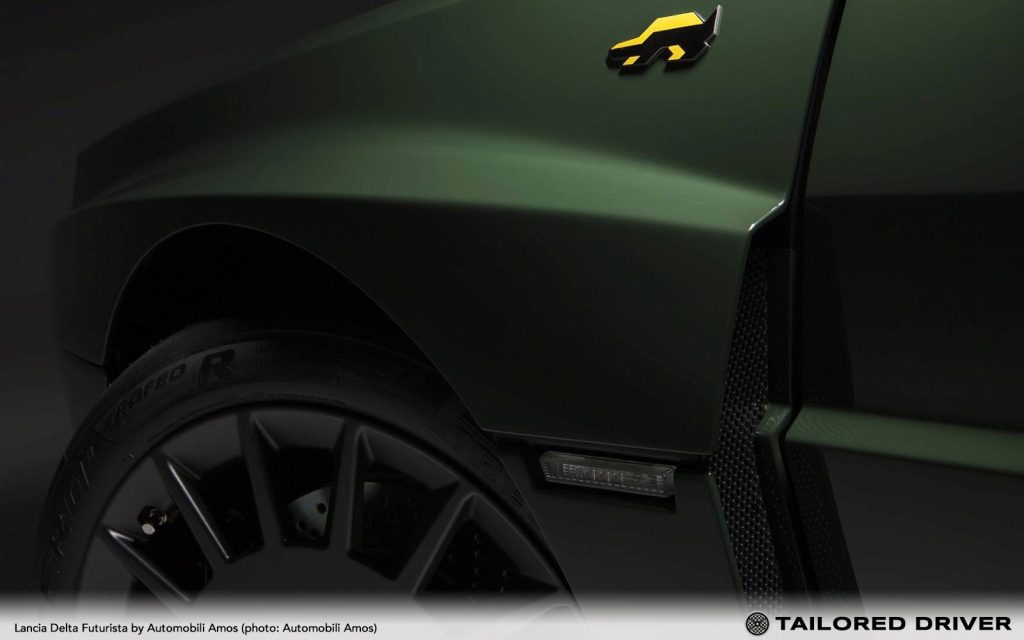
Basel, 4 September 2018 – Automobili Amos has premiered today the new Lancia Delta Futurista, a ‘restomod’ Integrale engineered and built by Podium Advanced Technologies. On the opening day of the inaugural Grand Basel, Automobili Amos has presented the Lancia Delta Futurista, a comprehensively redesigned ‘restomod’ Integrale. Resplendent in Verde Brinzio, the muscular and modern-looking Delta has been entirely redesigned incorporating a wider hand-beaten body with a carbon-fibre front, comprehensively reworked mechanicals, and a gorgeous interior directly inspired by the Group B Delta S4 Stradale.
The Futurista captures the character and spirit of the original cult-classic homologation hatchback, which was Amos’ aim all along. The mechanicals also benefit from the touch of modernization. There is a significantly upgraded engine, along with a new intercooler, intake and exhaust. The gearbox and differential have been reinforced, while suspension, brakes and wheels are all new too. Eugenio Amos, the speed-loving racing driver and eclectic collector who conceived and financed the project, said: “Well, this car means a lot to me. It represents my romantic vision in a world that is too aseptic, too fast, that runs like the wind, superficial and intangible. This car means that I had enough of the car world, both as a client before and as a manufacturer now. I chose the Delta because it’s the car that made me fall in love with cars in the first place. I was 7 years old. My father had a beautiful Giallo Ginestra. I don’t know why but it made me feel special. Those memories are made of smells, of that soft Alcantara touch, of confused noises”.
The new style has been signed by the Milan-based design studio BorromeodeSilva while Podium Advanced Technologies took care of the engineering and production of the car being with the project since its inception. Automobili Amos plans to build only 20 of these Futurista cars.
A tribute to the FIA World Endurance Championship world titles exclusively for client racing drivers
[source: Ferrari]
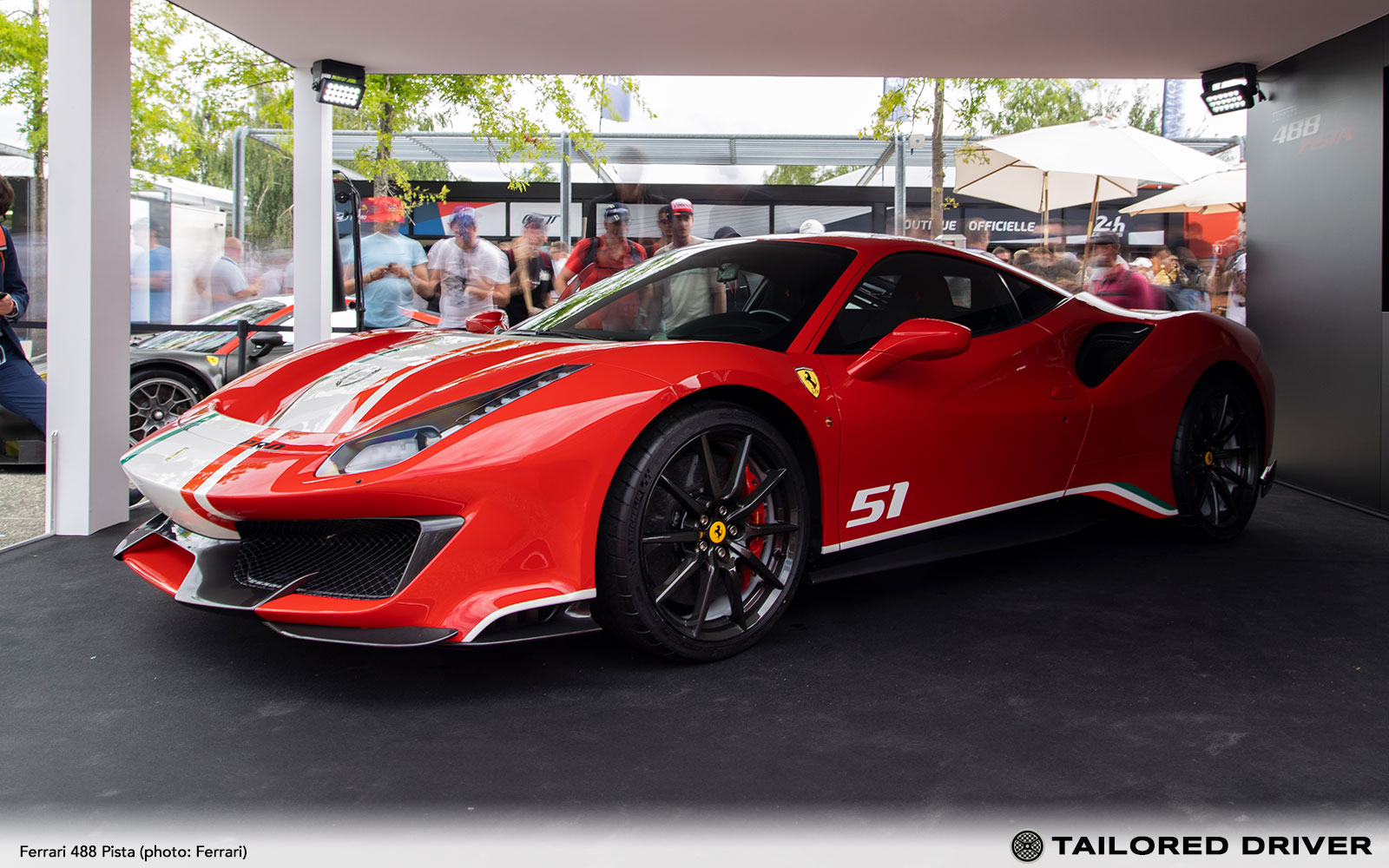
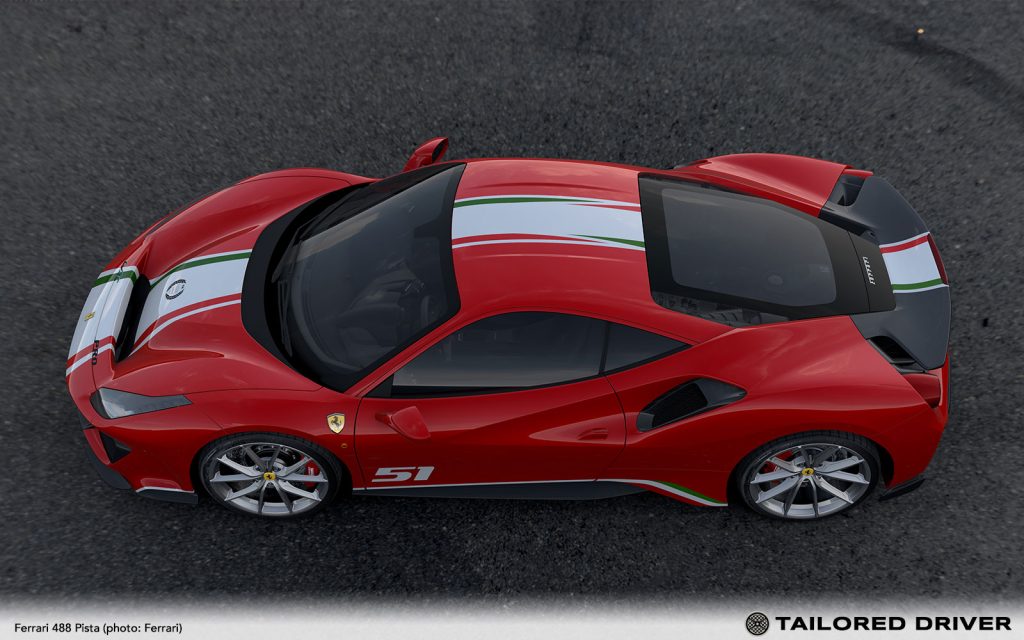
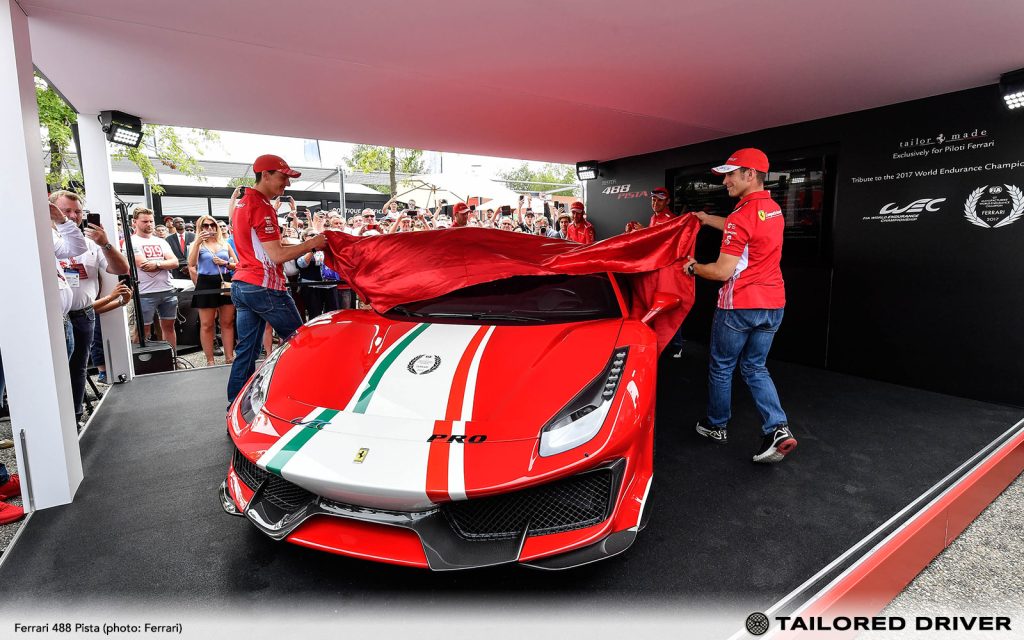
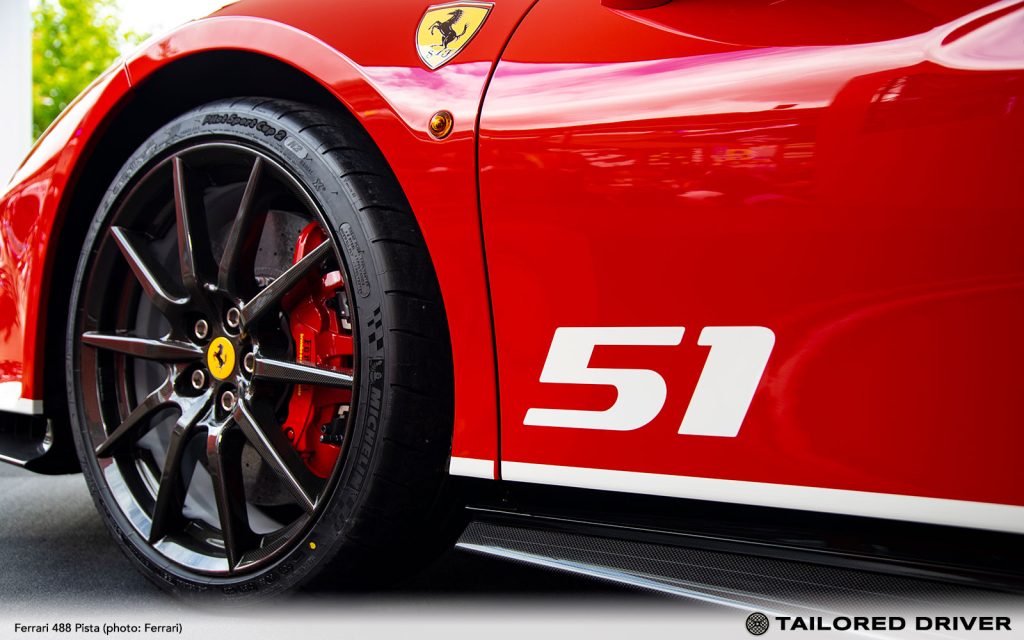
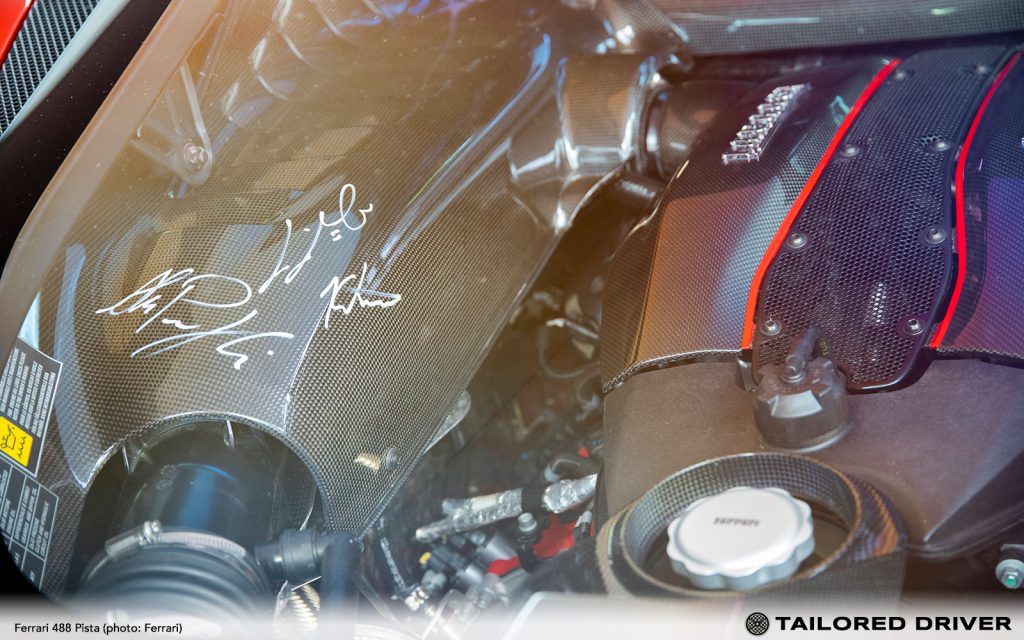
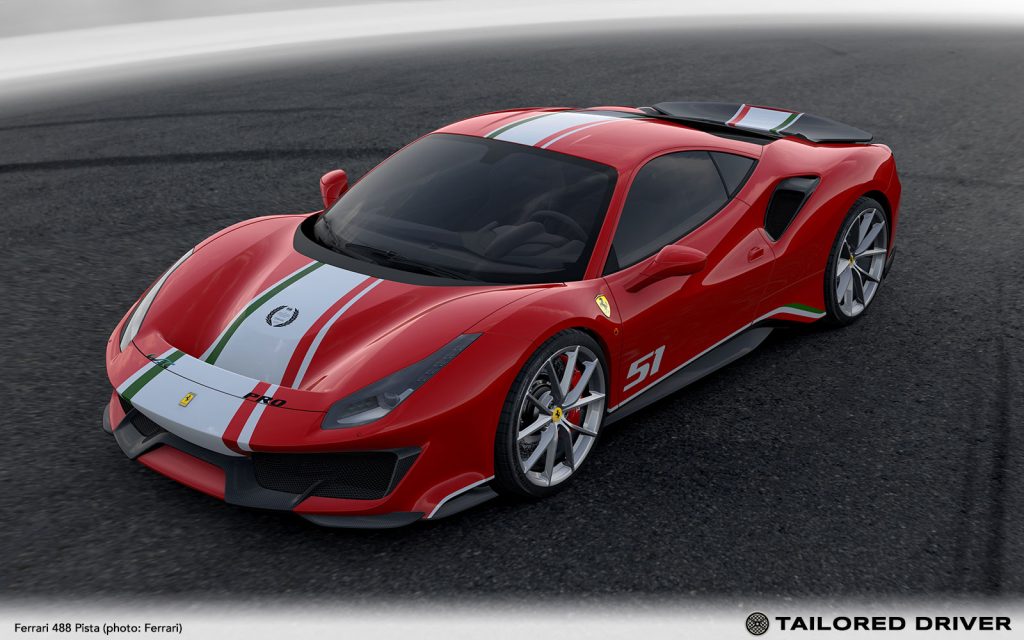
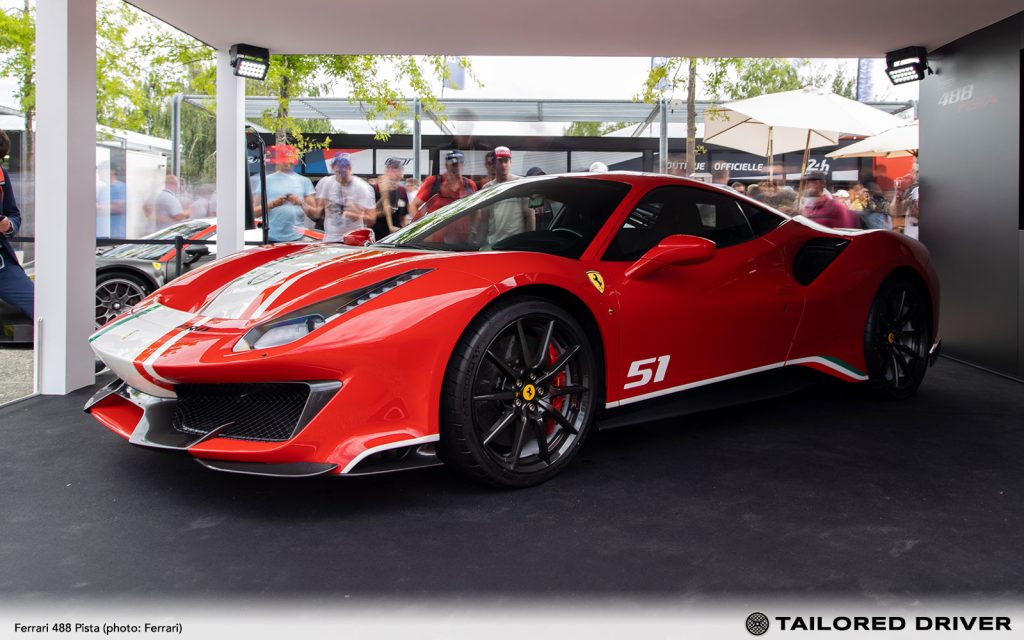
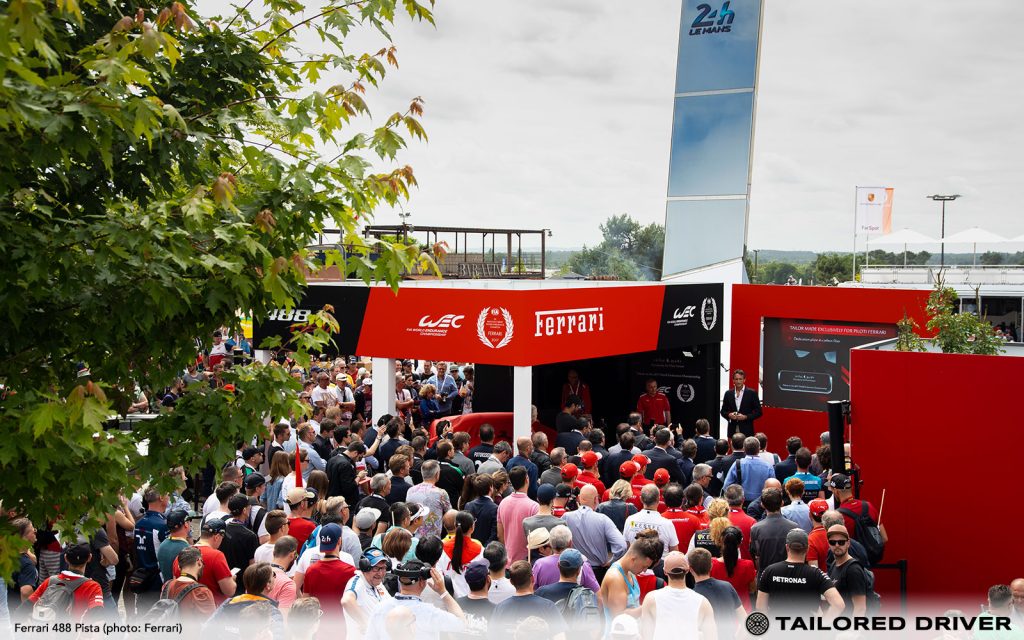
Maranello, Italy – In occasion of the 24 Hours of Le Mans, the Prancing Horse is launching a unique ‘Piloti Ferrari’ specification for the Ferrari 488 Pista. This special custom creation, the latest from the exclusive Tailor Made programme, was designed to recognise the success of clients who race Ferraris and will make its debut on the eve of the legendary French endurance race at the Circuit de la Sarthe. Inspired by AF Corse’s no. 51 car, with which Alessandro Pier Guidi and James Calado won the 2017 FIA World Endurance Championship (WEC) Drivers’ and Manufacturers’ titles, this special finish for the new Ferrari 488 Pista is available exclusively for customers involved in the company’s motor sports programmes.
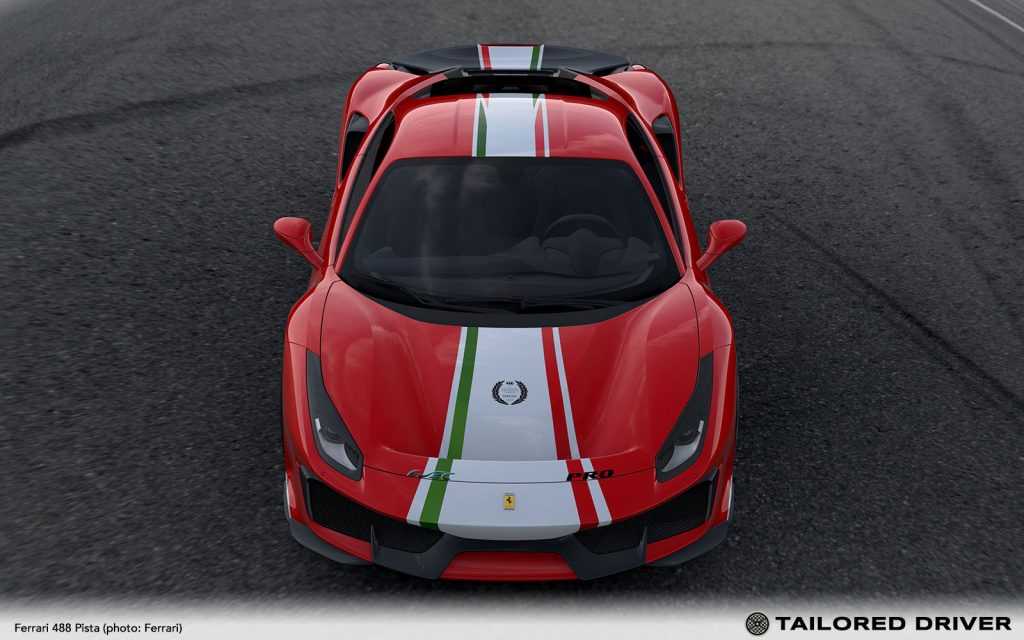
The exterior features a new livery with stripes in the colours of the Italian flag recalling the racing version of the 488 GTE, embellished by a laurel celebrating the WEC title, the logo of the championship and the word “PRO” indicating the class the car raced in. The Italian flag livery features again along the car’s flanks which are also adorned with the personal race number each client will be able to add. The version that will be unveiled at Le Mans carries the number 51 used by the world championship drivers. The matte black S-Duct and the natural carbon-fibre ‘dovetail’ suspended rear spoiler and vent surrounds round off the personalisation of the exterior.
The ‘Piloti Ferrari’ 488 Pista will be available in four different colours inspired by the world of racing: Rosso Corsa, Blu Tour De France, Nero Daytona and Argento Nürburgring.
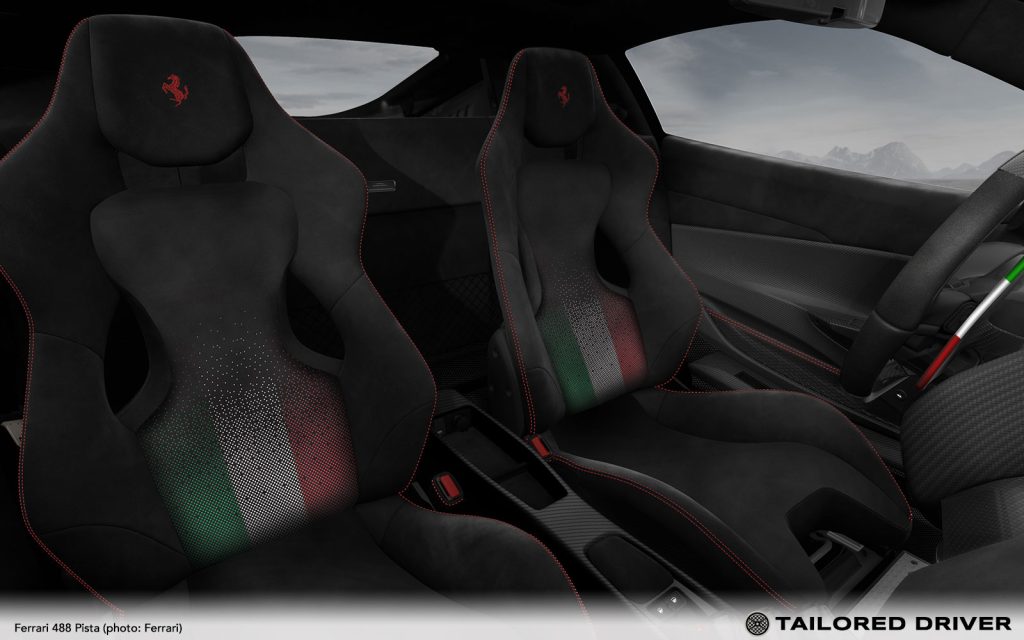
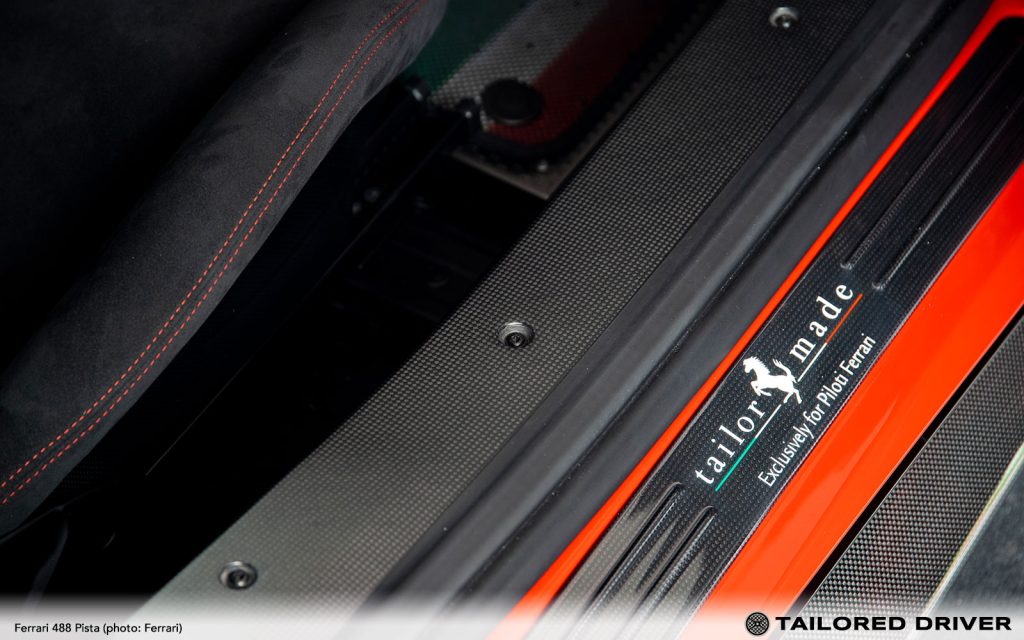
The interior, in black Alcantara®, includes seats upholstered with a special perforated version of the same material that incorporates the Italian flag in the central band of the backrest. The national colours are also clearly visible on the edge of the gearshift paddles and on the floormats which, like the carpeting itself, are made of a special technical fabric. The number that features on the external livery also appears on the base of the steering wheel, while all the carbon-fibre trim parts have a matte finish. The personalisation of the interior is completed by an exclusive identification plate and sill trim in carbon-fibre, the latter with the Tailor Made logo.
The ‘Piloti Ferrari’ 488 Pista is powered by the latest 720-cv version of the 3.9-litre turbocharged V8 which has been voted best engine in the world for the third consecutive year at the 2018 International Engine of the Year Awards.
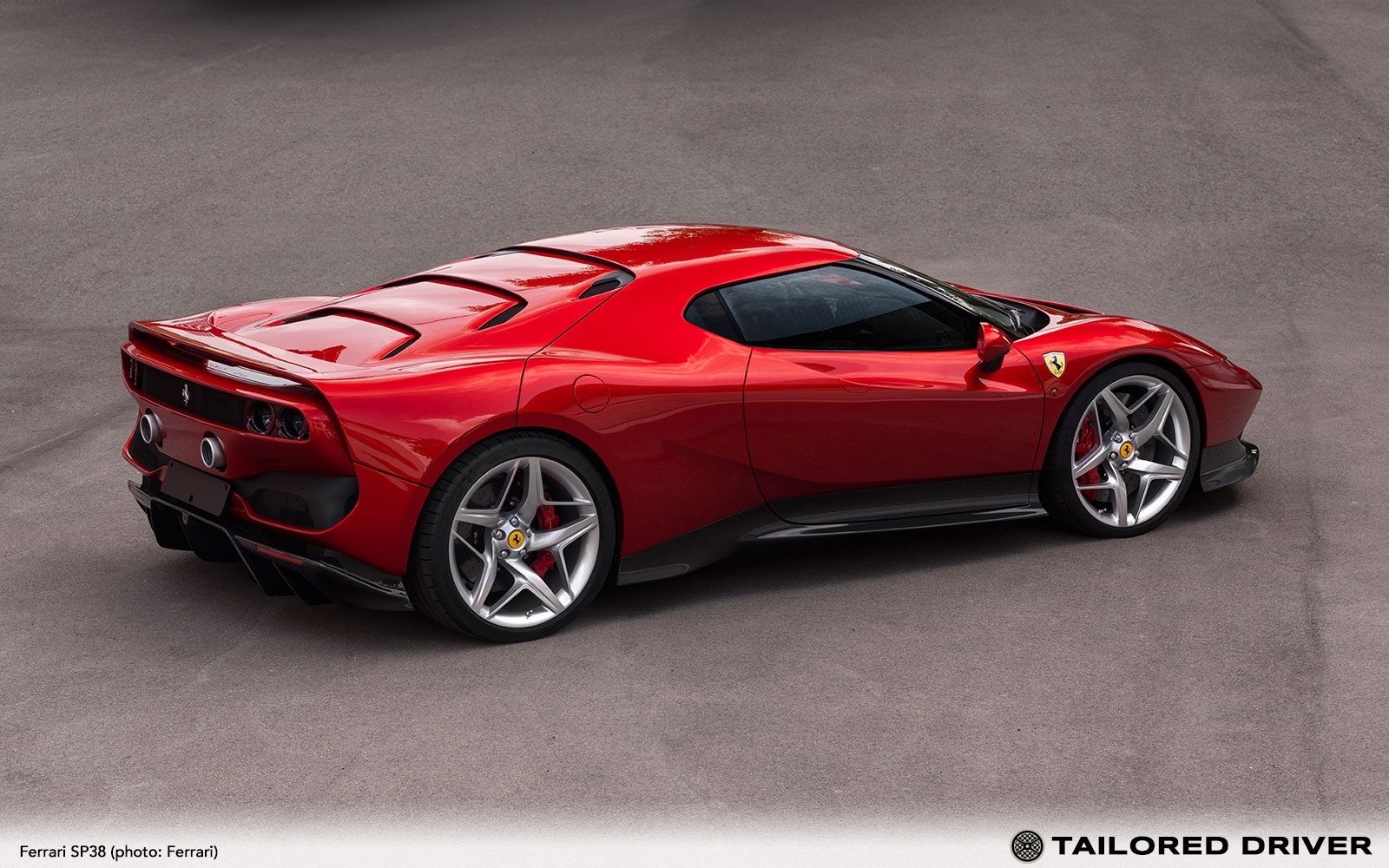
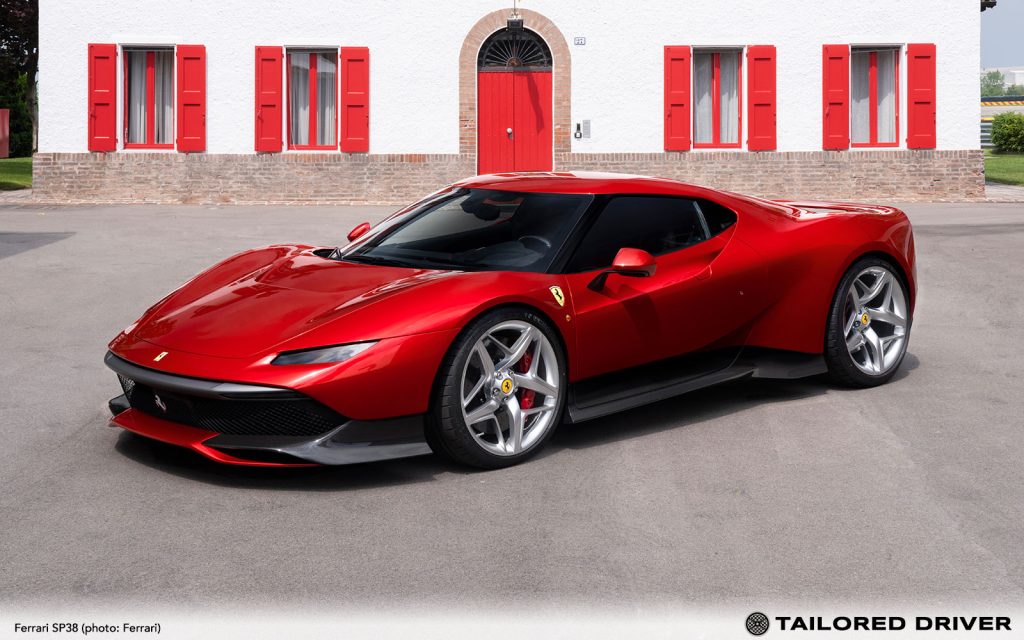
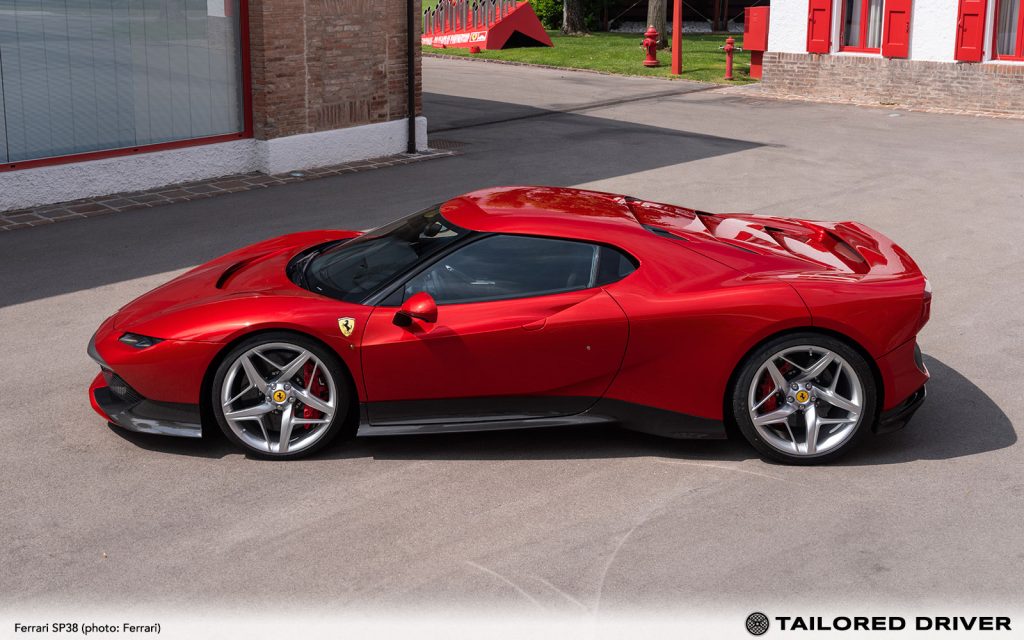
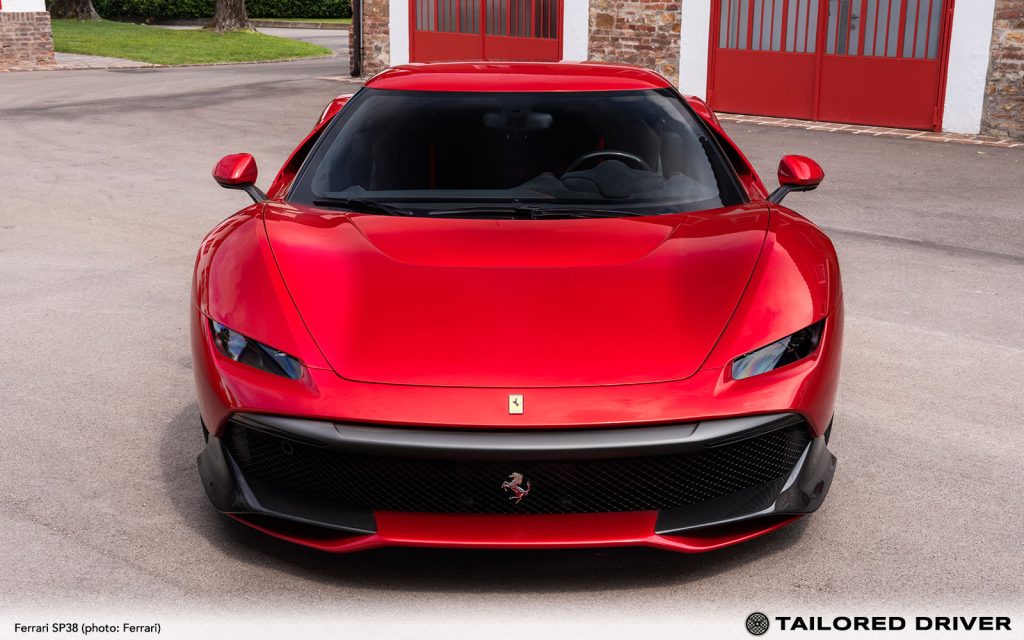
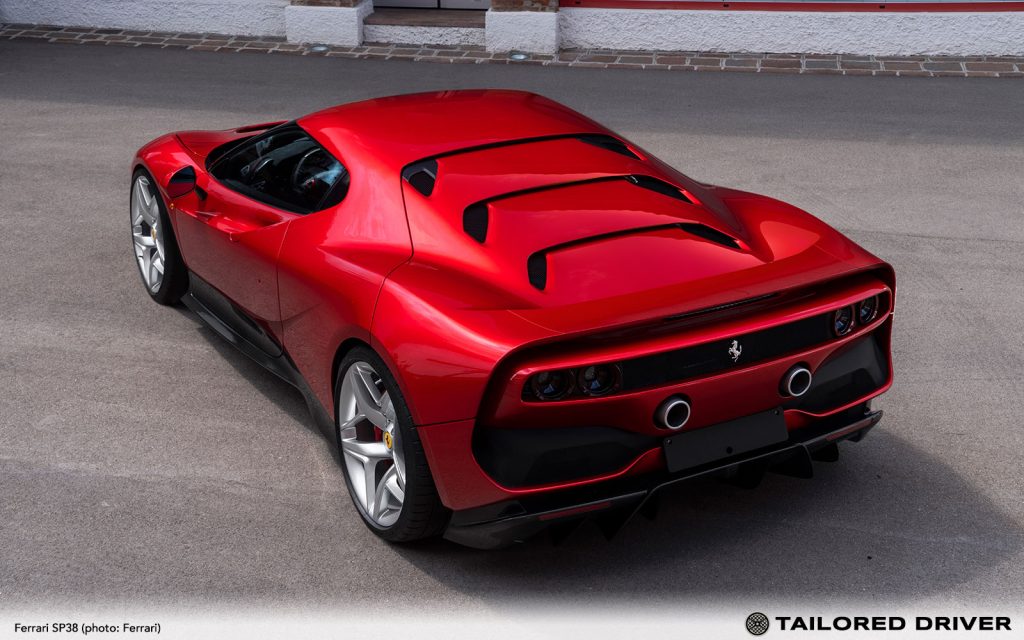
Maranello, Italy – The Ferrari SP38, the latest offspring from Ferrari’s One-Off programme, has been unveiled at Fiorano where, after the ceremonial handover to one of Ferrari’s most dedicated customers, the car was immediately put through its paces in a series of hot laps. Designed by the Ferrari Design Centre on the chassis and running gear of the 488 GTB, this unique car reflects the specific vision of a client with a deep passion for racing. The result is a model that can be driven both on road and on track, while at the same time expressing all the beauty and innovation inherent in Ferrari’s road cars. The all-new bodywork, in a newly conceived three-layer metallic red, marks a radical departure from the language aesthetic of the donor car. The twin-turbo, twin-intercooler set-up of the award-winning 488 GTB inspired the team to reference the mighty F40 as an icon from which to instruct the project’s general direction. Compared to the 488 chassis, the visual mass of SP38 appears concentrated over the rear wheels as the wedge design sharply stretches towards the front. In plan view, the strongly tapered nose expands towards muscular wheelarches, giving the car potency and agility. Specific inset headlights were designed to be as thin as possible, with the mandatory DRL (daytime running lights) units relocated to add character and functionality to a slim bumper lip reminiscent of the 308 GTB. On the side, the defining air scoop of the 488 GTB is completely concealed where the sheet metal folds in on itself from the low beltline on the door and into the rear wheelarch and three-quarter light. The effect is dramatic, as it reinforces the importance of the rear volume while, at the same time, maintaining the air flow to the intercoolers at the base of the side window. The dynamic styling continues over the engine cover, which sheds its rear glass and is treated as a flip-up assembly in carbon fibre with shutlines slashing the flanks in a gesture directly reminiscent of the F40’s. Three transversal slats slash across the engine cover to evacuate engine heat, and the smooth integration of a substantial rear spoiler is a hint at the famous rear wing of the F40. The trailing edge of the spoiler links seamlessly with the wing and with the aerodynamic diffuser at the bottom, to create a suggestive frame surrounding the tail volume. A full Tailor Made cabin trim puts the finished touches on this truly special Ferrari, which will be on public display for the first time at the upcoming Concorso d’Eleganza Villa d’Este on Saturday 26th May 2018.
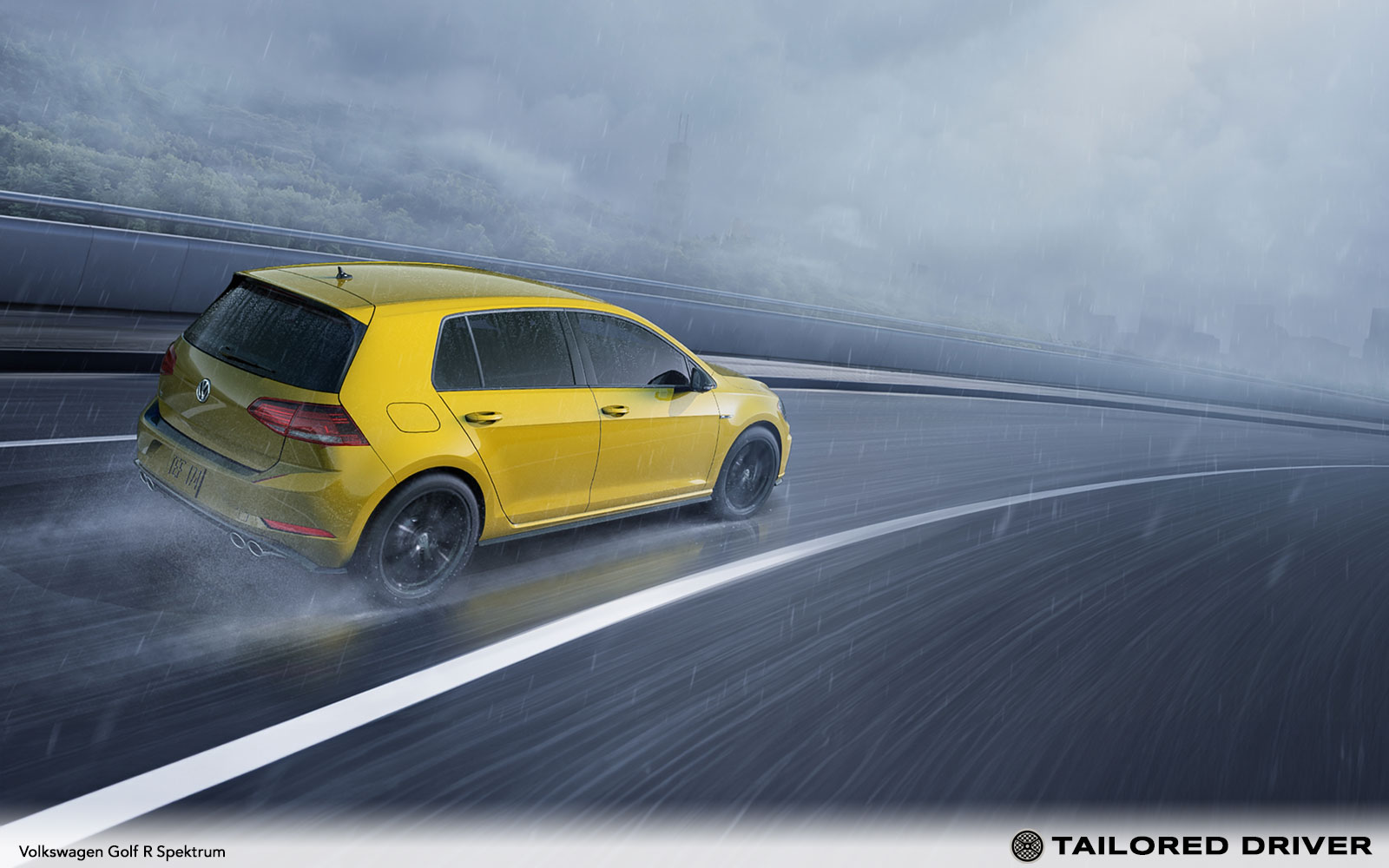
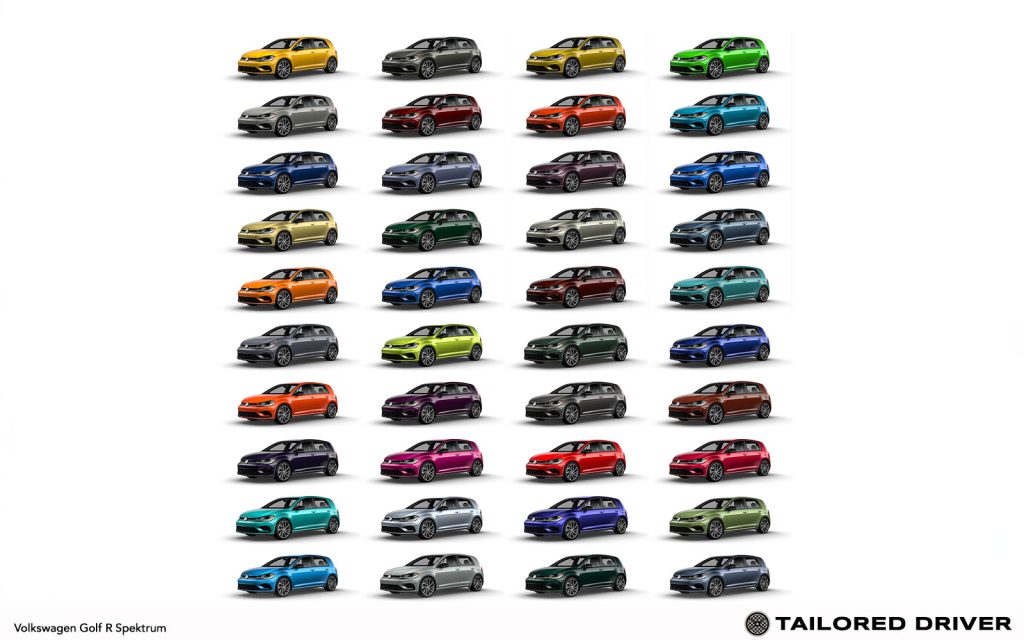
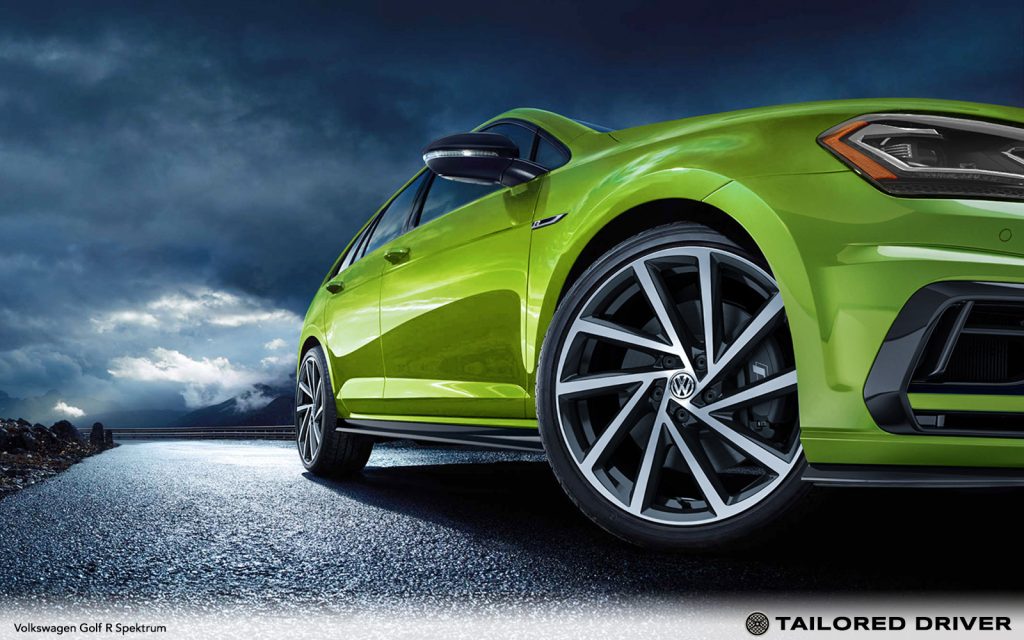
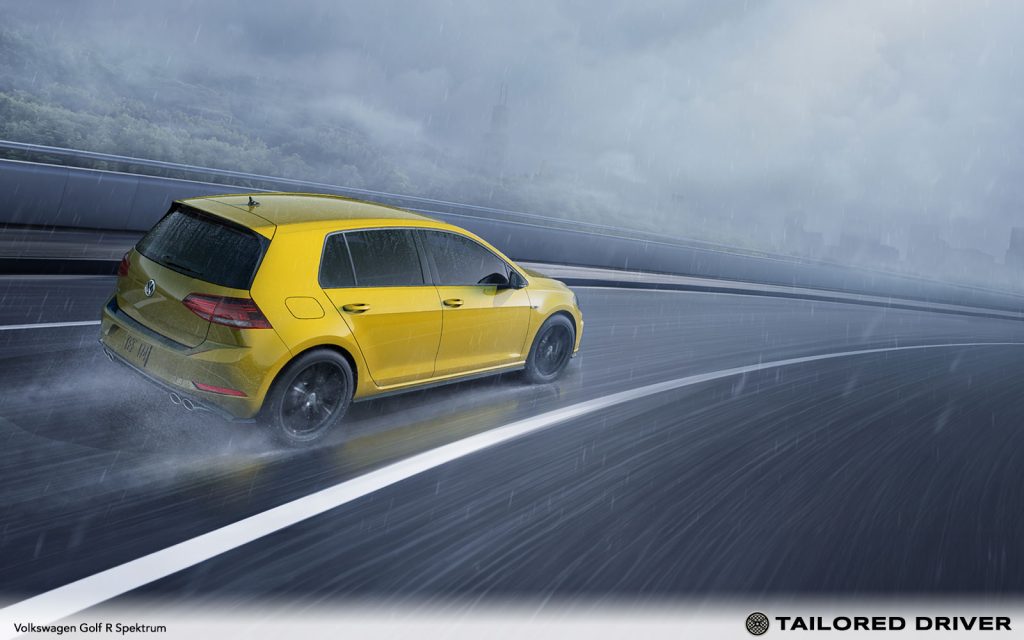
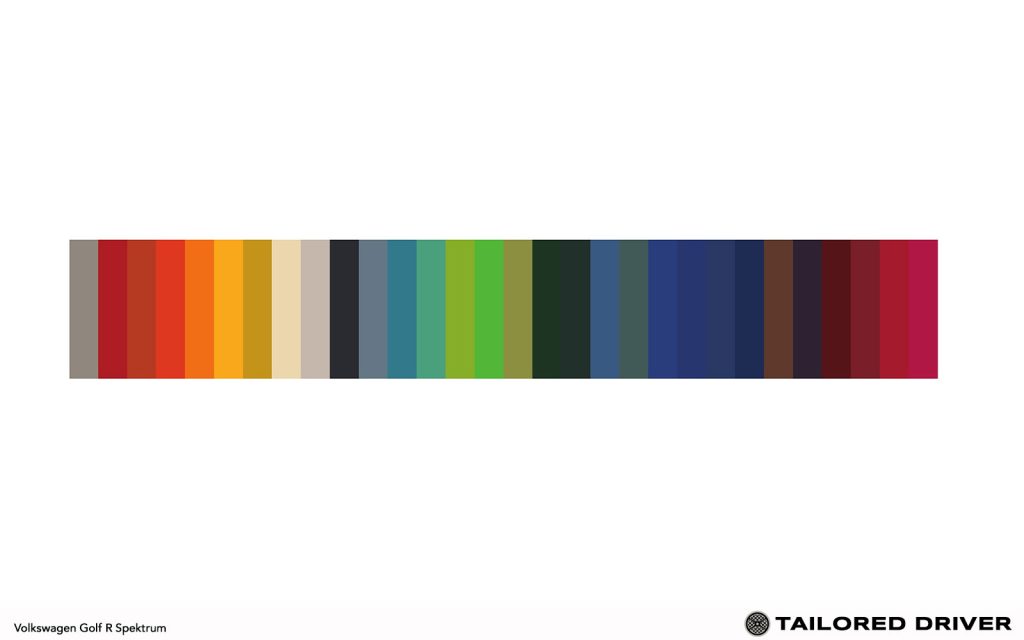
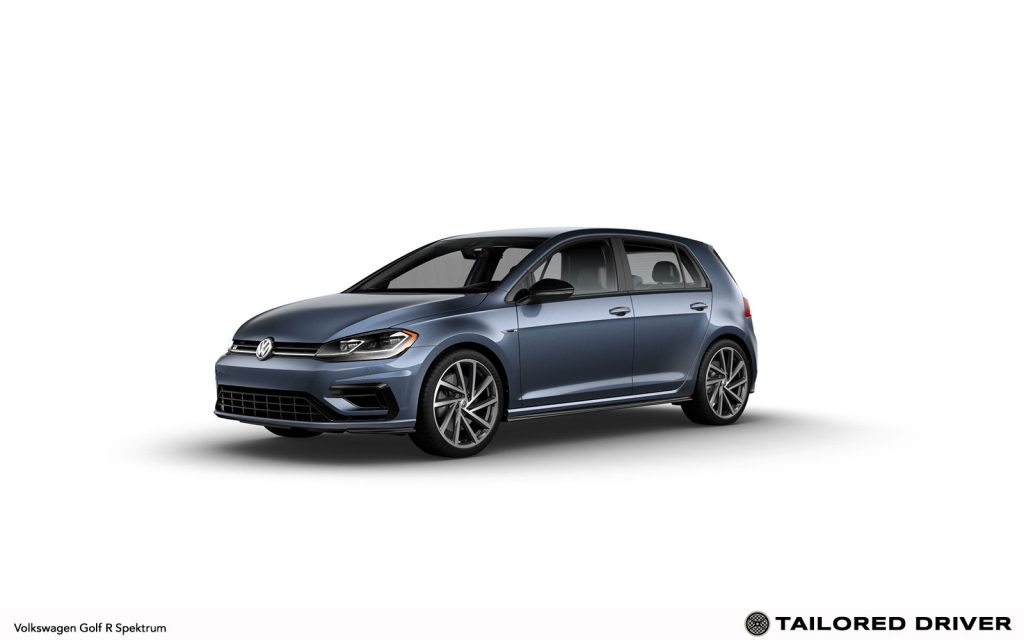
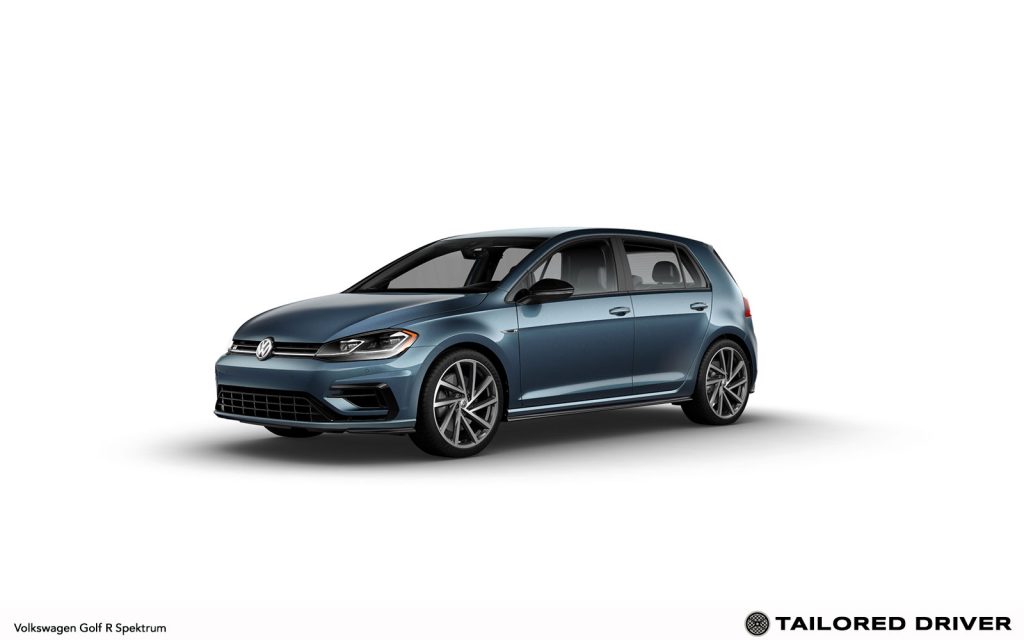
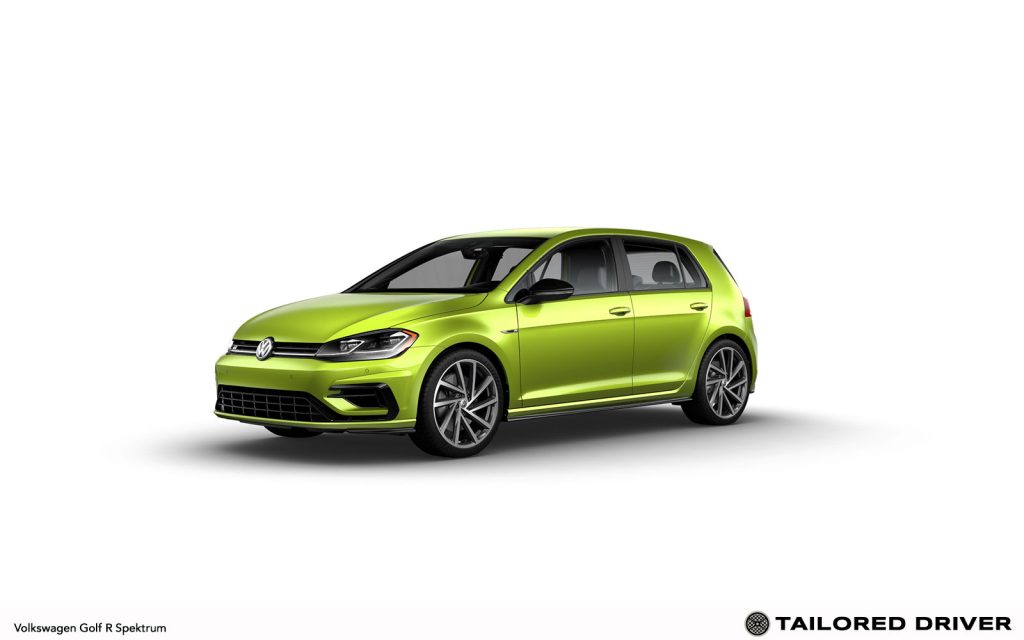
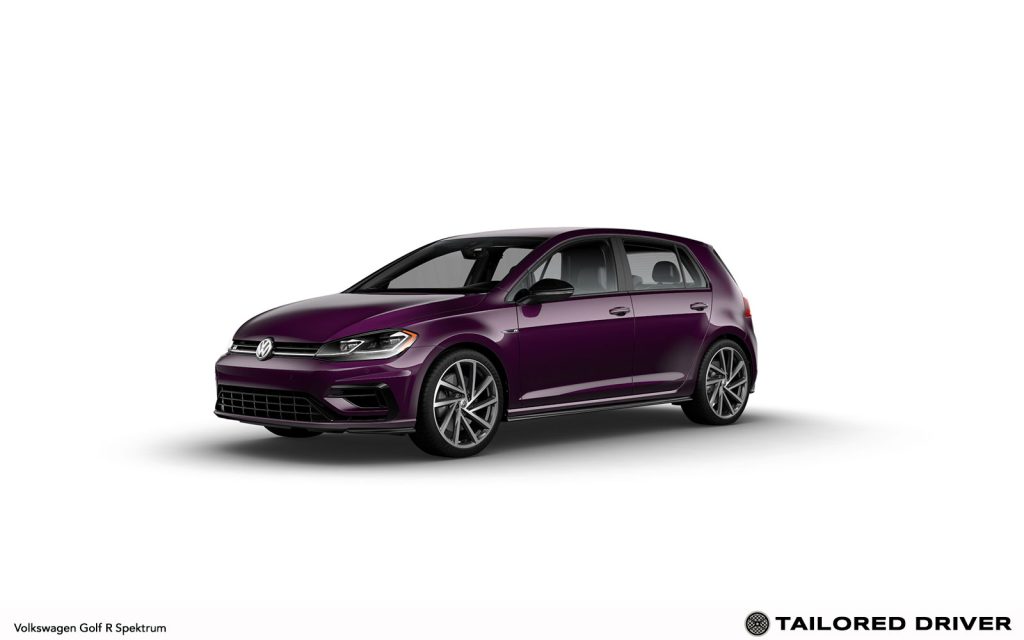
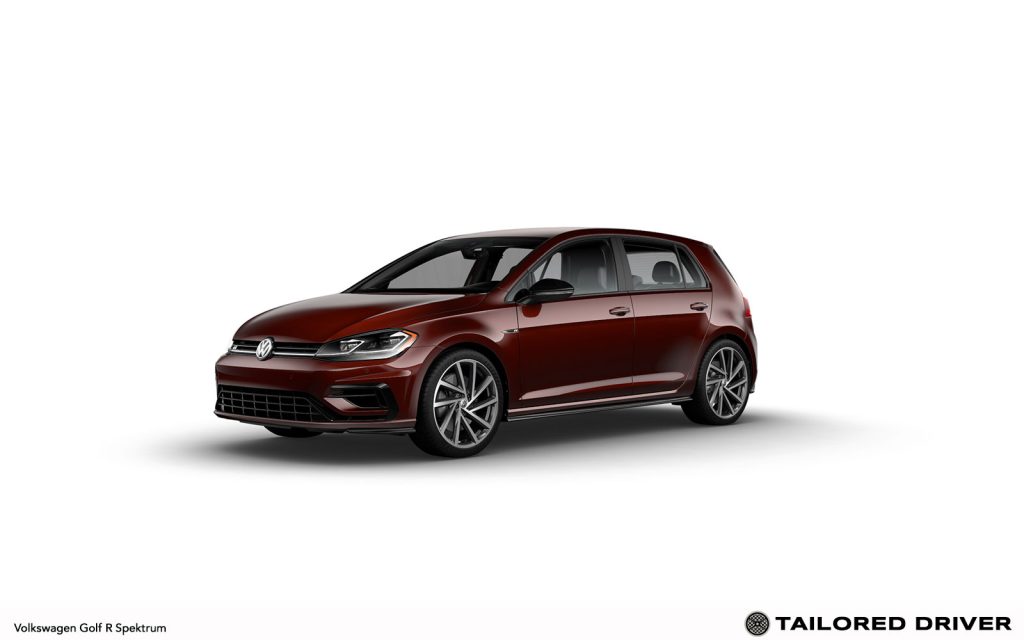
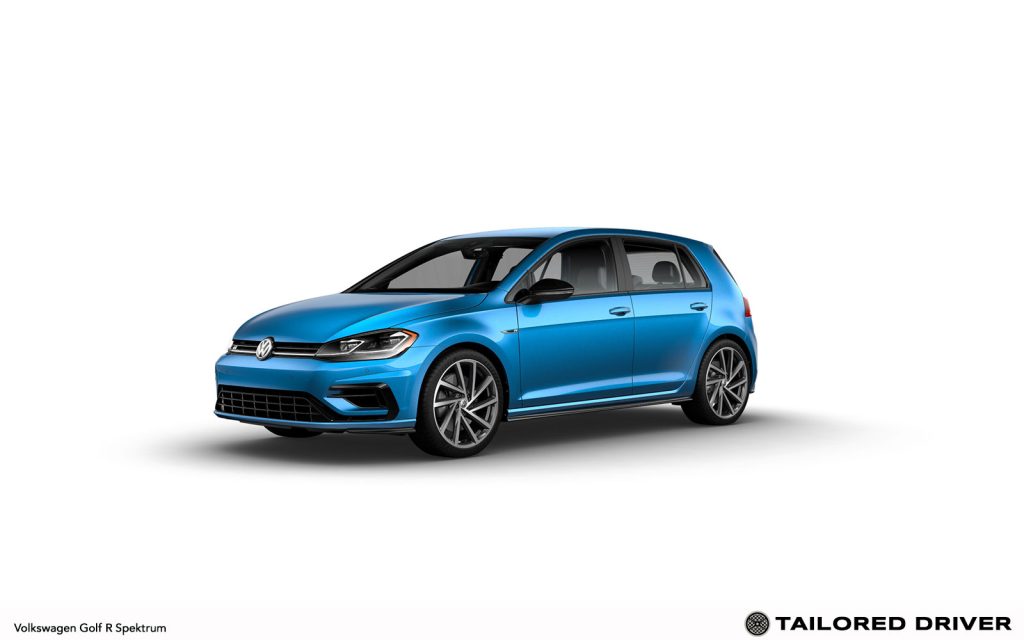
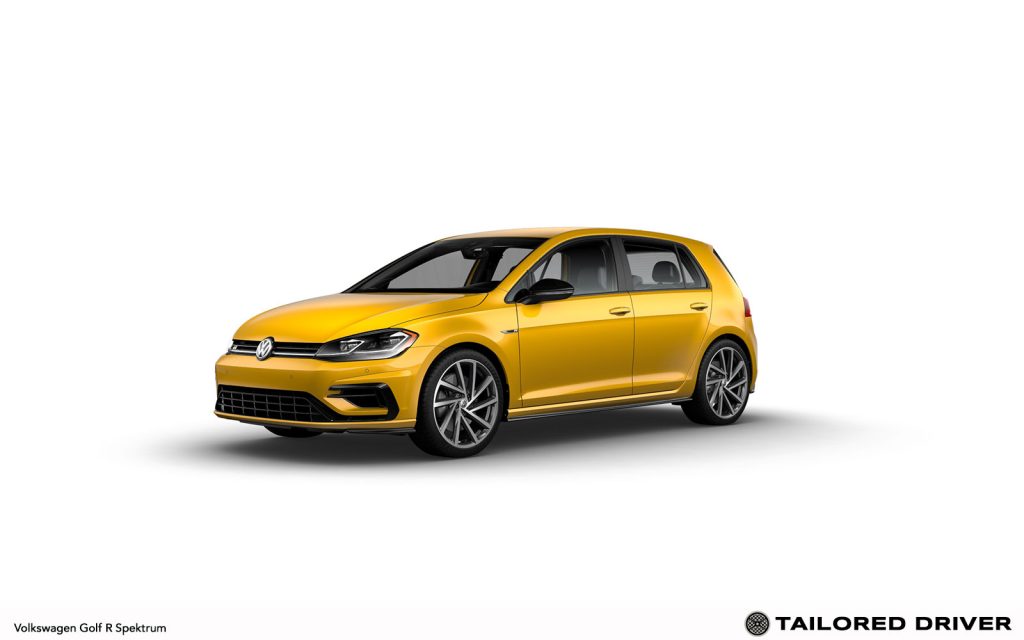
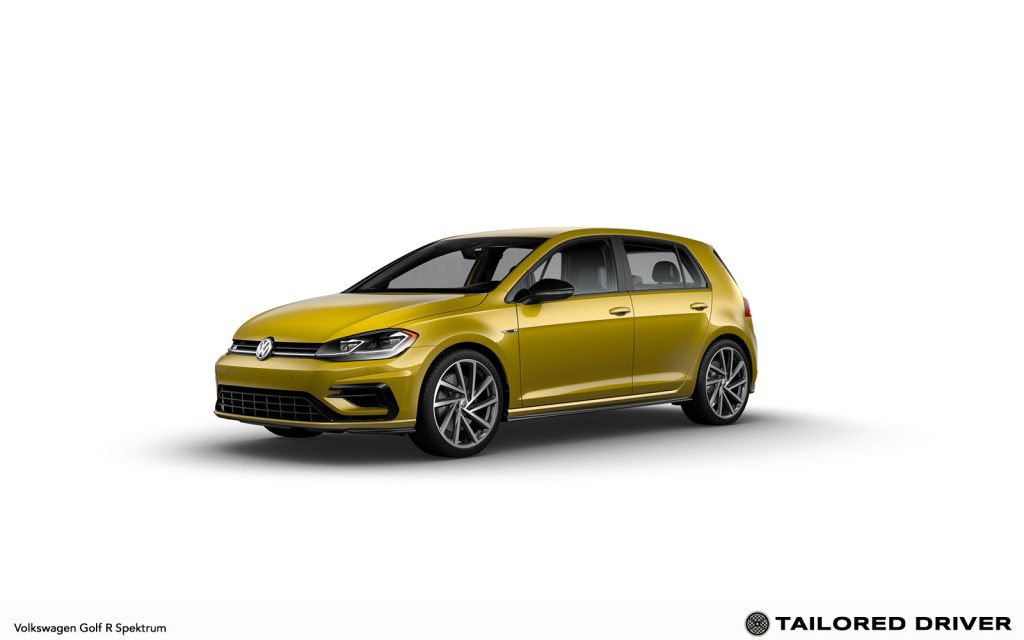
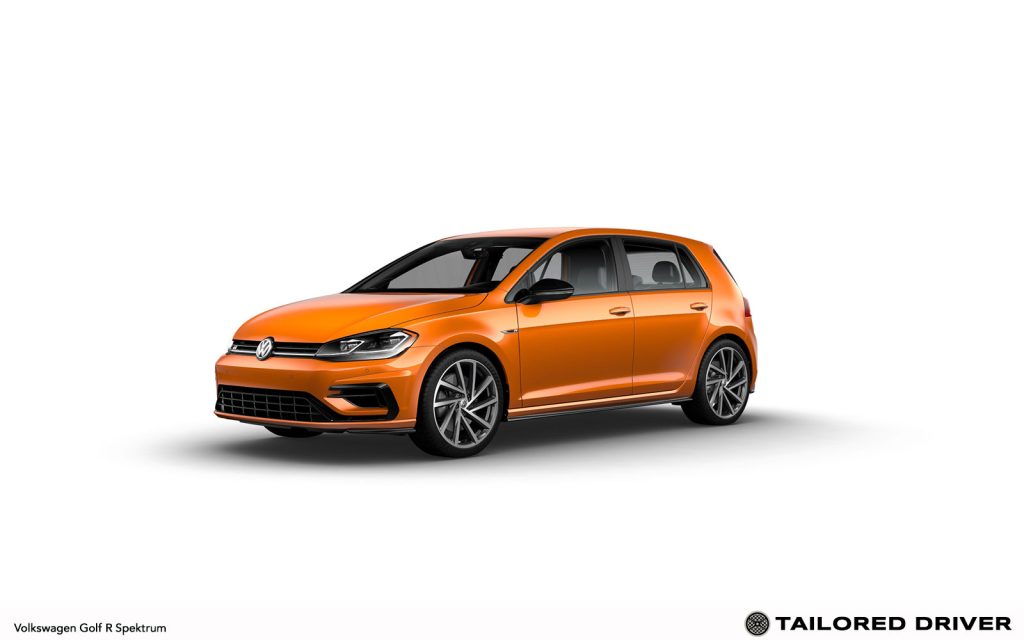
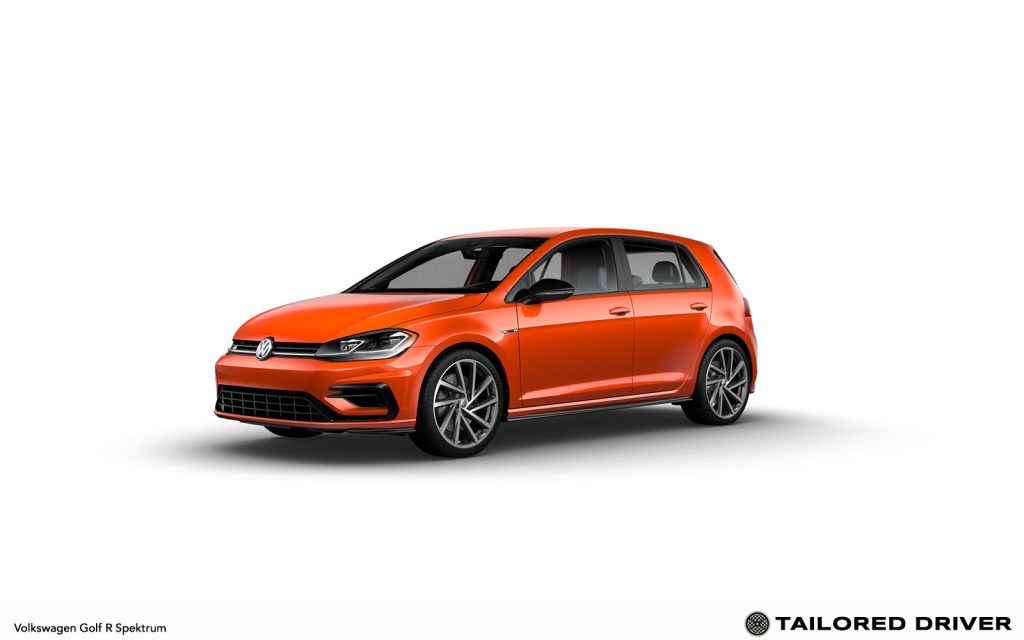
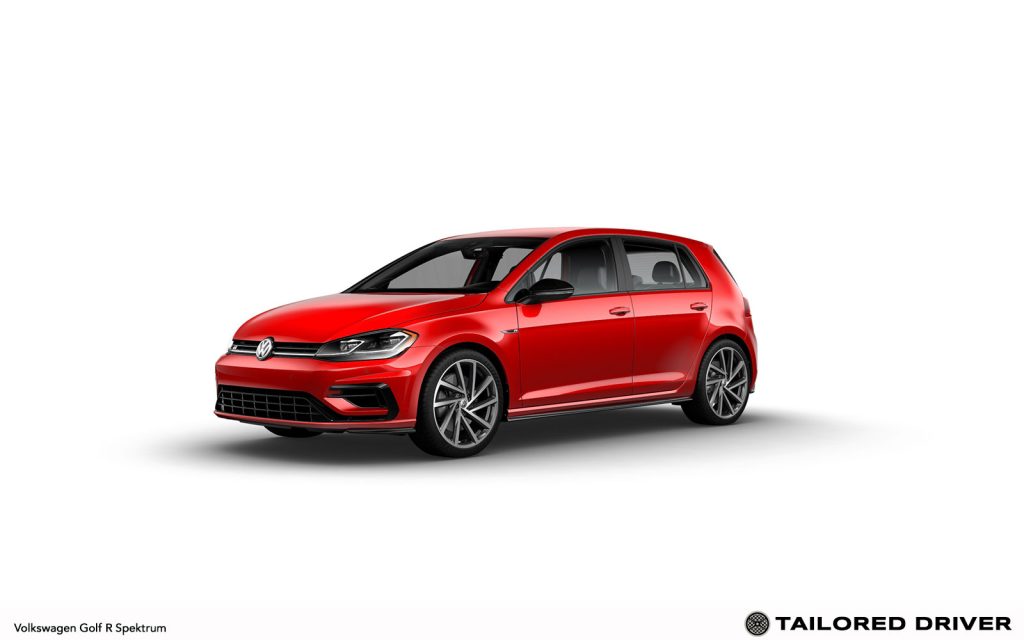
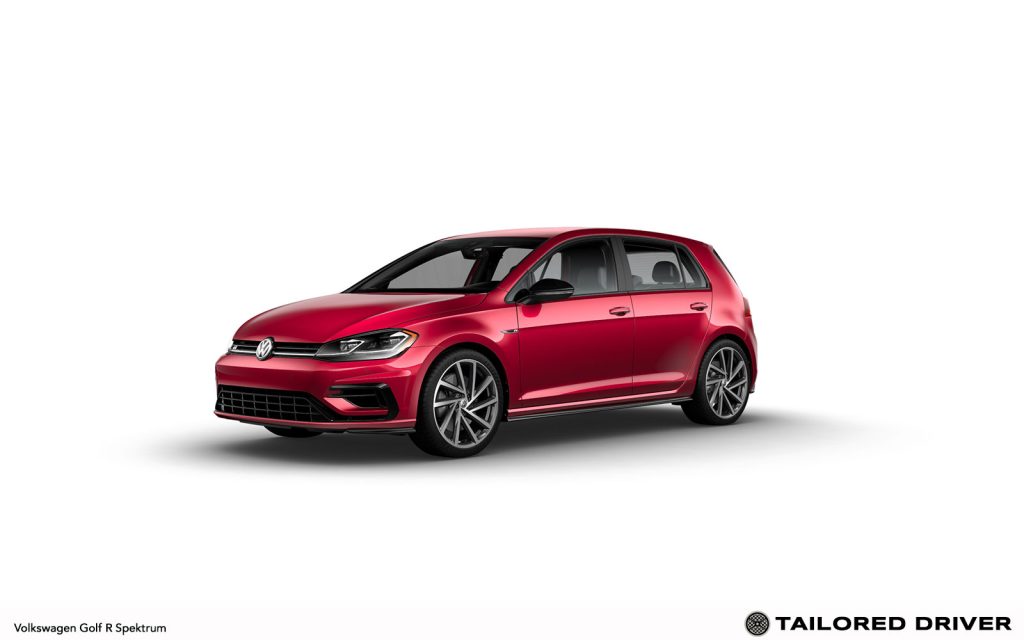
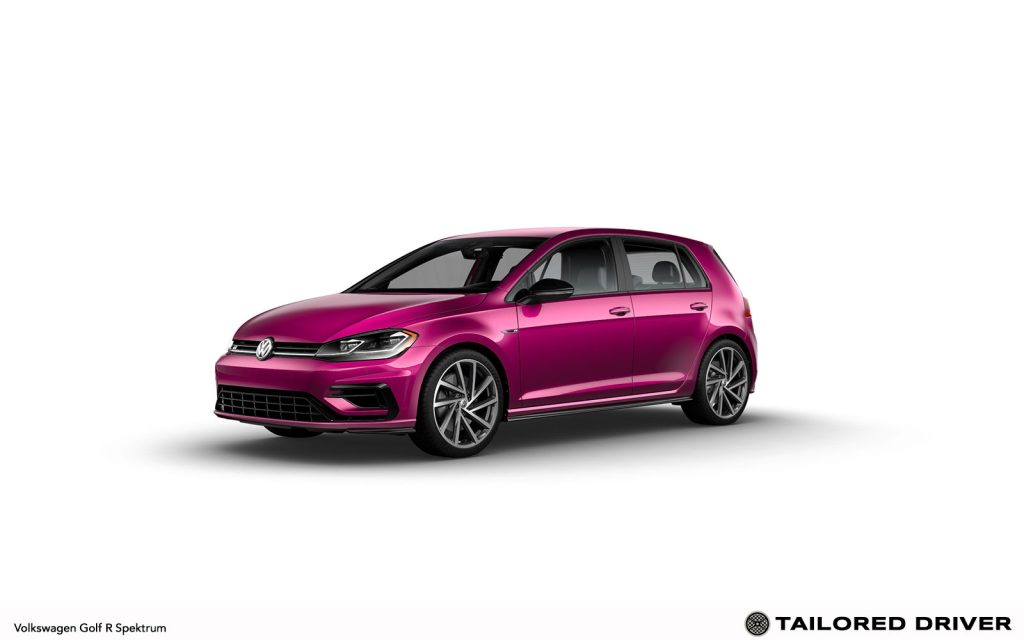
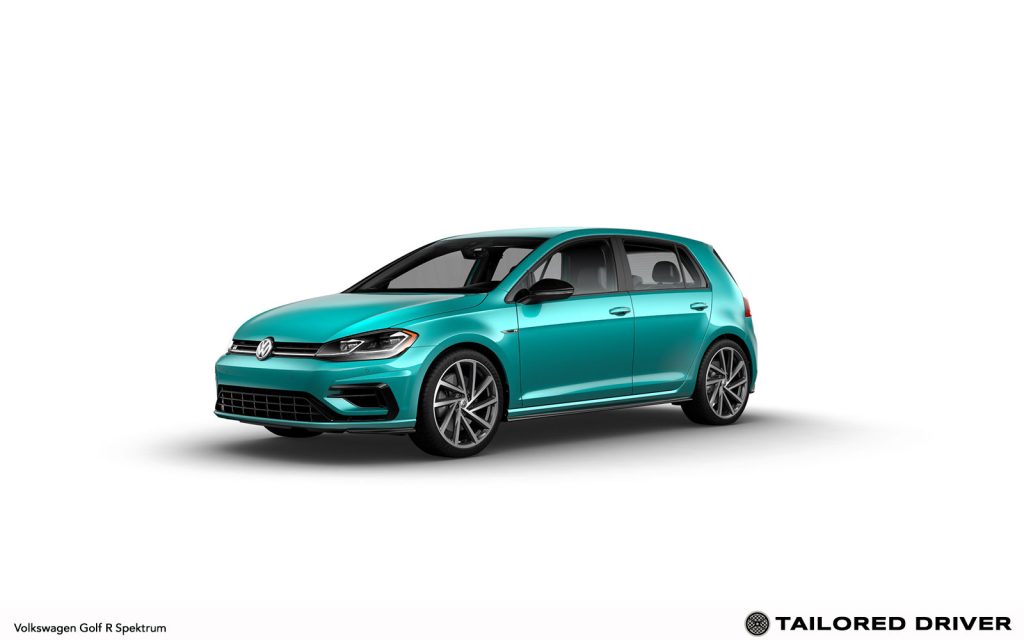
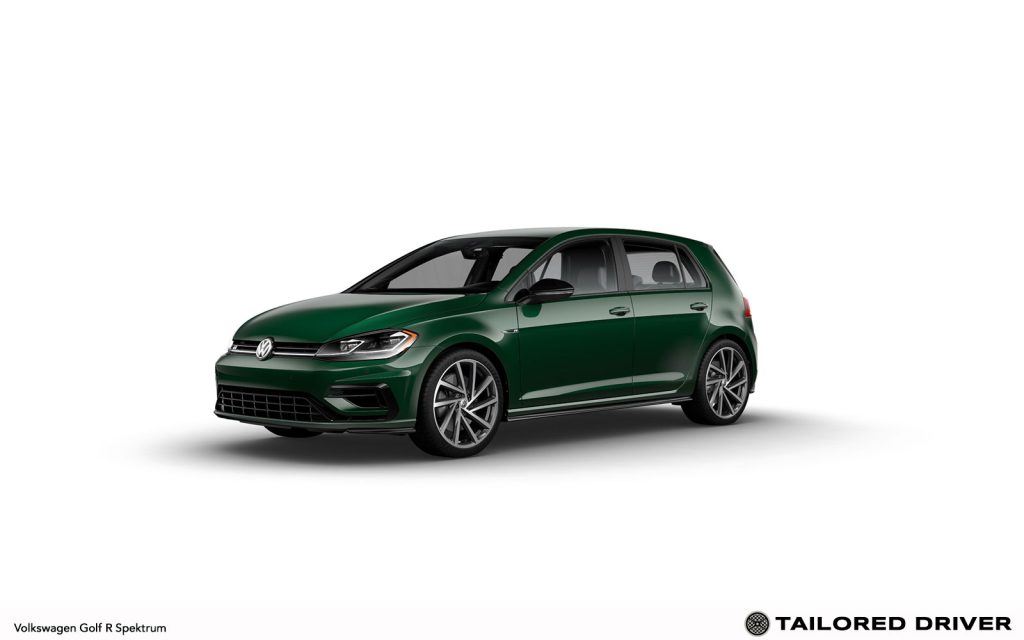
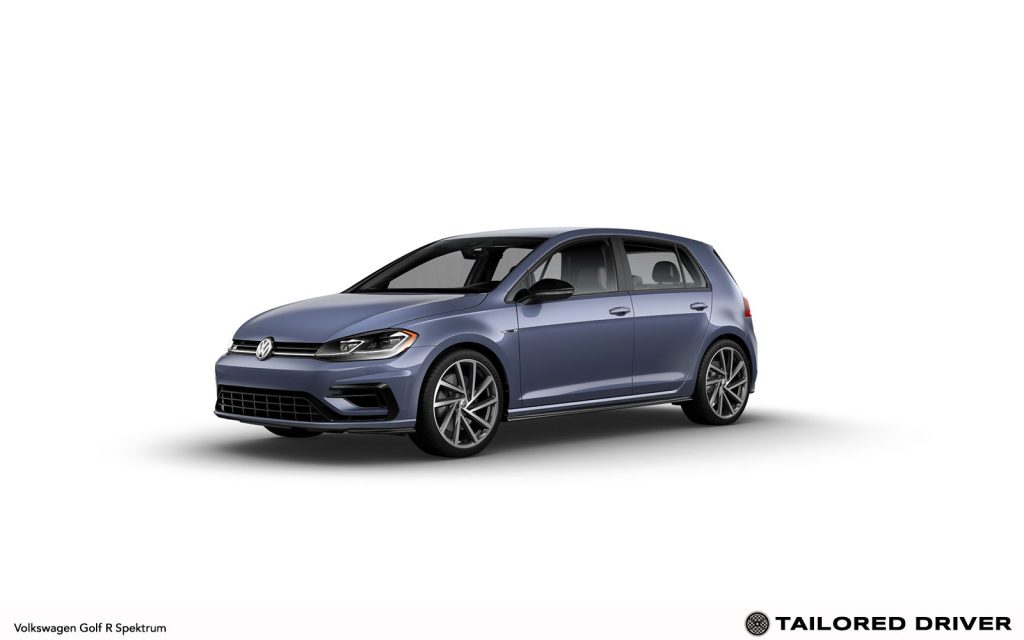
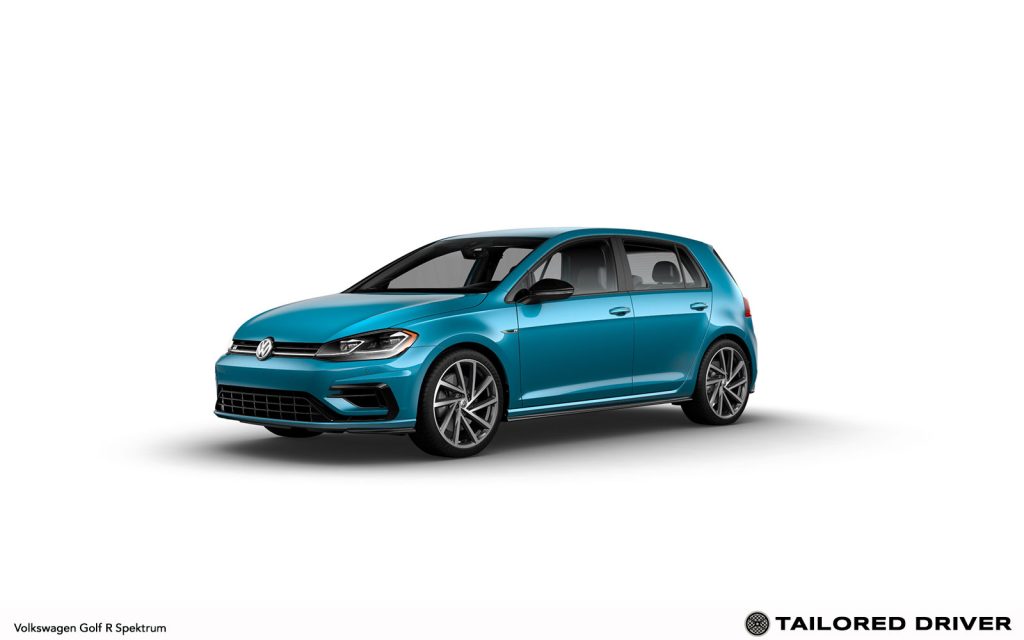
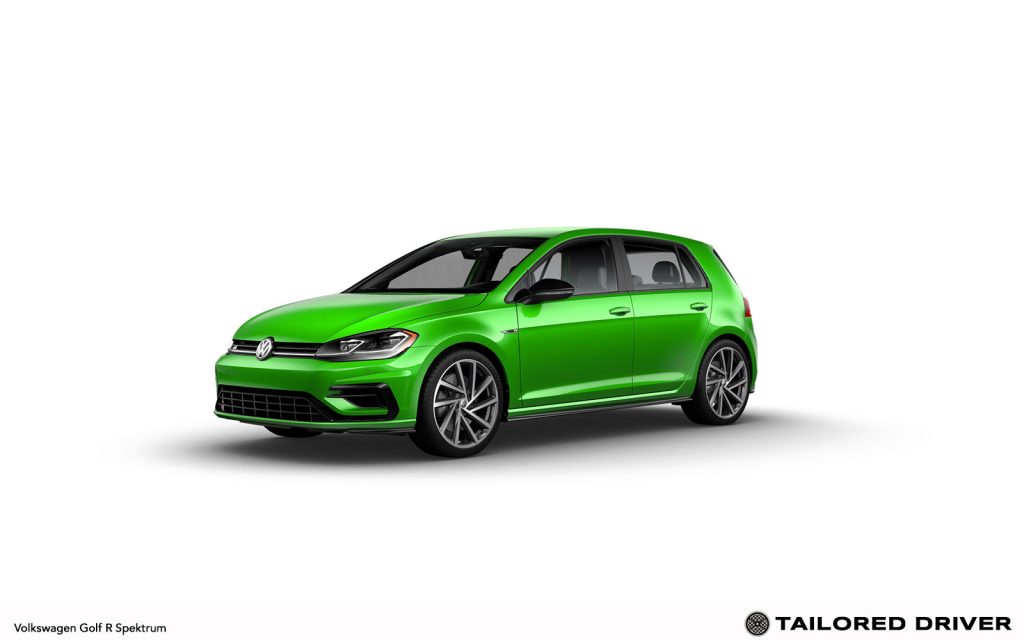
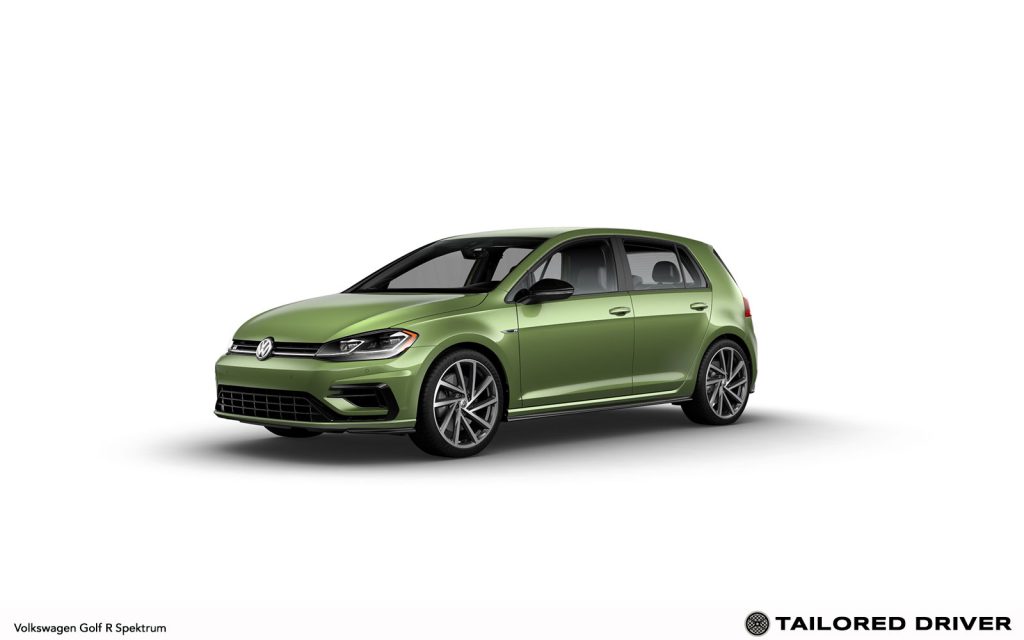
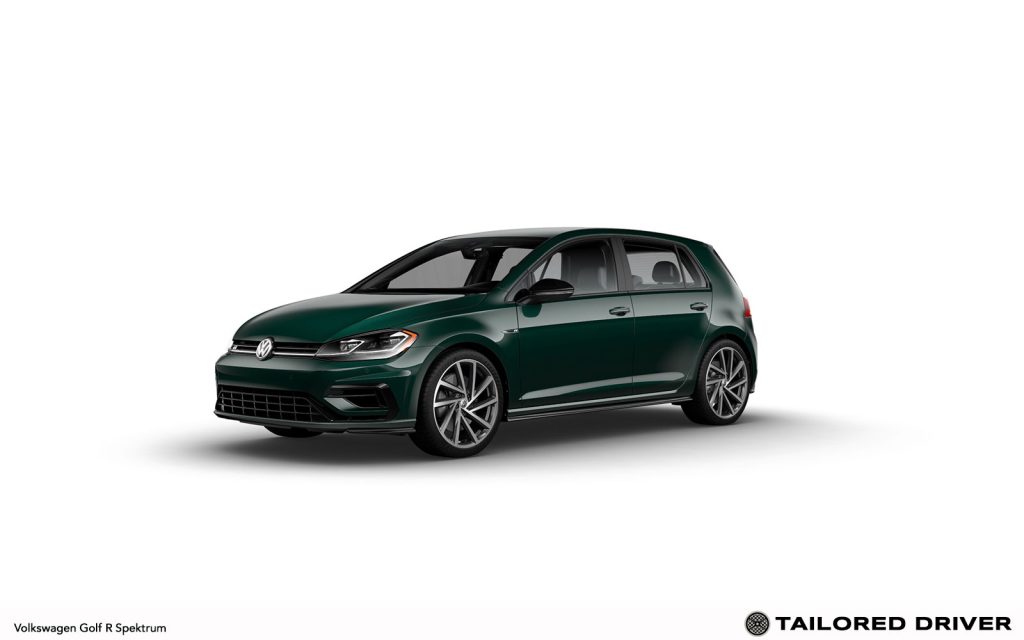
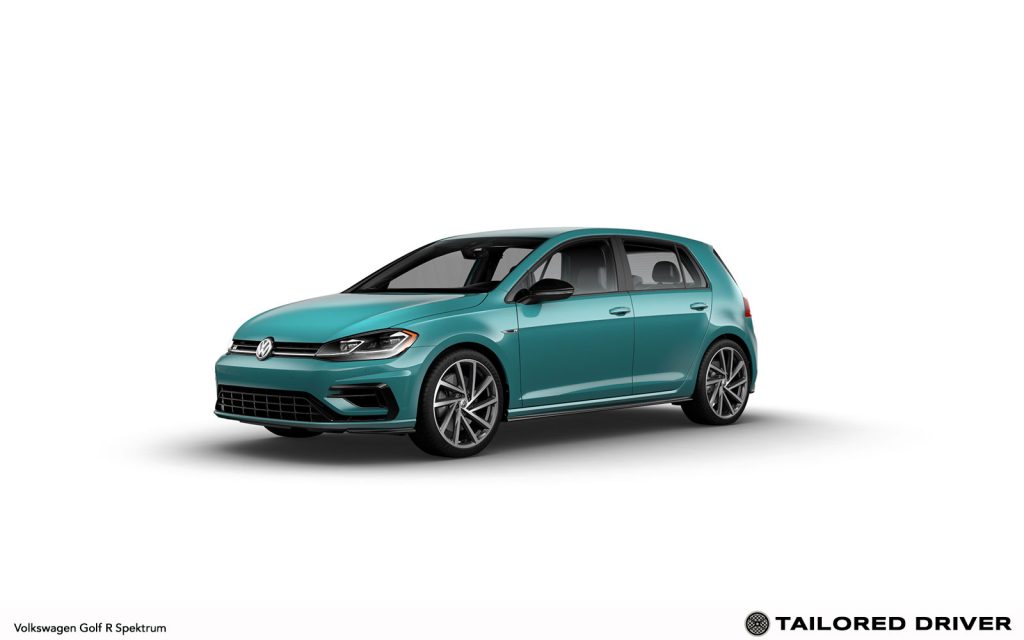
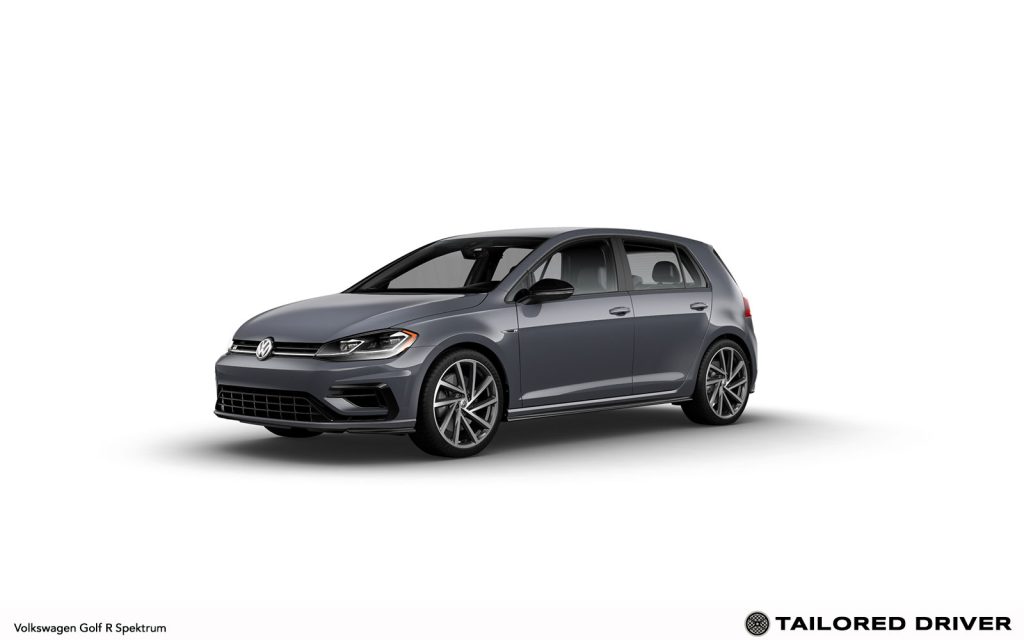
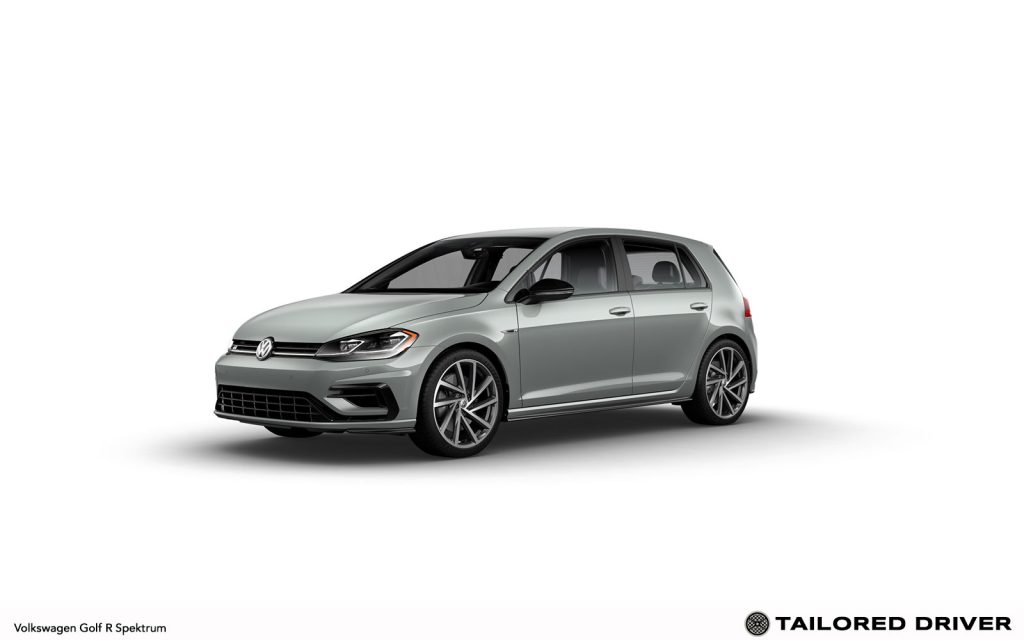
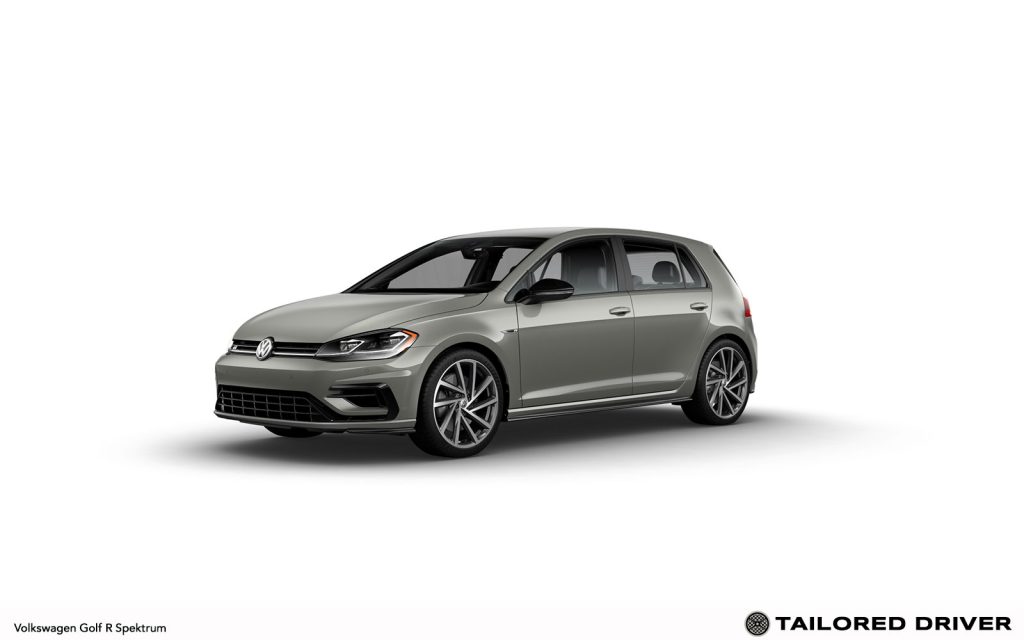
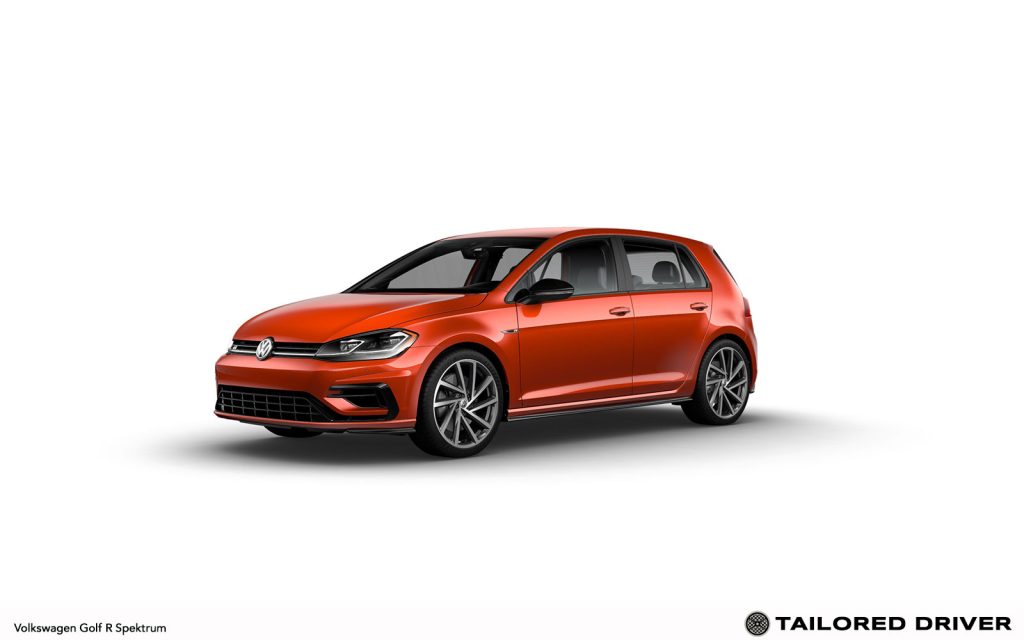
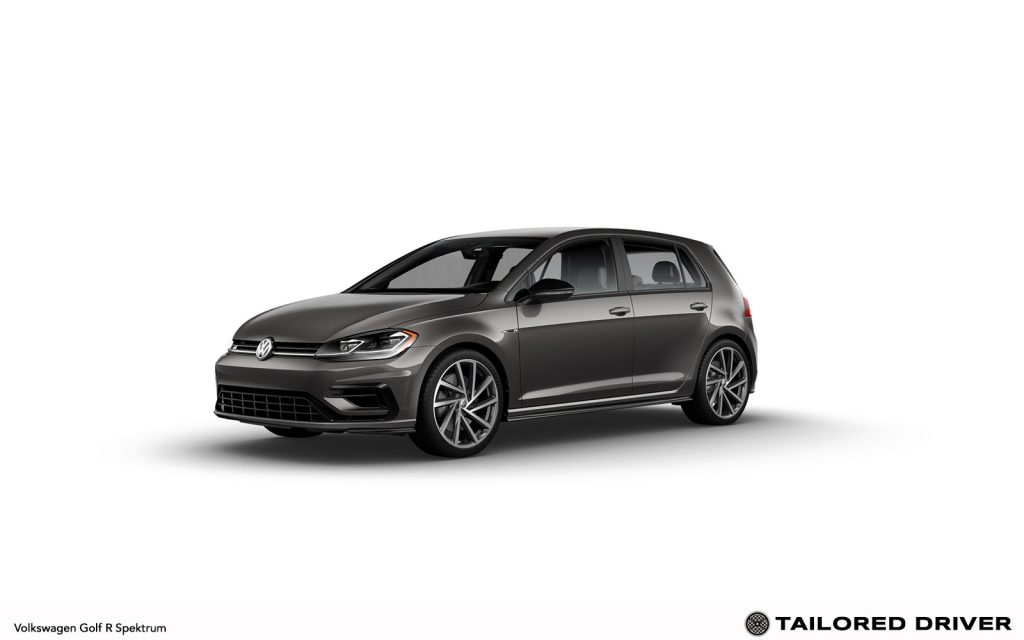
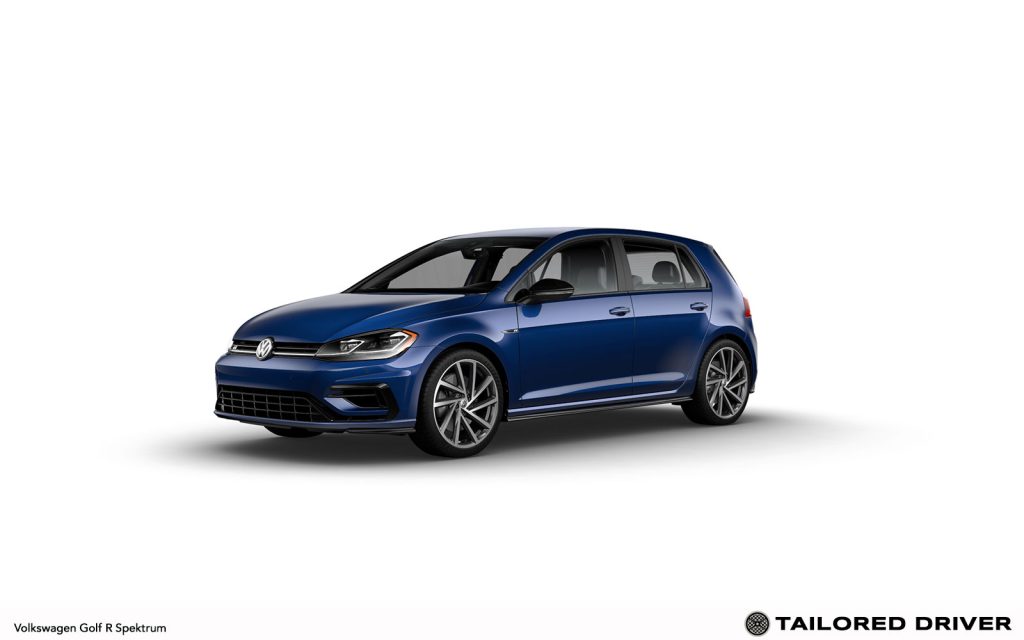
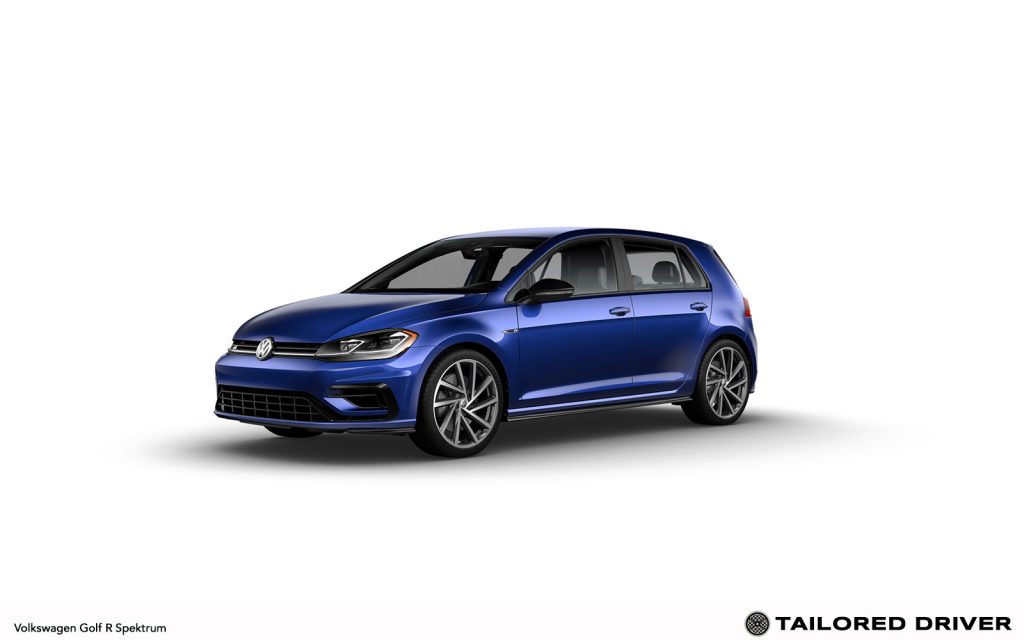
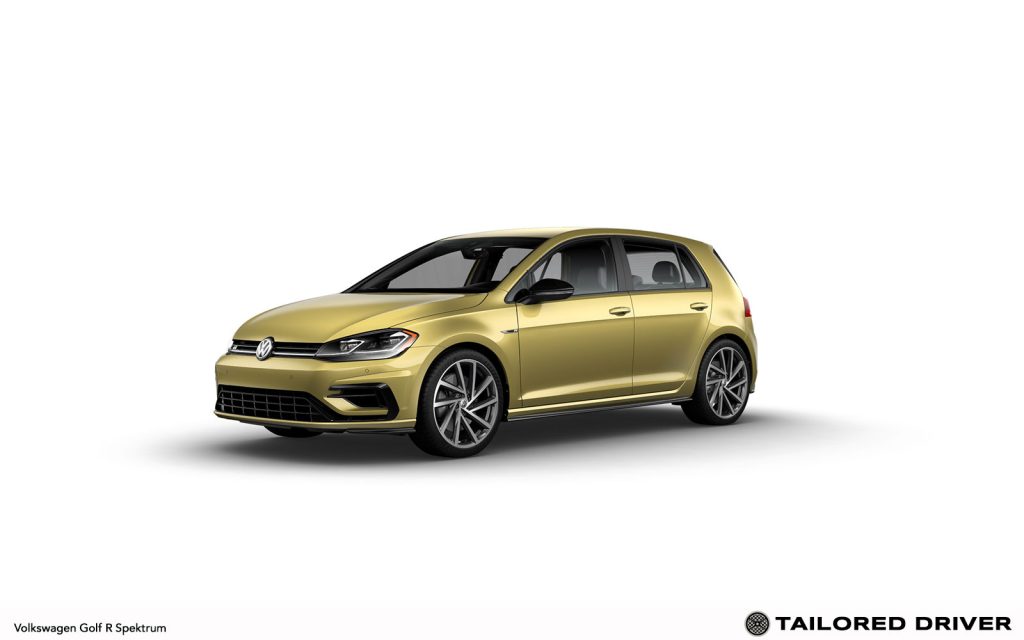
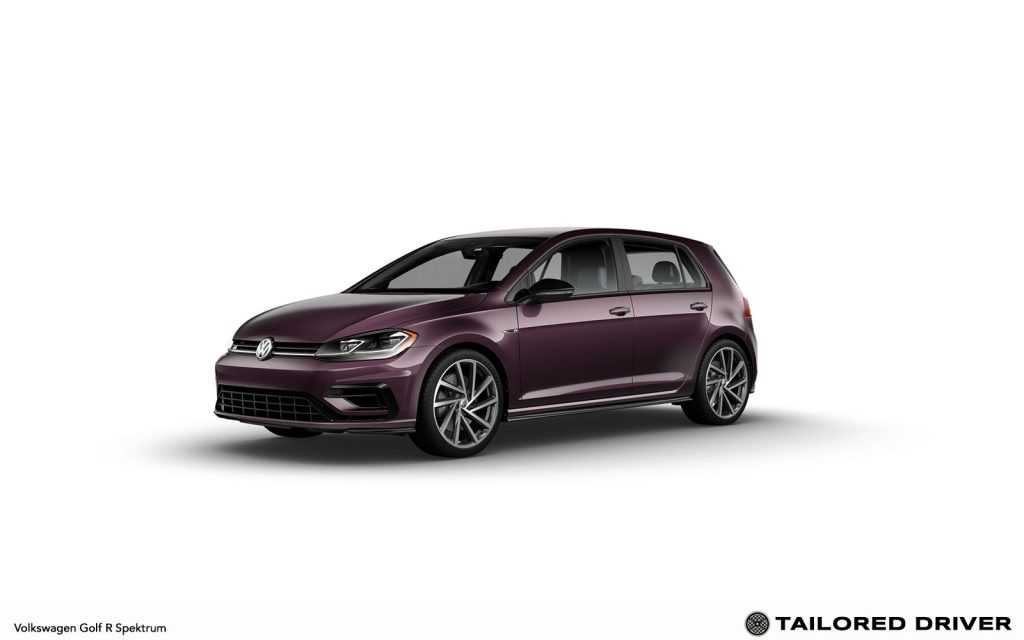
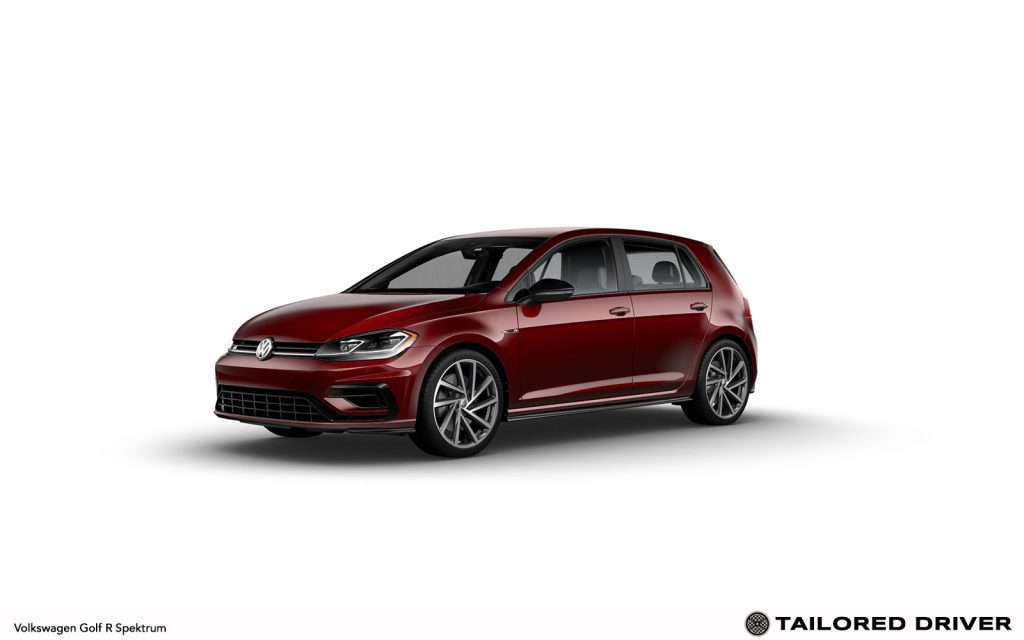
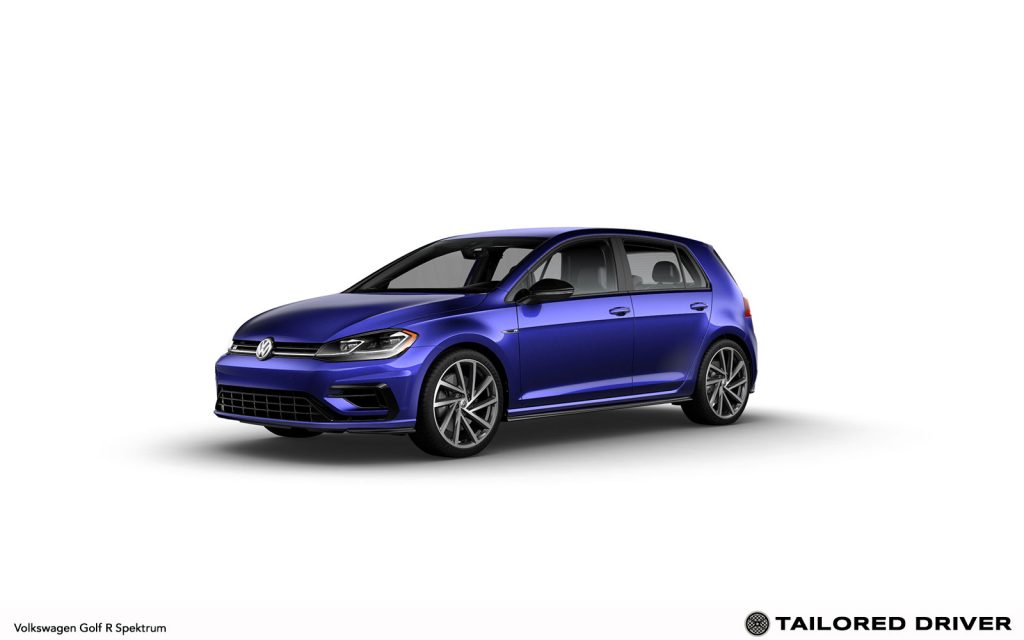
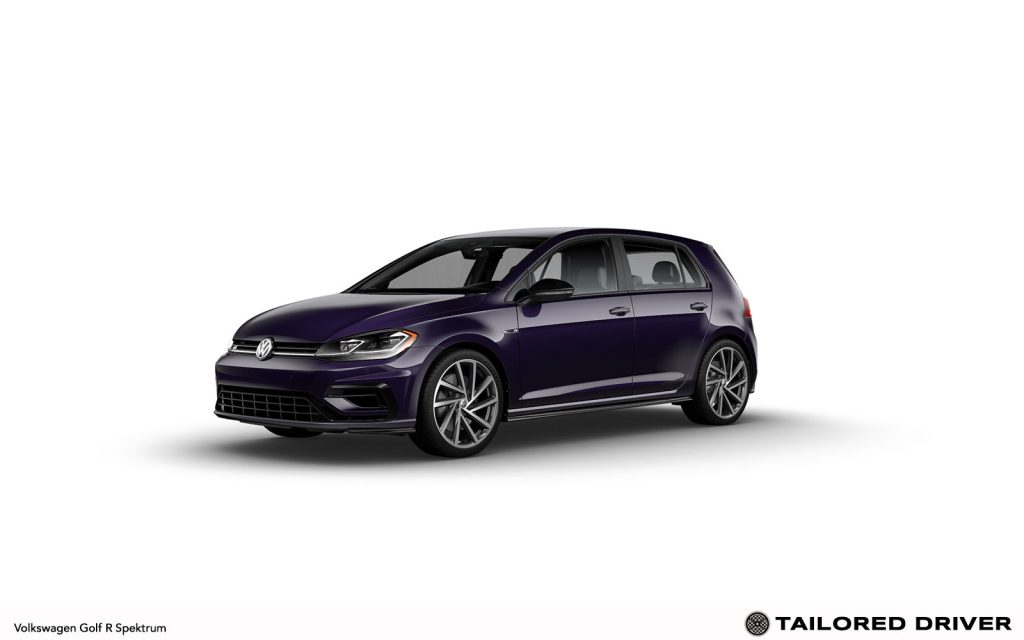
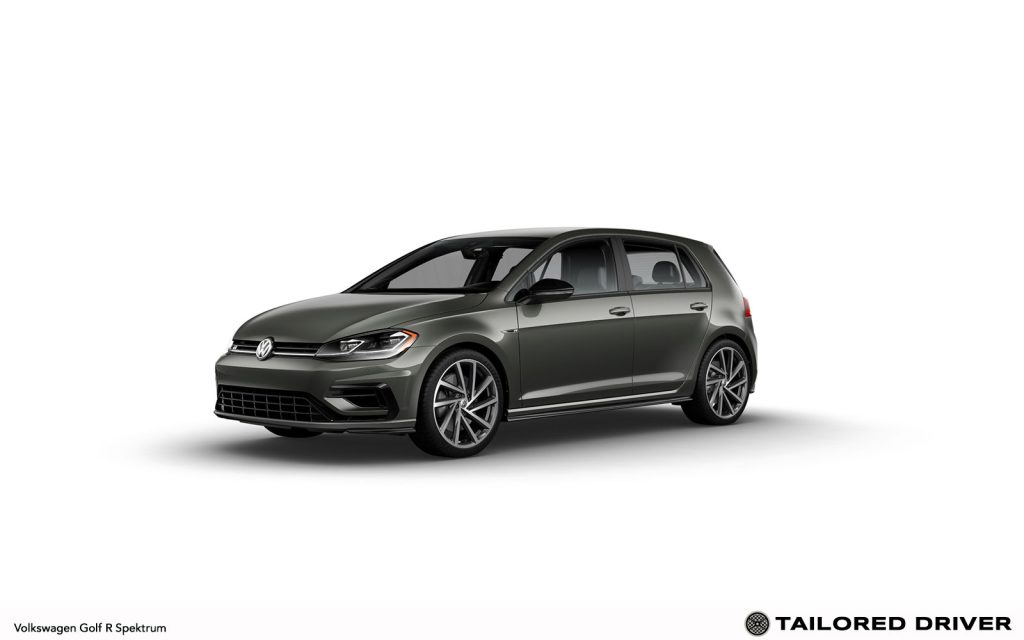
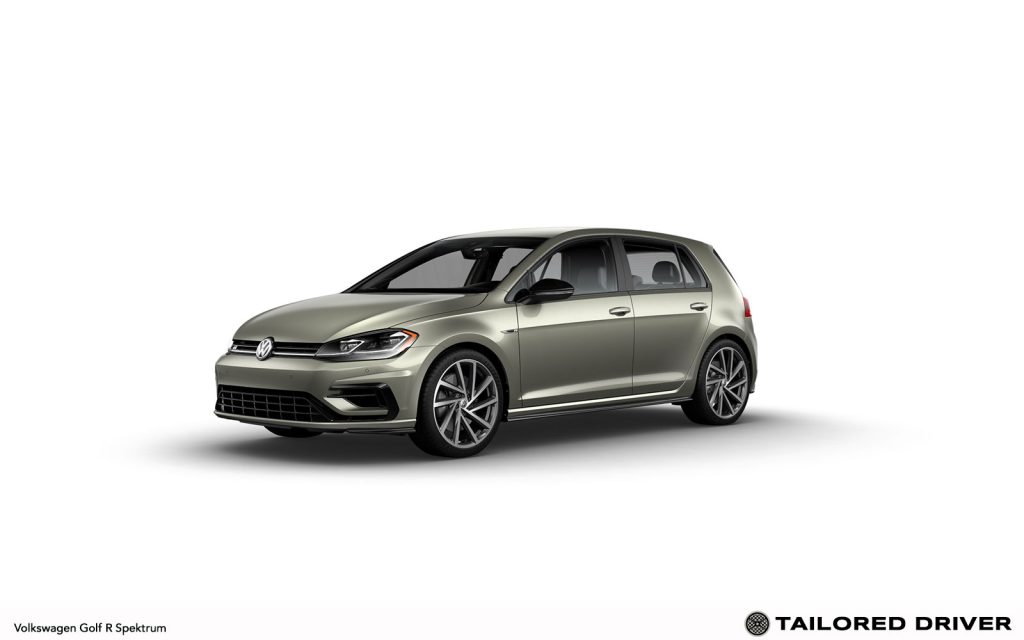
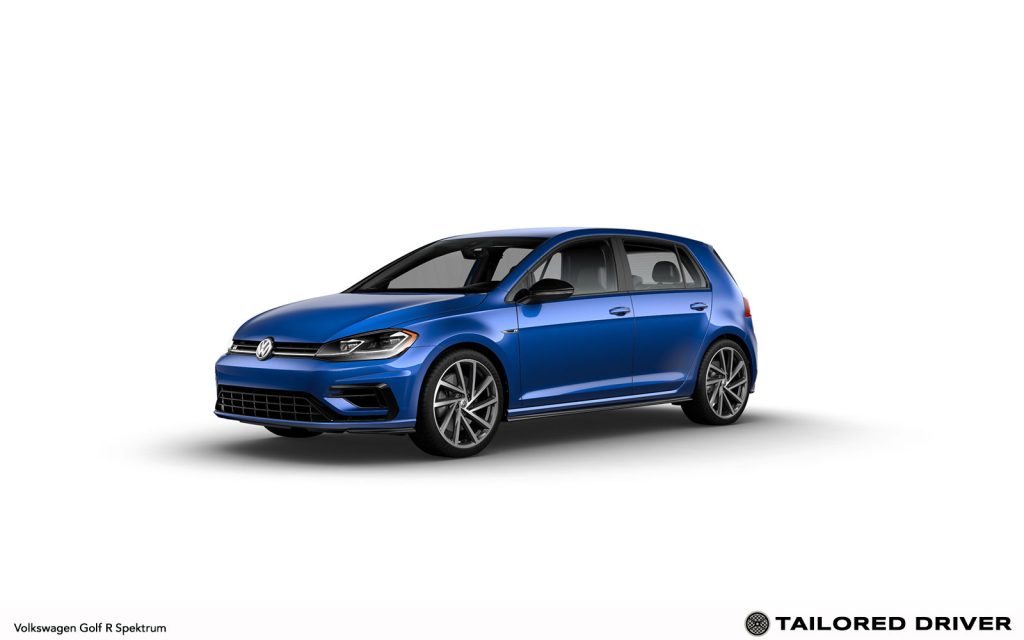
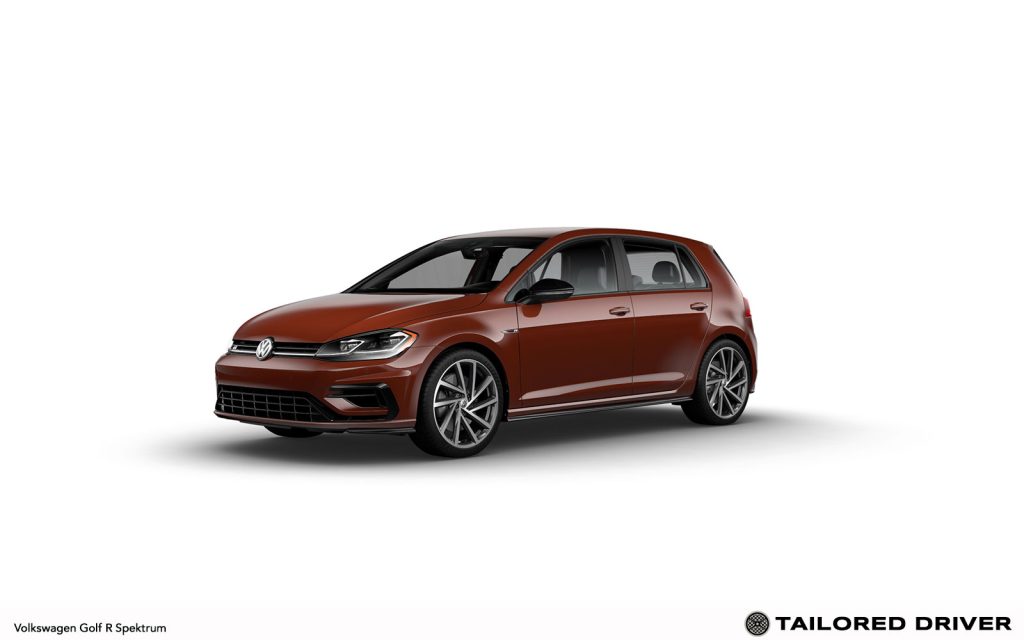
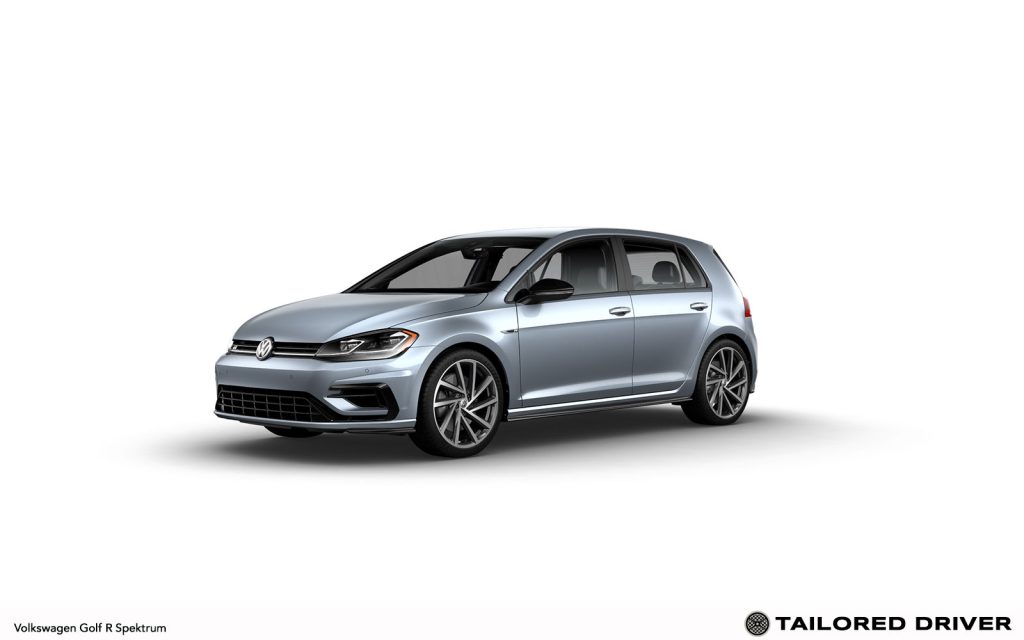
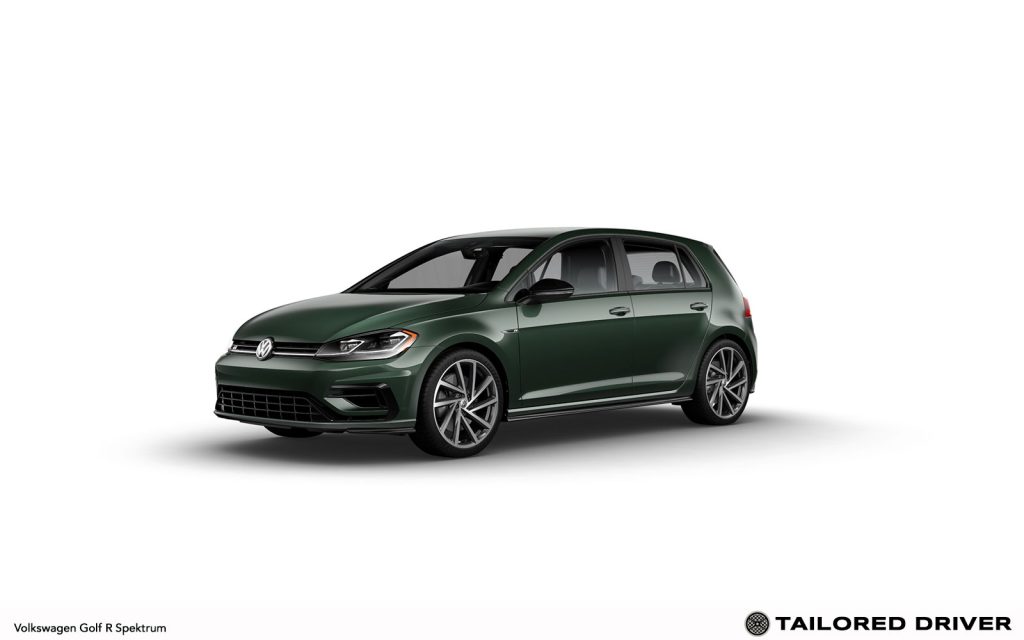
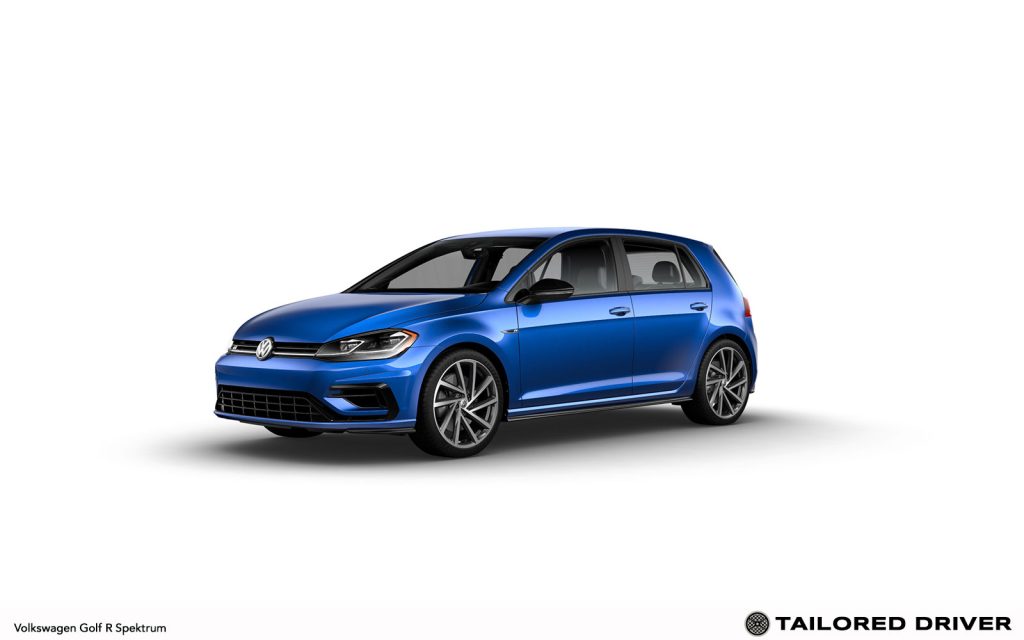
Herndon, VA — Volkswagen of America, Inc., (VWoA) announced today the Volkswagen Spektrum Program for the 2019 Golf R. The program will allow customers to choose from 40 custom order colors—in addition to the five standard colors—ranging from Nogaro Blue Pearl and Violet Touch Metallic, to Caribbean Green and Copper Orange Metallic. These options make the Golf R stand out, from the highway to the driveway, while also highlighting the owners’ personality. The MSRP for one of the custom colors is $2,500.
“Golf R owners are some of Volkswagen’s most vocal, unique and expressive within the brand,” said Derrick Hatami, Executive Vice President of Sales, Marketing, and After Sales for Volkswagen of America, Inc. “We are thrilled to be able to offer a new level of customization for the ultimate enthusiasts.”
The custom color program comes to VWoA via Volkswagen Canada, which introduced this program for the 2018 model year. Since the program’s debut, Volkswagen Canada has seen a high take rate on Golf R, indicating great interest in a vehicle that stands out from the pack. After listening to customer and enthusiast feedback asking for more color options for the enthusiast model, VWoA decided to adopt the program in the U.S. Each vehicle will be hand-painted in a separate paint shop before returning to the line for its finishing touches.
VWoA’s Product Marketing team worked in tandem with Volkswagen Canada to select a diverse range of colors for the 2019 model year Golf R that will appeal to owners, while still paying homage to the rich heritage of the Volkswagen color spectrum. Viper Green Metallic, originally found on the European Mk 3 Scirocco, and later featured on the Lamborghini Huracán, has been the most popular color to date in Canada. Other colors that will resonate with enthusiasts include Deep Blue Pearl from the Mk 4 and Mk 5 R32, Ginster Yellow from the 1997 Driver’s Edition GTI, and Mars Red from the Mk 1 GTI.
A builder tool will soon be added to www.vw.com, where customers can test out all 40 different colors, manipulating the vehicle with a 360-degree colorizer. Also on its way to all dealership showrooms is a color sample kit, which will allow customers to view each of the 40 colors duplicated on paint shop-quality color cards. To order, customers should visit their local dealer. After submitting an order, the build and delivery time is approximately two to four months.
About Volkswagen of America, Inc. Founded in 1955, Volkswagen of America, Inc., an operating unit of Volkswagen Group of America, Inc. (VWoA) is headquartered in Herndon, Virginia. It is a subsidiary of Volkswagen AG, headquartered in Wolfsburg, Germany. VWoA’s operations in the United States include research and development, parts and vehicle processing, parts distribution centers, sales, marketing and service offices, financial service centers, and its state -of-the- art manufacturing facility in Chattanooga, Tennessee. The Volkswagen Group is one of the world’s largest producers of passenger cars and Europe’s largest automaker. VWoA sells the Atlas, Beetle, Beetle Convertible, e-Golf, Golf, Golf Alltrack, Golf GTI, Golf R, Golf SportWagen, Jetta, Passat, Tiguan, and Tiguan Limited vehicles through more than 650 independent U.S. dealers. Visit Volkswagen of America online at www.vw.com or media.vw.com to learn more.
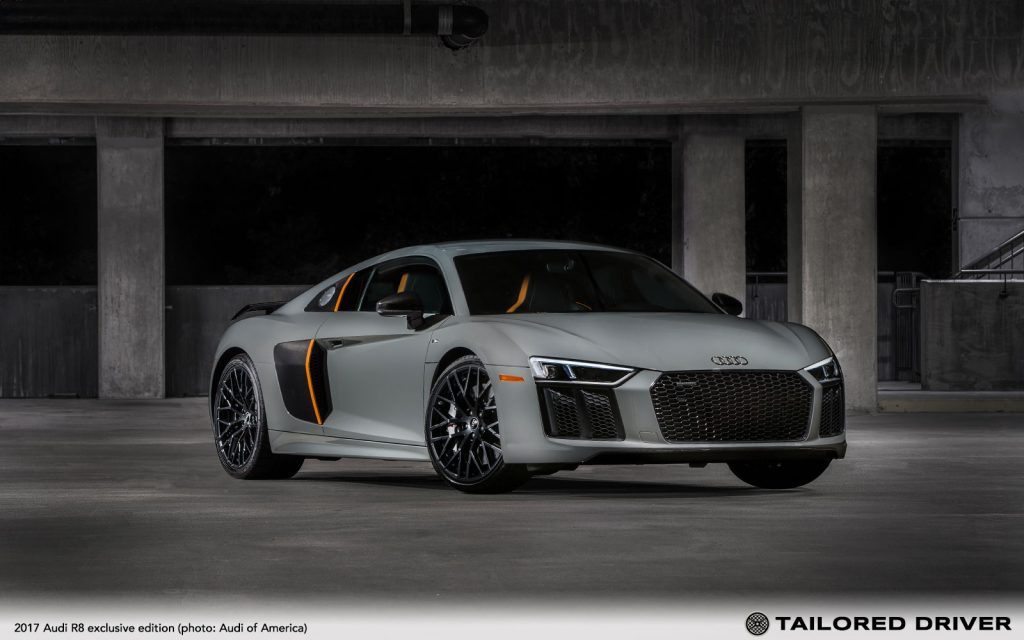
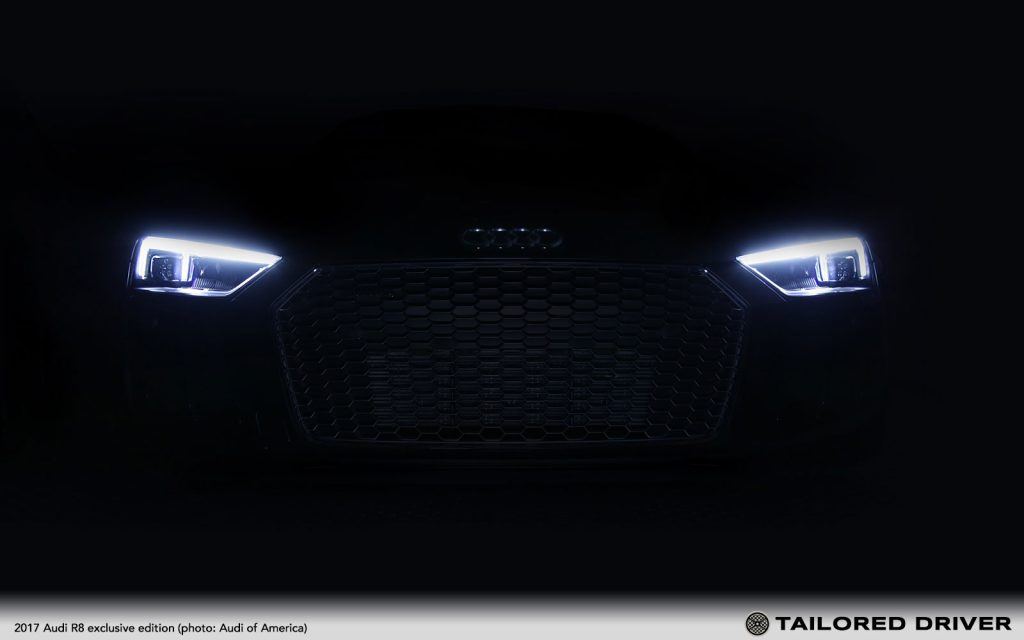
Each 2017 R8 exclusive edition comes standard equipped with full LED headlights, which are now supplemented by a laser high beam module
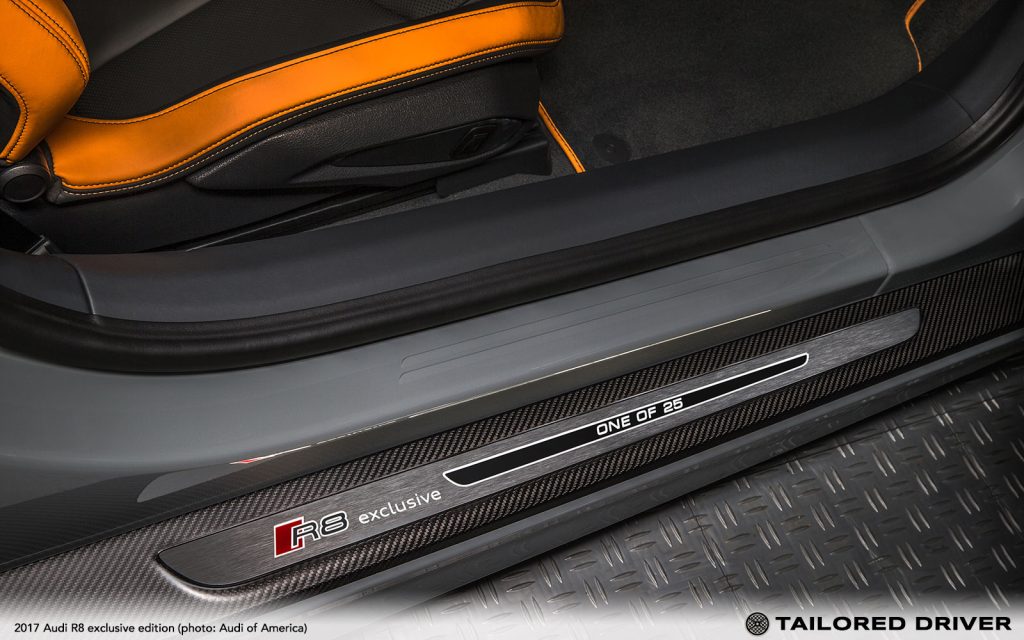
The R8 exclusive edition represents the full spectrum of what is available to customers through the Audi exclusive program; only 25 examples will be produced
Audi laser light is the latest production technology in a long line of lighting innovations from Audi
[source: Audi of America]
HERNDON, VA – At the 2016 Los Angeles Auto Show, Audi of America will debut its first US production laser light on the 2017 Audi R8 V10 plus exclusive edition. The R8 exclusive edition utilizes full LED headlights, which are now supplemented by a laser high beam module in each headlight.
Each headlight contains one laser module that operates with four high intensity laser diodes. Each module bundles these diodes into a blue laser beam with a wavelength of 450 nanometers. A phosphor converter then transforms the blue laser beam into a very bright and pure white light. The R8 exclusive edition is also the first Audi vehicle to couple the laser light with dynamic front turn signals.
An identifying characteristic of the laser headlights is their blue light signature in the headlight housing. The laser beam pattern, which is active at speeds of 40 mph and above (when conditions permit), supplements the LED high beam and greatly enhances visibility for the driver by projecting a low and wide beam of light on the road ahead.
Audi laser light is the latest production technology in a long line of lighting innovations from the four rings. Audi pioneered LED technology with daytime running lights on the Audi A8 L W12 in 2004 and all-LED headlights on the R8 in 2008. Lighting innovations such as dynamic turn signals, Matrix LED headlights (not available in the US) and now laser high beams are prime examples of how Audi continues to set an industry standard for automotive lighting technology.
2017 Audi R8 V10 plus exclusive edition The 2017 Audi R8 V10 plus exclusive edition in Quantum Gray represents the full and extensive spectrum of what is available to customers through the Audi exclusive program.
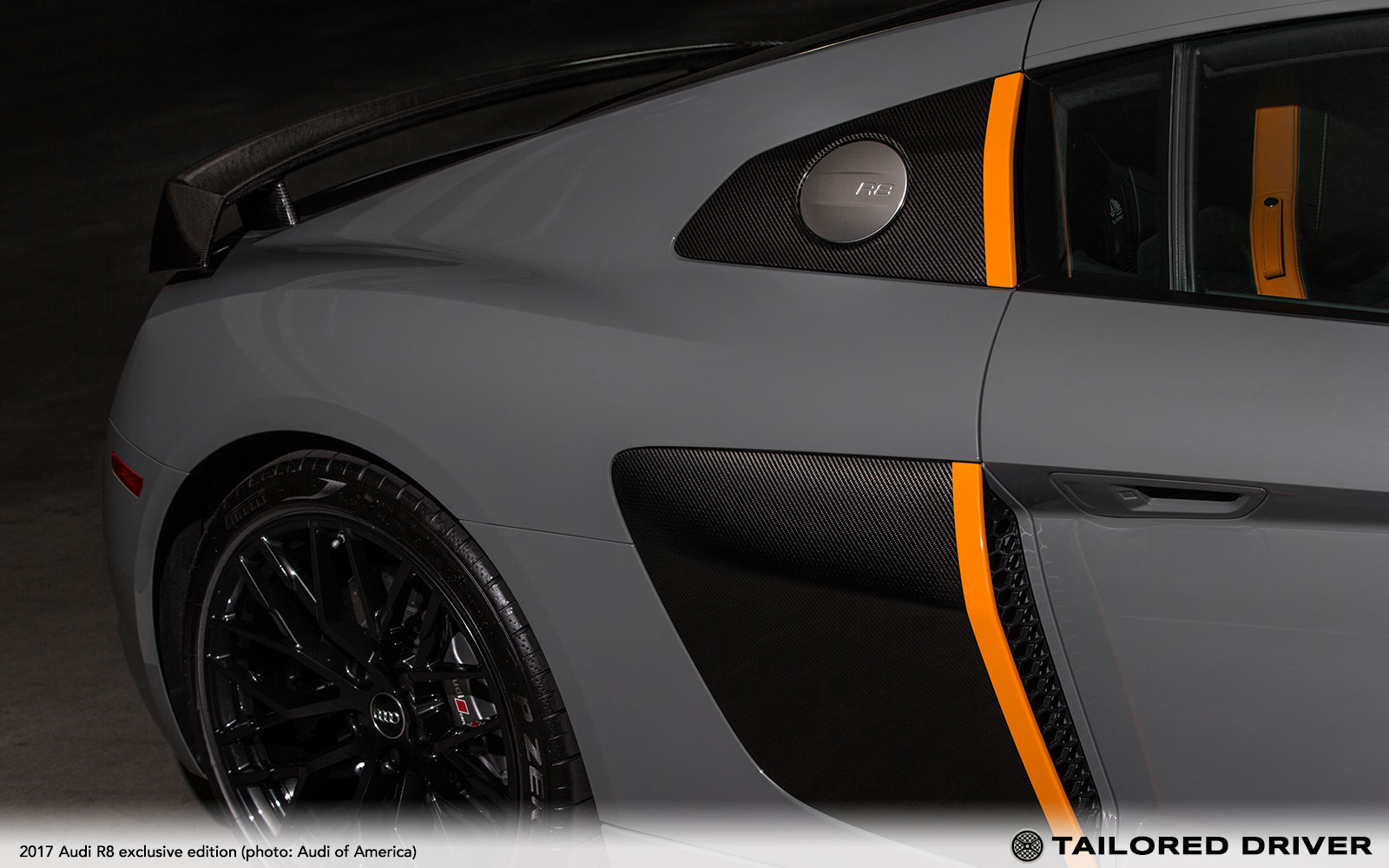
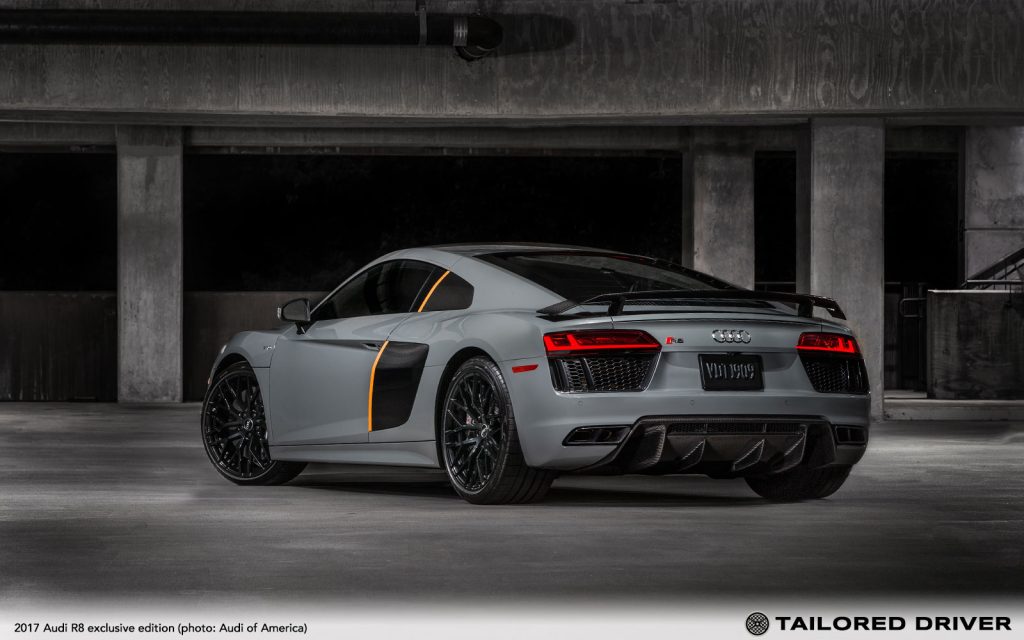
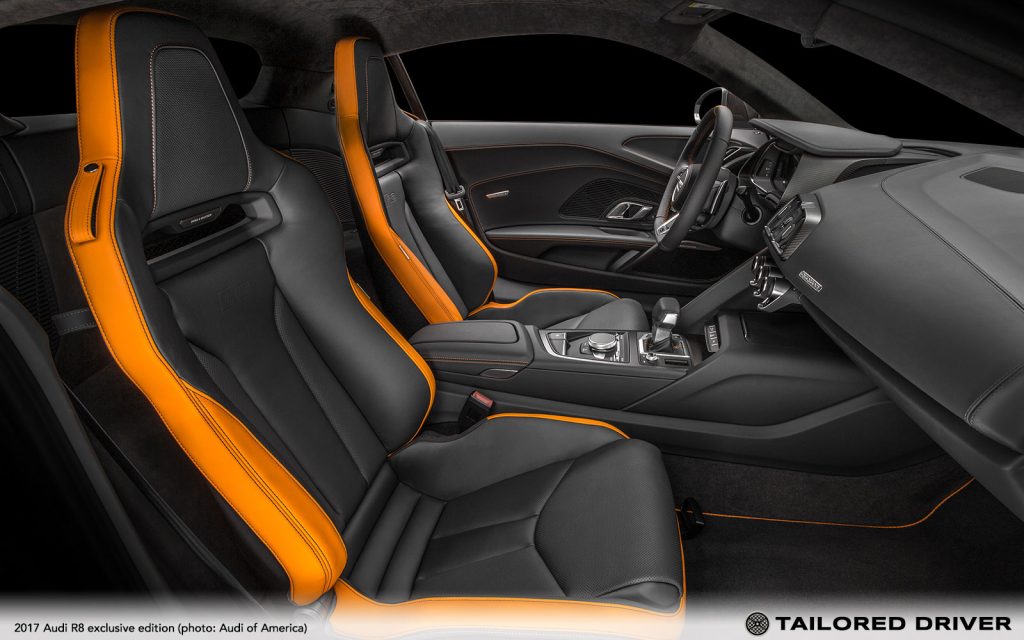
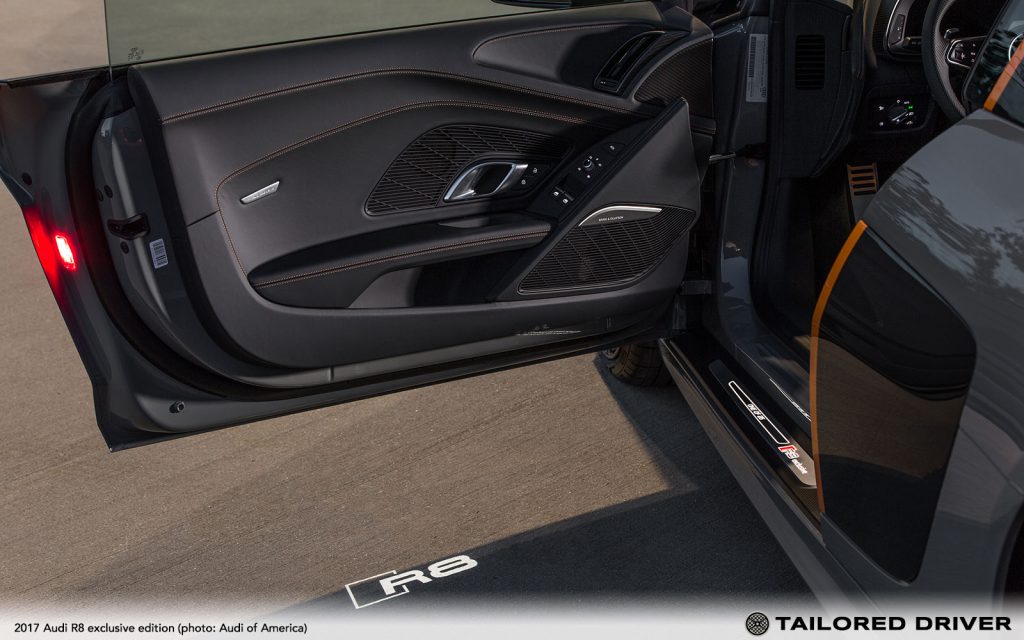
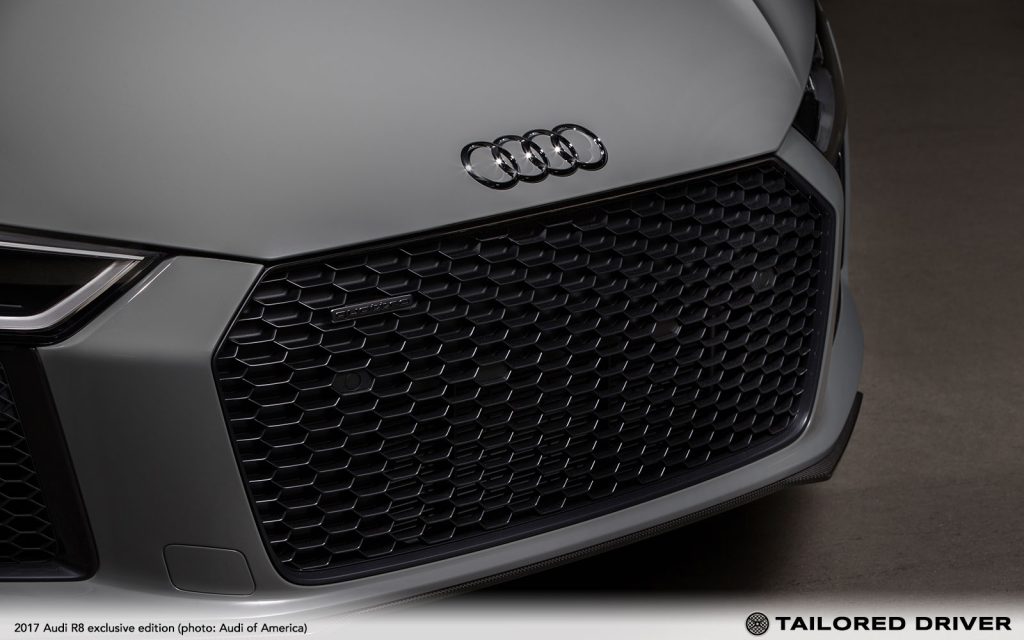
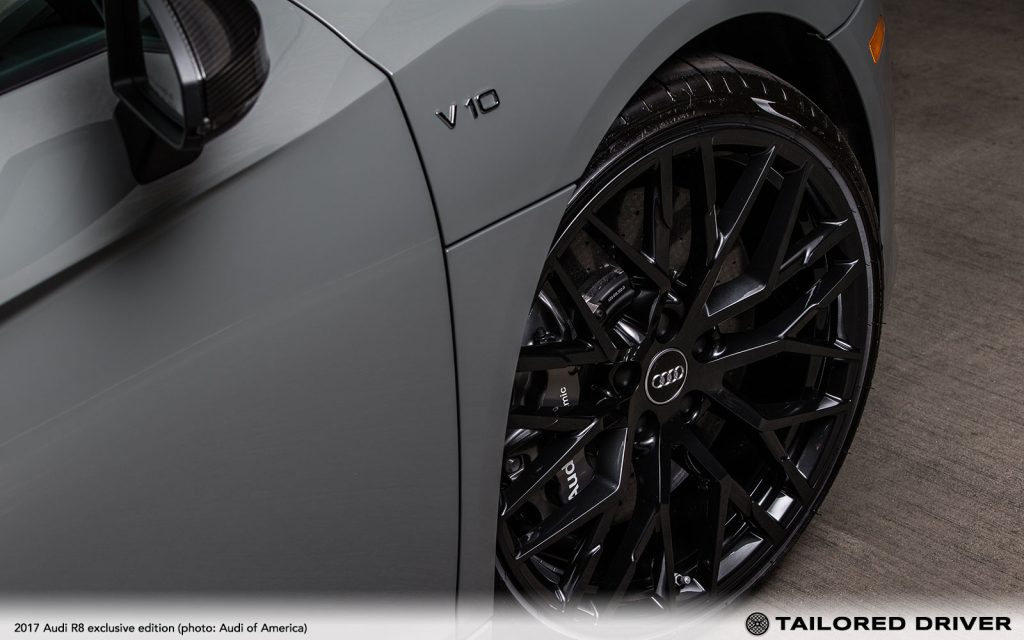
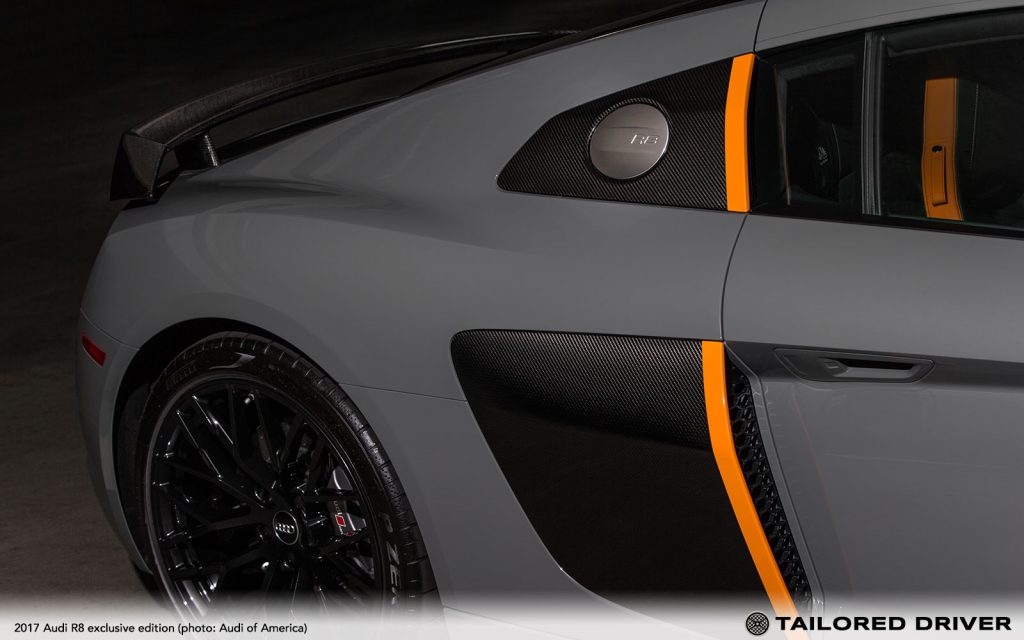
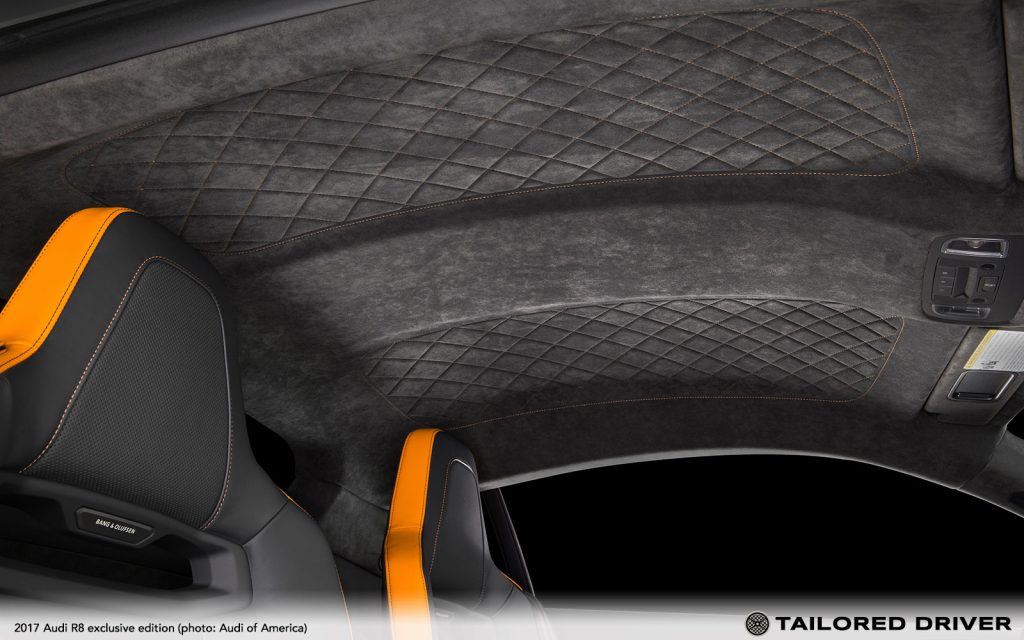
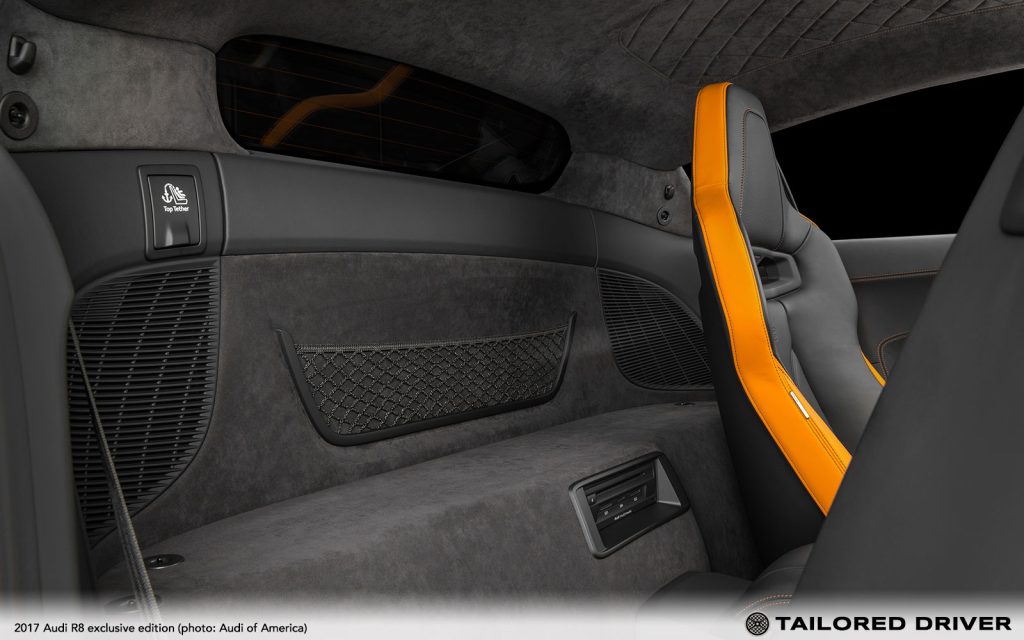
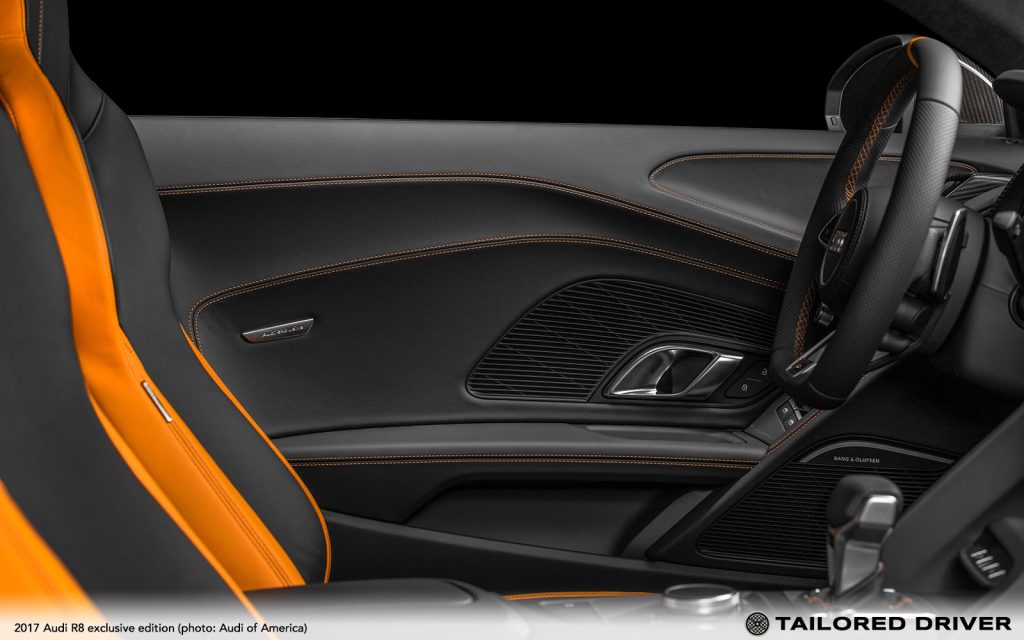
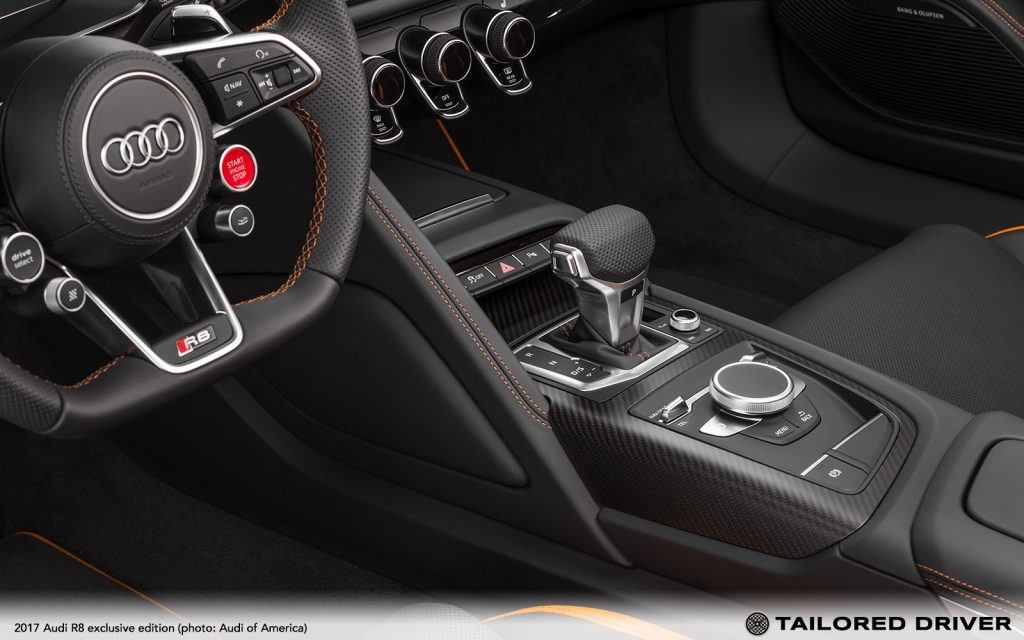
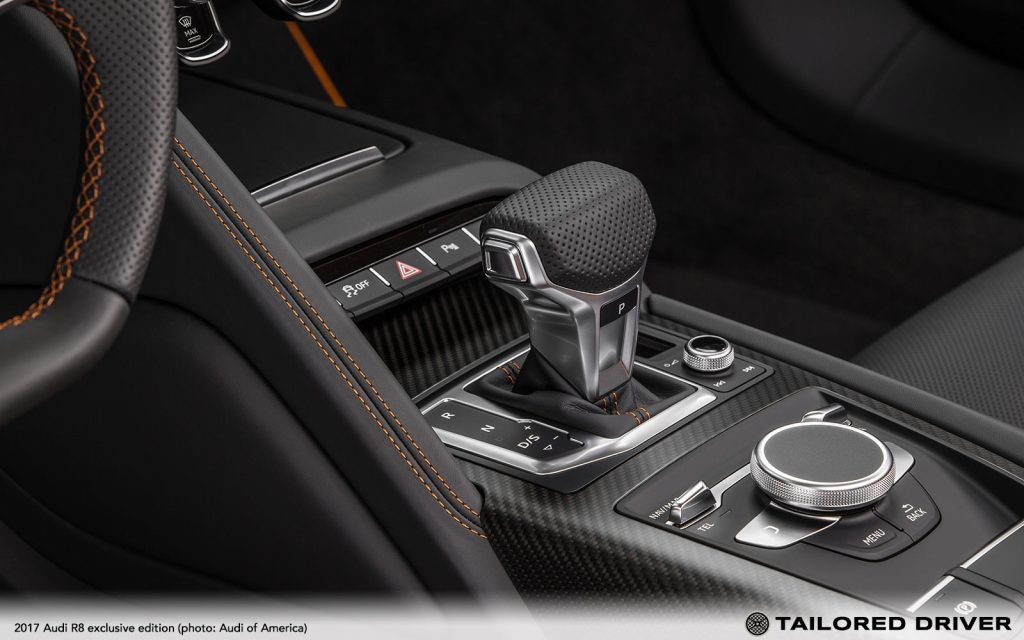
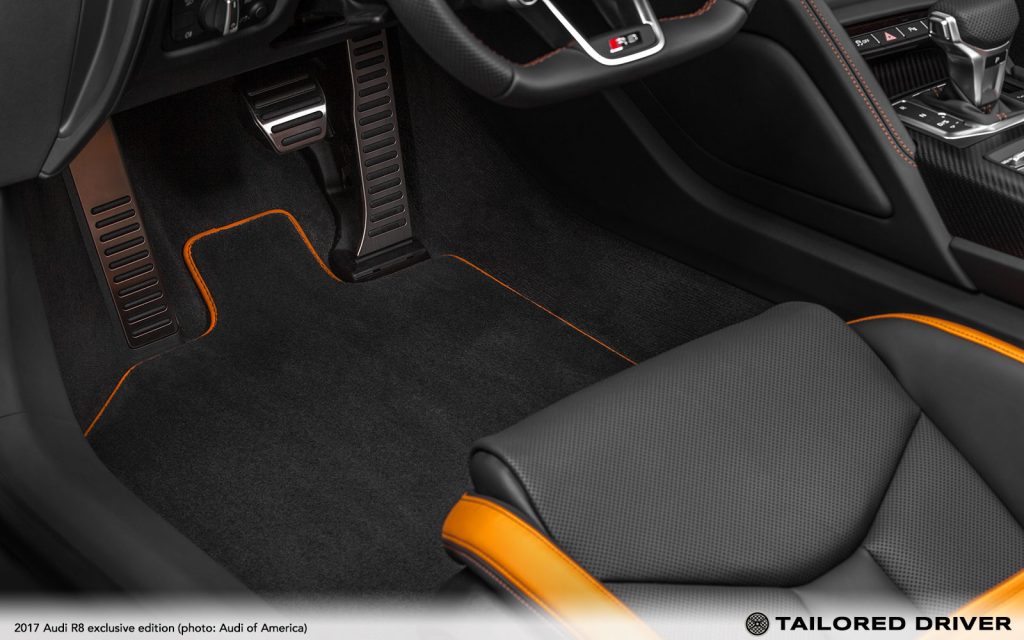
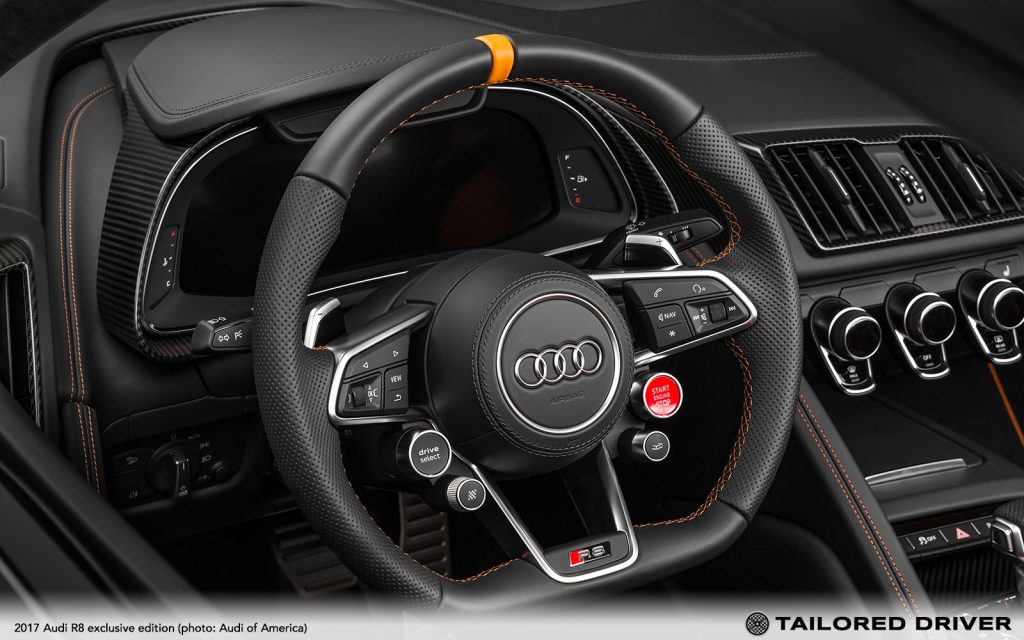
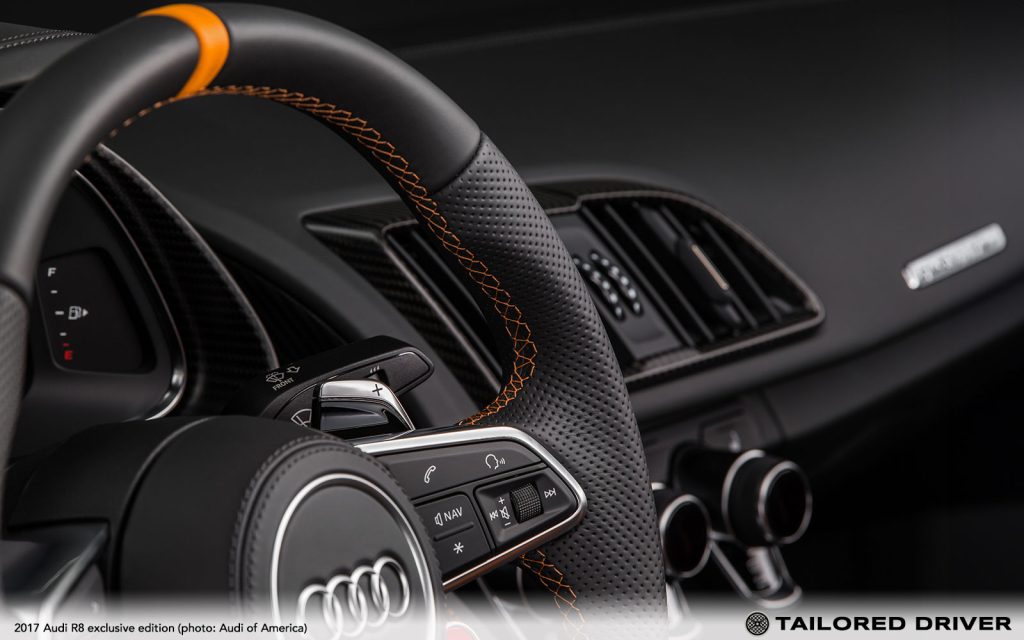
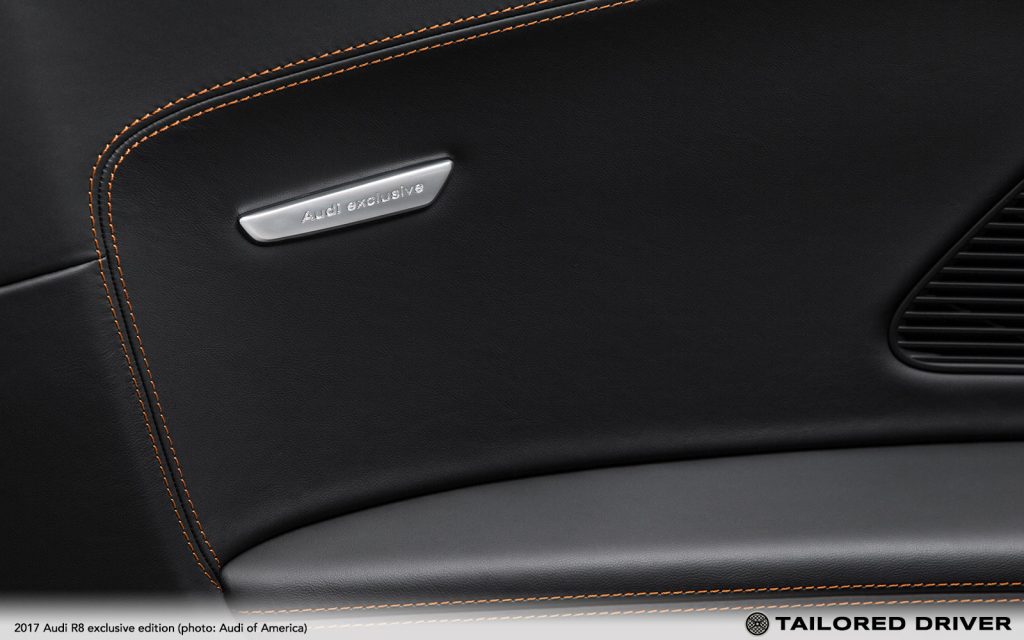
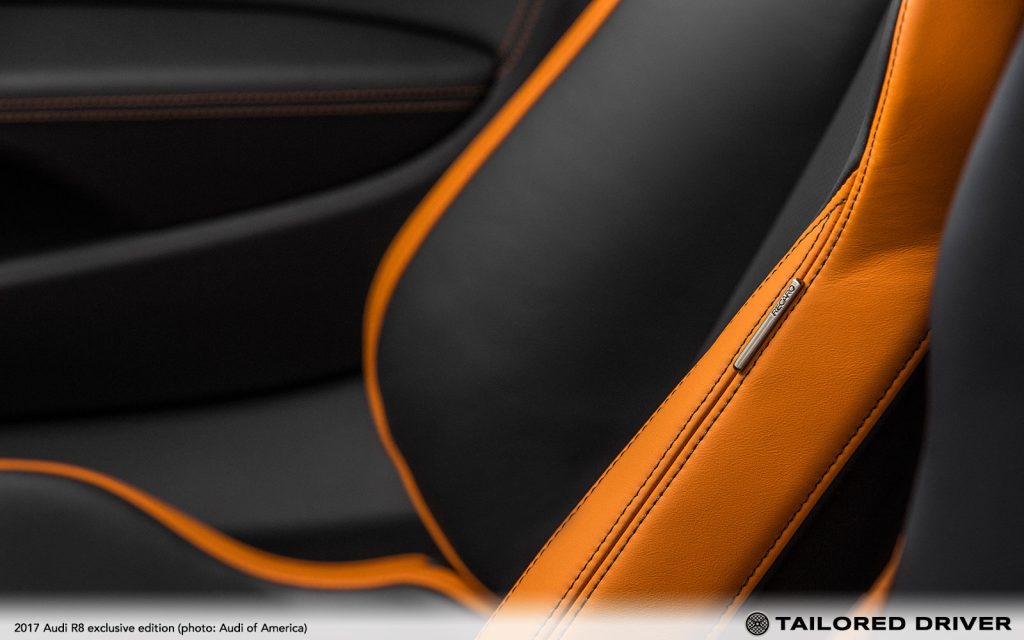
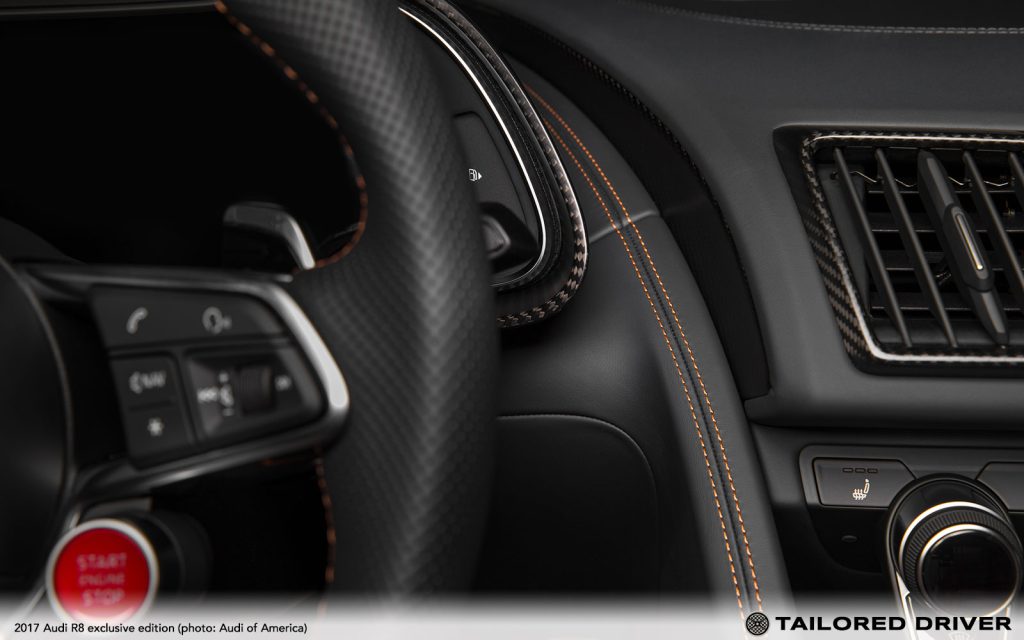
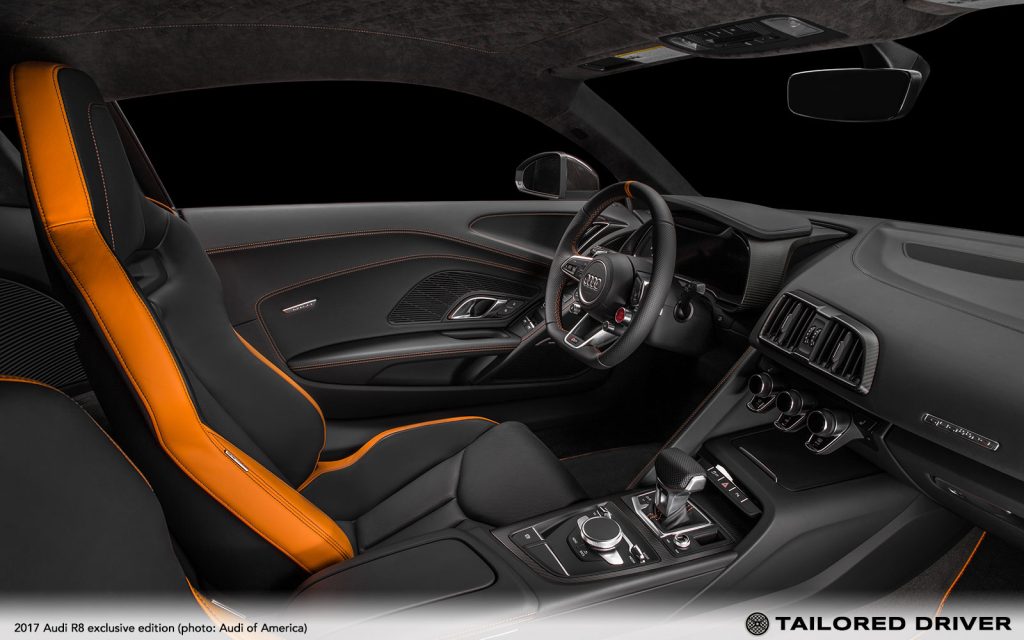
Quantum Gray paintwork aside, each exclusive edition gains a titanium black-optic exterior package which includes a gloss anthracite front grille and 20-inch 10-spoke-Y-design wheels in high-gloss anthracite finish. The R8’s carbon sideblade gets a Solar Orange painted vertical stripe, complementing the racing shell seats, which also boast vertical orange leather elements. The full leather interior package in Black and Signal orange includes an Audi exclusive door sill trim in leather and a leather wrapped steering wheel with a Signal Orange 12 o’clock marker.
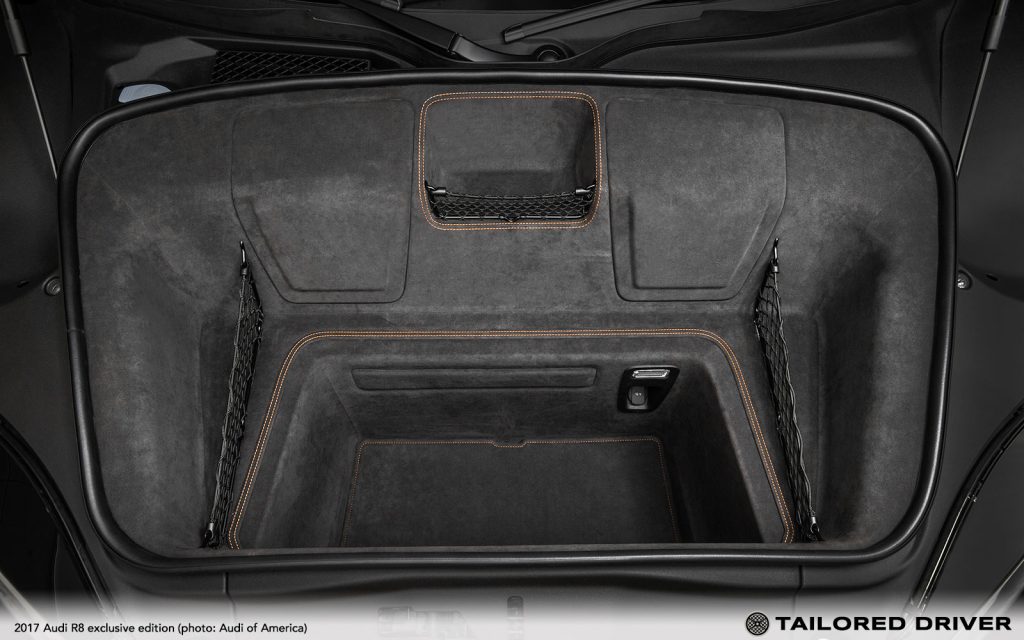
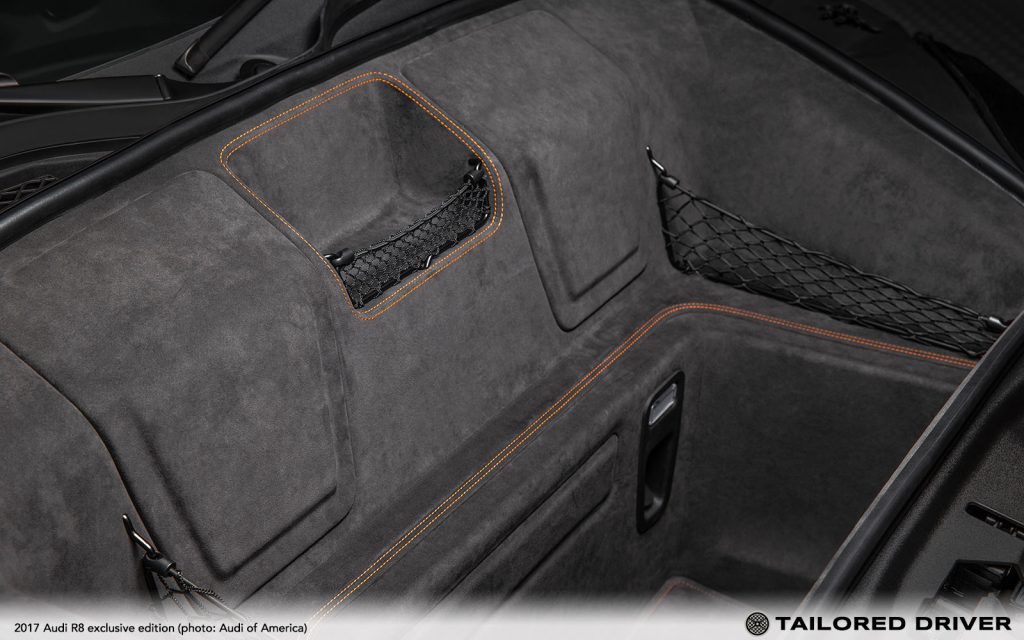
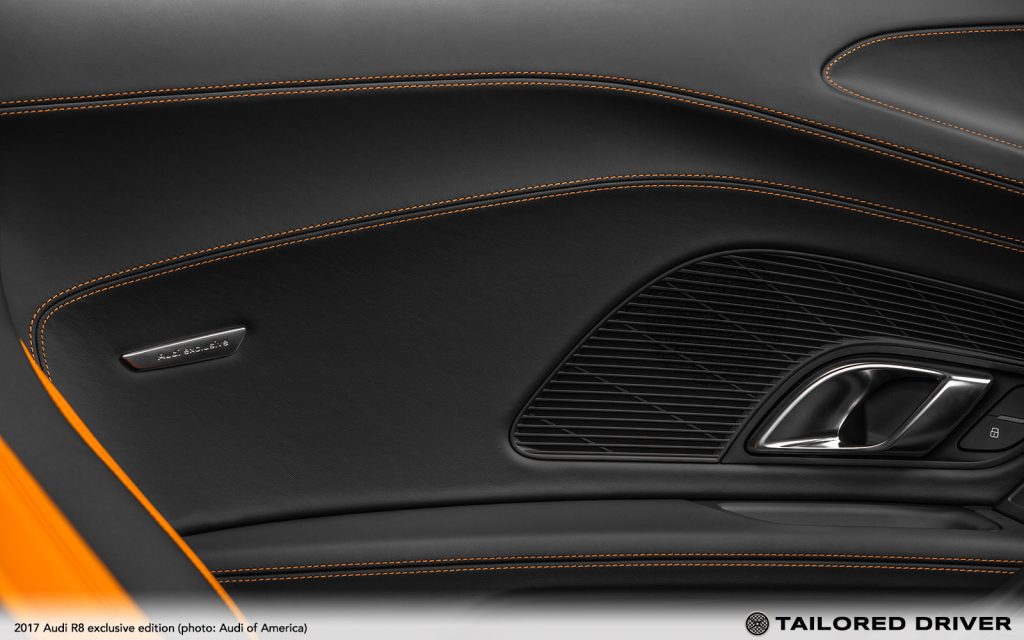
Other features include: • Full-LED headlights with laser high beam technology • Quantum Gray exterior color • Titanium Black-optic exterior package • 20-inch 10-spoke-Y-design wheels in high-gloss anthracite • Carbon sideblade with Solar Orange stripe • Steering wheel with Signal Orange 12 o’clock marker • Audi exclusive Full Leather package in Black/Signal Orange • Audi exclusive customized illuminated door sills “one of 25”, Carbon matte • Audi exclusive door sill trim in Leather • Audi exclusive Alcantara® headliner w/ diamond-stitching • Audi exclusive rear panel and rear shelf in Alcantara® • Audi exclusive floor mats • Audi exclusive luggage compartment trim in Alcantara® • Audi Beam – R8 logo
Each R8 exclusive edition in Quantum Gray is standard equipped with fixed backrest racing shell seats, Audi carbon ceramic brakes, carbon fiber rear diffuser, front lip spoiler, exterior mirror housings, and fixed rear wing spoiler.
A total of 25 Exclusive Edition units will be produced with a starting MSRP of $229,200.
Above price excludes destination charge ($1,250), taxes, title, options, and dealer charges. Dealer sets actual price.
About Audi of America Audi of America, Inc. and its U.S. dealers offer a full line of German-engineered luxury vehicles. AUDI AG is among the most successful luxury automotive brands globally. The Audi Group delivered over 1,800,000 vehicles to customers globally in 2015, and broke all-time company sales records for the 6th straight year in the U.S. Through 2019, AUDI AG plans to invest about 24 billion euros – 70 percent of the investment will flow into the development of new models and technologies. Visit www.audiusa.com or www.audiusa.com/newsroom for more information regarding Audi vehicles and business topics.
From 12 August to 14 August, the AvD Oldtimer Grand Prix will attract many auto fans to the Nürburgring. Porsche will be there as well and showcase not only classics but also a special edition of the 911 Targa 4S.
[source: Porsche AG]
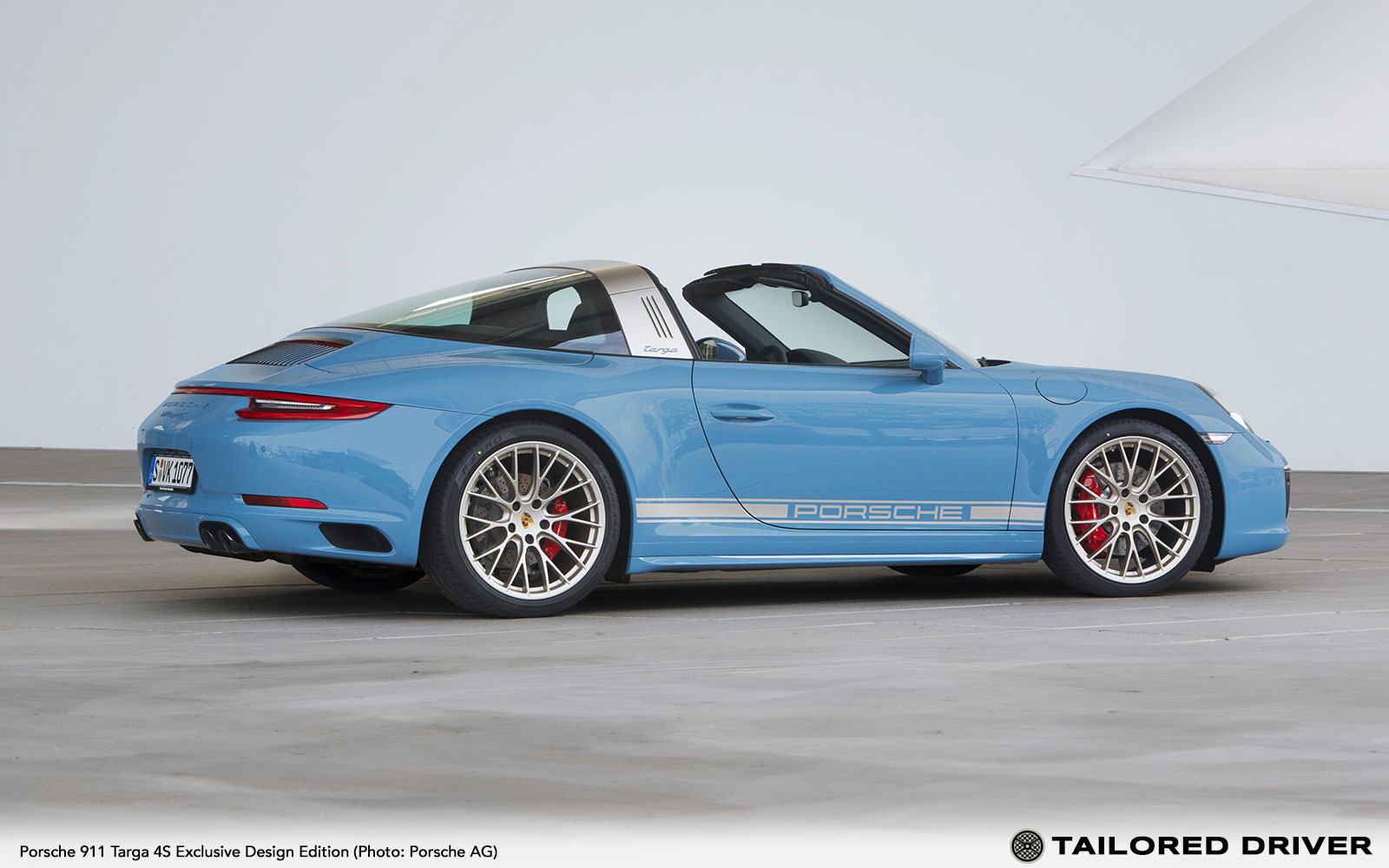
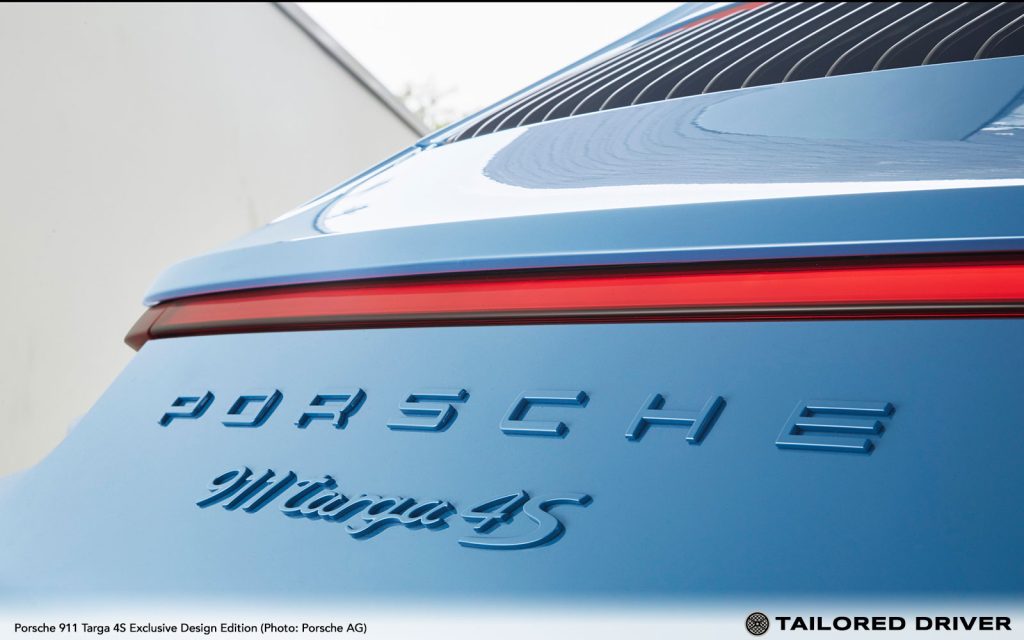
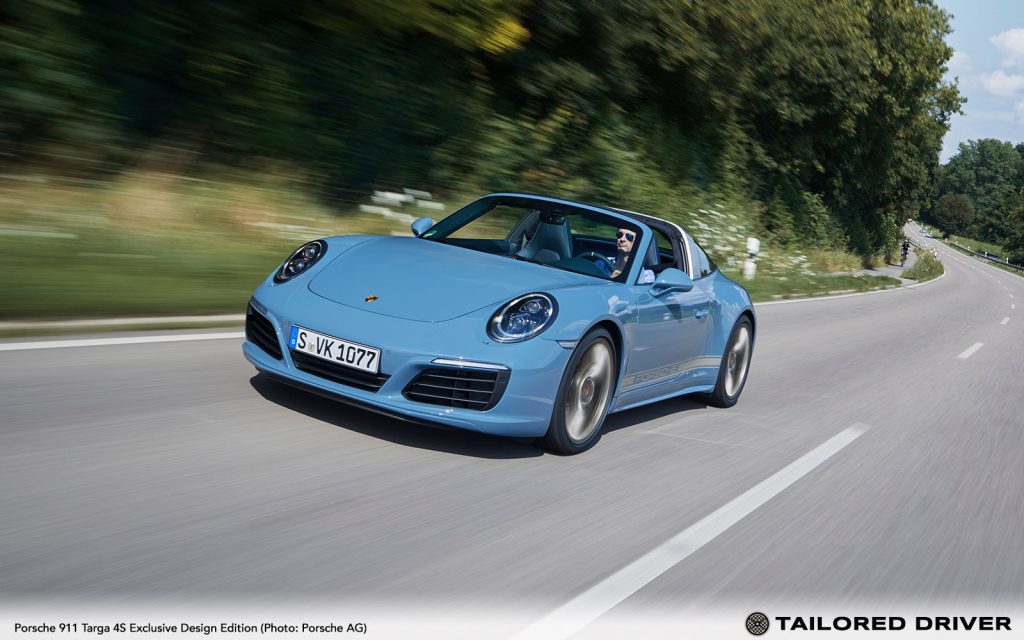
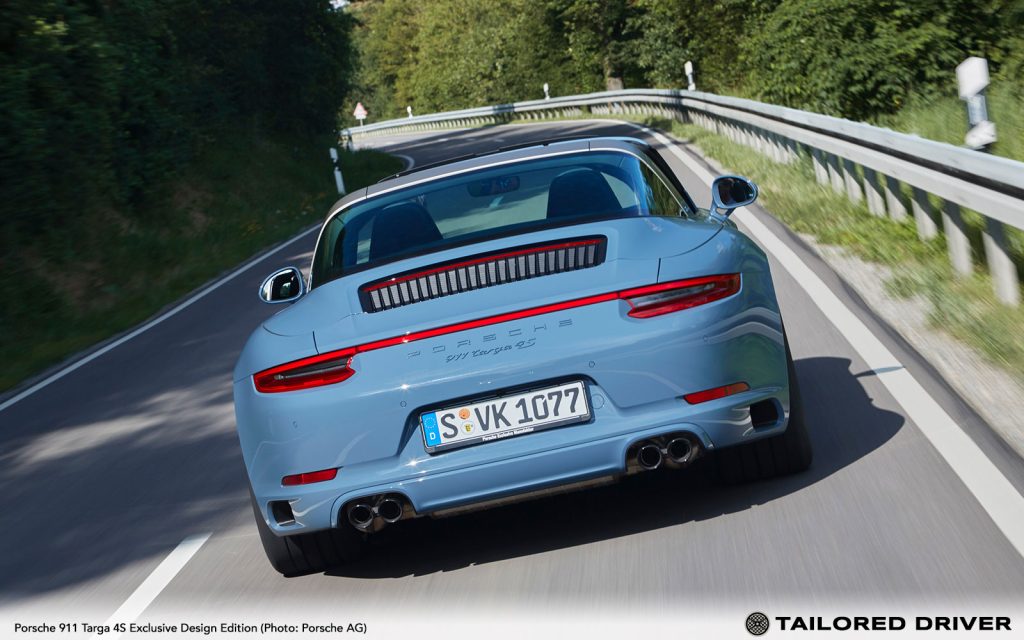
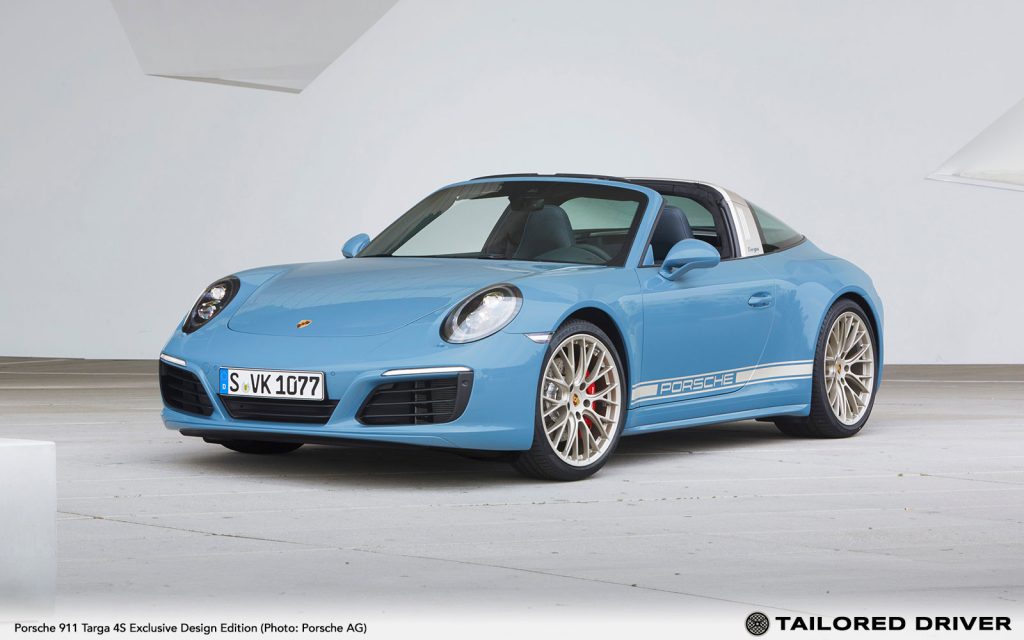
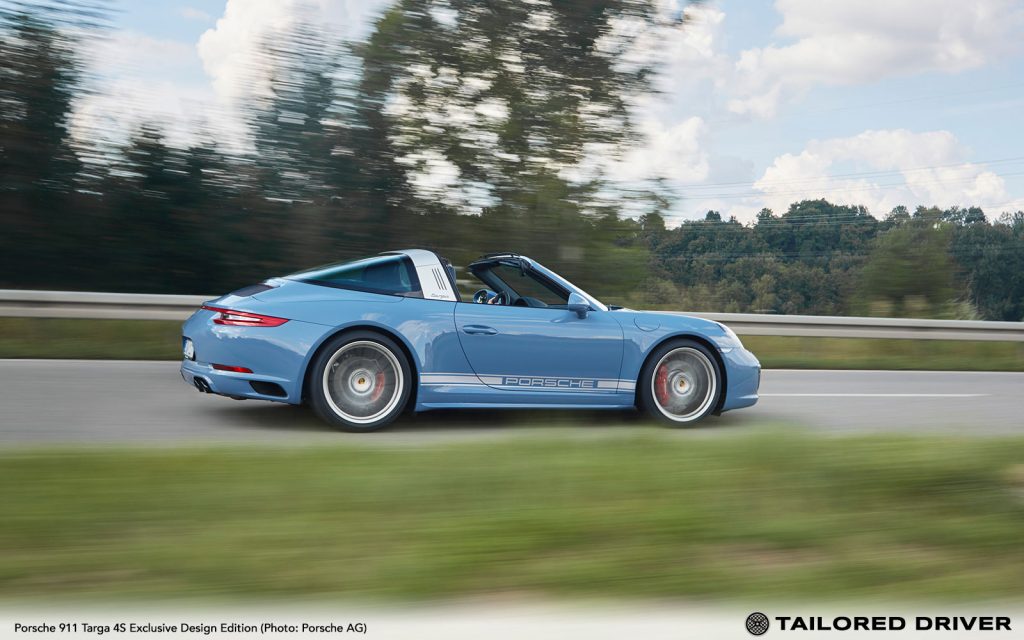
The 911 Targa is the modern classic in the 911 range. Porsche Exclusive has now further refined the vehicle’s distinct style and has developed the 911 Targa 4S Exclusive Design Edition. This collector’s item is presented in etna blue (solid), the standard colour for the 356 B (T5) in 1960 and 1961, with numerous elements coloured in white gold metallic (satin finish). The unique colour combination of the exclusive Targa also continues in the vehicle interior. The interior is graced by high-quality, enhanced equipment with many luxurious, hand-finished details. Powered by a 309-kW bi-turbo boxer engine (420-hp; 911 Targa 4S: Combined fuel consumption*: 9,0-8,0 l/100 km; Combined CO2-Emission*: 208-184 g/km), the special edition is only available for a short time.
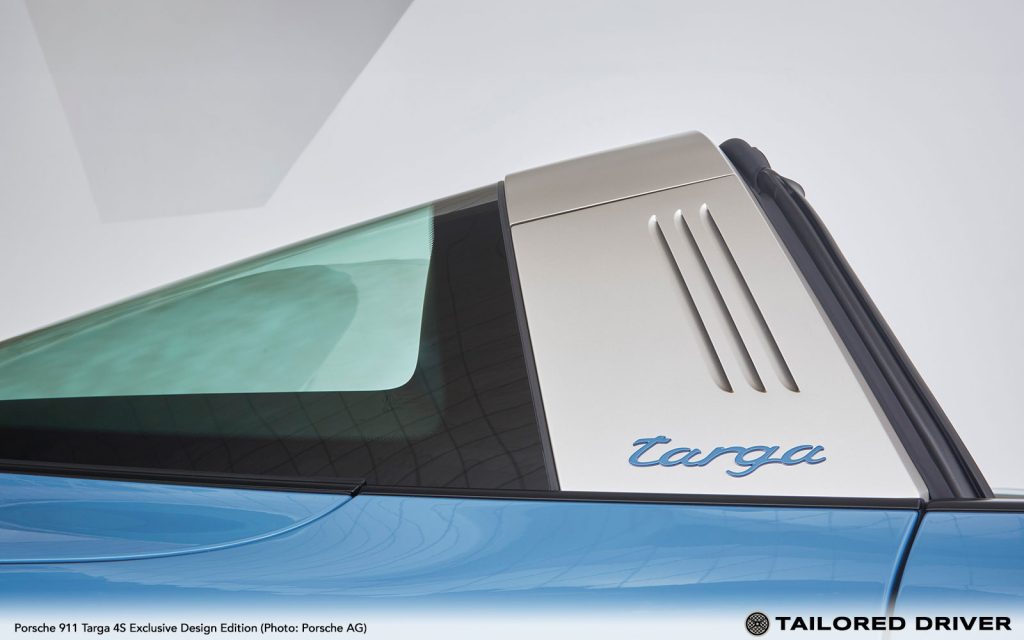
Many exterior details, such as the front spoiler, covers for the headlight washer system and “targa” logo on the Targa bar, are painted in the vehicle colour, with the black LED headlights providing an eye-catching contrast at the front. The Targa bar, 20-inch RS Spyder wheels and the decorative Porsche side logo glisten in white gold metallic. At the rear, the rear apron, the Porsche logo and the model designation are also coloured in etna blue (solid), while the rear lid grille and quadruple sports tailpipes are coloured black to deliver a dynamic contrast.
For 30 years, Porsche Exclusive has strived to deliver individuality
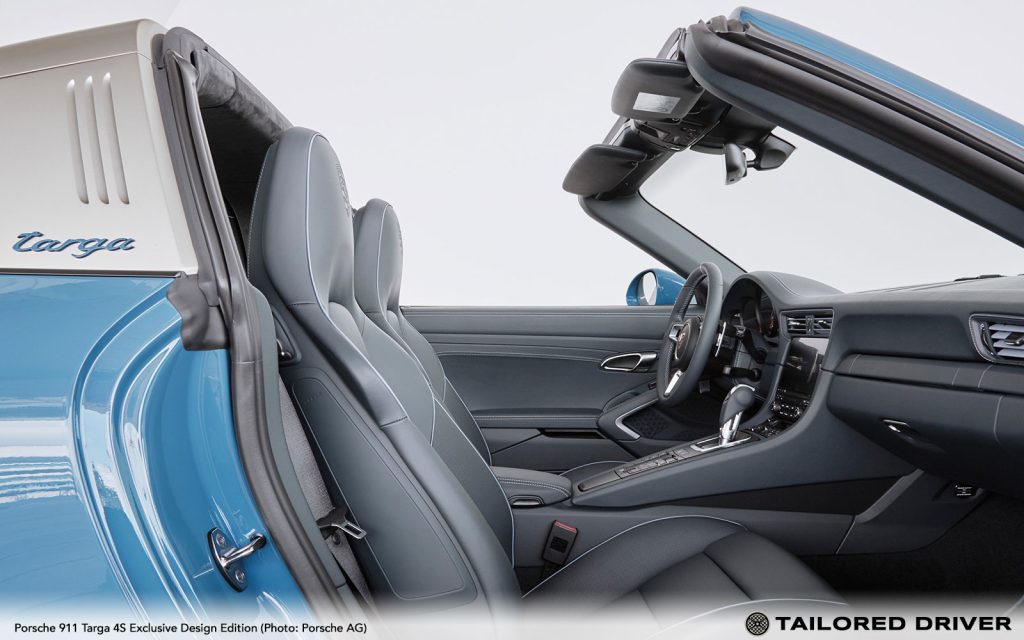
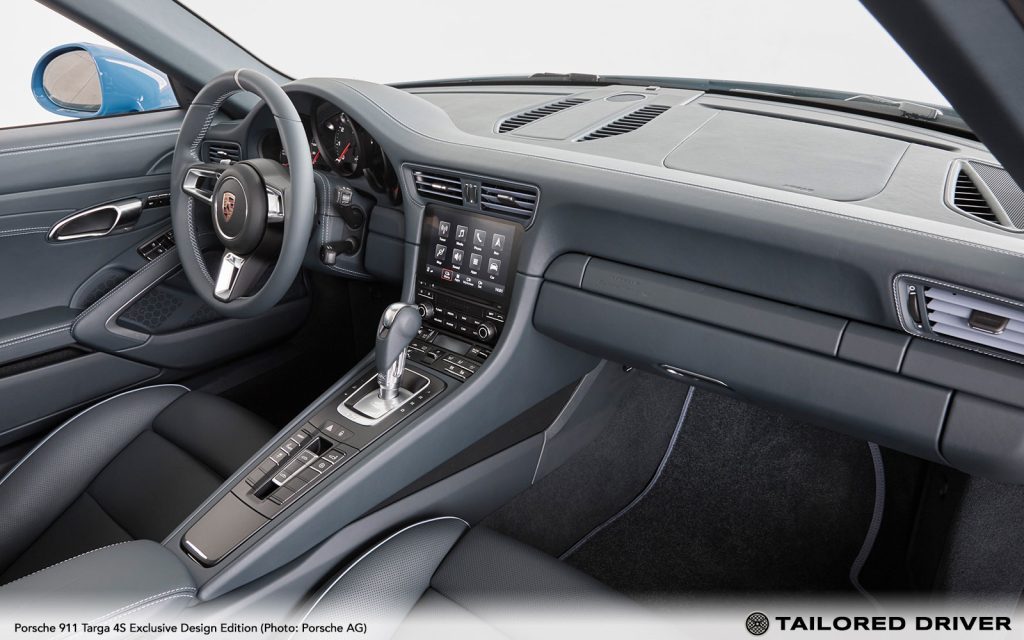
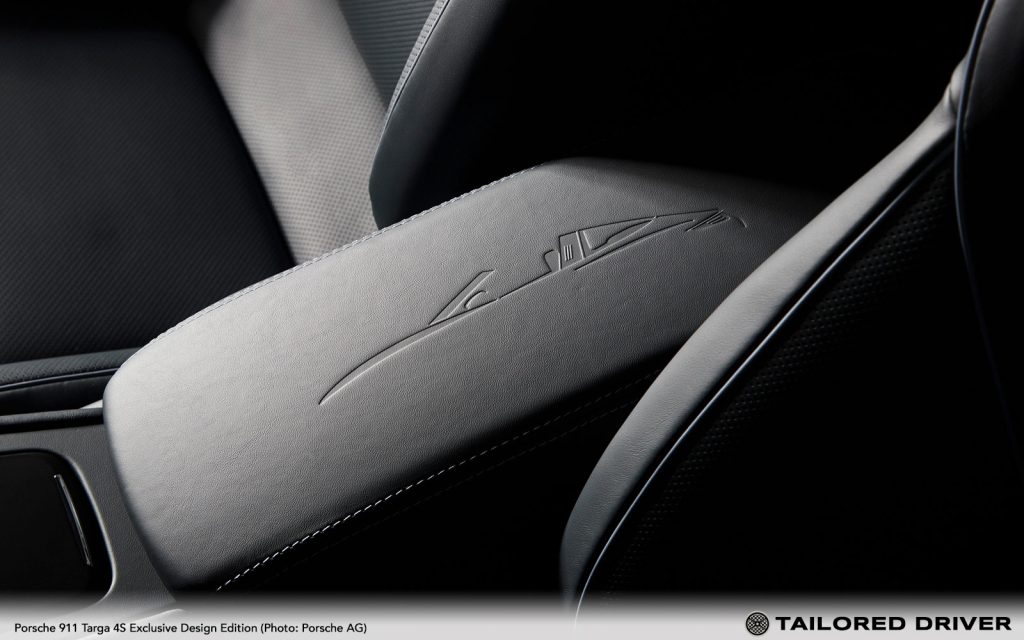
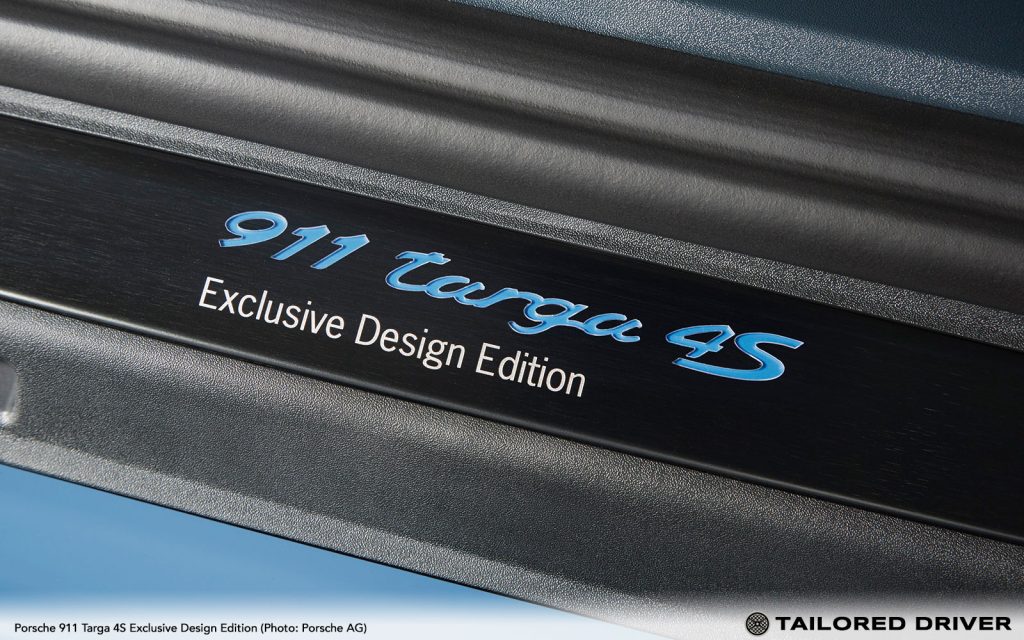
The interior of the 911 Targa 4S Exclusive Design Edition features door entry guards that are made from black, anodised stainless steel and bear the name of the edition. The first line “911 targa 4S” is illuminated in blue, while the second line “Exclusive Design Edition” is etched into the black steel. Luxurious comfort awaits the driver and passenger thanks to a high-quality, graphite-blue leather interior with adaptive Sports seats Plus and 18-way adjustment. The headrests are embossed with the Porsche logo and a 911 Targa silhouette adorns the cover of the storage compartment in the centre console. The lettering “Porsche Exclusive Manufaktur” on the trim of the dashboard highlights the vehicles exclusive origin. The decorative stitching of the seat leather, air nozzle slats and floor mat trim are all presented in Provence blue. The comprehensive refinement also includes leather trim on the seat backrests, steering column casing, parts of the dashboard and air nozzles.
Following their assembly, all vehicles are hand-finished on the Porsche Exclusive production lines in Zuffenhausen. For 30 years, Porsche Exclusive has strived to deliver individuality straight from the factory and boasts a long-standing tradition in the creation of limited vehicle projects. With each vehicle, the customer receives a specially designed indoor car cover as well as a bound photo album in graphite-blue leather, which documents the development process of their car. Every photo album features the specific vehicle identification number (VIN).
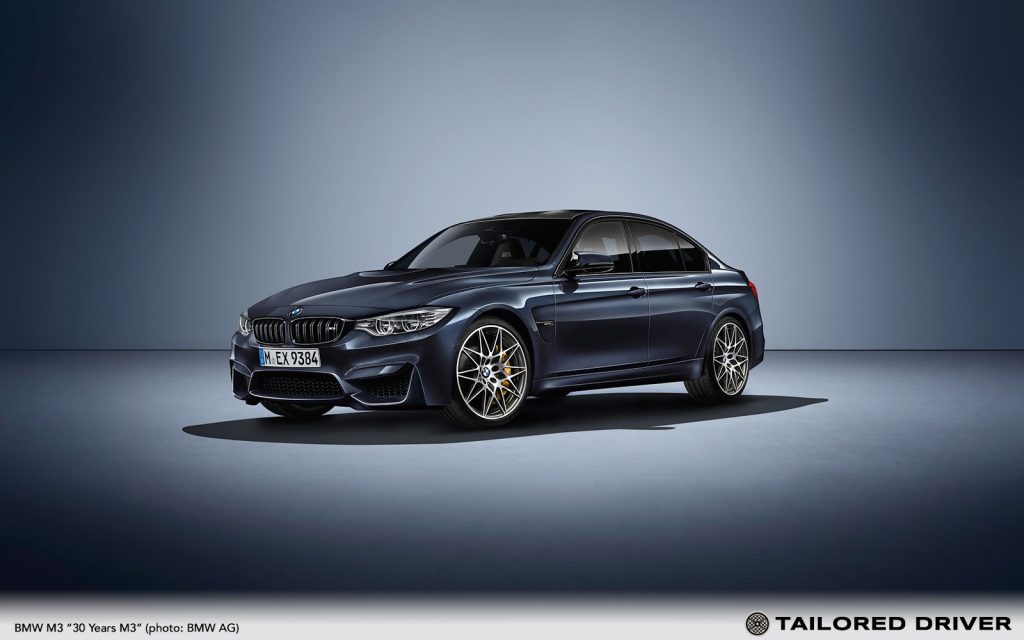
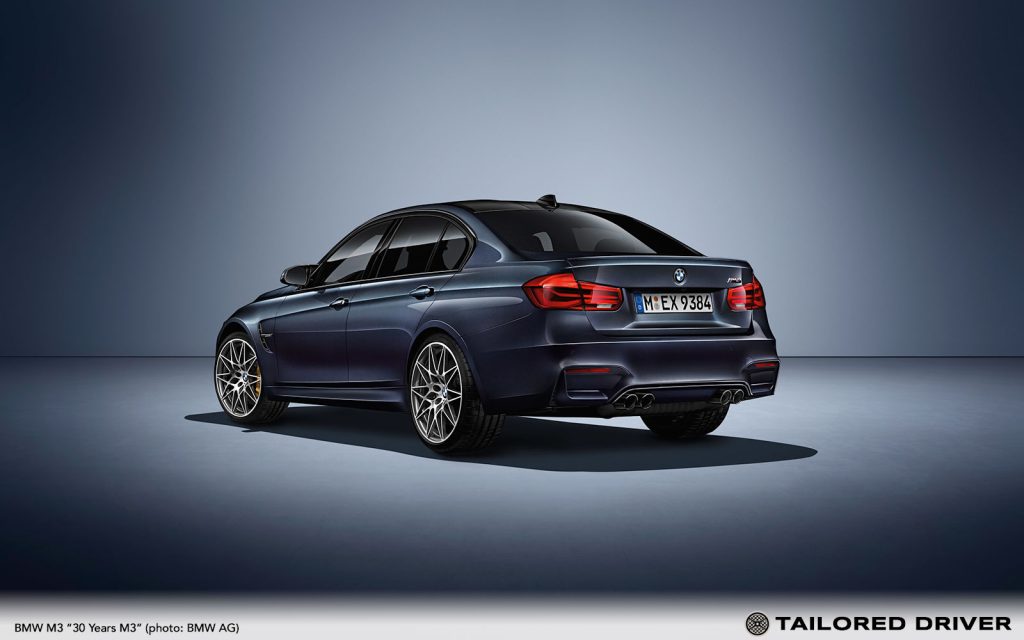
To mark the 30th anniversary of this automotive icon this summer, BMW M is launching the exclusive special edition of the BMW M3 “30 Years M3”, which is limited to 500 cars worldwide.
[source: BMW AG]
Munich. With the launch of the first generation of the BMW M3 in 1986, the BMW M GmbH, at that time operating under the name BMW Motorsport GmbH, revolutionized the sporty mid-range segment. No other manufacturer had previously ever deployed genuine motorsports technology so consistently in order to transform a high-volume production model like the BMW 3 Series into a thoroughbred high-performance sports car that is also fully suitable for everyday use. The first BMW M3 set the standard by which other manufacturers were measured.
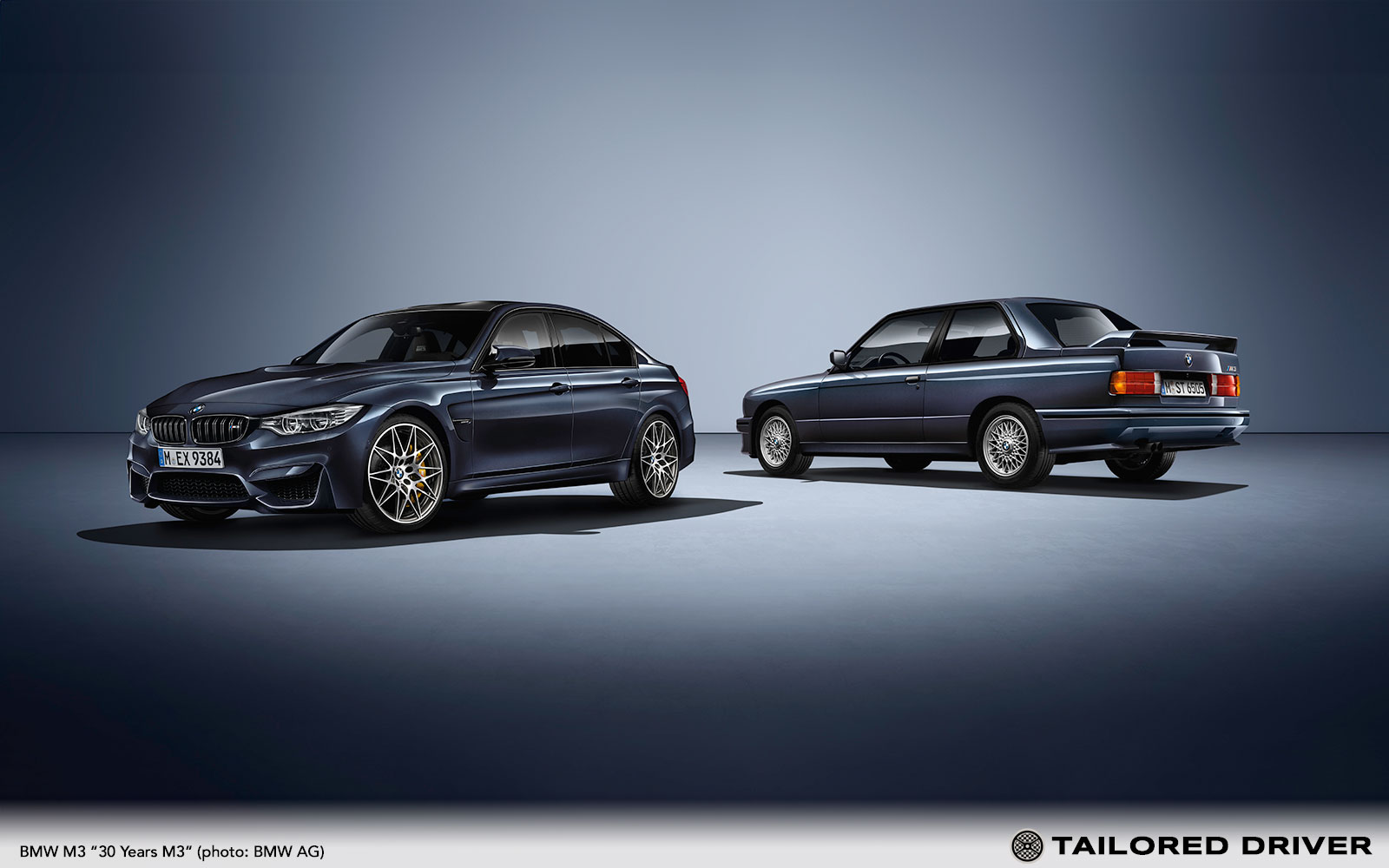
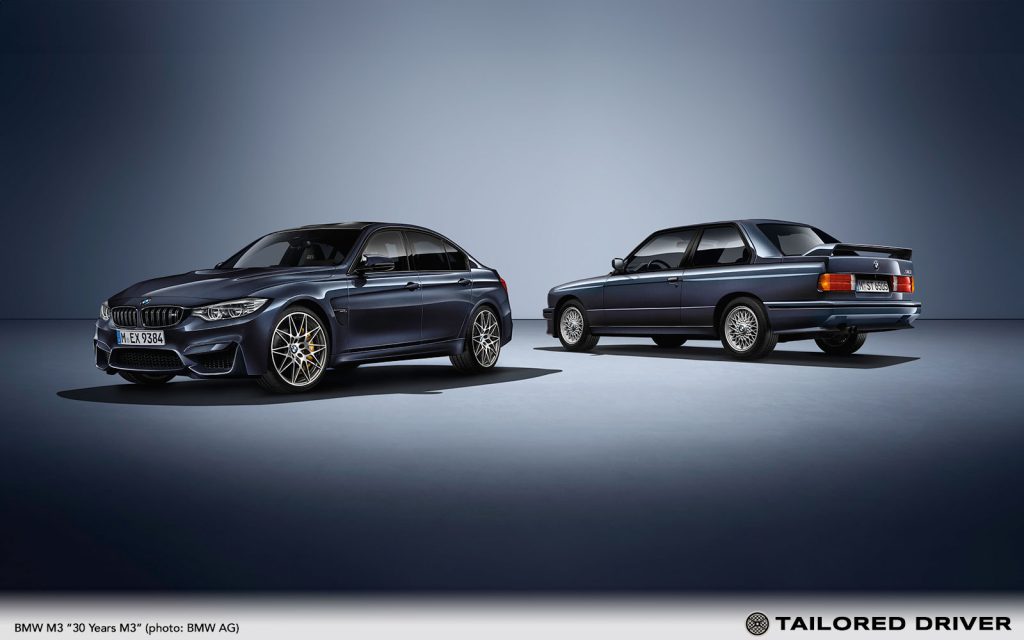
Meanwhile, BMW M has continuously refined its automotive icon across five model generations. And over all these years the BMW M3 has retained its original character. Probably no other automobile combines distinct racing genes and unrestricted day-to-day suitability into such a highly emotional overall concept. To mark the 30th anniversary of this automotive icon this summer, BMW M is launching the exclusive special edition of the BMW M3 “30 Years M3”, which is limited to 500 cars worldwide.
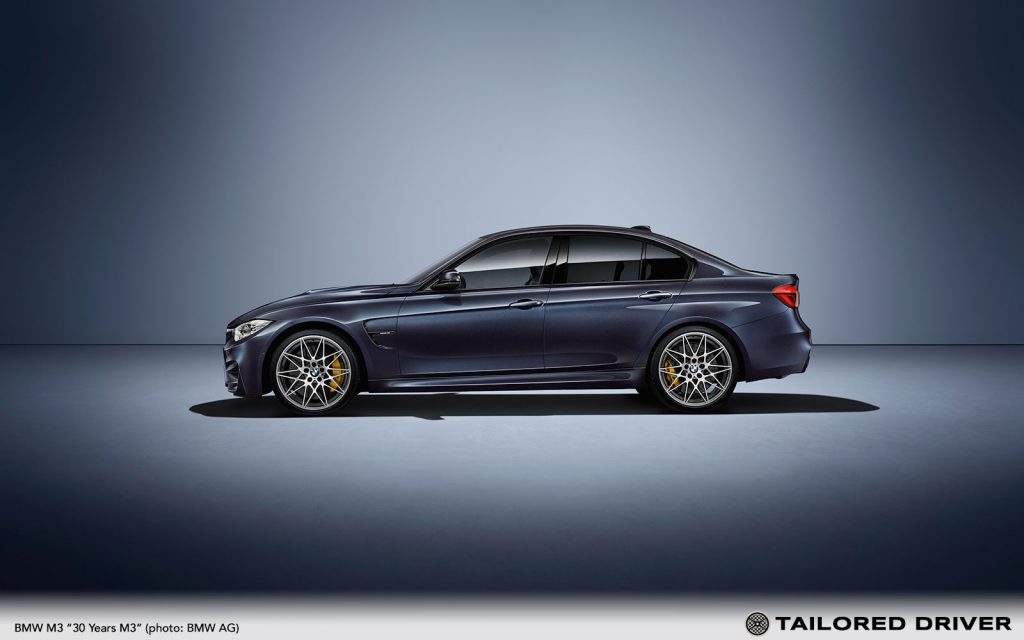
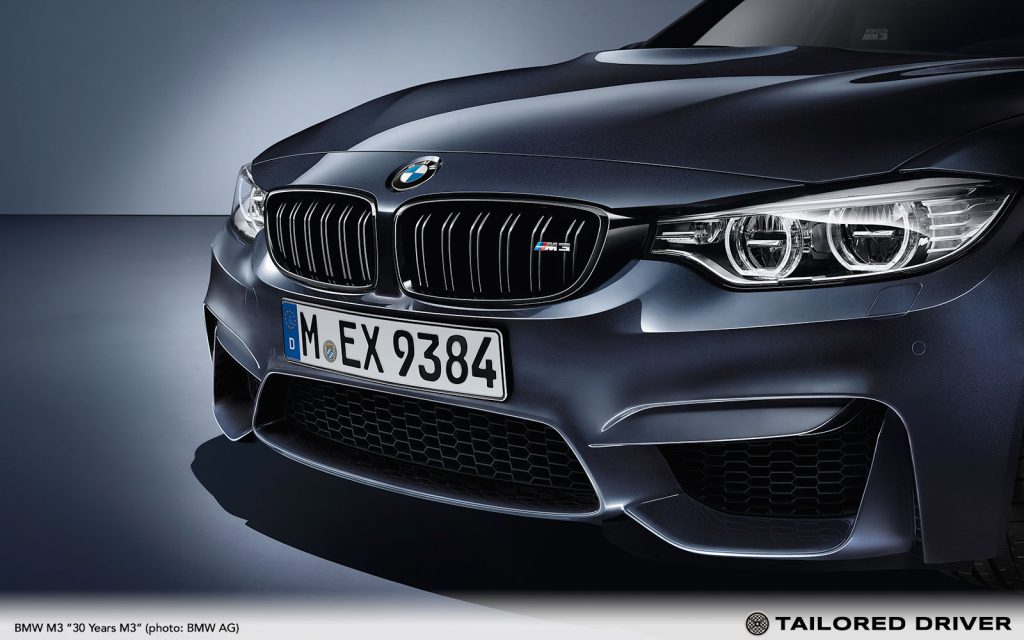
Edition “30 Years M3” in the legendary colour Macao Blue metallic. As a tribute to the first generation of the BMW M3, the anniversary edition “30 Years M3” is painted in the exclusive exterior colour Macao Blue metallic (macaoblau; metallic uni; 250; BMW), which once celebrated its premiere in BMW’s colour range as a special option for the first generation of the BMW M3.
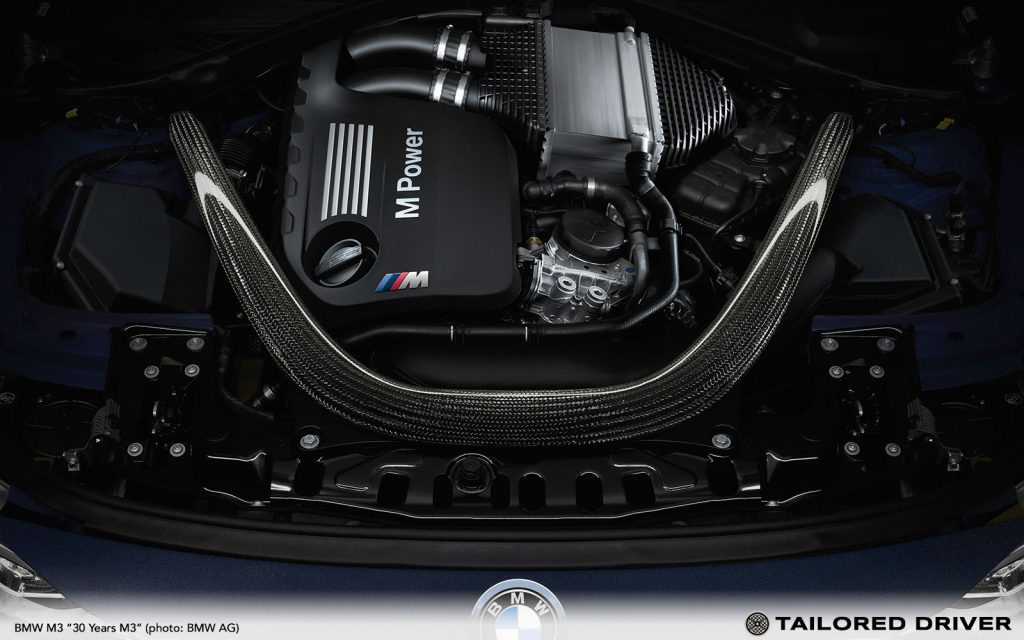
The edition “30 Years M3” builds on the Competition Package, which is optionally available for the BMW M3 series production model. It comprises an increase in engine output by 14 kW/19 hp to 331 kW/450 hp (BMW M3 “30 Years M3”: combined fuel consumption: 8.8–8.3 l/100 km, combined CO2 emissions: 204–194 g/km). Also included in the Competition Package is the Adaptive M suspension, which has been comprehensively aligned to the increased performance. Optimised features also include new springs, dampers and stabilisers, modified characteristic curves of the three modes Comfort, Sport and Sport+ as well as a correspondingly modified standard Active M differential on the rear axle and Dynamic Stability Control feature (DSC). Moreover, the Competition Package of the edition model includes forged 20-inch M light-alloy wheels with 666 M star spoke design and mixed tyres (front: 265/30 R20, rear: 285/30 R20).
All of these measures lead to a noticeable increase in dynamic performance, which is not least also reflected in enhanced acceleration. The BMW M3 “30 Years M3” with optional 7-speed M double clutch transmission sprints from 0 to 100 km/h in just 4 seconds, which is 0.1 seconds faster than the series production model. Even with the standard 6-speed manual transmission, the car completes this sprint 0.1 seconds faster than the production model.
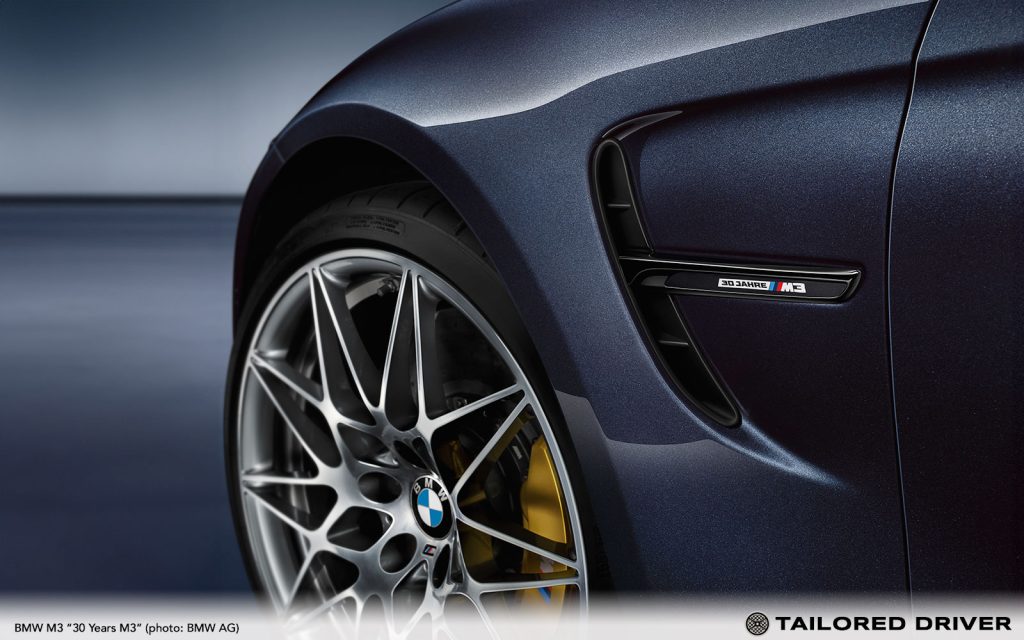
In terms of exterior design, the Competition Package also includes the BMW Individual High Gloss Shadow Line with enhanced features, including a black chrome tailpipe trim for the M sports exhaust system, the characteristic and potent sound of which contributes significantly towards the highly emotional driving experience. The edition model also features exclusively designed M gills in the front wings bearing the logo “30 Years M3”.
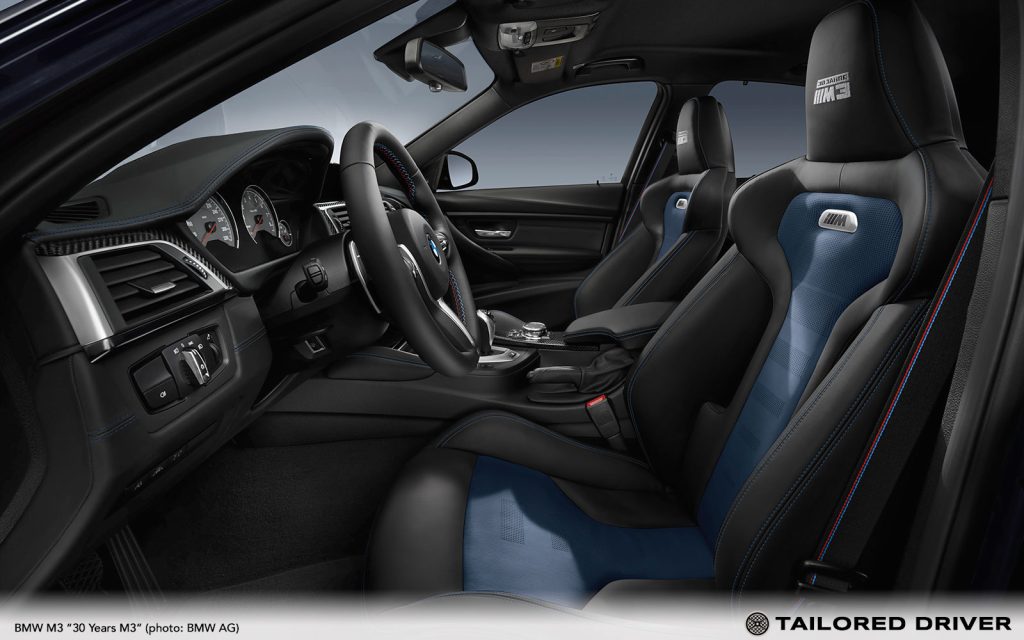
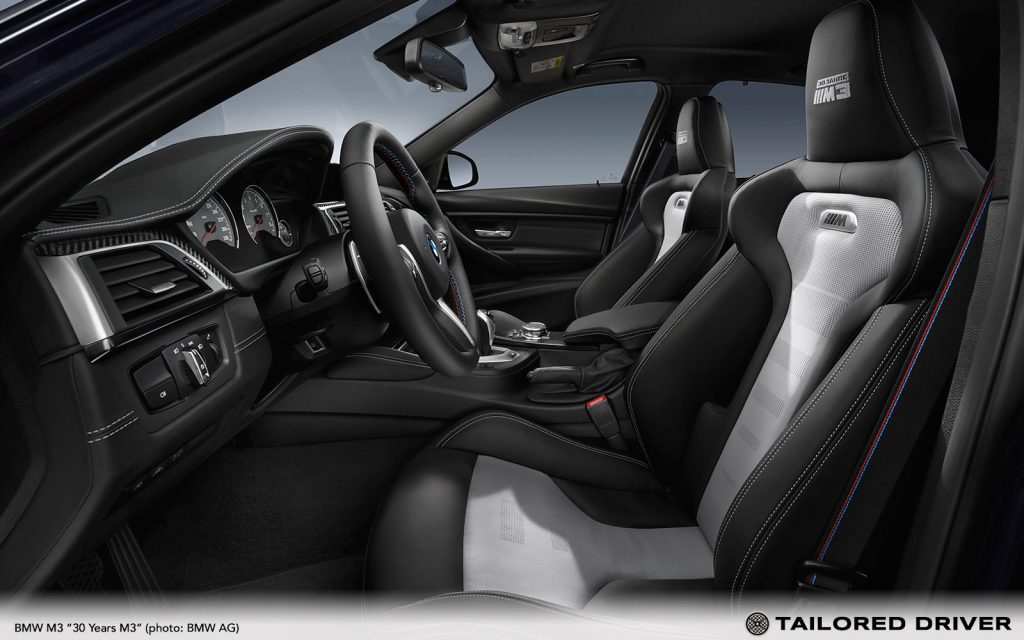
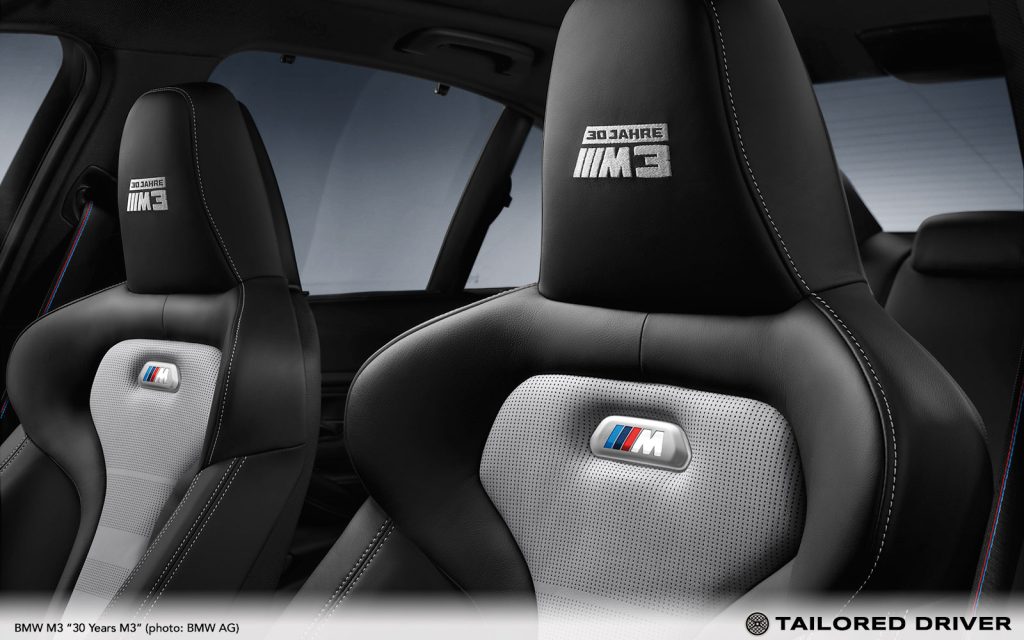
Sporty, functional interior with an exceptionally high-class ambience. The Competition Package upgrades the interior of the edition “30 Years M3” with specific M sports seats in a skeletal design that combine perfect support with distinct travel comfort over long-distances. Seatbelts with woven-in BMW M strips also enhance the sporty interior ambience.
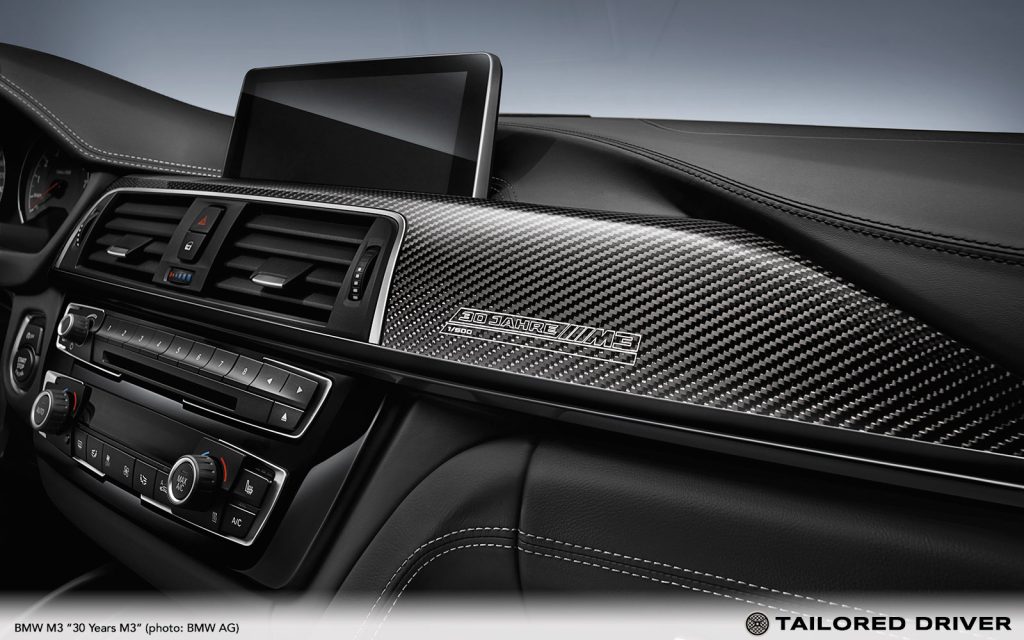
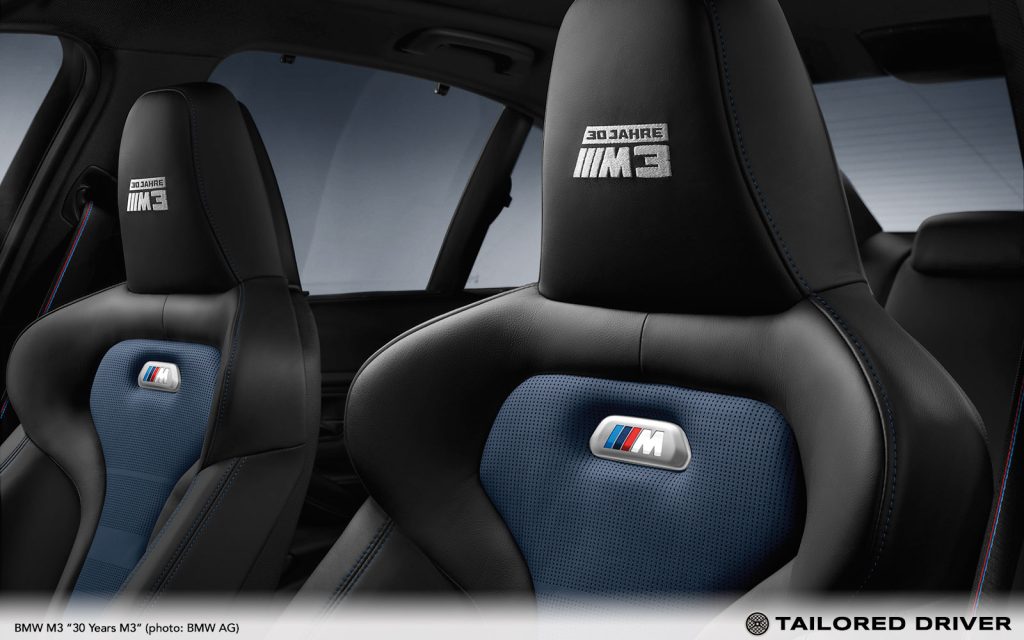
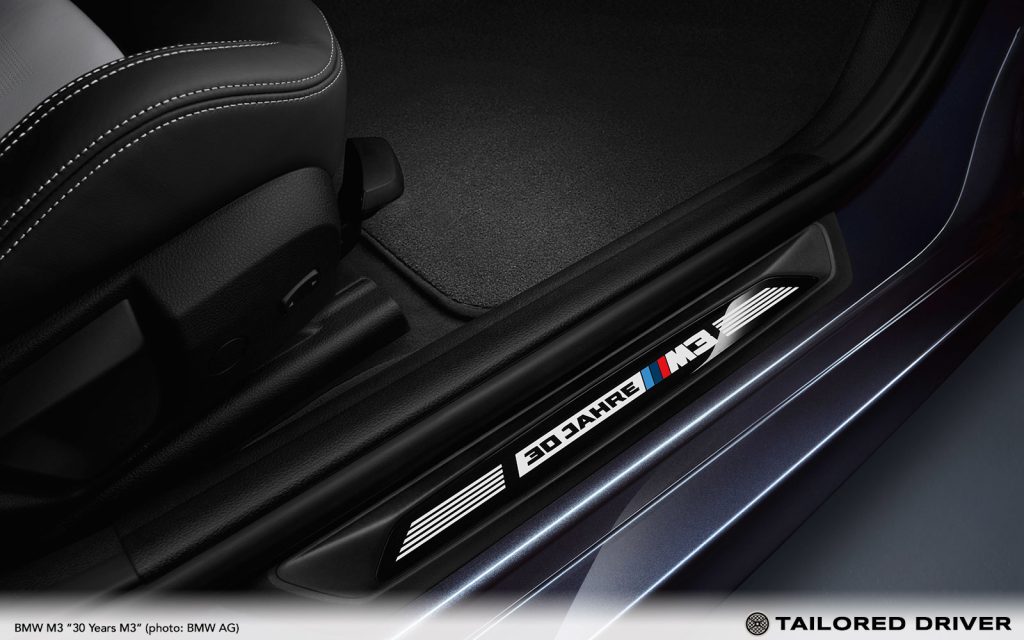
The logo “30 Years M3” on the front doorsills reminds both driver and front passenger of the BMW M company icon’s unique history. The wording “30 Years M3 1/500” on the carbon fibre interior trim strip of the instrument panel gives indication of the exclusiveness of the BMW M3 “30 Years M3”, which is limited to 500 cars worldwide. “30 Years M3” is embroidered into the front headrests.
The BMW M3 “30 Years M3” features an exclusive full leather Merino trim in bi-colour Black/Fjord Blue or optionally in Black/Silverstone with colour-matching contrast seams that effectively underscore the anniversary model’s sporty and sophisticated character.
Compared with the BMW M3 with Competition Package, the additional cost of the anniversary model is €10,000 in Germany. Market launch is scheduled for the summer of 2016 – this being exactly 30 years after the signing of the first contract for the purchase of a BMW M3.
1986 – a 3 Series with flared arches and impressive power. Around six months after BMW had stunned experts with the world premiere of the new BMW M3 at the International Motor Show in Frankfurt in the autumn of 1985, the time had finally come: In the spring of 1986, the first automotive journalists were given the opportunity on the racetrack in Mugello to test the “3 Series supercar”, which looked extremely spectacular not just because of its distinctively flared wheel arches. The 2.3-litre four-cylinder engine featuring four-valve technology delivered 147 kW/200 hp. This power unit was an ideal match for the two-door car, which weighed in at only 1,200 kilograms thanks to lightweight construction – the front and rear bumpers, the side sills and the boot lid including spoiler as well as other features were made of plastic. Acceleration from 0 to 100 km/h in 6.7 seconds and a top speed of 235 km/h are still impressive figures even today.
1988 saw the presentation of the Evo version of the BMW M3, which reached a top speed of 243 km/h thanks to a further enhanced power output of 220 hp. And in 1990, the highest upgrade version of the first model generation was launched to the market – the BMW M3 Sport Evolution, which had a 238 hp, 2.5-litre power unit under the bonnet and was limited to 600 cars.
Impressive proof of engineering skills in the development of the BMW M3 was delivered as early as in 1986 by the catalytic converter versions of the sports car. As the technicians had also given consideration to the use of exhaust gas purification technology right from the beginning of the development phase, each model version lost only 3 kW/5 hp in engine power as a result of being fitted with a catalyst; the effect on driving performance was only marginal.
1992 – from a thoroughbred racing car to an elegant coupe. Unlike the predecessor, the second generation of the BMW M3, which celebrated its debut in 1992, had not been specifically developed for deployment in motor sports. The significantly more discreet and elegant coupe featured a three-litre, six-cylinder engine with 210 kW/286 hp and a maximum torque of 320 Nm. As a result, the power unit, which was fitted with innovative VANOS camshaft control technology, delivered impressive proof of top-notch engineering skills. With its litre performance (97 hp/l) and specific torque (108 Nm/l), it set two world records for high-volume, naturally aspirated engines. The BMW M3 Coupe sprints from 0 to 100 km/h in exactly six seconds and top speed is electronically limited to 250 km/h.
The new BMW M3 stood out through the shape of its exterior mirrors. The aerodynamically optimized, double bridged mirror casings boasting a wing-shaped profile immediately distinguished the car from the series production versions of the BMW 3 Series Coupe. Even today, the distinctively shaped M exterior mirrors serve as one of the most characteristic identifying features of most M models.
In 1994, BMW M supplemented the BMW M3 range with two body variants at the same time. In addition to a convertible, the BMW M3 was also available for the first time as a four-door sedan. Customers were particularly pleased by the fact that the Sedan’s performance equalled that of the Coupe.
In 1995, within the framework of a comprehensive model upgrade, cubic capacity of the straight six-cylinder engine increased from 2,990 to 3,201 cubic centimeters and power output to 236 kW/321 hp. The new engine featured double VANOS, so in addition to a variably adjustable intake camshaft, it also had a synchronously operating exhaust camshaft. The result: In spite of increased power reserves and noticeably improved performance (e.g. 0–100 km/h in 5.5 seconds), the modified BMW M3 was extremely fuel-efficient.
From the summer of 1996, the BMW M3 became the world’s first high-volume production car to feature an automated manual transmission. The function of the sequential M transmission was racing-oriented: To shift gears up, the driver pulled the shift lever back, and to shift gears down, he or she simply pushed it forward. The system was extremely popular with customers, with almost every second BMW M3 that rolled off the production line at the BMW Regensburg plant at that time being fitted with this SMG transmission.
2000 – thoroughbred athlete with a self-confident appearance. The third generation of the BMW M3 sported a bolder look than its predecessor. Thanks to the aluminium bonnet with power dome, the distinctly wider wheel arches, the aerodynamically optimized boot lid including rear spoiler lip as well as the four tailpipes of the dual-flow exhaust system, the Coupe left no room for doubt about its power reserves and dynamics.
The car was also powered by a straight six-cylinder, naturally aspirated engine. The entirely redeveloped power unit delivered an output of 252 kW/343 hp from a displacement of 3,246 cubic centimetres and a maximum torque of 365 Nm. 5.2 seconds for the sprint to 100 km/h and just 5.4 seconds to accelerate from 80 to 120 km/h in fourth gear – these figures reflect this BMW M3’s performance potential. In the spring of 2001, just a few months after the Coupe, the Convertible made its debut, looking even more muscular with its low, concise waistline.
The BMW M3 CSL on sale from 2003 assumed an exceptional status. On this special model, which was consistently trimmed for lightweight construction – the abbreviation CSL has always been the term used by BMW for Coupe, Sport and Lightweight – an output of 265 kW/360 hp combined with an unladen weight of just 1,385 kilograms, which corresponds to a power-to-weight ratio of 3.85 kg/hp. The weight reduction was achieved not simply by omitting supposedly unnecessary (comfort-related) components, but through the principle of intelligent lightweight construction, i.e. by using the most suitable material in the right place. This included for example the roof made from carbon reinforced plastic (CRP) and the rear window fitted with thin glass. This paid off, as acceleration testifies: 0–100 km/h in 4.9 seconds, 0–200 km/h in 16.8 seconds.
2007 – fourth generation with V8 engine and CRP roof as standard. Instead of a straight six-cylinder engine featured by the two previous generations, the fourth edition of the BMW M3 had a naturally aspirated V8 engine under its bonnet. The high-revving, four-litre power unit delivered 309 kW/420 hp, weighed only 202 kilograms and was therefore 15 kg lighter than the previously deployed engine. Use of the intelligent lightweight construction concept was also further pursued in other areas. For instance, the BMW M3 Coupe featured as standard a CRP roof, the fibre structure of which remains visible beneath a clear coat. The front axle of the car was made almost entirely of aluminium.
The autumn of 2007 saw the market launch of the four-door version of the BMW M3, which sprinted from 0 to 100 km/h in 4.9 seconds and was therefore only a tenth of a second slower than the Coupe. The Convertible completed the model range just a few months later in the spring of 2008.
2014 – innovative engine technology and consistent lightweight construction. With the launch of the fifth generation of their top athlete in the spring of 2014, the BMW M GmbH not only presented both the Sedan and the Coupe simultaneously for the first time, but also brought the model designation into line with the new nomenclature of the series models. Thus, the Sedan bears the name BMW M3, the Coupe BMW M4 – like the Convertible that has been available since the autumn of 2014.
The entirely redeveloped straight six-cylinder engine featuring M TwinPower Turbo technology and a high-revving concept delivers a maximum output of 317 kW/431 hp and maximum torque of 550 Nm available across a broad engine speed range, thus exceeding the highest amount of torque offered by the previous BMW M3 by almost 40 percent. Fuel consumption and emissions are around 25 percent lower. Both the BMW M3 Sedan and the BMW M4 Convertible complete the sprint from 0 to 100 km/h in 4.1 seconds (with optional 7-speed dual clutch transmission).
In order to attain the highest level of driving dynamics coupled with exceptional fuel efficiency, vehicle weight (with standard equipment) was reduced by around 80 kilograms vs. the previous model. This again was made possible through the consistent implementation of intelligent lightweight construction measures. These include, among others, increased use of lightweight materials such as carbon fibre reinforced plastic as well as aluminium for numerous suspension and body components.
“Happy birthday, BMW M3” – friends and companions congratulate on the car’s 30th birthday.
“I will always have a very special connection to the BMW M3. My father used to drive a black BMW M3. I myself became DTM champion in 2012 driving a matt black BMW Bank M3. All BMW M3 production models have this very special racing character – similar to the new BMW M4. The BMW M GmbH has managed to bring a racetrack feel onto the road. It is not really easy to make such a powerful car so compact and roadworthy like BMW has done with the M3. The BMW M3 is sportiness in its purest form. And it will always stand out in my memories.” Bruno Spengler, professional racing driver, competing for the BMW Team MTEK in the DTM 2016, DTM champion 2012 in a BMW M3 DTM
“The BMW M3 is a fascinating car – today just as it was 30 years ago. I myself drove the M3 of that time around the racetrack. And compared to our racing cars of today, it was really hard work behind the wheel. During my very first DTM year of 2013, I celebrated victory in a BMW M3 DTM of the modern era. That was a very special moment. And I think the BMW M3 is simply made for creating such special moments.” Timo Glock, professional racing driver, competing for the BMW Team RMG in the DTM 2016, 91 Formula 1 Grand Prix races between 2004 and 2012
“For very many people – and for me, too – the BMW M3 is a synonym for success on the racetrack. Its motorsport genes were already evident in 1986 and still are to this very day. For me as a racing driver it feels great to also be able to drive such a sporty car off the racetrack. The BMW M3 a legend for good reason.” Martin Tomczyk, professional racing driver, competing for the BMW Team Schnitzer in the DTM
“The BMW M3 is undoubtedly the most important car in my long career as a racing driver. With this car I won the World Touring Car Championship, the DTM title, the Italian Touring Car Championship and celebrated numerous racing victories all over Europe. From the very first day, the BMW M3 was a winner and it retained this position for decades. Fans love the BMW M3 – and I love it too!” Roberto Ravaglia, ex professional racing driver, first touring car champion in history (1987), founder of the Team ROAL Motorsport
“The BMW M3 is a true icon. When the car made its racing debut in 1987, it was a winner right from the start, becoming the most successful touring car of all time. Driving this car was always a lot of fun. I experienced so many great moments and celebrated many victories with this car. I developed a really close bond with the BMW M3.” Johnny Cecotto, ex professional racing driver, 1989 – 1992 10 DTM race victories in a BMW M3, 1990 winner of “24-hour race Spa” in a BMW M3, 1992 winner of “24-hour race on the Nürburgring” in a BMW M3, 1993 ADAC GT Cup winner in a BMW M3 GTR, twice World Motorcycle Champion (1975/1978)
“For me the BMW M3 is simply the best. I believe everybody immediately associates the BMW M3 with the BMW M GmbH, even more than the M1 and the M5. A major part of its fascination is undoubtedly the result of its motor racing career. After all, to this day, the BMW M3 is the world’s most successful touring car. I myself own four BMW M3s from different years, my favourite still being the BMW M3 of the first generation – and this is not only because classic BMWs are my passion, but because I personally think the car’s design is simply the best.” Felipe Garcia, BMW enthusiast and collector, founder of Mint Classics in Münster, “Bavarian Sports Cars” dealer
Just six of this limited edition roadster are being build
Abu Dhabi – The first Ferrari Sergio has arrived in the United Arab Emirates. It has been delivered today to its new owner, the SBH Royal Auto Gallery in the UAE, at Abu Dhabi’s Yas Marina Circuit, where the Finali Mondiali Ferrari are being staged and which is home to the Ferrari World theme park.
Designed by Pininfarina, just six of this incredibly limited edition roadster are being built. The car was created to celebrate the spirit and core values of the historic Cambiano company in the 60th anniversary year of its collaboration with the Prancing Horse. Needless to say, Sergio was the only possible choice of name for the model, in homage to great Sergio Pininfarina, who sealed the unique, longstanding partnership with Ferrari.
The Ferrari Sergio is a genuinely radical car. It is both exclusive and spare in the sense that every single element aboard is focused entirely on performance. An authentic open-top, it explicitly references the track, underscoring and intensifying its sense of sportiness, fun behind the wheel and the pleasure of design at its purest.
The Ferrari Sergio’s performance and dynamics are excellent in the extreme too. It is based on the 458 Spider and retains the latter’s technological content as well as all of the functional aspects of its cockpit. It is powered by the latest 605 hp version of Ferrari’s naturally aspirated 4497 cc V8 which has won the International Engine of the Year award on three consecutive occasions. This power unit also guarantees the car sprints from 0 to 100 km/h in just 3 seconds.
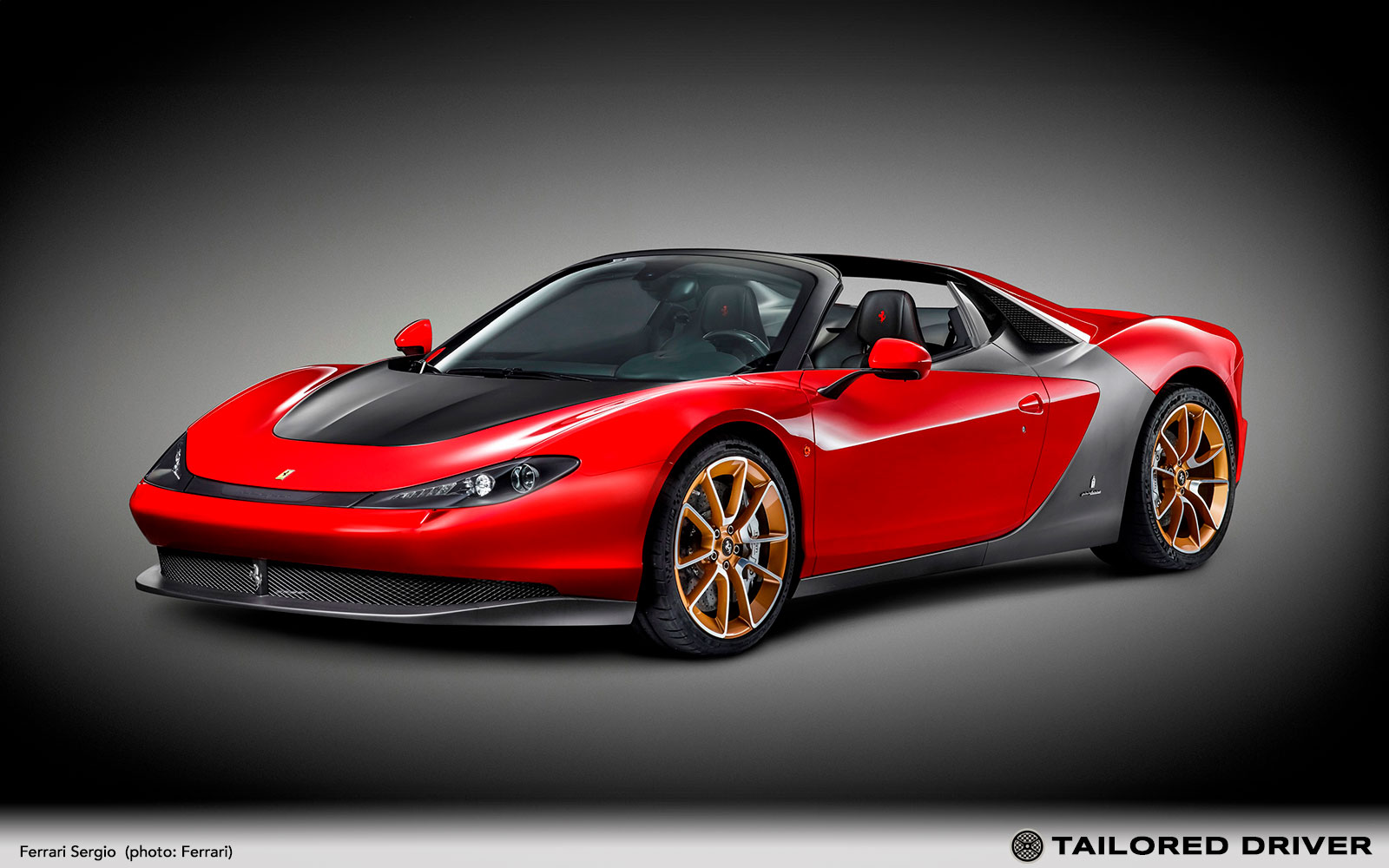
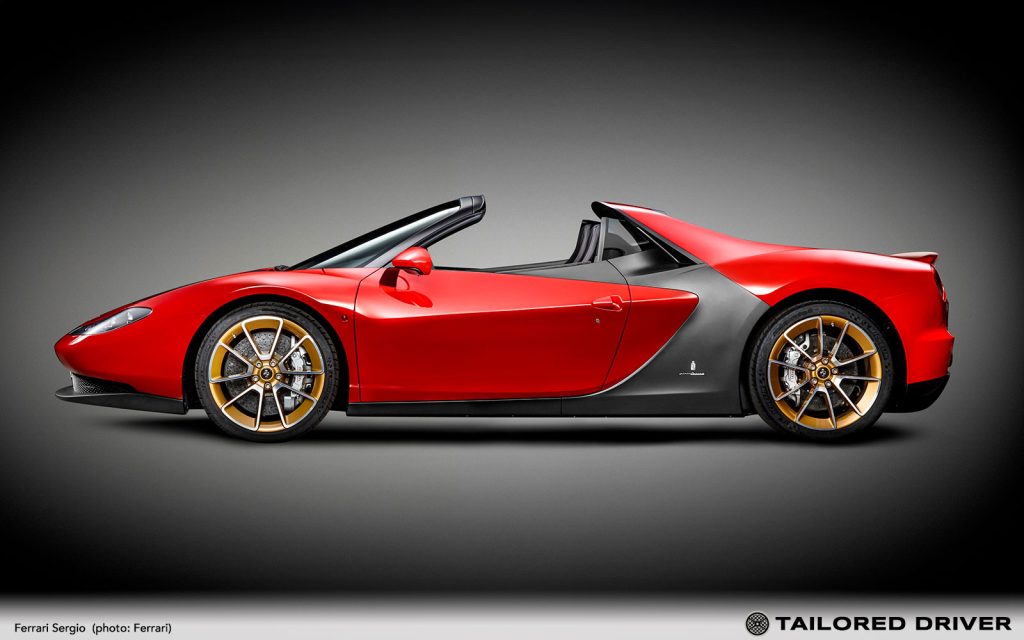
The Ferrari Sergio has an extremely simple, clear style. Both its volumes and treatments of its surfaces reflect the spirt of Pininfarina’s 1960s and 70s creations for Ferrari. Its proportions have been pushed to the extreme with the front of the car seeming to penetrate the rear which itself projects forward. The result is an exceptionally sculptural, three-dimensional take on the classic roadster. The two bodyshell masses are melded together via a longitudinal black insert, the main styling cue of the design. The flank is also characterised by the same black longitudinal element which acts as both a dividing and unifying element between front and rear. The two sections of the car flow effortlessly into one another resulting in sublimely harmonious yet extremely muscular forms.
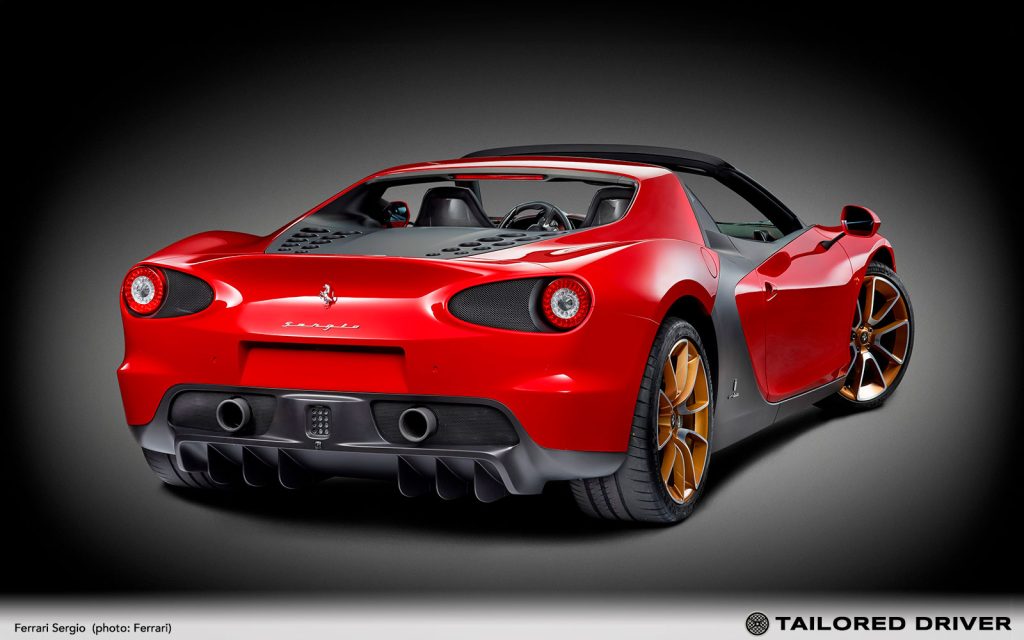
As with all Ferraris, the Sergio’s design was never an end in itself but is a marriage of function and aesthetics. The semi-floating development of the front spoiler beneath the bonnet balances downforce and optimises heat exchange. The roll-bar is a modern take on the classic Ferrari flying buttress and negative rear window. Integrated into the roll-bars are the air intakes for clutch and gearbox oil cooling. Lastly, the rear nolder and rear extractor generate downforce, adding an efficient finishing flourish to the car’s design.
At the front of the car, Pininfarina has integrated the headlights in a classic move, turning them into a single transparent transverse element, a signature of the car’s extreme formal purity. At the rear, the circular tail lights are another modern nod to Ferrari history. The two-tone theme continues on both the front bonnet and rear deck with the latter featuring the iconic circular air vents seen on other iconic Pininfarina creations from the past.
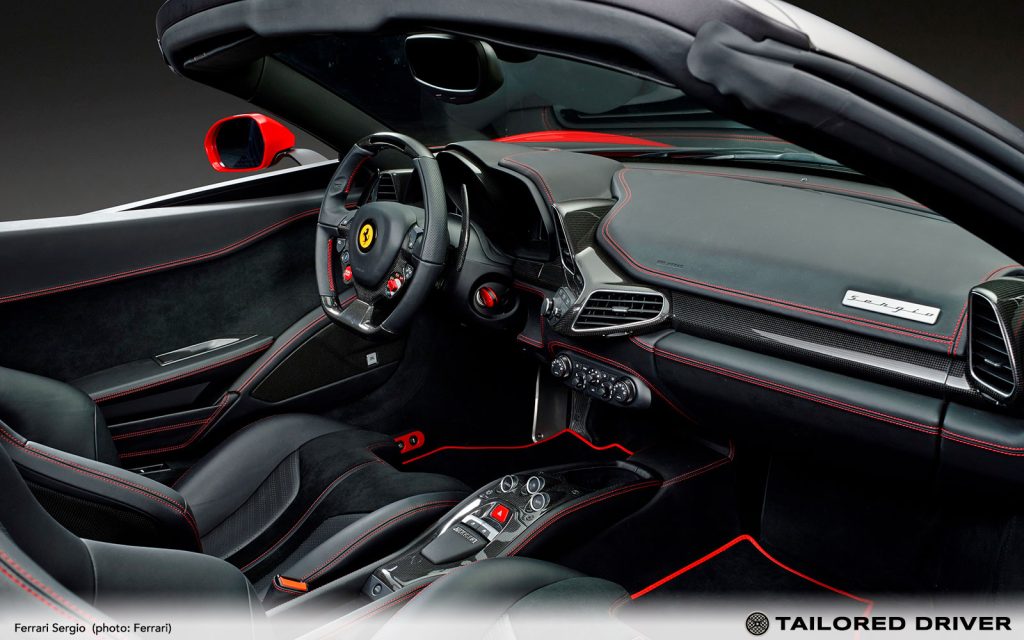
The cockpit is pared-back and functional in the extreme with the engine compartment actually hugging the backs of the seats. The example delivered to Abu Dhabi has three-layer red exterior paintwork and an extremely sporty cockpit with black leather upholstery with contrasting red stitching, Alcantara seat inserts, and extensive carbon dash and door well trim. It also features Sergio-specific forged wheels, in this instance gold in colour with a diamond finish.
Each one of the six Ferrari Sergios was configured by its owner in dedicated sessions at the Tailor Made atelier in Maranello where clients are invited to personalise their cars to their own individual tastes. The atelier offers enormous freedom of choice in terms of colours, materials and finishes. As a result, every detail is extremely exclusive, thereby continuing the Prancing Horse tradition begun in the 1950s and 60s of creating bespoke cars minutely tailored to each client’s wishes.