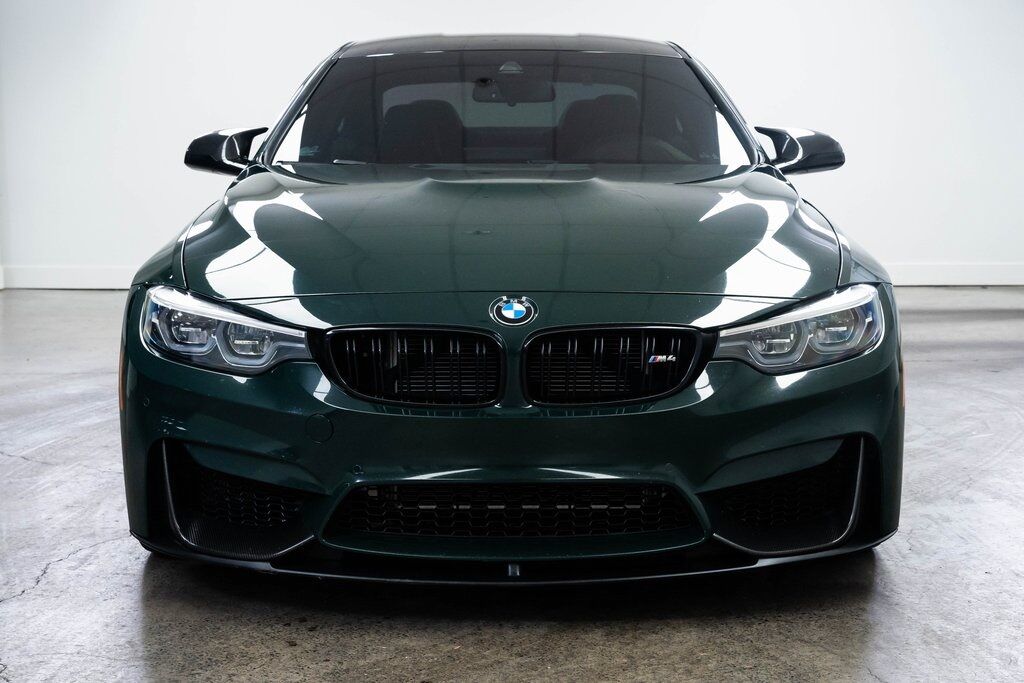
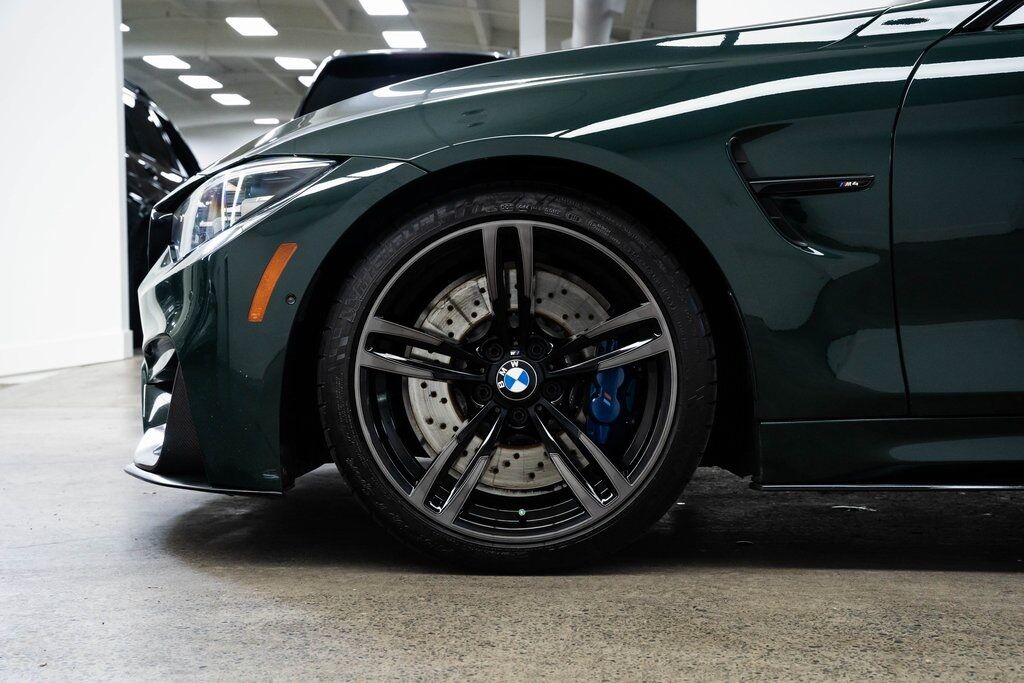
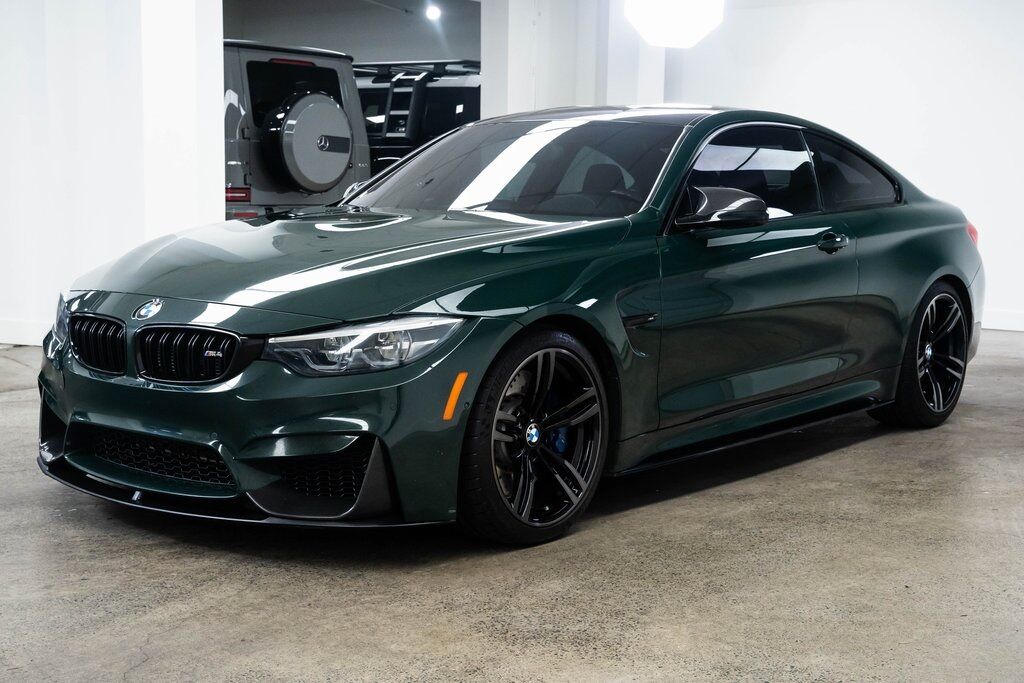
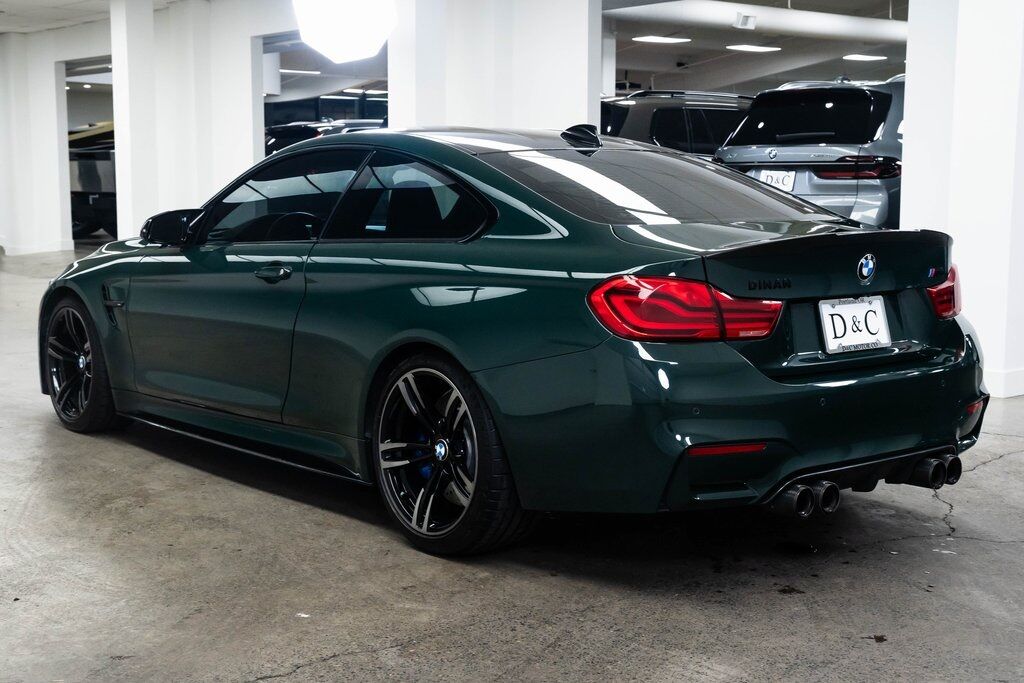
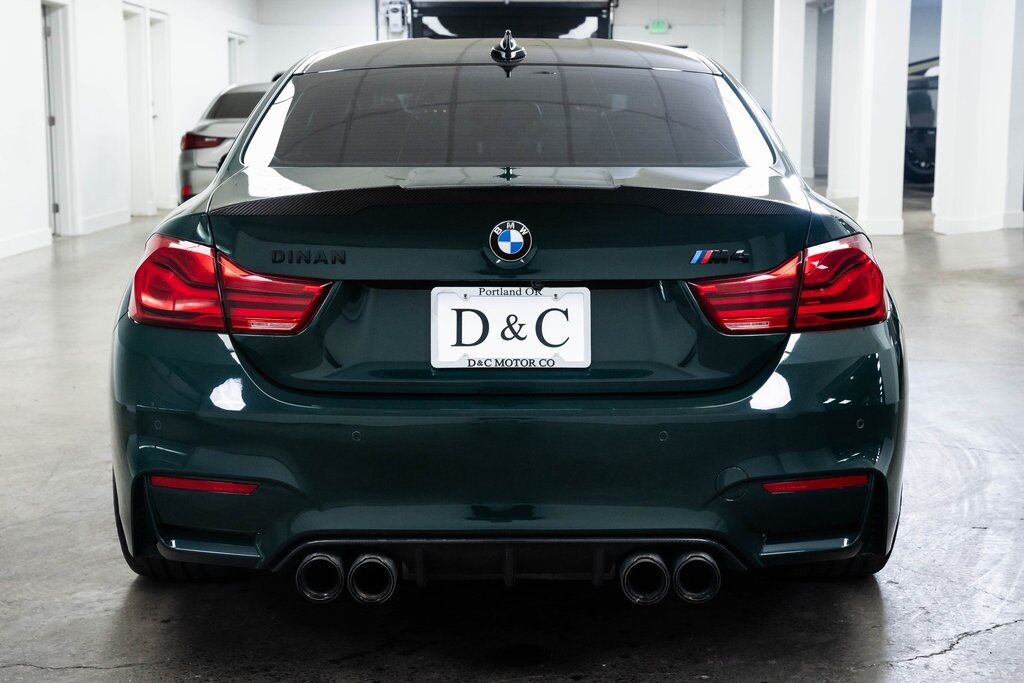
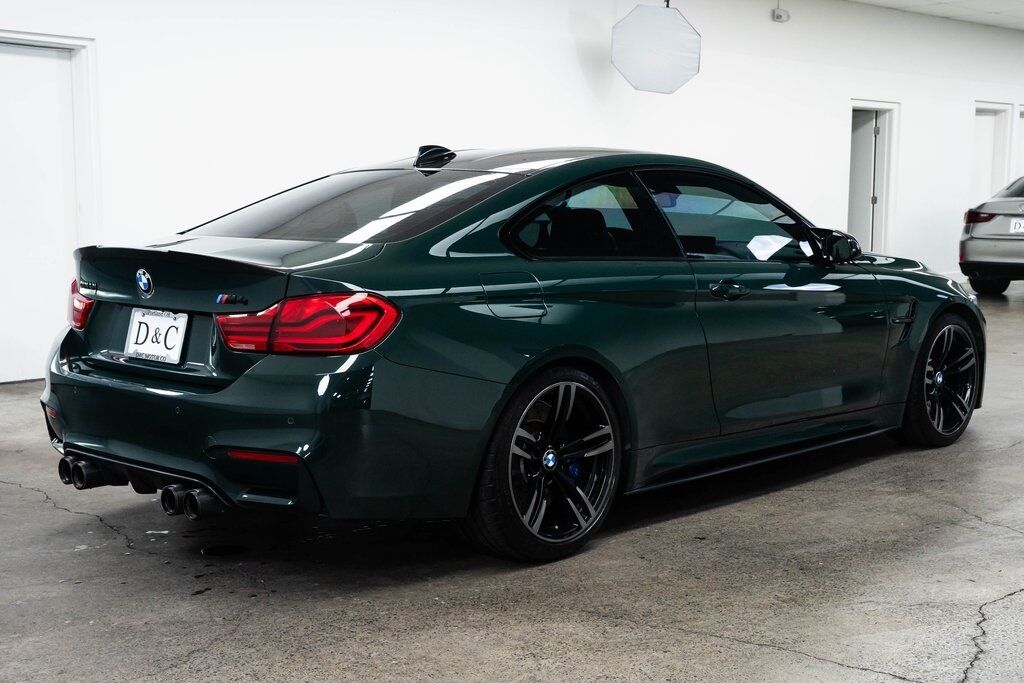
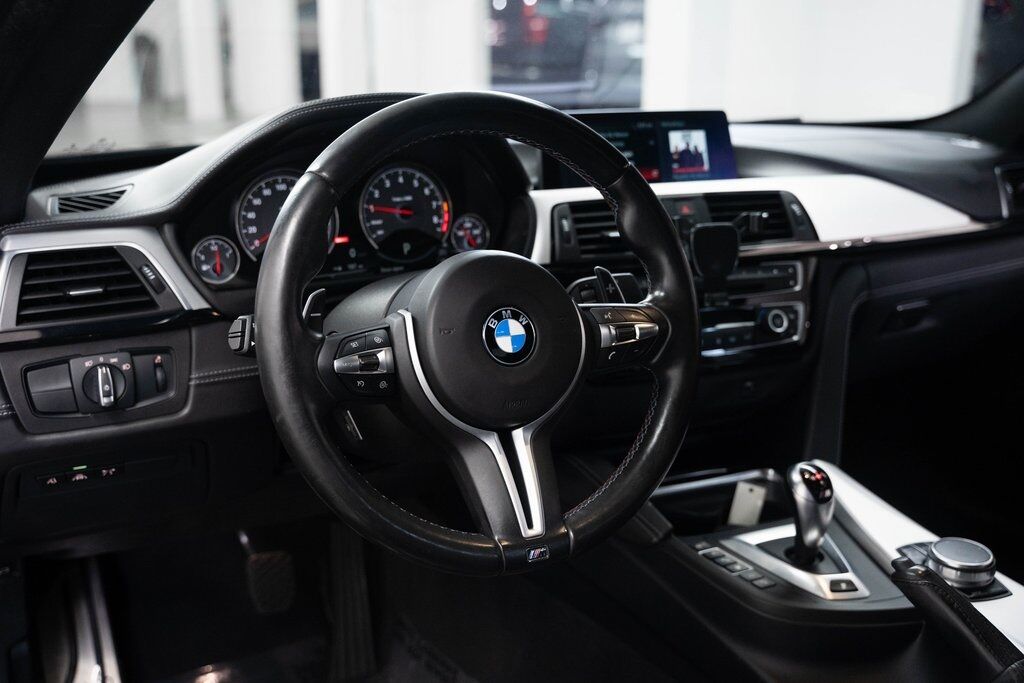
What: 2018 BMW M4 Competition Color: BMW Individual British Racing Green (553; 312; BMW) VIN: WBS4Y9C50JAC86736 Mileage: 34,065 Price at Time of this Writing: $54,990 CarFax:Link Window Sticker: N/A Location: Portland, OR Dealer listing:Link
Why we love it:
While not often thought as a Heritage color for BMW, British Racing Green had a fling with the brand in the ’90s, appearing on the E36 M3 GT and Z3 models. Nearly 30 years later, the color still looks the business on this M4 helping it to stand out in a subtle way. We also love that this M4 has been treated to a host of Dinan goodies (Coil Overs, Sway Bars and Intake), none of which fiddle with the ECU tune. On the inside, this Tailored Driver is optioned with extended leather and DCT transmission, making it a nice, comfortable place for commuting. We think it’s a great package.
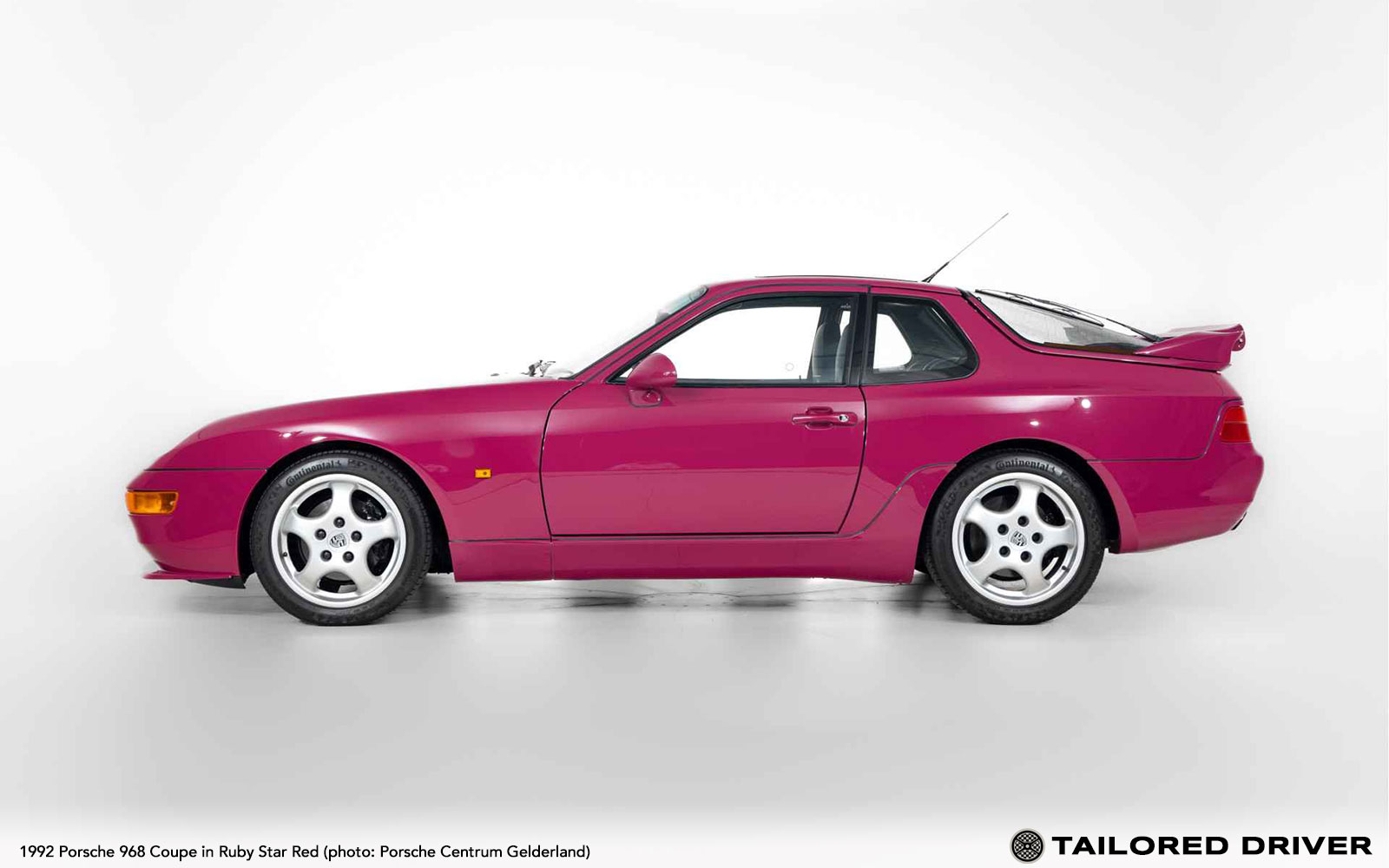
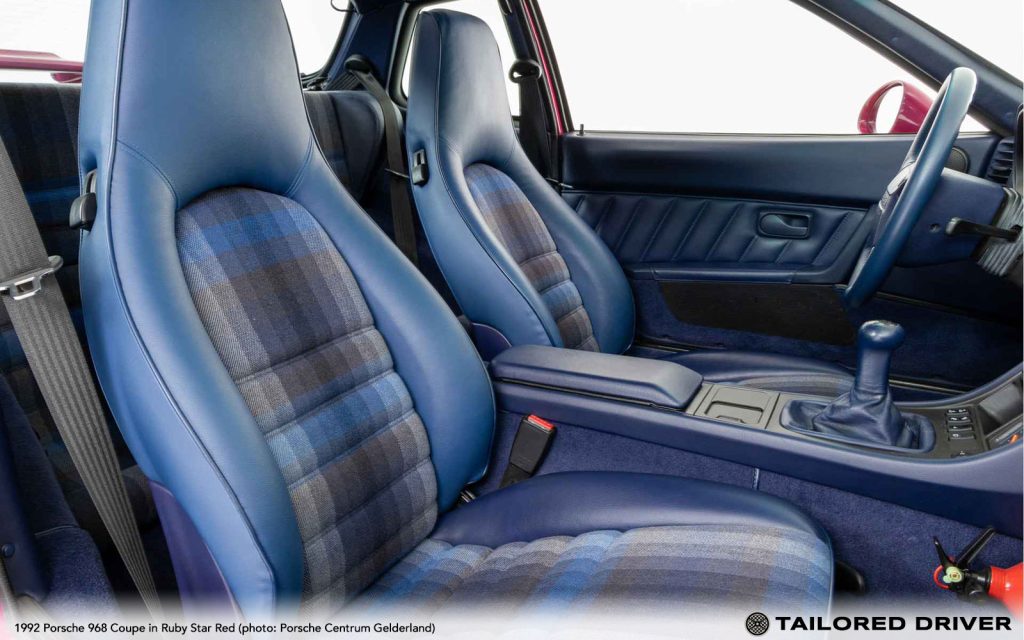
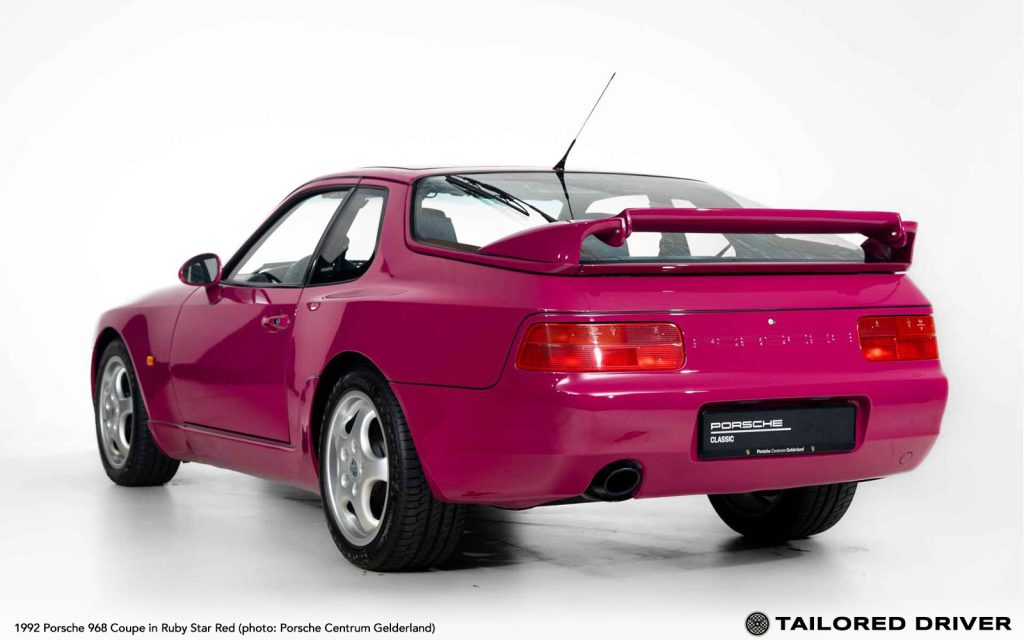
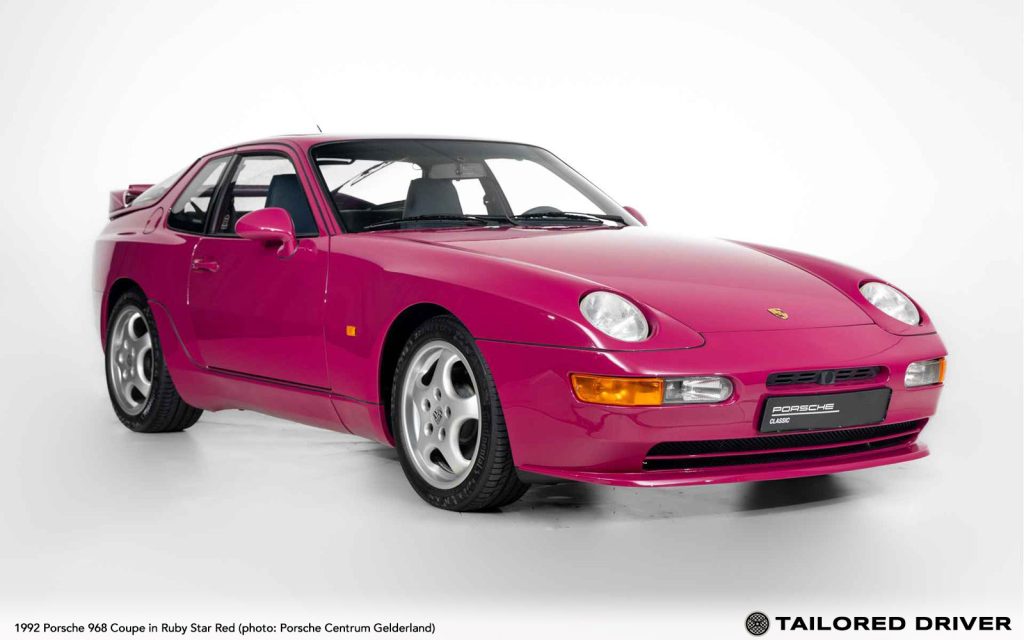
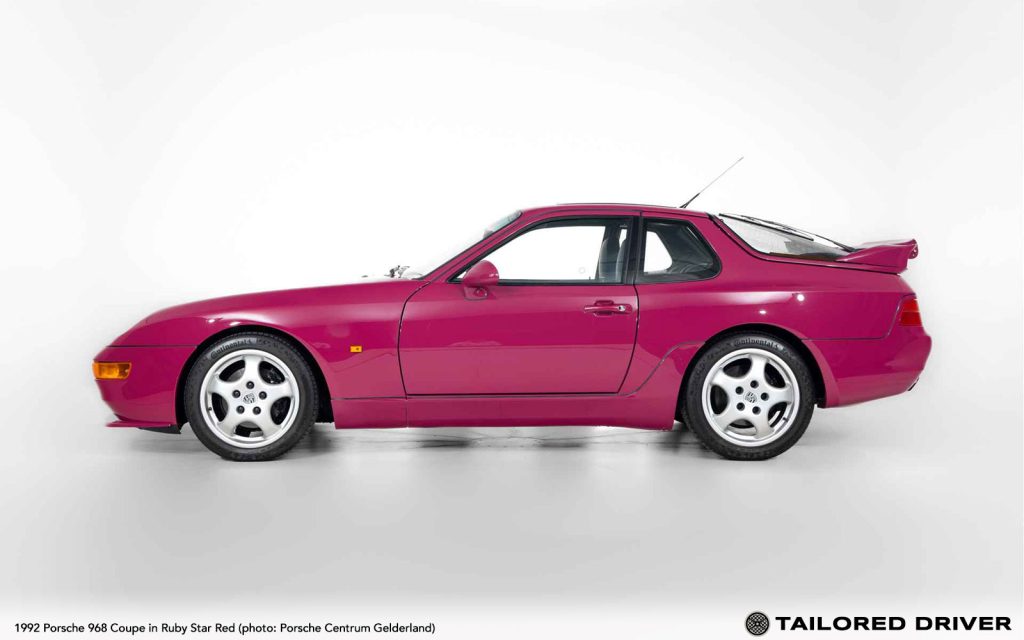
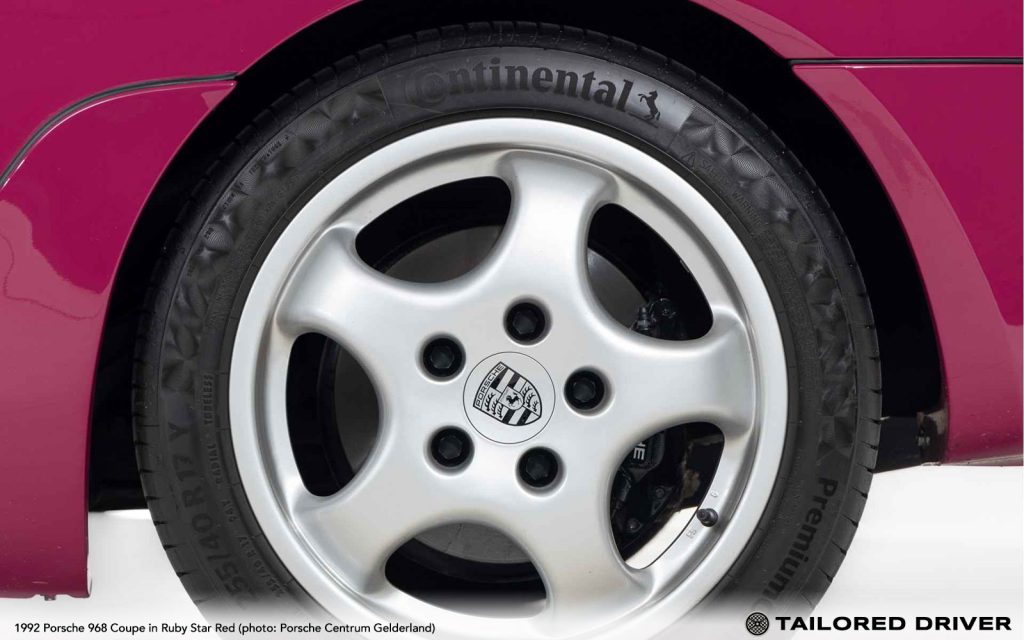
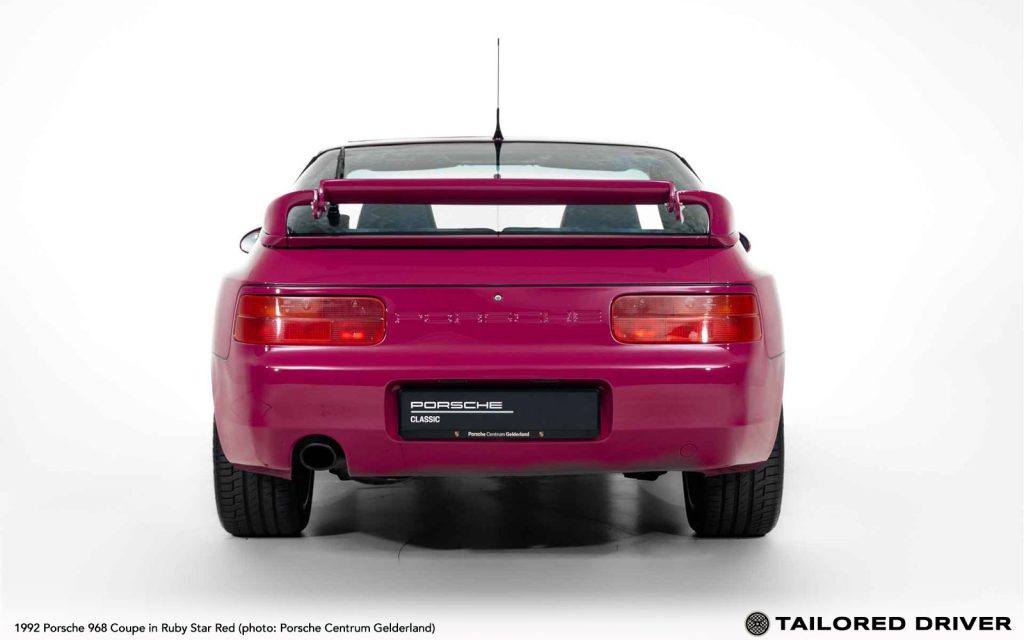
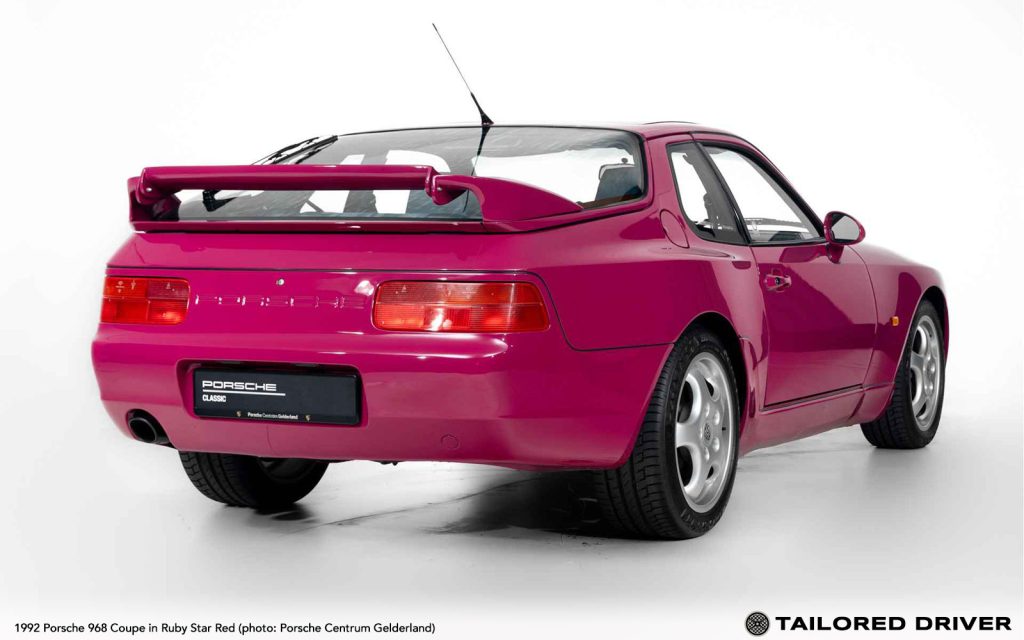
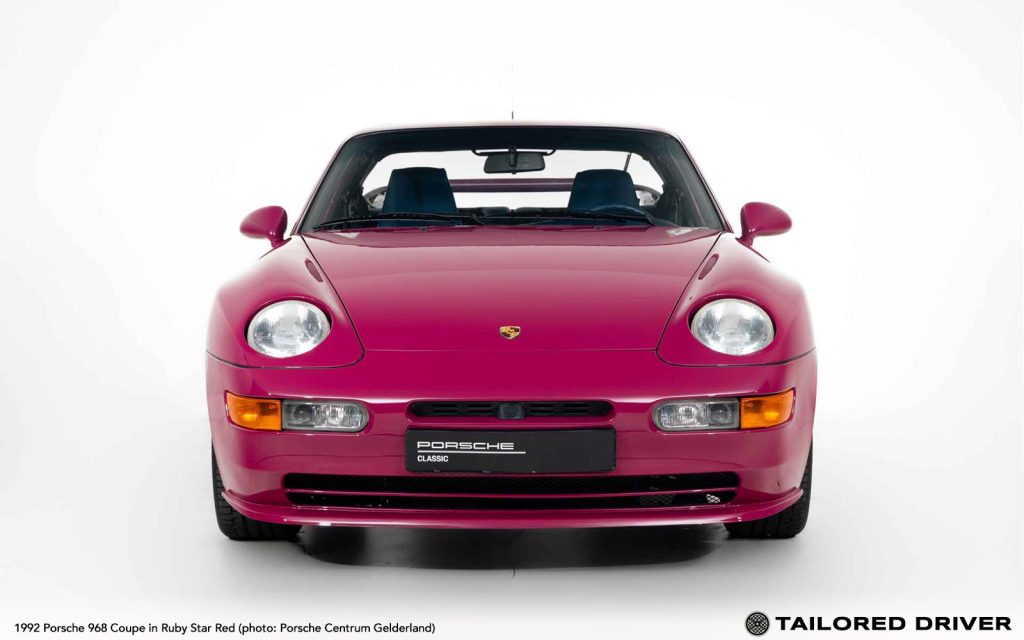
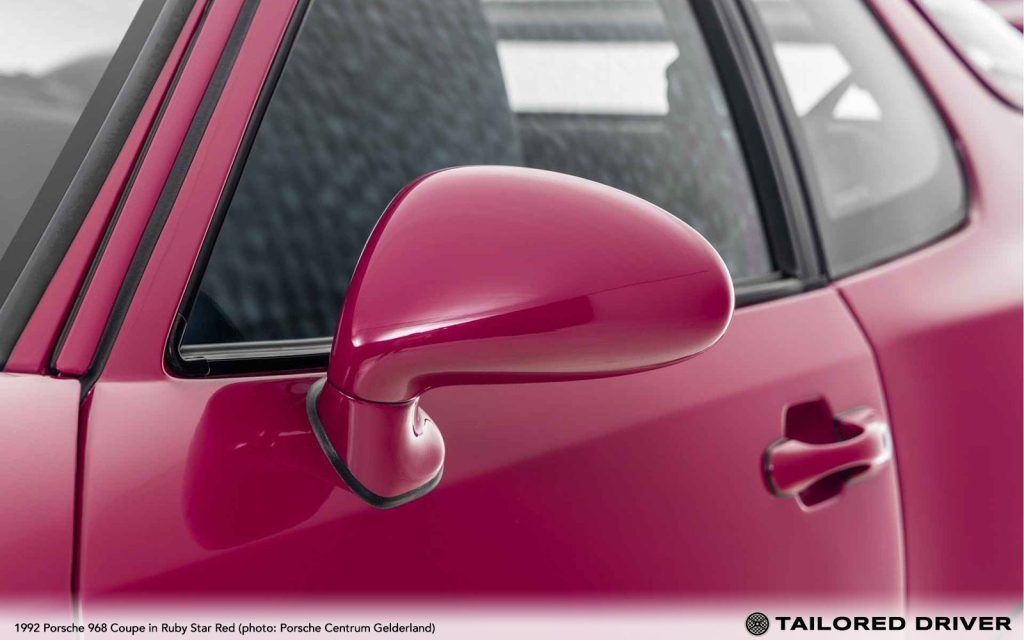
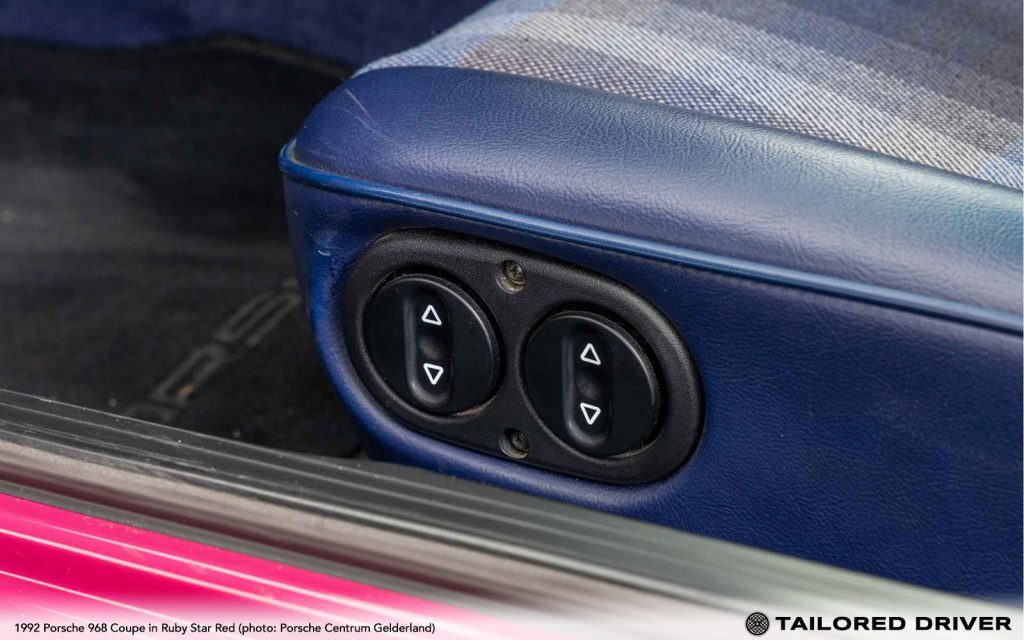
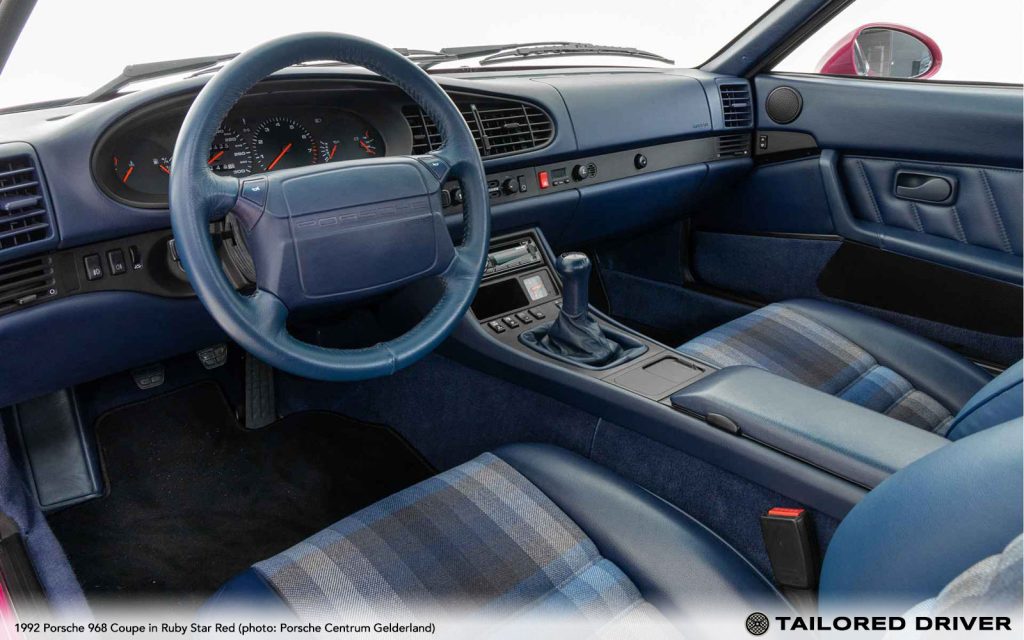
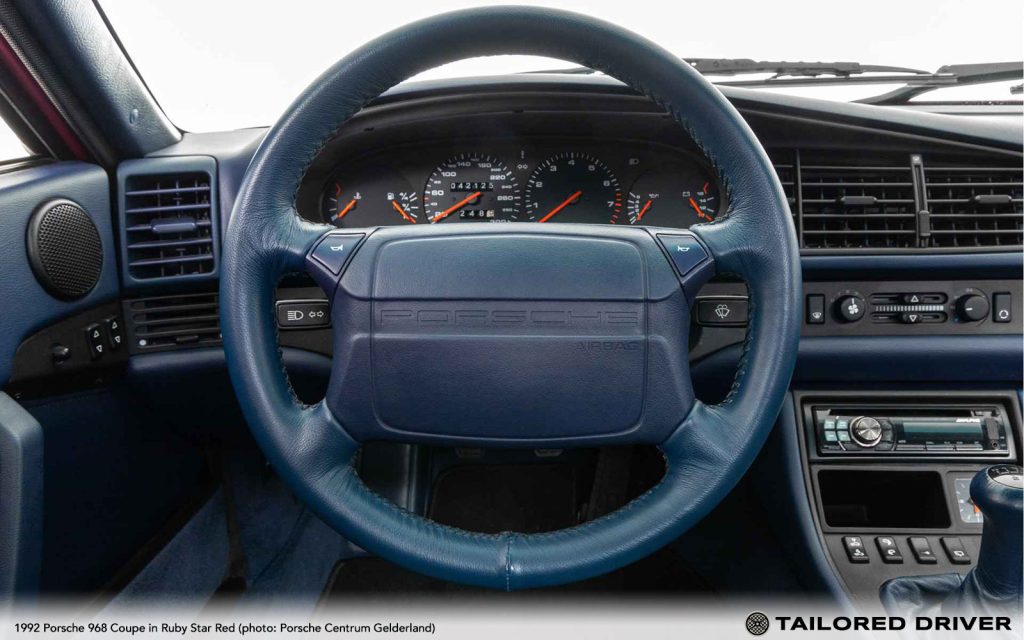
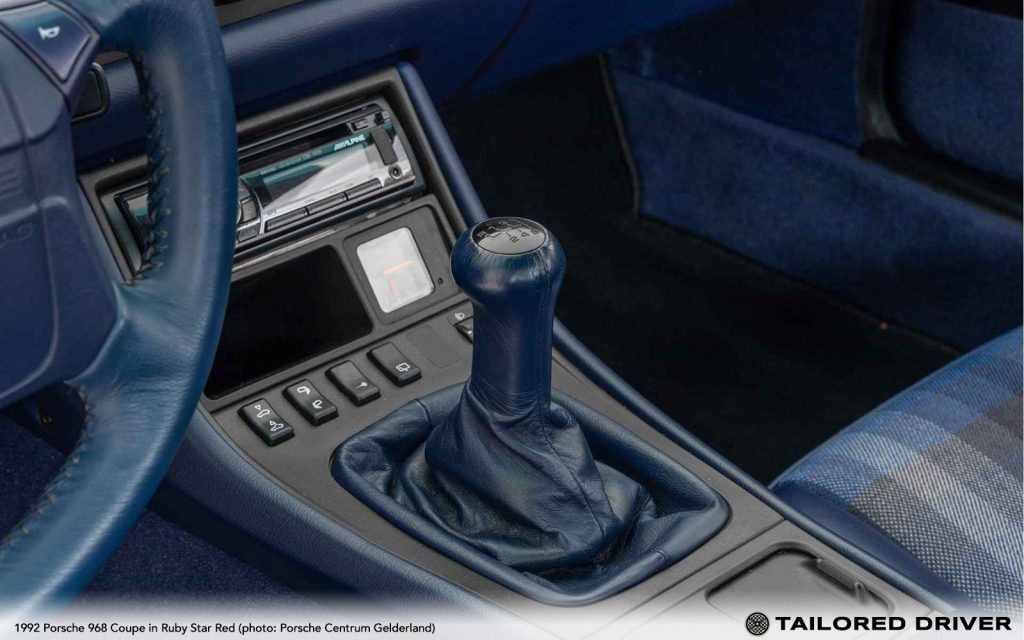
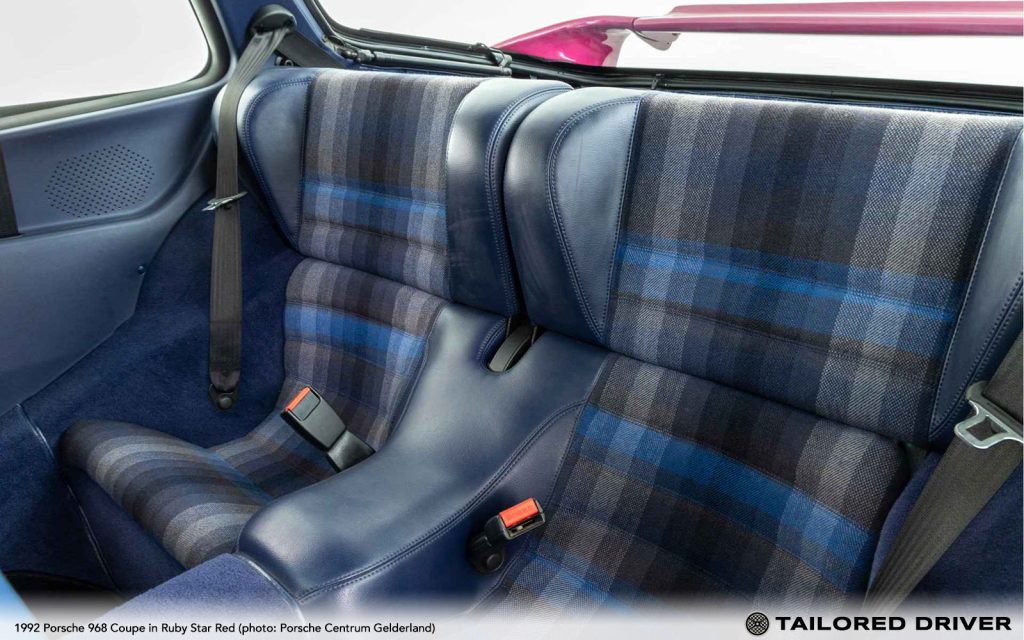
What: 1992 Porsche 968 Coupé Color: Rubystone Red a.k.a. Ruby Star (sternrubin; 82N; Porsche) Interior: Blue VIN: N/A Mileage: 42,125 km / 26,175 miles Price at Time of this Writing: € 74,900 CarFax: N/A Window Sticker: N/A Location: Heteren, NL Dealer listing:Link
Why we love mention it:
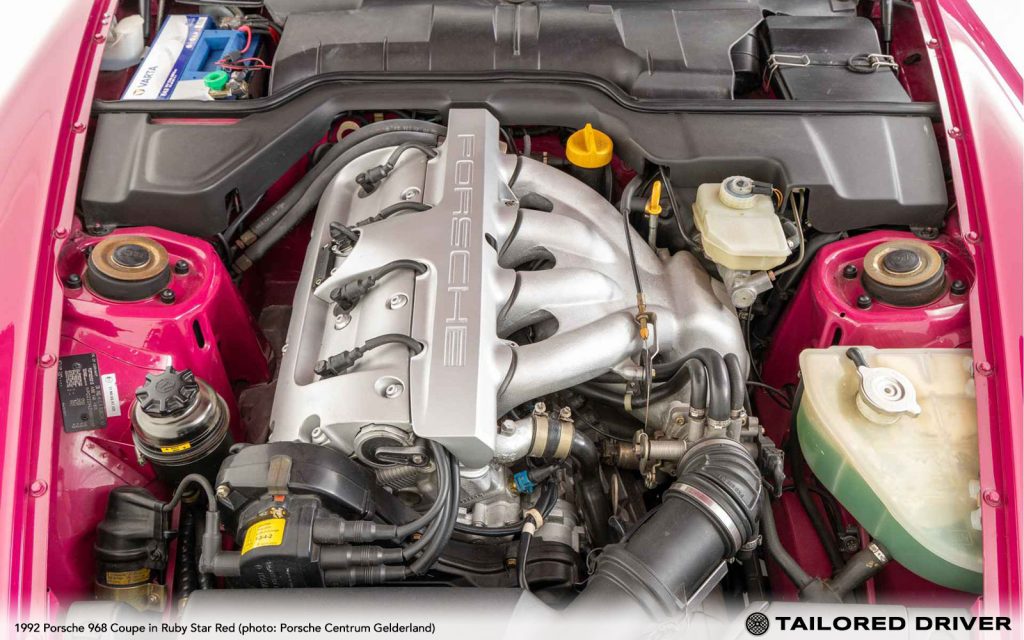
The Porsche 968 is (or rather was) one of the last good deals in the Porsche market. It’s also arguably one of the best Porsches of the transaxle era. And while the European market only Clubsport or the super rare Turbo are the big money versions, super low mileage, great spec and incredible condition can approach 911 money. Take for instance this Rubystone Red version sitting inventory at Porsche Centrum Gelderland in the Netherlands.
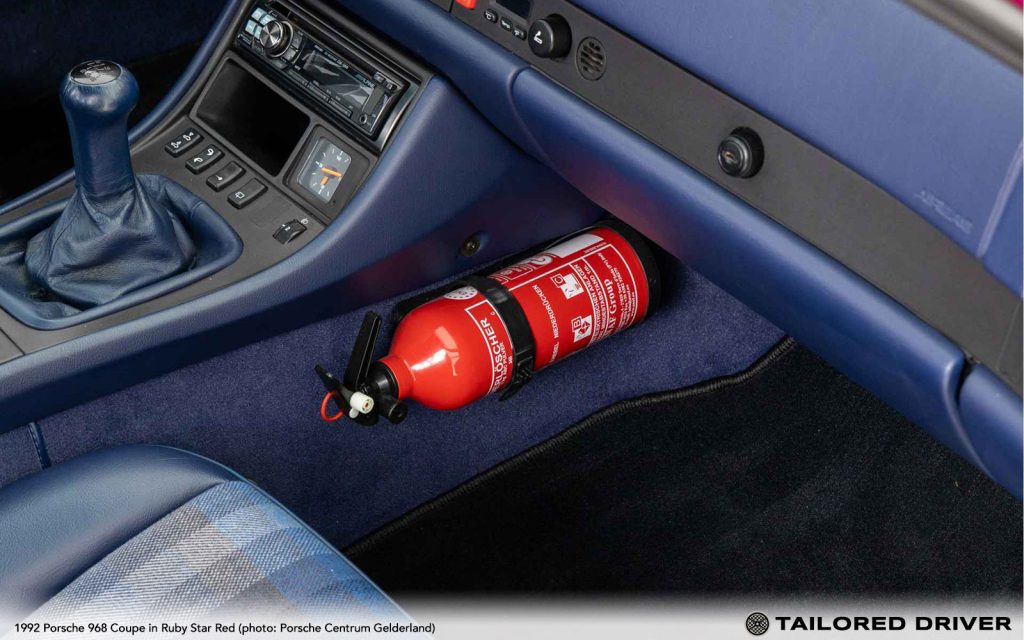
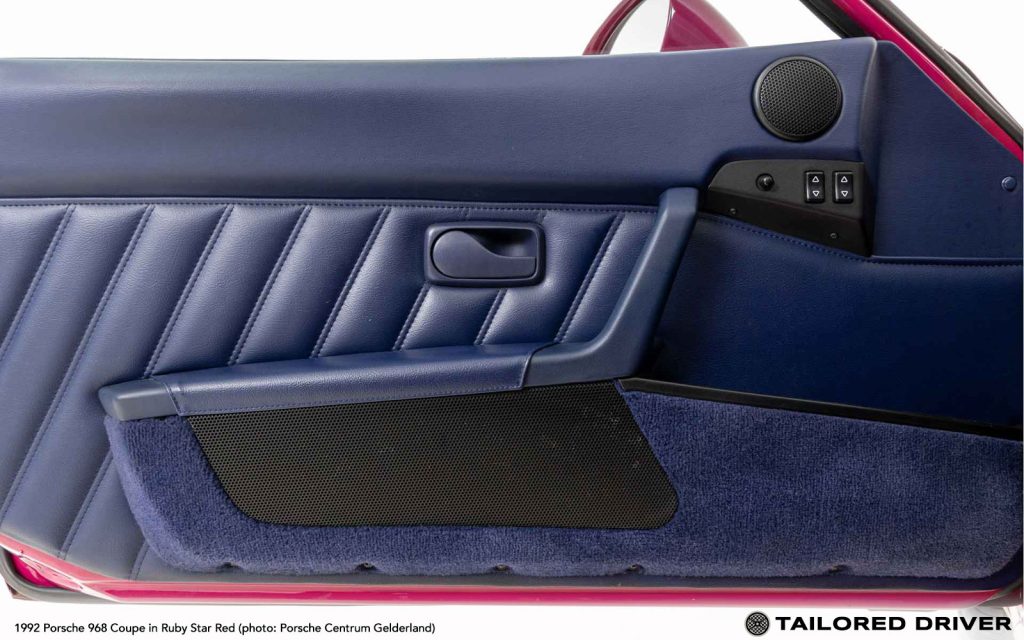
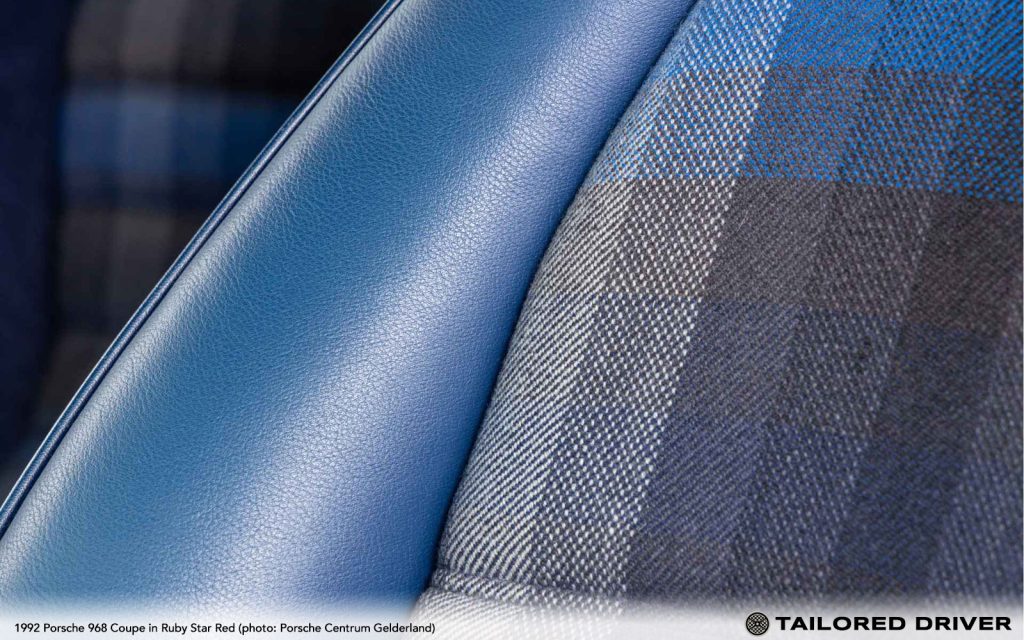
At little over 26,000 miles logged, the car is practically new. And we’d argue that while perhaps polarizing, the spec is incredible. From the 964 era Carrera Cup comes the original Rubystone Red (a.k.a. Ruby Star), and it’s paired with blue leather and partial Studio Check fabric seats.
A translation of the meat and potatoes of the listing goes as follows:
Hereby we offer you this beautiful 968 3.0 Targa with only 42,000 km! Presented in a truly fantastic color combination. The exterior in the cult color Rubystone with the interior in a combination of leather and fabric in multicolor cobalt blue. Exactly as it was delivered new to its first owner by Porsche Zentrum Alltöttnig in Germany. The original purchase invoice, many other invoices, the maintenance booklets and the original German Letter are all present.
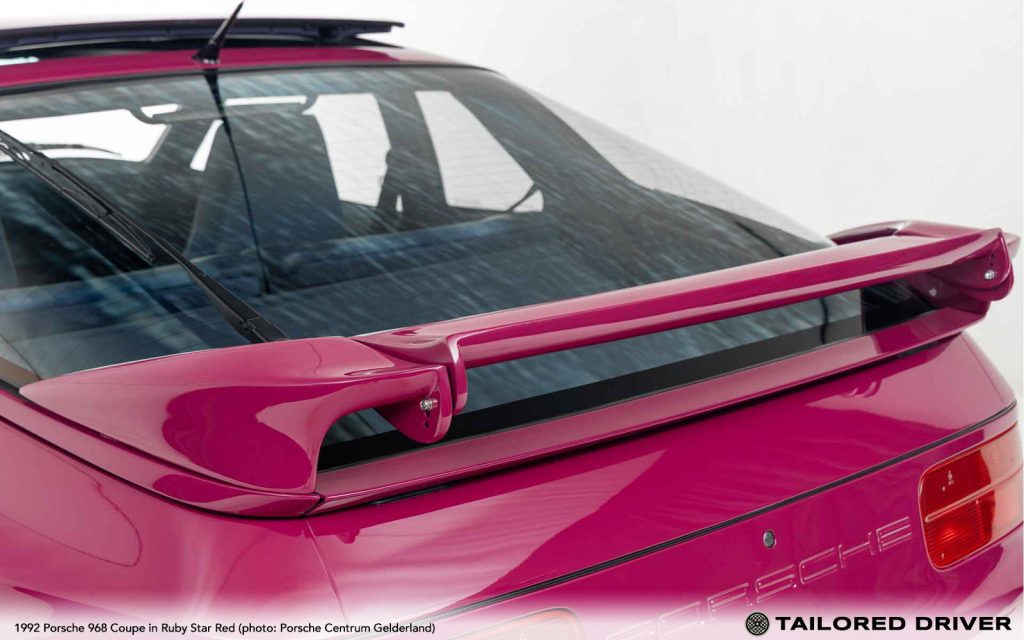
Worth noting, while amazingly pristine, our eye is catching two potential modifications that **could** have come from the factory. These include the chin spoiler (that was possibly a Porsche Tequipment accessory) and the adjustable rear spoiler that appears to be identical to the design on the 968 Turbo. Factory replica parts like these do exist in the aftermarket, which would be less desirable on a car this original. It’s possible these were special wishes items, but that should be checked via the mentioned original purchase invoice the dealer has on file or with the Porsche Classic department in Stuttgart.
Another peculiarity worth noting on any European market 968 (or 944, or 924) is the mention of the term “Targa”. In the U.S., familiarity with G-body 80s 911 models with full open Targa roofs can be confusing when you see one of these cars listed also as “Targa”. In regard to the transaxle cars mentioned, a Targa simply refers to the very large sunroof that came on these cars from the factory.
Whether those parts are original or not, that’d be easy to rectify for an owner seeking ultimate originality. And if they’re not original and you like OEM plus upgrades from maybe the ultimate 968 model ever, consider it a bonus.
As with any of our European Market Finds, this car is older than 25 years, making it an easy import into the U.S.A. should you be so inclined.
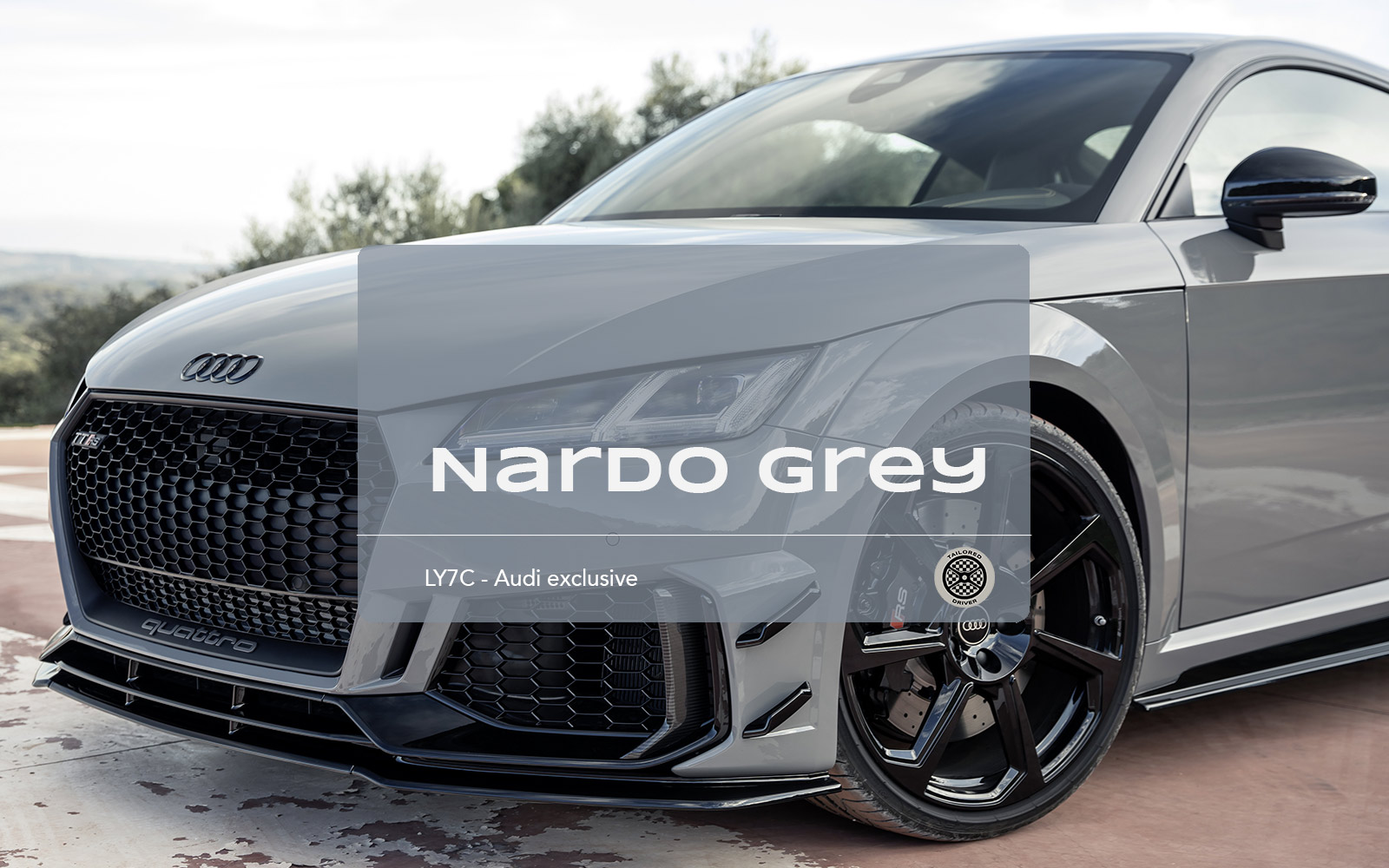
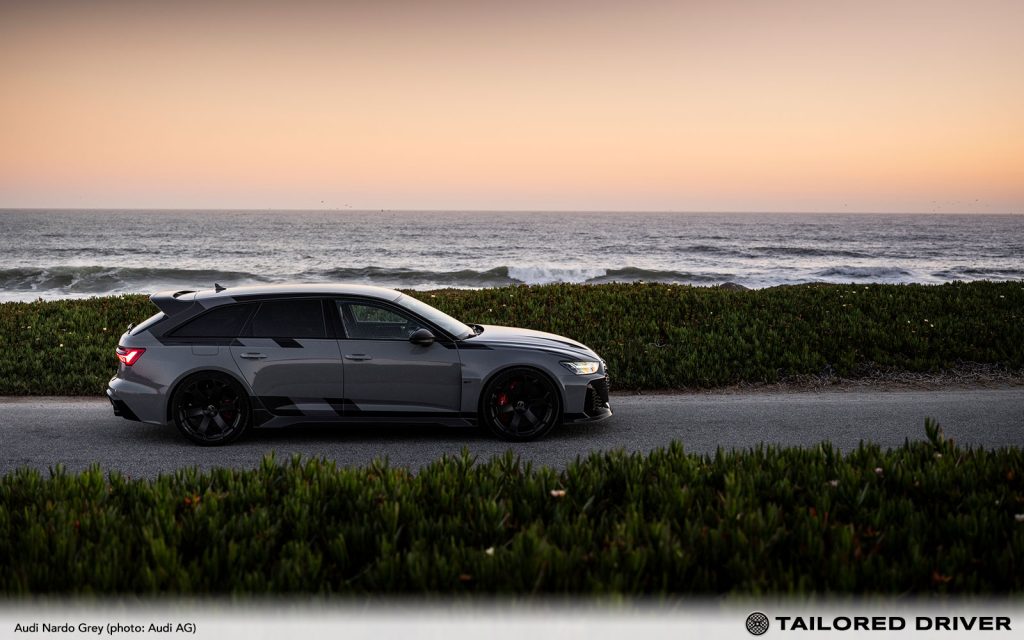
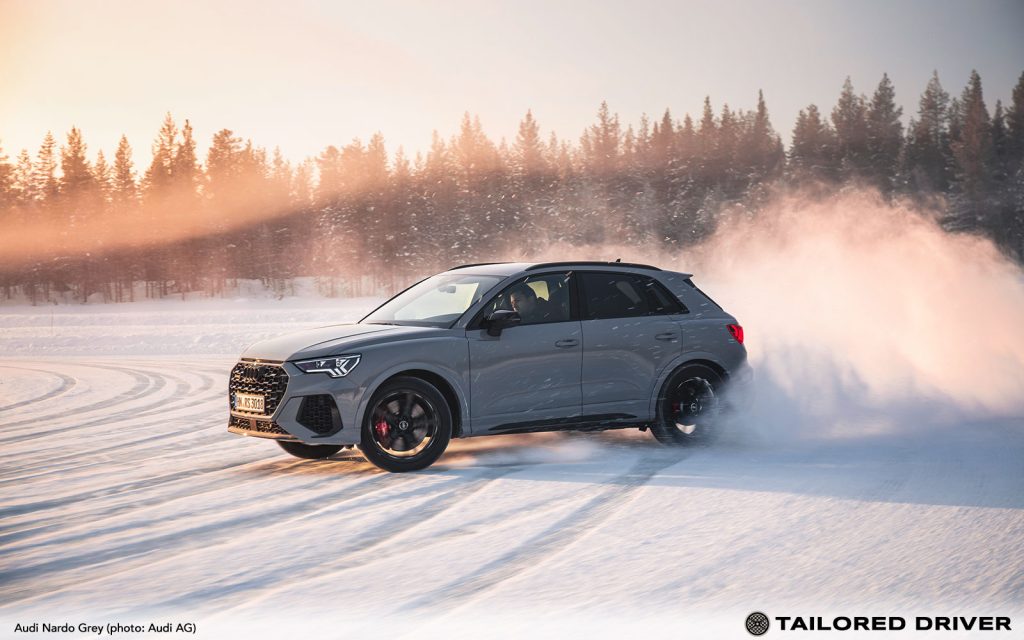
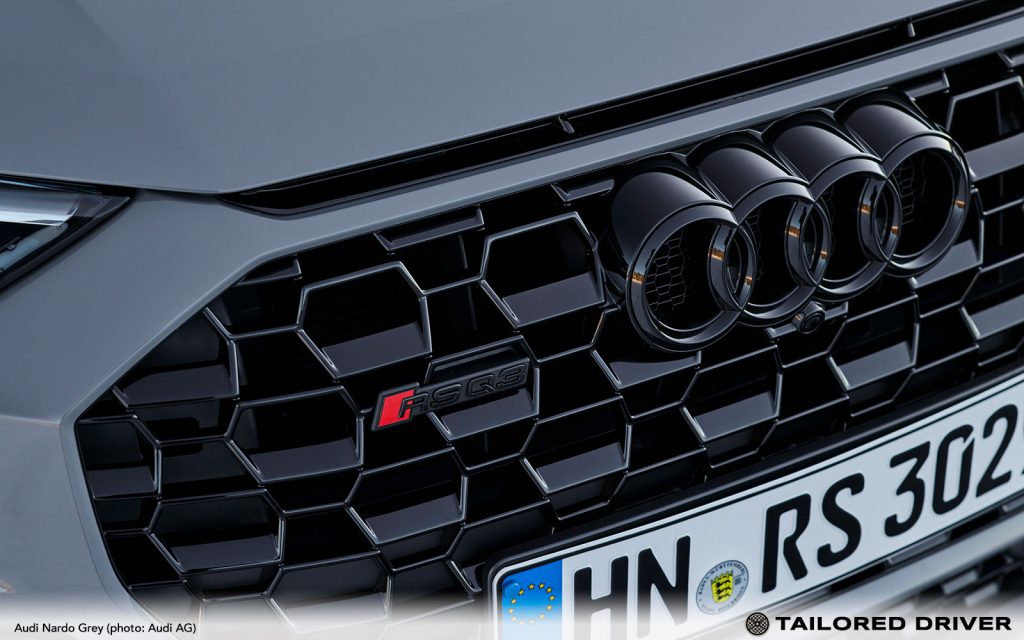
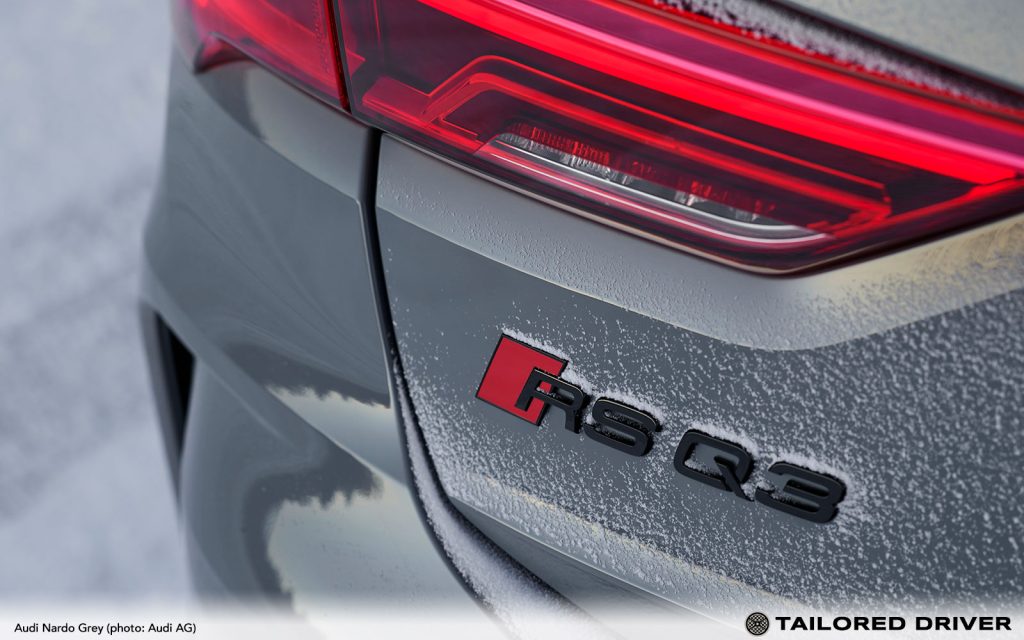
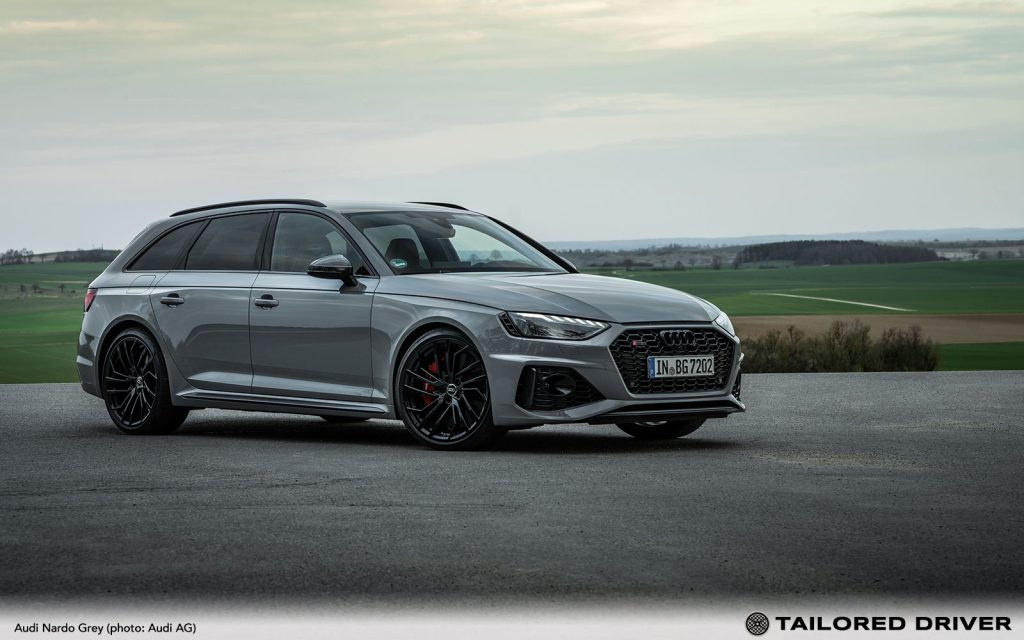
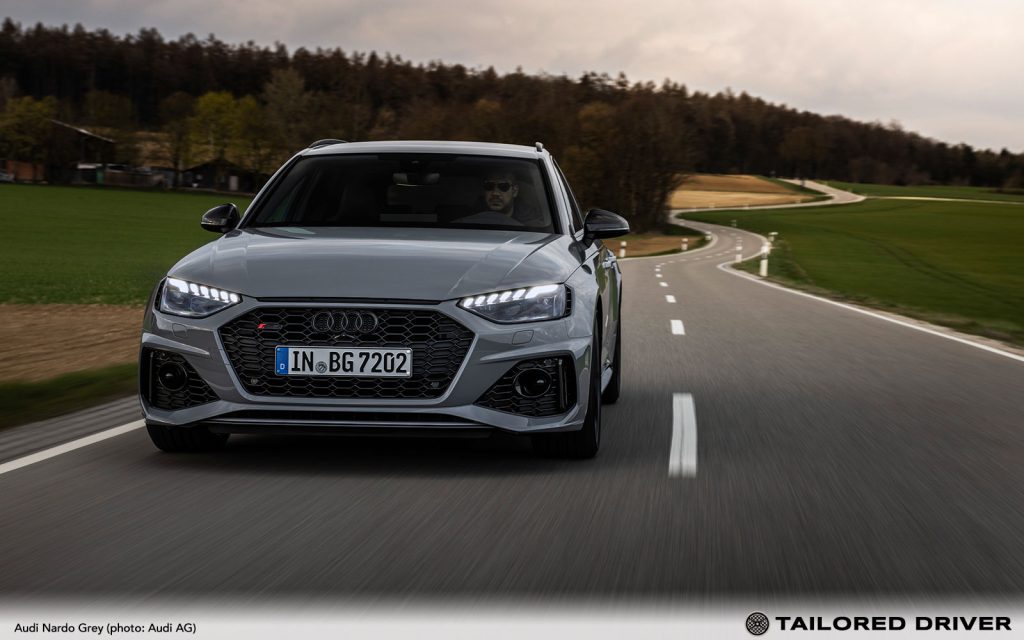
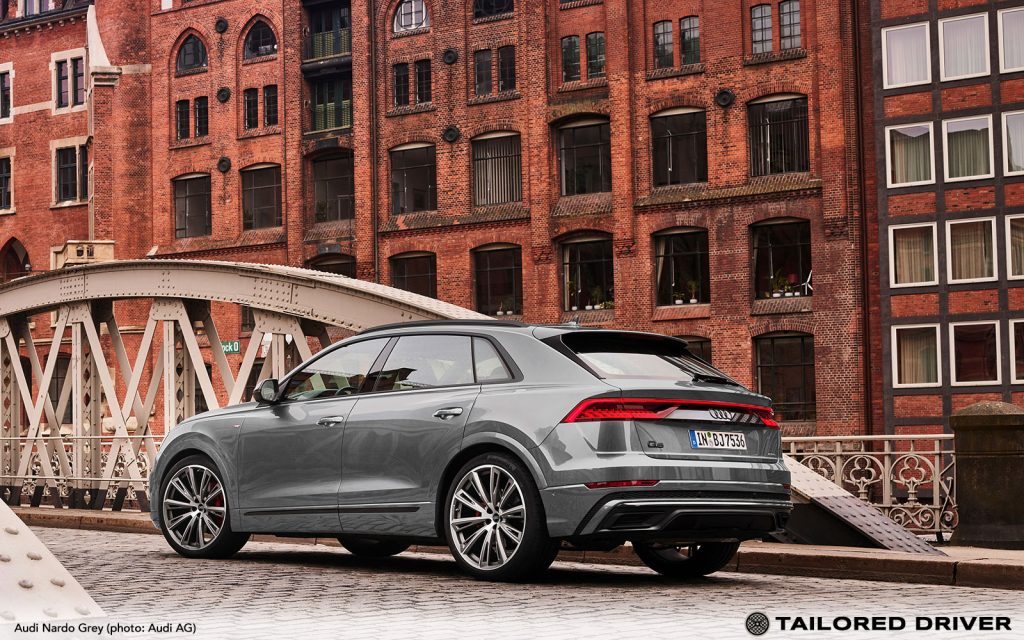
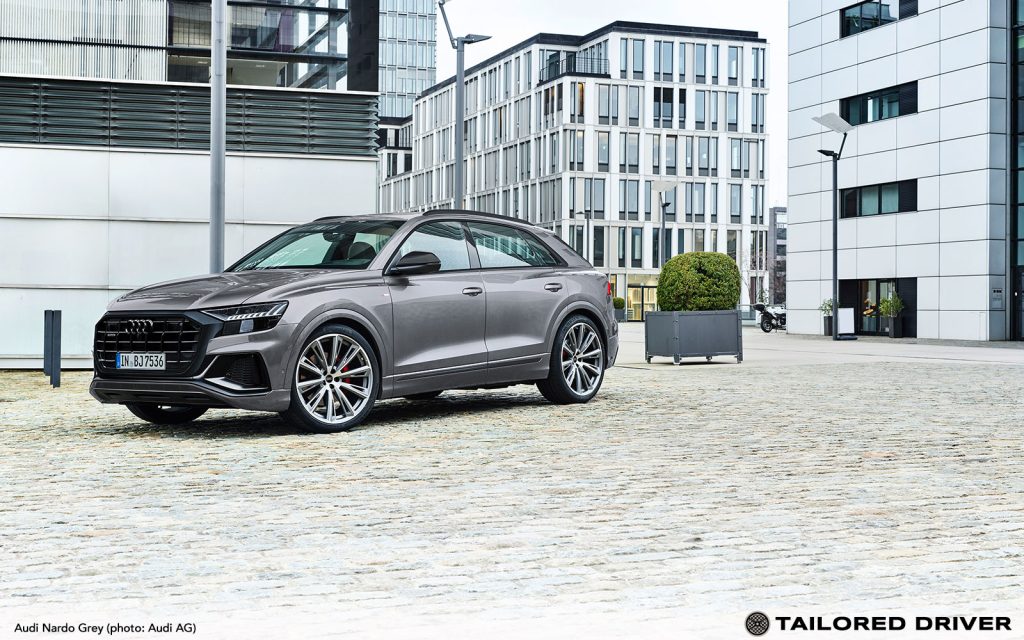
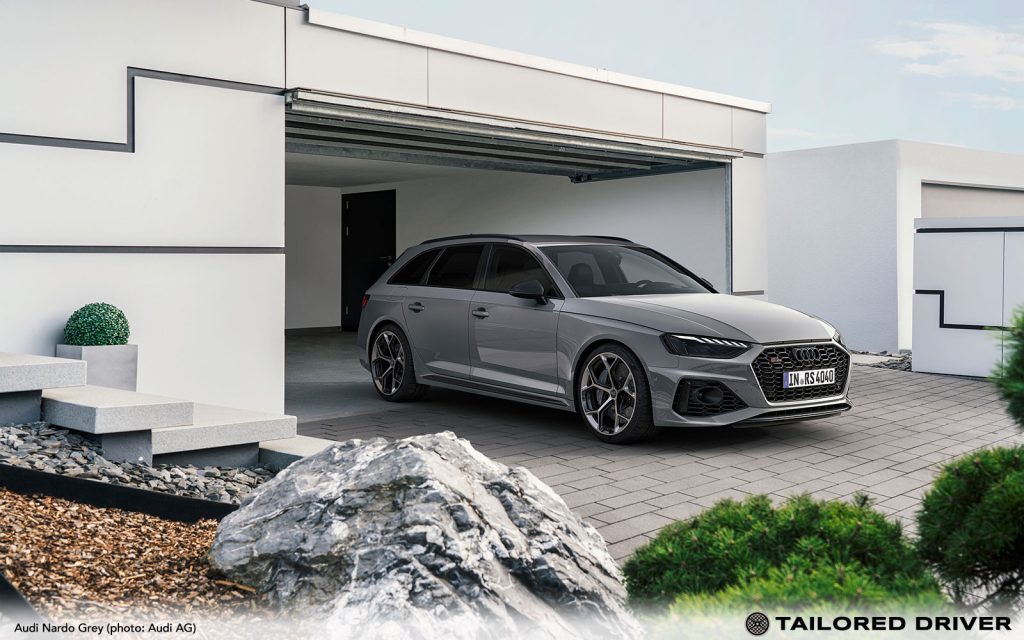
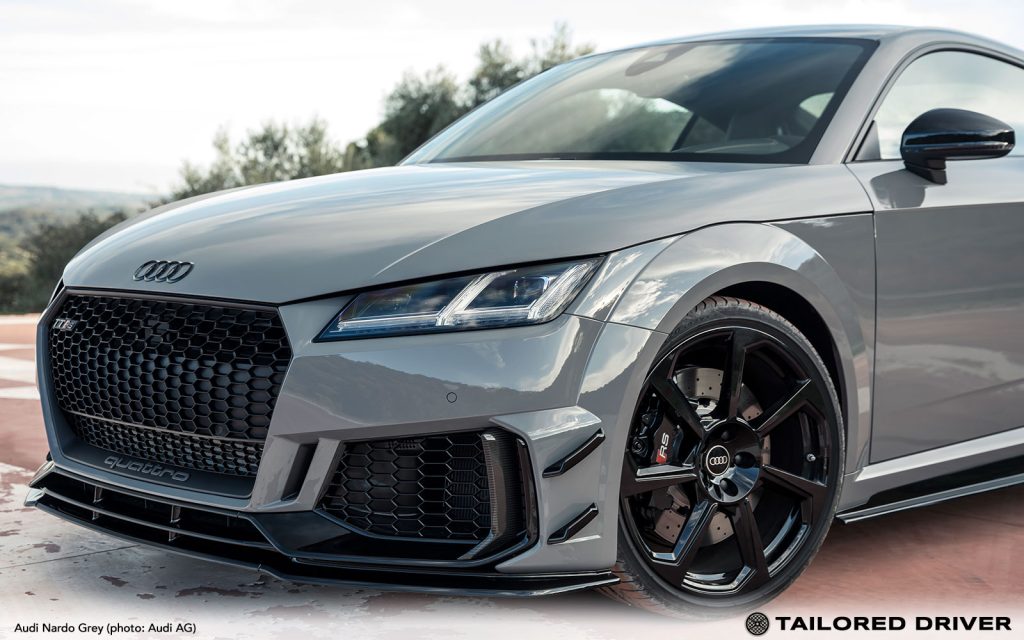
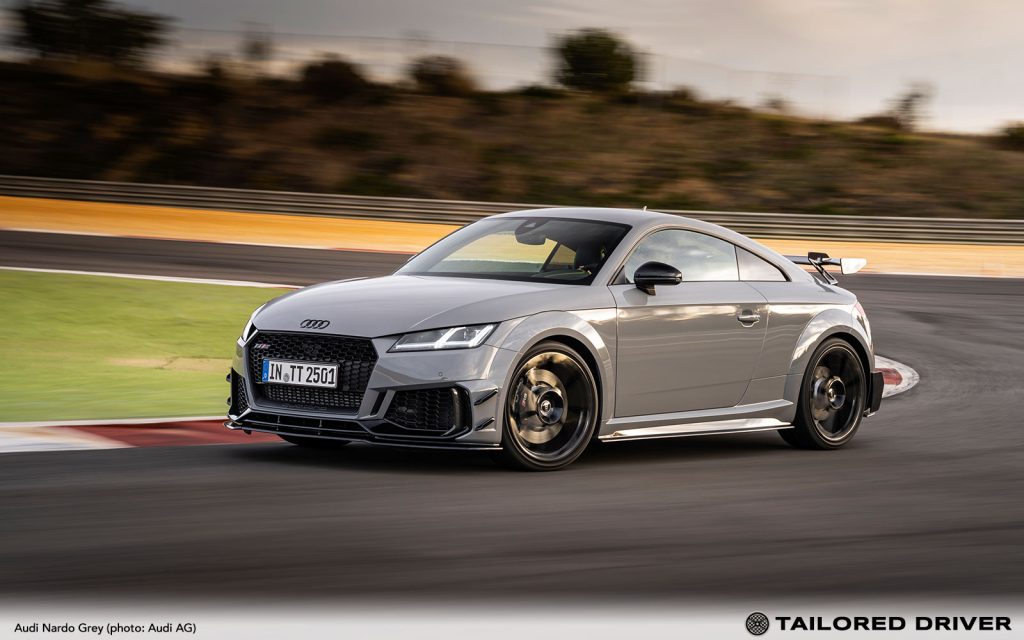
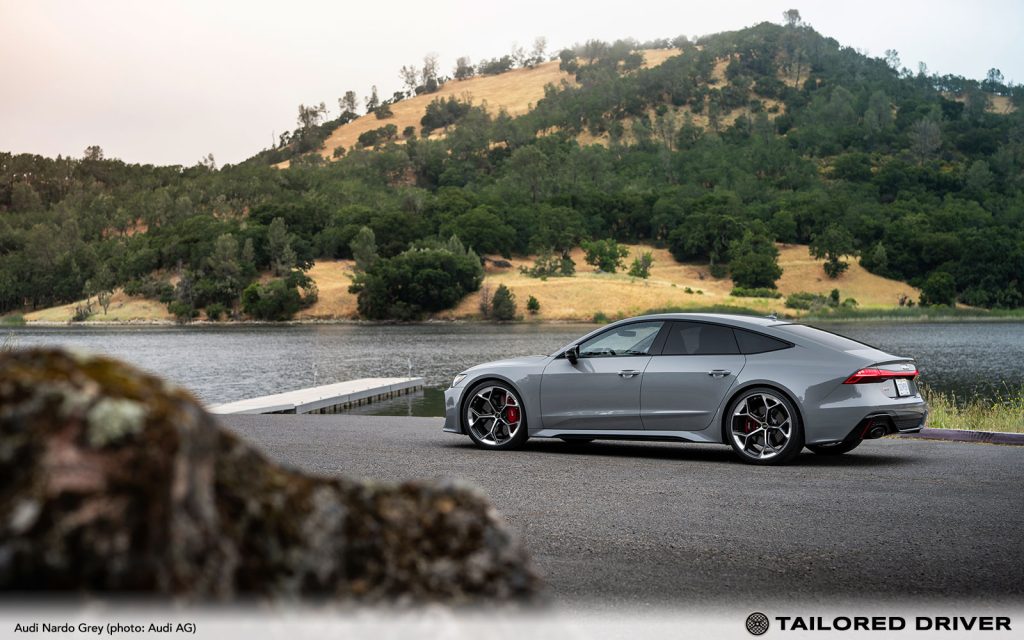
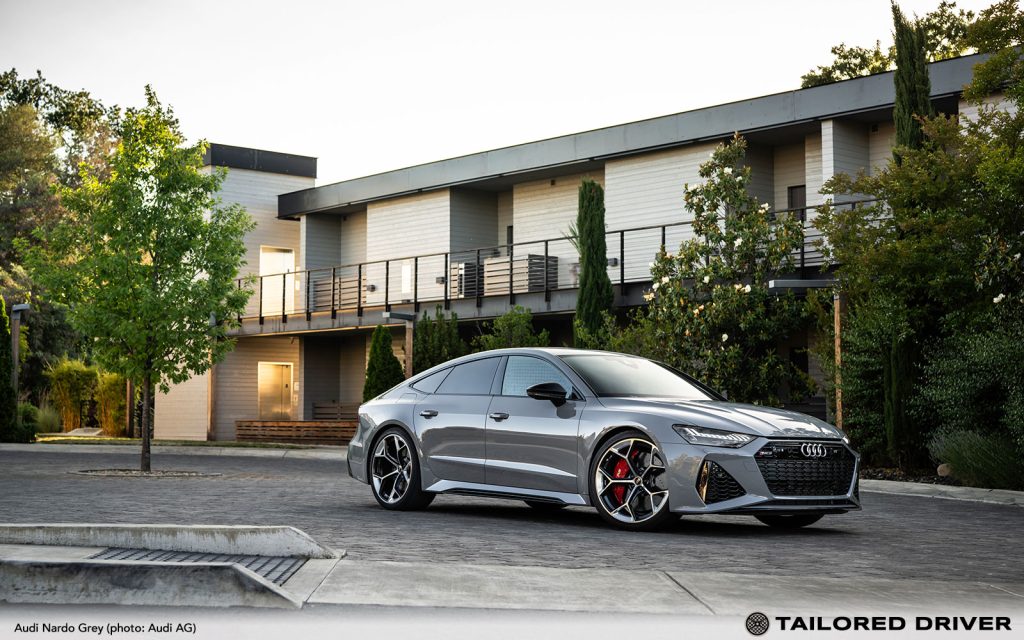
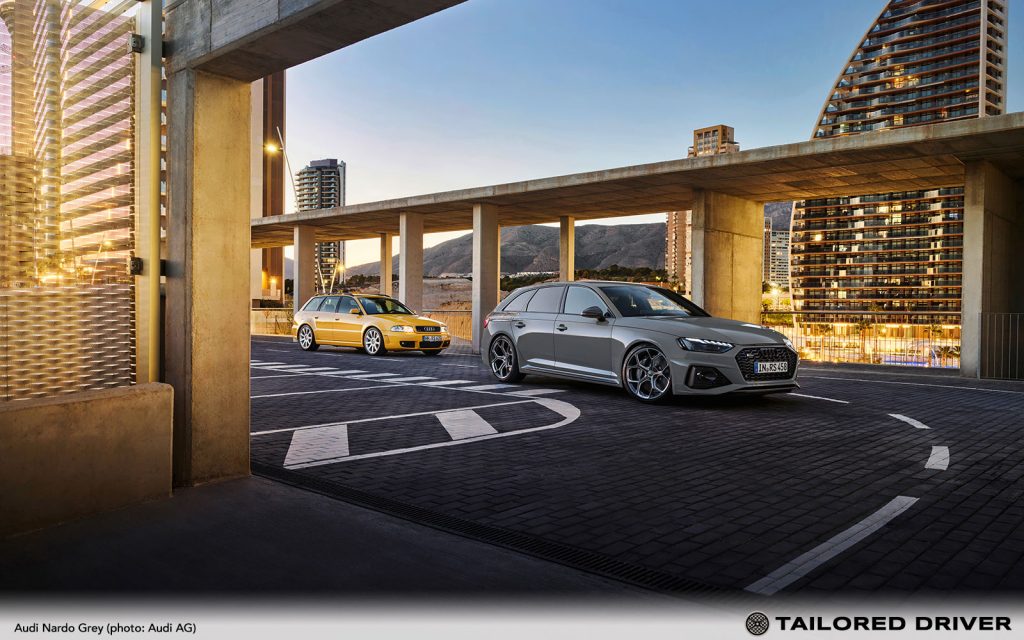
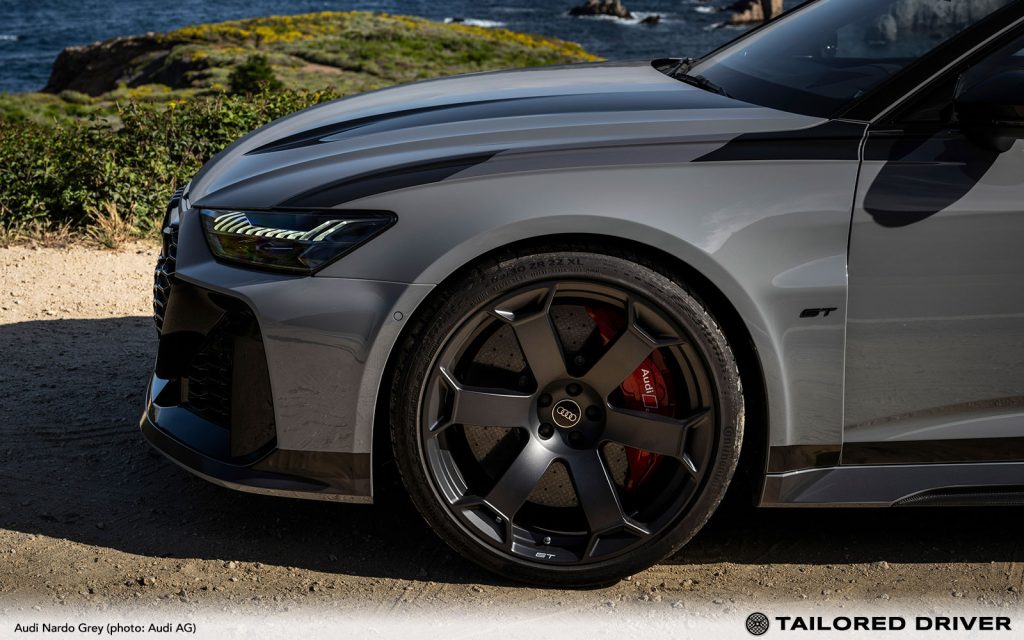
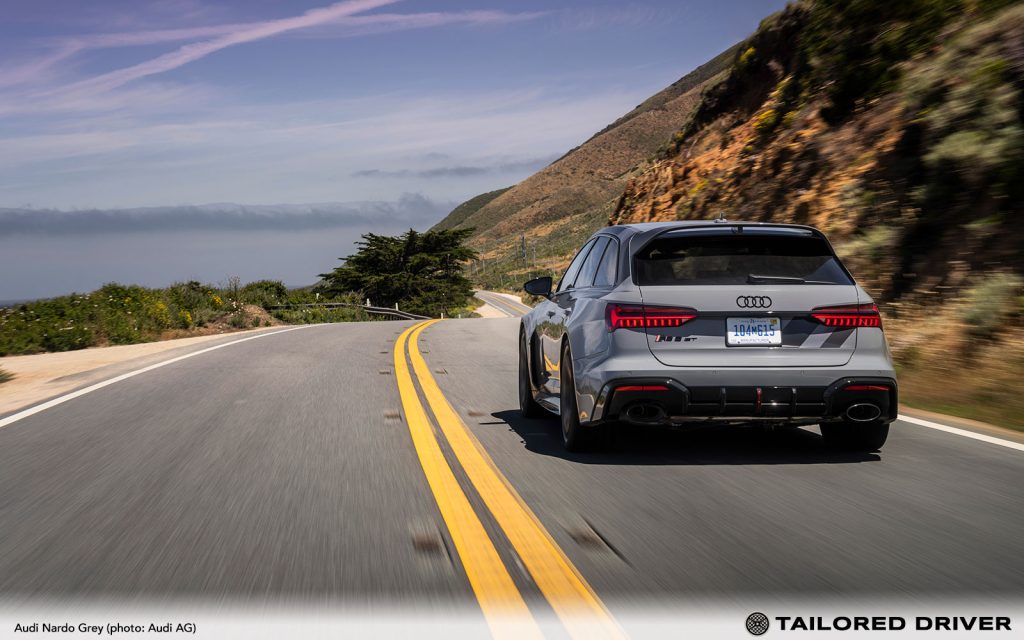
It’s funny, there are some colors that become meteoric, becoming so popular that they become iconic and risk becoming ubiquitous. Such is the case of Audi’s Nardo Grey (nardograu; UNI; LY7C; Audi exclusive), a light grey that came on the scene as a standout in Ingolstadt’s RS car lineup.
Variations on the pastel light grey theme were a thing in the early 2000s, with the Audi TT’s Aviator Grey then Suzuka Grey, Porsche’s Sport Classic Grey then later Chalk. Nardo Grey came into the lexicon roughly in the middle of this grey cloud and seemed to strike a nerve.
Maybe it’s the nature of the general idea of battleship grey. Ian Fleming’s original James Bond 007, the one in the book and not the movies, famously first drove a Blower Bentley painted battleship grey. And though that car has never graced the silver screen, many other racing cars have including in the pre-war era that would have birthed the Blower Bentley.
By the time Nardo came on the scene on cars like the Mk2 TT RS or the B8 RS 5, what was old was new again and the shading had a certain perfect balance of light and dark that all made it very distinctive. It was so popular that it became a very regular choice in Audi exclusive tailored specifications, and even got picked up by clients from other brands. Today, it remains common in the Audi RS stock palette though we’d argue so common that it’s now not quite as special in those early Mk2 TT RS days. Nevertheless, it’s still handsome.
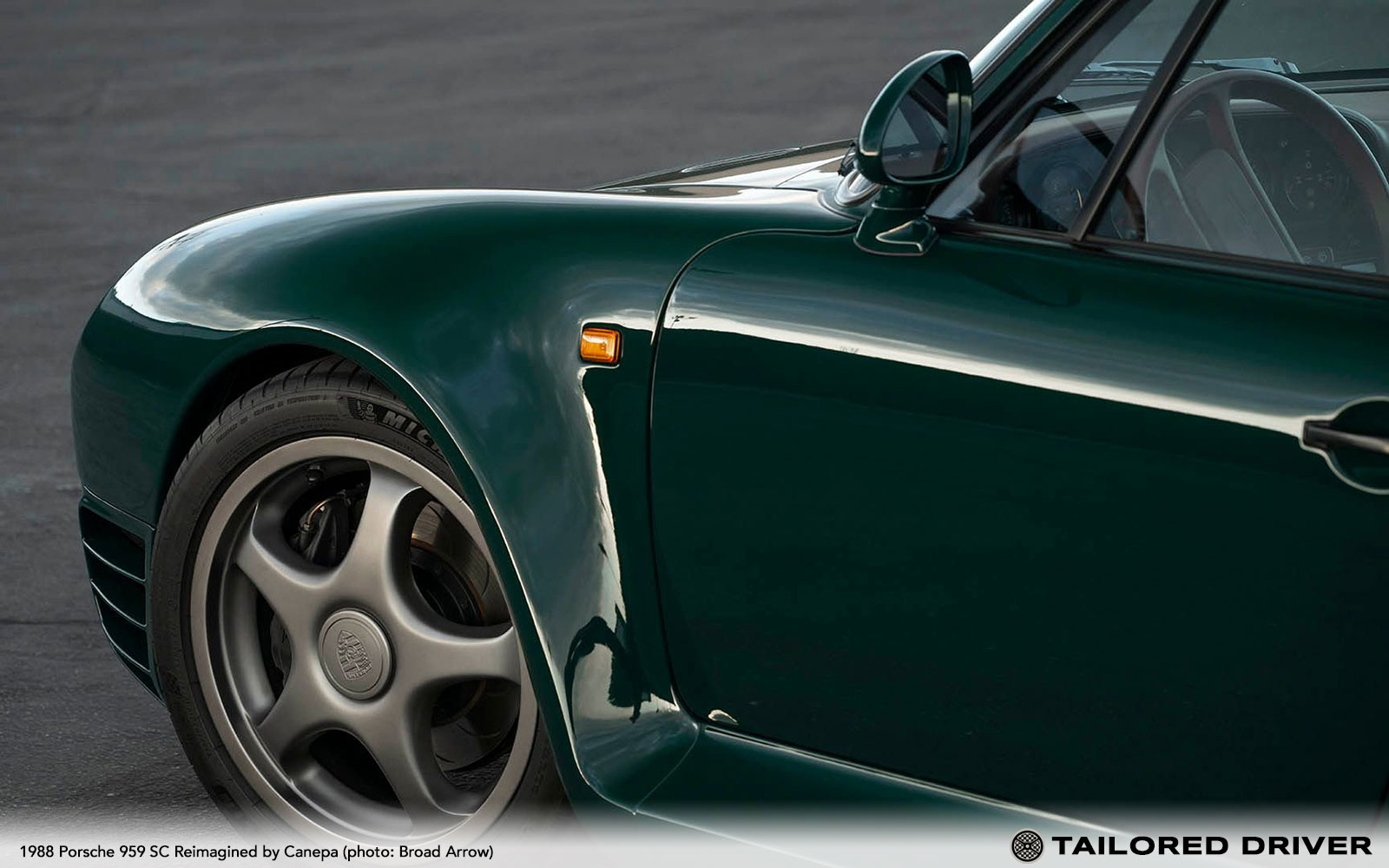
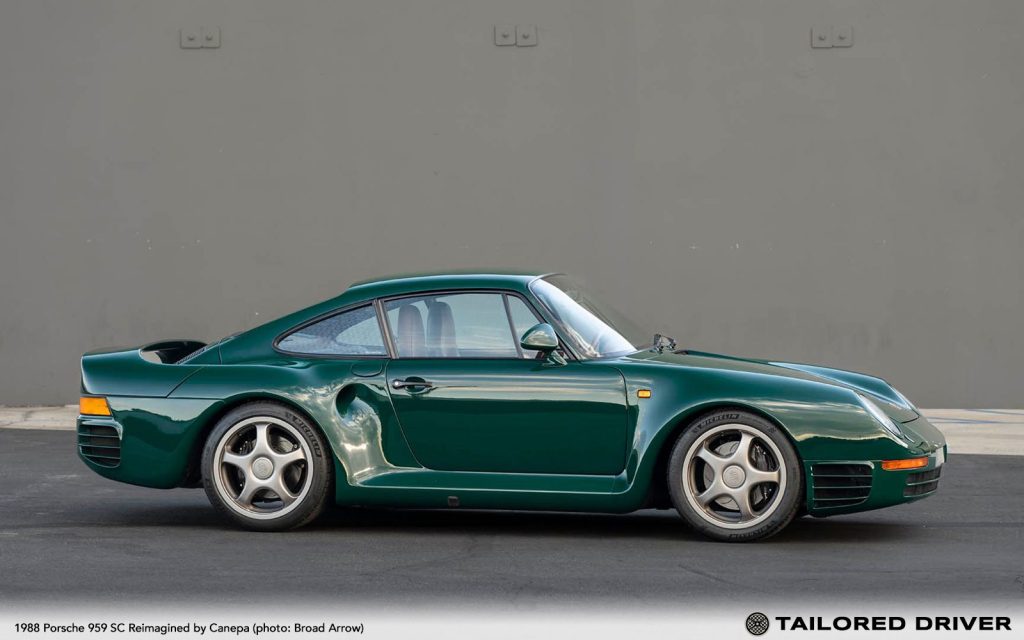
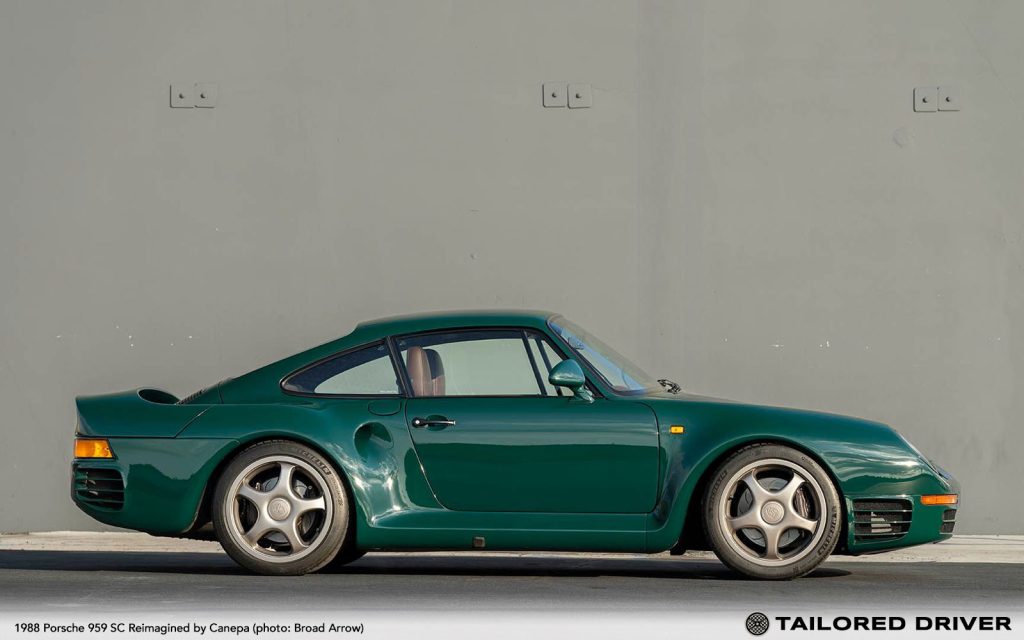
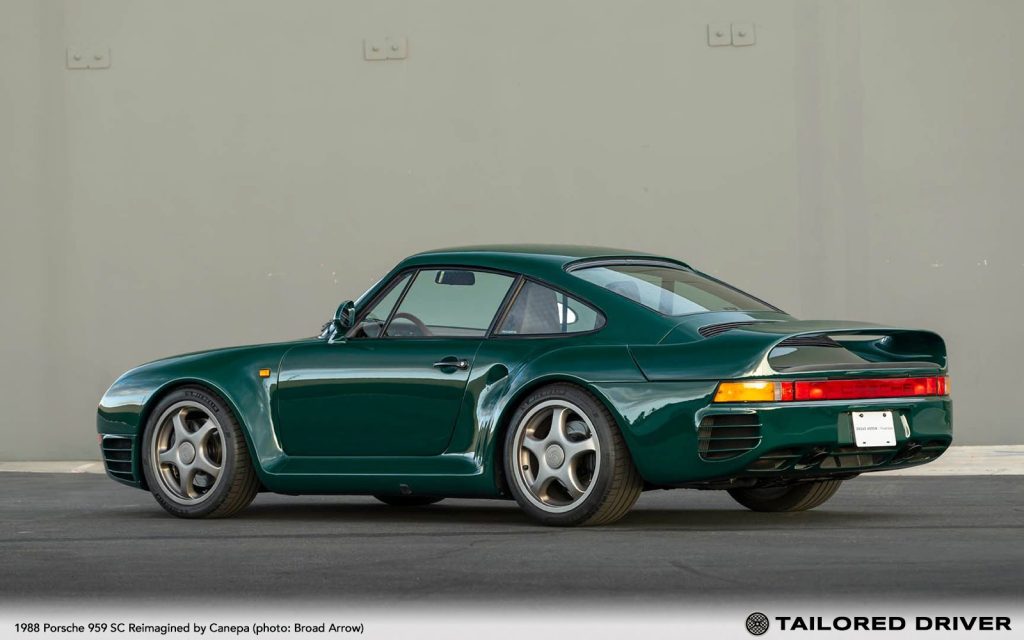
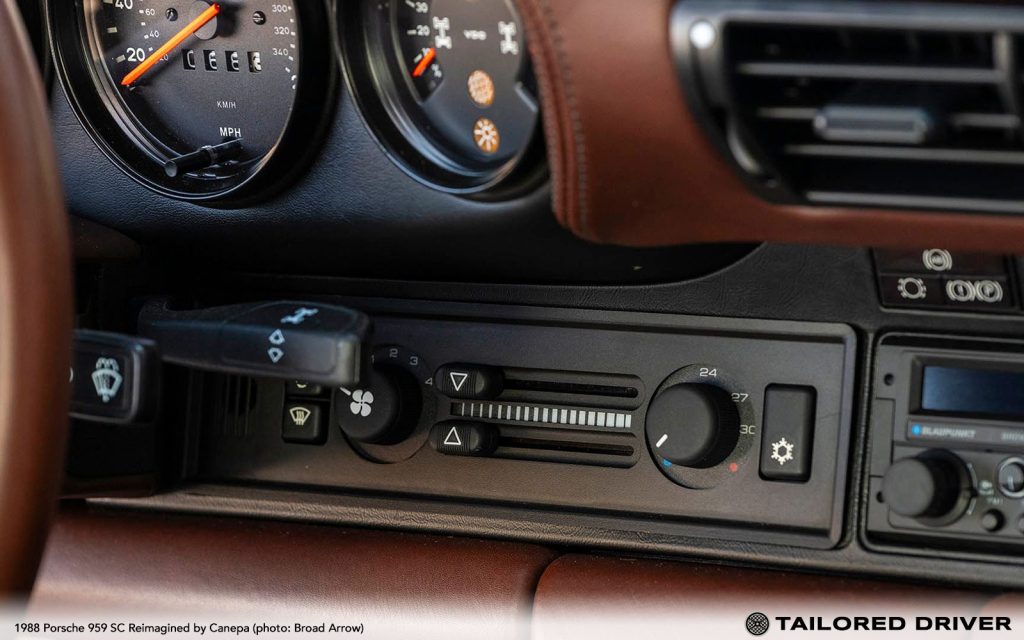
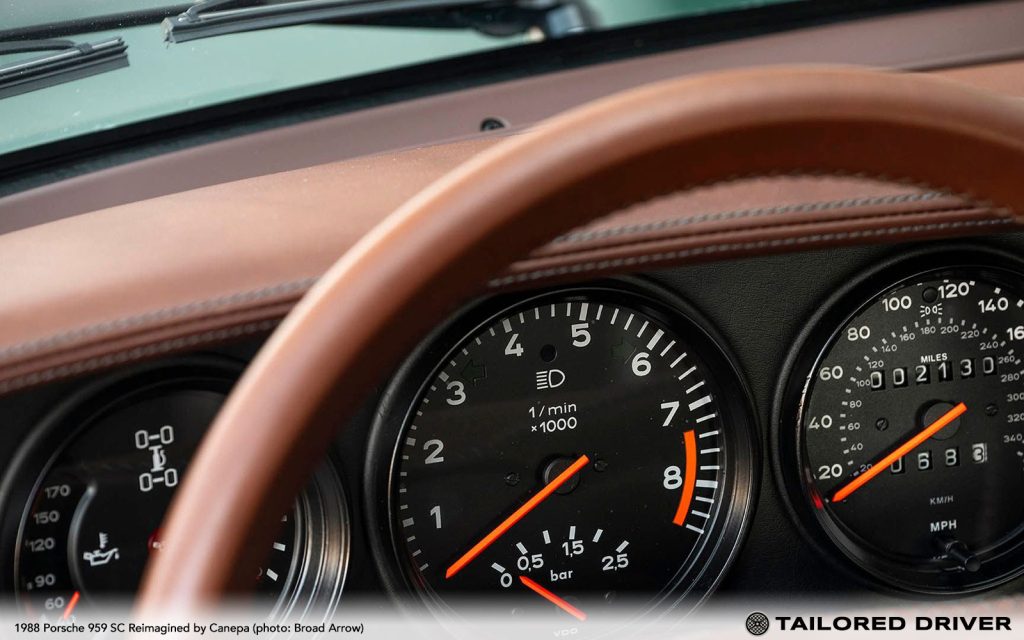
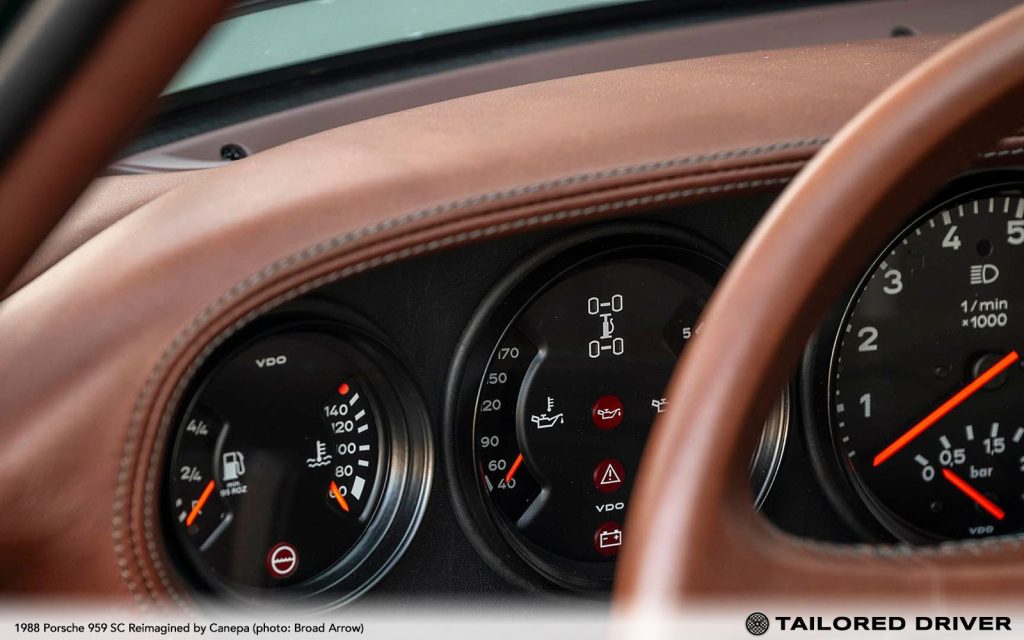
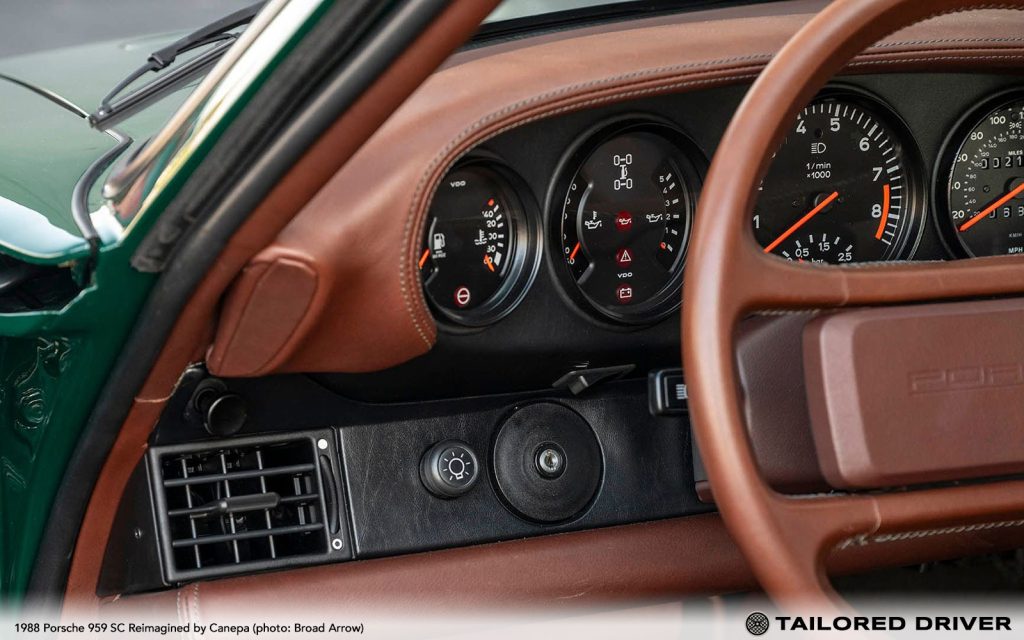
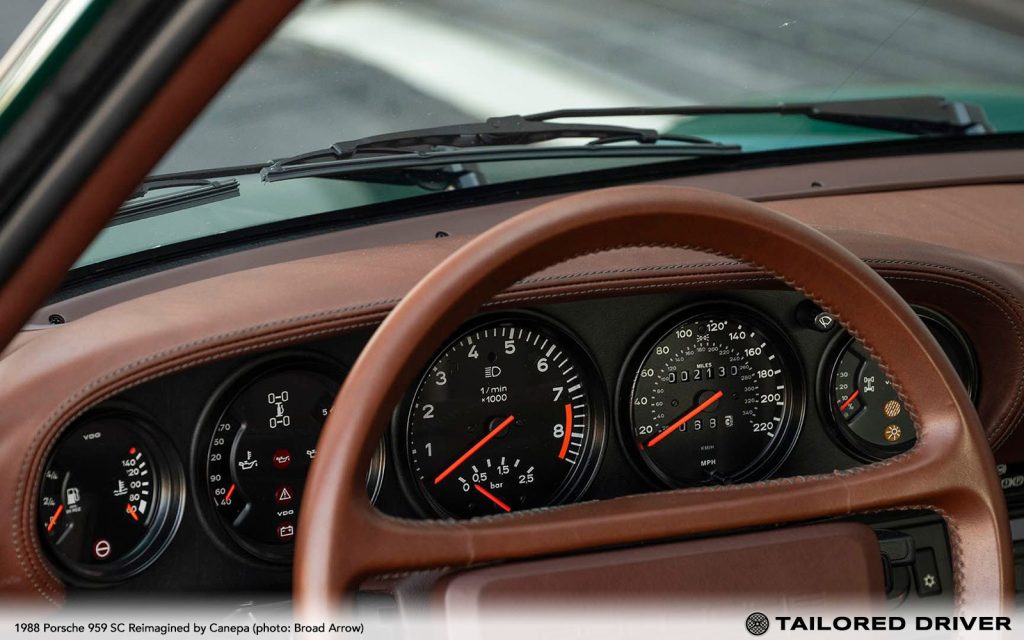
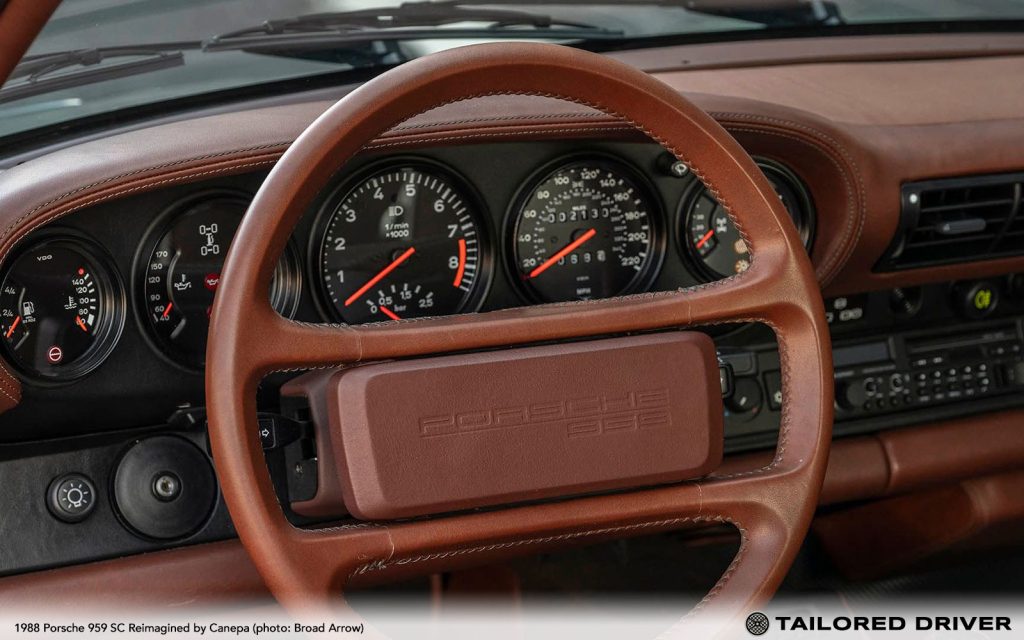
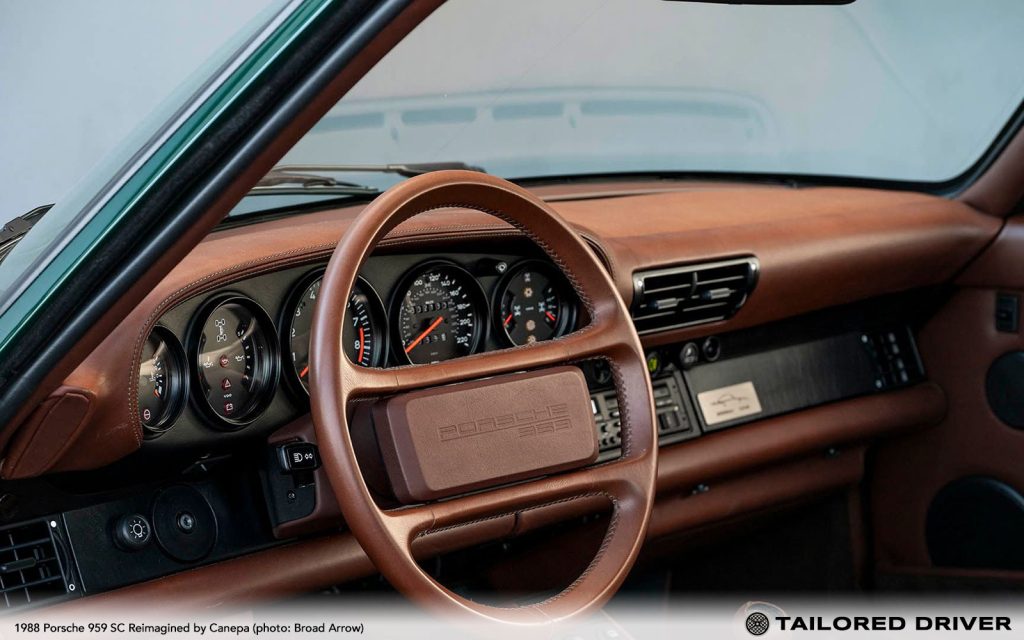
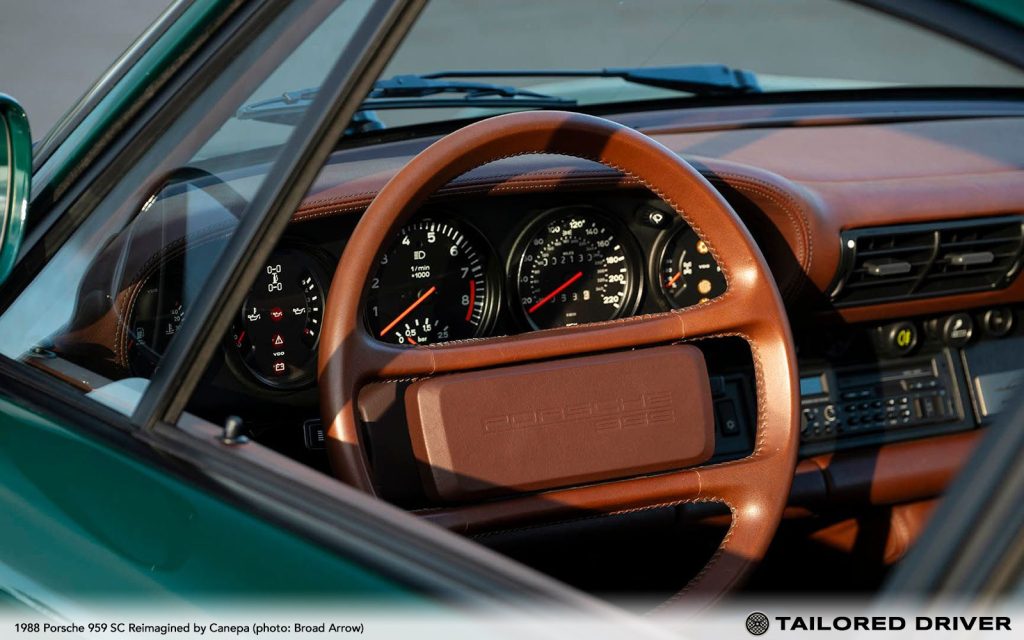
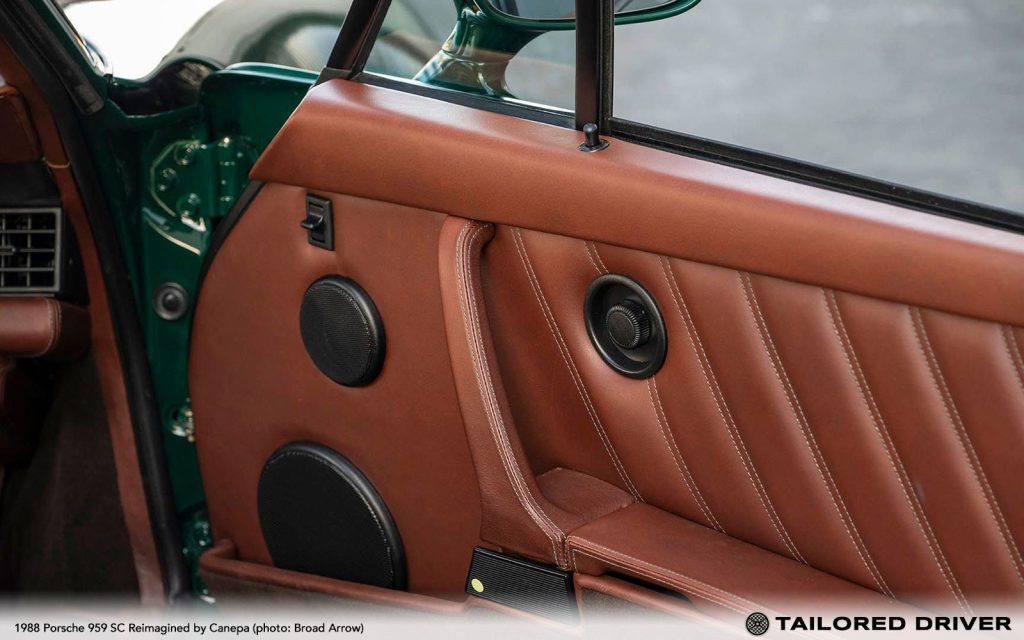
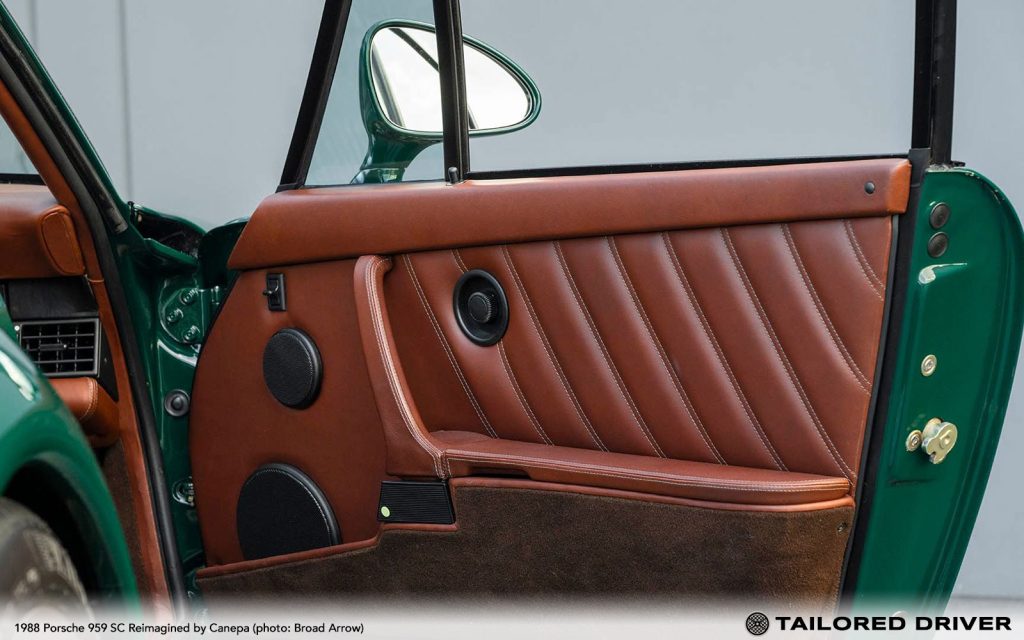
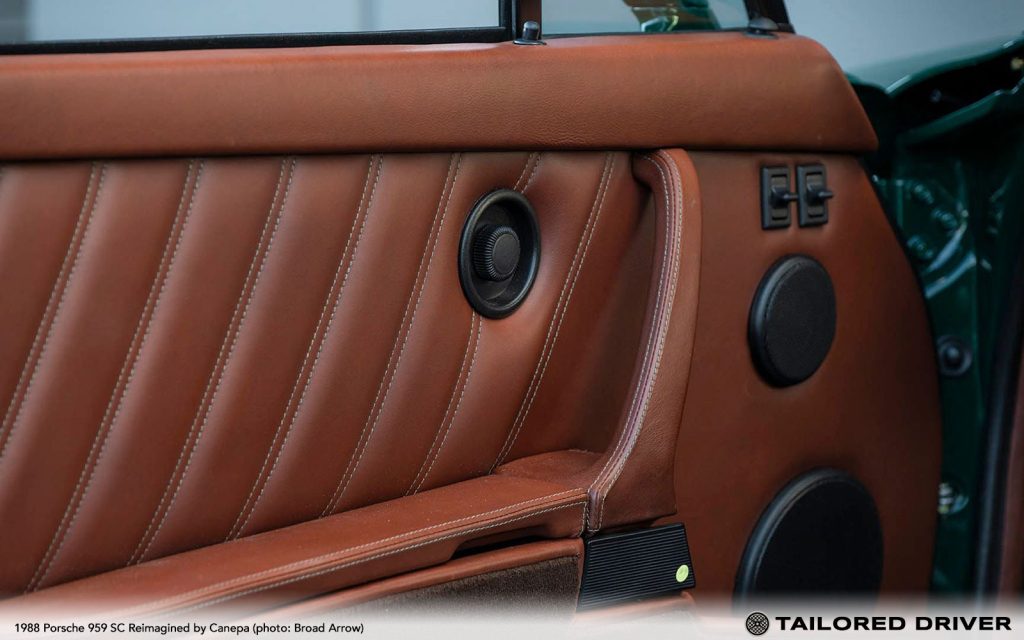
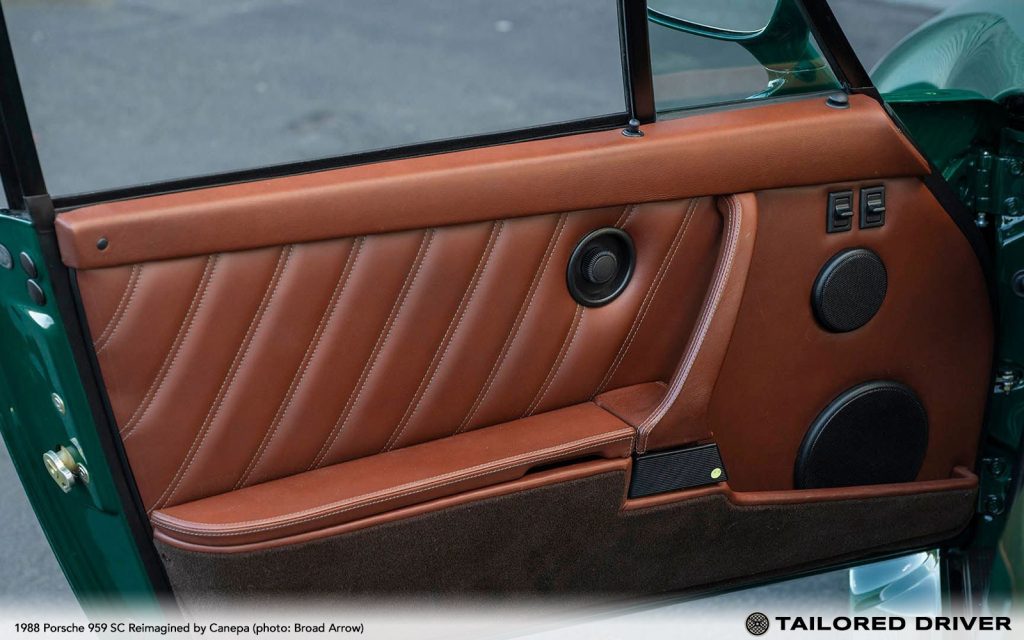
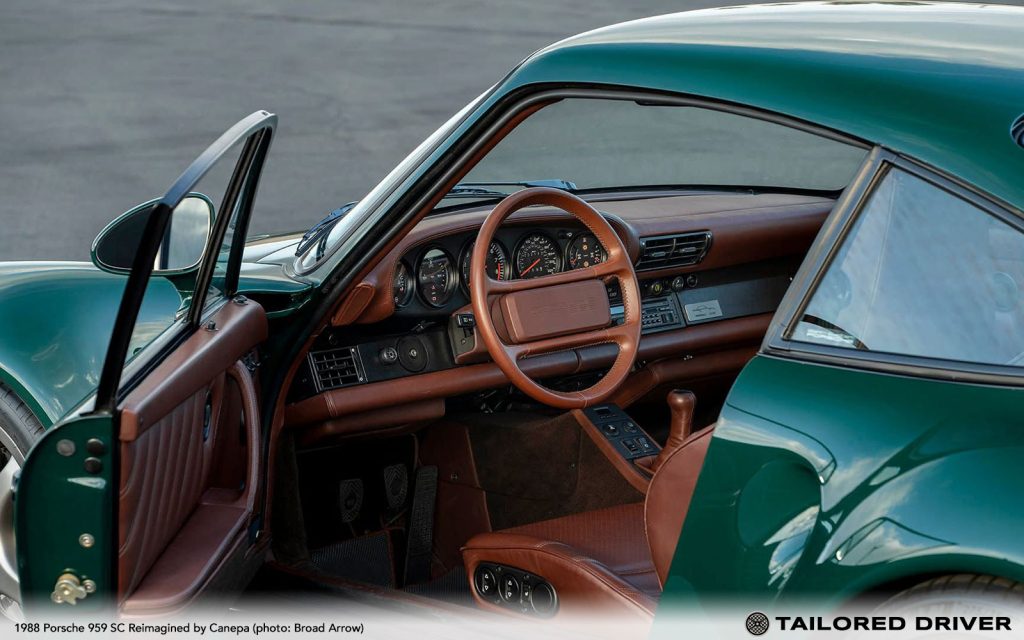
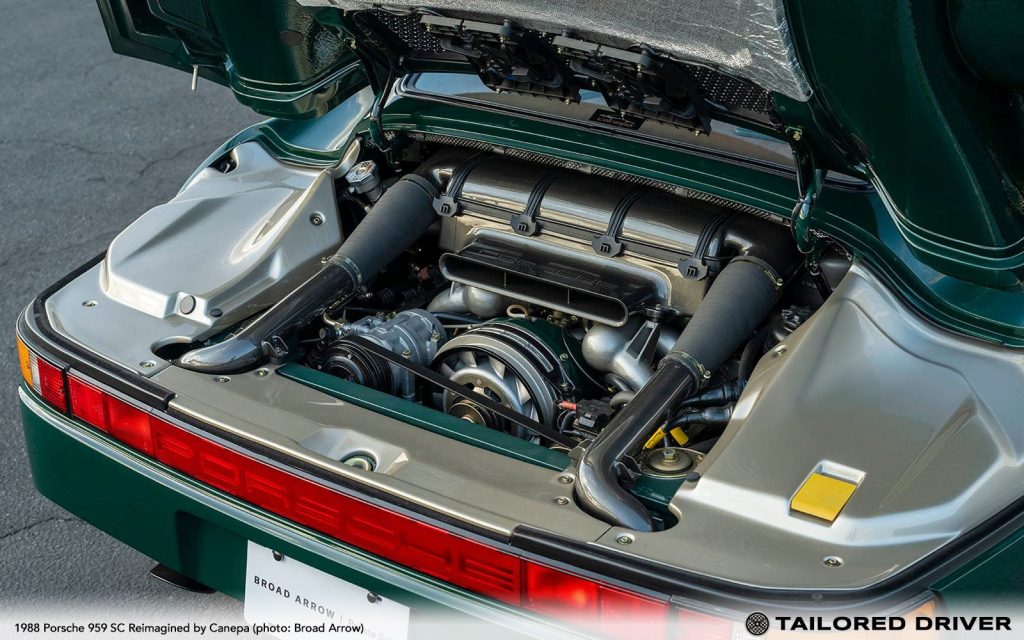
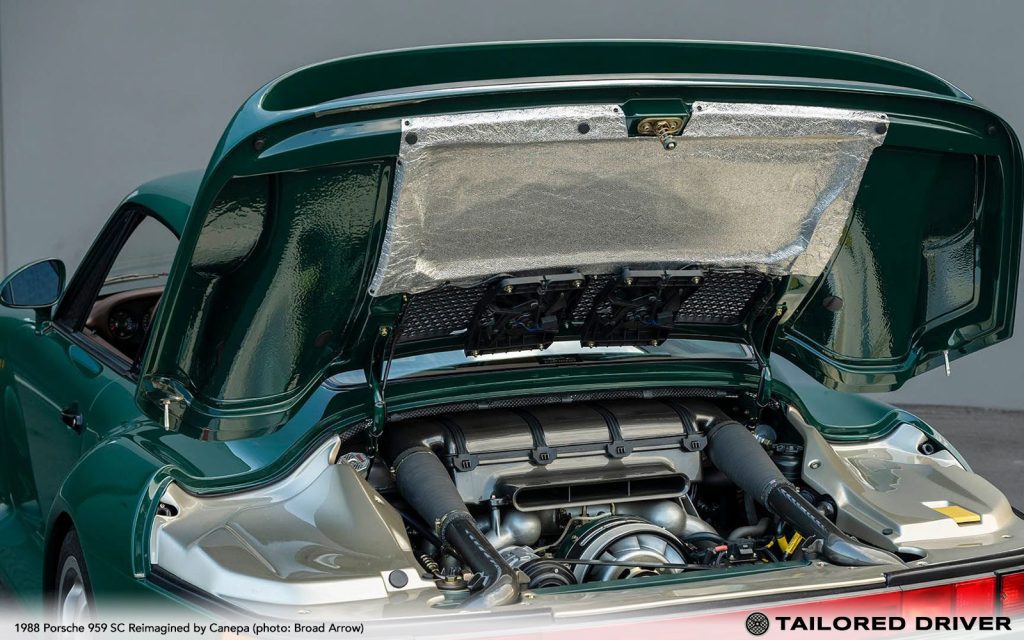
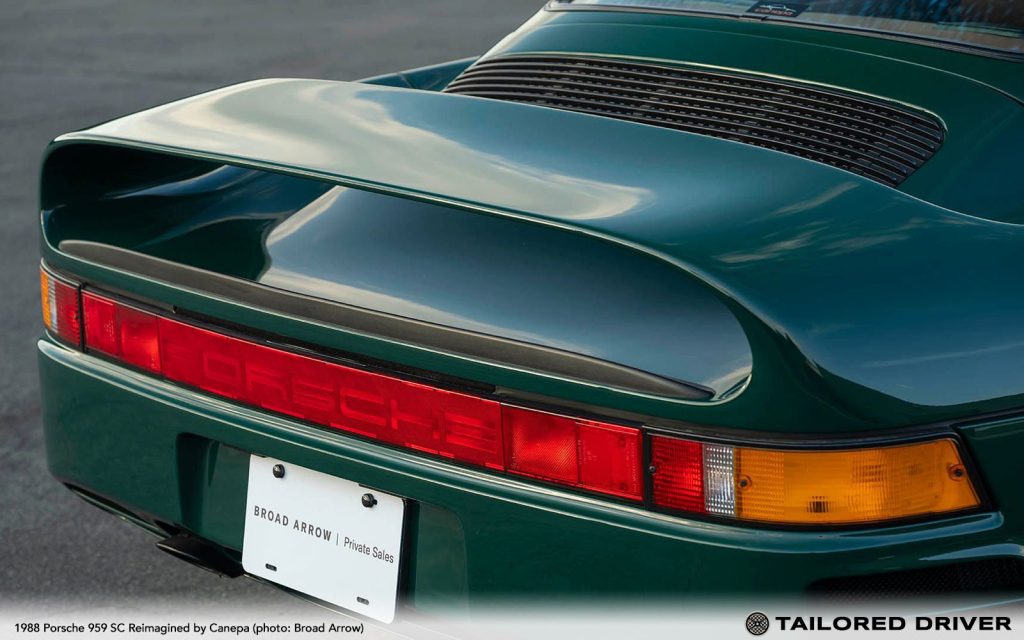
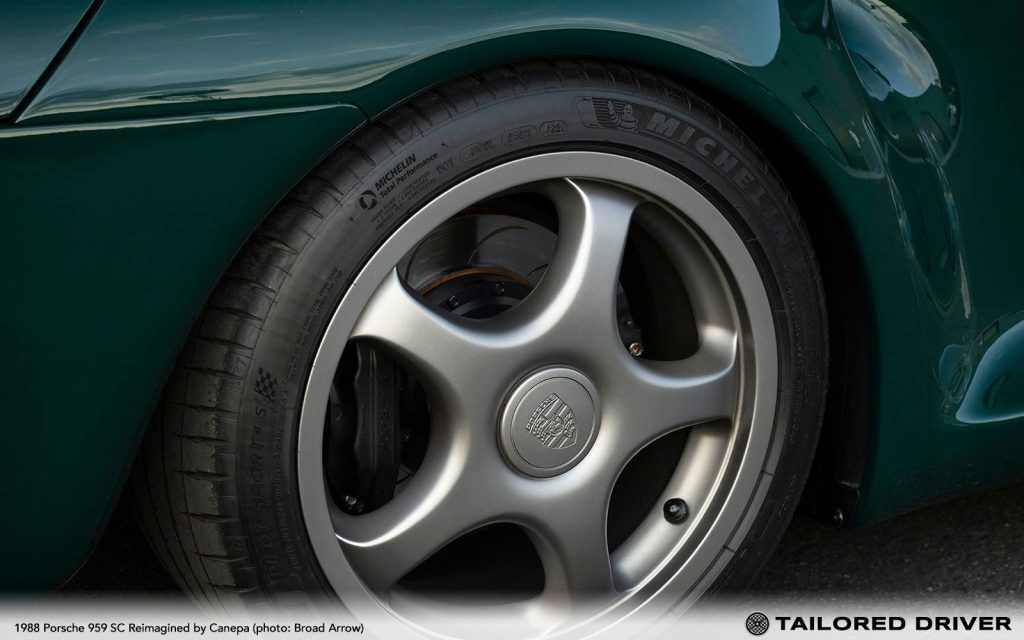
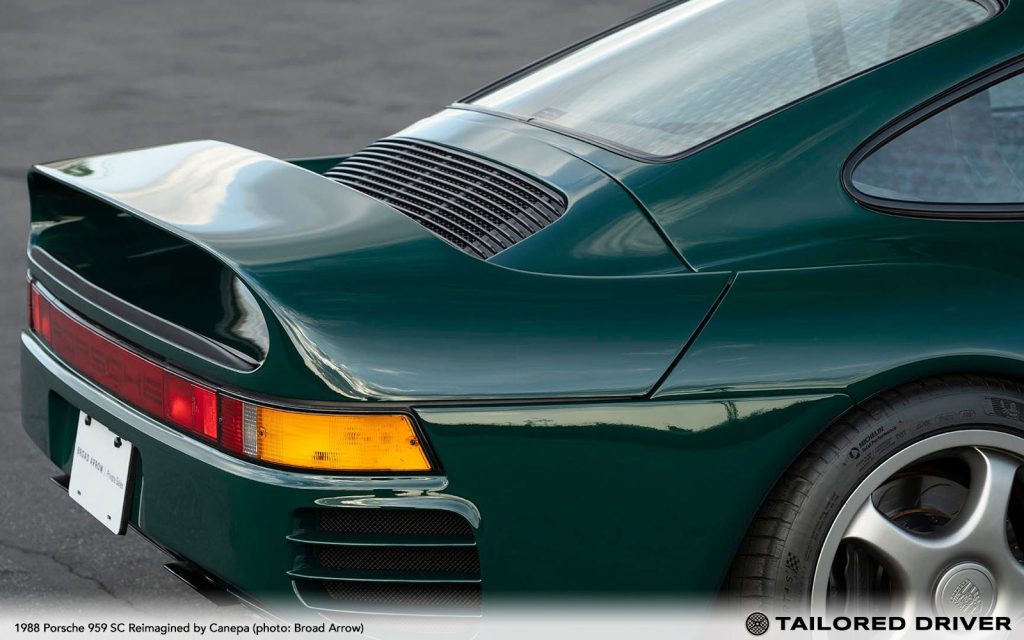
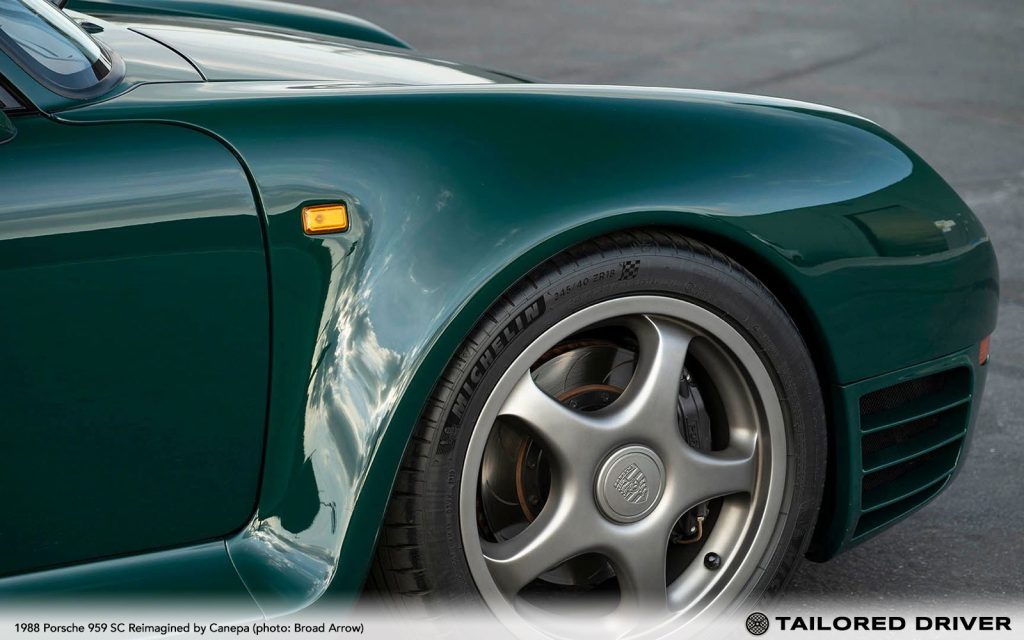
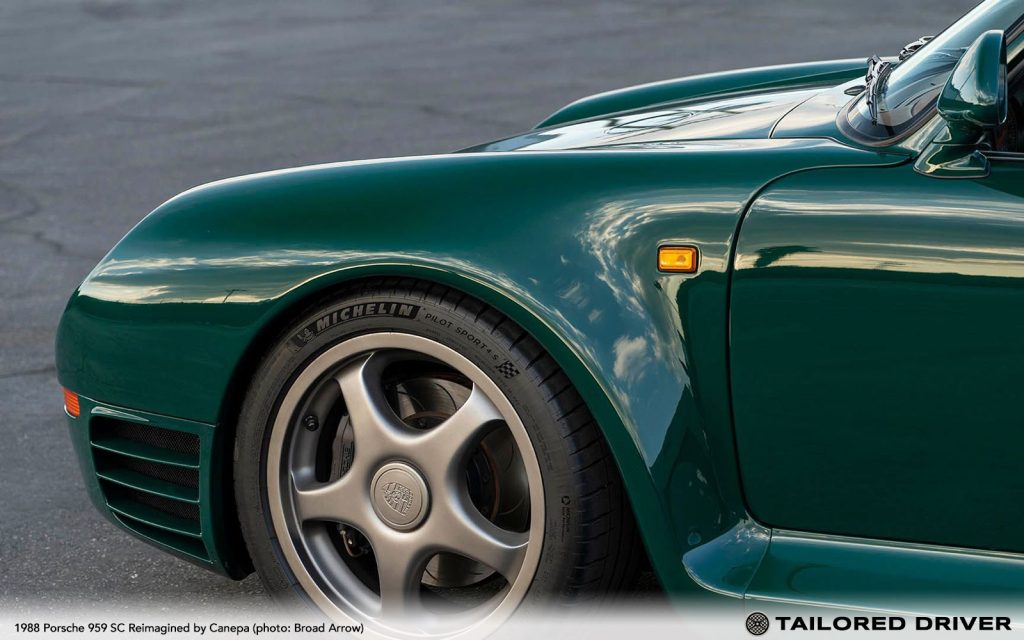
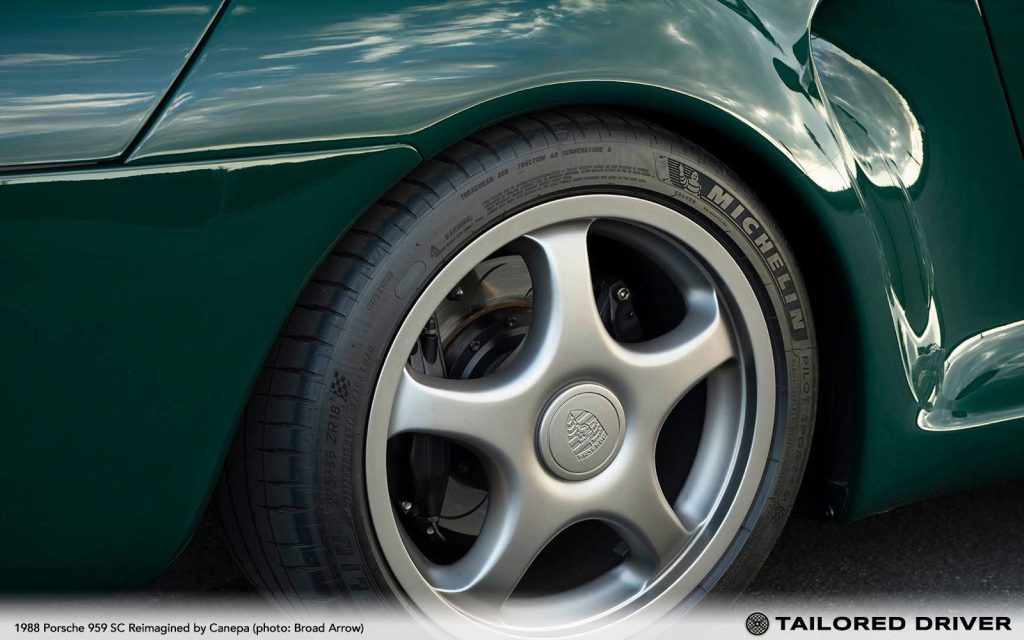
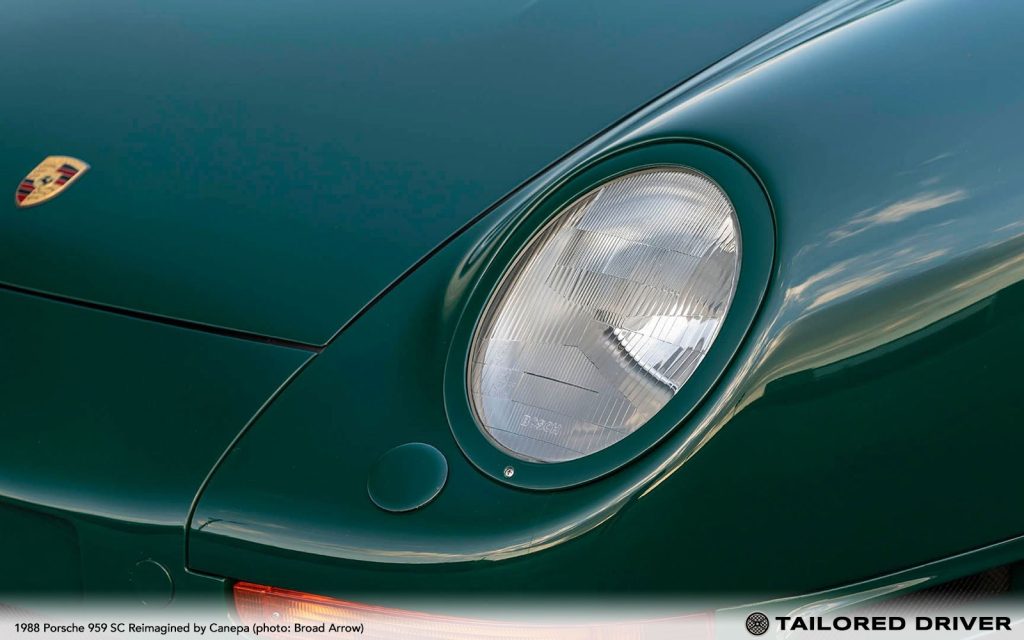
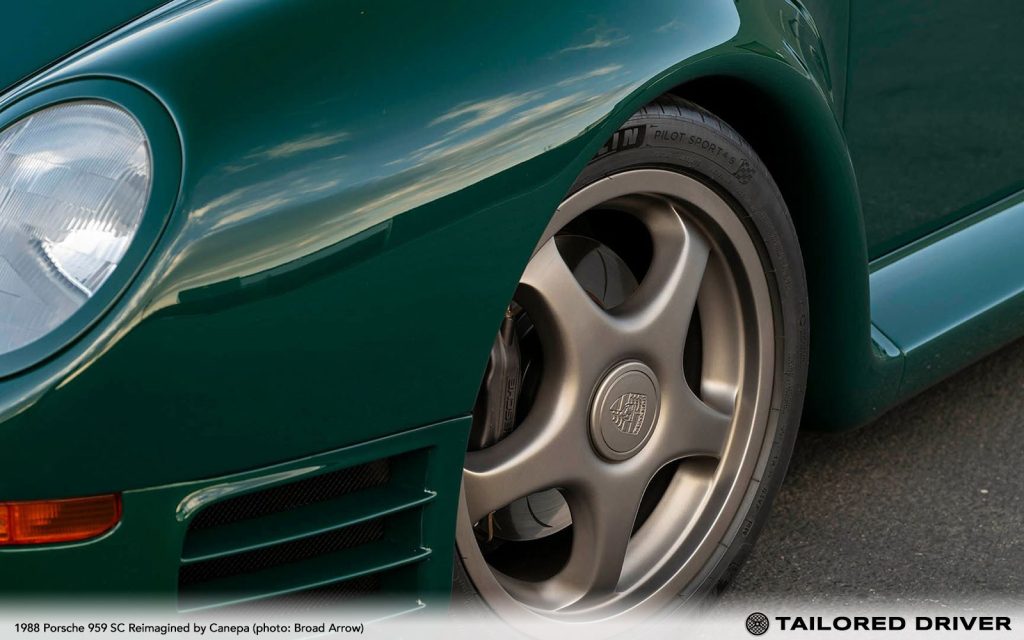
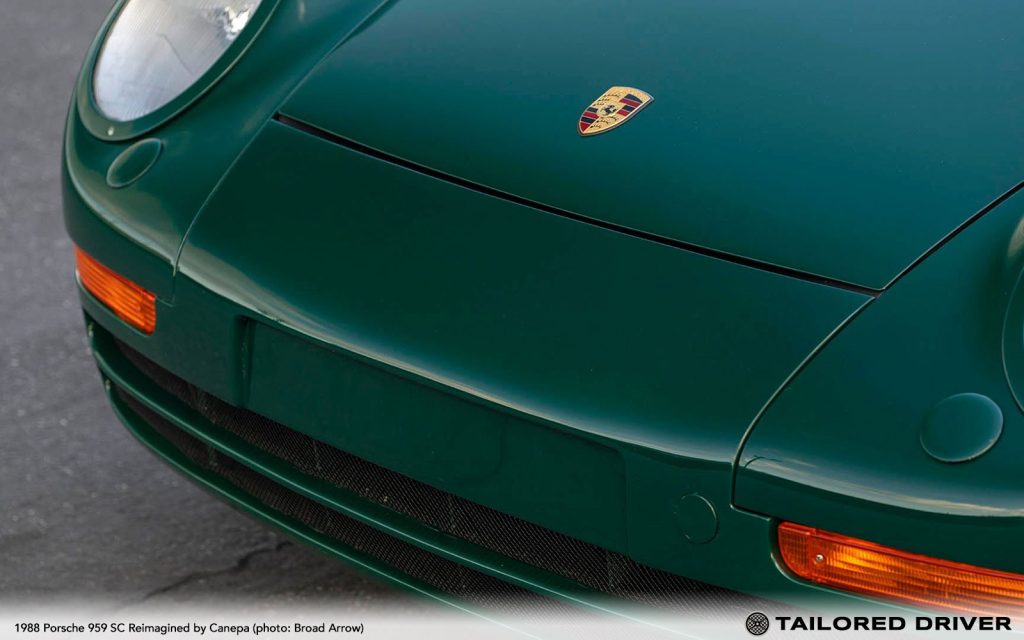
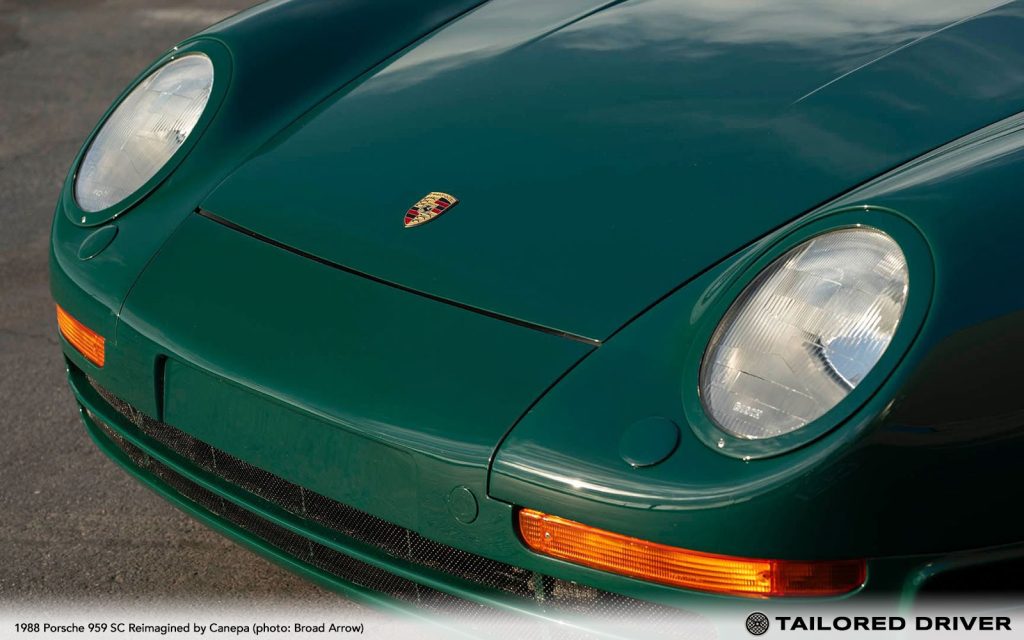
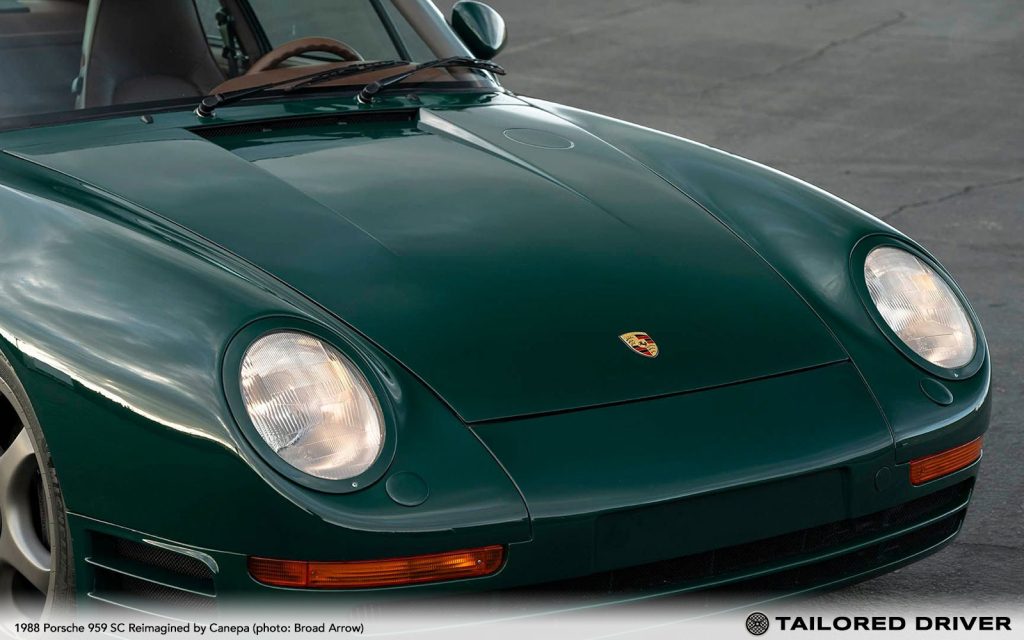
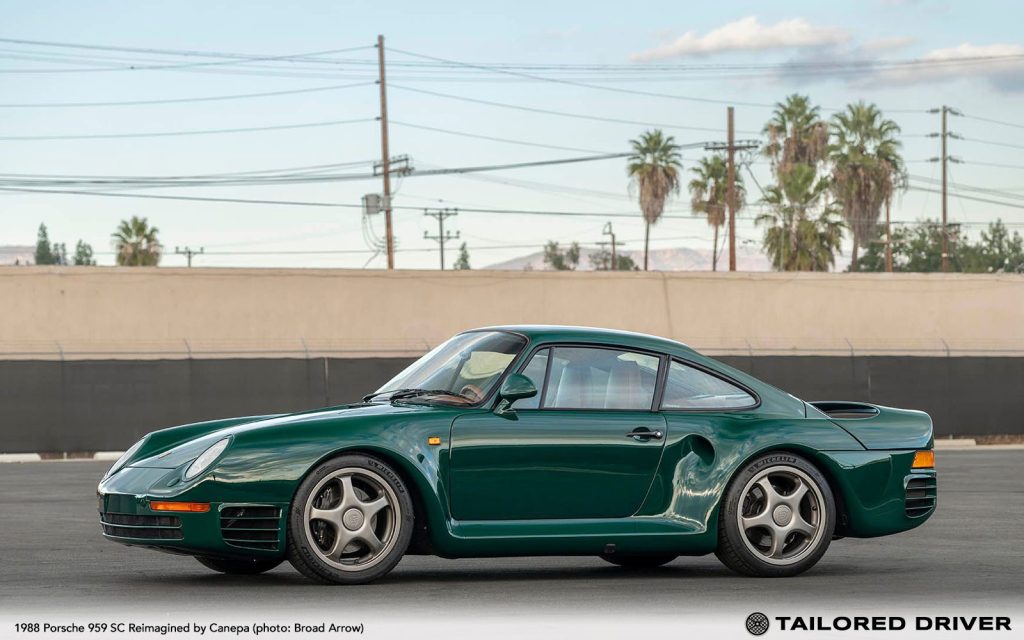
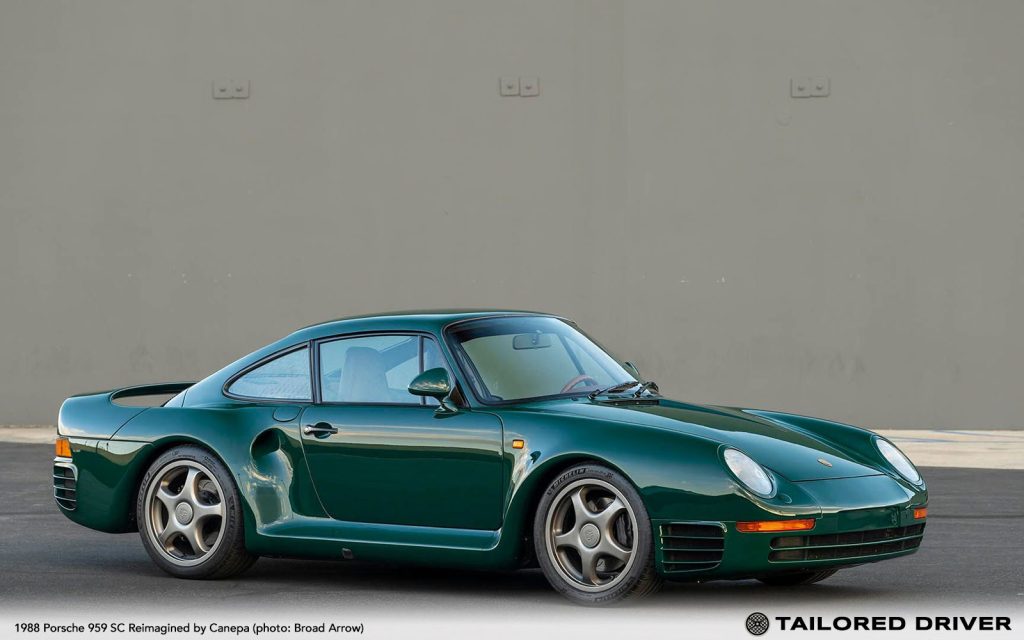
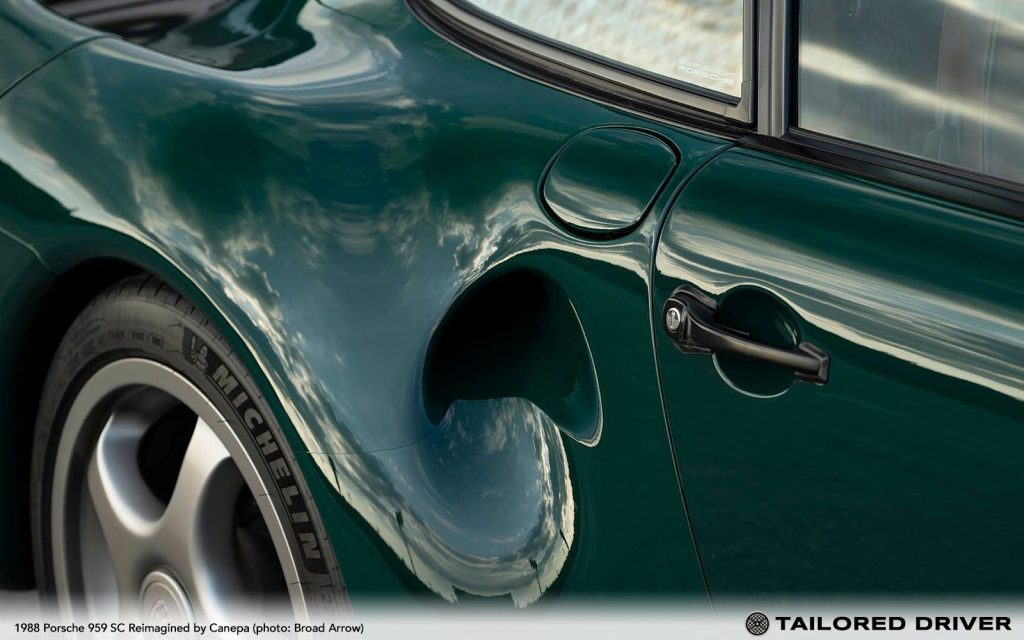
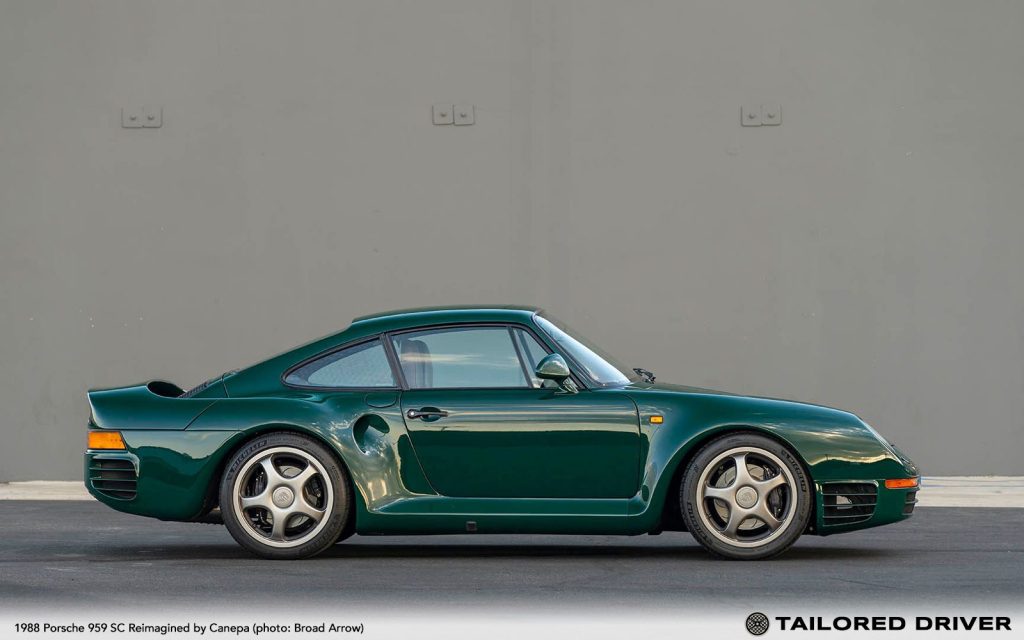
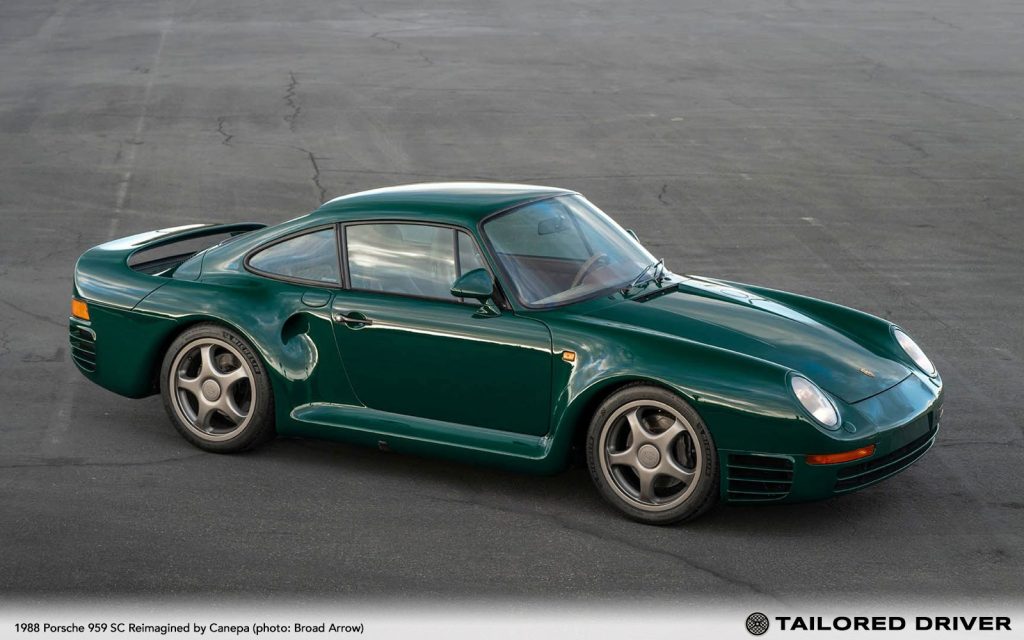
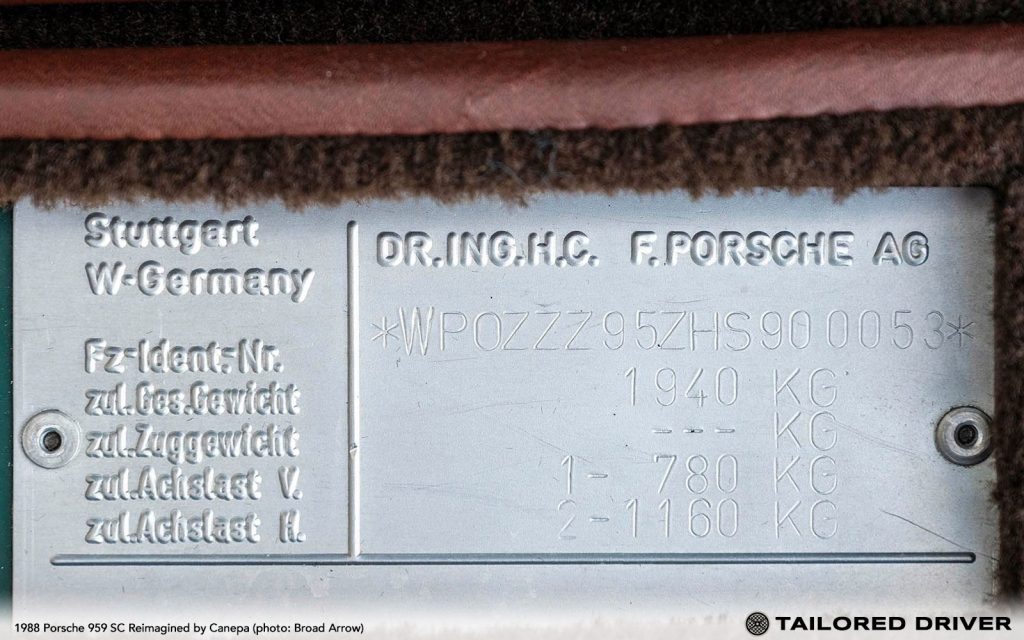
What: 1988 Porsche 959 SC Reimagined by Canepa Color: Irish Green (irischgrün; Y78; Porsche) VIN: WPOZZZ95ZHS900053 Mileage: 2,130 miles Price at Time of this Writing: Available Upon Request CarFax: N/A Window Sticker: N/A Location: Undisclosed Dealer listing:Link
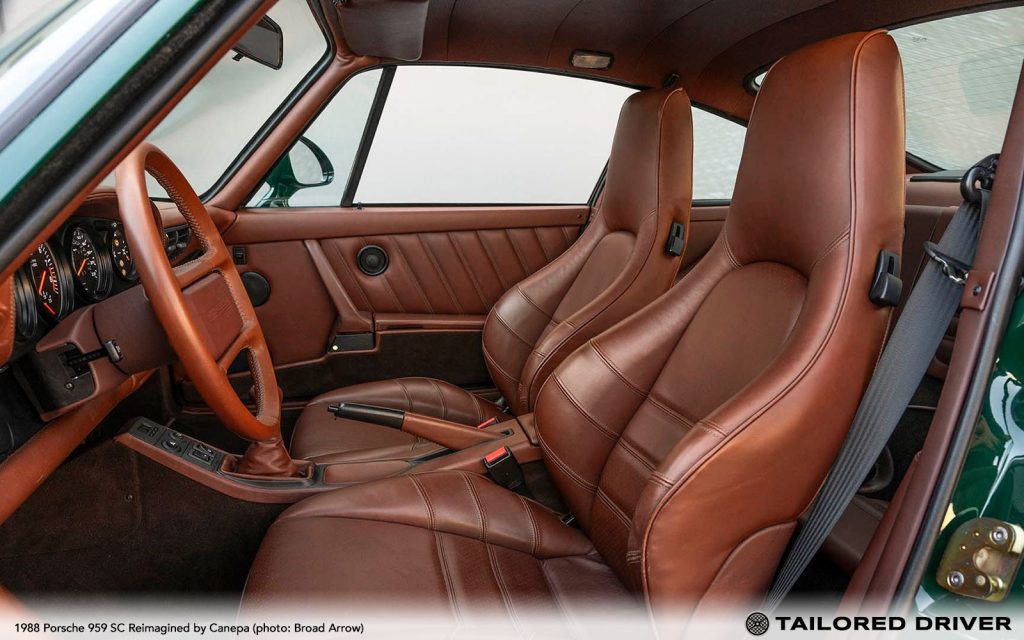
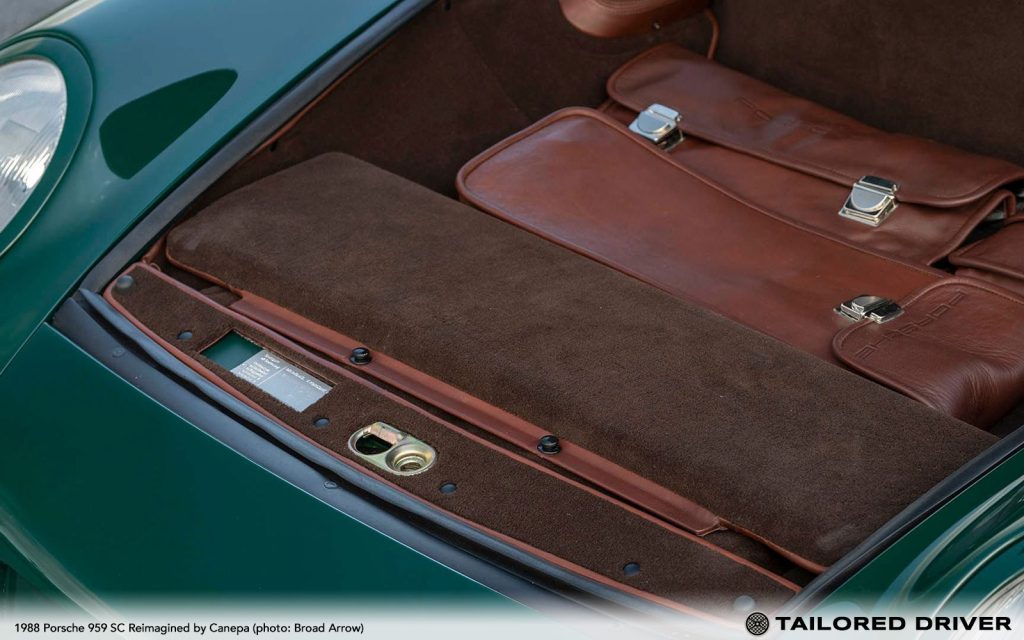
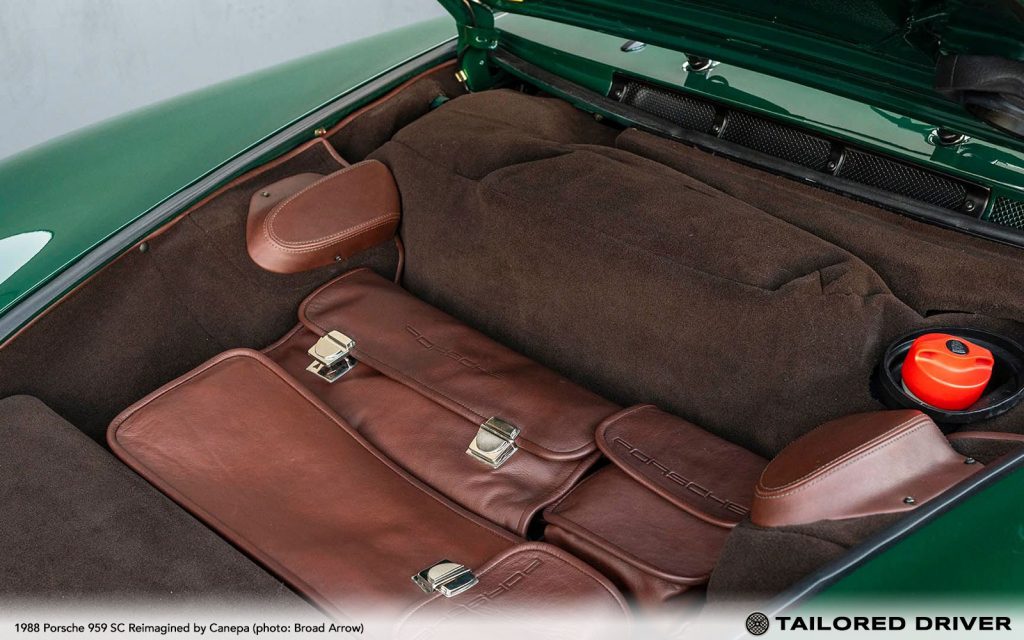
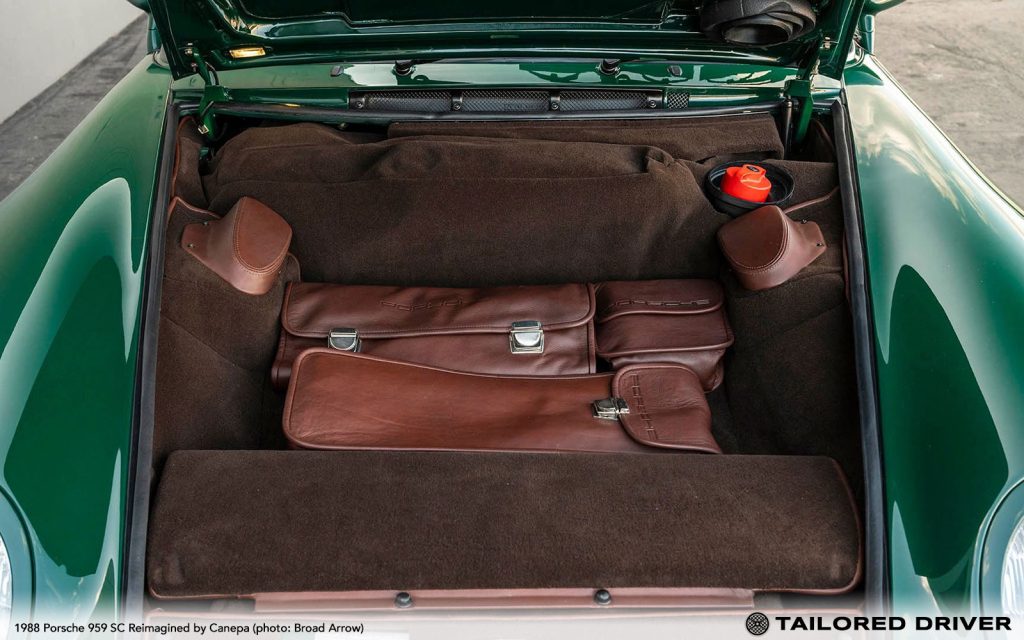
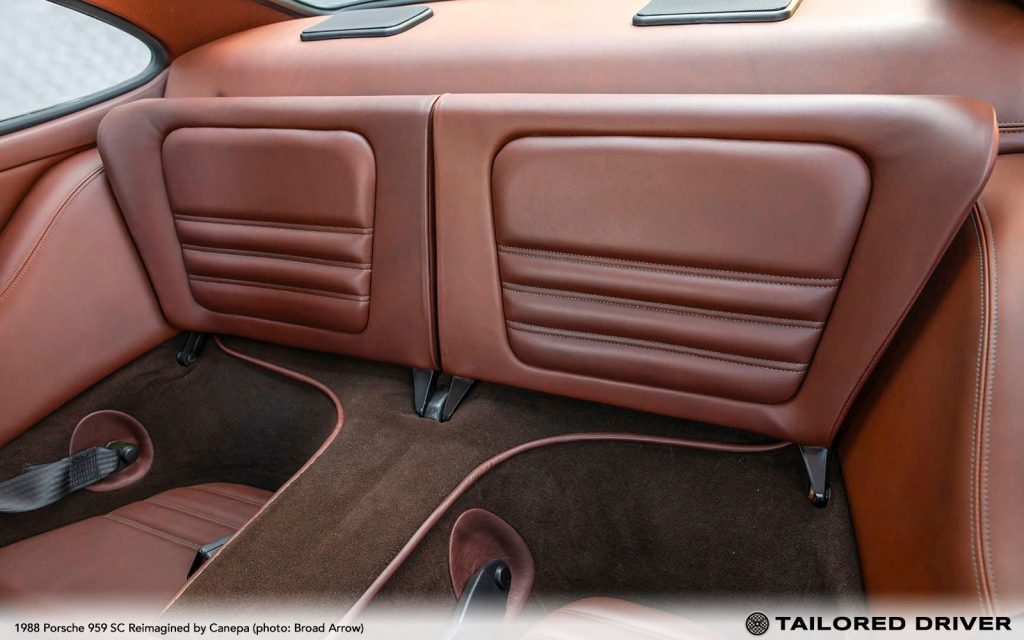
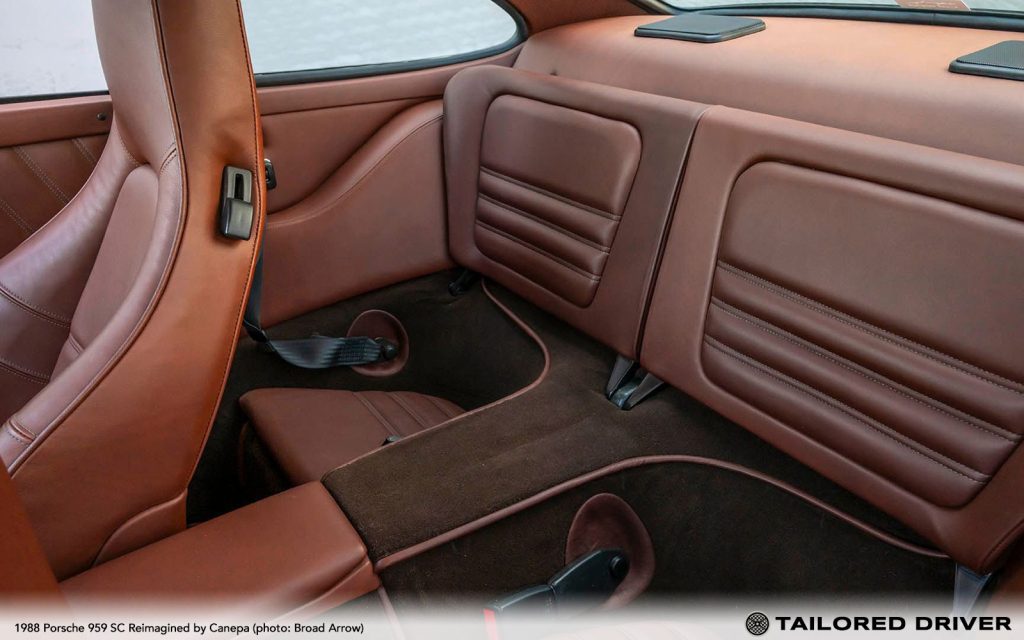
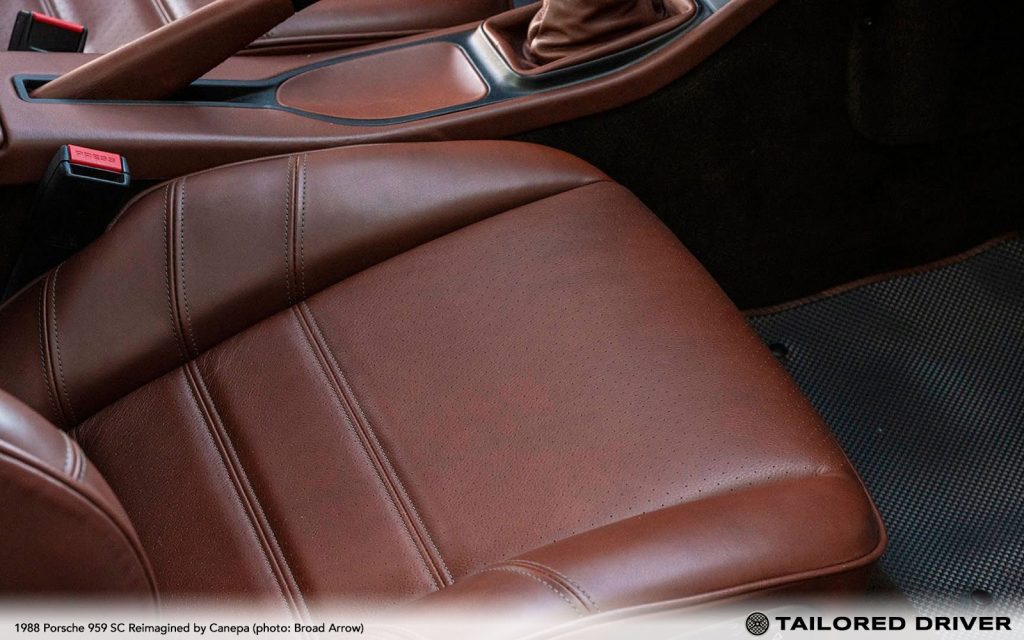
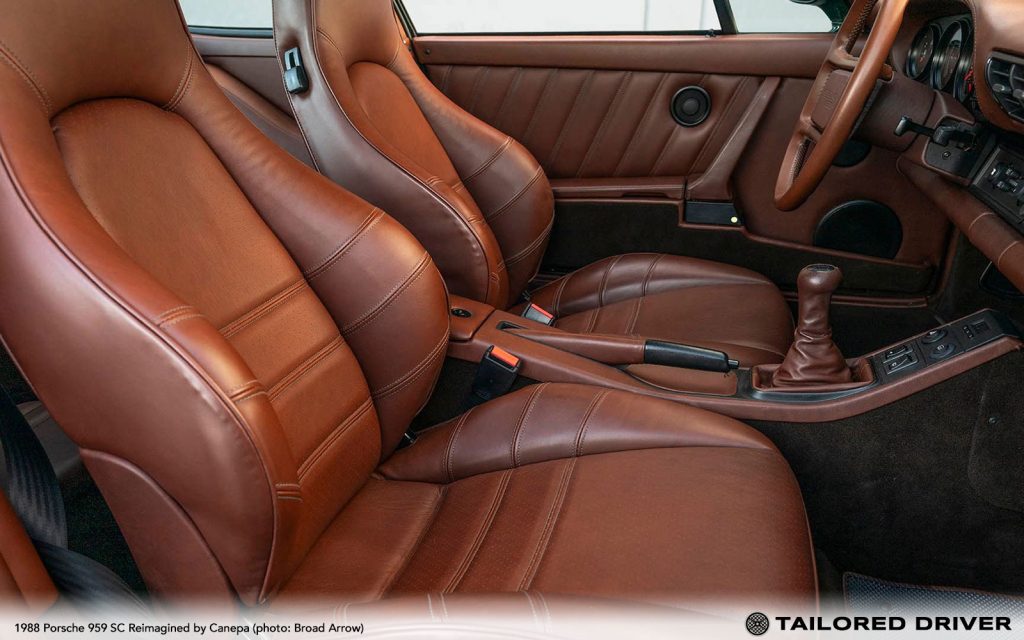
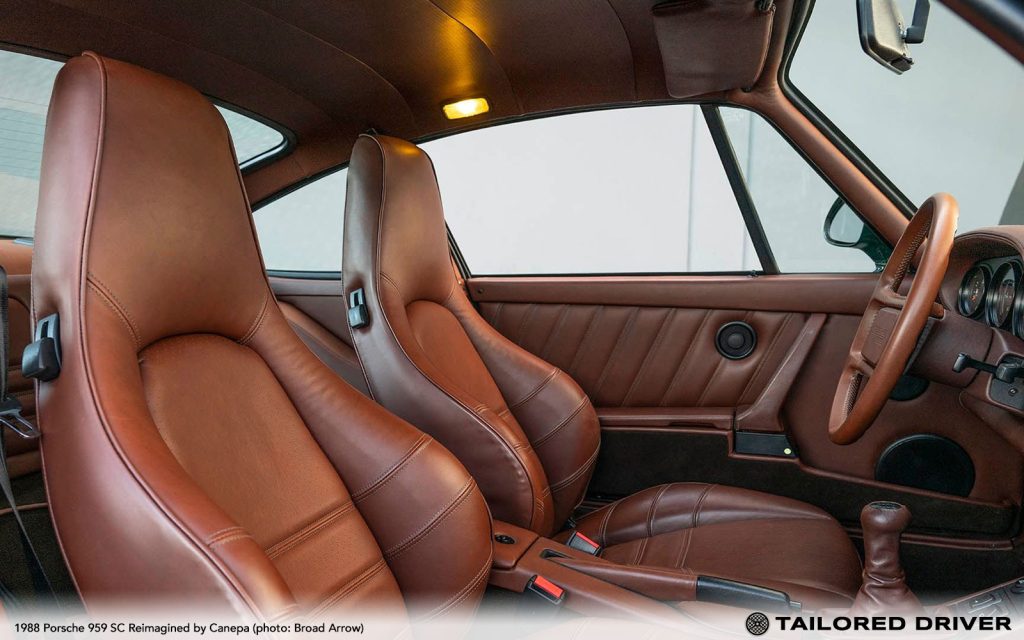
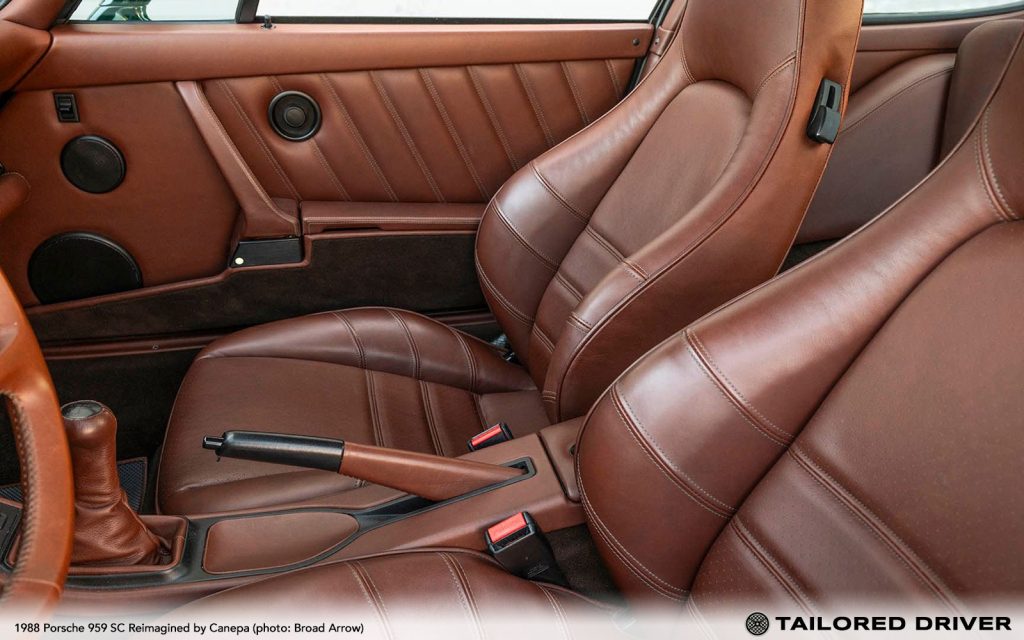
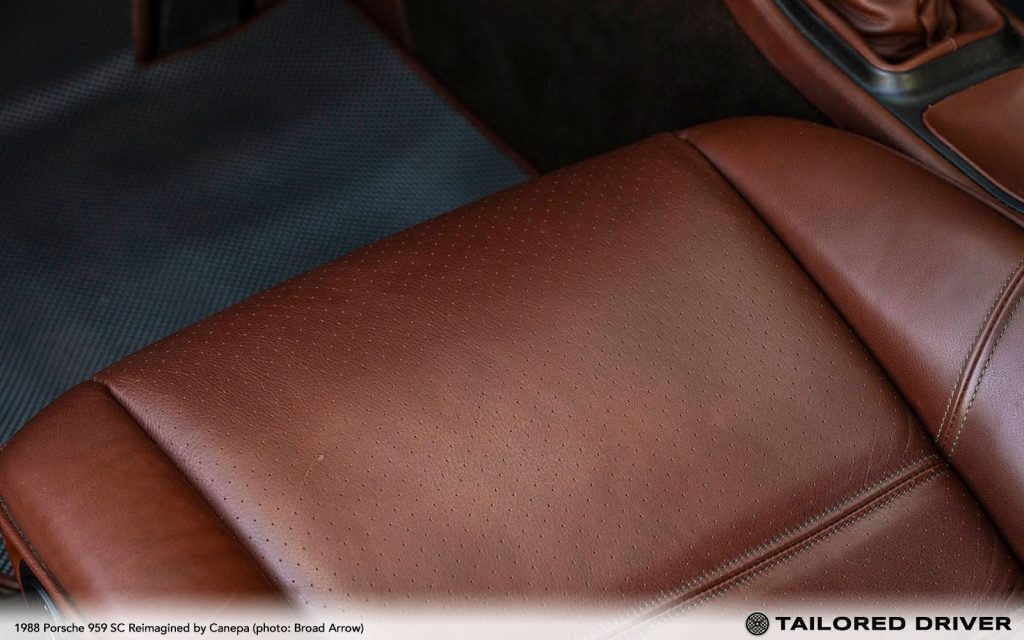
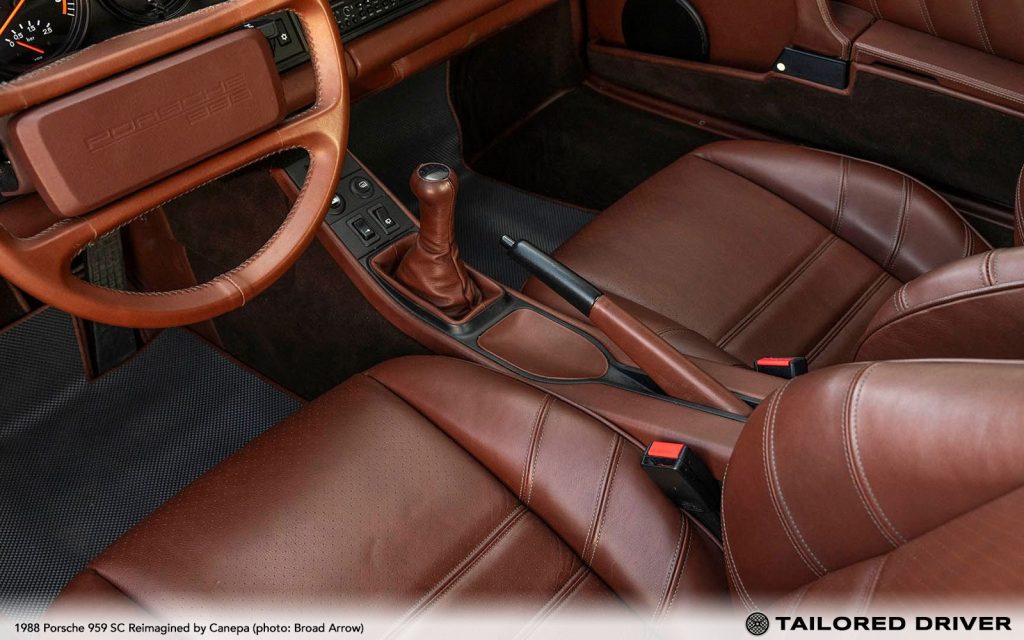
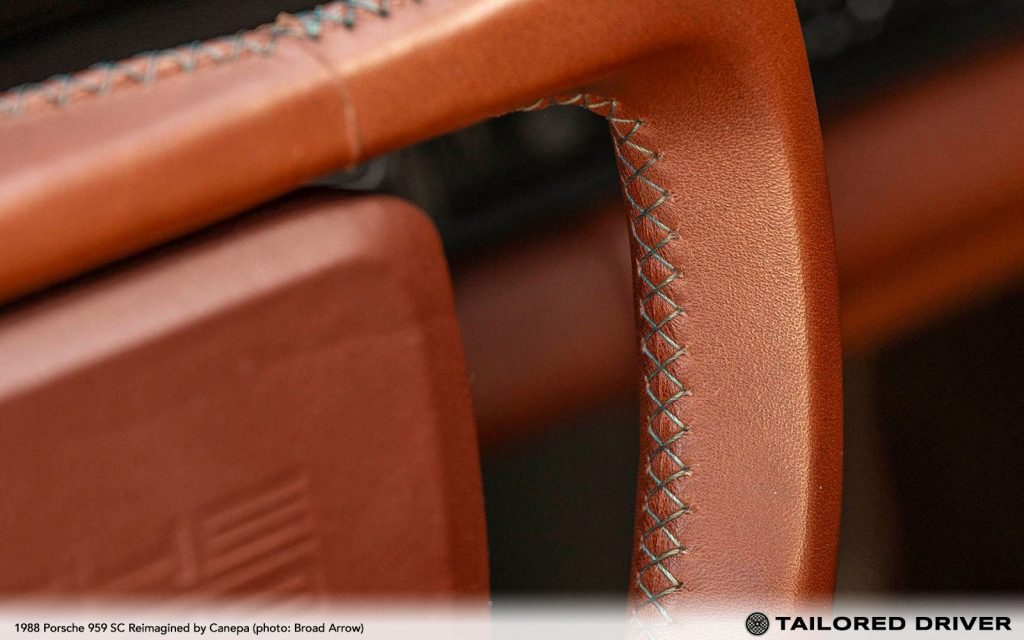
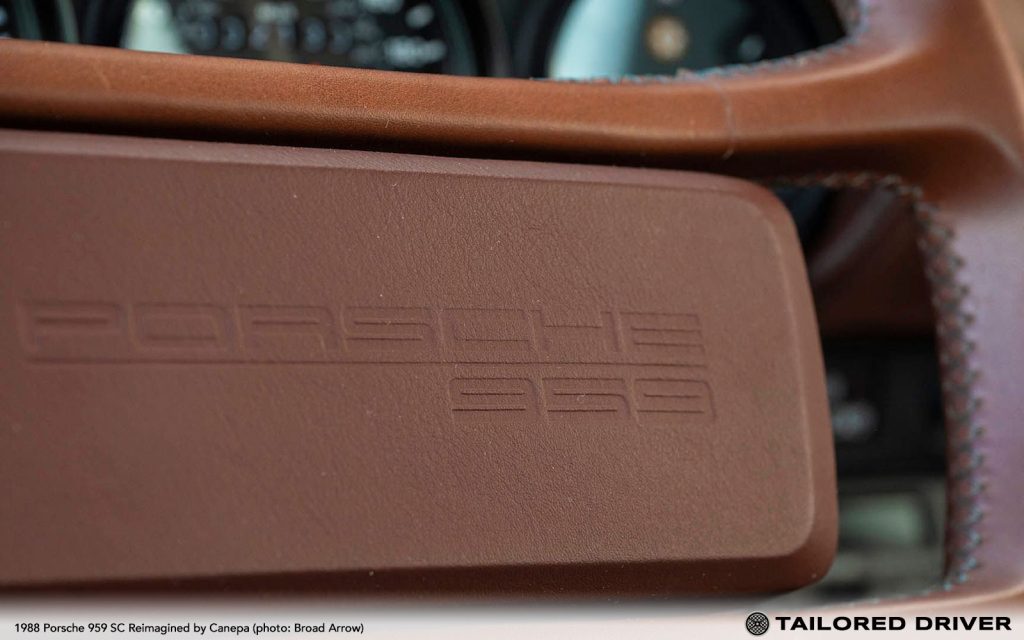
Why we love it: There’s remastered, and then there’s a Porsche 959 SC reimagined by Canepa. The Group B homologated Porsche 959 is already the most forbidden of fruit and the most exotic of the exotic from the so-called “Rad” era. Now throw in a tailored rebuild that Bruce Canepa’s Northern California firm has been building over recent years and you have the makings of a perfect thing. And, did we mention Irish Green over Tobacco brown leather?
This car is so good, we’re going to include the full Broad Arrow description below. However, you should definitely check out more photos and, of course, call for the price if you are interested. It is a rare thing indeed when these cars come available in the market in any form, but particularly rare and exclusive when such a beautiful build as this from Canepa also makes a showing.
BEGIN DESCRIPTION [Source: Broad Arrow]
In the early 1980s, Porsche was keen to prove its technological superiority learned throughout the previous decade’s racing efforts. The “Gruppe B” Study was created to display these advancements with development underway as soon as 1981. Turbocharging, first used on the 917/10 Can-Am racing car in 1972, made its way three years later to the first turbocharged road-going Porsche – the 1975 911 Turbo – and from it, to the 959. It was a similar story with engine cooling. Through its racing program, Porsche had reached a thermal limit with the air-cooled flat-six. Water-cooled heads appeared on the all-conquering Porsche 956 endurance racing prototype in 1982 and, just a few years later, the 959 was the beneficiary of these successful experiments. Height-adjustable suspension, “intelligent” all-wheel drive, tire pressure monitoring, ABS, composite body construction – all commonplace in today’s supercars – were decades ahead of their time when applied to the 959.
Fewer than 300 of these halo supercars were built by the end of the decade, with each example estimated to cost Porsche double its 420,000 DM price tag to produce. Faced with these substantial losses, Porsche did not see fit to modify and test the 959 to comply with NHTSA safety standards, and as a result, it was not road-legal in the United States. While a number of 959s slowly trickled into the U.S., the model was the prime example of the type of car petitioned by Canepa and others to include in the “Show or Display” rule, passed in August 1999. The rule allowed for the private importation and limited road use of certain vehicles deemed to meet a standard of “historical or technological significance,” famously enabling Bill Gates to drive his 959 after it was stored by the Customs Service for 13 years. In the decades since the rule was passed, Canepa’s ceaseless obsession with extracting as much performance as possible out of the 959 has culminated in a series of refinements and performance upgrades developed by Canepa for the standard Porsche 959, officially launched in 2015 as the “959 SC Reimagined by Canepa” program.
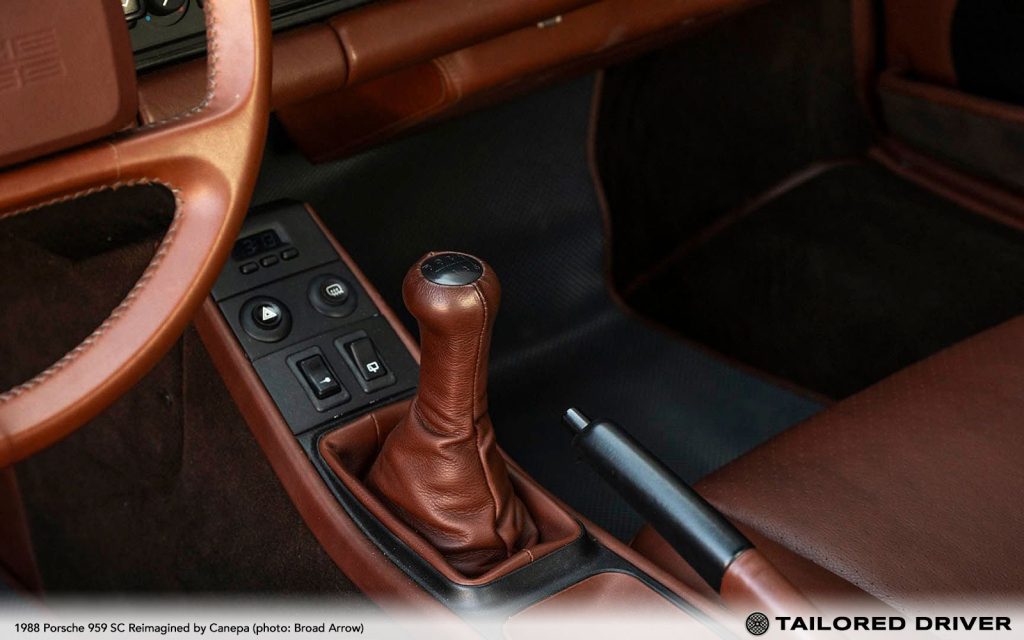
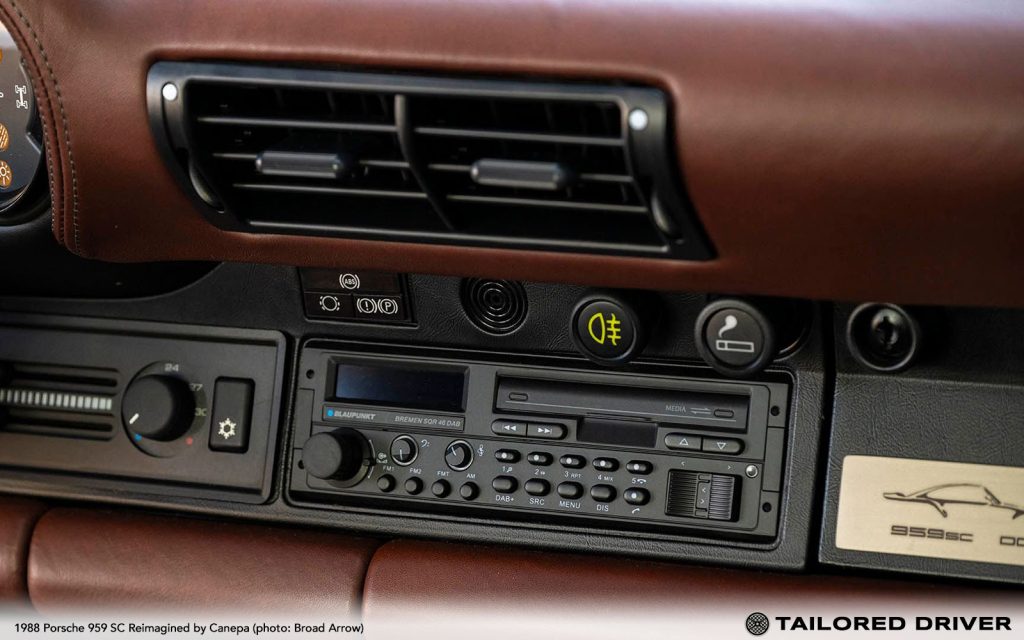
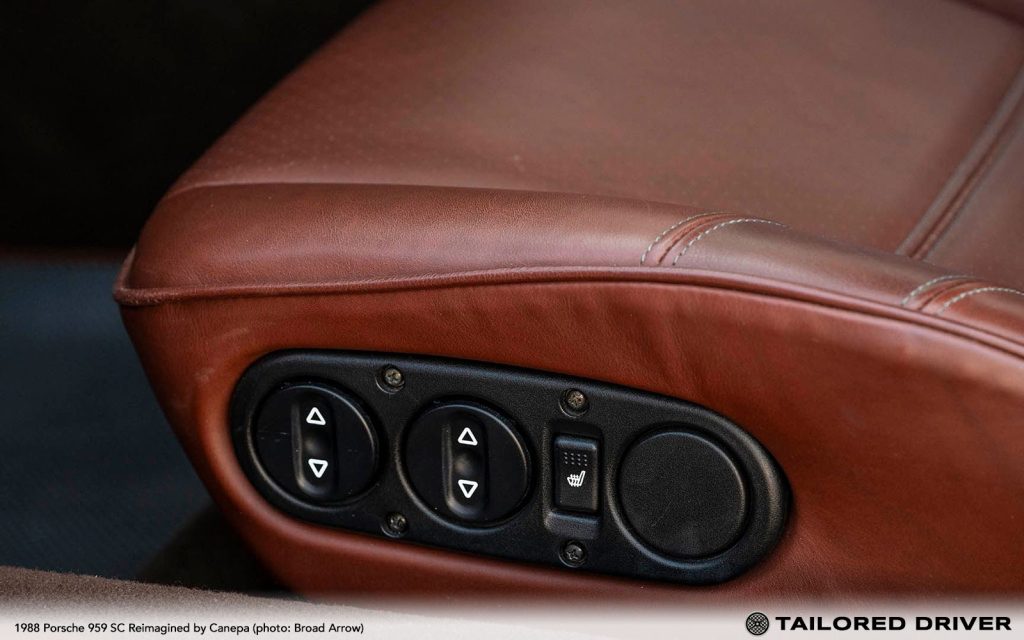
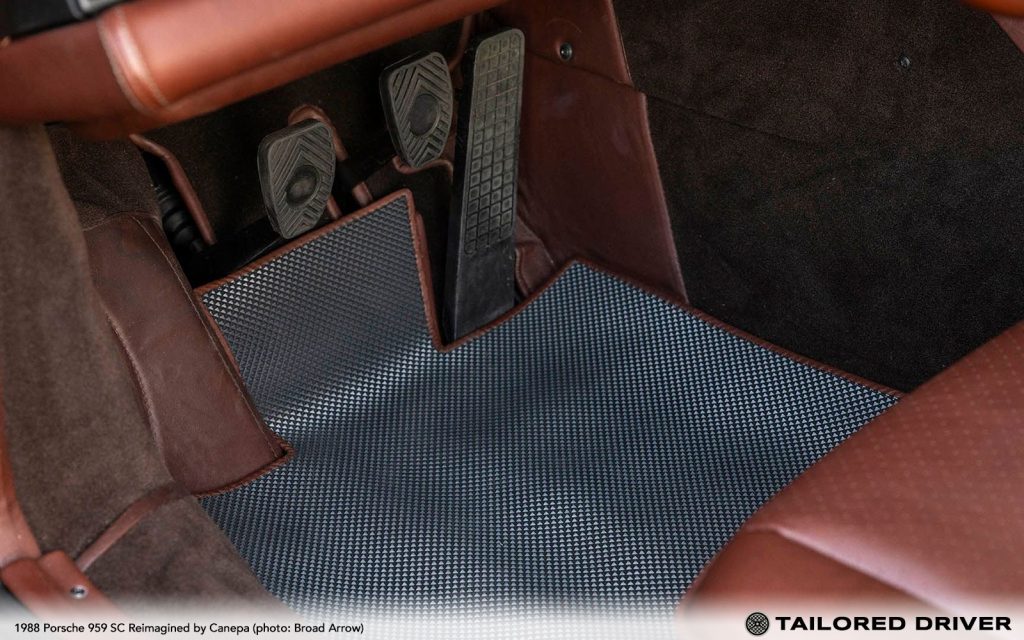
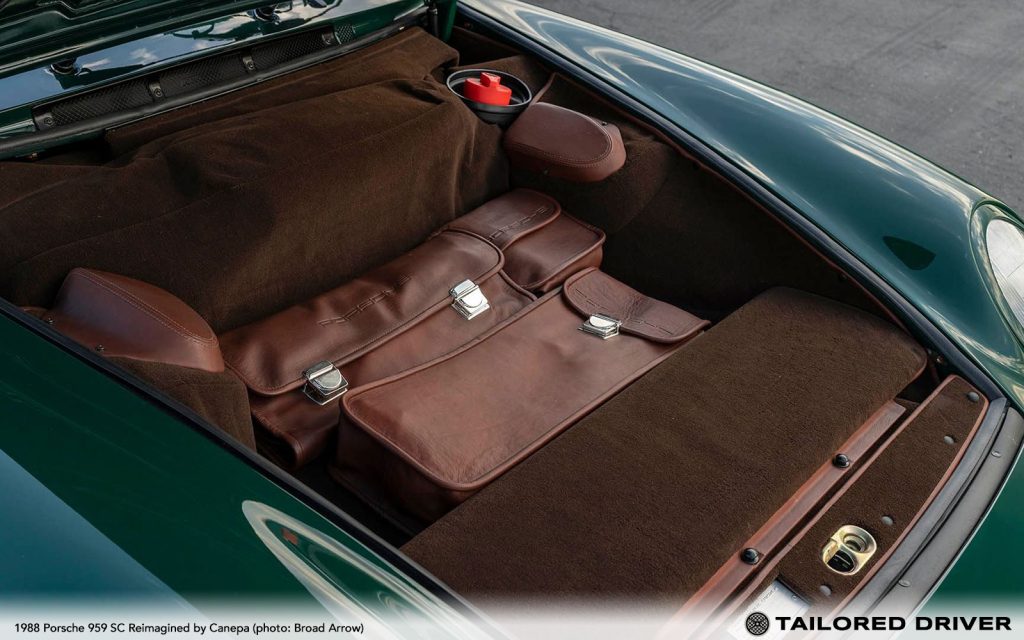
Drawing on his many years and thousands of miles driving the 959, Canepa developed a ground-up approach to reconditioning, and in some areas outright re-engineering, every element of Porsche’s already superb creation. Starting with only the most original examples, the talented team at Canepa’s Scotts Valley, California headquarters begin by carefully disassembling the entire car to the bare steel unibody. At this stage, all of the body panels are stripped, primed, and block sanded to perfection in preparation for paintwork. Canepa’s unrelenting attention to detail can be observed on the driver’s side quarter panel, where the auxiliary door for the hydraulic suspension oil on 959 Komfort models is deleted by molding a new composite body panel. Clients are able to choose from Porsche’s own factory Paint-to-Sample palette of over 150 unique shades, or to create a custom color of their choice. The virtually limitless personalization offered by Canepa’s service extends to the cabin, where over 400 hours are spent hand stitching an entirely new leather interior with countless colors and stitching options from Porsche’s own factory offerings. Swaths of leather trim every element of the interior – including components that were not originally upholstered from the factory – while numerous upgrades ensure a 21st century driving experience. These include Porsche’s Classic Radio Navigation system connected to an upgraded six-speaker system, LED cabin and gauge lighting, and a switch located on the center console to control the two-stage sport exhaust system.
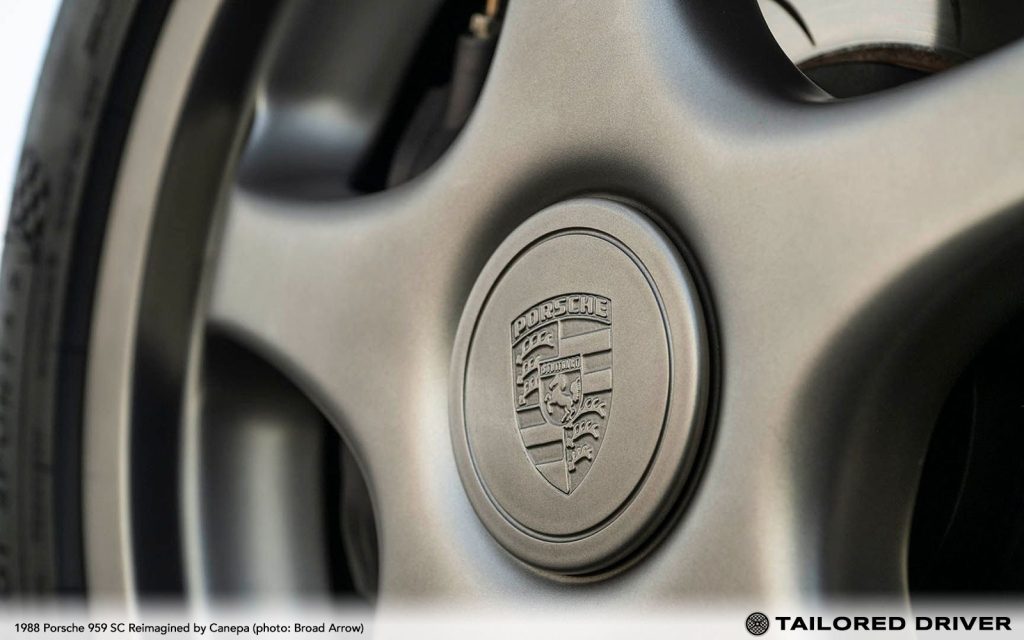
While a one-of-a-kind appearance is being crafted by Canepa’s in-house paint and upholstery departments, over 4,000 individual mechanical components are inspected, refinished, rebuilt, or upgraded by technicians with over two decades of experience working with the Porsche 959. Quite literally nothing goes untouched, with every bolt, clamp, and fitting being stripped and replated in a variety of coatings such as zinc, anodizing, powder coating, and Teflon. Starting with the suspension, the 959 SC opts for the weight savings and simplicity of the coil-over spring and shock assembly found on the factory 959 Sport specification – thus eliminating the adjustable ride height and its related hydraulic system on Komfort models. In its place, the Canepa suspension upgrade employs custom-valved Penske shock absorbers with titanium coil-over springs for a one-inch lower ride height while still providing ample ground clearance for real world driving. All four corners also feature specially developed cryo-treated semi-floating brake rotors with upgraded brake pads for improved stopping power. Housing these improved brakes are 18-inch wheels custom-designed by Canepa in conjunction with Michelin to mirror the 18-inch wheels originally featured on the Gruppe B concept car. While radial tire technology in the 1980s forced Porsche to revert to a 17 inch wheel for production 959s, Canepa’s wheel upgrade allows 959 SC owners to take advantage of the grip and comfort offered by the modern tire technology while retaining the timeless look of the original 959.
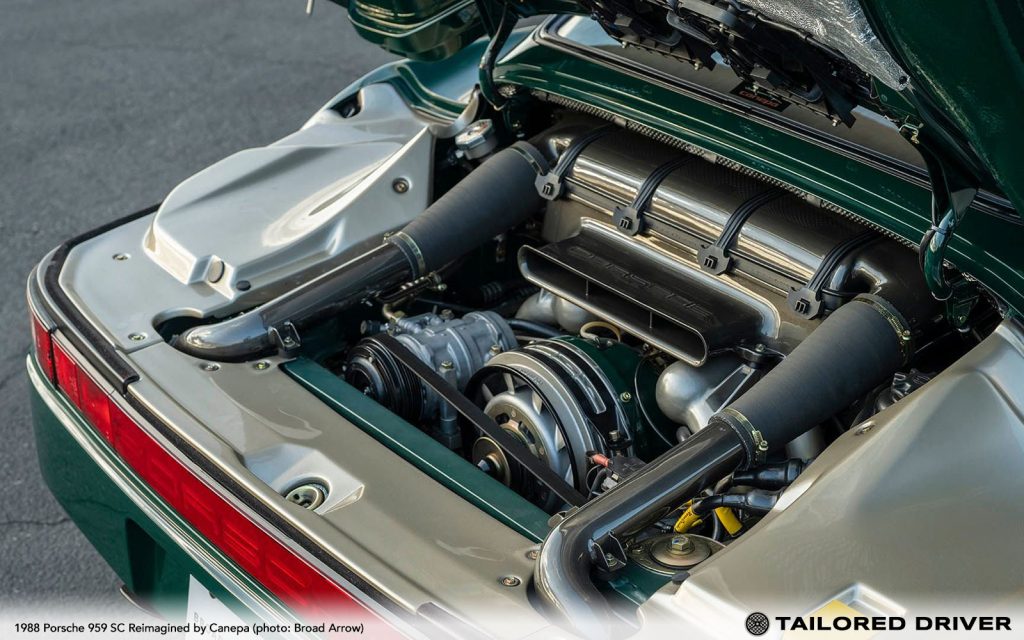
Initially developed for Group B class homologation and tracing its lineage back to the powerplants in the 936, 956, and 962 sports prototypes, the 959’s 2.8-liter twin-turbocharged flat-six was designed to handle significantly more power than the 444 horsepower and 369 lb-ft of torque it left the factory with. After three decades spent optimizing the existing engine components as well as engineering new ones, the 959 SC’s flat-six now develops a staggering 800+ horsepower and 650 lb-ft of torque with Canepa’s Stage III upgrades. These encompass Pankl titanium connecting rods, a blueprinted and upgraded valvetrain assembly, upgraded camshafts and camshaft housings, tungsten ceramic coated headers and two-stage stainless/titanium exhaust system, a MoTec engine management system and wiring harnesses, and two state-of-the-art BorgWarner turbochargers. The robust six-speed manual transmission is also treated to a full rebuild as well as REM isotropic super finishing on gears and shafts and an upgraded clutch assembly to ensure a reliable and extremely capable package. The result is otherworldly, modern-supercar performance, including zero to 60 miles per hour in 2.5 seconds and a top speed in excess of 230 miles per hour.
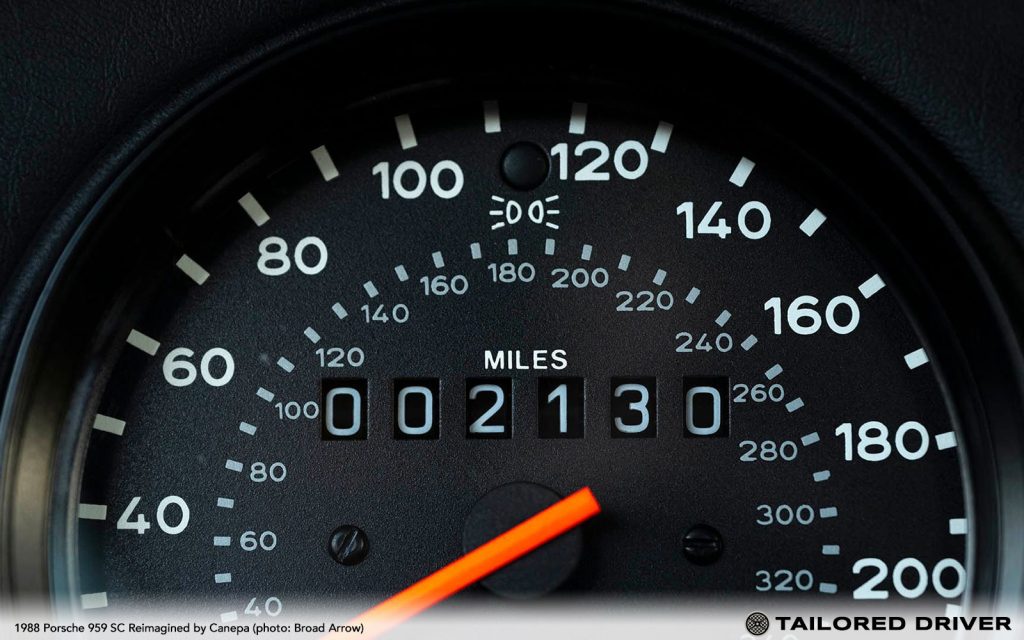
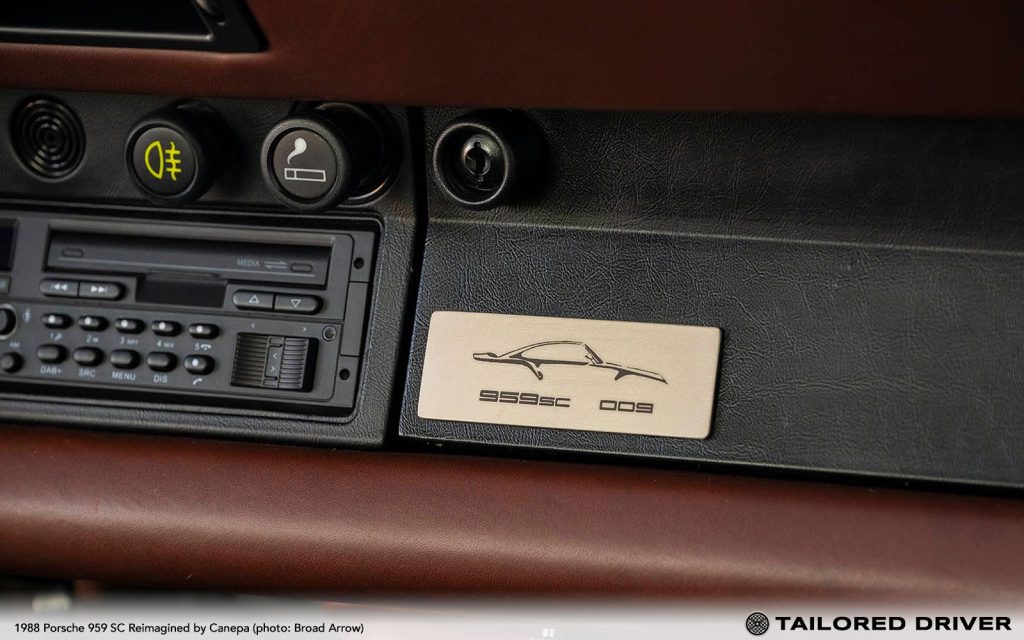
Limited to a mere 50 examples in total, only the most original, low-mileage candidates are considered for recommissioning to 959 SC specification. Chassis number 053, one of just 266 959 Komforts built, was ideal then, with less than 8,302 kilometers at the time of its disassembly. Originally finished in Polar Silver Metallic with a Dark Grey Metallic leather interior, this highly original, low-mileage 959 was submitted to Canepa in 2019 for its comprehensive transformation to 959 SC specification. After over 4,000 restoration hours it was completed four years later in 2022 and was given Canepa 959 SC serial number “009.” Invoices and photos of the comprehensive Canepa work are on file. Today, the Porsche is resplendent in the lightly modified version of the Porsche factory shade of Irish Green, noted by the consignor as “Irish Green Plus,” containing less yellow than the standard shade. The paint to sample exterior color is protected with full ceramic coated paint protection file (PPF). The exceptional exterior color choice is accentuated by the proprietary gun-metal grey finish of its 18 inch wheels. Inside, the cabin is trimmed wall-to-wall in exquisite bespoke tobacco brown leather and matching cut-pile velour carpeting, further complemented by matching, custom-embossed tool pouches and owner’s books covers. Now fitted with instrumentation in miles, the odometer displays just 2,130 total miles since reimagining at the time of cataloging.
This Porsche 959 SC Reimagined by Canepa presents the rare opportunity to acquire one of the most exclusive and earth-shattering supercars of the 1980s – so advanced that other manufacturers continue to view it as the benchmark for technology, engineering, and performance decades after production ceased. Rarer still is the chance to experience the full potential of the 959 platform achieved through decades of research and development to bring the legendary model into the 21st century.
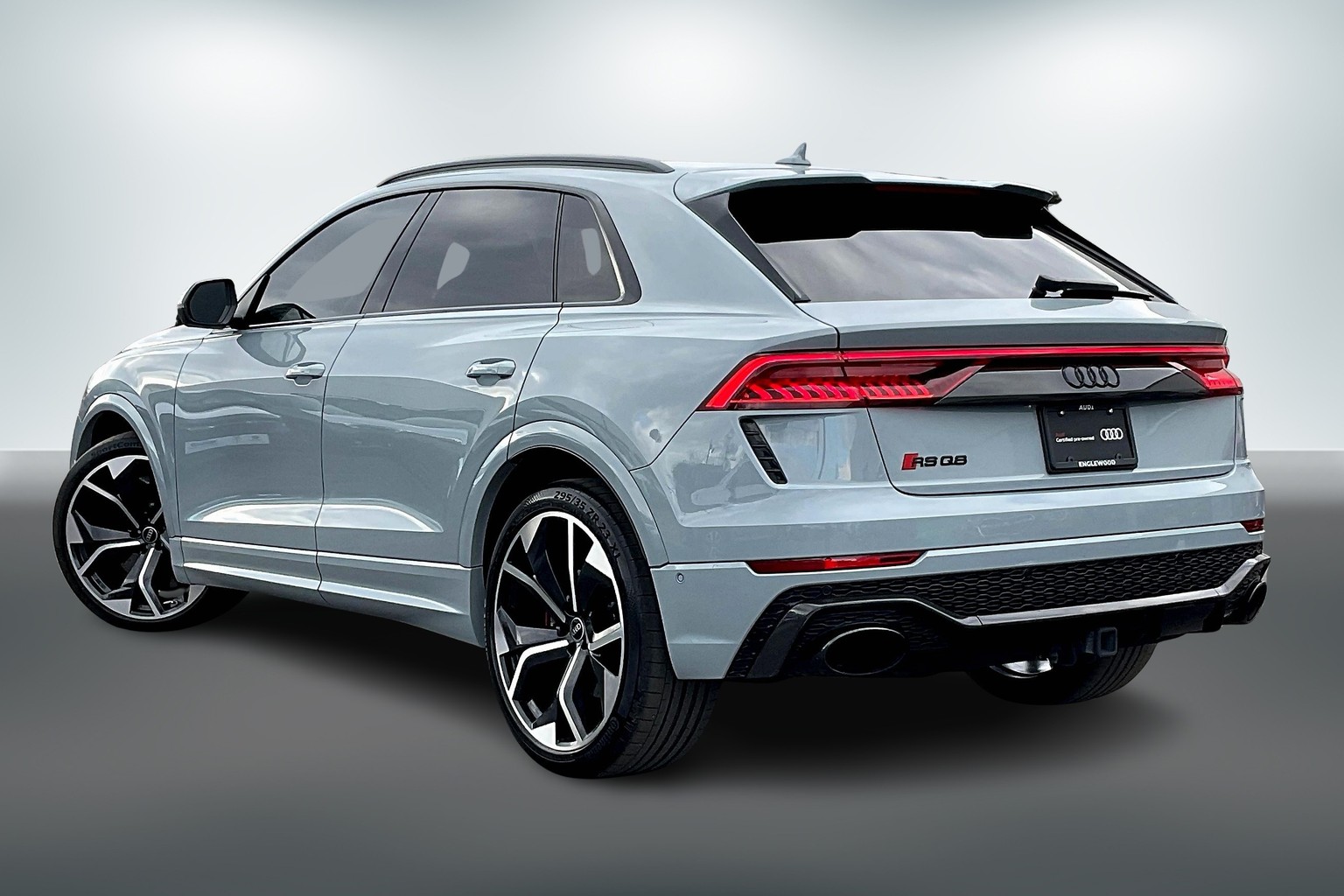
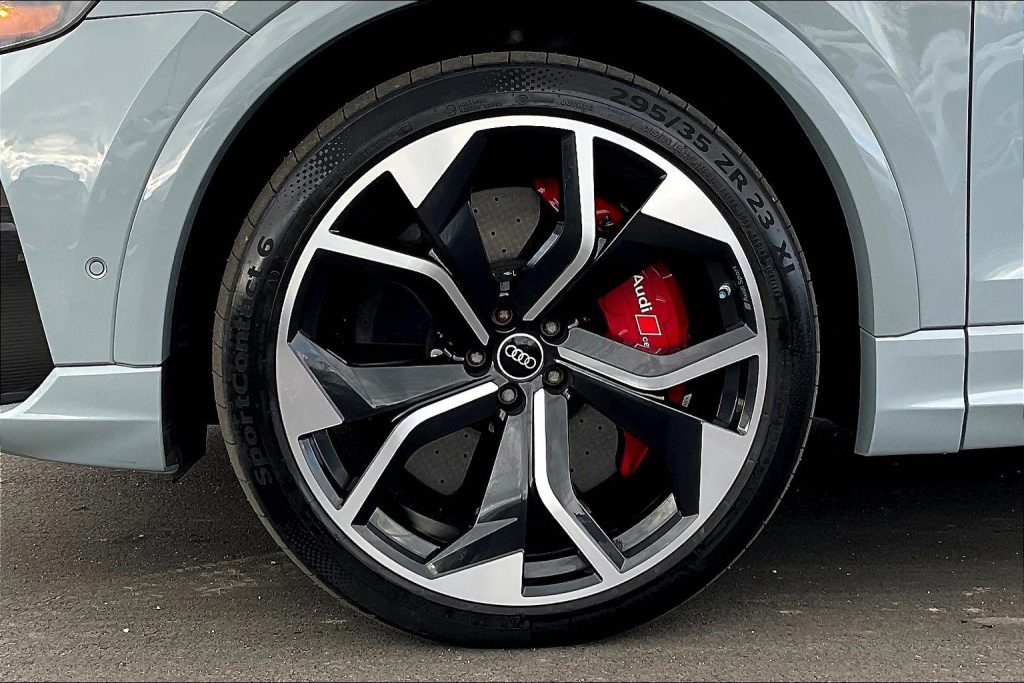
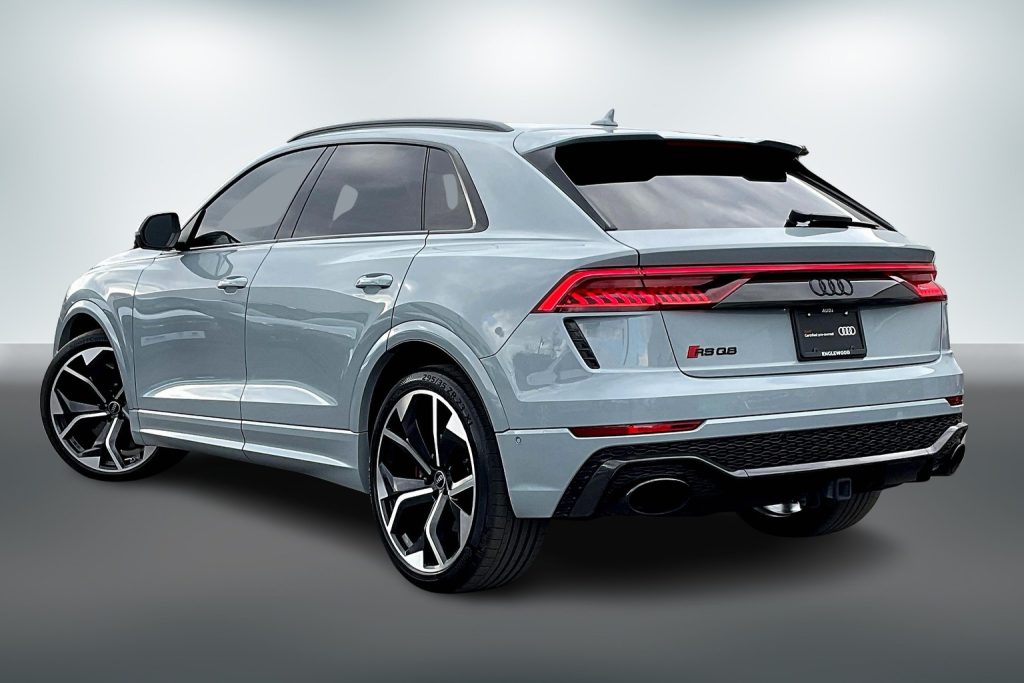
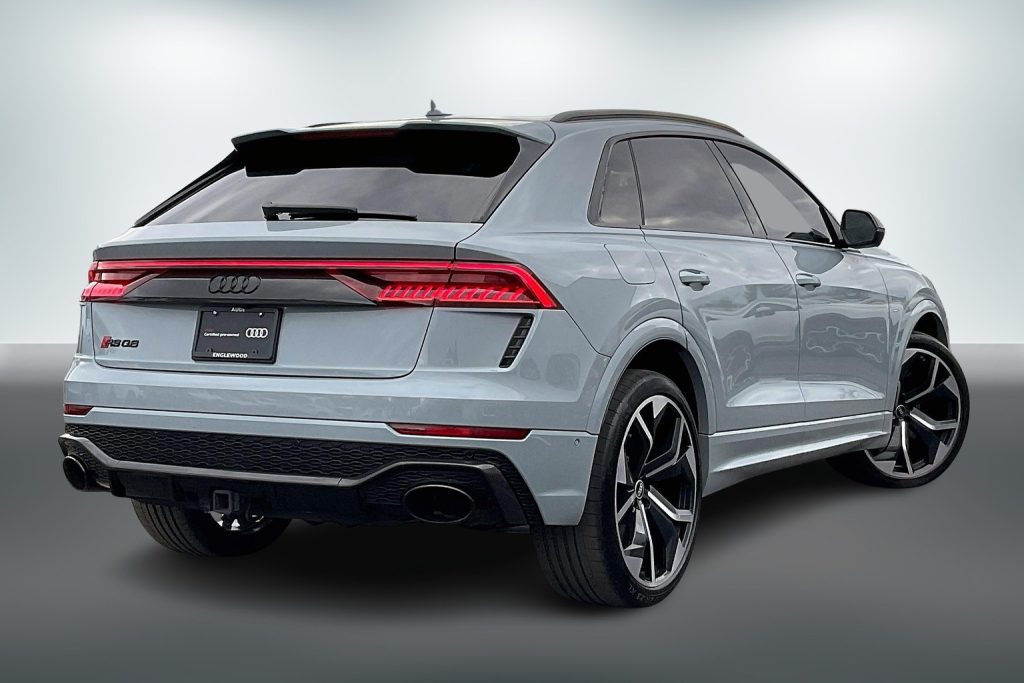
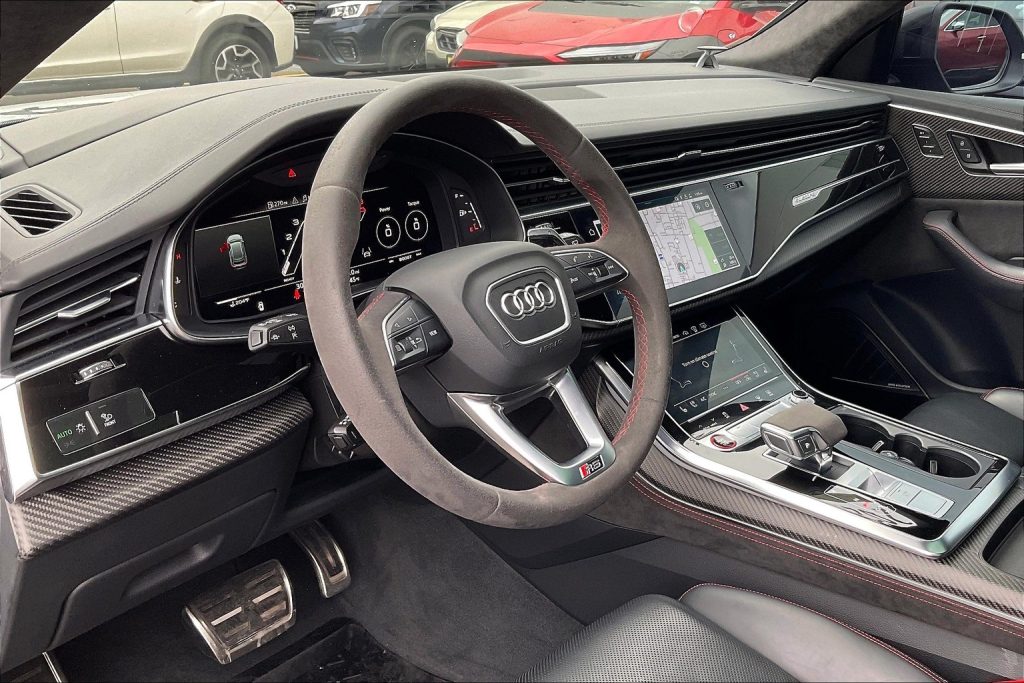
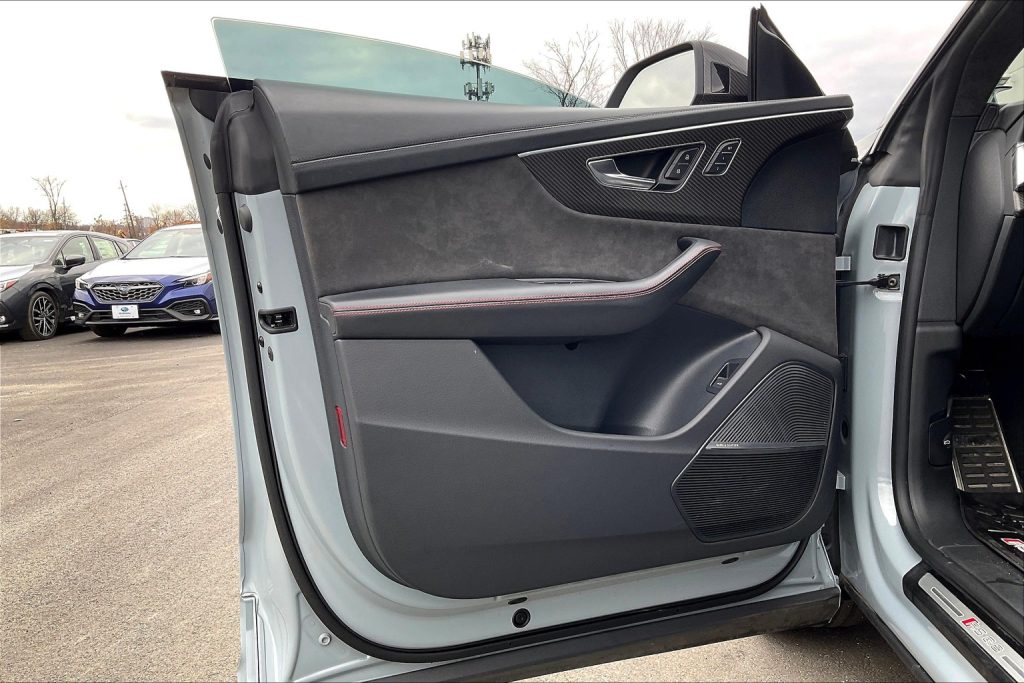
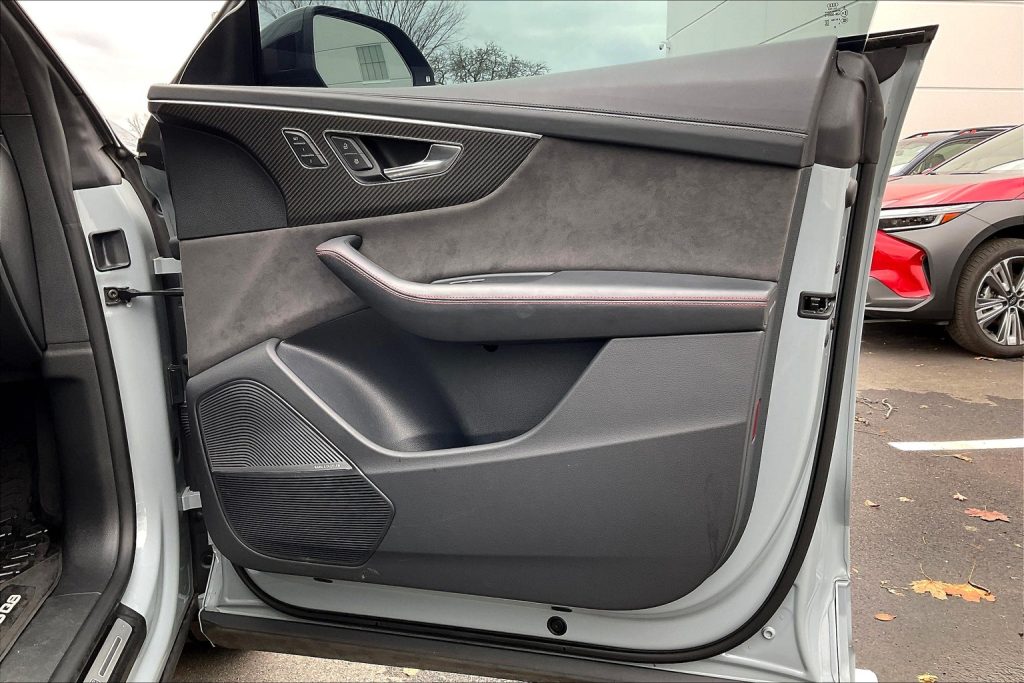
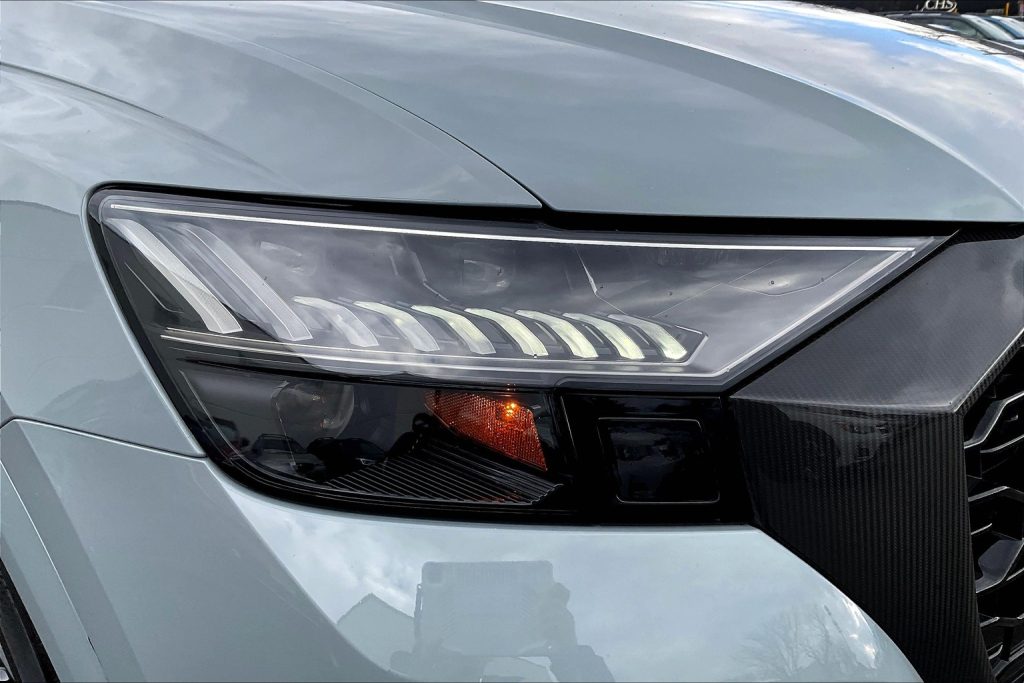
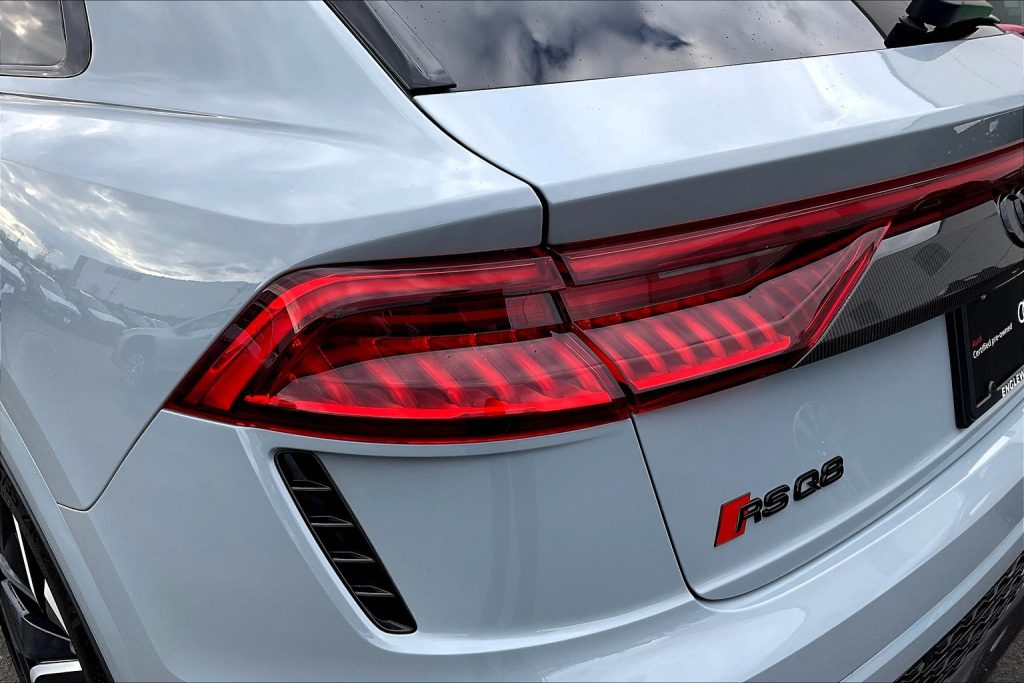
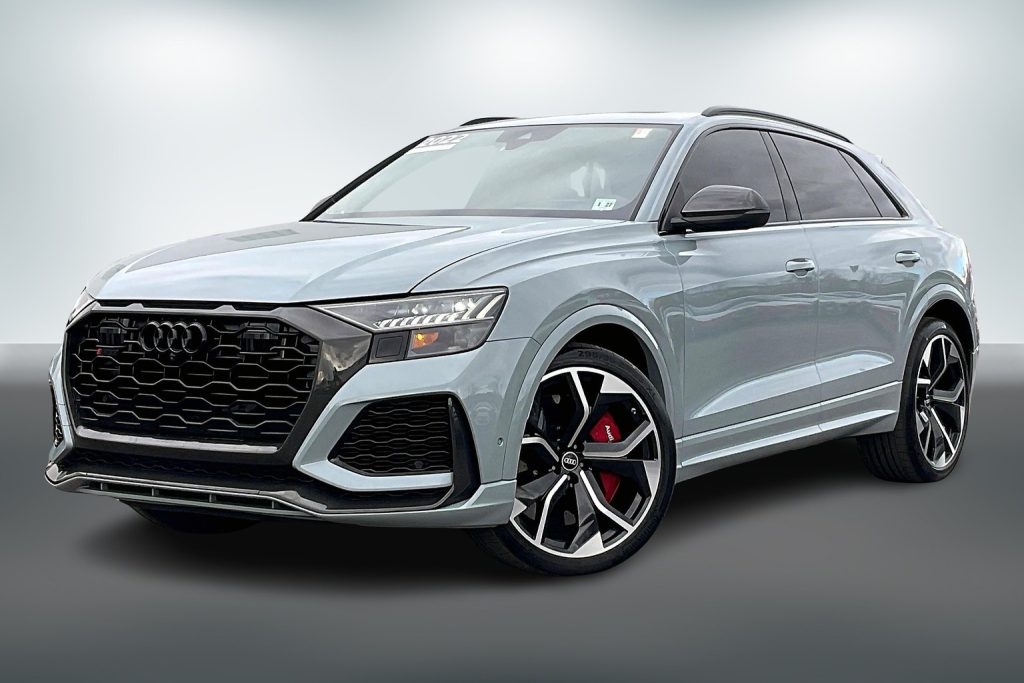
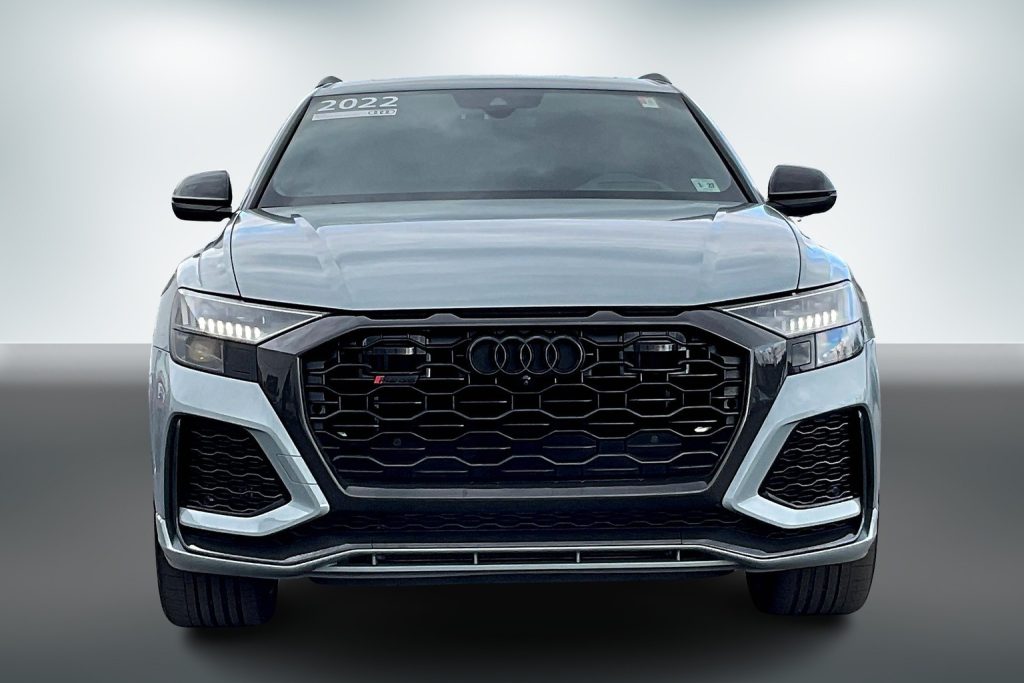
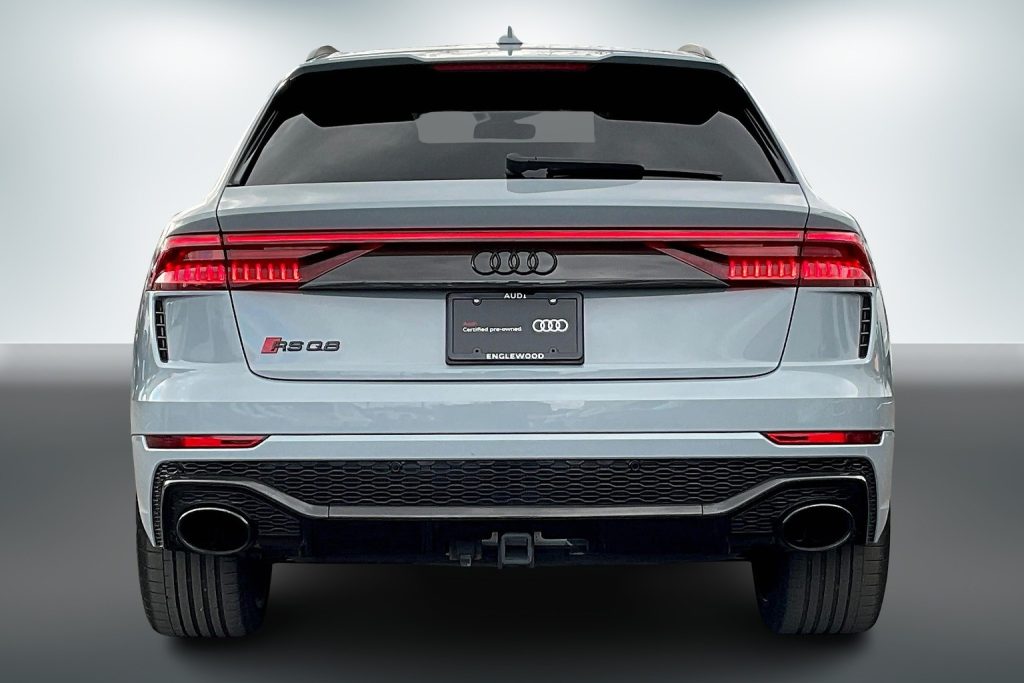
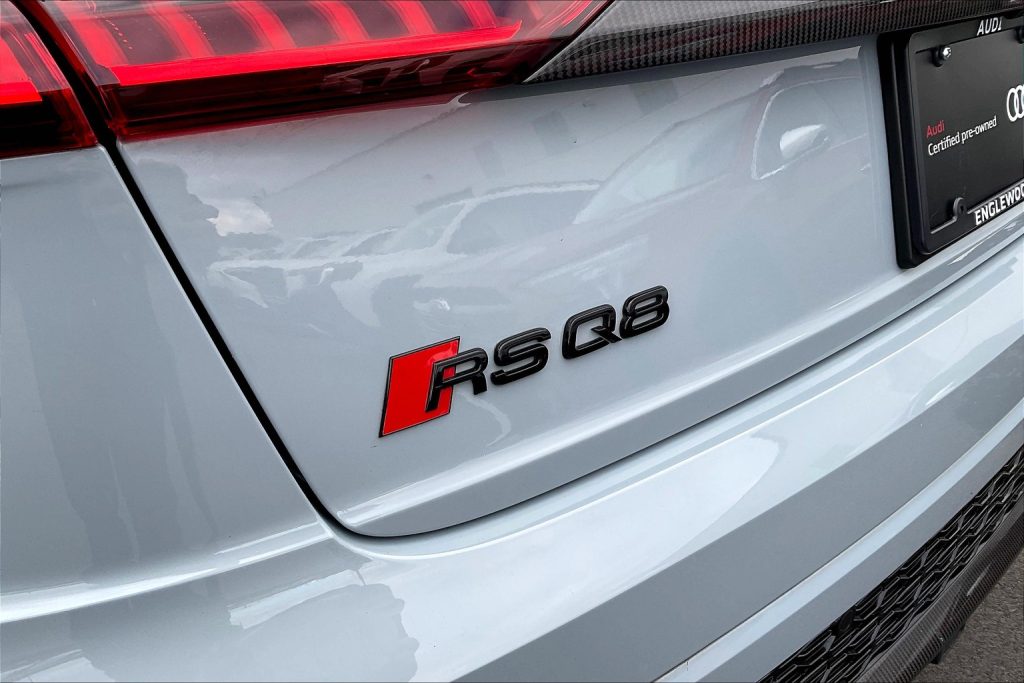
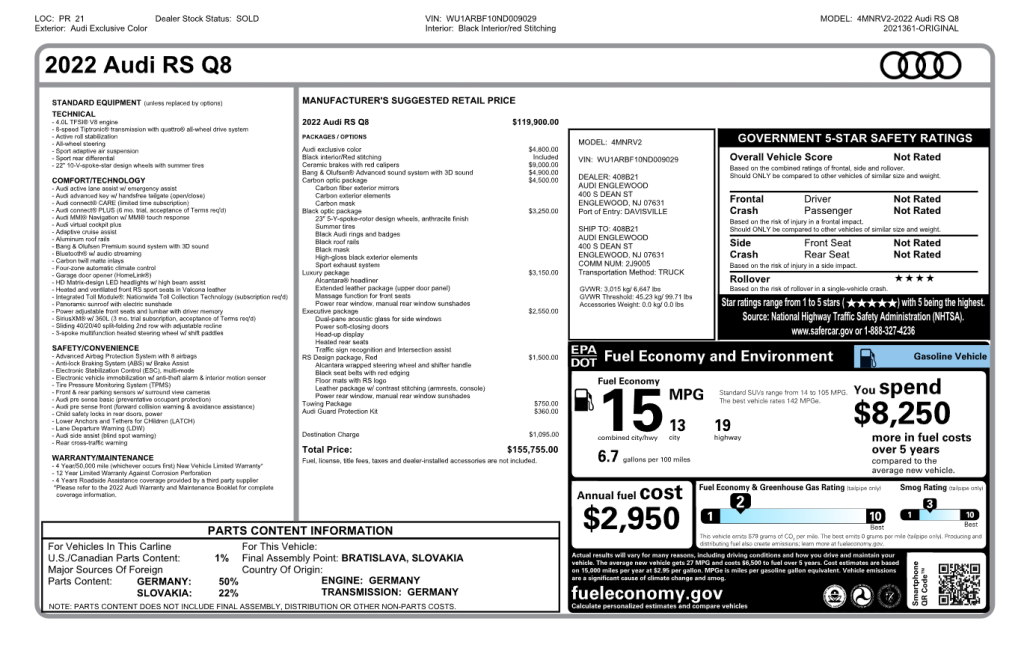
What: 2022 Audi RS Q8 Color: Audi exclusive Arrow Grey Pearl Effect (arrowgrau; pearl effect; LZ7W; Audi) VIN: WU1ARBF10ND009029 Mileage: 30,678 Price at Time of this Writing: $89,999 CarFax:Link Window Sticker: Pictured below Location: Englewood, NJ Dealer listing:Link
Why we love it:
To those in the know, the Audi RS Q8 is a budget Lamborghini Urus, and here’s one in an Audi exclusive color at about 30% of the cost. Audi exclusive Arrow Grey Pearl Effect is an interesting one, appearing quite similar to Nardo Grey, Arrow features a bit more cyan in it’s formula, and introduces a pearl effect to help it pop. Of note to Audi (and color) enthusiasts, from our research it appears to also carry the same color code as Audi’s Aviator Grey, which was most predominantly featured on the first gen TT.
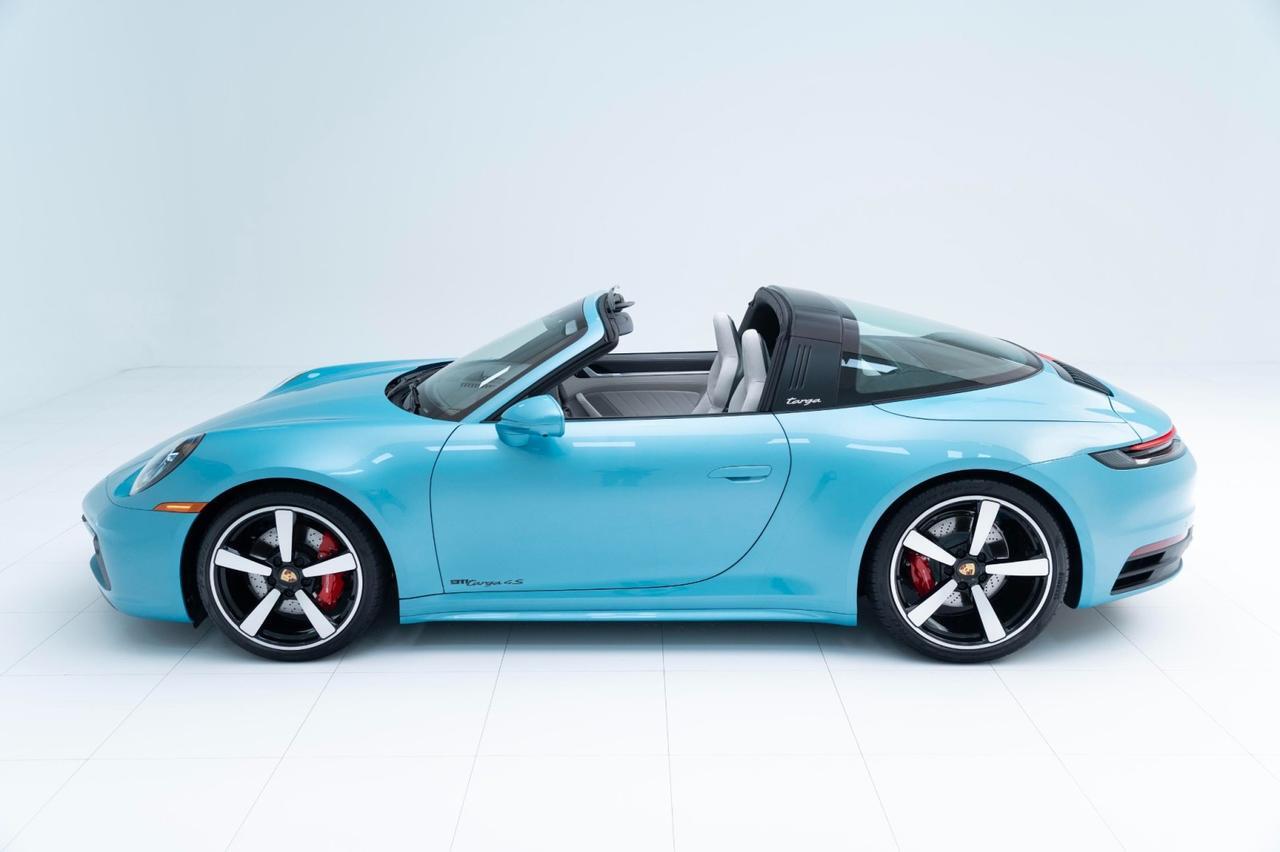
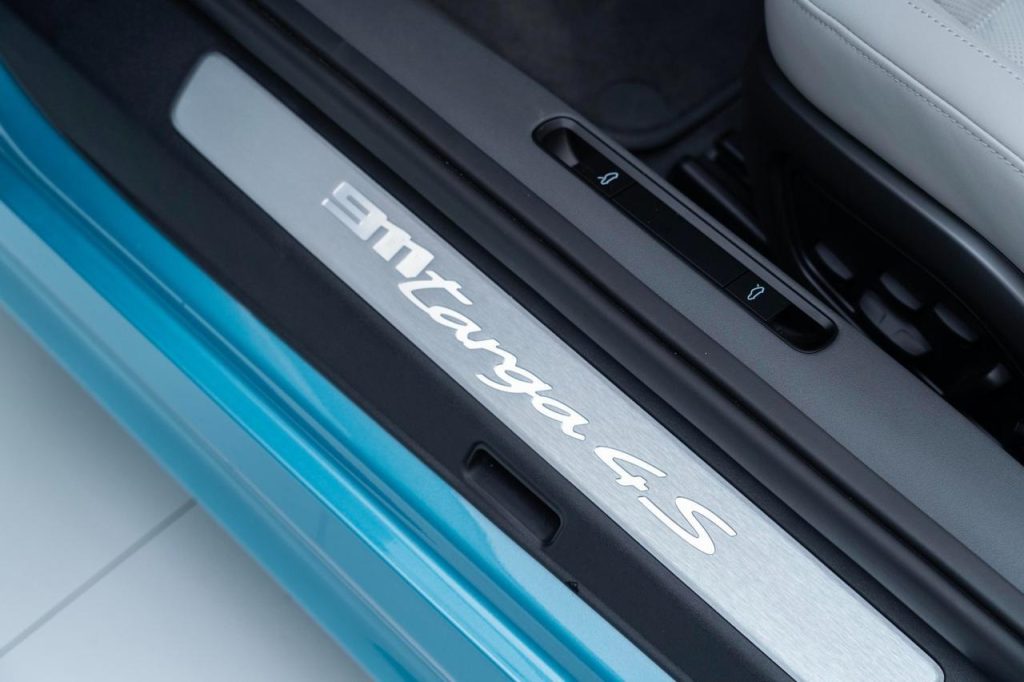
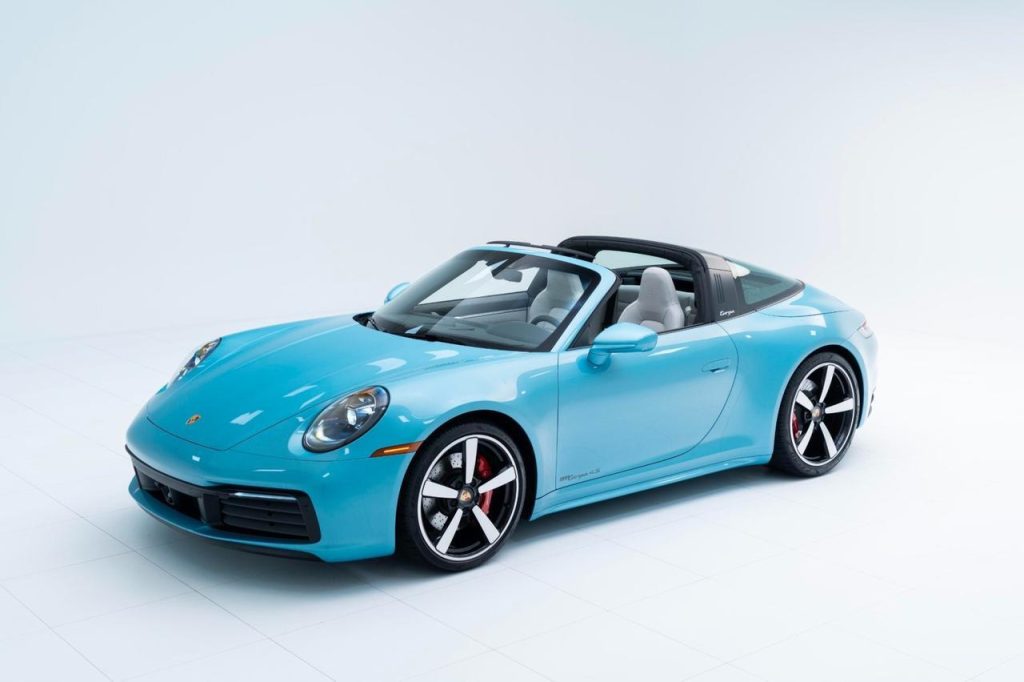
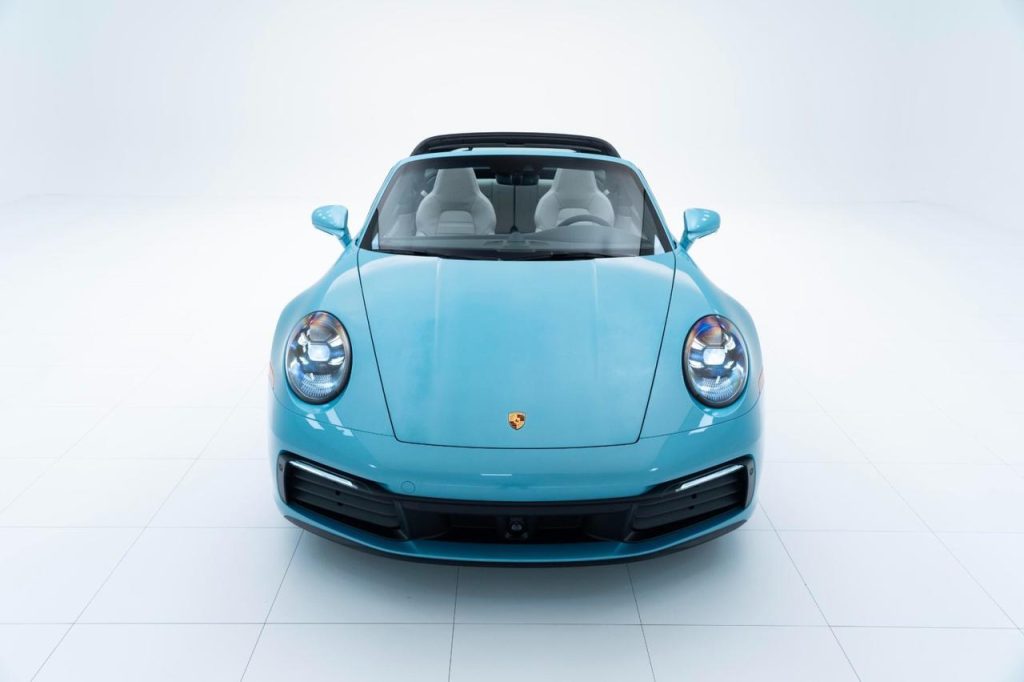
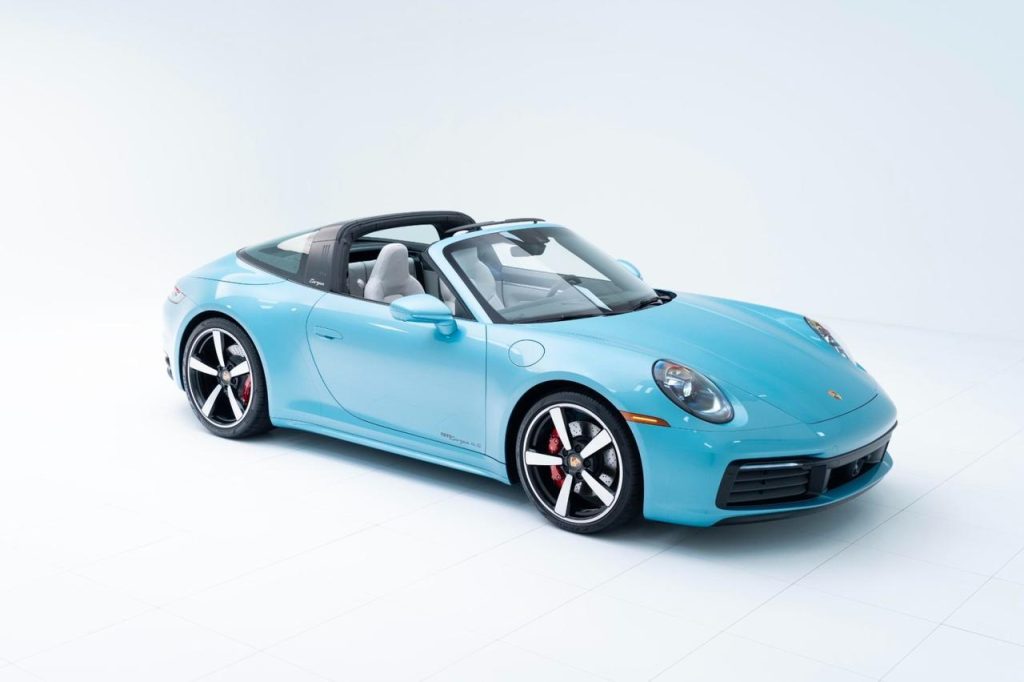
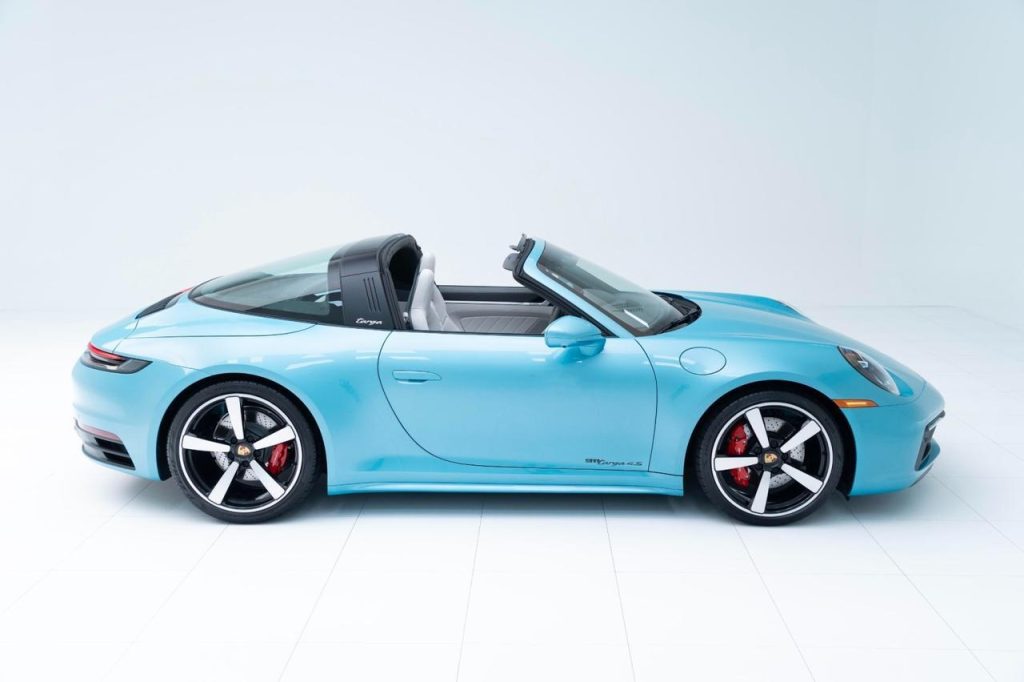
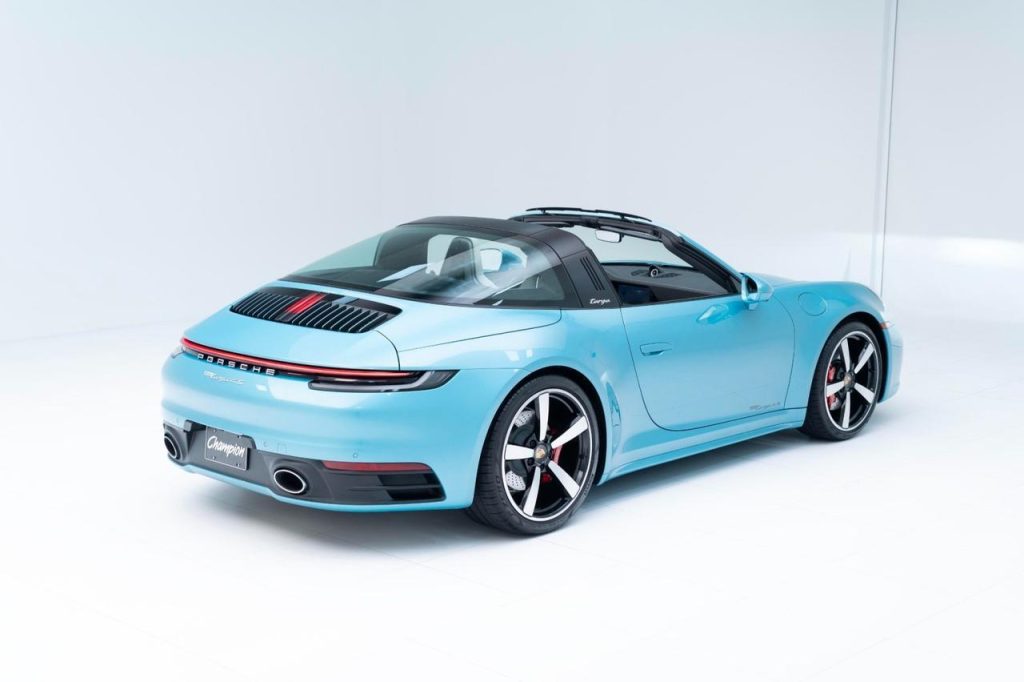
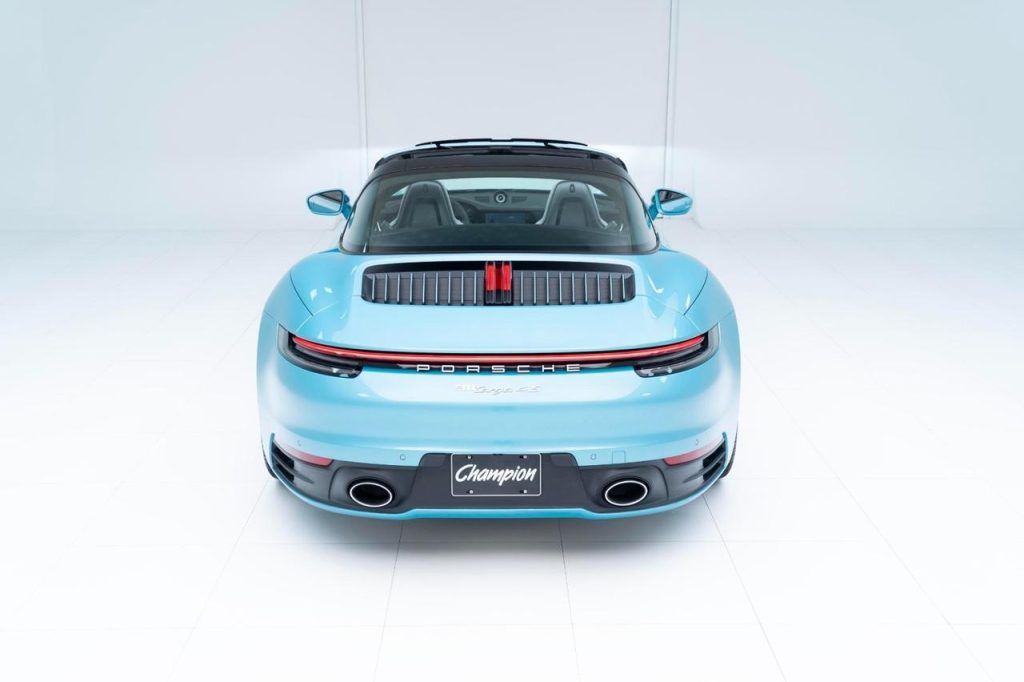
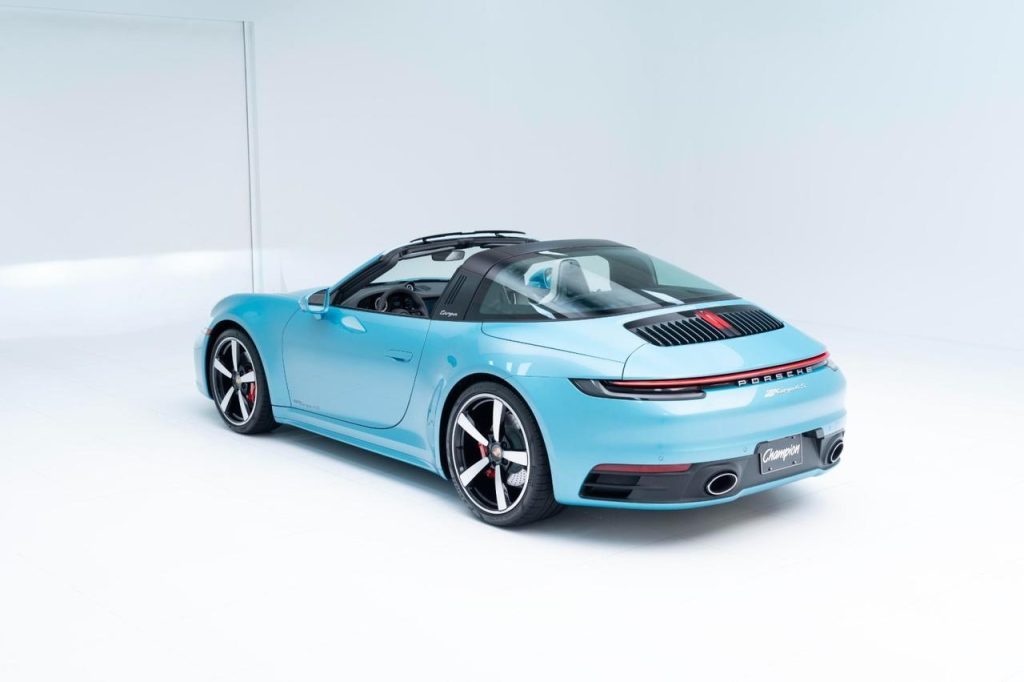
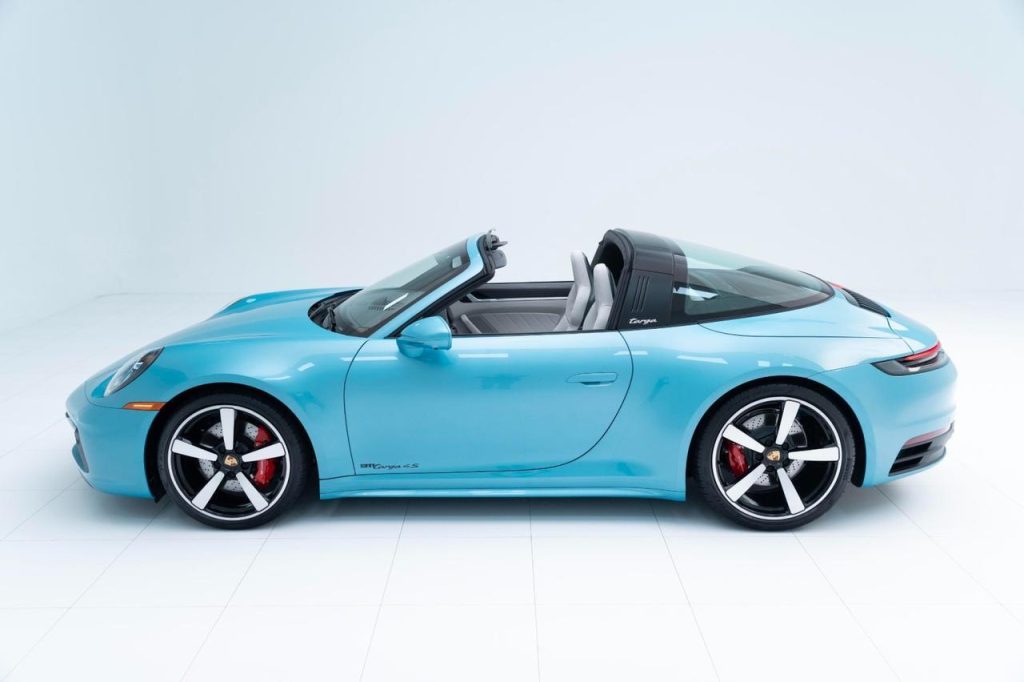
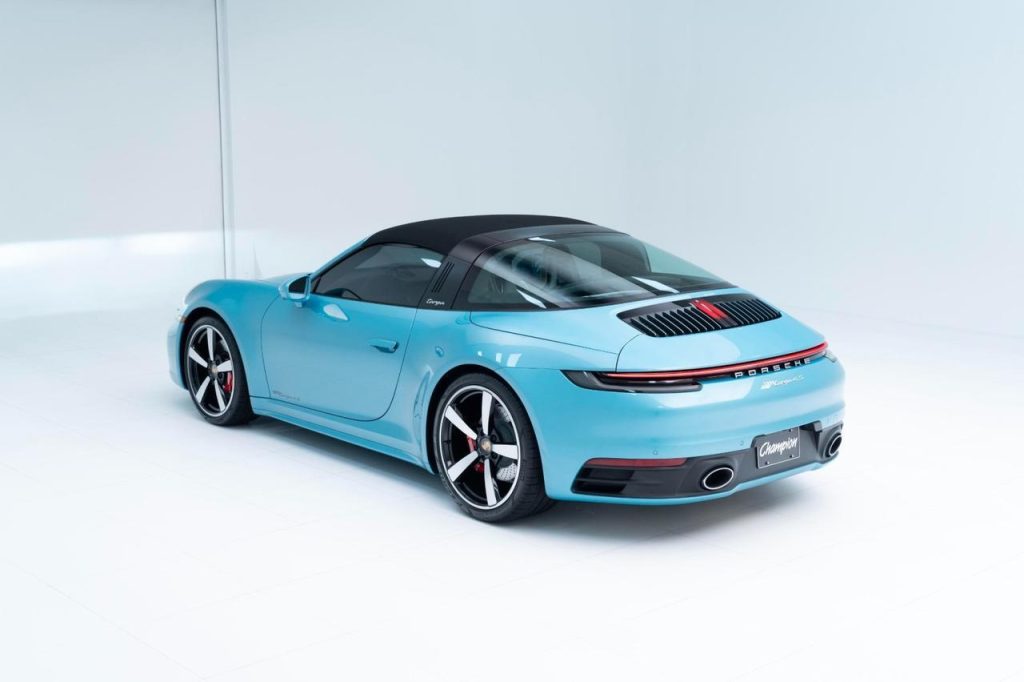
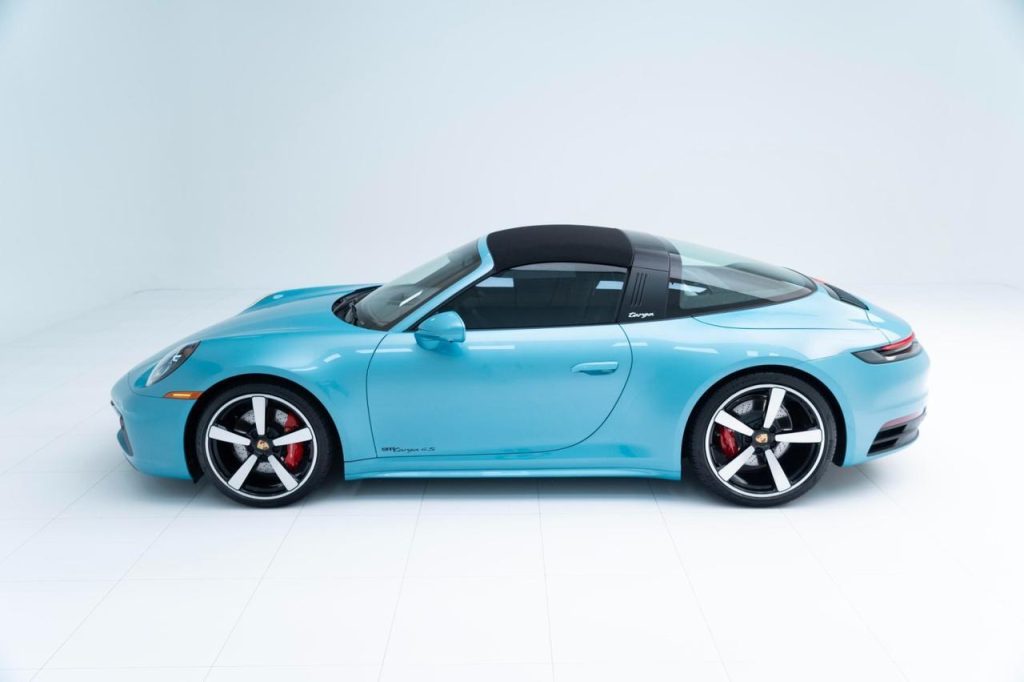
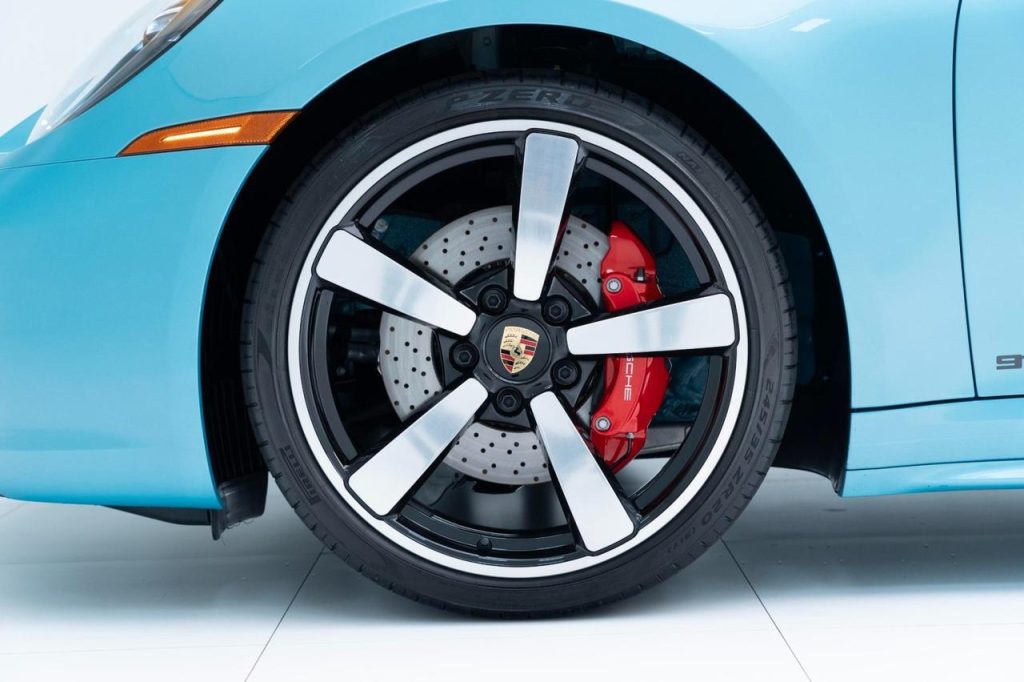
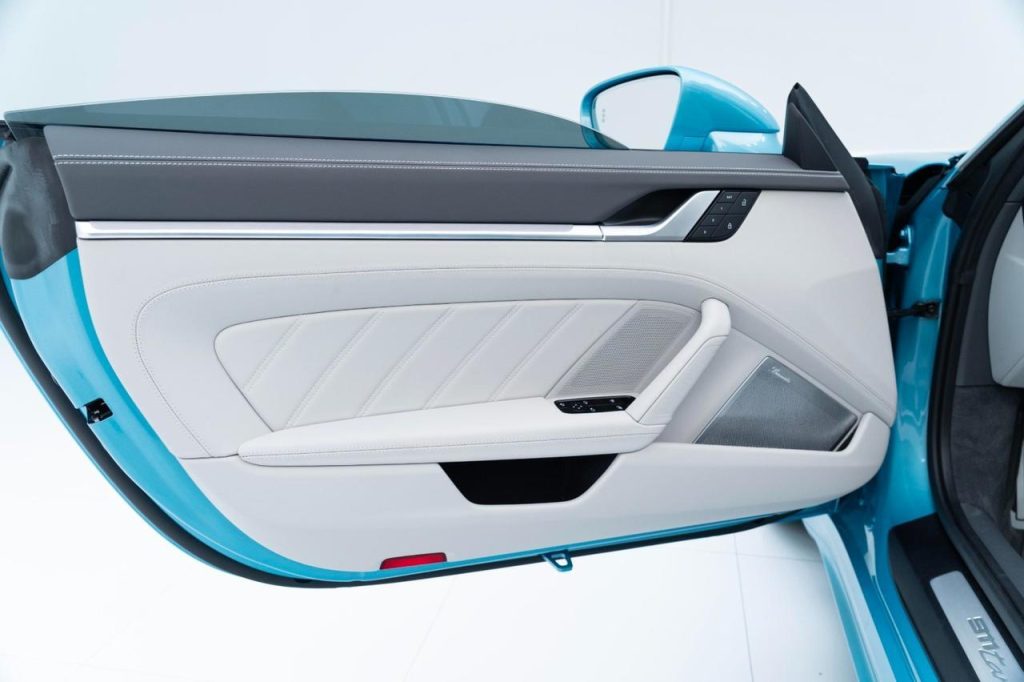
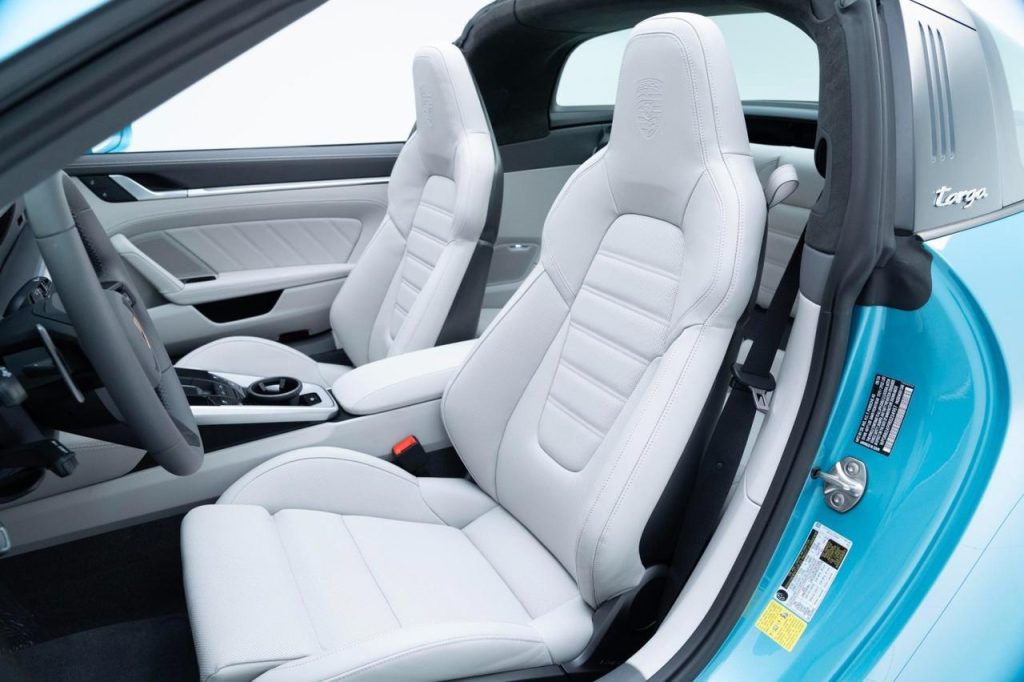
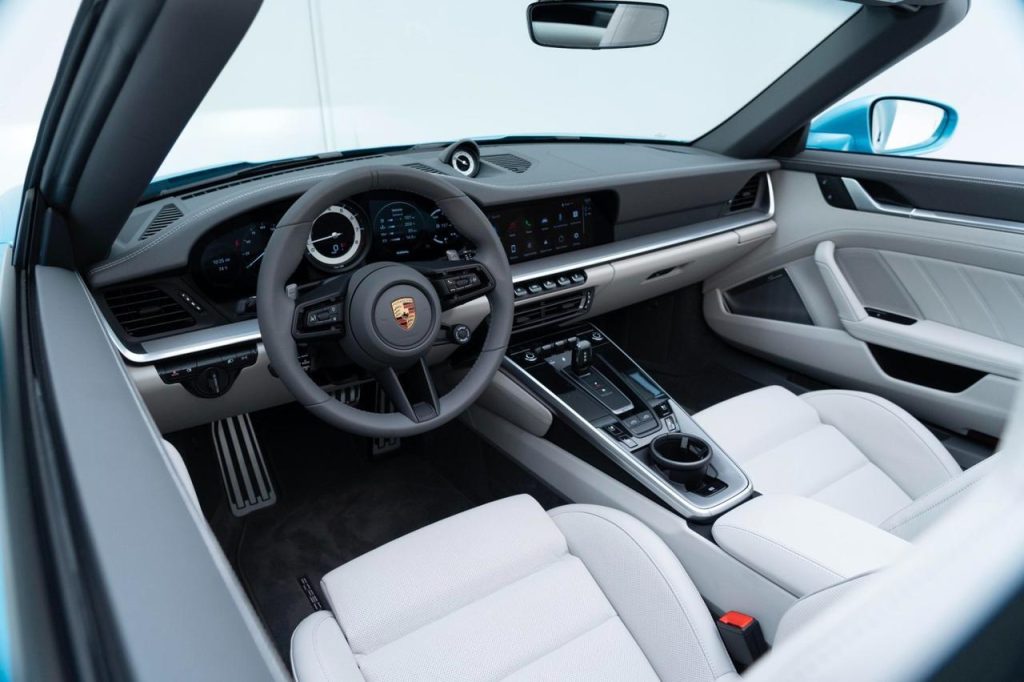
What: 2024 Porsche 911 Targa 4S Color: Paint to Sample Ipanema Blue Metallic (ipanemablau metallic; 3S2; F2; Porsche) VIN: WP0BB2A99RS234957 Mileage: 314 Price at Time of this Writing: $240,900 CarFax:Link Window Sticker: N/A Location: Pompano Beach, FL Dealer listing:Link
Why we love it:
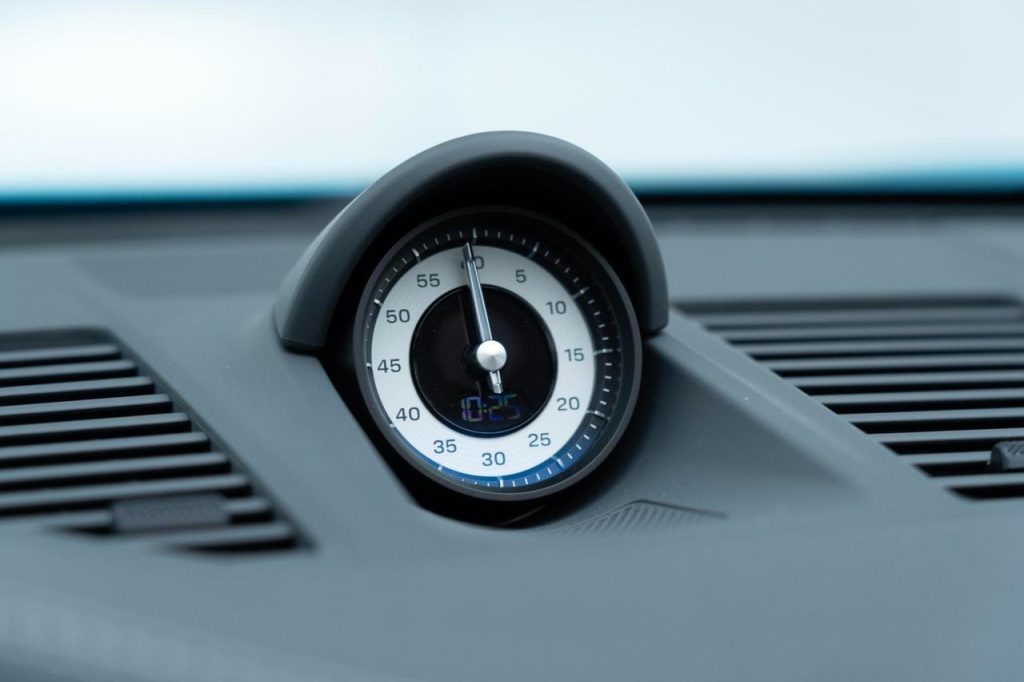
To put it simply, Porsche’s Paint to Sample Ipanema Blue Metallic is a color you just don’t see very often- if ever. The 911 Targa 4S represents an incredibly attractive package offering the best of both open and closed top worlds, although we acknowledge the neither coupe nor cab body style isn’t for everyone. This particular Tailored Driver does tug the heartstrings quite hard with it’s heritage-inspired take on a modern design, pairing Carrera Exclusive wheels, 930 package seats, and the 50’s era flair of Ipanema Blue Metallic.
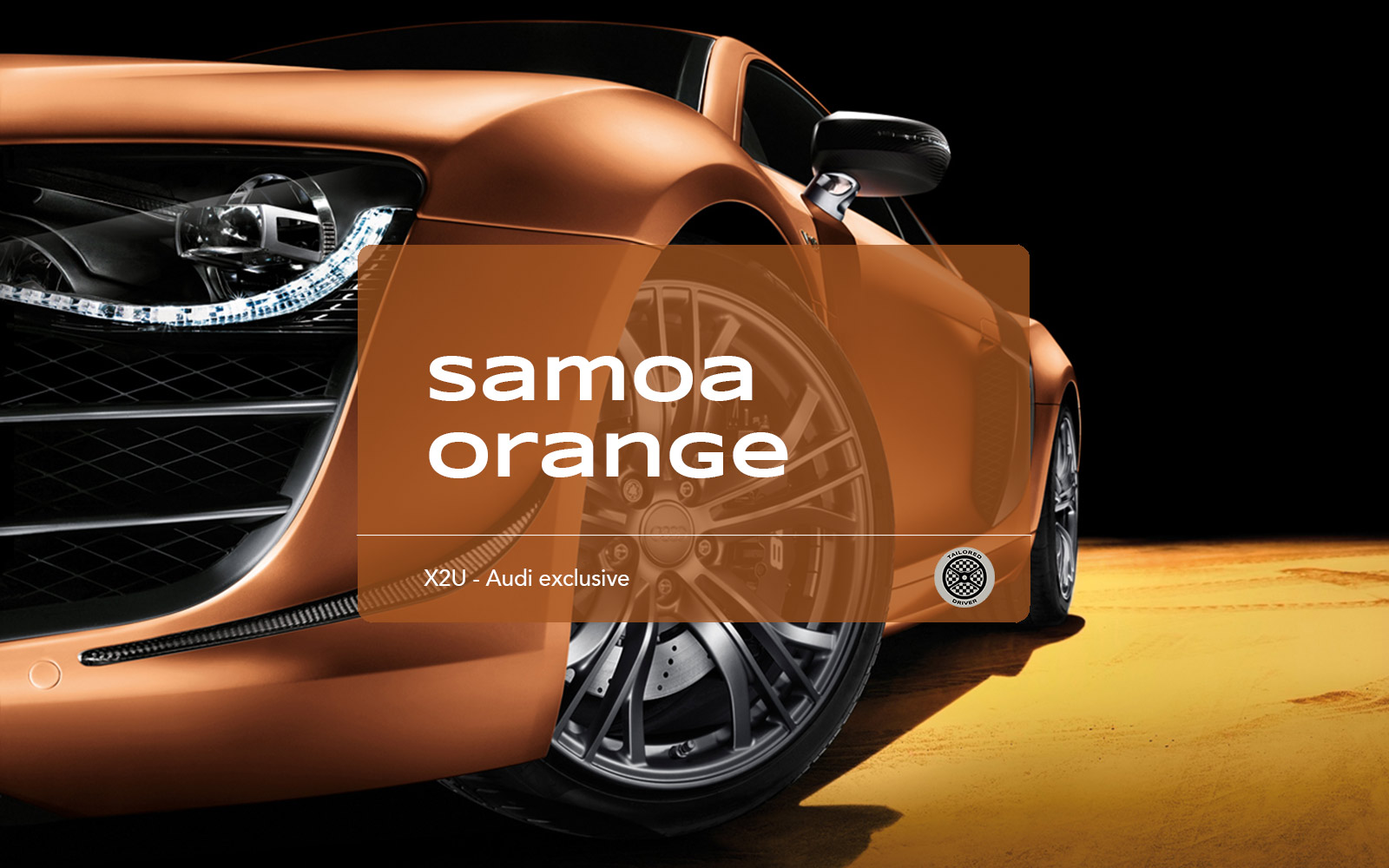
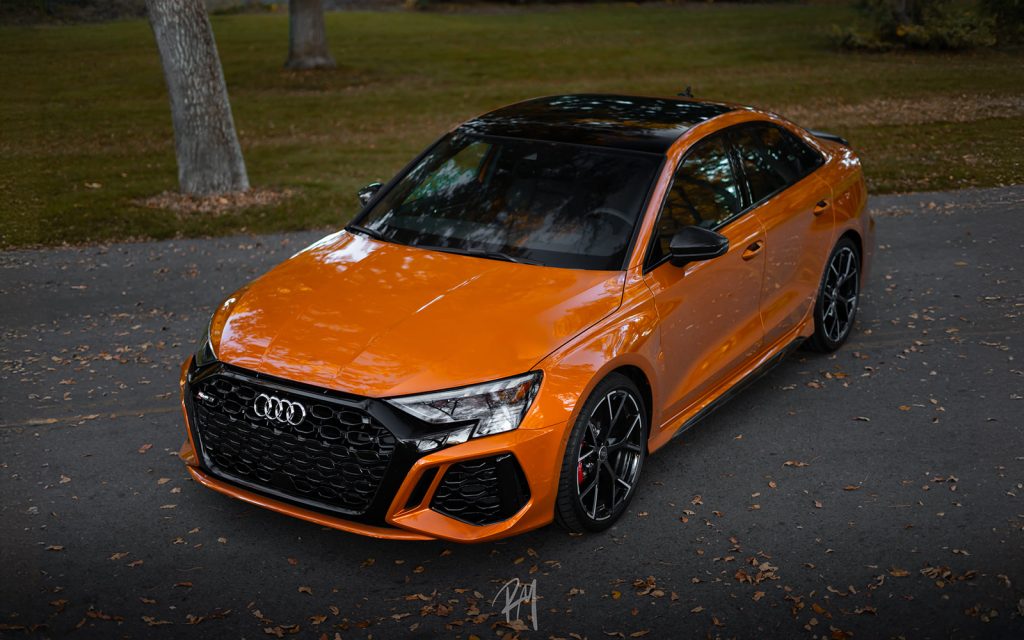
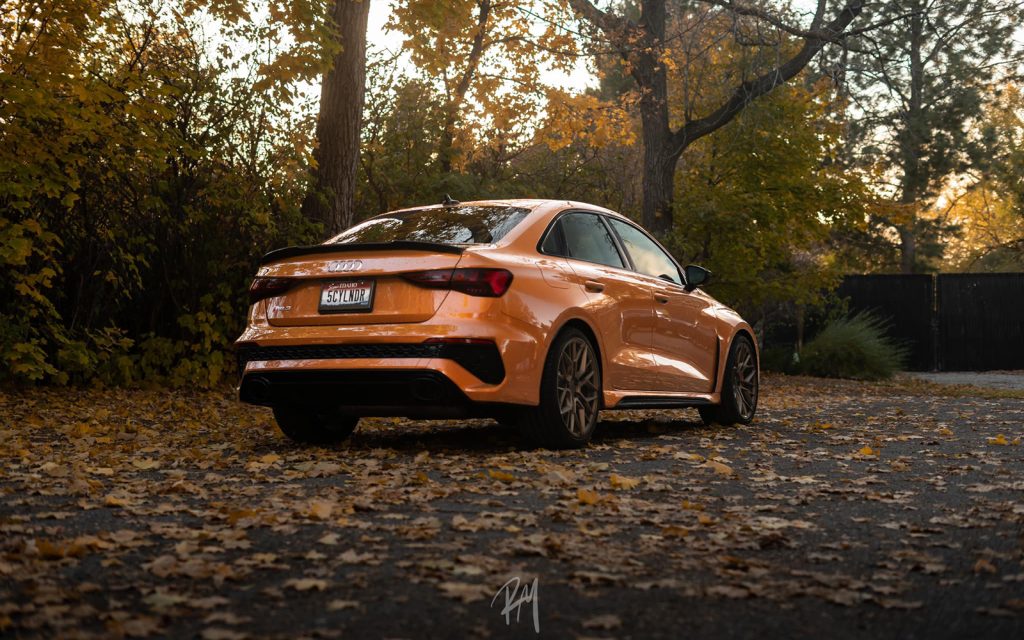
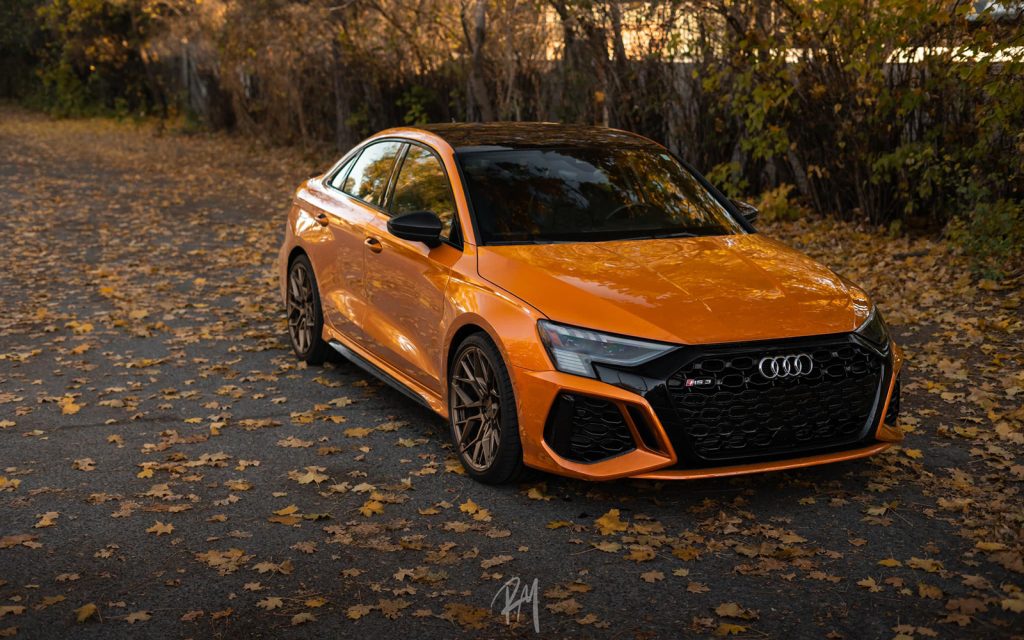
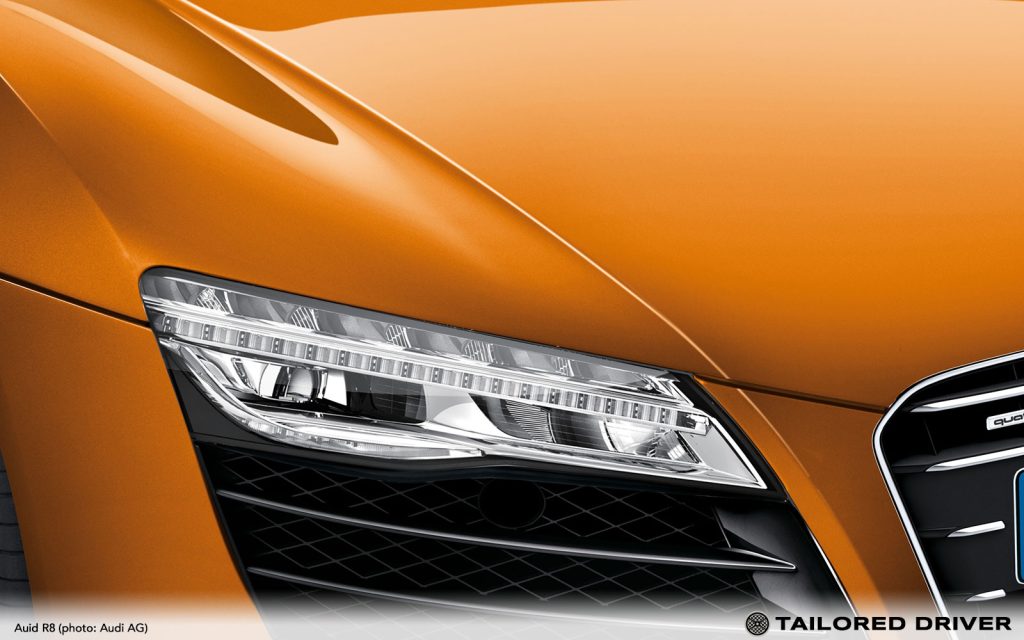
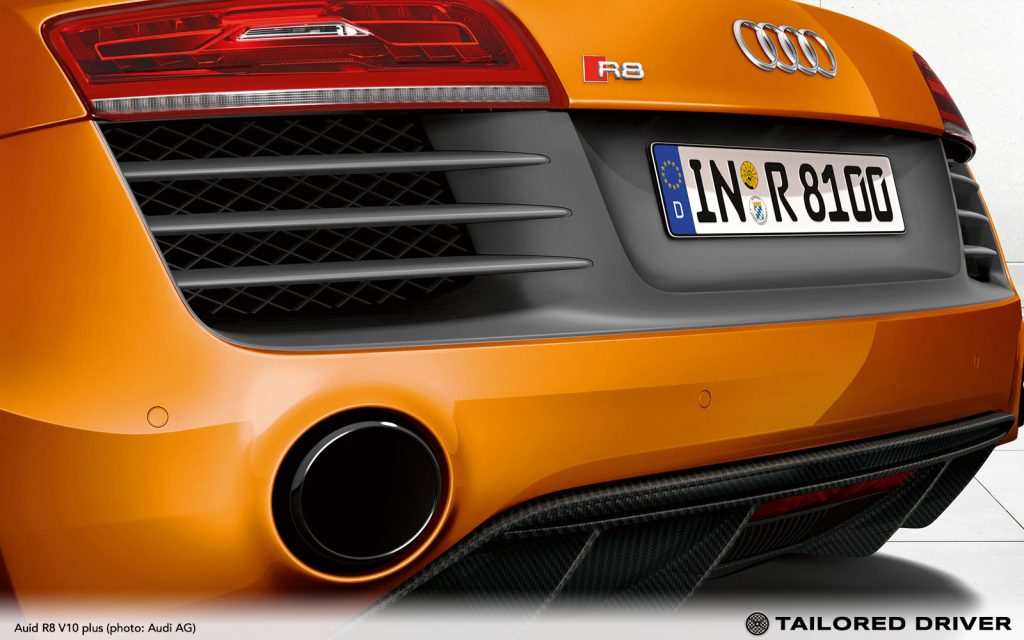
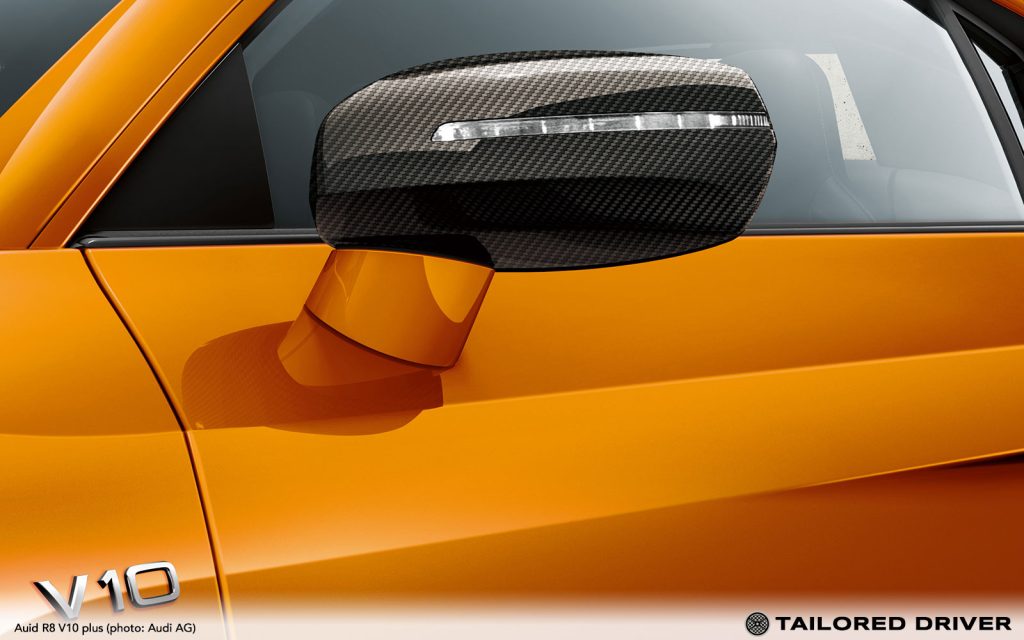
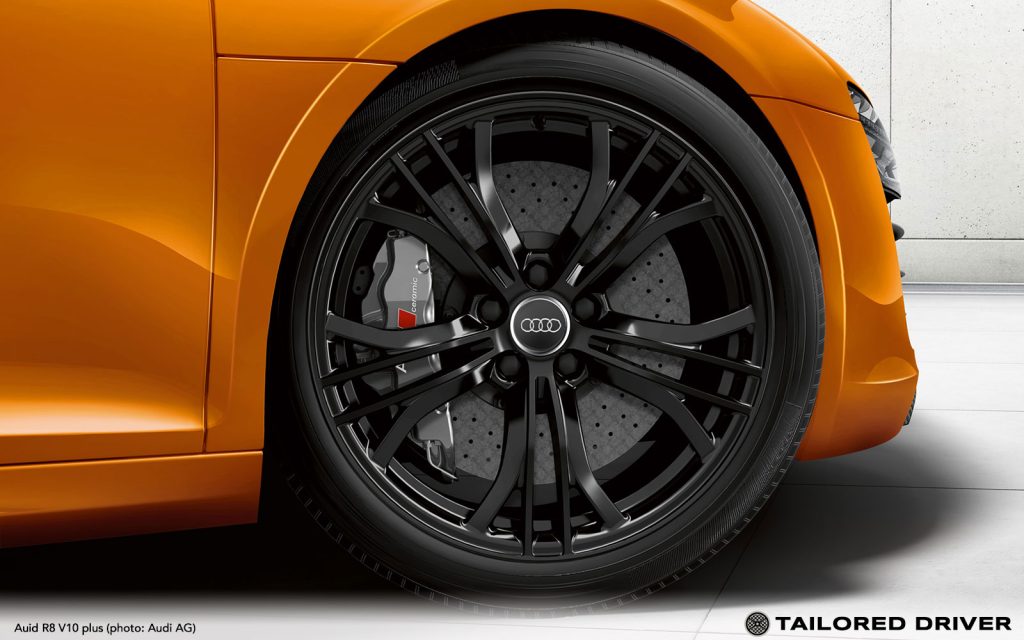
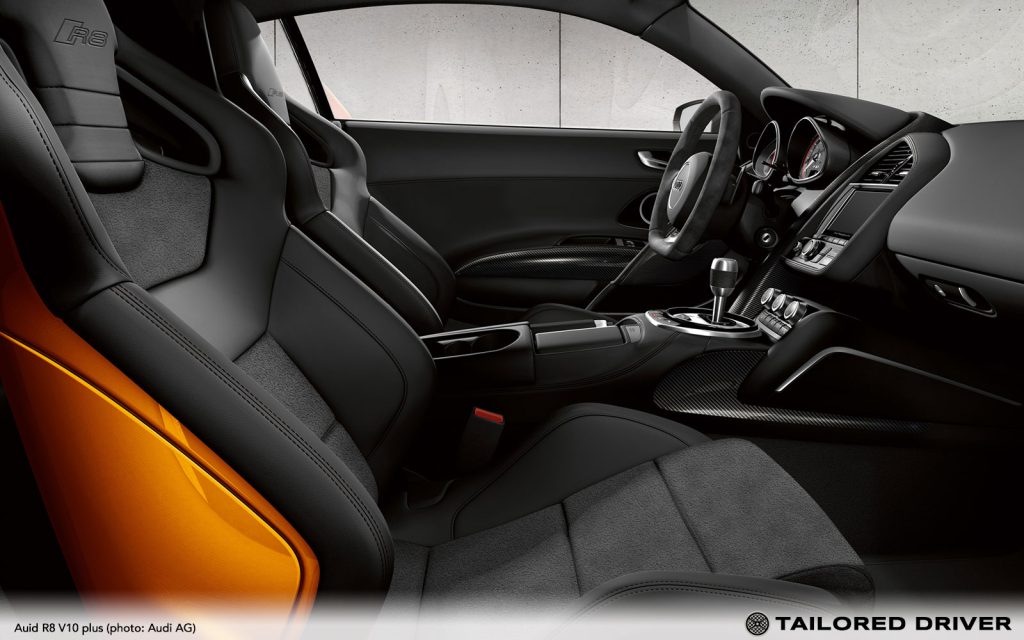
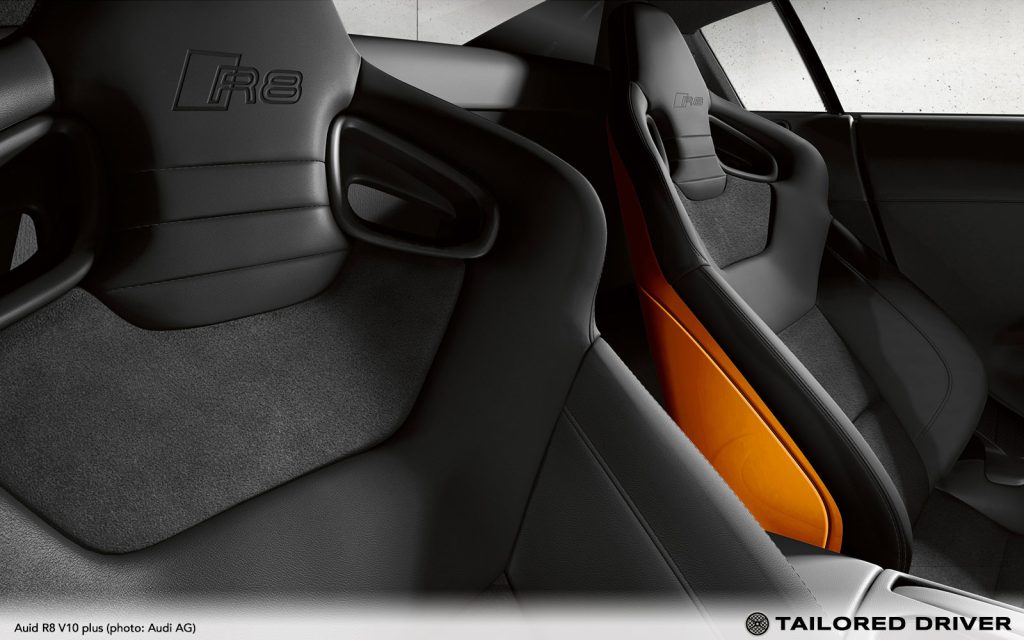
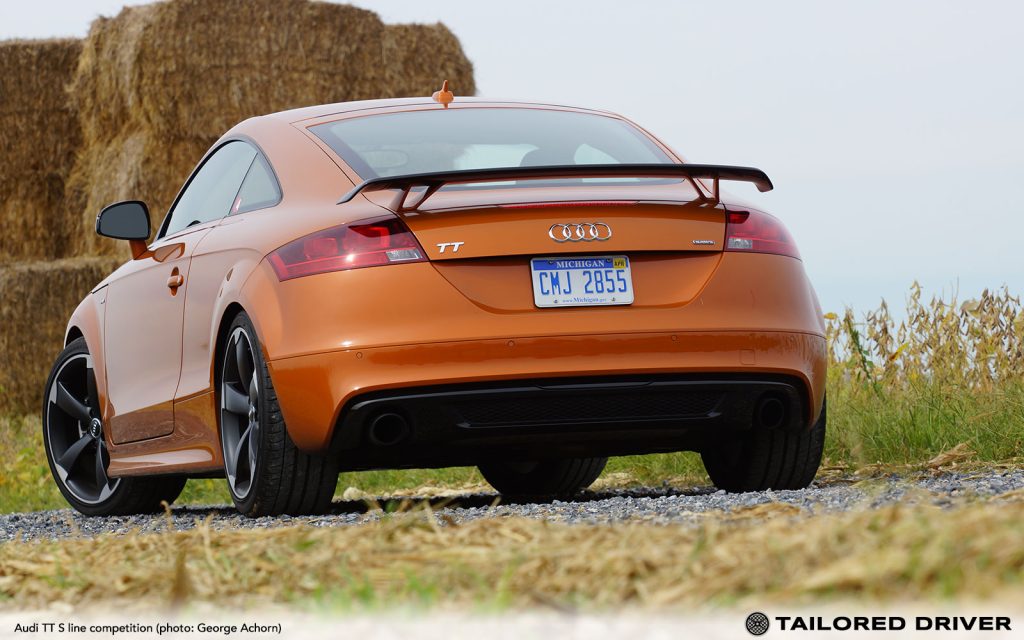
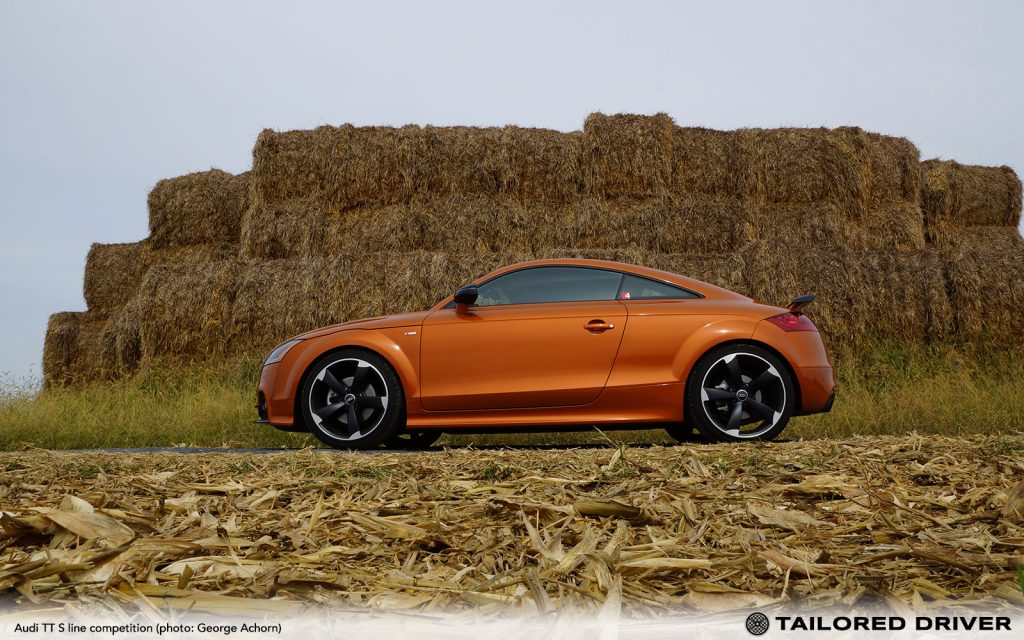
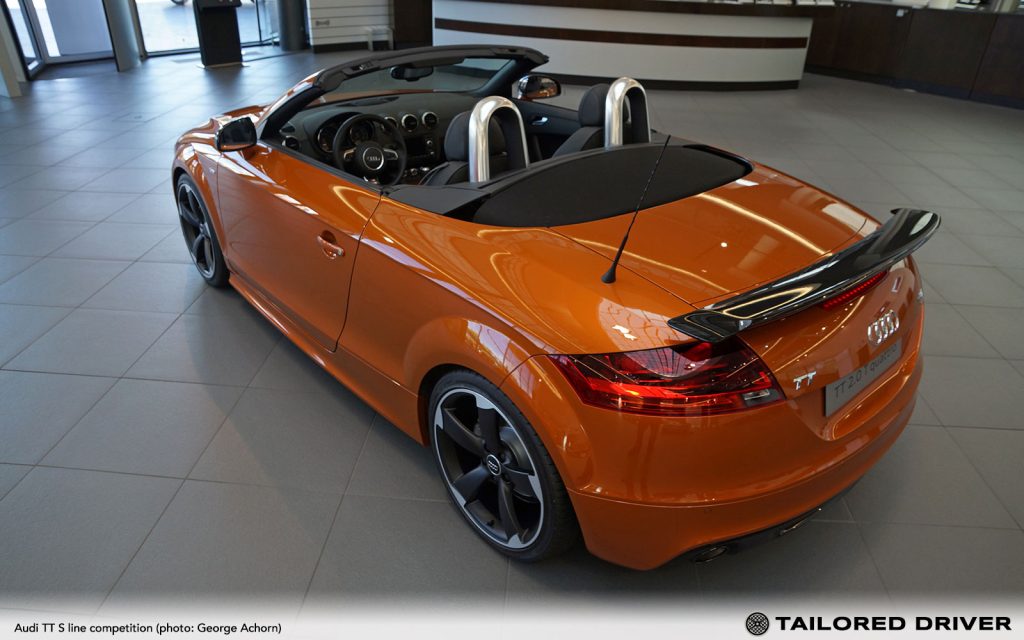
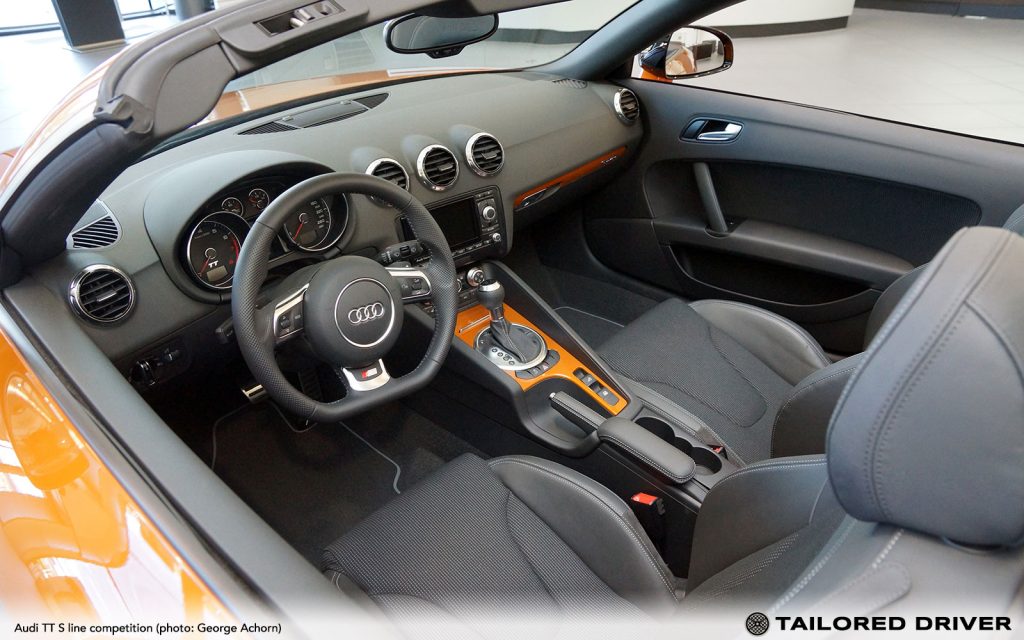
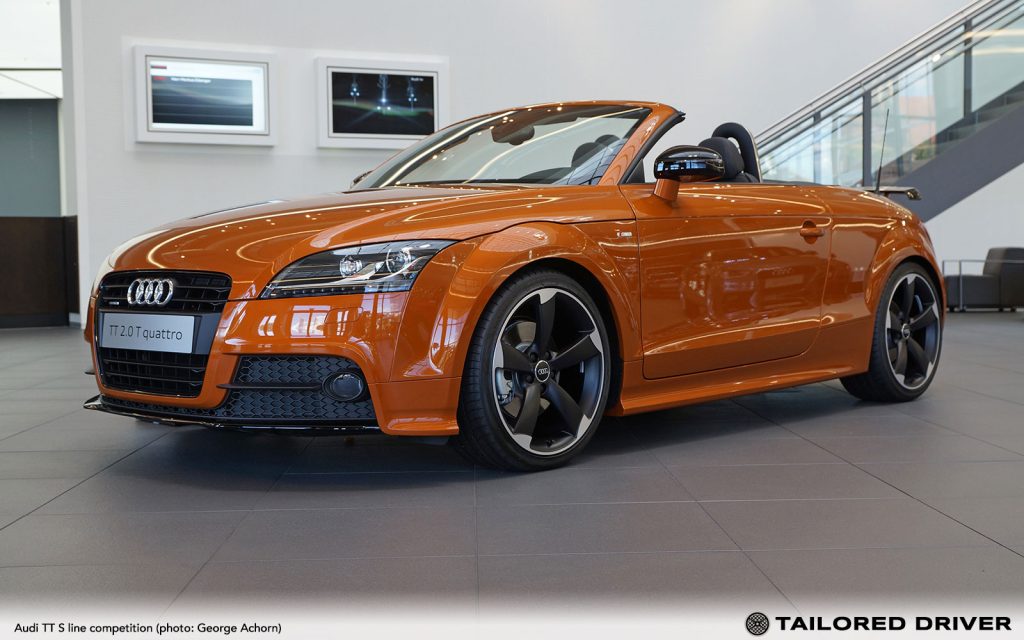
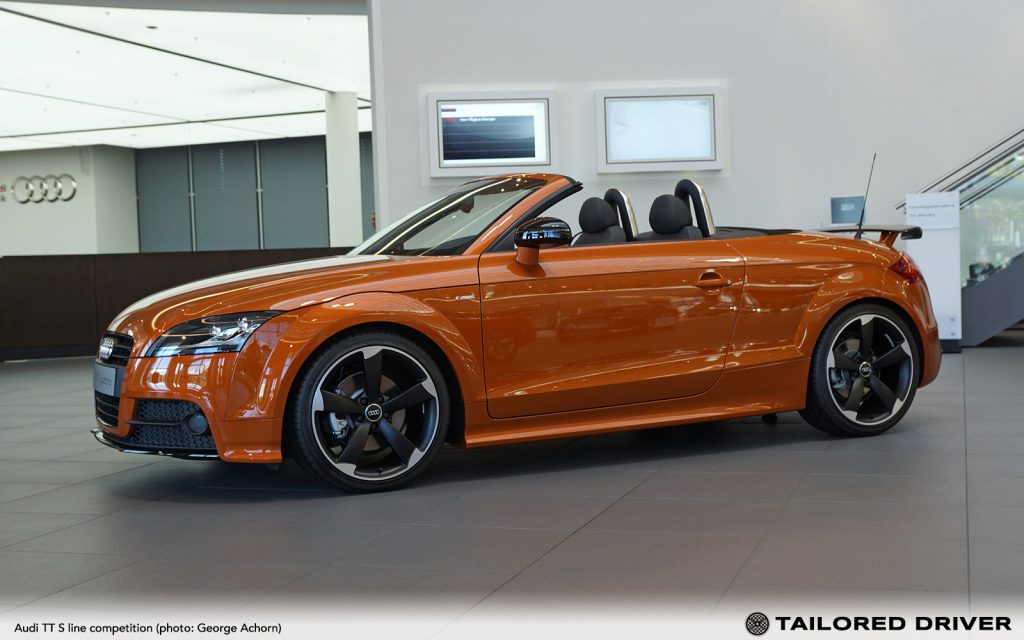
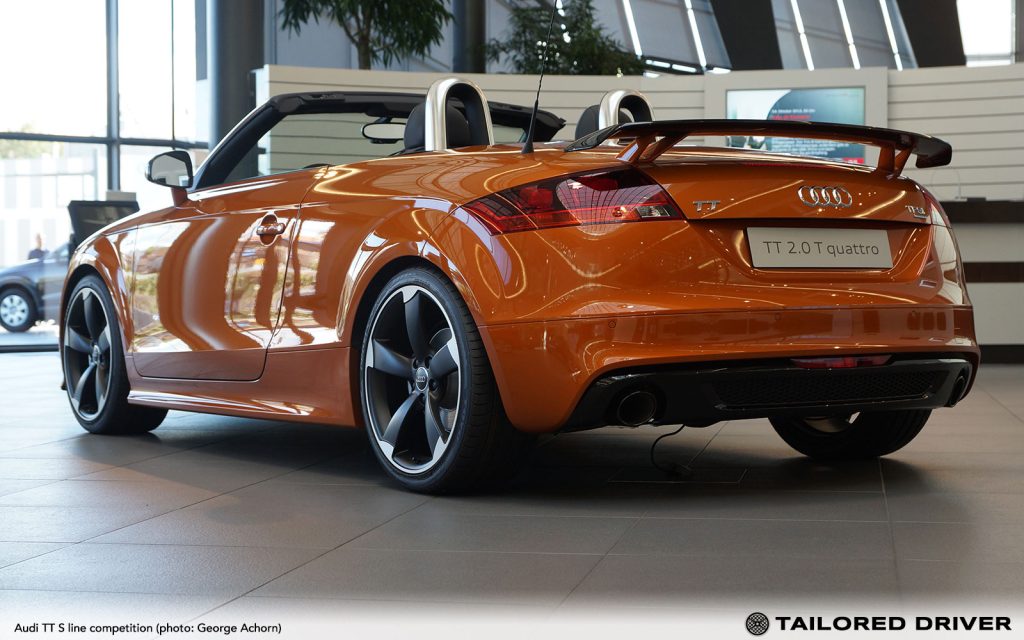
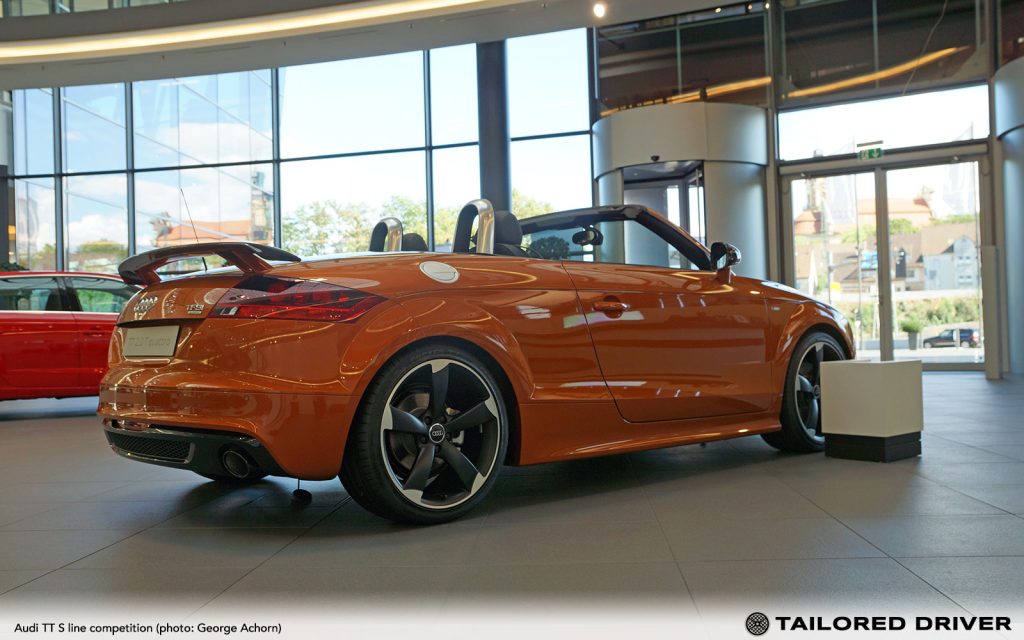
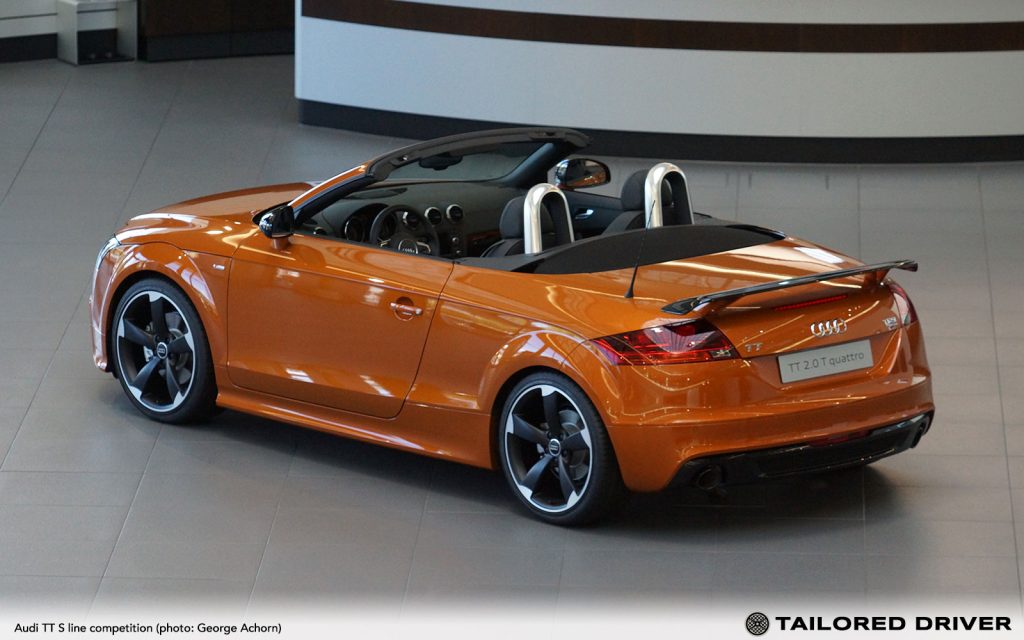
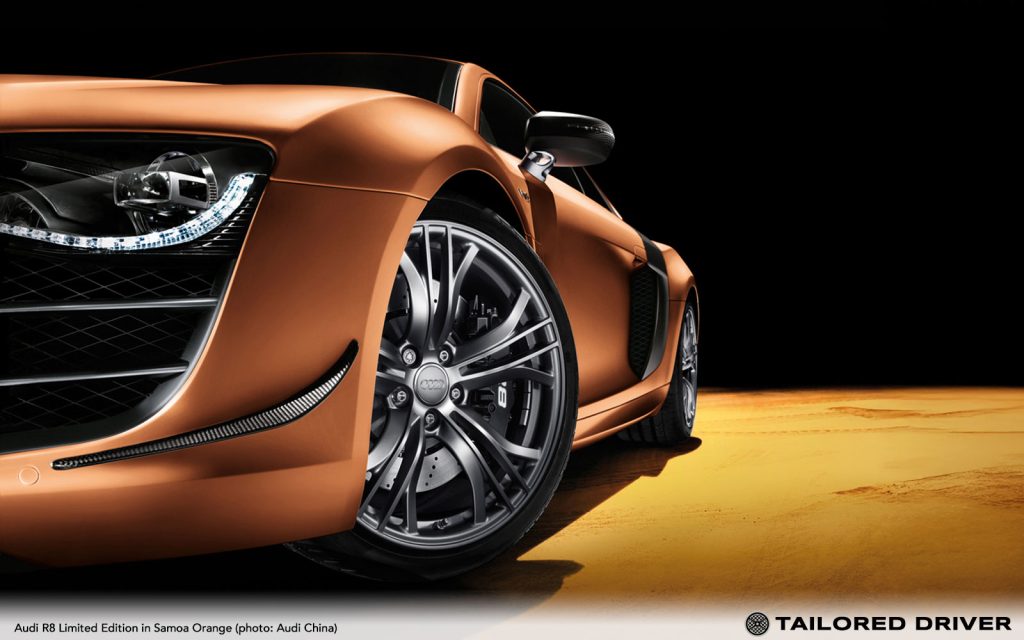
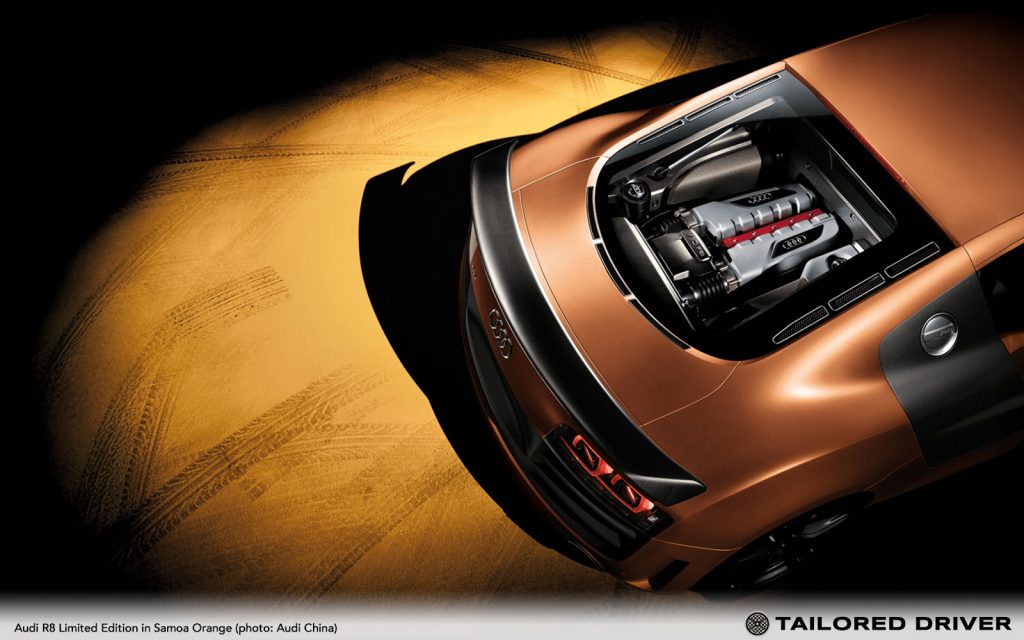
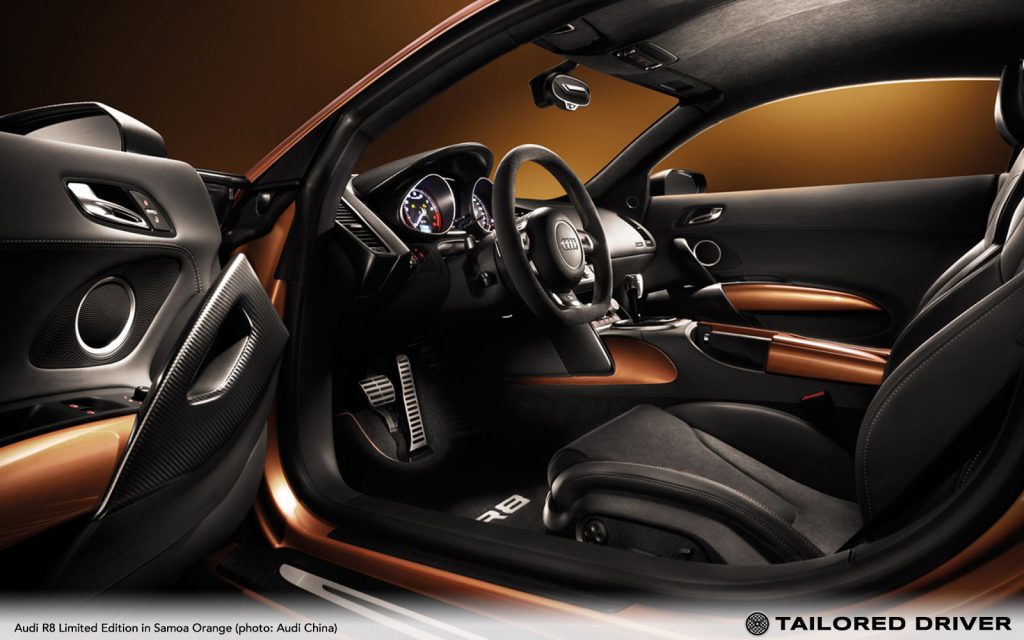
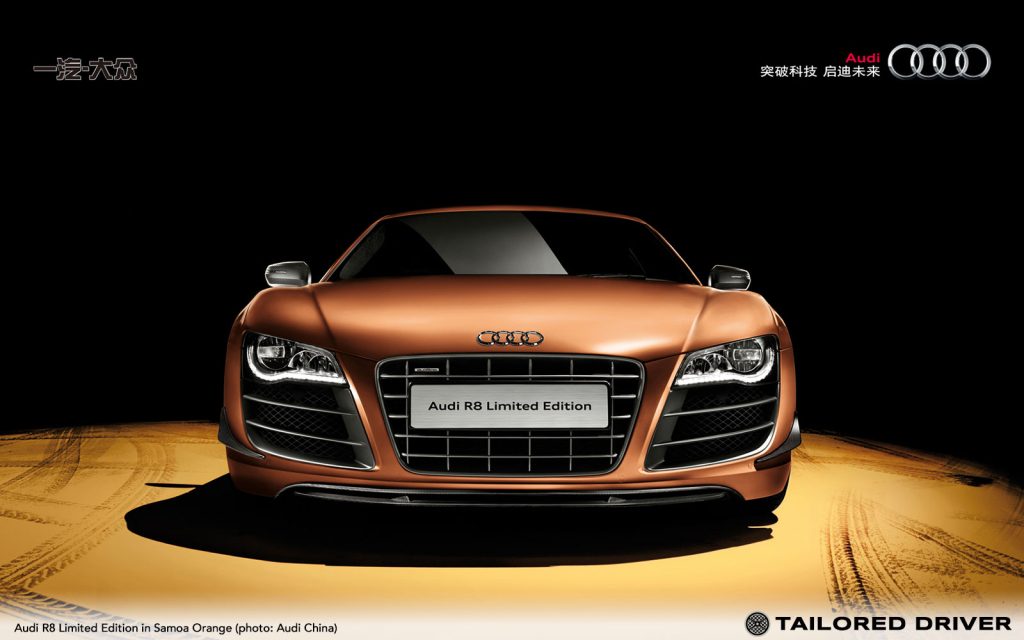
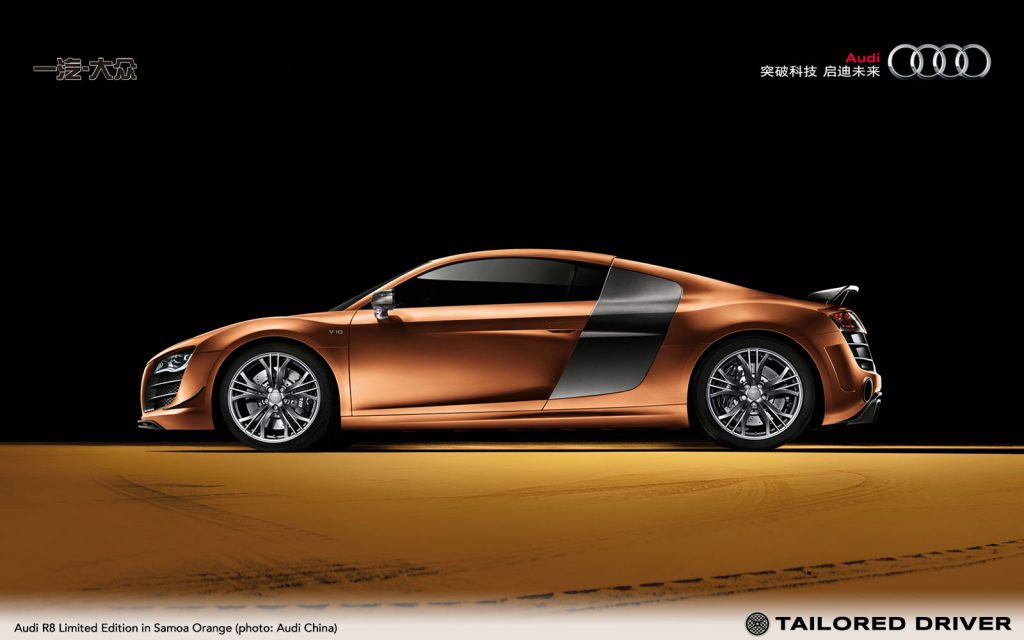
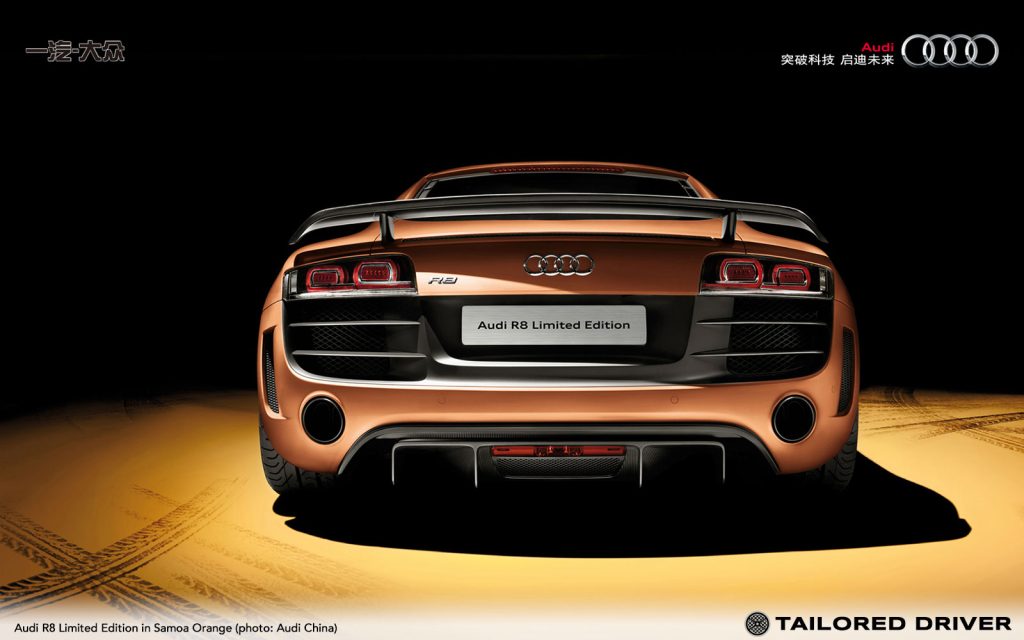
Believed to be used initially as a launch color for the R8 GT, Samoa Orange Metallic (samoaorange; metallic UNI; X2U; Audi) embraced Audi’s heritage for earth tones in the late 2000s, a time that also birthed Ipanema Brown and Teak Brown. This fiery dark orange would later be used as more of a standard color when the first-generation R8 got its facelift, then later on the TT competition. It even shows up on an R8 Mk2 on screen as Tony Stark’s R8 Coupé in Marvel’s Avengers: Age of Ultron. As a result, Samoa Orange Metallic remains a popular choice in the extended Audi exclusive color palette.
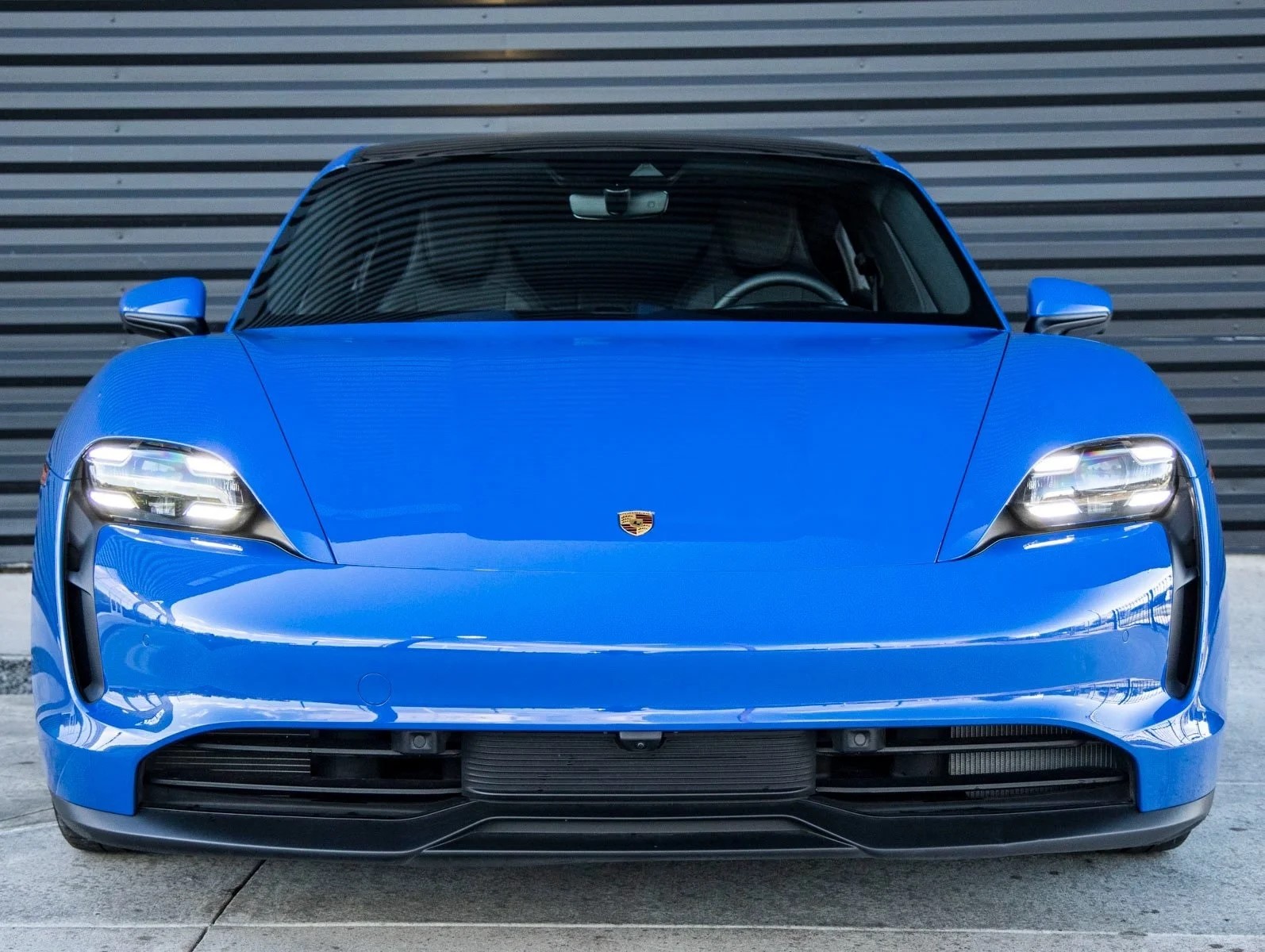
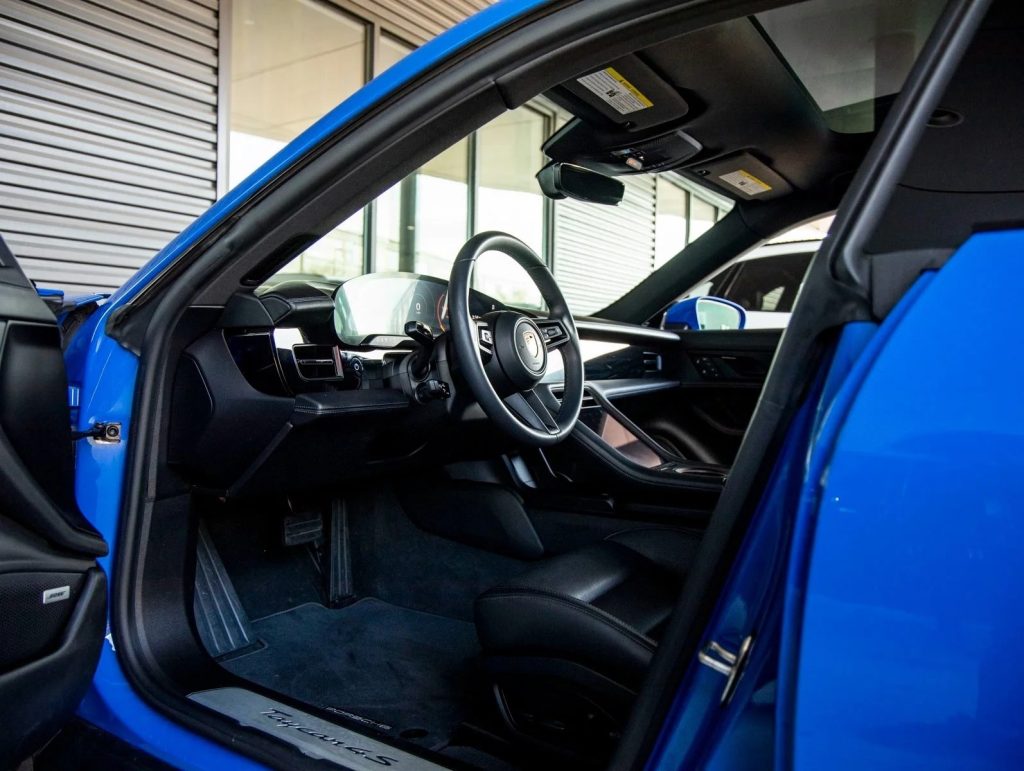
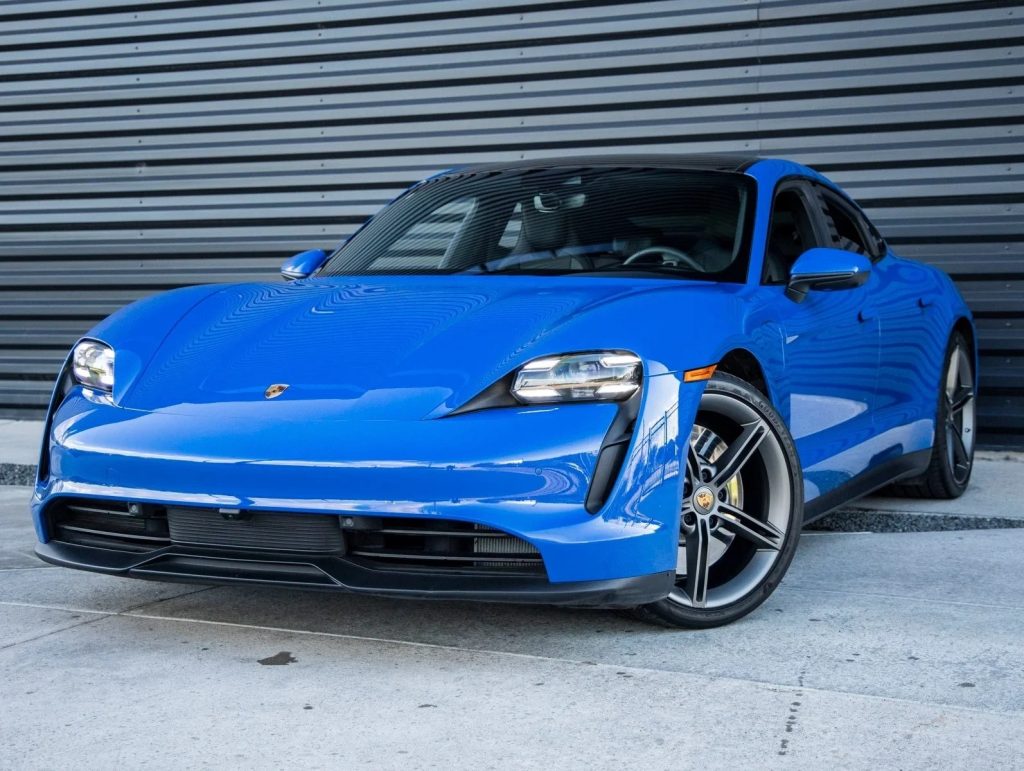
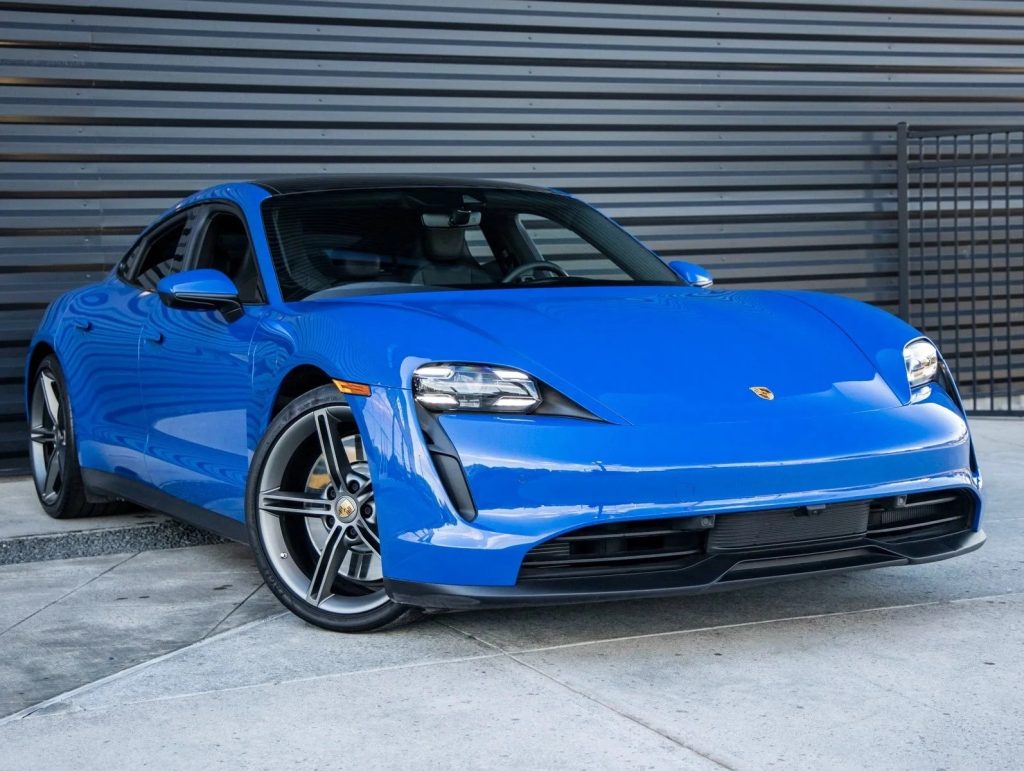
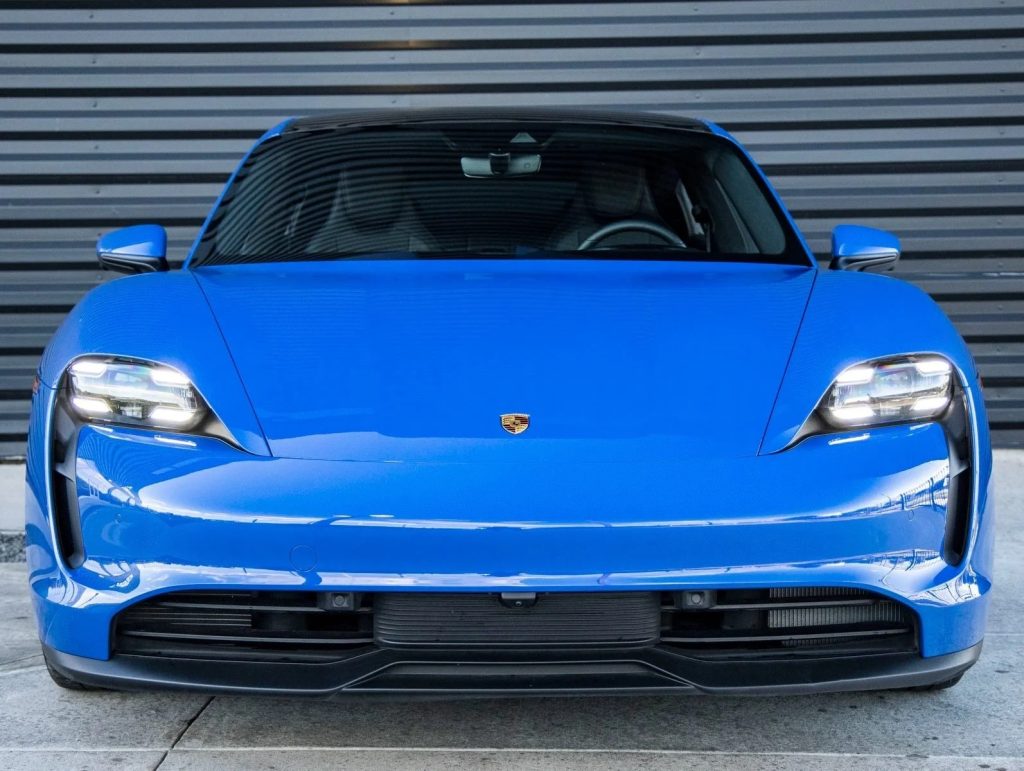
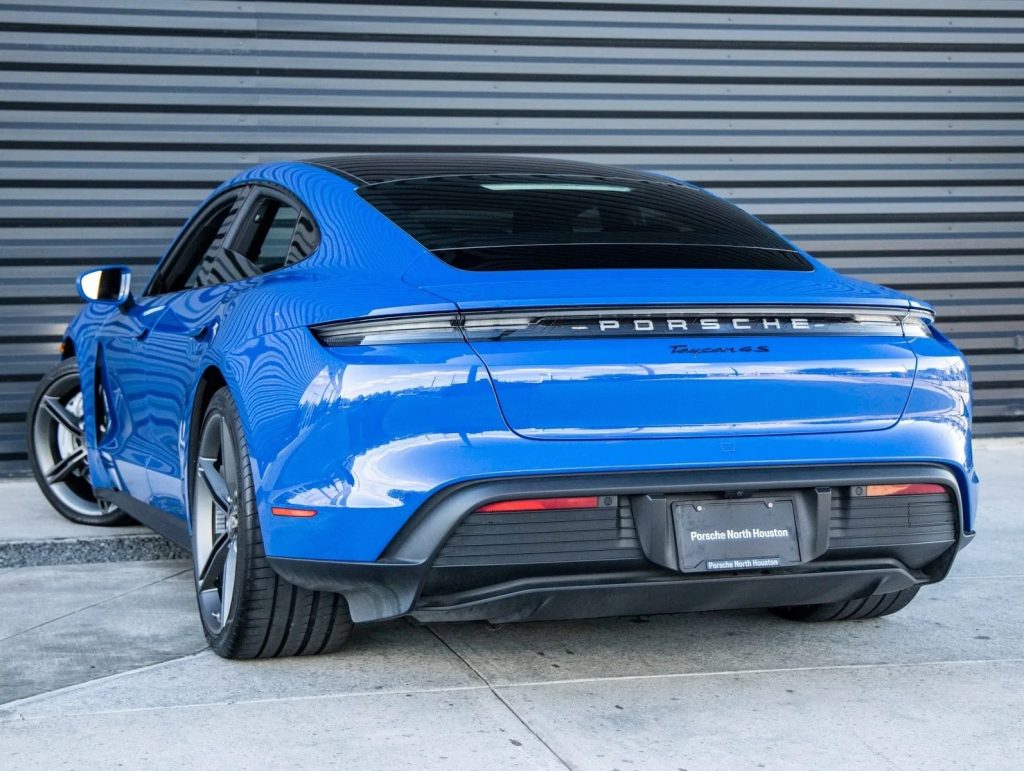
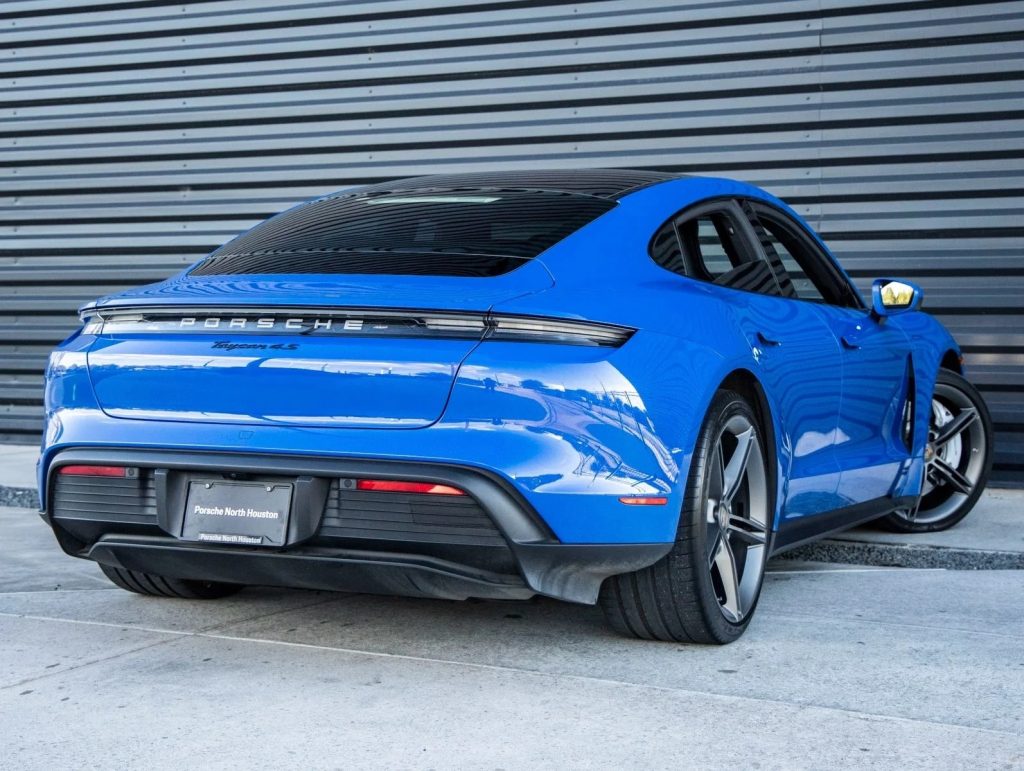
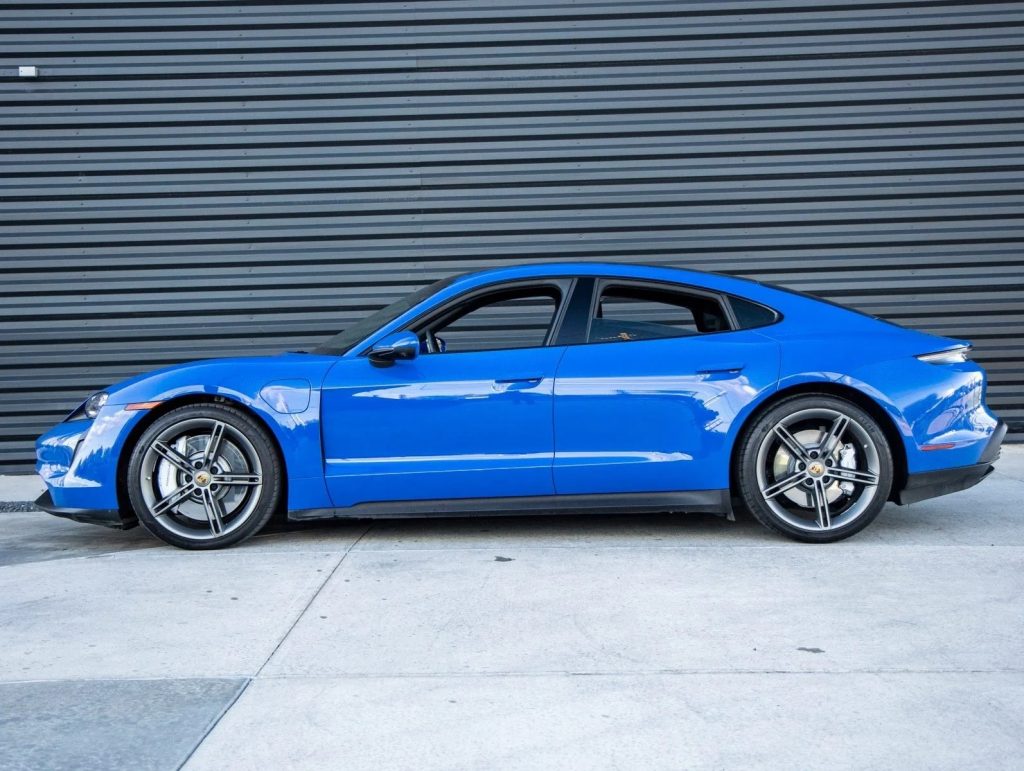
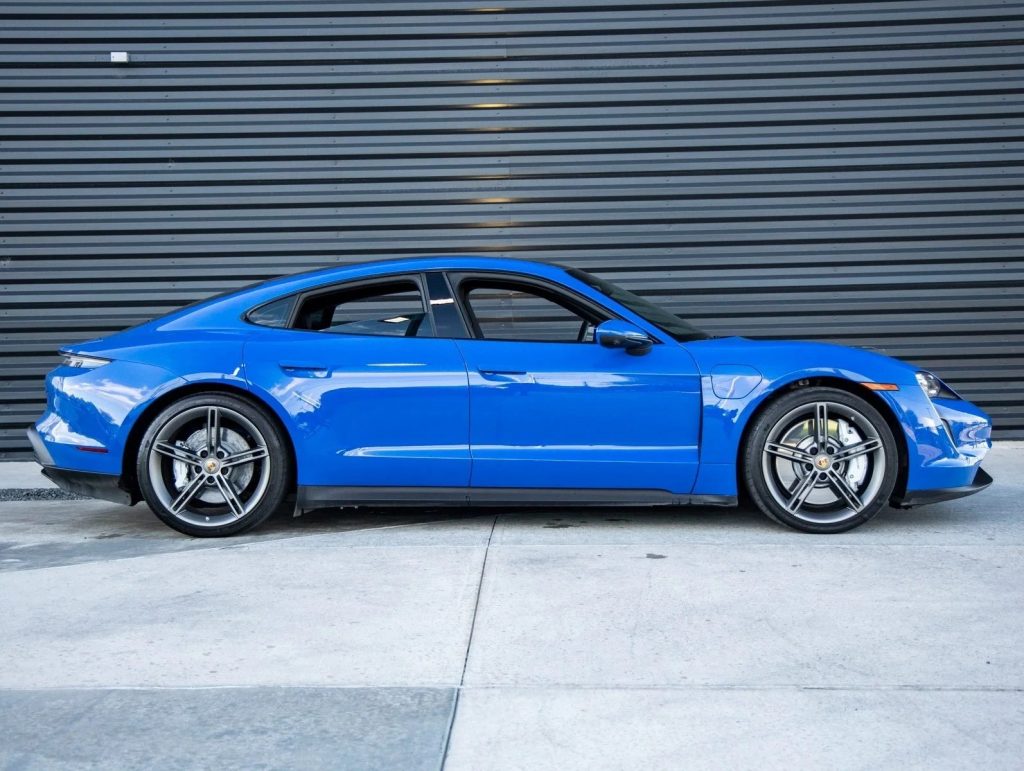
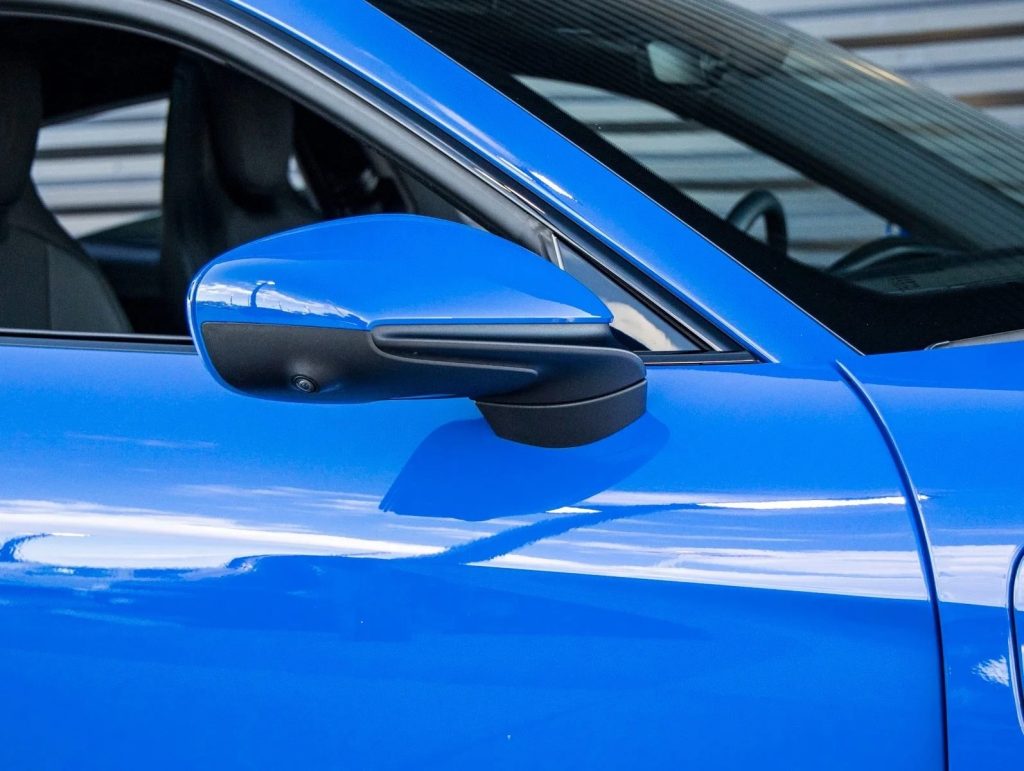
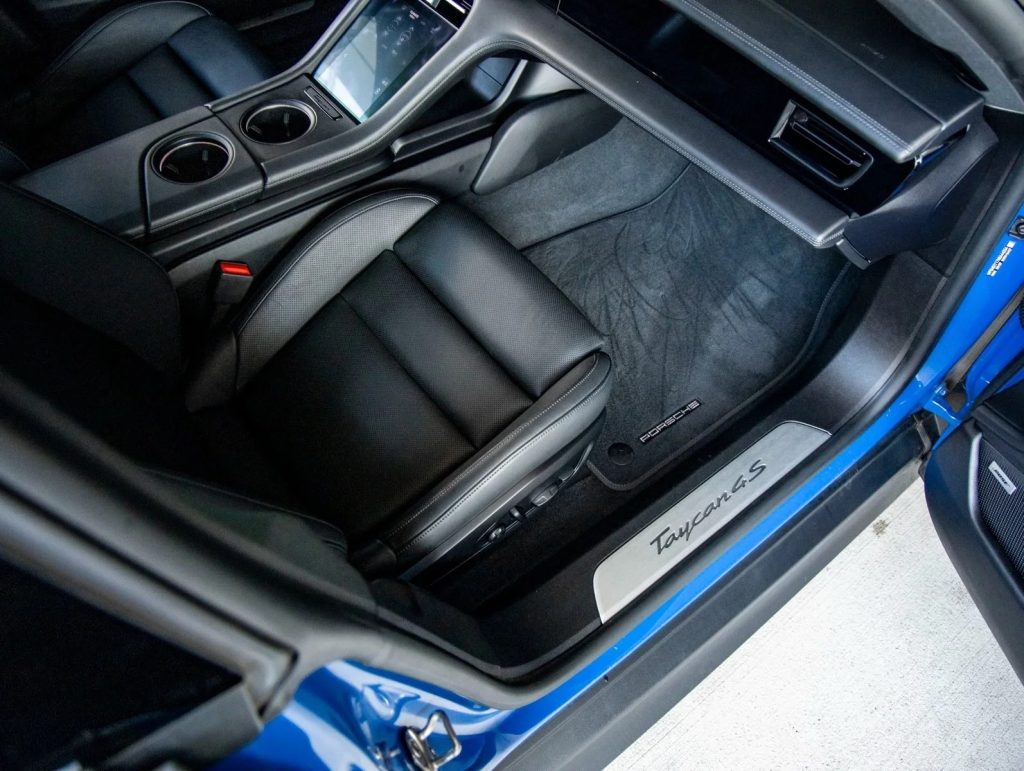
What: 2022 Porsche Taycan 4S Color: Club Blue (clubblau; W60; Porsche) VIN: WP0AB2Y17NSA44034 Mileage: 10,515 Price at Time of this Writing: $93,991 CarFax:Link Window Sticker: N/A Location: Houston, TX Dealer listing:Link
Why we love it:
We’d be lying if we didn’t admit that the Taycan 4S is a fairly interesting proposition. Decent range and (we think) great looks and astonishing speed are certainly the highlights, but this Tailored Driver package is rounded out nicely by Porsche’s Paint to Sample Club Blue. Most famously used to commemorate 60 years of the Porsche Club of America, Club Blue lands somewhere between Shark Blue and Nogaro Blue on the Rennbow, but the differences between the three are quite subtle.
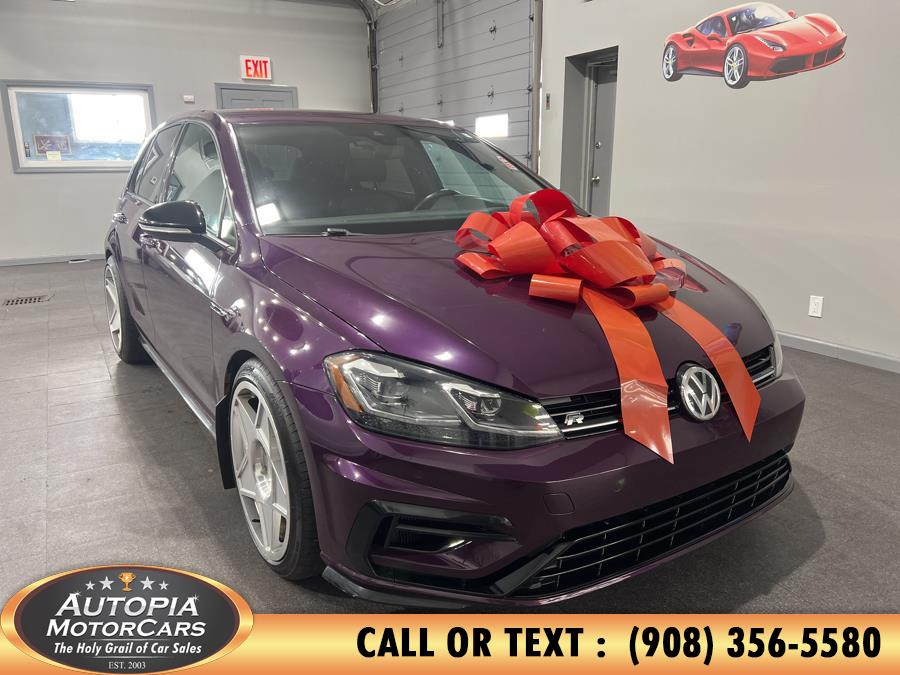
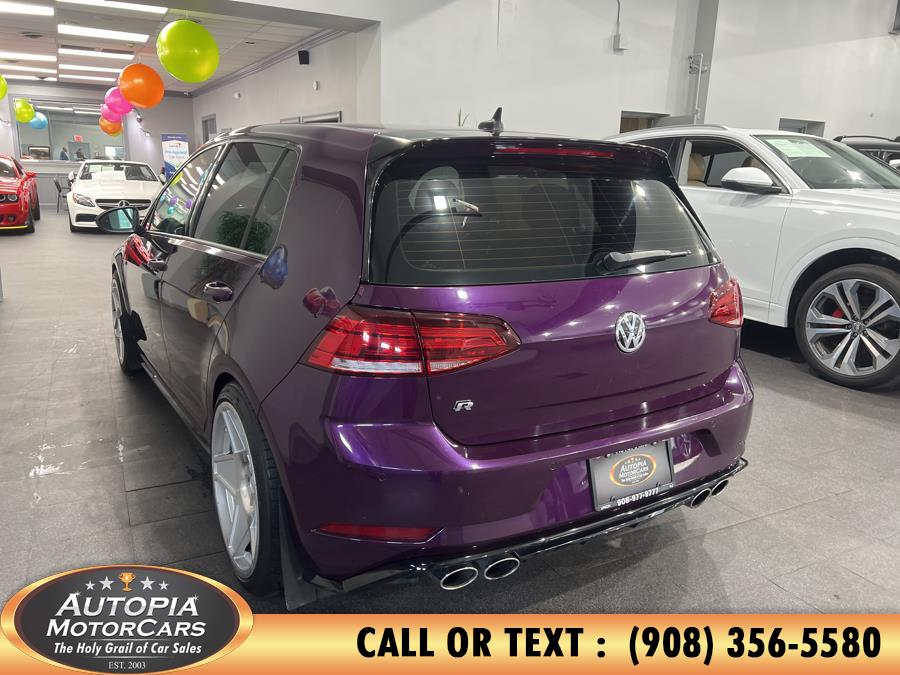
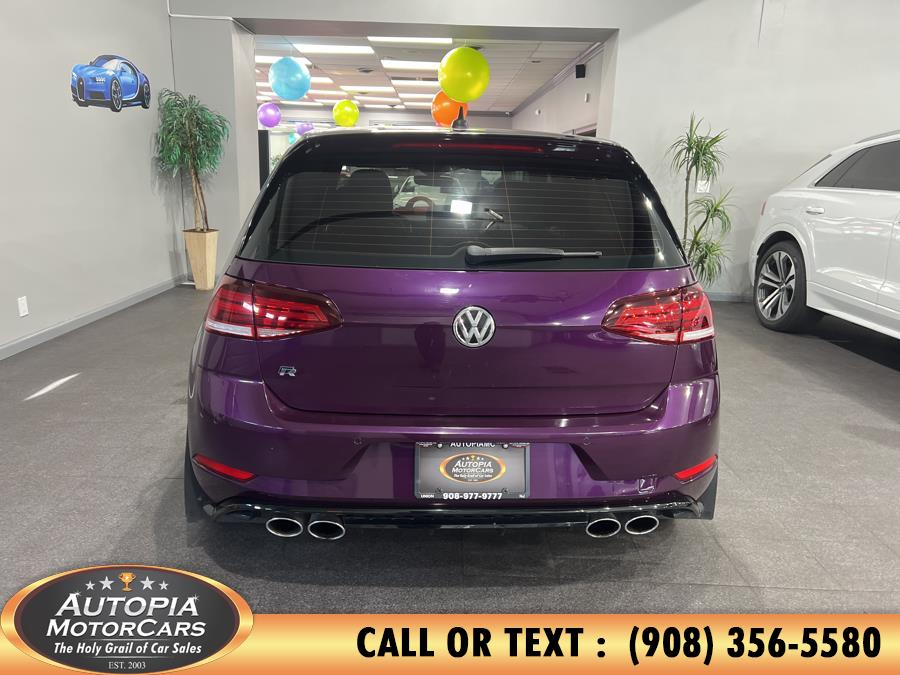
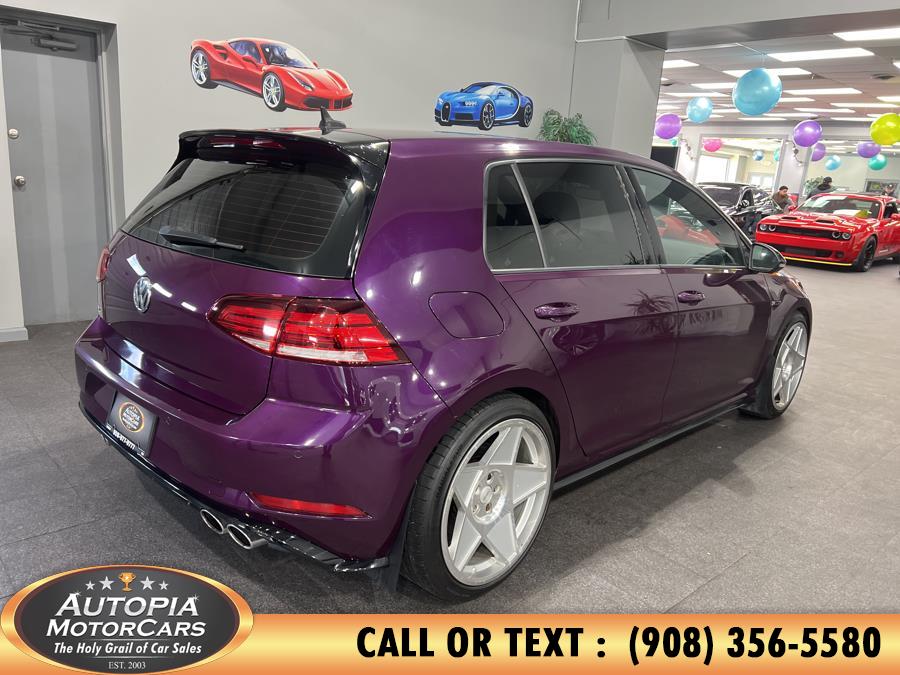
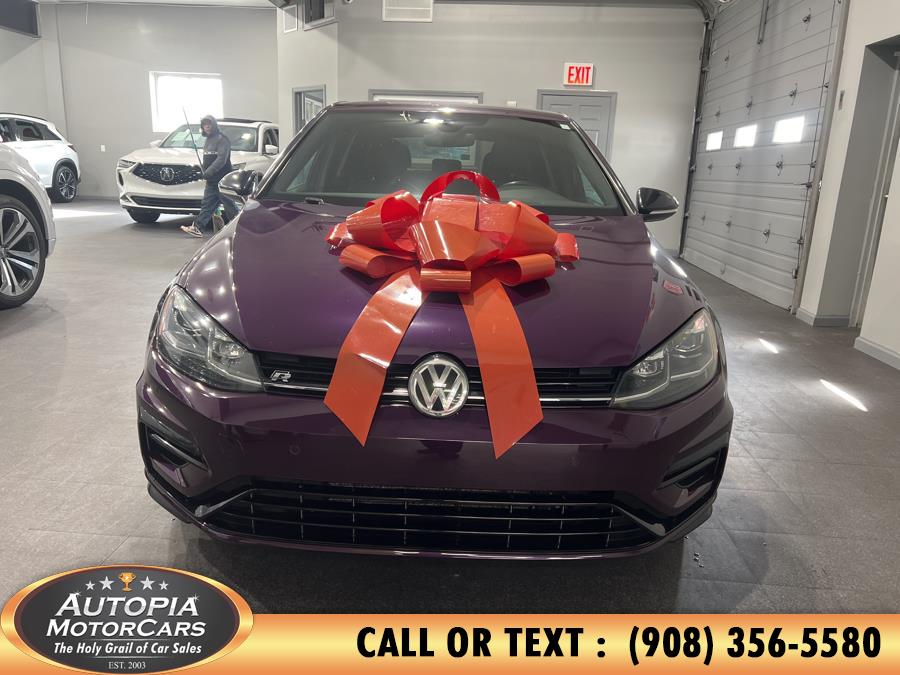
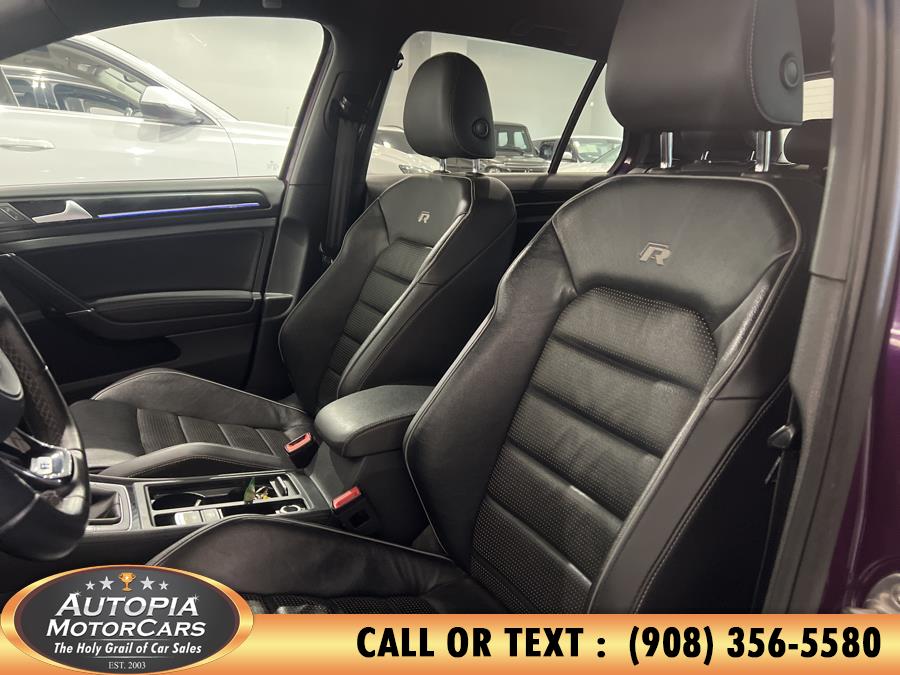
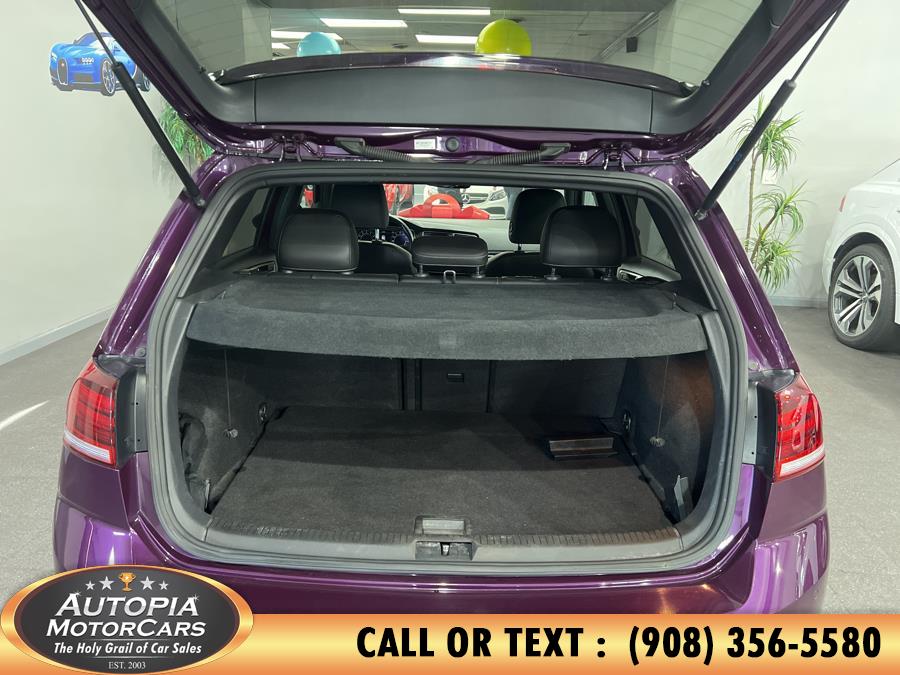
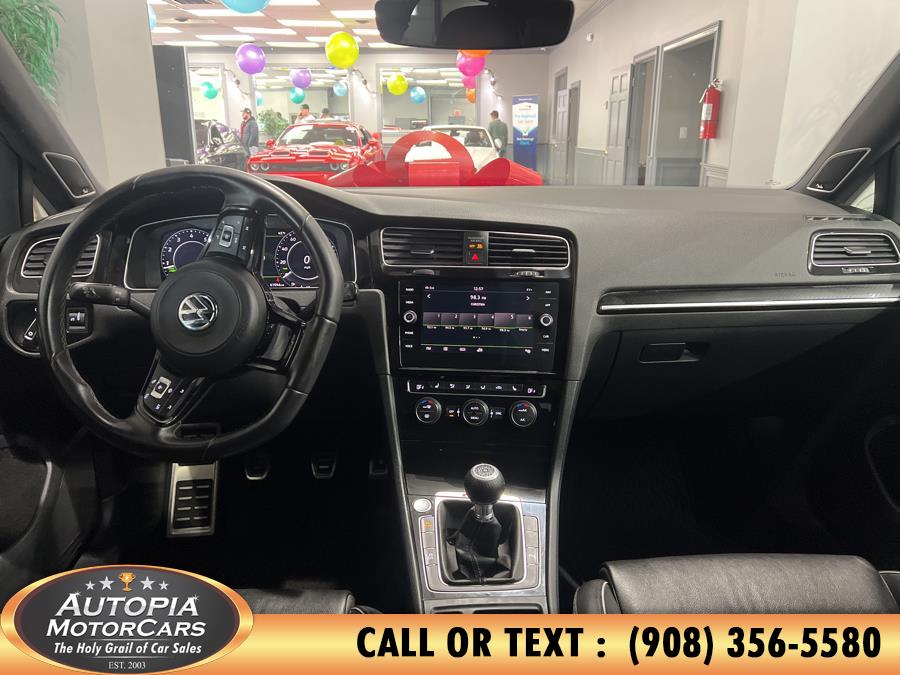
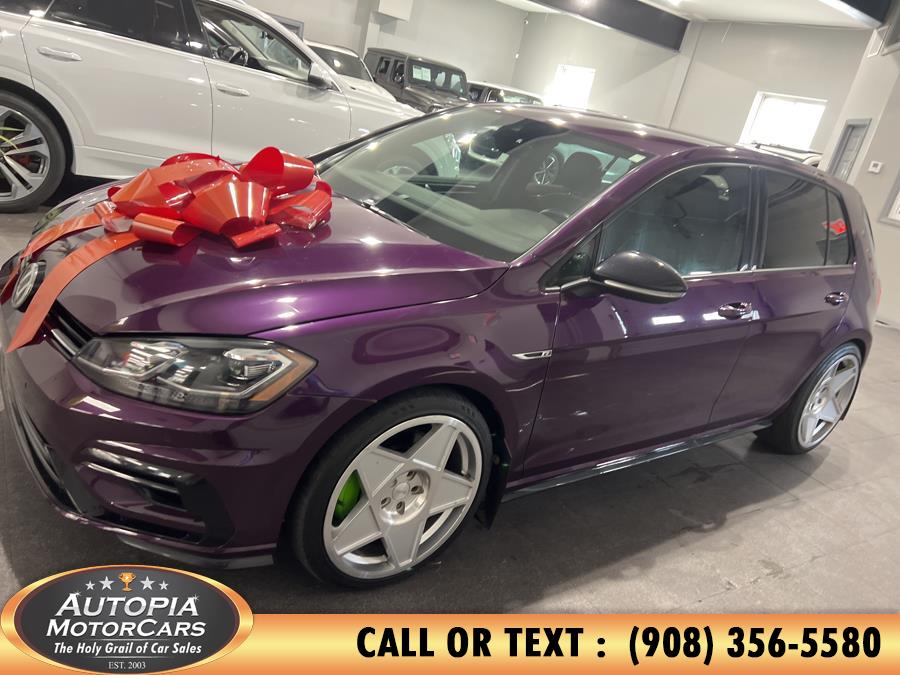
What: 2019 Volkswagen Golf R Color: Spektrum Violet Touch Pearl (code LC4U) (violettouchpearl; pearl effect; LC4U; Volkswagen) VIN: WVWWA7AU7KW119018 Mileage: 61,021 Price at Time of this Writing: $25,999 CarFax:Link Window Sticker: N/A Location: Union, NJ Dealer listing:Link
Why we love it:
Volkswagen’s Spektrum program was somewhat of a one-hit wonder, with all the right boxes checked- extremely limited run, one year only, enthusiast brand, enthusiast model only. Add to that the rare Spektrum shade of Violet Touch Pearl, a 6 speed manual transmission, and the seemingly reasonable $25,999 asking price, and we’re tempted. Important to note, the CarFax denotes this as a Canadian market example, meaning that warranty coverage, recalls, and registration could prove more challenging when compared to a US-market car.
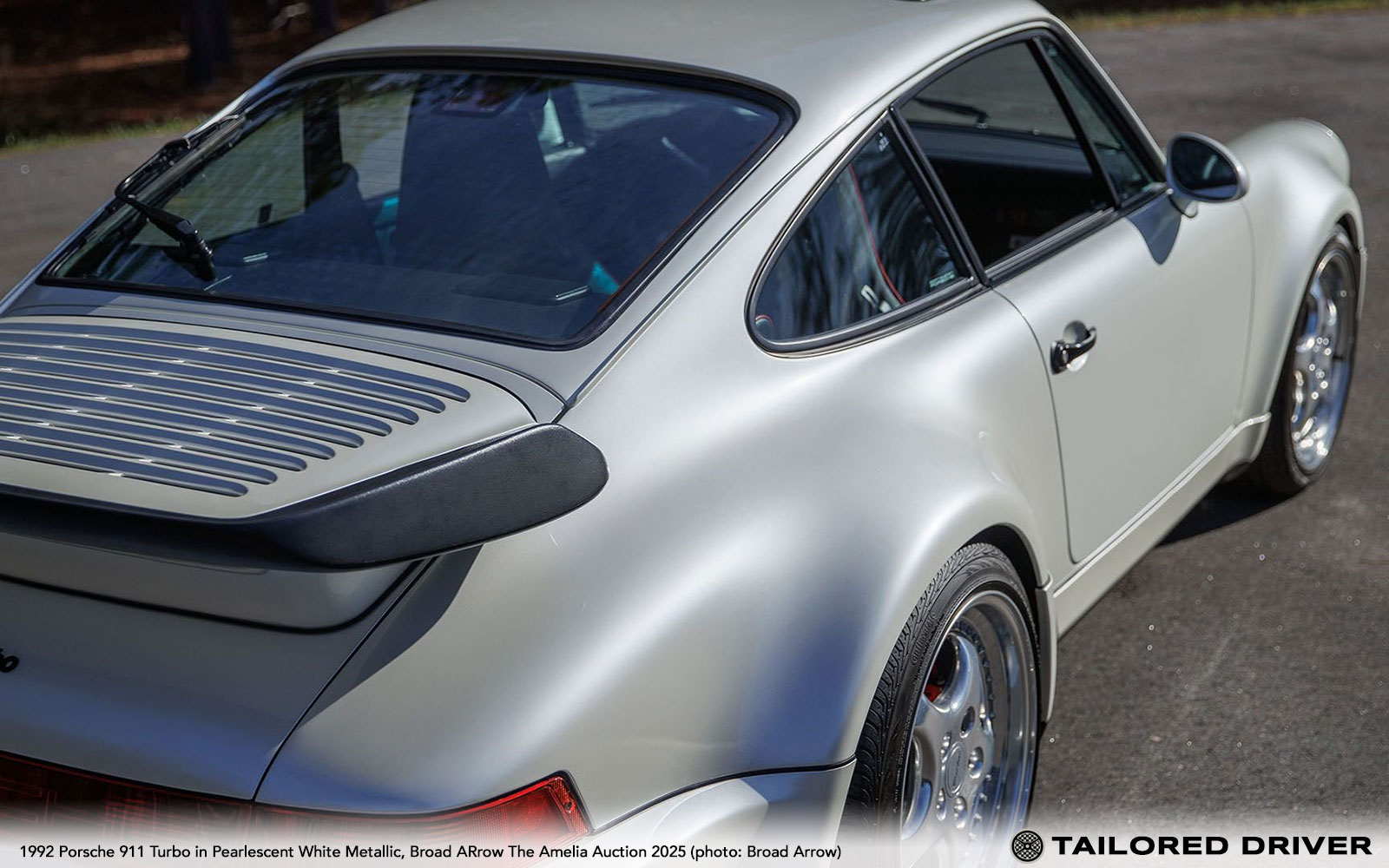
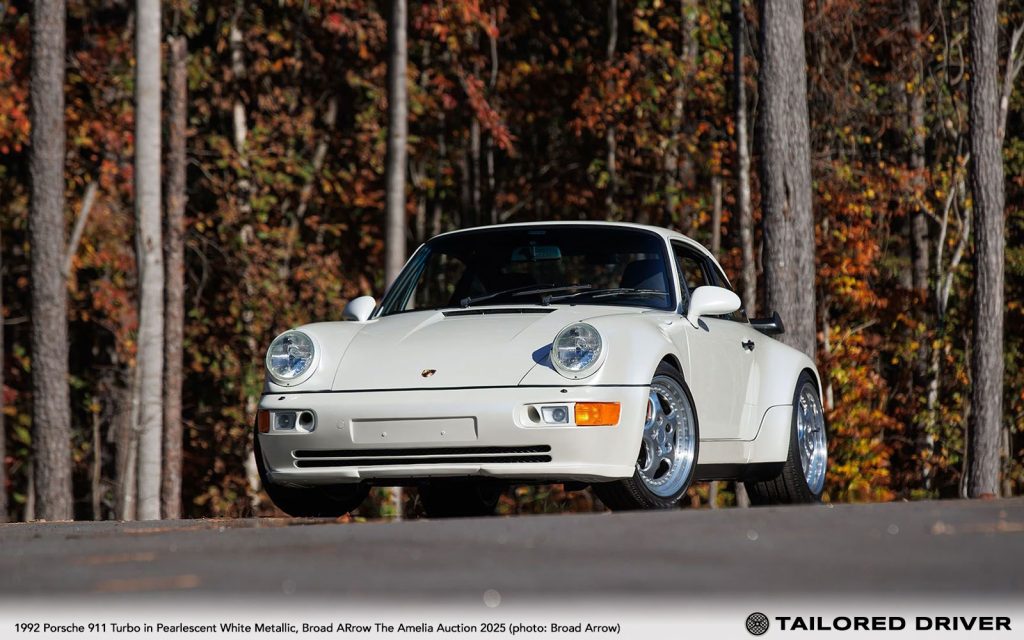
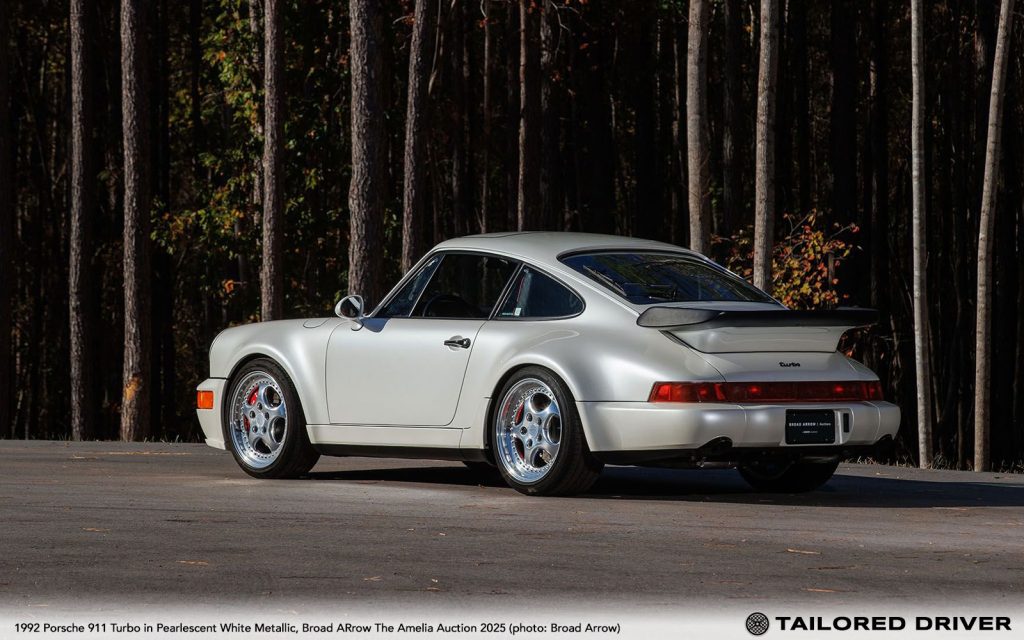
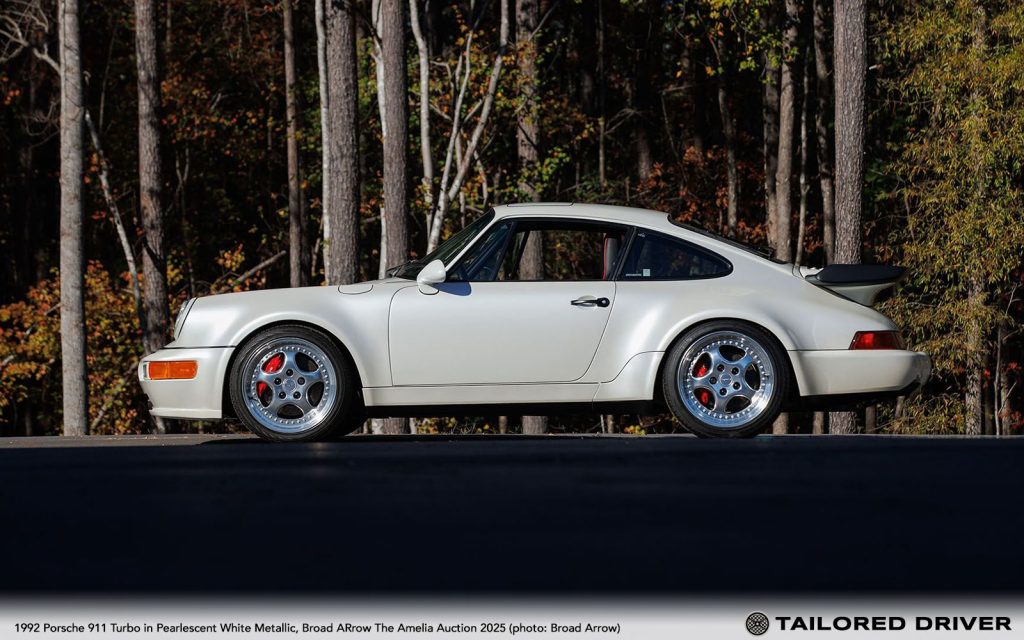
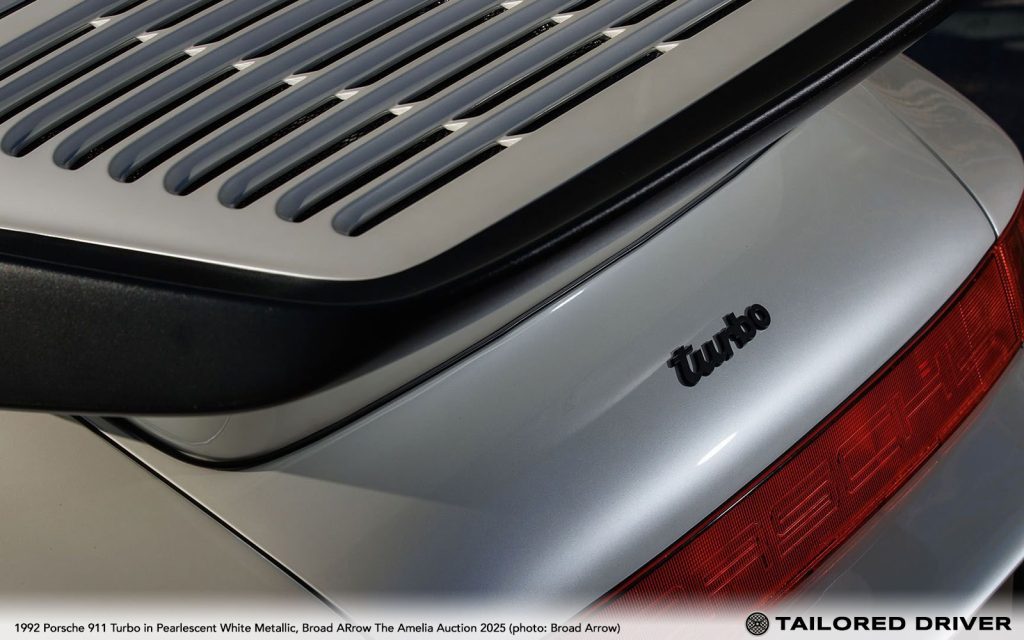
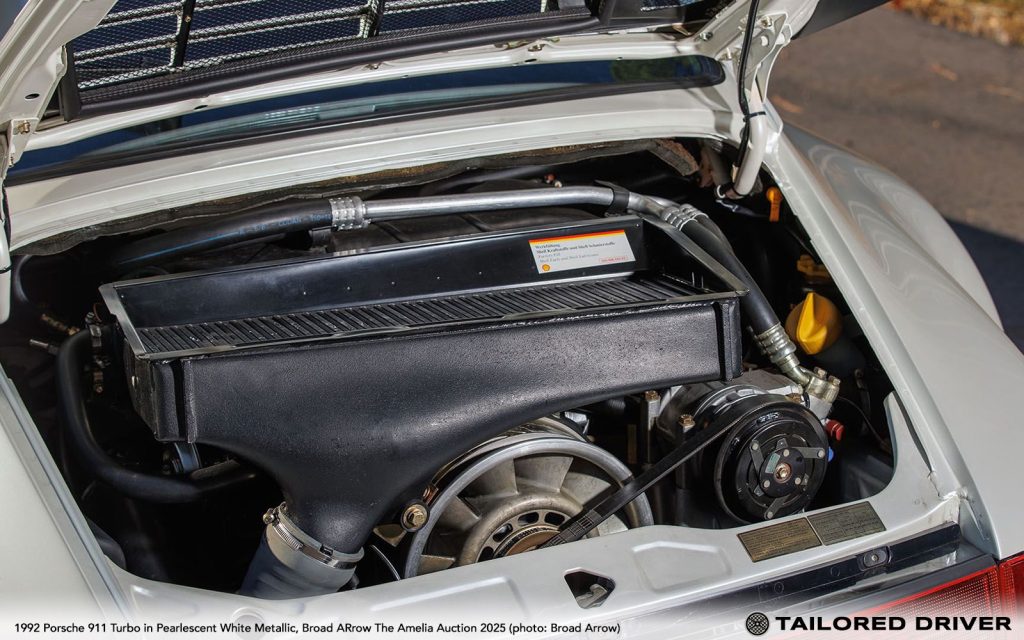
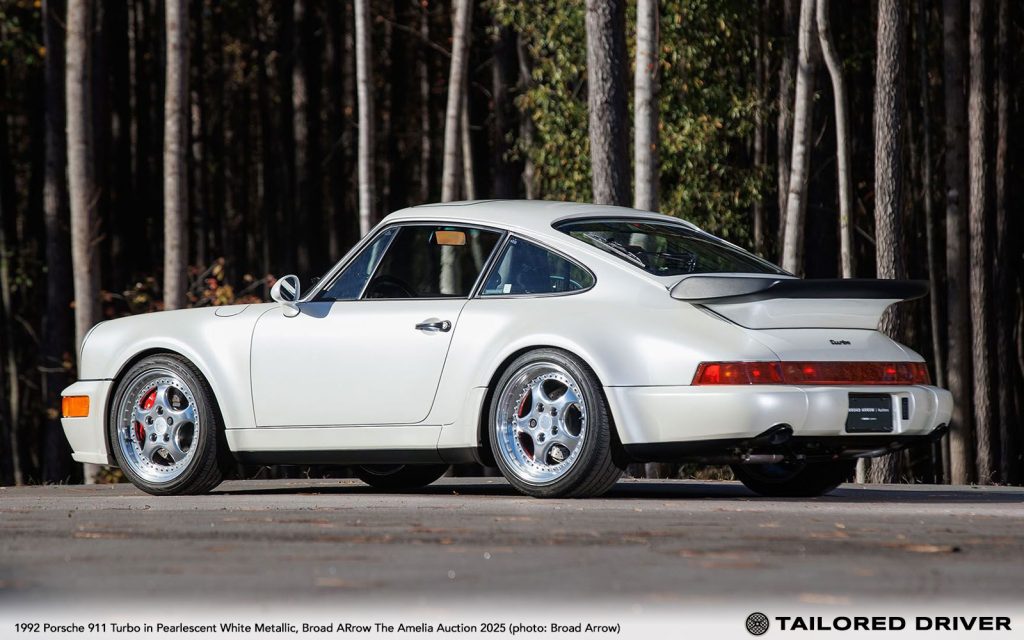
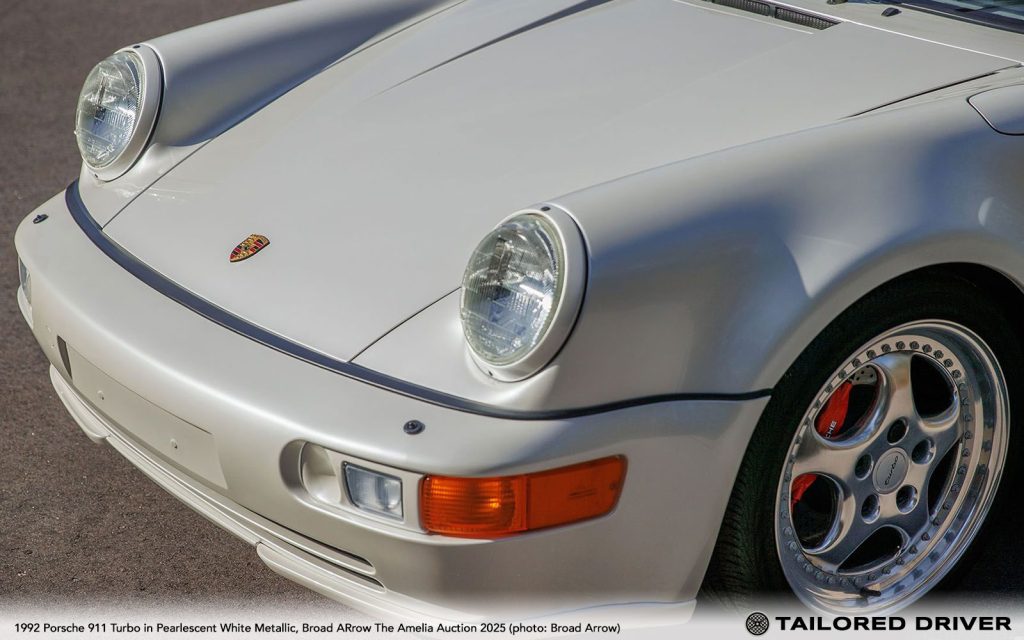
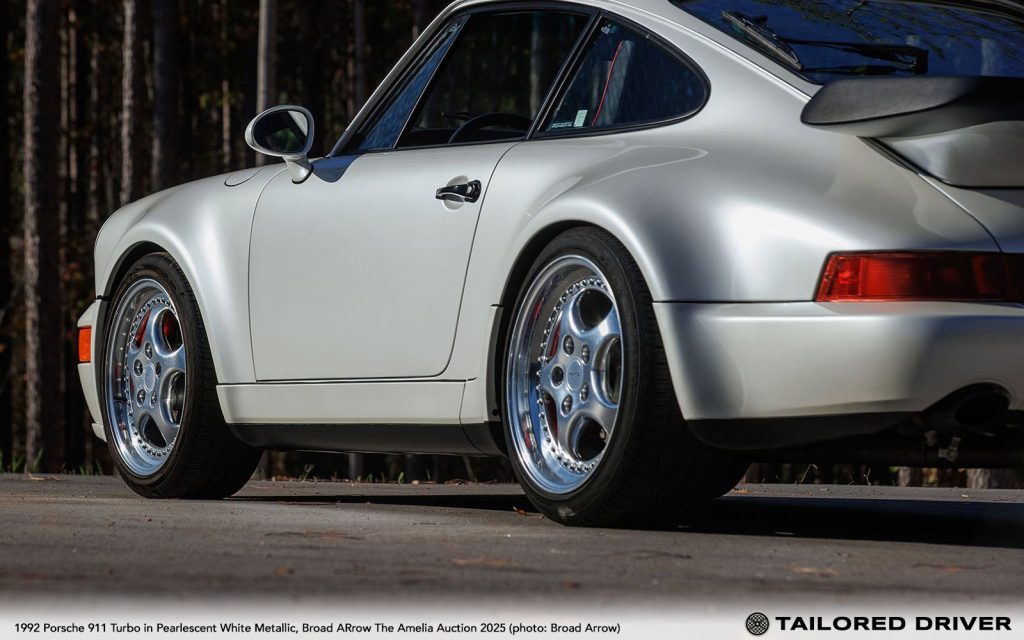
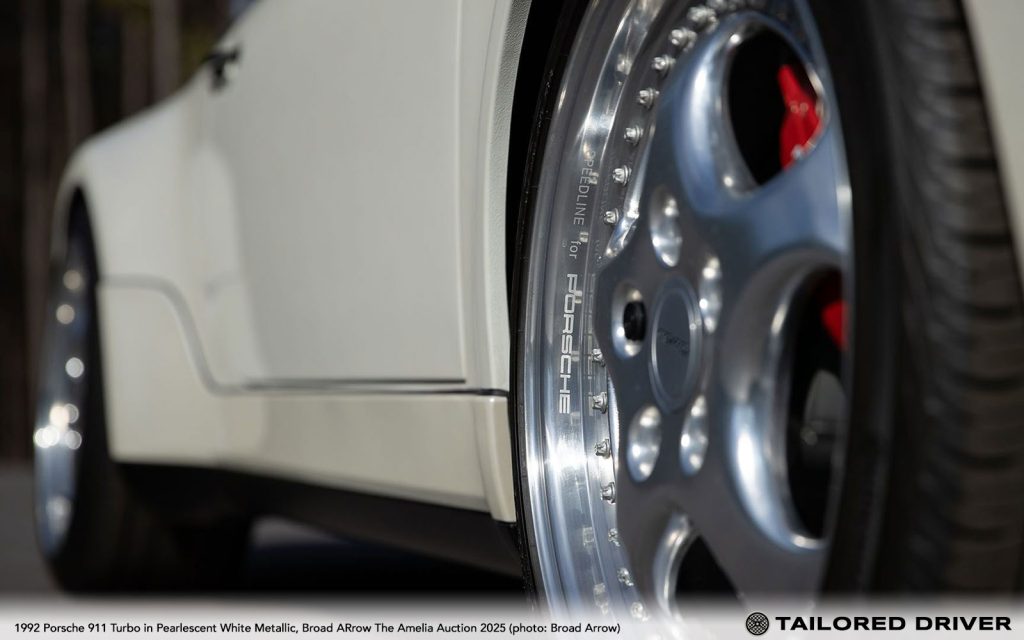
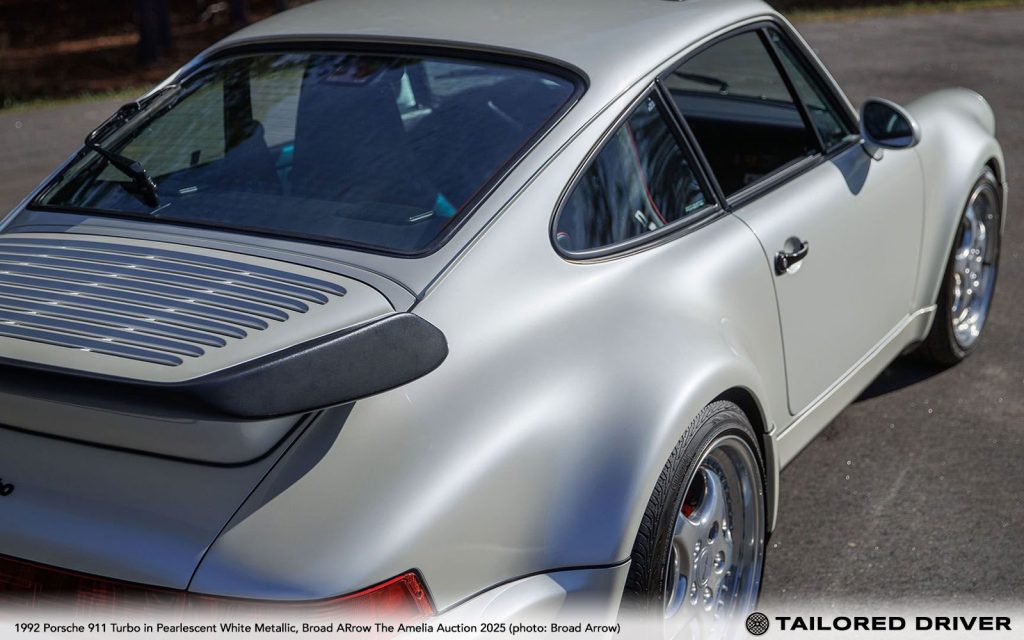
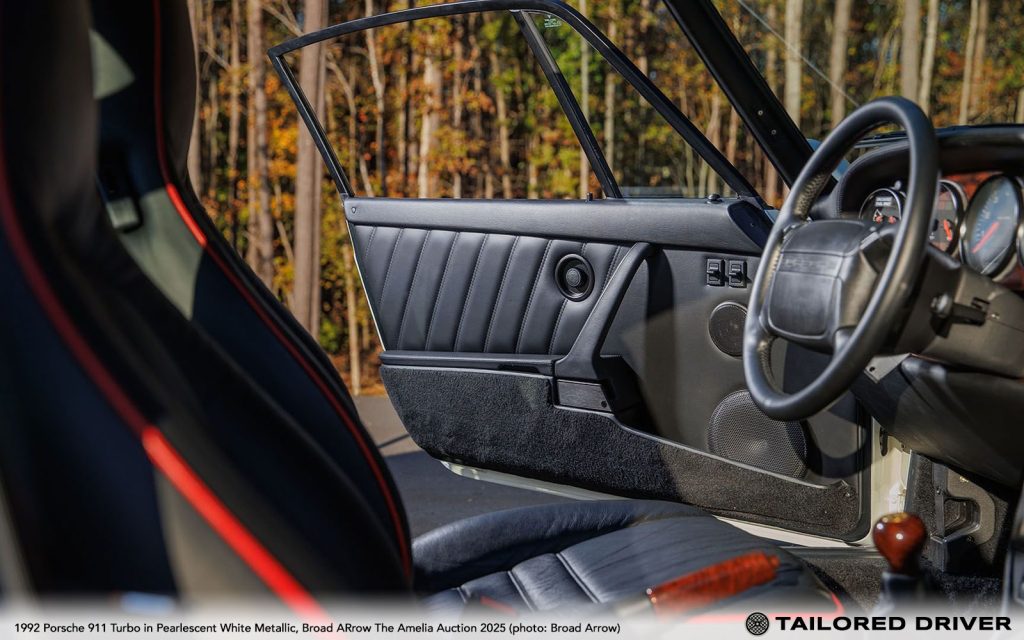
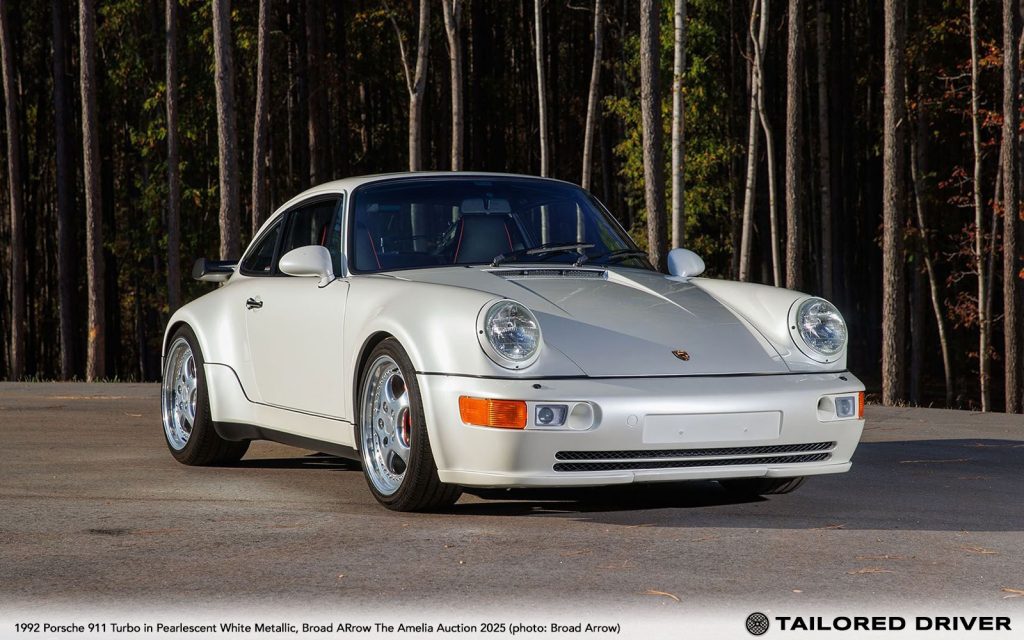
What: 1992 Porsche 911 Turbo (type 964) Color: Pearlescent White Metallic (perlweißmetallic; metallic uni; L0A9 / 947; Porsche) VIN: WP0AA2963NS480308 Mileage: 937 miles Price at Time of this Writing: Estimate:$350,000 – $450,000 CarFax:Link Window Sticker: Link Location: Amelia Island, FL at The Amelia Concours 2025, Broad Arrow Auction Dealer listing:Link
Why we love it:
Hit up sites like Porsche Club North America’s Rennbow paint resource and you’ll see Pearl White Metallic was a color that began in the 1980s on cars like the 928 and 944, though Broad Arrow also shares in this car’s Lot description an even more exotic Porsche history for this metallic shade of white. You see, it was also sprayed onto more spotlighted debuts such as the 956 sports racing prototype, the 959 “Gruppe B” concept that previewed the 959, the 911 Speedster Studie, and even the 924 Carrera prototype, all in this distinctive paint. Not surprisingly given the popular use by Porsche at auto shows, Pearl White Metallic was most definitely available in the brand’s Paint to Sample program.
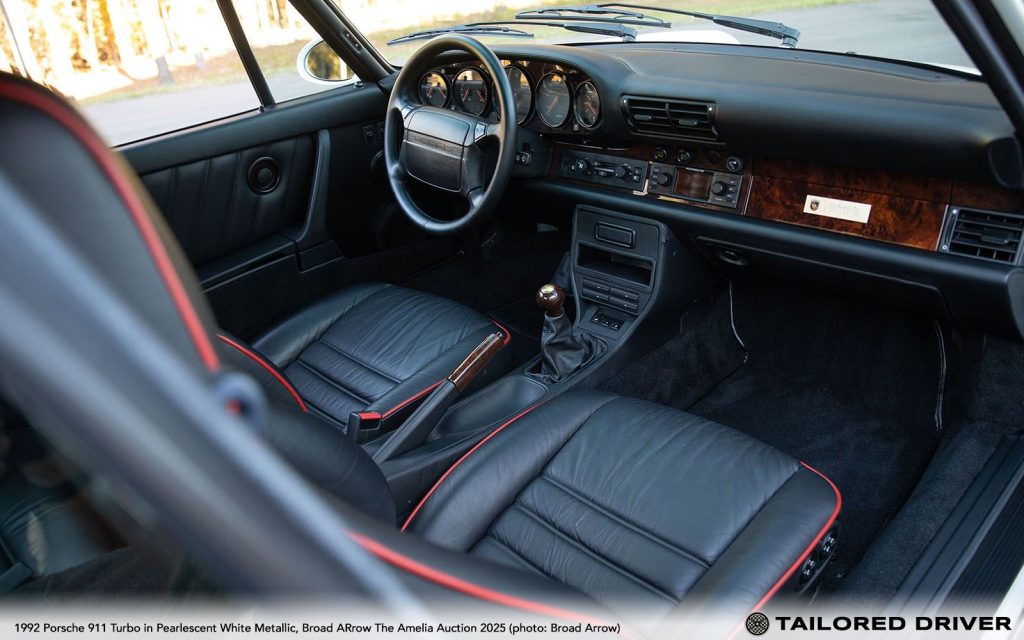
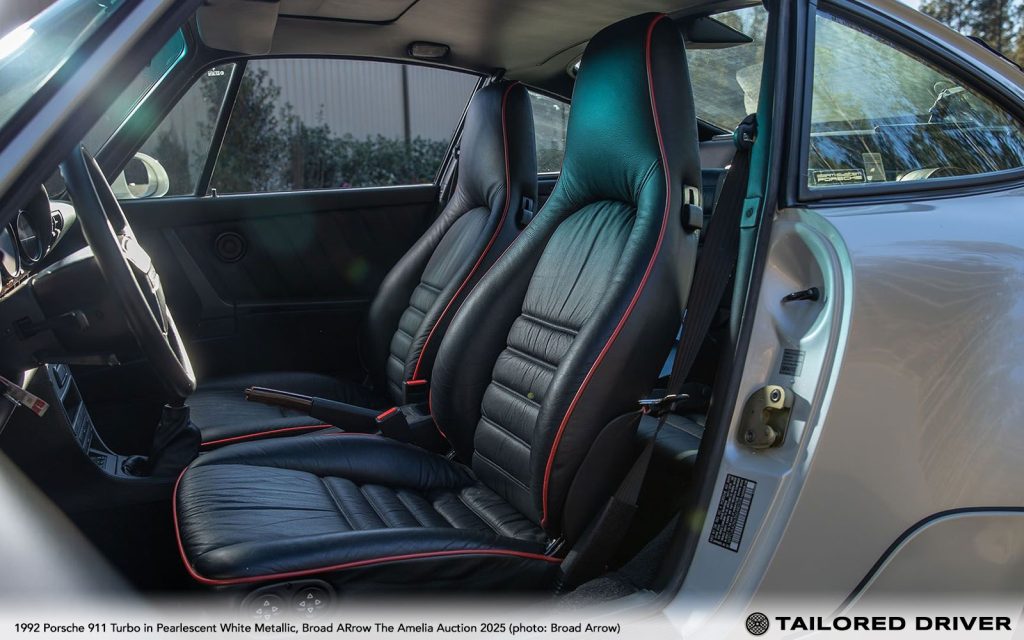
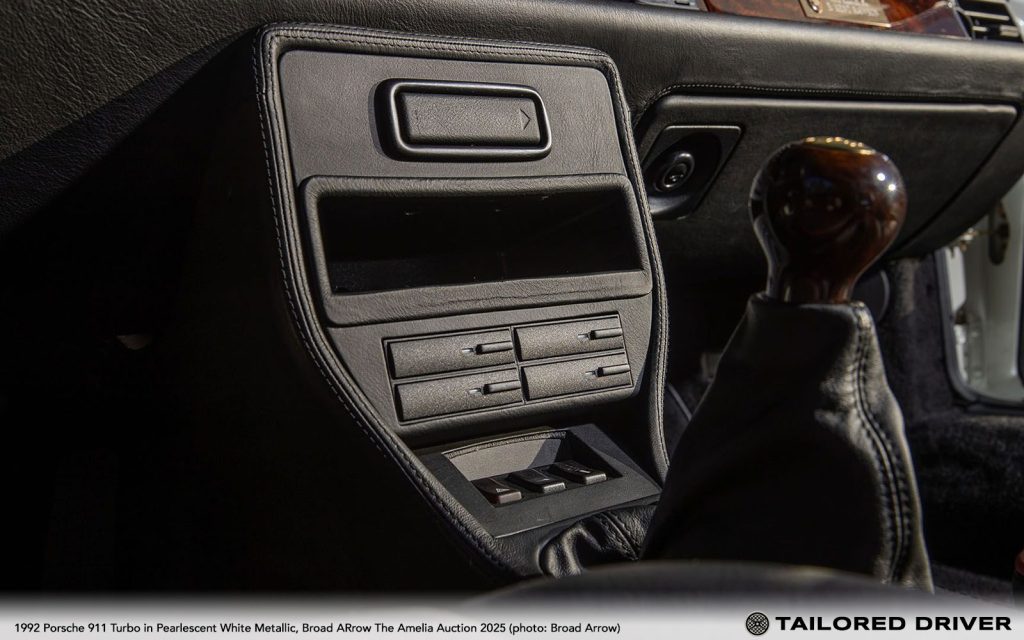
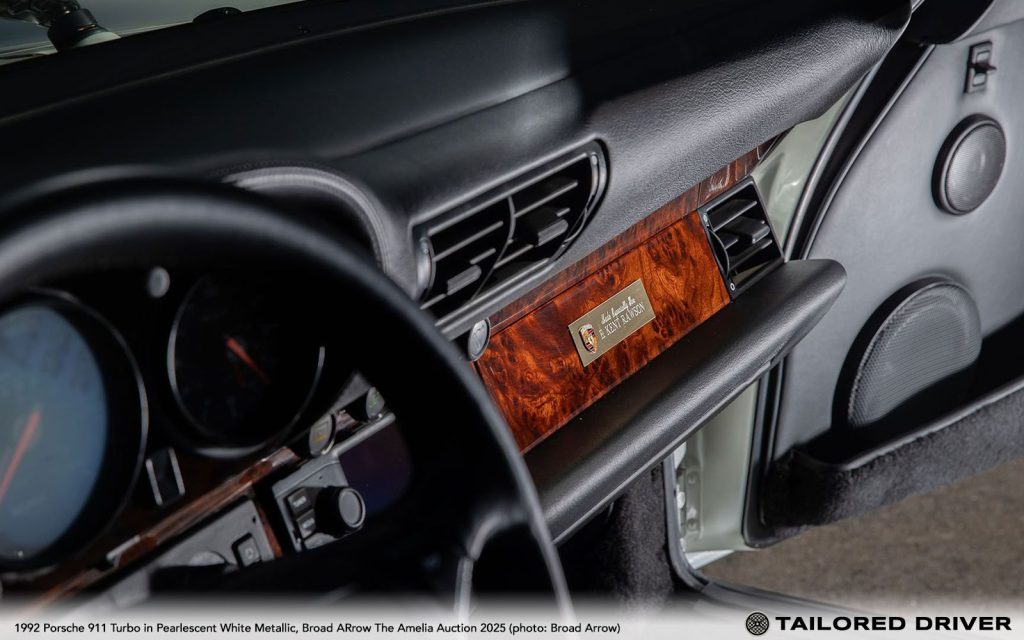
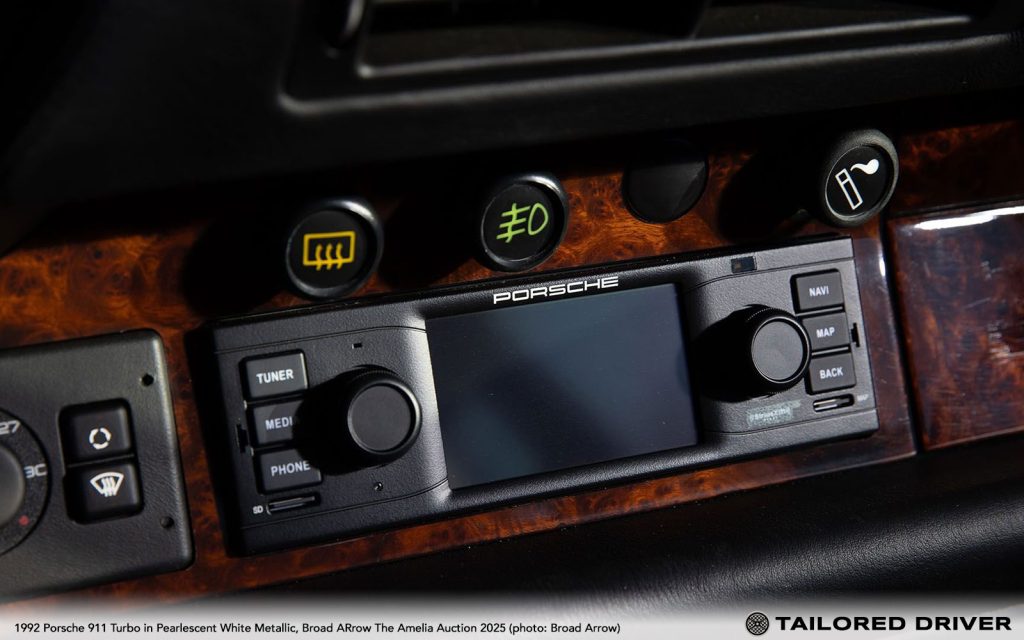
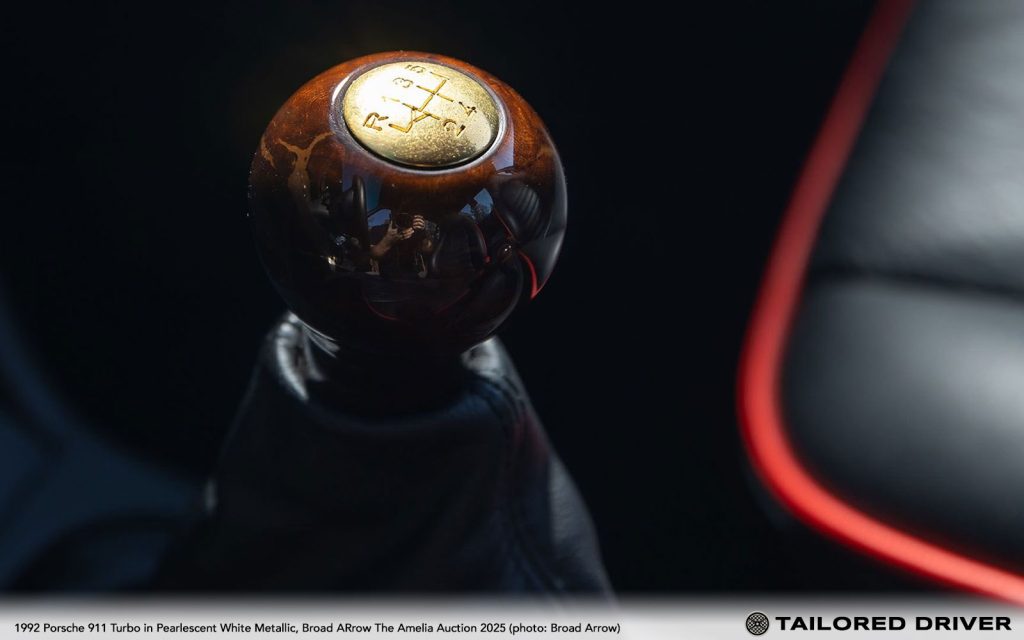
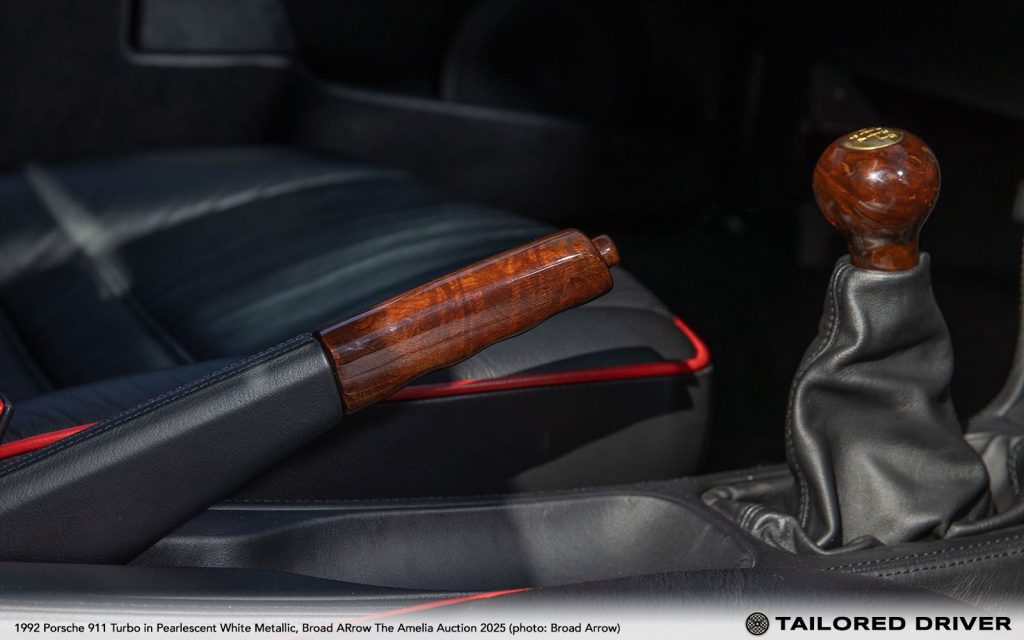
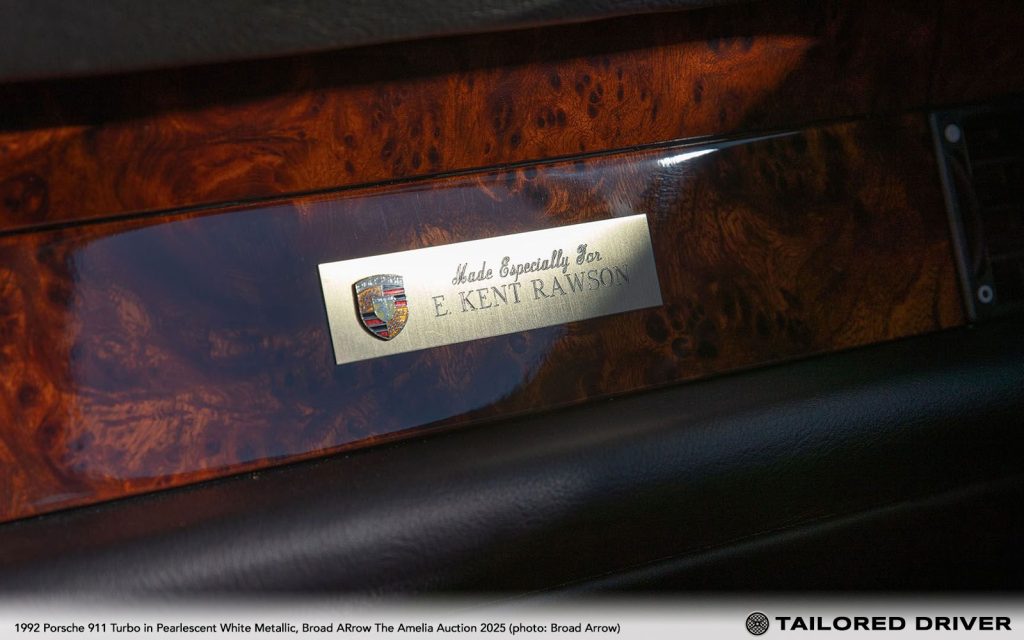
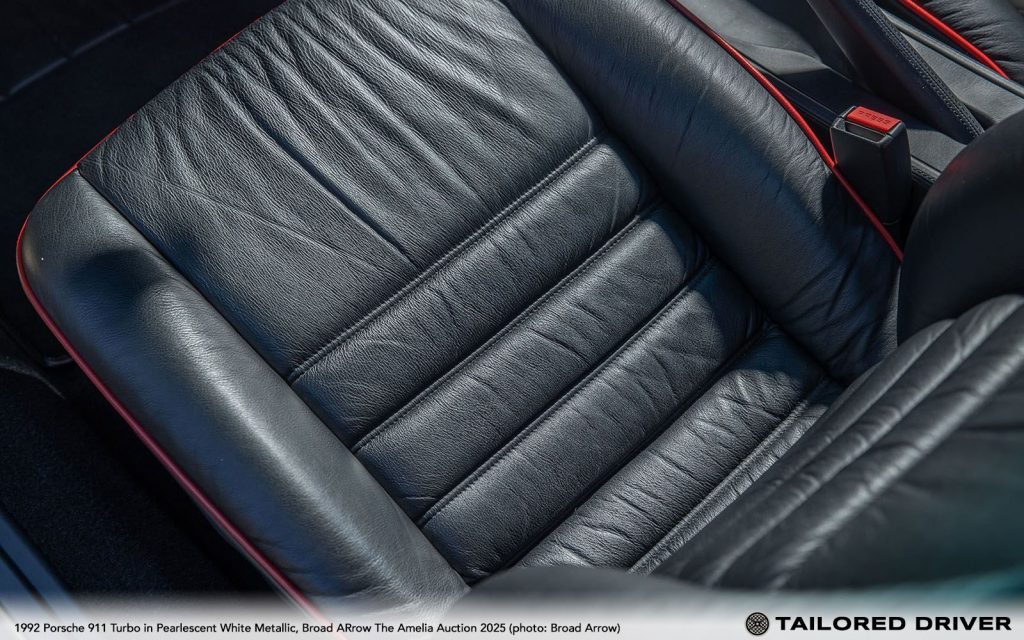
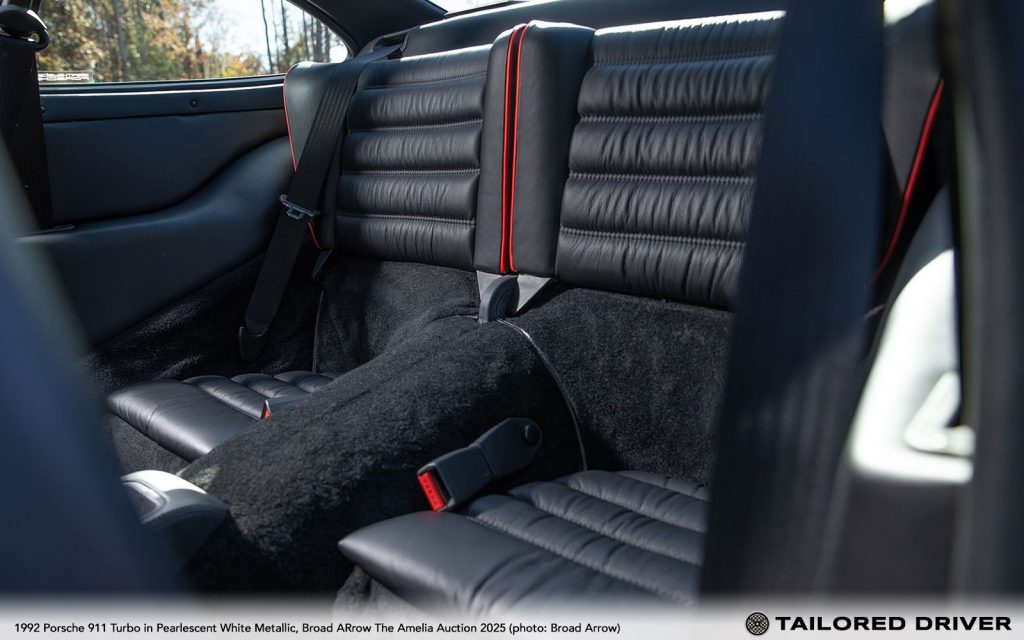
Back in 1992, Porsche only produced 233 of the early 3.3-liter 911 Turbo (type 964) for the U.S. market. This particular car was the final one produced for North America that year, and delivered to Porsche Clearwater (then Bert Smith International). Its specification went well beyond Paint to Sample Pearl White Metallic and Black full leather with Can-Can Red piping to include almost 20 X-Code options and addition Z-Orders from Porsche Exclusive. Additions to the build included Dark Rootwood trim, additional leather on interior components including headliner, rare leather center console and remote remote CD-1 CD changer.
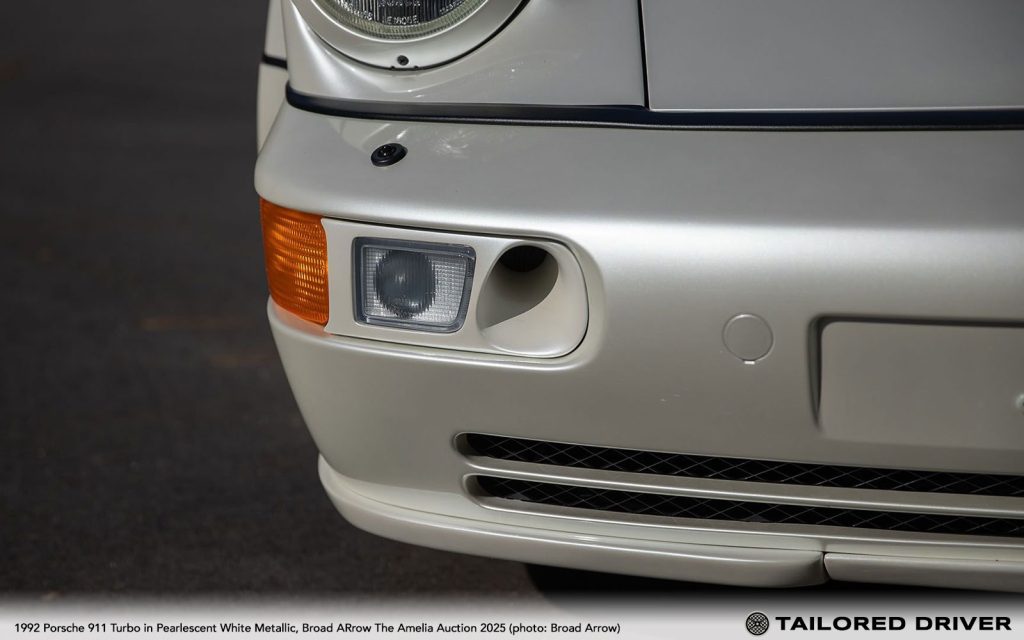
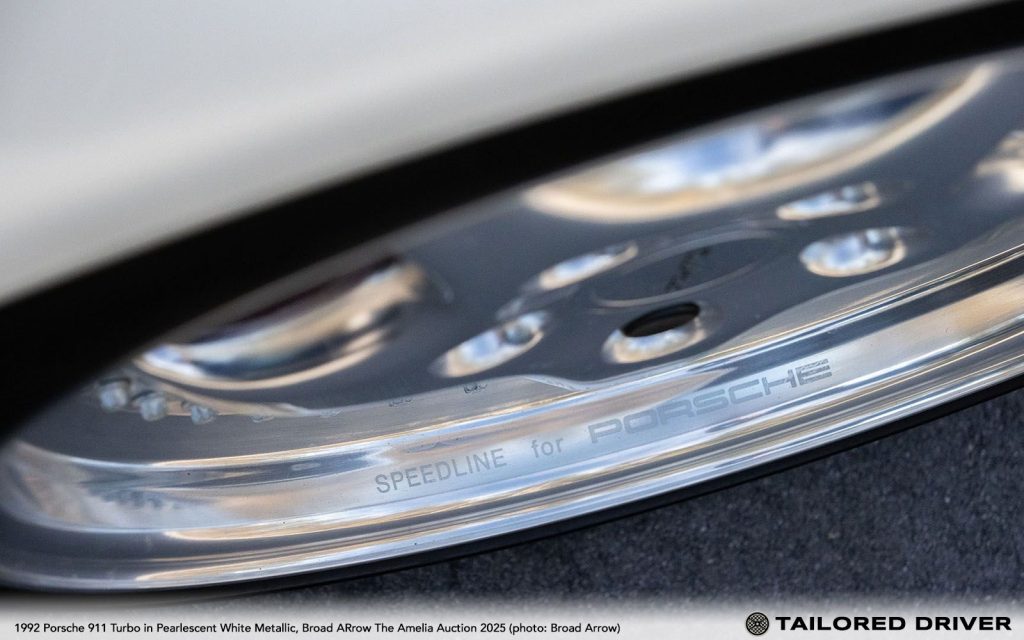
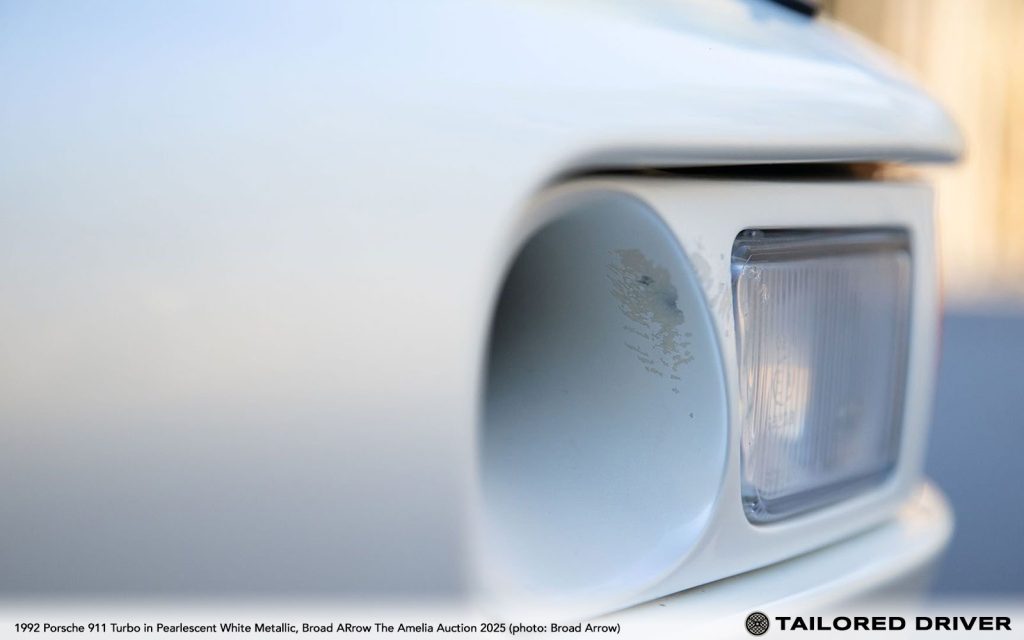
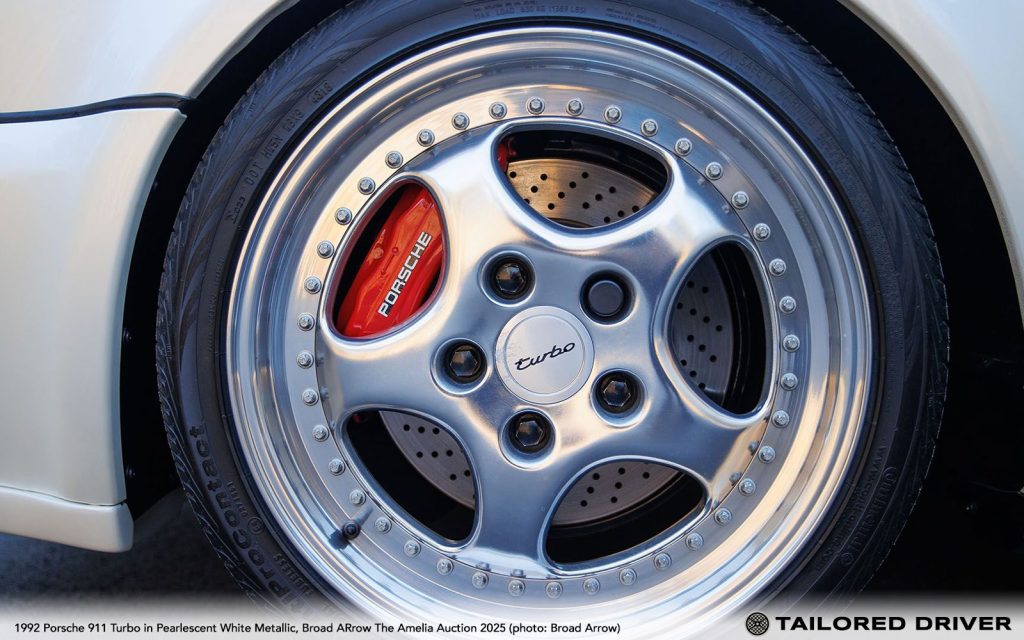
In addition to the factory specification, this car also is currently fitted with Rest of World front bumper lights, Turbo 3.6 “Speedline for Porsche” wheels, and period TechArt accessories.
Interestingly, the order process was retained in the car’s history file, and reveals that the owner even attempted to order his 911 Turbo 3.3 with 959-style fenders though unfortunately that never happened. Broad Arrow goes on to detail the ownership of the car in their lot description.
“According to the clean CARFAX Vehicle History Report, the car was registered to its first long-term caretaker in July 1992 based in Florida who would retain it for the next 24 years until its sale in 2016 with a scant 712 miles on its VDO odometer. In 2019, it was acquired by the current owner, a noted collector of highly original, low mileage 1980s and ’90s sports cars. With years of proper preservation, the Turbo’s Pearlescent White Metallic finish remains “show car” radiant while its full Black leather interior with its multitude of Exclusive options, including a rarely seen leather headliner, remains as expected in pristine condition. Most recently, the car visited European Performance in Raleigh, North Carolina for a new fuel pressure accumulator and AC system recharge in 2022 and later an inspection and oil filter service in October 2024. Perhaps, as expected, this final 1992 911 Turbo retains its window sticker, manuals, toolkit, air pump, spare, and correspondence between Porsche and the original long-term owner. This impressive level of documentation is, just like its exceptionally low mileage, a superb indication of the careful preservation afforded to this highly collectible, special-occasion supercar.”