Created by hand in the Mulliner workshops over eight months
Culmination of a boyhood dream, inspired by a child’s toy
Unique specification has personal significance to owner and family
Special green ‘Embelo’ finish named for their three daughters
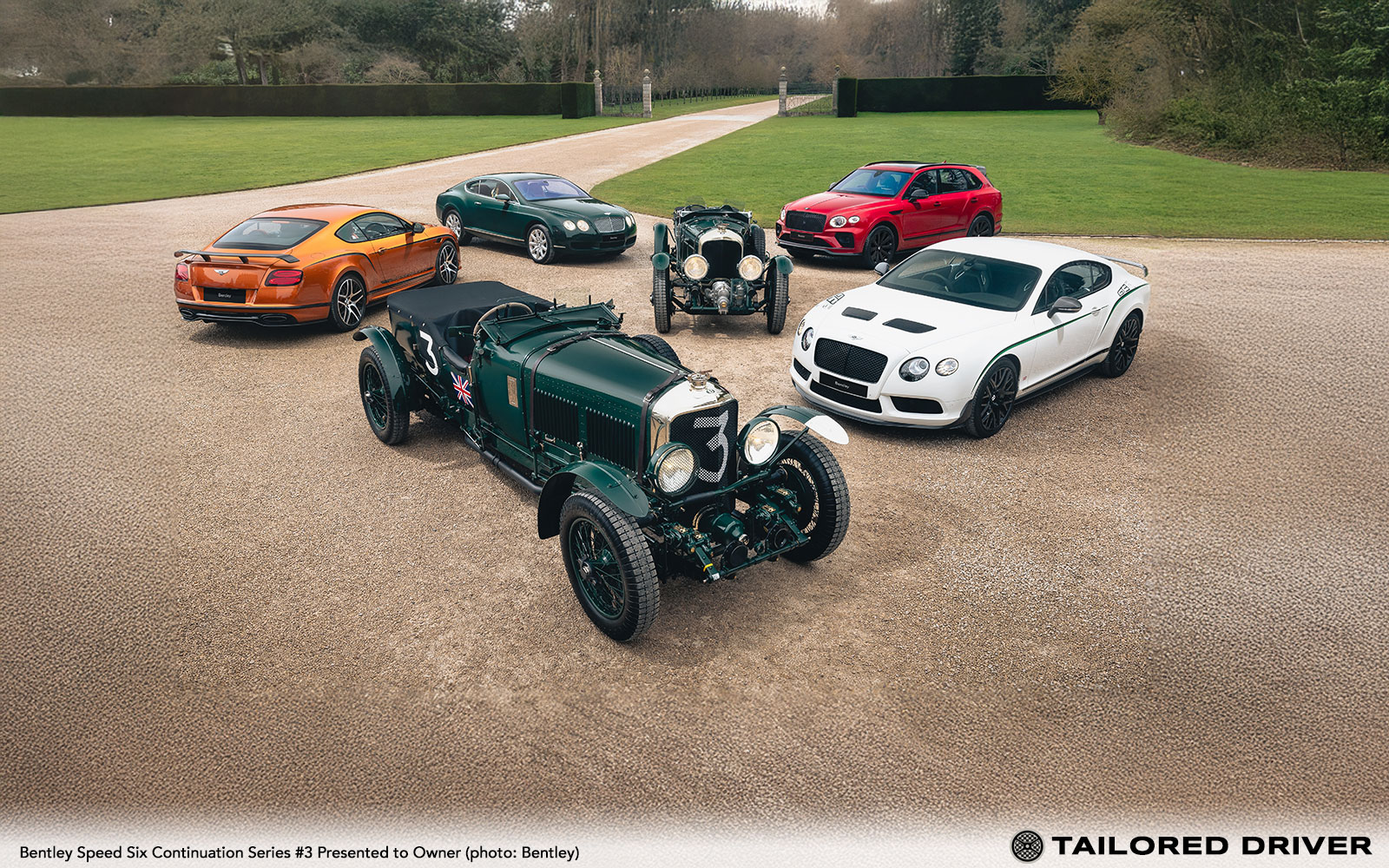
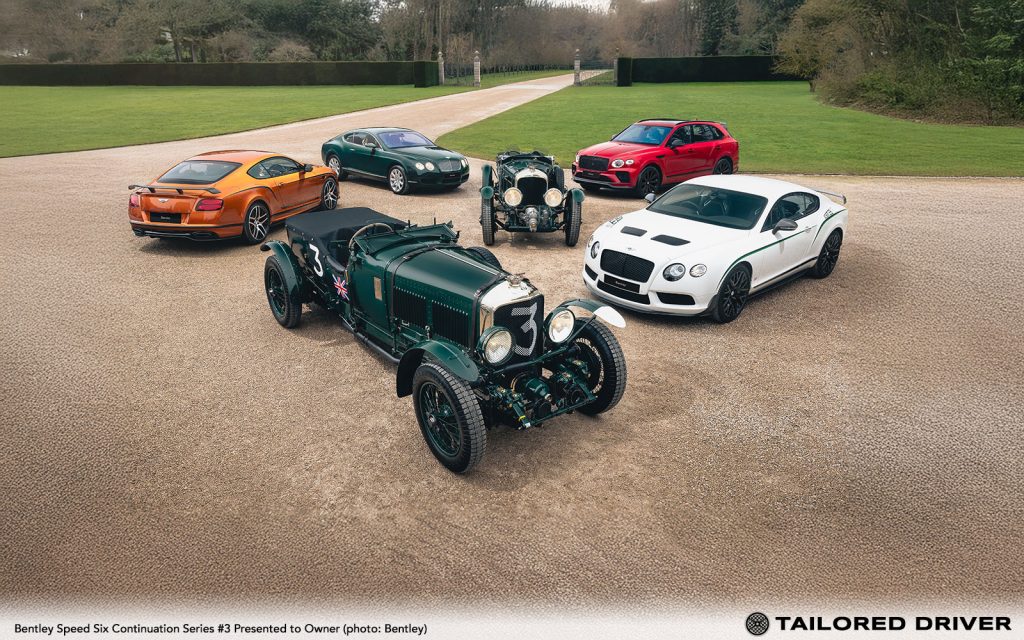
Owner’s garage includes Continuation Series Blower, a first generation Continental GT, rare Continental GT3R, Supersports and Bentayga
Handover took place at Cliveden House, Berkshire.
[source: Bentley]
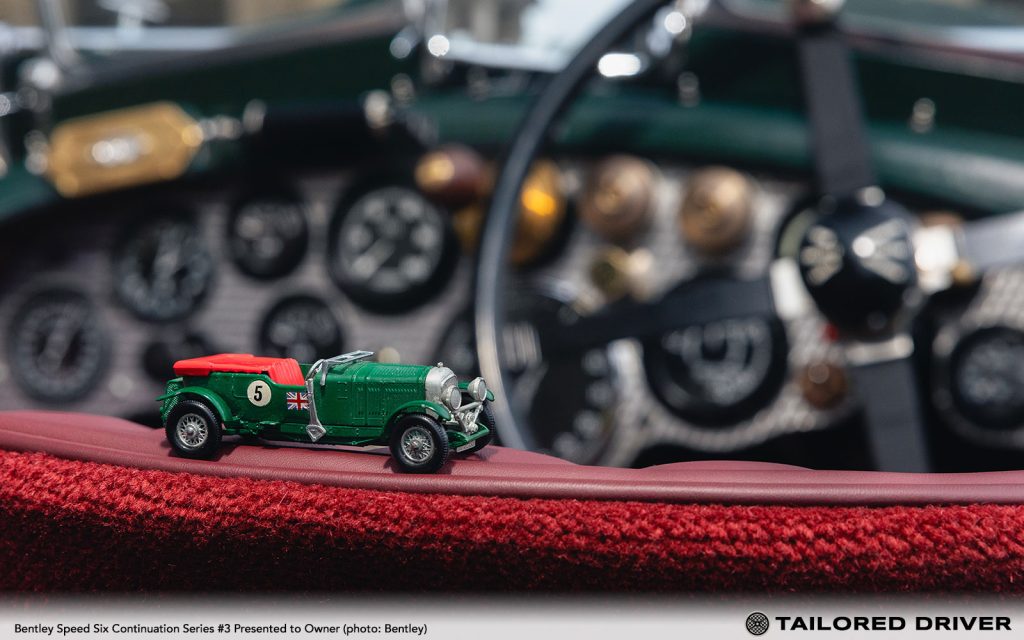
Crewe, England – Many a Bentley owner’s love of the marque begins in childhood, and the owner of the third of twelve Speed Six Continuation Series is no exception. In his case, it was a ‘Models of Yesteryear’ scale model Blower Bentley, given to him by his uncle, that sparked a lifelong fascination with the pre-war Bentley racing cars.
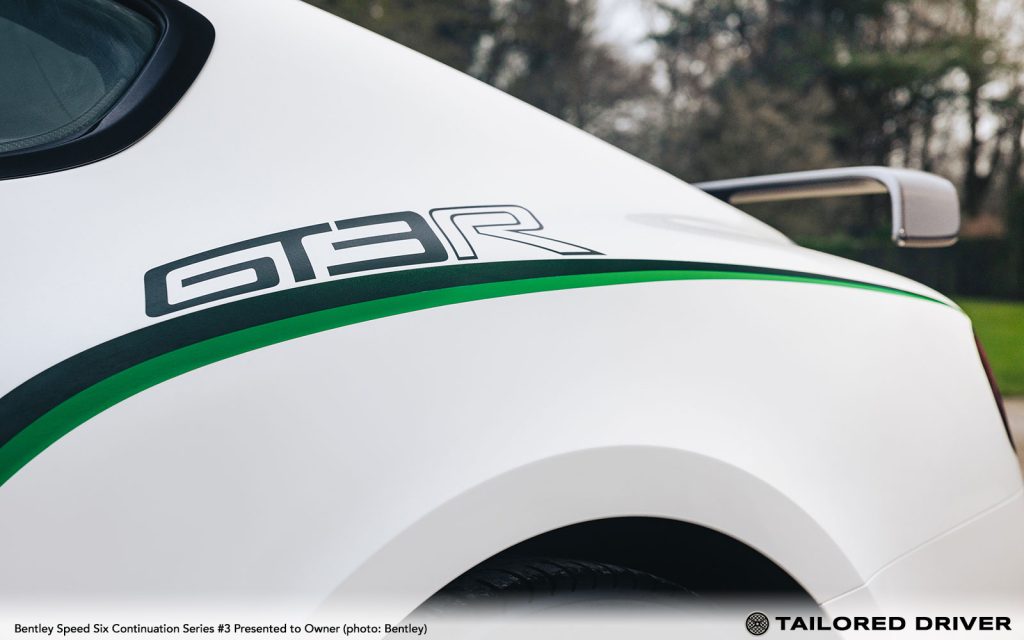
The owner and his wife enjoy a stable of Crewe-built Bentleys, including a first-generation Continental GT, a motorsports-inspired Continental GT3R, second-generation Continental Supersports and First Edition Bentayga. Pride of place however goes to his Continuation Series ‘Blower’ 4½ Litre Supercharged and the latest addition, a Continuation Series Speed Six. Not only has he kept that cherished scale model ‘Blower’ to this day, but it also provided the visual inspiration for his two Bentley Continuation Series cars.
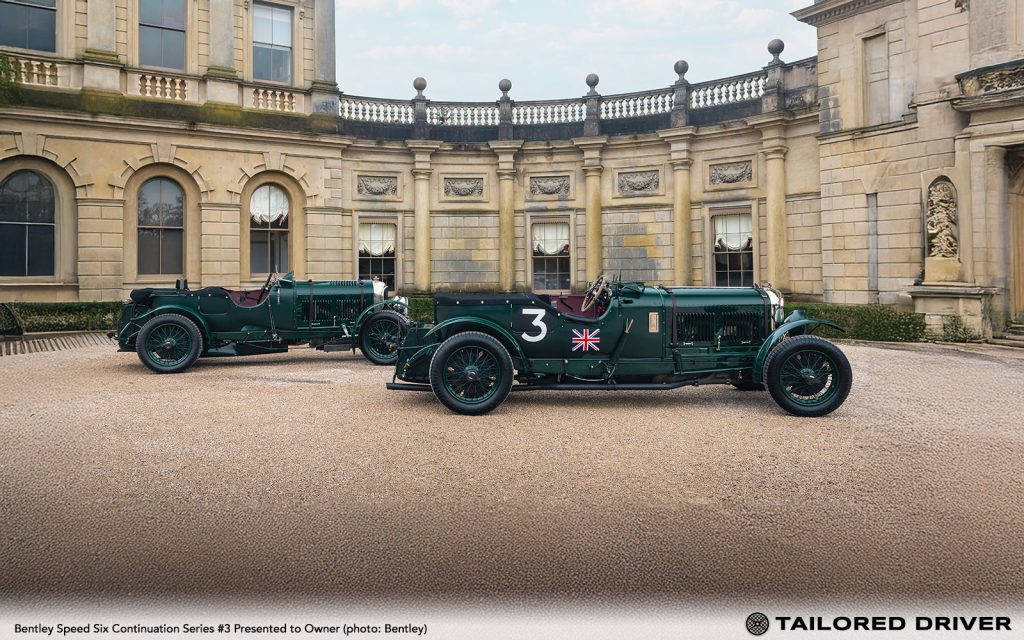
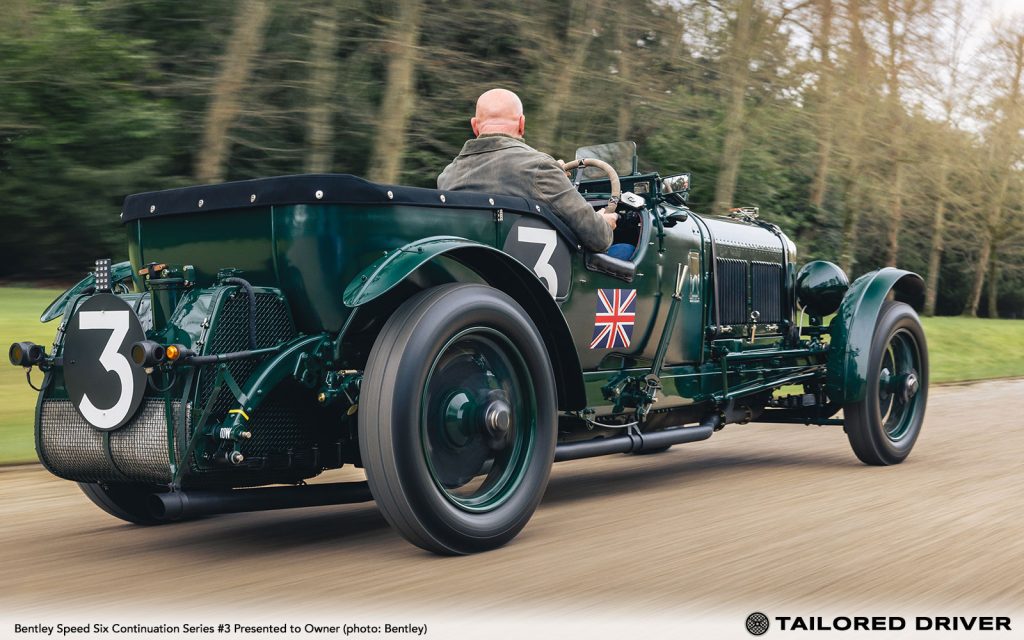
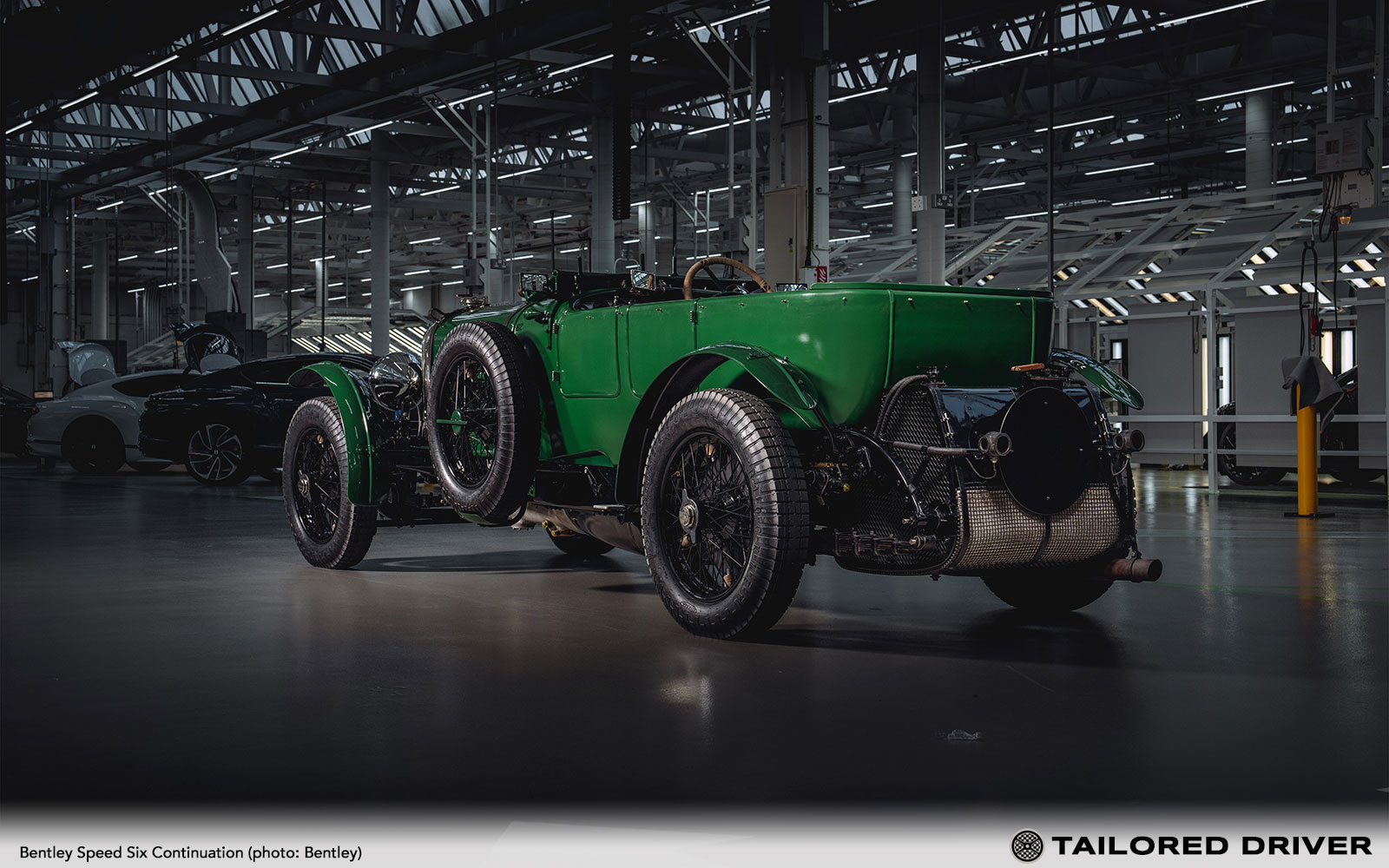
At the workshops of Mulliner Classic, realising a customer’s dreams is both their calling and their pride. Continuation Speed Six #3 (of 12) is a case in point; created with meticulous attention to detail to be identical in every respect to the original 1930s works racer, it also features several personal touches in its specification that make it truly individual, from the one-off paint finish to the racing number 3 that it carries on its flank and radiator.
Personal memories and family associations Both the Continuation Series Speed Six and the Continuation Series Blower are the third of twelve in their series, and the Speed Six also carries the racing number 3. The number that has fond associations for the owner, who played rugby to semi-pro standard as a tighthead prop, wearing the number 3 jersey, for many years.
Both the Blower and the Speed Six are finished in the same specially blended shade of green, chosen after careful consideration to be mid-way between the light green of the owner’s scale model and traditional British Racing Green. The shade was christened ‘Embelo Green’, taking the first letters of the couple’s three daughters. Like the owner’s scale model Bentley, his Speed Six Continuation Series’ interior is upholstered in red, though the couple chose a more muted shade than that of the toy.
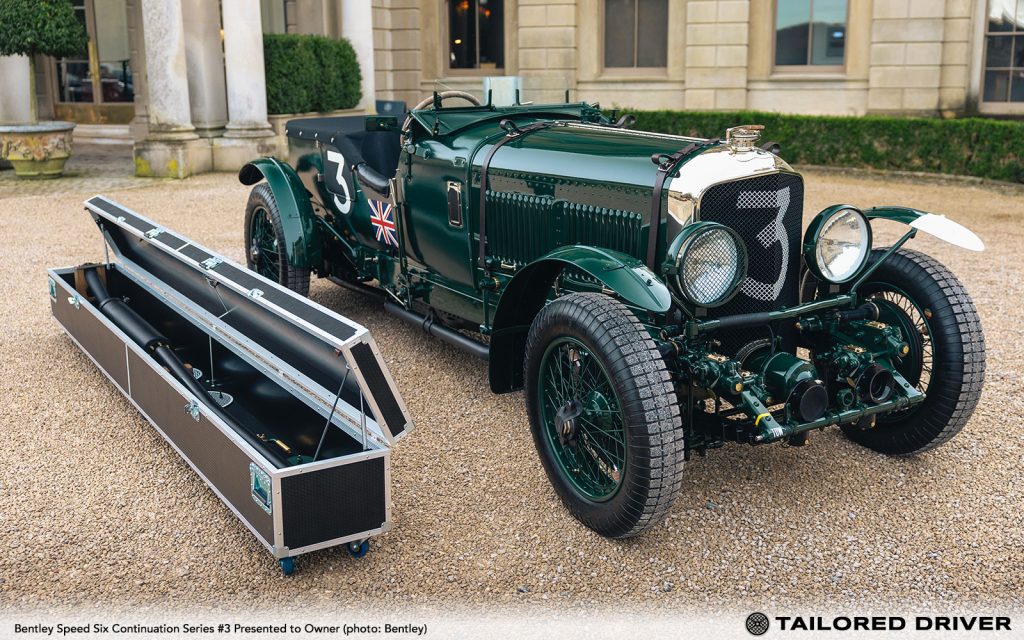
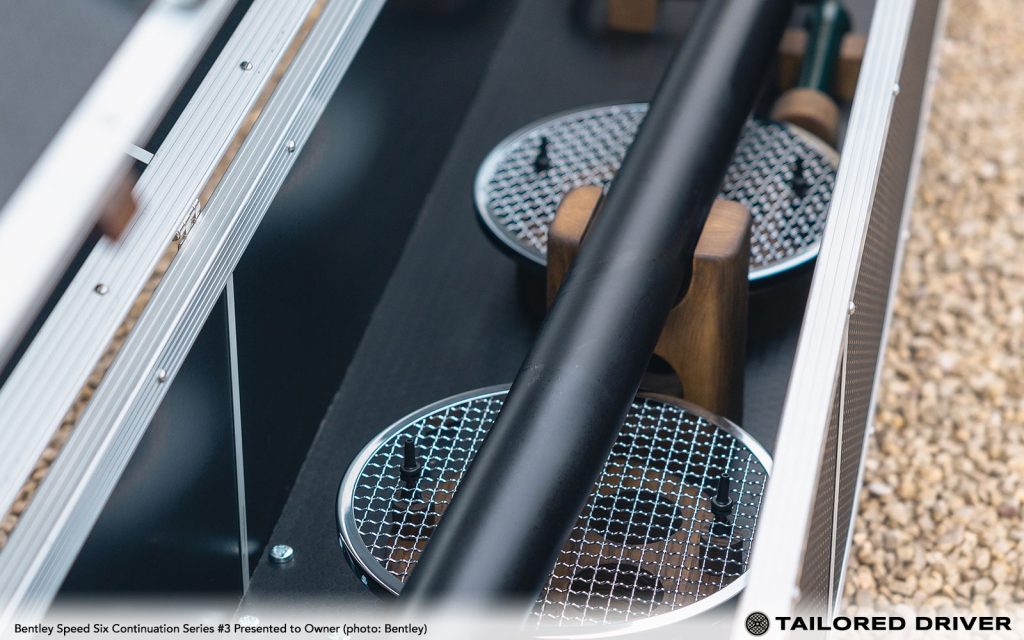
As with all this owner’s Bentleys, the Speed Six will be regularly and enthusiastically driven. Accordingly, another special request was for the Mulliner team to provide two exhaust systems with the Speed Six: one unsilenced as the original Speed Six specification, and the other with a silencer for circuits where noise restrictions are required. Bentley Mulliner engineering developed this silencer specifically for the Speed Six Continuation series. Finishing touches include a white patch on the leading edge of the nearside front fender for easier identification when coming into the pits and a hand-painted Union Flag on the driver’s side of the car.
A hands-on experience Commissioning a Continuation Series Bentley is a highly personal process and, like many Mulliner Classic customers, the owner of the #3 Speed Six became a familiar figure in the Crewe workshops. A highly capable craftsman in his own right, he even spent a day working as part of the Mulliner team to fit the period-correct Rexine fabric of his Blower’s Weymann-style bodywork. While work commitments meant he was unable to do the same for his Speed Six, he fully intends to use it as W.O. Bentley intended – fast, reliable and capable of impressive performance.
The legendary Speed Six The Speed Six was introduced in 1928 as a more sporting version of the Bentley 6½ Litre. The engine was modified to liberate more power, with twin SU carburettors, a higher compression ratio and a high-performance camshaft.
182 Speed Six models were built between 1928 and 1930. Two wins at the Le Mans 24 Hour race, in 1929 and 1930, cemented the Speed Six’s pre-eminent place in Bentley racing history.
For the Continuation Series Speed Six, Mulliner Classic took two original Speed Sixes as its template: the company’s own Speed Six, GU409, and ‘Old Number 3’, a works Speed Six driven in the 1930 Le Mans 24 Hour race by Sammy Davis and Clive Dunfee. The latter was generously loaned by its owner and gave the Mulliner team invaluable data on dimensions, materials, and components. The Mulliner Classic team is also indebted to the W.O. Bentley Memorial Foundation, which provided 80% of the original drawings and notes used by the team.
About Bentley Motors Bentley Motors is the most sought-after luxury car brand in the world. The company’s headquarters in Crewe is home to all of its operations including design, R&D, engineering, Mulliner and production of the company’s five model lines, Continental GT, Continental GT Convertible, Flying Spur, Bentayga and Bentayga EWB. The combination of fine craftsmanship, using skills that have been handed down through generations, alongside engineering expertise and cutting-edge technology is unique to UK luxury car brands such as Bentley. It is also an example of high-value British manufacturing at its best. Bentley employs around 4,000 people at Crewe.
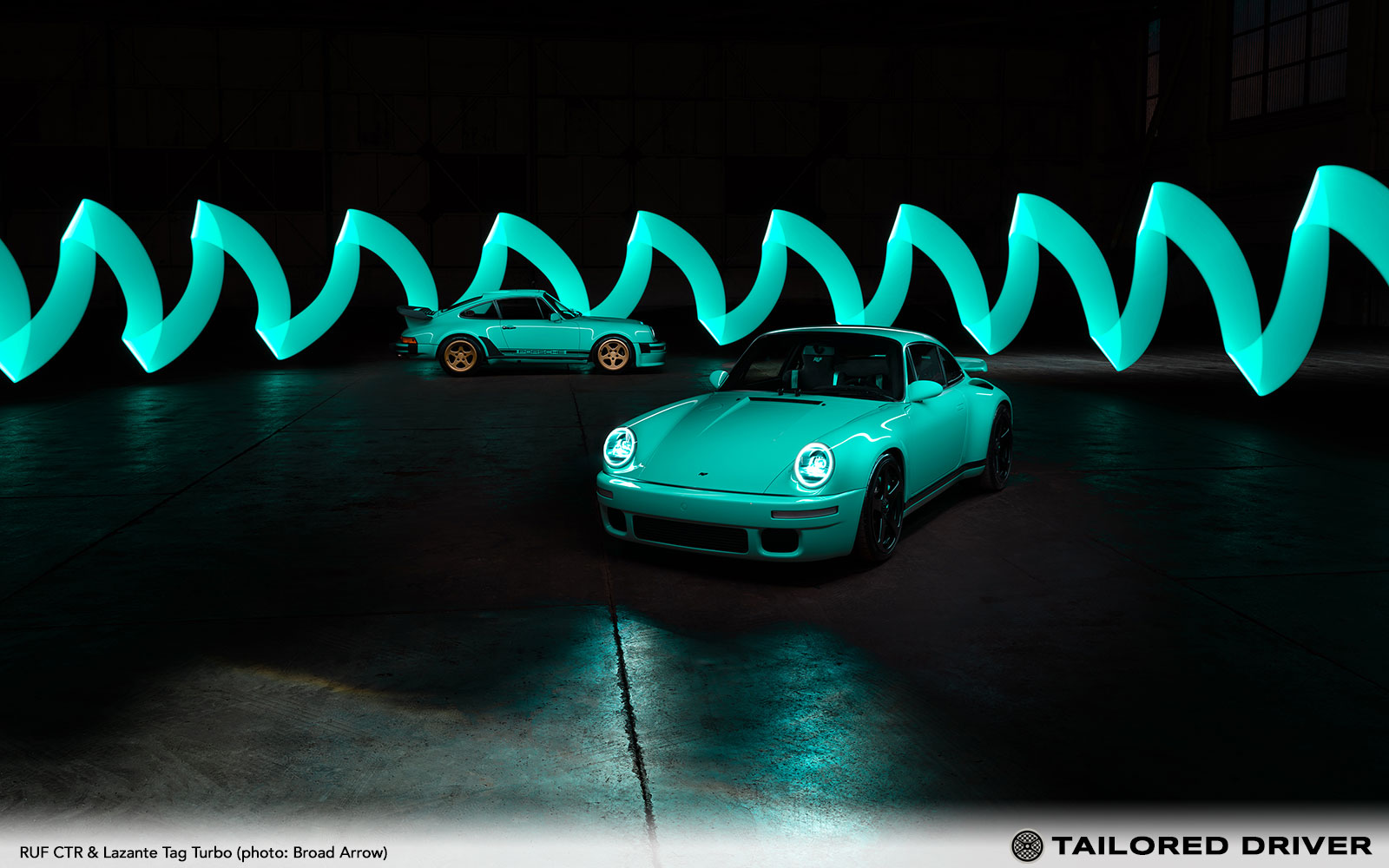
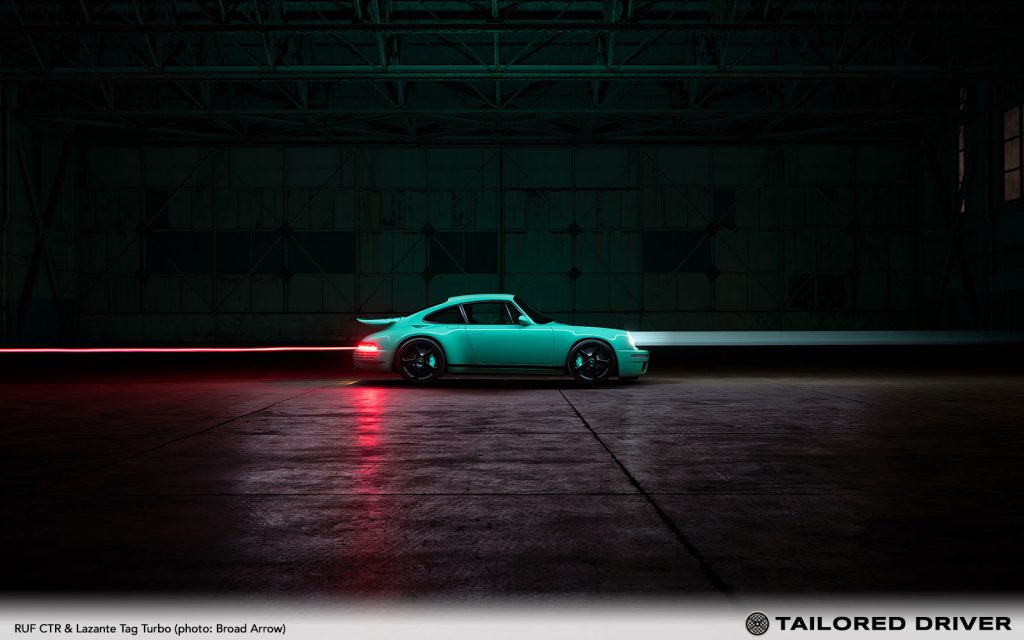
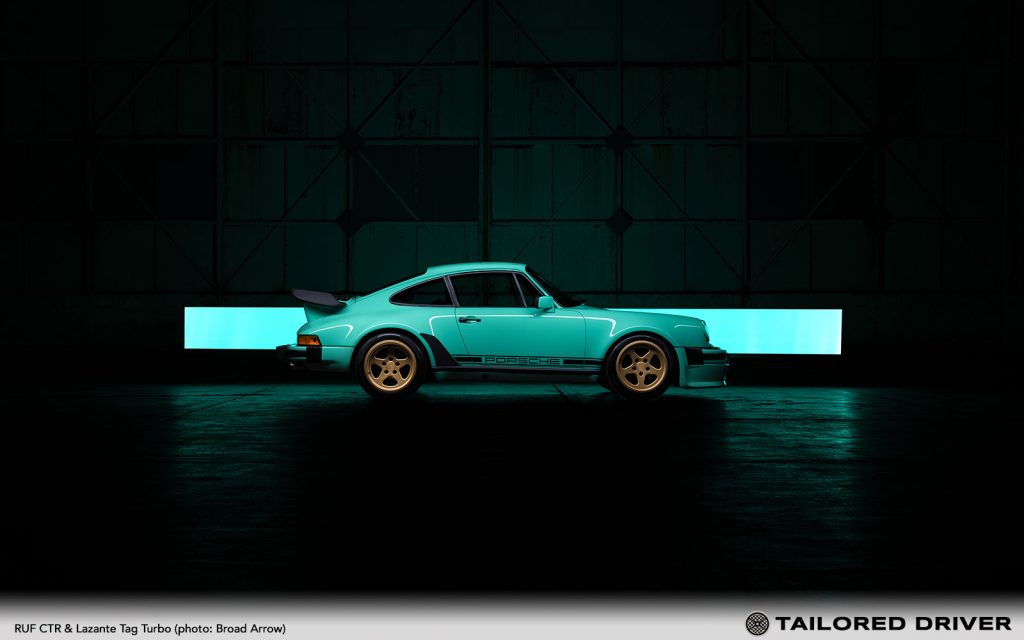
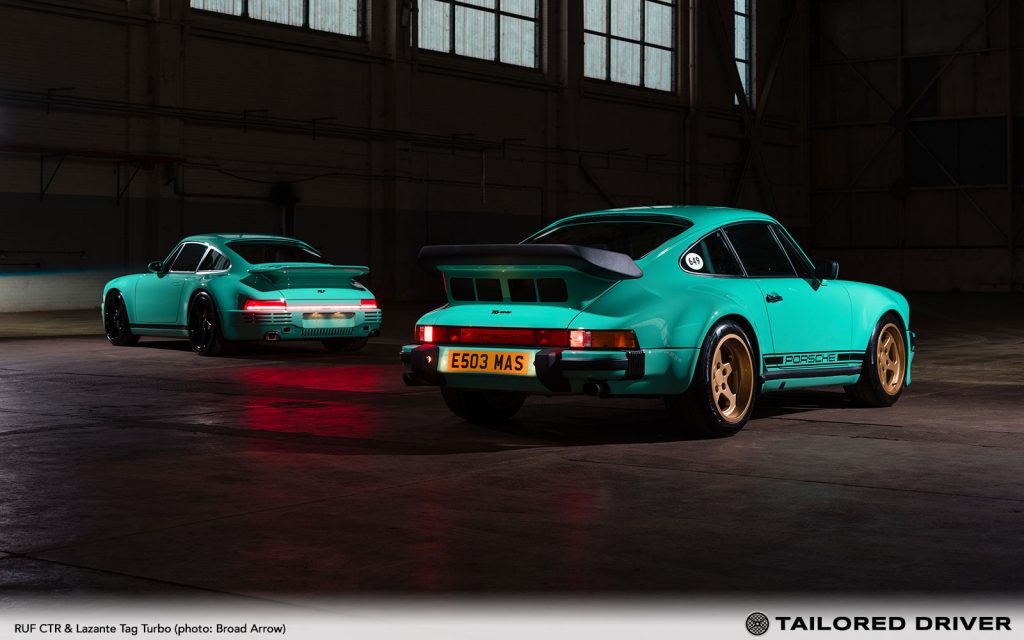
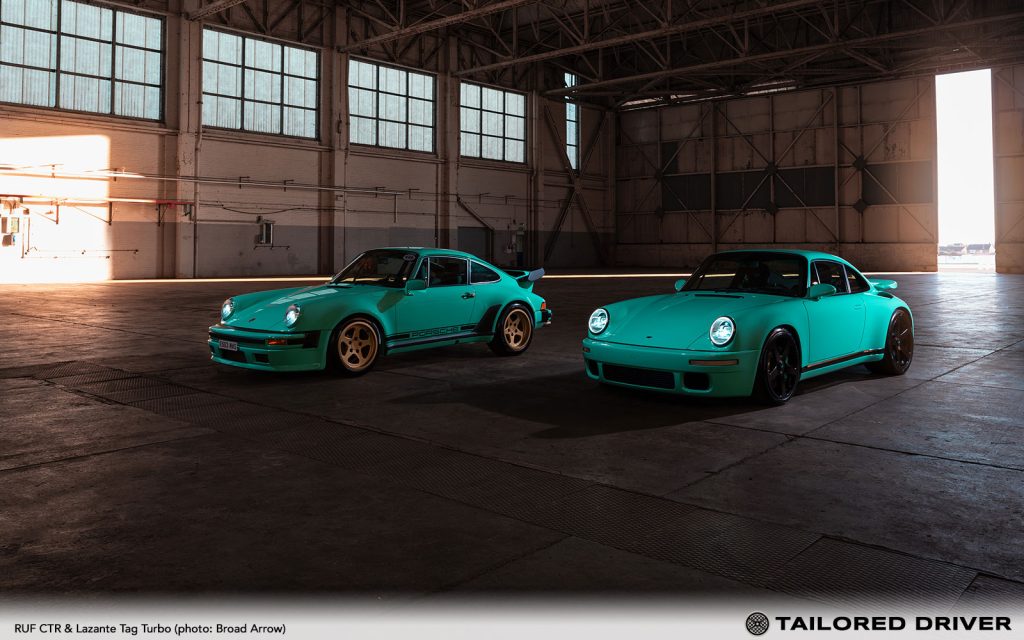
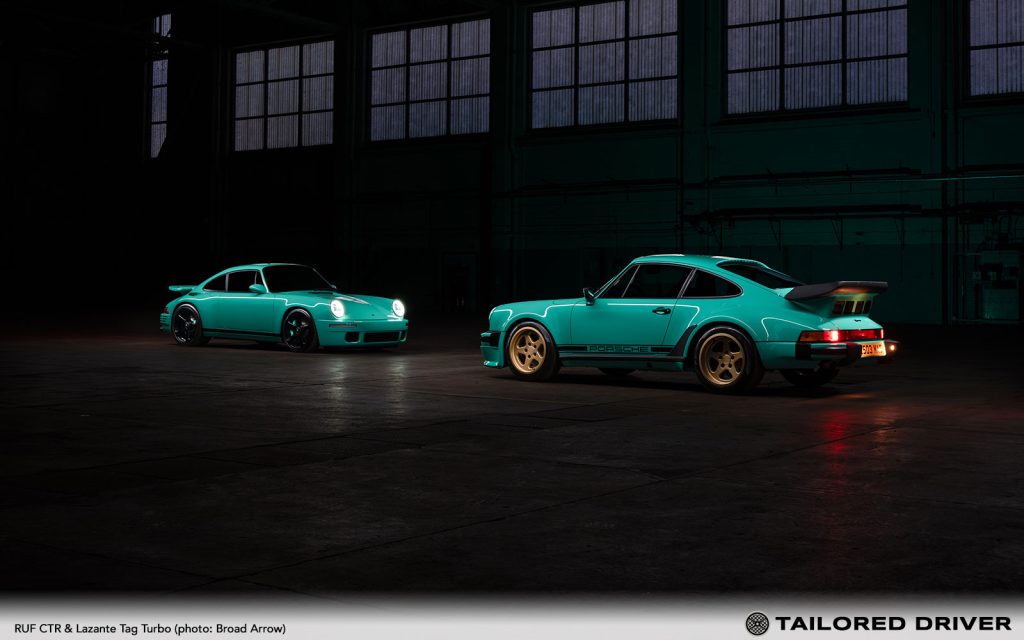
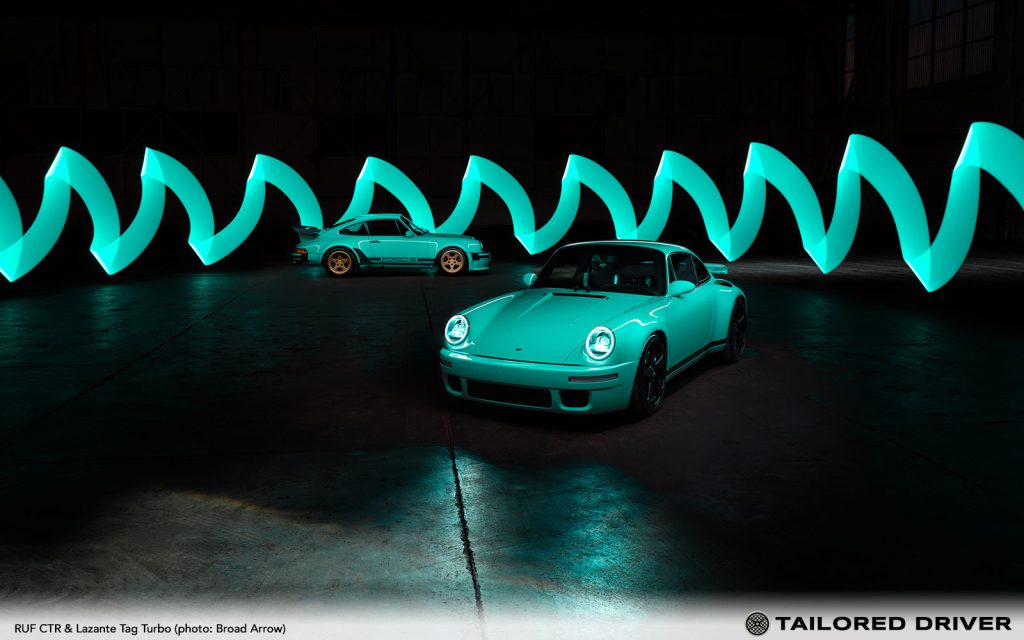
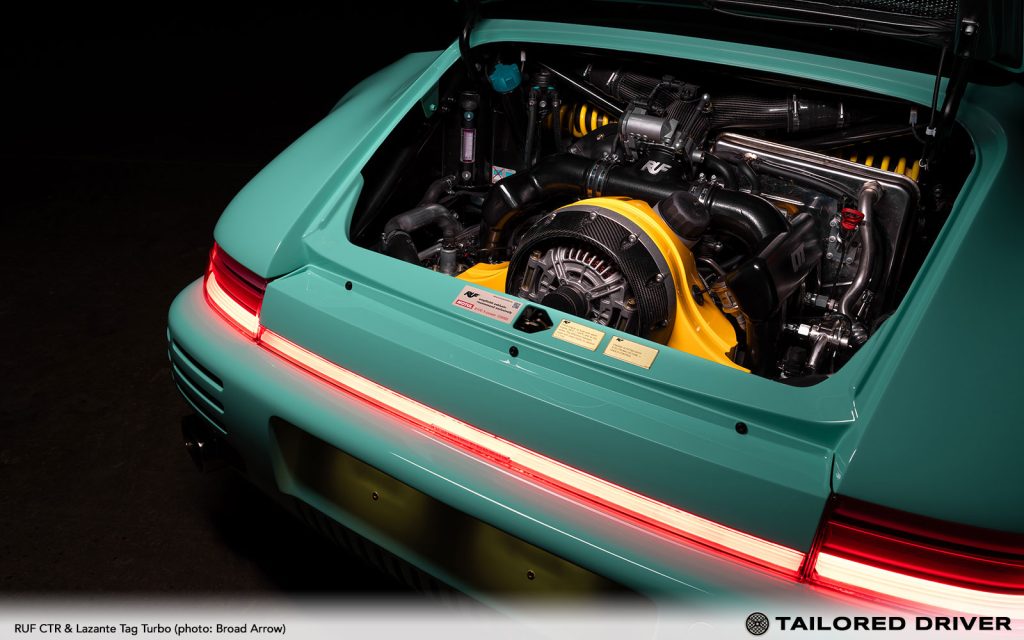
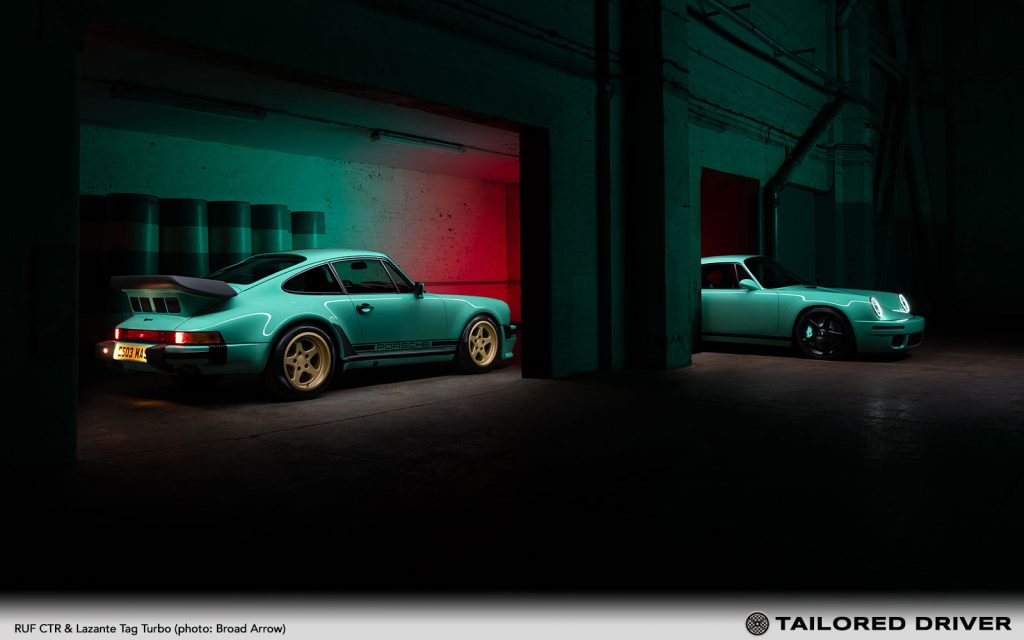
Broad Arrow is well known for offering modern classic supercars to discerning collectors around the world, and the ultra-rare Porsche 911 TAG Turbo and RUF CTR Anniversary in this epic Hagerty and Broad Arrow film, bring that reputation to life.
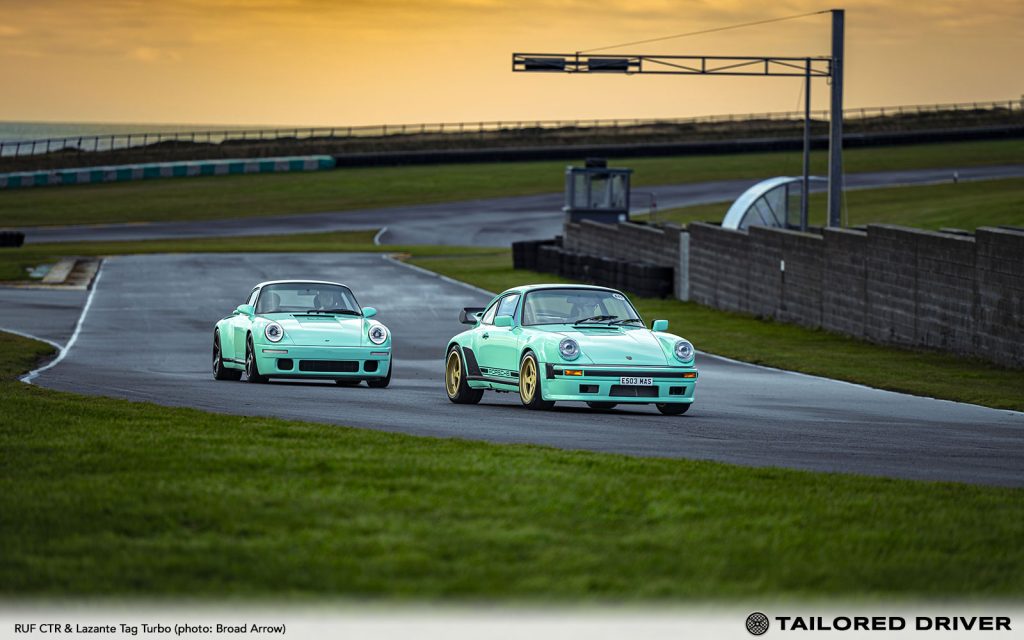
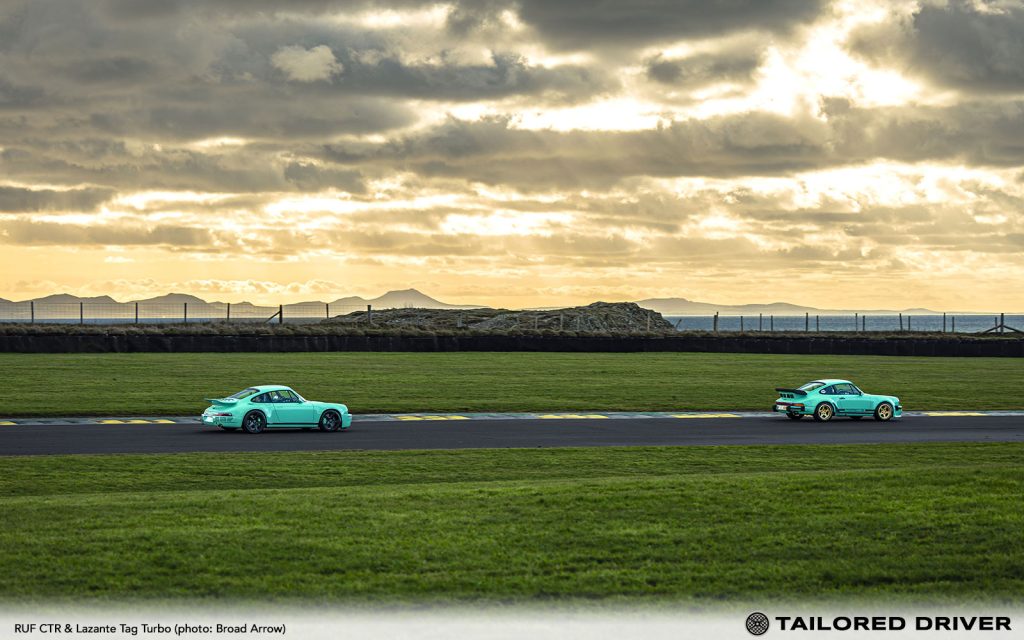
This is the first time the stunning Mint Green (mintgrün; non-metallic UNI; 22R; Porsche) pair have been together on film, providing a rare chance to see, hear and experience both cars being driven as intended, as Hagerty’s Henry Catchpole puts them through their paces. In this exhilarating test, he tackles the picturesque Anglesey Circuit, capturing the raw nature, and sounds, of both cars while revealing their unique personalities.
Both cars impressed Catchpole with their unique character and exceptional performance on track. The RUF he described as “utterly extreme” and a “proper wild child” with its 710hp engine powering just the rear wheels. The TAG Turbo seemed to steel his heart. Expecting a car ruled by its engine, he noted how well-engineered the car is, concluding it felt like “one of the very best 911s” in history, and yet perfectly useable day-to-day.
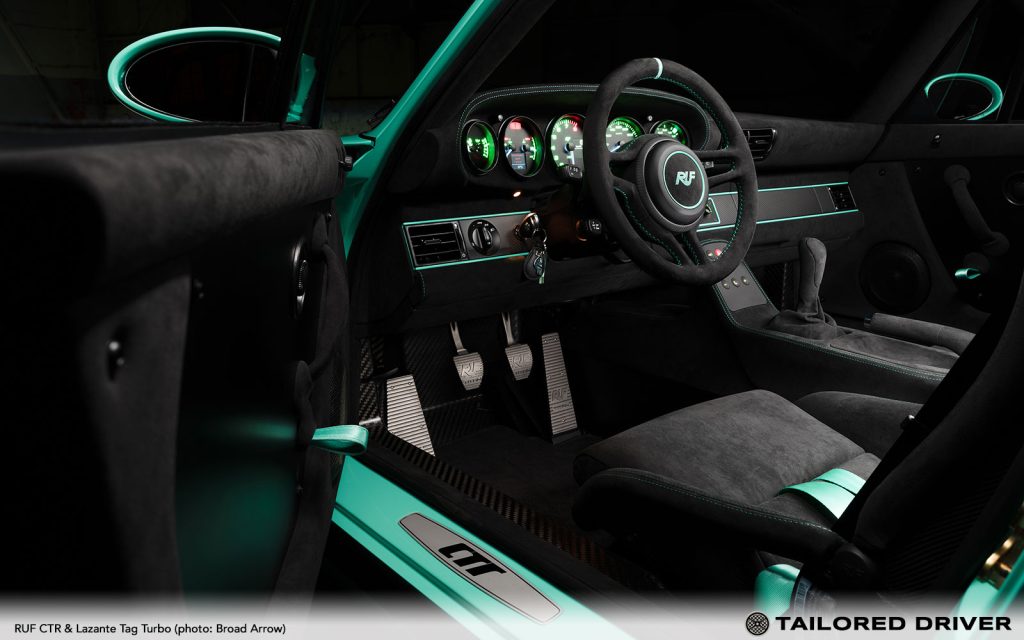
The 2023 RUF CTR Anniversary is one of only 50 limited production models, and is a brand-new car finished in PTS Mint Green over a Black Alcantara interior. Offered with very low mileage and a digital copy of its original build sheet, it has been optioned with front axle lift, foldable Kevlar carbon bucket seats, lightweight door option, and harness crossbar in Alcantara. Powered by a 710-horsepower flat-six twin-turbo engine paired with a seven-speed manual gearbox, it is capable of 0-62 mph in 3.5 seconds with a 224-mph top speed.
Alois Ruf is rightly proud of this very special car, saying; “The first automobile that was completely conceived and manufactured by us marks a very special chapter in our company’s history, a 30th birthday celebration of the Yellowbird.”
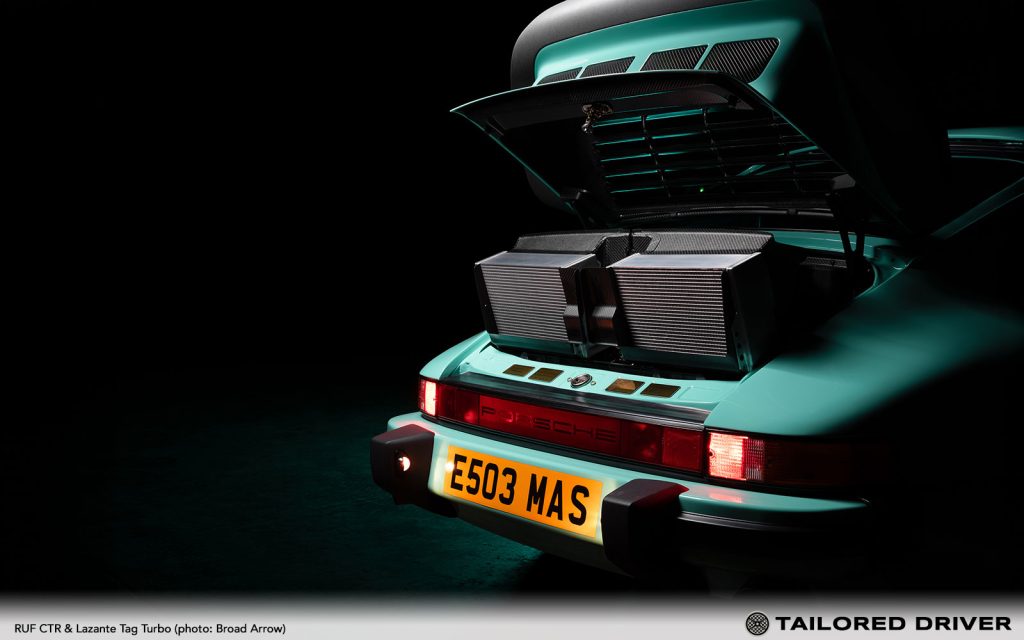
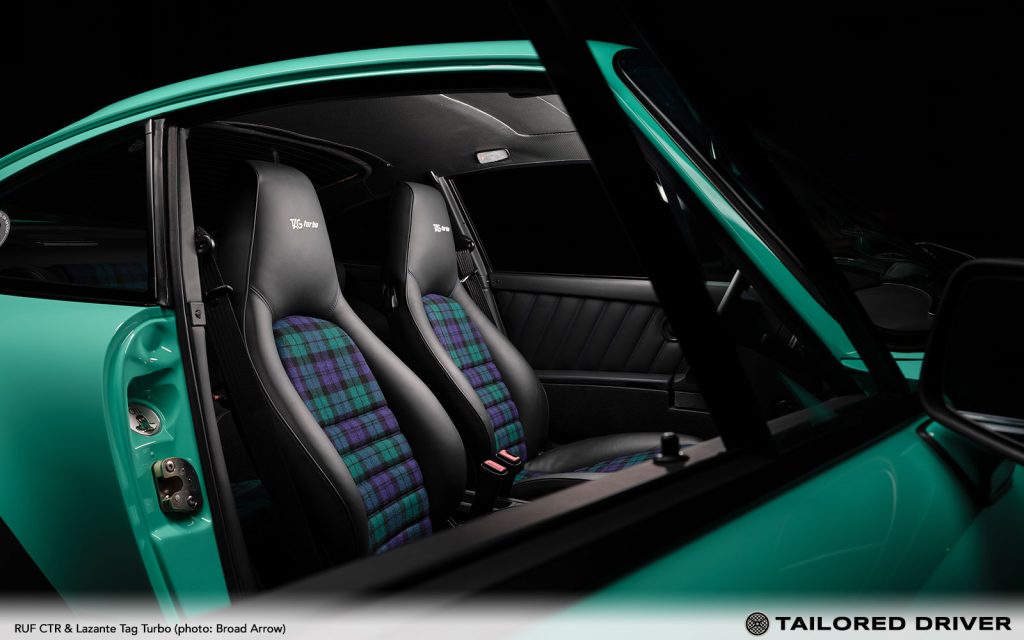
The 1988 Porsche 911 TAG Turbo, consigned to Broad Arrow Private Sales, is one of only 11 built by Lanzante and this particular example was completed in 2020. Custom finished in Mint Green over Black leather with Blue/Green tartan cloth, it is offered with less than 300 miles since completion. Power comes from a 1.5-litre TAG Turbo “TTE P01” V6 Formula One engine developed by Porsche and rebuilt by Cosworth, which revs to 10,250rpm via a custom Porsche 993 six-speed gearbox and has a claimed top speed of 200 mph. The engine in this car was raced by four-time Formula One World Champion Alain Prost at the 1986 German Grand Prix and the 1987 Hungarian and Japanese Grands Prix.
Dean Lanzante said of his Porsche TAG Turbo creation: “It’s a car that celebrates history, the history between two amazing brands. But it will remain extremely rare because it has to be. We couldn’t get any more engines from McLaren, so this is it. There will never be another car like it.”
Broad Arrow VP of Sales for EMEA, Joe Twyman, provided driver support on the day and is behind the wheel of the second car throughout the film. Joe is a highly experienced driver in his own right having raced many important cars at events around the world. Speaking of his time with both cars, Twyman said: “While both are finished in the same colour, the cars themselves are very different. Both are extremely powerful but encourage the driver to get the best from them. They are also beautifully built, and exceptionally well developed and compliant both on track and on the road. The film will provide a real insight into the cars and will be both a joy to watch for any enthusiast while also providing an unrivalled level of insight for any potential buyer.”
Interested buyers should note the RUF CTR Anniversary has recently been sold, proving the ability of the Broad Arrow team to find the right buyer for specialist cars, swiftly.
The Porsche 911 TAG Turbo will be available to view on the Broad Arrow stand at the Retromobile show taking place in Paris on 5–9 February. Members of the Broad Arrow team will be on hand to show the car in detail to any interested buyers.
The story of Porsche and McLaren International – how the Porsche TAG Turbo was created McLaren’s Ron Dennis approached Porsche in early 1981 to build a turbocharged Formula One engine and was initially told it would not be possible. Later, Porsche agreed to design a new 1.5-litre twin-turbo V6 engine, funded by Techniques d’Avant Garde Group S.A. (TAG), for McLaren.
The TAG-Porsche powered McLaren MP4/2s triumphed at 12 of the 16 Grands Prix in 1984, taking the Constructors’ Championship and giving Niki Lauda the Drivers’ Championship. 1985 brought a further six wins, a second consecutive Constructors’ Championship and Prost achieved his first Drivers’ Championship with five wins. Prost won the Drivers’ title again in 1986 with Porsche’s 1.5-litre TTE (TAG Turbo Engines) V6, now producing 910 horsepower in race trim and 990hp for qualifying. For 1987, Prost partnered with Stefan Johansson, and while the season wasn’t as successful as in the past, the Frenchman still managed three wins.
In March 1987 the TAG V6 was installed in a Porsche 911 Turbo. This unique car remains in the McLaren International collection and, aside from a surprise appearance at the 2012 McLaren Employee Motorshow, this special car has remained under wraps. What was gifted to McLaren by Porsche at the conclusion of their partnership appeared to be a lightly modified Grand Prix White 911 Turbo with RUF five-spoke Speedline wheels and a RUF front valance. Yet this valance hid two large radiators, and out back, two massive intercoolers were fitted underneath a relatively stock looking Turbo tail with a subtle ram-air scoop at the trailing edge.
Over the years, many of those aware of the car’s existence had made direct overtures to McLaren to acquire it, including Dean Lanzante, yet the answer was always no. Lanzante was persistent and persuaded the company to provide a 1.5-litre TAG Turbo intending to produce a second Formula One-powered Porsche Type 930. In the end, Lanzante and his team embarked on constructing 11 TAG-powered 930s—a car for each pilot in each year a McLaren MP4 was powered by a Porsche TTE engine.
The engine was extensively re-engineered by Cosworth and features new pistons, connecting rods, valves, valve springs, modern turbochargers, an updated cooling system, oil heat exchangers, and an Inconel exhaust with titanium tailpipes. The engine itself is an incredible 286 pounds lighter than the 3.3-litre air-cooled flat six it replaces. A Cosworth ECU and a bespoke Raychem motorsport-grade wiring loom manage the engine, paired with a six-speed H-pattern manual transmission featuring bespoke gear ratios for a 200-mph top speed via a twin-plate hydraulic carbon clutch.
More details on the Porsche 911 TAG Turbo, offered by Broad Arrow Private Sales, here.
About Broad Arrow - Broad Arrow, a Hagerty (NYSE: HGTY) company, is an advisor, market maker, and financier for car collectors with a commitment to integrity, trust, and innovation. Broad Arrow operates Broad Arrow Auctions, Broad Arrow Capital, and Broad Arrow Private Sales, catering to all collector buying and selling needs. Broad Arrow is headquartered in Grosse Pointe, Michigan, with offices and specialists located across the United States and around the world in the United Kingdom, Germany, France, and Italy. For more information, please visit connect with us on Facebook, Instagram, Twitter, and LinkedIn.
About Hagerty, Inc. (NYSE: HGTY) –Hagerty is an automotive enthusiast brand committed to saving driving and fueling car culture for future generations. The company is a leading provider of specialty vehicle insurance, expert car valuation data and insights, live and digital car auction services, immersive events, and automotive entertainment custom-made for the 67 million Americans who self-describe as car enthusiasts. Hagerty also operates in Canada and the UK and is home to Hagerty Drivers Club, a community of more than 865,000 who can’t get enough of cars. As a purpose-driven organisation, Hagerty Impact aims to be a catalyst for positive change across the issues that matter most to our teams, our members, the broader automotive community, our shareholders, and the planet at large.
Forward-Looking Statements –This press release contains forward-looking statements within the meaning of the Private Securities Litigation Reform Act of 1995. These statements reflect our current intentions, expectations, or beliefs regarding the business. Because forward-looking statements relate to the future, they are subject to inherent risks and uncertainties that are difficult to predict and may be outside of our control. Some of the factors that may cause our actual results to differ materially from those contemplated by our forward-looking statements include: (i) our ability to recognise the anticipated benefits of the subject of this press release; (ii) our ability to compete effectively within our industry and attract and retain members; and (iii) the other risks and uncertainties listed in our Form 10-K filed with the U.S. Securities and Exchange Commission (“SEC”) on March 14, 2023. This press release should be read in conjunction with the information included in our other press releases, reports, and other filings with the SEC. Understanding the information contained in those filings is important in order to fully understand our reported financial results and our business outlook for future periods. We do not undertake any obligation to publicly update or review any forward-looking statement, whether as a result of new information, future developments, or otherwise, except as required by law.
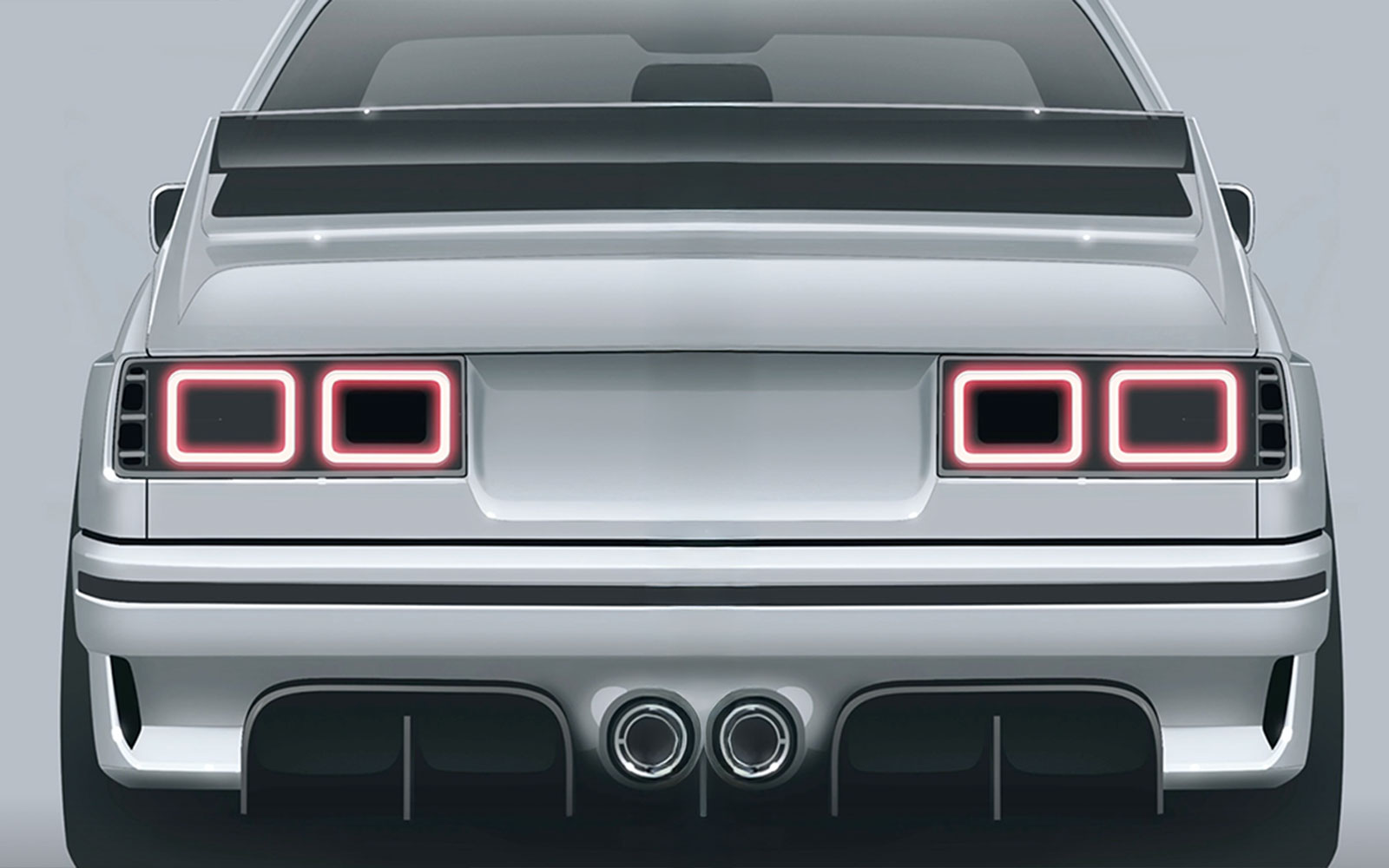
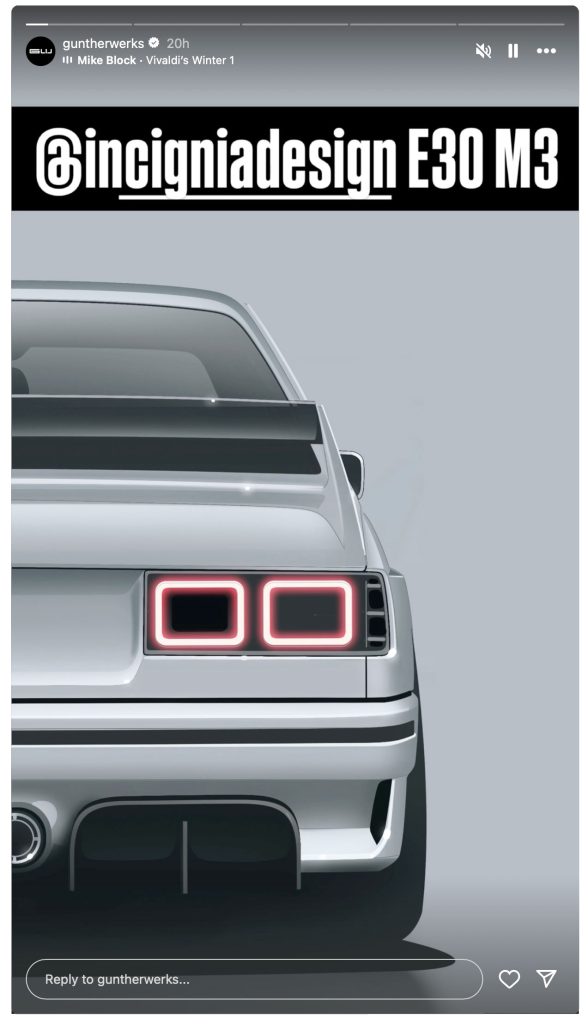
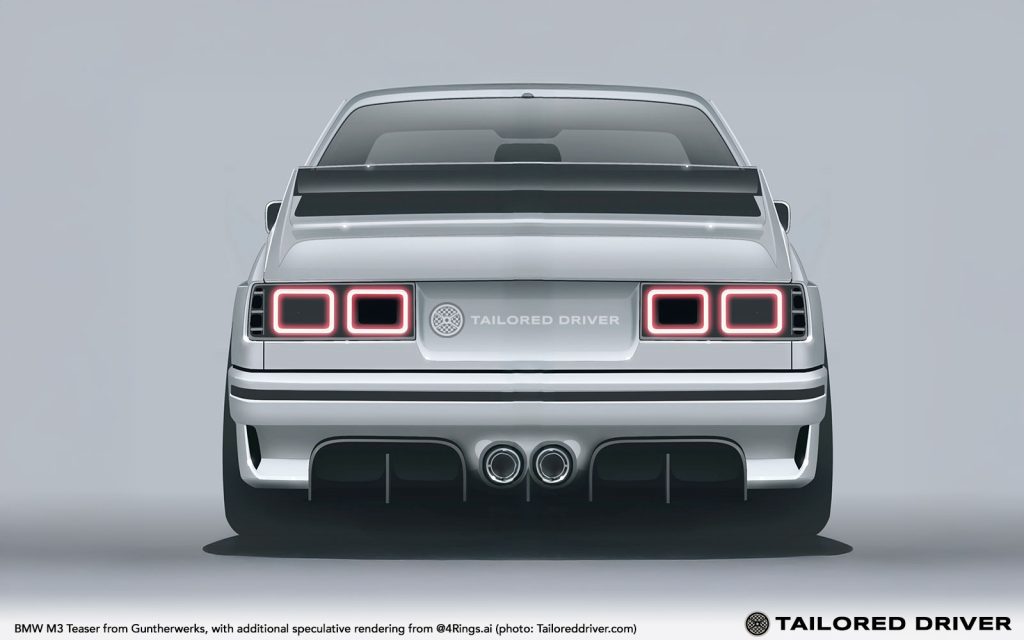
Porsche 993 remaster firm Gunther Werks has been teasing its idea of a reimagined E30 BMW M3 for a few years now, though recent activity on their stories has us believing they’re finally ready to pull the wraps off of their box-flared beauty.
Just last week we got a story with a potential name “Incignia”, and now we’ve got another story with a new rear quarter rendering revealing taillight design, and a link to a new Instagram account @incigniadesignthat appears to be the official account of their M3 business line.
We’ve taken the image, flipped it horizontally and used an AI tool to fill in the gap for a better look at the whole car. We’ll keep watching Gunther Werks for more information, but for now enjoy what we’ve got here and give them a follow on Instagram HERE.
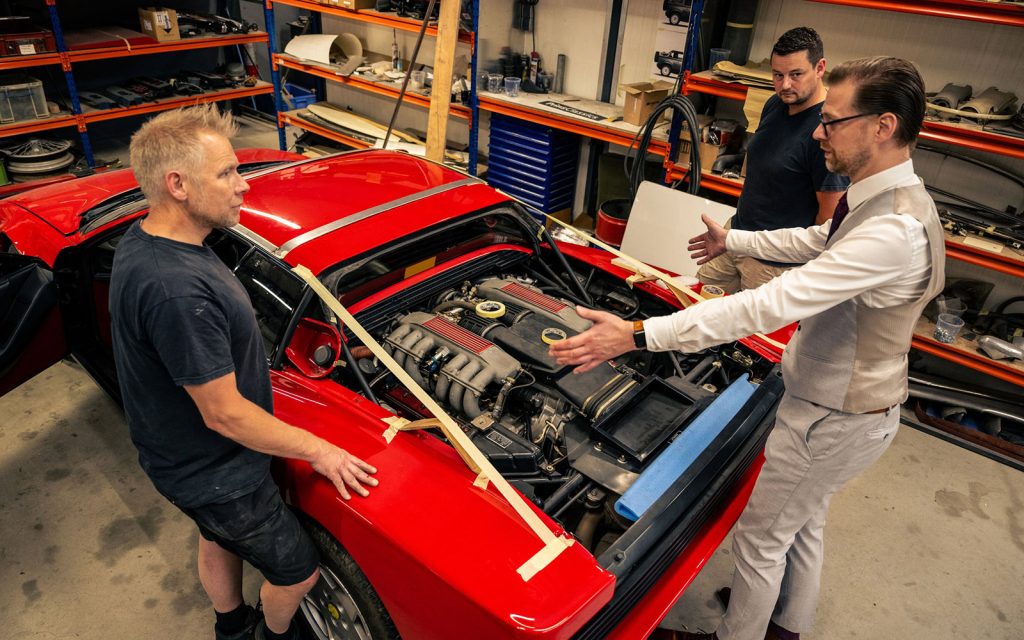
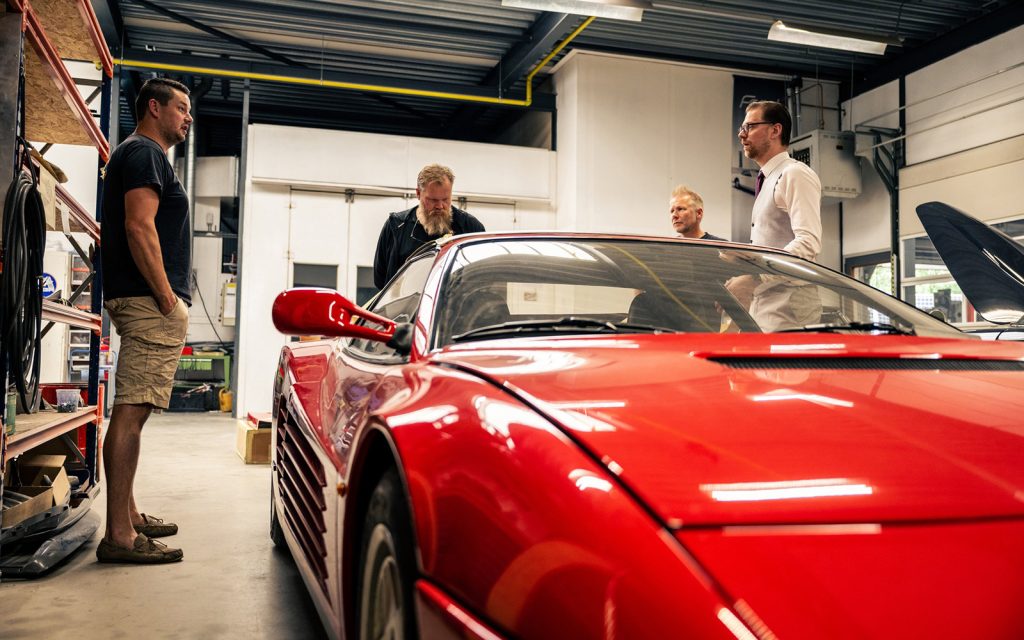
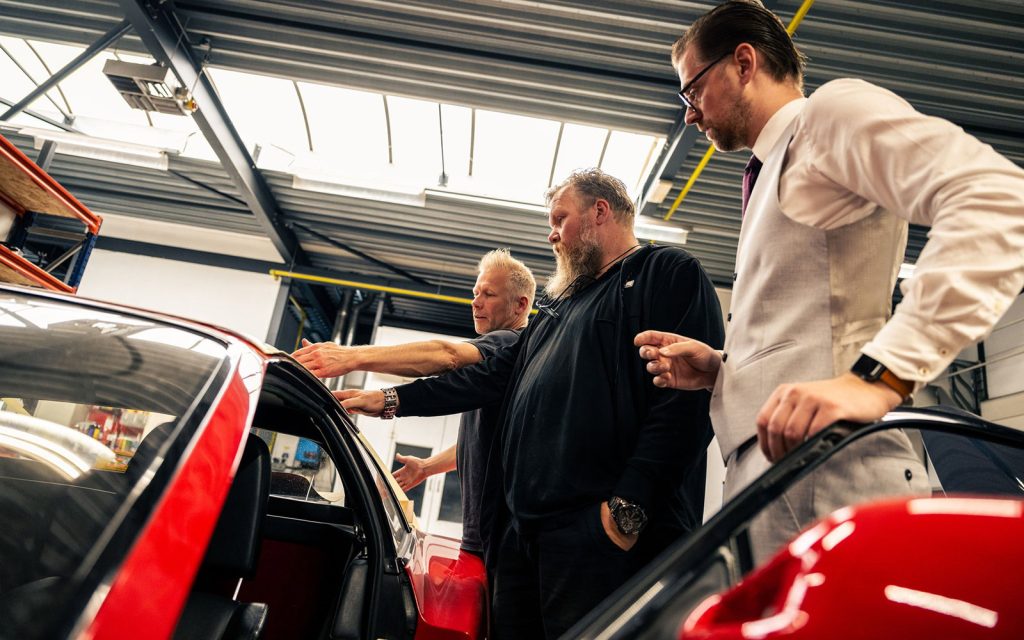
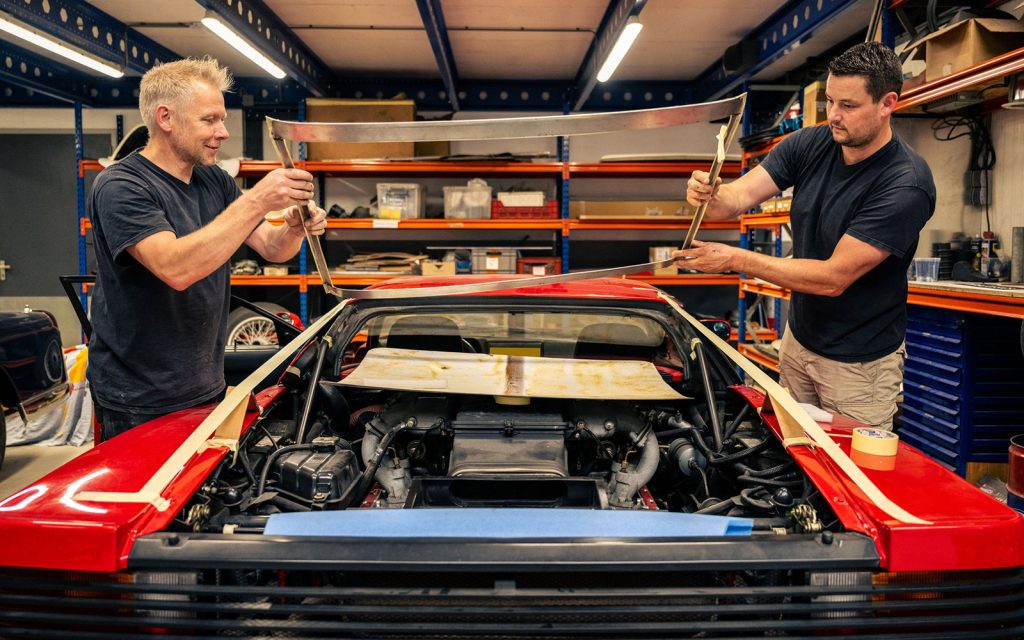
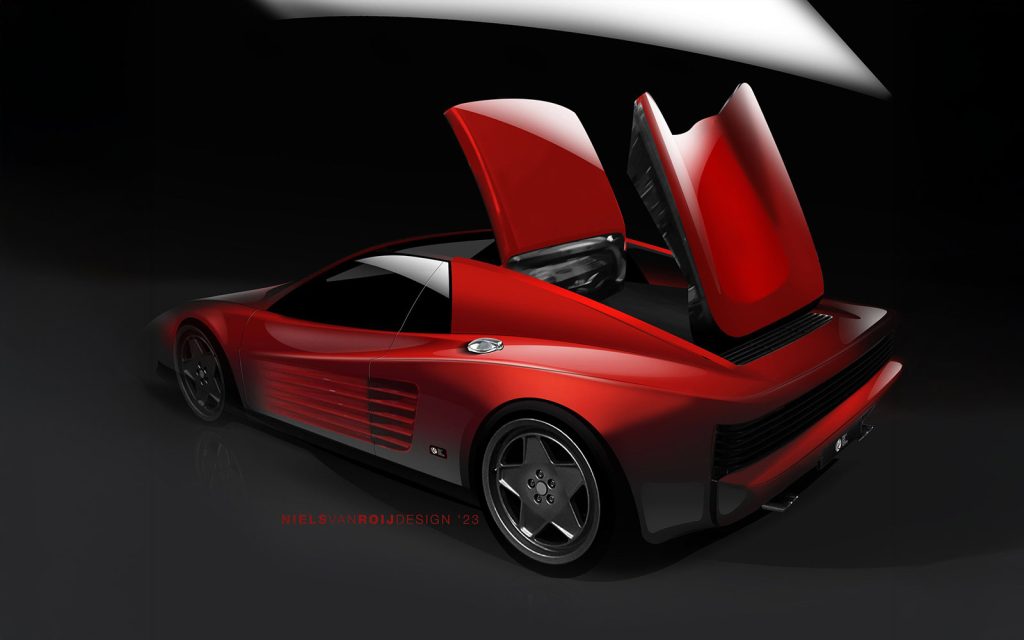
Typically in our series of Remasters, we tend to focus on firms performing limited series production of similar cars built to a largely similar formula. This allows these companies to perfect the car for the most part, which is where clients come in to commission a specification tailored to their desires. With Niels van Roij Design, the idea of bespoke goes quite a bit further for a truly bespoke result.
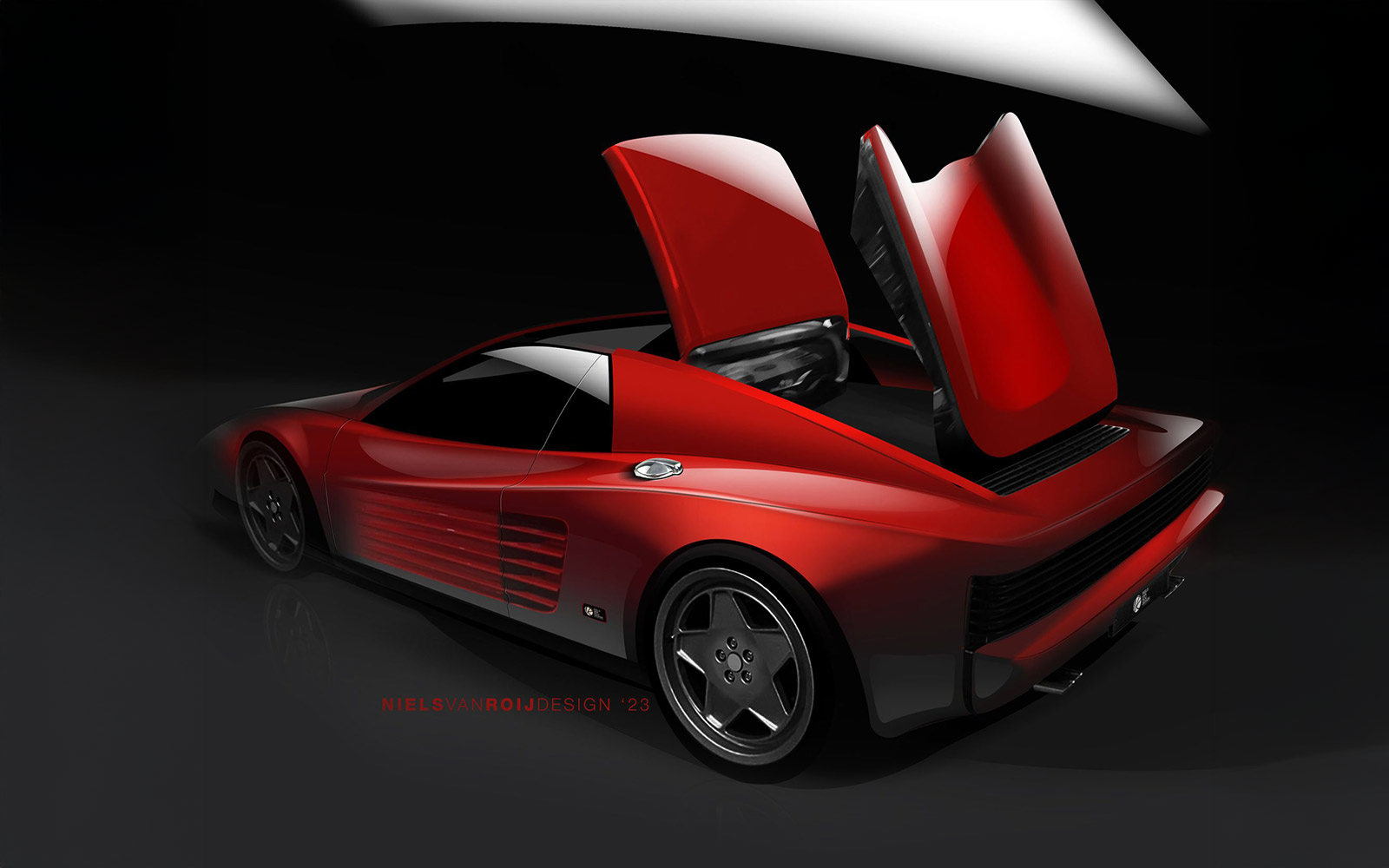
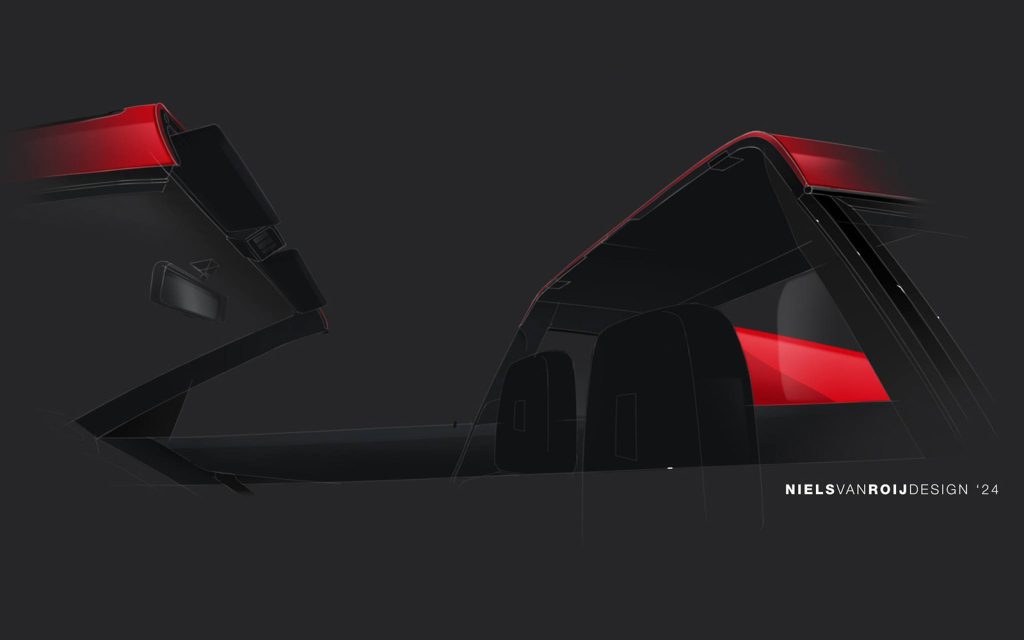
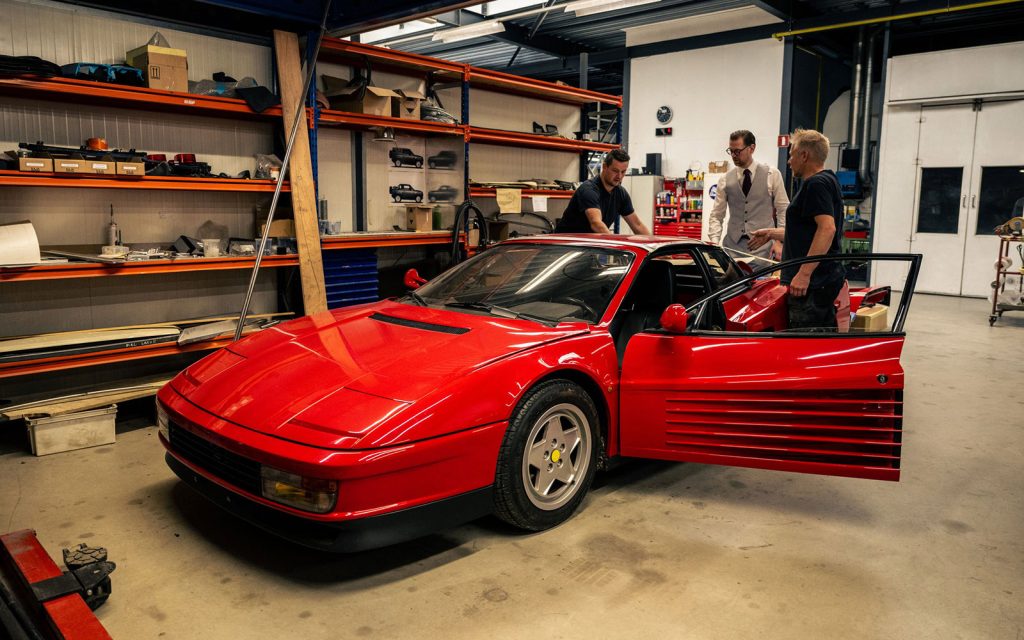
In this case, that result is a 1987 Ferrari Testarossa whose owner wants more of an open-top motoring experience. Sure, that owner could seek out one of the rare Testarossa Spyders out there. While Ferrari and Pininfarina may have produced one or two here or there, Straman converted Spyders and the like do exist out there somewhere. However, this client wanted something a bit more unique, an idea that’s more Targa and perhaps more structurally rigid… perhaps. And, while they could go the route of a lift-out Targa style roof like the Ferrari 308/328 GTS, it appears the quirky hinged glass application of the 575 Superamerica has been identified as an even more luxurious design befitting the V12-powered Testarossa.
Okay, they likely won’t call it Superamerica. Ferrari, the same company that allegedly gave Pininfarina fits when James Glickenhaus commissioned a neo P4 body conversion for his Enzo, probably would have issues. Still… it’s a rad idea and we’re watching it with great interest.
Niels van Roij has a project page on their own website where they’ve been sharing photos of the Testarossa job so far, and that can be found HERE. They’ve also been sharing images on social media, and recently shared the sketches also seen in this story that depict this “Superamerica” style top design (again, that label is our assessment and not their use).
This particular job was reportedly commissioned by a British expat who currently resides in Andorra.
Niels van Roij Design has been performing coach built transformations for a long time. Remember that Tesla Model S station wagon that popped up a few years back? That was van Roij. So too was a Ferrari 575 Maranello-based shooting brake “bread van” inspired by a similarly configured Ferrari 250 GTO back in the day.
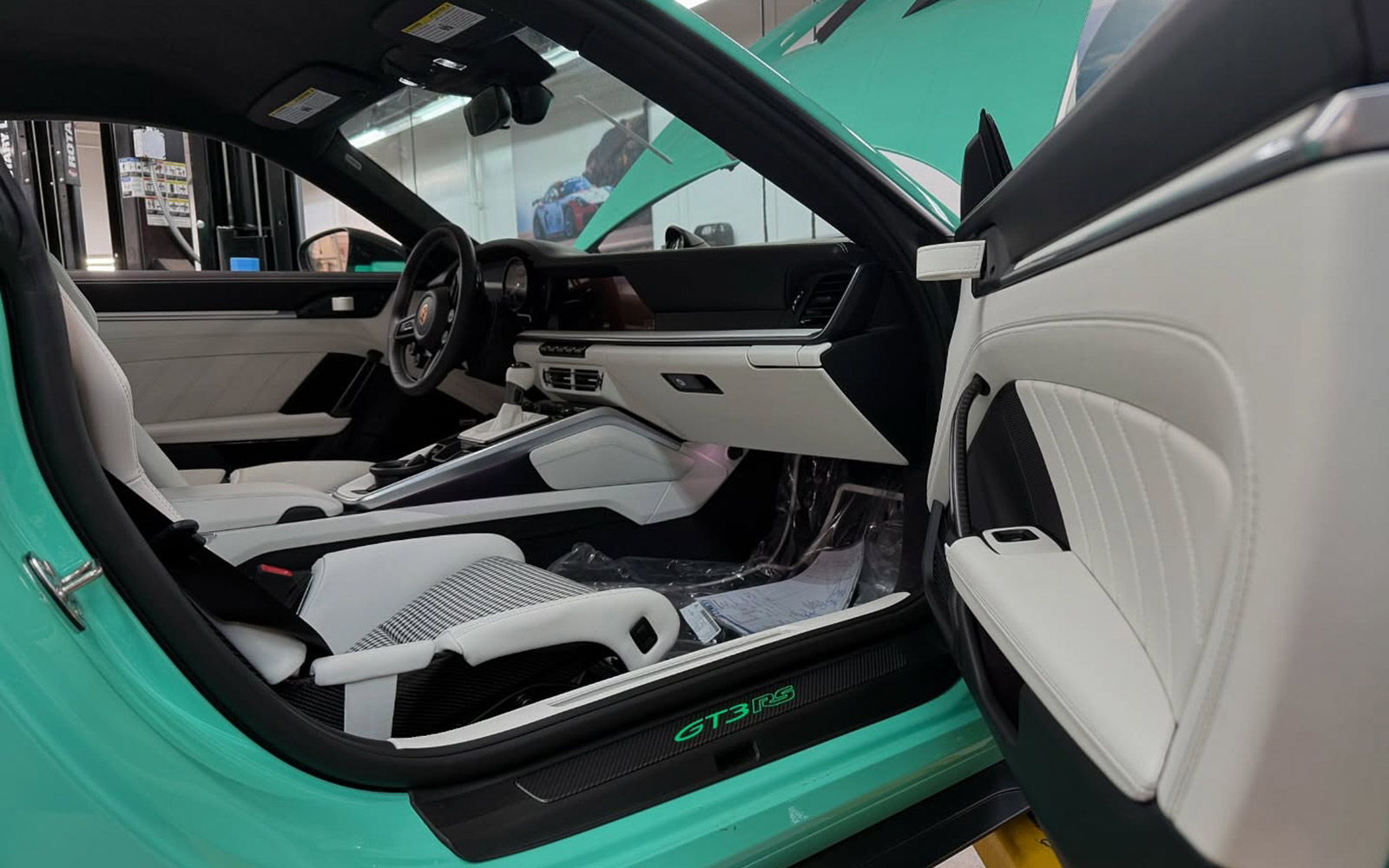
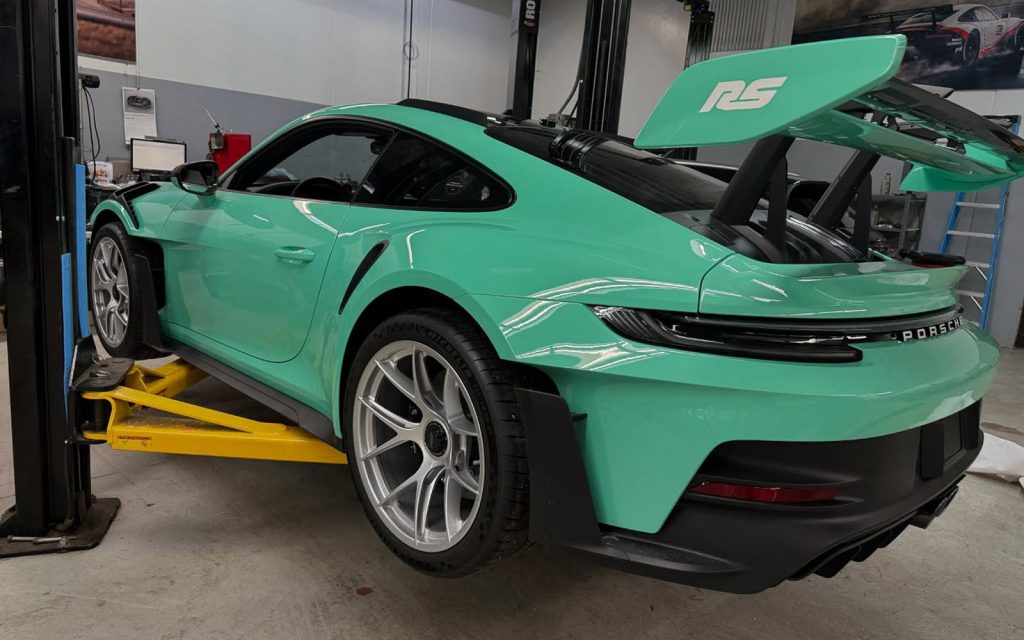
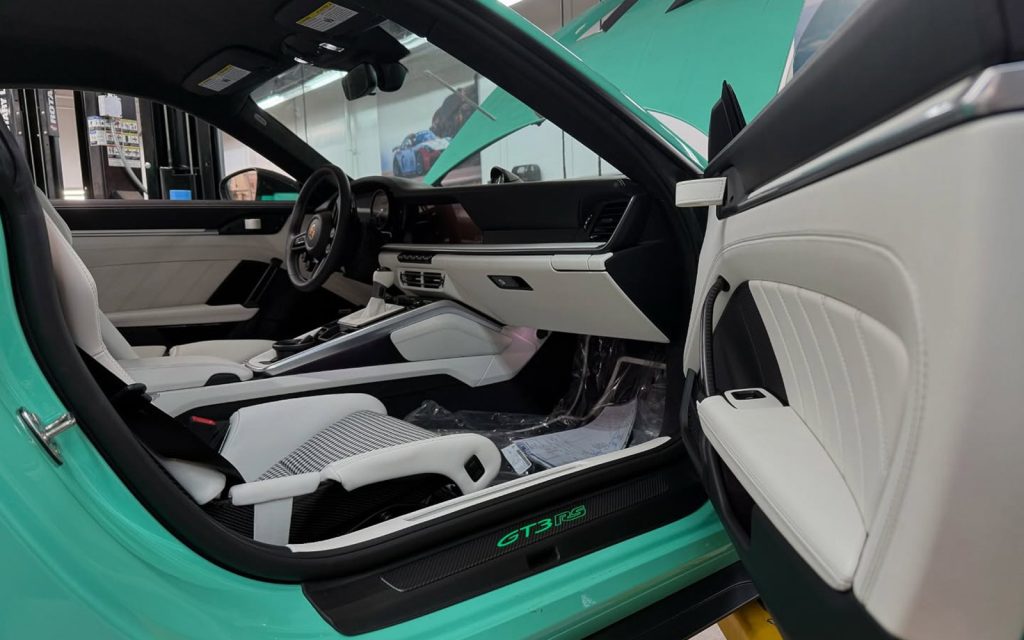
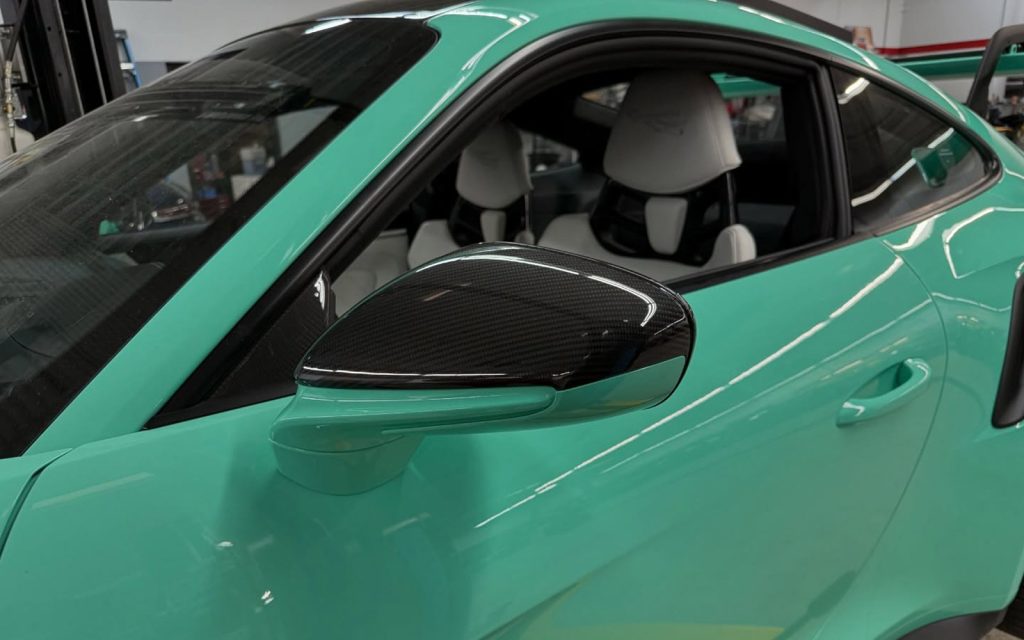
It’s hard to imagine building a brand new Porsche 911 GT 3 RS in Paint to Sample Mint Green (mintgrün; non-metallic UNI; 22R; Porsche) and yet all anyone wants to do is talk about the interior, but that’s exactly the case with this elfer going through pre-delivery at Porsche Colorado Springs and shared to Facebook HERE.
Imagine the task. You already know you’ve chosen one of the most iconic 964-era Carrera Cup colors, a color amongst an era that also established as greats the likes of Rubystar / Rubystone and Maritime Blue. Now, pick an interior to top that, and don’t do anything dumb like choosing a leather color that only has a shot of being cool in an ironic sense.
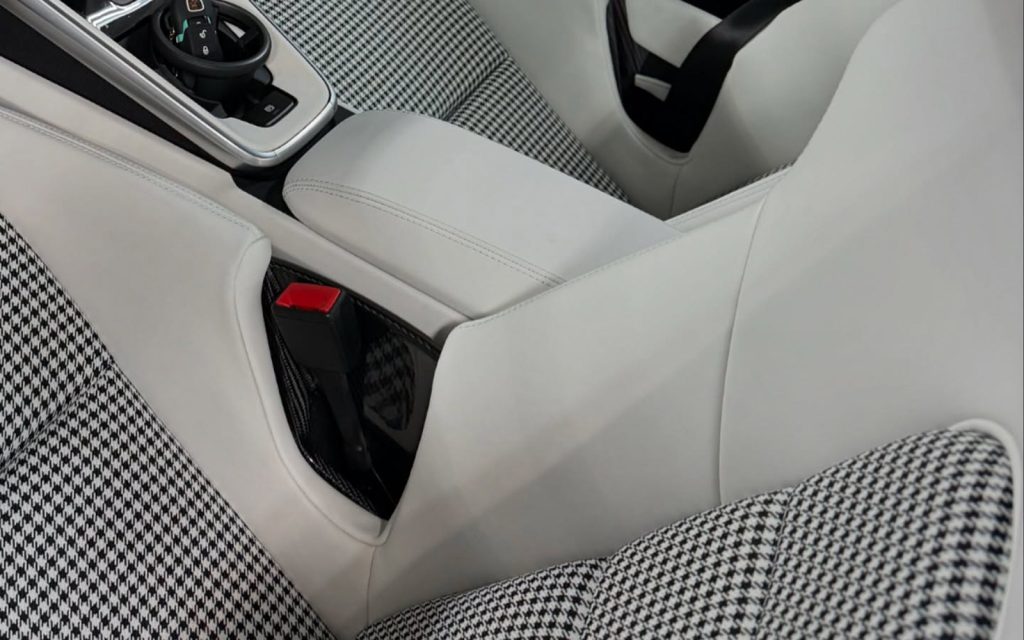
How do you do it? Well, if you’re this particular Porsche Colorado Springs Client, you lean into CXX special wishes and dig into unexpected classic tones and patterned fabric. Light grey leather is the name of the game here, over sport buckets with centers in Pepita houndstooth.
That’s unexpected, because Pepita tends to get paired with black, or maybe brown on rare occasions. Not only does it look amazing on light grey, it might serve to wear a bit better than had the whole seat been done in such a lightly toned hide.
Kudos to Porsche Colorado Springs for sharing this. And, kudos to the builder who created this specification. With so many Paint to Sample and Sonderwunsch GT3 RS examples out there, it’s getting harder and harder to wow those of us who feel sometimes like we’ve seen it all before. No question though, this car has done just that.
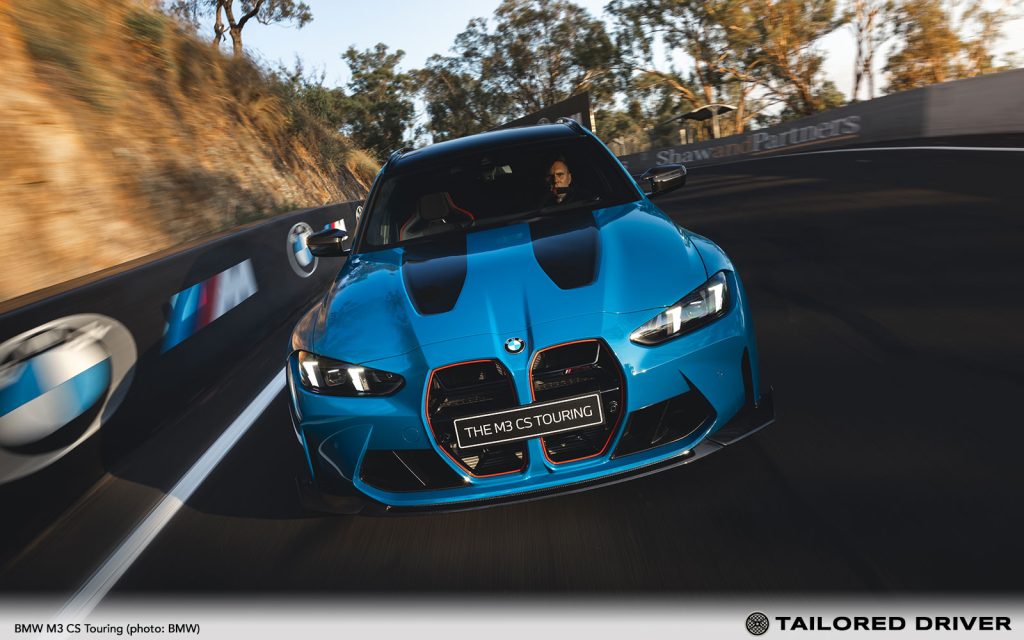
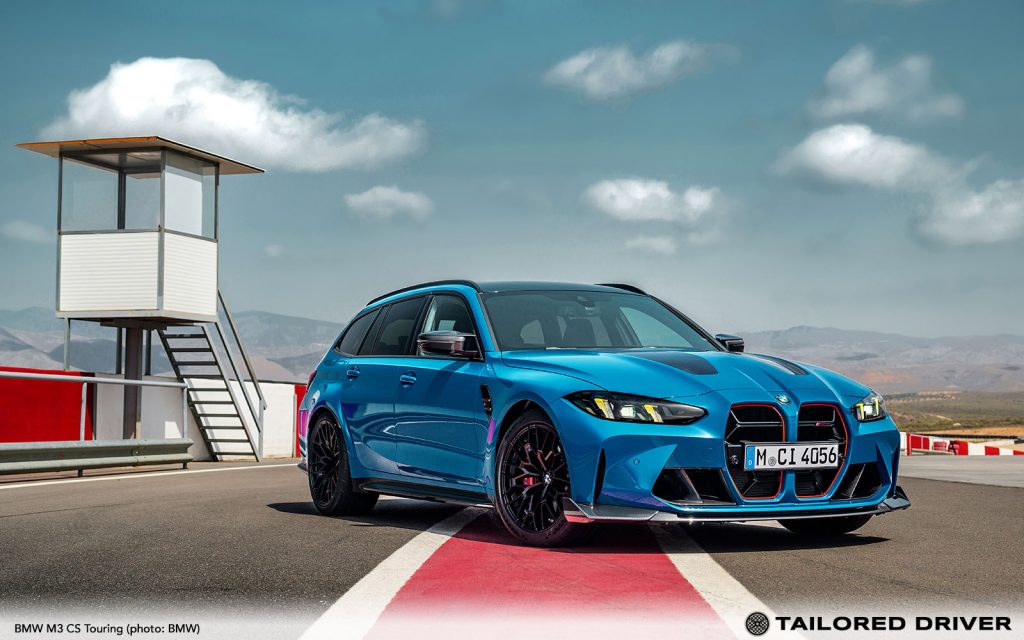
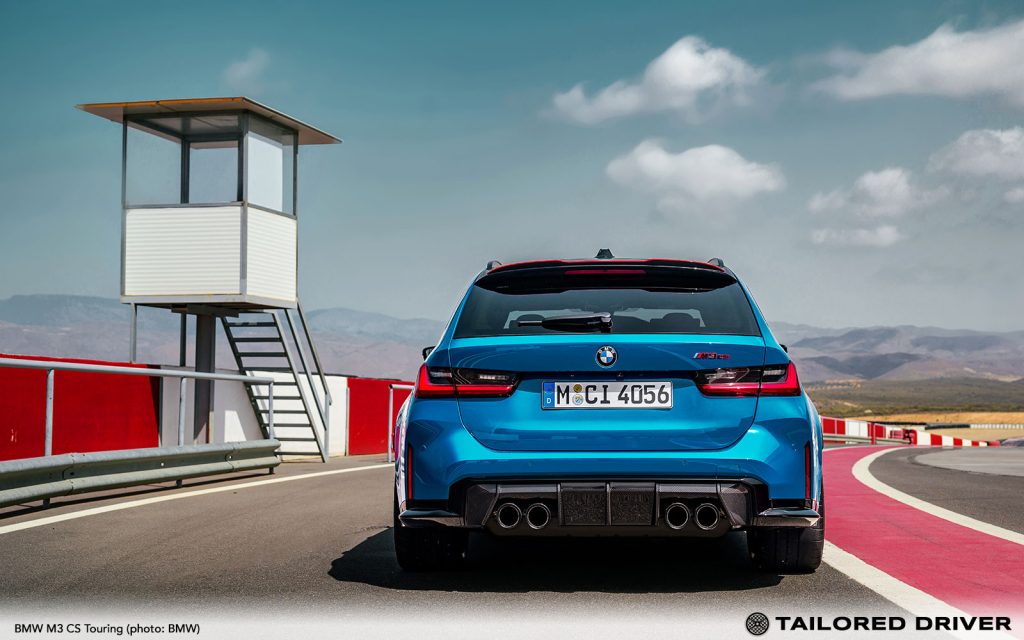
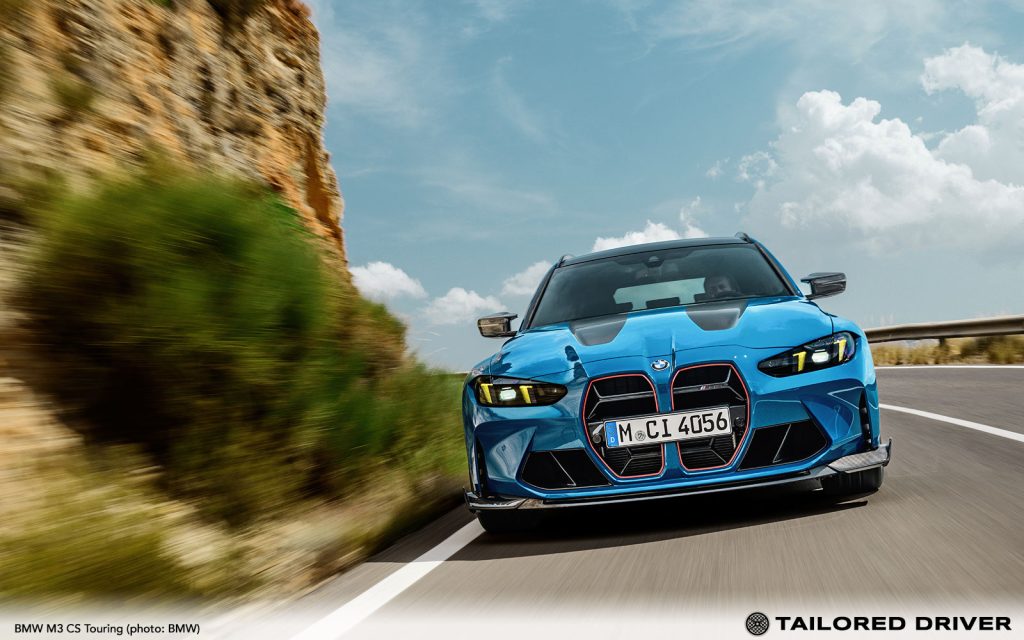
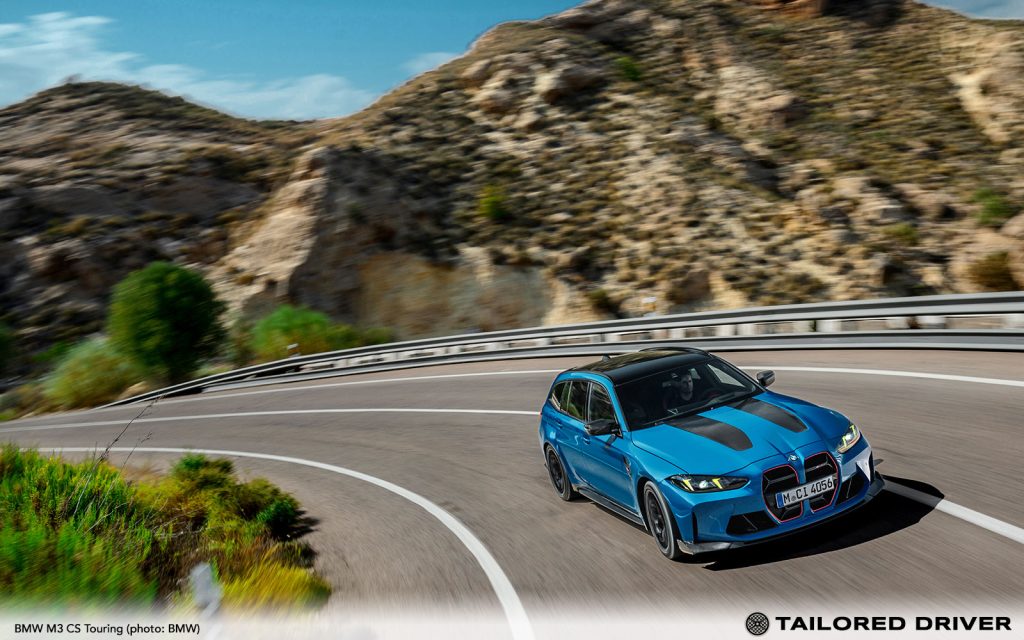
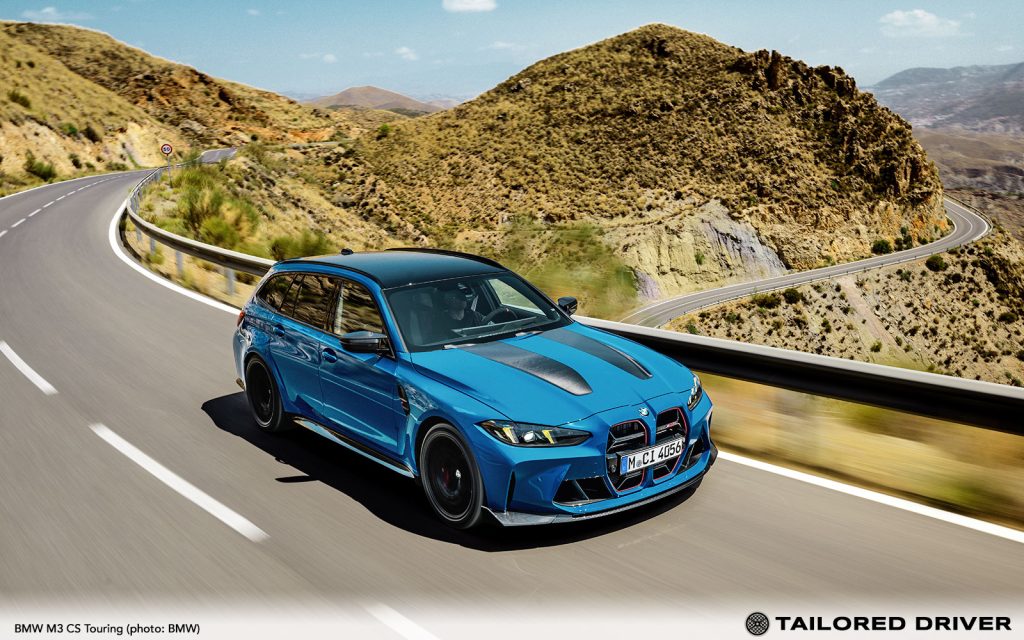
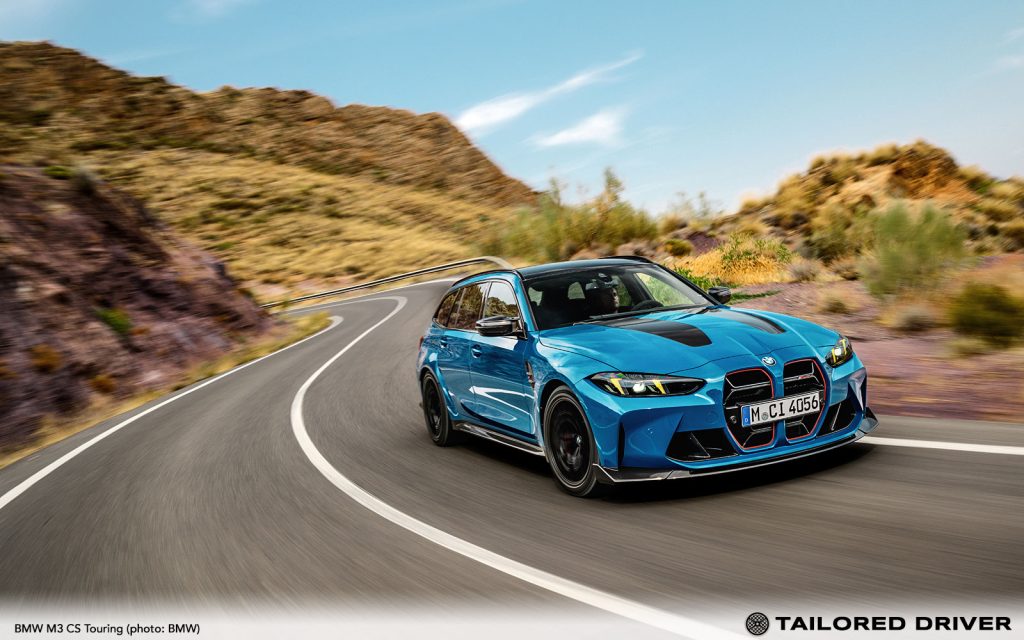
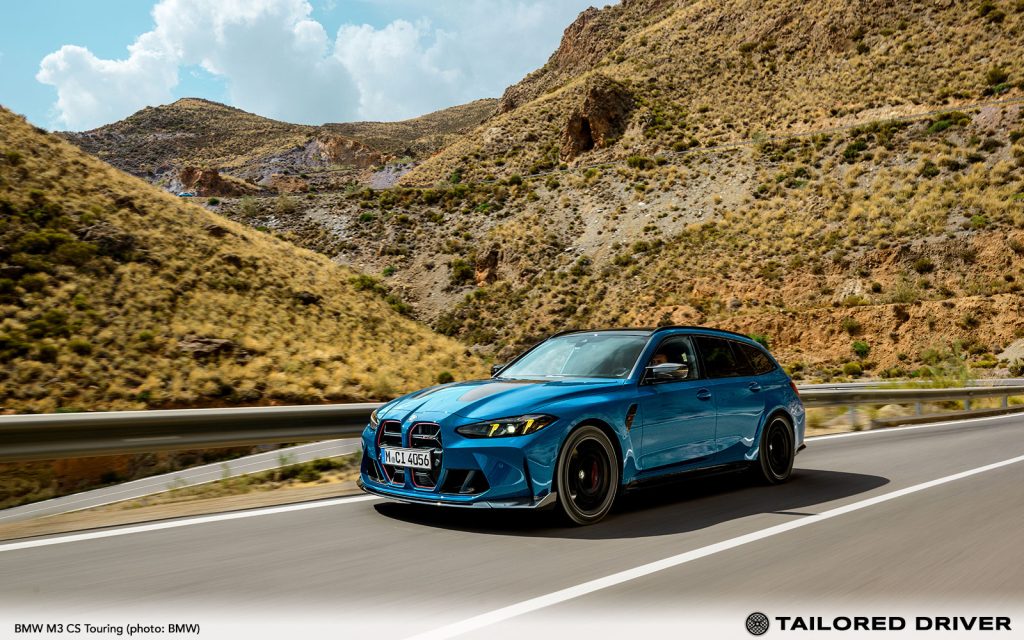
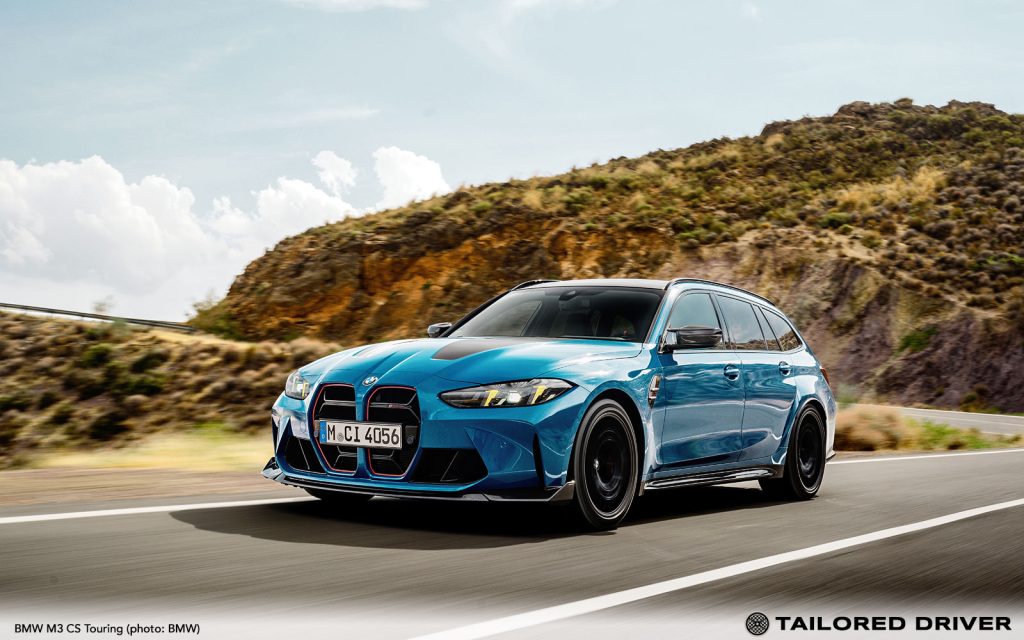
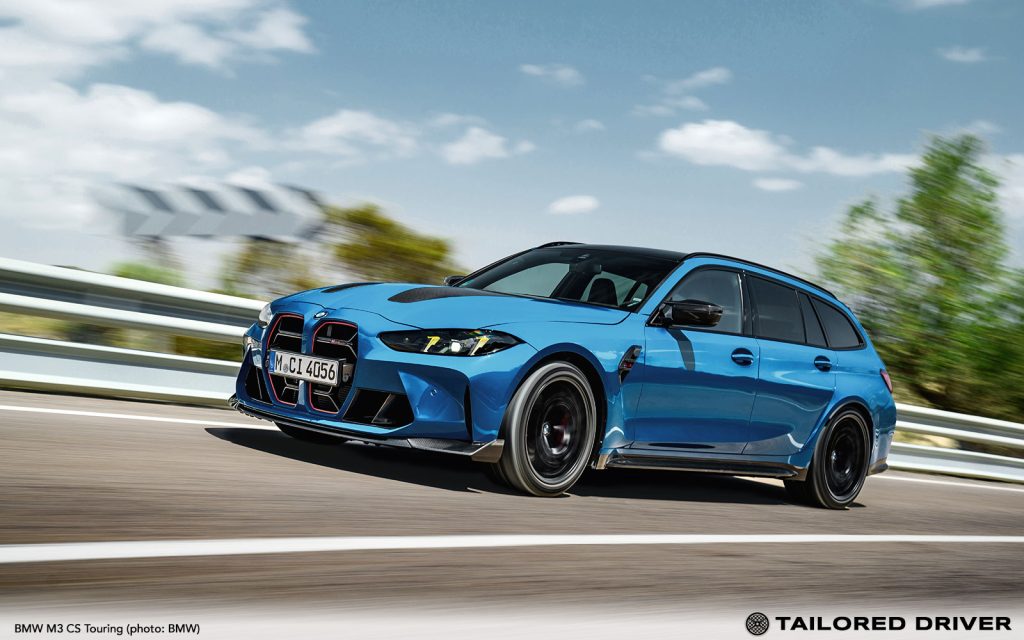
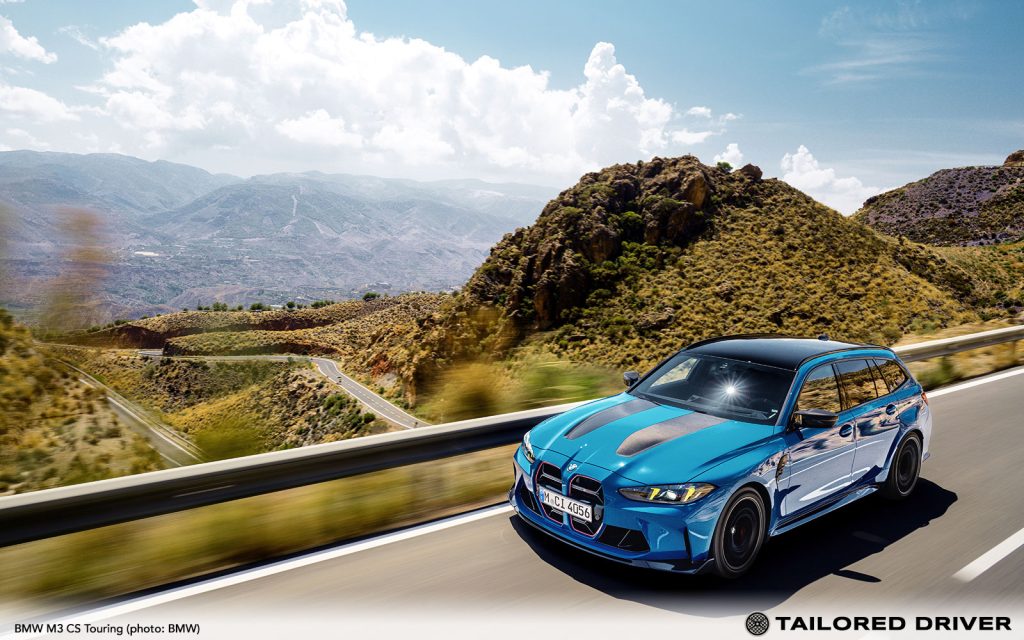
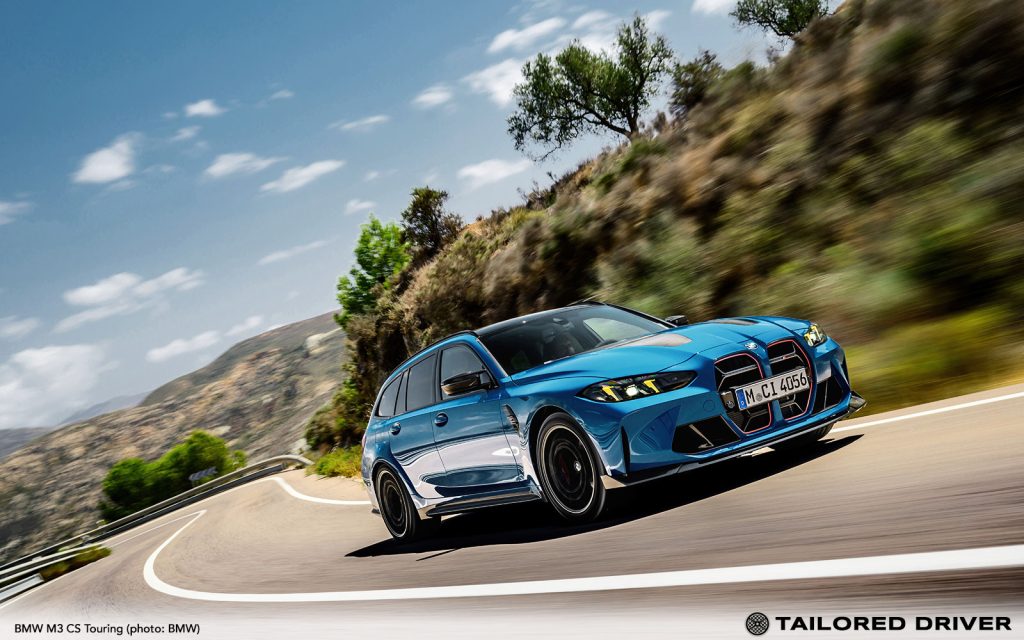
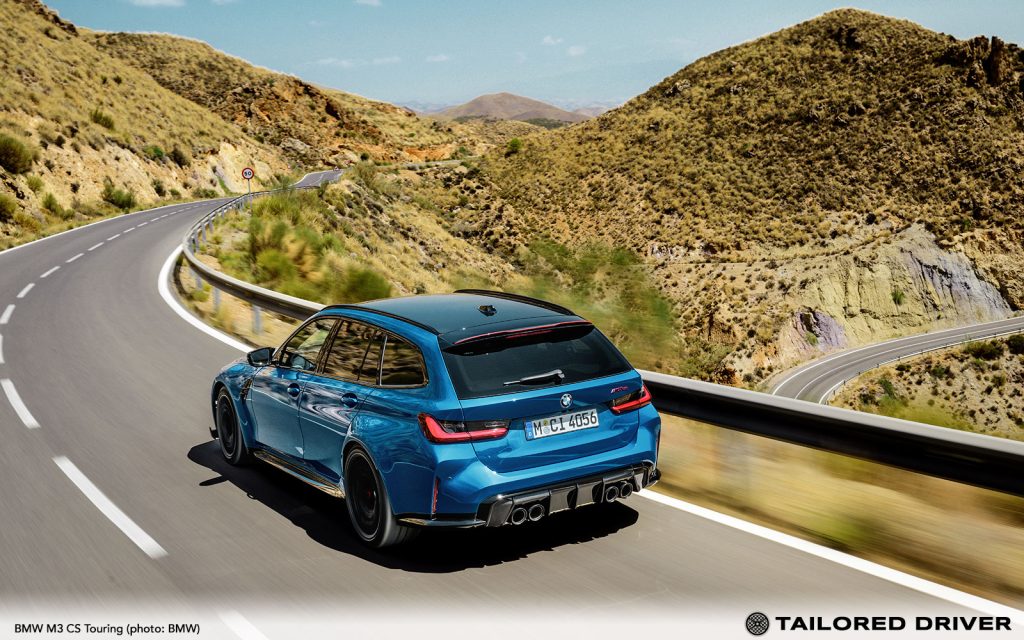
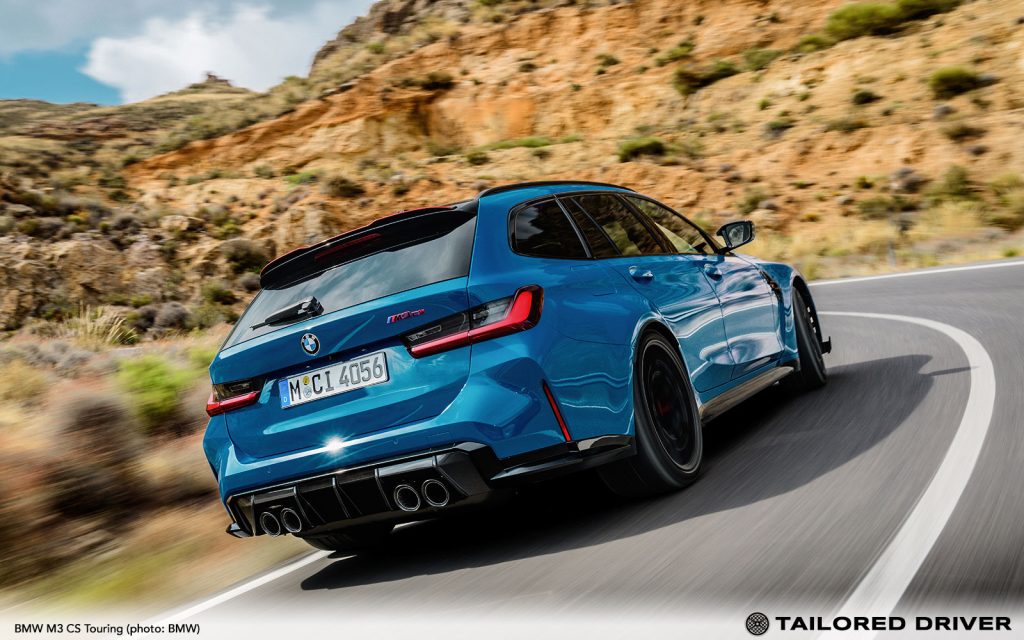
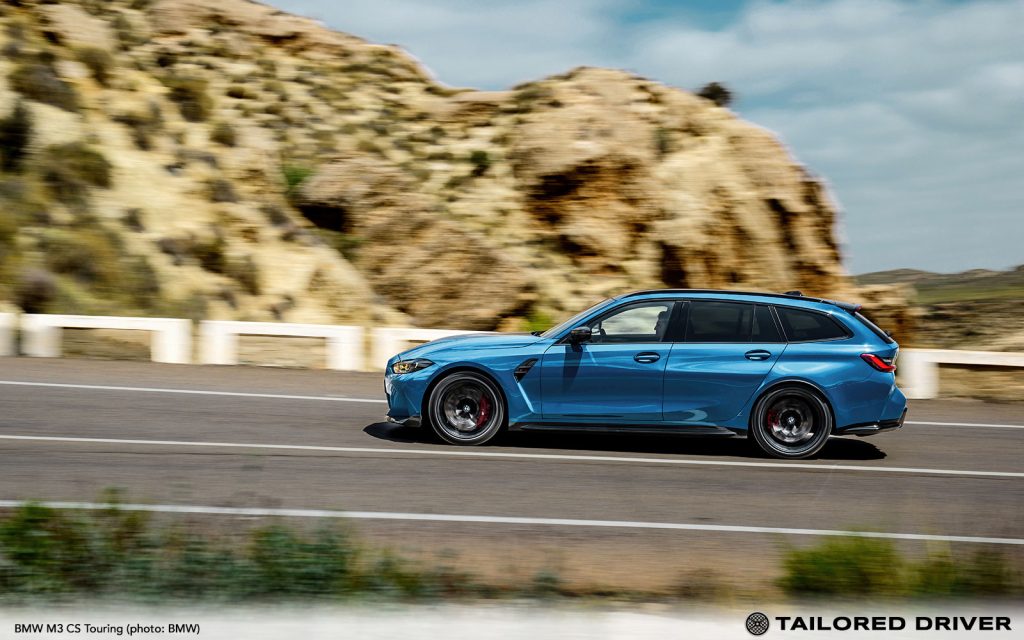
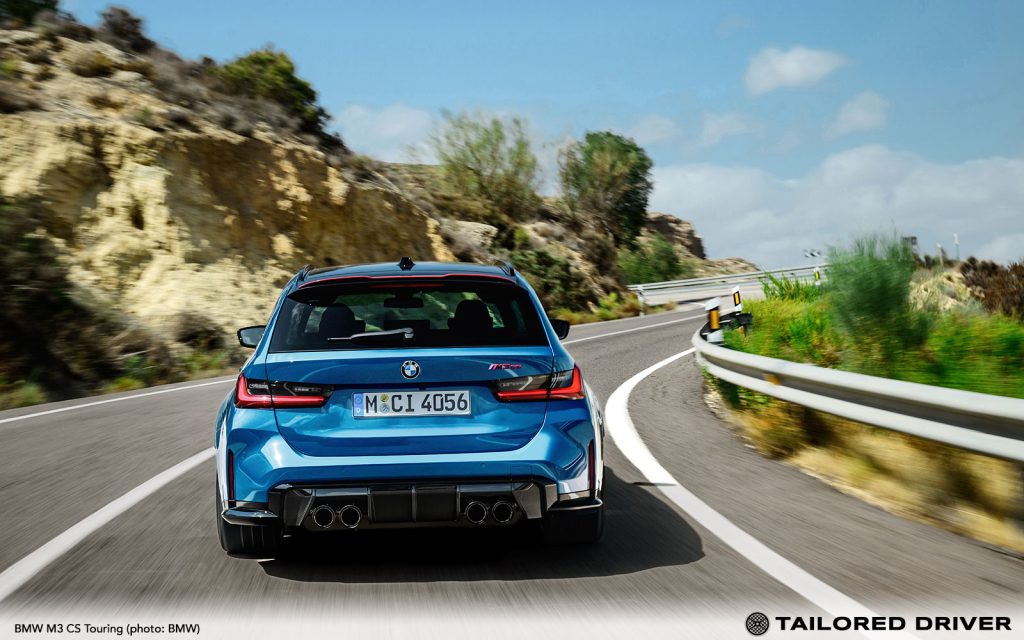
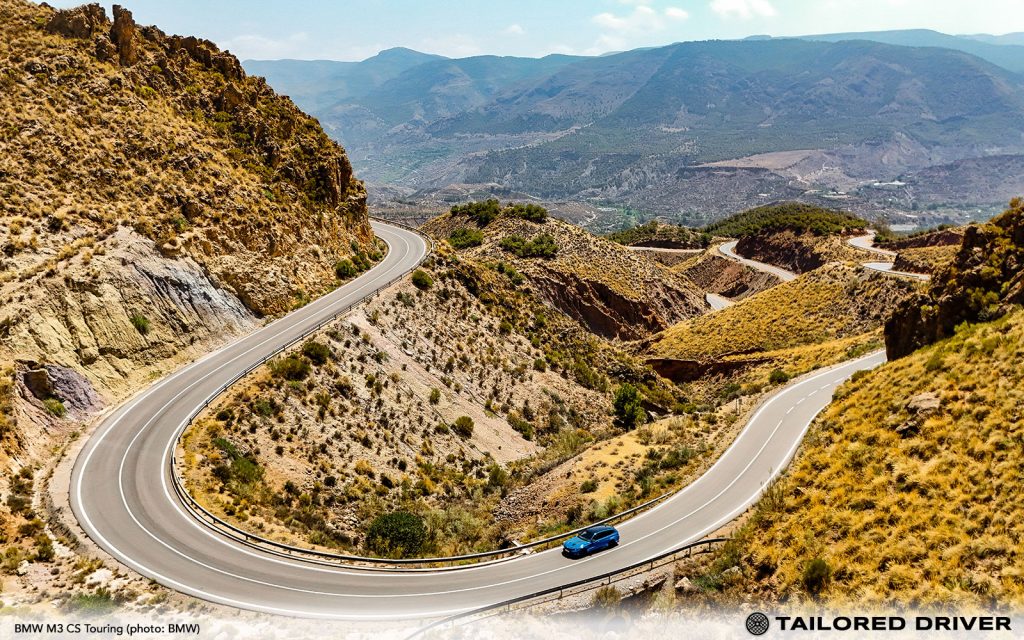
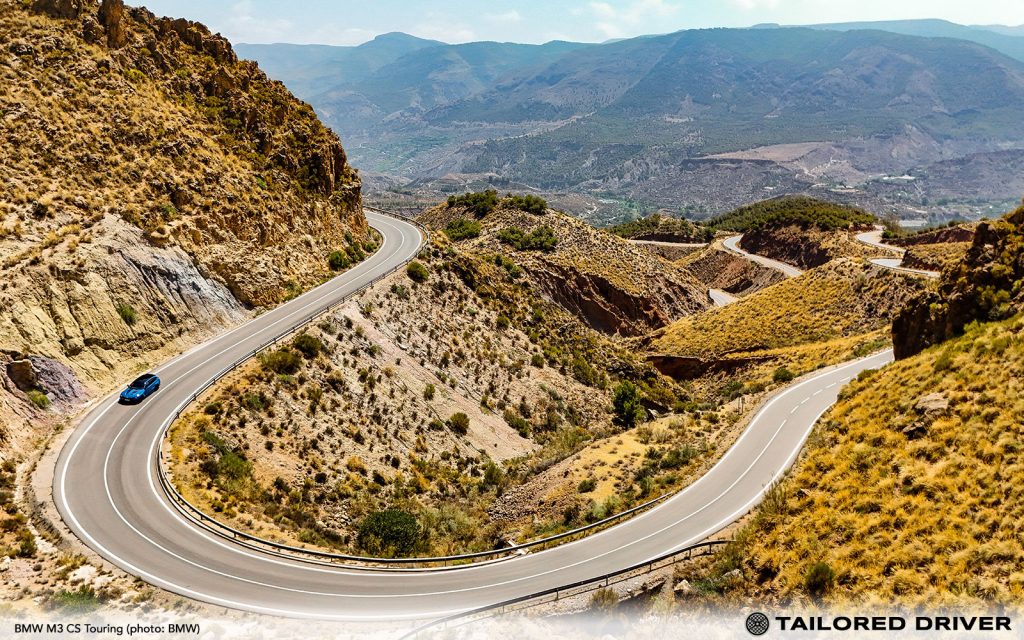
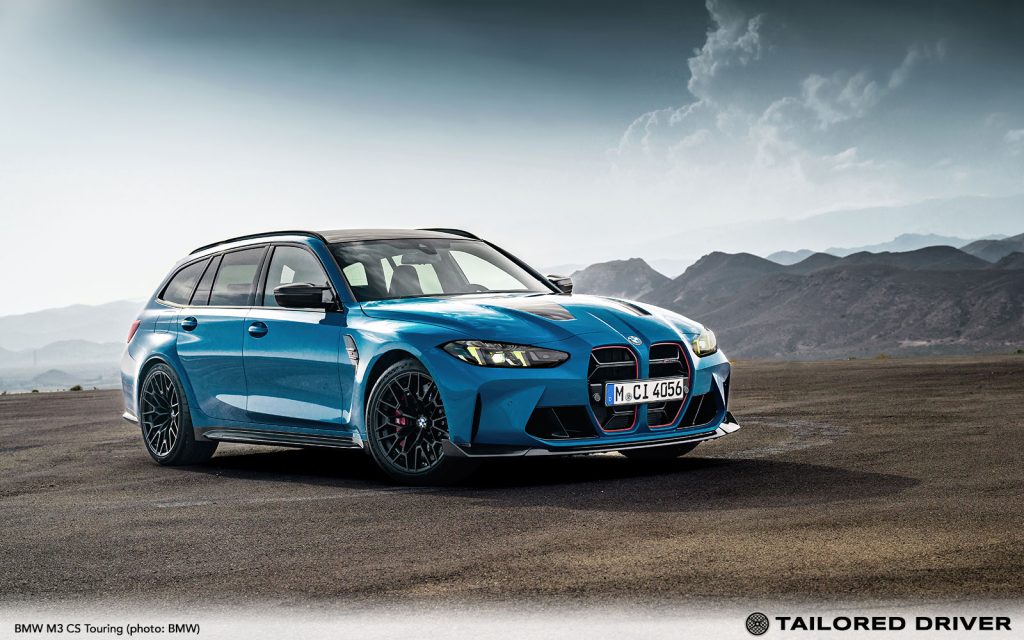
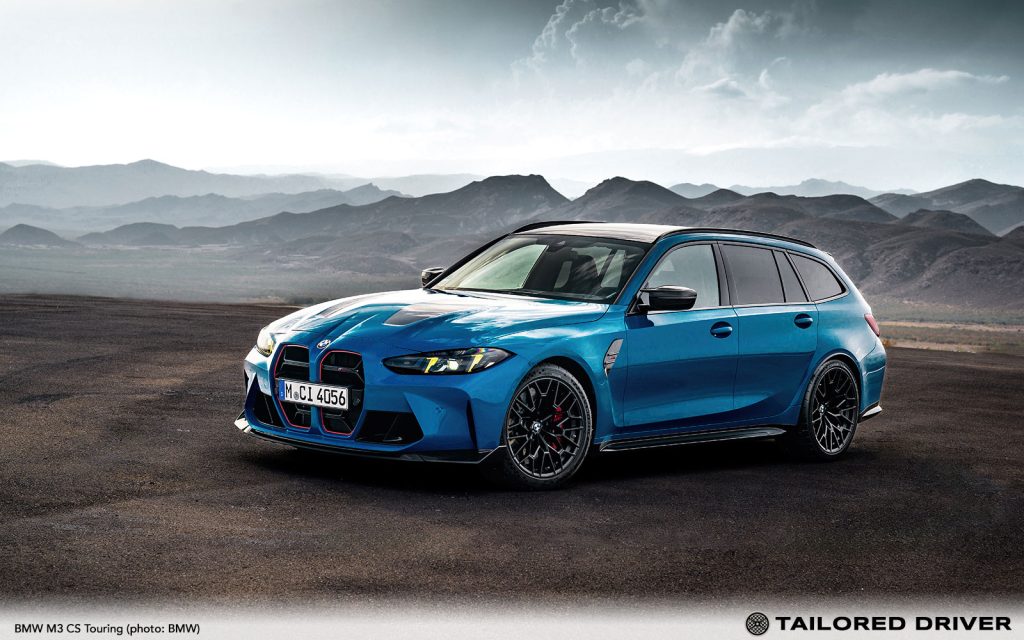
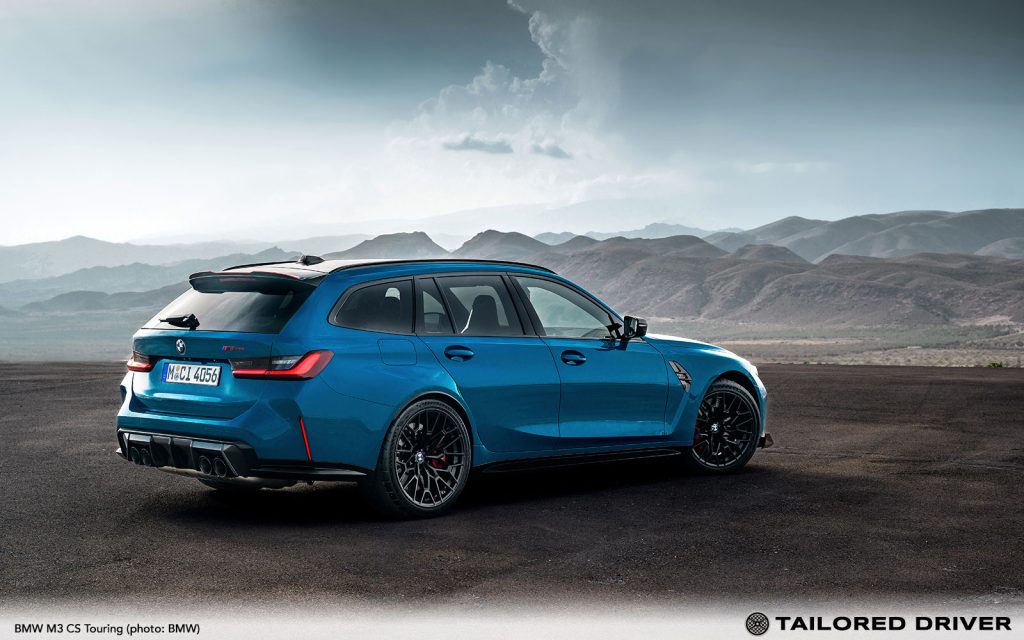
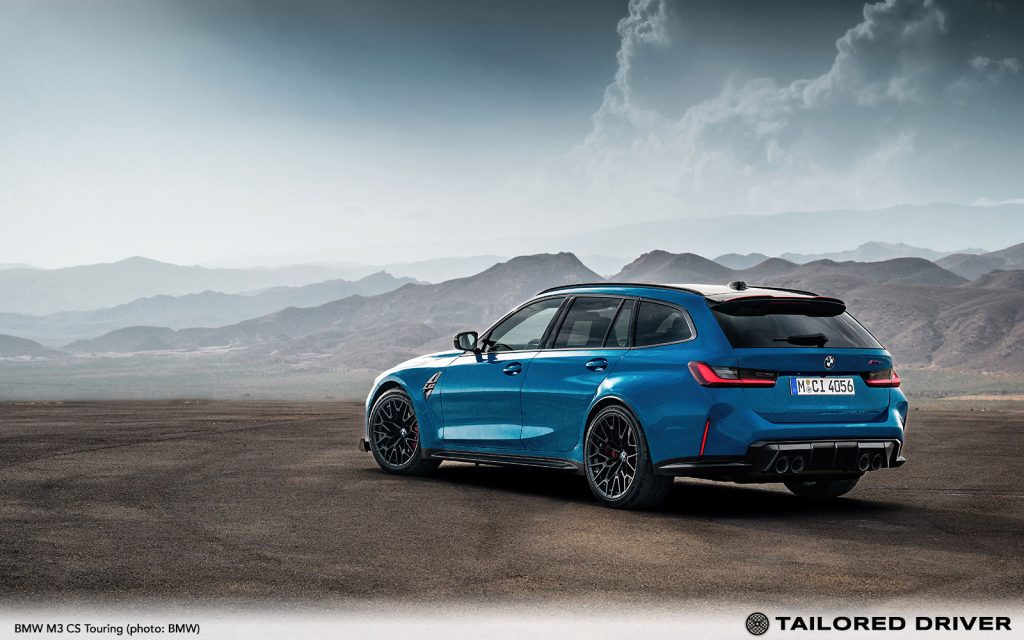
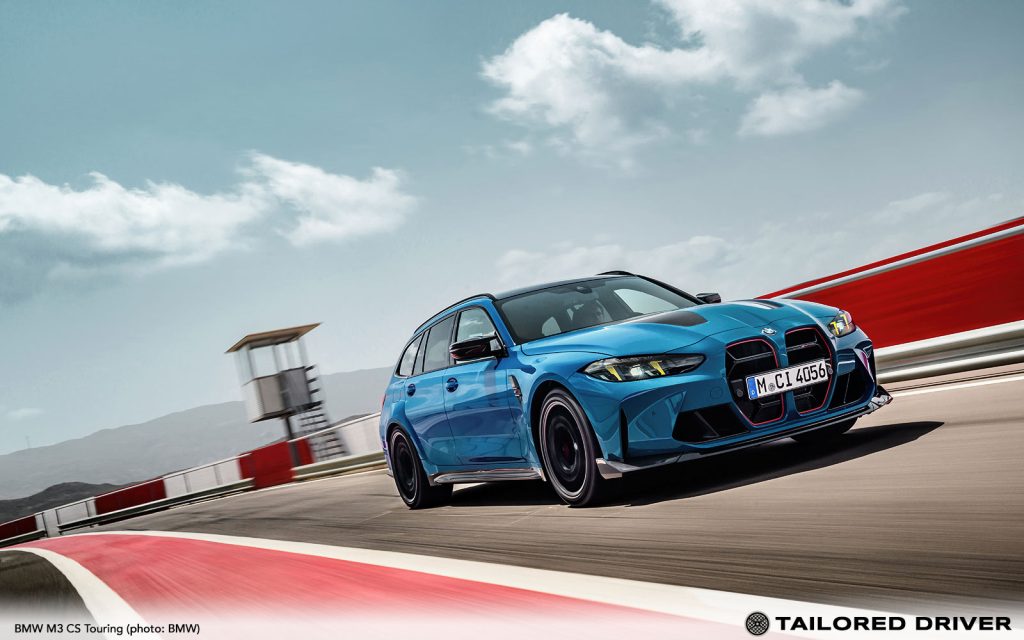
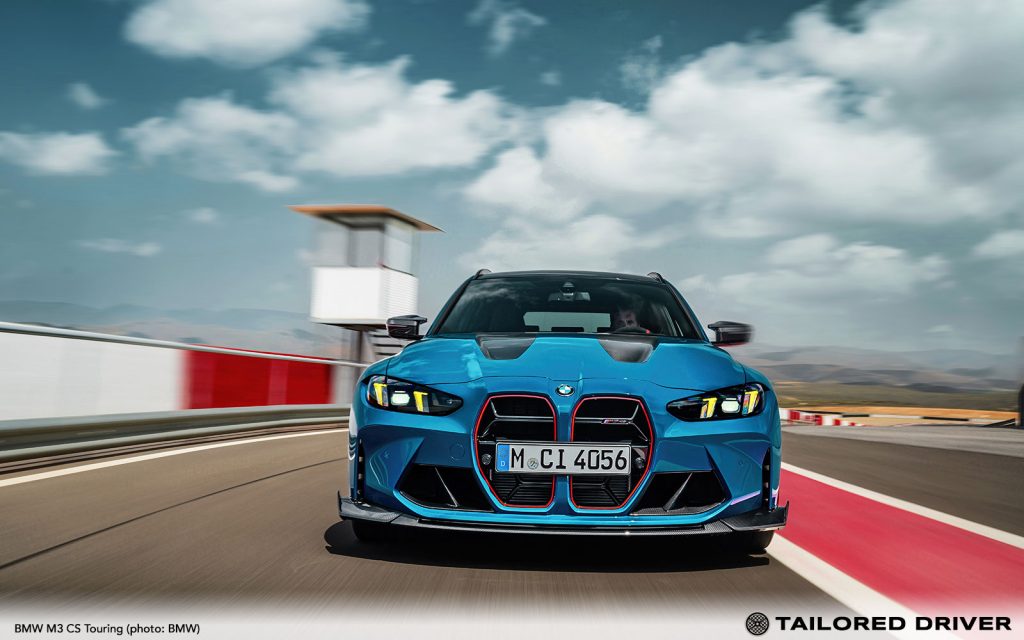
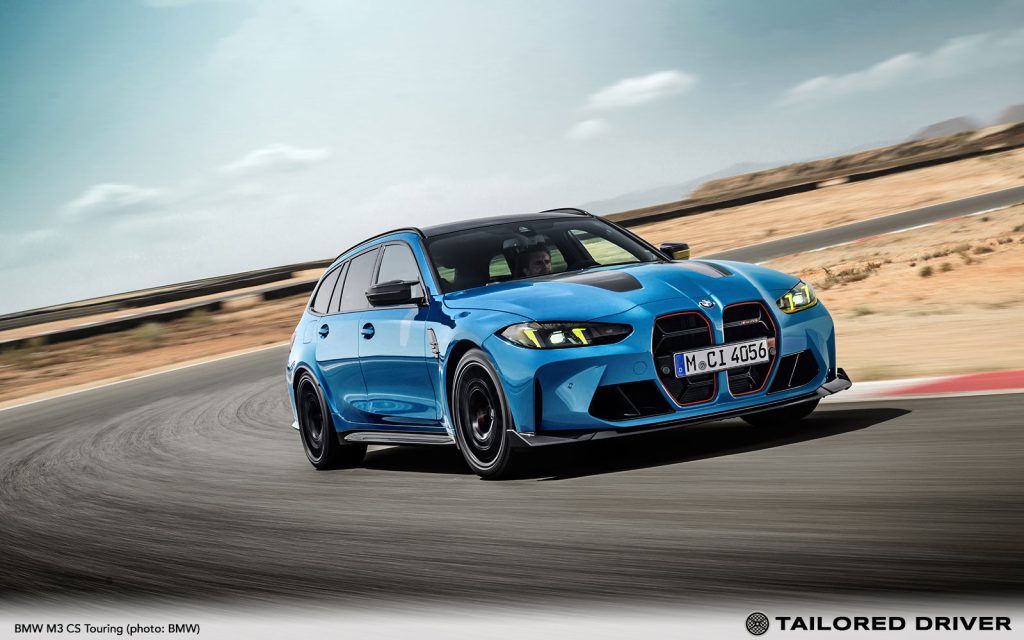
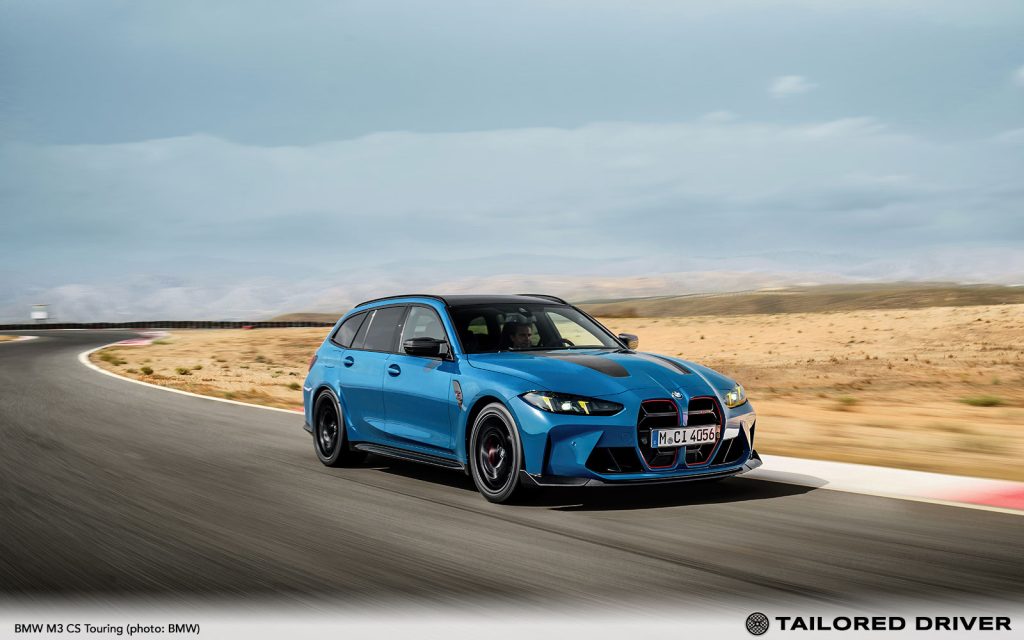
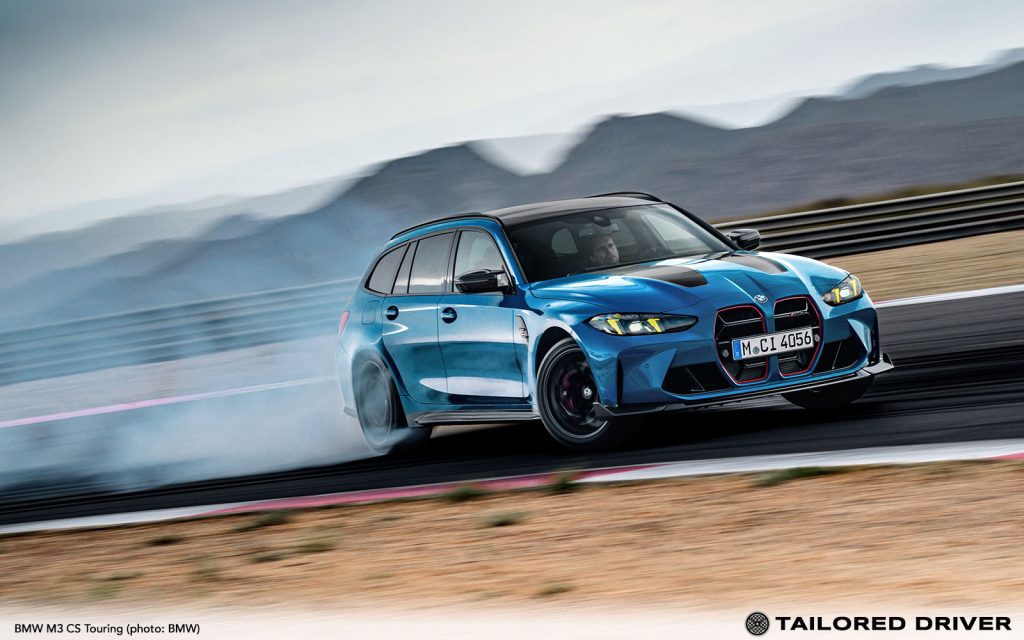
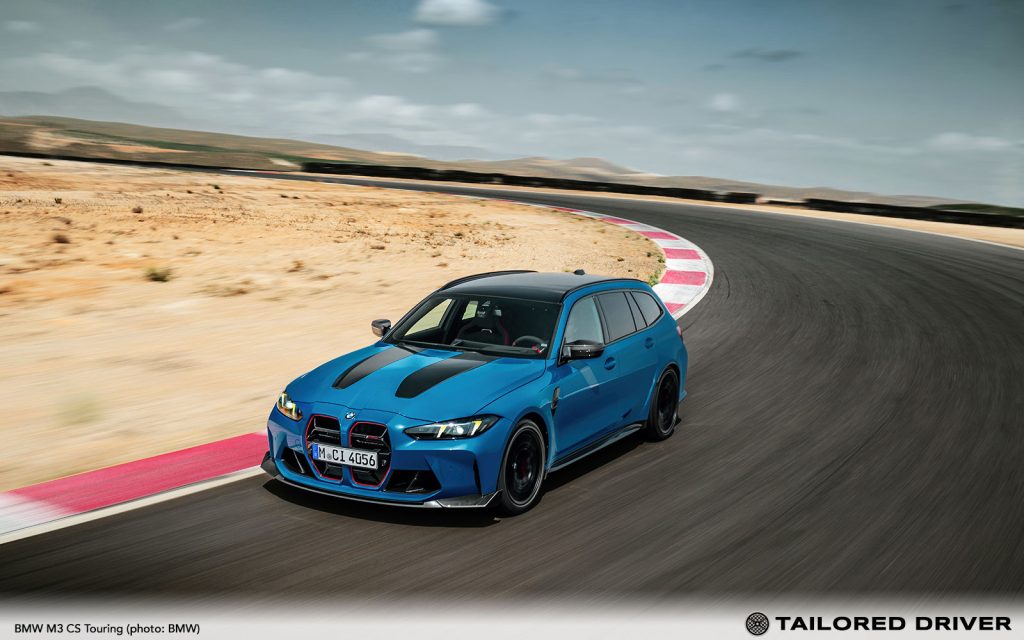
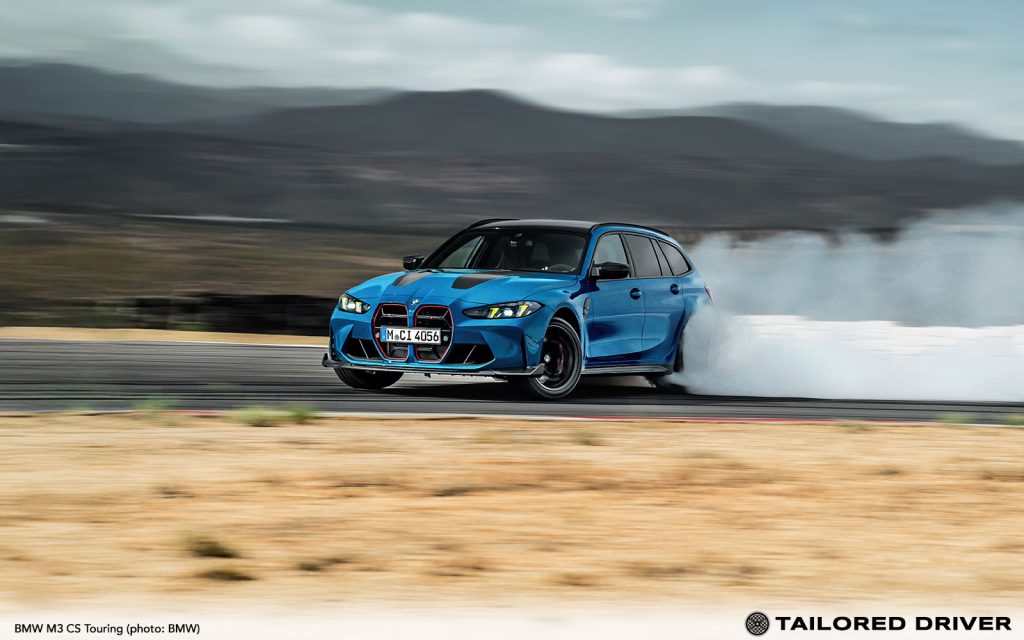
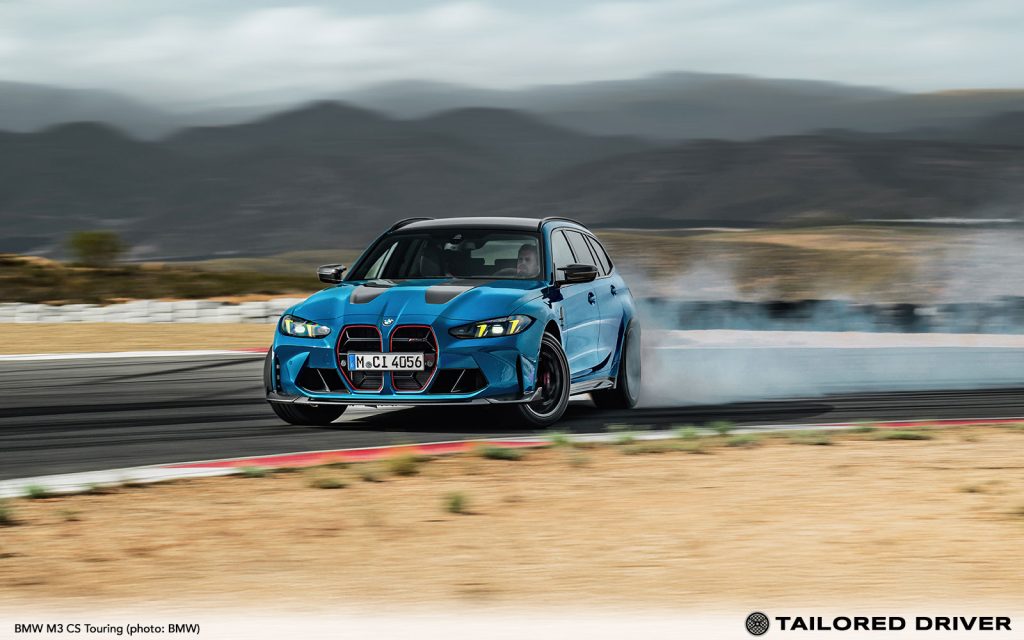
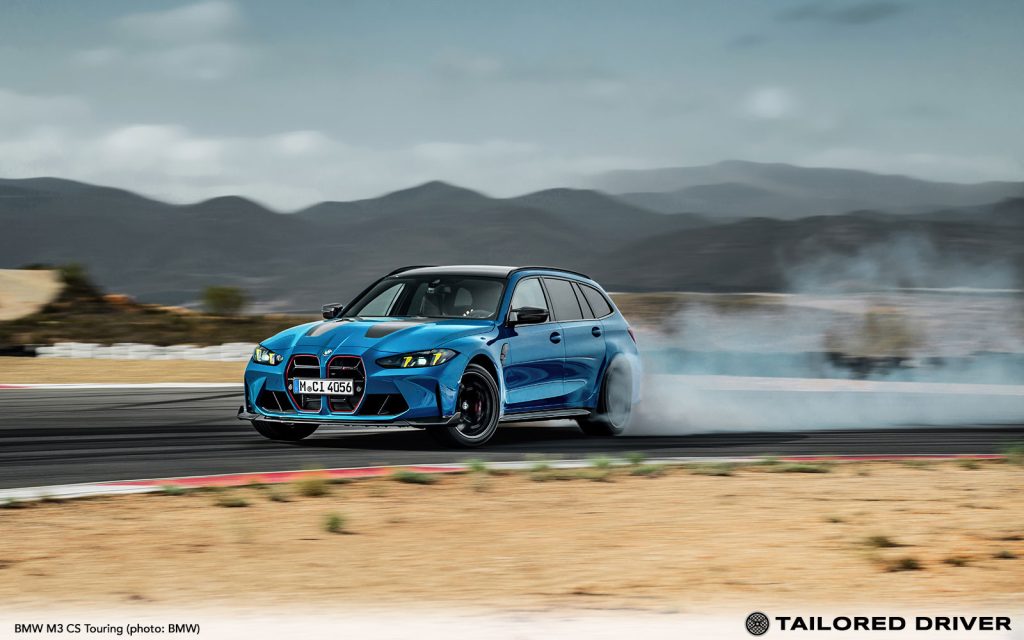
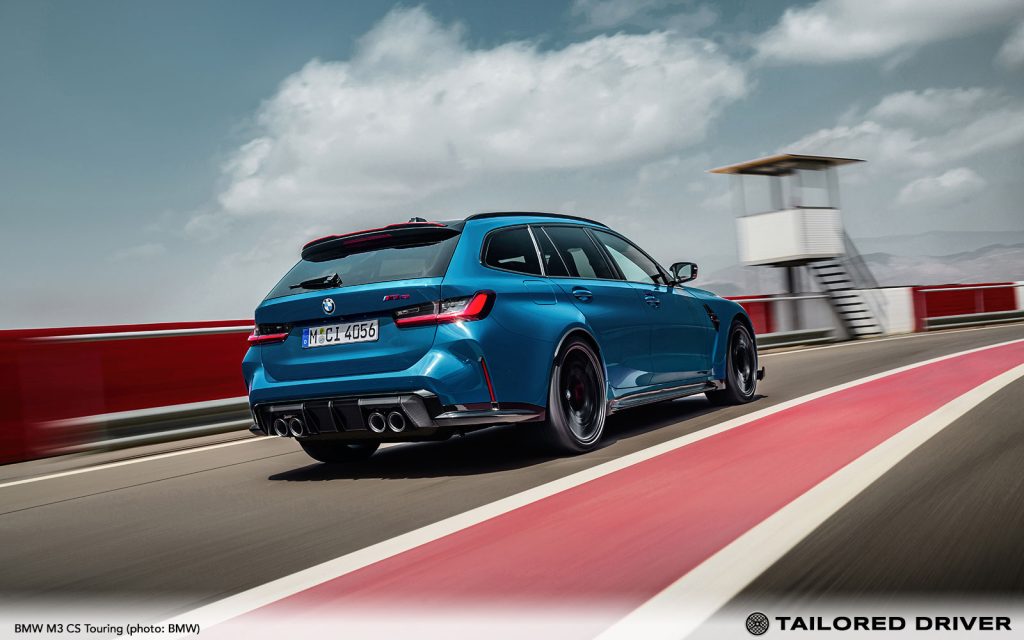
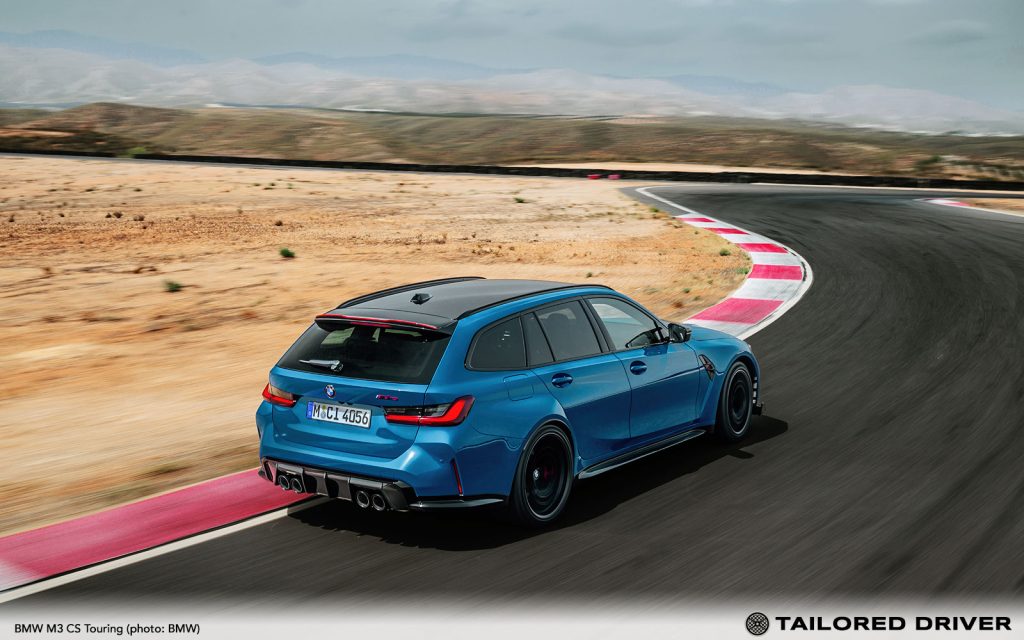
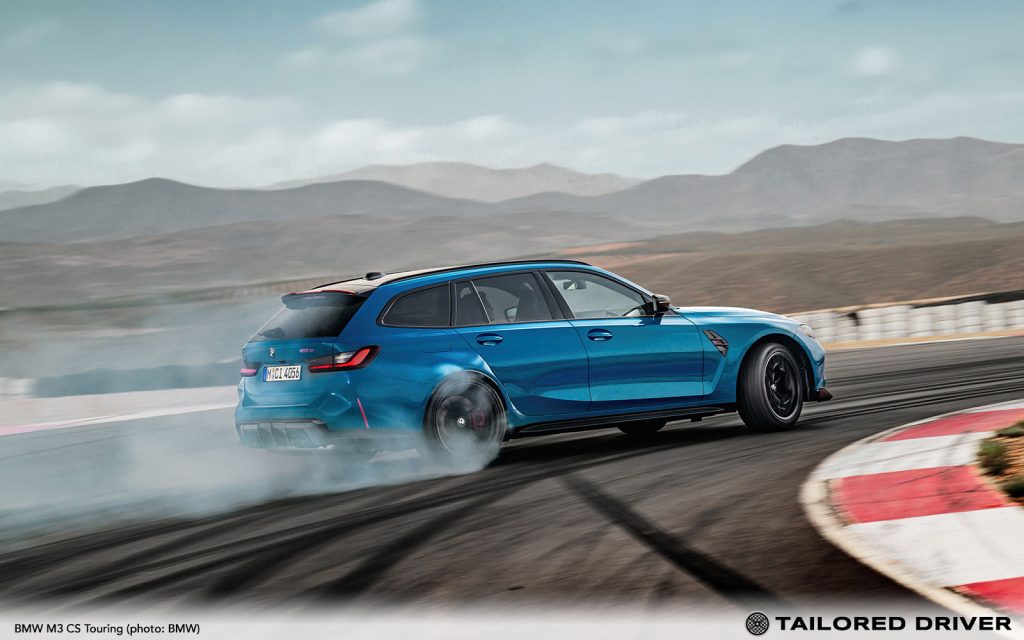
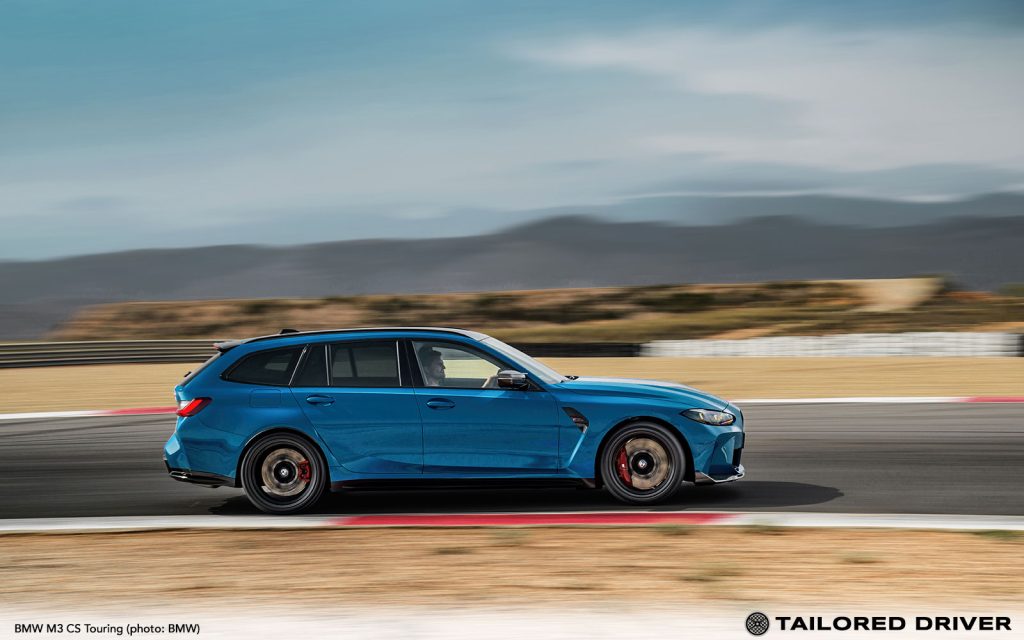
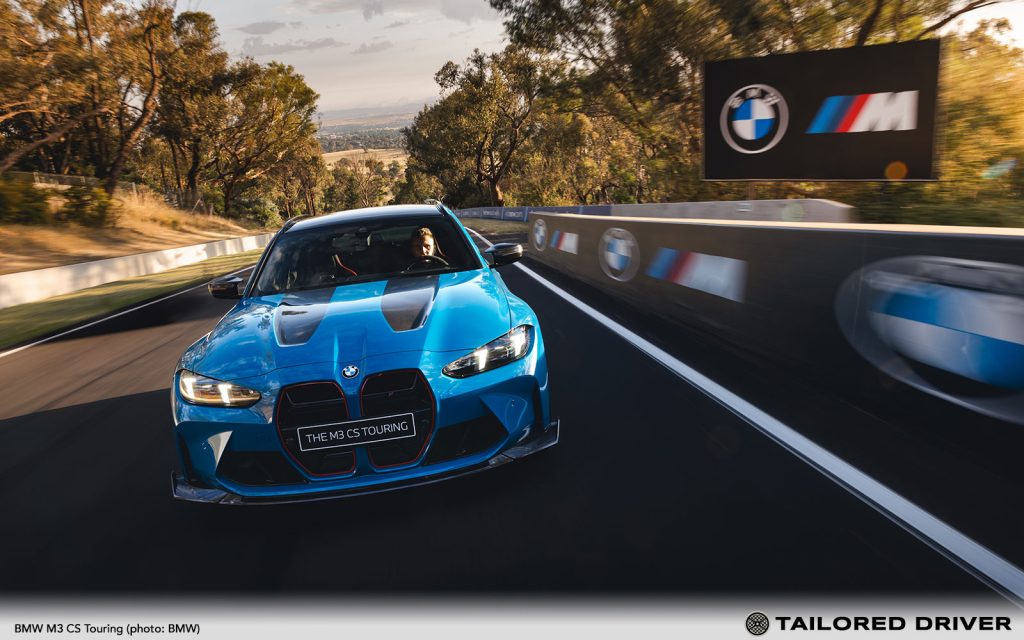
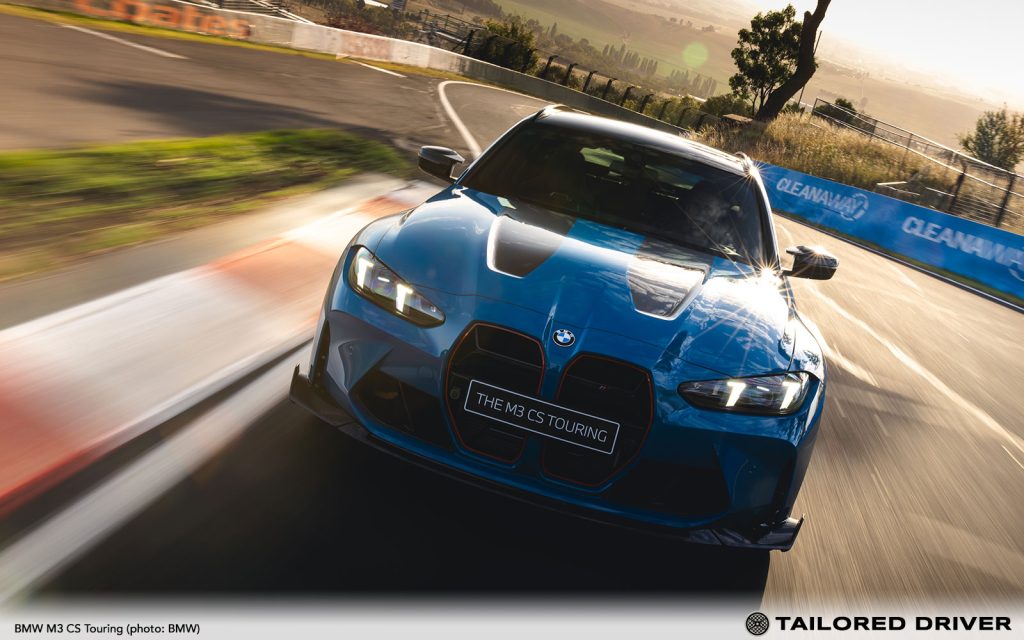
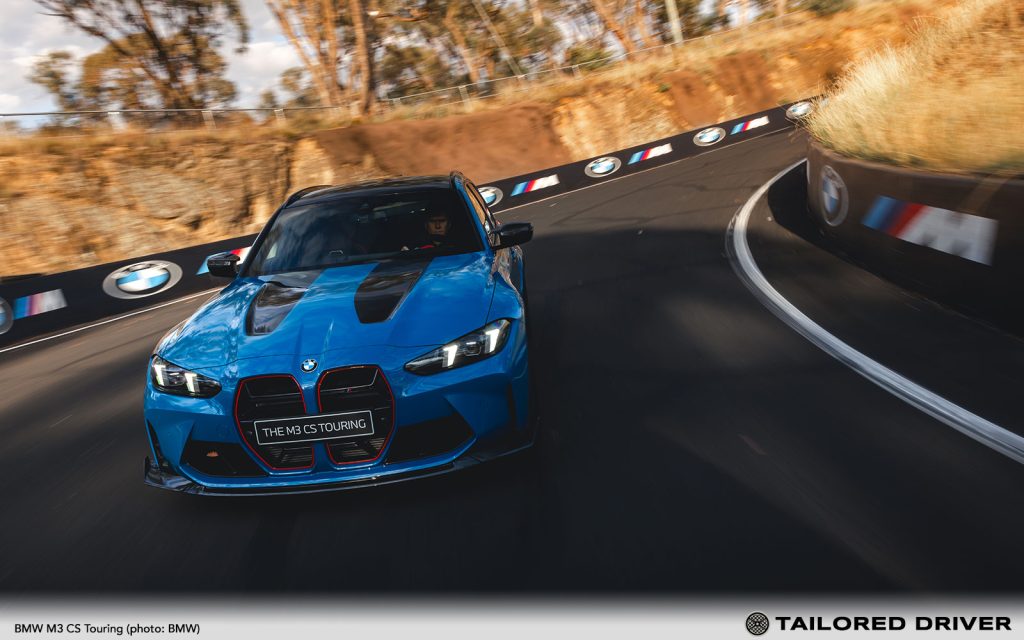
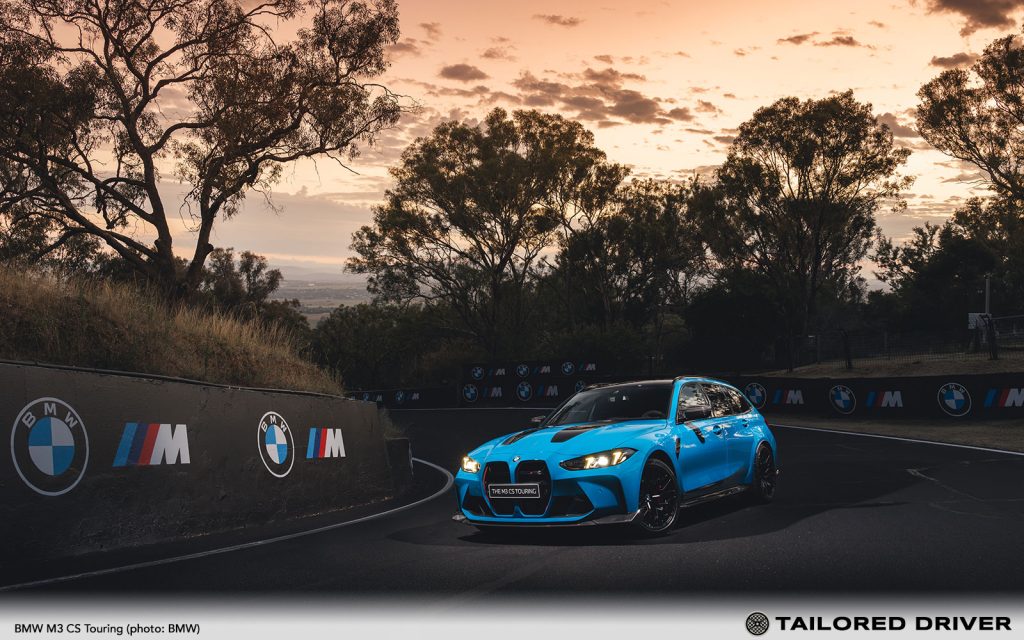
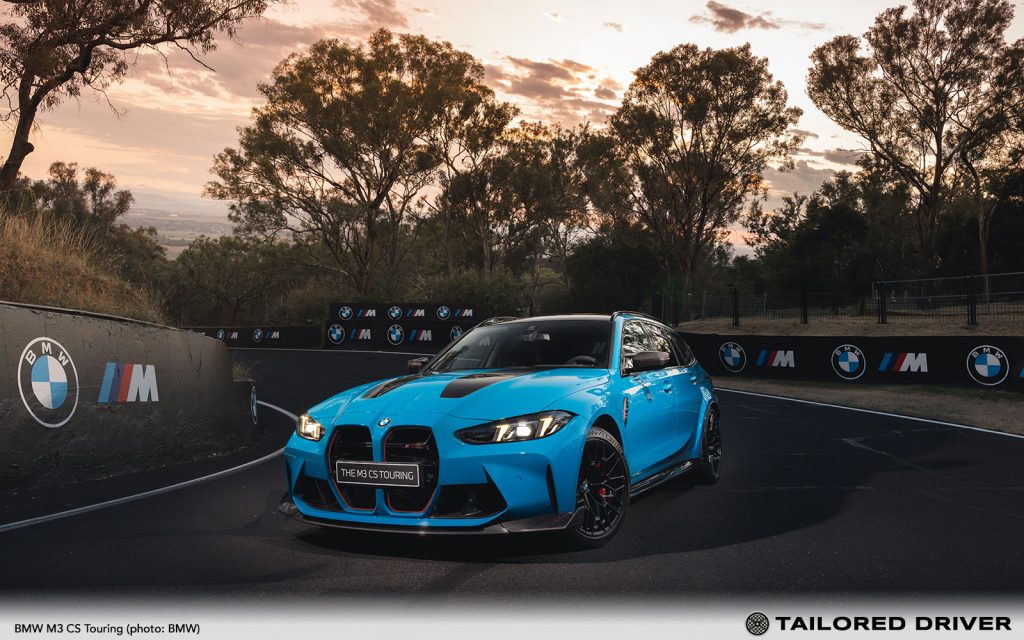
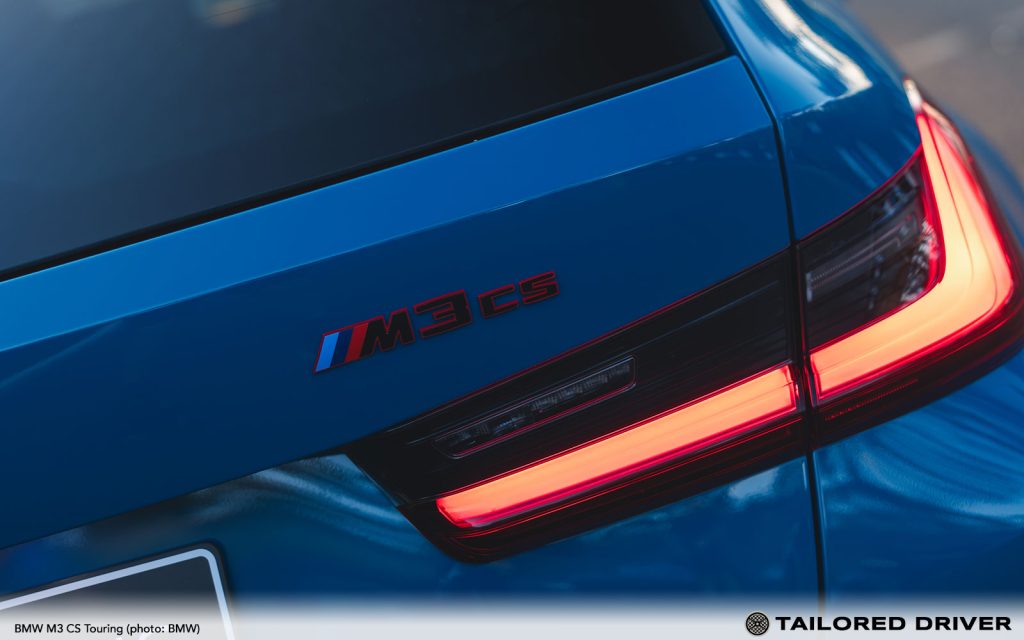
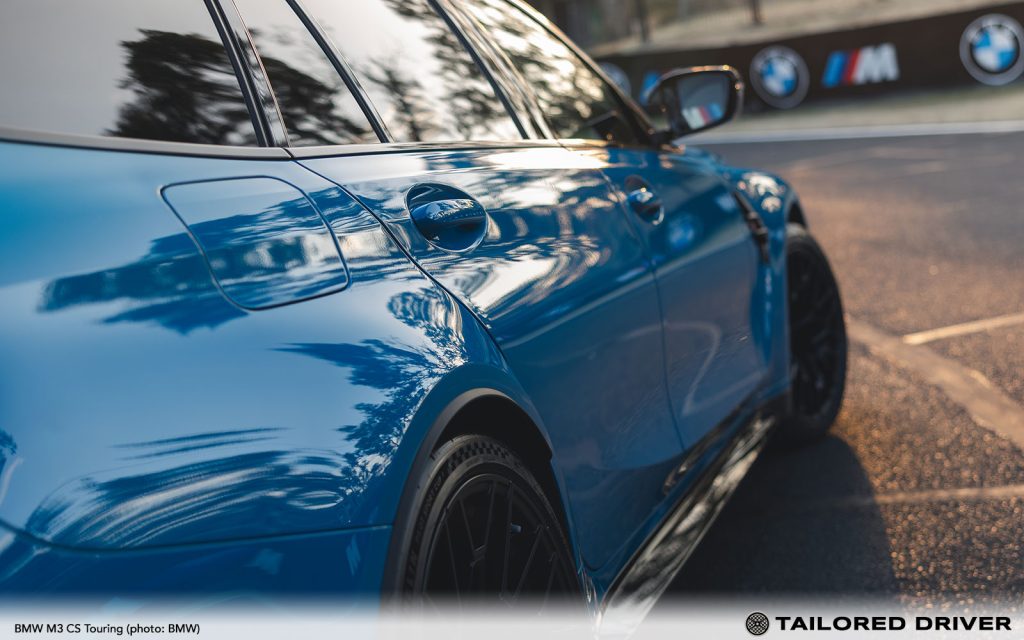
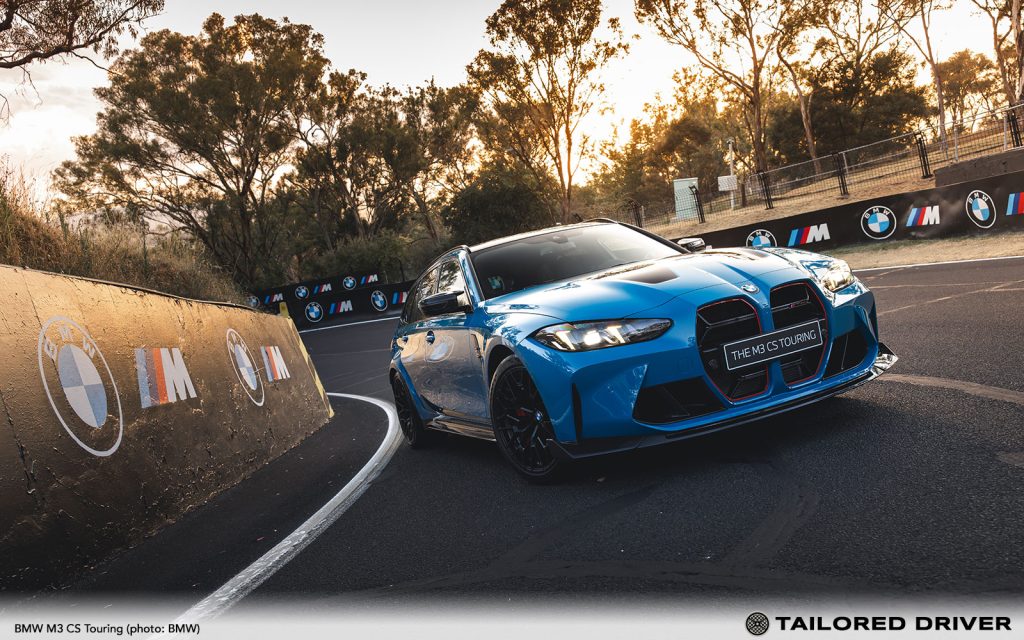
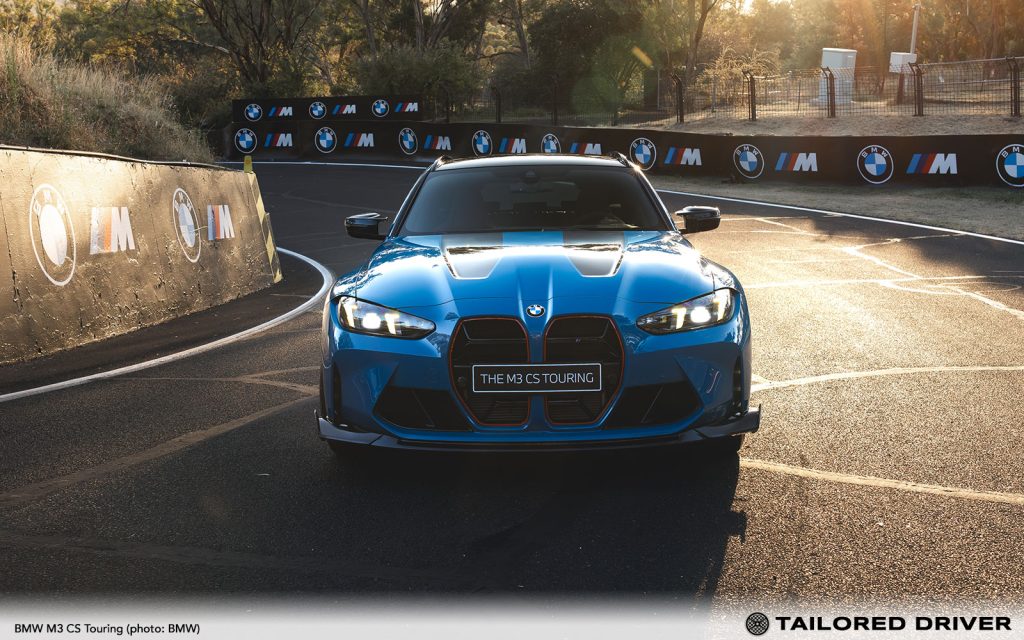
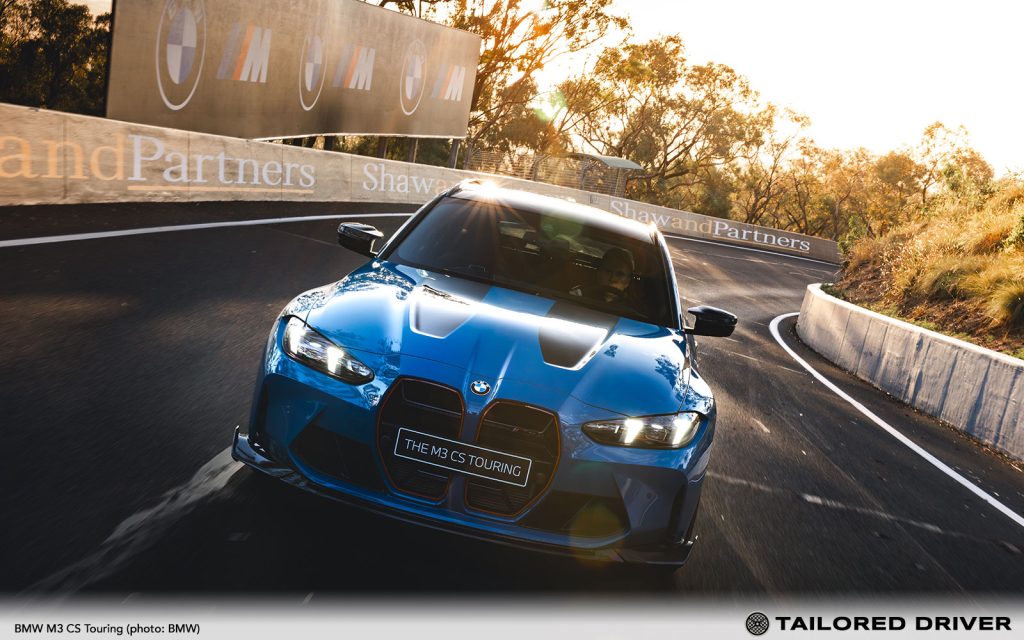
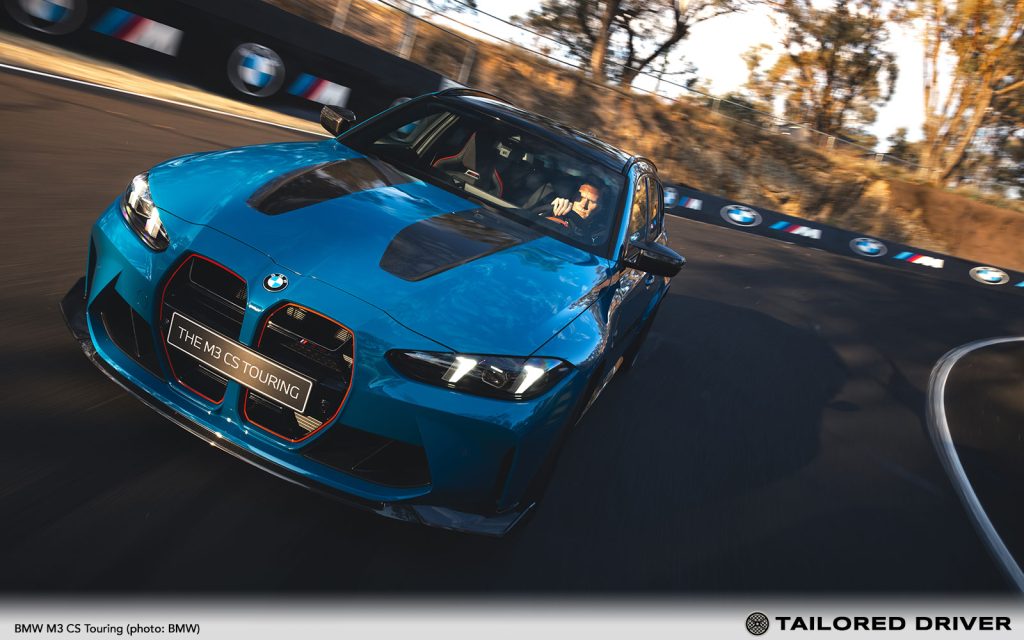
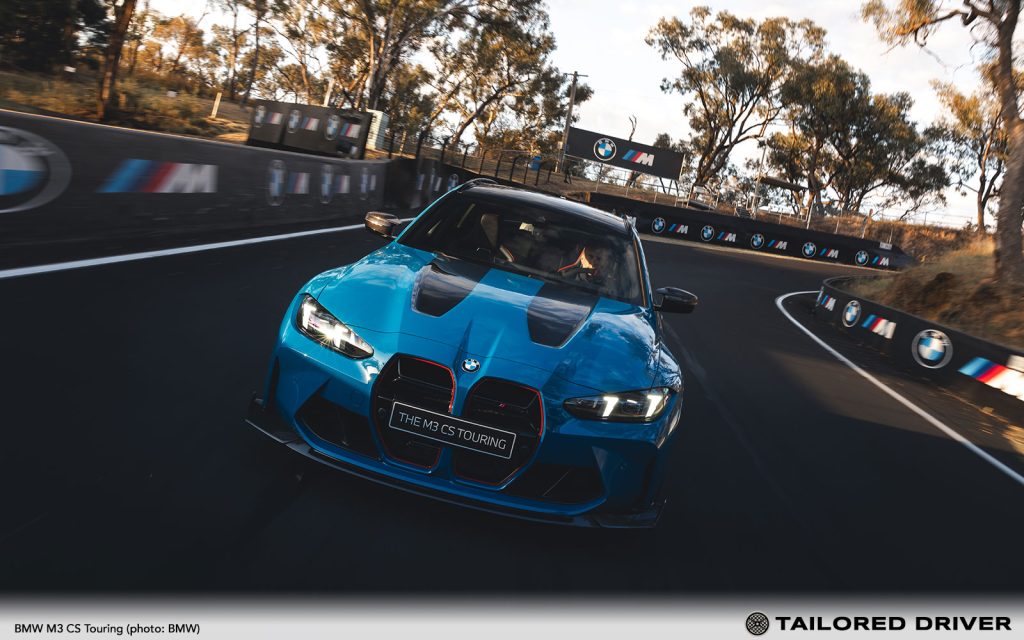
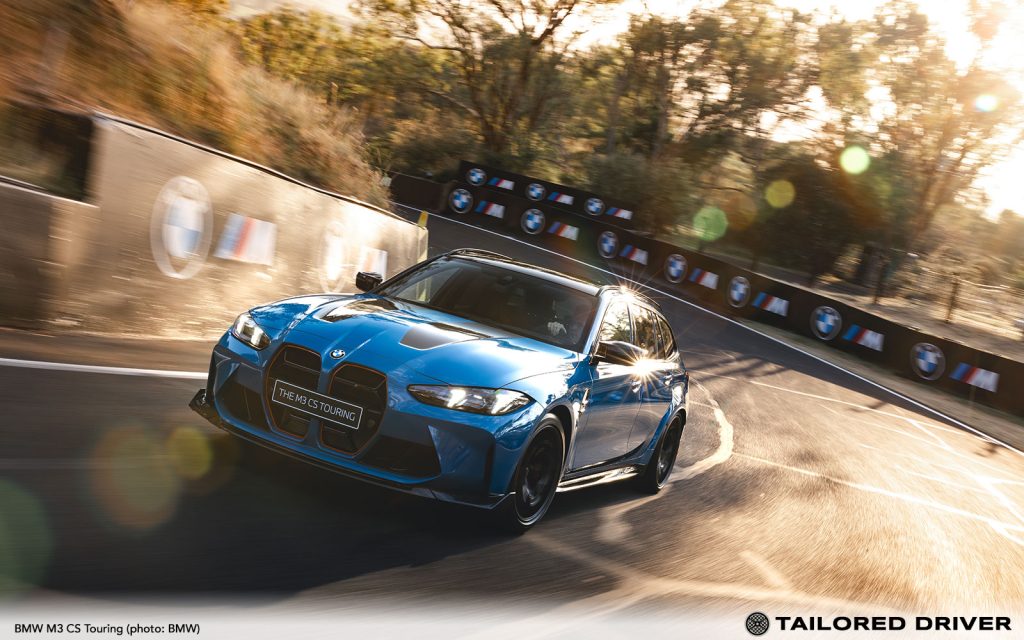
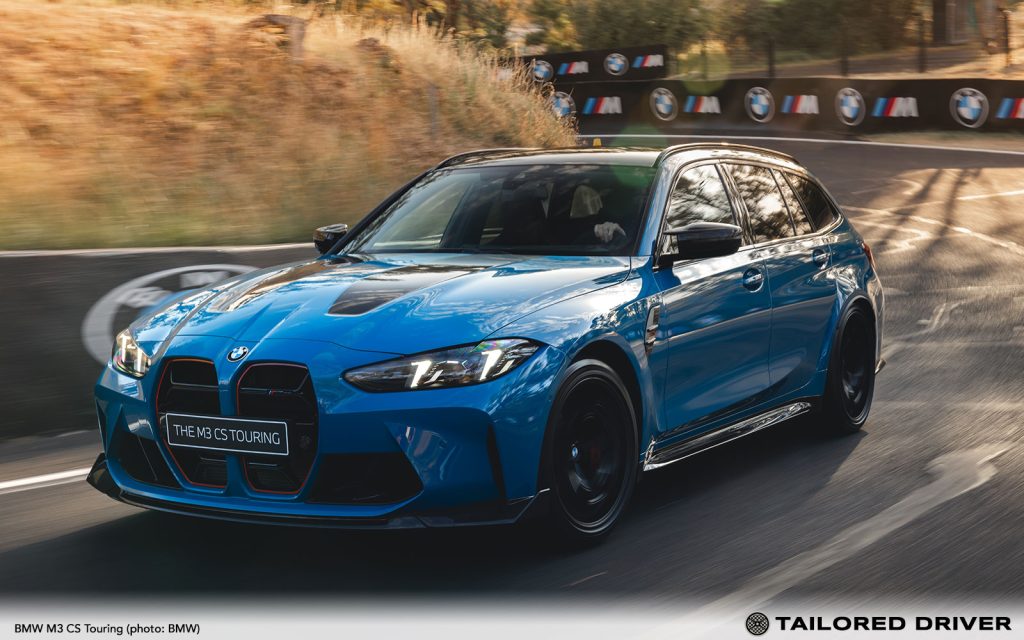
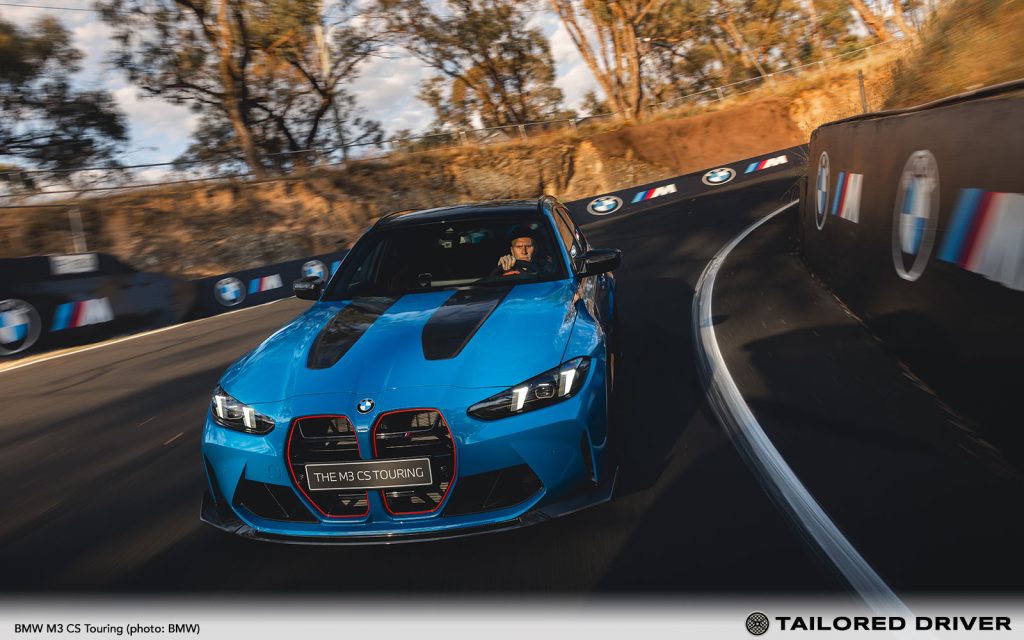
With the first-ever BMW M3 CS Touring (fuel consumption combined: 10.5 l/100 km [26.9 mpg imp]; CO2 emissions combined: 238 g/km in the WLTP cycle, CO2 class: G), BMW M GmbH is adding another special-edition model to its line-up in the high-performance sports car segment. The latest new addition to the manufacturer’s most popular range builds on the success of the BMW M3 Competition Touring with M xDrive (fuel consumption combined: 10.4 l/100 km [27.2 mpg imp]; CO2 emissions combined: 235 g/km in the WLTP cycle, CO2 class: G) and blends that car’s very distinctive character profile with even greater potential for emotionally exhilarating performance. A 405 kW/550 hp six-cylinder in-line engine, bespoke chassis tuning, exclusive design features and weight savings resulting from the use of numerous carbon fibre-reinforced plastic (CFRP) components provide the ingredients for an unadulterated racing-car feeling. The on-board space of the first-ever BMW M3 CS Touring can be used in a wide variety of ways, which ensures that its ultra-dynamic driving characteristics can be experienced both on the race track and in myriad everyday situations, during leisure activities and on trips away.
The model-specific performance characteristics of the engine and power transfer via the eight-speed M Steptronic transmission and M xDrive all-wheel-drive system serve up dynamic thrills and supreme traction. The BMW M3 CS Touring races from 0 to 100 km/h (62 mph) in 3.5 seconds.
The world premiere of the first-ever BMW M3 CS Touring will be hosted by the Mount Panorama Circuit in Bathurst, in the Australian state of New South Wales. The BMW M3 CS Touring will be revealed to the public for the first time on 30 January 2025 as part of the Bathurst 12 Hour race programme. Deliveries of the limited-run model to customers in Europe, Australia, Japan and South Korea, among others, will begin in March 2025. The car’s home market of Germany is by a distance its most important sales region. The special edition will be produced alongside all other variants of the BMW M3 Sedan and BMW M3 Touring at BMW Group Plant Munich.
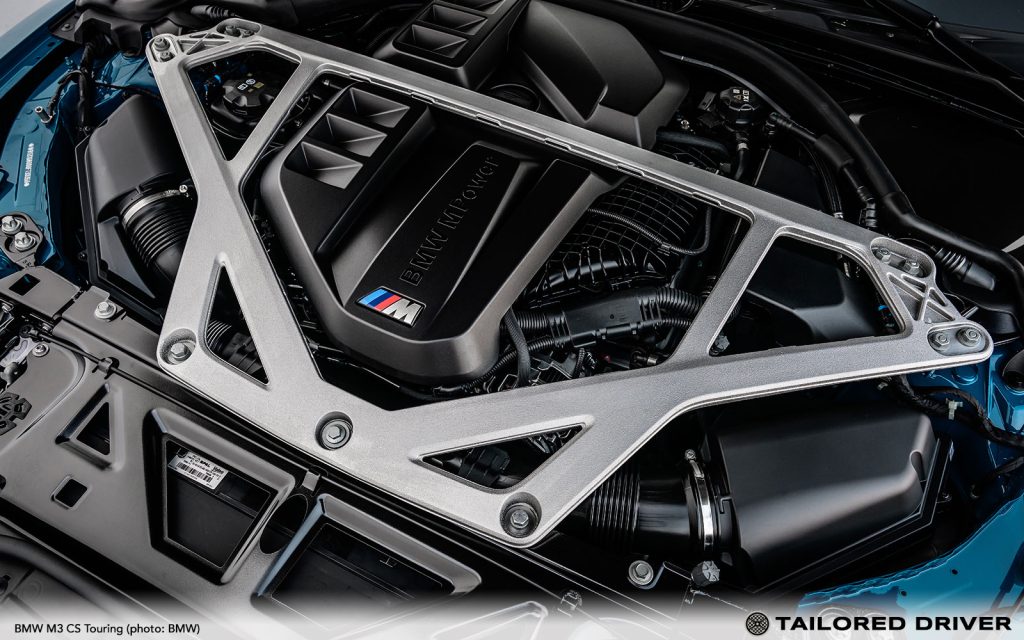
The 3.0-litre six-cylinder in-line engine in the BMW M3 CS Touring was designed from the outset to deliver high performance on the race track – and it features a multitude of technological details from racing-car design. These include an extremely rigid crankcase with a sleeve-free, closed-deck construction, a forged lightweight crankshaft and a cylinder head with a 3D-printed core. The likewise weight-saving cylinder bores have a wire-arc sprayed iron coating to reduce frictional losses. The cooling system and oil supply are also designed to handle the sustained heavy loads generated during hard driving on a track.
The drive unit combines the high-revving characteristics for which M is renowned and linear power delivery into the upper reaches of the engine’s range with upgraded M TwinTurbo technology. Raising the maximum charge pressure of the two mono-scroll turbochargers to 2.1 bar and making model-specific tweaks to the engine management enable the maximum output of the BMW M3 Competition Touring with M xDrive to be increased by another 15 kW/20 hp to 405 kW/550 hp. The engine develops its peak torque of 650 Nm (479 lb-ft) between just 2,750 and 5,950 rpm, produces its maximum output at 6,250 rpm and tops out at 7,200 rpm.
In addition, a specially designed engine mounting with increased spring rates creates an extremely rigid connection between the power unit and the vehicle’s structure. This leads to even sharper engine response and extremely direct transmission of its power to the drivetrain. Its instantaneous power delivery means the BMW M3 CS Touring can power from rest to 100 km/h (62 mph) in 3.5 seconds, and 0 to 200 km/h (124 mph) is over in 11.7 seconds. The figures recorded using the “one-foot rollout” method* are 0 to 100 km/h (62 mph) in 3.2 seconds and 0 to 200 km/h (124 mph) in 11.4 seconds. The mid-range sprint from 80 to 120 km/h (50 – 75 mph) takes 2.7 seconds in 4th gear and 3.5 seconds in 5th gear. The top speed of the special-edition model – which comes as standard with the M Driver’s Package – is electronically limited to 300 km/h (186 mph).
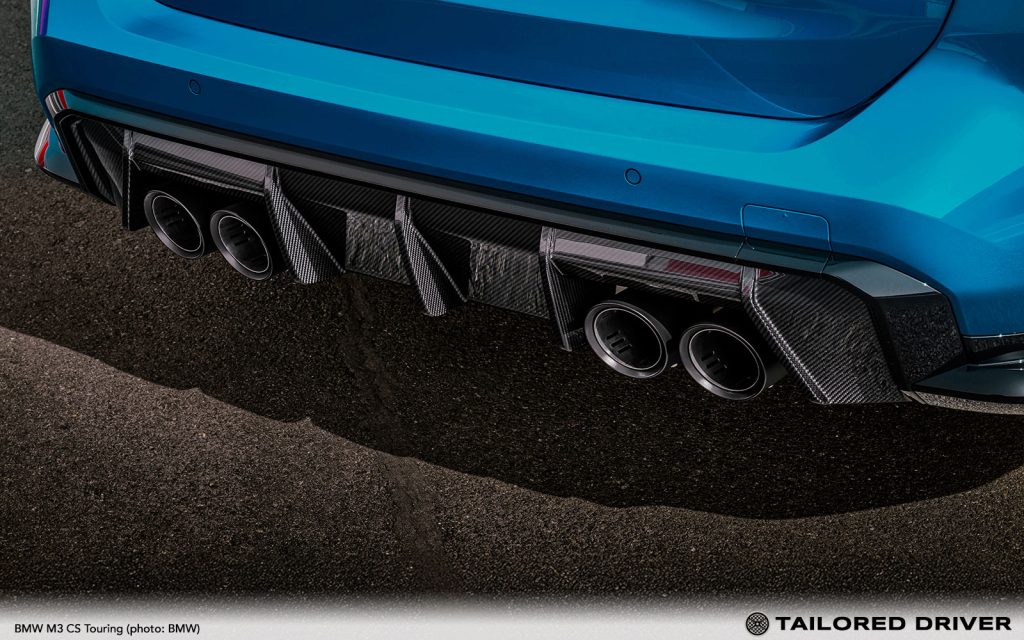
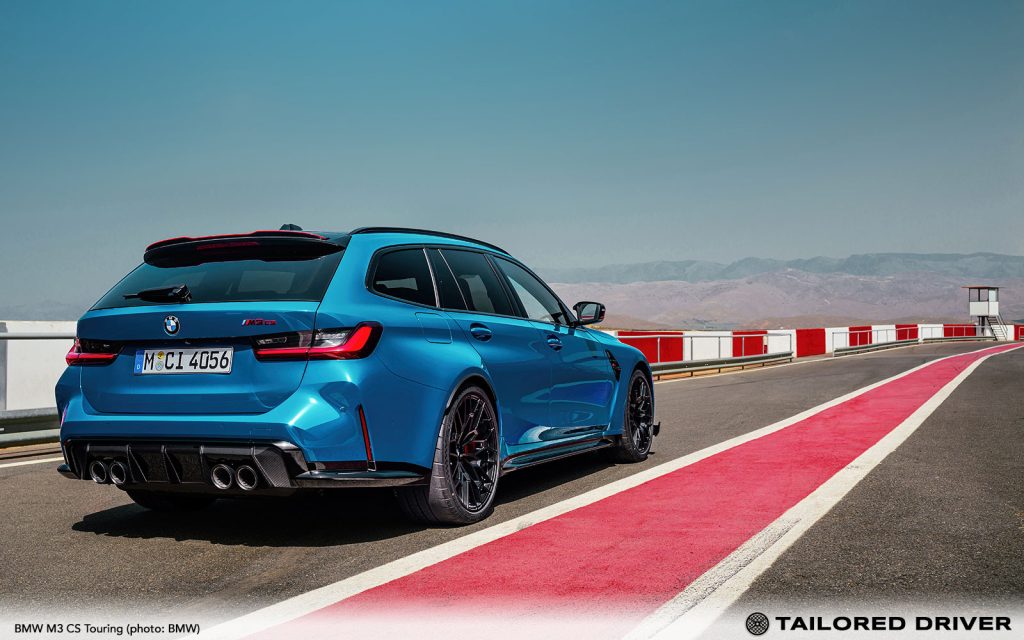
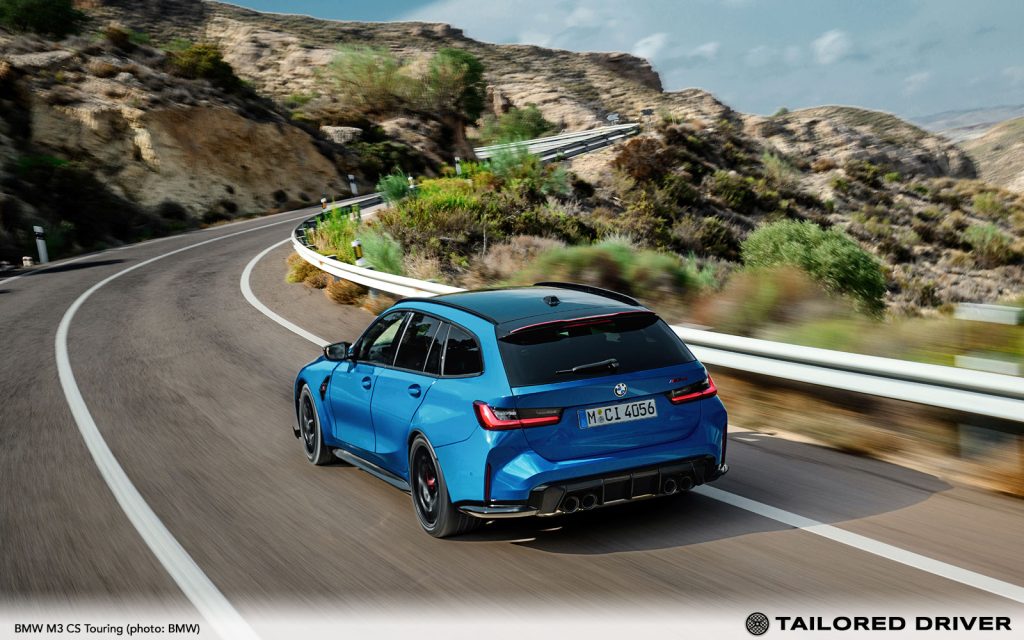
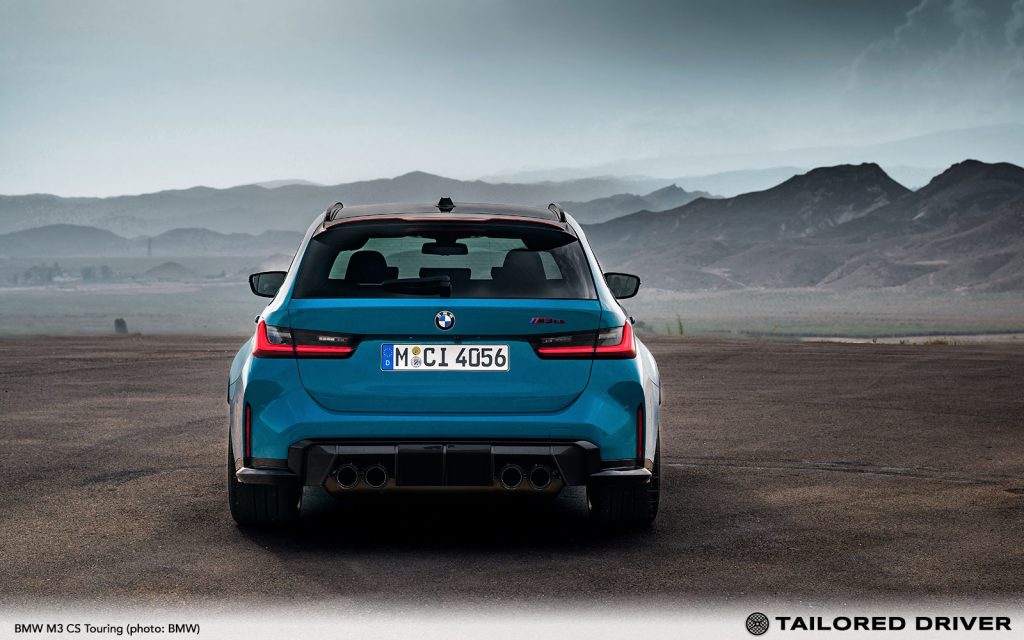
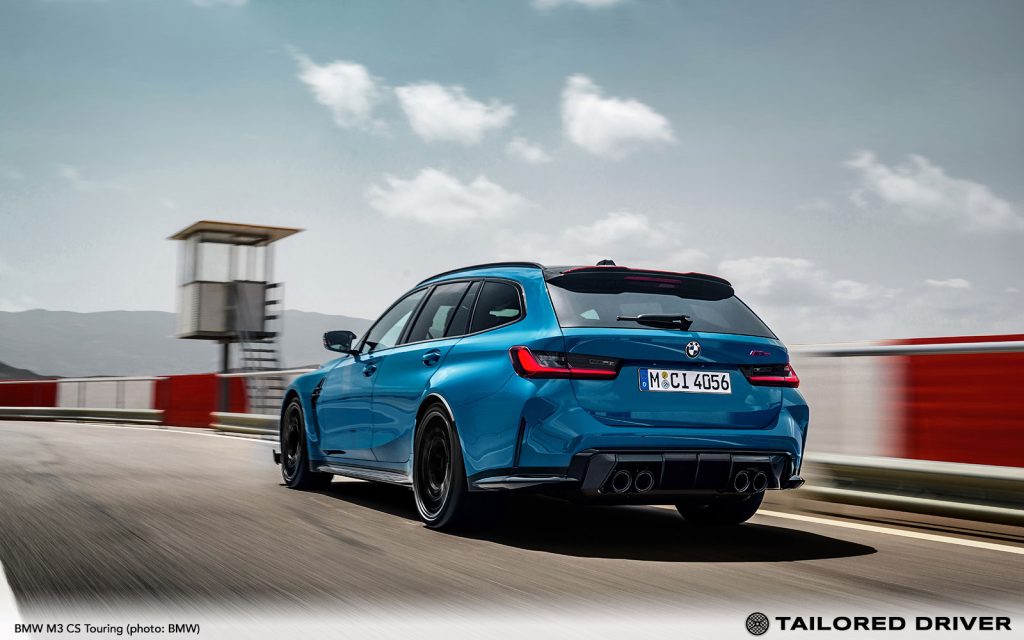
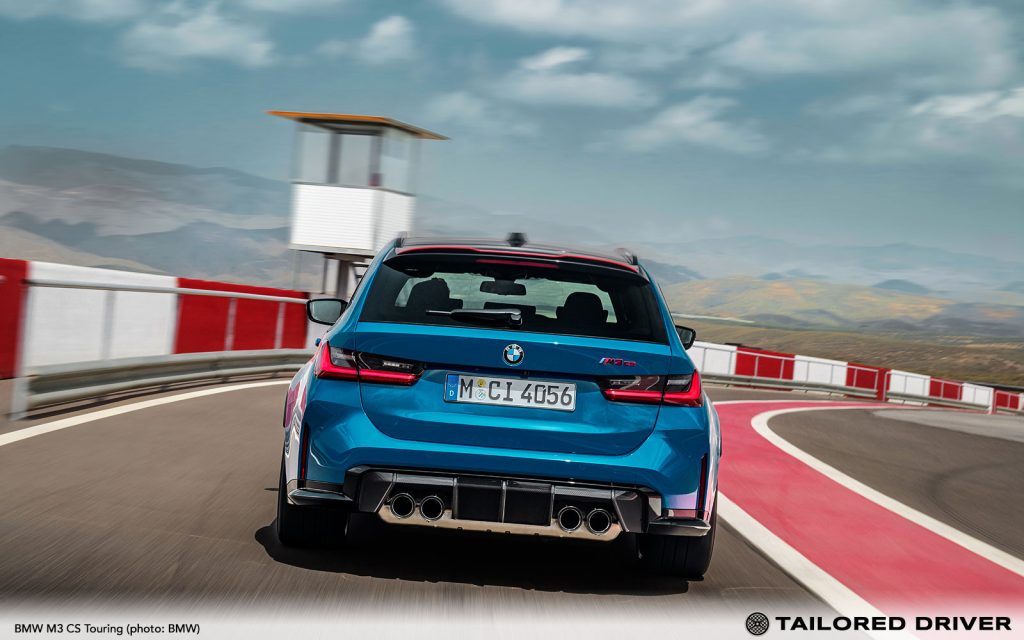
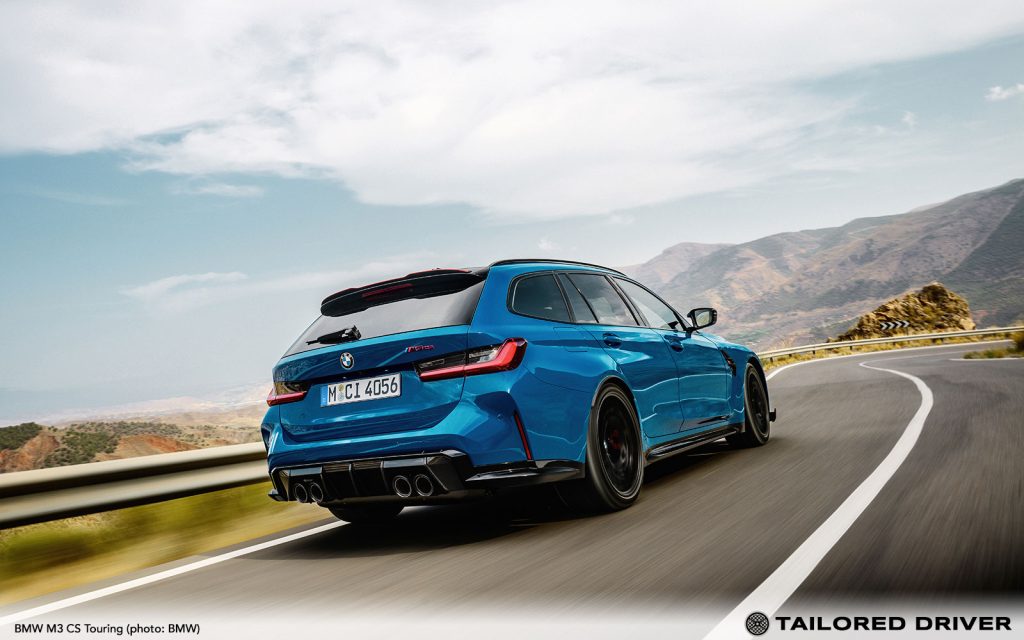
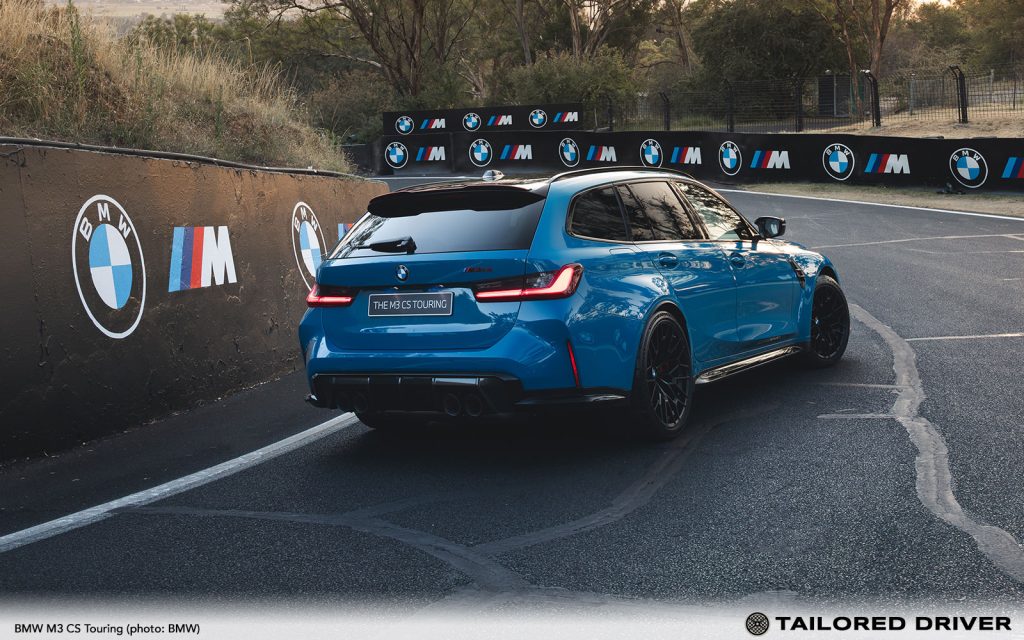
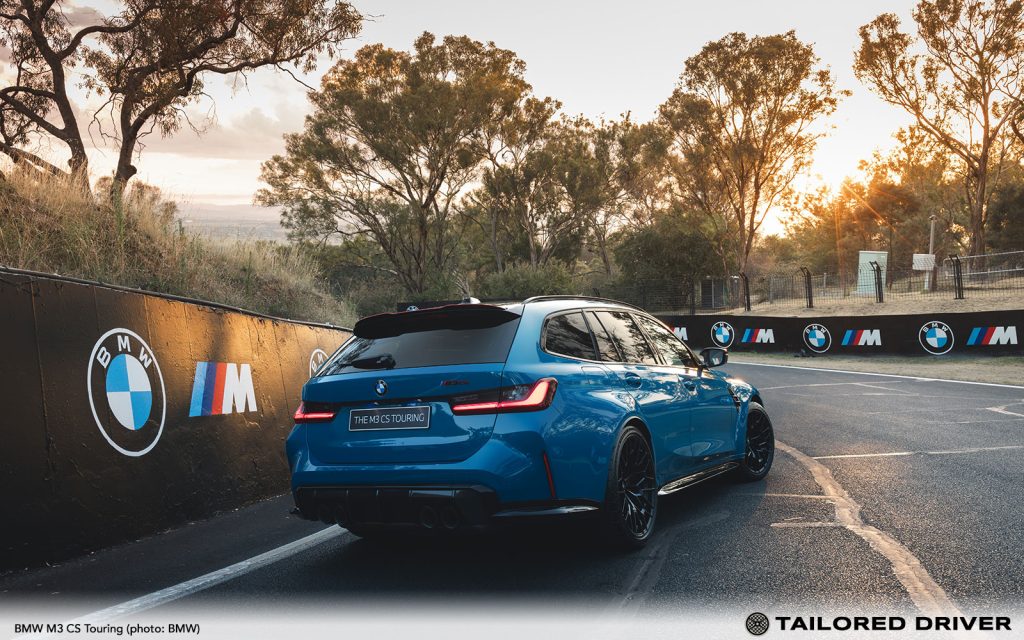
The car’s emotionally stirring engine note is the work of the M-specific exhaust system featuring electrically controlled flaps, a titanium rear silencer with weight-minimising design and – in customary M fashion – two pairs of tailpipes painted in matt Black. The engine’s acoustic presence varies according to the engine profile the driver selects from the M Setup menu. SPORT or SPORT+ mode produces a drive sound that injects real aural drama into proceedings, particularly through gear changes and the accompanying adjustments in rev speed.
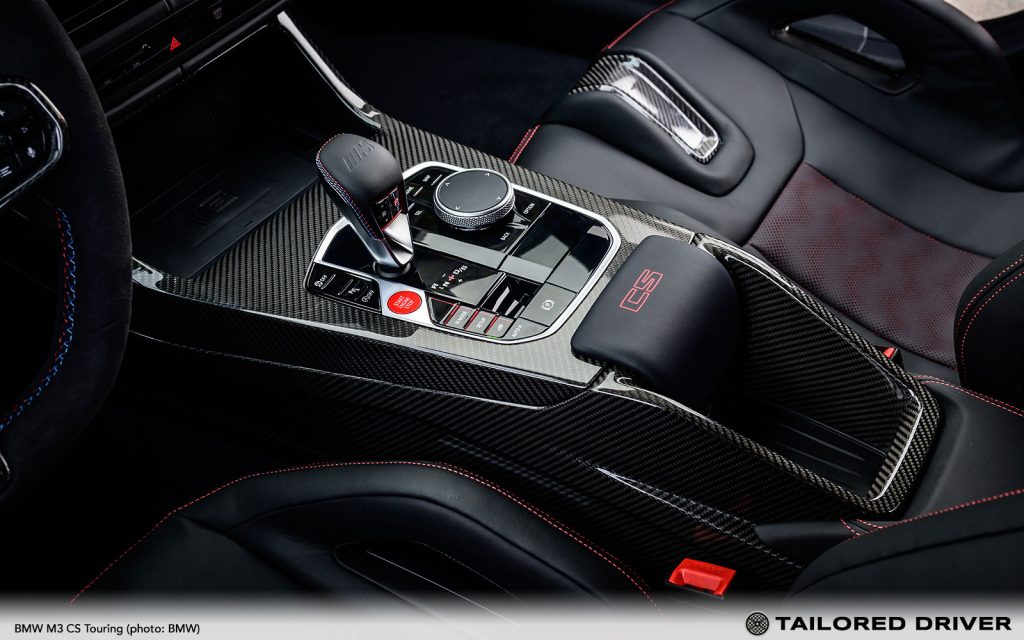
The engine under the bonnet of the BMW M3 CS Touring teams up with an eight-speed M Steptronic transmission including Drivelogic. The Drivelogic button integrated into the gear selector lever makes it possible to alter the transmission’s shift characteristics, with a choice of three clearly distinguishable settings available. As well as comfort-focused and sporty options, drivers can also engage a setting optimised specially for track driving. Both the selector lever and the carbon-fibre shift paddles on the steering wheel enable sequential interventions in the gear selection process.
The BMW M3 CS Touring channels its power to the road through the M xDrive all-wheel-drive system. This employs an electronically controlled multi-plate clutch in the transfer case to ensure fully variable and super-smooth distribution of the engine’s power between the front and rear wheels, and serves up tireless all-wheel-drive performance, even during hard track sessions. In tandem with the Active M Differential at the rear axle – whose operation is also fully variable – the intelligent all-wheel-drive system’s rear-wheel bias enhances the M-typical handling dynamics. Added to which, 4WD Sport mode can be selected via the M Setup menu. This sends an even greater proportion of the engine’s power to the rear wheels. 2WD mode, meanwhile, delivers a driving experience for the ultimate purist, laying on classical rear-wheel drive with the DSC (Dynamic Stability Control) system deactivated.
Model-specific tuning for the chassis technology and performance-focused stopping power.
The chassis technology in the BMW M3 CS Touring has been tuned precisely to the engine’s performance characteristics, the overall vehicle concept and the specific weight distribution of this latest special-edition model. The settings for the DSC system and M Dynamic Mode have also been purposefully optimised for the specific demands of dynamically committed circuit driving. The electronically controlled dampers of the adaptive M suspension on the BMW M3 CS Touring likewise come in a model-specific setup, as do its M Servotronic steering and integrated braking system.
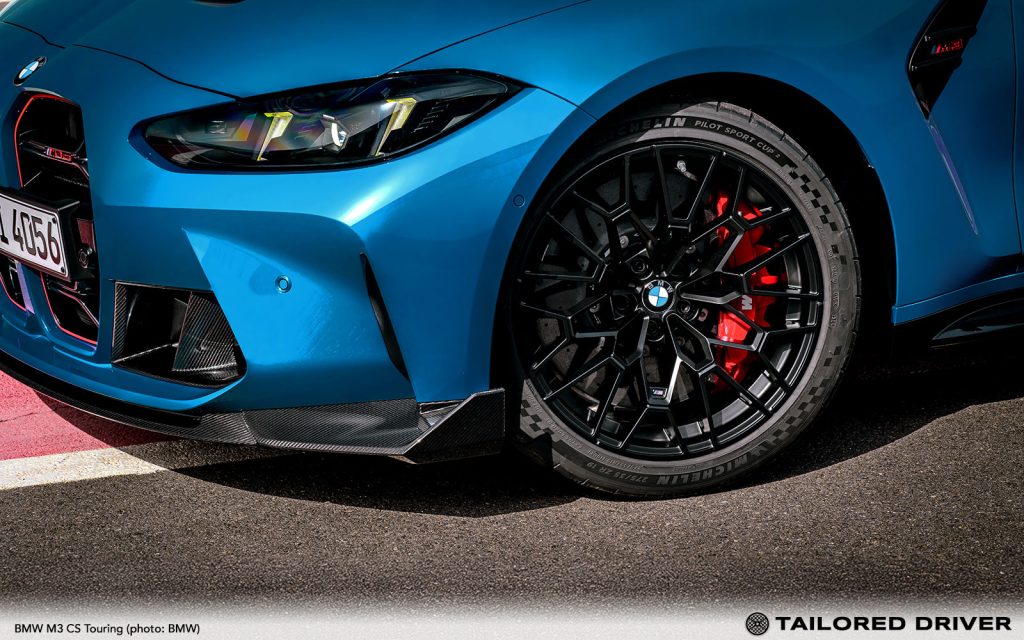
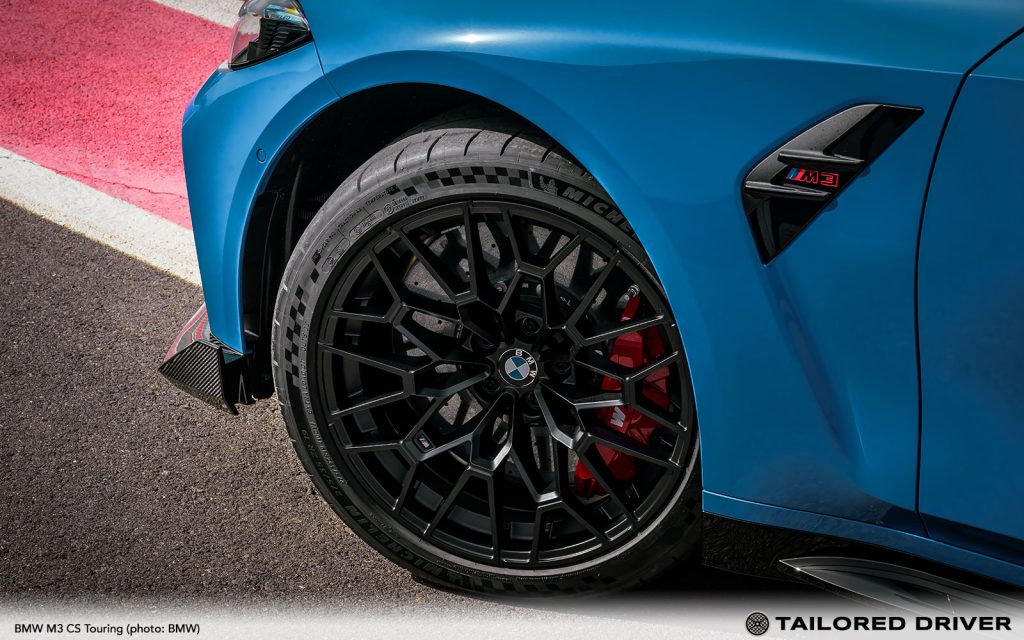
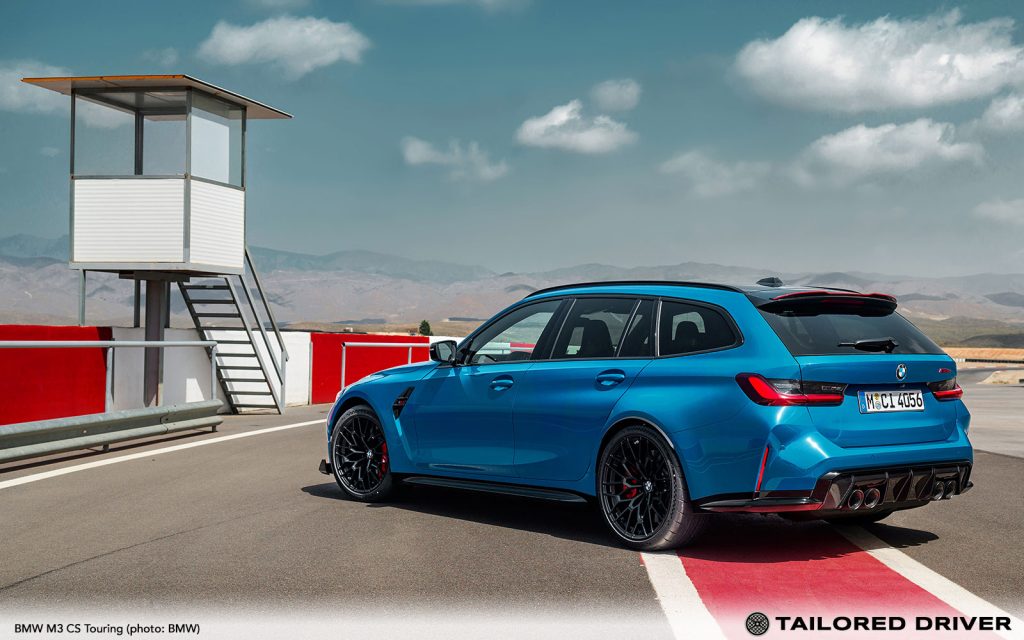
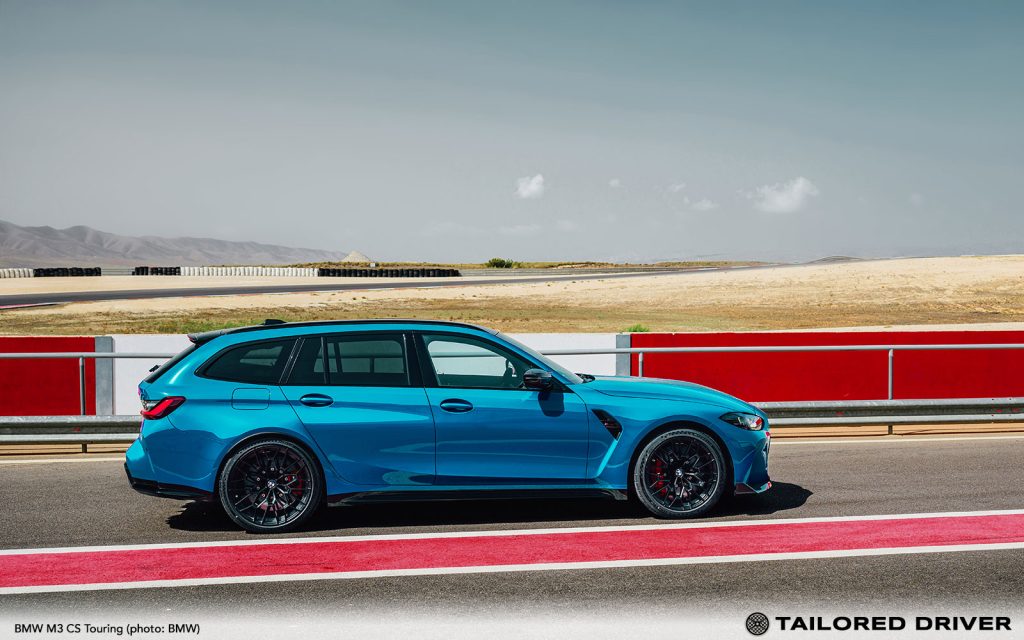
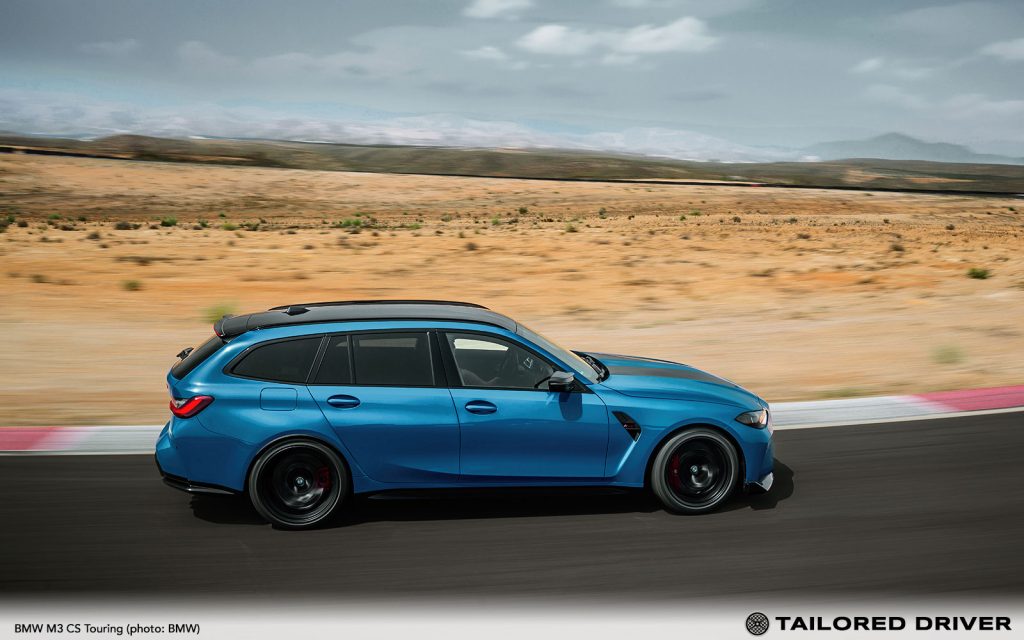
Providing outstanding stopping power are M Compound brakes with callipers painted in a choice of Red or Black. There is also the option of M Carbon ceramic brakes whose brake callipers are available in Red or matt Gold. Also on the standard equipment list are forged M light-alloy wheels in an exclusive double-spoke design with a matt Gold Bronze or matt Black finish. Measuring 19 inches in diameter at the front axle and 20 inches at the rear, the wheels are fitted as standard with track tyres (275/35 ZR19 at the front, 285/30 ZR20 at the rear). As an alternative to these tyres, customers also have the no-cost option of sport tyres with the same dimensions. And ultra-track tyres are also included on the options list.
Exclusive carbon-fibre components and optimised body rigidity help to produce outstanding performance attributes.
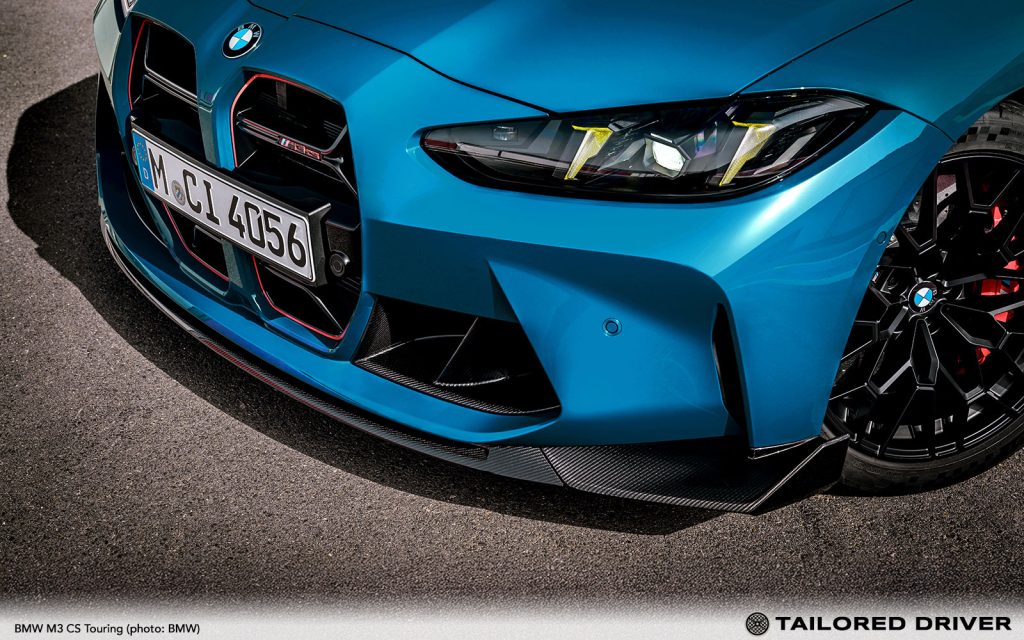
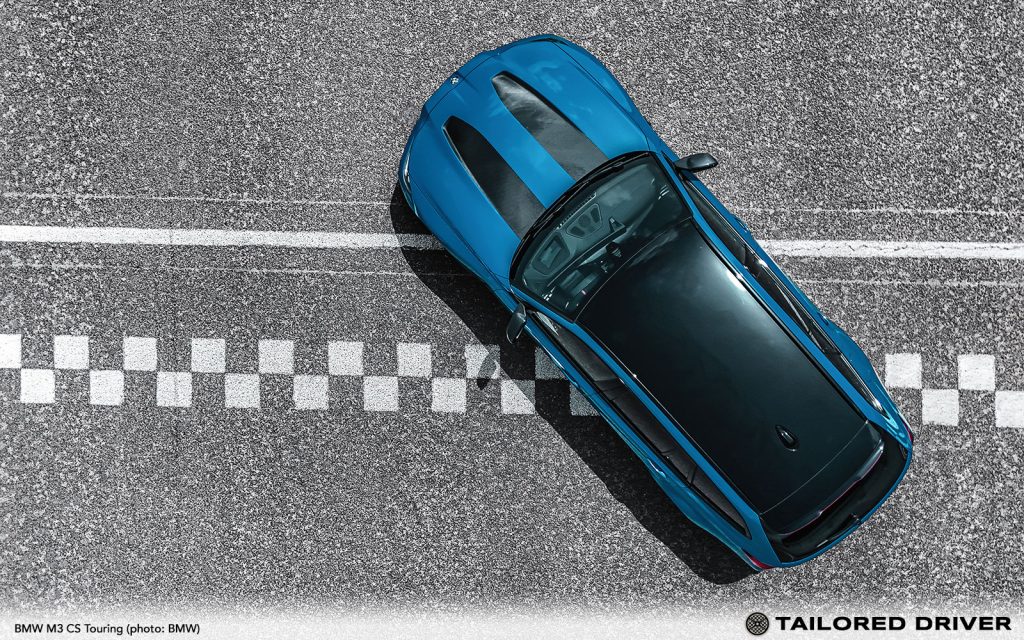
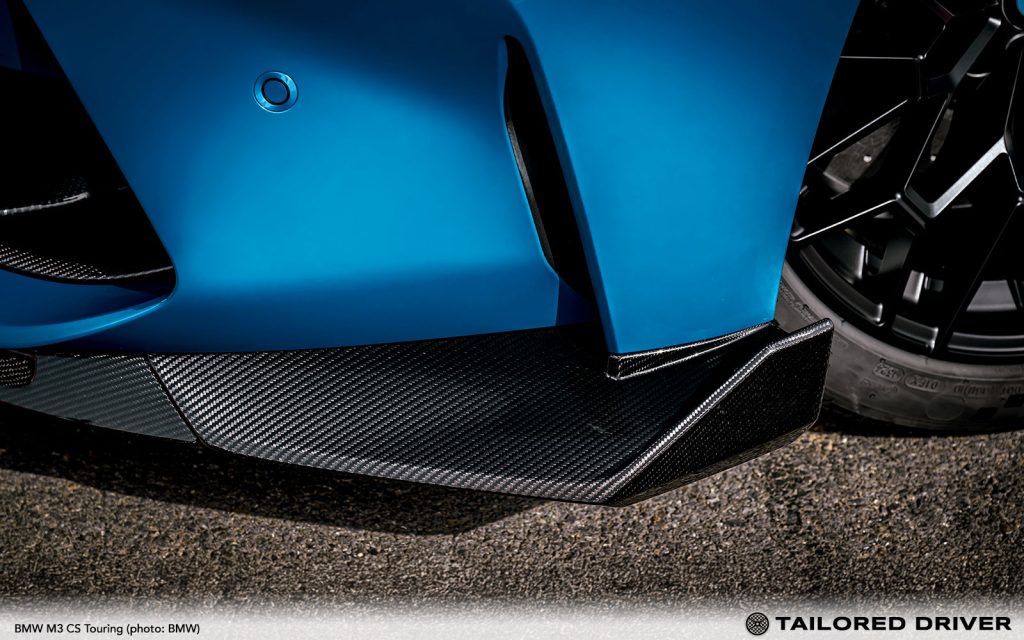
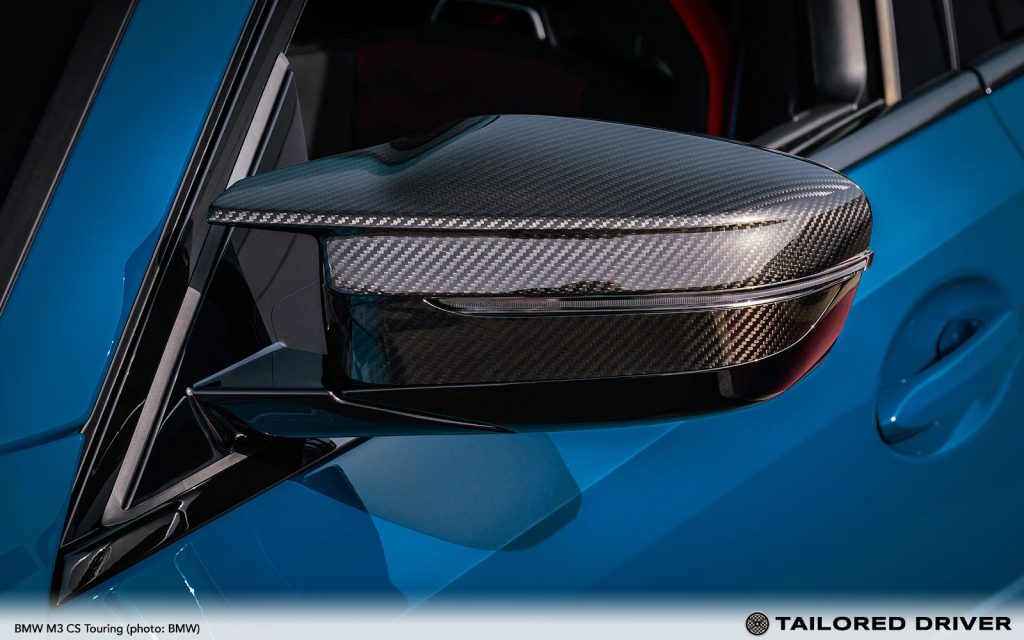
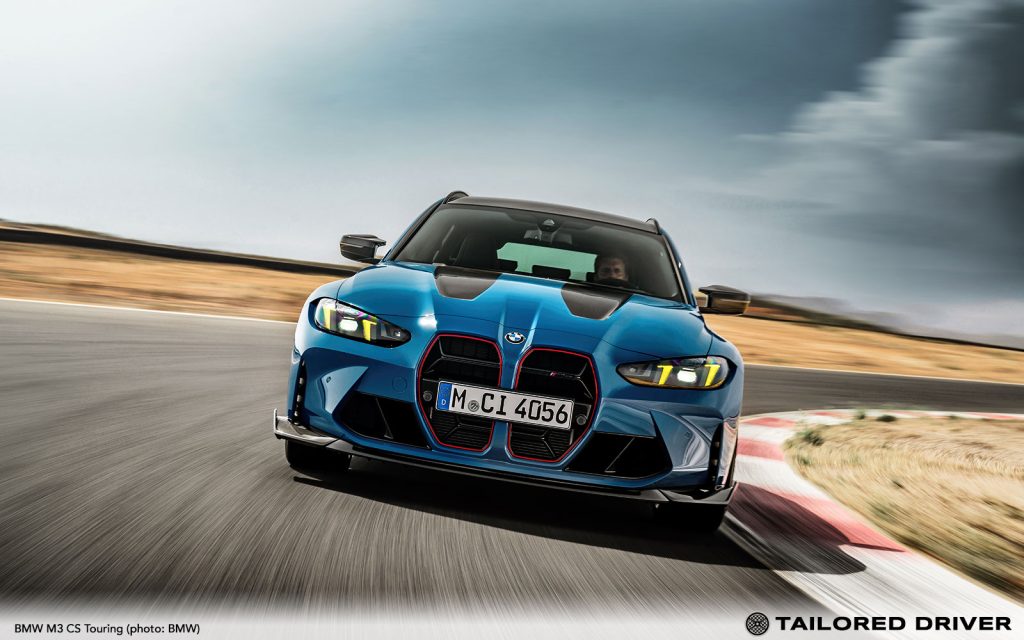
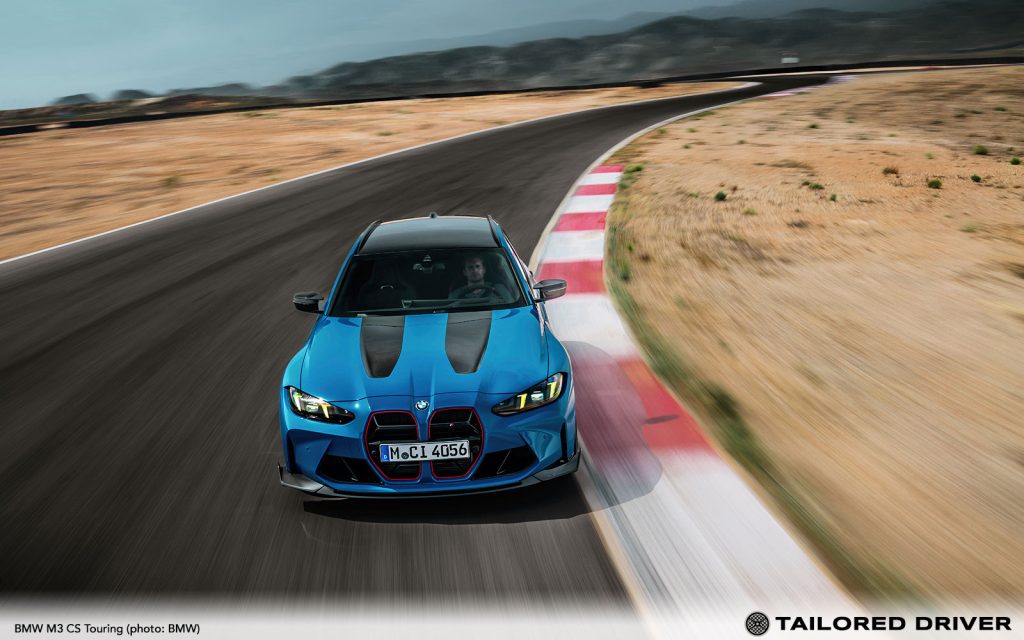
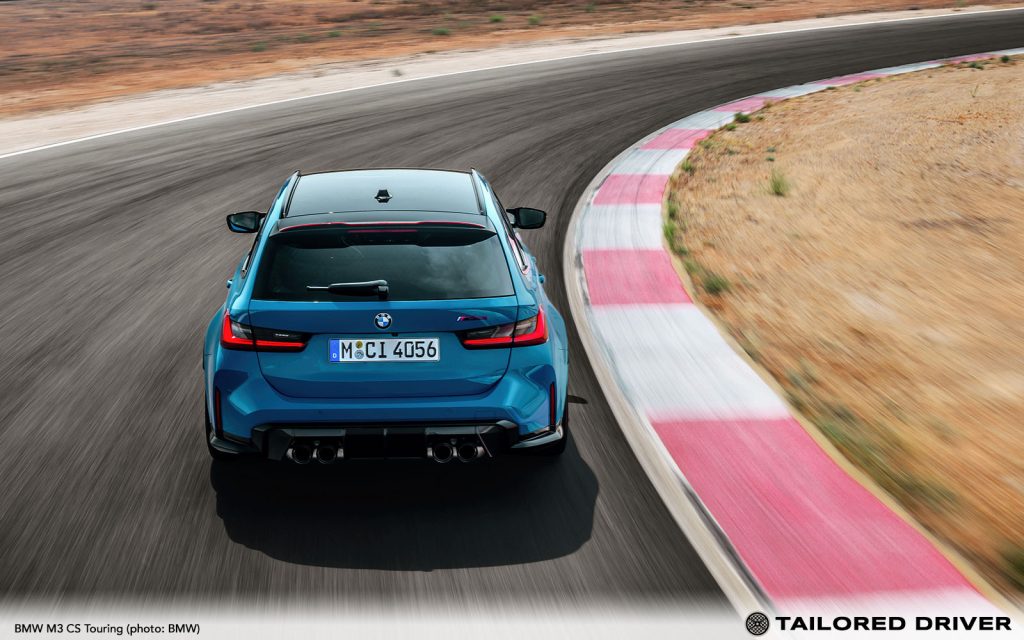
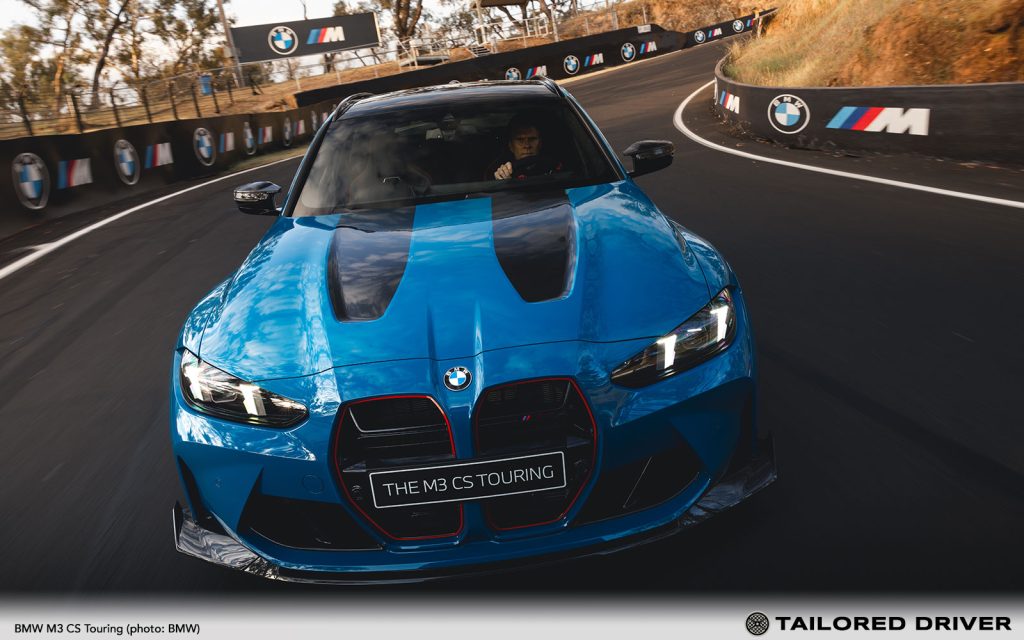
Together with the extremely powerful engine and model-specific chassis technology, intelligent lightweight design measures also play a major part in moulding the exclusive performance attributes of the BMW M3 CS Touring. Extensive use of carbon fibre-reinforced plastic (CFRP) is particularly important when it comes to weight minimisation. The car’s bonnet, front splitter, front air intakes, exterior mirror caps and rear diffuser are all made from CFRP.
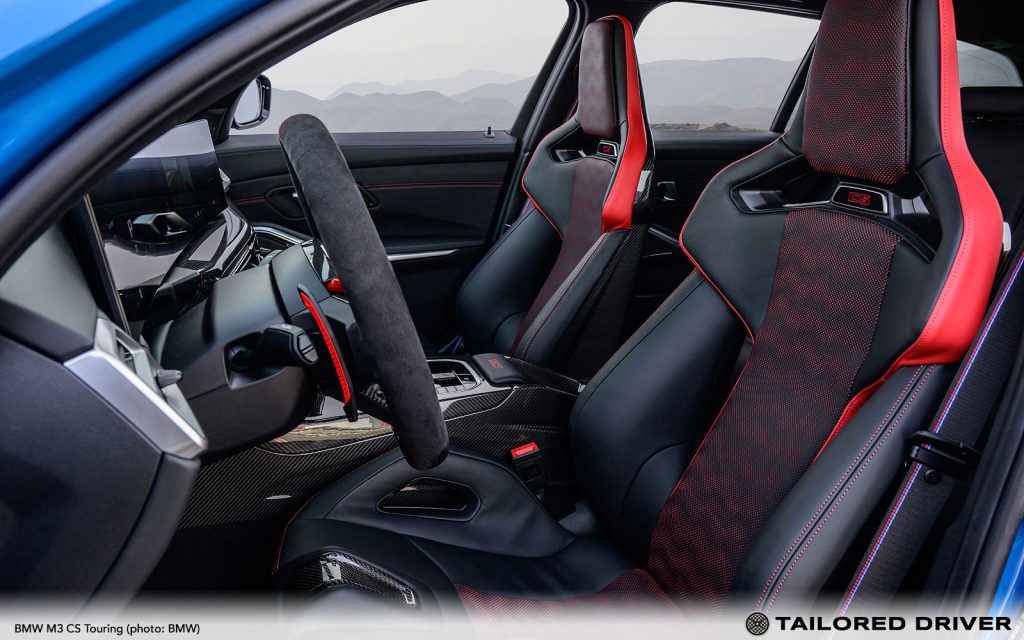
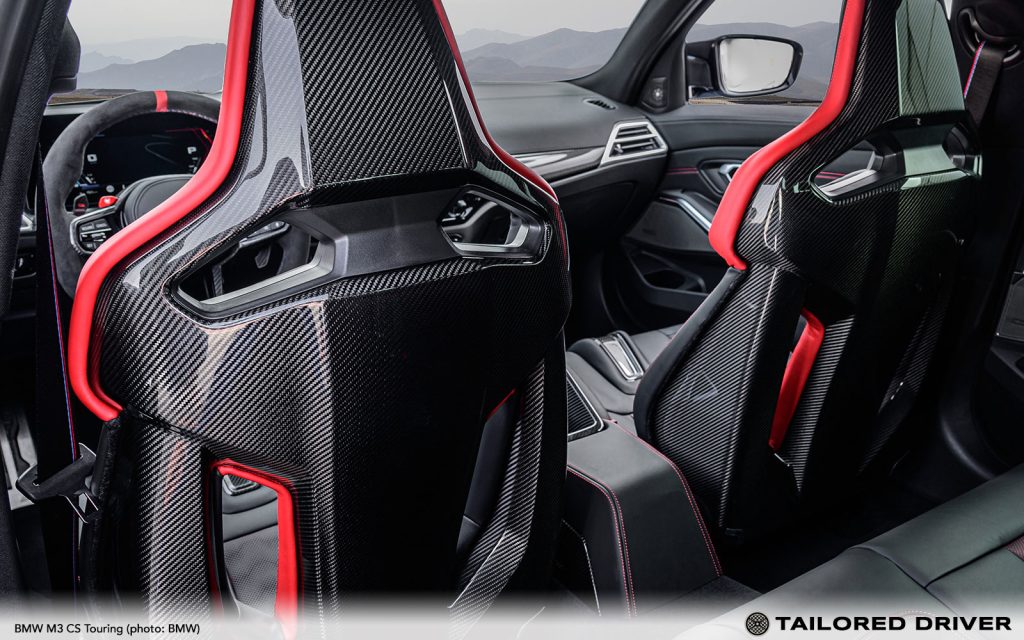
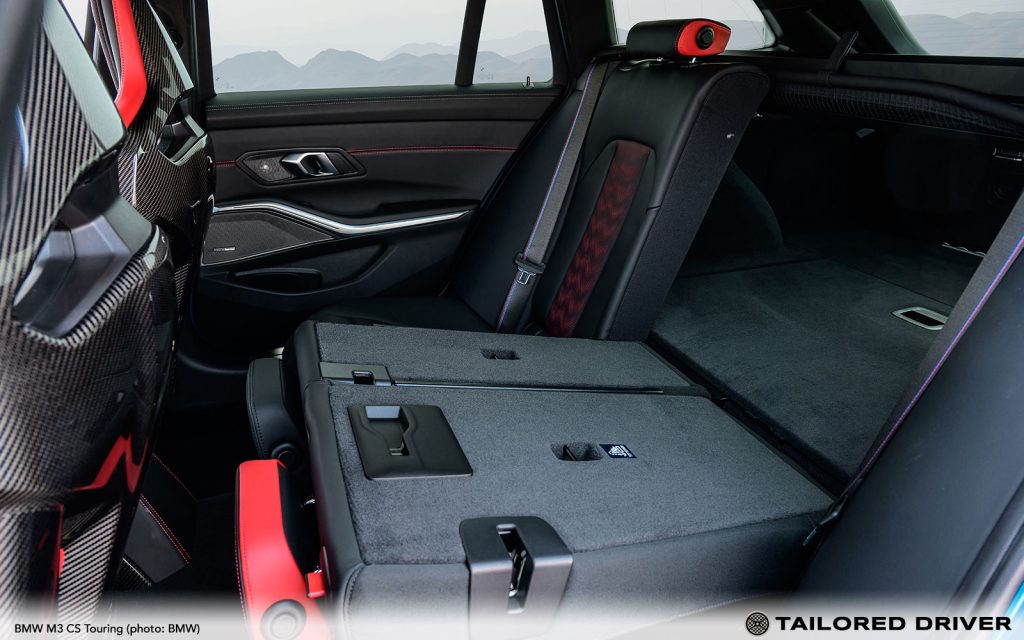
Inside the cabin, the M Carbon bucket seats and likewise CFRP steering wheel shift paddles, interior trim strips and centre console also do their bit to keep weight down. The various lightweight design measures bring about a total weight saving of some 15 kilograms over the BMW M3 Competition Touring with M xDrive. Body rigidity is further increased by specifying the optional M front end strut brace for the engine compartment that has also been engineered for lightness.
Hallmark M performance and the versatility-focused body concept of a Touring model certainly make an unusual combination, and the latest special edition adds a special allure to the mix. In the BMW M3 CS Touring, a concentrated dose of M feeling meets a variable-usage interior whose storage capacity below the high-opening tailgate can be expanded from 500 litres to a maximum 1,510 litres. In addition, the dynamically stretched lines of the Touring model and the M-specific exterior details – crafted precisely to meet the technical demands of cooling air supply and aerodynamic balance – are complemented by exclusive design features whose striking appearance reflects the track-leaning instincts of the BMW M3 CS Touring.
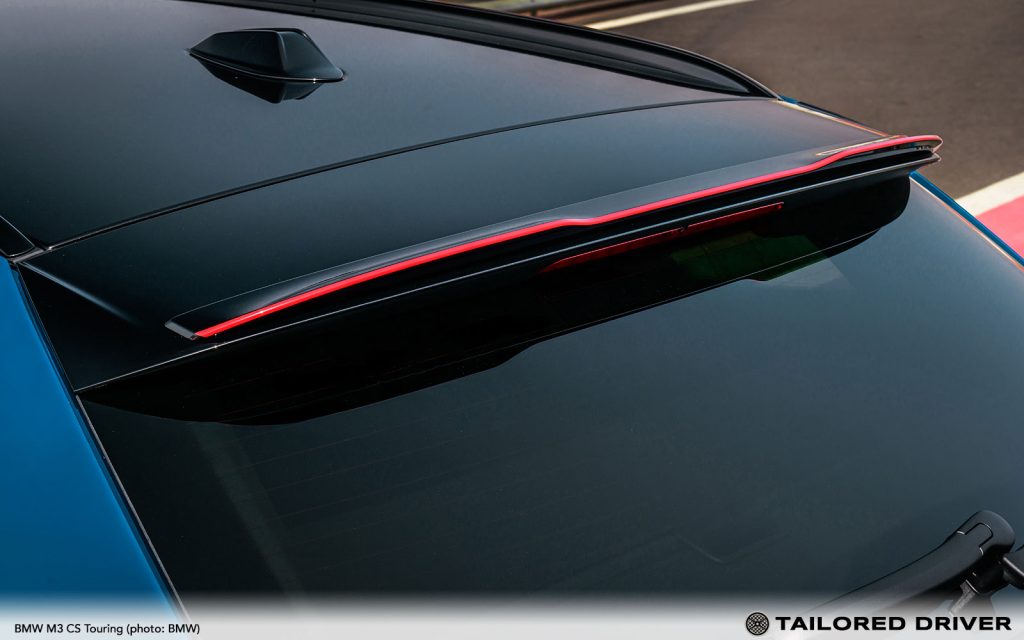
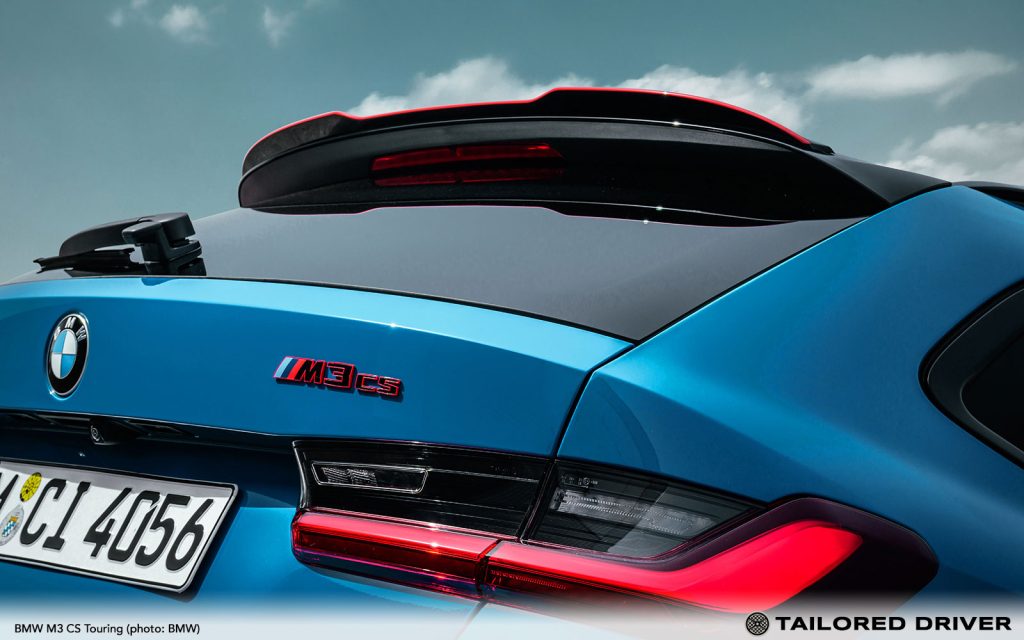
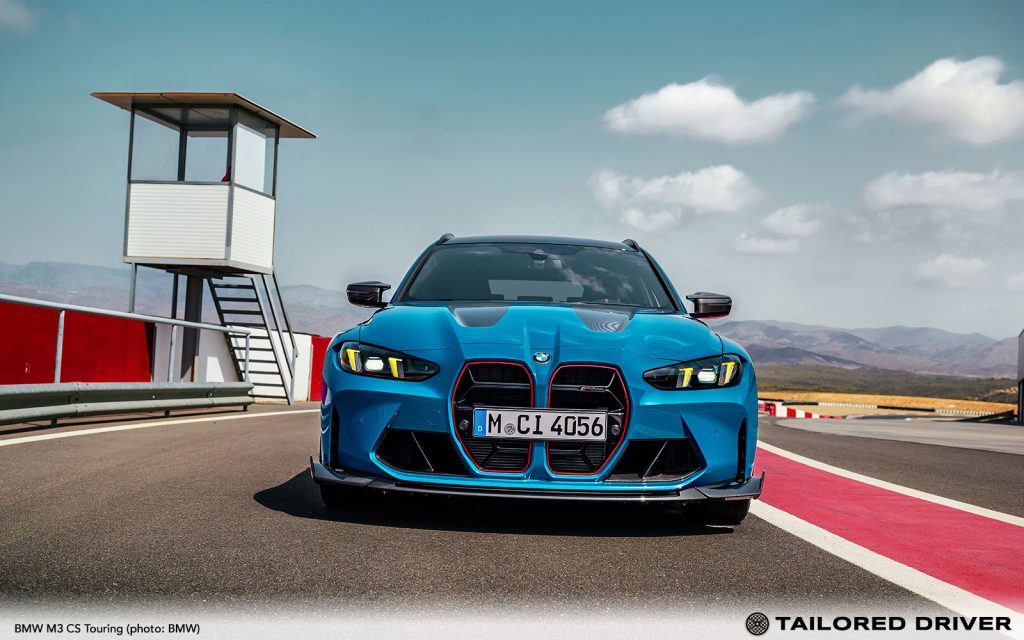
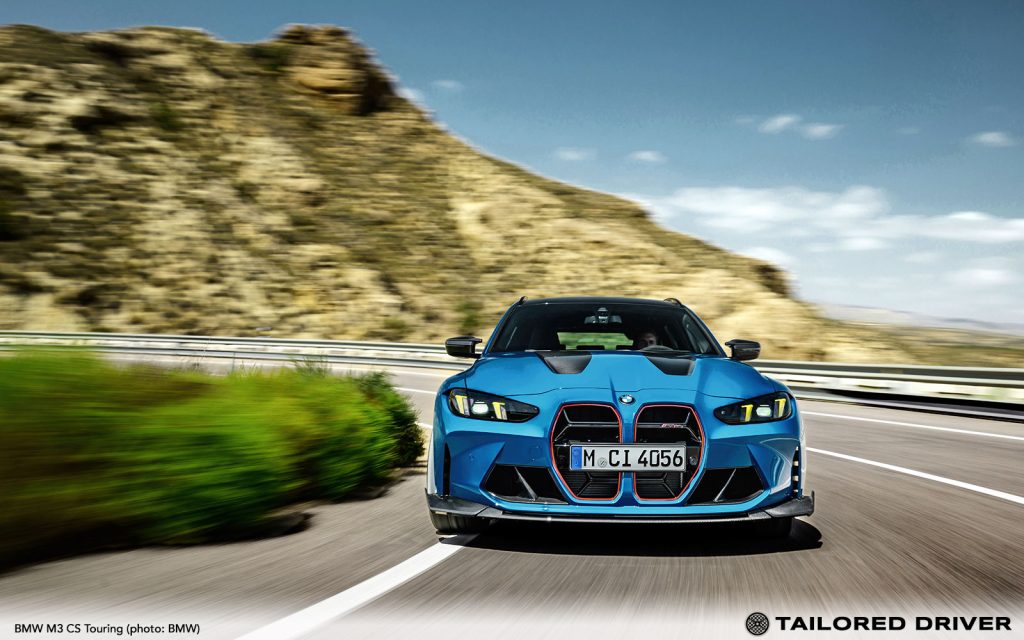
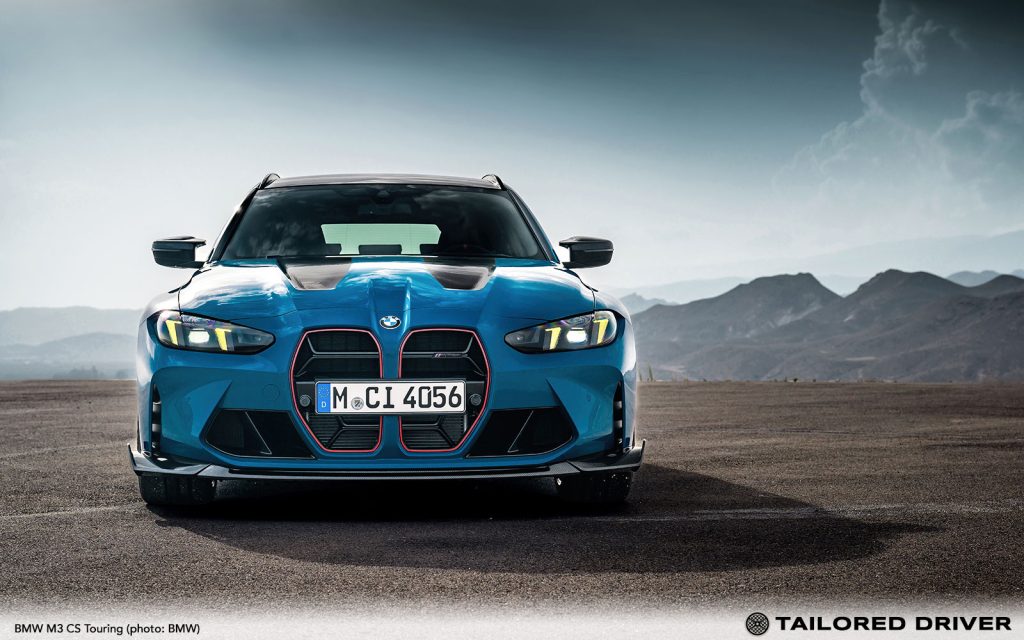
For example, the standard-specification exposed carbon fibre of the special-edition’s bonnet, front splitter, front air intakes and M exterior mirror caps creates an eye-catching contrast against the visually striking exterior colours available for the rest of the car. The BMW M3 CS Touring can be ordered with a paint finish in British Racing Green, Laguna Seca Blue, Frozen Solid White or Sapphire Black metallic. The roof and model-specific roof spoiler are in Black high-gloss and bring an impression of elegance to the bold exterior. Another exclusive design feature of the special-edition model is the red surround for the roof spoiler.
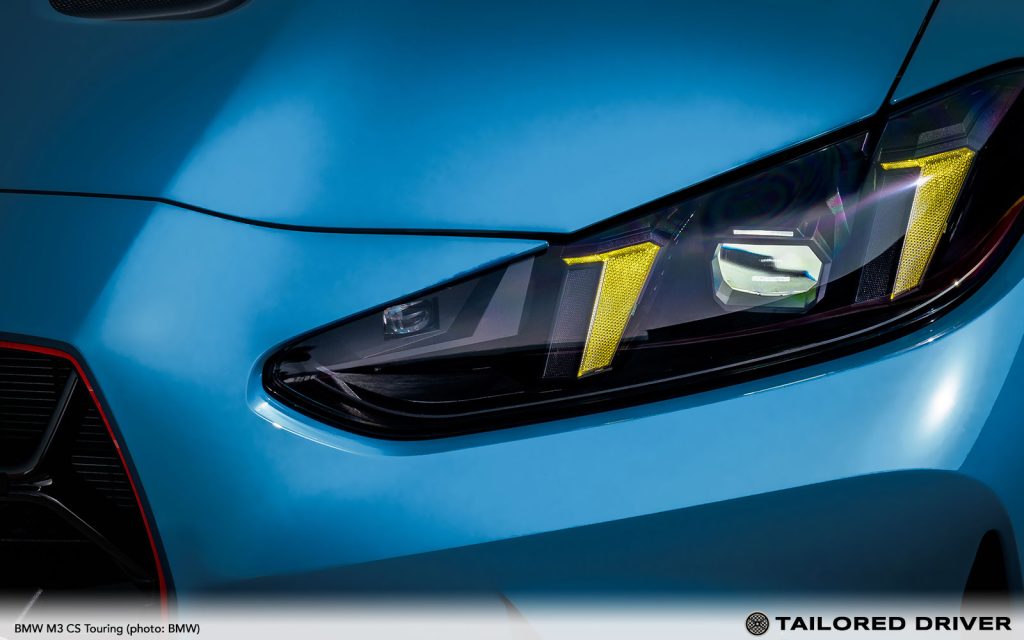
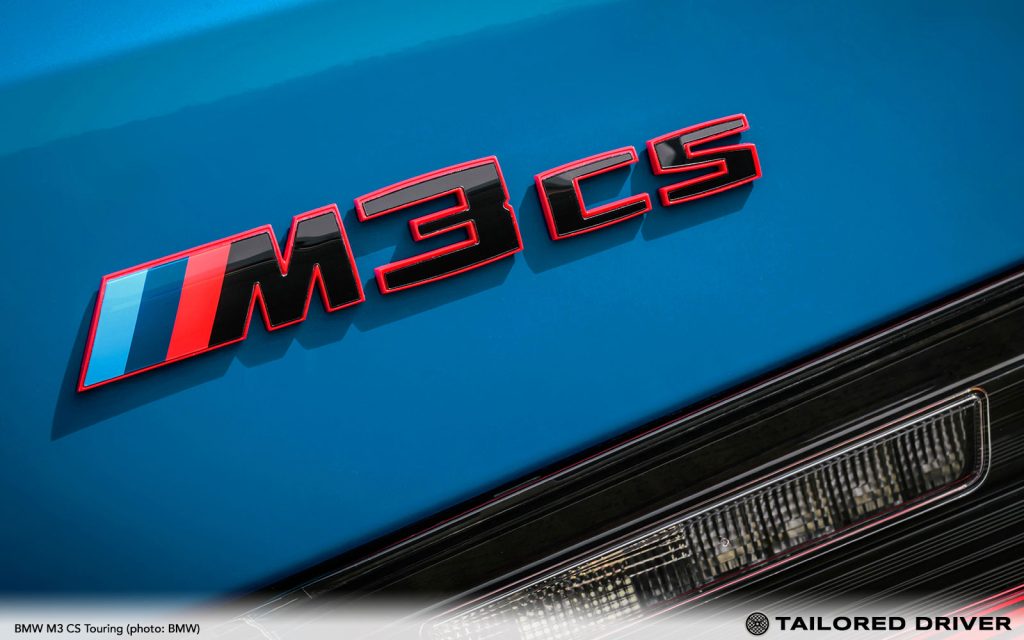
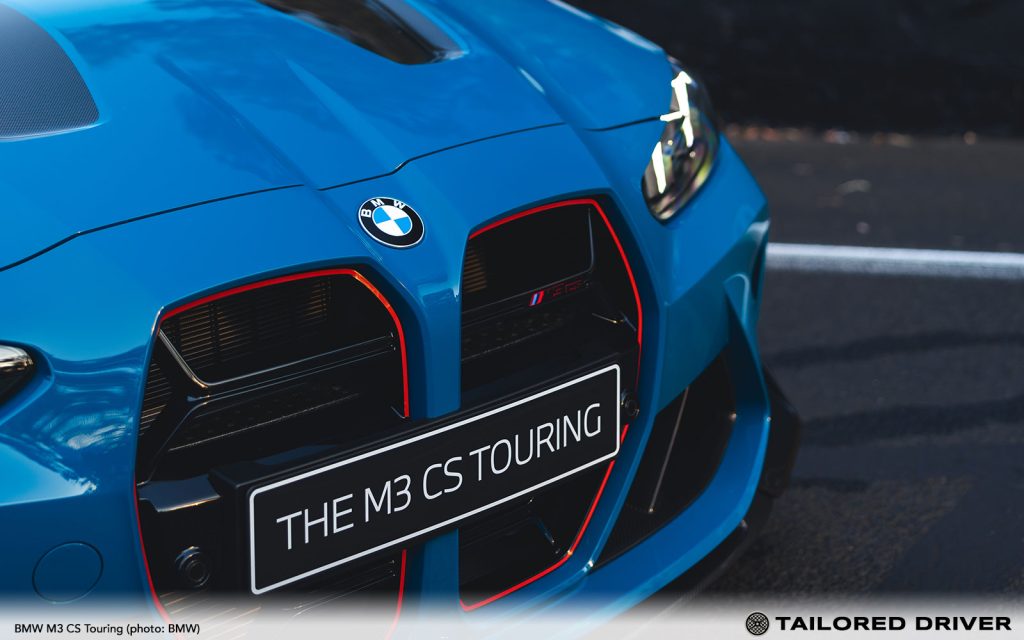
The front end of the car is defined by the weight-minimised, ultra-stripped-back and frameless BMW M kidney grille. The black model lettering on the upper of the two horizontal grille slats is bordered by a red contour line, likewise the model badging at the front and rear. In a clear reference to motor sport, the LED headlights of the BMW M3 CS Touring glow with the same distinctive yellow light as GT racing cars.
Driver-focused cockpit with exclusive racing-car aura.
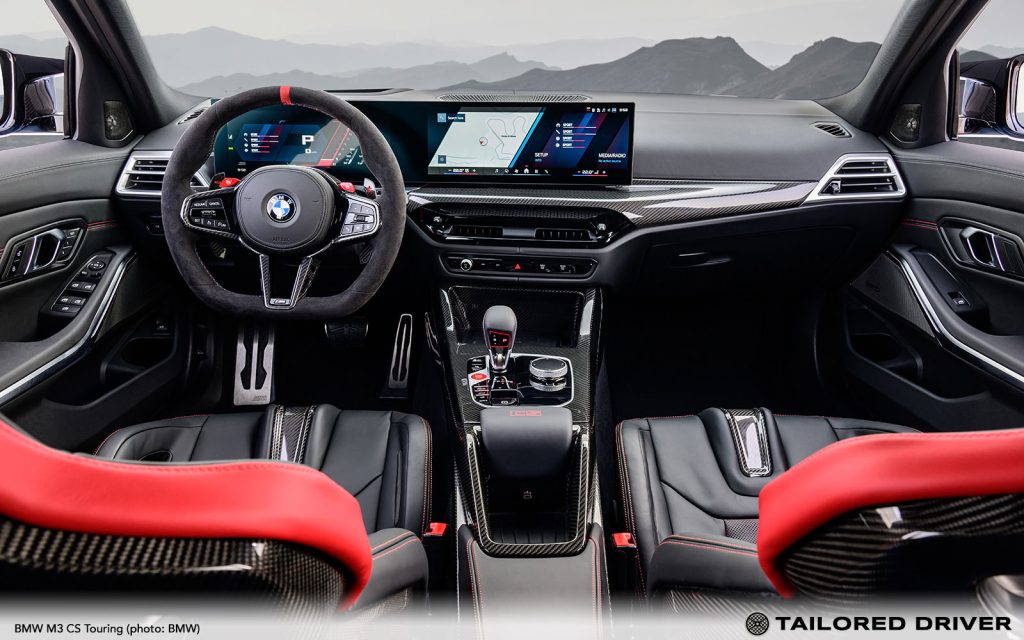
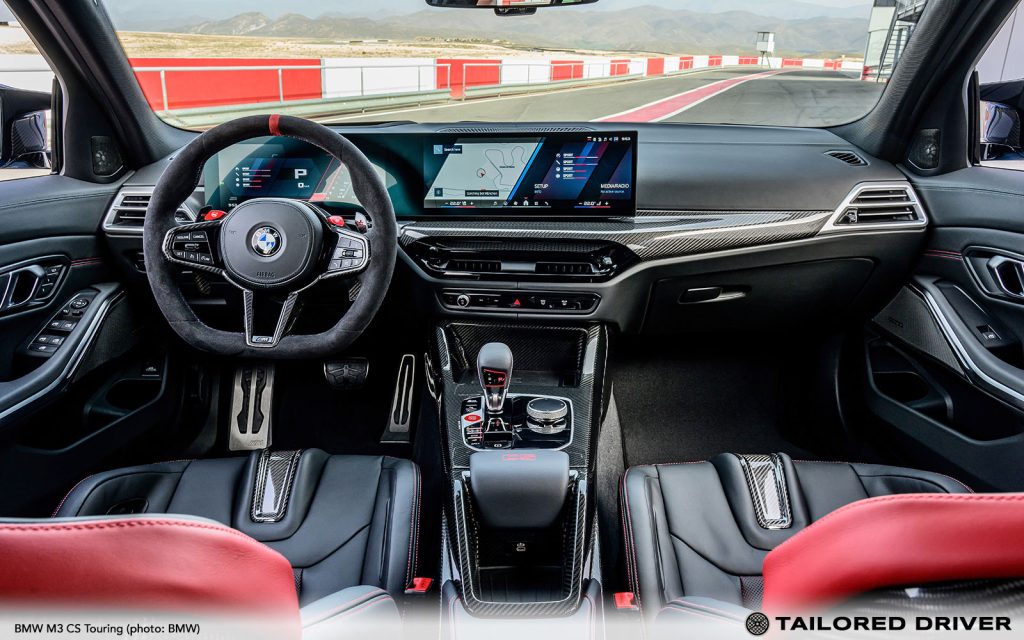
The interior of the BMW M3 CS Touring blends a sports-car cockpit designed to exude maximum performance with digital technology and exclusive design features. Electrically adjustable and heated M Carbon bucket seats are fitted as standard for the driver and front passenger. They have integral head restraints, an illuminated “CS” model badge and surfaces in Merino leather. Their exclusive Black/Red design is also adopted by the rear seats, while all the door panel trim is covered with black leather.
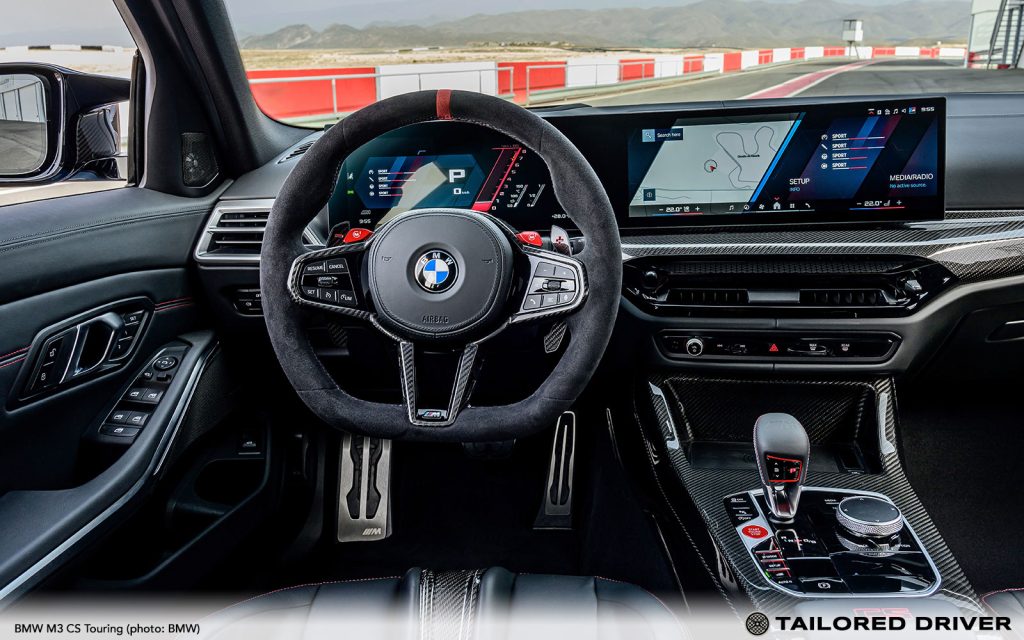
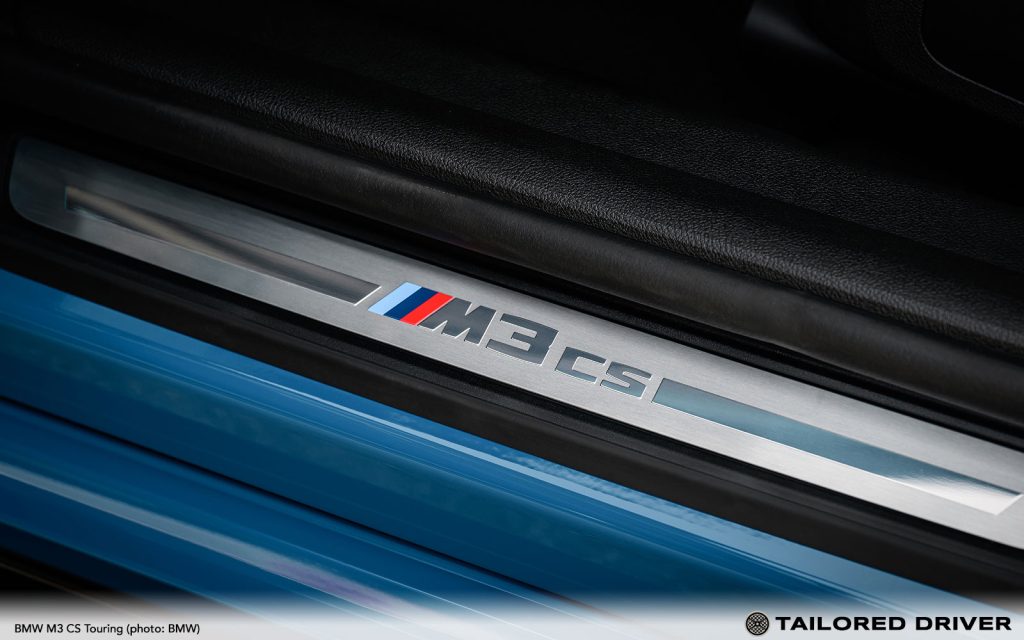
The standard M Alcantara steering wheel in three-spoke design – with its flat-bottomed rim and red centre marker in the 12-o’clock position – brings authentic racing car flair into the cockpit,. Further M-specific details are the red “CS” badge on the centre console, M seat belts and door sill plates with model lettering.
The M-specific Setup button on the centre console enables direct access to the settings for the engine, chassis, steering, brakes and M xDrive. Two individually configurable setup variants can be stored together with personal settings for the engine sound, DSC, Automatic Start/Stop function and the shift characteristics of the eight-speed M Steptronic transmission – and these setups are then selected using the M buttons on the steering wheel. The BMW M3 CS Touring also comes as standard with the M Drive Professional system with track-optimised functions such as the M Drift Analyser and M Laptimer. Added to which, the 10-stage M Traction Control delivers personalised driving fun on the track. Another feature of M Drive Professional is the M Mode button on the centre console, which can be used to configure the driver assistance systems and the content shown on the information display and Head-Up Display. Drivers can choose between ROAD, SPORT and TRACK settings here.
In the new BMW M3 CS Touring, the latest version of the display and control/operation system BMW iDrive based on BMW Operating System 8.5 provides intuitive control of numerous vehicle functions and digital services. With the BMW Intelligent Personal Assistant and BMW Curved Display both on board, the car is based squarely on operation using touch control and natural language. The M-specific view on the 12.3-inch information display shows the familiar M Shift Lights at its upper edge, while the status of the driving stability systems, M xDrive and traction control can be found at the lower edge of the screen. The home screen of the 14.9-inch control display includes widgets for the vehicle setup, tire pressure and temperature.
Sophisticated options for enhancing driving pleasure and comfort in everyday use.
Standard specification for the BMW M3 CS Touring also includes BMW Live Cockpit Professional which, alongside the BMW Head-Up Display with M-specific content, brings the cloud-based navigation system BMW Maps, smartphone integration, telephony with wireless charging and a WiFi interface. The BMW Drive Recorder can be added as an option.
The BMW M3 CS Touring additionally offers customers a selection of comfort-enhancing features and driver assistance systems composed with the focus firmly on the enjoyment of unadulterated driving pleasure. Comfort Access, the alarm system, two-zone automatic climate control and the Harman Kardon Surround Sound System are all fitted as standard. Park Distance Control and the Parking Assistant, Front Collision Warning, Lane Departure Warning and the Speed Limit Info system are likewise standard, while the Driving Assistant system can be specified as an option.
Value with “rollout” subtracted. With this alternative measuring method, time measurement only begins after leaving a light barrier. The distance not taken into account in the measurement (the “rollout”) is 1 foot = 30.48 cm.
All figures relating to performance, fuel consumption, emissions and range are provisional.
All of the stated equipment features, technical data and fuel consumption and emissions figures relate to the offering in the German market. Dimensions and measurements refer to vehicles with basic configuration in Germany. These may vary depending on the wheel/tyre size and items of optional equipment selected.
Official figures on fuel consumption and CO2 emissions were determined based on the prescribed WLTP measurement procedure and are in accordance with Pkw-EnVKV. For more information, go to www.bmw.de
CO2 EMISSIONS & CONSUMPTION.
WLTP combined: Energy consumption 10.5 l/100km; CO2 emissions 238 g/km; CO2 class G.
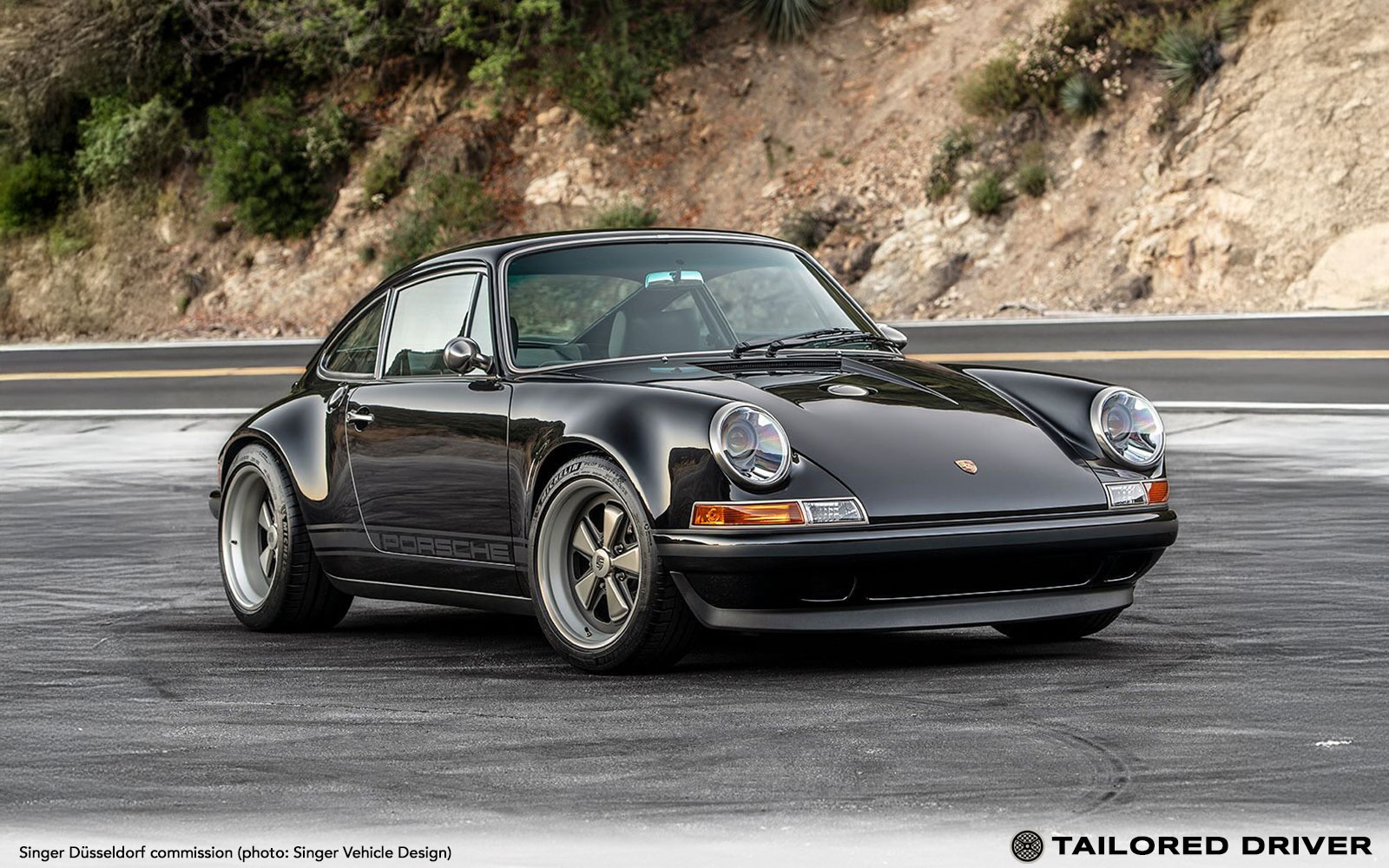
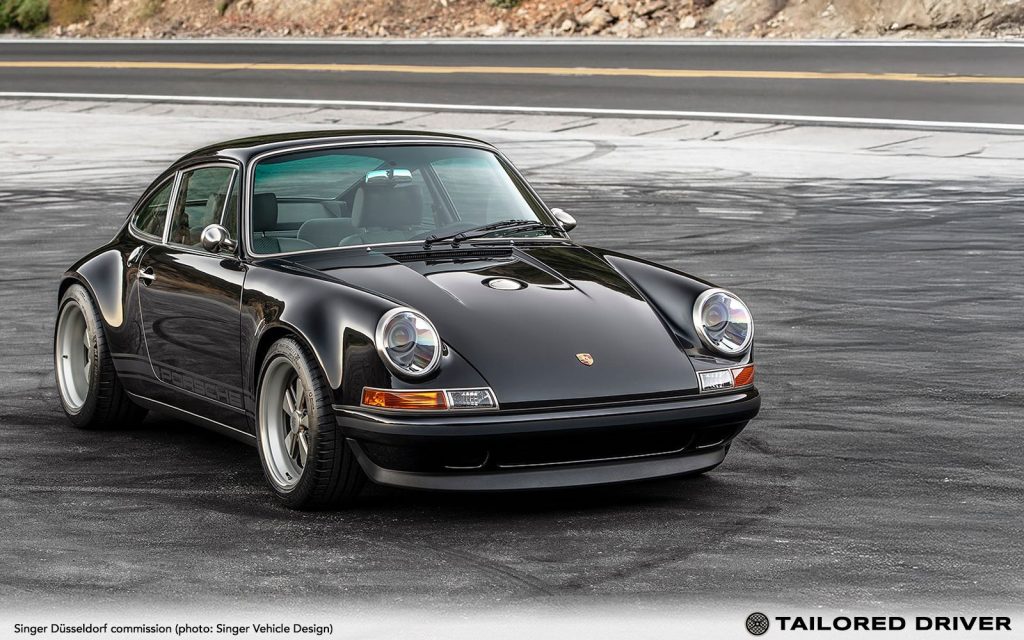
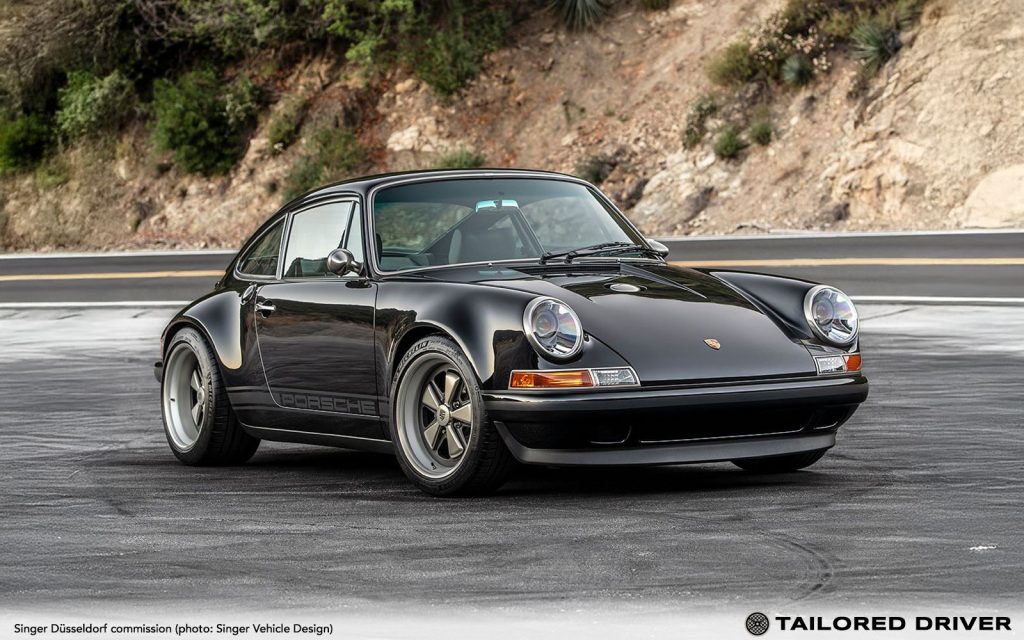
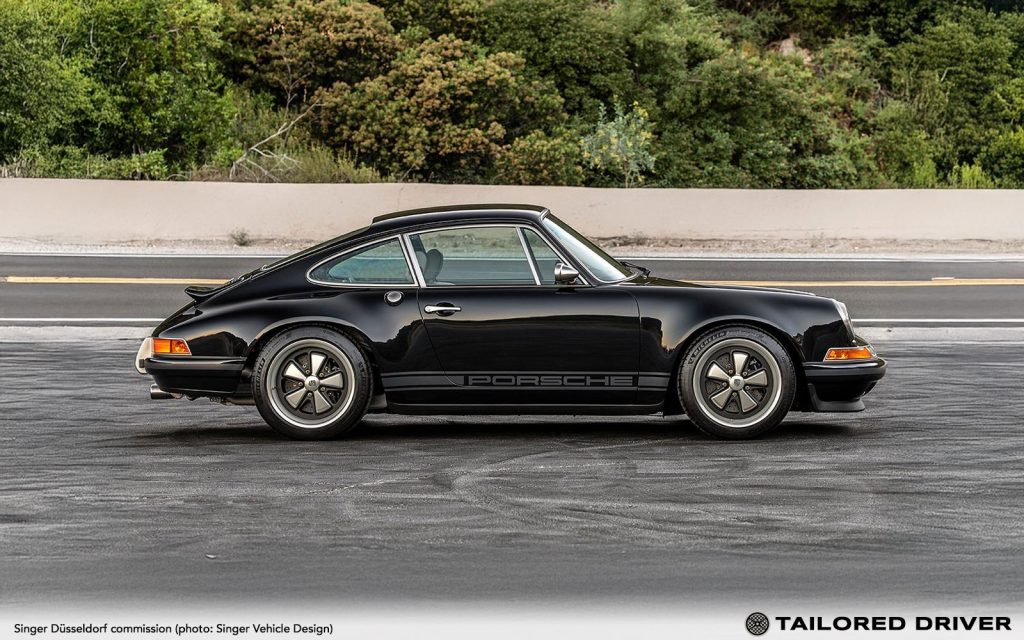
Porsche reimagineer Singer Vehicle Design regularly shares its creations on social media and has lately been highlighting a car known as the Düsseldorf Commission built to their Classic Services specification that is effectively the original Singer formula that is a love letter to the early F-body 911 era.
On the outside, the car has been finished in paint-to-sample Düsseldorf Black, with light ghosted Porsche script stripes, a center-mounted fuel filler with side-mounted oil filler.
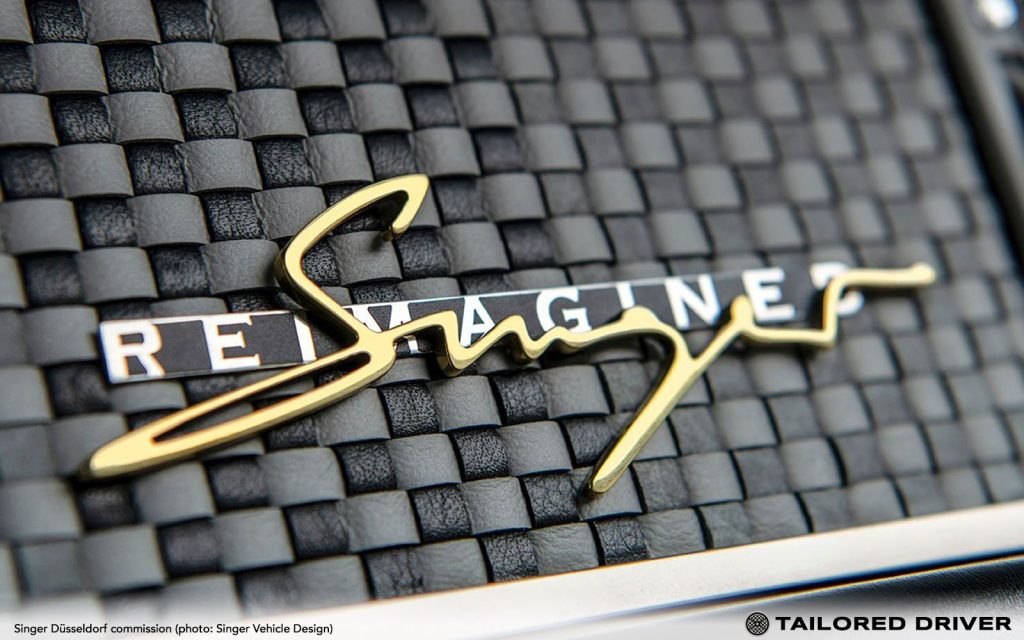
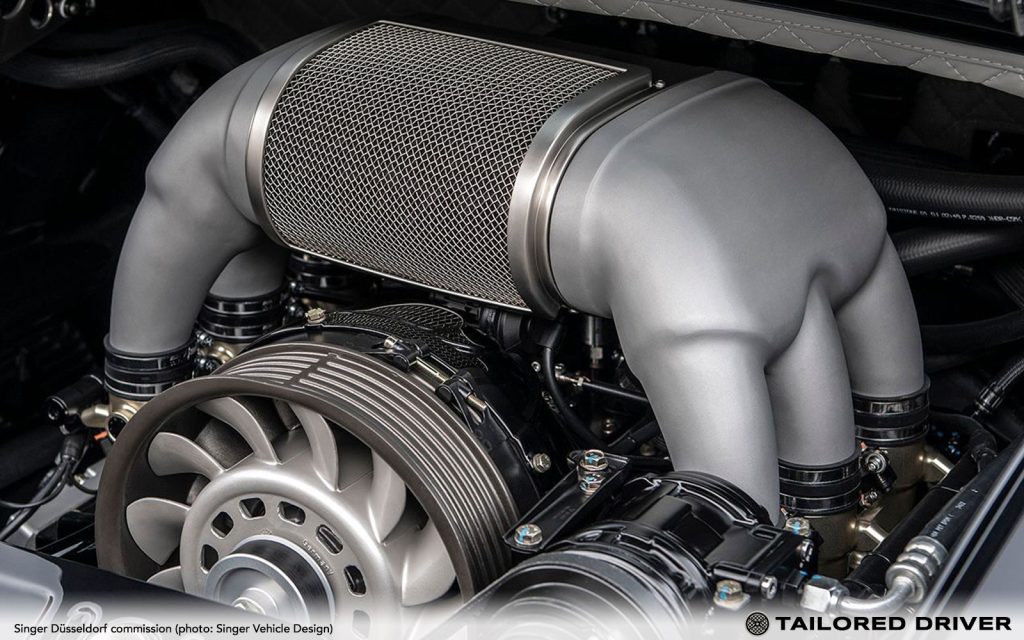
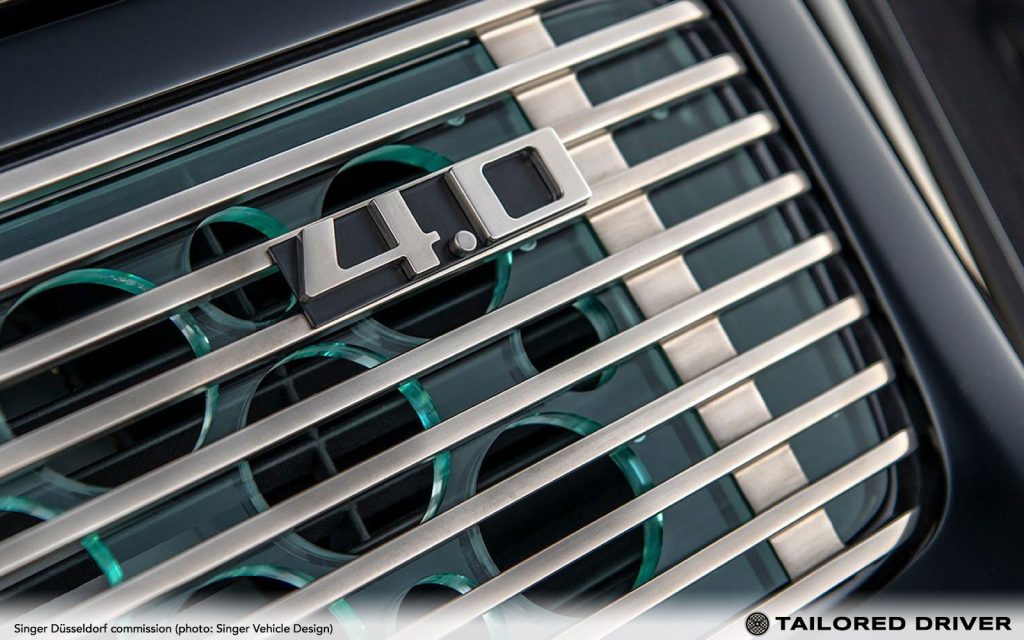
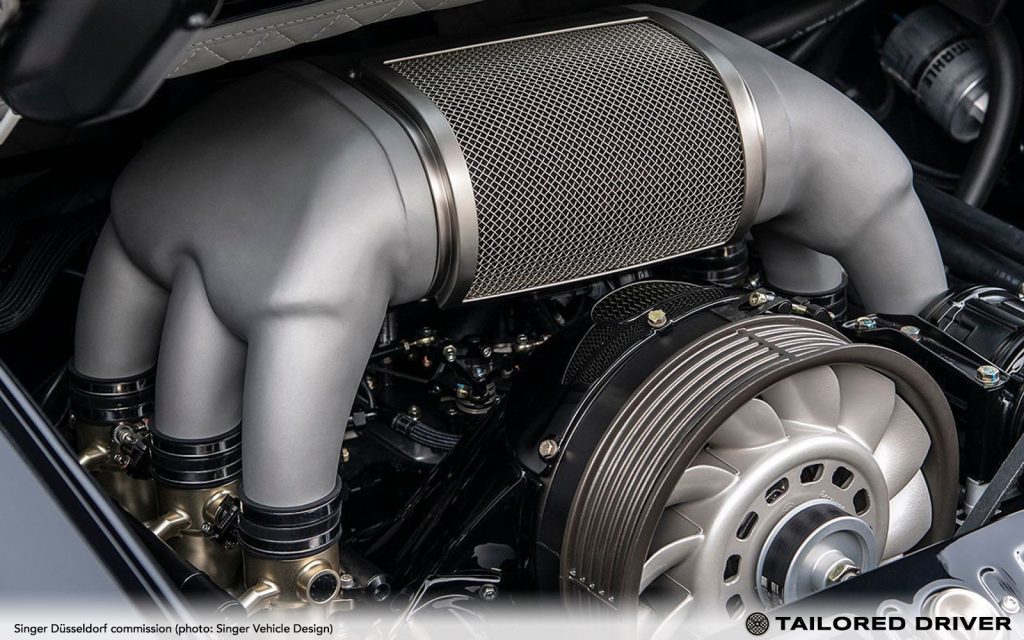
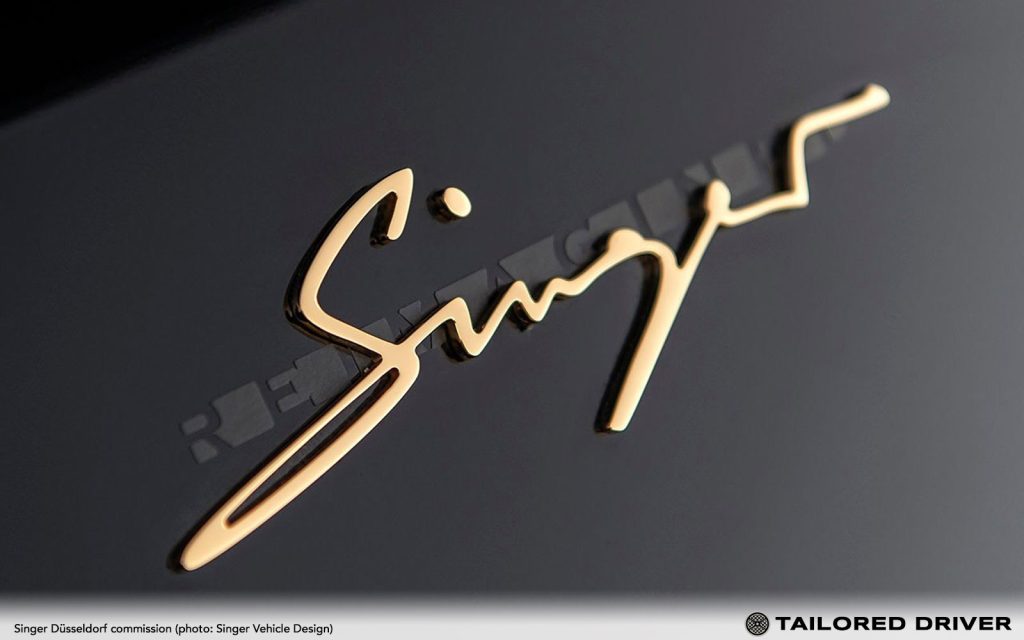
At the heart of Düsseldorf is the expected 4.0-liter air-cooled flat six complete with 24-karat gold badging. It drives power to the rear wheels via a 6-speed manual transmission. For improved stopping power, carbon ceramic brakes were also installed.
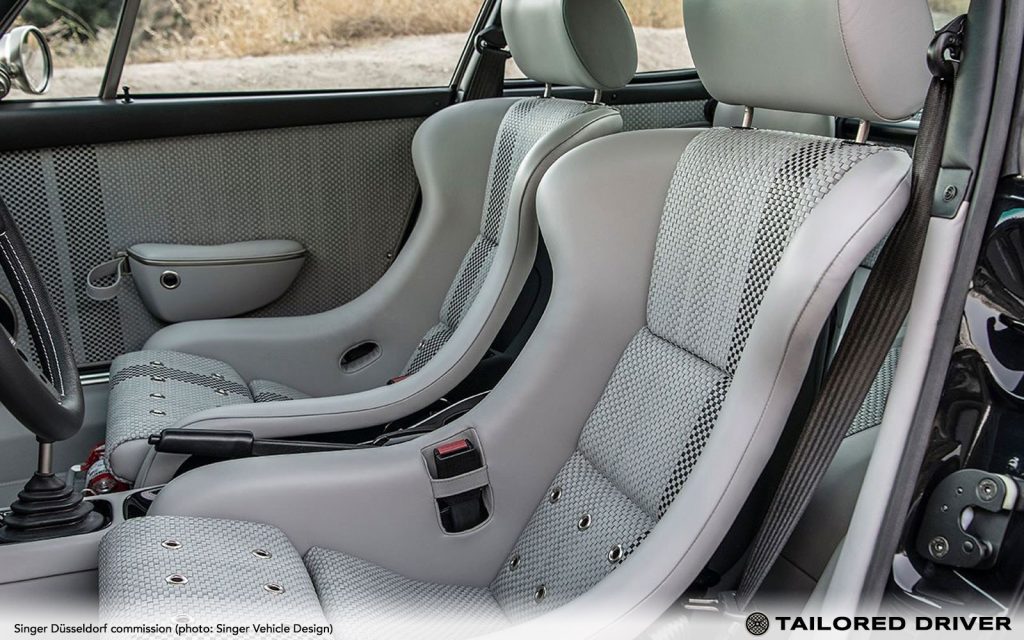
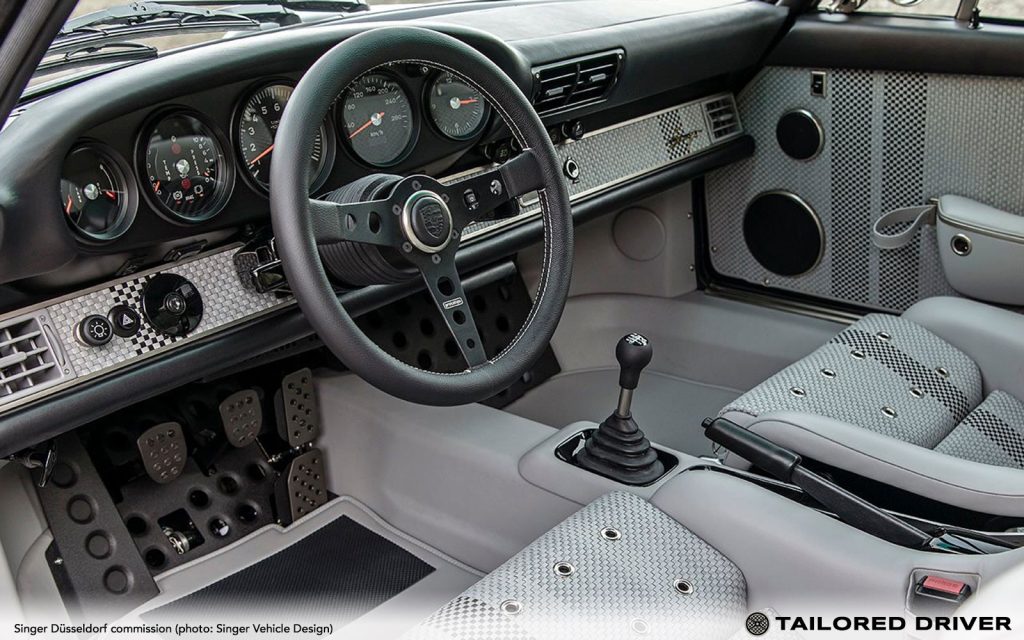
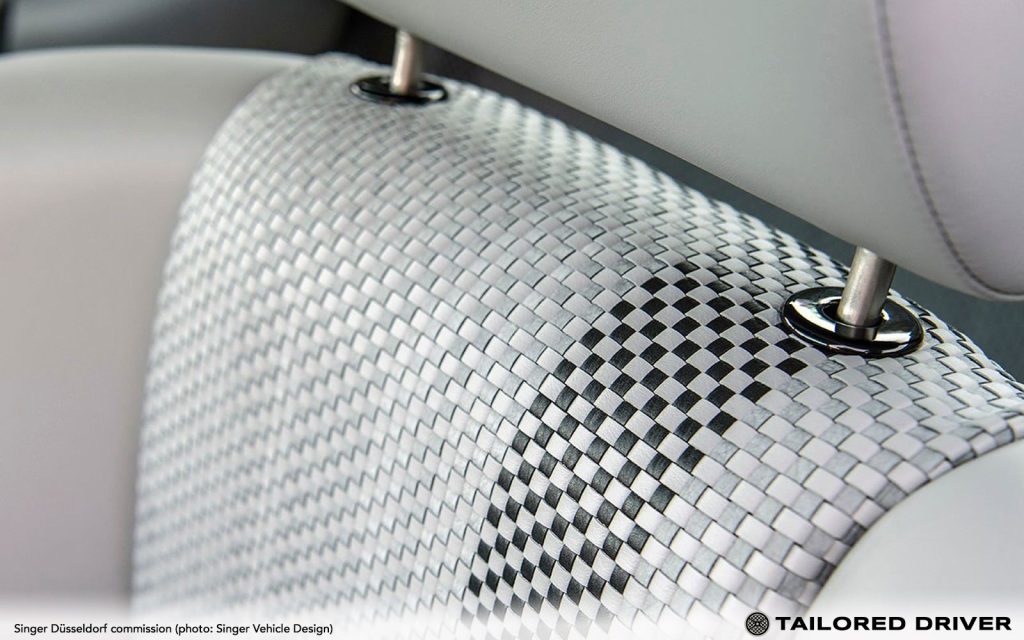
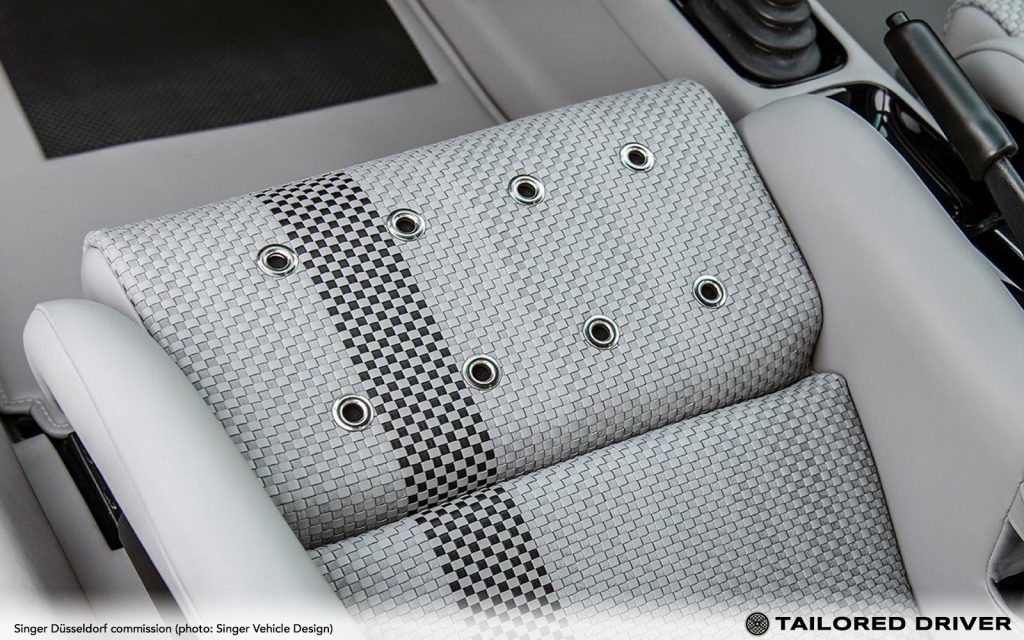
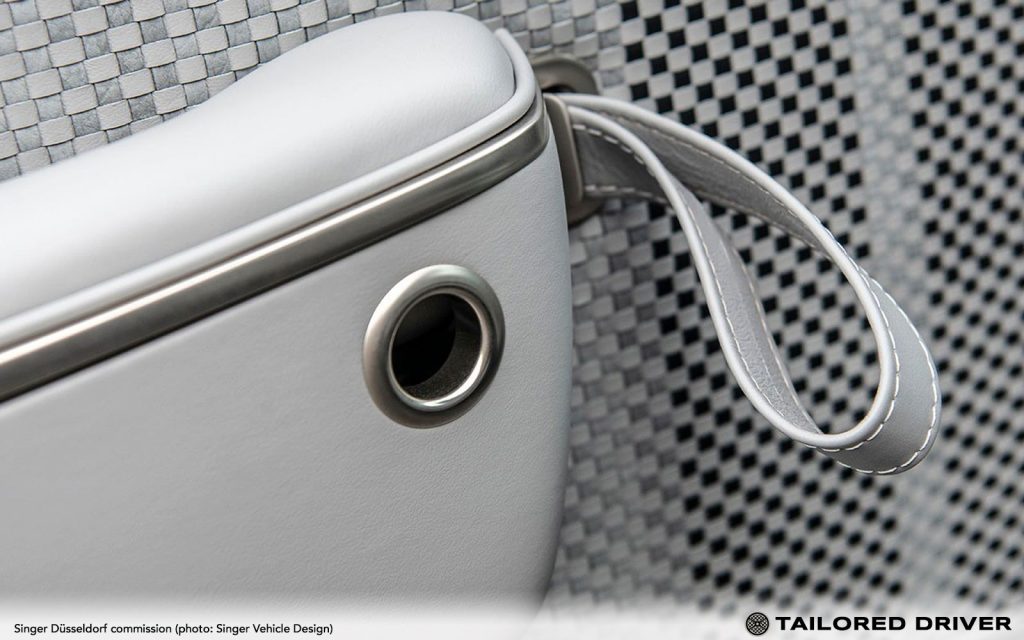
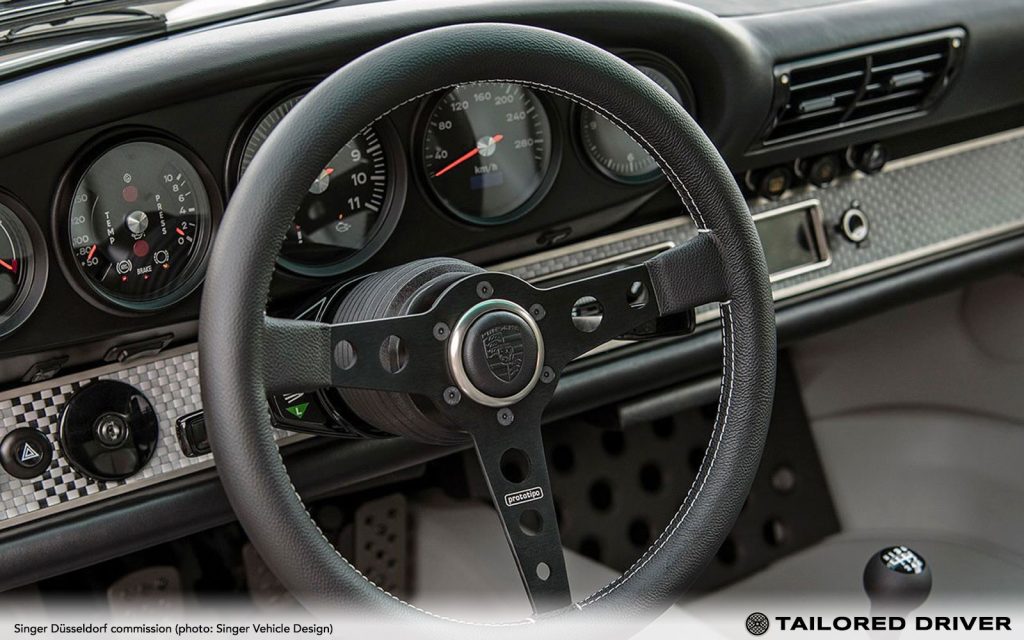
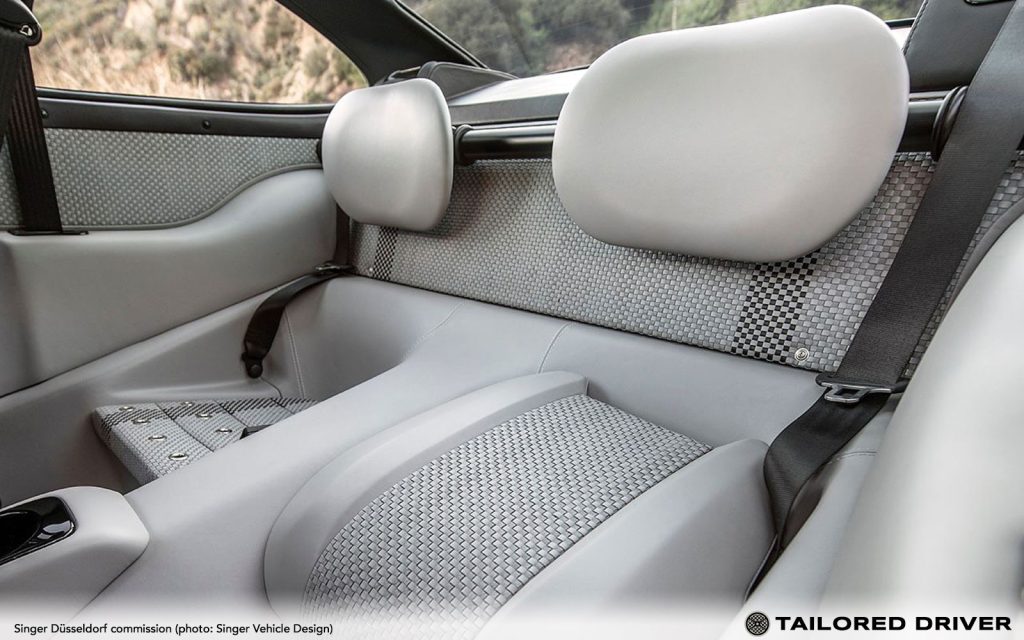
Inside, the car gets lightweight carbon fiber track seats covered in Osprey leather with woven leather seat centers featuring a black stripe and nickel grommets. The woven leather continues on the door cards and dash strip where you’ll also note brass badging. The lower interior section is also trimmed in leather and the rear compartment has been fitted with a racing harness bar.
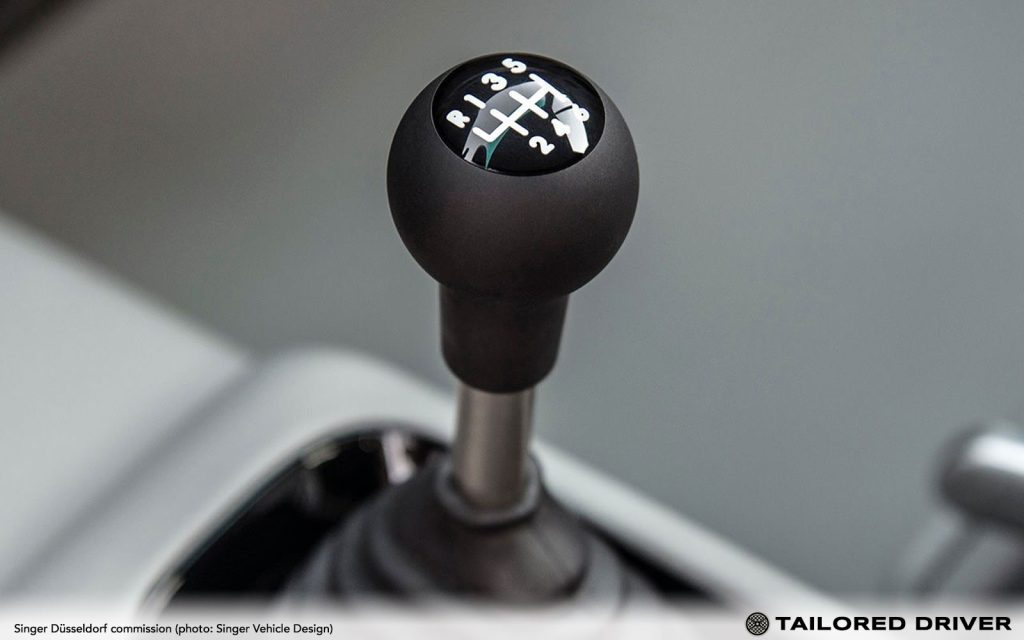
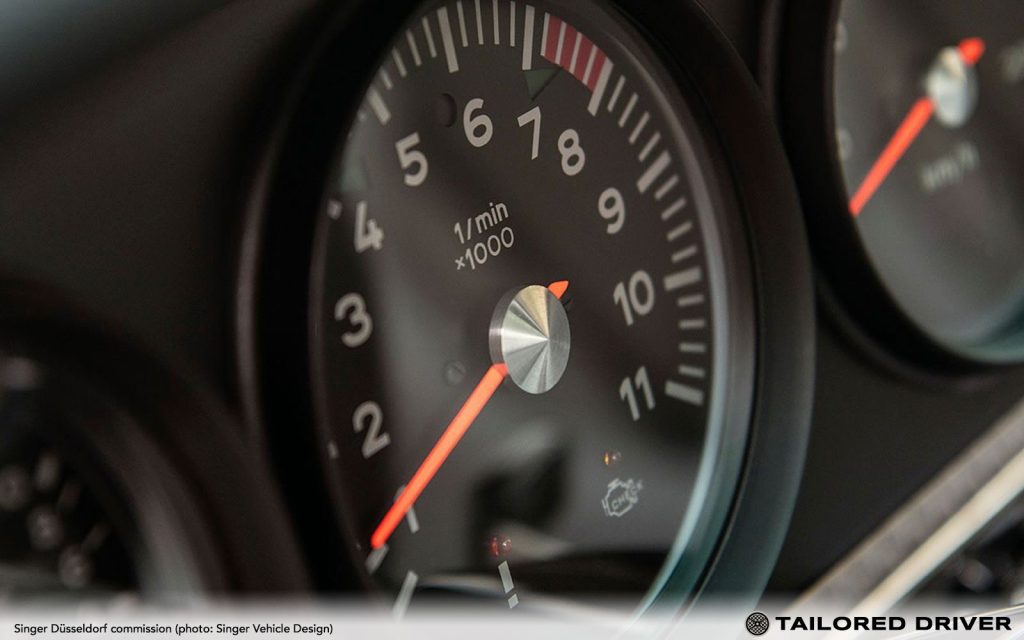
Gauges are finished in black with grey markings. The gear shifter has a unique matte, anodized finish. Apple CarPlay navigation and air-conditioning were also part of the build sheet.
Continuation of the Speed Six, the most successful Bentley race car in history, with two Le Mans wins in 1929 and 1930
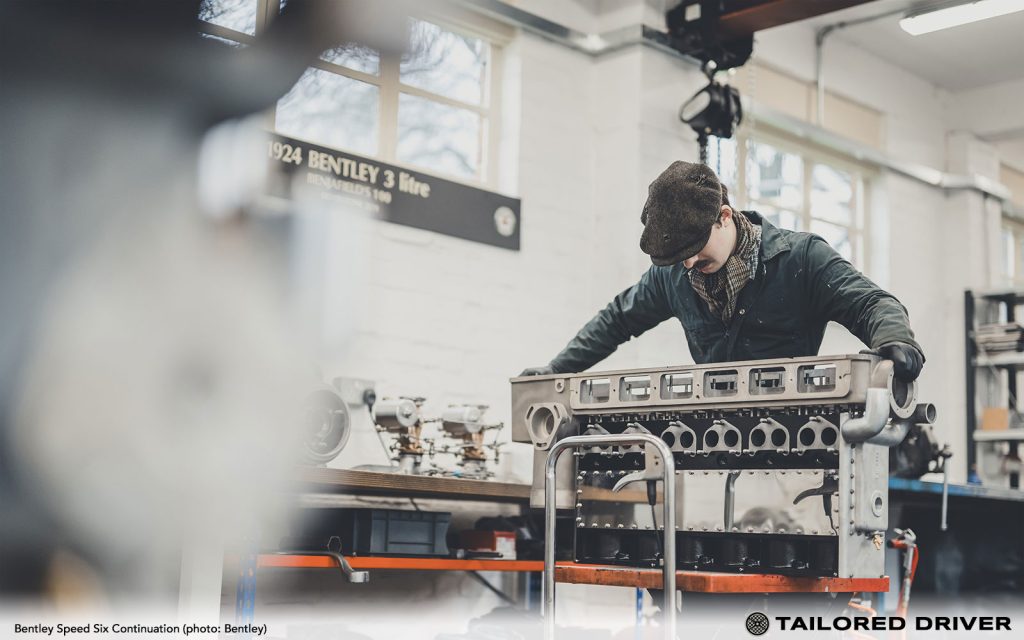
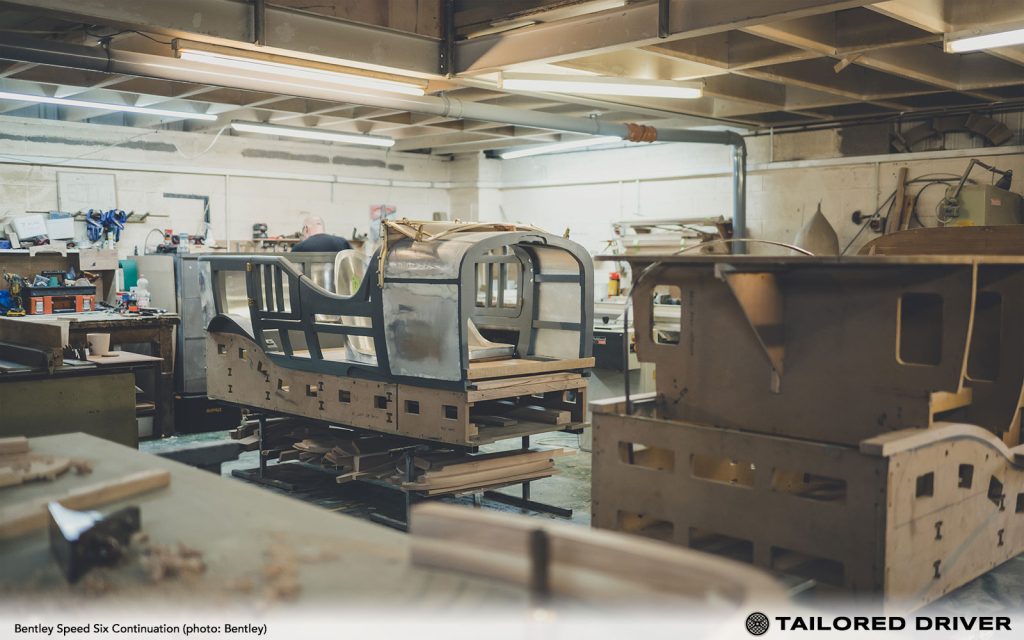
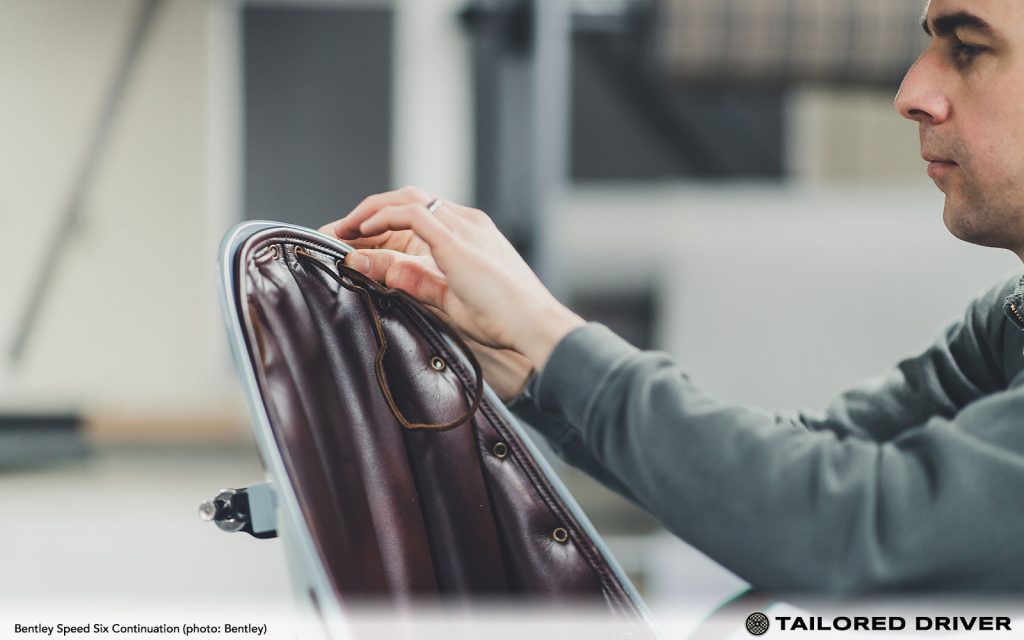
Every car handcrafted from scratch using period-correct tools, fixings and techniques – over a process of 10 months from start to finish
Continental GTC with the all-new 782 PS, 1000 Nm ‘Ultra Performance Hybrid’ powertrain
81 km of electric range, and CO2 emissions of 29 g/km*
[source: Bentley]
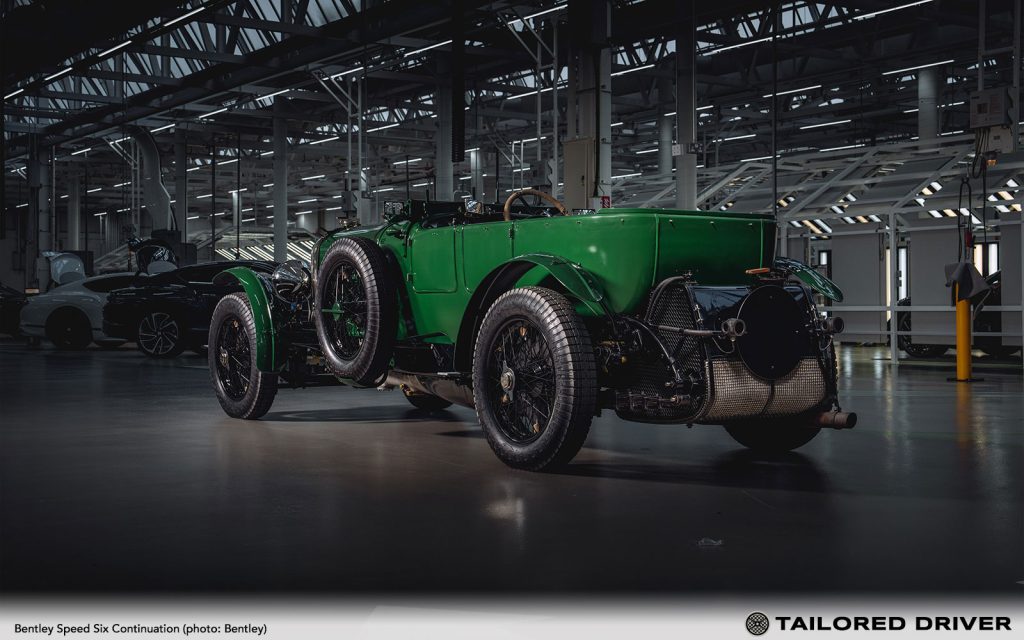
Munich, Germany – Bentley Motors will showcase the Bentley Speed Six Continuation Series following the successful completion of twelve Bentley 4½ Litre Supercharged ‘Blower’ Continuation models, the world’s first pre-war continuation series. The build of each car will take a total of ten months from start to finish.
The Continuation Series Speed Six takes two original Speed Sixes as its template: the company’s own Speed Six, GU409, and ‘Old Number 3’, a works Speed Six driven in the 1930 Le Mans 24 Hour race by Sammy Davis and Clive Dunfee. The latter was generously loaned by its owner and gave the Mulliner team invaluable data on dimensions, materials, and components.
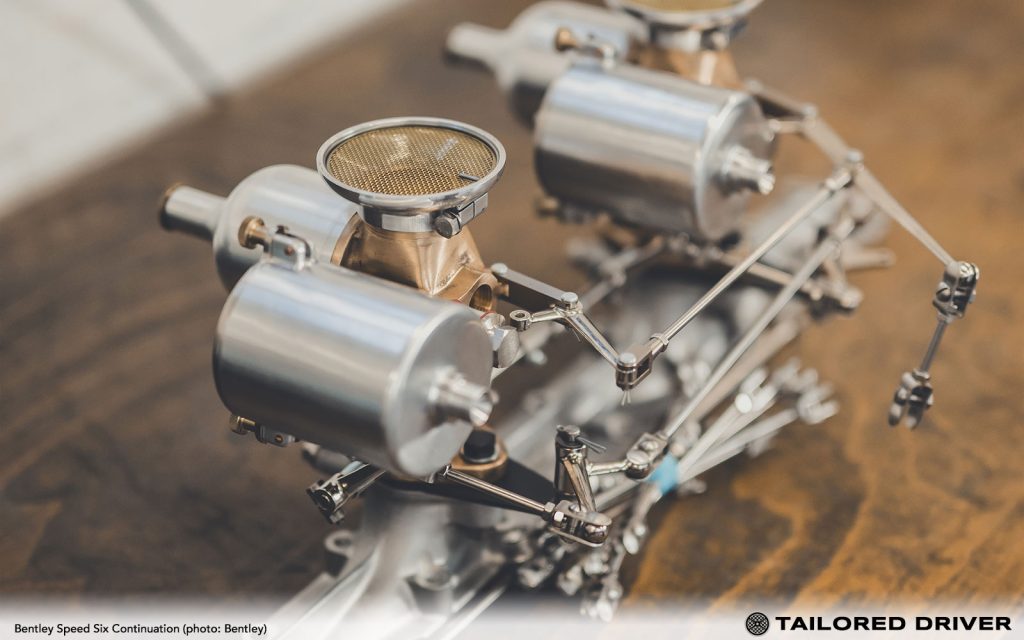
The Speed Six was introduced in 1928 as a more sporting version of the Bentley 6½ Litre. The engine was modified to liberate more power, with twin SU carburettors, a higher compression ratio and a high-performance camshaft. A contemporary road test in The Morning Post concluded, “I consider this car to be one of the most remarkable engineering achievements of the century, the balance of speed, silence and flexibility having been maintained in a unique manner.”
182 Speed Six models were built between 1928 and 1930. Two wins at the Le Mans 24 Hour race, in 1929 and 1930, cemented the Speed Six’s pre-eminent place in Bentley racing history.
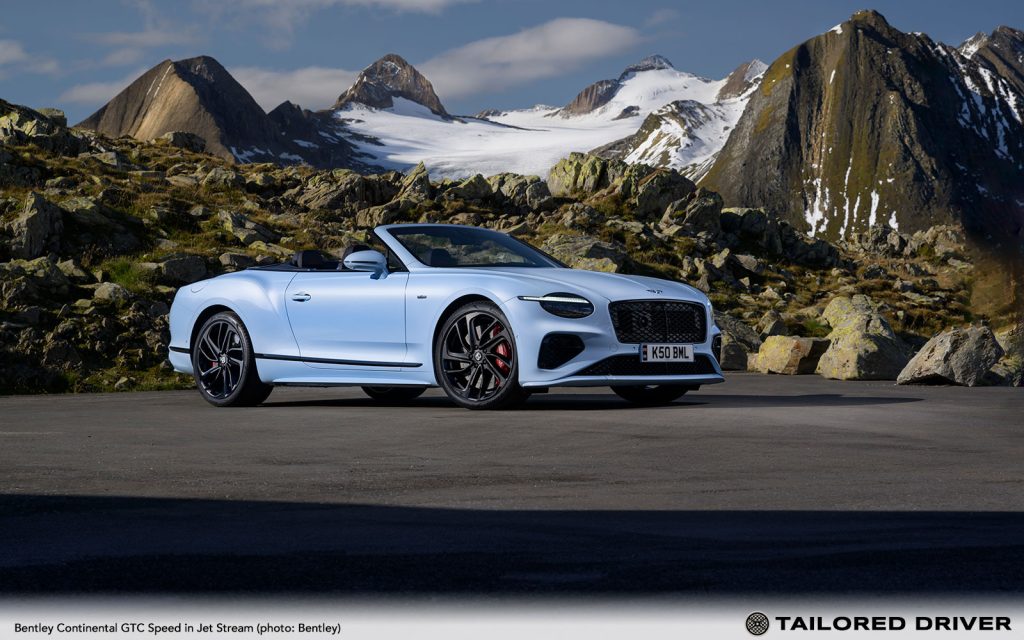
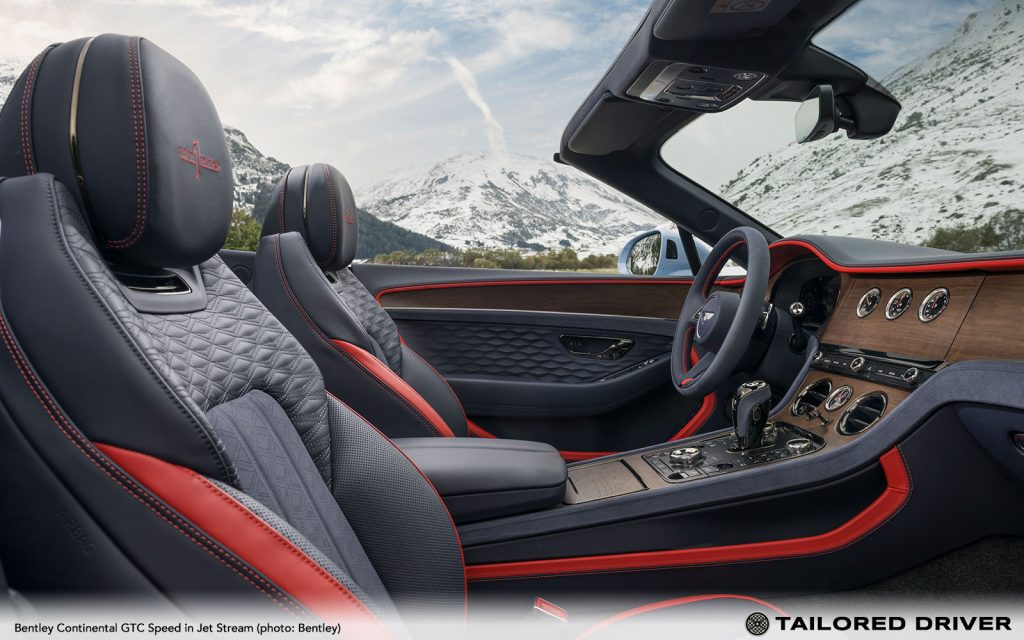
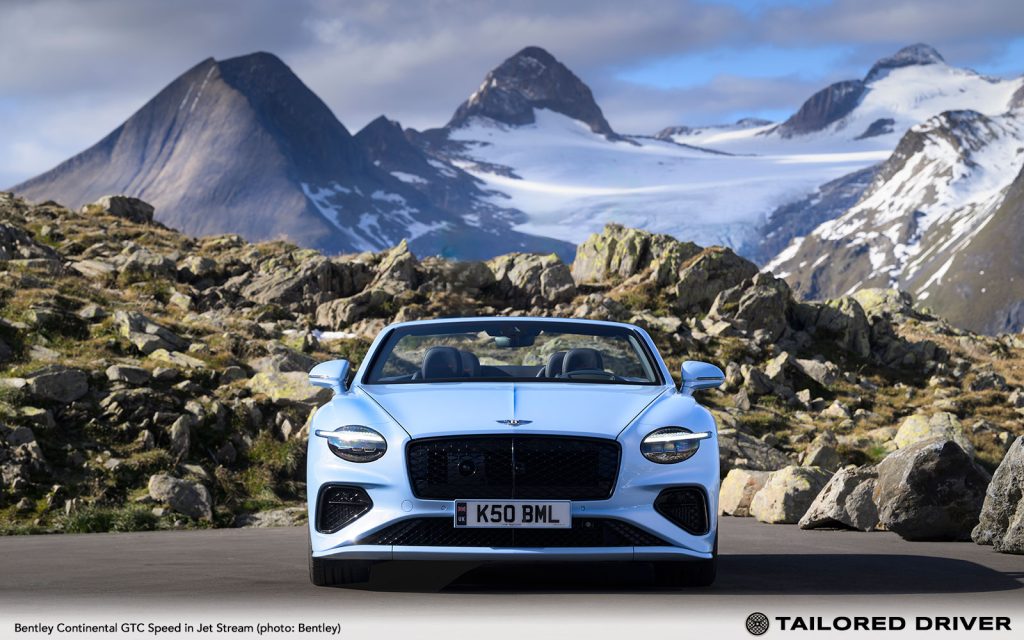
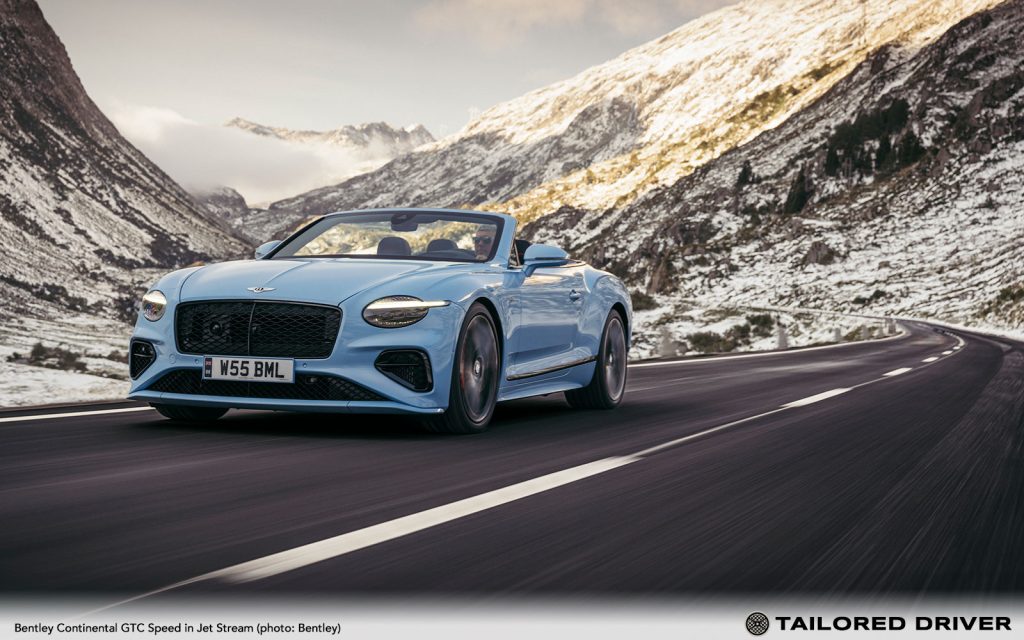
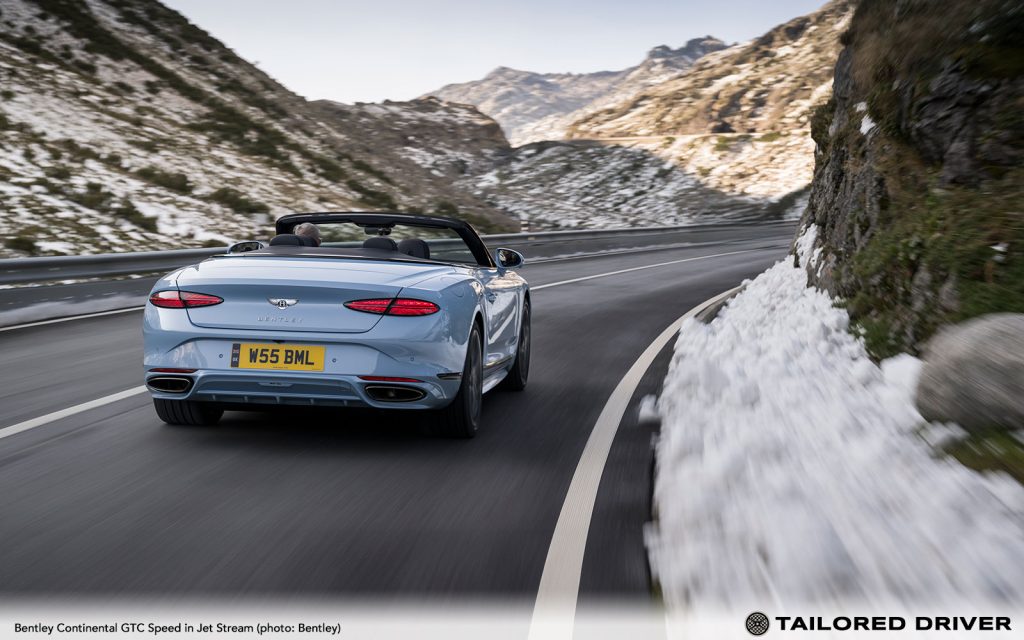
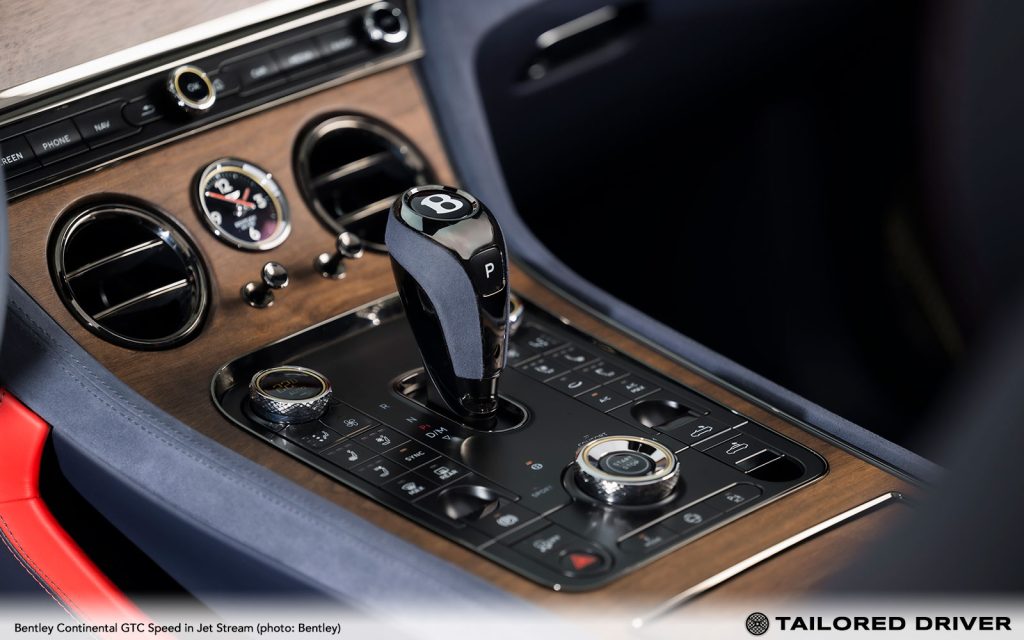
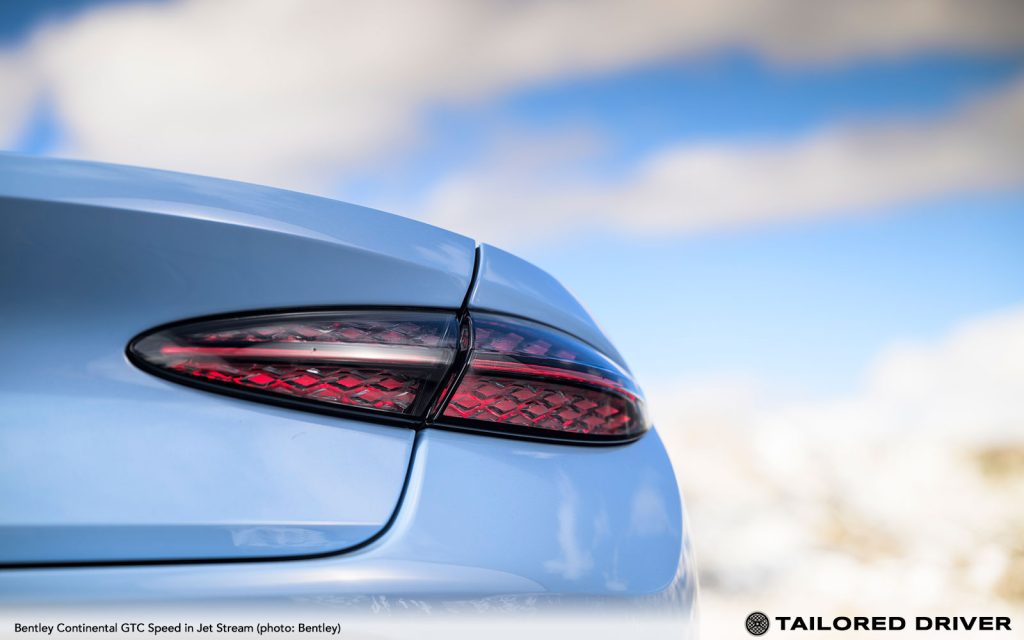
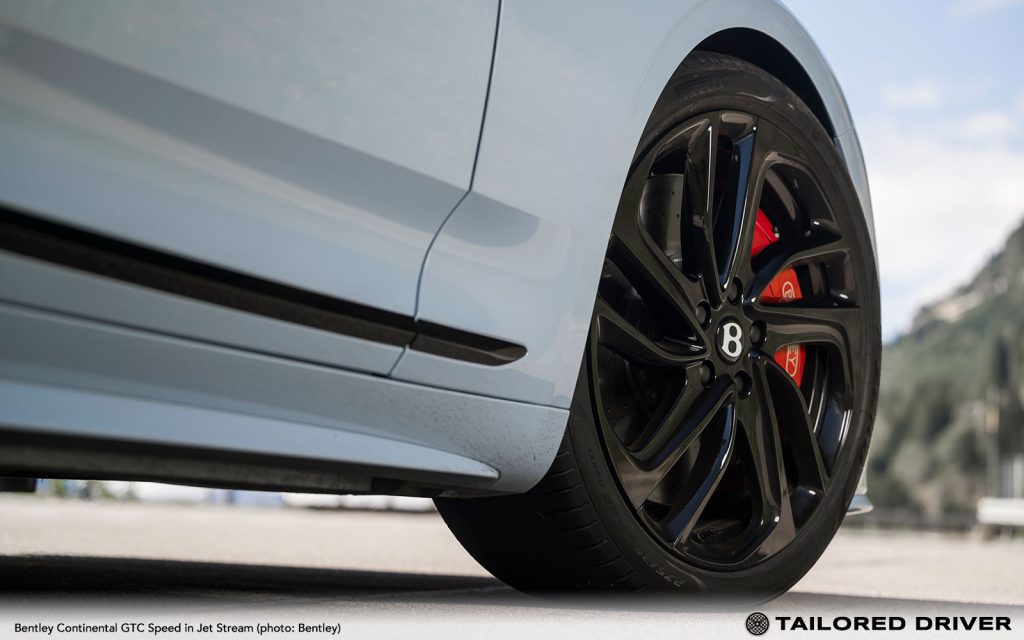
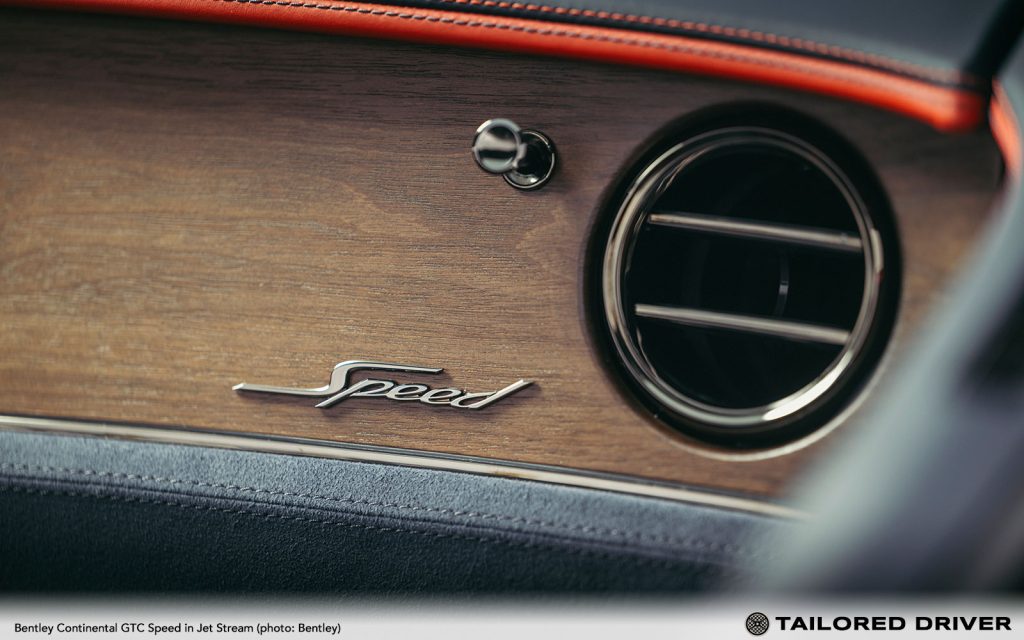
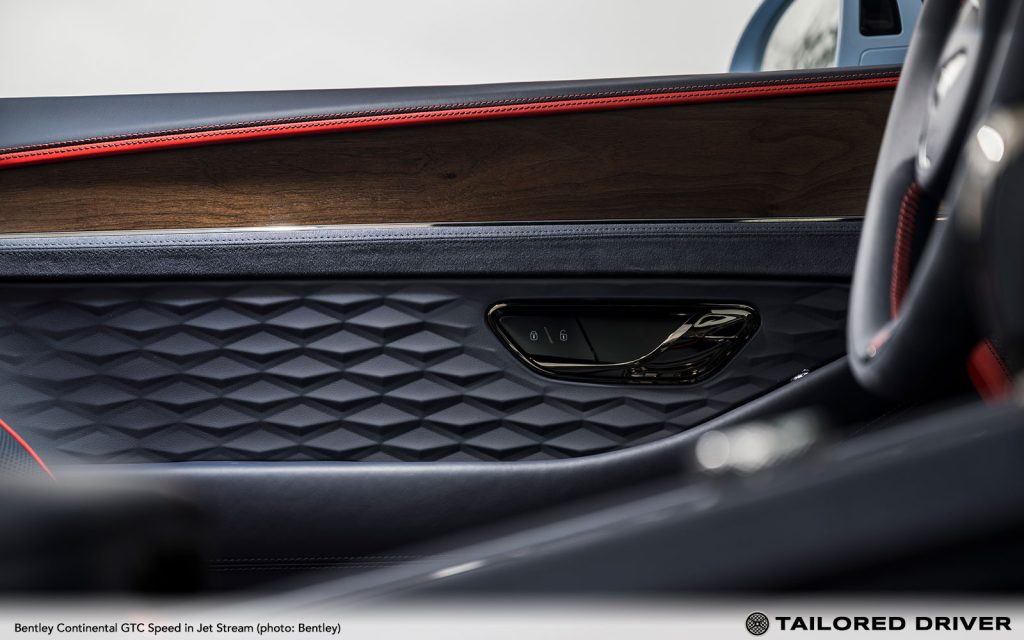
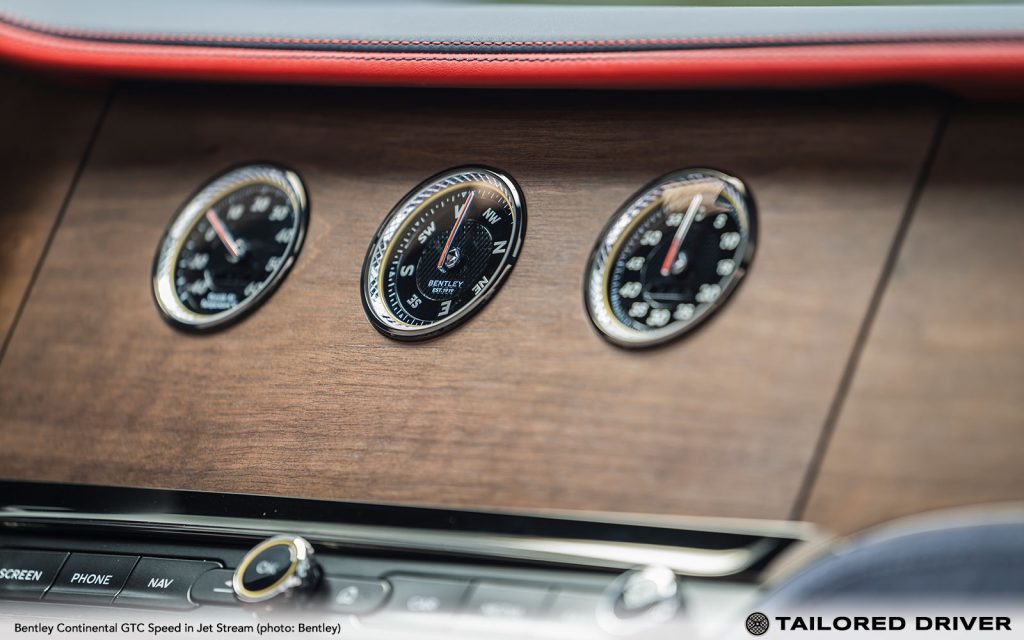
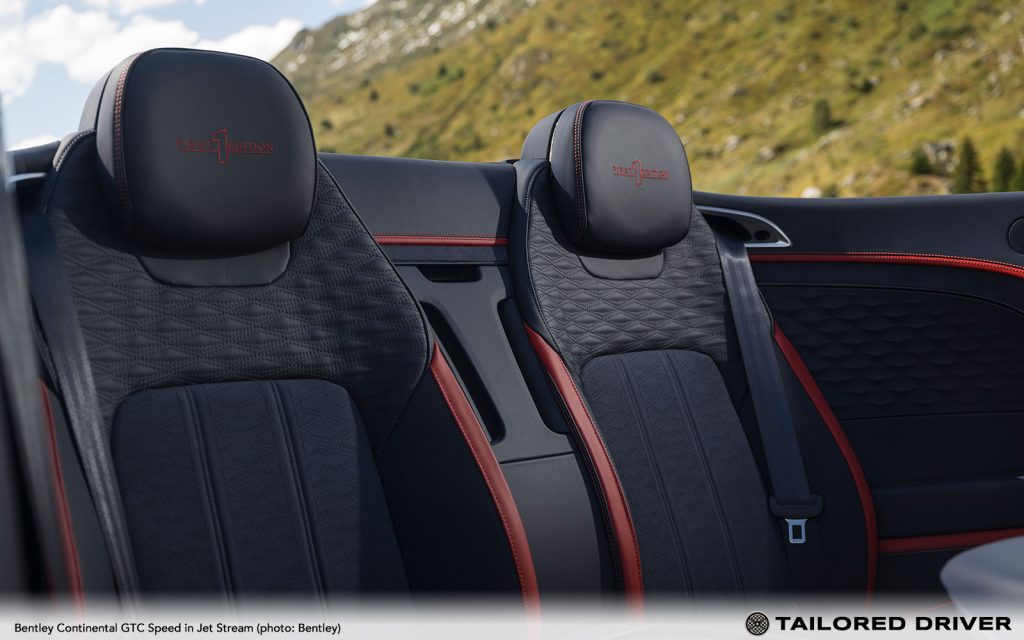
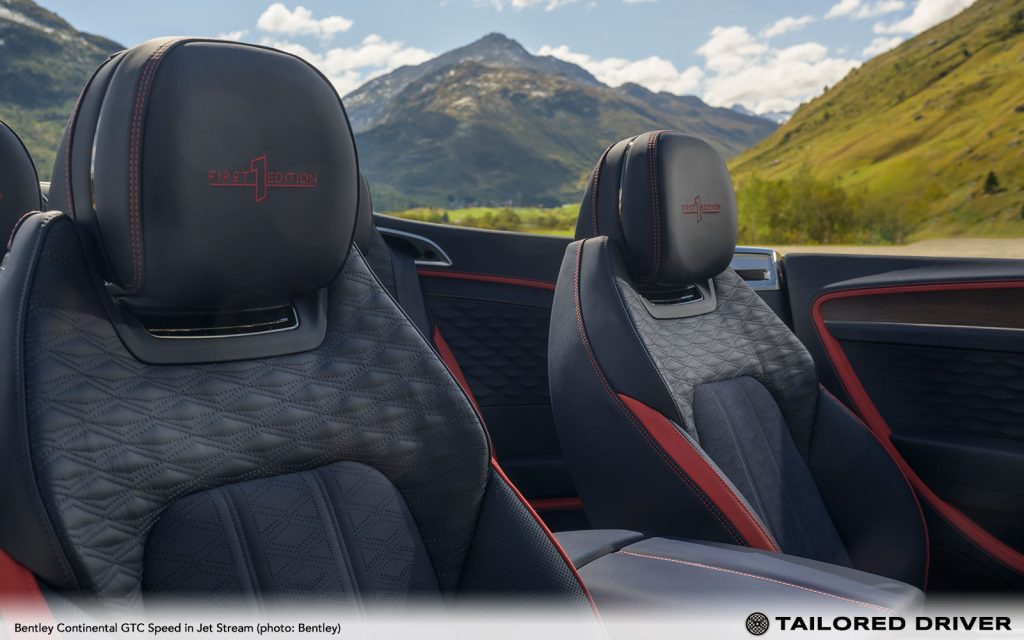
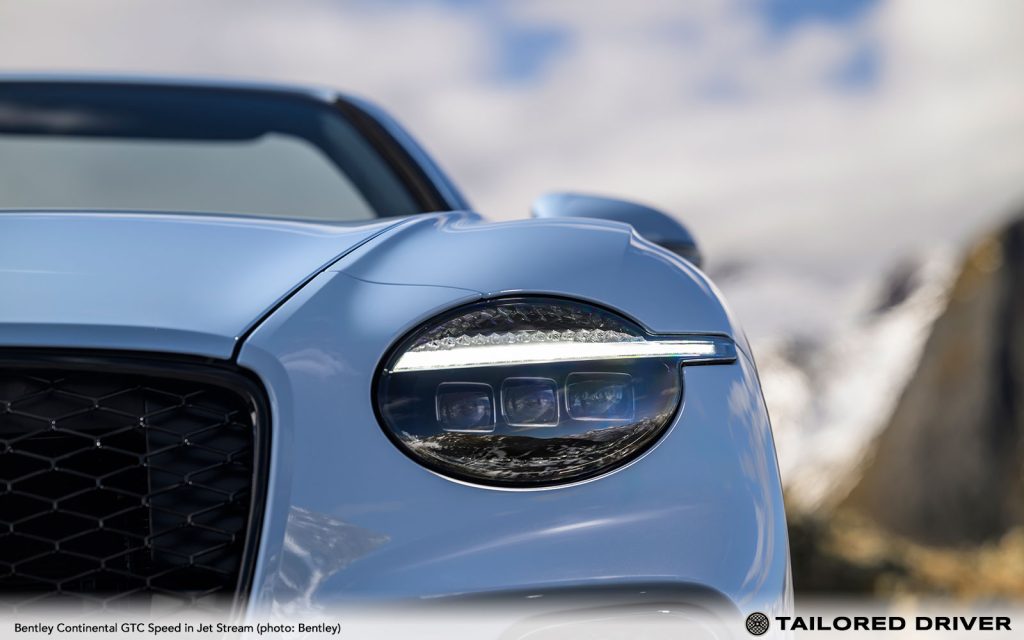
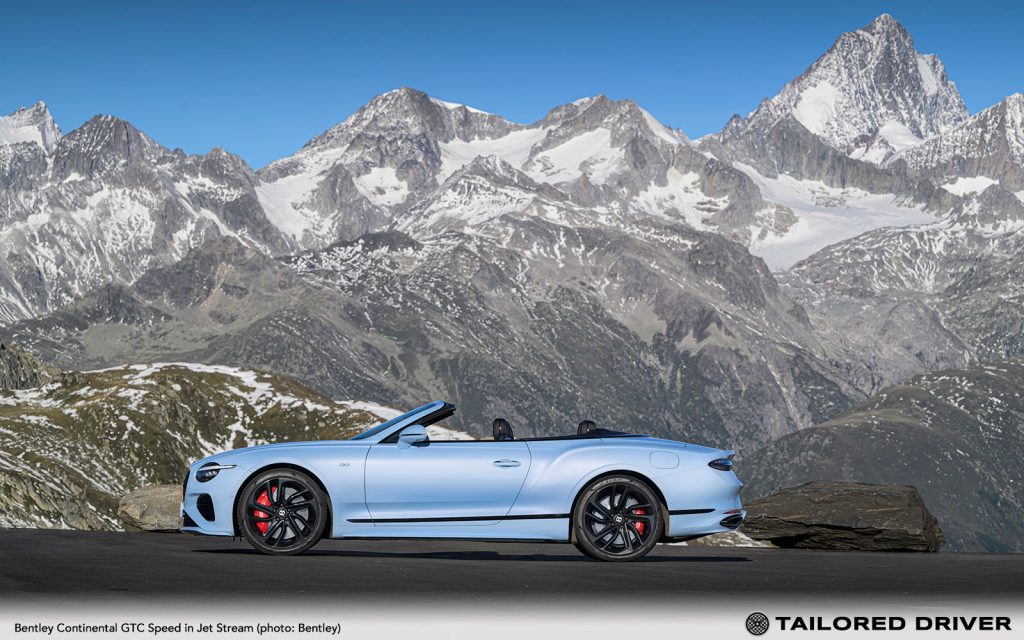
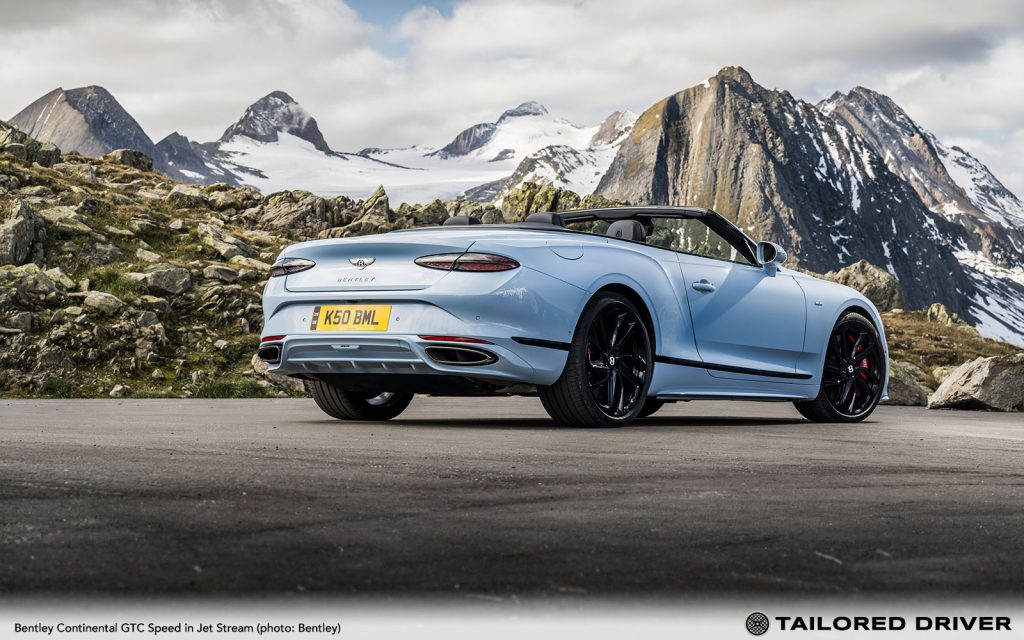
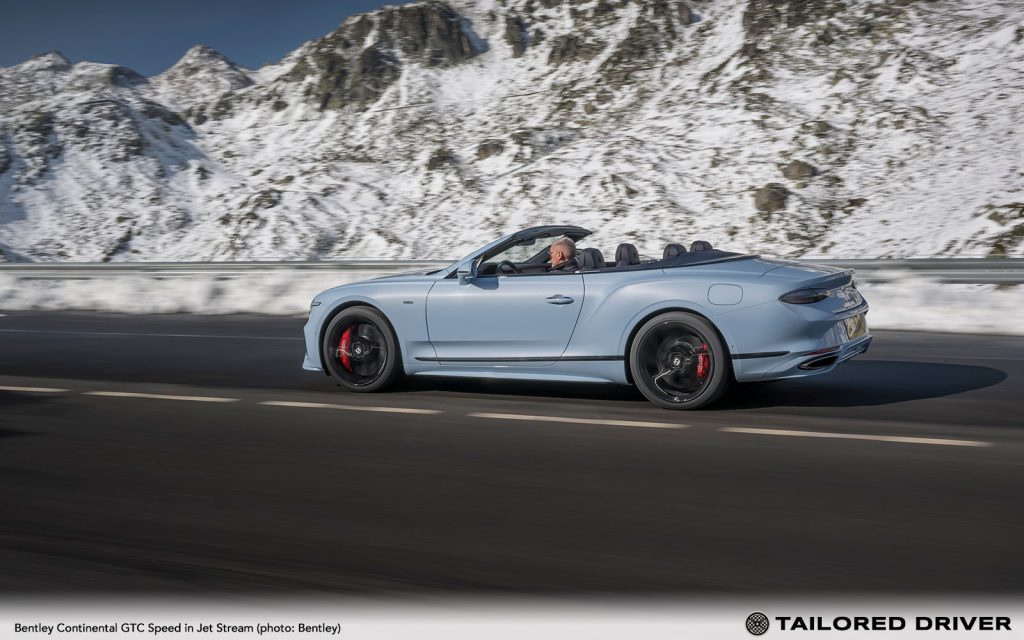
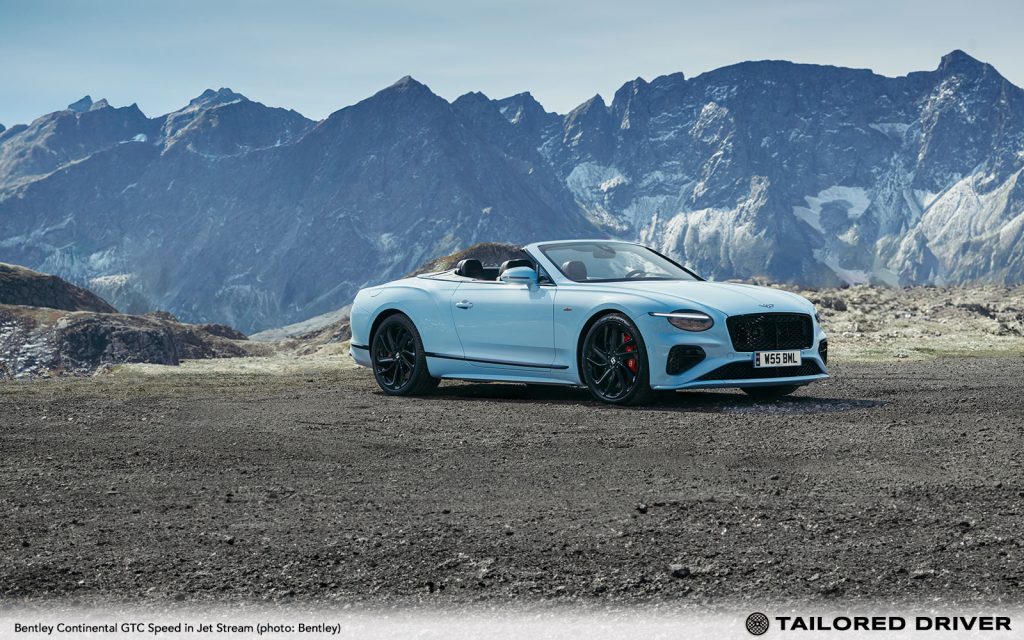
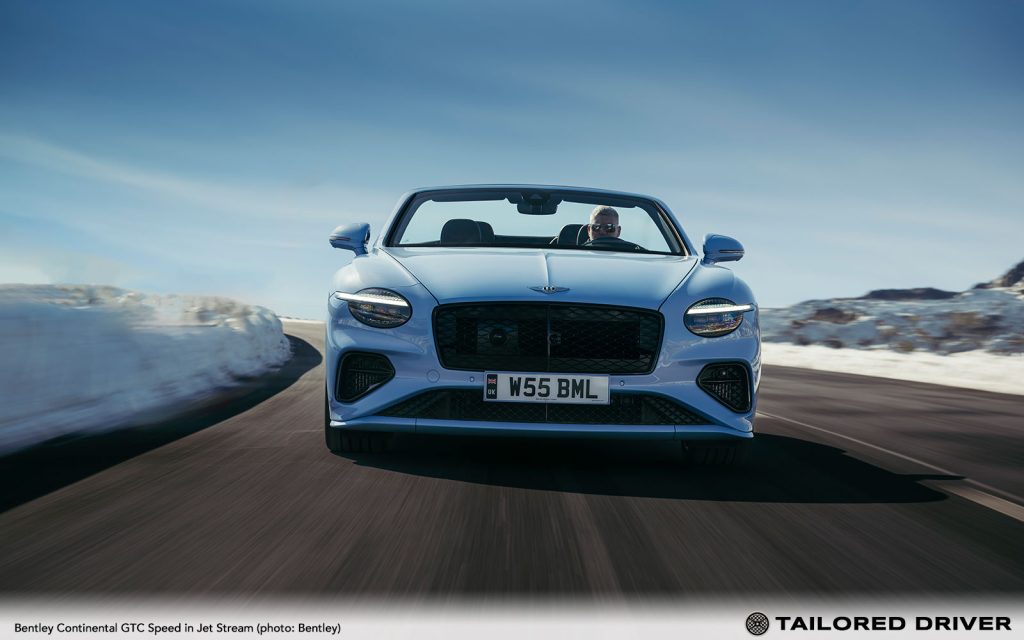
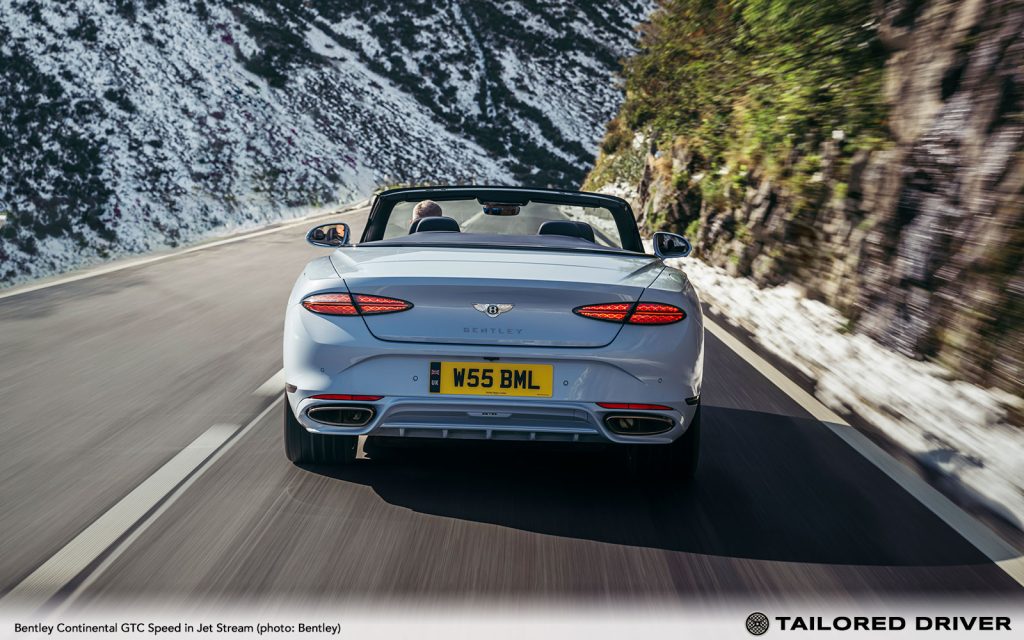
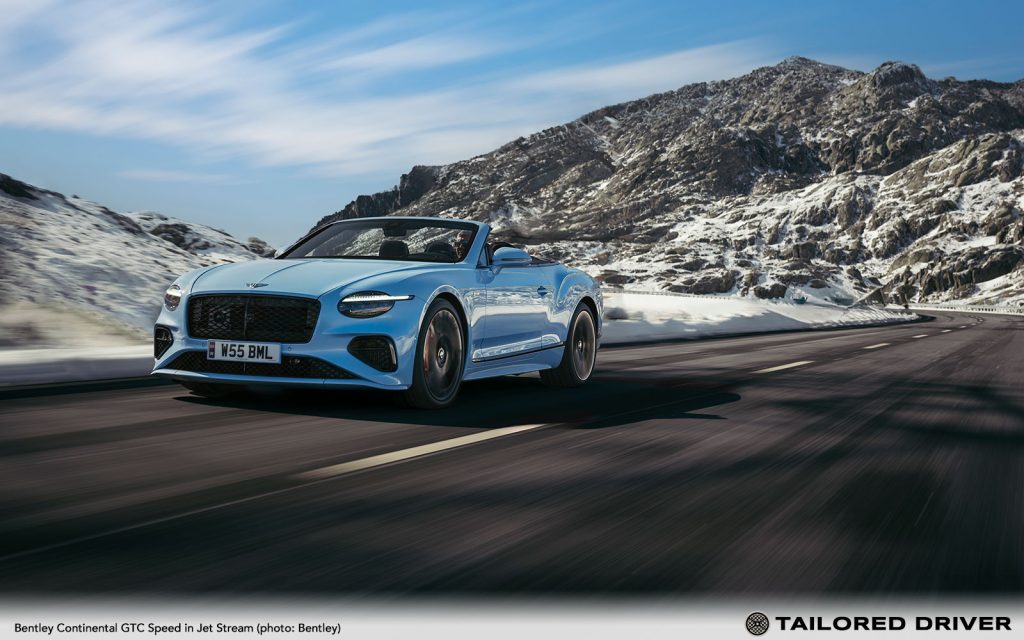
Bentley Motors is also proud to reveal the fourth generation Continental GTC Speed in Jetstream, following in the 21-year tradition of the Continental GT family by redefining the ultimate blend of supercar performance, handcrafted luxury and everyday usability.
For the new Continental GTC Speed, a brand-new Ultra Performance Hybrid powertrain has been developed. The new powertrain combines a new 4.0 litre V8 engine capable of producing 600 PS (584 bhp) with a 190 PS (187 bhp) electric motor. Performance of the Continental GTC Speed is breath-taking for an open-air Grand Tourer.
The Convertible features Bentley’s seven-bow fabric roof system, available in a range of seven exterior colours (including tweed) and deployable in 19 seconds at speeds up to 48 km/h. With a completely new 400-volt electrical architecture enables the most advanced suite of powertrain technology to be offered by a luxury automotive brand today, delivering emissions of 29 g/km of CO2 and an electric range of 80 km on the WLTP drive cycle.
Oshe Automotive, bespoke engineering, traditionally British with a beating African heart
Tom Hopper, actor, joins the Oshe family as ambassador and creative partner
[source: Oshe Automotive]
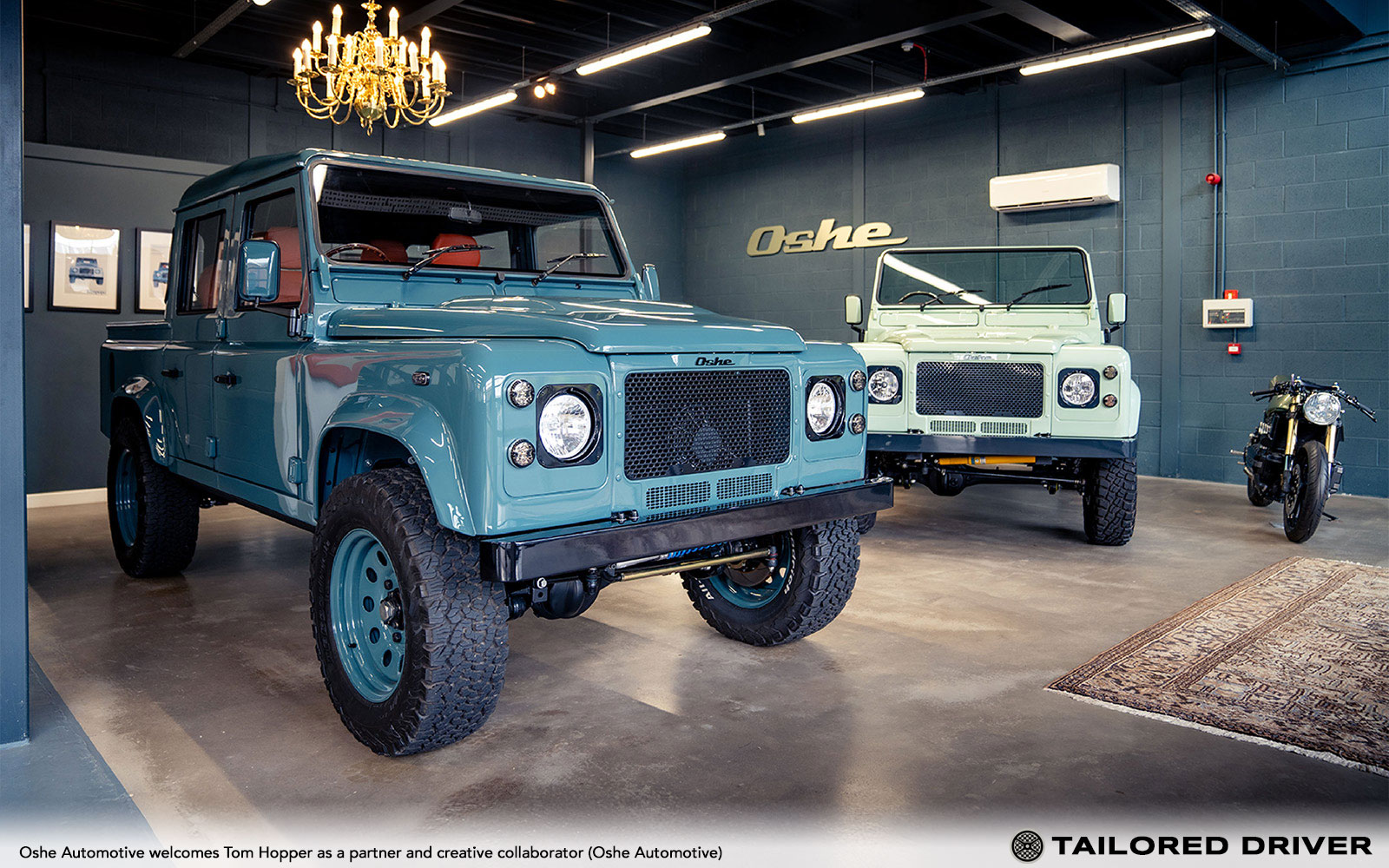
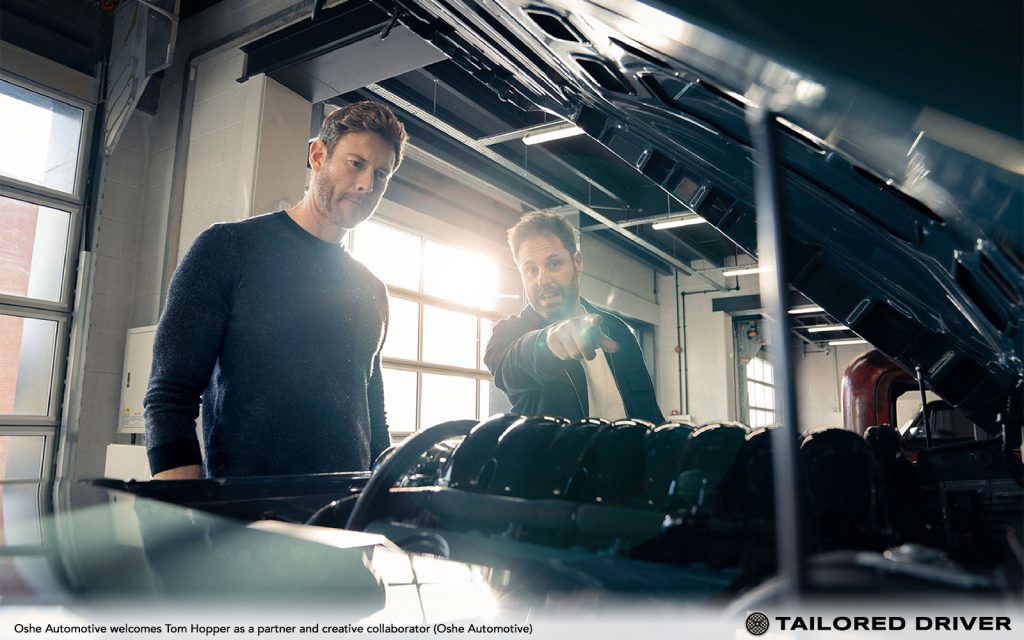
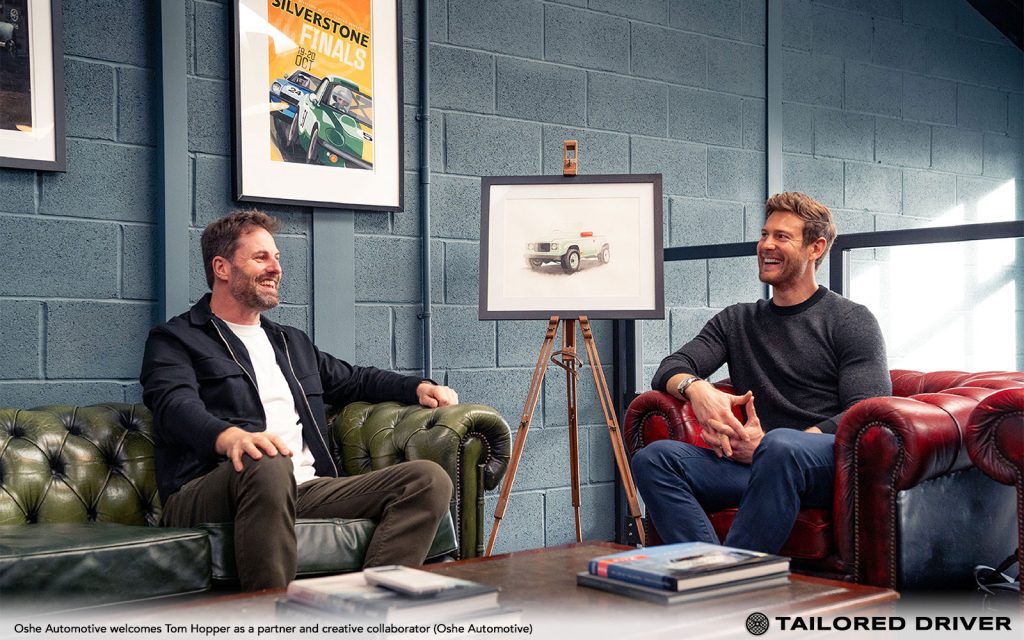
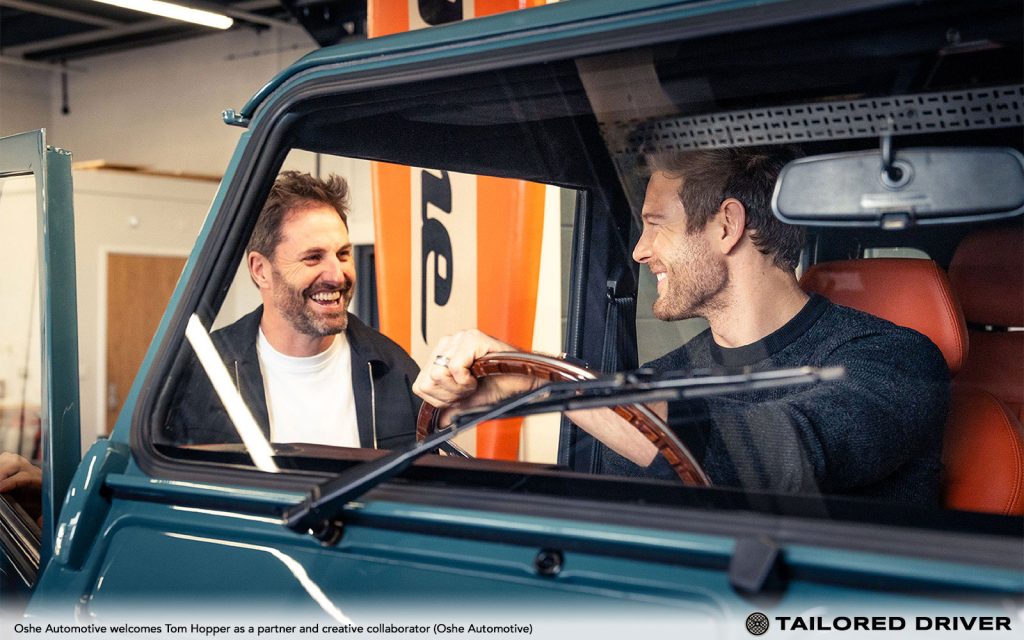
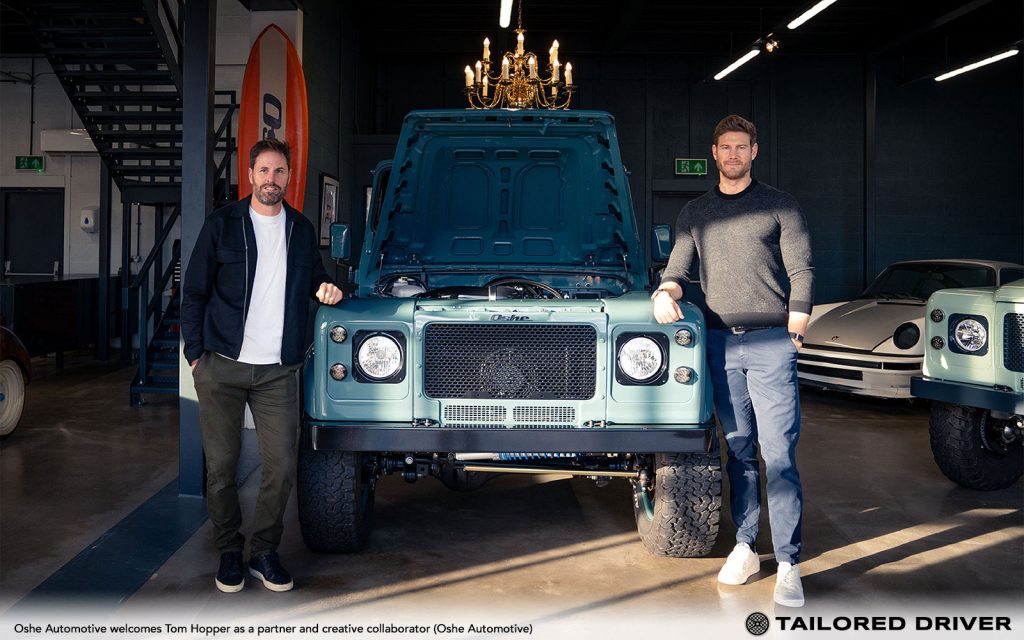
Northamptonshire, UK – Oshe Automotive, the British manufacturer of refined automotive works, announced a partnership with respected actor Tom Hopper today. This thoughtful collaboration unites two distinctly British approaches to craft and excellence.
The partnership establishes Hopper as a shareholder in Oshe Automotive, where he will contribute to the company’s design philosophy and future projects. This measured expansion of Oshe’s creative vision combines automotive craftsmanship and artistic sensibility in a considered alliance.
“Their quiet dedication to perfection drew me to Oshe.” said Tom Hopper. “Each vehicle tells a story of engineering at its finest – respectful of tradition, yet quietly innovative. I’m particularly drawn to how they honour the original spirit of these cars while carefully introducing contemporary elements. It’s like good theatre – the art lies in knowing precisely what to preserve and reimagine.”
David Lane, founder of Oshe Automotive, reflected on the partnership: “In Tom, we recognised a kindred appreciation for craft and detail. His understanding of heritage and evolution mirrors our approach to automotive design. We’re rather pleased to welcome him not merely as an ambassador but as a true creative partner in our journey.”
The collaboration will naturally extend to featuring Oshe vehicles in select productions involving Hopper, allowing the craftsmanship of these cars to be appreciated by discerning audiences worldwide.
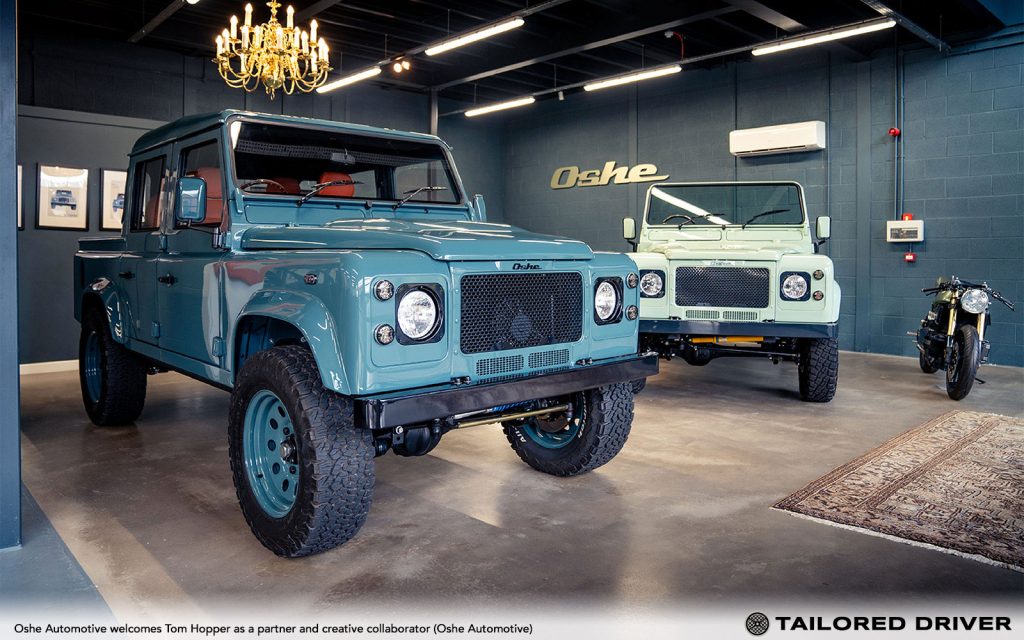
Oshe Automotive has earned its reputation through thoughtful reinterpretation of automotive icons, including the Land Rover Defender and Porsche 911. Each vehicle represents countless hours of meticulous engineering and handcrafting, resulting in motorcars that honour their heritage while meeting contemporary standards of refinement.
This partnership marks a considered step forward for both parties, combining Oshe’s precision in automotive craft with Hopper’s artistic sensibility. The collaboration promises to deliver experiences that resonate with those who appreciate understated excellence.
About Oshe Automotive Oshe Automotive, headquartered in Northamptonshire, creates carefully engineered vehicles that honour automotive heritage while embracing modern refinement. The company was founded by David Lane, who brings his deep appreciation for classic cars to each project and represents the finest British automotive craftsmanship. Available in RHD or LHD depending on customer requirements.
About Tom Hopper Tom Hopper is a British actor known for his thoughtful performances in “The Umbrella Academy,” “Game of Thrones,” and “Black Sails.” A graduate of Rose Bruford College, Hopper has established himself through roles that demand both physical presence and nuanced characterisation.
What’s a finely tailored suit without the perfect piece of jewelry of precision chronograph? Such a question may also be asked of a finely tailored automobile. And, it seems he team at Formawerx may very well have the answer.
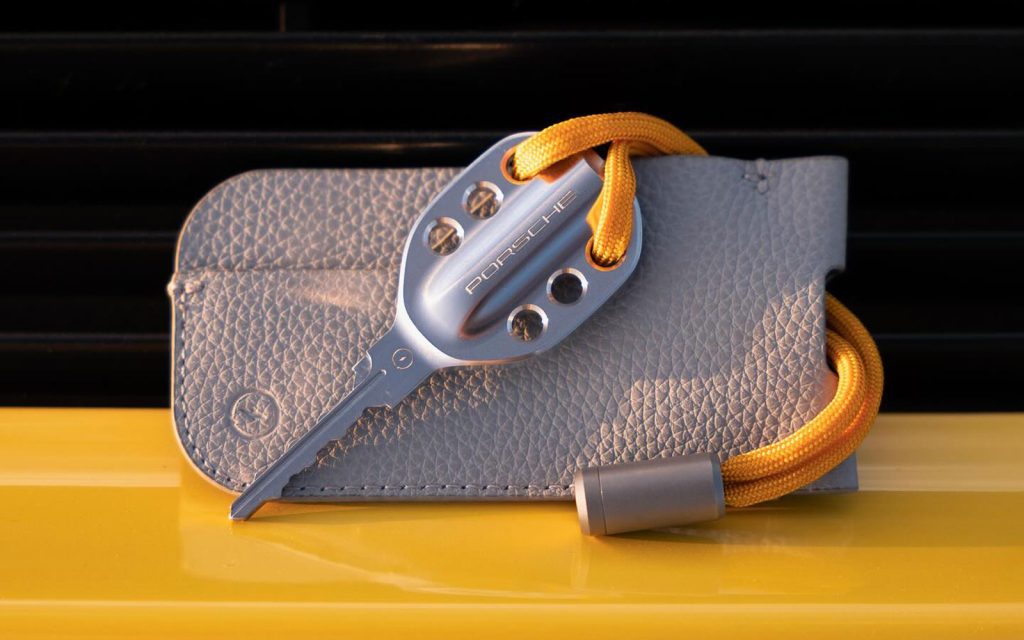
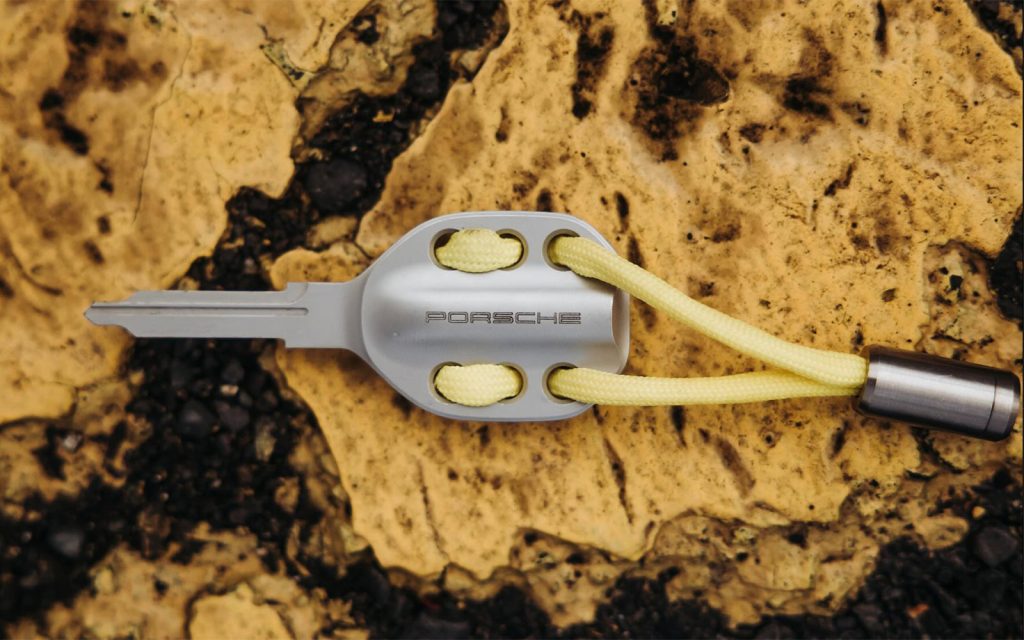
Okay, most modern cars have hands free remote control fobs, something largely irreplaceable… at least until mobile devices take their place as we’re seeing in brands like Rivian. In the meantime, vintage car owners can and do have options to accessorize their ownership experience, and that’s where Formawerx comes in. Using jeweler grade materials and precision design, Formawerx offers the highest grade replacement key for one of the most touch-and-feel parts of the vintage car ownership experience.
For those who relish in the idea of a tailored build, you’ll want to take note. One quality Formawerx prides itself on is its ability to tailor-make a key to fit the needs of the owner. This includes picking from multiple modular designs or even commission something completely bespoke.
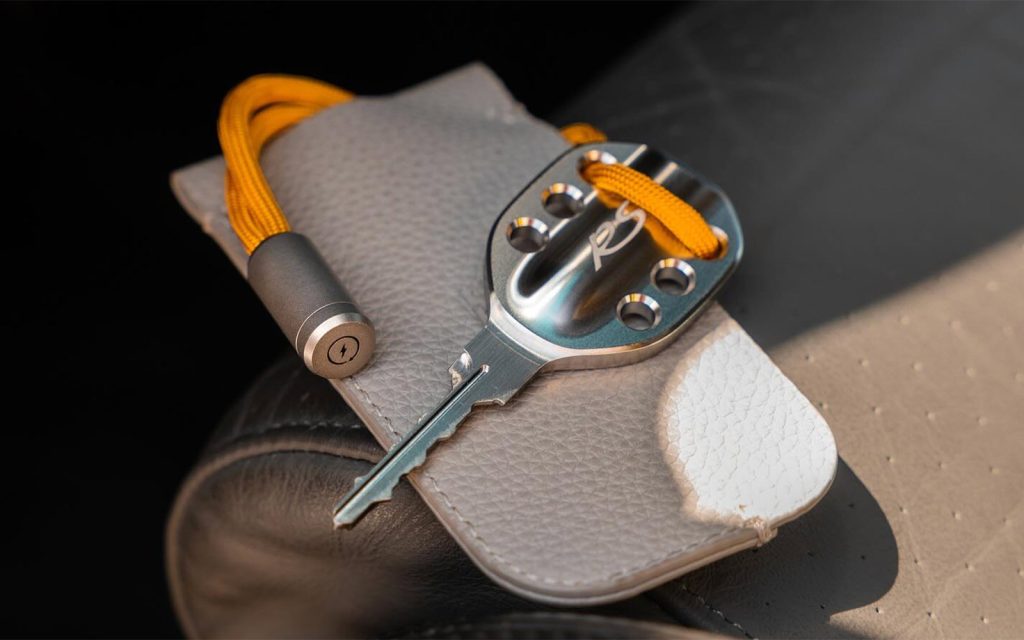
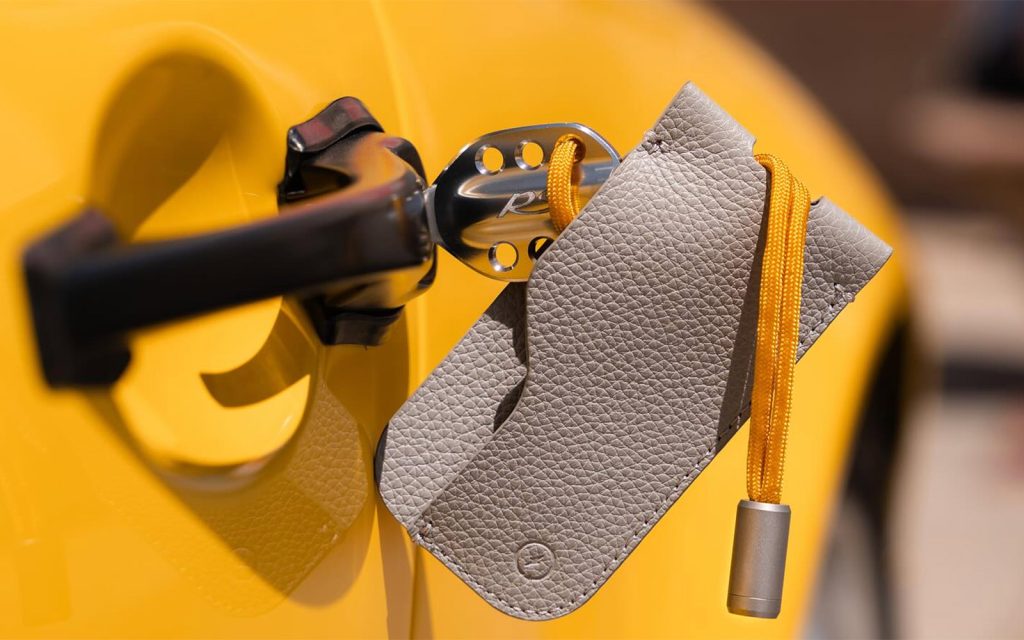
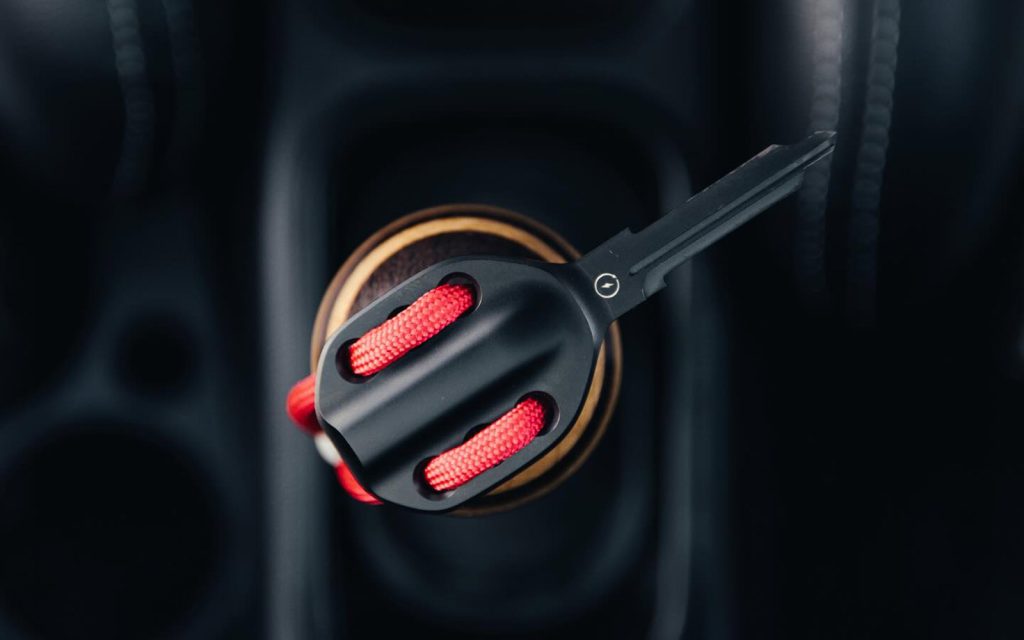
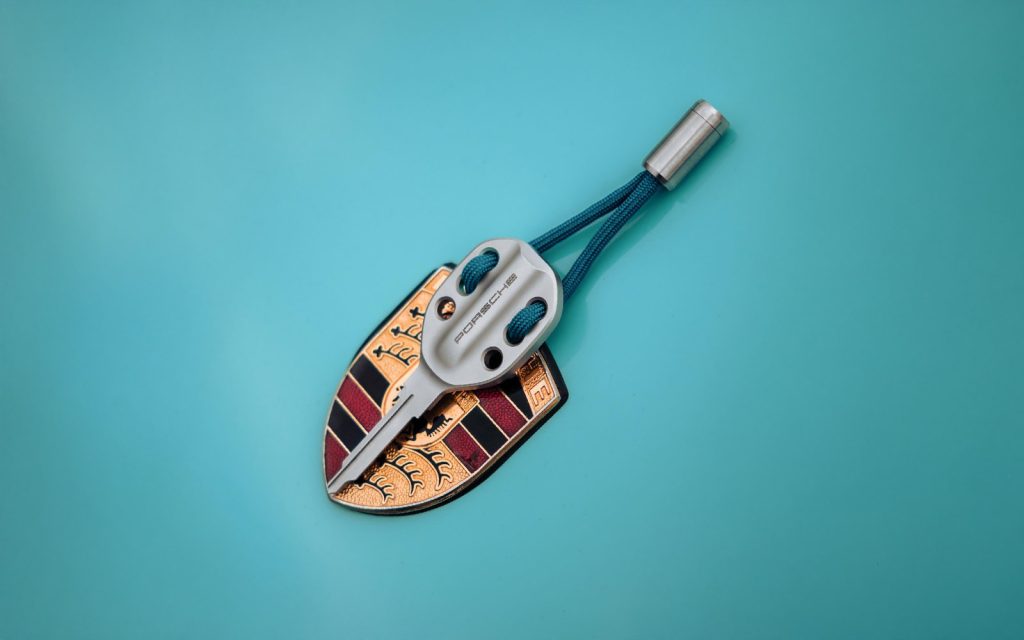
In a recent social media post, Formawerx shared the setup you see here – their Legends-911 key design ($450) paired with their Titanium Cord Lock ($70). As yo may have gather from the name, the Legends-911 is specifically made for owners of vintage Porsches, featuring a drill-through design that mimics light weighting practices of Porsche’s classic racing era in a very creative way. Even more creative is the way their Titanium Cord Lock utilizes those holes in a very unique way and creating a keychain of sorts.
Both the key and the cord are available with various options and finishes. Here, the cord is worth a focus, where you can choose machined or frozen matte finish on the metal, and cord colors including Schwarz Black, Guards Red, Lava Orange, Signal Yellow, Auratium Green, Brewster Green, Mexico Blue, Gulf Blue, Bali Blue, Nardo Grey and Granite Green.
Check out more from Formawerx on their website HERE.