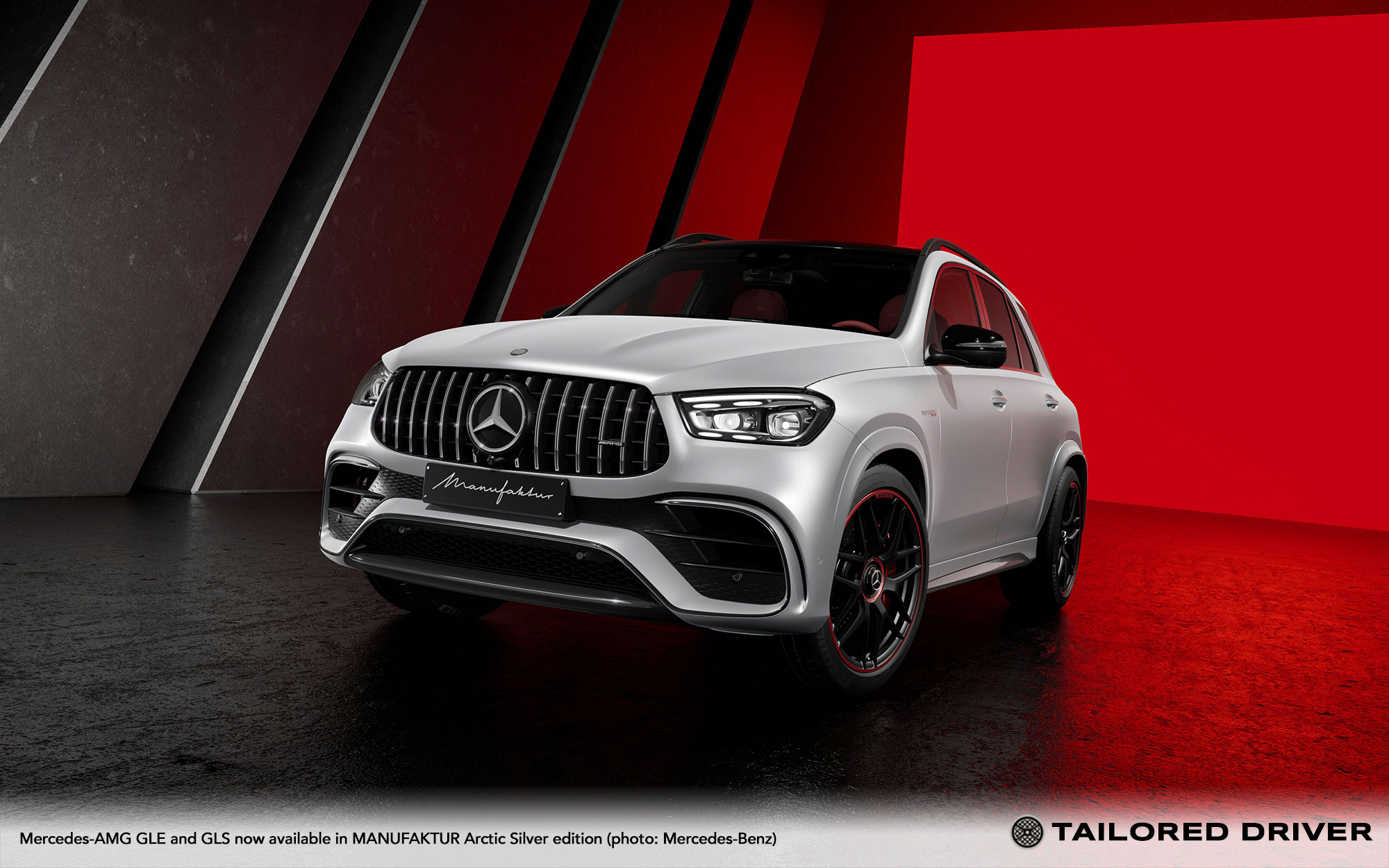
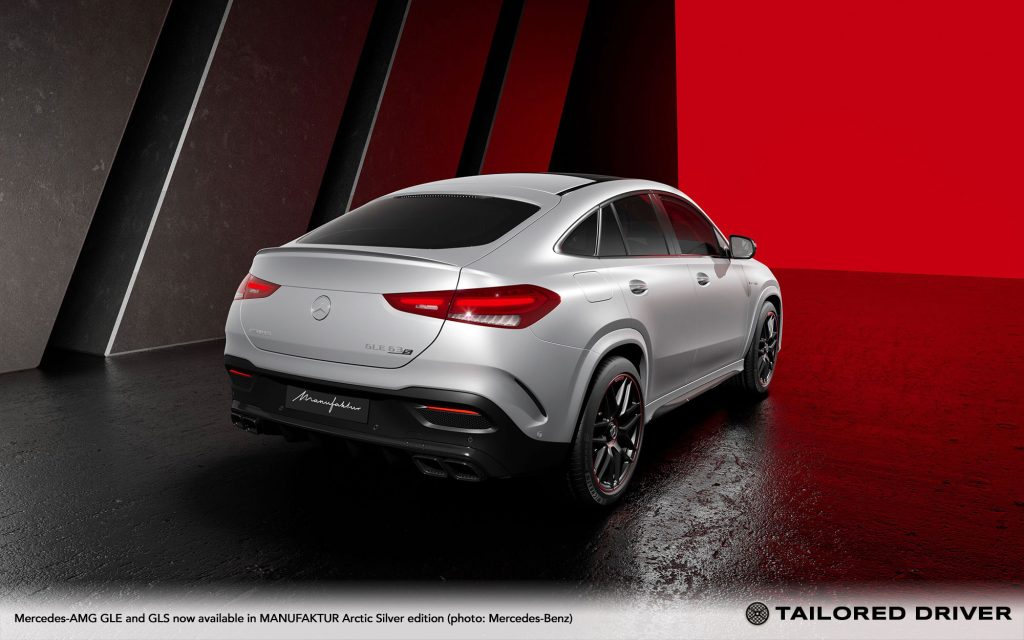
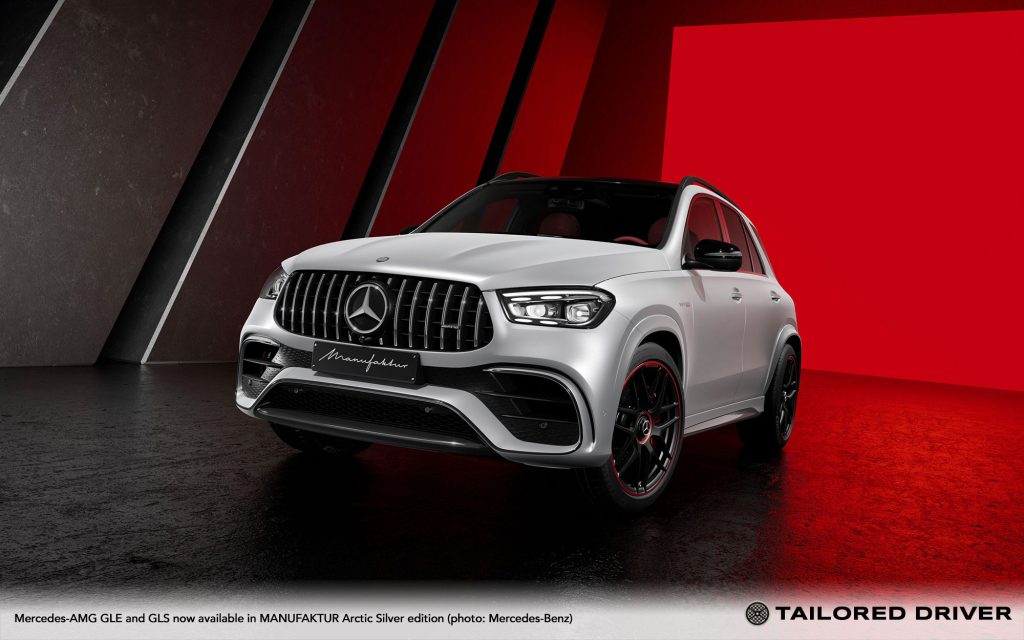
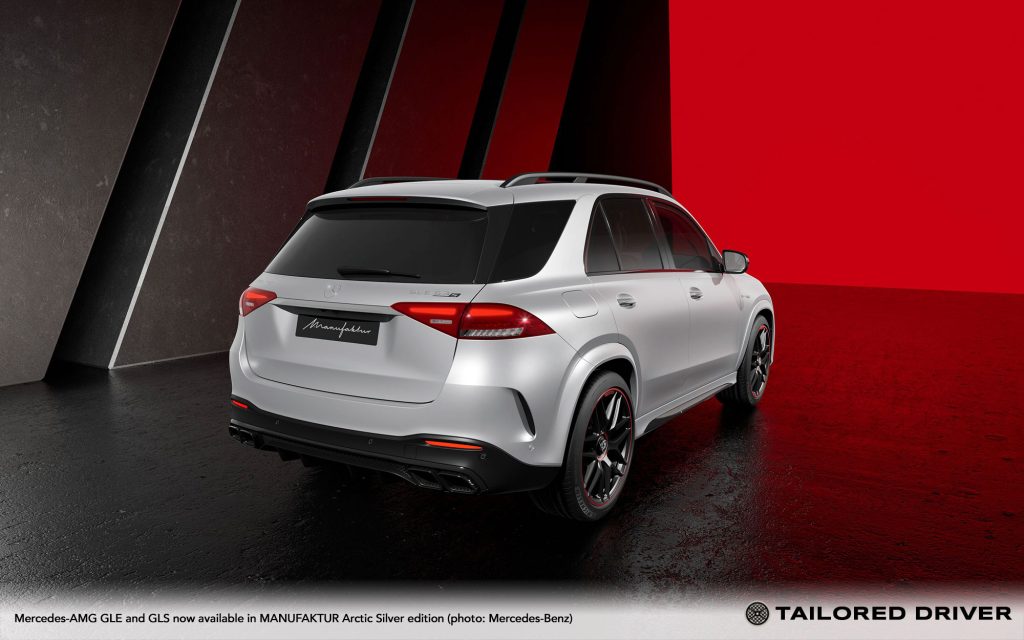
Mercedes-AMG has announced its latest special edition, tailored versions of its GLE and GLS SUVs centered around High-Tech Silver Magno (HightechSilber; metallic matt effect; 734 / 9734 ; Mercedes-AMG).
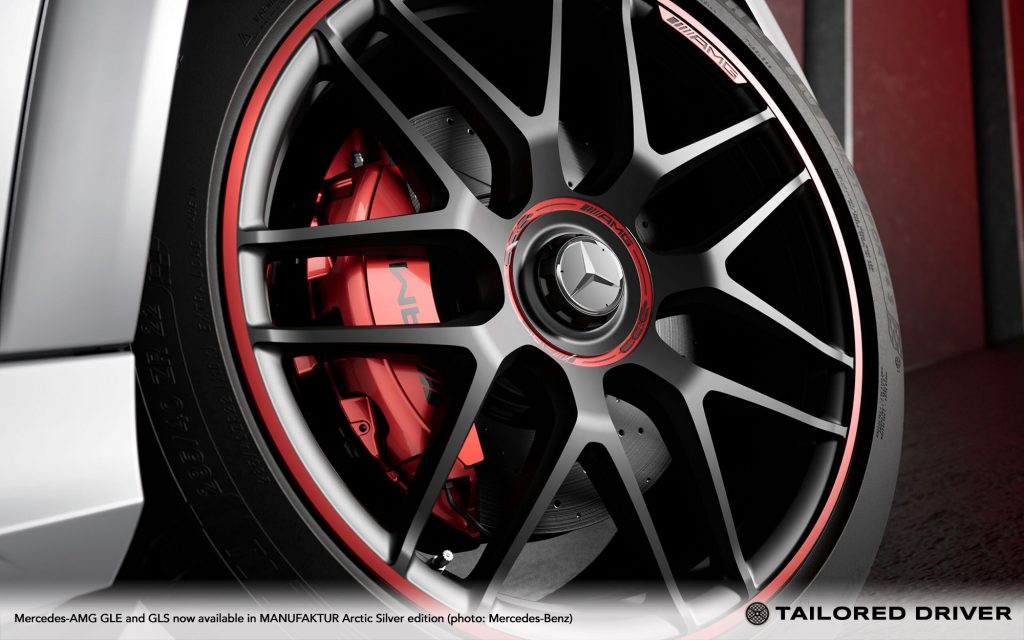
The main look of the package accents the silver with black and red accents. This includes multi-spoke forged 22-inch wheels for the GLE and 23-inch for the GLS, finished in matte black and accented with red flanges. Wheel hub covers get AMG logos combined with laurel wreath elements. Brake calipers are finished at front and rear. Finally, it’s paired with the AMG Night package with gloss black exterior elements that include the front splitter, decorative strip on AMG skirt panel, side mirror covers, insert on the rside skirt panels, window surrounds and trim on the rear apron. Dark chrome tailpipe trim and matte black roof rails finish off the exterior appearance.
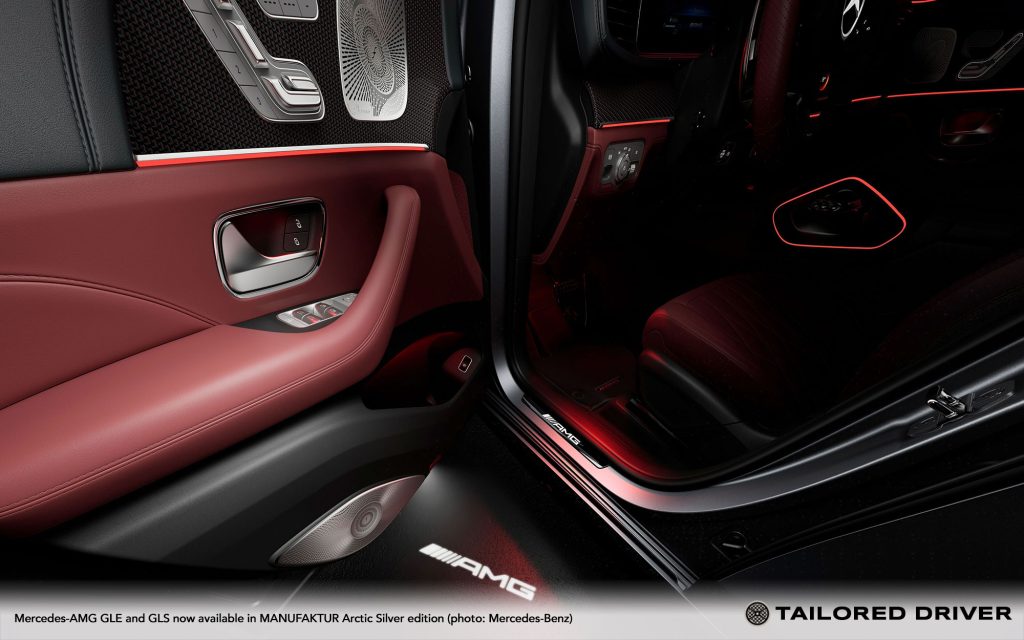
The black and red theme continues inside. AMG MANUFAKTUR Carmine Red and Black Exclusive Nappa Leather are the main focus, with rhombus quilting elements. Special MANUFAKTUR door sills with illuminated AMG logo, MABUFAKTUR rear seat headrests and special edition logo bright chrome letters on the passenger side.
A performance steering wheel in Carmine Red and AMG carbon decorative trim with red embroidery are components especially unique to these specials. AMG crests stamped on the front headrests and black AMG door sills with white illumination make it even more exclusive. Even the deep pile floor mats get red stitched AMG logos on black leather.
The market launch for the Arctic Special edition will be July 2025 and only 450 units will be offered worldwide.
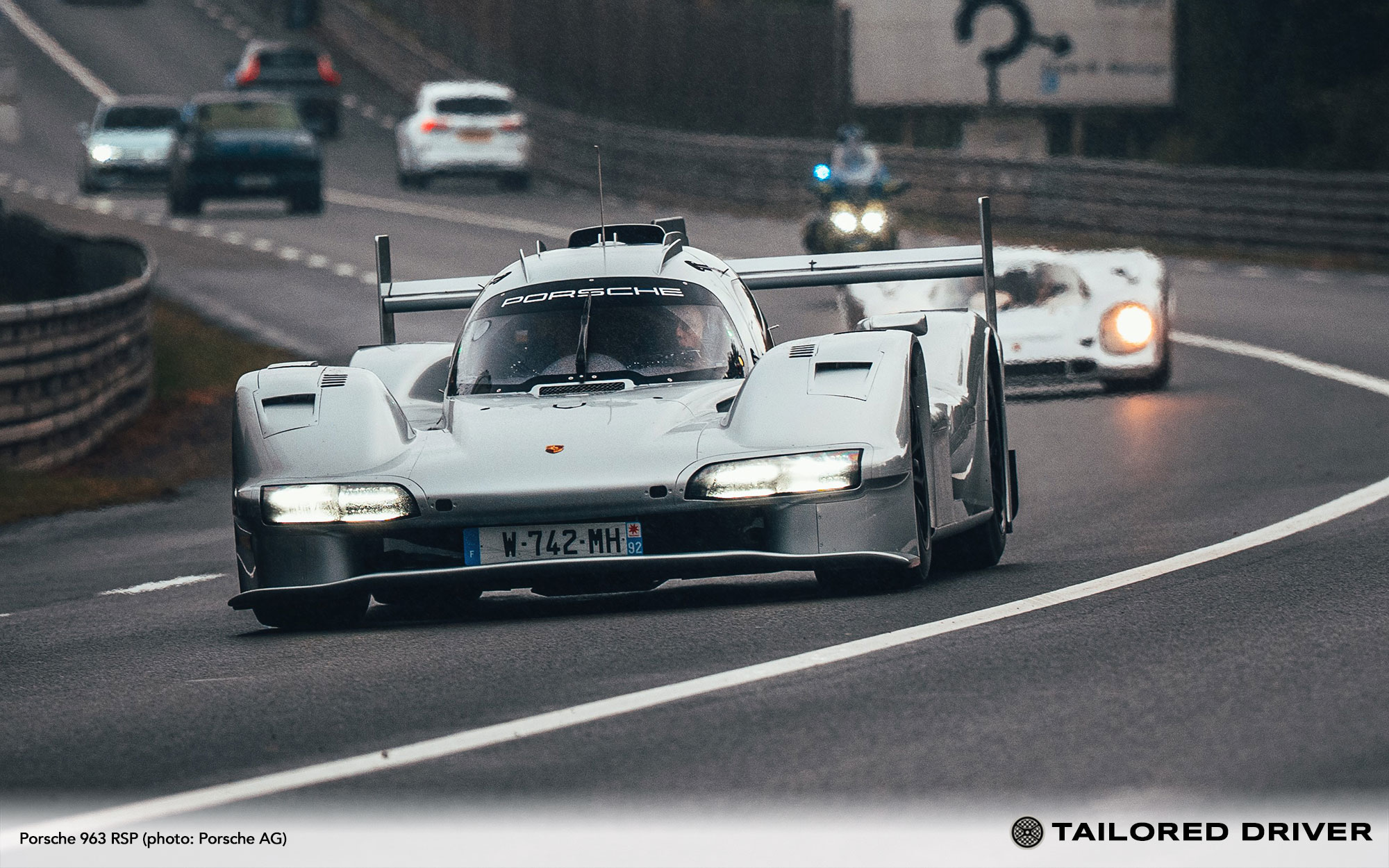
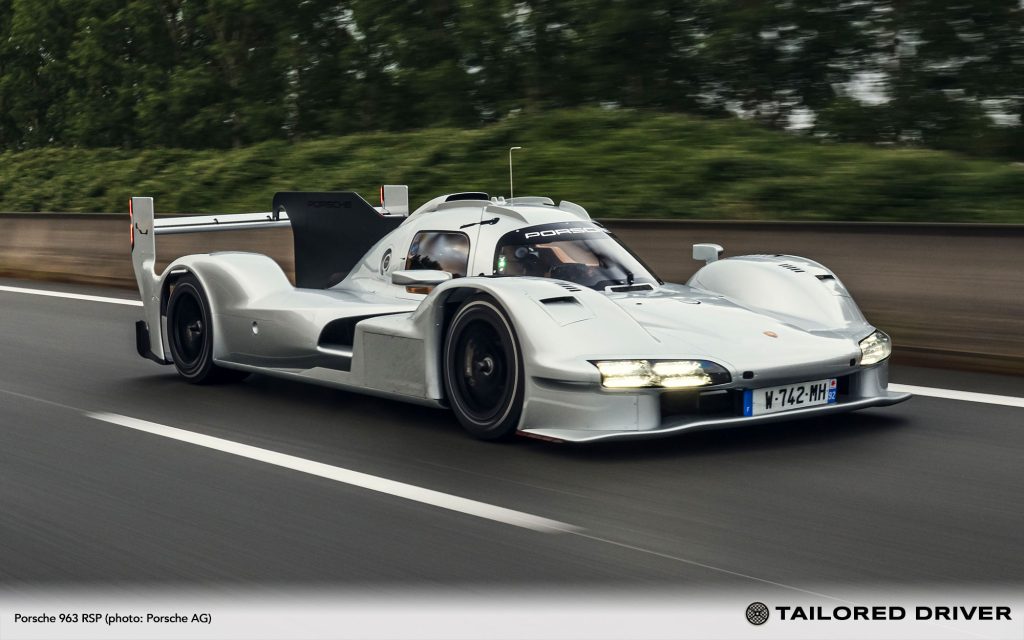
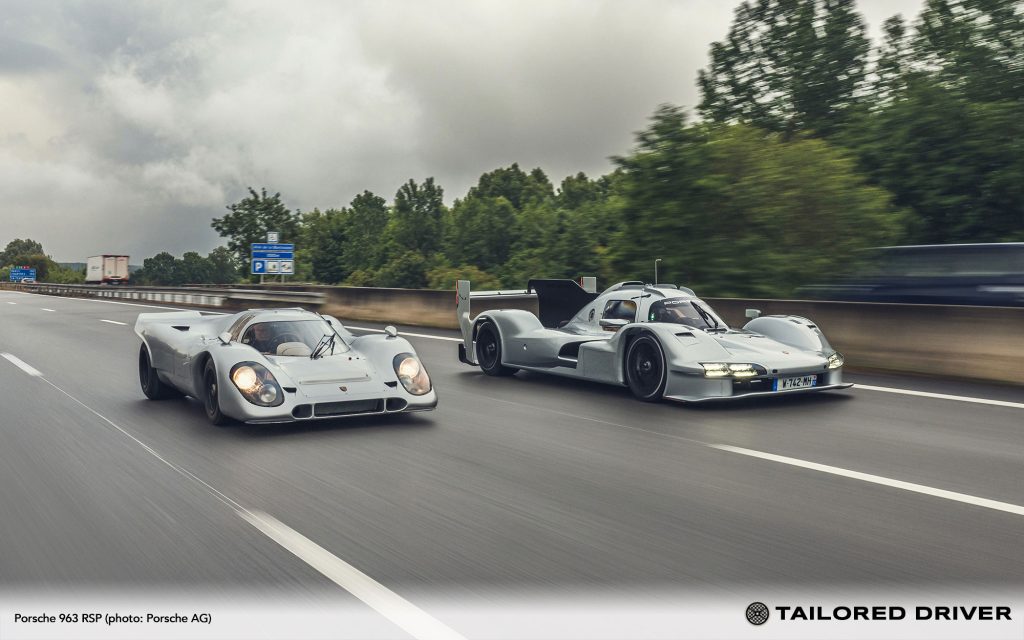
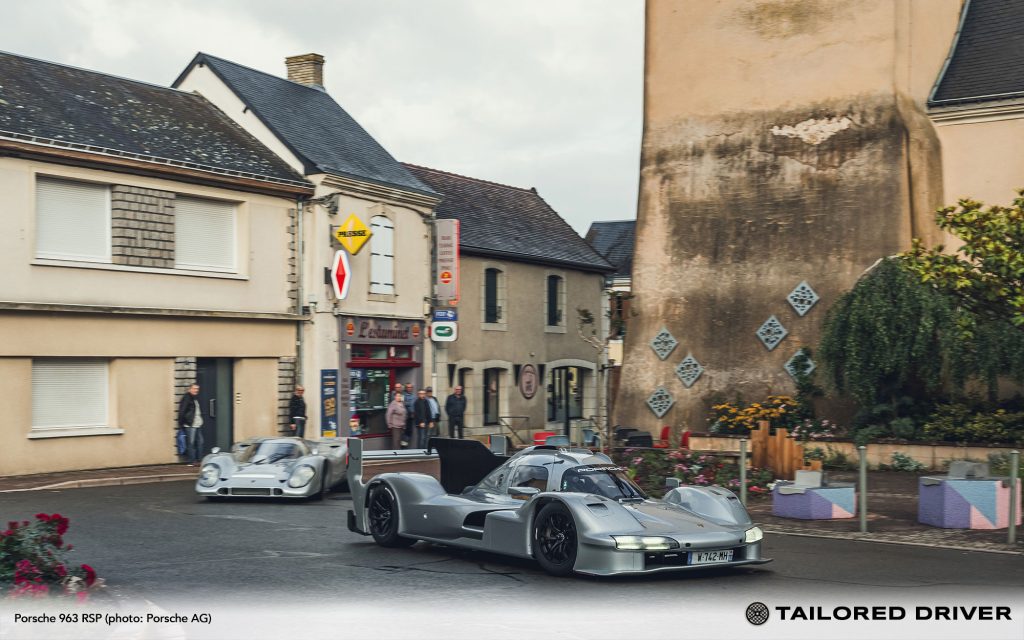
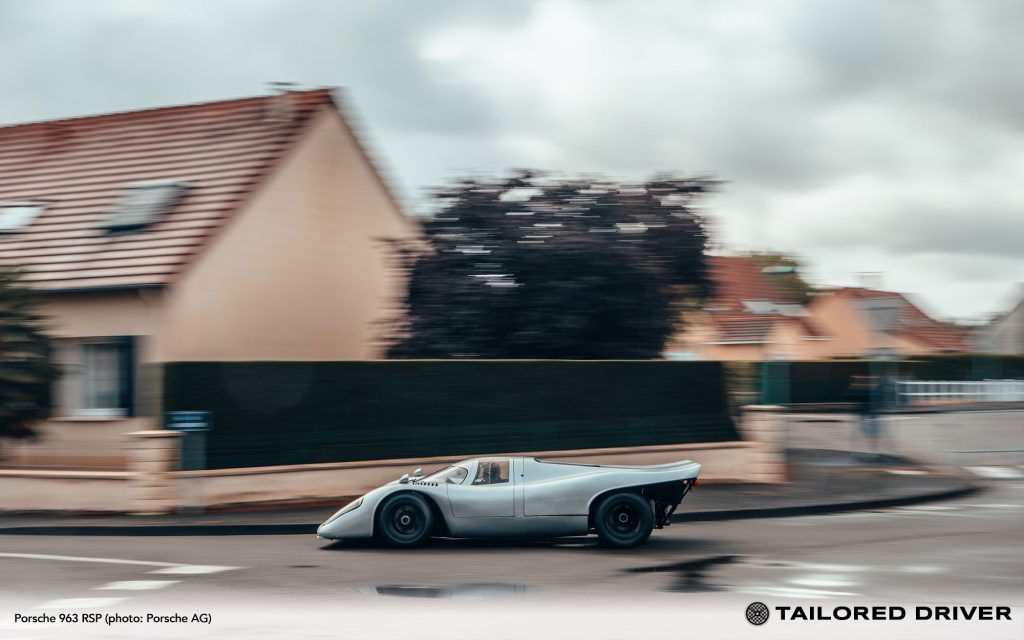
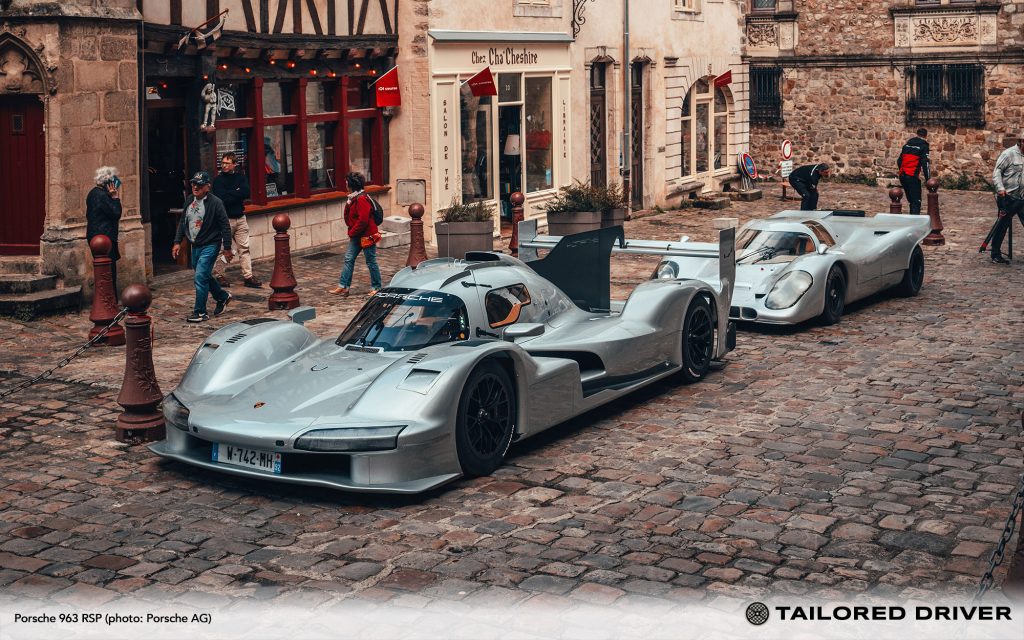
Today marks the first day of scrutineering for the 2025 24 Hours of Le Mans, which is effectively the first day in more than a week of race activities. Porsche chose to celebrate its annual return to La Sarthe by celebrating a cool anniversary and building something very special. The net result is something very, very cool, a tribute to Roger Penske and a one hell of a flex for the brand’s Sonderwunsch department.
If you follow IMSA or FIA WEC sportscar racing, you likely know that the Porsche 963 is a racing car of the sports prototype variety that races in the Hypercar class at Le Mans and the GTP class in IMSA. Effectively, this is today’s naming convention for the top class, and it’s in this category that the greatest manufacturers fight for an all-out win.
Though the name of the class changes over the years, this is top-tier racing at Le Mans, a point Porsche can both point back to with authority. For Porsche, the story of outright wins begins in 1970 with the Piëch family-backed Porsche Salzburg-backed 917K. They’d win again in 1972, this time by Martini Racing.
Those would be the only wins for the 917, because the car was banned from racing at Le Mans largely due to its dominance. Even still, it was the unequivocal star of Le Mans quite literally, capturing the imaginations of racing fans the world because it also starred in the 1971 movie Le Mans starring Steve McQueen.
By 1975 the car had been dually retired. Following Le Mans it had been evolved as an open-top prototype for racing in the North American CAN-AM series and Europe’s Interserie, but at this point it was a legend without a home. Given the circumstances, what happened next is truly remarkable and something for which Porsche is truly one of the few factories that could have pulled it off. And, this isn’t the first time.
Martini Flex, the 917 KH of 1975
Flight of fancy may be an understatement, but when you have gargantuan resources and a strong association with racing, living a fantasy while promoting what you do isn’t such a bad mix. The car was 917 chassis #30, a car that had been originally raced in period. The man was an Italian businessman Martine heir Gregorio Rossi di Montelera – known more commonly as “Count Rossi”, a renowned powerboat racer, bobsledder and Porsche enthusiast. And yes, when we think of the Martini & Rossi sponsored Martini Racing, he was that Rossi.
In 1975, the car had returned to the factory much as some owners today send their old cars to Porsche Classic department for restoration or the brand’s fantastical Sonderwunsch department for other upgrades of their choosing.
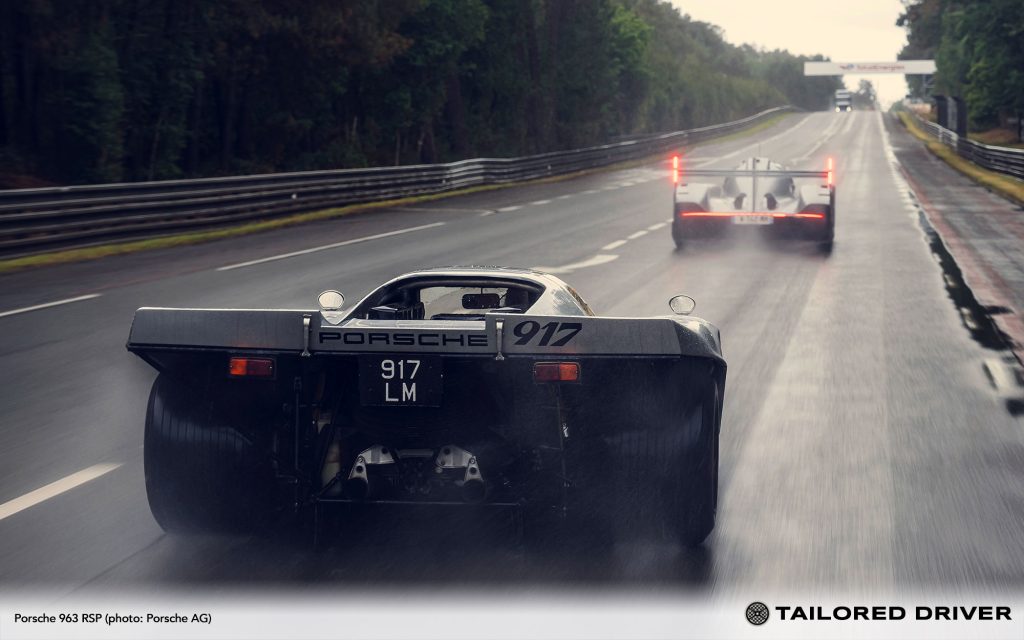
In the 917’s case, it was finished in Martini Silver, and fitted with a set of “rudimentary exhaust mufflers”, additional rearview mirrors, side indicators and other road car kit… like a horn. It carried the requisite spare tire beneath the rear clamshell, while inside two seats were re-skinned in tan Hermès leather with additional surfaces, doors, dashboard and roof lining in suede. Other cues from the racecar such as the balsa wood shift knob and drilled key were retained. Finally, the car was registered by Count Rossi in Alabama, presumably due to the more liberal registration requirements of this American state.
When the car first rolled out as a road car from the Porsche factory in Stuttgart, Rossi set out in the direction of France. His destination was Paris, several hundred miles away. In making the trip, Rossi and his 917 became the stuff of legends. That particular 917 KH is now registered in the UK, though is kept in the south of France where the current owner enjoys it with regularity.
Next Up, the Porsche 963 RSP
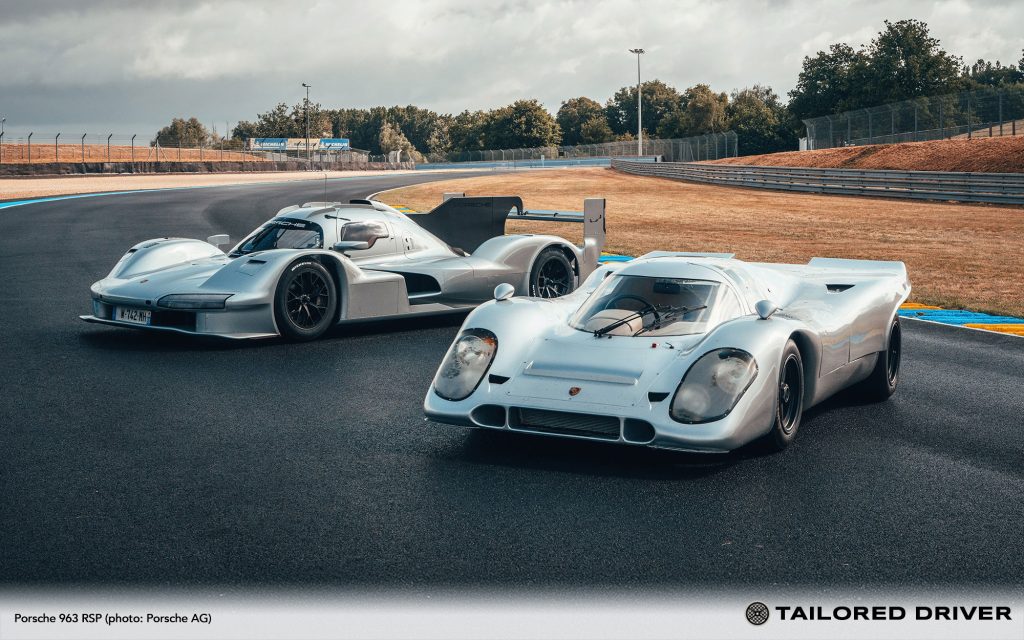
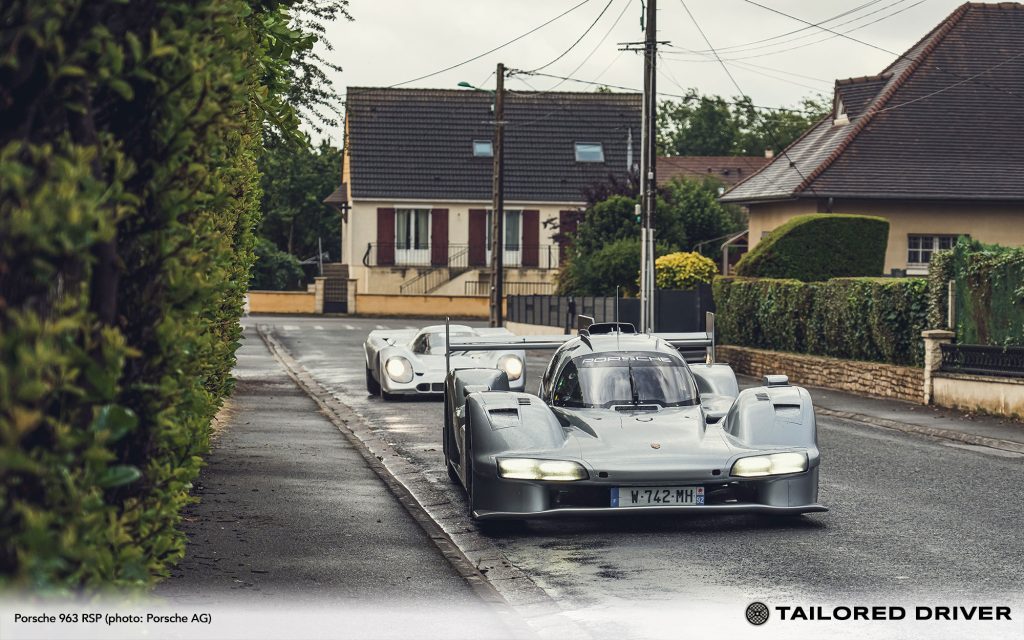
“This really started out as a “what if?” – a passion project by a small team of enthusiasts at Penske and at Porsche who together imagined a version of the 963 that really resembled as closely as possible the spirit and appearance of the Count Rossi 917,” state Porsche Cars North America President and CEO Timo Resch. The idea is credited to Resch. “The 917 from the story was every inch a race car – albeit one driven on the road – and we took the same approach with the 963 RSP. It uses beautiful materials of the best quality available, but is still every bit a race car underneath.”
Though the Porsche 963 hasn’t yet logged a 24 Hours of Le Mans victory since its debut in 2023, it’s been doing just fine outside of La Sarthe, logging championships in IMSA and the WEC at the hands of Penske Racing. And as Porsche Motorsport arrives in Le Mans ready to further build upon its record on this hallowed ground, the 963 RSP has been revealed – a tribute to the 917 KH that’s now 50 years old.
The car is the result of a collaboration between Porsche AG, Porsche Penske Motorsport and Porsche Cars North America. Like Count Rossi with the 917, Penske founder and owner Roger Penske just happens to have the same initials as the car’s designation “RSP” – not a coincidence.
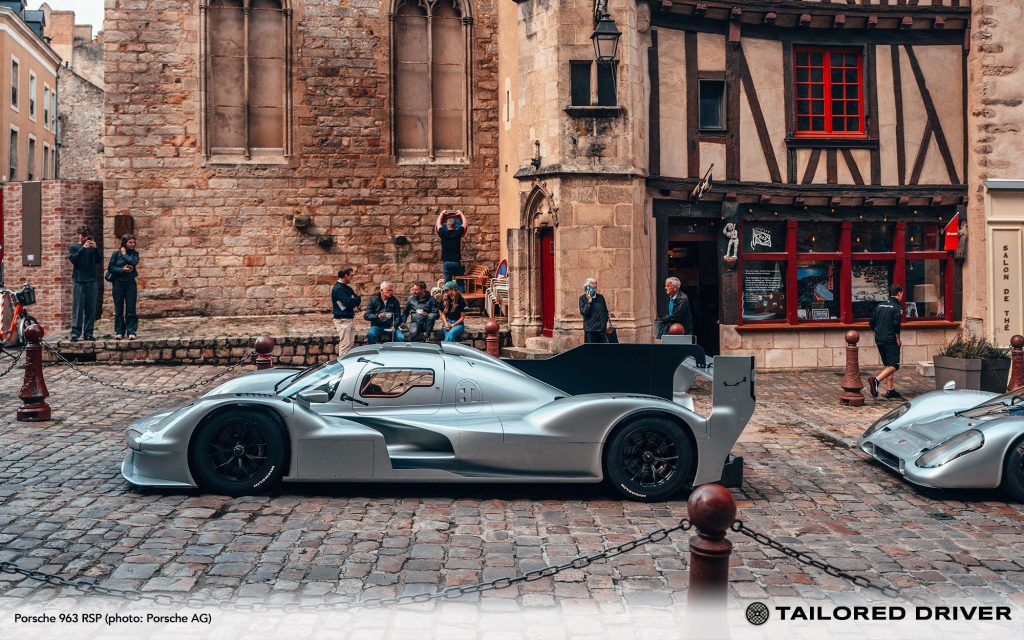
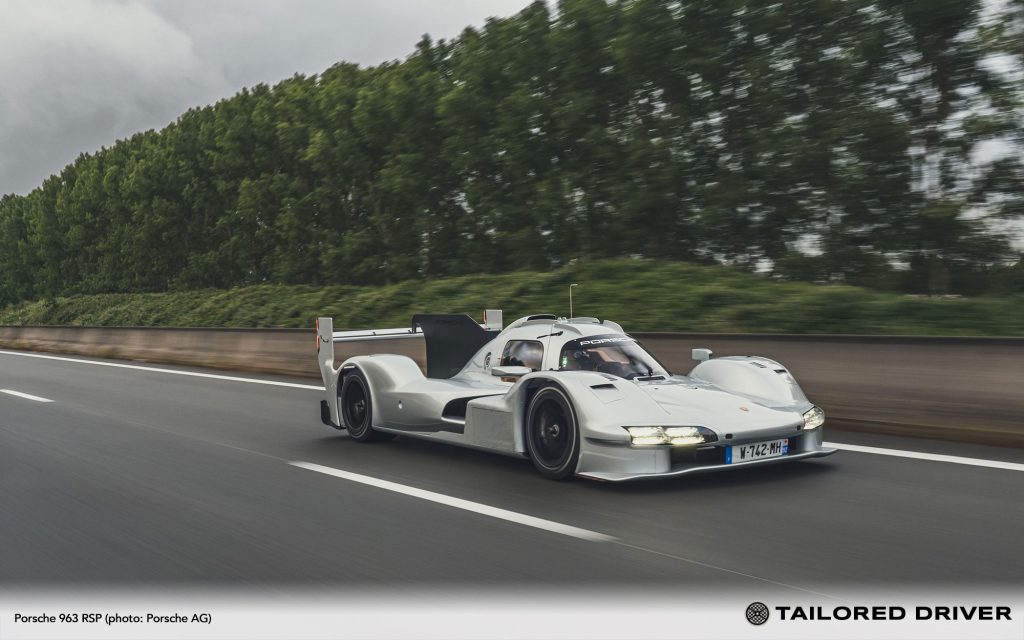
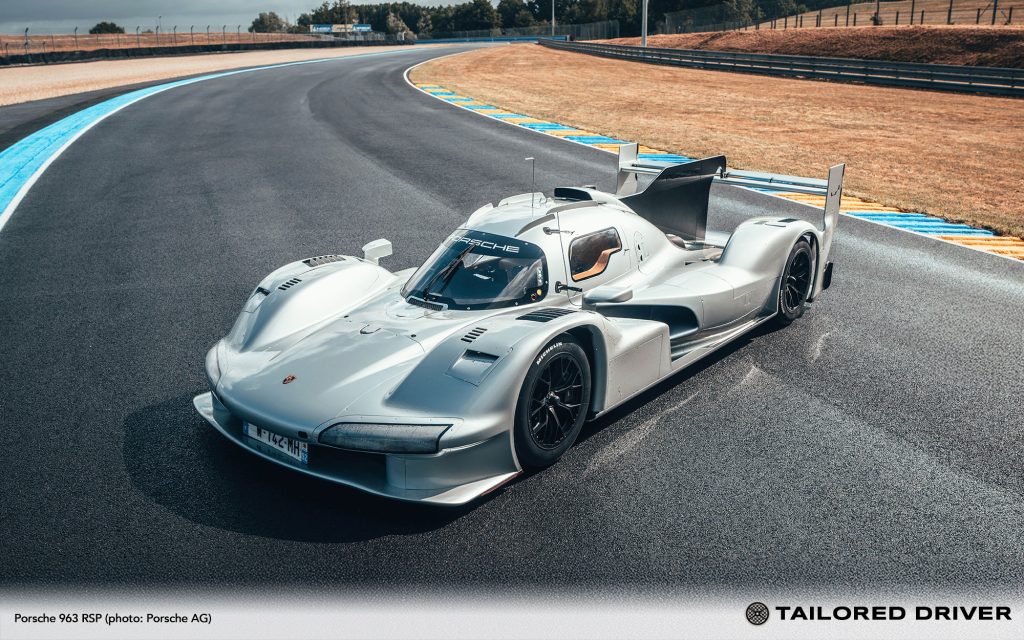
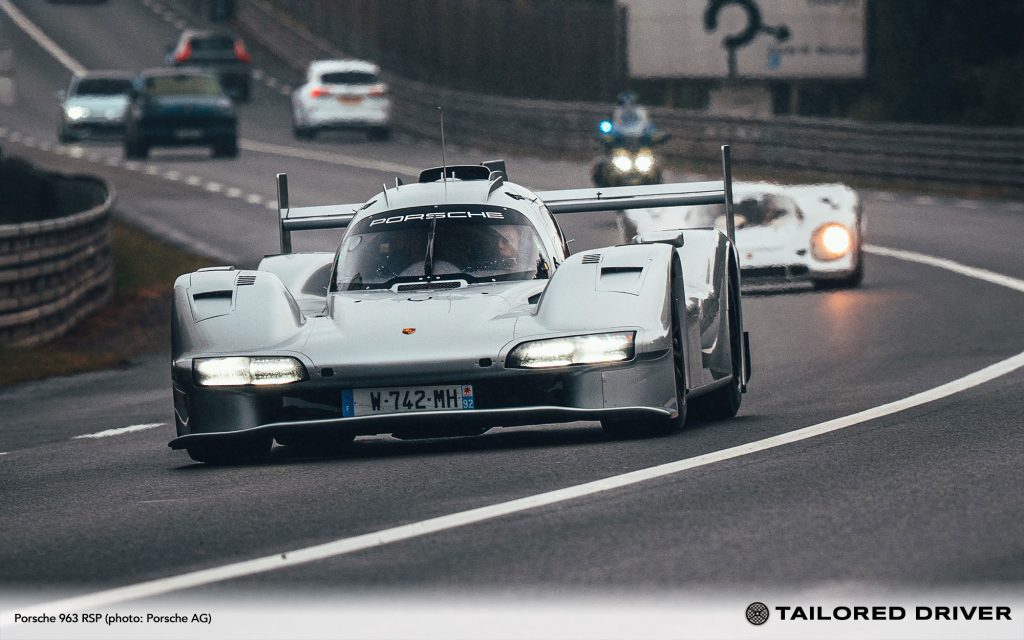
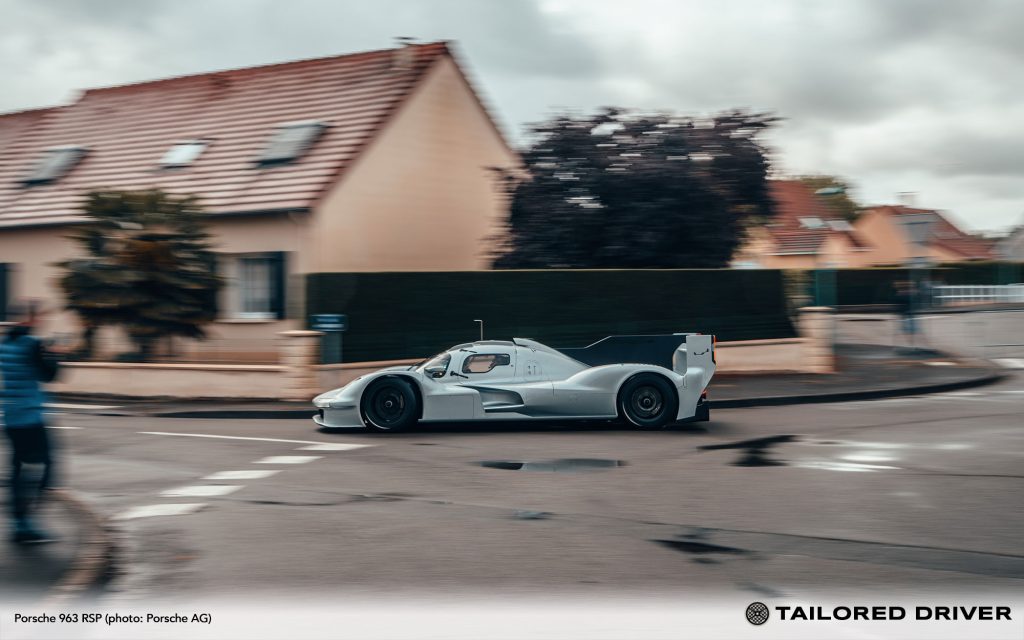
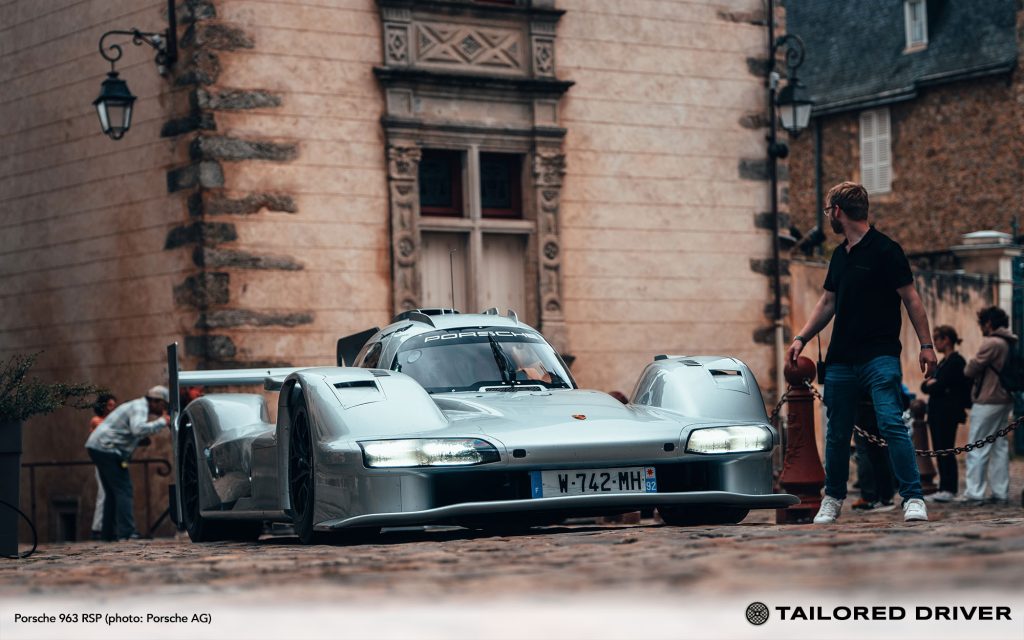
As you might expect, this isn’t just a matter of applying silver metallic paint over the 963’s bodywork though even that is a surprisingly complex change. The competition 963 always gets wrapped in a vinyl livery, so the thin carbon and Kevlar bodywork presents challenges that required some modifications before the Martini Silver paint chosen as a tribute to the 917 could be applied. Inside, the 963 has been fitted with tan leather and Alcantara, again inspired by the Count Rossi car.
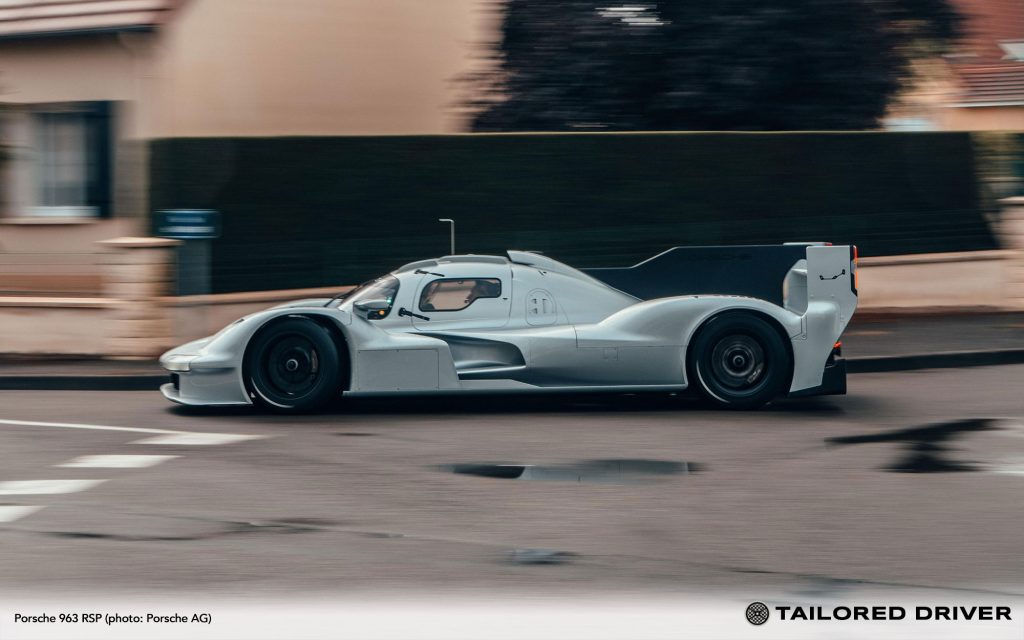
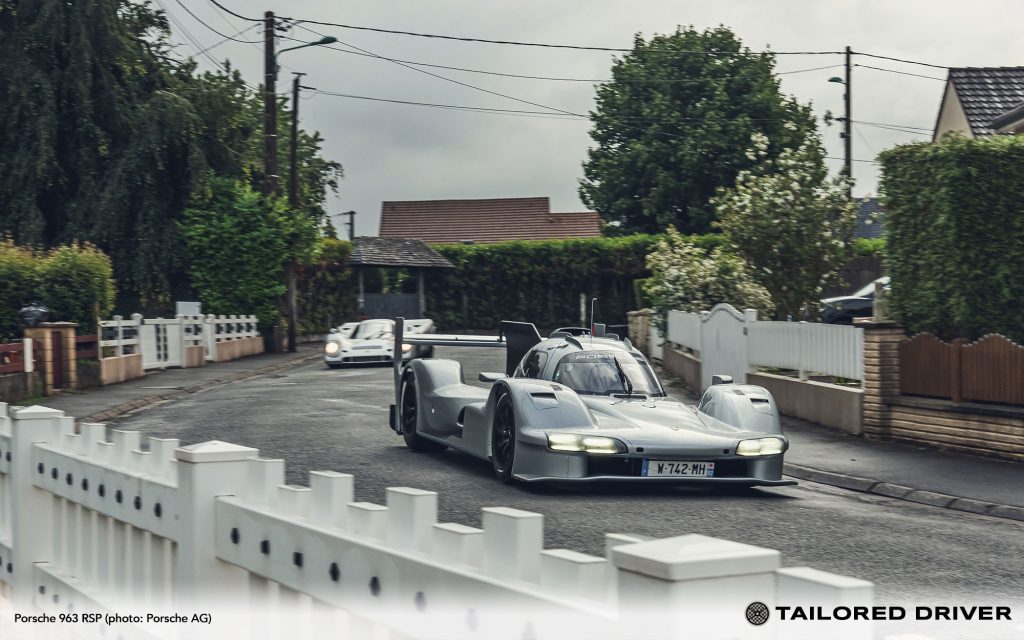
Other mechanical changes were needed to make the car road worthy. This includes raised ride height, softened dampers and reprogrammed control unit so as to allow the headlights and taillight to operate like those of a road car. Other bodyworks changes were made to properly cover the wheel arches, while a set of Michelin wet weather compound tires with tread qualifies for road use, and of course like the 917 it needed a horn.
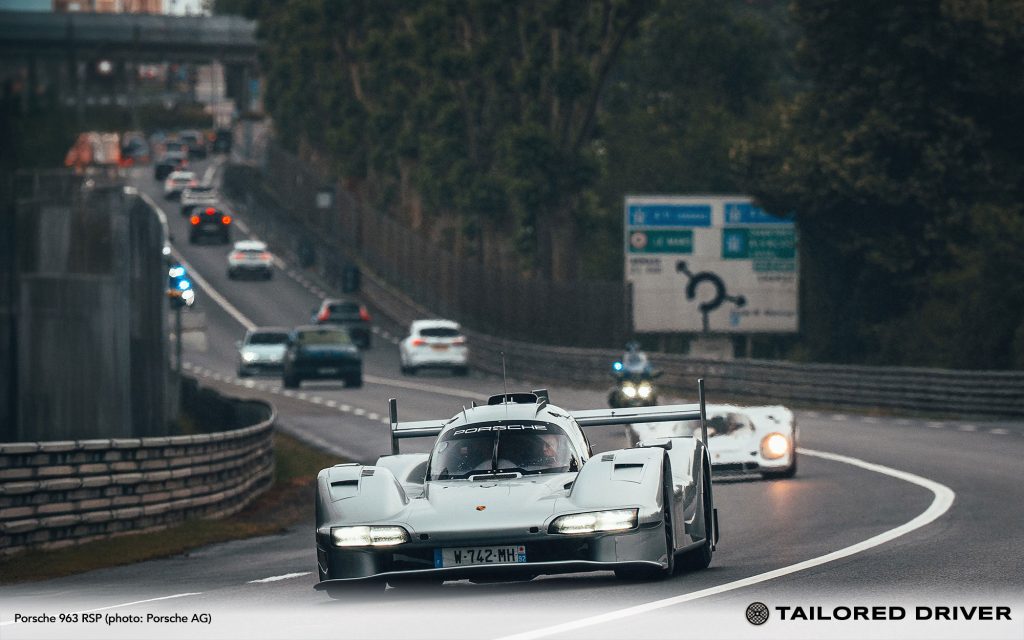
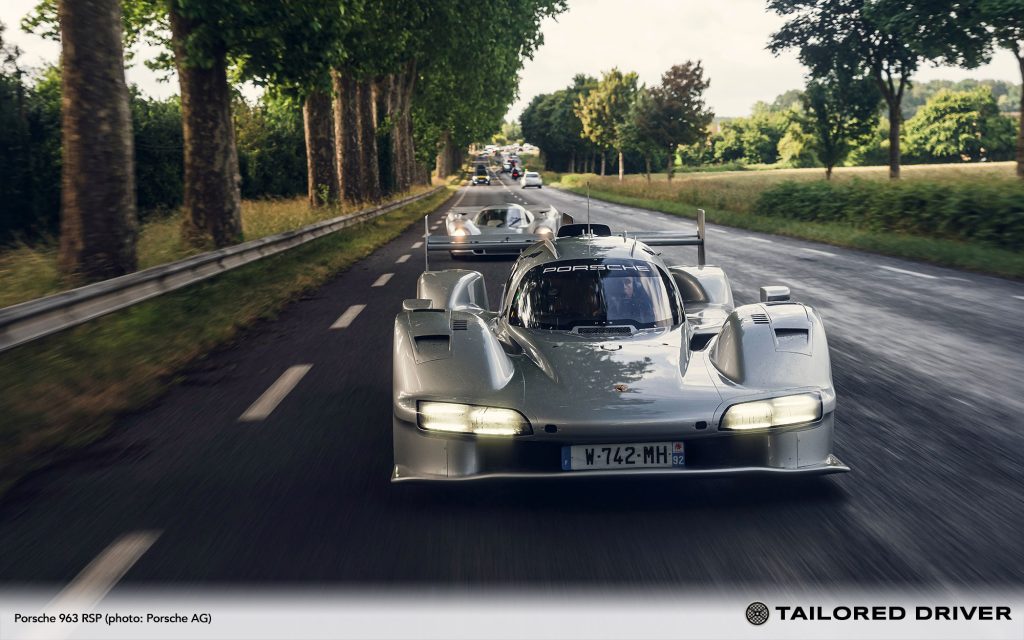
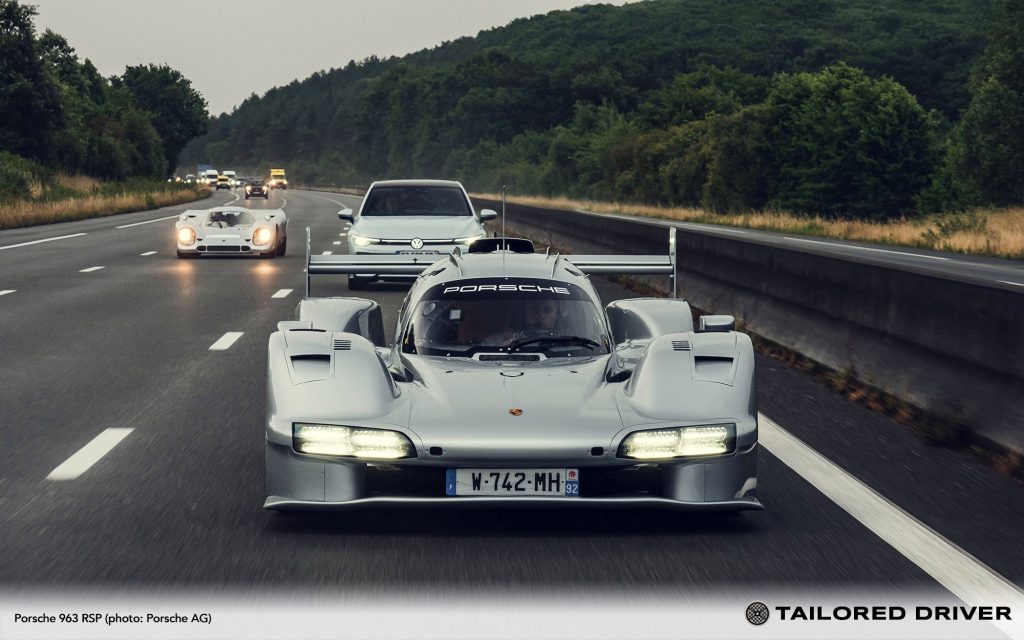
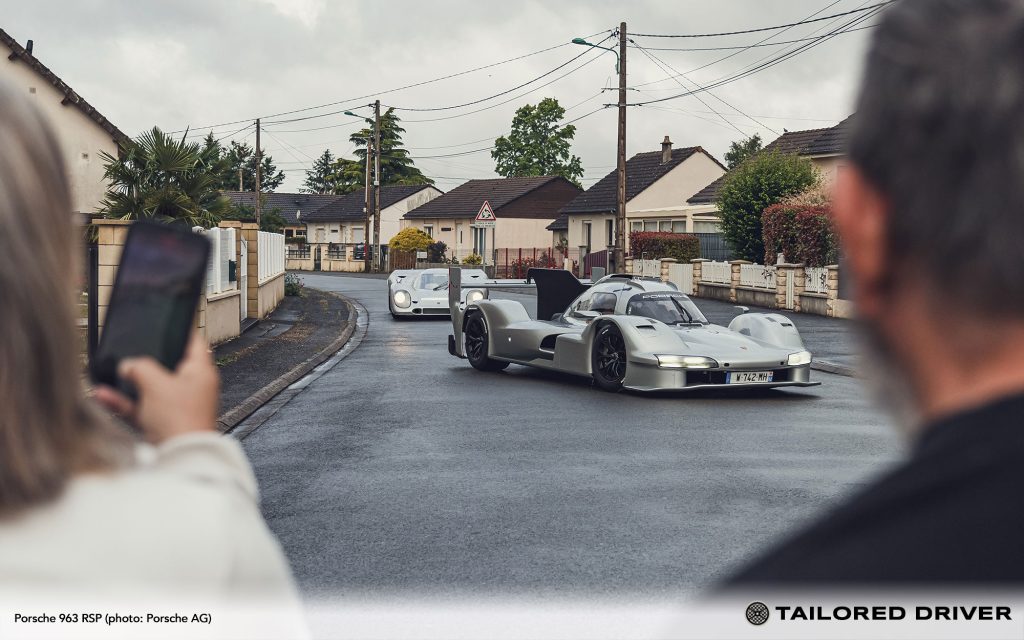
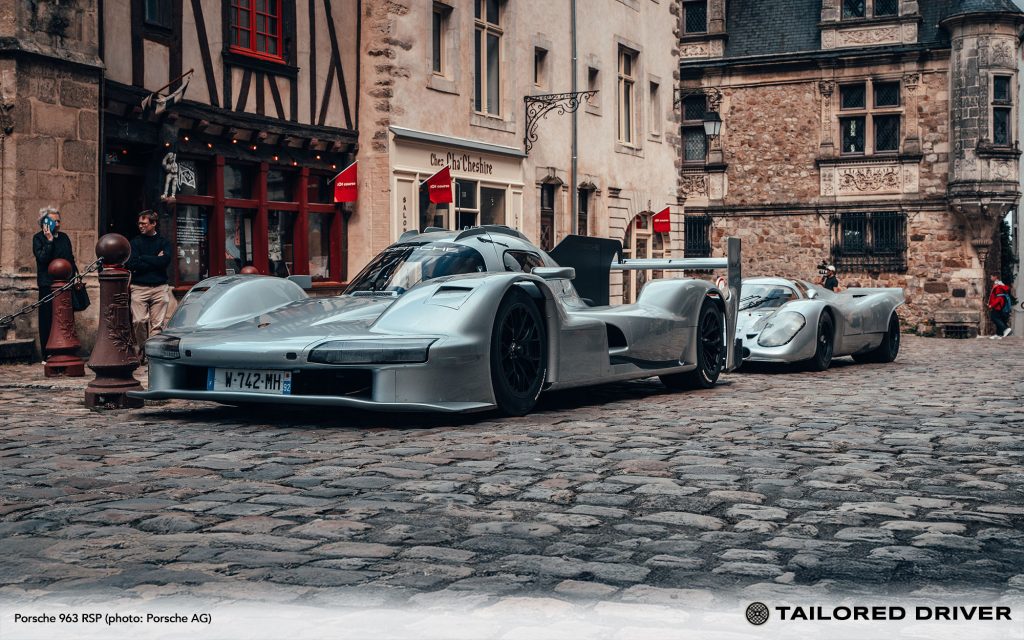
With these changes completed, the car met the necessary requirements to be allowed to wear registration plates under special permission from the French authorities. For the 963, there was no need to ring up the Alabama’s D.O.T. and the 963 was allowed to debut on the streets around Le Mans to the delight of the Automobile Club de l’Ouest (ACO) that runs Le Mans and no doubt every other racing enthusiast who caught it driving by.
“That was an experience that will stay with me for a lifetime,” said Timo Bernhard, who piloted the 963 RSP for the debut. “Driving down a public road with a 917 beside me – it felt unreal. The car behaved perfectly – it felt a little friendlier and more forgiving than the normal 963 – and felt super special and a lot more comfortable, especially as I was not needing all my safety gear.”
“We have enjoyed a terrific relationship with Porsche dating back to 1972. The Porsche 917/30, in particular, was one of the greatest eras in Team Penske history with numerous wins and championships, along with the closed-course speed record set by Mark Donohue in 1975,” said Roger Penske, Chairman of the Penske Corporation. “With such a remarkable partnership continuing to this day, we felt it was time to create the most exciting car we could imagine. Just like the 917, I wanted this car to be authentic to its origin and have as few changes to it as possible. When we got into the project, the differences in the two generations of race cars provided a great challenge. What emerged is a car that has lost none of its edge and is exciting whether on the track or on the road.”
The 963 RSP will be on display at the Circuit de la Sarthe for this year’s 24 Hours of Le Mans. Following the race, it will go to Stuttgart and take a spot at the Porsche Museum. Then, in July, the car will appear with the 917 at the Goodwood Festival of Speed.
Photo Gallery
963 RSP DEEP DIVE, THE PROCESS AS COMMUNICATED BY PORSCHE
[SOURCE: PORSCHE AG]
Design process – exterior:
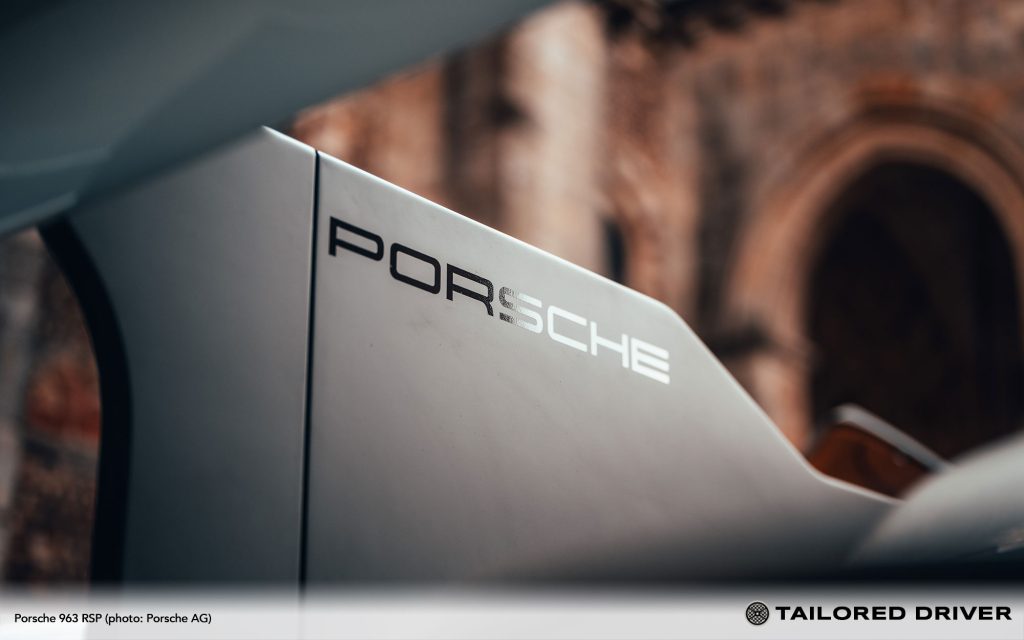
With the concept established, the Sonderwunsch team in Zuffenhausen began translating the idea to reality in cooperation with the Sonderwunsch colleagues at Porsche Classic in Atlanta – a standalone facility opened in 2023. Drawing on the changes selected by Count Rossi in 1975, Grant Larson, Director of Special Projects at Style Porsche, and his designers envisioned a 963 that would stay as close as possible to the original car with a silver and black color pallet on the outside, and a tan leather and Alcantara mix for the interior. This extended to the decision to paint the car – as was the case with the 917 – rather than wrapping it, as is the norm with current race cars, and a significant challenge due to the Kevlar® and carbon fiber body construction. The paint to sample color – ‘Martini Silver’ – was verified from the records held by the Porsche Museum in Stuttgart-Zuffenhausen, with a triple-layer lacquer applied. Minor components such as hinges and wing connectors are all finished in satin black with a unique 3D printed ‘963 RSP’ created and applied to the rear of the car.
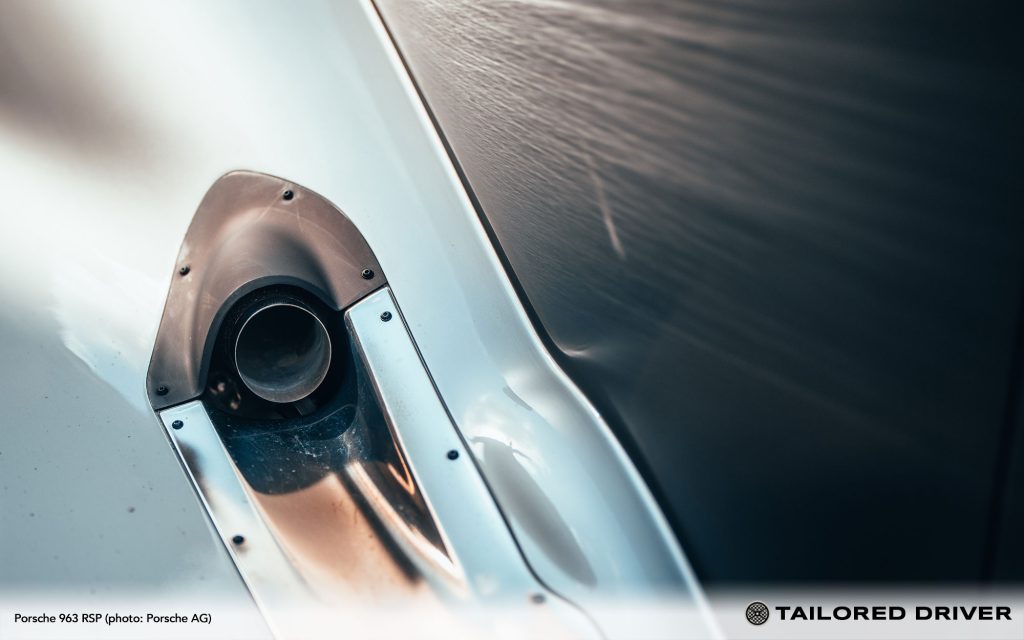
To closer align the 963 to the form of the 917, bodywork changes were made to the 963 RSP. These include the creation of unique fender vents – where otherwise the front and rear fender vents would be open. A collaboration between Sonderwunsch and Porsche Penske Motorsport, the vents were digitally rendered first before applied to the car, with the new design allowing air within the wheel wells to escape. Additionally, the carbon fiber blanking plates that sit within the rear wing – a requirement on the race car – were able to be removed for the 963 RSP.
Added to the nose of the car – replacing the graphic that is applied to all conventional 963s – was an enamel Porsche badge, a detailed shared with the 917.
A small detail change was the addition of 1970s-era Michelin logos for the tire walls, and rain-spec 18-inch tires over forged OZ racing wheels. Finally – and in another first – mounting points for front and rear license plates were added ahead of the car being driven on public roads to mark the 50th anniversary of the first street drive of the 917.
Design process – interior:
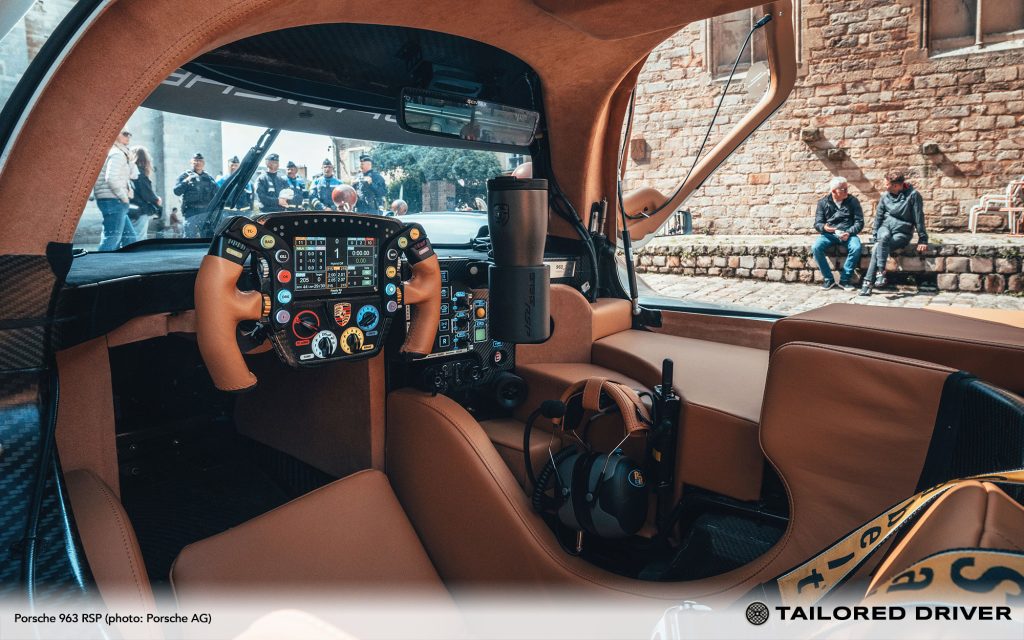
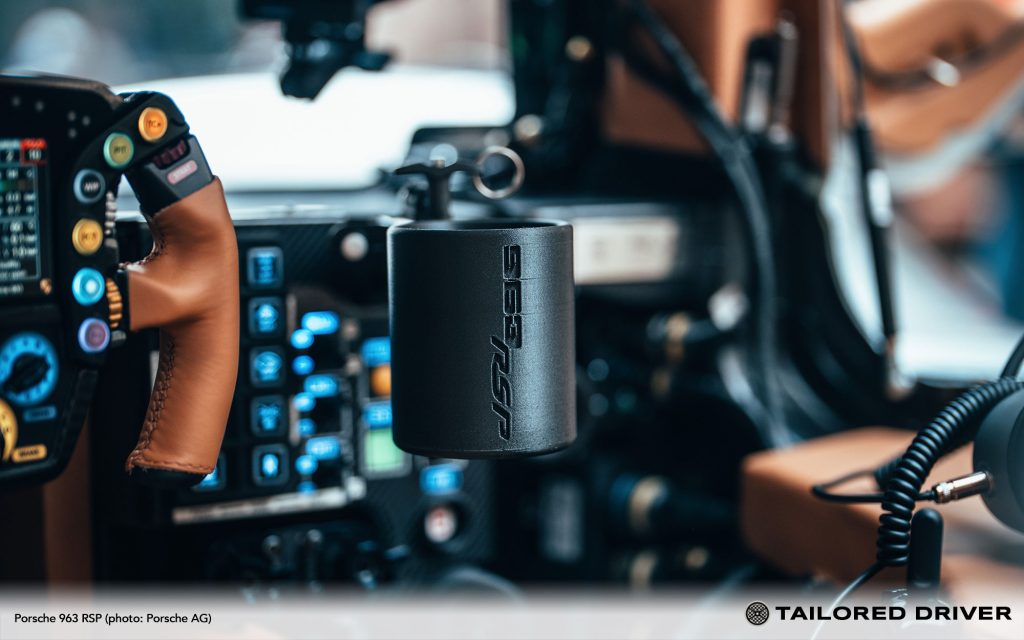
Possibly the greatest departure from the 963 race car occurs inside the 963 RSP. Following the lead of the handcrafted and completely bespoke interior of the 917 (which remains unrestored to this day) the 963 RSP features a mix of soft tan leather and Alcantara. Whereas the race car features very few comfort features, the 963 RSP is more accommodating – with the single piece carbon seat trimmed in leather with soft cushioning placed down the center and a fixed headrest mounted on the carbon fiber bulkhead. The seats are – in common with the race version – air conditioned. The leg cushions in the footwell as well as the roof lining and pillars have been retrimmed in light Alcantara while the steering wheel – where the majority of the vehicle’s functions are located – has been finished in leather. A light-hearted addition is a detachable 3D-printed cup holder capable of securely holding a Porsche travel mug.
Next to the driver, a new trimmed panel provides a location for the car’s Peltor headset and steering wheel when not in use as well as a platform for the laptop that starts and assists in the operation of the car and Roger Penske’s custom carbon crash helmet.
While the color of design of the interior are obvious references to the 917, more subtle design elements can be found – among them bespoke end plates for the ventilation system which mimic the styling of the fan on top of the 917’s flat-12 engine.
The doors are finished in leather and Alcantara, with a small alloy plaque set into one of them denoting the chassis number and the date and location of construction.
Mechanical changes:
The ride height of the car was raised to its maximum available setting to accommodate road use, while the adjustable Multimatic DSSV dampers designed for racing prototypes are in their softest setting to create a more compliant ride.
The control unit was modified to allow the car to operate turn signals and allow the headlights to be adjusted for road. The hybrid V8 powertrain with a lithium-ion battery – capable of being run on electrical power only – remains in standard race tune in the 963 RSP, but power delivery from the MGU has been remapped to provide smooth delivery more appropriate for road use versus race competition The powertrain was also re-mapped to be capable of running on pump gas – a significant undertaking for the team.
Finishing touches:
Accompanying the 963 RSP are a custom fitted carbon crash helmet with Martini Silver accents to match the car, and a bespoke Snap On toolset with a chest bearing accents in the same color, a plaque commemorating the project and its namesake, and handles wrapped in the same leather used in the interior of the car. The drawers also feature custom foam inserts to carry tools and special equipment necessary to start, service and operate the car.
While capable of being driven on the road under special circumstances and in accordance with local requirements (the modifications to the car allowed it to use French ‘W’ or manufacturer license plates for its debut), the 963 RSP is not a homologated addition to the Porsche model line-up and is intended to remain a very special one-off.
The powertrain of the 963:
The 963 is powered by a 4.6 liter twin-turbocharged V8 making up to approximately 680 hp that has its origins in the RS Spyder race program operated by Penske which claimed all titles in the LMP2 class of the American Le Mans Series from 2006 to 2008. The engine was enlarged from 3.4 to 4.6 liters and then used in the limited-production 918 Spyder road car, which debuted in 2013. The flat crankshaft and short stroke of the engine allow for a low mounting point, helping to optimize the center of gravity of the car. While the 918 Spyder used the engine in naturally aspirated form, the 963 pairs it with two turbochargers provided by the Dutch manufacturer Van der Lee. These turbochargers generate very moderate boost pressure and are mounted on the hot side of the engine, optimizing throttle response. Overall, around 80 percent of the engine components in the 963 are shared with the 918 Spyder, which was already designed to work together with a hybrid system.
The standardized components of the electric boost system are supplied by Bosch (motor generator unit, electronics and software) and Williams Advanced Engineering (high-voltage battery). The motor generator unit (MGU), which is responsible for the power output and recuperation under braking at the rear axle, works in direct interaction with the sequential seven-speed gearbox from Xtrac. The MGU sits in the bell housing between the combustion engine and the gearbox.
The hybrid’s entire electrical system produces up to 800 volts. The uniform battery has an energy capacity of 1.35 kWh, which can be mobilized at any time under acceleration. An output of 30 to 50 kW is available in short bursts but does not change the overall output of the powertrain. When the thrust of the MGU kicks in, the power of the combustion engine, which can reach over 8,000 rpm (depending on the BoP), automatically decreases.
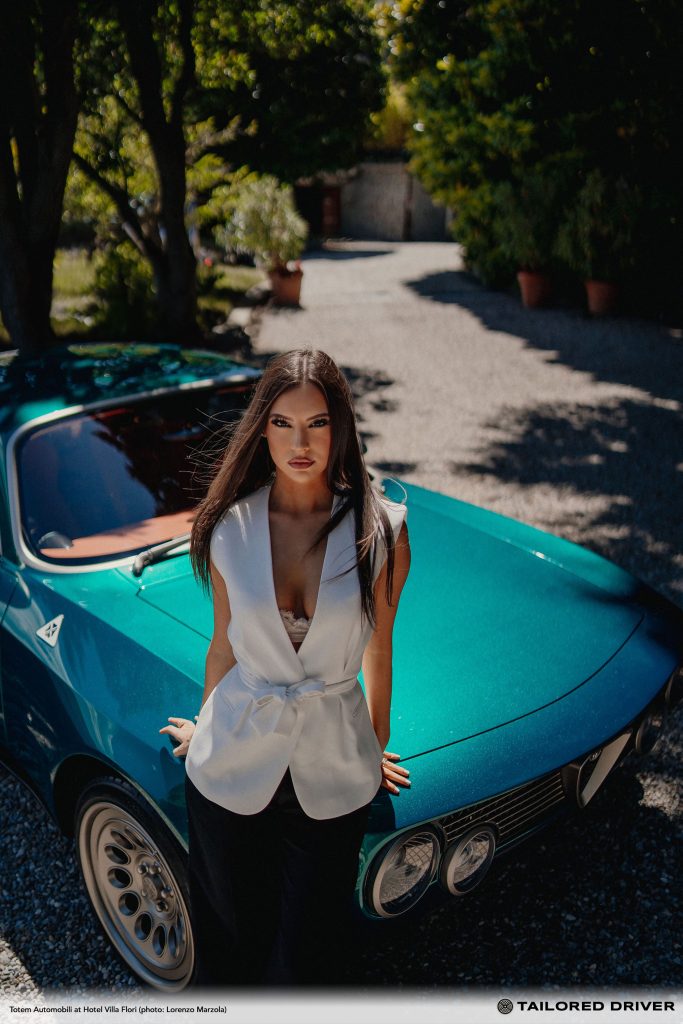
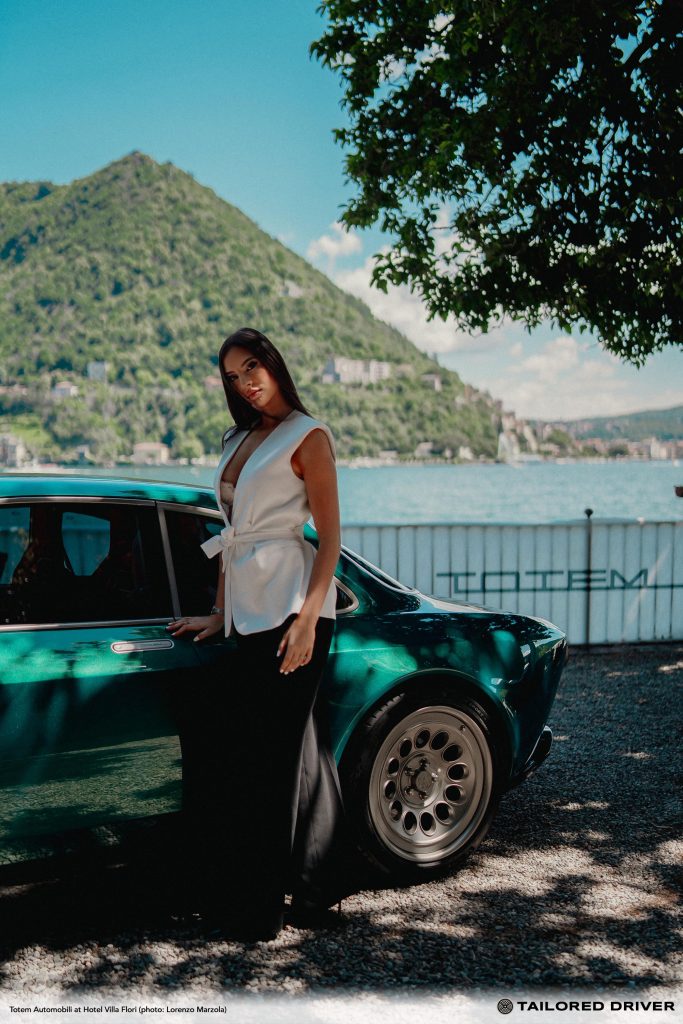
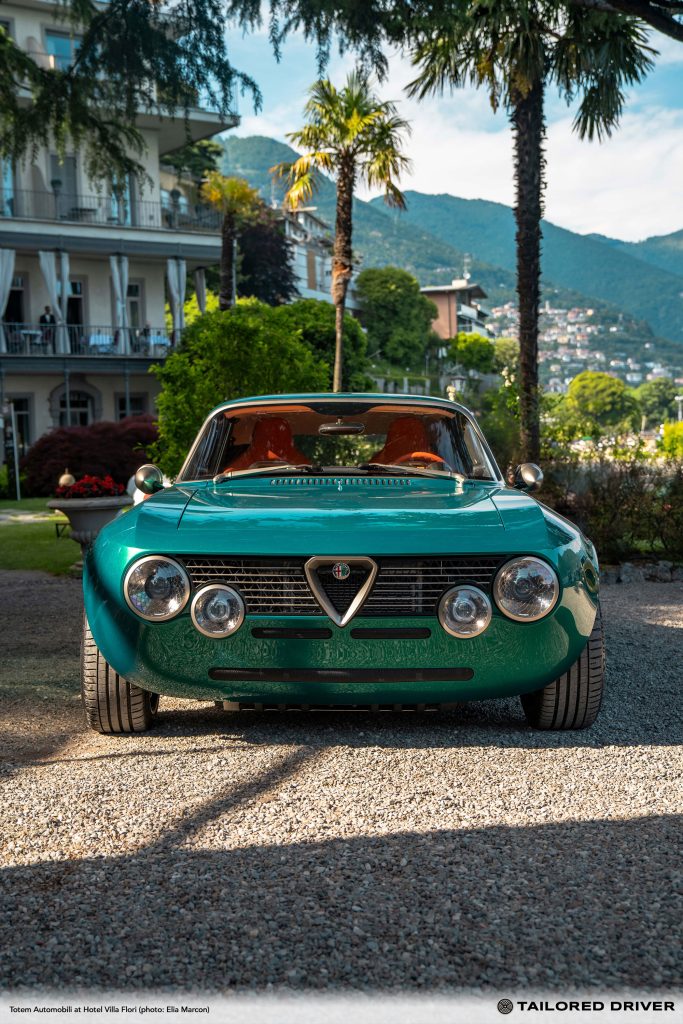
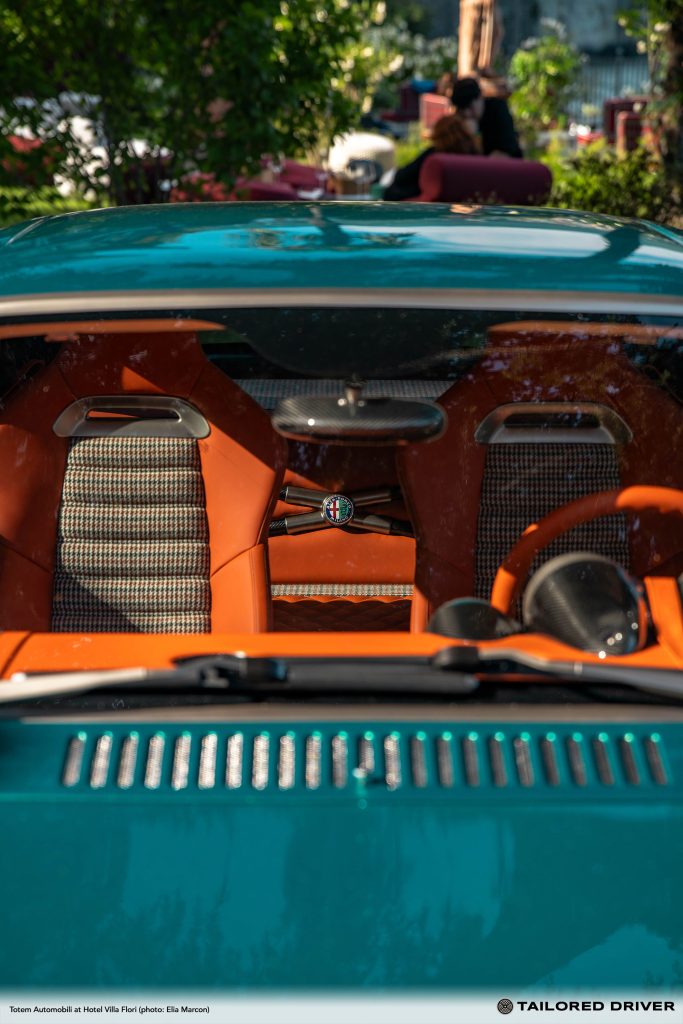
For Totem Automobili, the star of the 2025 Concorso d’Eleganza Villa d’Este weekend was “Persephone”, their latest commission and GTSuper No. 10. That it sat in the garden of Villa Condulmar, a 17th-century Venetian estate located minutes from the firm’s Treviso atelier was also significant as it marked the beginning of a new partnership between the Alfa Romeo remastering company and this beautiful space.
For Totem, Villa Condulmar will play a part as a venue for public and private events. Figure exclusive gatherings reserved for clientele.
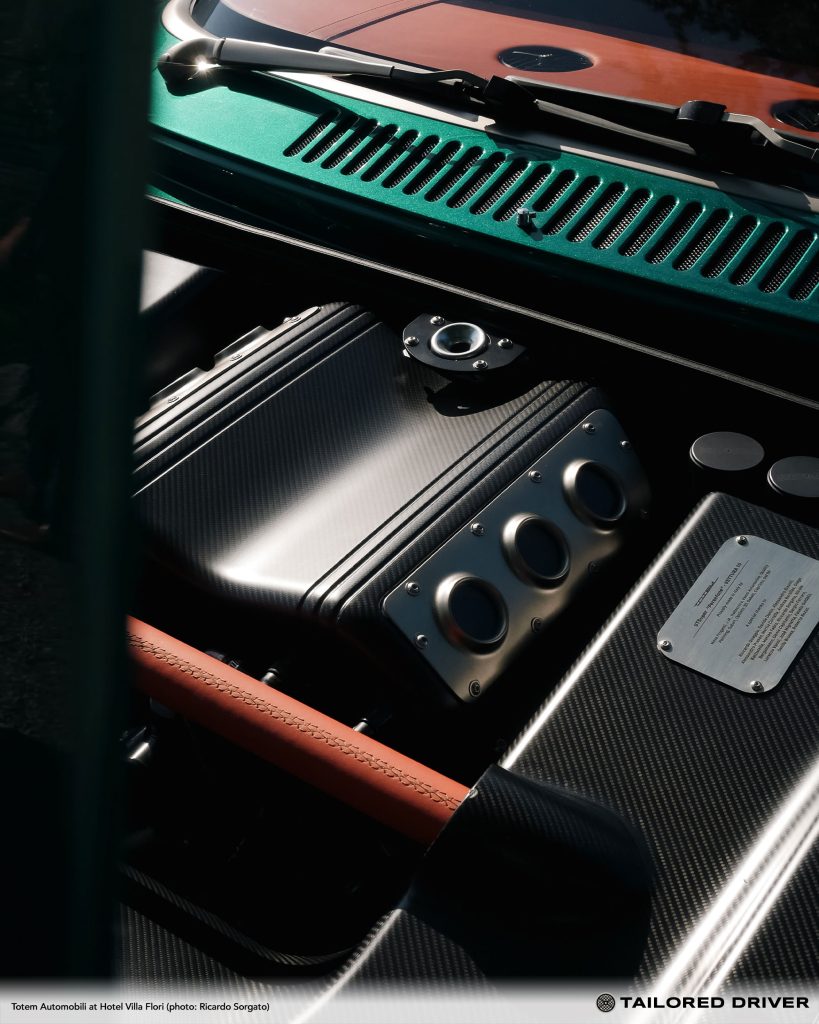
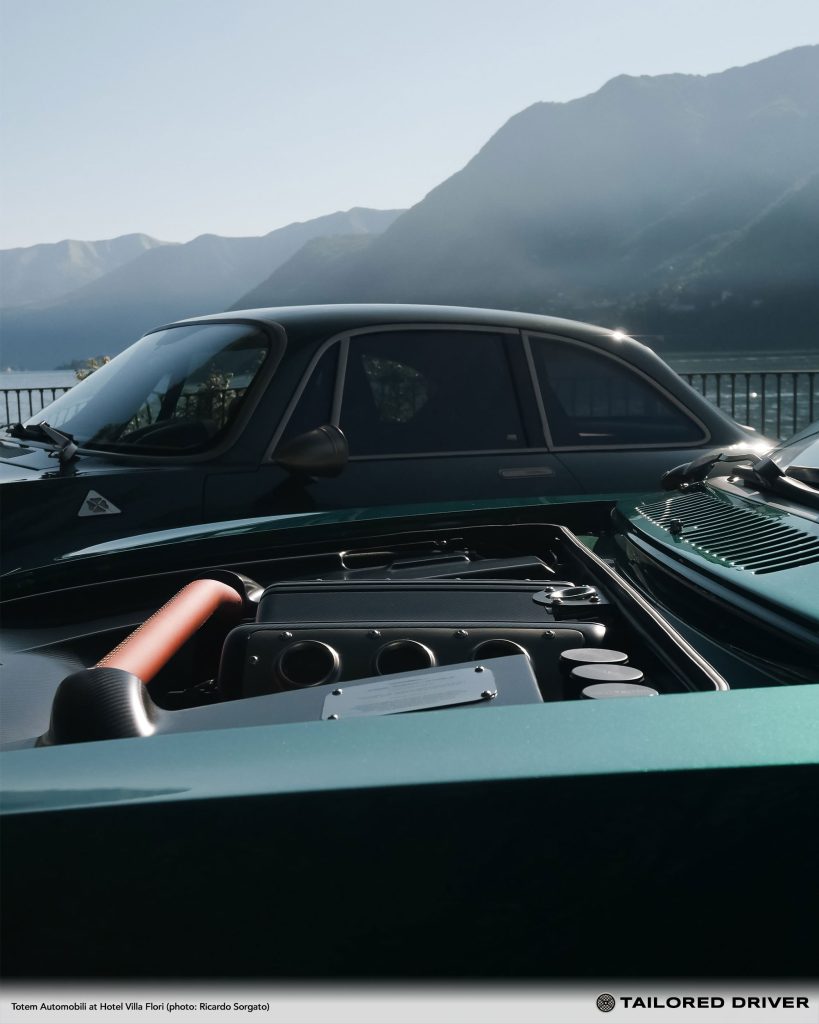
AS for “Persephone”, at its heart is a 2.8-liter twin turbo V6 rated at 640 hp sourced from Italtecnica and paired to a 6-speed manual gearbox with gated shifter.
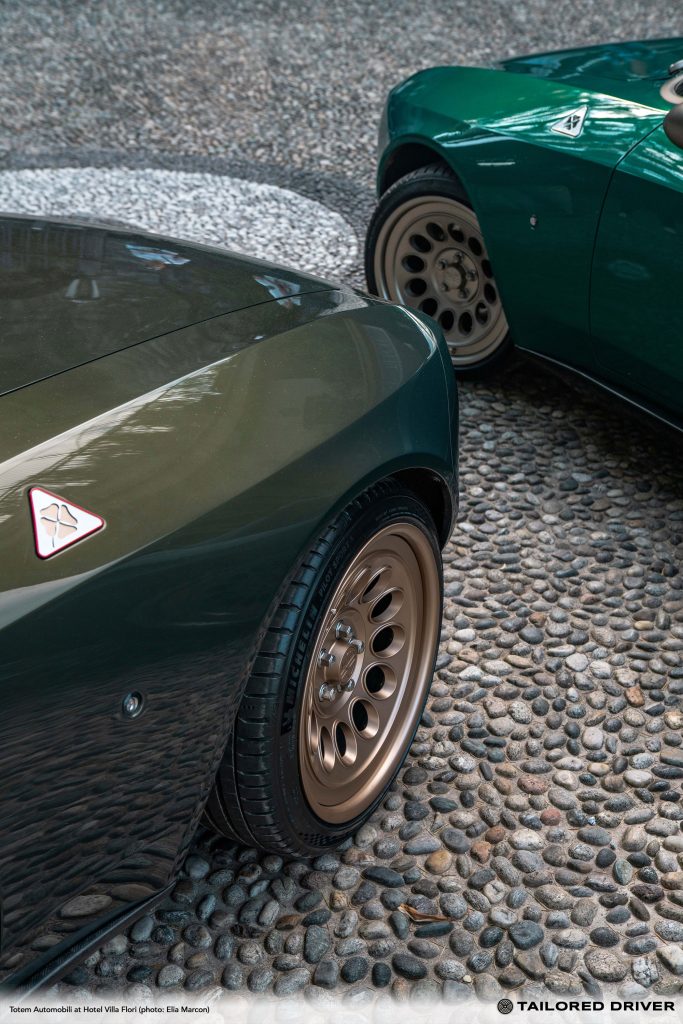
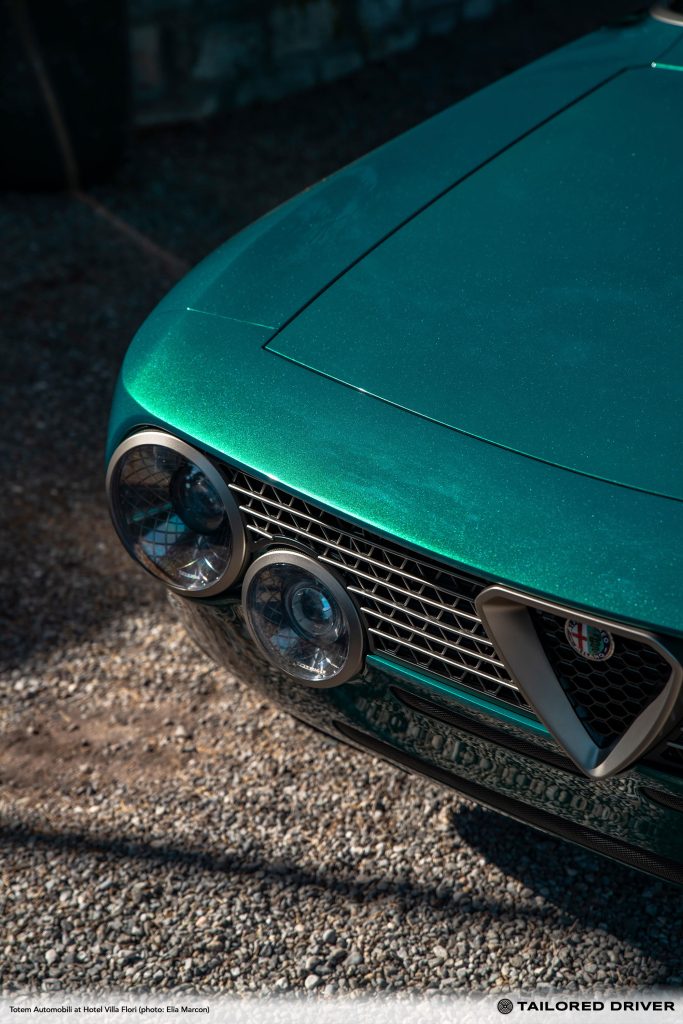
The color is “Verde Pino”, a historic color and favorite of Totem Automobili. The handsome wheels that hark a great era at Alfa Romeo are machined from solid billet and finished in nickel.
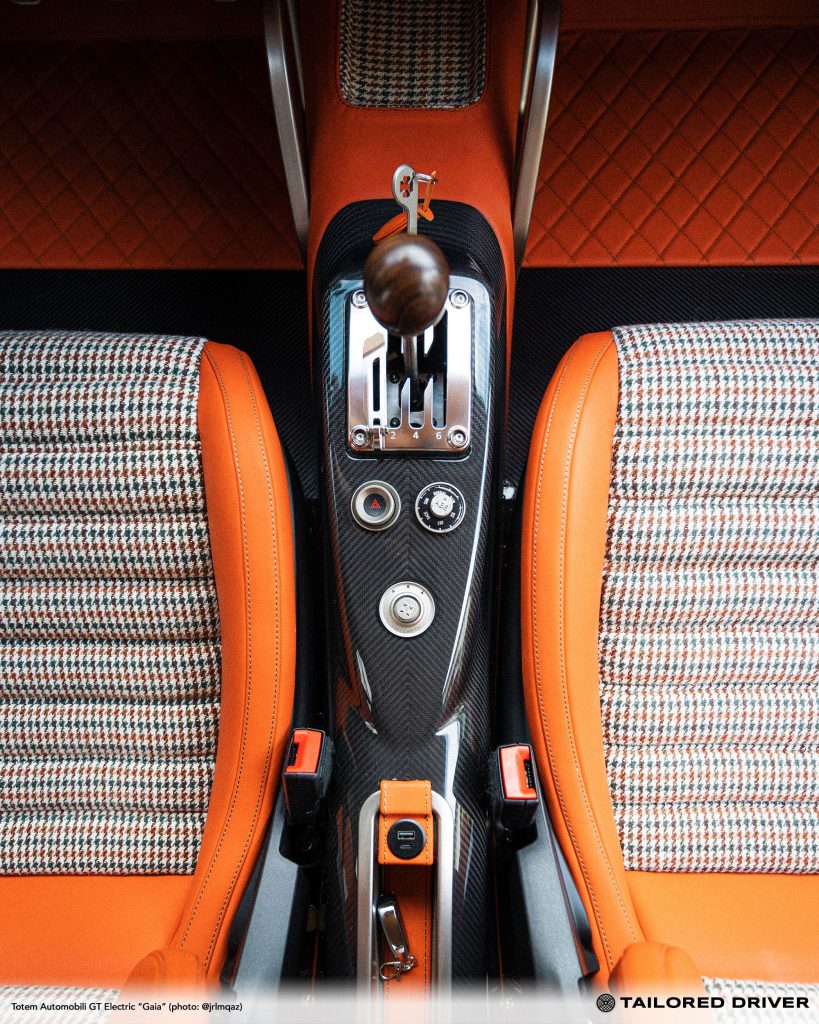
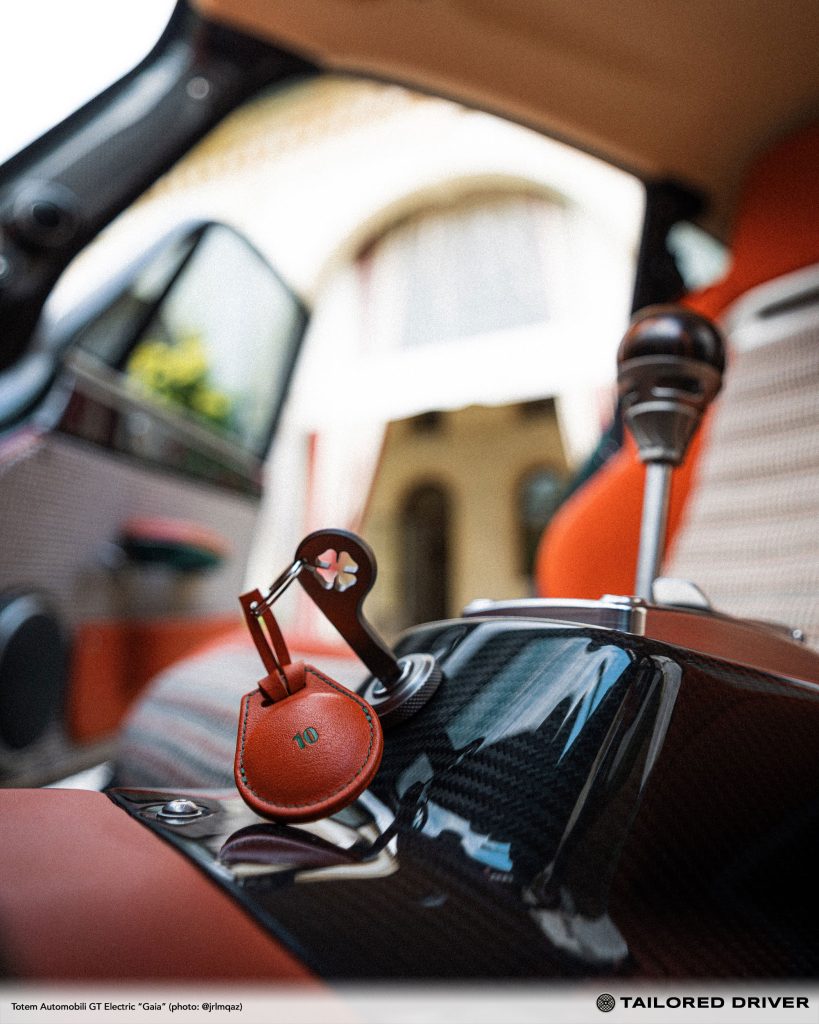
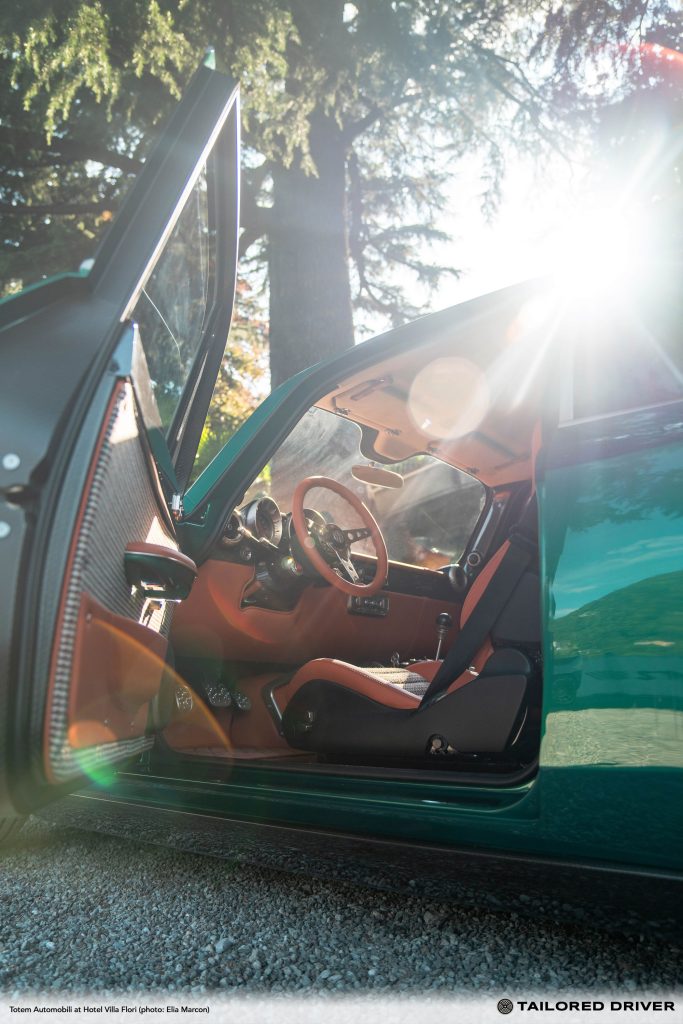
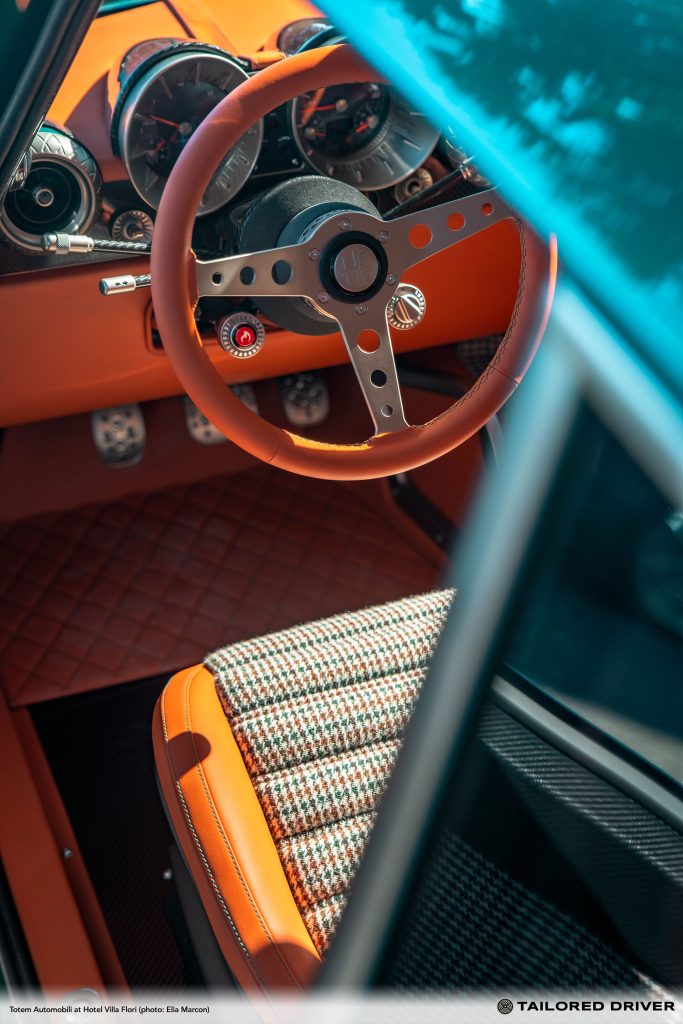
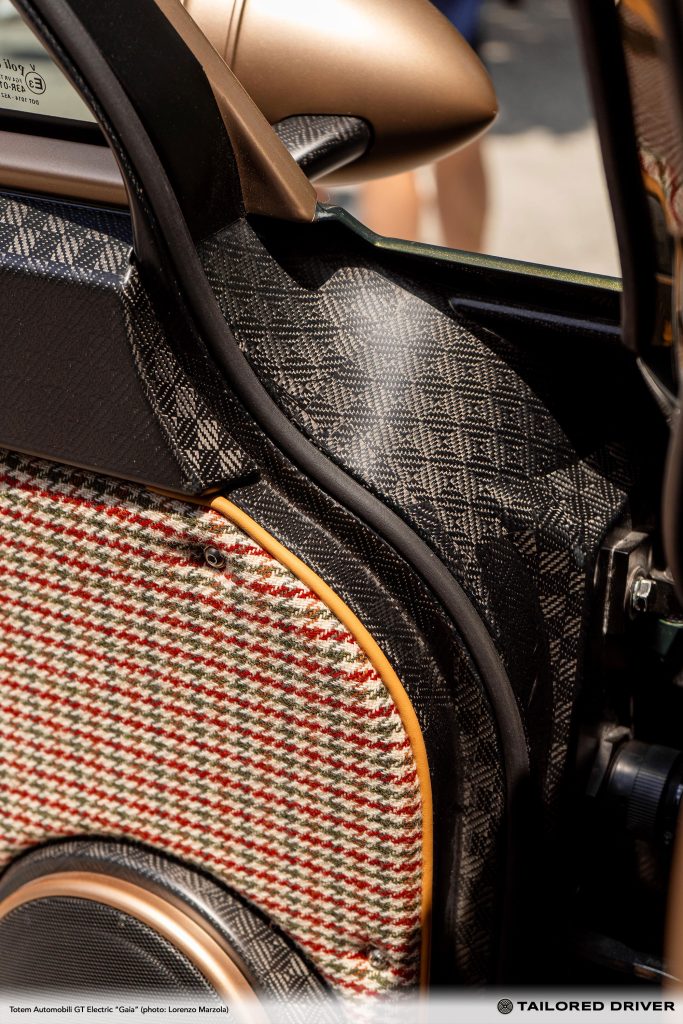
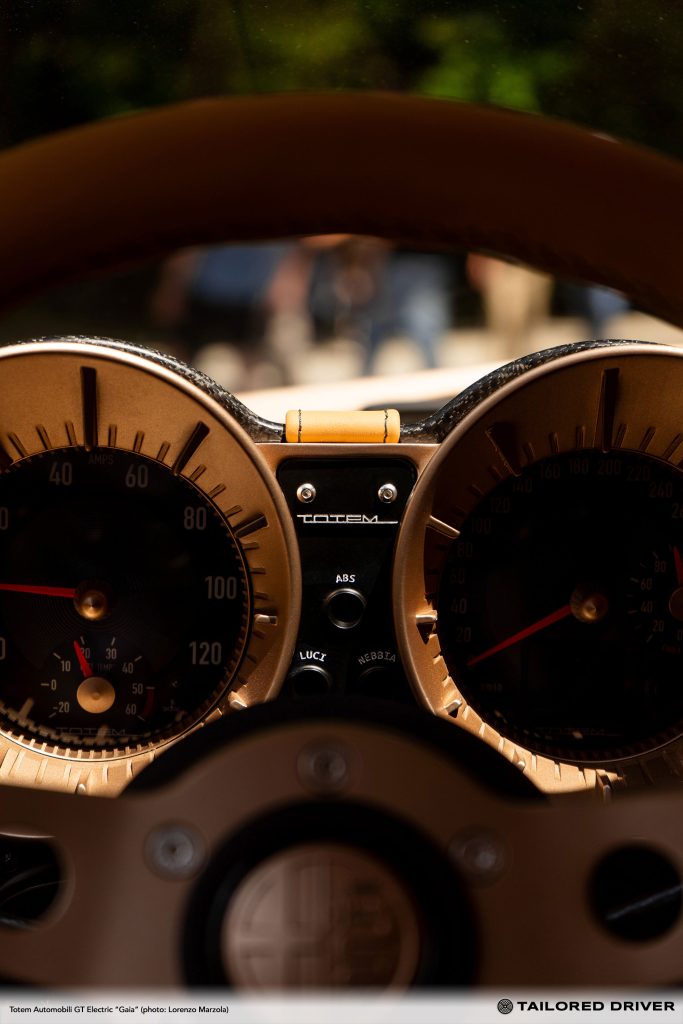
Inside, the color orange adorns the nappa leather, while pied de pool fabric seat inserts accent it beautifully. Carbon fiber also takes a prominent place in the cabin, finished in high gloss in all configurable components. Also inside is the latest evolution of they firm’s instrument cluster, introduced in their third ever build though now showing a more intricate designs.
PHOTO GALLERY
PRESS RELEASE
TOTEM AUTOMOBILI UNVEILS “PERSEPHONE”
source: Totem Automobili
Totem Automobili is proud to present “Persephone”, GTSuper No. 10 — a creation that embodies the technical refinement, aesthetic purity, and artisanal craftsmanship at the heart of every Totem project. This occasion also marks a significant milestone for the company: the beginning of an official partnership with Villa Condulmer, a magnificent 17th-century Venetian estate located just minutes from our Treviso atelier.
Villa Condulmer will serve as a distinguished venue for both public and private events hosted by Totem. These gatherings, particularly the private ones, will be highly exclusive — reserved for our international clientele seeking a truly immersive Italian experience. We extend our sincere gratitude to the Monti family, proprietors of this remarkable villa, for supporting our mission: to promote and safeguard Italy’s cultural and historical heritage around the world.
“Persephone” is as unique as the setting in which it was unveiled — a car whose creation demanded exceptional commitment from our entire supply chain, with a final result that reflects the collective excellence of every contributor.
Powering the car is the “Gloria” engine: a 2.8-liter twin-turbo V6 delivering 640 horsepower, paired with a six-speed manual gearbox featuring an open-gate shifter. The body is finished in a special triple-layer metallic paint, inspired by the legendary “Verde Pino” — a historic shade that graced some of the most beautiful classic cars ever built.
The interior showcases premium orange nappa leather and hand-crafted pied de poule fabric inserts, produced in Florence on a bespoke basis for each vehicle to match its unique configuration. This particular unit also features the latest version of our instrument cluster, introduced starting from car No. 3, now more intricate and refined than ever before.
Exterior trims and wheels — the latter machined from solid billet locally — are finished in a bespoke Nickel coating. Meanwhile, the carbon fiber used throughout the interior and in all configurable components displays a traditional weave and high-gloss finish, a stylistic homage to the golden age of automotive design that inspired this model.
“Persephone” is not only a technical and aesthetic milestone, but also a manifesto of our dedication to merging timeless beauty with cutting-edge innovation.
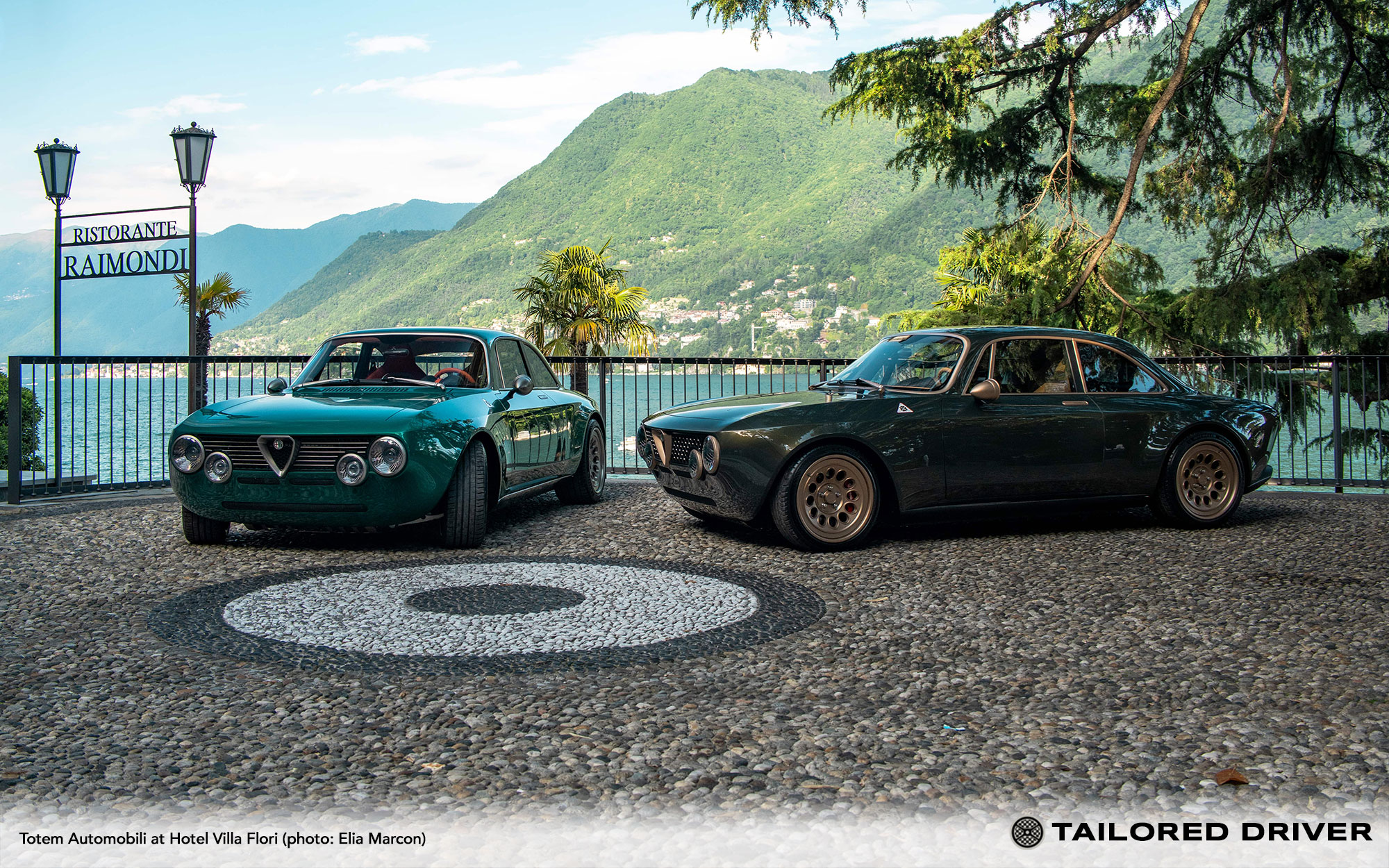
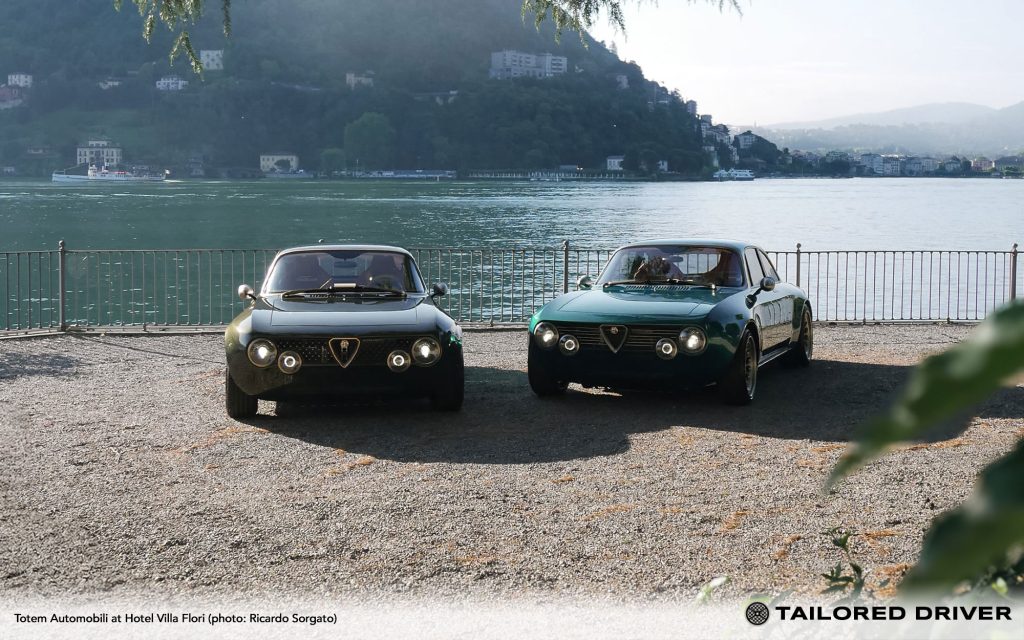
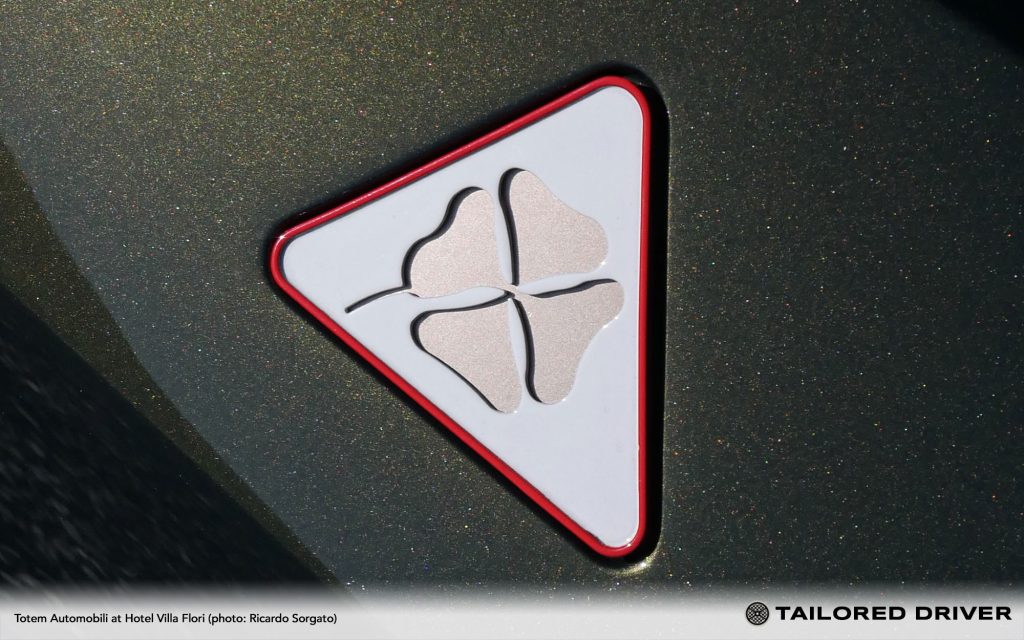
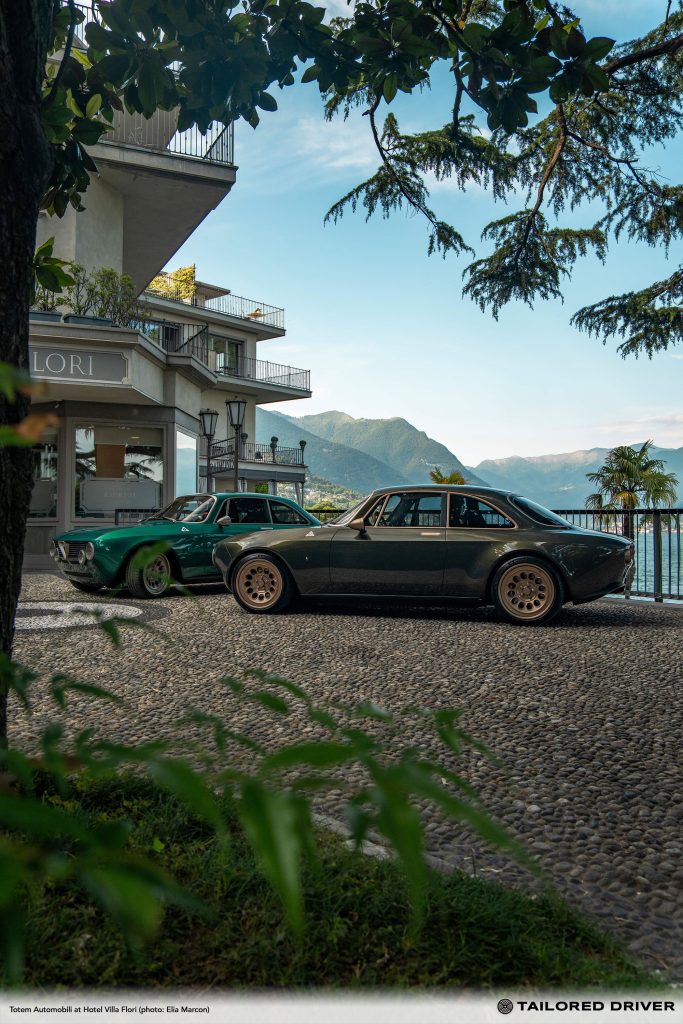
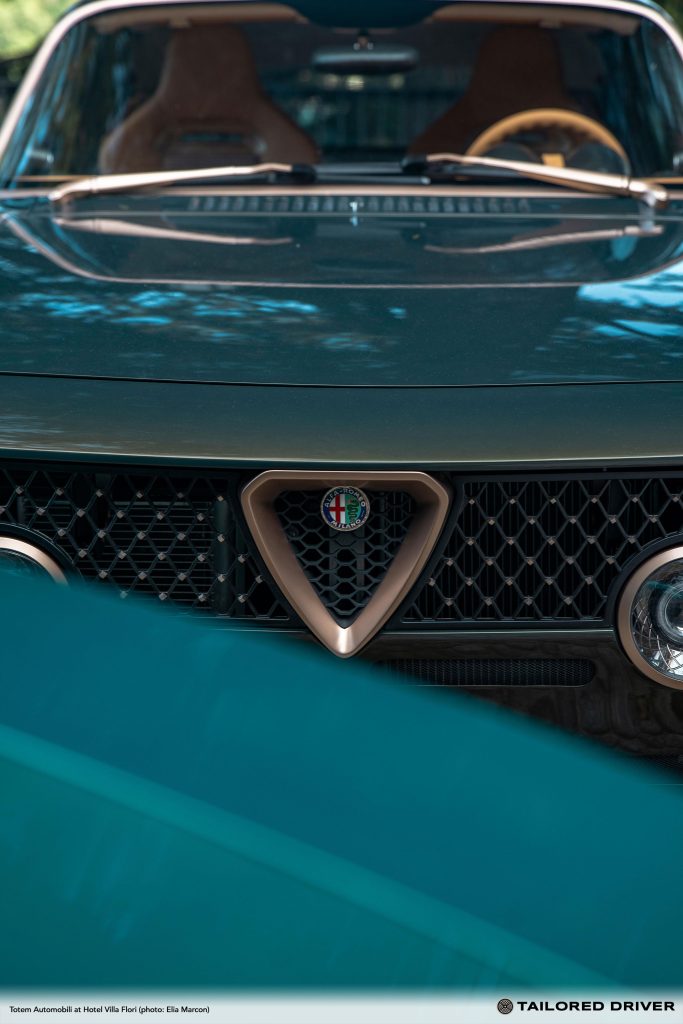
If you need another reason to add the Concorso d’Eleganza Villa d’Este to your bucket list, perhaps these photos of Totem Automobili’s latest GT Super known dubbed “Persephone” will help seal the deal. The illustrious Alfa Romeo remastering firm displayed the car handsomely at Villa d’Este’s Giardino di Fuoriconcorso.
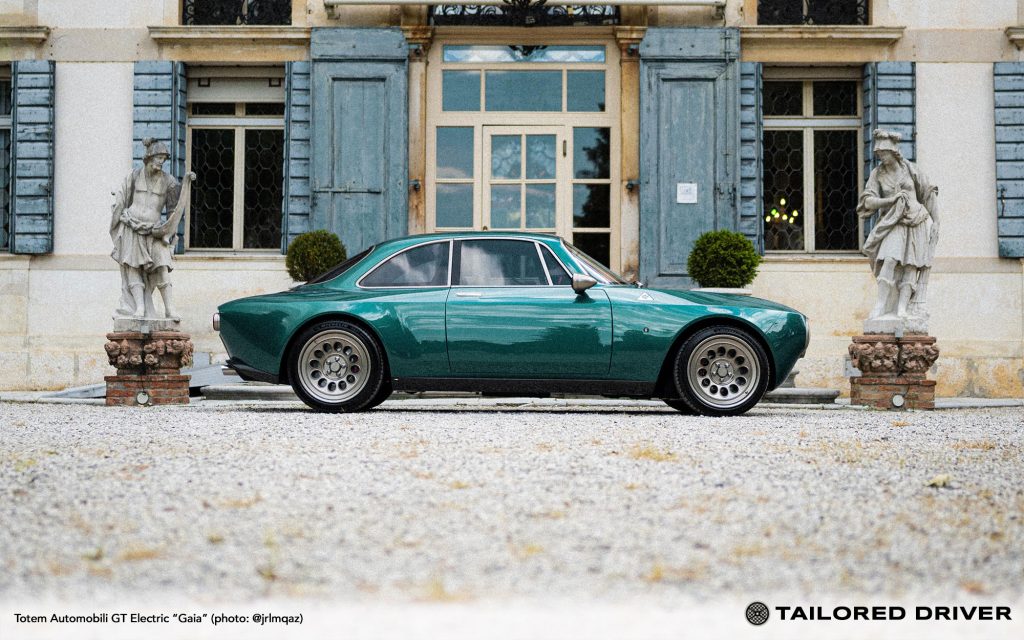
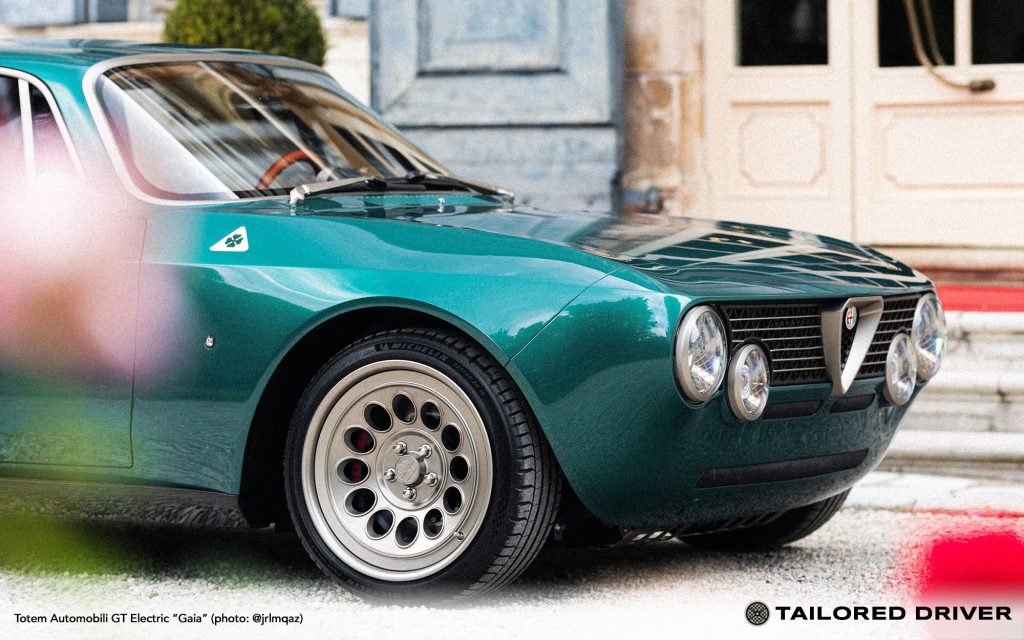
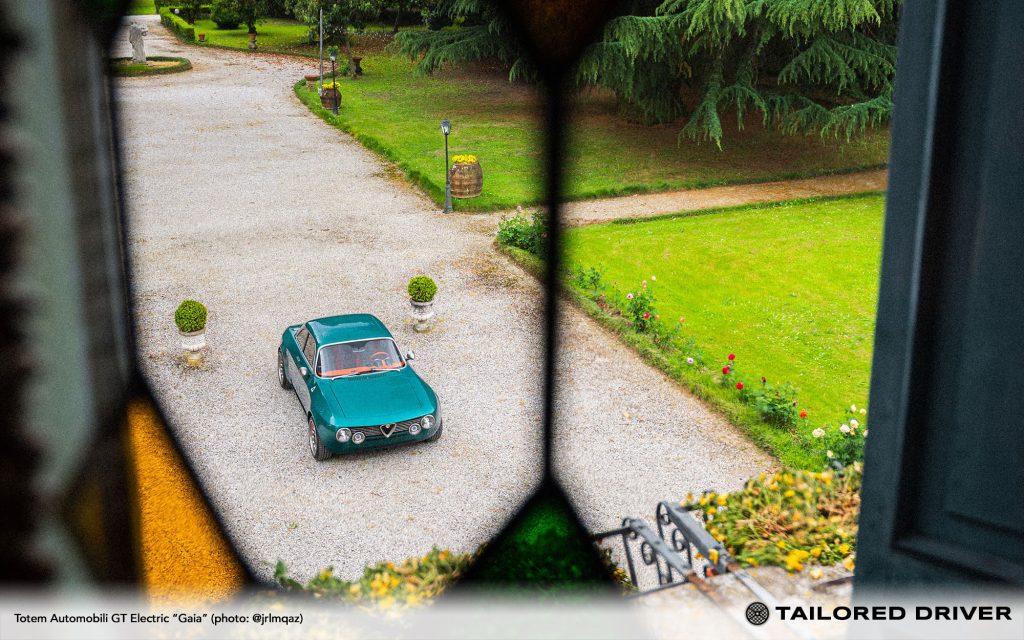
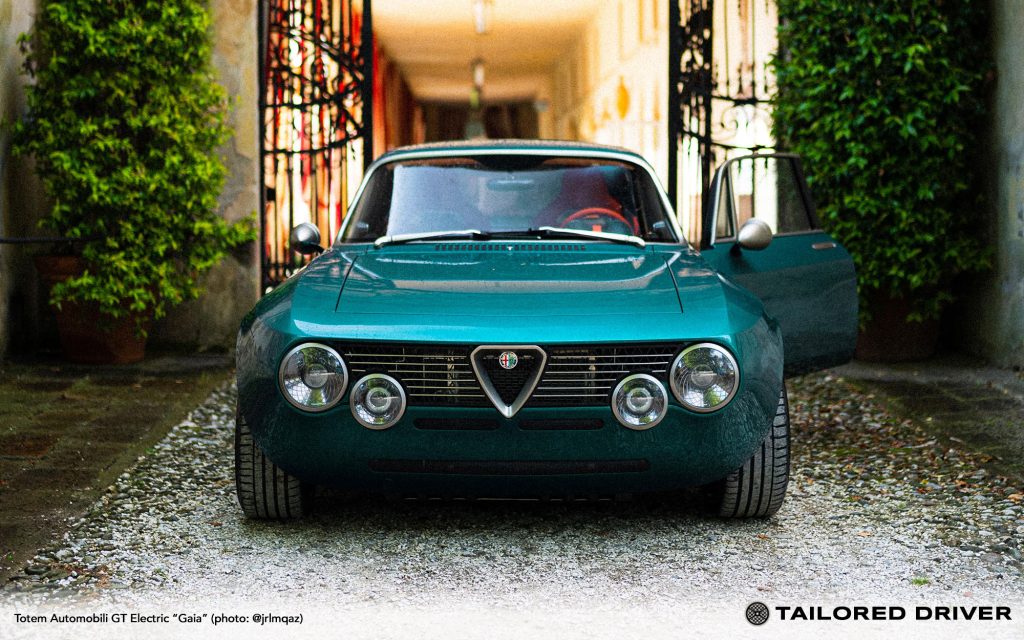
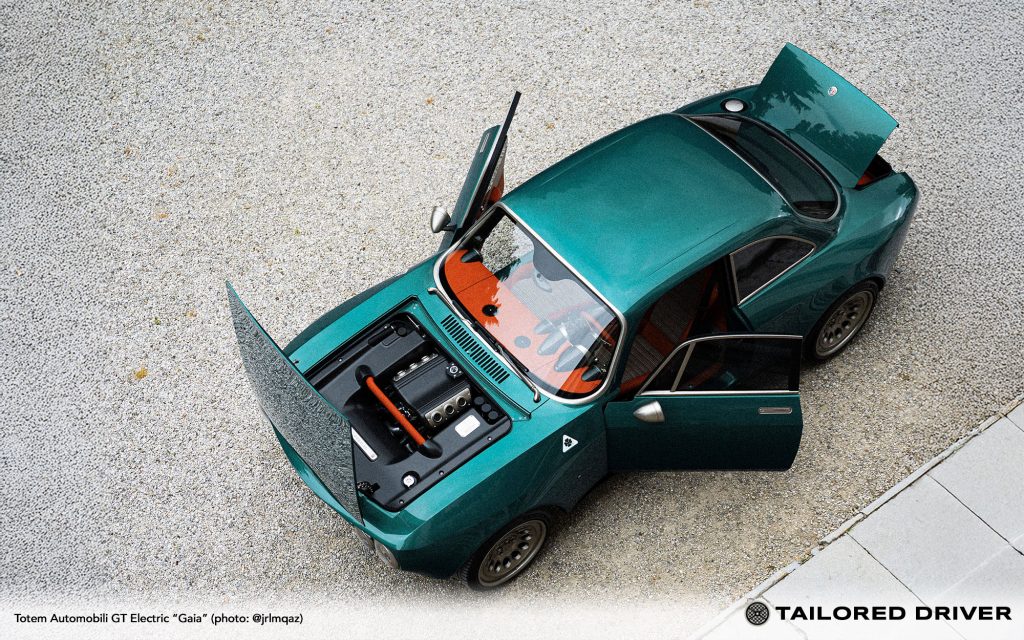
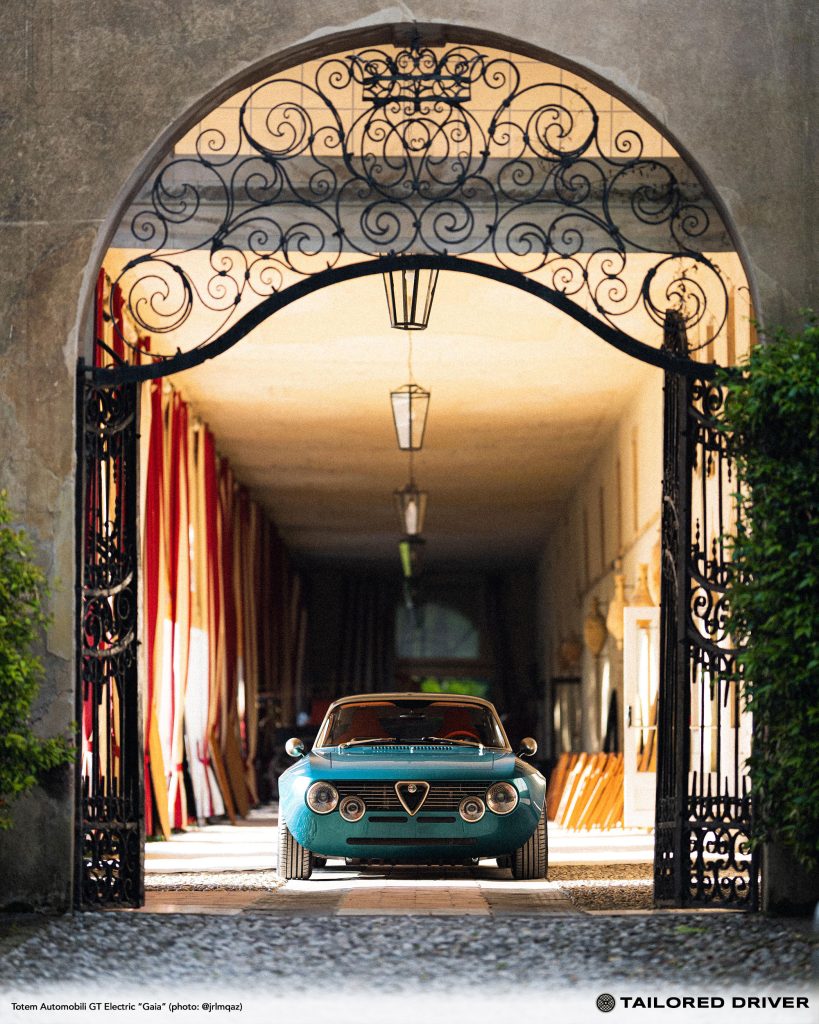
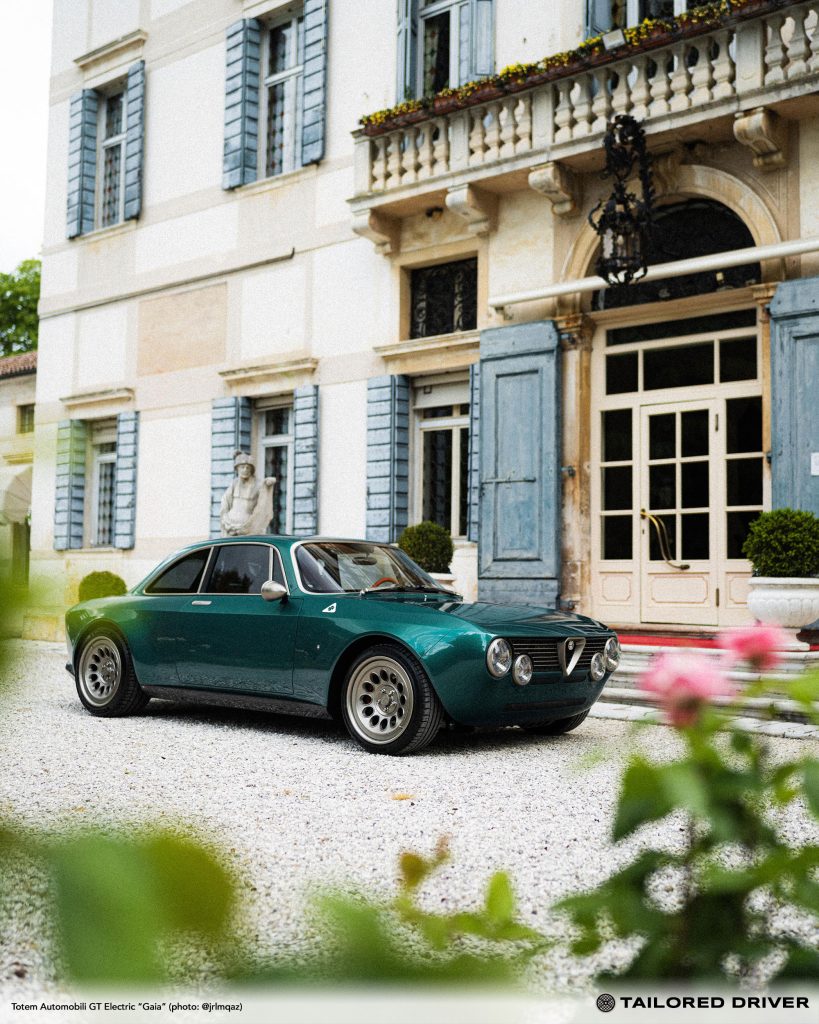
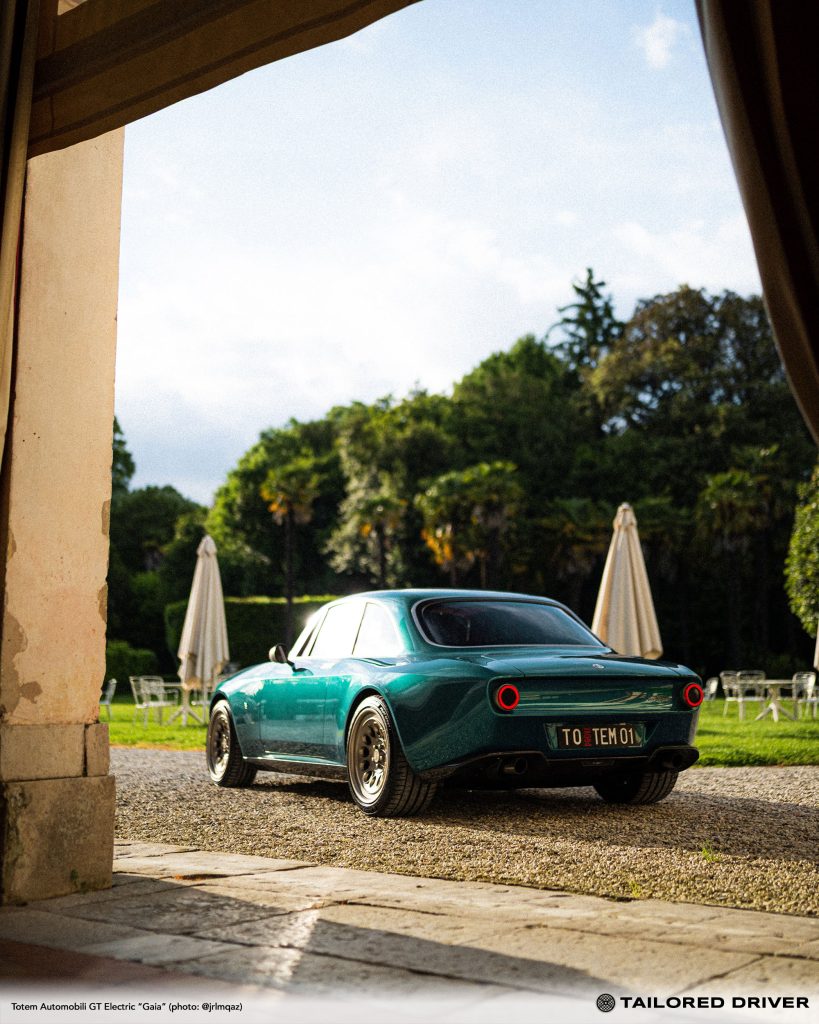
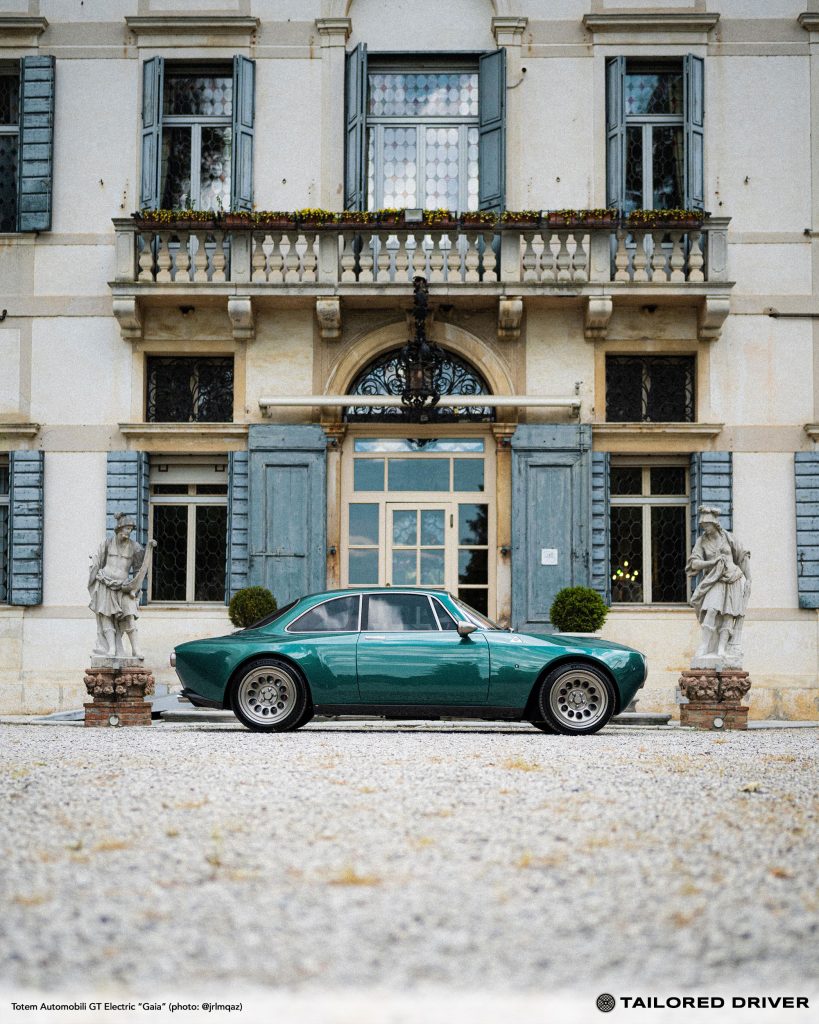
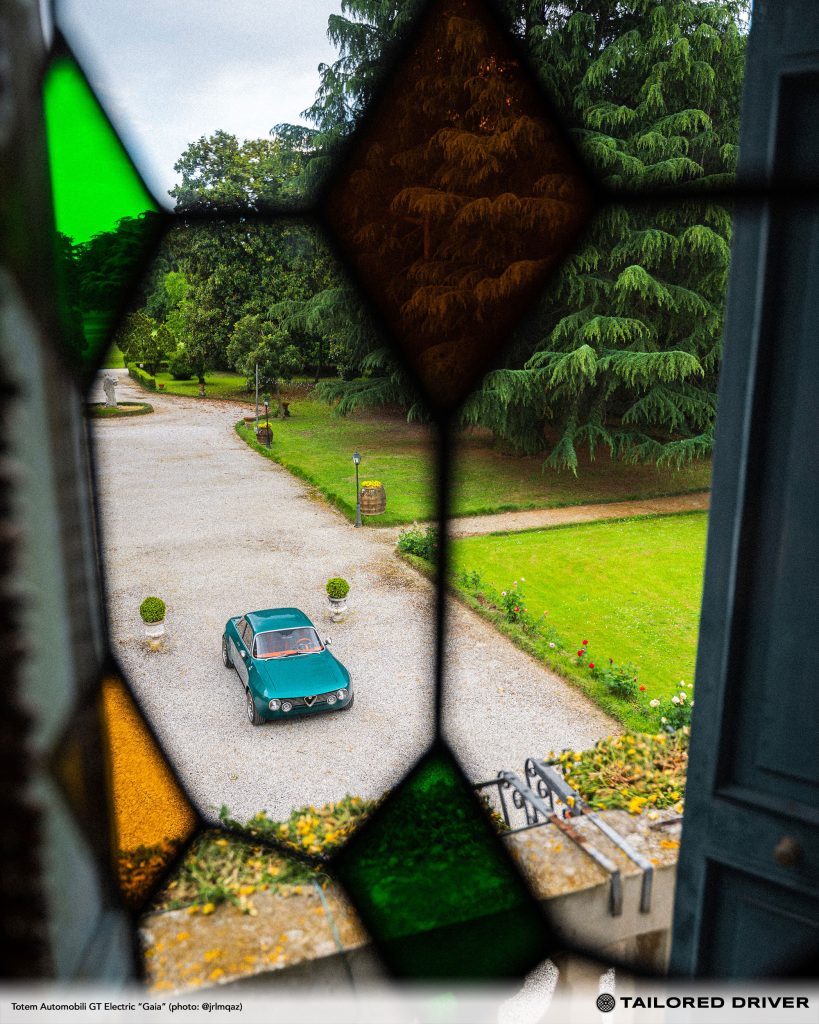
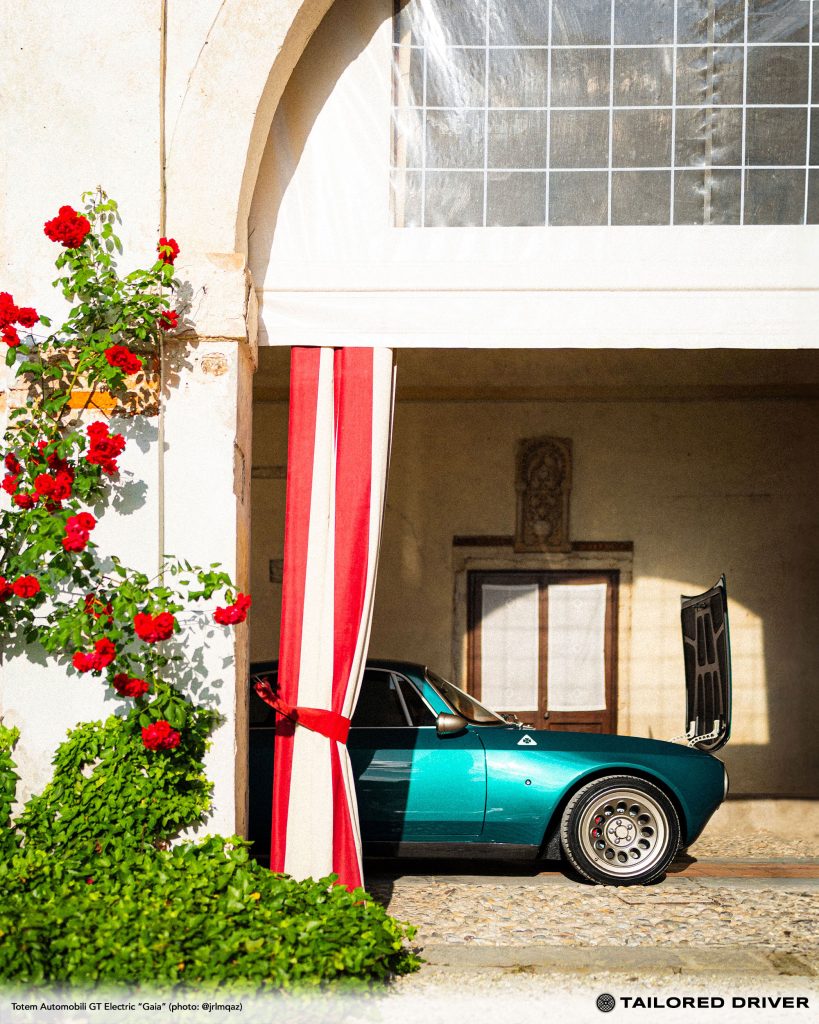
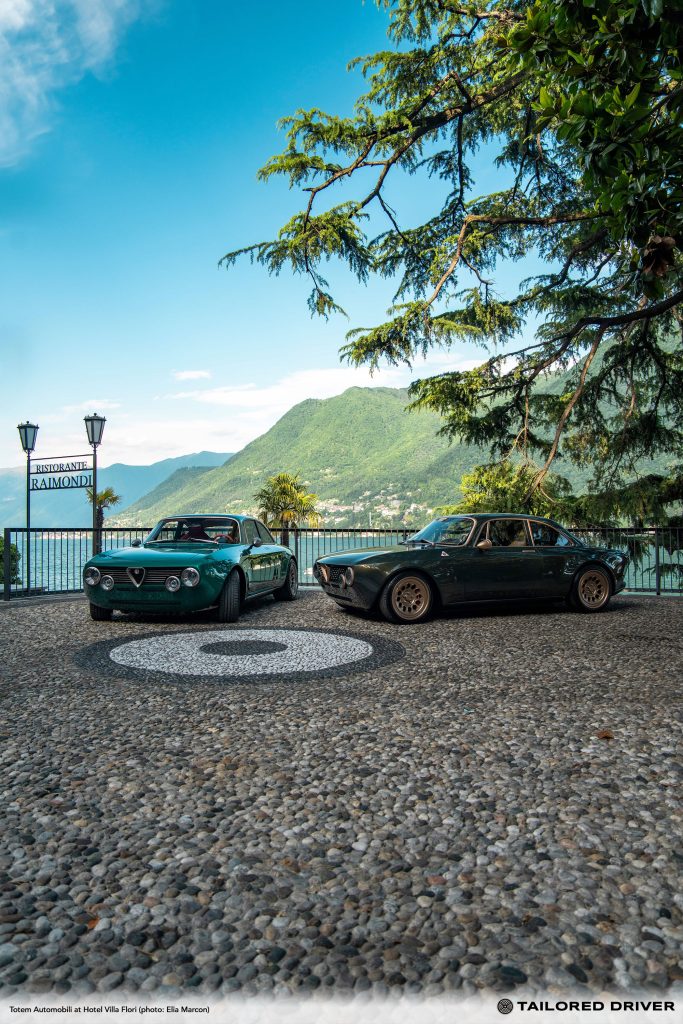
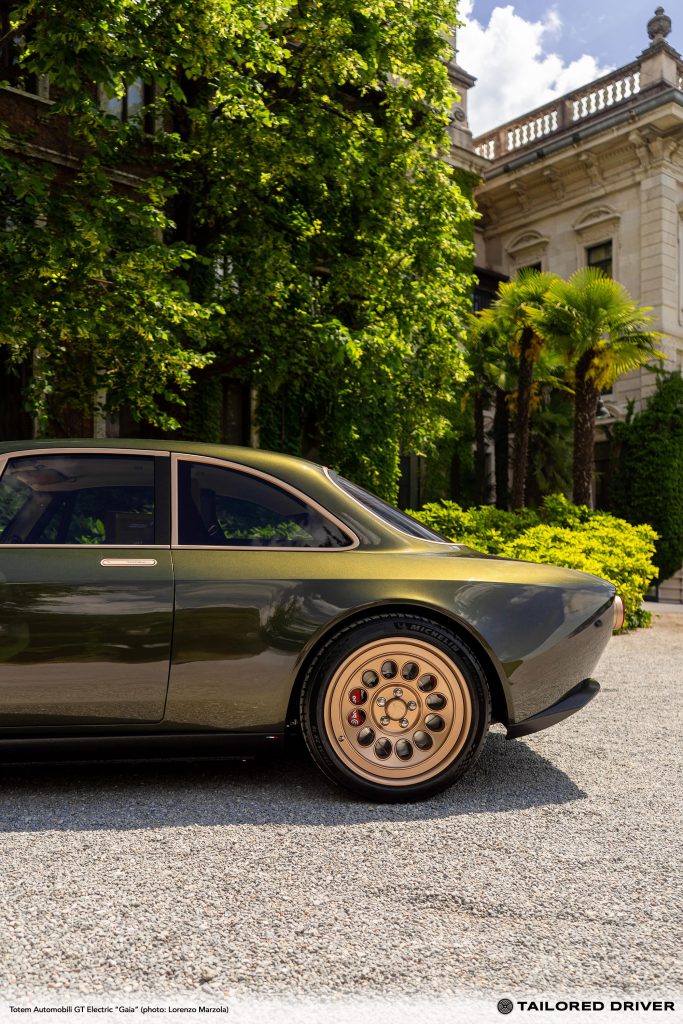
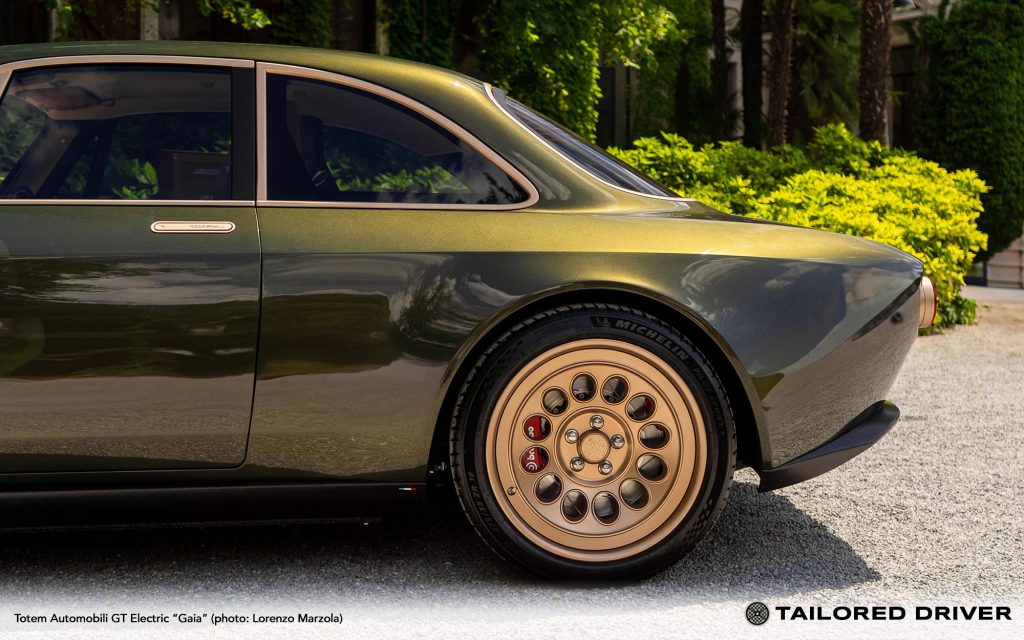
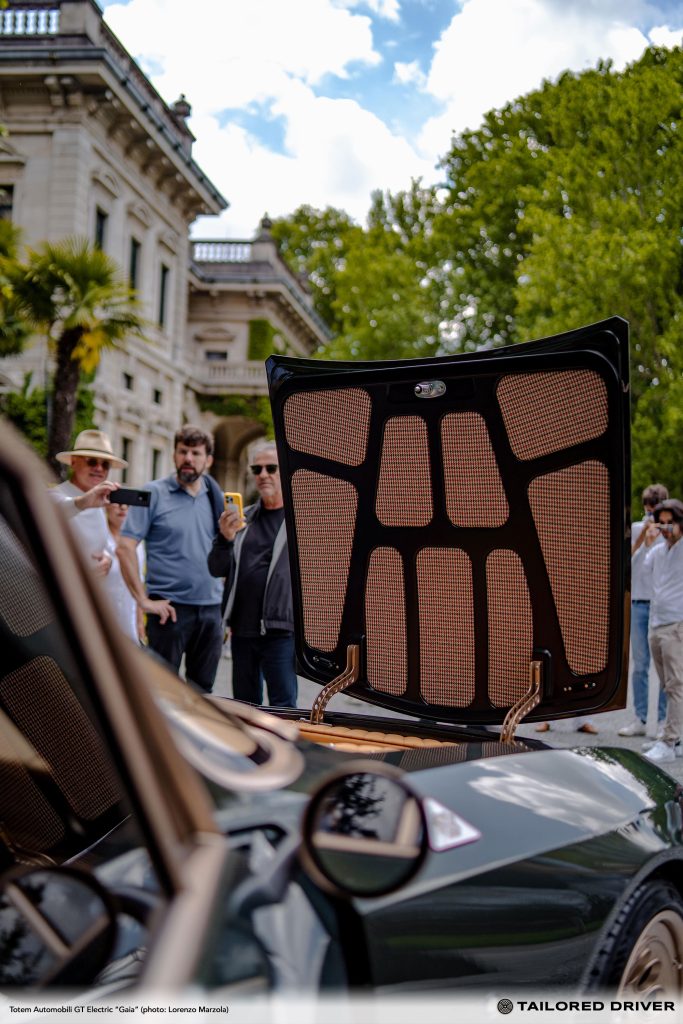
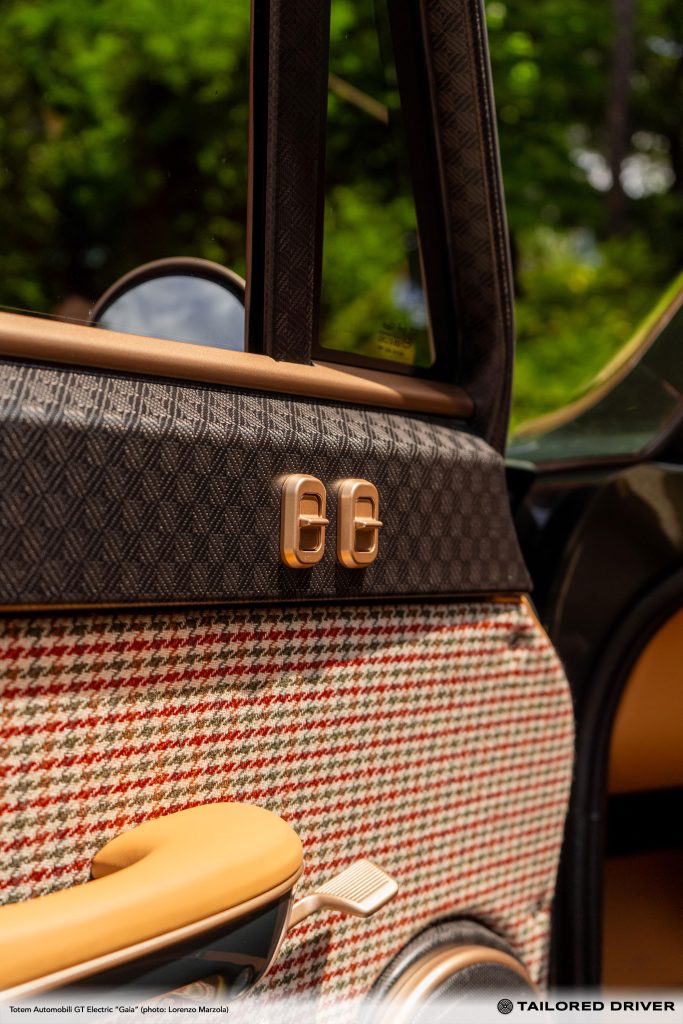
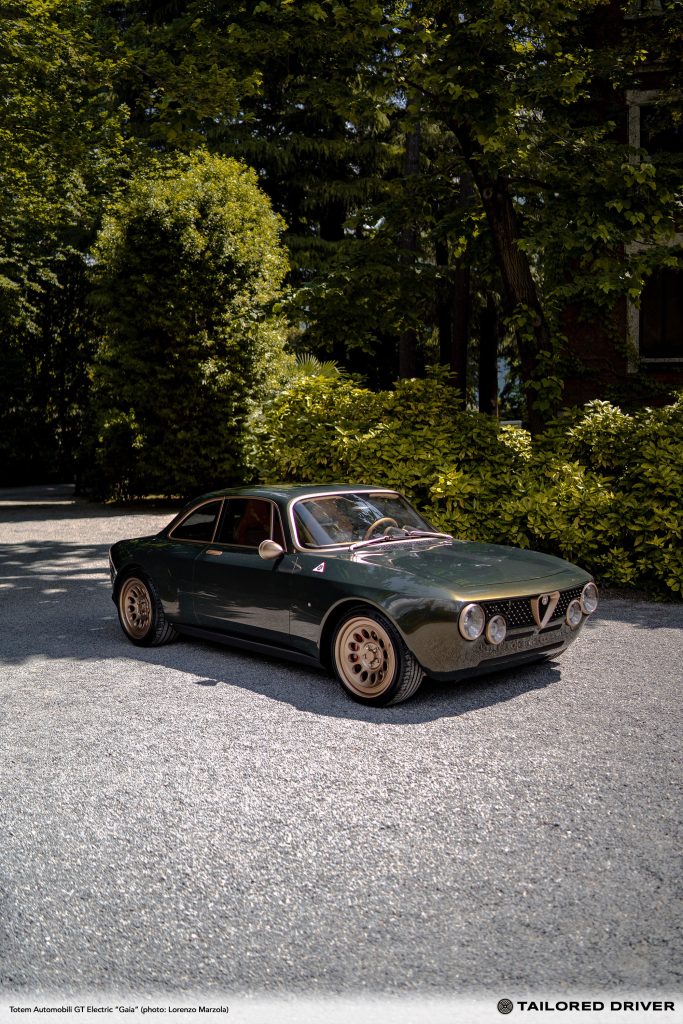
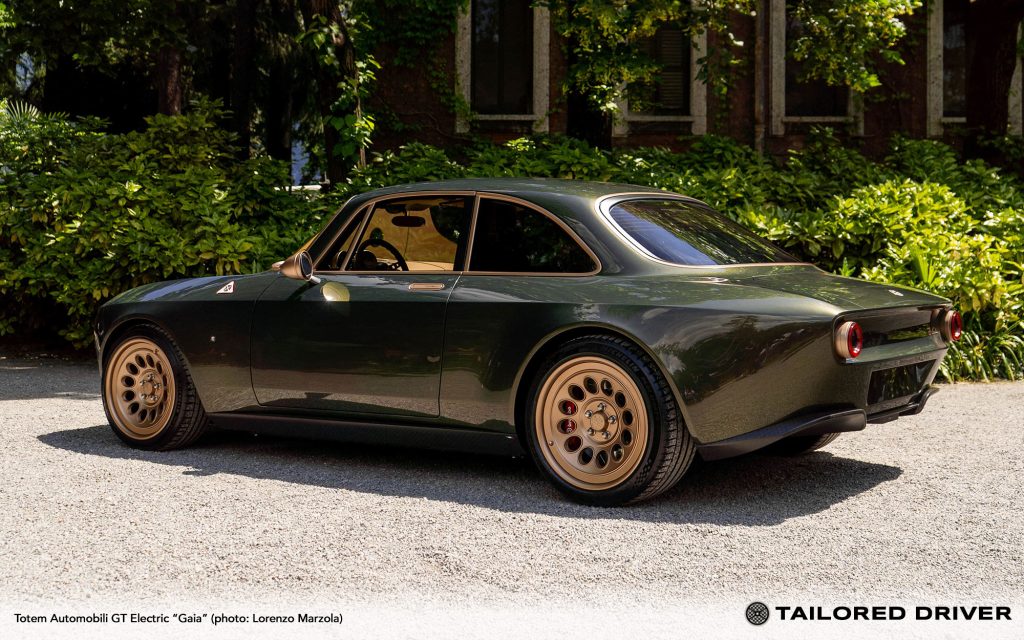
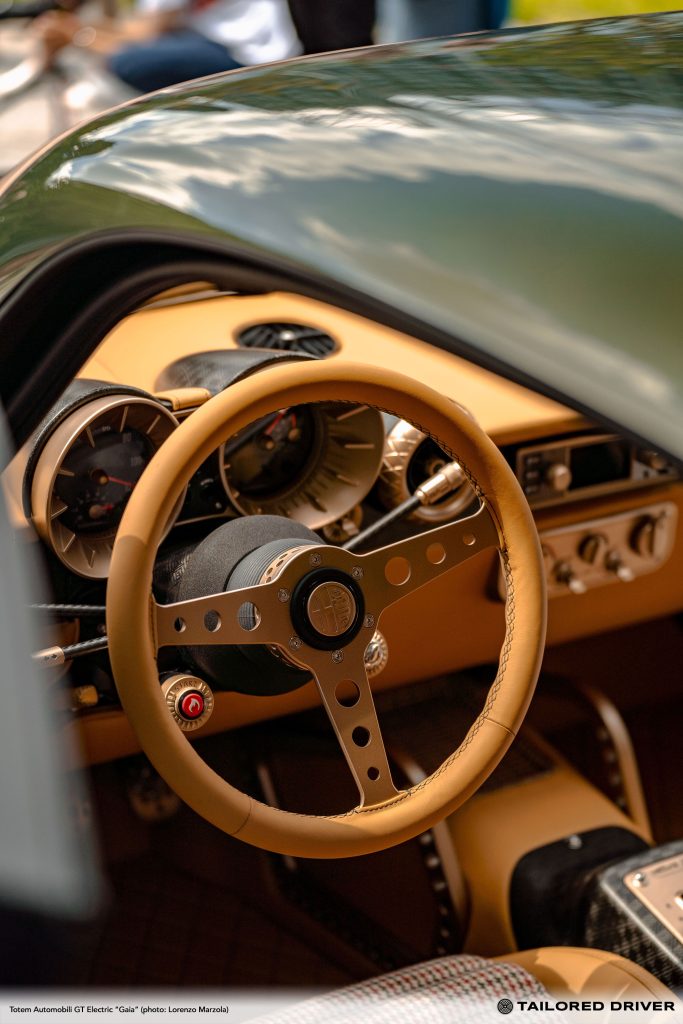
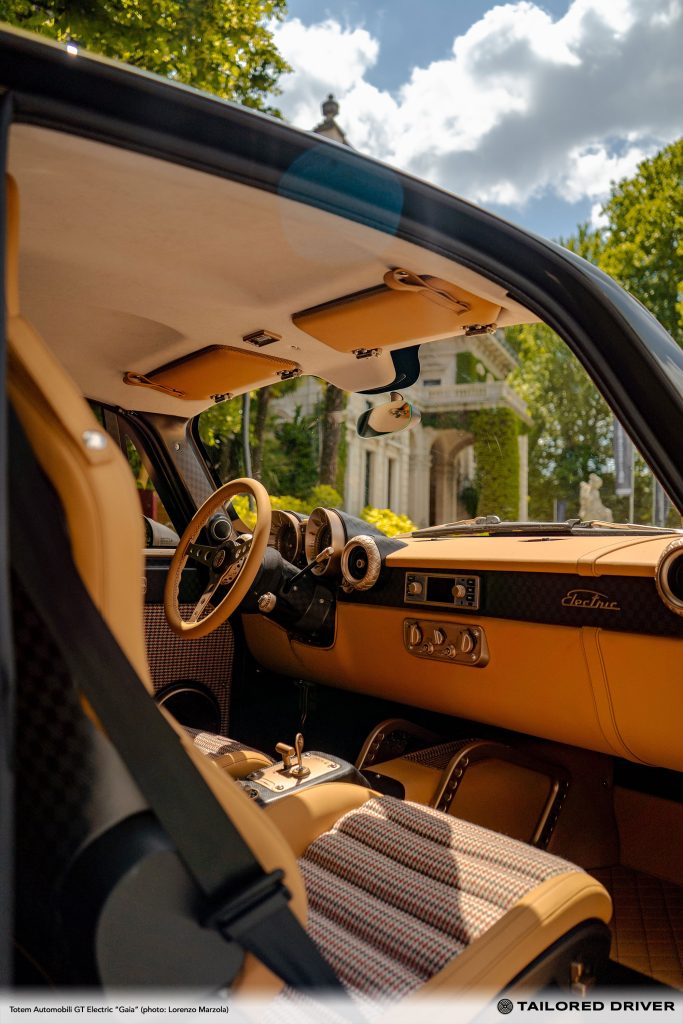
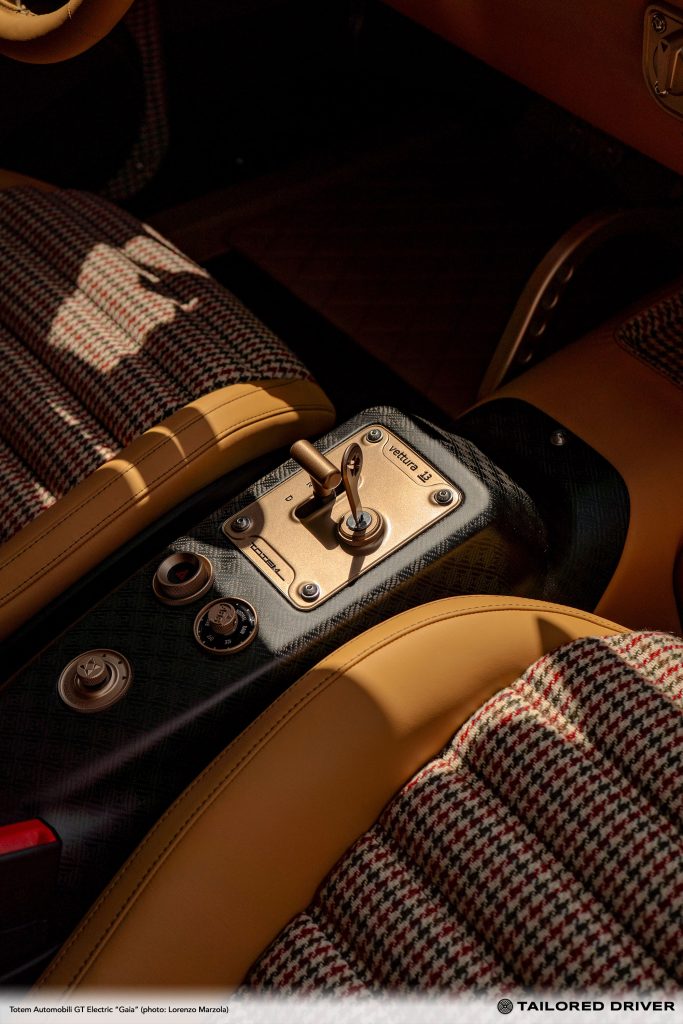
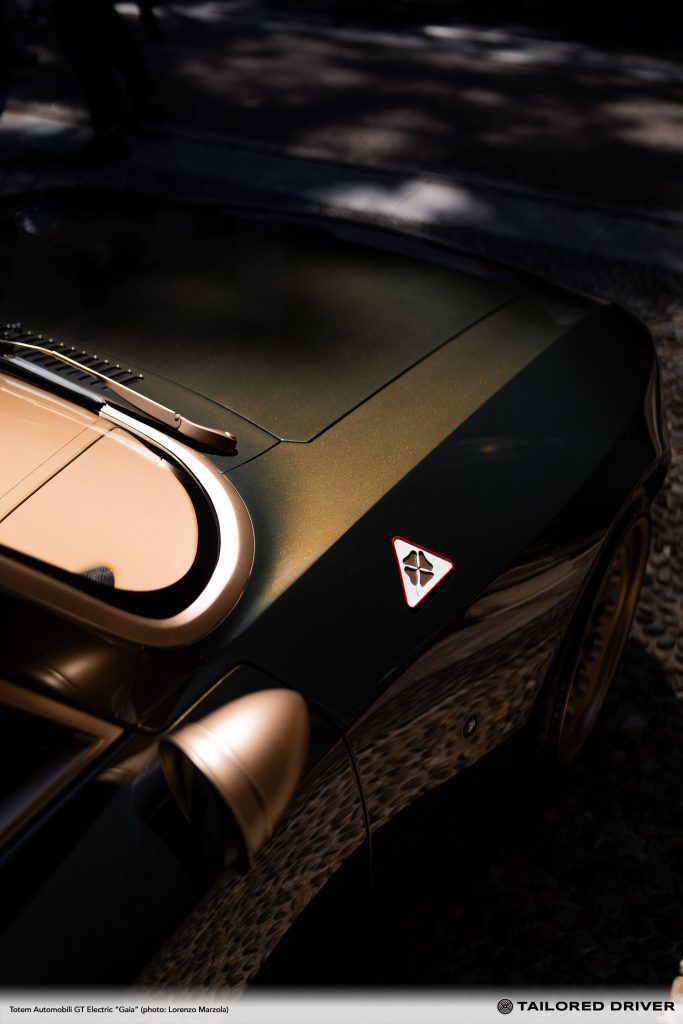
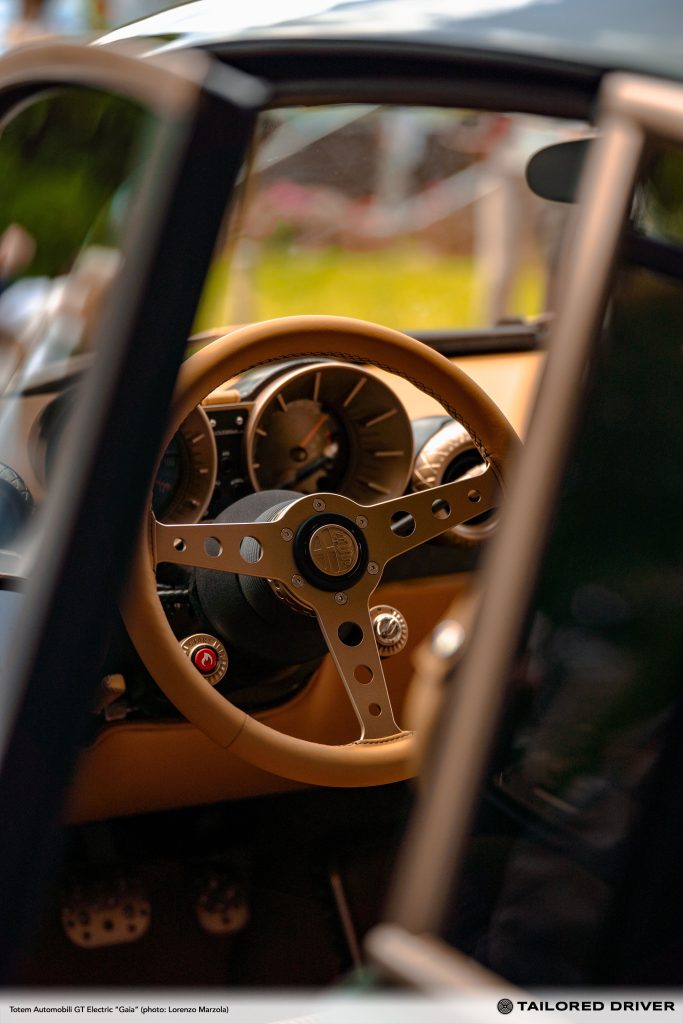
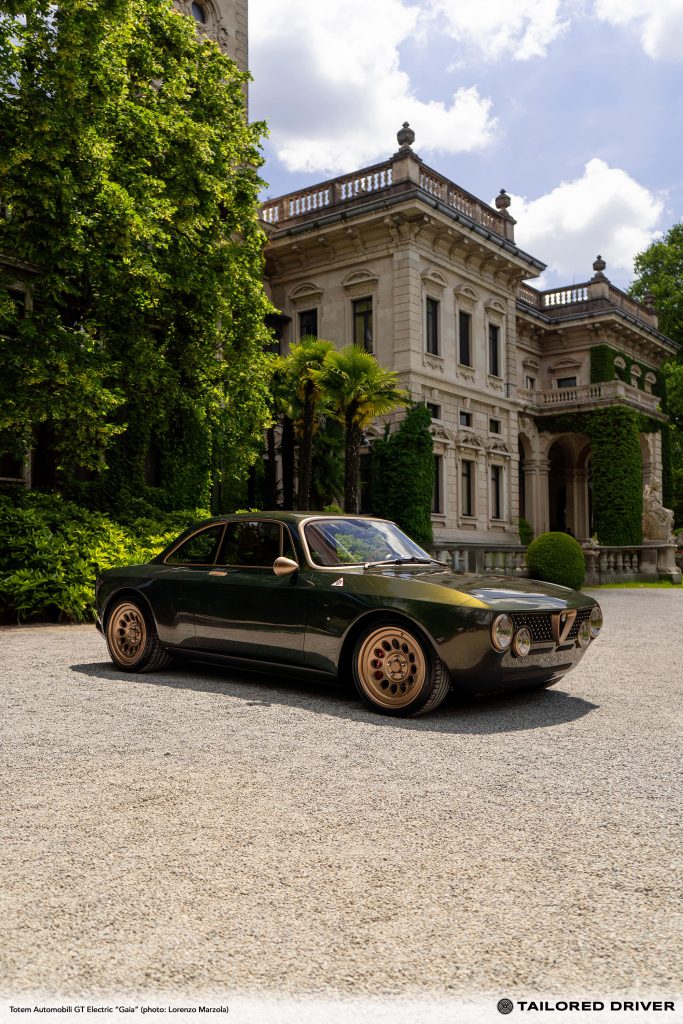
The location was close to the waters of Lake Como, a spot where Totem paired “Persephone” and another commission “Gaia” displayed the firms capabilities, drawing in attendees and press.
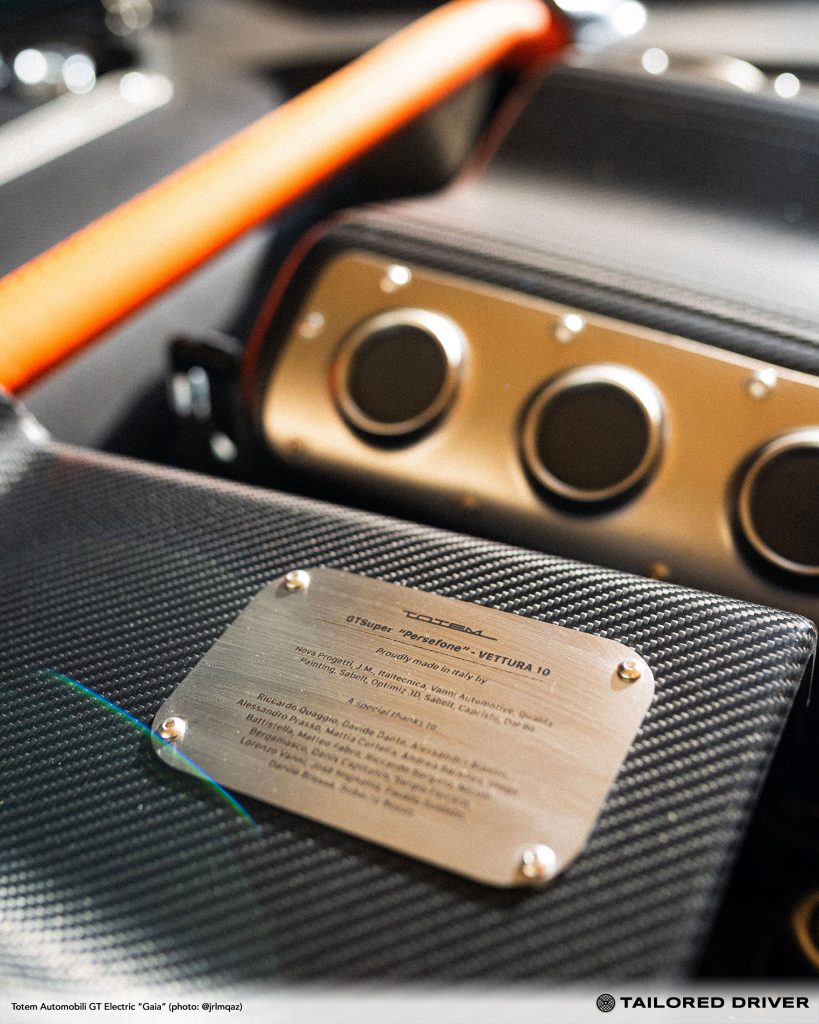
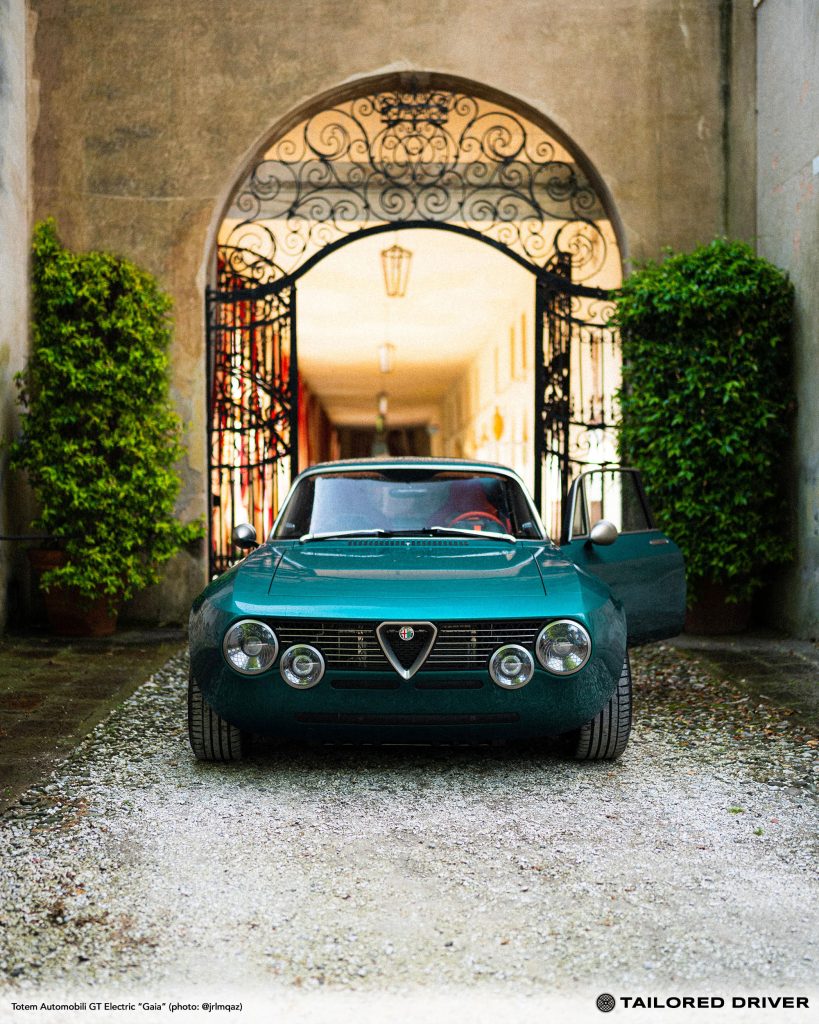
For Totem, the displaying of the two cars offered an opportunity to show the spectrum of their capabilities. One car is built as an internal combustion engine, powered by the Italtecnica-sourced twin-turbo V6. Theater is fully electric, for those who prefer an embracing of the future of mobility without losing out on the style that runs through both of them.
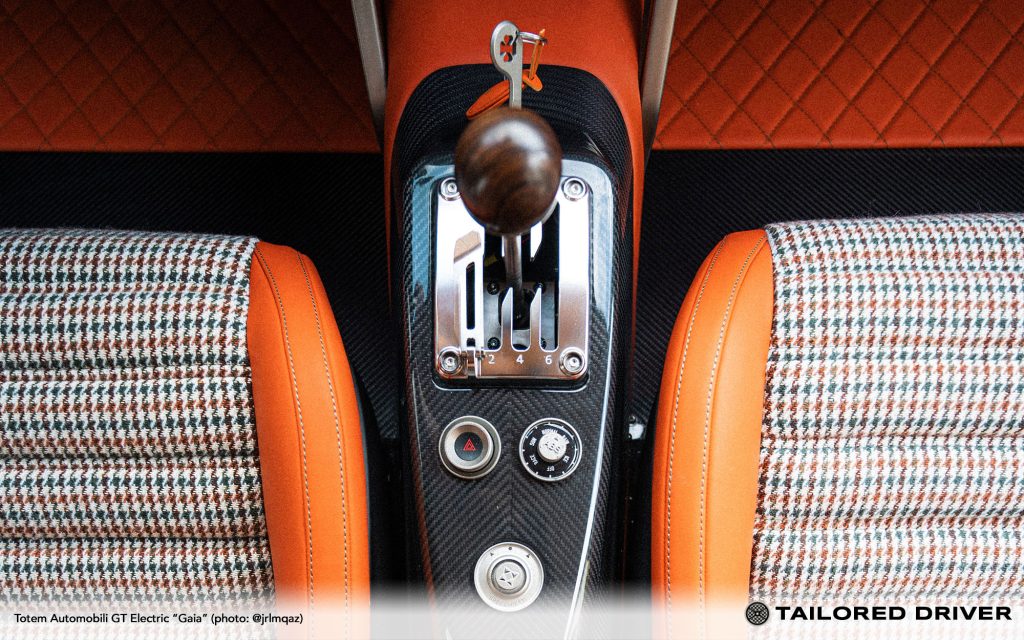
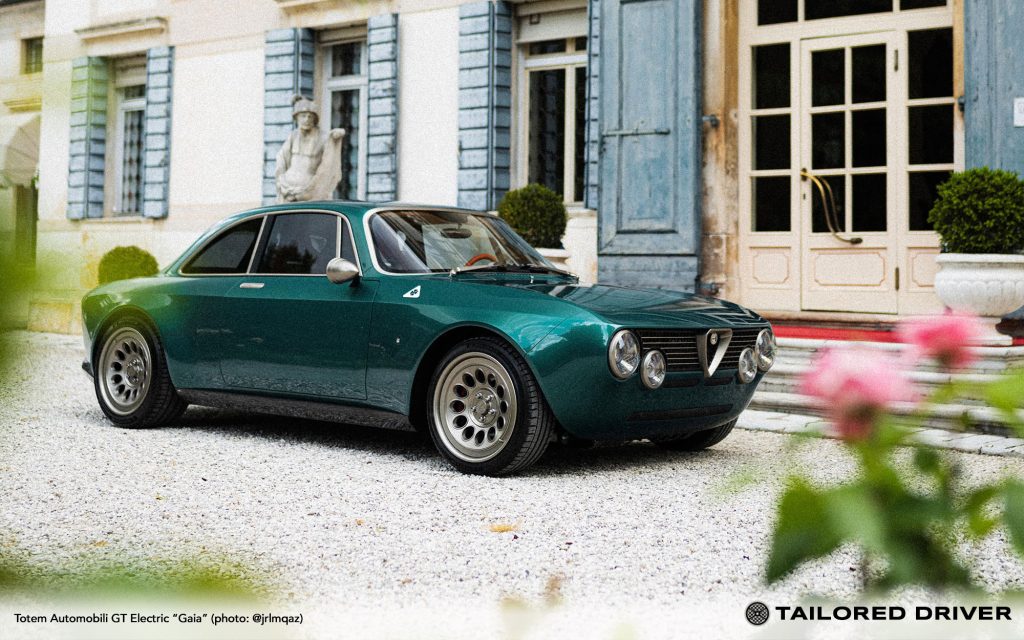
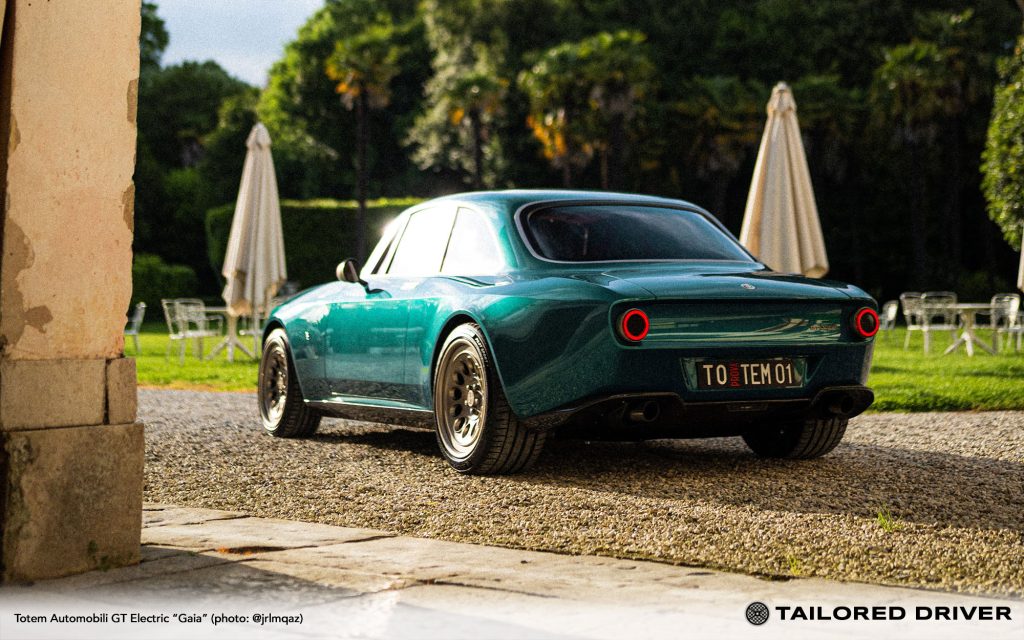
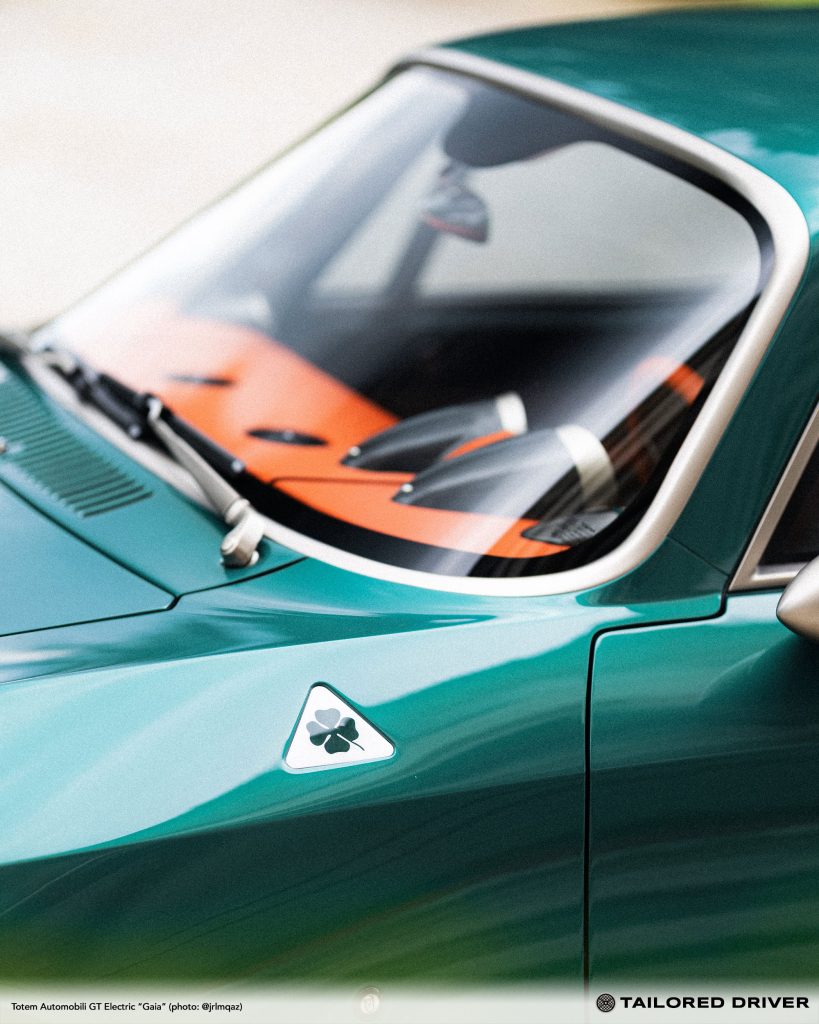
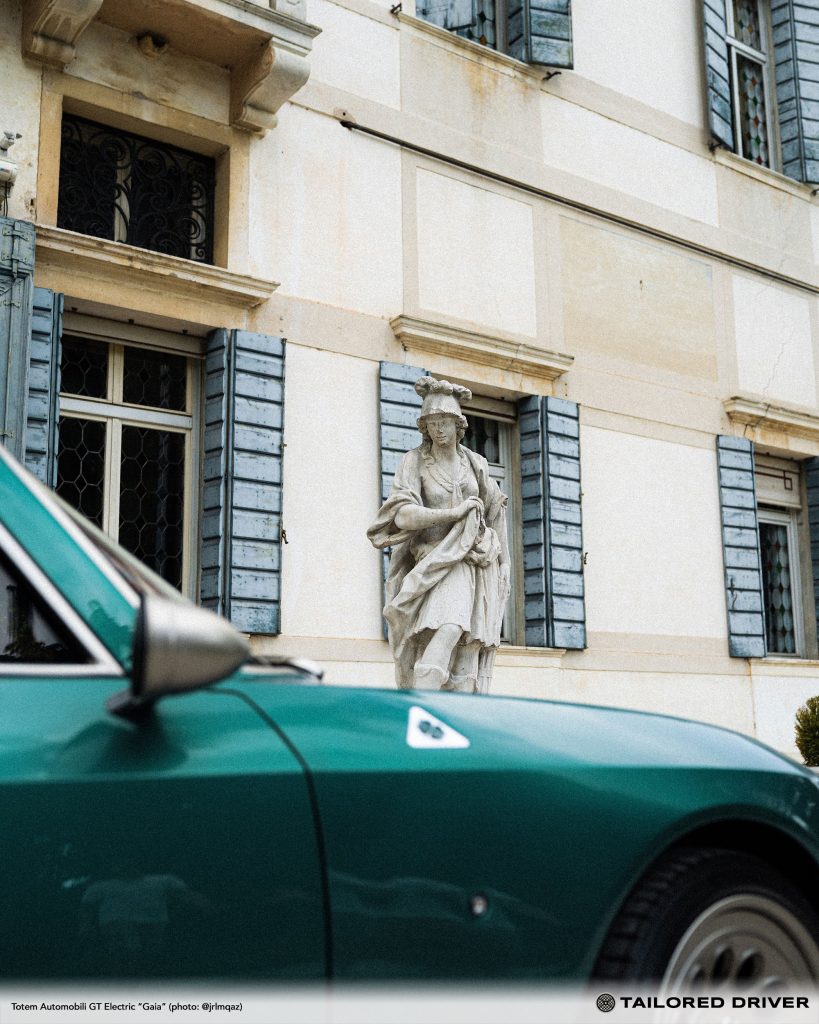
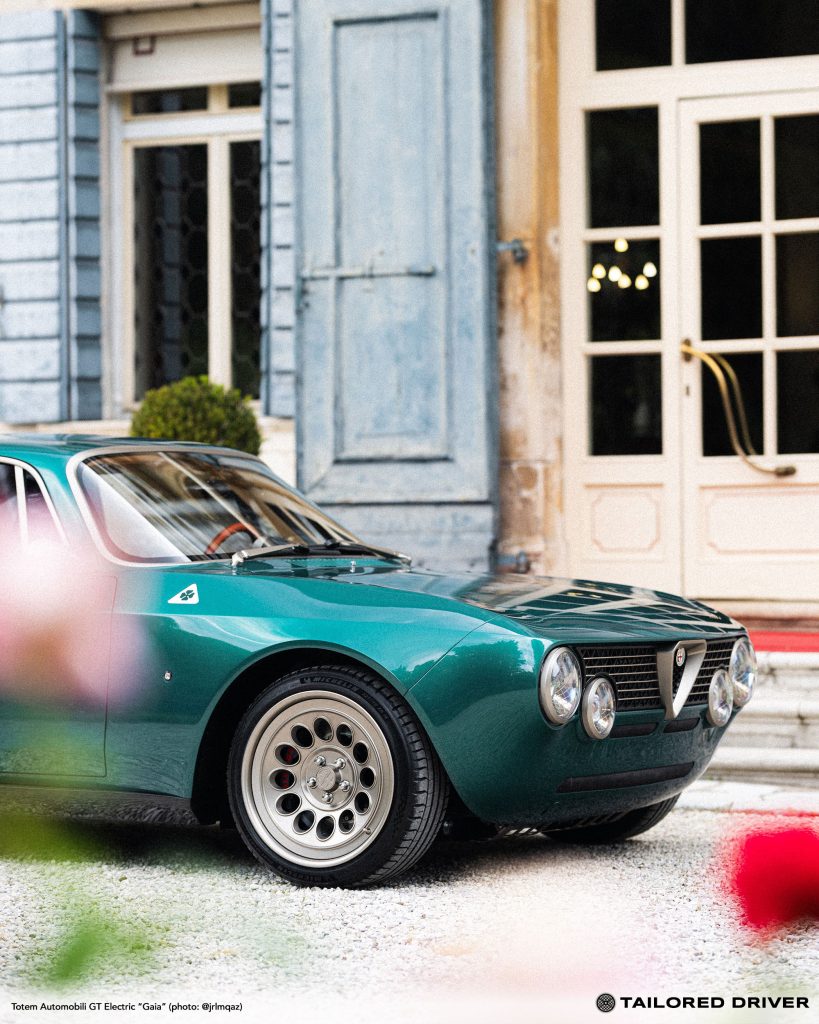
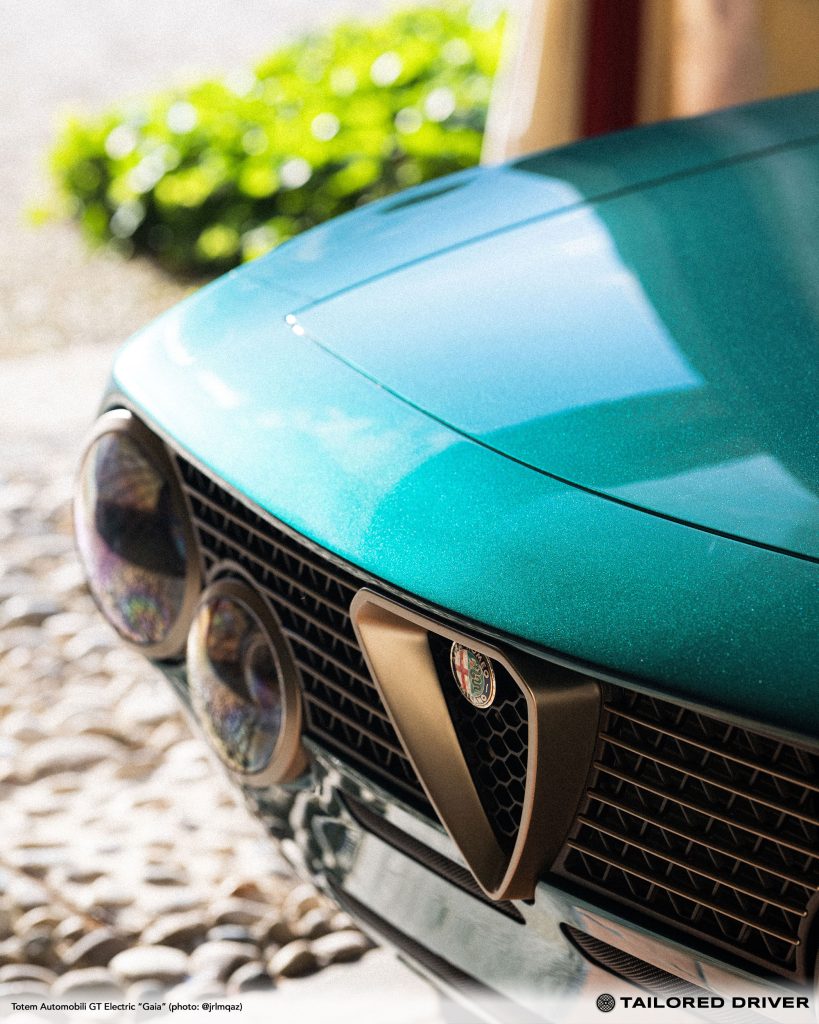
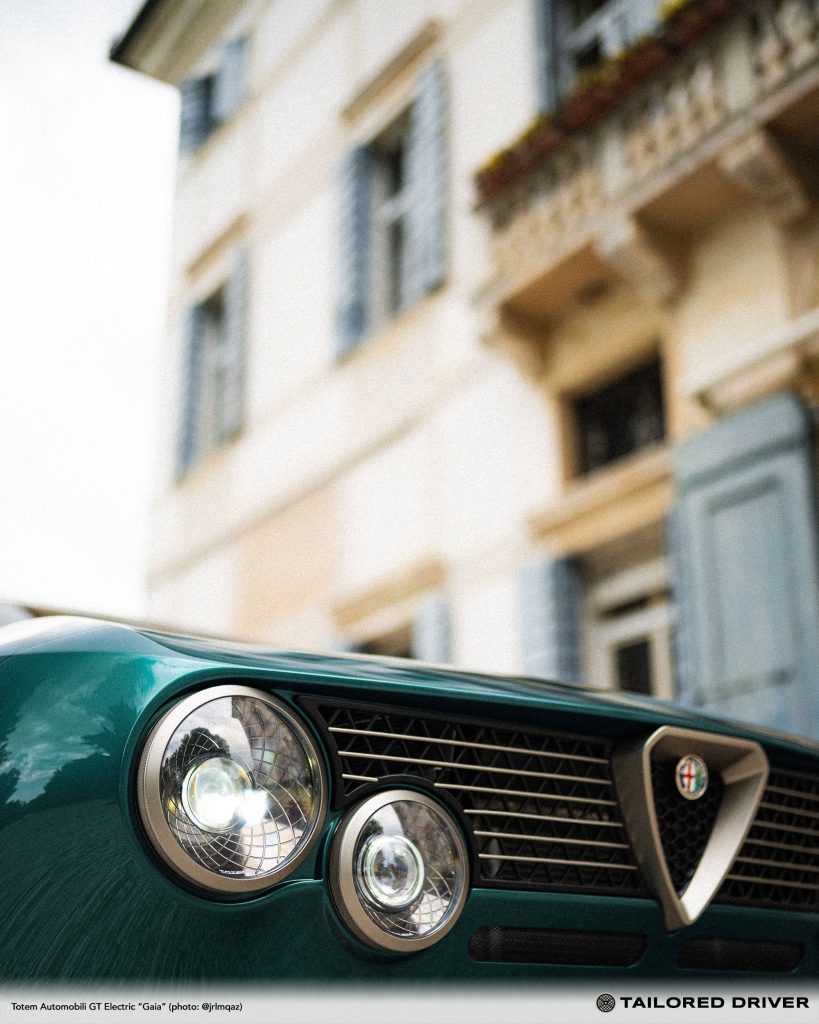
Gaia boasts a triple-layer green paint Totem refers to as “Verde EVO”, inspired by the color of premium extra virgin olive oil. Persephone is finished in an updated version of the firm’s Verde Pino, paired with orange interior for a bold contrast.
See more photos below, with the full press release below that.
PHOTO GALLERY
PRESS RELEASE
TOTEM AUTOMOBILI DAZZLES AT GIARDINO DI FUORICONCORSO WITH “PERSEPHONE” AND “GAIA”
source: Totem Automobili
Villa Flori, Como, May 2025 – In the refined setting of Giardino di Fuoriconcorso—a rising highlight of the Villa d’Este Concorso d’Eleganza weekend—Totem Automobili proudly debuted its latest creations: the GTSuper “Persephone” and the GTElectric “Gaia”. This dual premiere marks a significant step forward not only for Totem’s design and engineering journey, but also for the growing prestige of this exclusive lakeside event.
Just a few meters from the shimmering waters of Lake Como, “Persephone” and “Gaia” drew crowds of collectors, enthusiasts, and international press. They embody two distinct yet complementary visions of modern performance: one powered by Totem’s now-celebrated twin-turbo V6 engineered by Italtecnica, the other fully electric, crafted to meet the future of mobility without sacrificing style or soul.
“We designed this electric car because I don’t like electric cars” says Riccardo Quaggio, Totem’s founder and CEO, with his signature candor and irony. “It’s true—EVs don’t deliver the raw emotion of an internal combustion engine, which we still proudly build. But at least this one still stirs something—because it’s beautiful. That’s the point. Sculpting a fully electric car by hand, tailored to each client, is something few in the world can offer with such deep passion. Gaia is proof of that.”
Gaia features a refined triple-layer “Verde EVO” paint, inspired by the hue of premium extra virgin olive oil—a nod to nature with a bold aesthetic edge. Persephone, meanwhile, updates the legendary Verde Pino with a modern twist and pairs it with vivid orange interiors that give the car its assertive, unmistakable personality.
Both models showcase a level of craftsmanship and attention to detail typically reserved for the most exotic coach-built cars, while staying true to the retro inspiration that defines the Totem philosophy. “We improve with every car,” adds Quaggio. “I started this company at twenty-two, and it’s incredible to see how far we’ve come with these two builds—from the design to the mechanical and dynamic performance. The feedback we received at Villa Flori from peers, clients, media, and enthusiasts really says it all.”
Totem’s presence at the Giardino di Fuoriconcorso reaffirms its growing stature in the world of boutique automotive excellence, and highlights the increasingly rich and diverse program of events that now orbit the Villa d’Este weekend—an unmissable celebration of beauty, innovation, and car culture at its finest.
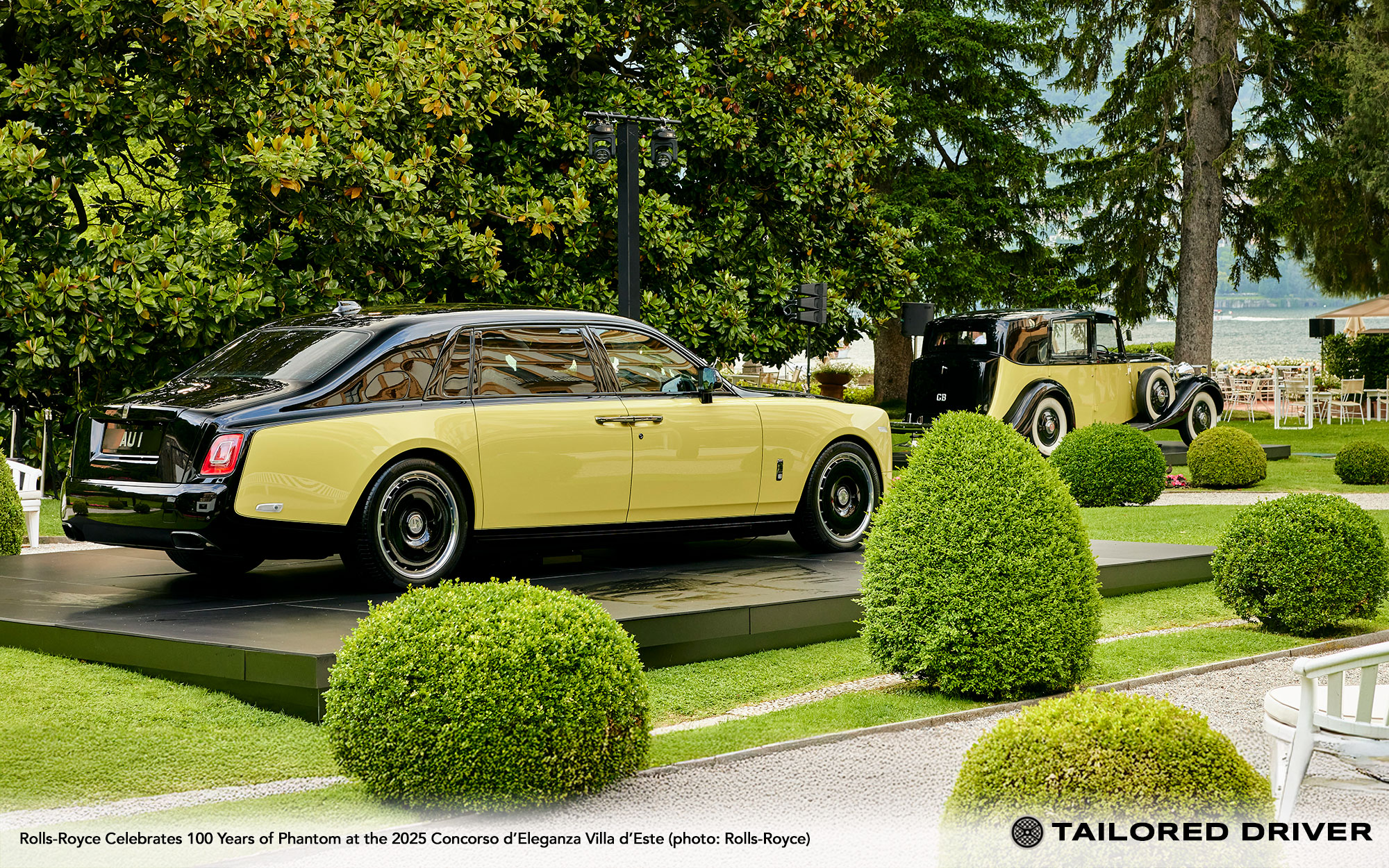
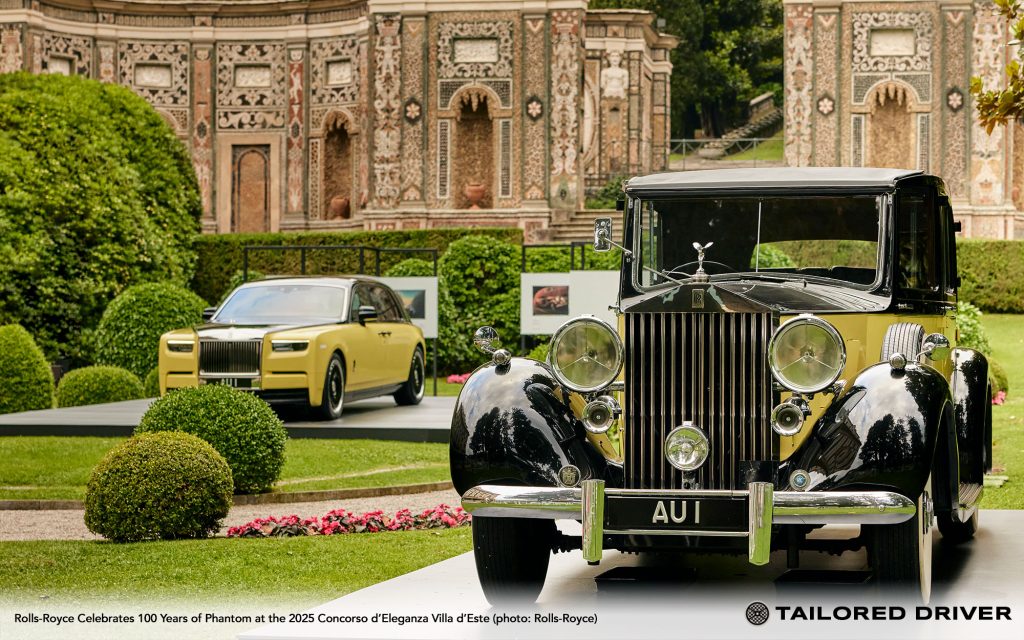
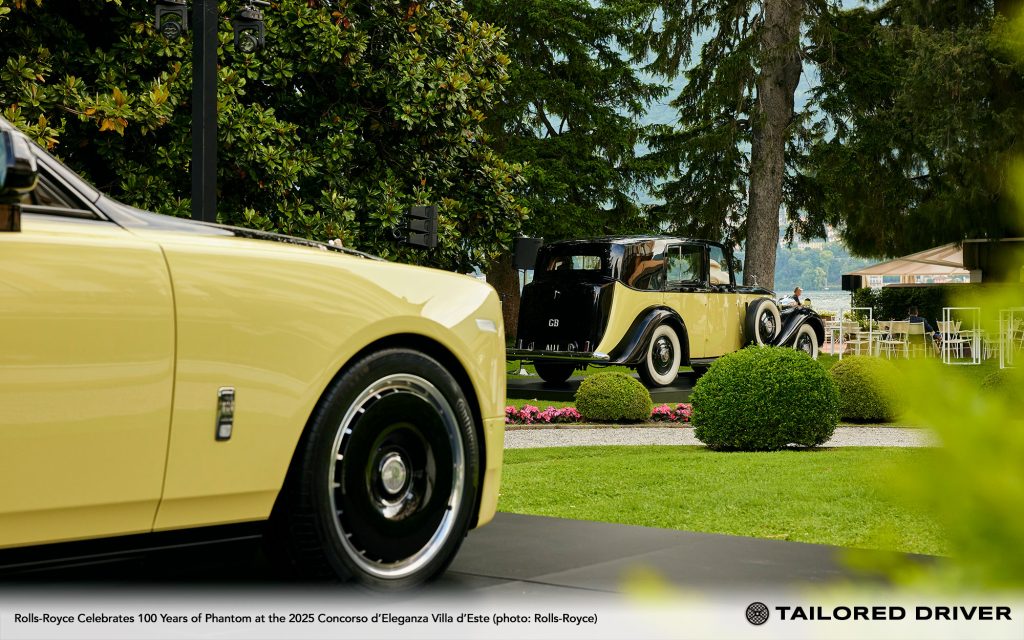
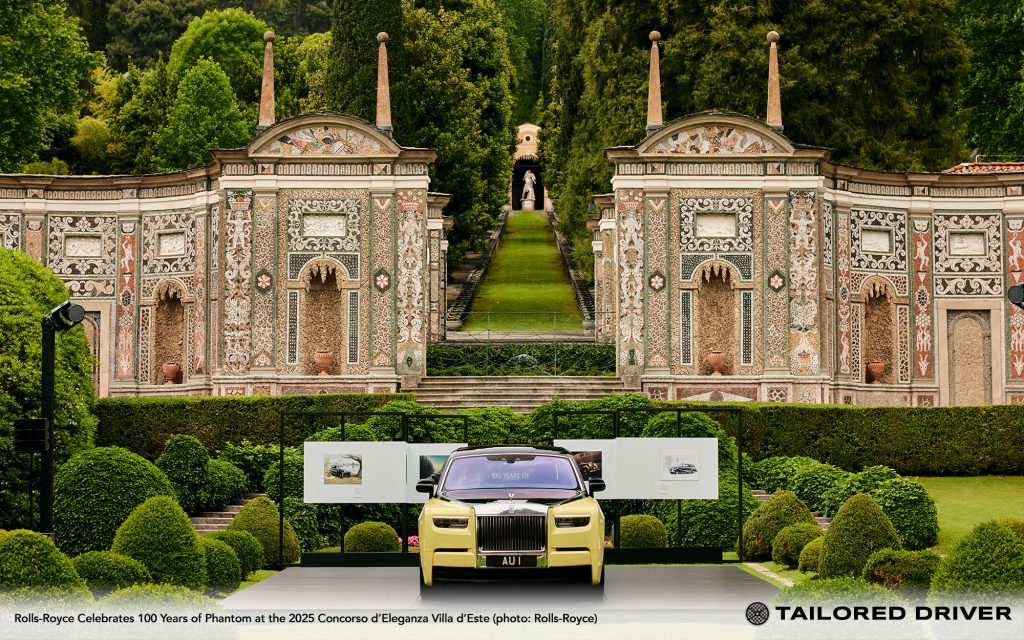
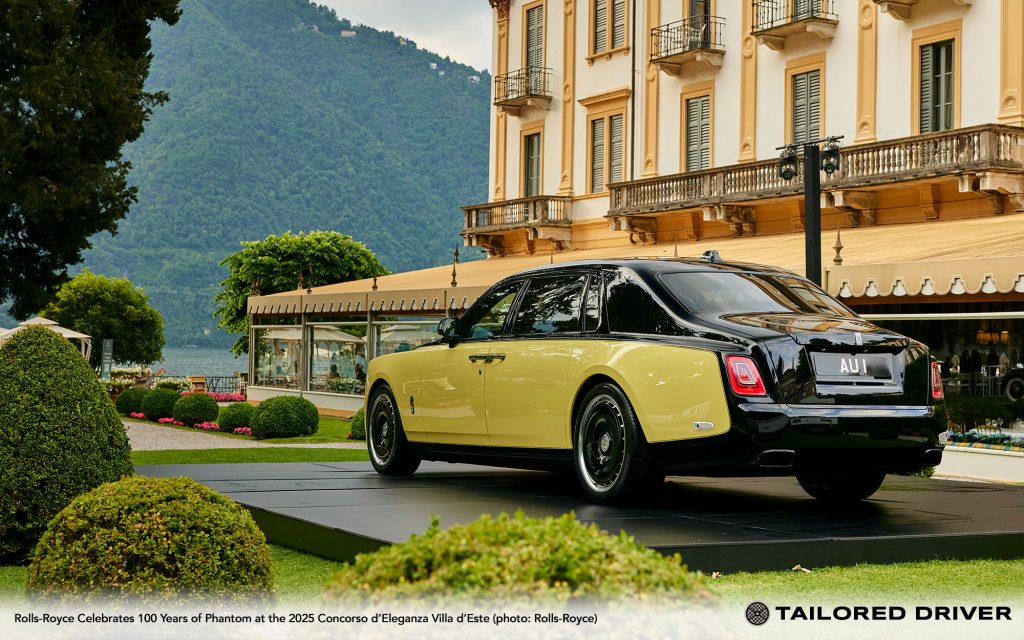
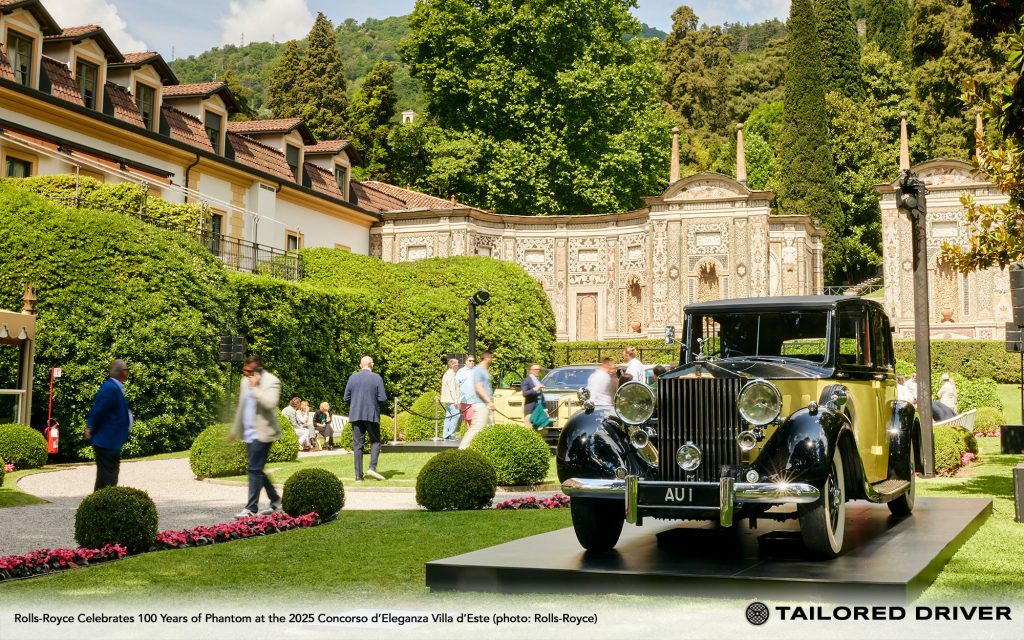
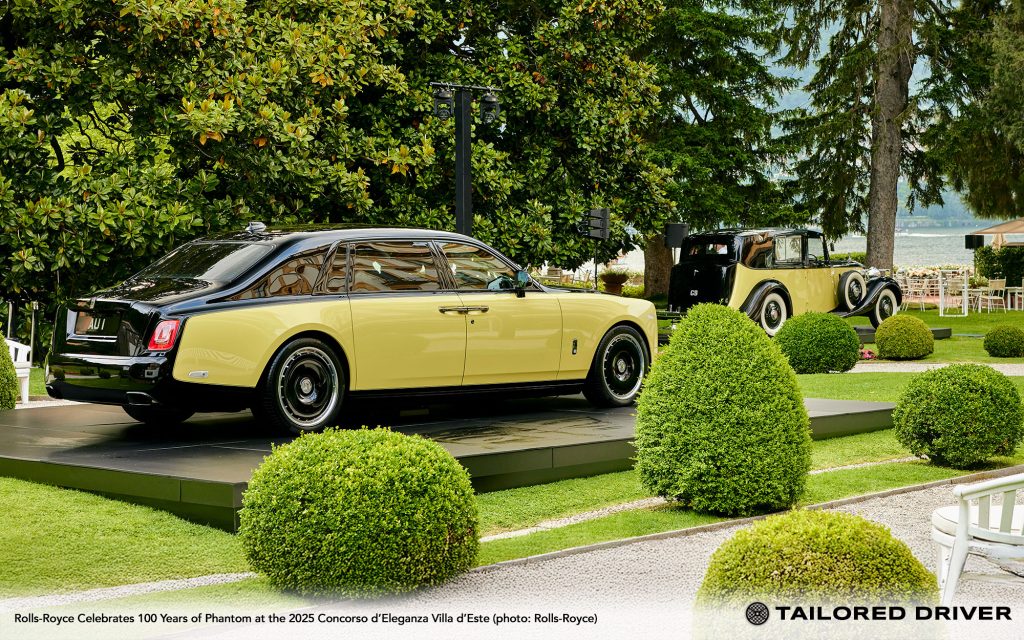
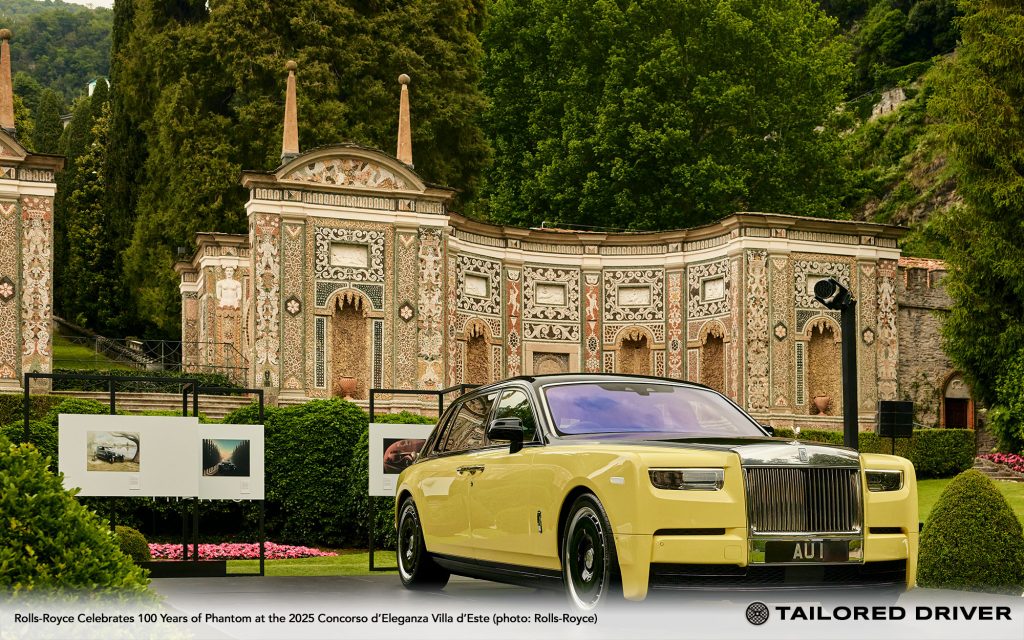
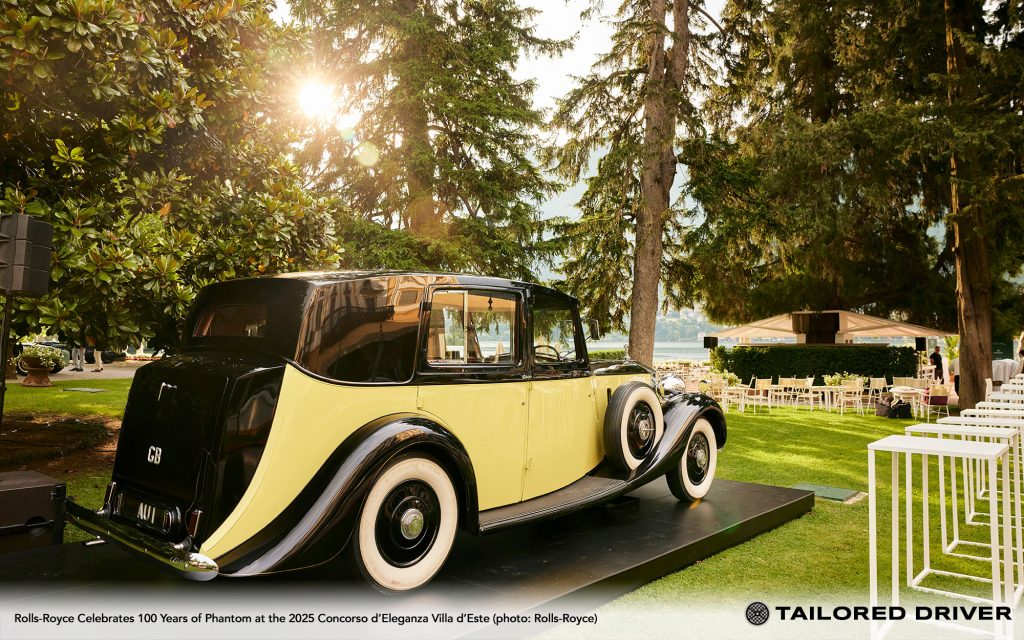
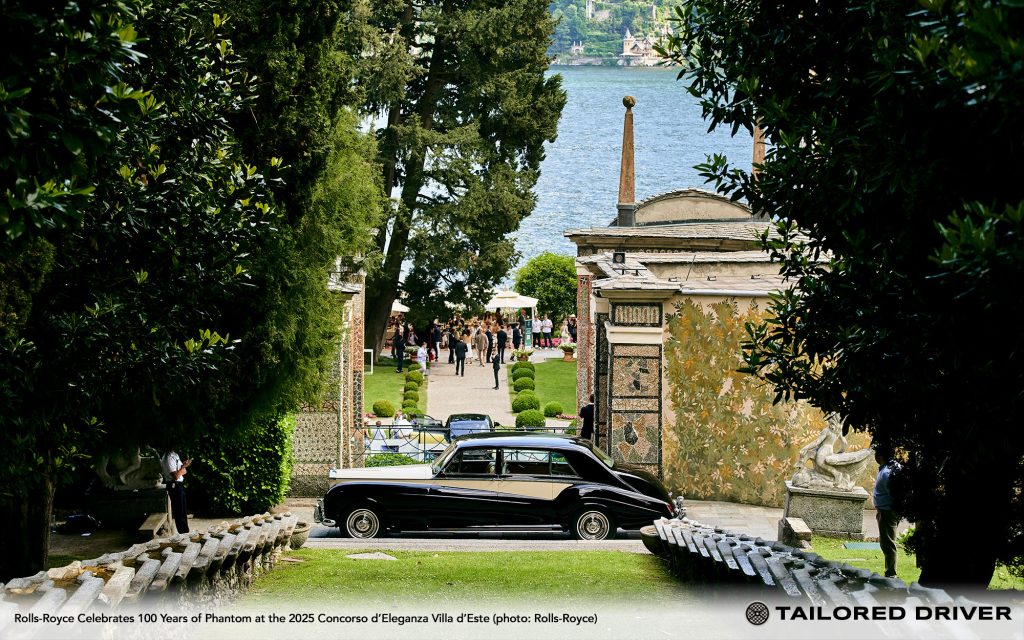
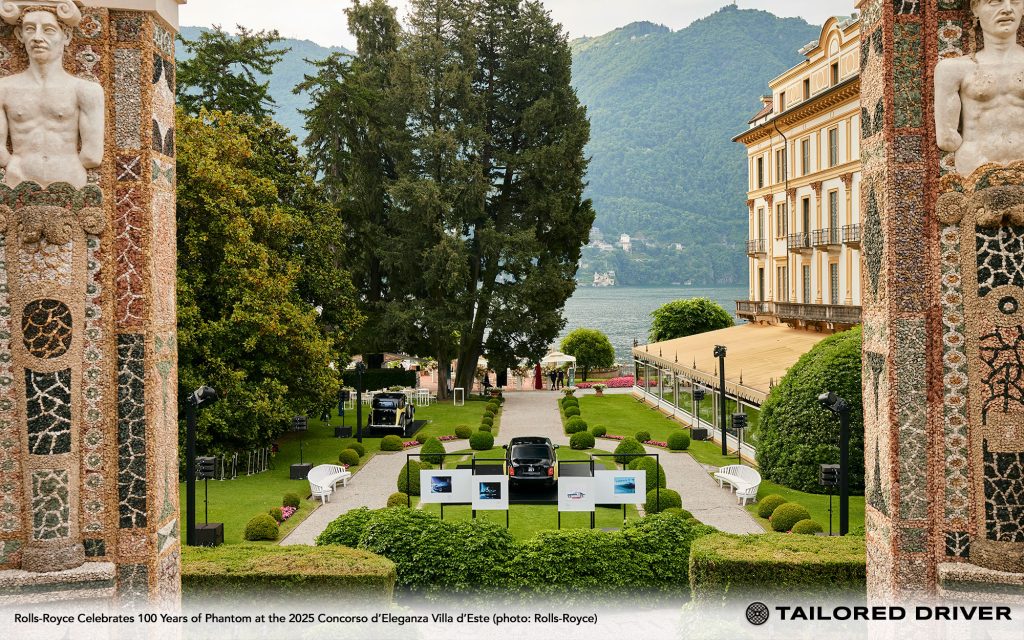
Rolls-Royce is celebrating 100 years of the Phantom nameplate, so what better and more opulent car and backdrop could emphasize this point than the one-of-one commissioned Phantom Goldfinger on display at the 2025 Concorso d’Eleganza Villa d’Este. It just sort of makes sense.
In case you missed it, the Phantom Goldfinger is a lavishly appointed bespoke example built to honor the 1964 James Bond movie Goldfinger. This private commission includes 24-carat gold details paying tribute with unique film references throughout the car. Rolls-Royce revealed full details of the car and its highly unique specification back in October and we published that information HERE.
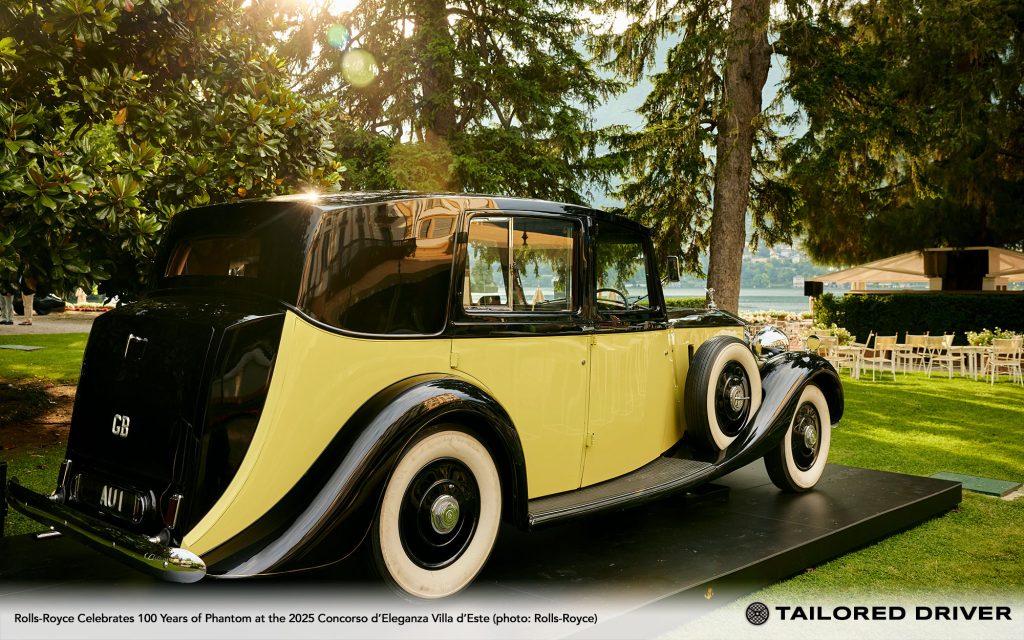
Fans of the James Bond films will likely remember that the film’s villain Auric Goldfinger himself drove a 1937 Phantom III Sedan de Ville.
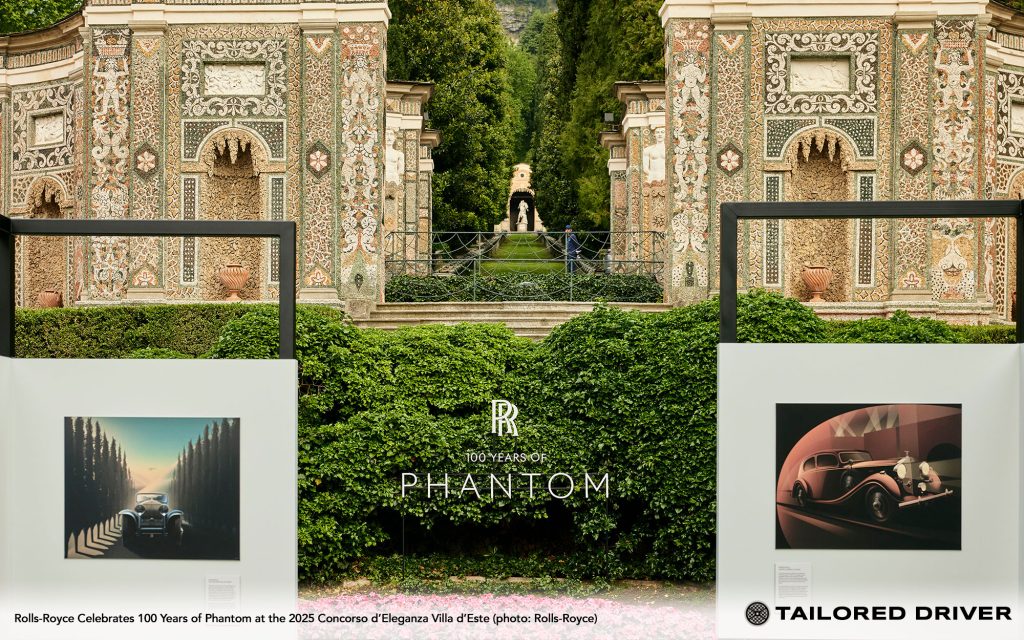
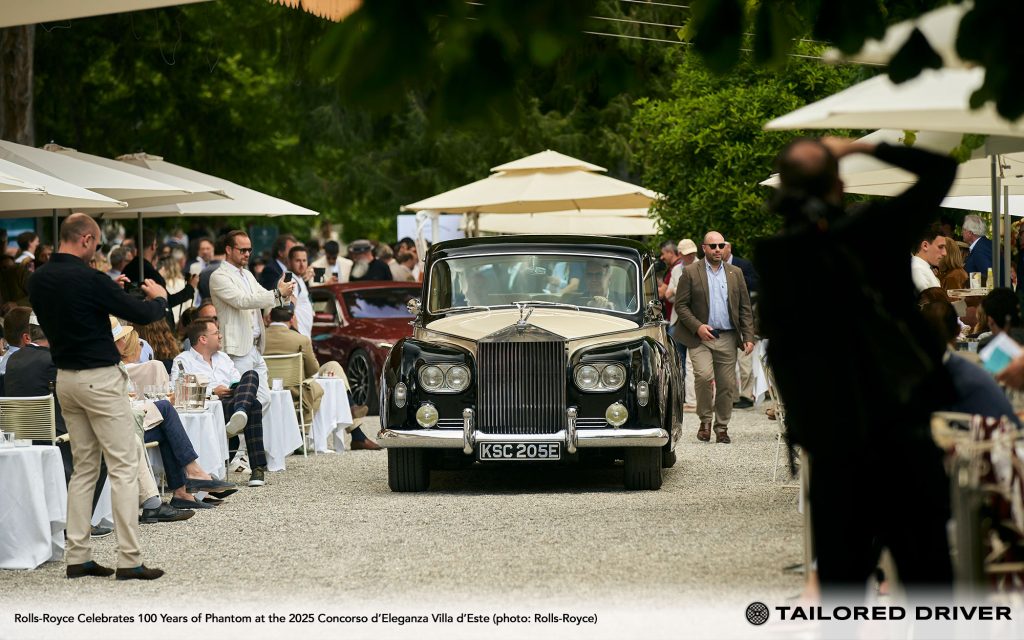
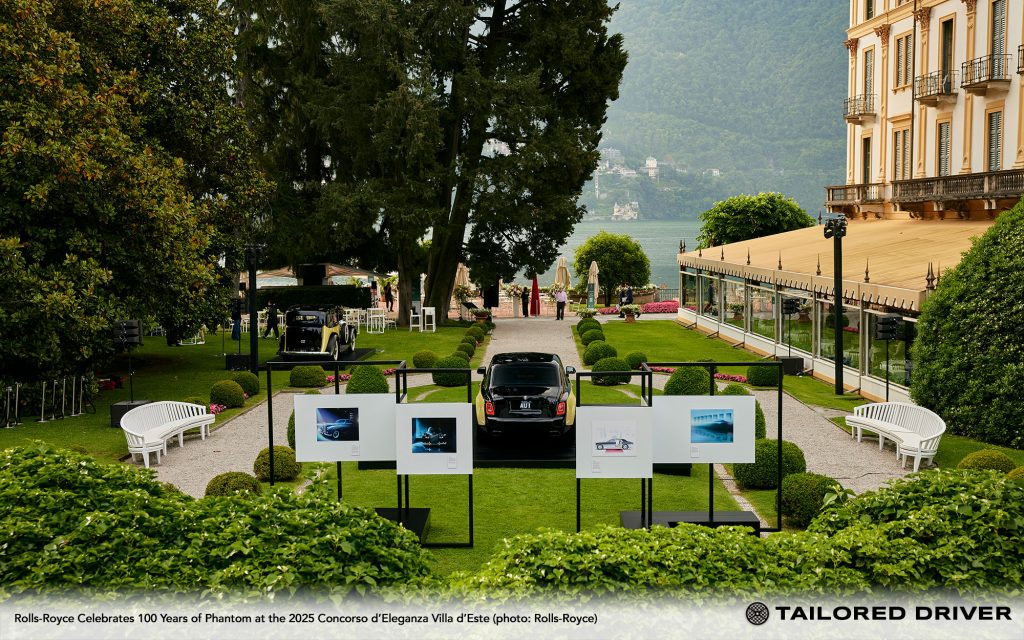
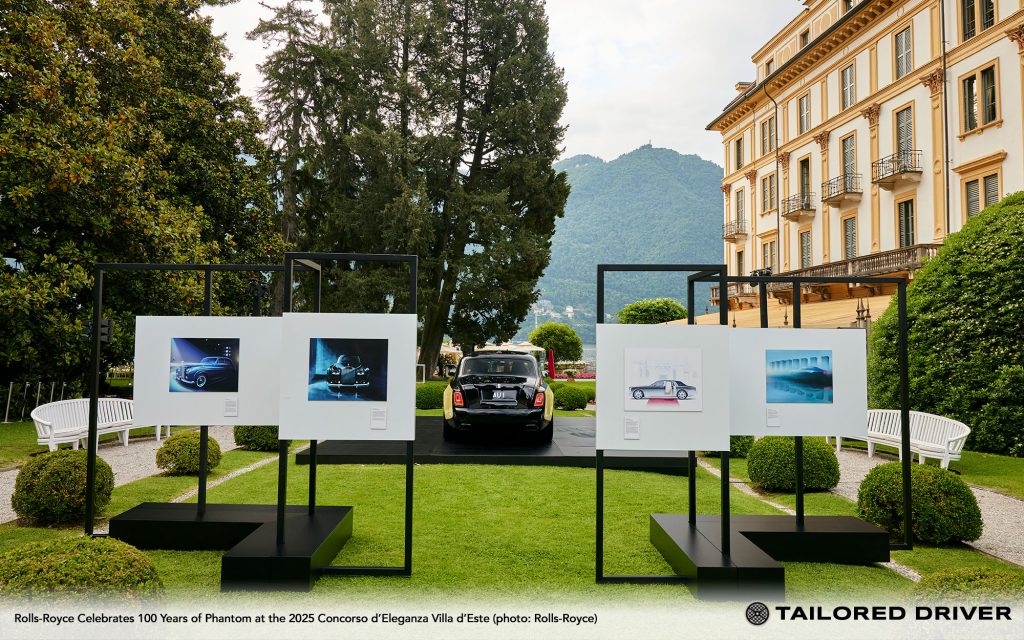
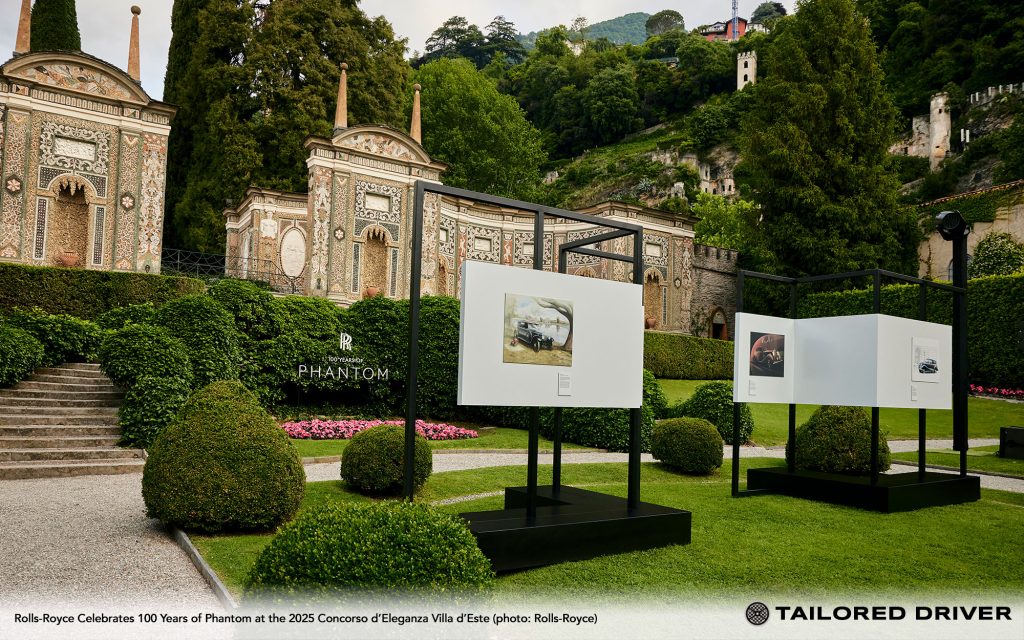
Beyond the cars, the Rolls-Royce design team exhibited eight artworks highlighting the evolution of the Phantom, while a Phantom V drove in the event’s opening parade.
PHOTO GALLERY
PRESS RELEASE
[source: Rolls-Royce]
Rolls-Royce celebrates 100 years of Phantom at 2025 Concorso d’Eleganza Villa d’Este
Public debut of Phantom Goldfinger, a one-of-one commission honouring the 1964 James Bond film Goldfinger
Landmark Private Commission includes 24-carat gold details and film references
1937 Phantom III Sedanca de Ville owned by film villain Auric Goldfinger also displayed
Rolls-Royce designers exhibited eight artworks charting the evolution of Phantom
Phantom V, a famous example of the nameplate, driven in the opening parade
The Concorso d’Eleganza Villa d’Este is the perfect setting for Rolls-Royce, as both this gathering and our marque celebrate the motor car as an object of art, craftsmanship and cultural expression. In this exceptional location, we are proud to make the public debut of Phantom Goldfinger, a remarkable expression of our Bespoke capabilities and a powerful tribute to a film cherished by the client. To have the original 1937 model, which featured in the film and inspired this motor car, displayed at the event makes this moment even more special. Presenting these exquisite Phantoms and original artworks created by our designers in tribute to the nameplate in its centenary year is a fitting celebration of our pinnacle motor car.” – Chris Brownridge, Chief Executive, Rolls-Royce Motor Cars
Rolls-Royce Motor Cars celebrated the 100th anniversary of Phantom, the marque’s most famous nameplate, at the Concorso d’Eleganza Villa d’Este, Italy, on 24 May 2025.
Rolls-Royce chose this exclusive gathering for the worldwide public debut of Phantom Goldfinger, presented on the Grand Hotel’s renowned Mosaic Lawn on the shore of Lake Como. The striking one-of-one Phantom Extended pays homage to the 1964 James Bond film, Goldfinger – one of twelve Rolls-Royce appearances in the 007 film franchise.
Revealed in 2024, the film’s 60th anniversary year, the motor car takes inspiration from the 1937 Phantom III Sedanca de Ville owned by the title’s eponymous villain, Auric Goldfinger, which was also shown at the event. The story of this motor car and the film is masterfully explored in Phantom Goldfinger, which includes 18- and 24-carat gold detailing, cinematic references, and intricate storytelling elements inspired by the film’s characters, locations and themes.
Further celebrating the centenary of Phantom, an exhibition of eight original artworks charted the evolution of Phantom’s design, and the world it has both inhabited and shaped over the past 100 years. Designers at Goodwood created the series, each capturing a different Phantom generation in the artistic style of its era. The settings of each piece also reflect the influence Phantom has exerted over its ten decades, and the many roles it has played and guises it has assumed.
Guests and media from around the world also witnessed the gathering’s opening parade, which included an immaculately presented example of Phantom V. This celebrated generation of the marque’s flagship motor car has been owned and loved by some of the most significant cultural and political figures in modern history, a reminder of Phantom’s role as a symbol of power, influence, and leadership.
Amid a year of heightened cultural and luxury activity across Italy, the debut of Phantom Goldfinger and the celebration of Phantom’s centenary at the event became a defining expression of Bespoke artistry and enduring cultural significance. This moment reflects not only Phantom’s remarkable legacy but also its ongoing power to inspire, captivate and lead as it enters a new century.
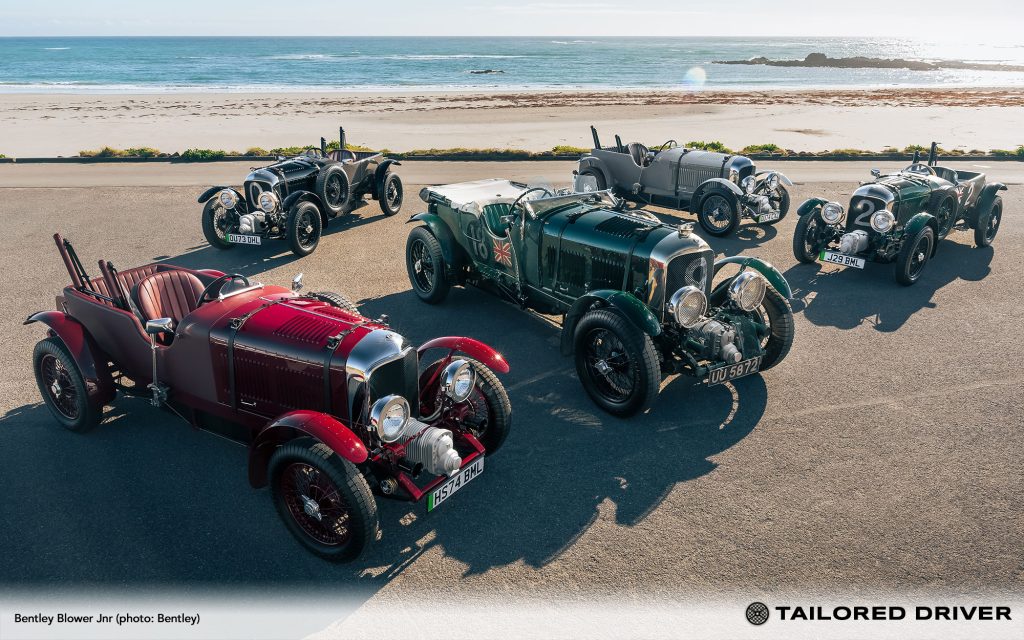
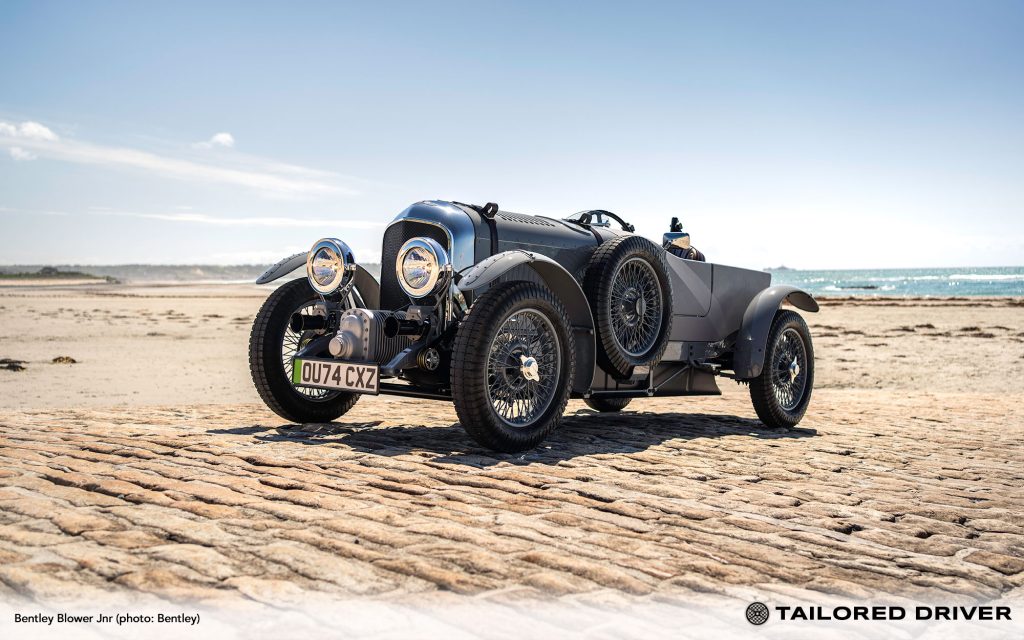
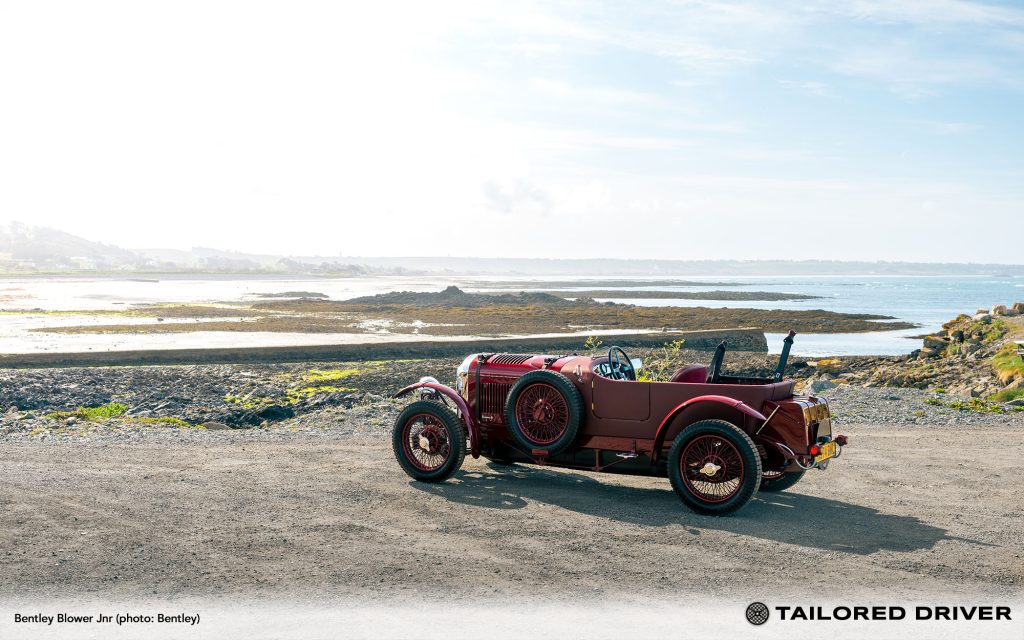
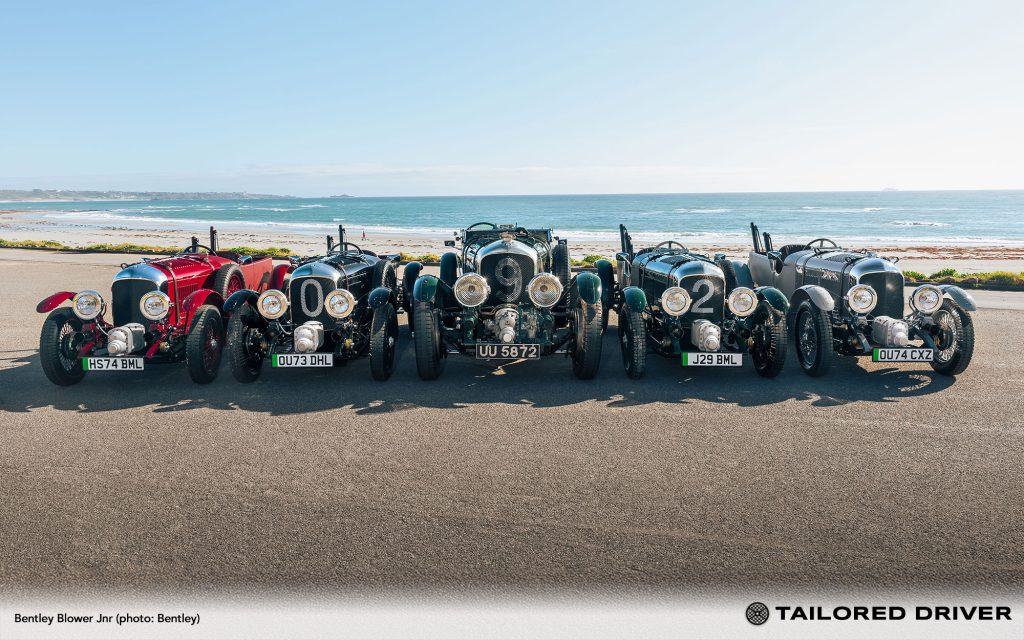
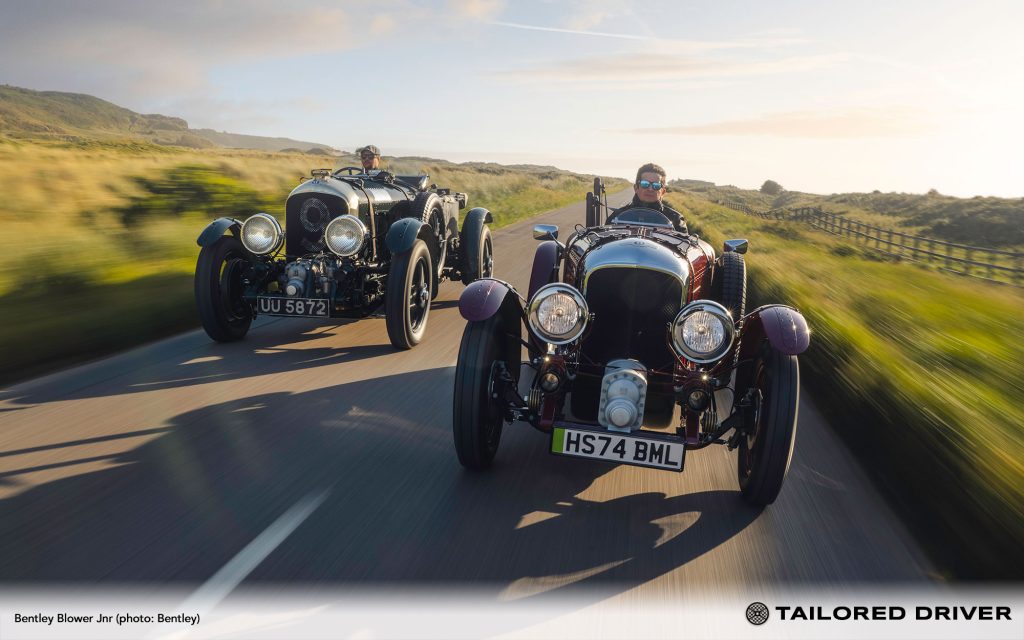
If there is an upside for petrol enthusiasts in these early stages of the EV era, it must certainly be what appears to be an ongoing trend of marque backed remastering and at times recreating of the classics. The idea of mega expensive, customer bespoke and meticulously built remasters brought about by the likes of Singer and their ilk nowadays isn’t lost on OEM manufactures. From Porsche Classic-built 993 Speedsters to classic Land Rover Discoveries and more, it’s a great time to be in the highly exclusive club of intelligent reuse and reimagining. Take for example the Bentley Blow Jnr.
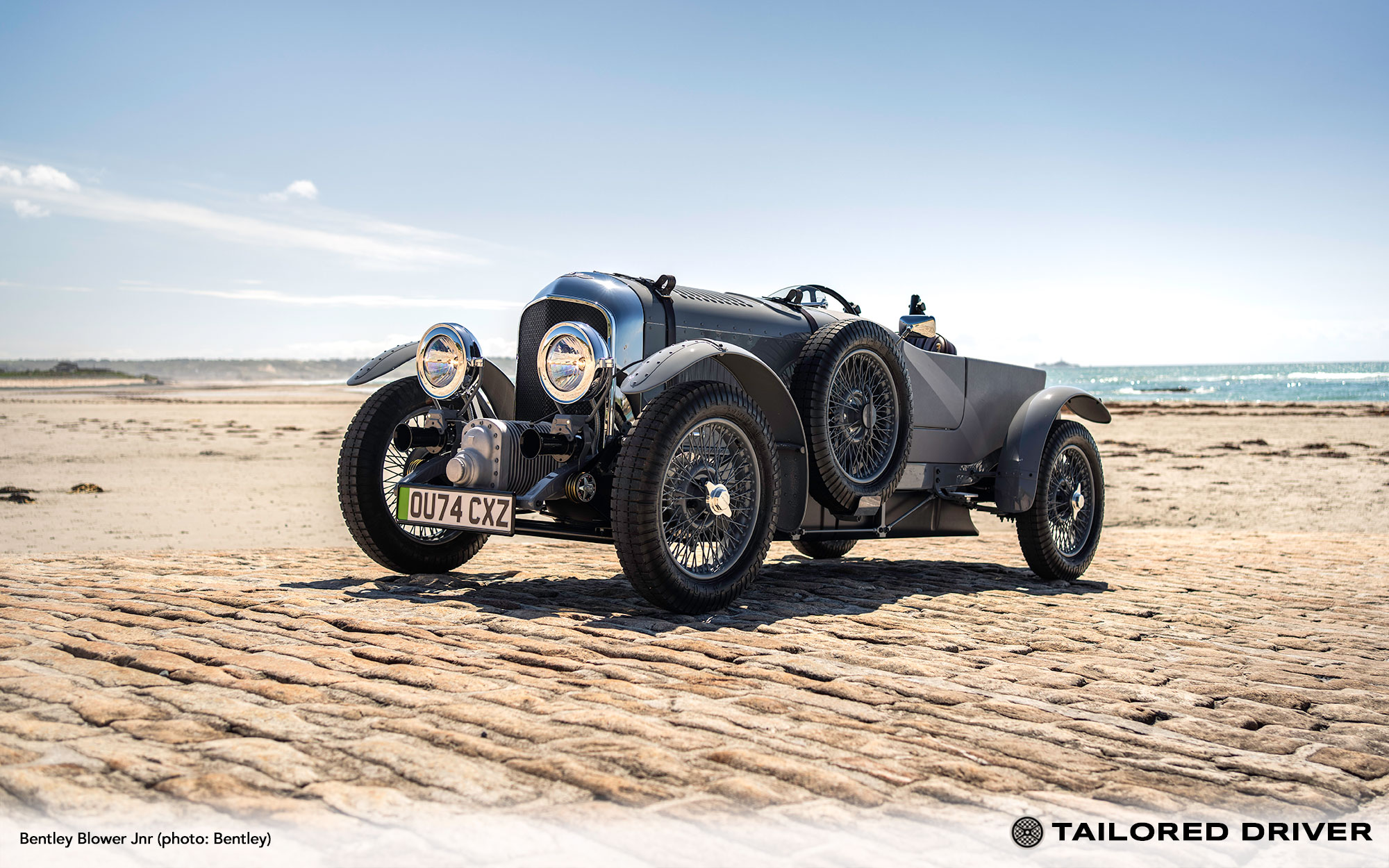
The firm behind the Blower Jnr is Hedley Studios, though the creation of building an 85% scale recreation of the 1929 Bentley Blower has been done entirely in conjunction with Bentley. Unlike companies like Singer that use an existing homologated chassis and rebuild it, the Blower Jnr is technically a new creation.
Effectively, it’s an electrified and road legal car that captures the spirit of the original Blower Bentley that is itself nearly a century old. So yes, it’s a new thing, and it’s just completed 18 months of on-road testing in order to refine and prove the design. That completed, Bentley has signed off on production of the cars. The first deliveries are expected to begin this summer.
Further details can be found in the original press release and gallery below.
PHOTO GALLERY
PRESS RELEASE, source: Bentley
Blower Jnr completes sign-off and enters production
Hedley Studios’ scaled, road-legal recreation of the iconic Bentley Blower enters production
Sign-off follows extensive road-testing programme, culminating in 650-mile event on Channel Island of Jersey
40 mph island-wide speed limit and stunning scenery deliver perfect proving ground for Blower Jnr’s charm, drivability and character
First customer deliveries expected in late summer
(Crewe and Bicester, 29 May 2025) Following the completion of a joint sign-off event, Hedley Studios has begun production of its first road-legal, driveable piece of automotive artwork, the Bentley Blower Jnr.
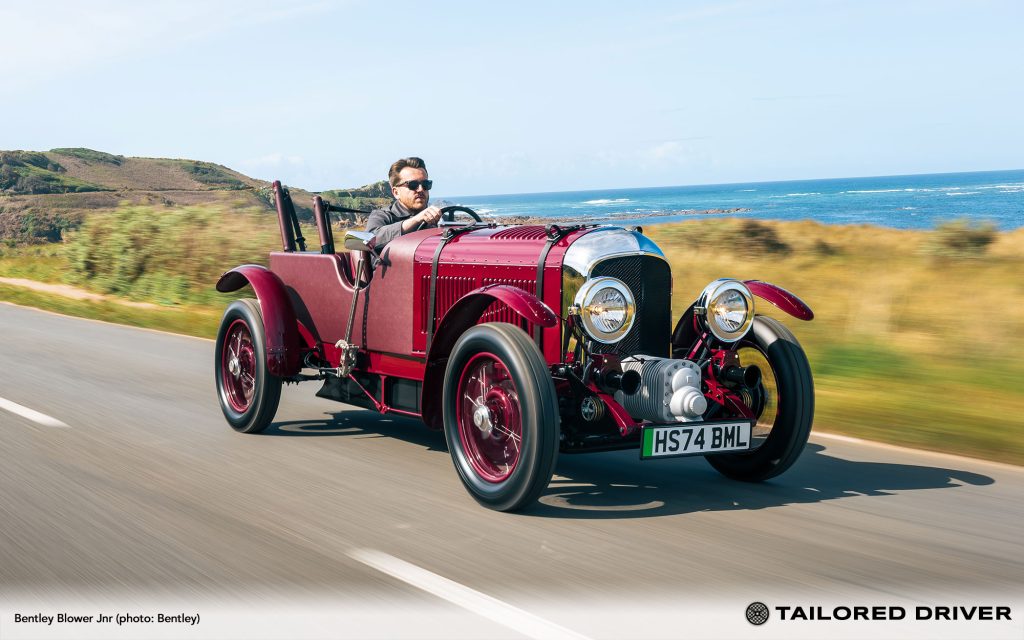
Designed and developed in conjunction with Bentley Motors, Blower Jnr is an 85% scale recreation of the 1929 Bentley Blower. This electrified, road legal creation carries the spirit on the original, near-100-year-old legendary Bentley to a whole new generation, and the Blower Jnr has now completed 18 months of on-road testing to refine and prove the design.
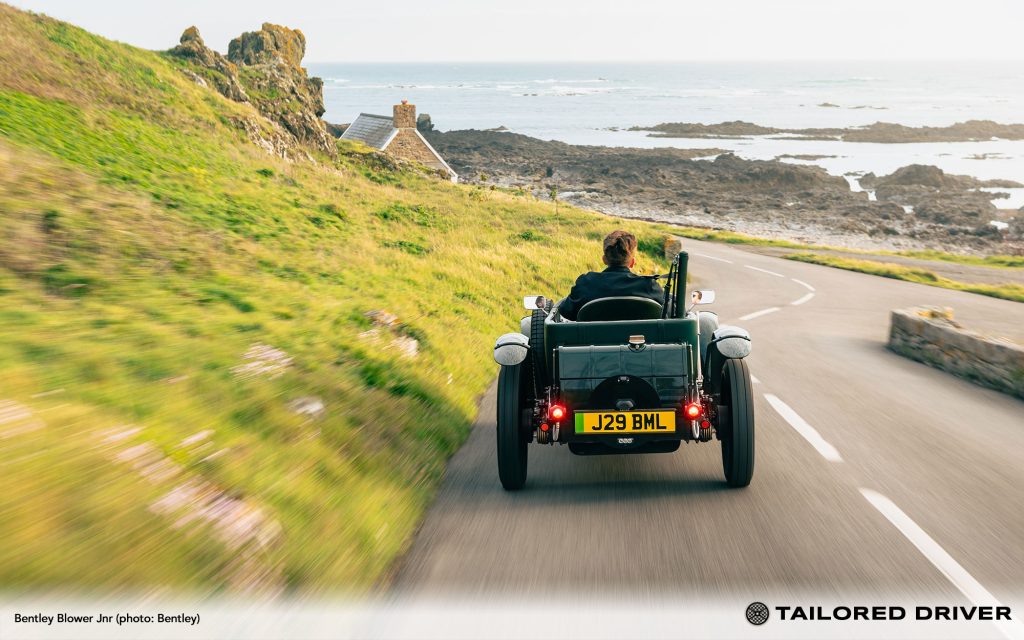
The final sign-off took place on the coastal roads and historic lanes of Jersey – the largest of the Channel Islands and a place steeped in natural beauty. With narrow roads, an island-wide speed limit of 40 mph and a total area of just 45 miles, Jersey was the perfect place for a smaller-scale electric vehicle to complete its development journey, and one where Blower Jnr’s character and charm could be appreciated to the full.
Covering over 650 miles across three days, a select group of representatives from both Hedley Studios and Bentley Motors were joined by international media to evaluate the Bentley Blower Jnr’s full on-road driving potential, set against the stunning backdrops and vistas of the Jersey coastline.
The completion of these test drives marks an important step in the Bentley Blower Jnr’s development, as production of customer models gets underway. Utilising meticulous, hand-crafting techniques, Hedley Studios’ team of artisans will hand-beat the panels of the Bentley Blower Jnr’s bodywork, while expert engineers assemble the fully-electric 48-volt powertrain.
Only 349 examples of the Bentley Blower Jnr will go into production, with prospective owners able to customise their commission to their own individual style. Hedley Studios’ team work closely with each client to curate a Blower Jnr that is bespoke to their taste, from specific colour finishes to a choice of racing number.
This personalisation process is further enhanced through the use of the Hedley Studios configurator, in which clients can let their imagination run wild with almost limitless levels of personalisation at their fingertips. A range of curated style packs provide a baseline for Blower Jnr personalisation, making each example a truly unique piece of automotive artwork.
Ben Hedley, CEO and Founder of Hedley Studios, comments:
“Heading into production of the Bentley Blower Jnr marks a seminal moment for our brand, as we bring to life our very first road-legal piece of automotive art. Our team of engineers and craftspeople have worked tirelessly to design and craft the Bentley Blower Jnr, and in close collaboration with clients around the world, they have begun the design process of some wonderfully unique examples of the Bentley Blower Jnr. With only 349 examples of the Bentley Blower Jnr to be built, we’re very excited to embark on this production process and see these pieces of handcrafted art out on the roads. The sign-off process in Jersey was a wonderful sight to see, and navigating the picturesque and undulating roads of the coastline behind the wheel of the Bentley Blower Jnr would have been an enviable experience for those involved.”
We’re anticipating that the first customer deliveries will commence in just a matter of months, and we’re just as excited as our clients are to see them behind the wheel and out on the road.”
Mike Sayer, Head of Product Communications and the Bentley Heritage Collection for Bentley Motors, adds:
“From the moment that we first took the original 1929 Bentley Blower Team Car #2 to Hedley Studios, we knew this project was going to deliver something truly special. Years later, and with thousands of road miles under the wheels of the development prototypes – appropriately called EXPs as the first Bentleys were – we’re ready to put the car into production.”
Hedley Studios has reimagined a car that sits at the very heart of Bentley’s history and heritage, with extraordinary attention to detail and craftsmanship. The Blower Jnr may be smaller in scale, but its presence, performance and sense of occasion invoke the spirit of the original. We can’t wait to see these cars on the road soon, and look forward to taking delivery of the first car to join our Heritage Collection.”
The Bentley Blower Jnr
Blower Jnr is a collaboration between Hedley Studios and Bentley’s Heritage Collection. The original Team Car from 1929 – insured for £25m – was used by Hedley Studios to master the design of Blower Jnr, with details recreated at a sizeable 85 per cent scale. The result is a vehicle that will have even experts looking twice – with the car measuring 3.7 metres long and 1.5 metres wide. Unlike Hedley Studios’ other products, Blower Jnr is fully road legal and designed specifically to be used on the road and is perhaps the most sophisticated city car ever built.
Crafted by hand to the same standards as any Bentley, and adorned with beautiful details all inspired by the original Team car, Blower Jnr is built around a 48V electric powertrain with a 15 kW (20 bhp) motor, meaning a top speed of 45 mph / 72 km/h in the UK and EU (25 mph / 40 km/h in the USA due to legislation) and an expected range of around 65 miles, with tandem seating for two adults.
Beyond the headline figures, the beauty of Blower Jnr is in the recreation and repurposing of details from the original car. The frame is painted steel, to which an authentic chassis specification is attached. Leaf springs and scaled-down, period-correct friction dampers bring a comfortable ride, while Brembo disc brakes at the front and drums at the rear provide the stopping power. The electric motor is mounted across the rear axle, while the batteries and drive electronics are all housed in a hidden undertray.
The bodywork is crafted in two sections, and while the rear body structure is crafted in carbon fibre rather than being an ash frame, it’s covered in impregnated fabric, just as the original. The bonnet, with its multiple cooling louvres, is hand-crafted in aluminium using traditional techniques and fastened with beautiful leather buckled bonnet straps. The two-person cockpit is in a 1+1 layout, with a central adjustable driving position and the passenger travelling behind in the rear seat. An optional bespoke weekend bag fits behind, in the scaled down and repurposed fuel tank complete with lockable latch.
At the front of the car, the supercharger now houses the charging port that connects the onboard charger to any Type 1 or Type 2 socket, and is surrounded by the famous Bentley mesh grille, in an authentic nickel-plated radiator housing.
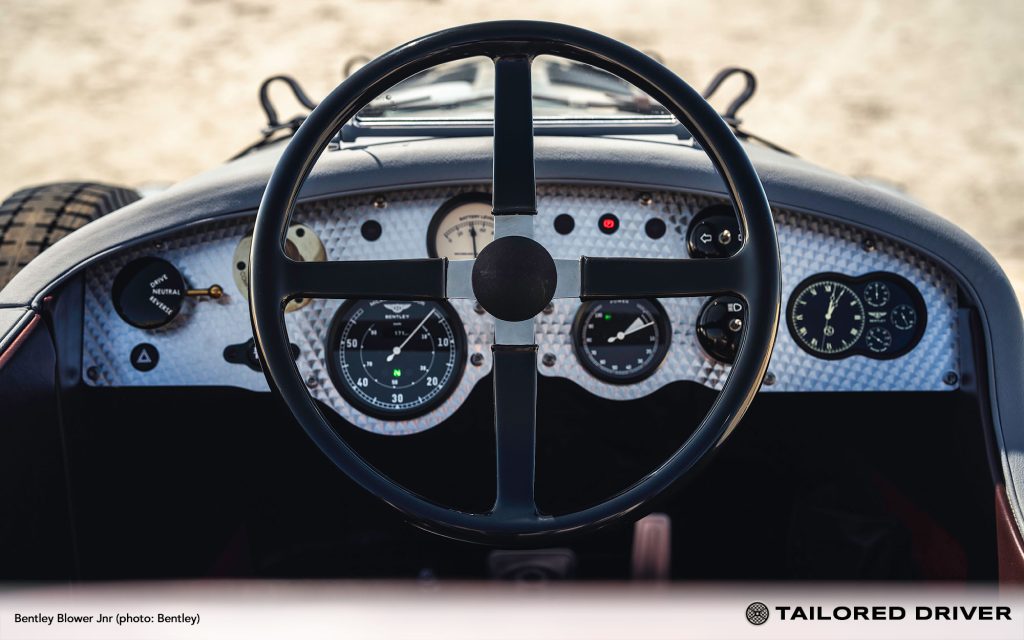
At first glance the dashboard looks like a scaled-down replica of the original, with Engine Turned Aluminium forming the dashboard itself. The fuel pressurisation hand pump has been repurposed as the drive mode selector, with a choice of Comfort, Bentley or Sport. Forward, Neutral and Reverse are selected via a lever that looks and feels like the ignition advance control from the original Blower. Other switchgear for the headlights and indicators copies the form and materiality of the magneto switches from the Team Car, while the battery charge gauge recreates the original ammeter.
More information on the Blower Jnr can be found at:
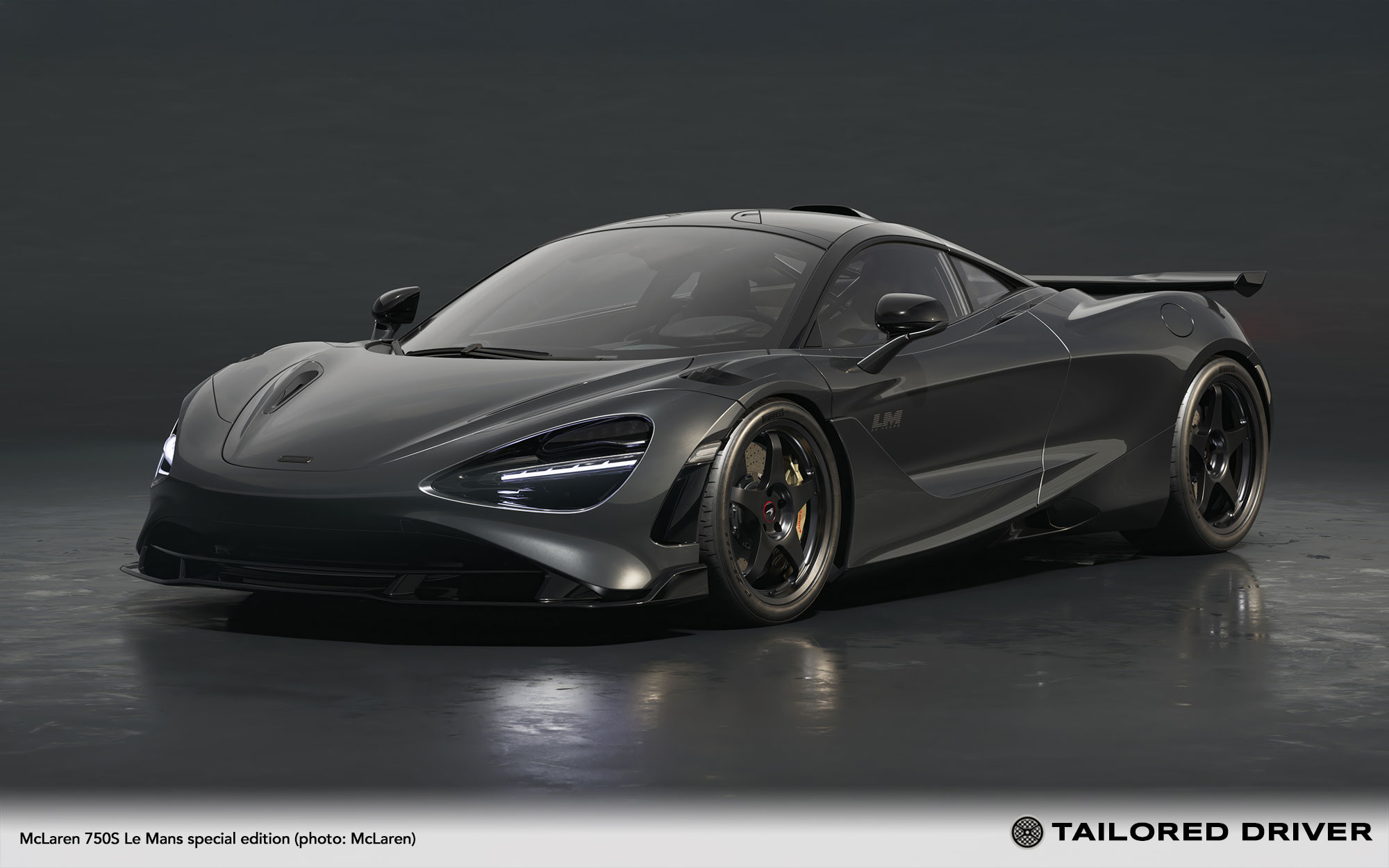
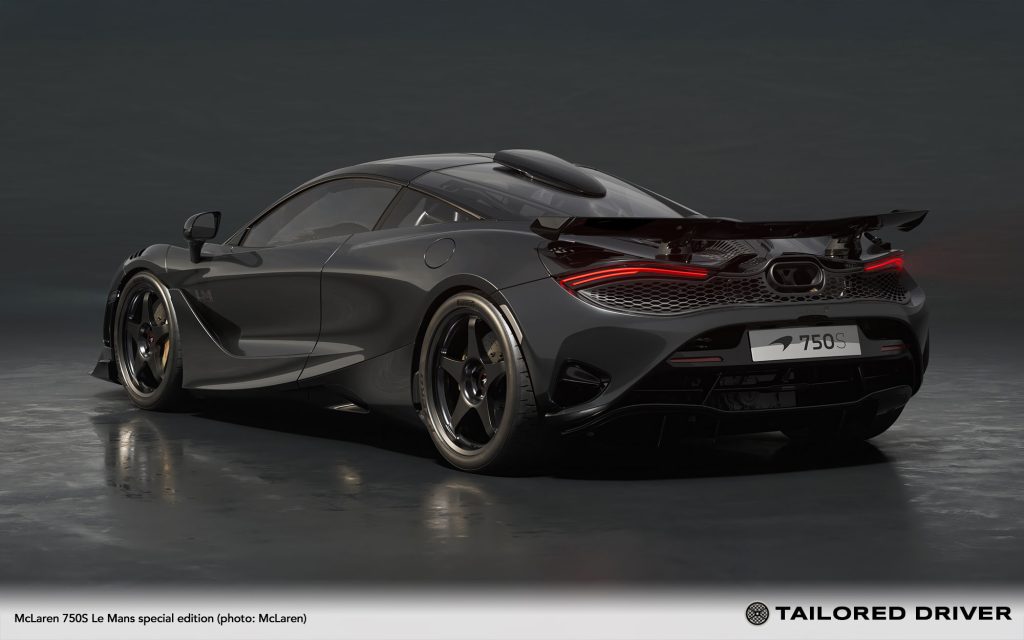
McLaren is headed back to Le Mans, 30 years since the brand’s most recent victory at the fabled French endurance race. In as much, there’s plenty to celebrate and Woking plans to do that with this special edition 750S coupe.
On June 18, it will have been 30 years since drivers JJ Lehto, Yannick Dalmas and Masanori Sekiya stood on the top of the podium beneath the iconic Rolex race clock and celebrated their victory – the first appearance at Le Mans for McLaren, though it would be their only victory there since.
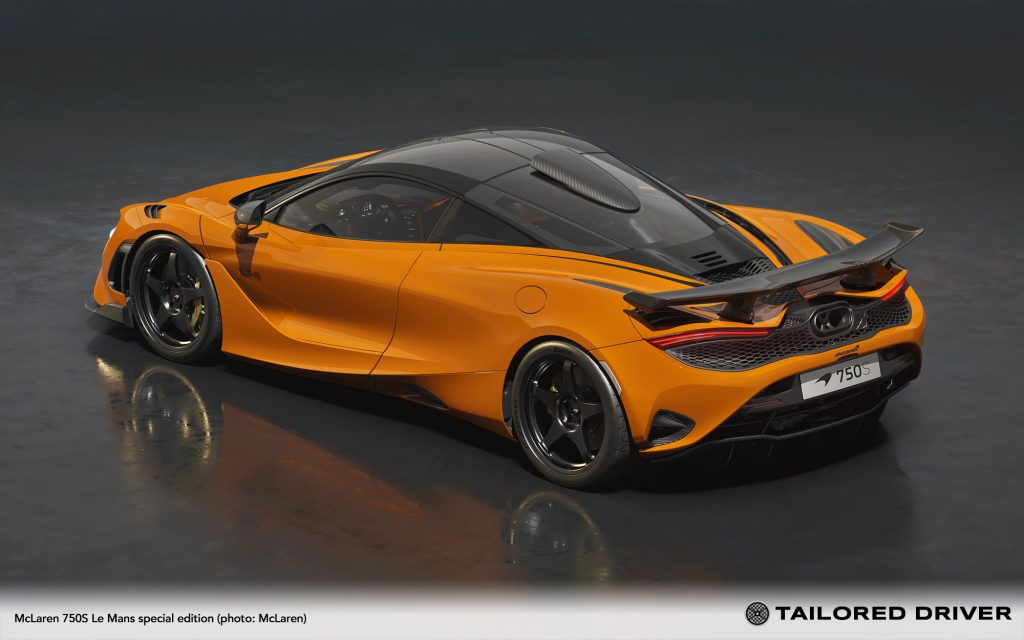
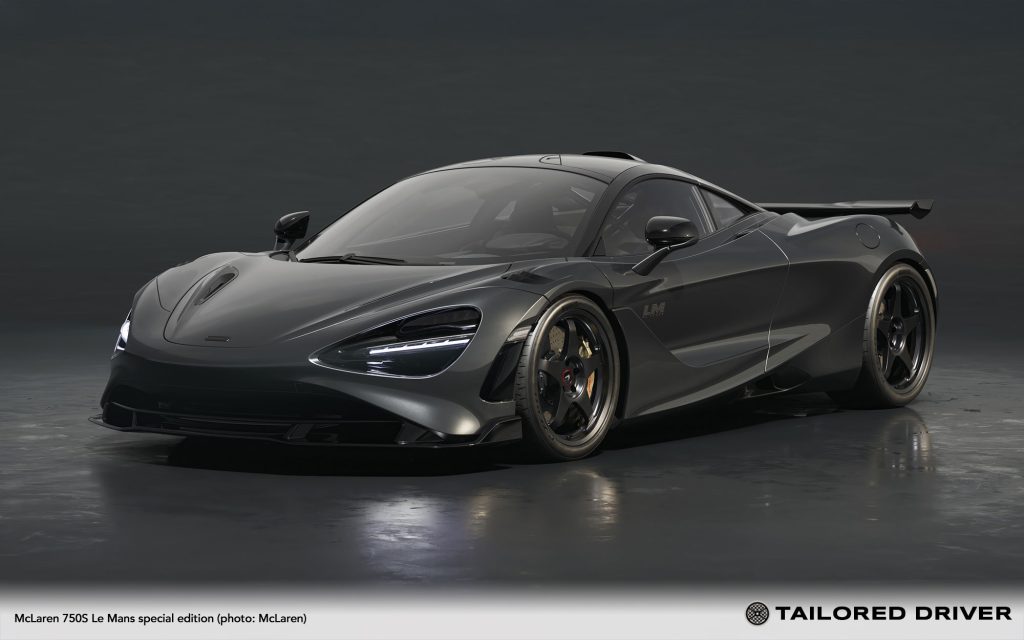
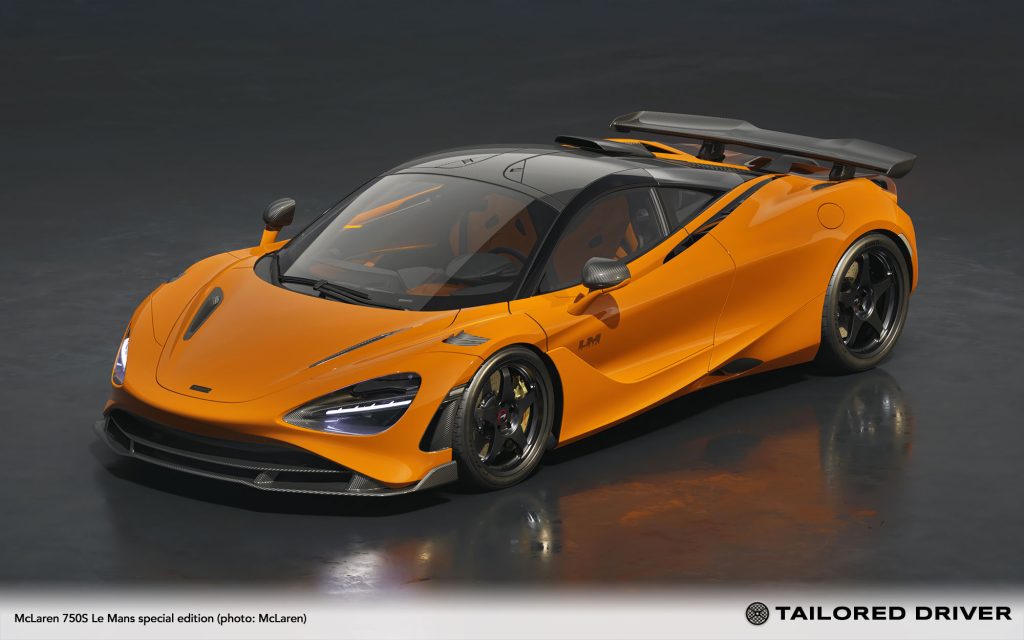
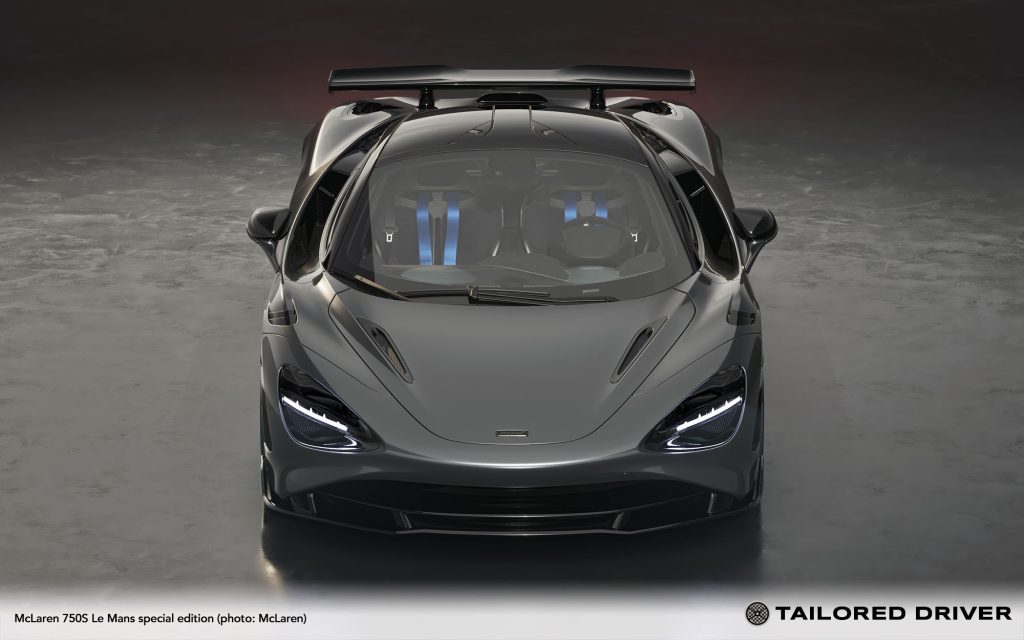
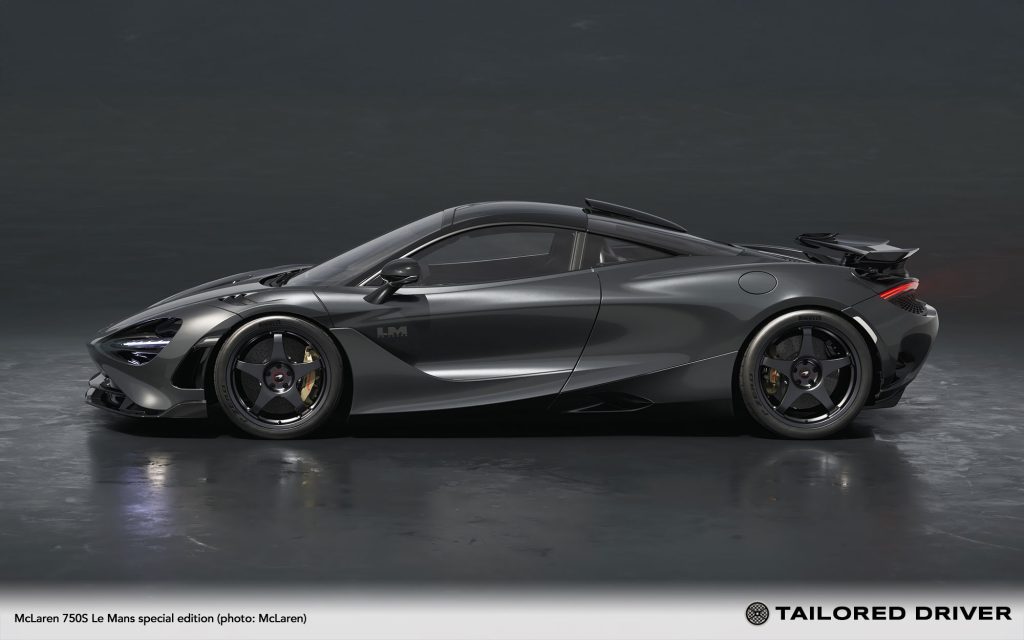
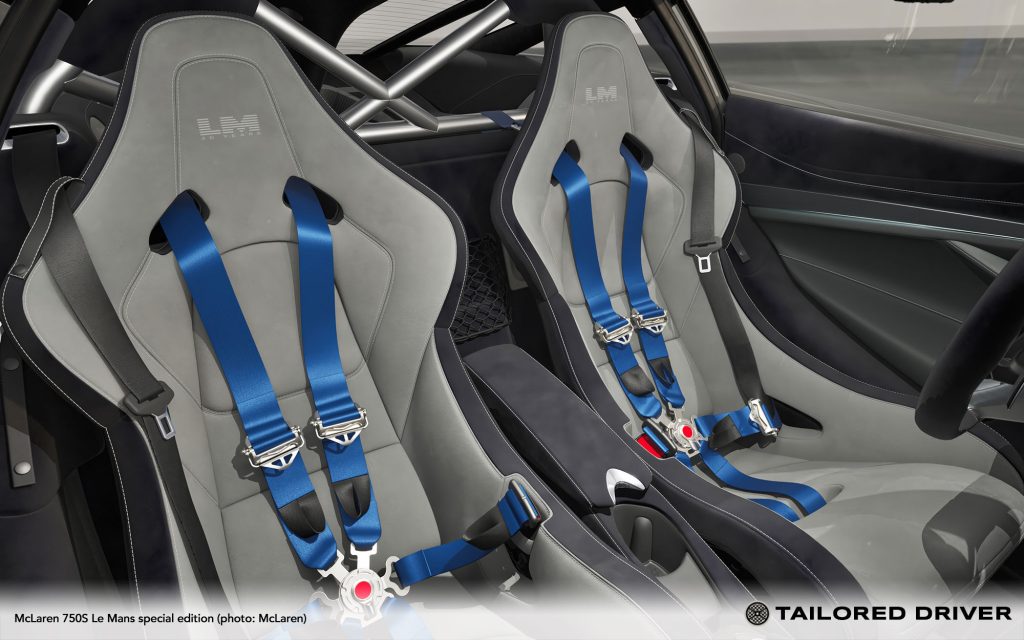
Acknowledging that 30-year anniversary will be just 50 examples of McLaren’s 750S. The design features a new MSO High Downforce Kit (HDK) that bestow the 750S with additional track-focused enhancements. Further additions include a roof scoop, unique 5-spoke LM wheel design harkening the wheels of the 1995 Le Mans-winning car plus further Le Mans branding.
Colors will be limited as well, though several will be offered. These include Le Mans Grey or McLaren Orange exterior. Inside, Carbon Black with Dove Grey or Carbon Black with McLaren Orange interiors are meant to complement or contrast.
McLaren plans a return to Le Mans, and is set to arrive in 2027 with a new LMDh prototype squarely aimed at that top step beneath the Rolex clock. Until then, 50 lucky McLaren owners can celebrate the plan in their very own 750S Le Mans special edition.
Further details can be found in the original press release and gallery below.
PHOTO GALLERY
PRESS RELEASE, source: McLaren
750S Le Mans special edition celebrates 30th anniversary of McLaren’s iconic debut victory with MSO High Downforce Kit (HDK) enhancements
Special edition 750S coupe celebrates the 30th anniversary of McLaren’s 1995 race win
June 18, 2025, marks 30 years since JJ Lehto, Yannick Dalmas and Masanori Sekiya claimed victory in the 24 Hours of Le Mans on McLaren’s first appearance as a constructor in the world-famous race
Celebratory 750S features new MSO High Downforce Kit (HDK) giving additional track performance enhancements
Special edition cars available in tribute Le Mans Grey or McLaren Orange exterior and Carbon Black with Dove Grey or Carbon Black with McLaren Orange interior colours to contrast or complement
Additional features include roof scoop, unique 5-spoke LM wheels and Le Mans branding
Limited to just 50 examples worldwide and set to become one of the most sought-after 750S cars
McLaren Automotive celebrates the 30th anniversary of its winning debut at the 24 Hours of Le Mans – completing a unique Triple Crown* achievement – and McLaren’s return to the top class of the event from 2027. With just 50 cars being built, the 750S Le Mans is set to be one of the most sought-after McLaren series production supercars.
On June 18, 1995 McLaren F1 GTR #59 – driven by JJ Lehto, Yannick Dalmas and Masanori Sekiya – won the gruelling 24-hour race, joined by three more McLaren F1 GTRs in the top five placings. Just days before the 30th anniversary, two McLaren GT3 EVO cars – based on the 750S – will compete for LMGT3 honours at this year’s edition of the endurance classic.
The McLaren 750S Le Mans pays homage to the iconic #59 F1 GTR with matching Le Mans Grey exterior paint – with the option of McLaren Orange also available – roof scoop and 5-spoke LM wheels. It will also feature the new MSO High Downforce Kit (HDK), which adds visual drama to the 750S with a raised carbon fibre Active Rear Spoiler with integral endplates. In conjunction with a front bumper featuring an enlarged carbon fibre splitter and rear wing, downforce is increased by 10 per cent compared to the standard 750S, enhancing track performance and echoing the famous McLaren F1 LM edition’s aerodynamic additions. Completing the HDK package is a new body-coloured carbon fibre under-wing panel featuring gloss black louvres.
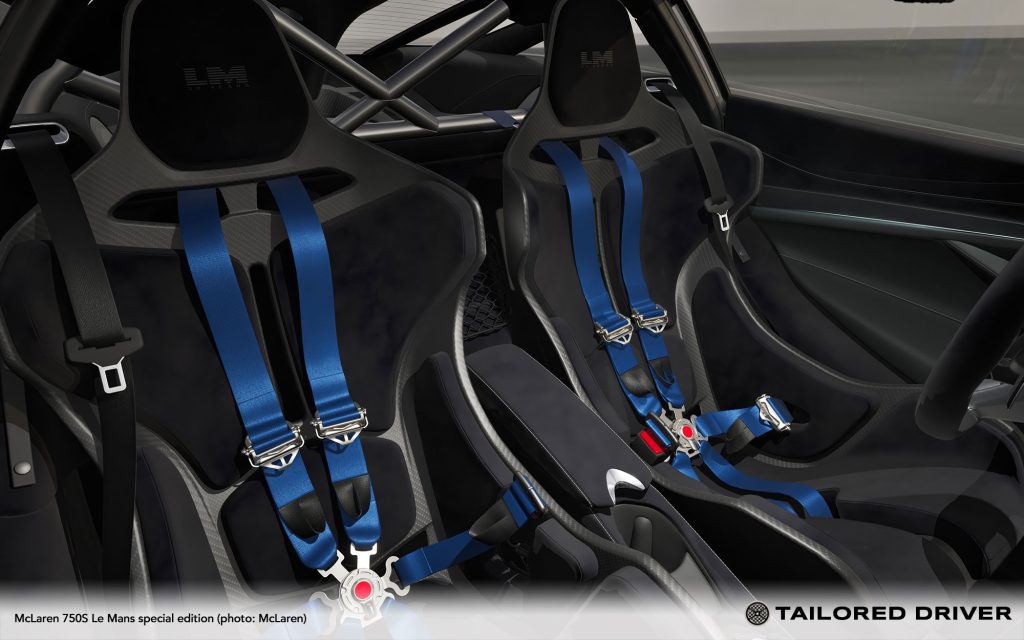
McLaren 750S Le Mans customers will also have a choice of Carbon Black with Dove Grey or Carbon Black with McLaren Orange interior colour combinations with Le Mans branding and a dedication plaque, with all cars featuring a portfolio of unique features as standard:
Exterior
Choice of two exterior paint themes: Le Mans Grey or McLaren Orange
High Downforce Kit (HDK) front bumper with enlarged Carbon Fibre Splitter in Gloss Black, Raised Carbon Fibre Active Rear Spoiler in Gloss Black and Louvred Body Colour Carbon Fibre Under-Wing Panel with Gloss Black Louvres
5-spoke Le Mans wheel with Stealth finish and Le Mans branding
F1 Gold Special Colour Brake Calipers with red McLaren logo
Wheel Centre Caps with blue/red colour detail
Gloss Black Carbon Fibre Roof Scoop
Carbon Fibre Front Fenders with Gloss Black Louvres
Gloss Black exterior details
Natural Titanium Exhaust Finisher
Painted Le Mans exterior branding
Interior
Choice of two unique Le Mans interior themes; Carbon Black Alcantara with Jet Black Softgrain Leather and Dove Grey Alcantara or Carbon Black Alcantara with Jet Black Softgrain Leather and McLaren Orange Alcantara
Le Mans debossed headrest branding
Le Mans branded floormats
Bespoke Le Mans dedication plaque
In addition, a range of options are available exclusively to 750S Le Mans customers, including:
Exterior Details in Gloss Visual Carbon Fibre, including the Hood Air Intakes, Door Mirror Casings, Side Air Intakes, Rear Fender Air Intakes and Raised Active Rear Spoiler Endplates
Gloss Visual Carbon Fibre HDK and Underbody pack, including the Front Splitter, Rear Diffuser and Raised Active Rear Spoiler
Gloss Visual Carbon Fibre Raised Active Rear Spoiler only
Gloss Visual Carbon Fibre Louvre pack including the Front Fender Louvres and Rear Under-Wing Panel Louvres
Gloss Visual Carbon Fibre Roof Scoop Outer
Track Brake Upgrade incorporating F1 Gold Special Colour Brake Calipers with red McLaren logo
An optional track record plaque lists the 1995 Le Mans victory, with Triple Crown* achievements also featured alongside McLaren’s many significant motorsport successes. Mounted in the front luggage compartment, this option is available to purchasers of all new 750S cars.
Purchasers of the Le Mans edition cars will also benefit from the multi-award winning** benchmark-beating 750S performance delivered by the mid-mounted, 750PS M840T 4.0-litre, twin-turbocharged V8 McLaren engine. A motorsport-inspired carbon fibre Monocage II central structure and Proactive Chassis Control III suspension system help to ensure that the 750S is the lightest and most agile car in its class, now enhanced by the HDK aerodynamic additions.
“The 750S Le Mans marks not just 30 years since our debut victory in the iconic race but an exciting time for the brand with McLaren GT3 EVO cars competing in this year’s race and the announcement of our return to the top, Hypercar class in 2027.
This exclusive 750S is the first McLaren Le Mans edition since the F1 LM to feature HDK aerodynamic enhancements and is set to become one of our most sought-after supercars, with previous Le Mans editions of the 650S and 720S commanding a premium over standard models.”
Henrik Wilhelmsmeyer, Chief Commercial Officer, McLaren Automotive
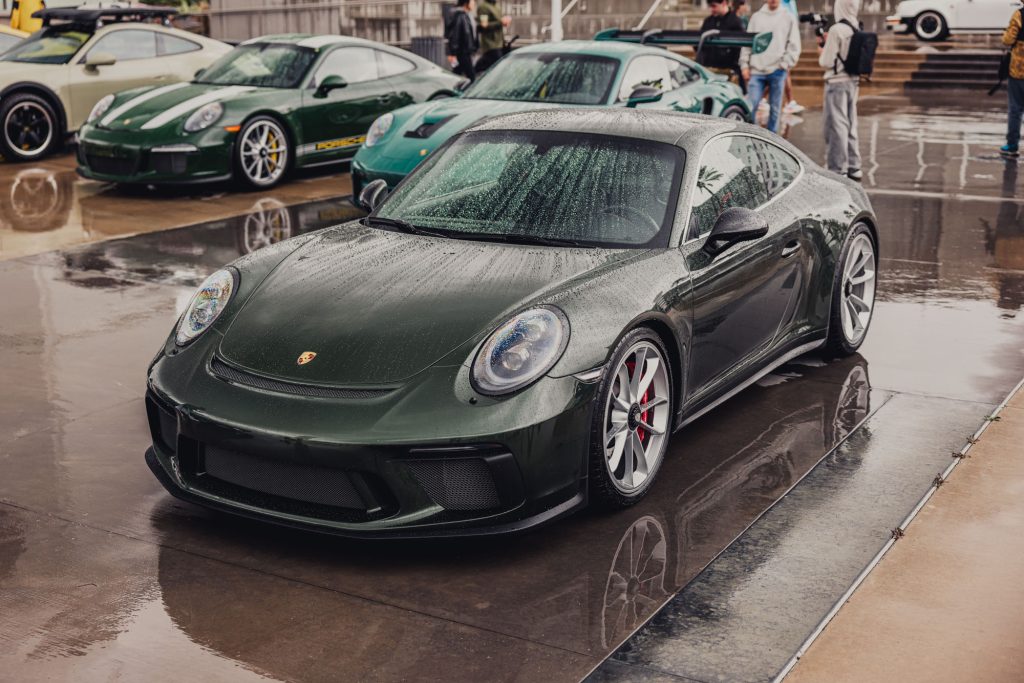
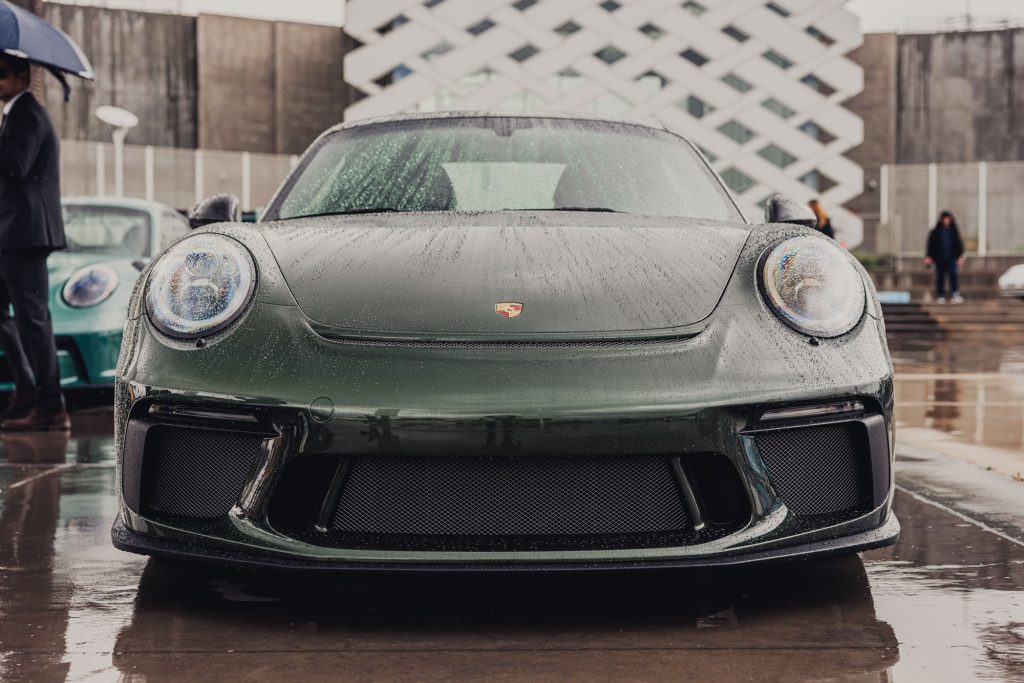
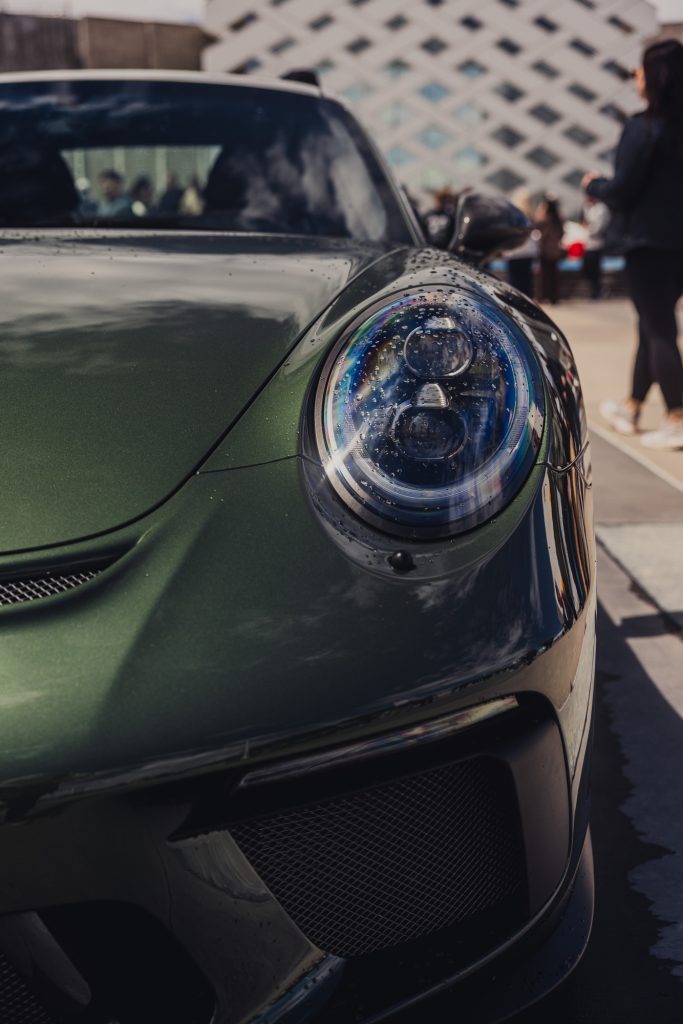
Events like Air|Water bring a wave of vibrant colors from the Porsche community. When it’s thoughtfully curated, it feels like being a kid in a candy store. @PTSRS and Air|Water teamed up to present “Colors of Air|Water,” and we spent hours capturing content for our site. The rain didn’t stop us. It added mood and contrast, bringing each color to life in both overcast light and the bright California sun.
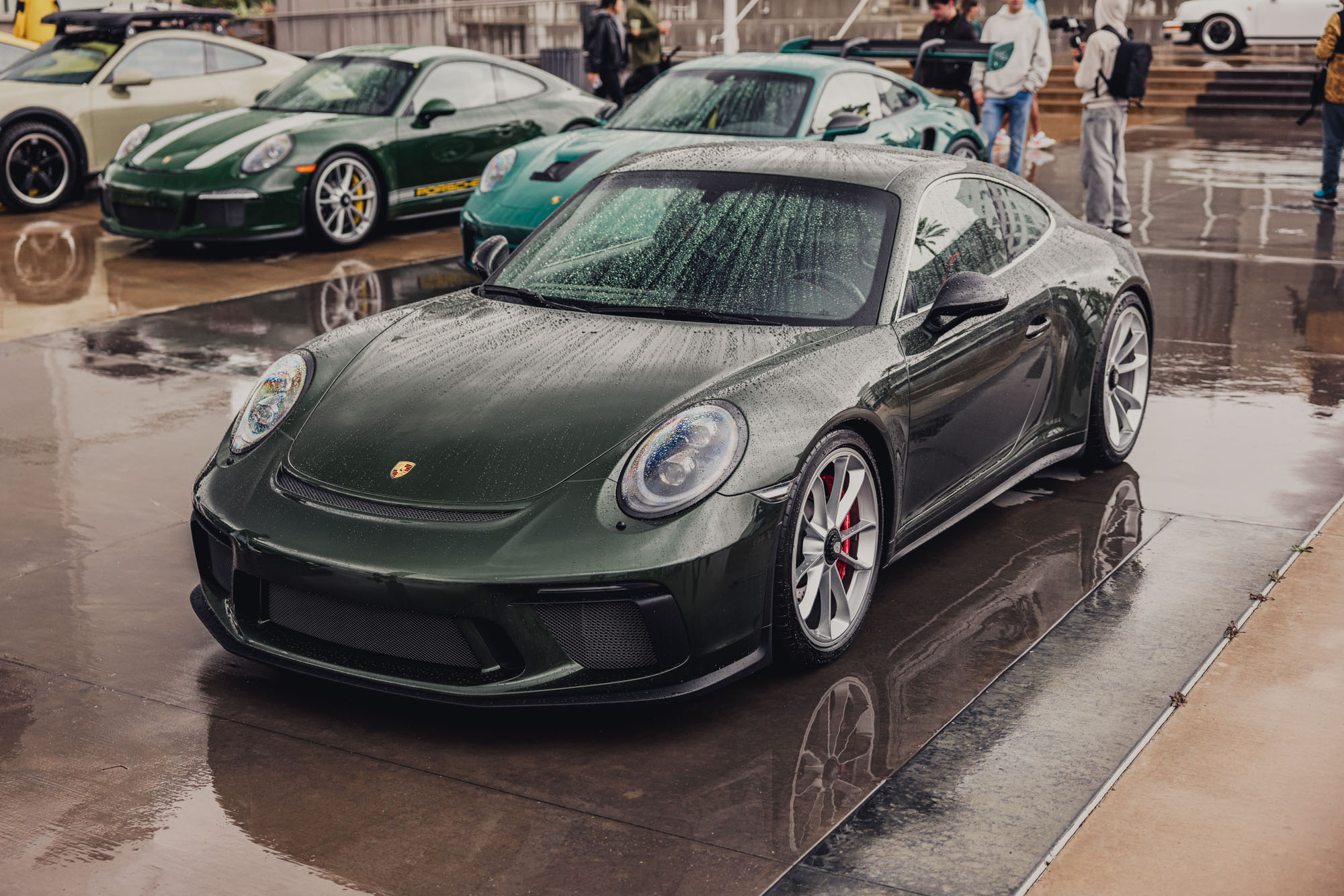
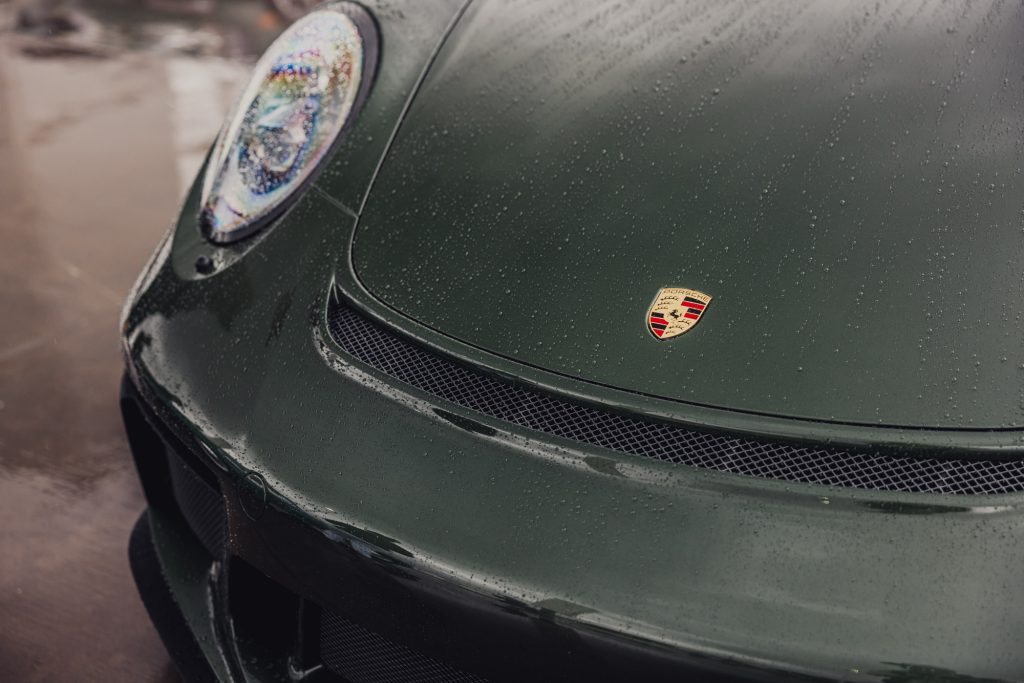
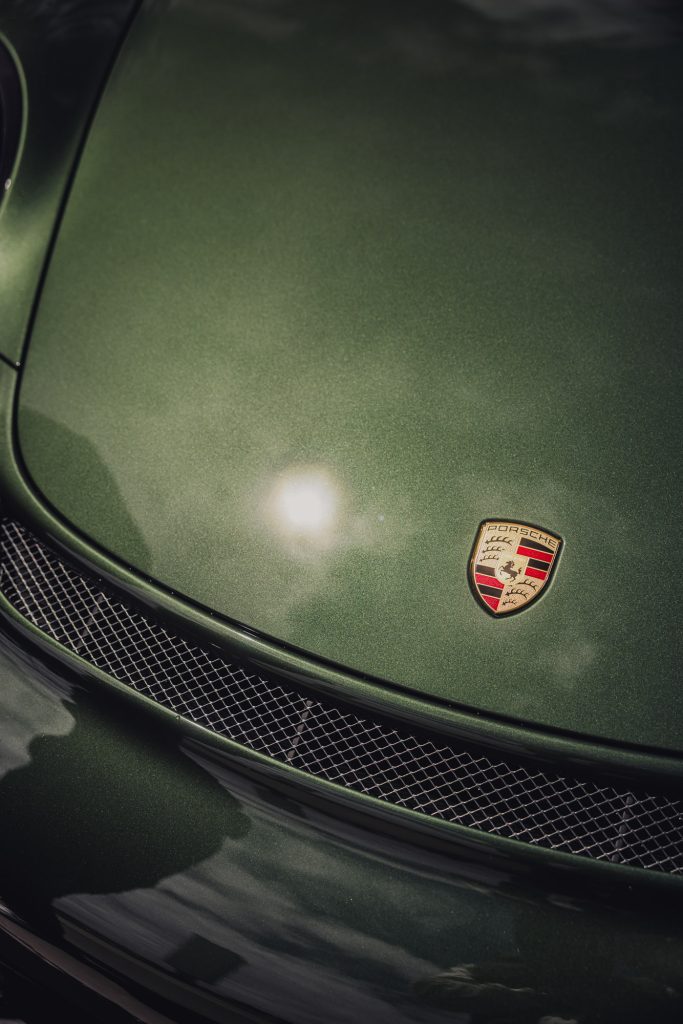
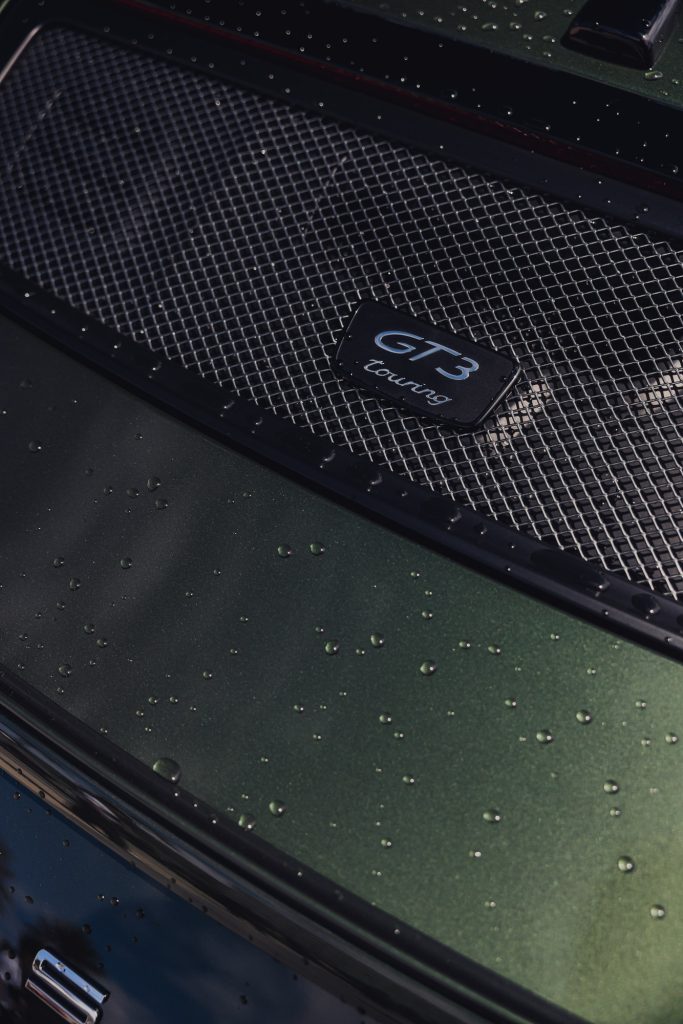
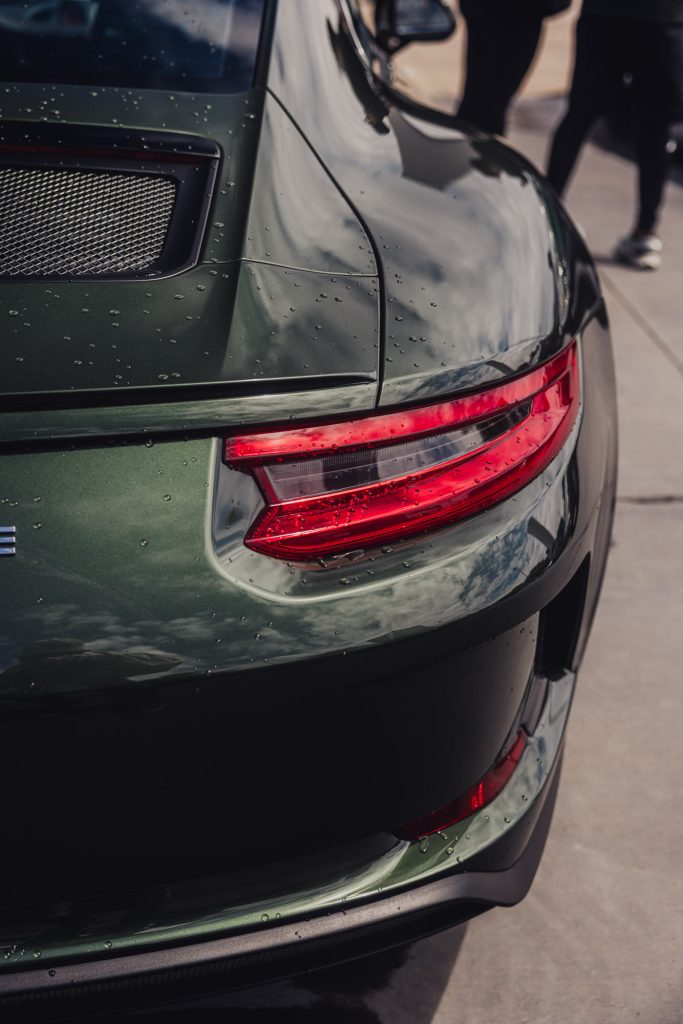
We continue the series with a standout solo feature: a 2018 Porsche 911 GT3 Touring in Paint to Sample Oak Green Metallic. Everyone has their own definition of the perfect spec, but this one feels universally right. On her Bramo profile, Hannah shares, “Purchased in July 2024. My second 911, but my first GT3. Specifically bought this GT3 T for its stellar ownership history—low 6k mileage, perfect DME report, serviced and driven with care. PTS Oak Green Metallic. Understated and classy without the wing. My Porsche addiction started when I first drove my 991.2 7MT 911 Carrera T. I’m at my happiest while I’m behind the wheel of my 911s.”
Understated and classy without the wing? We couldn’t agree more.
Oak Green Metallic (oakgrünmetallic; metallic uni; 265 / 22L / 60K) is a classic Porsche shade rooted in the brand’s 1980s and 1990s catalog. Though offered as a standard color during that era, it remained relatively uncommon. Today, it returns through Porsche’s Paint to Sample program, preserving its distinctive character as an elegant green with prominent gold flake and a warmer tone than its modern counterpart, Oak Green Metallic Neo. Its rarity and vintage appeal have made it a favorite among enthusiasts aiming to evoke Porsche heritage with a timeless factory-correct look.
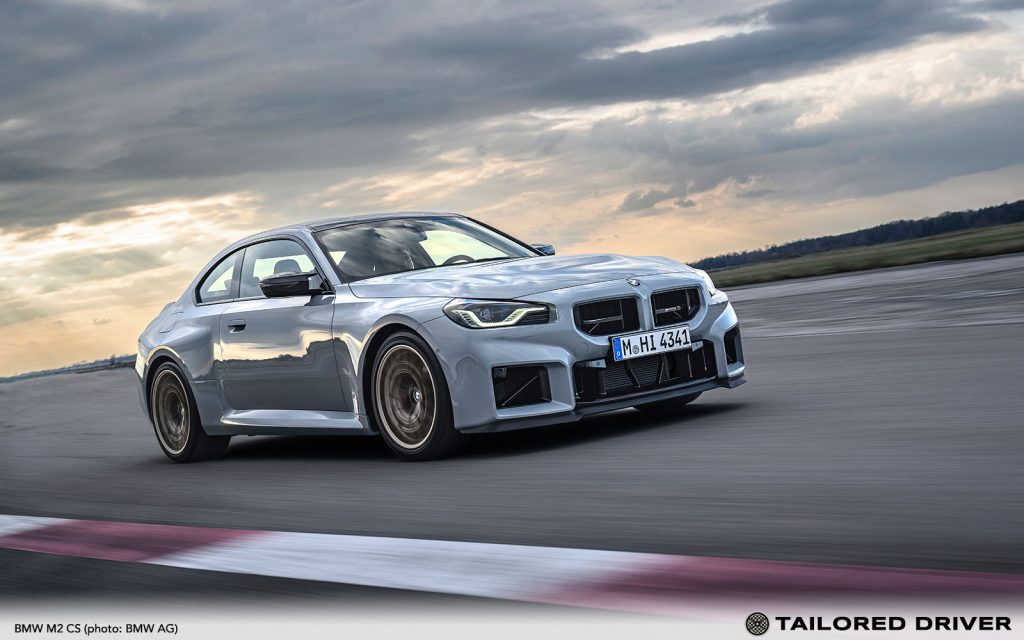
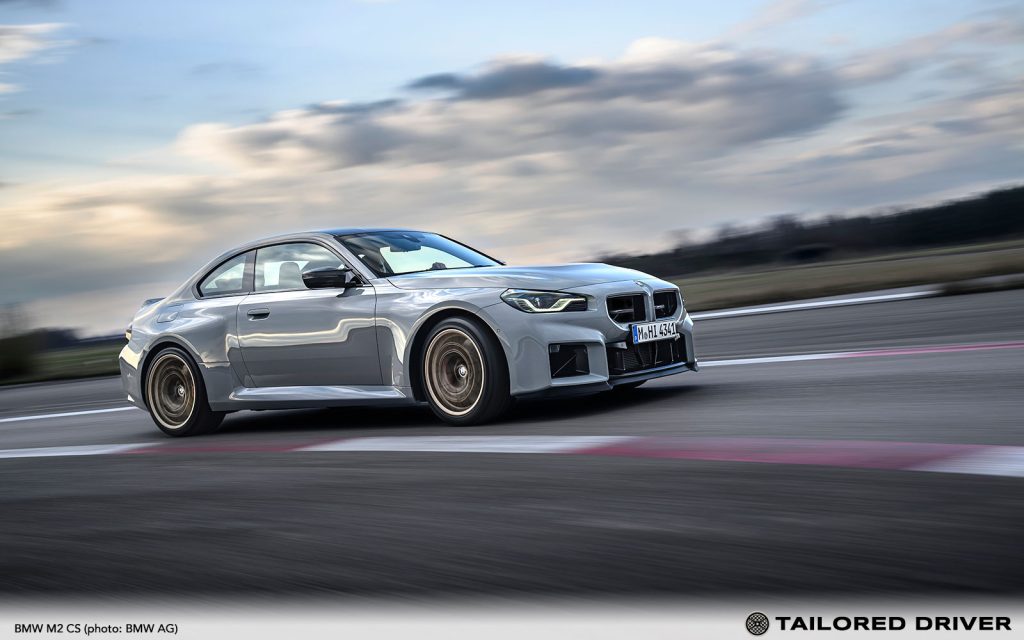
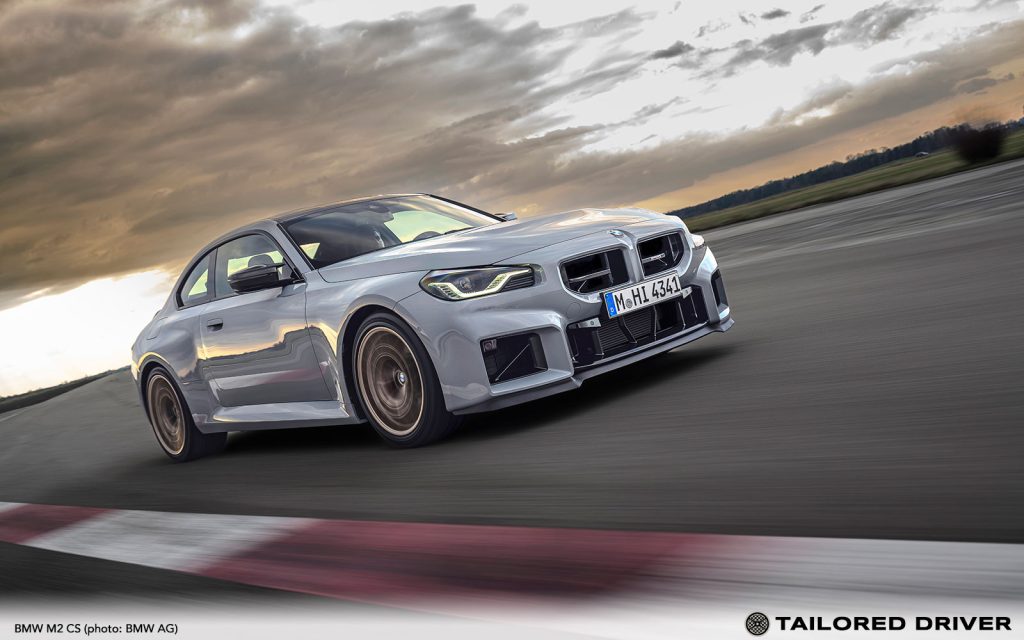
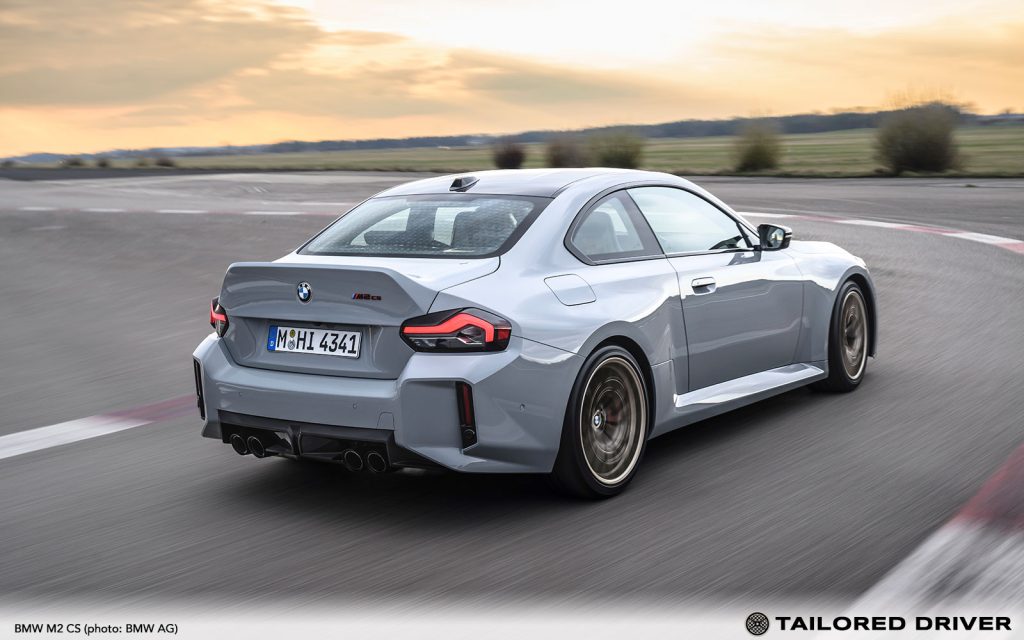
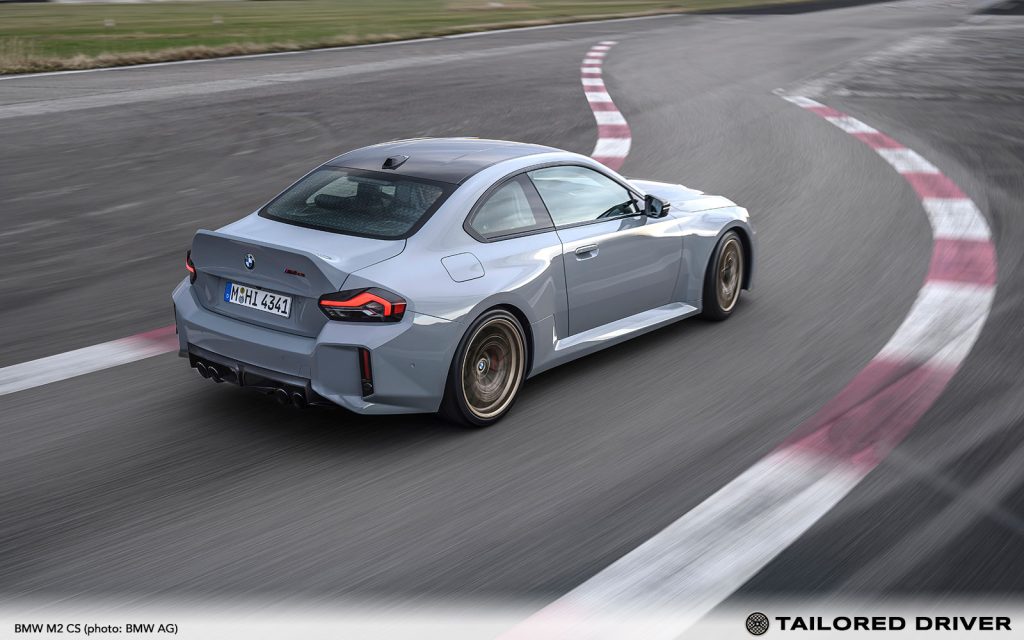
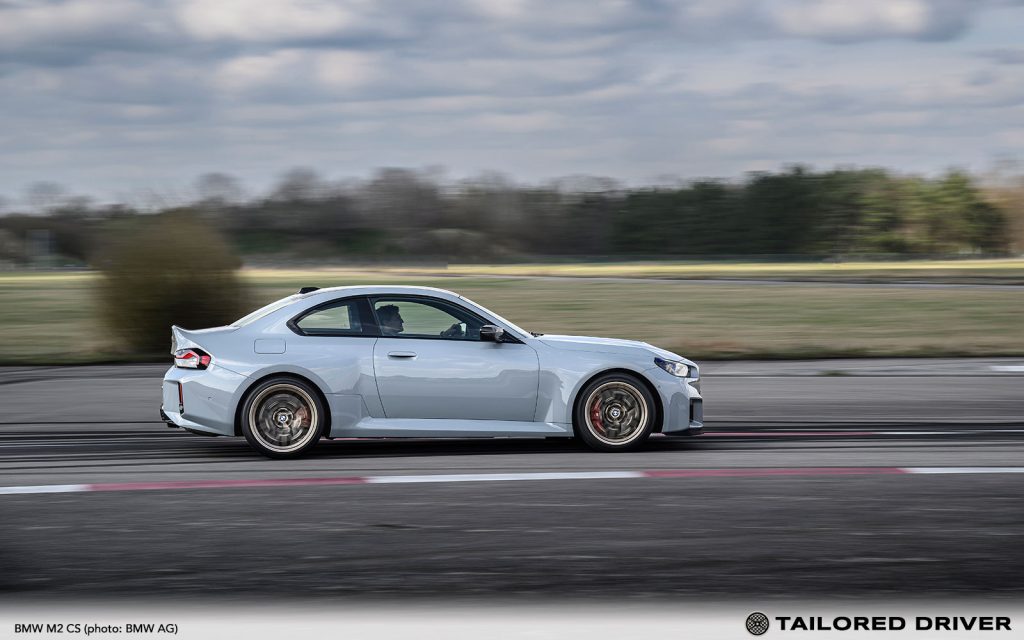
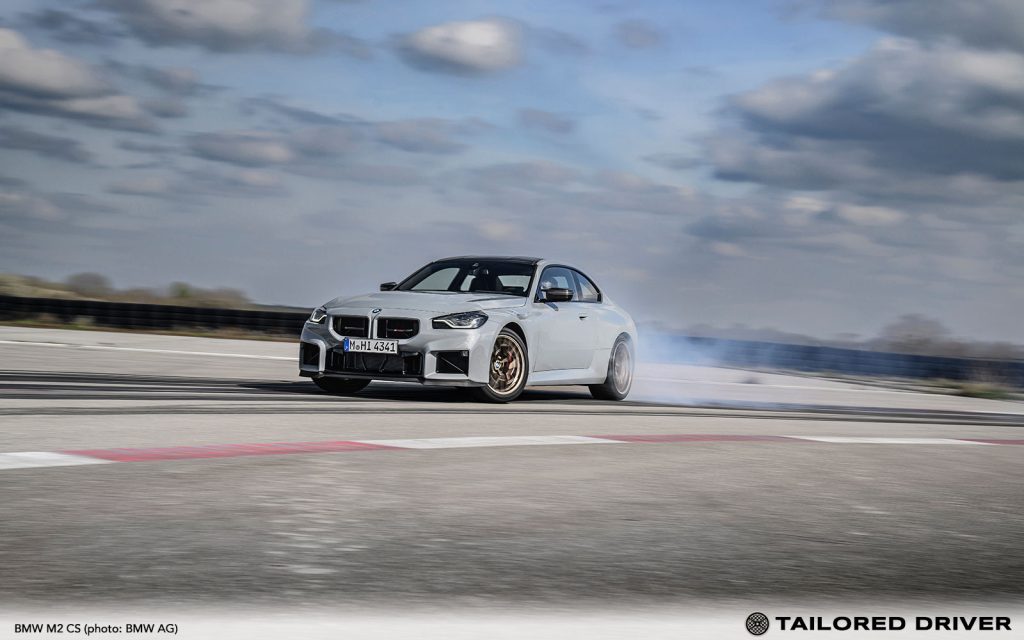
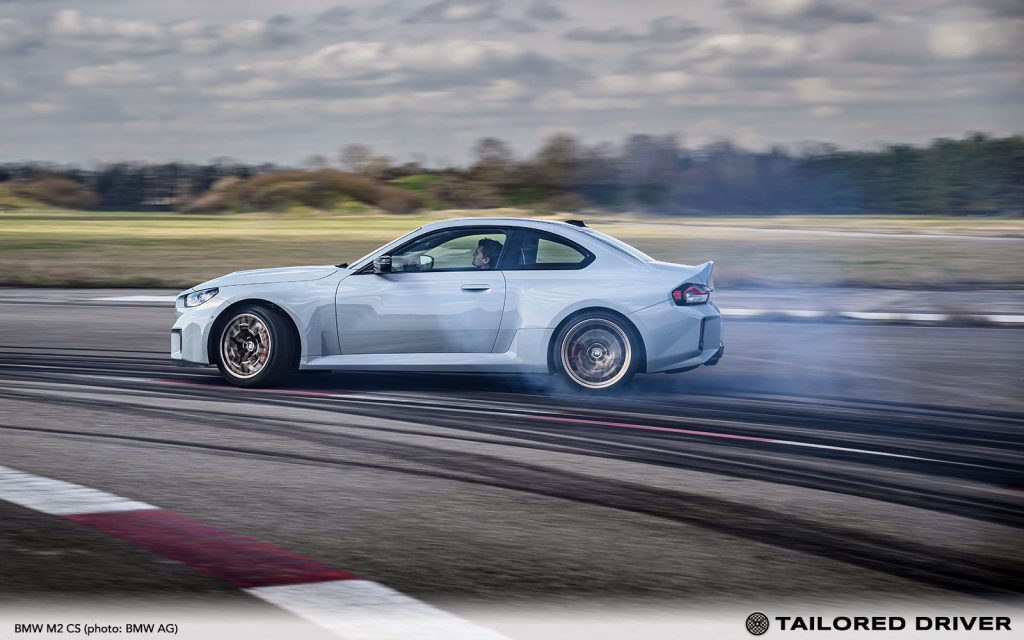
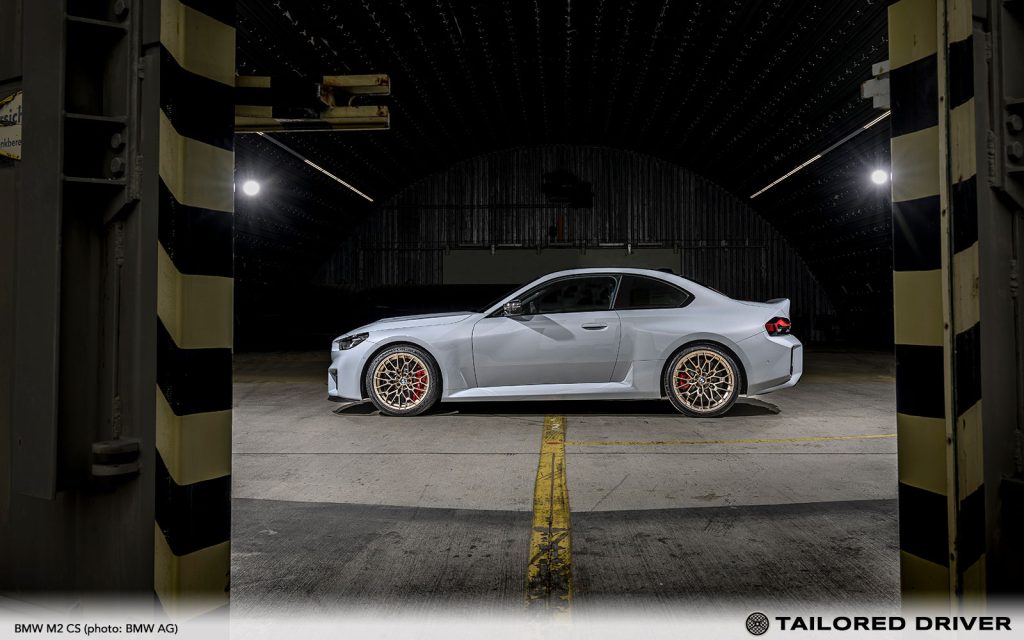
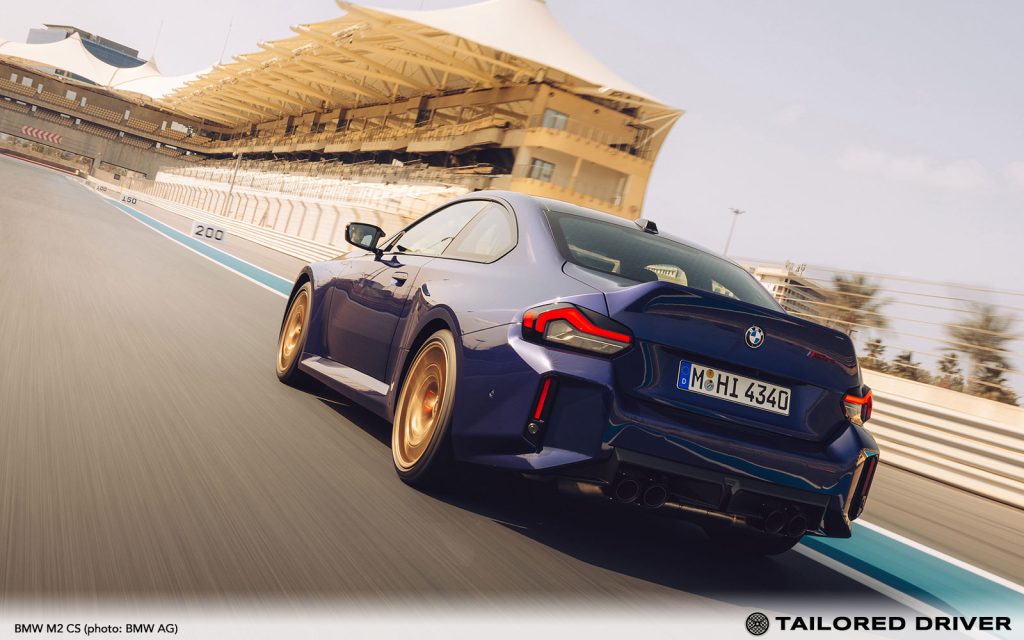
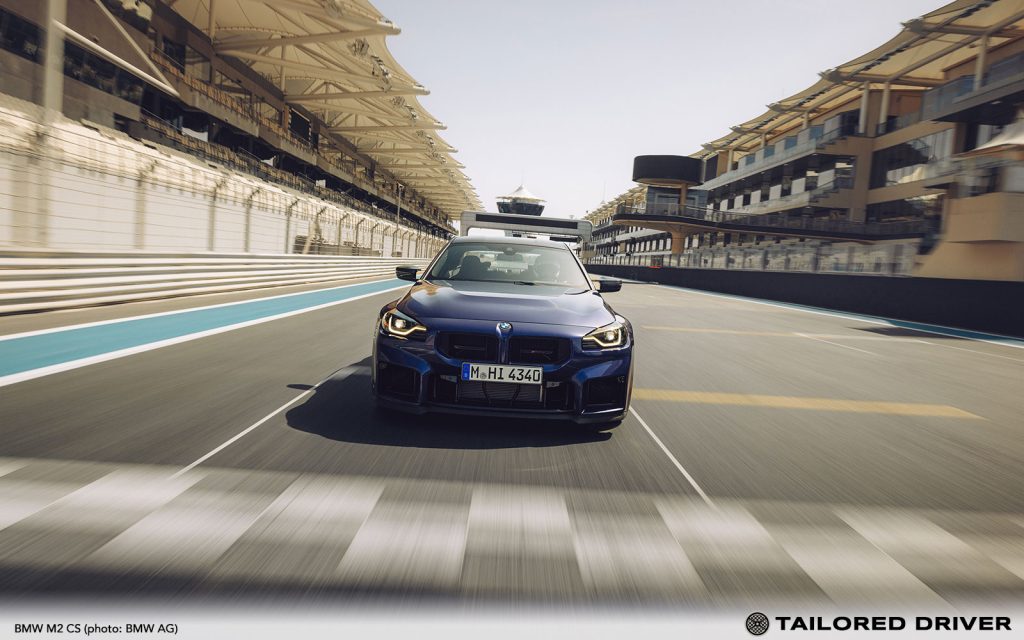
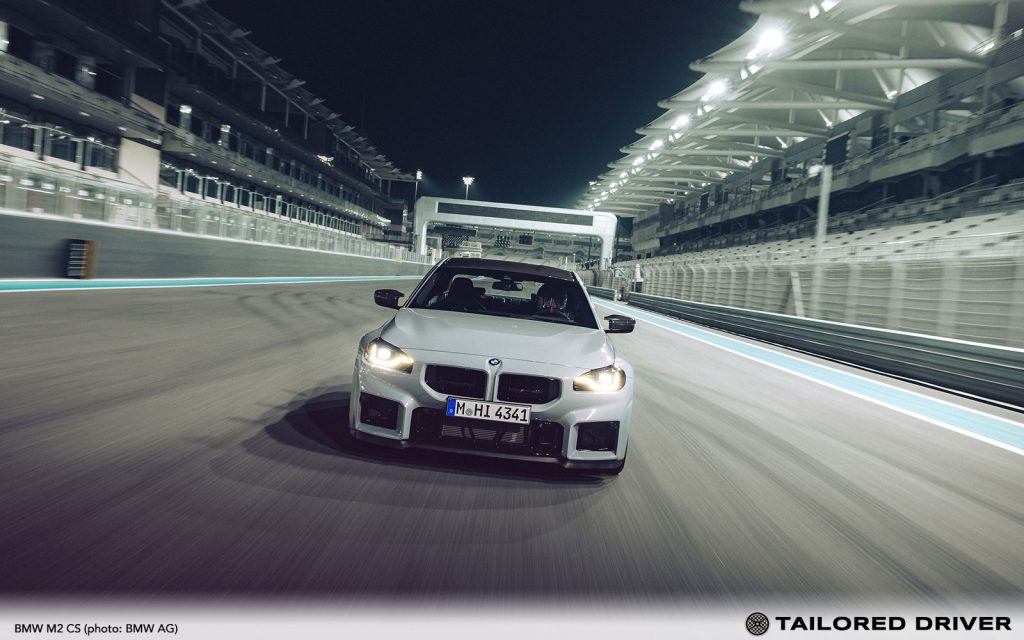
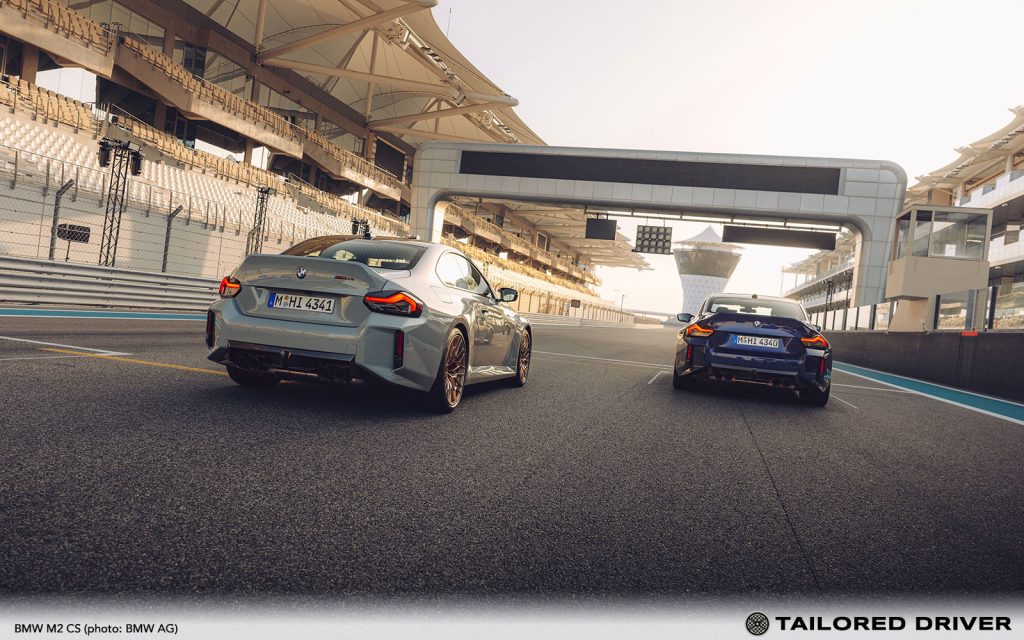
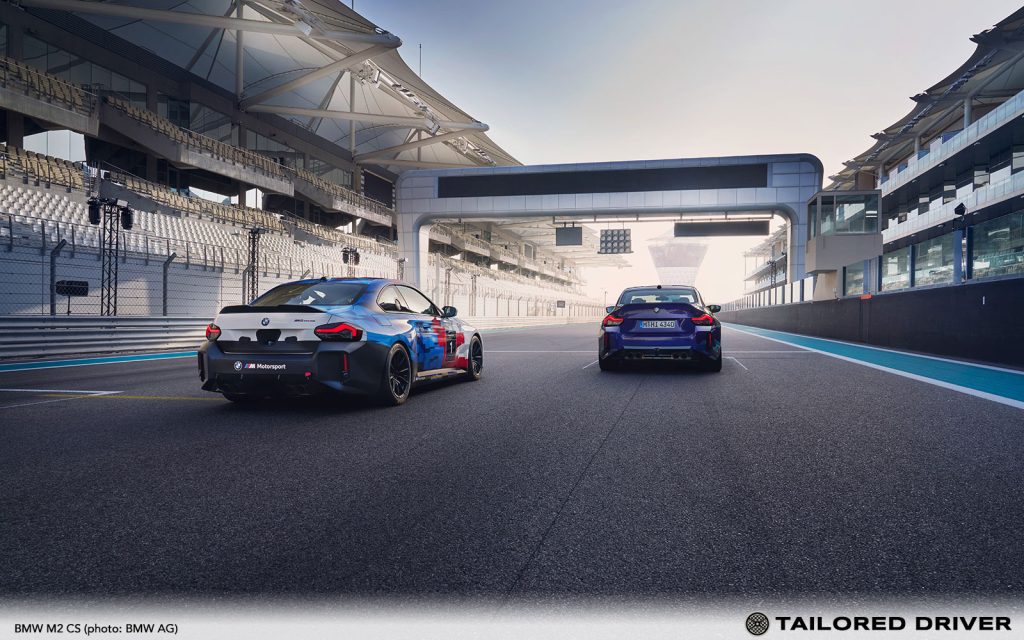
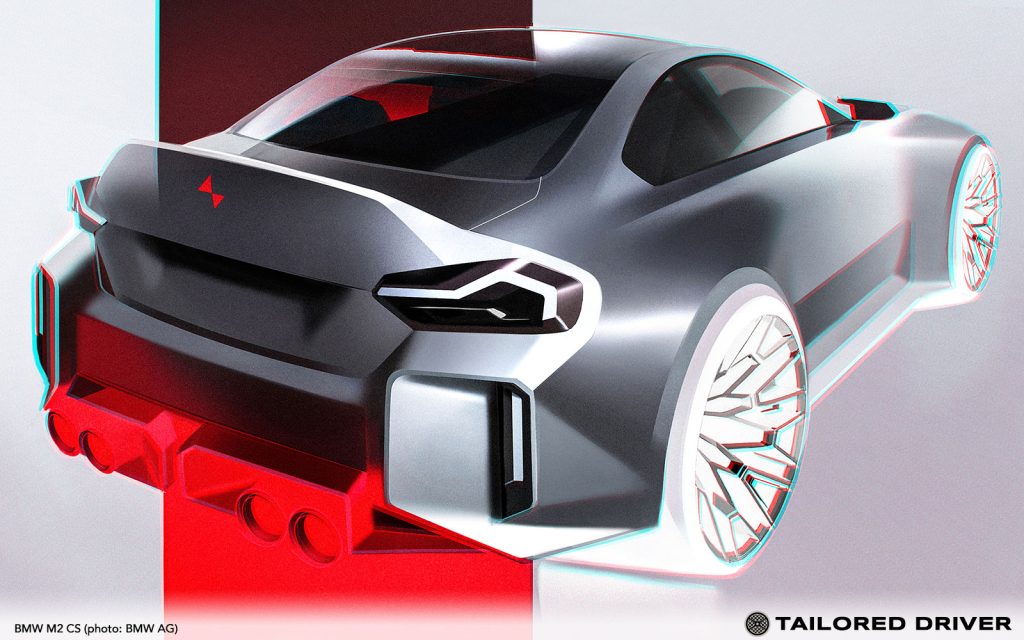
The second-generation BMW M2 CS arrives as the latest special-edition model from BMW M GmbH.
Increased engine power output of 530 hp and model-specific chassis tuning.
Intelligent lightweight construction with carbon fibre reinforced plastic components and increased body rigidity ensure class-leading dynamic performance.
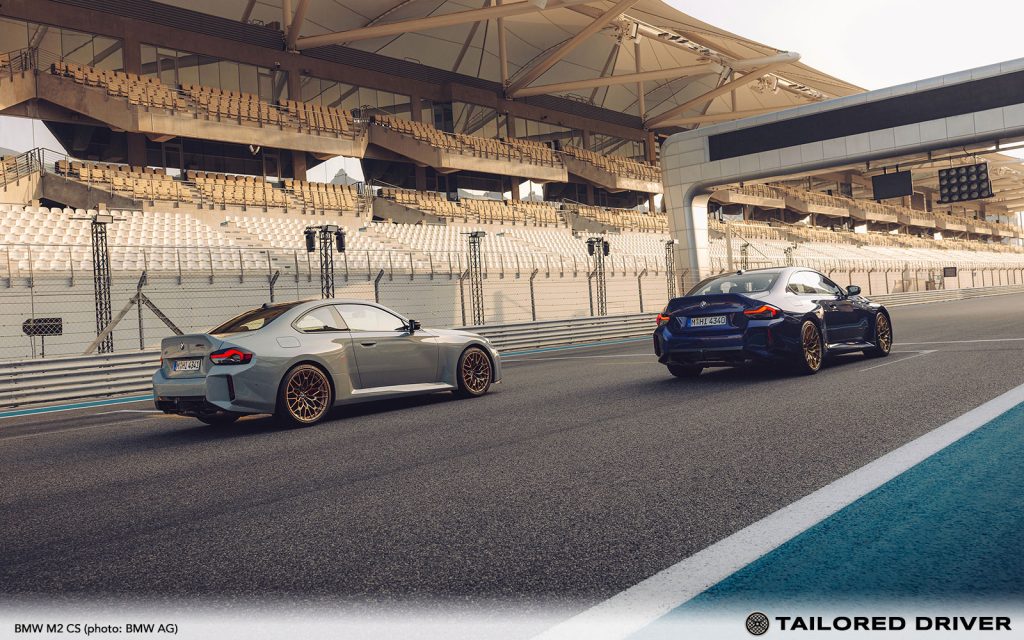
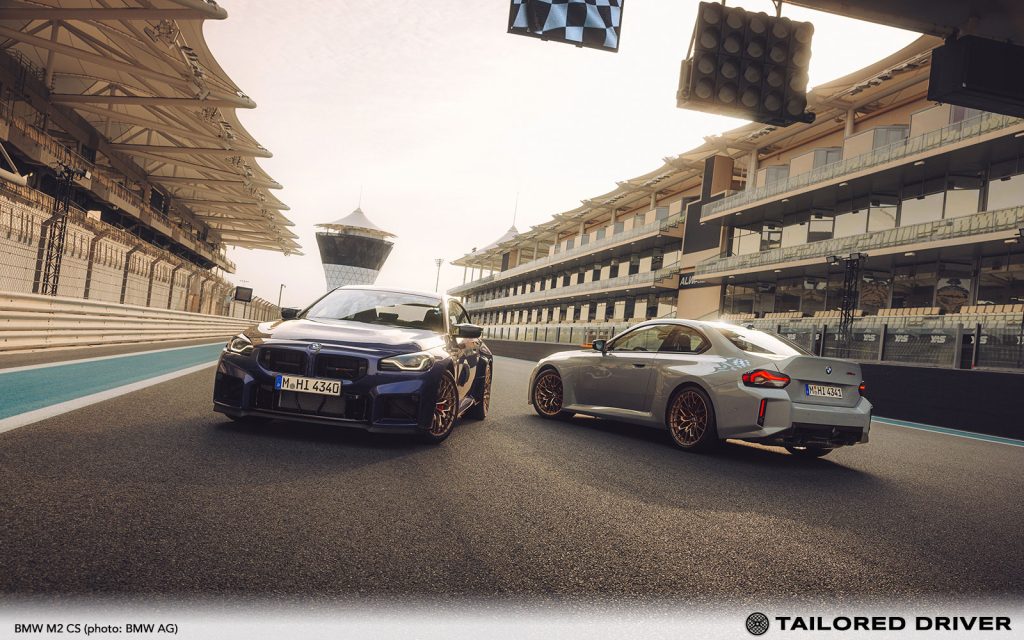
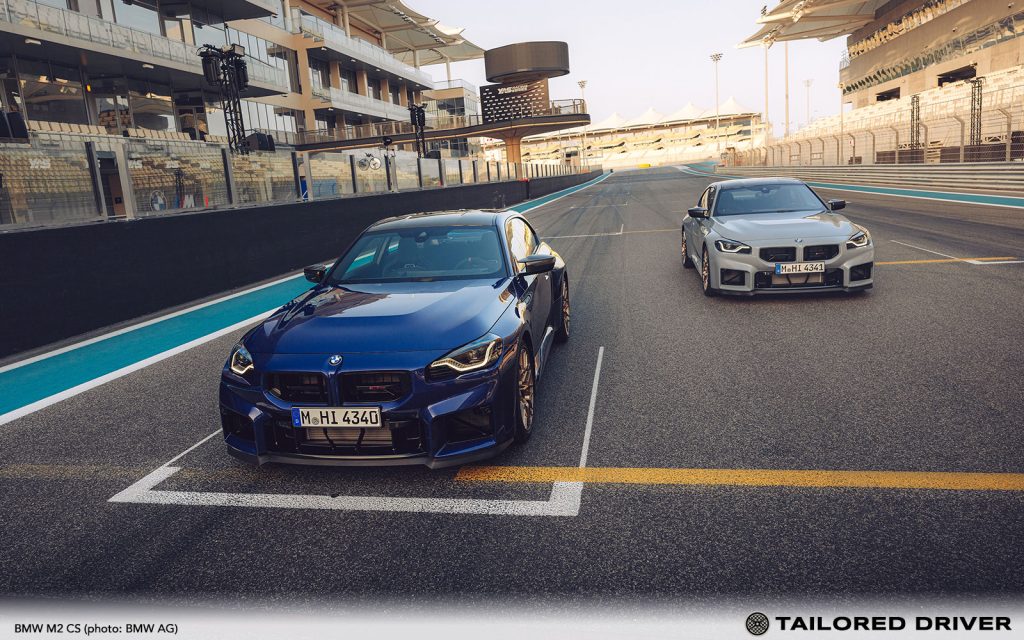
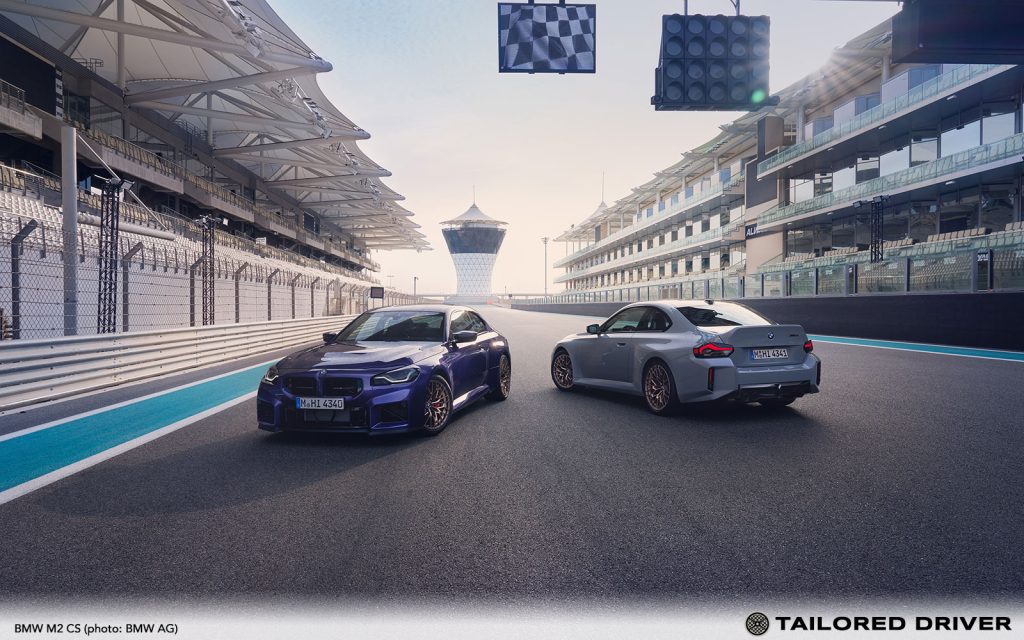
Offered with a choice of four exterior paint colours: Black Sapphire, Portimao Blue, Brooklyn Grey or BMW Individual Velvet Blue.
BMW Operating System 8.5 with an M-specific interface.
Produced in a limited run at BMW Group Plant San Luis Potosí in Mexico with first UK customer deliveries in late summer 2025.
BMW M2 CS priced from £86,800 RRP.
[source: BMW AG]
Capturing the essence of sheer driving pleasure, the new BMW M2 CS sets another benchmark in the compact high-performance sports car segment. Arriving as the latest special edition model from BMW M GmbH, it fuses thrilling performance, superior driving dynamics and a compelling design, whilst continuing a prestigious lineage that began with the legendary BMW 2002 Turbo over half a century ago.
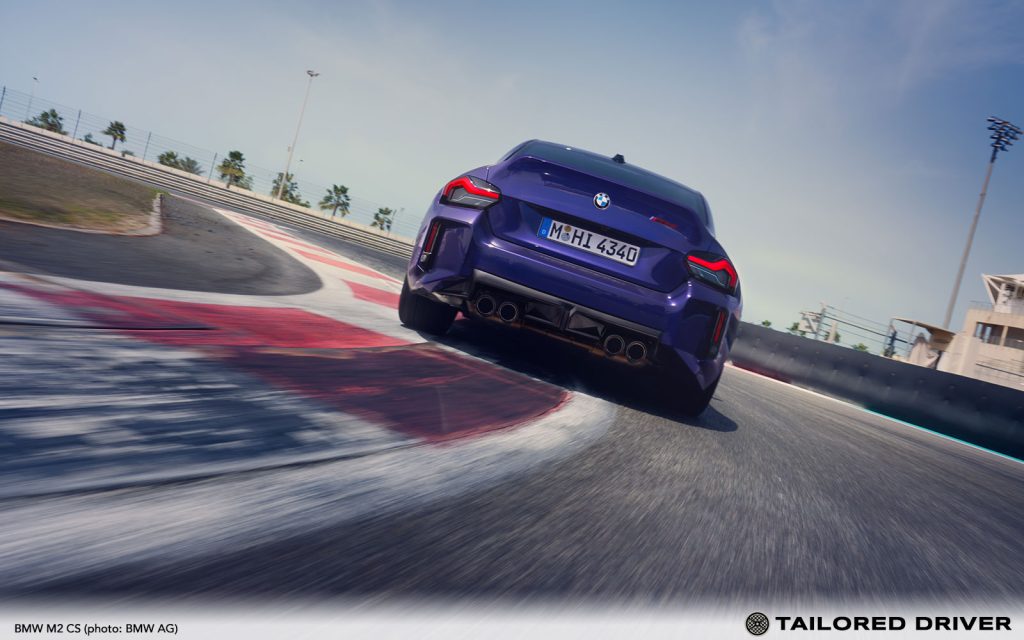
With an increased engine power output, model-specific chassis tuning and a lightweight construction – comprising an array of carbon fibre reinforced plastic components (CFRP) – the second-generation BMW M2 CS (combined fuel consumption: 28.8 mpg; combined CO2emissions: 226 g/km according to WLTP, CO2 class: G) is as proficient on the racetrack as it is on the road.
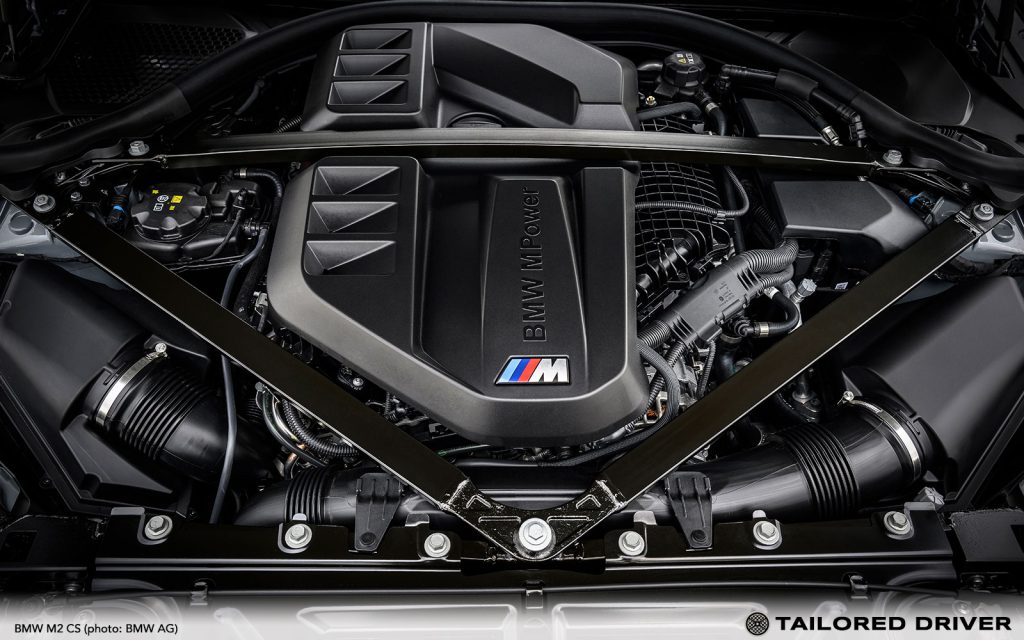
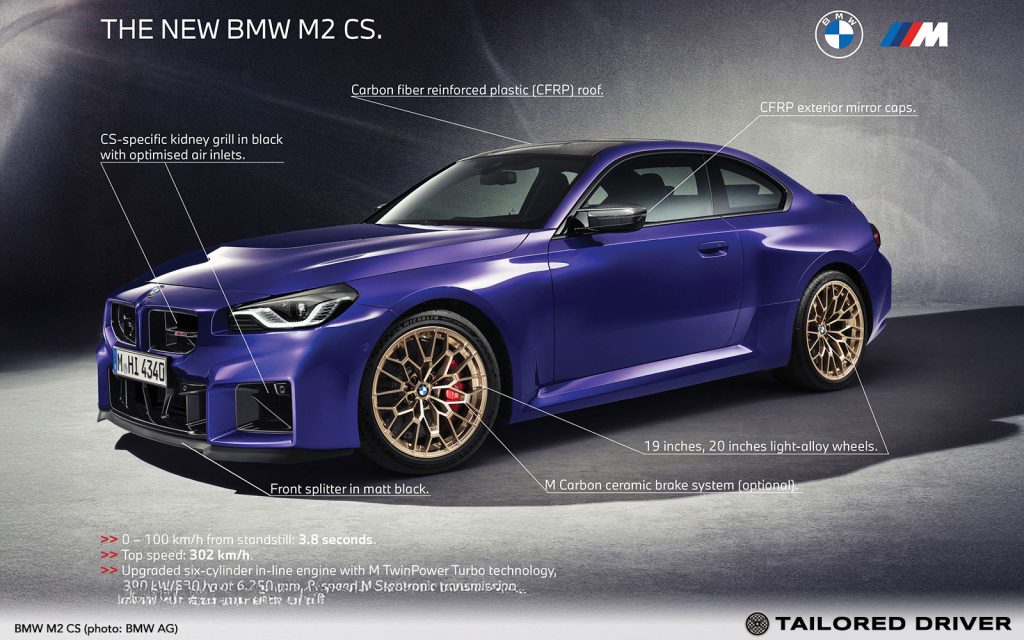
The six-cylinder in-line engine with M TwinPower Turbo technology now delivers an impressive 530 hp – a 50 hp increase over the current-generation BMW M2 – and 650 Nm of torque. As a result, the new BMW M2 CS matches the performance capabilities of both the BMW M3 Competition Saloon with M xDrive (fuel consumption, combined: 27.7 mpg; CO2 emissions, combined: 230 g/km in the WLTP cycle, CO2 class: G) and BMW M4 Coupé with M xDrive (fuel consumption, combined: 28.0 mpg; CO2 emissions, combined: 229 g/km in the WLTP cycle, CO2class: G), powering from rest to 62 mph in just 3.8 seconds.
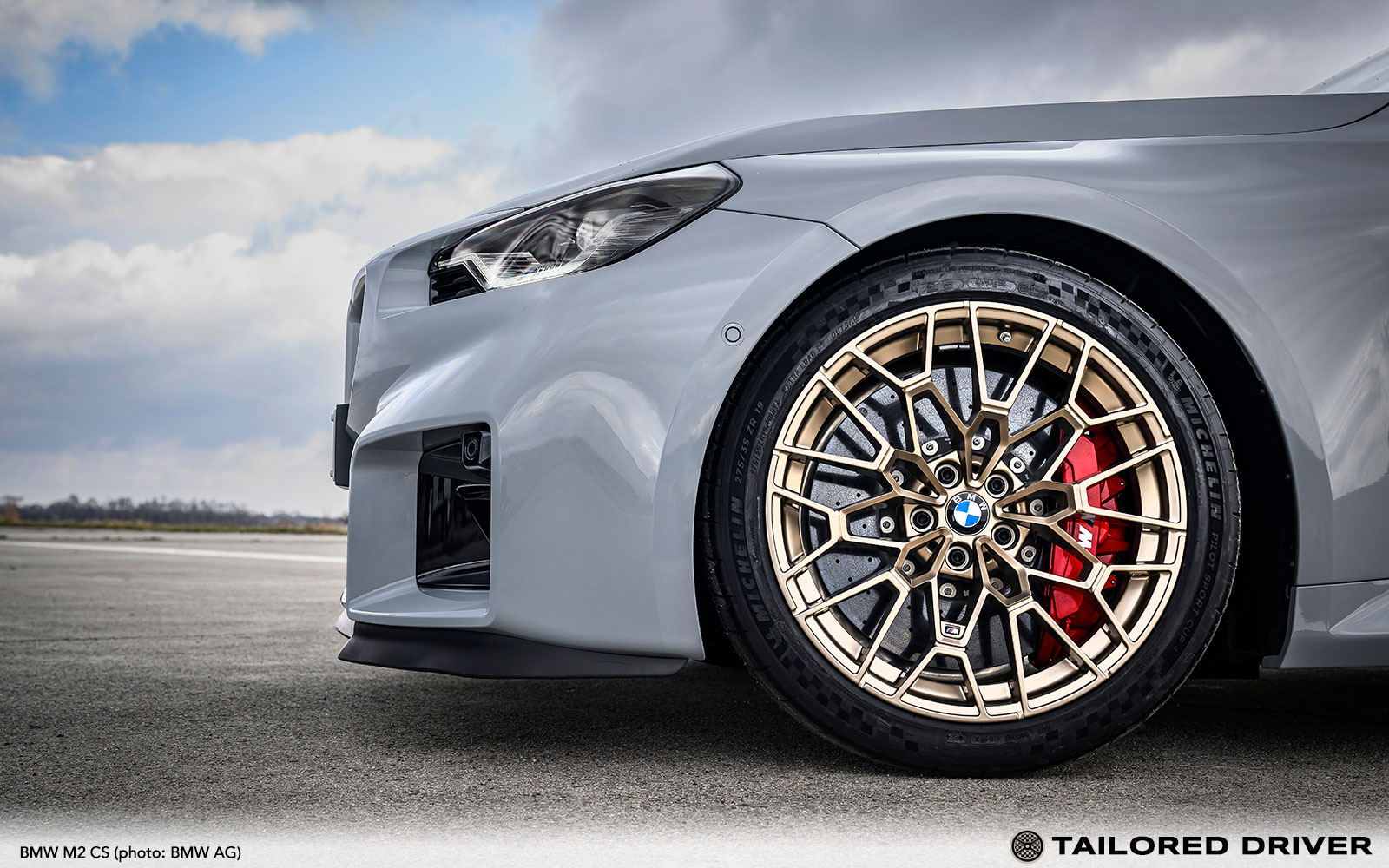
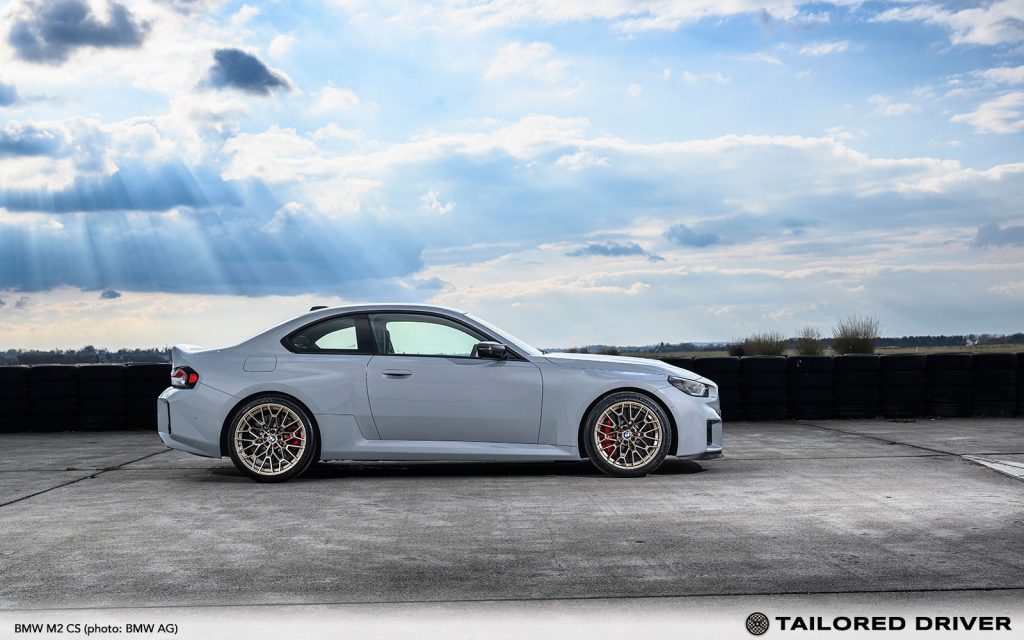
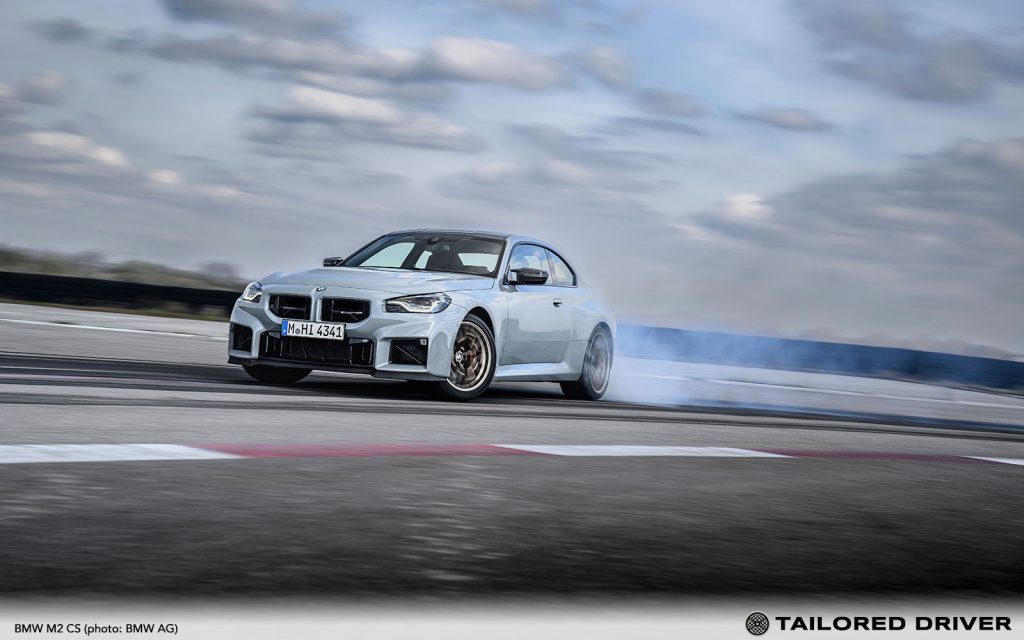
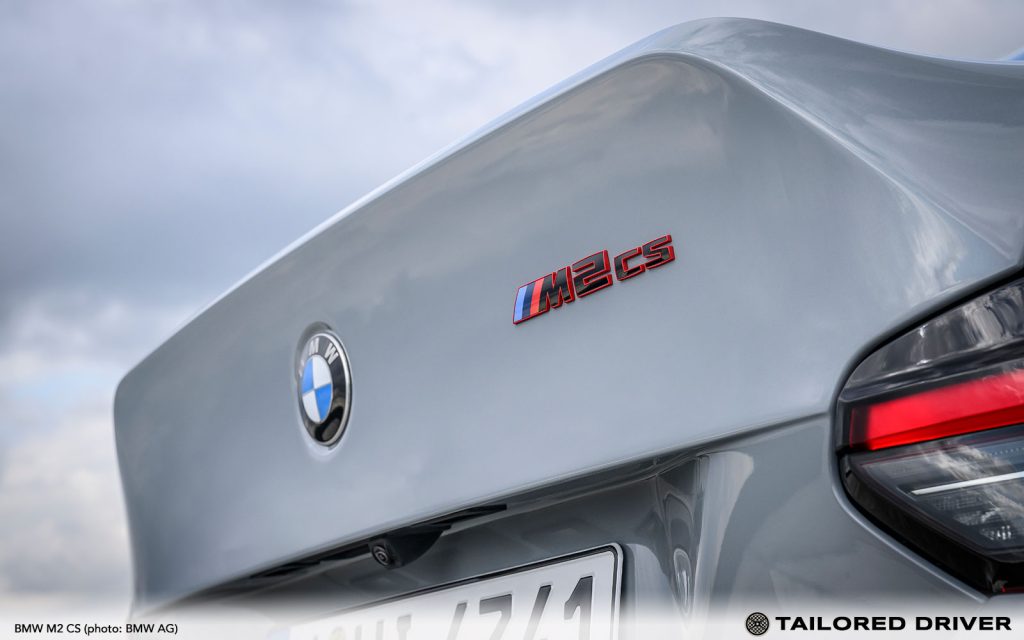
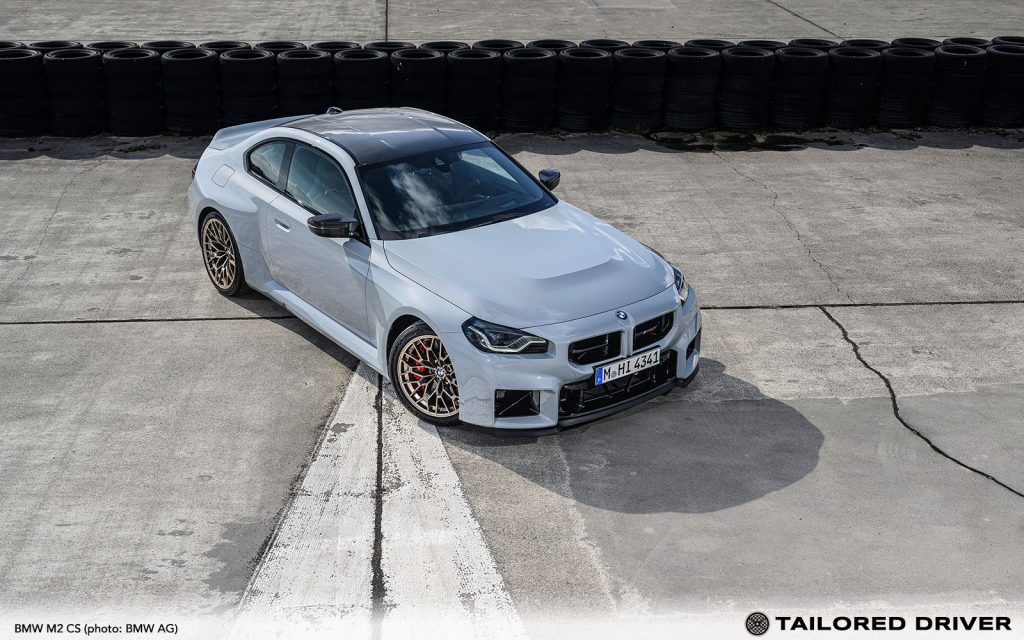
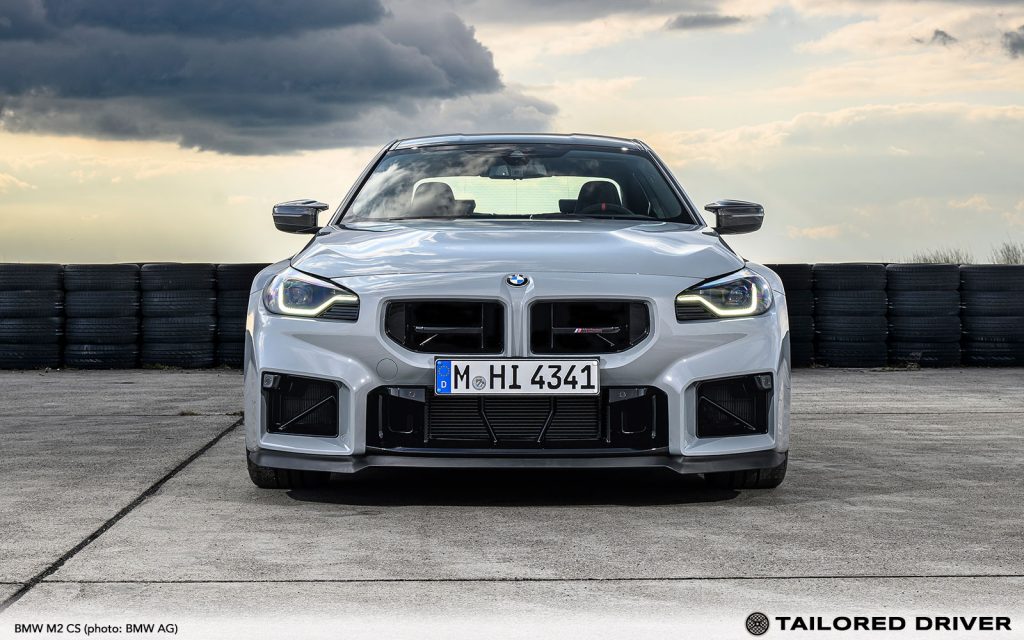
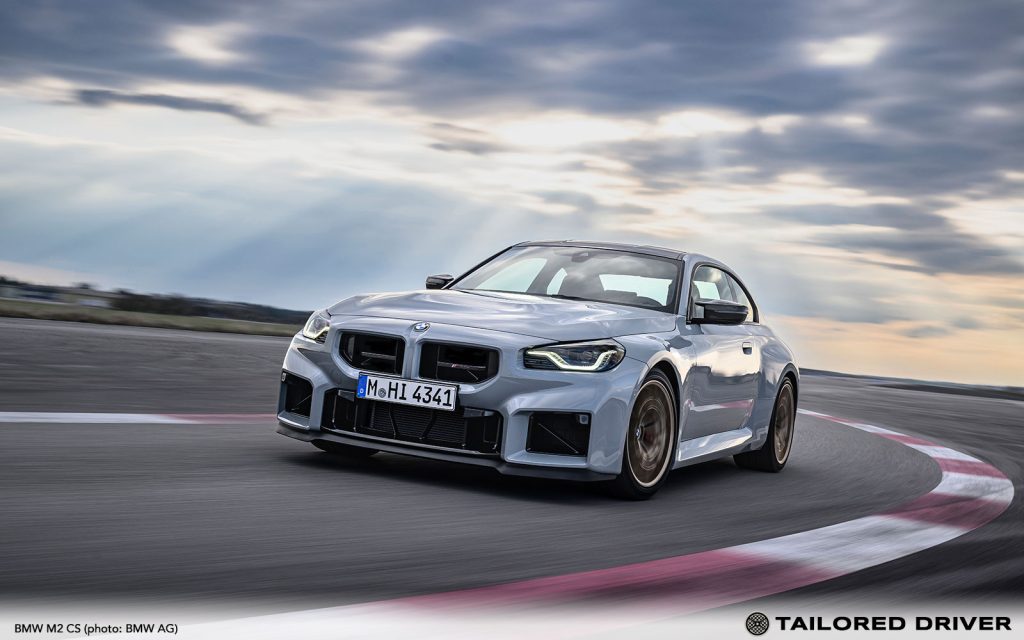
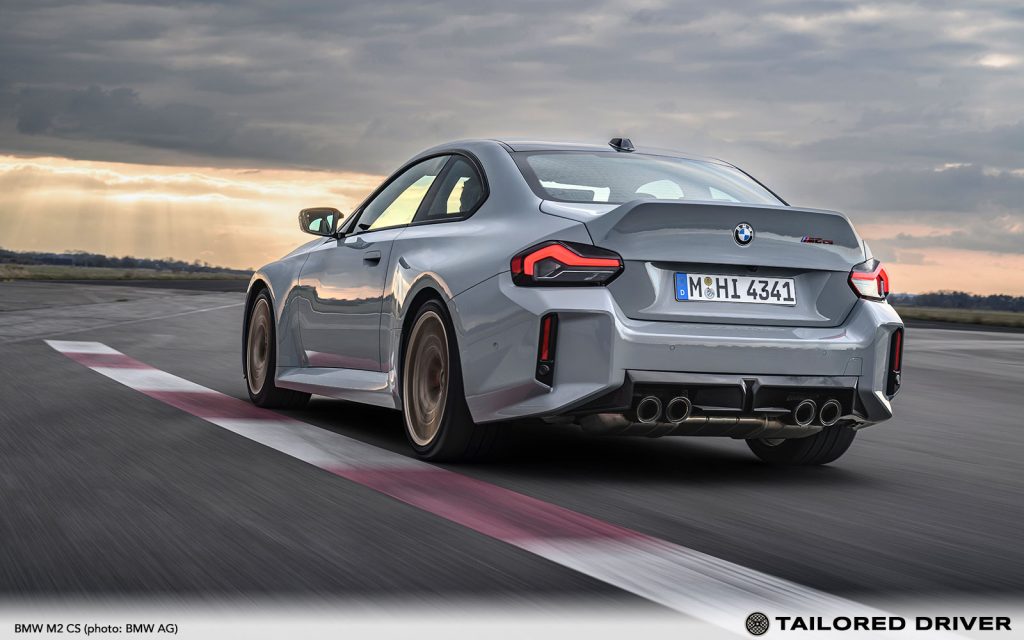
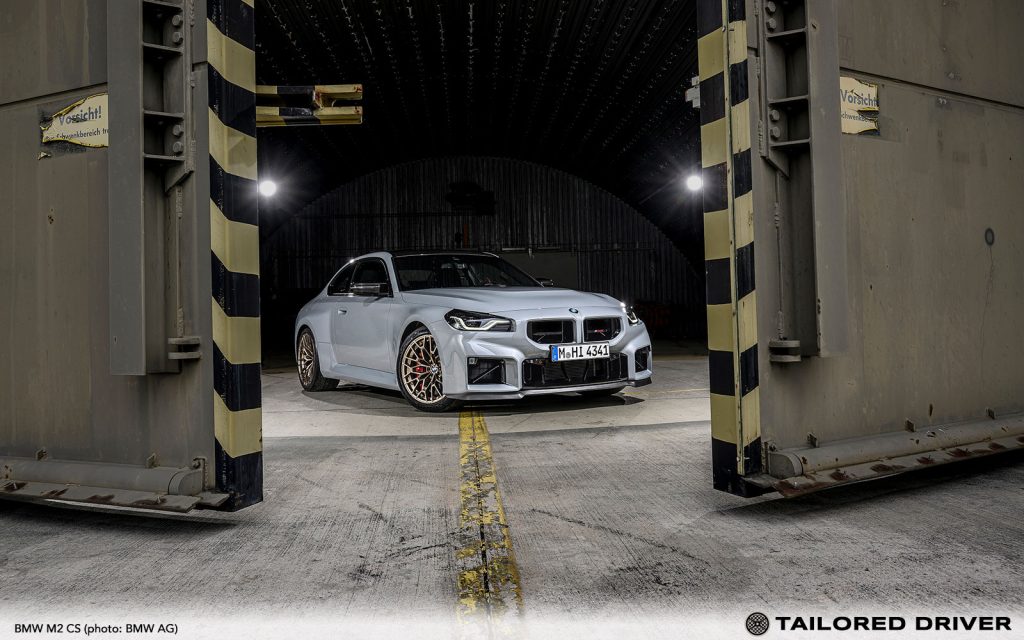
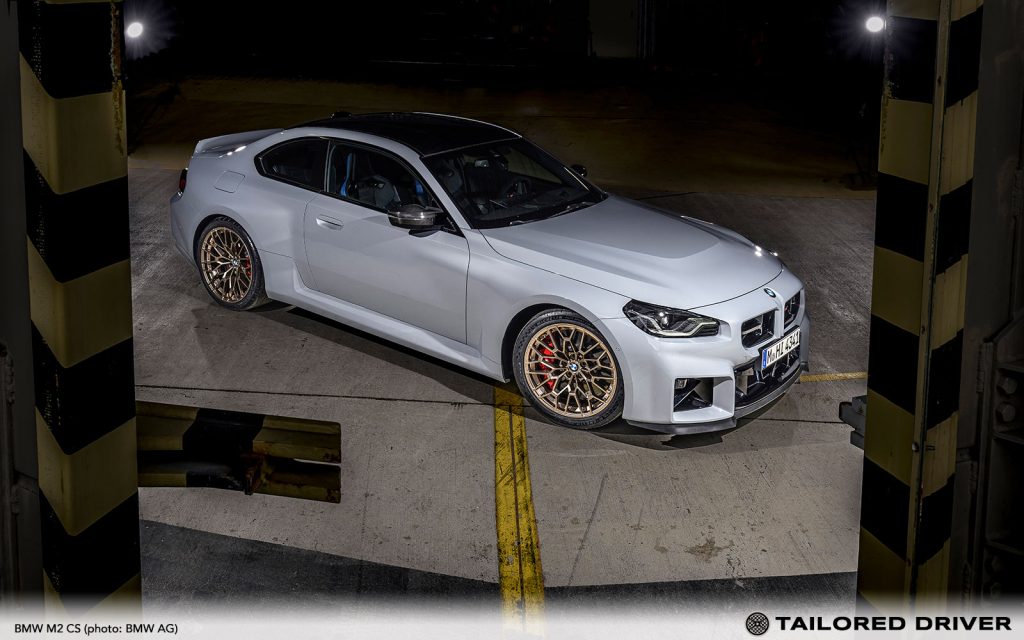
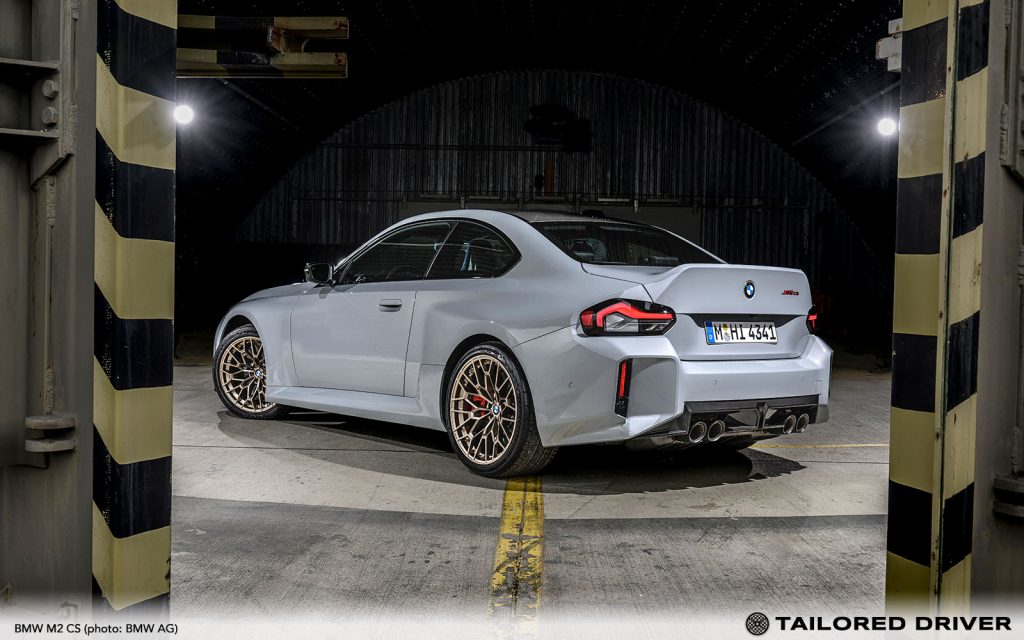
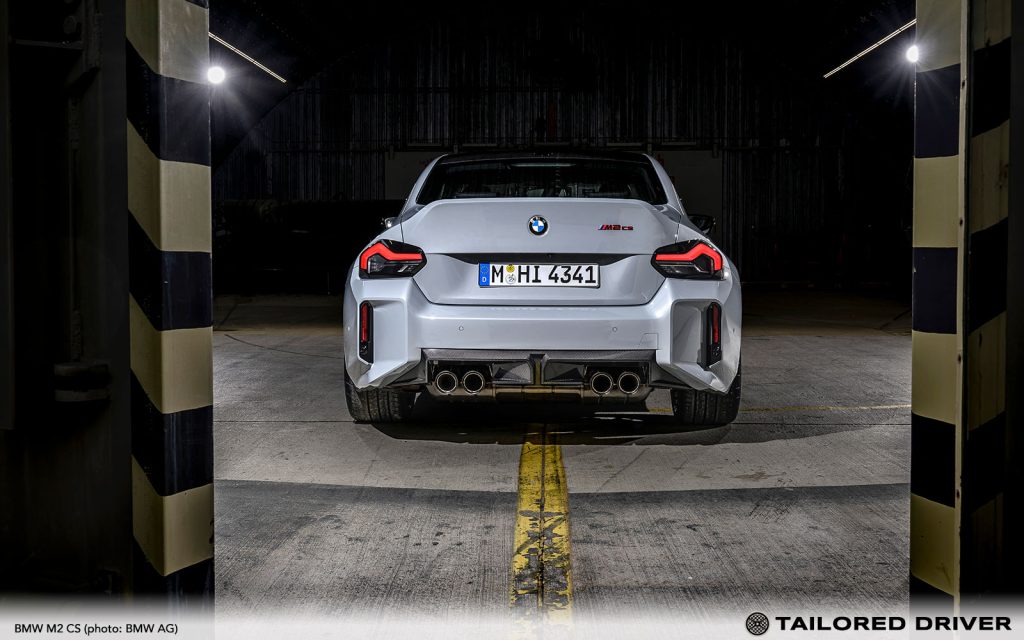
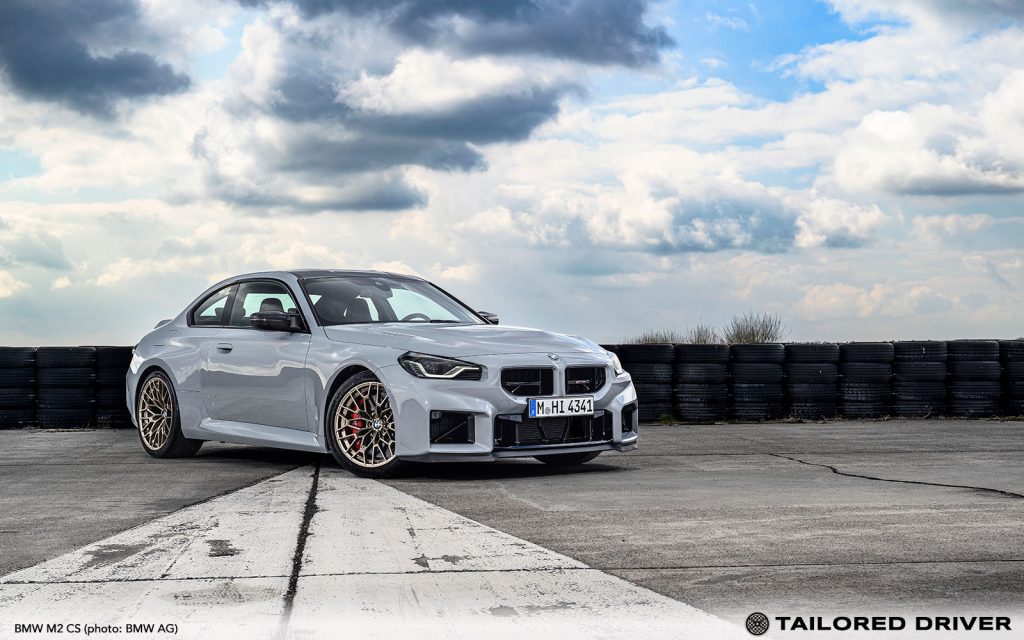
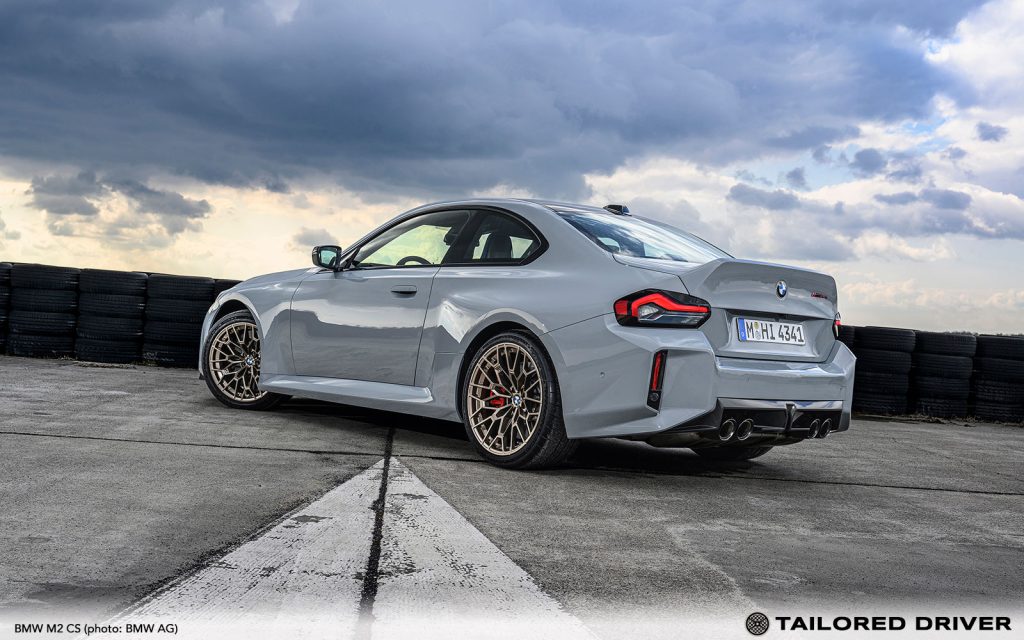
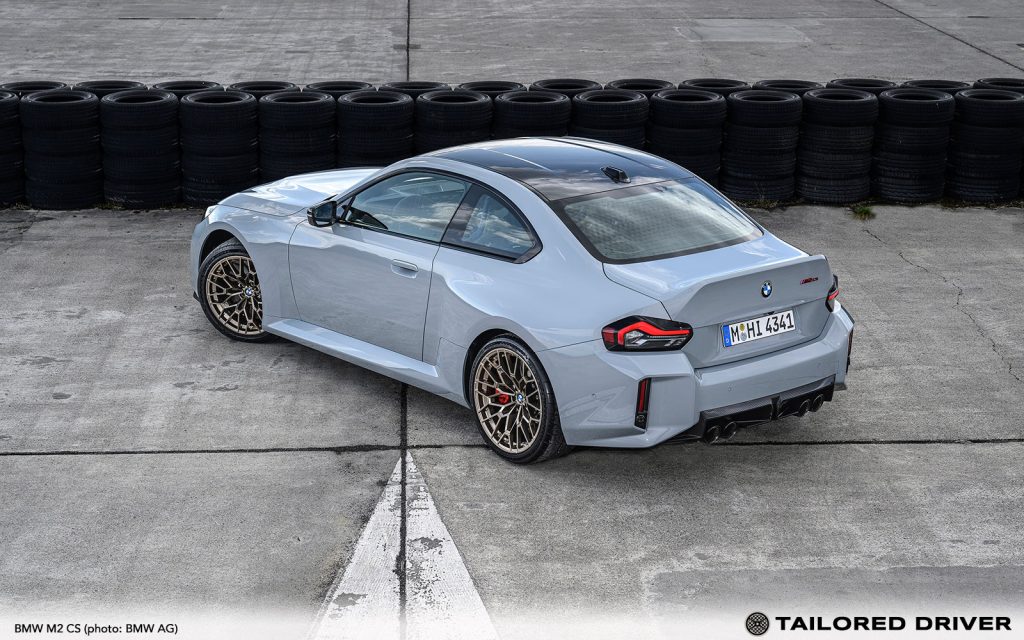
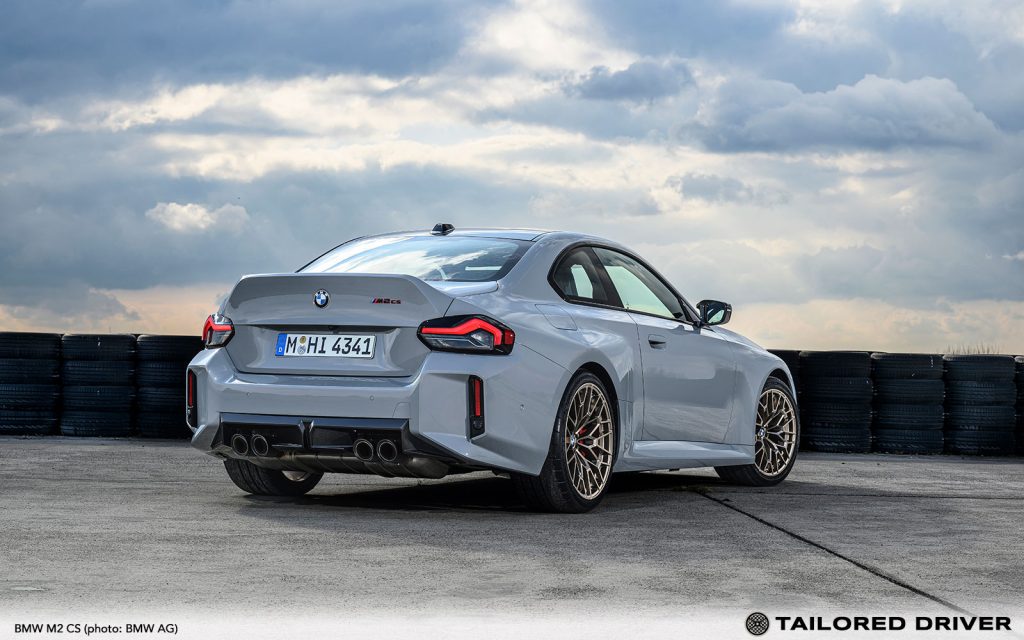
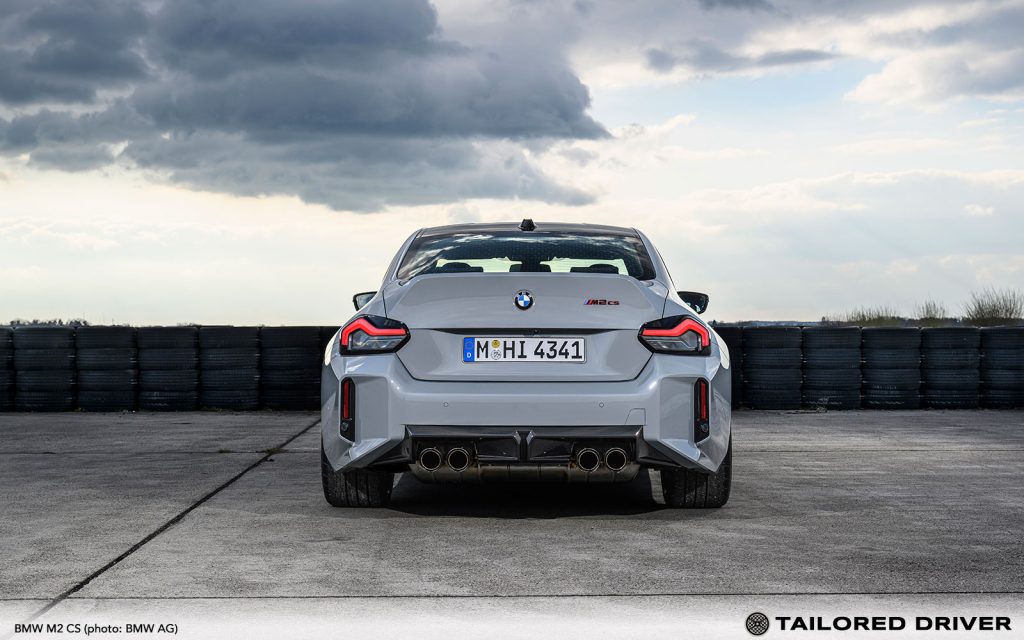
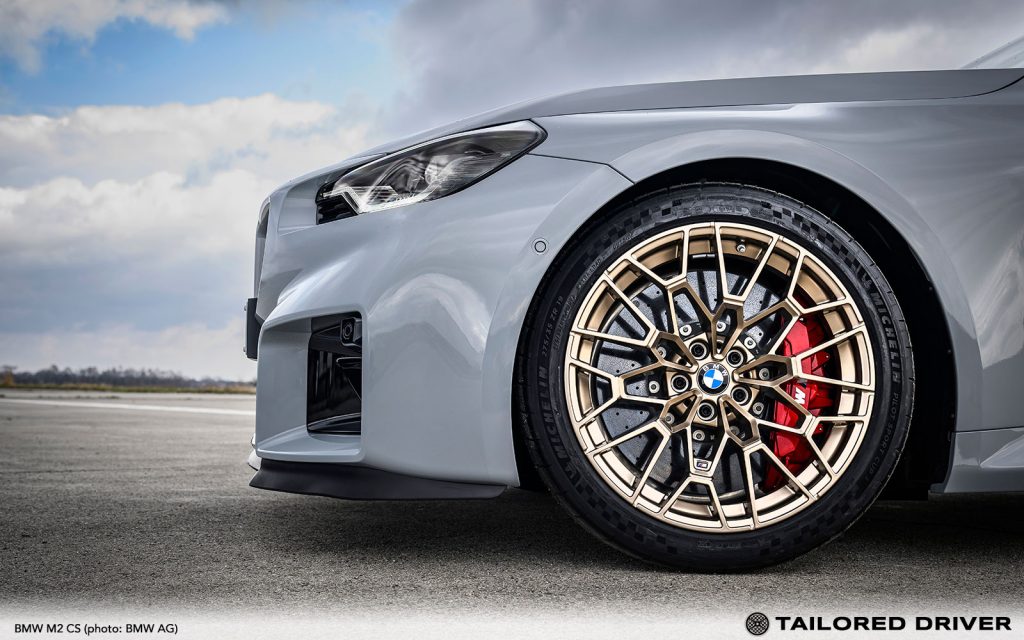
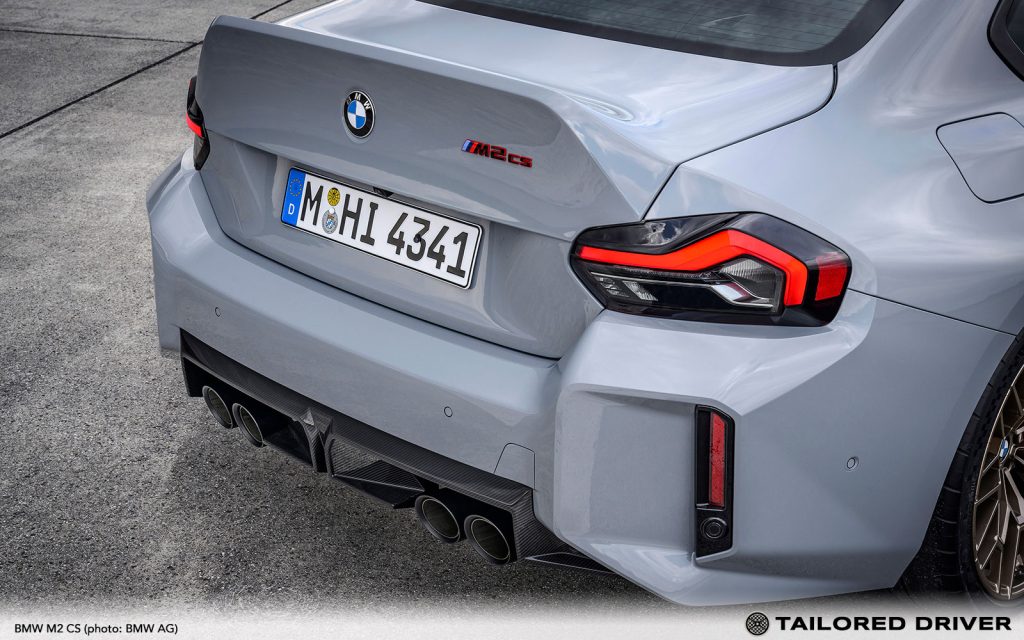
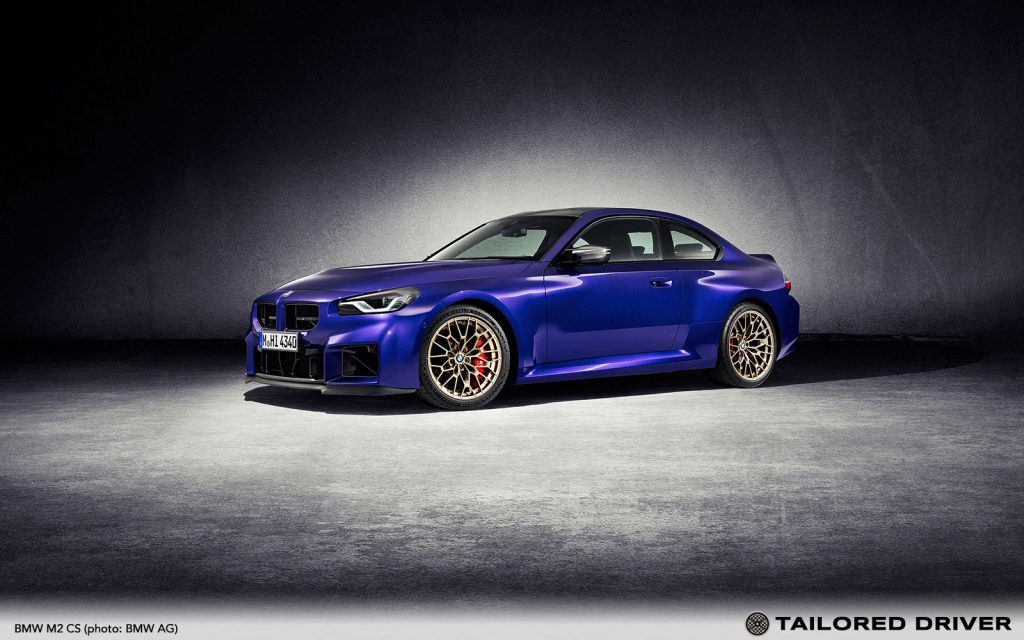
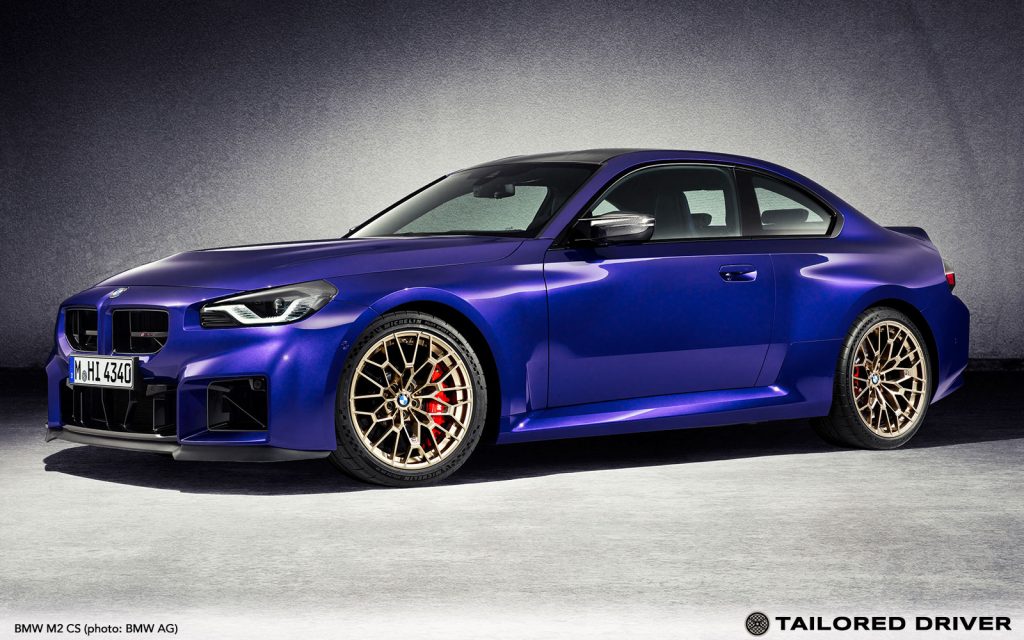
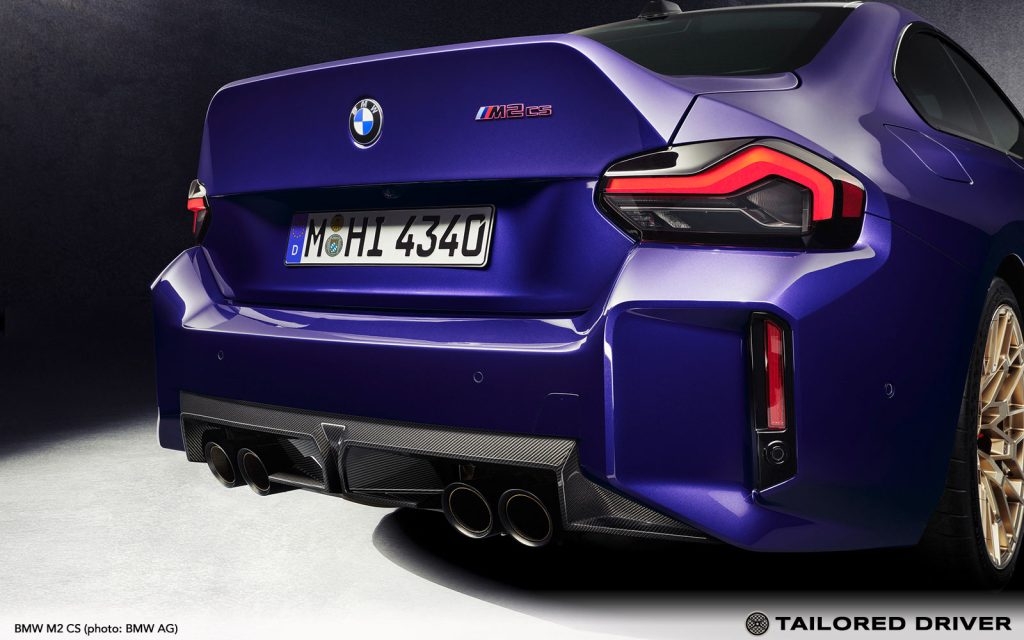
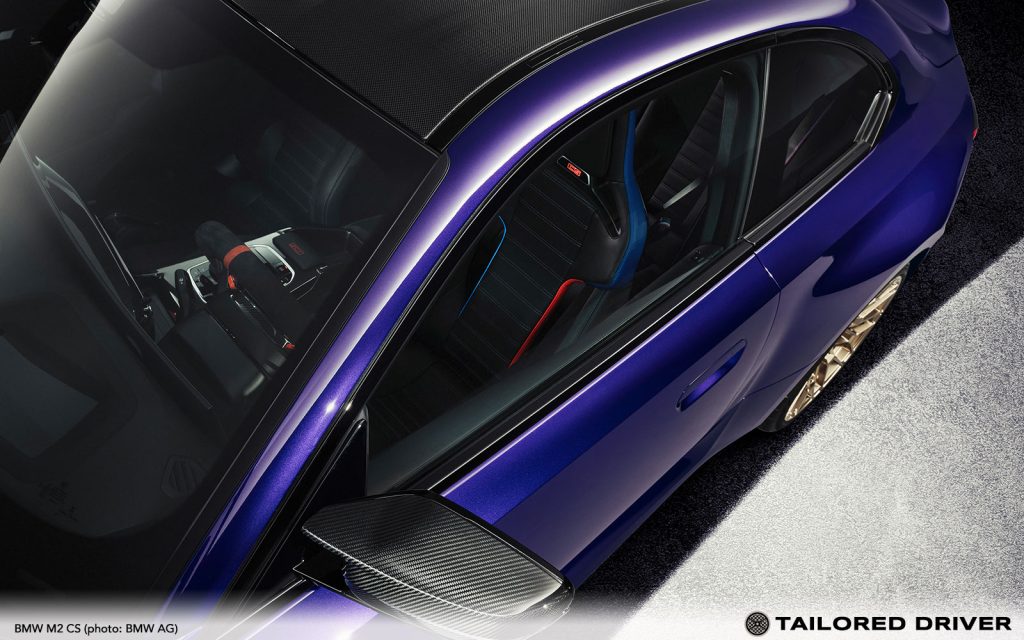
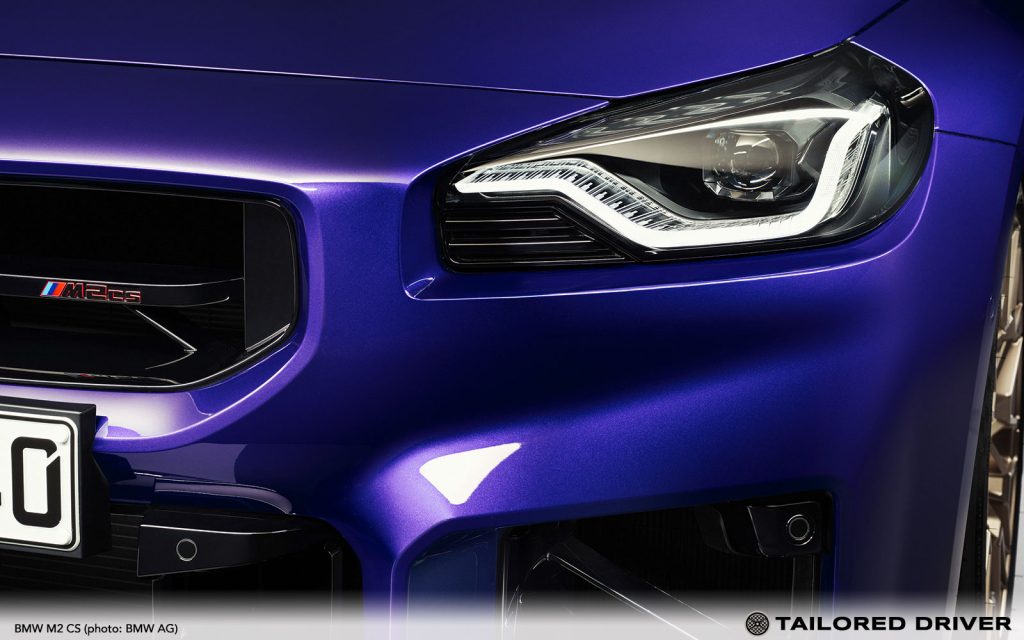
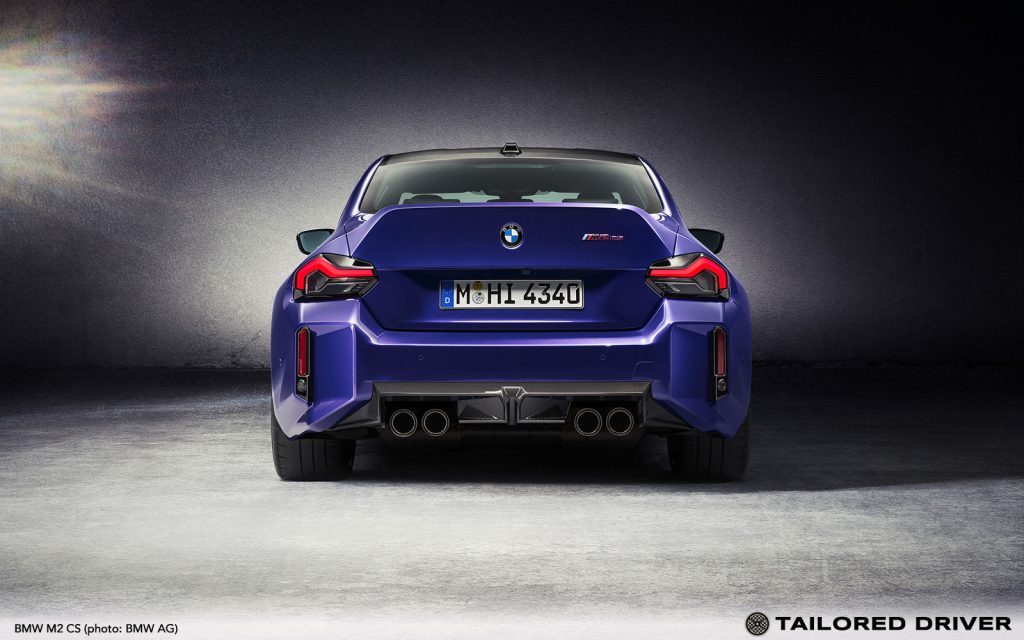
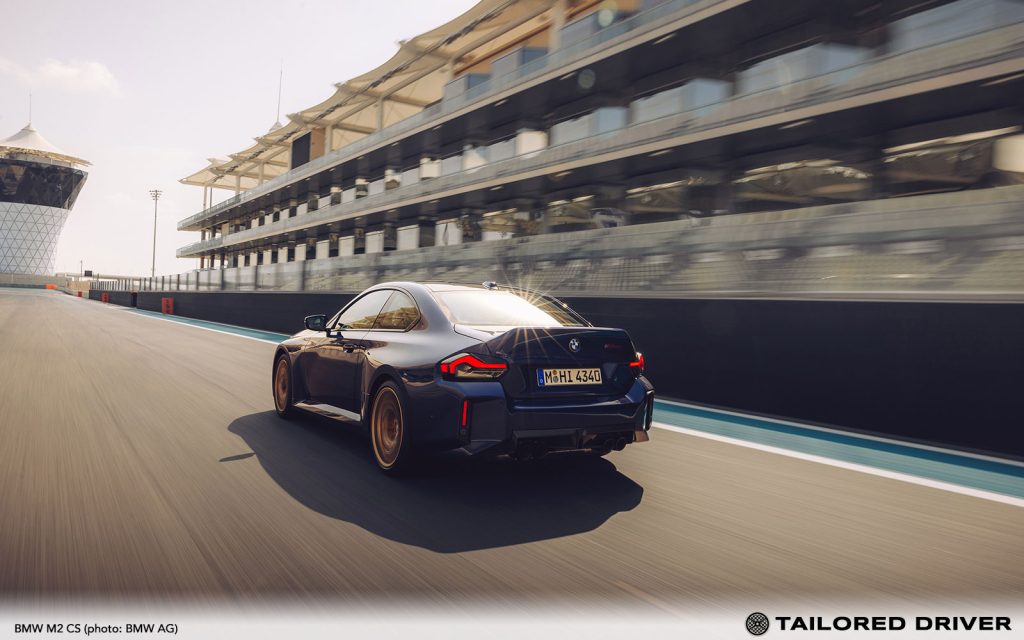
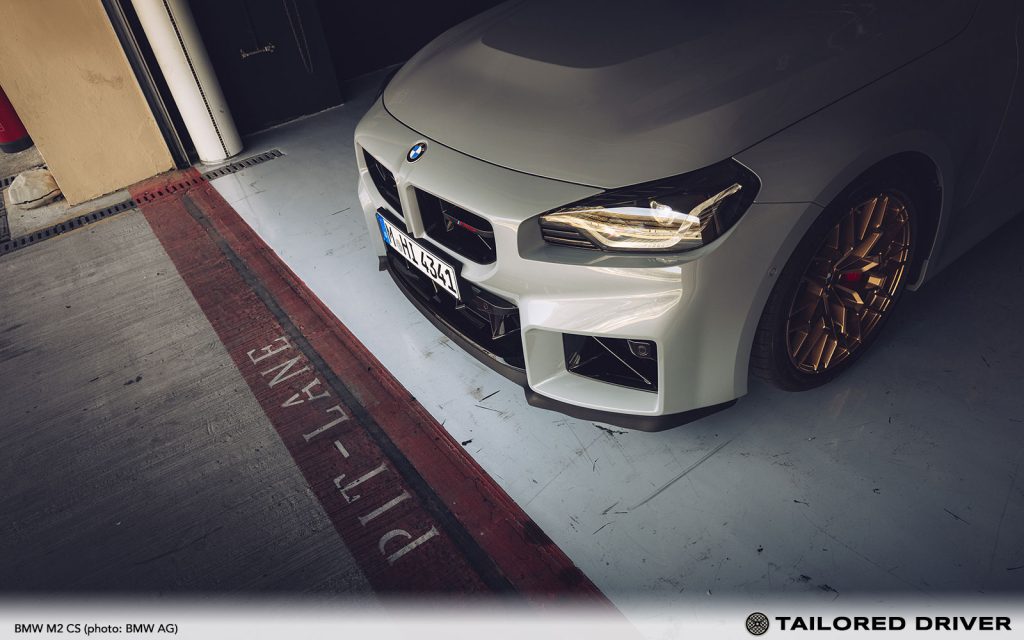
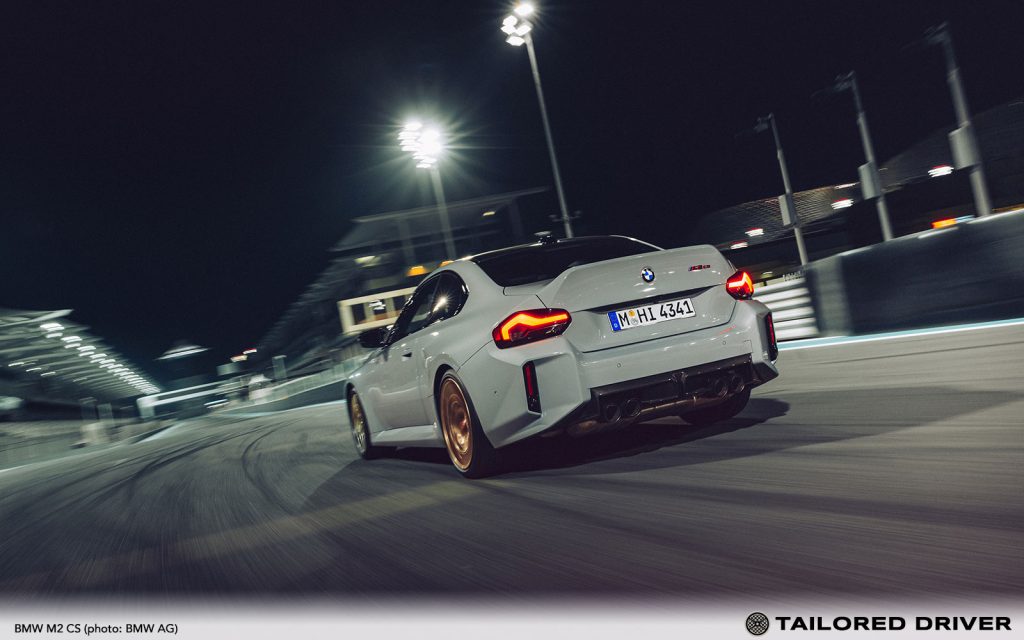
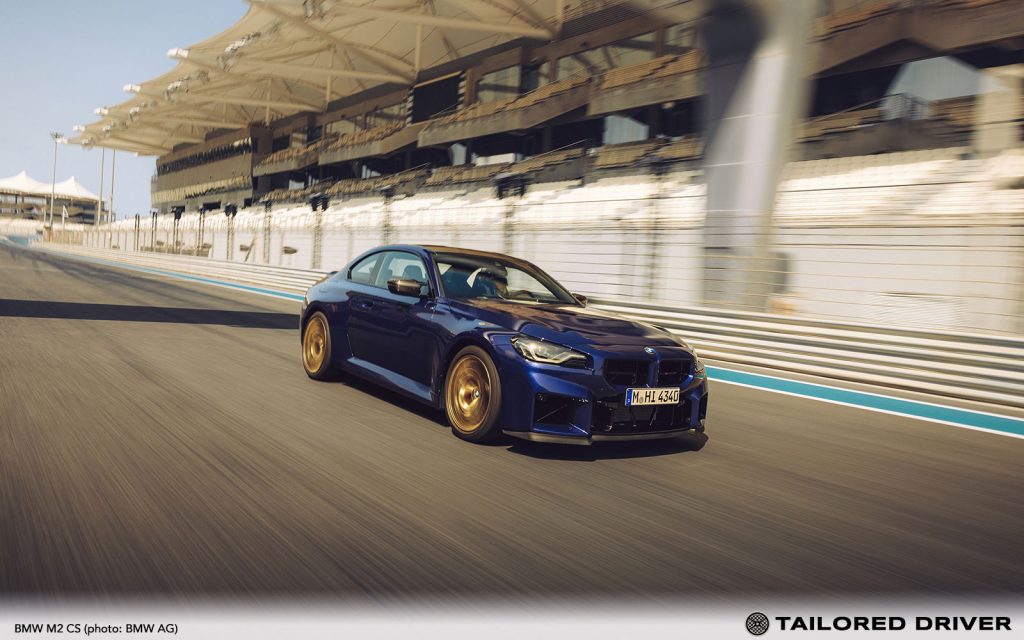
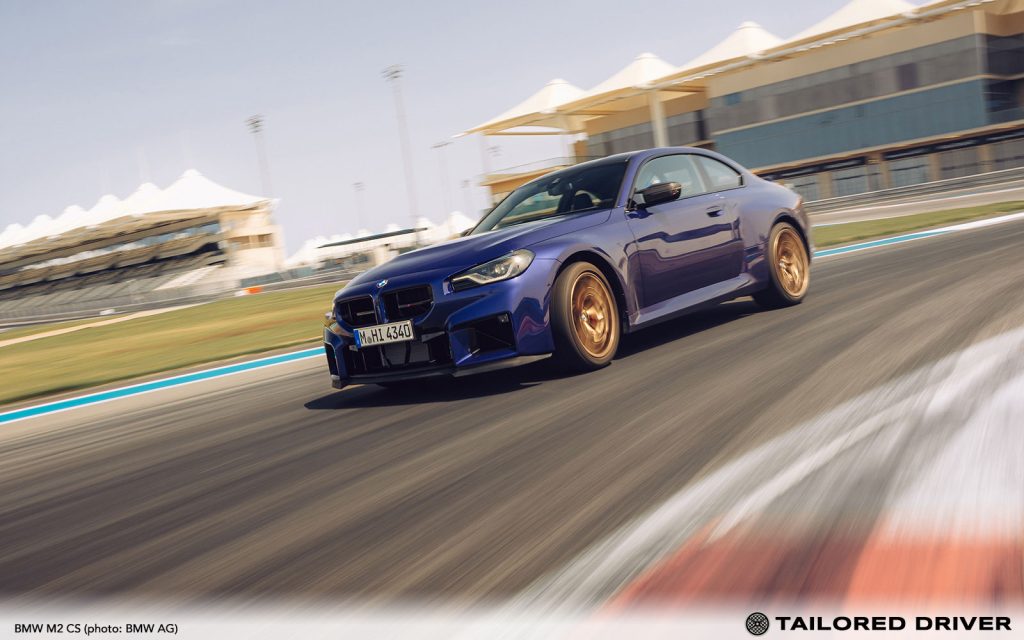
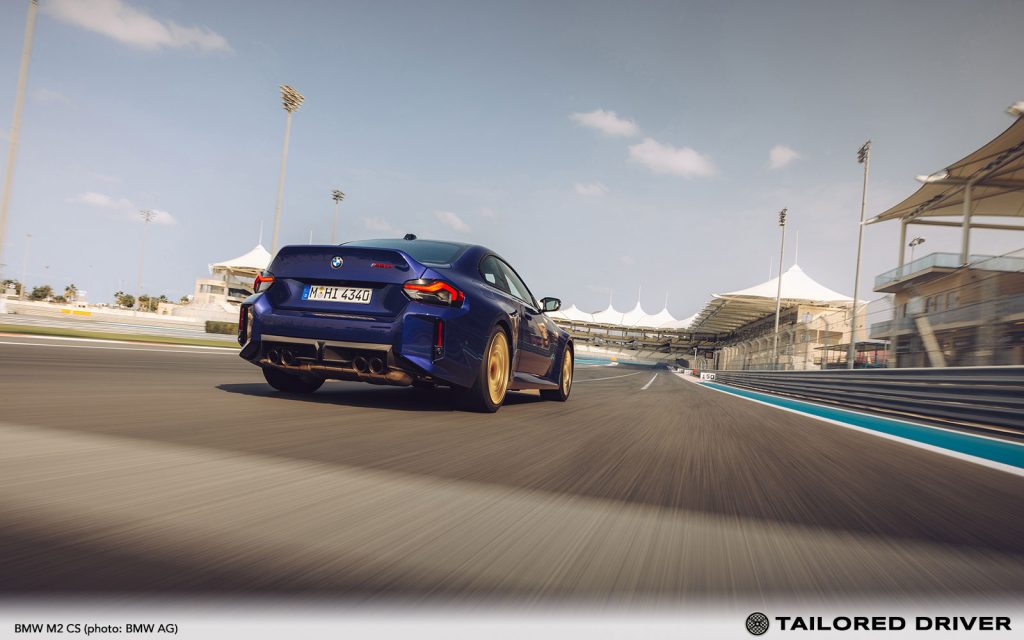
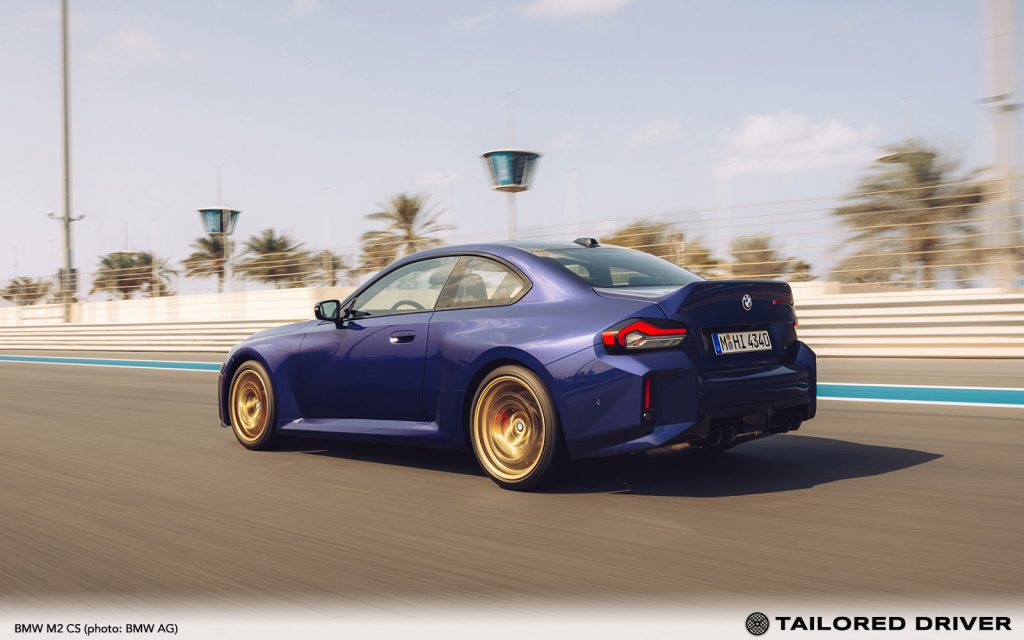
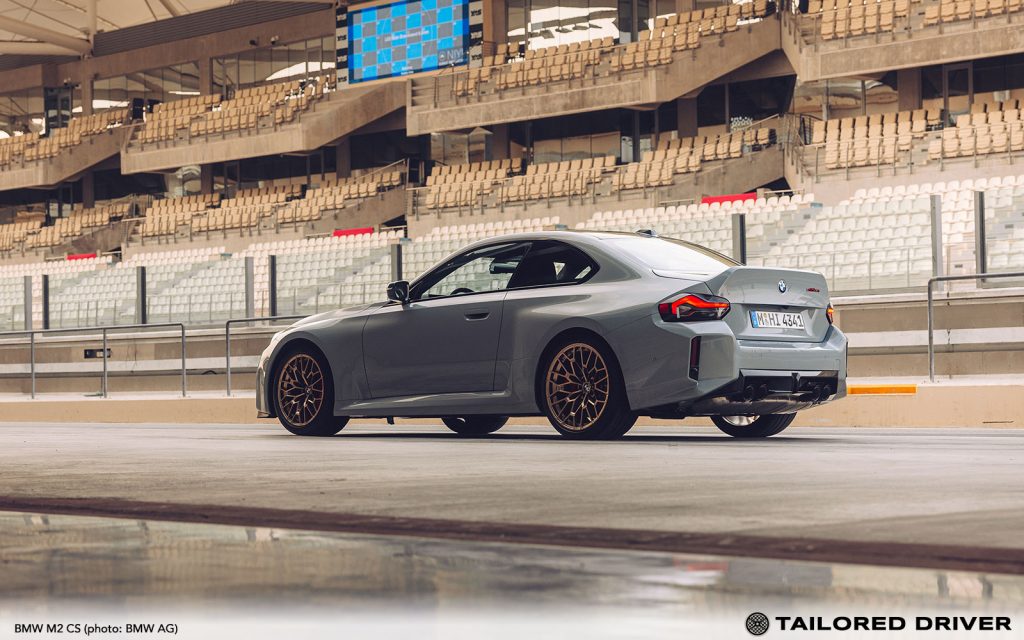
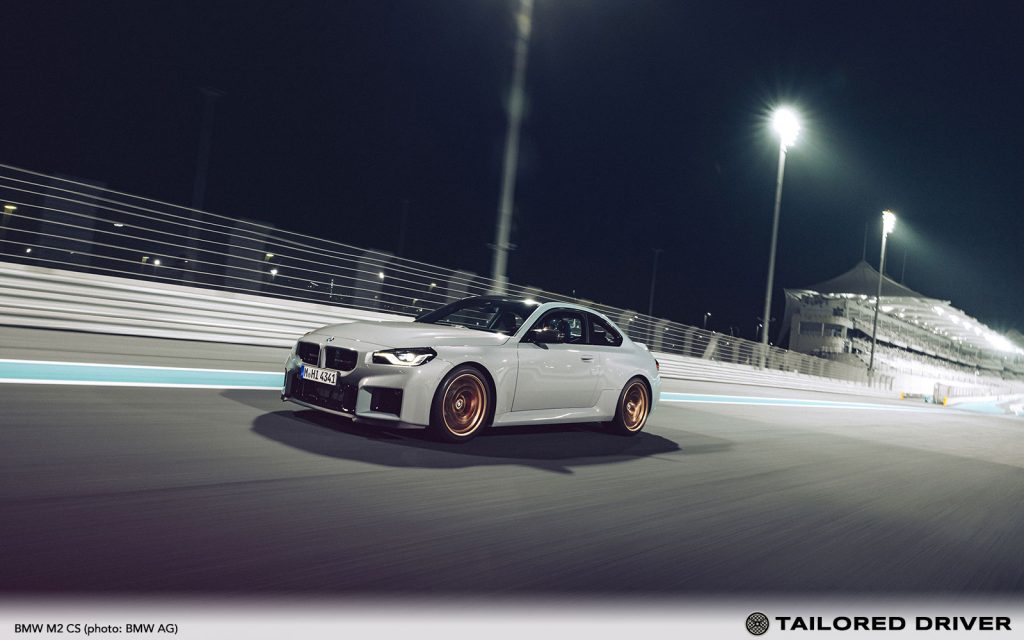
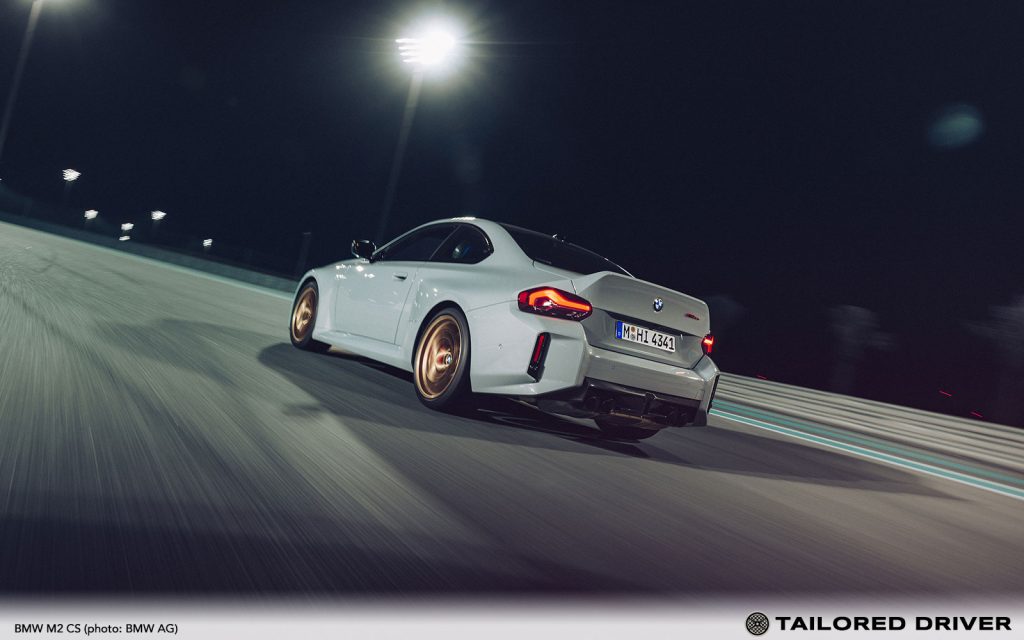
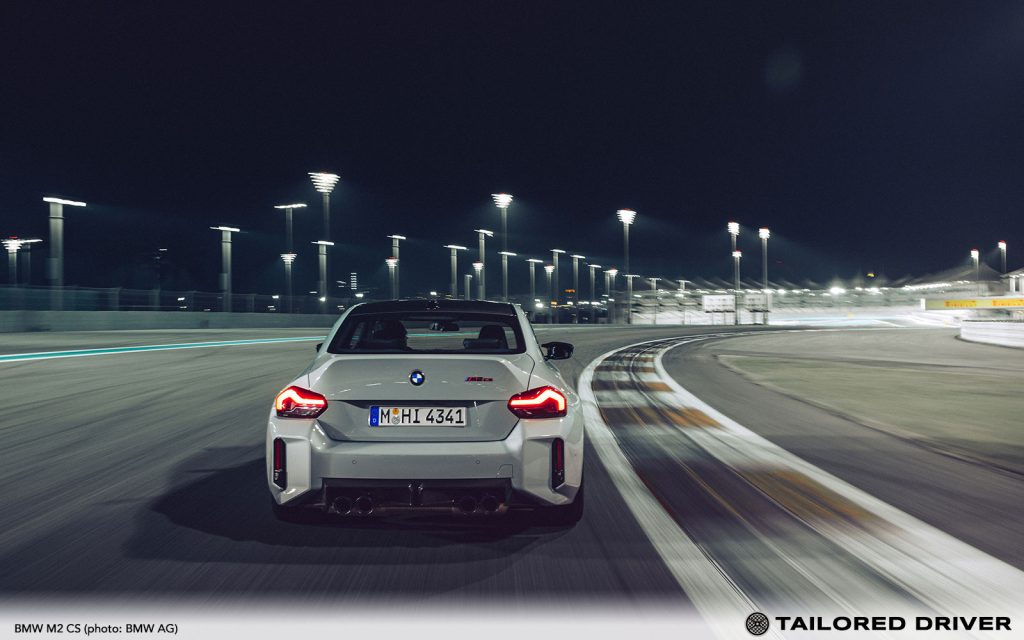
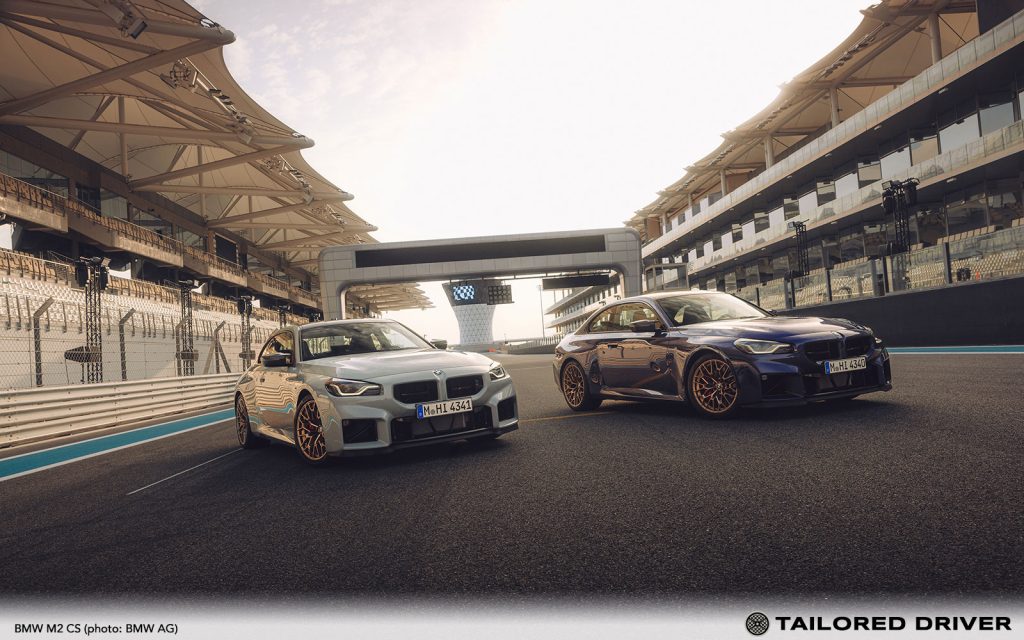
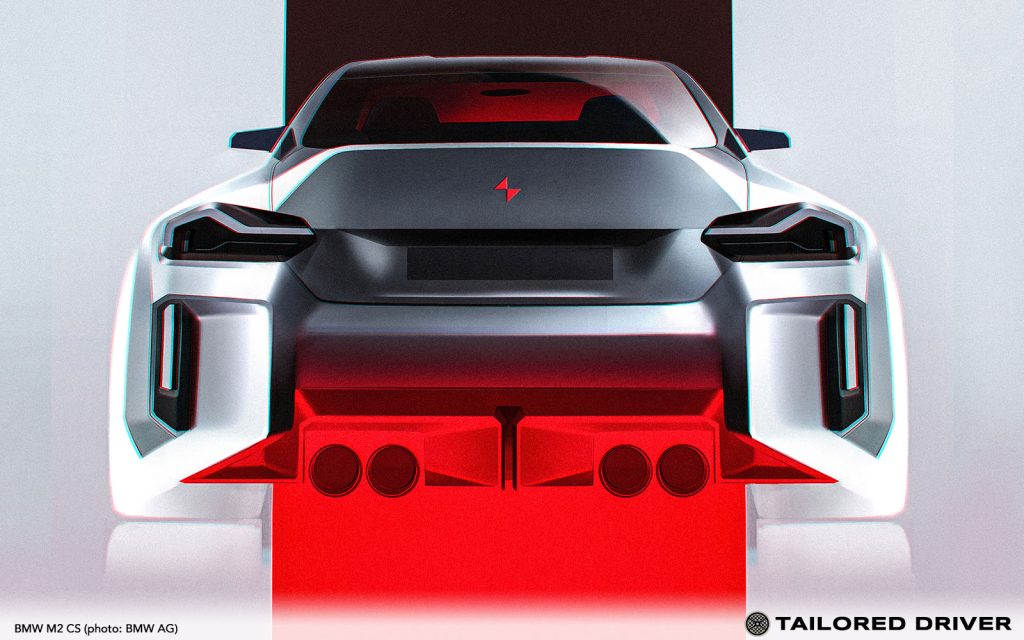
A range of model-specific design elements give the BMW M2 CS an unmistakeable road presence. Most prominent is a ducktail spoiler which has been seamlessly integrated into the carbon fibre boot lid, alongside exclusive forged M light-alloy wheels finished in Golden Bronze, a unique stripped-back M kidney grille, a newly designed carbon rear diffuser and a matte black front splitter.
The new BMW M2 CS is priced from £86,800 RRP and will be produced in a limited run at BMW Group Plant San Luis Potosí in Mexico. First customer deliveries are set to arrive in the UK in late summer 2025.
Model
Max Power* (hp)
Peak Torque* (Nm)
Acceleration* (0-62mph) (secs)*
Maximum Speed** (mph)
CO2 Emissions* (WLTP) (g/km)
Fuel Consumption Combined* (WLTP) (mpg)
Retail Price*** from
BMW M2 CS
530
650
3.8
188
226
28.8
£86,800
*All figures relating to performance, consumption and emissions are provisional. All the stated technical data including fuel consumption and emissions figures relate to the offering in the German market. Dimensions and measurements refer to vehicles with basic configuration in Germany. These may vary depending on the wheel/tyre size and items of optional equipment selected. **Electronically limited. ***Price stated is the Recommended Retail Price which does not include On The Road costs and taxes.
Noticeable weight reduction thanks to intelligent lightweight design. The new BMW M2 CS weighs approximately 30 kilograms lighter than the standard model. This notable weight reduction has been achieved through intelligent lightweight construction – utilising an array of exterior and interior components made from CFRP – and standard-fit forged M light-alloy wheels. The result is the lightest BMW M2 of the current generation.
Six-cylinder in-line engine with significant increase in power output and torque. The new BMW M2 CS is equipped with an upgraded version of the 3.0-litre, six-cylinder in-line petrol engine found in the current generation BMW M2. Especially noticeable in dynamic driving situations, the engine’s unmistakeable performance characteristics are sharper, and power delivery is linear, even into the higher rev ranges.
The engine’s power output rises to 530 hp – a 50 hp power increase over the current generation. Peak torque also sees a 50 Nm increase, with 650 Nm available across a broad rev range from 2,650 rpm and up to 5,730 rpm. The engine’s maximum power output is mobilised at 6,250 rpm before it reaches a 7,200-rpm red line. Performance is further enhanced through model-specific accelerator mapping across all drive modes selectable via the M Setup menu.
The engine’s M TwinPower Turbo technology comprises a pair of mono-scroll turbochargers, an indirect intercooler supplied by a low-temperature circuit, and an electronically controlled wastegate. The technology package also includes High Precision Injection, which operates with maximum pressure of 350 bar, VALVETRONIC variable valve timing and Double-VANOS fully variable camshaft timing. Inspired by motorsport, the engine additionally features an extremely rigid crankcase with a sleeve-free, closed-deck construction, a forged crankshaft with lightweight design, cylinder bores with a wire-arc sprayed iron coating and a 3D-printed core for the cylinder head.
The M-specific cooling system ensures the powertrain components maintain an optimal operating temperature even under heavy loads, while the oil circuit is adequately equipped to handle highly dynamic driving situations. Additionally, a map-controlled oil pump ensures reliable oil supply even under extreme acceleration.
Power is delivered through an eight-speed M Steptronic transmission with Drivelogic as standard. A Drivelogic button is integrated into the gear selector lever, making it possible to alter the transmission’s shift characteristics with a choice of three distinct levels. In addition to the gear selector lever, gearshift paddles on the steering wheel can be used for sequential interventions in the gear selection process at any time.
Exceptional performance: 0 to 62 mph in less than four seconds. A specially designed engine mounting with increased spring rates establishes a highly rigid connection between the power unit and the vehicle’s structure. This results in a sharper engine response and an extremely direct transmission of power to the drivetrain.
Thanks to its rapid power delivery, increased engine power output, and lightweight design, the new BMW M2 CS can accelerate from rest to 62 mph in just 3.8 seconds – 0.2 seconds faster than the current-generation BMW M2. 0 – 124 mph is dealt with in 11.7 seconds, while the mid-range sprint from 50 – 75 mph takes just 3.4 seconds. The top speed of the special edition – which is equipped with the M Driver’s Package as standard – is electronically limited to 188 mph.
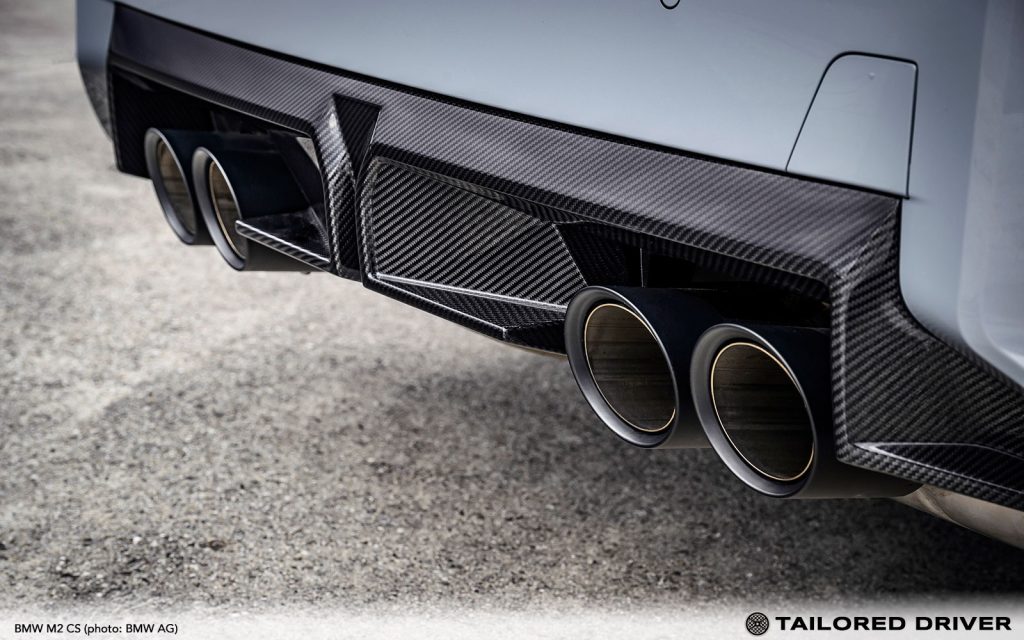
This dynamic power delivery is complemented by a rich engine note, which is radiated via an M-specific exhaust system with electrically-controlled flaps and – in true M fashion – two pairs of tailpipes finished in matte black. For drivers seeking an even more aggressive soundscape, a lightweight titanium M Performance exhaust system – designed specifically for CS models – is available from the M Performance parts catalogue for the BMW M2 CS. The Active Sound Design inside the cabin also helps to convey the engine’s soundtrack authentically, with the intensity raised when SPORT or SPORT PLUS modes are selected.
Chassis and brakes optimised for increased performance. The chassis technology and braking system for the BMW M2 CS are precisely tailored to the model’s improved performance characteristics and its unique weight distribution. Lowered by eight millimetres, the chassis benefits from model-specific adaptations, including bespoke tuning for the springs, dampers and chassis control systems. In addition, the settings for the Dynamic Stability Control (DSC) and M Dynamic Mode have been precisely optimised to meet the demands of driving on track. The M Servotronic steering, M Sport differential and integrated braking system also receive model-specific tuning.
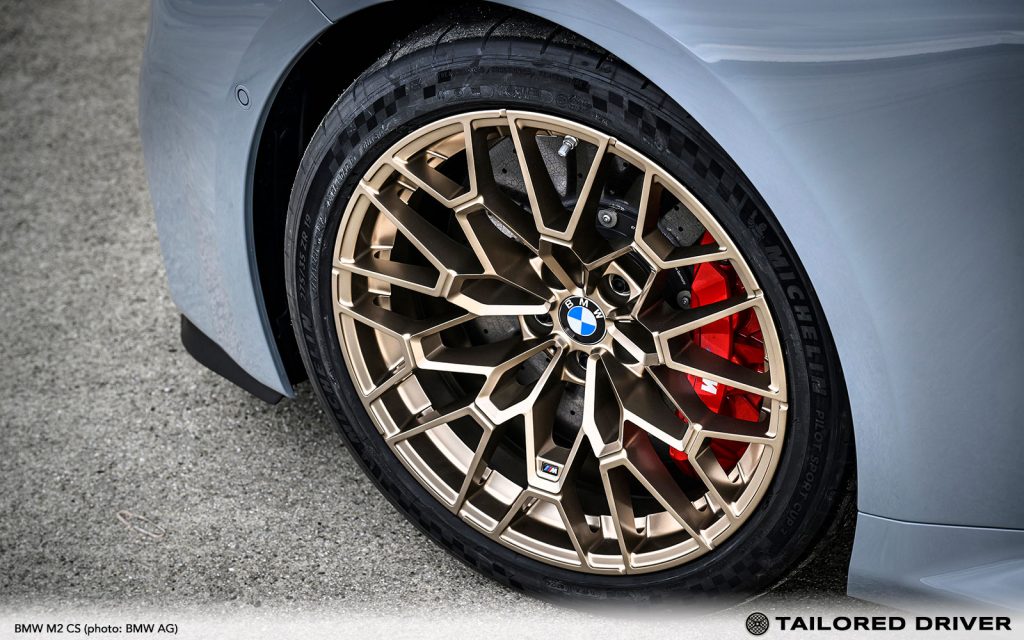
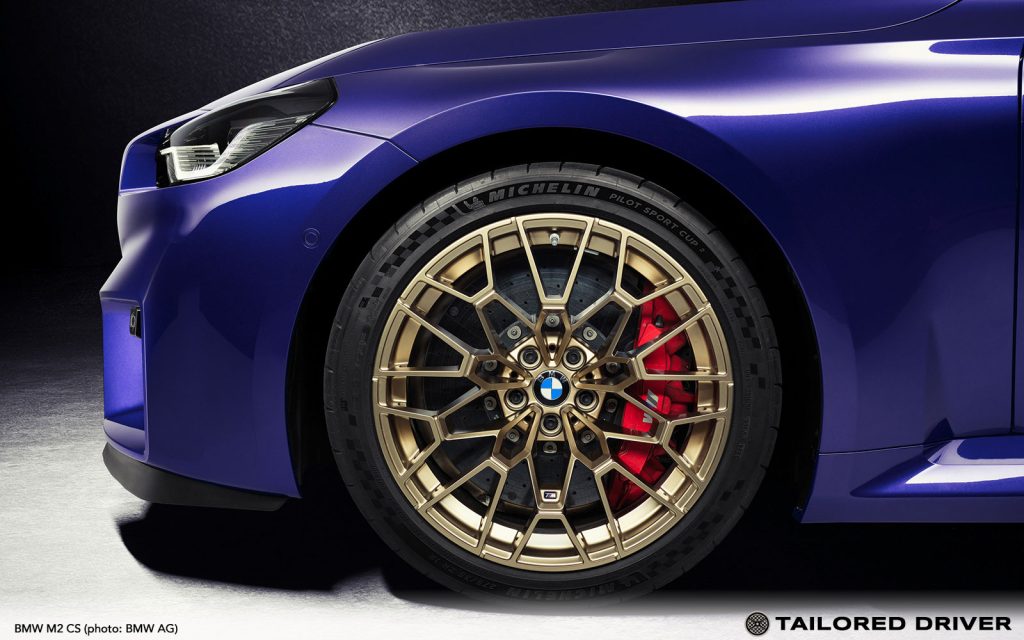
An M Compound braking system with red brake callipers is fitted as standard. Driver’s seeking additional stopping power can choose the optional M Carbon ceramic brakes, which are also equipped with red brake callipers.
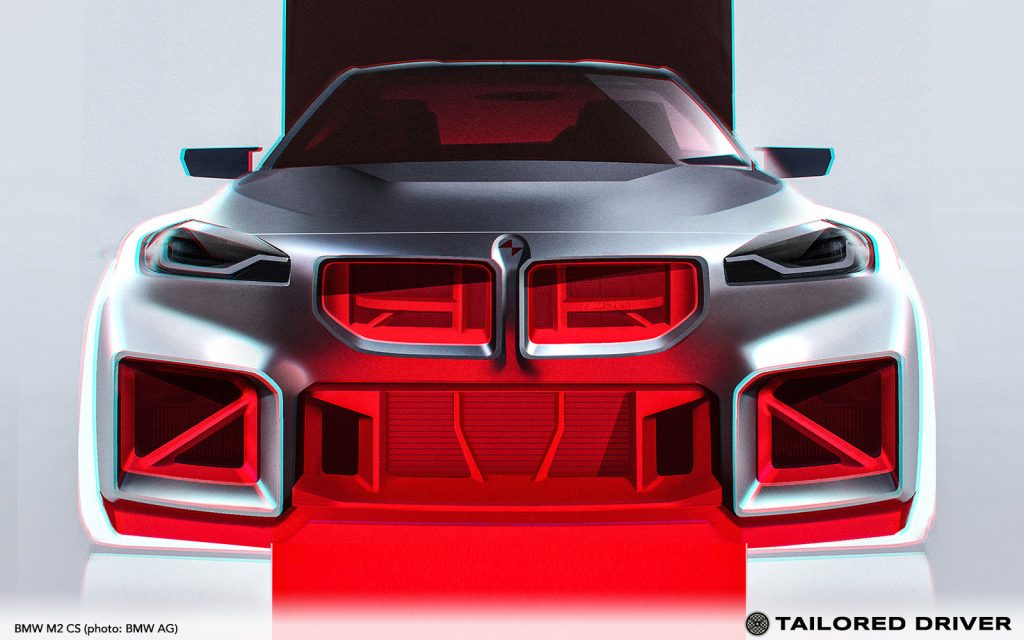
A bold exterior design featuring numerous carbon fibre components. The exterior design of the BMW M2 CS comprises a variety of components made from carbon-fibre-reinforced plastic (CFRP) and model-specific details. The front-end is characterised by a newly designed and stripped-back BMW M kidney grille with optimised air inlets, Shadow Line Adaptive LED headlights with high-beam assist and a matte black front splitter.
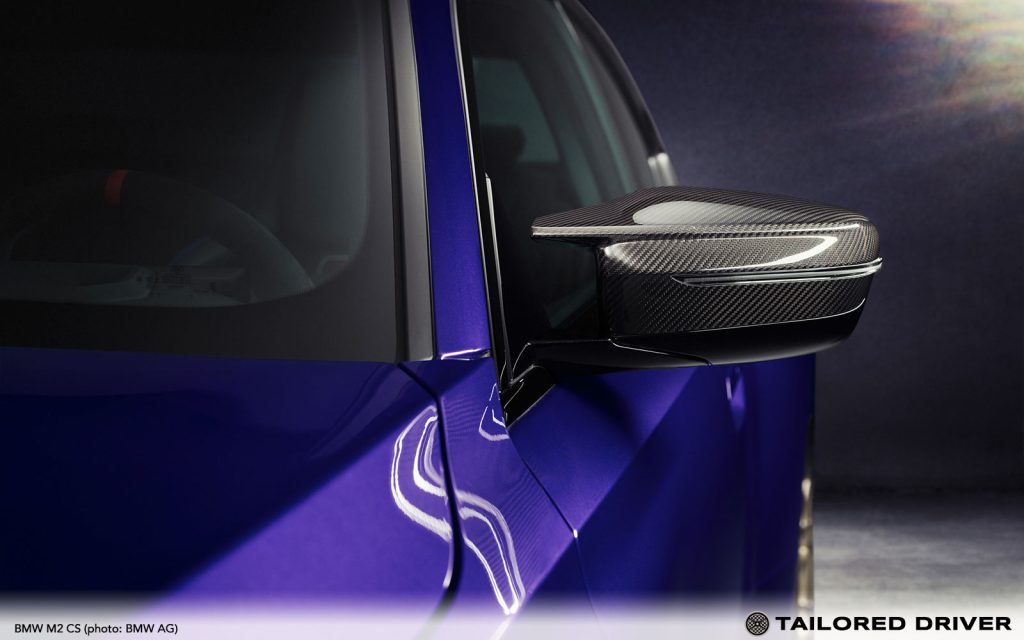
Most prominent at the rear is a large ducktail spoiler, which has been seamlessly integrated into the CFRP boot lid. The “M2 CS” badge finished in a red/black colourway sits beneath the pronounced spoiler. In addition to the M exterior mirror caps – familiar from the current-generation BMW M2 – the special edition gains a standard-fit M carbon roof and a unique rear diffuser, also made from CFRP.
BMW M2 CS customers can select from four exterior paint colours: Sapphire Black metallic, M Brooklyn Grey metallic, M Portimao Blue metallic and BMW Individual Velvet Blue metallic. Meanwhile, the CS-exclusive M light-alloy wheels in a double-spoke design are finished exclusively in matte Gold Bronze. They measure 19 inches at the front and 20 inches at the rear (with the dimensions 275/35 ZR19 and 285/30 ZR20 respectively) and are fitted as standard with track tyres. Customers can specify sport tyres at no additional charge, while ultra-track tyres are available optionally and yield maximum performance on track.
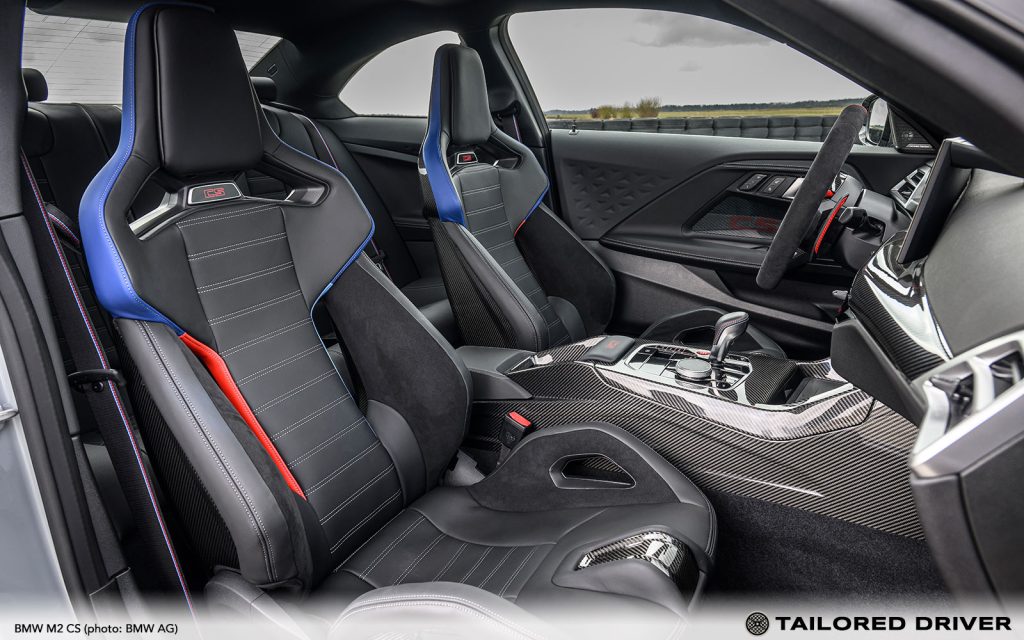
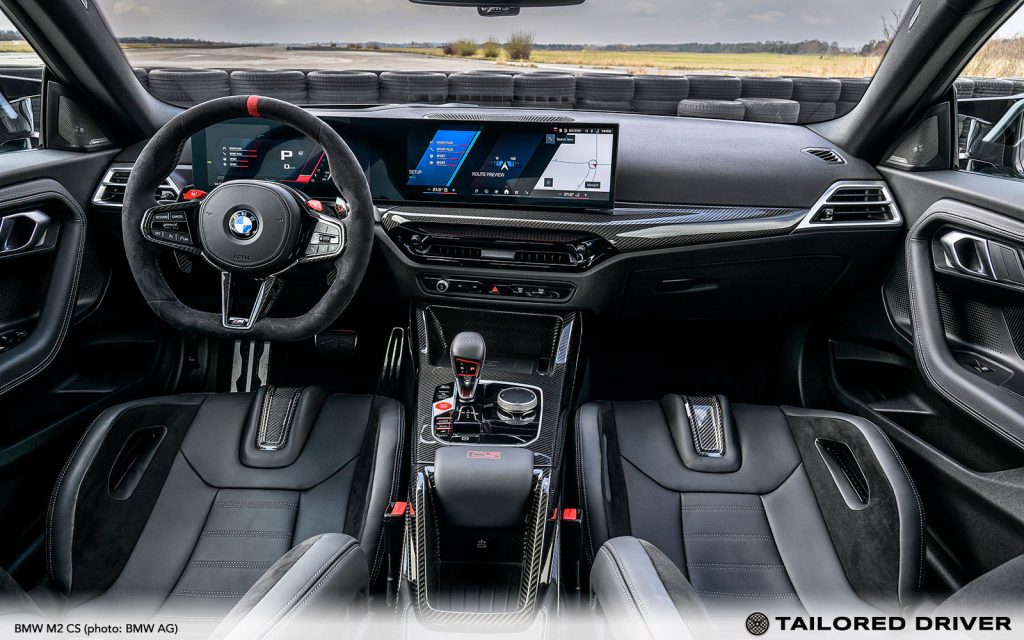
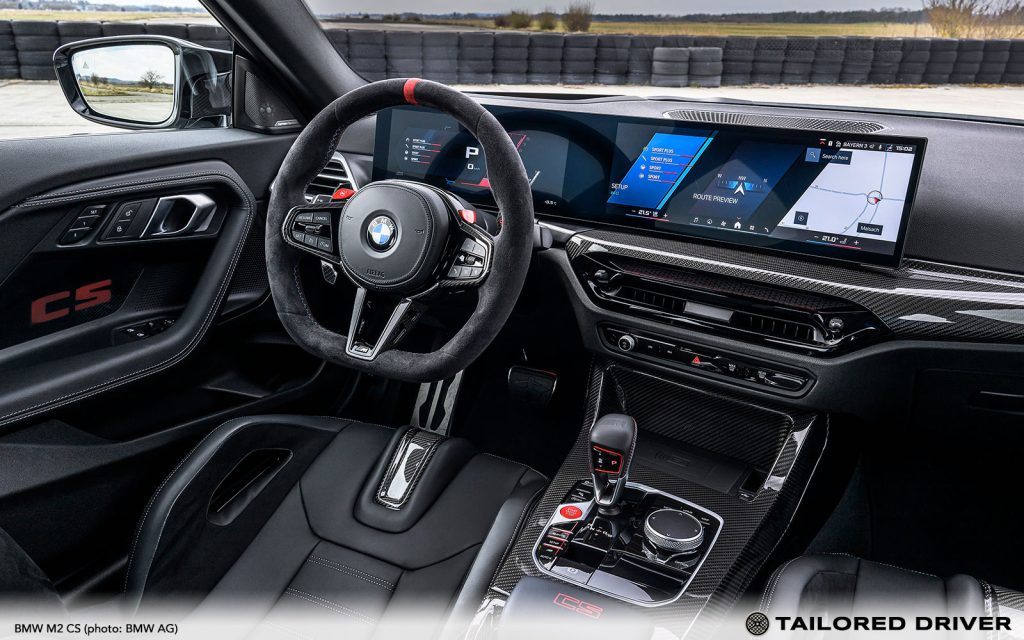
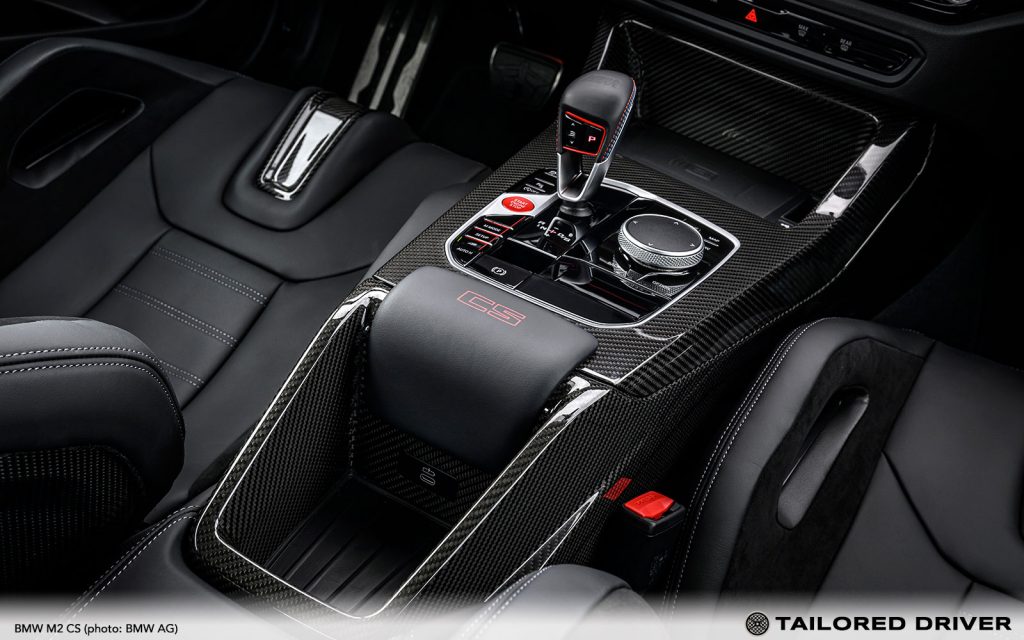
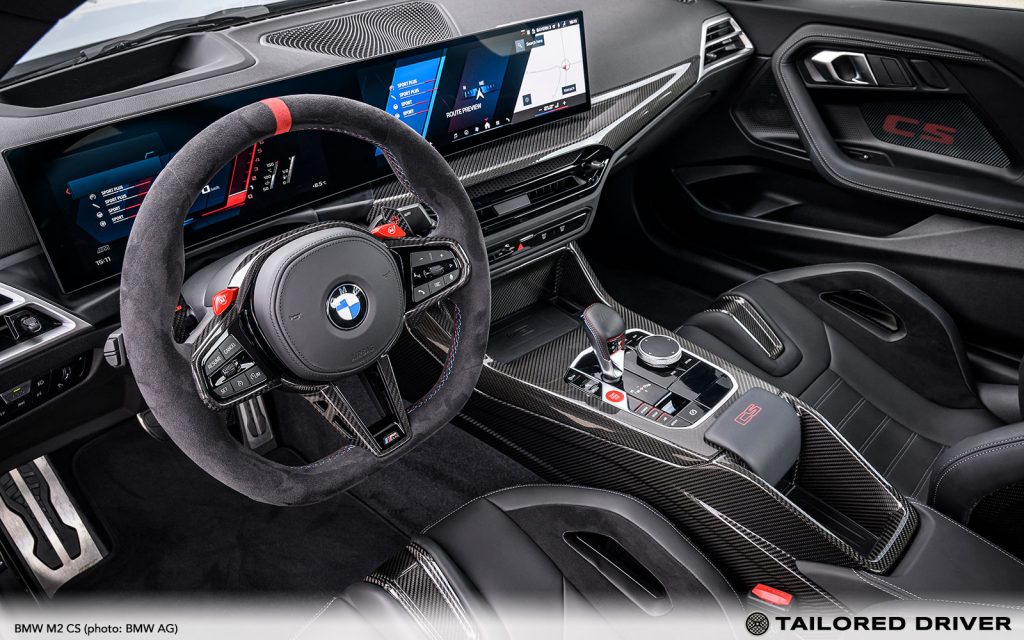
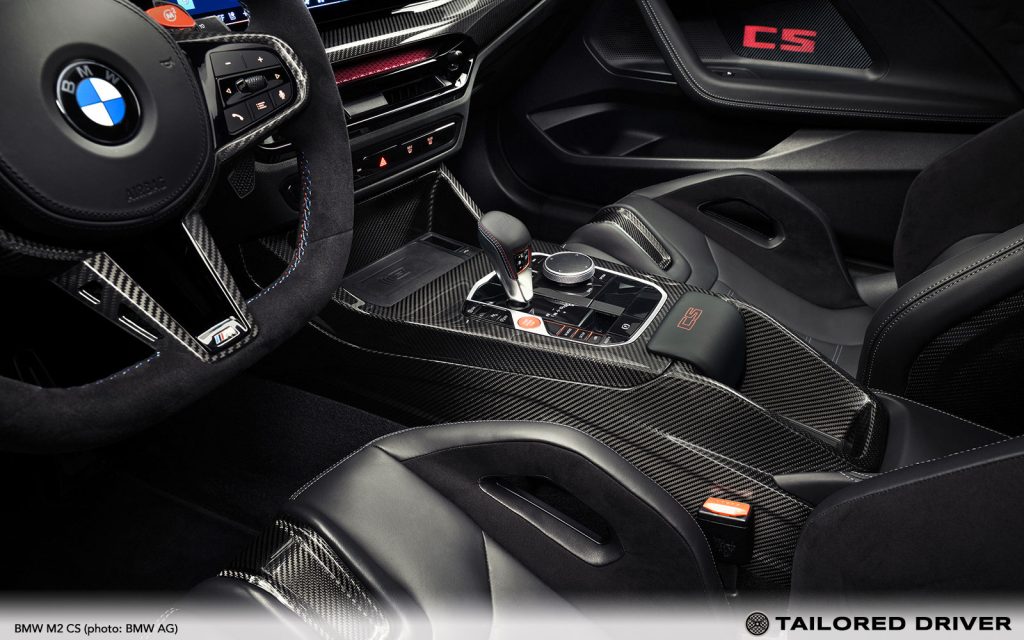
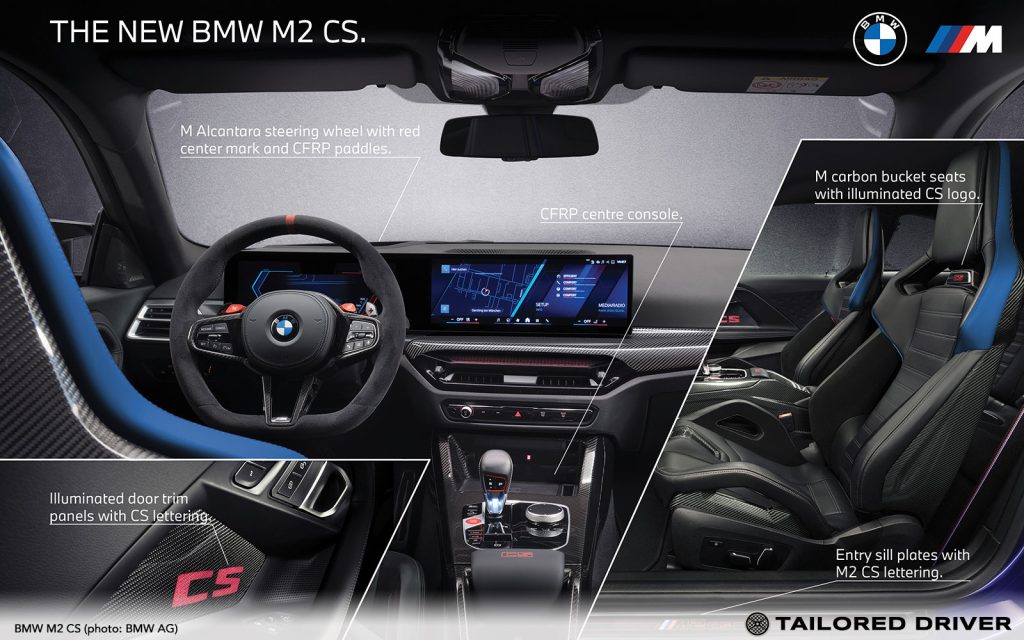
Carbon and racing flair continues inside the cabin. The interior of the BMW M2 CS combines a performance-oriented cockpit with advanced digital technology and further model-exclusive design elements. A standout feature is the centre console, which has been constructed entirely from CFRP. Similarly, the heated and weight-optimised bucket seats for the driver and front passenger are also made from carbon and can be electrically adjusted into a wide range of positions. Each has integral head restraints, an illuminated “CS” model badge and surfaces in full Merino leather.
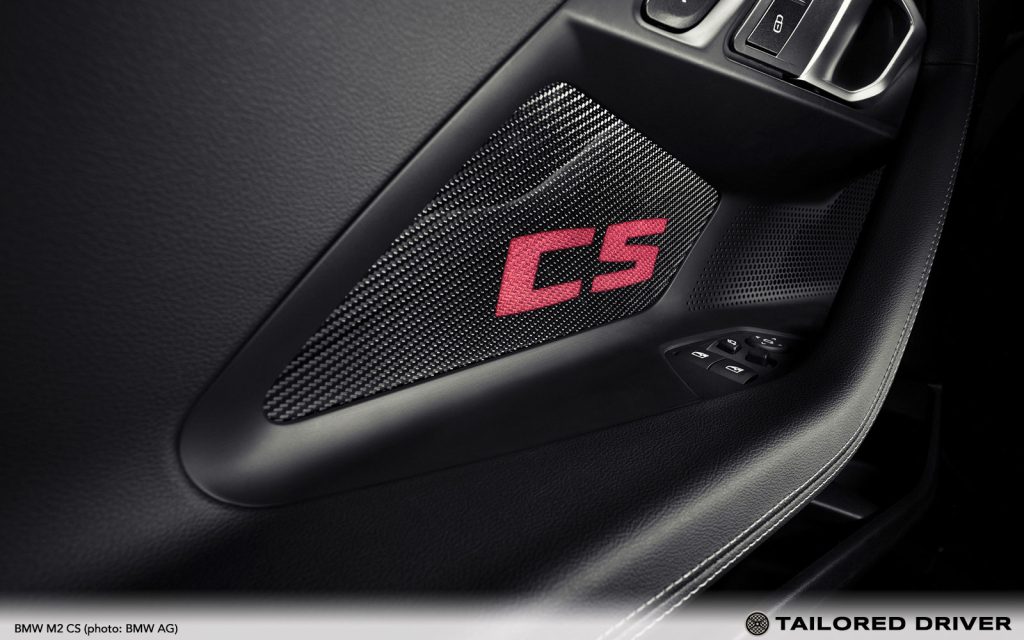
Bringing authentic racing flair into the cockpit, a heated M Alcantara steering wheel in a three-spoke design is fitted as standard. It features a flat-bottomed rim, a red centre marker in the 12 o’clock position and two M buttons which provide quick access to individually configured vehicle setups. Elsewhere, “CS” lettering decorates the centre console, door sills and is illuminated within the door panels – a unique feature of the M2 CS. Rounding off the interior design is a standard-fit anthracite headliner.
M-specific setup buttons for a customisable driving experience. The BMW M2 CS utilises the same cutting-edge operating concept for driving configuration as the BMW M2. At its heart is the Setup button on the centre console, which provides direct access to settings for the engine, chassis, steering and brakes. Offering further customisation capability, the special edition comes as standard with the M Drive Professional system with track-optimised functions such as the M Drift Analyser and M Laptimer. This system also includes a TRACK mode and ten-stage M Traction Control, where the wheel slip limiter intervention thresholds can be tailored to the driver’s individual preference.
BMW Curved Display with Operating System 8.5. The new BMW M2 CS features a BMW Curved Display, comprising a 12.3-inch information display and a 14.9-inch control display with an M-specific interface based on BMW Operating System 8.5. The information display features M Shift Lights at its upper edge, while the status of the driving stability systems and traction control can be found in the lower portion of the screen. The home screen of the 14.9-inch control display provides access to widgets for vehicle setup, tyre pressure and temperature.
A compelling standard specification to enhance driving pleasure. Further standard equipment for the BMW M2 CS includes three-zone automatic air conditioning, comfort access, a Harman Kardon Surround Sound System and BMW Live Cockpit Plus including BMW Maps navigation system. Alongside the head-up display, BMW Live Cockpit Professional also includes an augmented view mode on the control display. Smartphone integration enables both Apple CarPlay® and Android Auto™.
Providing partially automated driving and parking capabilities, the Driving Assistant, Parking Assistant, Front Collision Warning, Cruise Control with Braking Function, Speed Limit Info with blind-spot detection and Lane Departure Warning are also offered as standard. Meanwhile, Active Cruise Control with Stop & Go function is available optionally.
The BMW Group With its four brands BMW, MINI, Rolls-Royce and BMW Motorrad, the BMW Group is the world’s leading premium manufacturer of automobiles and motorcycles and also provides premium financial services. The BMW Group production network comprises over 30 production sites worldwide; the company has a global sales network in more than 140 countries.
In 2024, the BMW Group sold over 2.45 million passenger vehicles and more than 210,000 motorcycles worldwide. The profit before tax in the financial year 2024 was € 11.0 billion on revenues amounting to € 142.4 billion. As of 31 December 2024, the BMW Group had a workforce of 159,104 employees.
The economic success of the BMW Group has always been based on long-term thinking and responsible action. Sustainability is a key element of the BMW Group’s corporate strategy and covers all products from the supply chain and production to the end of their useful life.
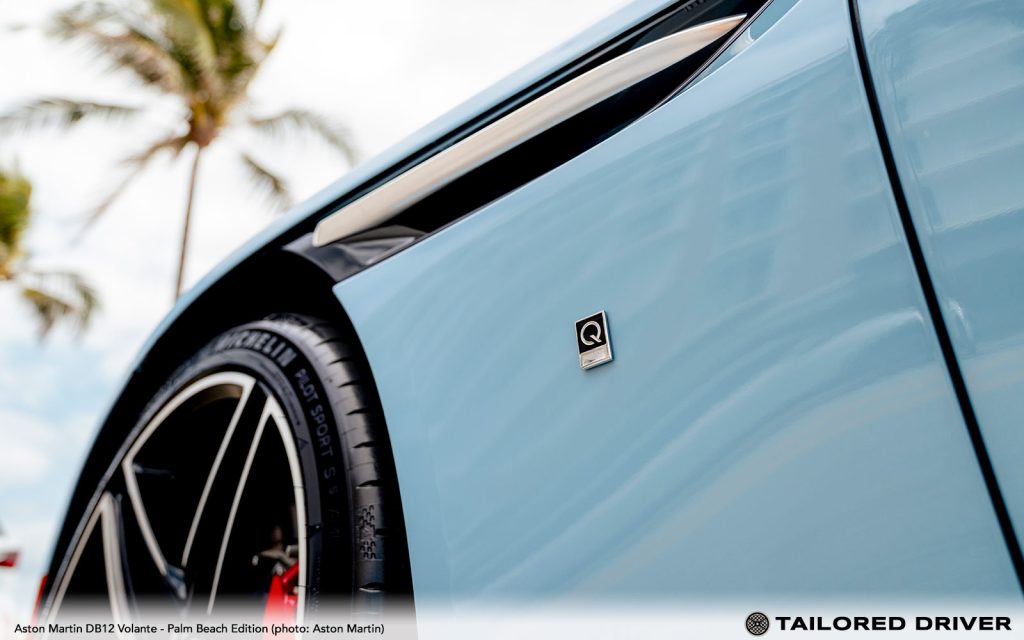
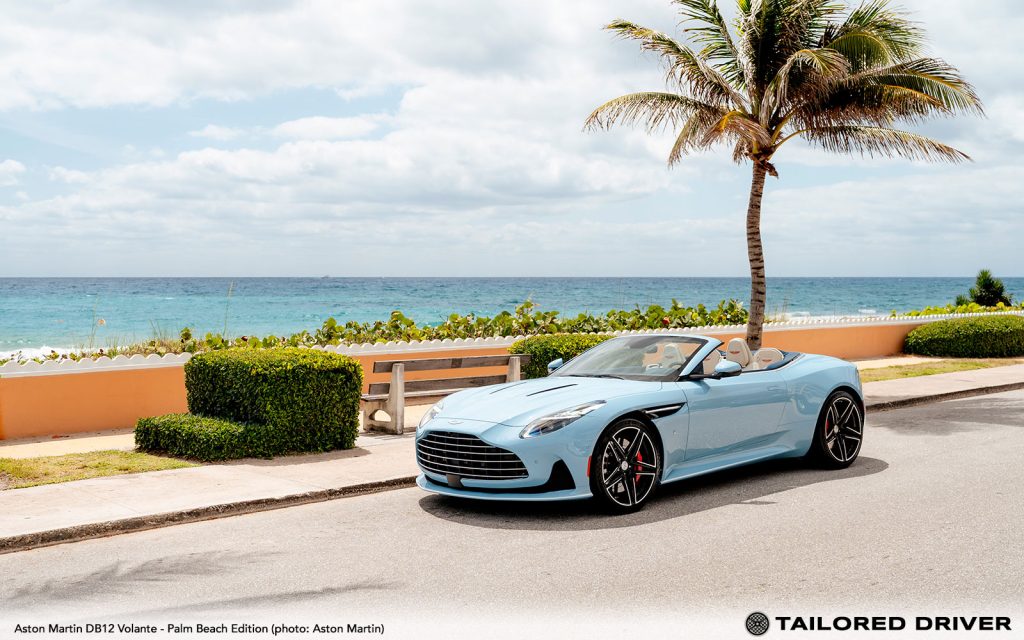
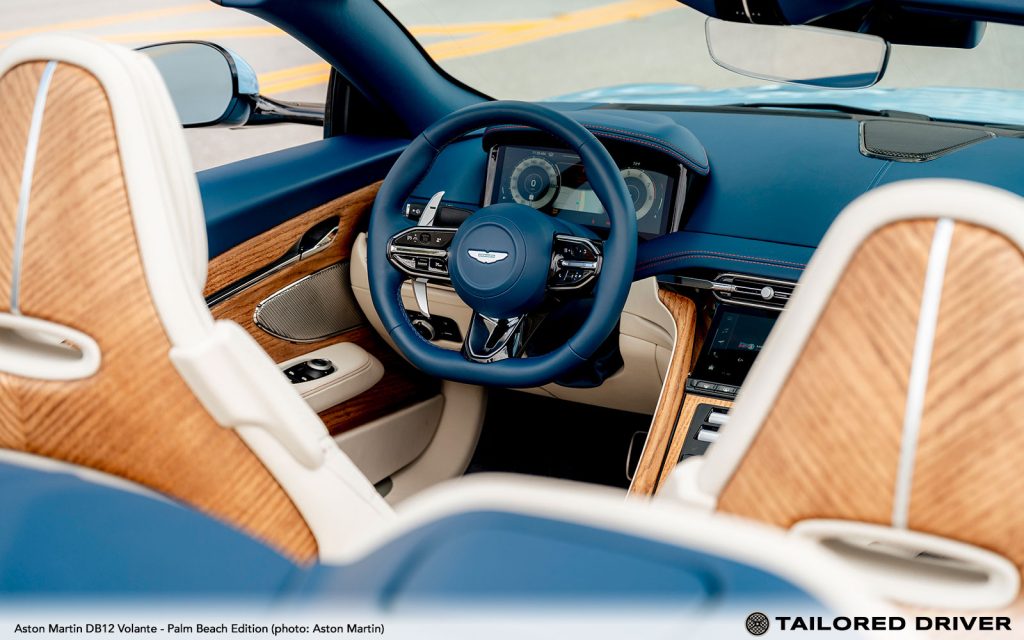
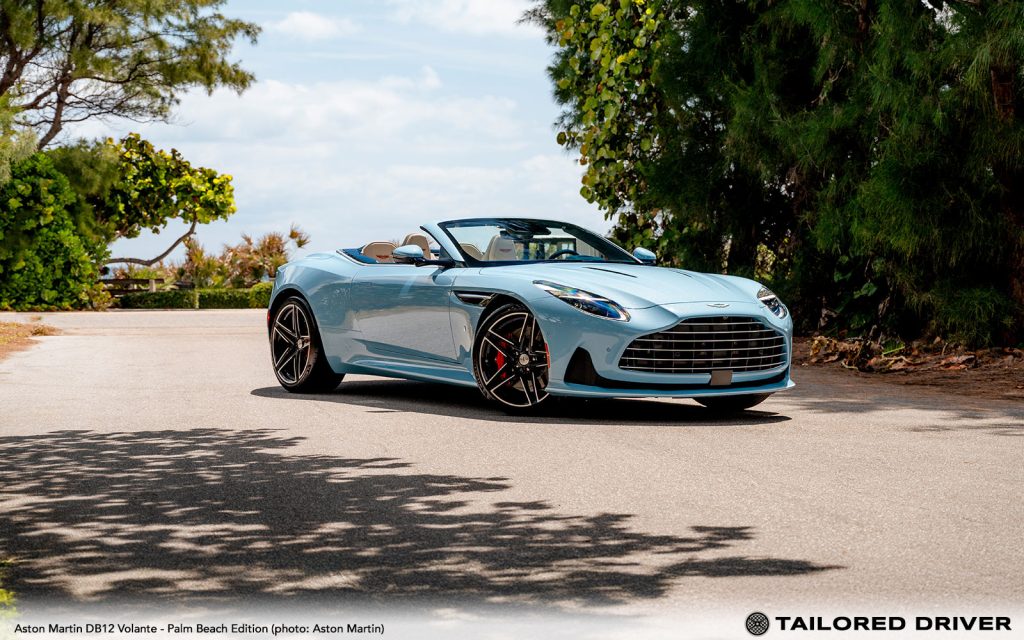
The first-of-its-kind Palm Beach Edition DB12 Volante brings the highest level of Q by Aston Martin personalisation to the open-top Super Tourer
Nautical exterior and interior features curated by the British ultra-luxury performance brand’s in-house bespoke division, incorporates unique patterns and materials to celebrate the Palm Beach lifestyle
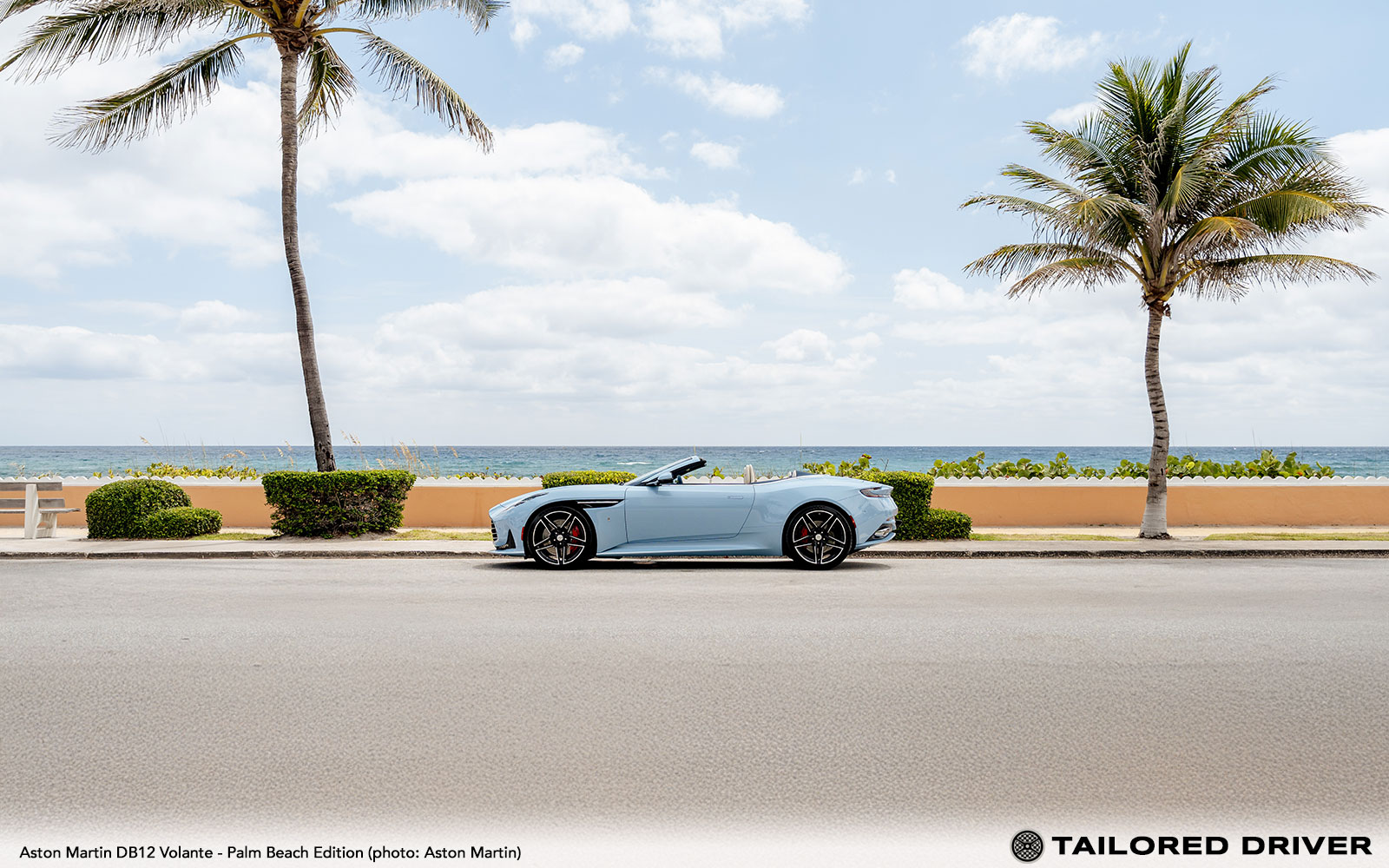
Limited to only one example in Frosted Blue Glass paint, the Palm Beach Edition DB12 Volante was created exclusively through Aston Martin Palm Beach
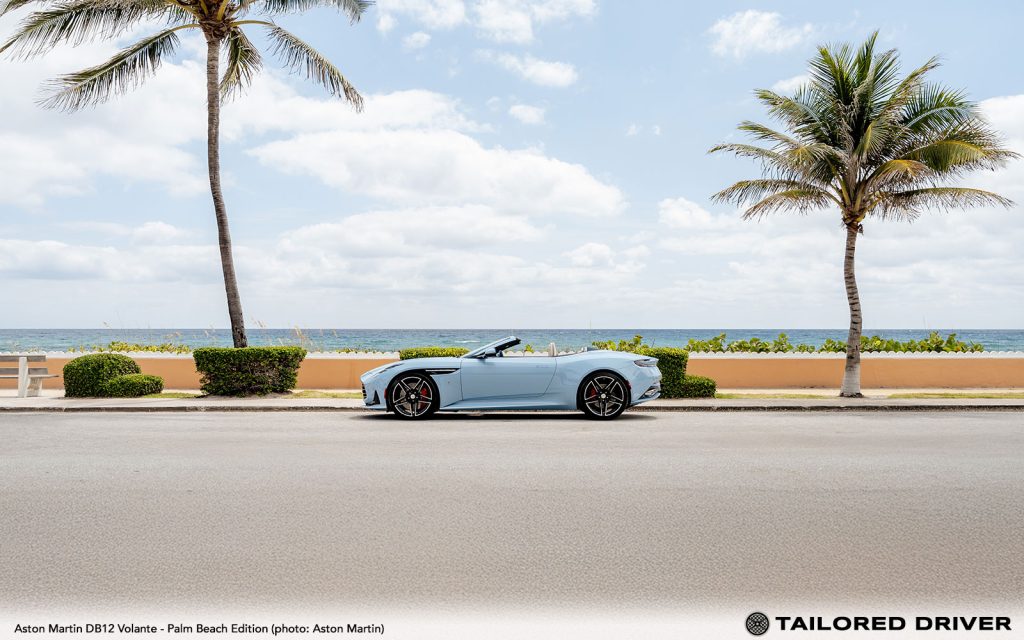
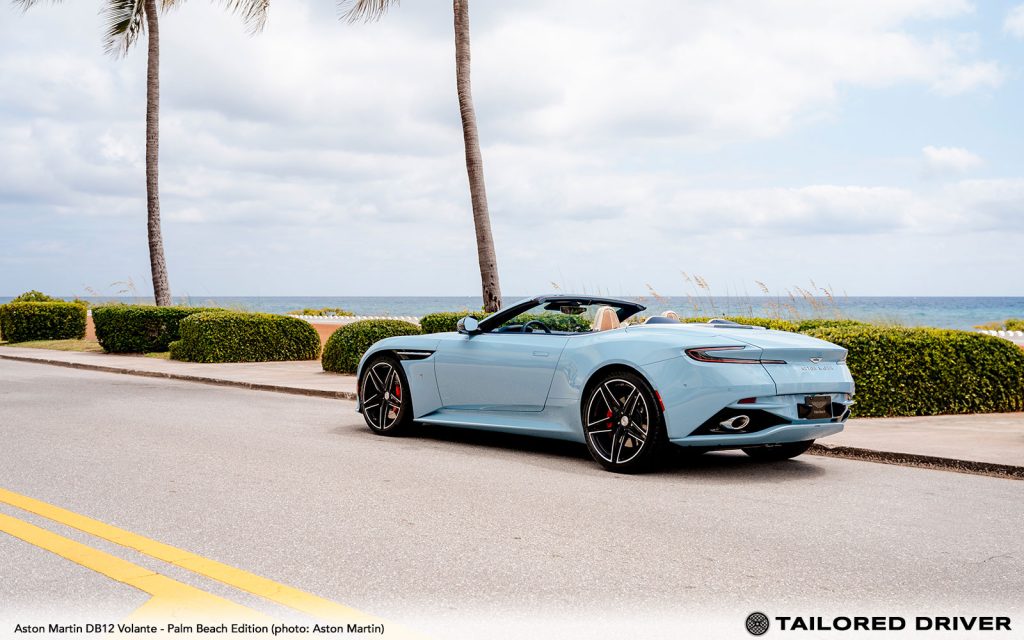
Gaydon, UK: Aston Martin Palm Beach, in partnership with the ultra-luxury performance brand’s bespoke service Q by Aston Martin, commissioned a one-of-a-kind DB12 Volante that blends renowned British craftsmanship with Palm Beach-inspired design themes. The DB12 Volante incorporates unique patterns and materials to celebrate Palm Beach and further elevates the elegance of Aston Martin’s 680PS open-top Super Tourer.
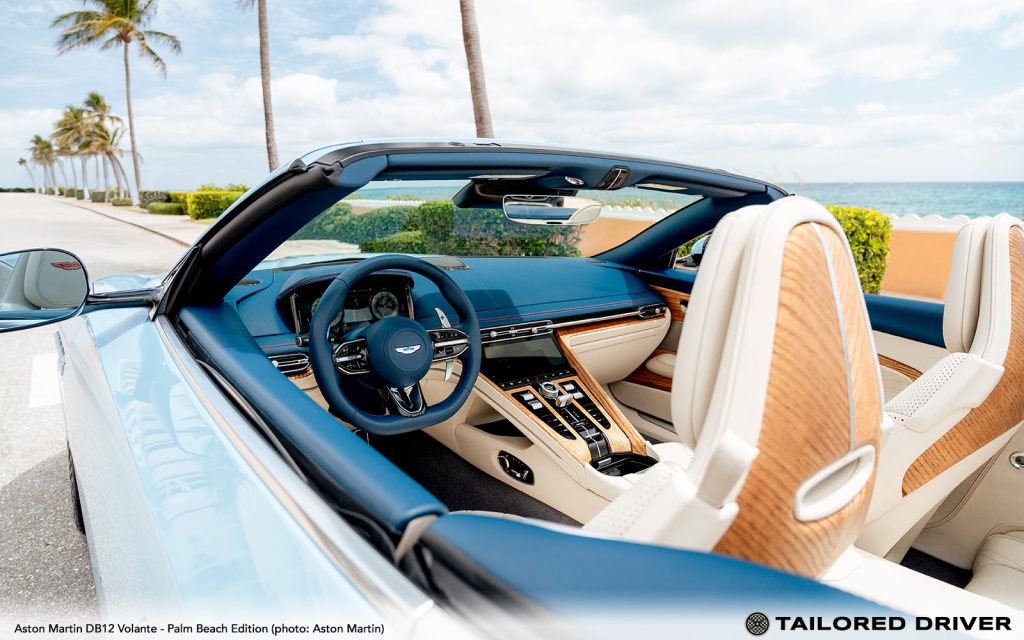
The Palm Beach Edition DB12 Volante is a tribute to oceanic blue, featuring an exclusive Q by Aston Martin Frosted Glass Blue exterior paint. The exclusive paint color exhibits qualities unique to the use of glass flakes within the topcoat, creating the unmistakeably mesmerising shimmer effect that perfectly encapsulates the south Florida sun. This is only achievable through hand spray application due to the complexity and delicate nature of this colour. The open-top Super GT also features a Club Sport White pinstripe applied to the front splitters, side sills and rear bumpers, highlighting the DB12 Volante’s firmly planted sportscar stance, as well as Gloss Jet Black diamond-turned five-spoke wheels.
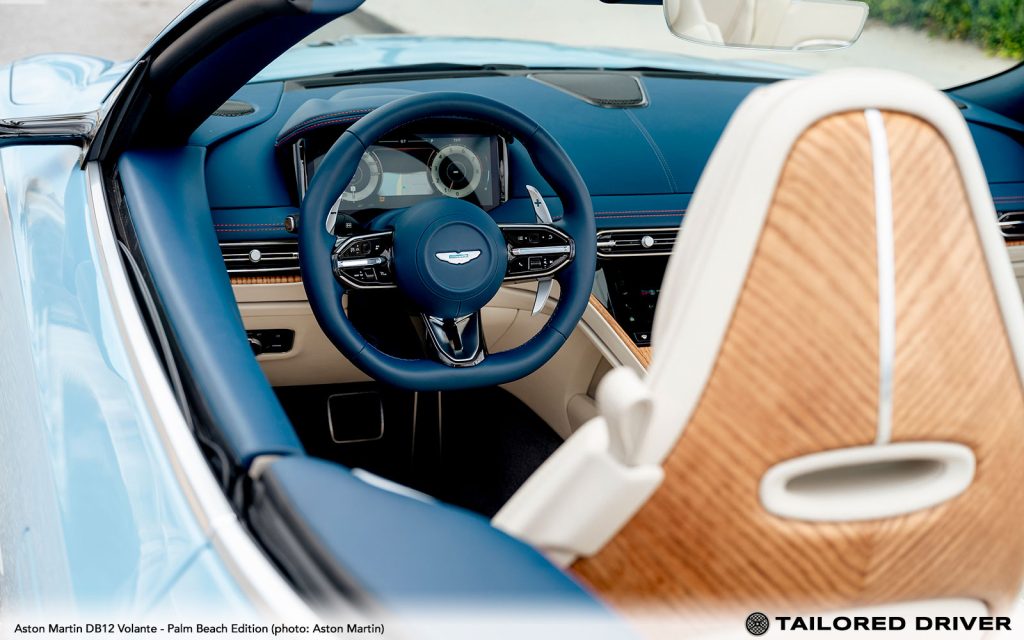
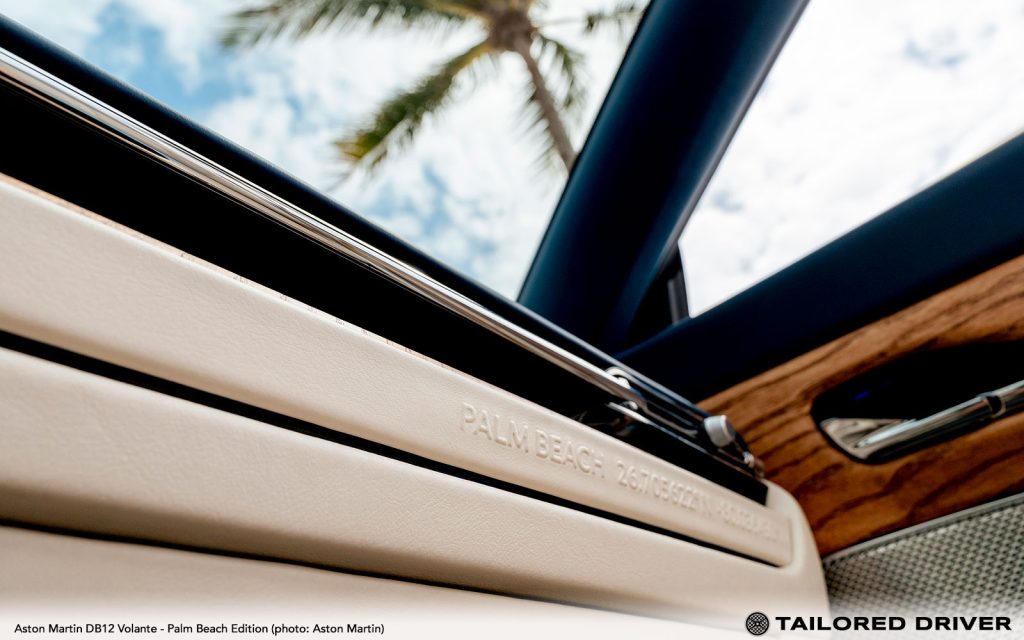
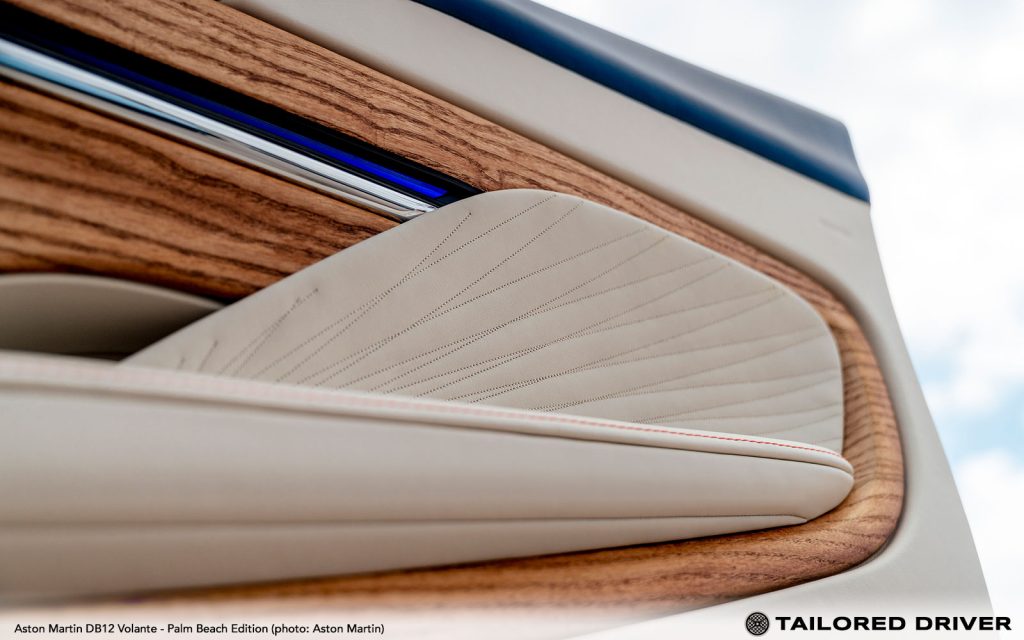
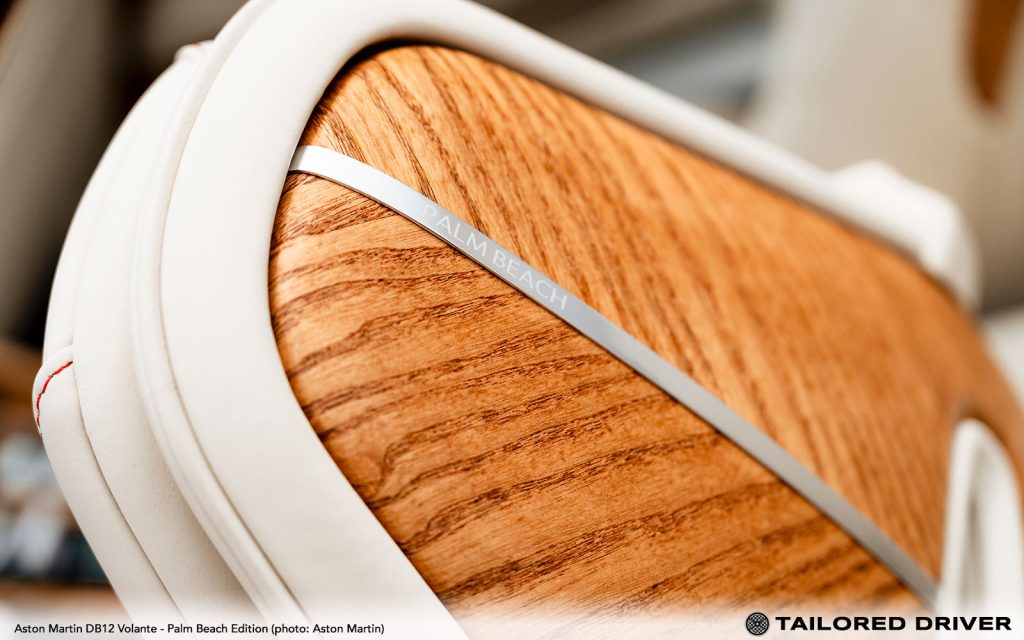
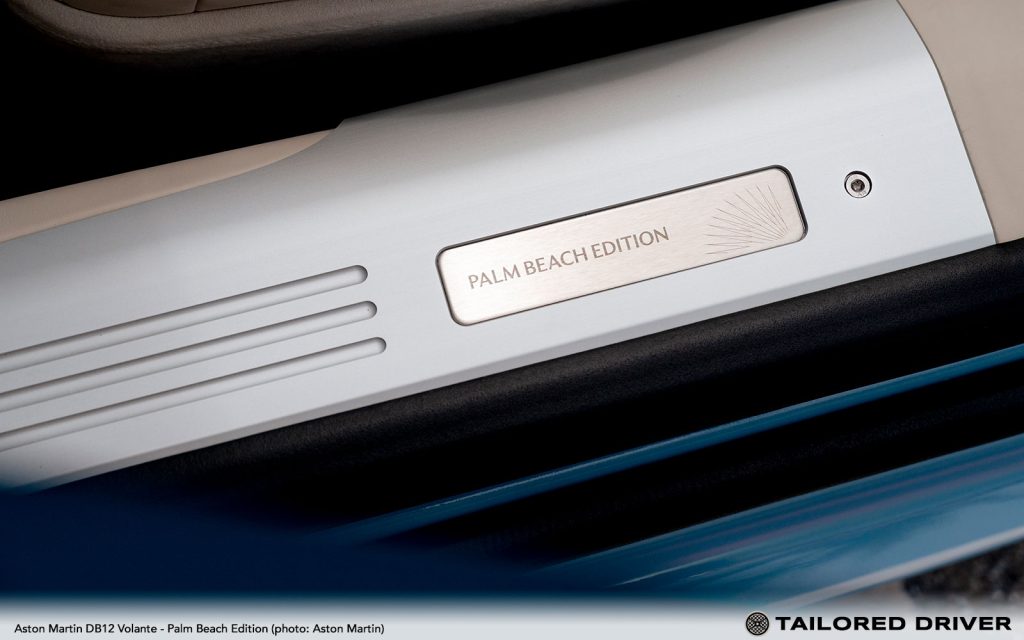
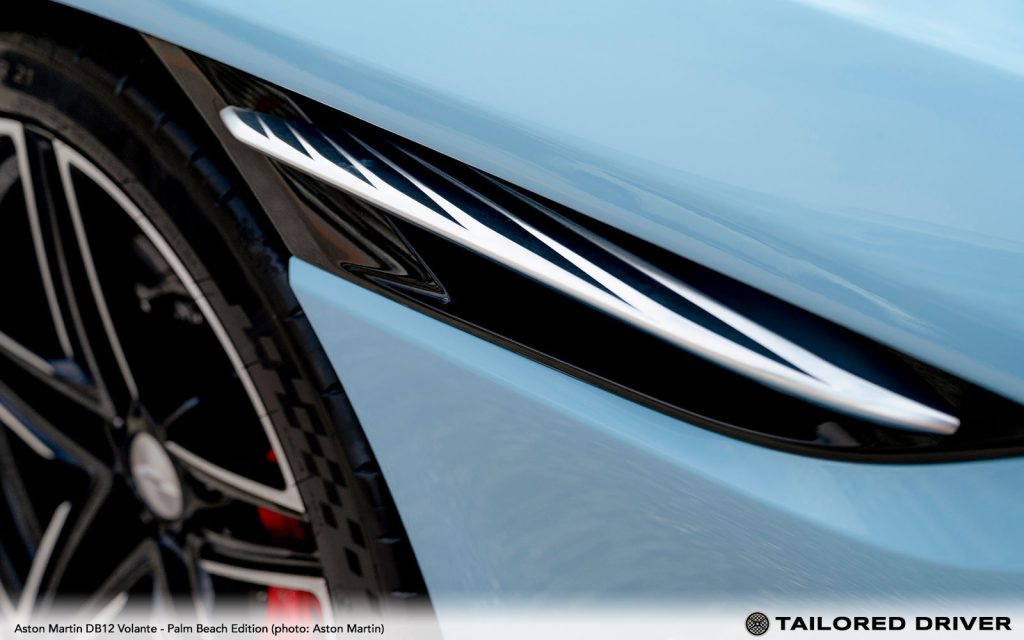
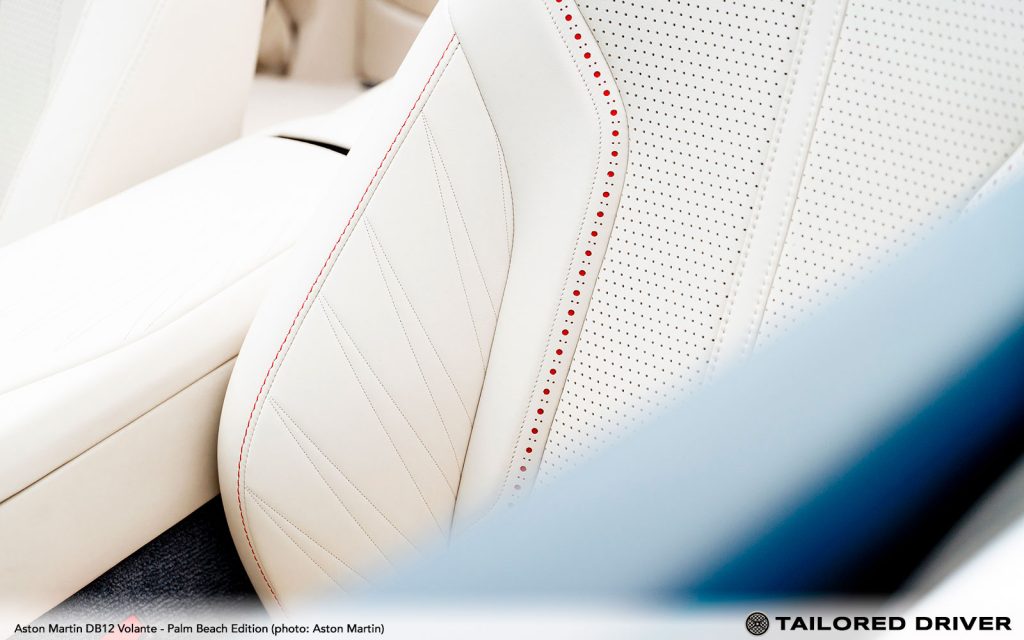
With the convertible top dropped, the cabin’s custom features and nautically themed duotone colorways are on display, so even those beyond the cabin may appreciate the custom commission. The Palm Beach Edition DB12 Volante features a bespoke palm-leaf motif incorporated throughout, including on the complementary Aurora Blue and Ivory leather and Spicy Red contrast stitching. Seats include palm-inspired embroidery, which extends to the center armrest and door-sill panels; even custom engraved polished aluminum Palm Beach Edition sill plaques feature the same palm pattern. The palm motif continues to the exterior, where the aluminum side strakes were milled to reflect the palm-style stripe. The DB12 Volante features open-pore Linear Light Olive Ash book-matched wood trim throughout, specifically chosen to emulate the rich texture of palm wood. With a nod to the coastal location, the vehicle has Palm Beach’s latitude and longitude coordinates embossed onto the leather dashboard. Diagonally book-matched veneers on the rear of the front seats mimic the palm motif and include metal inlays engraved with “Palm Beach.” The DB12 Volante is also fitted with Gloss Jet Black Diamond Turned Vantage wheels, which offers a more dynamic and sporty treatment.
“This extraordinary DB12 Volante model perfectly encapsulates the understated elegance of both Palm Beach and Aston Martin,” said Pedro Mota, Regional President of Aston Martin The Americas. “Through a collaboration with Q by Aston Martin and Aston Martin Palm Beach, we have created an exceptional sportscar that merges stunning performance, artistry and luxury. This Q commissions is bound to entice more customers to create a unique specification with Q by Aston Martin, where peerless creativity and British craftsmanship generate vehicles as unique and special for their owners.”
The in-house design and craftspeople at Q by Aston Martin are renowned for their exceptional skills to create truly bespoke Aston Martins, with the Palm Beach Editions serving as testaments. Offering limitless customisation opportunities, Q by Aston Martin invites customers to embark on a distinct commissioning experience, where every detail from subtle accents to fully tailored components, can be designed to their exact specifications, offering discerning collectors the opportunity to own a piece of automotive artistry at their unique tastes. The possibilities are endless from the dedicated team, ensuring no request is too ambitious.
Those interested in commissioning their bespoke Aston Martin and utilising the Q by Aston Martin services may inquire further with their local Aston Martin dealership.
About Aston Martin Lagonda: Aston Martin’s vision is to be the world’s most desirable, ultra-luxury British brand, creating the most exquisitely addictive performance cars.
Founded in 1913 by Lionel Martin and Robert Bamford, Aston Martin is acknowledged as an iconic global brand synonymous with style, luxury, performance, and exclusivity. Aston Martin fuses the latest technology, time honoured craftsmanship and beautiful styling to produce a range of critically acclaimed luxury models including the Vantage, DB12, Vanquish, DBX707 and its first hypercar, the Aston Martin Valkyrie. Aligned with its Racing. Green. sustainability strategy, Aston Martin is developing alternatives to the Internal Combustion Engine with a blended drivetrain approach between 2025 and 2030, including PHEV and BEV, with a clear plan to have a line-up of electrified sports cars and SUVs.
Based in Gaydon, England, Aston Martin Lagonda designs, creates, and exports cars which are sold in more than 50 countries around the world. Its sports cars are manufactured in Gaydon with its luxury DBX SUV range proudly manufactured in St Athan, Wales.
Lagonda was founded in 1899 and came together with Aston Martin in 1947 when both were purchased by the late Sir David Brown, and the company is now listed on the London Stock Exchange as Aston Martin Lagonda Global Holdings plc.
2020 saw Lawrence Stroll become the company’s Executive Chairman, alongside significant new investment. This coincided with Aston Martin’s return to the pinnacle of motorsport with the Aston Martin Aramco Formula One® Team and commenced a new era for the iconic British marque.