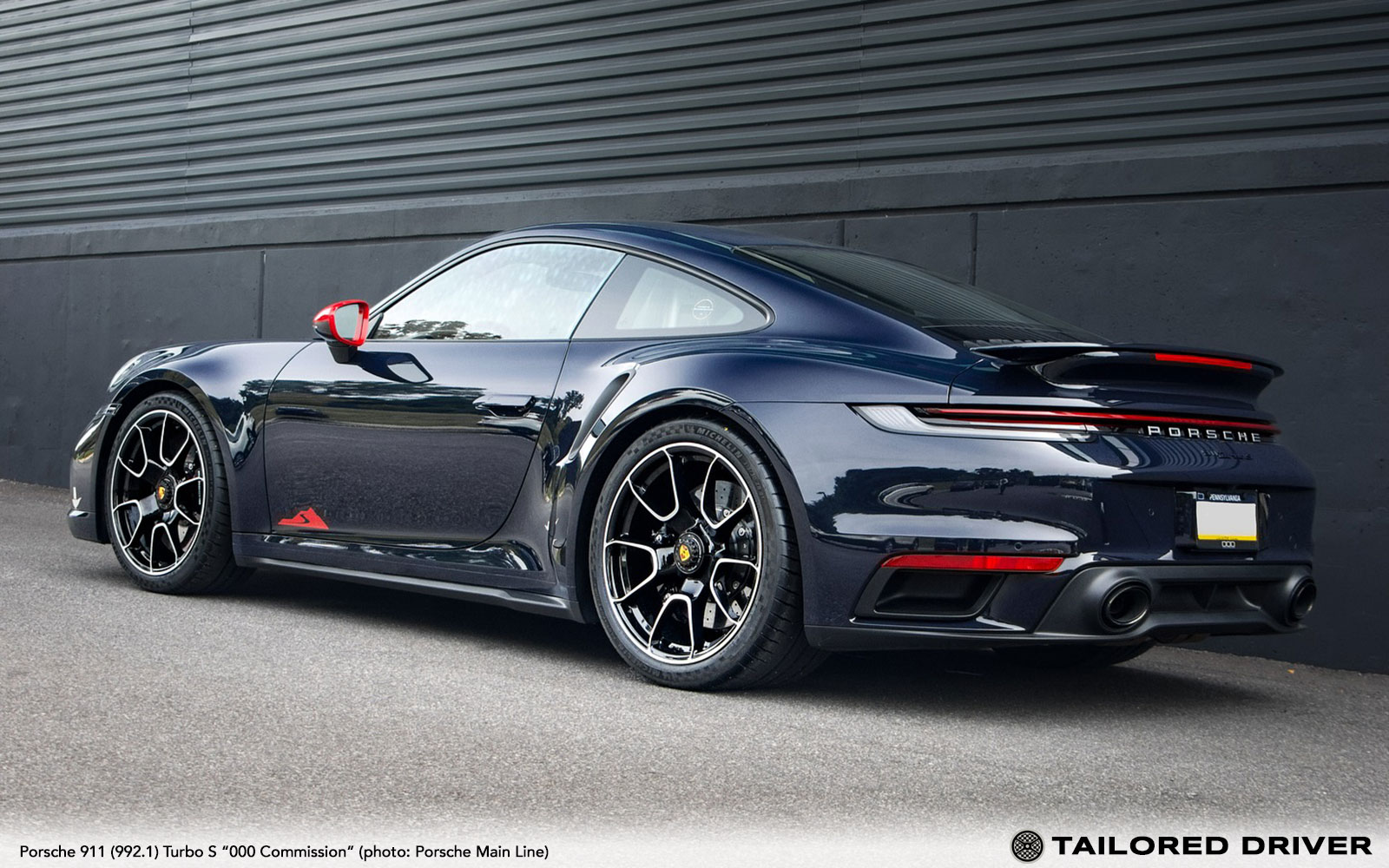
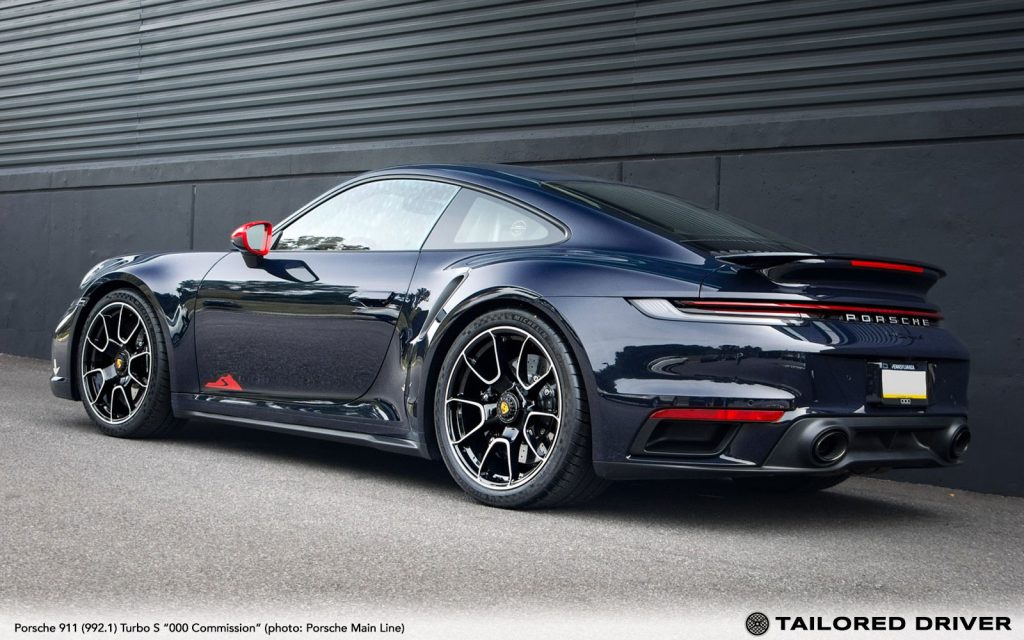
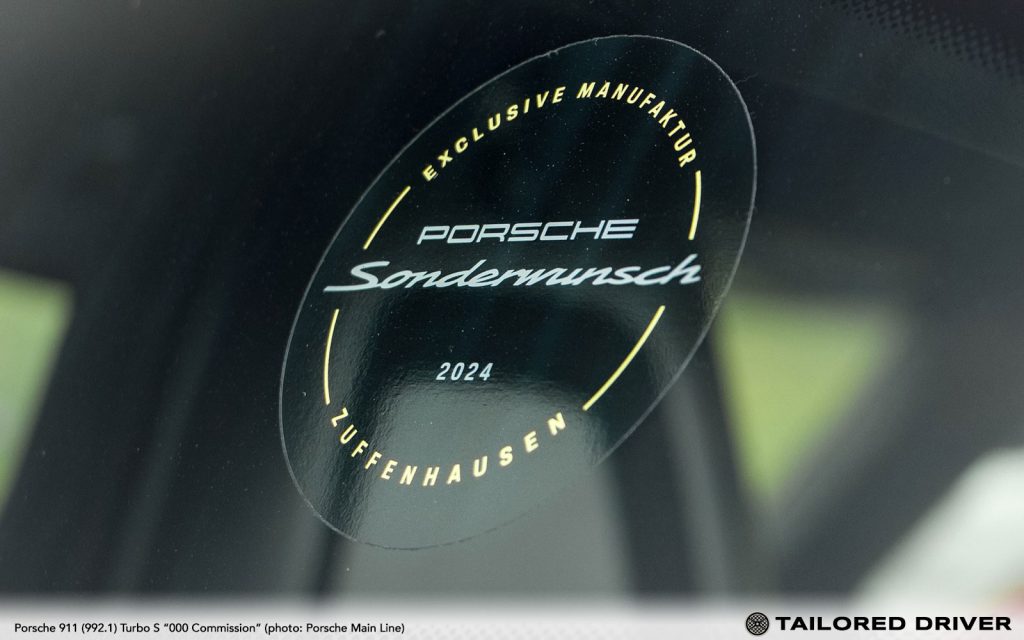
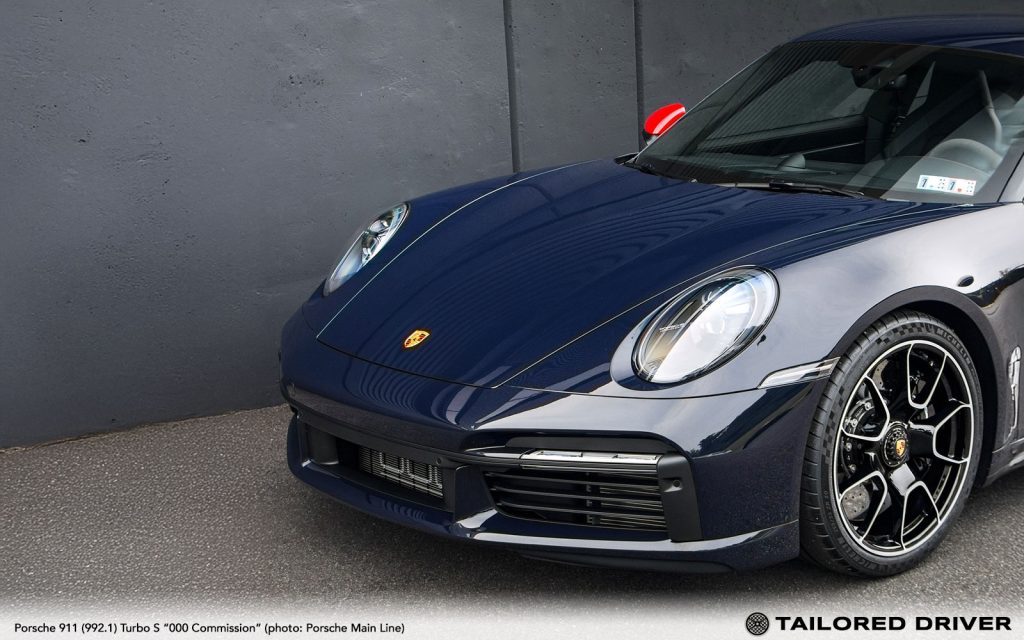
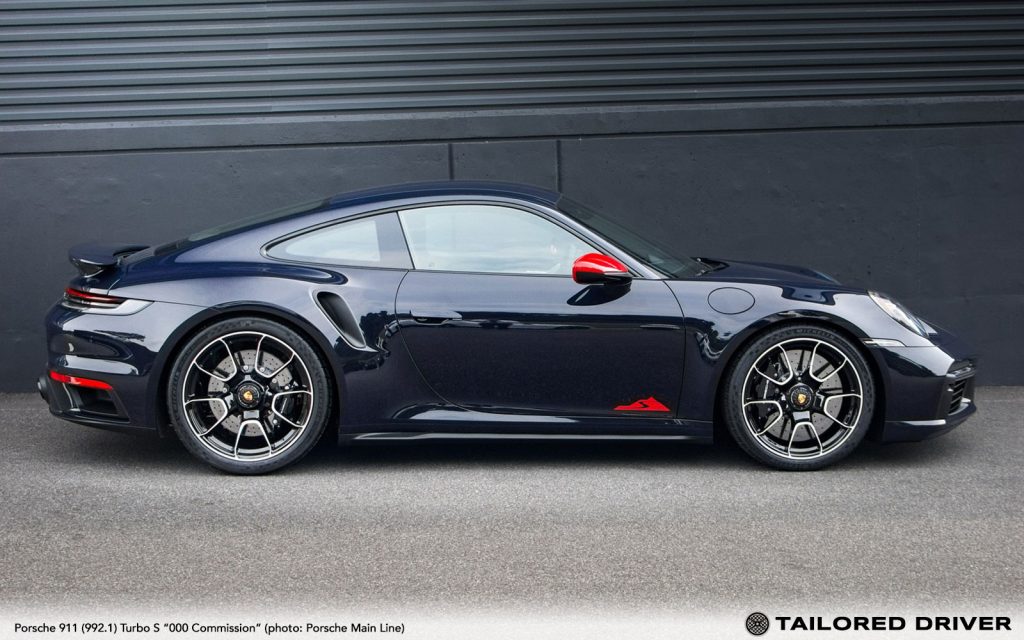
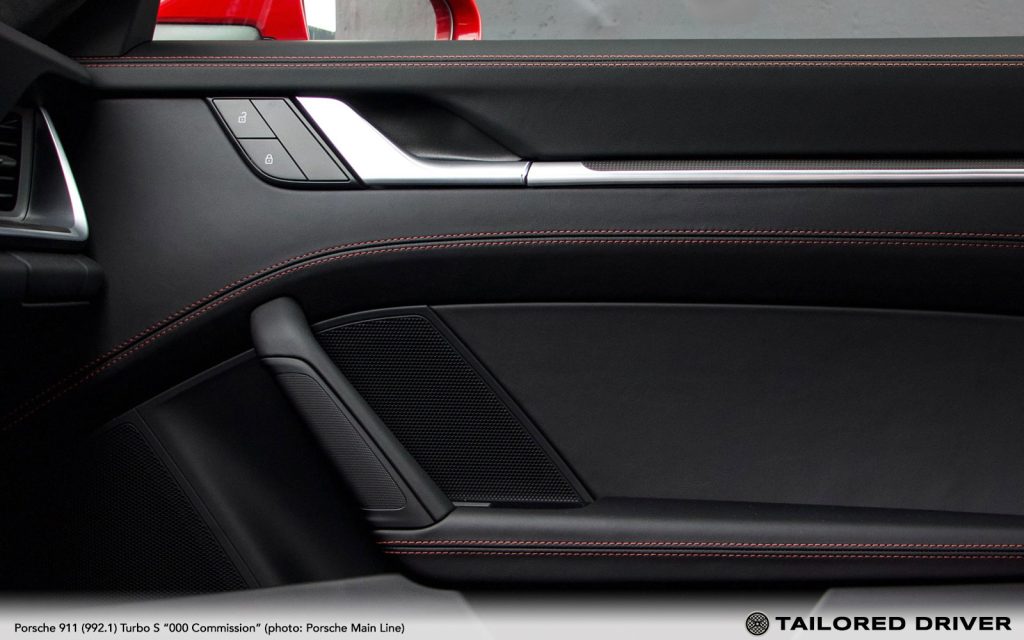
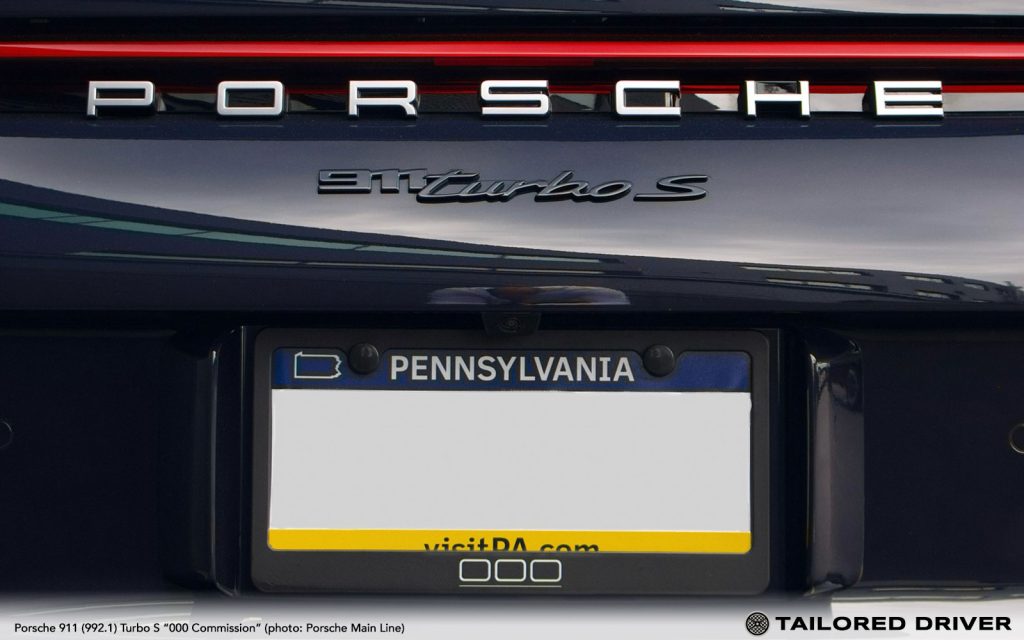
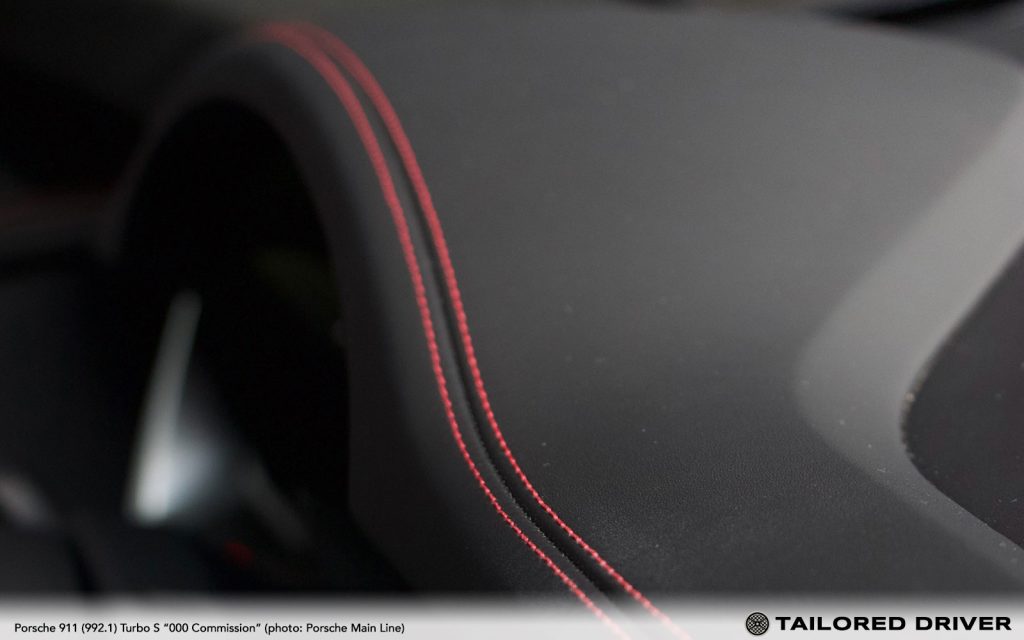
Porsche is celebrating the 50th Anniversary of the 911 Turbo this year, and 000 Magazine is doing the same this coming weekend with their Turbo 50 celebration at Summit Skywalker Ranch. Given that, it’s worth celebrating this X Blue 911 Turbo S owned by Drew Coblitz, purchased through Porsche Main Line. It is reportedly the first delivered 911 Turbo S “000 Commission” and was recently detailed more specifically by @PTSRS.
Given all that, let’s dig into the details. For starters, the X Blue (xblau; non-metallic UNI; Z91; Porsche)color is Paint to Sample and non-metallic. This blue is a modern blue formulation created for the 911 (992.1) Belgian Legends Edition created in 2020 to honor Jacky Ickx 75th birthday. It’s a solid blue that is reportedly darker than Dark Sea Blue and is offered on the 911 and Taycan. Given the Ickx association, it’s quite likely it also harks the dark blue of Rothman’s Racing liveries his Porsches wore in races such as the Paris-Dakar Rally or 24 Hours of Le Mans.
Side Note:@PTSRS has an interesting indexing format for paints seen here (name; type; code), and we’re going to adopt that with the addition of brand (name; type; code; brand) since we cover more than just Porsche. The intention is to adopt more universal standardization of paint code identity when we know the code and type. In this case, it’s (xblau; non-metallic UNI; Z91; Porsche).
Back to the 000 Commission specification, it’s based on an “off the menu” mix created to be built in conjunction with the a 911 Turbo S with factory Lightweight Package. From there, special wishes details were chosen along a theme celebrating David Donner‘s victory at the 100th Pike’s Peak International Hill Climb. In that race, Donner’s 9 minutes 53 second record run was performed in a 000 Magazine liveried 911 Turbo S #000. A creative mix of details and easter eggs thanks to ample deployment of Sonderwunsch services complete the specification.
@PTSRS inventories the Sonderwunsch details as such:
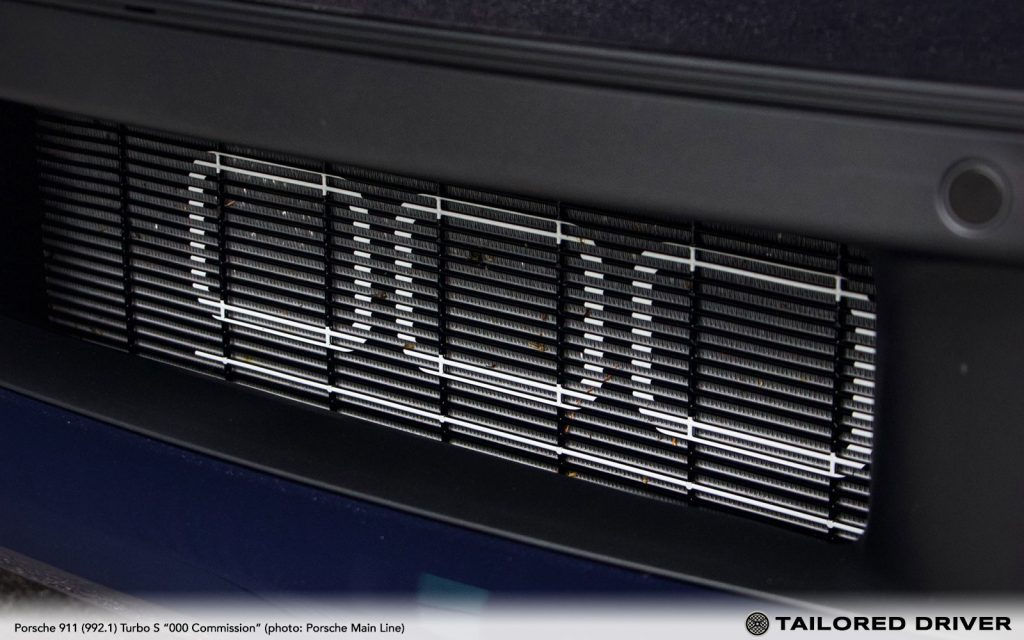
Laser-etched “000” on Front Bumper Grille as on Pikes Peak Winner
Exterior Mirrors in Carmine Red as on Pikes Peak Winner
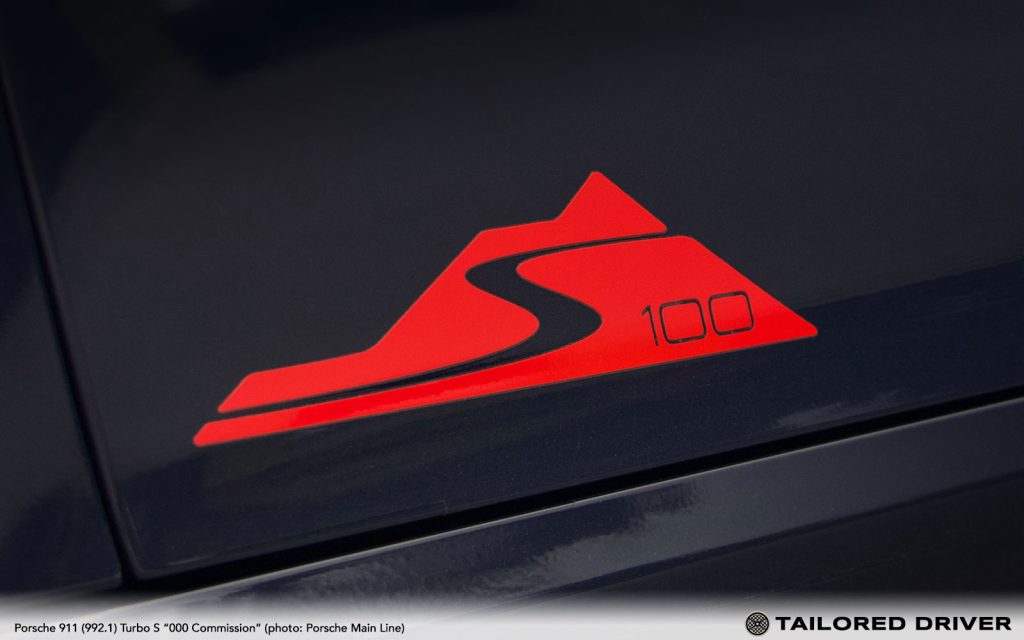
“Peak 100” Logo Decals on Doors
000 Decal under Rear Wing as on Pikes Peak Winner
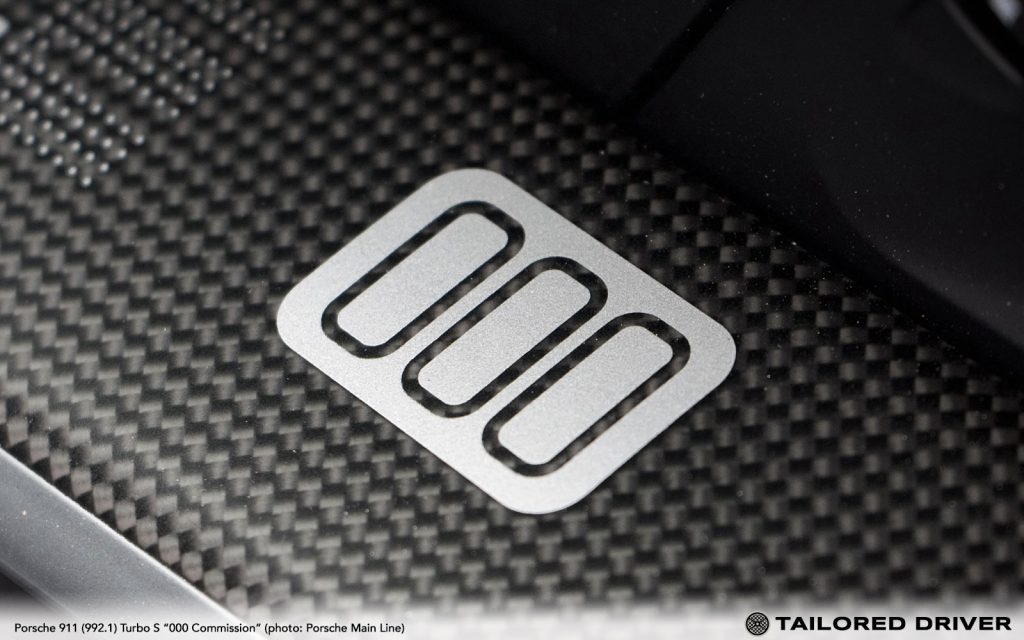
Illuminated Door-Sill Guards in Matte Carbon with 000 Logo
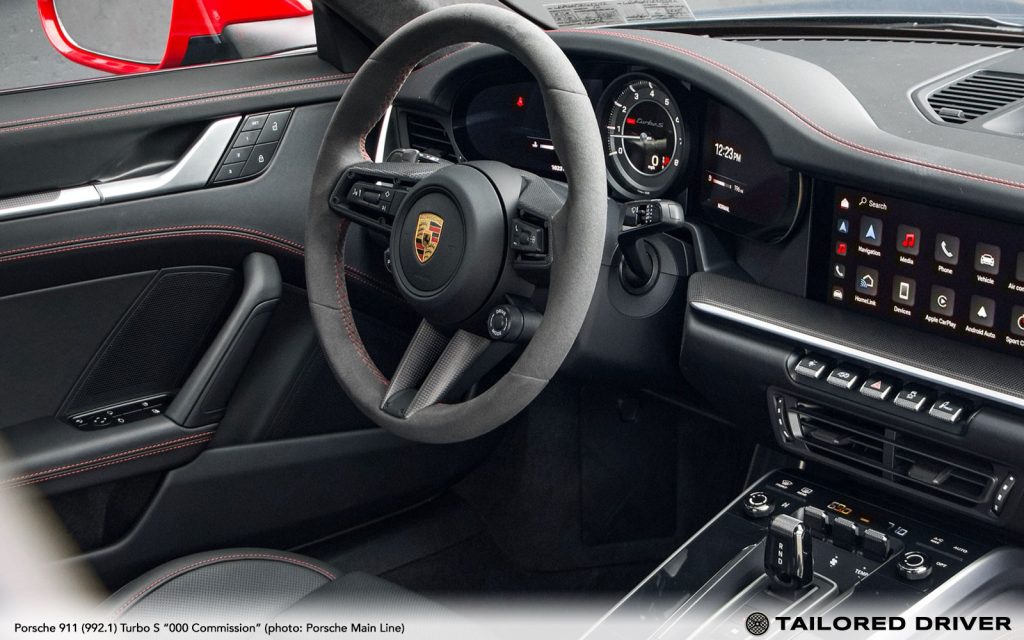
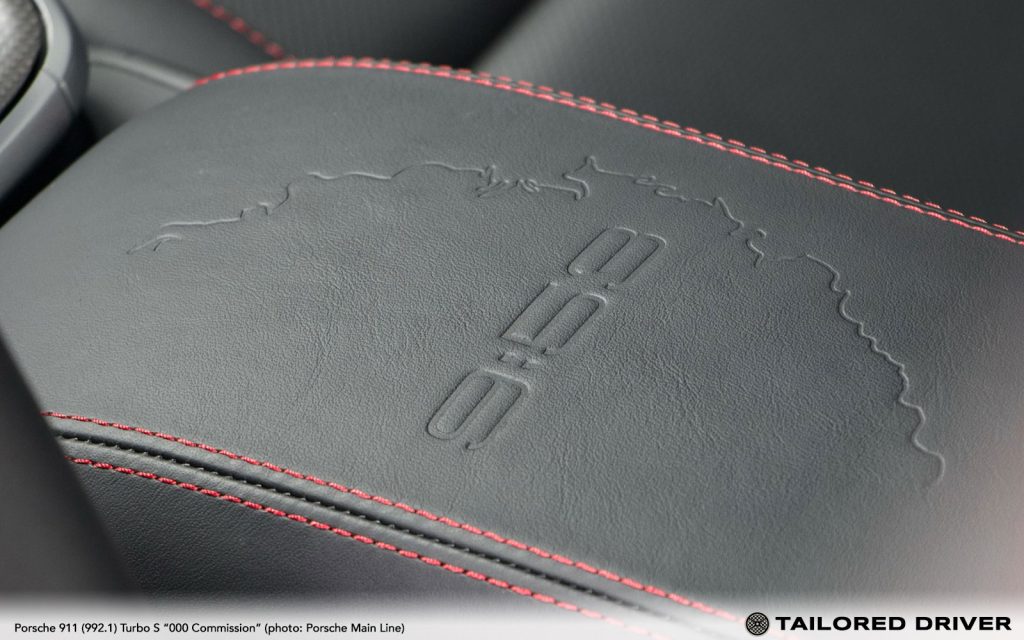
Center Armrest embossed with Pikes Peak course map and “9:53”
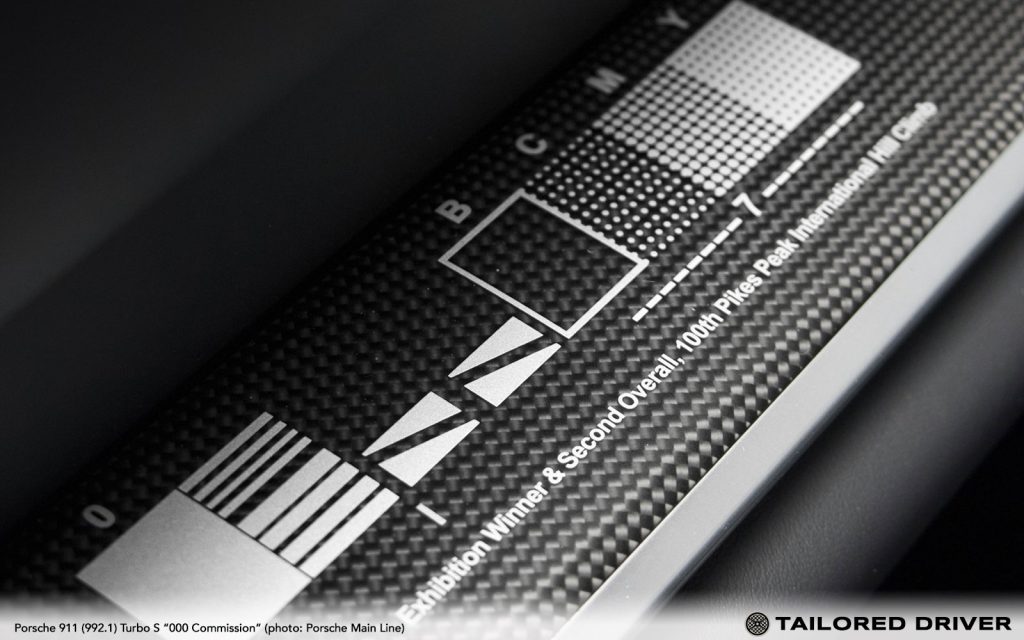
Custom Dashboard Inlay denoting #000 911 Turbo S’s Class Win and PPIHC Certified Course Time
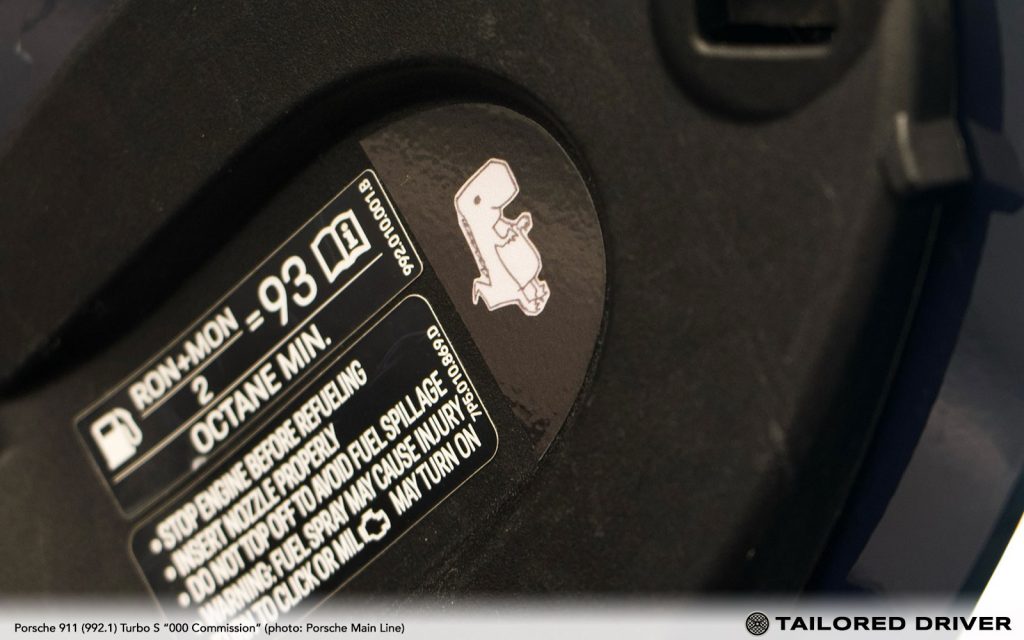
Derpy in the Fuel Cap
For a client to order an “000 Commission”, they must build from a 911 Turbo S Coupe allocation, adding the Lightweight Package, Full Bucket Seats or 18-way Sport Seats Plus, 20/21-inch 911 Turbo S Exclusive Design wheels, Wheel Inlays Painted High Gloss Black and Calipers in High Gloss Black.
From there, they can coordinate with their Porsche dealer to create a Sonderwunsch order with the factory. And while the “000 Commission” can be ordered on any color 911 Turbo S so-fitted, they’ll also need a Paint to Sample allocation if they wish to do special paint like the Coblitz X Blue car.
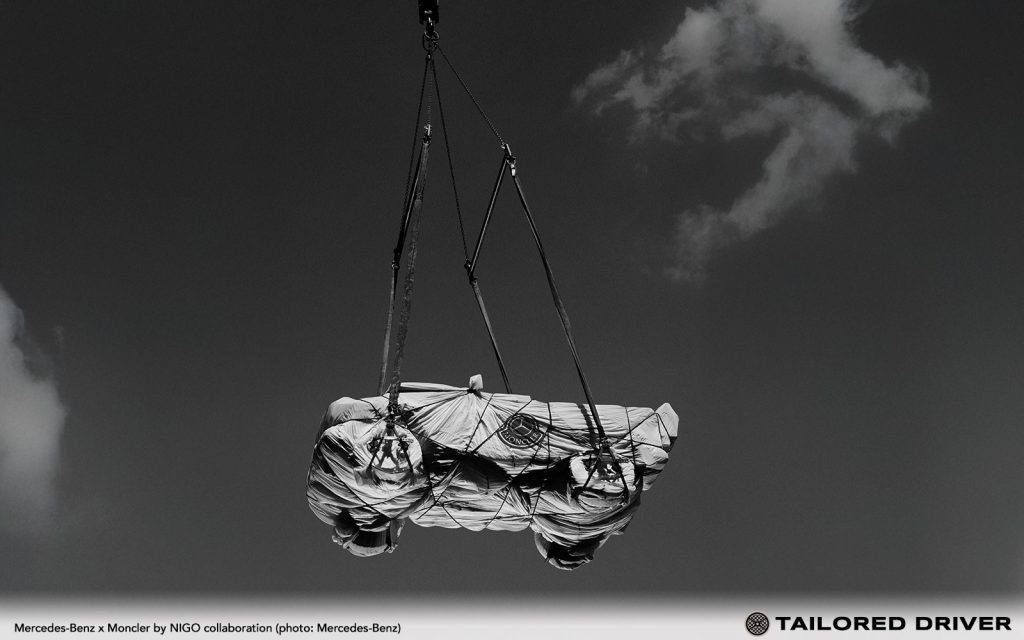
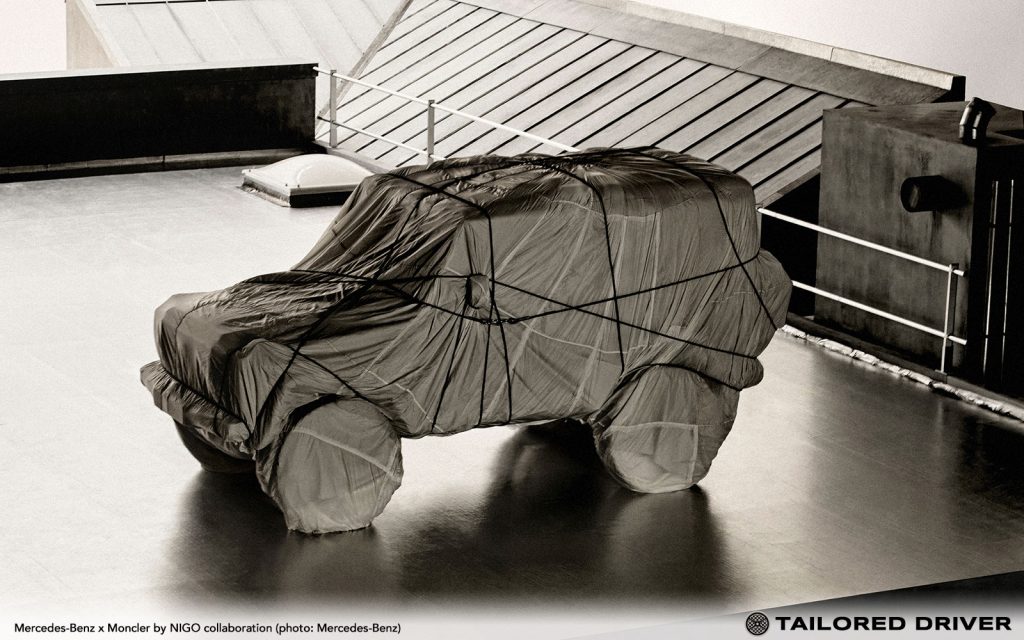
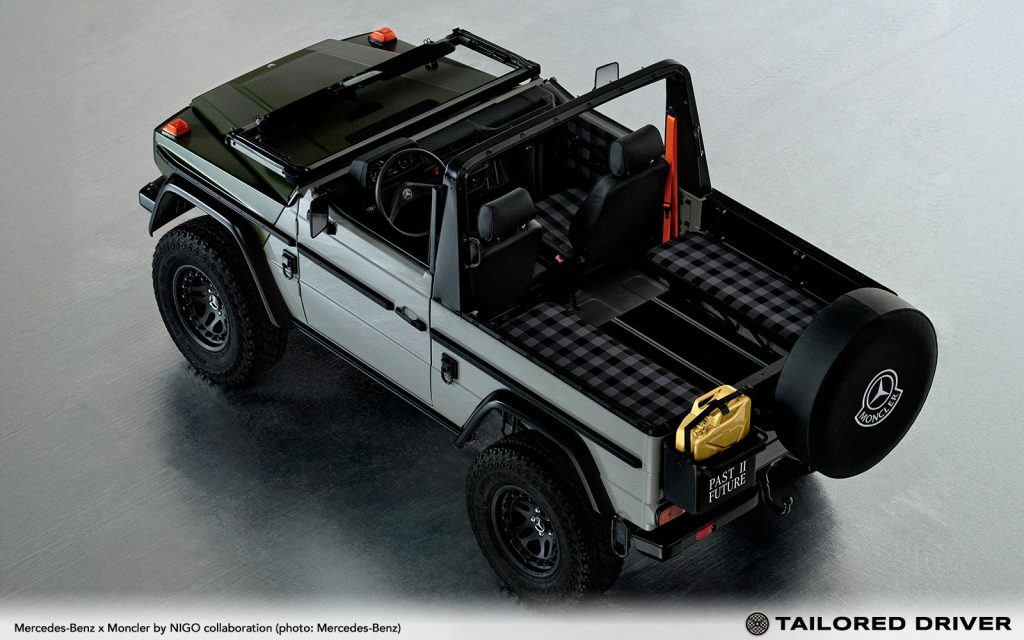
Mercedes-Benz and Moncler expanded their collaboration at “The City of Genius” show in Shanghai with a new brand campaign and art piece, a limited-edition G-Class and capsule fashion collection
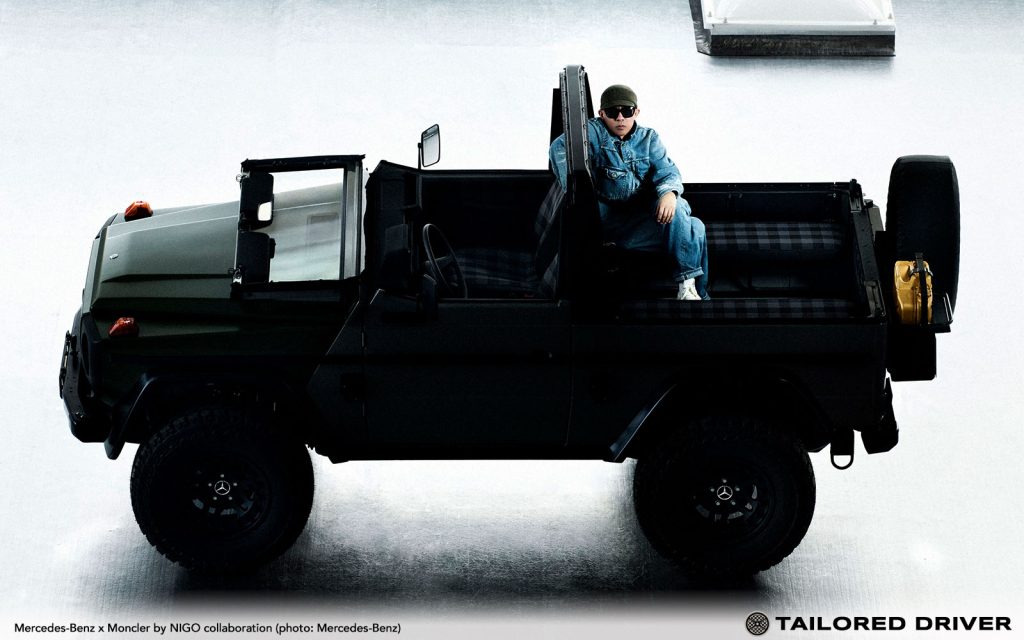
“Mercedes-Benz Project G-Class Past II Future” is a new art piece that catapults 1990s spirit into contemporary lifestyle – inspired by fashion designer, music producer and creative director, NIGO
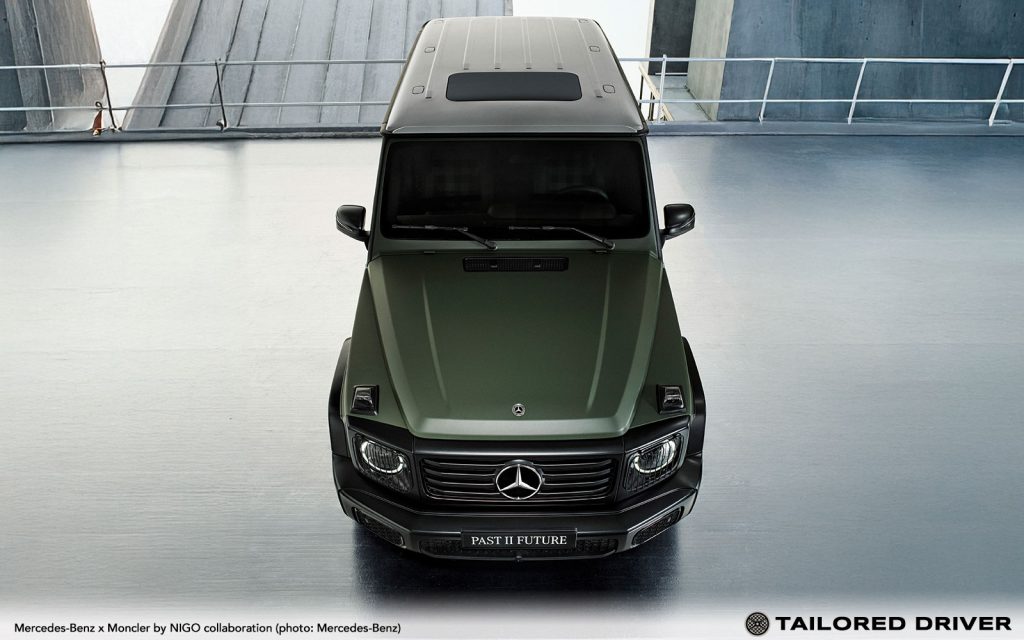
The one-off art piece is the inspiration for the new, limited-edition series, Mercedes-Benz G-Class Past II Future
Stuttgart/Shanghai. At The City of Genius show in Shanghai on October 19, 2024, Mercedes-Benz and Moncler took the bold next step in their collaboration. Alongside the launch of the brand campaign, “Past Forward. Where the Future is Driven by the Past”, the partners unveiled a one-off art piece, “Project G-Class Past II Future”, inspired by NIGO. It’s based on a G-Class from the 90s that was completely restored. NIGO reworked numerous design elements inside and out to revive the design and brings it into the cultural landscape of the present. The G-Class Past II Future is a new G-Class model with a limited run of only 20 cars and is inspired by the art piece. At the show, the audience also got a sneak preview of Moncler’s new collection of urban, gender-neutral fashion designed by Mercedes-Benz and Moncler together with NIGO. Both the limited-edition G-Class and the capsule collection will be launched in April 2025. Alongside Mercedes-Benz and NIGO, the Shanghai event additionally hosted several other artists, who presented their own respective collaborations with Moncler: A$AP Rocky and Willow Smith, Edward Enninful (OBE), FRGMT by Hiroshi Fujiwara, Gilga Farm by Donald Glover, LuLu Li and Palm Angels. In addition to the Moncler Genius 2024 lineup, special showcases were presented by Rick Owens and Jil Sander.
“NIGO’s immense creative talent and our co-creation with Moncler are taking us into an exciting urban setting. The Mercedes-Benz G-Class Past II Future is a very special new ‘twist’ on our icon. This limited edition is a fresh take on 90s style and the character that’s made the G-Class a timeless favourite. Going from inspiring art to engaging products marks an important step in our creative cooperation and offers a new brand experience captured by the zeitgeist.” Bettina Fetzer, Vice President Communications & Marketing Mercedes-Benz AG
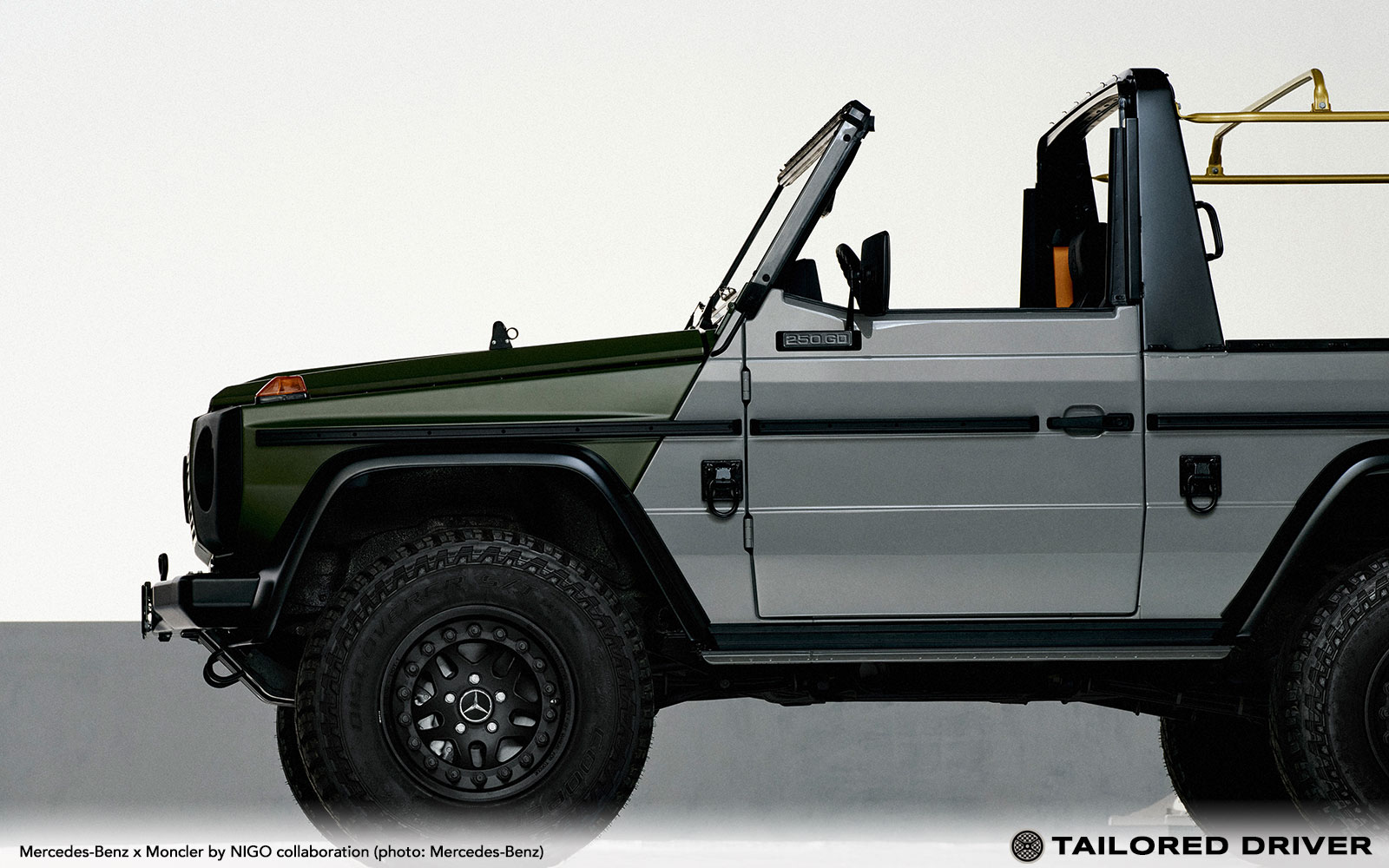
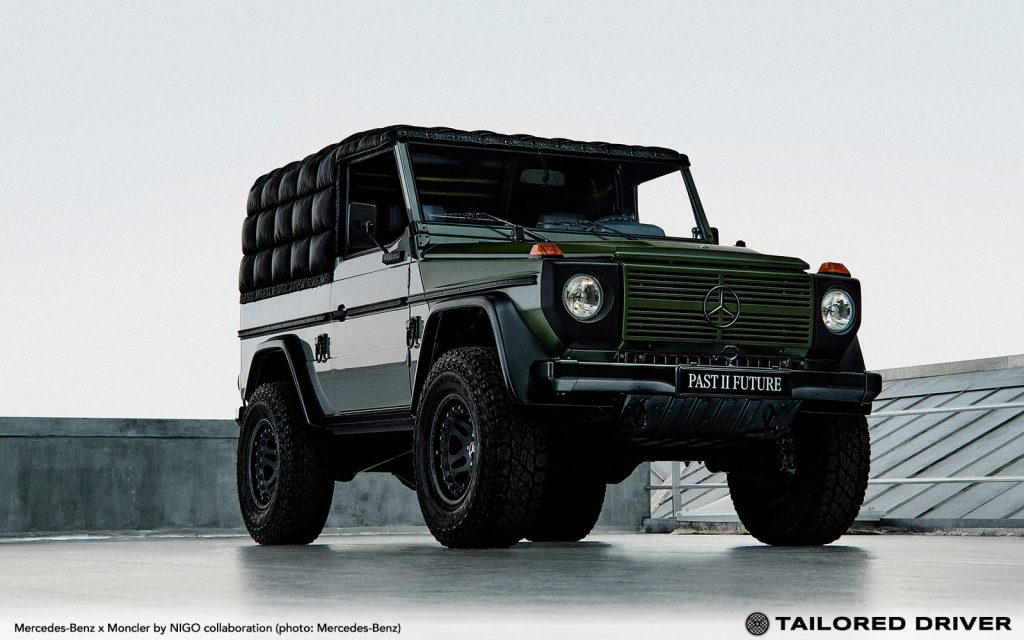
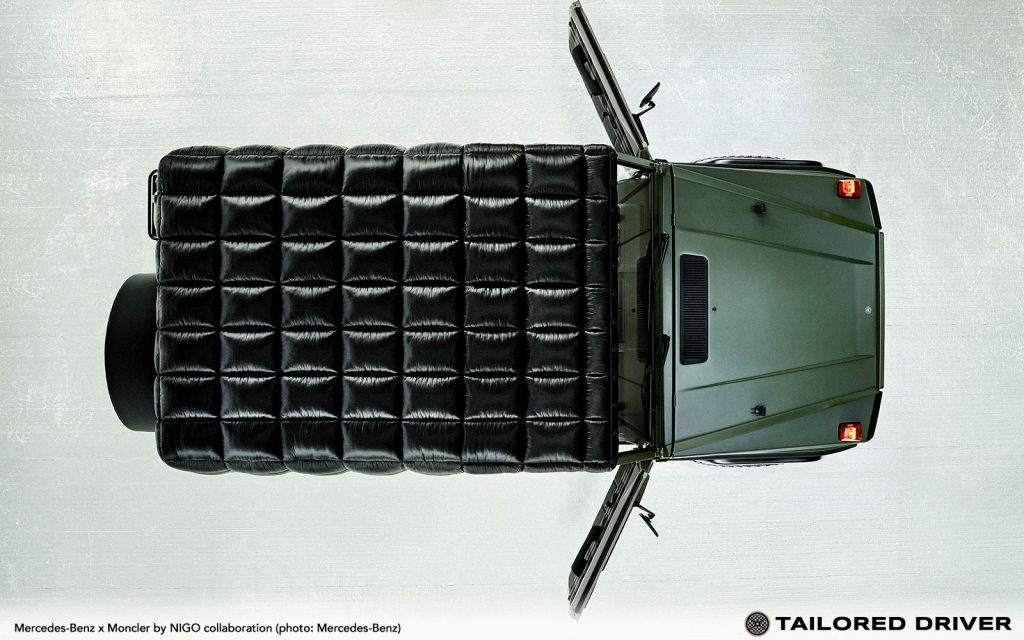
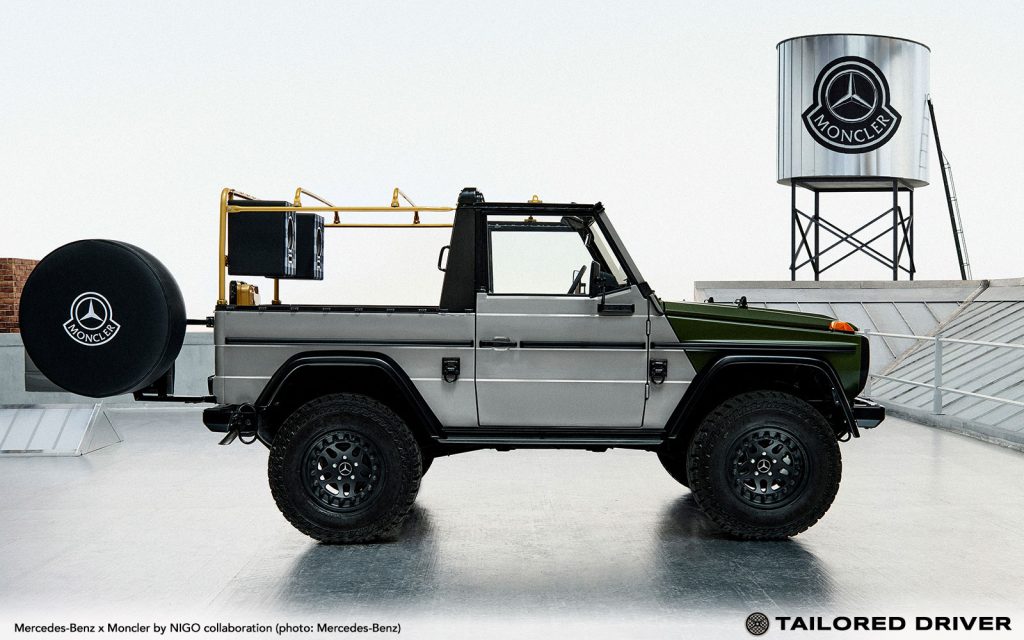
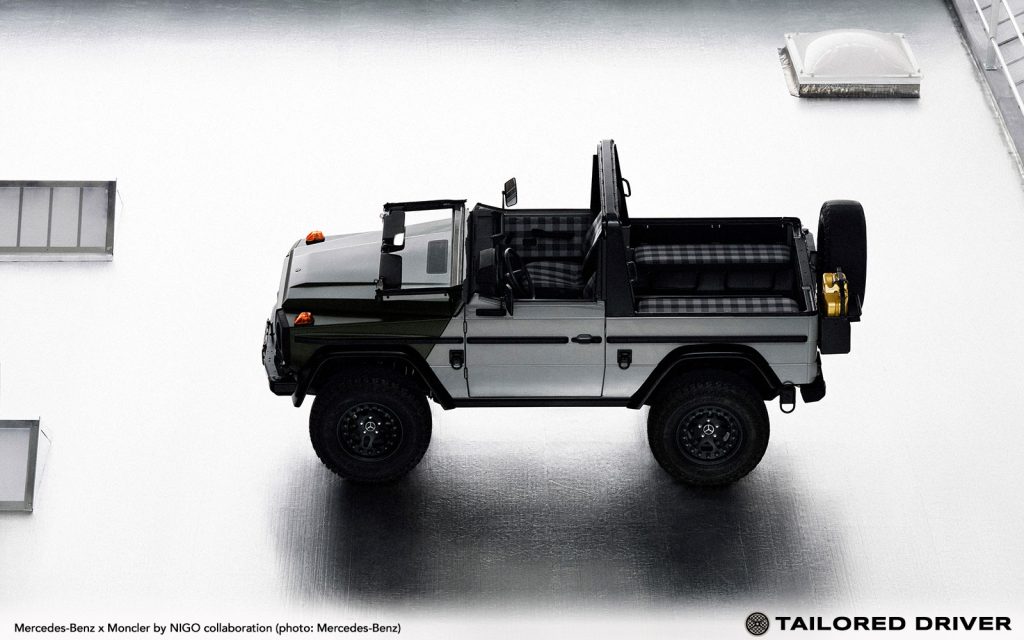
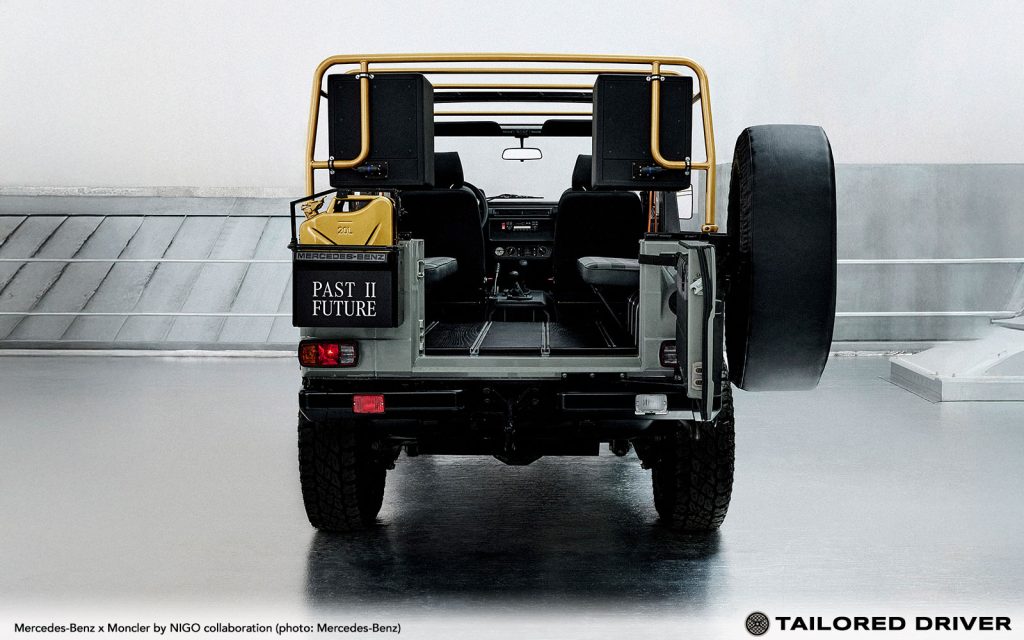
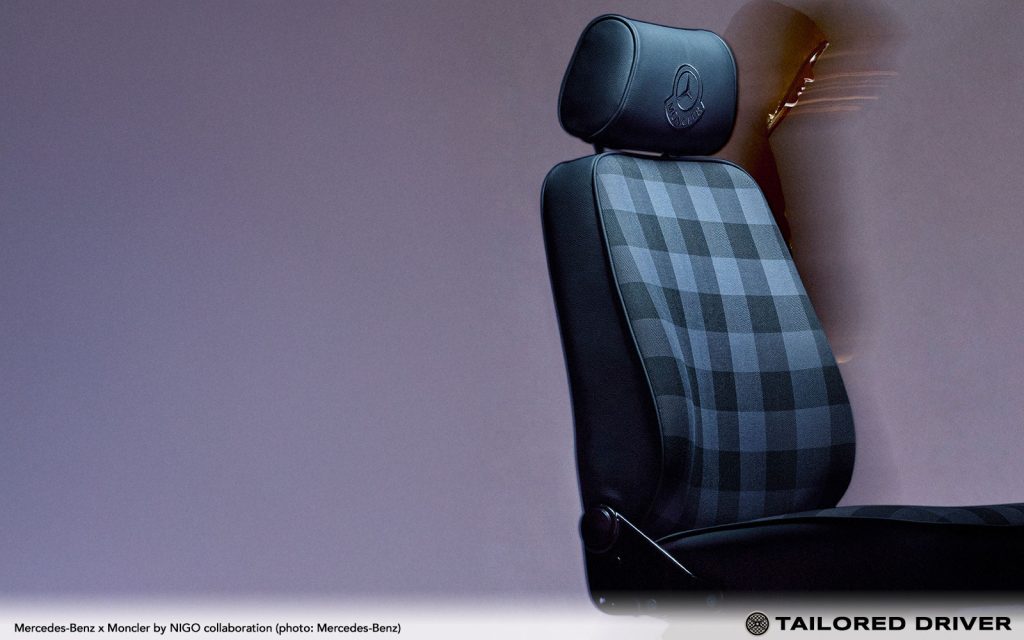
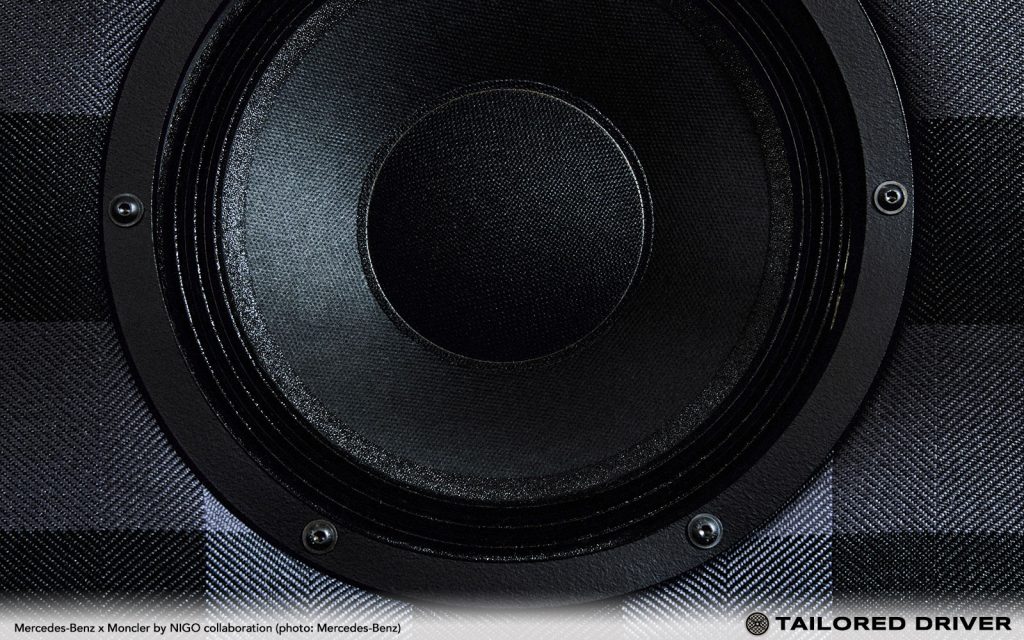
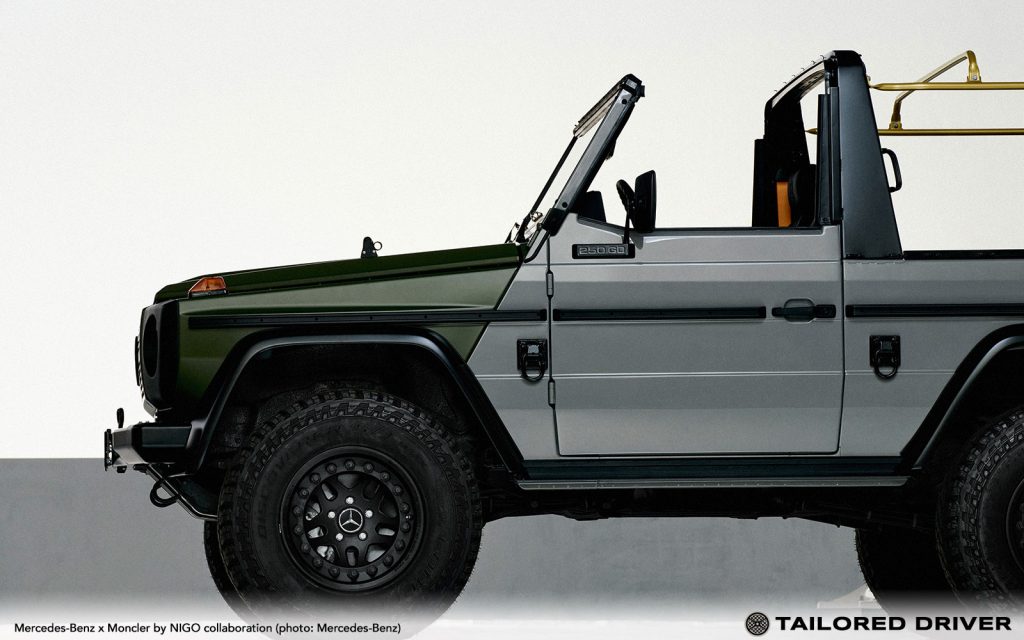
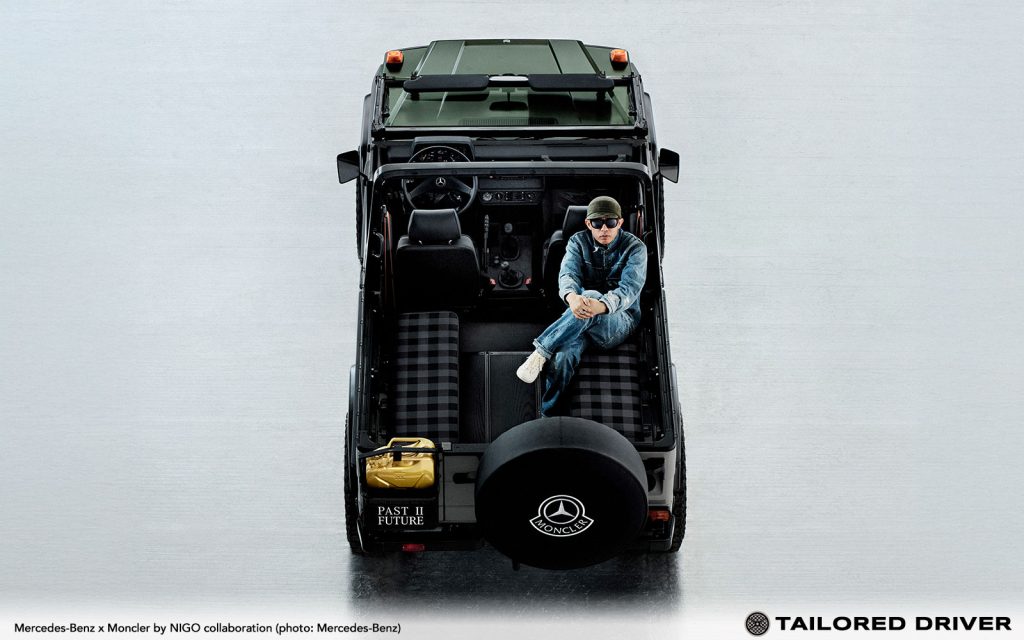
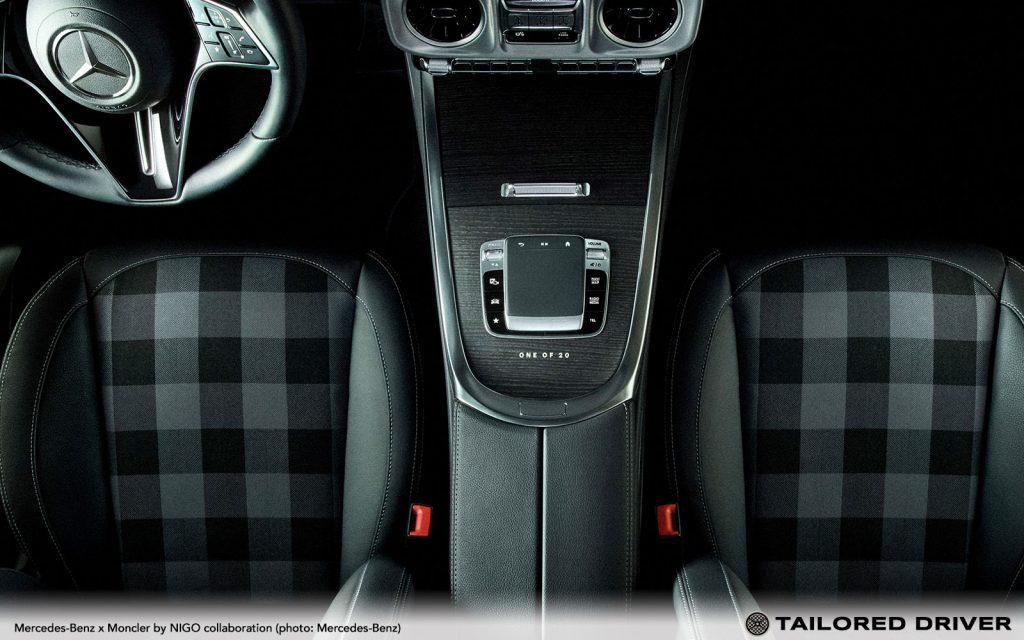
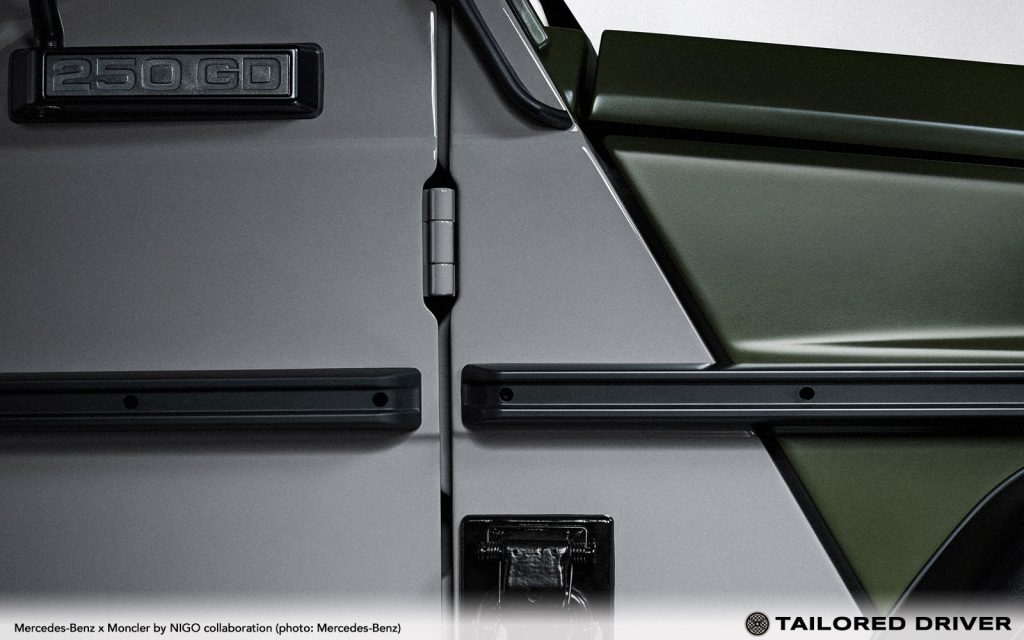
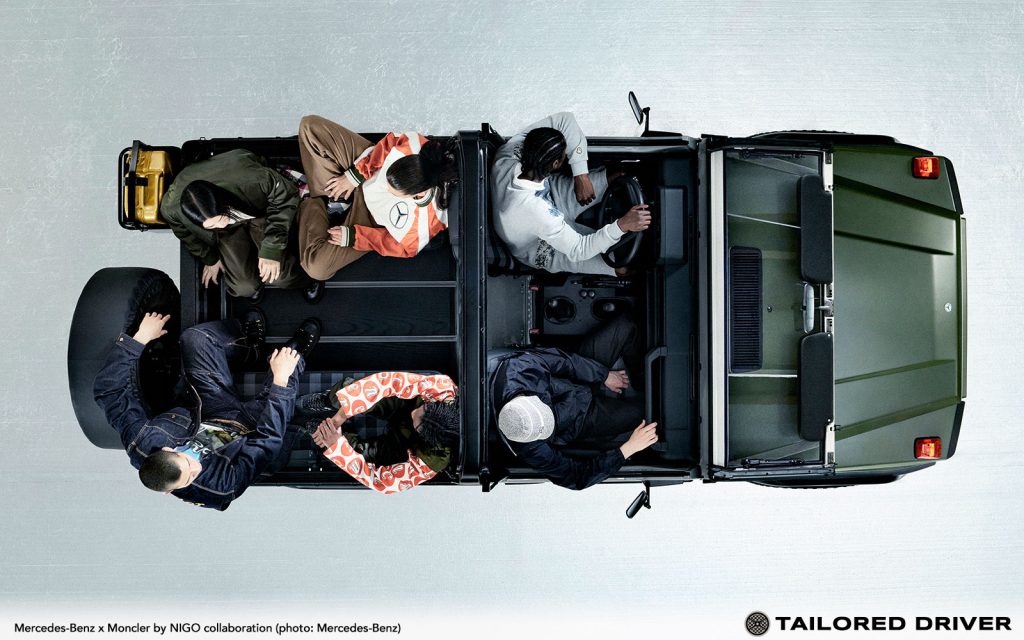
Art piece Project G-Class Past II Future inspired by NIGO NIGO’s creation is the second art piece to emerge from the collaboration between Mercedes-Benz and Moncler. Like the PROJECT MONDO G, launched at Moncler’s “The Art of Genius” show in London in February 2023, this art piece merges the distinctively quilted aesthetic of the Moncler puffer jacket with the unmistakeable edginess of the G-Class. Measuring 4.5 metres in length, 1.9 metres in width and 2.0 metres in height, the art piece features a minimalistic, matte two-tone contemporary colour palette in olive green and grey, which is offset by striking exterior accents in black and gold. The clean lines of the classic G-Class cabriolet give it a contemporary attitude. Hallmark G-Class functionality and design cues are retained and reinterpreted. These include the iconic spare wheel on the rear tailgate, black steel wheels in the 90s design, a foldable windscreen, and a gold-coloured fuel can. The interior has also been reworked. Among other elements, G-Class enthusiast Devon Turnbull – known for his immersive audio installations – has designed a sound system that fits perfectly into the vehicle concept, both technically and visually. The music “boom boxes” are mounted on the convertible top linkage and – like the entire roof and the speakers – can be removed. Its chequered seat upholstery pattern is an interpretation of a design element typical of earlier G-Class models. Accents in orange and gold draw parallels with the collaborative fashion collection by Mercedes-Benz, Moncler and NIGO.
“For me, the 90s were among the most influential decades from a cultural and creative standpoint. Electronic music and the hip-hop scene arose as a new expression of urban character. I wanted to integrate that vibe and energy into the design of the Project G-Class Past II Future by interpreting that legacy for a new contemporary era.” Fashion designer, music producer and creative director, NIGO
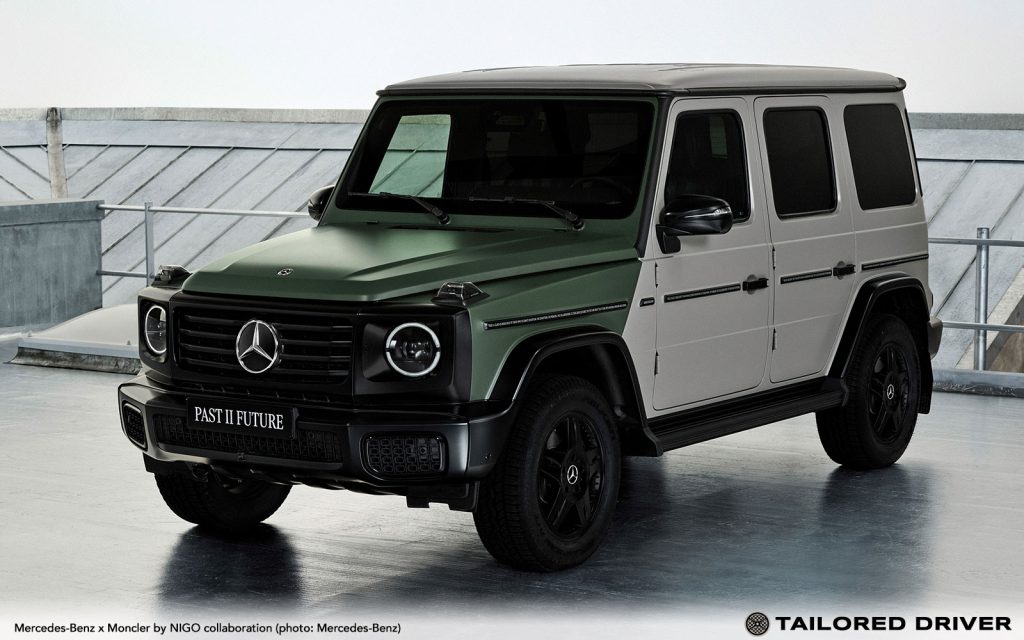
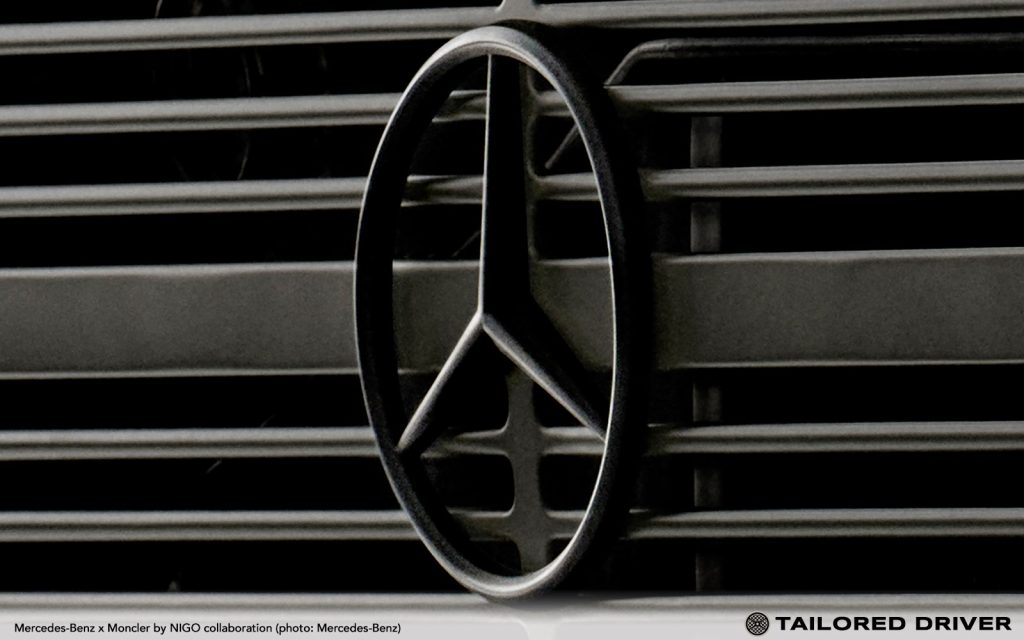
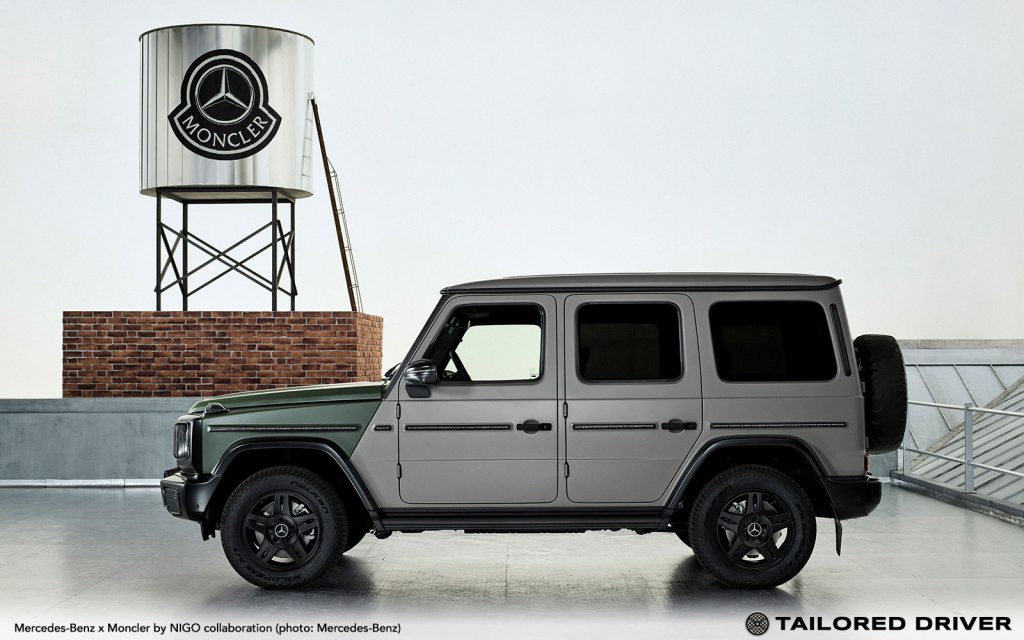
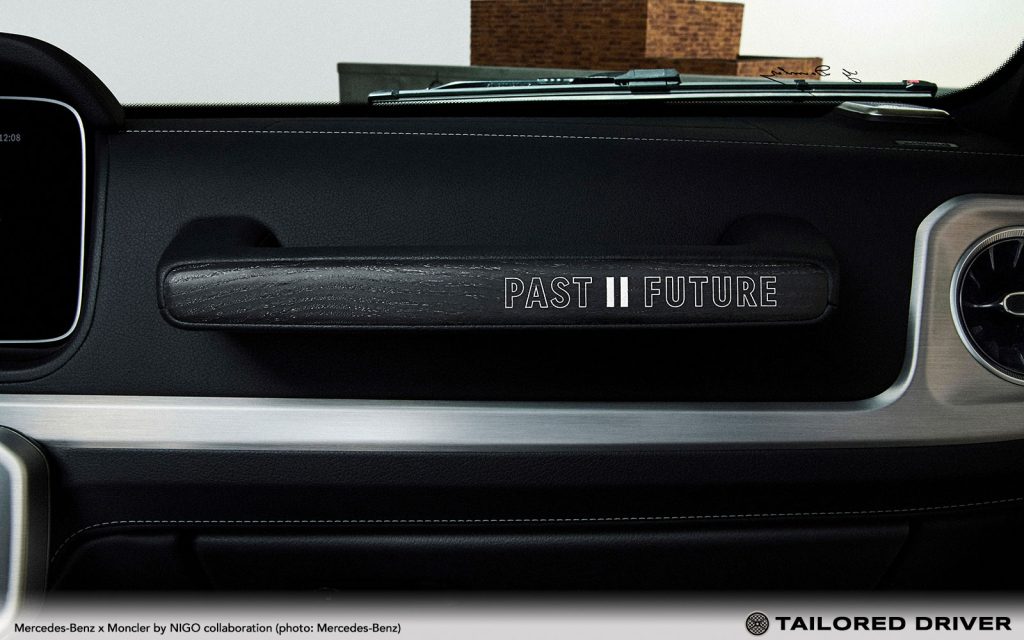
Limited edition Mercedes-Benz G-Class Past II Future Both the limited-edition G-Class and the capsule collection are the collaboration’s first products available for purchase. As a crowning moment in the 45thanniversary year of the G-Class, the new edition shows how timeless this brand icon remains, and how capably it adapts to contemporary lifestyles. The Mercedes-Benz G-Class Past II Future references NIGO’s one-off art piece and is based on the new G 450 d (combined energy consumption: 10.0-8.7 l/100 km | combined CO₂ emissions: 261-227 g/km | CO₂ class: G)[1] and the new G 500 (combined energy consumption: 12.3-10.9 l/100 km | combined CO₂ emissions: 281-248 g/km | CO₂ class: G)1. It has two-tone exterior paintwork in green and grey, the G-Class typical chequered upholstery and a rear-mounted spare wheel with the collaboration logo on its cover. Black exterior accents include the window frames, light metal alloy wheels and the signature bumper guard running the full length of the flanks. The latter features the Past II Future lettering. In the interior, this lettering can be found on the grab handle. On the centre console, the vehicle’s “1 of 20” limited series number is inscribed. The 20 cars will be delivered to customers in April 2025.
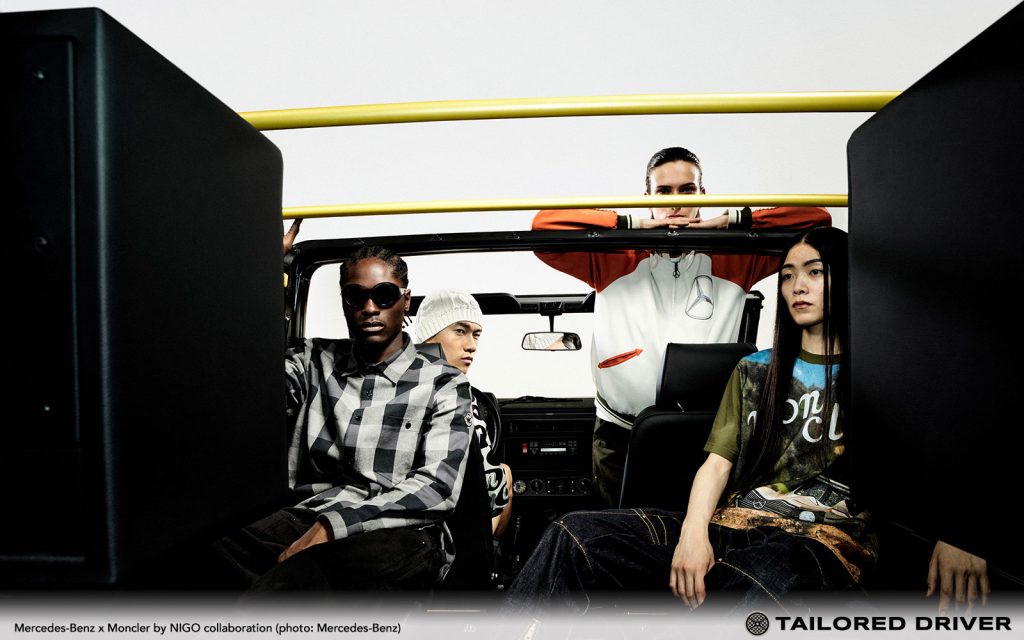
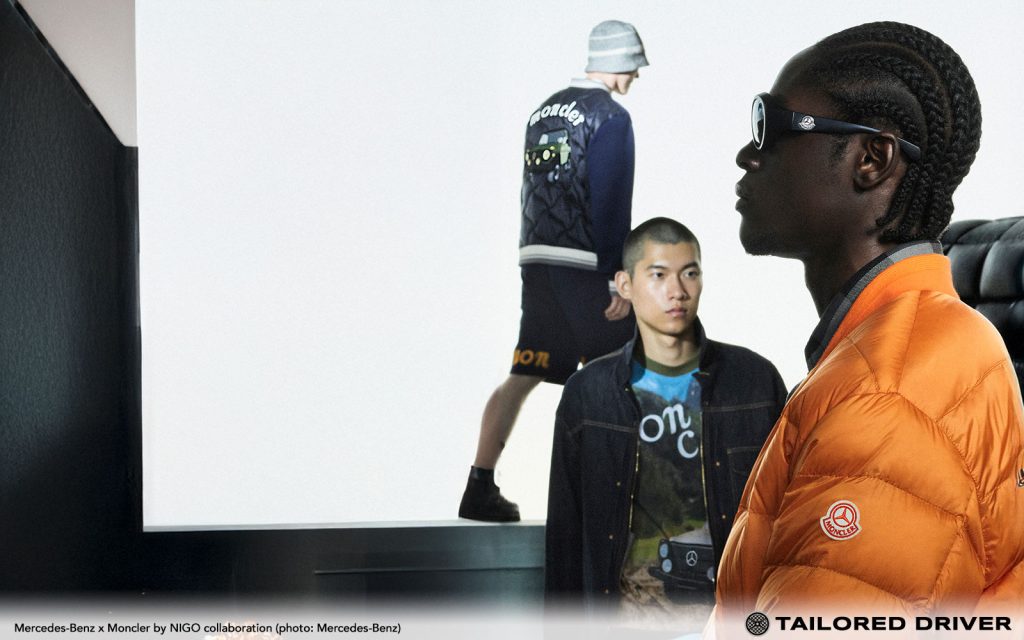
The capsule collection The gender-neutral fashion collection incorporates 90s influences with contemporary street style elements. Following “The City of Genius” show preview, the pieces shown will be winnowed down into a capsule collection that will be available for purchase starting in April 2025. It will mainly consist of souvenir and college jackets, hoodies, checked shirts and Bermuda shorts as well as lightweight down and field jackets, parkas and windbreakers with a vintage look. The colour palette is classic: Blue, black, green and white dominate – complemented by orange accents. Many of the garments feature elaborate prints that merge archival photos of the collaboration partners. Jackets and pants are made using raw denim, with one exception: a satin jacket that combines the visual language and logos of both brands. The jacket captures the spirit of their collaboration, especially in combination with the grey checked shirts.
Brand campaign “Past Forward. Where the Future is Driven by the Past” The unbreakable bond between past and future is reflected in the brand campaign accompanying this next step in the Mercedes-Benz x Moncler collaboration – together with NIGO and photographer Thibaut Grevet. With the motto, “Past Forward. Where the Future is Driven by the Past”, it visualises the evolution of the collaboration from an imaginary cosmos to its arrival in metropolitan life. A city rooftop symbolises the campaign’s urban look and feel. The rooftop’s angular metallic surfaces provide the perfect backdrop for showcasing the streetwear collection by the partners Mercedes-Benz, Moncler and NIGO. The campaign’s aim is to highlight the overarching theme of taking inspiration from the past, harnessing creativity and translating it into something new. The global campaign will be rolled out across each brand’s respective websites and social media channels. In addition to the main campaign film, a making-of video by Theodor Guelat gives a closer, behind-the-scenes peek into the collaboration with NIGO.
The creative team:
Idea, concept and realisation: team x
Creative director: Thibaut Grevet
Director of photography: João de Botelho
Sound design: Pierre Rousseau at Stereo Image
About Moncler Moncler was founded at Monestier-de-Clermont, Grenoble, France, in 1952 and is currently headquartered in Italy. Over the years the brand has combined style with constant technological research assisted by experts in activities linked to the world of the mountain. The Moncler outerwear collections marry the extreme demands of nature with those of city life. Moncler manufactures and directly distributes the clothing and accessories collections under the brand Moncler through directly operated physical and digital stores as well as selected multi-brand doors, department stores and e-tailers.
About NIGO Known as one of the founding fathers of street fashion, NIGO created his first clothing label, in Tokyo in 1993. The brand grew from the cultural underground to attain global fame in the worlds of fashion and music. NIGO is now Creative Director of his own independent brand HUMAN MADE and the Artistic Director at LVMH owned Maison KENZO. Working in the fields of music and fashion and often through collaboration with some of the best-known companies and creative people in the world, he has innovated new ways for fashion to relate to its audience that have since become industry standards. NIGO continues to pursue his creativity in his work through fashion brands and in musical projects as well as in the practice of photography and traditional Japanese ceramic art.
Mercedes-Benz AG at a glance Mercedes-Benz AG is part of the Mercedes-Benz Group AG with a total of around 166,000 employees worldwide and is responsible for the global business of Mercedes-Benz Cars and Mercedes-Benz Vans. Ola Källenius is Chairman of the Board of Management of Mercedes-Benz AG. The company focuses on the development, production and sales of passenger cars, vans and vehicle-related services. Furthermore, the company aspires to be the leader in the fields of electric mobility and vehicle software. The product portfolio comprises the Mercedes-Benz brand with Mercedes-AMG, Mercedes-Maybach and G-Class with their all-electric models as well as products of the smart brand. The Mercedes me brand offers access to the digital services from Mercedes-Benz. Mercedes-Benz AG is one of the world’s largest manufacturers of luxury passenger cars. In 2023 it sold around two million passenger cars and 447,800 vans. In its two business segments, Mercedes-Benz AG is continually expanding its worldwide production network with more than 30 production sites on four continents, while gearing itself to meet the requirements of electric mobility. At the same time, the company is constructing and extending its global battery production network on three continents. As sustainability is the guiding principle of the Mercedes-Benz strategy and for the company itself, this means creating lasting value for all stakeholders: for customers, employees, investors, business partners and society as a whole. The basis for this is the sustainable business strategy of the Mercedes-Benz Group. The company thus takes responsibility for the economic, ecological and social effects of its business activities and looks at the entire value chain.
[1] The specified values were determined in accordance with the prescribed WLTP (Worldwide harmonised Light vehicles Test Procedure) measurement method. The ranges given refer to the German market. The energy consumption and CO₂ emissions of a car depend not only on the efficient use of the fuel or energy source by the car, but also on the driving style and other non-technical factors.
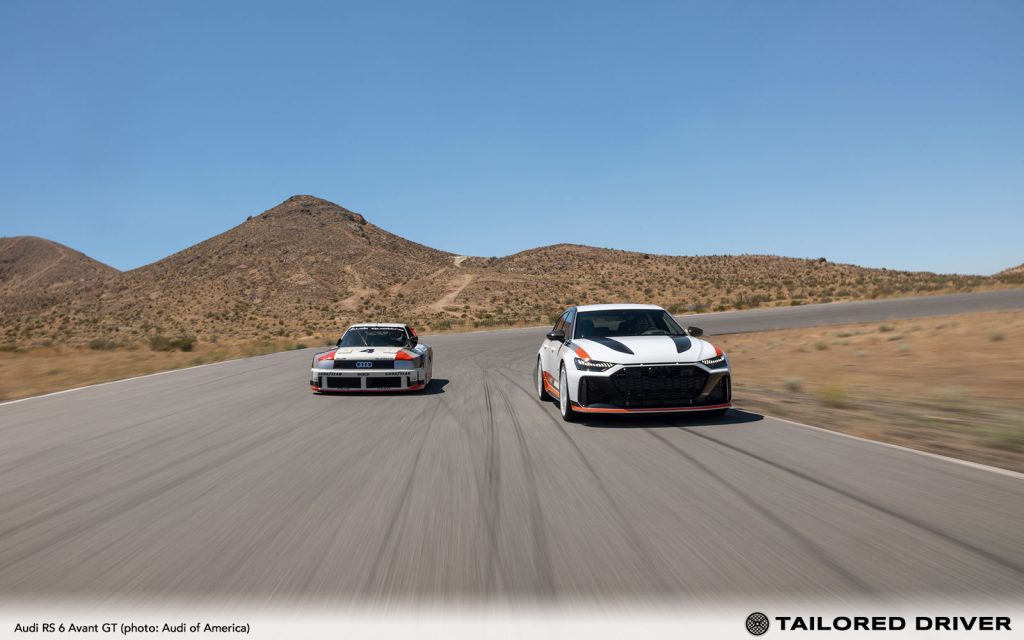
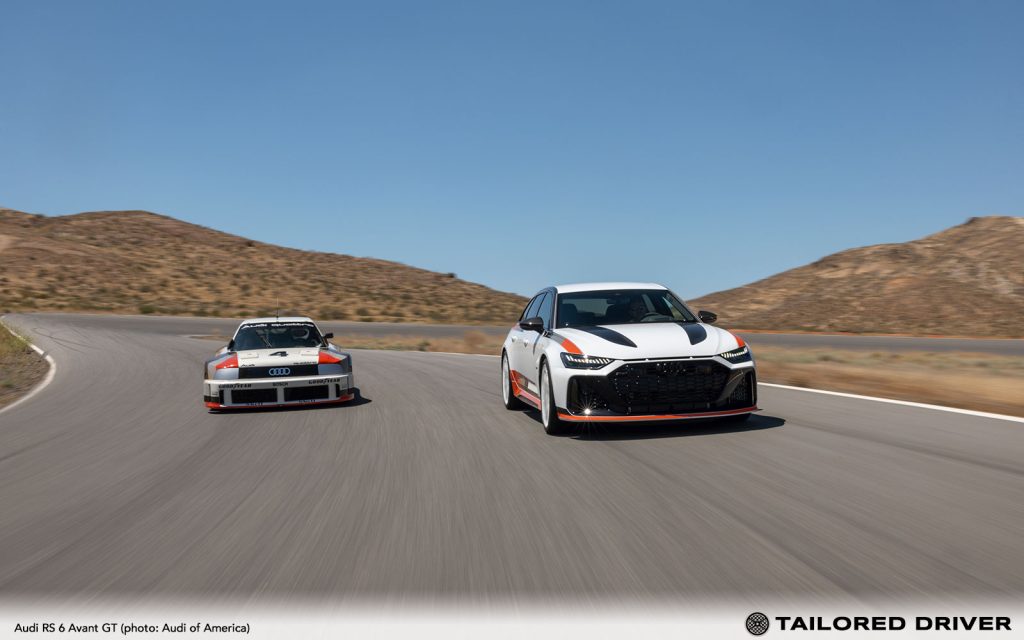
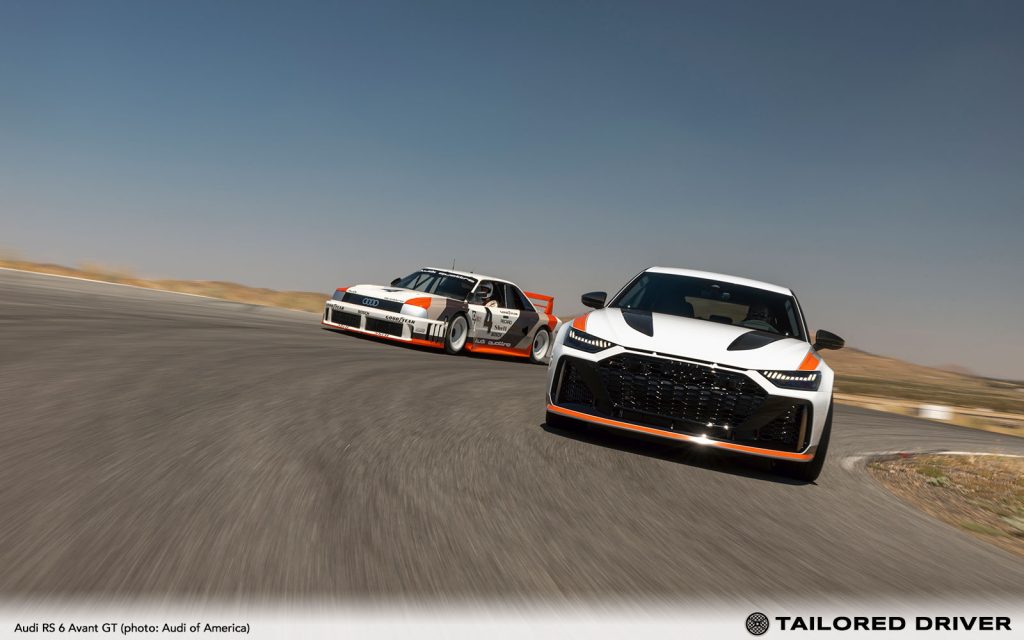
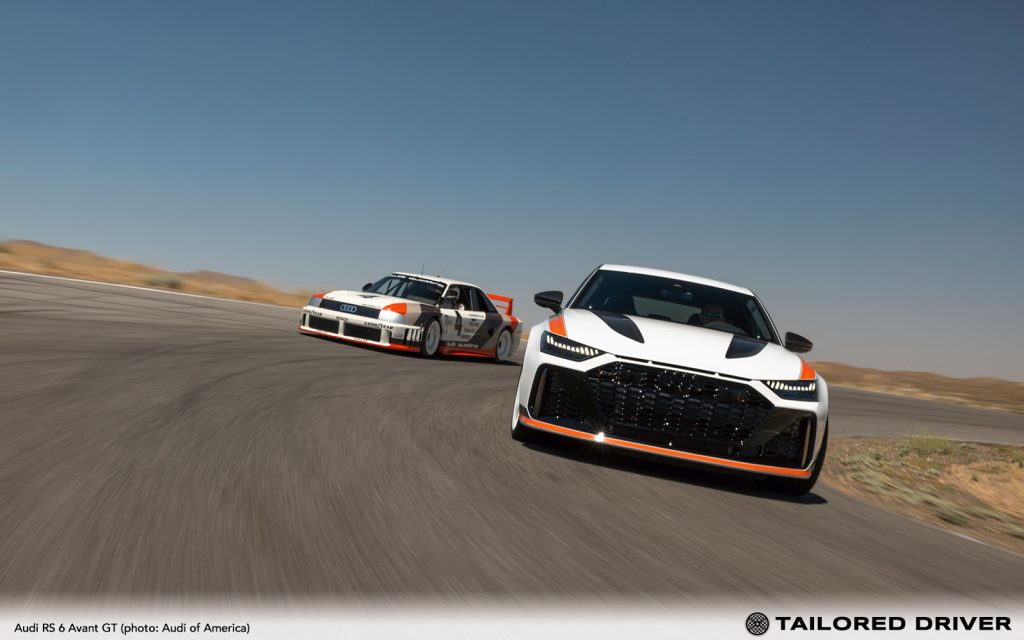
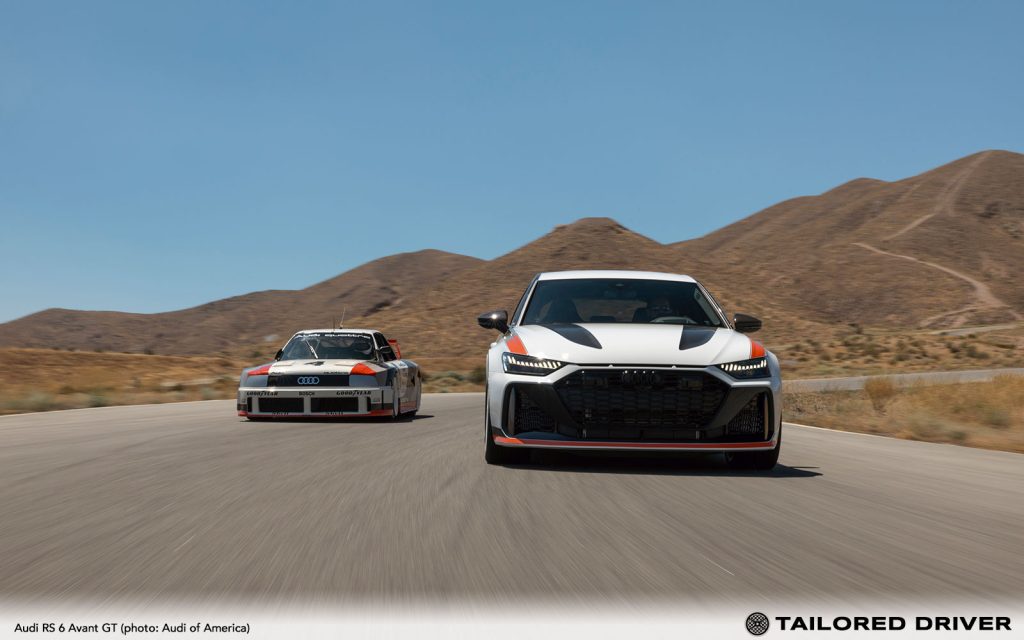
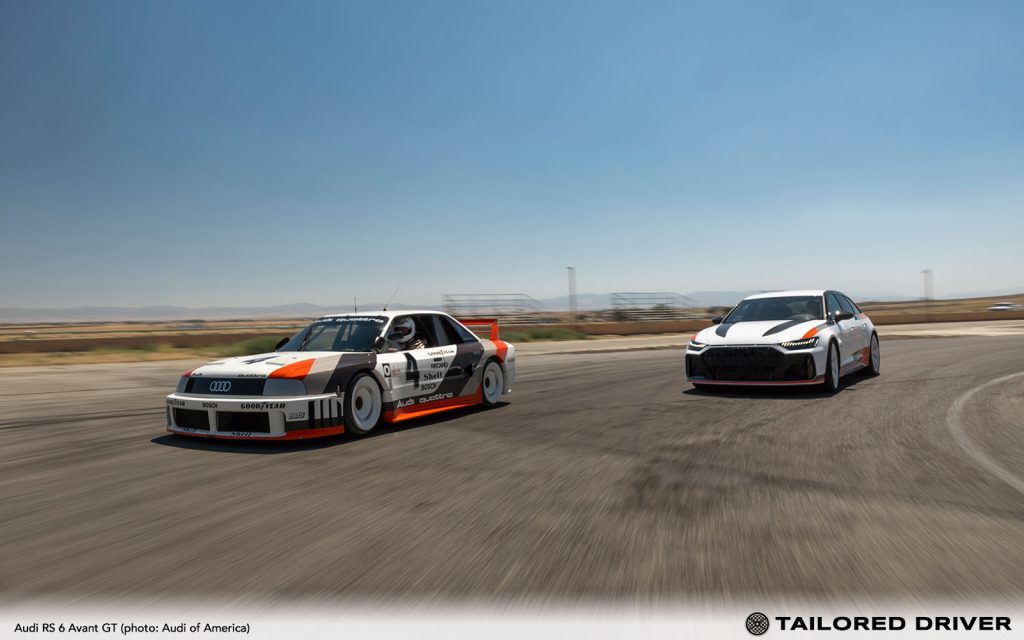
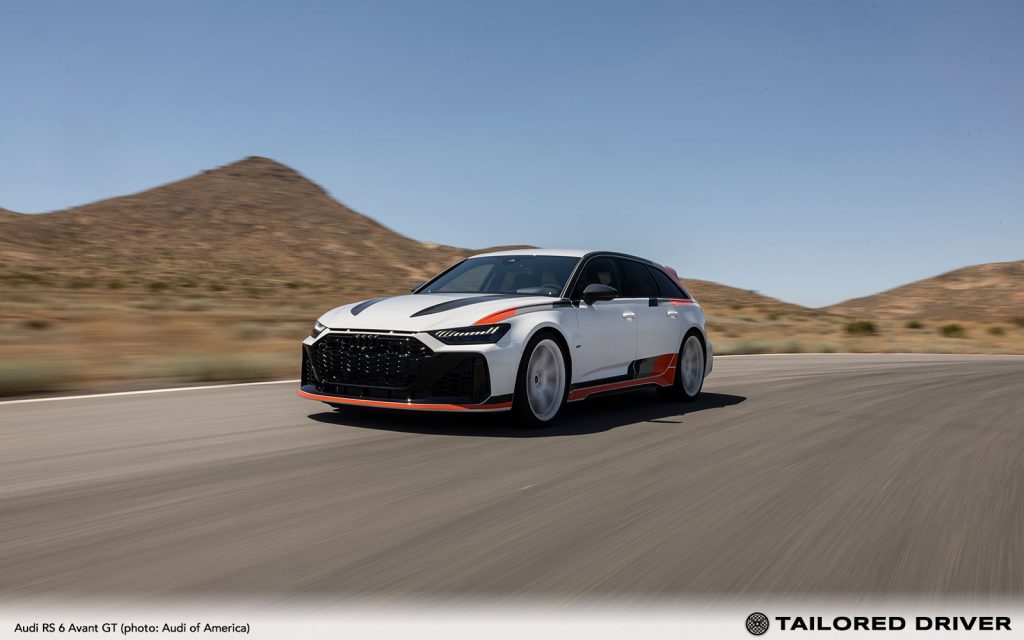
Limited to 85 units in the U.S. and finished exclusively in heritage livery based on the Audi 90 quattro IMSA GTO – the machine that proved the pavement-performance advantage of quattro® all-wheel drive
Quickest RS 6 Avant version to date: 0-60 in 3.2 seconds; biturbo V8 provides 621 horsepower and 627 lb-ft of torque netting top track speed of 190 mph
Standard carbon-ceramic brakes and dramatically increased driving dynamics via adjustable coilover suspension and optimized quattro sport differential
[source: Audi of America]
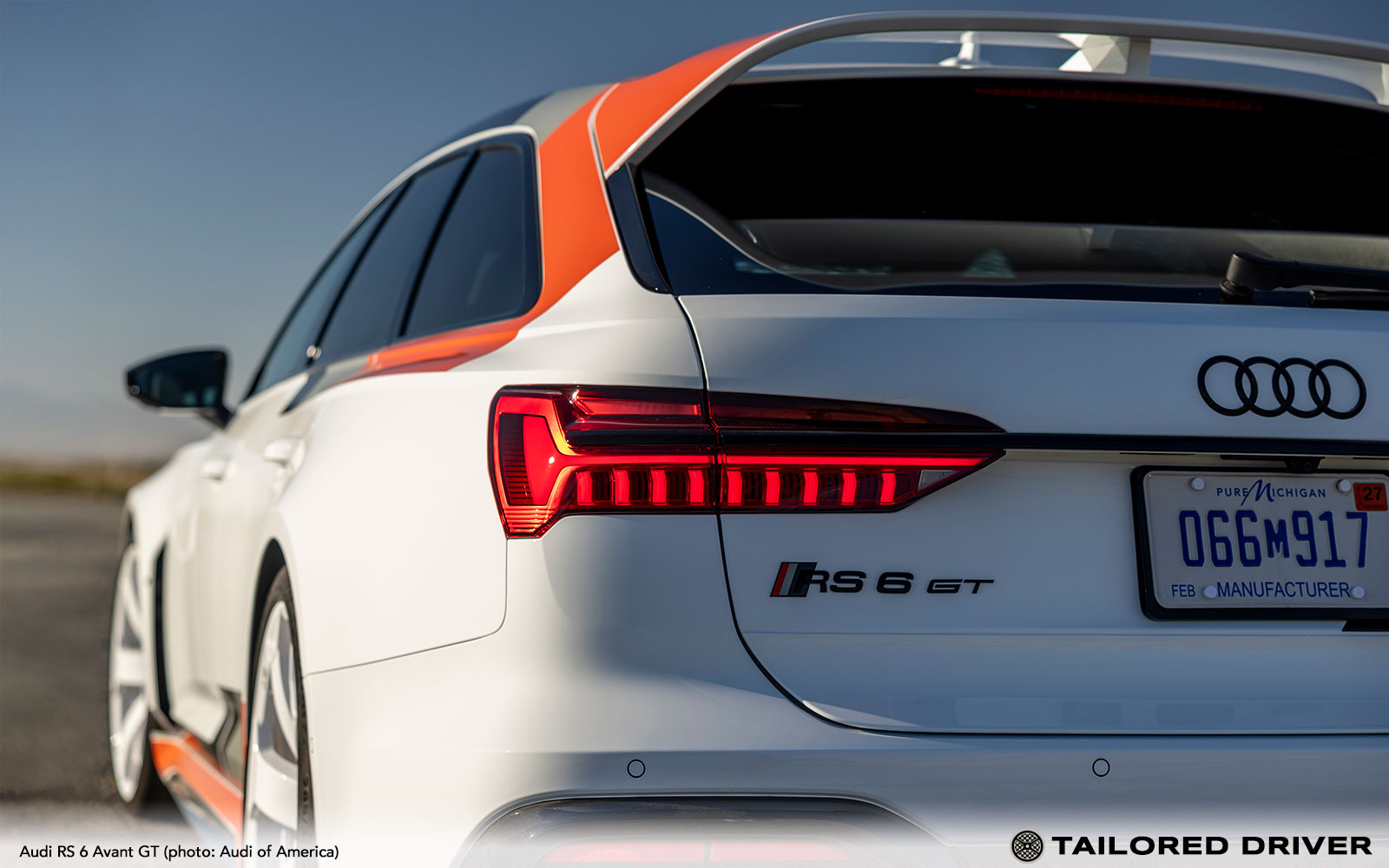
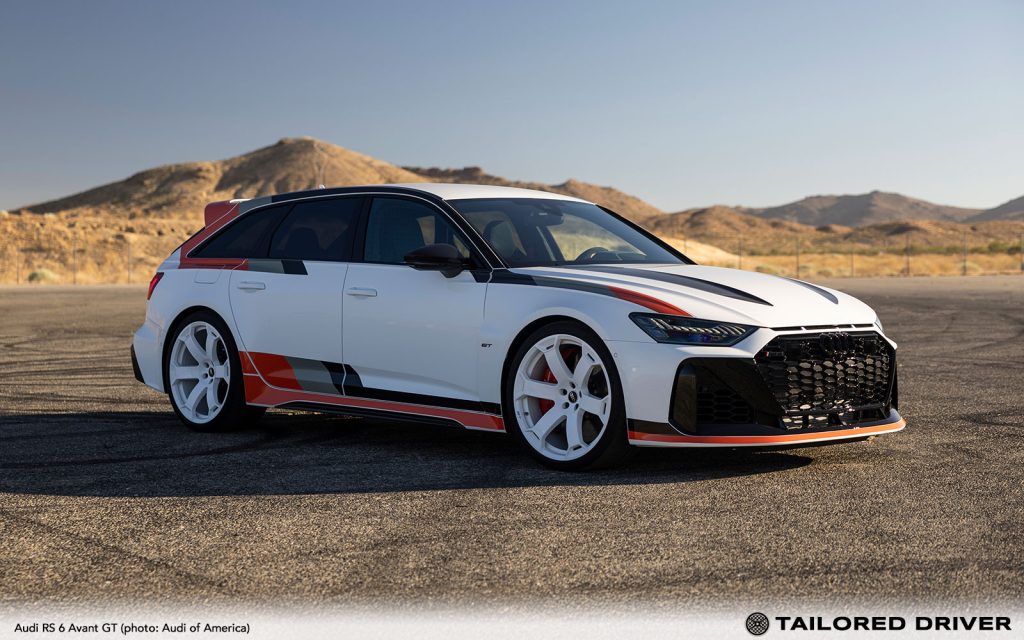
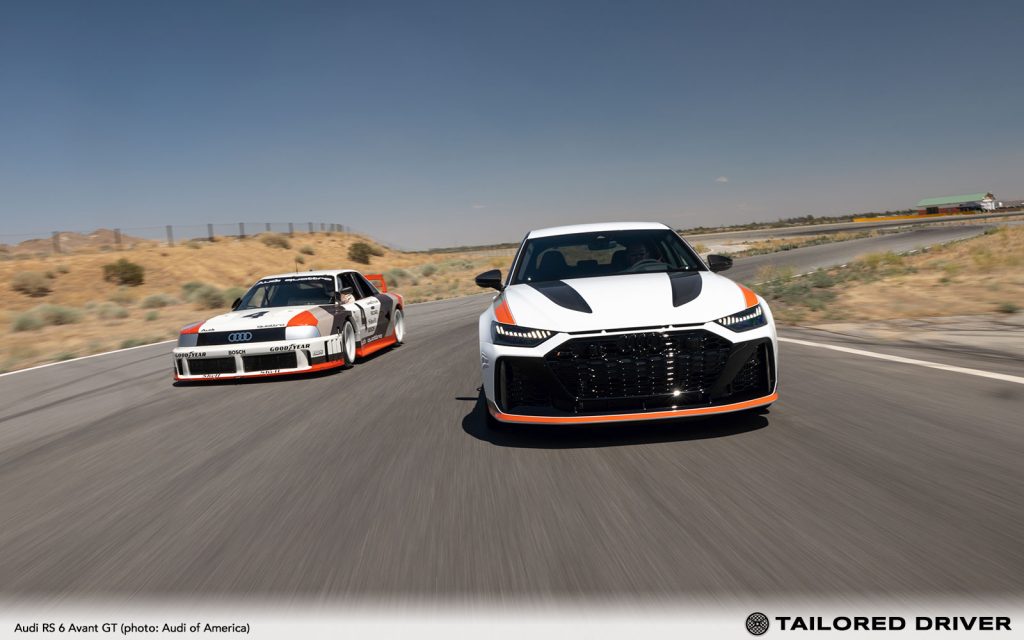
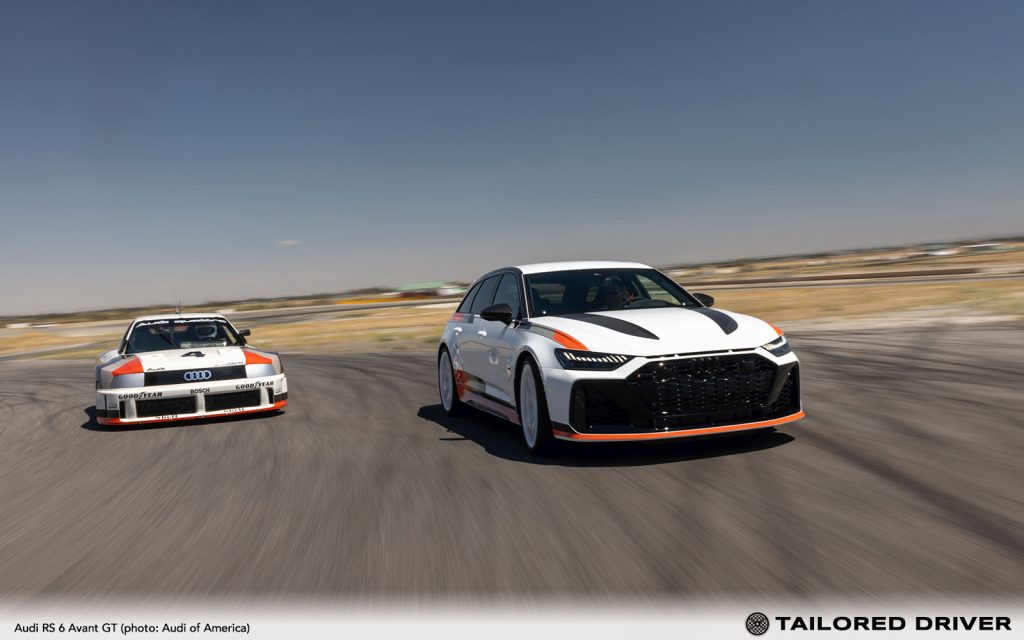
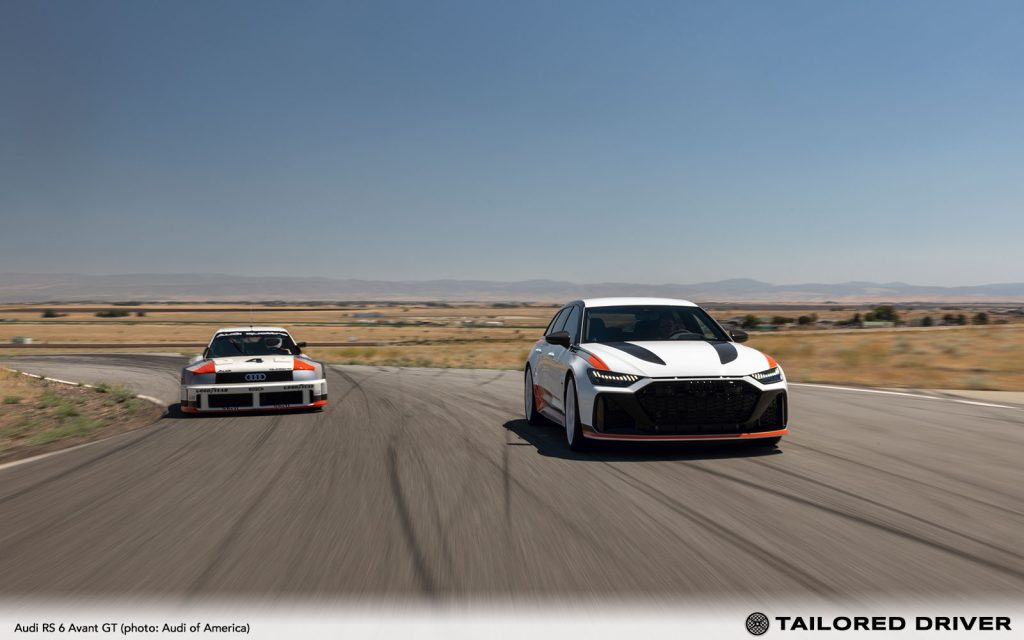
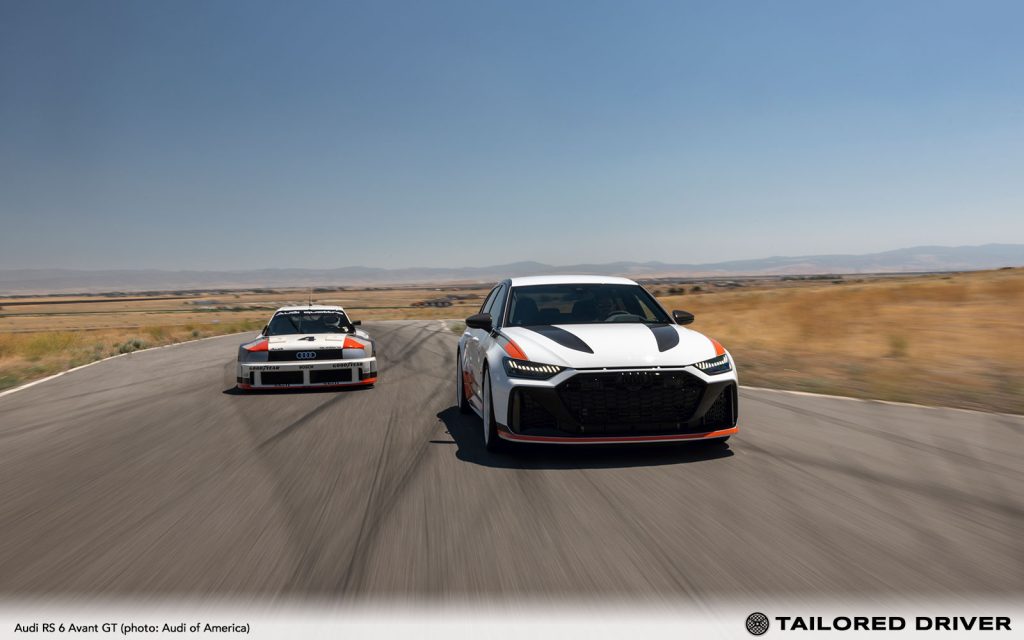
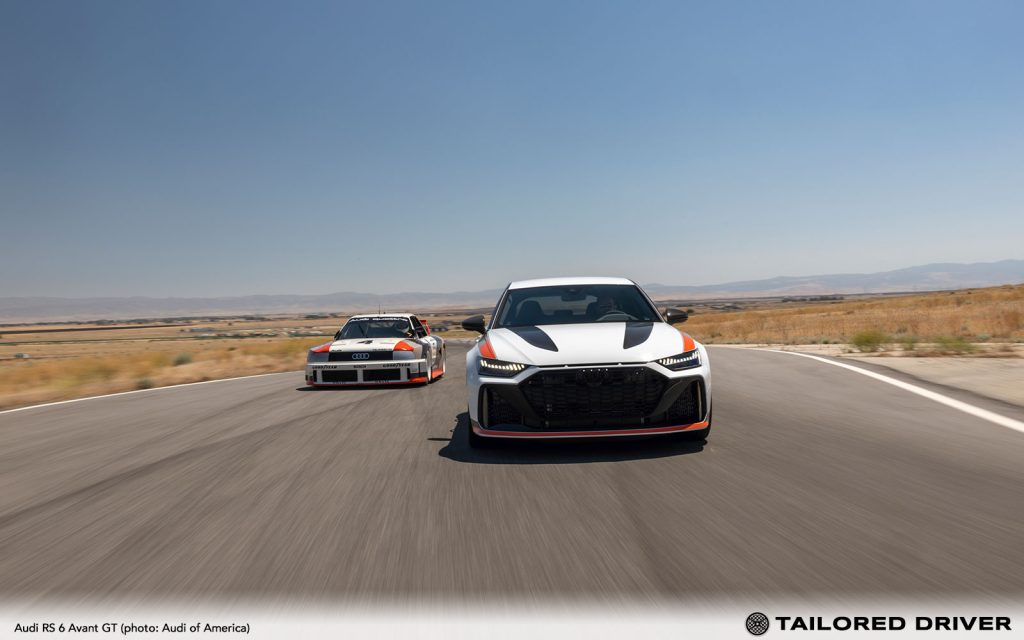
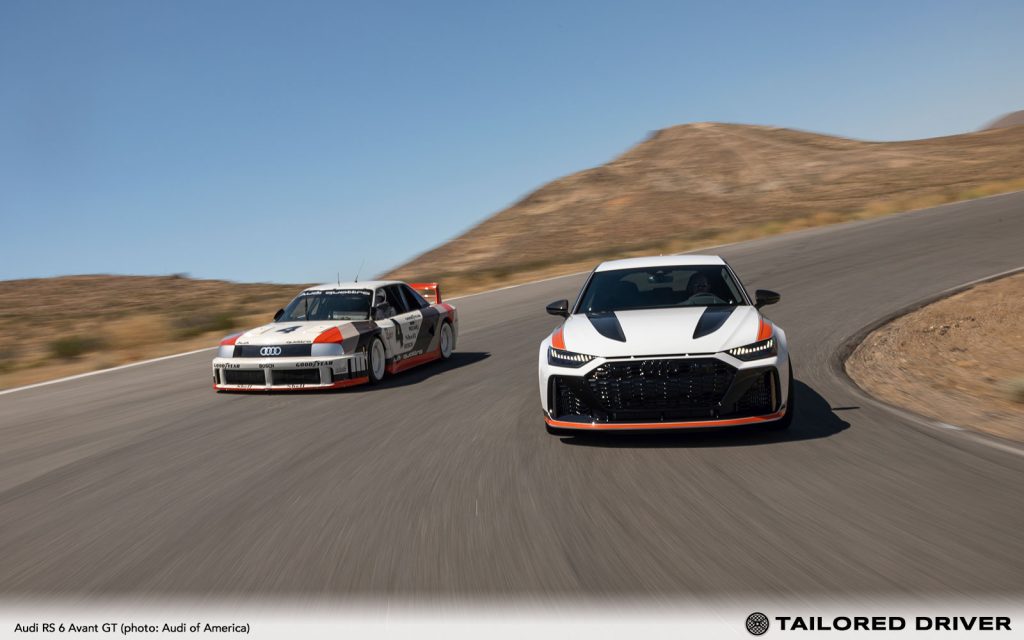
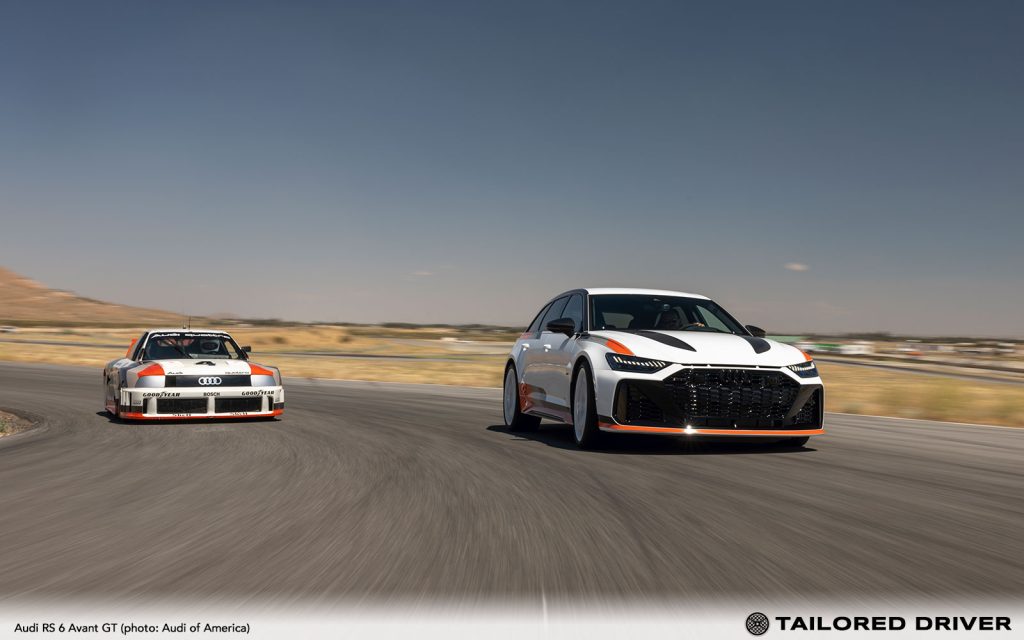
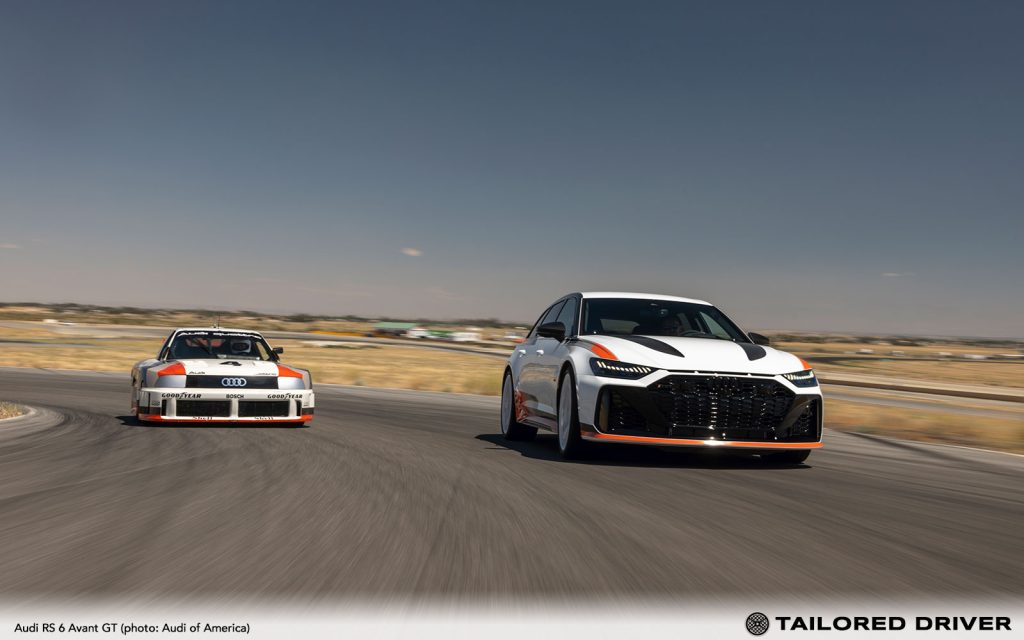
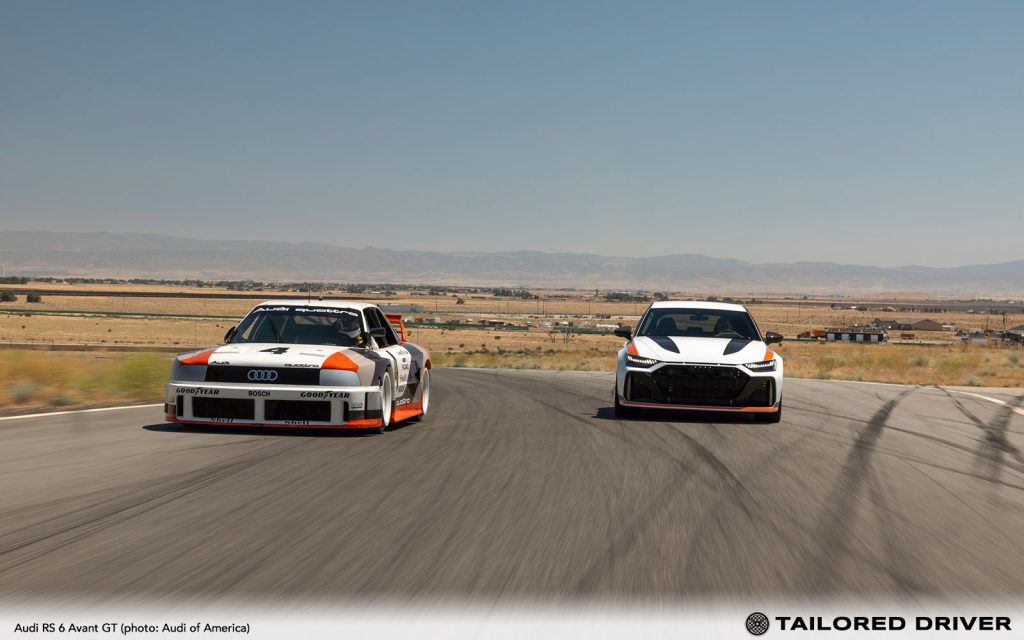
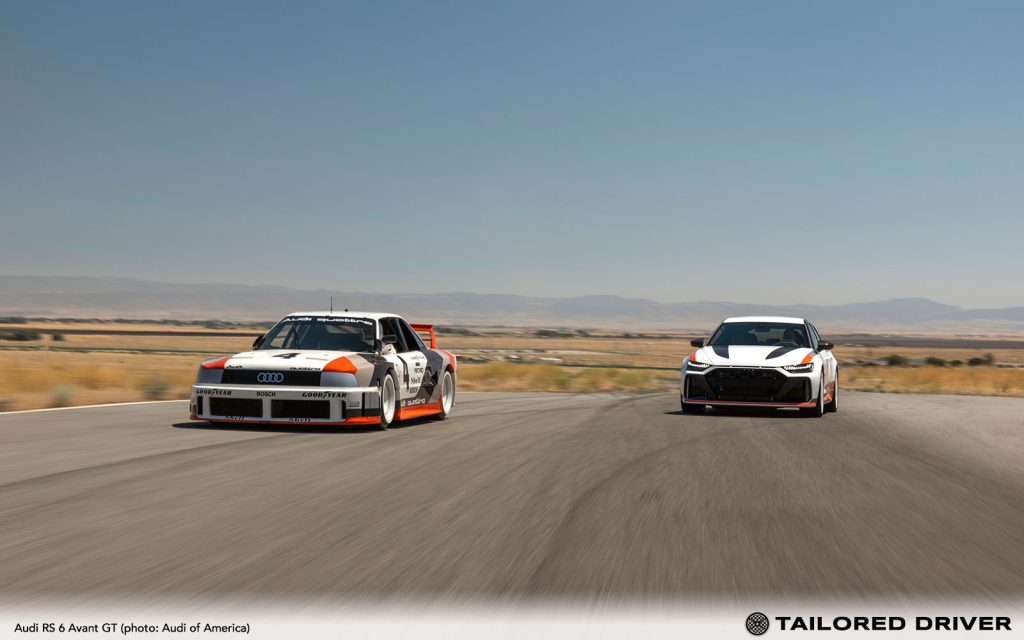
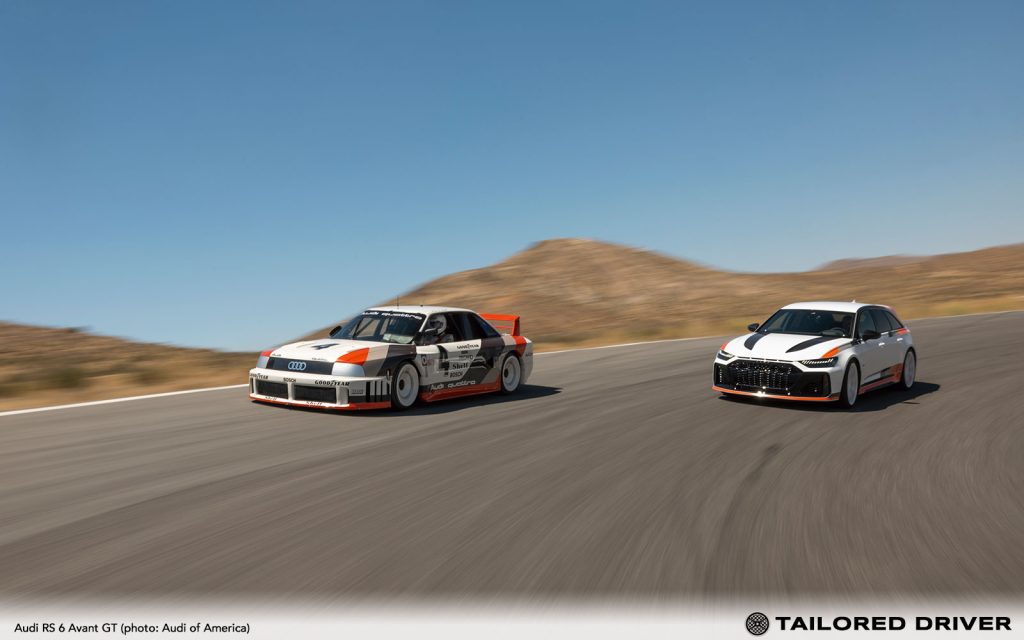
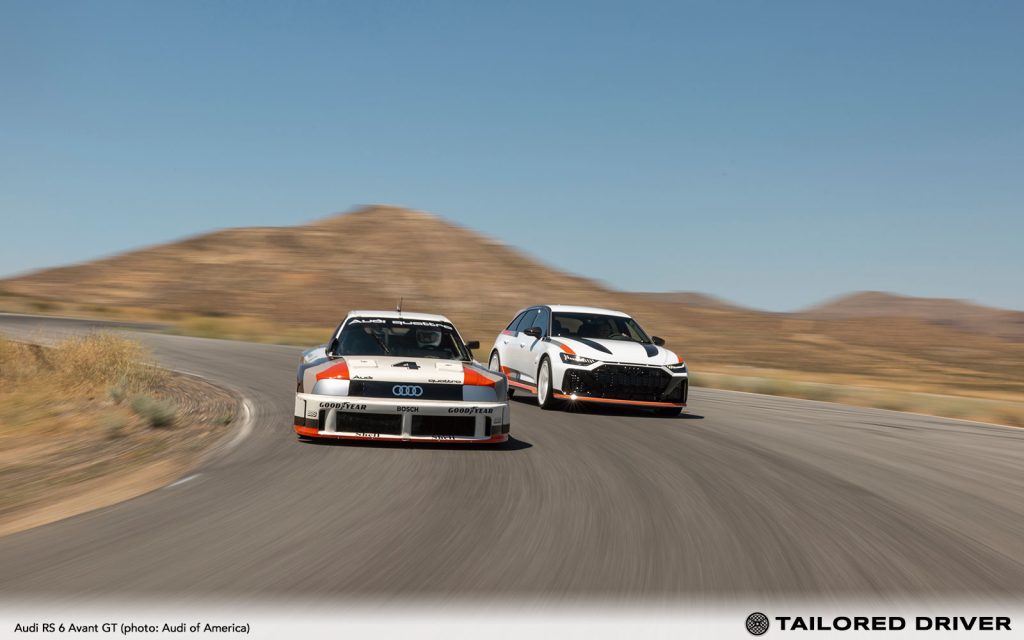
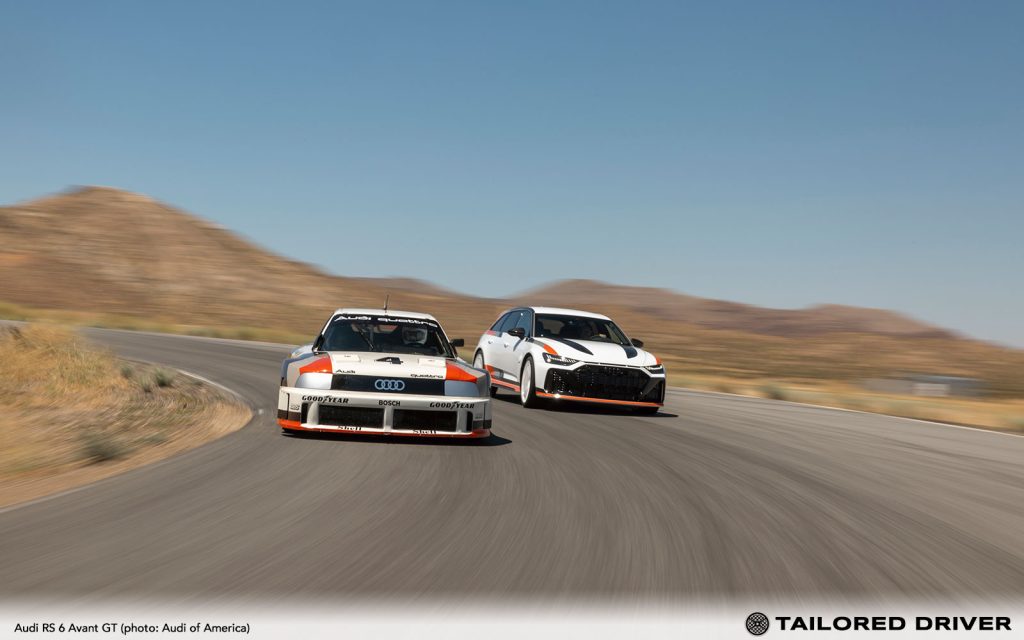
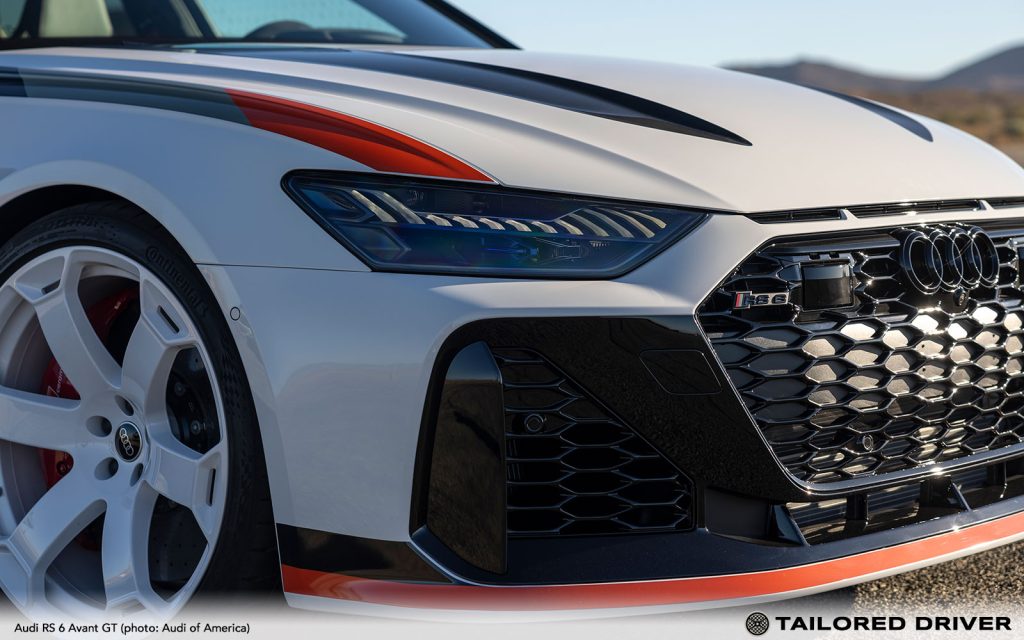
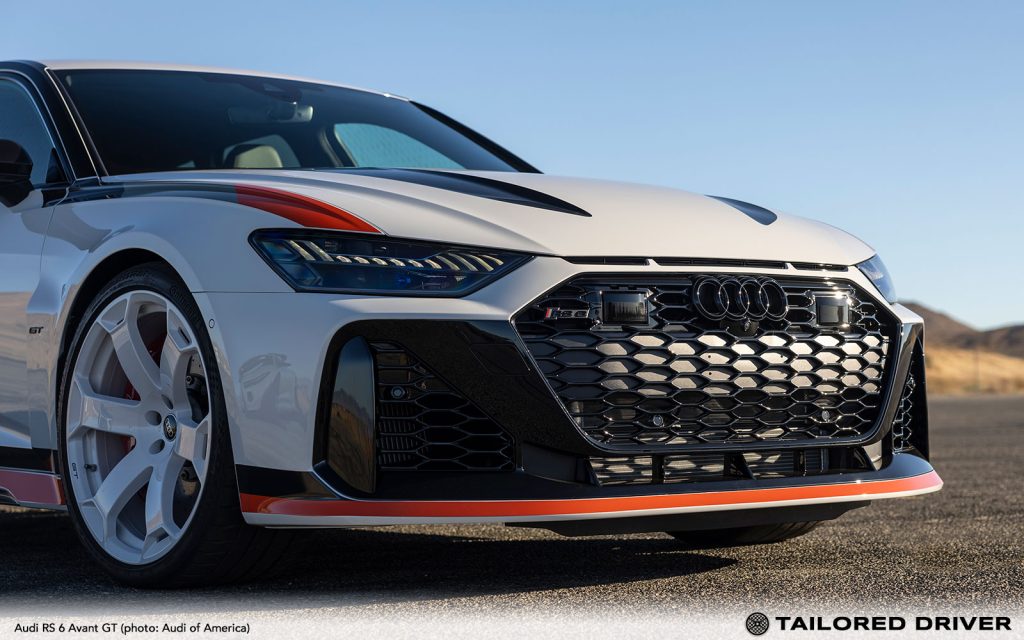
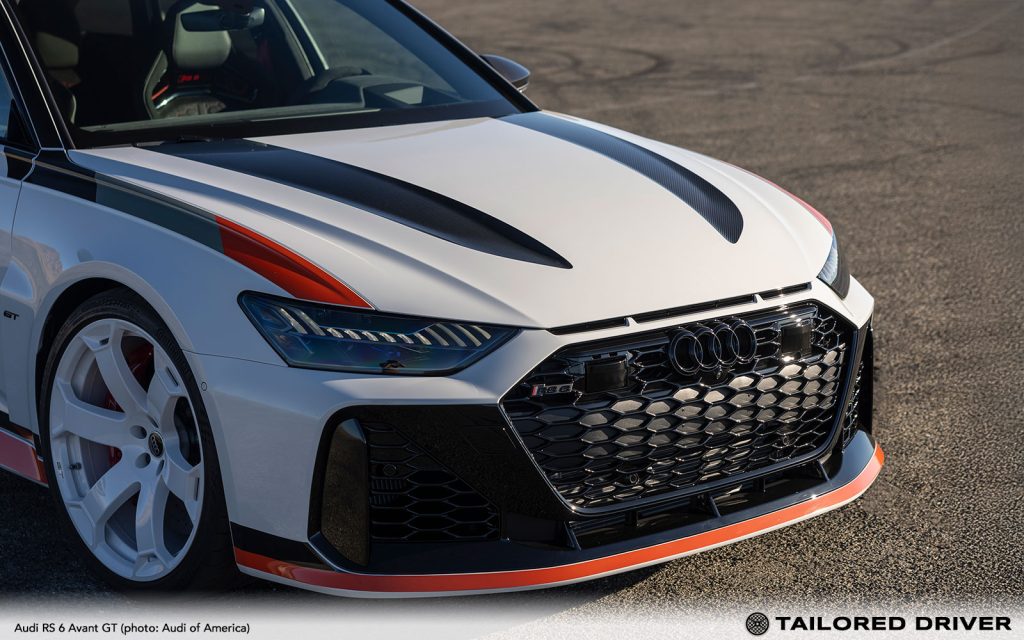
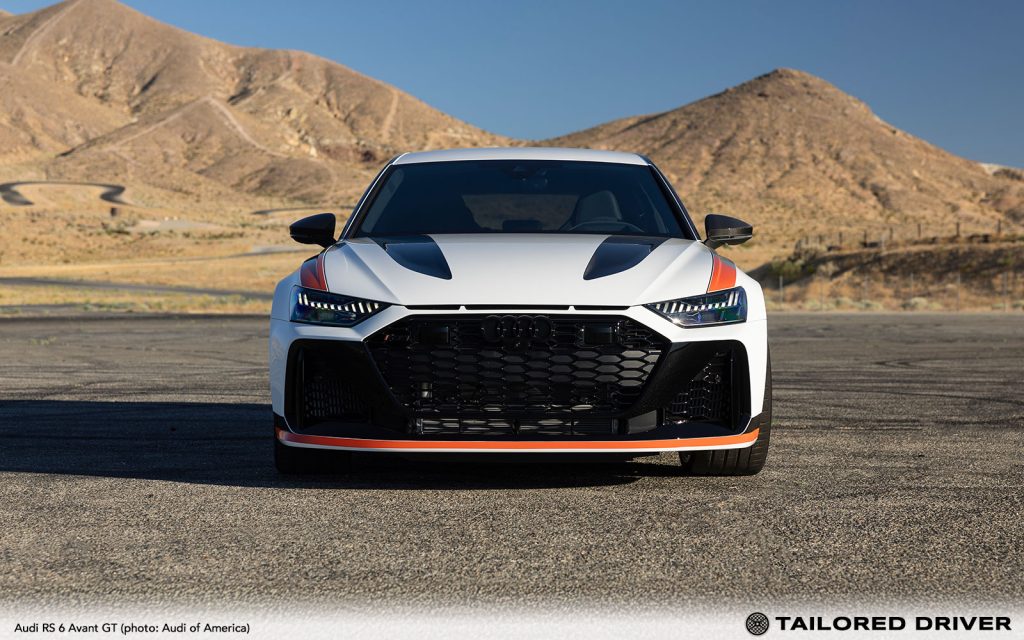
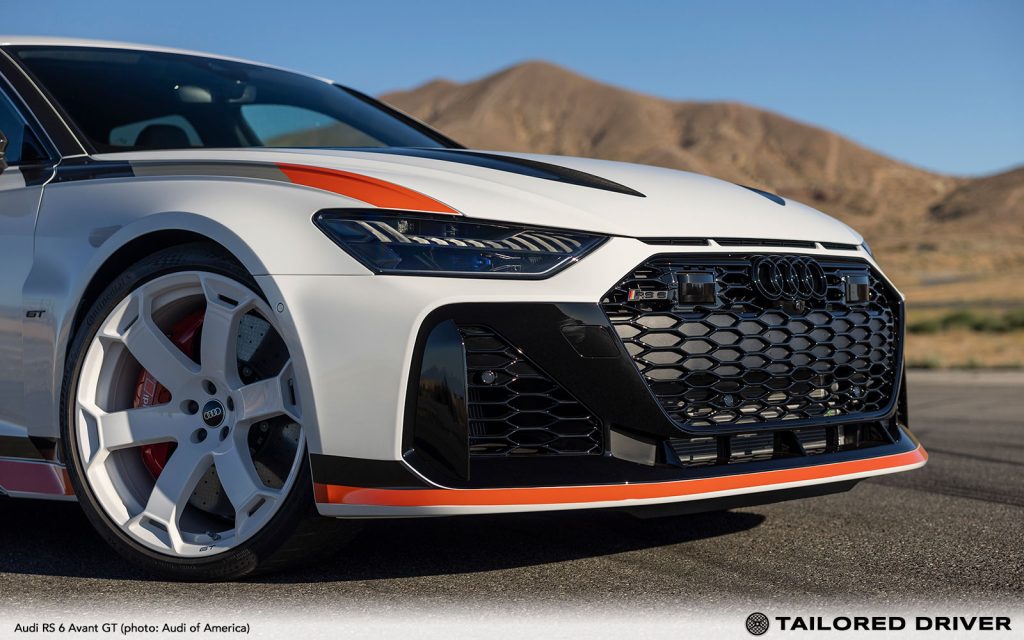
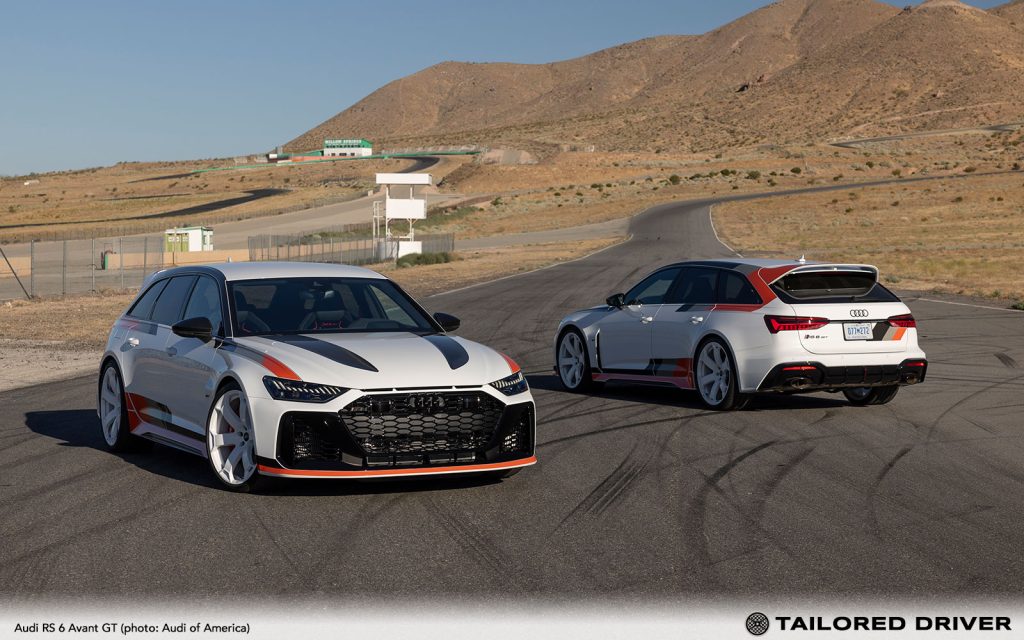
RESTON, VA – The 2025 Audi RS 6 Avant GT represents exclusivity and performance taken to its maximum. The ultimate family race dream car, the RS 6 Avant GT will be limited to 85 units in the U.S. (660 globally); each finished exclusively in a unique red/gray/black heritage livery. The bold exterior design honors – and was inspired by – the iconic Audi 90 quattro IMSA GTO race car. In 1989, through its dominance on the racetrack, this legendary machine drove home the major performance advantages of quattro® all-wheel drive on pavement – whether for racing or simply everyday driving.
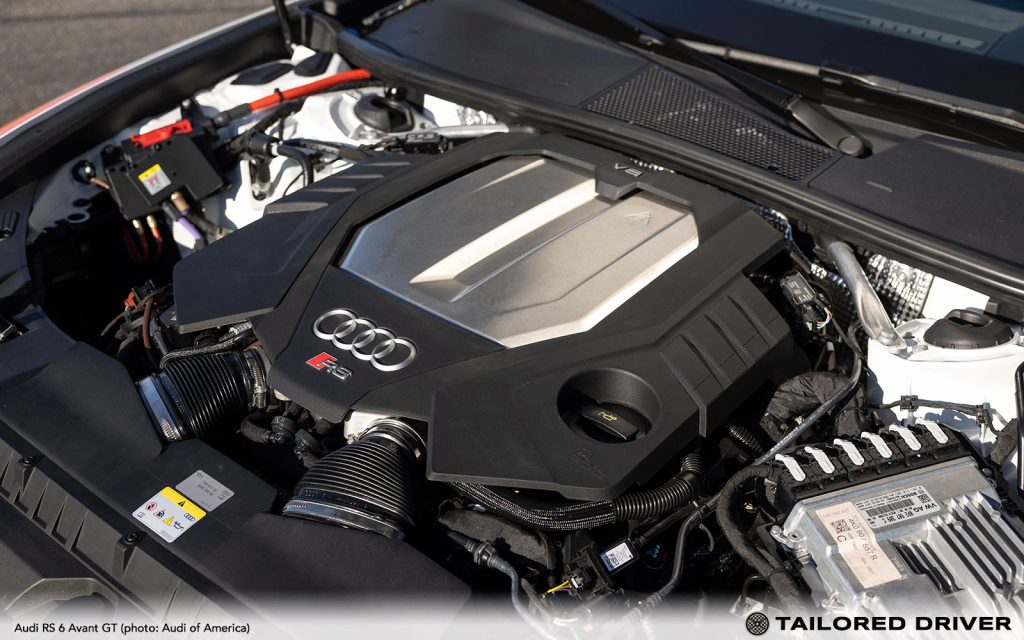
Simultaneously encompassing the quickest, fastest and most powerful production version of the RS 6 Avant to date, the 2025 RS 6 Avant GT can accelerate from 0-60 in 3.2 seconds, and features a top track speed of 190 mph thanks to its 4.0L TFSI® biturbo V8 producing 621 horsepower and 627 lb-ft of torque. Massive 16.5- and14.6-inch (420/370mm F/R) carbon-ceramic brakes come standard and help keep such prodigious velocities in check. Furthermore, the driving dynamics and handling capabilities of the RS 6 Avant are extended thanks to a unique three-way adjustable coilover suspension and a quattro sport rear differential, each of which have been expressly optimized for application in the RS 6 Avant GT.
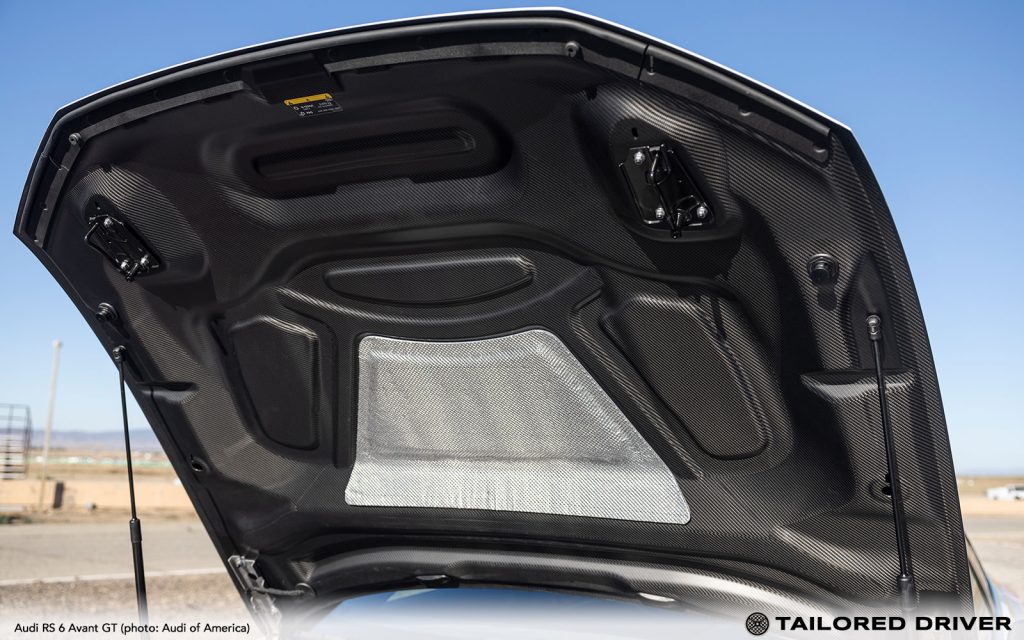
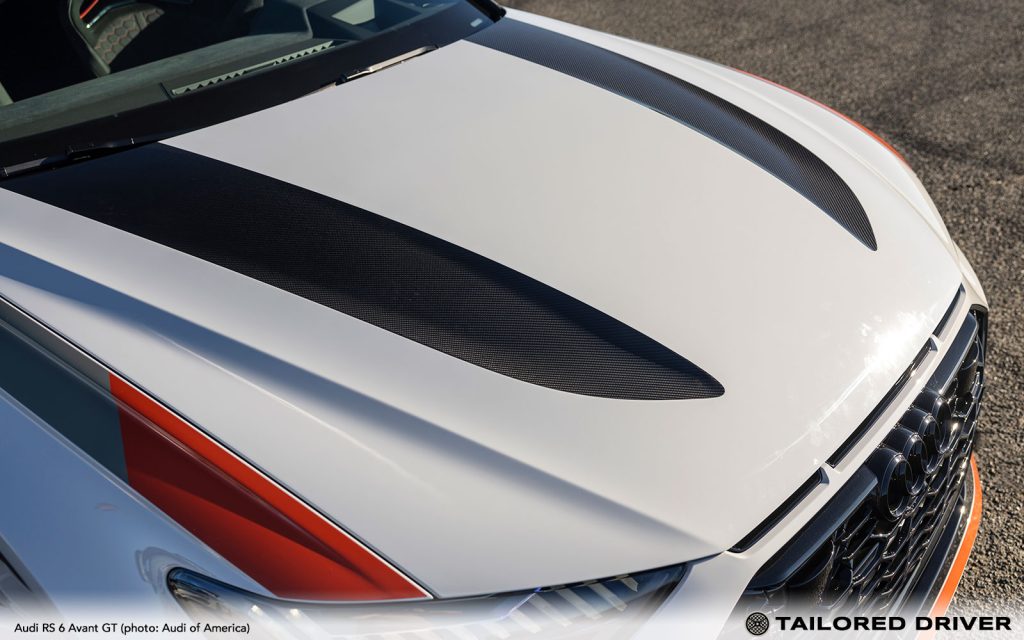
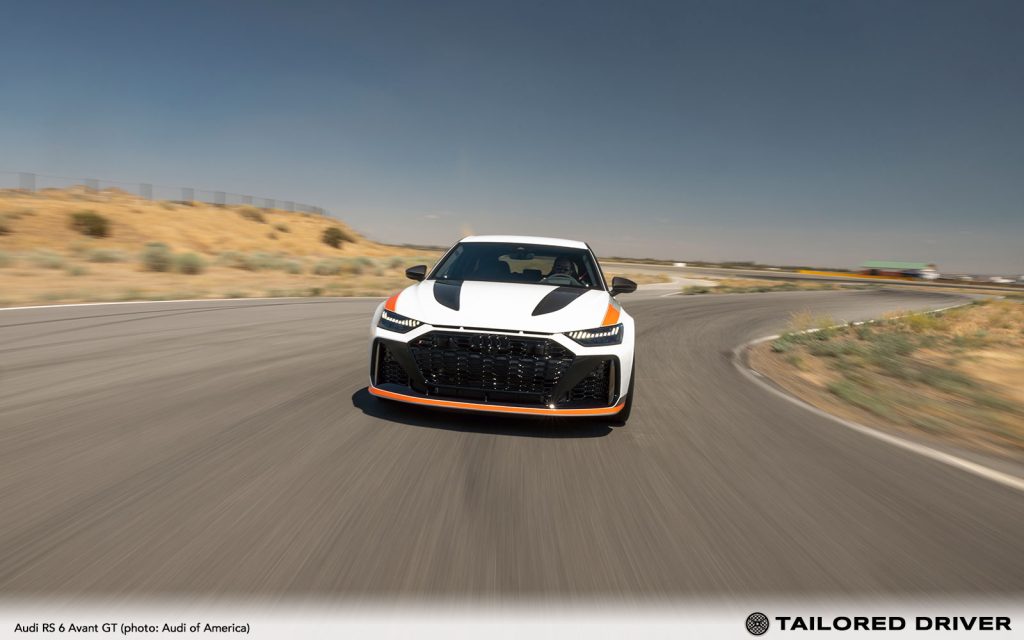
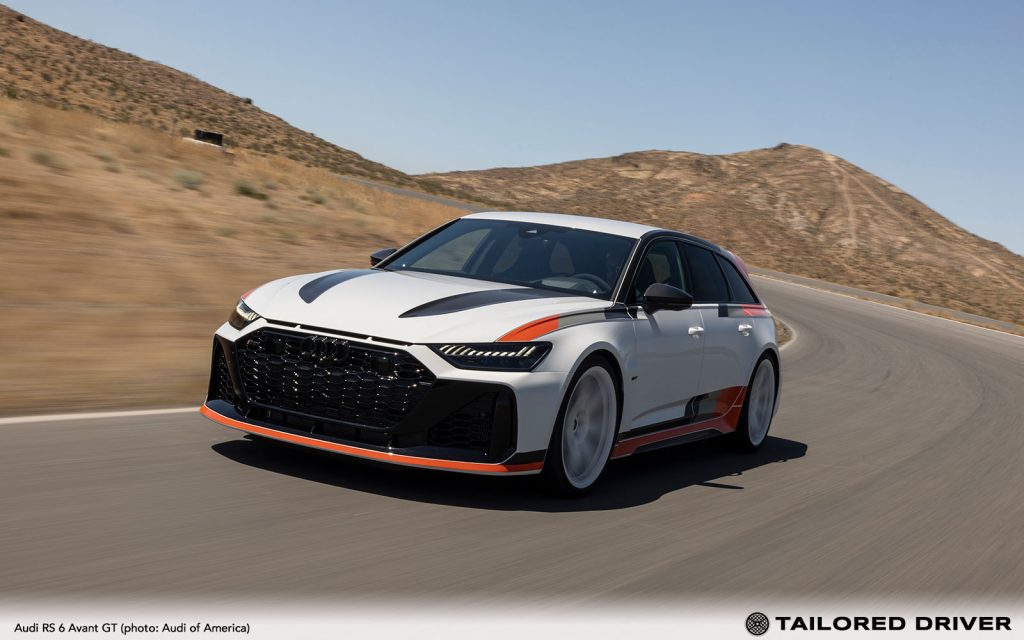
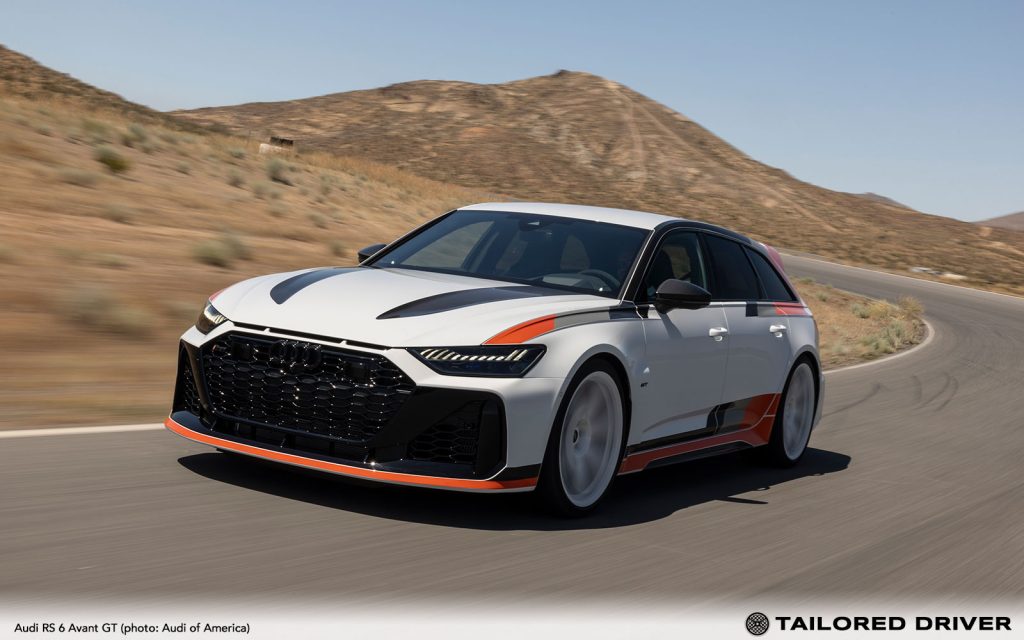
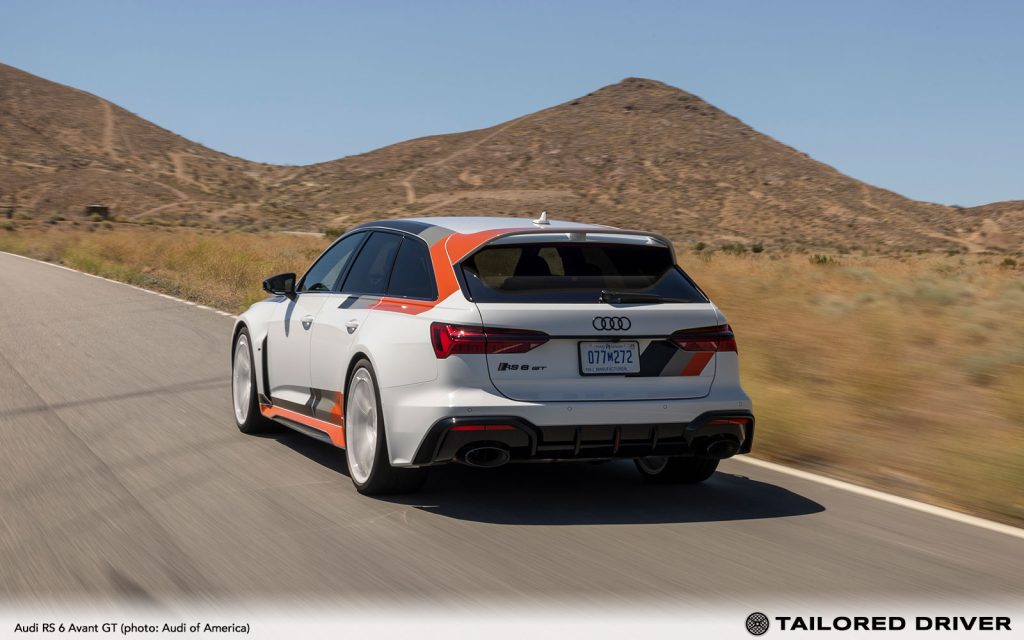
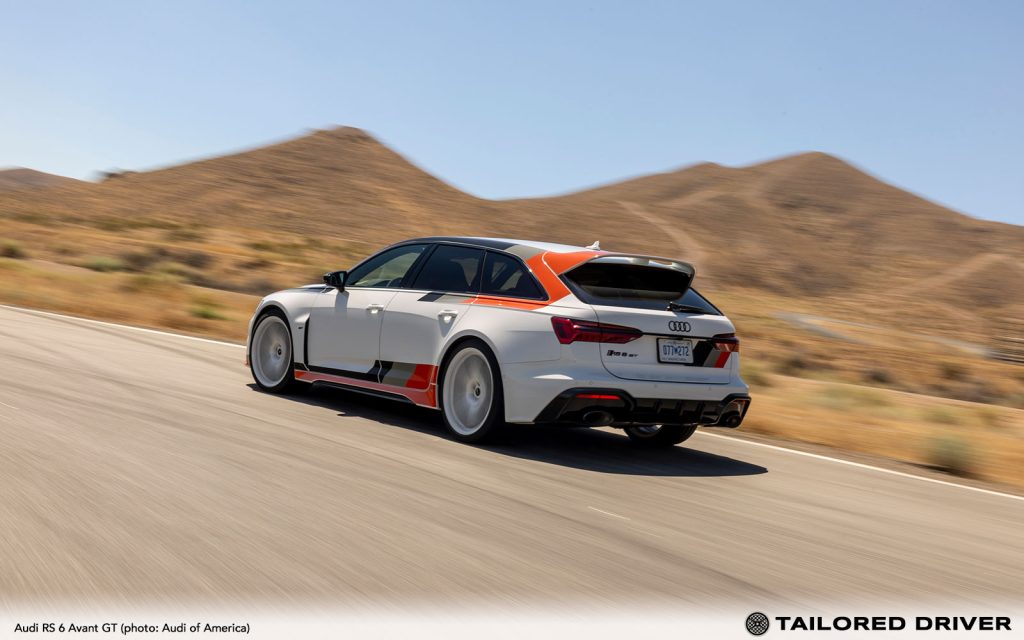
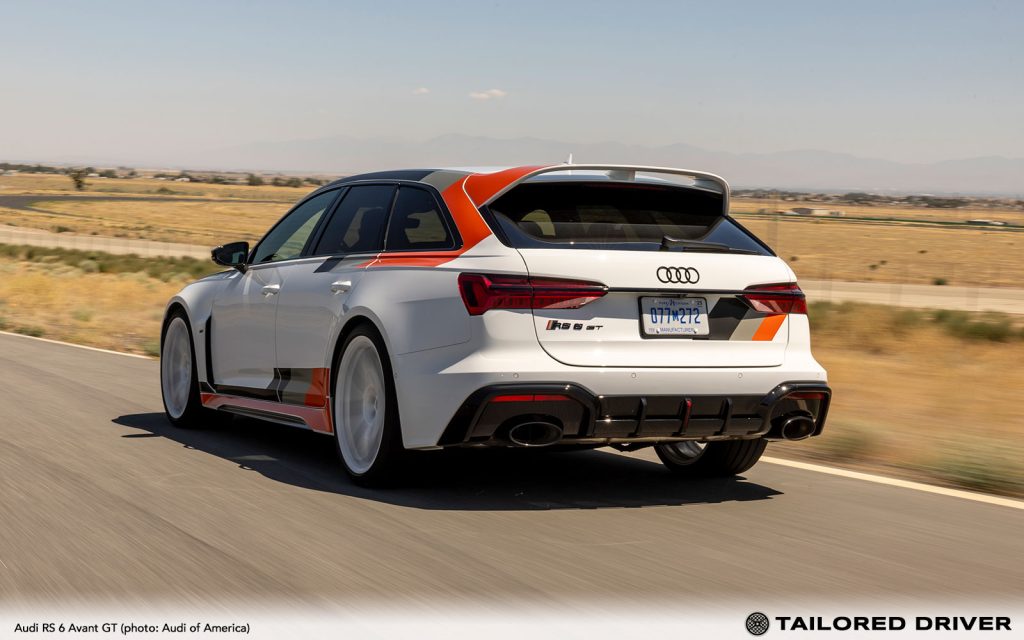
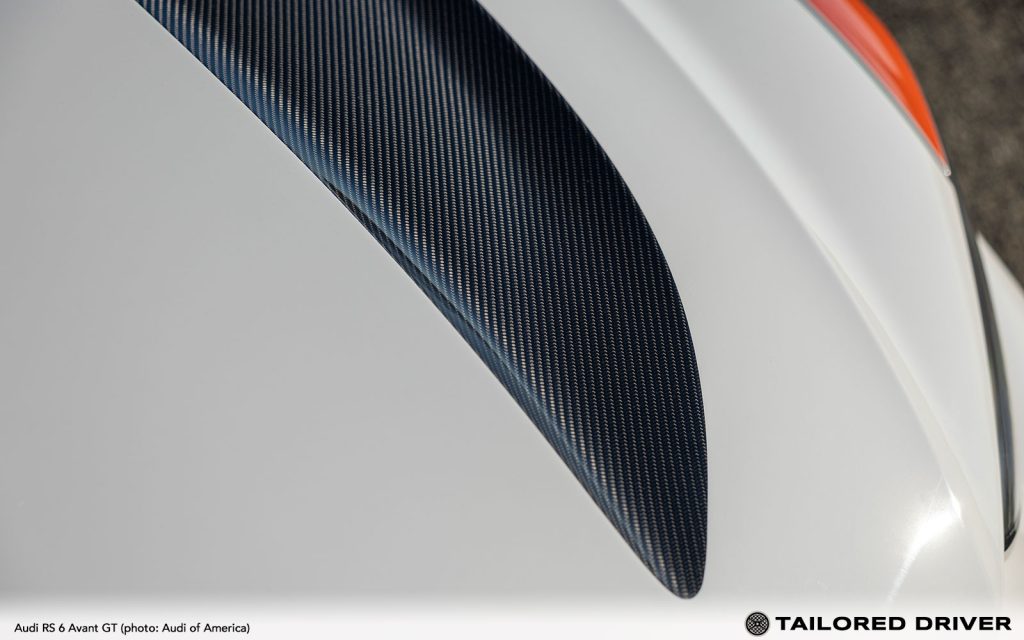
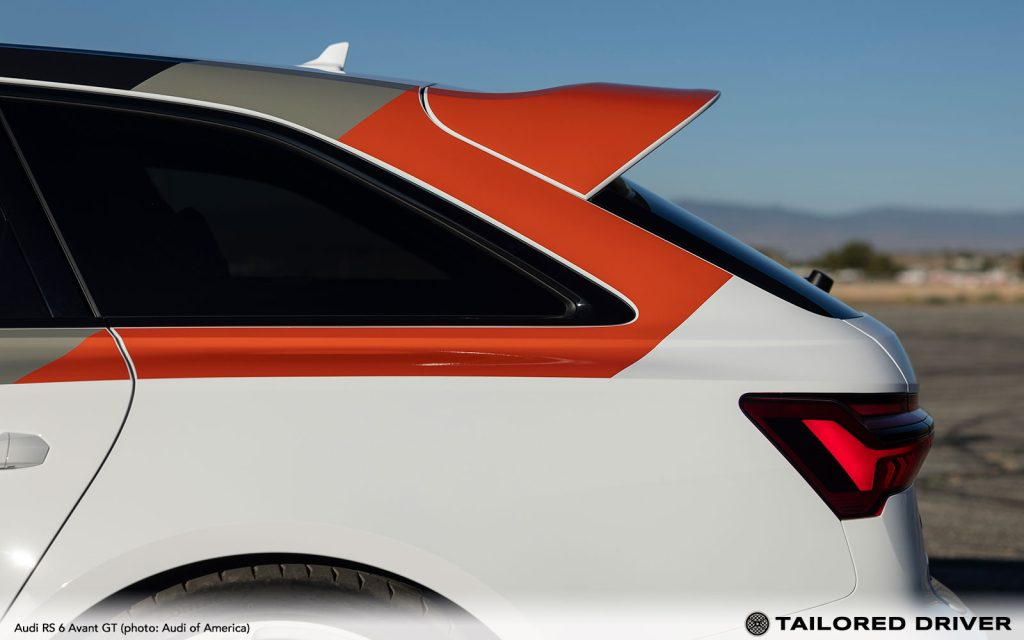
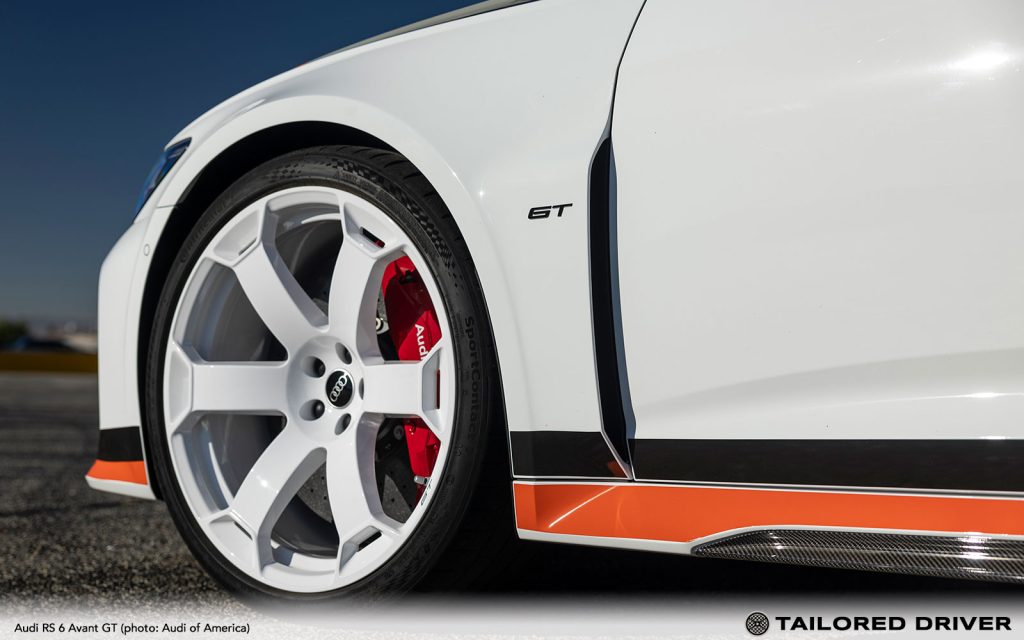
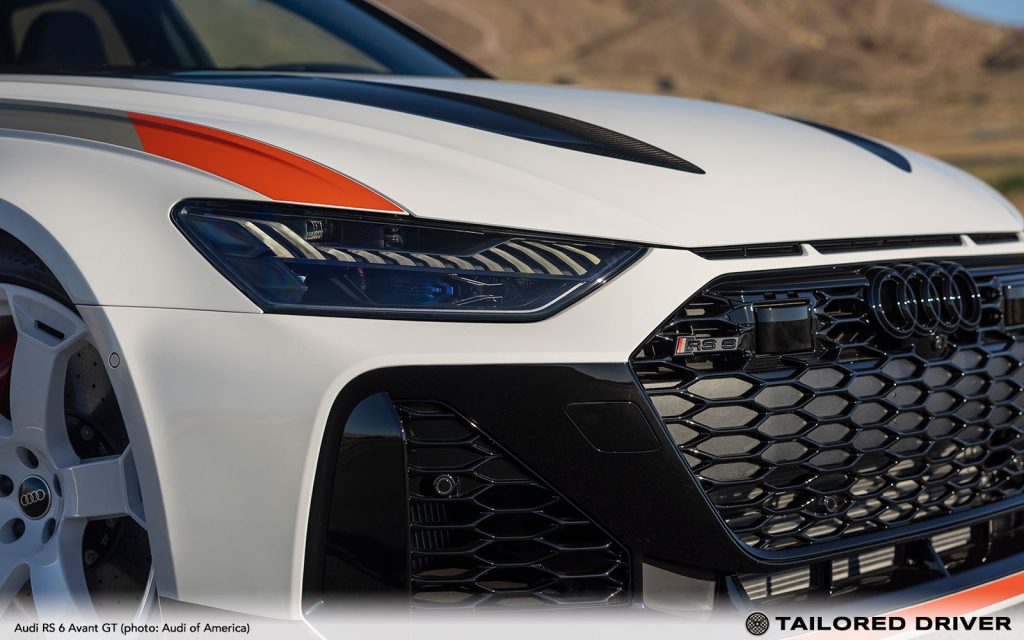
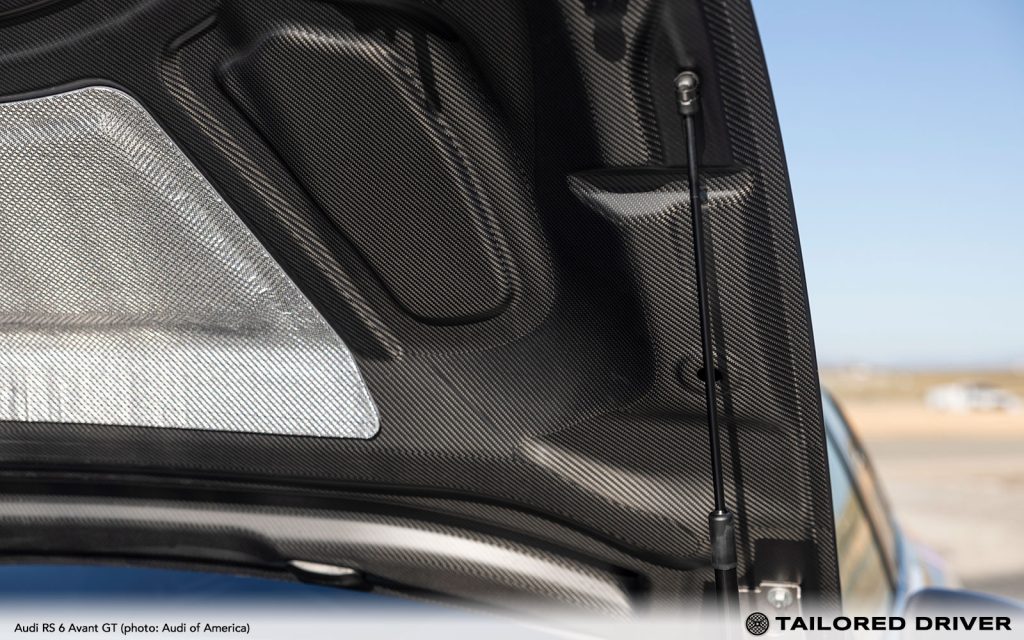
Each U.S.-bound RS 6 Avant GT is finished in Arkona White paint and features the red/gray/black racing-heritage livery and RS badging. In addition, all models receive exclusive 22” 6-arm design “Avus” wheels painted in Ibis White; a sleek “pass-through” roof-edge rear spoiler; redesigned front fascia and lower splitter, side sills and rear diffuser; and a unique carbon-fiber front fenders and hood.
Inside, the heritage inspired exterior is paired with an equally unique and expressive interior concept. Features unique to the RS 6 Avant GT include:
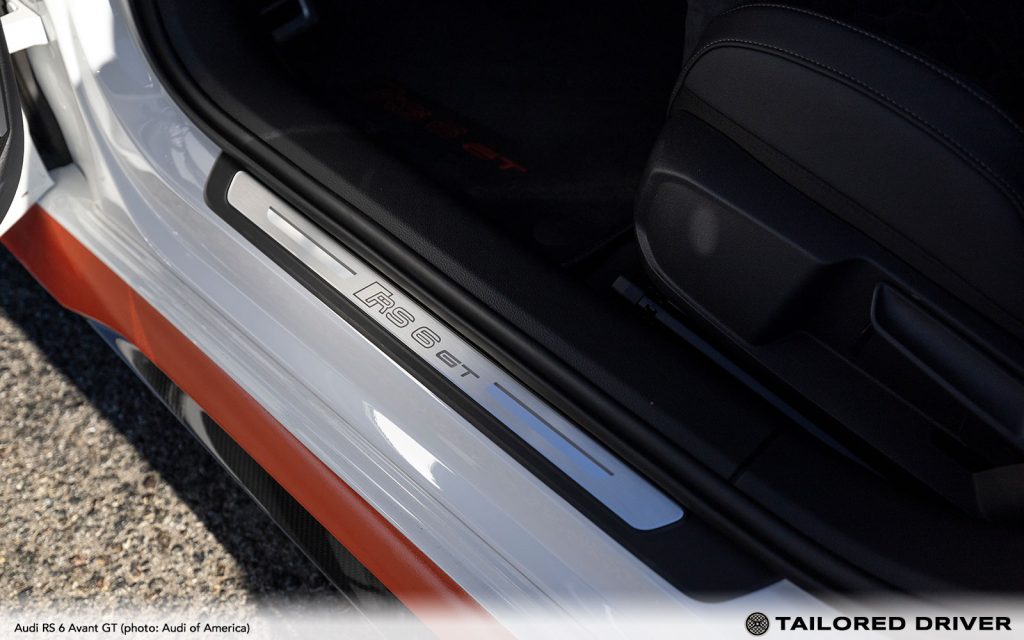
Supportive RS sport seats wrapped in Valcona leather with an RS 6 GT logo, featuring red and copper double stitching, and complemented by Crimson Red seatbelts
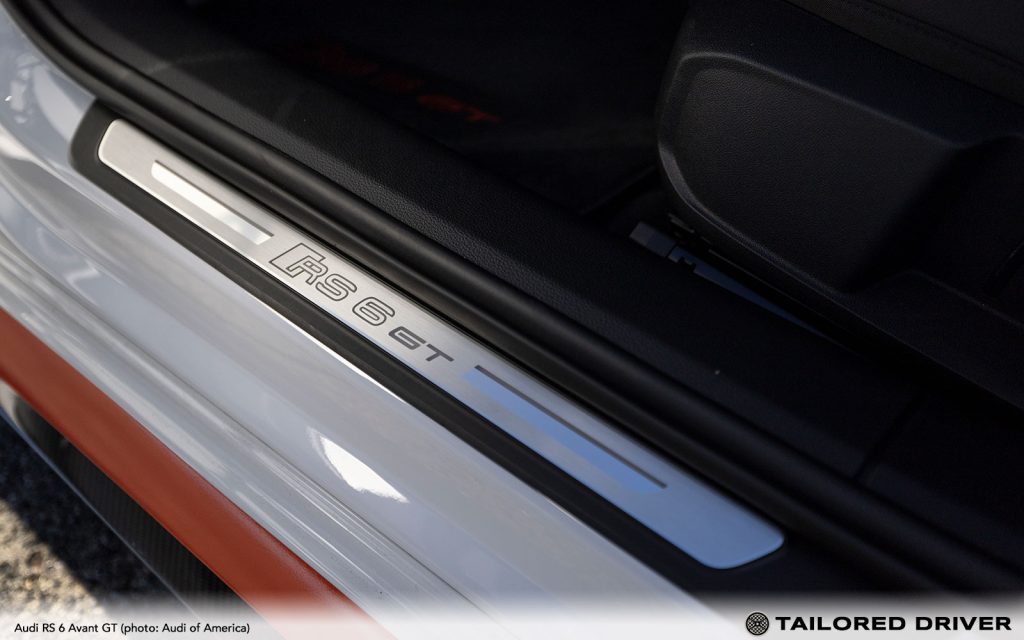
Floormats with “RS 6 GT” lettering
Dinamica® covered dashboard, center console, and upper door panels
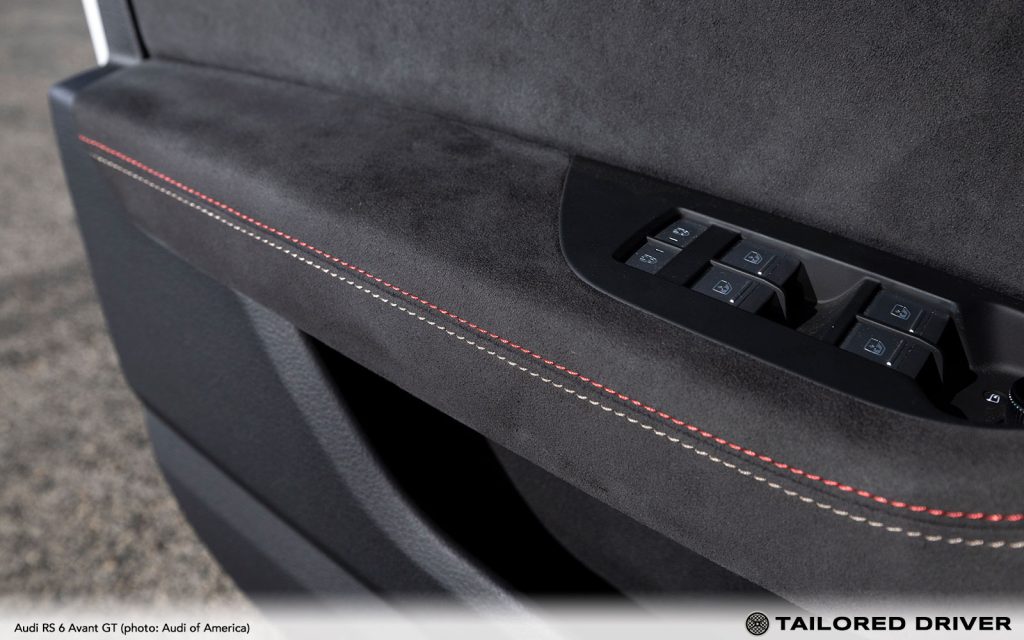
Red and copper double stitching on the Alcantara steering wheel, sides of center console, center armrest and door armrests
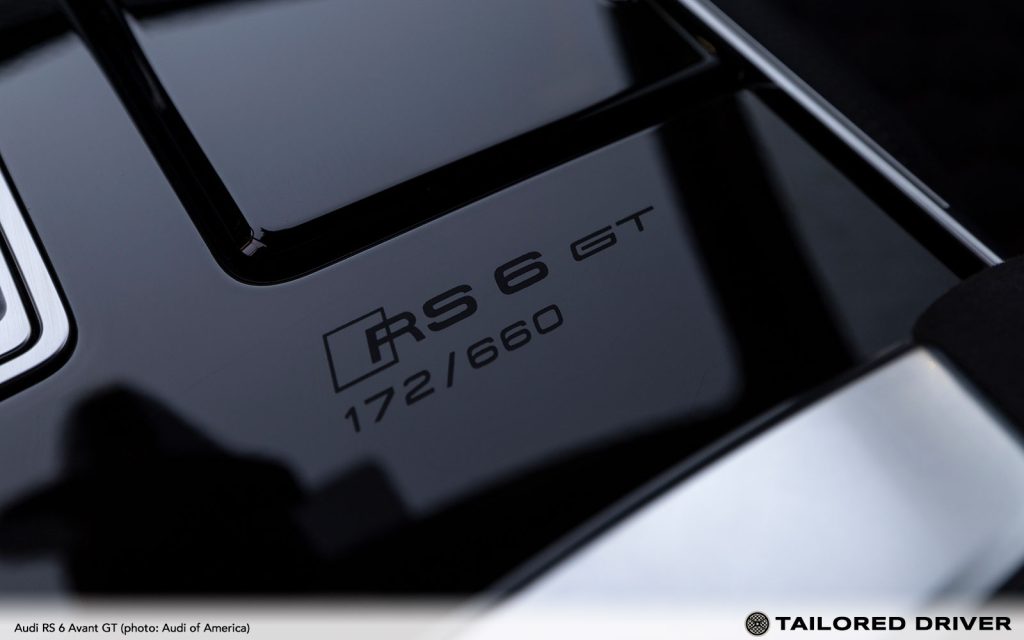
All RS 6 Avant GT models are completed with a center-console badge displaying the RS 6 Avant GT logo and exclusive serialized numbering (“X / 660”) assuring the vehicle’s provenance and exclusivity as a future collectible.
Apprentice concept inspiration The idea of the Audi RS 6 Avant GT goes back to the apprentice project RS 6 GTO concept from 2020. Twelve apprentices learning to work as bodywork and vehicle construction mechanics, automotive mechanics, automotive painters, and tooling mechanics, worked on the project for six months with the support of Audi Design. They took most of their inspiration from the legendary Audi 90 quattro IMSA GTO race car from 1989.
The Singleframe grille and air intakes of the RS 6 Avant GT are finished entirely in high-gloss black, which makes the car appear even lower and wider. Vertical blades in the front apron, a new intake grille, and a powerful front splitter integrated into the bumper enhance the sharpened look. For the first time, Audi Sport GmbH is not only using a fully redesigned hood but is also manufacturing it from carbon fiber. Like the hood, the fenders are made entirely of carbon fiber for the first time, integrating air outlets behind the 22-inch wheels to reduce air pressure in the wheel arch and improve brake cooling.
The side profile is defined by inserts in the side skirts, exterior mirror covers in glossy carbon and the 6-spoke wheel design made exclusively for the RS 6 Avant GT. At the rear, this special edition features black “RS 6 GT” lettering, a tailgate specially adapted to the design with a visually lowered loading edge, and a functional diffuser with a vertically centered reflector that makes the car appear even wider. The distinctive double wing “pass-through” spoiler was inspired by motorsport and taken almost 1:1 from the apprentices’ concept car. For the first time in the history of the RS 6 Avant, the roof rails have been removed for an even flatter, sportier silhouette. The roof-rail delete, ceramic brakes, and carbon-fiber components all help contribute to a roughly 40 kg (88 lb) weight reduction when compared to the RS 6 Avant performance, contributing to its 0.1-second quicker 0-60 mph time.
Powered through quattro® The prodigious output of the 4.0L biturbo TFSI® V8 is applied to the permanent quattro® all-wheel drive via the standard eight-speed Tiptronic gearbox with optimized shift times. Like the RS 6 Avant performance, the RS 6 Avant GT uses the latest version of the locking center differential. Particularly light and compact, it distributes engine power to the front and rear axles at a ratio of 40:60. If slippage occurs, more drive torque is automatically applied to the axle with better traction – up to 70 percent can flow to the front axle and up to 85 percent to the rear axle. The reworked center differential improves driving dynamics, ensures noticeably more precise cornering, and makes for less understeer at the limit.
To further distinguish the special edition from other RS models, the quattro sport differential on the rear axle has been specially tuned for the RS 6 Avant GT. The new parameters focus on greater agility and rear bias in the “dynamic” driving mode. Customers benefit from sporty, neutral, and highly precise handling.
For the first time, and only for the RS 6 Avant GT, adjustable coilover suspension comes as standard. In its standard setting, it lowers the ride height by ten millimeters compared to the RS 6 Avant and offers the appealing combination of dynamic agility and comfort. A higher spring rate, triple-adjustable dampers, and stiffer stabilizers (30 percent stiffer at the front and 80 percent at the rear) ensure less body roll, which once again significantly increases performance. The necessary tools and instructions for making individual adjustments are also included.
The high-performance 285/30 R22 Continental SportContact 7 tires ensure the necessary grip for enthusiastic driving. The tires offer consistently better roadholding under both dry and wet conditions and reduce understeer when cornering at speed, making for overall more precise handling across the entire speed range.
Small-series production Unlike the regular RS 6 Avant, the limited-edition RS 6 Avant GT is not entirely assembled on the production line in Neckarsulm. After passing through the body construction works and painting shop, the RS 6 Avant GT heads to Böllinger Höfe for final assembly, where models such as the Audi R8 was assembled, and the RS e-tron GT is currently built in small-series production. Located near Audi’s production site in Neckarsulm, this highly flexible facility is unique within the group and provides the best conditions for completing each RS 6 Avant GT build. Final assembly of each vehicle is carried out by seven experienced employees at three assembly stations set up especially for this exclusive special edition, spending an entire day on site. All GT-specific features are fitted by hand to each of the 660 RS 6 Avant GT models in the global production run. This process includes the specific fitment of the hood, fenders, rocker panels, double wing, the front and rear aprons, and the adjustable coilover suspension.
Availability and pricing The 2025 RS 6 Avant GT is limited to 85 units in the U.S. and will be available with a targeted release at the end 2024 at a base MSRP of $198,900.
ABOUT AUDI OF AMERICA At Audi of America, we believe the future is electric. By 2025, our U.S. model lineup will be at least 30 percent electrified, including fully electric and plug-in hybrid vehicles. Globally, we are committed to net CO2 neutrality by 2050. In 2023, Audi sold a record-breaking 228,550 vehicles in the U.S. Among those deliveries, Audi sold more fully electric models than ever before, achieved record Audi Sport sales, and had a record-breaking year in after sales. Learn more about who we are and how we’re working to create a more sustainable, innovative, and inclusive future at audiusa.com or media.audiusa.com.
This information and any vehicle specifications are preliminary and subject to change.
Always obey local speed and traffic laws.
These tires may ride less comfortably, make more noise, and wear more quickly than other choices. To avoid tire, rim, or vehicle damage, it is important that inflation pressure is regularly checked and maintained at optimum levels. High-performance tires are designed for optimum performance and handling in warm climates and are not suitable for cold, snowy, or icy weather conditions. When driving during cold, snowy, or icy weather conditions, ensure that your vehicle is equipped with appropriate all-season or winter weather tires. Tires are supplied and warranted by their manufacturer.
Always pay careful attention to the road, and do not drive while distracted. See Owner’s Manual for further details, and important limitations.
Base MSRP pricing excludes destination, taxes, title, other options and dealer charges. Dealer sets actual price.
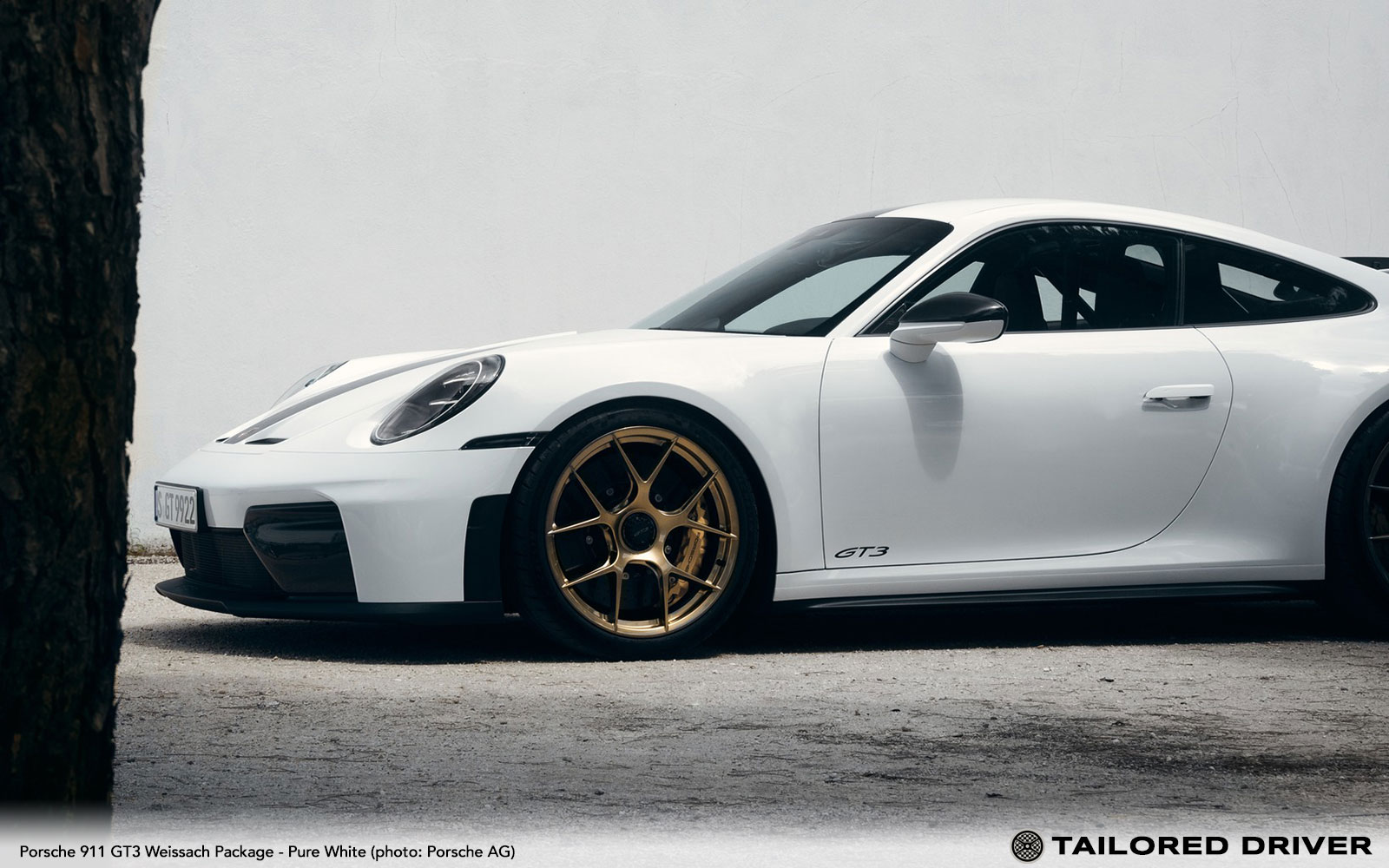
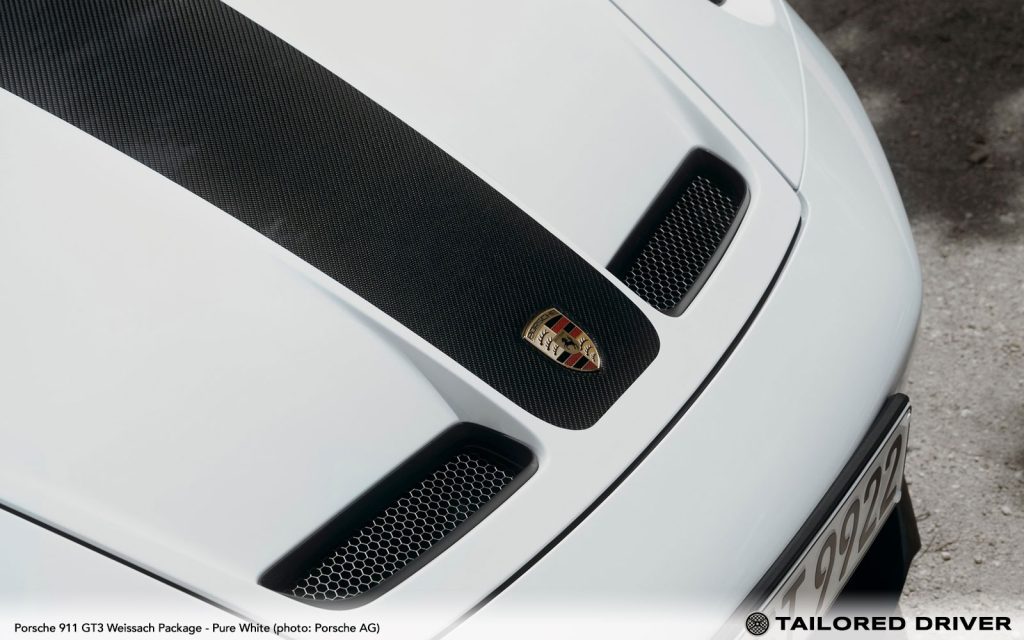
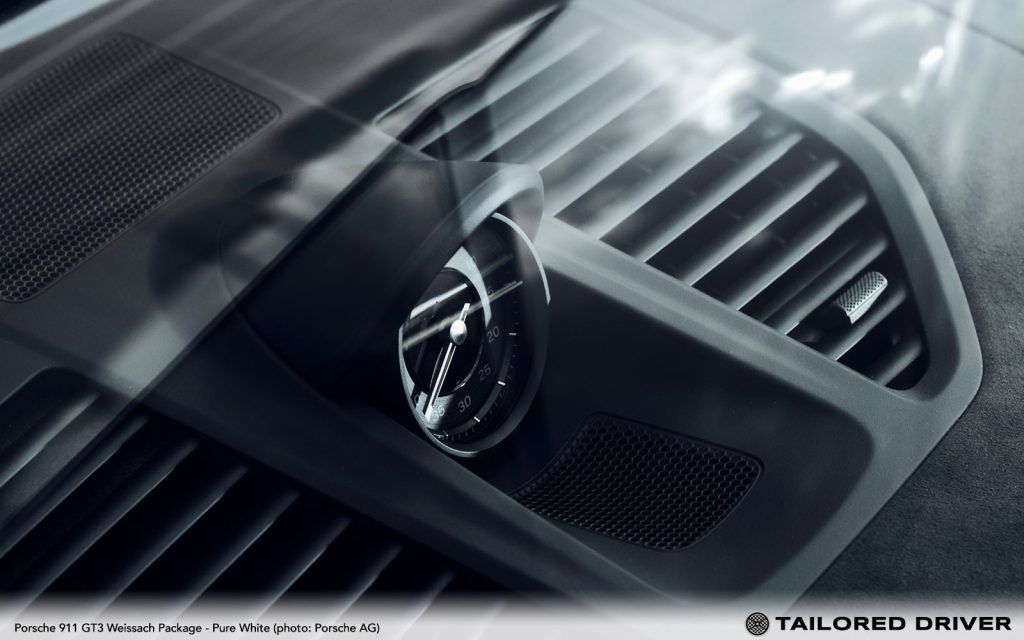
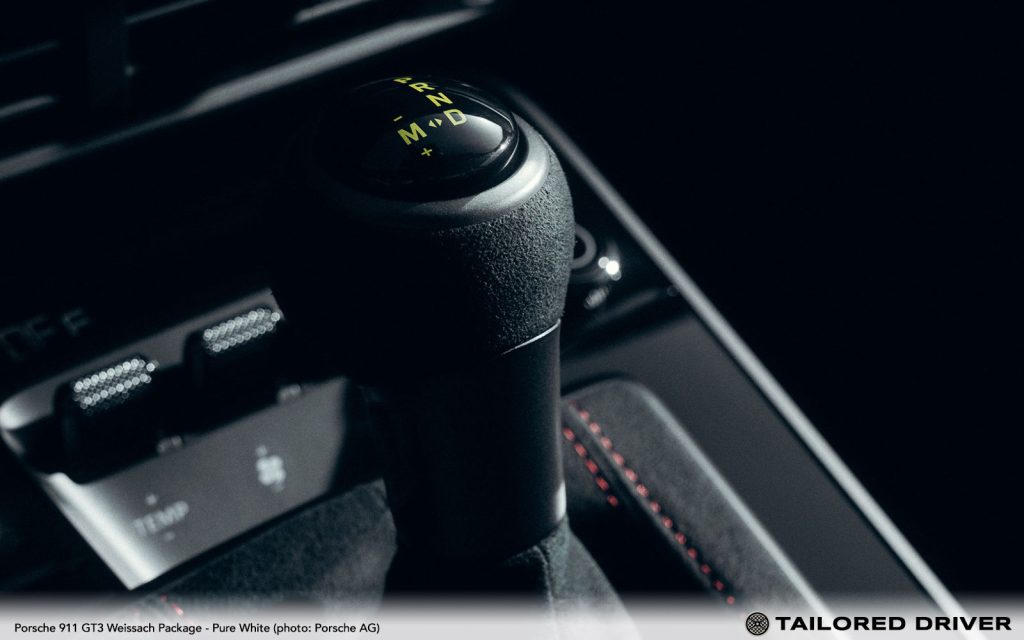
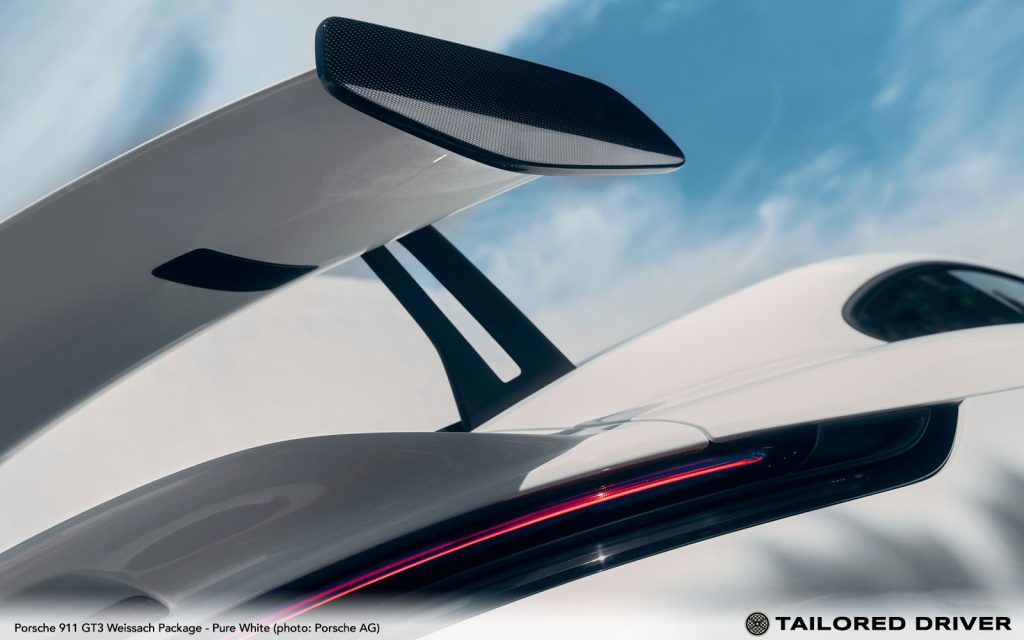
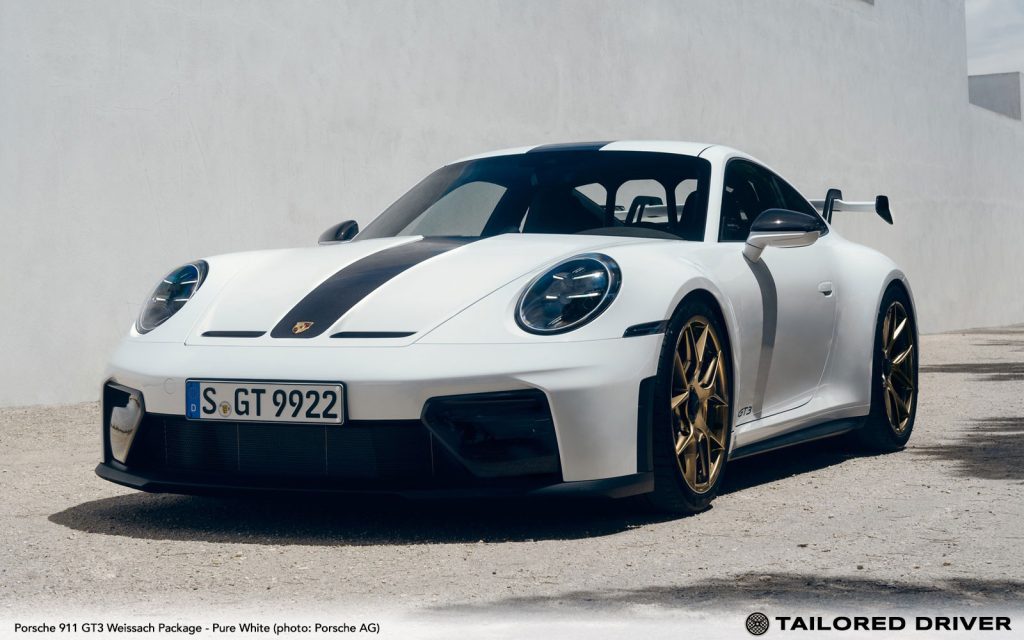
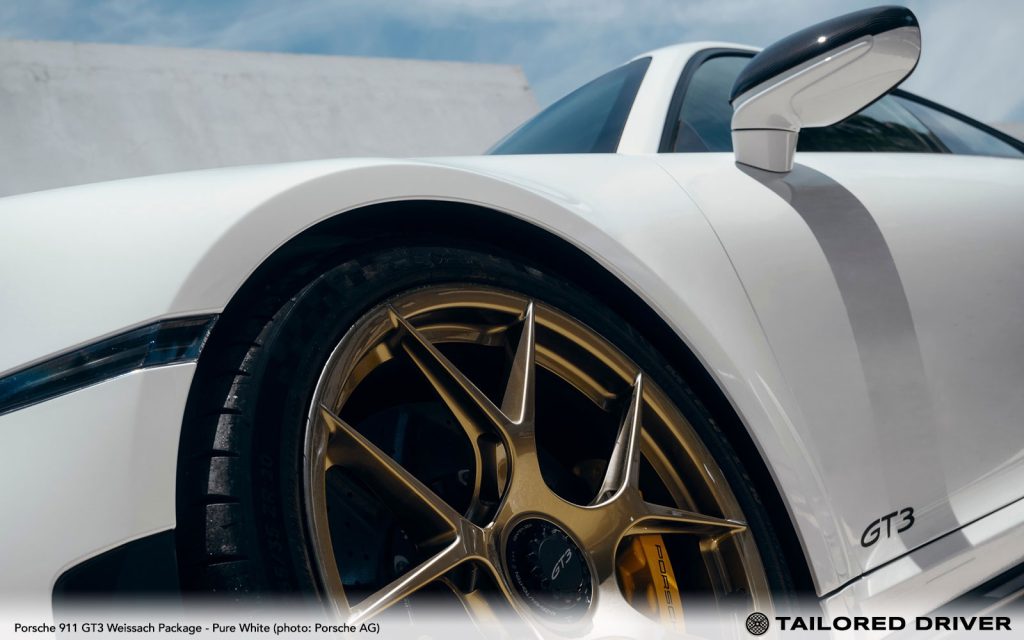
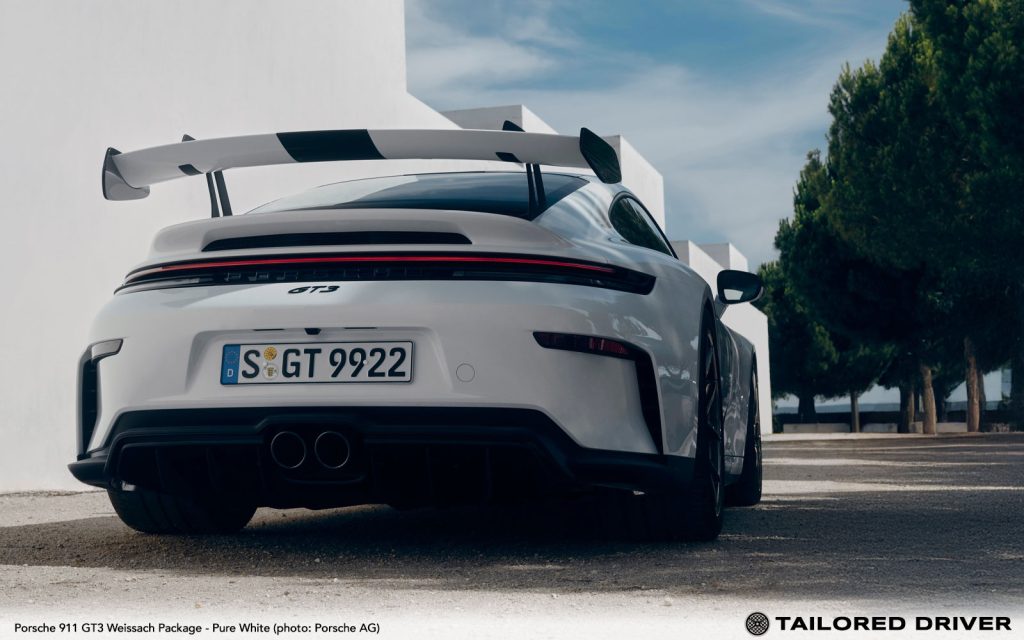
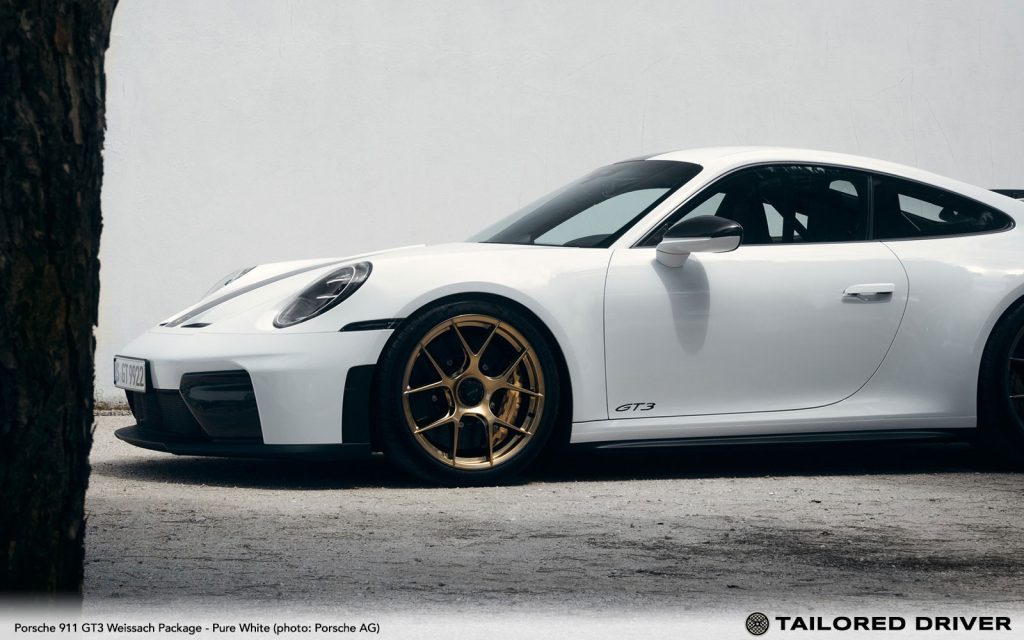
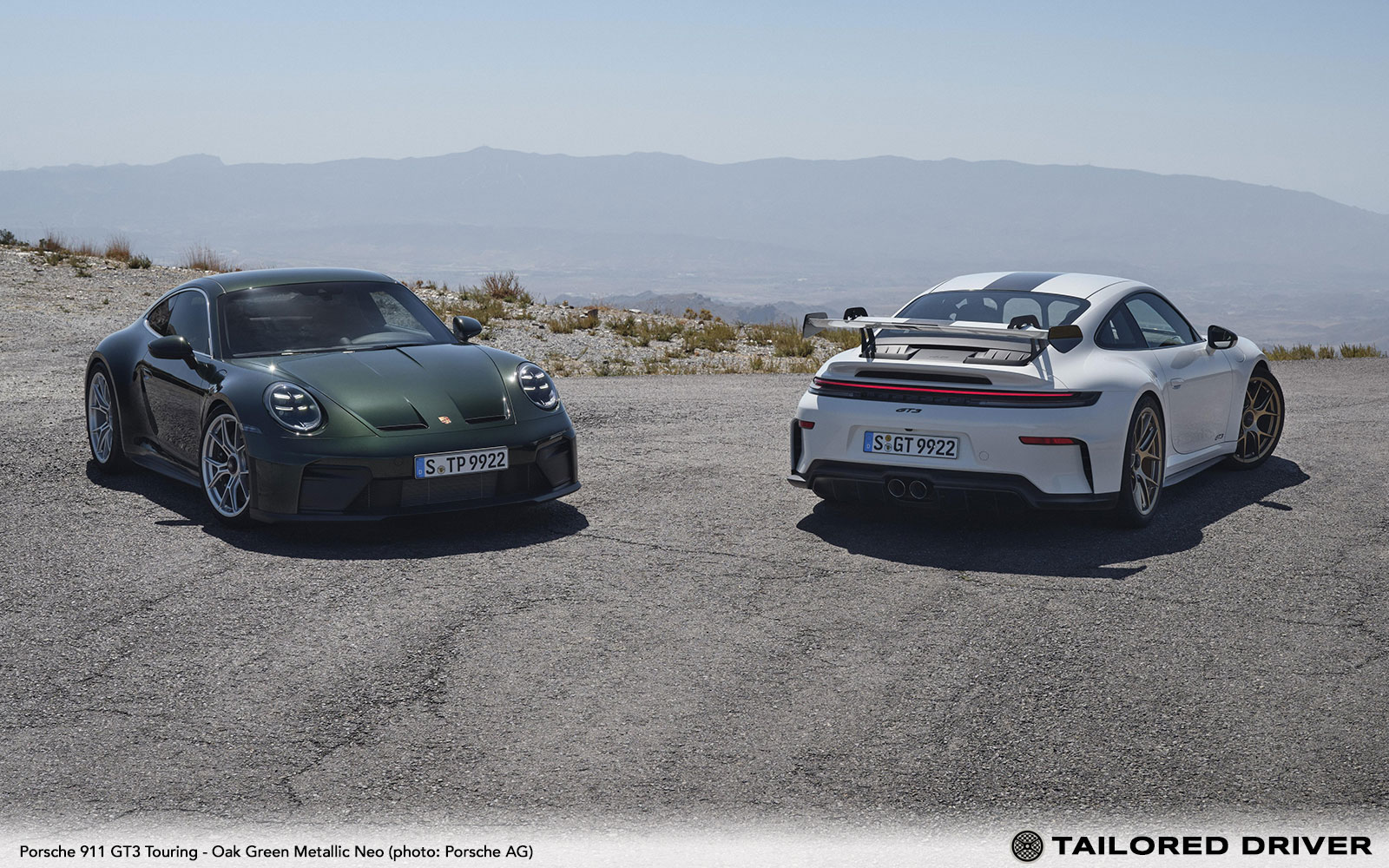
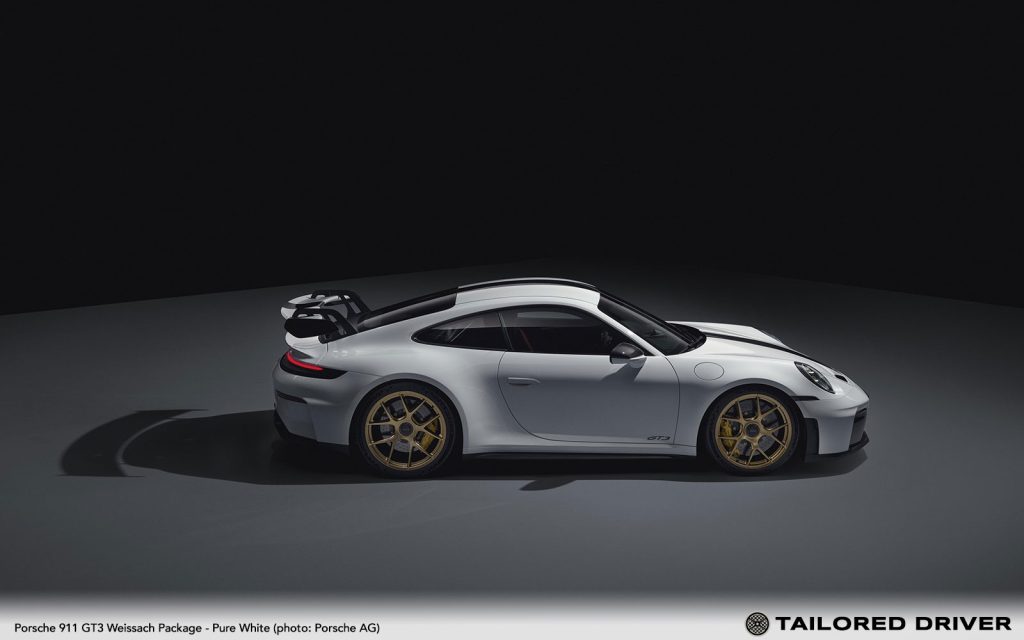
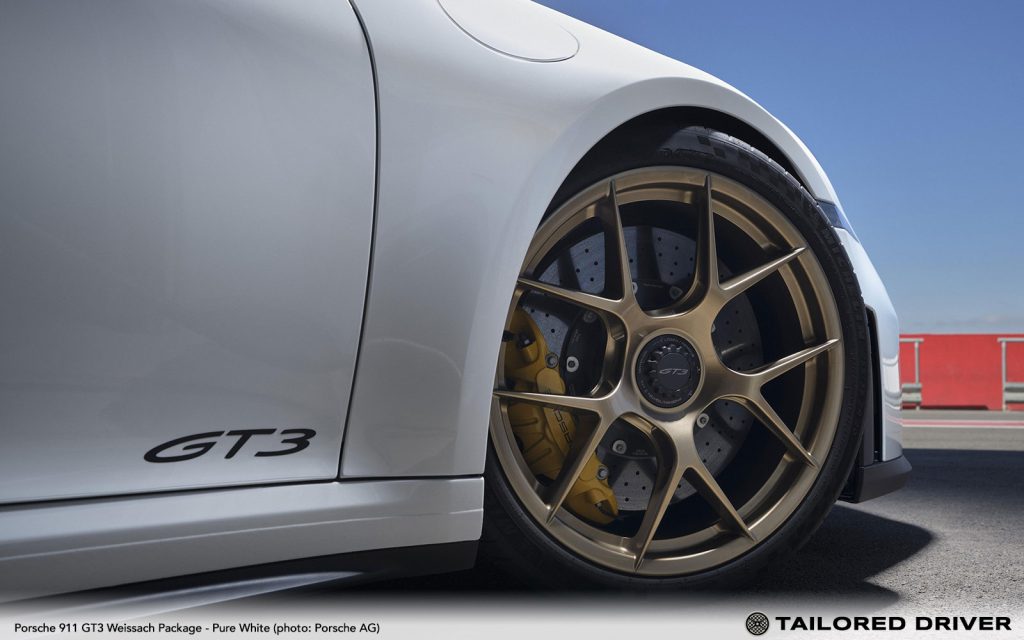
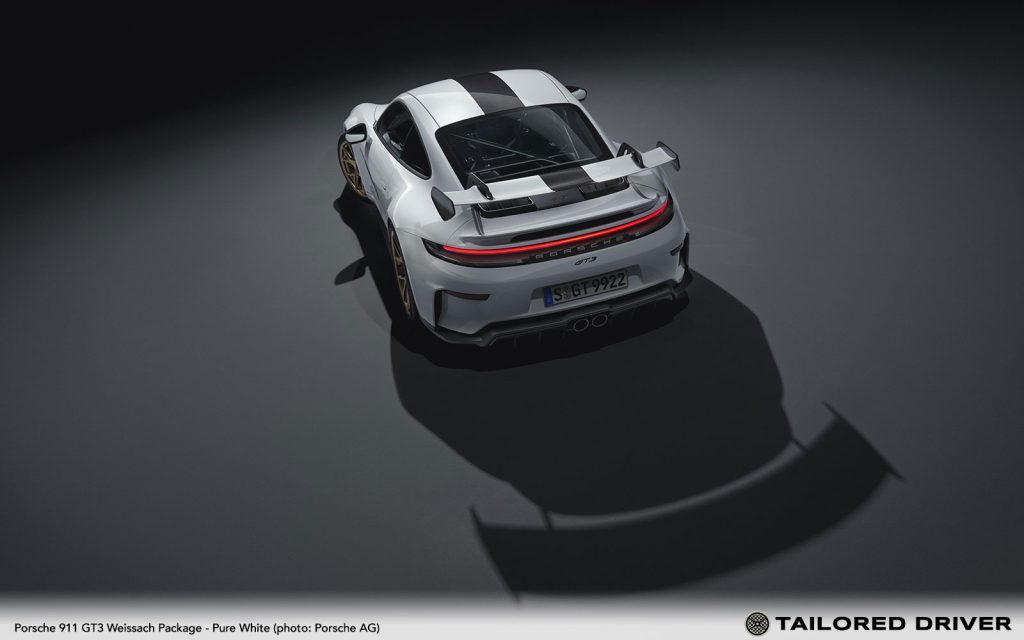
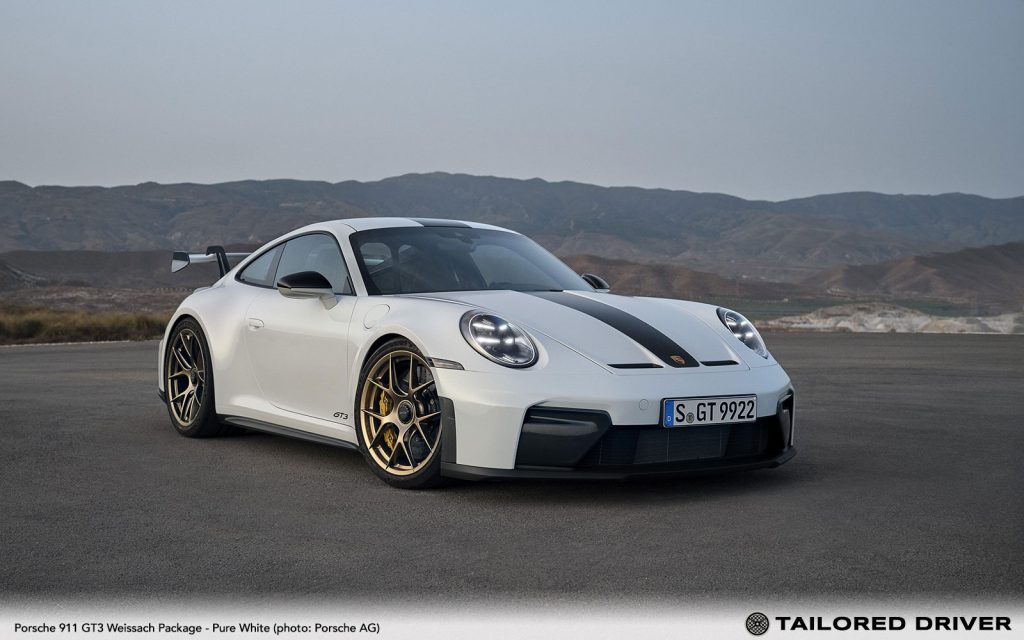
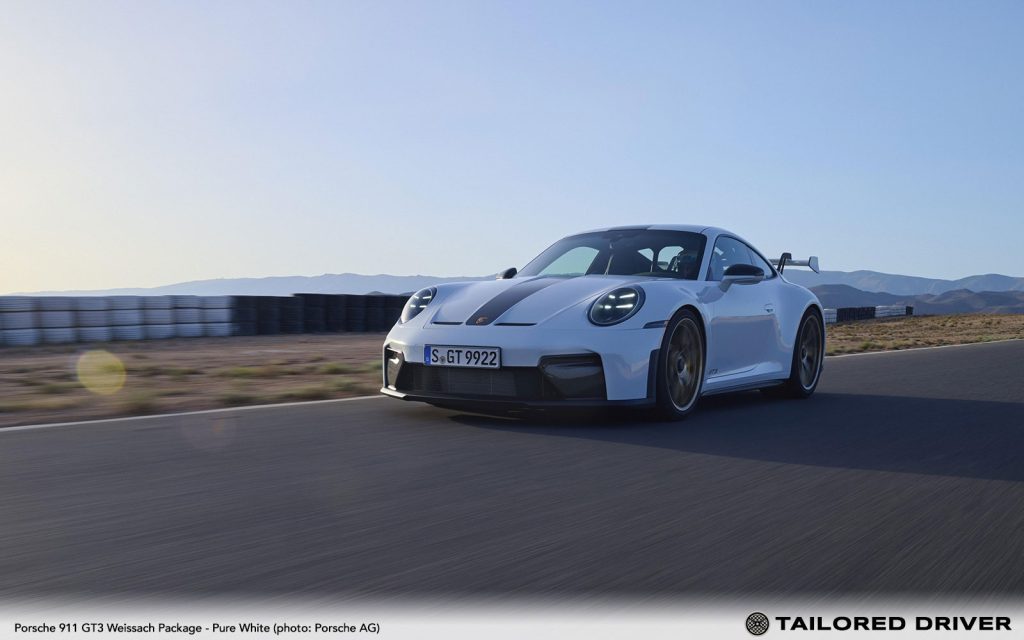
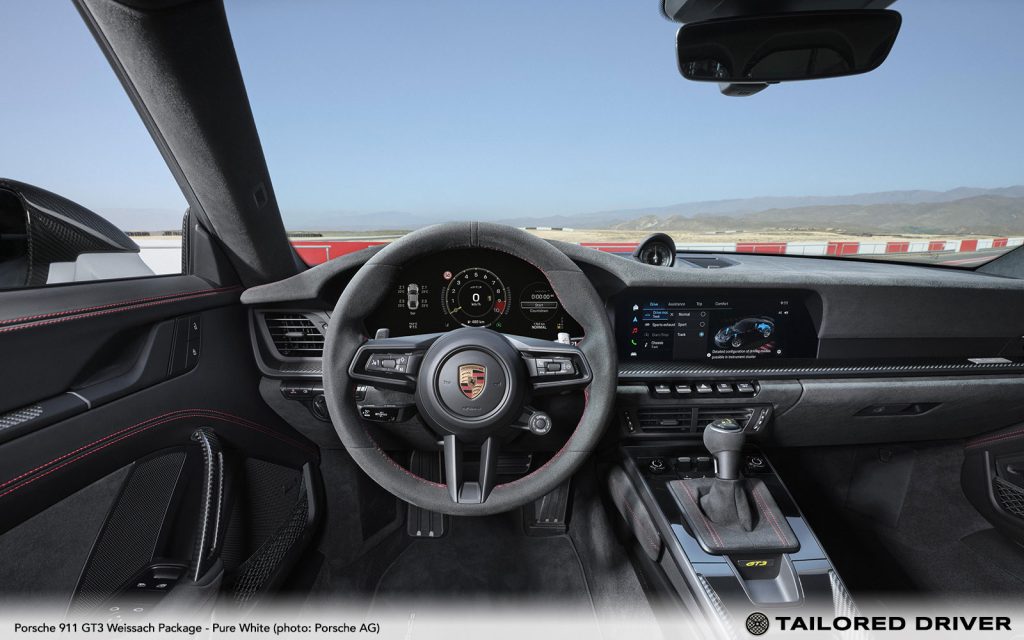
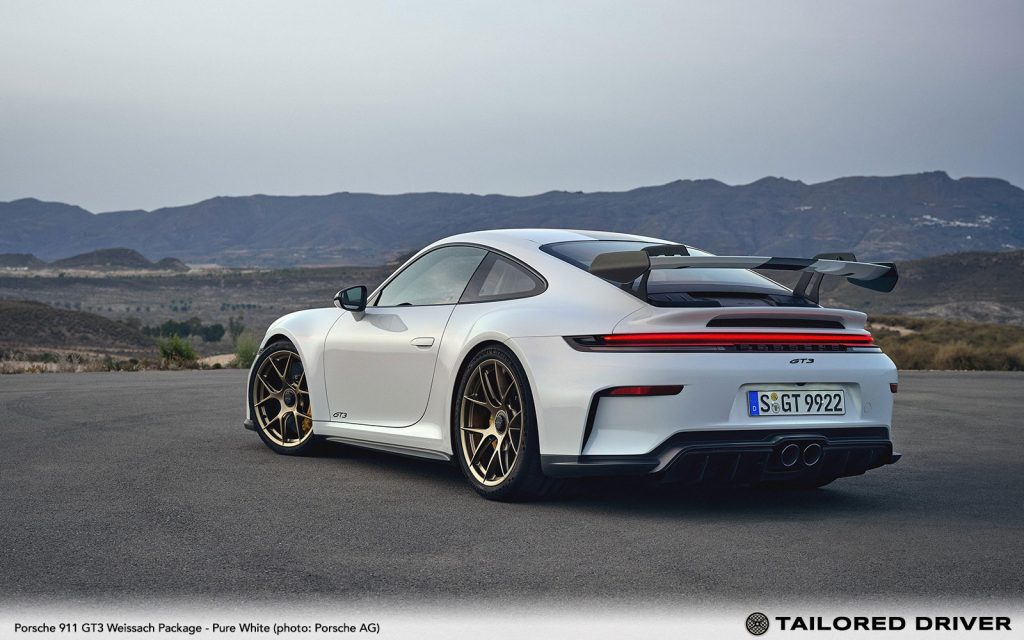
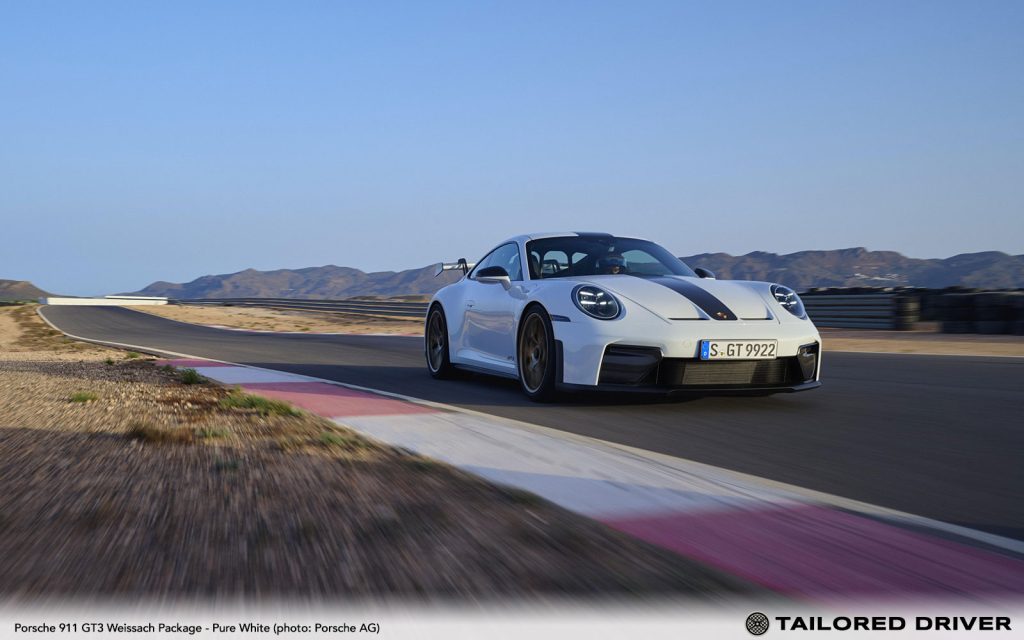
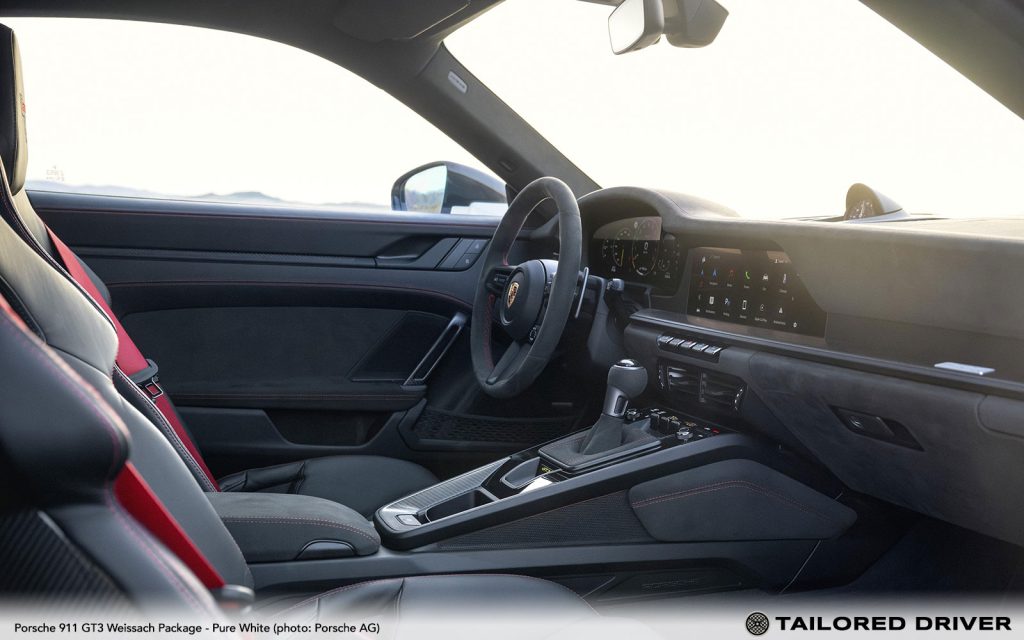
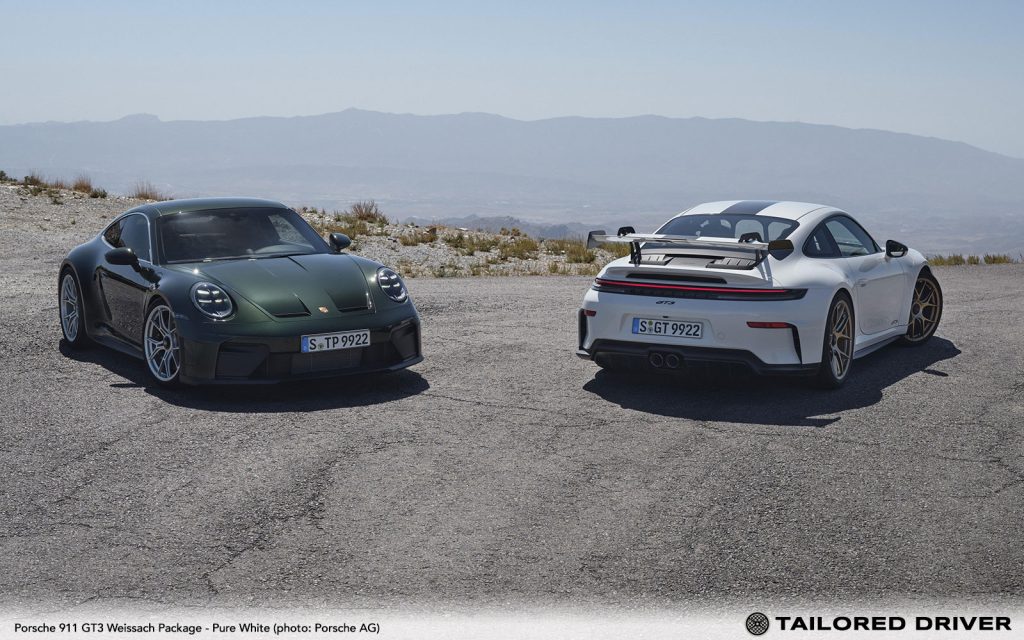
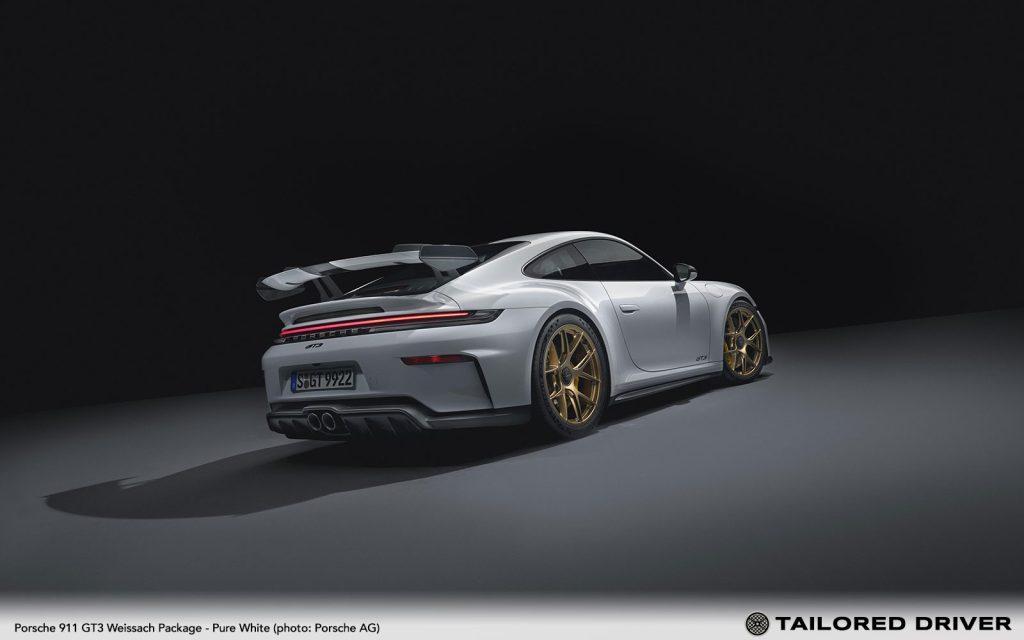
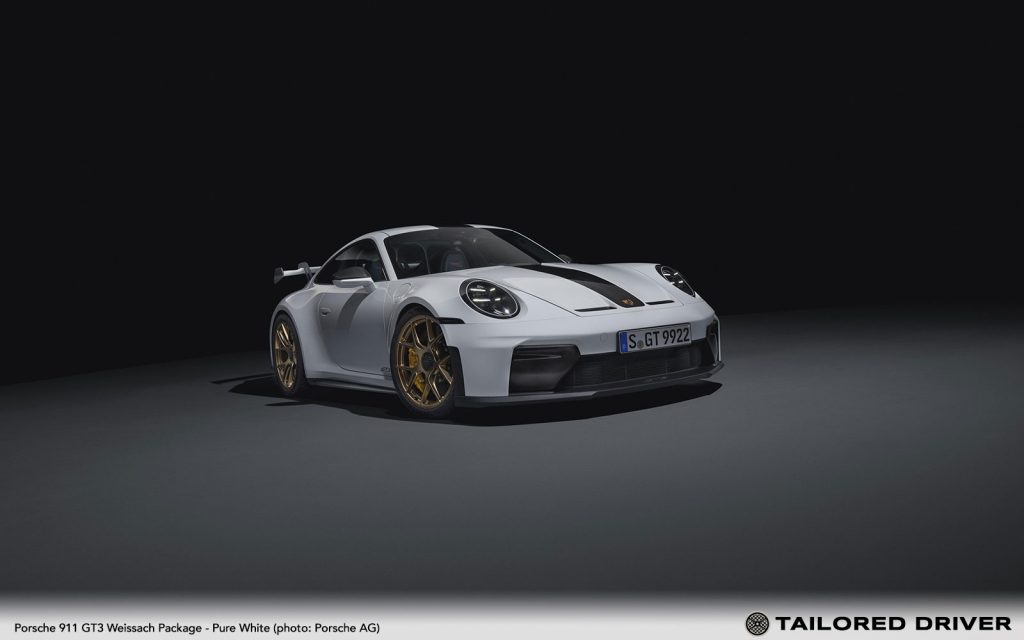
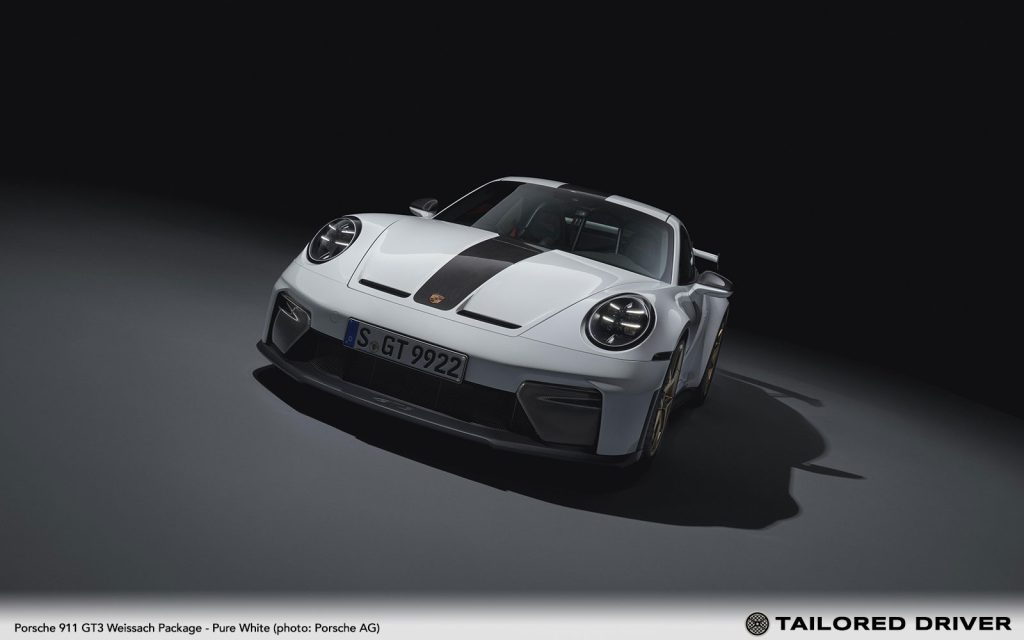
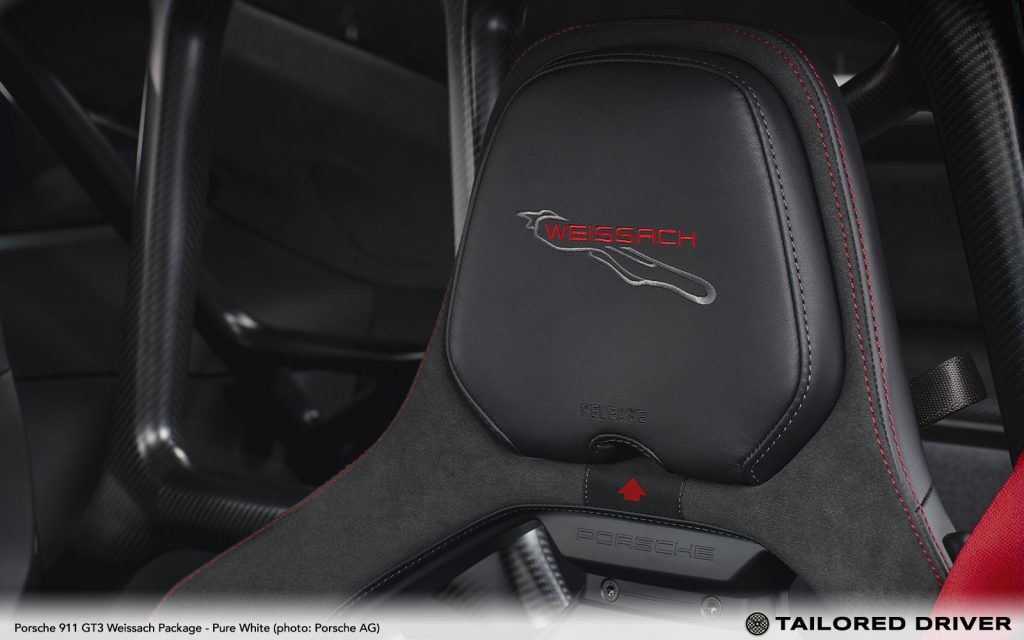
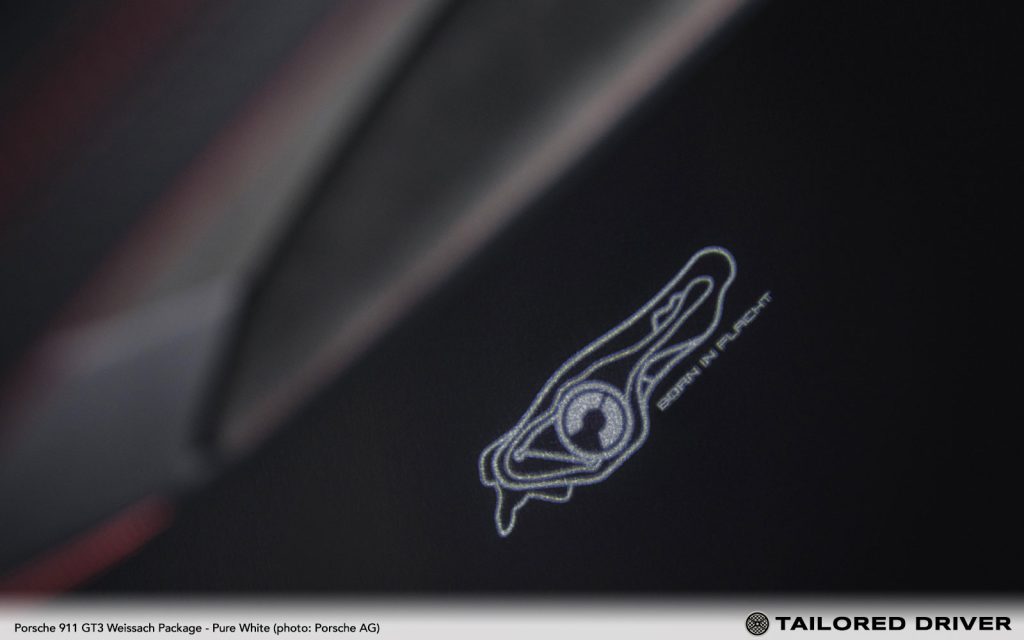
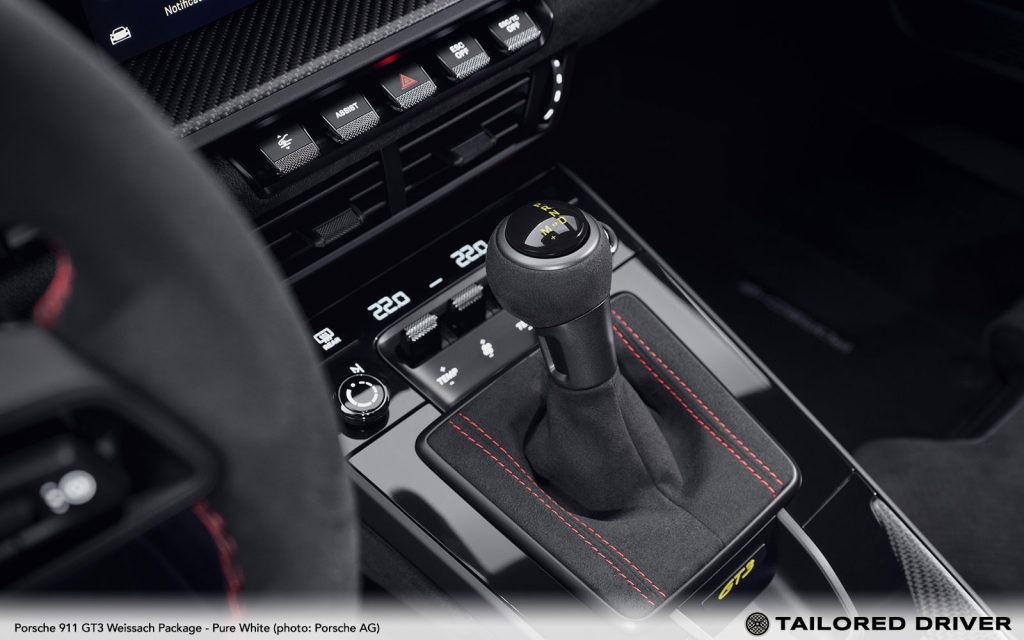
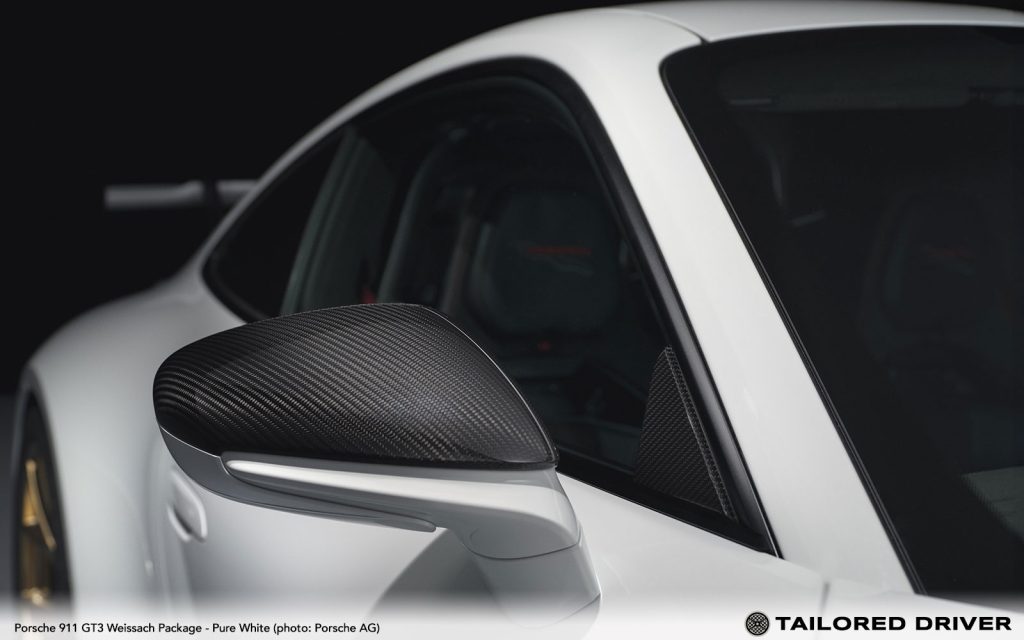
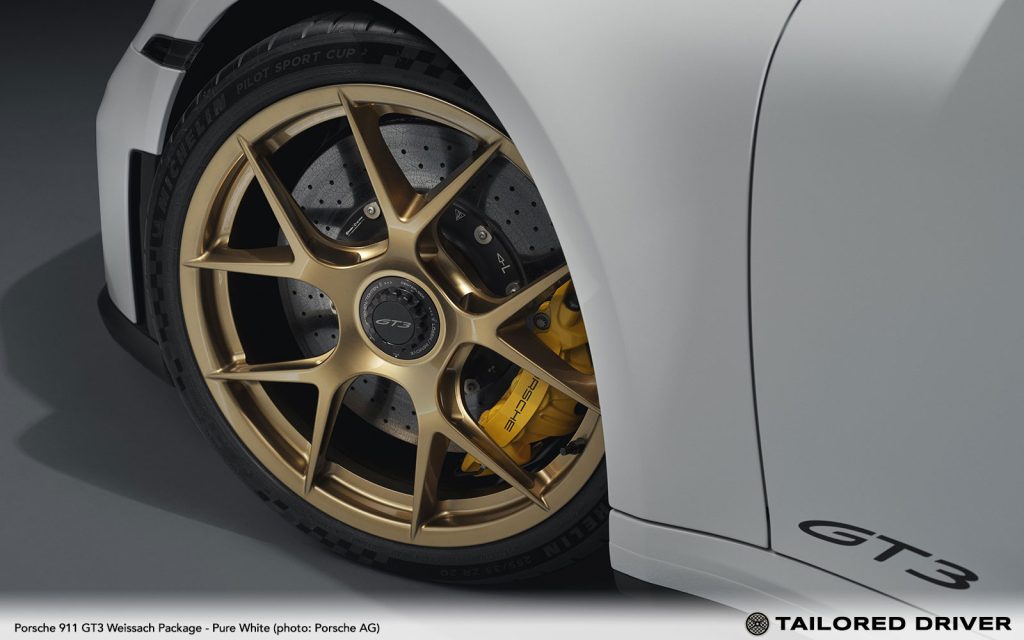
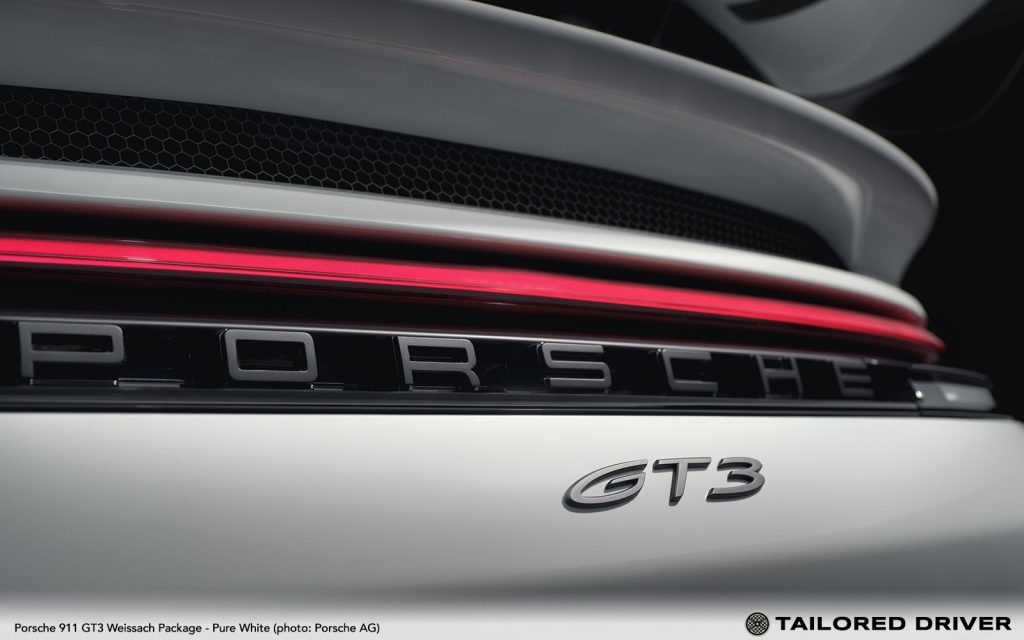
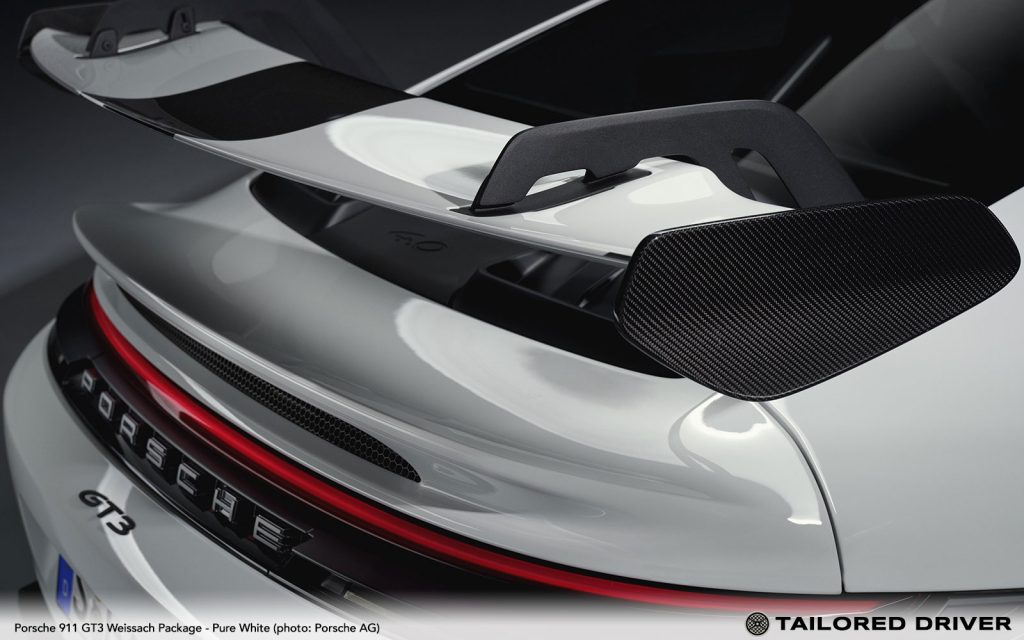
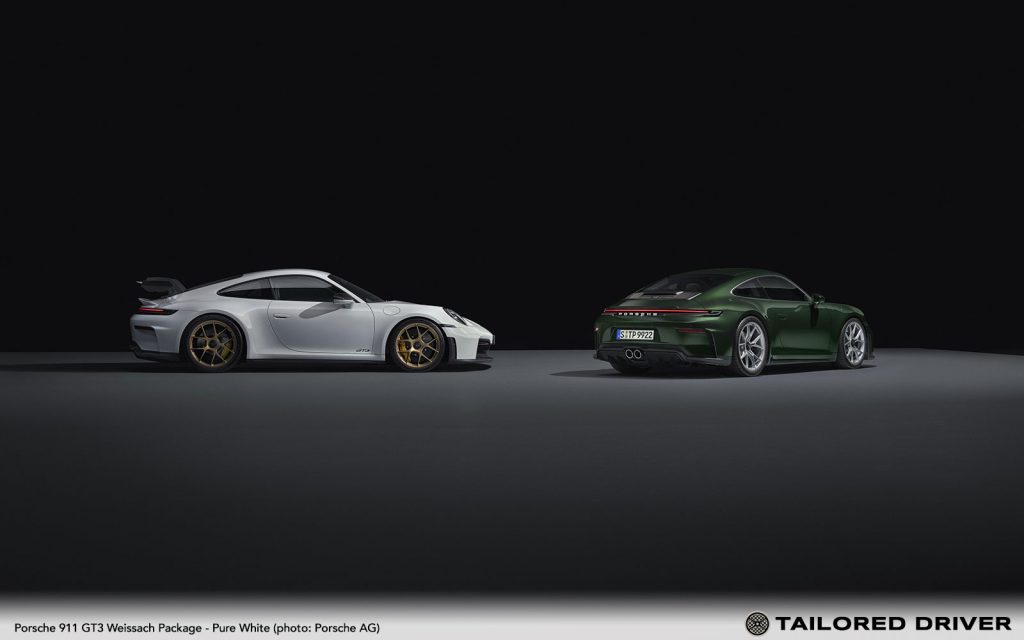
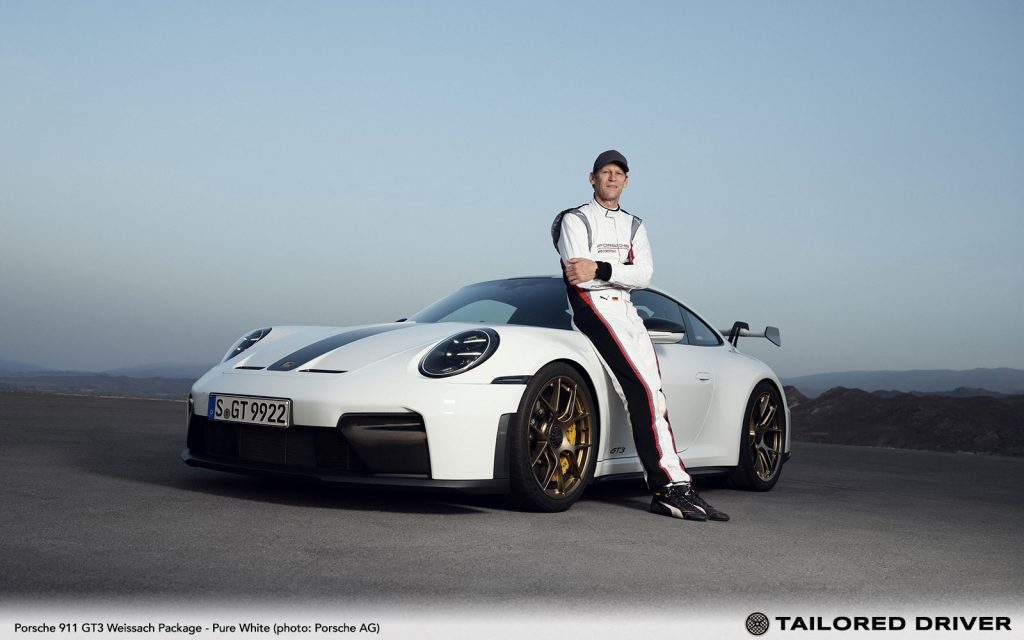
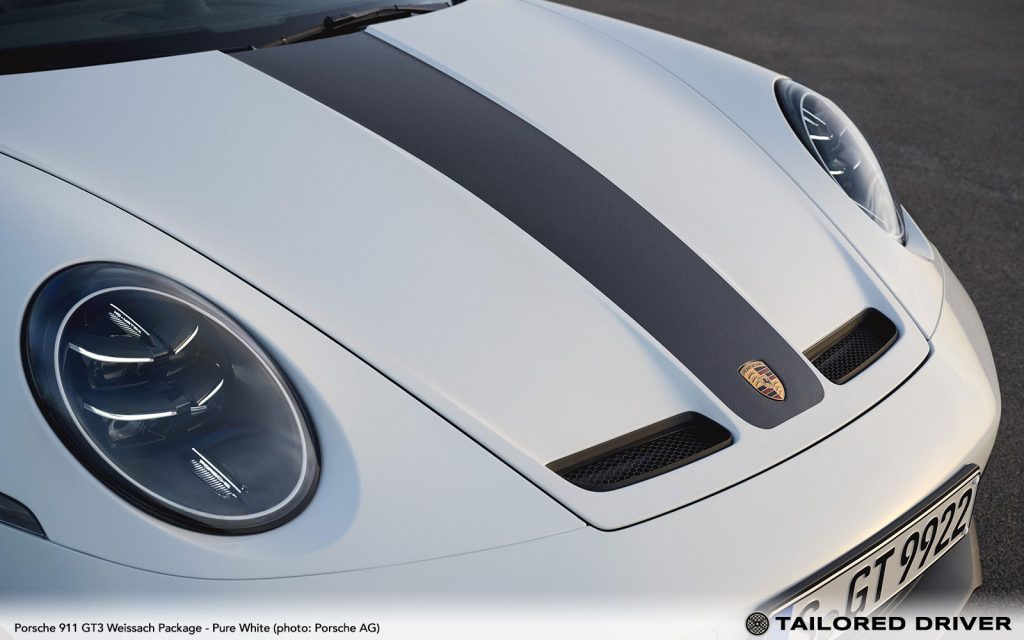
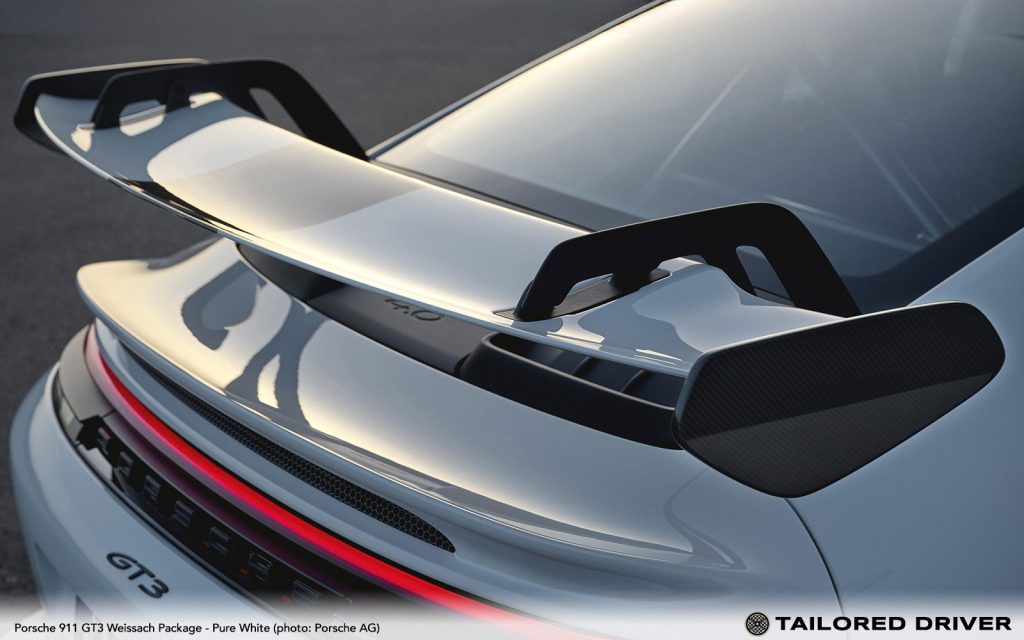
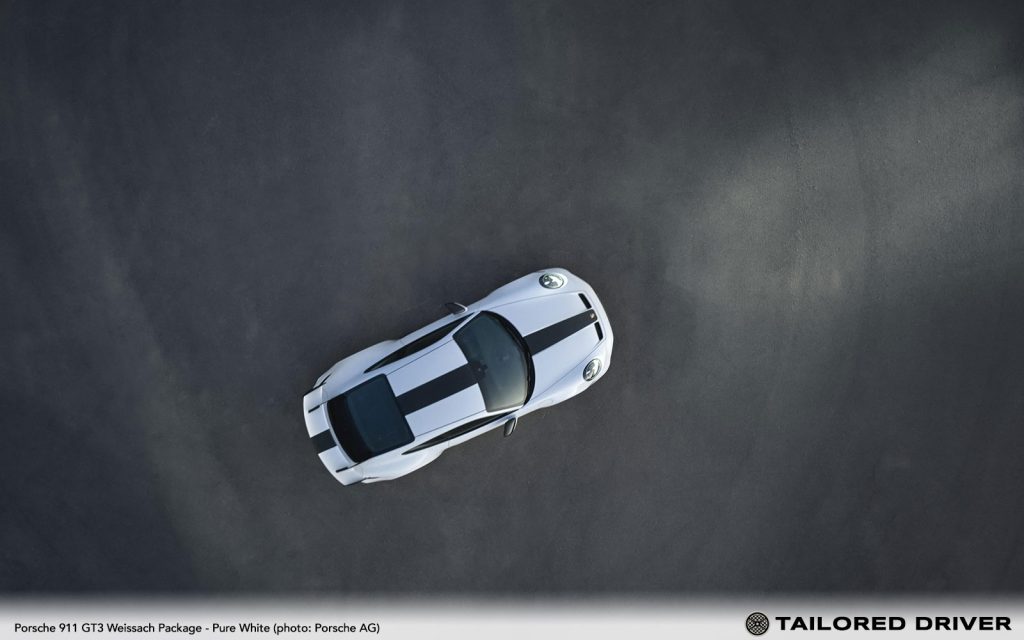
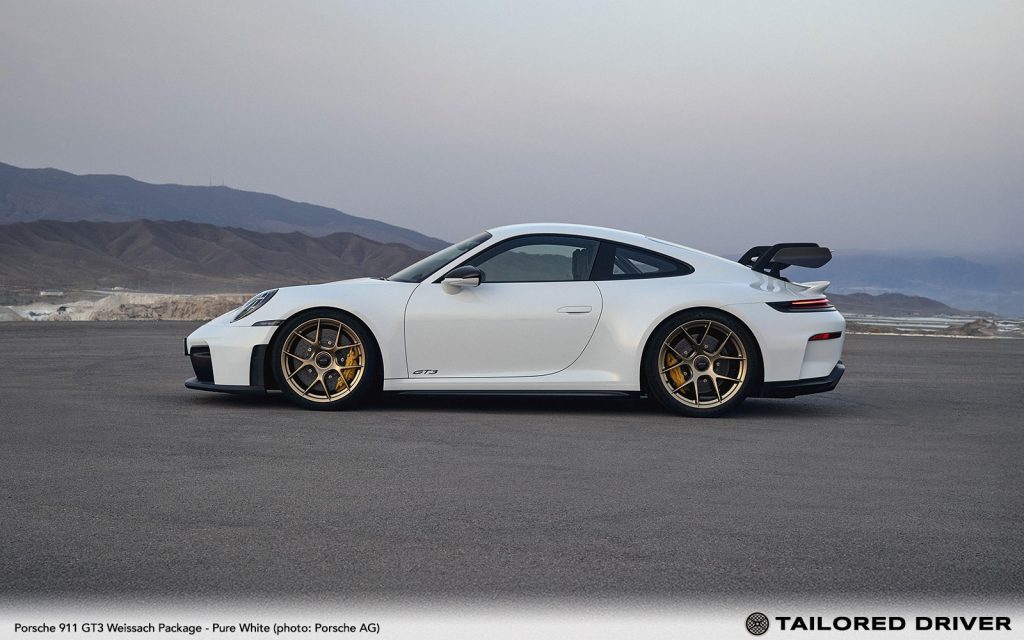
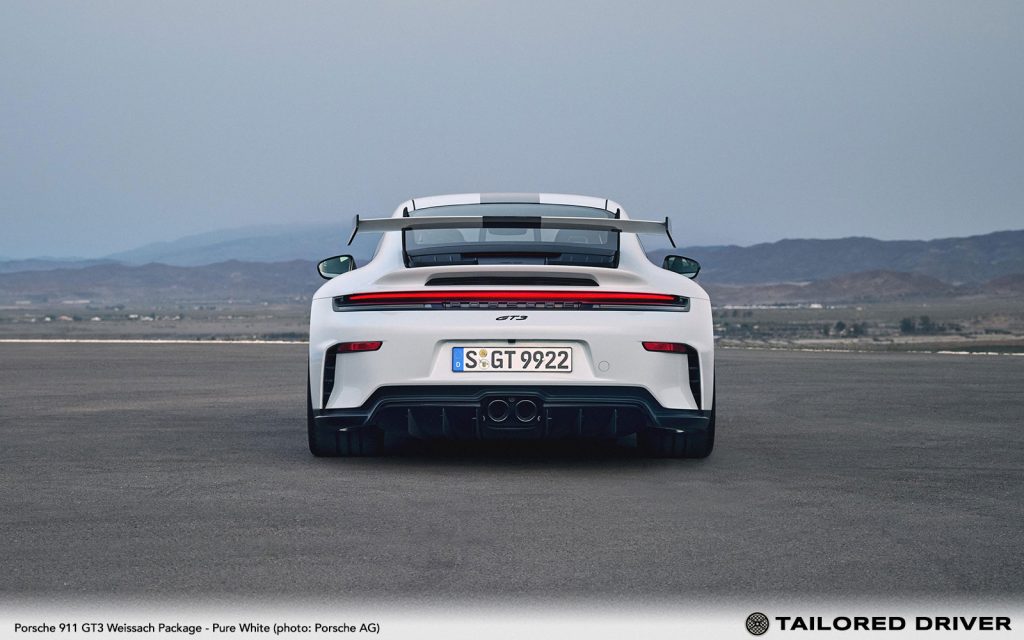
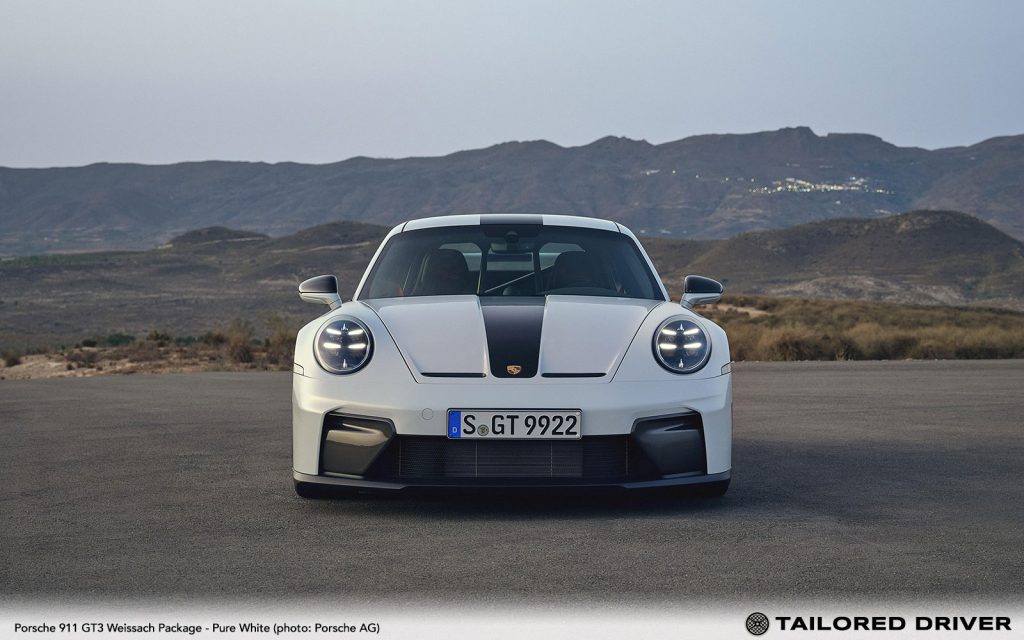
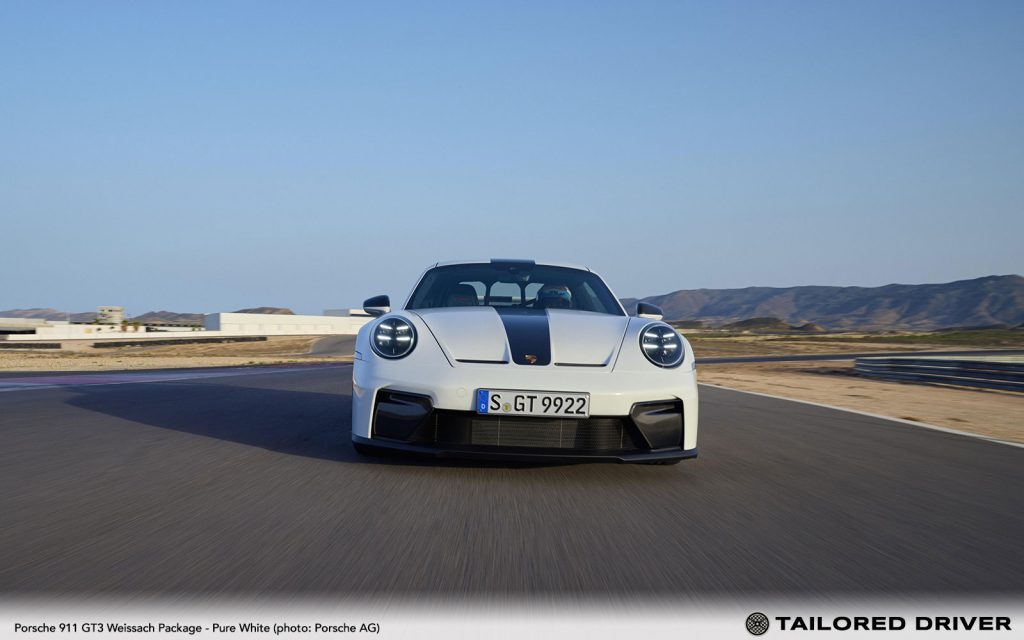
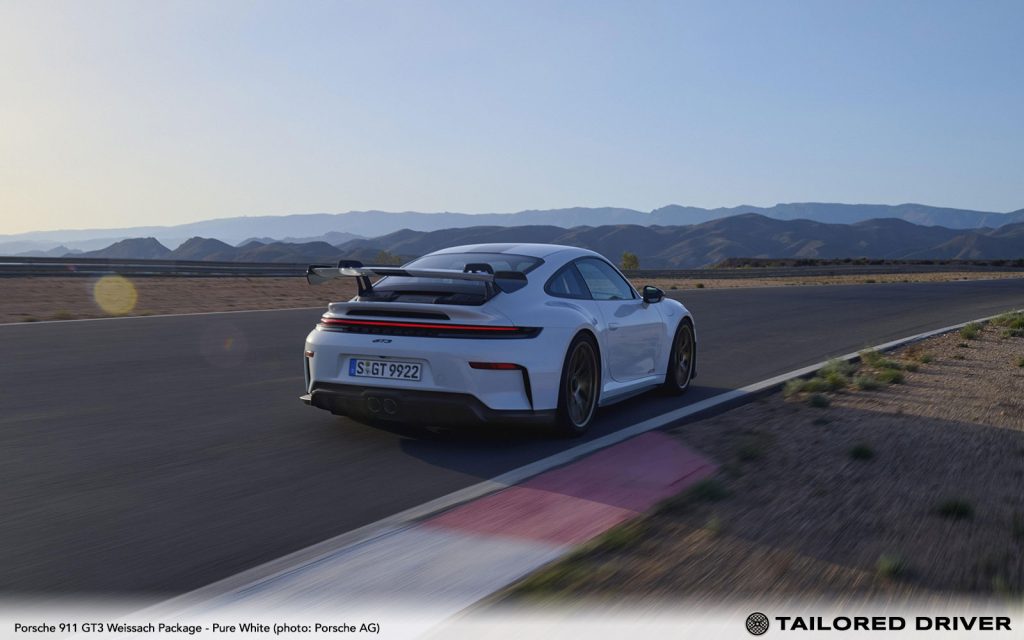
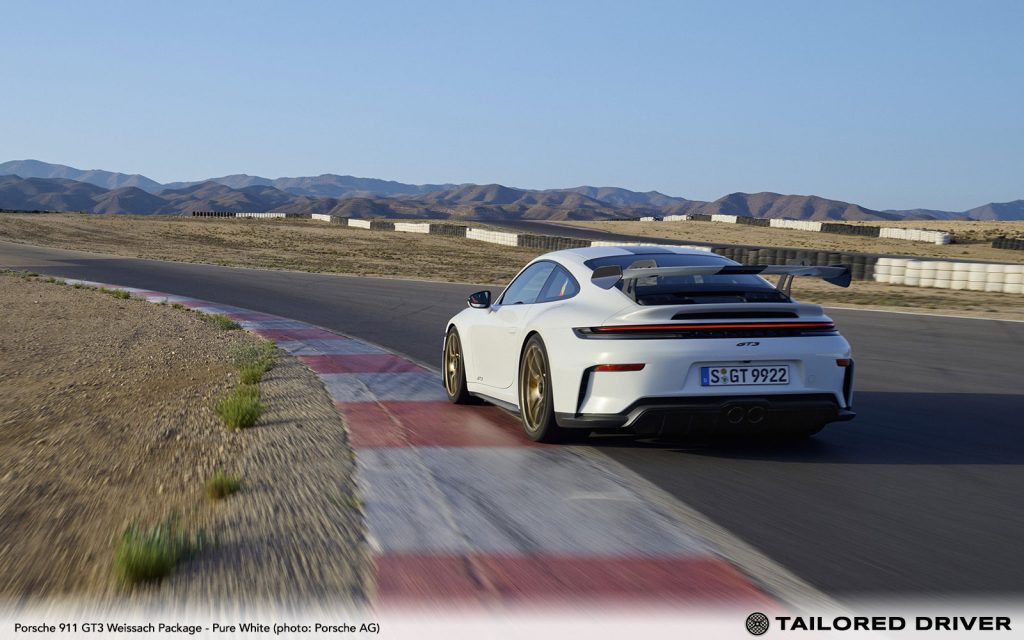
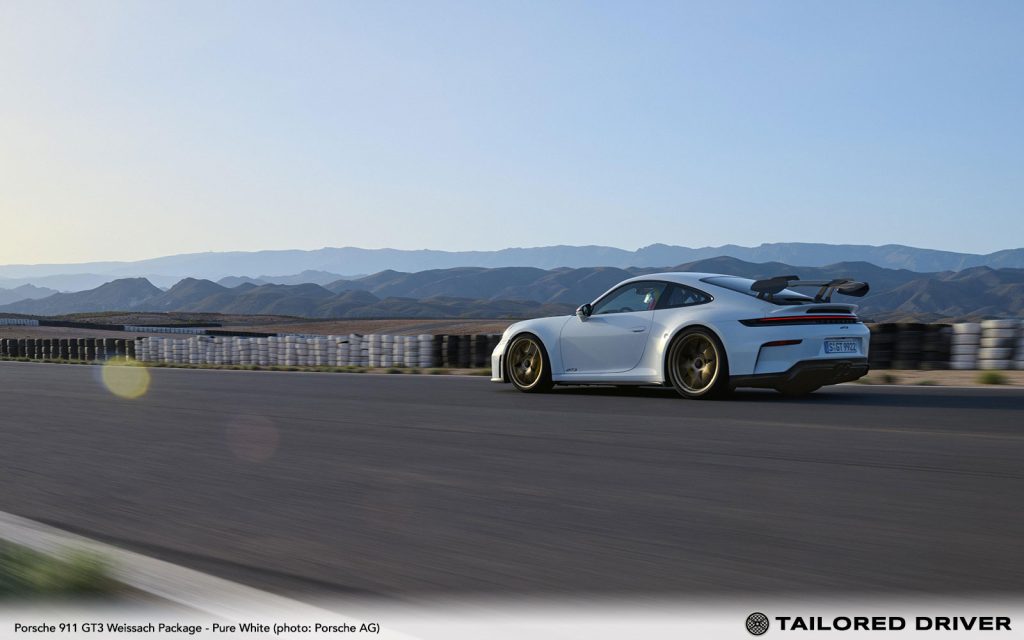
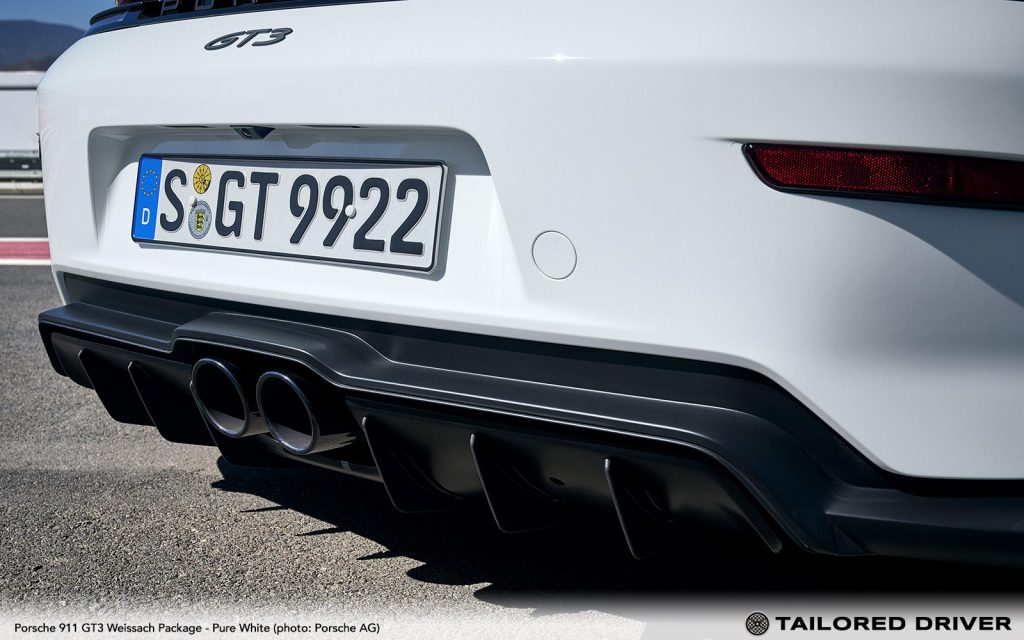
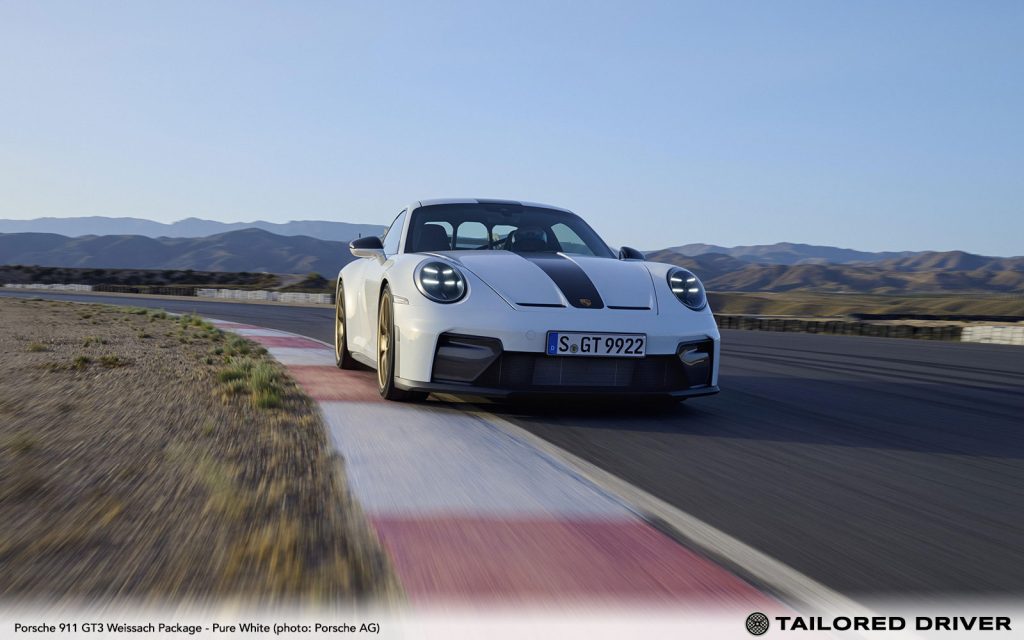
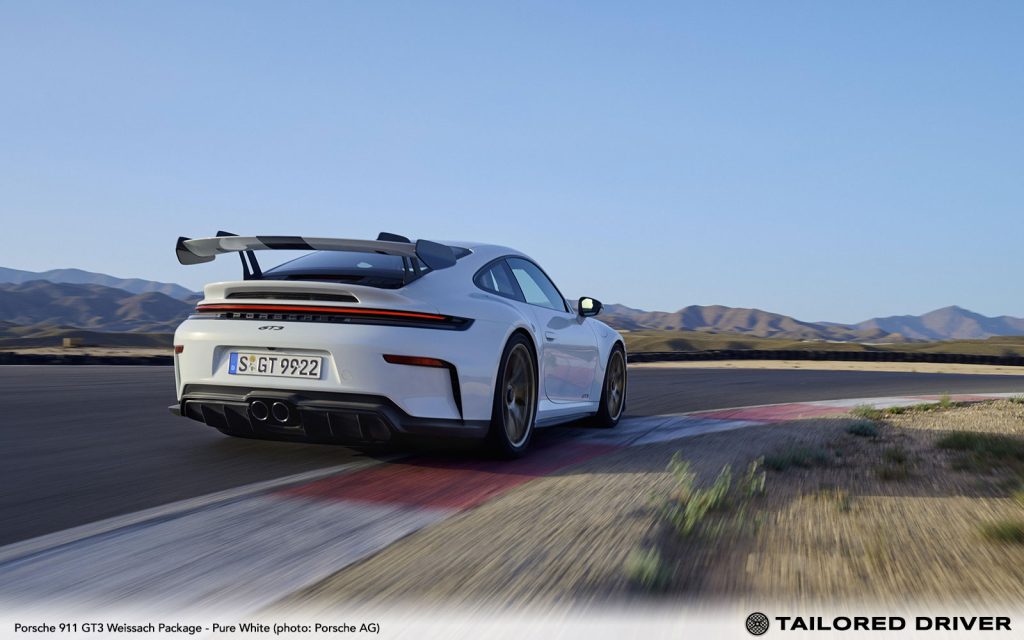
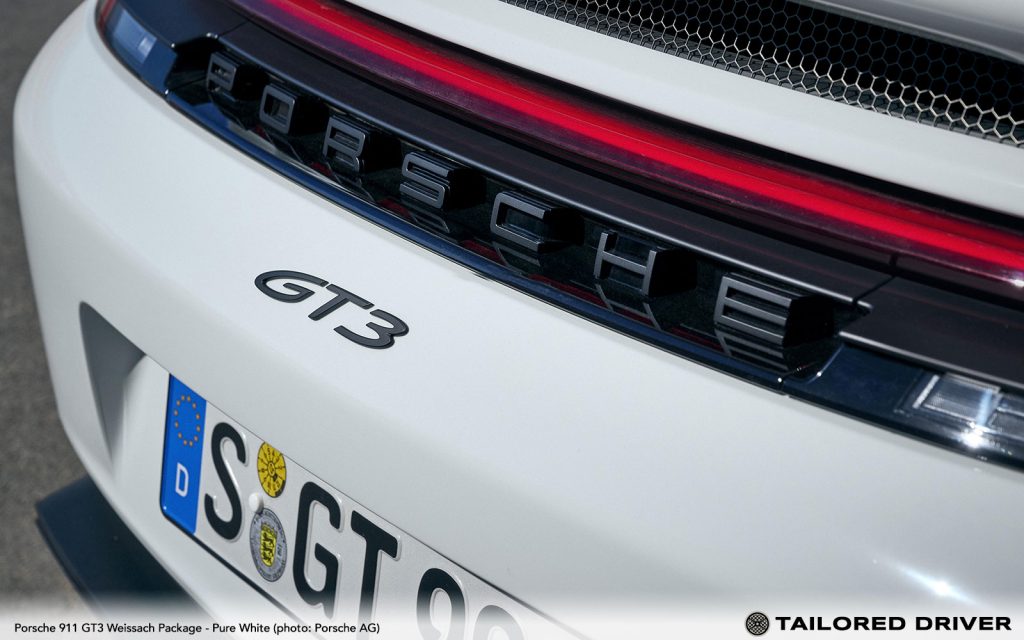
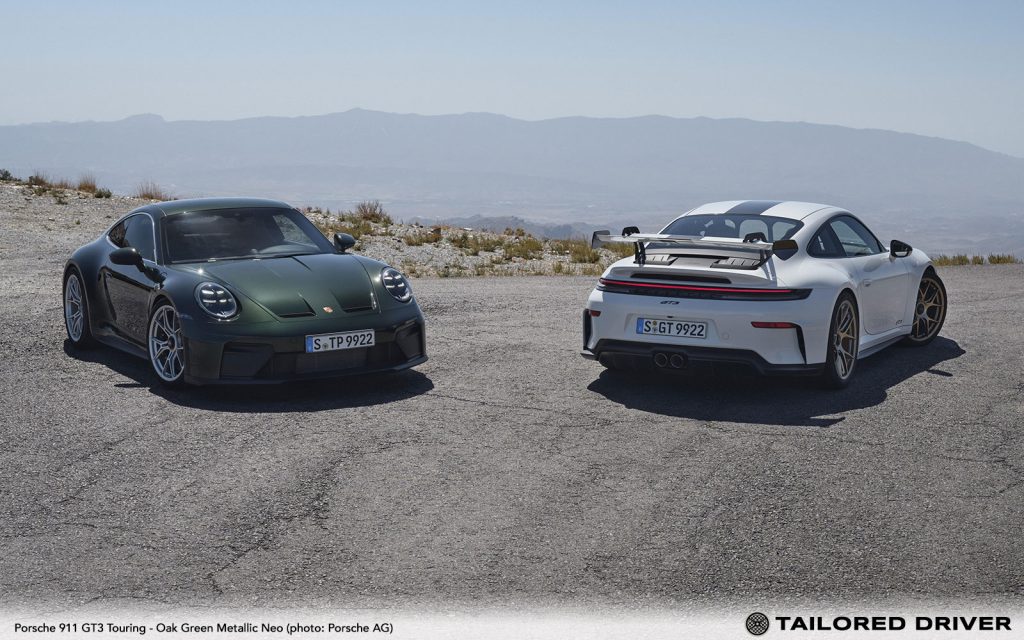
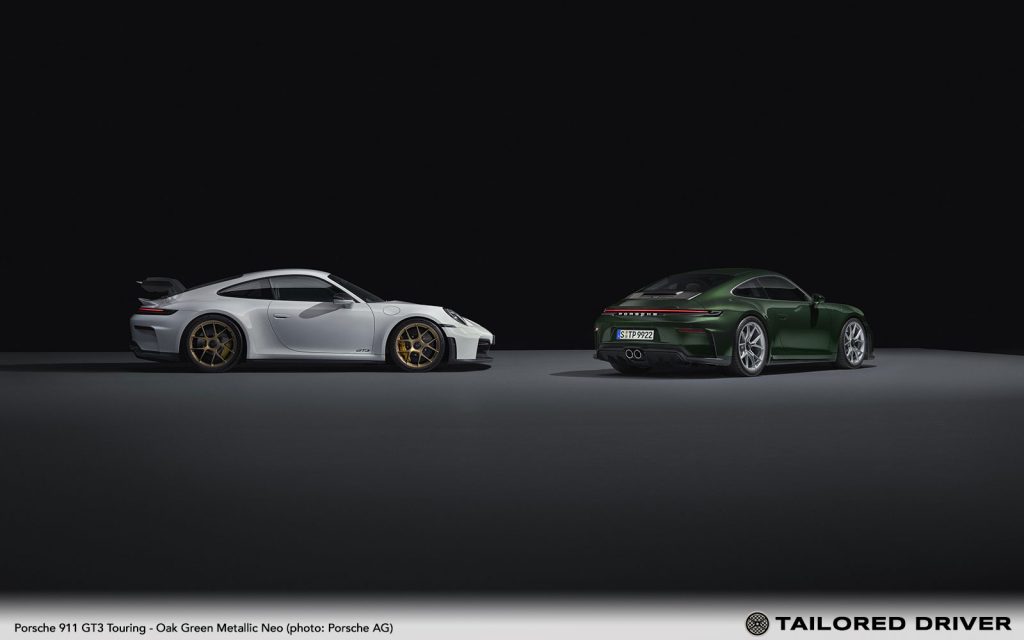
Following Porsche’s premiere of the new 911 GT3 and GT3 Touring, Porsche dropped a new round of marketing shots on their social media feed. In the case of the GT3 (non-touring), it’s the same specification Pure White (purweiß; nonmetallic UNI; Z99; Porsche) exterior color with Weissach Package.
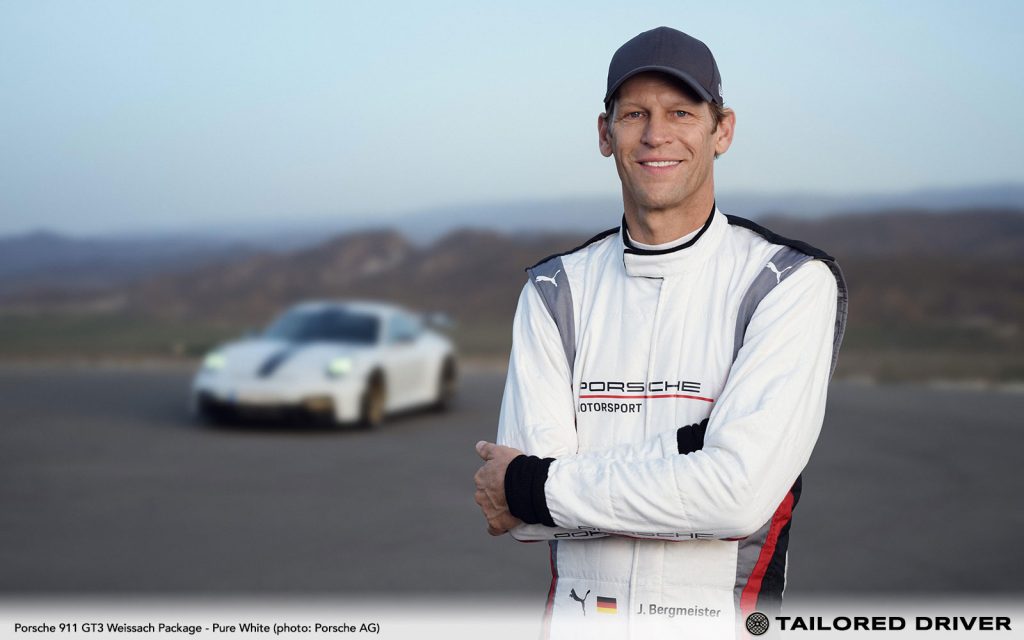
While we’ve run the entire mix of PR photos available so far, we also wanted to include these marketing shots. They show some other angles and details that haven’t been seen before.
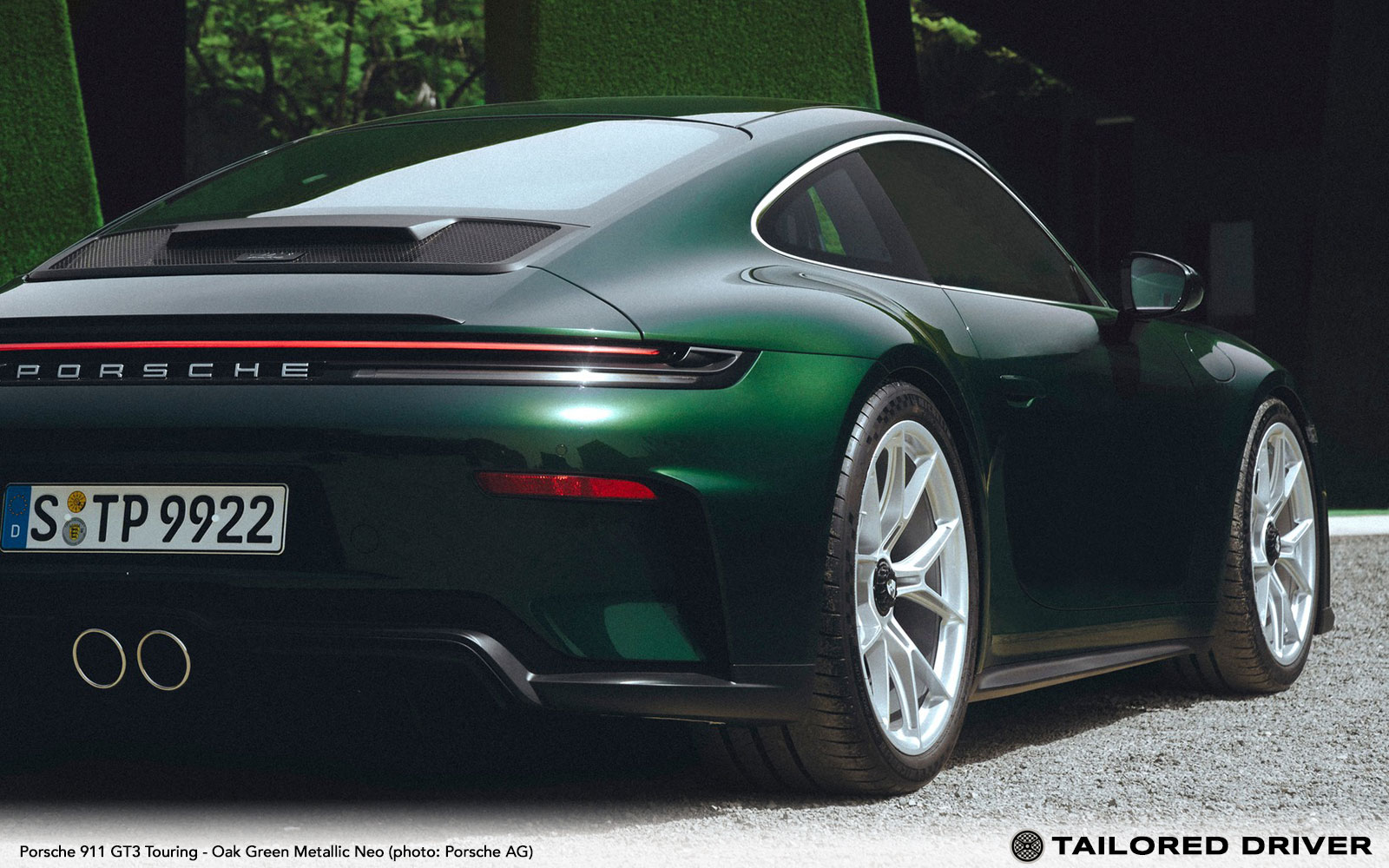
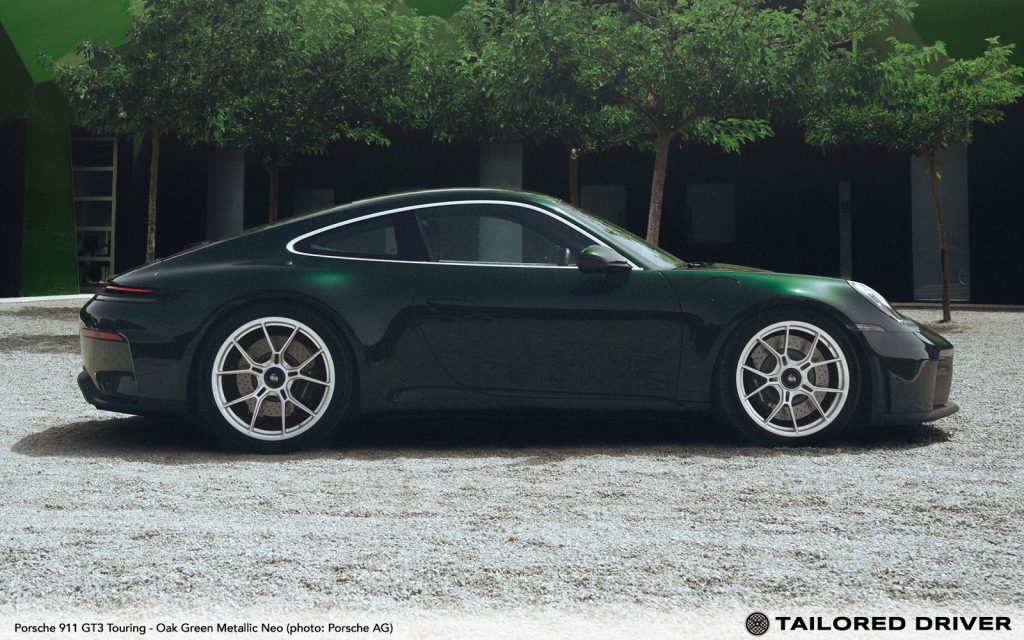
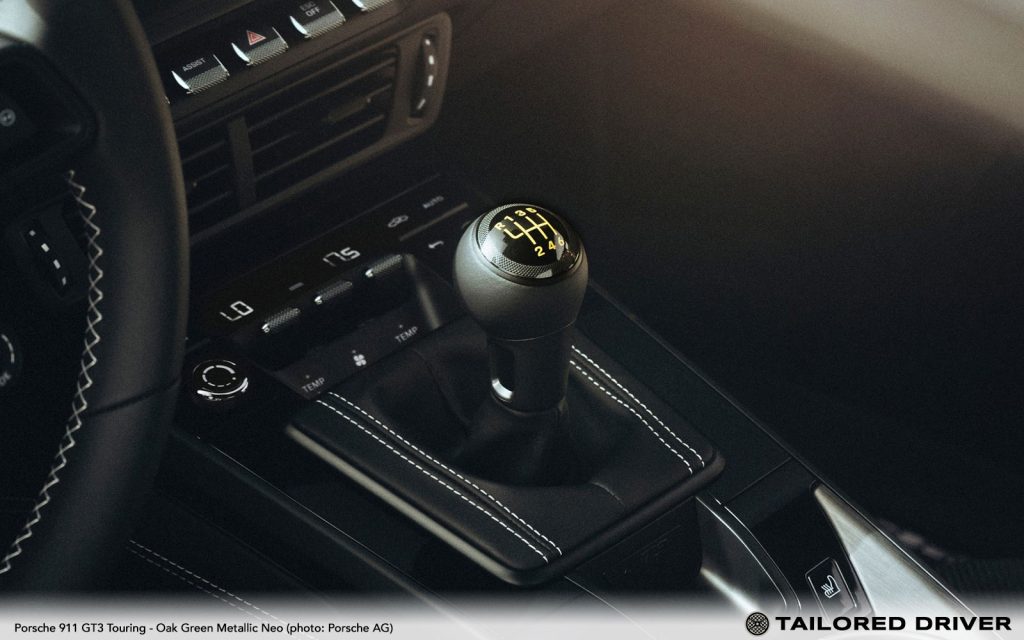
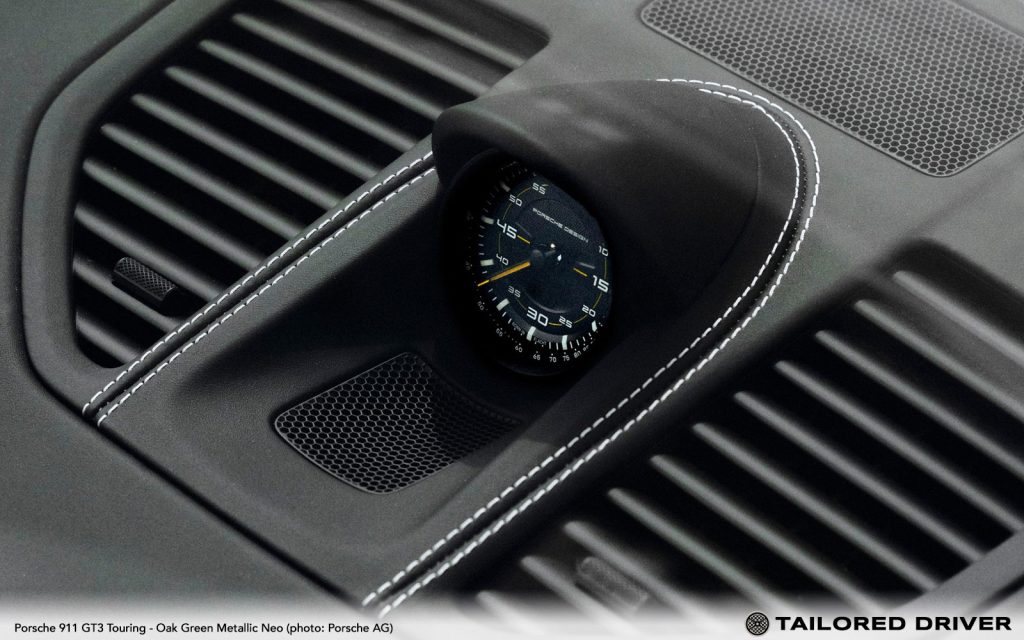
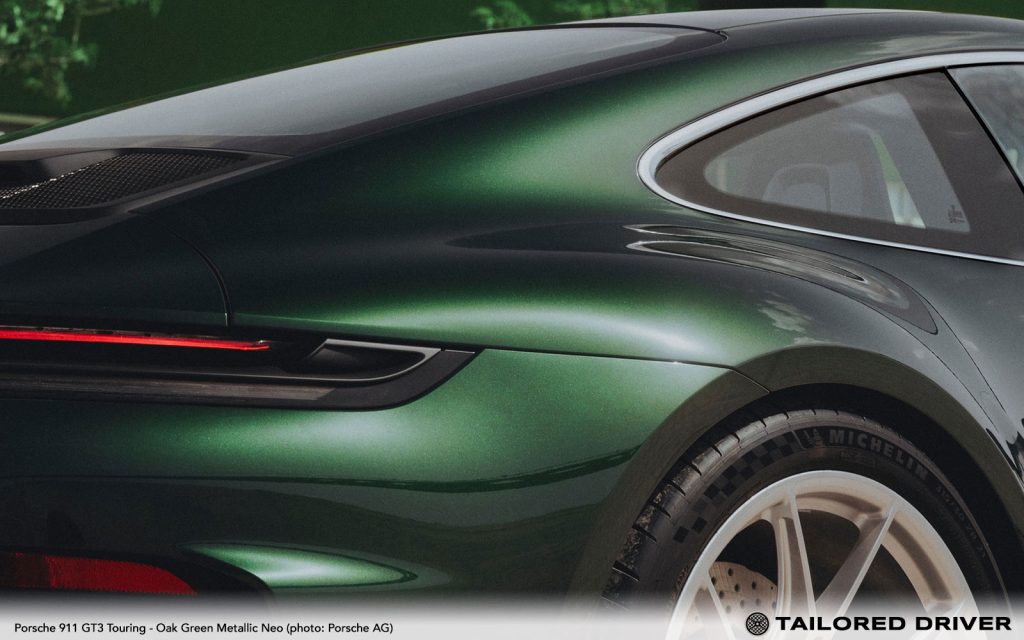
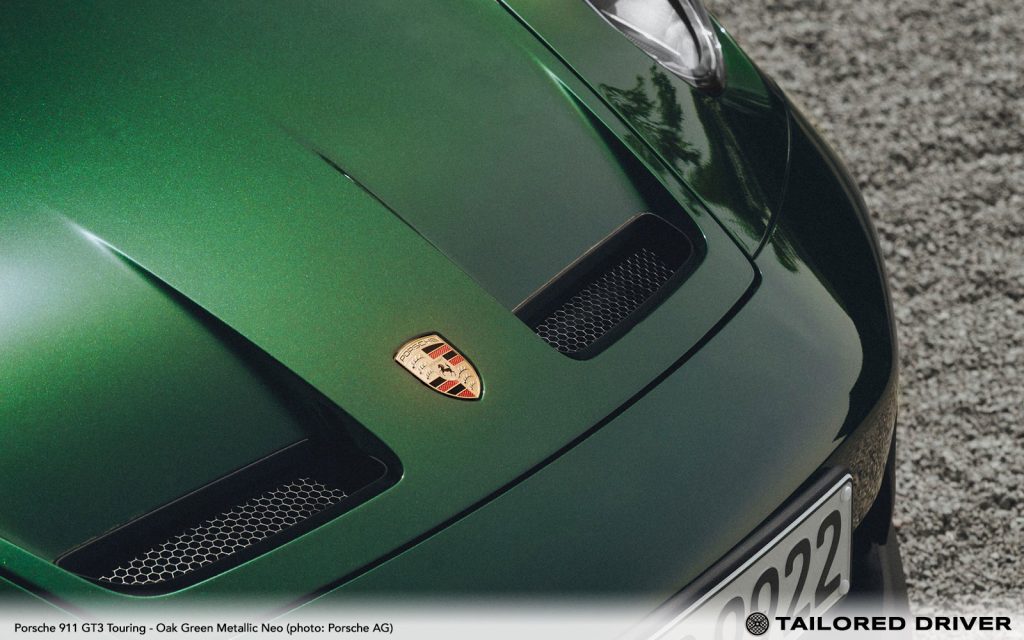
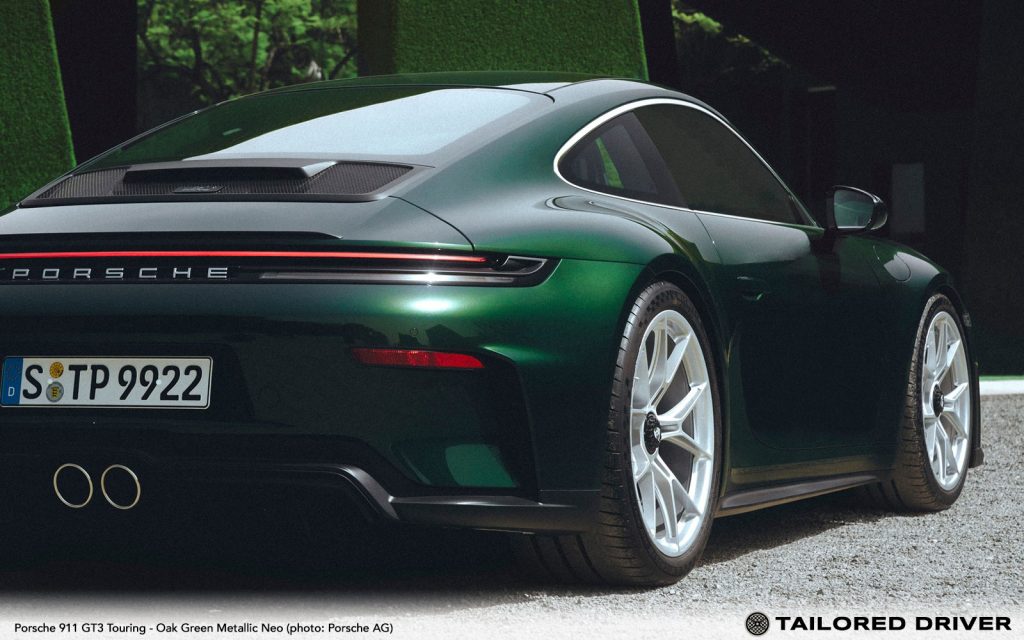
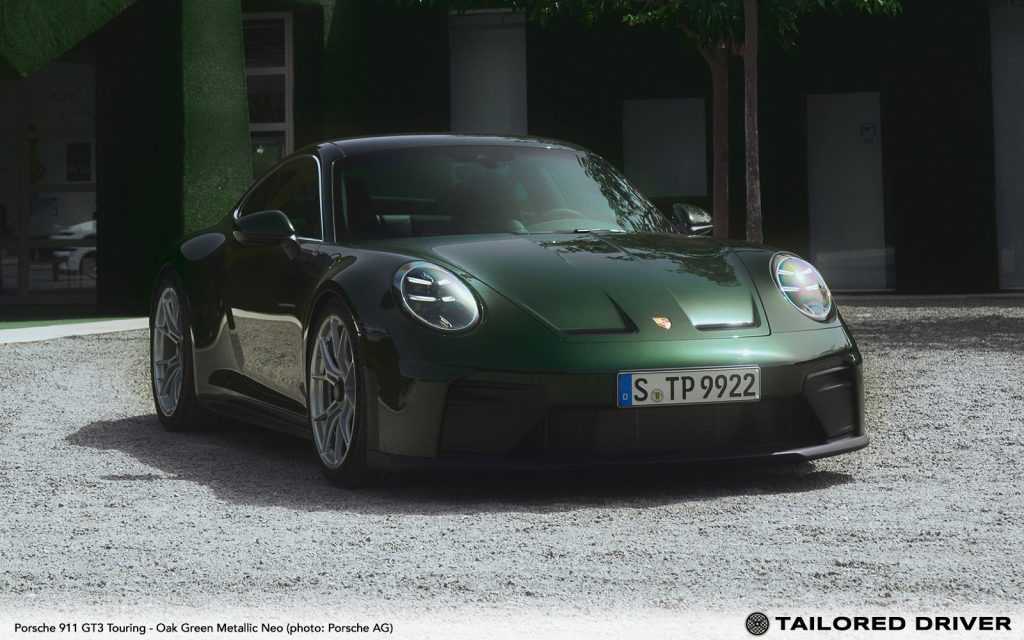
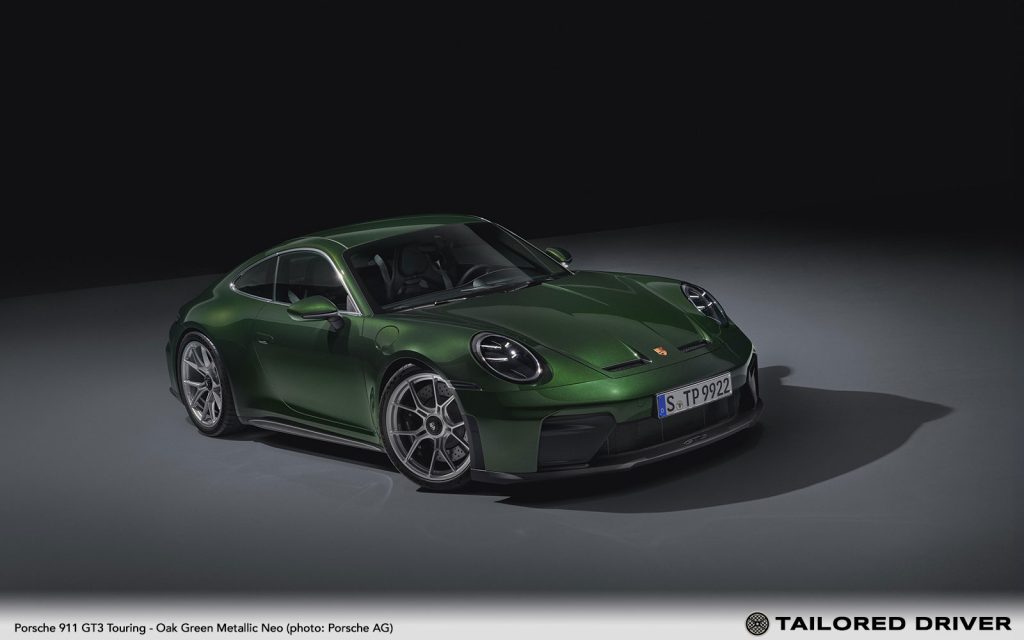
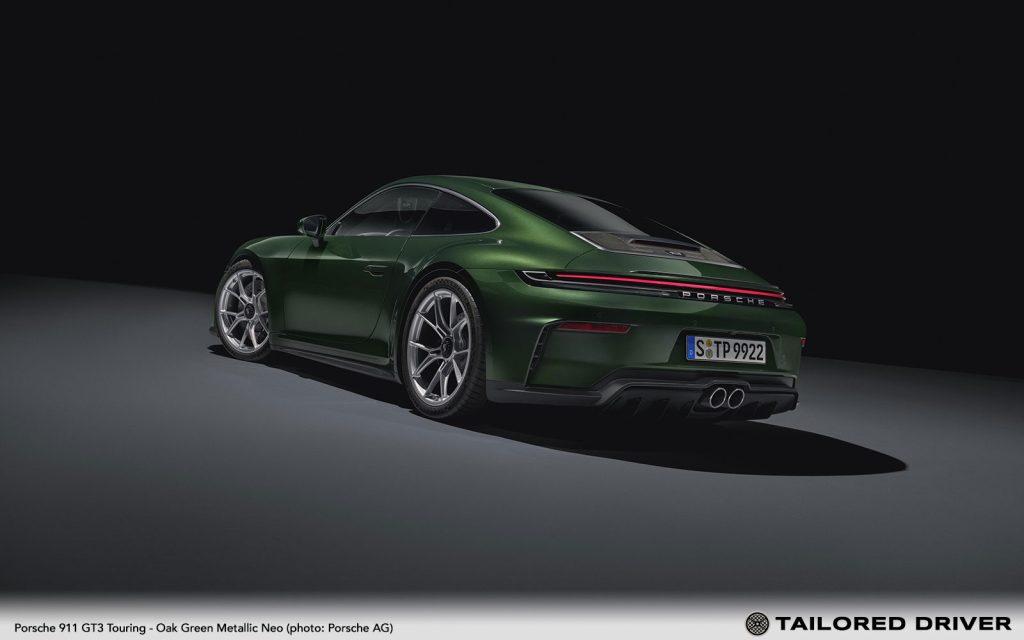
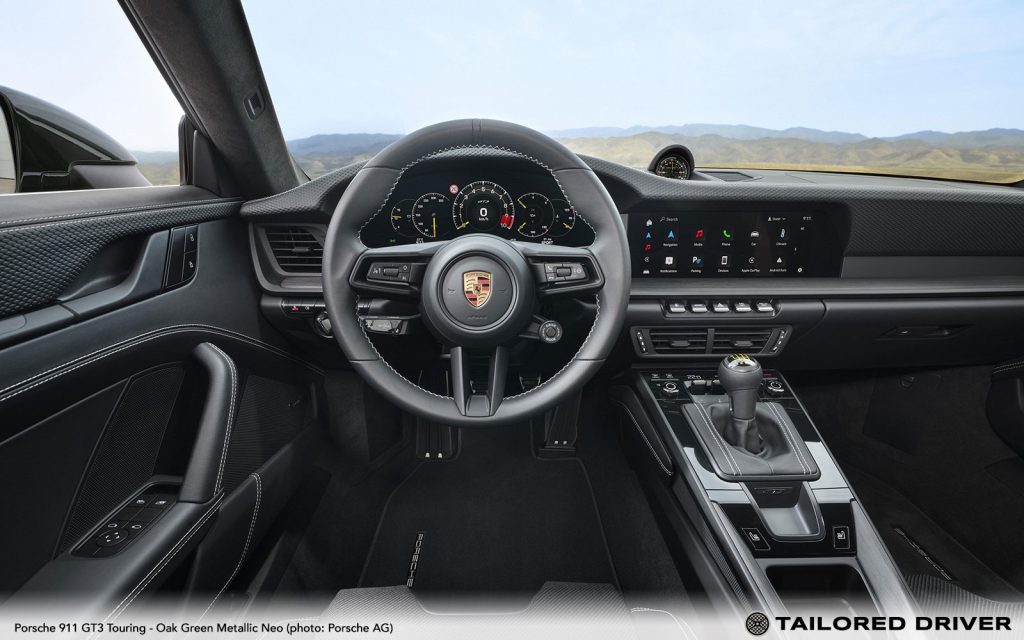
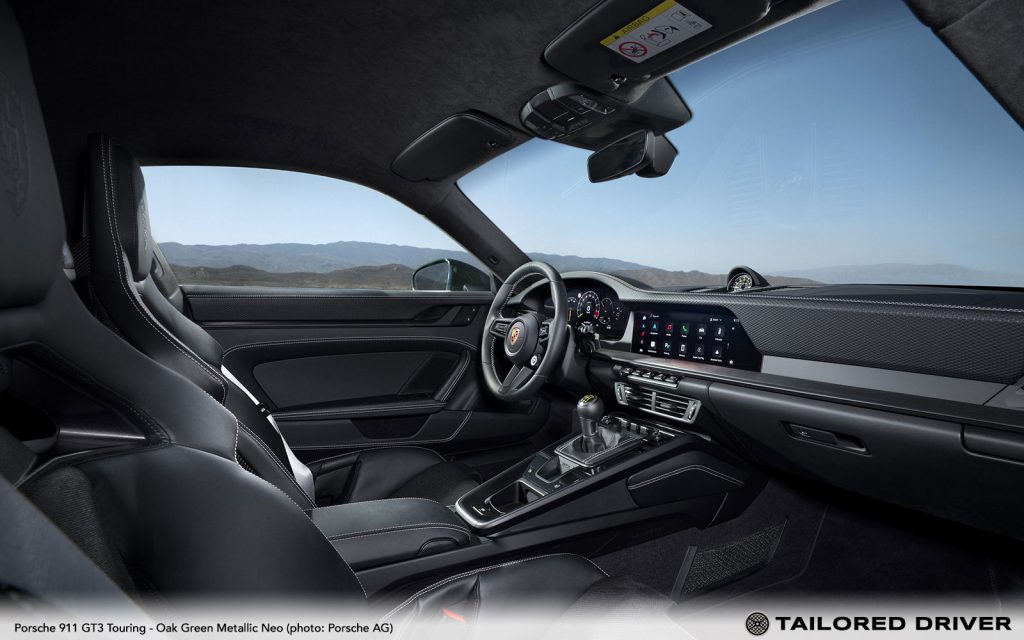
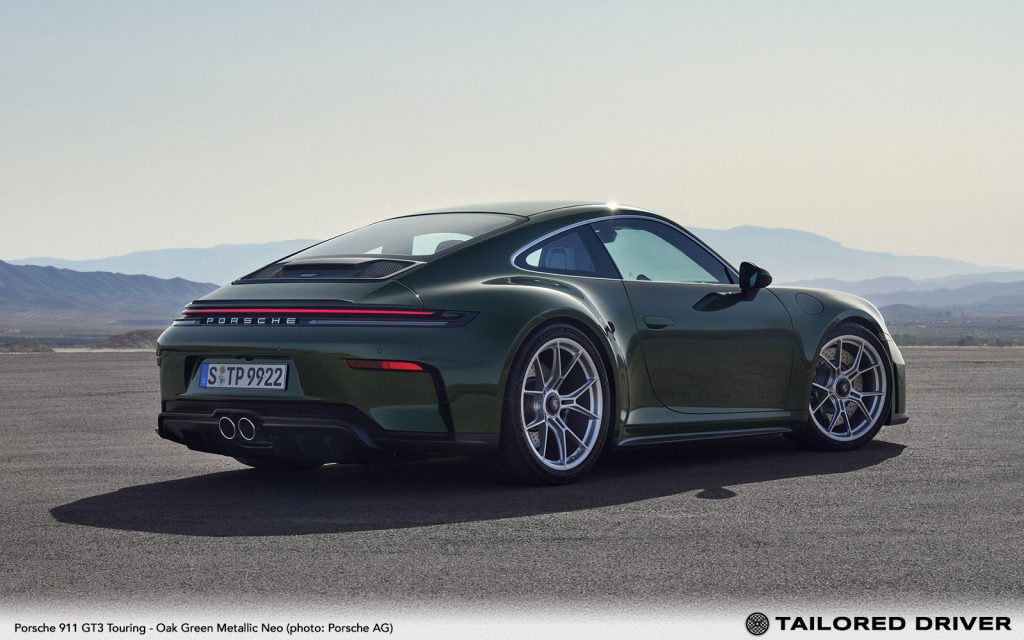
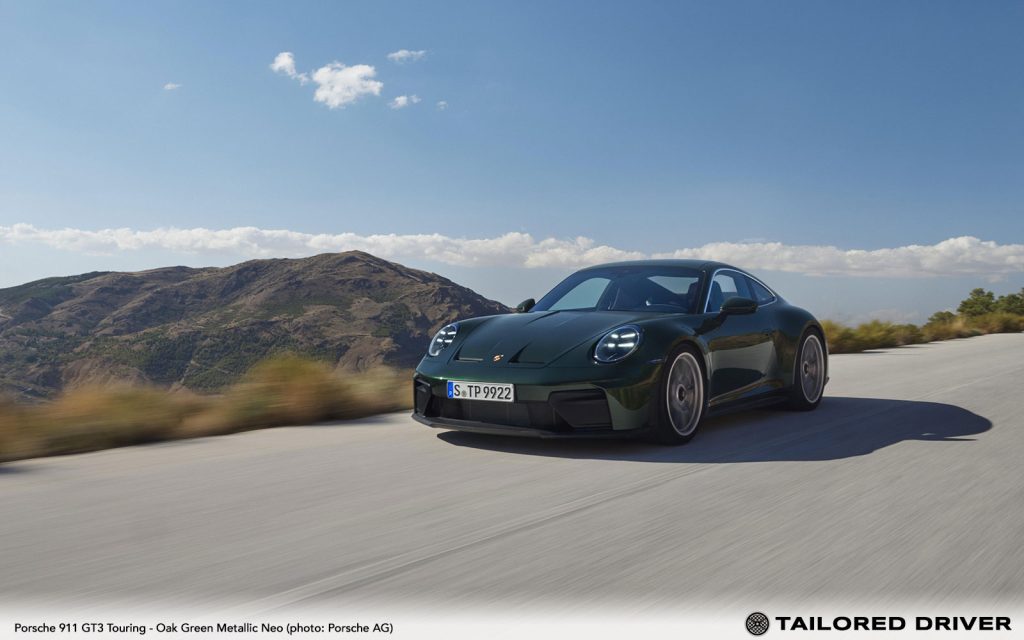
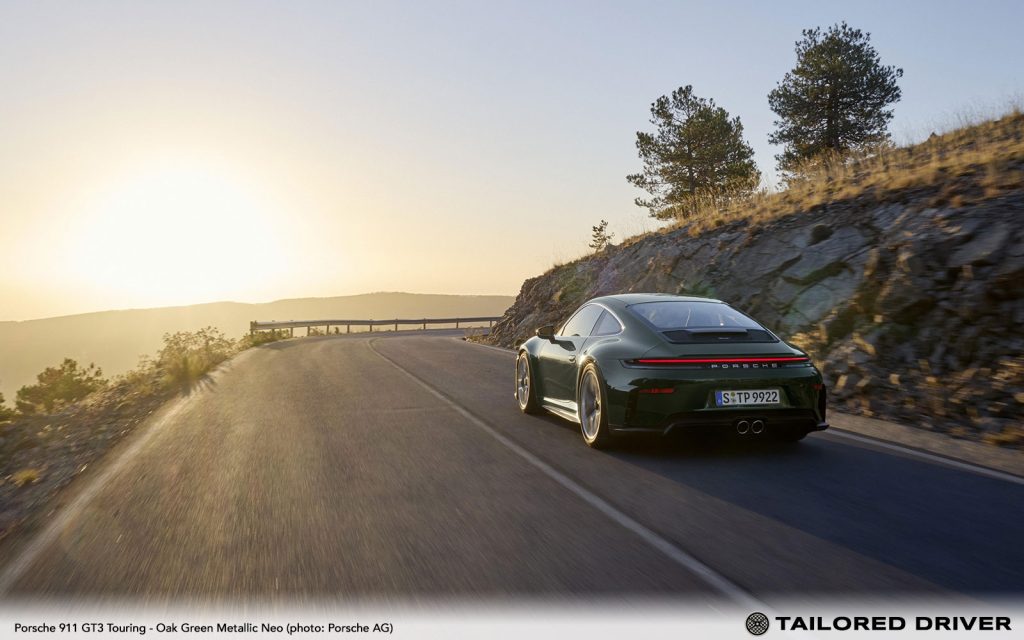
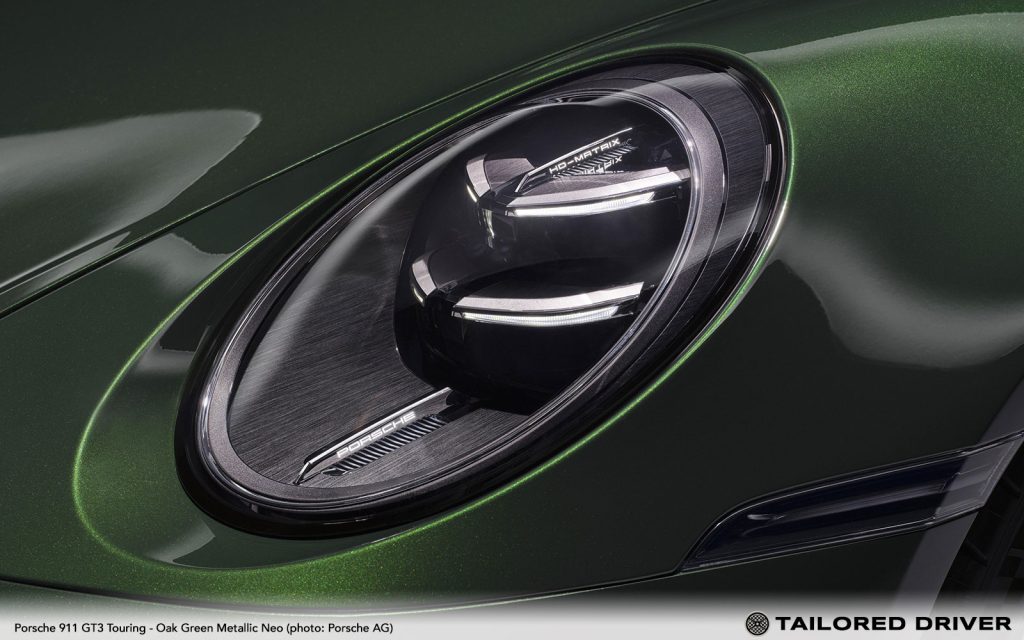
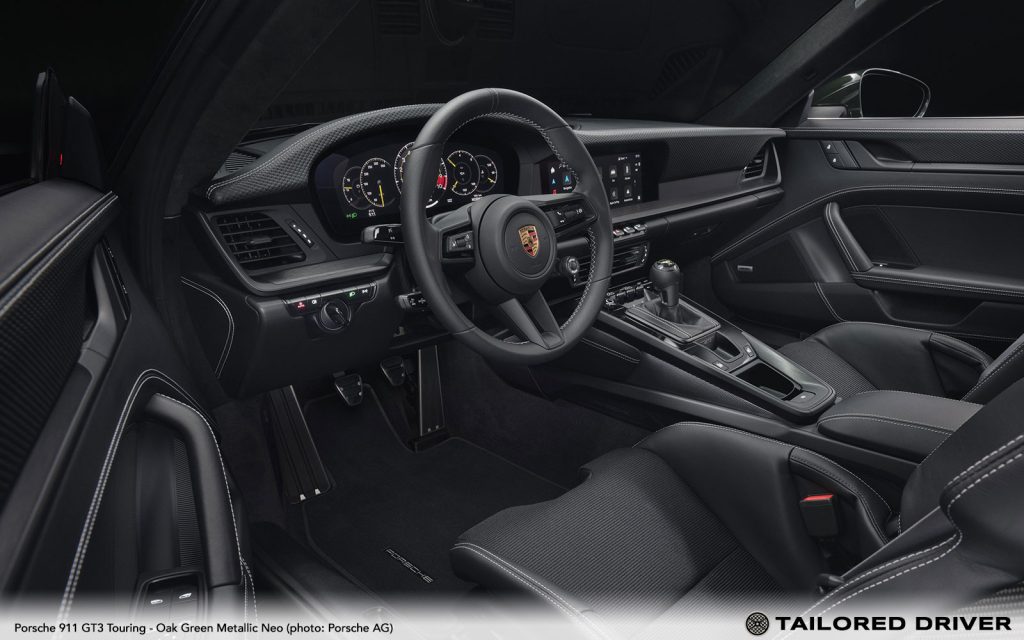
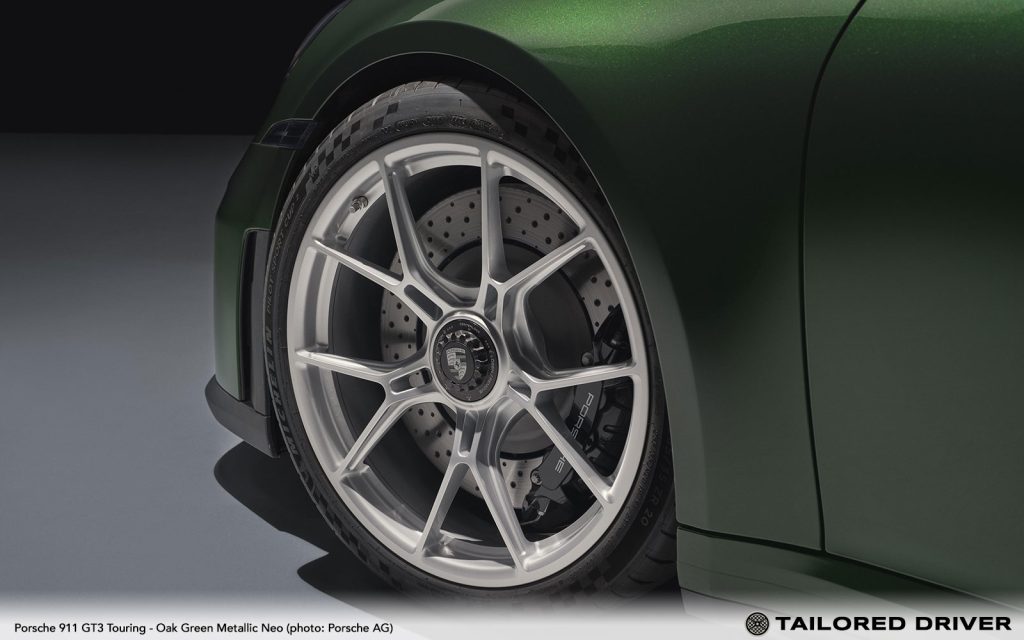
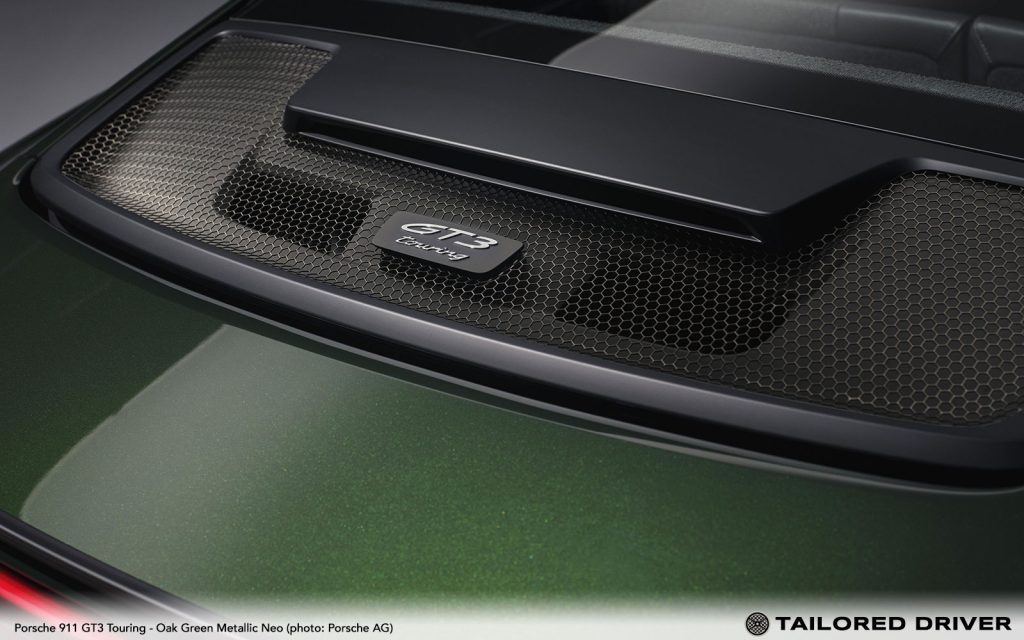
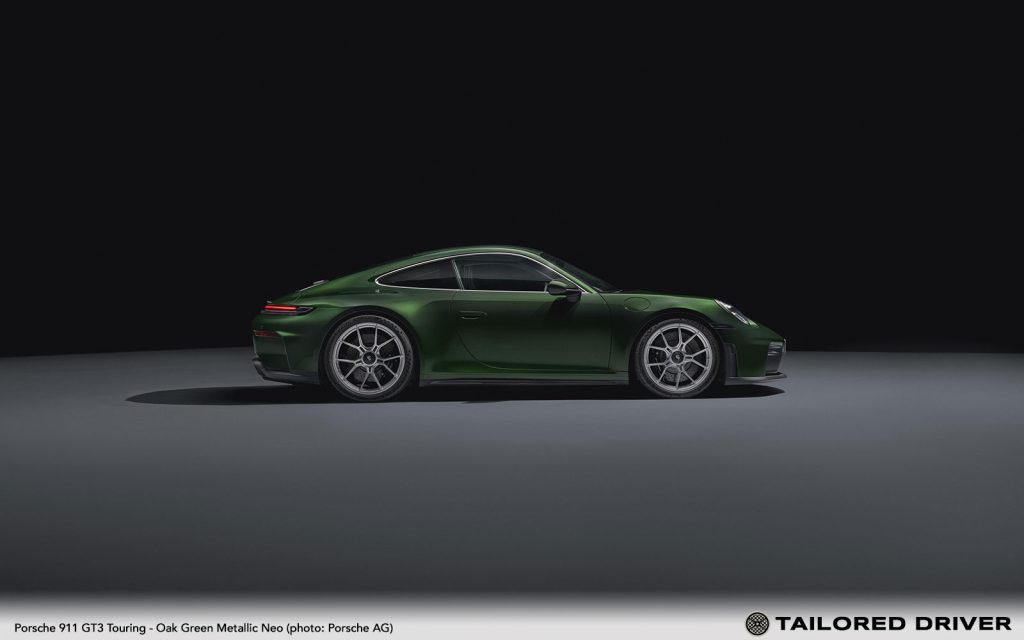
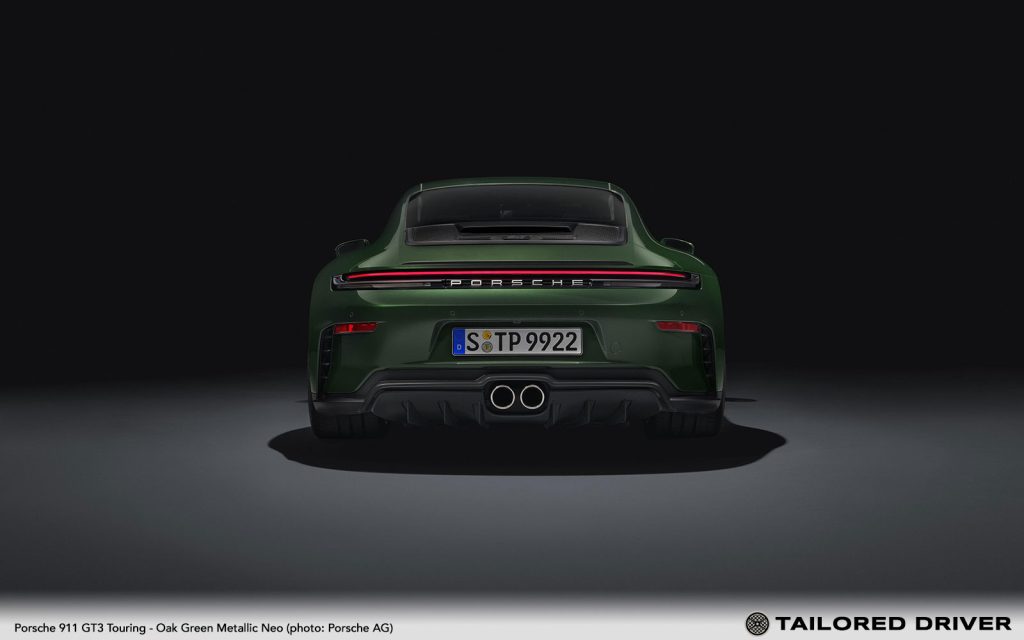
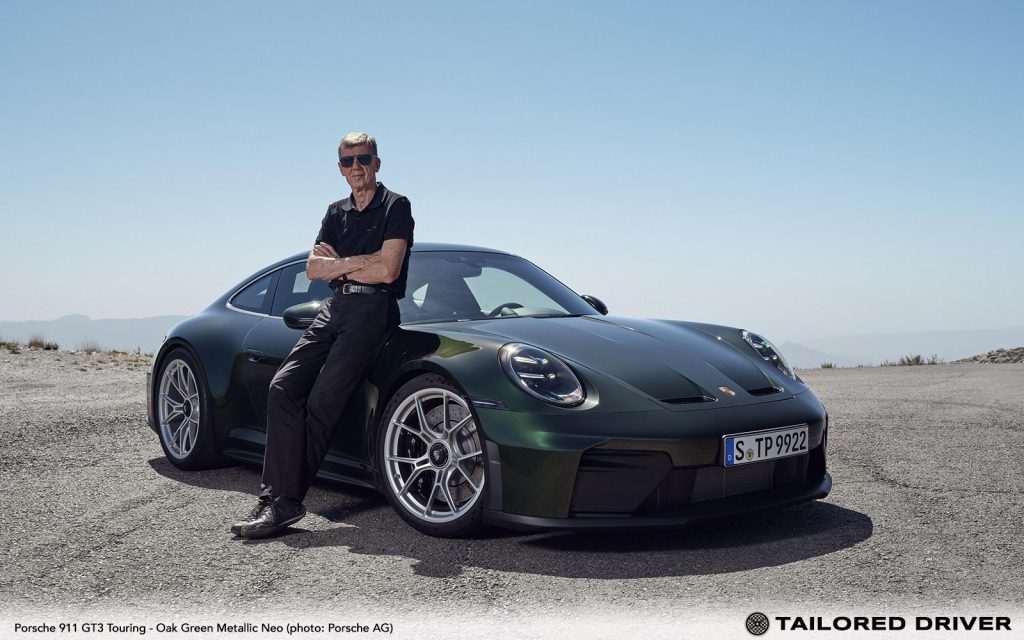
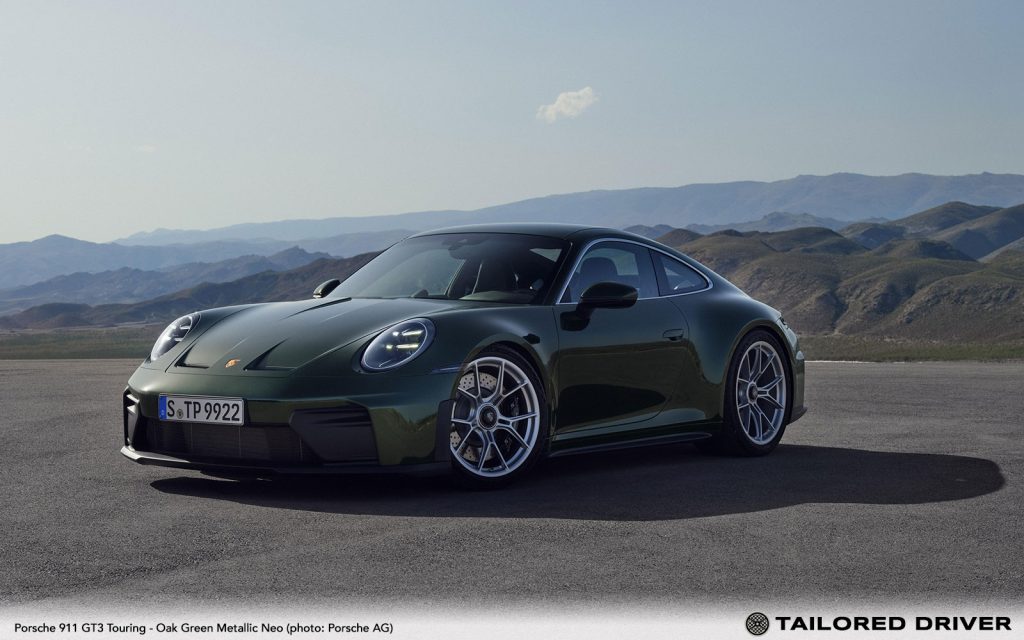
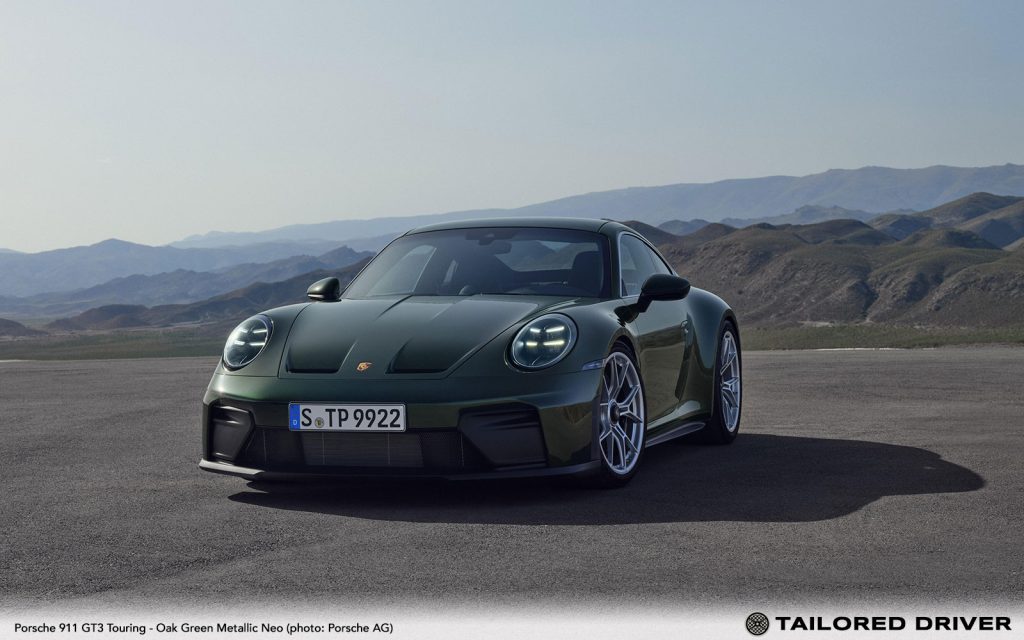
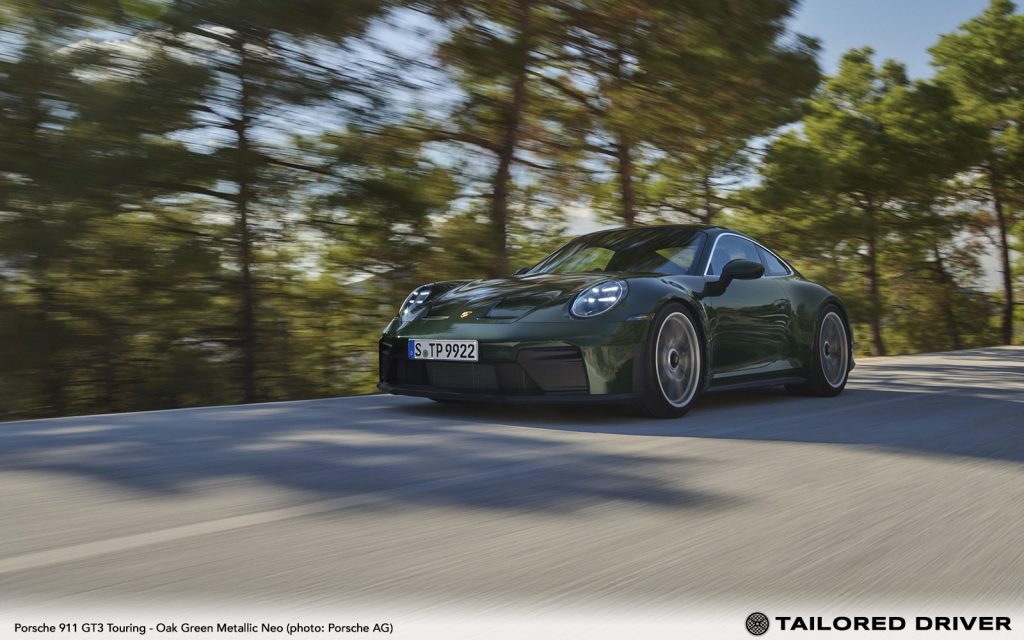
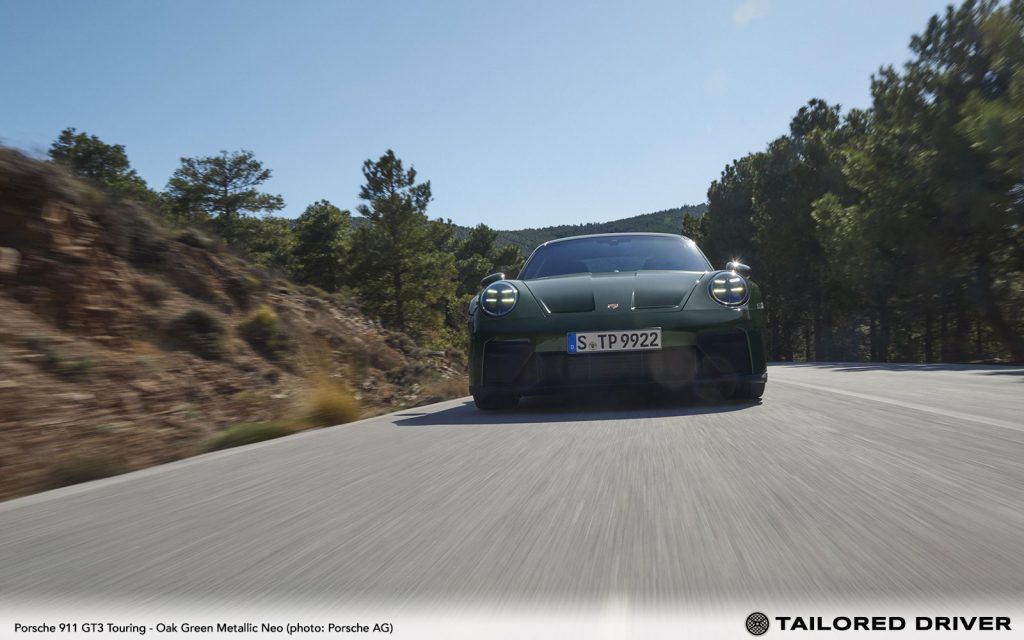
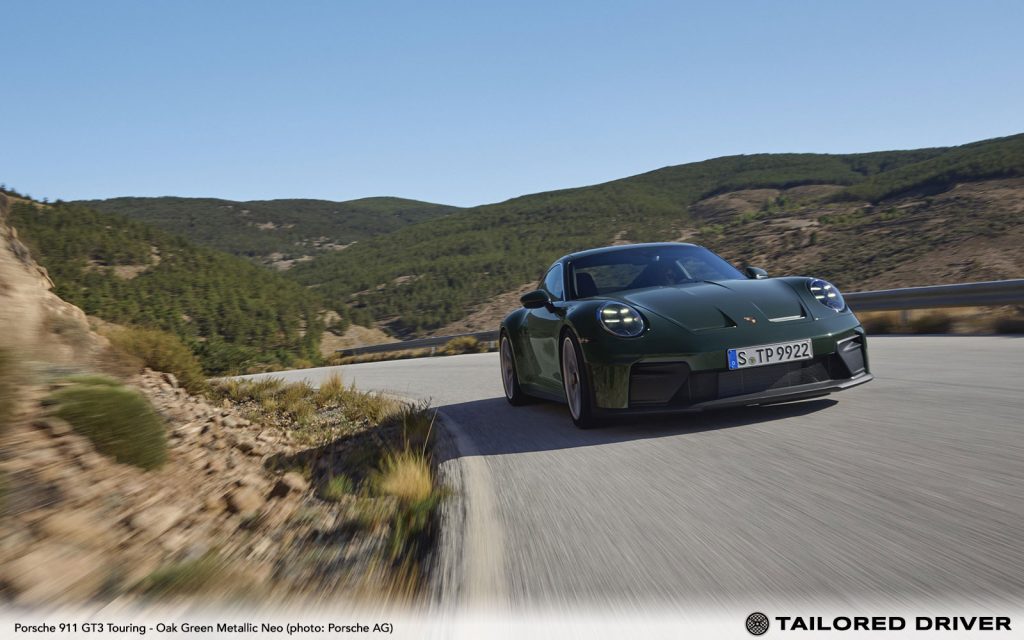
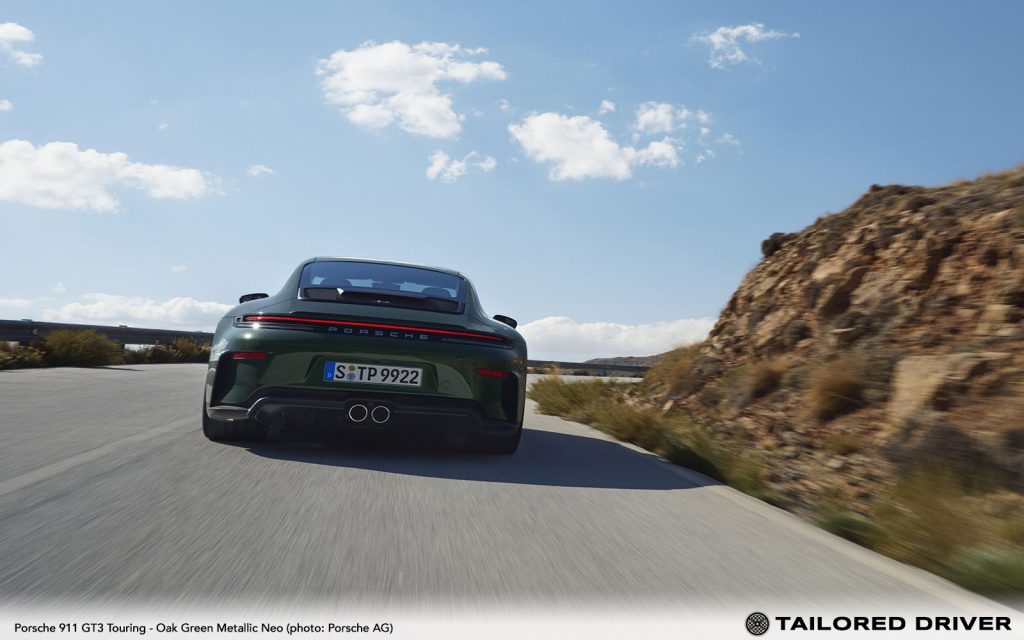
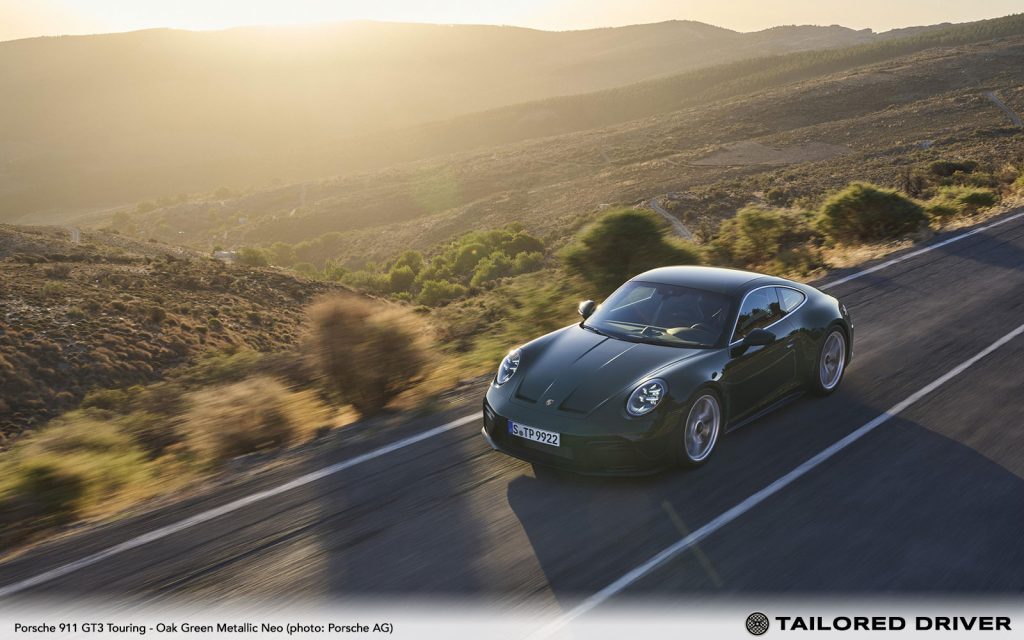
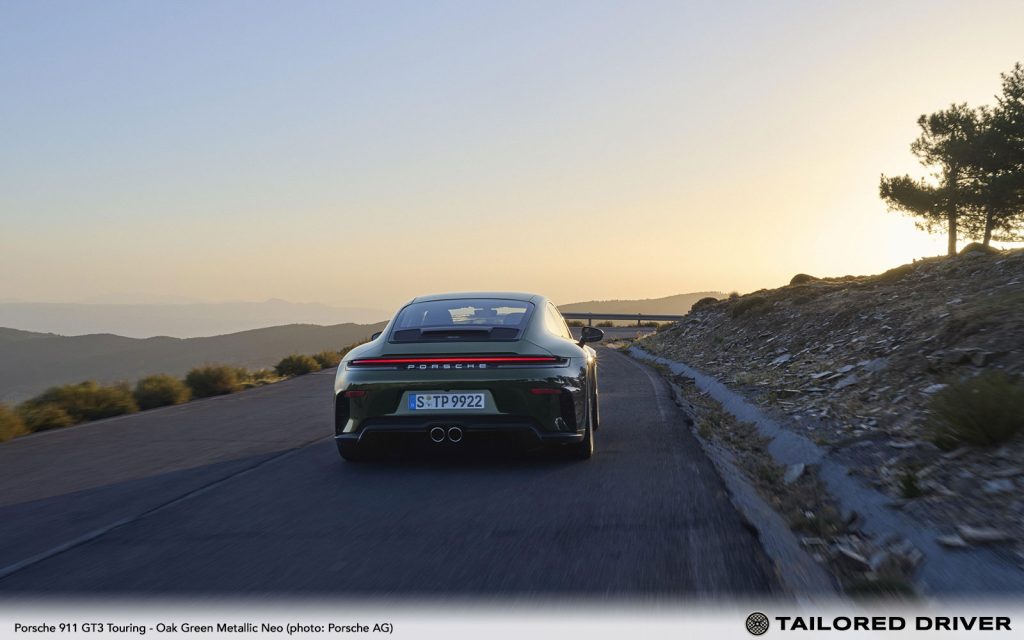
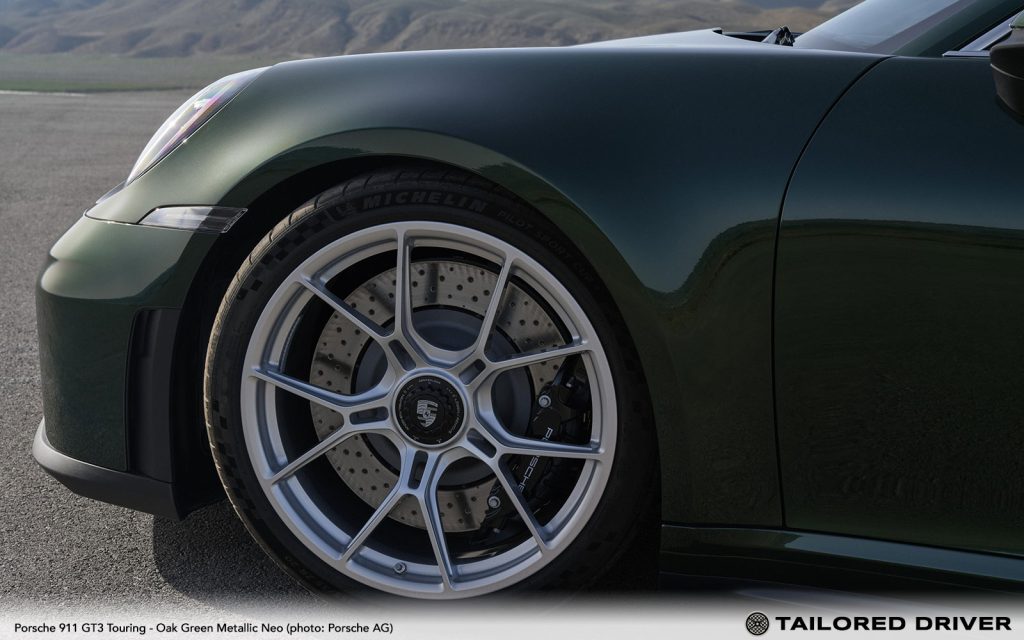
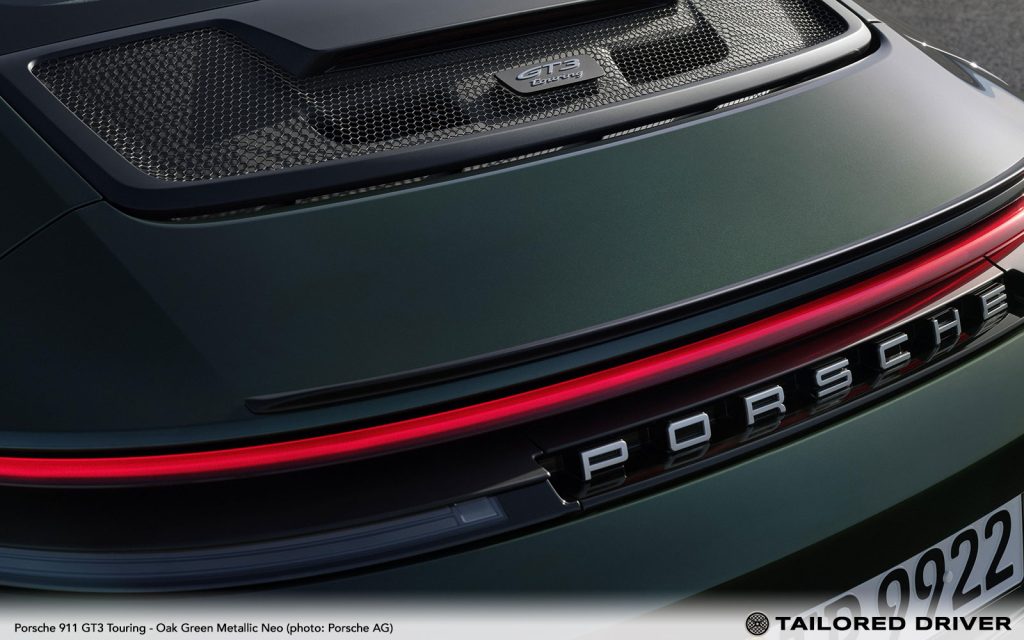
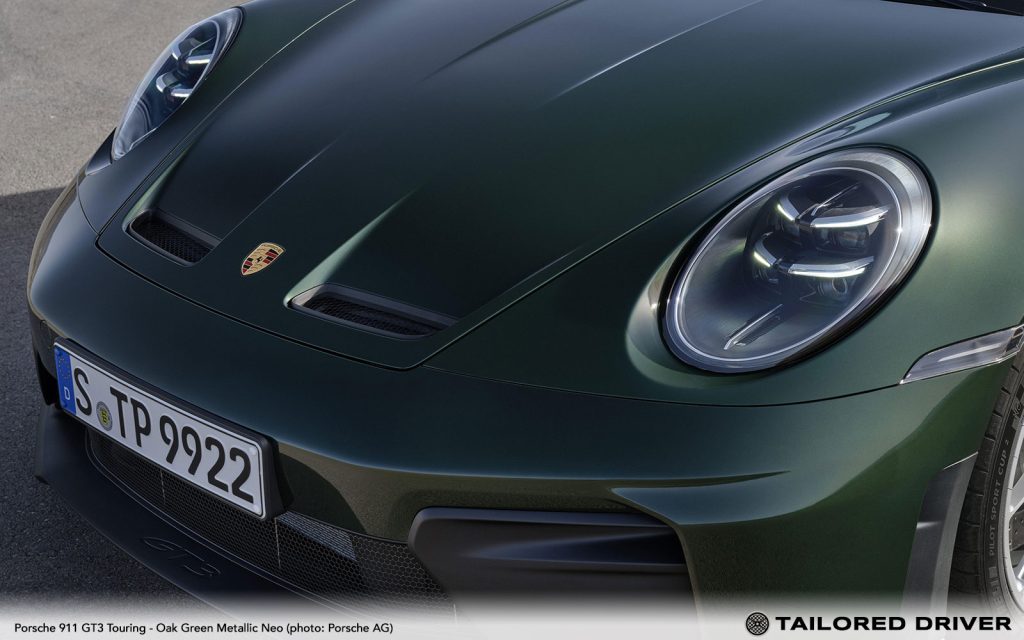
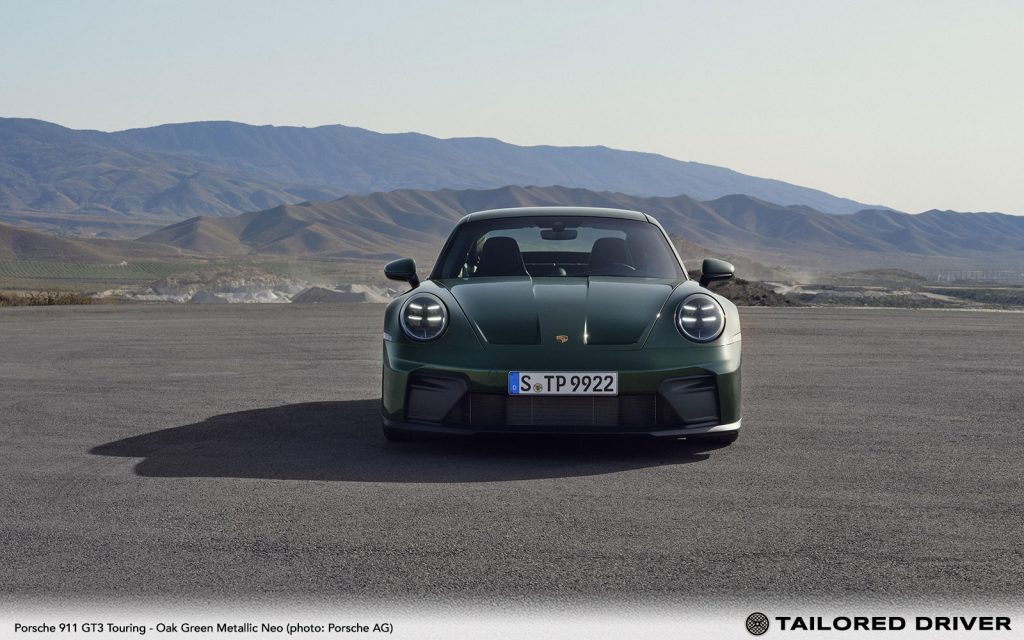
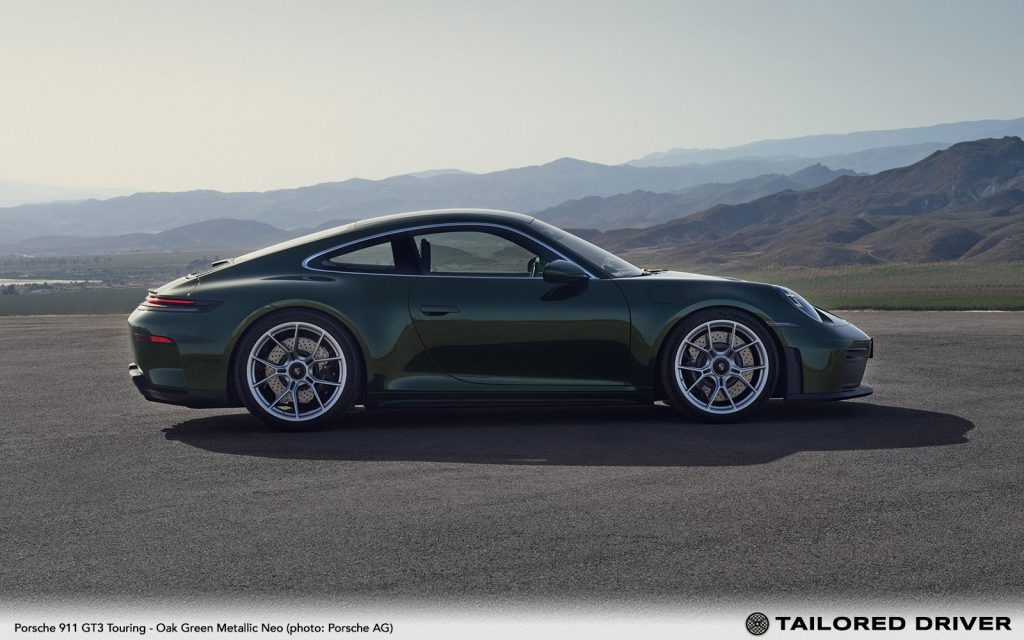
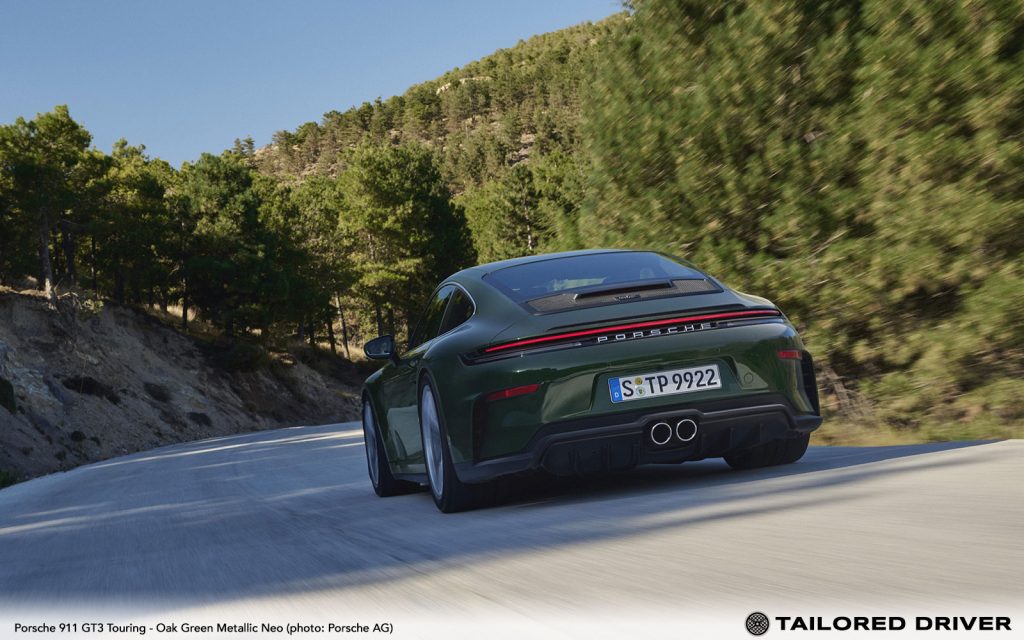
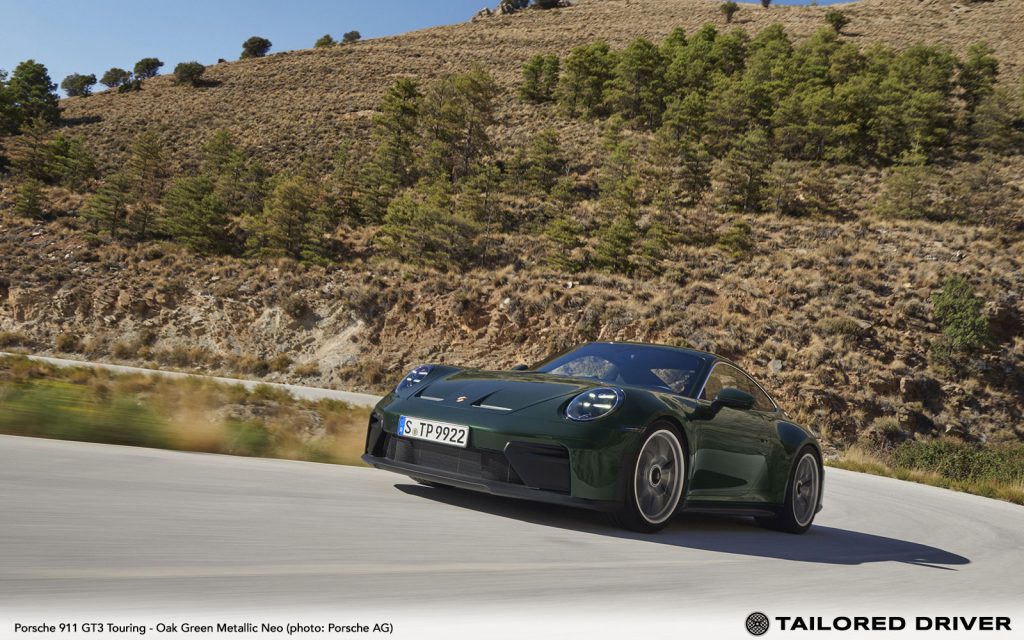
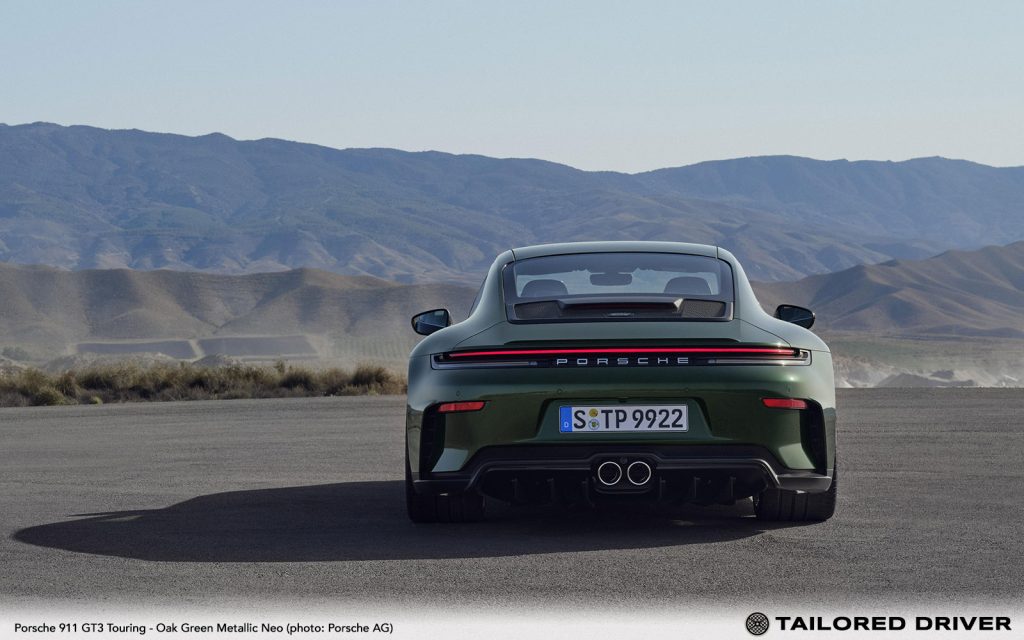
Porsche just revealed the updated 911 GT3 Touring and has followed that up with a few more shots of the launch car specification. That car is listed as Porsche Oak Green Metallic Neo (oakgrünneo; metallic; M6E; Porsche) in the press materials, and we also wanted to include these few more marketing shots for even further details of the car.
Oak Green Metallic has been around Porsche for decades, and like a lot of iconic colors Porsche is reformulating them and bringing them back with the “Neo” suffix to denote the change.
We’re embedding the Facebook post that included the photos should you want to see them in their original format. We’re also adding them here to our gallery. Worth noting, these photos look a bit more on the blue side and a bit less on the gold side of the green spectrum than do the PR shots released earlier. While we haven’t seen Oak Green Metallic Neo in person yet, these images also look more blue than the original Porsche Oak Green we’ve seen on other cars. If you’re considering Porsche Oak Green Metallic Neo, click HERE to check out other stories featuring the color if you want a wider sample set.
The 911 GT3 has offered the ultimate combination of racing genes and day-to-day usability since its introduction in 1999. To mark its 25th anniversary, the new model will launch simultaneously in two versions for the first time: as a track-focused sports car with a rear wing and as a more understated version with a Touring package. With tailor-made packages and innovative options, the GT3 variants can be further customised to the customer’s taste and intended use.
[source: Porsche AG]
Porsche is relaunching the 911 GT3. The exceptionally track-ready road sports car makes its debut in its anniversary year with an expanded lightweight strategy, a naturally aspirated 4.0-litre boxer engine with 375 kW (510 PS) and 450 Nm, and new, highly customer-focused options. The Weissach package, available for the first time in the 911 GT3, offers even more custom configuration options for use on the track. In addition, the sports car comes with more extensive standard equipment and other options that further enhance its precision and sportiness.
911 GT3 with modern styling
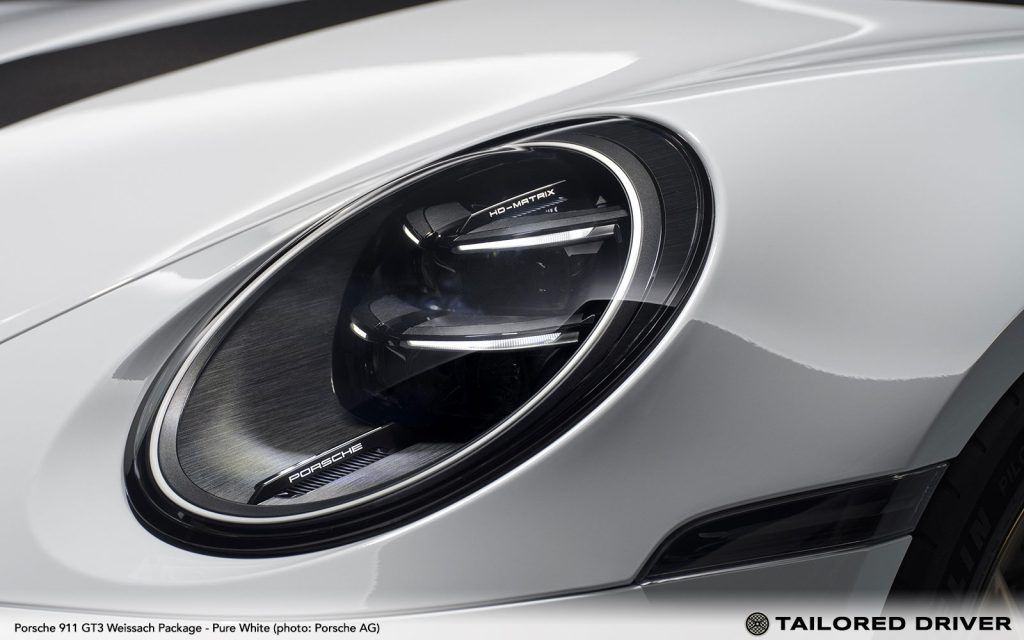
The new 911 GT3 models feature a sharpened design in the front and rear as well as adapted aerodynamics. In both variants, the re-contoured front diffuser, the refined shape of the spoiler lip and modified fins on the underbody increase downforce and optimise the air flow. Redesigned Matrix LED headlights, available on the 911 GT3 with an optional white accent ring, combine all the light functions of the 911 and eliminate the need for additional lights in the front apron. This enables an enlarged air inlet area and a clearly structured look. In the rear, the diffuser, air inlets and rear lid have been redesigned. The rear wing of the 911 GT3 has new angled sideplates.
Porsche uses specially developed, aerodynamically shaped trailing arms with a teardrop profile on the double-wishbone front axle. They increase downforce in the wheel arch at high speeds and improve brake cooling. To ensure that the downforce balance between the front and rear axles is maintained even when braking from high speeds, the suspension engineers have reduced pitching (antidive). On the new 911 GT3, the front ball joint of the lower trailing arm has been set lower on the front axle to facilitate this. The 911 GT3 has adopted these modifications from the current 911 GT3 RS. The 911 GT3 comes standard with 255/35 ZR 20 (front) and 315/30 ZR 21 (rear) sports tyres with improved wet grip; optionally, track tyres with road approval are available.
Touring package available from launch and even more customisable
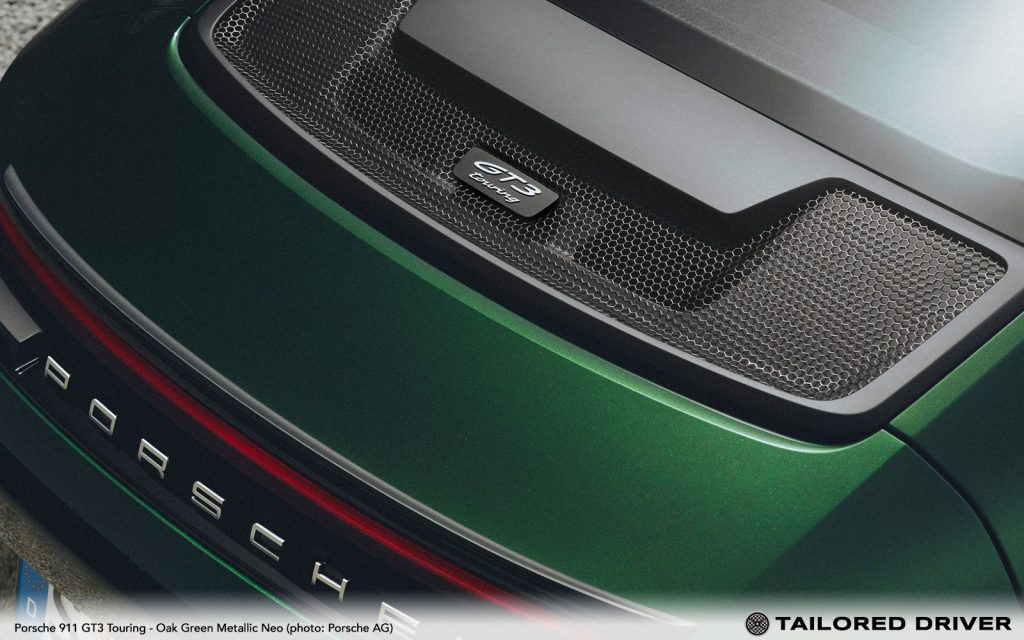
With the model change, Porsche is defining the variants of the 911 GT3 even more clearly. For the first time, the popular Touring package will be available right from the market launch. The “Touring Package” designation goes back to an equipment variant of the 1973 911 Carrera RS 2.7. It has been part of the GT3 programme since 2017. It’s even more distinctive in the new 911 GT3, as reflected in the “911 GT3 touring” logo on the rear lid grille. The 911 GT3 with Touring package dispenses with the fixed wing and thus preserves the timelessly elegant line of the 911. An extendable rear spoiler with a tear-off edge, the famed Gurney flap, and an adapted fin design on the underbody provide aerodynamic balance. The interior offers a high-quality leather interior and a classic sporty ambience.
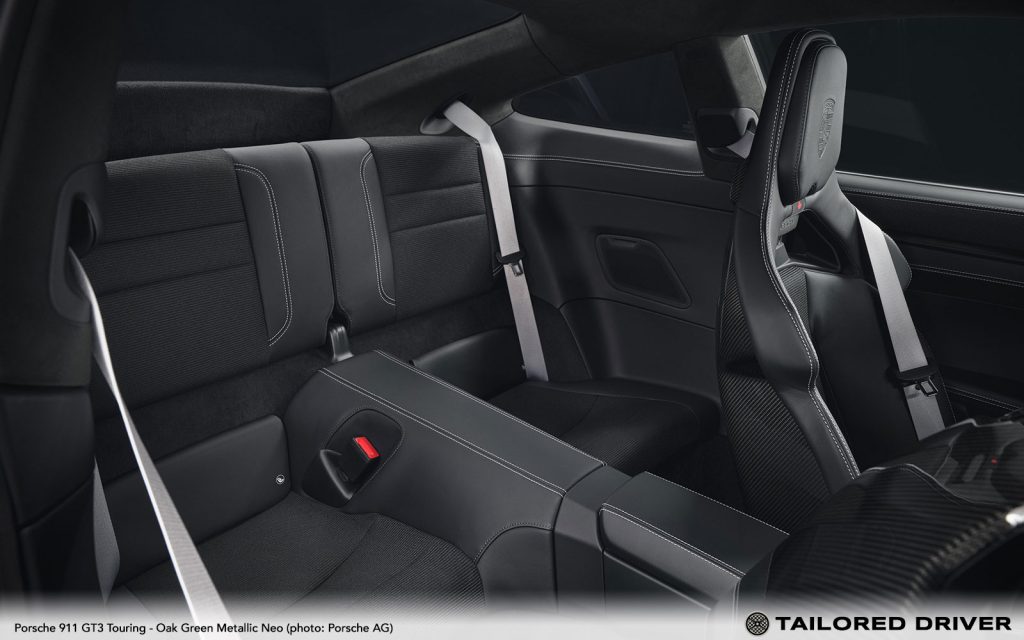
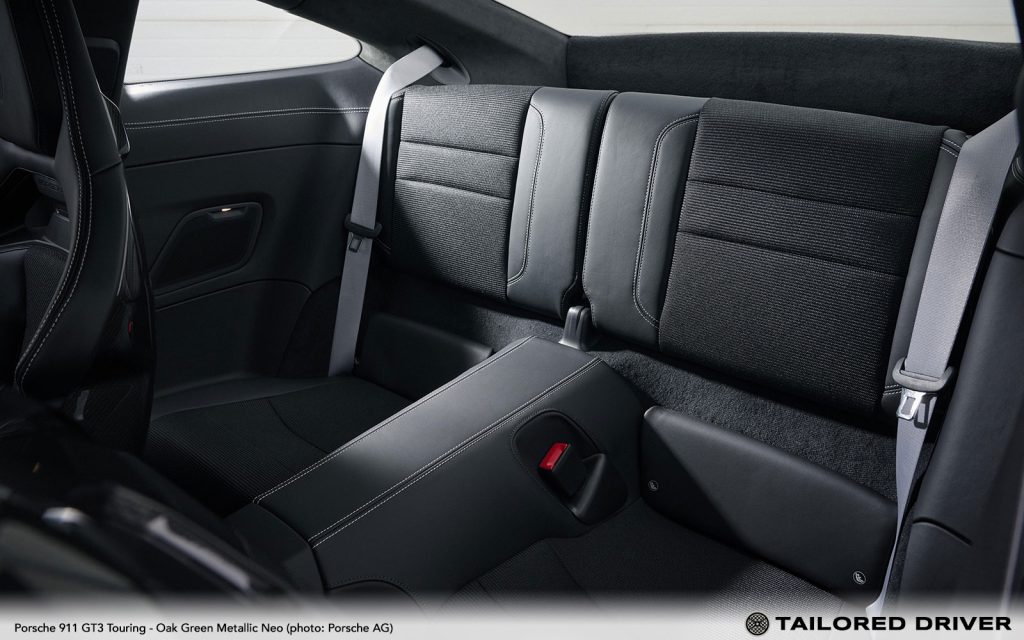
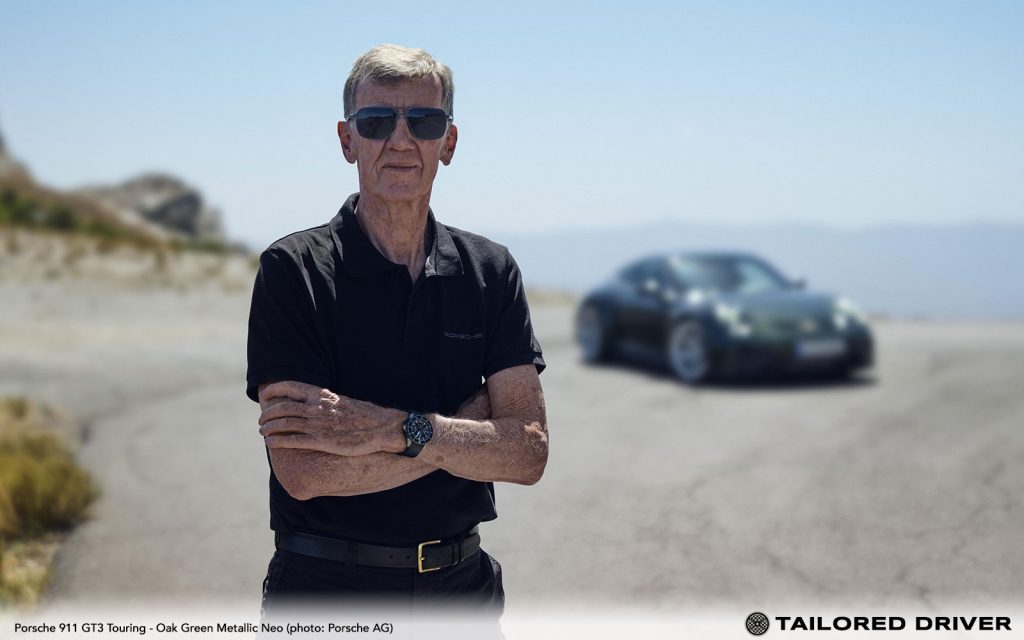
For the first time, a rear seat system for the 911 GT3 with Touring package is available as an option. This allows the everyday sports car to be adapted even more individually to the wishes of the customer for maximum driving pleasure on winding country roads. “Particularly on winding country roads, you can clearly feel that the steering is even better tuned than its predecessor,” says Porsche brand ambassador Walter Röhrl. “It instils even greater confidence in the car because it responds more calmly from the centre position without losing any of its directness. The shorter gear ratio also significantly enhances driving pleasure on country roads.”
Lightweight design throughout
Its low overall weight contributes to the agile and direct handling of the 911 GT3. The new 911 GT3 goes all-in on lightweight design. A new, silver-coloured lightweight aluminium wheel reduces the unsprung masses by more than 1.5 kg compared to the previous model. Optionally, magnesium wheels are available with the Weissach package or the Leichtbau (lightweight) package. They save nine kilograms. A new 40 Ah lithium-ion lightweight battery contributes to the athletic body mass index by shaving off another roughly four kilograms. In the lightest configuration, the new 911 GT3 weighs just 1,420 kilograms.
Eight percent shorter gear ratio
The 4.0-litre naturally aspirated engine in the new 911 GT3 has been designed for current, significantly stricter exhaust standards and equipped with two particulate filters and four catalytic converters. With this extremely powerful emission control system, Porsche also delivers a gripping soundscape. The engine power of the six-cylinder boxer engine was attained through a series of optimization measures. The cylinder heads have been revised, and the sharper camshafts of the 911 GT3 RS provide even more dynamic performance in the upper engine-speed range.
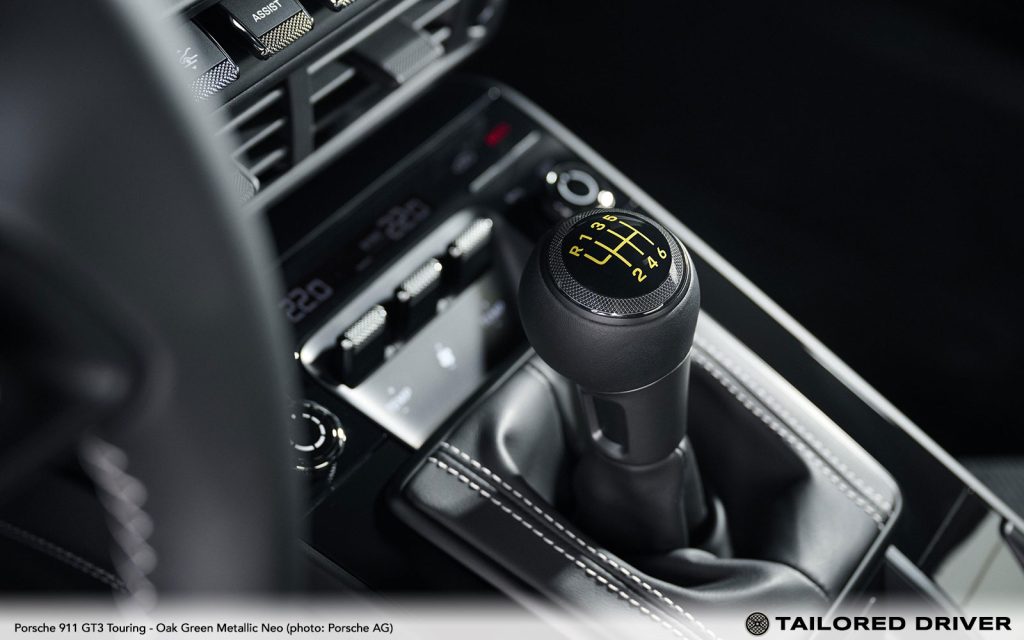
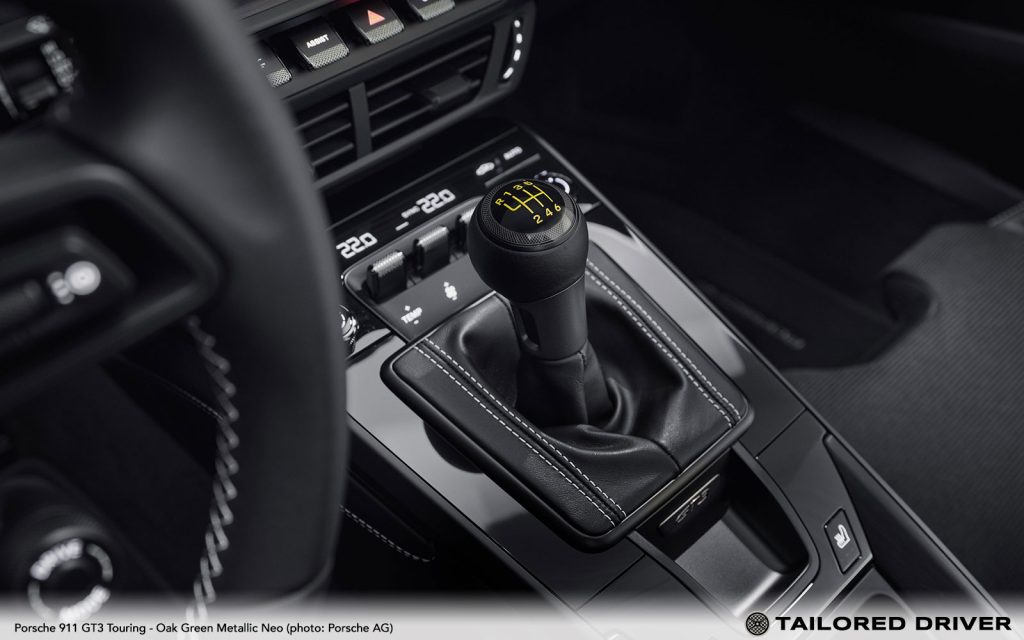
In addition, flow-optimised individual throttle valves and optimised oil coolers are used. The boxer continues to deliver 375 kW (510 PS). This means that each kilowatt of the revamped high-speed naturally aspirated engine only has to move 3.8 kilograms (2.8 kg/PS) in the lightest vehicle configuration. In addition, both the 7-speed dual clutch transmission (PDK) and the 6-speed GT manual transmission have a final drive ratio that is eight percent shorter than in the predecessor. Both gearbox options are available for both the 911 GT3 and the 911 GT3 with Touring package. The new 911 GT3 accelerates to 100 km/h in 3.4 seconds with PDK and reaches a top speed of 311 km/h (manual gearbox: 3.9 s; 313 km/h).
“On the track, the new 911 GT3 enables even better control because it holds even steadier and handles better on bumps and when driving over kerbs thanks to the optimised damper tuning,” says brand ambassador Jörg Bergmeister. “The anti-dive system noticeably reduces the pitching movement when braking. As a result, the balance of the car remains significantly more consistent under all conditions.”
Innovative lightweight sports bucket seat
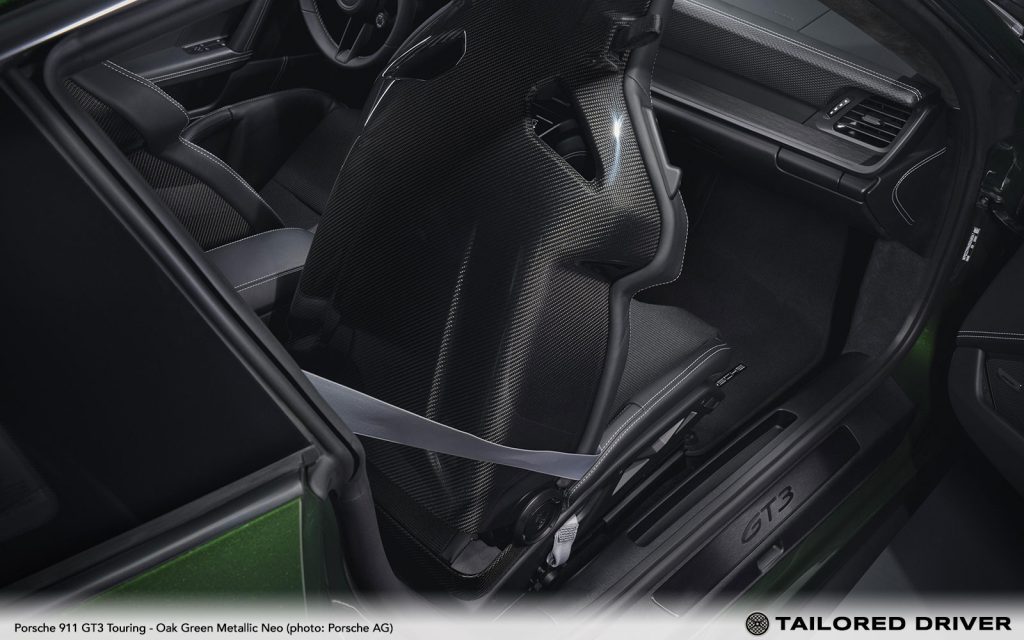
For the new 911 GT3, a new lightweight sports bucket seat with a folding backrest and a seat shell made of CFRP is available as an option. The seat is equipped with an integrated thorax airbag, electric height adjustment and manual longitudinal adjustment; a three-stage seat heater is available as an option. A part of the headrest padding can be removed. This improves ergonomics for most drivers when wearing a helmet during circuit use. The folding function of the backrest, which is activated via a loop, enables access to the optional rear seat system offered for the first time in the 911 GT3 with Touring package. As an alternative, you can order the Adaptive Sports Seats Plus with electric 18-way adjustment.
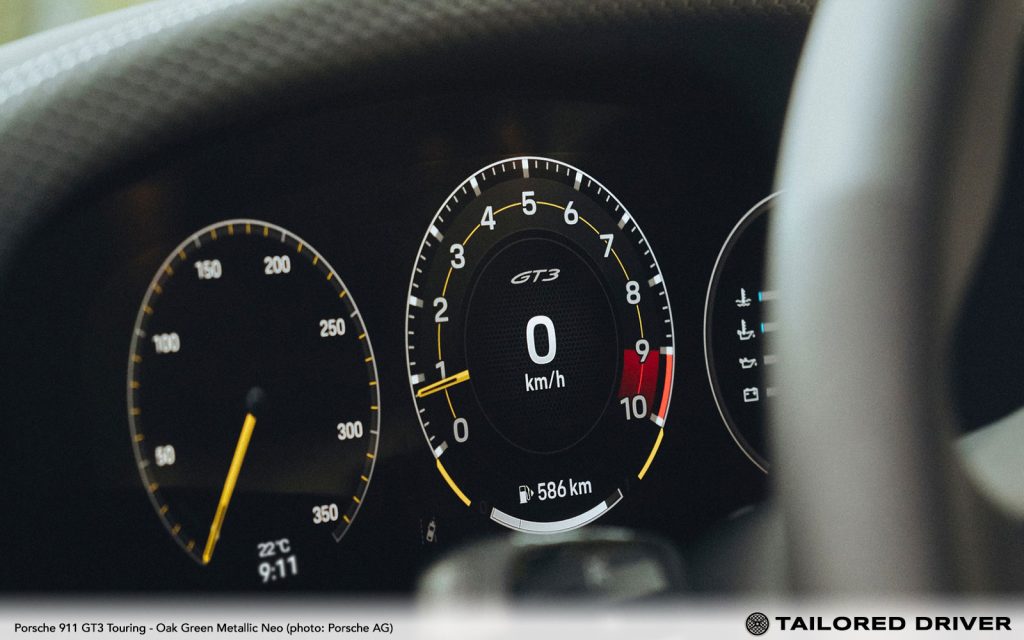
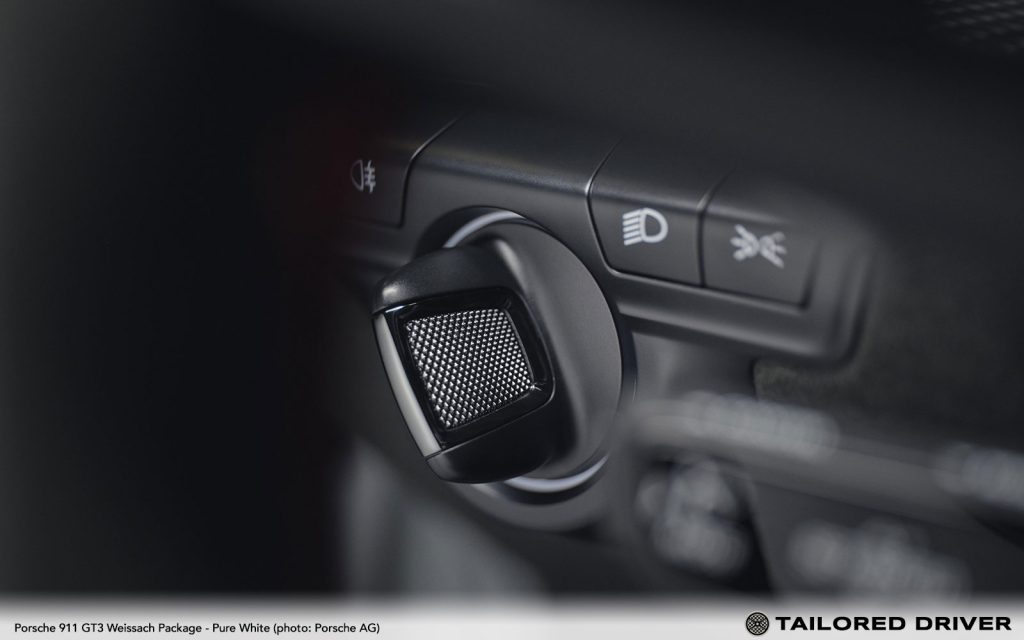
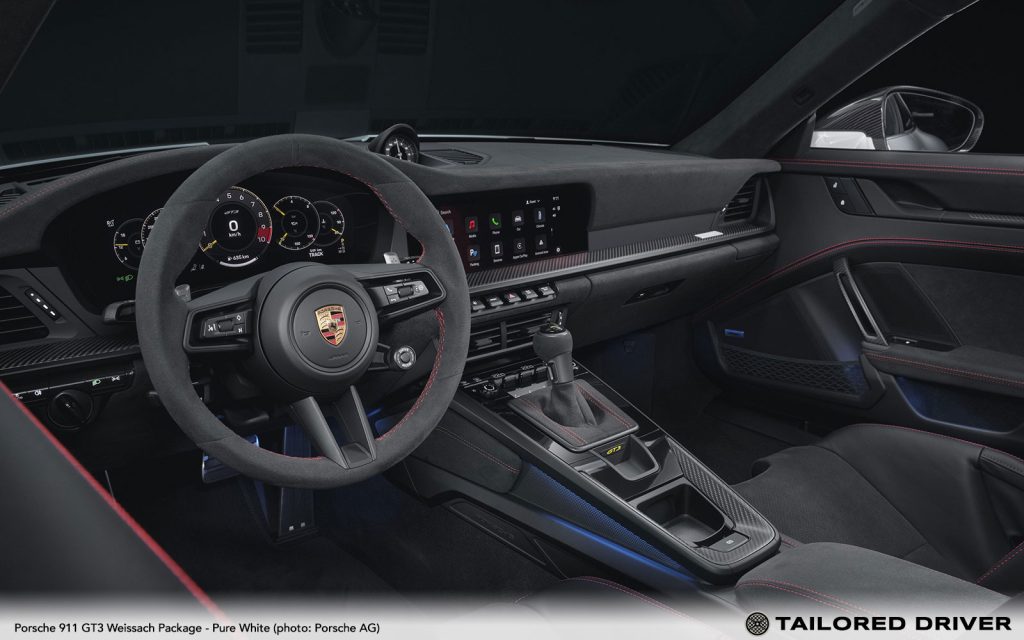
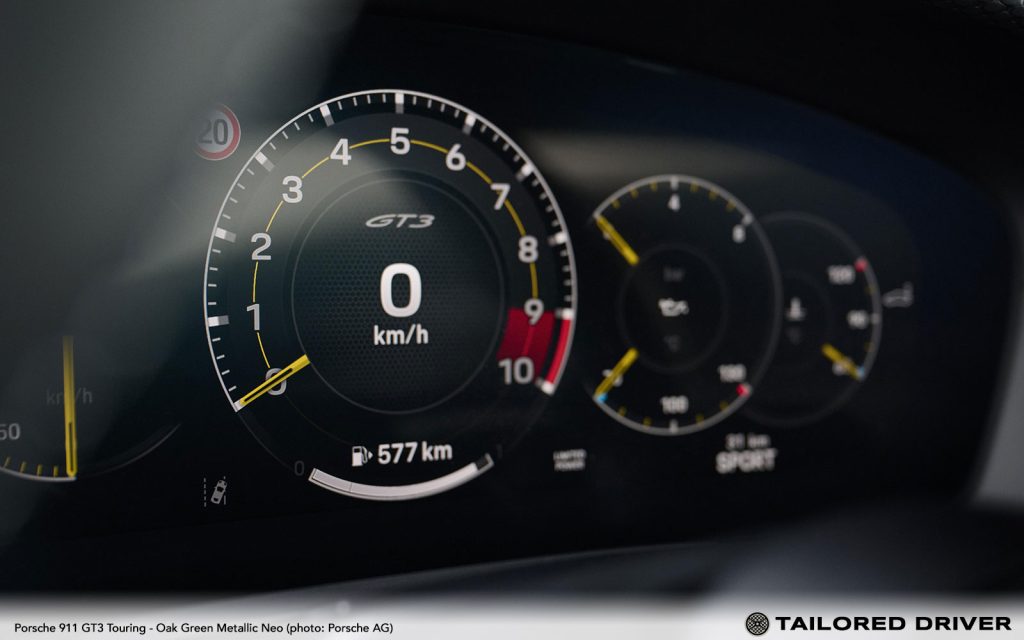
The black two-seater standard cockpit in the new 911 GT3 is based on the design of the current 911 models. Unlike the Carrera models, however, the 911 GT3 is not started with a button, but still has a rotary ignition switch. An optionally available roll-over bar demonstrates the proximity to motorsport. The digital instrument panel in the centre supports the driver with a clearly structured display and control concept. Thanks to the contrasting colour scheme, the rev counter and stopwatch can be read in a flash. The “Track Screen” display mode reduces the digital displays to the left and right of the tachometer to key data on tyres, oil, water and fuel and indicates the optimal shifting time to the driver by way of a shift flash. If desired, the tachometer display can be rotated so that the cut-off speed of 9,000 rpm is at the 12 o’clock marking.
Individual packages for 911 GT3 and 911 GT3 Touring
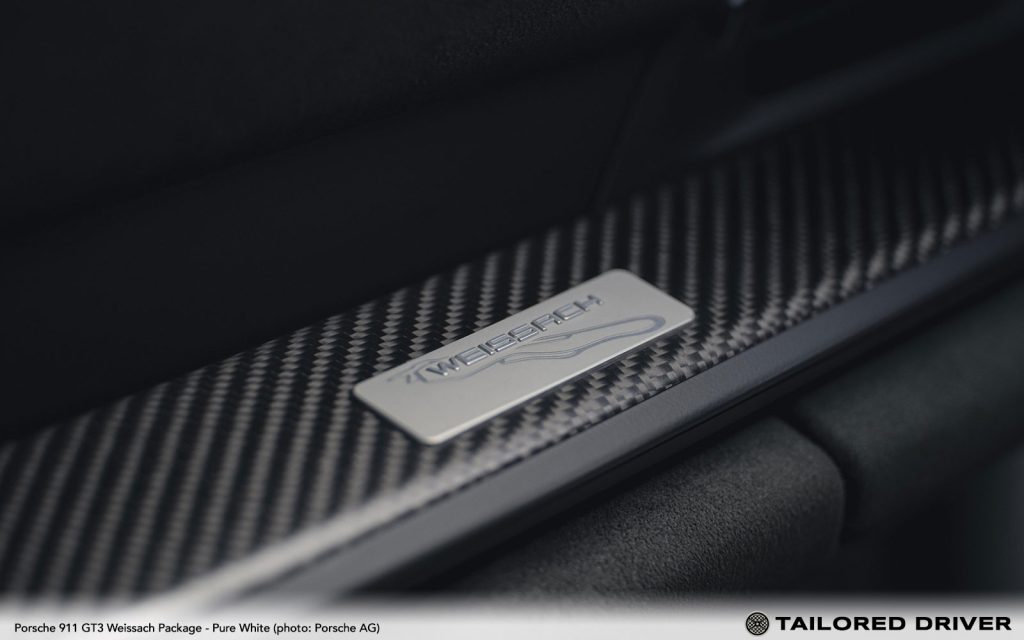
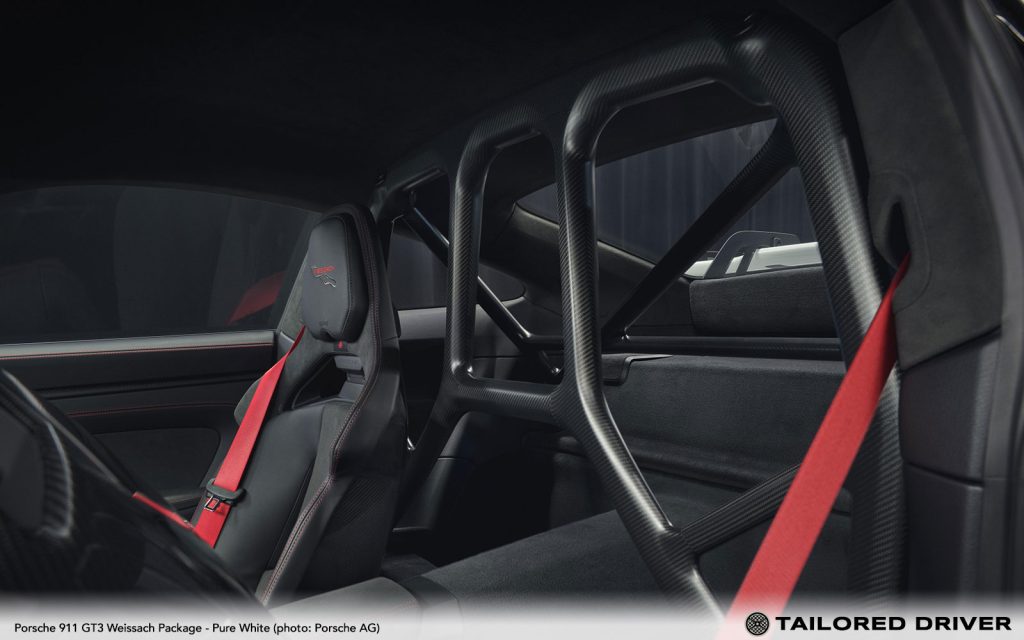
Porsche offers various equipment packages for the new 911 GT3. With the Weissach package available for the first time, the 911 GT3 is even more individually configurable for use on circuits. The anti-roll bar, coupling rods and shear panel on the rear axle are made of CFRP as are the roof, sideplates of the rear wing, exterior mirror top shell, mirror triangle and the airblades in the front area. Additional leather and Race-Tex upholstery enhance the look of the interior. For the first time, the upper side of the dashboard on the 911 GT3 is accordingly covered in anti-glare Racetex. CFRP door handles and storage nets optimise the interior door panels for a lightweight design. A CFRP roll cage and magnesium lightweight forged wheels are available as options.
For the 911 GT3 with Touring package, Porsche offers the Leichtbau package. Here, the roof painted in the exterior colour as well as the stabiliser, coupling rods and shear panel on the rear axle are made of CFRP. The lightweight magnesium forged wheels and the lightweight door panels are also part of the package. In conjunction with the standard 6-speed GT sports gearbox, the shortened gear lever from the 911 S/T is used. In front of the gear lever, a plaque with the inscription “Leichtbau” indicates the package.
For the 911 GT3 with rear wing, the Clubsport package for track use is available at no extra charge. It includes a bolted steel roll cage in the rear, a 6-point harness for the driver and a hand-held fire extinguisher. The optional lightweight sports bucket seats are a prerequisite for this.
“The new 911 GT3 has become even more exhilarating and individual. We dug into a wealth of details and gave it many features that our customers wanted. This allows the GT3 to be adapted even more specifically to the purpose or preferences of the driver,” says Andreas Preuninger, Head of GT Cars.
Exclusive chronograph is a “sports car for the wrist”
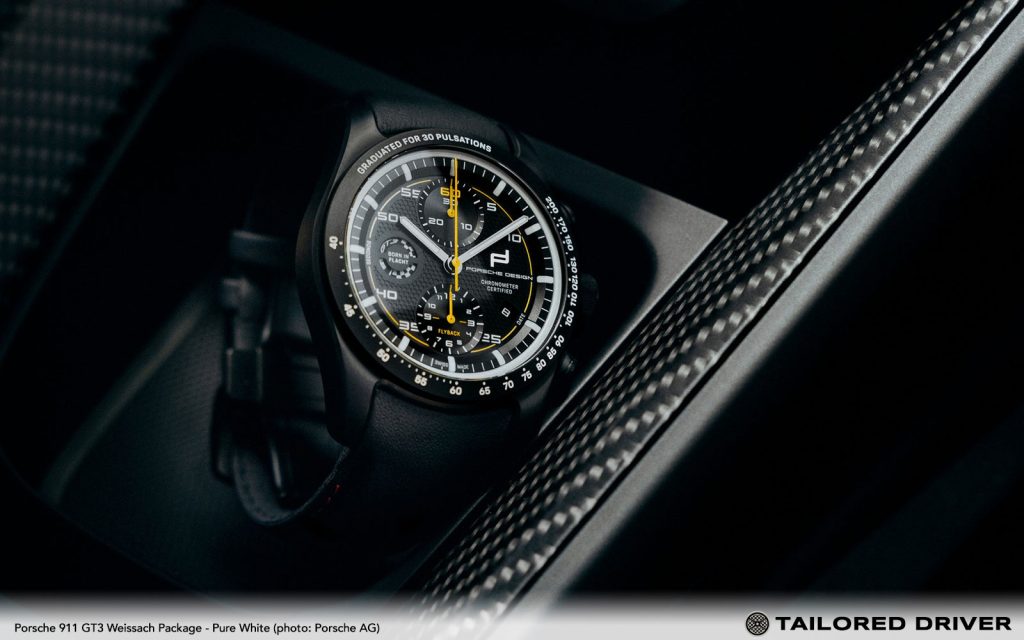
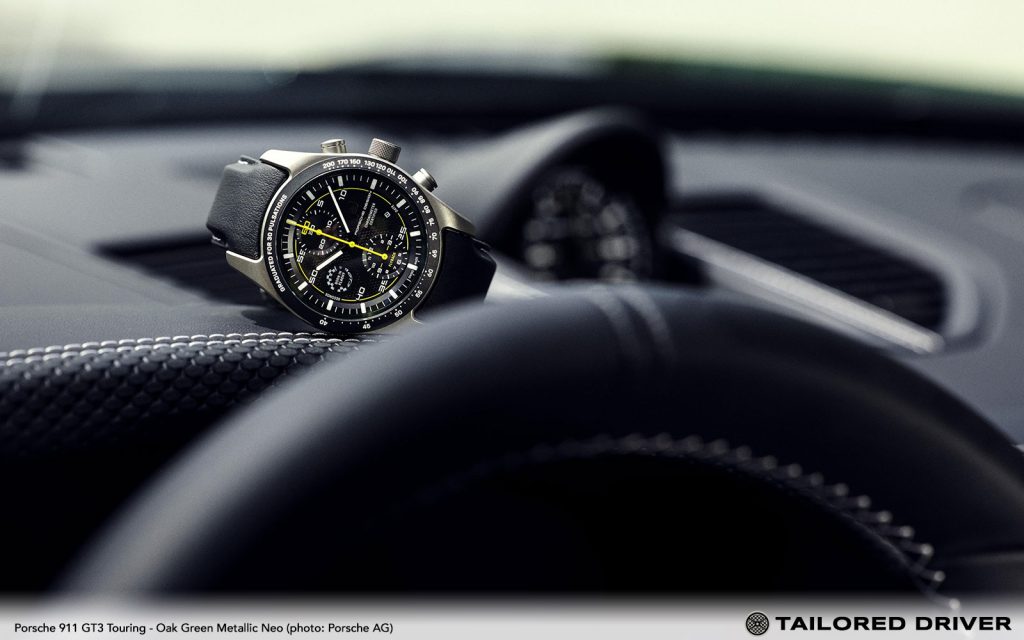
Exclusively for owners of the 911 GT3 and the 911 GT3 Touring, Porsche Design presents an exceptional timepiece that translates the design and performance of the sports car to the wrist. The 911 GT3 chronograph and the 911 GT3 Touring chronograph are equipped with the precise, COSC-certified Porsche Design WERK 01.200 movement, which has a flyback function. The ultra-lightweight titanium case, optionally with black titanium carbide coating, combines sports car design with modern watchmaking.
The GT3 design dial with yellow accents and hexagonal structure evokes the vehicle’s instrument panel, while the winding rotor is based on the design of the GT3 rims. The dial ring is available in all exterior colours of the 911 GT3 and the Touring package, as well as in the colours of the Paint to Sample programme. The band, crafted using original Porsche interior leather and thread, is also matched to the respective configuration of the vehicle.
The new Porsche 911 GT3 and the new Porsche 911 GT3 with Touring package can be ordered from the end of the year.
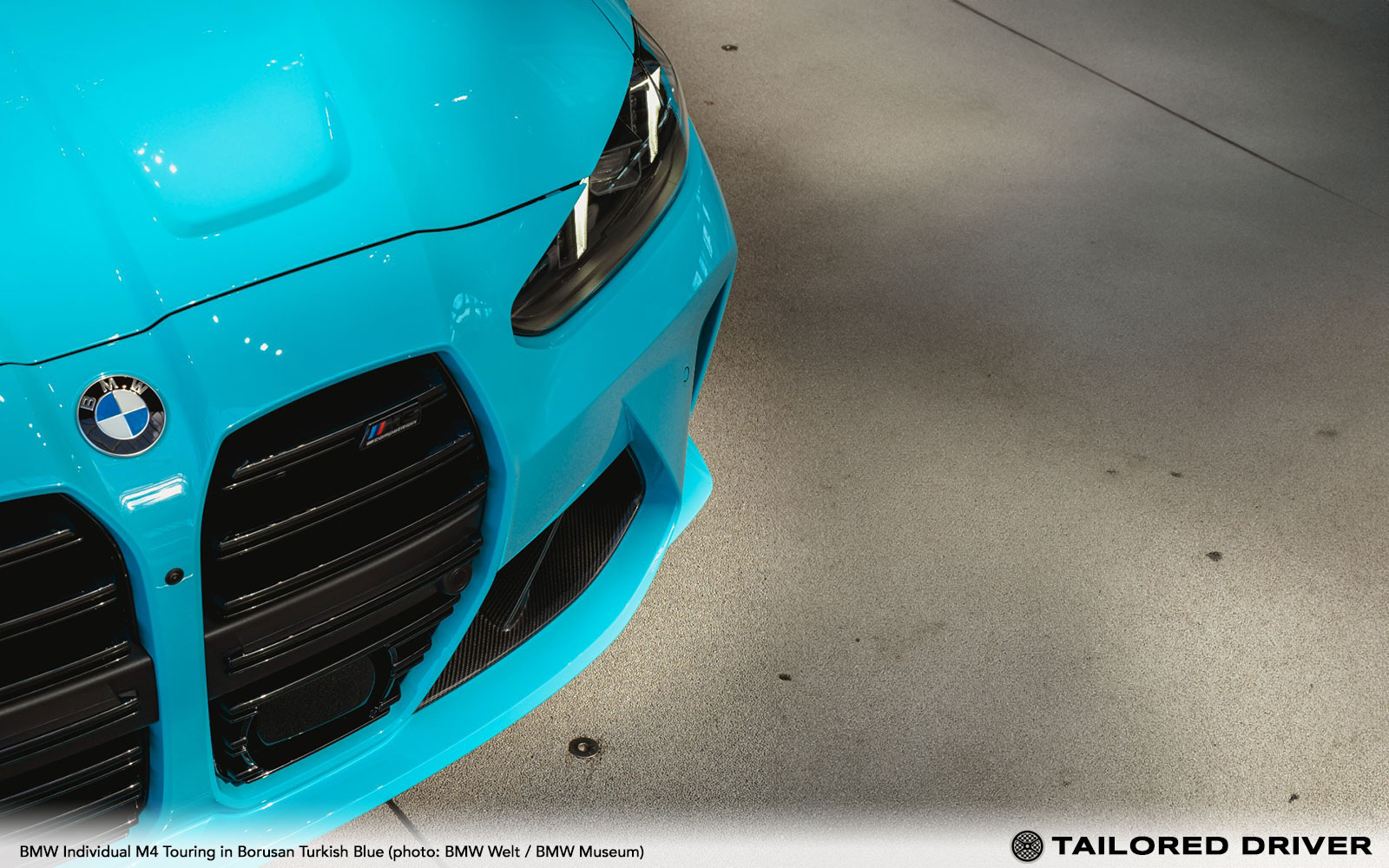
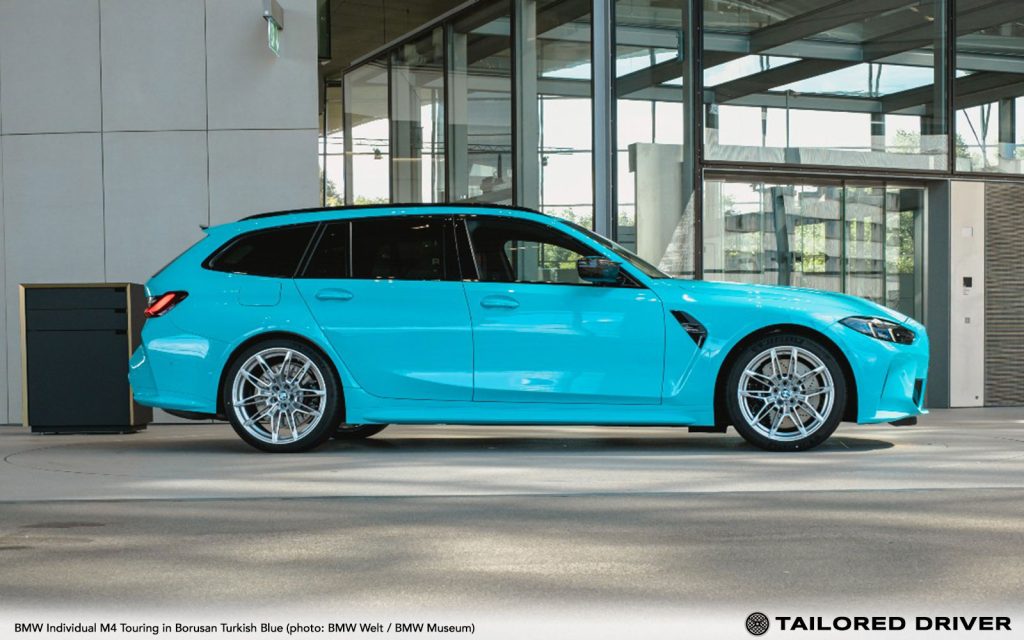
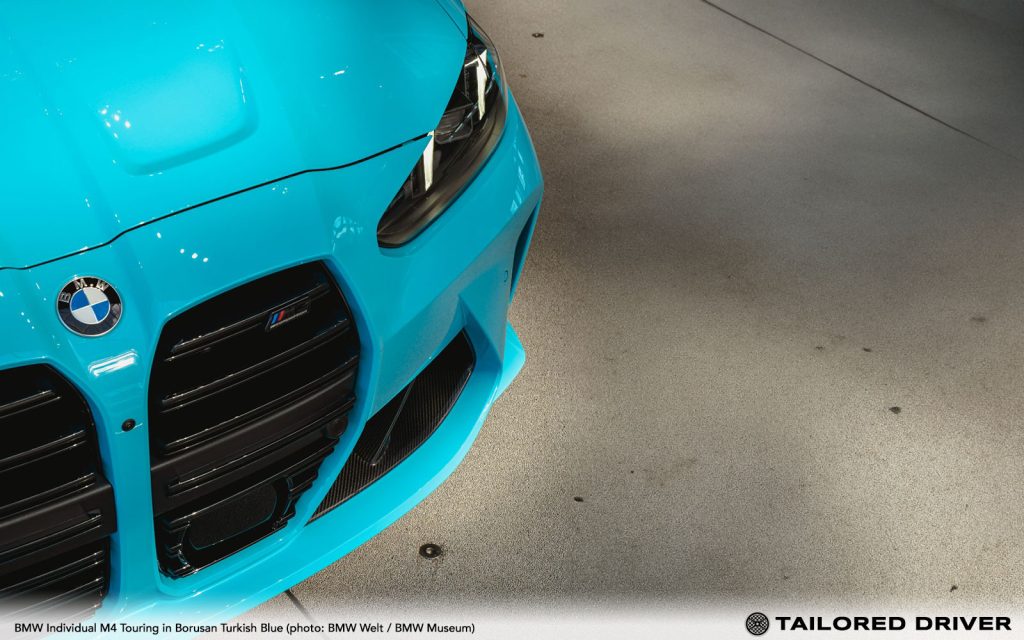
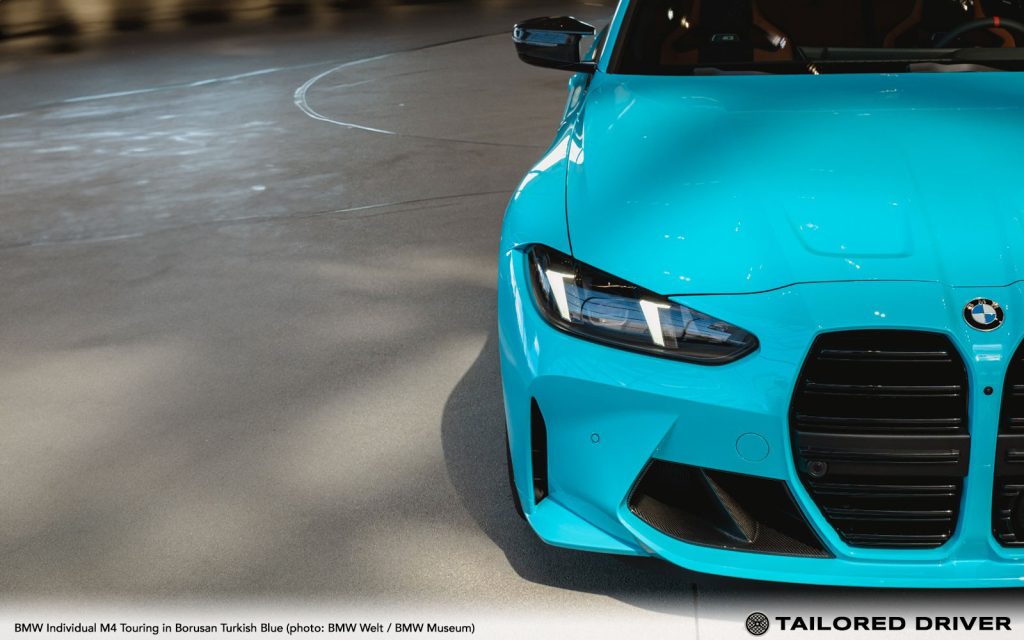
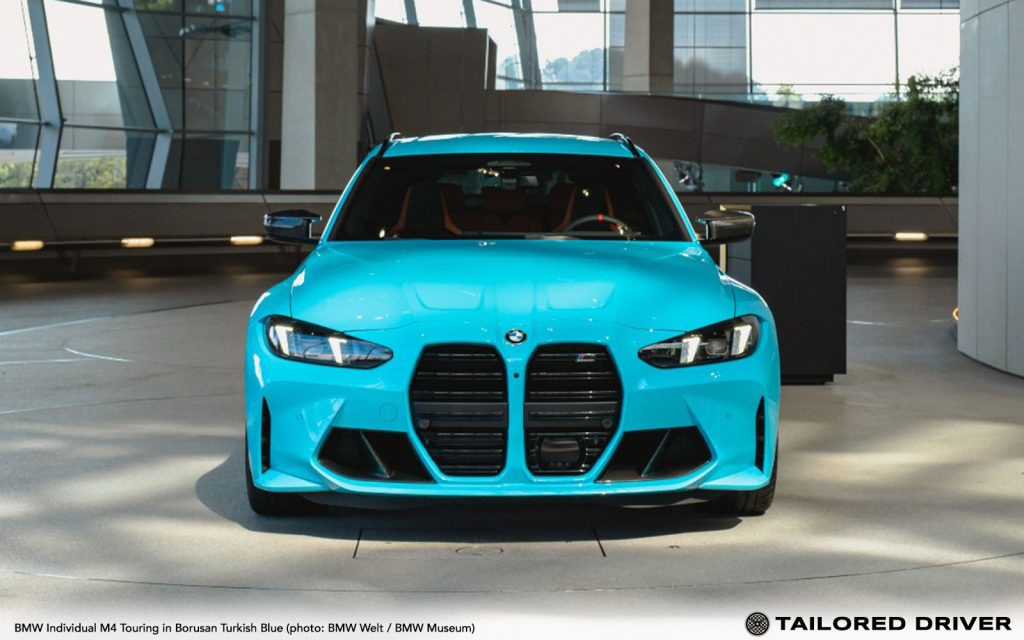
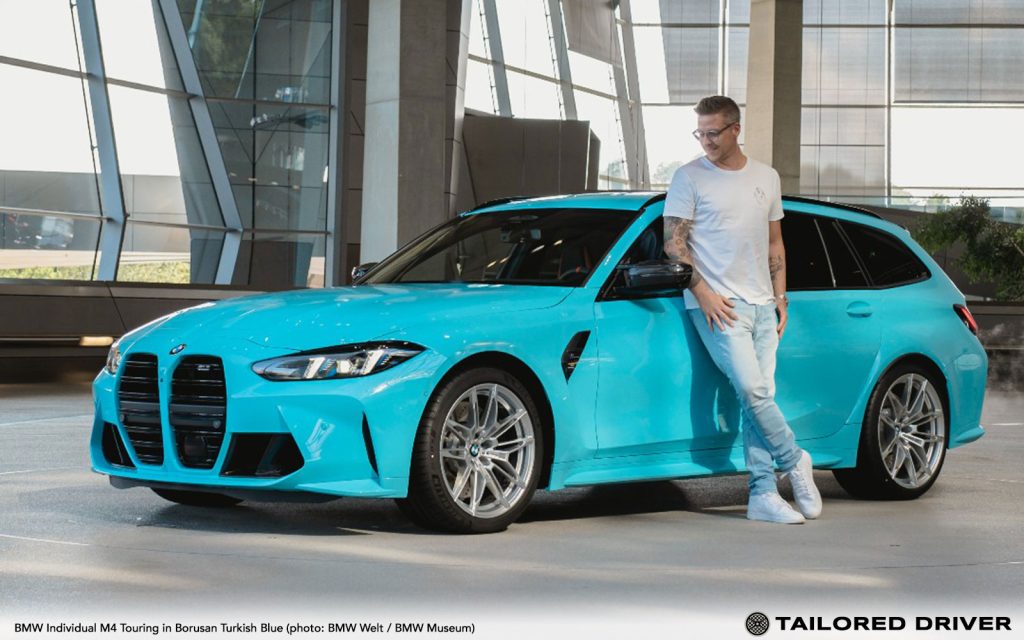
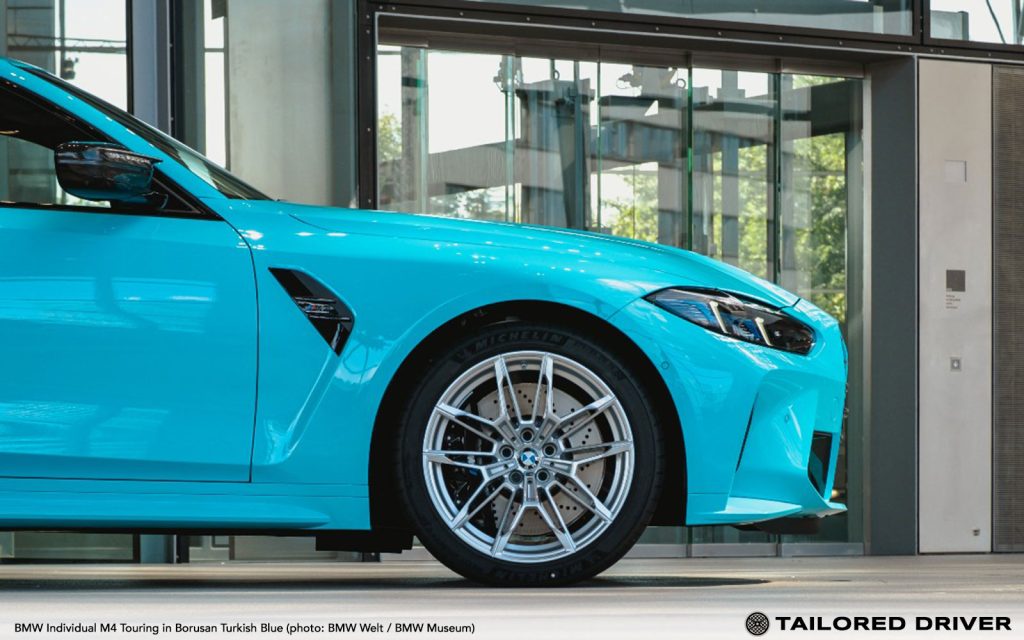
This isn’t the first time we’ve featured BMW Individual Borusan Turkish Blue (borusantürkischblau; non-metallic uni; P9E; BMW). Just a few weeks ago, BMW M shared an M4 Competition in the hue on their social media channels. This week, BMW Welt / BMW Museum is doing the same, only this time it’s a long roof.
We should probably start by applauding BMW Welt / BMW Museum. That the brand has their own social media channels for their headquarters consumer welcome facility is worth noting. Not all brands do it, but BMW spent a lot of money on creating the ultimate year-long BMW Group auto show space just across from the iconic cylindrical BMW Museum so why chince out when it comes to budget to communicate it. BMW didn’t, and as a result owners like the guy taking delivery of this M3 Touring get highlighted on an official platform, and nerds keeping track of attractions at the brand’s Münich headquarters or keeping close eye on tailored builds such as this one benefit from the extra effort. Kudos to you BMW.
And, kudos for cars like this one getting built. Borusan Turkish Blue as a color is a bright and bold blue, set on the more cyan/teal side of the blue spectrum. It’s not altogether that different from something like a Porsche Riviera Blue, and we’d love to see the two next to each other. One of the reasons we ran this story even though we recently featured that other post by BMW M is because these are real world shots in bright sun, whereas the previous post was in a medium to low light studio. That contrast gives those keeping track a better idea of the color, so we wanted to include it.
Alas, we don’t get the M3 Touring in the United States and that’s a real shame, but we are about to get the M5 Touring and BMW Individual is also alive and well on this side of the pond. To that end, we hope you feel inspired. We know we do.
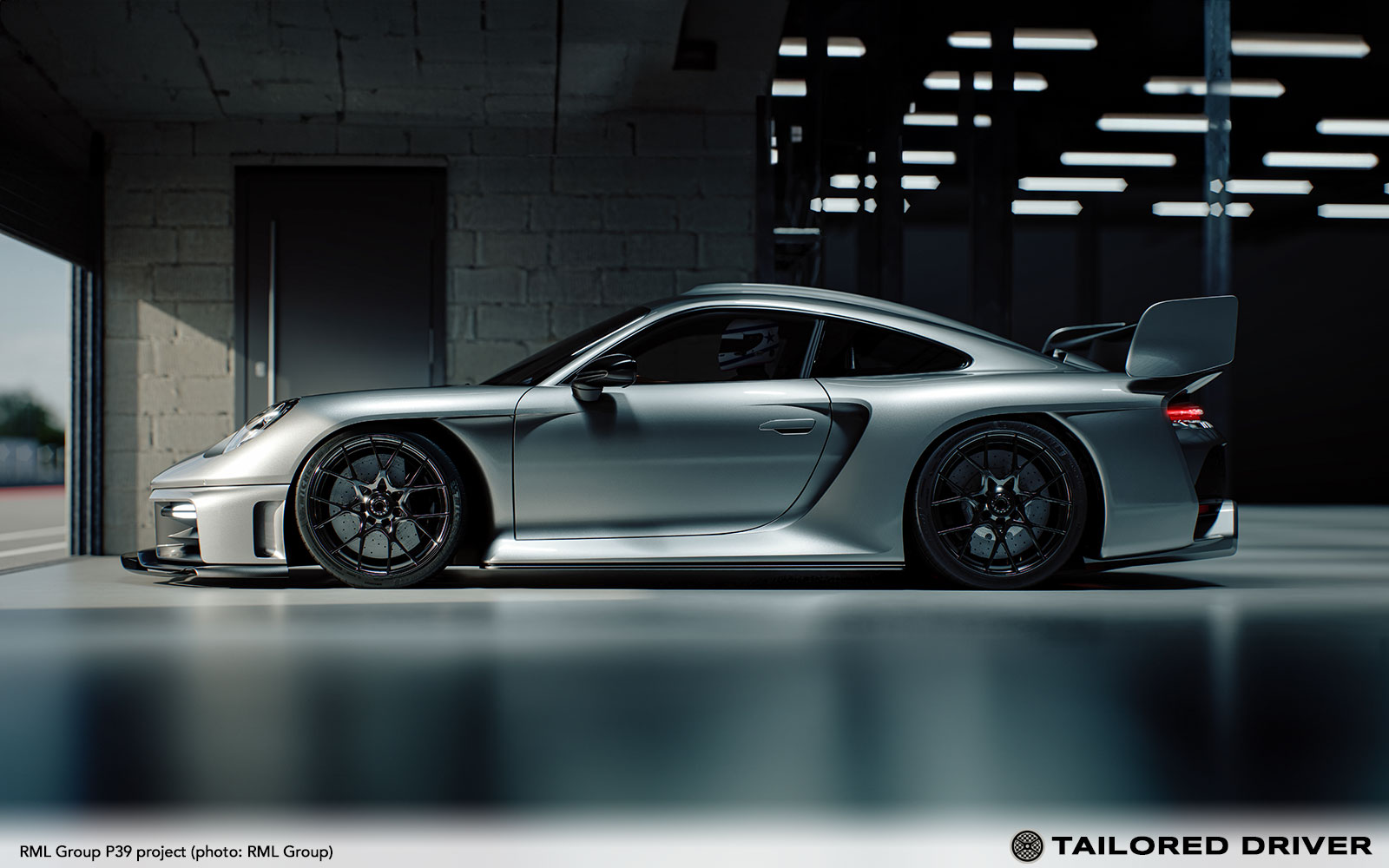
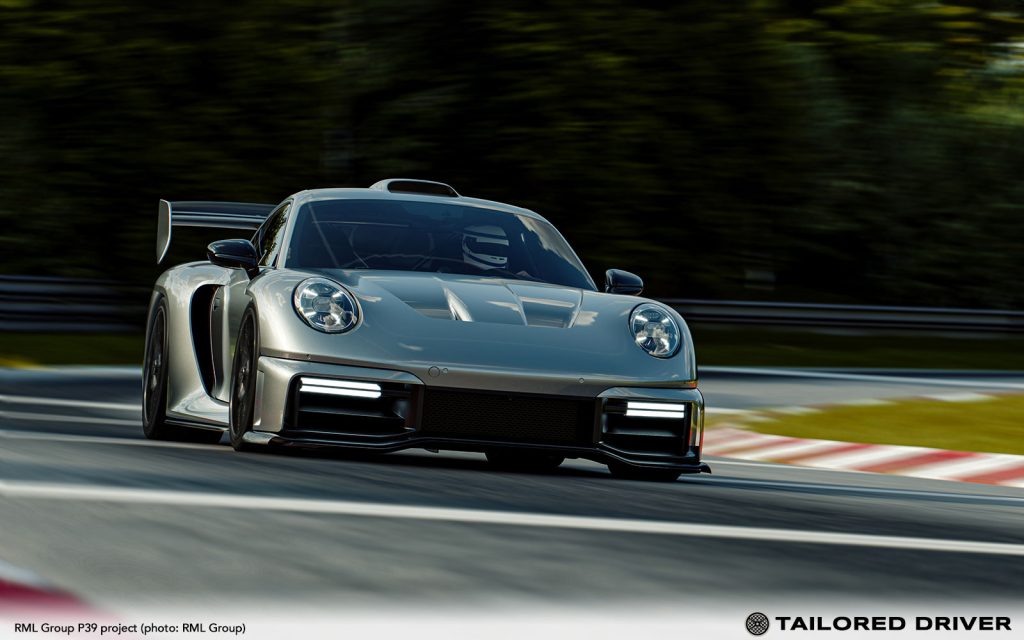
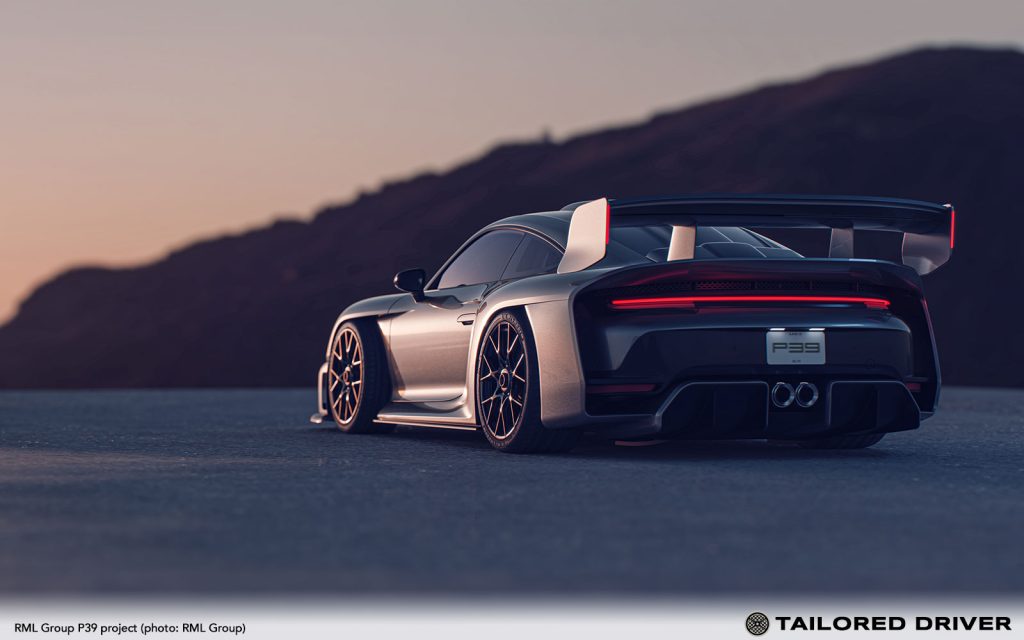
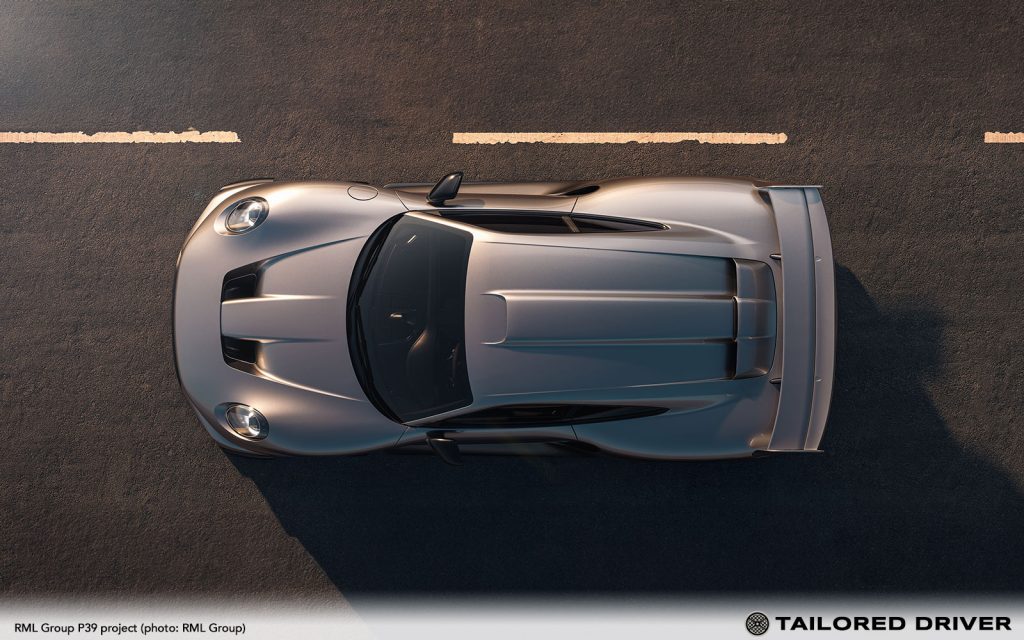
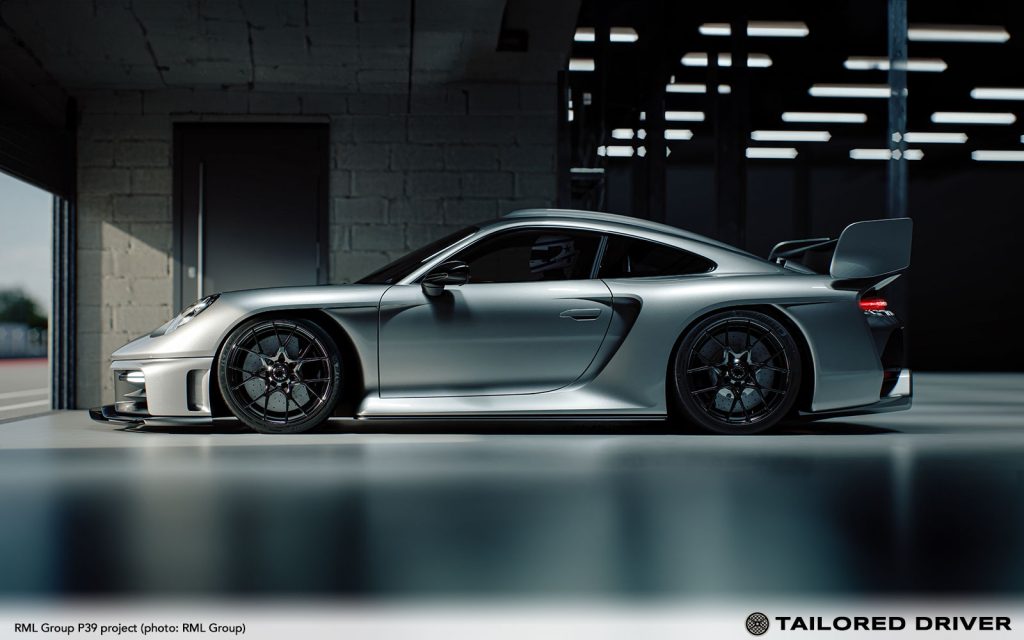
Typically when we talk remasters, we’re talking about exacting reimagining of iconic and also vintage cars. In the case of RML Group and their Le Mans though, it’s a reinvention of the current 992.1 Porsche 911 Turbo S. RML takes Porsche’s most potent Turbo and dials it up to hypercar levels with its modern reimagining, and until Porsche builds a modern 911 GT2, the Le Mans definitely fits a niche.
In as much, we’re including RML in our remasters series. While we’re not seeking to cover everything in the aftermarket as a “remaster”, we are choosing firms doing formulaic and tailored augmentation of iconic cars. We think this qualifies, though given these all appear to be renderings for now, will save our final impressions for when we finally see one in person. In the meantime, read the full press release below.
BEGIN PRESS RELEASE
[source: RML Group]
All-new new carbon body has active aero and DRS
Chassis features longer wheelbase, wider track, hydraulic height adjustor
Engine extensively tuned to produce more than 900bhp and 1,000Nm
Projected Nordschleife lap time faster than a 992 GT3RS*
P39 40th Special Edition limited to 10 examples worldwide
Wellingborough, Northants October 16, 2024 – RML Group Ltd, the UK’s leading high-performance engineering specialist, today unveils first production details of its bespoke P39 project.
Merging Le Mans Hypercar design and daily road-car usability, the P39 40th Special Edition (40SE) delivers an unrivalled blend of RML’s championship-winning expertise and engineering excellence.
Based on the Porsche 992.1 Turbo S, the RML P39 40SE upgrades every area affecting performance, ride and handling. The net result is an extraordinary hypercar that has track capability beyond a Porsche 992 GT3 RS* yet maintains a high level of compliance and day-to-day usability.
Michael Mallock, CEO of RML Group, said: ‘What better way to showcase our leadership on road and track over 40 years than with the launch of a Le Mans Hypercar-inspired hypercar?
‘Our new RML P39 40th Special Edition challenges everything that’s possible in this sector,’ he added. ‘It will comfortably eclipse a GT3 RS* at the Nordschleife while being relaxing and easy to drive all the way home again.’
To expand the car’s handling abilities, P39 40SE’s track has been increased front and rear plus the wheelbase has been lengthened. The bodywork has been replaced by a carbon fibre shell inspired functionally and aesthetically by the new Le Mans Hypercar category.
This features front and rear active aero complete with an integrated, driver-activated drag reduction system (DRS) which reduces aerodynamic drag to boost speed on straights. Furthermore, the entire chassis can be remotely lowered to increase downforce via hydraulic actuators.
In this configuration, P39 40SE generates an extraordinary 662kg of downforce – more than 4.5 times a standard 992.1 911 Turbo S at 150mph.
Making the most of this new-found ability, P39 40SE’s twin-turbo six-cylinder engine is taken to 900bhp at 7,300rpm and 1,000Nm of torque thanks to a new ECU, upgraded turbos and intercoolers, new manifolds and catalytic converters plus a tuned Inconel sports exhaust.
Using RML’s advanced simulation software, these upgrades translate to an anticipated Nordschleife lap time of 6min 45sec*. This compares with 7min 17sec for the standard 992.1 Turbo S and 6min 49sec for the GT3 RS.
Yet as focused and stiff as it is in Track Mode to achieve this scintillating speed, P39 40SE has two distinct modes or characters. With the car in driver-selected Tour Mode, the ride height increases, damping relaxes to make the car more compliant and everyday useable.
Inside, P39 40SE celebrates RML’s 40 years of engineering excellence with new sports seats and embroidery matched with four-point safety harnesses for both driver and passenger. The standard vestigial rear seat is removed and replaced with a custom half roll cage.
The package is completed with no-cost option RML 40SE Ruby Red paintwork and bespoke forged alloy sports rims – 20in at the front and 21in at the rear.
Just 10 examples of P39 40SE will be created at RML’s engineering centre at Wellingborough, near Silverstone, with the first already under construction.
P39 40SE is delivered as a completed vehicle, with each costing £495,000 excluding taxes plus the donor car. RML can source these, as required.
*All times are simulation only
P39 40th Anniversary Special Edition Specification
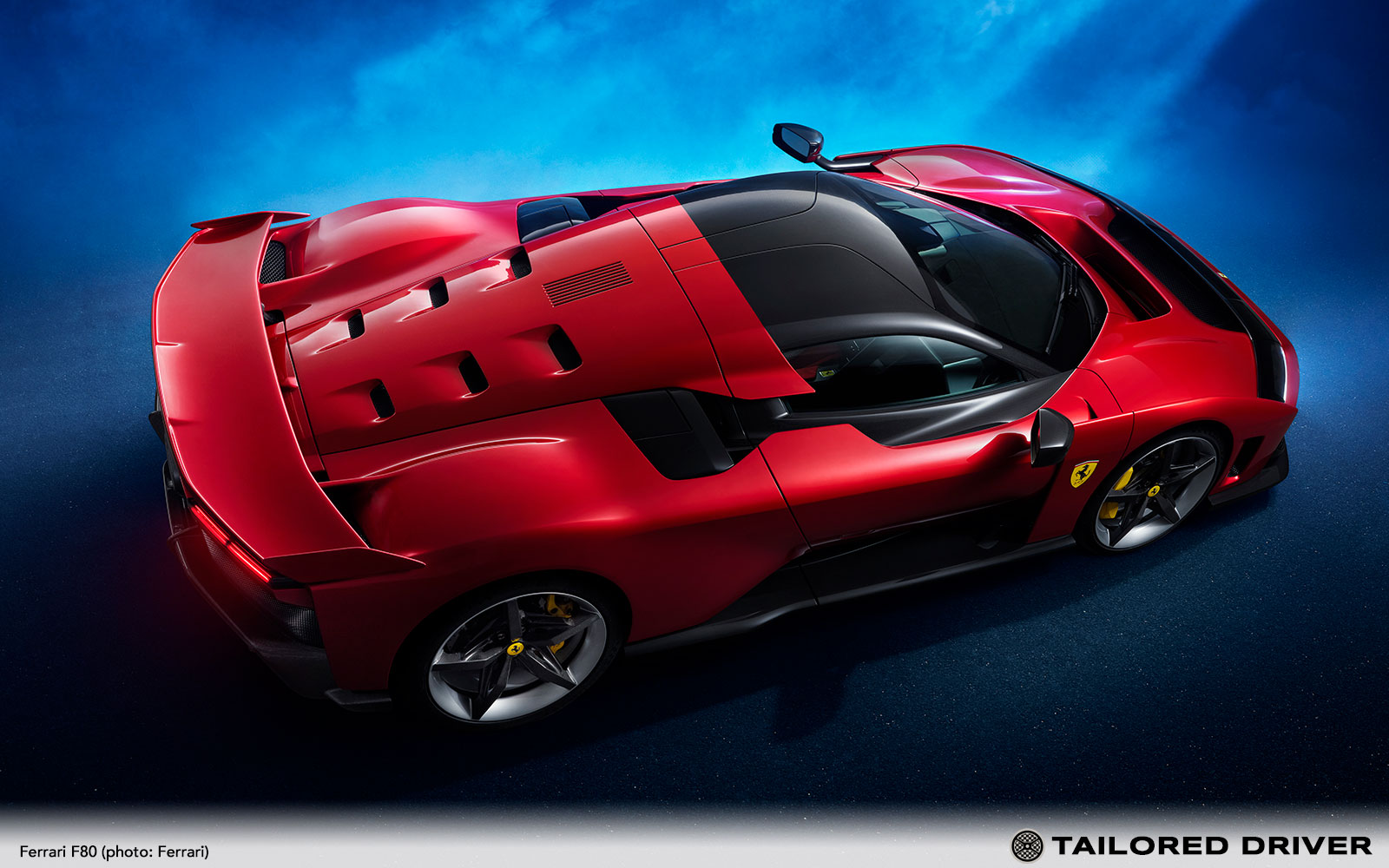
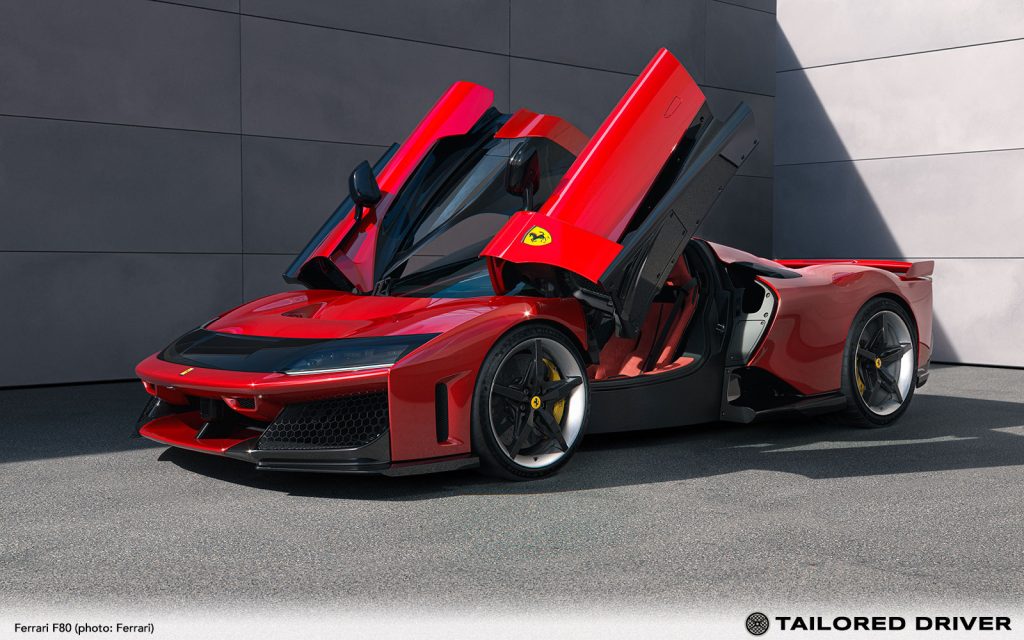
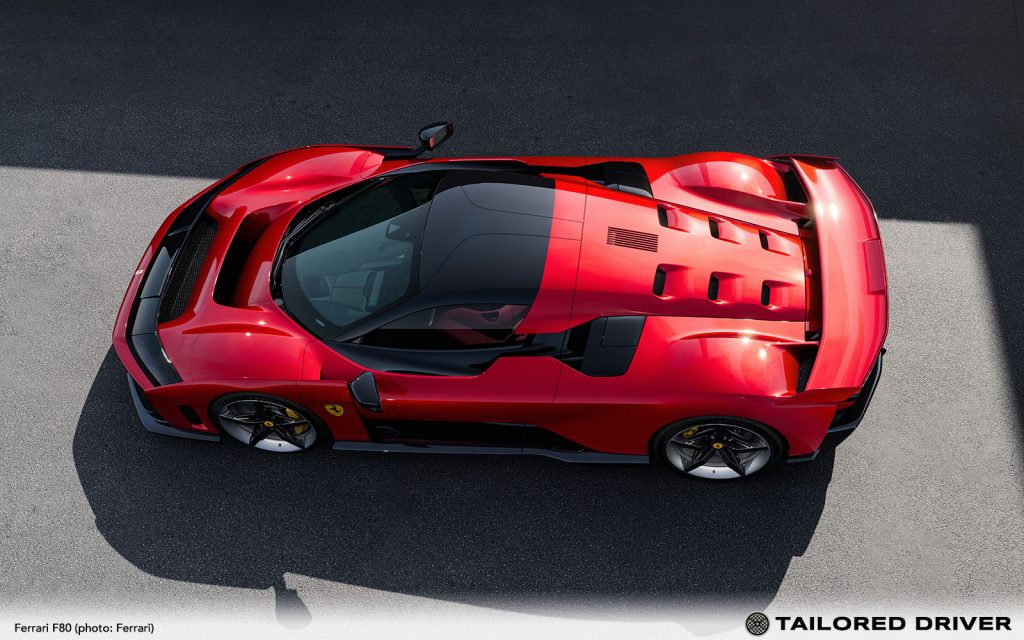
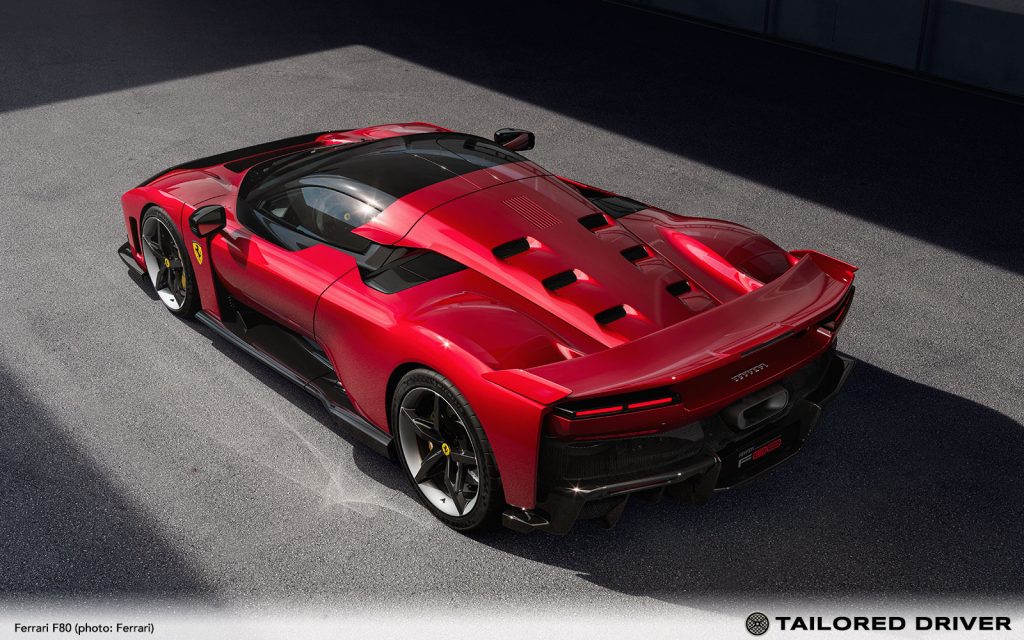
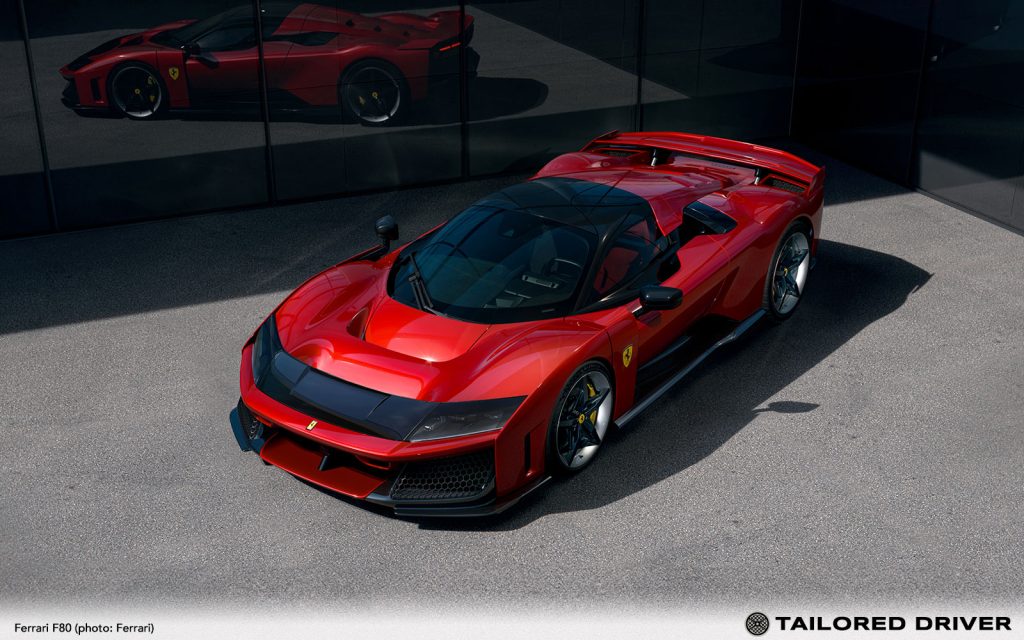
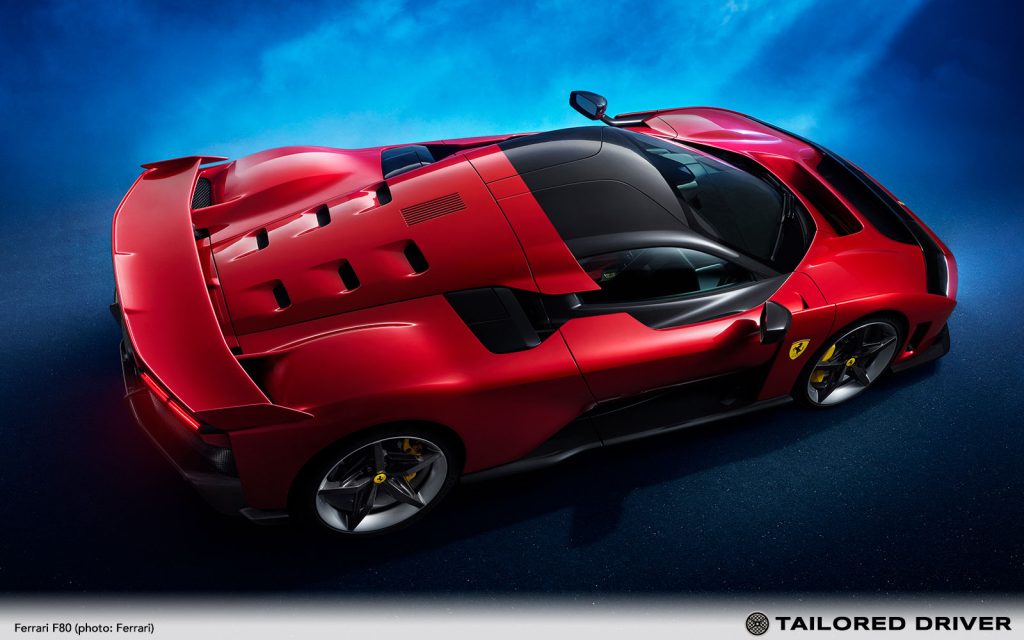
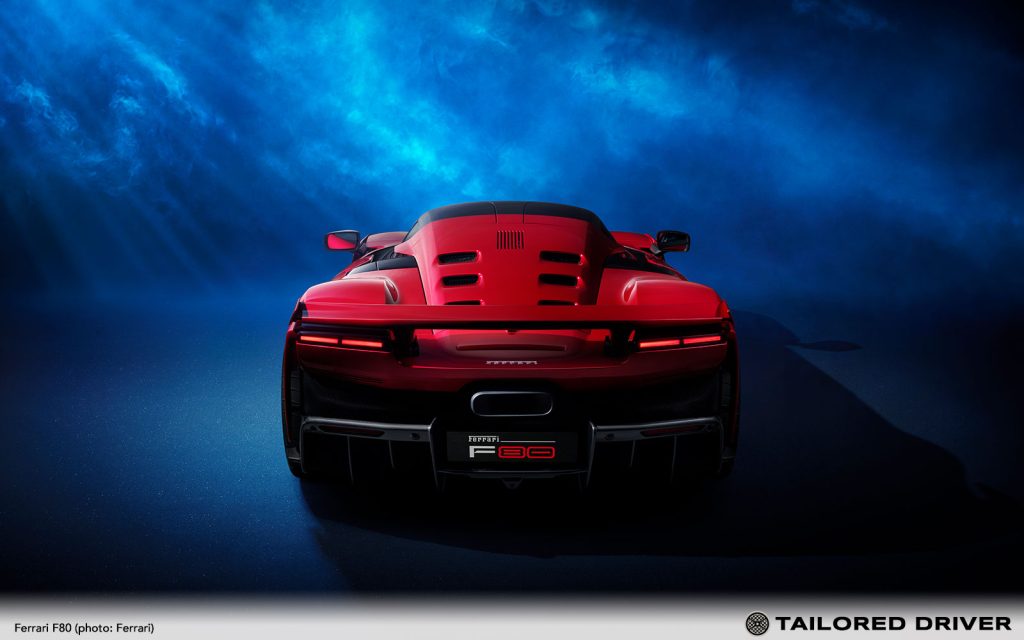
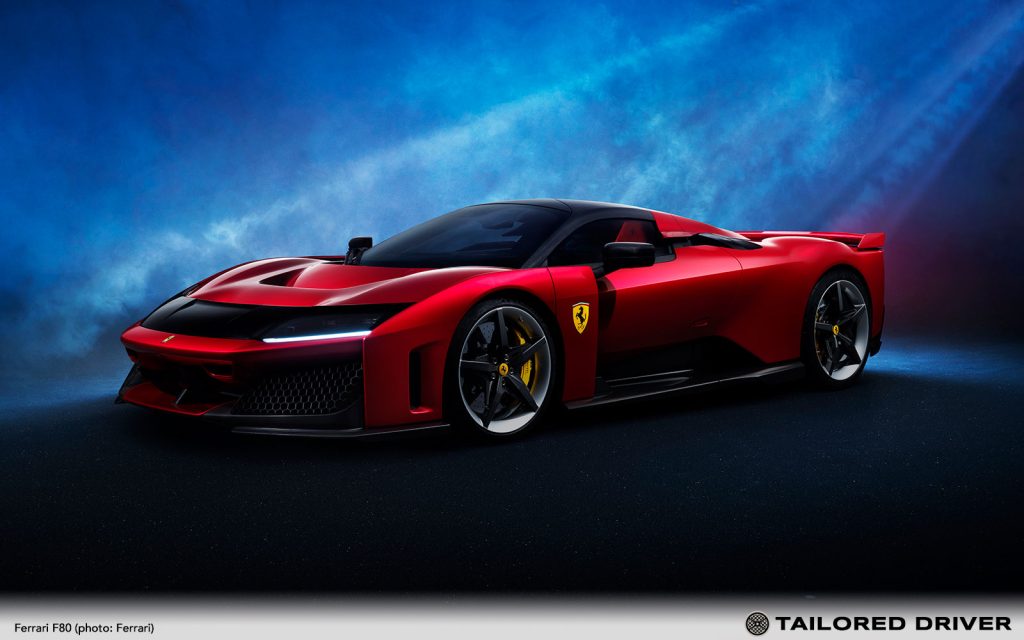
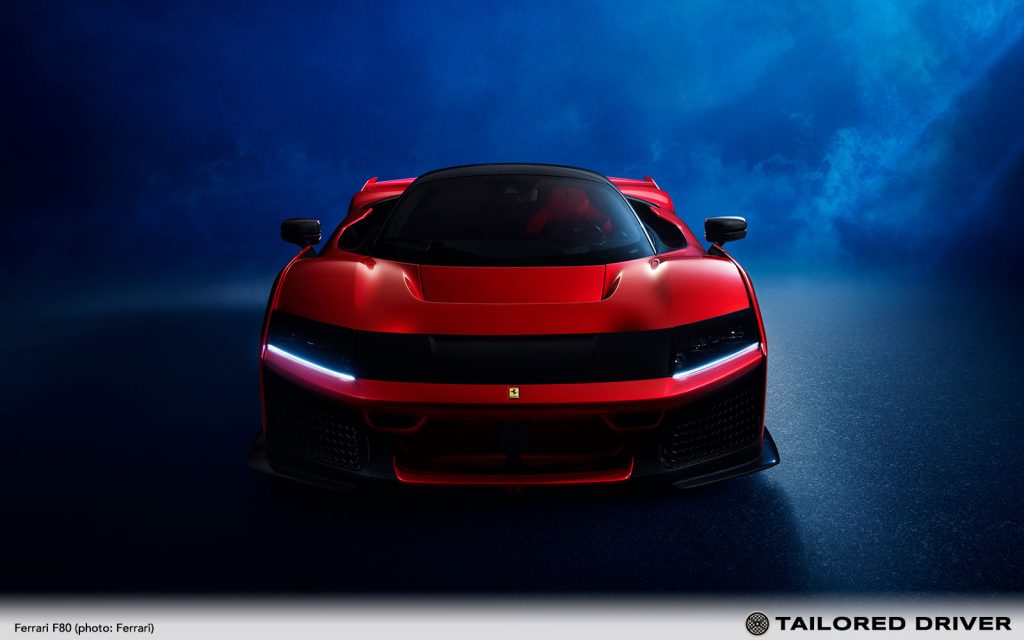
The F80 is Ferrari’s new supercar, a car destined to join iconic models from the 1984 GTO to the 2016 LaFerrari Aperta
The F80 is a showcase for the ultimate in technology and performance from the marque, and represents an extreme development of the internal combustion engine
With a combined maximum power of 1200 hp, the V6-hybrid powertrain of the F80 makes it the most powerful road car ever to come out of the gates of the Ferrari factory
A host of advanced technological solutions makes the F80 the new benchmark for innovation and engineering excellence
[source: Ferrari]
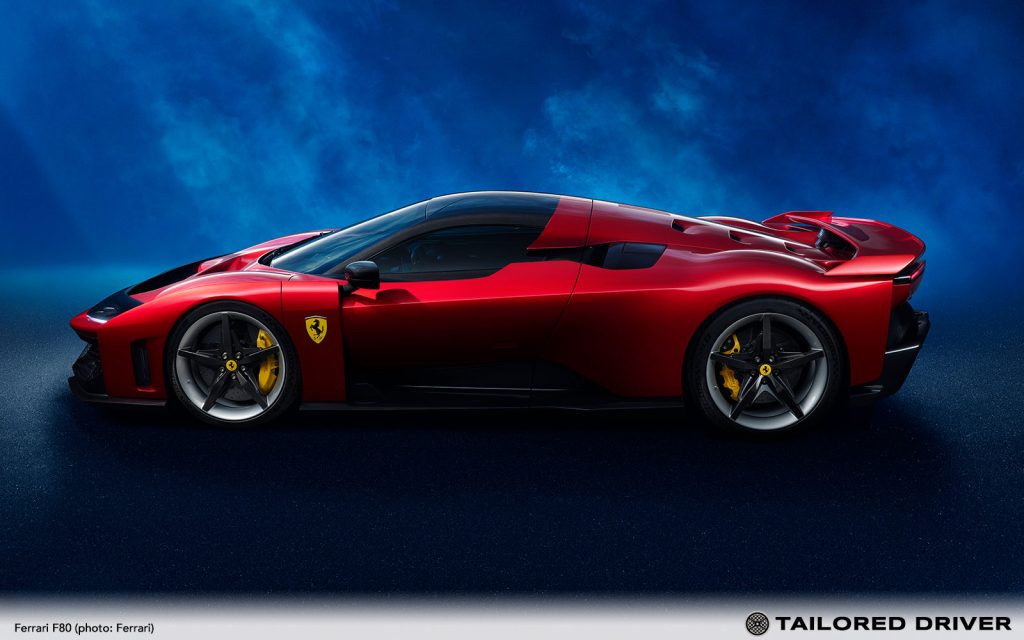
Maranello, 17 October 2024 – Ferrari today unveiled the F80 and wrote a new chapter in the history of legendary supercars bearing the Prancing Horse badge. The F80 will be produced in a limited run of just 799 examples and joins the pantheon of icons such as the GTO, F40 and LaFerrari by showcasing the best that the Maranello-based marque has achieved in terms of technology and performance.
Ever since 1984, Ferrari has periodically released a new supercar that represented the pinnacle of cutting-edge technology and innovation of its era and that was destined to become enshrined in popular culture. Intended for the most discerning clients of the brand, these cars immediately became legends in their own lifetime, making an indelible mark not only on the history of Ferrari, but on the history of the automobile itself.
The latest addition to this family, the F80, is tasked with embodying the ultimate in engineering for an internal-combustion-engined vehicle and employs all the most advanced technological solutions, including latest-generation hybrid technology for the powertrain, to achieve unparalleled levels of power and torque. Every aspect of the architecture is conceived to maximise performance, from the carbon-fibre chassis and extreme aerodynamic solutions far beyond anything seen before in a road-legal car, to the new active suspension optimised to let the driver wring every ounce of performance from the car on the track.
Unlike anything else in the current supercar world, the F80 combines all these attributes with uncompromising levels of usability on the road, where it can be driven with ease. This ability shaped every choice made in terms of technology and architecture to achieve the goal, which at first sight seems impossible, of creating a track-oriented supercar that’s just as driveable as a production range model.
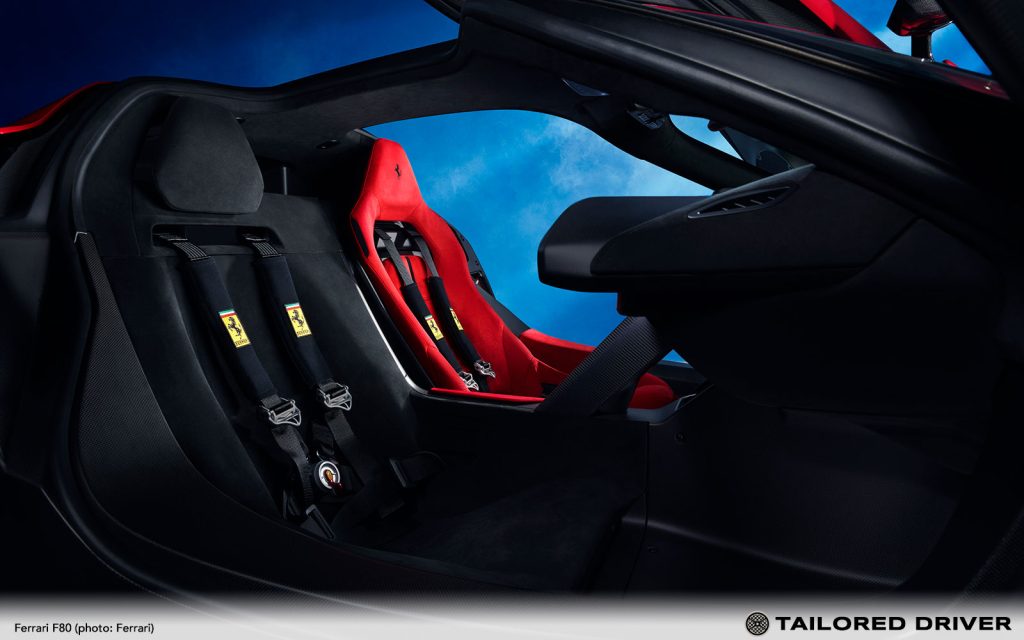
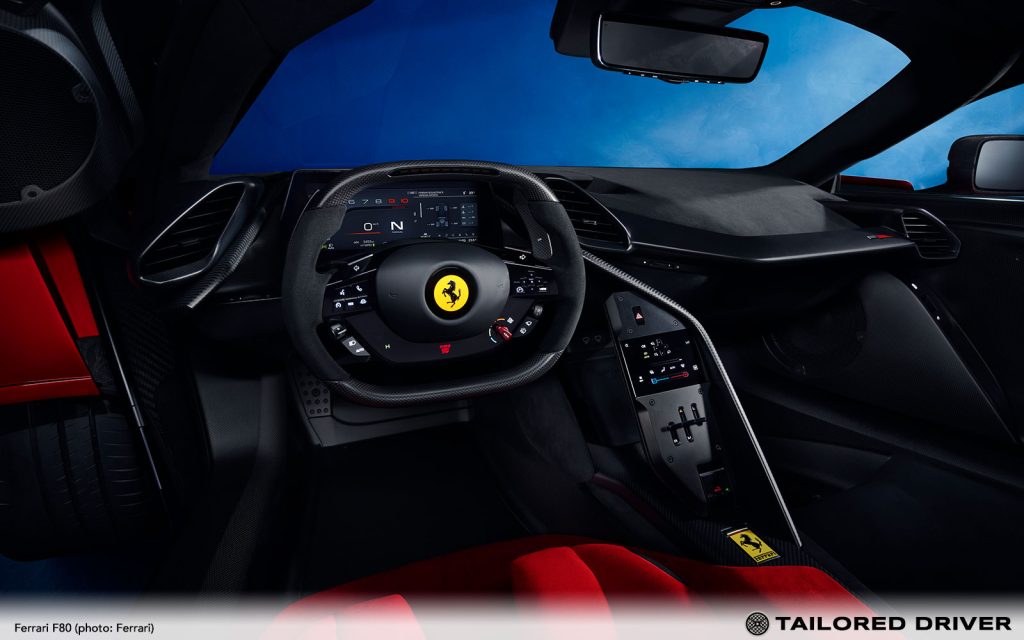
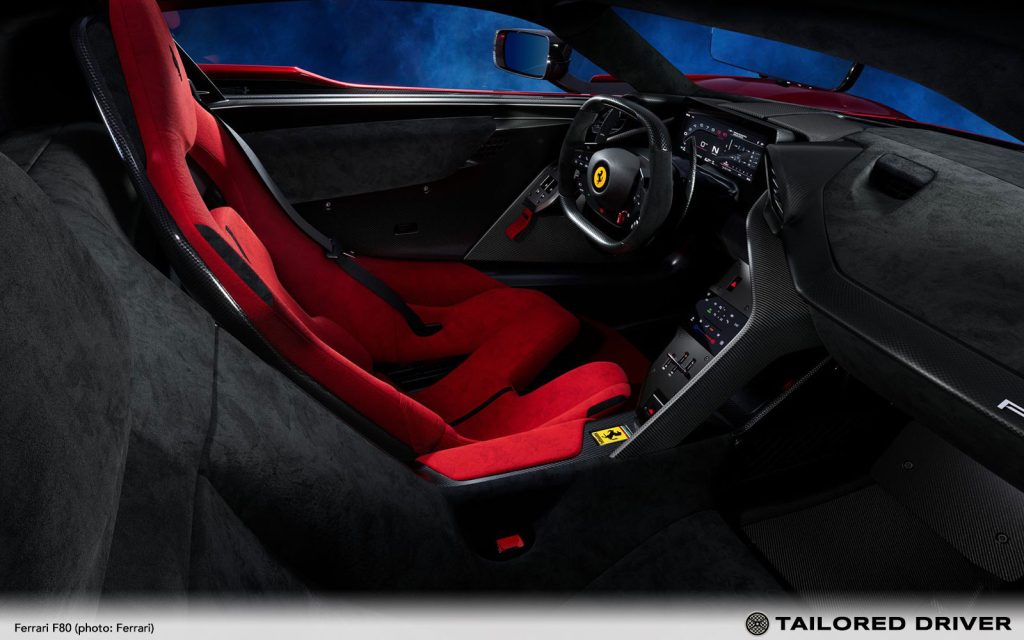
All this means that the driver will spend even more time in the car and can truly get to know and revel in its performance and the thrilling driving experience it offers. The architecture of the F80 is so extreme that the layout chosen results in a narrower cabin with a driver-centric layout, which nonetheless still offers excellent space and comfort for a passenger. This choice had crucial benefits in terms of minimising drag and weight.
The cockpit area therefore has a distinct single-seater feel, despite the fact that the car is homologated for two occupants, resulting in a architecture that we could call “1+”. The primary reason for this choice was to minimise width, to the benefit of aerodynamics (with less drag) and weight saving. This concept is completely in keeping with the motorsport world from which this car not only draws inspiration but also inherits technological solutions.
As has always been the case with the Ferrari supercars preceding the F80, the powertrain is based on the finest expression of technology in motorsport. The GTO and F40 were powered by a turbo V8, because Formula 1 cars used turbocharged engines in the 1980s. Today in both Formula 1 and the World Endurance Championship (WEC), powertrains consist of turbo V6 ICE engines mated with an 800 V hybrid system. It was only natural then that this architecture – the same architecture used by the 499P, which has taken two consecutive victories at the 24 Hours of Le Mans – would be transferred into the new F80.
Here though the powertrain is further complemented by the introduction, for the first time ever on a Ferrari, of electric turbo technology (e-turbo), which, with an electric motor installed between the turbine and compressor of each turbo, allows for an extraordinary specific power output and instantaneous response from low down in the rev range.
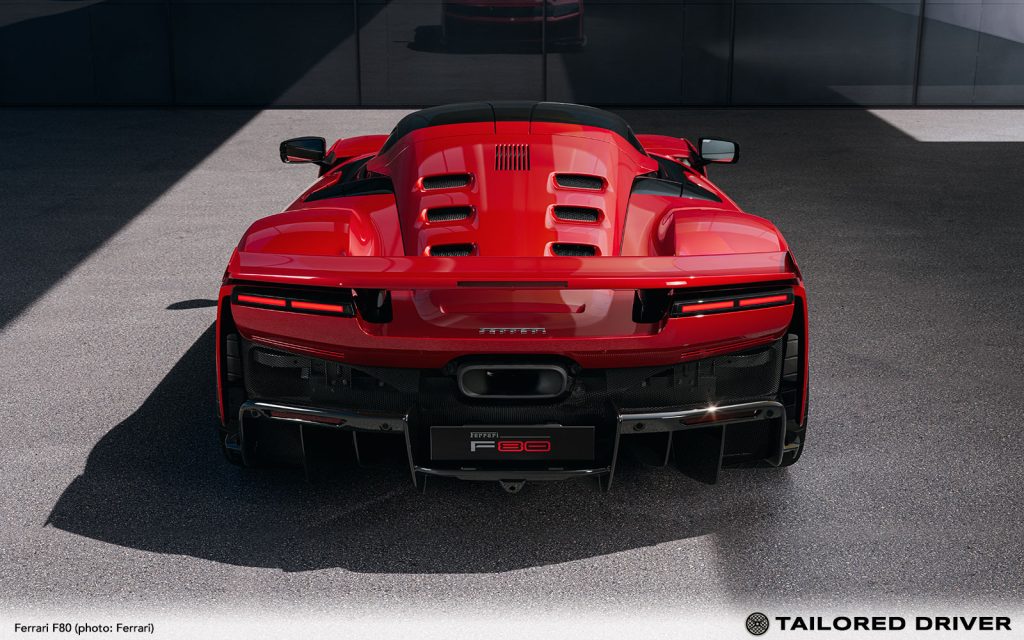
Aerodynamics play a key role on the F80, with solutions such as the active rear wing, rear diffuser, flat underbody, front triplane wing and S-Duct working in concert to generate 1000 kg of downforce at 250 km/h. This result is further enhanced thanks to the active suspension, which contributes directly to generating ground effect. Performance is boosted by the electric front axle, which brings four-wheel drive capability to make even more effective use of the torque and power on tap, and the new brakes with motorsports-derived CCM-R Plus technology.
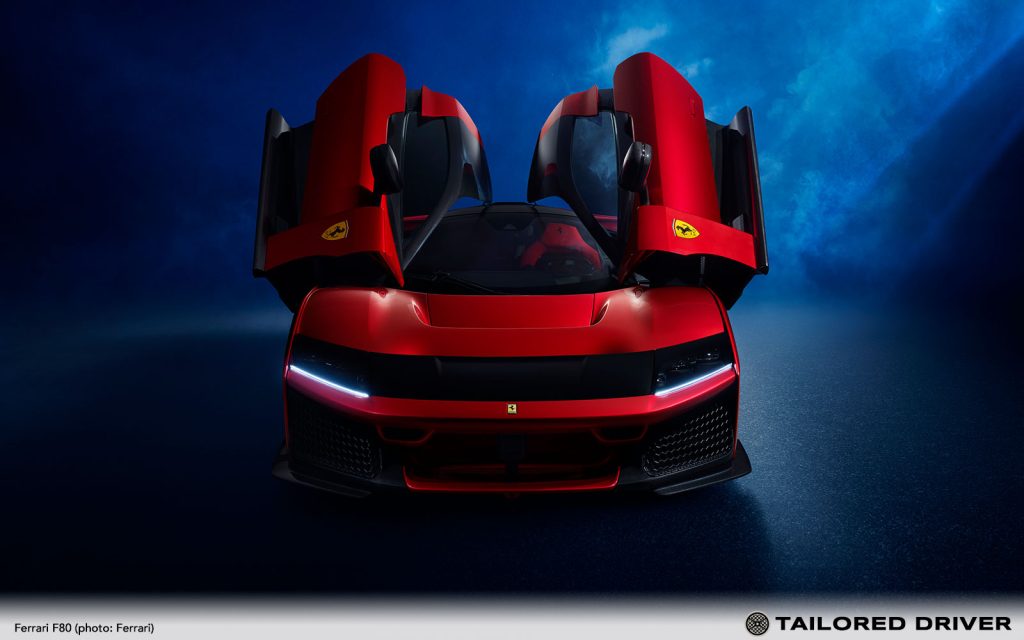
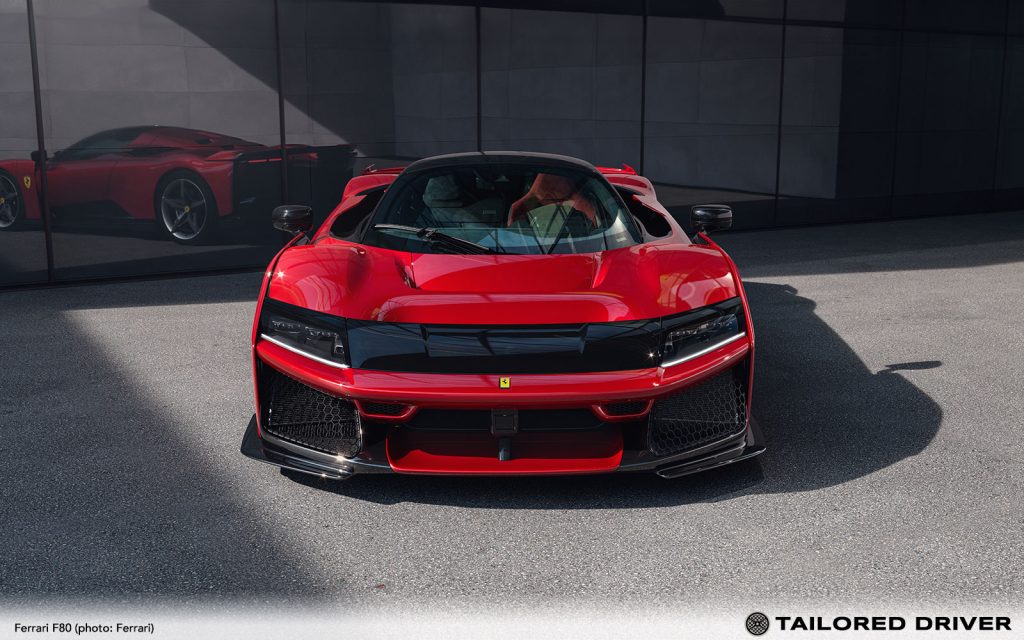
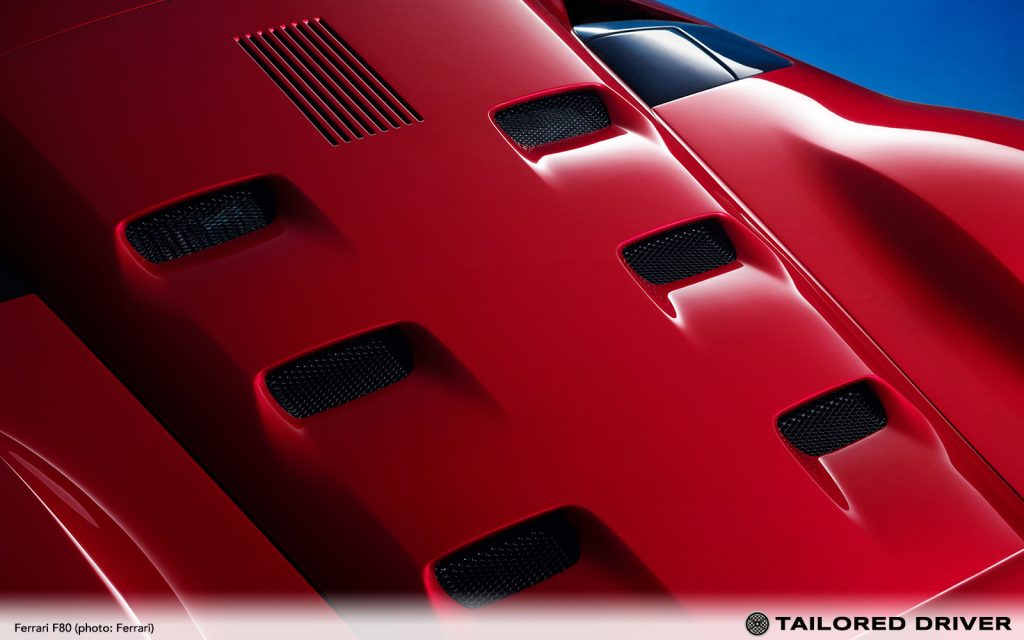
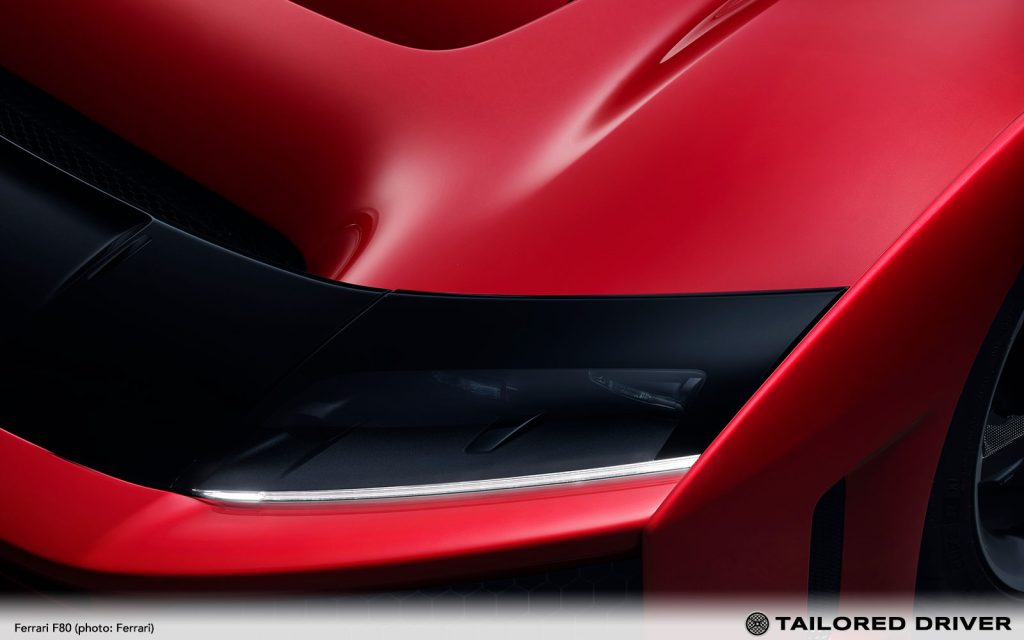
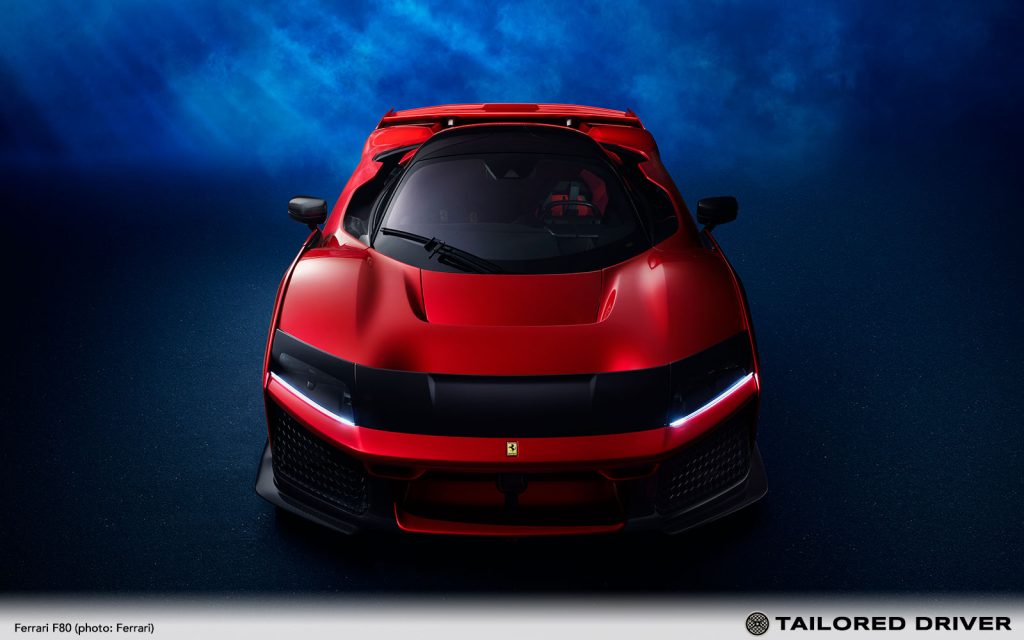
As with all the supercars preceding it, the F80 marks the start of a new design era for Ferrari, with a more tense, extreme design language accentuating its race-bred soul. There are clear references to cues borrowed from aerospace, which underscore the cutting-edge technology and elegant engineering of each and every technical solution. But there are also nods to its hallowed progenitors which clearly declare the illustrious lineage of the F80.
POWERTRAIN
INTERNAL COMBUSTION ENGINE
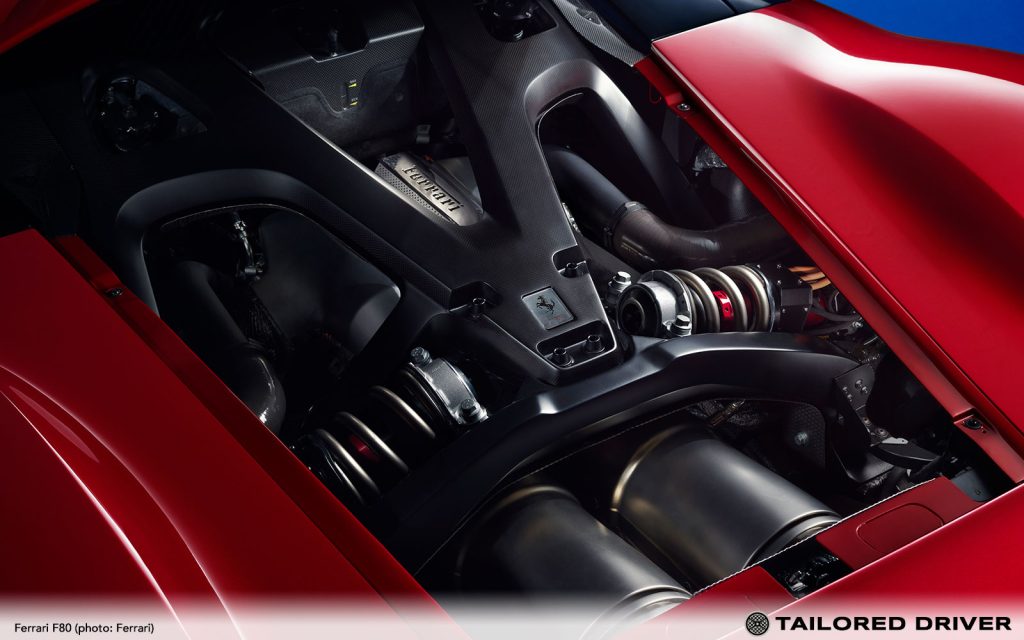
The three-litre 120° V6 F163CF of the F80 is the ultimate expression of the Ferrari six cylinder engine: this unit produces an astonishing peak power of 900 hp, making it the Ferrari engine with the highest specific power of all time (300 cv/l), to which the electric front axle (e-4WD) and rear motor (MGU-K) of the hybrid system add another 300 cv.
The link with motorsports, and endurance racing in particular, is strong: the architecture of this engine and many of its components are closely derived from the powerplant of the 499P which won the last two editions of the 24 Hours of Le Mans. Commonalities with the car competing in the World Endurance Championship (WEC) include the architecture, crankcase, layout and drive chains of the timing system, oil pump recovery circuit, bearings, injectors and GDI pumps.
Naturally, there is also technology carried over from Formula 1, from which the F80 inherits both the concept of the MGU-K (with the development of an industrially manufacturable electric motor similar to the unit used in Ferrari F1 cars) and the MGU-Hs (which generate power from the excess kinetic energy from the rotation of the turbines created by the heat energy from the exhaust gases) with a bespoke e-turbo application.
For maximum performance in all possible conditions, every aspect of the calibration of the engine has been taken to the extreme, focusing in particular on the ignition and injection timing, the number of injection events per stroke and the management of the variable-phase valve timing. The F80 is equipped with the first Ferrari road car engine to benefit from a new approach for statistical knock control, which lets the engine operate even closer to the knock limit, allowing the use of higher combustion chamber pressures than ever (+20% compared with the 296 GTB) to unleash even more of the engine’s potential.
Another crucial aspect has been the work dedicated to the dynamic calibration of the torque curve in every gear, an all-time first for a Ferrari road car. This part of the project focused on real road-driving conditions and the management of the e-turbo system, because knock and compressor surge limits vary depending on whether they are measured in dynamic or stationary conditions. As a result of this research, a dedicated calibration was developed for each gear, allowing the engine to attain levels of responsiveness comparable to a naturally-aspirated engine in all operating conditions.
The e-turbos, with an electric motor installed axially between the turbine and the compressor housing, let the engineers optimise the fluid dynamics of the engine for maximum power at mid to high engine speeds without the usual compromise this entails in terms of turbo lag at low engine speeds. Bringing electric power into the equation makes it possible to define e-turbo management strategies which negate turbo lag and ensure lightning-quick response times.
The 350 bar injectors of the GDI system are situated at the centre of the combustion chamber for optimal fuel/air mixing and, together with the multiple injection strategies adopted, ensure efficiency for outstanding performance with lower emissions. The intake and exhaust cam profiles have been revised to optimise fluid dynamic efficiency and increase maximum engine speed to 9000 rpm, with a dynamic limiter at 9200 rpm.
Both the intake and exhaust runners are polished for better performance; the intake runners have been shortened to reduce resistance and cool the air/fuel mixture through fluid dynamic detuning, and are specifically designed to increase turbulence in the combustion chamber. The three-brick (matrices) exhaust line complies with current emissions standards (Euro 6E-bis), but already takes future evolutions in emissions regulations on a global level into account.
The connecting rods and pistons have also been revised: the titanium connecting rods feature a toothed interface at the mating surface between the shank and the big end cap to ensure perfect alignment between the two parts and absolute assembly precision with the bearings. The aluminium pistons have been optimised to reduce weight and withstand the higher pressure and thermal loads in the combustion chamber due to the incredibly high torque and power. Specifically, high strength DLC (diamond-like carbon) coated steel has been used for the piston pin. Additionally, a dedicated oil passage hole has been added to the zone between the piston pin and the connecting rod to improve lubrication.
To lower the centre of gravity of the car, the engine has been installed as close as physically possible to the flat undertray. As a result, none of the components situated at the bottom of the sump are more than 100 mm below the centreline of the crankshaft. It was also decided to tilt the engine-transmission unit by 1.3° in the Z axis, raising the gearbox so that it does not compromise the efficacy of the aerodynamic undertray.
To lighten the engine, the cylinder block, crankcase, timing cover and other components have been revised, while titanium screws have also been adopted. As a result of these measures, the engine weighs no more than the V6 of the 296 GTB despite a power increase of 237 hp.
The lowered installation position of the engine-transmission unit was permitted by the new smaller diameter flywheel, conceived and designed from scratch for this application. This innovative solution was made possible by the use of two sets of springs, which also contributed to reducing the overall stiffness of the system and filtering vibrations transferred to the transmission more effectively. The damper was also developed specifically for this application to attenuate the higher torsional vibration forces in the driveline and dissipate the higher thermal loads due to the increased performance.
HYBRID POWERTRAIN
The electric motors used for the F80 are the first units developed, tested and manufactured entirely by Ferrari at Maranello, all with the specific goal of maximising performance and reducing weight. Their design (with two on the front axle and one at the rear of the car) draws directly from Ferrari’s experience in racing; specifically, the stator and rotor in a Halbach array configuration (which uses a special layout of the magnets to maximise magnetic field strength) and magnet sleeve in carbon fibre are all solutions derived from the design of the MGU-K unit used in Formula 1.
The rotor adopts Halbach array technology to maximise magnetic flux density and minimise weight and inertia. The carbon fibre magnet sleeve, on the other hand, has been used to raise maximum motor speed to 30,000 rpm. The concentrated winding stator reduces the weight of copper used for the end windings, while the Litz wire minimises high-frequency losses. The Litz consists of multiple insulated strands instead of a single wire, reducing the ‘skin effect’ and allowing the current to flow uniformly through the entire cross section of the wire to minimise losses. The resin coating for all the active parts of the stator improves heat dissipation.
A DC/DC converter transforms DC current at one voltage to DC current at a different voltage. This innovative technology makes it possible to use a single component to handle three different voltages simultaneously: 800 V, 48 V and 12 V.
Using the direct current produced by the high-voltage battery at 800 V, the Ferrari converter generates direct current at 48 V to power the active suspension and e-turbo systems, and 12 V direct current to power the electronic control units and all other electric ancillaries on the vehicle. Innovative resonant technology allows this component to convert current with no latency with a conversion efficiency in excess of 98%, so that it behaves to all intents and purposes as an accumulator. This component eliminated the need for a 48 V battery, saving weight and simplifying the layout of the electrical system.
Also developed and manufactured entirely in-house by Ferrari, the front axle includes two electric motors, an inverter and an integrated cooling system. This component makes it possible to use torque vectoring for the front axle. Integrating different functions in a single component and the new mechanical layout have offered a weight saving of around 14 kg over previous applications, and the entire component weighs just 61.5 kg. Optimising mechanical efficiency was a primary goal: low viscosity oil (Shell E6+) and a dry sump active lubrication system with an oil tank integrated directly into the axle reduced mechanical power losses by 20%. The use of high coverage ratio (HCR) gears contributed to reducing noise emissions by 10 dB.
The direct current received from the high-voltage battery is transformed into the alternating current necessary to power the electric motor by the inverter. The inverter integrated in the front axle is bidirectional, meaning that it also transforms alternating current produced by the axle under regenerative braking into direct current for recharging the battery. The inverter used to convert power and control the two front motors is capable of delivering a total of 210 kW of power to the axle. On the F80, the inverter is integrated directly into the axle and weighs just 9 kg, contributing to the lower mass of this component compared to its counterpart on the SF90 Stradale.
Another inverter is used for the rear electric motor (MGU-K). This performs three functions: starting the internal combustion engine, recovering energy to recharge the high voltage battery and supplementing the torque of the engine in certain dynamic conditions. It can generate up to 70 kW in regeneration mode and assist the internal combustion engine with up to 60 kW of power. Integrated into both of these inverters is the Ferrari Power Pack (FPP) system, a power module with all the elements necessary for power conversion combined in the most compact unit possible. This unit consists of six modules in silicon carbide (SiC), gate driver boards and a dedicated cooling system.
The core of the energy accumulation system – the high-voltage battery – is conceived for very high power density. The innovative design of the battery is based on three principles: lithium-cell chemistry derived from Formula 1, an extensive use of carbon fibre for the construction of the monocoque casing, and a patented design and assembly method (cell-to-pack) which minimises the weight and volume of the unit. Situated low down in the engine bay, the pack contributes to even better dynamic vehicle behaviour by lowering the car’s centre of gravity. All electrical and hydraulic circuit connectors are built into the component to reduce cable and hose length, while the pack is configured with 204 cells connected in series and subdivided equally into 3 modules, for a total energy capacity of 2.3 kWh and a maximum power output of 242 kW.
Last but not least, to improve integration between the electric and electronic internal components, Ferrari developed the CSC (Cell Sensing Circuit) wireless sensor suite, which monitors cell voltage with spring contacts and measures cell temperatures with infrared sensors.
AERODYNAMICS
The F80 pushes aerodynamic performance to levels never seen before on a Ferrari road car, as testified by the 1000 kg of downforce produced at 250 km/h. This astonishing achievement was made possible by perfect symbiosis between all the internal Ferrari departments working on the definition of the car’s architecture; for each department, the perfect balance between downforce and top speed was the basis for every design choice, giving shape to a suite of extreme solutions befitting a true supercar.
The front end of the F80, which develops 460 kg of total downforce at 250 km/h, was inspired by the aerodynamic concepts employed in Formula 1 and the World Endurance Championship (WEC), innovatively reinterpreted for this application to become cornerstones of the entire design. On the one hand, the recumbent racing driving position allowed for a chassis with a high centre keel, while on the other, the cooling system layout has freed up the entire central portion of the vehicle, maximising the space usable for other functions.
The body-coloured central volume of the nose acts as the generously-sized main plane of the front wing. Inside the S-Duct are two flaps following the main profile to complete the triplane wing configuration with curvatures and blower slots clearly inspired by the 499P. Crucial for the aerodynamic efficacy of the front of the vehicle is the way the triplane works in perfect concert with the S-Duct and the high central keel, minimising blockage of the air flow towards the wing and maximising performance.
As a result, the air flow from the underbody and bumper undergoes violent vertical expansion and is redirected within the duct towards the front bonnet, generating a potent upwash which translates into a powerful low-pressure zone under the underbody. This accounts for 150 of the 460 kg of the maximum downforce generated at the front of the car which, however, is very sensitive to changes in ground clearance. The aerodynamic balance of the car is therefore ensured by the active suspension, which controls the attitude of the vehicle in real time and adjusts the distance between the underbody and the road in response to driving conditions.
The volume freed up under the feet of the driver also made room for three pairs of bargeboards. These devices generate powerful, concentrated vortices which introduce a velocity component to the airflow field in the outwash direction. In addition to improving the underbody’s suction, the outwash also reduces blockage and improves the performance of the front triplane. The bargeboards also help mitigate the detrimental effects of the wake of the front wheel by confining it and keeping it away from the undertbody, preventing contamination of the air flow directed to the rear of the car.
The aerodynamic performance of the rear zone of the car, which generates the remaining 590 kg of downforce at 250 km/h, is a result of the combined action of the rear wing-diffuser system. The efficiency of this system is highly dependent on the quantity of downforce produced by the underbody, as this has very little impact on drag.
To take the performance of the diffuser of the F80 to extreme levels, the expansion volume of the diffuser itself has been maximised by inclining the engine-gearbox unit by 1.3° in the Z axis, and by the configuration of the rear chassis and suspension components. The starting point of the upward curvature of the diffuser has been brought forward, resulting in a diffuser measuring a record-breaking 1800 mm in length, which generates a huge low-pressure zone underneath the vehicle, which in turn draws a massive flow of air into the underbody area.
The geometry of the chassis, with narrow, curved sills, contributes to creating an aerodynamic seal effect around the underbody by forming a duct that captures the flow adhering to the flank and blows air into the interior of the rear wheelarch housing under the lower suspension arm. The interaction between this air flow and the outer strake of the diffuser interferes with the vortices generated in the wheel-road contact zone, preventing air from entering the diffuser too far forwards. These solutions work in such perfect harmony that the downforce generated by the diffuser alone is 285 kg, or more than 50% of the total downforce on the rear axle.
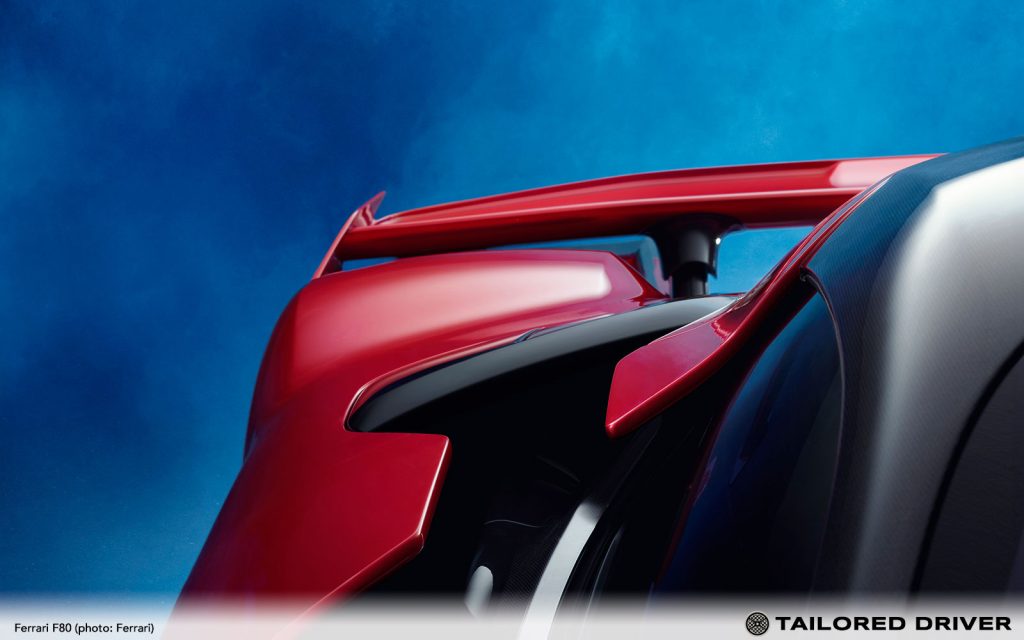
The active wing is the most visually distinctive aero feature of the F80, which completes the entire aerodynamic concept of the vehicle. The actuator system of the rear wing adjusts not only its height but also controls angle of attack continuously and dynamically, for precisely modulable downforce and drag. In the High Downforce (HD) configuration, which is used during braking, turn-in and cornering, the wing assumes an angle of 11° relative to the direction of the air flow to generate over 180 kg of downforce at 250 km/h.
At the extreme opposite of its range of rotation, the wing is in Low Drag (LD) configuration, with the leading edge pitched upwards. Drag is much lower in this configuration, not only because of the reduction in lift, but also due to the tractive effect generated by the residual low-pressure zone impinging on the underside of the wing itself.
The rear wing is the keystone of the entire adaptive aero system, allowing the F80 to adapt to any possible dynamic conditions, which are monitored and evaluated in real time by the vehicle control systems. In response to the requests of the driver in terms of acceleration, speed and steering angle, the system determines the optimal blend of downforce, aerodynamic balance and drag, and tells the active suspension and active aero systems to implement the ideal attitude accordingly. In the case of the aero system, this means controlling the angle of attack of the rear wing and the activation state of the Active Reverse Gurney flap under the front triplane.
With its two different configurations, the flap also allows control over downforce and drag at the front of the car: the closed position generates maximum downforce, while in the open position the device is at right angles to the air flow and, similarly to how DRS systems work in Formula 1, stalls the underbody to reduce drag and let the car reach a higher top speed.
HEAT MANAGEMENT
Defining the layout of the cooling system demanded in-depth studies and painstaking development to reconcile the thermal needs of the engine (which has to dissipate over 200 kW of thermal power during performance usage) and the new hybrid system with aerodynamic requisites. The aim was to design a cooling system with the least possible impact on the overall packaging, to attain a functionally and aerodynamically valid configuration that perfectly accommodates both the aerodynamic and thermal demands of the F80.
The radiators are positioned optimally to maximise the flow of cold air and minimise interference with the hot air flow, for better thermal exchange efficiency. A number of other innovative solutions were also adopted to improve the overall thermal balance of the car, such as the transparent film embedded in the windscreen which uses power from the 48V circuit to demist the screen and reduce the power demand on the HVAC system. Additionally, the climate control circuit is controlled by electrically actuated valves which modulate the flow of refrigerant in relation to the needs of the HVB circuit, improving energy management.
At the front are two condensers serving the climate control, battery and active suspension circuit, plus three high temperature radiators for cooling the V6. Two of these are situated laterally, in outboard positions, to make the most effective use possible of the space between the underfloor and the headlights, while the third is situated at the centre and takes advantage of the upwash generated by the triplane to ensure adequate air flow.
The venting of the hot air flows has been optimised to not interfere with the front aerodynamics and the flows of cooling air directed towards the rear. The main vent of the lateral radiators opens inside the wheelarch housing, a solution offering the least possible blockage to ensure excellent permeability for the radiating masses. Another aperture in the flank of the front wing ahead of the wheel contributes to containing the wheel wake while also directing hot air around the exterior of the wheel. The centre radiator vents heat into the zone between the bumper and the front bonnet without interfering with the flow exiting the S-Duct.
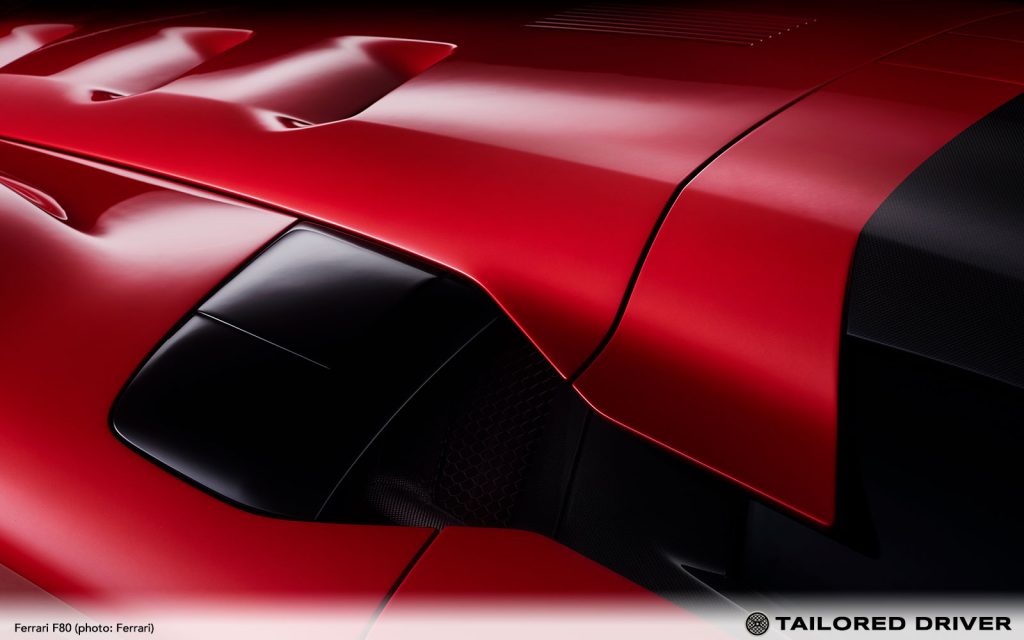
A number of different functions are integrated into the flank of the F80 in a single formal solution described by the upper volume of the door, where the surface drops away gradually to give shape to a channel incorporated in the bodywork itself. The shape of this channel protects the air flow along the wing from thermal contamination by the hot wake of the front wheel and guides it along the surface of the door to the inlet at the leading edge of the flank. This air intake is topped by a winglet that reinterprets the distinctive form of NACA aeronautical inlets: a solution that exploits the vorticity of the air to capture part of the air stream flowing in the region above the duct. Inside the duct, the incoming air is split into two flows, with one feeding the induction system of the engine, which benefits from up to 5 hp of extra power as a result of ram effect, and the other feeding the intercooler, which cools the intake air, and the rear brakes.
Here too, the engineers opted for innovative solutions to keep the braking system – developed around state-of-the-art CCM-R Plus discs – working in optimal thermal conditions. These include a front duct that uses the hollow inner cavities of the front impact-absorbing chassis longerons to channel the high-energy cold air flow from the bumper to the discs, pads and callipers, which are the most sensitive elements of the system. For the first time ever, this solution, patented by Ferrari, turns what was a packaging constraint into a means to maximise cooling performance, and offers a 20% increase in cooling air flow compared the LaFerrari with no penalty in terms of front aerodynamics.
VEHICLE DYNAMICS
The F80 is equipped with the most advanced suite of technological solutions currently available for managing vehicle dynamics in all possible conditions on the road or track. The Ferrari active suspension system is undoubtedly one of the showpieces of these and has been re-engineered from the ground up compared with the version used on the Ferrari Purosangue to tailor it to the F80’s supercar soul.
The system features completely independent suspension all round actuated by four 48V electric motors, a double wishbone layout, active inboard dampers and upper wishbones created with 3D printing and additive manufacturing technology, which is used here for the first time on a Ferrari road car. This solution offers a number of advantages, such as an optimised layout, more precise wheel control, reduced unsprung mass, no requirement for an anti-roll bar and the introduction of a dedicated camber angle correction function.
This system fulfils two apparently irreconcilable requirements – the need for a very flat ride on the track, where variations in ride height must be minimised as much as possible, and the need for the compliance to effectively soak up bumps in road surfaces during normal driving. This means that the car boasts outstanding driveability on the road and can also manage downforce optimally in all possible conditions.
At low speeds, the system prioritises mechanical balance and centre of gravity control, while with increasing speed, the ride height control system works to optimise aerodynamic balance in each different cornering state in concert with the active aero system. When under hard braking, such as when entering a bend, ride height control minimises variations to prevent instability caused by the weight transfer towards the front that would usually occur in this scenario. While cornering, the system contributes to increasing downforce to maintain the optimal balance. As the car exits the bend, the system contrasts the tendency for the balance to shift towards the rear, maintaining the best possible conditions for traction for all four wheels and stability.
Another major evolution introduced by the F80 is the new SSC 9.0 (Side Slip Control) system, which now benefits from the integrated FIVE (Ferrari Integrated Vehicle Estimator) function. The new estimator is based on the concept of the digital twin, a mathematical model that uses the parameters acquired by sensors installed on the car to replicate its behaviour virtually.
As well as estimating yaw angle in real time, which was already possible with the previous generation, the new system also estimates the velocity of the centre of mass of the car, calculating each with a precision of under 1° and 1 km/h respectively. The new estimator improves the performance of all the dynamic control systems on board the vehicle, including traction control, for example.
Featuring the eManettino like all PHEV Ferrari models, the hybrid powertrain of the F80 offers three different driving modes: ‘Hybrid’, ‘Performance’ and ‘Qualify’. There is no eDrive mode, which is available on the SF90 Stradale and 296 GTB, because the F80 cannot be driven in full-electric mode, considered not be in keeping with the car’s mission.
‘Hybrid’ mode is selected by default when the vehicle is switched on and enables all the functions intended to make the vehicle more efficient and useable in all real-world conditions. This mode prioritises energy recovery and battery charge maintenance to prolong the ability of the MGU-K motor to deliver boost when needed. ‘Performance’ mode is geared towards delivering continuous levels of performance during extended stints on the track, optimising energy flows towards the battery to always keep a battery state of charge of around 70%. The most extreme performance mode, ‘Qualify’, lets the driver unleash all the power that the F80 has at its disposal, using electronic torque shaping during upshifts at the rev limiter to use the torque curves of the electric motor and ICE engine in the best combination possible for maximum performance.
‘Performance’ and ‘Qualify’ eManettino modes also offer the driver access to an all-new function marking a first not only for Ferrari but for the automotive industry as a whole: Boost Optimization, a technology that records the track where the vehicle is driving and delivers an extra power boost in the sections of the circuit where it is most needed. After selecting this function, the driver first drives around the track in a reconnaissance lap, during which the system identifies the curves and straights of the circuit, acquiring the data it needs to optimise power delivery. Once this lap is complete, the vehicle is ready to deliver the extra power needed automatically with no further action from the driver. How Boost Optimization is implemented depends on whether it is used in ‘Performance’ mode – where it maintains constantly available performance for as long as possible – or ‘Qualify’ mode, where it maximises the boost zones, even at the cost of a drop in high-voltage battery charge.
The braking system of the F80 introduces another important innovation: CCM-R Plus technology, developed in collaboration with Brembo. The adoption of materials and technologies derived directly from Ferrari’s experience in motorsports has given shape to a product with distinctly superior performance to any other road-going carbon ceramic system.
CCM-R Plus uses longer carbon fibres to significantly improve mechanical strength (+100%) and thermal conductivity (+300%) over the previous-generation solution. The braking surfaces are coated with layer of silicon carbide (SiC), which offers incredible wear resistance while also reducing bedding-in times. These discs work in conjunction with brake pads with a specific new compound that ensures an extraordinarily constant coefficient of friction even during prolonged extreme usage on the circuit. The larger heat exchange area of the two rows of ventilation channels of the disc and their geometry, derived from F1 applications and optimised with advanced computational fluid dynamic (CFD) methods, ensure superior cooling.
Two tyre choices, with Pilot Sport Cup2 and Pilot Sport Cup2R variants, both offered in the sizes 285/30 R20 and 345/30 R21 (front/rear), were co-developed with Michelin for the F80. Pilot Sport Cup2 tyres feature a casing and tread designed specifically to offer a thrilling driving experience and maximise the usability of the car, while the Pilot Sport Cup2R uses specific compounds derived from motorsports applications to allow the car to reach previously unimaginable levels of performance on the track for a Ferrari road car in terms of both maximum grip and consistency over time.
And to maximise day to day usability, even when not driven at the limit, the F80 is equipped as standard with all the main ADAS driver assist functions currently available: Adaptive Cruise Control with Stop&Go function; Automatic Emergency Brake; Lane Departure Warning; Lane Keeping Assist; Automatic High Beam; Traffic Sign Recognition; and Driver Drowsiness and Attention Warning.
CHASSIS AND BODYSHELL
CHASSIS
The tub and other elements of the chassis of the F80 were developed using a multi-material approach, where the best suited material for the task is used for each individual zone. The cell and roof are made of carbon fibre and other composites, while the front and rear subframes are made of aluminium and are fastened to the tub with titanium screws. At the rear there is an additional aluminium subframe, fastened to the main rear subframe with screws, for carrying the battery.
The subframes are made up of closed-end extrusions connected to each other by cast elements. The tub features hollow sills in carbon fibre serving as the main load-bearing elements. The roof is made of carbon fibre, fabricated and then cured in a single session in the autoclave. Both areas use dual tubular bladders, an innovative production method derived from Formula 1. The tub and roof both use internal carbon-fibre and Rohacell/Nomex sandwich panels as load-bearing structures.
As on the LaFerrari, the sills act as side impact absorbers. The asymmetric layout of the cabin allowed each side of the tub to be optimised separately: the driver side has an adjustable seat, with a generous range of positions ensuring driving comfort and safety in the event of a side-on impact. This necessitated a larger number of structural panels in the floor and longer impact absorbers on the driver side than the passenger side, where a fixed seat is used to save weight while still ensuring uncompromised safety for both occupants.
The front aluminium impact-absorbing longerons also contribute to heat management, as their hollow interiors are used as cooling air ducts for the brake system. Ferrari co-developed a new casting solution that has reduced the minimum wall thickness limit previously applicable for these castings (2.0 mm) by 23%. Together, these solutions have brought a weight saving of 5% while increasing torsional and beam stiffness by 50% with respect to the LaFerrari. NVH has also been significantly improved to offer the most comfortable driving experience possible.
BODYSHELL
The bodyshell of the F80 is completely new and is fabricated from pre-preg carbon fibre and cured in the autoclave using technology derived from Formula 1 and other motorsports. The front bonnet features an S-Duct consisting of a fixed element connecting the two front wings.
Butterfly doors are used, as on the LaFerrari, with a dual axis of rotation hinge mechanism allowing them to open vertically to an angle of almost 90°. The substructure of the doors, a structural element also tasked with absorbing dynamic loads in the event of lateral impact, is constructed from special high-performance carbon fibre.
The rear engine cover, which echoes the styling cues of the door from the side view, includes six slots venting hot air from the V6 engine and a grille which also vents air.
DESIGN
EXTERIOR
The F80 is the product of a creative design study that has led the team of the Ferrari Styling Centre headed by Flavio Manzoni to make a radical change in the visual language of the marque, forging a link between the past and future of Ferrari design. With the intent of assimilating a host of different elements of the design language and DNA of the brand, this study first turned its attention to the aesthetics of the marque’s F1 racing cars to identify the direction for creating a car with a modern and innovative visual identity that can accommodate a driver and a passenger despite offering the uncompromised experience of a single-seater.
With this logic as the foundation, the design of the F80 was then developed with technological input, lending the car its boldly high-tech character. The ambitious performance goals necessitated a holistic approach to the project; as a result, the formal design project for the F80 progressed from start to definitive completion with the Styling Centre working in constant synergy with the engineering, aerodynamics and ergonomics departments. From the very first sketches and the more abstract initial studies in form, the project evolved in a process of natural convergence to strike a perfect balance between form and volume that visually expresses the uncompromised performance of the car to perfection.
The F80 has a strongly futuristic visual impact with unmistakeable references to aerospace. The architecture is defined by a dihedral cross section with its two bottom corners firmly planted on the wheels. From the side view, the rear section has a sculpted flow that emphasises the muscularity of the entire rear wing. The front section of the car is defined by more architectural elements: the wheelarch ends with a vertical panel that stands proud of the door paying homage to the visual language of the F40.
Rising out from the volumes of the lower body is the cabin, a floating bubble structure of unexpected volumes, and the product of an exacting study in architecture and proportion. A whole 50 mm lower than greenhouse of the LaFerrari, the cab has a significant effect on the perception of volume, broadening the shoulders of the car to give the cockpit an even more compact look.
As on all latest-generation Ferraris, the contrast between the upper zone in bodywork colour and the lower zone in clear-coat finished carbon fibre accentuates the design of the car, revealing more of its technical side with each new glance. The designers wanted to avoid an anthropomorphic effect at the front of the F80; the headlamps are concealed in a visor element, a black screen serving both aerodynamic and lighting functions that gives the F80 a particularly original appearance.
The short-tail rear of the car has two different configurations during use: with the mobile wing stowed or deployed. The tail lights are set into a two-layer structure consisting of the tail fascia and the spoiler, creating a sandwich effect that gives the rear an extremely sporty character in both configurations.
With the rear spoiler raised, the car expresses even more power and dynamism as the difference in visual balance between the two configurations reveals the other side of its character. The functional needs of the car have been resolved visually in the design to create the perfect dialogue between performance and form. Some of these functional features play a very strong role in defining the visual character: the NACA duct channelling air towards the engine intake and lateral radiators, for example, is as iconic as it is functional, and constitutes one of the most original styling cues of the flank.
Another functional but highly symbolic element is the louvred engine compartment spine, where six slots, one for each cylinder of the internal combustion engine, create an unexpected relationship between the geometric lines and sculptural surfaces of the car.
INTERIOR
The compact proportions of the cabin were made possible by opting for a cockpit inspired by a single-seat racer, creating a visual perception akin to an enclosed Formula 1 car. A lengthy process involving designers, engineers, ergonomics specialists and Colour & Trim experts culminated in an original new solution that sets the driver unequivocally as the protagonist in the cabin and transforms the car into a “1+”.
The decidedly enveloping cockpit is centred entirely around the driver, with its forms converging towards the controls and instrument panel. The control panel is also oriented ergonomically towards the driver, creating a sort of cocoon effect around them.
While ergonomically complete and comfortable, the passenger seat is so well integrated into the trim of the cabin that it almost disappears from view, a result also made possible by the masterful differentiation between the colours and materials used for the driver seat and for the rest of the trim.
A longitudinal offset in the positions of the seats of the two occupants made it possible to set the passenger seat farther back than the driver seat, allowing for a narrower interior space with no penalty in terms of ergonomics and perceived comfort. This solution let the designers give the car a smaller cabin and reduce the frontal cross section of the car.
The F80 also boasts a new steering wheel developed specifically for this car, which will make an appearance in the future road-going models of the Prancing Horse. Slightly smaller than its predecessor and with flattened top and bottom rims, the steering wheel also has a smaller boss, improving visibility and accentuating the sense of sportiness when driving. The lateral zones of the rim are optimised to ensure a better grip with or without gloves. The physical buttons on the right and left hand spokes of the steering wheel make a return here, replacing the full-digital layout used by Ferrari in recent years with a solution with easier to use buttons that can be instantly identified by touch.
7-YEAR MAINTENANCE
Ferrari’s unparalleled quality standards and increasing focus on client service underpin the extended seven-year maintenance programme offered with the F80. Available across the entire Ferrari range, this is the first time this programme has been offered on a supercar and covers all regular maintenance for the first seven years of the car’s life. This scheduled maintenance programme for Ferraris is an exclusive service that allows clients the certainty that their car is being kept at peak performance and safety over the years. This very special service is also available to owners of pre-owned Ferraris.
Regular maintenance (at intervals of either 20,000 km or once a year with no mileage restrictions), original spares and meticulous checks by staff trained directly at the Ferrari Training Centre in Maranello using the most modern diagnostic tools are just some of the advantages of the Genuine Maintenance Programme. The service is available on all markets worldwide and from all Dealerships on the Official Dealership Network.
The Genuine Maintenance programme further extends the wide range of after-sales services offered by Ferrari to meet the needs of clients wishing to preserve the performance and excellence that are the signatures of all cars built in Maranello.
FERRARI F80 – TECHNICAL DATA SHEET
ENGINE
INTERNAL COMBUSTION ENGINE (ICE)
Type V6 – 120° – dry sump
Total displacement 2992 cc
Bore and stroke 88 mm × 82 mm
Maximum power 900 cv at 8750 rpm
Maximum torque 850 Nm at 5550 rpm
Maximum engine speed 9000 rpm (dynamic limiter at 9200 rpm)
Compression ratio 9.5:1
Specific power output 300 cv/l
HYBRID POWERTRAIN
Type Concentrated winding stator, Litz wire and stator and rotor in a Halbach array configuration
Near as we can tell, Imola Yellow first hit the market on the B5 S4, continuing as a regular standard color on S4 and RS 4 variants into the early B8 era of that Audi platform. Audi’s Vegas Yellow has taken the position as the leading standard sport color palette yellow and even go-to Audi exclusive yellow since then, leaving the once popular Imola a seldom seen hue in the modern era. Then Audi dropped its throwback tribute RS 4 Avant edition 25 years and Imola Yellow was back… at least on a very few RS 4 Avants.
If you’re one of our North American readers, you can chalk this one up to “forbidden fruit” status. The RS 4 Avant isn’t sold in the U.S. or Canada, and Audi’s North American importers didn’t do an in-kind RS 5 Sportback before either recently ceased production as the factory shifts to B10 production. Even still, it’s great to see Imola on a modern car.
Another thing we like about these sorts of shoots is that the subsequent detailed photography we see here from Audi UK is also great for those keeping close track of partsbin components. Yes, the bulk of our focus are the factory tailors, however drilling down on those who love to comb through other market offerings for key component upgrades in the OEM+ genre of car modification are also close to our hearts. We’ve been known to partake in this practice when car companies don’t make such components available in their own right.
We’ve covered the RS 4 Avant edition 25 years before (check the tag cloud below this story), but we’re still running these. Besides the aforementioned OEM+ part considerations, real world photos are always a great way to gauge a color, and detailed shoots like this are also inspirational when you consider more open book tailored orders.