Bentley steps up high-tech ‘additive manufacturing’ capability with industry-first application of 3D printed gold
Up to 210 grams of solid yellow gold available in W12-engined Batur – the most powerful Bentley in history
Breath-taking two-door coupe limited to just 18 exquisite examples
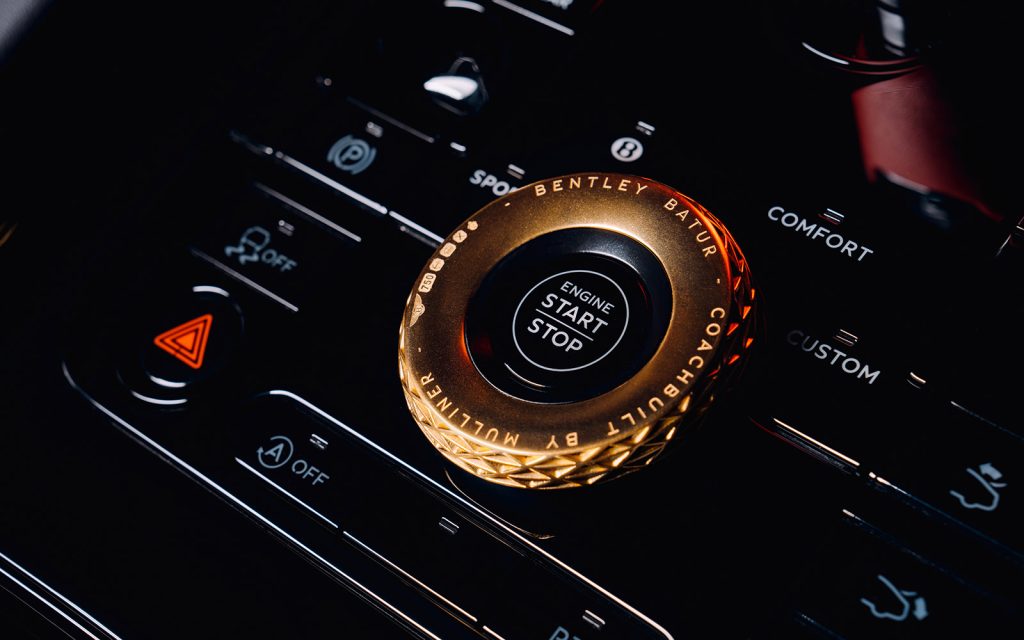
18ct parts include centrepiece Charisma Dial and Bentley’s iconic Organ Stop vent controls
Gold sourced from historic Jewellery Quarter in Birmingham – a centuries-old centre of craftsmanship
Process uses 100 per cent recycled jewellery ground to fine powder for 3D printing
Innovative advancement supports Bentley’s sustainable and forward-focused Beyond100 strategy.
Batur Grand Tourer heralds start of a design revolution at Bentley
[source: Bentley]
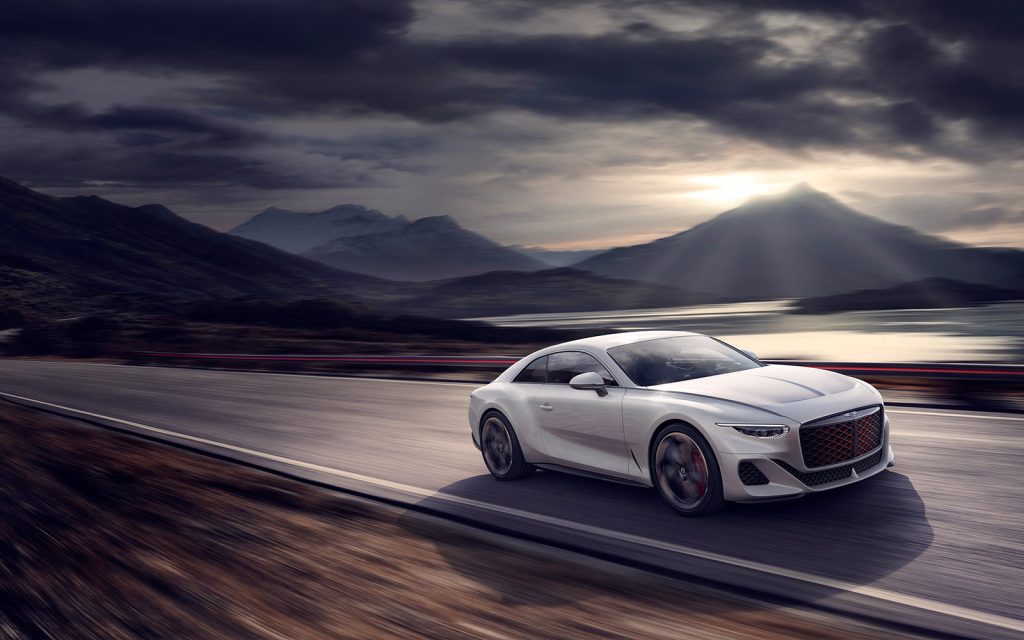
Crewe, England – Bentley Motors has introduced 3D printed solid gold in the exclusive Batur by Mulliner – the first time such a ground-breaking process is believed to have been used in the automotive industry. The ‘additive manufacturing’ (AM) technique will add up to 210 grams of 18ct yellow gold to the coachbuilt coupe, the fastest Bentley in the company’s 103-year history.
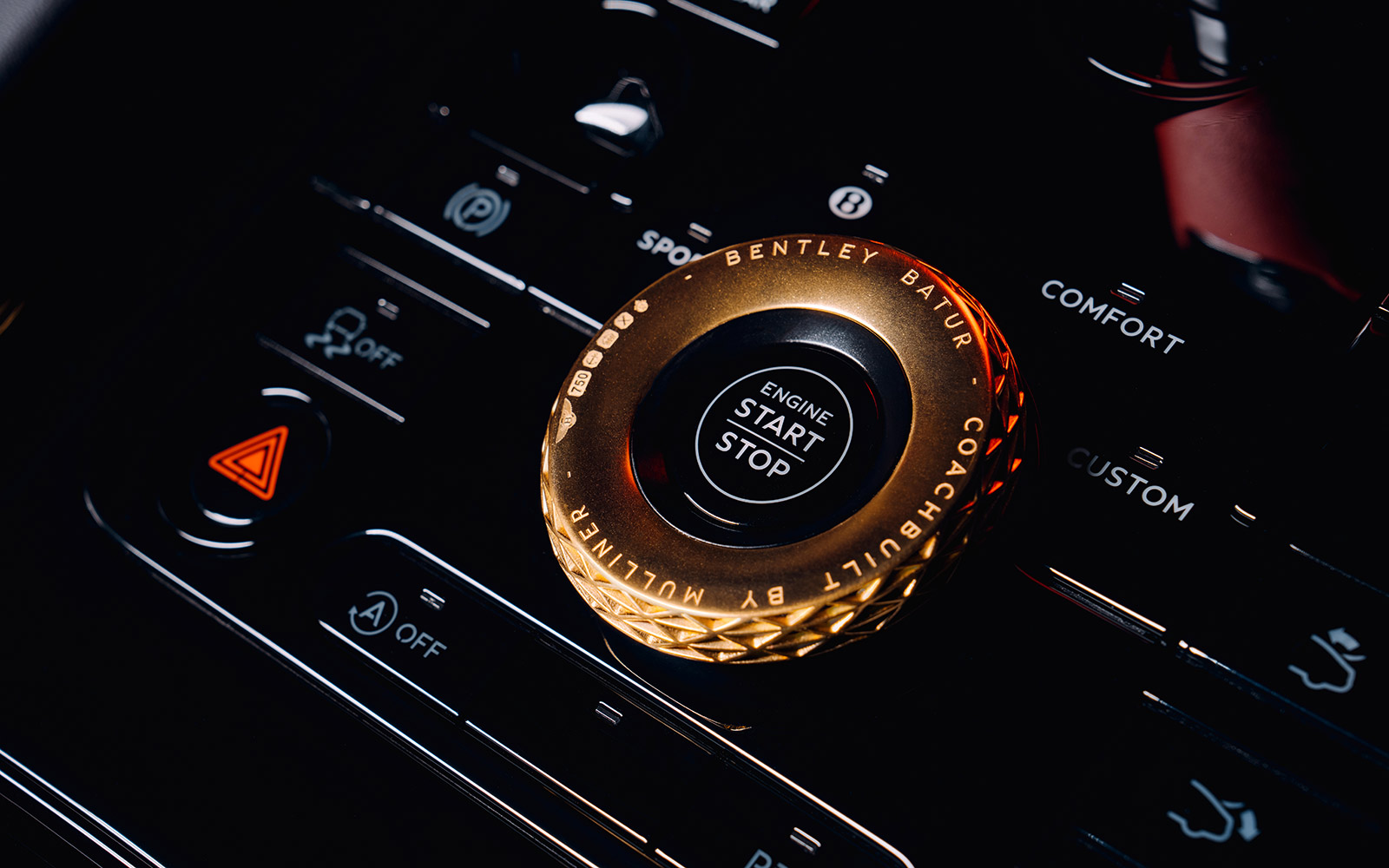
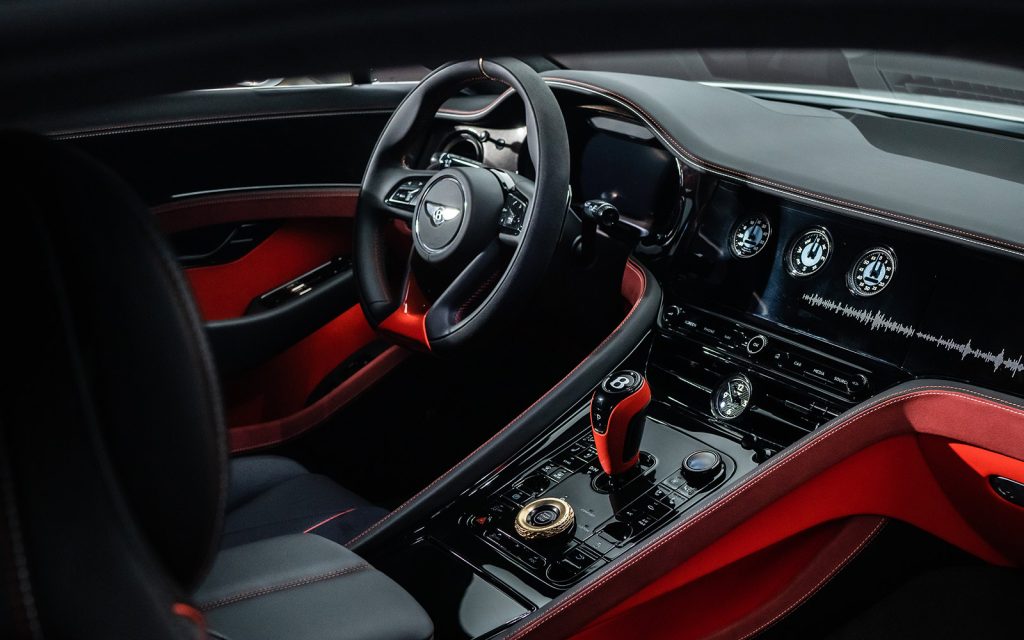
The W12-engined Batur is restricted to just 18 examples, all of which have already been sold to Mulliner clients at £1.65m each (excluding taxes and options). The optional, 3D printed gold includes key driver touch points, such as the Charisma Dial, encircling the start/stop button and used to change driver modes. The centrepiece of an exquisite cabin, the dial complements the design of the Batur front grille. Gold is also applied to Bentley’s iconic Organ Stop vent controls on the dashboard, as well as a gold insert marker on the steering wheel itself.
Bentley Mulliner has worked with renowned goldsmiths Cooksongold to craft the unique Batur parts. A member of the Heirmerle + Meule Group, Cooksongold is based in the historic Jewellery Quarter of Birmingham, England, where jewellery has been made for centuries. The special collaboration highlights Bentley’s ability to combine new, advanced manufacturing technologies with more traditional materials and finishing techniques.
All the sustainably sourced gold is 100 per cent recycled from old jewellery, ground into a fine powder needed for the 3D printing technique. Recycling ensures there is no environmental impact from mining for new precious metals. It also reflects Bentley’s commitment to a more sustainable future and is in line with the company’s Beyond100 strategy, to be end-to-end carbon neutral by 2030.
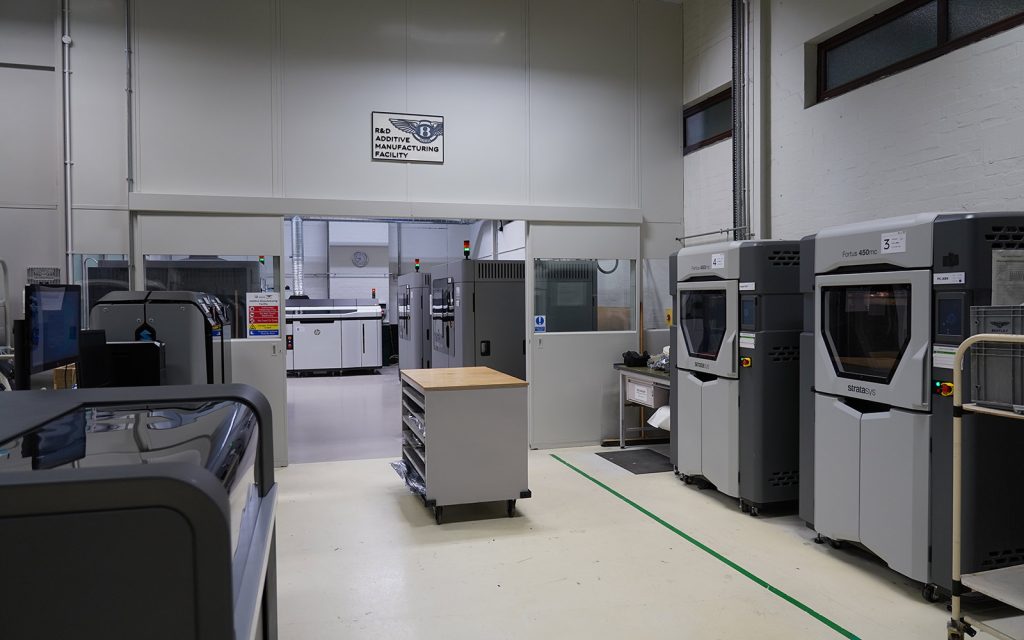
Every 3D gold part in the Batur is digitally designed using CAD models, before a printing process with laser melting printers. Each is then hand finished by skilled artisan jewellers, using traditional techniques to achieve the polish and quality that is synonymous with a Bentley.
All parts produced for the Batur are hallmarked in Birmingham’s Jewellery Quarter as a sign of having solid material authenticity. Additionally, any parts manufactured in 2022 also receive the Jubilee hallmark, celebrating the late Queen Elizabeth II’s Platinum Jubilee year.
In February, Bentley committed a further £3 million investment to double AM capacity at the Crewe factory, converting 3D CAD models into physical parts. Future applications will facilitate more low volume manufacturing components and bespoke customer personalisation – including the pioneering use of 3D printed gold in a range of new generation models.
Bentley’s legendary 6.0-litre, twin-turbocharged W12 engine generates more than 740 PS in the Batur, with chassis technology that includes eLSD, four-wheel steering and 48V electric active anti-roll bars to match the performance. The coupe offers an endless array of options, including parts crafted in titanium, sustainable Natural Fibre composites and even low-carbon leather sourced from Scotland. The coupe’s new design DNA also shows the direction for future Bentley BEVs (battery electric vehicles).
Dr. Matthias Rabe, Member of the Board for Research and Development at Bentley Motors, said:
“Bentley’s approach to additive manufacturing is industry leading, evident through our pioneering use of a luxury metal in the design and development process of the Batur. One of the key benefits is that it is efficiency led, cutting down on the cost and complexity of a myriad of jobs but maintaining the value of a rare resource.
“As Bentley embraces an exciting future, we see huge potential in advanced, innovative technologies. Processes such as 3D printed gold will be a springboard that allows our customers an even greater ability to personalise, further enhancing the individualisation programme offered on every car.”
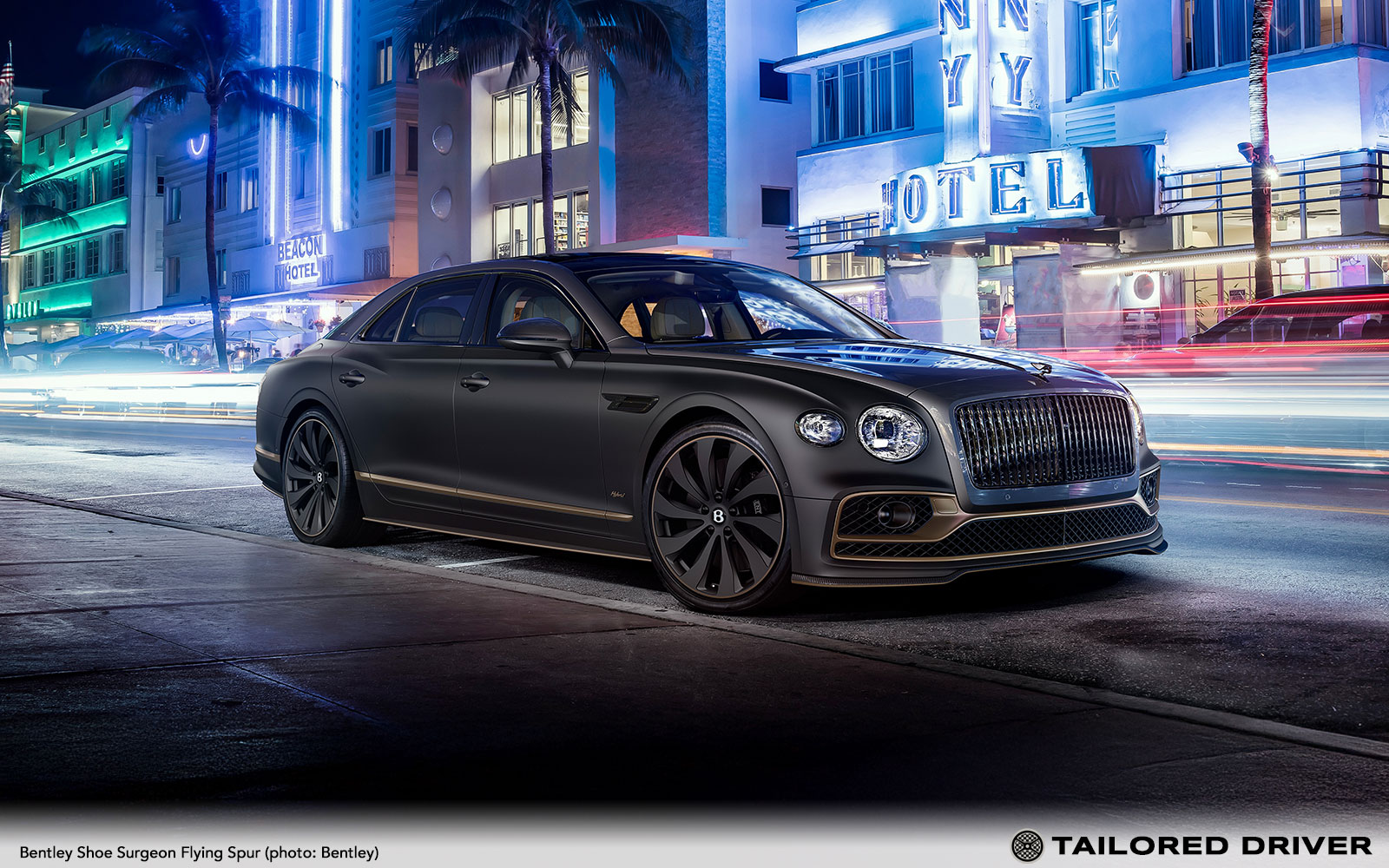
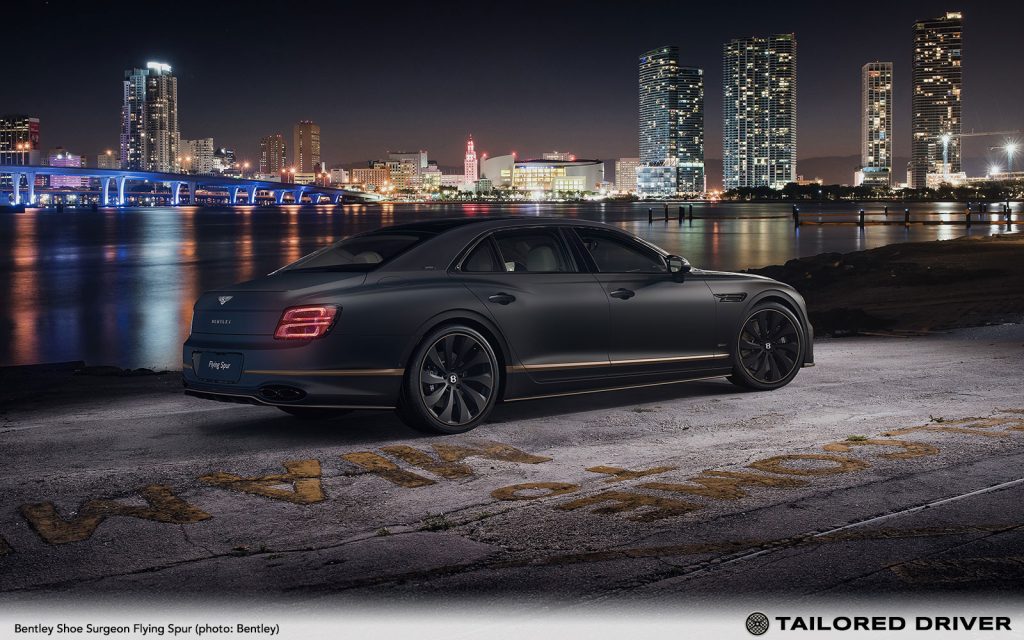
One-of-one Flying Spur Hybrid specified by ‘The Surgeon’ celebrates shared values of design and craft at the highest level
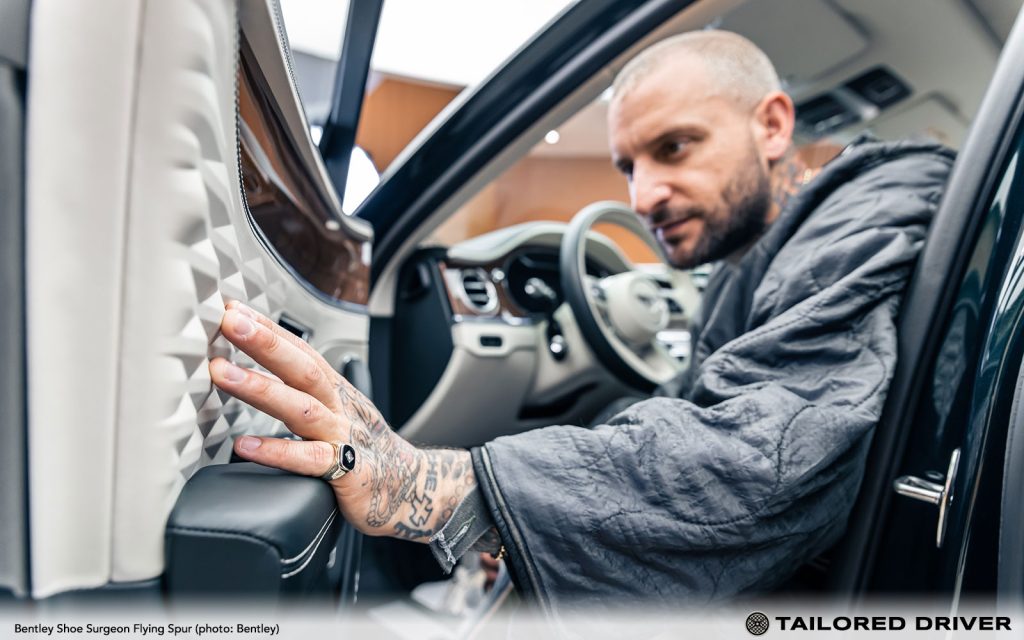
Unique specification co-created with Dominic Ciambrone – a.k.a. The Surgeon – the world’s leading creative custom shoemaker
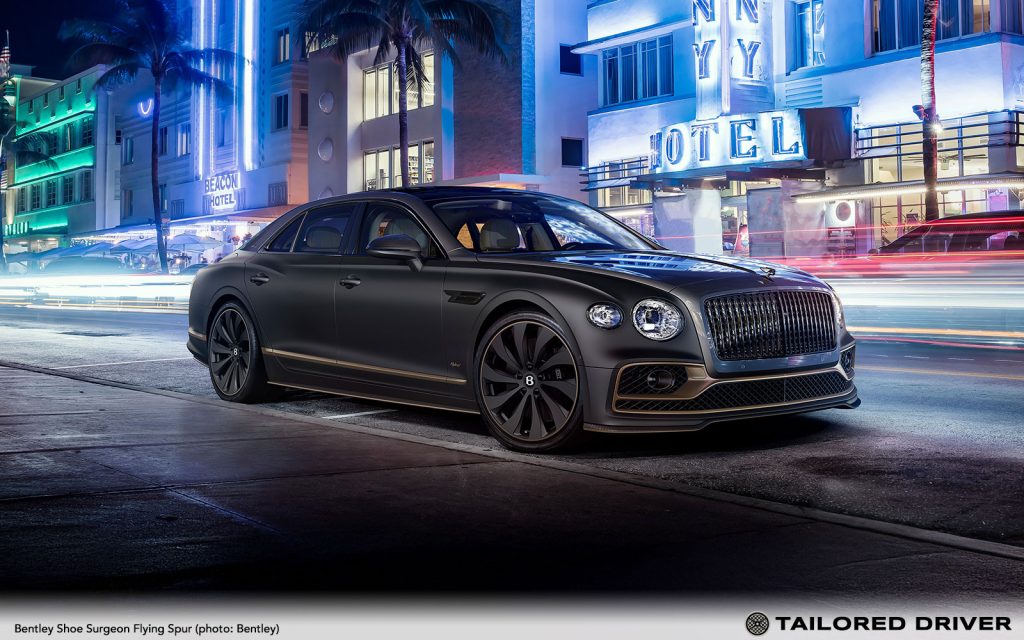
Duotone Anthracite over Anthracite Satin accented by Satin Bronze brightware, pinstriping and wheel accents
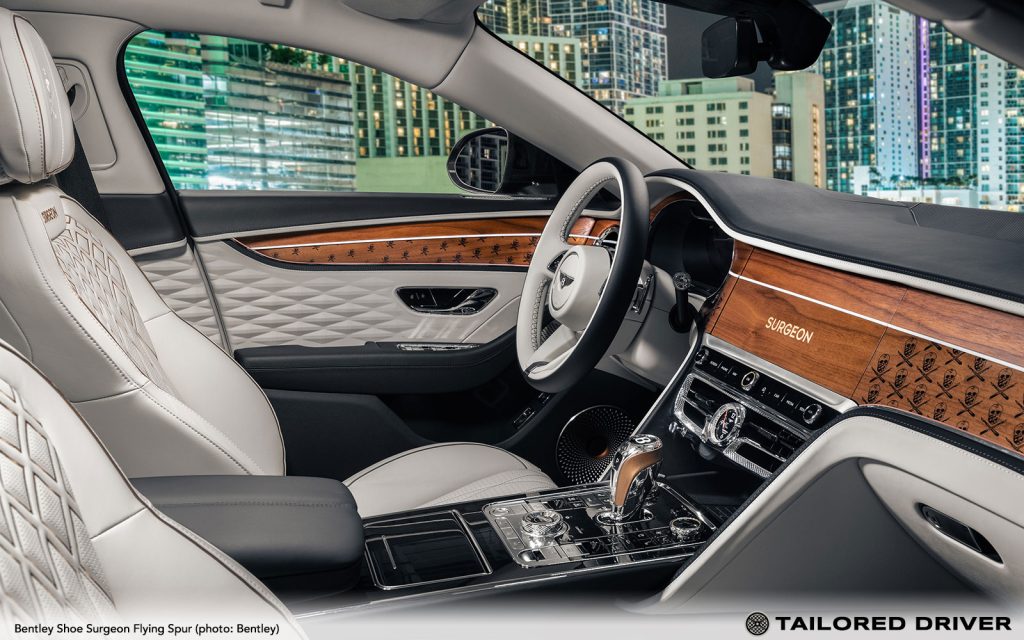
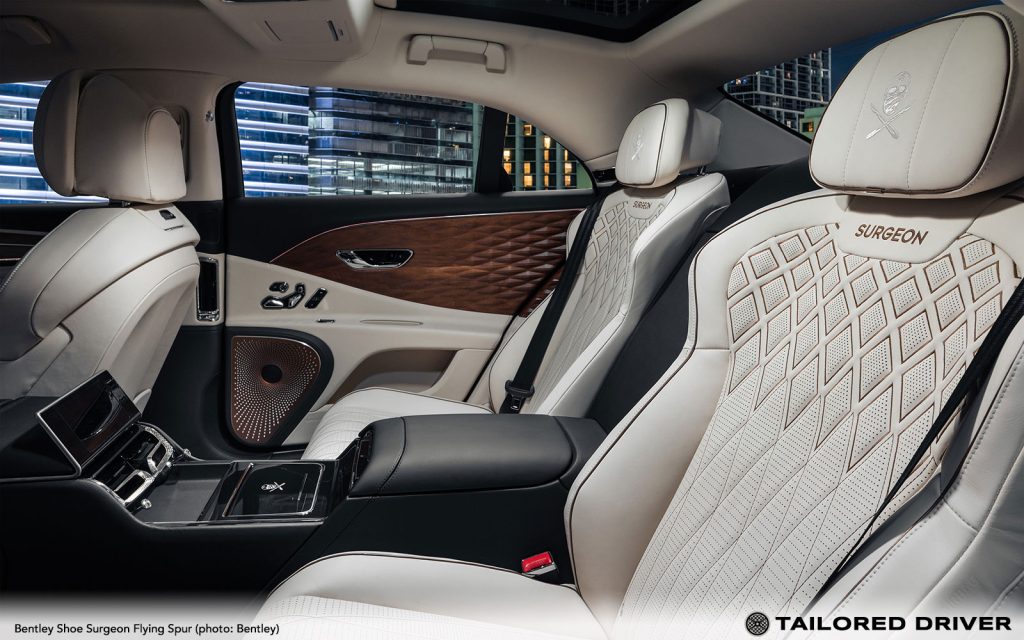
Bespoke interior features unique stitching and embroidery, Satin Bronze accents and Bronze piping
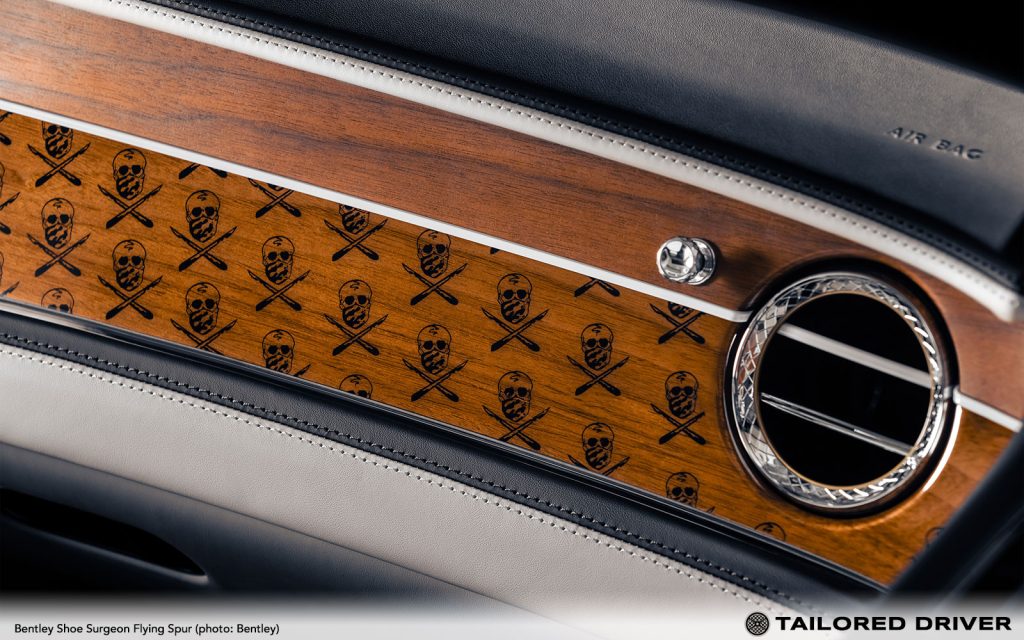
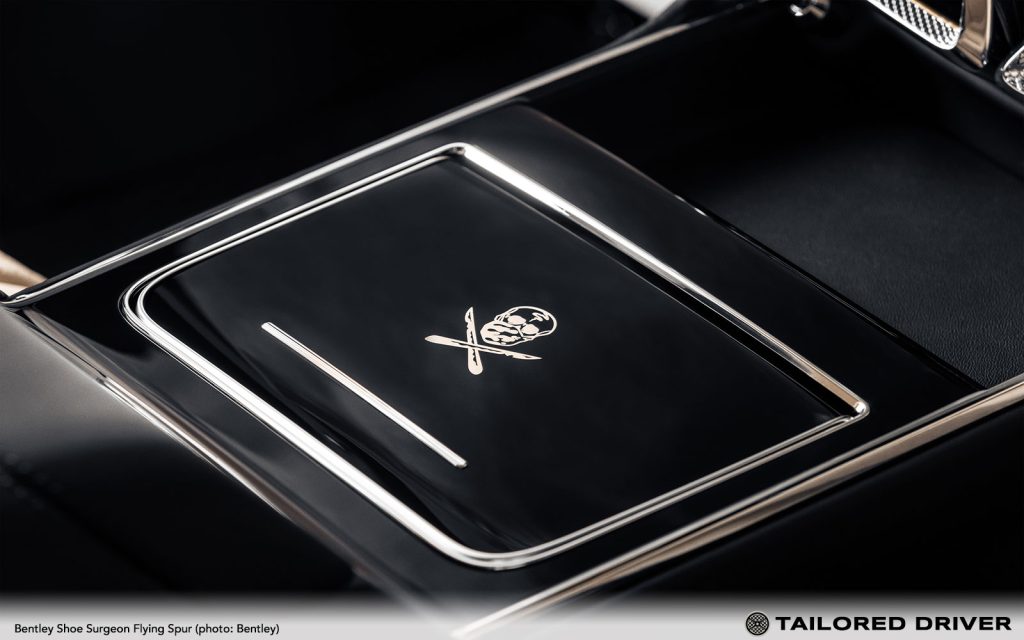
Dual-finish wood veneers with laser-etched skull and crossed scalpel logos, with Gloss White pinstriping
3D diamond-patterned walnut panels in rear doors
Follows earlier partnership on bespoke limited edition Bentley sneakers
Purchasing customer to receive matching pair of ‘Bentley x The Surgeon adidas Forum Low’ sneakers
One of three Bentley artworks showcased at Temple House in Miami
Sager Strong Continental GT Speed Convertible, to be auctioned for charity in early 2023, and Britto Continental GT V8 Convertible complete exhibition
[source: Bentley]
Miami, Florida – A unique, bespoke and distinctive Flying Spur Hybrid, curated by ‘The Surgeon’, has been unveiled by Bentley at the brand’s pinnacle evening event during Art Basel Miami. The exquisite car follows the launch of a limited-edition line of Bentley-inspired sneakers, by the leading force of the customized shoe industry, Dominic Ciambrone – also known as The Surgeon.
With 20 international art fairs, more than 1,200 galleries and thousands of artists in attendance, Miami becomes a magnet for design lovers during the week of Art Basel. As such it’s the perfect showcase for the artisanal artwork of Mulliner, Bentley’s in-house personal commissioning division, to celebrate the power of individuality, with three unique vehicles that fuse artistic expression and unrivalled craftsmanship – crowned by the Flying Spur Hybrid by The Surgeon.
Inspiration for Flying Spur Hybrid x The Surgeon
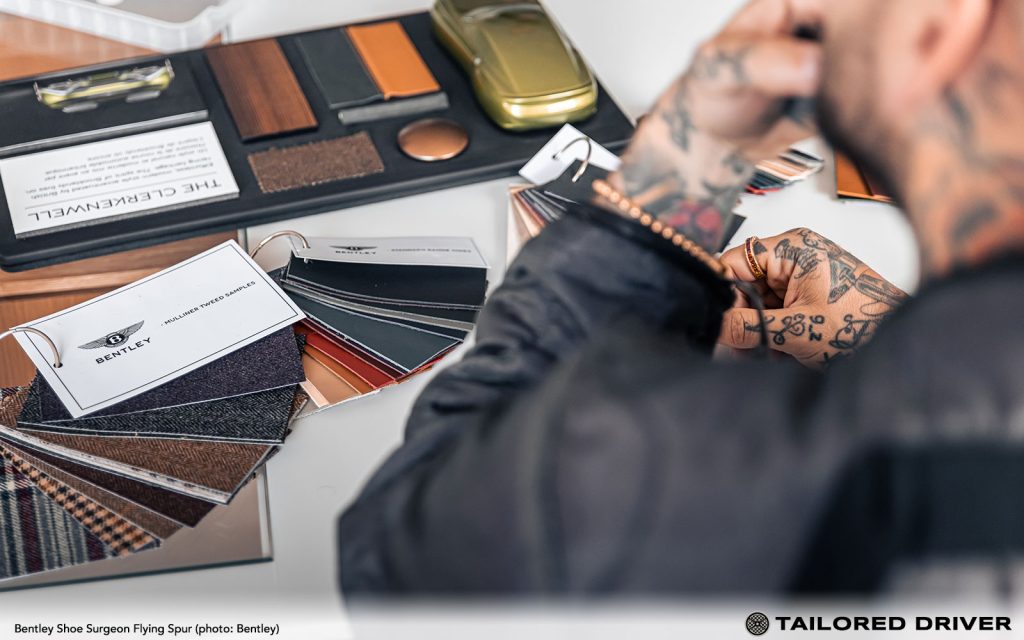
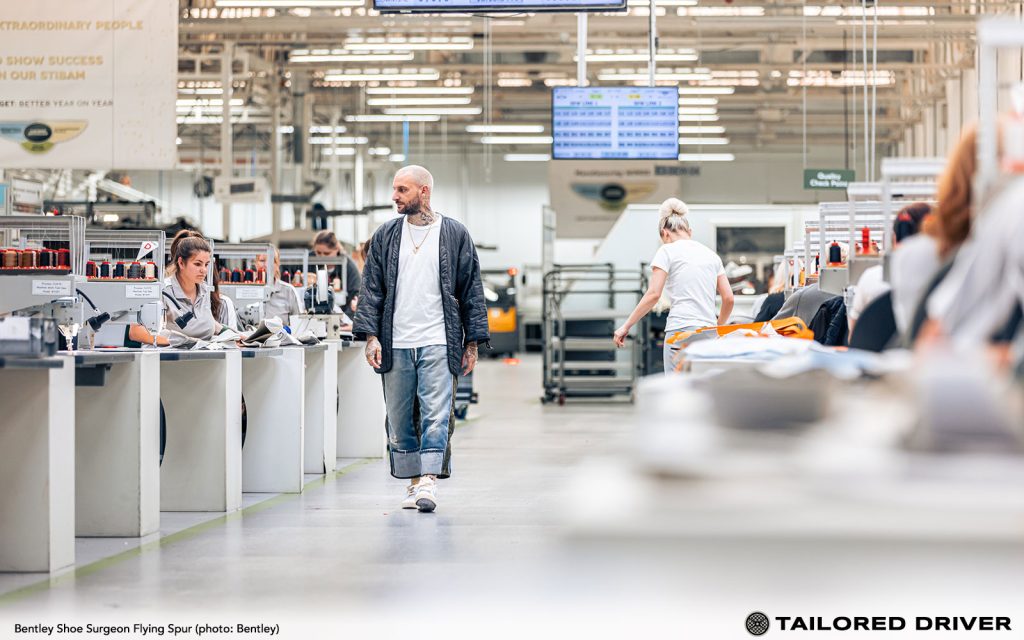
The Surgeon is a leader in the customised shoe industry, famed for his effortless fusion of high fashion and street culture. A visit to Bentley’s Mulliner division in early 2022 inspired him to create a limited run of ten pairs of bespoke sneakers, featuring Bentley craft signatures such as diamond quilting and cross stitching as well as his signature ‘Surgeon’ skull and scalpel monogram.
The sneakers were the springboard for a second collaboration, based upon Bentley’s recently-acclaimed Flying Spur Hybrid. Its elegant lines and handcrafted interior made it an ideal canvas for The Surgeon’s creativity. With the combination of a 2.9 litre V6 combustion engine and powerful E-Motor, it exhibits the next step in Bentley’s Beyond100 journey towards a future of electrified luxury.
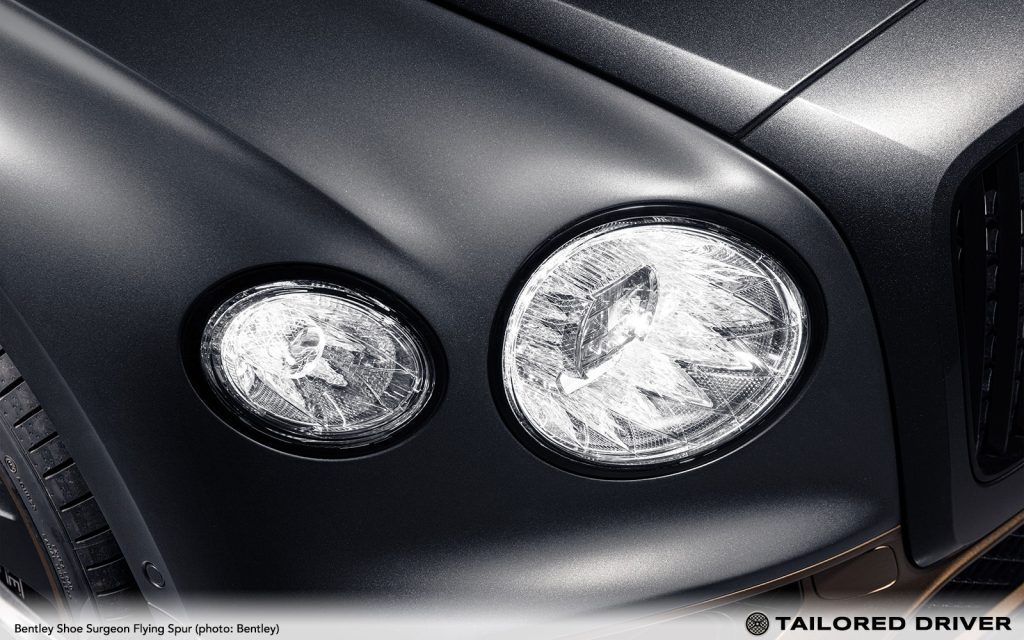
The car’s specification leaves nothing to be desired. The Mulliner Blackline specification replaces exterior polished chrome with all-black brightware, while the Styling Specification includes a front splitter, side sills, rear diffuser and boot lip spoiler in carbon fibre.
Gloss, Satin and Bronze Combined
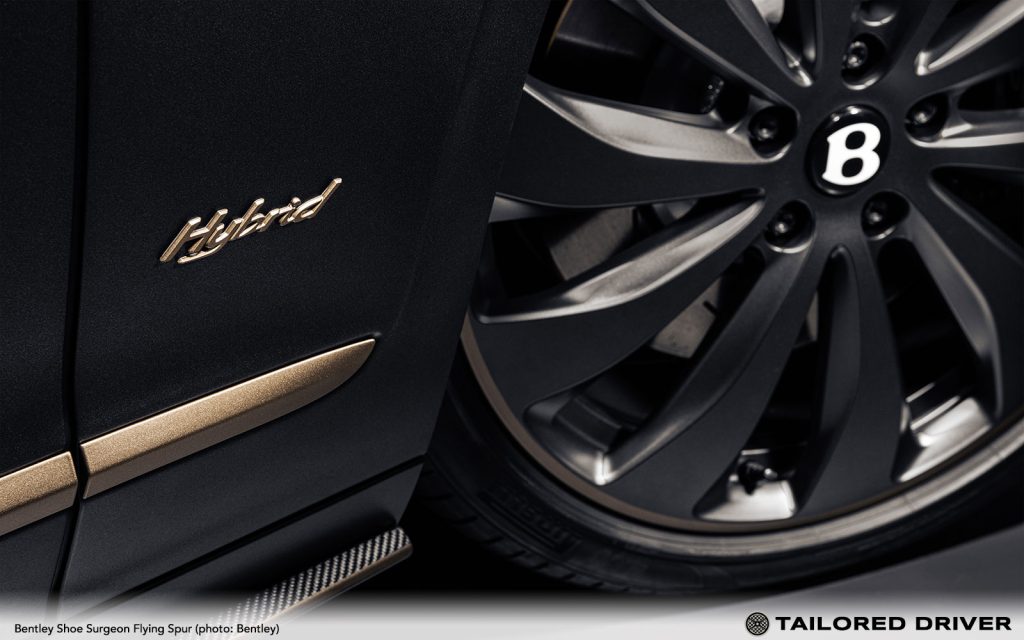
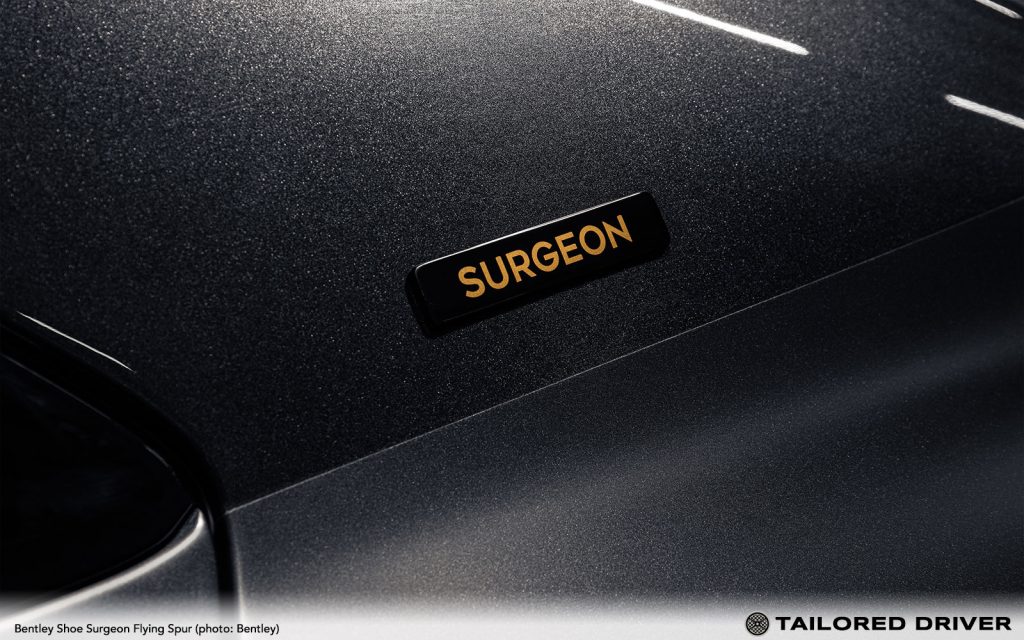
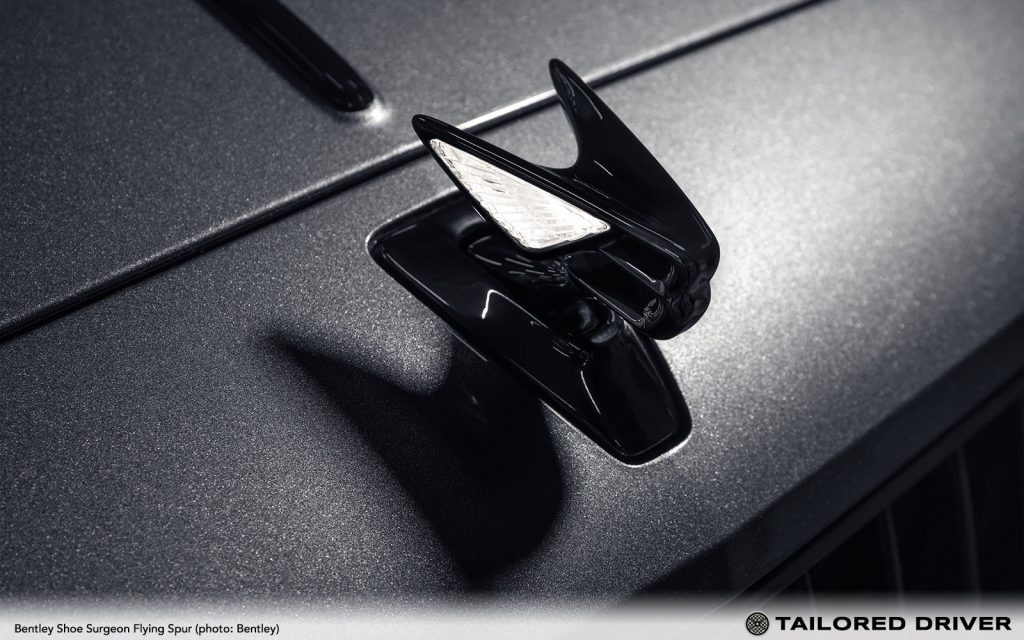
The Flying Spur Hybrid x The Surgeon uses an impactful exterior palette in a dramatic yet harmonious combination parallel to his own brand aesthetic. Ciambrone chose a duo-tone paint finish of Anthracite (anthracite; metallic UNI; 6706 / 9560114; Bentley) over Anthracite Satin (anthracitesatin; metallic matte; 6779 / 9562007; Bentley) , creating an understated expression of power and assurance. The monochromatic palette is relieved by the sparing use of Satin Bronze, which appears on the lower front, side and rear bumper. A bespoke Satin Bronze pinstripe draws the eye the full length of the Bentley, while the 22” Satin Anthracite wheels feature a Satin Bronze pinstripe around the outer rim. The same finish is used for the Surgeon badges on the D pillars and the Hybrid badge on the fender. The finishing touch is provided by an illuminated Flying B radiator mascot in Gloss Black.
Design and Craft in Harmony
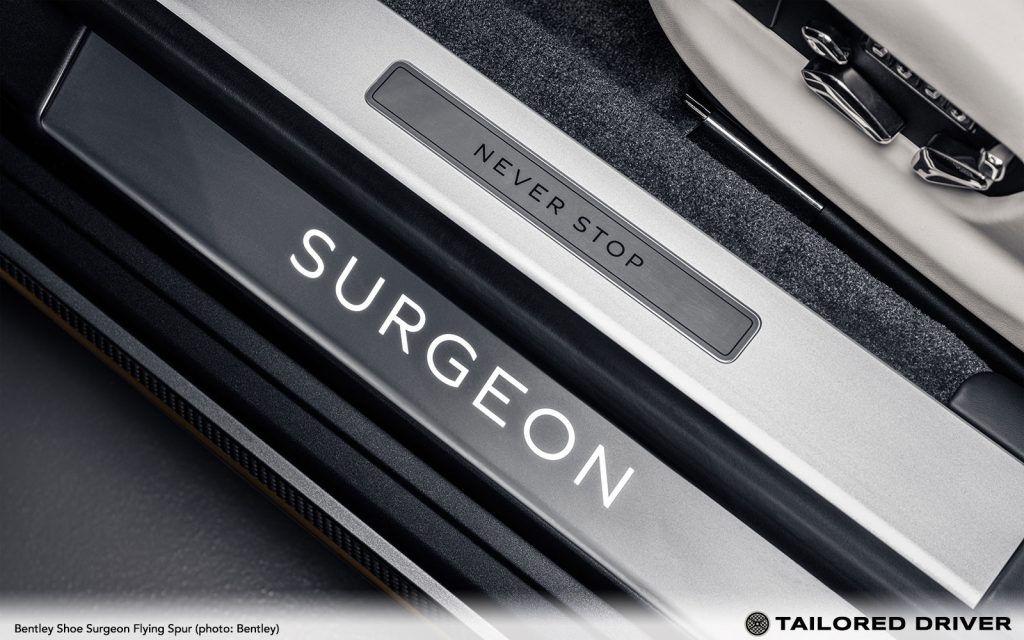
From the moment you enter the cabin of the Flying Spur Hybrid x The Surgeon, you’re drawn into a world of individuality and creativity. The motif on the outer sill panel reads ‘The Surgeon’ while the inner sill plate conveys his personal philosophy, ‘Never Stop.’ Another delightful detail, bespoke LED welcome lamps, project the skull and crossed scalpel logo onto the ground to guide your entry.
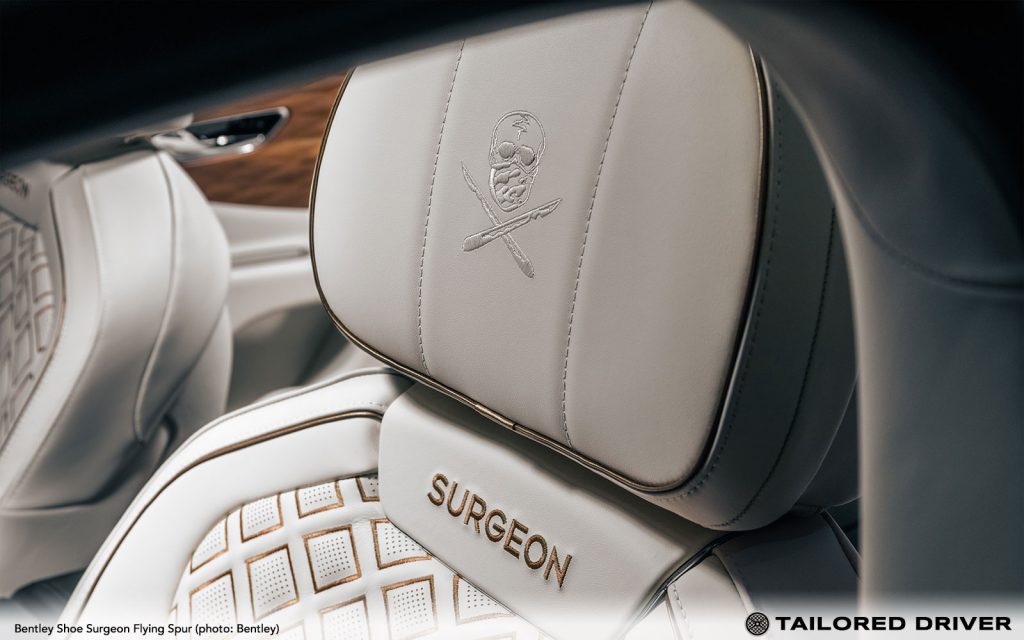
Inside, the upholstery features Linen as the main hide on the seats, doors and lower fascia while the secondary hide colour, Beluga, features on the fascia top, centre through-console and rear parcel shelf. Contrast stitching in Bronze features on the seats, seat piping and in a cross-stitch pattern on the steering wheel. The namestyle ‘Surgeon’ is embroidered in Bronze on the seats, above which the headrests carry a blind embroidered Surgeon logo.
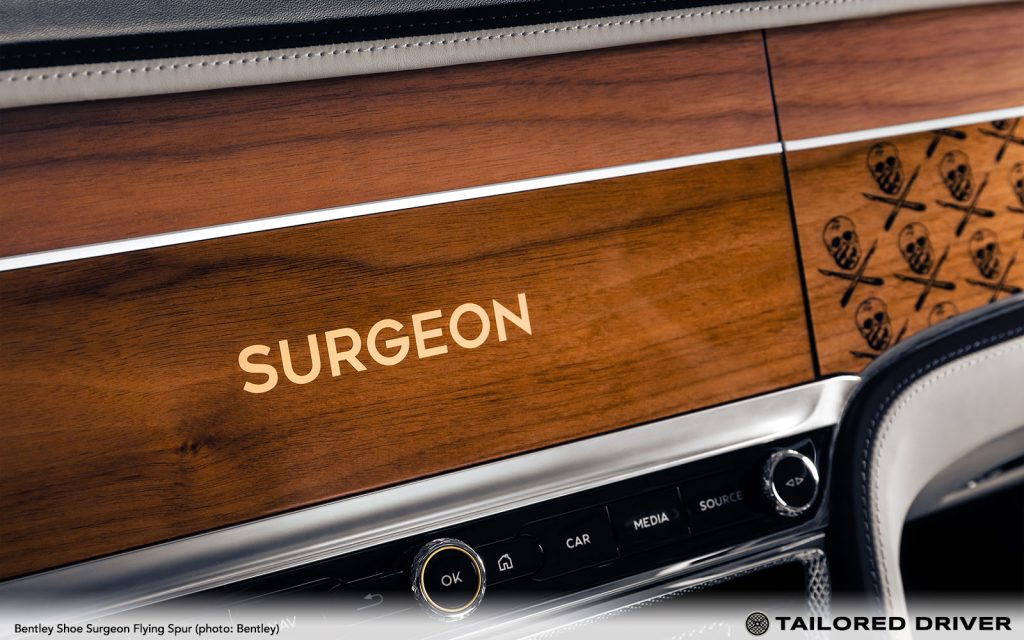
Walnut veneer adorns the cabin, and Ciambrone has celebrated Mulliner’s craft skills by specifying contrasting finishes; the upper veneer is open pore Crown Cut Walnut, giving a tactile satin finish, while the lower veneer is in High Gloss Crown Cut Walnut and features a laser-etched repeat motif of the skull and crossed scalpel logo. A Gloss White pinstripe separates the two veneers, stretching across the fascia from door to door and passing across the upper vanes of the bullseye air vents. The rear doors also feature Walnut inserts in ‘three dimensional’ diamond patterning.
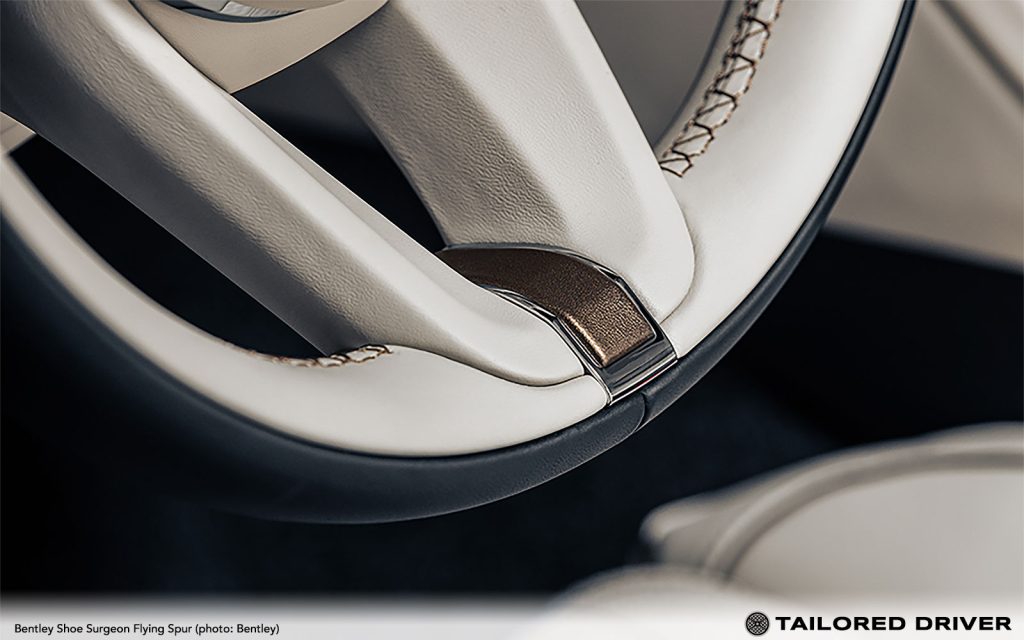
Grand Black gloss veneer clads the front and rear centre consoles, with the Surgeon logo overlaid in chrome on the rear cupholder. Uniting the design of exterior and interior, Bronze Satin features on the B+O speaker cones, while a bespoke shade of matching Bronze hide can be seen at the six o’clock tab on the steering wheel and as a covering for the gearlever.
The Bentley rotating display in the centre of the fascia offers a choice of three faces; analogue dials, digital display or walnut veneer. When displaying the latter, the namestyle ‘Surgeon’ is seen in gold overlay. Further tactile and visual interest is provided by Bentley’s unique knurled finish on controls and touchpoints.
Three automotive artworks
The reveal of this exceptional Flying Spur Hybrid caps an evening’s celebration of the art of bespoke automotive creation at Art Basel Miami. Shown alongside the Bentley Flying Spur Hybrid x The Surgeon are two very different and vibrant commissions, both with unique intentions. The Sager Strong Continental GT Speed Convertible was inspired by Hall of Famer and sartorial iconoclast Craig Sager, and specifically the jacket he wore to accept his Jimmy V Perseverance Award in 2016. Proceeds from its auction set for February 2023 will be donated to the fight against blood cancer. Meanwhile, a Continental GT V8 Convertible is inspired by the work of renowned Brazilian-born artist and Miami resident Romero Britto, encapsulating his colourful life philosophy and celebrating his pop art success.
First Batur coupé development car starts trials across Europe
Extensive whole vehicle development program includes 120 individual tests over a 58 week period
100+ weeks of powertrain development already completed, delivering the most powerful Bentley to date
Batur includes more than 800 unique parts not including customer options for materials and finishes
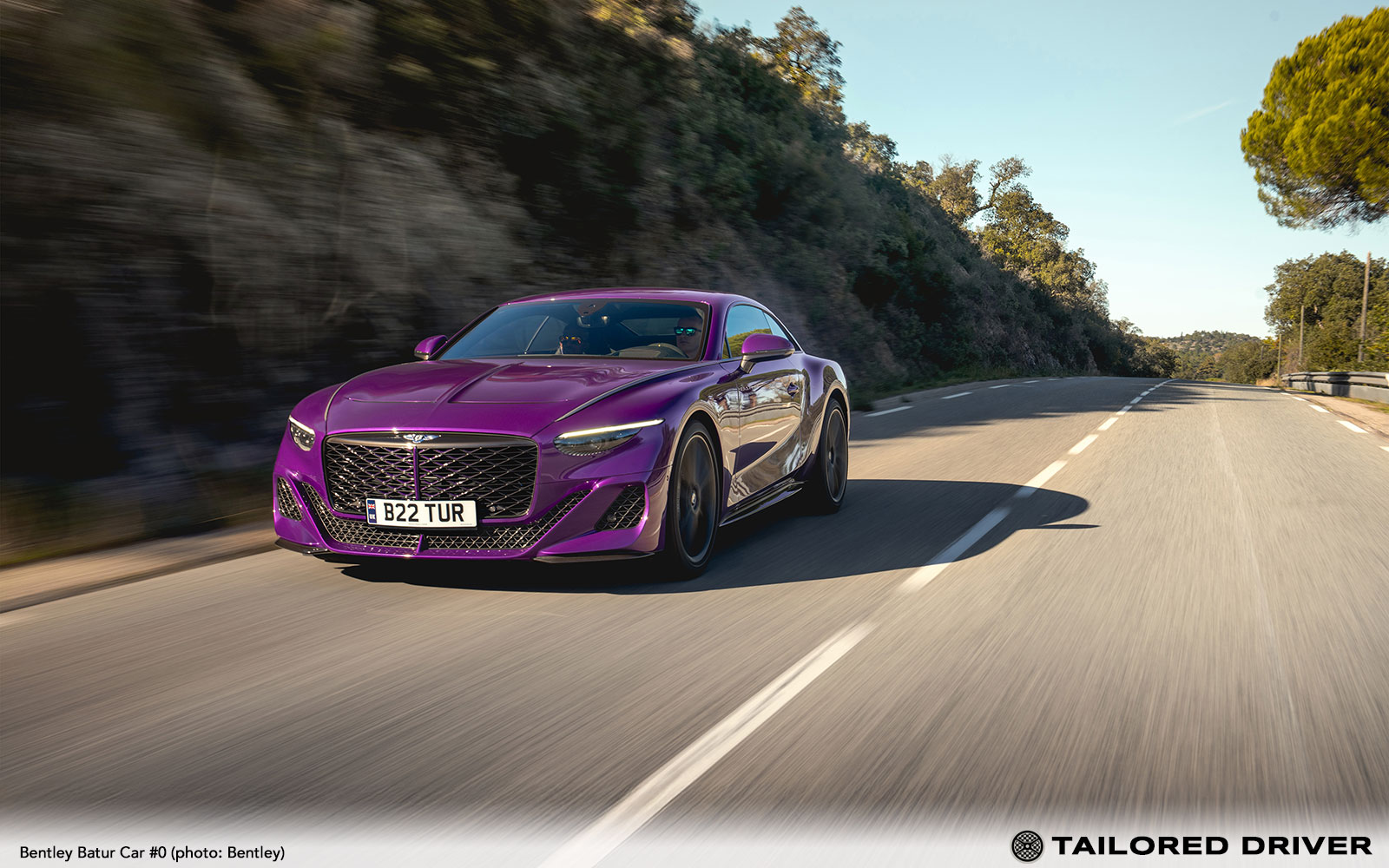
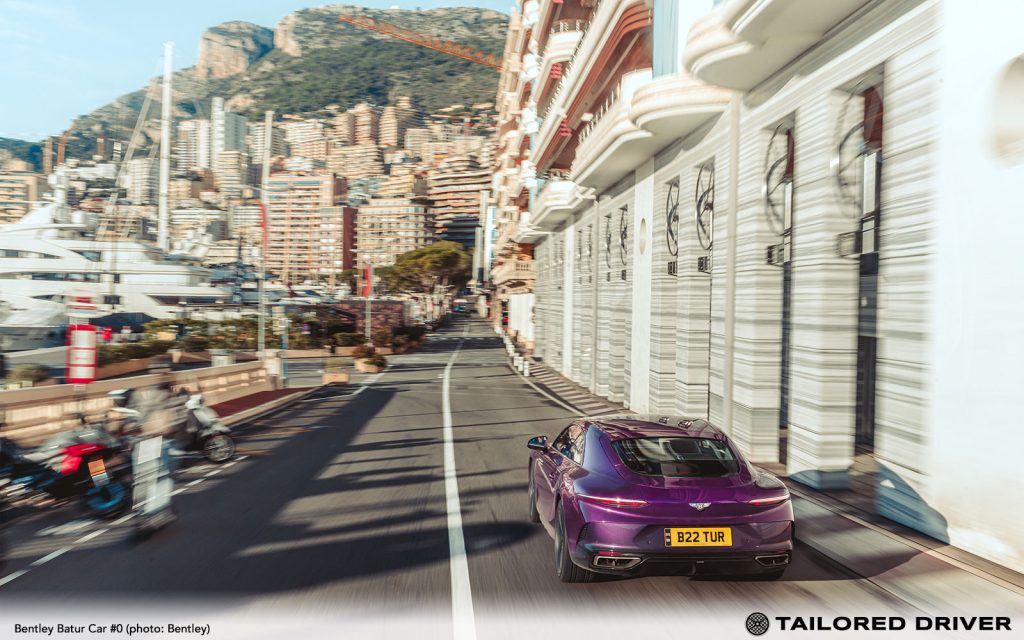
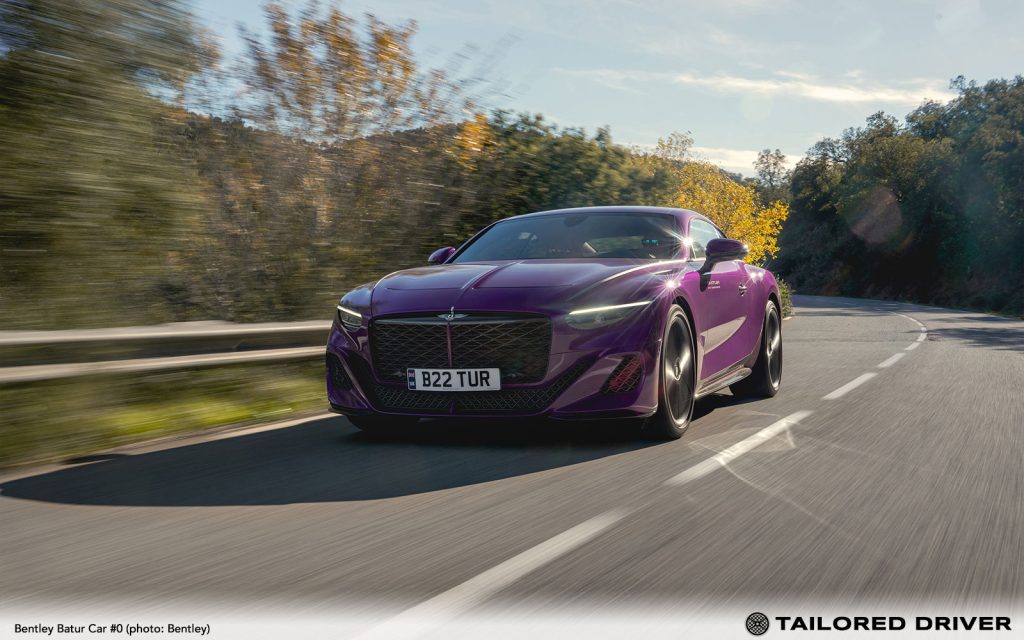
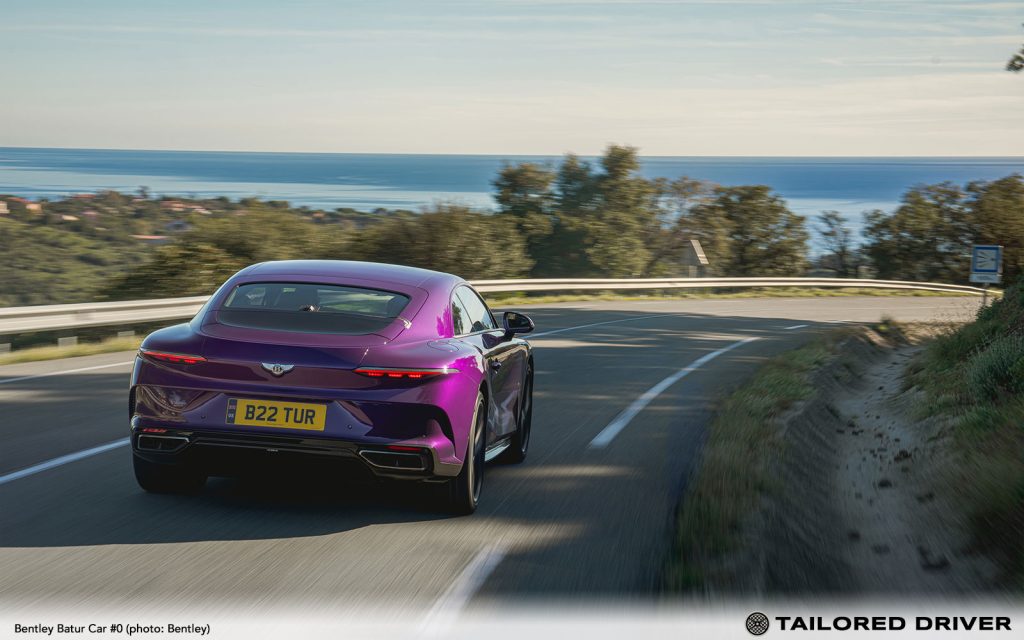
Vibrant specification for Batur Car #0 using “Purple Sector”
Batur’s advanced materials and construction look towards Bentley’s sustainable future
[source: Bentley]
Crewe, England – The Bentley Batur has begun real-world road trials across Europe. Following its debut at Monterey Car Week in August 2022 and attendance at numerous events for Bentley Customers, global media and the public, two development Baturs are now starting a rigorous programme of tests to ensure the highest standards of vehicle performance and quality. The limited series of just 18 examples are due to begin deliveries mid-2023 after completion and sign-off of an extensive engineering program.
The validation activities include durability for both the engine and whole vehicle, environmental compatibility & sunlight simulation, high speed stability, aerodynamics, noise & vibration, and driving dynamics. More than 120 individual tests in all cover everything from the quality of the surface finish of the gold “organ stop” ventilation controls to the new W12 engine hardware and software. Over 58 weeks of vehicle validation have been scheduled across the two pre-series cars, supplementing 100+ weeks of vehicle development already completed to validate the increased engine power, making the Batur the most powerful Bentley in history with at least 740 PS.
The first activity for one of the development Batur’s – Car #0 – is an extensive 2,500 kilometre drive across Europe to simulate real world conditions. The route leaves Germany and travels through Italy, France and Spain before high speed testing work is undertaken at proving grounds.
Paul Williams, Chief Technical Officer for Mulliner, comments:
“At the start of the project it was clear that this car had to be the ultimate GT and so every element from the exterior design, engine power and hand-crafted interior has been created without compromise.
“There are a number of unique features that bring new challenges. For example, the exterior headlamps are very compact LED units and made to our styling teams challenging proportions, which transforms the exterior appearance of the car but are complex to produce. We’re also working with the most powerful development of the W12 in its 20-year history, which brings an enormous validation programme.
“Even small details such as the angle of the diamond in the front grille representing the cylinder angle in the W12 engine have had to be considered. And even though there will only be 18 Baturs produced, the level of quality has to be identical to every one of the 15,000 cars Bentley is currently producing each year.”
At the proving grounds, Batur Car #0 will begin seven weeks of durability work on handling tracks, mixed road conditions, high speed testing and abusive surface conditions. During all of these activities data and feedback are collated ensuring the technical targets are being met.
When the proving ground work is complete, another 7,500 kilometres of real world driving will be undertaken before environmental testing commences. In just under four weeks the car will endure 600 hours of solar loading – equivalent to five years in an Arizona desert. This is particularly important for the new sustainable materials used in the exterior components, as an alternative to carbon fibre.
By the time the first customer deliveries begin, over 810 unique parts will have completed 160 weeks of testing and development, delivering the ultimate coachbuilt grand tourer.
The Pinnacle W12 Grand Tourer
The Batur will also be the most powerful Bentley yet, with a 729+ Bhp (740+ PS) version of the iconic, hand-assembled 6.0-litre twin-turbocharged W12 engine that has metaphorically and literally powered Bentley’s success for the last two decades.
Over 100+ weeks of powertrain development have already been completed to confirm the new air intake system, modified turbochargers, revised intercoolers and new calibrations for the engine gearbox and electronic stability control for the pinnacle W12.
As the engine enters its twilight years as part of Bentley’s Beyond100 transformation journey to being fully electrified, the Batur forms the first part of a celebration of the W12’s extraordinary power, torque and refinement. Engine performance will be matched to the most advanced Bentley chassis ever, with Speed-tuned air suspension, electric active anti-roll control, eLSD, four-wheel steering and torque vectoring.
Batur Car #0
All 18 customer Baturs are already reserved. Each one is being designed collaboratively with each customer, guided by Mulliner’s in-house design team.
Customers will be able to specify the colour and finish of practically every surface of the Batur, to create a car as individual as they are. From the main exterior paint to the surface finish of the air vents, and literally everything in between, each customer will specify even the tiniest of details.
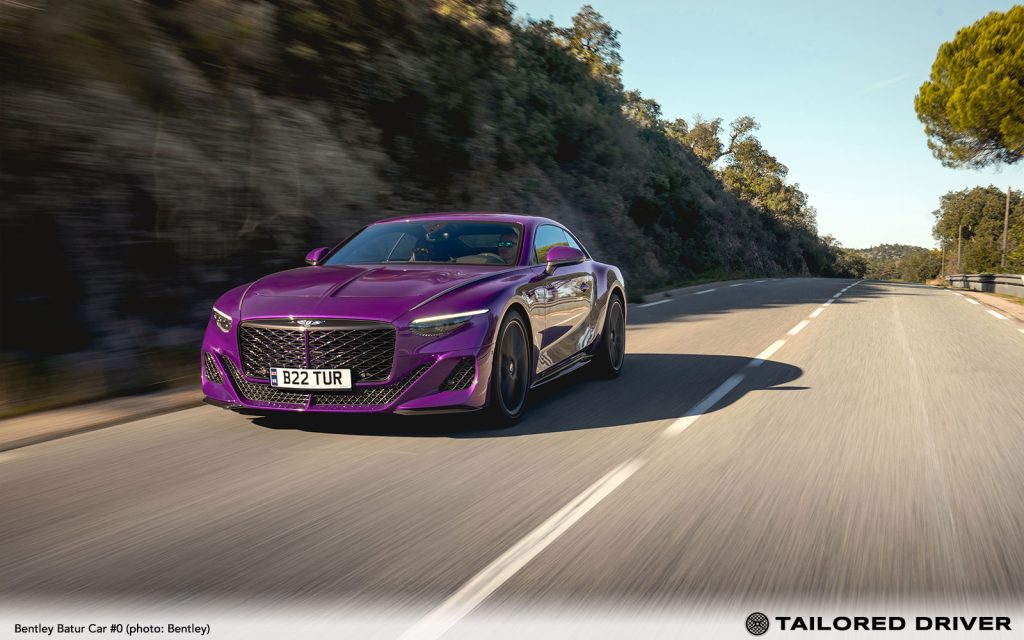
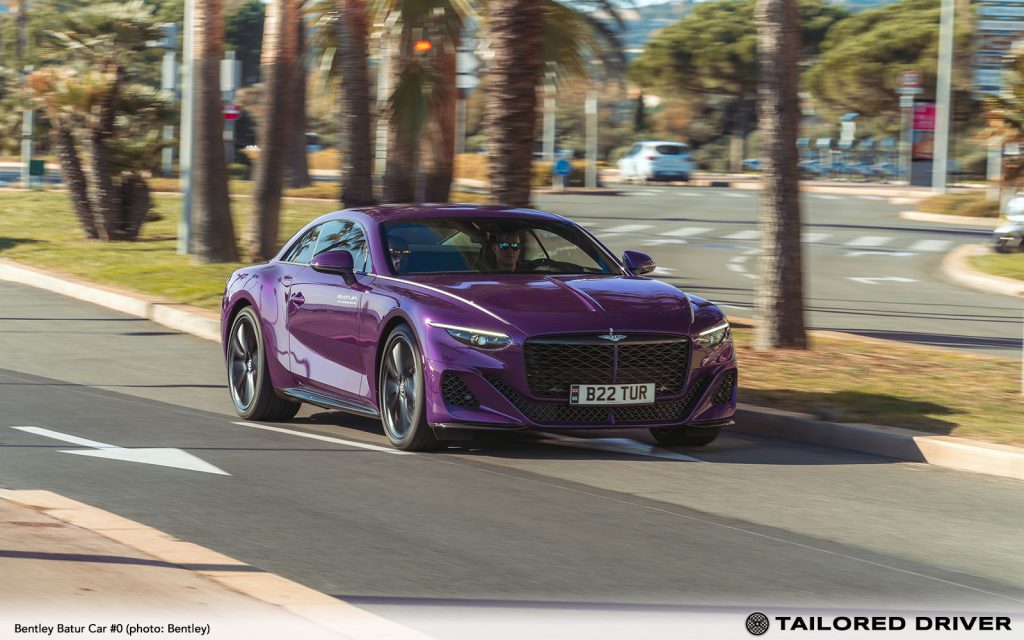
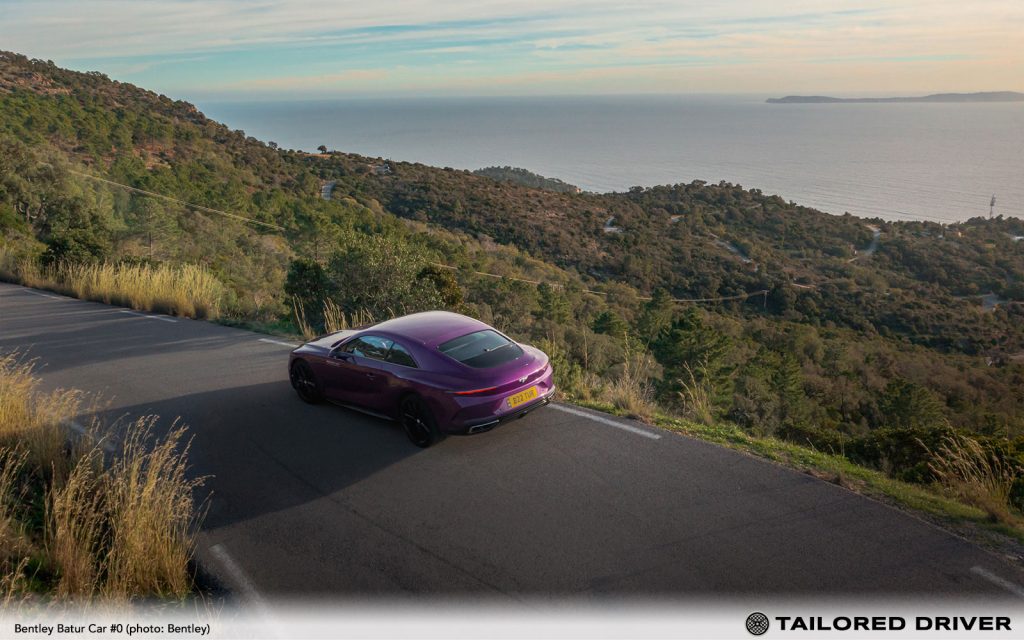
The engineering development car – Batur Car #0 – has had the same level of attention to detail as a customer’s own specification. The exterior paintwork is a bespoke colour – Purple Sector – that provides a deep vibrant colour across the curvaceous surfaces. The bodywork is underscored by front splitters, side skirts and rear diffuser in a high gloss natural fibre finish.
The front of the car features a grille of exceptional art – with the main matrix finished in Gloss Dark Titanium, accented with contrast chevrons in a horizontal ombré pattern that flows from Purple Sector in the centre and gradually darken to the sides to Black Crystal. The “endless bonnet” line is finished in Satin Titanium paint, as are the 22” wheels – with the spokes in Gloss and Satin Black Crystal to match the grille.
One small addition customers will not receive that can be seen on Batur Car #0 are the small white arrowheads found at the edges of the body panels. These markers help to provide feedback on panel movement and any form of relaxation whilst the car is undertaking the durability testing.
Looking To The Future Of Coachbuilding
The Mulliner Bacalar was the first coachbuilt project in recent years which gave significant insight into Bentley’s customers and customer choice. For Batur an even greater selection of options have been developed, not only including colours, materials and finishes, but also new technology such as the Mulliner by Naim Audio system. This takes the Naim Audio system from the Continental GT and transforms it with 20 new Focal speakers, exclusively configured for Batur and custom tuned into a truly immersive class-leading Audio experience.
The design team have given the Batur a unique character with a combination of high end materials and finishes. This is a significant stepping stone towards sustainable material and construction methods, from Additive Manufactured Gold to sustainable hide and natural fibre veneers.
Using advanced manufacturing techniques it is possible for tooling investment to be kept to a minimum which drives lower material and energy usage in the manufacturing processes. Pending successful testing, Mulliner also plan to use natural fibres as an alternative to carbon fibre is some areas of the car. This is a significant reduction in carbon required to produce the materials in these parts.
Sustainability plays a key role in the Batur to help drive the development of sustainable features for future generations of coachbuilt Bentley’s, using Mulliner’s coachbuilding experience as the platform for innovation in line with Bentley’s sustainability goals.
Limited to 150 units in U.S. with consecutive numbering and exclusive content
602 horsepower 5.2-liter V10 FSI engine combined with RWD
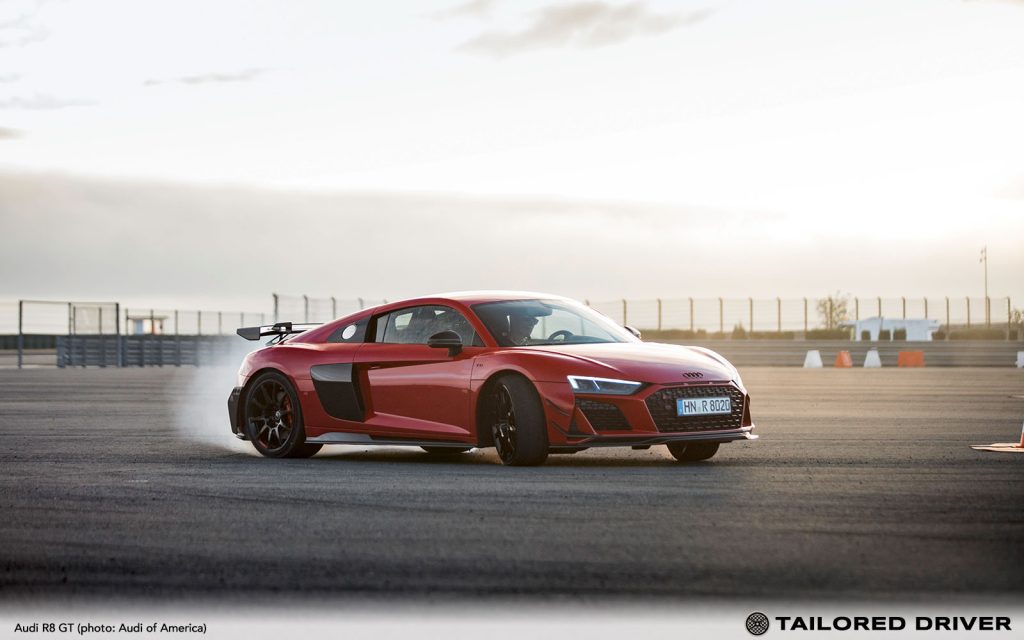
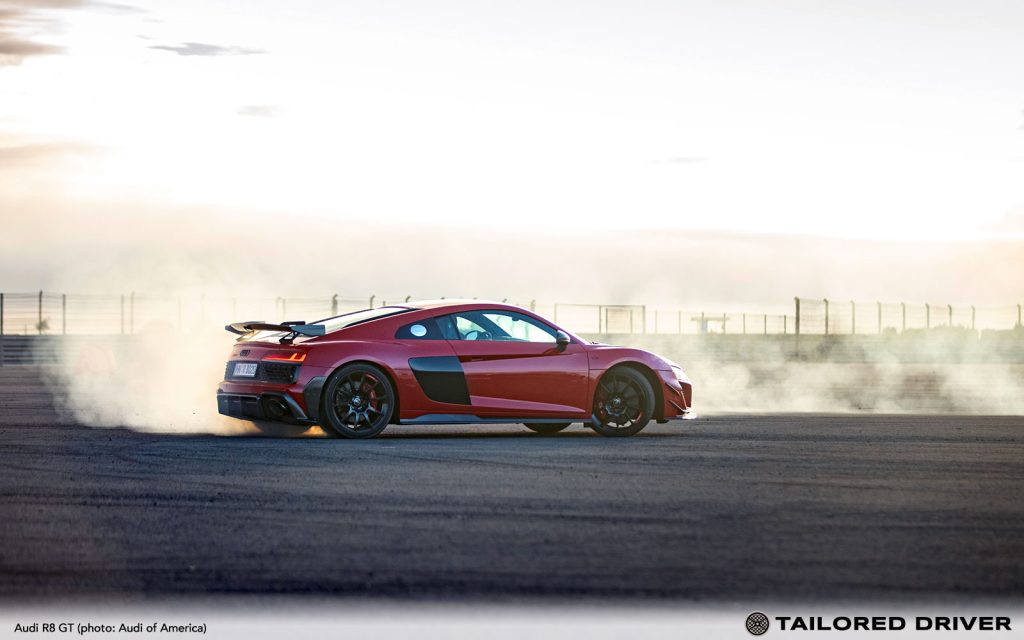
New Torque Rear drive mode enables precise and controlled oversteering on a track
[source: Audi of America]
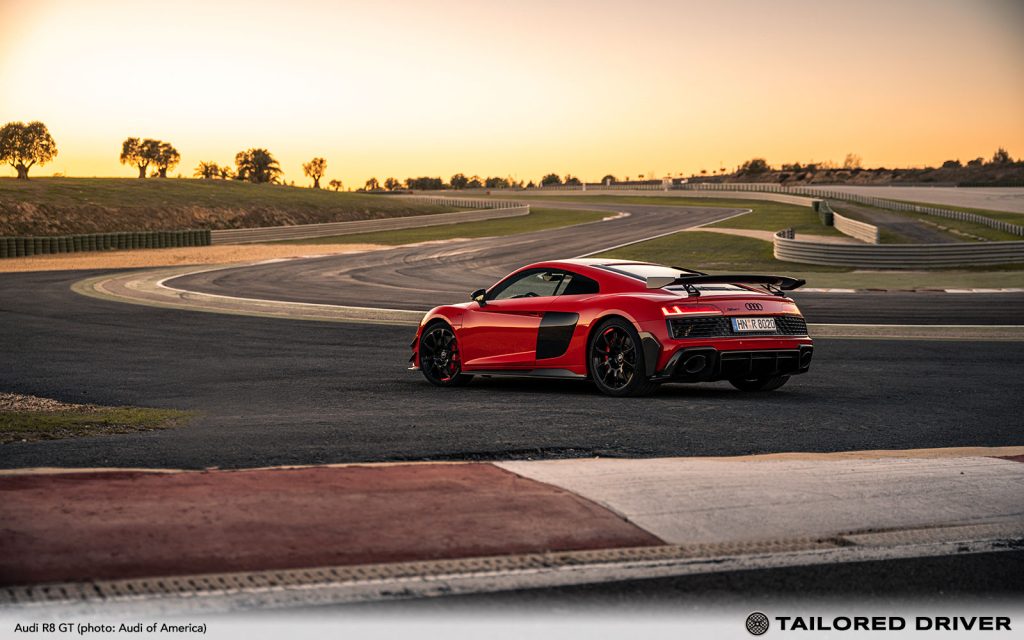
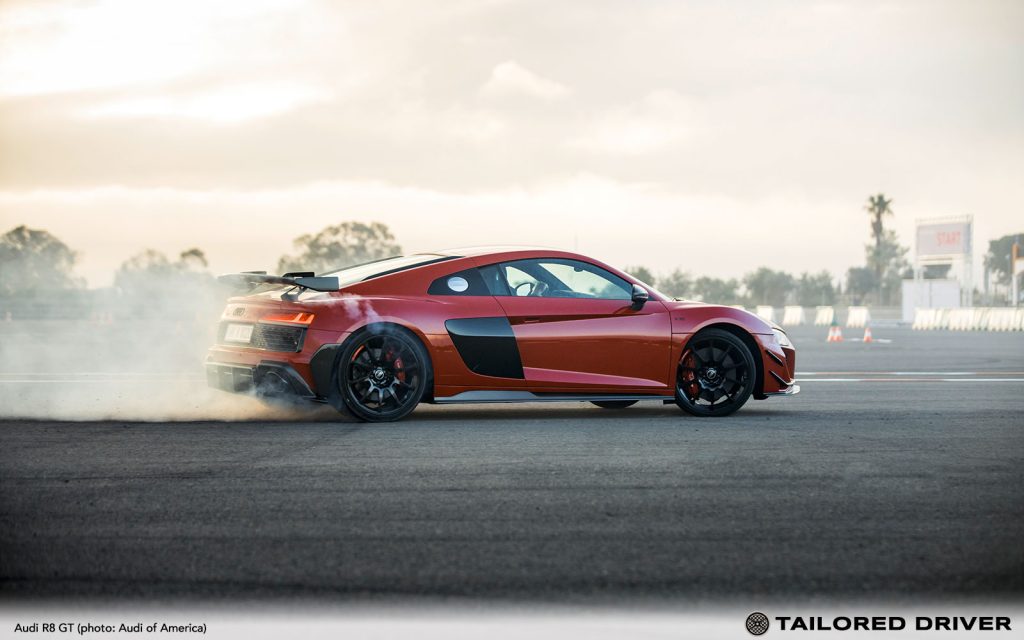
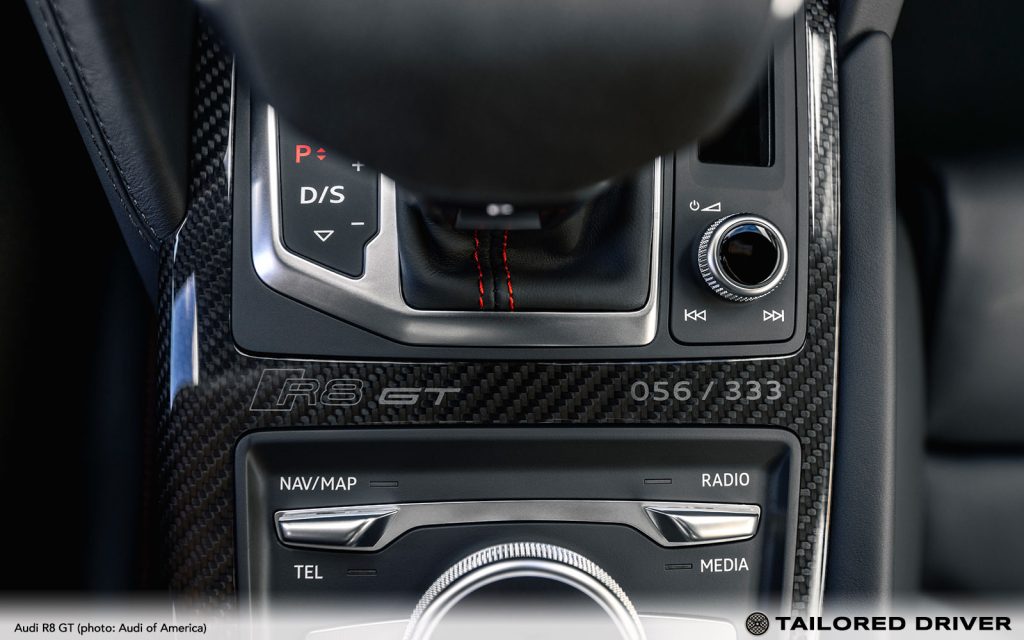
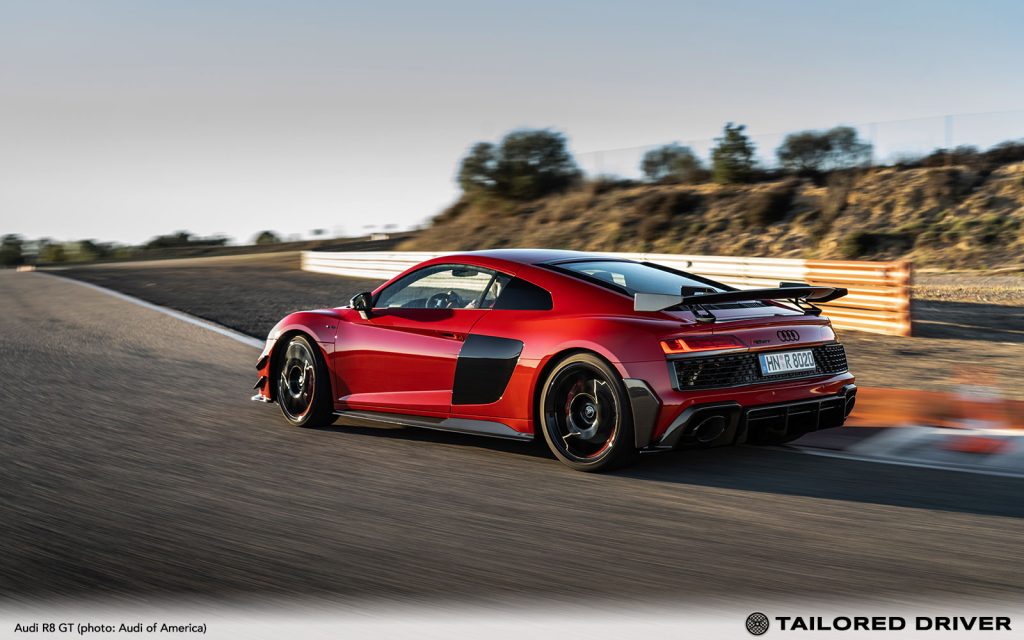
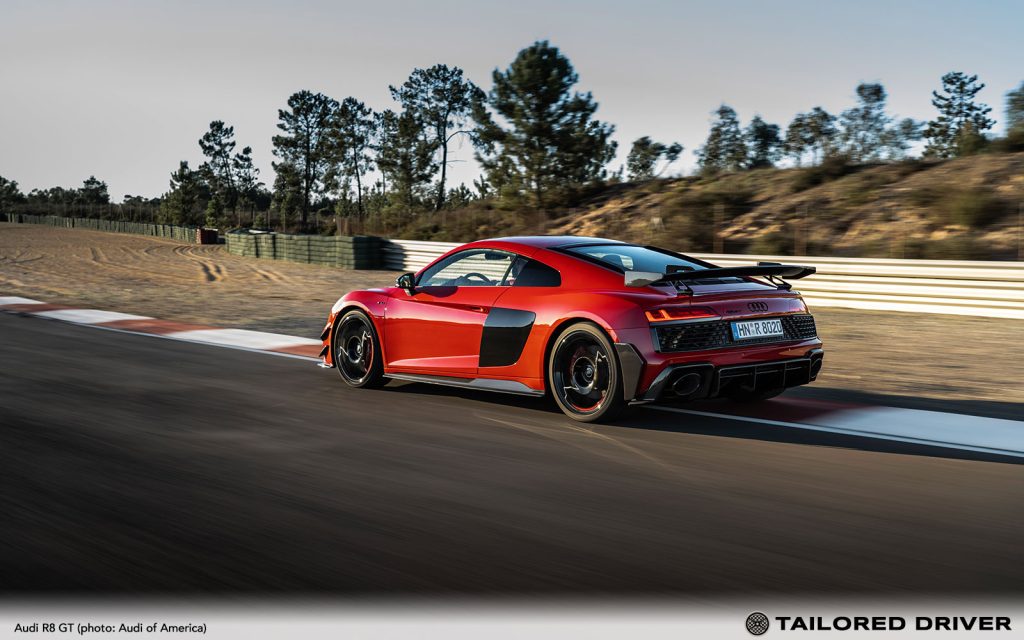
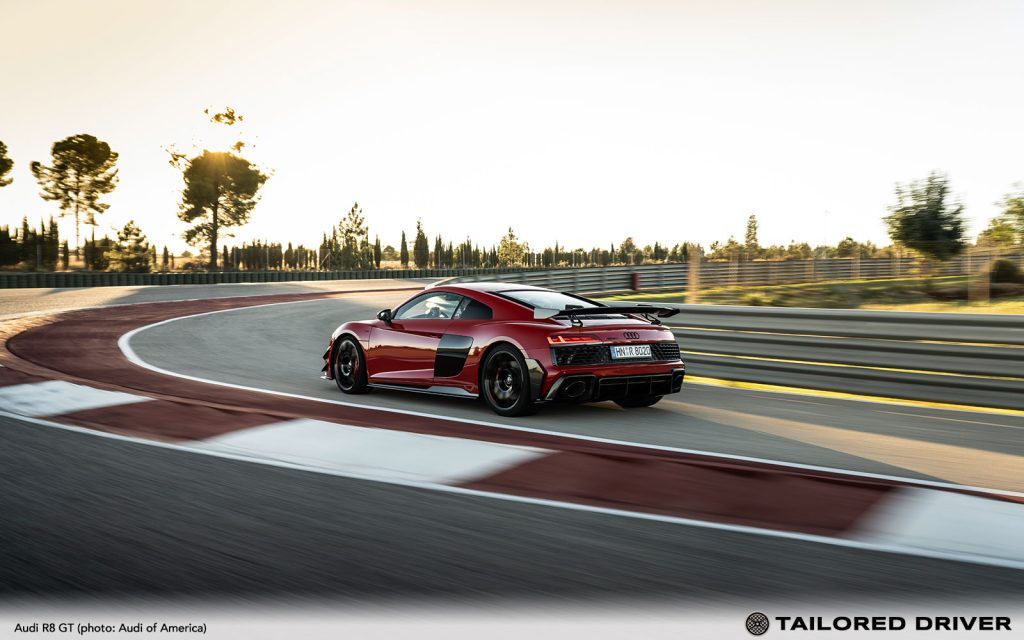
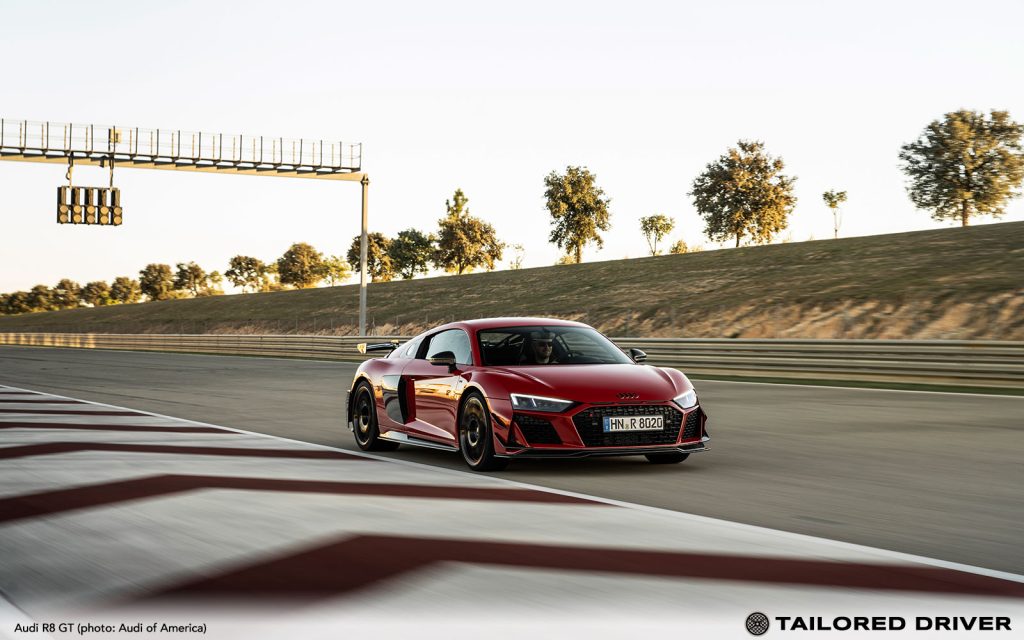
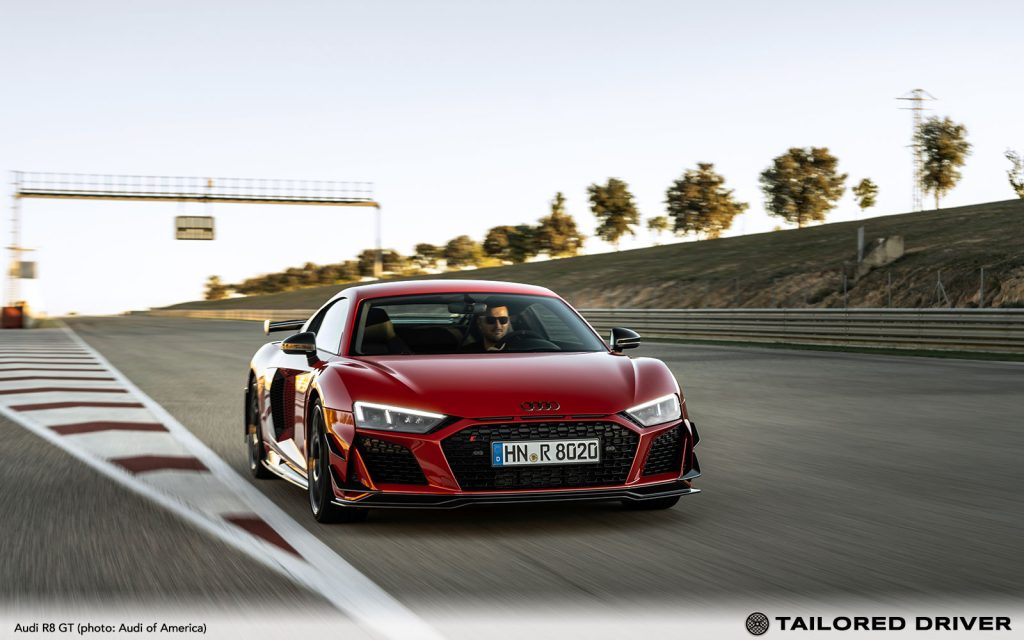
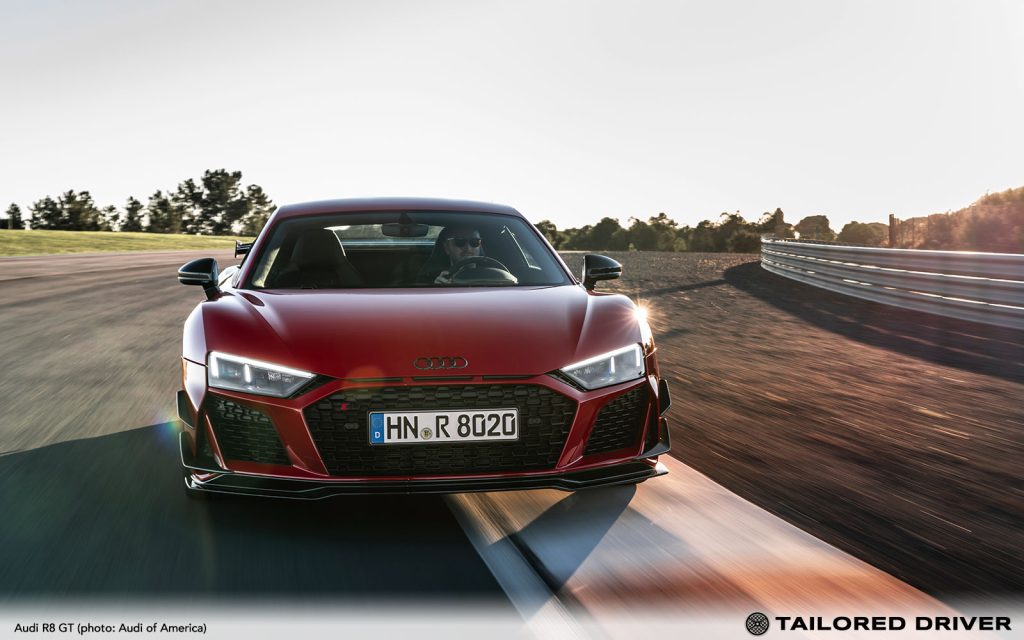
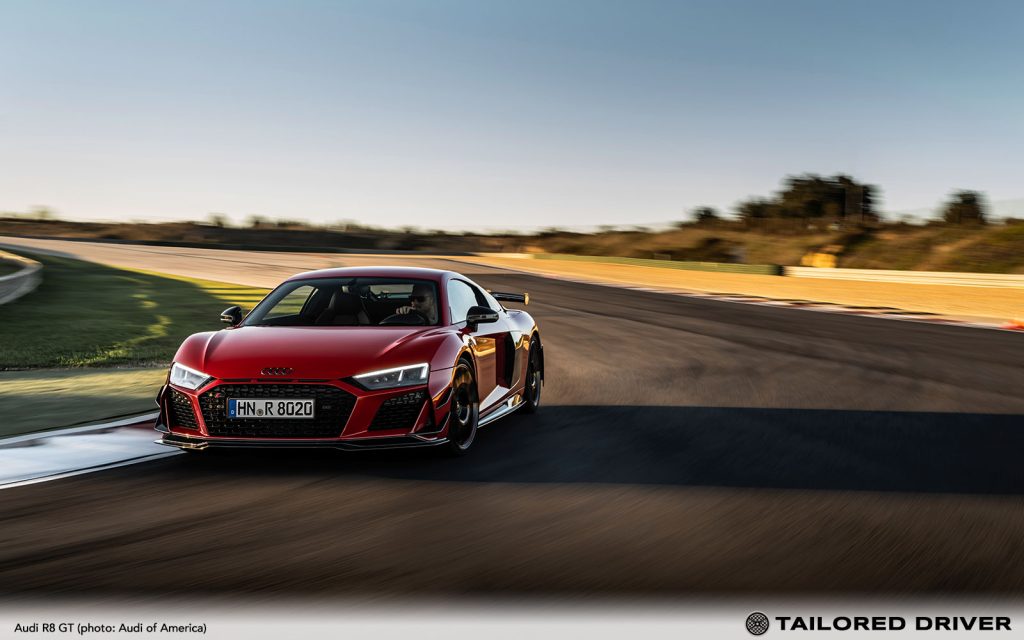
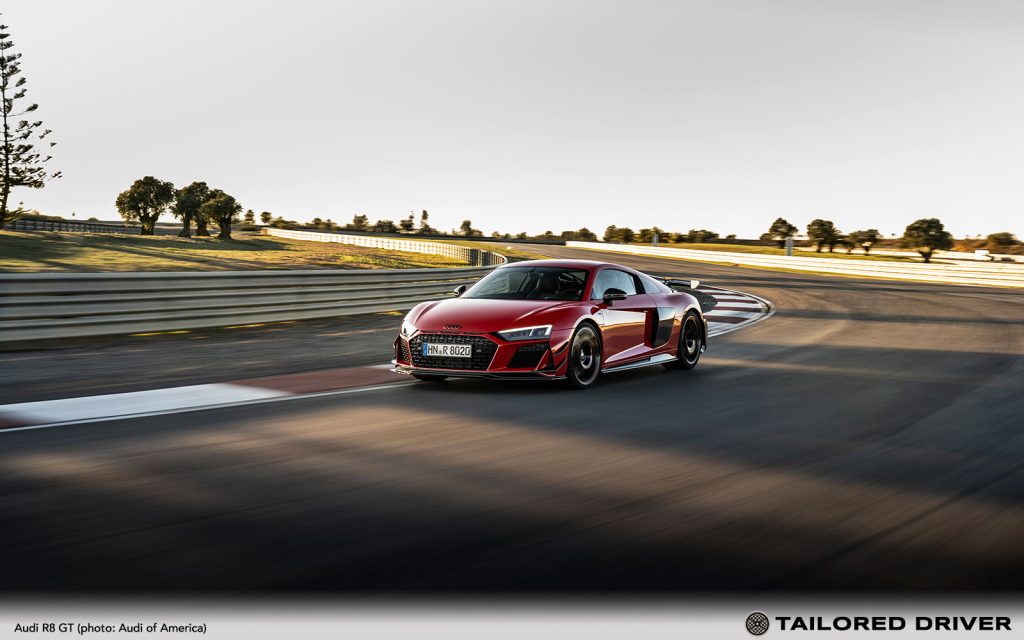
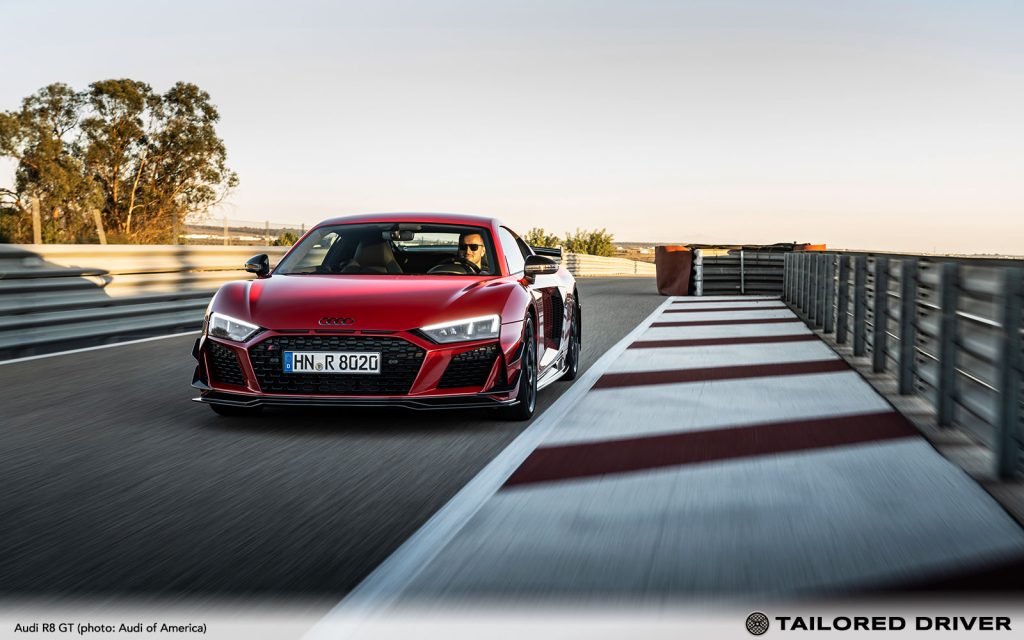
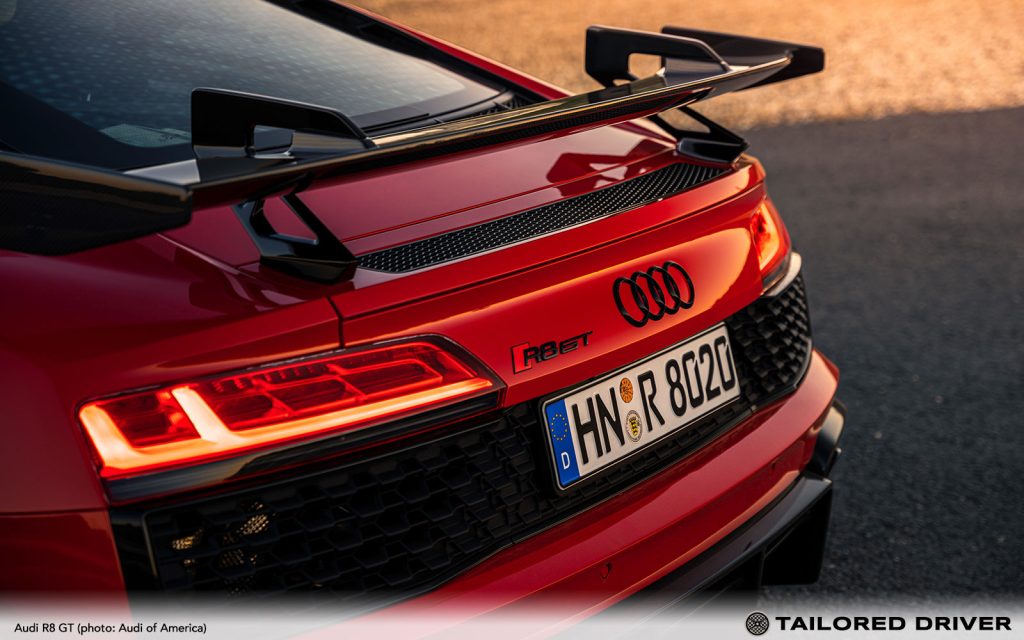
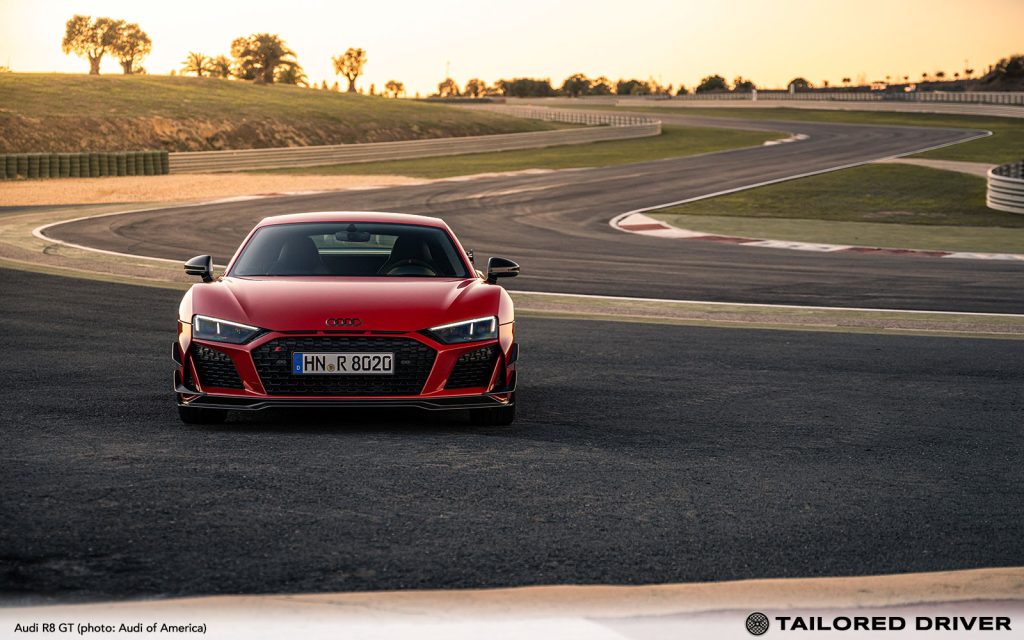
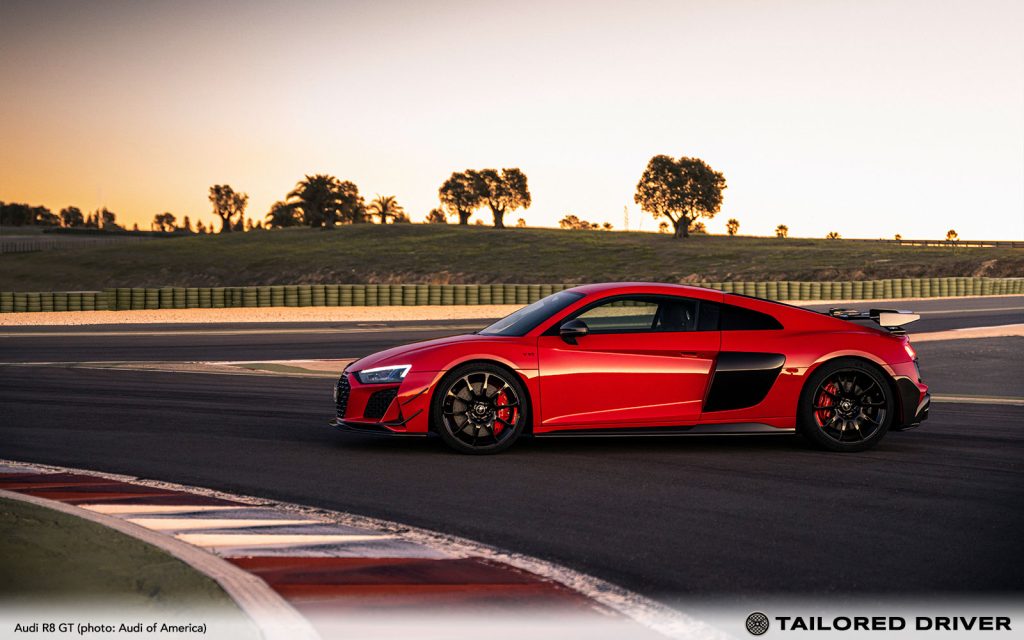
HERNDON, VA – Today, Audi of America pays tribute to the first generation Audi R8 GT from 2012 by announcing the arrival of the all-new R8 GT. The naturally aspirated 5.2-liter V10 engine now comes with 602 horsepower – making it the most powerful rear-wheel drive series production model in the brand’s history. A new Torque Rear drive mode was developed exclusively for the R8 GT to provide for more precise and controlled oversteering when driven on a track. The R8 GT demonstrates the consistent transfer of technology from motorsports to series production. The R8 GT will be limited to just 333 units worldwide, of which 150 units will come to the United States market.
A motorsport legend: 5.2-liter V10 engine No other Audi is closer to motorsports than the R8. The R8 V10 engine is nearly identical to the R8 LMS racecar engine developed in parallel with only specific regulation adjustments made on the racecar. Compared to the R8 V10 performance RWD model with 562 horsepower, Audi Sport GmbH engineers heightened the performance of the R8 GT model to 602 horsepower – now matching the R8 performance quattro model.
An unmistakable engine tone resonates from the high revving 5.2-liter 10-cylinder engine that produces 413 lb-ft. of torque and a max engine speed of up to 8,700 rpm. As a result, the new R8 GT accelerates to 60 mph in just 3.3 seconds and reaches a top track speed of up to 199 mph. One unique design element of the R8 GT is the valve covers of the engine that are painted in black.
New Torque Rear Drive Mode For the first time, Audi Sport GmbH is offering a Torque Rear mode on the R8. Drivers can access seven characteristic curves stored in the traction control system (ASR) offering different levels of support – Level 1 provides maximum support with reduced engine torque, which leads to a low level of wheel spin, while Level 7 provides only minimum support with increased engine torque, which leads to a high level of wheel spin.
The desired Torque Rear mode level can be set by turning the control satellite on the Alcantara® wrapped steering wheel. This function adapts to the progressive driving skills and road conditions presented on the road or on the track, while rapidly calculating data from the wheel speed sensors, steering angle, accelerator pedal position, and the selected gear. The incremental adjustment allows the drivers to gradually increase their own skills.
Another distinctive addition to the R8 GT is a 7-speed dual-clutch transmission with even faster shift times – allowing drivers to choose their personalized level of ESC support, enabling controlled and simultaneously precise oversteering. The gearbox allows for an even more impressive acceleration in all gears thanks to an altered gear ratio compared to the R8 performance RWD models.
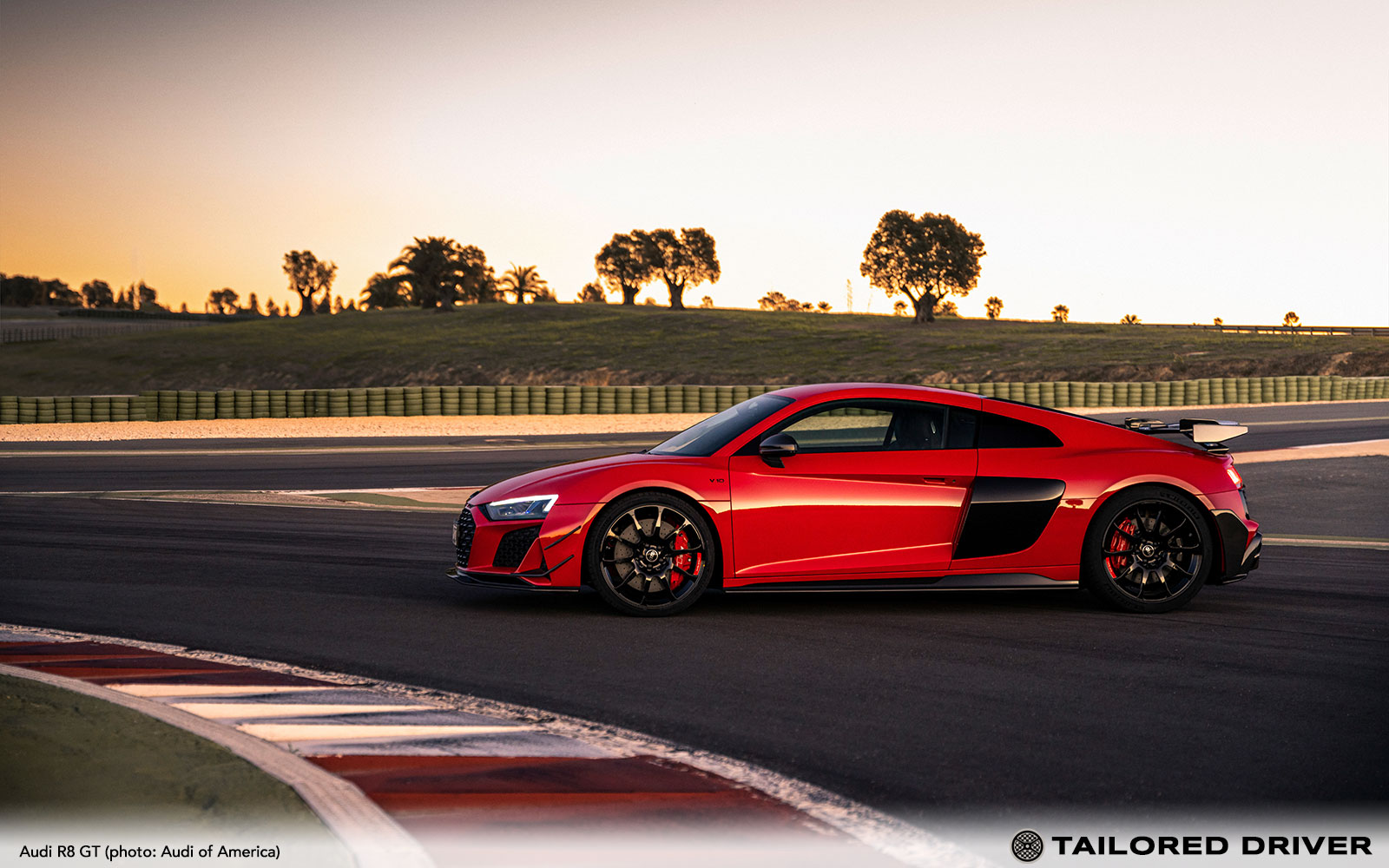
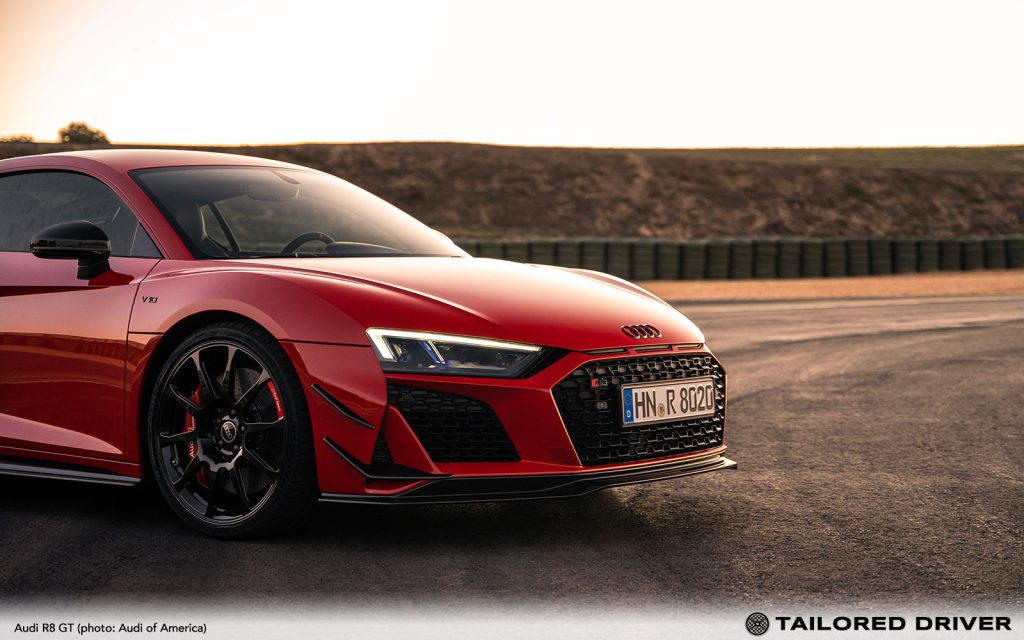
Lightweight engineering The R8 GT remains largely produced by hand at Böllinger Höfe, and shares the same assembly line and similar engine as the R8 LMS racecar. Compared to the R8 V10 performance RWD Coupe, various weight saving measures have resulted in an overall weight reduction of around 55 pounds, producing a total curb weight of 3,516 pounds. The LMS racecar inspired lightweight 20-inch 10-spoke milled-cut forged wheels in high-gloss black, are combined with high-performance Michelin Pilot Sport Cup 2 tires designed for road and racetrack use. The forceful ceramic braking system with red calipers, which is standard equipment in the R8 GT also saves additional weight compared to steel brakes.
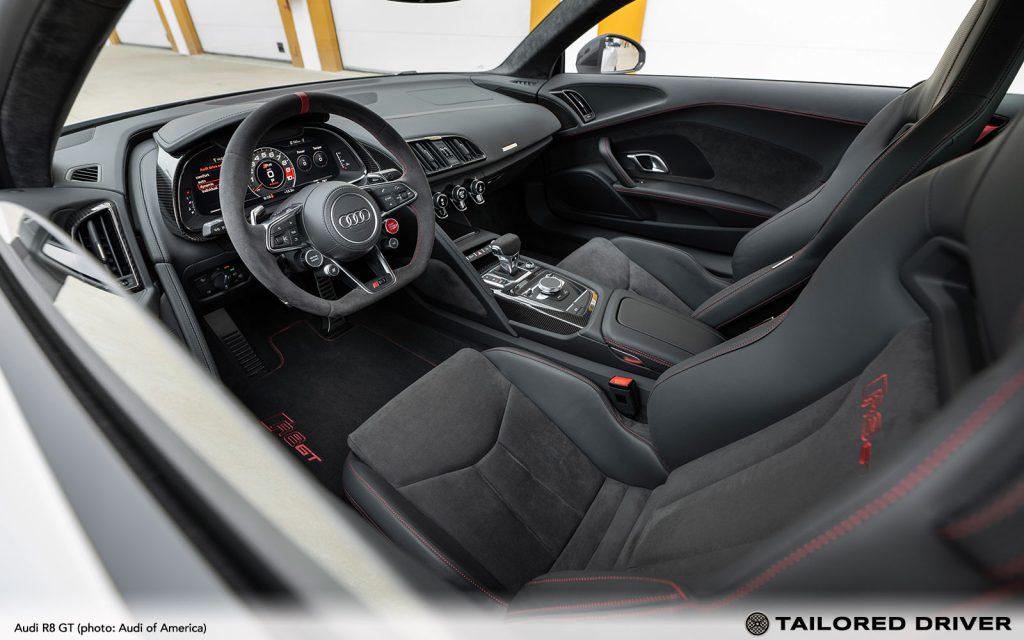
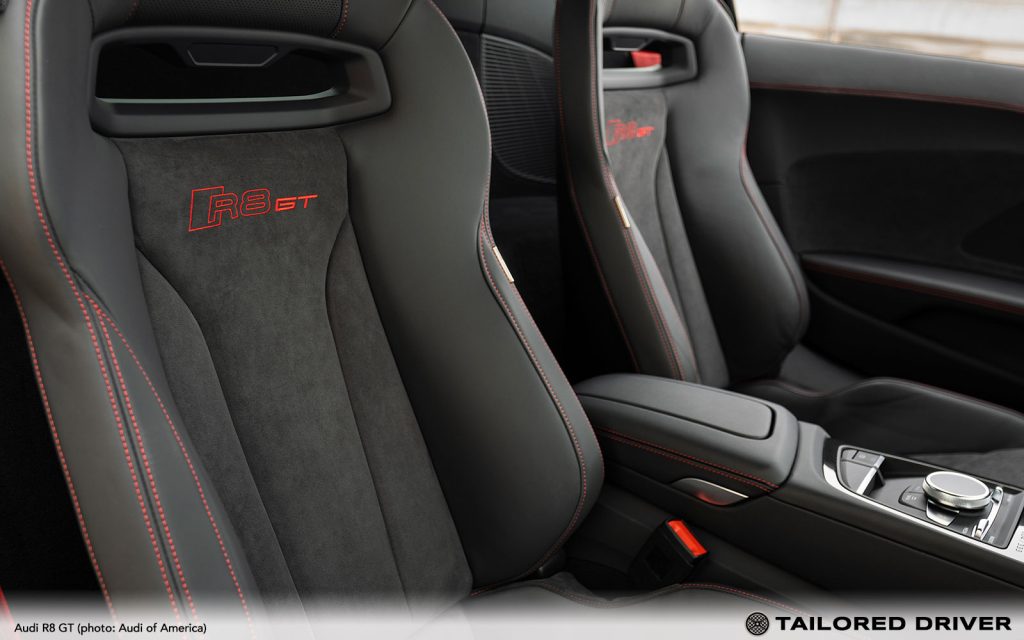
Additionally, lightweight R8 GT bucket seats are finished in leather and Dinamica and feature integrated speakers as part of the Bang & Olufsen sound system. The standard sport suspension features a CFRP anti-roll bar, made from carbon fiber reinforced plastic, while the two coupling rod connections are made of red anodized aluminum to protect against corrosion. This dynamic suspension reduces weight, while increasing road-holding and cornering dynamics.
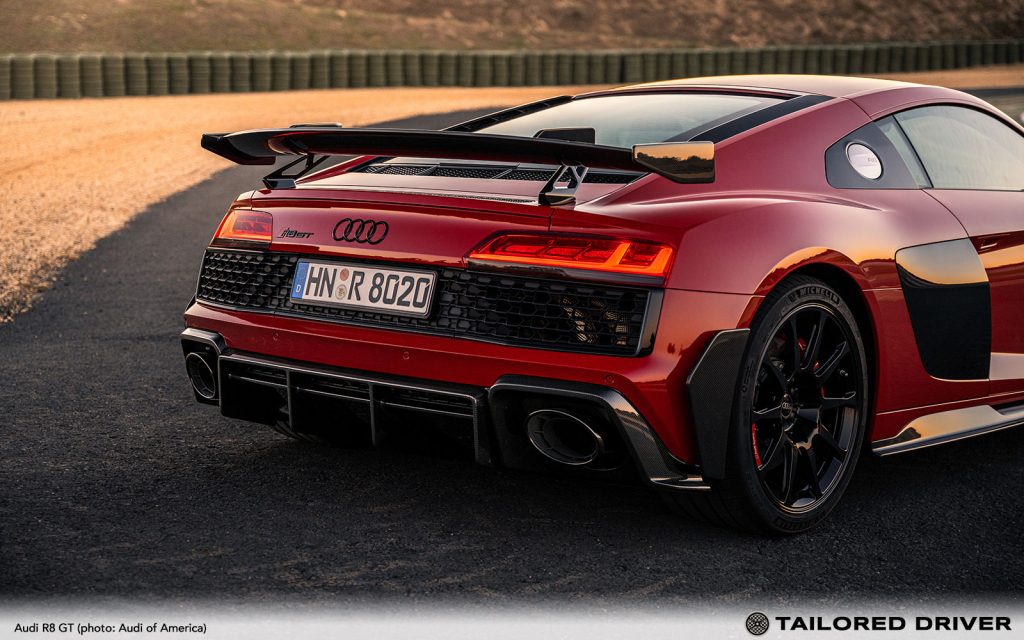
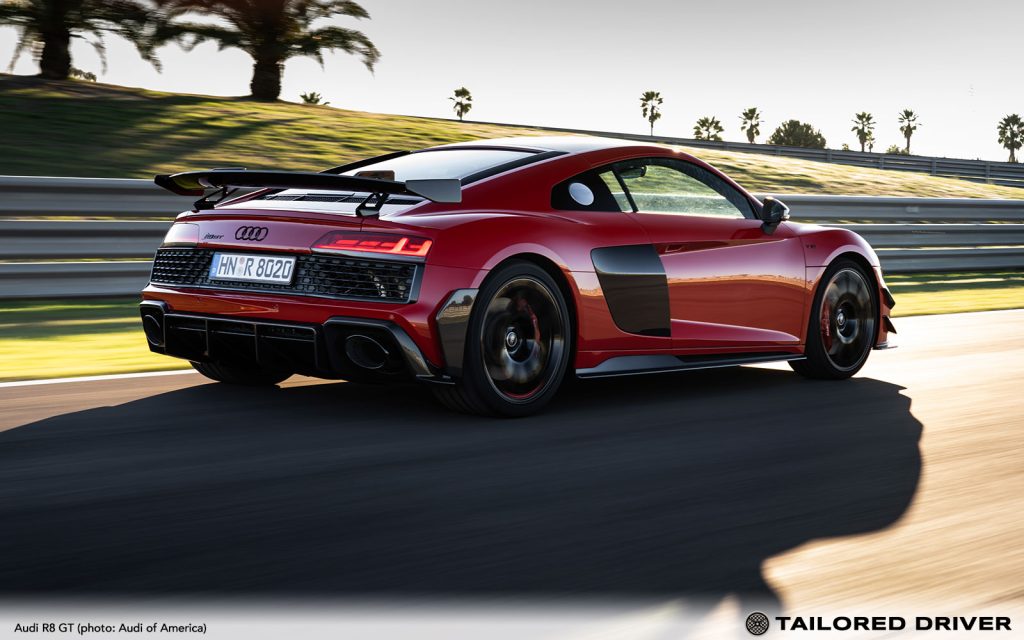
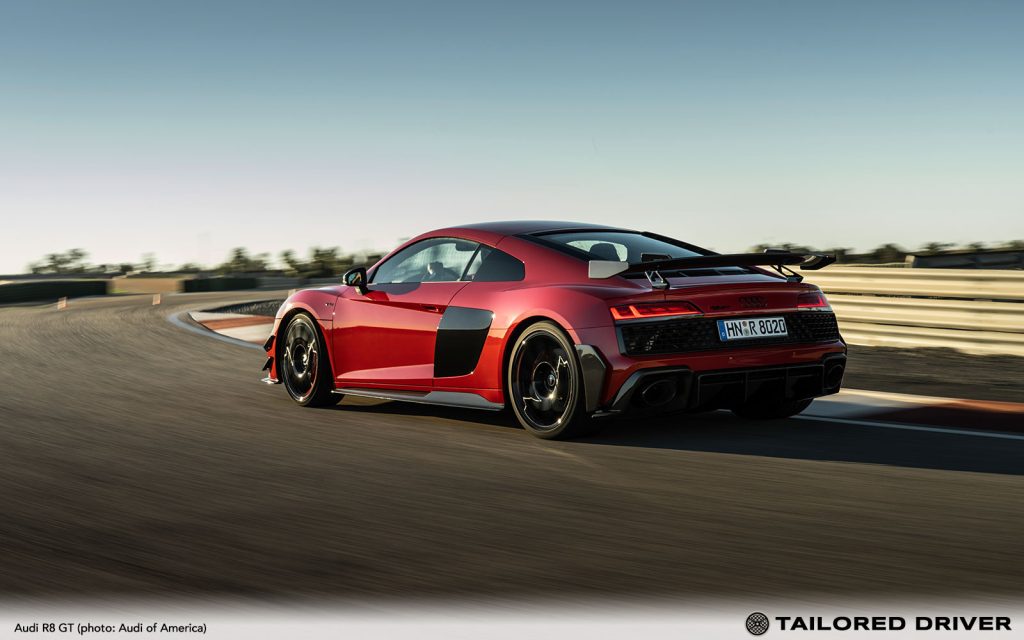
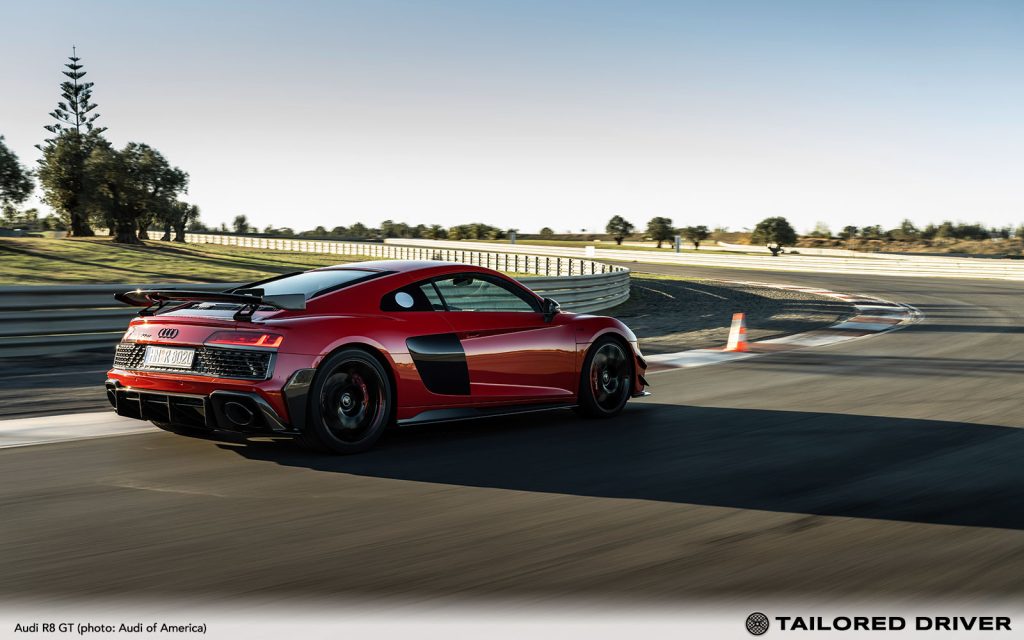
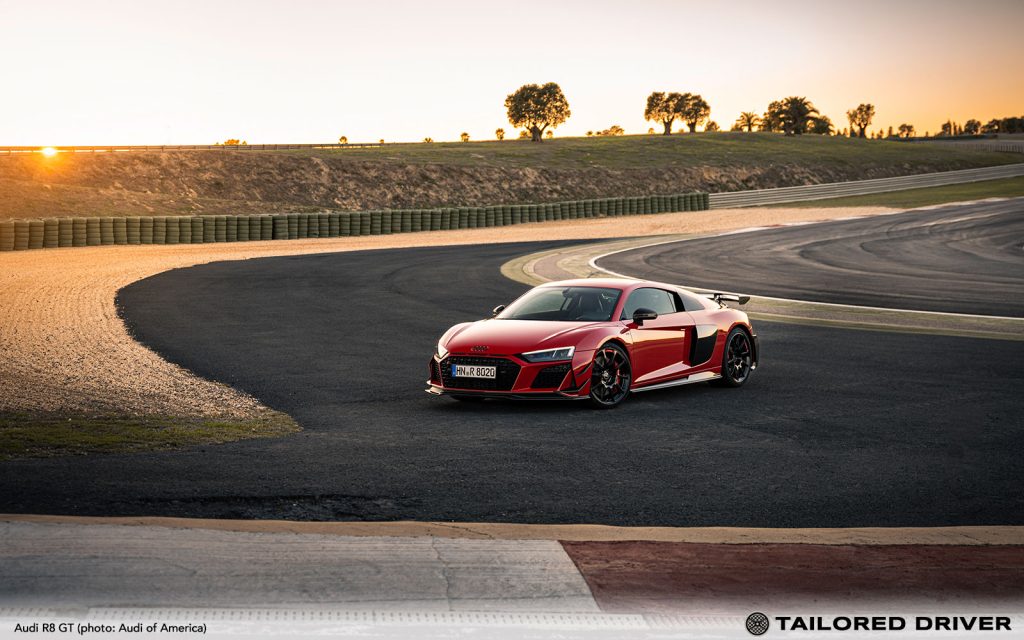
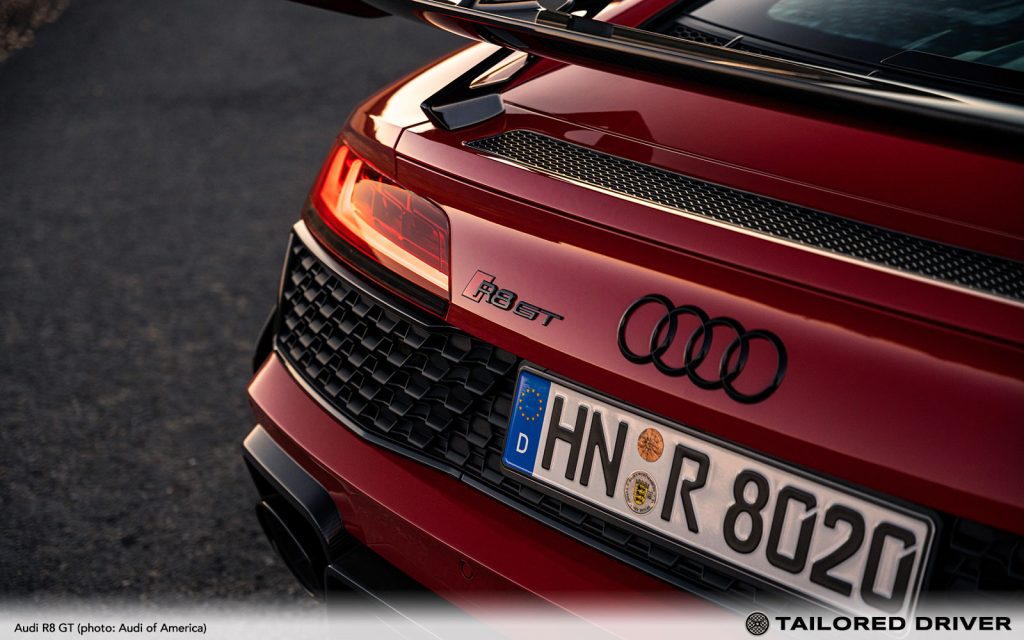
A conspicuous presence In order to differentiate the new Audi R8 GT from its relatives, the special model is equipped with exclusive add-on parts. First, all of the exterior emblems are painted in black including the distinctive “R8 GT” lettering in the rear. The track inspired Carbon aero kit is finished in high gloss, and was initially developed in the wind tunnel to improve aerodynamics and increase down force at the front and rear axle – generating better stability and faster cornering speeds on the track. In total, the Carbon aero kit consists of the following attachments: front splitter, flics, side skirt covers, cW-elements on the sides of the rear bumper, a diffuser, and a rear wing with gooseneck suspension, which ensures optimum wing underflow improving aerodynamic efficiency.
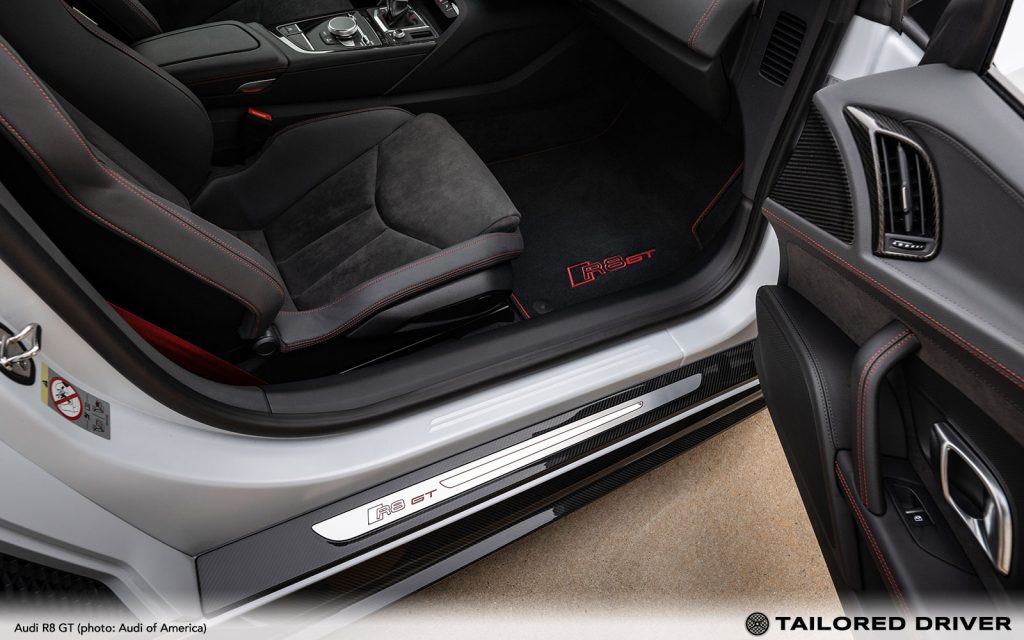
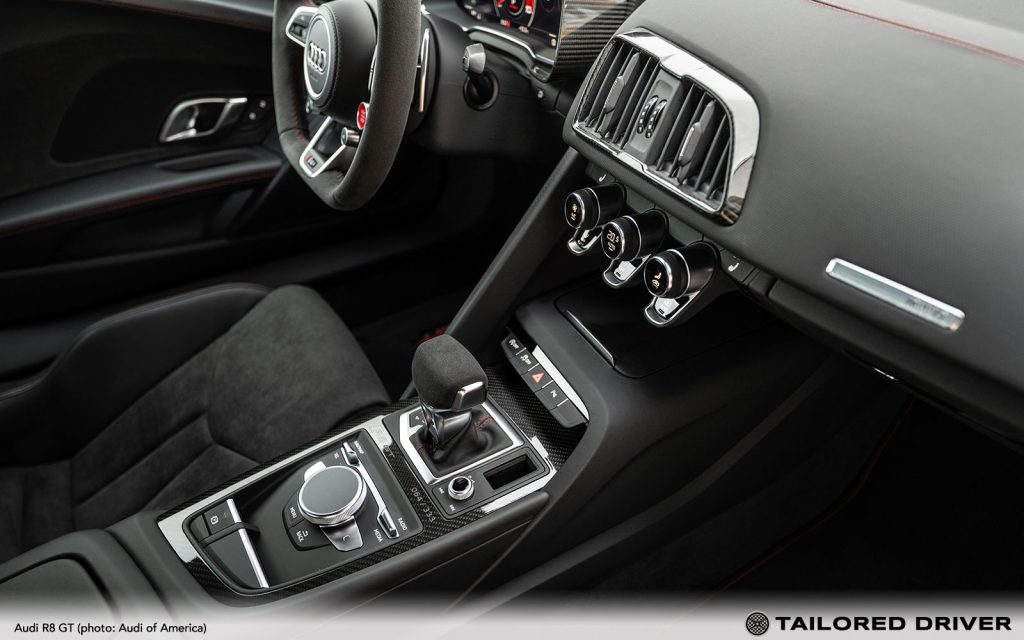
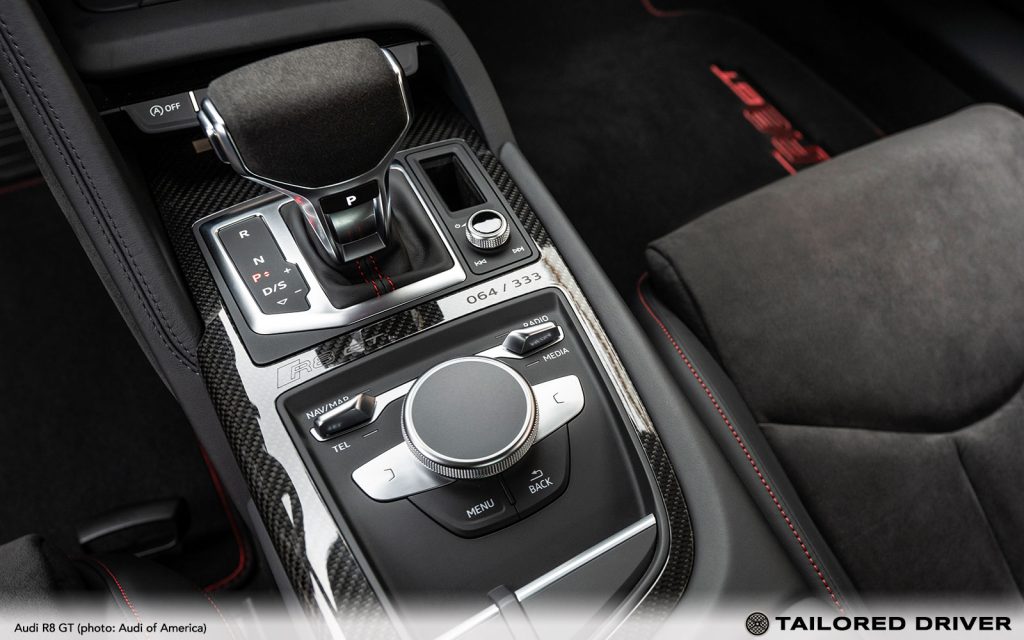
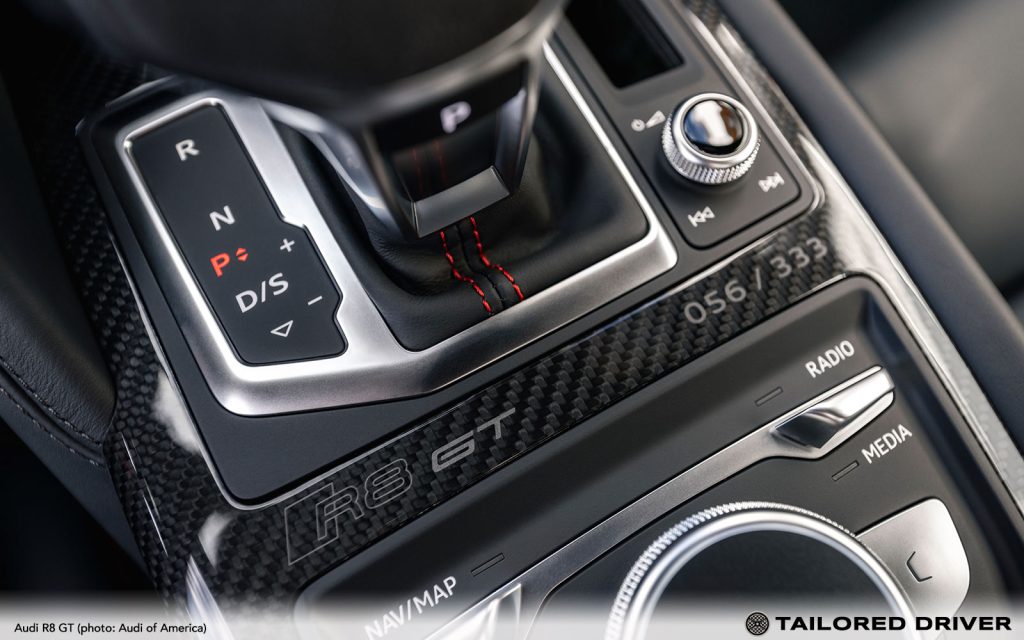
The new R8 GT is available in three colors, totaling 50 of each: Tango Red Metallic, Daytona Gray Metallic, and Mythos Black metallic. For the interior, Audi Sport GmbH continues to praise its homage to the first R8 GT from the 2012 model year. The interior is crafted with an Audi exclusive interior in a combination of black and red. This includes red seatbelts – only previously available in the R8 GT from 11 years ago. The floor mats and the R8 bucket seats feature the lettering of the special model in black and red. Customers can also find the sequential numbering of their R8 GT in the middle of the selector lever, partially matted in the carbon inlay.
Compared to the global setting, the U.S. market adds several components that amplify the performance character and equipment level of the R8 GT. Carbon side blades, door side sill inlays, and exterior mirrors housings complete the motorsport touch to the exterior. Further added equipment includes a sport exhaust system, Audi laser lights, dynamic steering, Bang & Olufsen sound system, and an Audi exclusive diamond stitched headliner with red contrast stitching.
The Price The new Audi R8 GT will start arriving at dealerships in early 2023. The MSRP starts at $249,900 plus destination, paint, and gas guzzler tax.
At Audi of America, we believe the Future is Electric. By 2025, our U.S. model lineup will be 30 percent electrified, including fully electric and plug-in hybrid vehicles. Globally, we are committed to net CO2 neutrality by 2050. In 2021, Audi sold 196,038 vehicles in the U.S. and more fully electric models than ever before, with electric vehicle deliveries up by more than 50% over 2020. Learn more about who we are and how we’re working to create a more sustainable, innovative, and inclusive future at audiusa.com or media.audiusa.com.
This information and any vehicle specifications are preliminary and subject to change.
Always obey local speed and traffic laws.
Top track speed electronically limited in U.S. Obey all speed and traffic laws.
Always pay careful attention to the road, and do not drive while distracted.
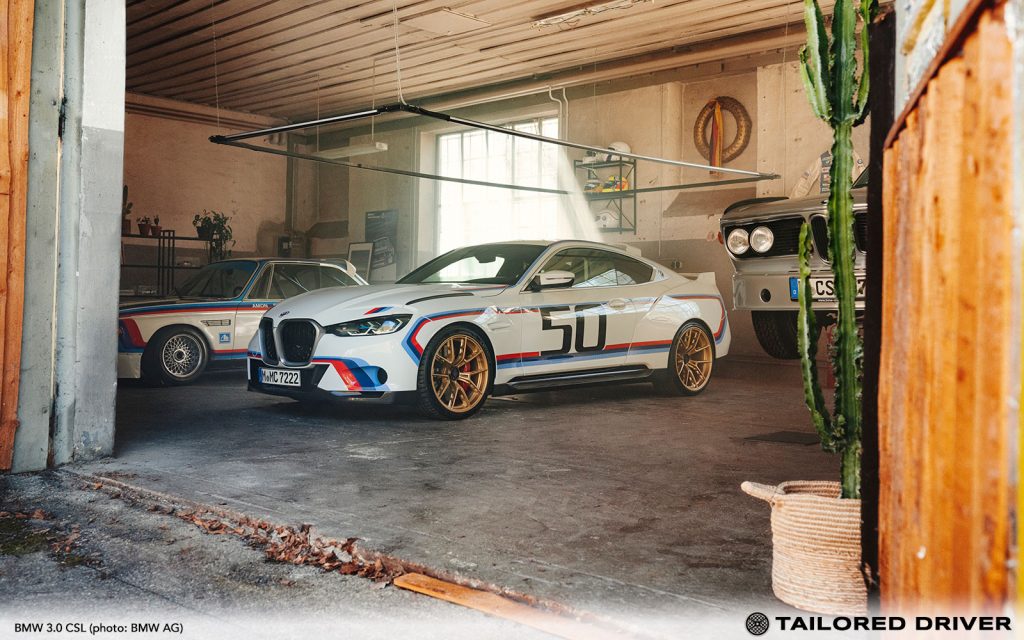
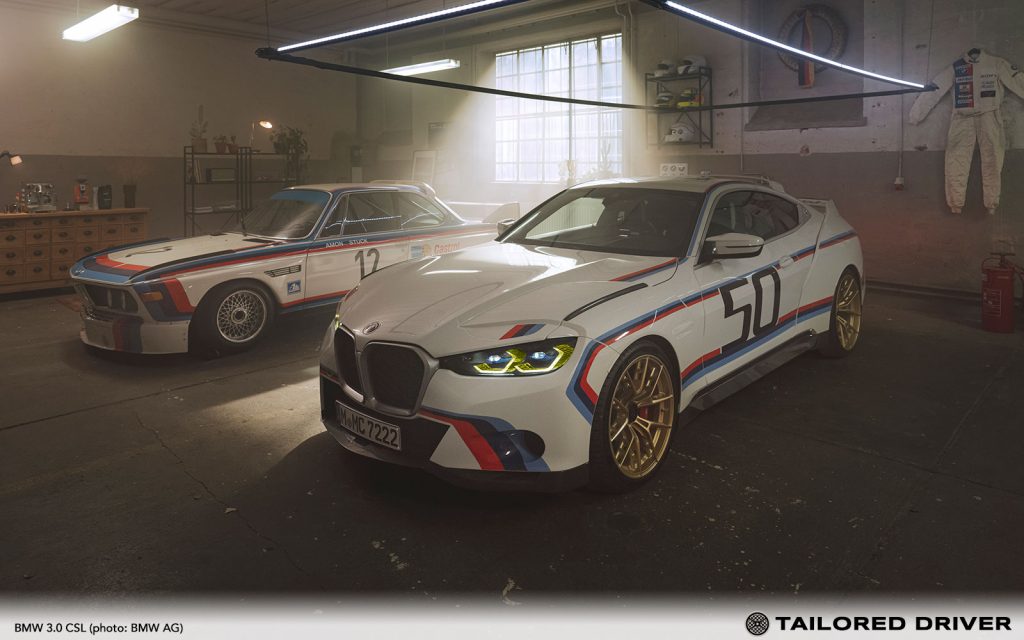
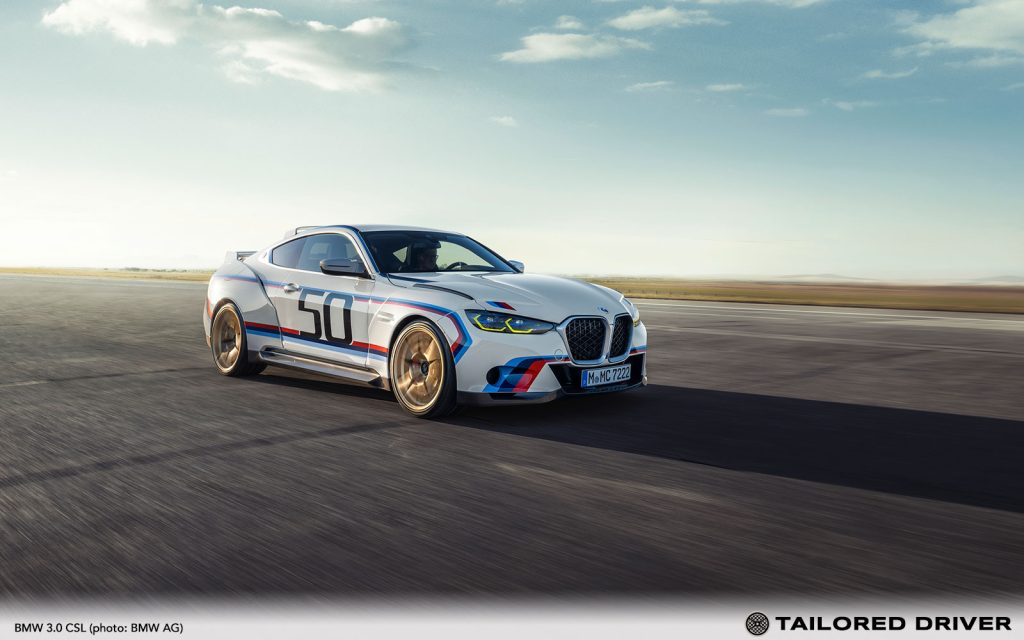
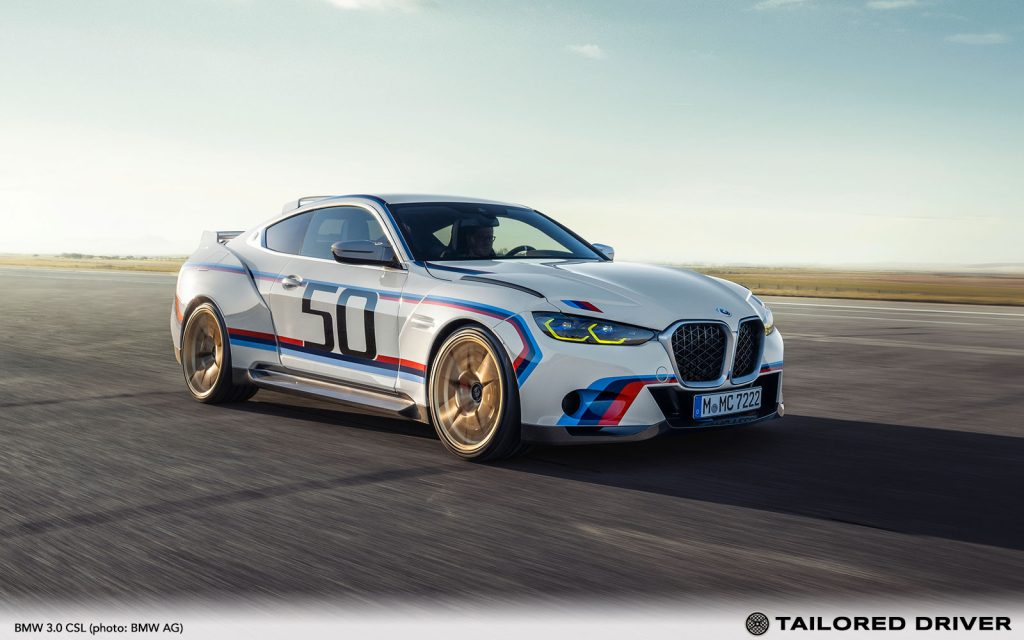
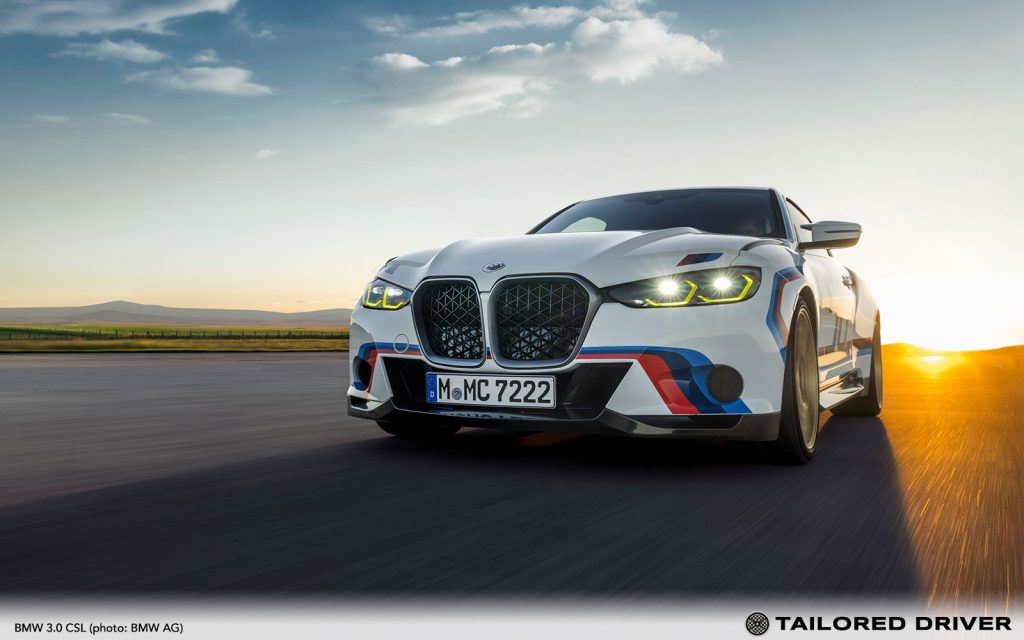
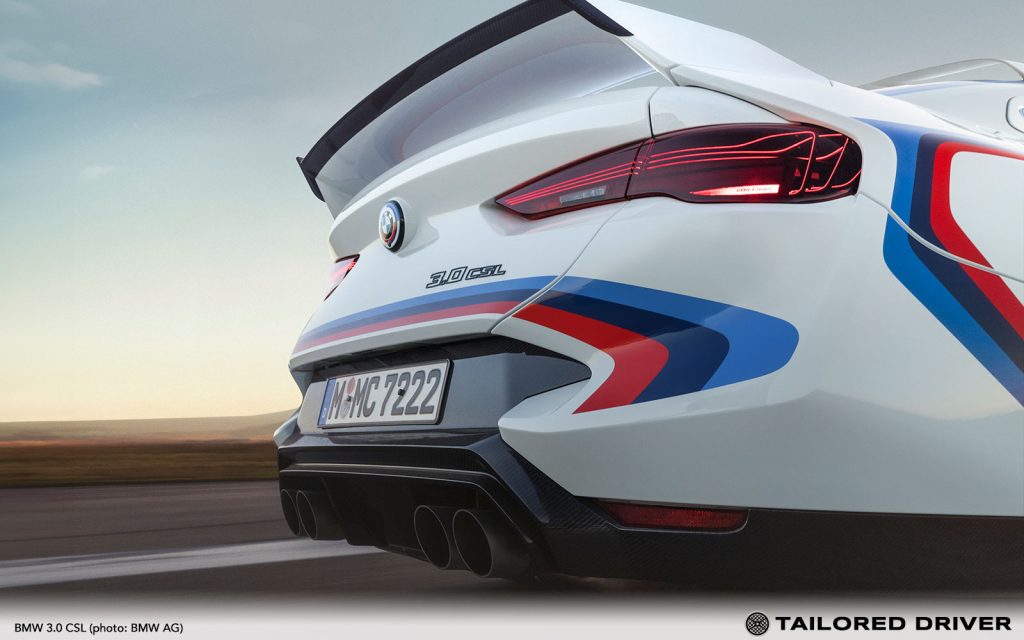
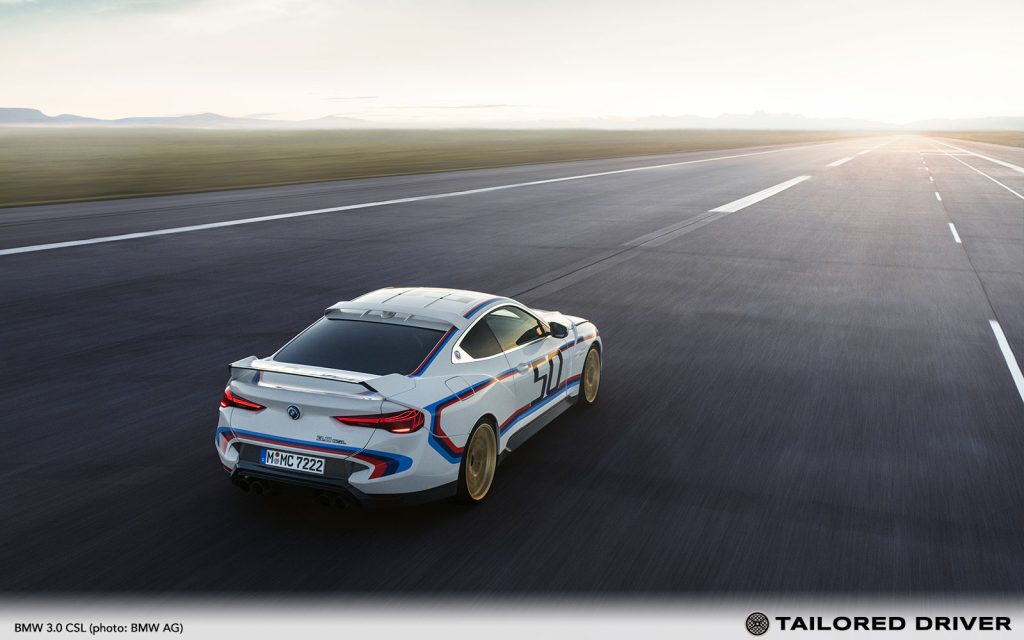
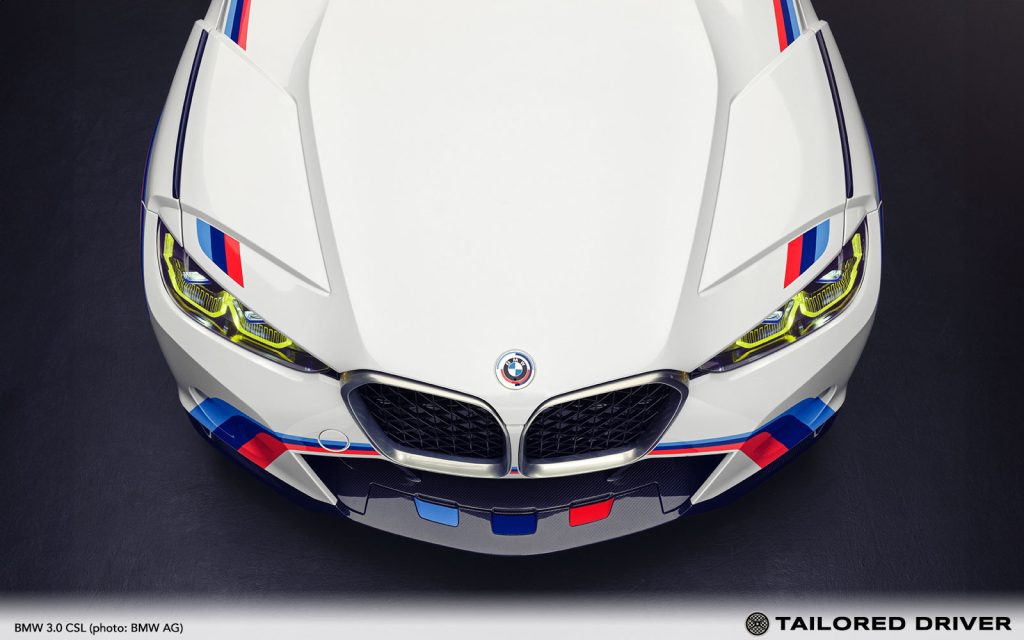
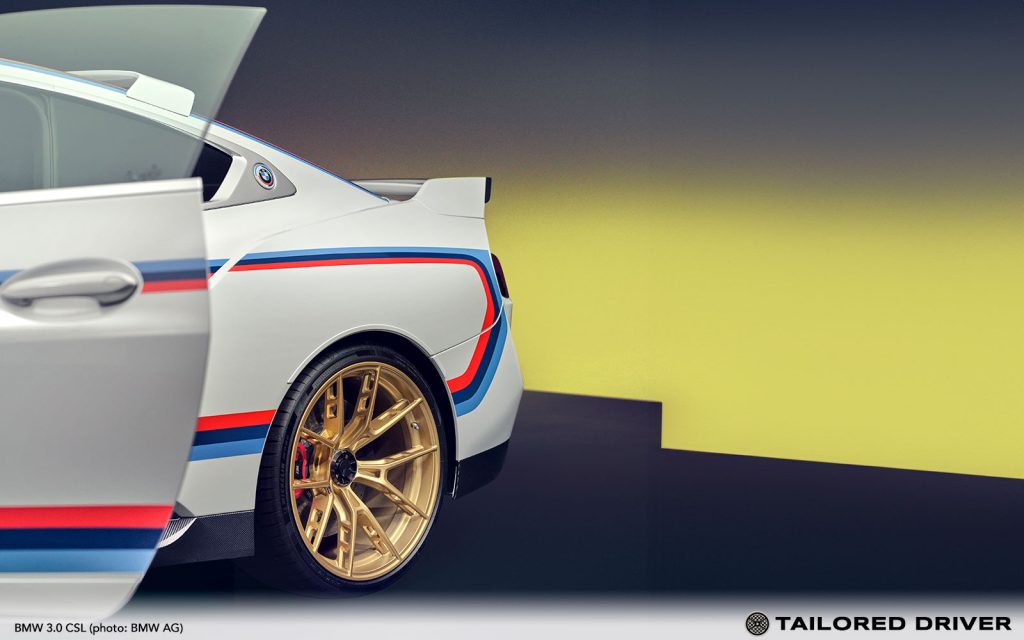
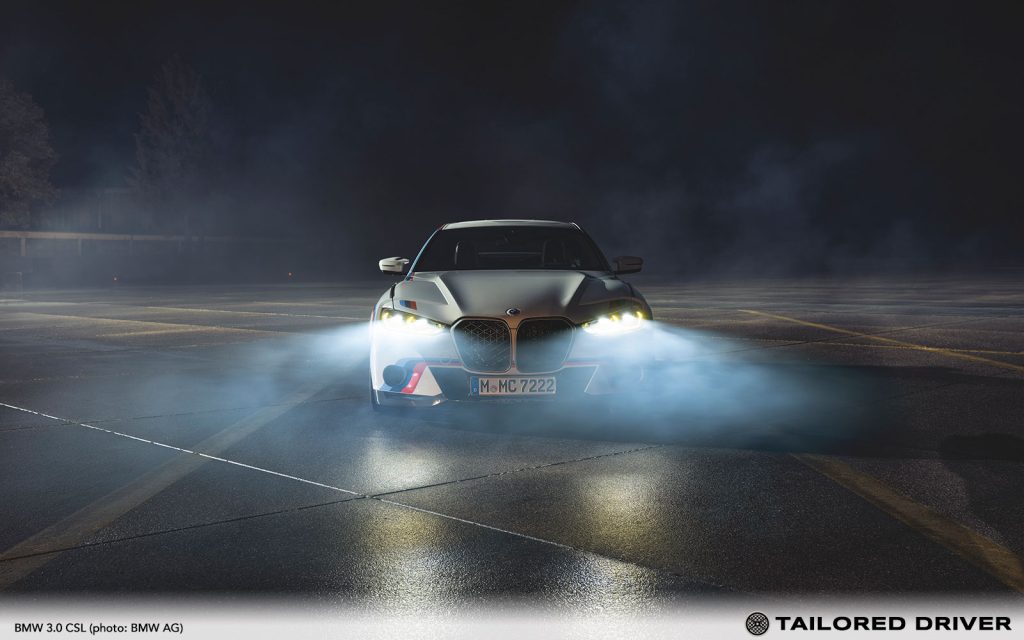
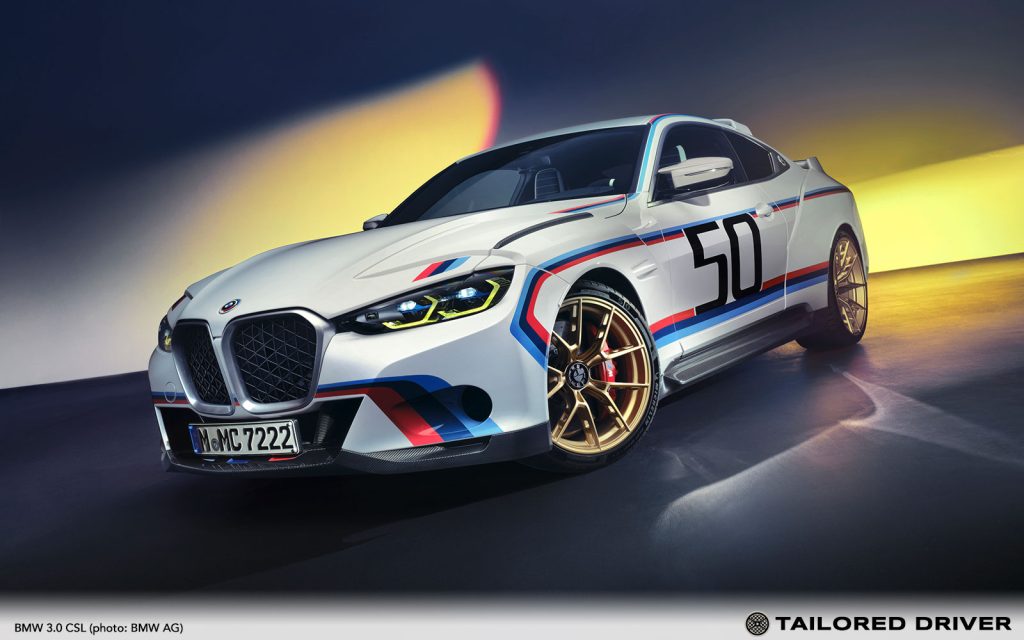
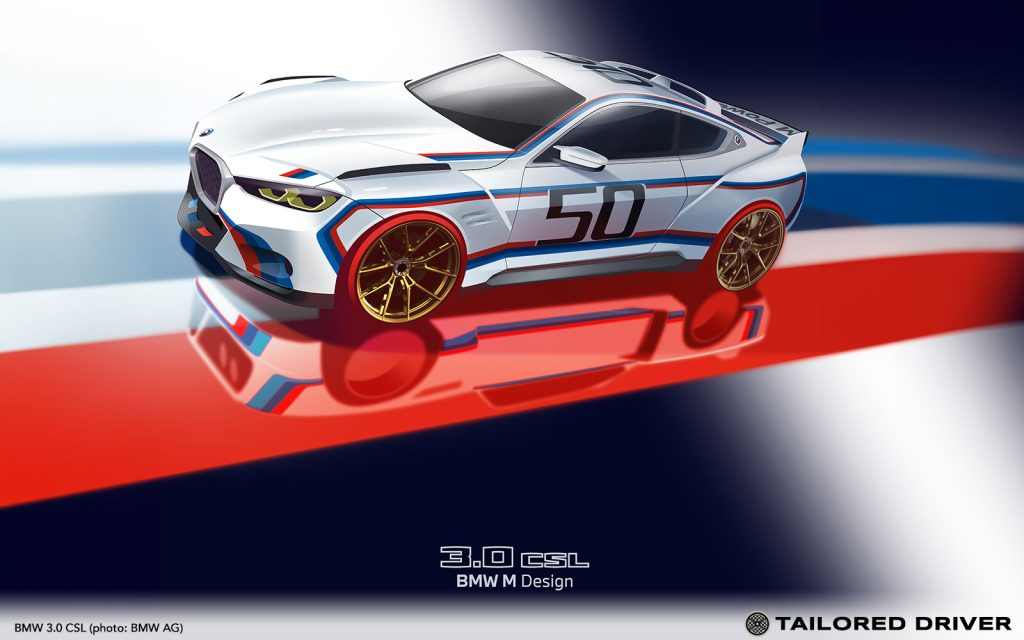
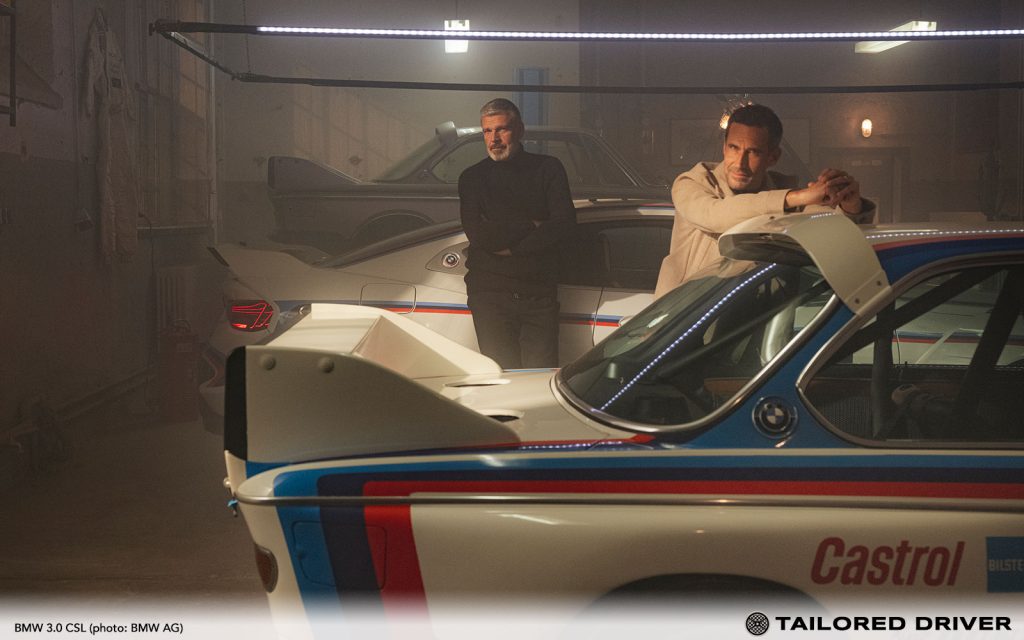
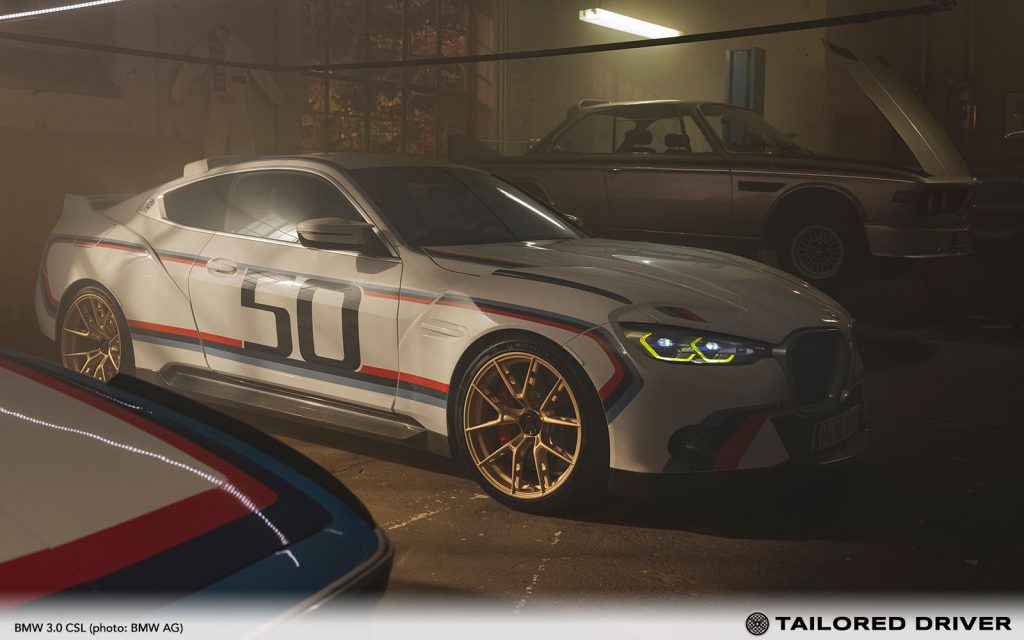
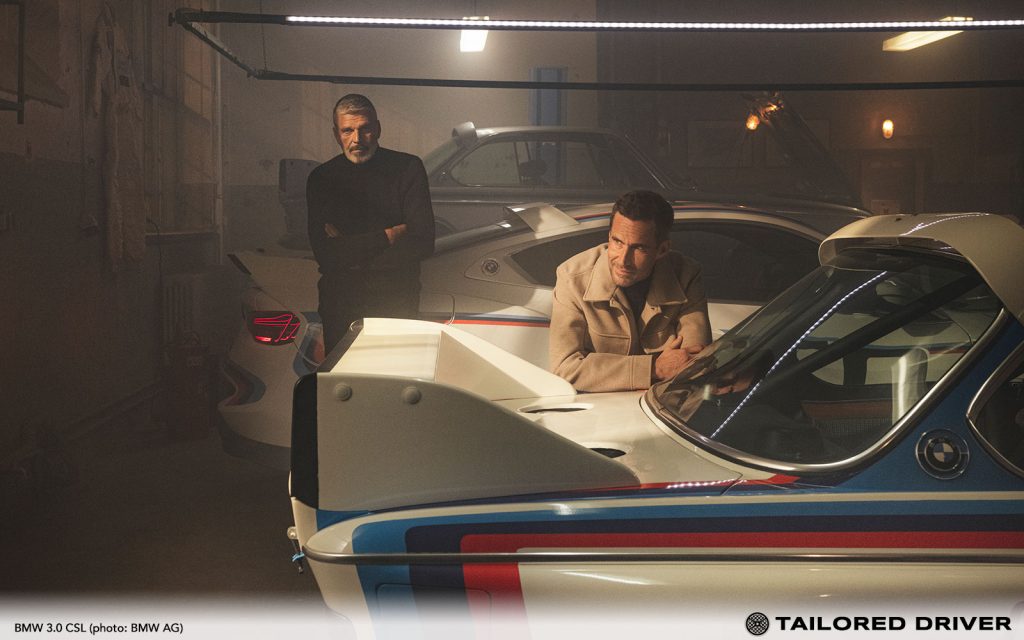
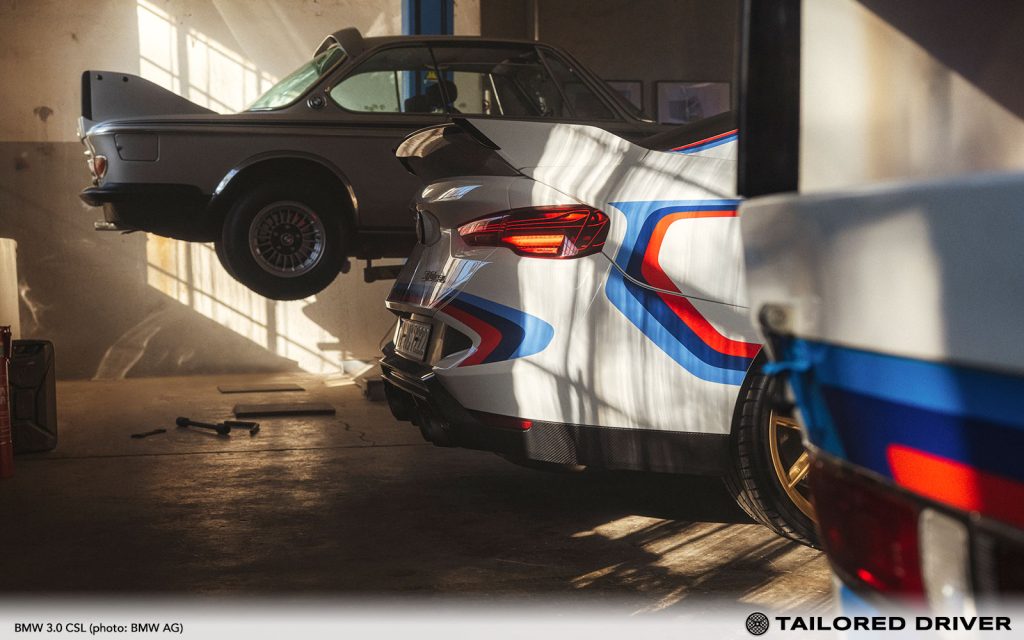
As the anniversary year comes to a close, BMW M GmbH is presenting the most exclusive special model the company has ever produced – a masterpiece of engineering embodying the essence from 50 years of racing passion and expressing its historic roots in a legendary model designation.
[source: BMW]
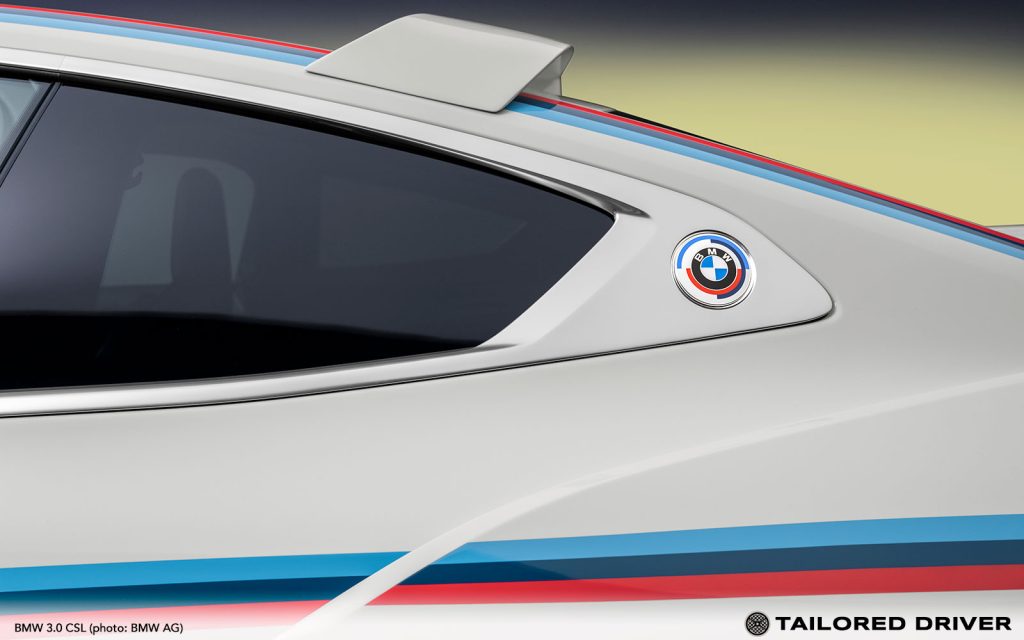
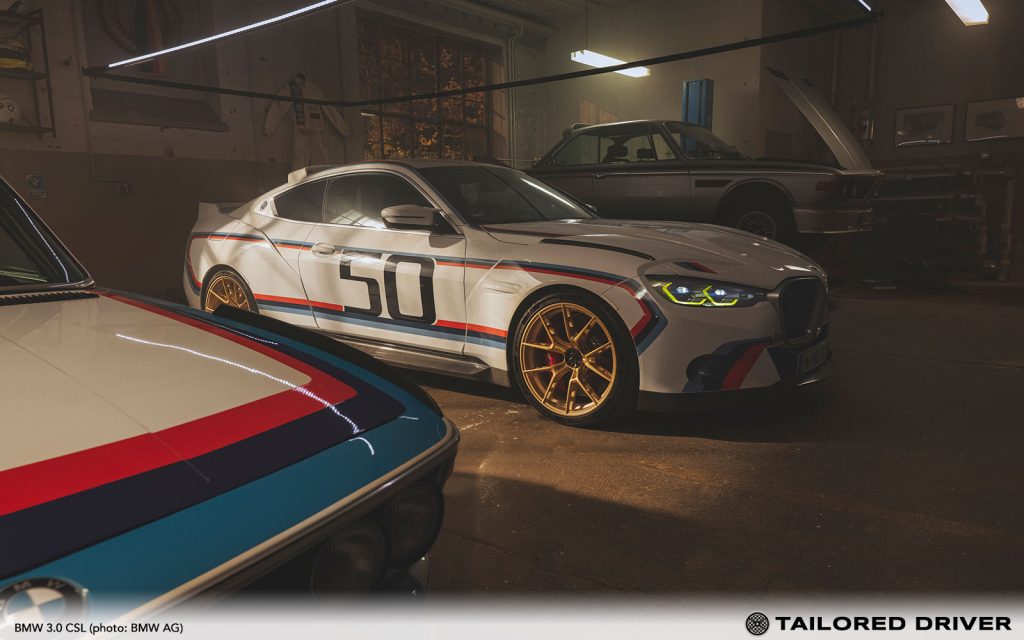
Munich. The BMW 3.0 CSL (fuel consumption combined: 11.0 l/100 km; CO2 emissions combined: 249 g/km according to WLTP; details according to NEDC: – ) combines a unique design with a puristic performance experience in two seats. It conveys to the present day in an extremely focused manner the concept created in the 1970s of applying racetrack technology designed for sheer driving pleasure on the road.
The BMW 3.0 CSL was developed with the intention of combining the best of five decades of racing expertise from BMW M GmbH in an automobile with a highly emotional aura. All facets of its character – dynamic exterior elegance, a classic sportscar cockpit, intelligent lightweight construction, a straight six-cylinder engine, manual transmission and rear-wheel drive – are based on traditional principles of a BMW M automobile. They complement each other with the help of the latest technology to create the ultimate symbol of fascination for top performance in the style of the brand that has been successful for 50 years. A ride in a BMW 3.0 CSL is therefore not only an exclusive high-performance experience, but also an emotional encounter with the history and the present of the world’s most powerful letter.
The BMW 3.0 CSL as a limited production run incorporating elaborate craftsmanship.
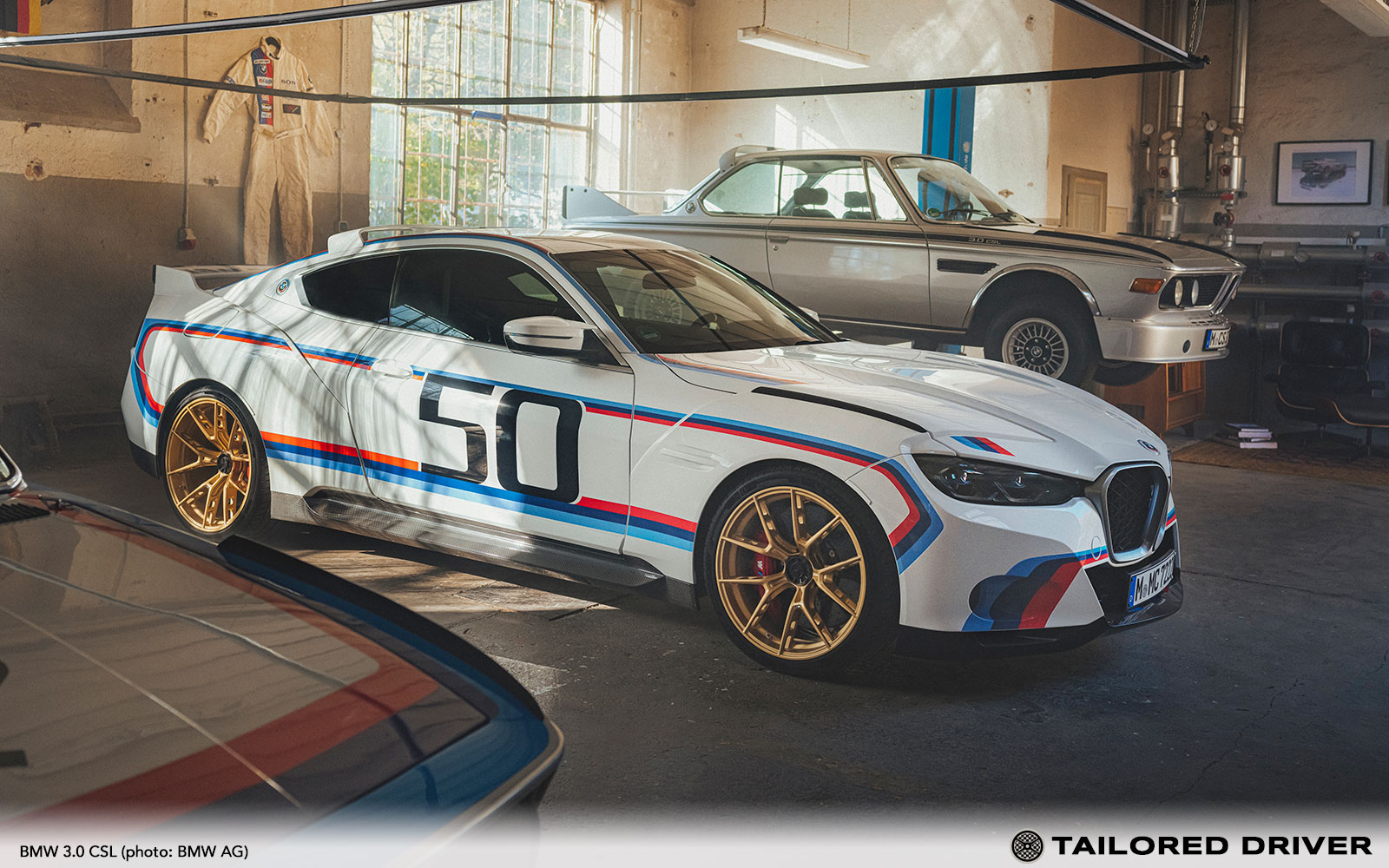
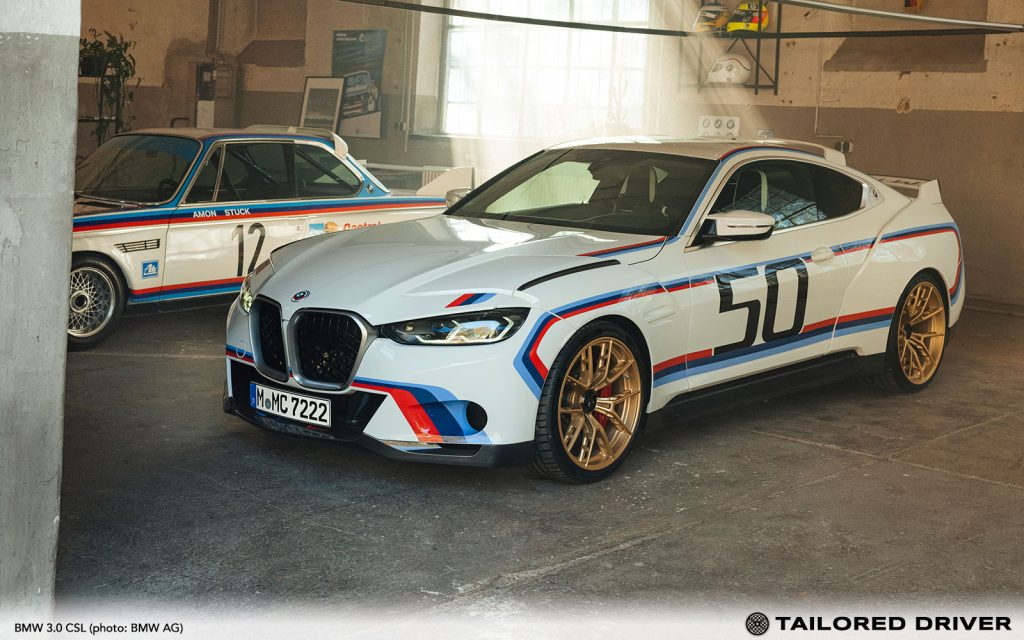
The BMW 3.0 CSL is produced in a strictly limited edition. To mark the anniversary, exactly 50 consecutively numbered units of the special model will go on sale. Right from the start, this gives the BMW 3.0 CSL the status of a rarity that will find its place in the vehicle collections of particularly loyal and enthusiastic fans of the BMW M brand.
The production of all vehicles will take around three months. Each and every one of them is created with absolute dedication to excellence in craftsmanship and precisely coordinated technologies in an elaborate manufacturing process at the external location of the BMW Group Dingolfing plant in Moosthenning, Lower Bavaria. The exclusive interior carbon fibre reinforced plastic (CFRP) components are produced by hand both in Munich and at the BMW Group component factory in Landshut by specially assigned bodywork specialists.
A specific process was also conceived for the paintwork of the BMW 3.0 CSL, in which craftsmanship and state-of-the-art technology complement each other to provide each individual part with its characteristic colour design. In addition, a team of 30 specially qualified and experienced technicians is responsible for the configuration and assembly of the vehicles. Due to the complexity of the processes in the manufactory, each BMW 3.0 CSL passes through eight assembly cycles at just as many production stations, a procedure that takes up to 10 days in all.
All in all, the extremely high proportion of individual manual work means that the time required to assemble a BMW 3.0 CSL is many times higher than that of a conventional BMW M automobile. After completion in the manufactory, each vehicle also undergoes a multi-stage quality inspection and approval process at the main Dingolfing plant before it is released for delivery to the customer. The BMW Group Plant Dingolfing is the company’s largest European production site. In addition to several BMW M automobiles, the luxury sedans of the BMW 7 Series and body components for Rolls-Royce Motor Cars are produced there.
The successful touring car – a role model in its time.
As the reincarnation of a legendary sports car both for the racetrack and the road, the BMW 3.0 CSL possesses all the characteristics of a puristic car. It embodies the joy of classic driving and an awareness of the traditional roots of BMW M GmbH in a uniquely exclusive form. Its eponymous role model is considered the first automobile to carry the DNA for maximum driving pleasure and passion, an unmistakeable feature of BMW M automobiles to this very day. In the founding year of BMW Motorsport GmbH, it was developed for use in touring car competitions, where it became the most successful racing car of its era.
The racing version of the historic BMW 3.0 CSL won the European Touring Car Championship during its inaugural season in 1973 – and repeated this title win five more times in succession from 1975 to 1979. Drivers such as Toine Hezemans, Hans-Joachim Stuck, Chris Amon and Niki Lauda left the competition behind at the Nürburgring and numerous other circuits, followed by BMW’s first victories on US circuits as early as 1975. All these successes helped the works racing cars to gain international popularity.
“Coupe, Sport, Lightweight construction“: New interpretation of a legendary formula.
The road version of the racing car, which was developed for homologation purposes, became a widely known symbol of inspiring driving pleasure focused on the essentials, especially in its final stage of development. CSL – this combination of letters in the model designation stood for “Coupé, Sport, Leichtbau” (Coupe, Sport, Lightweight), a concise summary of the two-door car’s recipe for success.
In addition to wide wheel arches, its coupe-shaped body also received an eye-catching aerodynamics package, which included a front spoiler, air bars on the front side panels and a roof spoiler. Completing the design modifications vs. the other coupes in BMW large series was a rear wing that optimised the grip of the rear wheels. It was not approved for road use and therefore lay in the boot when the vehicle was delivered, but nevertheless received much public attention so that the Coupe was given the nickname “Batmobile”.
With an increased displacement of 3,153 cubic centimetres and a maximum output of 151 kW/206 hp, the most powerful straight six-cylinder engine with direct injection ever used in a BMW model ensured sporty power delivery. The powerful drive system was combined with refined suspension technology. Its unladen weight was just 1,270 kilograms.
The reduced weight was achieved through comprehensive lightweight construction. The doors were made of aluminium, as were the bonnet and the boot lid, which were supported on filigree retaining rods after opening. Numerous other body components such as the roof, side panels and luggage compartment partition were made of particularly thin sheet metal, and the chrome bumpers were replaced by plastic skirting. Lightweight bucket seats and the omission of insulation material, power steering and electric windows ensured optimal weight reduction. An overall power-to-weight ratio of 6.2 kilograms per horsepower was thus achieved.
The new BMW 3.0 CSL is the contemporary reinterpretation of all these features anchored in its model designation. Its coupe-shaped body sets traditional accents for sporty elegance and expressive dynamics. Its drive and suspension technology stems from the latest developments for racing cars and high-performance sports cars from BMW M GmbH. And the intelligent lightweight construction reaches an outstanding level, above all through the extensive use of carbon. The power-to-weight ratio of the BMW 3.0 CSL is a mere 2.9 kilograms per hp.
As an independent model from BMW M GmbH and despite the limited number of units, the BMW 3.0 CSL has undergone a complete series development process. In addition to the extensive quality and function tests and the driving dynamics tuning test drives under a wide range of conditions from city traffic to country roads and motorways to the race track, the BMW 3.0 CSL has also undergone comprehensive aerodynamic testing. Around 200 working hours were spent on optimising the airflow and aerodynamic balance of the vehicle, including 50 hours in the wind tunnel of the BMW Group’s Aerodynamic Test Centre. In addition, two pre-production vehicles of the BMW 3.0 CSL had to undergo a safety test in the form of a frontal and a side crash test in order to meet road legal requirements.
Unique, M-typical design, geared to the technical demands of fascinating performance.
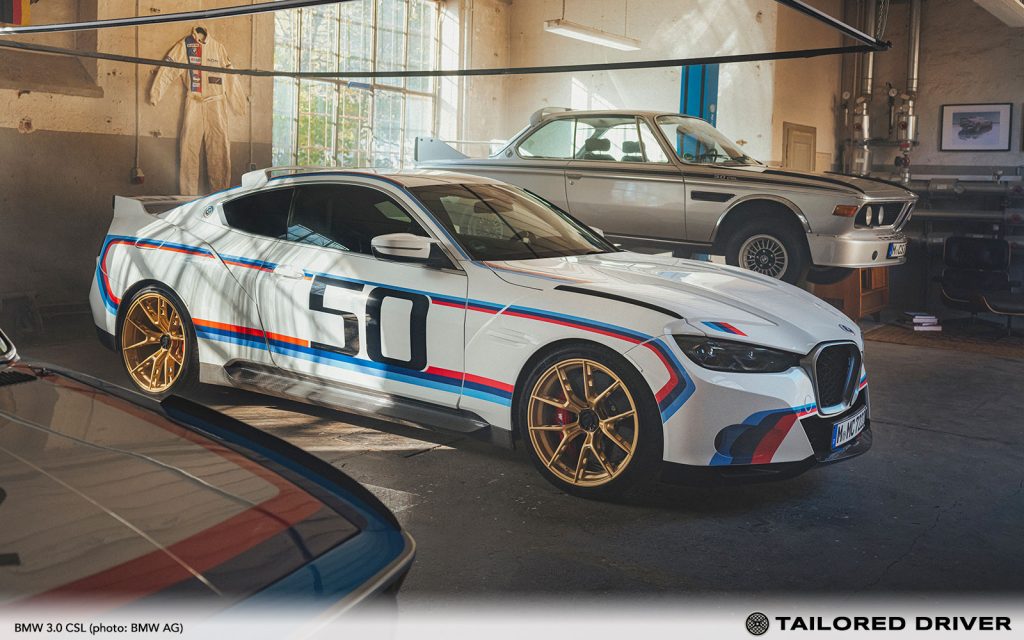
With its classic coupe proportions and a traditional vehicle concept that combines a front engine and manual transmission with rear-wheel drive, the BMW 3.0 CSL follows in the footsteps of its historic ancestor. Distinctive air deflection elements, powerfully shaped wheel arches, a striking rear spoiler and numerous other details are unmistakably based on the design of the legendary coupe from the 1970s.
At the same time, its appearance is characterised by the principles that have always applied to BMW M automobiles: The specific exterior features are based on the technical requirements in terms of cooling air supply, aerodynamic balance and driving dynamics, which form the basis for highly fascinating performance. In this way, the BMW 3.0 CSL expresses timeless racing passion in an emotional and authentic way.
Powerful aesthetics pay tribute to the historical ancestor.
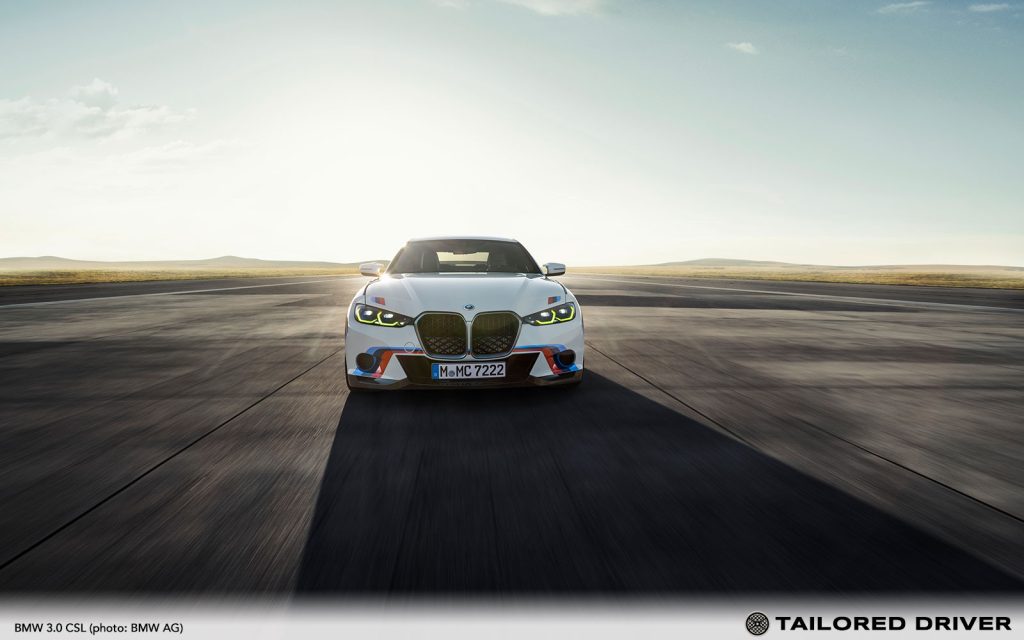
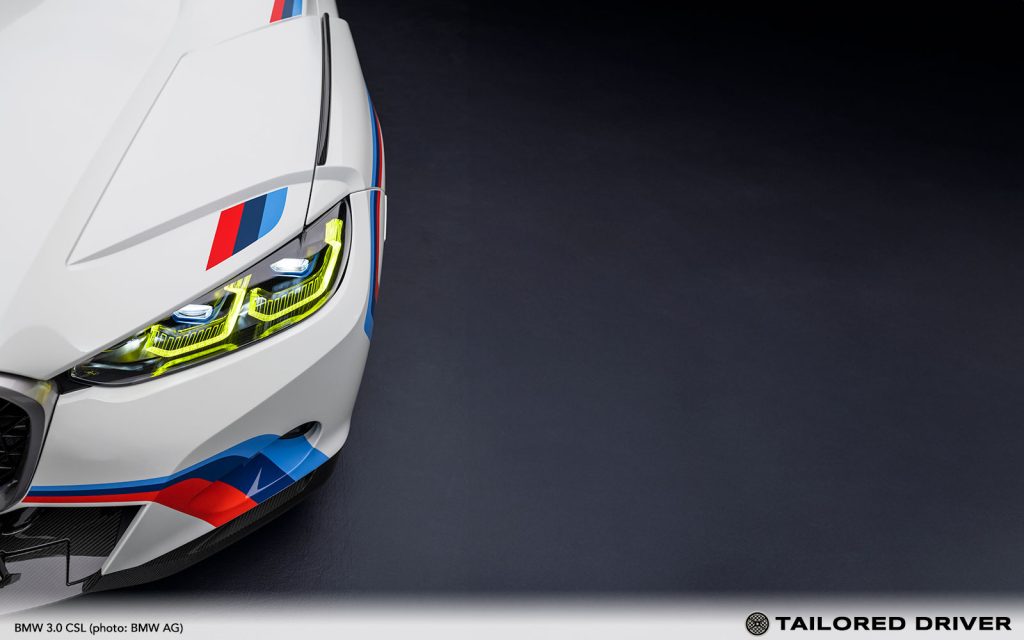
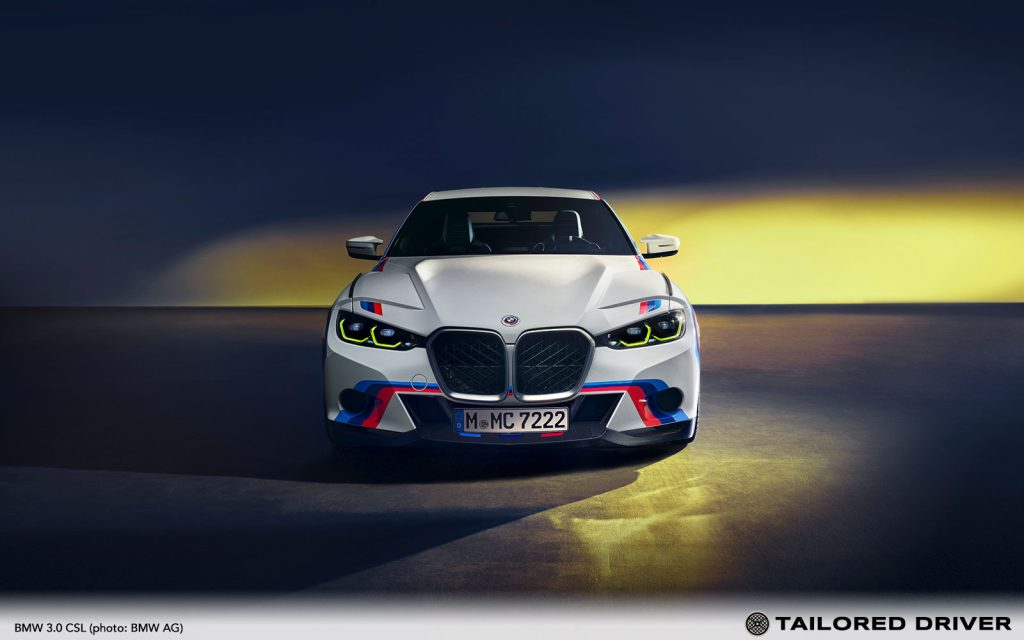
Power and athleticism are signalised by the front end of the BMW 3.0 CSL, which sits low on the road. At its centre is the distinctive BMW kidney grille with a lattice-shaped insert in a diamond structure. Its upright position relates to the front design of its historic ancestor. Like the side window surrounds, the kidney frame is finished in satin aluminium – a design feature that emphasises the special status of the BMW 3.0 CSL. Together with the BMW kidney grille, two generously dimensioned recesses in the front apron, reminiscent of the air intakes on the 1970s model, ensure reliable cooling of the drive and brake systems even in extremely dynamic driving situations. Sculpturally shaped air fins on the bonnet accentuate the classic lines.
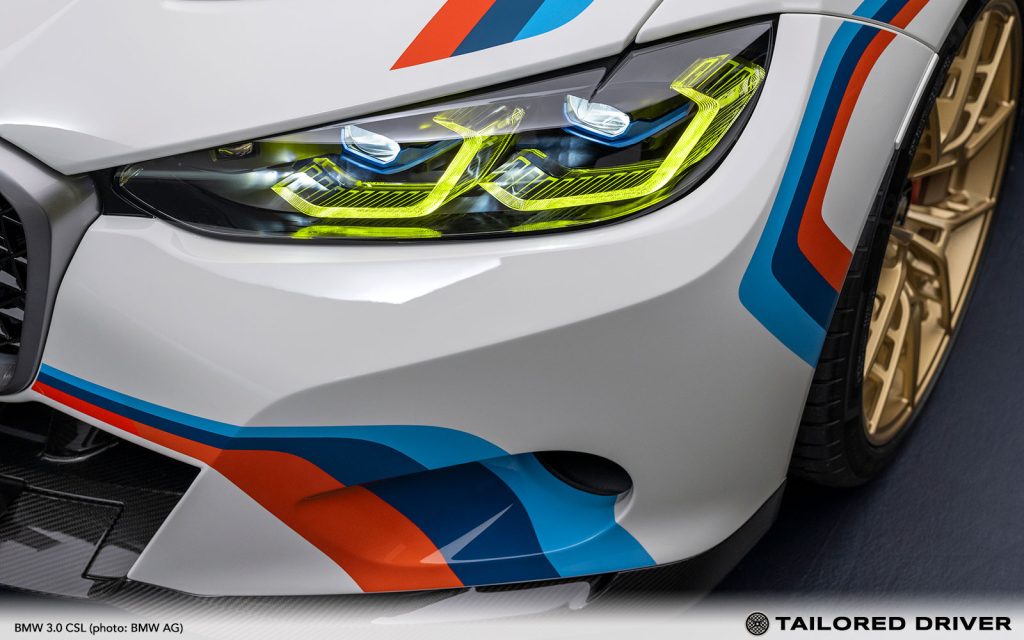
With their flat contours, the headlights create the characteristic focus on the road. The BMW Laser Light headlights shine in yellow, both during the welcome scenario after unlocking the doors and when the low and high beams are activated, thus making reference to successful GT racing cars. This detail is a subtle reference to the strong connection with motorsport and BMW M GmbH’s currently most successful competition vehicle, the BMW M4 GT3, which won both the drivers’ and team championships in the DTM in 2022 and whose power unit is based on the same straight-six engine as the power unit of the BMW 3.0 CSL. The BMW M4 GT3 achieved championship success right at the start of its racetrack career, much like the historic BMW 3.0 CSL, which once won the European Touring Car Championship in its inaugural season.
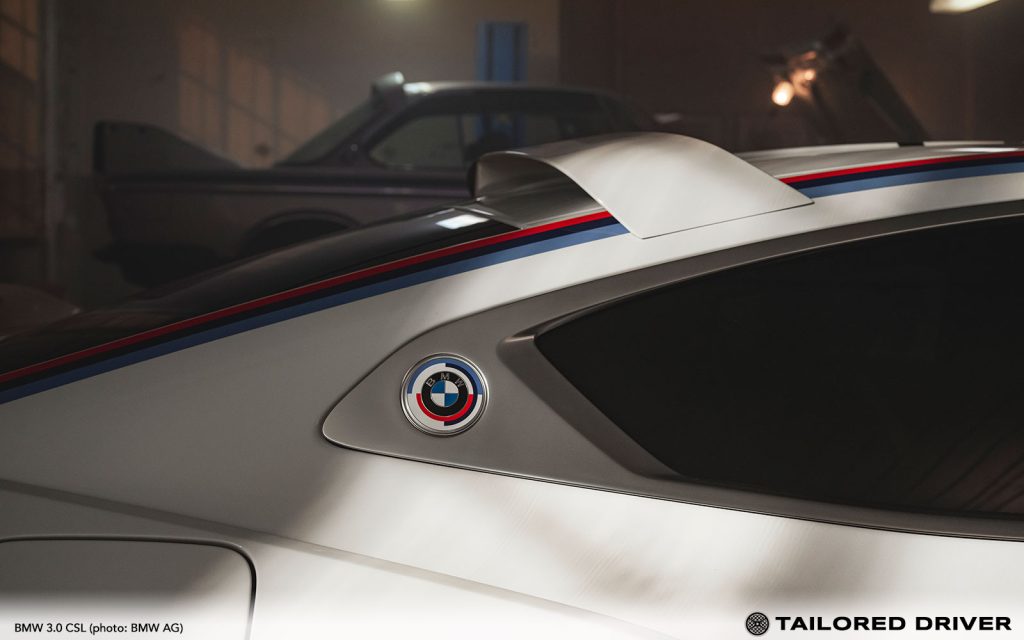
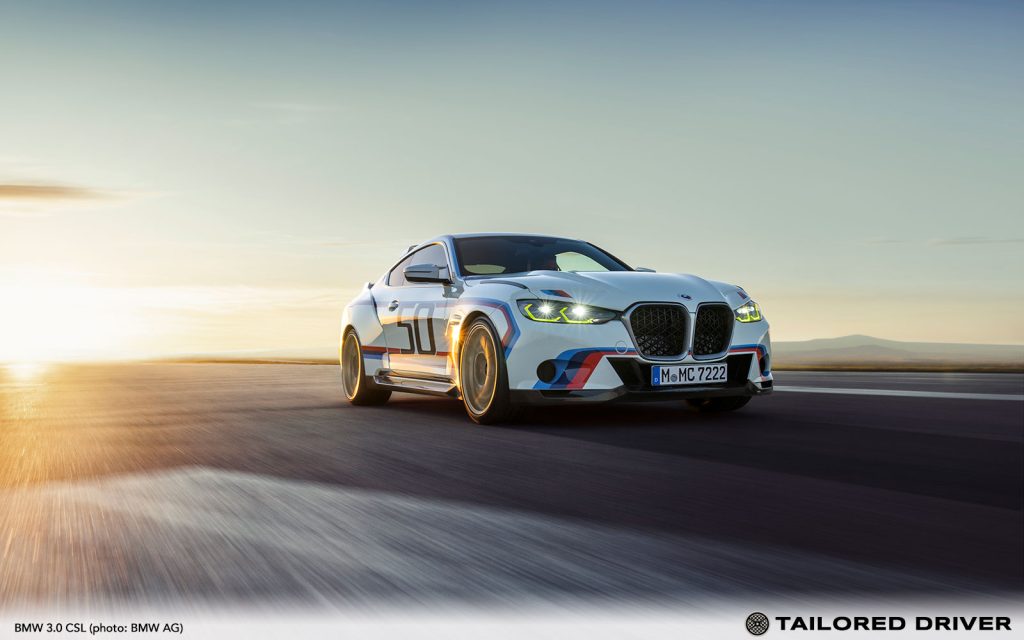
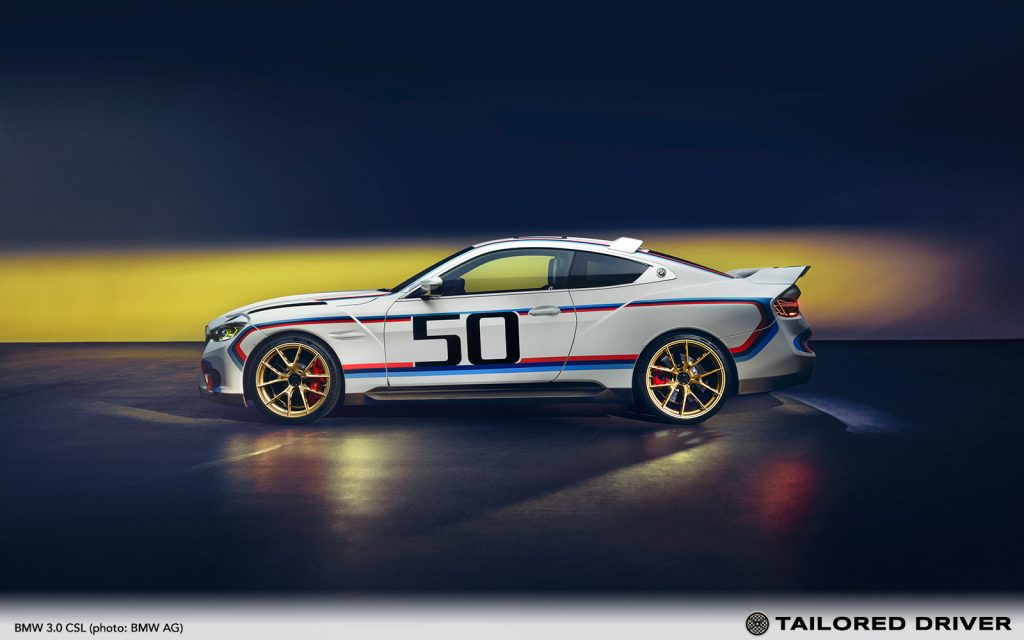
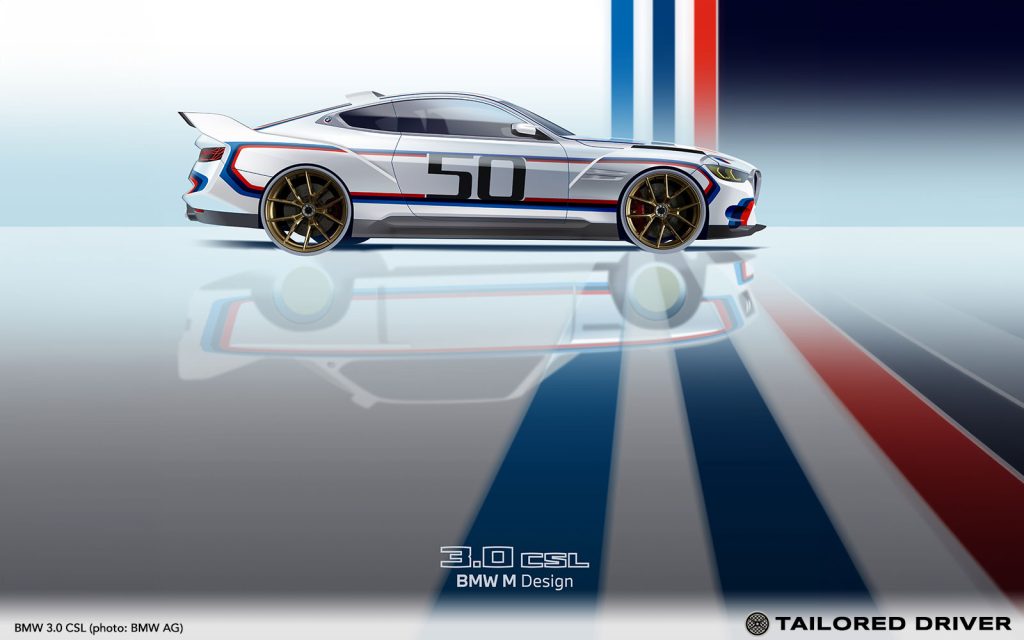
Viewed from the side, the long bonnet and wide wheelbase lend the BMW 3.0 CSL an appearance that is both sporty and classically elegant. The brand-typical coupe proportions in a three-box design also contribute to this. Particularly wide, diagonally offset side panels and wide side walls underline the dynamic appearance of the coupe even when stationary, with an air deflector extending along the roof line.
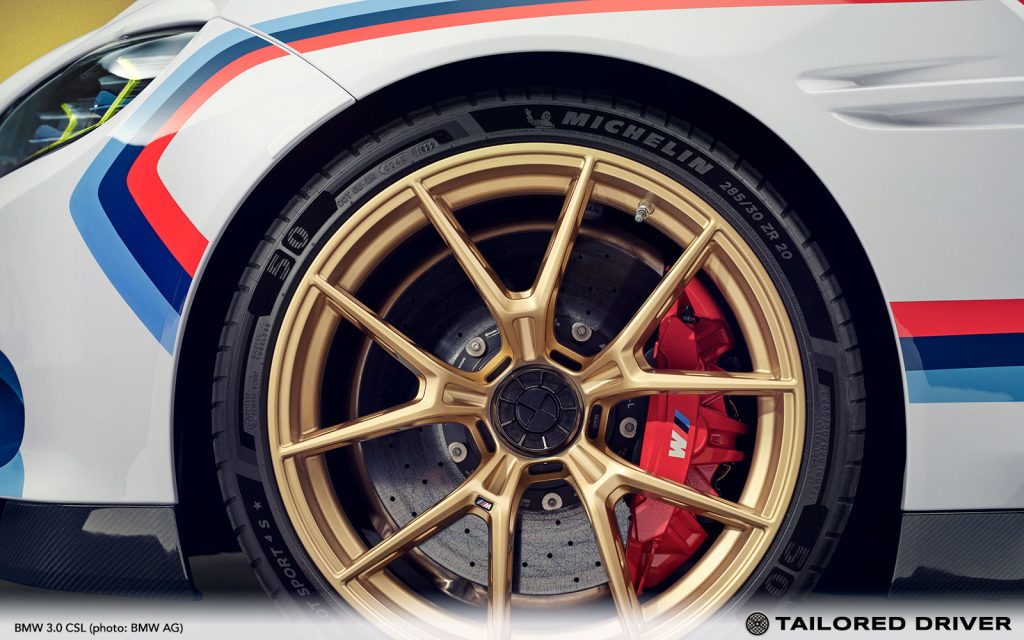
Wide wheel arches, central locking wheels produced exclusively for the BMW 3.0 CSL’s tyres.
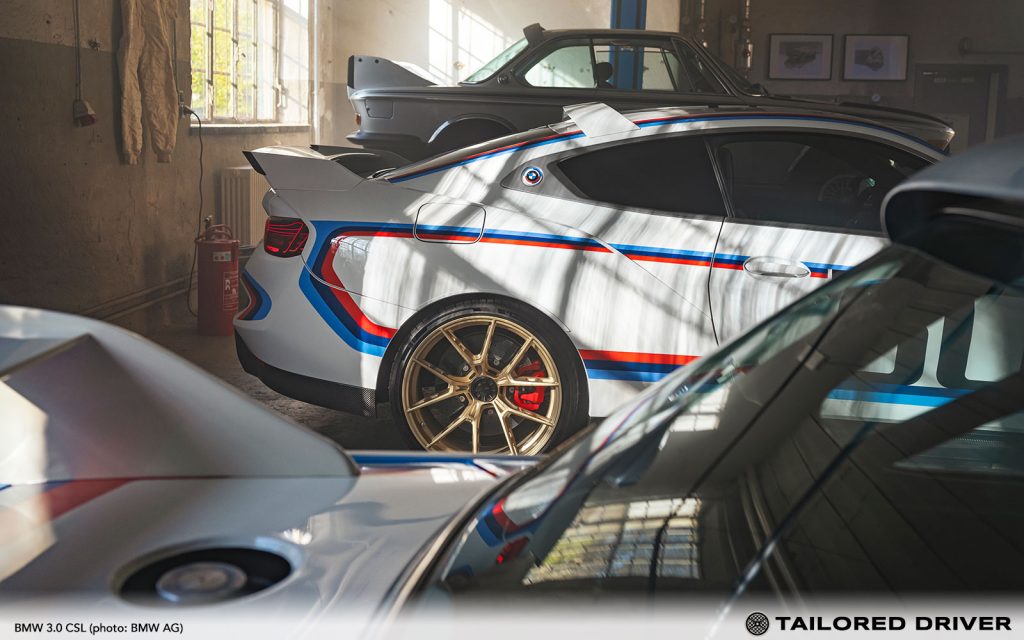
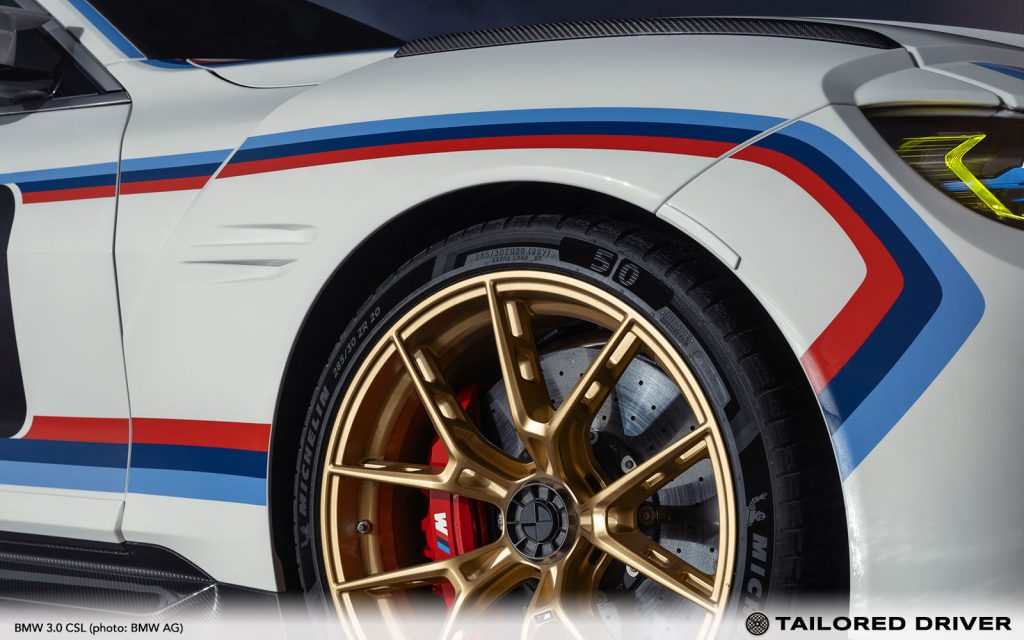
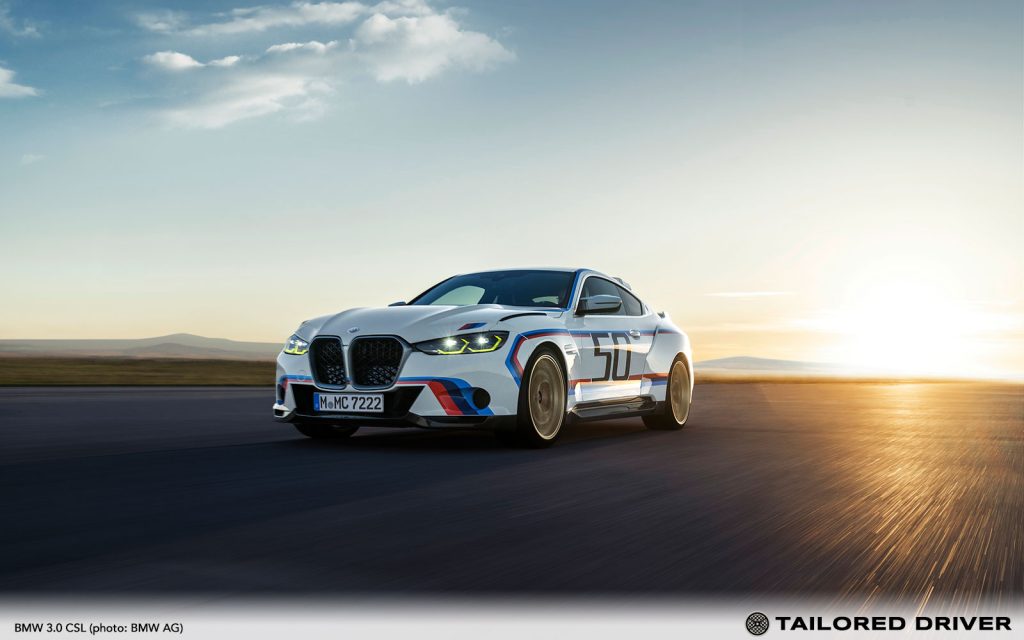
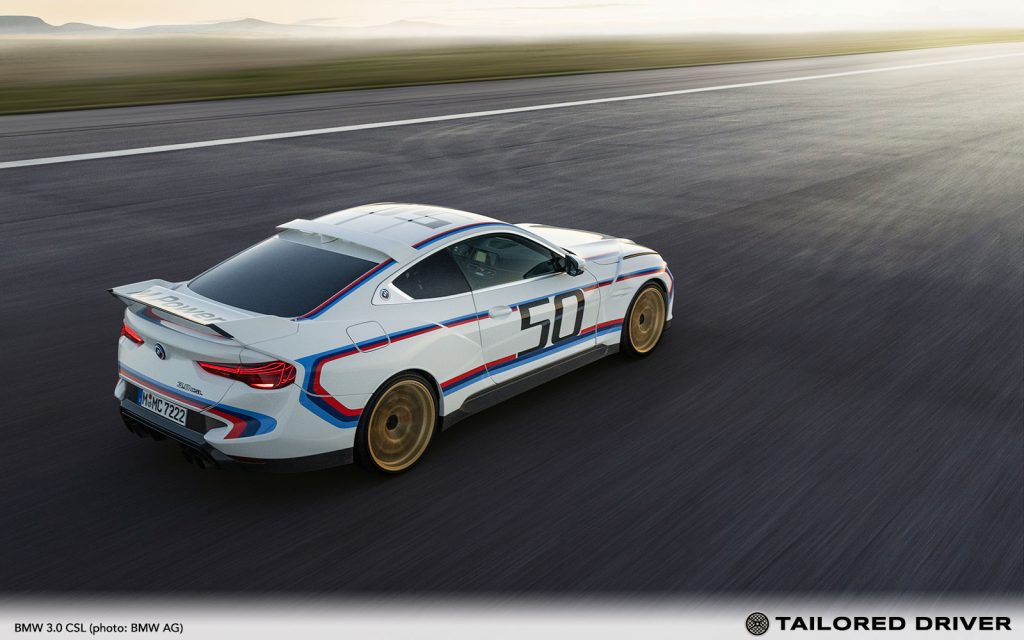
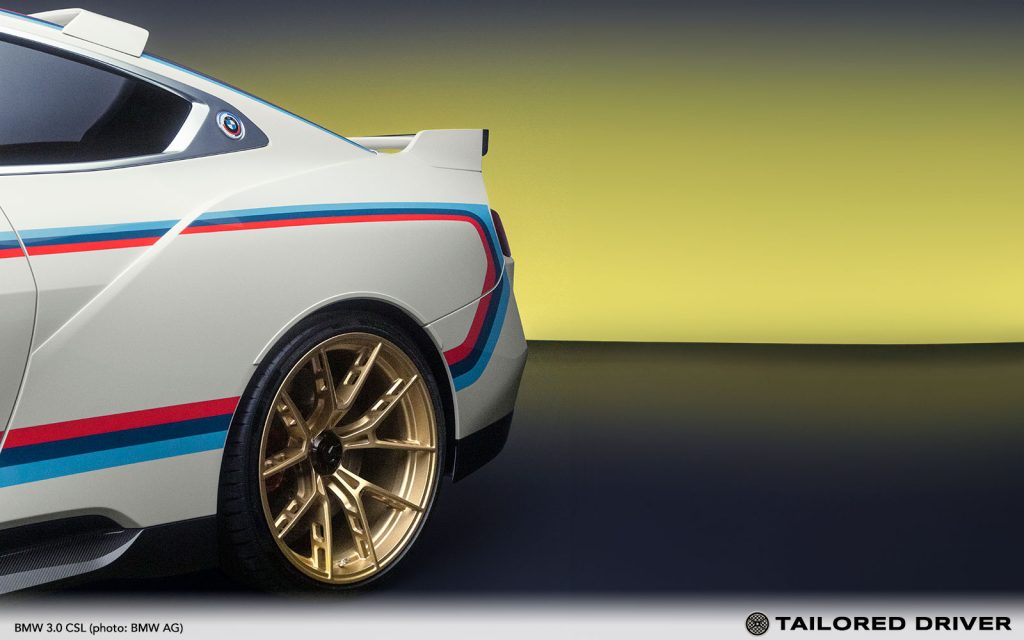
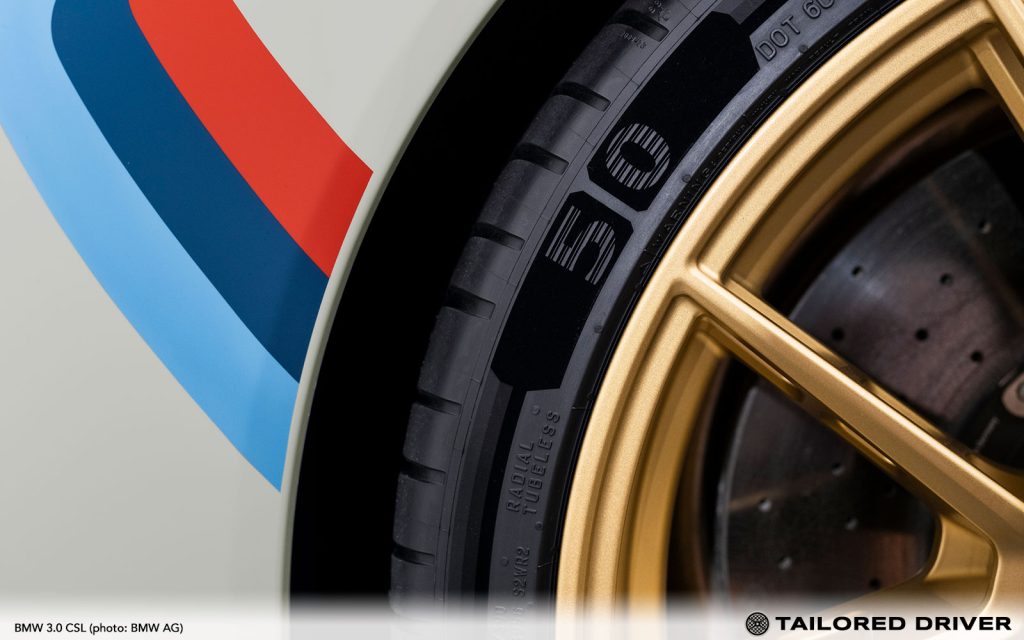
Muscular wheel arches give indication of the large track widths that contribute significantly to the vehicle’s high cornering dynamics. They offer space for the forged light-alloy wheels in a Y-spoke design, these being 20 inches on the front axle and 21 inches at the rear. With their filigree spokes, a gold-coloured paint finish in the style of the 1970s and a centre lock, they represent a highlight in terms of design and driving dynamics adapted directly from racing. The integration of the model-specific wheels into the pre-assembled axles of the BMW 3.0 CSL is part of the manufacturing process at the BMW Group’s Dingolfing plant. At 930 Nm, the torque applied during the assembly of the centre locks achieves the highest value for a BMW Group production vehicle.
The forged light-alloy wheels are fitted with Michelin tyres developed exclusively for the BMW 3.0 CSL. They bear the number 50 embossed on the tyre sidewalls, providing another subtle reference to the anniversary of BMW M GmbH, on the occasion of which the special model was designed and built.
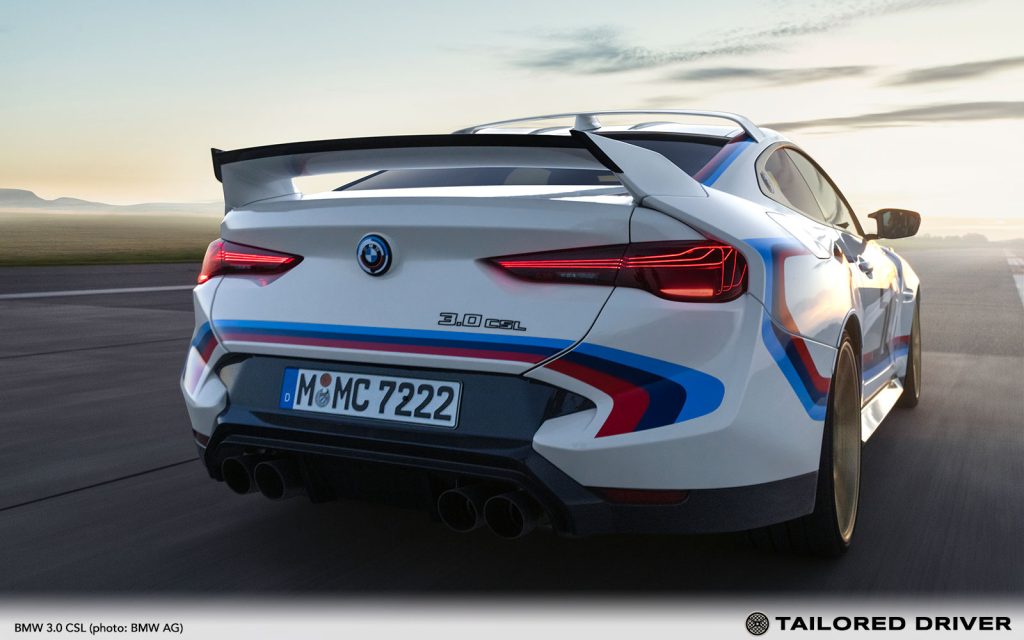
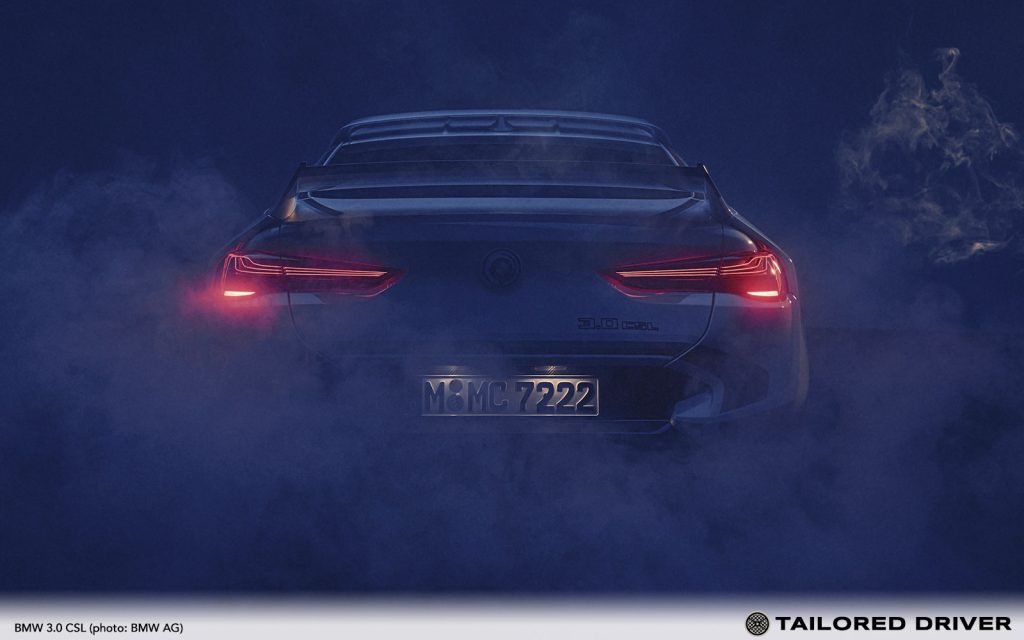
A tail wing in the style of the “Batmobile“.
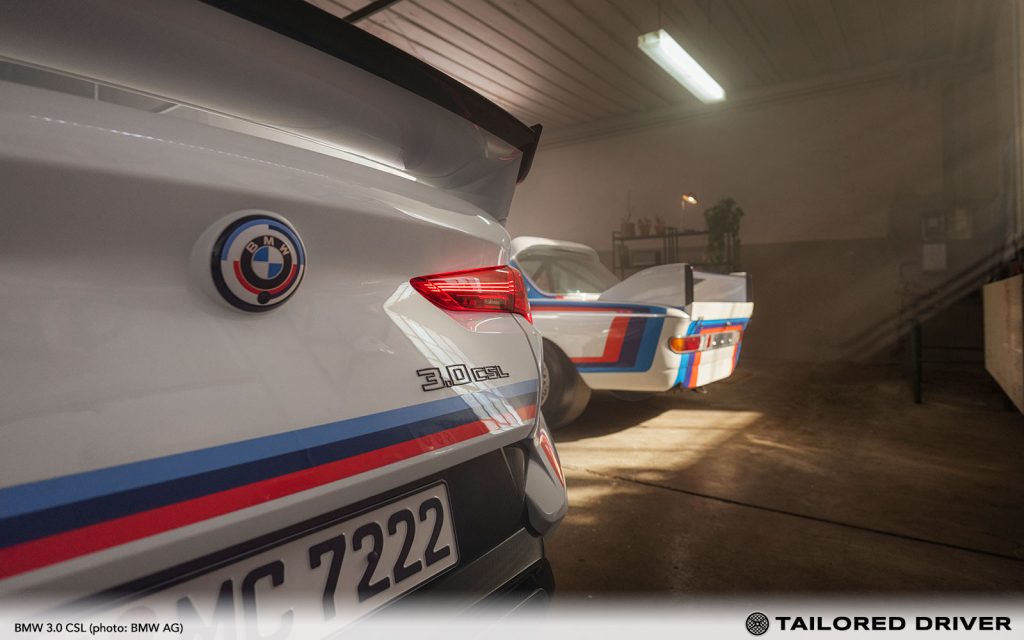
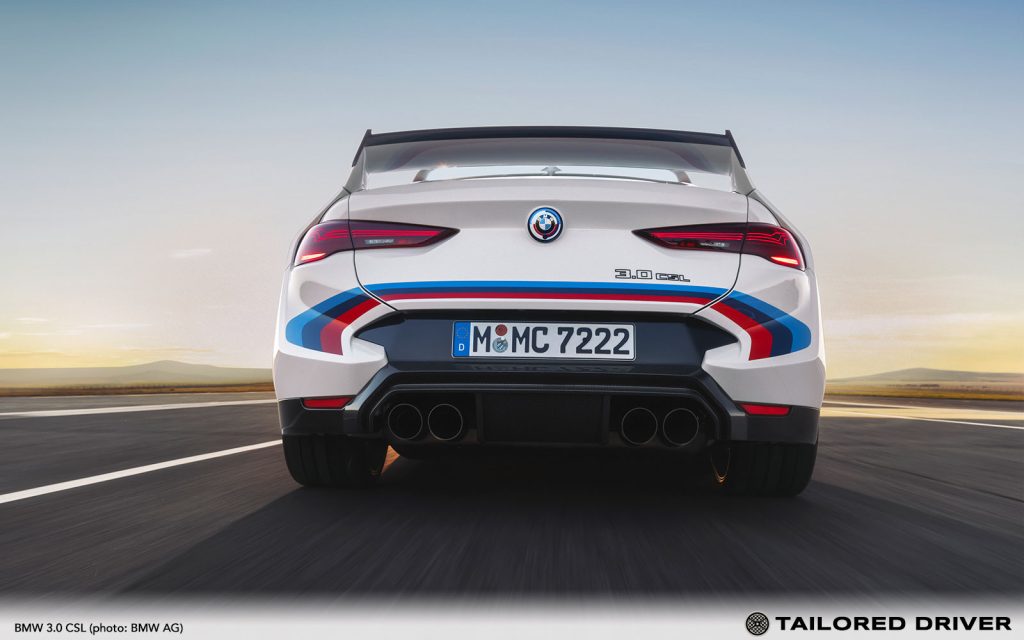
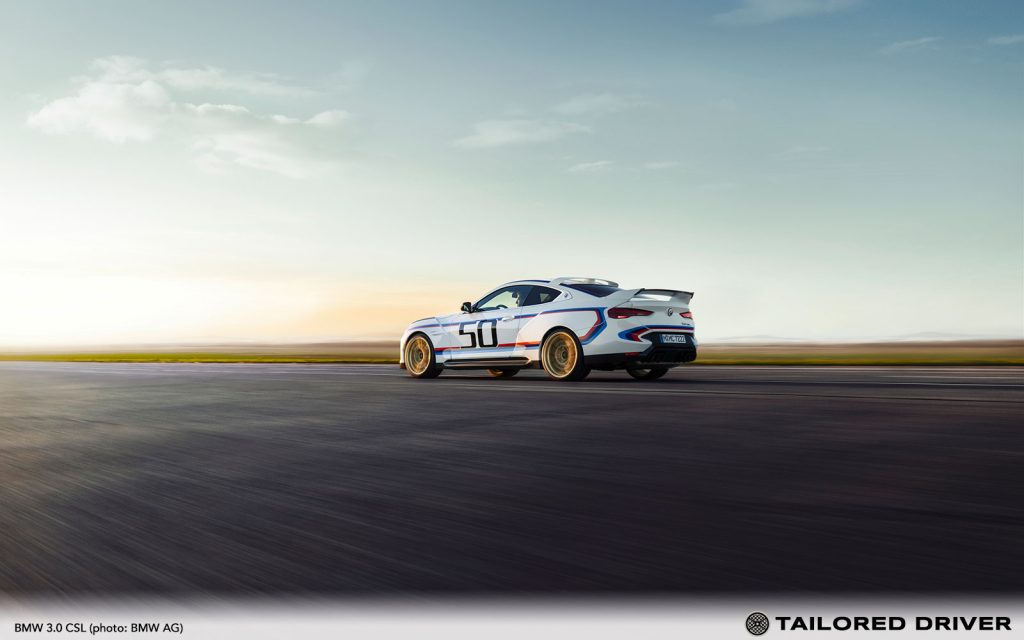
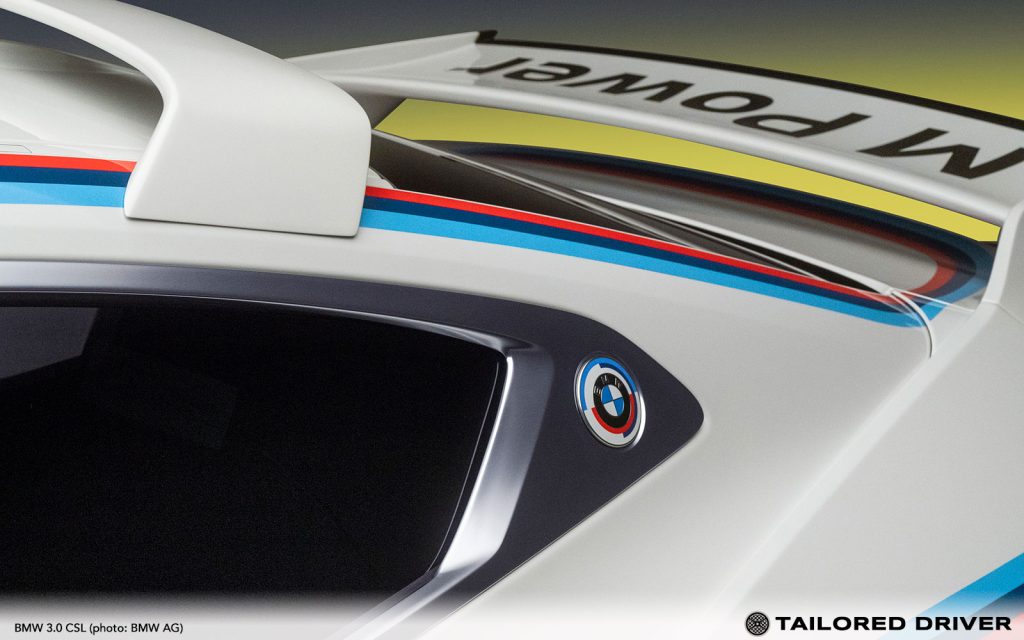
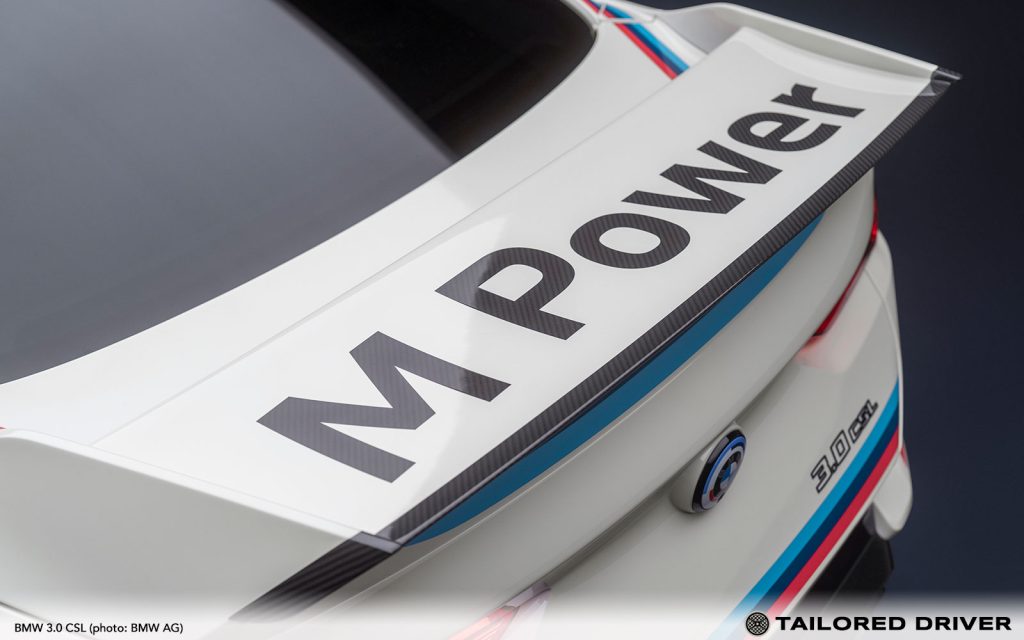
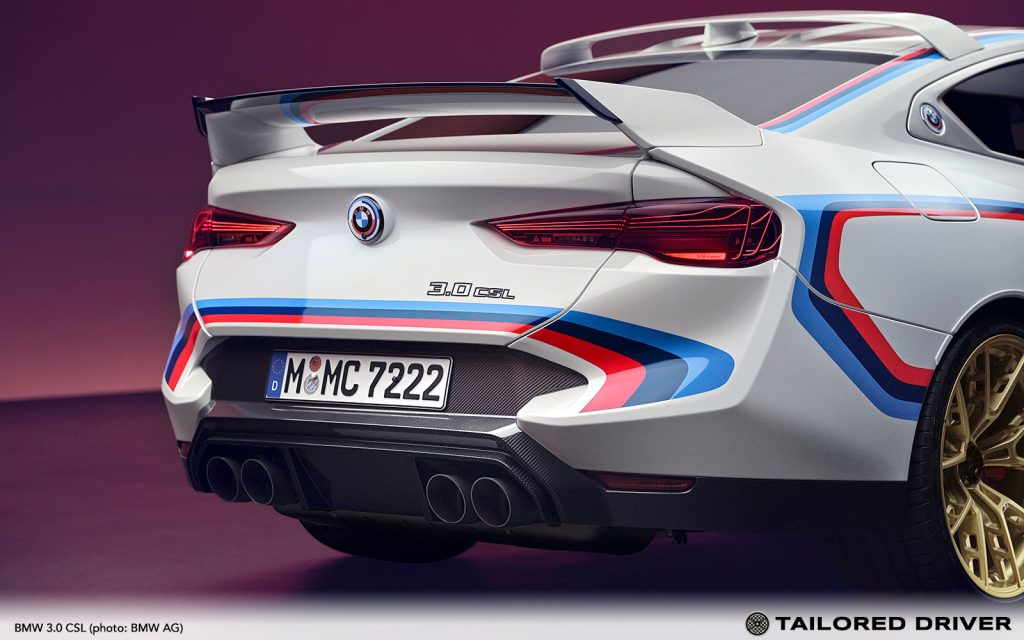
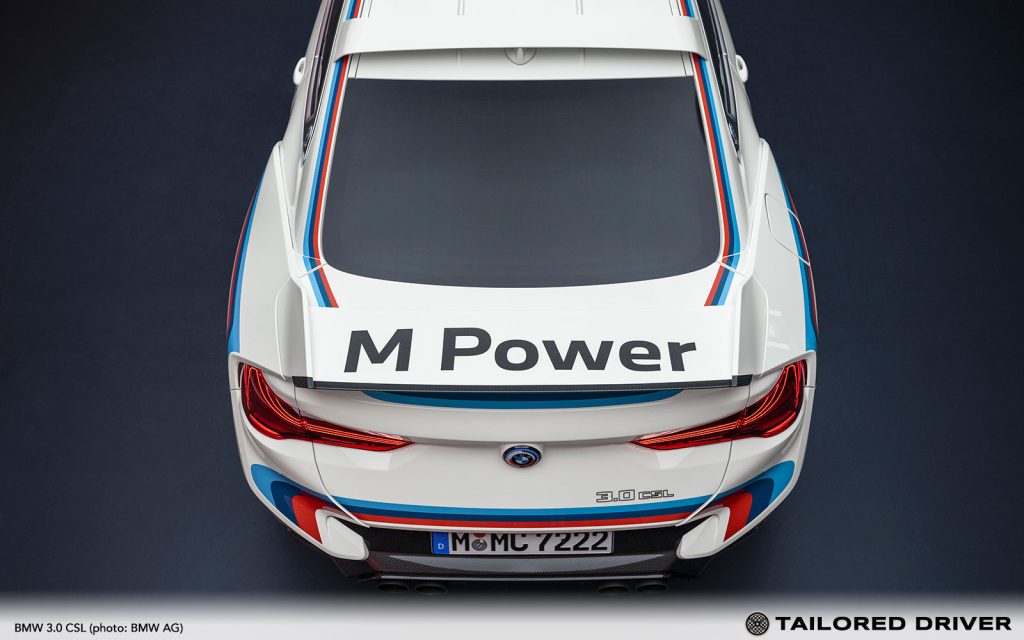
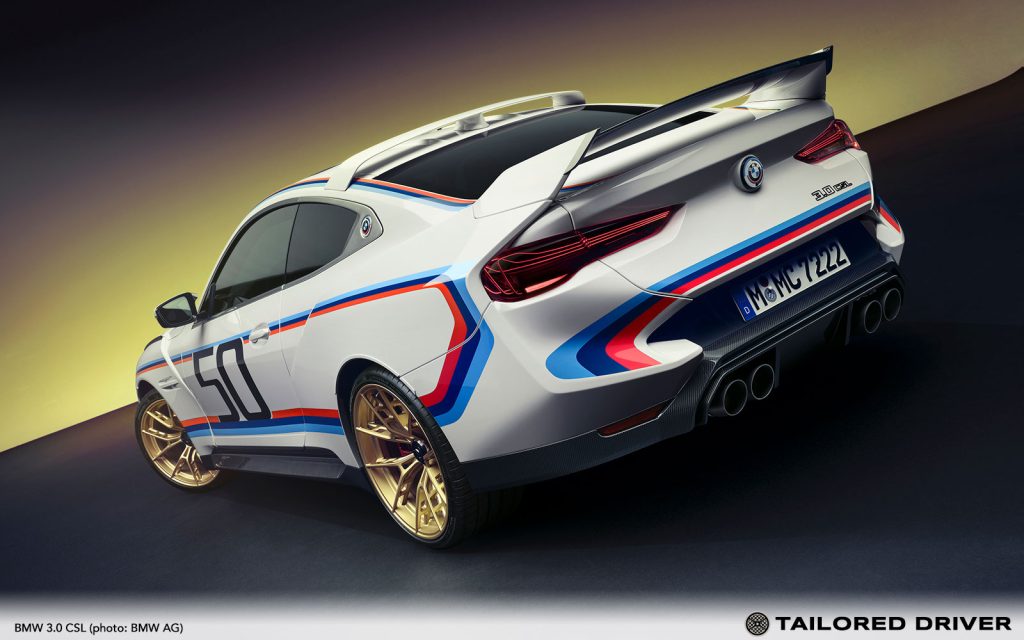
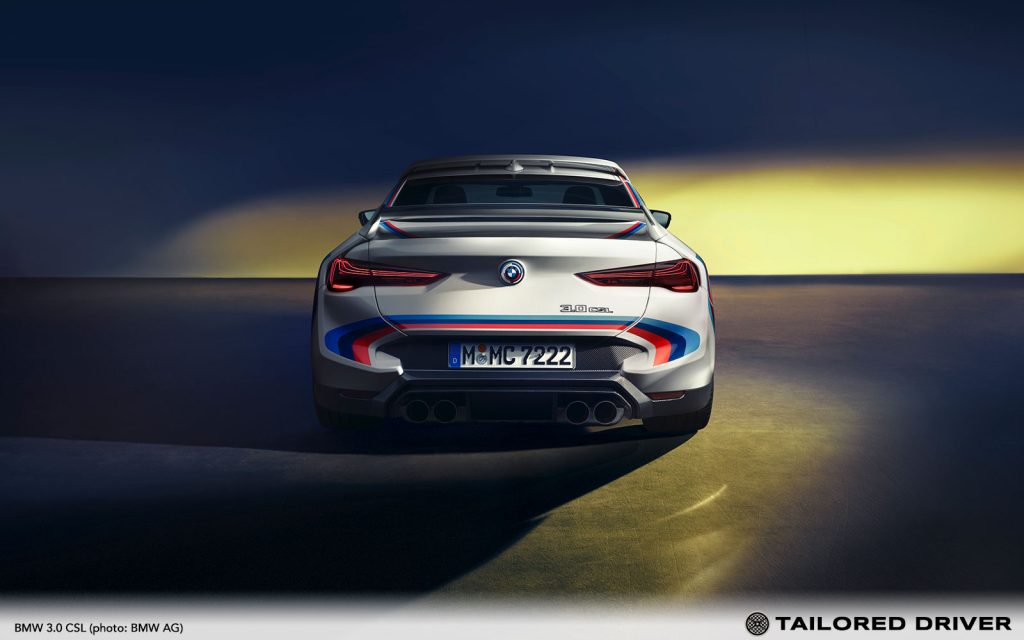
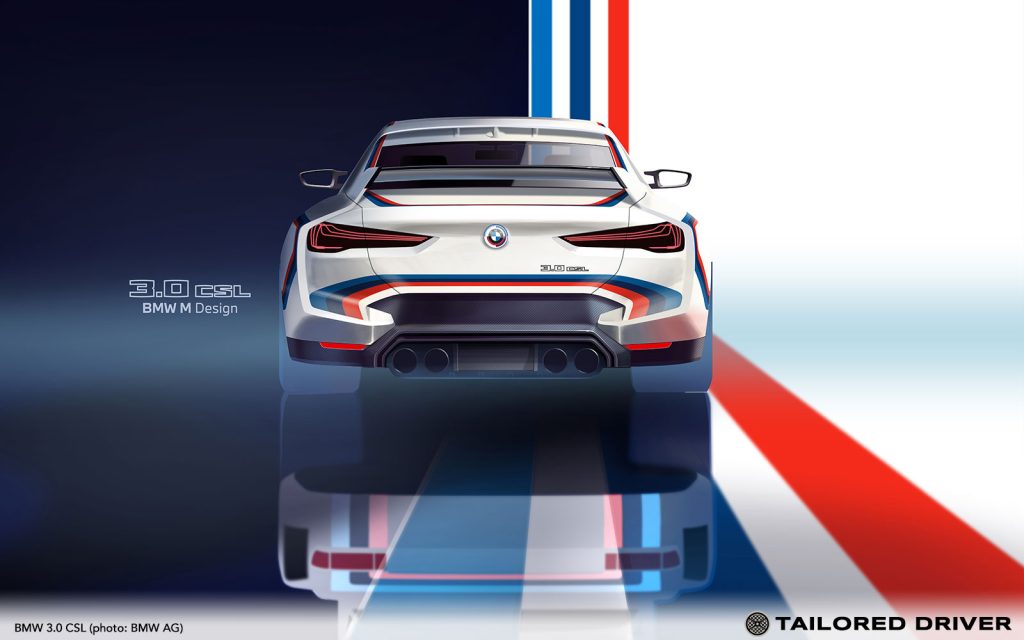
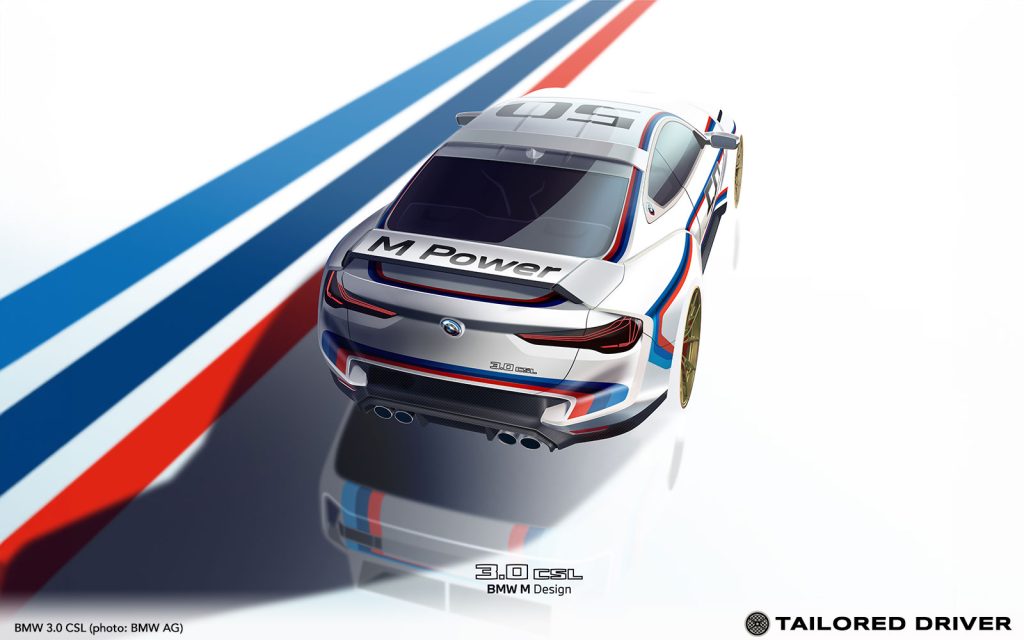
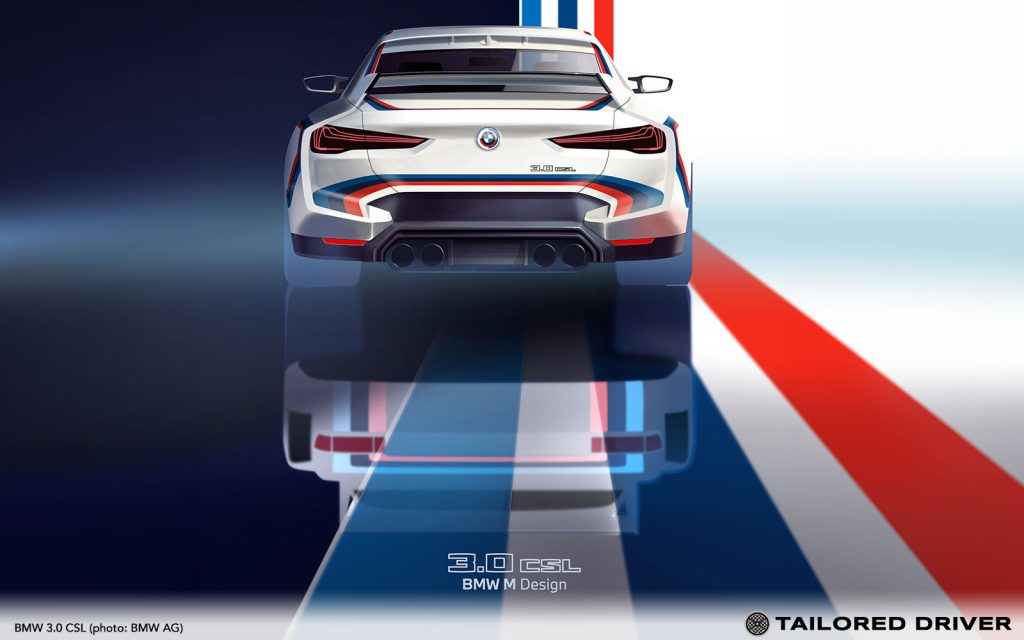
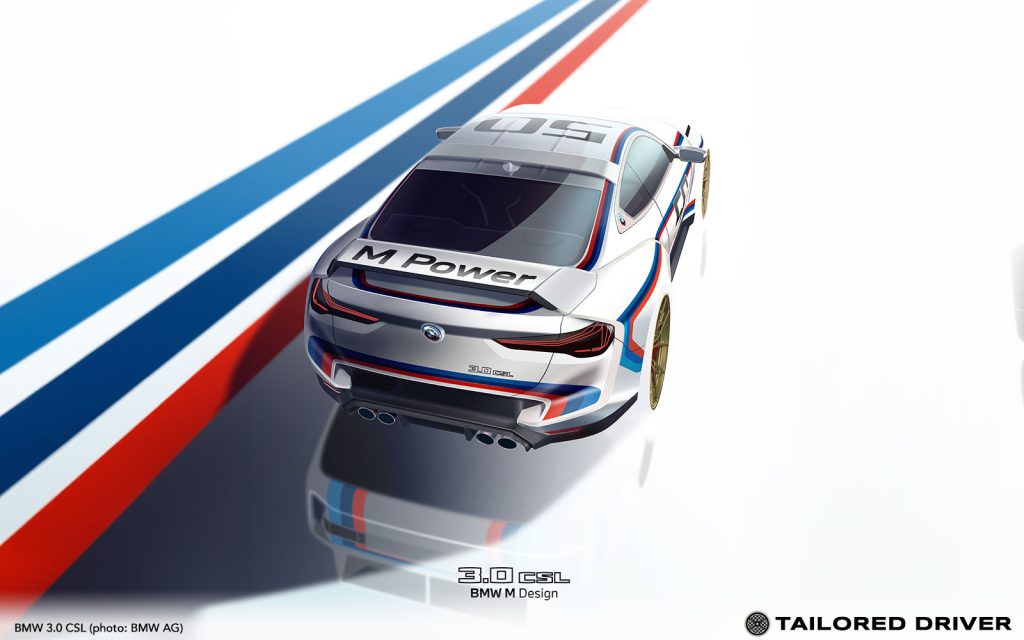
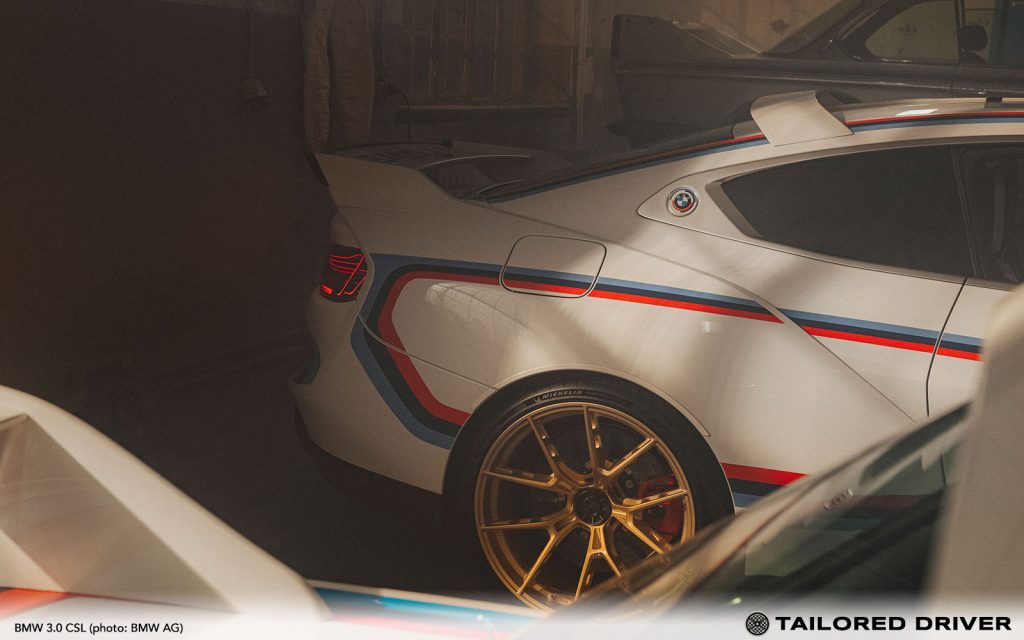
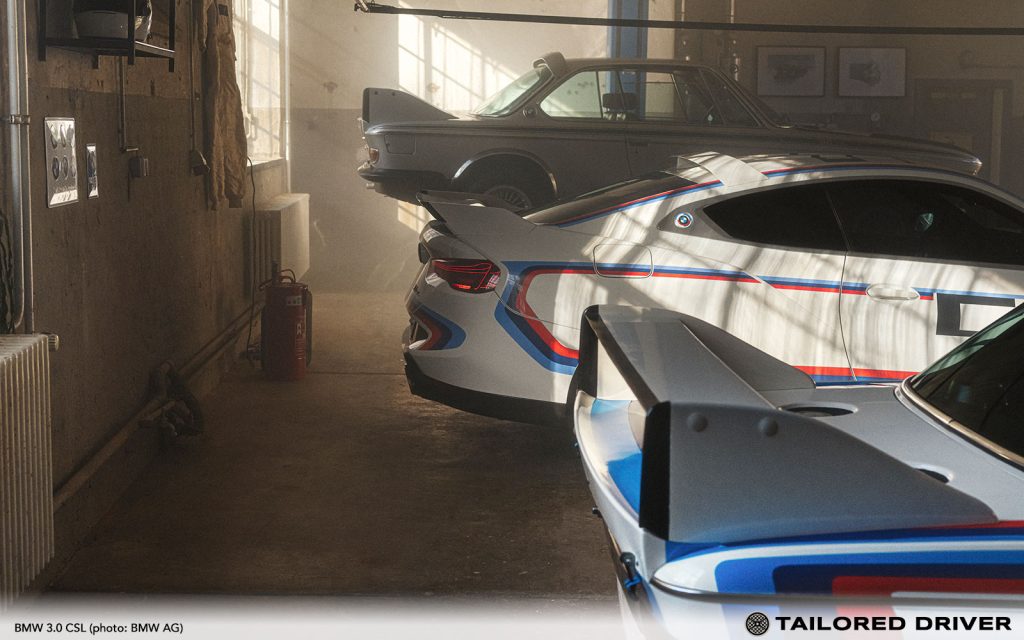
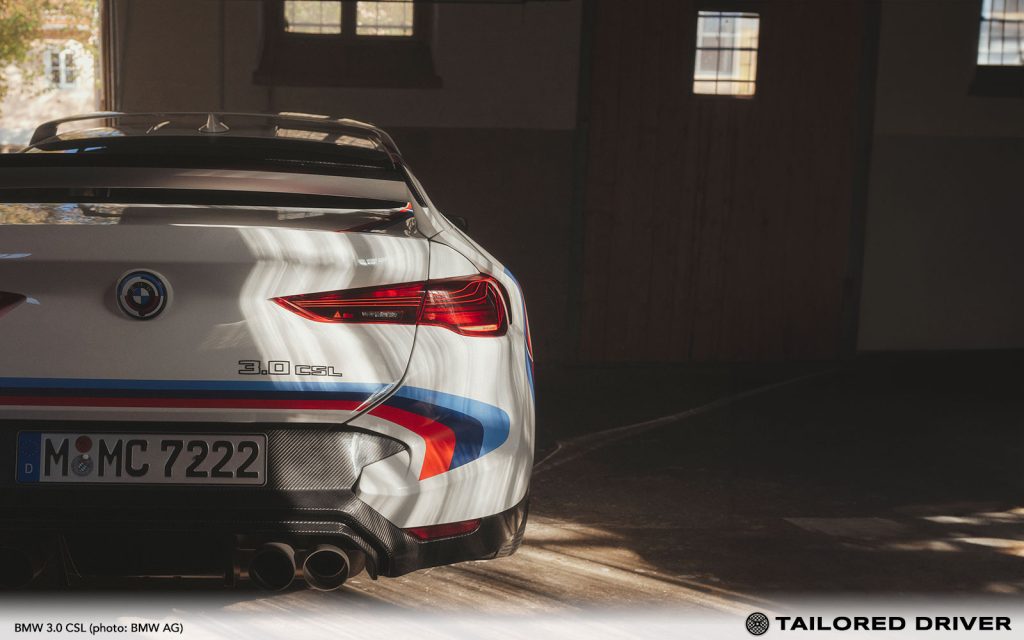
The rear view of the BMW 3.0 CSL is also characterised by powerful aesthetics and reinterpreted design features of its ancestor. The most striking feature is the rear wing, which is enclosed at the side and translates the characteristic appearance of the “Batmobile” into a modern design language. Designed to generate additional downforce and thus optimise traction on the rear axle, the air deflector encloses the entire rear section, thus becoming a dominant visual element. For the benefit of aerodynamic balance, it is combined with a strongly pronounced carbon diffuser in the rear apron, thereby optimising airflow in the underbody.
The four tailpipes of the exhaust system, which are arranged in an arrow shape in the centre of the rear apron and feature a particularly lightweight titanium rear silencer, also provide a striking accent. The rear lights of the BMW 3.0 CSL use innovative lighting technology to generate a fascinating, exclusive night design and a particularly vivid radiance. This is achieved by filigree laser light threads that appear to be free-floating inside the lights and create an expressive 3D effect through precise superimposition.
Elaborate paintwork in the style of classic racing cars.
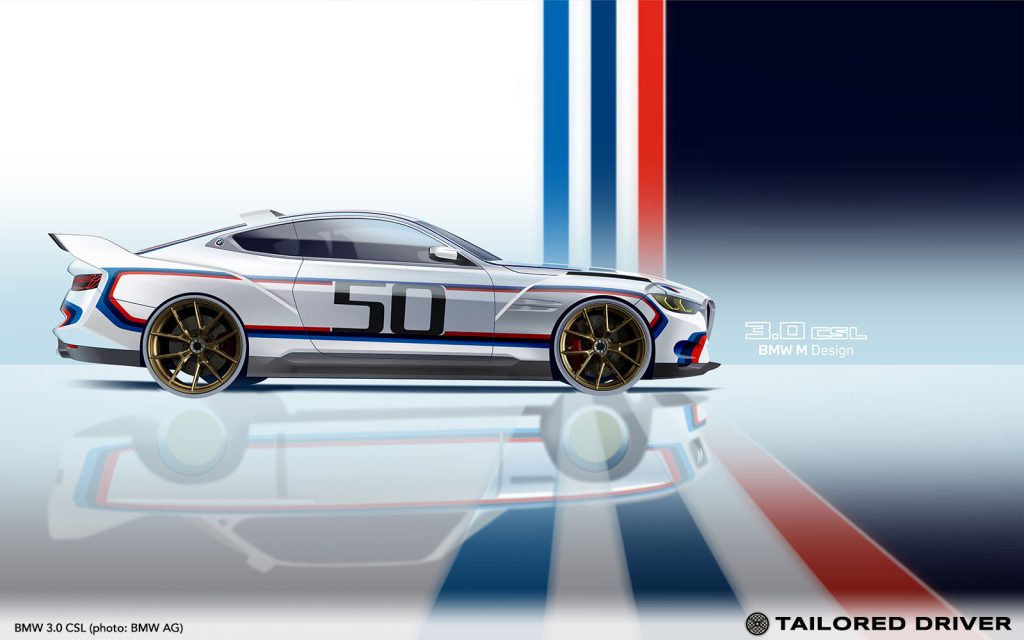
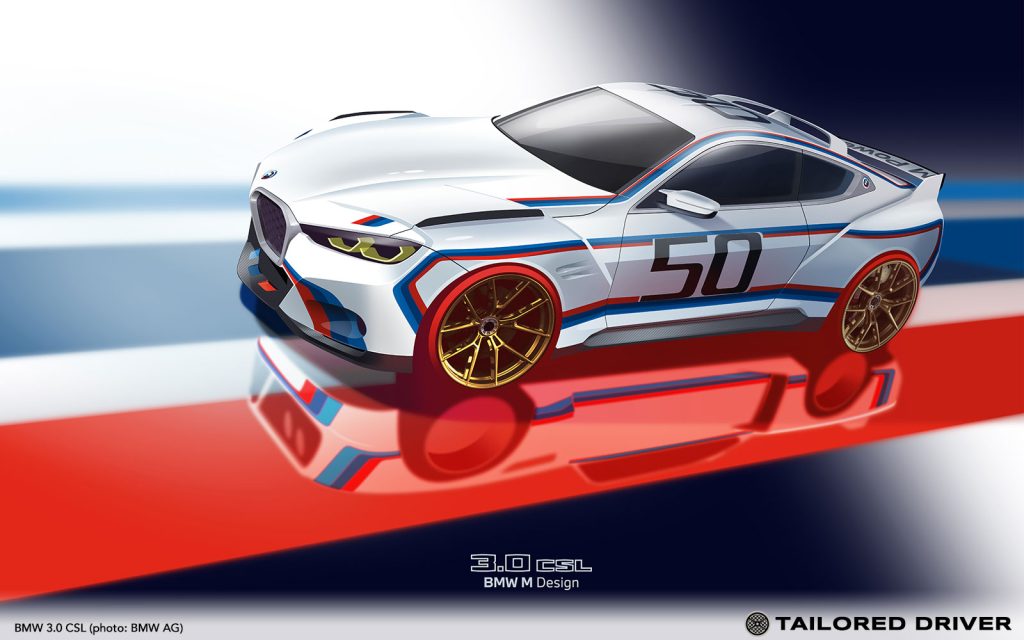
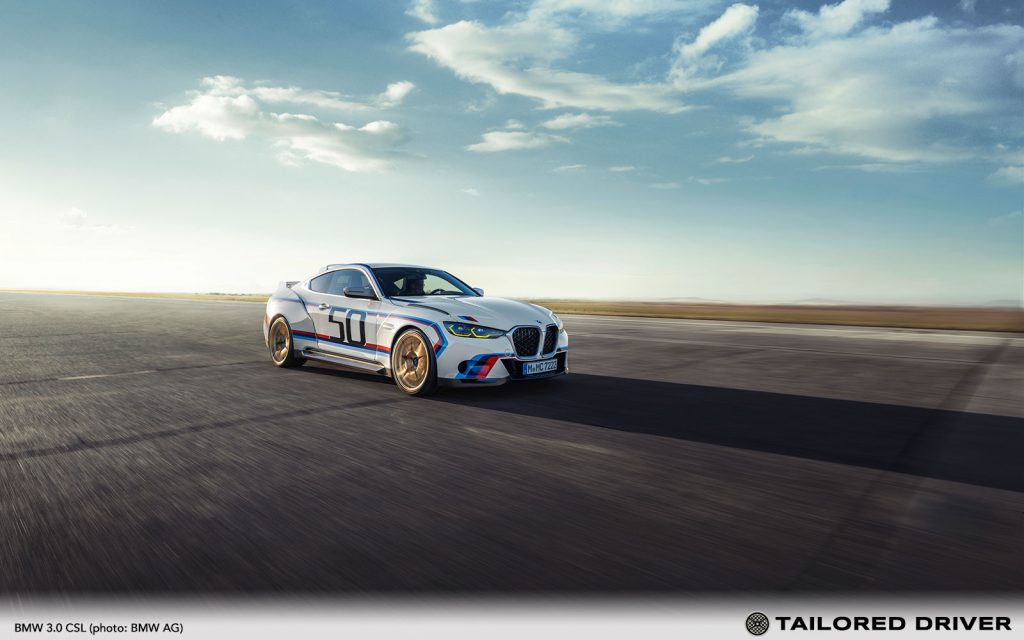
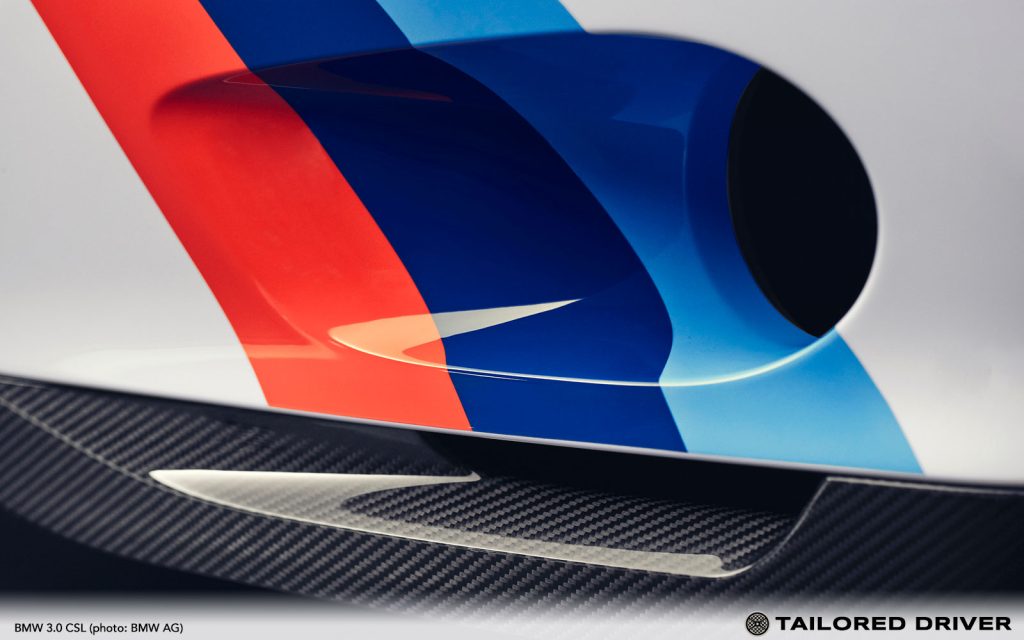
Right from the very beginning the 1970s, BMW Motorsport GmbH became imprinted in fans’ memories not only thanks to spectacular racing successes, but also through an unmistakable appearance. Just like the competition cars, the drivers’ outfits, the vehicle transporters and all other team equipment featured uniform stripes in blue, purple and red on a white background – a novelty at the time and a globally recognised trademark to this day. The BMW 3.0 CSL picks up on this tradition with a paint finish in Alpine white uni and an elaborately applied stripe decor in the BMW M GmbH colours. The lines on the body effectively reflect the dynamic surfaces, thus bringing to the fore the powerful aesthetics of the coupe even more clearly.
Both the base colour and the M stripes, known in technical jargon as livery, are applied largely by hand, involving an extremely high level of time and effort. A total of 22 individual parts are painted in a process specially designed for the BMW 3.0 CSL. Particular attention is paid to a highly precise arrangement of the areas of the body surfaces and livery stripes finished in visible carbon. In general, most of the exterior in Alpine white uni comprises carbon components, which are hand-painted by specialists. The high-tech material is only visible in the lettering on the roof and on the rear wing. For this purpose, these areas must be exposed during the painting process. In order to precisely position the livery stripes in the BMW M GmbH colours, the painters use masking by means of laser projection as well as customised contour films.
Each component with a livery paint finish has a throughput time of six working days. During this time, it completes up to eight paint processes, each with the necessary intermediate work steps such as sanding and masking the colour stripes. This results in a total of 134 paint processes for each vehicle, adding up to a total of 6,700 manual work sequences in the paint shop for the entire small series of the special model.
The number sequences on the doors and roof of the BMW 3.0 CSL, designed in the style of early racing cars, build a bridge from the past to the present. Their design in the style of racing numbers is based on the historical model of the first BMW M automobile developed for touring car racing, whilst the number 50 refers to the anniversary of BMW M GmbH. Another reminder of the 1970s are the two BMW logos positioned on the C-pillar, hence directly behind the counter-swing of the side window graphic known as the Hofmeister kink.
The most powerful straight six-cylinder power unit ever used in a road-legal BMW M automobile.
The BMW 3.0 CSL features the most powerful straight six-cylinder engine ever used in a road-legal BMW M automobile. This is also a tradition: in its final stage of development, the predecessor of the same name marked a new record with an engine output of 151 kW/206 hp – not only for six-cylinder models, but for all BMW production vehicles produced up to that point.
Since then, the straight six-cylinder engine with M Power has undergone an impressive development. Engines of the same design mobilised an output of 204 kW/277 hp in the BMW M1 as early as 1978 and 250 kW/340 hp in the second-generation BMW M5 from 1991. The fifth-generation BMW M3 was launched in 2014 with a 317 kW/431 hp straight-six engine featuring M TwinPower Turbo technology.
The straight six-cylinder engine of the BMW 3.0 CSL possesses the same technological roots as the power unit of the current DTM winning car. The 3.0-litre power unit offers spontaneous high revving thanks to the typical M high-revving concept and comprises, among other things, an extremely rigid crankcase in a sleeveless closed-deck design, a forged lightweight crankshaft and a cylinder head core featuring 3D printing technology. The cooling system and oil supply are also designed for extremely dynamic driving situations. For its championship win in the DTM, the BMW M4 GT3 was powered by a version of the latest straight six-cylinder engine with around 600 hp which, in its version designed for large-scale production in the current models of the BMW M3/BMW M4 series, delivers up to 375 kW/510 hp.
The version of the drive system with M TwinPower Turbo technology, which was further developed exclusively for the BMW 3.0 CSL, mobilises a maximum output of 412 kW/560 hp. The new record for straight six-cylinder models from BMW M GmbH with road approval underpins the special status of the vehicle. Its engine develops a maximum torque of 550 Nm and fascinates with a linear power delivery up to a maximum speed of 7,200 min-1.
6-speed manual transmission and rear-wheel drive for particularly intense driving pleasure.
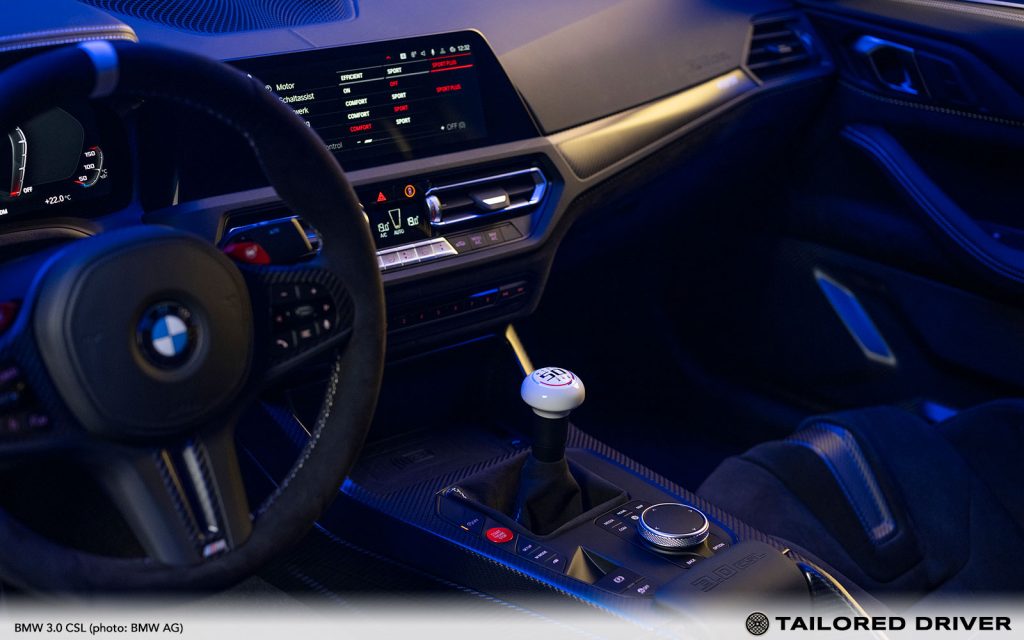
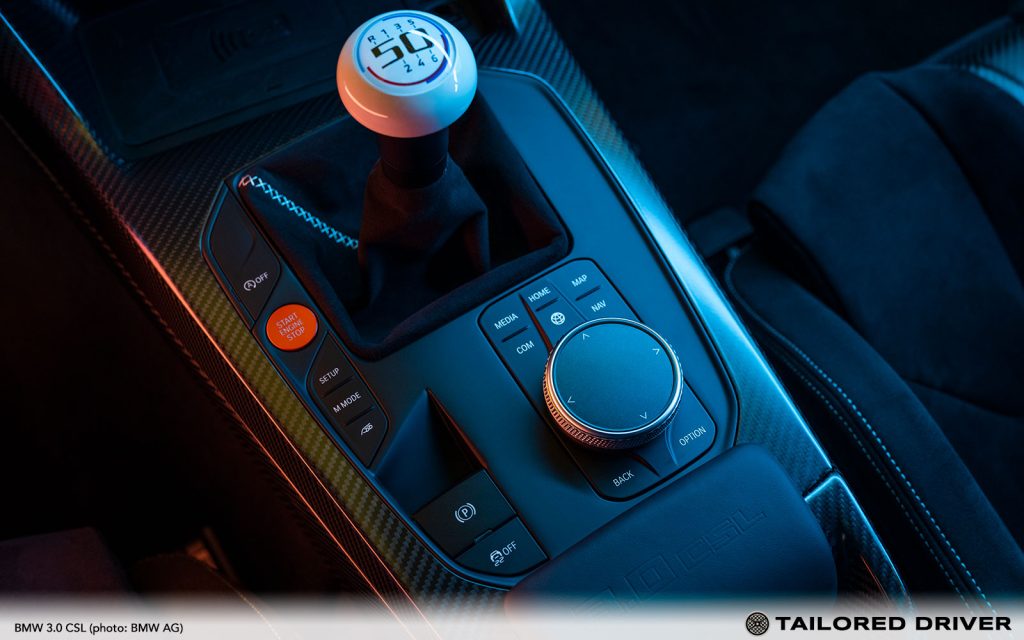
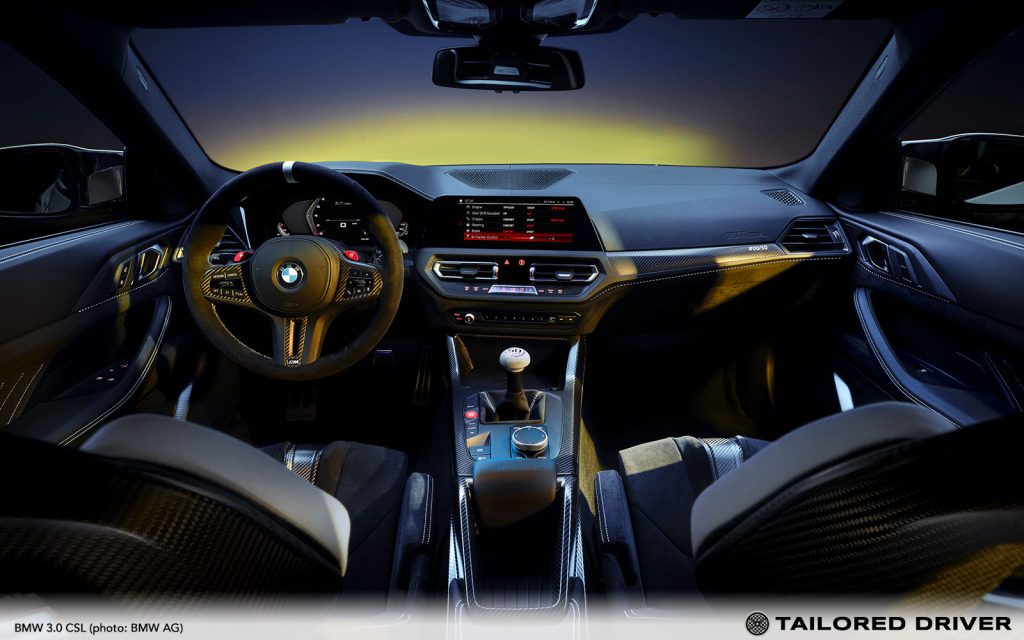
To transfer the drive power to the road, the developers of the BMW 3.0 CSL used a concept that has been tried and tested for decades for maximum driving pleasure and intensive interaction between driver and vehicle. The straight six-cylinder engine is coupled with a 6-speed manual gearbox whose spread and transmission ratios are ideally matched to the performance characteristics. Precisely defined gear shift travel enables fast and precise gear changing. The gearshift knob made exclusively for the BMW 3.0 CSL protrudes from the centre console and is a luxurious accessory. It immediately arouses anticipation for the manual gearshift, lies snugly in the hand and, with its white surface, the engraved gearshift diagram and the number 50, is reminiscent of the beginnings of BMW M GmbH in the 1970s. A tribute to modern technology is the shift assistant, which uses a connection speed control to ensure slip-free clutch engagement after downshifting when braking for corners. It can be activated or deactivated by the driver.
In traditional manner, the drive torque is transmitted to the road exclusively via the rear wheels of the BMW 3.0 CSL. For ambitious use on the race track, the driver can use the typical M linear build-up of lateral acceleration forces to steer the vehicle through bends with controlled drift manoeuvres. The Active M Differential in the rear-axle transmission also ensures superior dynamics. If necessary, it prevents torque compensation between the rear wheels and, at the same time, continuously and variably builds up a locking effect of up to 100 percent. The Active M Differential is linked to the DSC (Dynamic Stability Control) and precisely adjusts its locking effect to the respective driving situation. For example, traction is optimised on roads with different friction values for the right and left rear wheels. When accelerating dynamically out of bends, the driver receives noticeable feedback on the grip potential on the rear wheels and can thus optimally dose the use of the accelerator pedal.
Suspension technology tuned exclusively to each model, including M carbon-ceramic brake system and M Traction Control.
In the configuration of the suspension technology as well, state-of-the-art technology has been combined with a methodology for the harmonisation of all components that has matured over five decades. The suspension components used in the BMW 3.0 CSL represent the spearhead of development for high-performance sports cars by BMW M GmbH: a double-joint spring strut front axle and a five-link rear axle in M-specific design, an Adaptive M suspension with electronically controlled shock absorbers, the electromechanical M Servotronic steering with variable ratio and the M carbon ceramic brake system with adjustable characteristic curves.
The integrated application of all drive and chassis systems took place during intensive test drives on public roads as well as on race tracks, including the Nürburgring Nordschleife, which has been the ultimate testing ground for all BMW M automobiles for 50 years. Prior to testing, engineers at BMW M GmbH had designed and optimised the digital image of the BMW 3.0 CSL in every detail in a computer-aided design and development process. By incorporating virtual reality and other digital processes, it was possible to accelerate the series development process to the maximum extent. This detailed simulation and tuning process took into account the model-specific dimensions, vehicle weight and axle load distribution, the extremely high rigidity of the body and suspension connections as well as the aerodynamic balance of the BMW 3.0 CSL to ensure from the onset that typical M combination of agility, dynamics and handling precision.
Powerful deceleration performance, optimised fading stability, outstanding thermal stability and extremely high wear resistance are offered by the M carbon ceramic brake system. It combines six-piston fixed-calliper brakes and ceramic brake discs measuring 400×38 millimetres on the front axle with single-piston fixed-calliper brakes and 380×28-millimetre ceramic brake discs at the rear and features red-painted brake callipers. The M-specific design of the integrated braking system allows two characteristic pedal-feel curves to be displayed, which can be selected in the M Setup menu.
With the M Traction Control function, the driver can individually set the intervention thresholds of the wheel slip limitation. Ten levels are available for this purpose, and complete deactivation of the driving stability control is also possible via the M Dynamic Mode. The BMW 3.0 CSL is thus perfectly prepared for experiencing puristic performance on the race track.
Intelligent lightweight construction with maximum use of carbon components.
In the BMW 3.0 CSL, the tradition of intelligent lightweight construction, which has been cultivated since the 1970s, is reformulated and reshaped using state-of-the-art technology. To reduce weight in the body and chassis areas, carbon fibre reinforced plastic (CFRP) is used to an exceptionally high extent in addition to the minimal use of insulating material. BMW M GmbH is a pioneer in the use of CFRP in series-produced vehicles. As early as 2004, it equipped a large-series model with a carbon roof for the first time.
The BMW 3.0 CSL features CFRP components on virtually all bodywork sections. In addition to the roof, bonnet and boot lid, the front and rear aprons are made entirely of carbon. The front and rear side panel attachments, the side sills, the rear diffuser, the rear wing and rear spoiler are also made of the high-tech material. All carbon components are manufactured in small series, mostly by hand and exclusively for the BMW 3.0 CSL.
In addition, a targeted selection of materials and state-of-the-art design methods also lead to a significant reduction in the weight of other vehicle components. The roof spoiler of the BMW 3.0 CSL is made of glass fibre reinforced plastic. The titanium rear silencer of the BMW 3.0 CSL is around 4.3 kilograms lighter than a conventional steel component. The cast aluminium precision struts in the engine compartment, which connect the suspension strut domes to each other and to the front end, have a geometry that has been precisely matched to the forces acting in different driving situations. With the aid of numerical models agility and steering precision has been optimized with a minimum of material and weight.
Puristic sports car cockpit with M carbon full bucket seats.
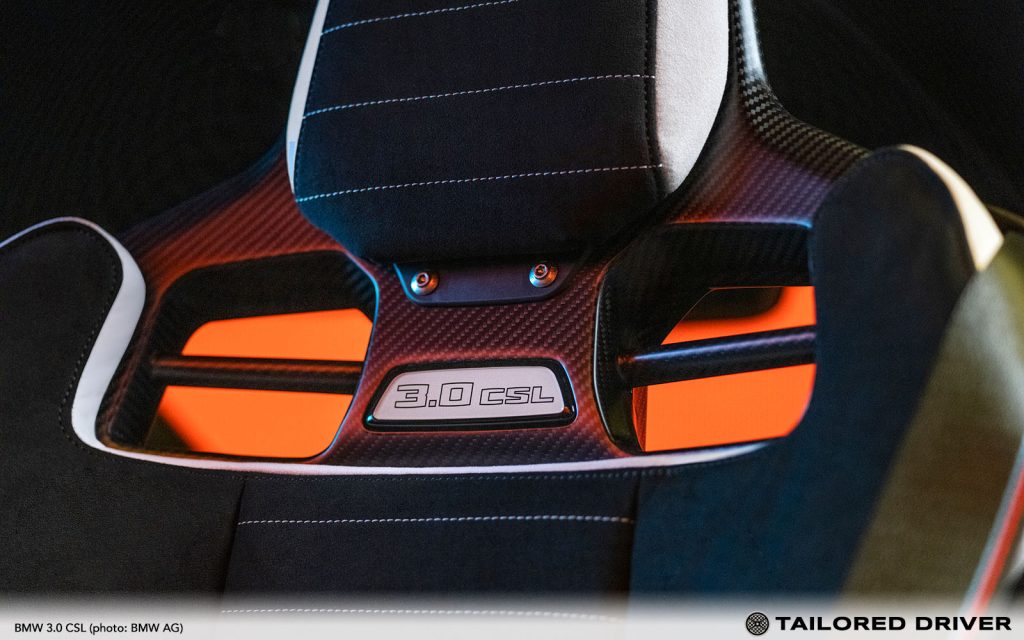
Also, in the interior of the BMW 3.0 CSL the use of carbon and other lightweight construction measures emphasise the puristic sports car characteristics. Instead of additional seats, the rear offers a storage compartment with two integrated helmet compartments. CFRP trim in the door panels and reduced acoustic insulation also contribute to the extremely sporty flair. The driver and front passenger sit in M Carbon full bucket seats, which convey a highly emotional and inimitable racing feeling every kilometre of the way. The diagonal connections between the seat surface and the backrest are reminiscent of the construction principle of the lightweight seats featured in the historic model. Seat height and inclination can be adjusted exclusively via a three-stage screw linkage in a workshop. The longitudinal position can be varied manually using a lever at the front edge of the seat. In addition, the M Carbon full bucket seats offer removable headrest inserts.
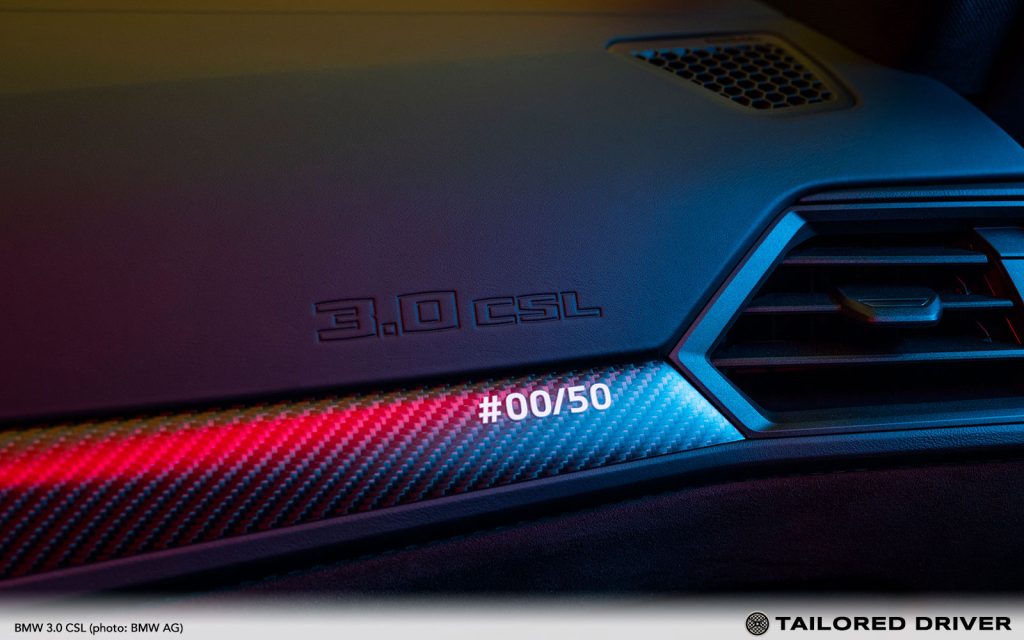
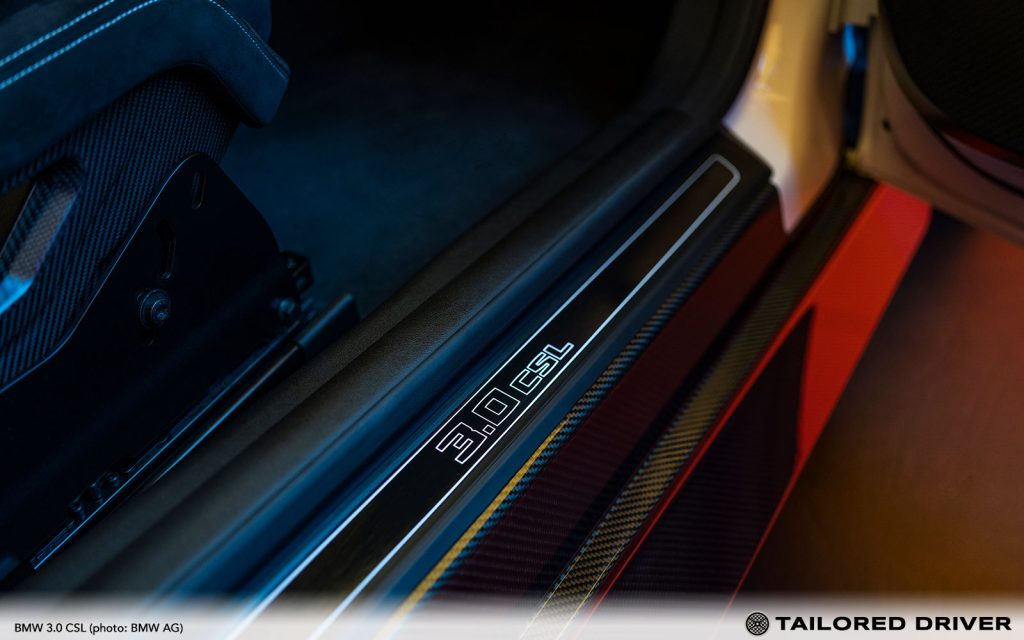
Over and above that, the interior of the BMW 3.0 CSL presents itself as a sports car cockpit that is puristic and exclusive. Black Alcantara seat surfaces and M seat belts are combined with an M Alcantara steering wheel, an anthracite roof liner, black Alcantara and matt carbon surfaces. Contrast stitching and other accents in white correspond with the exterior paintwork of the BMW 3.0 CSL, the model lettering of which is embossed into both the door sill trims and the seat surfaces. The white gearshift knob symbolises the classic form of interaction between driver and vehicle when changing gear. The red start/stop button and the likewise red M buttons on the steering wheel are available for activating the engine and for direct access to the vehicle’s overall setup. The matt interior trims in a carbon fibre finish feature sequential numbering for each of the 50 units available. This marking, documented in the interior from #01/50 to #50/50, corresponds in each case to the final digits of the suspension number, thus representing a clearly visible and authentic reference to the individual vehicle identity.
Nautical-themed Continental GT Convertible celebrates the best of the yachting industry
Handcrafted detailing reflects exclusive character of French Riviera
Unique paintwork offered in Aegean Blue, Aquamarine or Caribbean Blue
Distinctive features include marine knot seat logos, Linen hide trim and personalised Riviera Collection treadplate plaques
Mulliner caters to the needs of Bentley’s most discerning customers with its World’s oldest coachbuilder can trace its roots back 500 years
[source: Bentley]
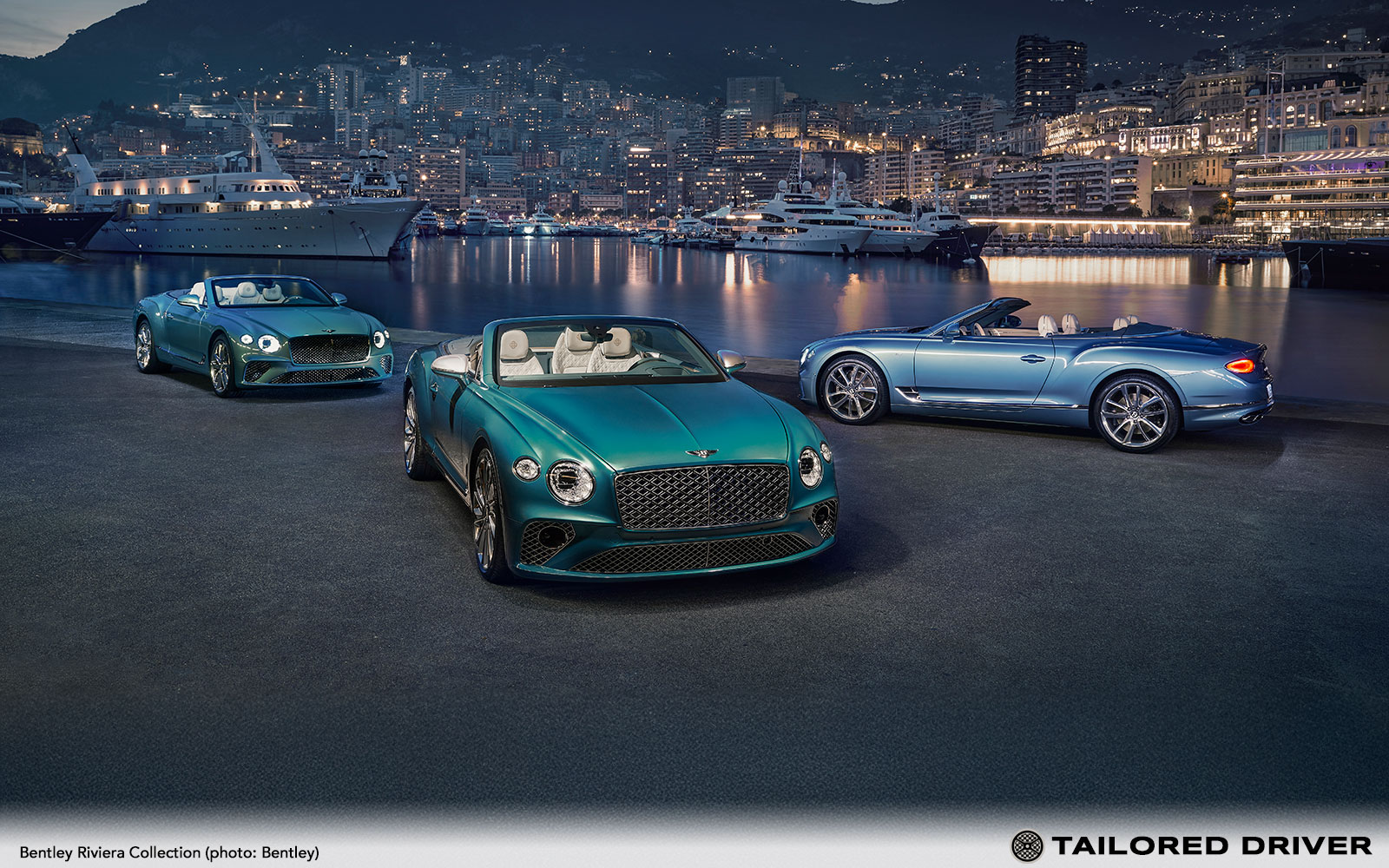
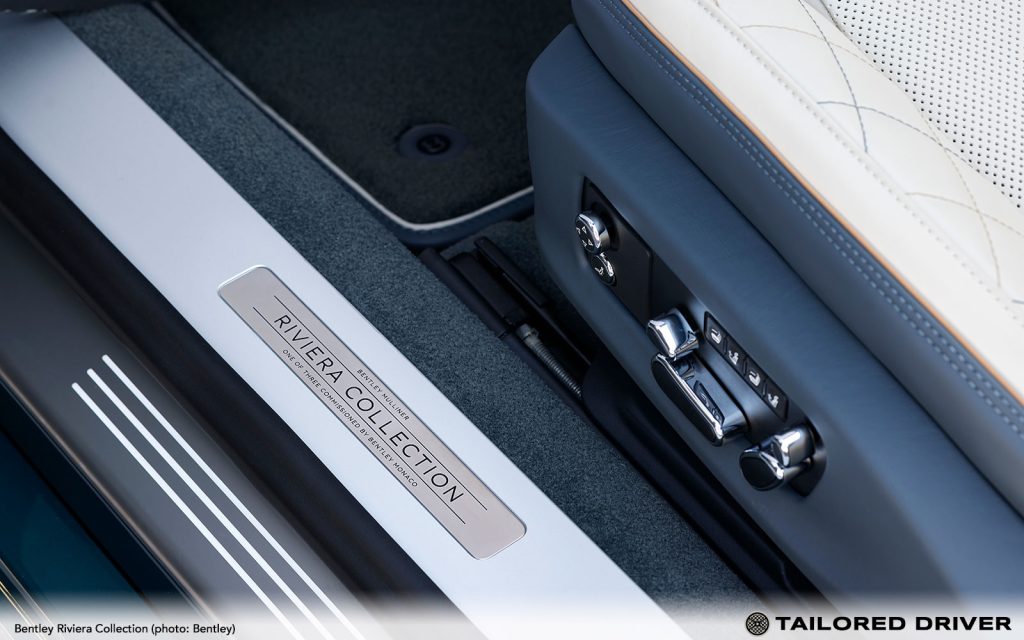
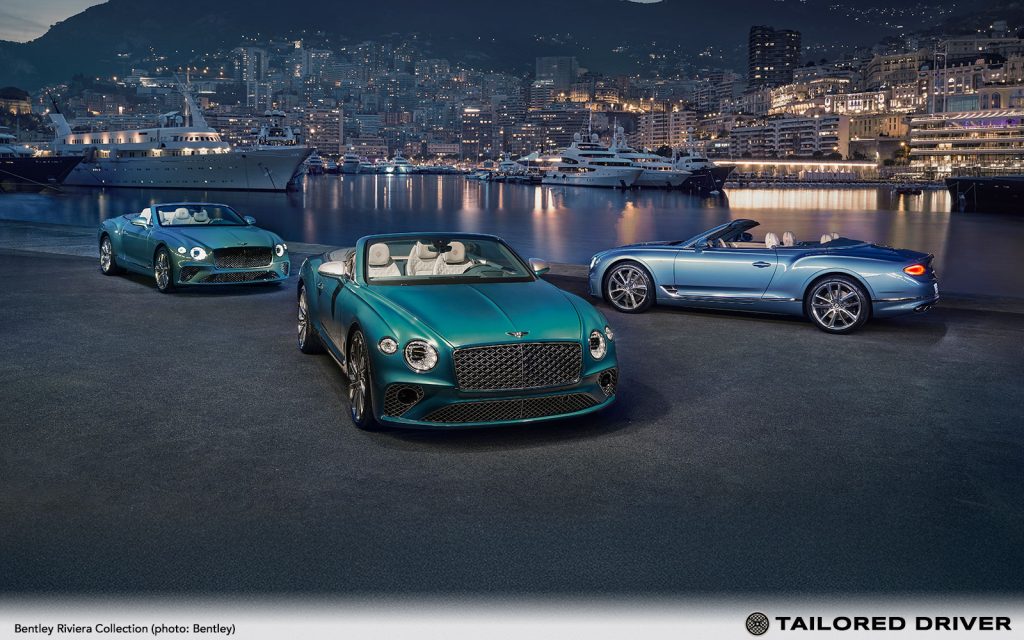
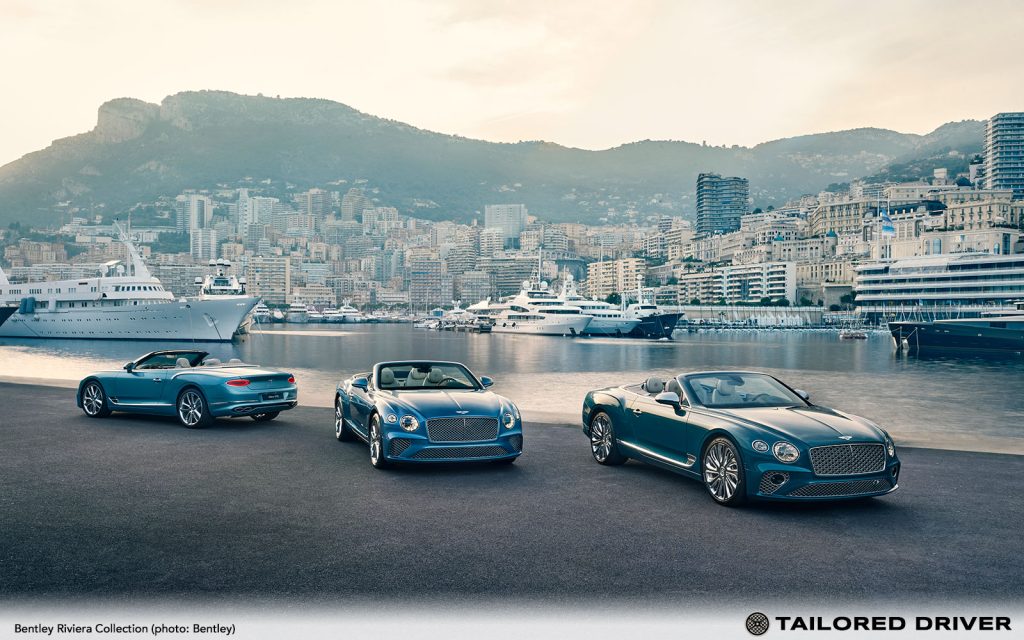
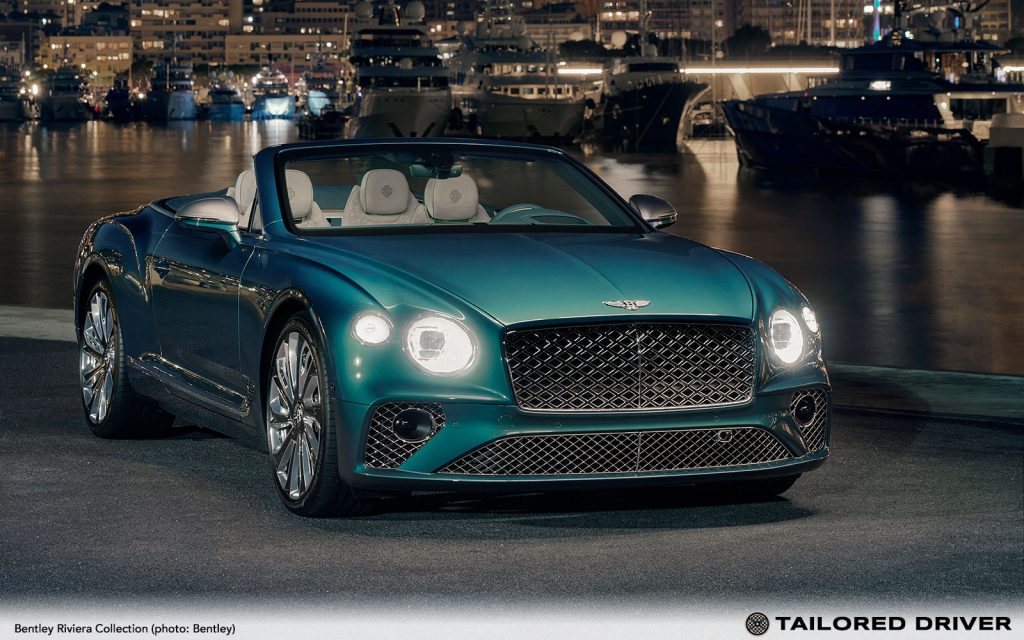
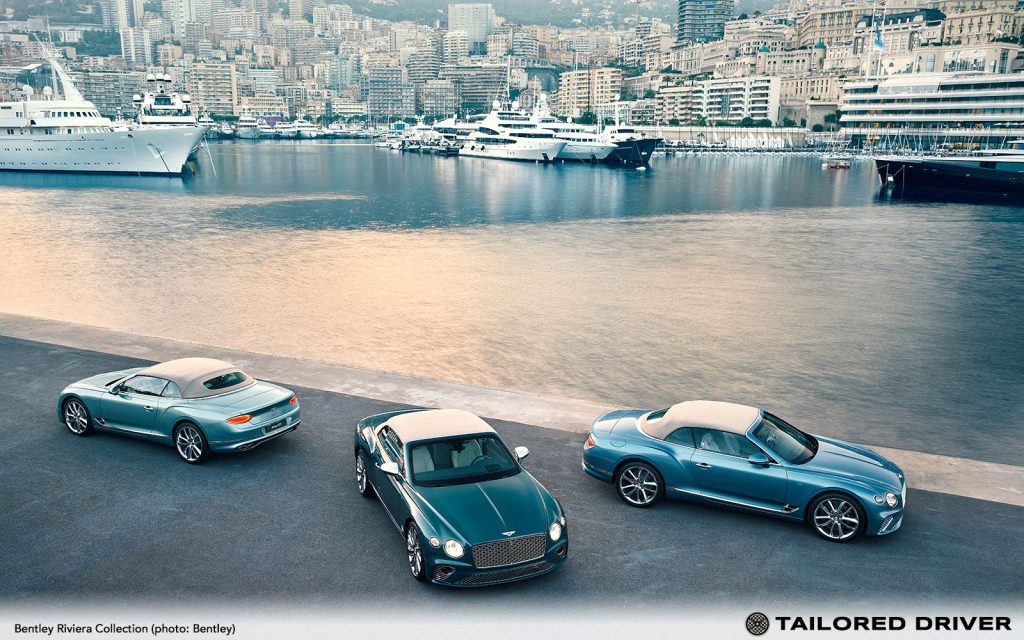
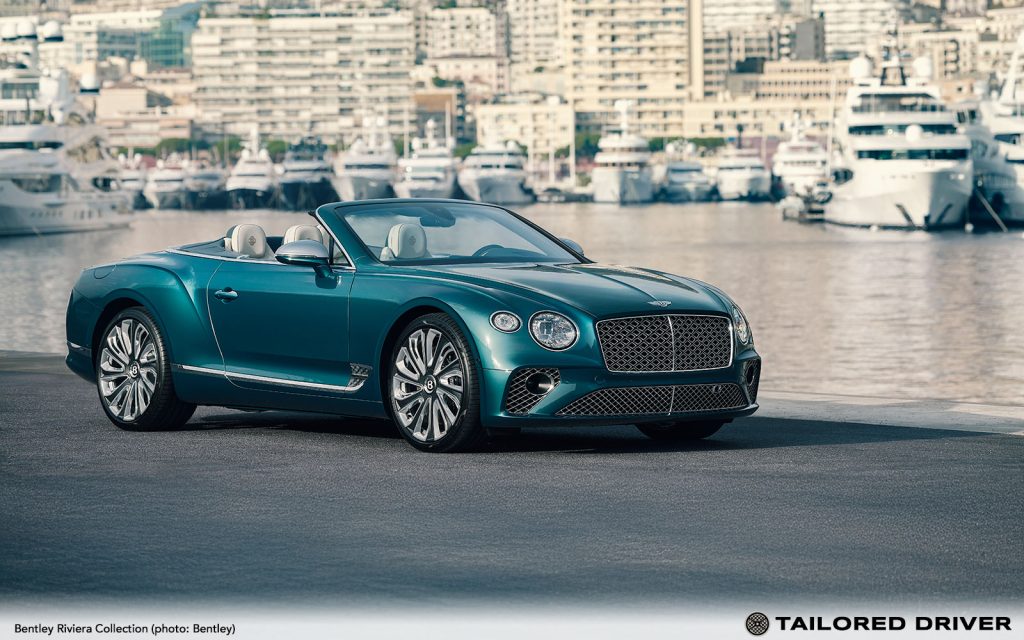
Munich, Germany – Bentley Motors has launched an exquisite Mulliner Riviera Collection to celebrate the elegant world of the yachting industry. Based on the driver-focussed Continental GT Convertible, the ultimate expression of open-air grand touring, the Mulliner Riviera Collection is only available through Bentley Monaco, the elite hub of luxurious Mediterranean sailing.
The handcrafted detailing of the Mulliner Riviera Collection reflects the exclusive character of the French Riviera, home to the prestigious Monaco Yacht Show every summer. This includes a choice of three unique exterior palettes for Monegasque customers – Aegean Blue (aegeanblue; metallic UNI; 6546 / 9560200; Bentley), Aquamarine (aquamarine; metallic UNI; 6525 / 9560153; Bentley) and Caribbean Blue (caribbeanblue; metallic UNI; 6518 / 9560125; Bentley) – created to mirror the colours of the Mediterranean Sea. The same paintwork also extends to a Carbon Fibre Bodykit and Boot Lid Spoiler.
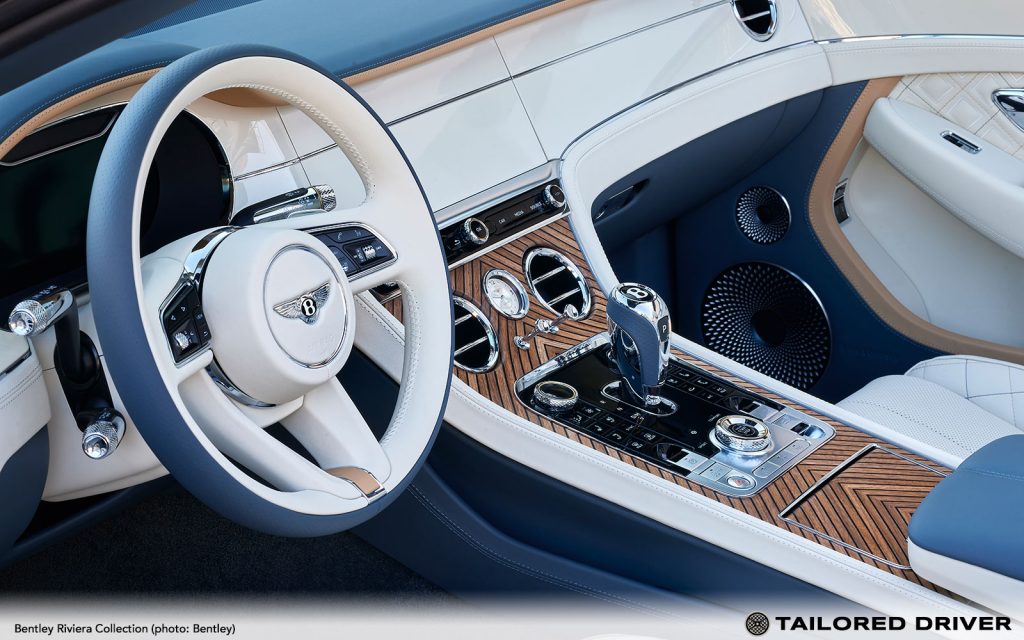
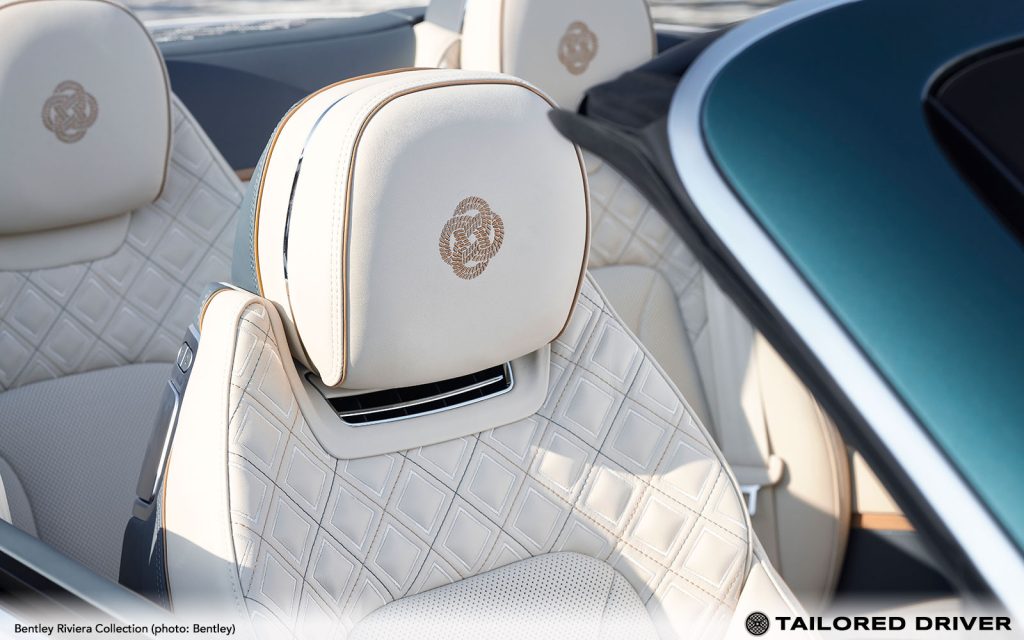
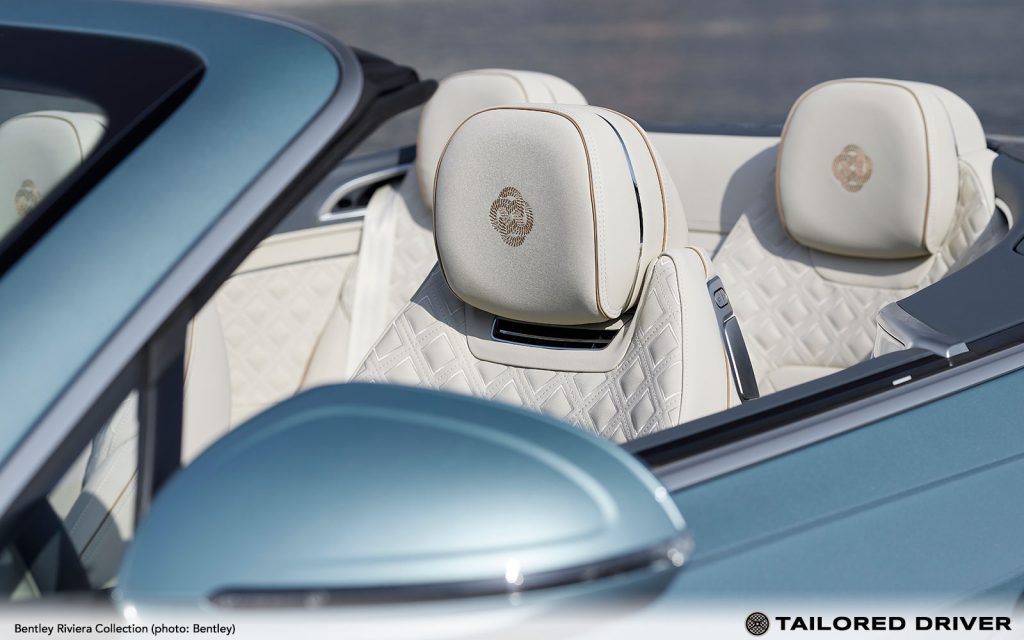
Inside a Continental GT Convertible cabin that offers unparalleled levels of luxury and cutting-edge technology, Mulliner Riviera Collection models display sailing-inspired features, such as marine knot logos on the headrests, Linen hide and Alcantara trim, and personalised Riviera Collection treadplate plaques. Hide Riviera key cases, embroidered Riviera trim emblems and a bespoke interior Colour Split add to the nautical theme.
Balazs Rooz, Regional Director Bentley Europe, commented:
“The Mulliner Riviera Collection shows how Bentley has responded to the high customer demand for personalisation and bespoke exclusivity. Bentley Monaco’s understanding of the yachting world, a key focus of the principality, together with the know-how of our Mulliner designers, have created truly exceptional and unique cars. This will complement the breath-taking Mediterranean coastline and surroundings where this one-off Continental GT Convertible will likely be driven and enjoyed.”
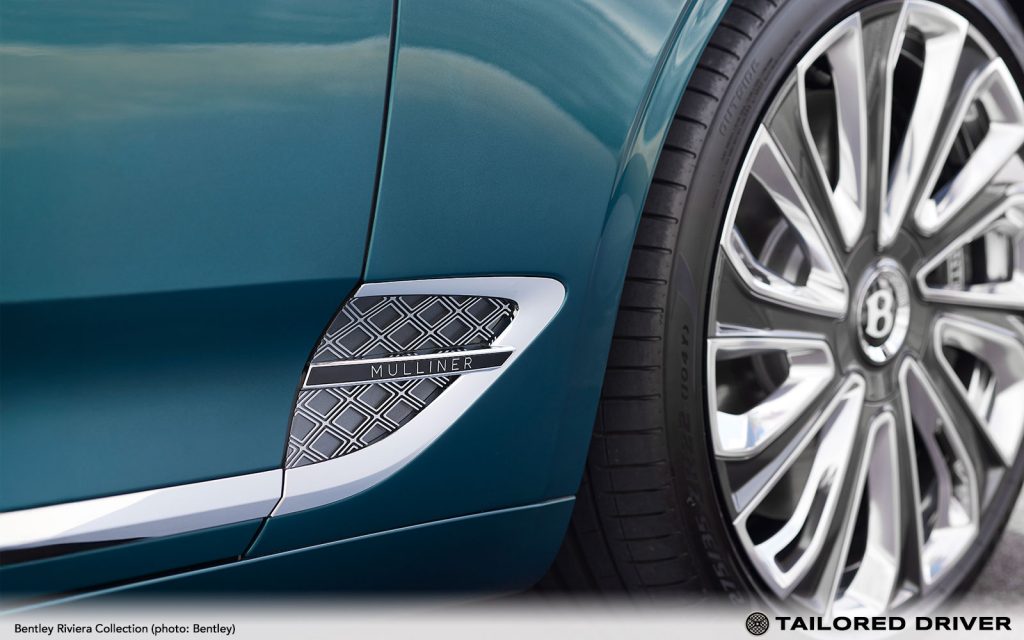
Mulliner Riviera Collection highlights how anything is possible for Bentley’s most discerning customers. The world’s oldest coachbuilder is based at the home of Bentley, in Crewe, England, and now offers craftsmanship on three levels. Curated by Mulliner are cars and features available in the online Bentley Configurator. Mulliner Bespoke are cars and features only available through the retailer, such as the Mulliner Riviera Collection, while Mulliner Coachbuilt are truly unique, one-off cars hand-built by the Mulliner team such as the recently unveiled Mulliner Batur.
The roots of Mulliner date back to the 1500s, when the company created luxurious, horse-drawn carriages in England. In 1923, Mulliner craftsmen worked on a Bentley chassis for the first time, hand-building the bodywork for the 3 Litre model exhibited at the Olympia Show in London.
In 1952, Mulliner coachbuilt the body for one of the most iconic Bentley’s ever. The R-Type Continental was the inspiration for today’s Continental GT. It was followed five years later by the Continental Flying Spur, a special, four-door saloon built on the Bentley Continental chassis. By 1959, Mulliner had officially become a part of Bentley Motors, setting up its workshops in Crewe.
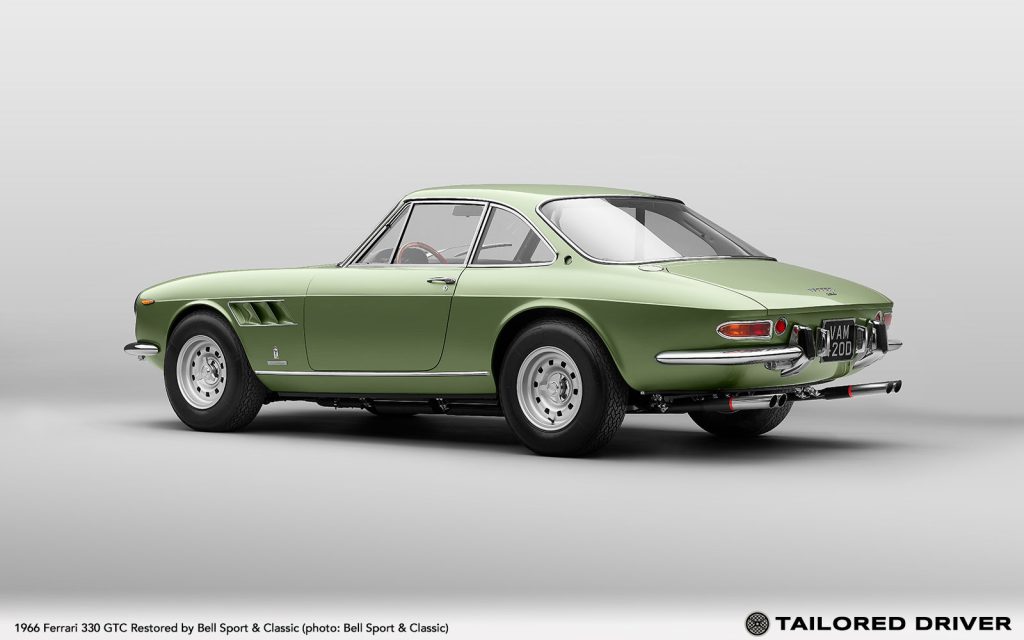
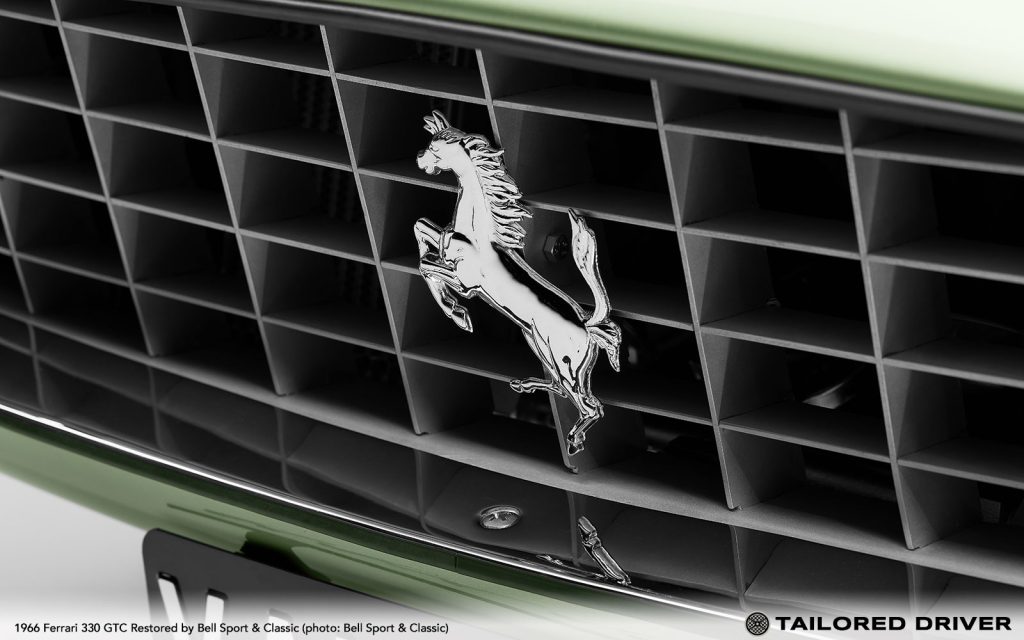
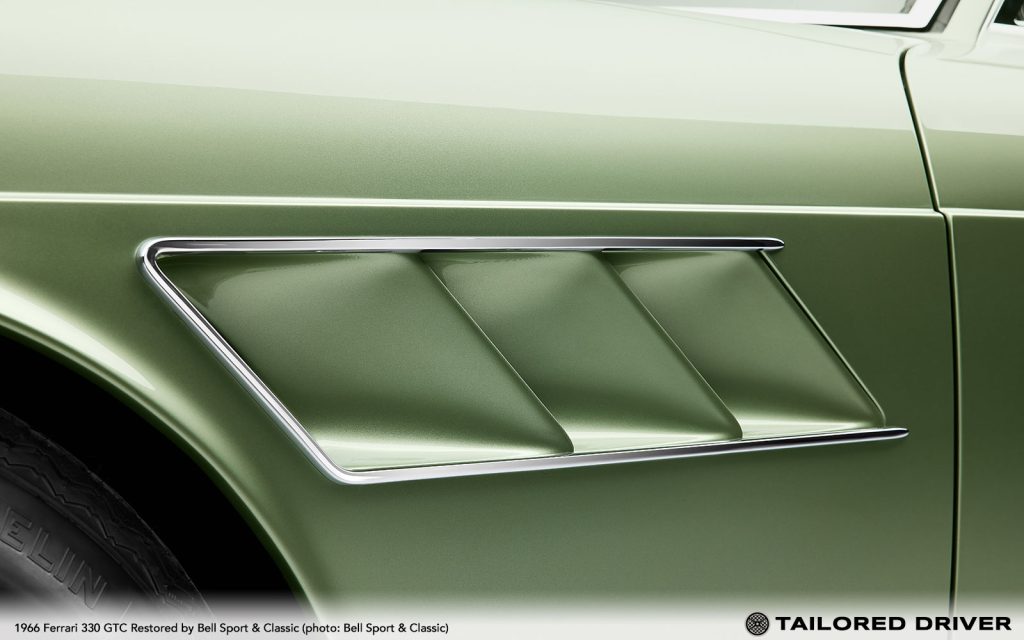
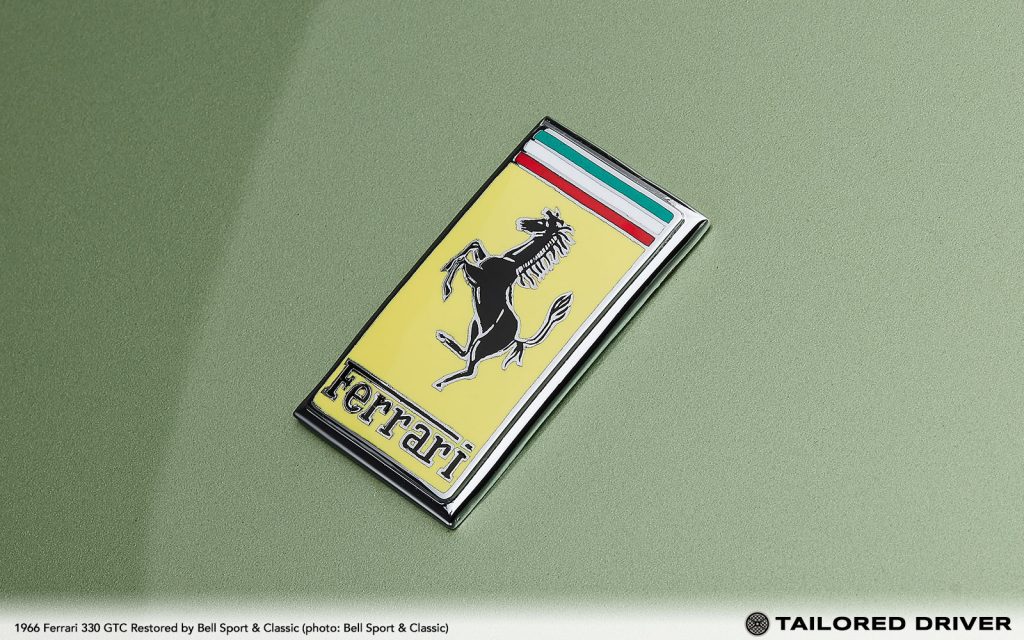
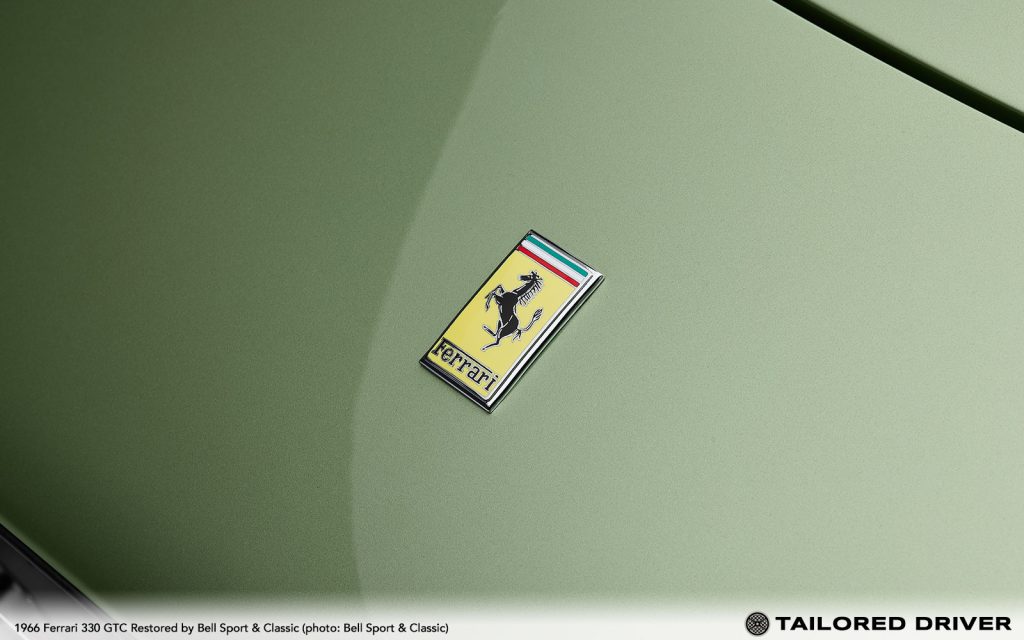
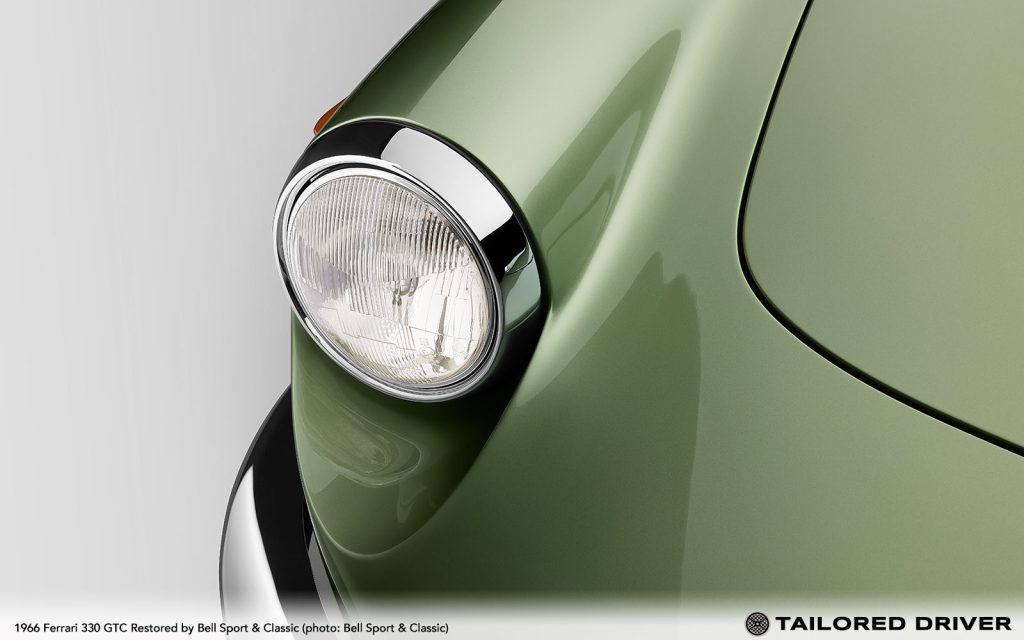
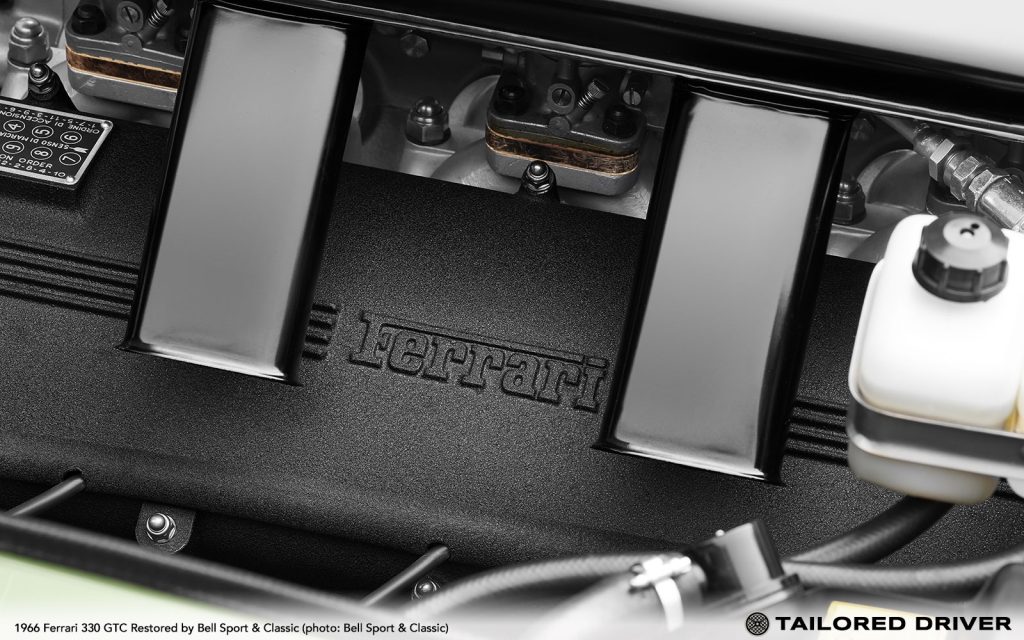
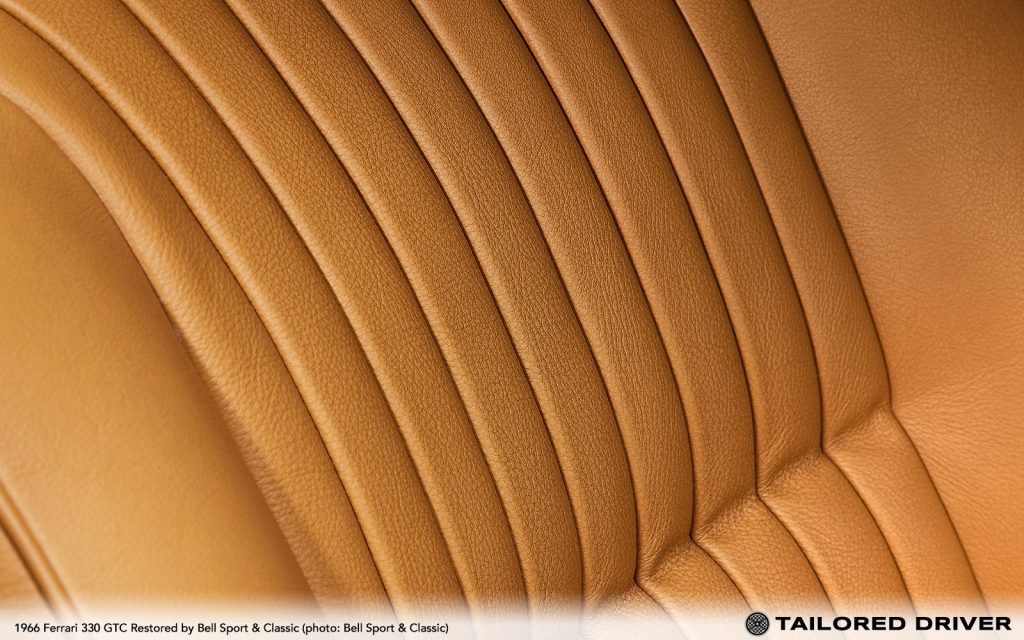
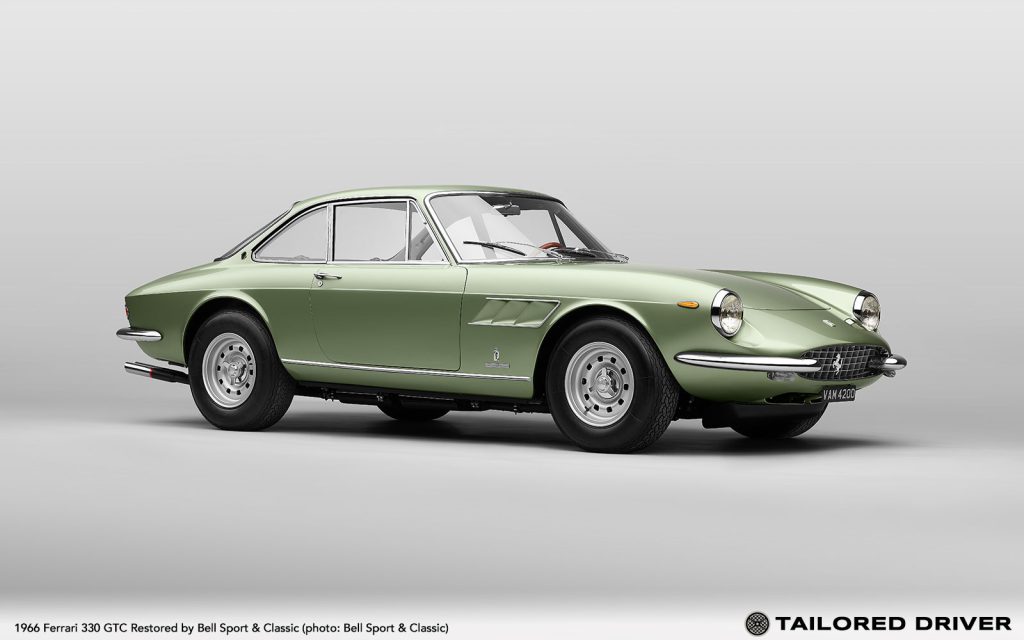
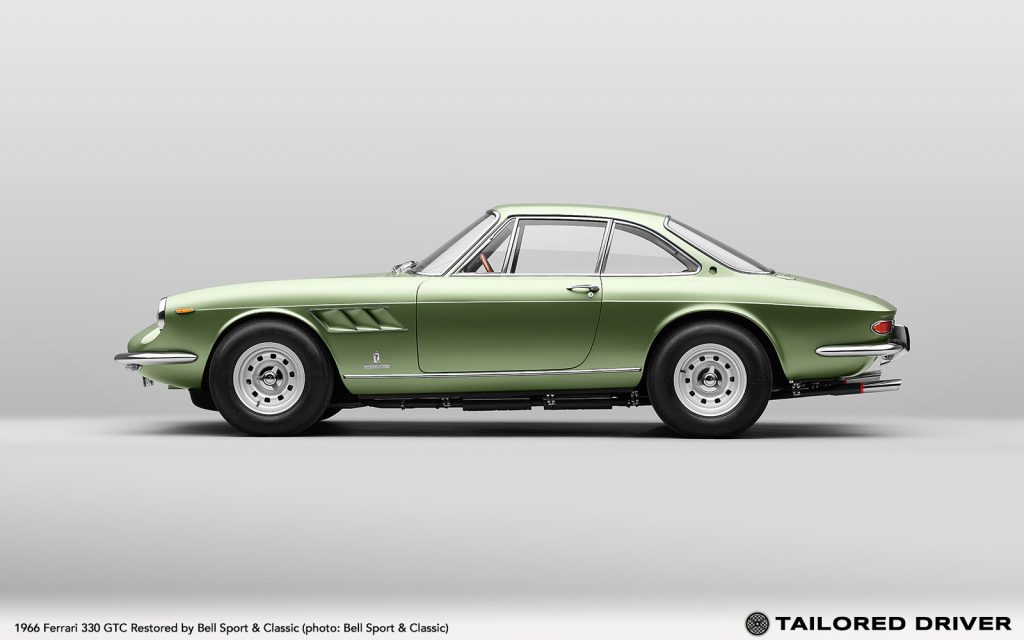
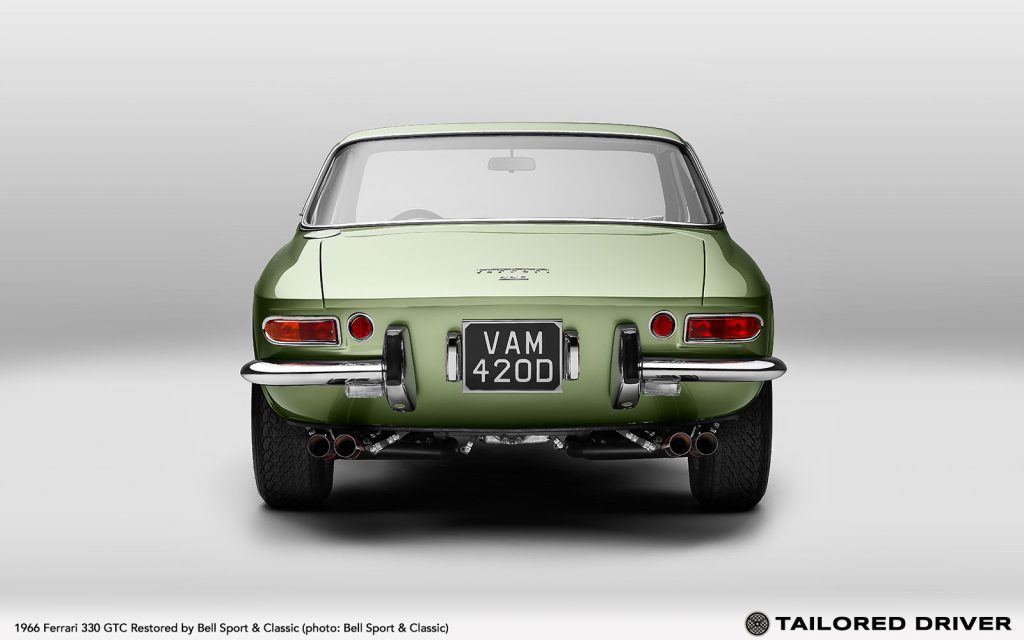
1966 Ferrari 330 GTC restored by world-leading specialist Bell Sport & Classic
Concours-winning perfection further embodies the game-changing standards Bell Sport & Classic applies to every restoration
Beyond obsessive approach results in arguably the best 330 GTC on the planet and further underlines Bell Sport & Classic’s position on the global stage
[source: Bell & Sport Classic]
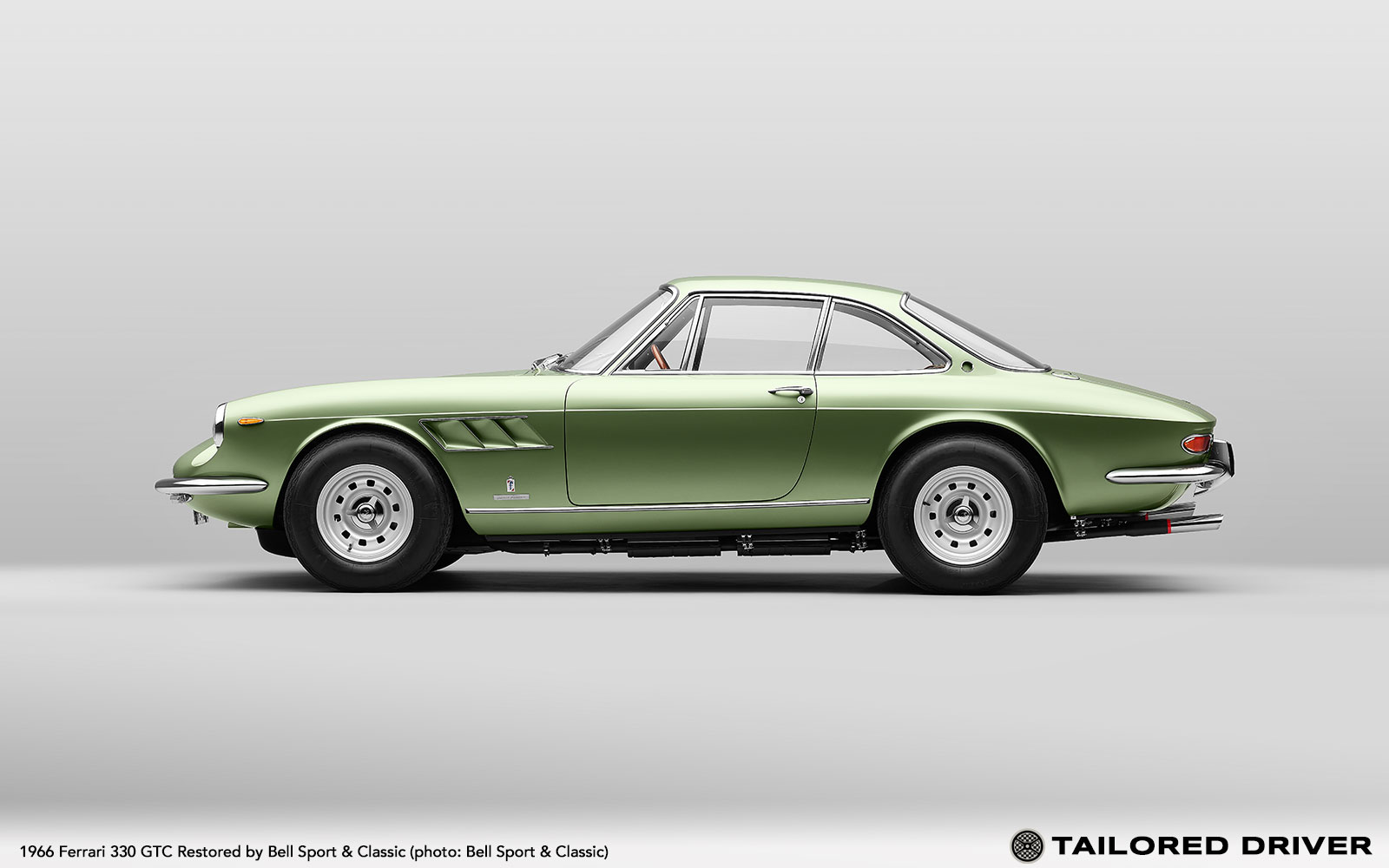
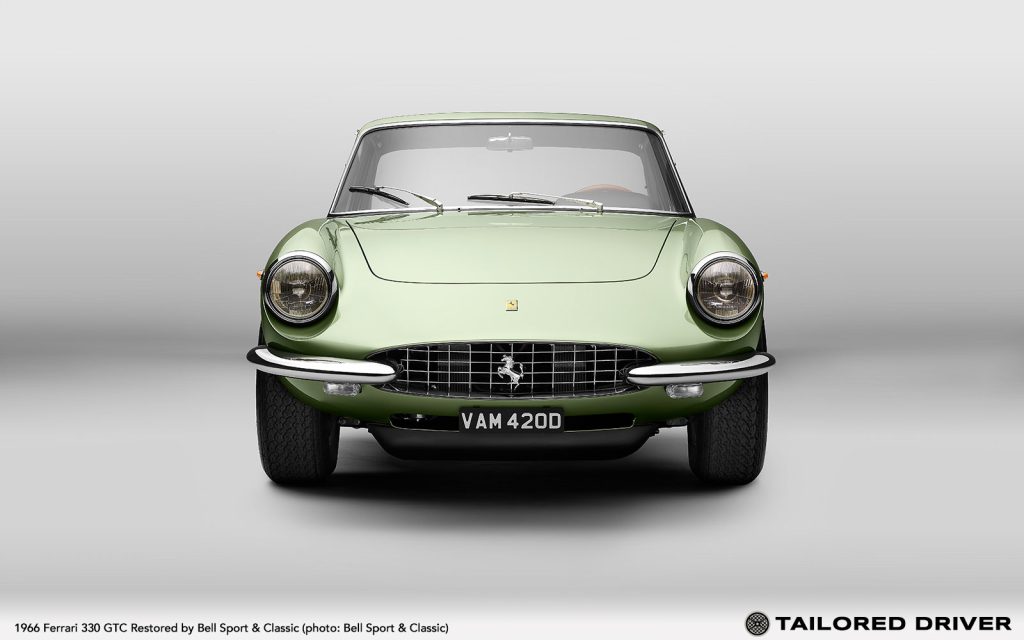
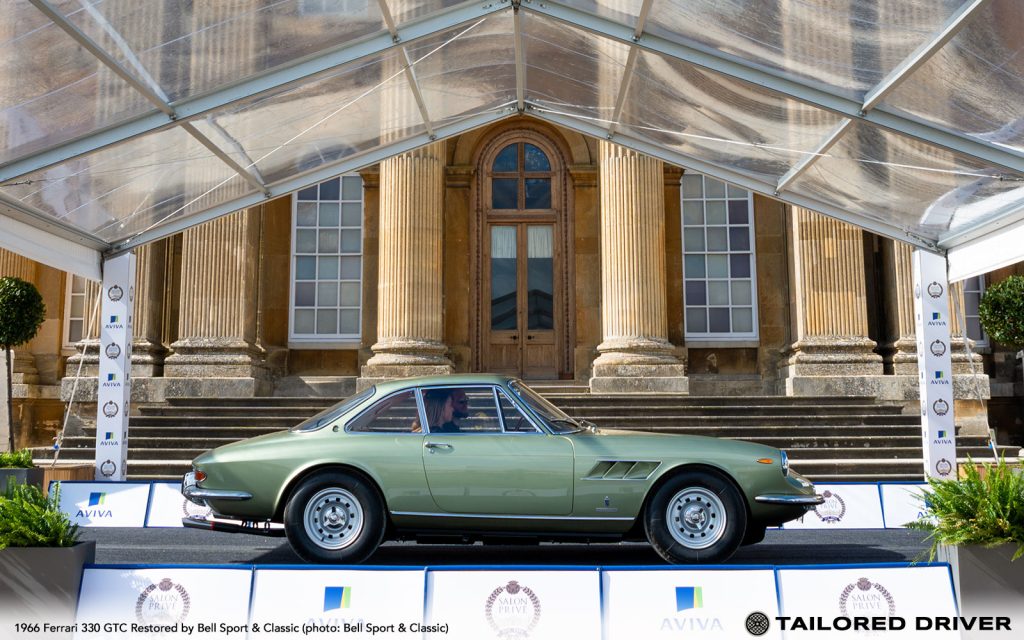
Markyate, Hertfordshire, UK – Leading Ferrari specialist Bell Sport & Classic is proud to reveal full details of the benchmark-setting restoration of a 1966 Ferrari 330 GTC, which secured a convincing victory at the 2022 Salon Privé Concours d’Elégance in September against world-class opposition.
The concours award and the car’s Ferrari Classiche Certificate stand testament to the intensive three-year-long restoration and rebuild at Bell Sport & Classic’s Hertfordshire headquarters. Led by the company’s expert team, who together have many decades of experience in Ferrari restoration, every component on the 330 GTC has either been restored, overhauled or reverse engineered, with the very latest restoration and engineering techniques employed.
Like all Bell Sport & Classic’s restorations, a beyond obsessive approach was applied through an unmatched blend of experience and expertise, creating a car that is in every facet better than when it left the factory – and what is quite probably the finest Ferrari 330 GTC in existence.
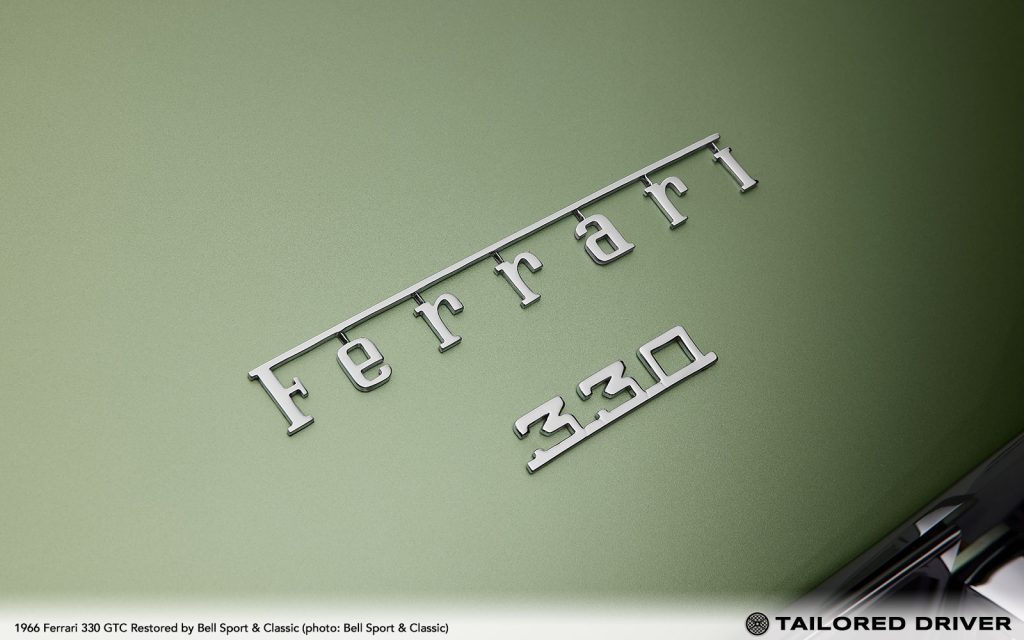
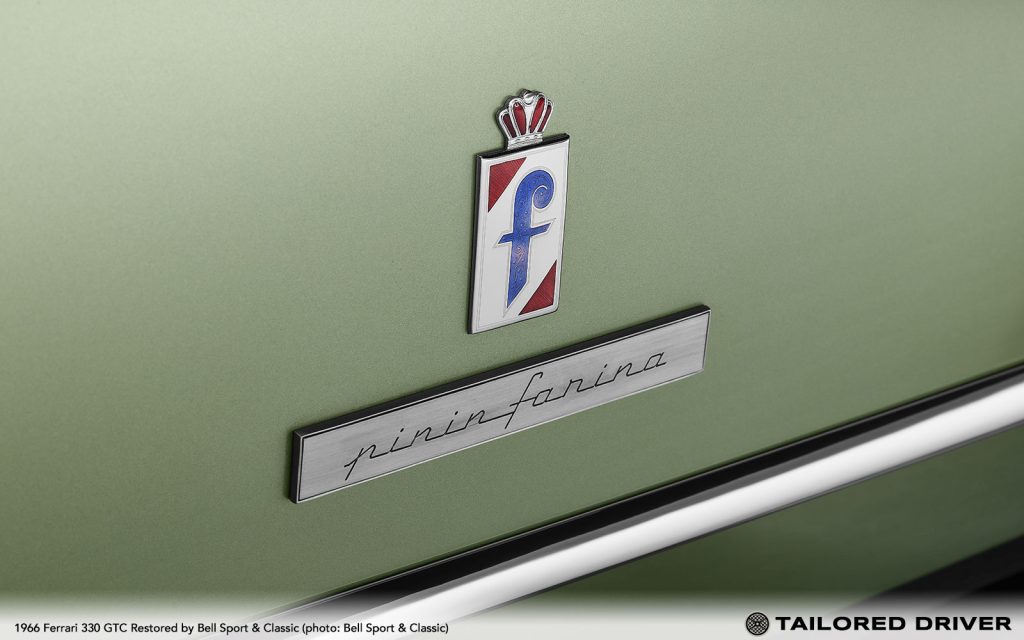
The gentleman’s Ferrari “Unveiled at the 1966 Geneva Motor Show the 330 GTC took its chassis from the 275 GTB Berlinetta and its 300hp four-litre V12 engine from the 330 2+2 Coupé. Cloaked in an achingly elegant Pininfarina body, it made an immediate impact and was very much a car for the more discerning driver. It’s the kind of Ferrari that you could imagine Enzo using as a daily driver,” explains Tim Kearns, Bell Sport & Classic’s Managing Director.
“Maranello built 600 examples between 1966 and late 1968 and this example was built during the initial year of production,” adds Bell Sport & Classic’s Head of Acquisition & Sales, Peter Smith. “It first came to us six years ago having clearly had a good amount of use, the car initially sold into Switzerland had spent time in the US and was eventually found in Venezuela. Although the engine wasn’t running and it had been repainted blue, literally every nut and bolt was original, so it was a good example to start with – but we knew we could make it as close to perfect as possible.”
Two weeks were spent methodically removing all the Ferrari’s interior components before the restoration team, led by Elliot East, turned to the exterior trim and began carefully stripping parts, including the brightwork, bumpers, headlights, and glass. Only after that stage was completed was attention turned to the drivetrain and suspension components.
Restored to factory-fresh specification Bell Sport & Classic’s exacting approach means that the same effort is lavished on every element of the car – whether visible or not. The 330’s heavily kerbed and severely corroded original 14-inch cast magnesium wheels were restored and elevated to gleaming concours-winning condition; this same approach is applied throughout the car – even to components that will remain hidden from view, deep in the fabric of the machine.
As Matt Wilton, who oversaw the project and has a lifetime of experience at the highest level of Classic Ferrari Restoration, explains: “Several of the imperfections were relatively minor, and would most likely never be seen by a customer, but for a Bell Sport & Classic restoration, everything matters. Yes, it’s highly time-consuming, but it gives our customers complete confidence that a car they receive from us is perfect in every detail.”
A month was dedicated to stripping the suspension down, and the components sandblasted, before undergoing repainting and replating as required. The original shock absorbers, suspension arms and springs were all refurbished and retained.
“The steering arm and every little bracket that had been nickel-plated originally, were replated,” continues Matt Wilton. “Other components, such as the anti-roll bar drop link, were restored to their original satin nickel finish. Absolutely everything on this car is in the same condition, or better, as the day it left the factory.”
Walnut shells for that delicate touch The process that would eventually ensure an exquisite exterior finish utterly devoid of even the slightest blemish began more than two years before painting was scheduled, and involved blasting the car’s body, not by sand, but by crushed walnut shells.
“One of the disadvantages of using sandblasting on the delicate areas of the larger panels is that it can put heat into the steel and cause it to distort. However, that doesn’t happen with walnut-blasting,” continues Elliot East. “It’s a technique that’s always best for the potentially more fragile areas.”
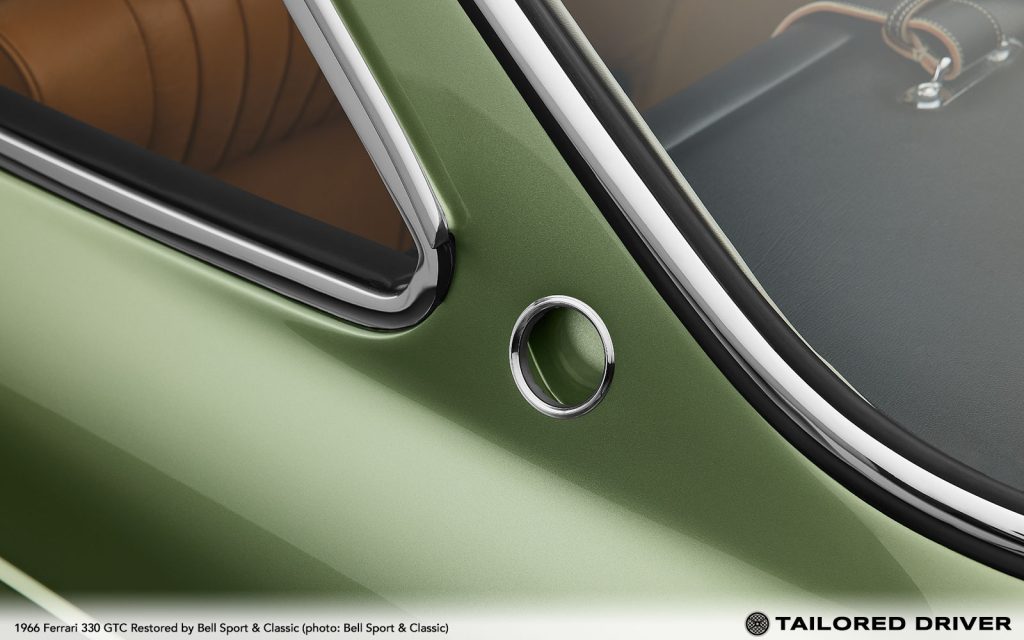
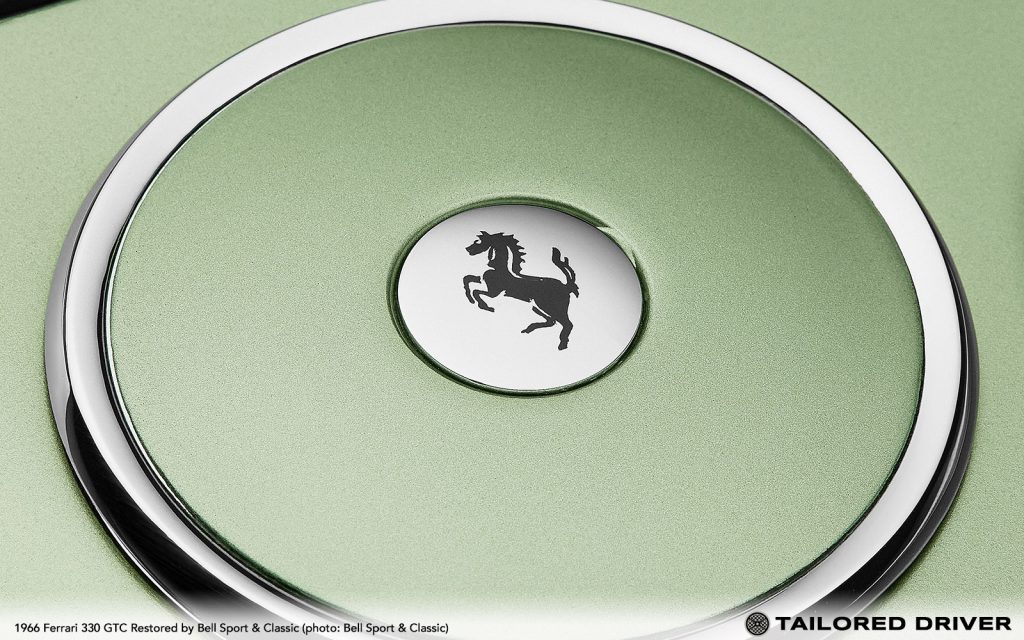
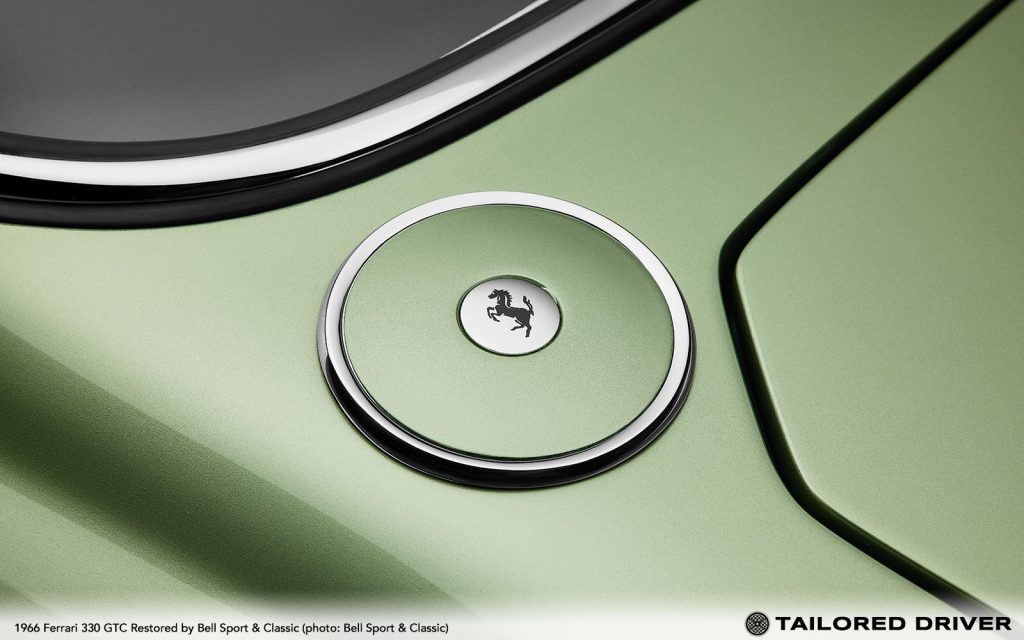
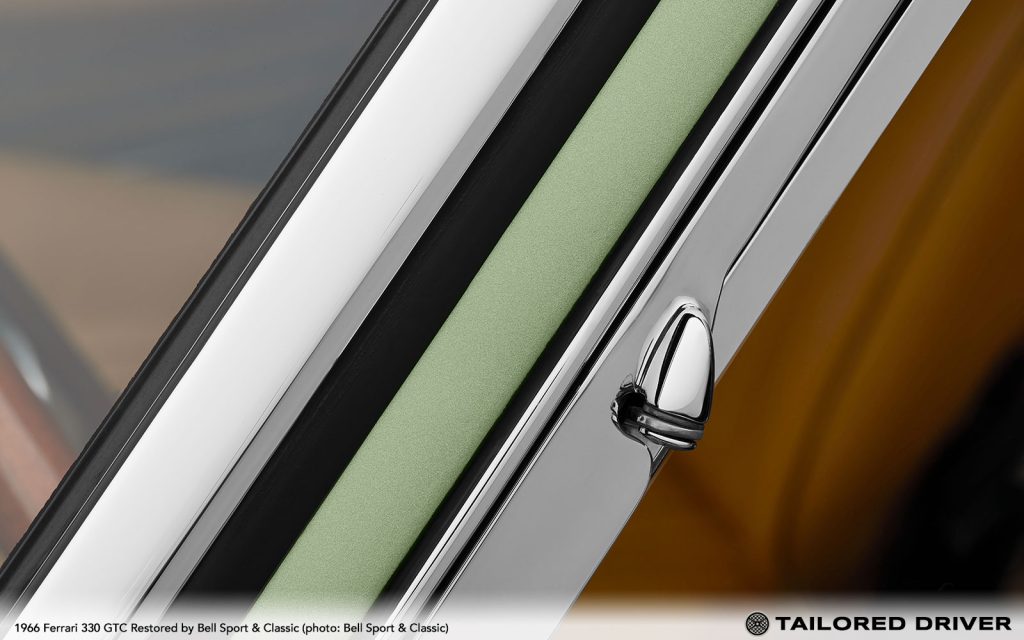
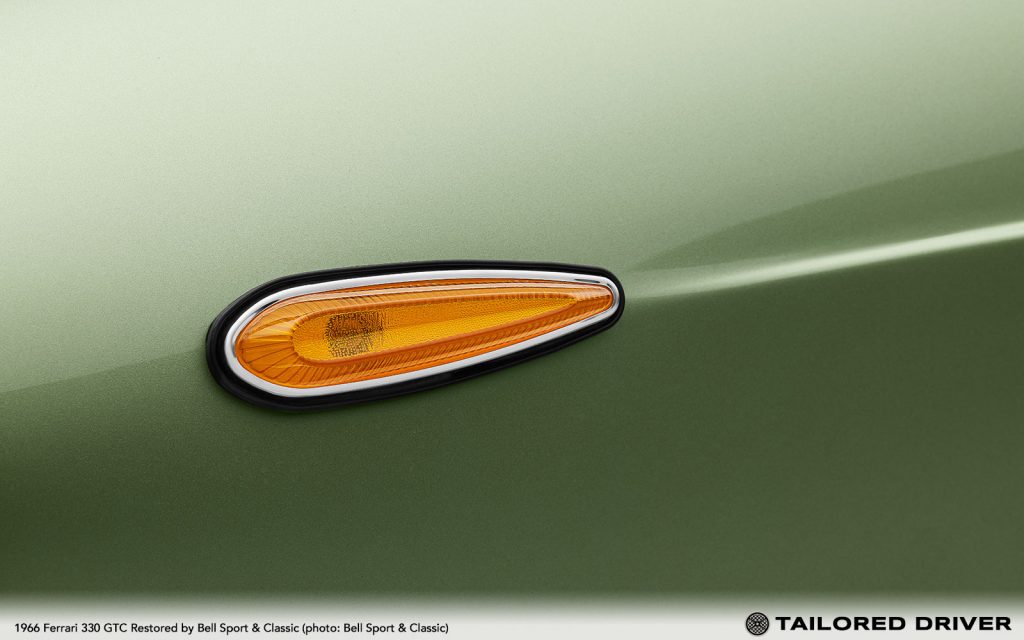
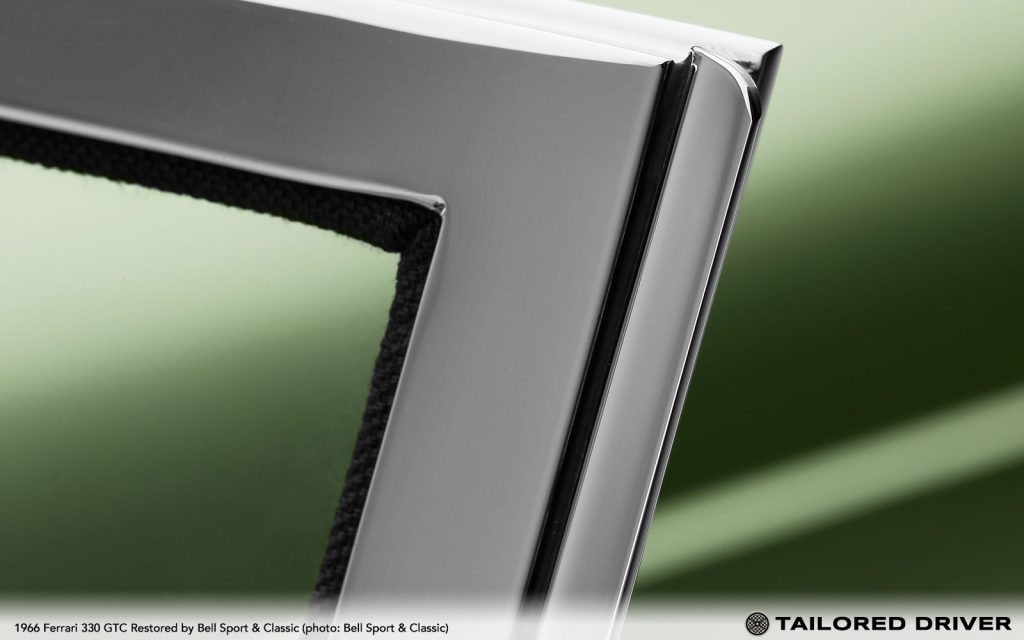
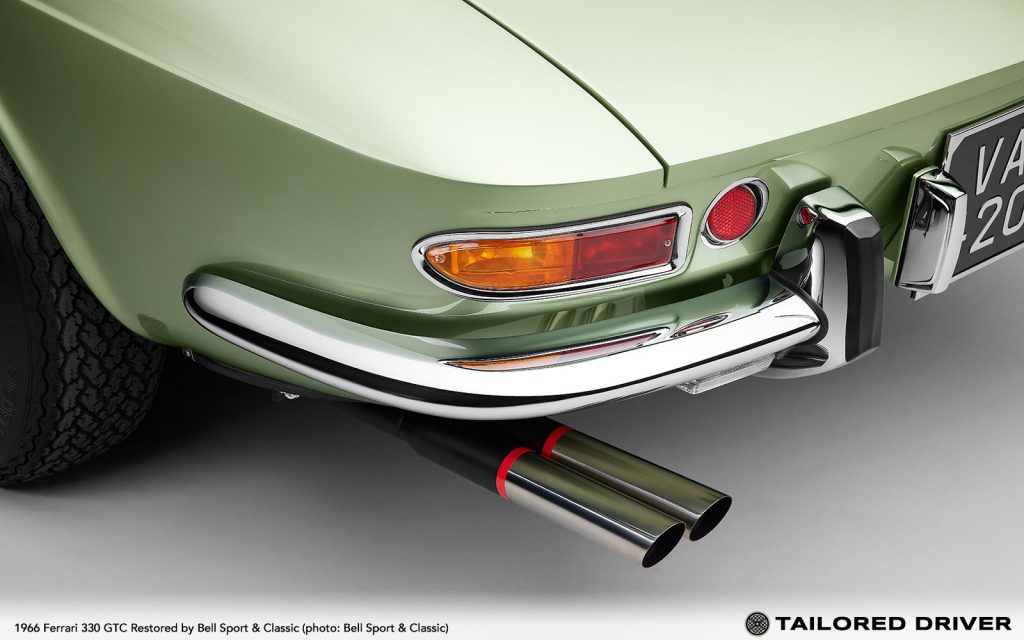
When the car arrived at Bell Sport & Classic it was a pale blue and had clearly been painted several times over its life. As part of the team’s restoration research process, the original factory build sheets were sourced confirmed that 330 GTC Chassis No. 9069 left Maranello a beautiful and unusual pale green. Before the body was painted and the Ferrari returned to its stunning original light green metallic Verde Chiaro Metallizato, the team undertook a complete dry build. While this process of reassembling and then stripping back down again before painting takes time, it’s integral to every restoration project undertaken by Bell Sport & Classic.
And again, despite the team’s accumulated decades of experience restoring historic Ferrari models, it ensures that nothing is taken for granted or left to chance. At this point, the bodywork is fully re-assembled, with components such as the glass, chrome wear, doors and all exterior fixtures fully incorporated. Every stage of the process is precisely measured, and triple checked. This painstaking attention to detail is critical to mitigating the effect of the additional thickness of the primer and paint.
“If you have too much paint on the window frames, it could prevent the glass from fitting, or if there is too much in the guttering on the roof, it could prevent the door seal from fitting properly. We’re only talking points of a millimetre, but often that’s all it takes to make the difference,” explains Elliot East.
No detail too small As typified by the GTC’s chassis, Bell Sport and Classic poured as much time and effort into perfecting the paint finish on the details that can’t be seen. Even the quality of the paint finish inside the small circular demister vent in the C-pillar matches the outstanding finish of the paint on the body, a rare achievement on this model, a real ‘tell’ for those in the know.
“As soon as we unveiled the car at Salon Privé, that was one of the areas that the judges and aficionados who really know this model went to straight away,” smiles Matt Wilton.
“And it was the same with the satin black paint inside the wheel arches and engine bay. It took three attempts before we were certain we got exactly the correct and original degree of shine and tonality.”
Even after the concours judges had peered into the C-pillar air vents, crawled underneath, and lifted the boot carpet, Bell Sport & Classic’s impeccable craftsmanship still stood up to the strictest scrutiny.
Again, the pursuit of perfection continued to areas that aren’t even visible. “Despite having been painted black at some stage – as most have been – when the car was new, its twin fibreglass-coated fuel-tanks were painted a pale turquoise blue,” explains Elliot East. “It’s not an easy colour to match, and some might argue that it’s not that important as the carpet hides the tanks. But it’s important to us. And that’s why the fuel tanks are once again finished in period-perfect turquoise after we found and original area of paint inside one of the necks and colour matched it.”
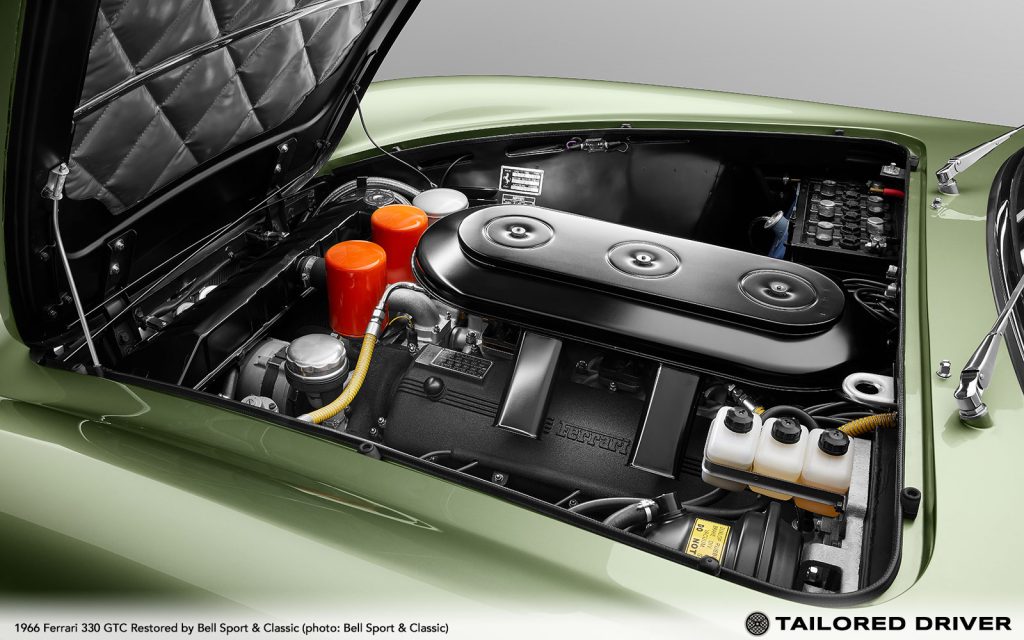
V12 beating heart Each phase of the strip-down, refurbishment, reassembly, and testing, of the 330 GTC’s Colombo V12 engine was completed at Bell Sport & Classic’s in-house engine workshop, under the lead of Attilio Romano, a former member of the Ferrari factory technical team in Maranello, who ran H.R. Owen’s Ferrari technical department for 22 years.
It’s an obsessive approach, but it ensures perfection, with every single component, down to the smallest stud, stripped, vapour-blasted, refurbished and replated as required, regardless of time and expense. Once the V12 was reassembled, two days were spent on dyno-testing, assiduously checking for the most minor issues, such as potential minute oil leaks.
Then, after the car was rebuilt and the engine placed back in situ, it was subjected to 500 miles of road testing. “We restore cars, not just to be sat on a concours lawn, but driven and enjoyed by their owners,” adds Peter Smith, himself an experienced racer and part of the project’s dynamic sign-off process. The fully rebuilt engine produces 300hp at 7000 rpm – precisely the same as in period.
The gearbox was exposed to the same in-depth strip-down and rebuild process as the engine. And while every effort was made to maintain optimum originality, certain new parts were required to ensure a sublimely smooth driving experience. These included the selector forks, synchroniser hubs and synchroniser rings.
In many ways, the four-pot calliper braking system proved the most challenging aspect of the drivetrain, as Elliot East explains. “We weren’t happy with the existing brake servo, which was challenging because finding an original replacement part in good condition was just about impossible. But it’s like trying to ease off a seized nut – we never give up. And as we have contacts with parts suppliers and Ferrari enthusiasts all over the globe, we finally sourced an original.”
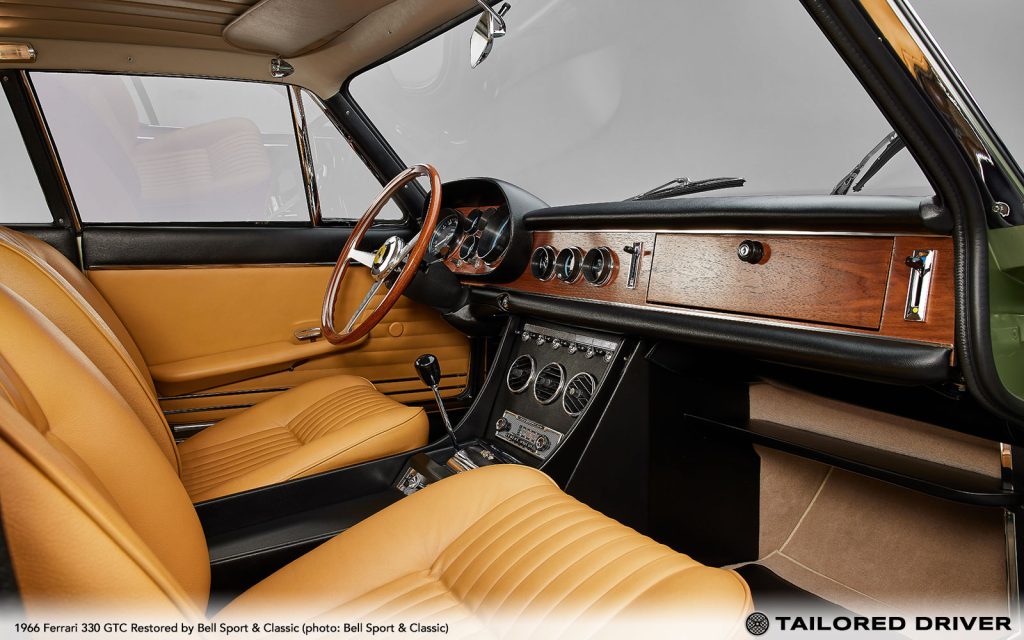
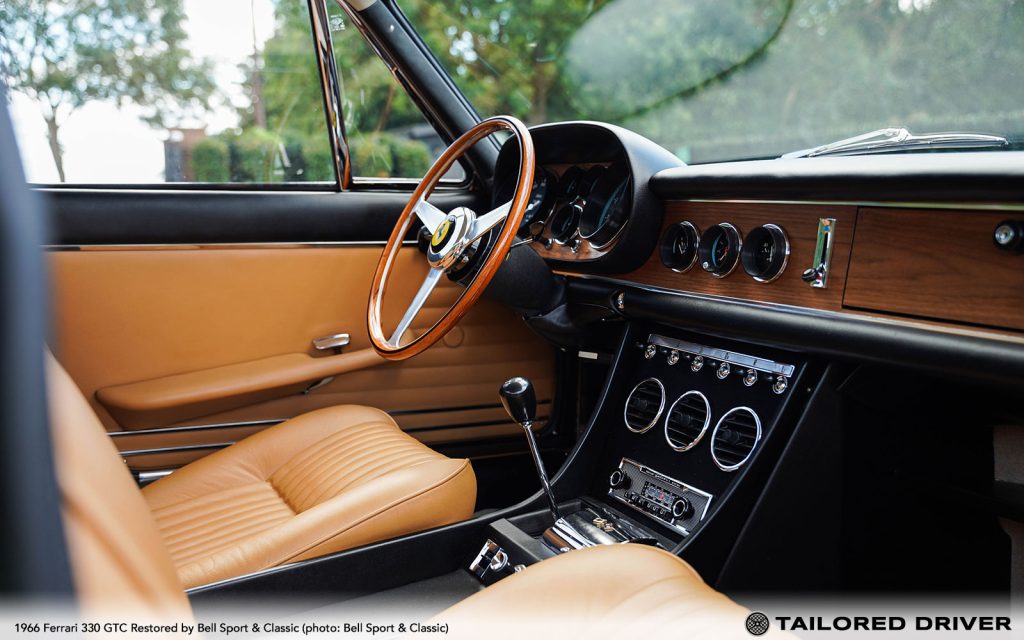
Creating a sublime interior Back in 1966, the 330 GTC left Maranello sporting a gorgeous black leather interior, but more than half a century of use had taken a very heavy toll upon it. Restoring the cabin of a historic Ferrari to its former glory represents a significant challenge that not many can truly perfect.
Bell Sport & Classic entrusted the restoration of the car’s cabin to O’Rourke Coachtrimmers and Suppliers. Based in Rudgwick in West Sussex, the company has decades of experience in restoring Ferrari cabins to concours-winning, period-perfect condition. O’Rourke Coachtrimmers and Suppliers has built its world-leading reputation not just on the quality of its craftsmanship, but also by applying the same forensic approach and research-driven authenticity that Bell Sport & Classic exercises itself.
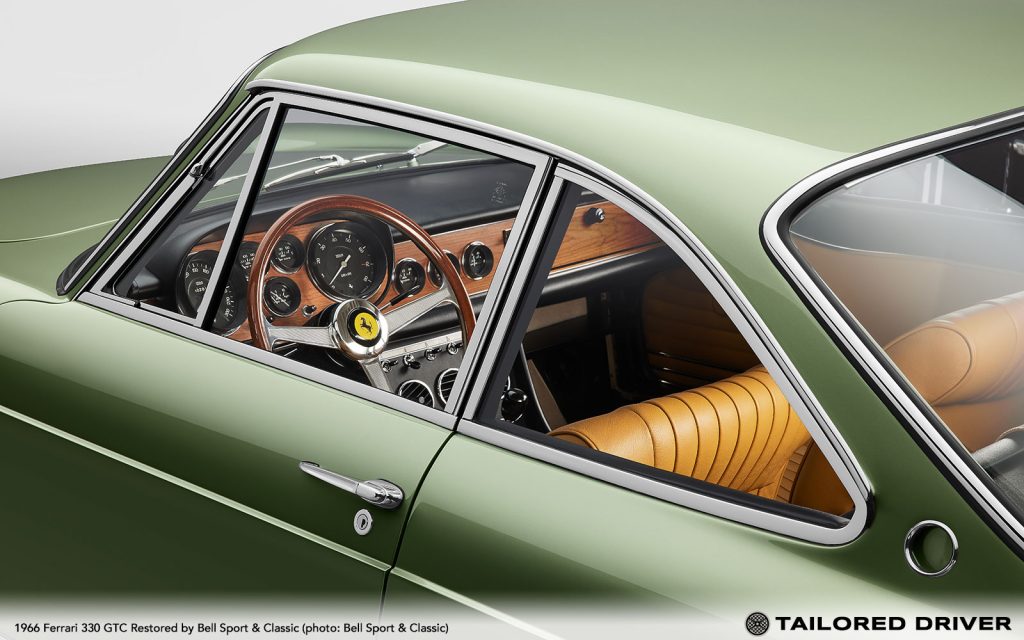
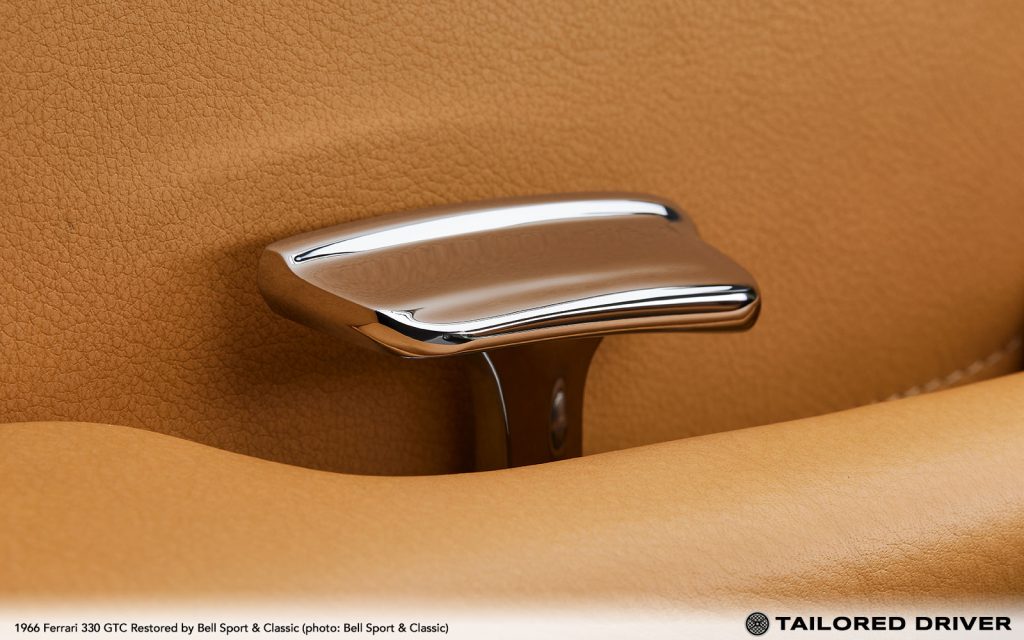
So, when the customer wished to change the colour of the leather, it was a straightforward task for O’Rourke Coachtrimmers and Suppliers to outline the range of options offered by the factory more than half a century ago. As a result, the car’s new owner was able to select the precise Ferrari Conolly VM 218 fawn leather colour, which was matched with period-correct detailing, including the colour and weave of the carpets and the headlining, right down to the vinyl on the binding of the carpets, with all material sourced from Italy.
Fortunately, the car’s original seat frames were in good condition and retained, although new foam inserts were fitted to ensure optimum comfort and support. New webbing was used for the belts, but all the fittings and buckles are original and have been restored, including the iconic Irvin badges.
The Ferrari’s wooden veneer dashboard was in relatively good condition, apart from the fact that it had a mysterious hole in it. “All the original dials and controls were present and correct and accounted for, so the hole had presumably accommodated an additional aftermarket feature that had been fitted at some point and then removed again,” deduced Elliot East. Once again, vast reserves of skill, experience and patience were required to perfect this element of the restoration, with dozens of different wood stains tried and revised before the correct match was found.
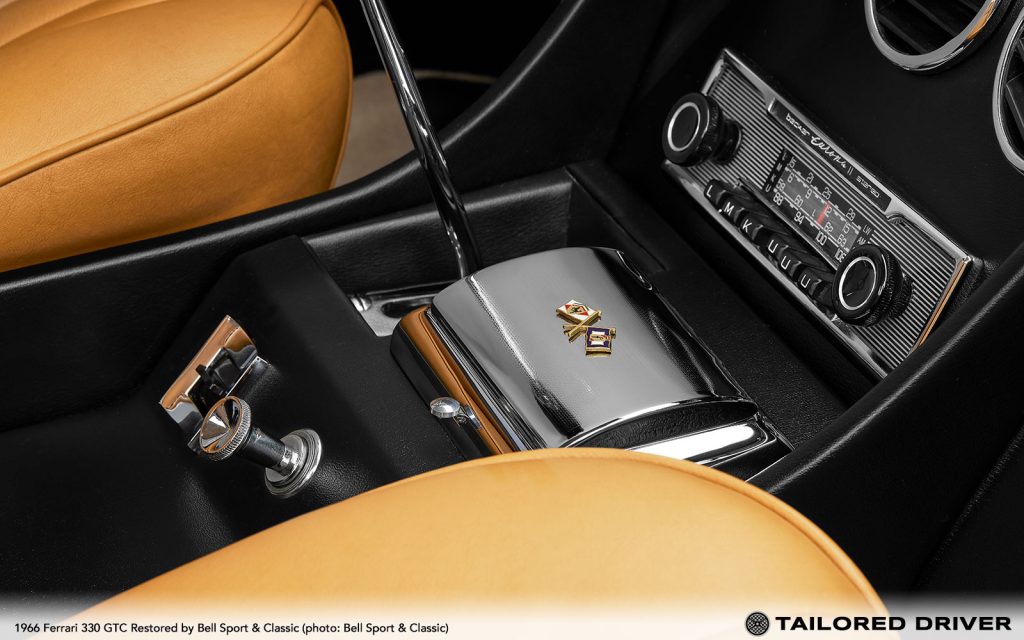
At some point in the car’s history, a 1980s radio cassette had been fitted to the centre console. Bell Sport & Classic removed the unit and fitted an original Beck Europa radio, of the precise type the car would have left the factory with. Restored and uprated by vintage car radio specialists, Chrome London, the period radio is equipped with modern internals and Bluetooth compatibility.
Beauty that is much more than skin-deep “With this Ferrari 330 GTC, we have created a car that looks perfect from first glance right down to the details you will never see,” adds Peter Smith. “We believe passionately that beauty is so much more than skin-deep. That’s why, if you took this car apart, every component would look new, even though it is fifty-six years old. Versus the more famous V12 Ferrari of the period, the 330 GTC hides its light under a relative bushel, but it is such a wonderful combination of style and performance that this is one Ferrari unlikely to remain underrated for much longer.”
Bell Sport & Classic Managing Director, Tim Kearns concludes: “It’s a fundamental part of our philosophy that we just don’t build a car to get maximum points from the judges in a concours, it’s got to drive beautifully, too. The 330 GTC was the only car in its class to take part in the Salon Privé tour in the lead up to the event. It was driven enthusiastically and enjoyed on the wonderful roads of the Cotswolds over two days, before arriving at Blenheim Palace, parking up on the Concours judging lawn, and then taking the top Ferrari prize.
“Every car we restore, while flawless visually, has got to perform at the highest possible level – it’s got to be a true driver’s car. And it has got to be capable of being used every day of the week even if it isn’t. We are confident that Bell Sport & Classic sets the standard for the restoration of historic Ferrari models. The plaudits this 330 GTC has achieved validate the beyond obsessional approach of our exceptionally talented, knowledgeable, and passionate team. It builds on the success of our other recent Ferrari restoration projects – which have been met with universal acclaim for their pursuit of perfection – and further underlines our objective to continually raise the bar. This is exactly what Bell Sport & Classic does. Watch this space for our next project.”
About Bell Sport & Classic Bell Sport & Classic is a team of experts who have come together to provide customers unrivalled expertise across the sales, service, and restoration of the world’s most revered classic and modern classic cars, specialising primarily in notable Ferraris but also Aston Martin and Lamborghini and other leading marques.
Authenticity, originality, and quality are the bedrocks of the business; Bell Sport & Classic prides itself on sourcing the ultimate in collector cars and bringing new standards to classic car restorations. Bell Sport & Classic stands apart in the classic car world as an innovator and leader in customer service.
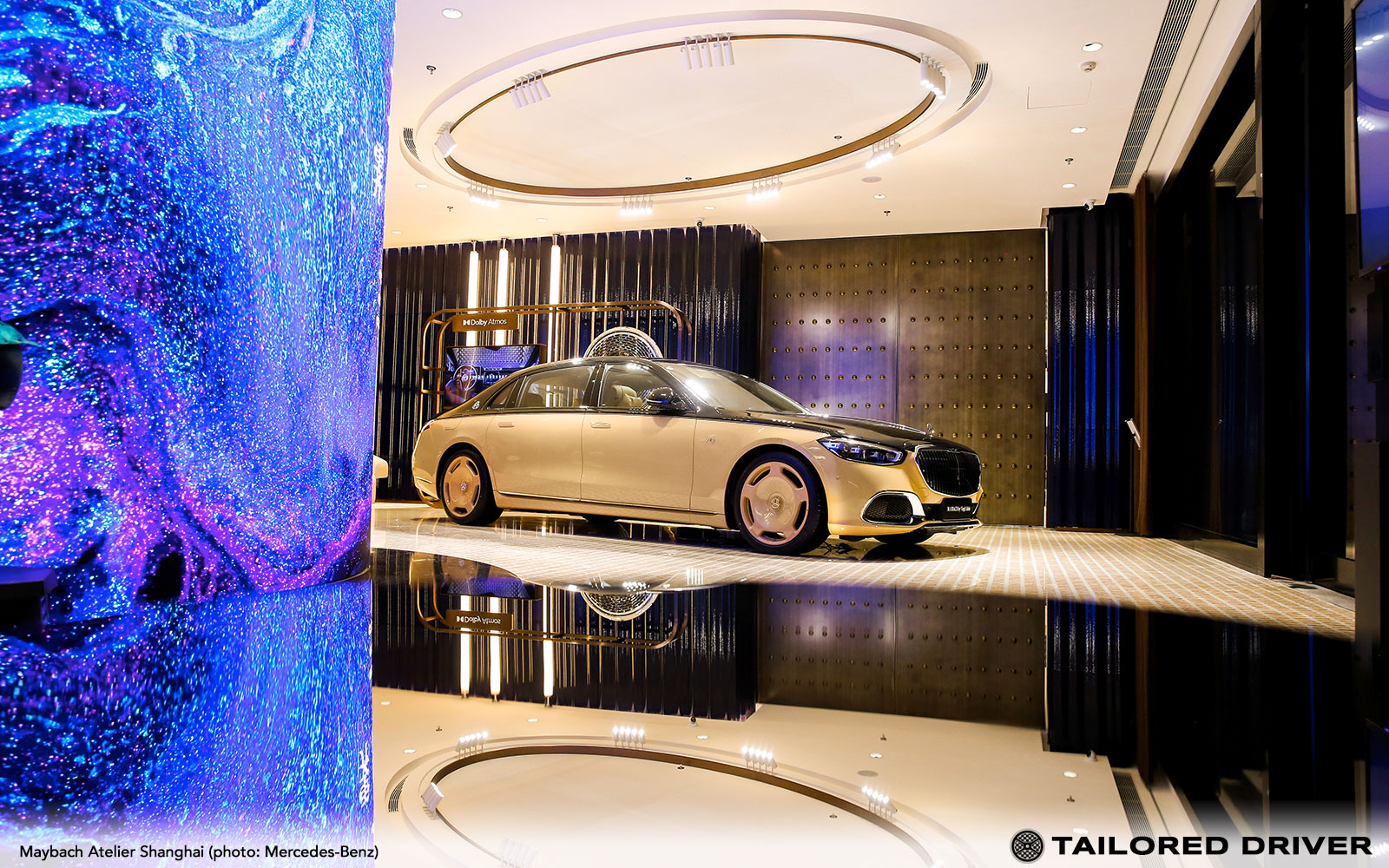
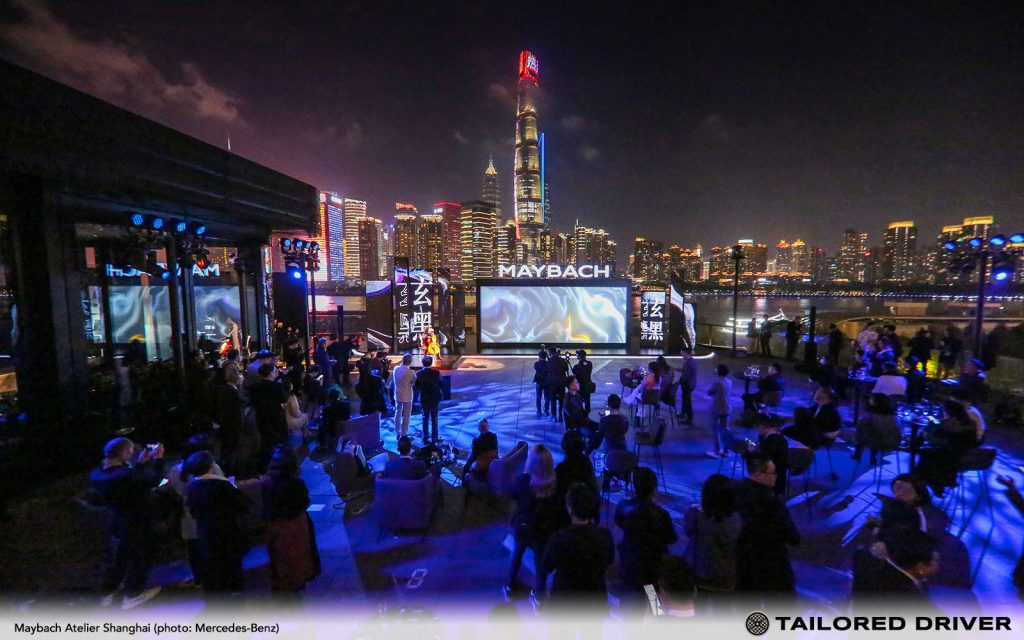
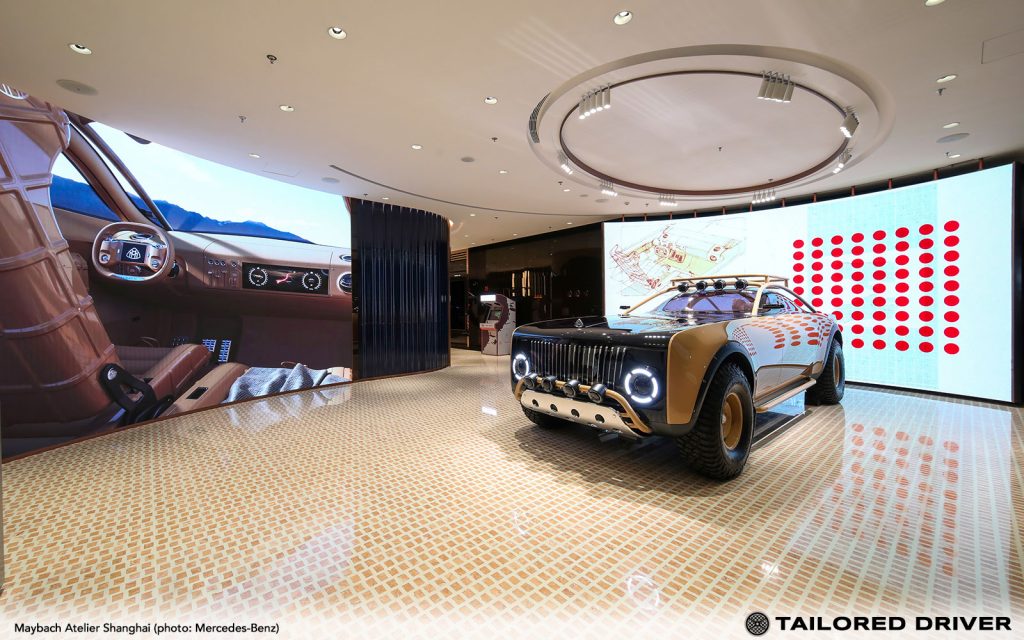
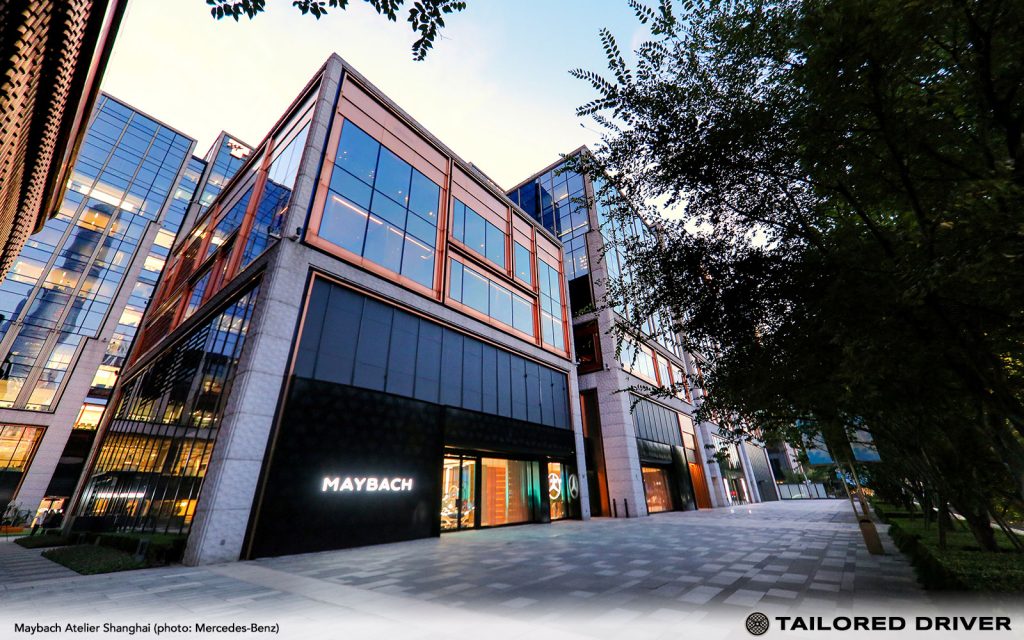
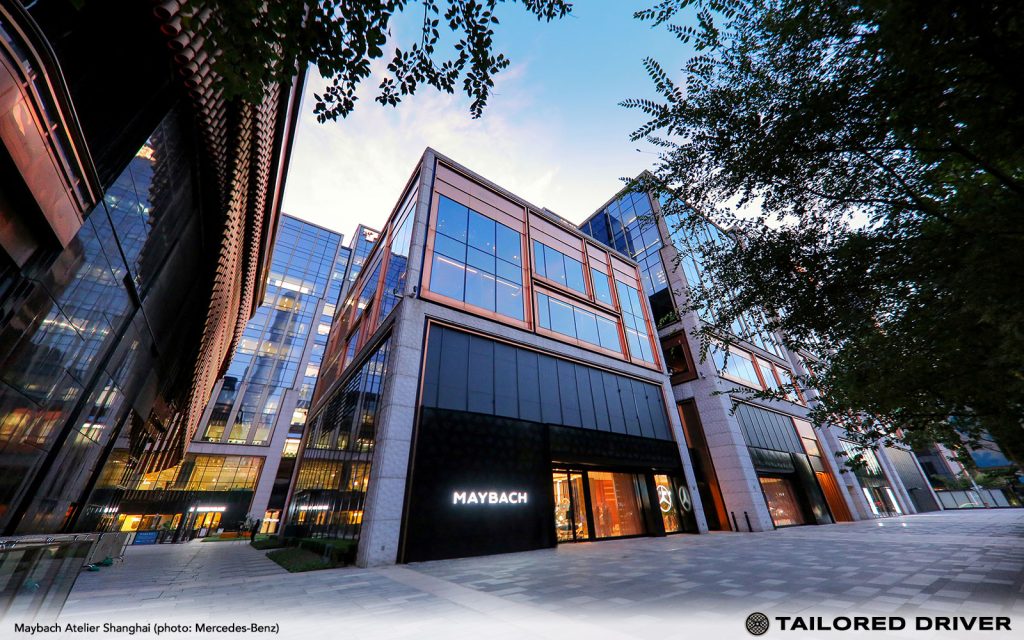
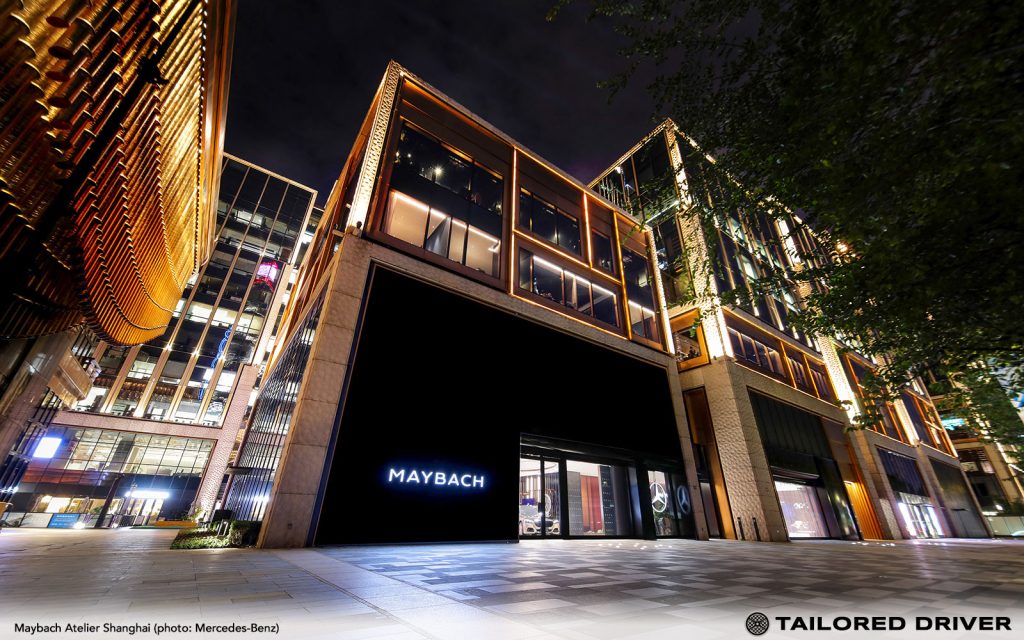
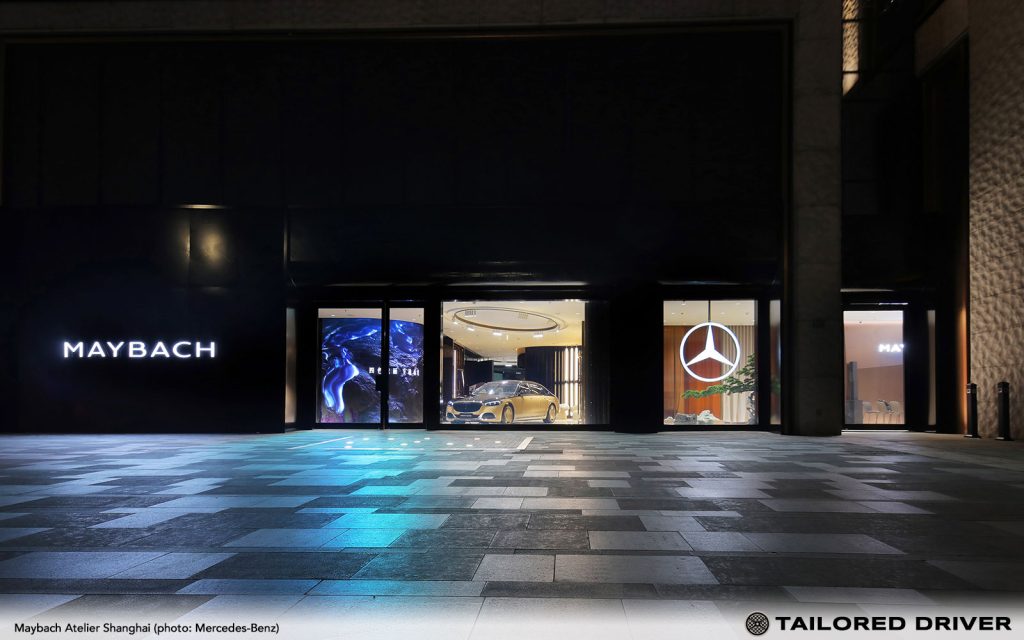
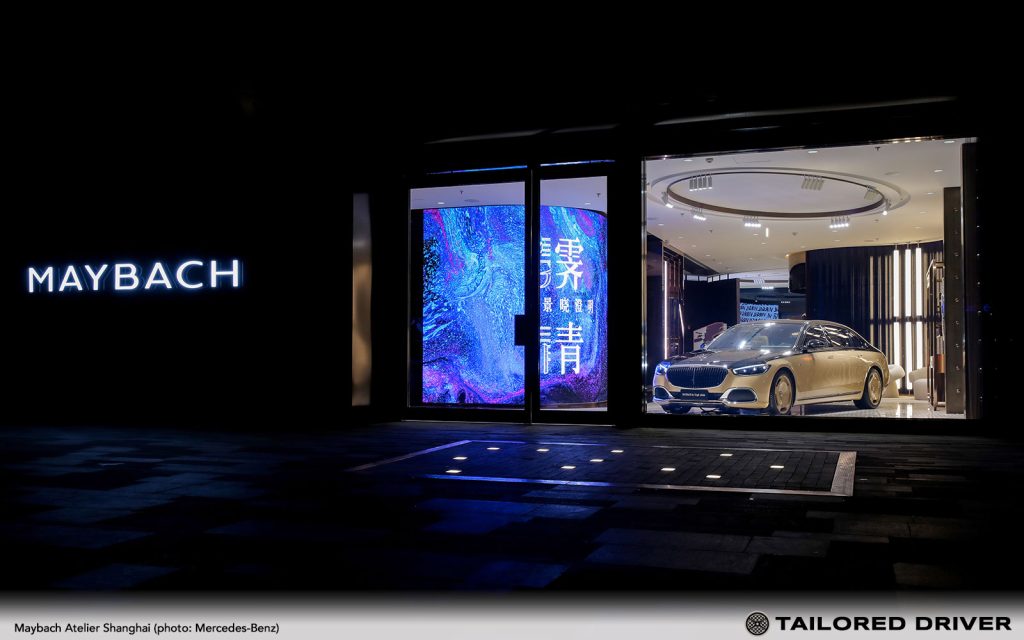
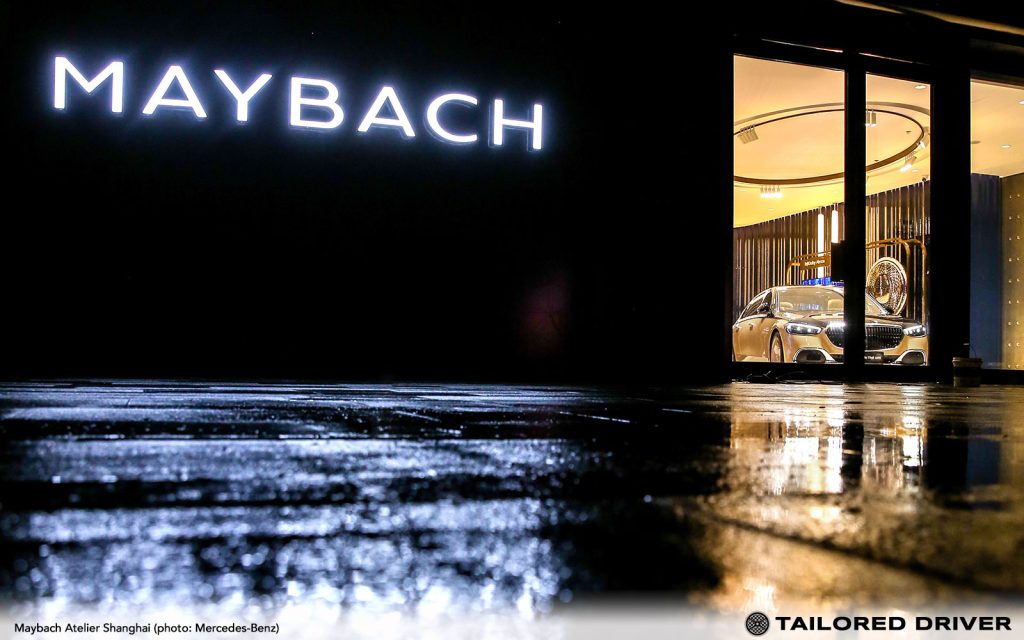
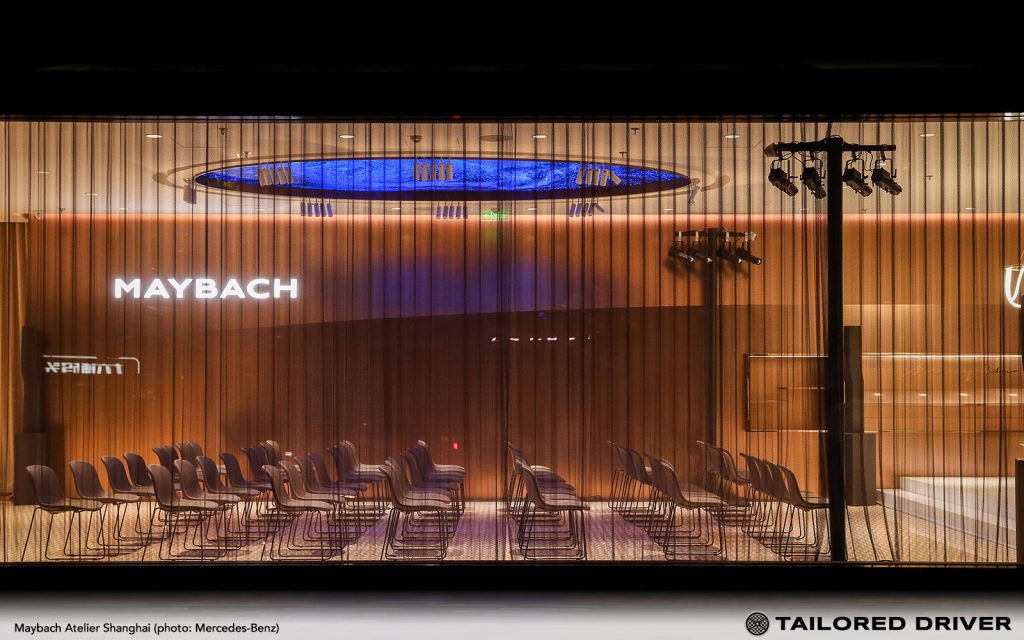
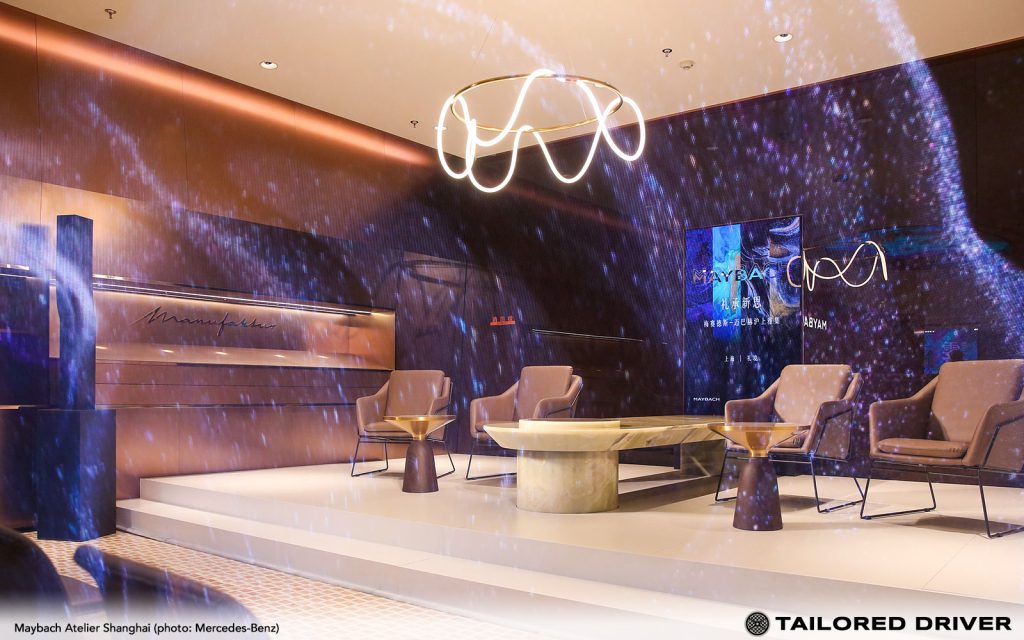
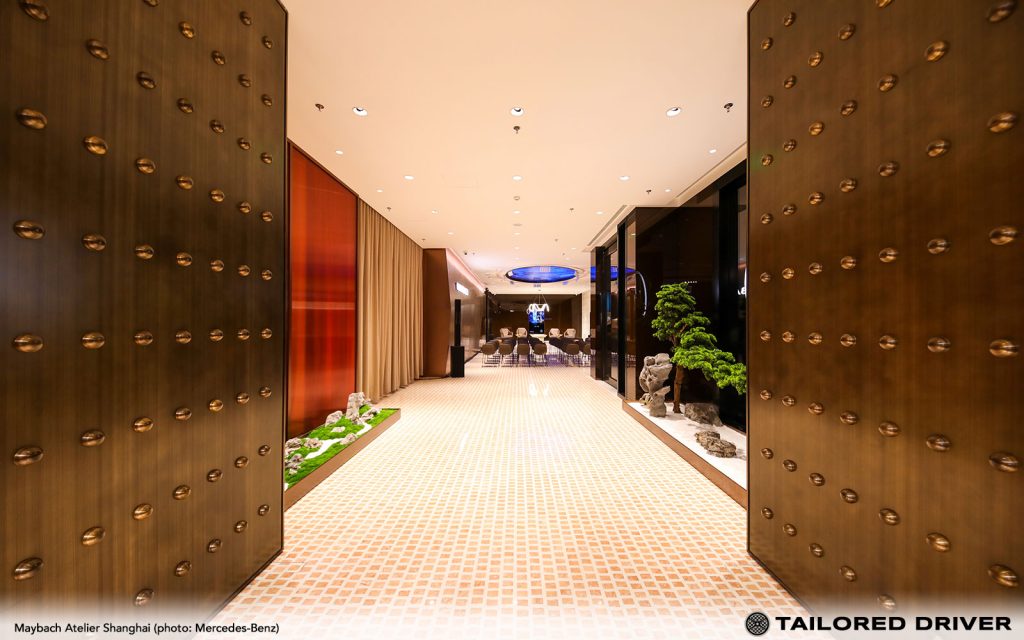
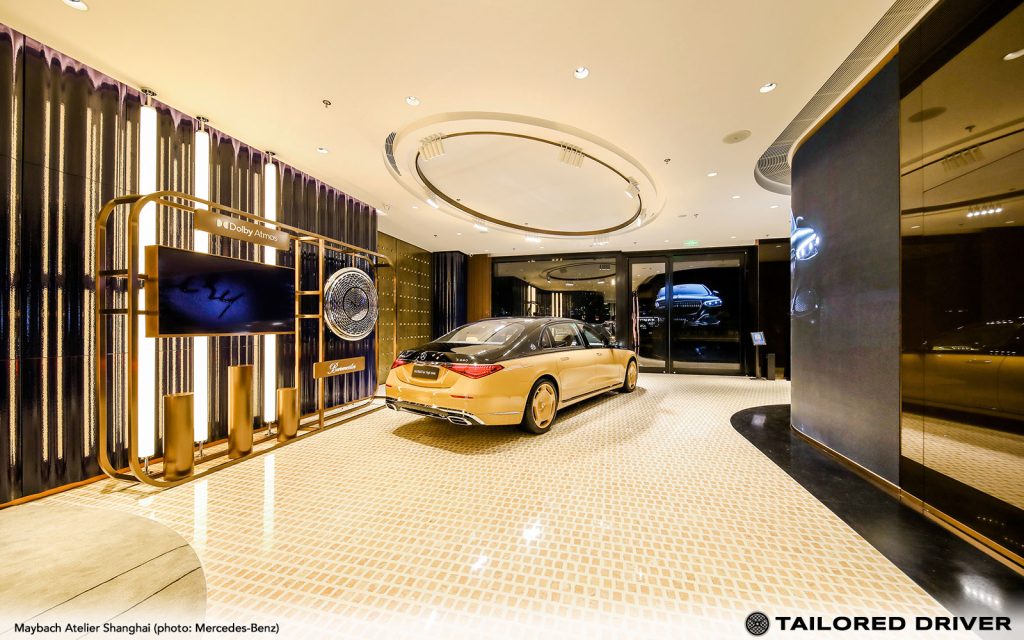
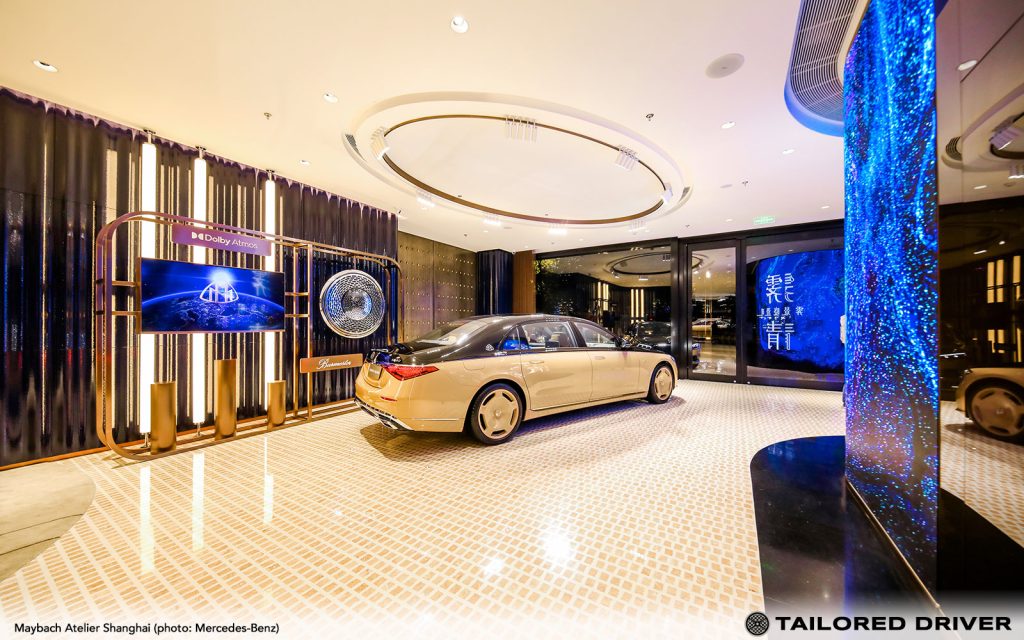
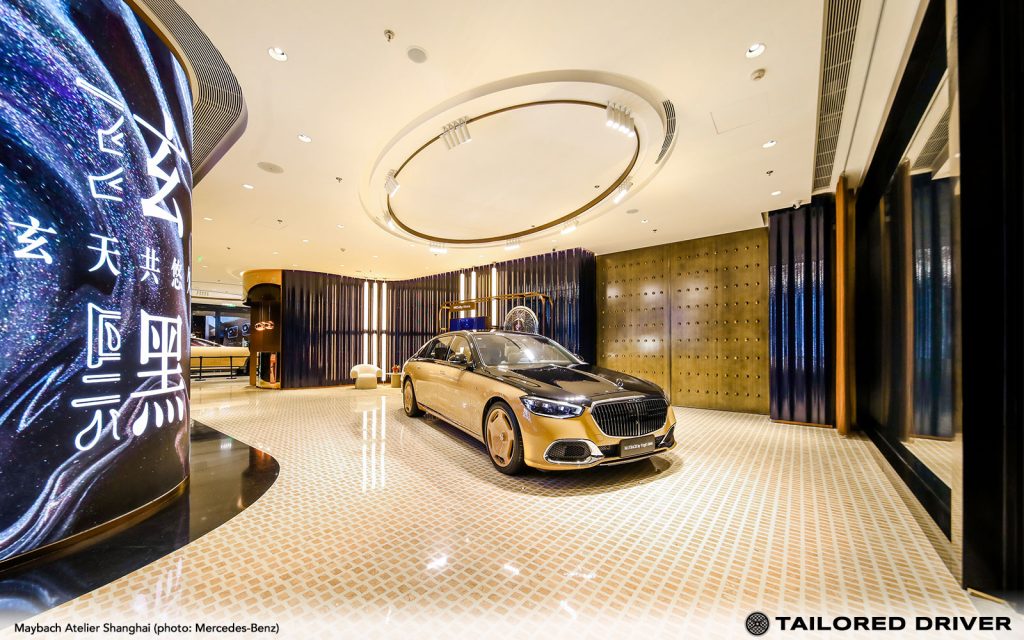
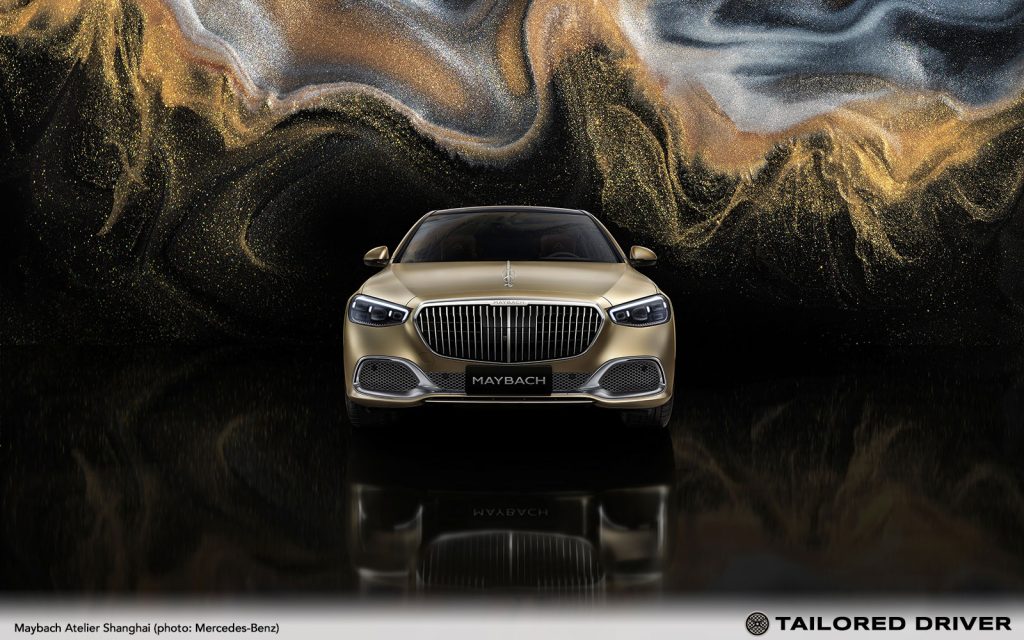
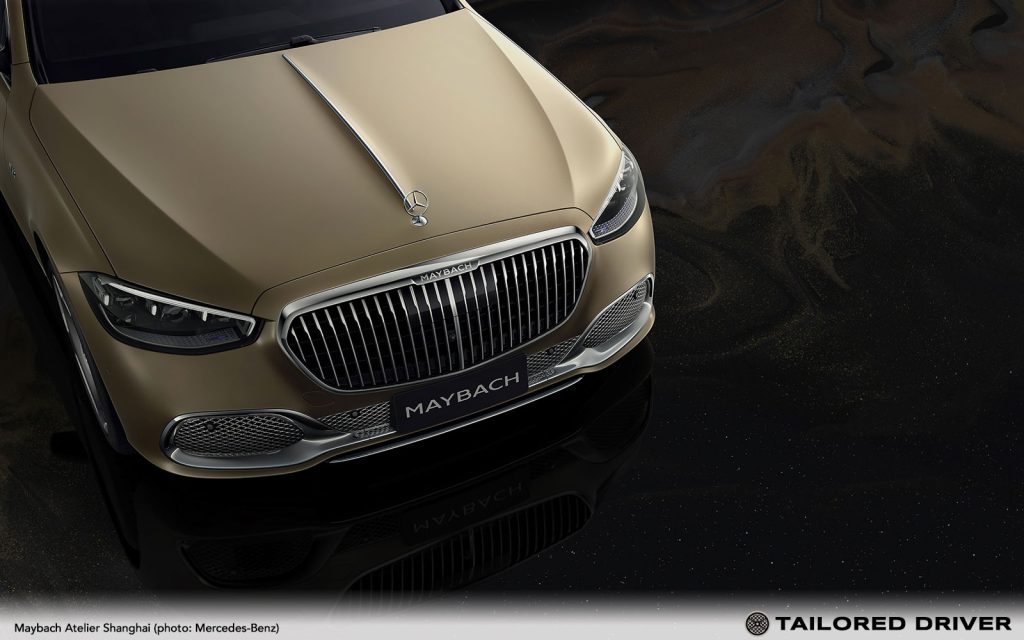
Mercedes-Maybach opens its first ‘Maybach Atelier’ in Shanghai in October for a comprehensive digital and physical luxury experience in retail.
The new multifaceted and holistic retail format highlights Maybach’s creator aura, where guests can immerse themselves in the brand.
Further Maybach Ateliers will open globally over the coming years through to 2030, in line with developing sales channels to present a cohesive brand strategy.
[source: Mercedes-Benz]
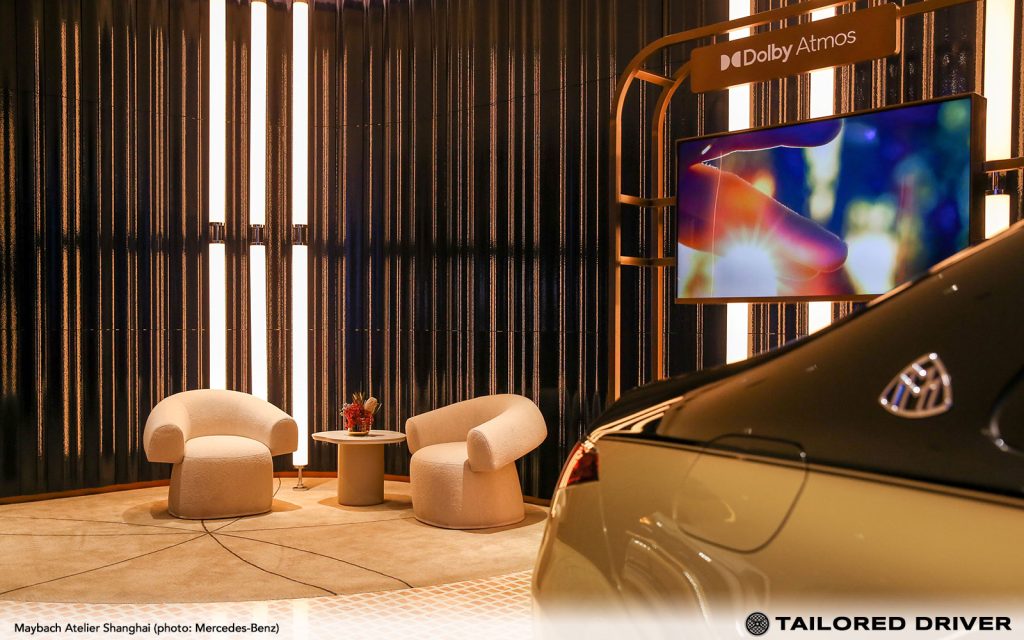
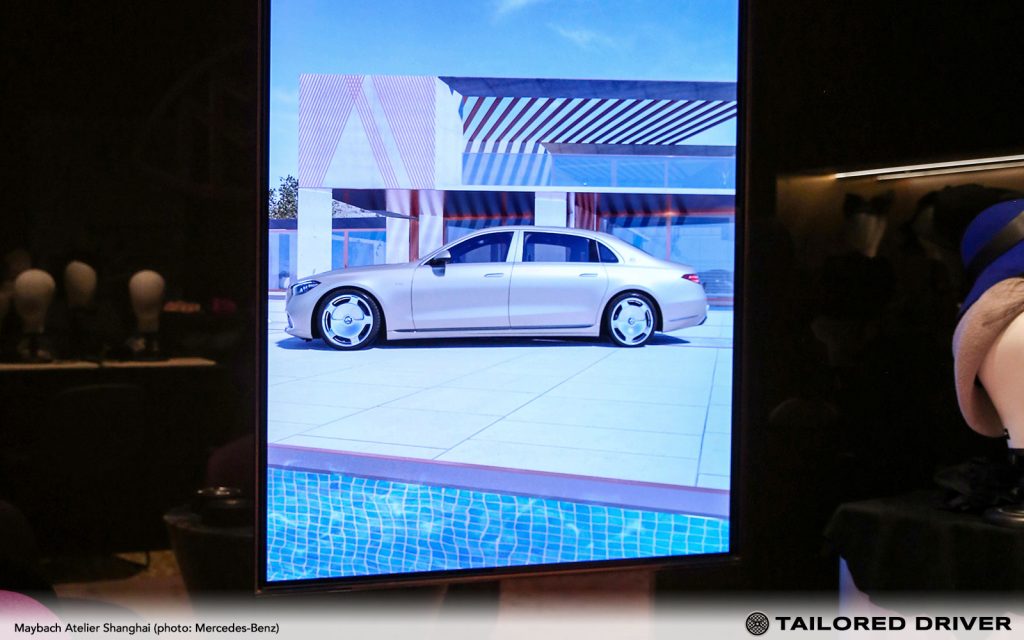
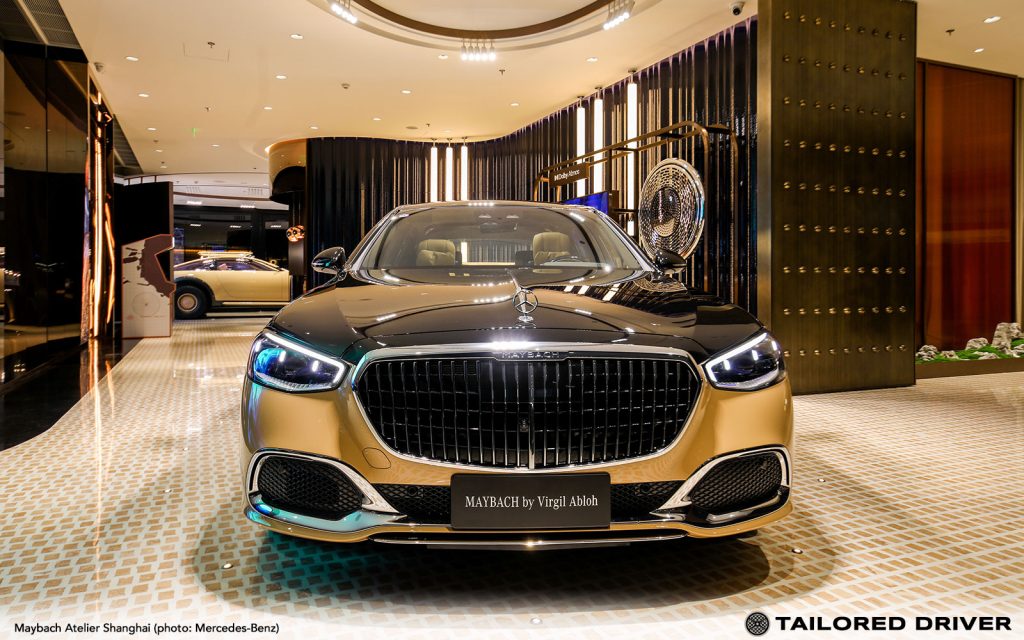
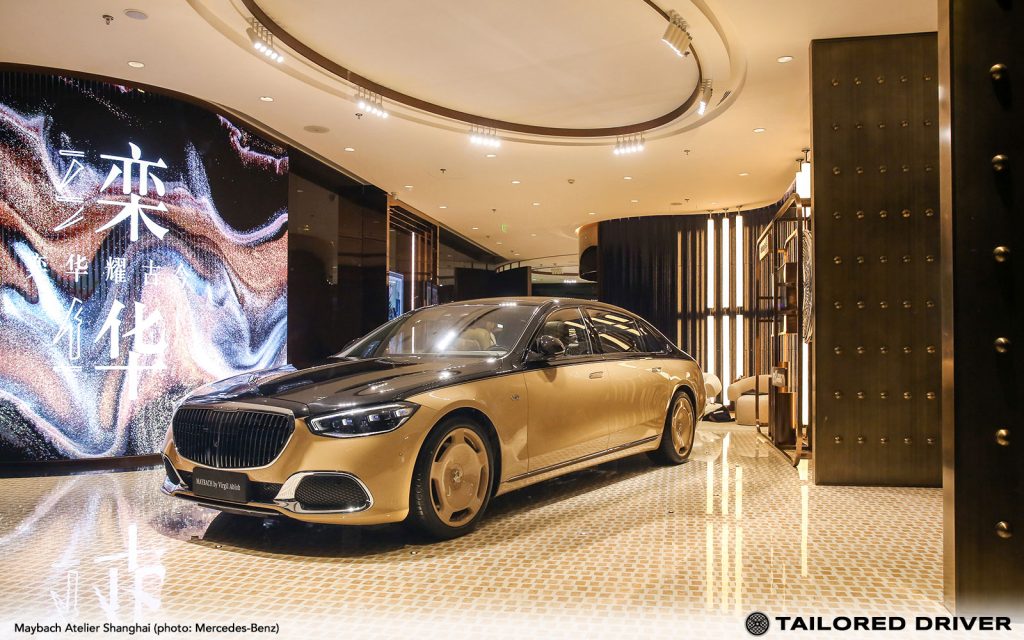
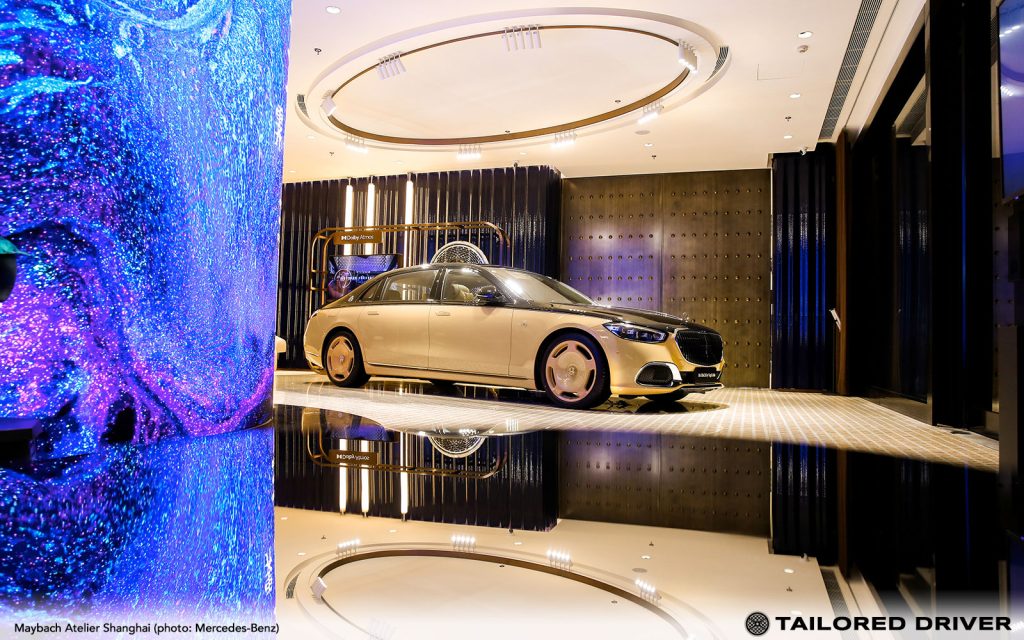
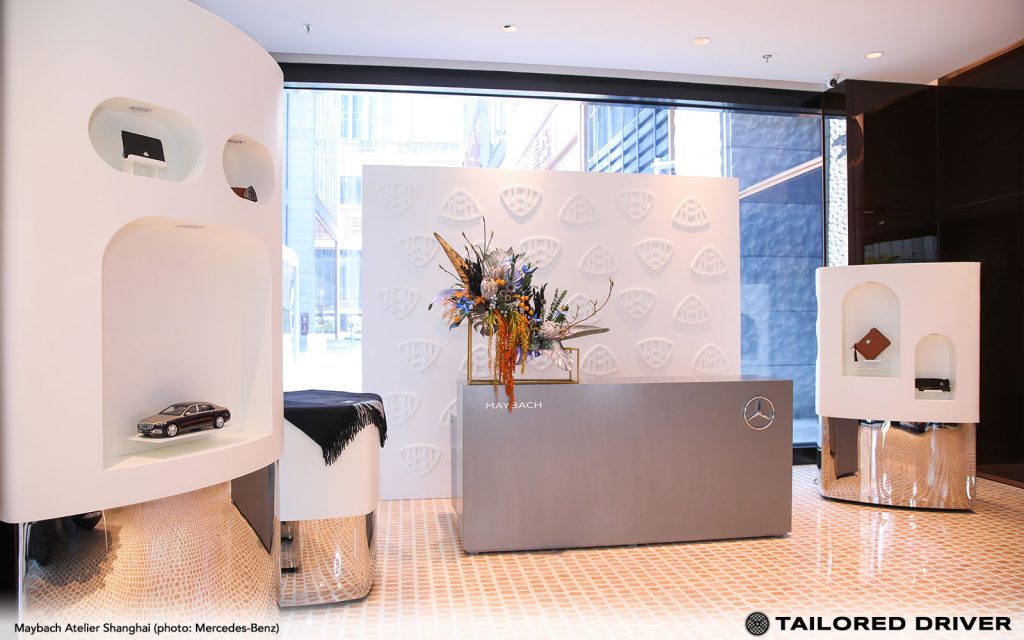
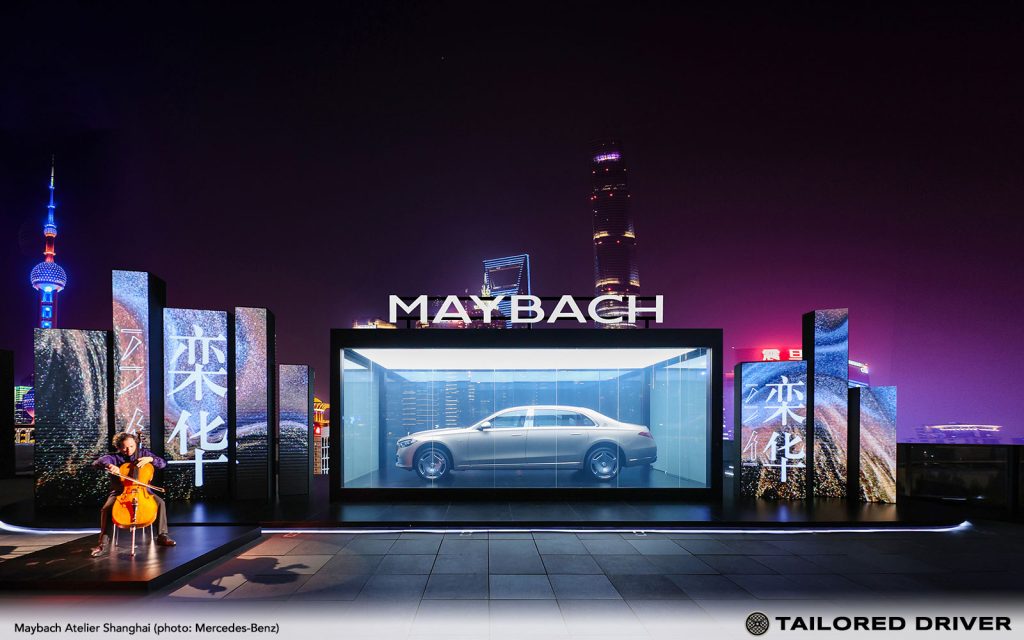
Mercedes‑Maybach, the luxury legend that keeps reinventing itself, is embarking on the next chapter of its historic journey with the Maybach Atelier. In keeping with the brand’s sophisticated yet progressive design, the Ateliers will offer: salons privés for more private conversations and meetings in an exclusive setting, physical and digital art programmes, 3D haptic configuration and a new concept for digital installations. And of course, you will be able to purchase a car, expertly guided by Maybach consultants.
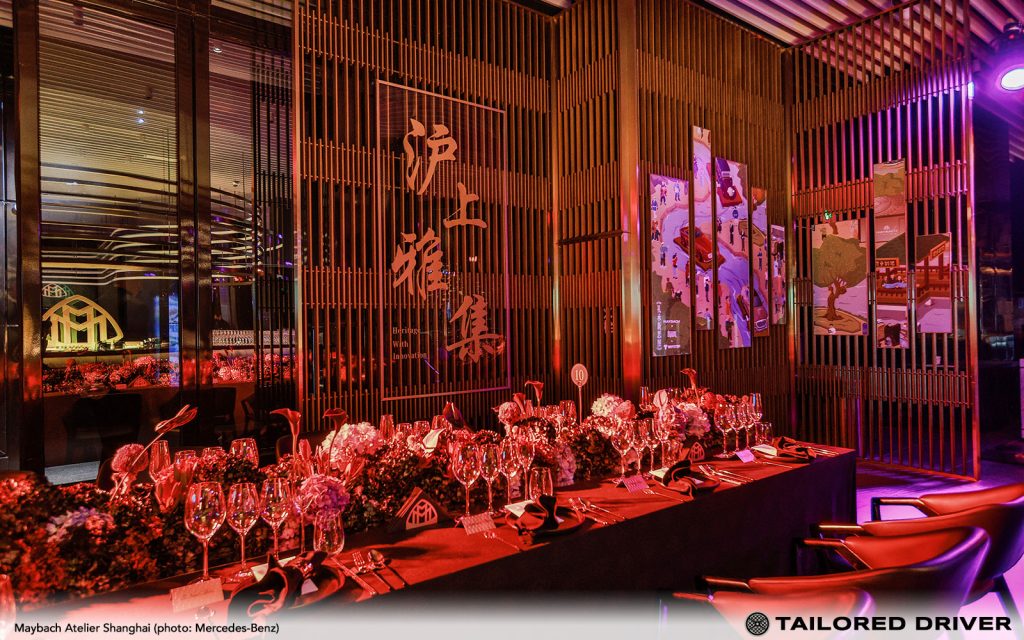
On October 21, 2022, the world’s first Maybach Atelier opened in Shanghai – a city bursting with creativity and inspiration – in the heart of the metropolis, located at No. 558 at the Bund Finance Center. The exclusive opening event was themed ‘Heritage with Innovation’. Investors, artists and high-end customers were invited to experience the brand’s core elements in connection with contemporary Chinese ‘rites’ such as the Arts, music and culture.
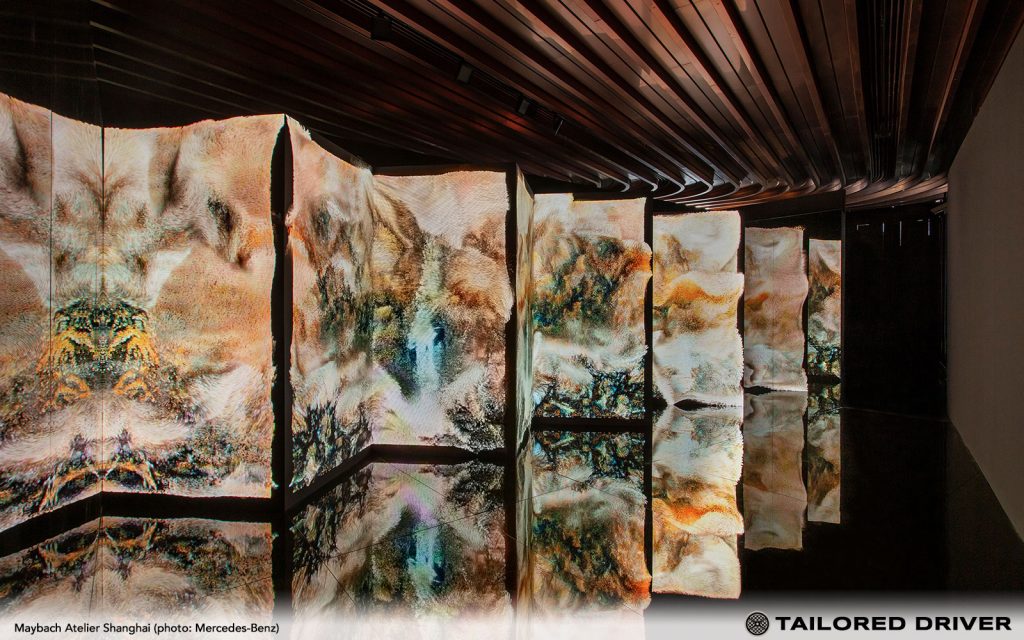
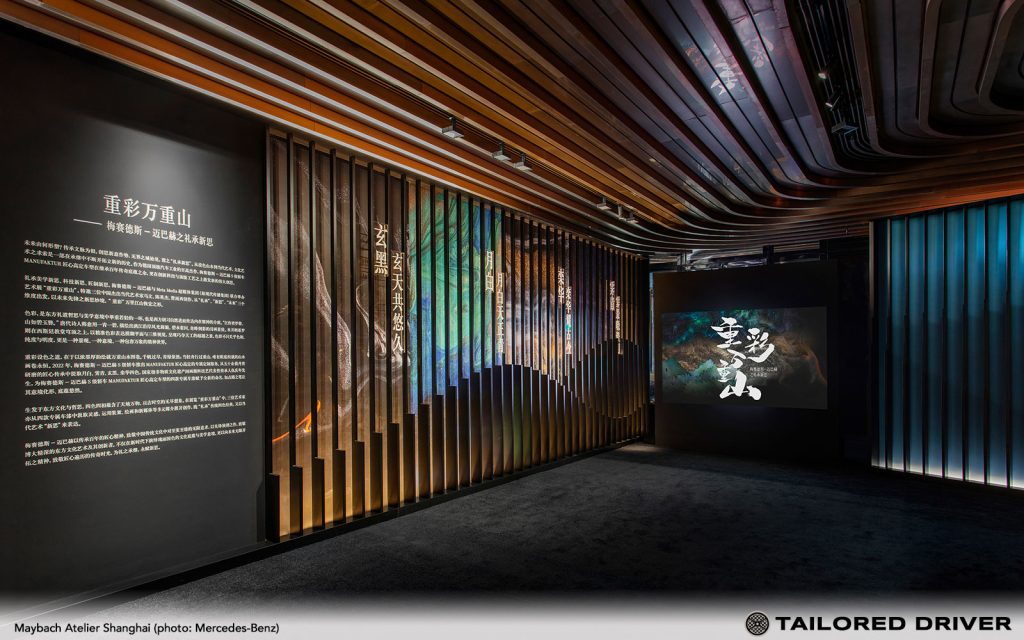
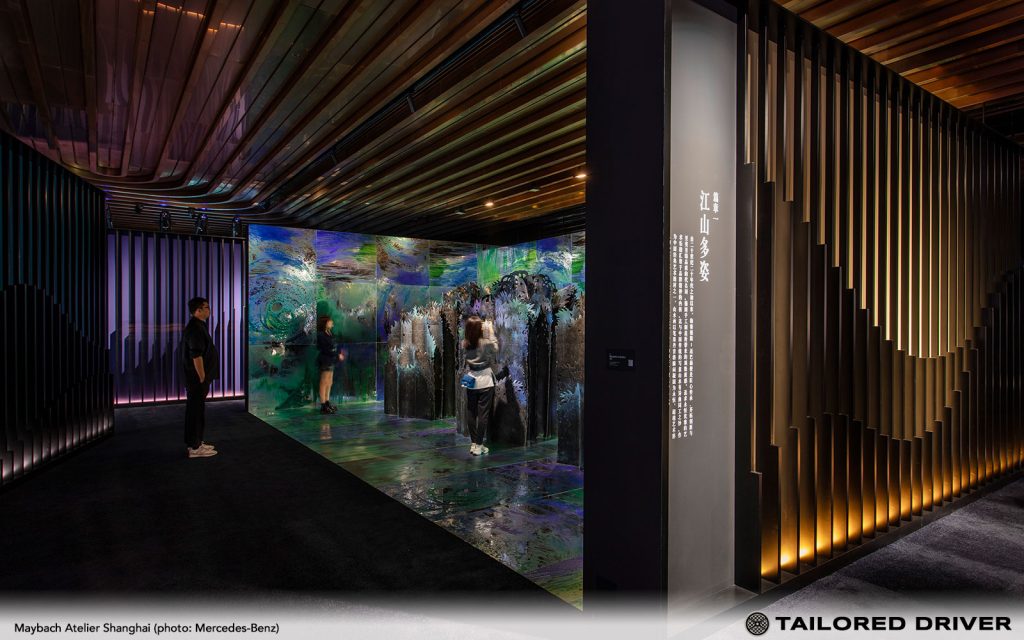
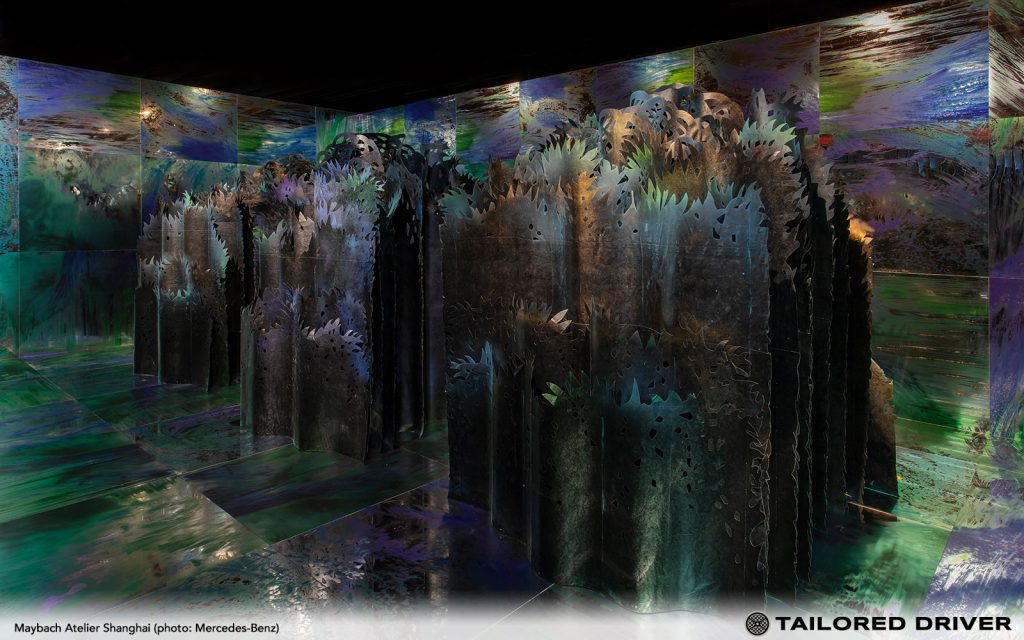
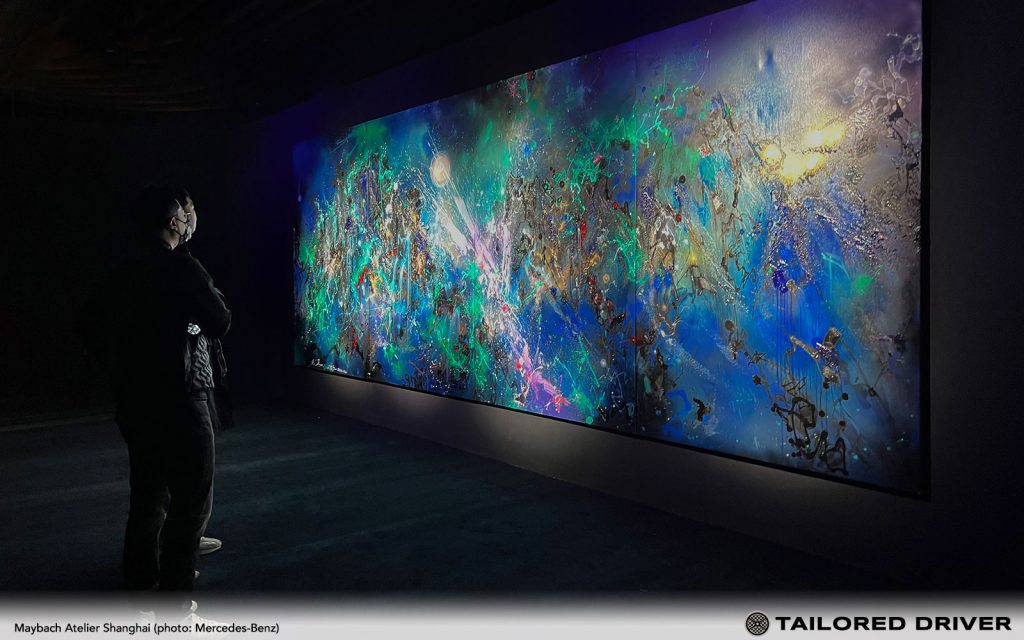
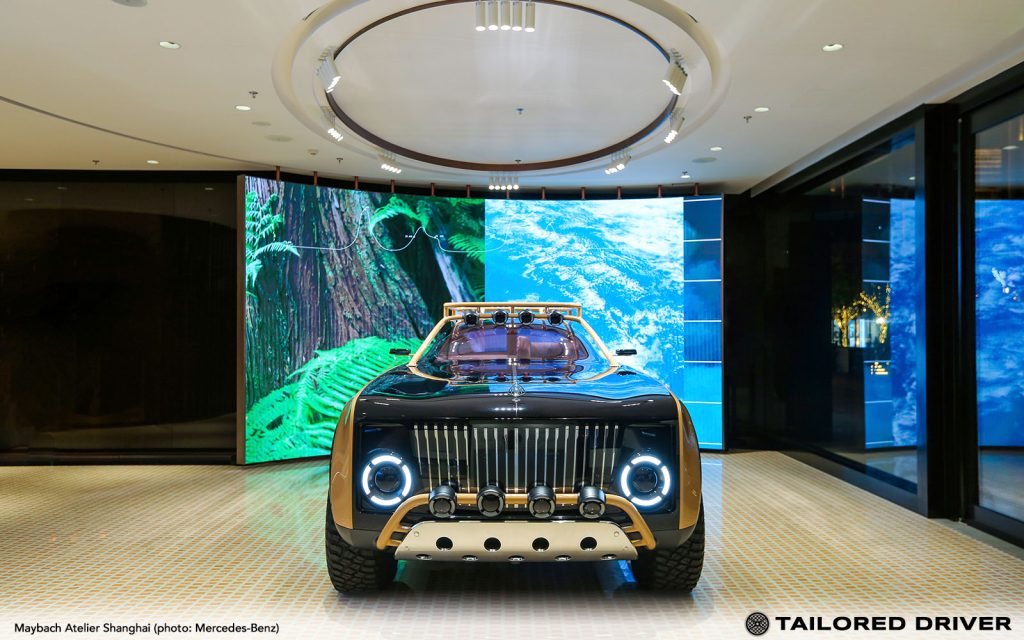
An Art Exhibition, which opened officially at the Shanghai Fosun Art Center, was curated to express the Mercedes‑Maybach brand and MANUFAKTUR label – to unite creators and connaisseurs in redefining the boundaries of culture. The Exhibition saw Maybach collaborate with three Chinese artists on individual installations that spanned the mediums of paper cutouts, ink graffiti and immersive digital. Three highlight cars were presented over the course of the event, they were: the Project MAYBACH show car, Mercedes‑Maybach S 680 by Virgil Abloh (WLTP combined fuel consumption: 14.3‑13.4 l/100 km | combined CO₂ emissions: 326‑304 g/km)[1], and a Mercedes‑Maybach S 680 MANUFAKTUR (WLTP combined fuel consumption: 14.3‑13.4 l/100 km | combined CO₂ emissions: 326‑304 g/km)1. Equipped with the
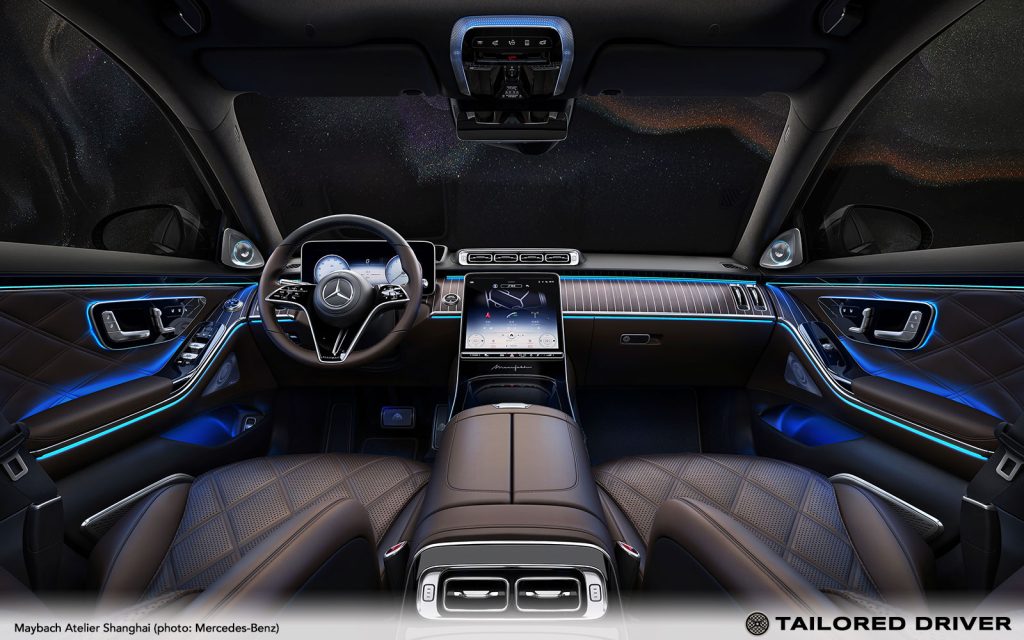
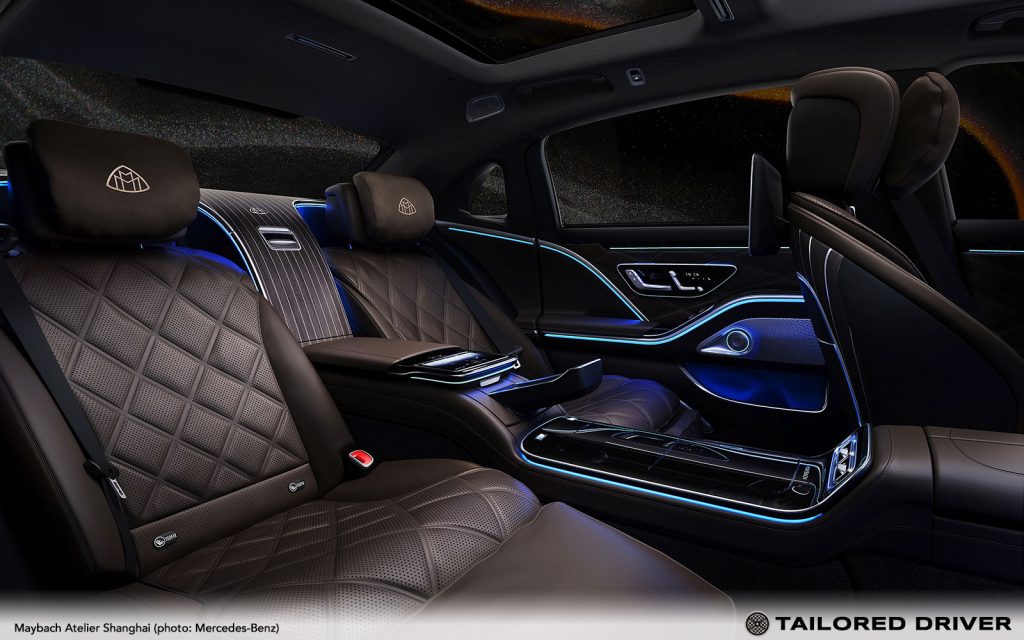
Dolby Atmos® and the Burmester® high-end 4D Surround Sound System, the Maybach by Virgil Abloh provided guests the ultimate in-car audio experience. The MANUFAKTUR model showcased an even more individualized experience to meet customers’ needs at the top end of the Mercedes‑Benz portfolio.
Jan Madeja, President & CEO of Beijing Mercedes‑Benz Sales Service Co., Ltd., says: “Building on Mercedes‑Maybach’s global success over the years, especially in China, it is only natural for us to open the world’s first Maybach Atelier in Shanghai. Here, we are bringing Chinese customers the finest experience through Maybach’s utmost attention to detail and state-of-the-art technology.”
“With the Maybach Atelier we continue to build on the brand’s pioneering aura and creator DNA to develop unique moments, in alignment with our customer’s lifestyles. With this new, dedicated retail concept we celebrate artistic interpretations of how we elevate the Maybach excellence to magic, creating moments that represent the brand’s rich heritage and progressive future”, says Daniel Lescow, Head of Mercedes‑Maybach at Mercedes‑Benz Group AG. “We are delighted for this next Mercedes‑Maybach chapter and look forward to future openings in upcoming years.”
The Shanghai Atelier is merely the beginning, as more Maybach Ateliers and other brand dedicated retail formats will open around the world over the coming years through to 2030. In tandem with the Atelier launches, sales channels and concepts will evolve to embody the true personality of Mercedes‑Maybach and create further awareness for the brand within the Mercedes‑Benz portfolio.
At its heart, Mercedes‑Maybach stands for state-of-the-art technology, exquisite craftsmanship and discerning luxury – driven by its aspiration of creating the ‘best of the best’. The brand has ever since inspired royalty, world leaders, luminaries and connoisseurs alike. Now, through Maybach Atelier, there is a dedicated space to demonstrate how Mercedes-Maybach continues to create new experiences by combining tradition with visionary concepts for the requirements of the future.
[1]The stated figures are the measured “WLTP CO₂ figures” in accordance with Article 2 No. 3 Implementing Regulation (EU) 2017/1153. The fuel consumption figures were calculated based on these figures.
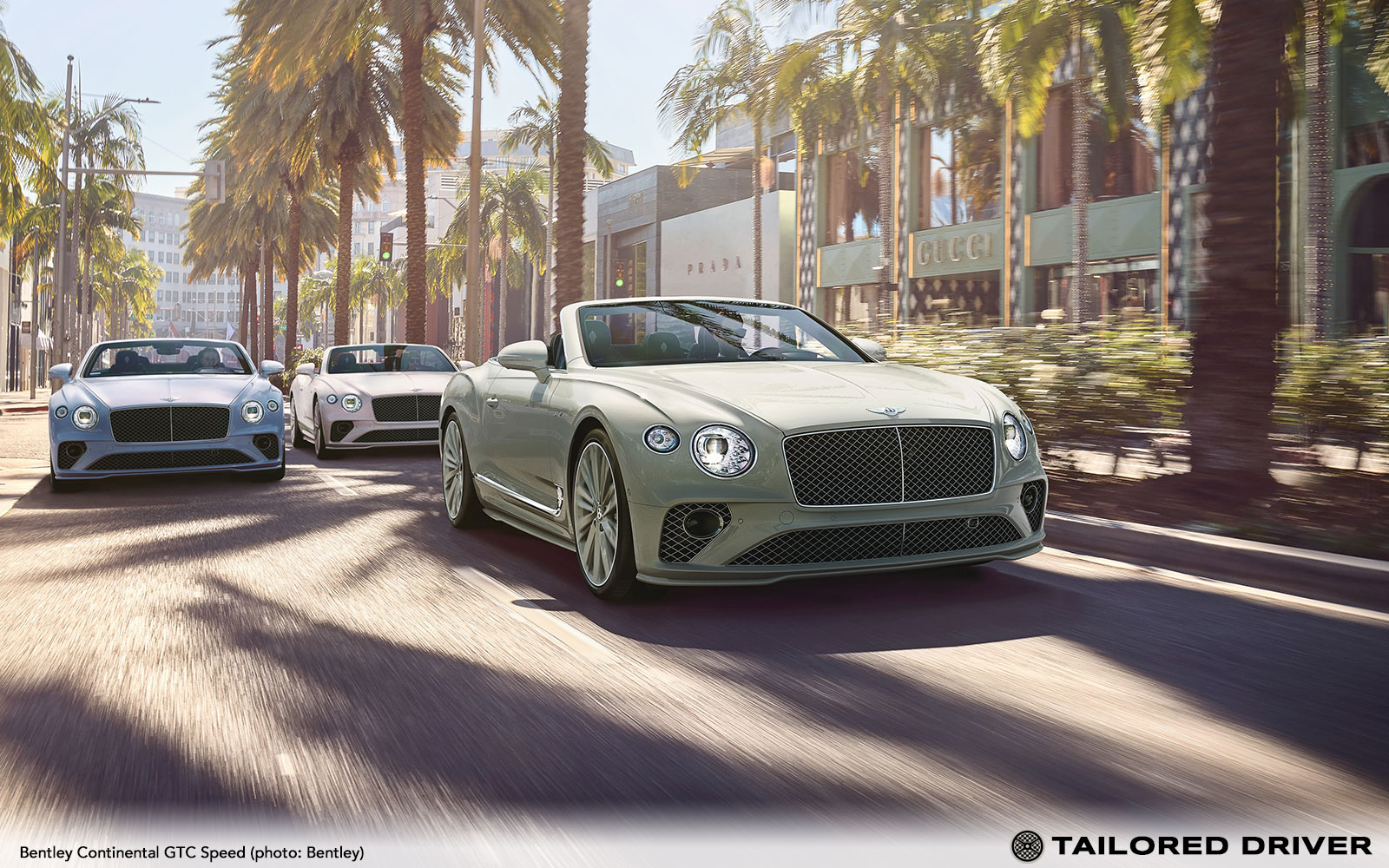
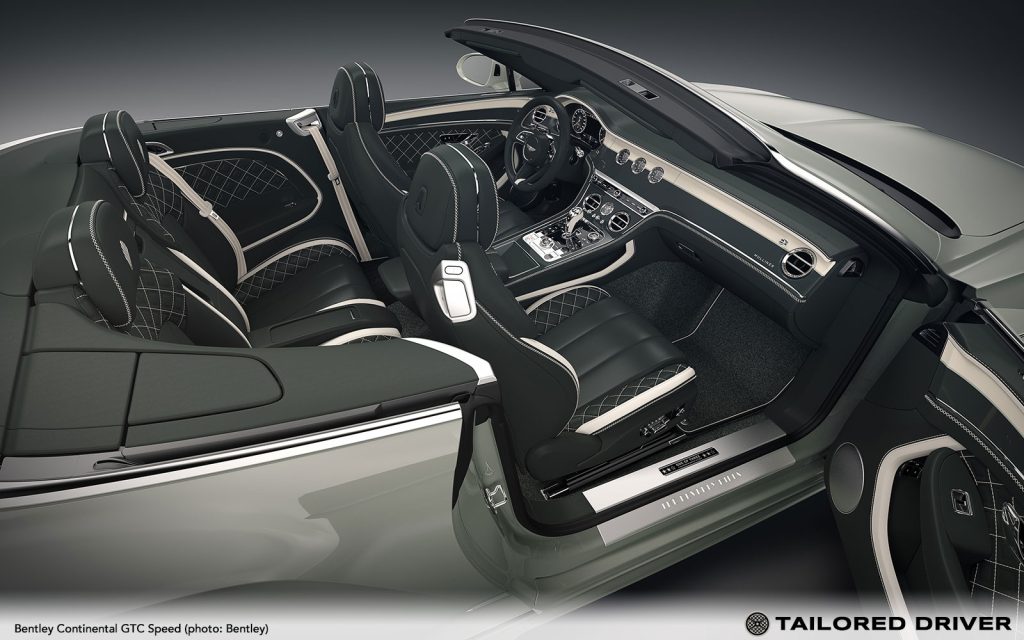
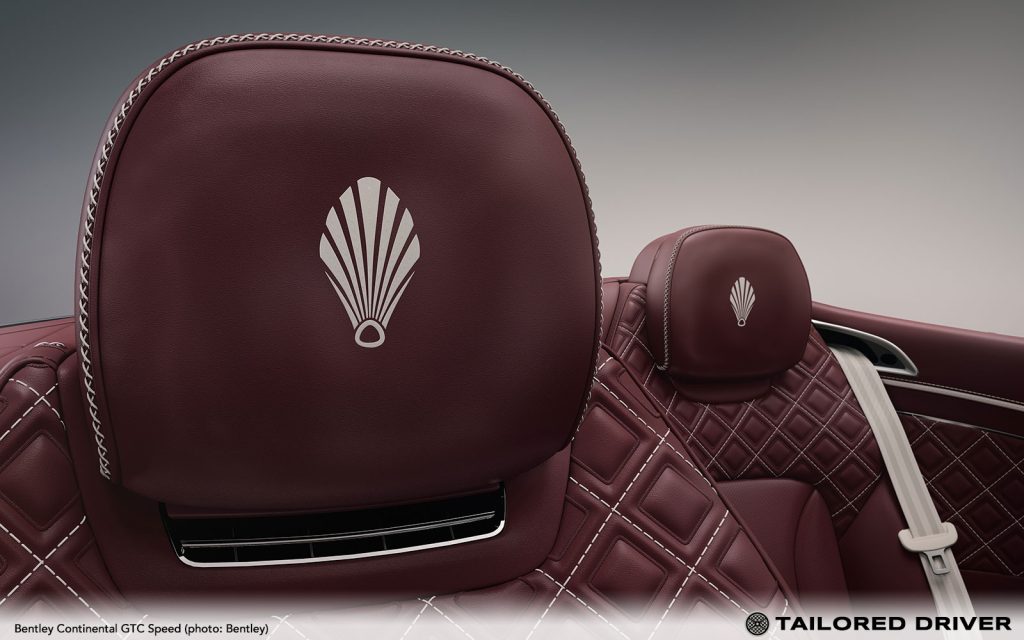
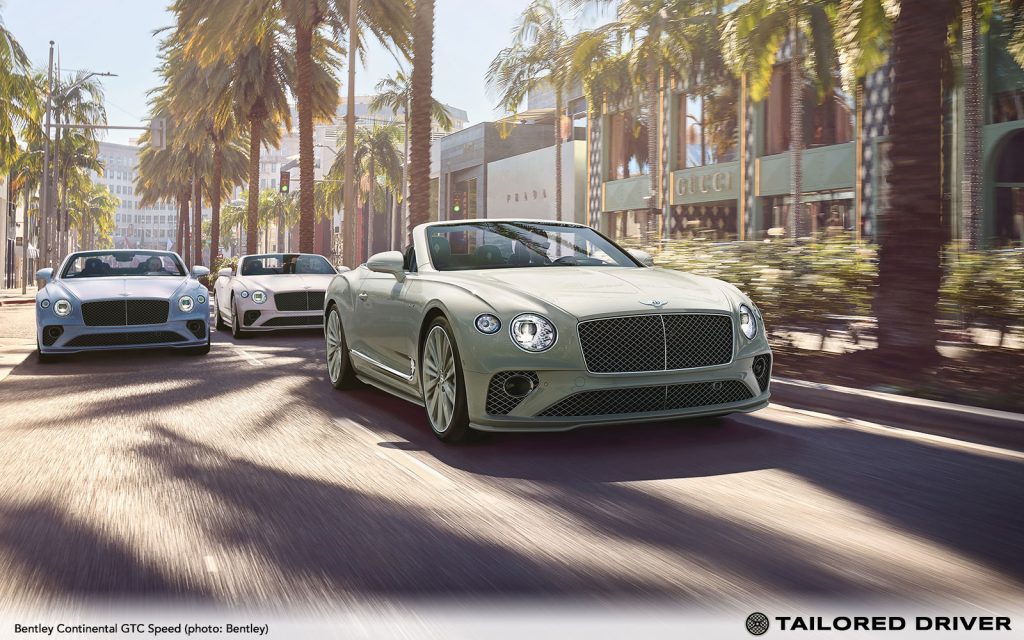
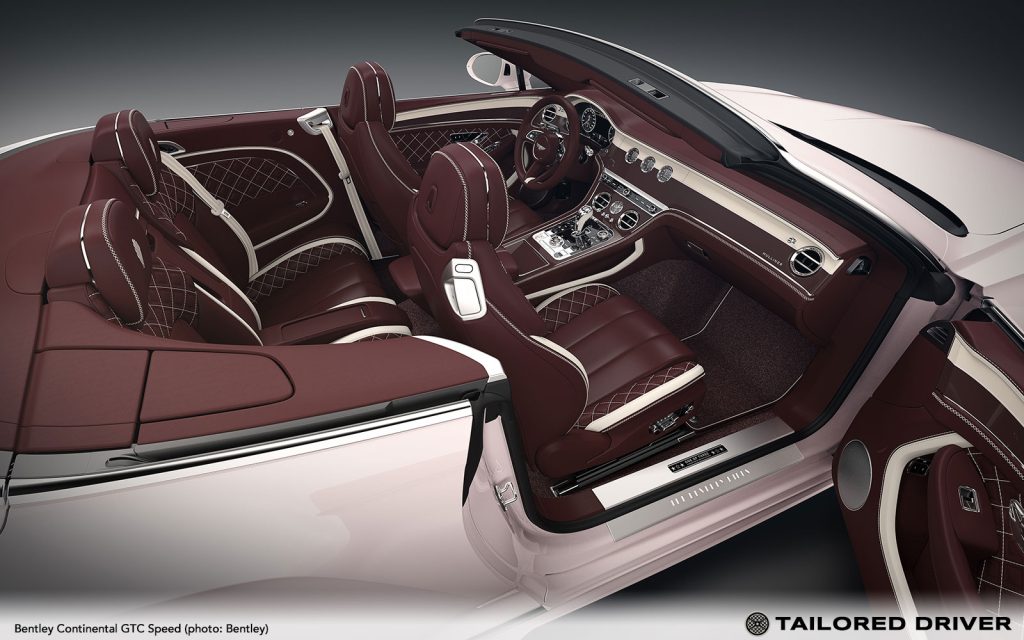
Three new, curated and pastel-coloured Continental GTCs for Bentley Beverley Hills showcase Mulliner design and craftsmanship
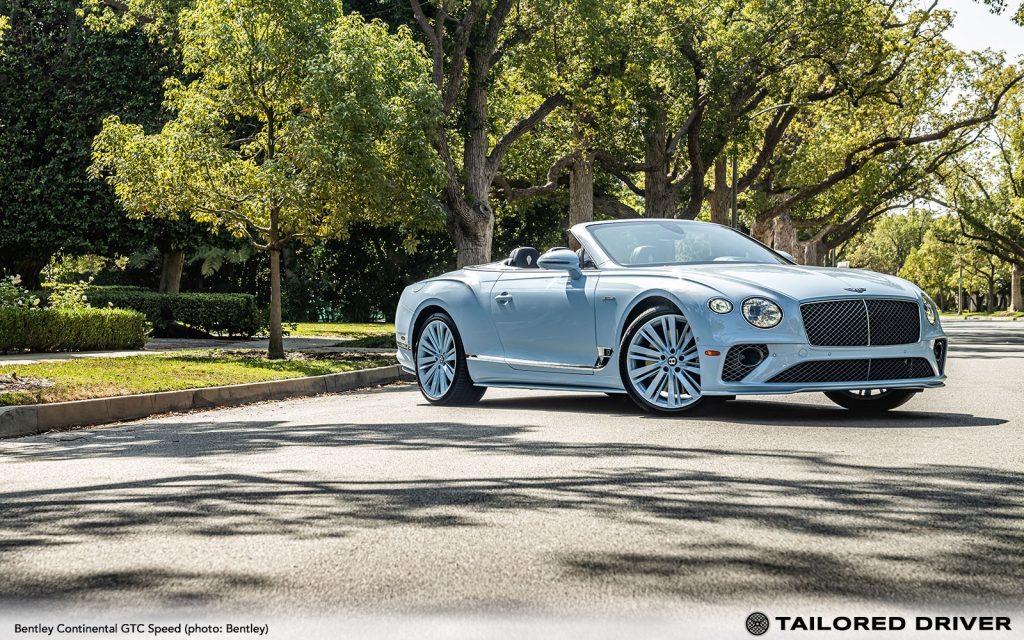
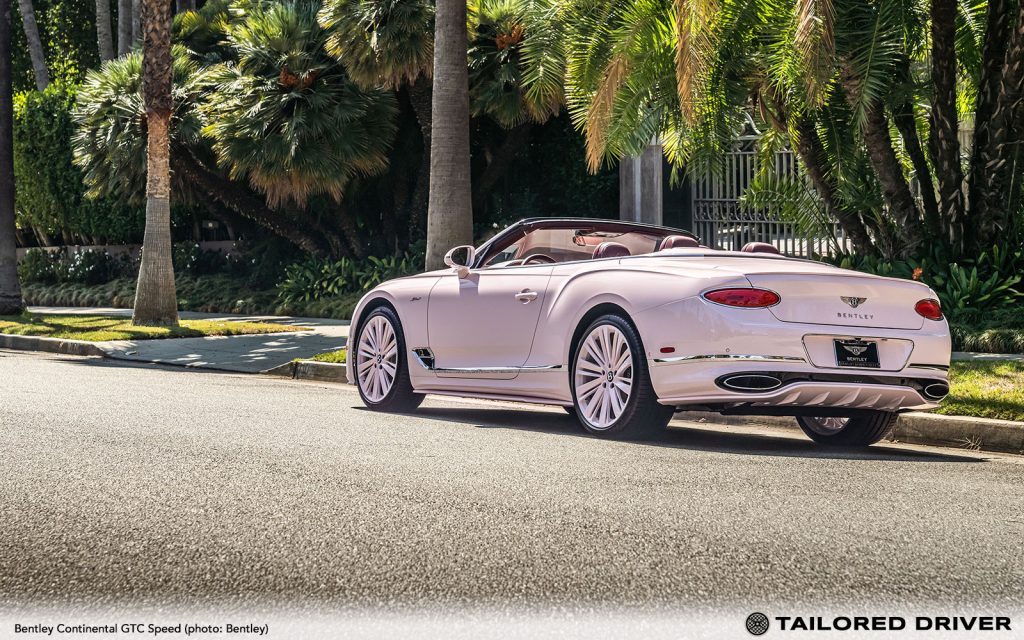
Jetstream II, Sage Green and bespoke Hollywood Blush Pink combine to form a unique and striking trio
Customer demand for Mulliner features and individuality continues to expand exponentially
Special paint finish orders more than double since 2020
Mulliner personal commission orders triple in two years
[source: Bentley]
Crewe, England – Bentley Beverly Hills has used the dizzying portfolio of finishes, materials and features on offer via Bentley Mulliner to commission a limited edition of three Continental GTC Speed models in colours and finishes that recall the golden age of Hollywood.
1920’s residents such as Mary Pickford, Douglas Fairbanks, Will Rogers and Rudolph Valentino gave Beverley Hills a cachet that it has never lost, and the colours of that Art Deco era have been brilliantly evoked in the Jetstream Blue, Sage Green and Hollywood Blush Pink finishes of the three Mulliner Bentleys.
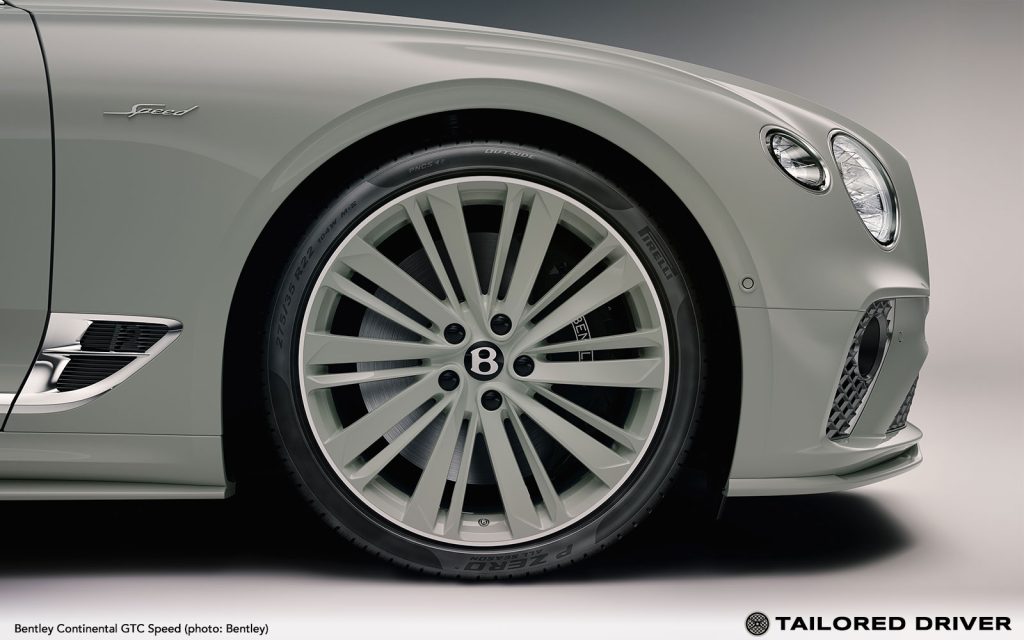
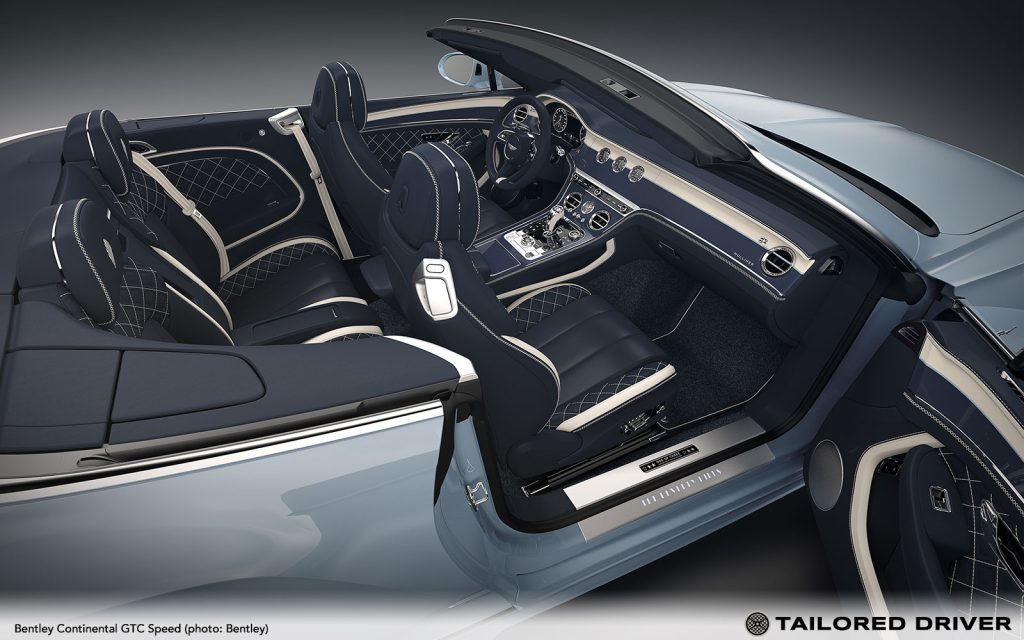
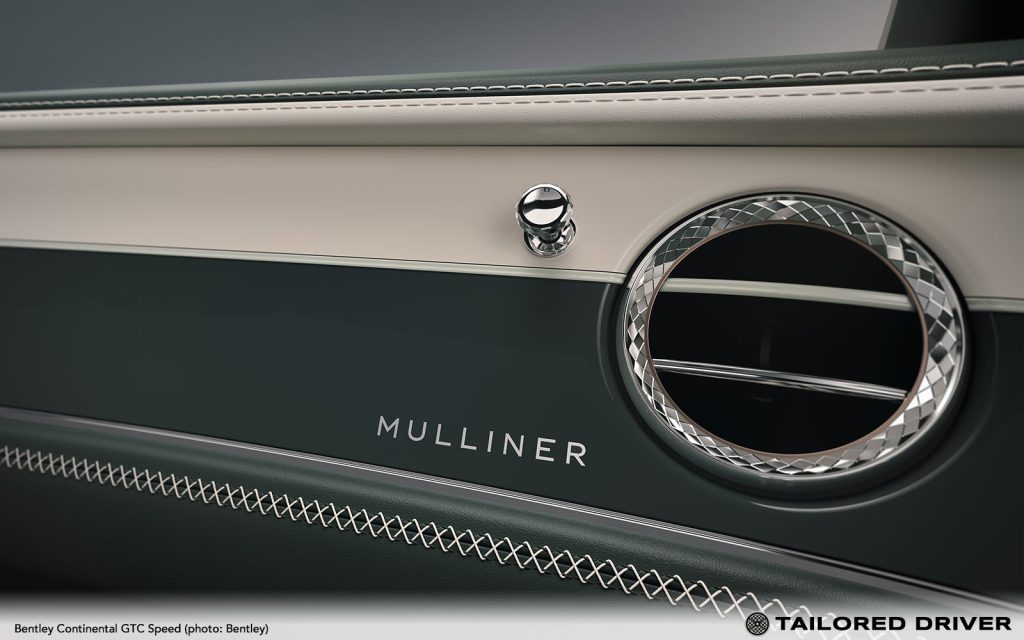
The first of the three Beverley Hills special edition Continental GTC Speed models features Jetstream II blue finish for both the bodywork and the 22” ten-spoke wheels, with the subtlest of pinstripes to the wheel edge. Highlights of the interior include Linen main hide and contrast stitching with secondary hide in Imperial Blue. Sweeping from waist rail to waist rail across the dashboard is a high gloss Piano Linen over Imperial Blue dual veneer. All models feature the Styling, Touring and City specifications and as a subtle nod to Hollywood’s golden era the words ‘The Beverly Hills’ are rendered in a ‘30s typeface on the illuminated sill plate.
The second of the three Beverly Hills commissions mirrors the specification of the first, but with the pastel tone of Sage Green as the dominant exterior colour on bodywork and wheels. The interior’s dual colour split features Cumbrian Green and Linen, with the same two colours inventively used as a dual veneer on dash and waist rails.
The final Beverly Hills commission of the trio is finished in a subtle, pale ‘Hollywood Blush’ pink. A harmonious contrast is provided by the sumptuous interior, with Linen as the main hide and the deep red Cricketball hide as the secondary contrast. The same two colours are selected for the dual veneer on dashboard and waistrails.
Describing the inspiration for the three-car Beverly Hills Collection, Danika Quinn, Bentley Brand Manager comments:
“Beverly Hills has always been the epitome of glamour, particularly during Hollywood’s Golden Age. This collection is a nod to the bygone era of Old Hollywood encapsulating the spirit of that time; bold white wall tires, soft colour palettes and unique designs that illustrate the “class” of classic cars. The experts at Bentley Mulliner brought my vision to life and helped curate a masterpiece collection for Bentley Beverly Hills that not only exemplifies the allure and grandeur of yesteryear, but also one that highlights the refinement and grace of modern-day Bentley craftsmanship.”
With its W12 engine delivering 659 PS (650 bhp), a 0-60 mph sprint time of 3.6 seconds (0-100 km/h in 3.7 seconds) and a top speed of 208 mph (335 km/h) the Continental GT Speed Convertible sits alongside its coupe sibling at the performance pinnacle of the Continental GT family. The Beverly Hills Collection shows what can be achieved through the Mulliner personal commissioning process, where customer, retailer and Mulliner’s design team collaborate to create truly unique cars.
Bentley and Mulliner: a 99-year partnership
Mulliner’s association with Bentley goes back to the earliest days of the company. Now Bentley’s in-house personal commission division, Mulliner plays a key role in defining the company’s future design DNA, as demonstrated to stunning effect by the extraordinary new Batur coupé. From special features and finishes to unique and limited-edition coachbuilt vehicles, the Mulliner name continues to represent the ultimate in Bentley design and craftsmanship.
Customers are showing an increasing appreciation of the individuality that a Mulliner feature can bring to their chosen Bentley. Since 2020, the percentage of Bentleys with specific Mulliner features continues to grow. The demand for Mulliner special paint finishes has more than doubled; and the number of Mulliner personal commissions, bringing a truly individual vision to life in the Mulliner atelier, has tripled.
Regional teams are also taking advantage of the unique ability to curate bespoke collections, specific to their own customers interests and passions.
Originally founded in 1760 with a contract to provide coaches for the Royal Mail, the Northampton-based firm of F. Mulliner was still making horse-drawn carriages as the 20th century dawned. It took the vision of pioneer motorist Henry Jervis Mulliner to propel them into the automotive age. His coachbuilding business H.J. Mulliner established close ties with Bentley Motors, starting with the coachwork for a Bentley 3 Litre at the 1923 Olympia Motor Show. Thus began a family tree of Mulliner Bentleys whose highlights include the Speed Six Saloon in which Woolf Barnato beat the Blue Train, and the inspired synthesis of lightweight materials and aerodynamic design that was the 1952 R Type Continental.
As well as offering curated Bentley models such as the Continental GT Mulliner, Flying Spur Mulliner and Bentayga Mulliner, the division is the home of Bentley’s most exclusive vehicles, both recreating the distant past of the company and exploring its future design direction.
The craftsmen and women of Mulliner Classic painstakingly recreate legendary Bentleys from the past, including the recent series of twelve 4½ Litre Supercharged ‘Blower’ Bentleys based upon the company’s own Birkin Team Car. Last year, Mulliner Classic embarked on its most ambitious and challenging project to date: the resurrection of a truly legendary coachbuilt Bentley, the 6½ litre Bentley Speed Six works racing specification.
In contrast to the work of Mulliner Classic, Mulliner Coachbuilt looks to the future, researching and developing new and sustainable luxury materials and bringing to life the vision of Bentley’s design team. Two such examples are the Bentley Mulliner Bacalar, a two-seat barchetta created as an edition of twelve, and the Bentley Mulliner Batur, a limited edition of 18 hand-built coupés unveiled at the Pebble Beach Concours d’Elegance 2022. Already sold out, Batur affords a glimpse of the road ahead for the styling, features and materials that will define Bentley in the years to come.
• A new Ferrari One-Off designed around its owner’s requirement • The SP51 is a thoroughbred roadster based on 812 GTS architecture
[source: Ferrari]
Maranello, Italy – The latest addition to the Prancing Horse’s One-Off series, the Ferrari SP51, was unveiled today and joins the most exclusive group in Maranello’s range: unique, absolutely bespoke cars crafted to the specifications of a client, making them the very pinnacle of Ferrari’s customisation scope and range.
Designed by the Flavio Manzoni-headed Ferrari Styling Centre, the SP51 is a front-engined V12 spider based on the 812 GTS platform from which it inherits its layout, chassis and engine. At first sight, the stunning new car’s most striking characteristic is its total absence of a roof, making it an authentic roadster in every respect, accentuating both its sporty character and ability to captivate both visually and in terms of en plein air driving exhilaration.
Unsurprisingly, the SP51’s aerodynamics required meticulous honing in a process involving CFD simulations, wind tunnel and dynamic testing to guarantee not just the ultimate in comfort in the cabin, but also the same standard of acoustic comfort and wind feel as the car that inspired it.
The SP51’s styling is both powerful and harmonious, thanks to its seamlessly muscular, undulating surfaces. Its forms are modern, sinuous and sensual at once, in great part as a result of the extensive use of bare carbon-fibre both on the exterior and in the cabin. The trim on the bonnet is particularly striking as it dynamically frames the two air vents.
Another of the SP51’s most captivating features is its new Rosso Passionale three-layer paintwork – the colour was developed specifically for the car and gives it an elegant yet imposing character that also exudes authority. This impression is further enhanced by the blue and white livery inspired by a legendary 1955 Ferrari 410 S which not only runs the length of the car, but is also referenced in the interior.
At the front, specially-designed headlights give the SP51 an instantly recognisable and forceful identity all of its own. Also noteworthy are the wheels, which are specific to the car and have carbon-fibre wing profiles on each of the spokes which also feature a sophisticated tone-on-tone diamond-cut finish on the forward-facing section.
The rear of the car is dominated by an arched theme with the taillights inset below the spoiler. Immediately behind the cabin are two flying buttresses that are visually softened by two deep carbon-fibre scoops. Between these two elements stretches a transverse, carbon-fibre wing, the profile of which folds over the buttresses. The resulting effect is vaguely reminiscent of a Targa-type car in which the flying bridge elegantly conceals the anti-roll hoop, a nod to the solution adopted on Ferrari’s early-1960s Sports Prototypes.
That said, the very pinnacle of the meticulous honing process, in which the client was involved every step of the way, has to be the cabin where dizzying new heights of craftsmanship and creativity have been reached. Its personalisation pivoted around two clever ideas: the decision to use the same Rosso Passionale colour custom-created for the exterior as the main colour for the Alcantara® trim, and the effective idea of extending the lengthwise exterior livery into the cabin. Its white and blue stripe, in fact, both appear on the central tunnel and the fascia between the two seats on the firewall, as well as on the steering wheel stitching, creating a sense of seamless continuity between exterior and interior in which the car’s roadster architecture played a vital role.
The special finish for the door panels, the lower section of the dashboard and the sides of the seats, comprising a blue Kvadrat® insert with white cross-stitching, also picks up the livery. Glossy carbon-fibre trim has been extensively used throughout the interior where it pairs very harmoniously with the Nero Momo Opaco elements. This stylishly elegant and authoritative look is further enhanced by several white embroidered details (including the Prancing Horse and car logo, also found on the lower rim of the steering wheel).
The Ferrari One-Off, SP51, was designed for a longstanding Taiwan-based client who is also one of our leading collectors. It is a successful roadster take on Maranello’s first front-engined V12 spider in 50 years. Its bold styling captivates at first sight. However, it brilliantly retains the signature elegance of its inspiration, the 812 GTS, whilst pushing the boundaries by offering a whole new way of enjoying en plein air driving.
SPECIAL PROJECTS
The Special Projects programme is aimed at creating unique Ferraris (the so-called “One-Offs”) characterised by an exclusive design crafted according to the requirements of the client, who thus becomes the owner of a one-of-a-kind model. Each project originates from an idea put forward by the client and is developed with a team of designers from Ferrari’s Styling Centre; having defined the car’s proportion and forms, detailed design blueprints and a styling buck are produced before starting the manufacturing process of the new One-Off. The entire process takes around two years on average, during which time the client is closely involved in assessing the design and verification phases. The result? A unique Ferrari sporting the Prancing Horse logo and engineered to the same levels of excellence that characterise all of Maranello’s cars.