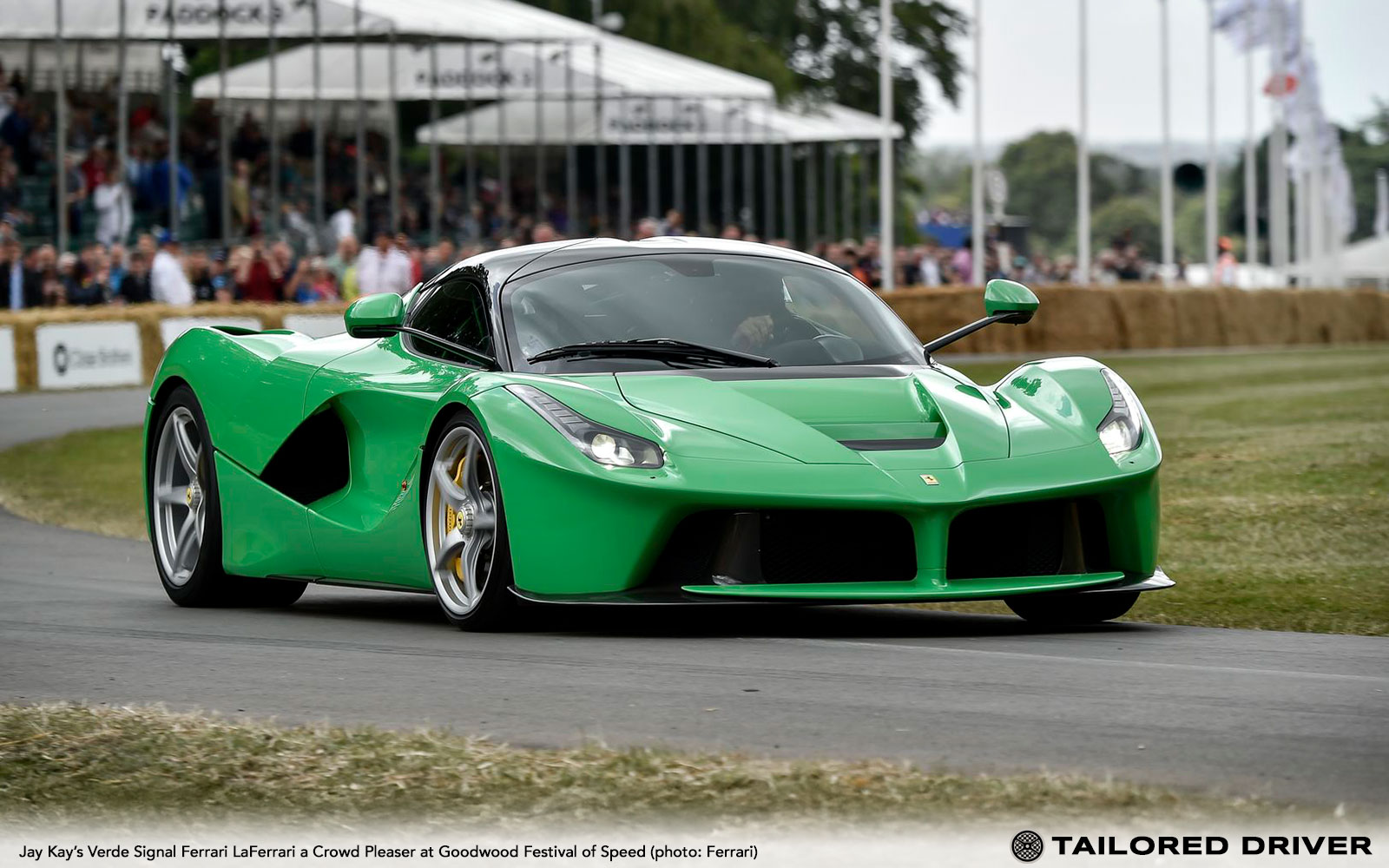
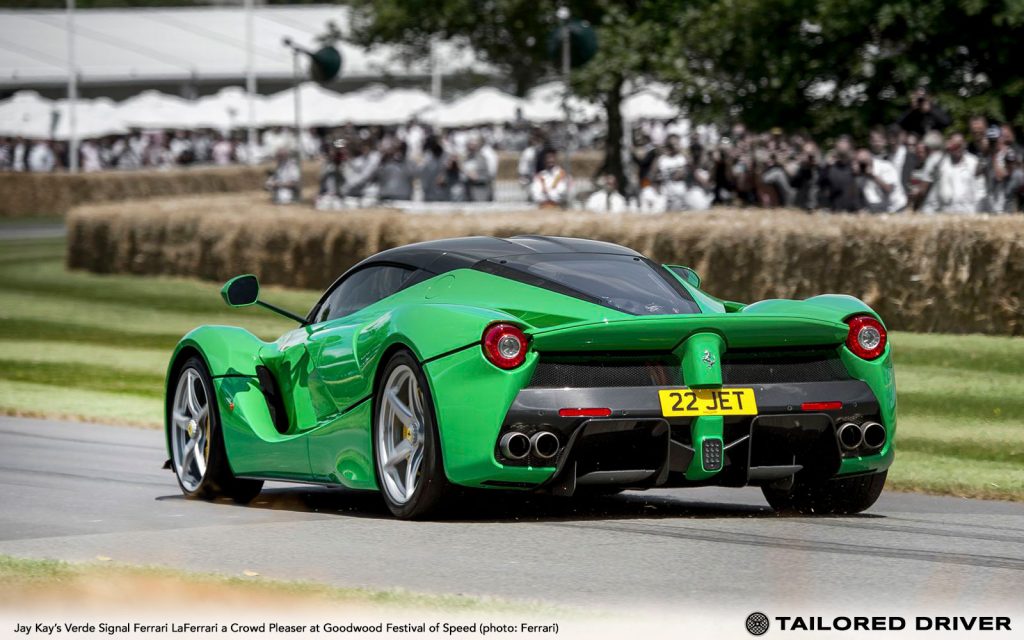
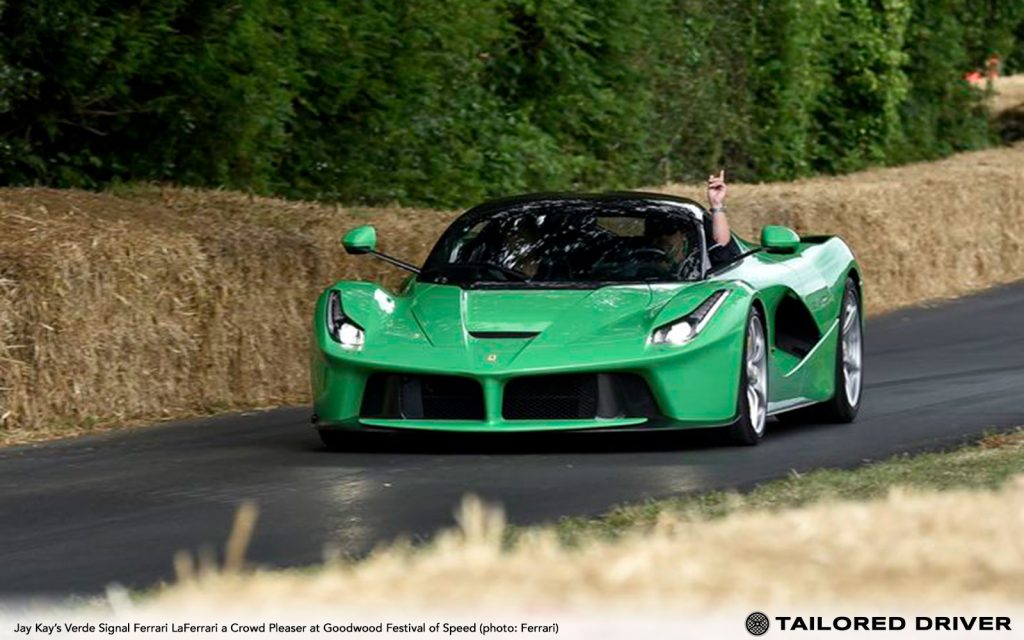
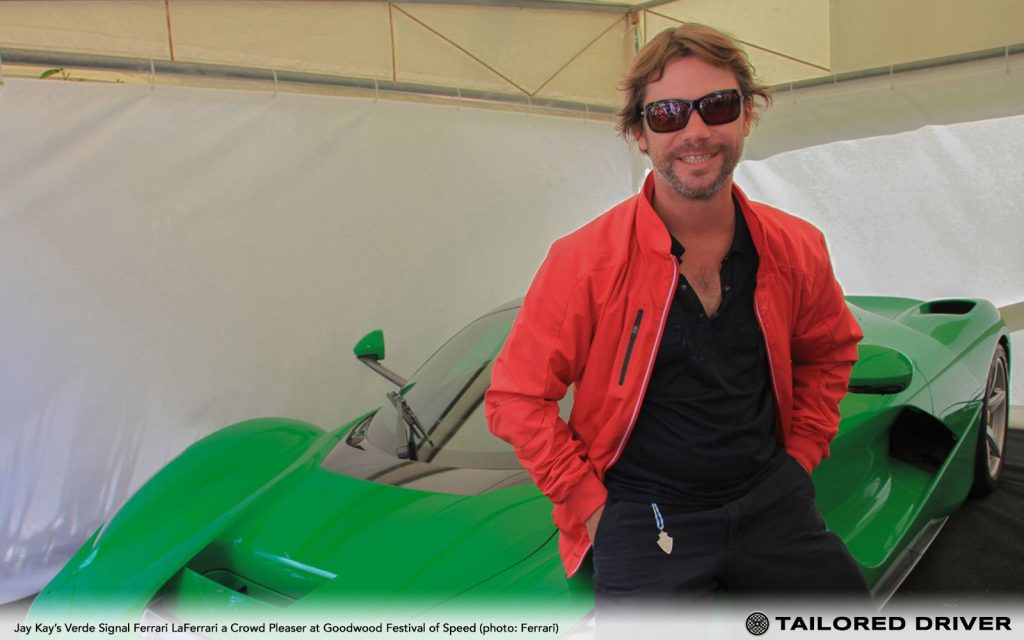
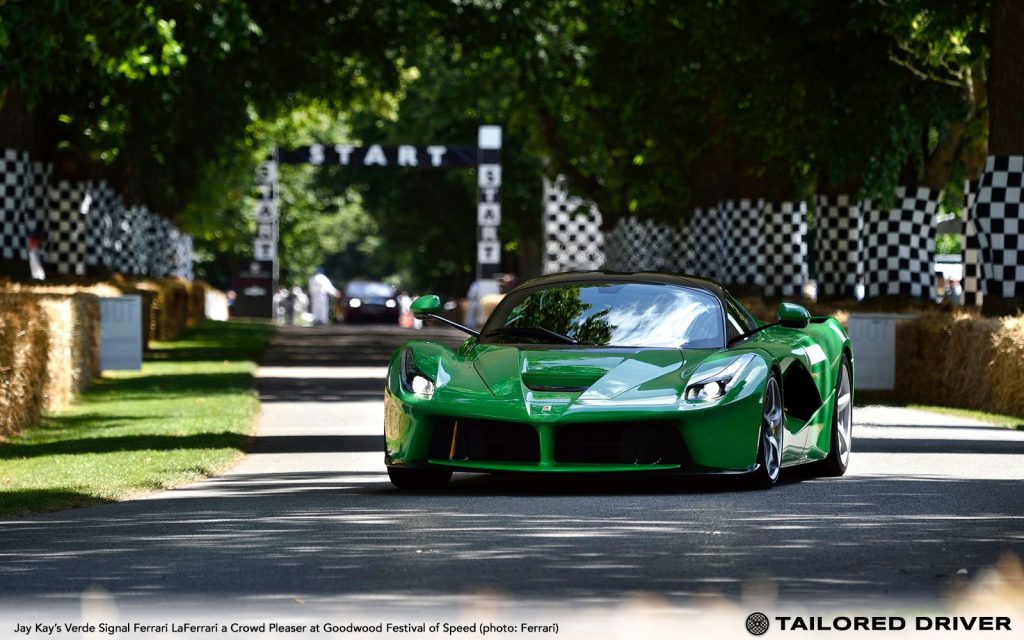
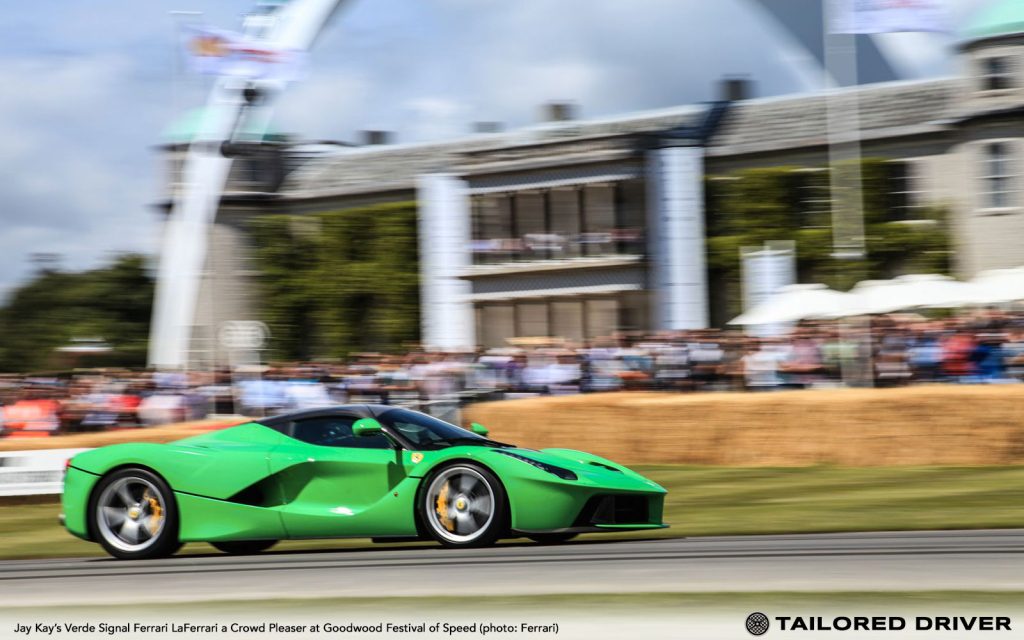
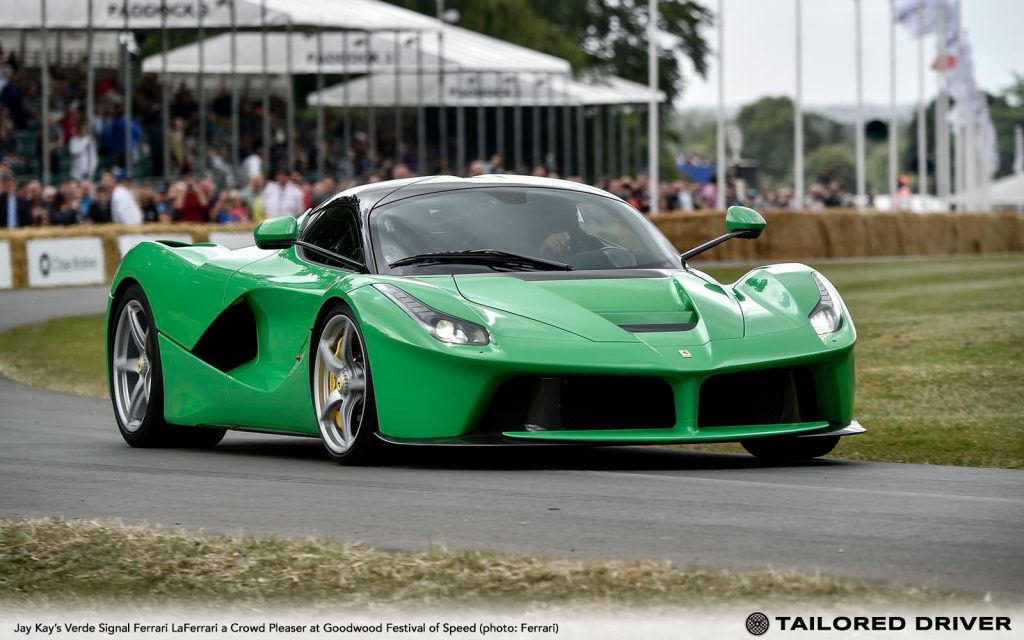
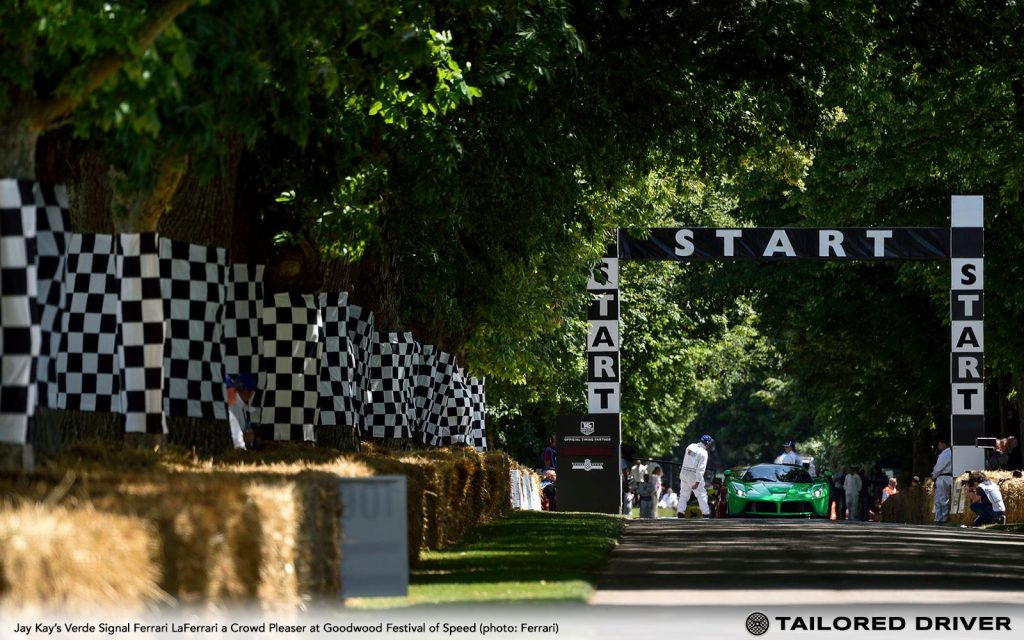
Maranello, Italy – Ferrari was definitely one of the main attractions over the three days of the Festival of Speed held at Goodwood this weekend, both with the drivers and F1 cars of the Scuderia and its road cars. The one that drew the most admiring glances in England was definitely the LaFerrari. On the Goodwood hill, there were no less than two, one of which caught the eye, not just because of its exclusivity and performance, but because it is painted green.
Editor’s Note: By most accounts, the color on this LaFerrari is Verde Signal, better known as Signal Racing Green (signalgrün; non-metallic uni; 22S / R6001 / 6829 / 217 / 7878 / L62Y / 22S / M1; Porsche).
[source: Ferrari]
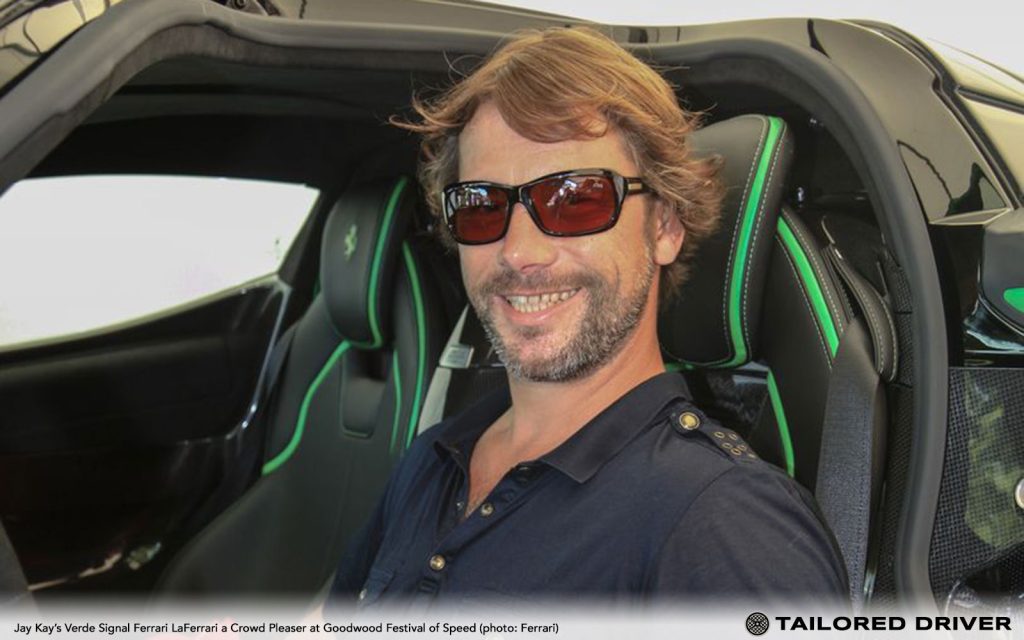
The car belongs in fact to Jay Kay, lead singer with Jamiroquai, who is a major Ferrari collector. He drove his car up the hill and also signed autographs for the crowd. “I own an F40, an Enzo and now the LaFerrari, three unique cars and with the last one, it’s incredible just how much advanced technological research is behind it. Tackling the Goodwood hill in the LaFerrari is an incredible feeling,” added Jay Kay. “My Enzo is black with a green interior and so I went for the same scheme but switching the colours round. I’ve always liked green cars and green interiors and green in general. It gives me a thrill”.
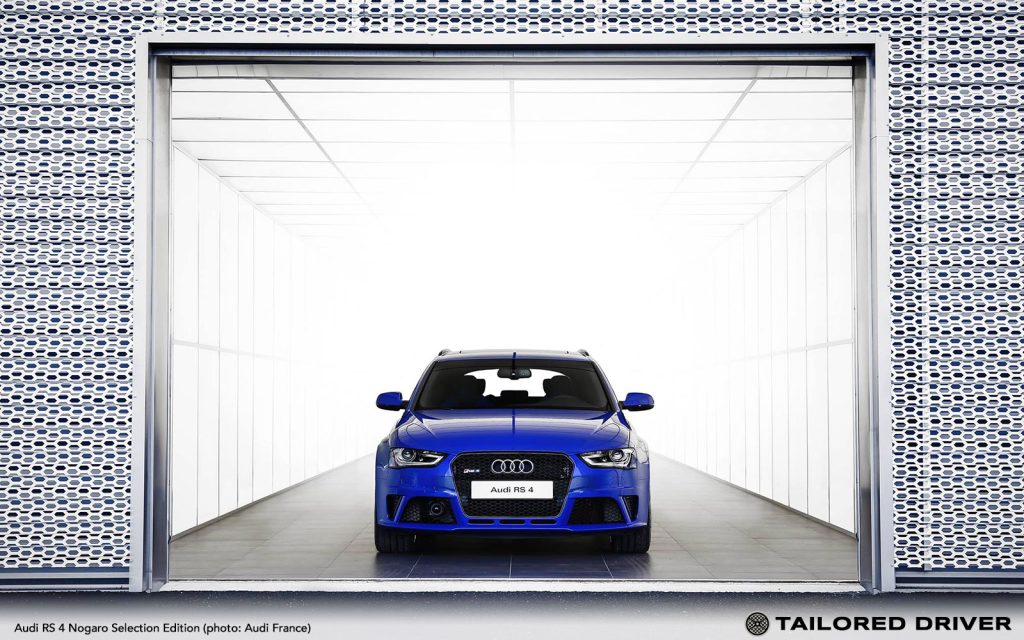
Audi RS 4 Avant Nogaro selection to celebrate world premiere in Geneva
[source: Audi UK, photos by Audi UK and Audi France]
Editor’s Note: This special edition model was produced for the European market and was never sold in North America.
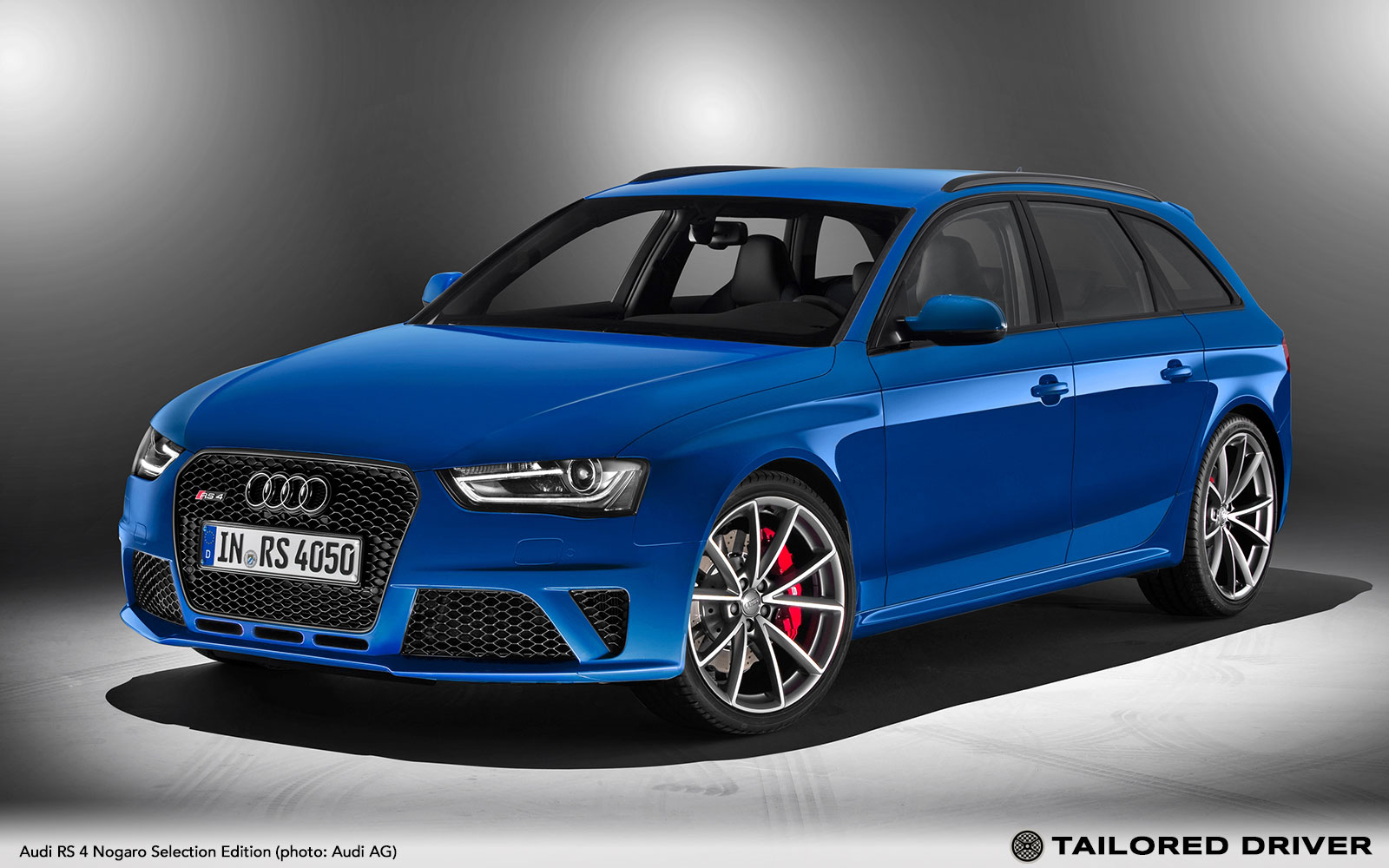
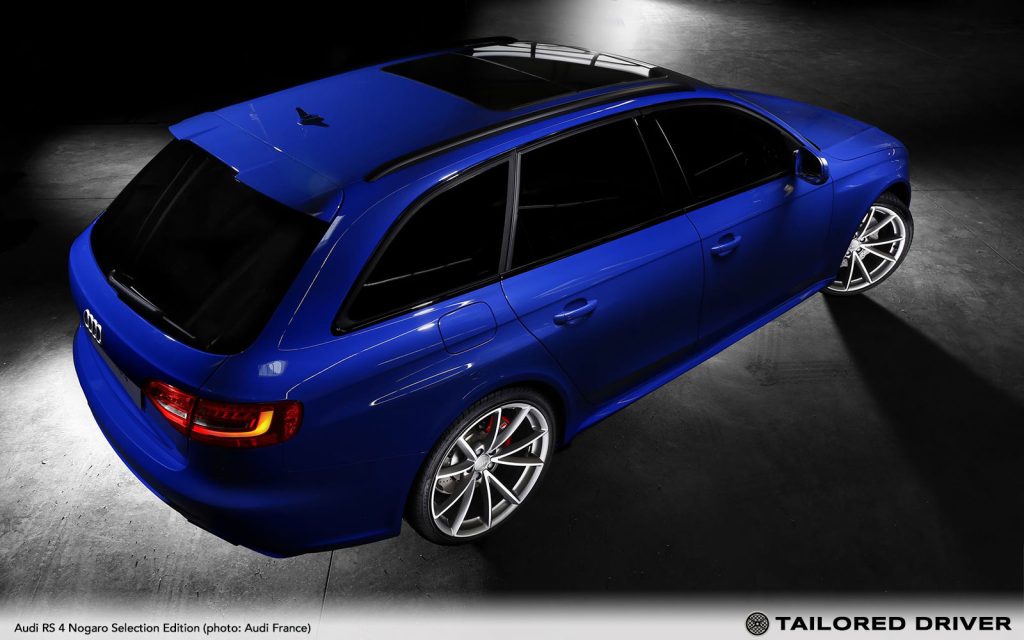
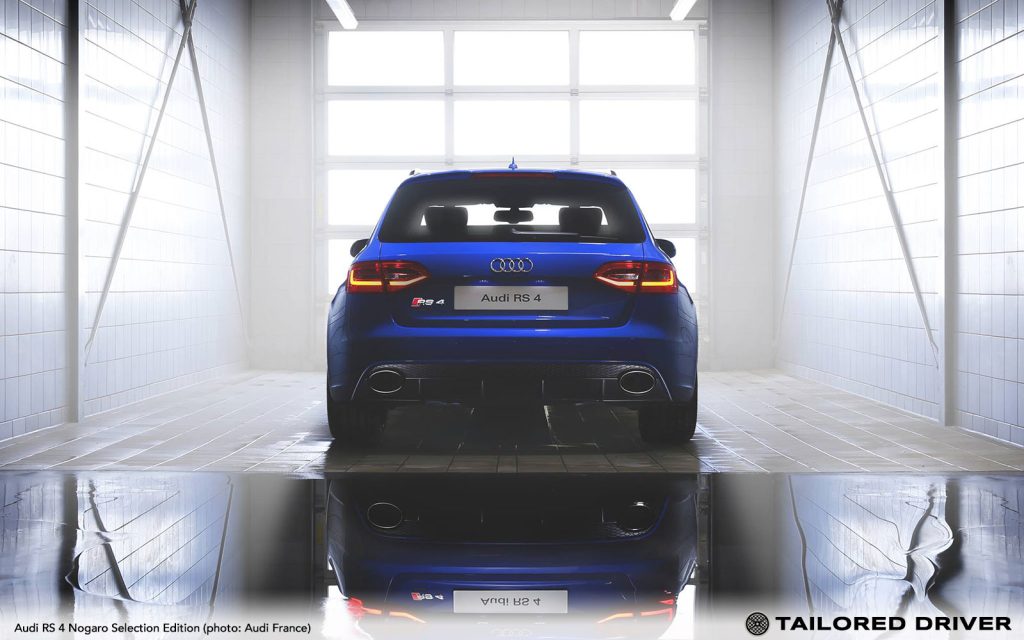
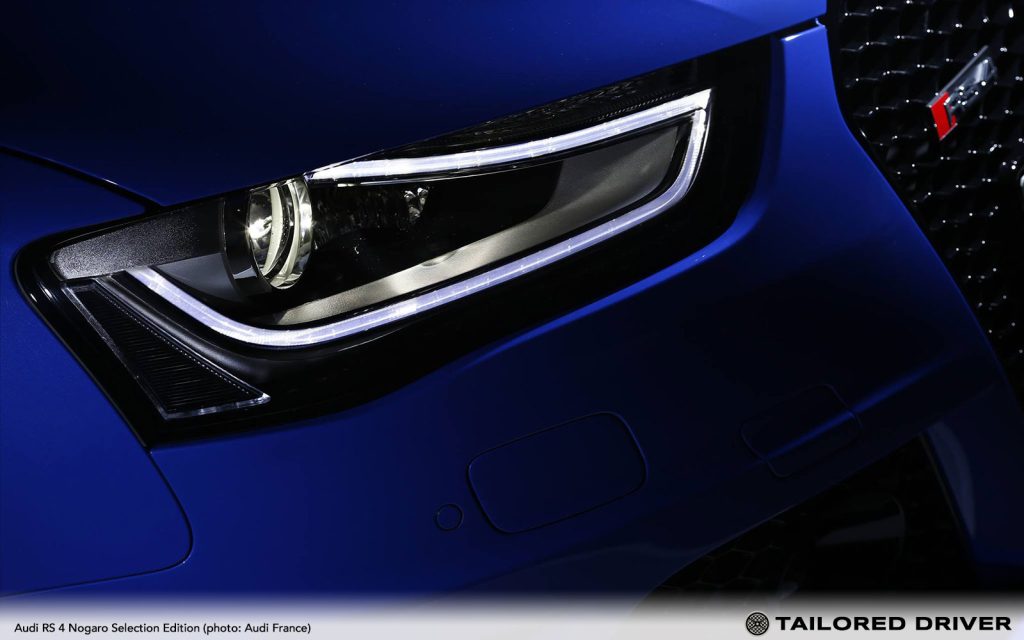
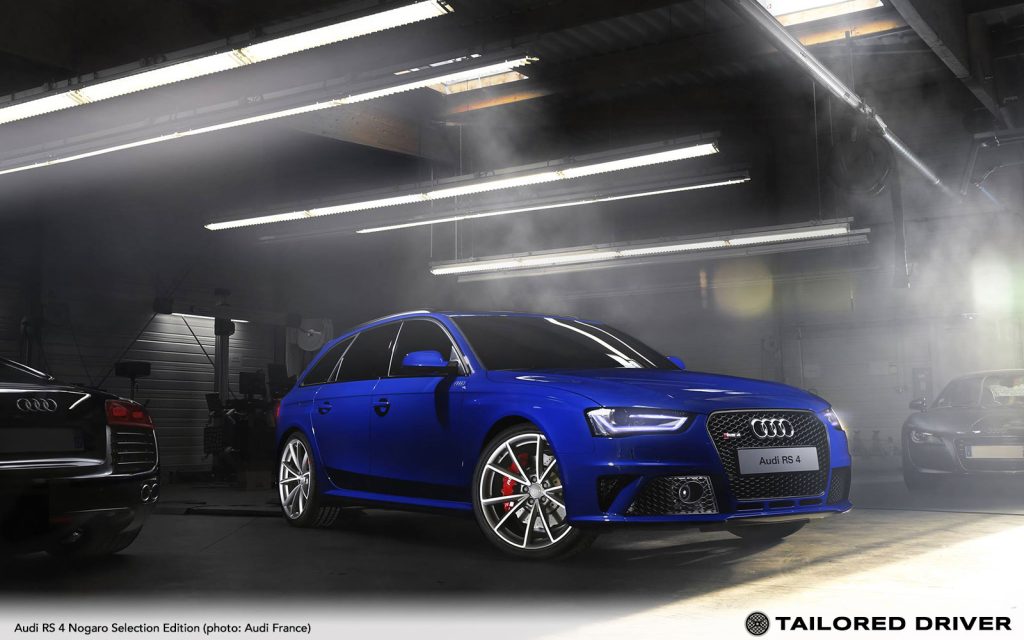
It is almost exactly twenty years since the once clearly defined boundary between versatile estate car and extreme sports car was blurred by the Audi Avant RS2, so the trailblazer for a high-performance breed which continues to flourish is being commemorated by the new RS 4 Avant Nogaro selection. The new special edition will make its debut at the Geneva Motor Show with Nogaro blue paint finish and exclusive equipment.
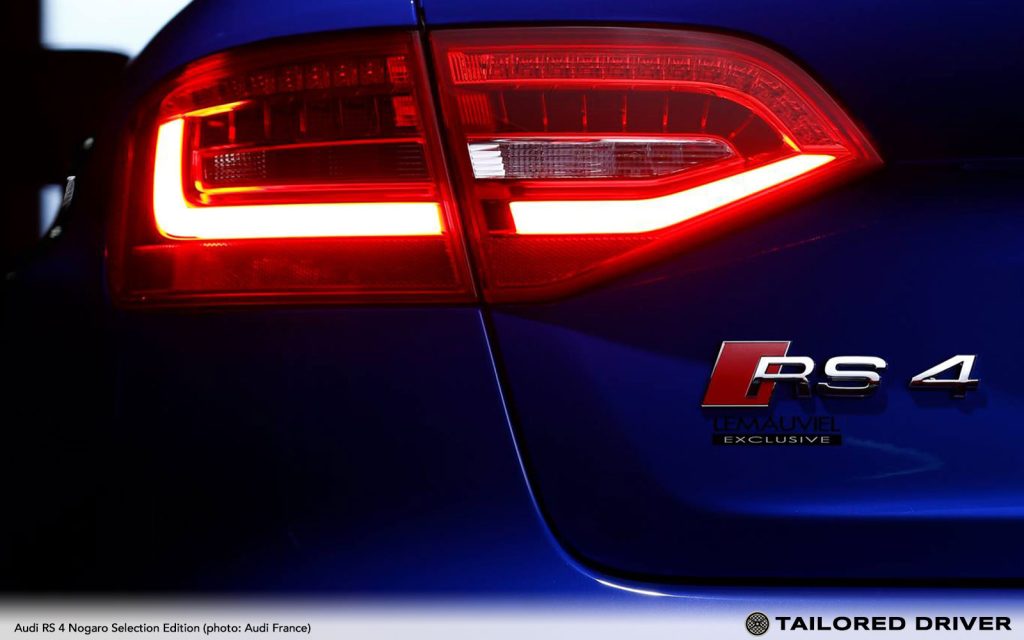
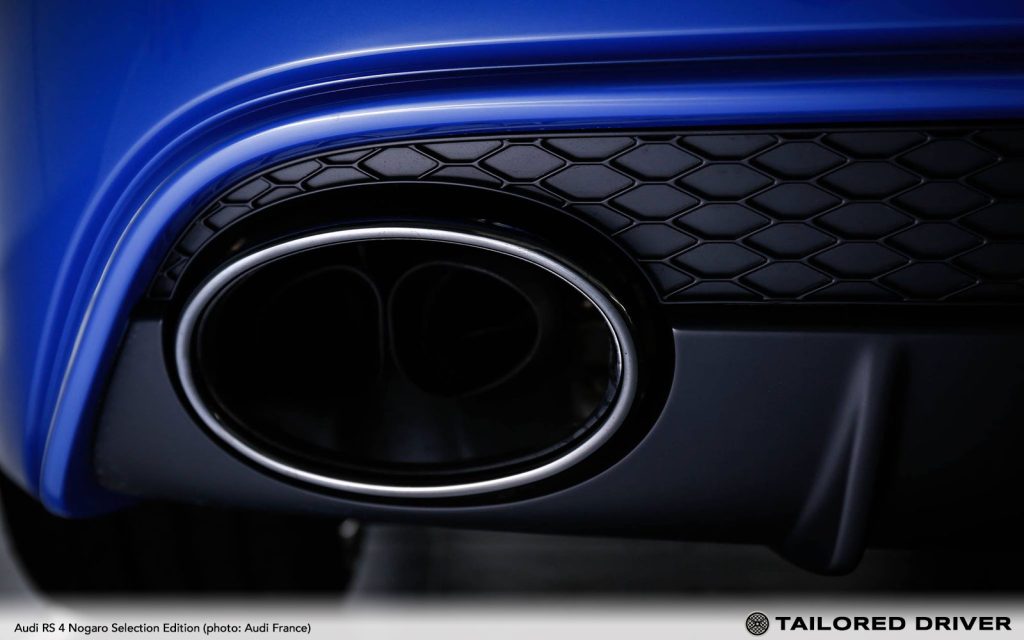
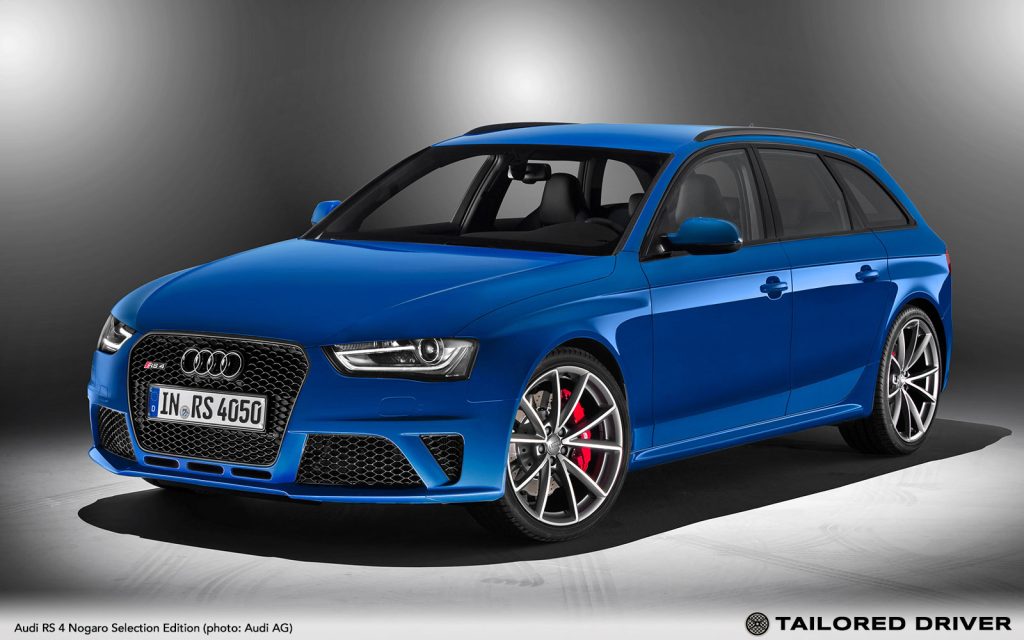
The customised Nogaro blue, pearl effect paint finish is the most immediately apparent tribute to the esteemed RS2 in the anniversary model. In addition, the frame of the Singleframe grille and the window surrounds are painted high-gloss black, and the roof rails matt black. The RS sports exhaust system terminates in two oval, high-gloss black tailpipe trims.
450PS: the high-revving V8
Under the bonnet of theAudi RS 4 Avant Nogaro selection sits a high-revving V8 naturally aspirated engine with a displacement of 4,163 cc. The 4.2 FSI delivers 450PS of power at 8,250 rpm, with peak torque of 430 Nm (317.15 lb-ft) available between 4,000 and 6,000 rpm. The resonant eight-cylinder engine powers the anniversary model from 0 to 62mph in 4.7 seconds and takes it to a governed top speed of 174mph. Its combined fuel economy is 26.4mpg – for a CO2 equivalent of 249 grams per kilometre.
With its high efficiency and tall top gear, the standard seven-speed S tronic also contributes to fuel efficiency. The driver can let the lightning-fast dual-clutch transmission shift operate automatically or change gears themselves using the selector lever or the steering wheel paddles.
The core of the quattro permanent all-wheel drive is the self-locking crown gear centre differential. The compact and lightweight component distributes torque at a default ratio of 40:60 between the front and rear axles. This ratio can be broadly varied as required – with up to 70 per cent of the power going to the front and a maximum of 85 per cent to the rear. The crown gear centre differential cooperates with the wheel-selective torque control, which makes handling at cornering limits even more dynamic through selective, small brake impulses. At the rear, the standard sport differential also actively distributes the power between the rear wheels.
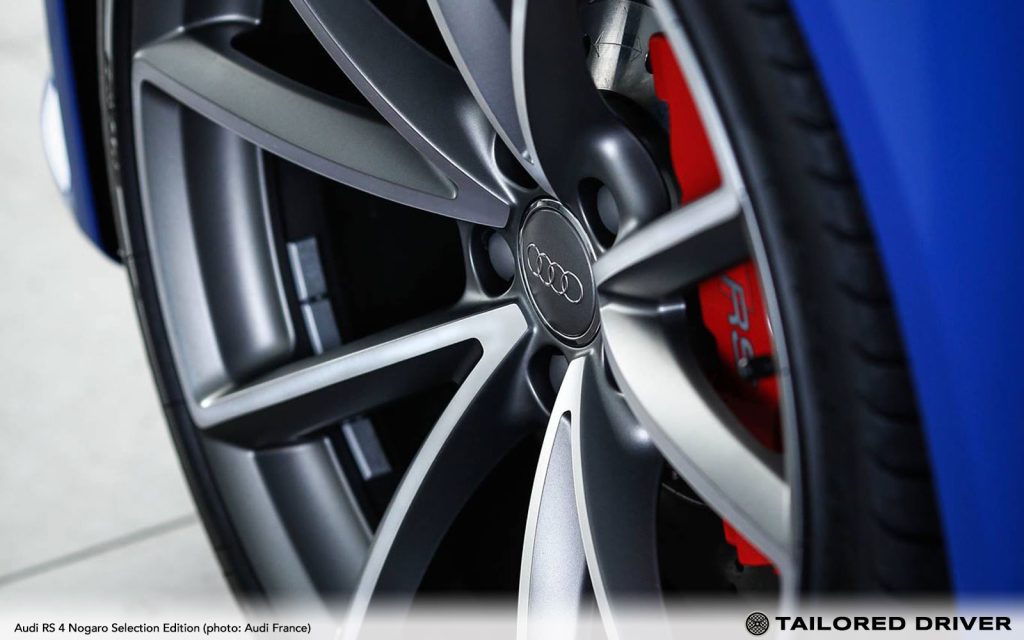
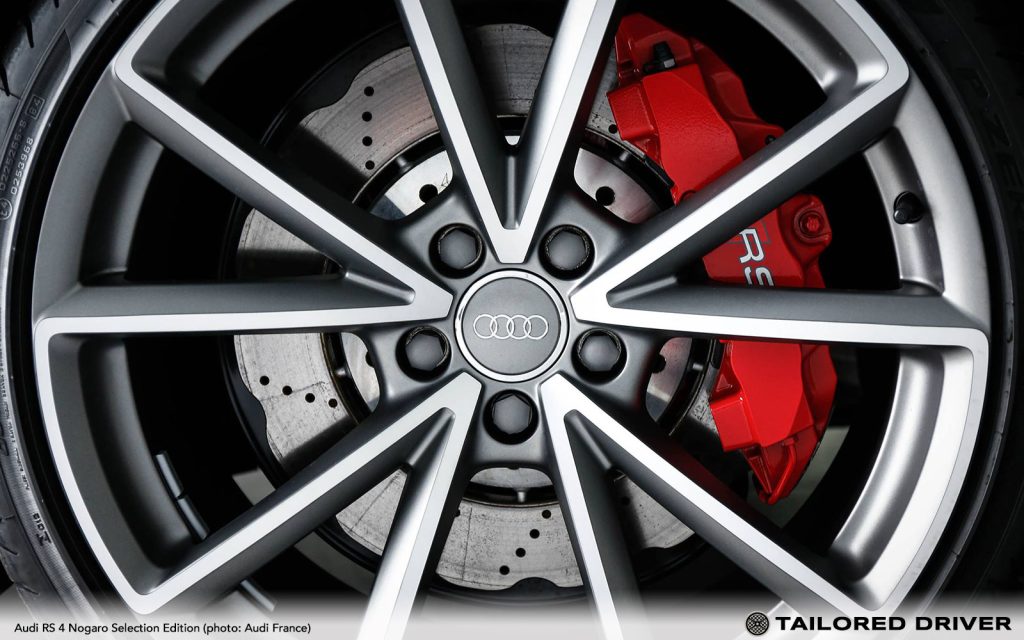
The Audi RS 4 Avant Nogaro selection rides on 265/30 series tyres. Behind the gloss turned finish 20-inch wheels in 5-V-spoke design gleam red-painted brake calipers bearing RS emblems. The brake discs featuring a wave design are internally ventilated, perforated and joined to the aluminium brake disc chambers by pins. Carbon-fibre-ceramic front discs are available at extra cost. The Electronic Stabilisation Control (ESC) offers a sport mode and can also be entirely deactivated as required.
Black and blue: the interior
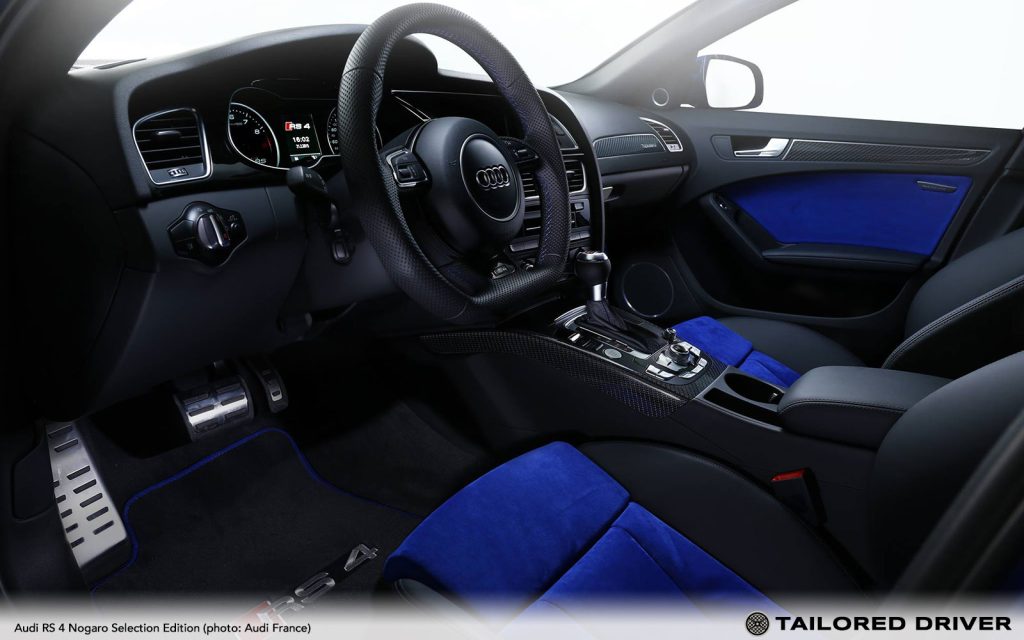
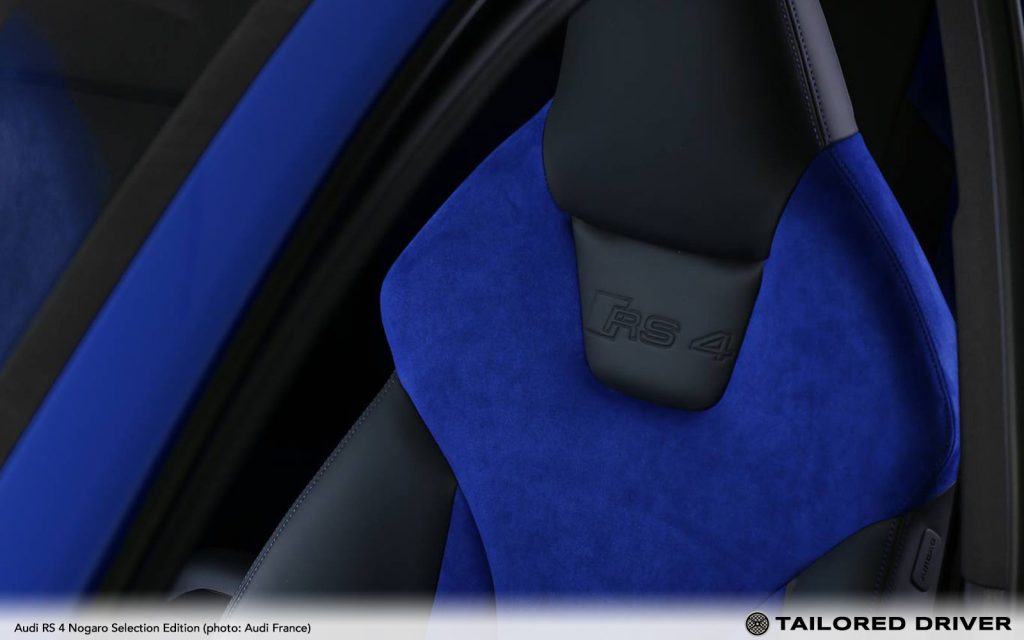
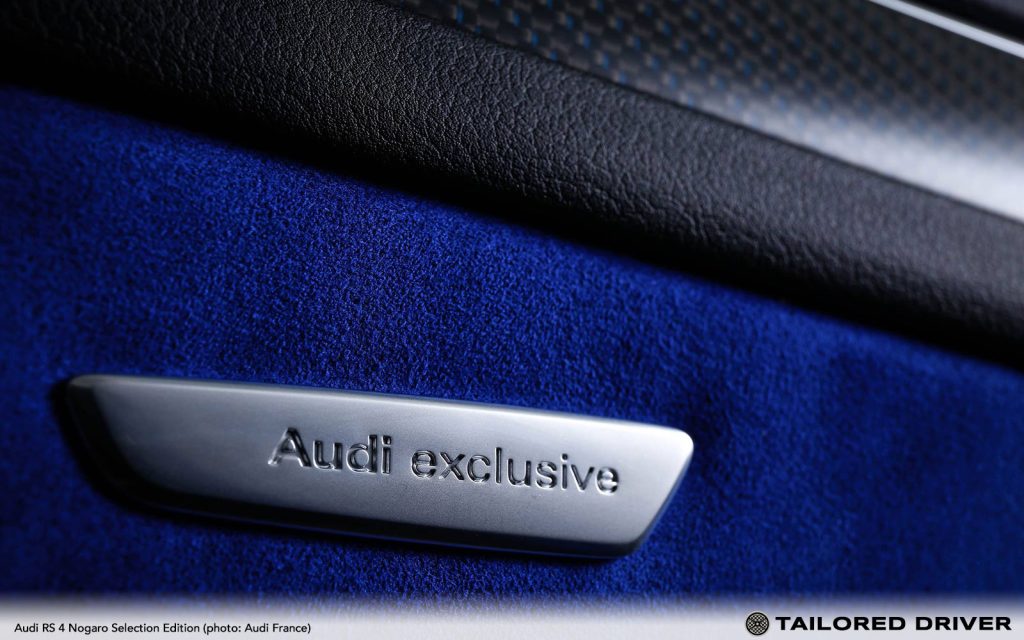
In the purposefully styled interior, Audi offers two different upholstery versions for the electrically adjustable S sport seats with their integrated head restraints. In both cases, the side sections are covered with black Valcona leather; the Alcantara trim for the centre sections and door trim inserts are coloured either black as well or Nogaro blue – in homage again to the Audi Avant RS2. The armrests are covered with black leather, with blue contrasting stitching providing accents. Black or Nogaro blue piping frames the black floor mats.
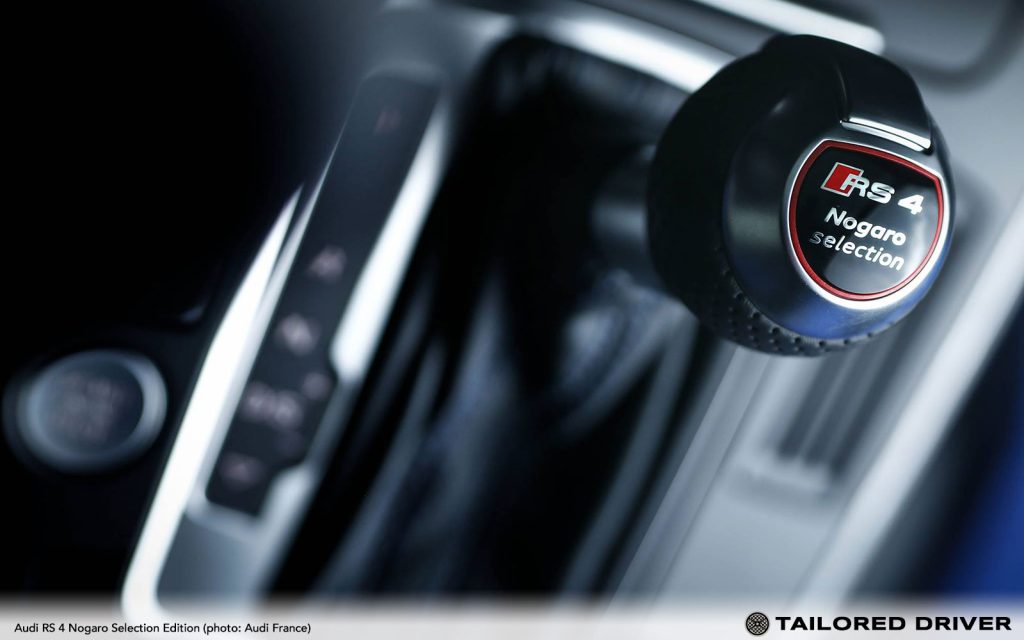
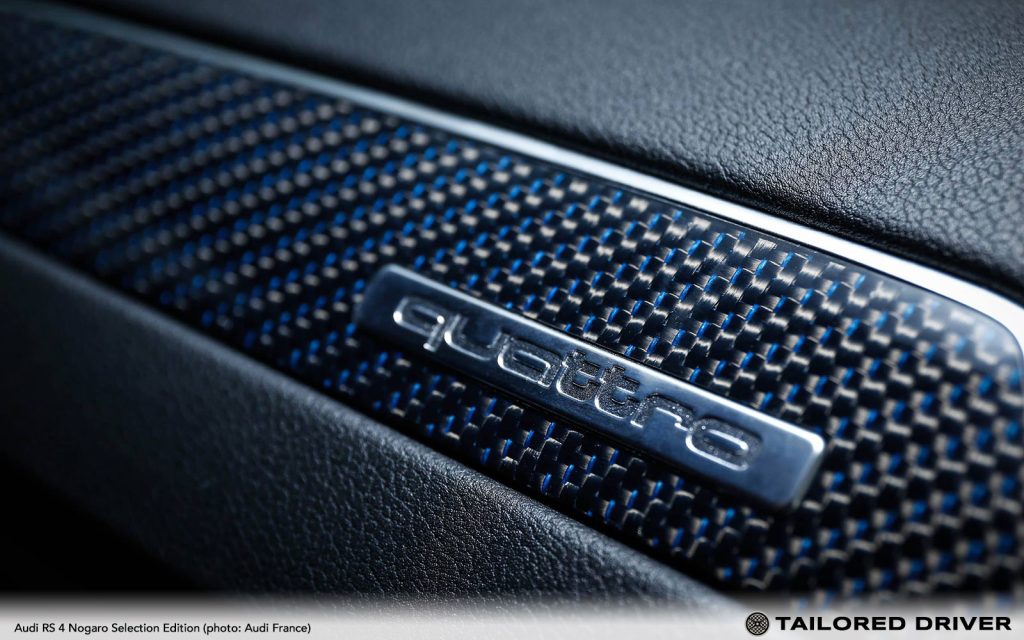
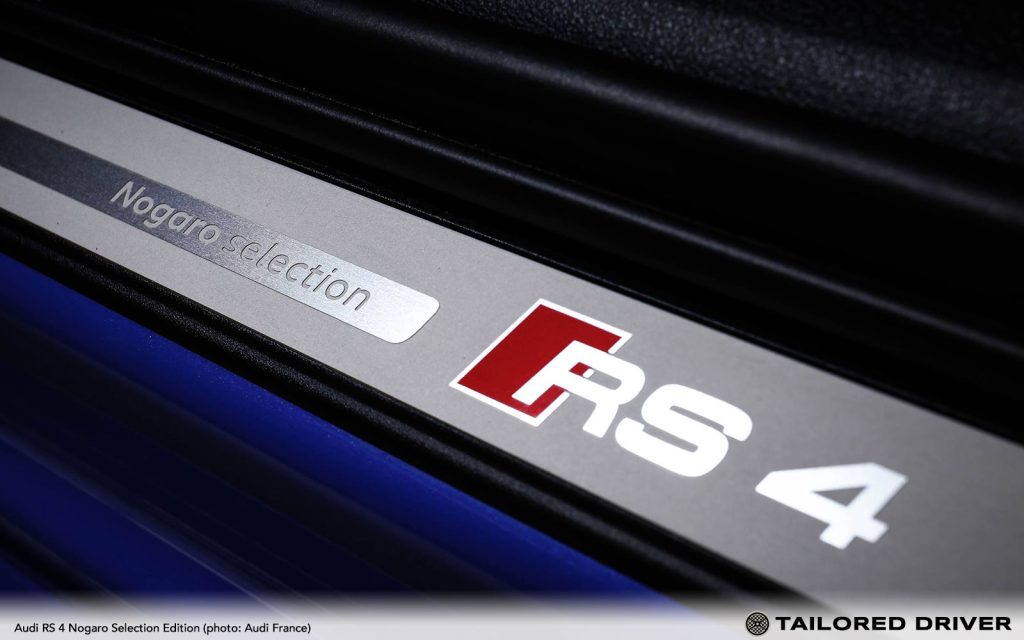
Black leather with blue stitching also refines the steering wheel rim and the selector lever boot. Blue threads run through the carbon inlays. A badge on the RS selector lever knob of the S tronic and the logos on the door sill trims refer to the special status of the anniversary model.
The Audi RS 4 Avant Nogaro selection will be available in mainland Europe later in 2014 as a limited edition. The possibility of UK specification production is still under discussion.
A modern classic: the Audi Avant RS2 from 1994
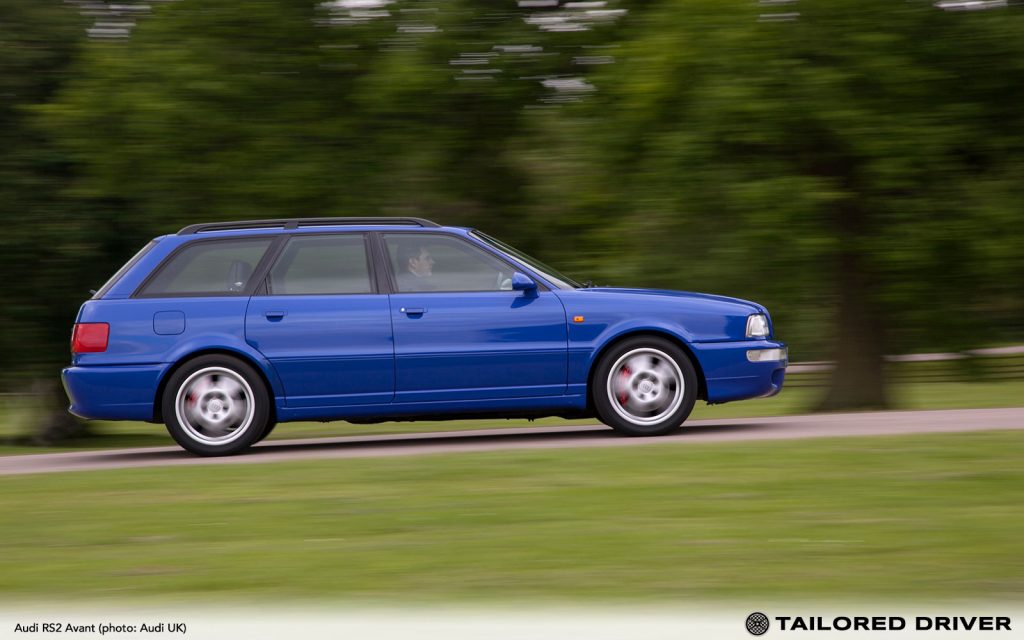
The Audi RS2 of 1994 was the first RS model from Audi and also the first high-performance model from the brand to combine full everyday suitability with a dynamic character, becoming the founder of a whole family of peformance-focused models. Audi developed the RS2 in conjunction with Porsche, with assembly taking place at Stuttgart-Zuffenhausen.
Its appearance alone was indicative of the power of the first RS model. The front bumper featured powerful air inlets, and the grille was painted black. The exterior mirrors came from Porsche, the rear was embellished by a full-width band of light, and the emblems were large-sized. The RS2 optionally left the assembly line with an exclusive Nogaro blue paint finish, recalling the two victories achieved by Frank Biela on the Nogaro circuit in the French Touring Car Championship of 1993.
The engine drew on Audi’s extensive experience in touring car racing. The 2.2-litre five-cylinder engine delivered 315PS by way of a large turbocharger, high boost pressure, expanded air ducting and adapted engine management. At 3,000 rpm 410 Nm (302.40 lb-ft) of torque was available, with the limiter only taking effect at 7,200 rpm. The RS2 accelerated from 0 to 62mphin 5.4 seconds and reached a top speed of 162mph. A six-speed manual transmission delivered the power to the quattro drivetrain, which had a manually activated locking differential at the rear axle.
The suspension with its all-round transverse links was derived from the set-up of the performance car which laid the foundations, the Audi S2. The shock absorbers were even firmer and the springs were shortened. Porsche supplied the 17-inch wheels, the large, internally ventilated brake discs and the red-painted four-piston calipers.
The interior was dominated by Silk Nappa leather and Alcantara in the colour anthracite, blue or silver grey, and the Recaro seats were electrically adjustable. The instruments bore white dials, while small indicators on the centre console kept the driver informed about the oil pressure, oil temperature and vehicle system voltage. CFRP inlays were optionally available.
Audi offered the RS2 at a base price of £39,500 in the UK. Within a construction period of barely two years 2,908 units were produced – more than the quantity originally planned.
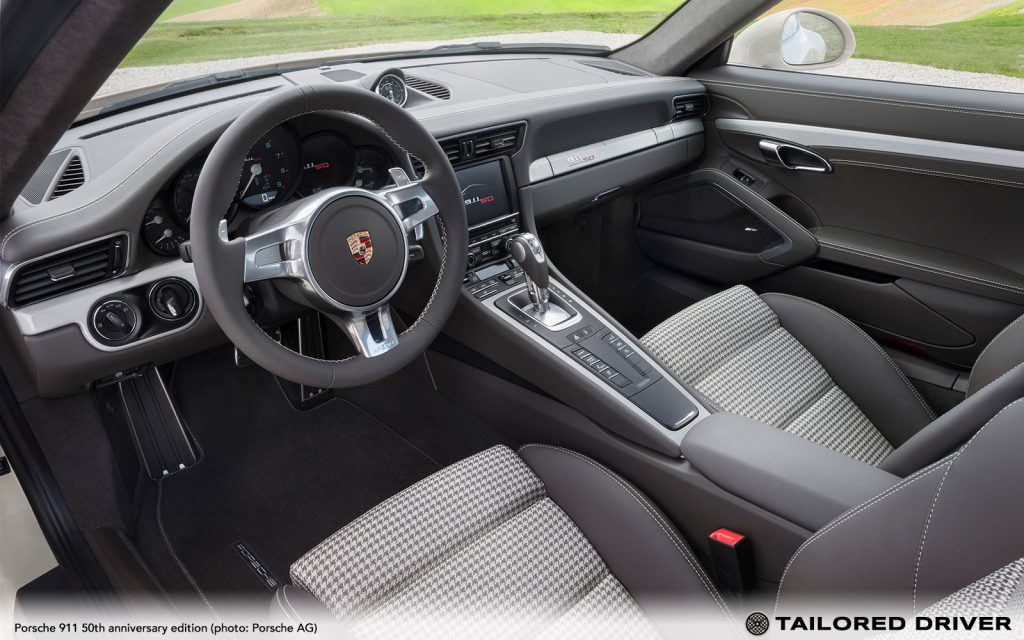
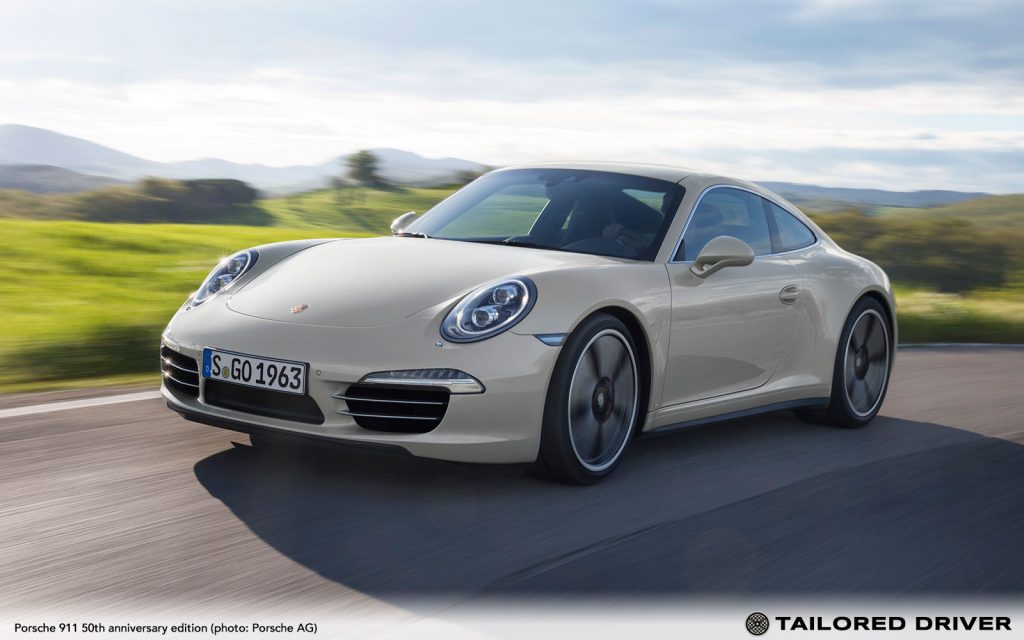
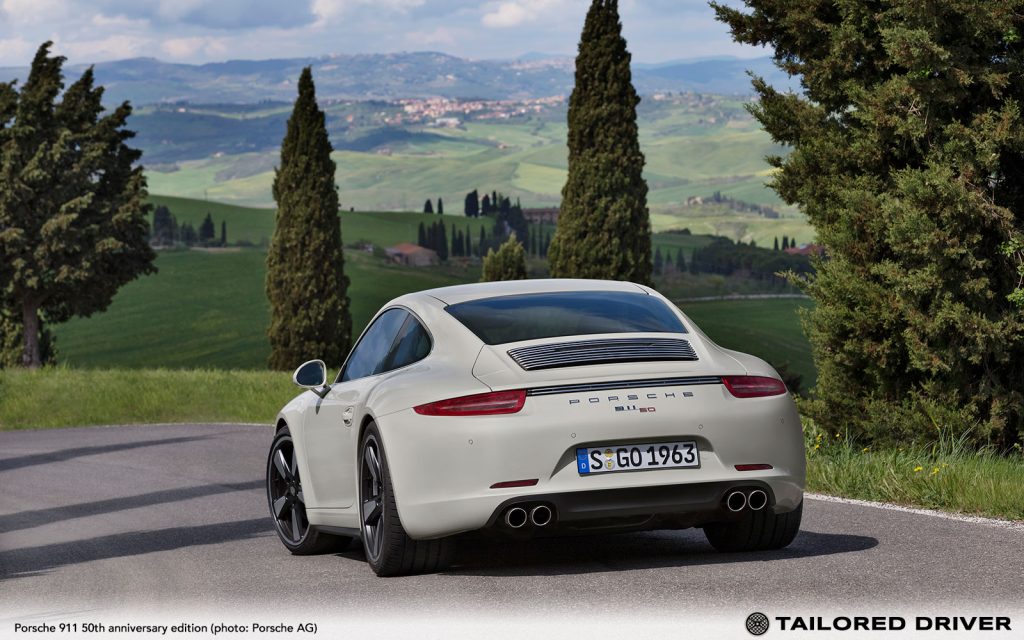
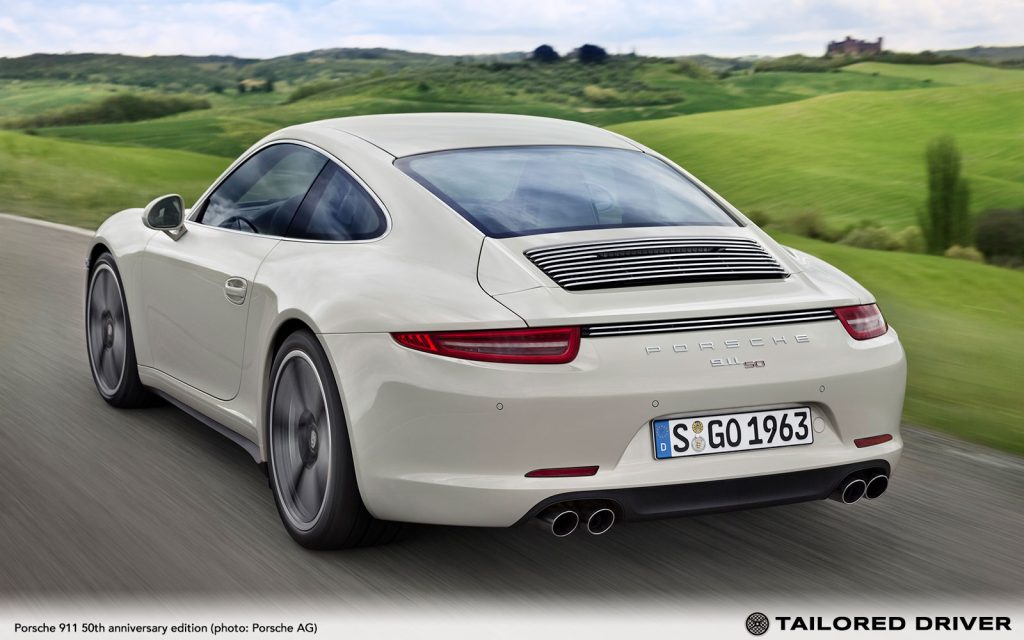
Stuttgart. The Porsche 911 resolves apparent contradictions like no other sports car – such as between tradition and innovation or between exclusivity and high social acceptance, and of course between performance and efficiency. And so, Porsche is celebrating the 50th anniversary of the 911 at the International Motor Show (IAA) in Frankfurt with a special anniversary model based on the 911 Carrera S: like the original 911, the 911 50th Anniversary Edition is a coupé with a flat-six rear engine and rear wheel drive. Its efficient performance, active sport suspension – and special body have current relevancy: the anniversary 911 features the wide body, which is typically reserved for the all-wheel drive Carrera 4 models. This special edition will be limited to 1963 cars, a number that represents the year of the 911 world premiere.
Porsche will present the limited edition model in time for the 50th anniversary of the 911 at the IAA motor show in Frankfurt, which opens its gates to the public on September 12, 2013. In 1963, Porsche presented the original model to the public at this leading international show for the automotive industry. Since its first presentation – initially as the type 901 – the sports car icon has excited automotive fans across the globe, and today it is considered the reference for all other sports cars. Since making its debut in 1963, the model series has progressively developed without interruption. In the process, the unique character of the 911 was always preserved. The result of this evolution over a 50-year period – which included countless race victories as well – is a sports car that fully embodies the authenticity of the Porsche brand. Its DNA is reflected in all Porsche models.
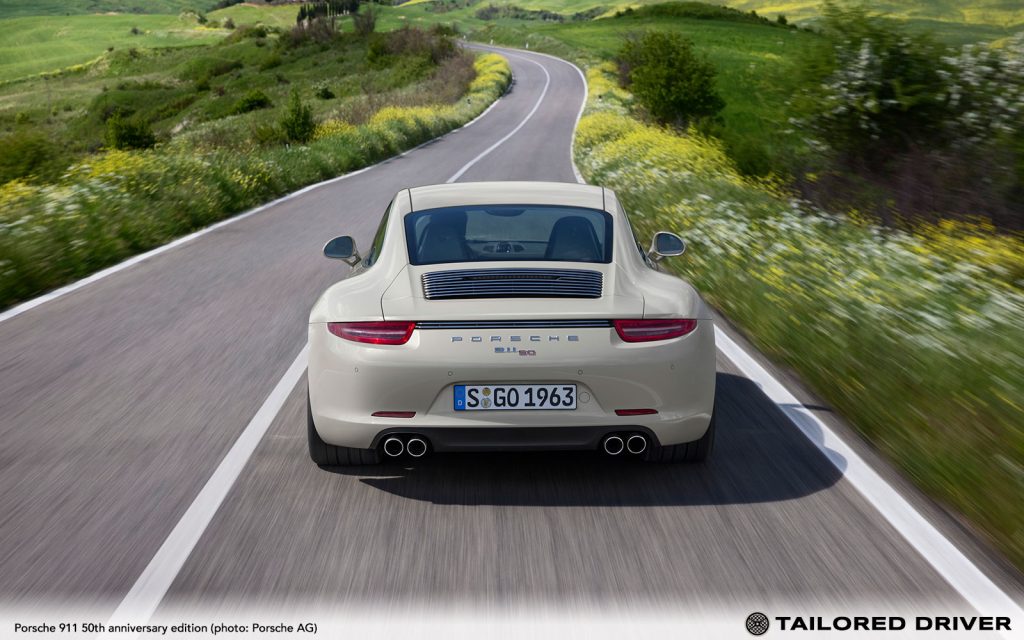
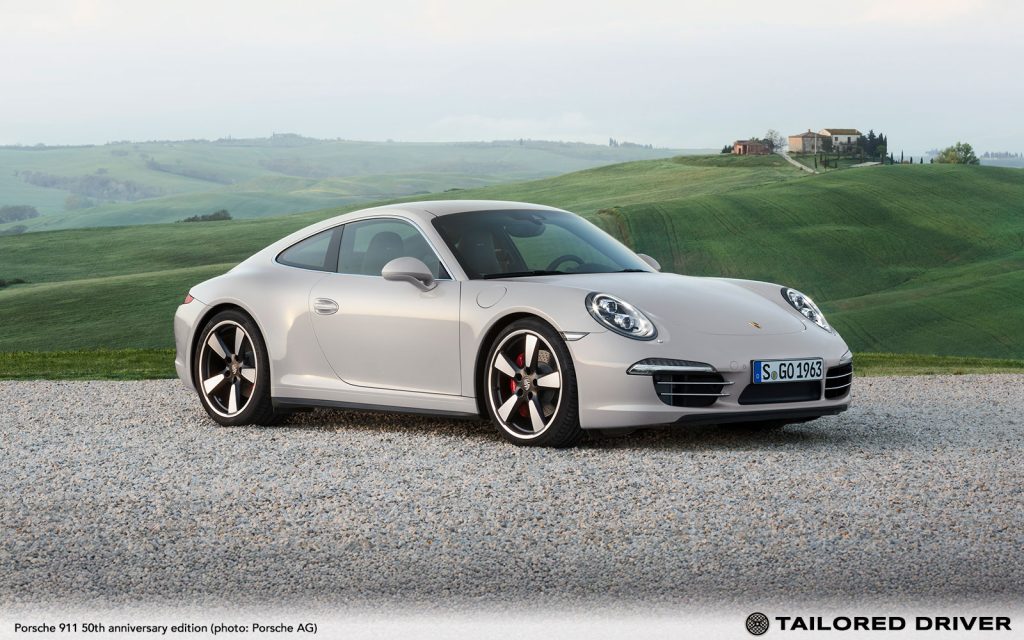
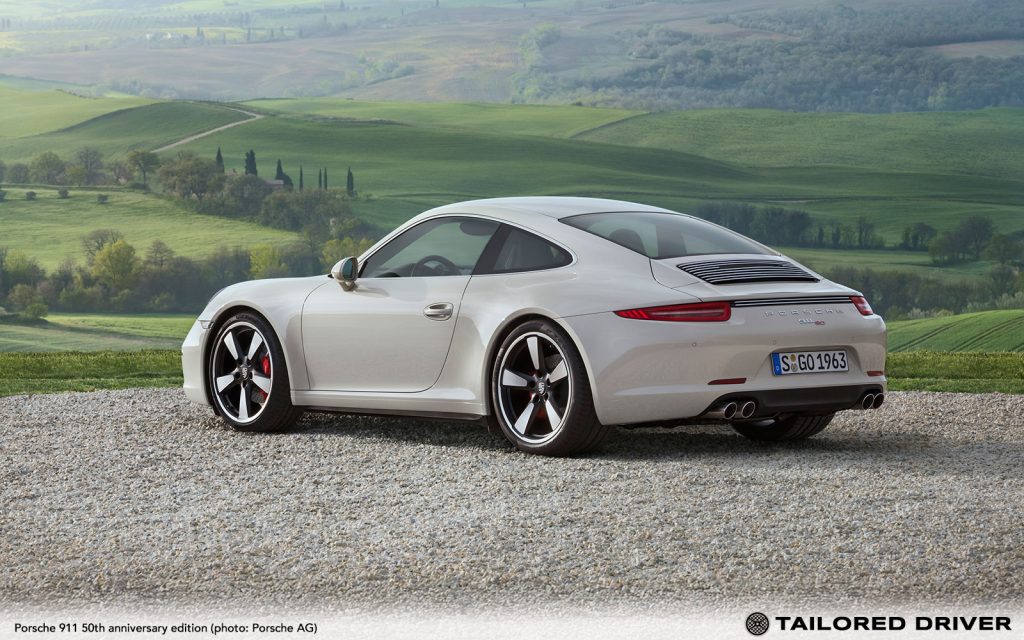
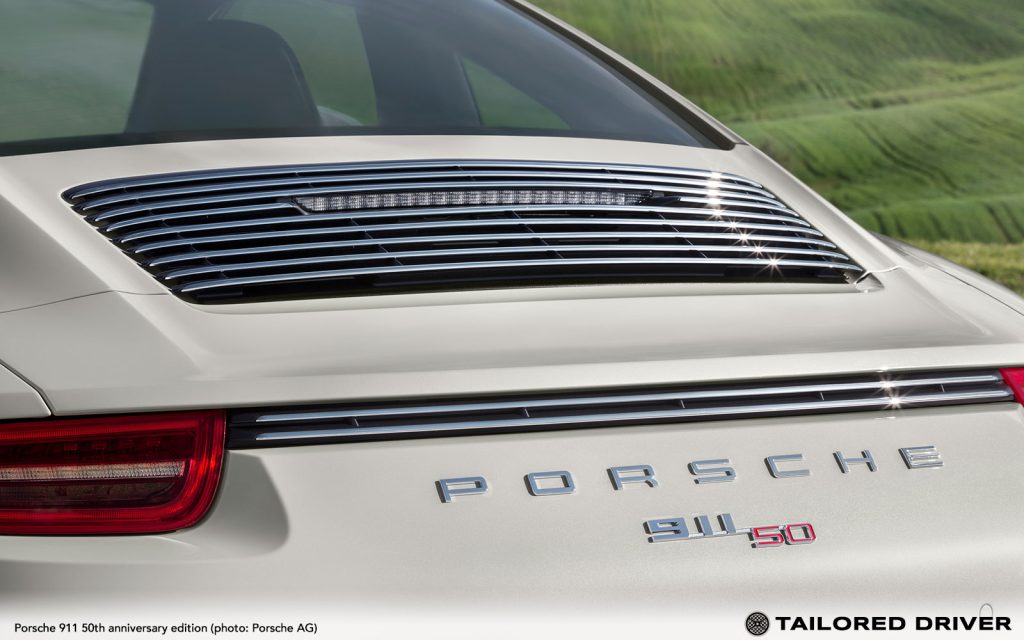
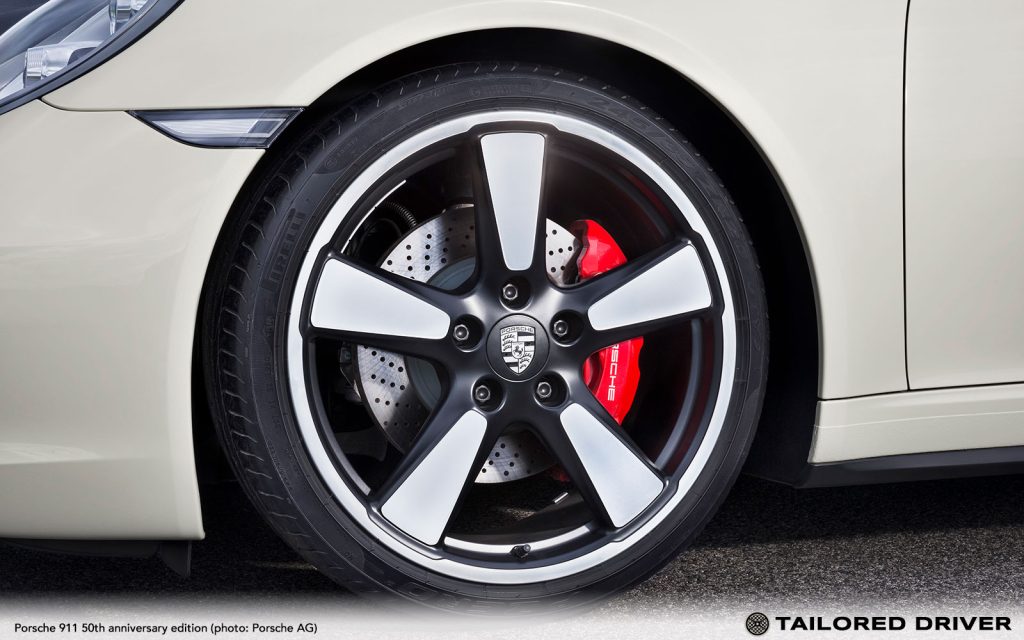
This limited edition of the 400 hp (294 kW) 911 Carrera S includes features that have contributed to the 50-year success story of the 911. For example, the limited edition includes Porsche Active Suspension Management (PASM) with special tuning to complement its increased track width and to add support to the exceptional cornering dynamics of the 911. The sport exhaust system outputs a fitting emotional sound. Special 20-inch wheels are a visual tribute to the legendary “Fuchs” wheels and are finished in matte black paint with machine-polished centres. Chrome trim strips on the front air inlets, the fins of the engine compartment grille and the panel between the rear lights emphasise the distinctive appearance of this limited edition model. Another technical highlight of the car’s equipment is the Porsche Dynamic Light System (PDLS) with bi-xenon headlights and dynamic cornering lights
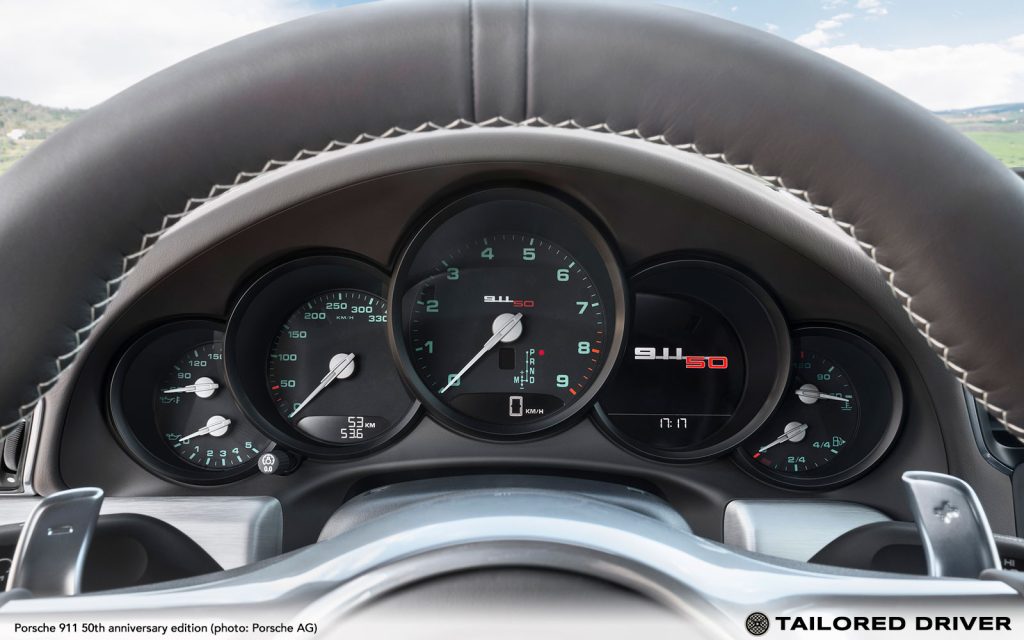
Two unique colours are available for the anniversary 911, a darker graphite grey and a lighter geyser grey metallic. In addition black monochrome is also available. Each of the cars has a two-tone 3D-effect badge on the rear lid with the numbers “911 50”. This is repeated in three colour embroidery on the headrest and in two colours as a logo on the tachometer and the aluminium door sill plates. It can also be found on the cup holder panel together with the limited edition number of the individual vehicle. Other exterior characteristics of the special model are high-gloss window frames and sport design exterior mirrors on the doors panels.
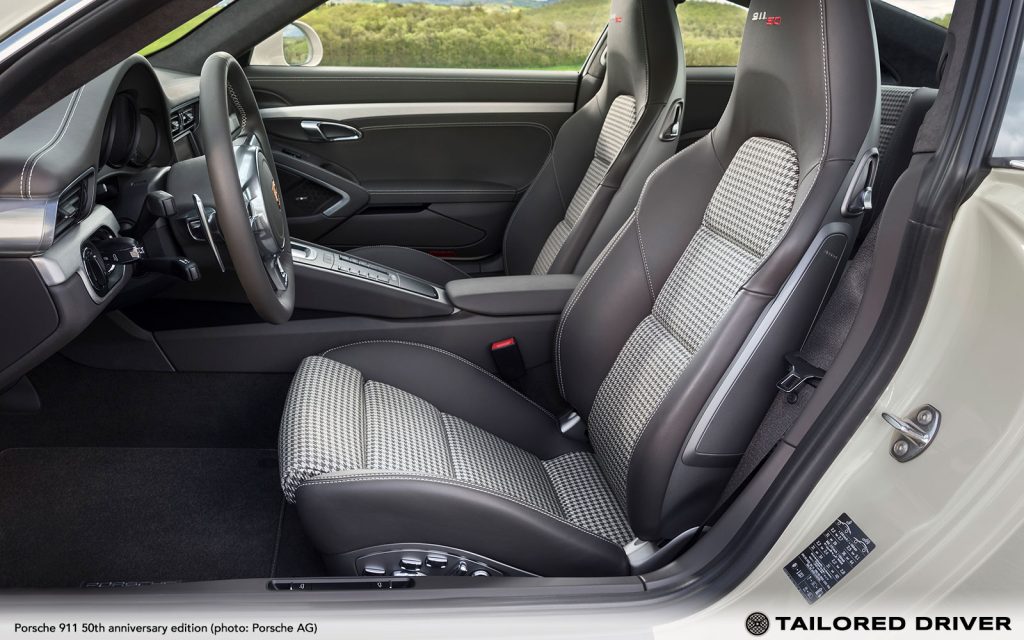
There are tributes to the original 911 in the interior as well: green labelling on the instruments with white pointer needles and silver caps on the instrument pivot pins, just like 50 years ago. Another special feature is the centre panels of the leather seats, which are designed with a fabric pattern reminiscent of the “Pepita” tartan design from the 1960s. The full-leather interior is designed in agate grey or black with decorative stitching, some in contrasting colour. The driver and front passenger experience typical 911 driving fun in 14-way sport seats or optional 18-way sport seats plus. The gear shift or selector lever – which matches the decorative panels on the dashboard, doors and centre console in brushed aluminium – comes from the Porsche Exclusive program.
The 911 50th Anniversary Edition sprints from zero to 100 km/h in 4.5 seconds (4.3 with PDK) and can reach a top speed of 300 km/h (298 with PDK). The car’s NEDC combined fuel consumption is 9.5 l/100 km (8.7 with PDK), which equates to CO2 emissions of 224 g/km (205 with PDK). The limited edition models will be available at Porsche dealers starting September 23, 2013, and in Germany they will cost 121,119 euros including VAT and country-specific features.