Blog

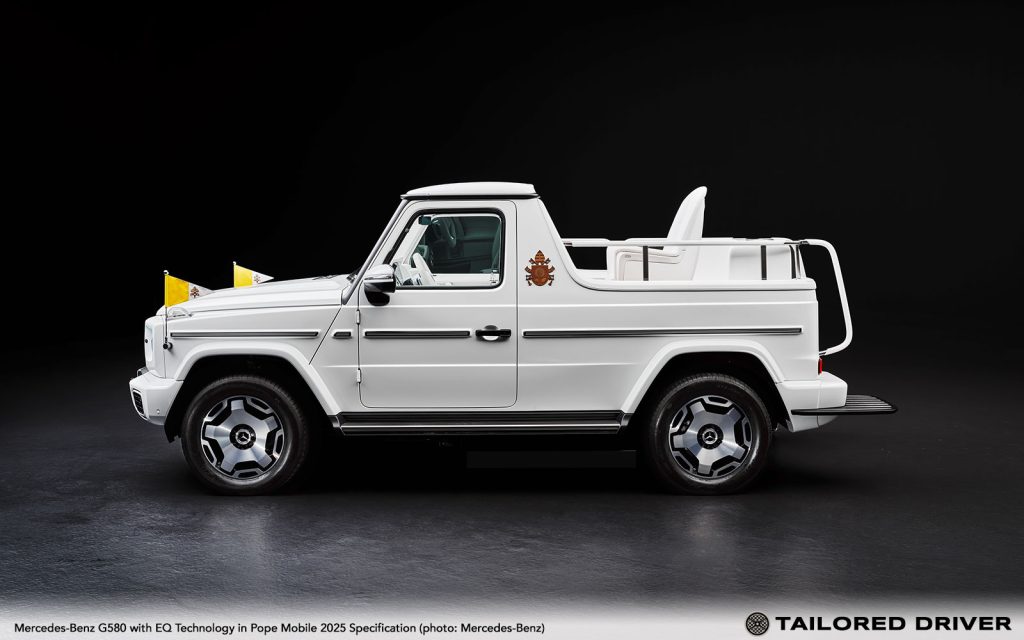
  • Popemobile Specification Mercedes-Benz G580 with EQ Technology

    Popemobile Specification Mercedes-Benz G580 with EQ Technology

    • Handcrafted one-off based on the new electric G-Class fulfils high requirements
    • Vehicle to be handed over in time for the 2025 Jubilee and contributes to the realisation of the encyclical “Laudato Si”
    • Pope Francis invites CEO Ola Källenius and the team involved from Graz, Sindelfingen and Rome to a private audience
    • Long tradition continues: Mercedes-Benz has been supplying cars to the Vatican for almost 100 years

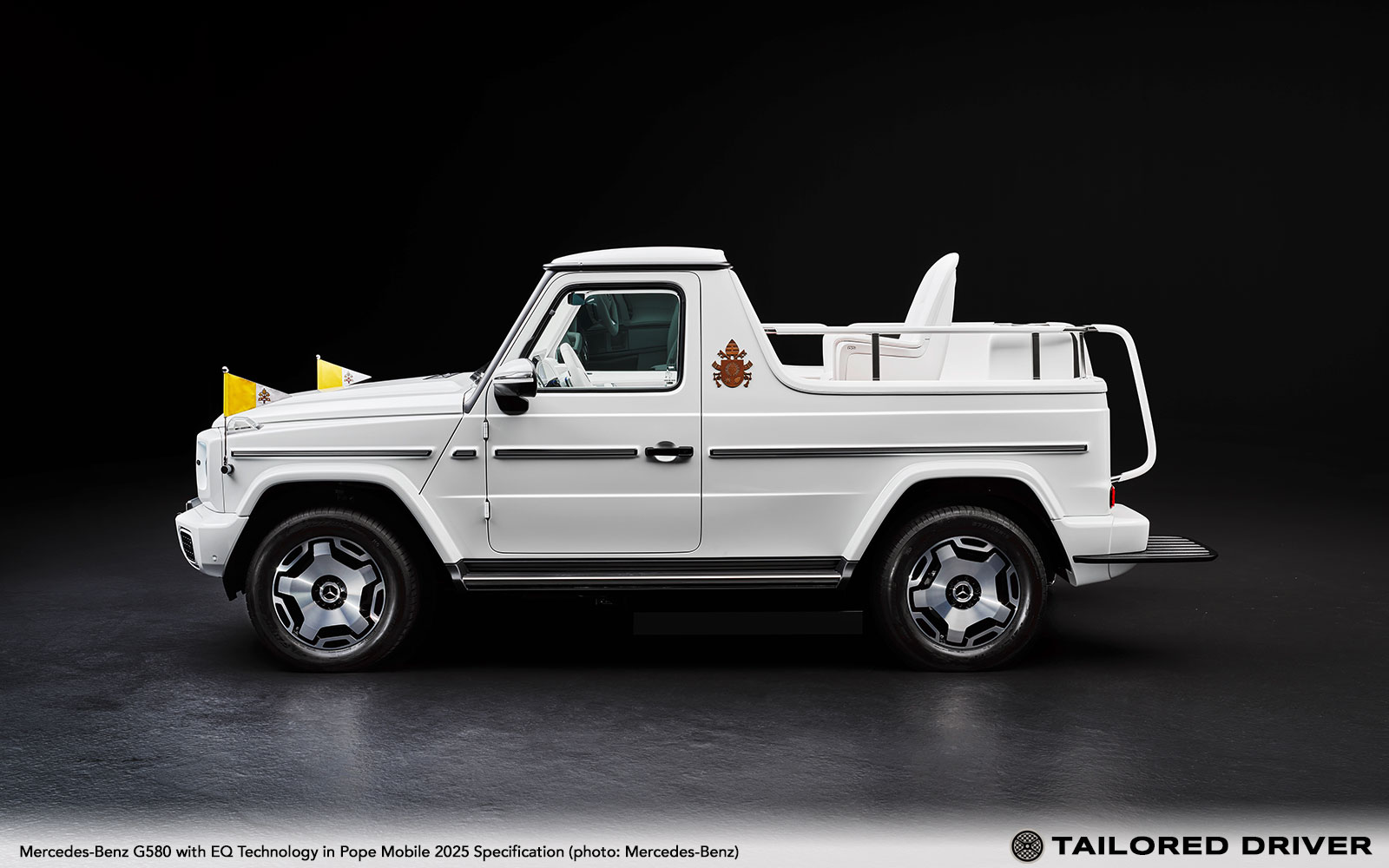
    [source: Mercedes-Benz]

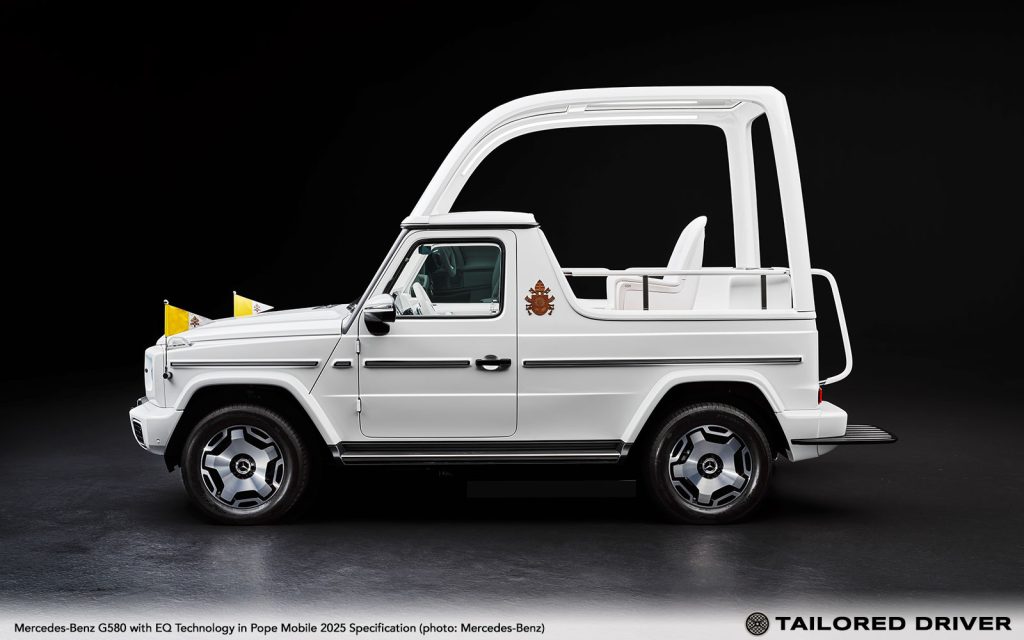
    Mercedes-Benz has been supplying cars to the Vatican for 94 years and for the past 45 years, the Pope has been using the renowned “Popemobiles” based on the Mercedes-Benz G-Class. Now, for the first time, the Popemobile from Mercedes-Benz is going all-electric: Mercedes-Benz CEO Ola Källenius and the team members involved personally handed over a handmade unique vehicle based on the new electric G-Class to Pope Francis in the Vatican today.

    This means that the Pope will be travelling locally emission-free in a new Mercedes-Benz in time for the 2025 Jubilee – an event that only takes place every 25 years and one for which millions of pilgrims are expected in Rome. The vehicle fulfils high requirements and was developed in close cooperation with the Vatican specifically for the Pope’s use. Its electric drivetrain, which was adapted to the particularly low speeds required for public appearances, contributes to the realisation of the encyclical “Laudato Si”. In it, Pope Francis describes the need for sustainable development.

    At the handover, Ola Källenius thanked Pope Francis and all those involved and emphasised the sustainable business strategy of Mercedes-Benz:

    “With the new Popemobile, Pope Francis is the first pope to be travelling in a fully electric Mercedes-Benz when making public appearances. This is a special honour for our company, and I would like to thank His Holiness for his trust. With this Popemobile, we are also sending out a clear call for electromobility and decarbonisation. Mercedes-Benz not only stands for the special and individual – but also for consistently creating the conditions for a net-carbon-neutral[1] new car fleet in 2039.”
    Ola Källenius, Chairman of the Board of Management of Mercedes-Benz Group AG
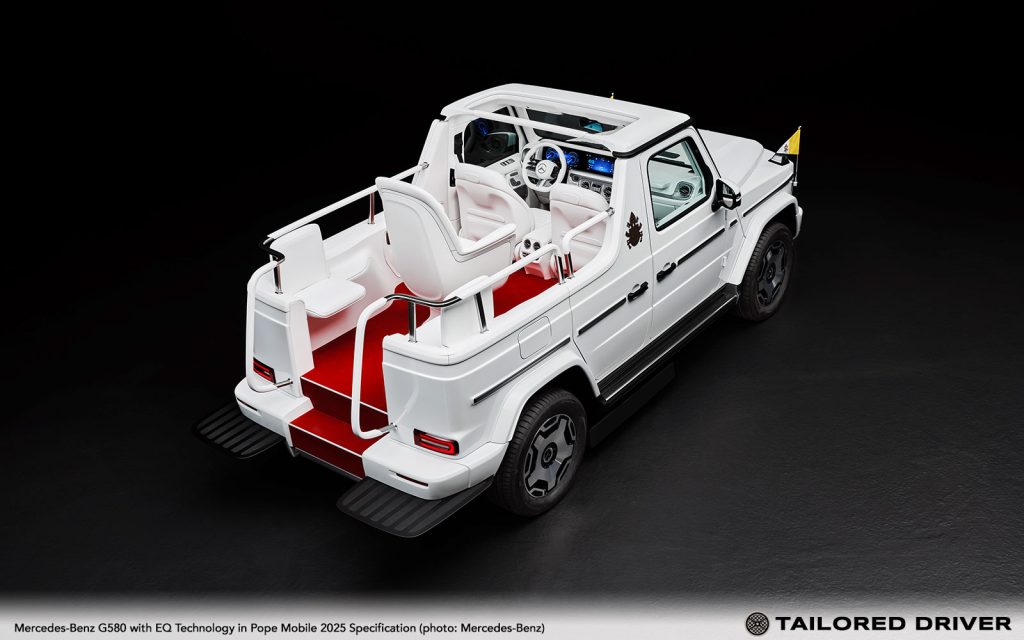
    A unique experience: Pope Francis invites participating team members from Graz, Sindelfingen and Rome

    Ola Källenius was accompanied by Britta Seeger, Member of the Board of Management responsible for Sales and Marketing, and Marc Langenbrinck, CEO of Mercedes-Benz Italia, at the appointment just outside St Peter’s Basilica. But the Holy Father also met with those who developed and built his new vehicle. Employees from Design, Research & Development, Manufacturing and Sales & Marketing were therefore also invited to the event and were able to hand over “their” vehicle on behalf of many others involved. The handover was followed by a private audience with the Pope. A team of specialists from Graz (A), Sindelfingen (D) and Rome (I) worked together for around a year. The project was managed by the team in Rome while the electric drivetrain was adapted by the team in Graz. The experts from Sindelfingen produced the bodywork, interior fittings and customised equipment using traditional craftsmanship.
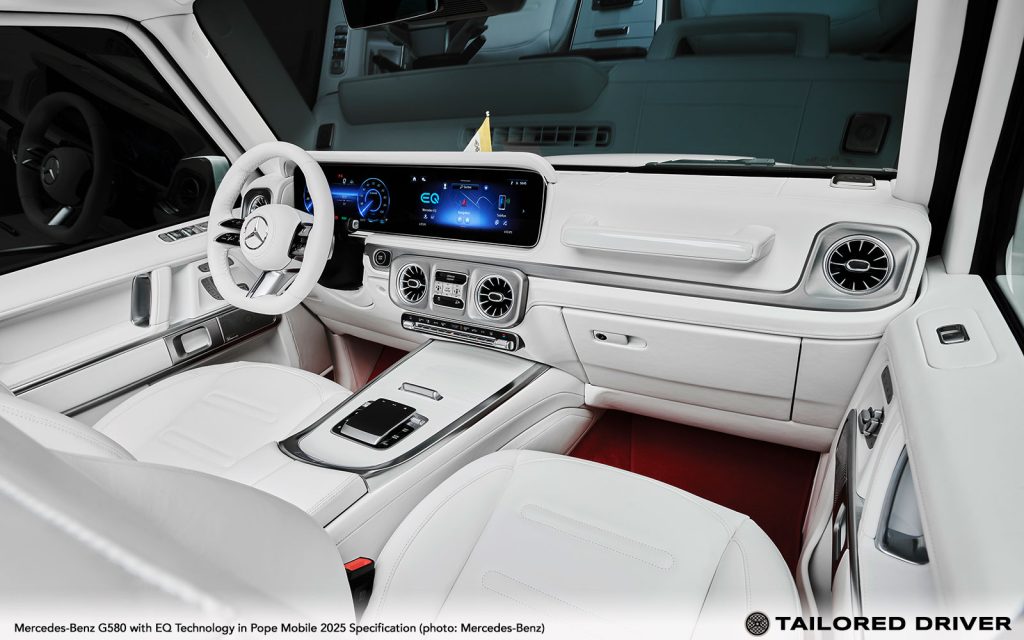
    Handmade model: Details of the vehicle based on the new G580 with EQ technology

    The electric drivetrain of the new G580 with EQ technology (combined energy consumption: 30.4-27.7 kWh/100 km | Combined CO₂ emissions: 0 g/km | CO₂ class: A)[2]was adapted to fully utilise the advantages of the four near-wheel motors for the special purpose of slow journeys at public appearances.

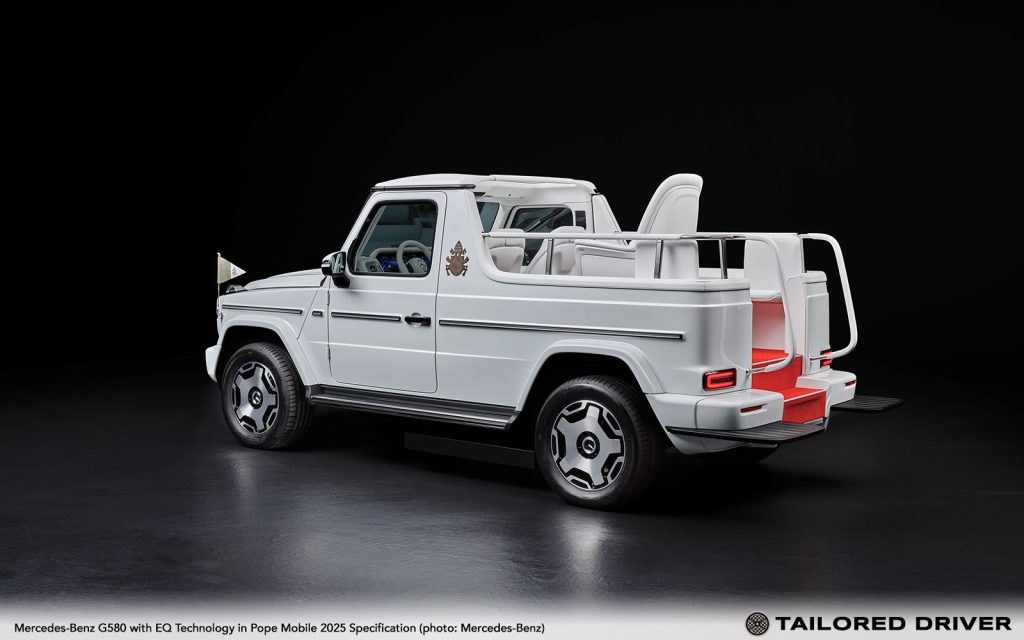
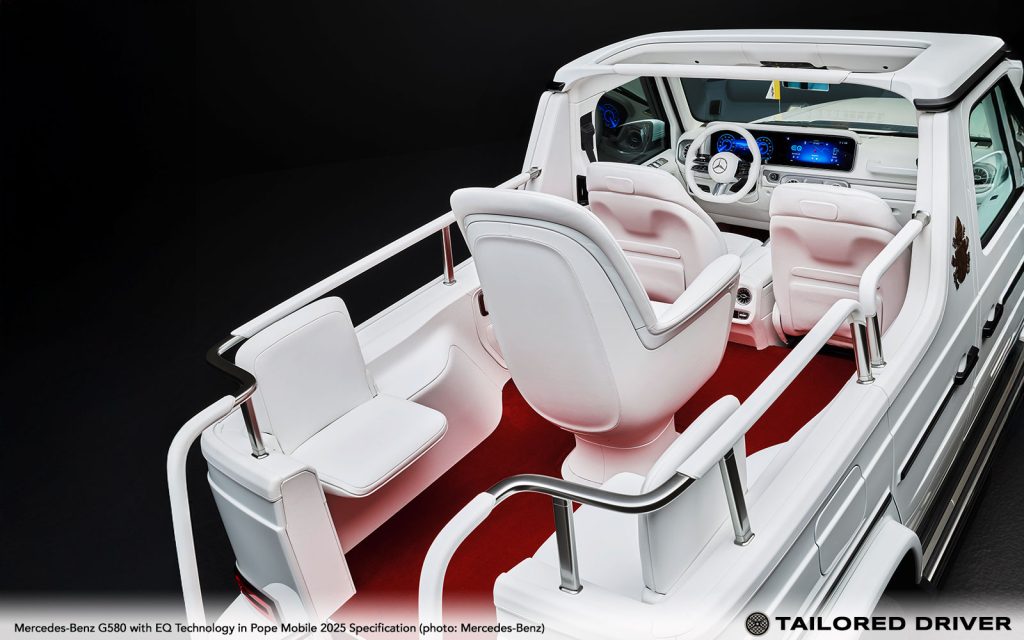
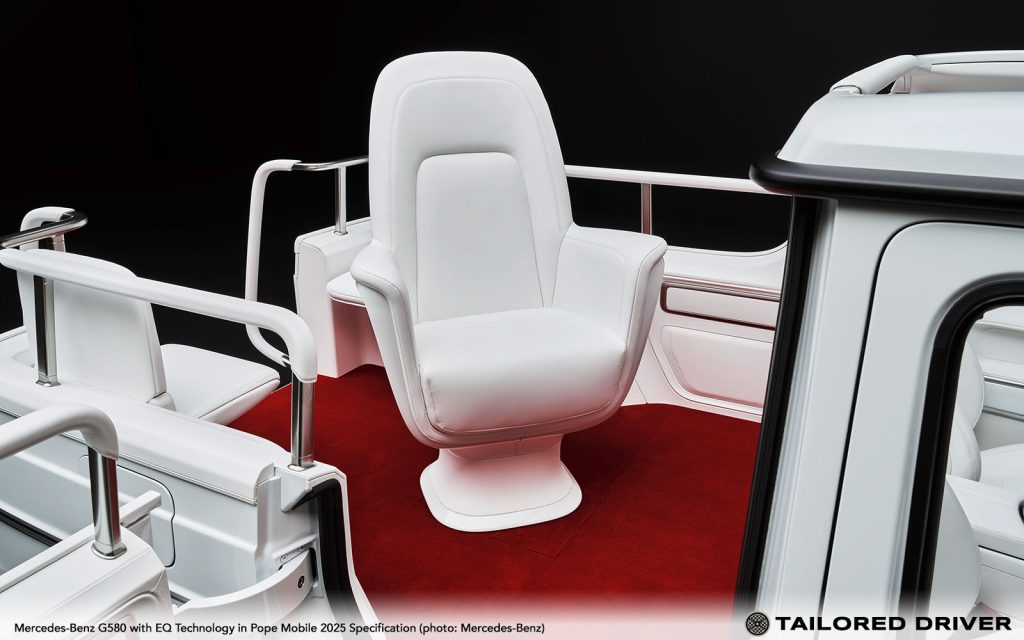
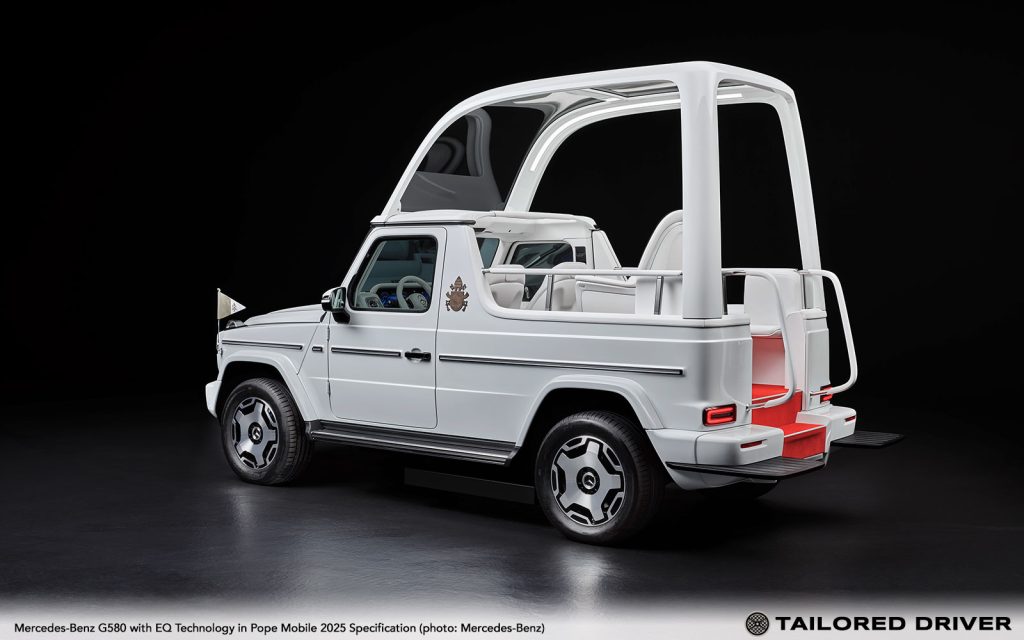
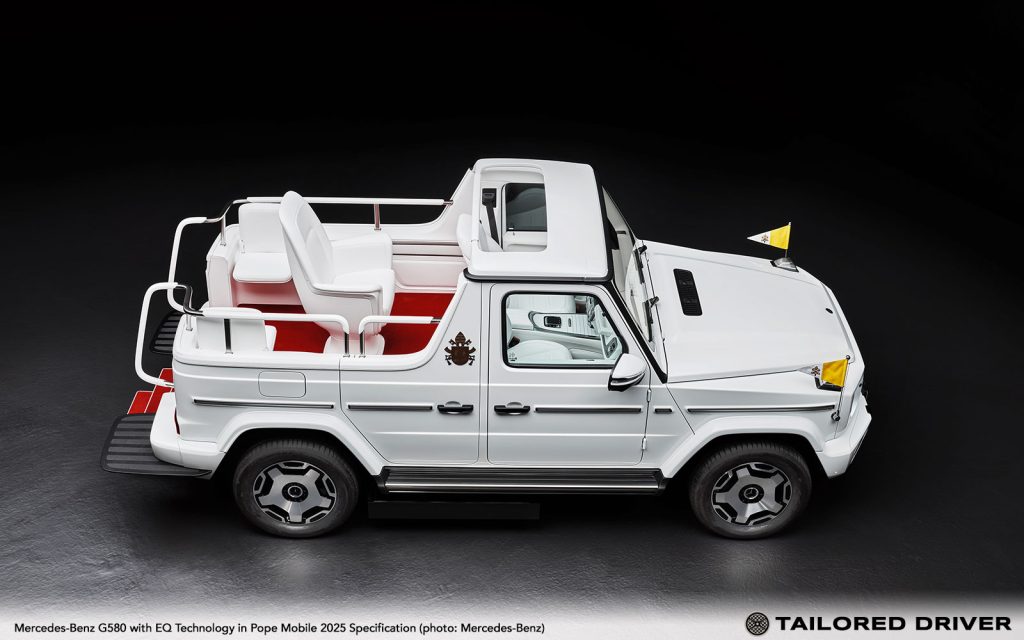
    In the rear, the bench seat was replaced by a centrally positioned and height-adjustable single seat. This swivelling main seat makes it possible to move around flexibly and address an audience from different angles. Behind the single seat, two single seats have been integrated on the left and right for additional passengers.

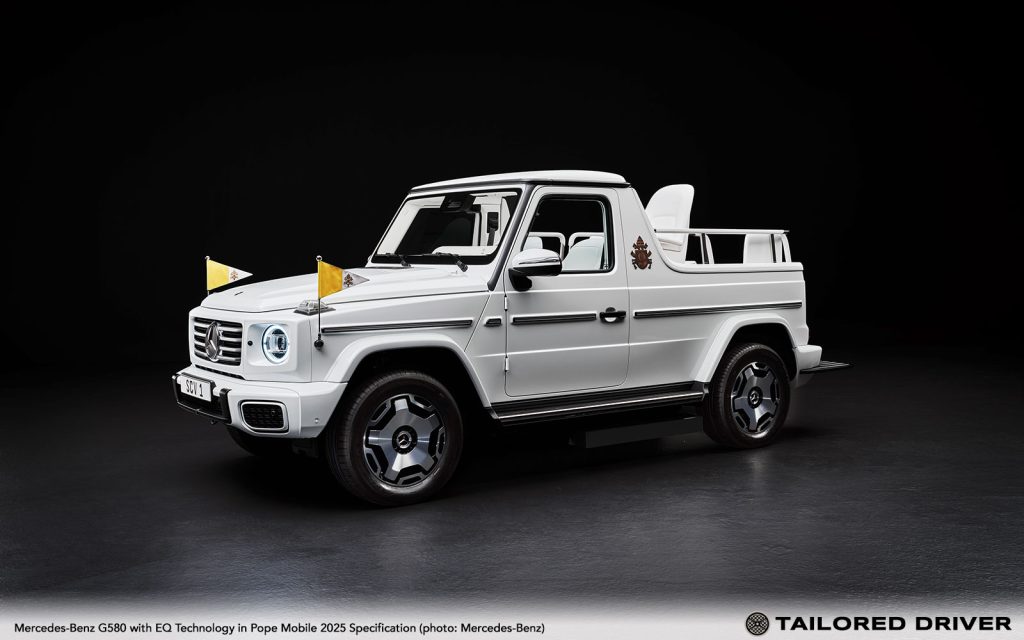
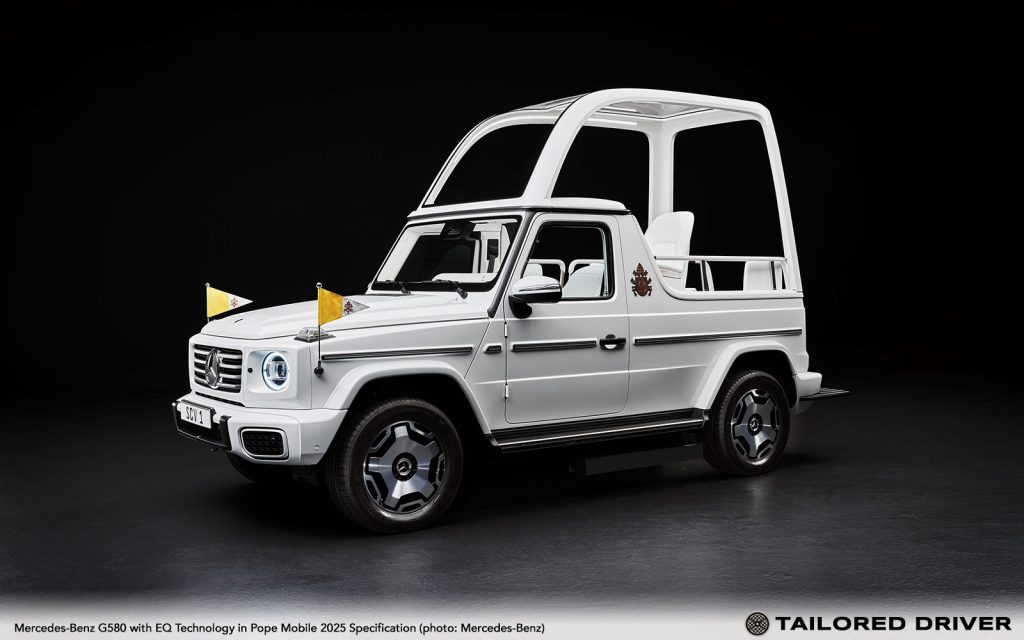
    The roof was removed at the B-pillar, and the B-pillar itself was harmoniously transitioned into the side wall to create an unmistakable side profile. In case of rain or bad weather conditions, a separate hardtop offers protection for the occupants. The left rear door was removed and rebuilt by the specialists – in traditional coachbuilding style – from a single piece and seamlessly welded into the bodyshell. On the right-hand side, the hinges of the rear door were relocated to the opposite side.

    Like the previous Popemobiles, the vehicle is painted in classic pearl white on the outside.
    A long tradition: The history of Mercedes-Benz vehicles for the Vatican

    Mercedes-Benz has been manufacturing vehicles for the head of the Catholic Church and his travels and public appearances for almost 100 years. The first vehicle of this type was a Nürburg 460 Pullman Saloon for Pope Pius XI from 1930. At the time, Mercedes-Benz was awarded the delivery contract due to a harmonious overall package – and because the team at the time transferred an important characteristic of previous carriages to the vehicle: The possibility of travelling with two dignitaries and other staff using folding seats. In the 1960s, John XXIII received a 300 Landaulet with an automatic transmission and extended wheelbase. His successor Paul VI initially used a 600 Pullman Landaulet and later a 300 SEL – also a Landaulet. In the 1980s, John Paul II used the first vehicle officially called Popemobile for events in St Peter’s Square, a modified 460 series G model. From 2002, he used a 463 series G 500, which was also used by his successors Benedict XVI and Francis. Specially-designed cars based on the Mercedes-Benz M-Class and the GLE were also used at times. After their retirement from service, some of the Popemobiles were placed for viewing in the Vatican and the Mercedes-Benz Museum in Stuttgart.
    Statements from Britta Seeger, Marc Langenbrinck, Gorden Wagenerand participating team members

    “We build the perfect Mercedes for every customer – including, for almost 100 years, the Vatican. We are overjoyed to be able to fulfil the Holy Father’s wish for an electric Popemobile and are particularly proud to be able to build the vehicle according to his requirements. This cooperation at eye level honours us deeply and is a valuable symbol of sustainable change together.”
    Britta Seeger, Member of the Board of Management of Mercedes-Benz Group AG, responsible for Sales & Marketing

    “The G-Class is one of Mercedes-Benz’s most iconic vehicles and we are proud that we can develop vehicles for the Holy Father in this tradition. The first all-electric G-Class combines sustainability, elegant design and maximum functionality. It is a great honour for us to be able to present this special vehicle to Pope Francis today.”
    Gorden Wagener, Chief Design Officer Mercedes-Benz Group AG

    “Today we are experiencing an important moment that underlines the deep bond that has united Mercedes‑Benz Italy and the Vatican for more than half a century. As Pope Francis emphasizes, business must be an integral part of the community. Thus, it is a great honor for us to contribute to this unique project. On behalf of the large family of Mercedes-Benz Italy, I would like to extend to the Holy Father my sincerest wishes for his well-being and the fruitful continuation of his Magisterium. We look forward to a wonderful Jubilee and we are certain that ‘our Papamobile’ will be a valuable support for His Holiness in the many engagements that await him.”
    Marc Langenbrinck, Mercedes-Benz Cars Italy Sales & Head of Mercedes-Benz Italy
    “I’m very proud that I was able to contribute to the electric Popemobile. From the first sketch to the final sign-off, the team’s work was characterised by great passion, professionalism and respect for the task. The vehicle represents an incredible amount of manual labour and passion – but it’s also full of state-of-the-art technology. The fact that Pope Francis has invited some of us to hand it over personally really tops everything off. It’s an experience that you’ll tell your grandchildren about.”
    Klaus Millerferli, Development Engineer at Mercedes-Benz AG in Sindelfingen

    “With the G-Class, we are used to working on one of the most legendary and iconic Mercedes-Benz models on a daily basis. Building a vehicle for the Pope is something also very special for us – but even here we have experience. The entire team in Graz is very happy and proud that the Vatican is once again relying on our G.”  
    Peter Zotter, Development Engineer at Mercedes-Benz G GmbH in Graz

    [1] Net carbon-neutral means that carbon emissions that are not avoided or reduced at Mercedes-Benz are compensated for by certified offsetting projects.

    [2] The specified values were determined in accordance with the WLTP (Worldwide harmonised Light vehicles Test Procedure) measurement method. The ranges given refer to ECE markets. The energy consumption and CO₂ emissions of a car depend not only on the efficient utilisation of the fuel or energy source by the car, but also on the driving style and other non-technical factors.
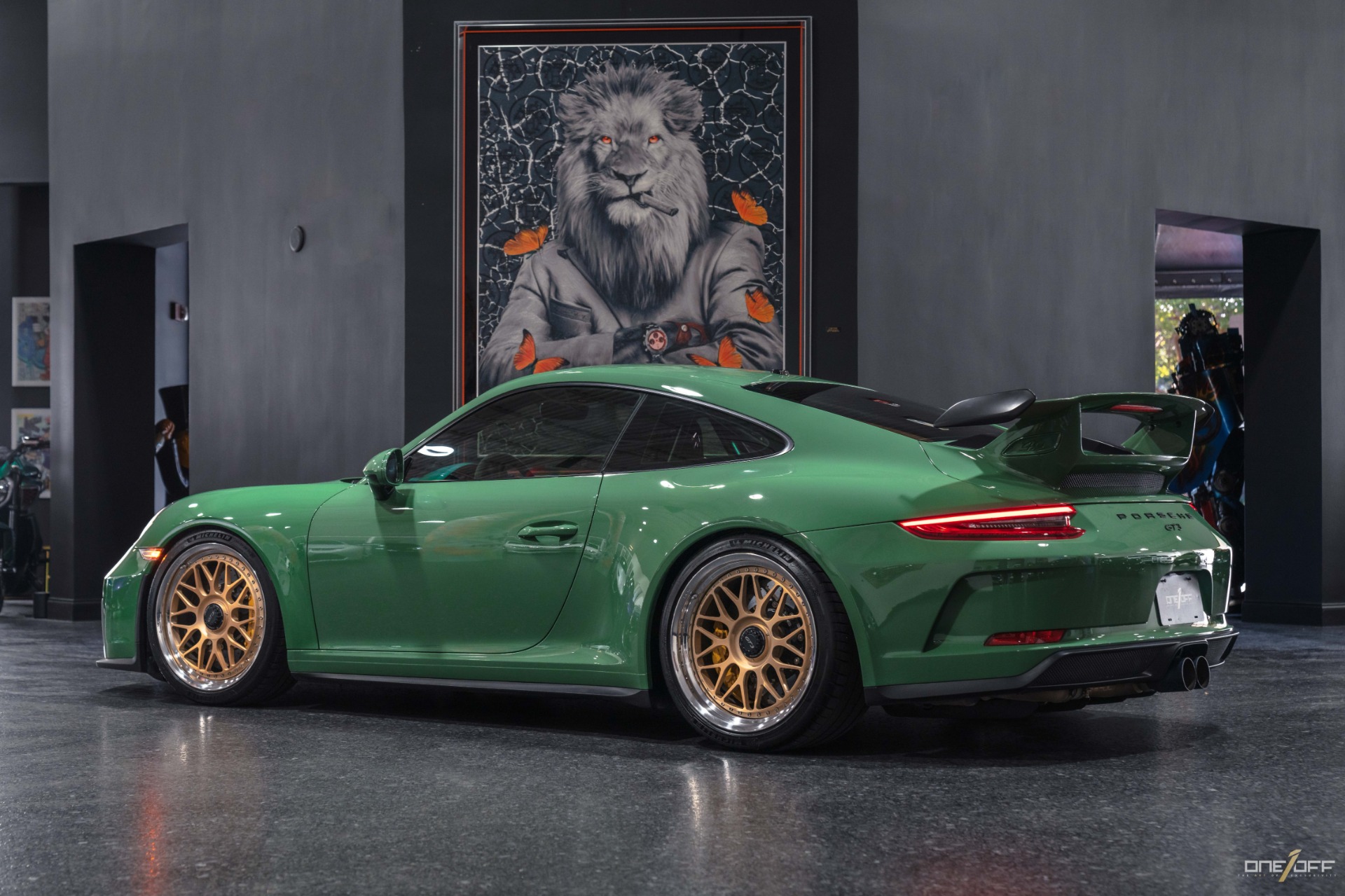
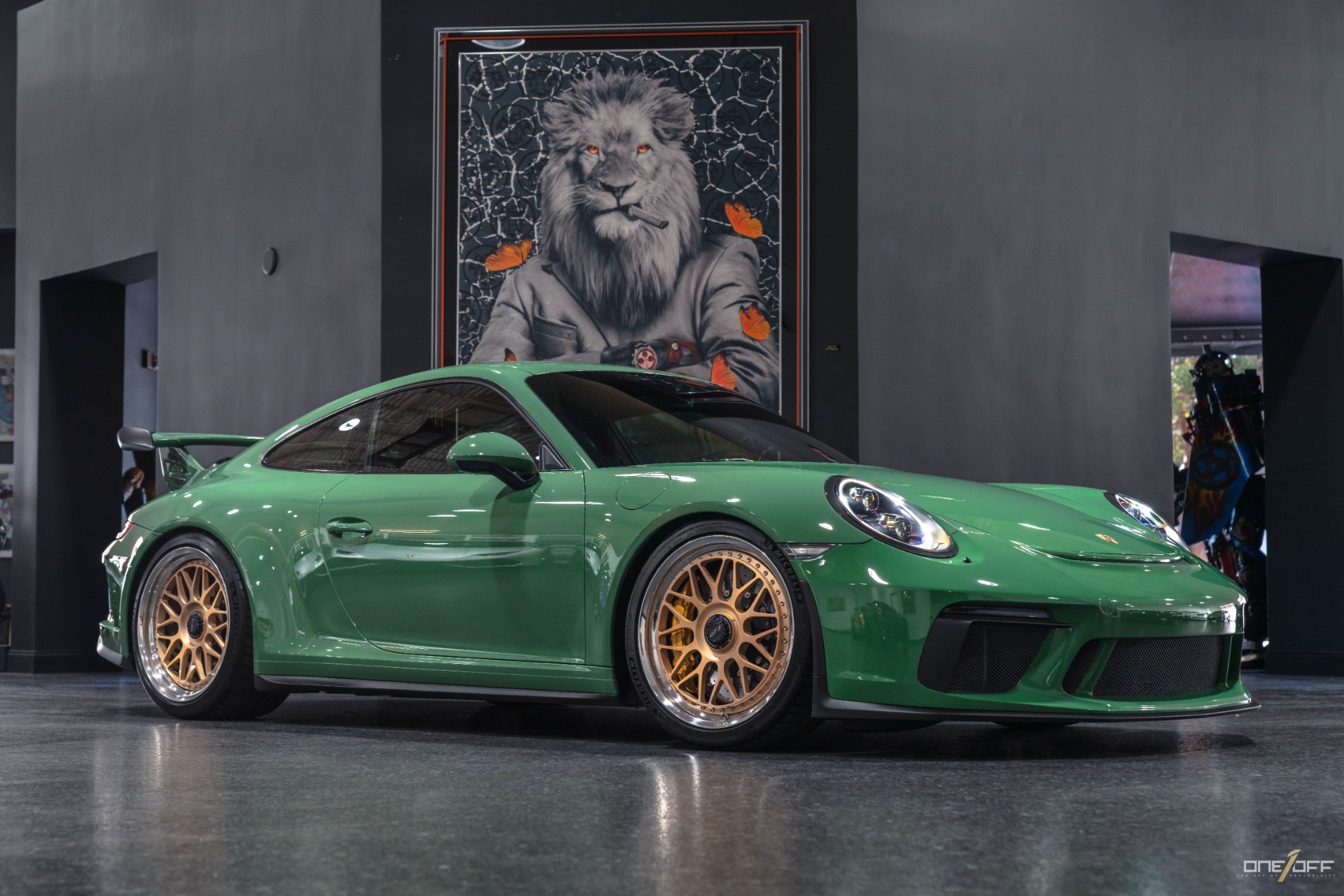
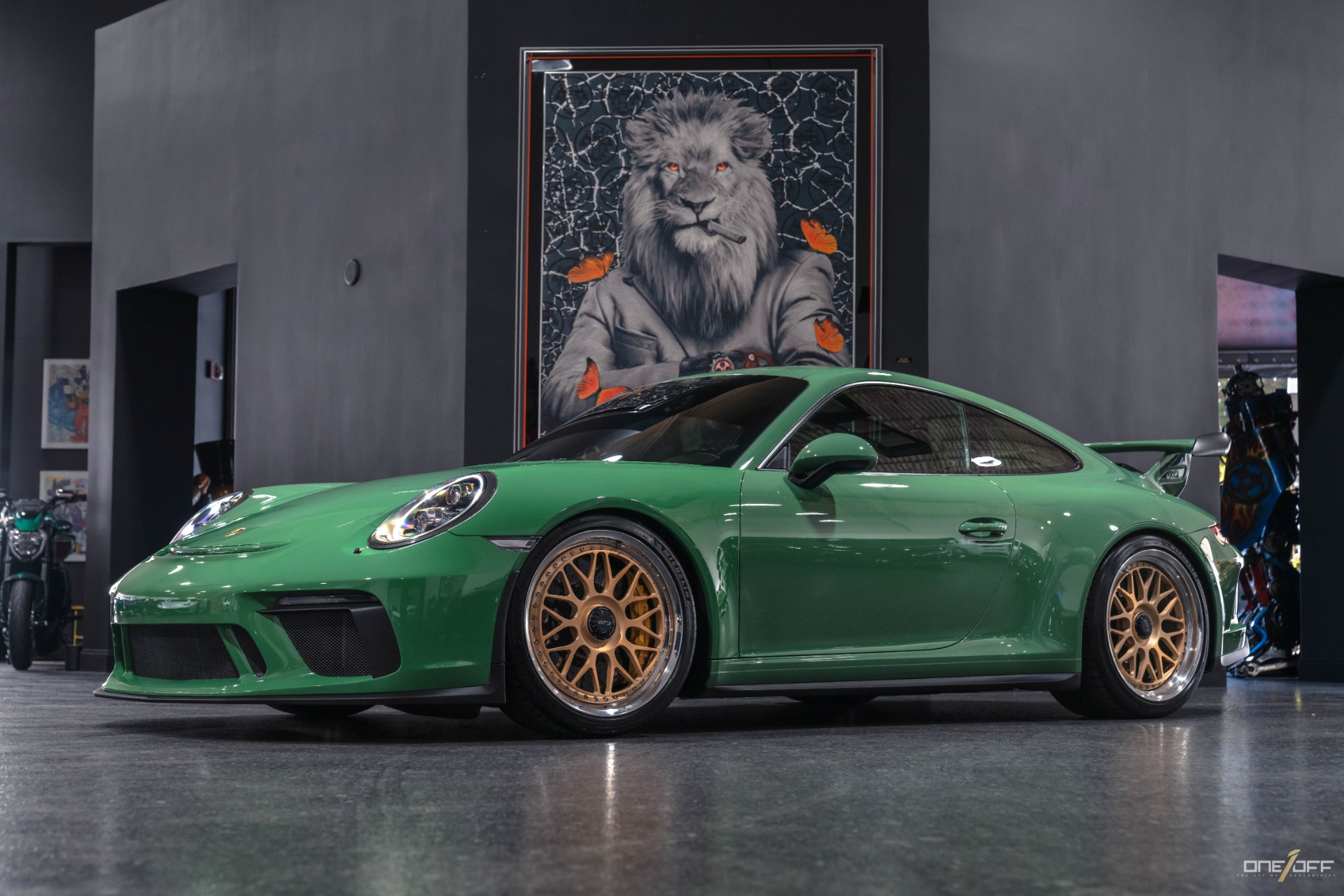
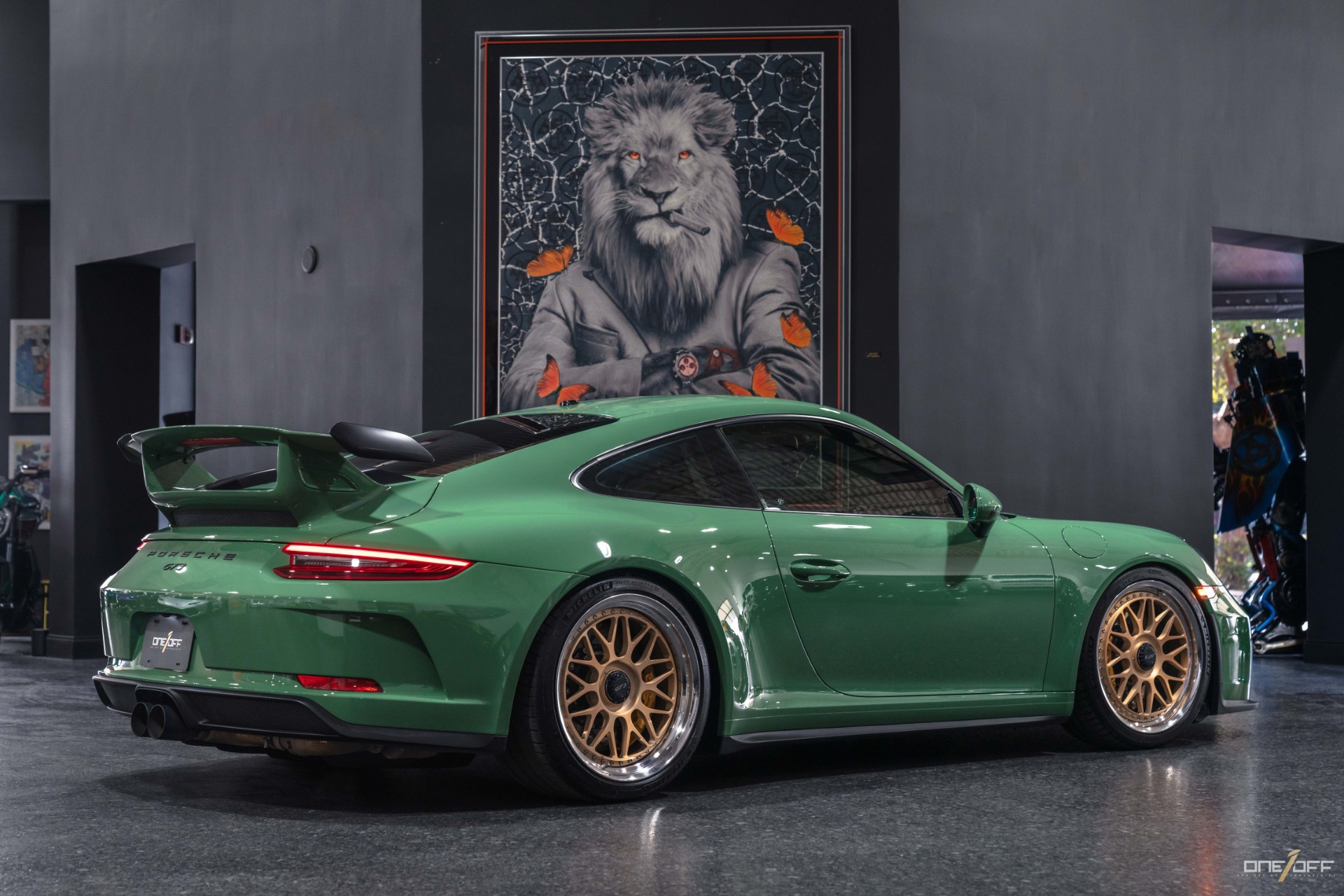
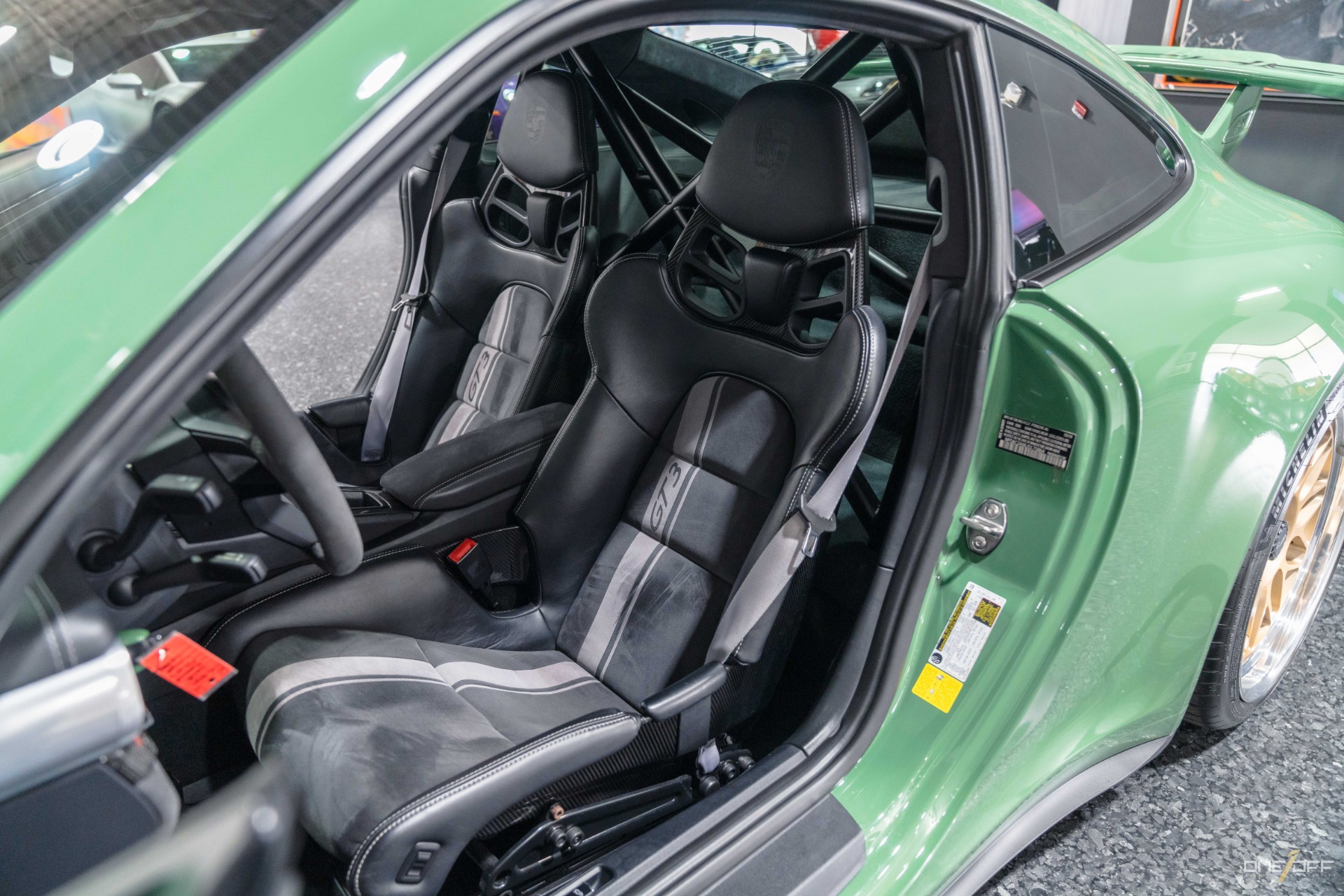
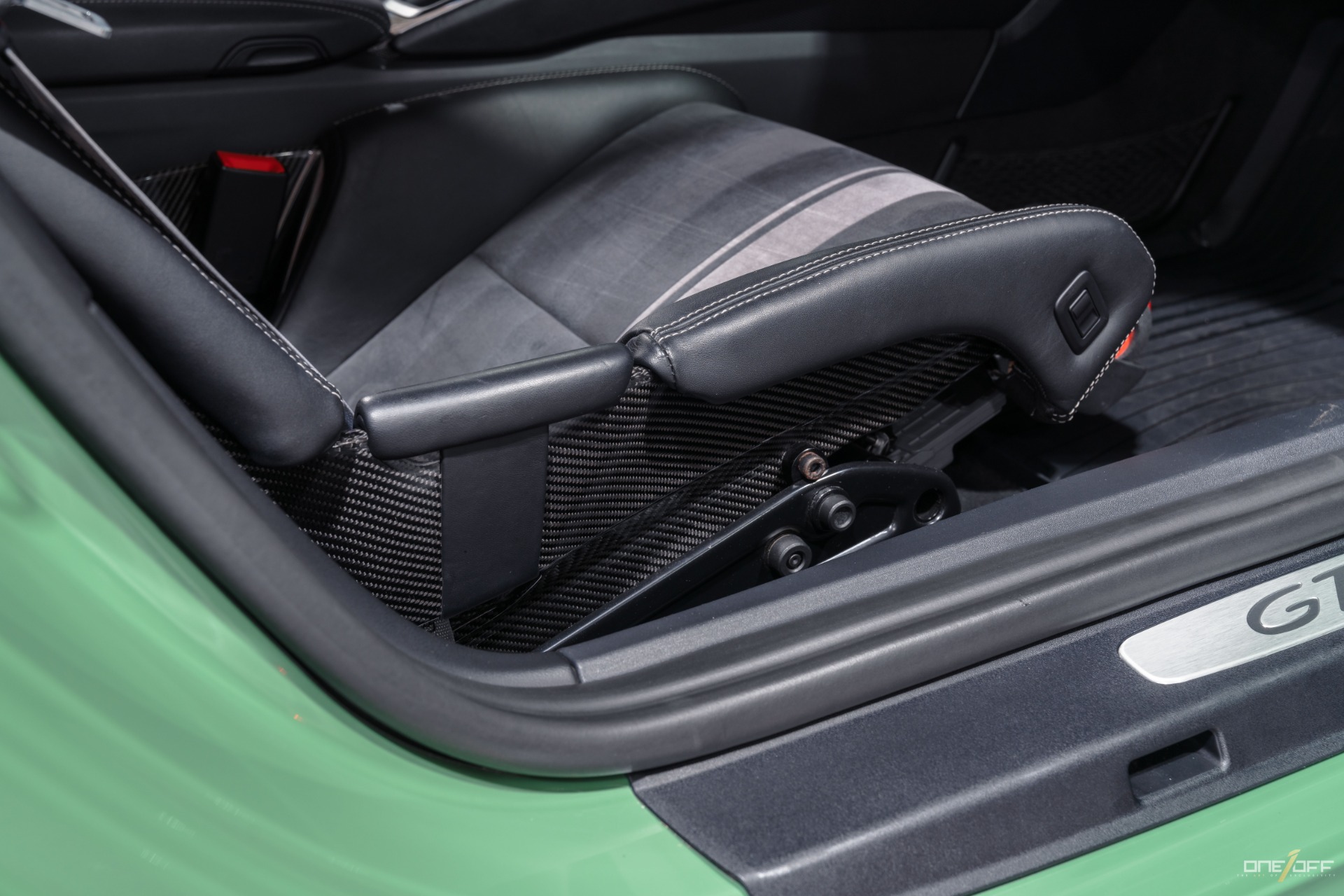
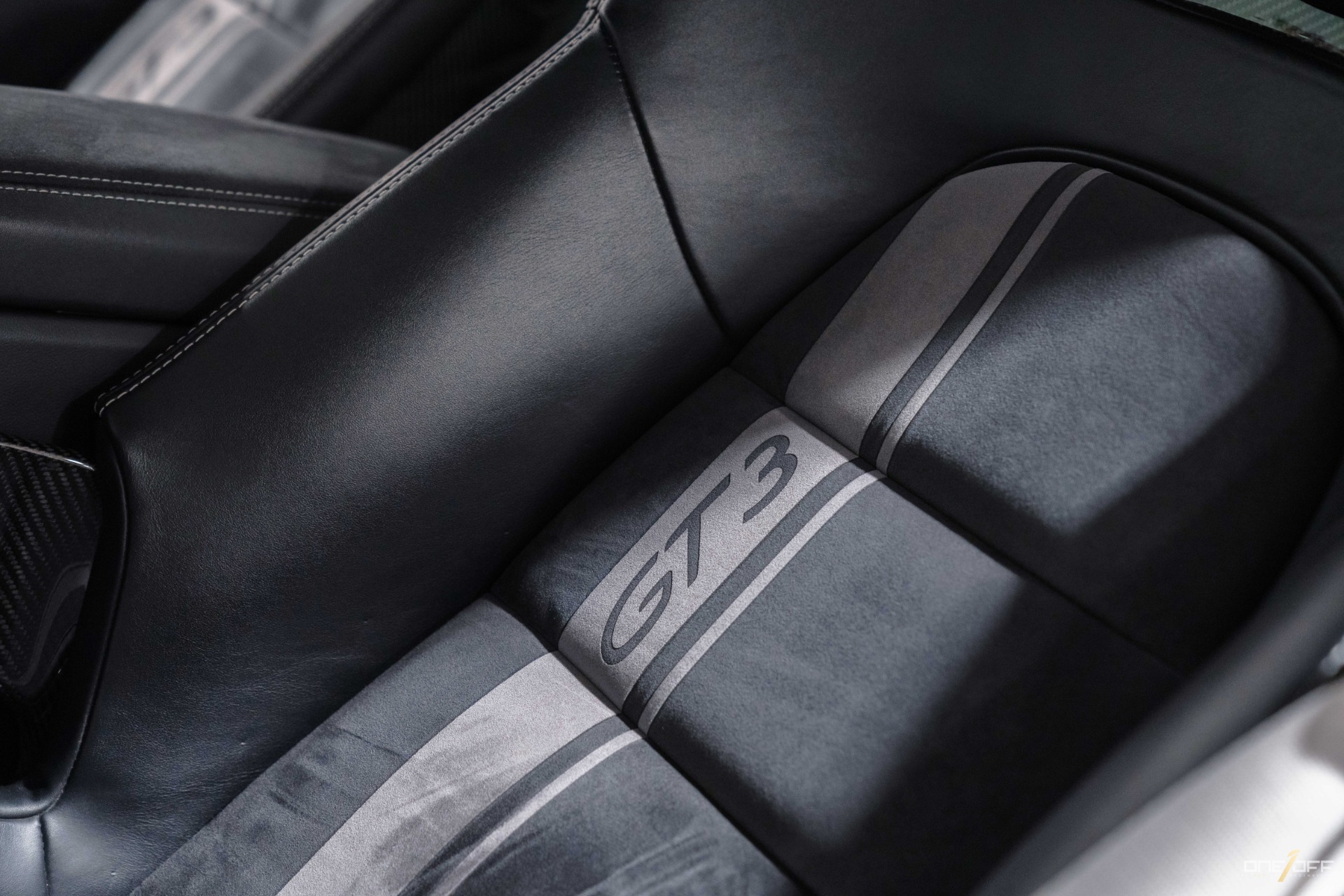
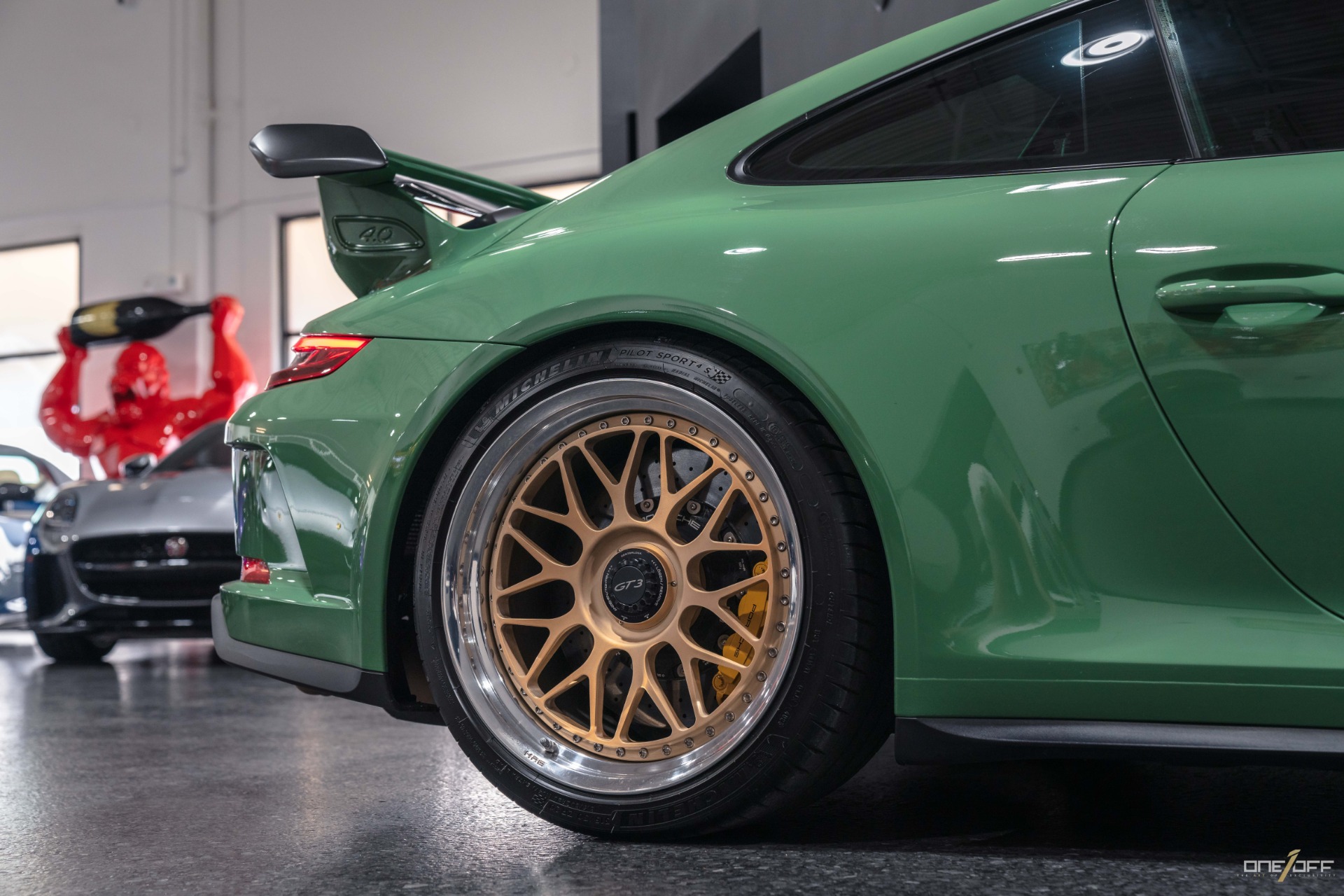
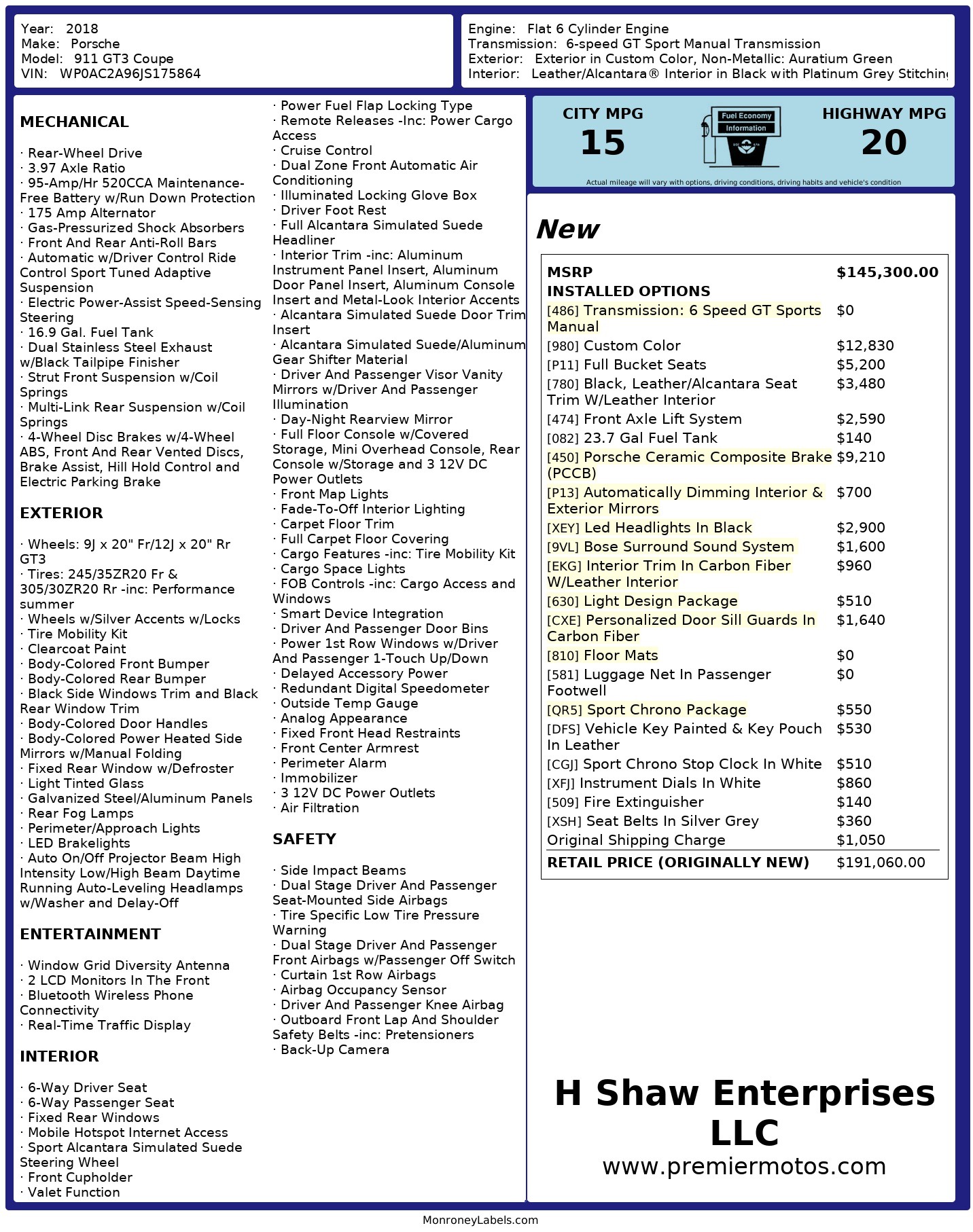
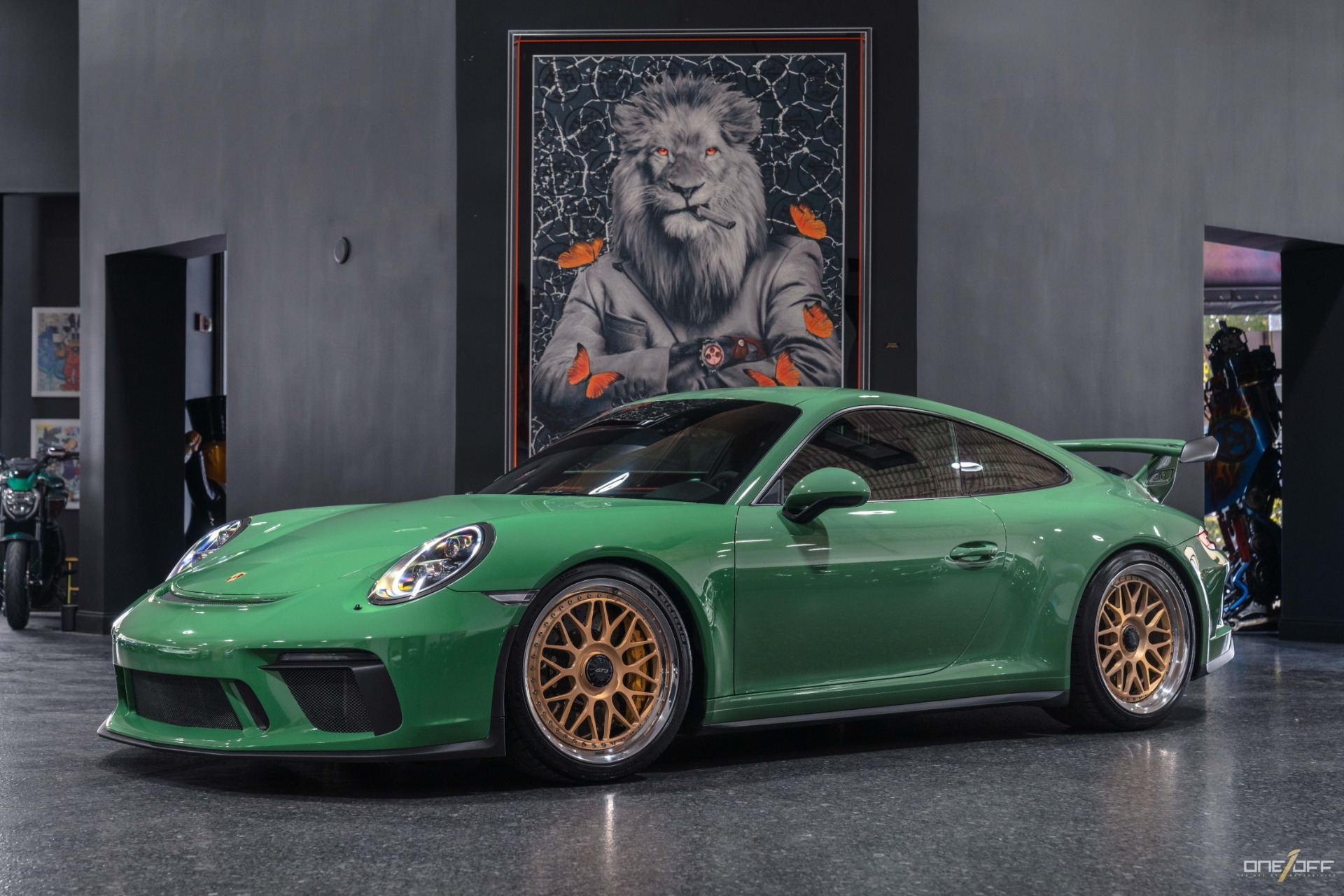
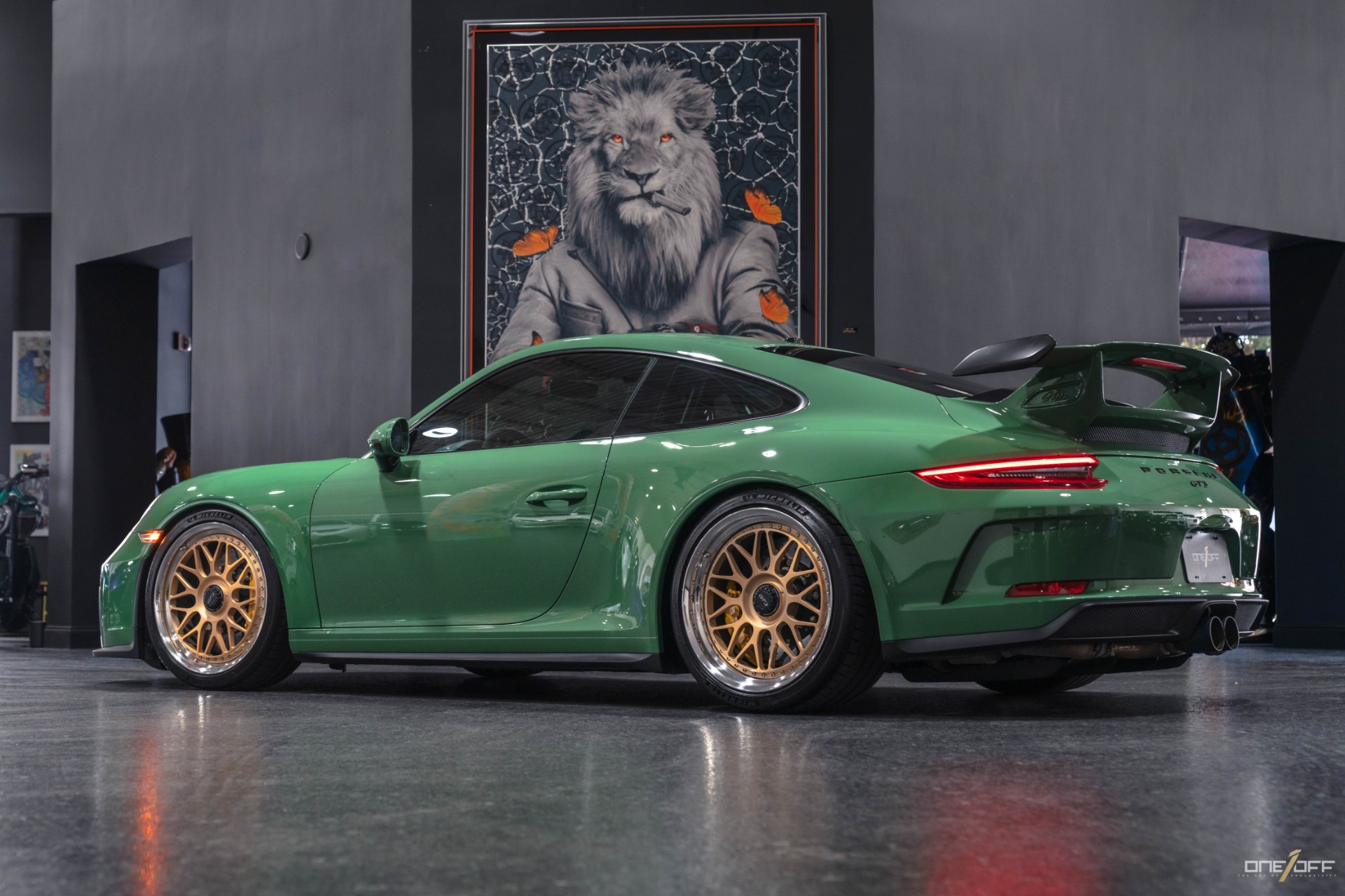
  • Market Find: 2018 Porsche Paint to Sample Auratium Green 911 GT3

    Market Find: 2018 Porsche Paint to Sample Auratium Green 911 GT3

    What: 2018 Porsche 911 GT3
    Color: Paint to Sample Auratium Green (auratiumgrün; 5712; 6AU; Porsche)
    VIN: WP0AC2A96JS175864
    Mileage: 22,861
    Price at Time of this Writing: Available Upon Request
    CarFax: Link
    Window Sticker: N/A
    Location: Boca Raton, FL
    Dealer listing: Link

    Why we love it:

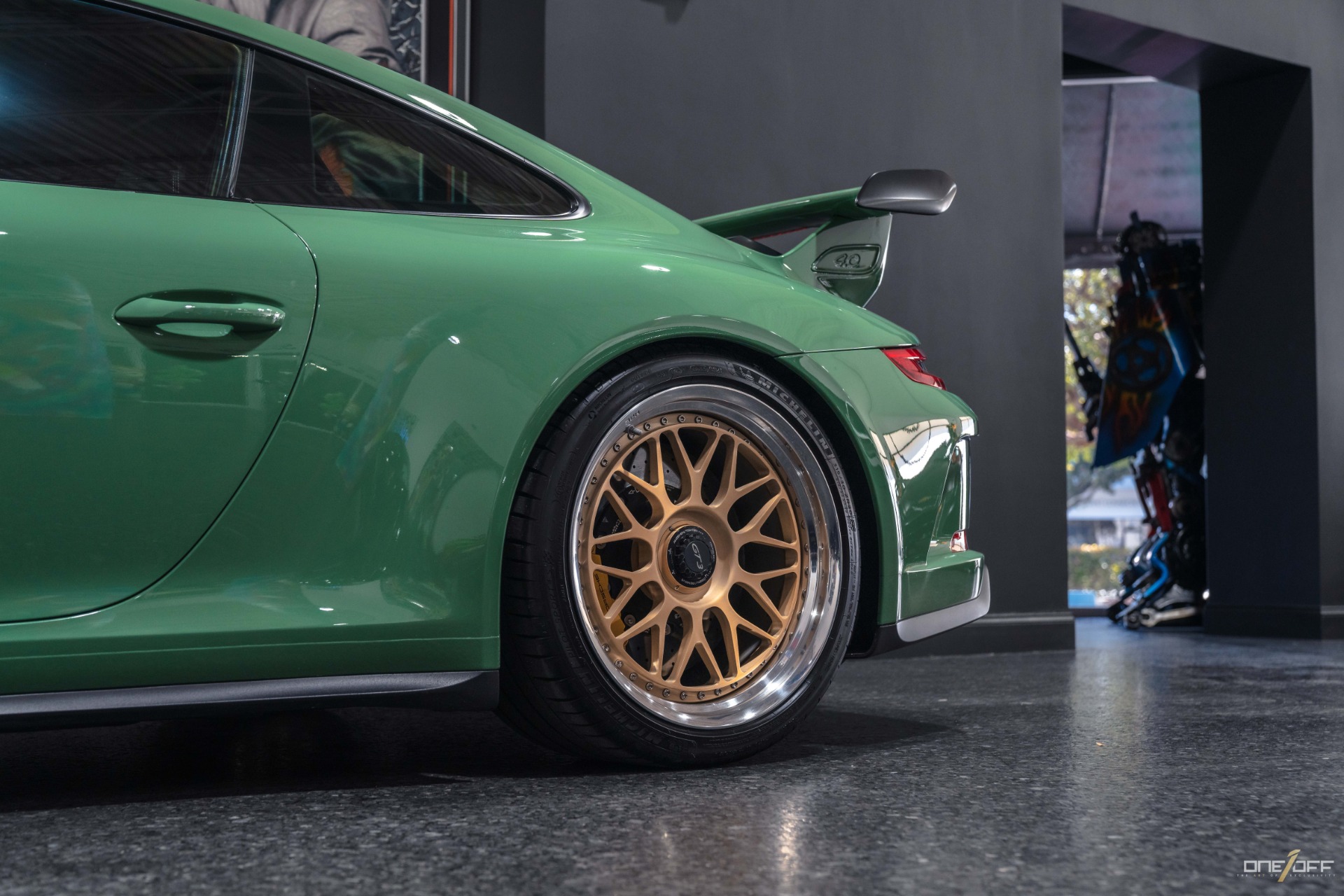
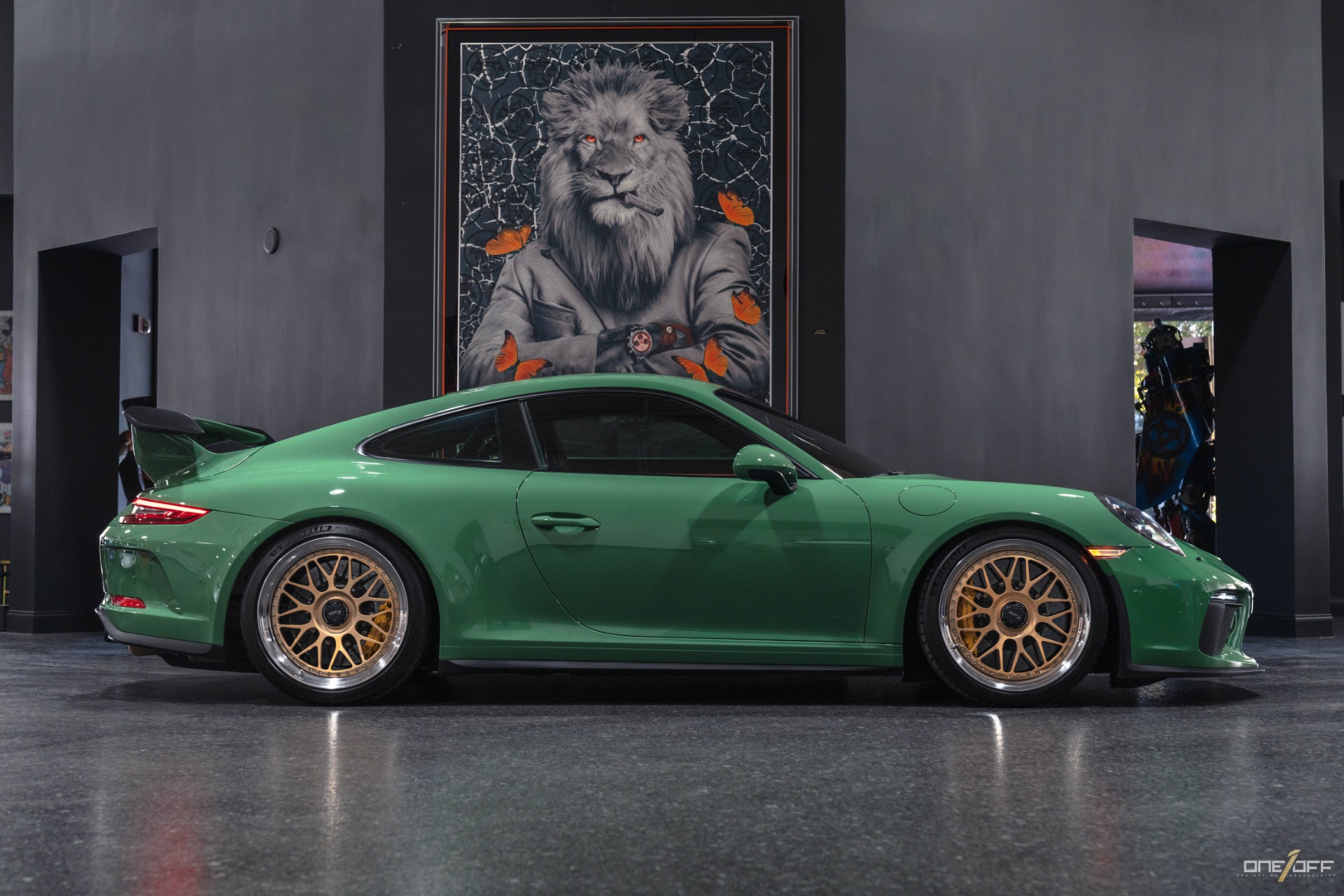
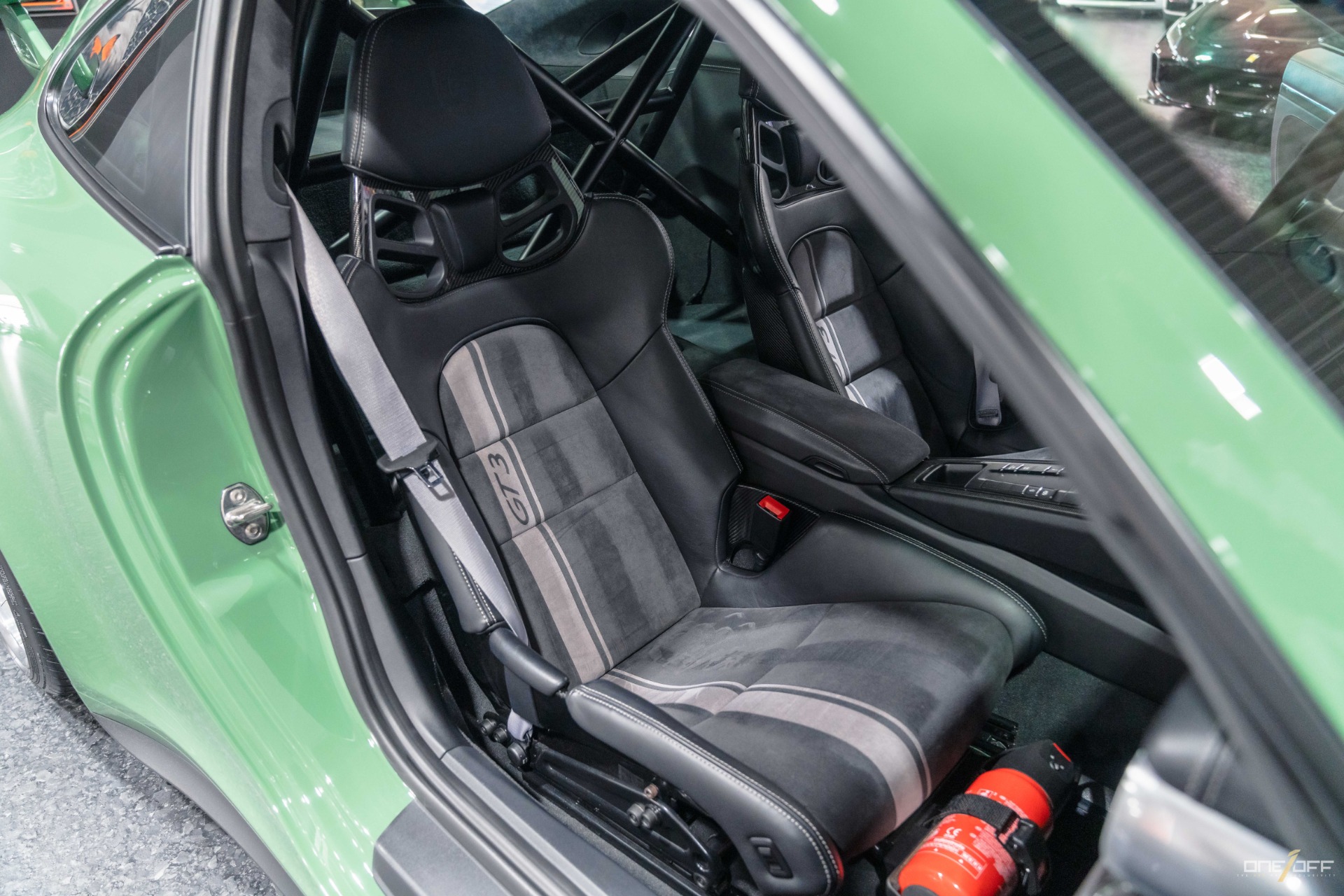
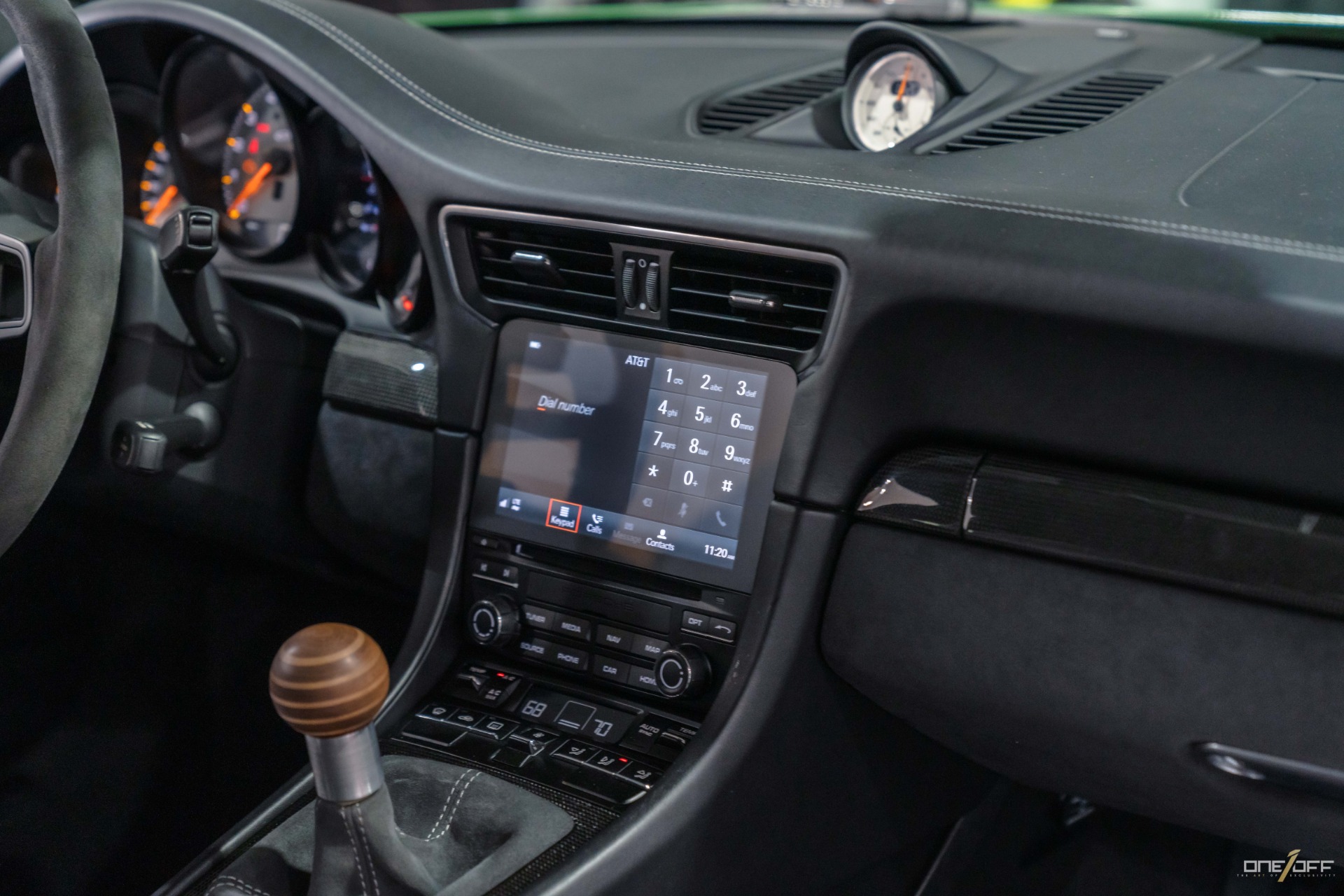
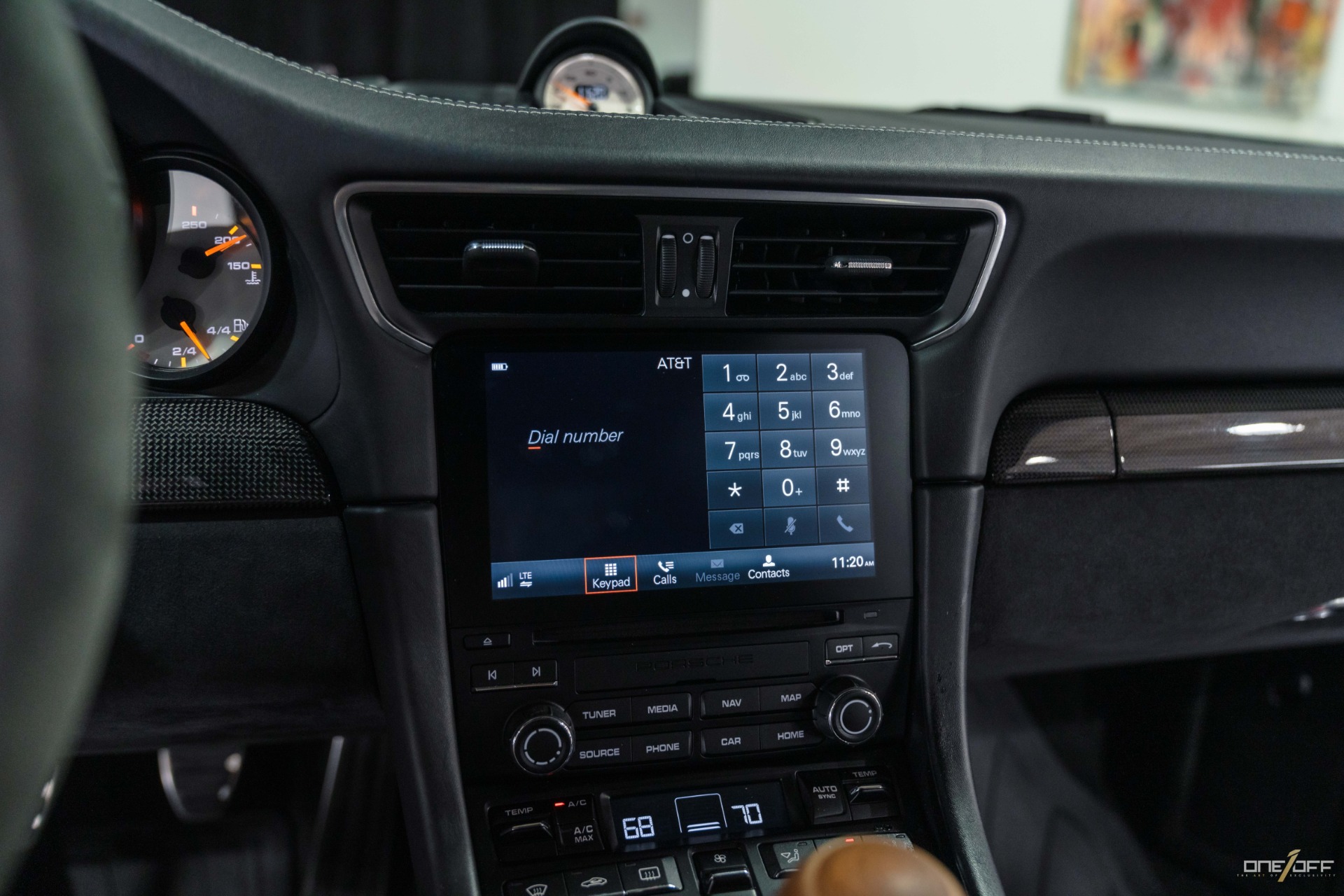
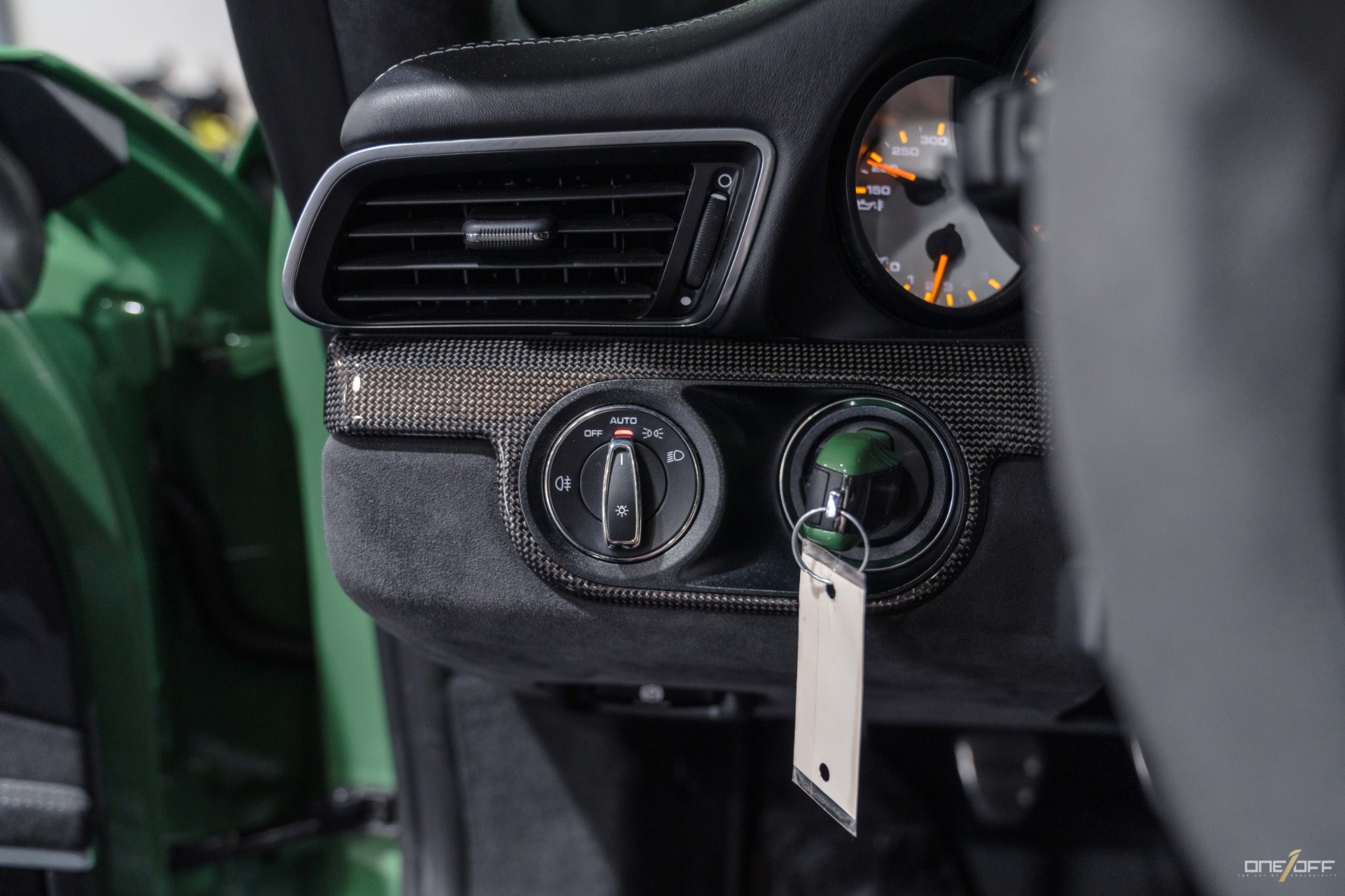
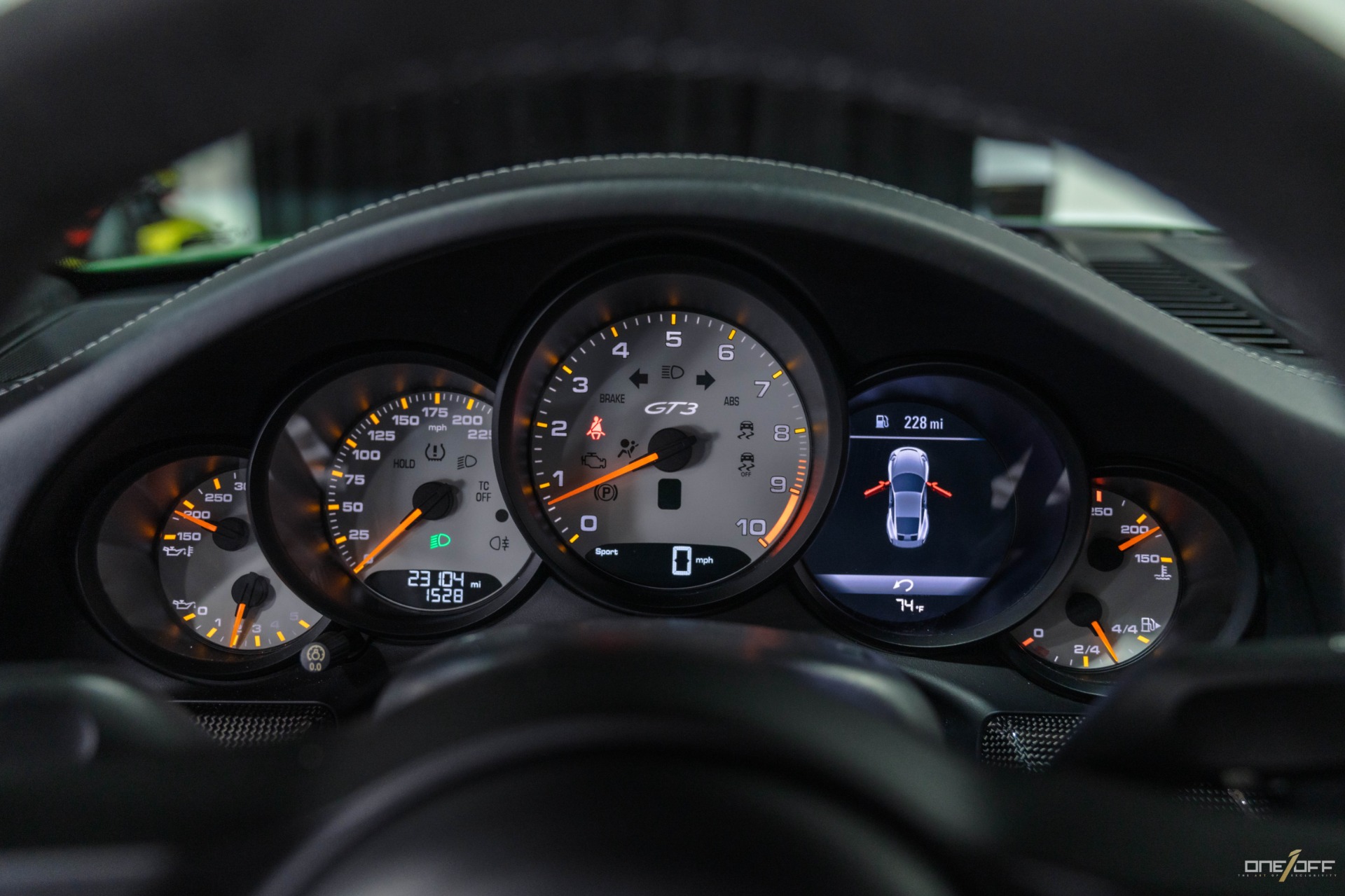
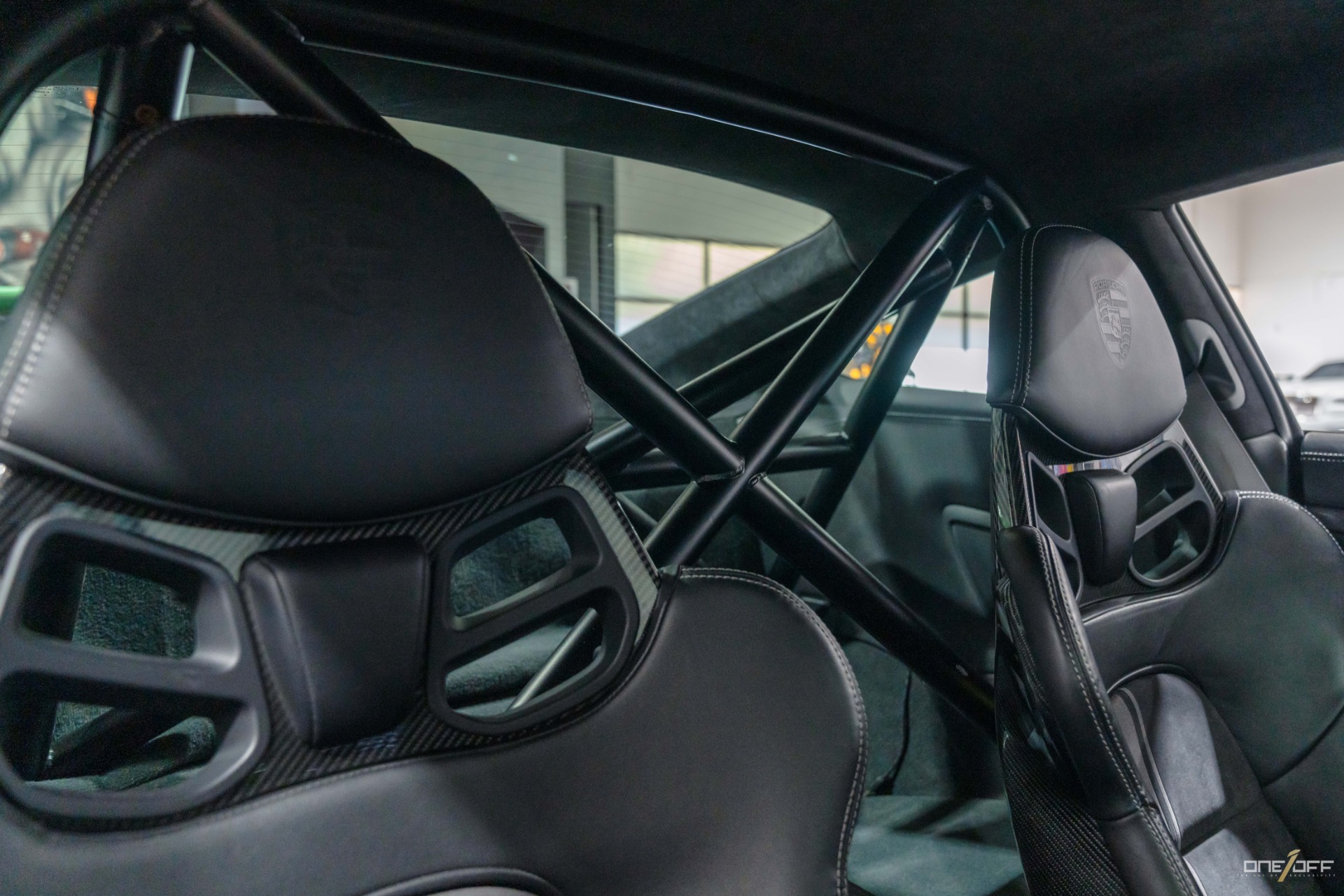
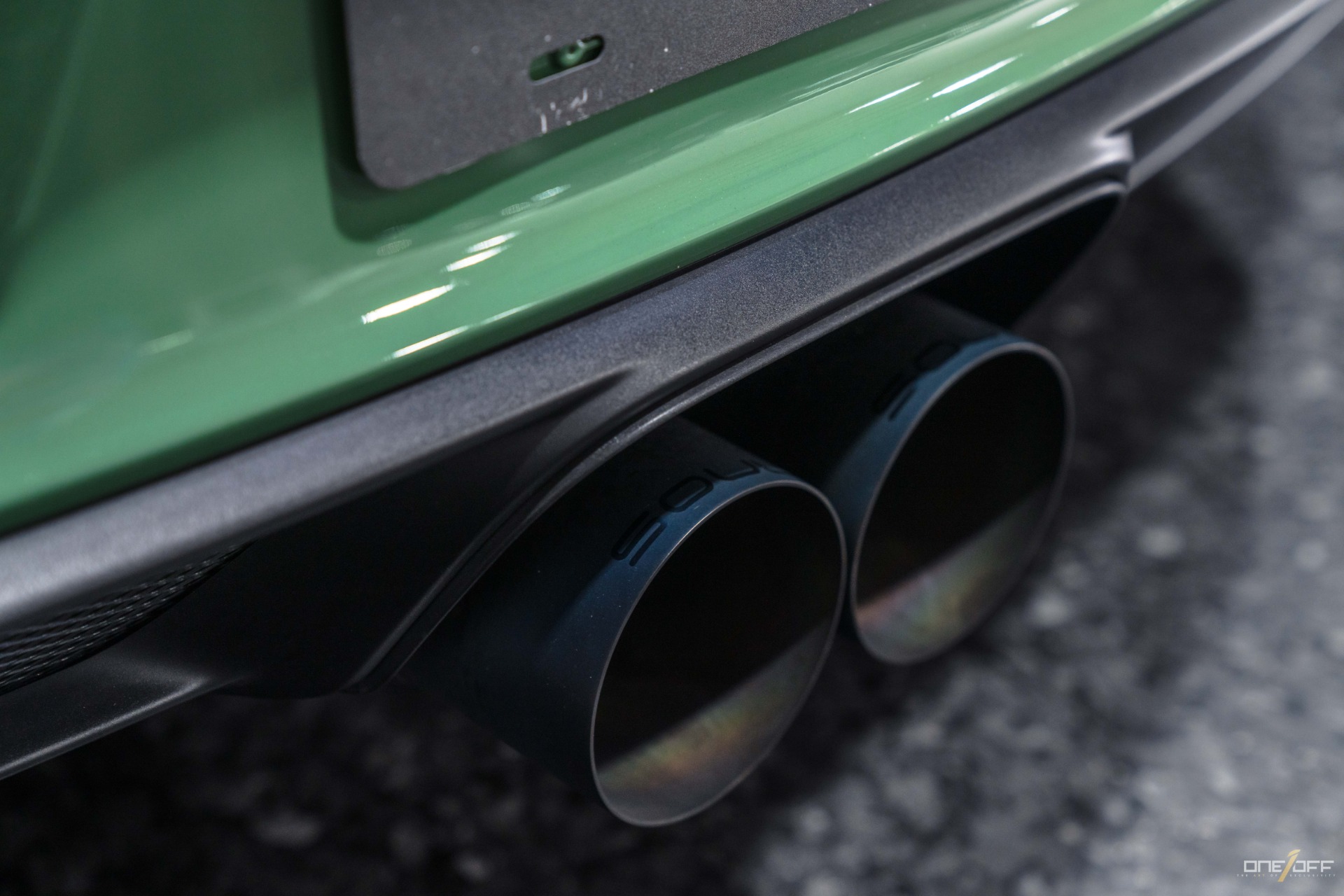
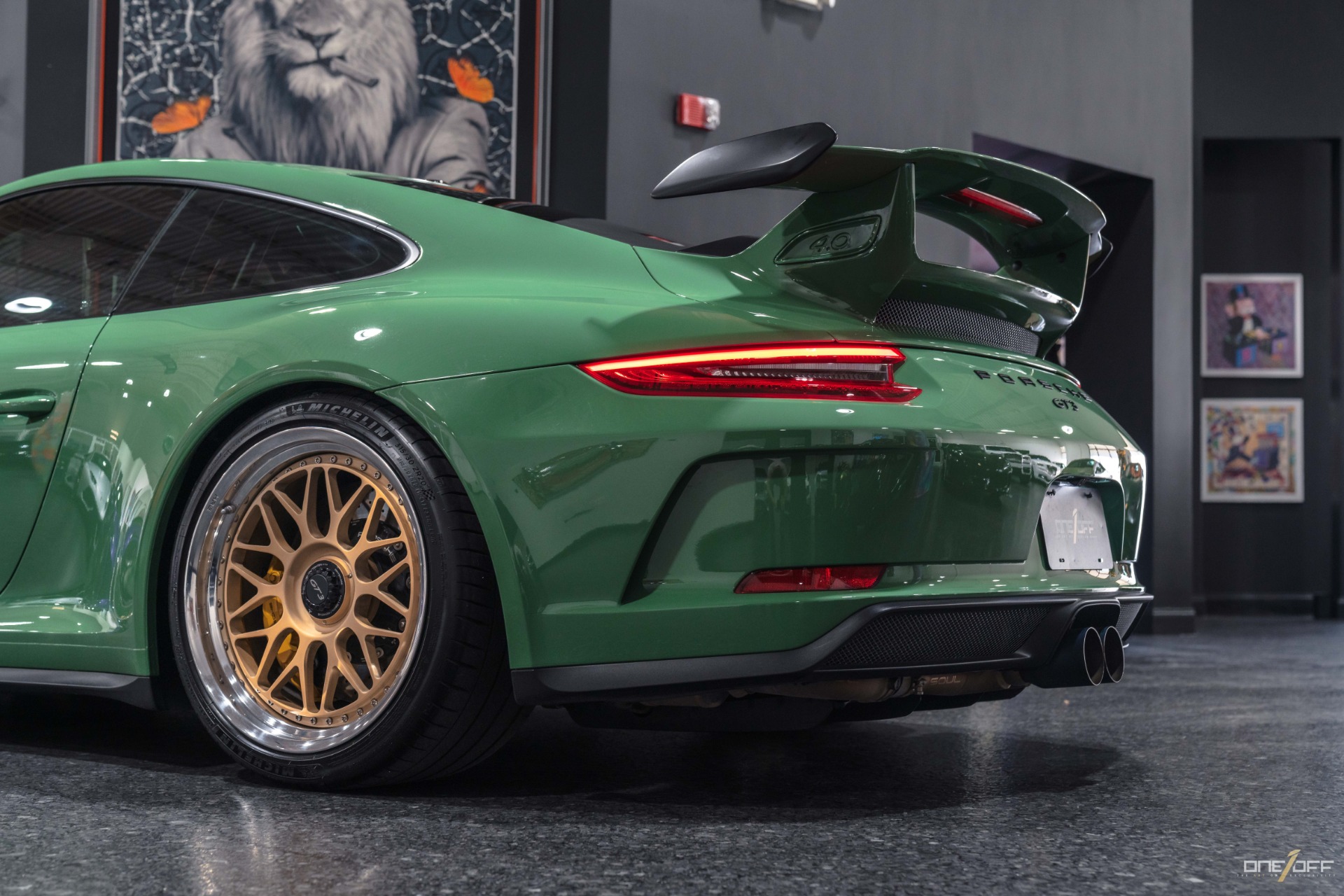
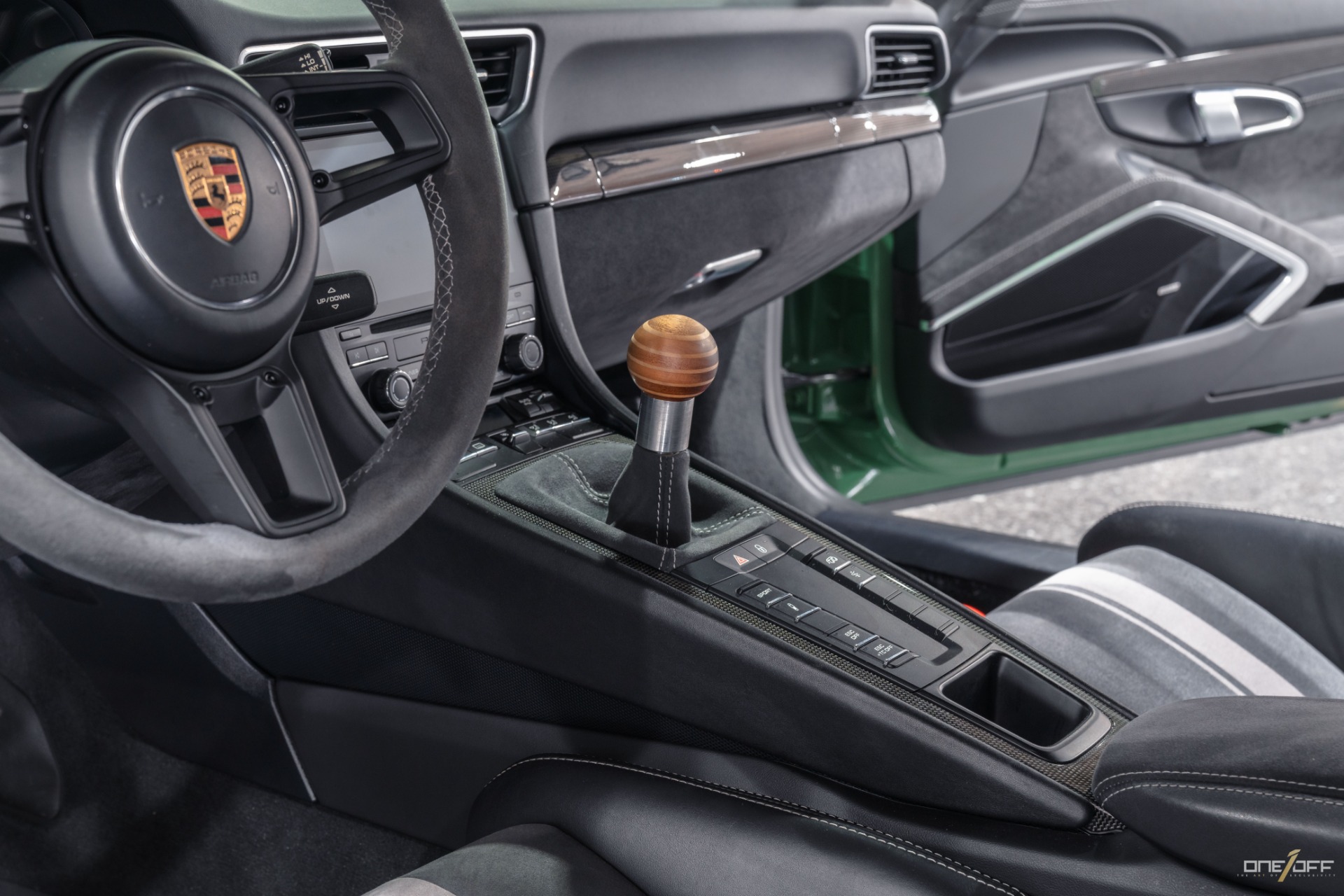
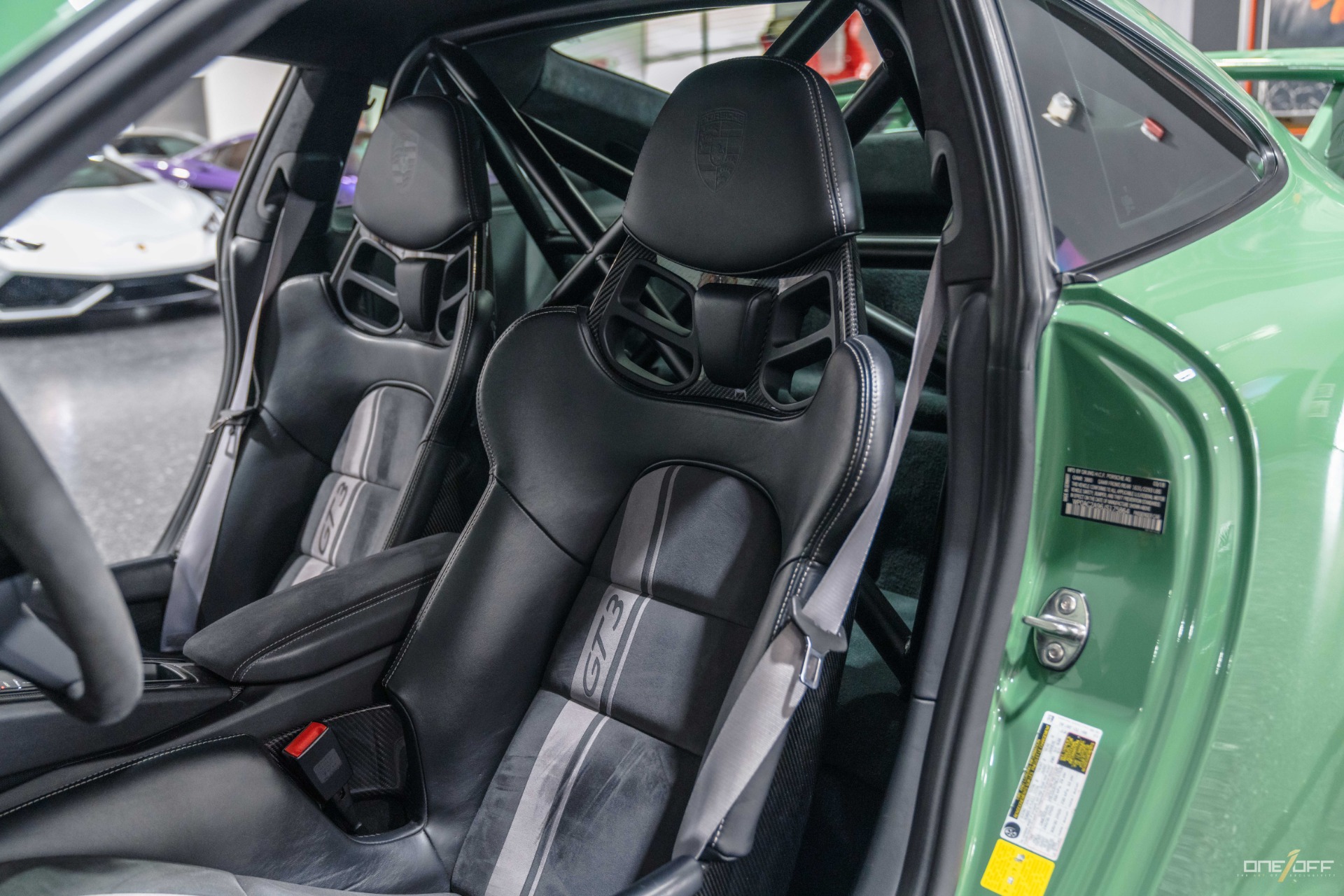
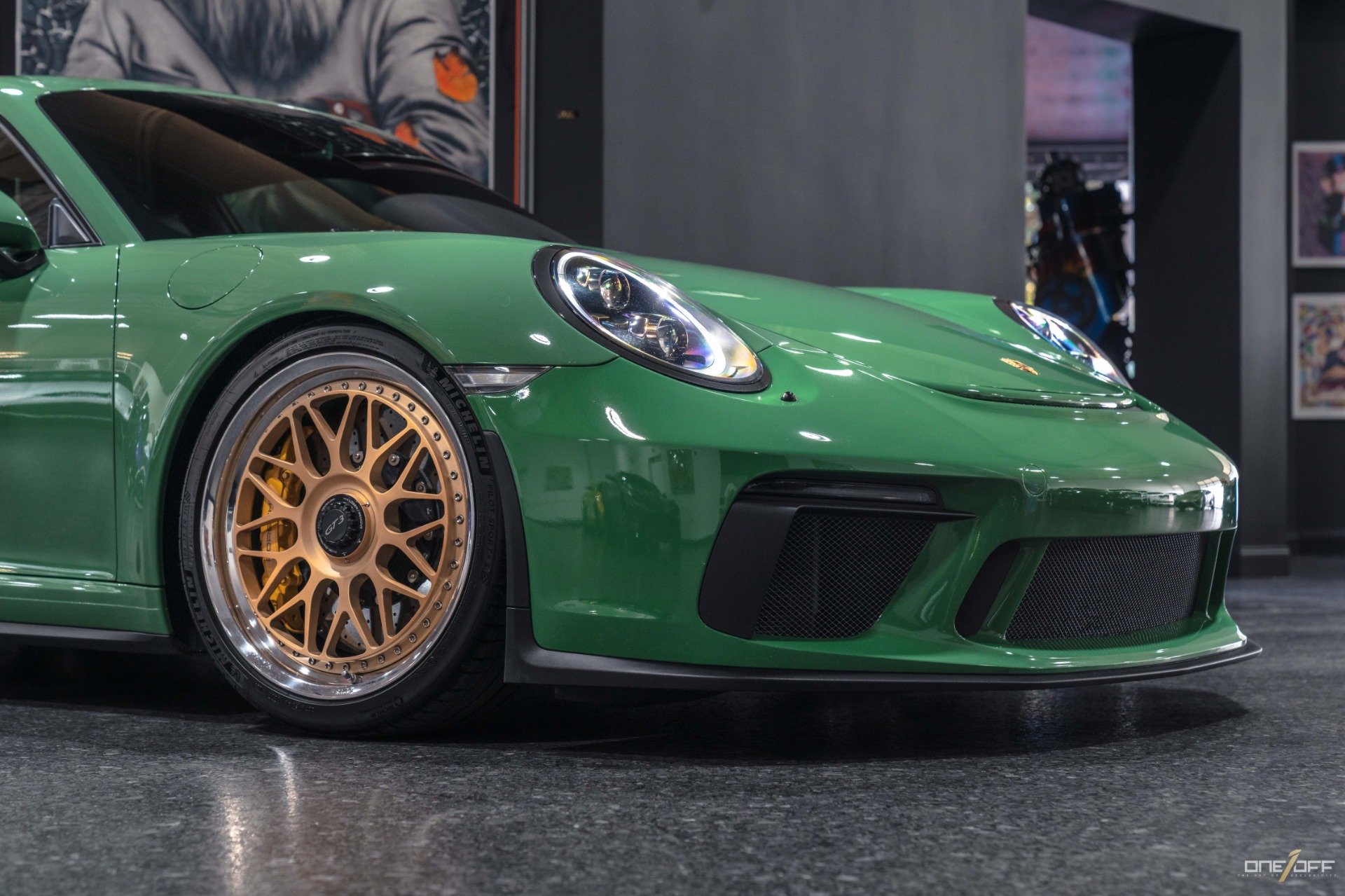
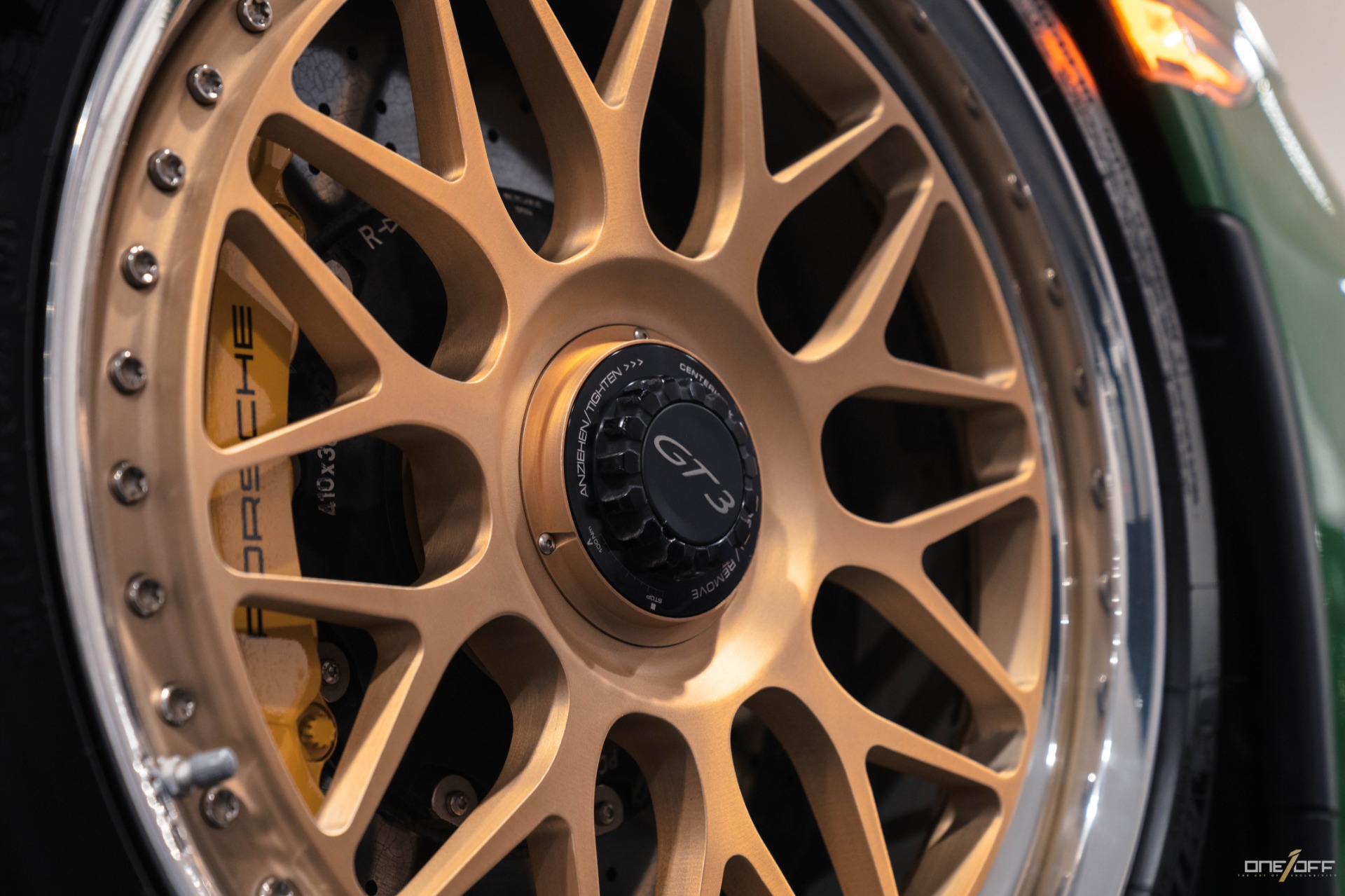
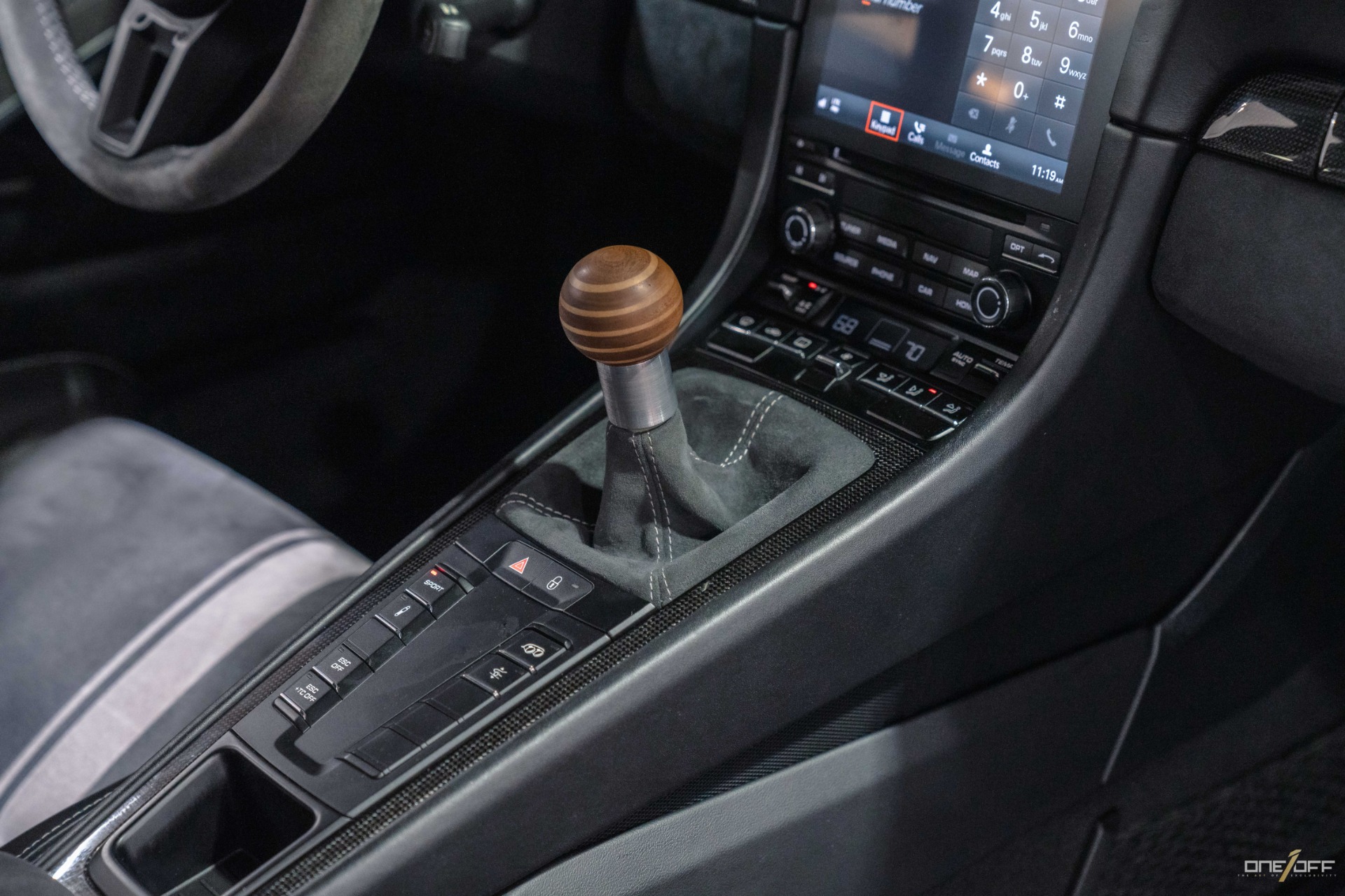
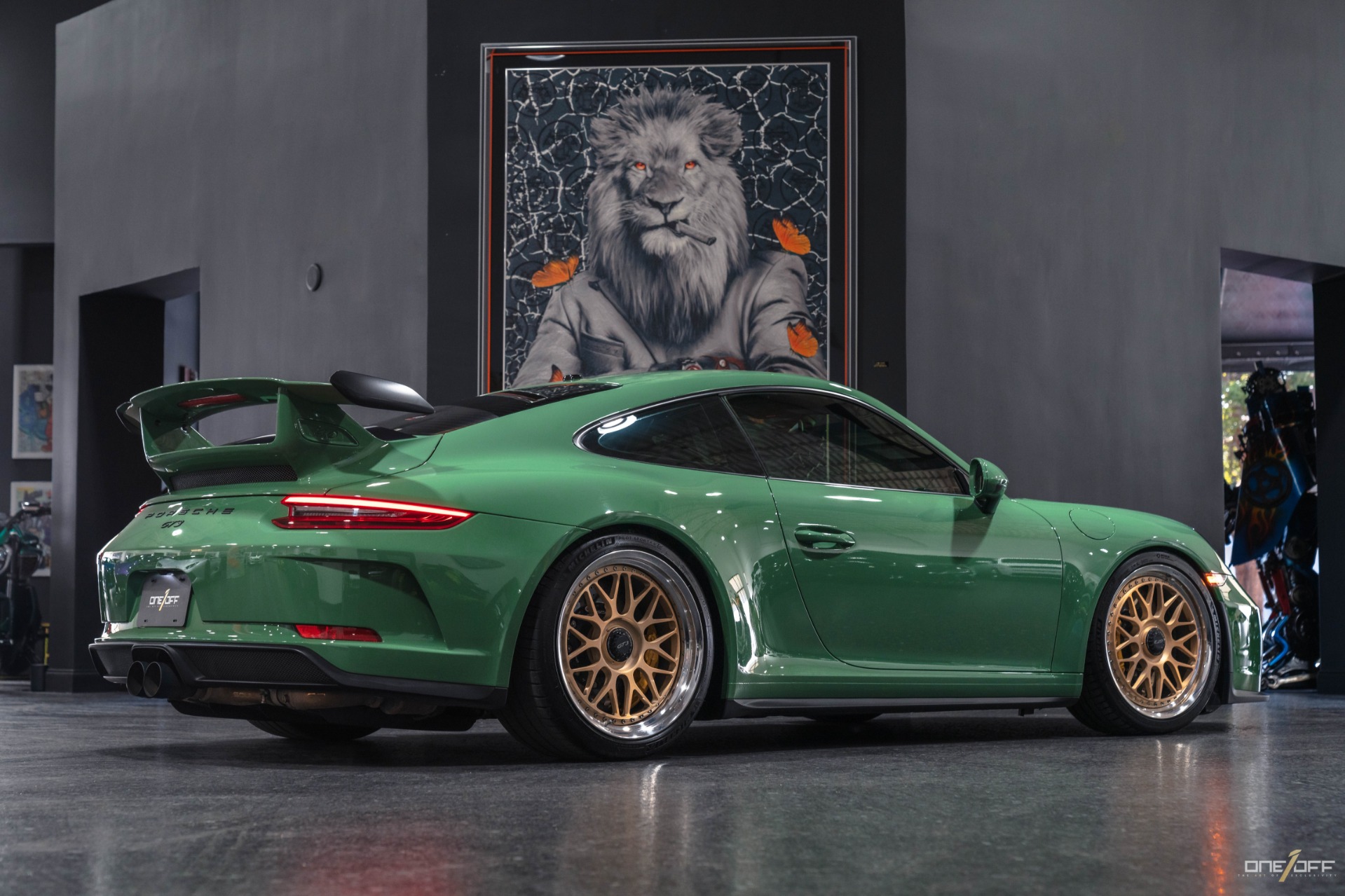
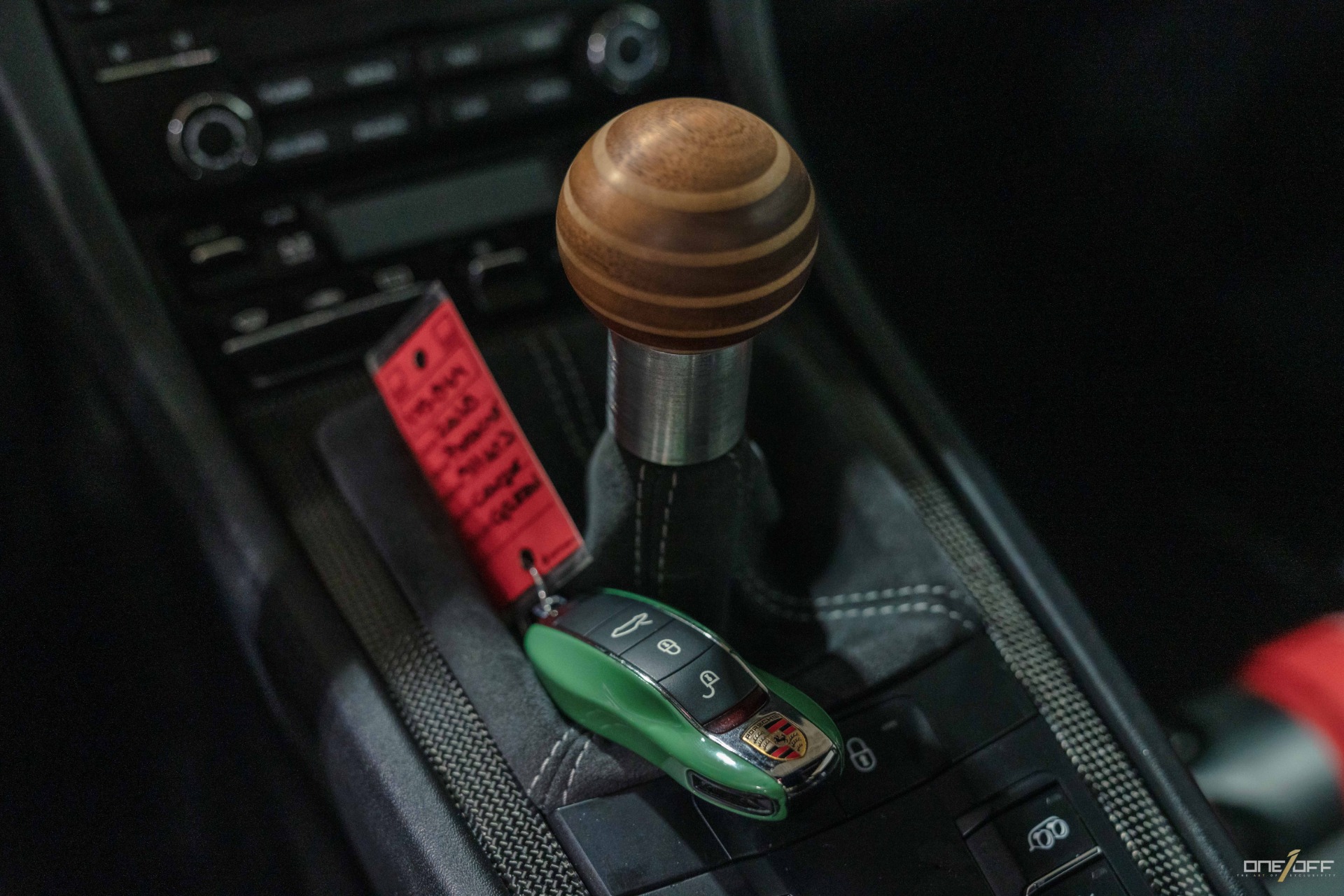
    This one checks all the boxes- last year of the three-pedal GT3, Paint to Sample Auratium Green color, enough miles (over 22,000) to place added emphasis on the Driver portion of Tailored Driver, and tastefully modified to boot. Featuring full PPF coverage, HRE wheels, a Soul Performance exhaust upgrade and the incredibly cool 917-style wooden shift knob, it’s the kind of Tailored Driver you can just get in and enjoy. We just wish there were more pictures.

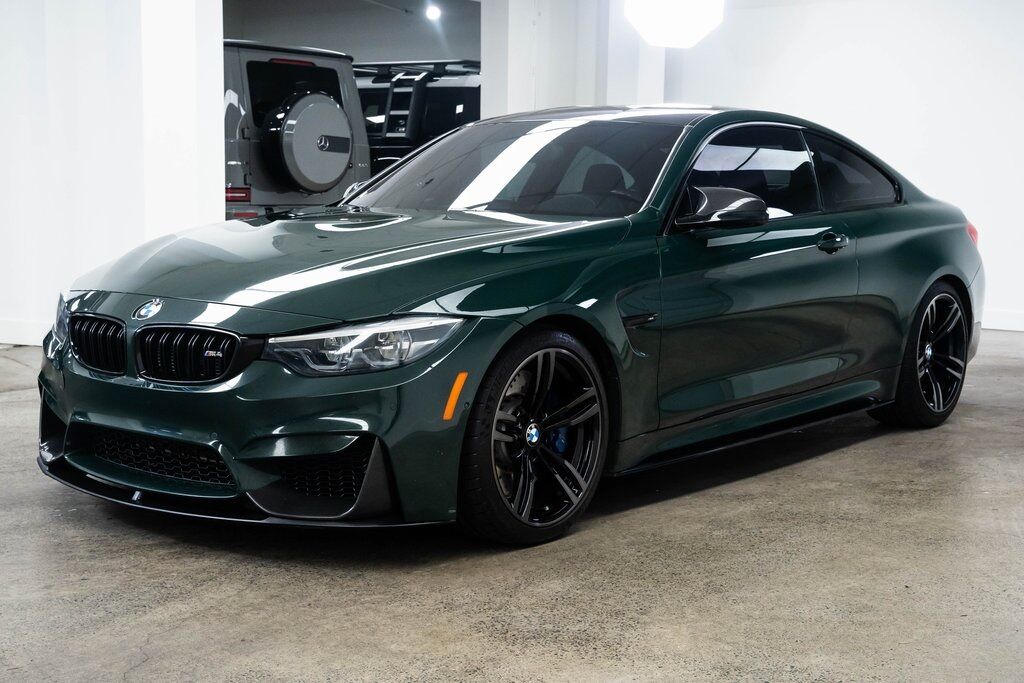
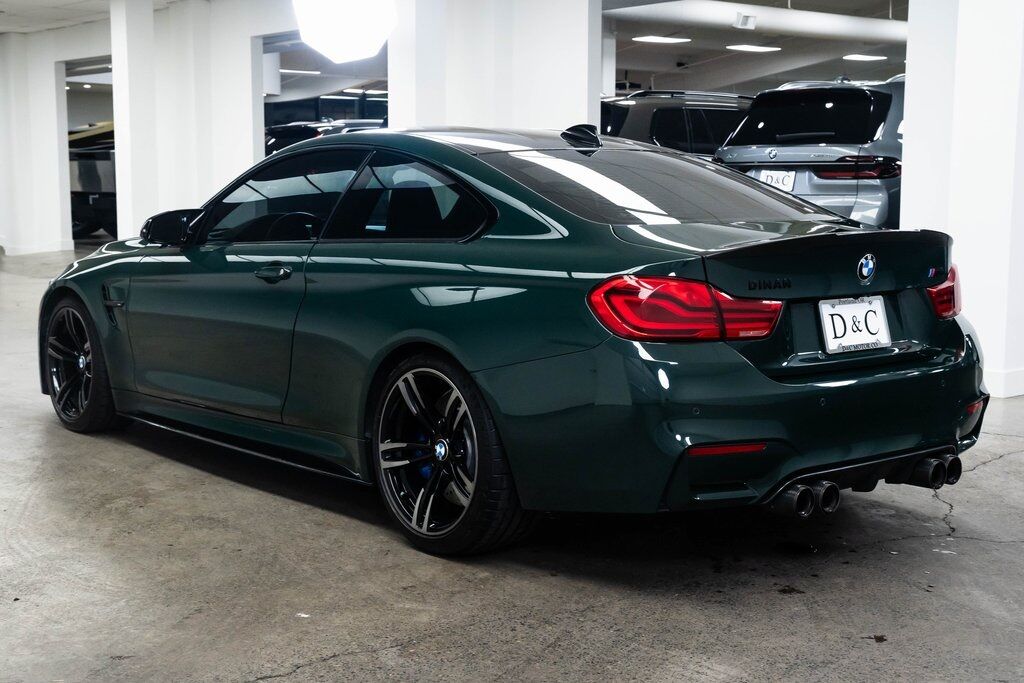
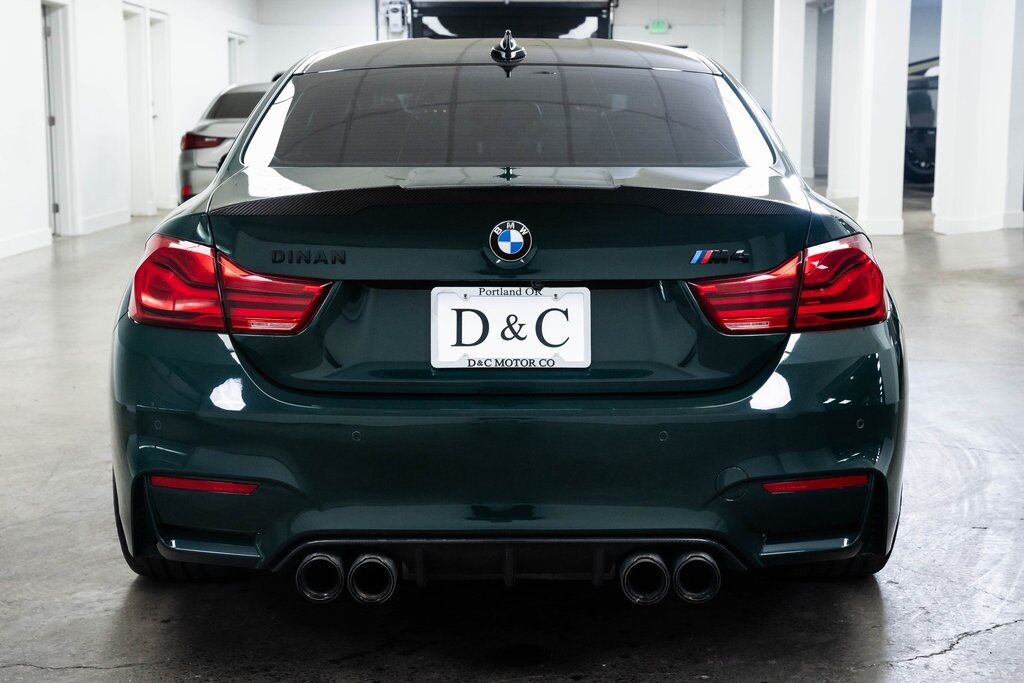
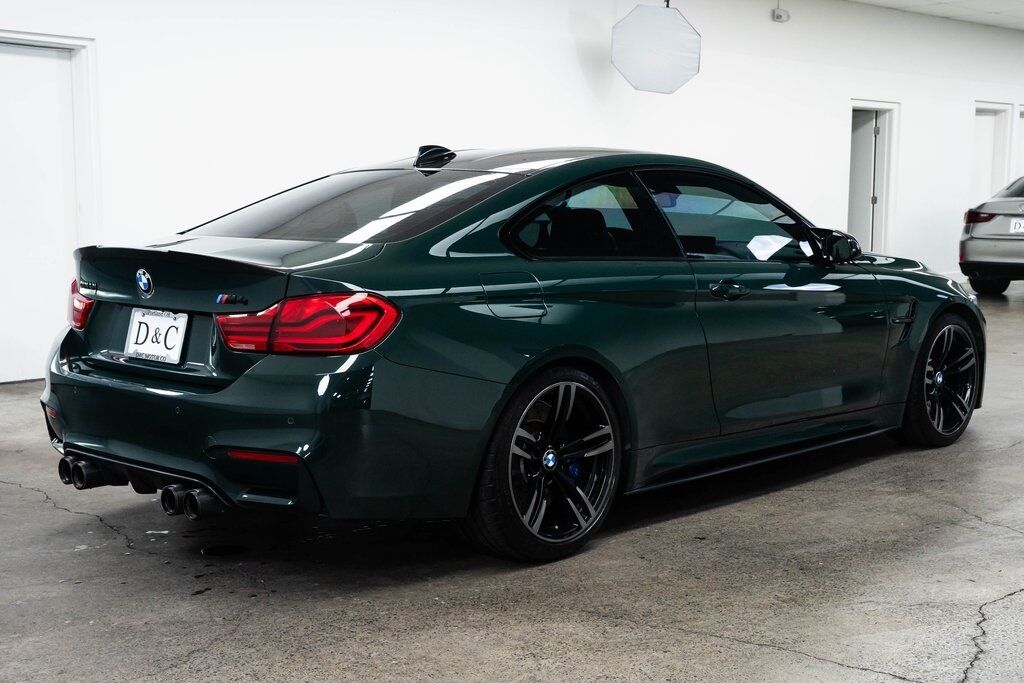
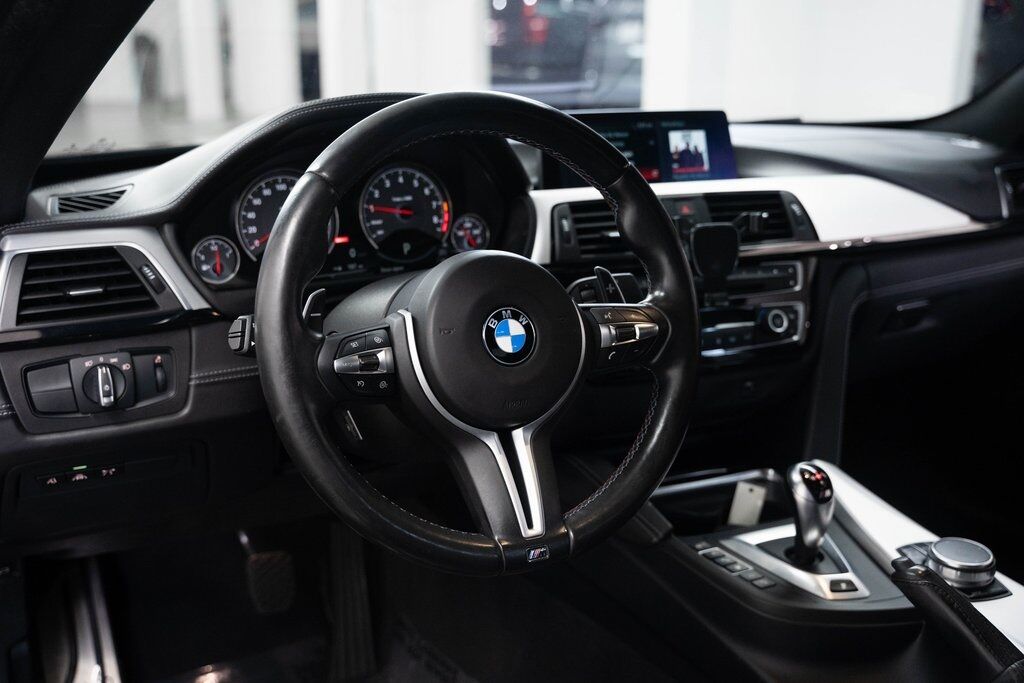
  • Market Find: 2018 BMW Individual British Racing Green M4 Competition

    Market Find: 2018 BMW Individual British Racing Green M4 Competition

    What: 2018 BMW M4 Competition
    Color: BMW Individual British Racing Green (553; 312; BMW)
    VIN: WBS4Y9C50JAC86736
    Mileage: 34,065
    Price at Time of this Writing: $54,990
    CarFax: Link
    Window Sticker: N/A
    Location: Portland, OR
    Dealer listing: Link

    Why we love it:

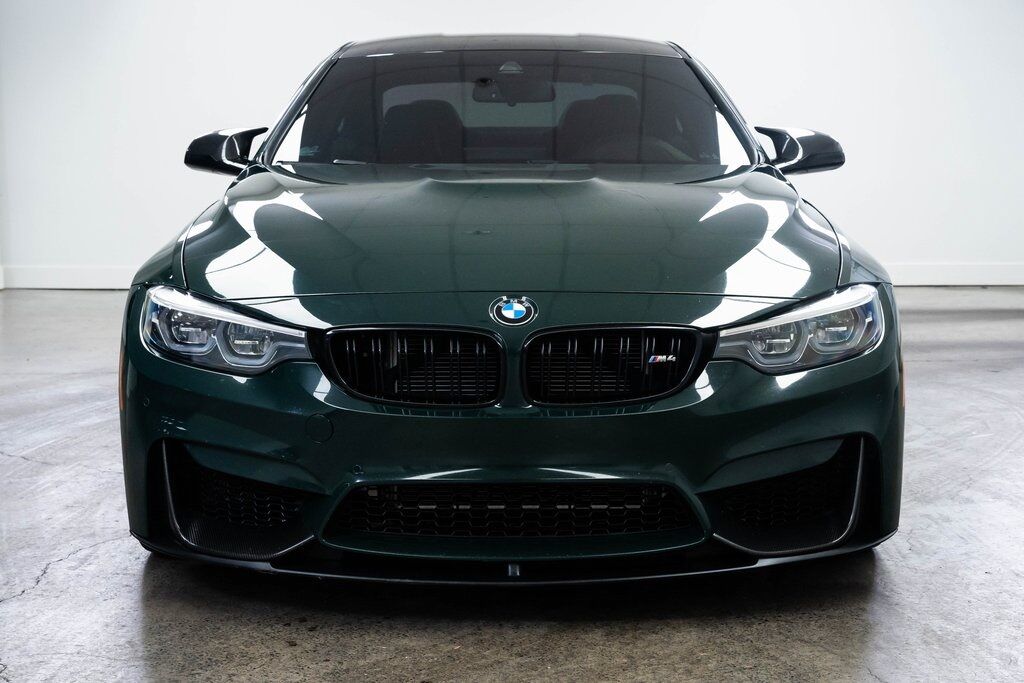
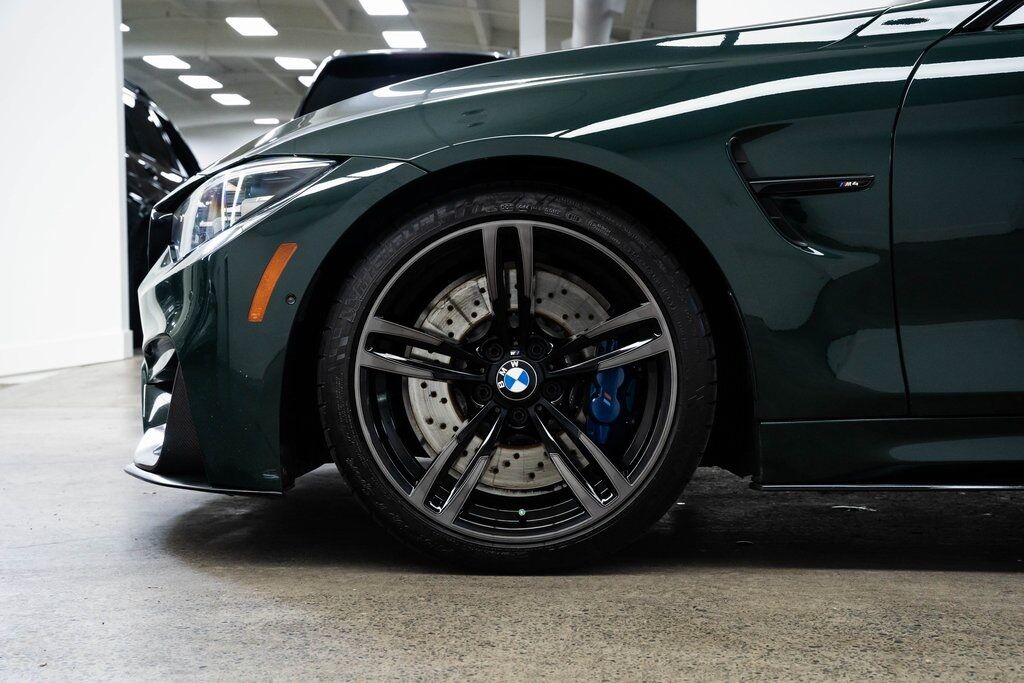
    While not often thought as a Heritage color for BMW, British Racing Green had a fling with the brand in the ’90s, appearing on the E36 M3 GT and Z3 models. Nearly 30 years later, the color still looks the business on this M4 helping it to stand out in a subtle way. We also love that this M4 has been treated to a host of Dinan goodies (Coil Overs, Sway Bars and Intake), none of which fiddle with the ECU tune. On the inside, this Tailored Driver is optioned with extended leather and DCT transmission, making it a nice, comfortable place for commuting. We think it’s a great package.

  • Style Icon and Rally Winner: The “Pagoda” from Mercedes-Benz

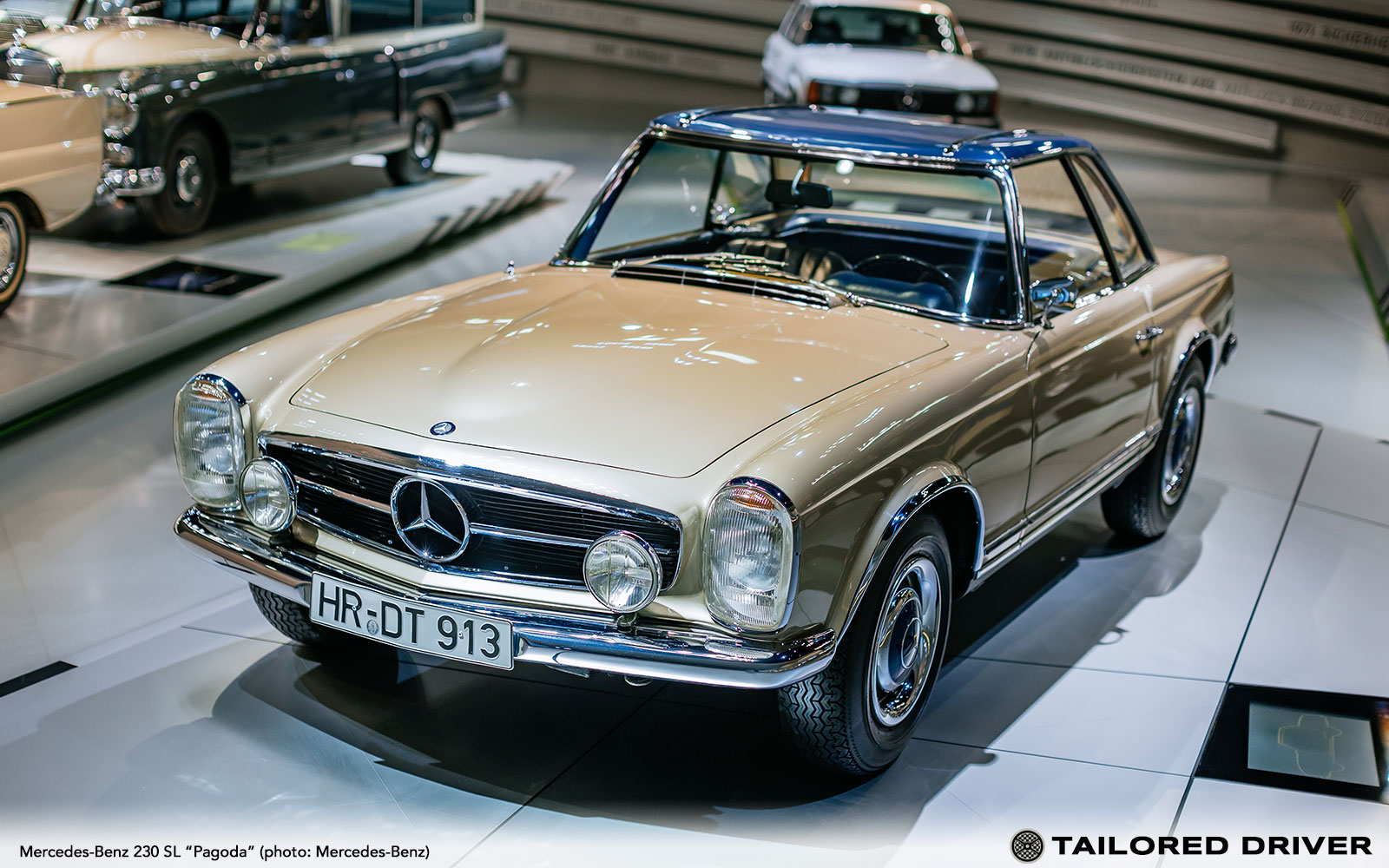
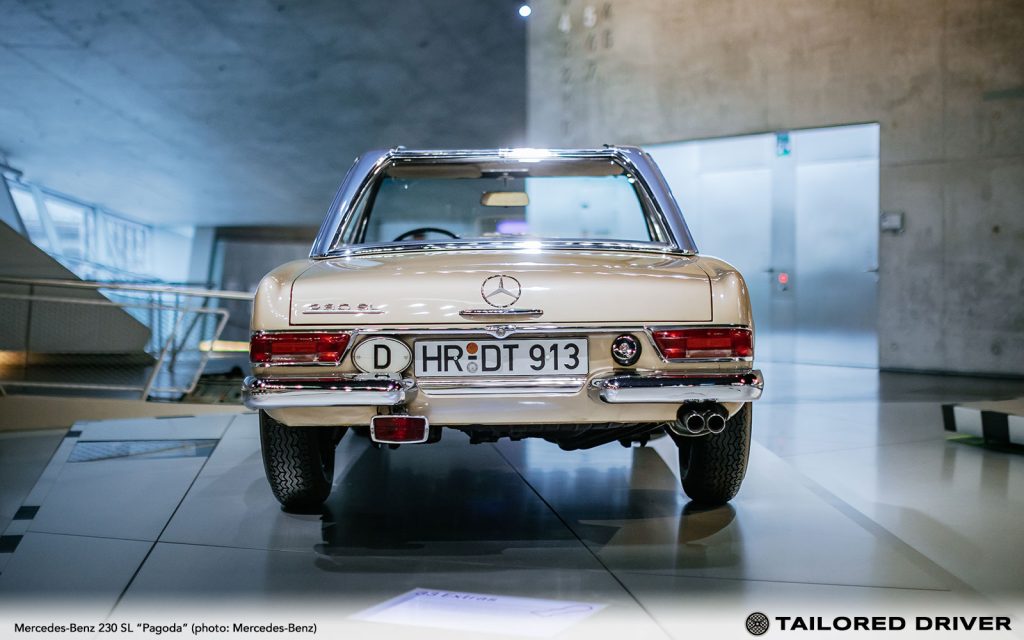
    Style Icon and Rally Winner: The “Pagoda” from Mercedes-Benz

    • The hardtop design of the SL model series 113 is reminiscent of Asian temples
    • World’s first sports car with a safety body
    • Rally dancers: Winner at Spa-Sofia-Liège 1963 after 5,500 gruelling kilometres
    • Genuine parts from Mercedes-Benz Classic ensure authenticity and thus value retention

    [source: Mercedes-Benz]

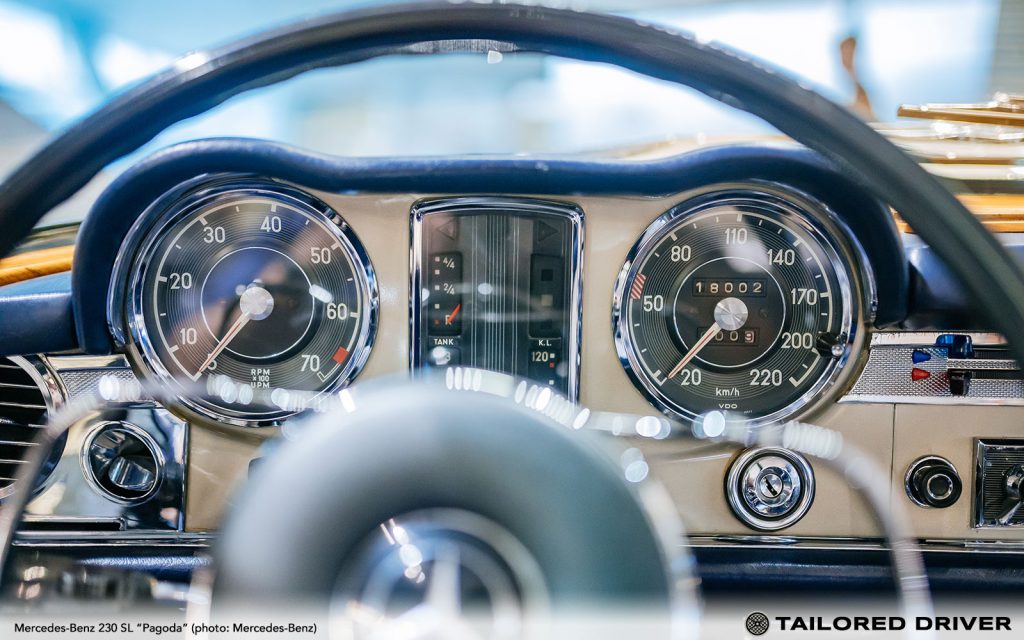
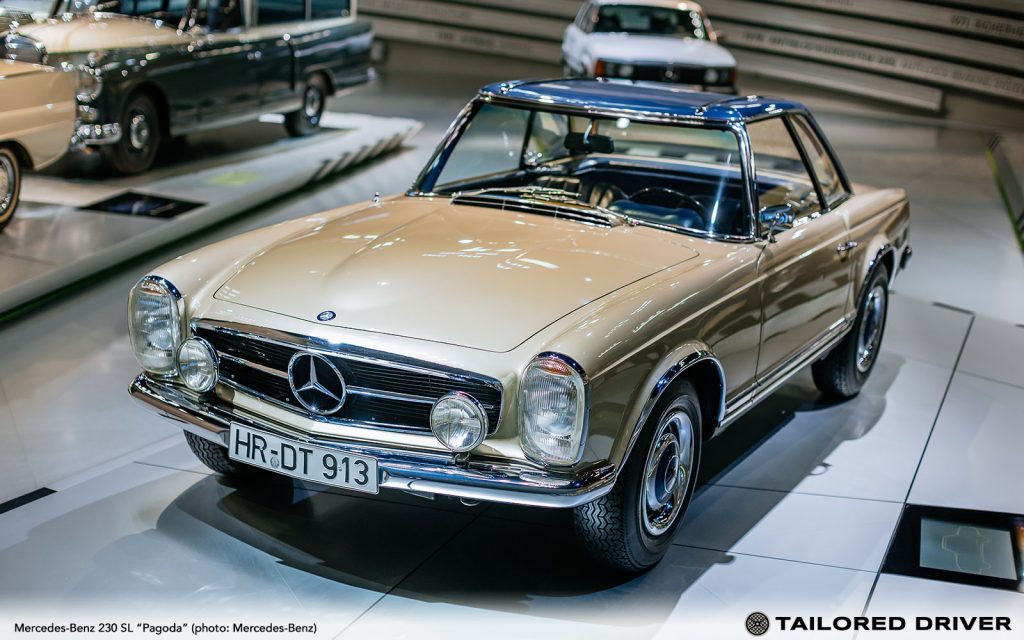
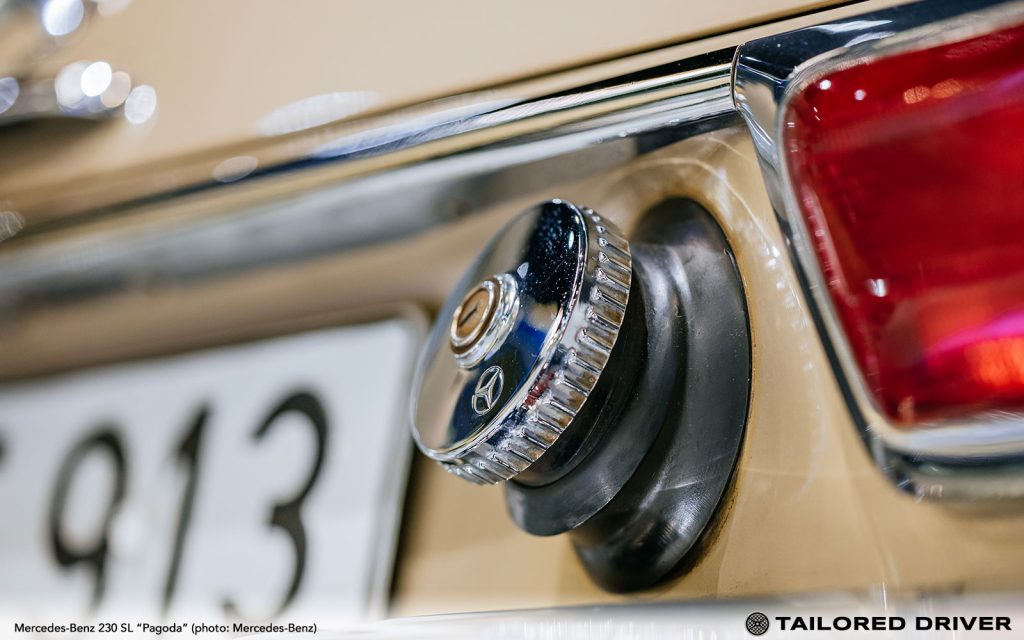
    “Close-up” – the name of this series from the Mercedes-Benz Museum says it all. Each instalment tells a surprising, exciting or behind-the-scenes story, illuminating details of a vehicle, an exhibit or an architectural or design feature. In the spotlight this time: Mercedes-Benz 230 SL “Pagoda” from 1964 in Legend Room 5: Visionaries – Safety and the Environment, 1960 to 1982.

    No. 8/2024: Mercedes-Benz 230 SL (W 113)

    Memorable: What an unconventional nickname for a car: “Pagoda”. The name was coined a long time ago for the Mercedes-Benz SL model series 113. This SL was called “Pagoda” for the first time in Italy, recalls former chief designer Bruno Sacco.

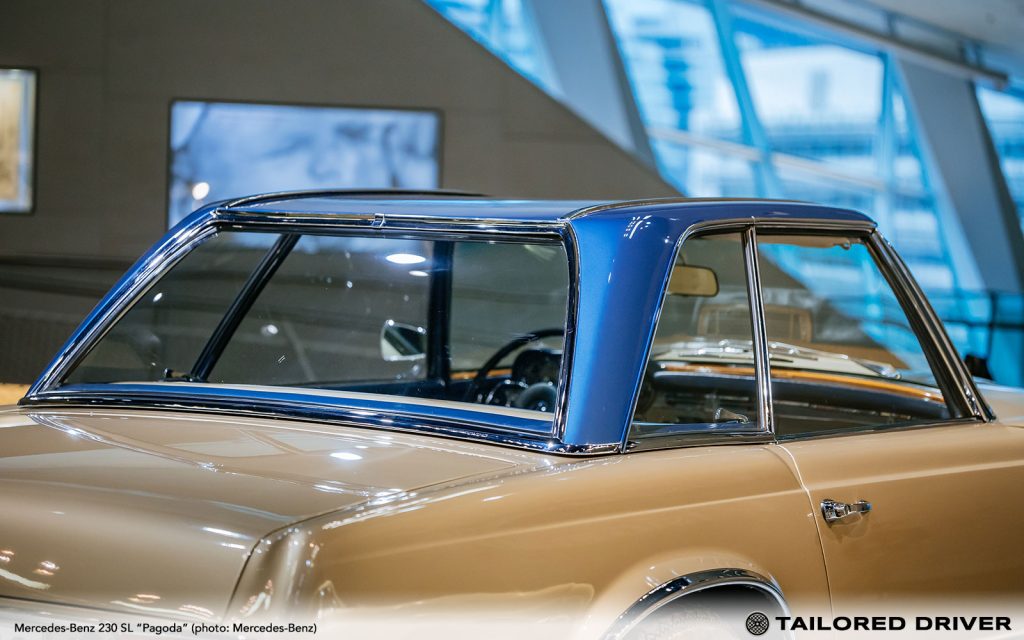
    Style icon: The name “Pagoda” is based on the sports car’s characteristic hardtop, which is slightly curved inwards and is reminiscent of Asian temples. The shape was designed by Paul Bracq, who became the first designer in the “Main Department for the Development of Car Bodies” at the Sindelfingen plant in March 1957. The pagoda roof is a stroke of luck for the image and design of the sports car. And of course the overall design: clear lines of great simplicity and lightness create an expressive elegance. Even decades later, Bracq still described the design of the W 113 as “perfect”.

    Stability: The idea for the concave roof line came from a technician. Force progressions in the bodywork are an area of expertise of Béla Barényi. He points out that a roof curved downwards is more stable than sheet metal that is curved upwards. This, however, is only of limited practicality for everyday use of the model series 113 since the hardtop of a sports car is rarely used with a roof luggage rack for transporting loads.

    Innovative: Another of Barényi’s inventions is of great significance in terms of safety: his concept for the body with crumple zones at the front and rear and a customisable passenger compartment in between. In 1959, the Mercedes-Benz model series 111 was the world’s first vehicle with this safety body. Of course, the new SL, which appeared in 1963, also had it – a milestone in the world of sports cars. This underscores why this SL is in Legend Room 5: Pioneers – Safety and Environment, 1960 to 1982.
    Predecessor model: The Geneva Motor Show from 14 to 24 March 1963 is the premiere venue for the 230 SL, the first version of the model series 113. The roadster with a 2.3-litre six-cylinder engine and 110 kW (150 hp) takes on a challenging legacy. It replaces two predecessors, the 190 SL (W 121) and 300 SL Roadster (W 198), both of which had been extremely popular and successful from the outset. The 300 SL had already become a legend with the coupé produced from 1954 on.

    A true all-rounder: With the new model, the company opts for a happy medium. The 230 SL is neither an uncompromisingly tough roadster nor a gentle boulevard sports car. It is a comfortable yet sporty two-seater with a high level of driving safety.

    Portfolio: The model series 113 is developed further. On 27 February 1967, the company presents the 250 SL, also with 110 kW (150 hp), but with a displacement of 2.5 litres and therefore greater torque. This is replaced less than a year later by the 280 SL with a 2.8-litre engine and 125 kW (170 hp), which is even more powerful.

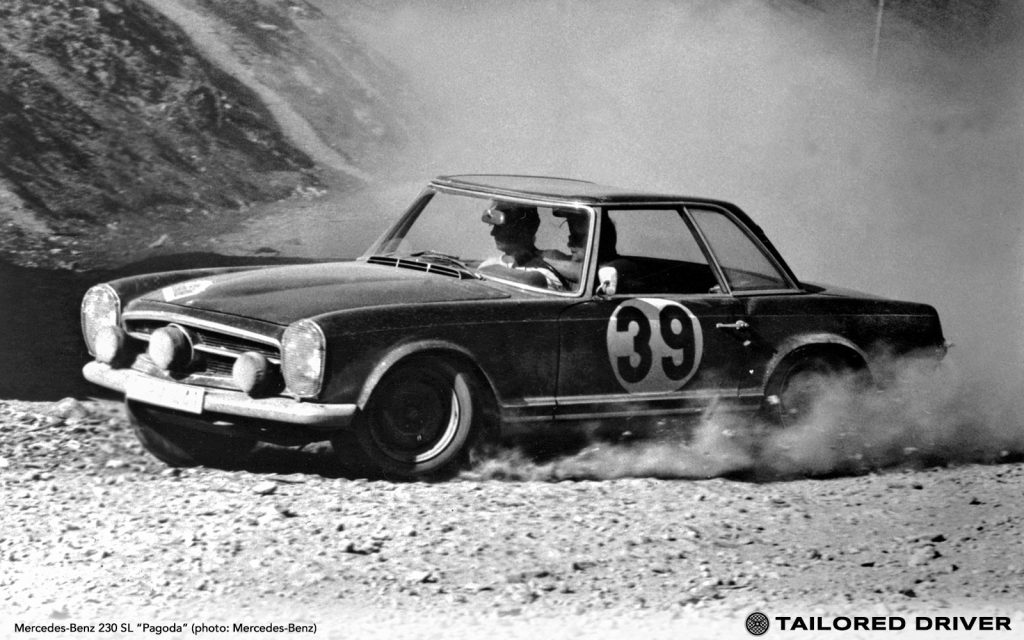
    Rally racer: Motorsport is also in the genes of this SL generation. The victory of Eugen Böhringer and Klaus Kaiser in a Mercedes-Benz 230 SL at the Spa-Sofia-Liège long-distance rally from 27 to 31 August 1963 – around 5,500 kilometres at top speed – is legendary. Böhringer calls the sports car a “dancer” because it is more manoeuvrable than the saloon with its longer wheelbase.

    Young at heart: Production of the 280 SL comes to an end in March 1971. Its successor is the completely newly designed 107 model series. A total of 48,912 units of the three SL models of the W 113 are produced in eight years of production. Today, they are among the brand’s most popular classics. No wonder: they combine sportiness with a high level of everyday practicality, comfort and timeless elegance. The comprehensive supply of Mercedes-Benz Classic Genuine Parts available through the manufacturer is a major advantage when it comes to preserving any “Pagoda”. Looking for a part? Click here for the parts finder: https://teilesuche.mercedes-benz-classic.com.
  • European Market Find: Rubystone Red Porsche 968, Low Mileage / High Price

    European Market Find: Rubystone Red Porsche 968, Low Mileage / High Price

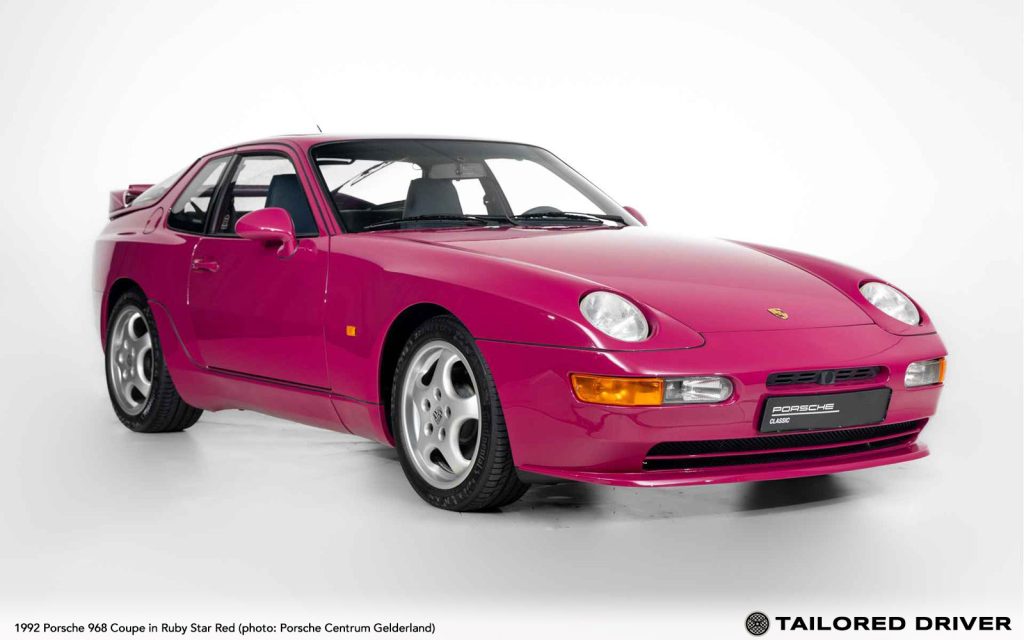
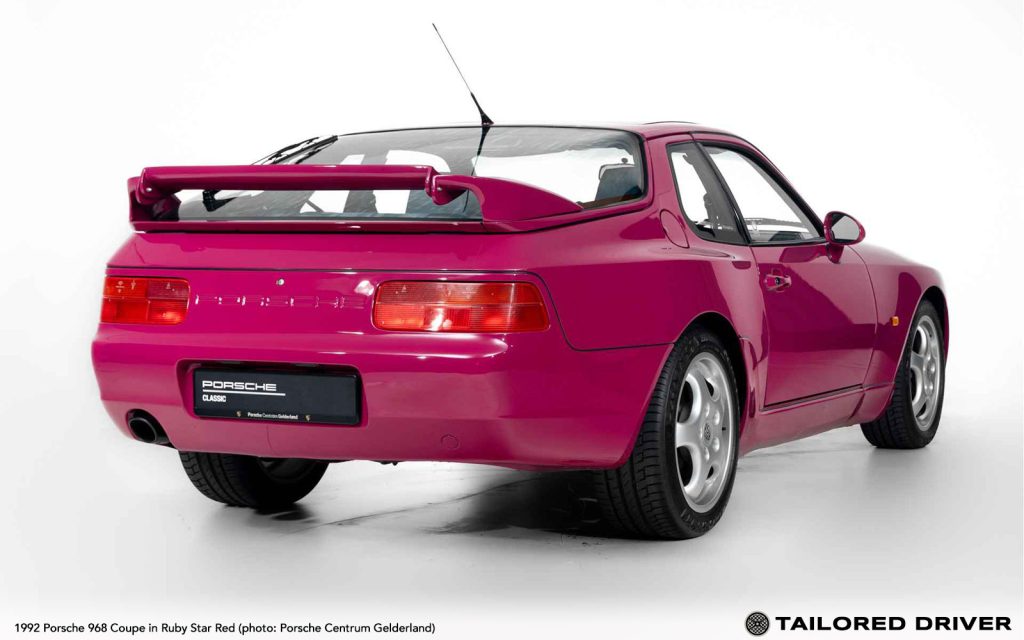
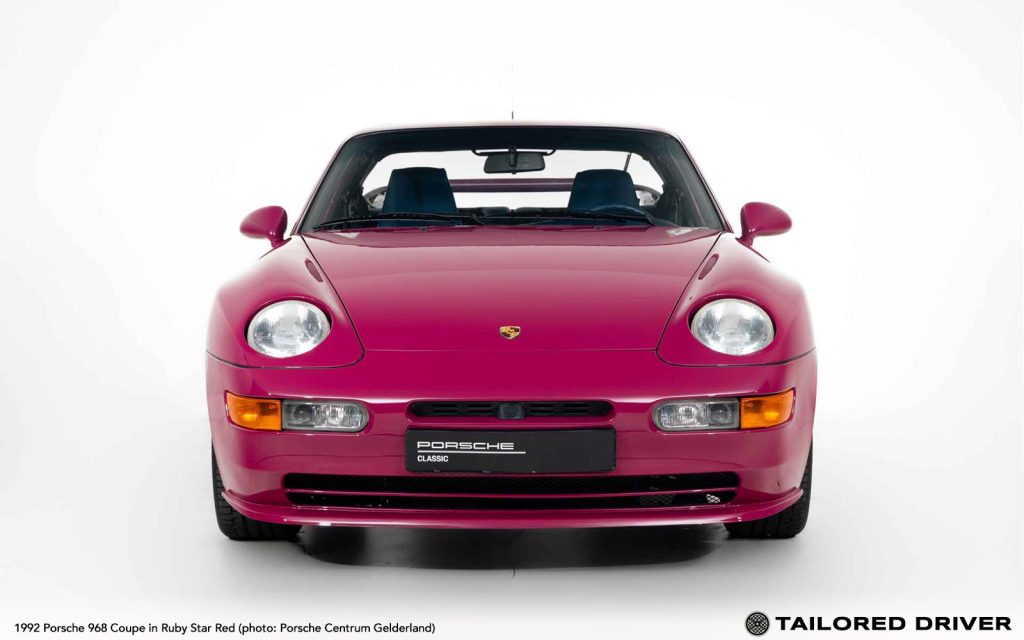
    What: 1992 Porsche 968 Coupé
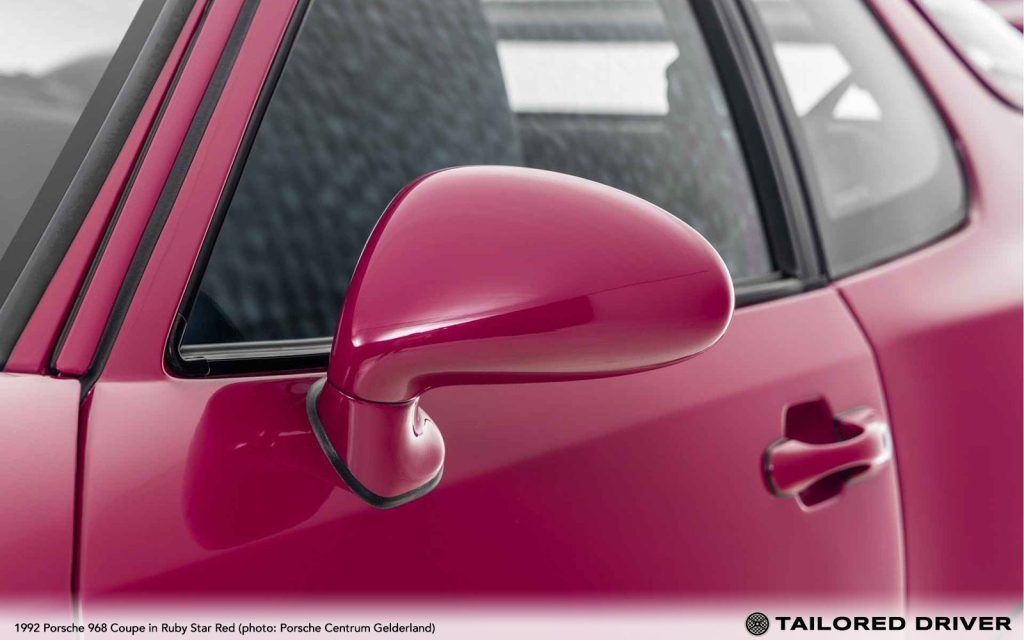
    Color: Rubystone Red a.k.a. Ruby Star (sternrubin; 82N; Porsche)
    Interior: Blue
    VIN: N/A
    Mileage: 42,125 km / 26,175 miles
    Price at Time of this Writing: € 74,900
    CarFax: N/A
    Window Sticker: N/A
    Location: Heteren, NL
    Dealer listing: Link

    Why we love mention it:

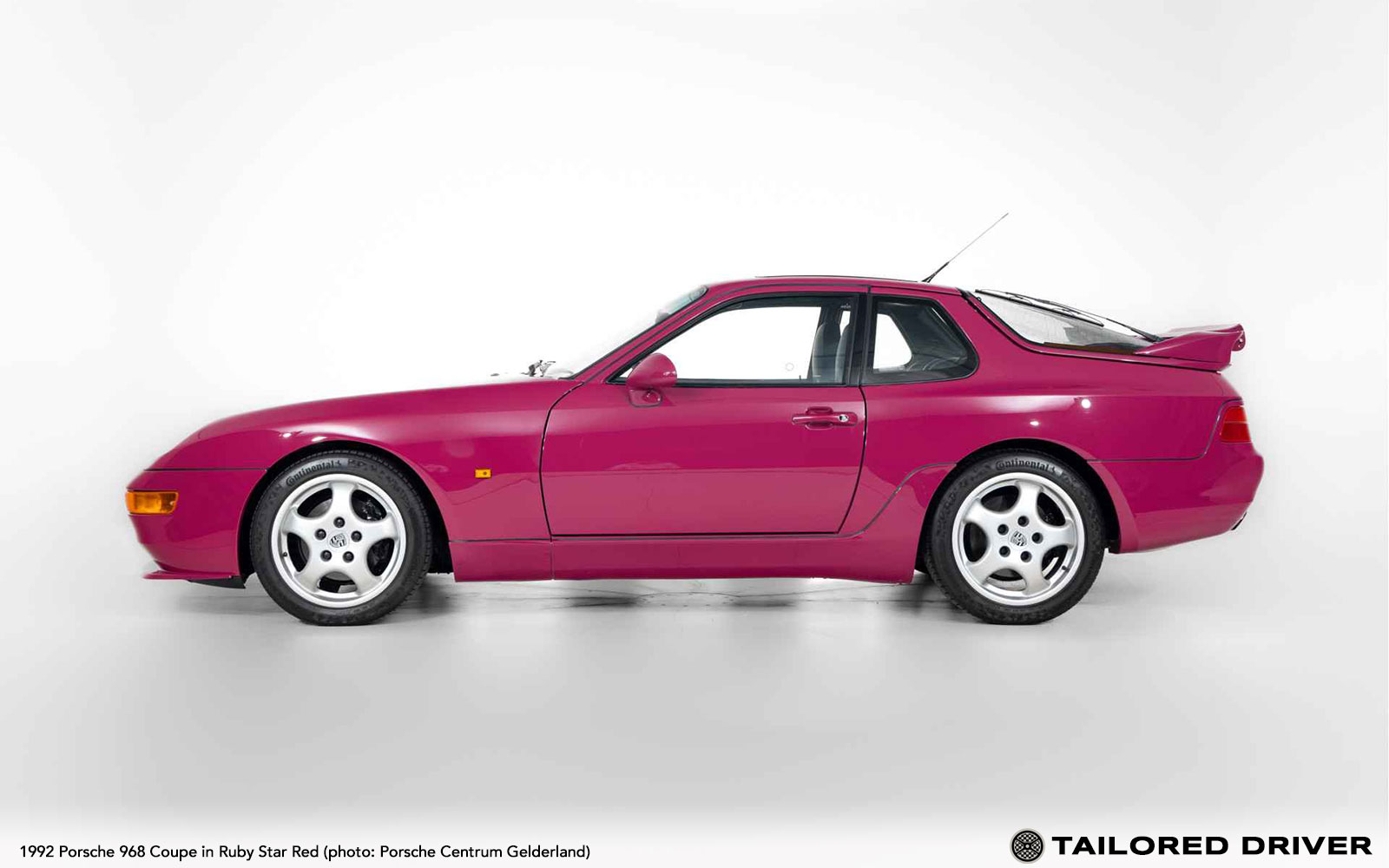
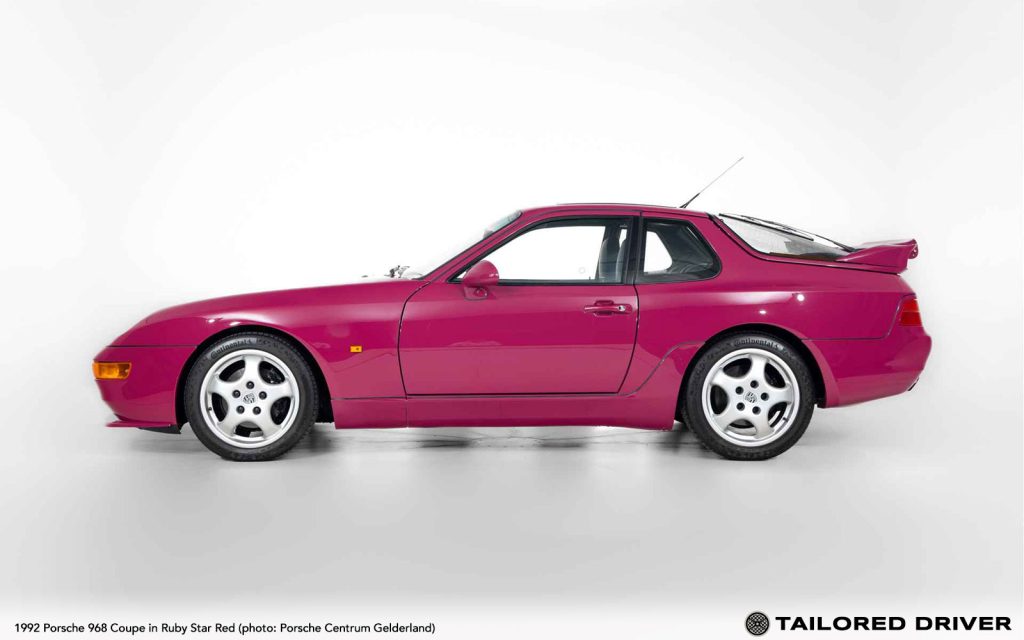
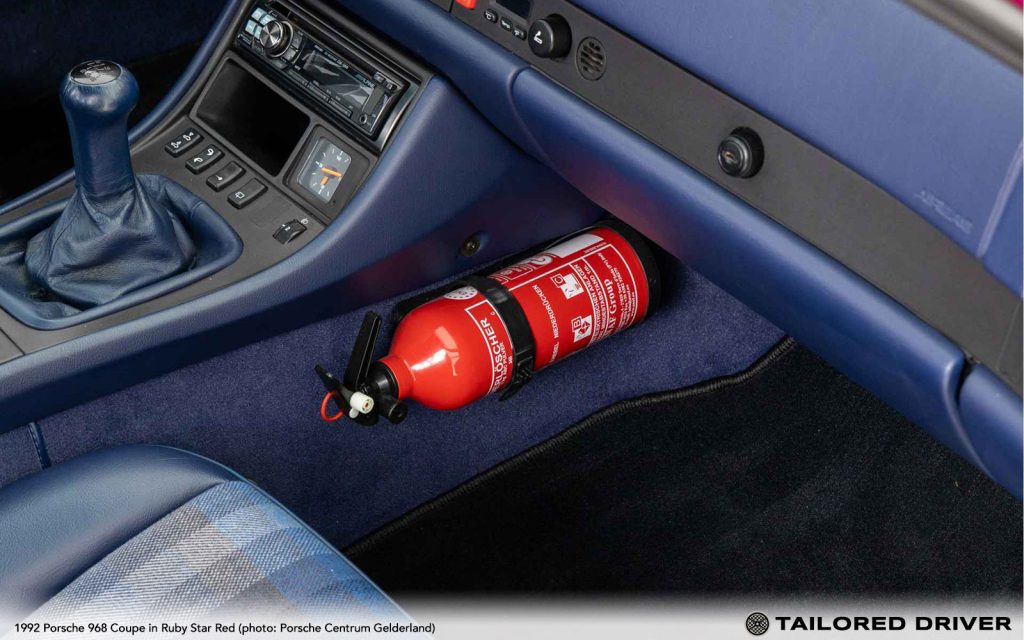
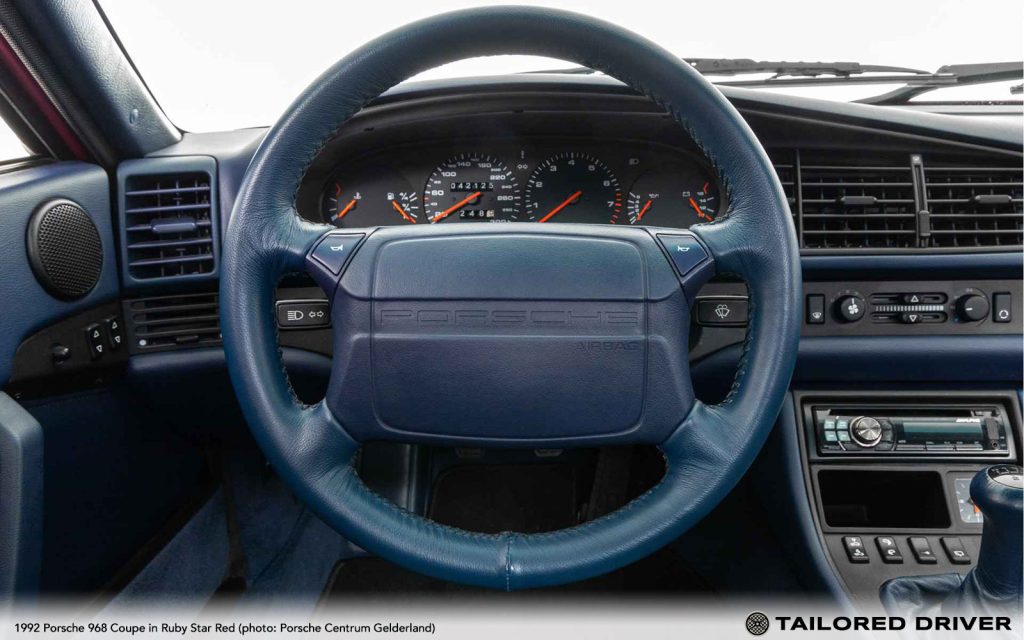
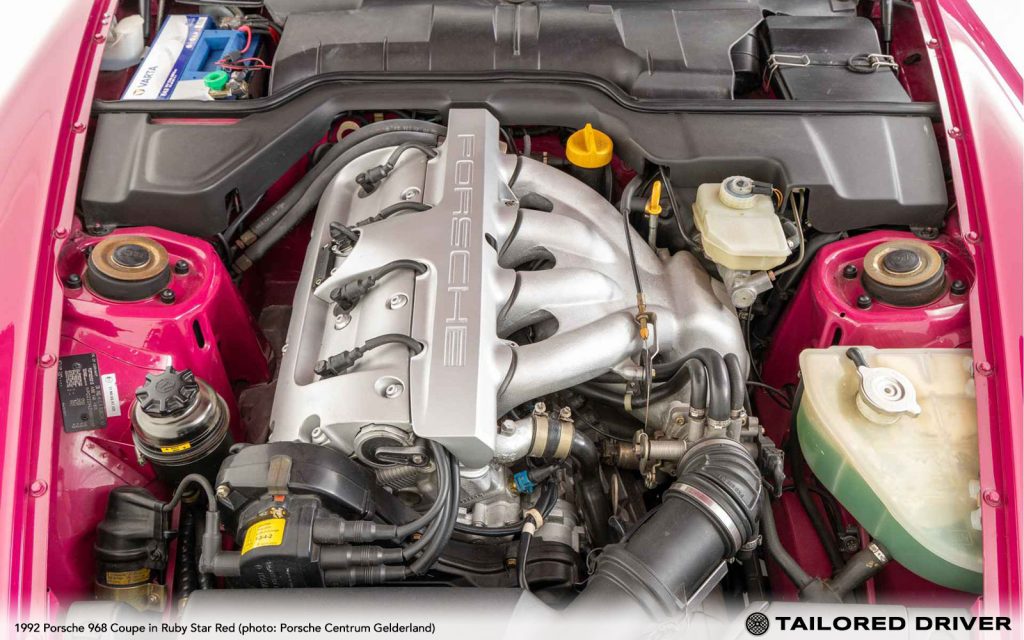
    The Porsche 968 is (or rather was) one of the last good deals in the Porsche market. It’s also arguably one of the best Porsches of the transaxle era. And while the European market only Clubsport or the super rare Turbo are the big money versions, super low mileage, great spec and incredible condition can approach 911 money. Take for instance this Rubystone Red version sitting inventory at Porsche Centrum Gelderland in the Netherlands.

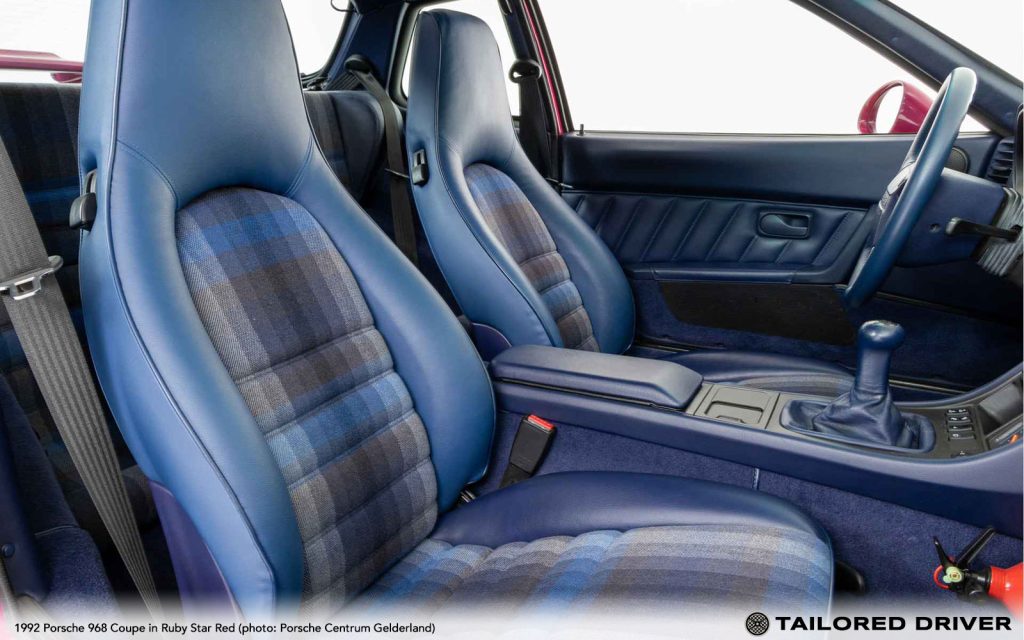
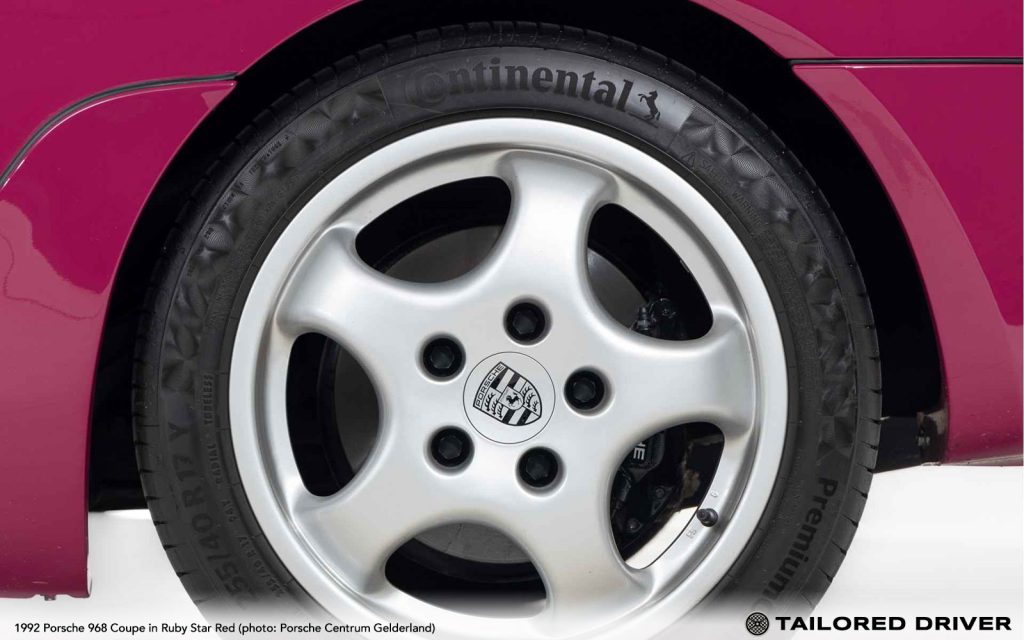
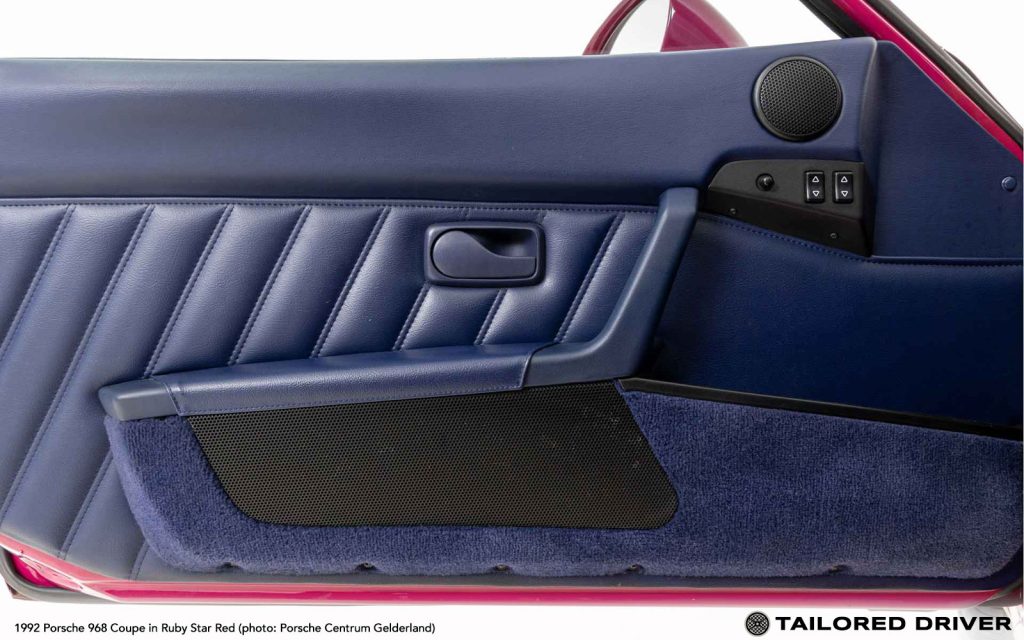
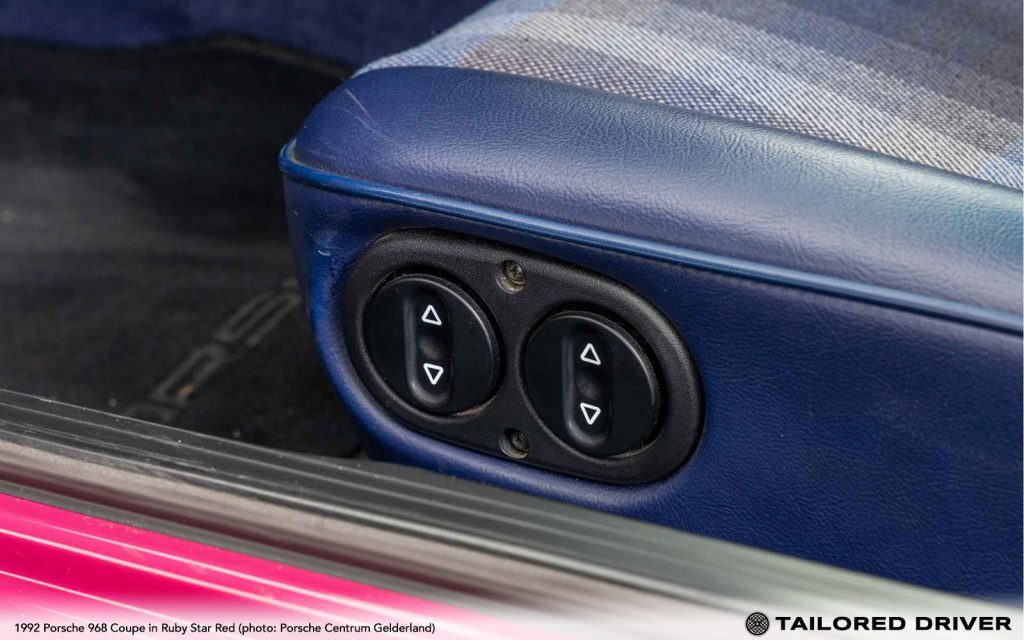
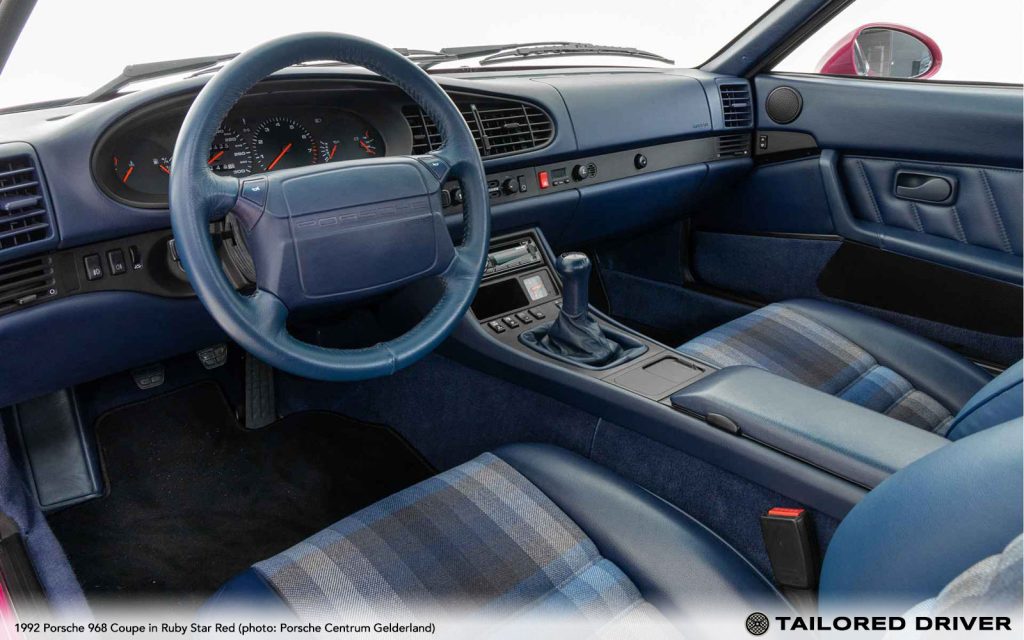
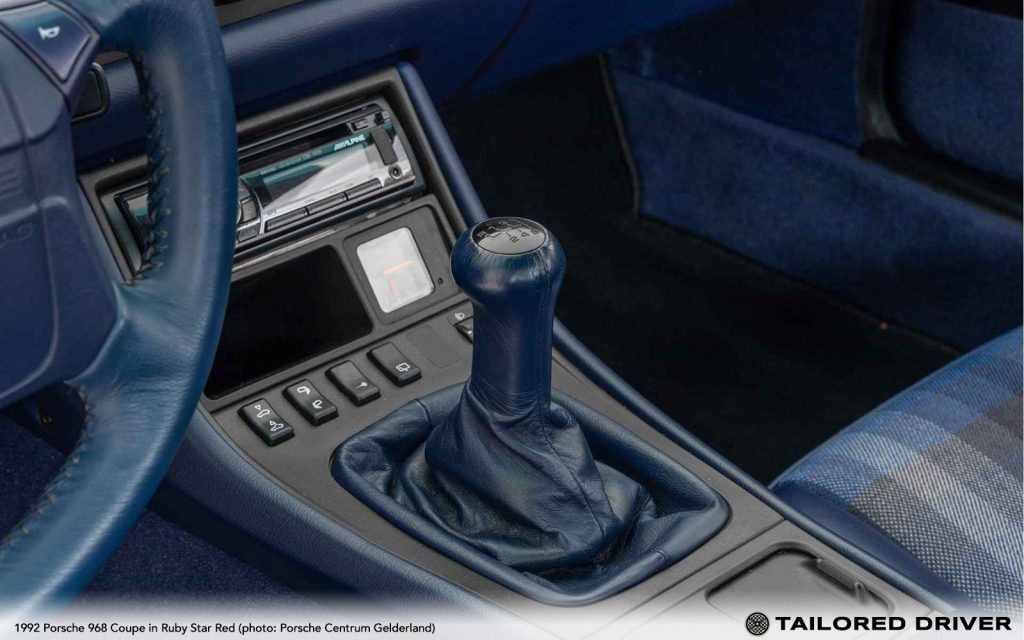
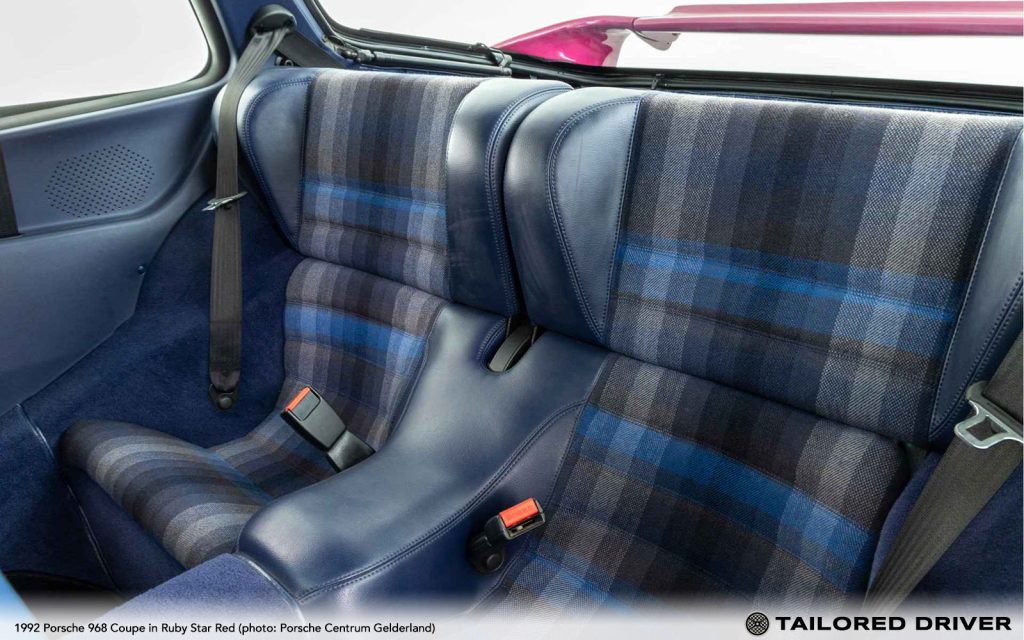
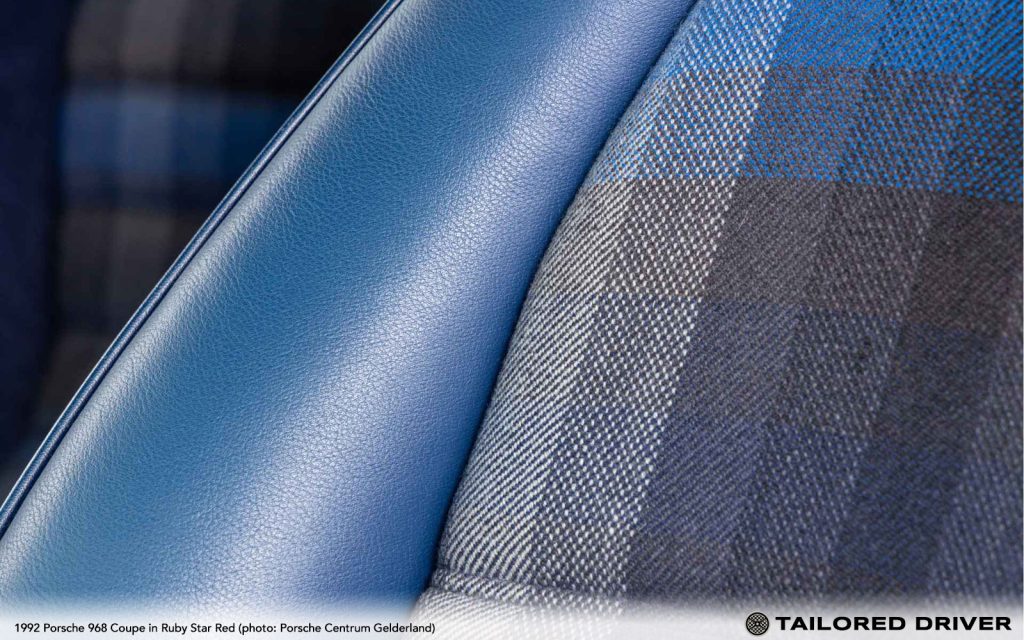
    At little over 26,000 miles logged, the car is practically new. And we’d argue that while perhaps polarizing, the spec is incredible. From the 964 era Carrera Cup comes the original Rubystone Red (a.k.a. Ruby Star), and it’s paired with blue leather and partial Studio Check fabric seats.

    A translation of the meat and potatoes of the listing goes as follows:

    Hereby we offer you this beautiful 968 3.0 Targa with only 42,000 km! Presented in a truly fantastic color combination. The exterior in the cult color Rubystone with the interior in a combination of leather and fabric in multicolor cobalt blue. Exactly as it was delivered new to its first owner by Porsche Zentrum Alltöttnig in Germany. The original purchase invoice, many other invoices, the maintenance booklets and the original German Letter are all present.

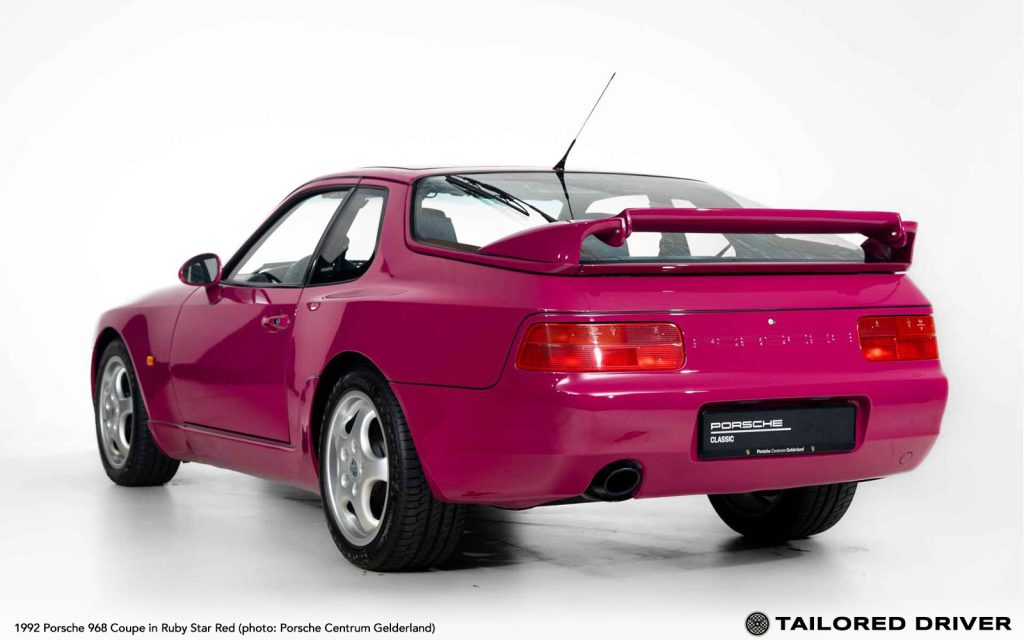
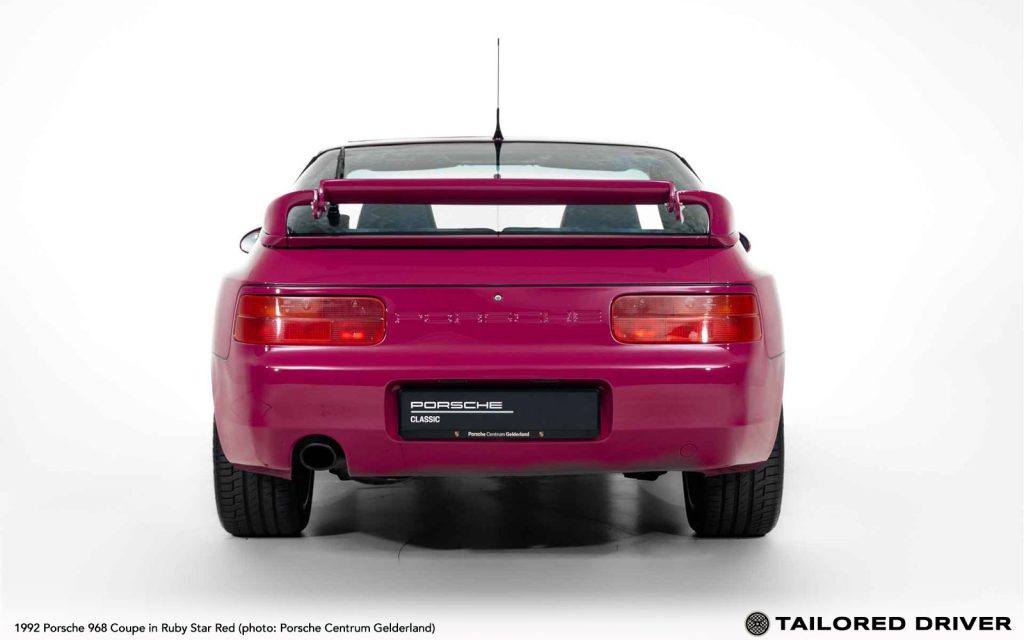
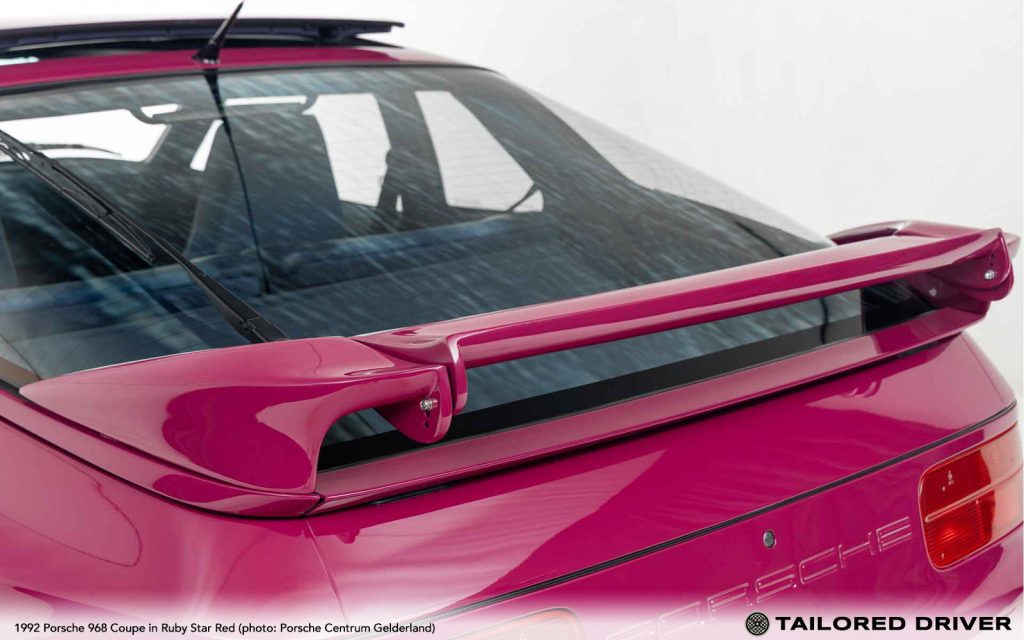
    Worth noting, while amazingly pristine, our eye is catching two potential modifications that **could** have come from the factory. These include the chin spoiler (that was possibly a Porsche Tequipment accessory) and the adjustable rear spoiler that appears to be identical to the design on the 968 Turbo. Factory replica parts like these do exist in the aftermarket, which would be less desirable on a car this original. It’s possible these were special wishes items, but that should be checked via the mentioned original purchase invoice the dealer has on file or with the Porsche Classic department in Stuttgart.

    Another peculiarity worth noting on any European market 968 (or 944, or 924) is the mention of the term “Targa”. In the U.S., familiarity with G-body 80s 911 models with full open Targa roofs can be confusing when you see one of these cars listed also as “Targa”. In regard to the transaxle cars mentioned, a Targa simply refers to the very large sunroof that came on these cars from the factory.

    Whether those parts are original or not, that’d be easy to rectify for an owner seeking ultimate originality. And if they’re not original and you like OEM plus upgrades from maybe the ultimate 968 model ever, consider it a bonus.

    As with any of our European Market Finds, this car is older than 25 years, making it an easy import into the U.S.A. should you be so inclined.


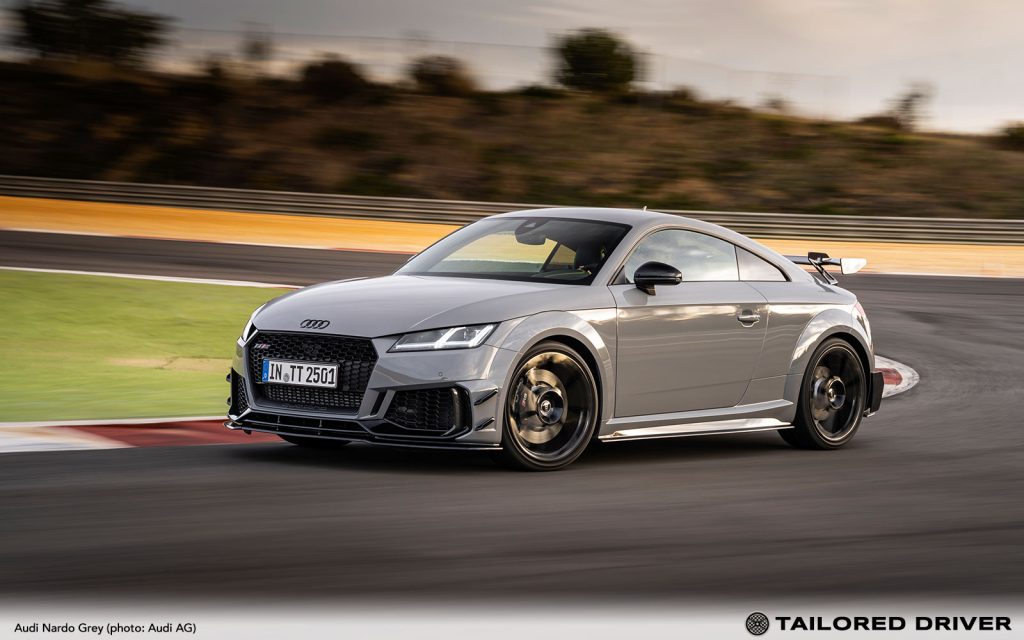
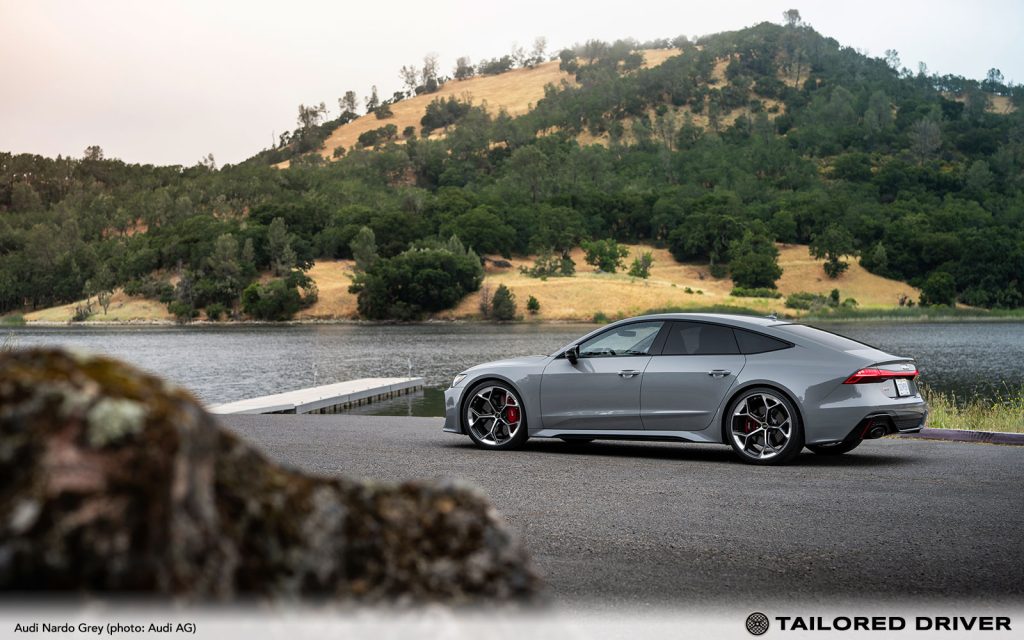
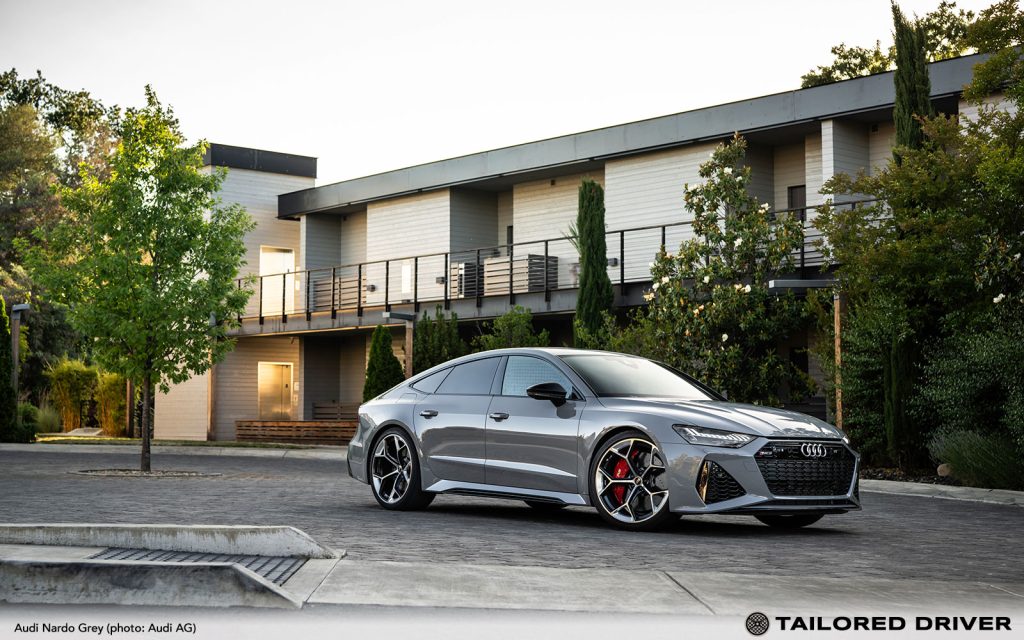
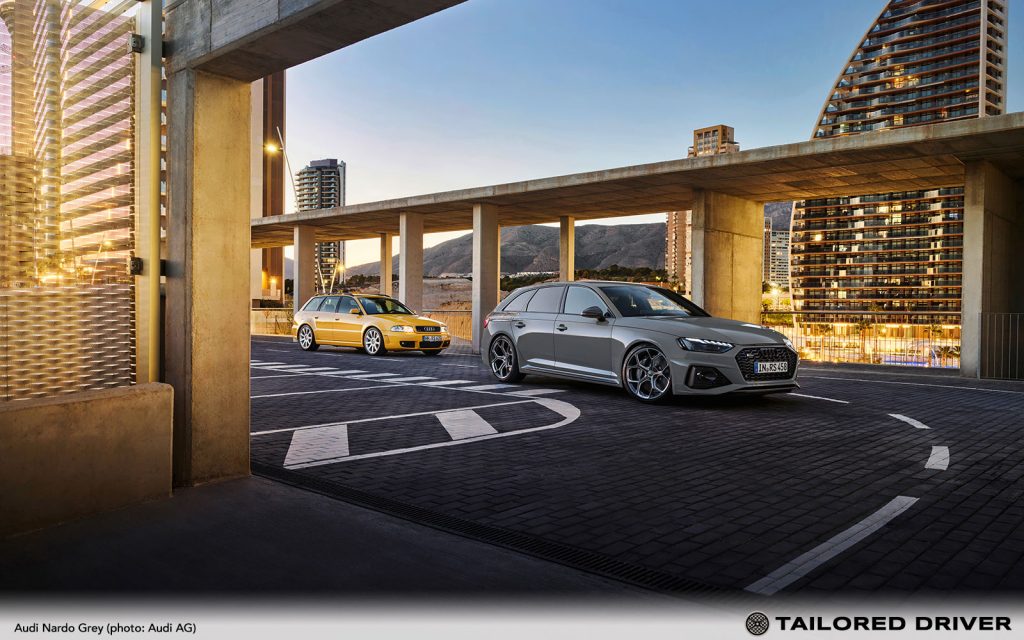
  • Color Focus: Audi Nardo Grey – LY7C

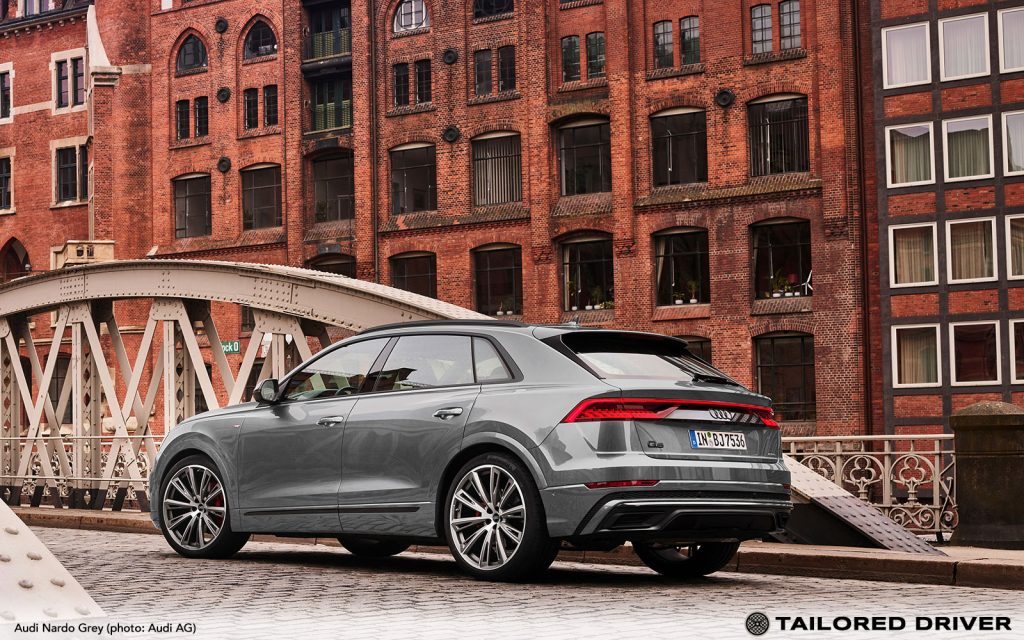
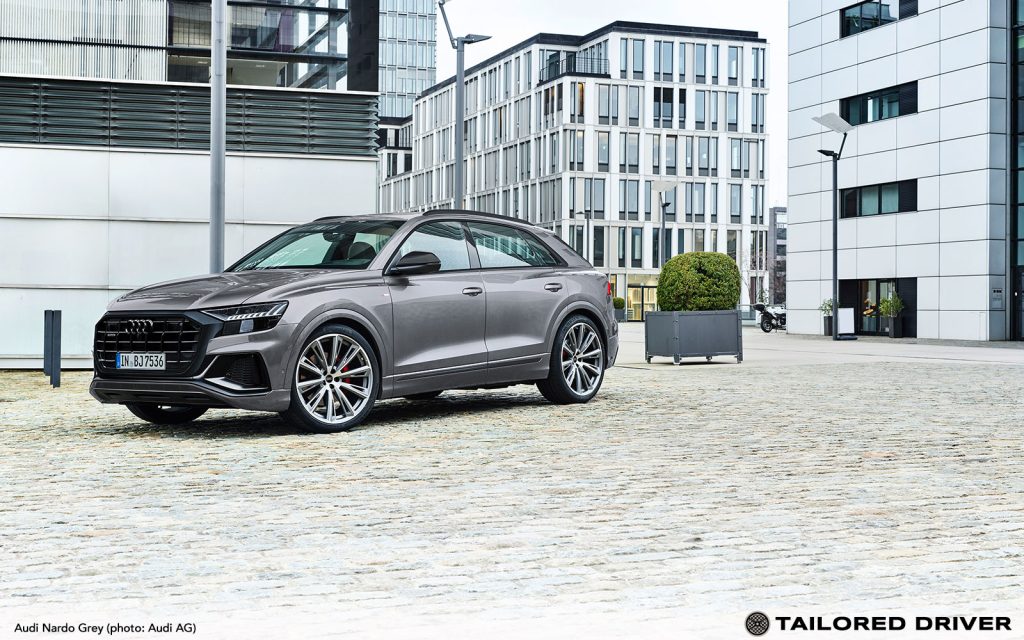
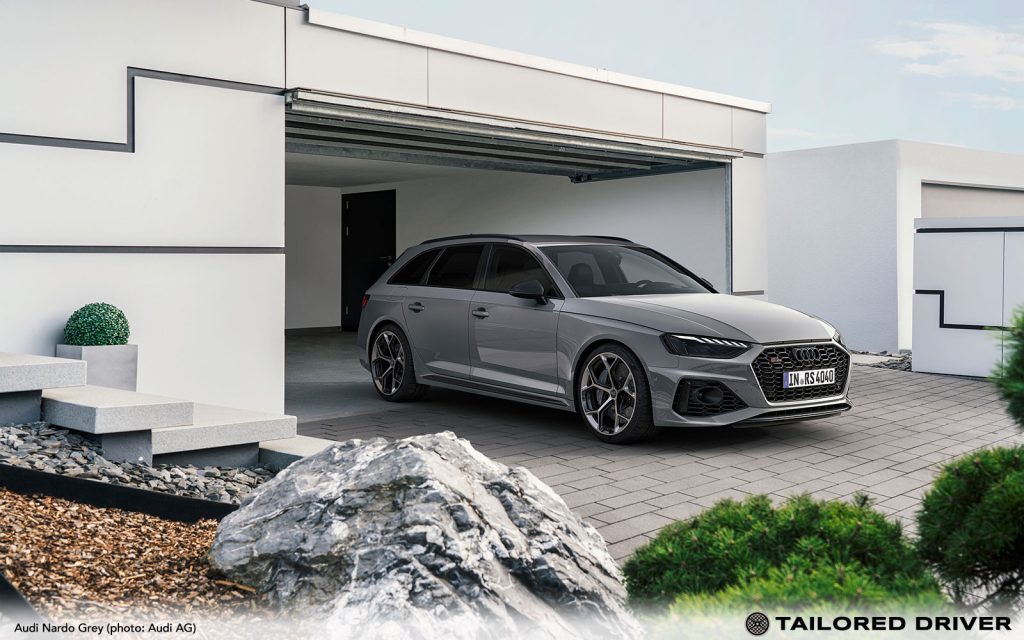
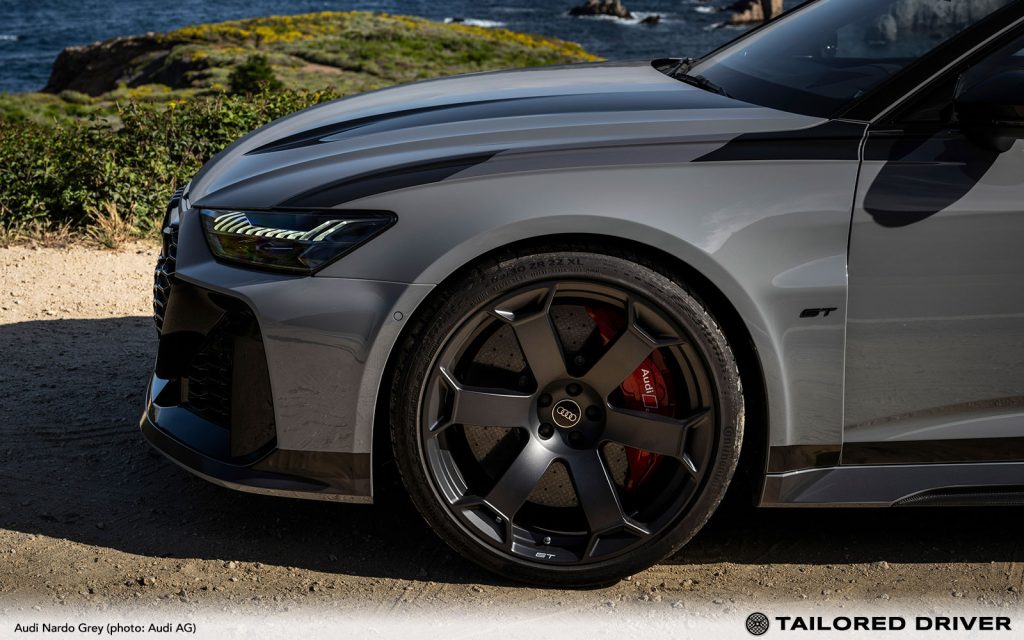
    Color Focus: Audi Nardo Grey – LY7C

    CODE:  LY7C

    COLOR DATA:

    #C0C6C8
    rgb(192,198,200)
    4,1,0,22
    RAL 7035

    TYPE: Non-Metallic

    CONTENT ARCHIVE: Audi Nardo Grey

    SUMMARY:

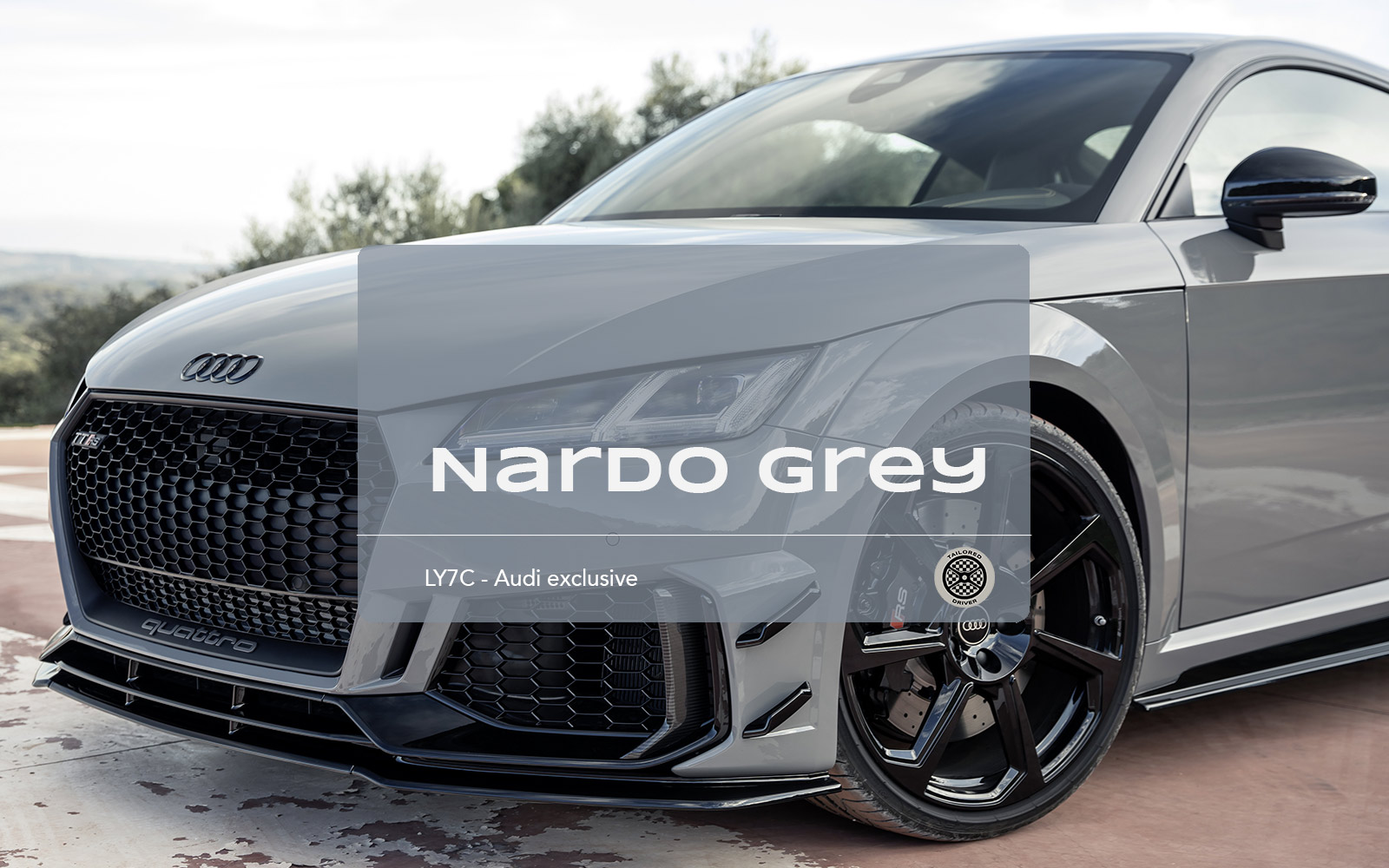
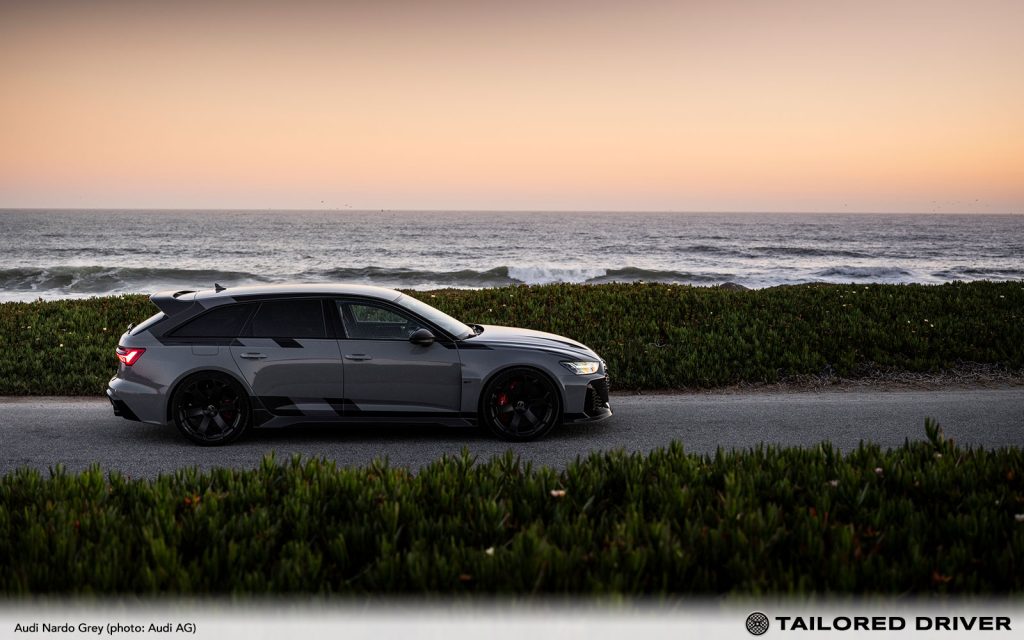
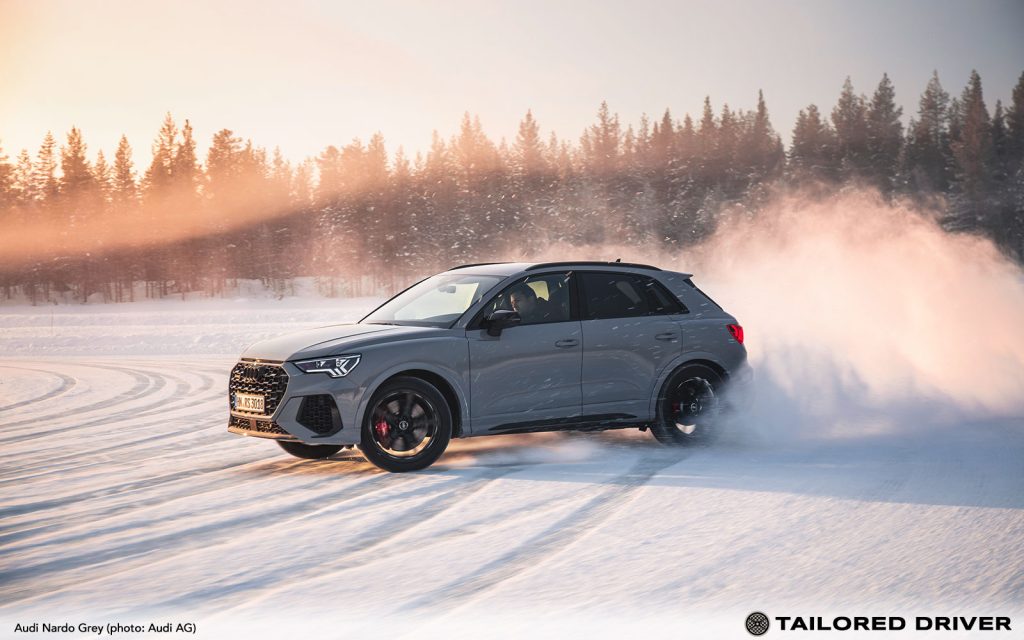
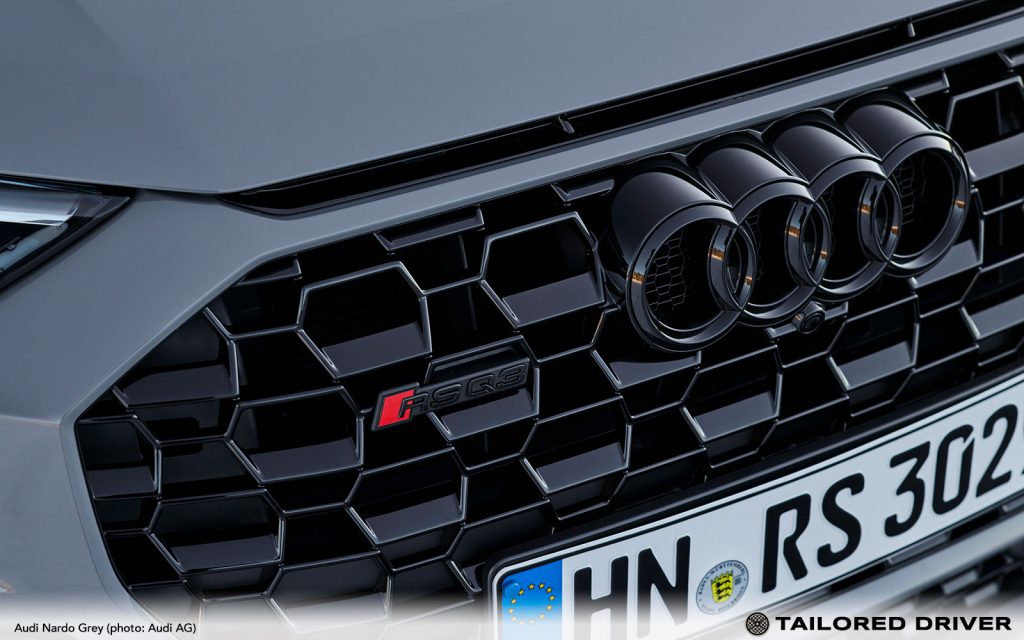
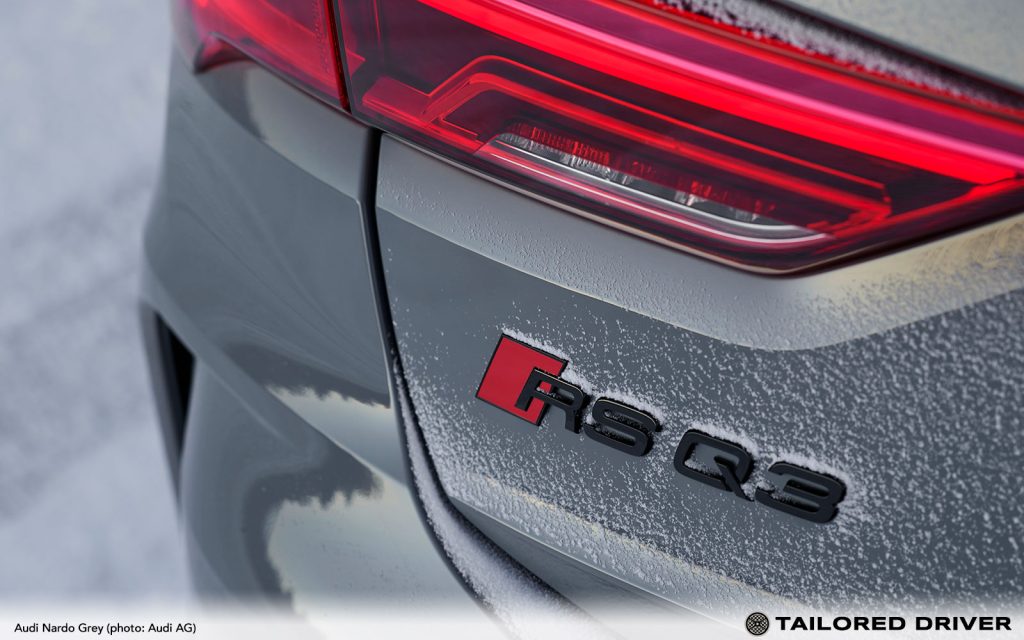
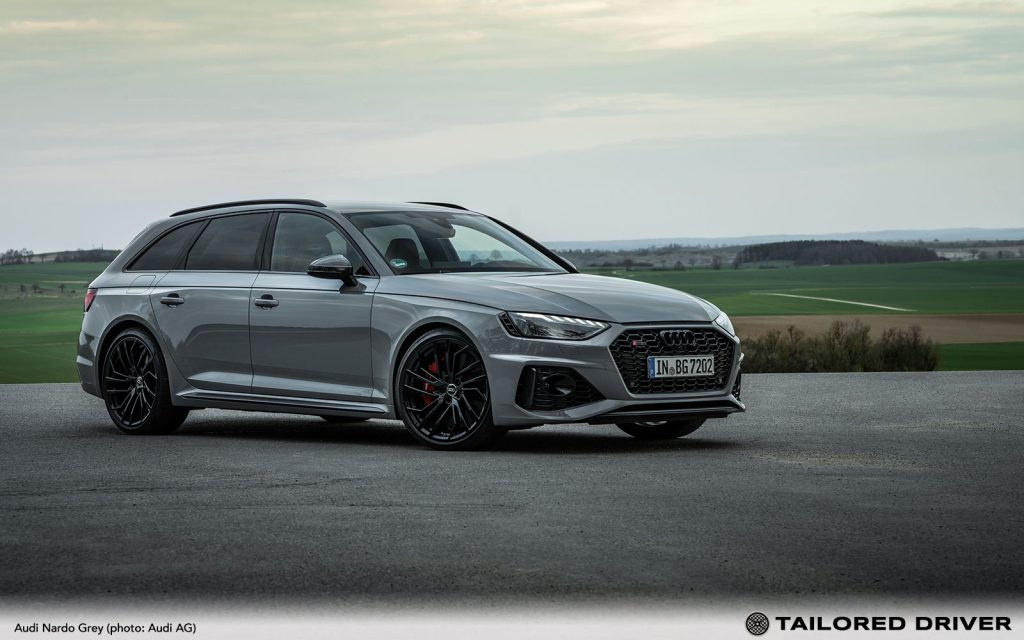
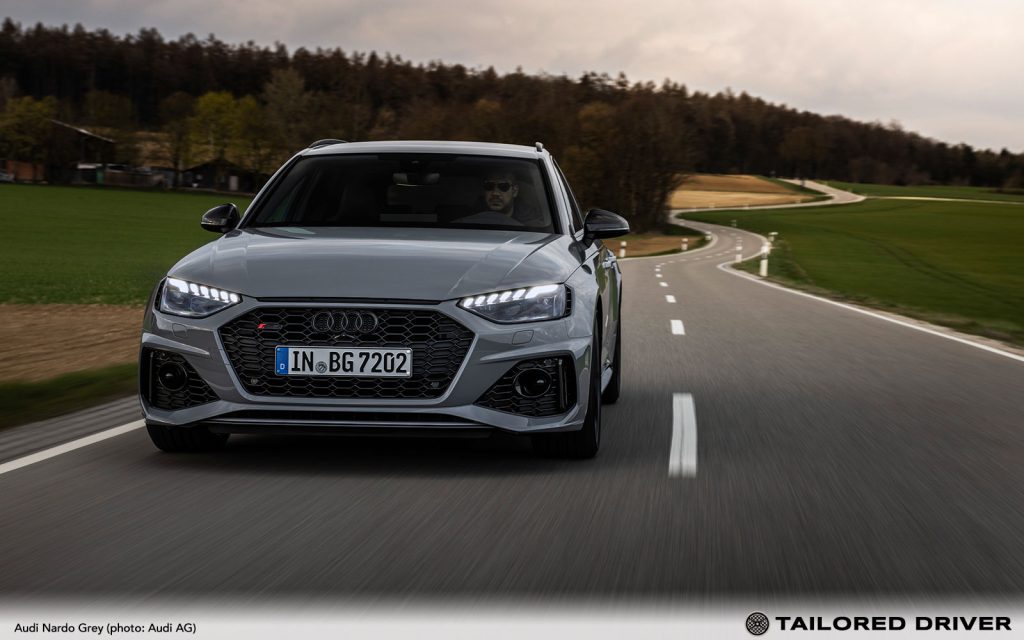
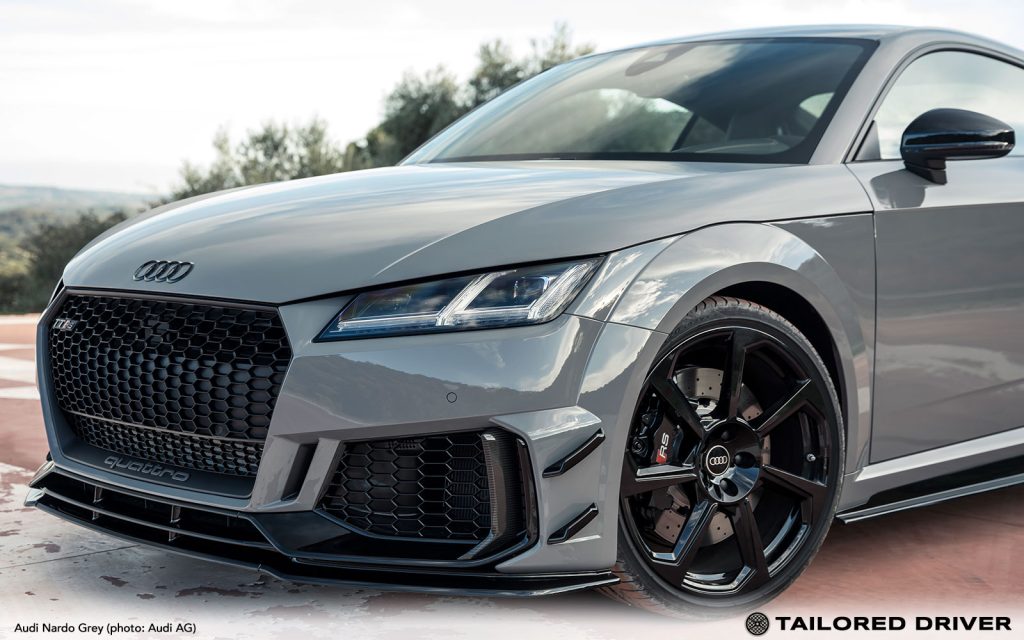
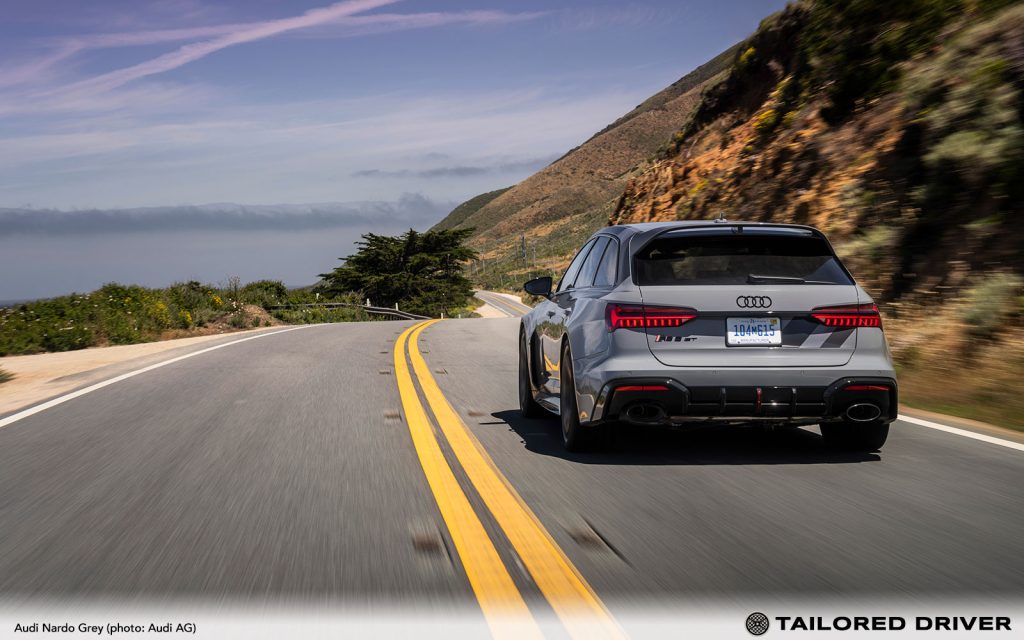
    It’s funny, there are some colors that become meteoric, becoming so popular that they become iconic and risk becoming ubiquitous. Such is the case of Audi’s Nardo Grey (nardograu; UNI; LY7C; Audi exclusive), a light grey that came on the scene as a standout in Ingolstadt’s RS car lineup.

    Variations on the pastel light grey theme were a thing in the early 2000s, with the Audi TT’s Aviator Grey then Suzuka Grey, Porsche’s Sport Classic Grey then later Chalk. Nardo Grey came into the lexicon roughly in the middle of this grey cloud and seemed to strike a nerve.

    Maybe it’s the nature of the general idea of battleship grey. Ian Fleming’s original James Bond 007, the one in the book and not the movies, famously first drove a Blower Bentley painted battleship grey. And though that car has never graced the silver screen, many other racing cars have including in the pre-war era that would have birthed the Blower Bentley.

    By the time Nardo came on the scene on cars like the Mk2 TT RS or the B8 RS 5, what was old was new again and the shading had a certain perfect balance of light and dark that all made it very distinctive. It was so popular that it became a very regular choice in Audi exclusive tailored specifications, and even got picked up by clients from other brands. Today, it remains common in the Audi RS stock palette though we’d argue so common that it’s now not quite as special in those early Mk2 TT RS days. Nevertheless, it’s still handsome.

    RELATED LINKS:

    VIDEO REFERENCES:

    PHOTO REFERENCES:

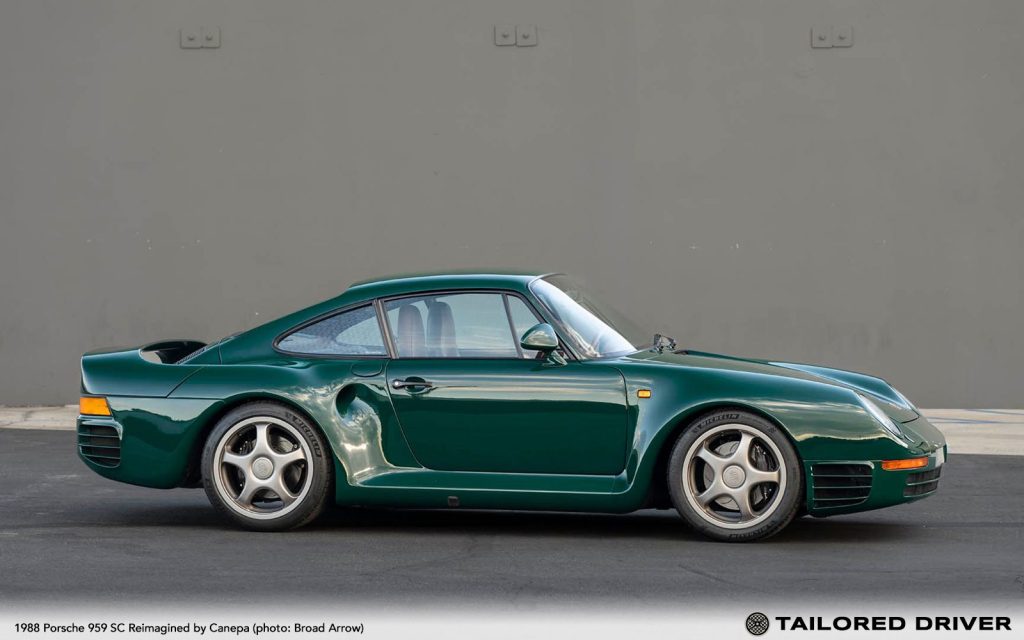
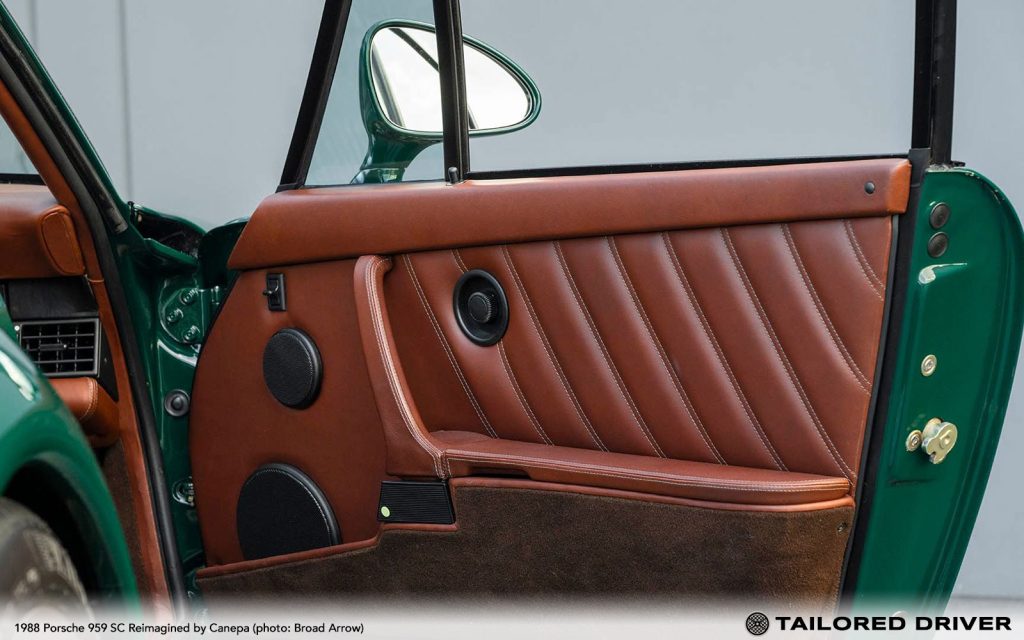
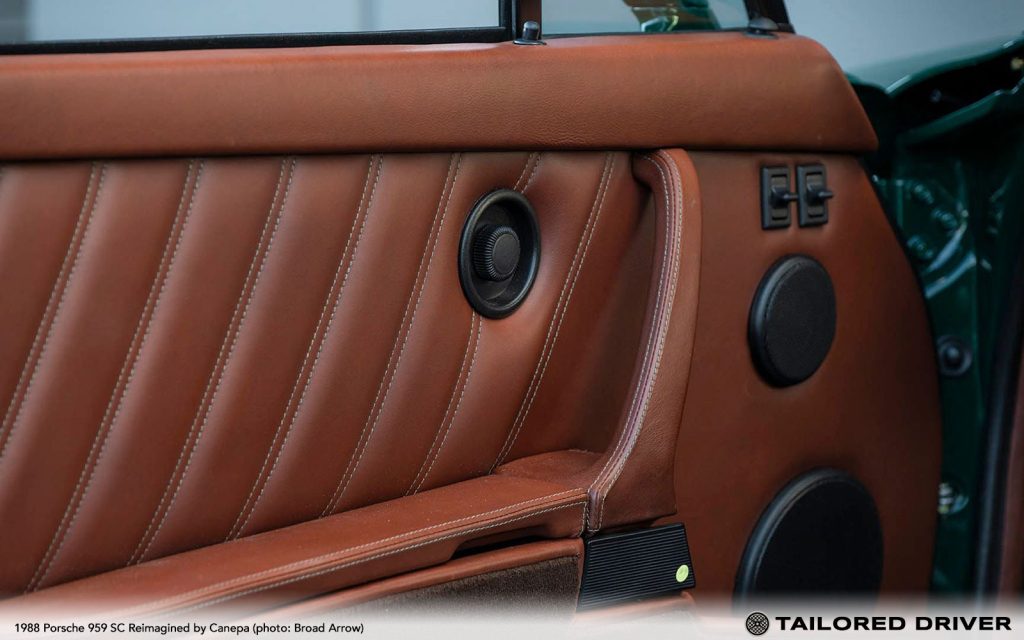
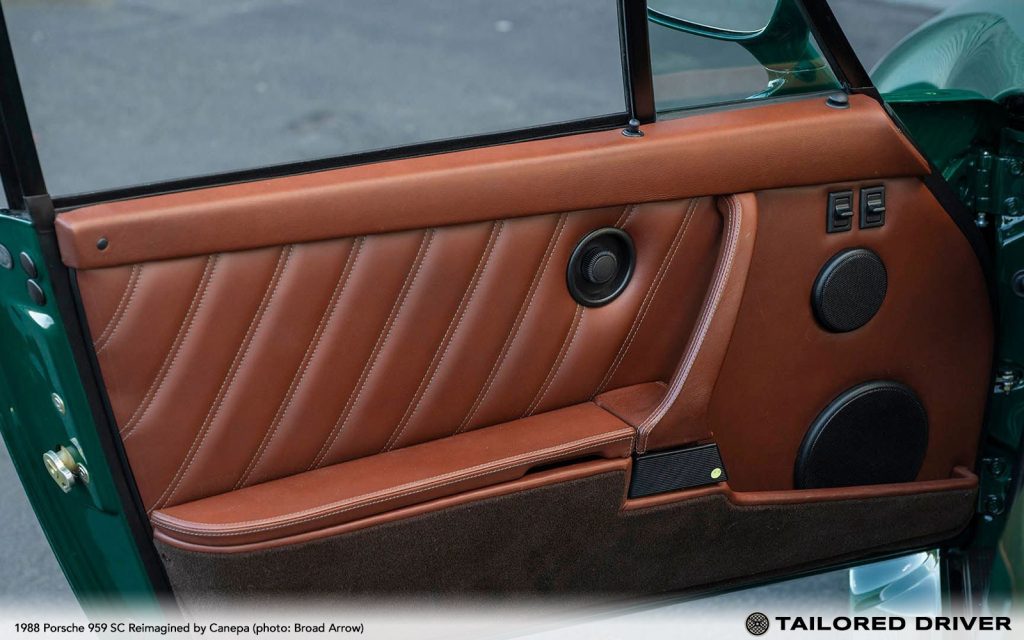
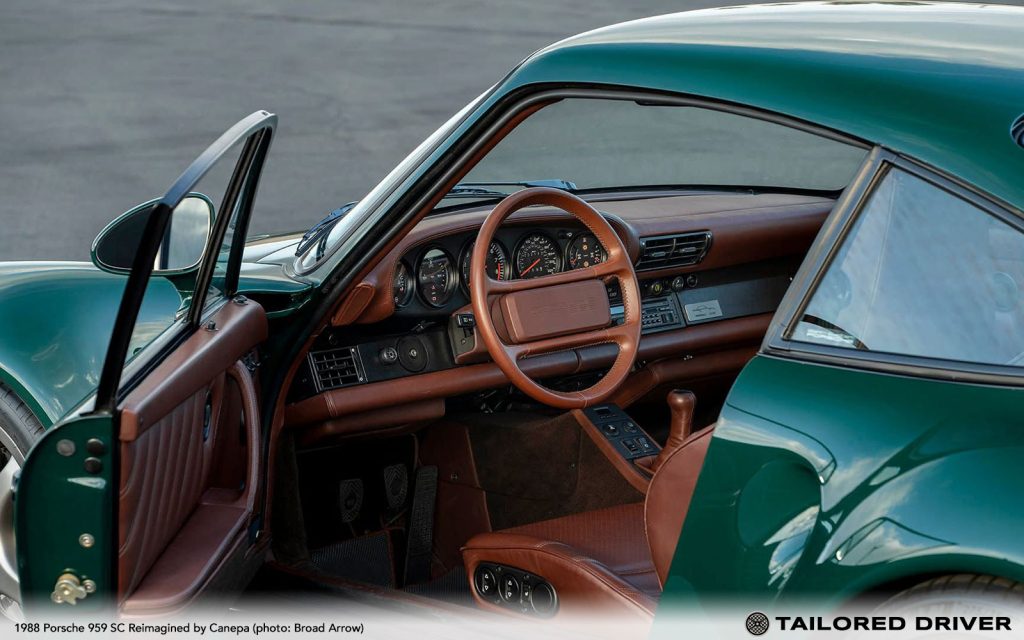
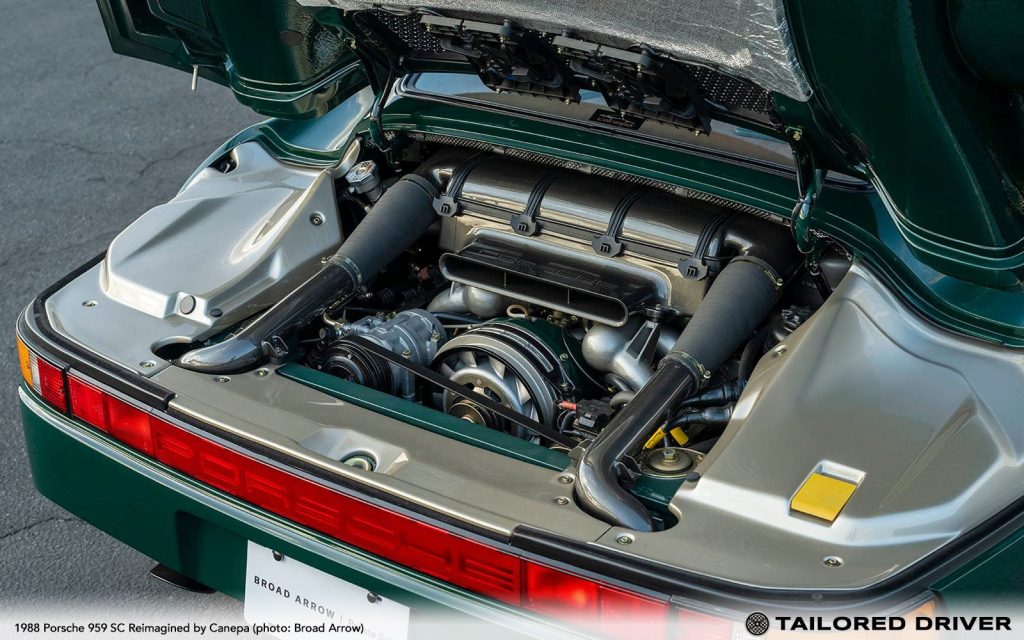
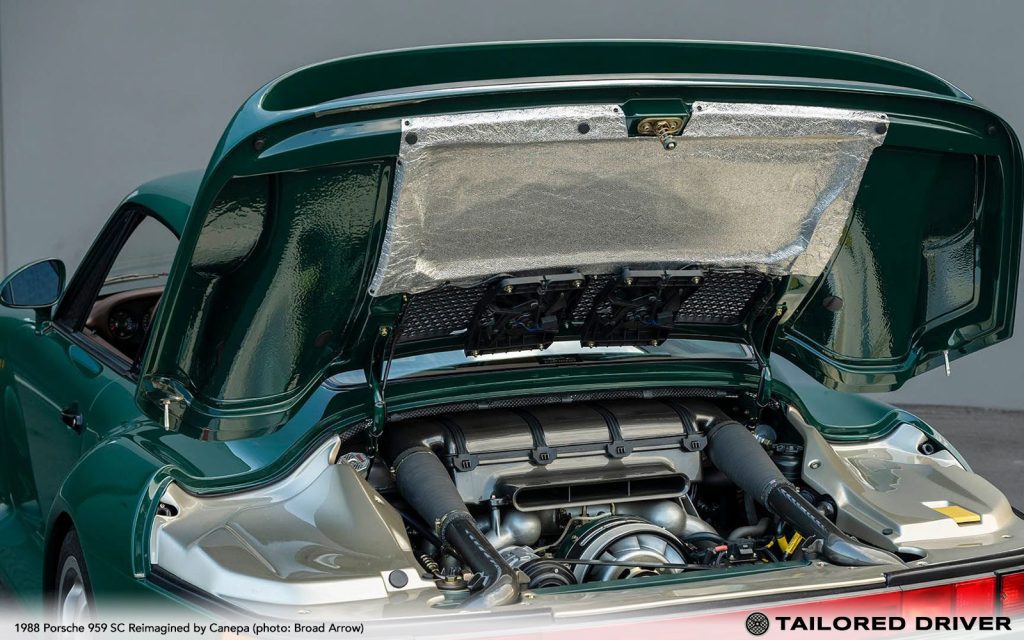
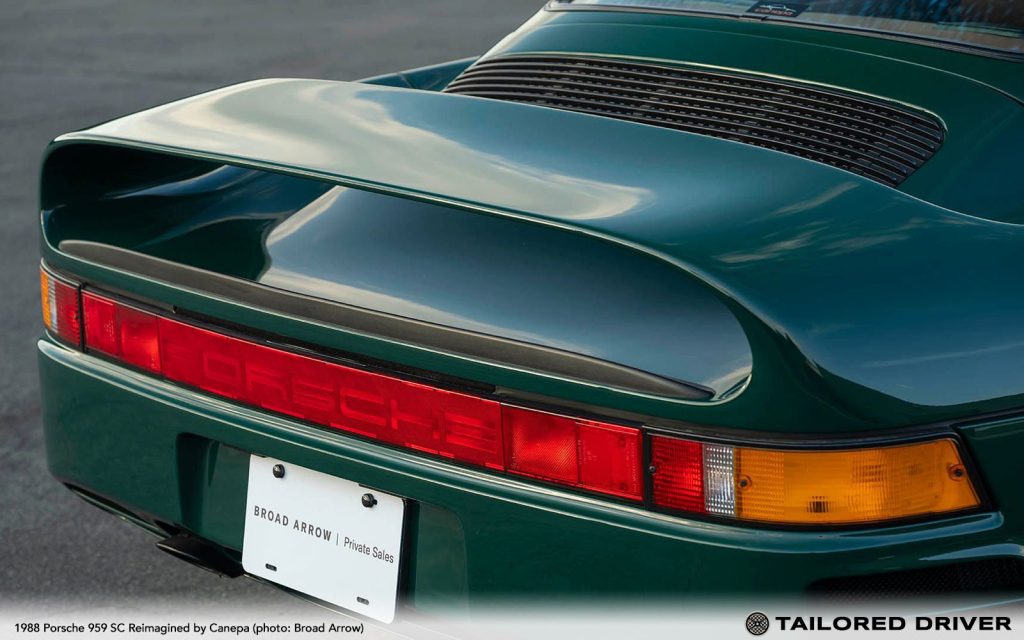
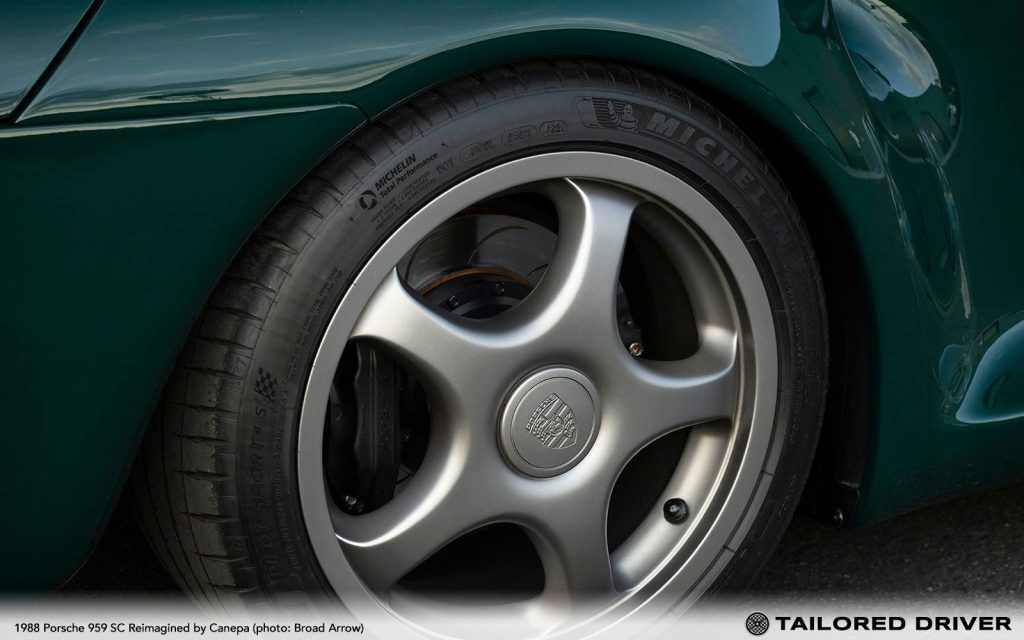
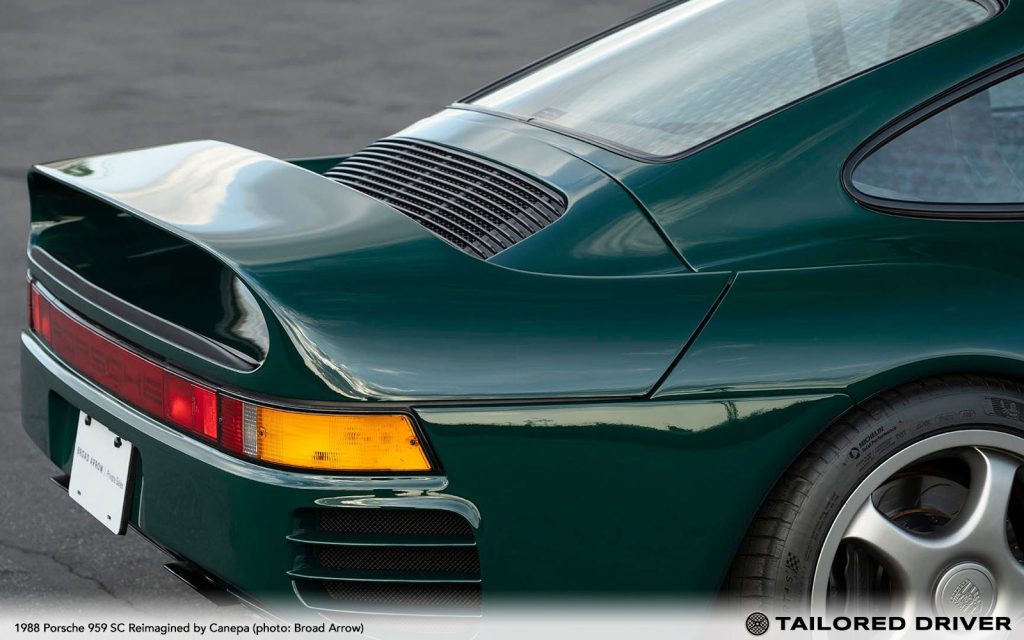
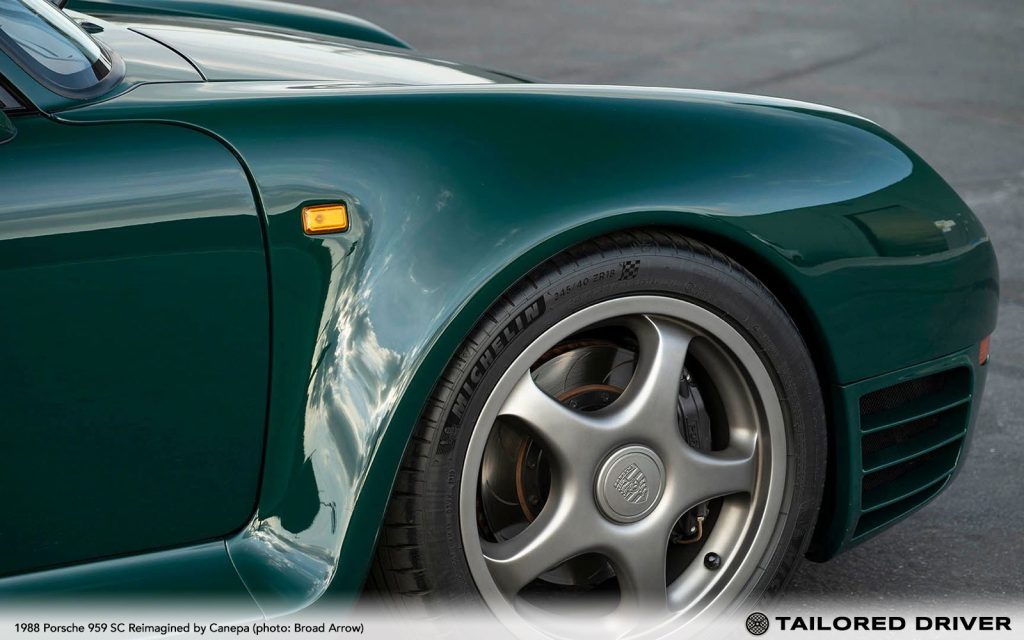
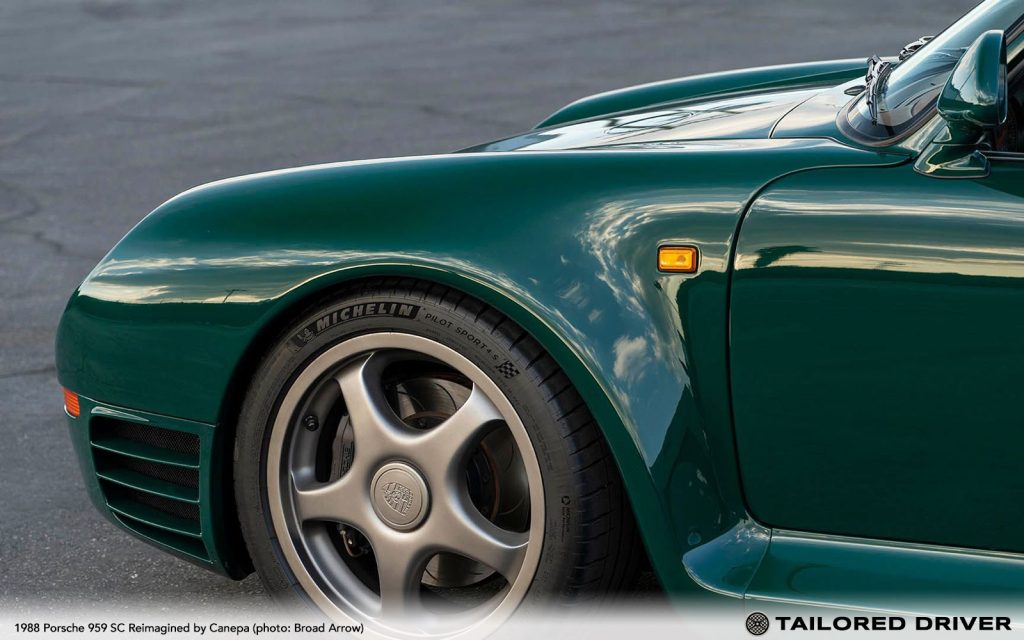
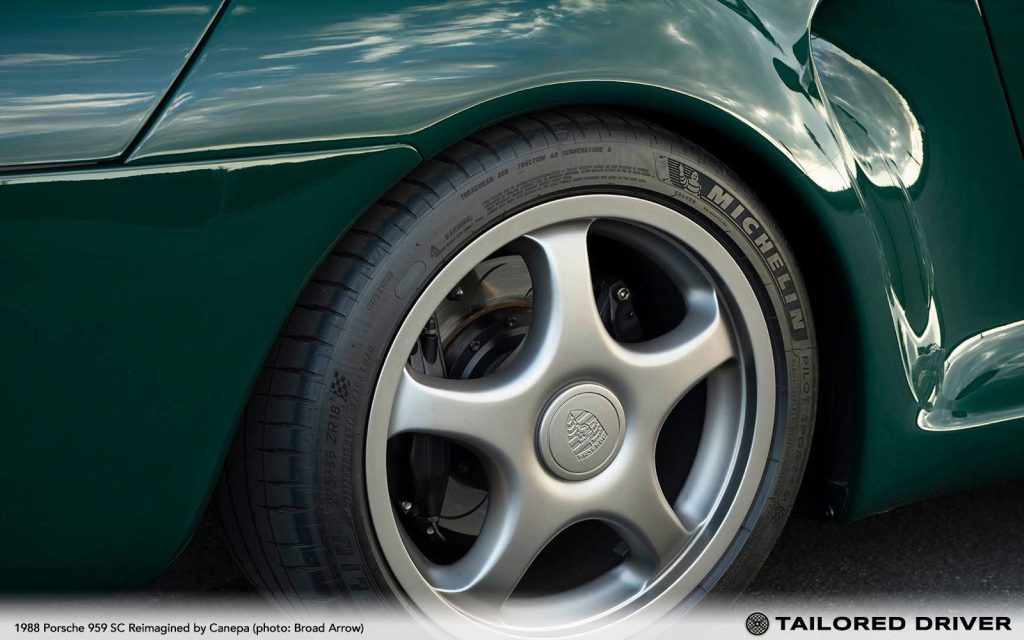
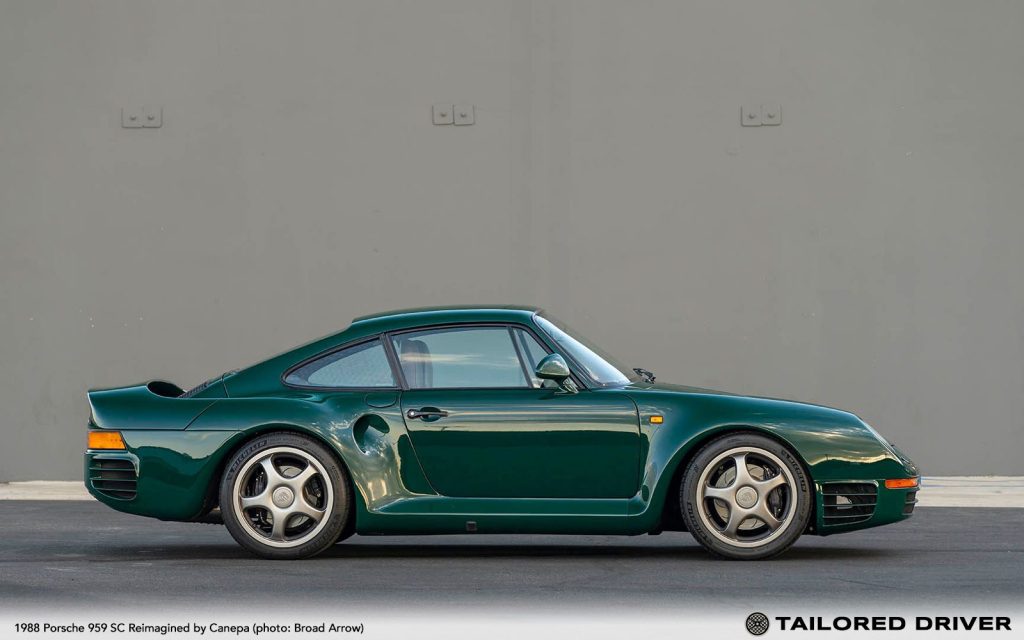
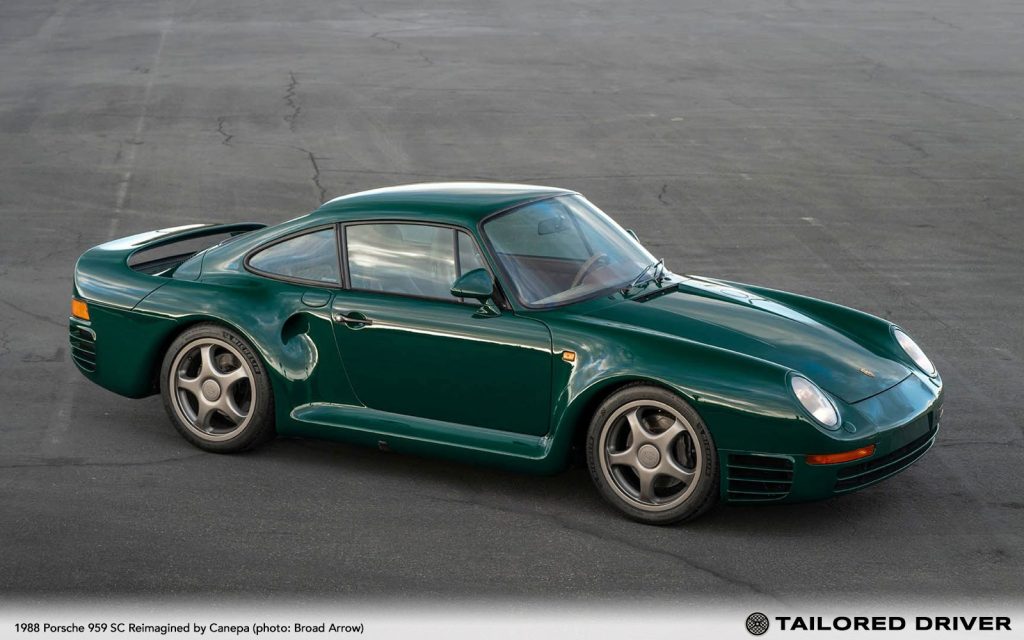
  • Market Find: 1988 Porsche 959 SC Reimagined by Canepa in Broad Arrow Private Sale

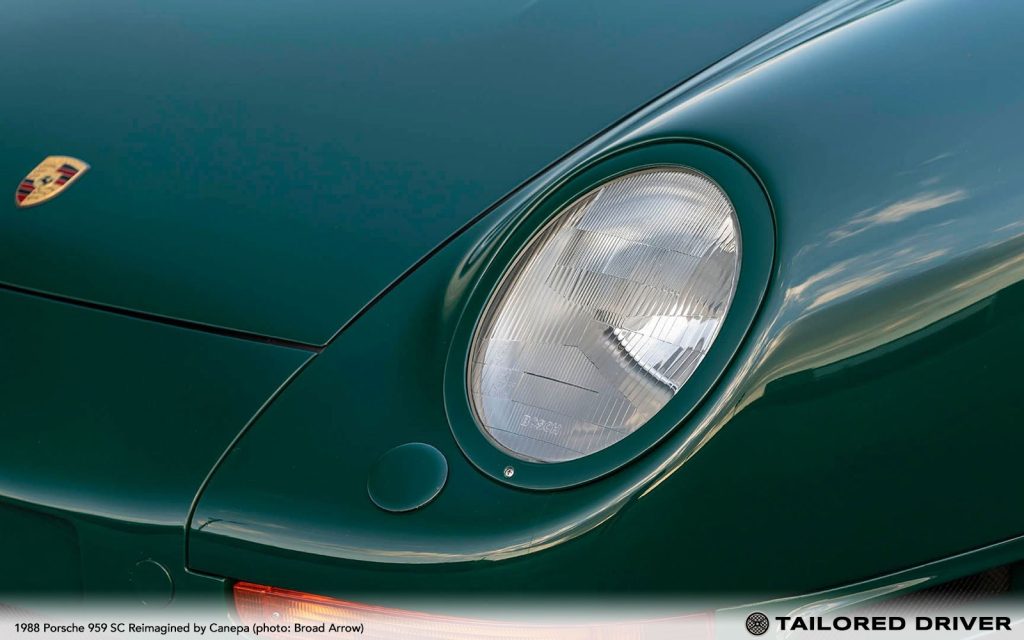
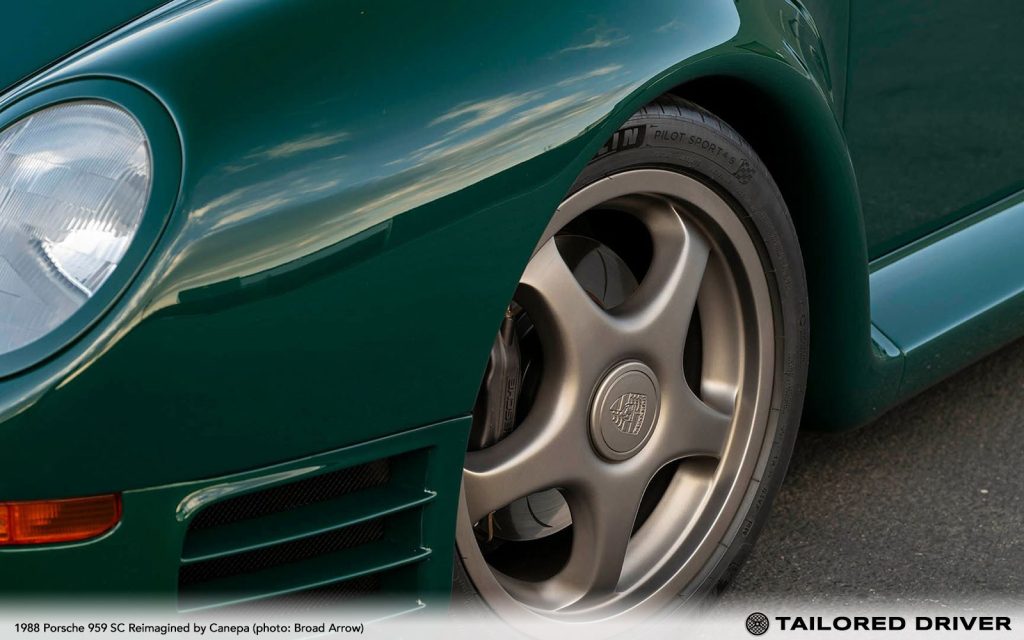
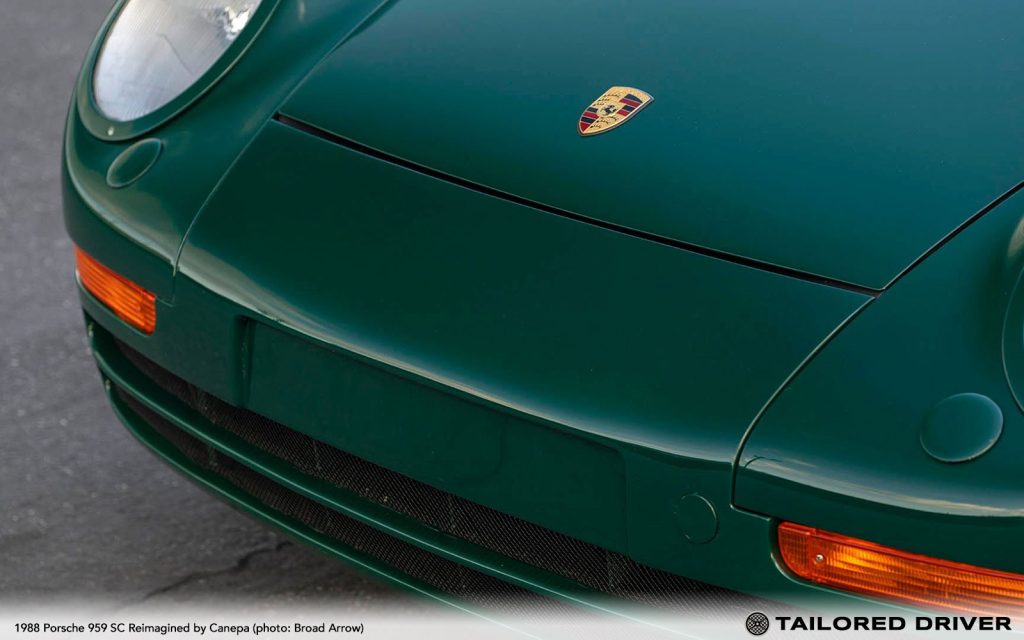
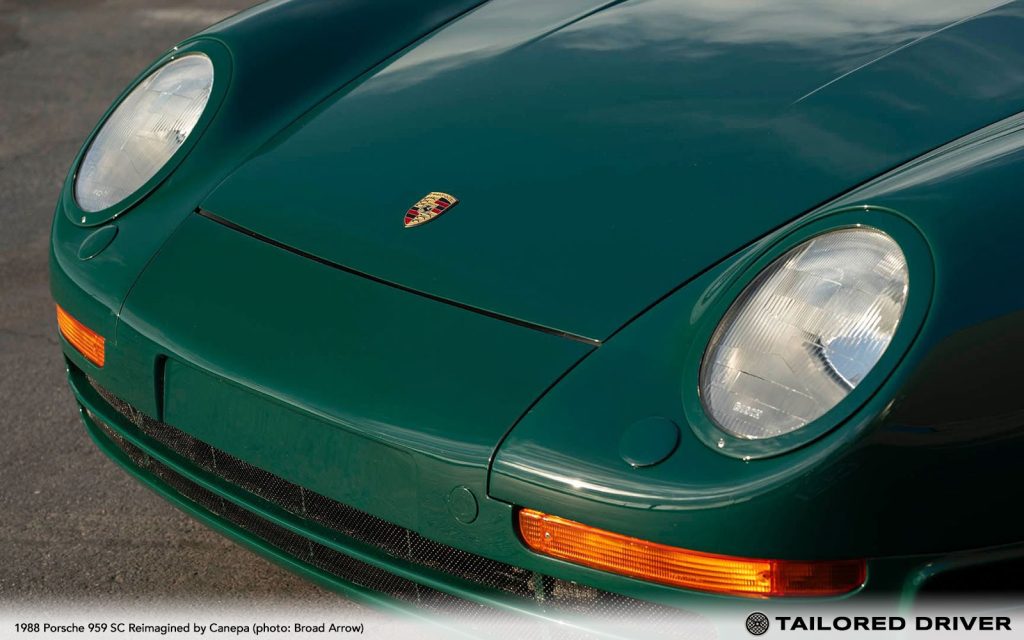
    Market Find: 1988 Porsche 959 SC Reimagined by Canepa in Broad Arrow Private Sale

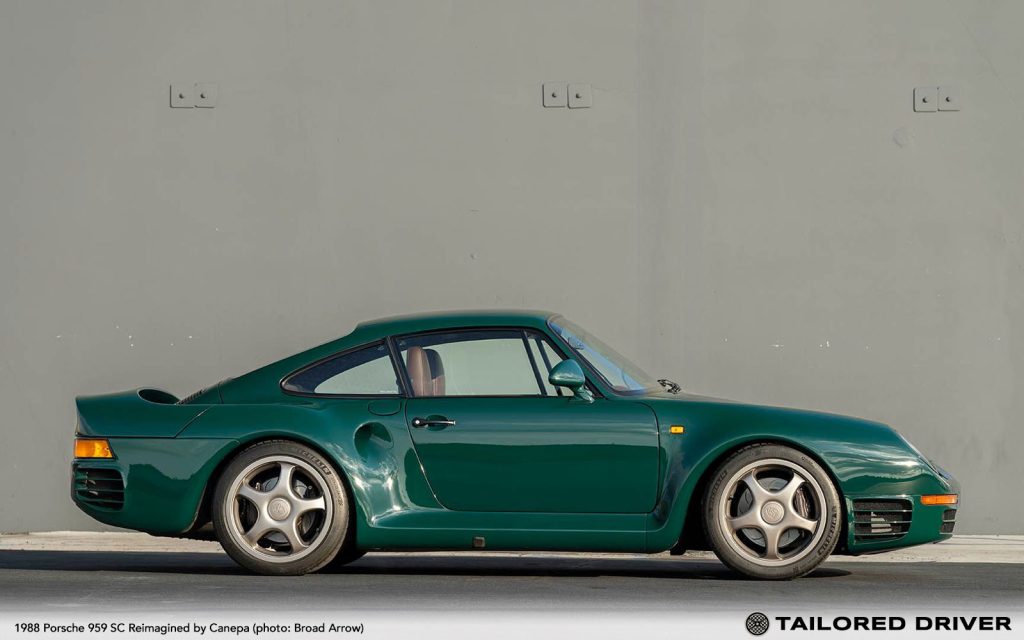
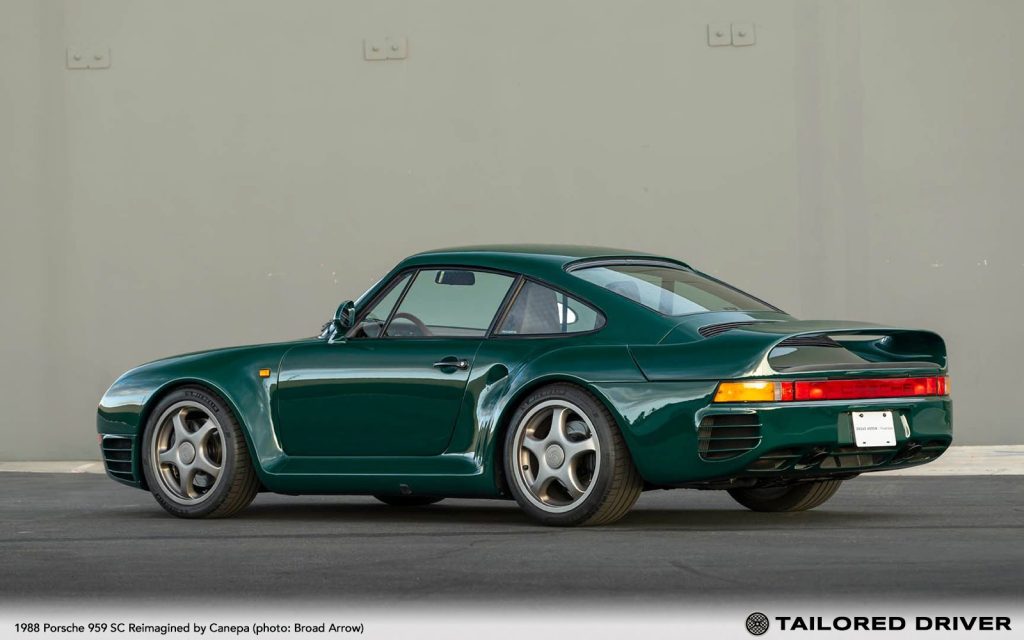
    What: 1988 Porsche 959 SC Reimagined by Canepa
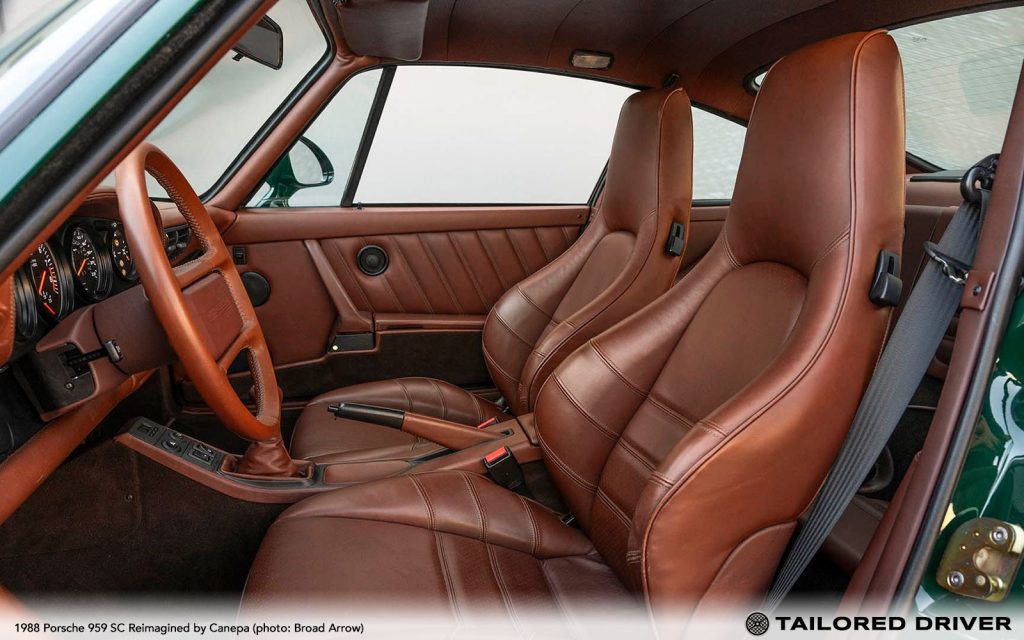
    Color: Irish Green (irischgrün; Y78; Porsche)
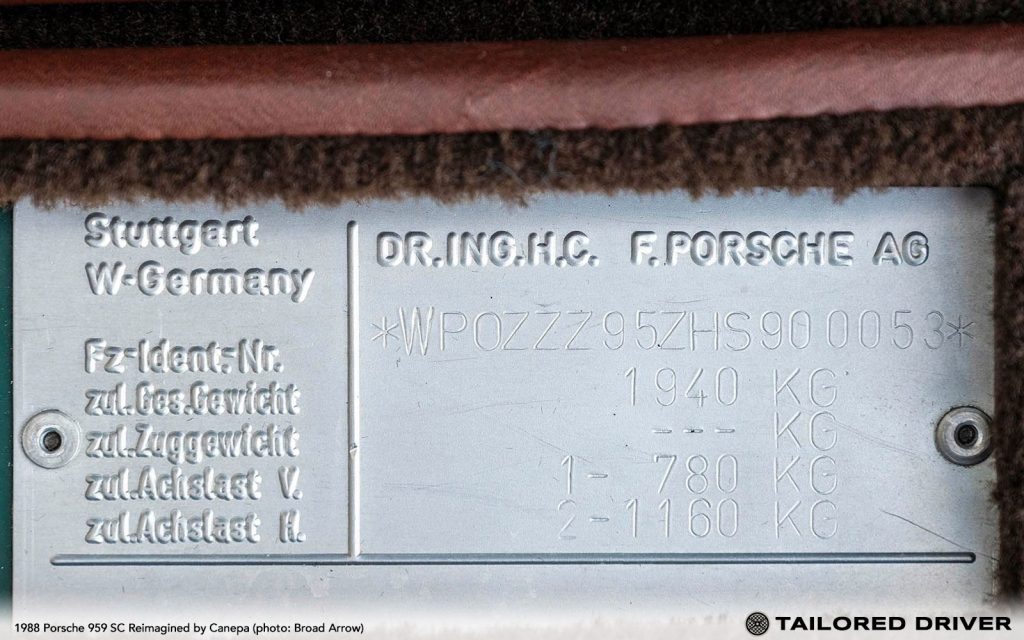
    VIN: WPOZZZ95ZHS900053
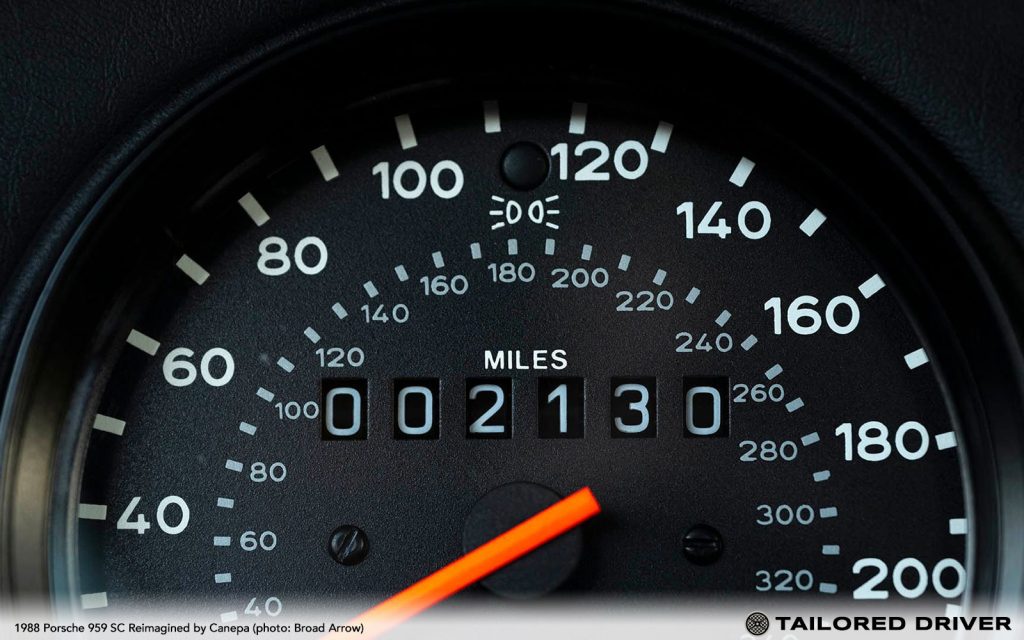
    Mileage: 2,130 miles
    Price at Time of this Writing: Available Upon Request
    CarFax: N/A
    Window Sticker: N/A
    Location: Undisclosed
    Dealer listing: Link

    Why we love it:
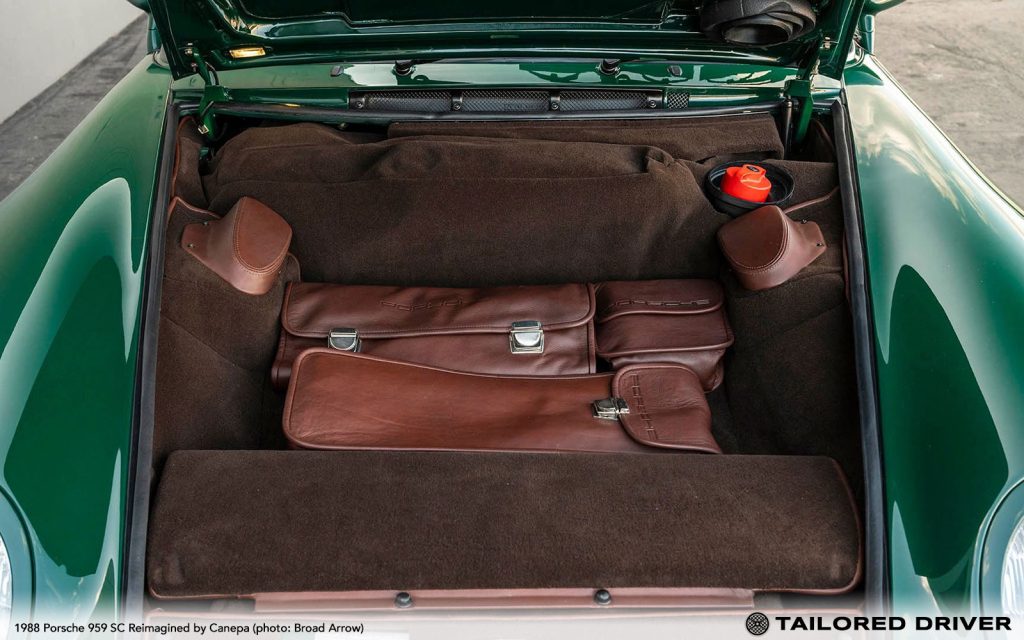
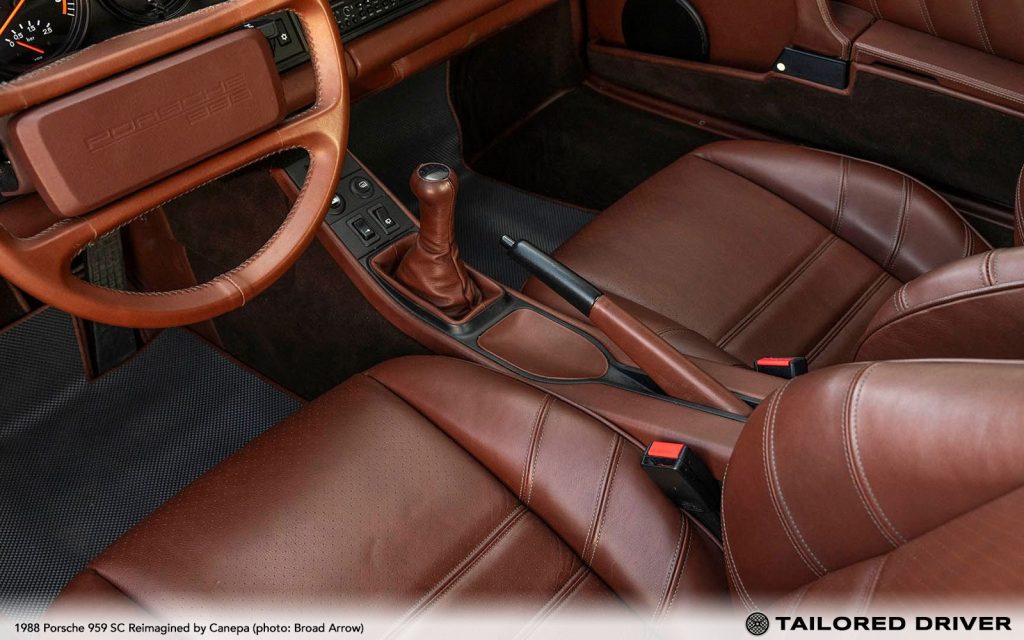
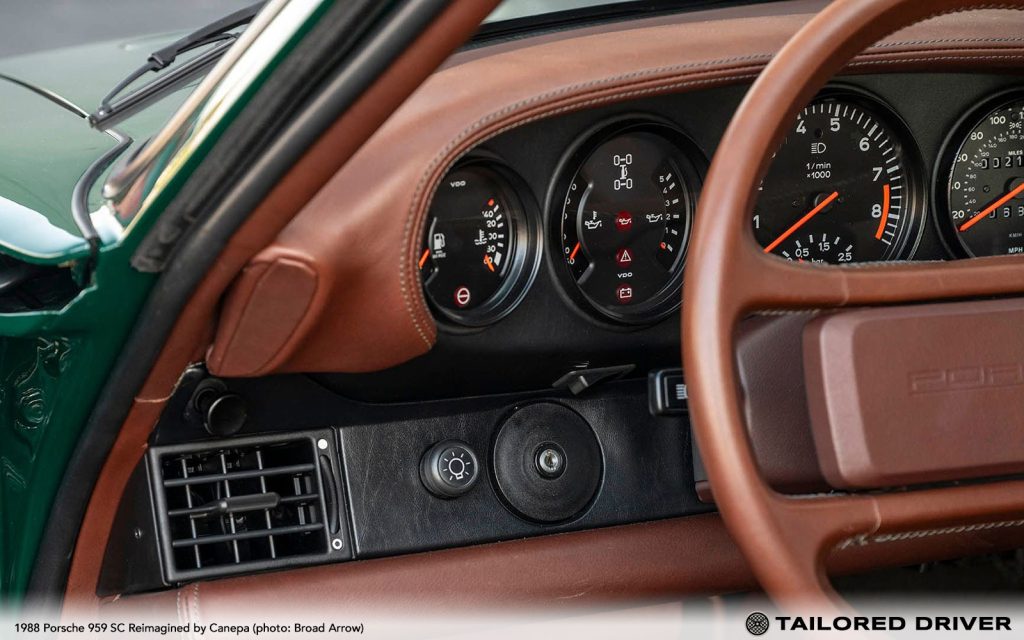
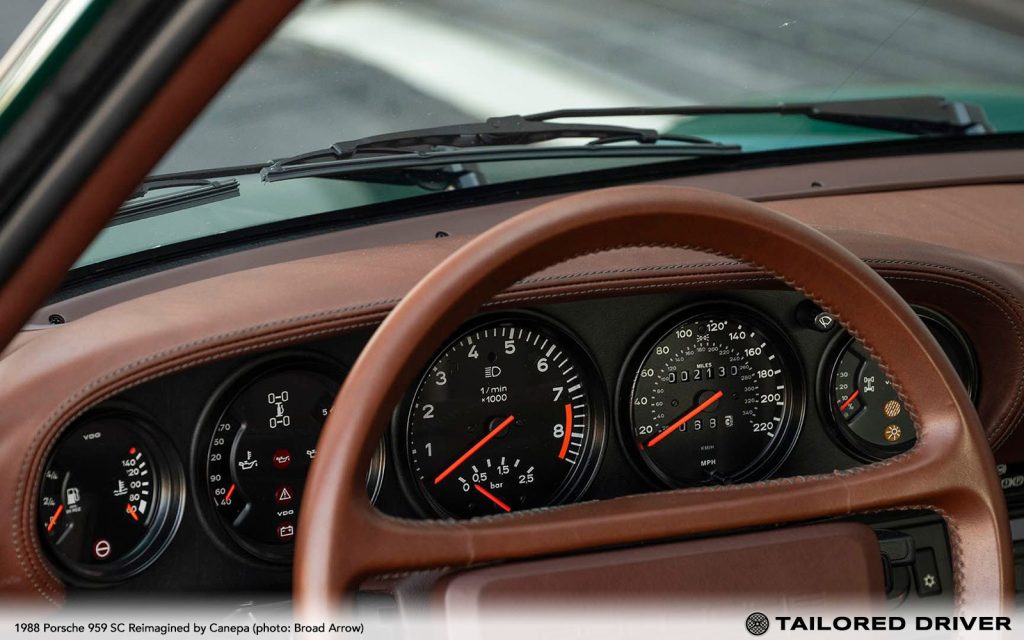
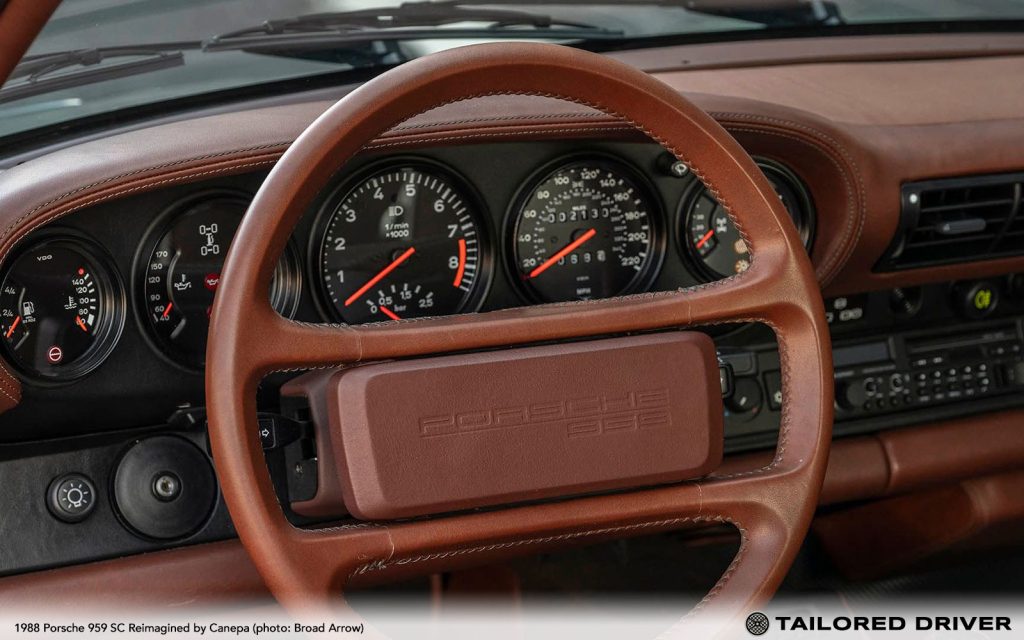
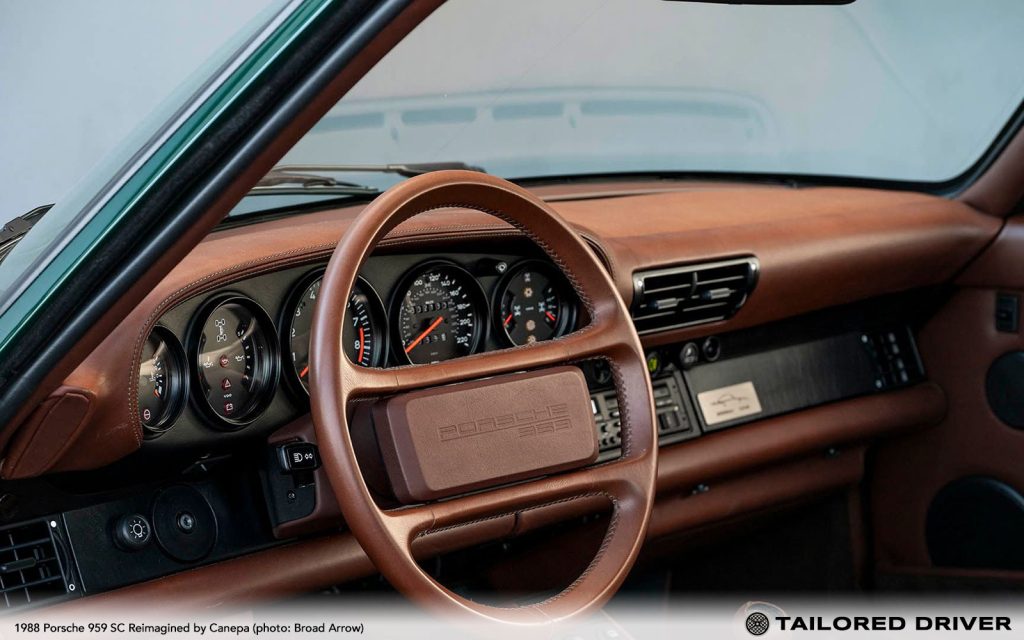
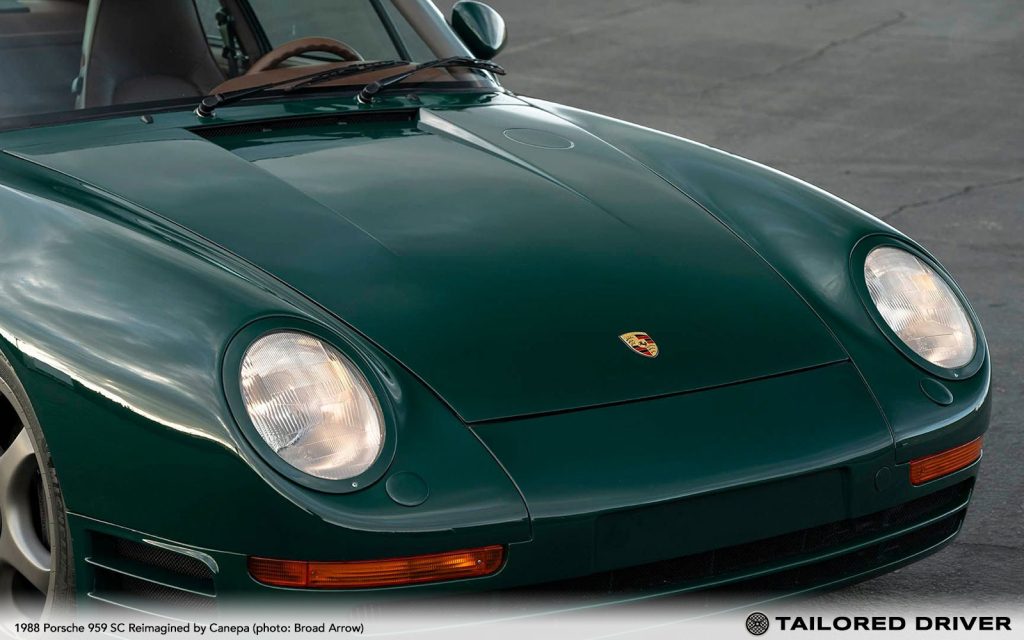
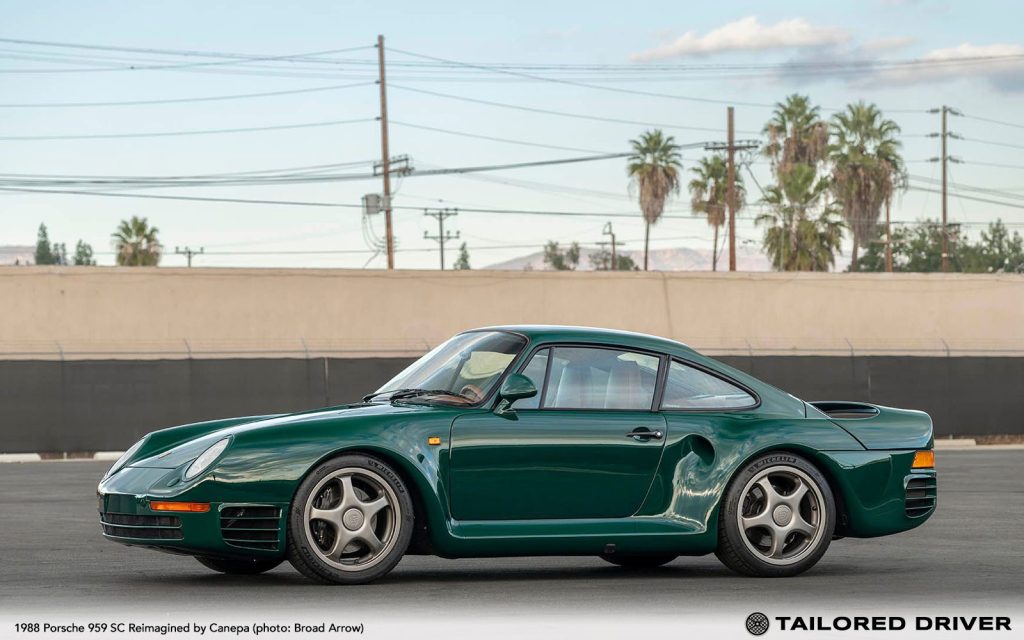
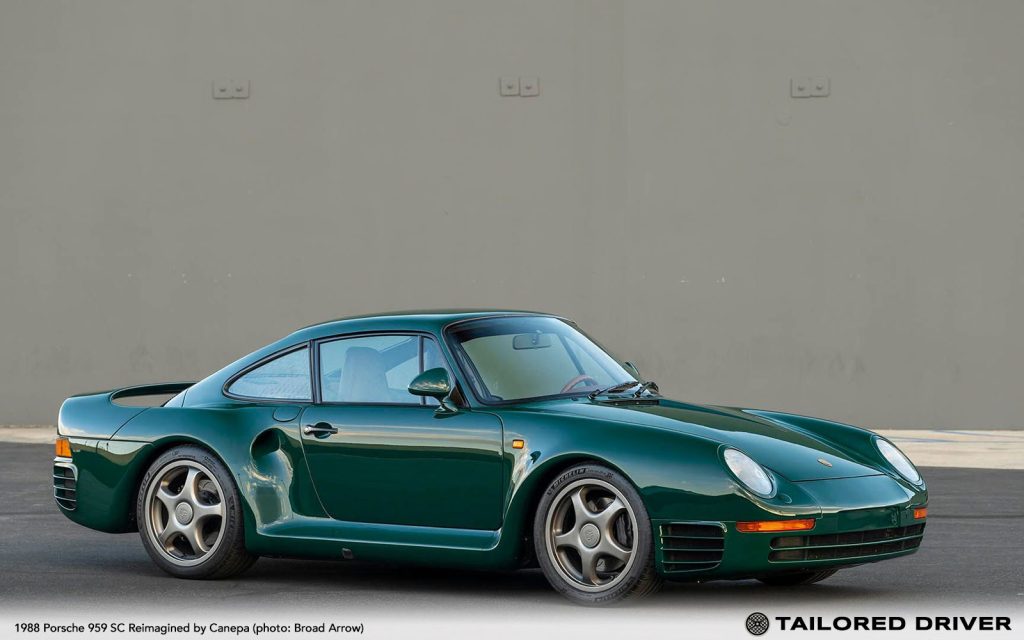
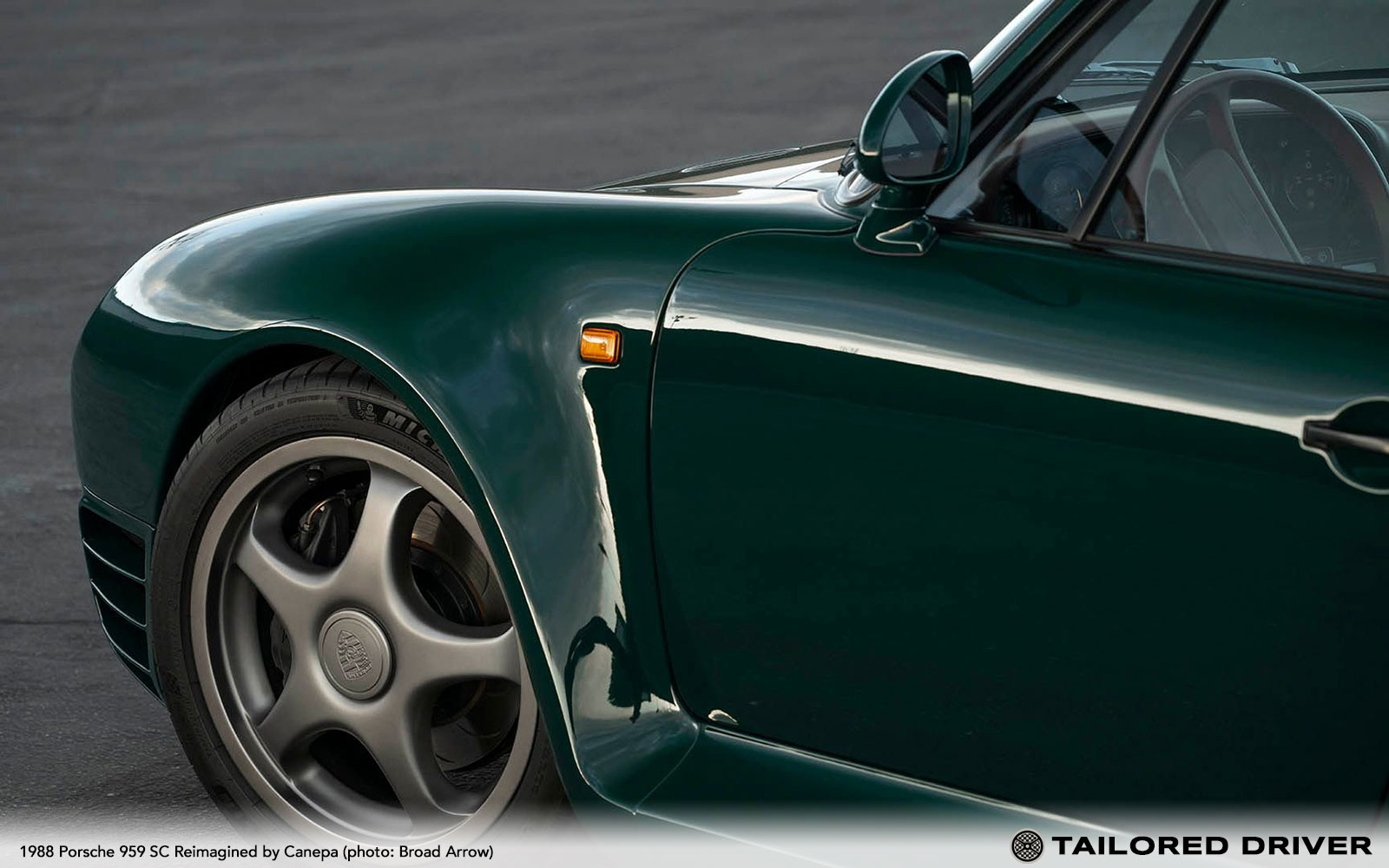
    There’s remastered, and then there’s a Porsche 959 SC reimagined by Canepa. The Group B homologated Porsche 959 is already the most forbidden of fruit and the most exotic of the exotic from the so-called “Rad” era. Now throw in a tailored rebuild that Bruce Canepa’s Northern California firm has been building over recent years and you have the makings of a perfect thing. And, did we mention Irish Green over Tobacco brown leather?

    This car is so good, we’re going to include the full Broad Arrow description below. However, you should definitely check out more photos and, of course, call for the price if you are interested. It is a rare thing indeed when these cars come available in the market in any form, but particularly rare and exclusive when such a beautiful build as this from Canepa also makes a showing.

    BEGIN DESCRIPTION [Source: Broad Arrow]

    In the early 1980s, Porsche was keen to prove its technological superiority learned throughout the previous decade’s racing efforts. The “Gruppe B” Study was created to display these advancements with development underway as soon as 1981. Turbocharging, first used on the 917/10 Can-Am racing car in 1972, made its way three years later to the first turbocharged road-going Porsche – the 1975 911 Turbo – and from it, to the 959. It was a similar story with engine cooling. Through its racing program, Porsche had reached a thermal limit with the air-cooled flat-six. Water-cooled heads appeared on the all-conquering Porsche 956 endurance racing prototype in 1982 and, just a few years later, the 959 was the beneficiary of these successful experiments. Height-adjustable suspension, “intelligent” all-wheel drive, tire pressure monitoring, ABS, composite body construction – all commonplace in today’s supercars – were decades ahead of their time when applied to the 959. 

    Fewer than 300 of these halo supercars were built by the end of the decade, with each example estimated to cost Porsche double its 420,000 DM price tag to produce. Faced with these substantial losses, Porsche did not see fit to modify and test the 959 to comply with NHTSA safety standards, and as a result, it was not road-legal in the United States. While a number of 959s slowly trickled into the U.S., the model was the prime example of the type of car petitioned by Canepa and others to include in the “Show or Display” rule, passed in August 1999. The rule allowed for the private importation and limited road use of certain vehicles deemed to meet a standard of “historical or technological significance,” famously enabling Bill Gates to drive his 959 after it was stored by the Customs Service for 13 years. In the decades since the rule was passed, Canepa’s ceaseless obsession with extracting as much performance as possible out of the 959 has culminated in a series of refinements and performance upgrades developed by Canepa for the standard Porsche 959, officially launched in 2015 as the “959 SC Reimagined by Canepa” program.
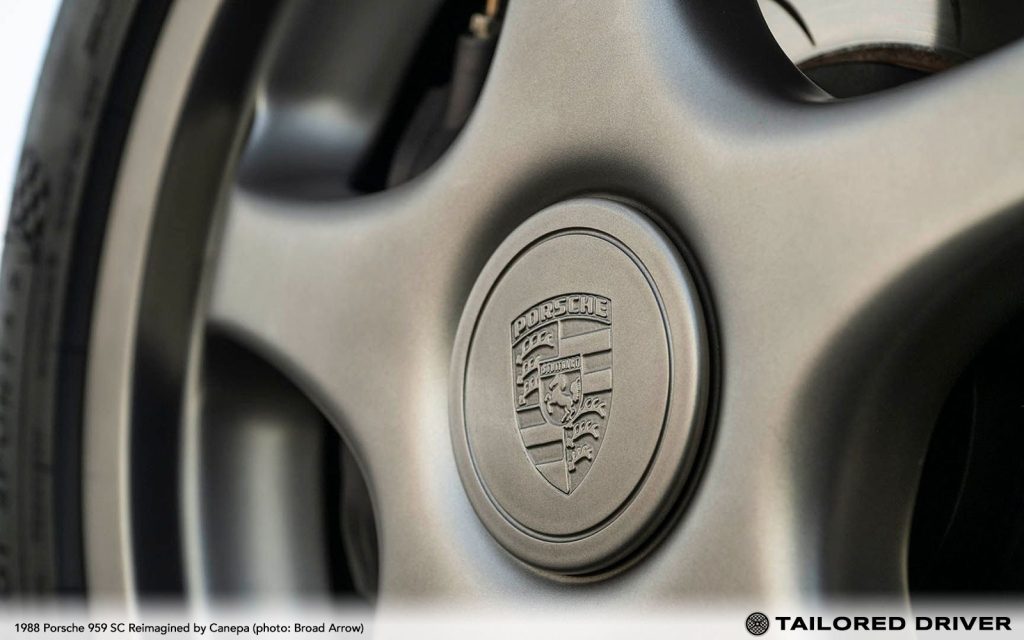
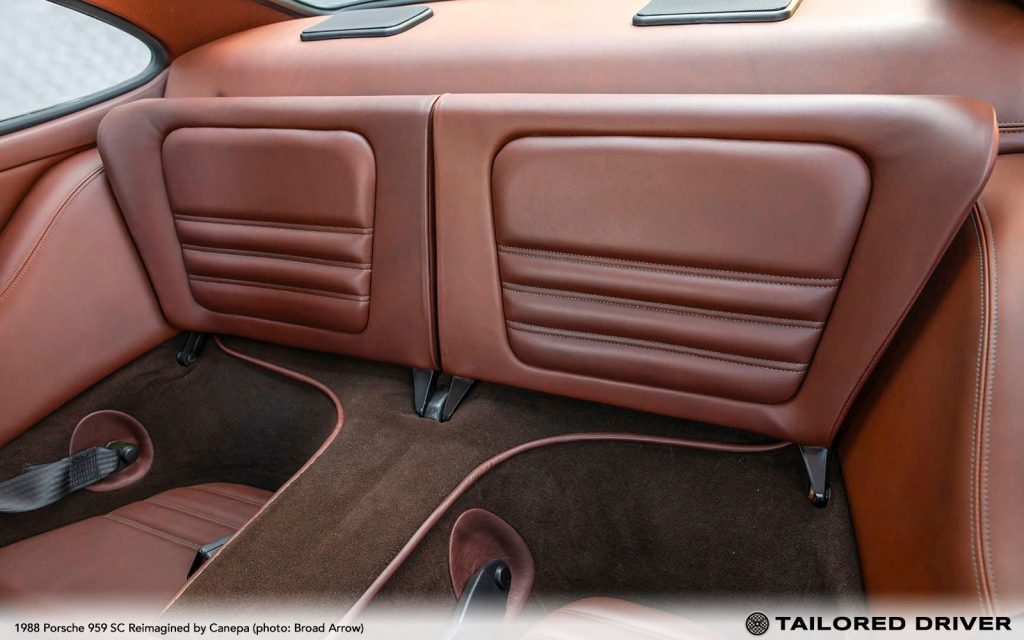
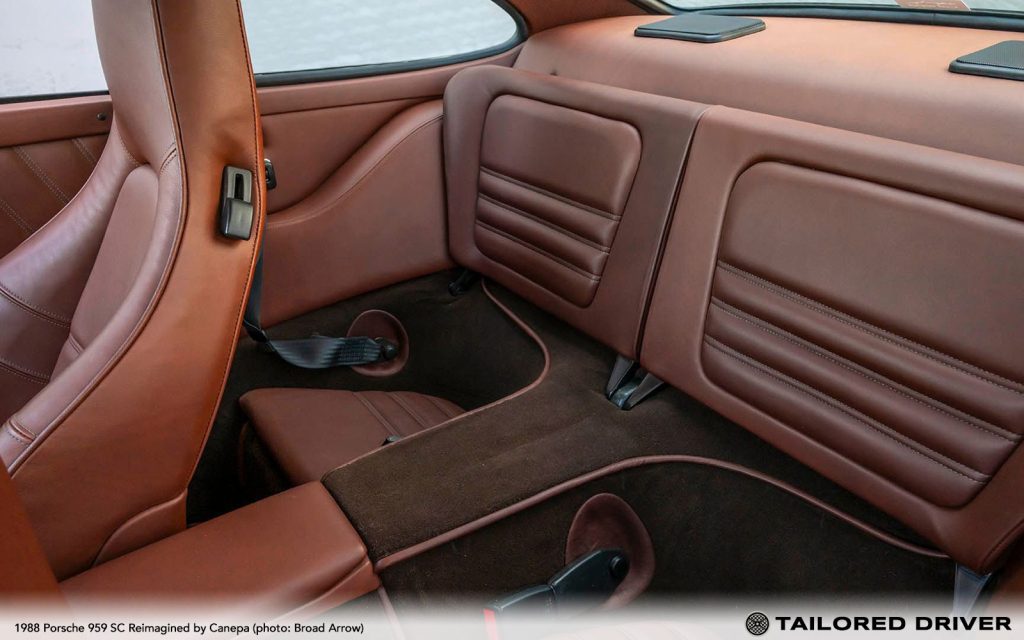
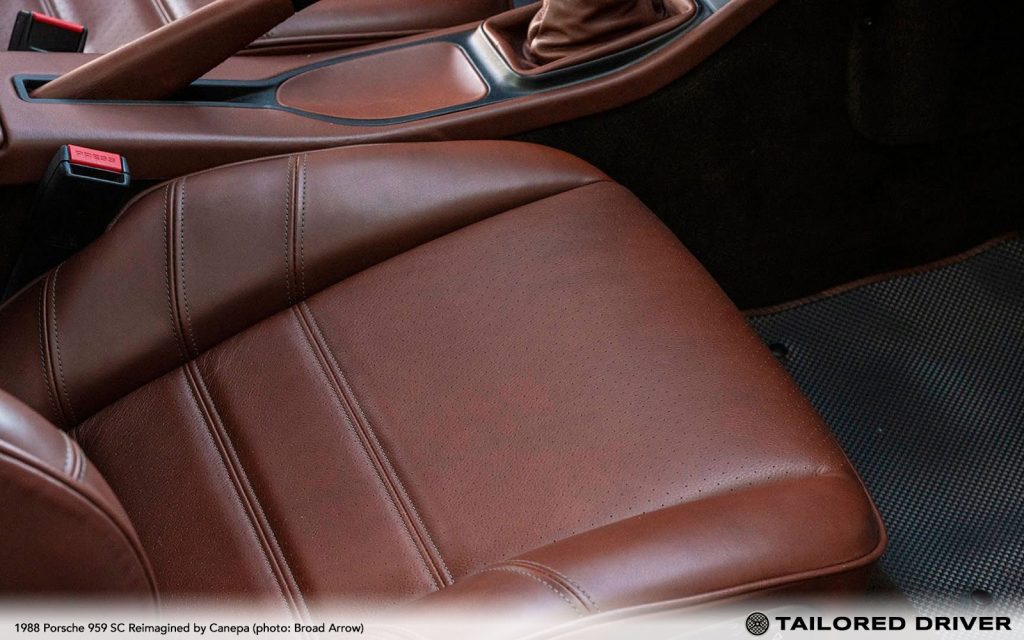
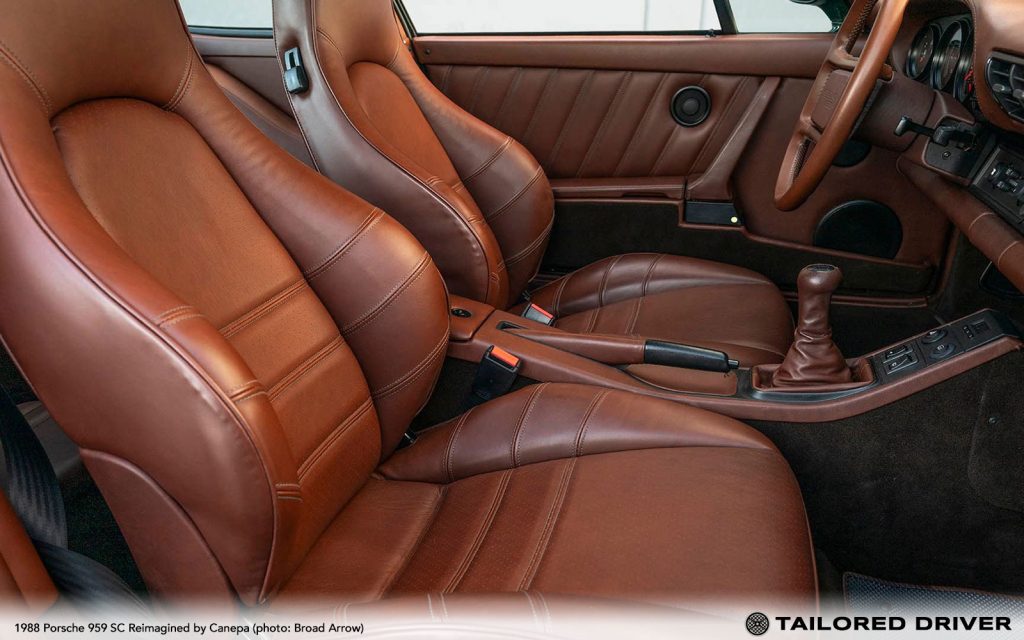
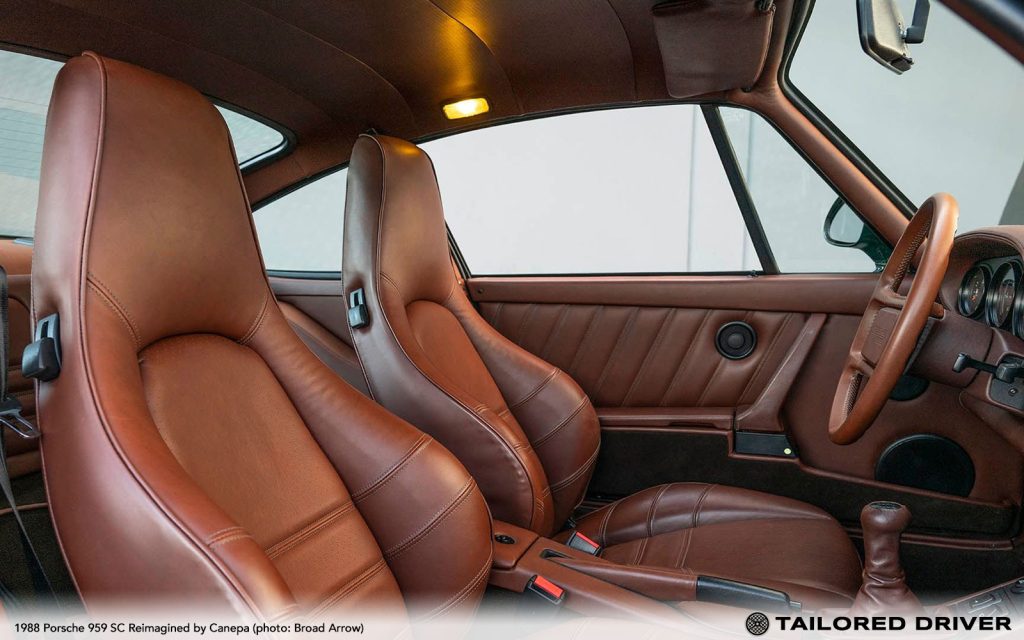
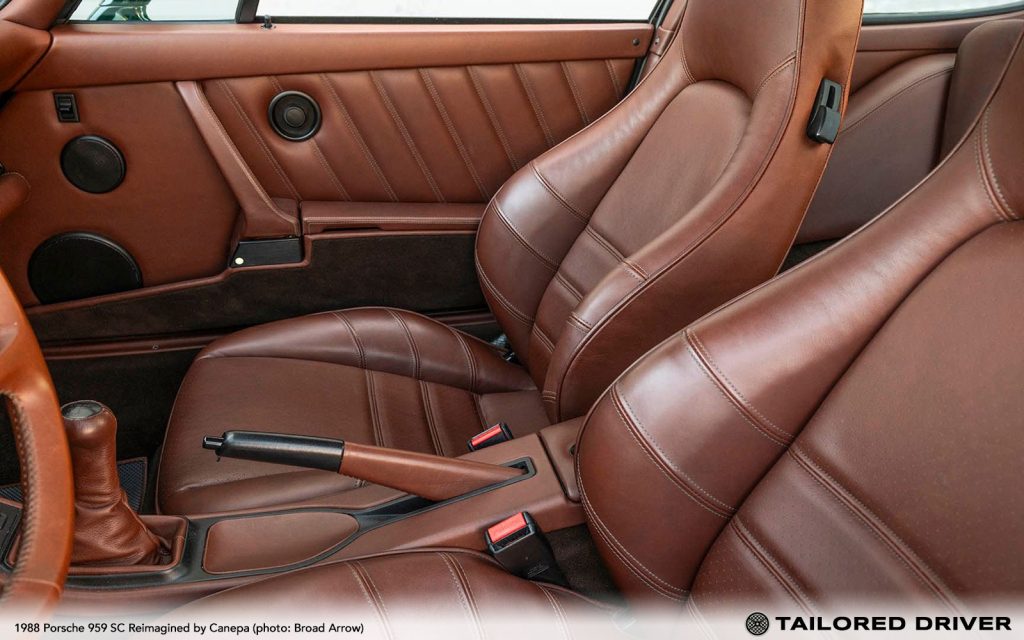
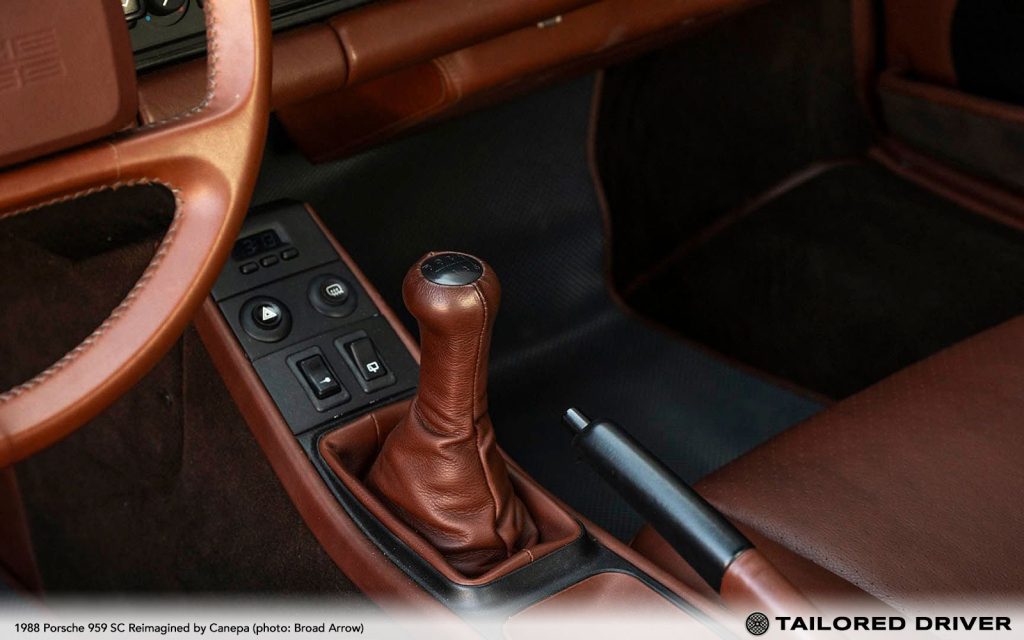
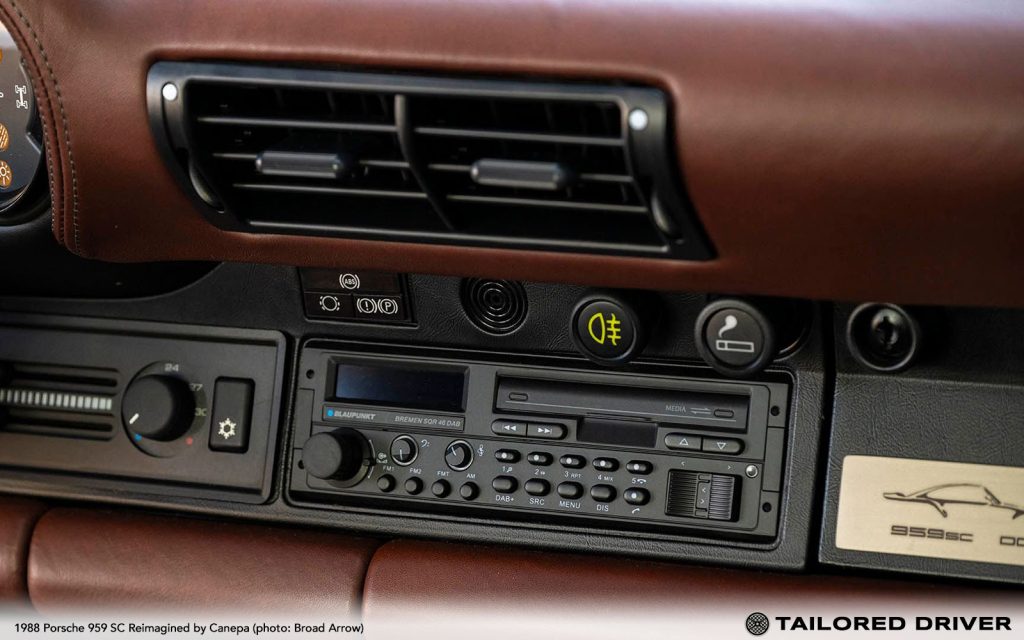
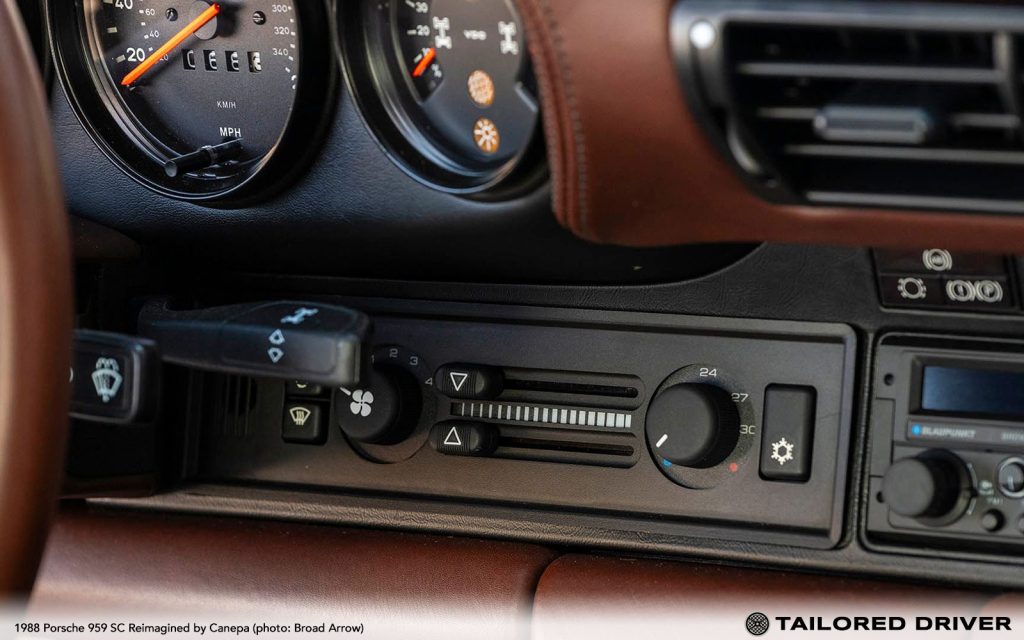
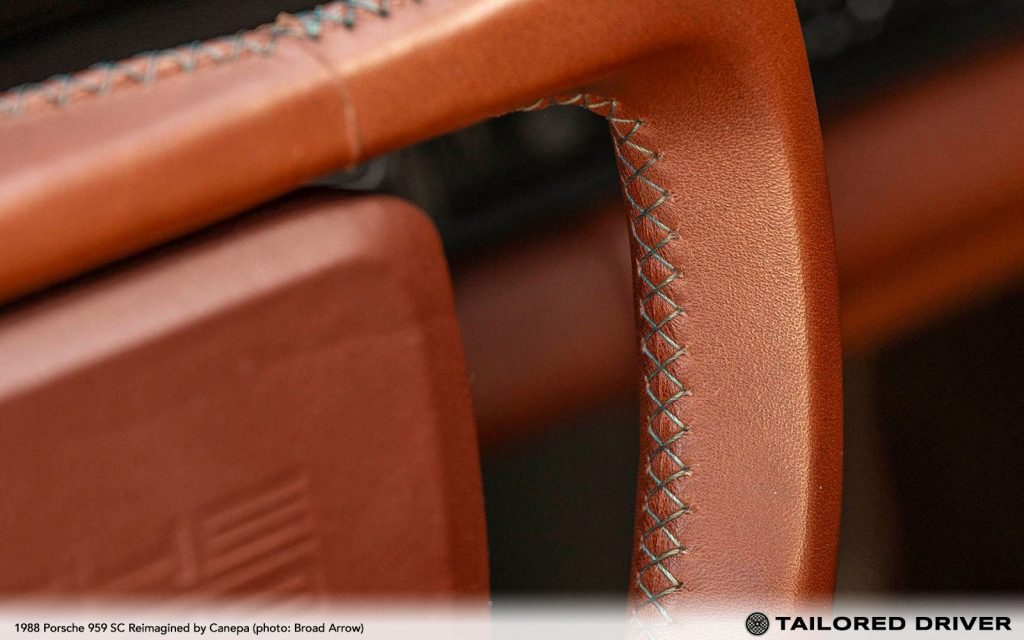
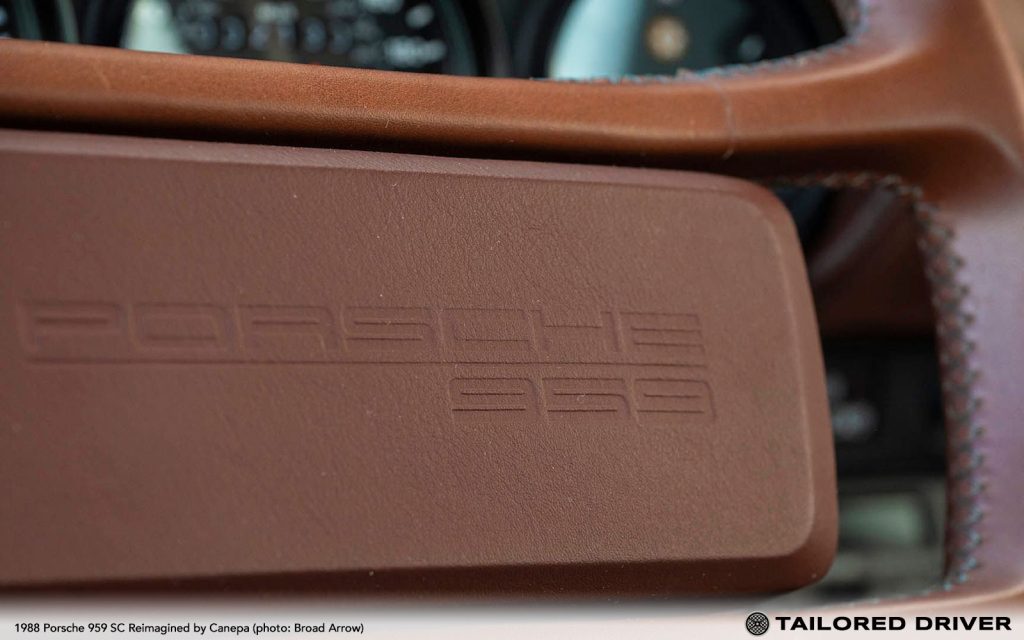
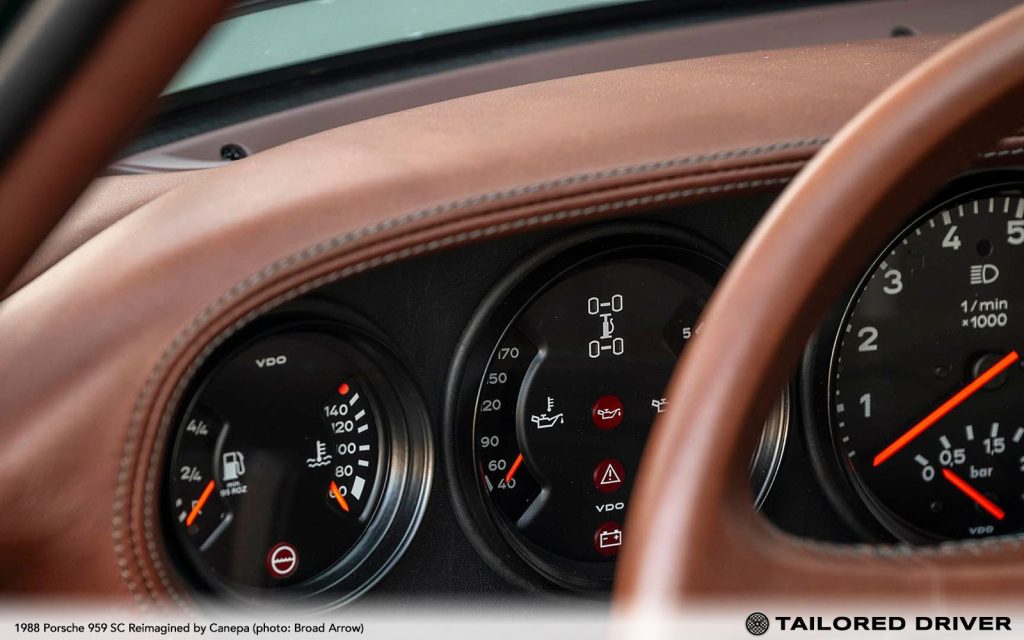
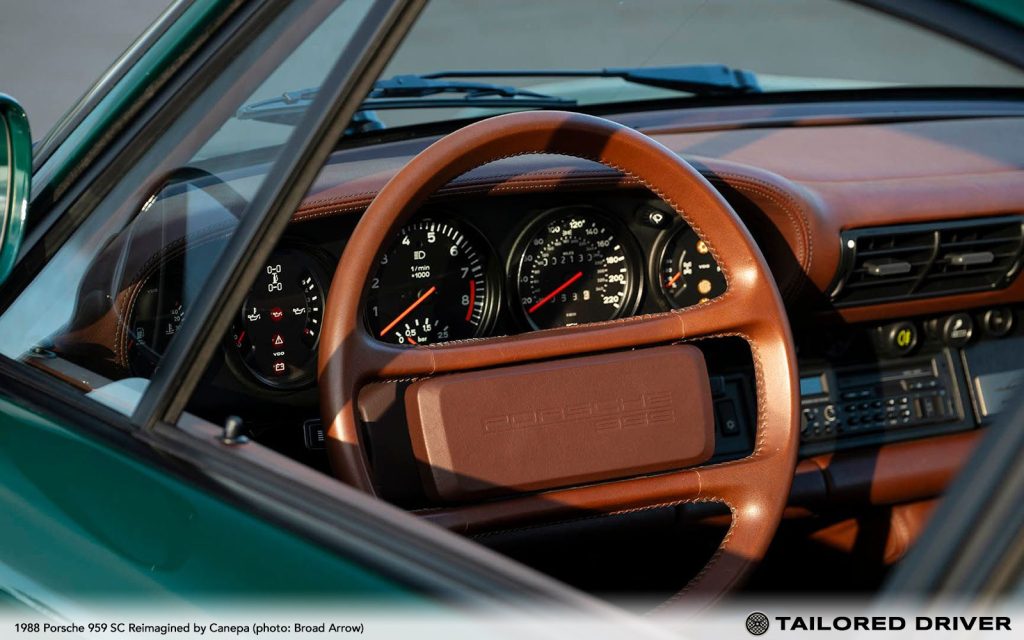
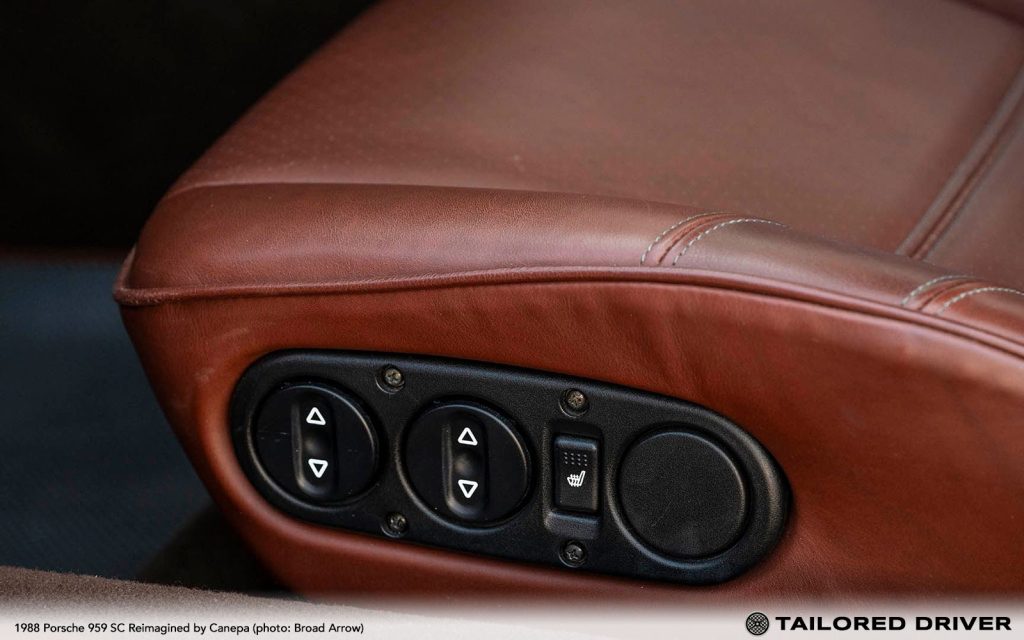
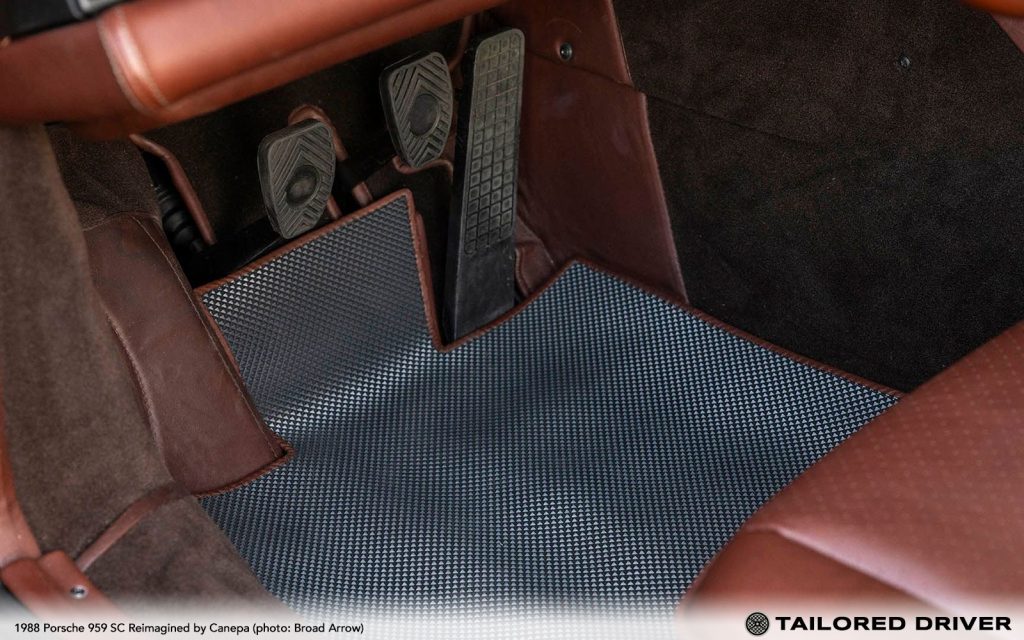
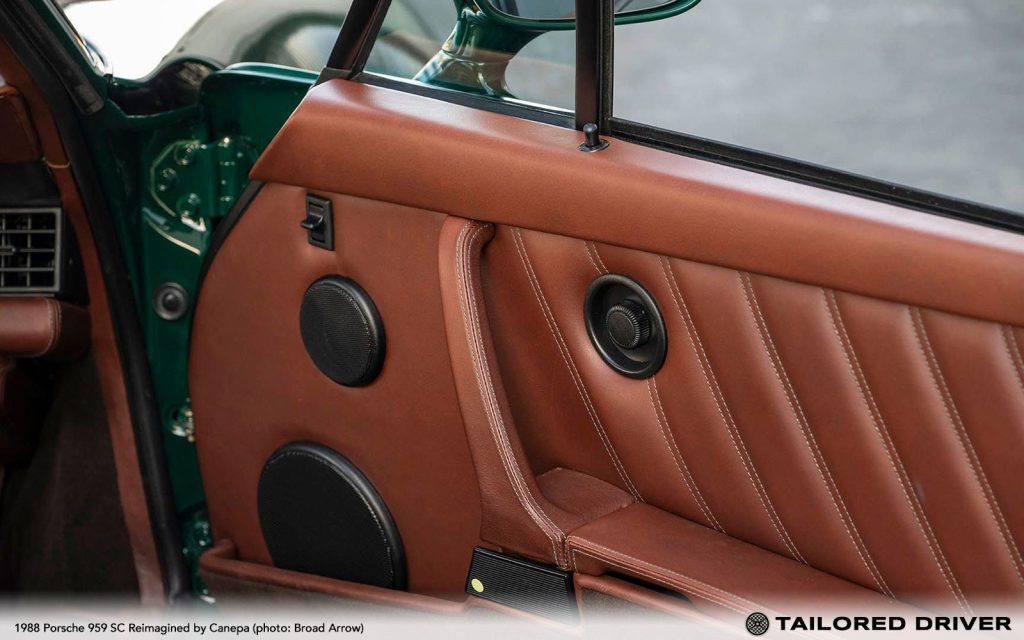
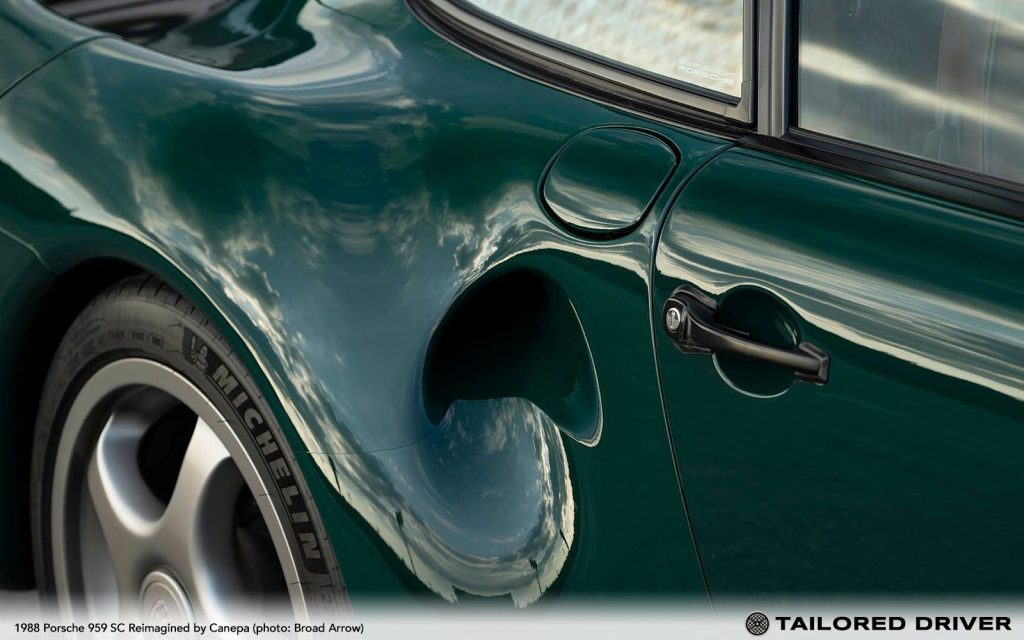
    Drawing on his many years and thousands of miles driving the 959, Canepa developed a ground-up approach to reconditioning, and in some areas outright re-engineering, every element of Porsche’s already superb creation. Starting with only the most original examples, the talented team at Canepa’s Scotts Valley, California headquarters begin by carefully disassembling the entire car to the bare steel unibody. At this stage, all of the body panels are stripped, primed, and block sanded to perfection in preparation for paintwork. Canepa’s unrelenting attention to detail can be observed on the driver’s side quarter panel, where the auxiliary door for the hydraulic suspension oil on 959 Komfort models is deleted by molding a new composite body panel. Clients are able to choose from Porsche’s own factory Paint-to-Sample palette of over 150 unique shades, or to create a custom color of their choice. The virtually limitless personalization offered by Canepa’s service extends to the cabin, where over 400 hours are spent hand stitching an entirely new leather interior with countless colors and stitching options from Porsche’s own factory offerings. Swaths of leather trim every element of the interior – including components that were not originally upholstered from the factory – while numerous upgrades ensure a 21st century driving experience. These include Porsche’s Classic Radio Navigation system connected to an upgraded six-speaker system, LED cabin and gauge lighting, and a switch located on the center console to control the two-stage sport exhaust system. 
    While a one-of-a-kind appearance is being crafted by Canepa’s in-house paint and upholstery departments, over 4,000 individual mechanical components are inspected, refinished, rebuilt, or upgraded by technicians with over two decades of experience working with the Porsche 959. Quite literally nothing goes untouched, with every bolt, clamp, and fitting being stripped and replated in a variety of coatings such as zinc, anodizing, powder coating, and Teflon. Starting with the suspension, the 959 SC opts for the weight savings and simplicity of the coil-over spring and shock assembly found on the factory 959 Sport specification – thus eliminating the adjustable ride height and its related hydraulic system on Komfort models. In its place, the Canepa suspension upgrade employs custom-valved Penske shock absorbers with titanium coil-over springs for a one-inch lower ride height while still providing ample ground clearance for real world driving. All four corners also feature specially developed cryo-treated semi-floating brake rotors with upgraded brake pads for improved stopping power. Housing these improved brakes are 18-inch wheels custom-designed by Canepa in conjunction with Michelin to mirror the 18-inch wheels originally featured on the Gruppe B concept car. While radial tire technology in the 1980s forced Porsche to revert to a 17 inch wheel for production 959s, Canepa’s wheel upgrade allows 959 SC owners to take advantage of the grip and comfort offered by the modern tire technology while retaining the timeless look of the original 959. 

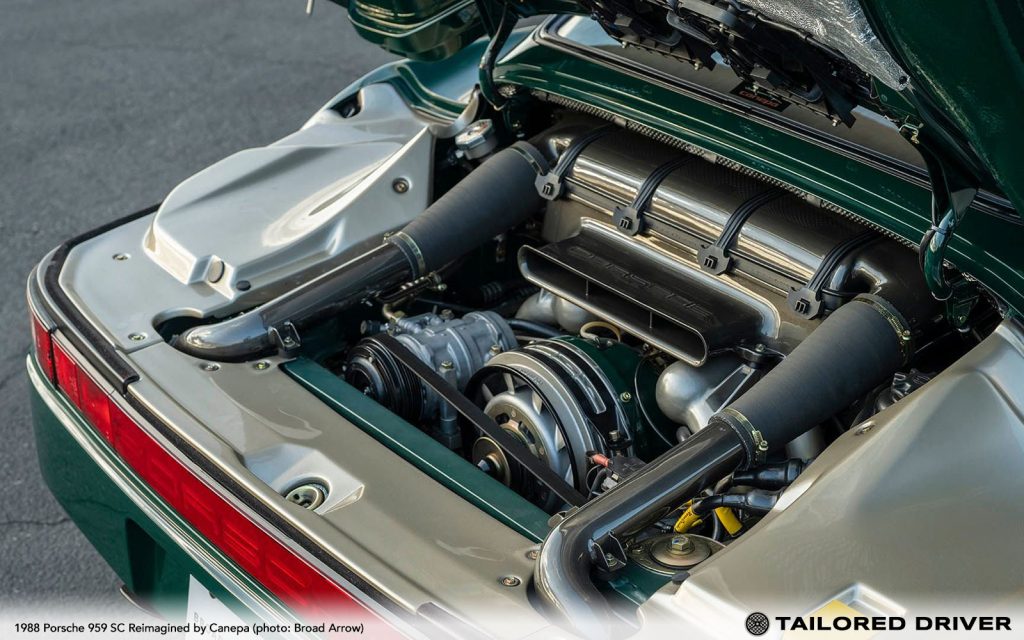
    Initially developed for Group B class homologation and tracing its lineage back to the powerplants in the 936, 956, and 962 sports prototypes, the 959’s 2.8-liter twin-turbocharged flat-six was designed to handle significantly more power than the 444 horsepower and 369 lb-ft of torque it left the factory with. After three decades spent optimizing the existing engine components as well as engineering new ones, the 959 SC’s flat-six now develops a staggering 800+ horsepower and 650 lb-ft of torque with Canepa’s Stage III upgrades. These encompass Pankl titanium connecting rods, a blueprinted and upgraded valvetrain assembly, upgraded camshafts and camshaft housings, tungsten ceramic coated headers and two-stage stainless/titanium exhaust system, a MoTec engine management system and wiring harnesses, and two state-of-the-art BorgWarner turbochargers. The robust six-speed manual transmission is also treated to a full rebuild as well as REM isotropic super finishing on gears and shafts and an upgraded clutch assembly to ensure a reliable and extremely capable package. The result is otherworldly, modern-supercar performance, including zero to 60 miles per hour in 2.5 seconds and a top speed in excess of 230 miles per hour. 

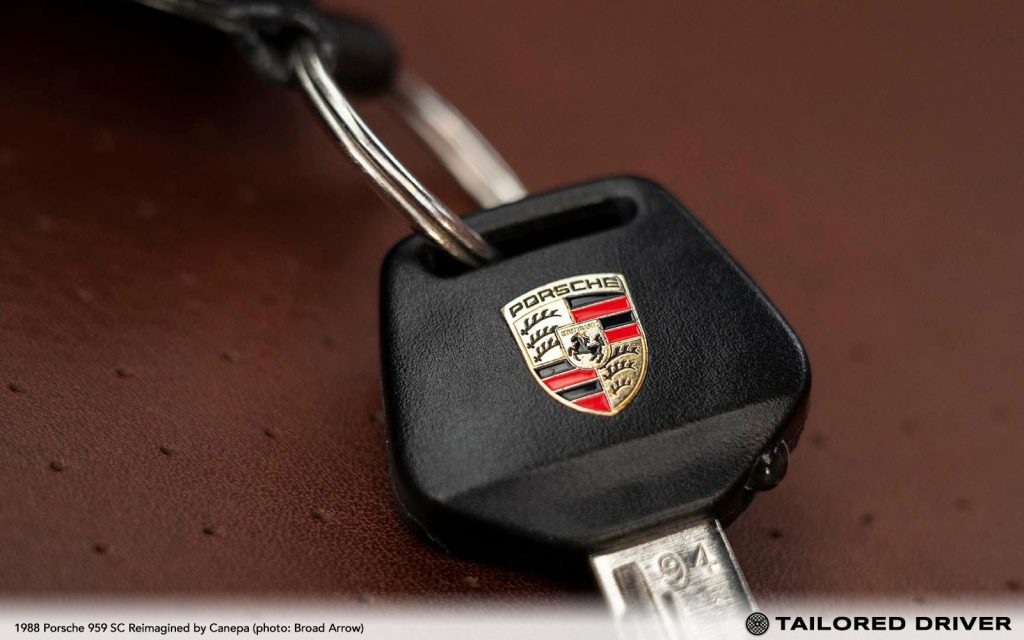
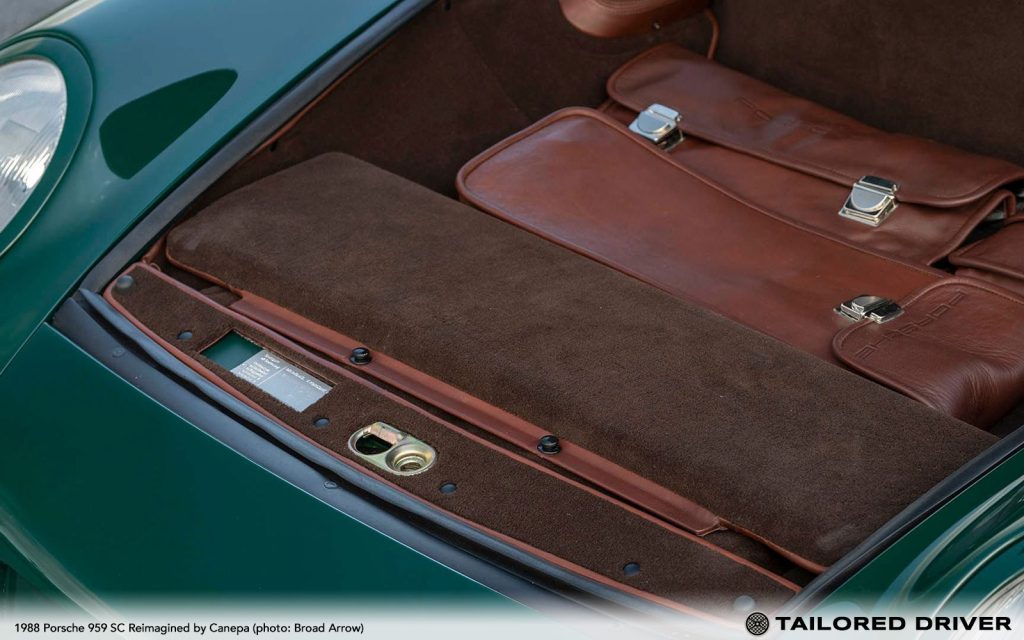
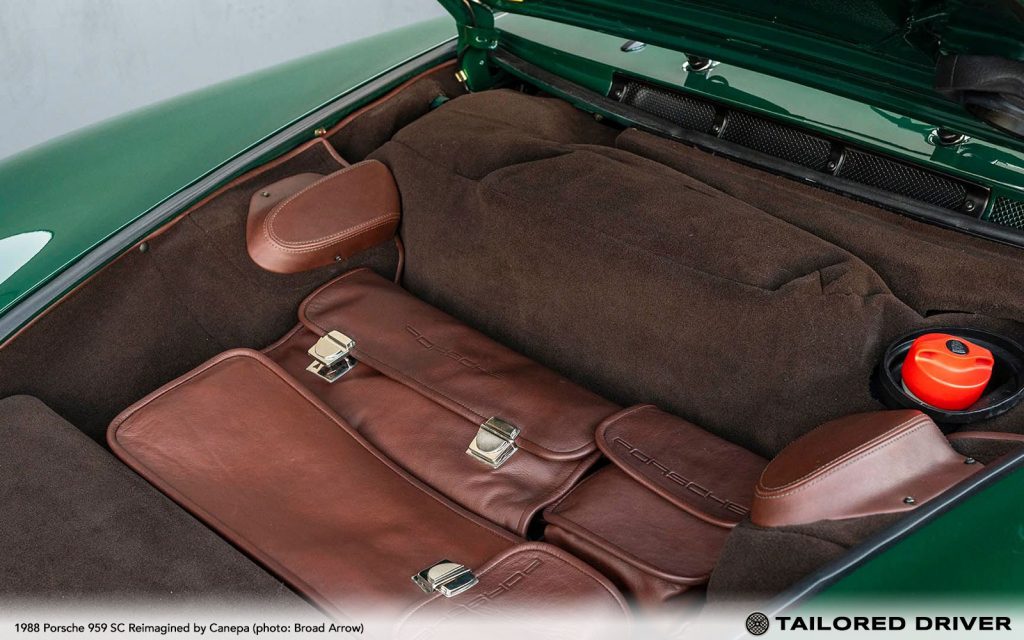
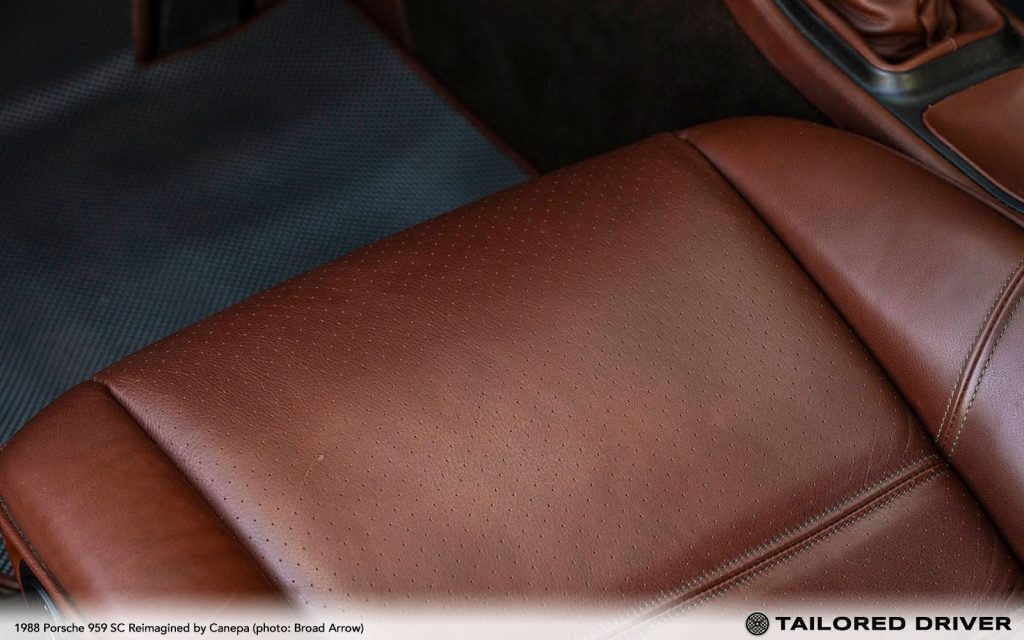
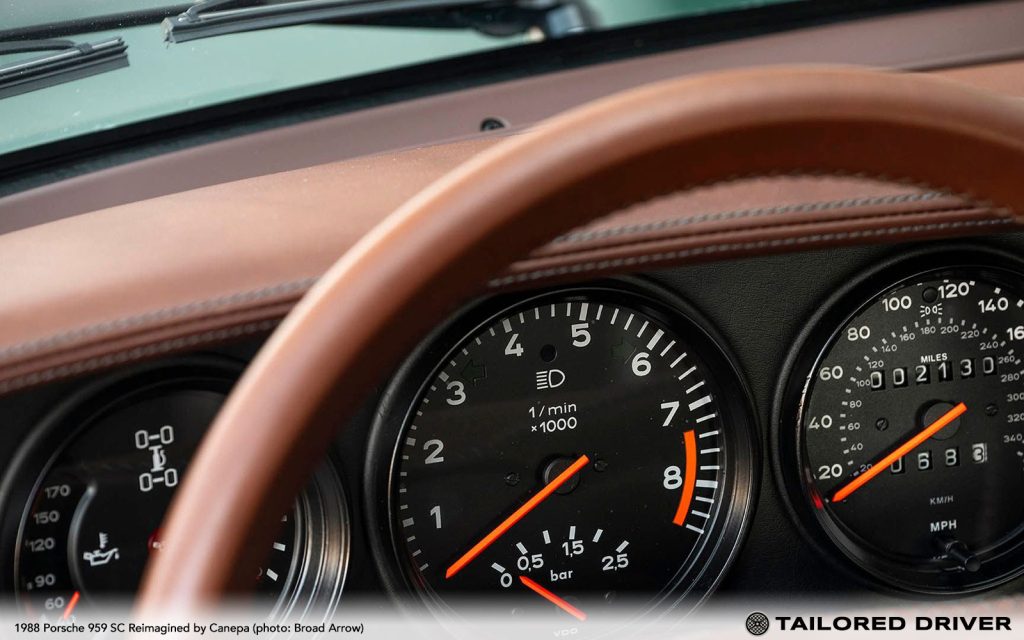
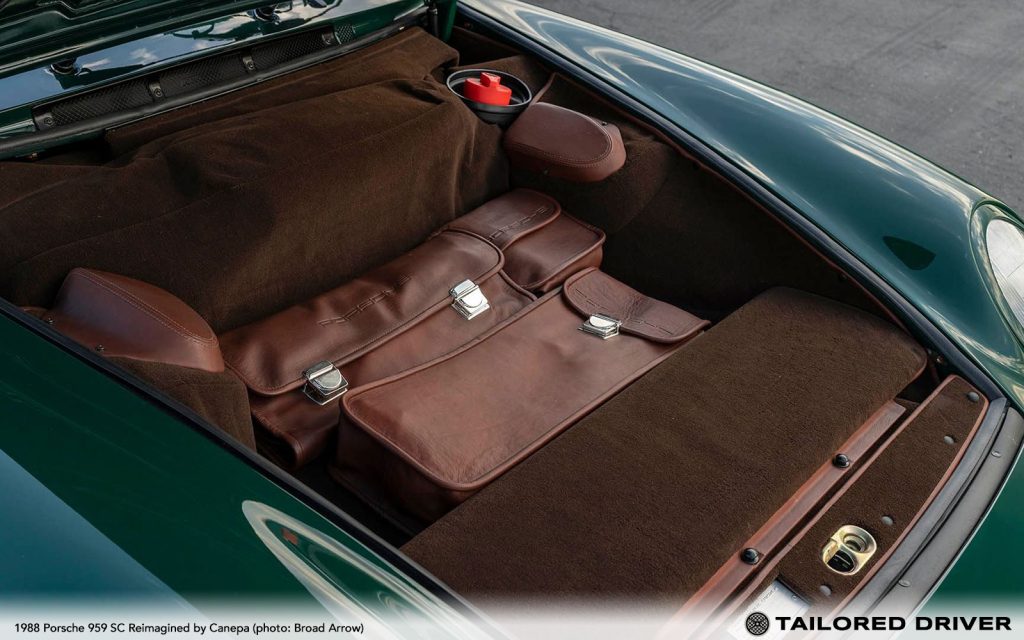
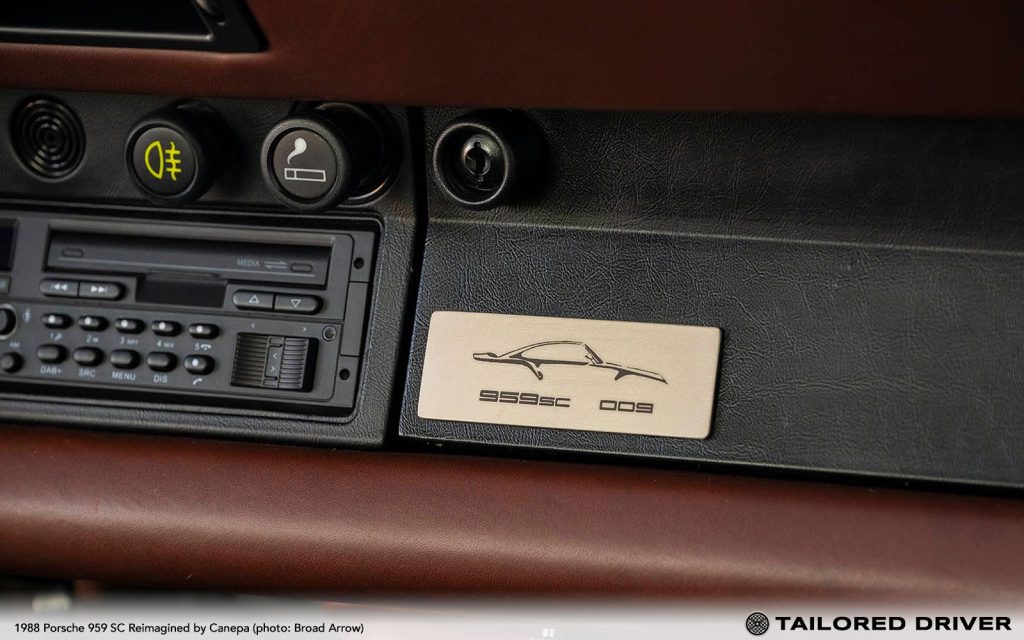
    Limited to a mere 50 examples in total, only the most original, low-mileage candidates are considered for recommissioning to 959 SC specification. Chassis number 053, one of just 266 959 Komforts built, was ideal then, with less than 8,302 kilometers at the time of its disassembly. Originally finished in Polar Silver Metallic with a Dark Grey Metallic leather interior, this highly original, low-mileage 959 was submitted to Canepa in 2019 for its comprehensive transformation to 959 SC specification. After over 4,000 restoration hours it was completed four years later in 2022 and was given Canepa 959 SC serial number “009.” Invoices and photos of the comprehensive Canepa work are on file. Today, the Porsche is resplendent in the lightly modified version of the Porsche factory shade of Irish Green, noted by the consignor as “Irish Green Plus,” containing less yellow than the standard shade. The paint to sample exterior color is protected with full ceramic coated paint protection file (PPF). The exceptional exterior color choice is accentuated by the proprietary gun-metal grey finish of its 18 inch wheels. Inside, the cabin is trimmed wall-to-wall in exquisite bespoke tobacco brown leather and matching cut-pile velour carpeting, further complemented by matching, custom-embossed tool pouches and owner’s books covers. Now fitted with instrumentation in miles, the odometer displays just 2,130 total miles since reimagining at the time of cataloging. 

    This Porsche 959 SC Reimagined by Canepa presents the rare opportunity to acquire one of the most exclusive and earth-shattering supercars of the 1980s – so advanced that other manufacturers continue to view it as the benchmark for technology, engineering, and performance decades after production ceased. Rarer still is the chance to experience the full potential of the 959 platform achieved through decades of research and development to bring the legendary model into the 21st century.

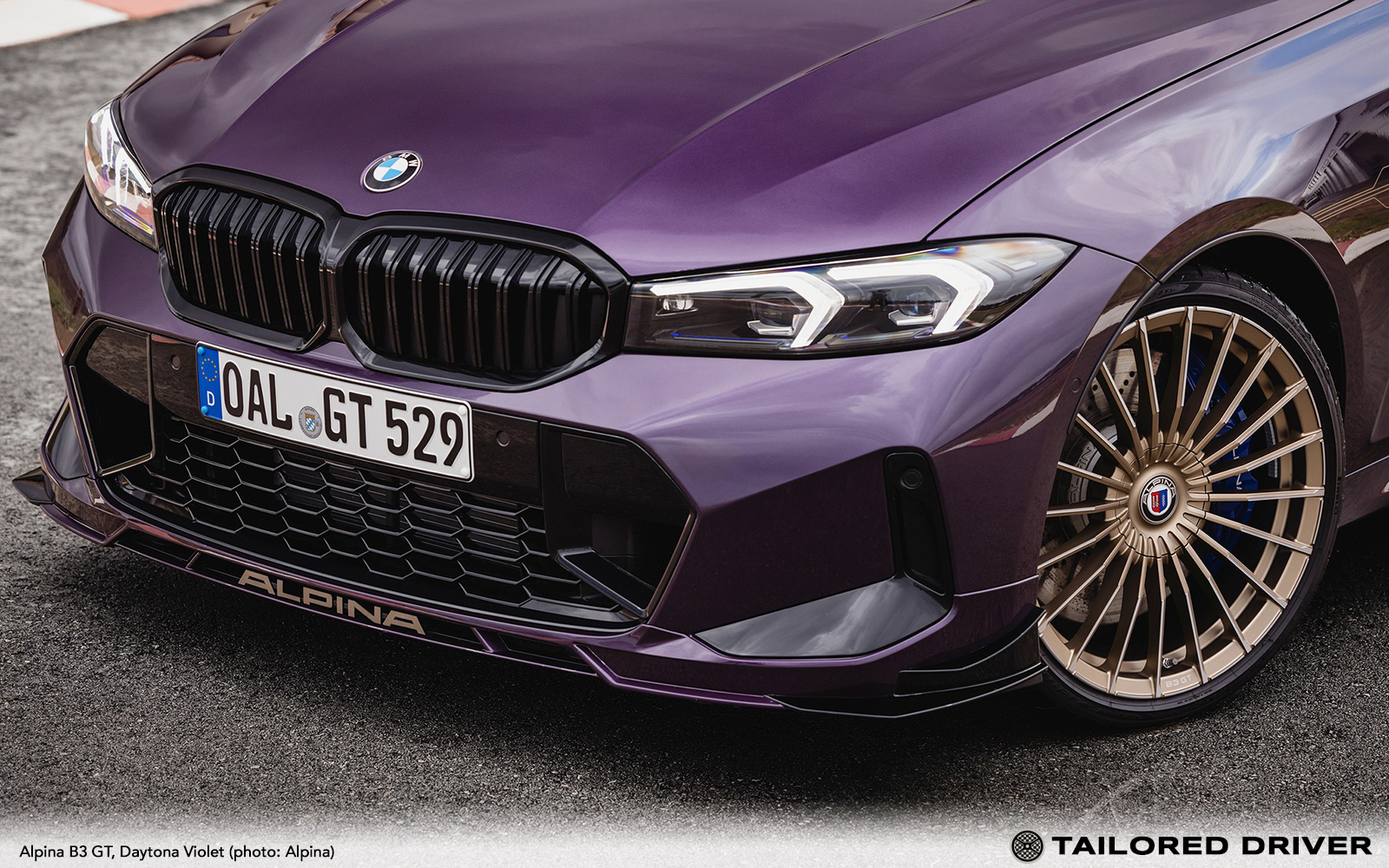
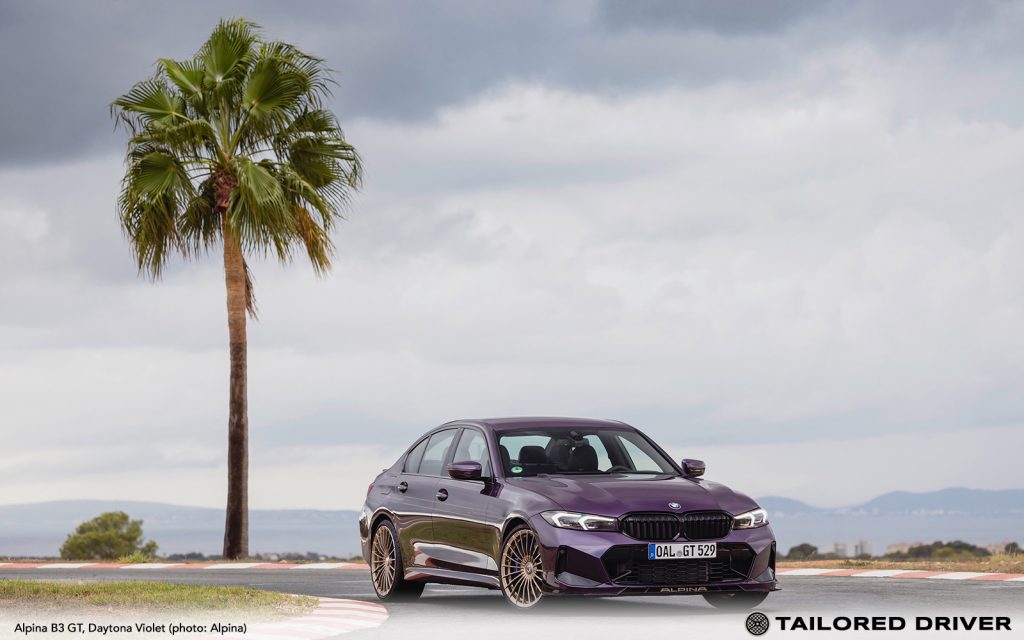
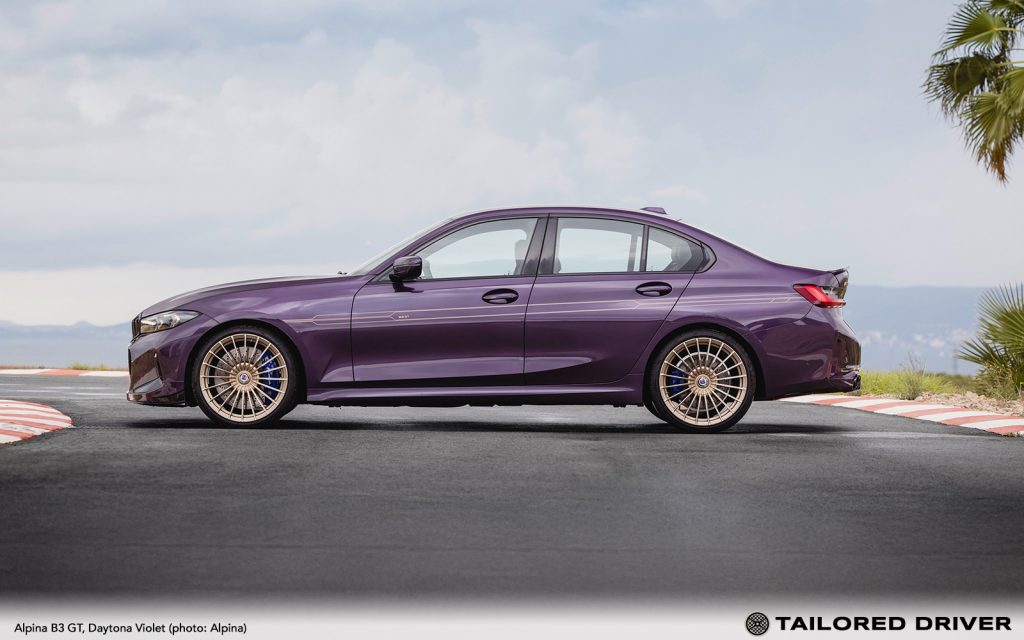
  • Color Check: Alpina B3 GT in BMW Individual Daytona Violet

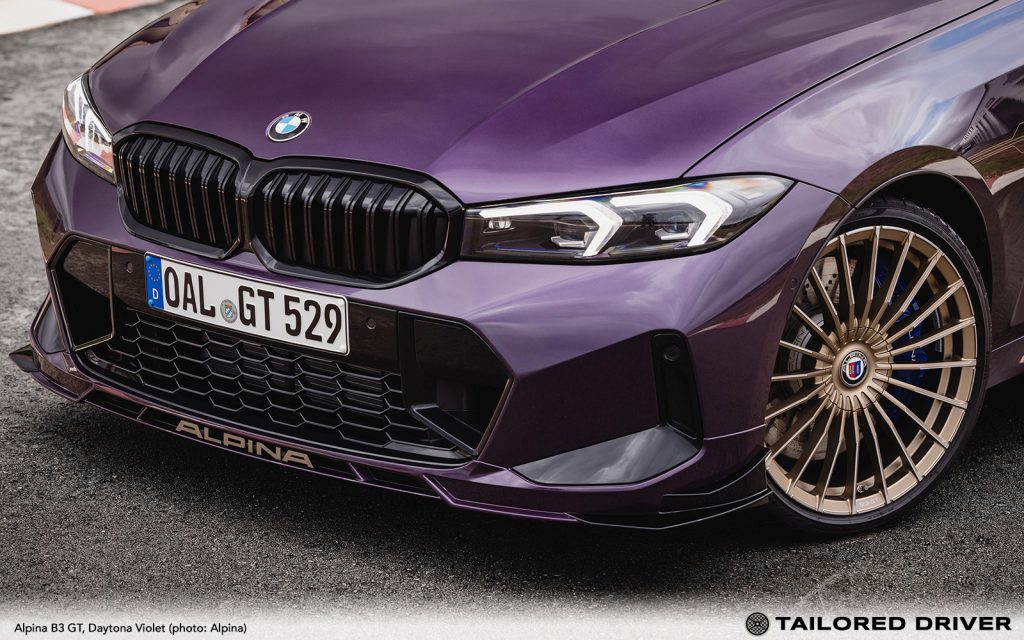
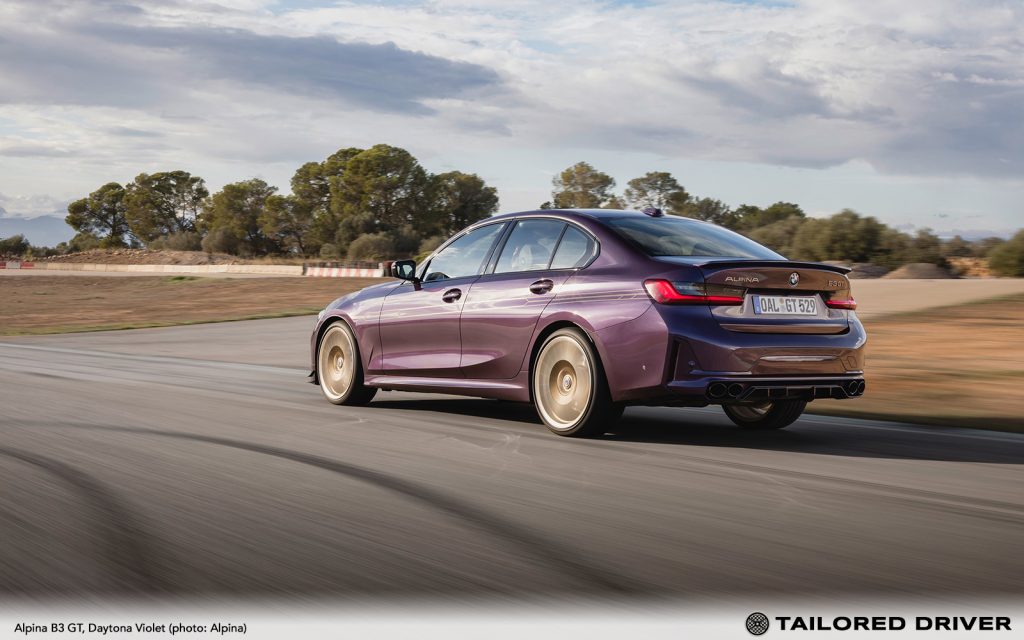
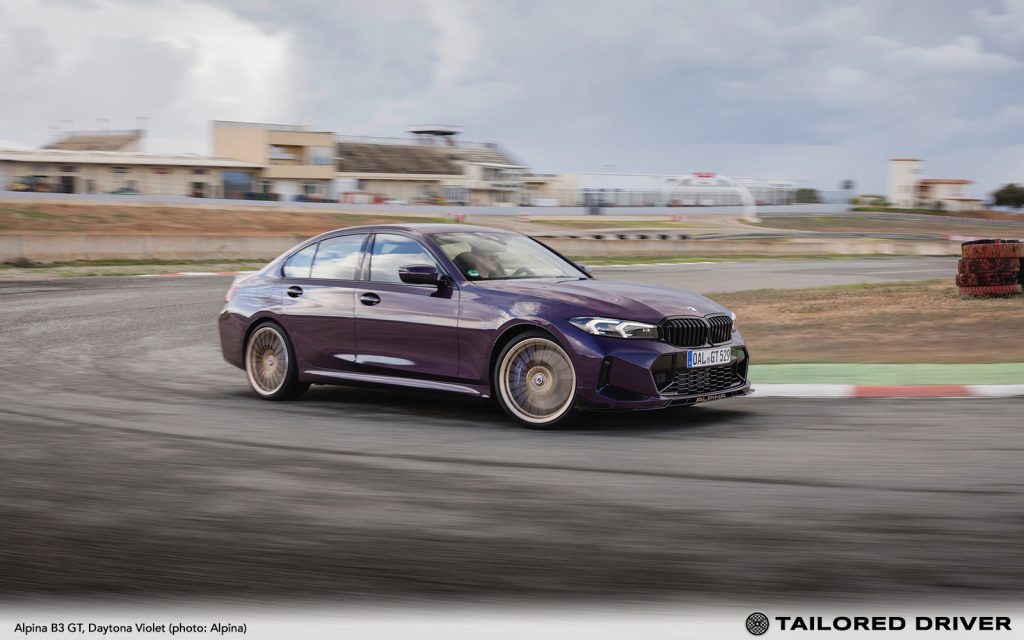
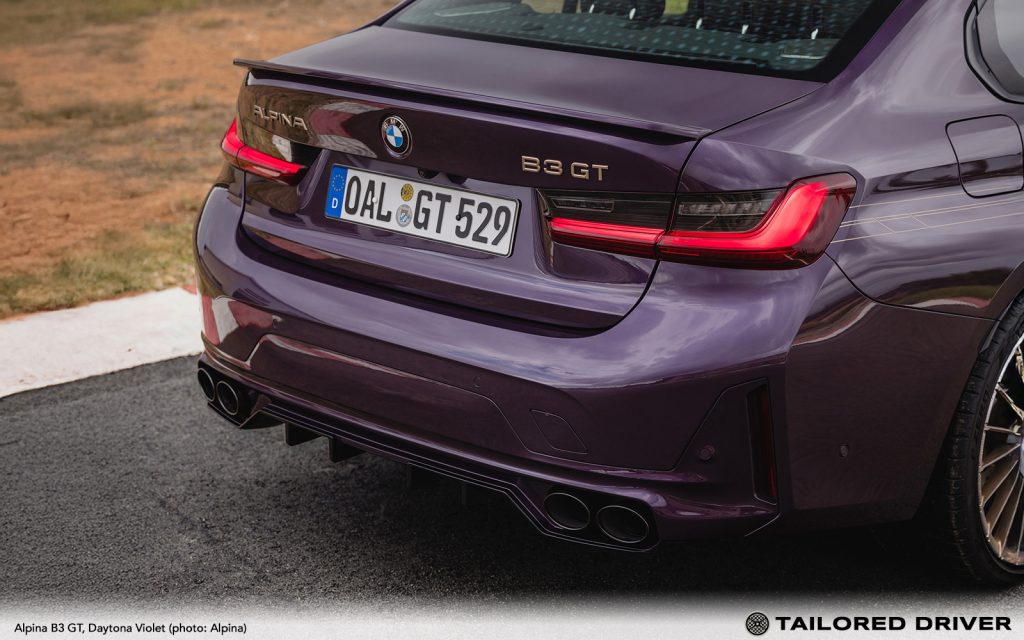
    Color Check: Alpina B3 GT in BMW Individual Daytona Violet

    Firms like Alpina operate in an interesting space. While competing with a broad aftermarket, Alpina and peers like RUF, ABT Sportsline and others are more than just body kit manufacturers or “tuners” in the traditional sense. They’re more of a reimagineer of current cars, and Alpina in particular has long been a brand that will take your new BMW and make it even more tailored to suit your personality or performance needs. We like covering them, but like even more when they build a car based on a more tailored color like BMW Daytona Violet Metallic (daytonaviolett metallic; metallic UNI; 283; BMW Individual).

    We don’t have a whole lot on the specification of the car beyond the model, B3 GT – i.e. based on the BMW 3 series) and the color that Alpina confirmed in their social media post that went with the photo set. Nevertheless, we wanted to share it. Check out more information in the aforementioned post that we’ve embedded above.

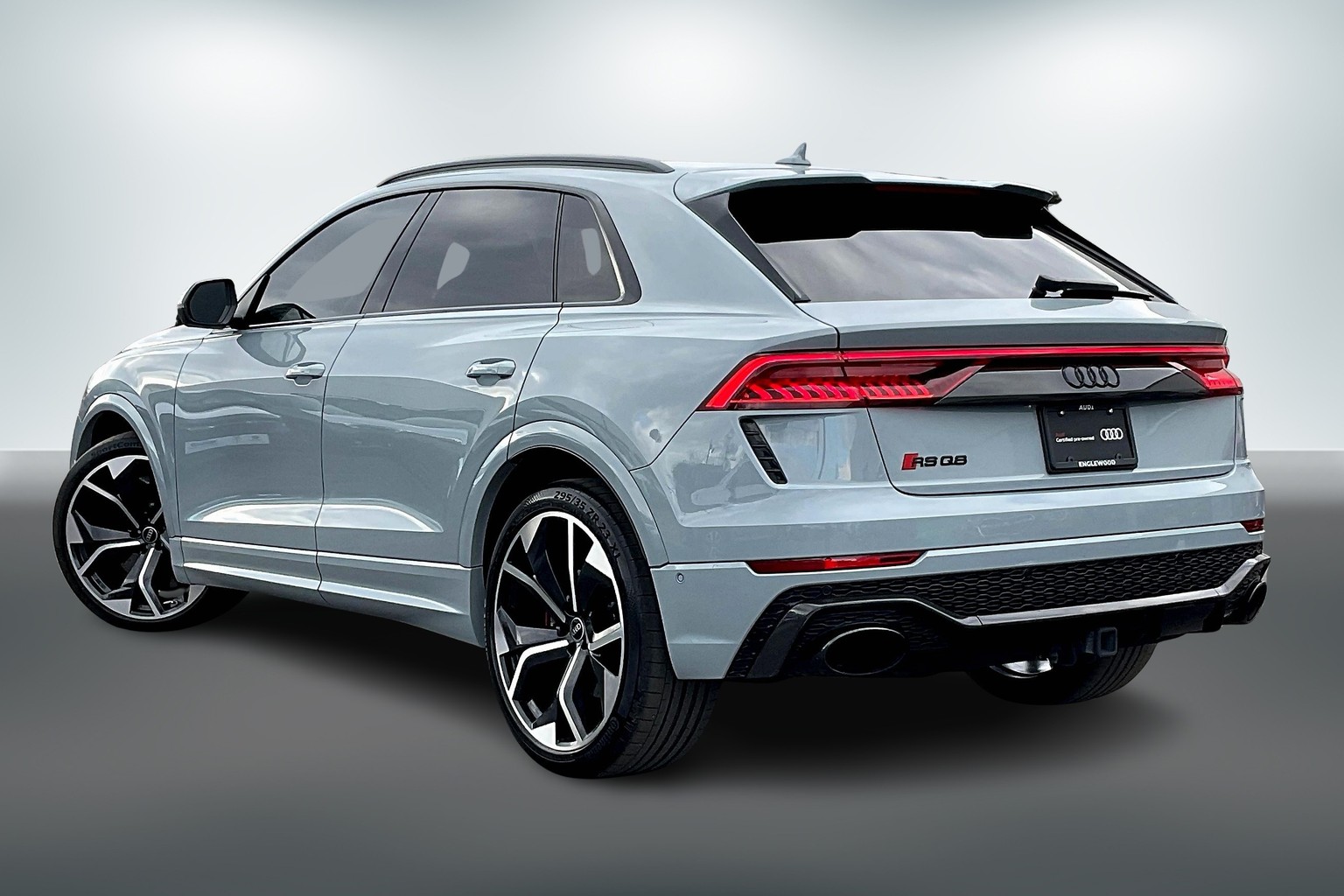
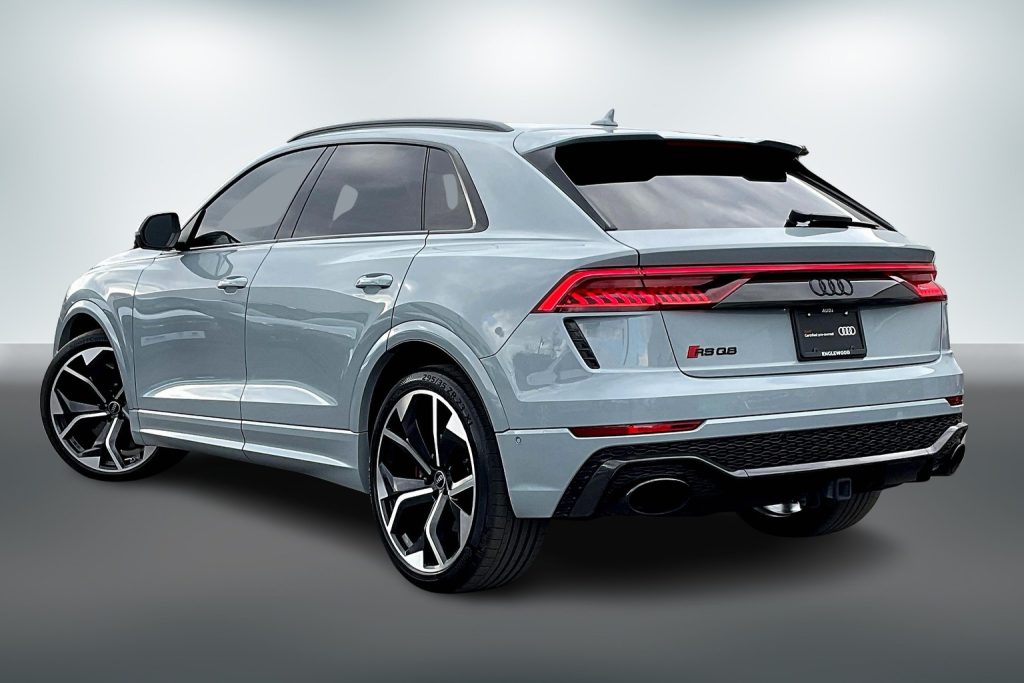
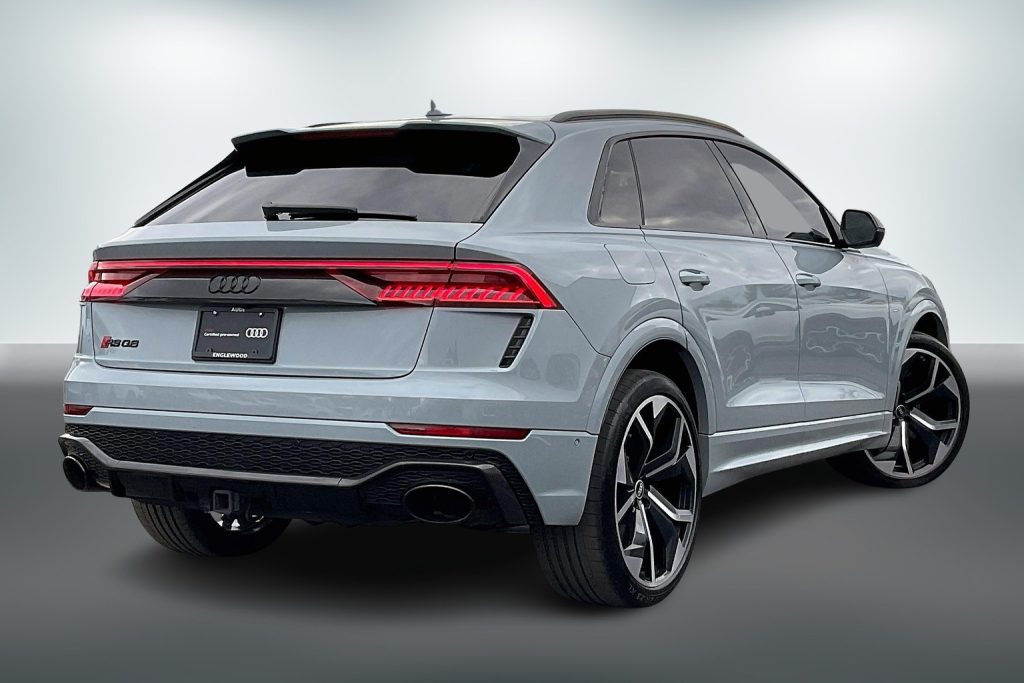
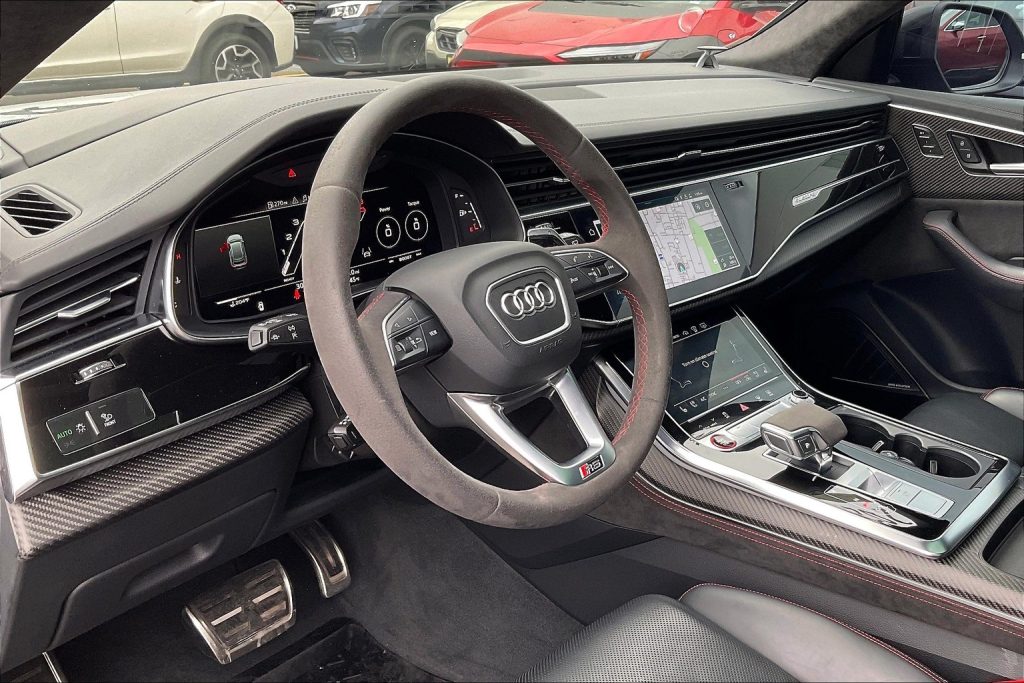
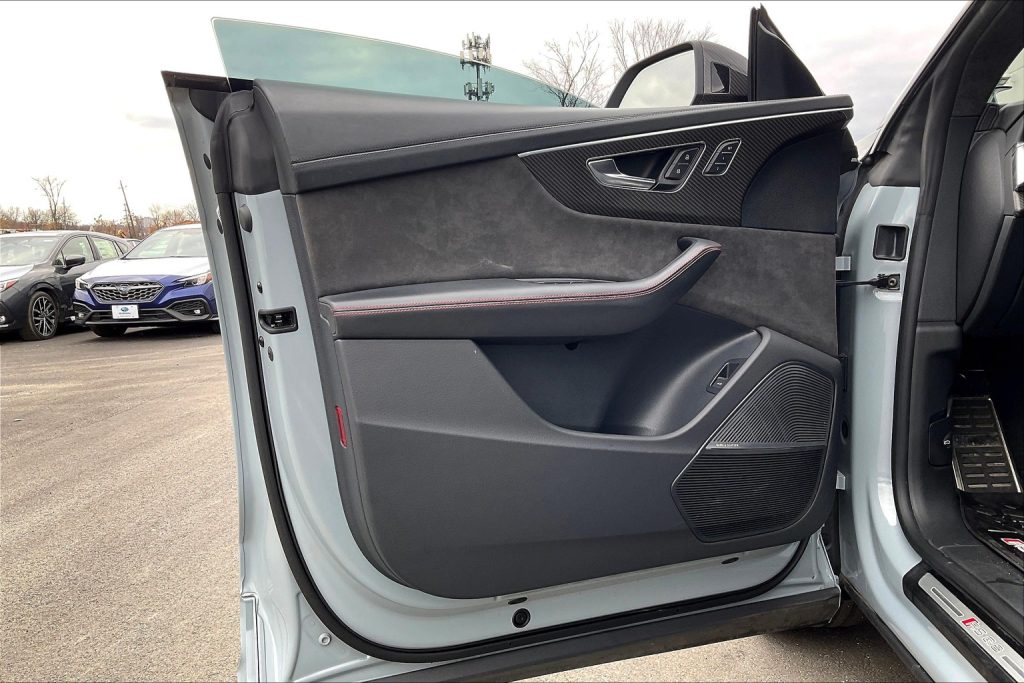
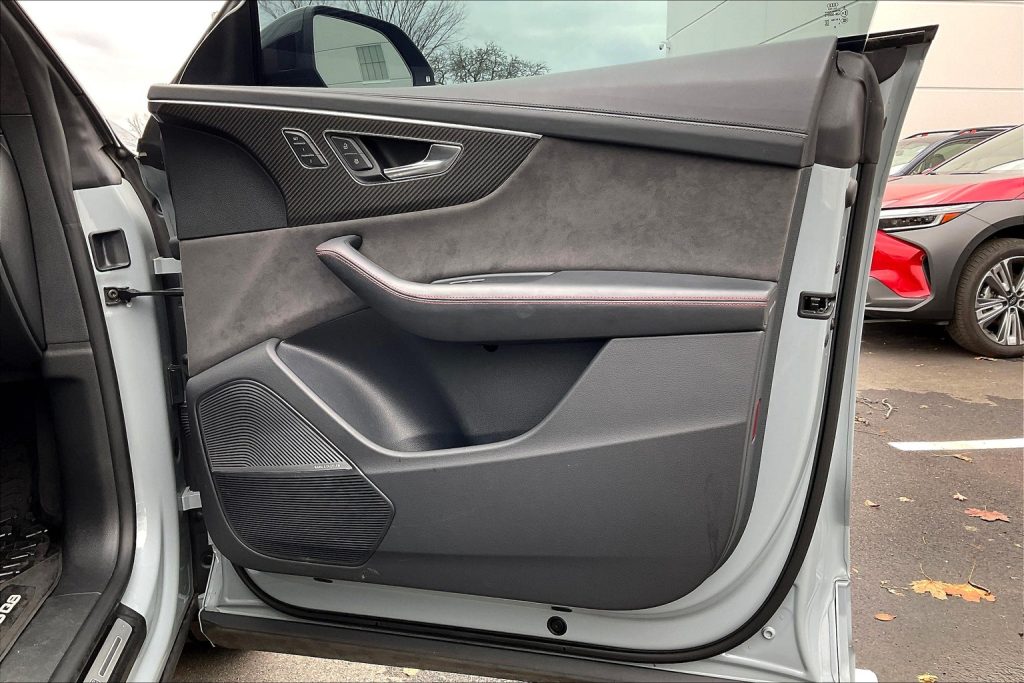
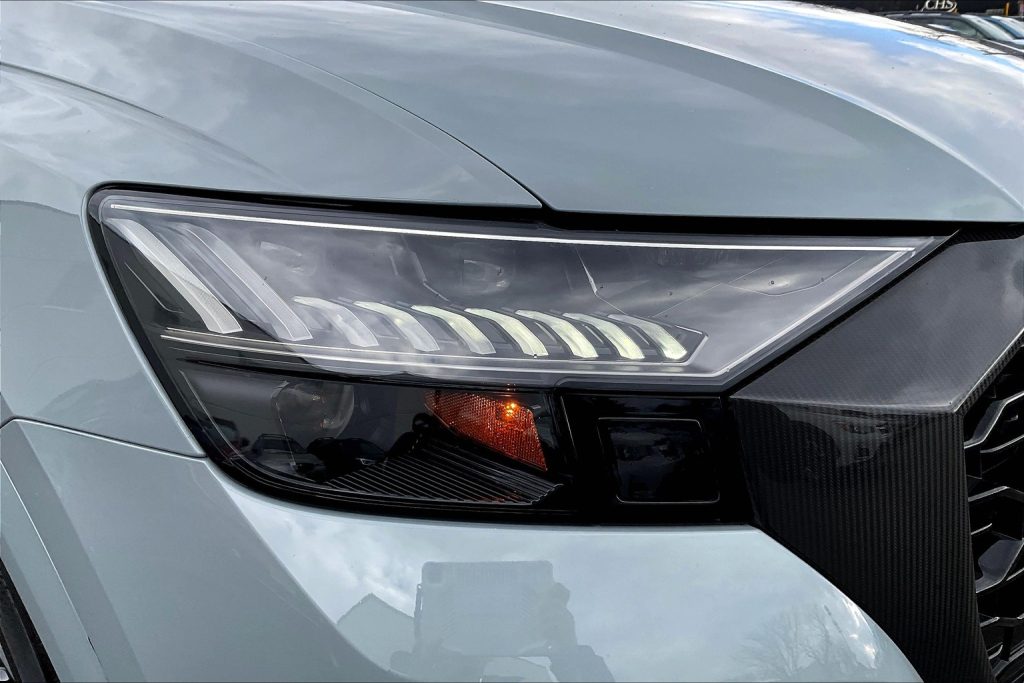
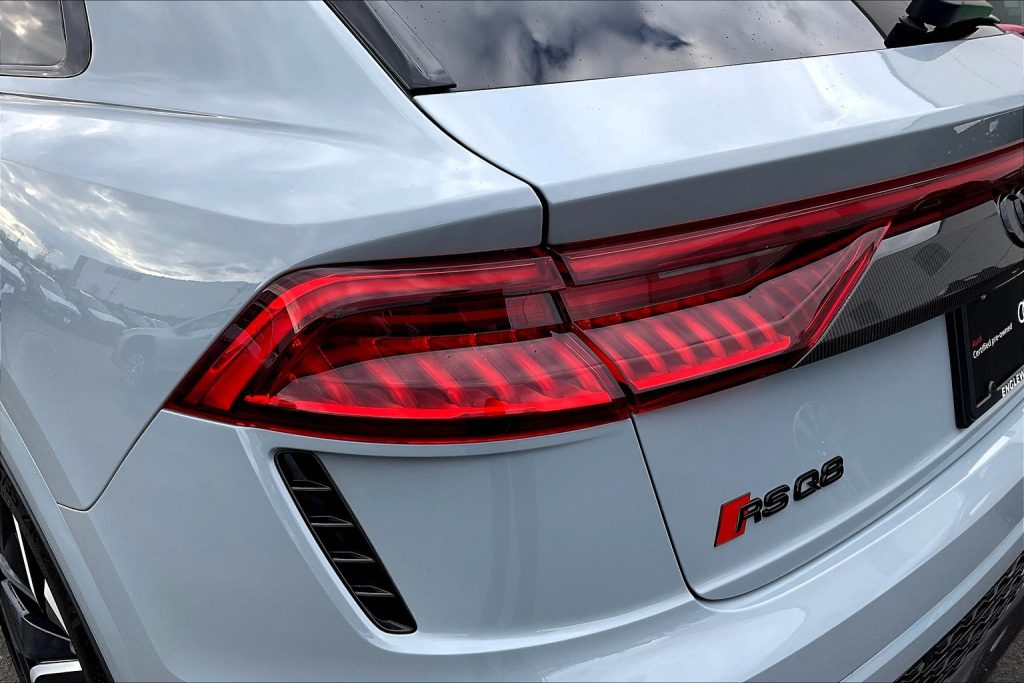
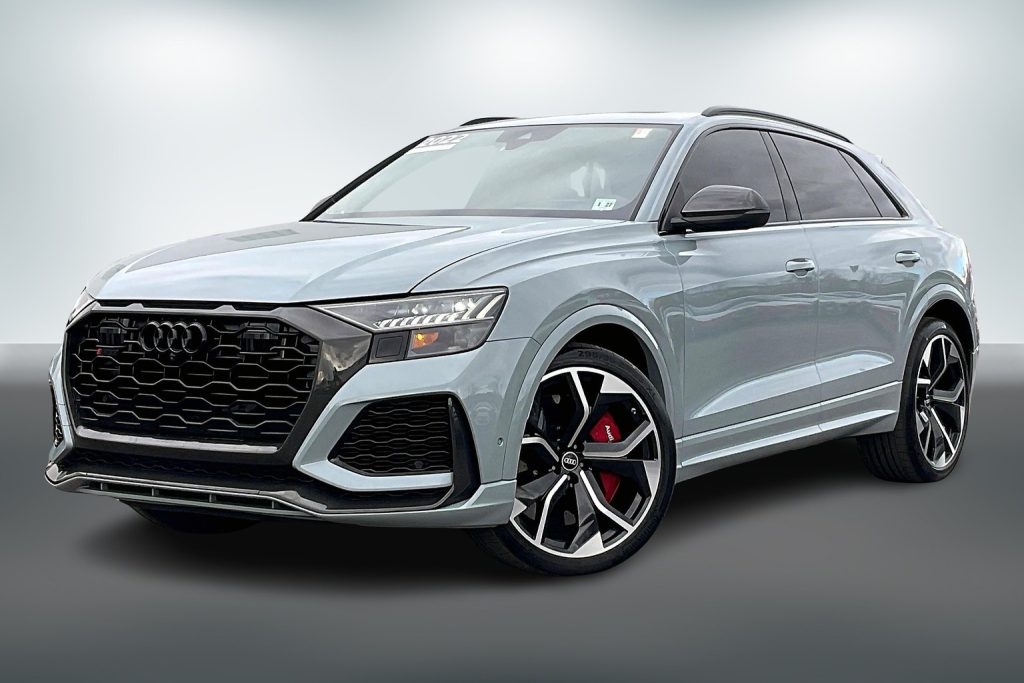
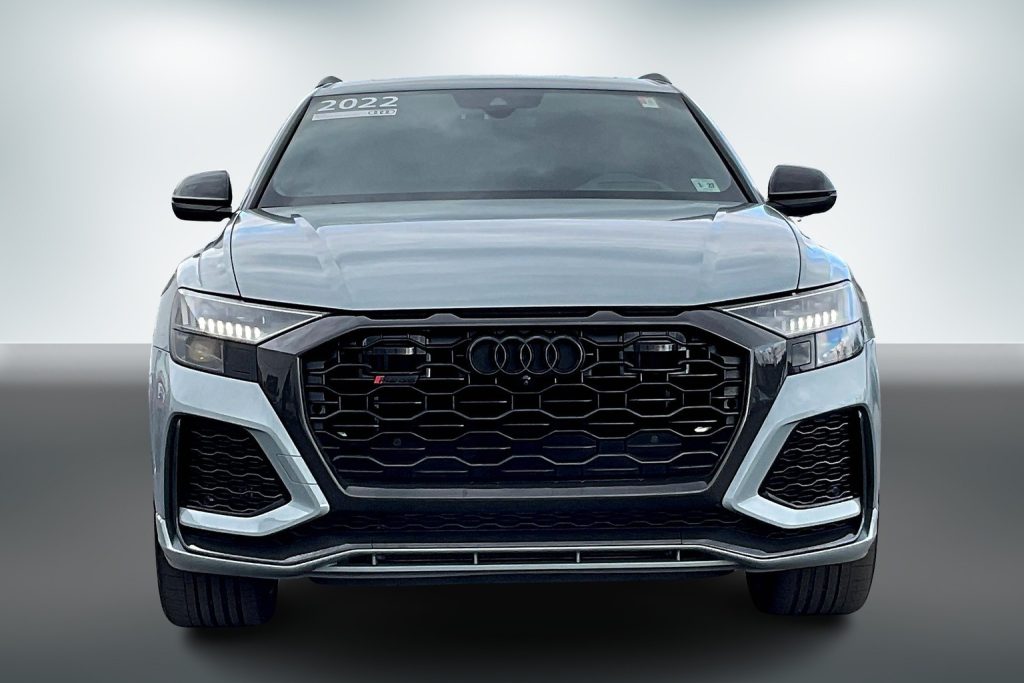
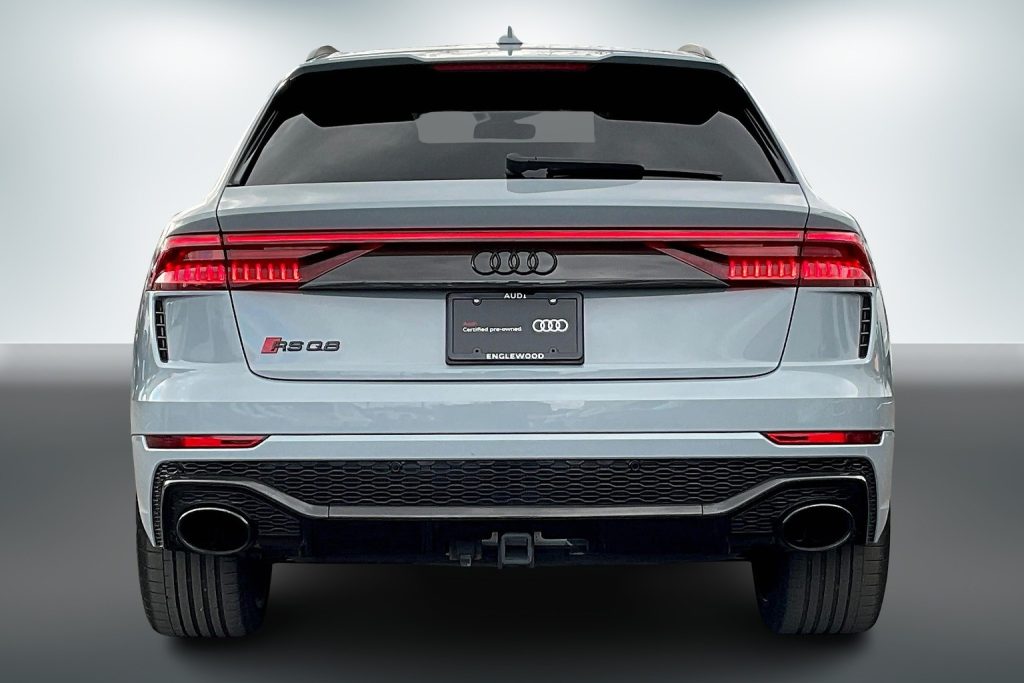
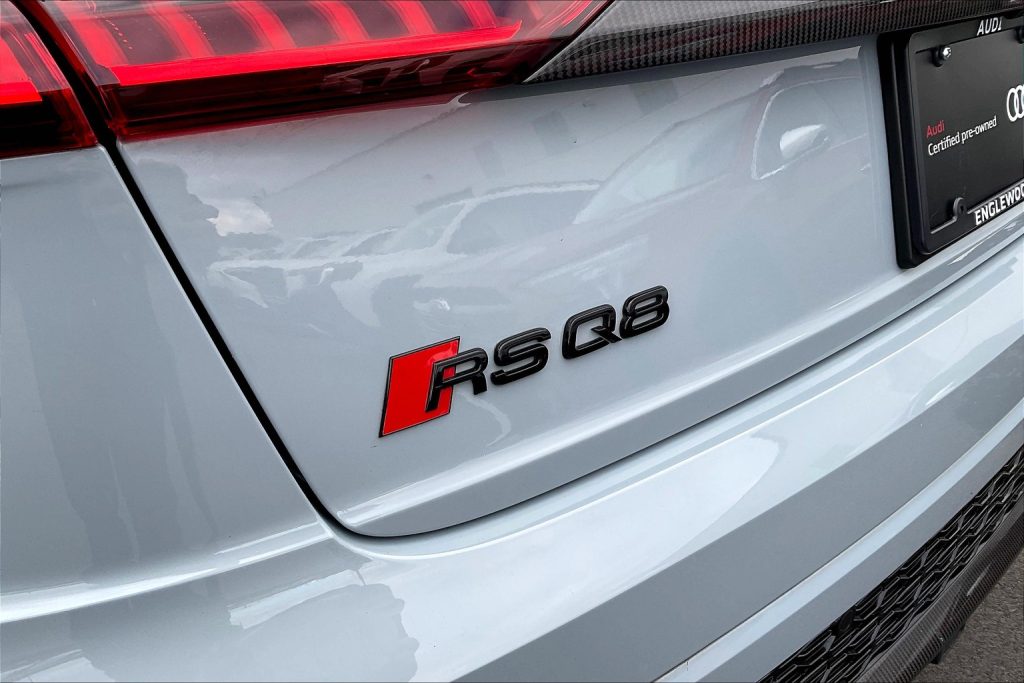
  • Market Find: 2022 Audi exclusive Arrow Grey Pearl RS Q8

    Market Find: 2022 Audi exclusive Arrow Grey Pearl RS Q8

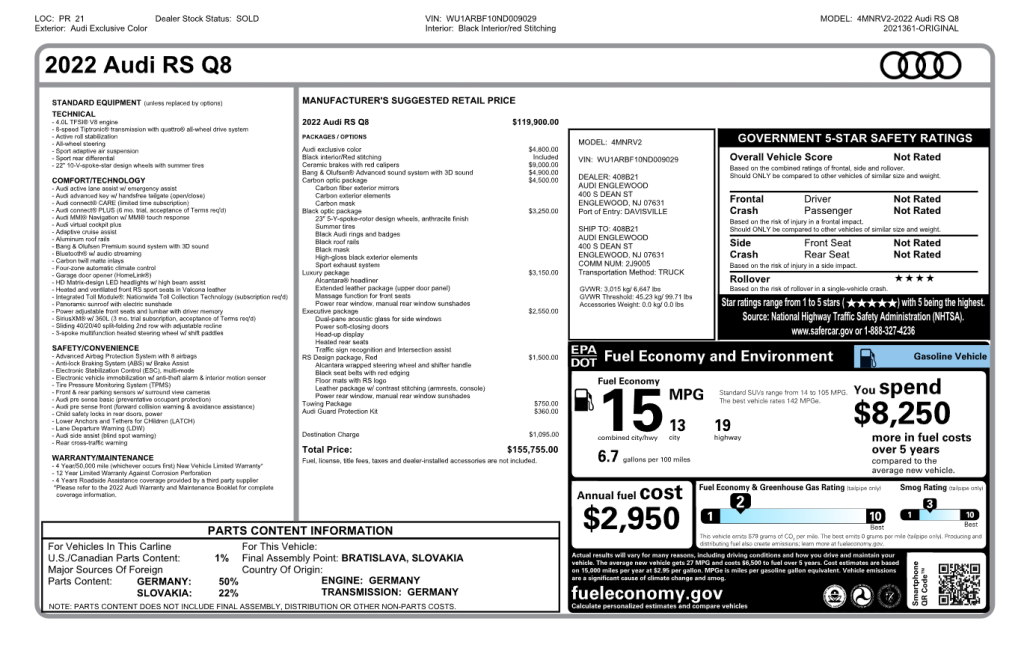
    What: 2022 Audi RS Q8
    Color: Audi exclusive Arrow Grey Pearl Effect (arrowgrau; pearl effect; LZ7W; Audi)
    VIN: WU1ARBF10ND009029
    Mileage: 30,678
    Price at Time of this Writing: $89,999
    CarFax: Link
    Window Sticker: Pictured below
    Location: Englewood, NJ
    Dealer listing: Link

    Why we love it:

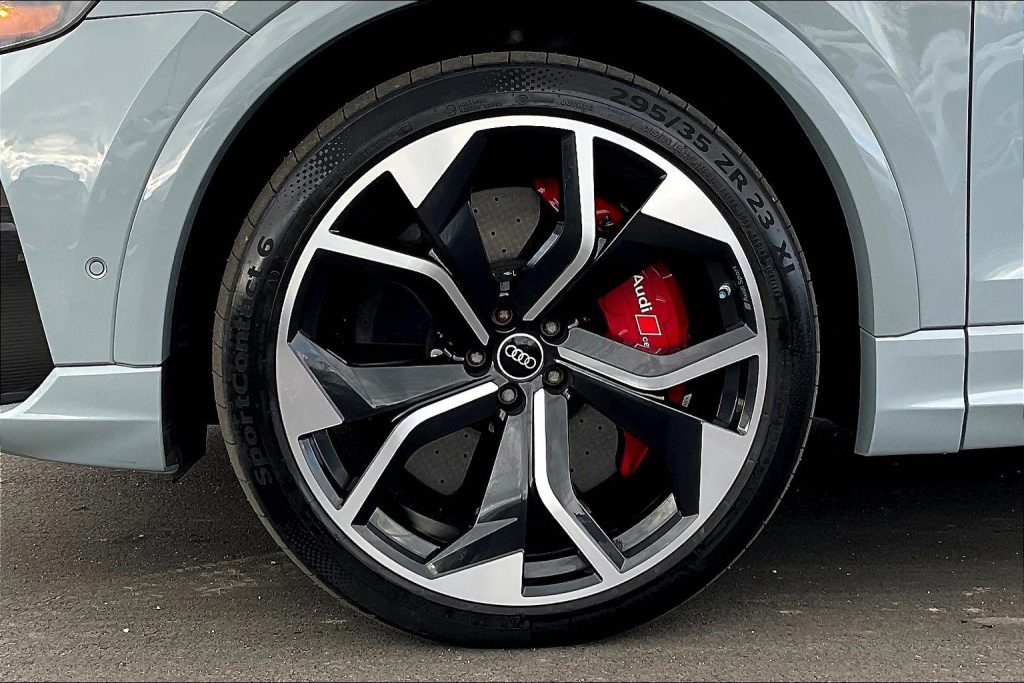
    To those in the know, the Audi RS Q8 is a budget Lamborghini Urus, and here’s one in an Audi exclusive color at about 30% of the cost. Audi exclusive Arrow Grey Pearl Effect is an interesting one, appearing quite similar to Nardo Grey, Arrow features a bit more cyan in it’s formula, and introduces a pearl effect to help it pop. Of note to Audi (and color) enthusiasts, from our research it appears to also carry the same color code as Audi’s Aviator Grey, which was most predominantly featured on the first gen TT.

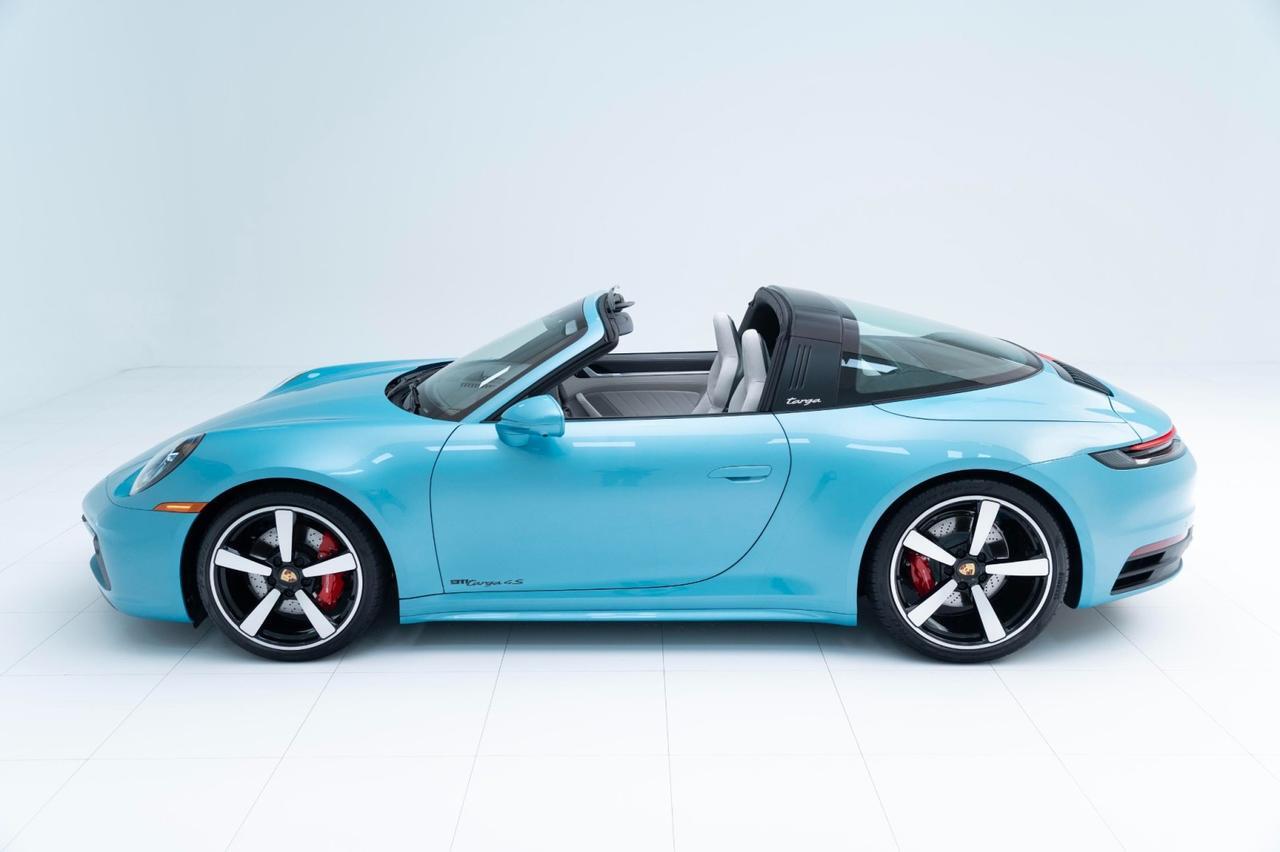
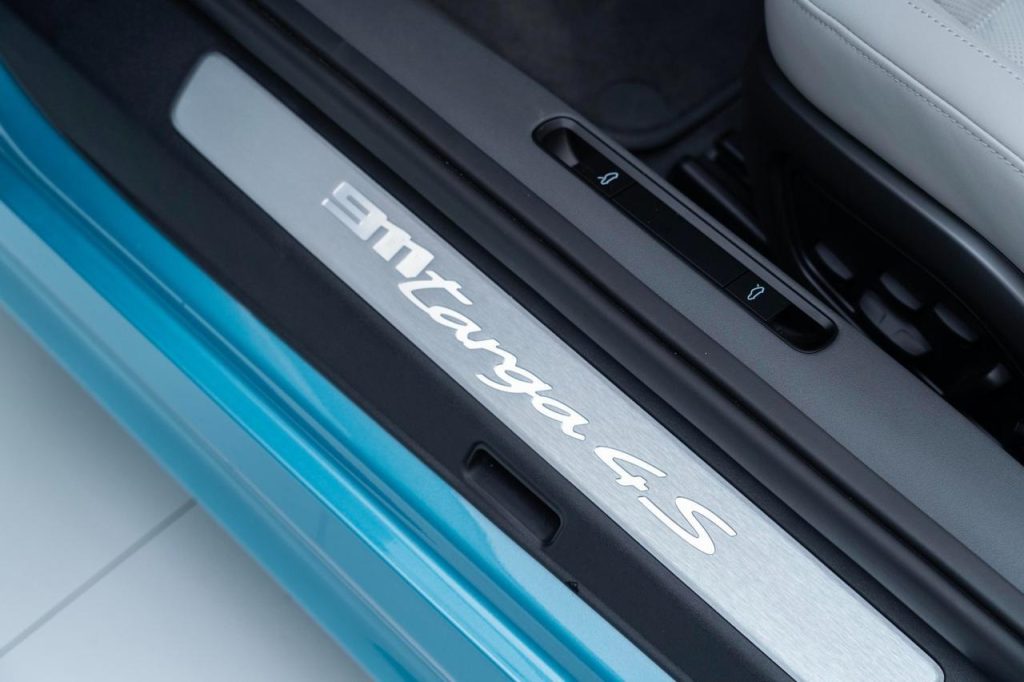
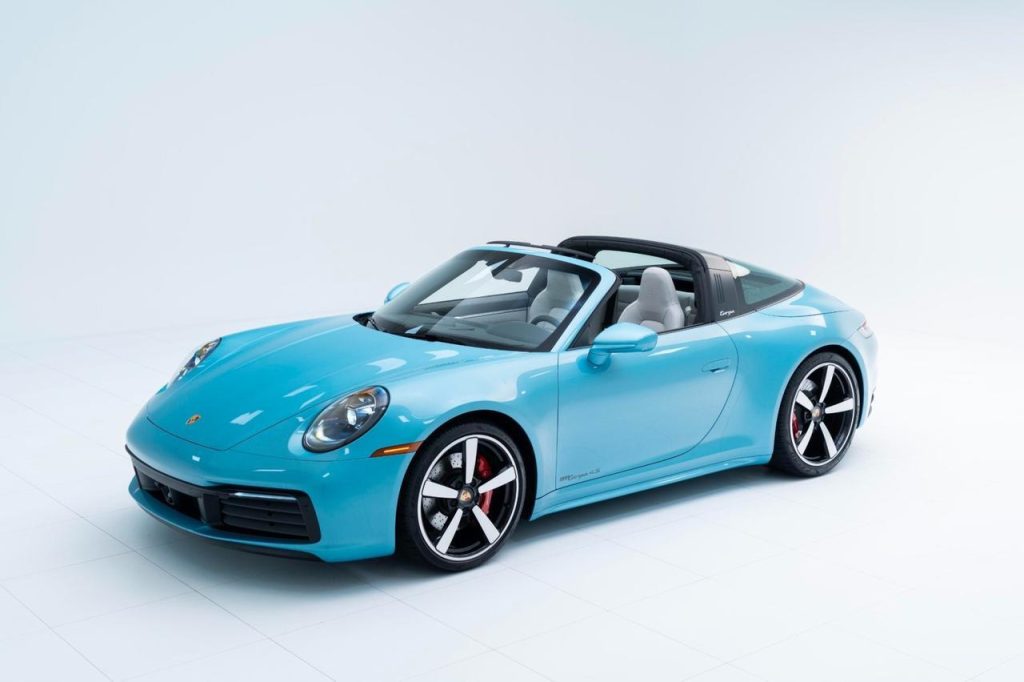
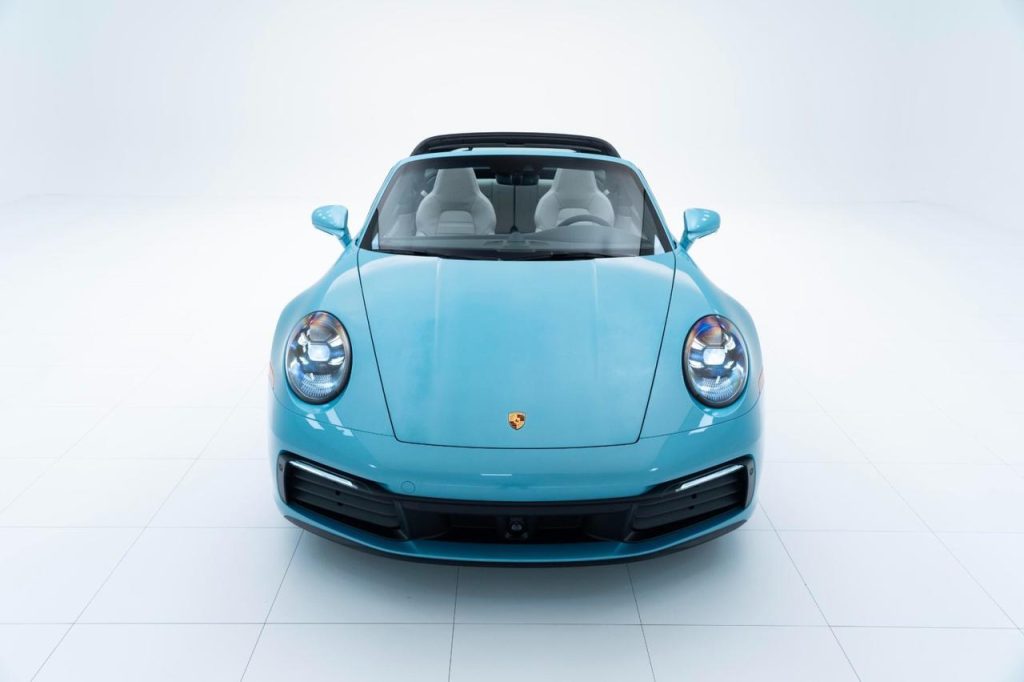
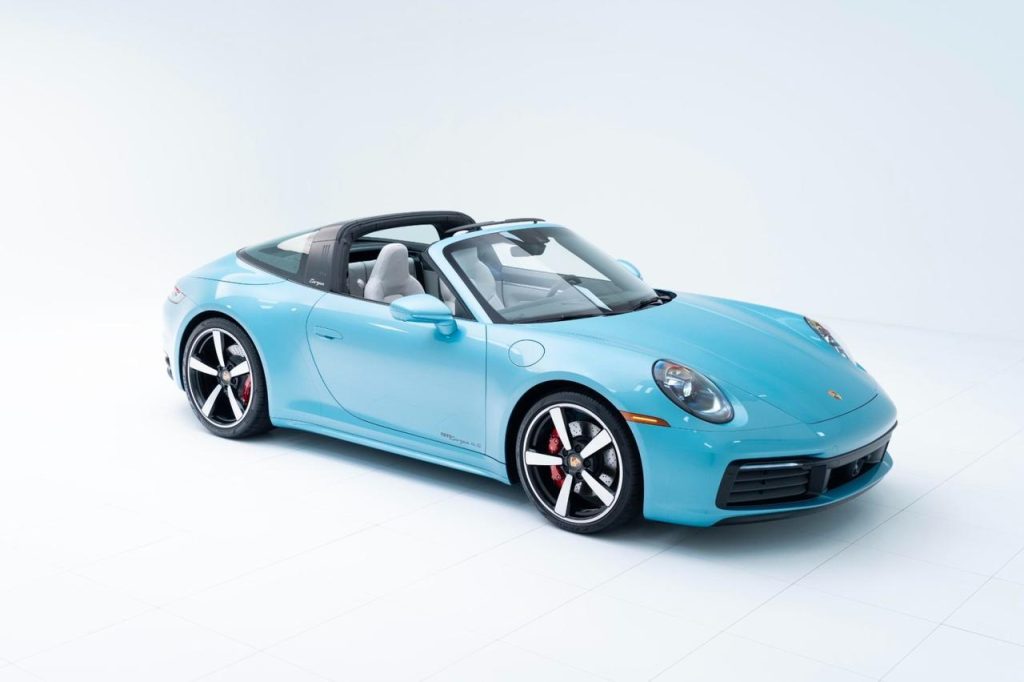
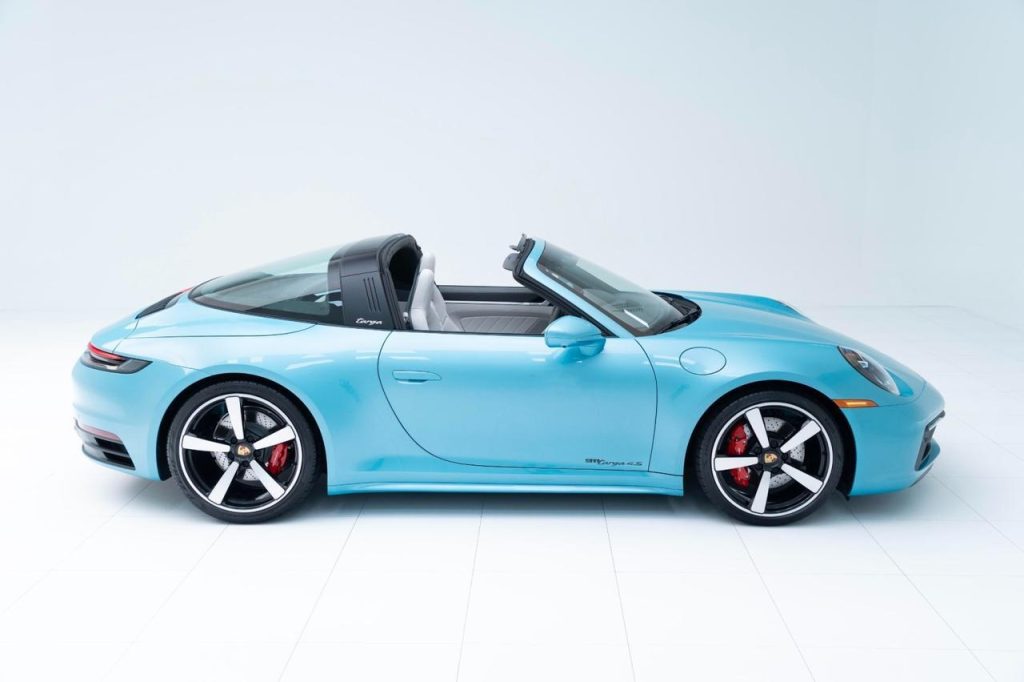
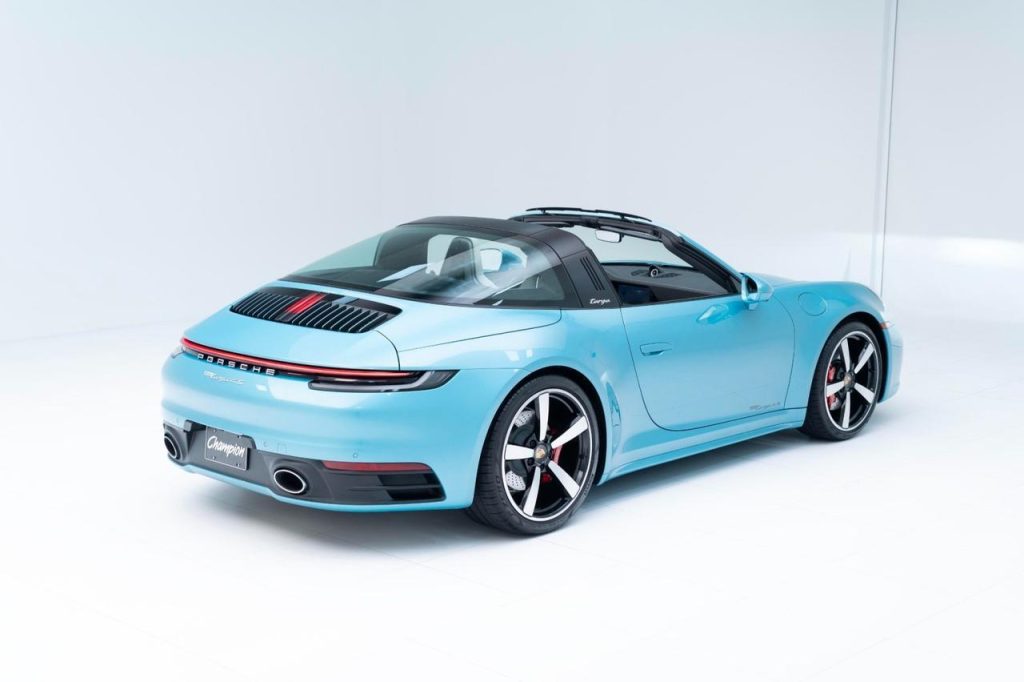
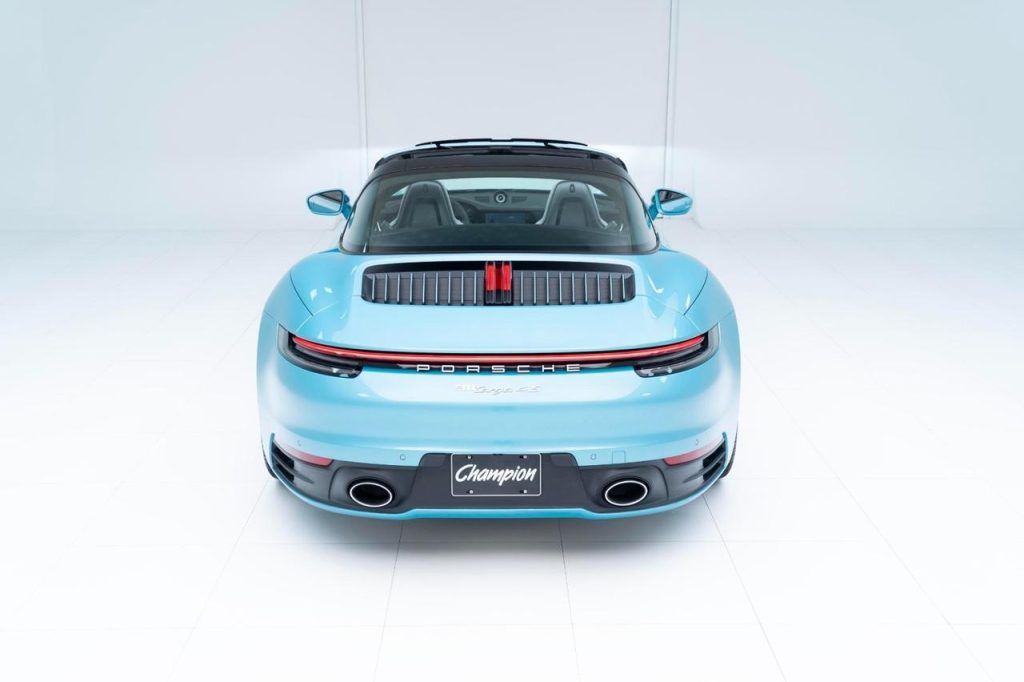
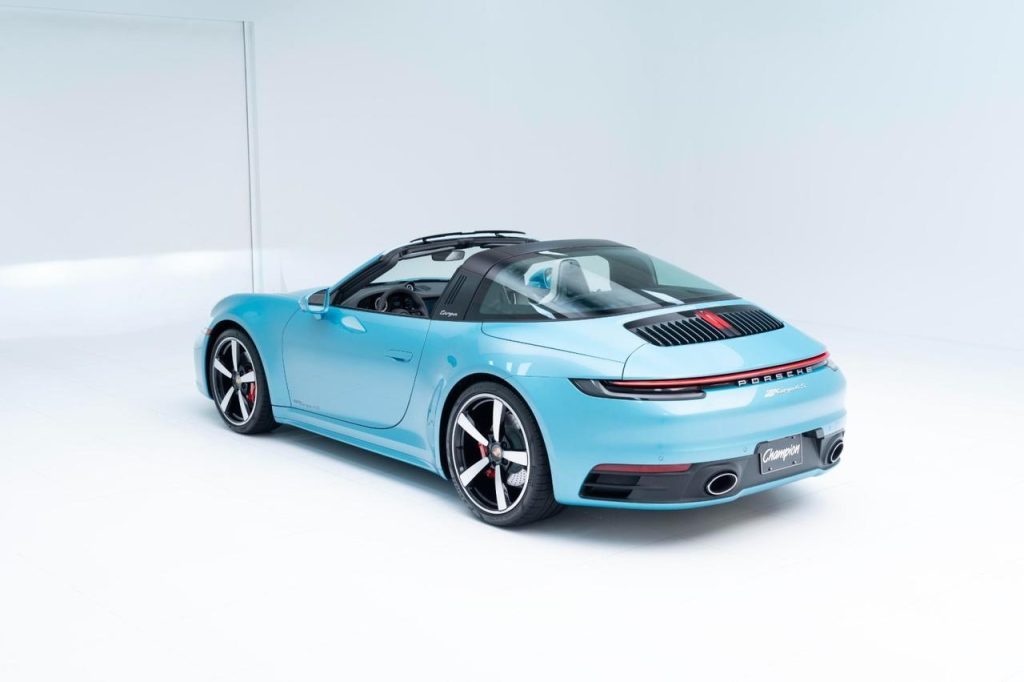
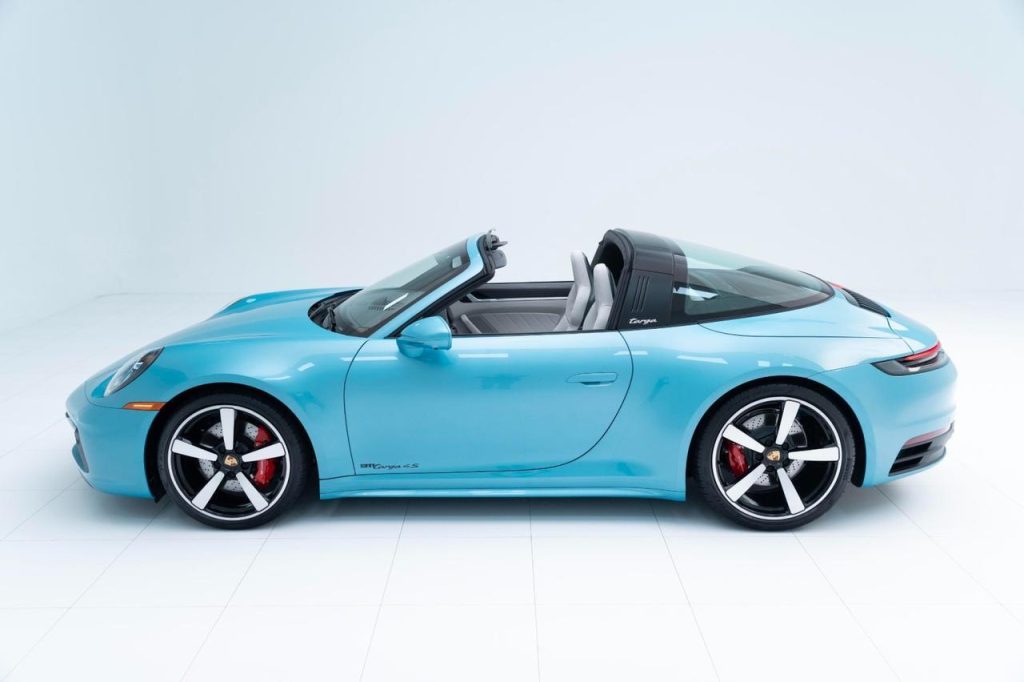
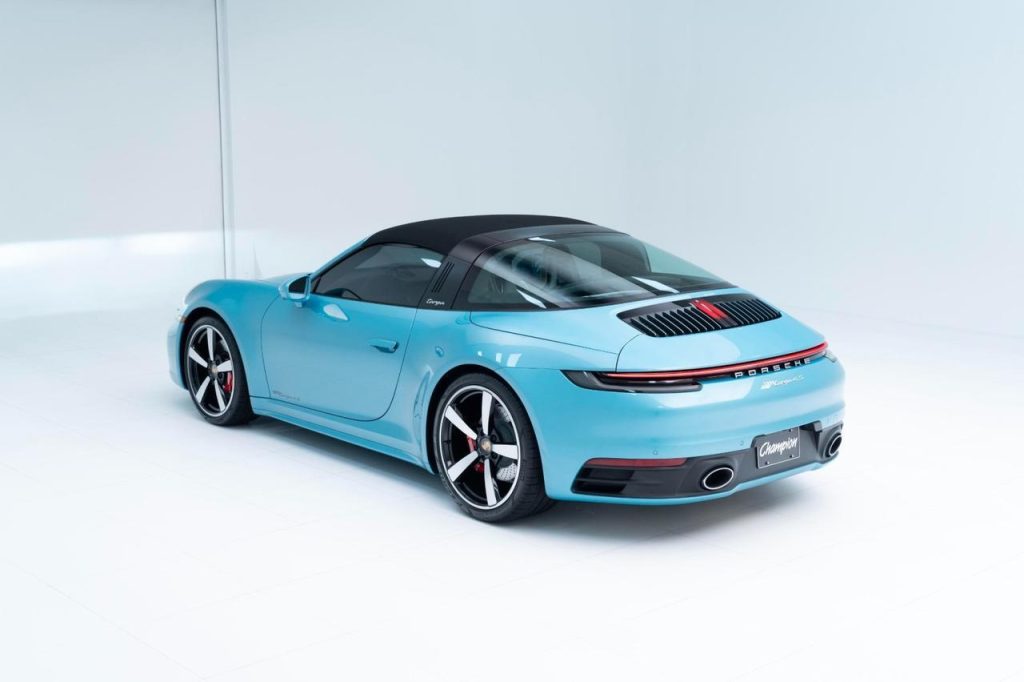
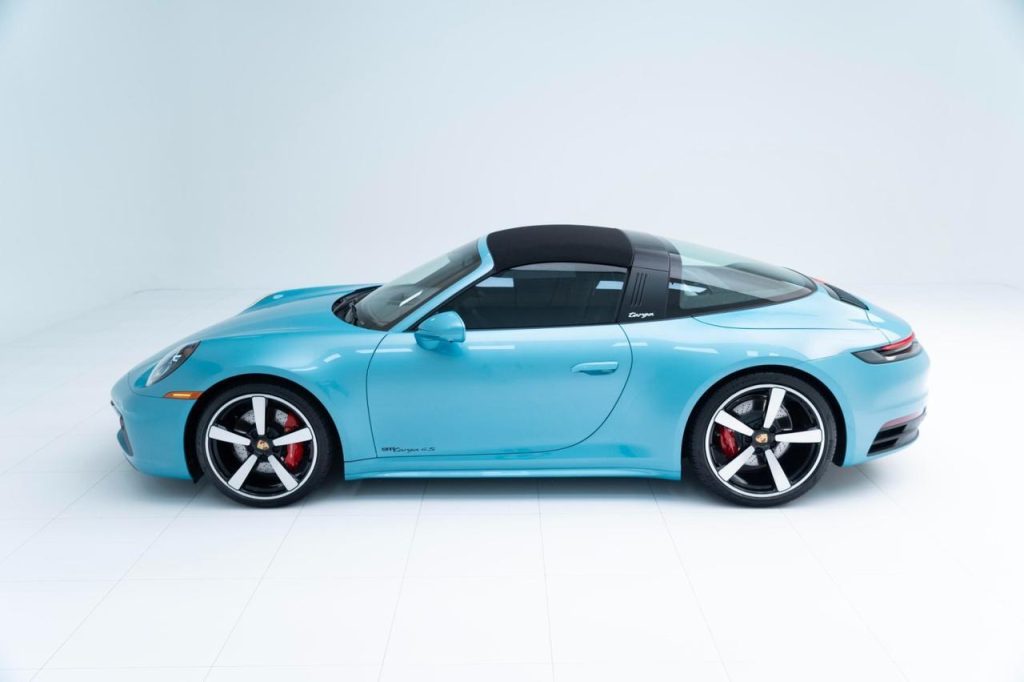
  • Market Find: 2024 Porsche Paint to Sample Ipanema Blue Metallic 911 Targa 4S

    Market Find: 2024 Porsche Paint to Sample Ipanema Blue Metallic 911 Targa 4S

    What: 2024 Porsche 911 Targa 4S
    Color: Paint to Sample Ipanema Blue Metallic (ipanemablau metallic; 3S2; F2; Porsche)
    VIN: WP0BB2A99RS234957
    Mileage: 314
    Price at Time of this Writing: $240,900
    CarFax: Link
    Window Sticker: N/A
    Location: Pompano Beach, FL
    Dealer listing: Link

    Why we love it:

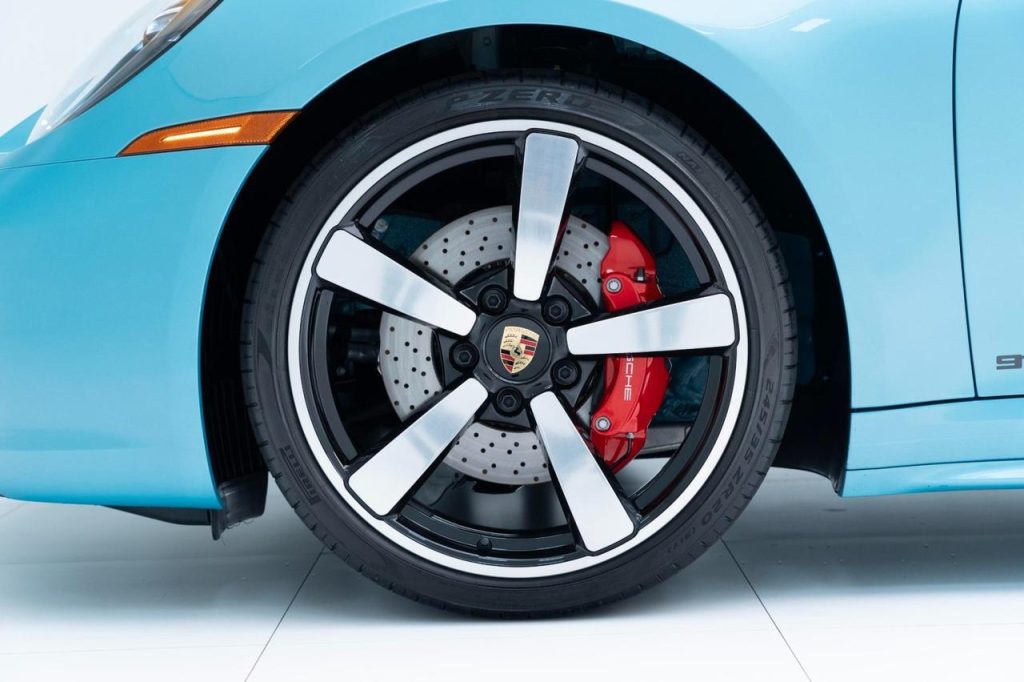
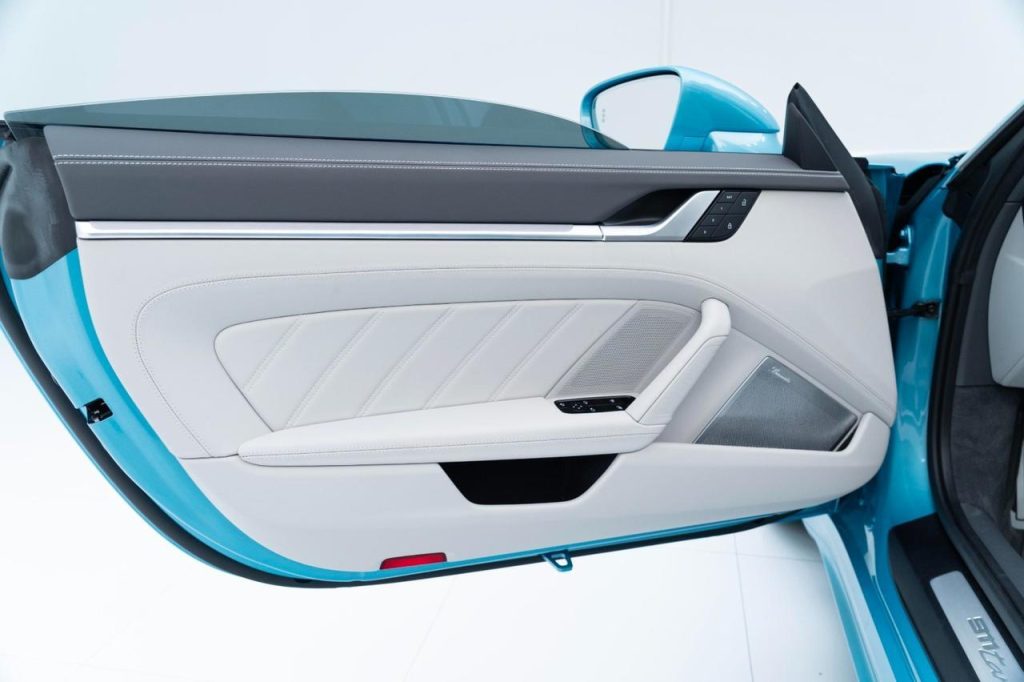
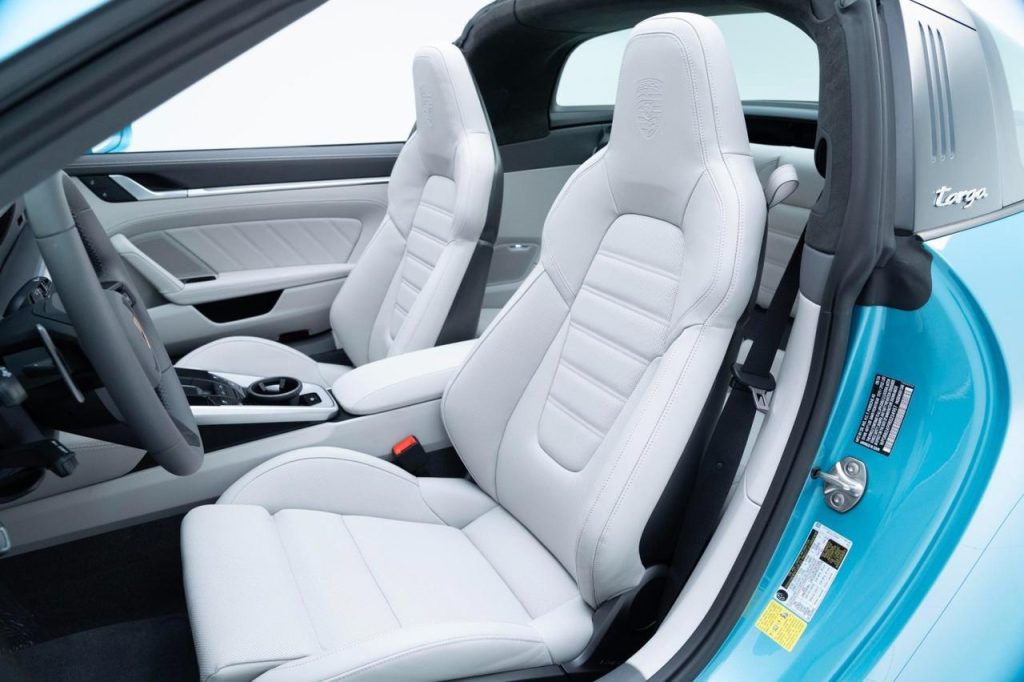
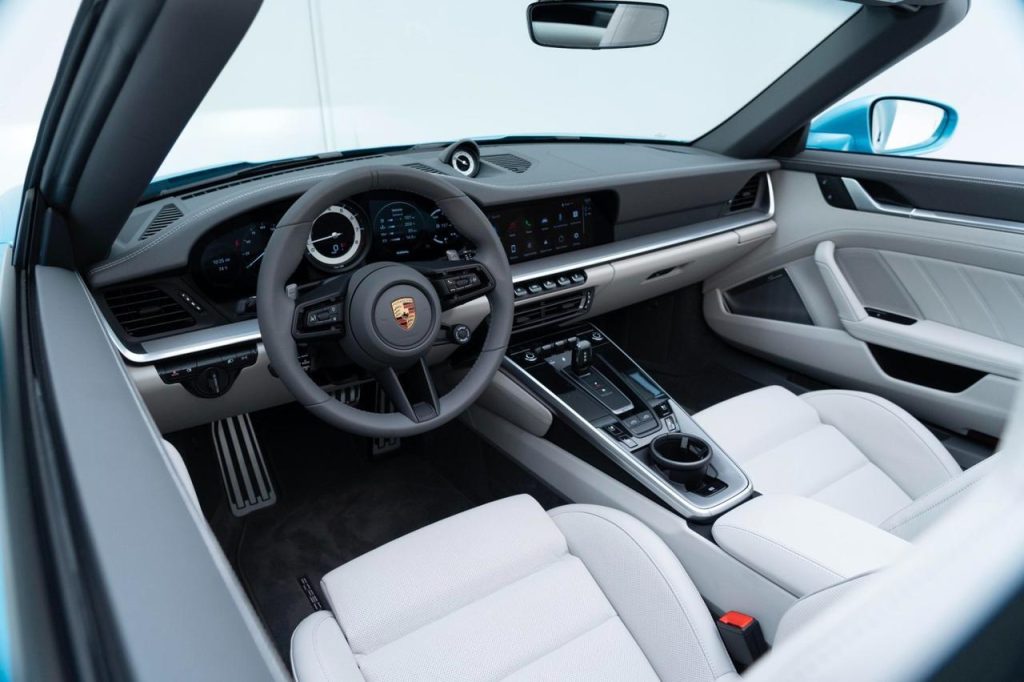
    To put it simply, Porsche’s Paint to Sample Ipanema Blue Metallic is a color you just don’t see very often- if ever. The 911 Targa 4S represents an incredibly attractive package offering the best of both open and closed top worlds, although we acknowledge the neither coupe nor cab body style isn’t for everyone. This particular Tailored Driver does tug the heartstrings quite hard with it’s heritage-inspired take on a modern design, pairing Carrera Exclusive wheels, 930 package seats, and the 50’s era flair of Ipanema Blue Metallic.