Tag: 24 Hours of Le Mans

  • Porsche 963 RSP, an LMDh for the Road

    Porsche 963 RSP, an LMDh for the Road

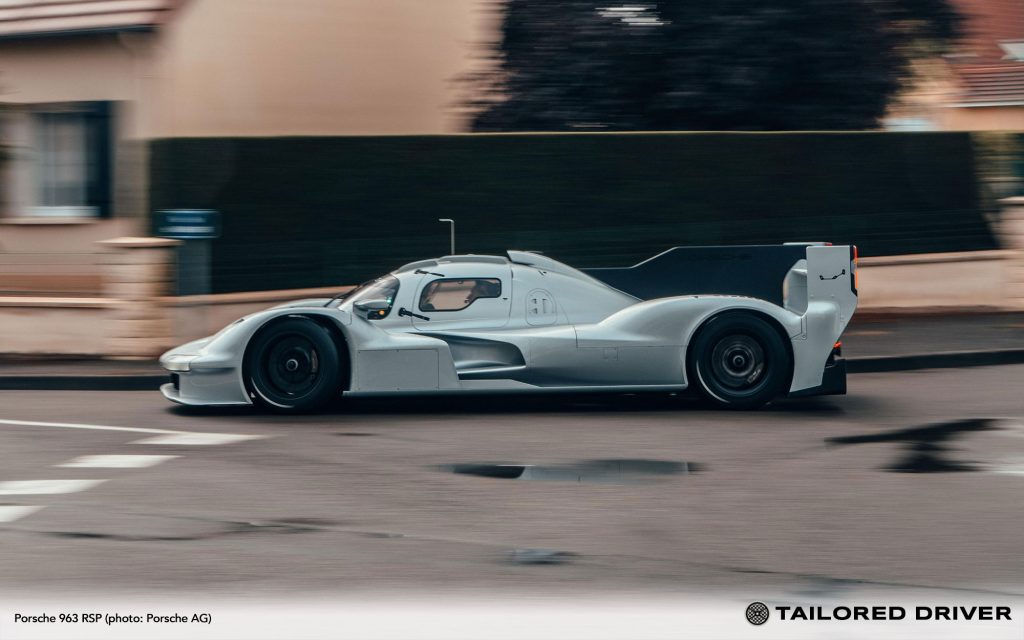
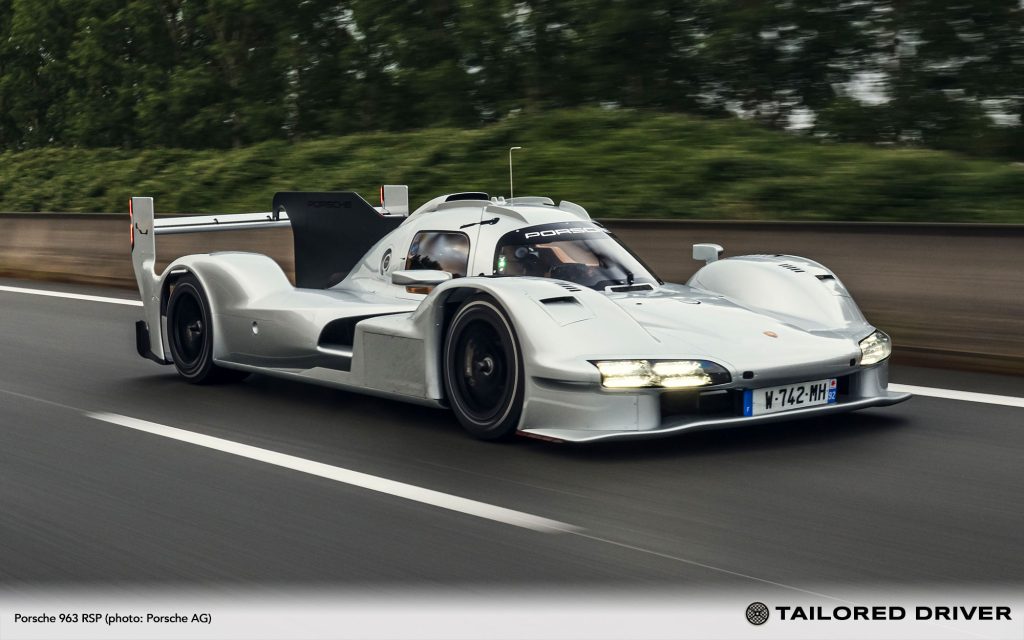
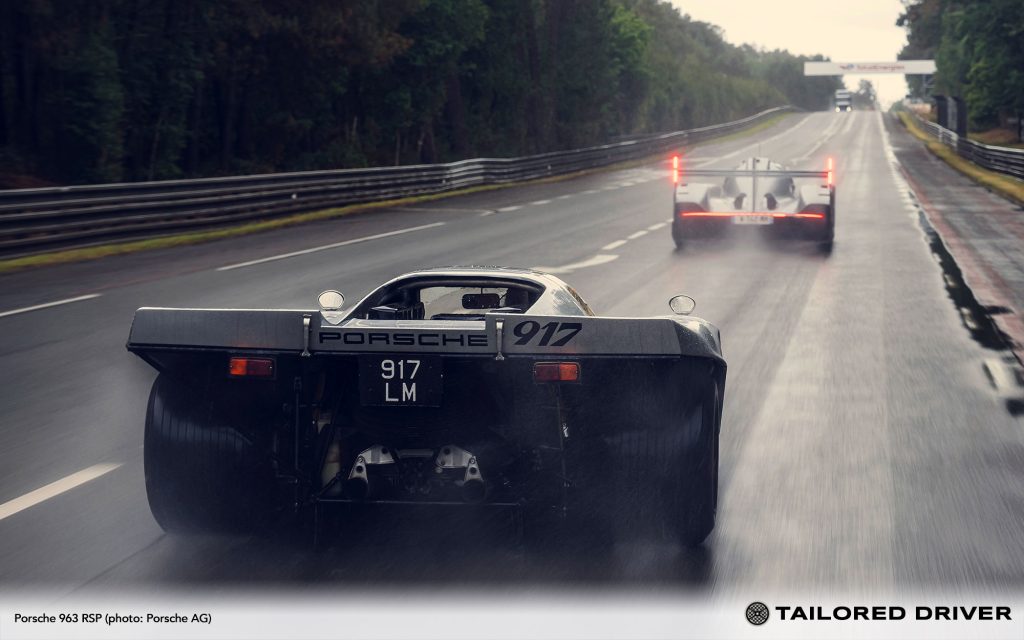
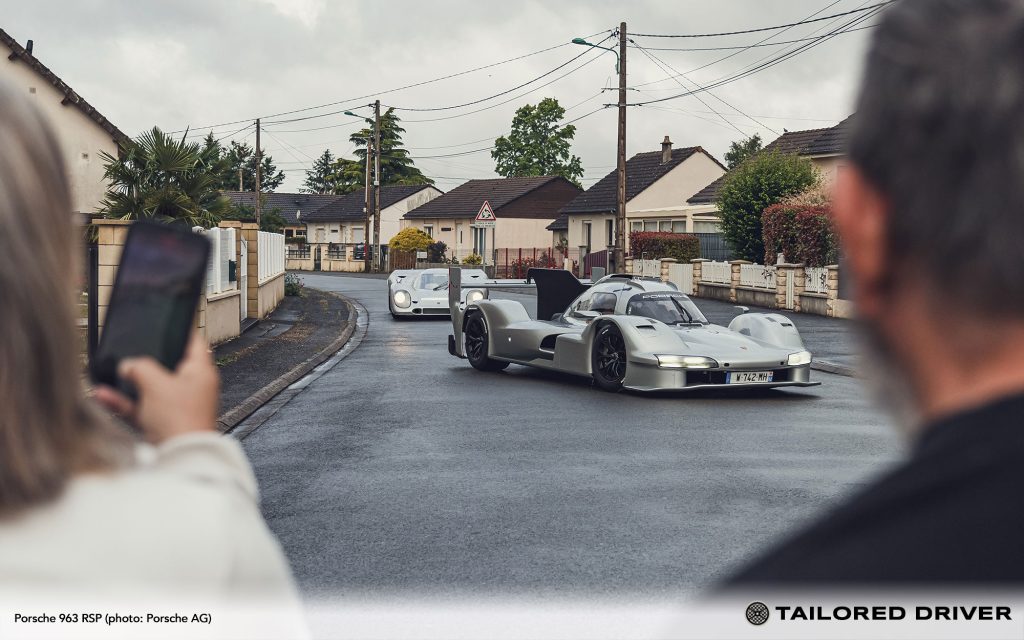
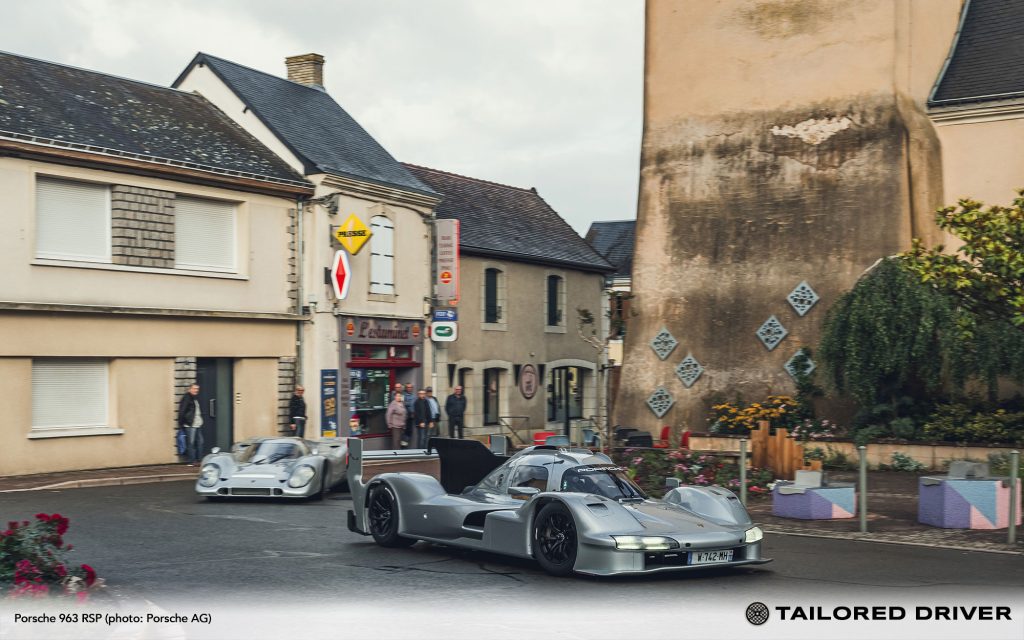
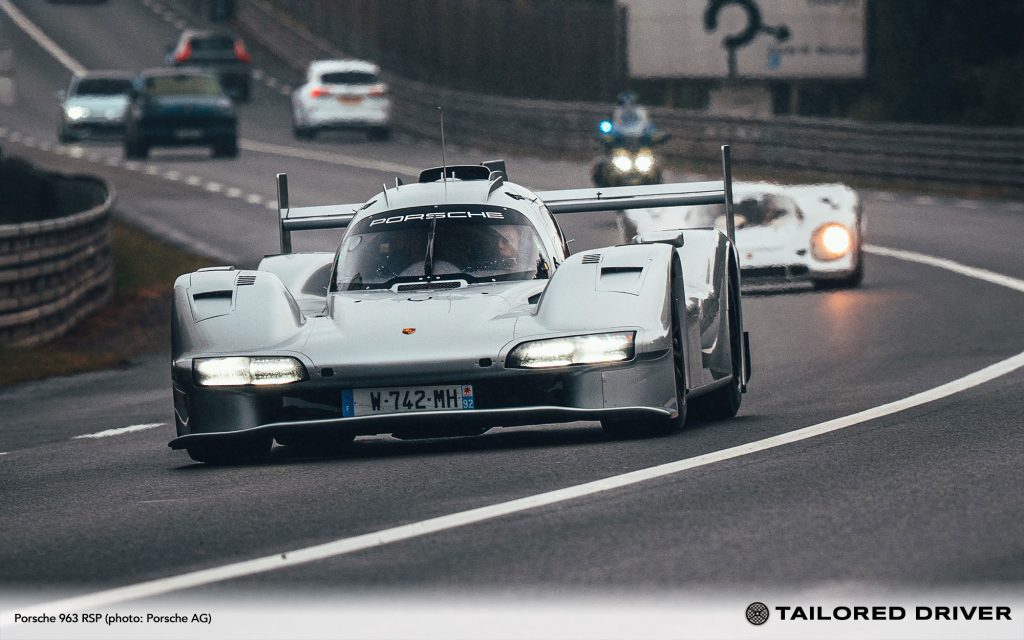
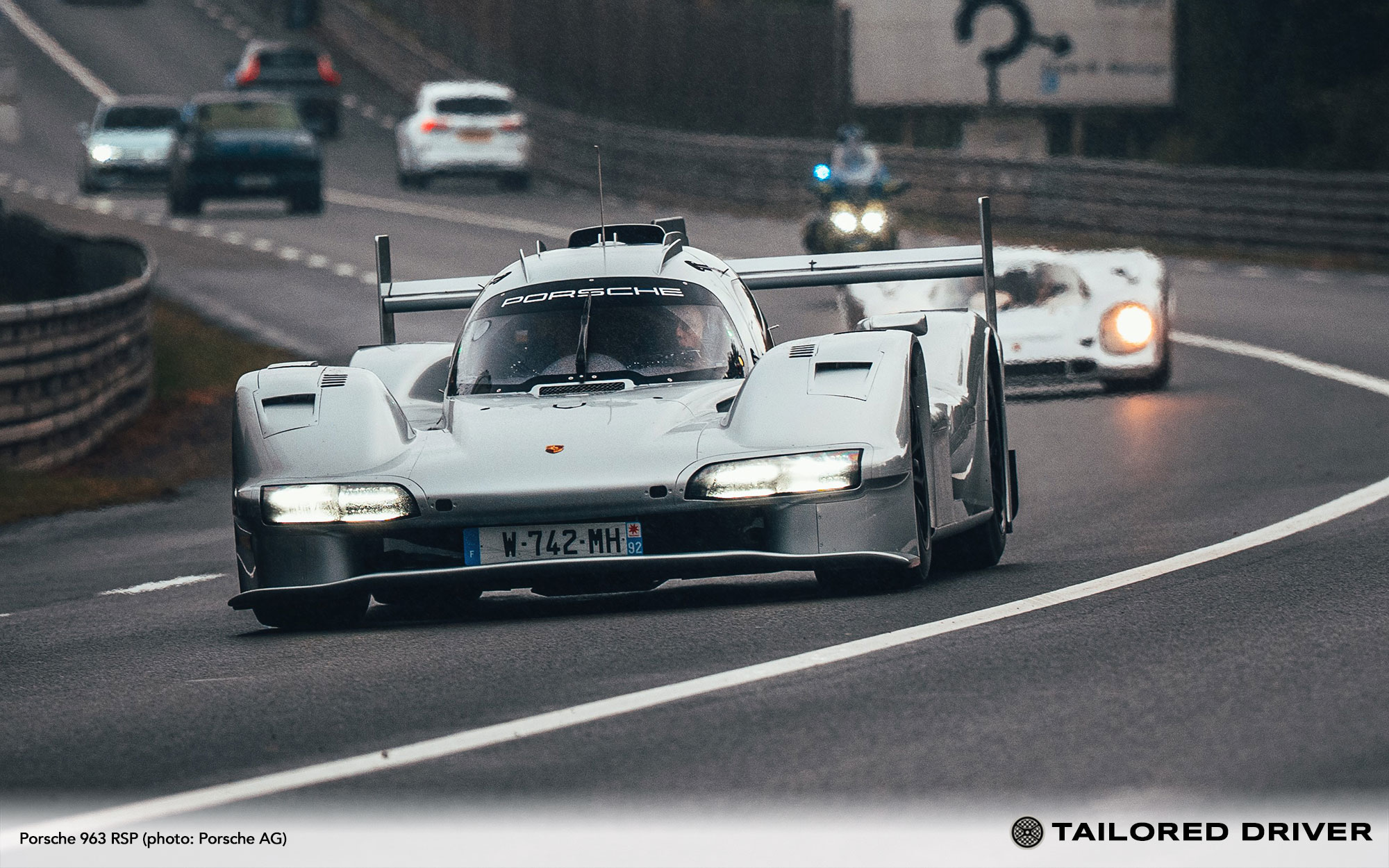
    Today marks the first day of scrutineering for the 2025 24 Hours of Le Mans, which is effectively the first day in more than a week of race activities. Porsche chose to celebrate its annual return to La Sarthe by celebrating a cool anniversary and building something very special. The net result is something very, very cool, a tribute to Roger Penske and a one hell of a flex for the brand’s Sonderwunsch department.

    If you follow IMSA or FIA WEC sportscar racing, you likely know that the Porsche 963 is a racing car of the sports prototype variety that races in the Hypercar class at Le Mans and the GTP class in IMSA. Effectively, this is today’s naming convention for the top class, and it’s in this category that the greatest manufacturers fight for an all-out win.

    Though the name of the class changes over the years, this is top-tier racing at Le Mans, a point Porsche can both point back to with authority. For Porsche, the story of outright wins begins in 1970 with the Piëch family-backed Porsche Salzburg-backed 917K. They’d win again in 1972, this time by Martini Racing.

    Those would be the only wins for the 917, because the car was banned from racing at Le Mans largely due to its dominance. Even still, it was the unequivocal star of Le Mans quite literally, capturing the imaginations of racing fans the world because it also starred in the 1971 movie Le Mans starring Steve McQueen.

    By 1975 the car had been dually retired. Following Le Mans it had been evolved as an open-top prototype for racing in the North American CAN-AM series and Europe’s Interserie, but at this point it was a legend without a home. Given the circumstances, what happened next is truly remarkable and something for which Porsche is truly one of the few factories that could have pulled it off. And, this isn’t the first time.
    Martini Flex, the 917 KH of 1975

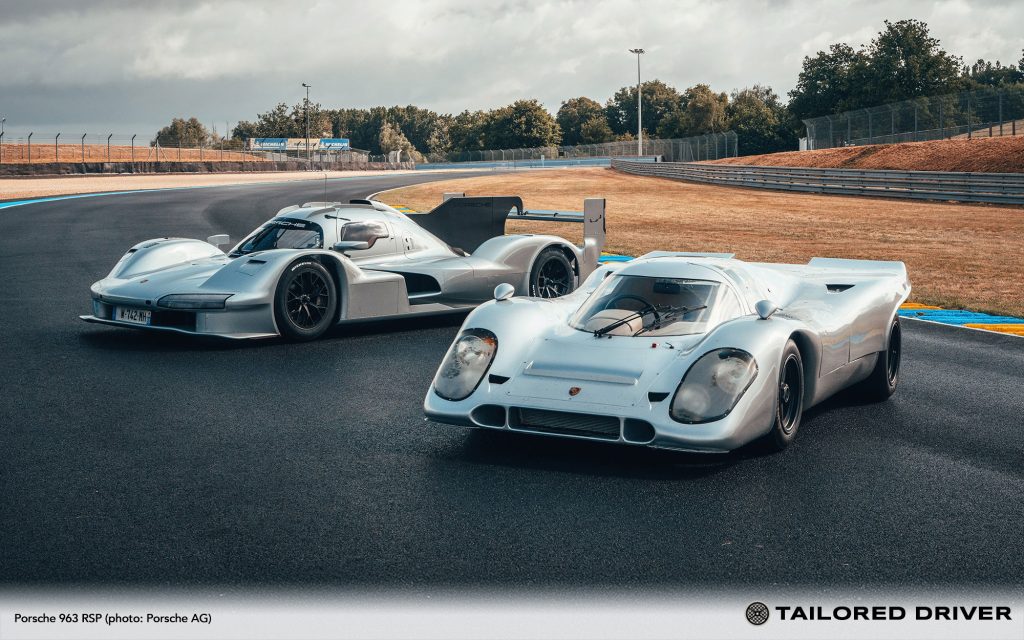
    Flight of fancy may be an understatement, but when you have gargantuan resources and a strong association with racing, living a fantasy while promoting what you do isn’t such a bad mix. The car was 917 chassis #30, a car that had been originally raced in period. The man was an Italian businessman Martine heir Gregorio Rossi di Montelera – known more commonly as “Count Rossi”, a renowned powerboat racer, bobsledder and Porsche enthusiast. And yes, when we think of the Martini & Rossi sponsored Martini Racing, he was that Rossi.

    In 1975, the car had returned to the factory much as some owners today send their old cars to Porsche Classic department for restoration or the brand’s fantastical Sonderwunsch department for other upgrades of their choosing.

    In the 917’s case, it was finished in Martini Silver, and fitted with a set of “rudimentary exhaust mufflers”, additional rearview mirrors, side indicators and other road car kit… like a horn. It carried the requisite spare tire beneath the rear clamshell, while inside two seats were re-skinned in tan Hermès leather with additional surfaces, doors, dashboard and roof lining in suede. Other cues from the racecar such as the balsa wood shift knob and drilled key were retained. Finally, the car was registered by Count Rossi in Alabama, presumably due to the more liberal registration requirements of this American state.

    When the car first rolled out as a road car from the Porsche factory in Stuttgart, Rossi set out in the direction of France. His destination was Paris, several hundred miles away. In making the trip, Rossi and his 917 became the stuff of legends. That particular 917 KH is now registered in the UK, though is kept in the south of France where the current owner enjoys it with regularity.
    Next Up, the Porsche 963 RSP

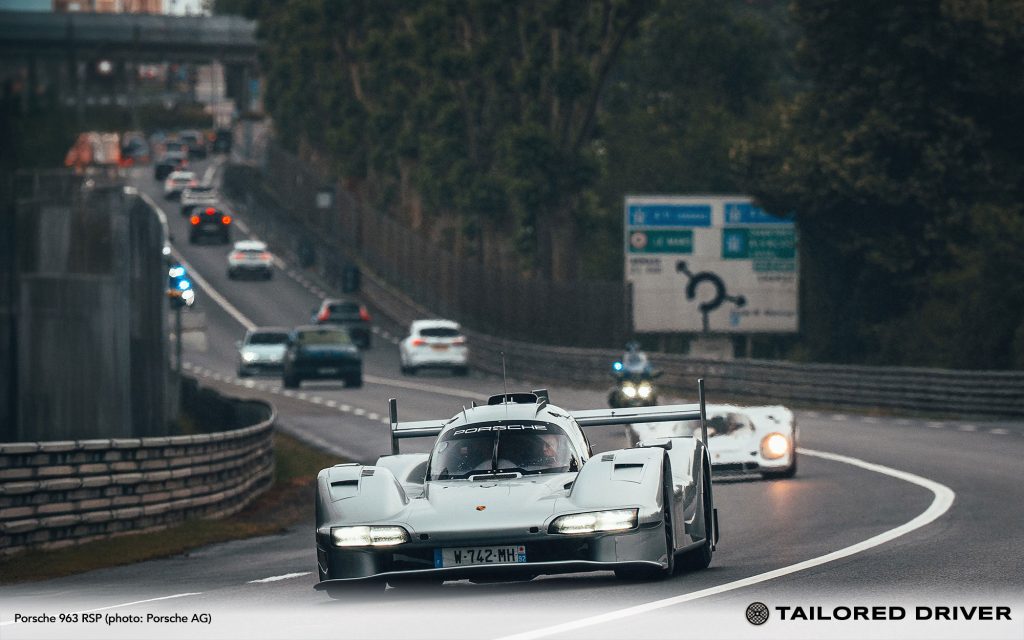
    “This really started out as a “what if?” – a passion project by a small team of enthusiasts at Penske and at Porsche who together imagined a version of the 963 that really resembled as closely as possible the spirit and appearance of the Count Rossi 917,” state Porsche Cars North America President and CEO Timo Resch. The idea is credited to Resch. “The 917 from the story was every inch a race car – albeit one driven on the road – and we took the same approach with the 963 RSP. It uses beautiful materials of the best quality available, but is still every bit a race car underneath.”

    Though the Porsche 963 hasn’t yet logged a 24 Hours of Le Mans victory since its debut in 2023, it’s been doing just fine outside of La Sarthe, logging championships in IMSA and the WEC at the hands of Penske Racing. And as Porsche Motorsport arrives in Le Mans ready to further build upon its record on this hallowed ground, the 963 RSP has been revealed – a tribute to the 917 KH that’s now 50 years old.

    The car is the result of a collaboration between Porsche AG, Porsche Penske Motorsport and Porsche Cars North America. Like Count Rossi with the 917, Penske founder and owner Roger Penske just happens to have the same initials as the car’s designation “RSP” – not a coincidence.

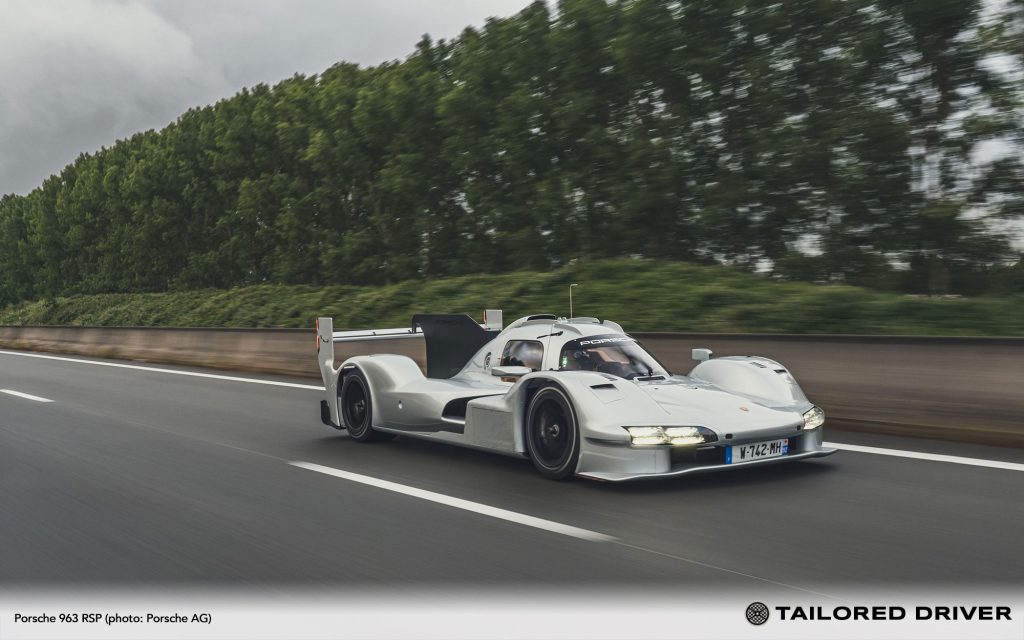
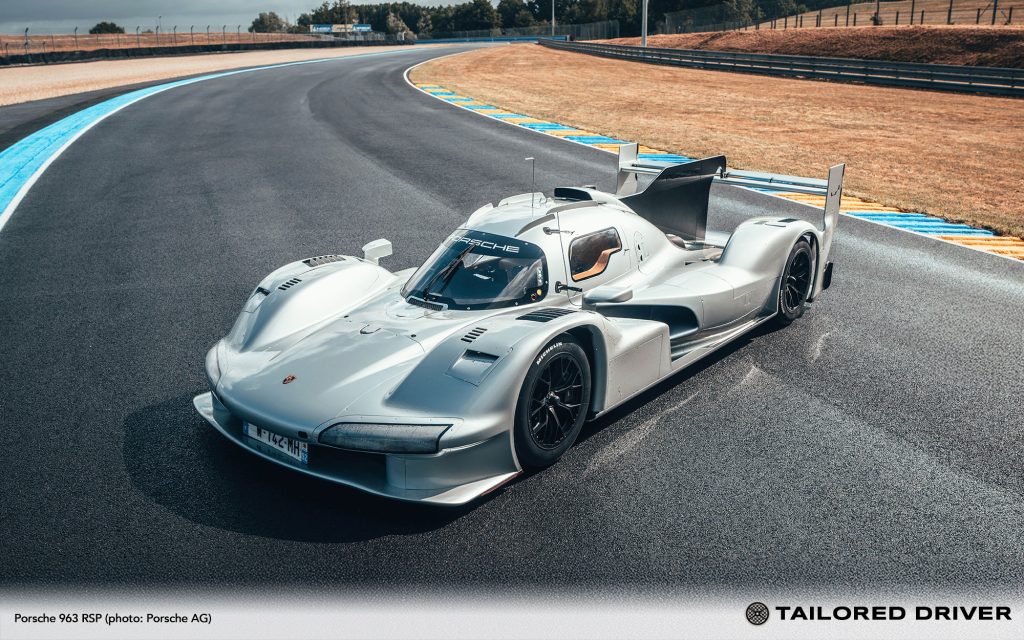
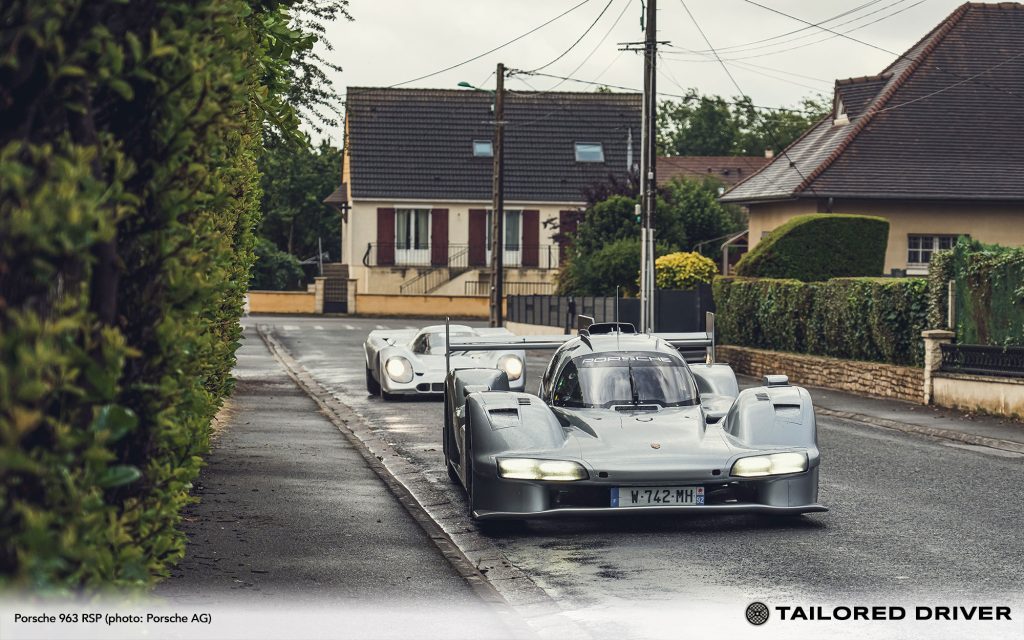
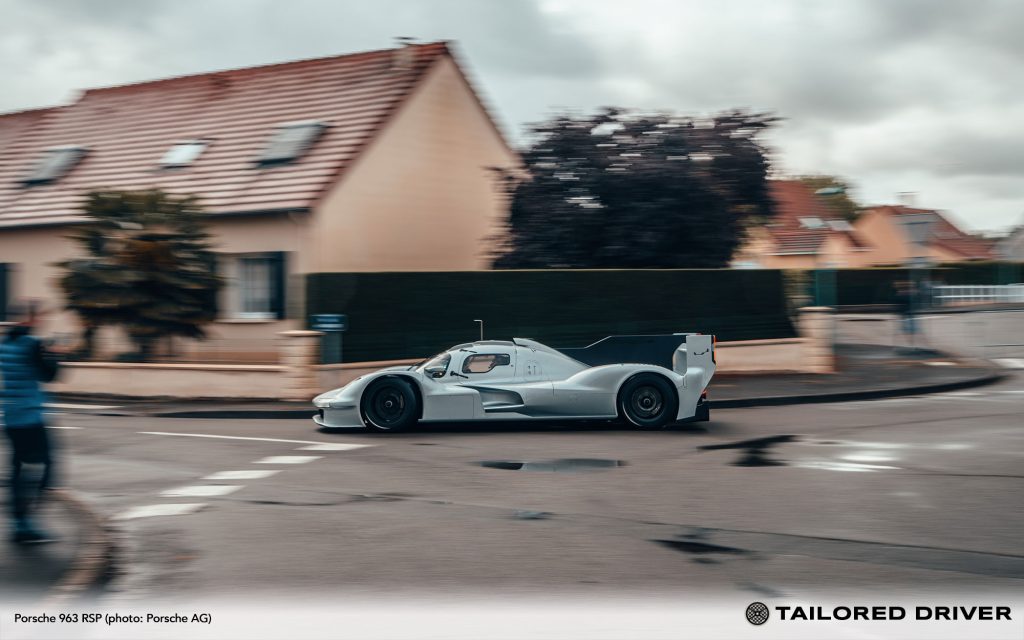
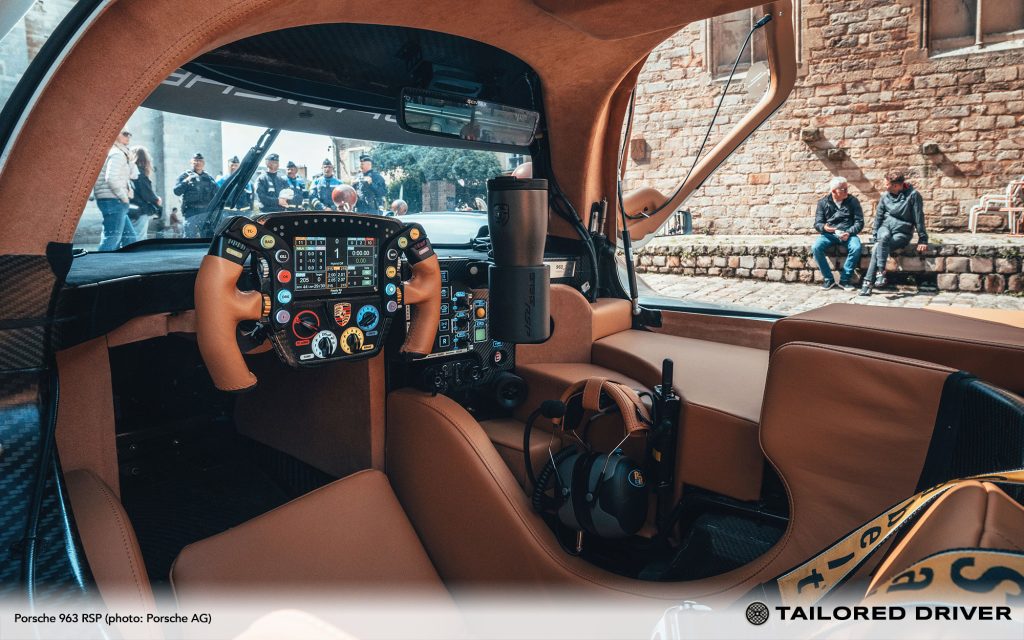
    As you might expect, this isn’t just a matter of applying silver metallic paint over the 963’s bodywork though even that is a surprisingly complex change. The competition 963 always gets wrapped in a vinyl livery, so the thin carbon and Kevlar bodywork presents challenges that required some modifications before the Martini Silver paint chosen as a tribute to the 917 could be applied. Inside, the 963 has been fitted with tan leather and Alcantara, again inspired by the Count Rossi car.
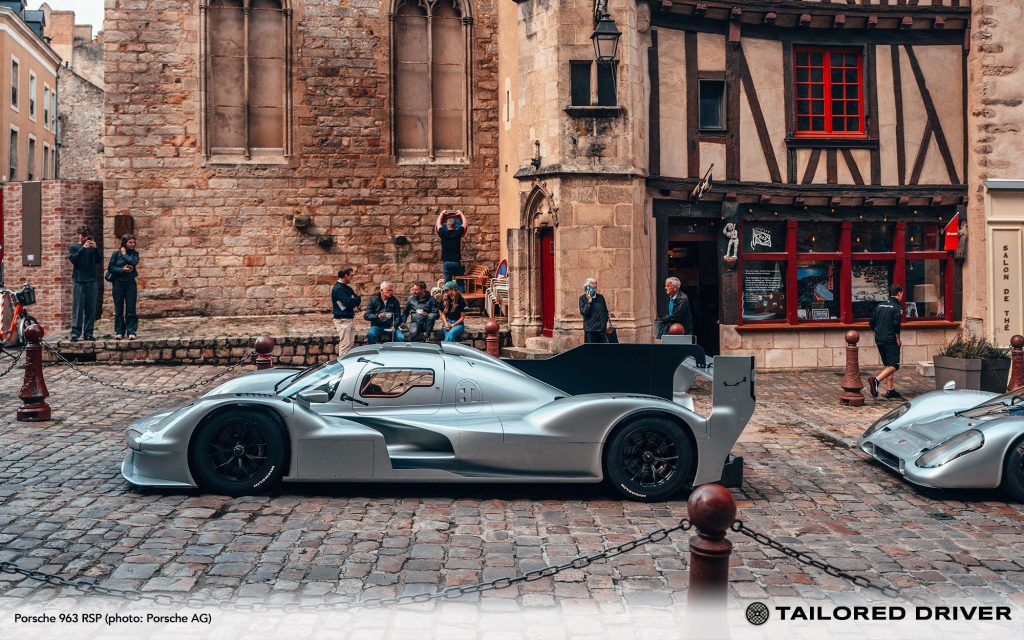
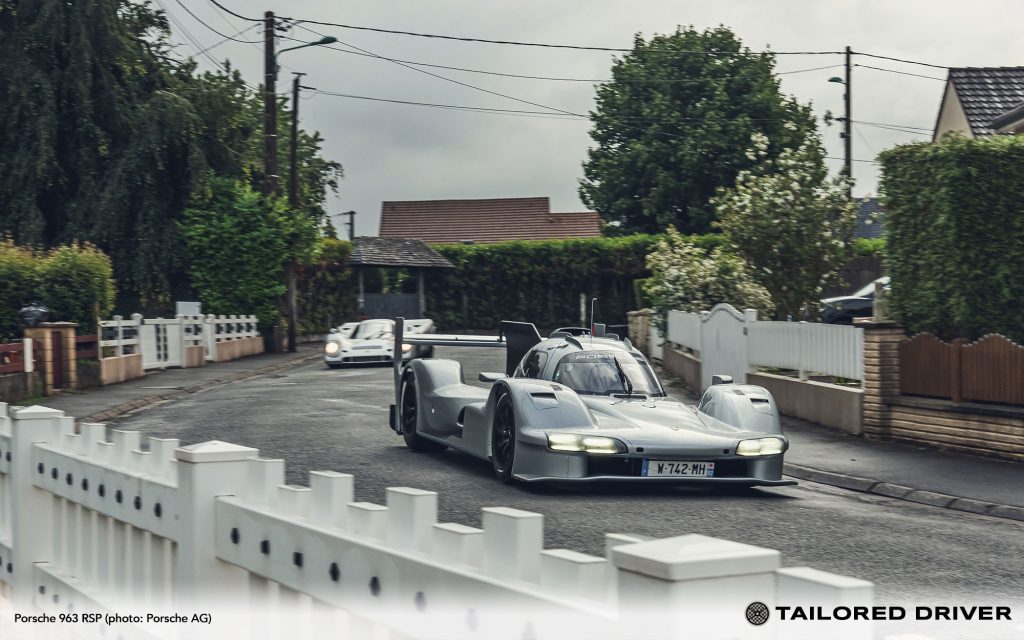
    Other mechanical changes were needed to make the car road worthy. This includes raised ride height, softened dampers and reprogrammed control unit so as to allow the headlights and taillight to operate like those of a road car. Other bodyworks changes were made to properly cover the wheel arches, while a set of Michelin wet weather compound tires with tread qualifies for road use, and of course like the 917 it needed a horn.

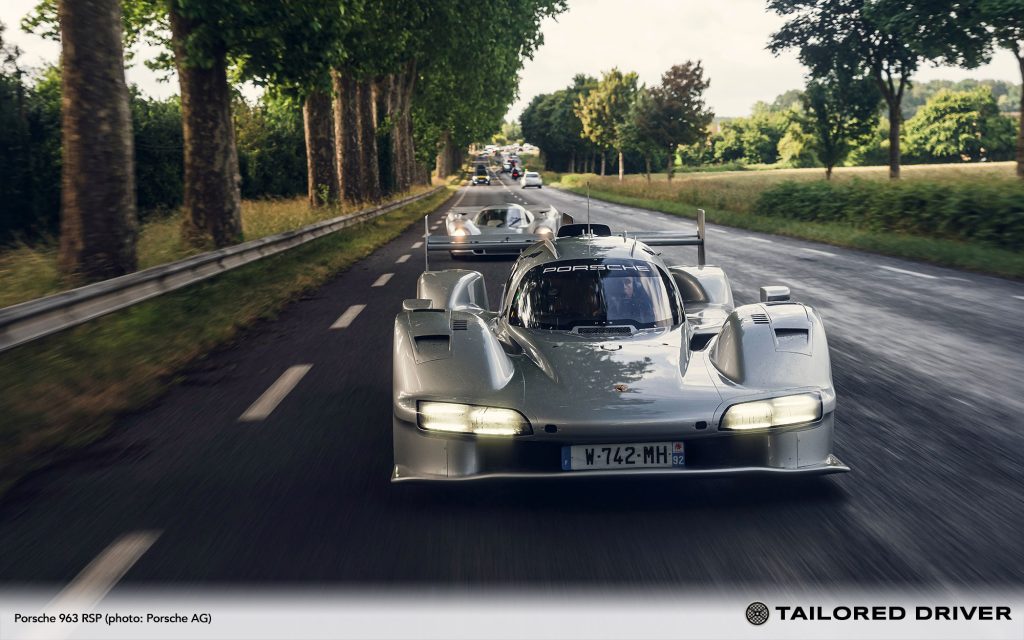
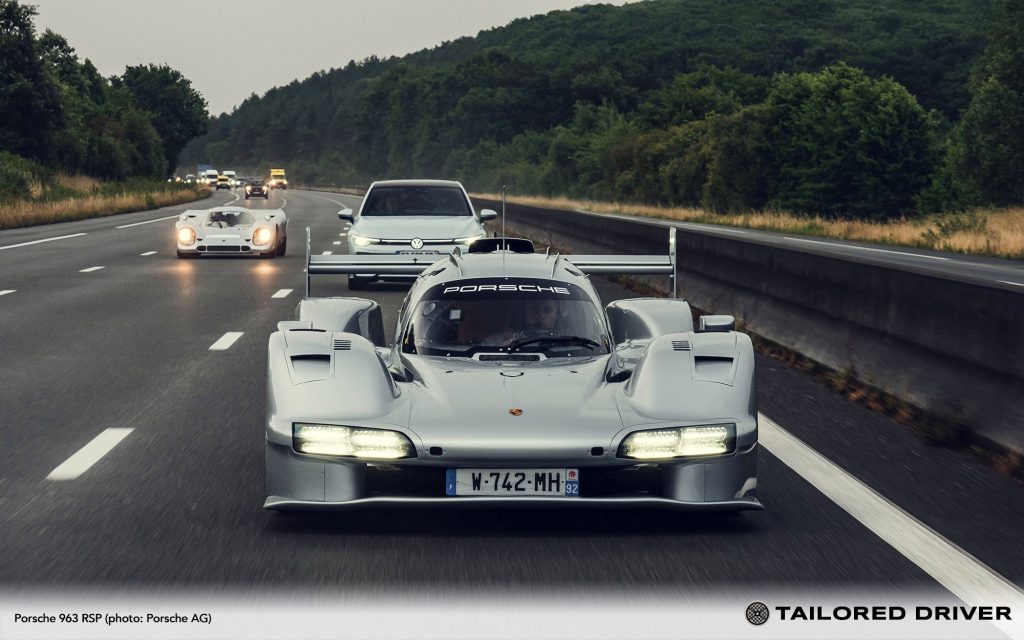
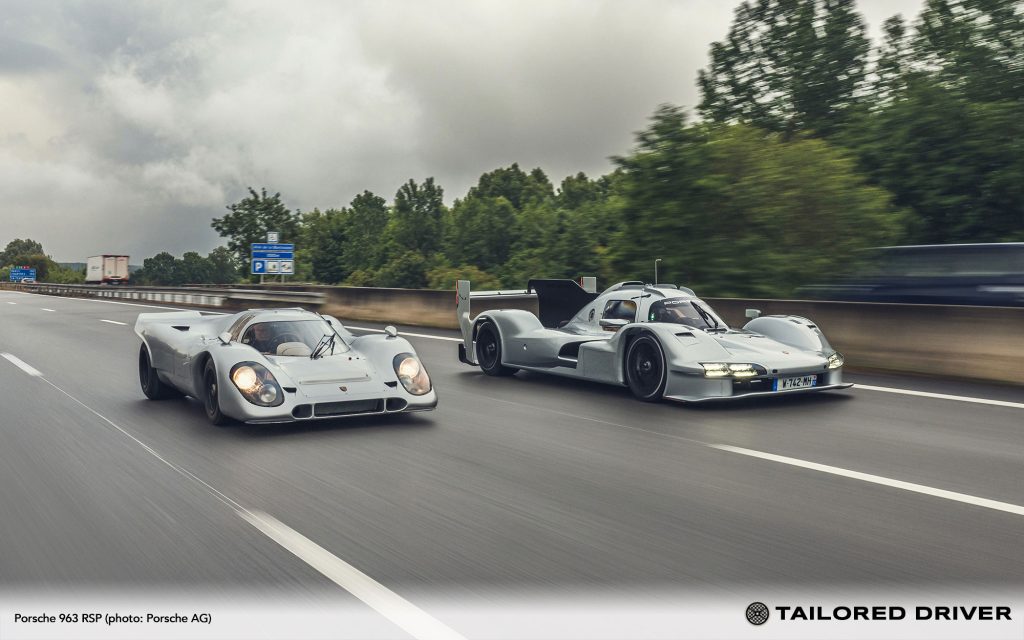
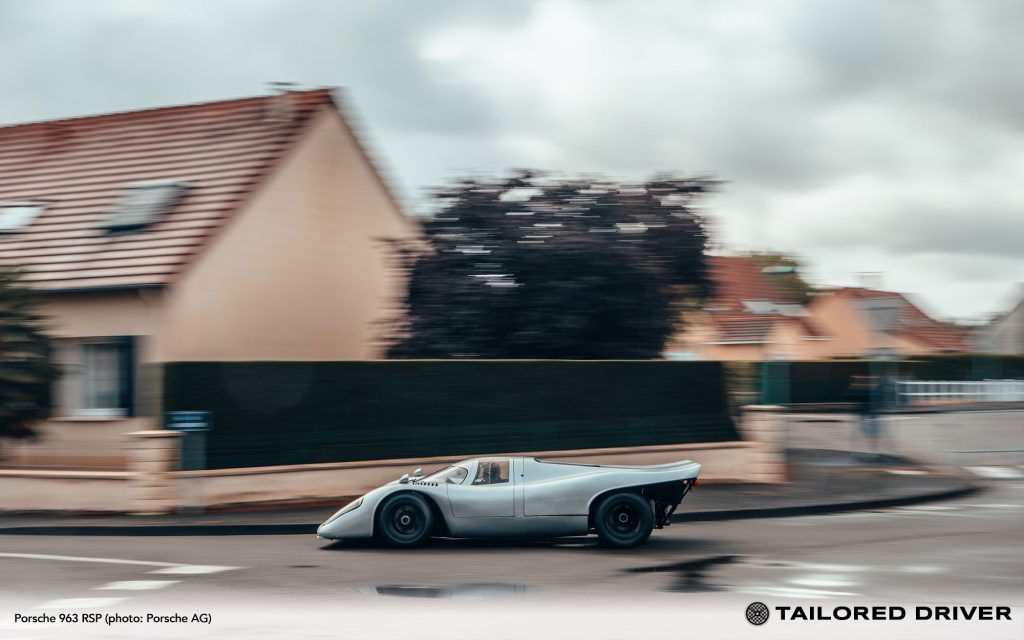
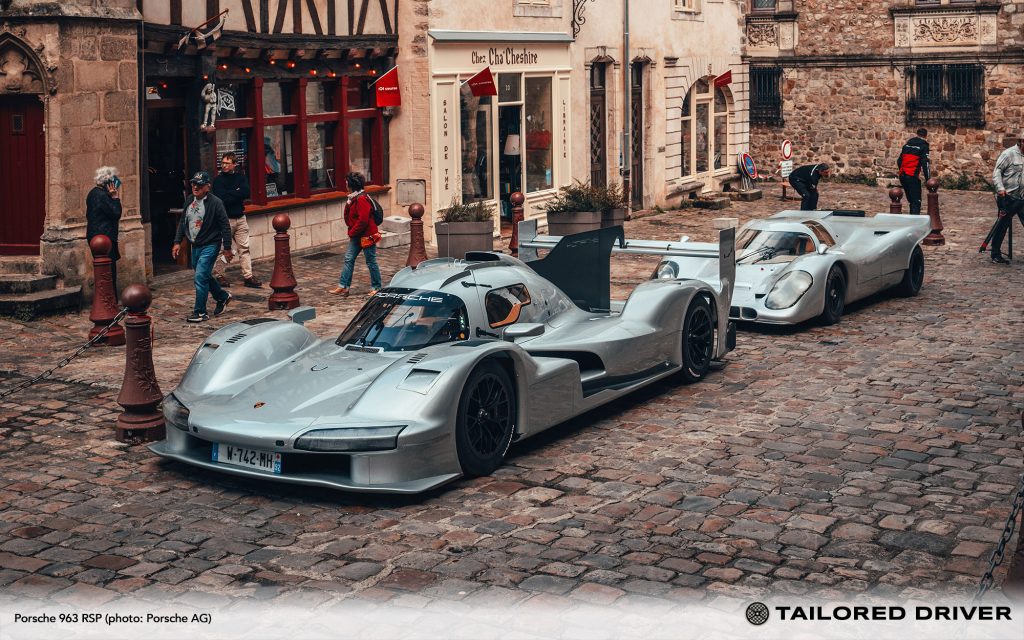
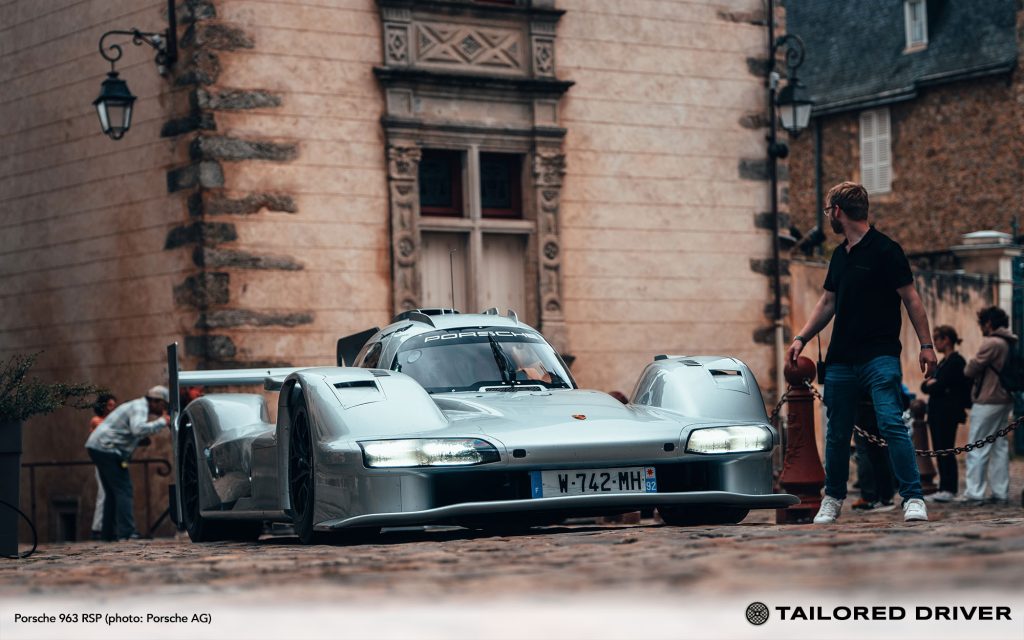
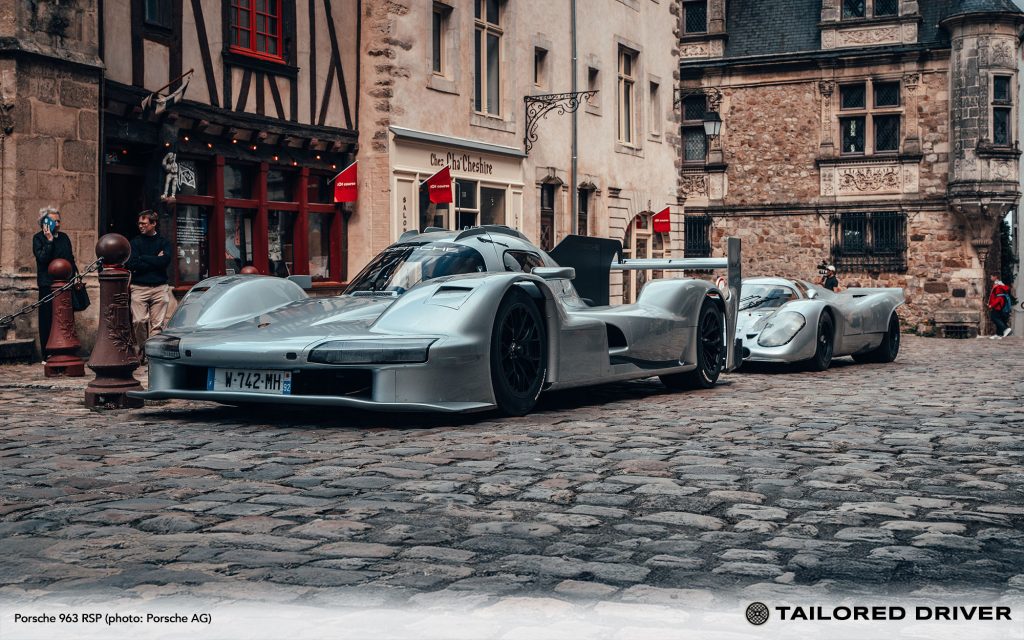
    With these changes completed, the car met the necessary requirements to be allowed to wear registration plates under special permission from the French authorities. For the 963, there was no need to ring up the Alabama’s D.O.T. and the 963 was allowed to debut on the streets around Le Mans to the delight of the Automobile Club de l’Ouest (ACO) that runs Le Mans and no doubt every other racing enthusiast who caught it driving by.

    “That was an experience that will stay with me for a lifetime,” said Timo Bernhard, who piloted the 963 RSP for the debut. “Driving down a public road with a 917 beside me – it felt unreal. The car behaved perfectly – it felt a little friendlier and more forgiving than the normal 963 – and felt super special and a lot more comfortable, especially as I was not needing all my safety gear.”

    “We have enjoyed a terrific relationship with Porsche dating back to 1972. The Porsche 917/30, in particular, was one of the greatest eras in Team Penske history with numerous wins and championships, along with the closed-course speed record set by Mark Donohue in 1975,” said Roger Penske, Chairman of the Penske Corporation. “With such a remarkable partnership continuing to this day, we felt it was time to create the most exciting car we could imagine. Just like the 917, I wanted this car to be authentic to its origin and have as few changes to it as possible. When we got into the project, the differences in the two generations of race cars provided a great challenge. What emerged is a car that has lost none of its edge and is exciting whether on the track or on the road.”

    The 963 RSP will be on display at the Circuit de la Sarthe for this year’s 24 Hours of Le Mans. Following the race, it will go to Stuttgart and take a spot at the Porsche Museum. Then, in July, the car will appear with the 917 at the Goodwood Festival of Speed.

    Photo Gallery
    963 RSP DEEP DIVE, THE PROCESS AS COMMUNICATED BY PORSCHE

    [SOURCE: PORSCHE AG]

    Design process – exterior:

    With the concept established, the Sonderwunsch team in Zuffenhausen began translating the idea to reality in cooperation with the Sonderwunsch colleagues at Porsche Classic in Atlanta – a standalone facility opened in 2023. Drawing on the changes selected by Count Rossi in 1975, Grant Larson, Director of Special Projects at Style Porsche, and his designers envisioned a 963 that would stay as close as possible to the original car with a silver and black color pallet on the outside, and a tan leather and Alcantara mix for the interior. This extended to the decision to paint the car – as was the case with the 917 – rather than wrapping it, as is the norm with current race cars, and a significant challenge due to the Kevlar® and carbon fiber body construction. The paint to sample color – ‘Martini Silver’ – was verified from the records held by the Porsche Museum in Stuttgart-Zuffenhausen, with a triple-layer lacquer applied. Minor components such as hinges and wing connectors are all finished in satin black with a unique 3D printed ‘963 RSP’ created and applied to the rear of the car.

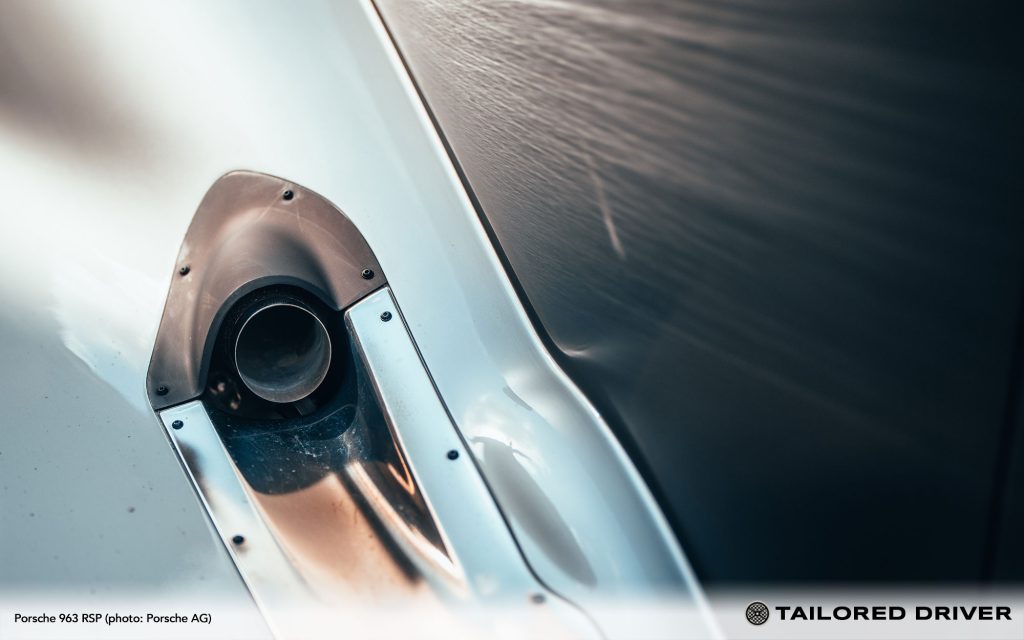
    To closer align the 963 to the form of the 917, bodywork changes were made to the 963 RSP. These include the creation of unique fender vents – where otherwise the front and rear fender vents would be open. A collaboration between Sonderwunsch and Porsche Penske Motorsport, the vents were digitally rendered first before applied to the car, with the new design allowing air within the wheel wells to escape. Additionally, the carbon fiber blanking plates that sit within the rear wing – a requirement on the race car – were able to be removed for the 963 RSP.

    Added to the nose of the car – replacing the graphic that is applied to all conventional 963s – was an enamel Porsche badge, a detailed shared with the 917.

    A small detail change was the addition of 1970s-era Michelin logos for the tire walls, and rain-spec 18-inch tires over forged OZ racing wheels. Finally – and in another first – mounting points for front and rear license plates were added ahead of the car being driven on public roads to mark the 50th anniversary of the first street drive of the 917.

    Design process – interior:

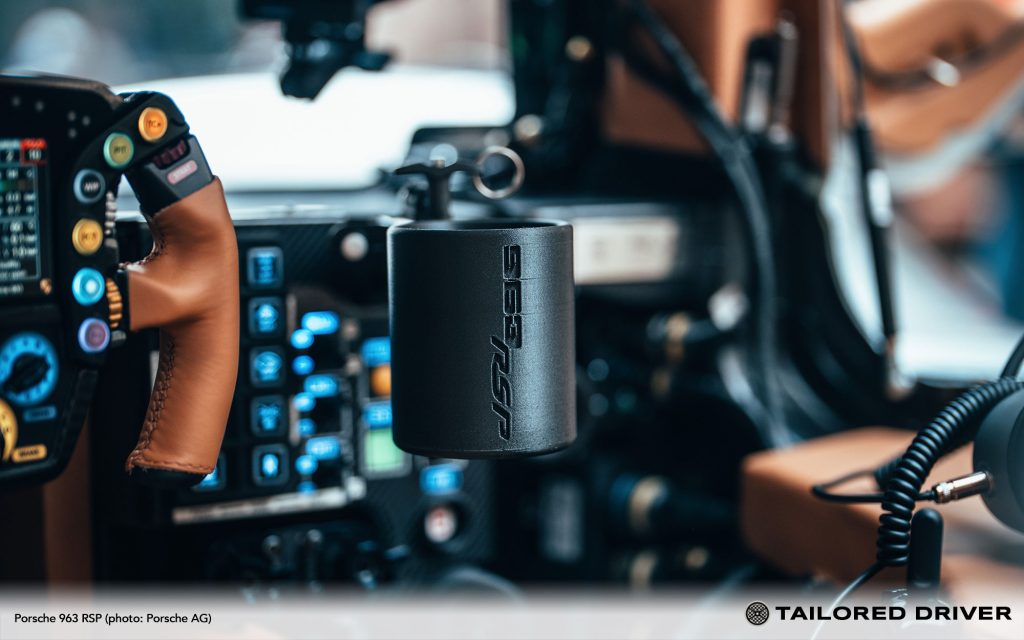
    Possibly the greatest departure from the 963 race car occurs inside the 963 RSP. Following the lead of the handcrafted and completely bespoke interior of the 917 (which remains unrestored to this day) the 963 RSP features a mix of soft tan leather and Alcantara. Whereas the race car features very few comfort features, the 963 RSP is more accommodating – with the single piece carbon seat trimmed in leather with soft cushioning placed down the center and a fixed headrest mounted on the carbon fiber bulkhead. The seats are – in common with the race version – air conditioned. The leg cushions in the footwell as well as the roof lining and pillars have been retrimmed in light Alcantara while the steering wheel – where the majority of the vehicle’s functions are located – has been finished in leather. A light-hearted addition is a detachable 3D-printed cup holder capable of securely holding a Porsche travel mug. 

    Next to the driver, a new trimmed panel provides a location for the car’s Peltor headset and steering wheel when not in use as well as a platform for the laptop that starts and assists in the operation of the car and Roger Penske’s custom carbon crash helmet.

    While the color of design of the interior are obvious references to the 917, more subtle design elements can be found – among them bespoke end plates for the ventilation system which mimic the styling of the fan on top of the 917’s flat-12 engine.

    The doors are finished in leather and Alcantara, with a small alloy plaque set into one of them denoting the chassis number and the date and location of construction.

    Mechanical changes:

    The ride height of the car was raised to its maximum available setting to accommodate road use, while the adjustable Multimatic DSSV dampers designed for racing prototypes are in their softest setting to create a more compliant ride.

    The control unit was modified to allow the car to operate turn signals and allow the headlights to be adjusted for road. The hybrid V8 powertrain with a lithium-ion battery – capable of being run on electrical power only – remains in standard race tune in the 963 RSP, but power delivery from the MGU has been remapped to provide smooth delivery more appropriate for road use versus race competition The powertrain was also re-mapped to be capable of running on pump gas – a significant undertaking for the team.

    Finishing touches:

    Accompanying the 963 RSP are a custom fitted carbon crash helmet with Martini Silver accents to match the car, and a bespoke Snap On toolset with a chest bearing accents in the same color, a plaque commemorating the project and its namesake, and handles wrapped in the same leather used in the interior of the car. The drawers also feature custom foam inserts to carry tools and special equipment necessary to start, service and operate the car.

    While capable of being driven on the road under special circumstances and in accordance with local requirements (the modifications to the car allowed it to use French ‘W’ or manufacturer license plates for its debut), the 963 RSP is not a homologated addition to the Porsche model line-up and is intended to remain a very special one-off.

    The powertrain of the 963:

    The 963 is powered by a 4.6 liter twin-turbocharged V8 making up to approximately 680 hp that has its origins in the RS Spyder race program operated by Penske which claimed all titles in the LMP2 class of the American Le Mans Series from 2006 to 2008. The engine was enlarged from 3.4 to 4.6 liters and then used in the limited-production 918 Spyder road car, which debuted in 2013. The flat crankshaft and short stroke of the engine allow for a low mounting point, helping to optimize the center of gravity of the car. While the 918 Spyder used the engine in naturally aspirated form, the 963 pairs it with two turbochargers provided by the Dutch manufacturer Van der Lee. These turbochargers generate very moderate boost pressure and are mounted on the hot side of the engine, optimizing throttle response. Overall, around 80 percent of the engine components in the 963 are shared with the 918 Spyder, which was already designed to work together with a hybrid system.

    The standardized components of the electric boost system are supplied by Bosch (motor generator unit, electronics and software) and Williams Advanced Engineering (high-voltage battery). The motor generator unit (MGU), which is responsible for the power output and recuperation under braking at the rear axle, works in direct interaction with the sequential seven-speed gearbox from Xtrac. The MGU sits in the bell housing between the combustion engine and the gearbox.

    The hybrid’s entire electrical system produces up to 800 volts. The uniform battery has an energy capacity of 1.35 kWh, which can be mobilized at any time under acceleration. An output of 30 to 50 kW is available in short bursts but does not change the overall output of the powertrain. When the thrust of the MGU kicks in, the power of the combustion engine, which can reach over 8,000 rpm (depending on the BoP), automatically decreases.
  • Woking Harks McLaren F1 Le Mans Winner, Launches 750S Le Mans Special Edition

    Woking Harks McLaren F1 Le Mans Winner, Launches 750S Le Mans Special Edition

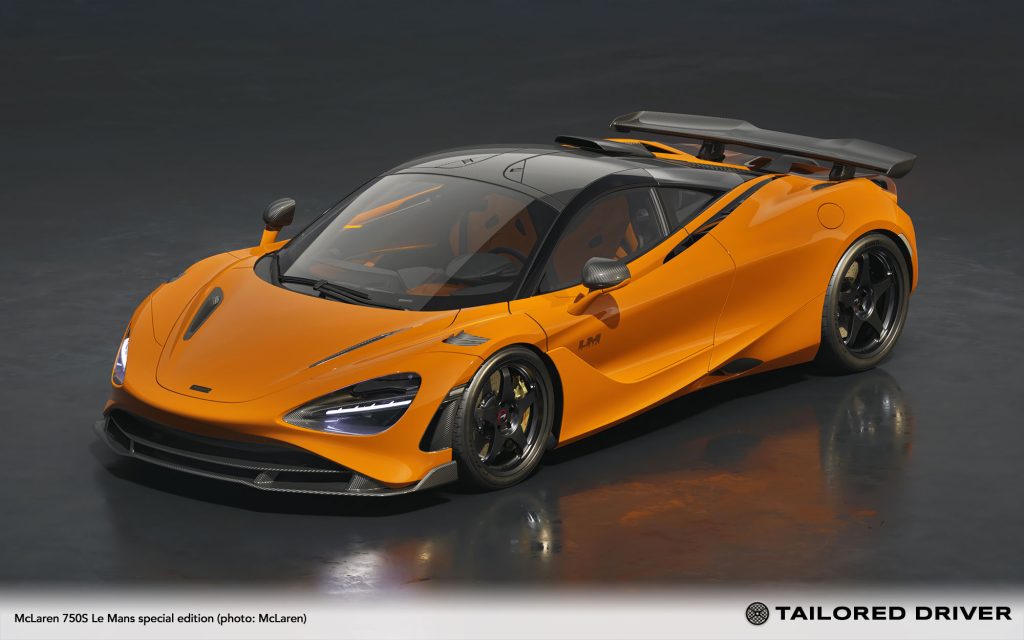
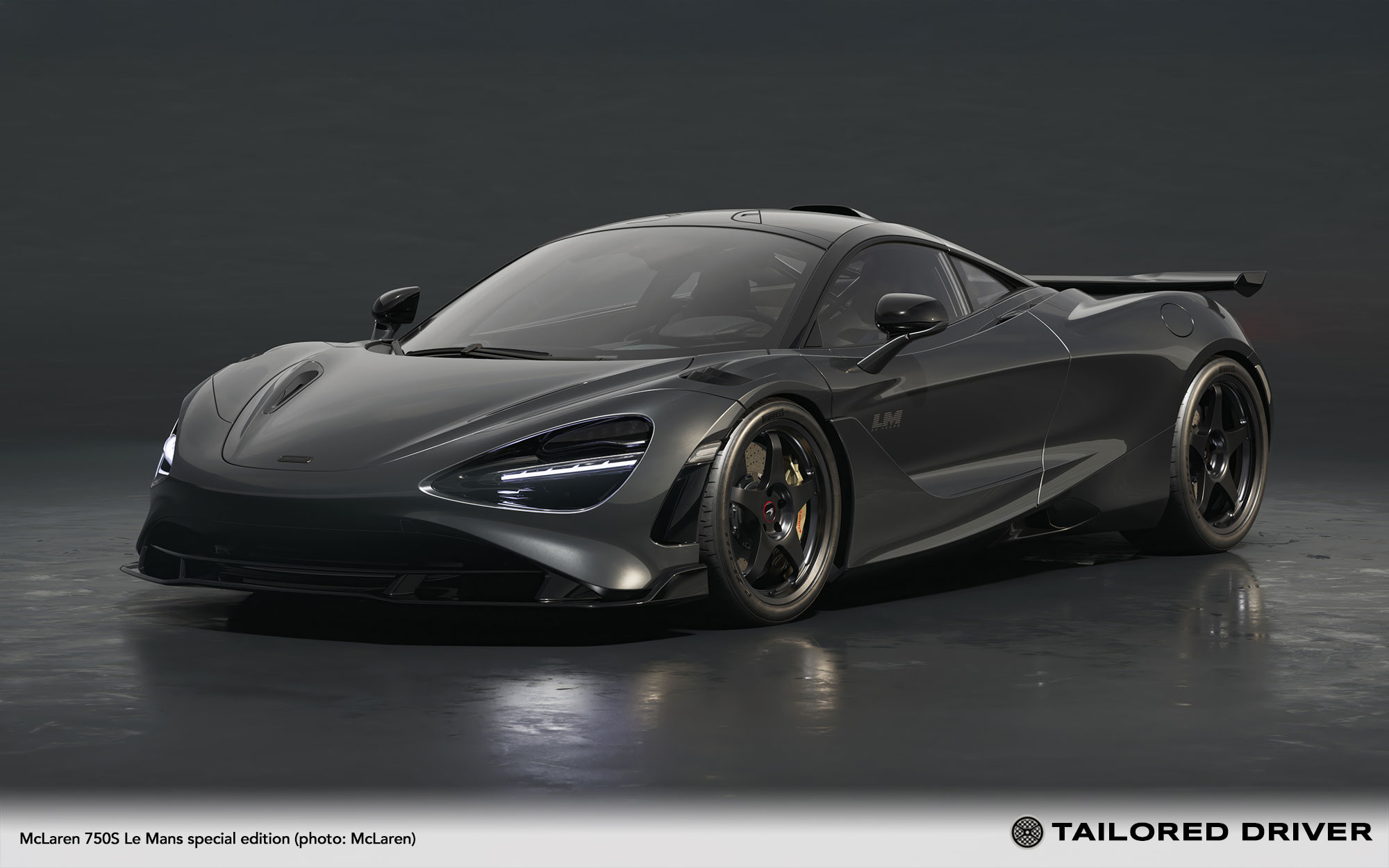
    McLaren is headed back to Le Mans, 30 years since the brand’s most recent victory at the fabled French endurance race. In as much, there’s plenty to celebrate and Woking plans to do that with this special edition 750S coupe.

    On June 18, it will have been 30 years since drivers JJ Lehto, Yannick Dalmas and Masanori Sekiya stood on the top of the podium beneath the iconic Rolex race clock and celebrated their victory – the first appearance at Le Mans for McLaren, though it would be their only victory there since.

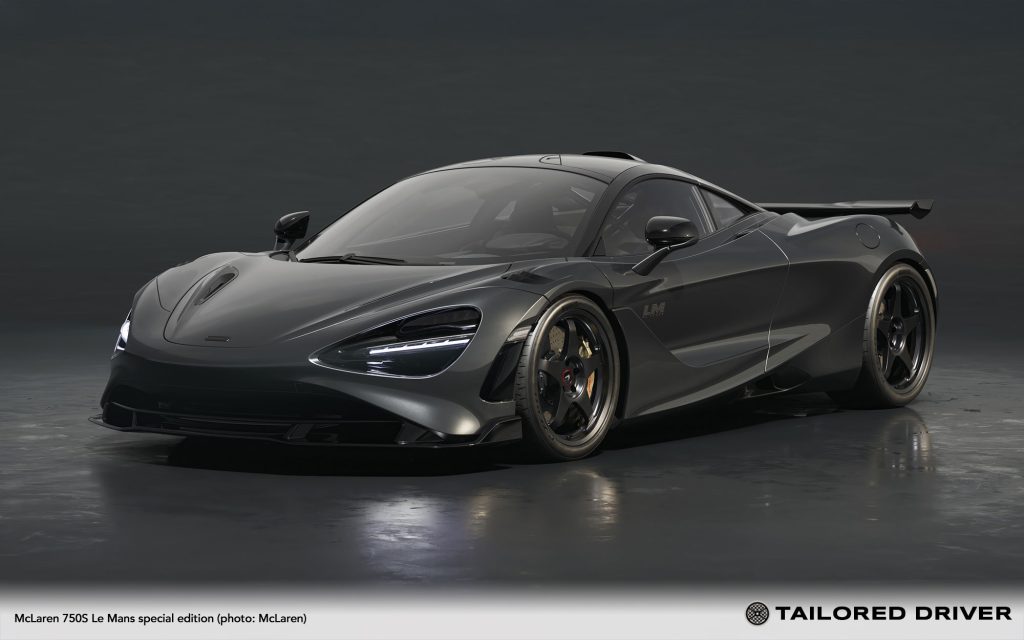
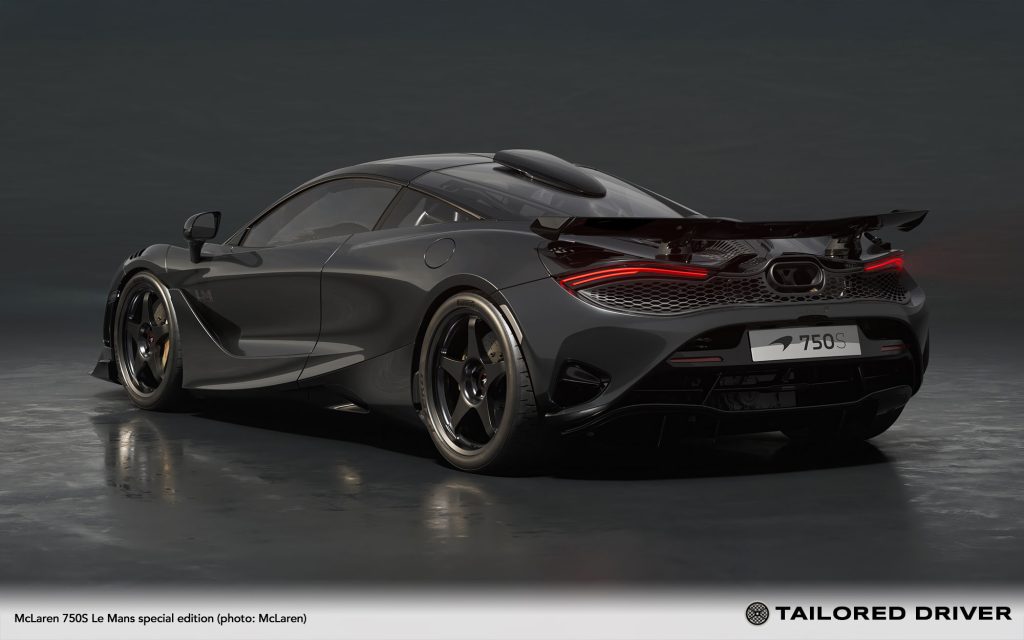
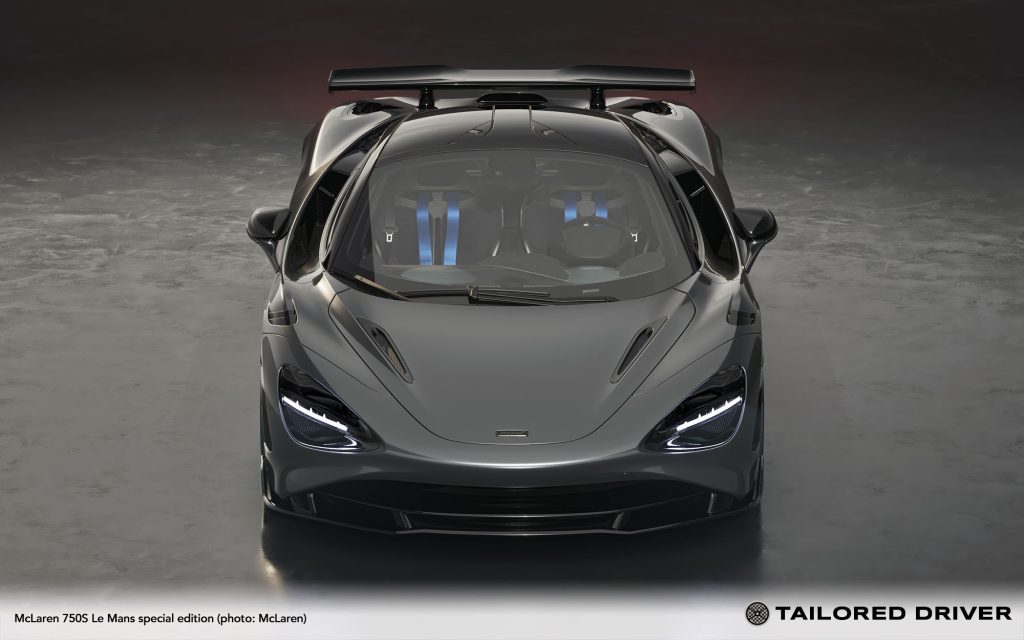
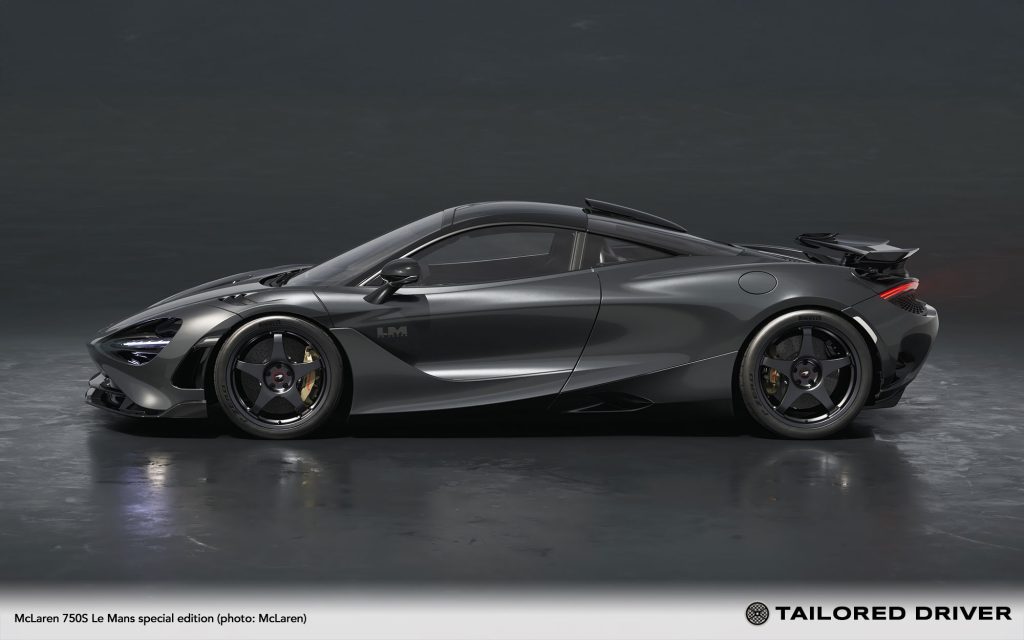
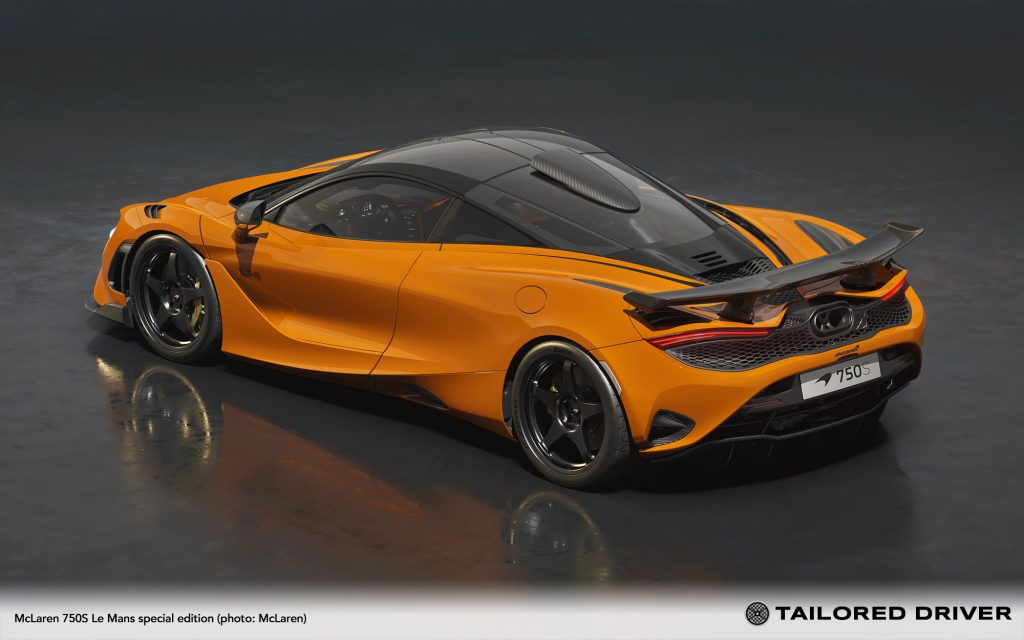
    Acknowledging that 30-year anniversary will be just 50 examples of McLaren’s 750S. The design features a new MSO High Downforce Kit (HDK) that bestow the 750S with additional track-focused enhancements. Further additions include a roof scoop, unique 5-spoke LM wheel design harkening the wheels of the 1995 Le Mans-winning car plus further Le Mans branding.

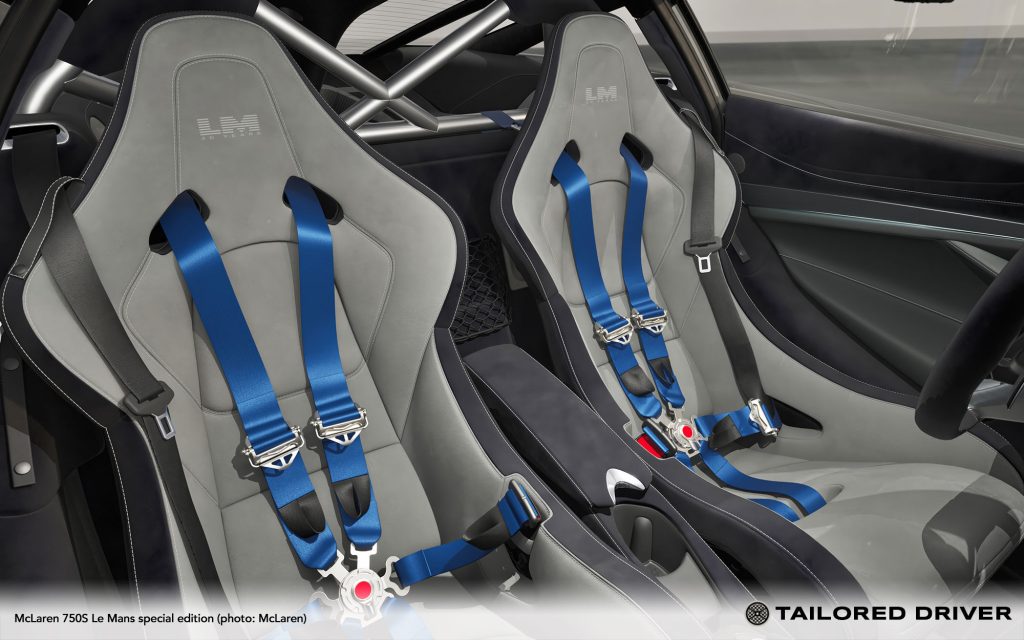
    Colors will be limited as well, though several will be offered. These include Le Mans Grey or McLaren Orange exterior. Inside, Carbon Black with Dove Grey or Carbon Black with McLaren Orange interiors are meant to complement or contrast.

    McLaren plans a return to Le Mans, and is set to arrive in 2027 with a new LMDh prototype squarely aimed at that top step beneath the Rolex clock. Until then, 50 lucky McLaren owners can celebrate the plan in their very own 750S Le Mans special edition.

    Further details can be found in the original press release and gallery below.

    PHOTO GALLERY

    PRESS RELEASE, source: McLaren

    750S Le Mans special edition celebrates 30th anniversary of McLaren’s iconic debut victory with MSO High Downforce Kit (HDK) enhancements

    • Special edition 750S coupe celebrates the 30th anniversary of McLaren’s 1995 race win
    • June 18, 2025, marks 30 years since JJ Lehto, Yannick Dalmas and Masanori Sekiya claimed victory in the 24 Hours of Le Mans on McLaren’s first appearance as a constructor in the world-famous race
    • Celebratory 750S features new MSO High Downforce Kit (HDK) giving additional track performance enhancements
    • Special edition cars available in tribute Le Mans Grey or McLaren Orange exterior and Carbon Black with Dove Grey or Carbon Black with McLaren Orange interior colours to contrast or complement
    • Additional features include roof scoop, unique 5-spoke LM wheels and Le Mans branding
    • Limited to just 50 examples worldwide and set to become one of the most sought-after 750S cars

    McLaren Automotive celebrates the 30th anniversary of its winning debut at the 24 Hours of Le Mans – completing a unique Triple Crown* achievement – and McLaren’s return to the top class of the event from 2027. With just 50 cars being built, the 750S Le Mans is set to be one of the most sought-after McLaren series production supercars.

    On June 18, 1995 McLaren F1 GTR #59 – driven by JJ Lehto, Yannick Dalmas and Masanori Sekiya – won the gruelling 24-hour race, joined by three more McLaren F1 GTRs in the top five placings. Just days before the 30th anniversary, two McLaren GT3 EVO cars – based on the 750S – will compete for LMGT3 honours at this year’s edition of the endurance classic.

    The McLaren 750S Le Mans pays homage to the iconic #59 F1 GTR with matching Le Mans Grey exterior paint – with the option of McLaren Orange also available – roof scoop and 5-spoke LM wheels. It will also feature the new MSO High Downforce Kit (HDK), which adds visual drama to the 750S with a raised carbon fibre Active Rear Spoiler with integral endplates. In conjunction with a front bumper featuring an enlarged carbon fibre splitter and rear wing, downforce is increased by 10 per cent compared to the standard 750S, enhancing track performance and echoing the famous McLaren F1 LM edition’s aerodynamic additions. Completing the HDK package is a new body-coloured carbon fibre under-wing panel featuring gloss black louvres.

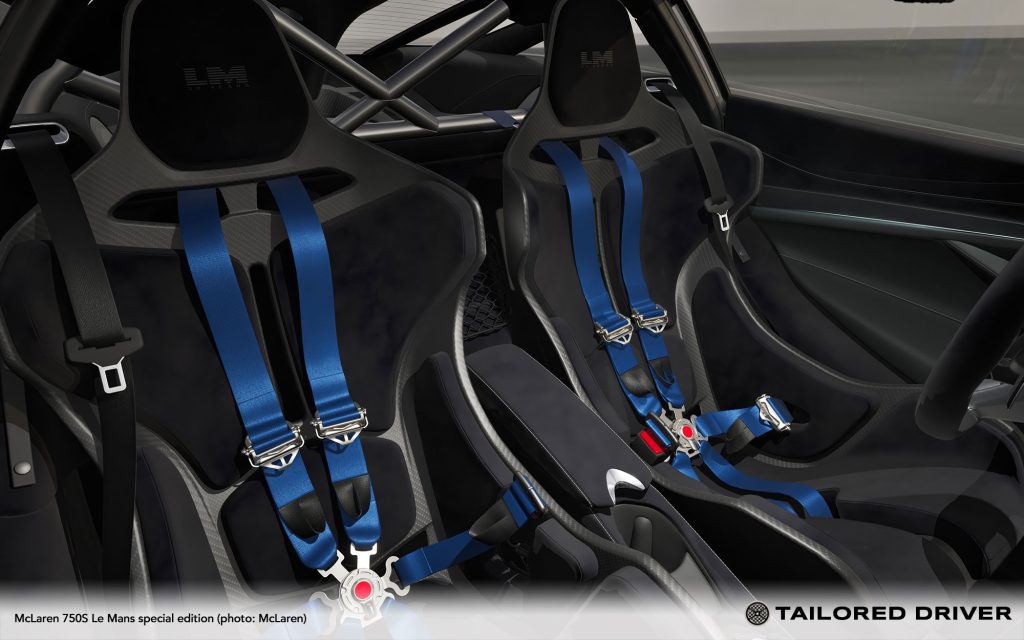
    McLaren 750S Le Mans customers will also have a choice of Carbon Black with Dove Grey or Carbon Black with McLaren Orange interior colour combinations with Le Mans branding and a dedication plaque, with all cars featuring a portfolio of unique features as standard:

    Exterior

    • Choice of two exterior paint themes: Le Mans Grey or McLaren Orange
    • High Downforce Kit (HDK) front bumper with enlarged Carbon Fibre Splitter in Gloss Black, Raised Carbon Fibre Active Rear Spoiler in Gloss Black and Louvred Body Colour Carbon Fibre Under-Wing Panel with Gloss Black Louvres
    • 5-spoke Le Mans wheel with Stealth finish and Le Mans branding
    • F1 Gold Special Colour Brake Calipers with red McLaren logo
    • Wheel Centre Caps with blue/red colour detail
    • Gloss Black Carbon Fibre Roof Scoop
    • Carbon Fibre Front Fenders with Gloss Black Louvres
    • Gloss Black exterior details
    • Natural Titanium Exhaust Finisher
    • Painted Le Mans exterior branding

    Interior

    • Choice of two unique Le Mans interior themes; Carbon Black Alcantara with Jet Black Softgrain Leather and Dove Grey Alcantara or Carbon Black Alcantara with Jet Black Softgrain Leather and McLaren Orange Alcantara
    • Le Mans debossed headrest branding
    • Le Mans branded floormats
    • Bespoke Le Mans dedication plaque

    In addition, a range of options are available exclusively to 750S Le Mans customers, including:

    • Exterior Details in Gloss Visual Carbon Fibre, including the Hood Air Intakes, Door Mirror Casings, Side Air Intakes, Rear Fender Air Intakes and Raised Active Rear Spoiler Endplates
    • Gloss Visual Carbon Fibre HDK and Underbody pack, including the Front Splitter, Rear Diffuser and Raised Active Rear Spoiler
    • Gloss Visual Carbon Fibre Raised Active Rear Spoiler only
    • Gloss Visual Carbon Fibre Louvre pack including the Front Fender Louvres and Rear Under-Wing Panel Louvres
    • Gloss Visual Carbon Fibre Roof Scoop Outer
    • Track Brake Upgrade incorporating F1 Gold Special Colour Brake Calipers with red McLaren logo

    An optional track record plaque lists the 1995 Le Mans victory, with Triple Crown* achievements also featured alongside McLaren’s many significant motorsport successes. Mounted in the front luggage compartment, this option is available to purchasers of all new 750S cars.
    Purchasers of the Le Mans edition cars will also benefit from the multi-award winning** benchmark-beating 750S performance delivered by the mid-mounted, 750PS M840T 4.0-litre, twin-turbocharged V8 McLaren engine. A motorsport-inspired carbon fibre Monocage II central structure and Proactive Chassis Control III suspension system help to ensure that the 750S is the lightest and most agile car in its class, now enhanced by the HDK aerodynamic additions.

    “The 750S Le Mans marks not just 30 years since our debut victory in the iconic race but an exciting time for the brand with McLaren GT3 EVO cars competing in this year’s race and the announcement of our return to the top, Hypercar class in 2027.

    This exclusive 750S is the first McLaren Le Mans edition since the F1 LM to feature HDK aerodynamic enhancements and is set to become one of our most sought-after supercars, with previous Le Mans editions of the 650S and 720S commanding a premium over standard models.”

    Henrik Wilhelmsmeyer, Chief Commercial Officer, McLaren Automotive

    Ends

  • Unique Extras Delivered with Each Continental GT Le Mans Collection Model

    Unique Extras Delivered with Each Continental GT Le Mans Collection Model

    • First of 24 GT coupes destined for Europe hits the road in Germany
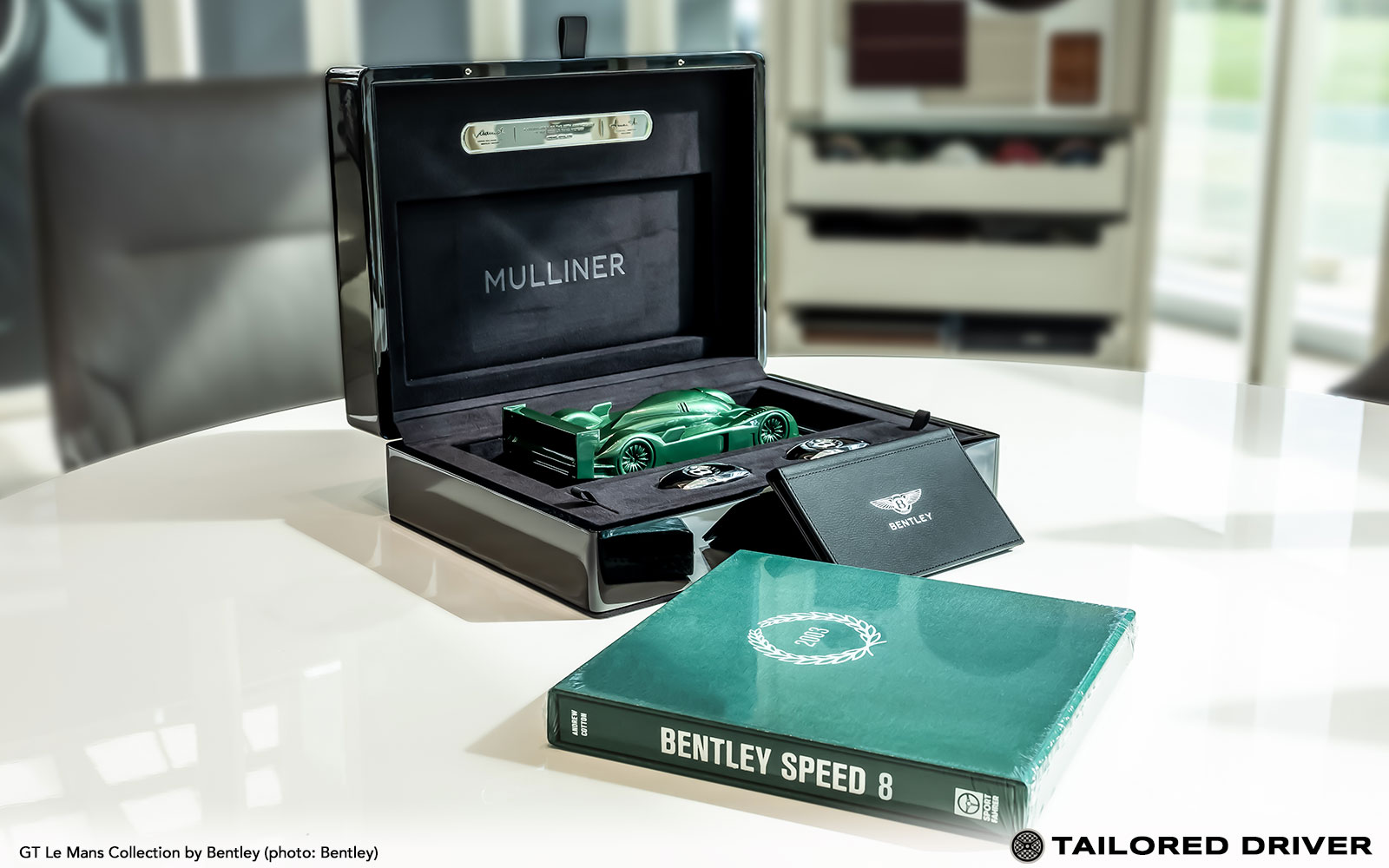
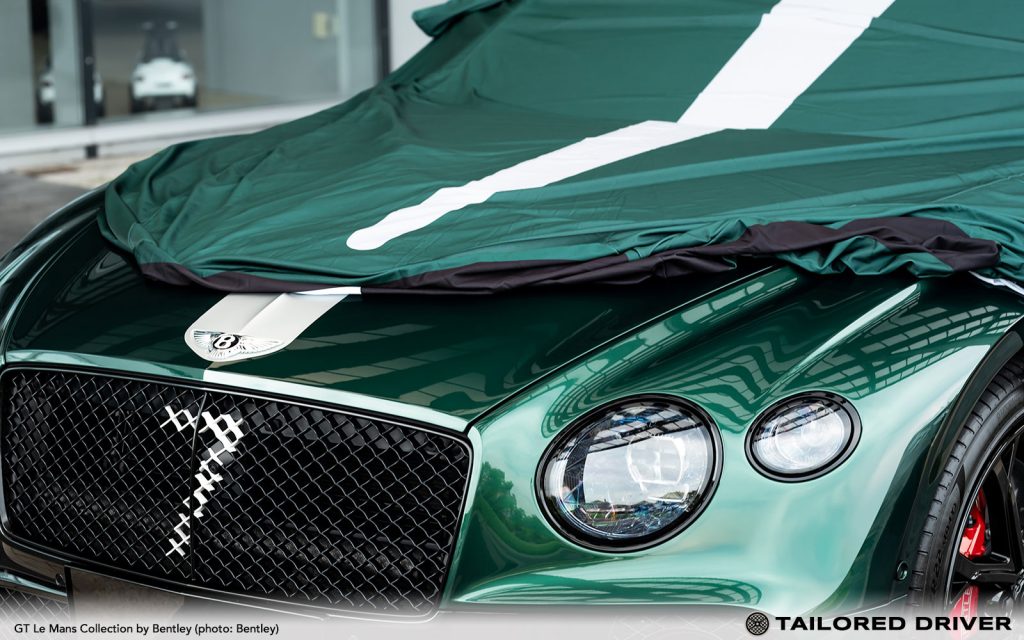
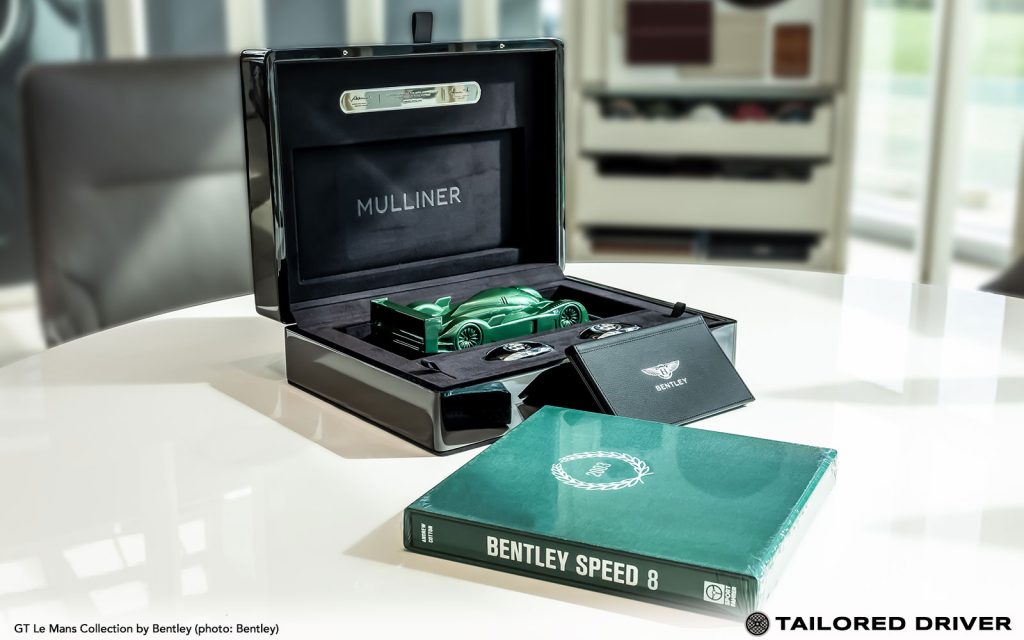
    • Each car is delivered to its owner with unique extras: special wooden handover box with unique Speed 8 sculpture and booklet, Speed 8 book as well as special car cover
    • GT Le Mans Collection marks 20th anniversary of Bentley’s sixth victory at the 24 Hours of Le Mans – the world’s most iconic endurance race
    • Unique features include Bentley Rotating Display housing valve from engine of 2003 Le Mans winning Bentley #7 Speed 8
    • GT Le Mans Collection handcrafted in England by Mulliner – Bentley’s personal commissioning division 

    Münich, Germany – The first of 24 Bentley Continental GT Le Mans Collection models for Europe is hitting the continent’s roads for the first time in Dusseldorf, Germany. The full collection of 48 limited edition Continental GT and GTC cars are being handcrafted in England by Mulliner, Bentley’s personal commissioning division, with just 24 coupes destined for European customers. 

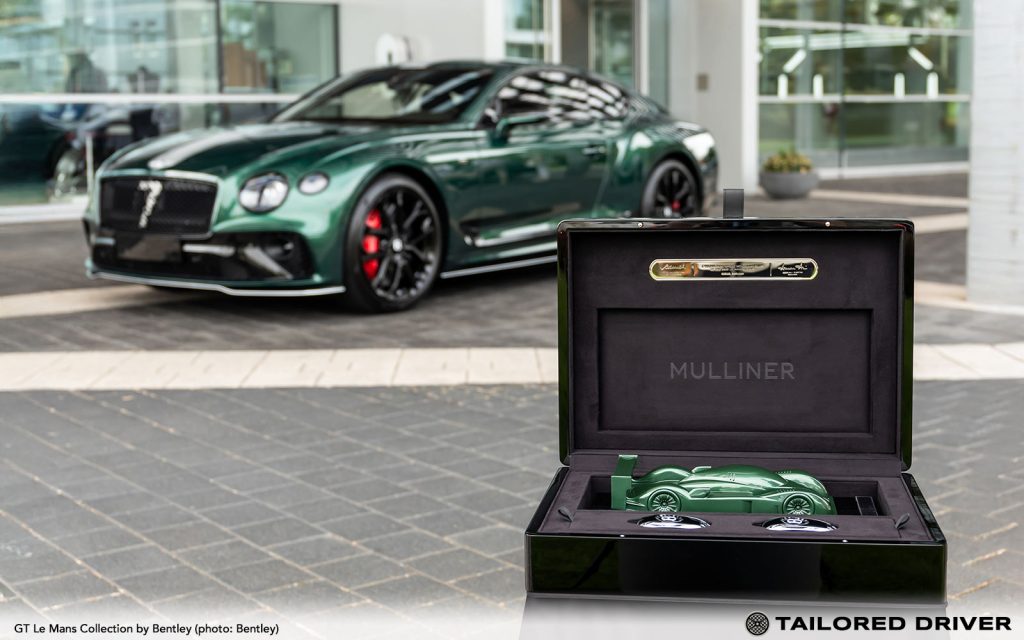
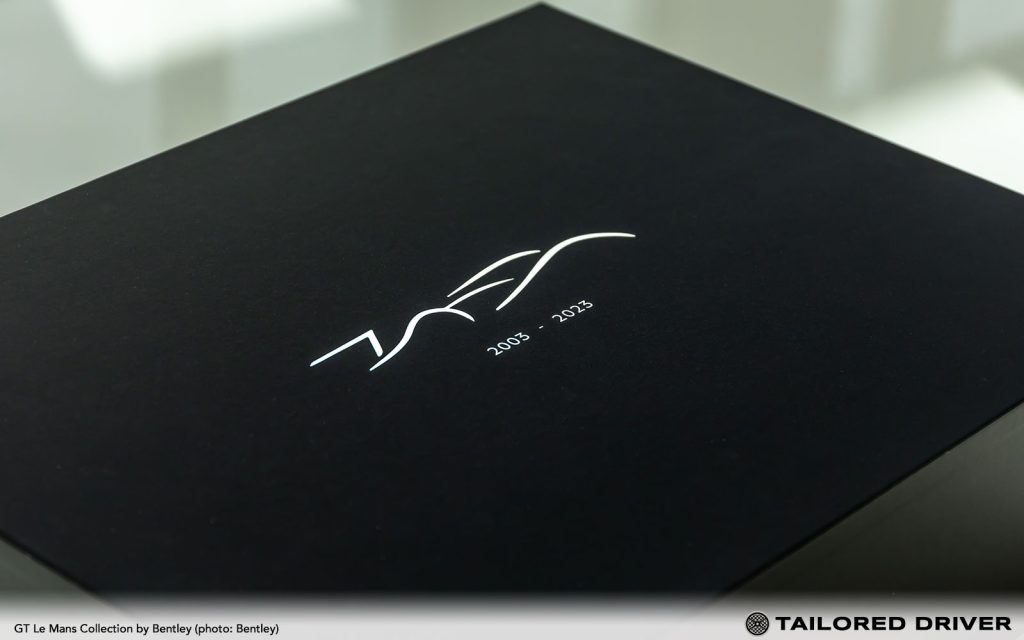
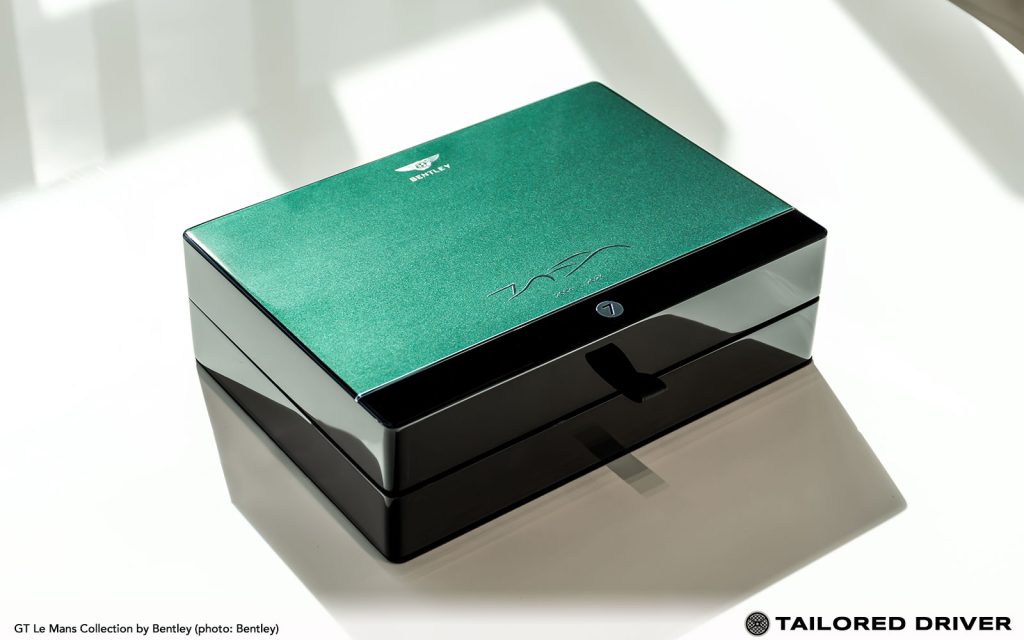
    All GT Le Mans Collection owners will receive a unique car cover as well as a special wooden presentation box, crafted in Piano Black and Verdant – the same as the car itself. Inside, the box contains the car key, as well as an exclusive Speed 8 sculpture and booklet, detailing how the sculpture was made. A plaque inside the lid is signed by Adrian Hallmark, Chairman and CEO, Bentley Motors, and Ansar Ali, Mulliner and Motorsport Director, Bentley Motors.

    The box is complemented by a Speed 8 book, written by automotive expert Andrew Cotton. Published by Sportfahrer, the fascinating hardback reveals the full history of the Speed 8 race car project, from the first concept to Bentley’s Le Mans success. With a whole chapter dedicated to Shaun Lynn’s Speed 8 car restoration, the book features a green cover with a silver 2003 wreath, identifying it as unique to the Le Mans Collection.

    The GT Le Mans Collection marks the 20th anniversary of Bentley’s sixth victory at the world’s most iconic road race, with the Bentley #7 Speed 8 taking the chequered flag in 2003. This year is also the centenary of the first 24 Hours of Le Mans in 1923, when Bentley recorded the fastest lap. 

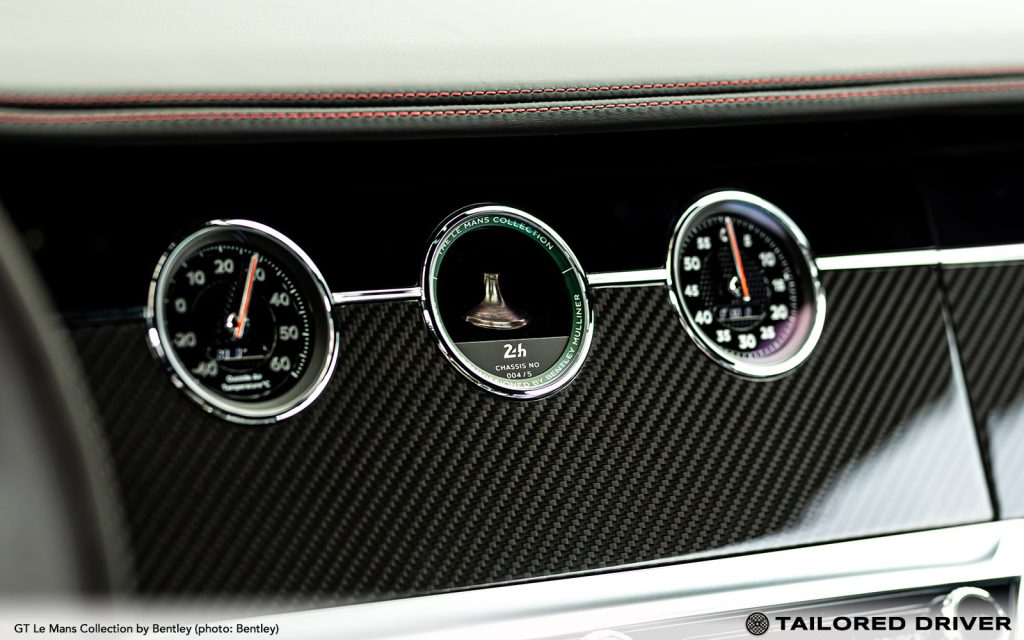
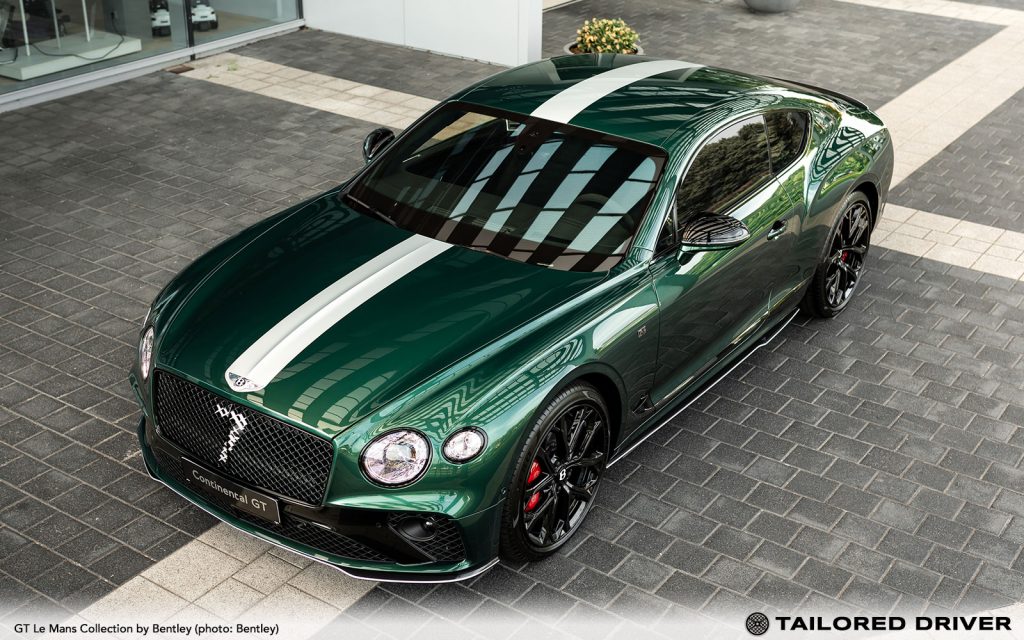
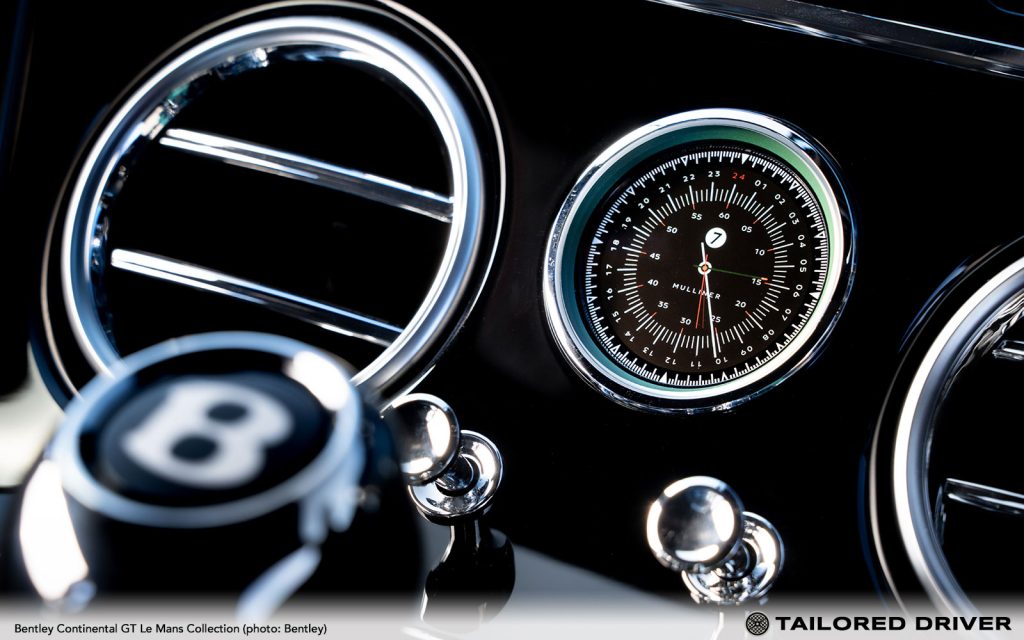
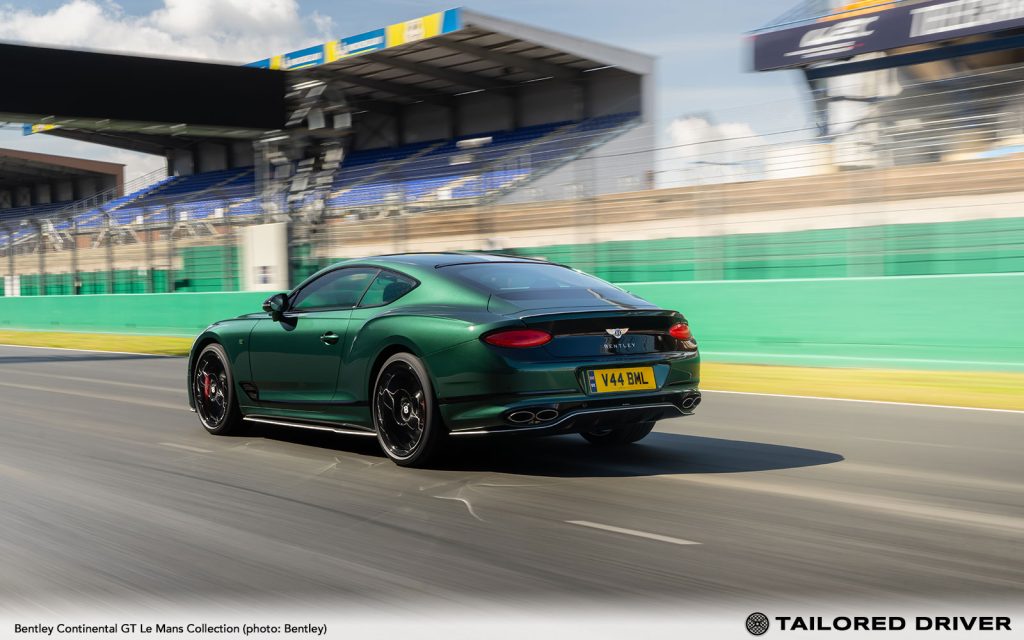
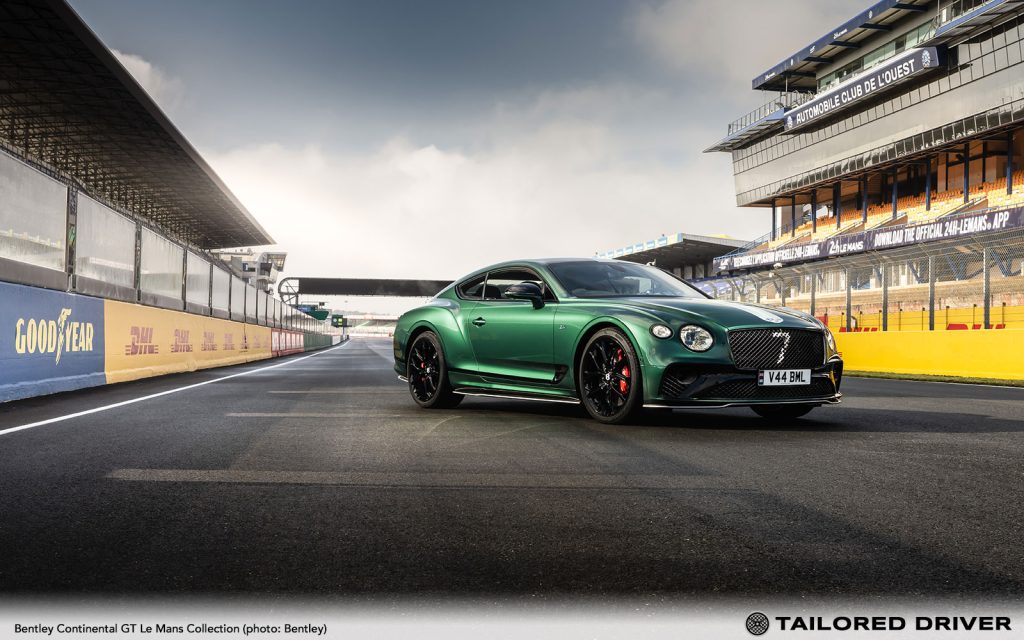
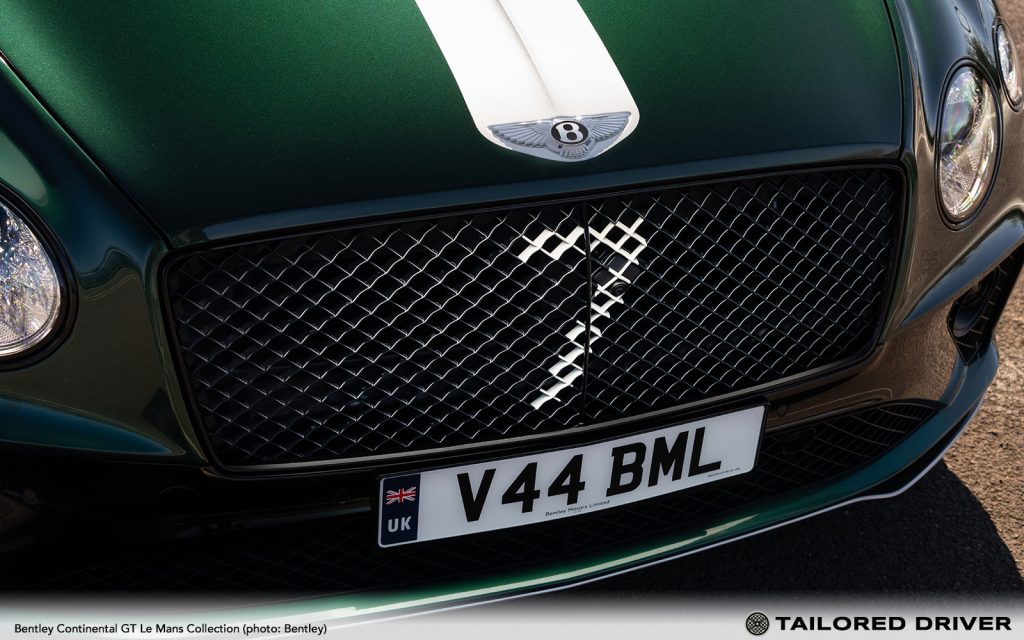
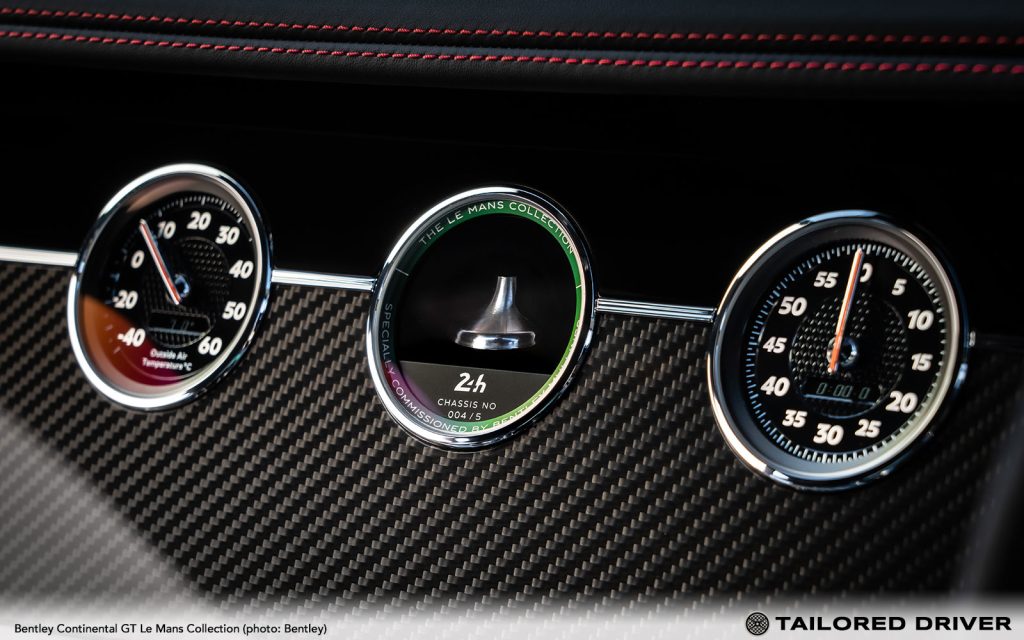
    Like the coupe in Dusseldorf, each GT Le Mans Collection car is delivered with unique features. The Bentley Rotating Display on the dashboard houses a valve from the engine of the 2003 Le Mans winning #7 Speed 8, while evocative exterior styling includes Verdant green paintwork and a Moonbeam racing stripe. A No. 7 emblem on the grille also celebrates the 2003 victory.
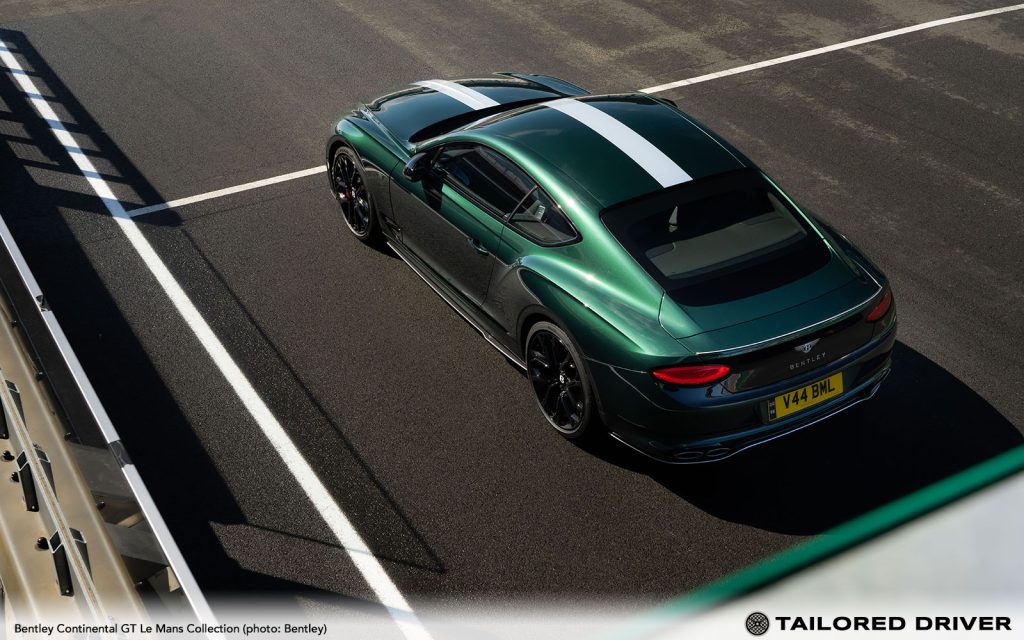
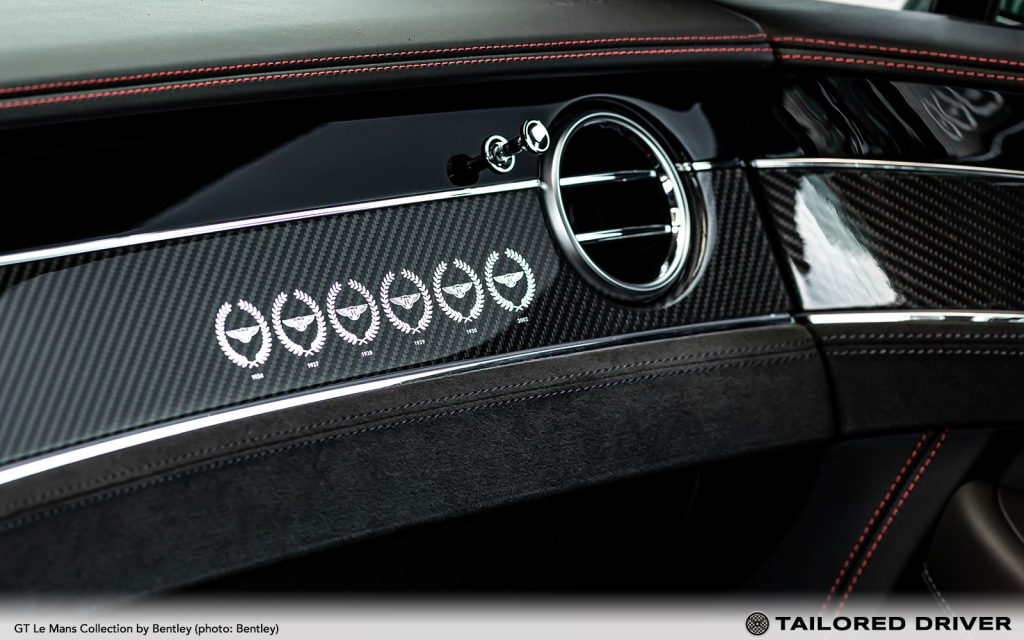
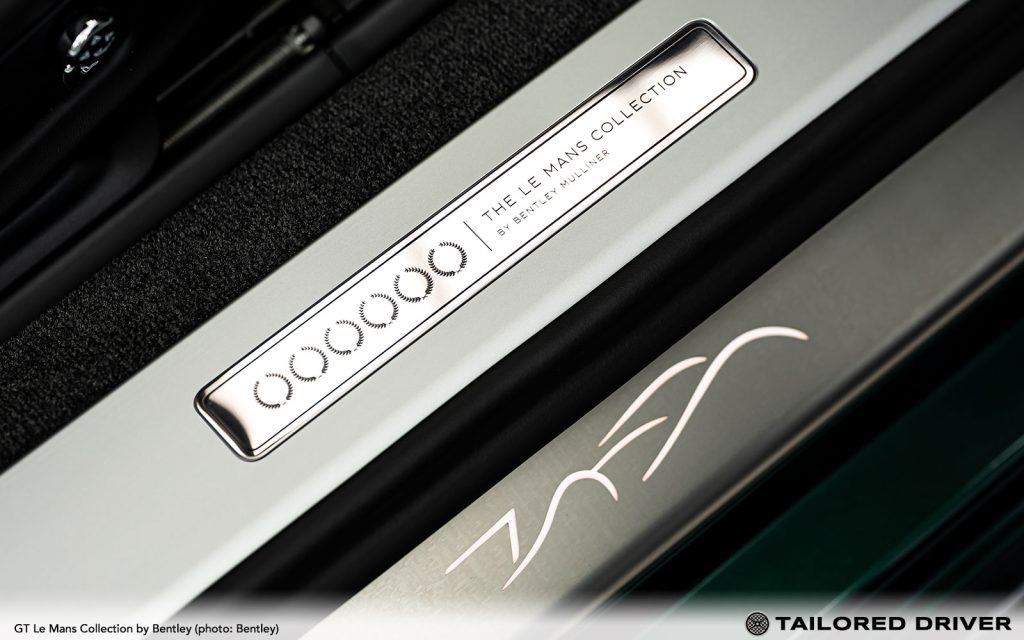
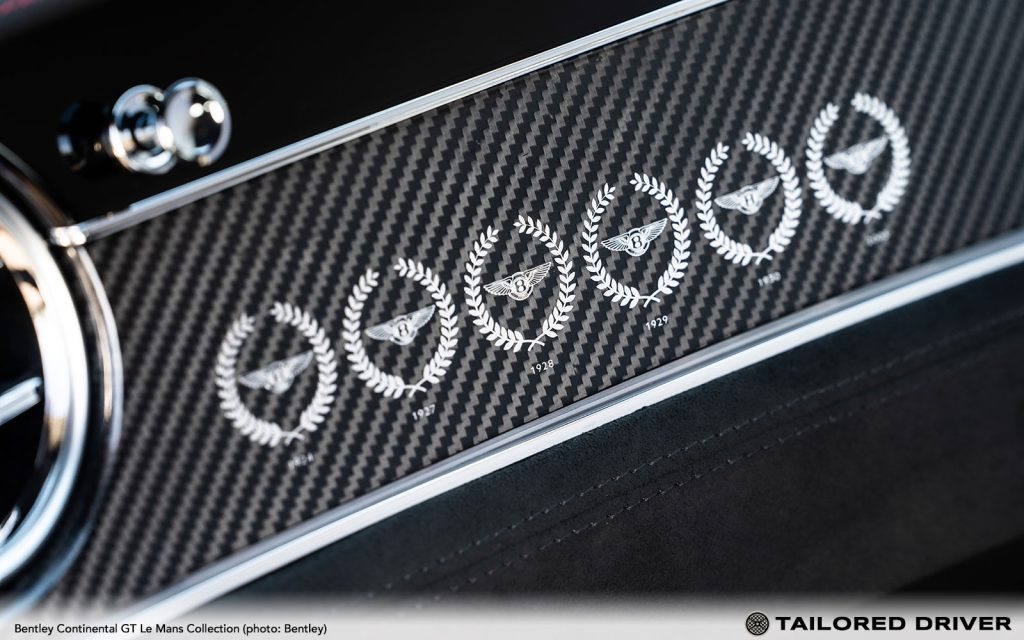
    Other bespoke details range from the six-wreath emblem inlaid into the high-gloss carbon fibre fascia, marking each of the six outright victories recorded by Bentley at Le Mans from 1924 to 2003, to the Bentley matrix grille, originally designed to protect the radiator on the unpaved Le Mans racetrack of the 1920s. Inside, a luxurious Le Mans Collection cockpit is trimmed with Beluga hide, while the standard 12-hour analogue clock is replaced with a bespoke, 24-hour dial design. 

    Race-inspired performance comes from Bentley’s renowned 6.0-litre W12 TSI engine, delivering 659 PS (650 bhp) and an extraordinary 900 Nm (664 lb.ft) of torque. This results in a top speed of 208 mph (335 km/h) and 0-60 mph in 3.5 seconds (0-100 km/h in 3.6 seconds).

    Balazs Rooz, Regional Director of Bentley Europe, added:

    “Following the recent static European debut of the GT Le Mans Collection at the Le Mans Classic event, I am delighted to see this limited edition now being delivered to our happy  few customers. The brand has played a key role in Europe’s motoring history and in the W12 run out phase, it is a nice farewell and homage to the Speed 8 #7 win in 2003, the same year when the W12 was launched to the world.”

  • Bentley Continental GT / GTC Le Mans Collection Celebrate Shared History

    Bentley Continental GT / GTC Le Mans Collection Celebrate Shared History

    • Le Mans Collection marks 20th anniversary of Bentley’s sixth victory at the world’s most iconic endurance race – the 24 Hours of Le Mans
    • Shared history: 100 years since the first Le Mans – when a Bentley recorded the fastest lap
    • Bentley Rotating Display houses a valve from the engine of the 2003 Le Mans winning #7 Bentley Speed 8 
    • Limited edition of a total of 48 Continental GT and GTCs globally
    • Powered by 6.0-litre twin-turbo W12, the most successful 12-cylinder engine of the modern era
    • Crafted by Mulliner, Bentley’s personal commissioning division
    • Evocative exterior styling in Verdant green with Moonbeam racing stripe
    • No.7 on grille celebrates winning Bentley Speed 8 #7 of 2003
    • Interior features include fascia inlay of six winning wreaths, Speed 8 silhouette treadplate and digital 24-hour clock

    [source: Bentley]

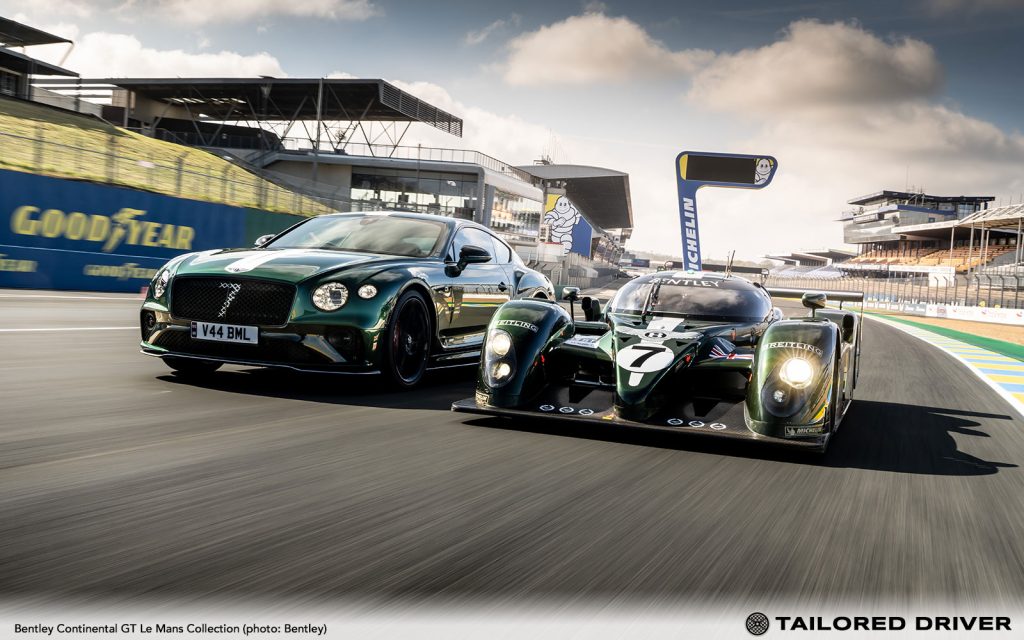
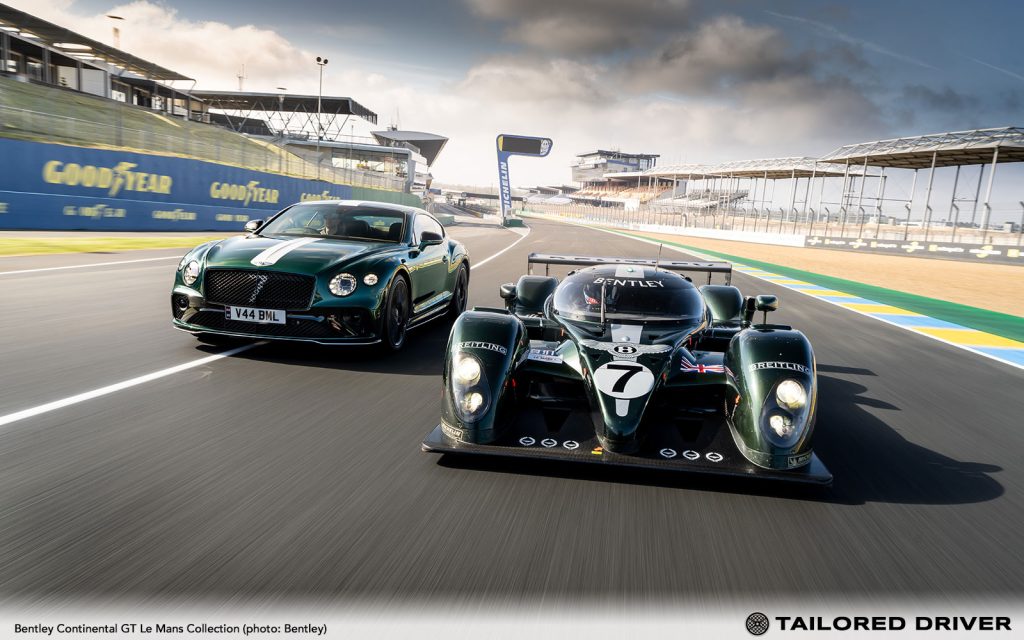
    Crewe, England – To mark 20 years since Bentley’s sixth victory at the 24 Hours of Le Mans, and 100 years since the first running of the legendary race, Bentley is creating a limited edition of Continental GT Coupés and Continental GTC’s. Each will be powered by the Bentley W12 engine, the most successful 12-cylinder engine of the modern era. The Le Mans Collection includes unique exterior and interior details that echo the design of the Le Mans winning Speed 8 #7.

    All Le Mans Collection models are specified with the three-way Bentley Rotating Display, offering a choice of touchscreen, dual veneer or analogue dials – but with a twist; In place of the standard central dial is a Vitrine displaying an engine valve from the 4.0-litre twin-turbo V8 of the 2003 Le Mans winning Bentley Speed 8. The engine was removed after the contest and preserved, and now 24 of the 32 valves from the engine have been bisected to create 48 artefacts for this exclusive collection of ultimate Grand Tourers.

    In another thoughtful touch, the standard 12-hour analogue clock is replaced by a digital clock with a bespoke dial design – a 24 hour one, naturally.

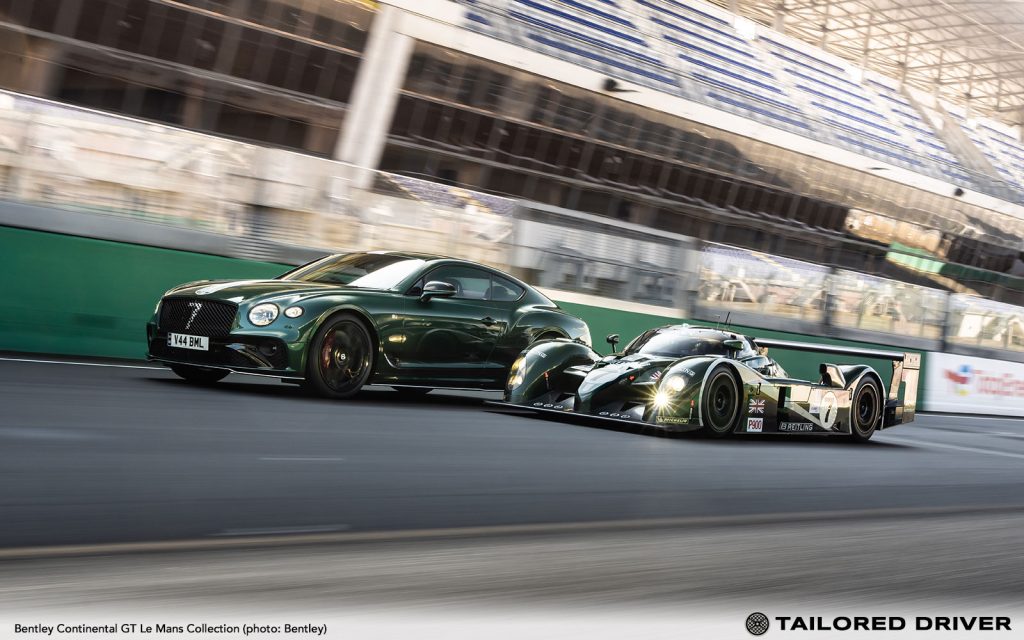
    Mulliner, Bentley’s personal commissioning division, has taken inspiration from the dark green Speed 8 racing cars that swept all before them at Le Mans in 2003. From the Verdant green (verdantgreen; metallic UNI; 6606 / 9560016; Bentley) exterior to the sliver of Speed 8 engine displayed in the fascia, the Le Mans Collection is a heartfelt tribute to a long and glorious shared history between Bentley and the Le Mans 24 Hours.

    Tribute to Speed 8 #7

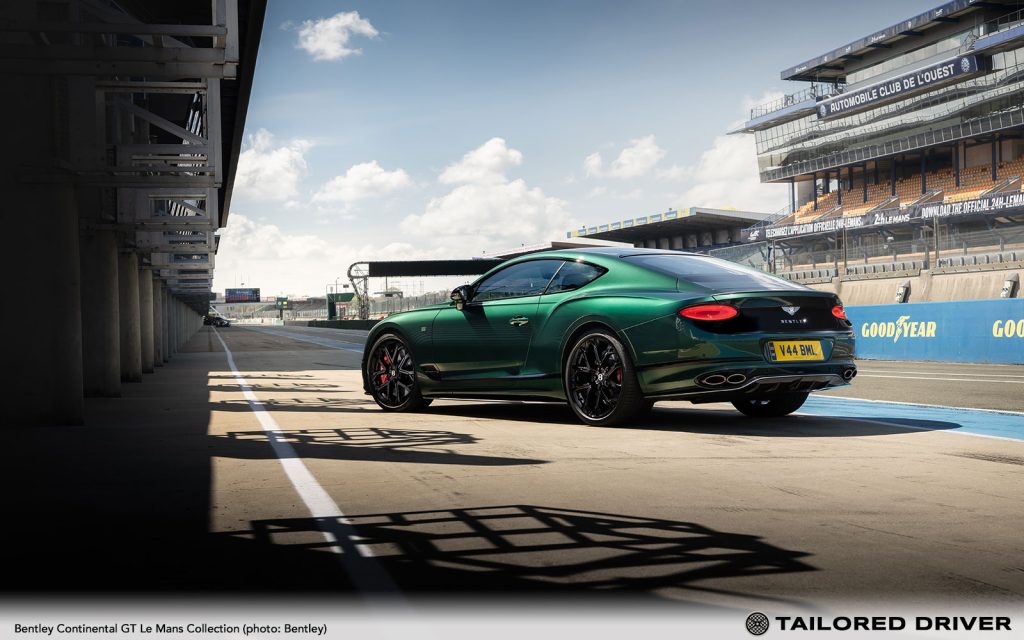
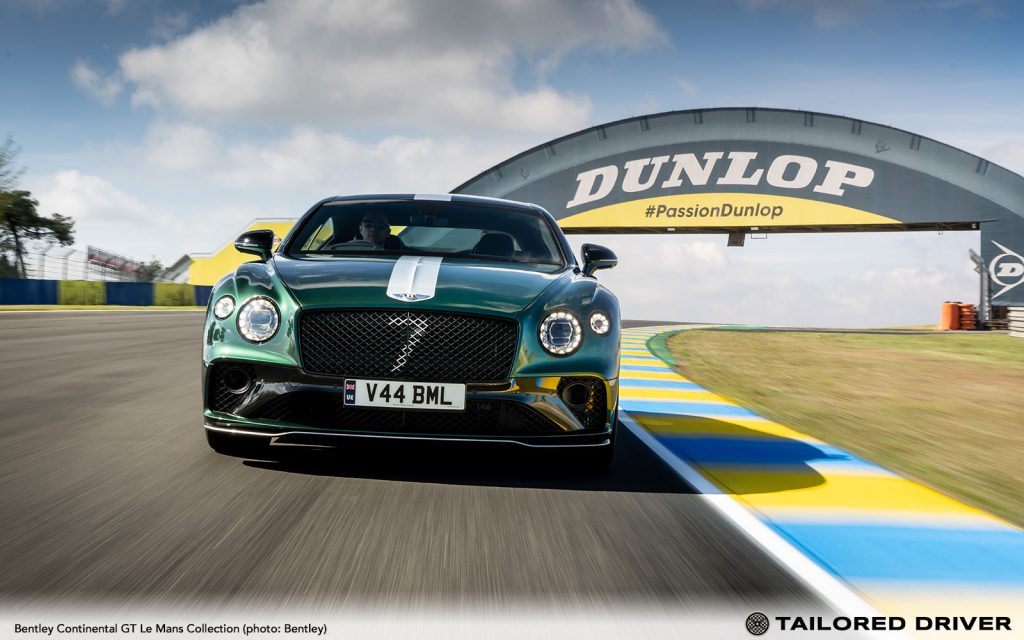
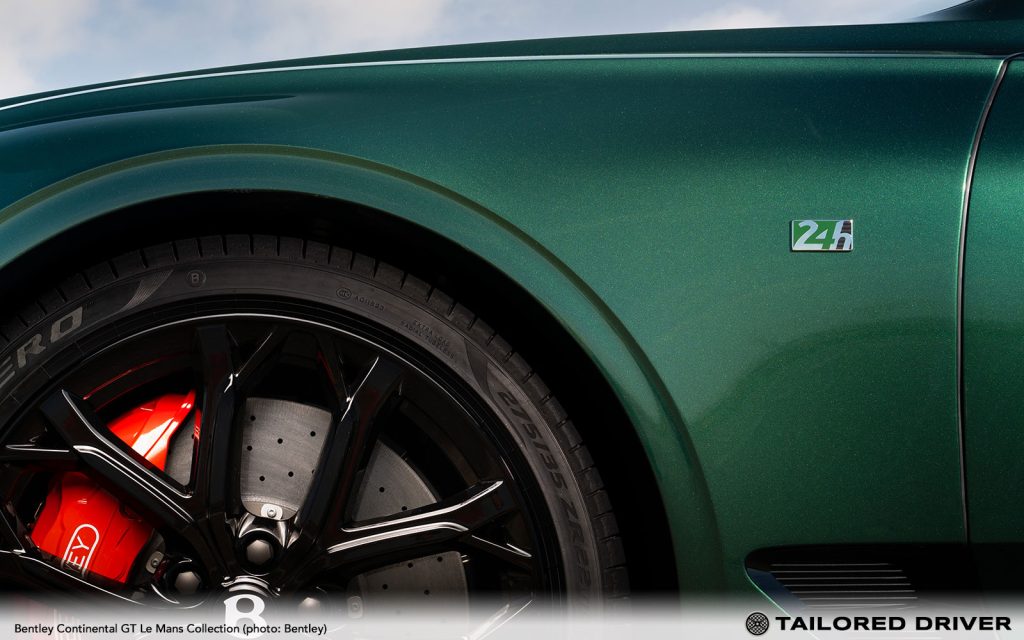
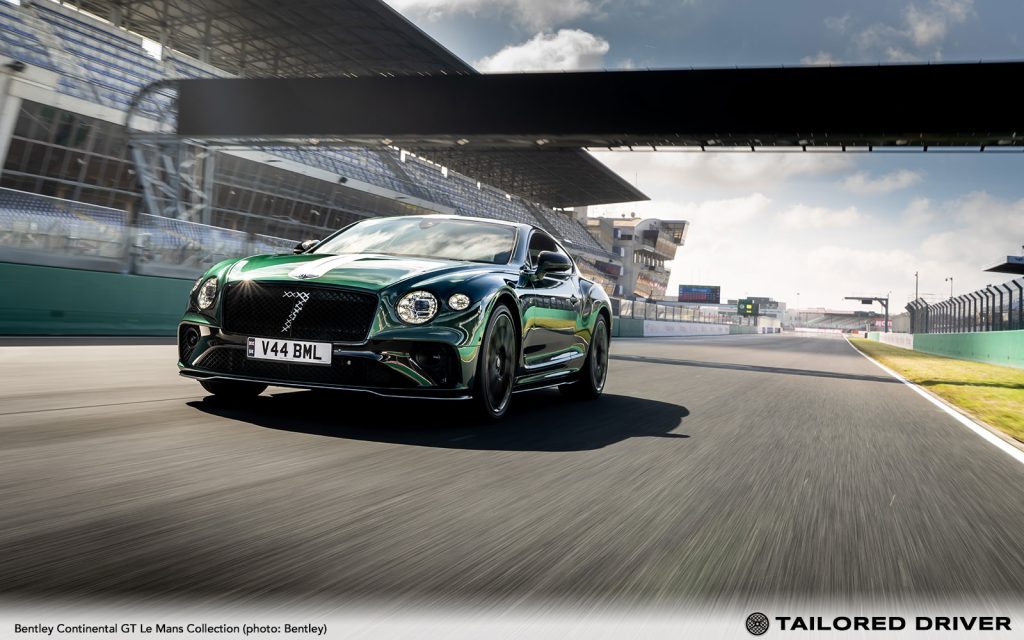
    Mulliner’s designers closely studied the winning Speed 8 of 2003, surely one of the most beautiful racing cars ever to triumph at Le Mans. The limited number of Continental GT’s and Continental GTC’s in the Le Mans Collection are finished in Verdant green, with a Moonbeam racing stripe across the bonnet (and Coupé roof). The Blackline specification nods to the black and green livery of the Speed 8, while the carbon-fibre Styling specification body components are finished in black with a subtle pinstripe in Moonbeam. Beluga black is also chosen for the lower front bumper, wing mirror caps and rear ‘horseshoe’ area beneath the bootlid spoiler, while black 22-inch ten-spoke wheels shroud powerful carbon ceramic brakes and red brake calipers.

    Meanwhile, the distinctive Bentley matrix grille (originally developed to protect the radiator on the unpaved Le Mans racetrack of the 1920s) features a painted #7 in Arctica white, combining the race-winning number of 2003 with the painted radiators of the Bentleys that won Le Mans five times between 1924 and 1930.

    Bespoke details

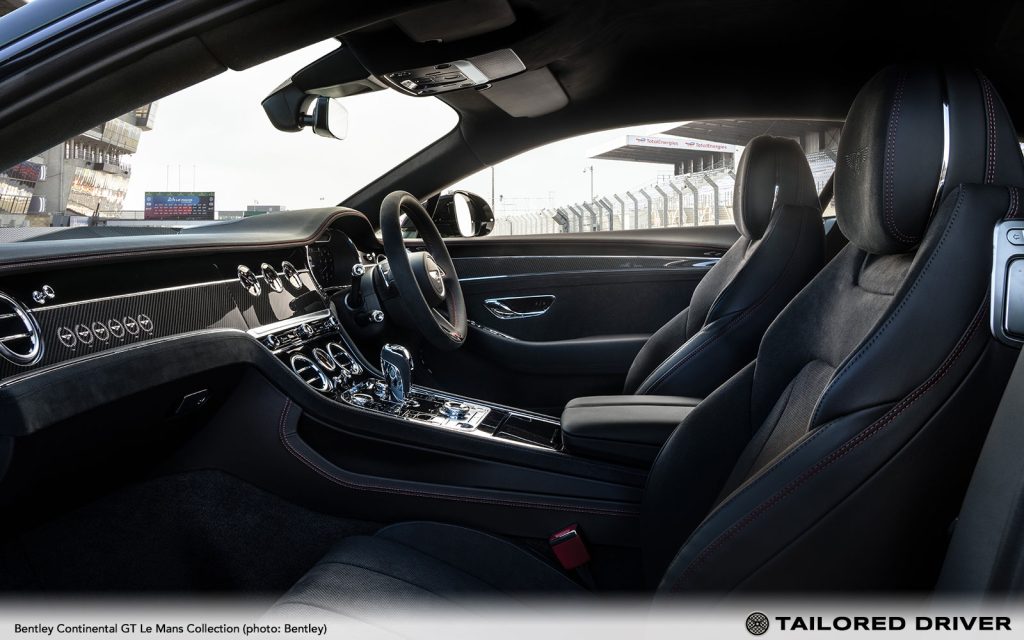
    The interiors of the Le Mans Collection Continental GT and Continental GTC are far more luxurious than those of the Bentley Speed 8s – but there’s the same sense of sporting purpose. A bespoke 2003 wreath welcome lamp ushers you into a cockpit trimmed in Beluga hide. Performance-bred napped Dynamica fabric covers the seat faces, while the interior’s monochrome colour scheme is relieved by contrast seat stitching and seatbelts in Hotspur. The steering wheel, trimmed in hide and Dynamica, also features Hotspur contrast stitching and six o’clock accent tab.

    The dual-finish veneer on fascia and door waist rails is executed in Piano Black and high gloss carbon fibre, with a fine chrome pinstripe separating the two. Matching doors to fascia so the pinstripe flows seamlessly from one side to the other is a mark of the exceptional craftsmanship in every Bentley.

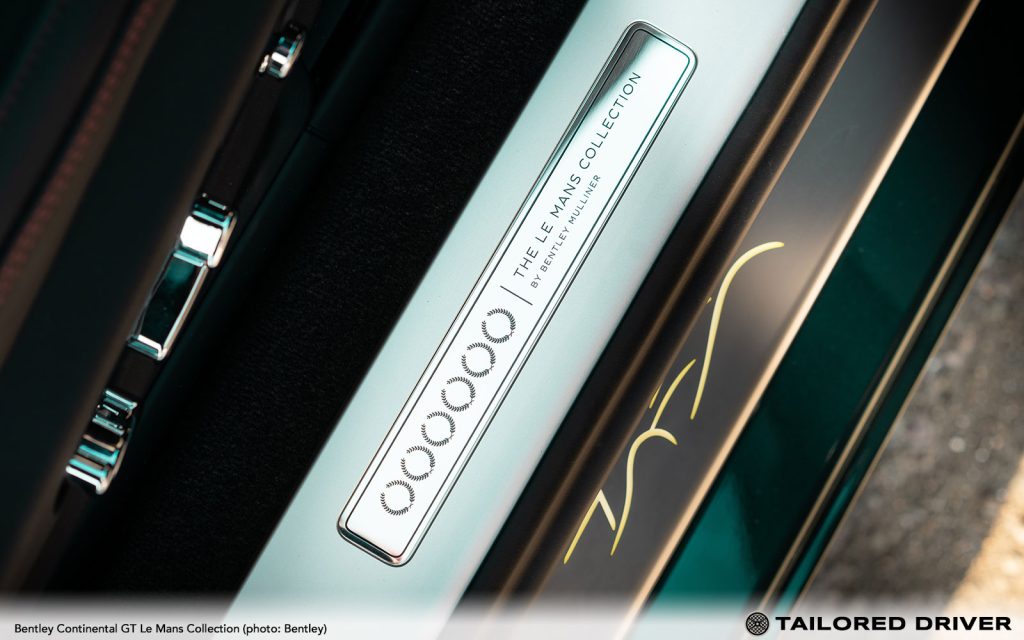
    The Le Mans Collection Bentleys feature many bespoke details, beginning with the Speed 8 sill plates and six-wreath treadplates that greet occupants on entering the interior. The fascia displays the six-wreath emblem inlaid into high-gloss carbon fibre, marking each of the six outright victories recorded by Bentley at Le Mans between 1924 and 2003. 

    Race inspired performance

    The Le Mans Collection Continental GT and GTC are equipped with Bentley’s renowned 6.0-litre W12 TSI engine, delivering 659 PS (650 bhp) and an extraordinary 900 Nm (664 lb.ft) of torque.

    With exceptional handling, this results in a top speed of 208 mph (335 km/h) and 0-60 mph in 3.5 seconds (0-100 km/h in 3.6 seconds). A combination of four chassis technologies give the new limited edition a level of agility, performance and ride quality as expected of a car with this heritage.

    Bentley Dynamic Ride and three-chamber active air suspension with adaptive damping play a key role in the balance of the car and provide a formidable foundation to build upon.  The optional and newly-developed Carbon Ceramic Brakes, Variable Electronic Stability Control, All Wheel Steering, and an Electronic Limited Slip Differential bolster the agility and performance even further.

    Bentley and Le Mans

    Bentley’s long association with Le Mans didn’t get off to the smoothest of starts. “I think the whole thing’s crazy. Nobody’ll finish. Cars aren’t designed to take that sort of strain for 24 hours.” Such was W.O. Bentley’s reaction in 1923, on hearing that private entrant John Duff planned to contest the first-ever Le Mans 24 Hour race in a Bentley 3 Litre. But the competitive fire in W.O’s soul saw him make a last-minute dash to the La Sarthe circuit nonetheless. Inspired by Duff’s 4th place (despite a lengthy stop to repair a holed petrol tank) and fastest lap, W.O and Bentley Motors returned in 1924 with a works entry – and won. It was the start of a glorious decade that saw five wins in seven years.

    Bentley was back in 2001 with the EXP Speed 8, the start of a three-year programme targeting a sixth outright victory. And on Sunday, June 15th, 2003, Bentley’s two works Speed 8s finished first and second in this most gruelling of endurance races. Car #7 of Guy Smith, Tom Kristensen and Rinaldo Capello covered 377 laps at an average speed of 214.33km/h, followed by the #8 Speed 8 of Johnny Herbert, Mark Blundell and David Brabham.