Tag: Bentley

  • Unique Extras Delivered with Each Continental GT Le Mans Collection Model

    Unique Extras Delivered with Each Continental GT Le Mans Collection Model

    • First of 24 GT coupes destined for Europe hits the road in Germany
    • Each car is delivered to its owner with unique extras: special wooden handover box with unique Speed 8 sculpture and booklet, Speed 8 book as well as special car cover
    • GT Le Mans Collection marks 20th anniversary of Bentley’s sixth victory at the 24 Hours of Le Mans – the world’s most iconic endurance race
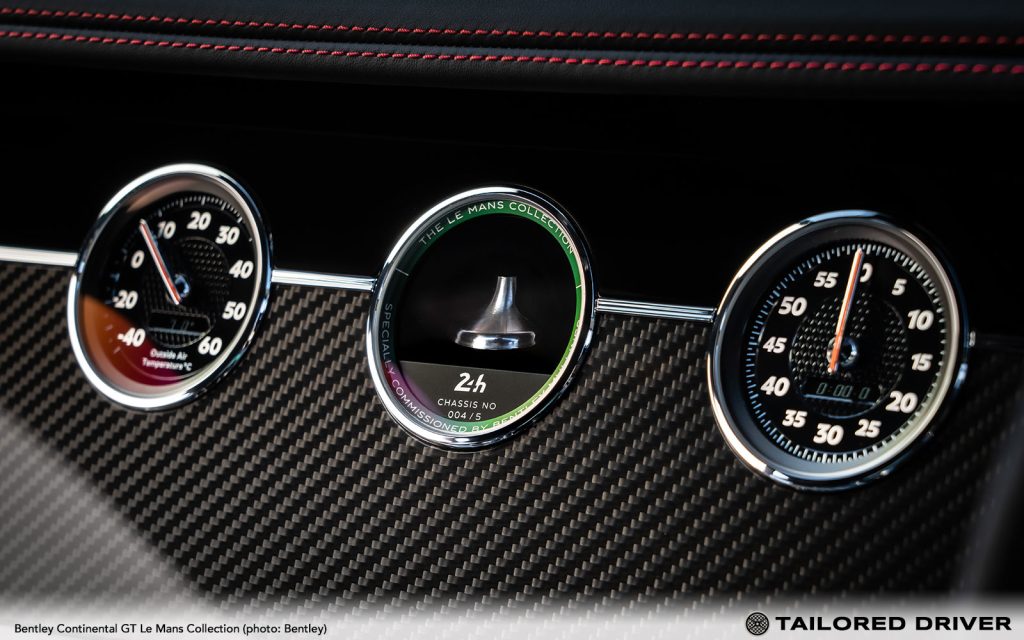
    • Unique features include Bentley Rotating Display housing valve from engine of 2003 Le Mans winning Bentley #7 Speed 8
    • GT Le Mans Collection handcrafted in England by Mulliner – Bentley’s personal commissioning division 

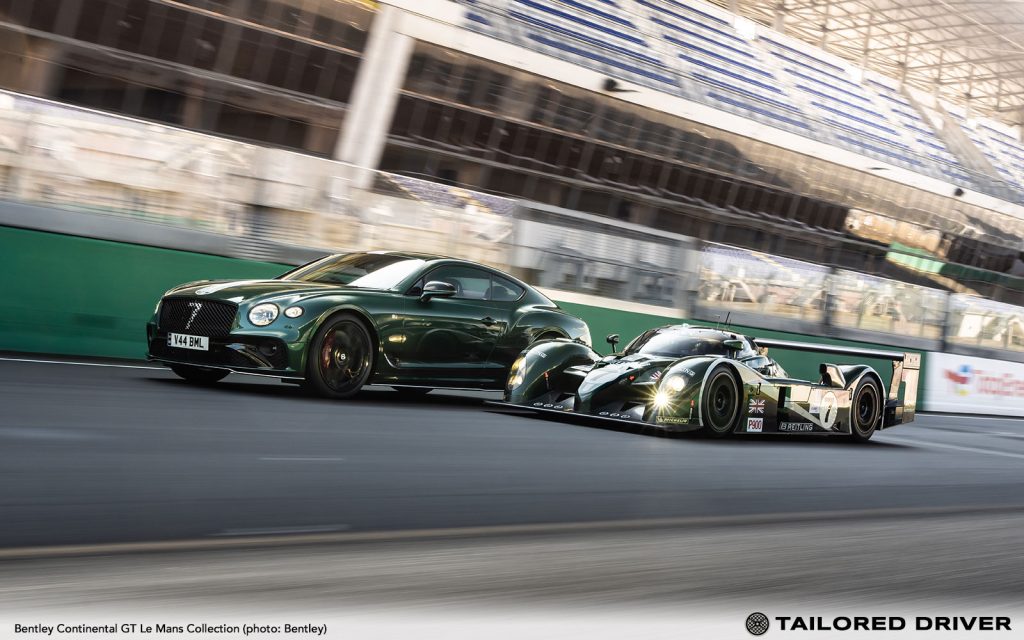
    Münich, Germany – The first of 24 Bentley Continental GT Le Mans Collection models for Europe is hitting the continent’s roads for the first time in Dusseldorf, Germany. The full collection of 48 limited edition Continental GT and GTC cars are being handcrafted in England by Mulliner, Bentley’s personal commissioning division, with just 24 coupes destined for European customers. 
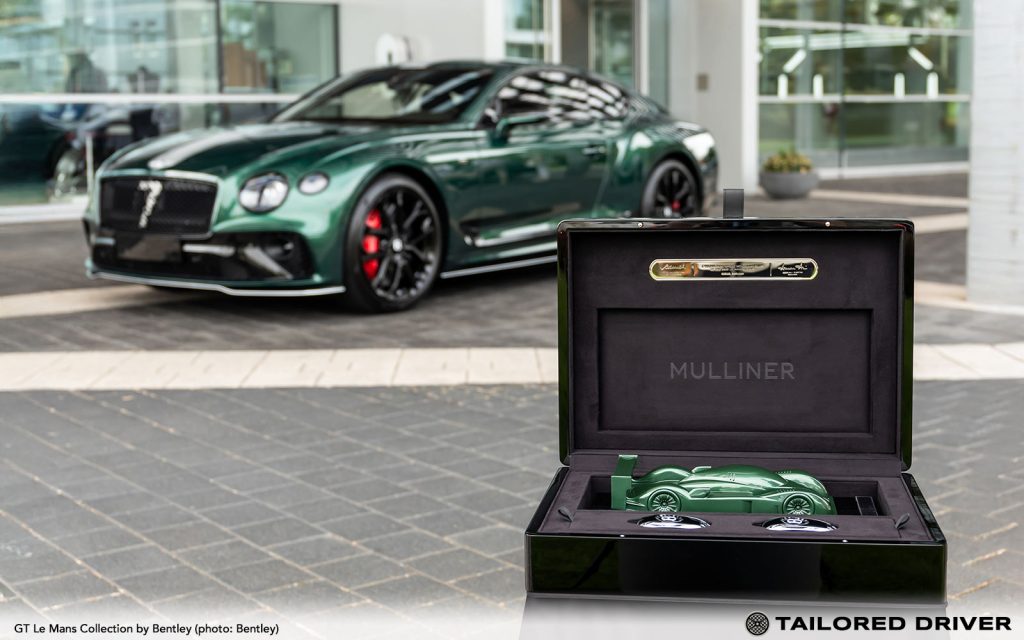
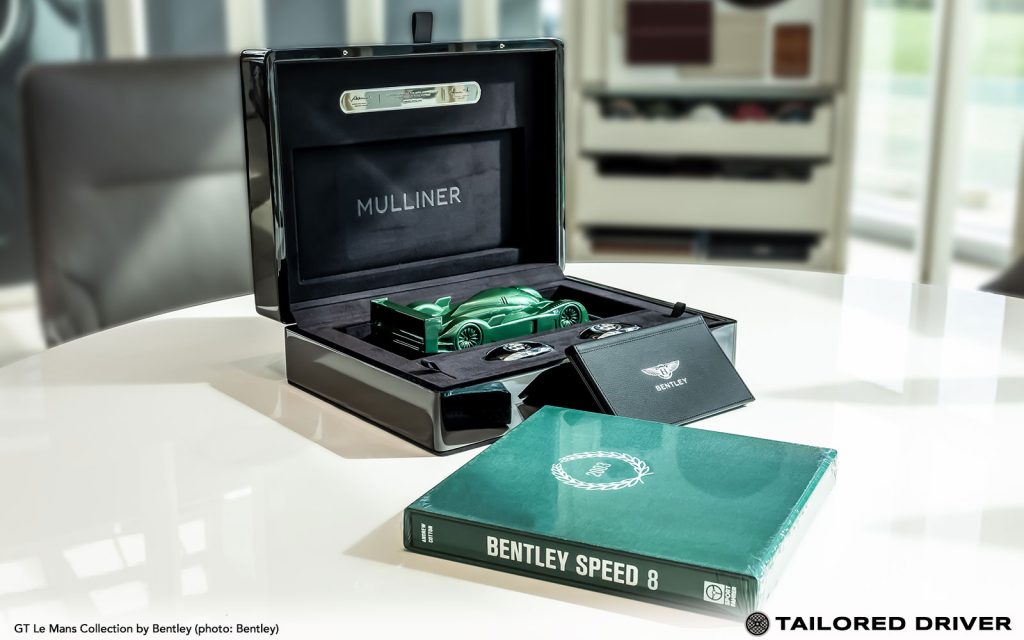
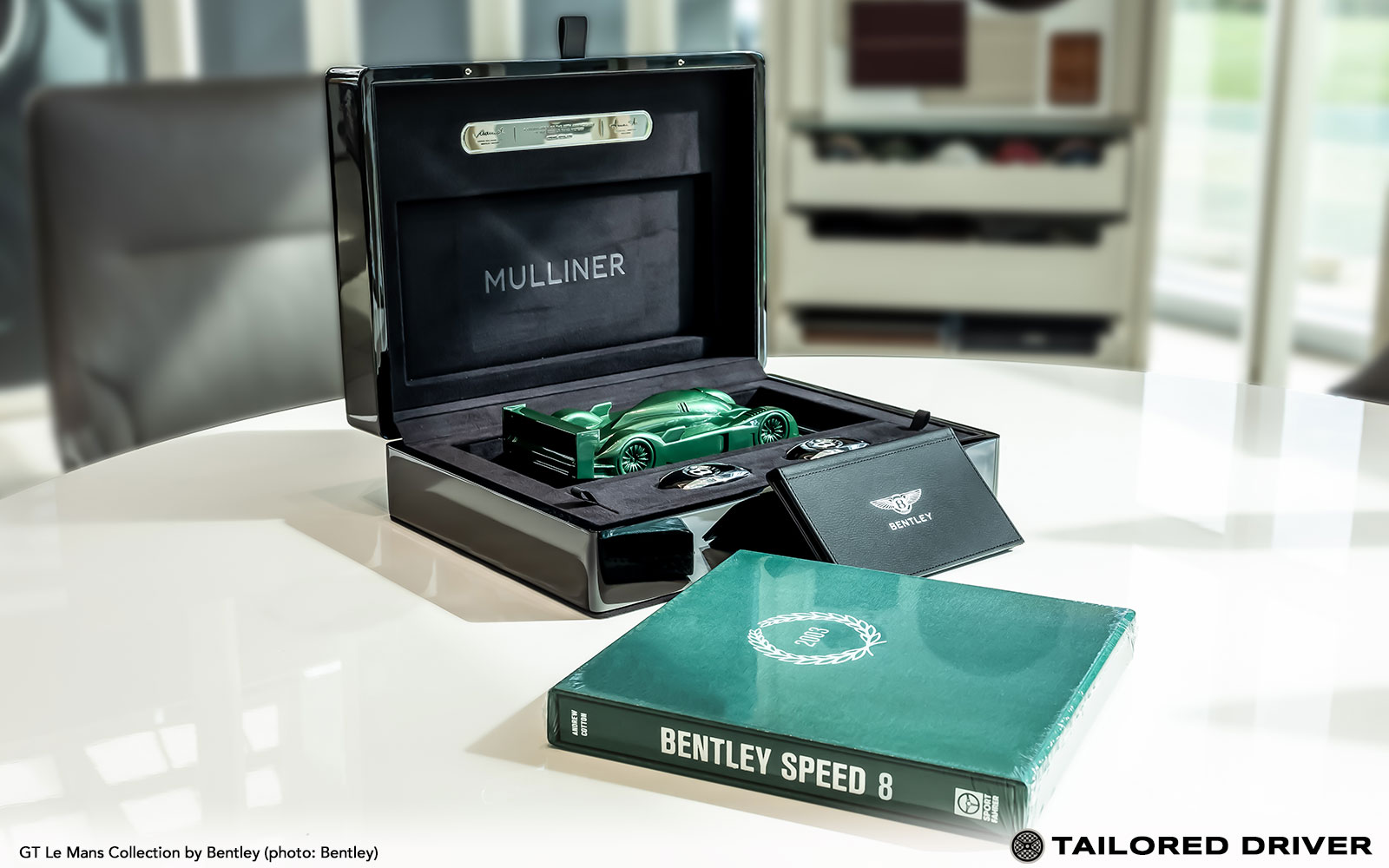
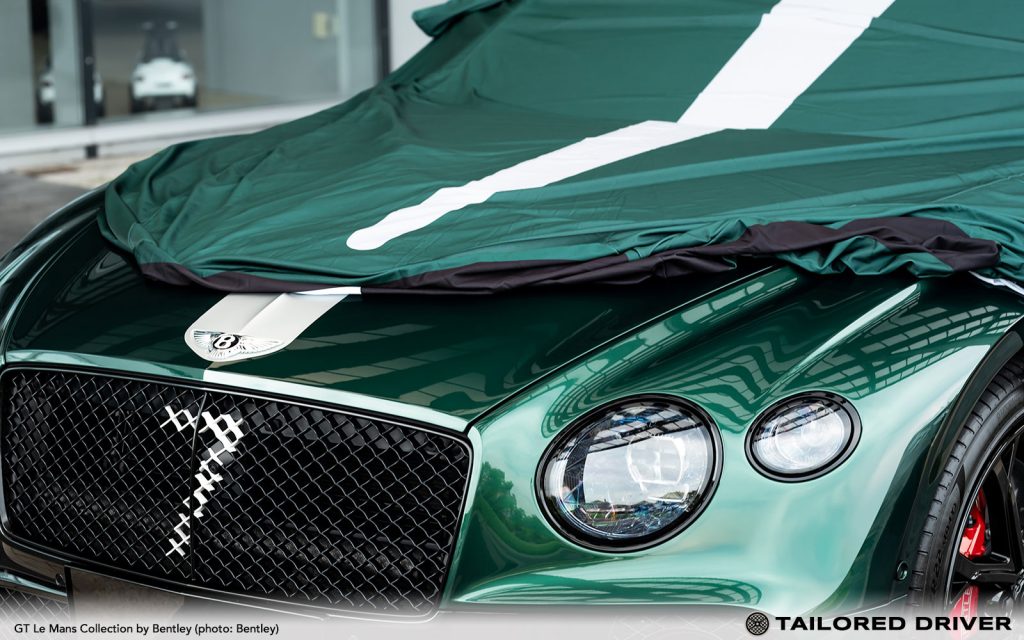
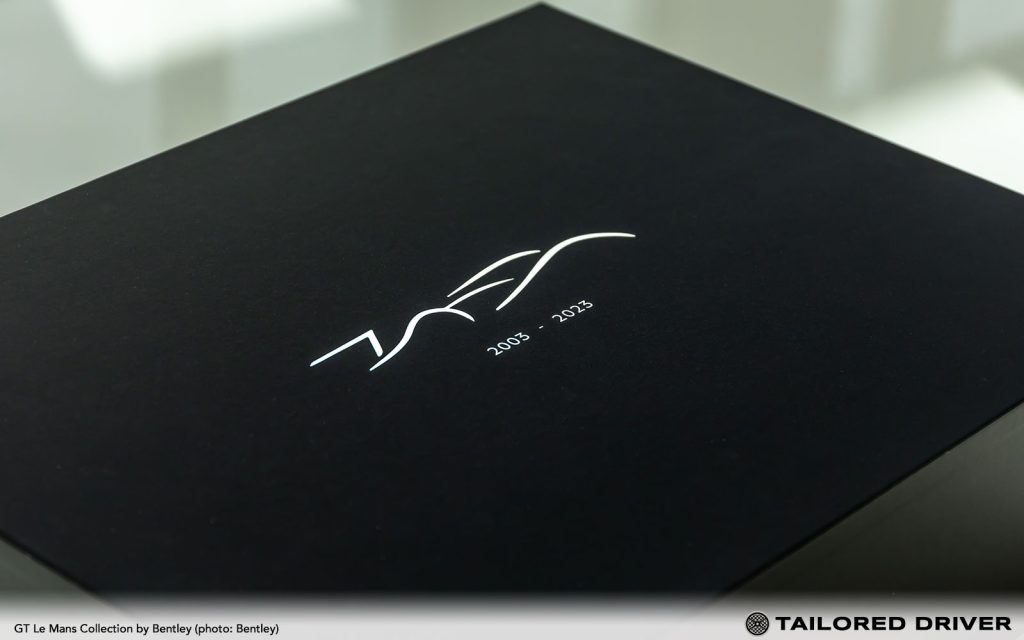
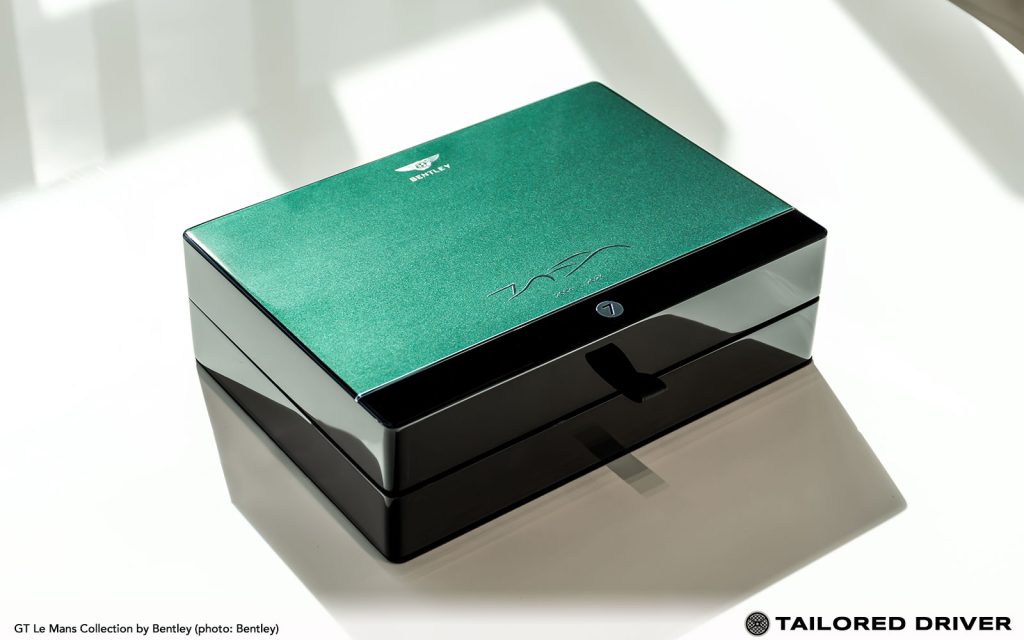
    All GT Le Mans Collection owners will receive a unique car cover as well as a special wooden presentation box, crafted in Piano Black and Verdant – the same as the car itself. Inside, the box contains the car key, as well as an exclusive Speed 8 sculpture and booklet, detailing how the sculpture was made. A plaque inside the lid is signed by Adrian Hallmark, Chairman and CEO, Bentley Motors, and Ansar Ali, Mulliner and Motorsport Director, Bentley Motors.

    The box is complemented by a Speed 8 book, written by automotive expert Andrew Cotton. Published by Sportfahrer, the fascinating hardback reveals the full history of the Speed 8 race car project, from the first concept to Bentley’s Le Mans success. With a whole chapter dedicated to Shaun Lynn’s Speed 8 car restoration, the book features a green cover with a silver 2003 wreath, identifying it as unique to the Le Mans Collection.
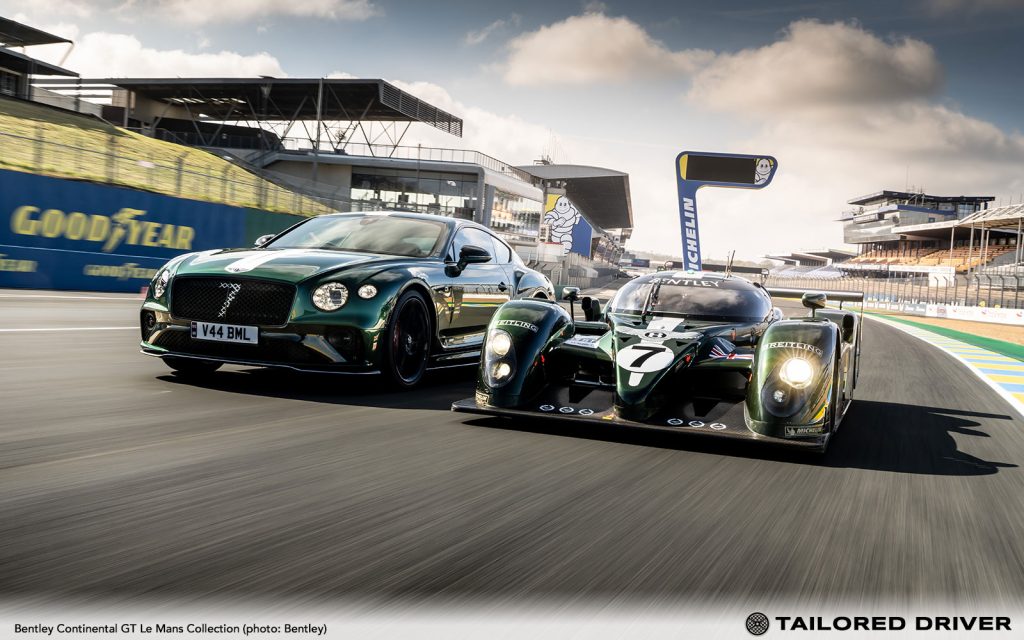
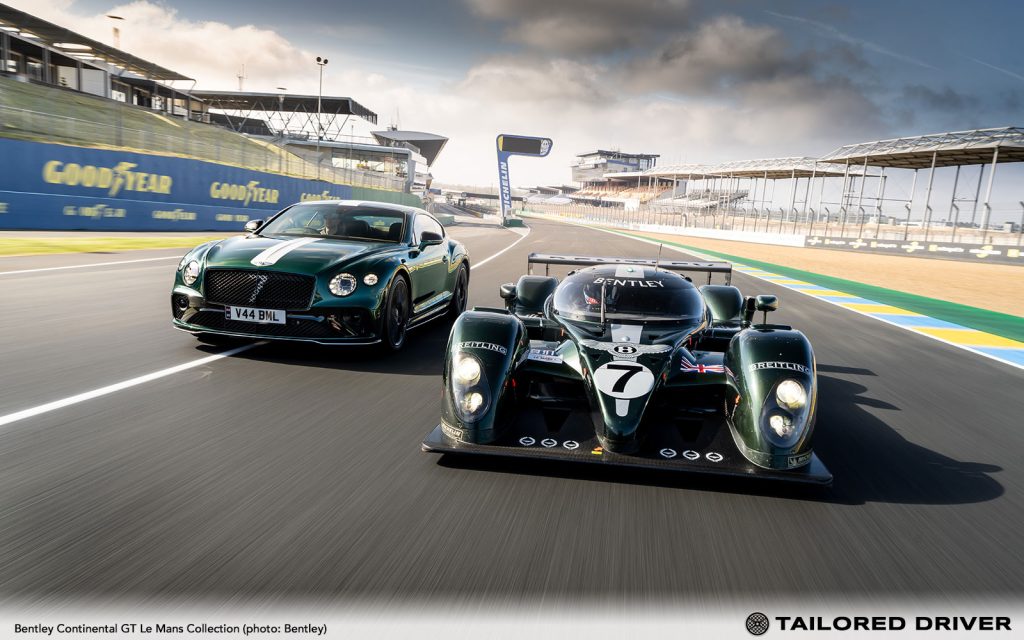
    The GT Le Mans Collection marks the 20th anniversary of Bentley’s sixth victory at the world’s most iconic road race, with the Bentley #7 Speed 8 taking the chequered flag in 2003. This year is also the centenary of the first 24 Hours of Le Mans in 1923, when Bentley recorded the fastest lap. 
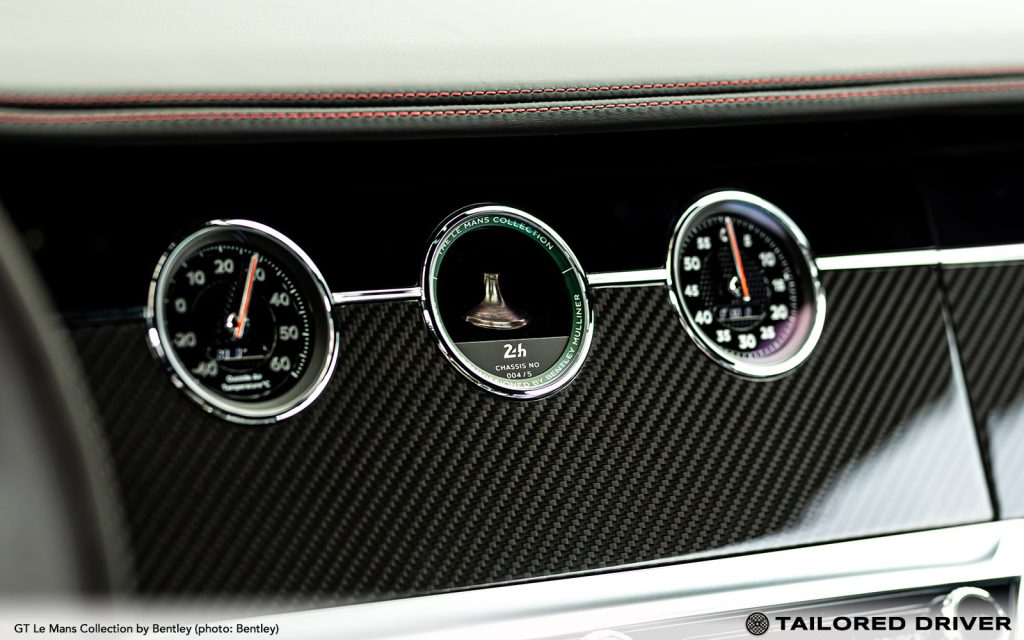
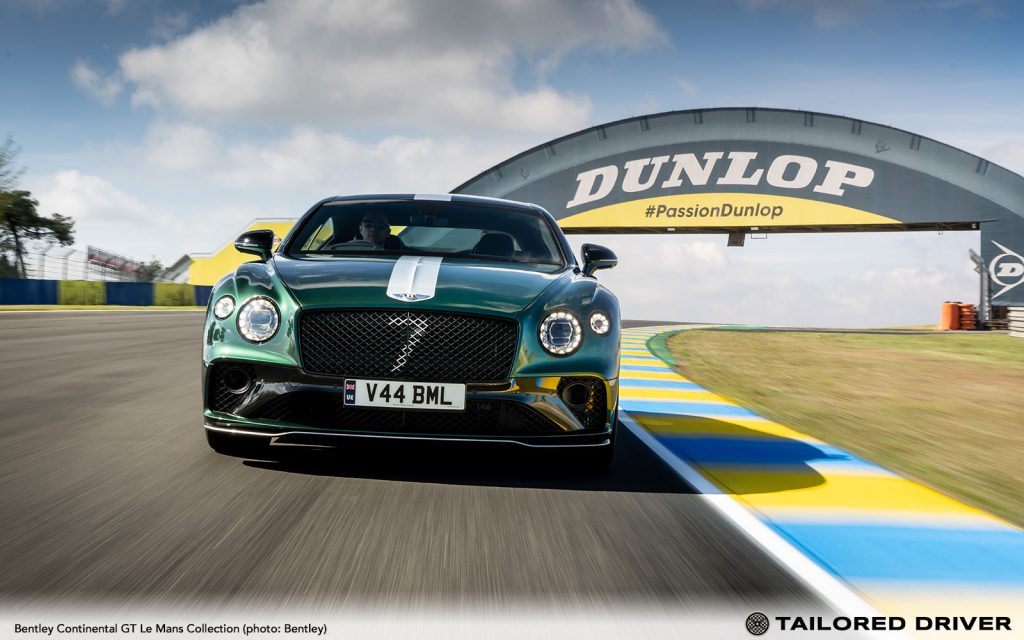
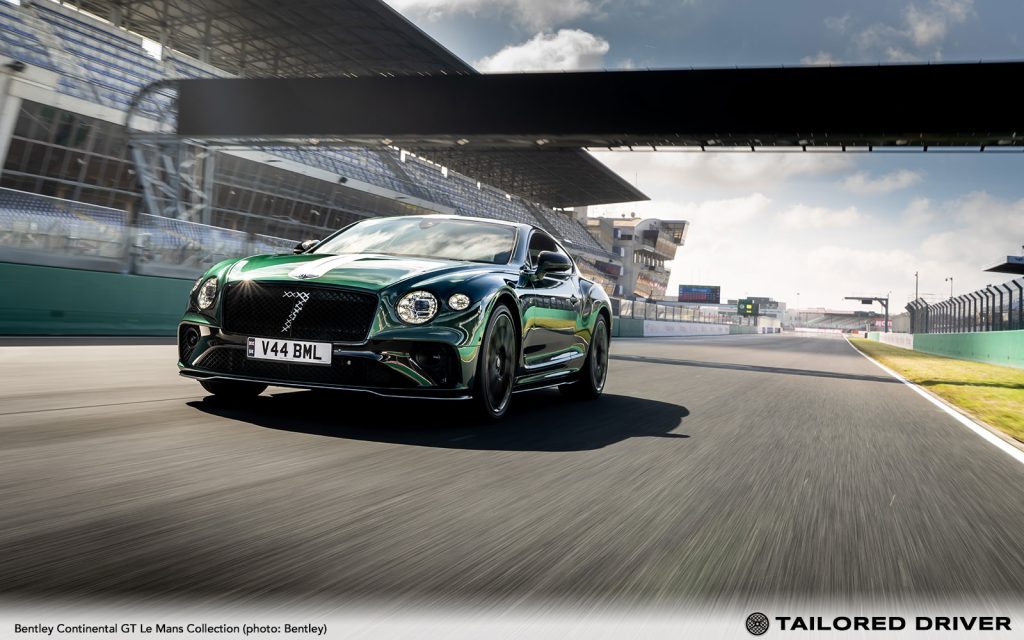
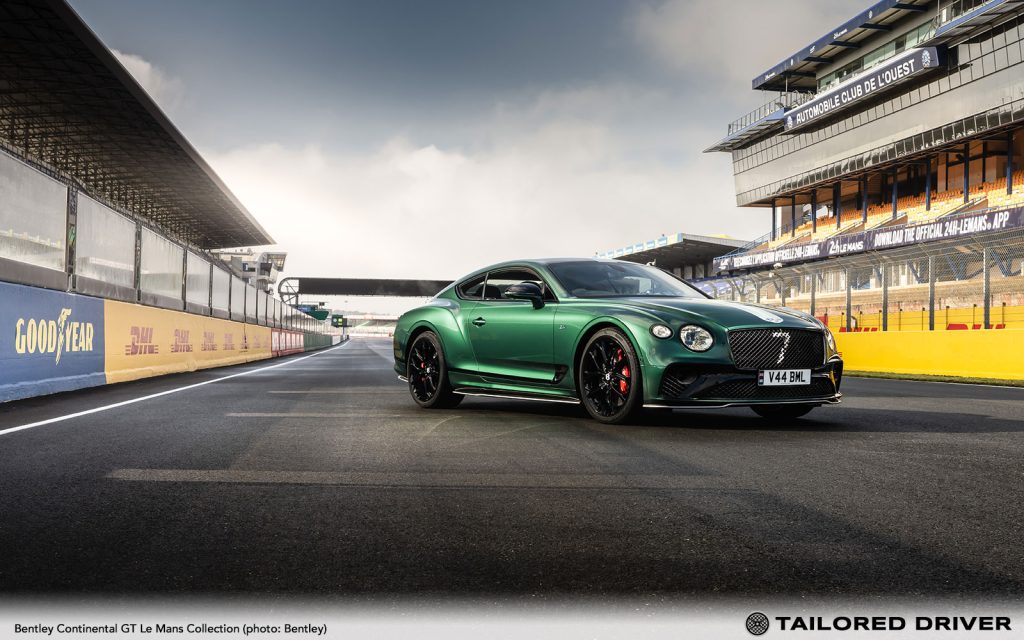
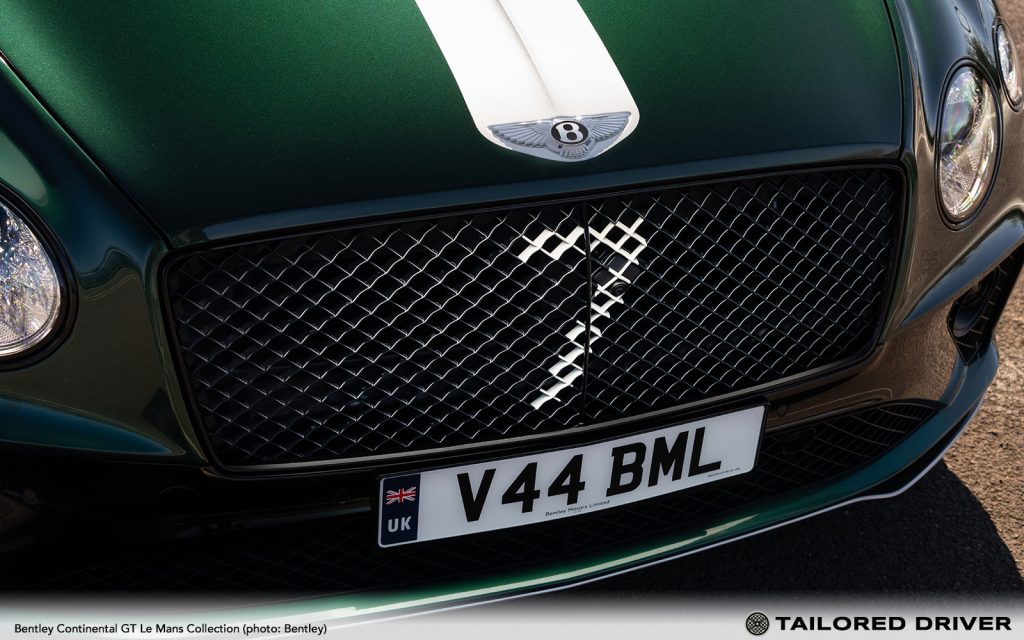
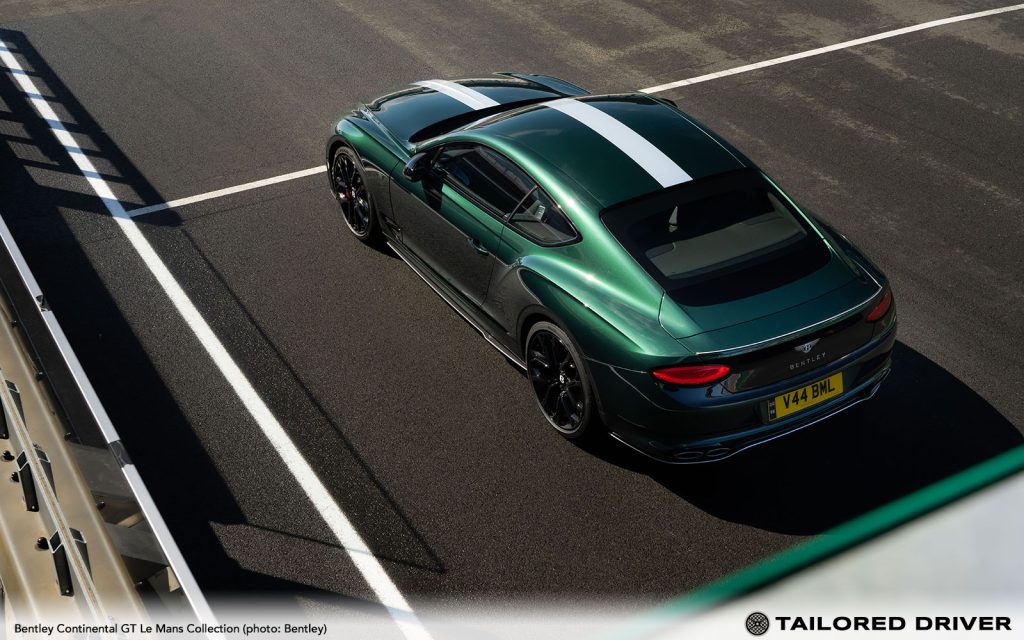
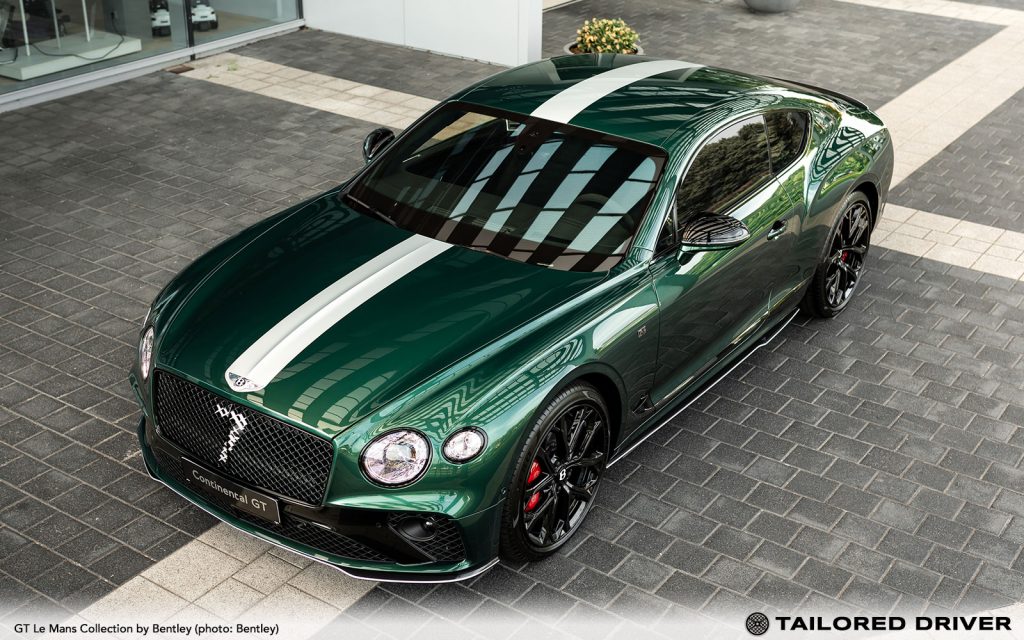
    Like the coupe in Dusseldorf, each GT Le Mans Collection car is delivered with unique features. The Bentley Rotating Display on the dashboard houses a valve from the engine of the 2003 Le Mans winning #7 Speed 8, while evocative exterior styling includes Verdant green paintwork and a Moonbeam racing stripe. A No. 7 emblem on the grille also celebrates the 2003 victory.
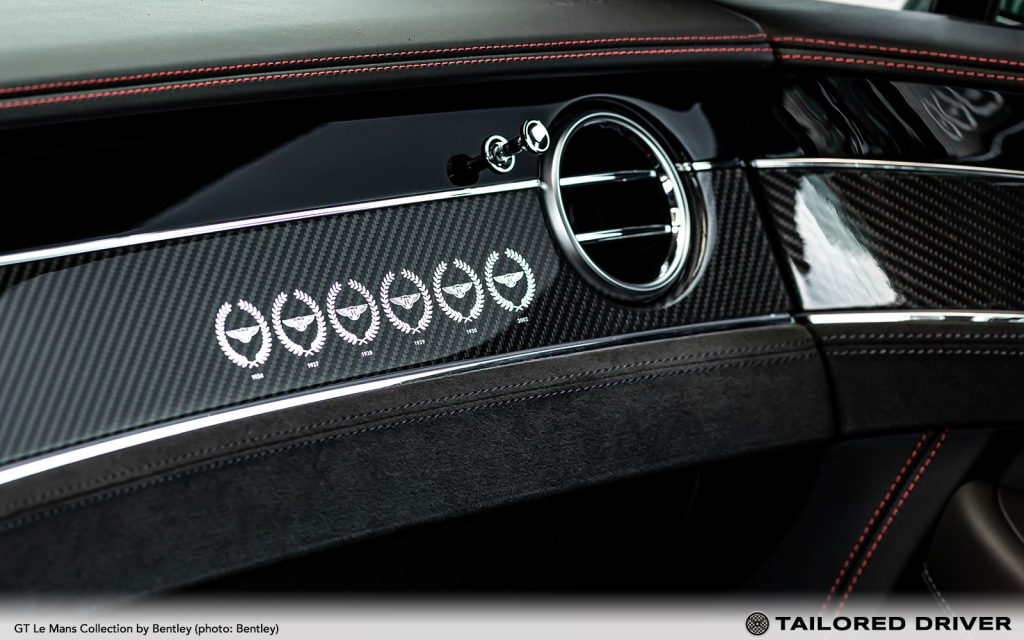
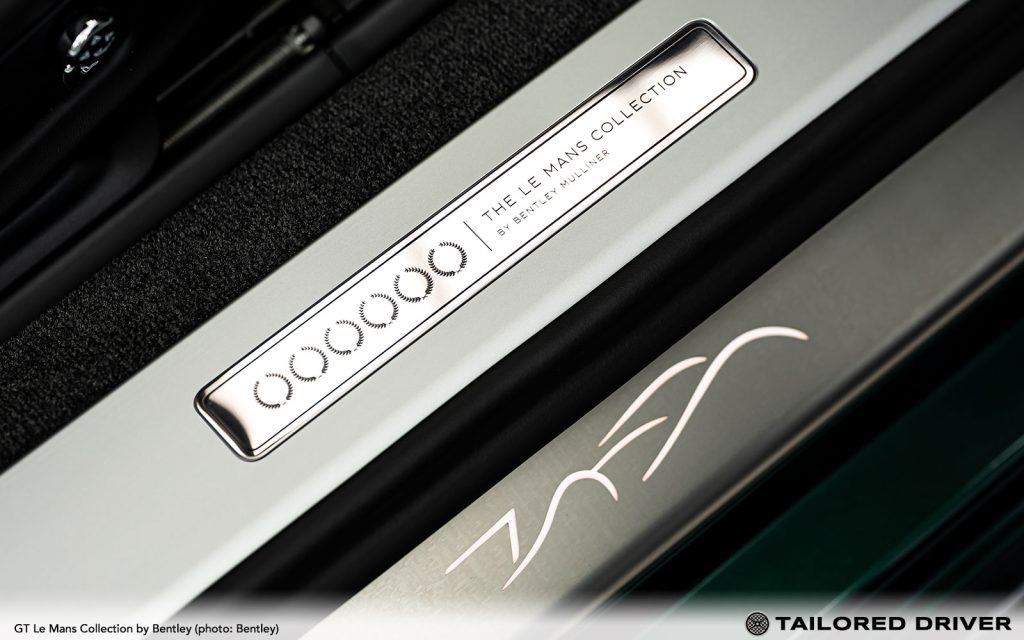
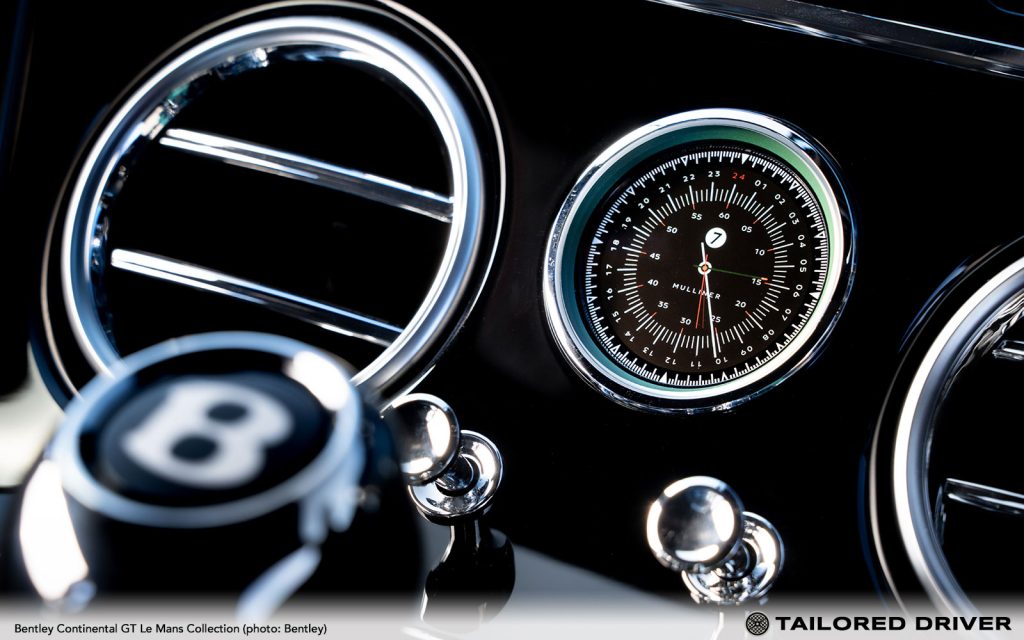
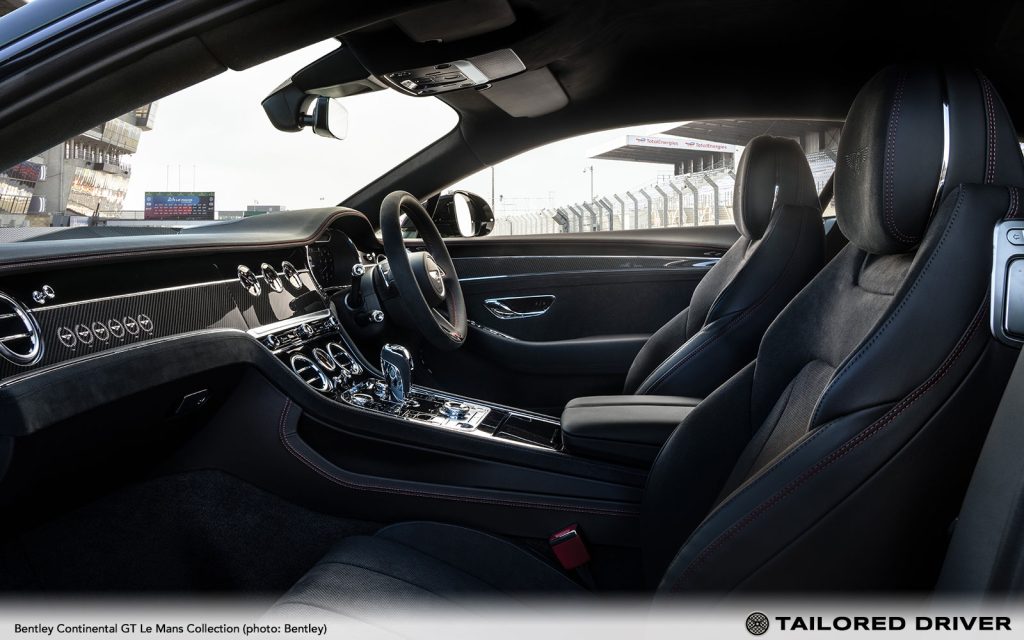
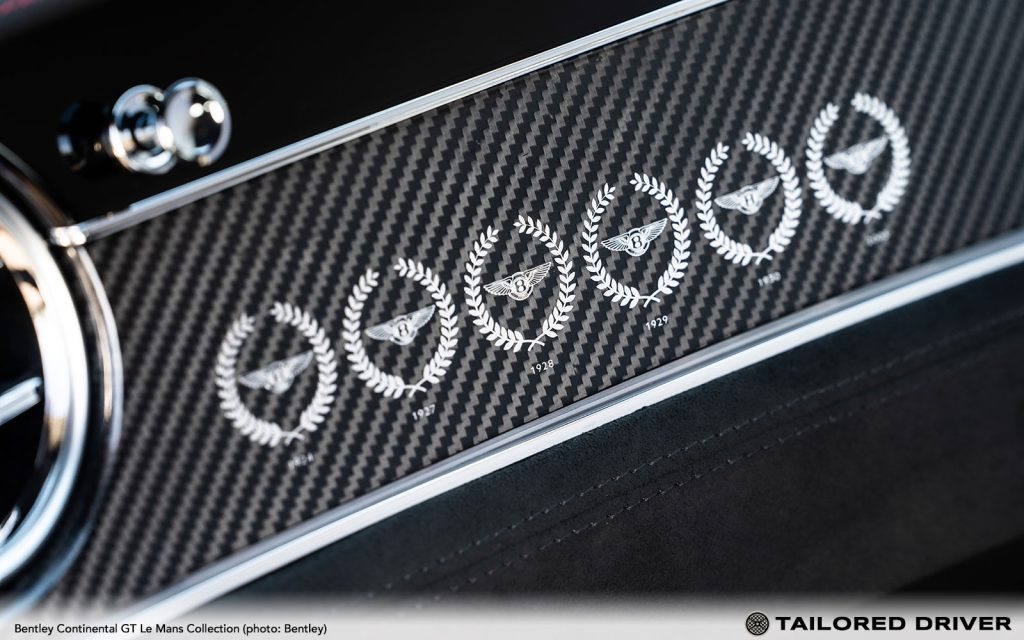
    Other bespoke details range from the six-wreath emblem inlaid into the high-gloss carbon fibre fascia, marking each of the six outright victories recorded by Bentley at Le Mans from 1924 to 2003, to the Bentley matrix grille, originally designed to protect the radiator on the unpaved Le Mans racetrack of the 1920s. Inside, a luxurious Le Mans Collection cockpit is trimmed with Beluga hide, while the standard 12-hour analogue clock is replaced with a bespoke, 24-hour dial design. 

    Race-inspired performance comes from Bentley’s renowned 6.0-litre W12 TSI engine, delivering 659 PS (650 bhp) and an extraordinary 900 Nm (664 lb.ft) of torque. This results in a top speed of 208 mph (335 km/h) and 0-60 mph in 3.5 seconds (0-100 km/h in 3.6 seconds).
    Balazs Rooz, Regional Director of Bentley Europe, added:

    “Following the recent static European debut of the GT Le Mans Collection at the Le Mans Classic event, I am delighted to see this limited edition now being delivered to our happy  few customers. The brand has played a key role in Europe’s motoring history and in the W12 run out phase, it is a nice farewell and homage to the Speed 8 #7 win in 2003, the same year when the W12 was launched to the world.”
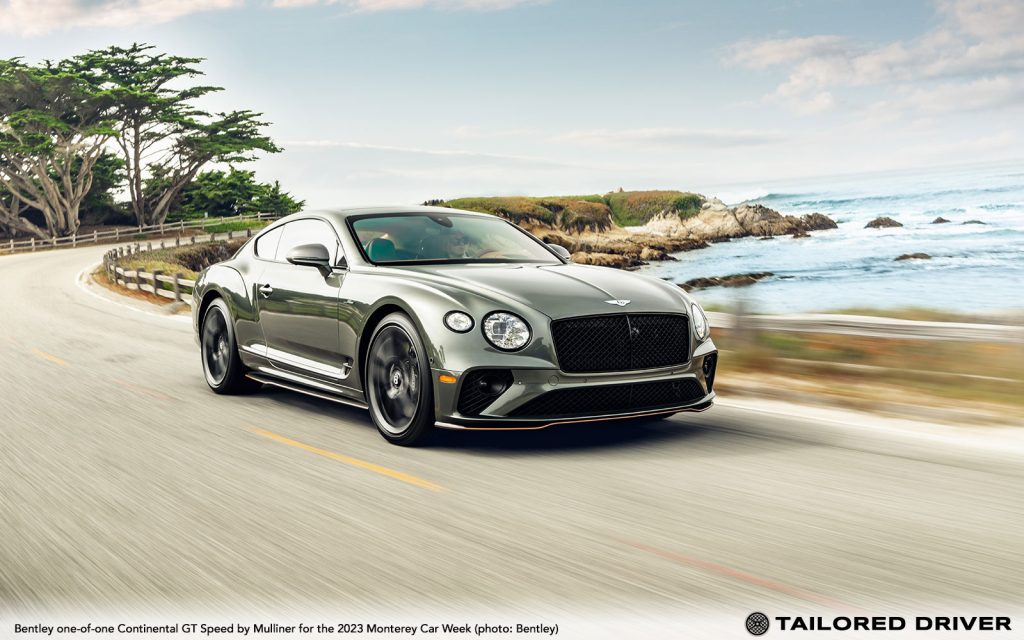
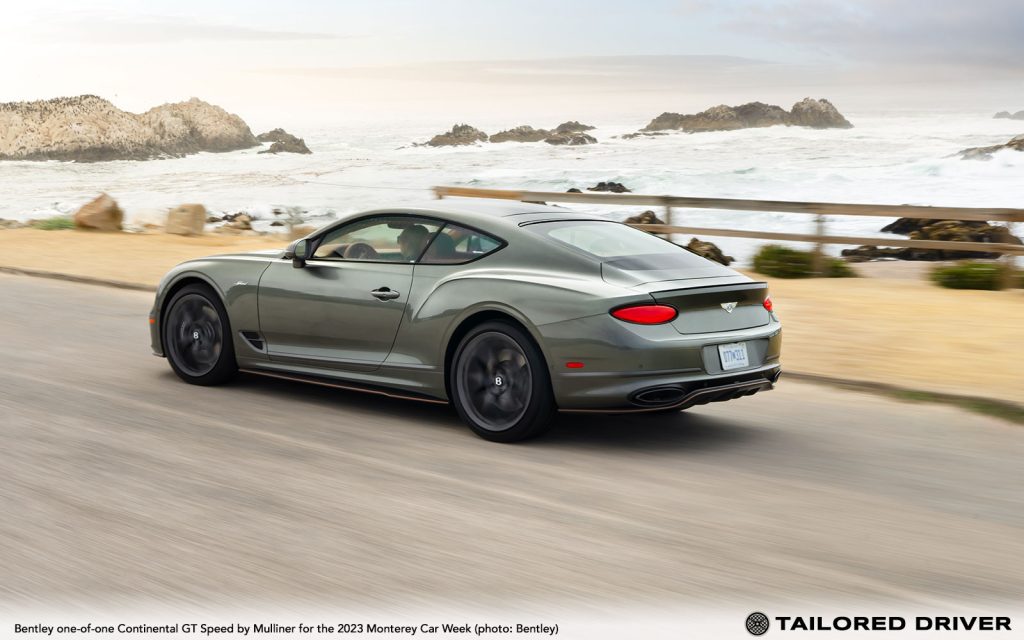
  • One-of-One Bentley GT Speed Celebrates 20 Years of Continental Success at Monterey Car Week

    One-of-One Bentley GT Speed Celebrates 20 Years of Continental Success at Monterey Car Week

    • Mulliner creates a modern interpretation of the original Continental GT
    • Unique car brings 20th birthday celebrations to a close
    • 2023 Continental GT Speed inspired by the specification of the very first production Continental GT from 2003
    • One-of-one car sold to American collector
    • Both cars displayed at The Quail, A Motorsports Gathering as part of Monterey Car Week
    • Celebratory ‘baton’ starts 20-stop global tour, connecting 20 individual Continental GT reviews

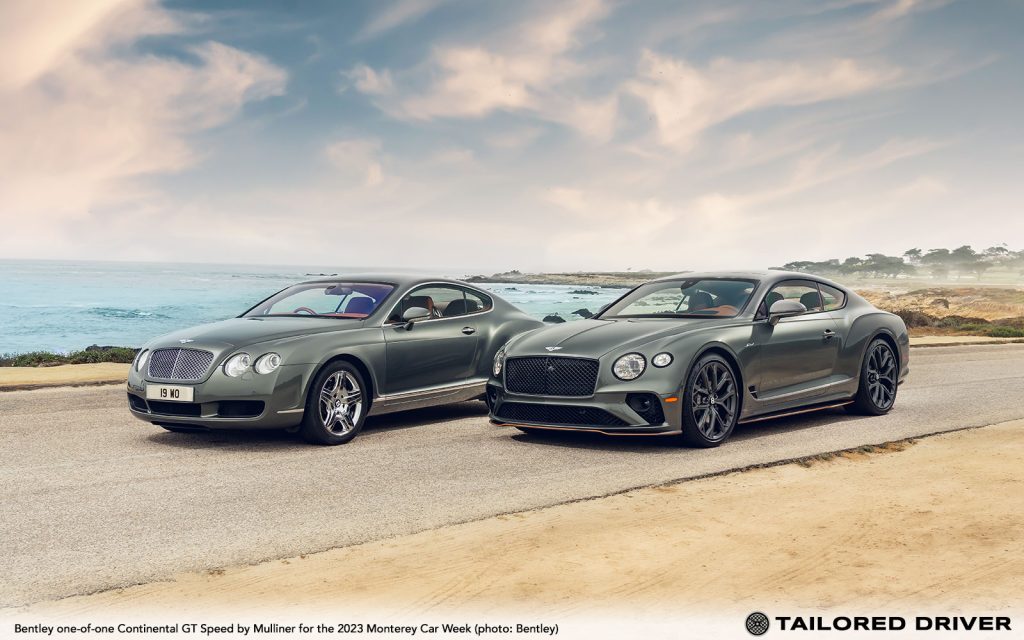
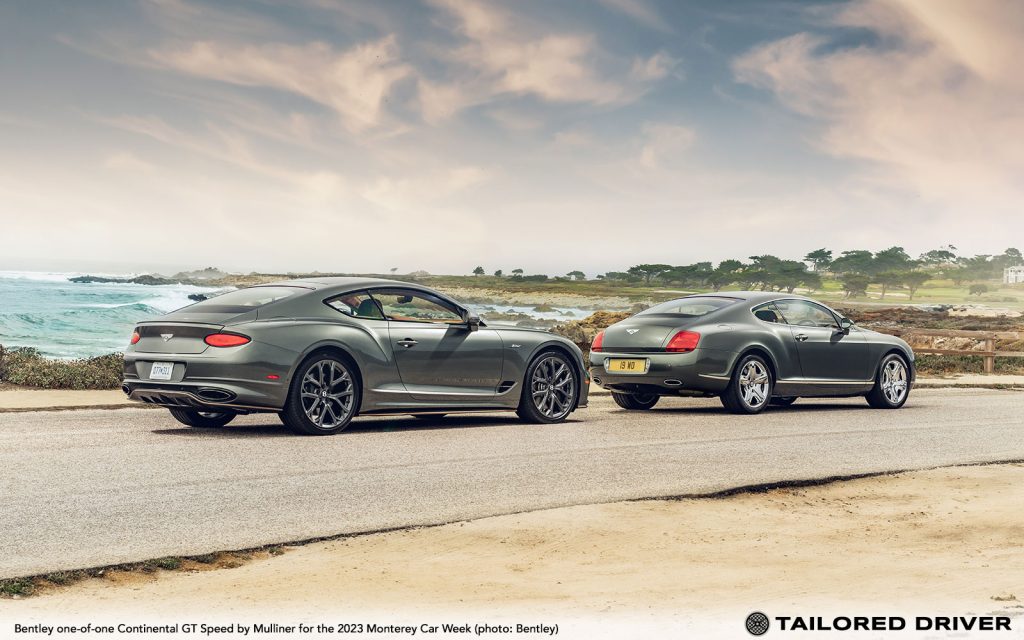
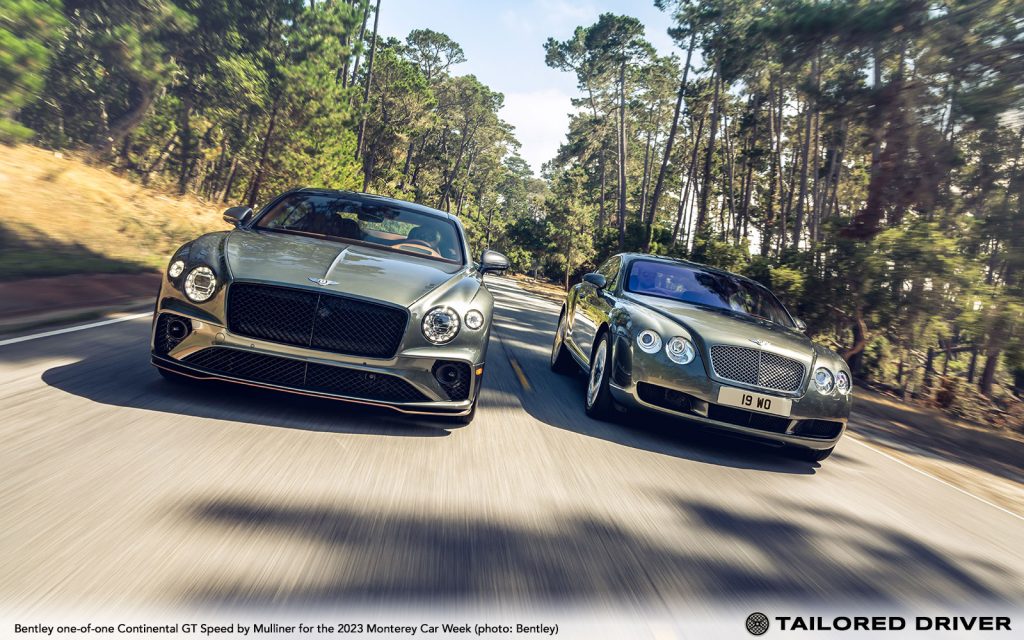
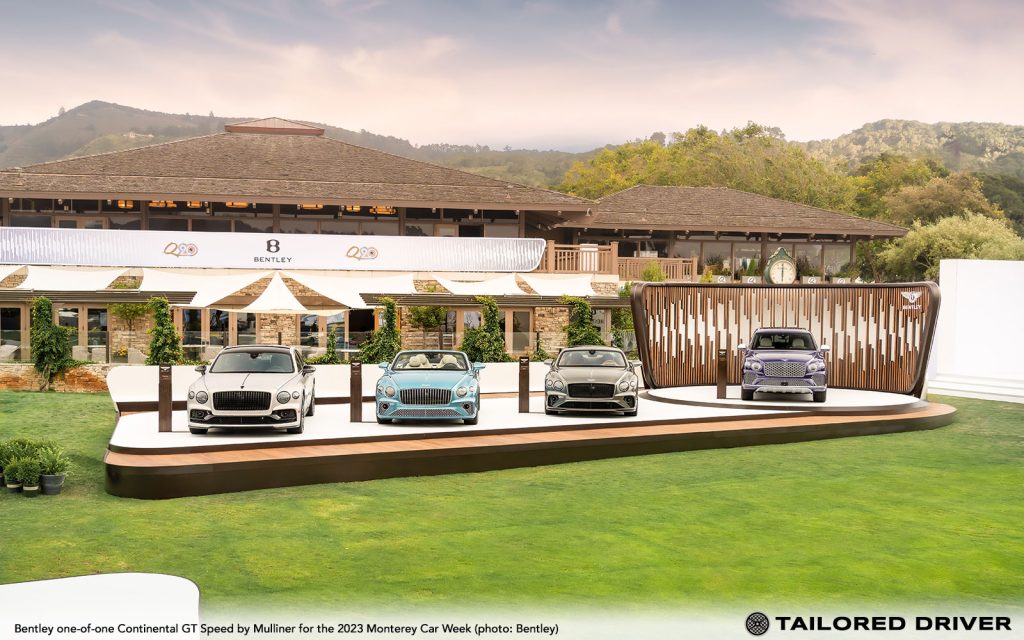
    Crewe, England – Bentley Motors brought the 20th birthday celebrations of its now-iconic Continental GT to a close with the reveal and immediate sale of a one-of-one Continental GT Speed, with a specification inspired by that of the very first production Continental GT from 2003. The muse for the project – VIN20001, the first GT off the Crewe production line – was displayed alongside the 2023 version at The Quail, A Motorsports Gathering, also celebrating its 20th birthday and an ongoing part of Monterey Car Week.

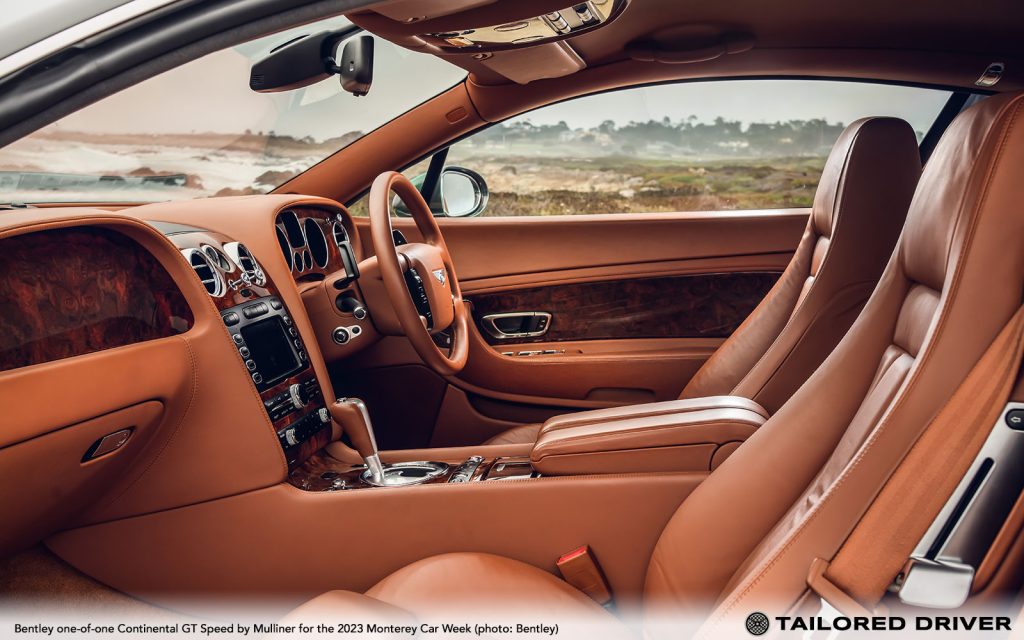
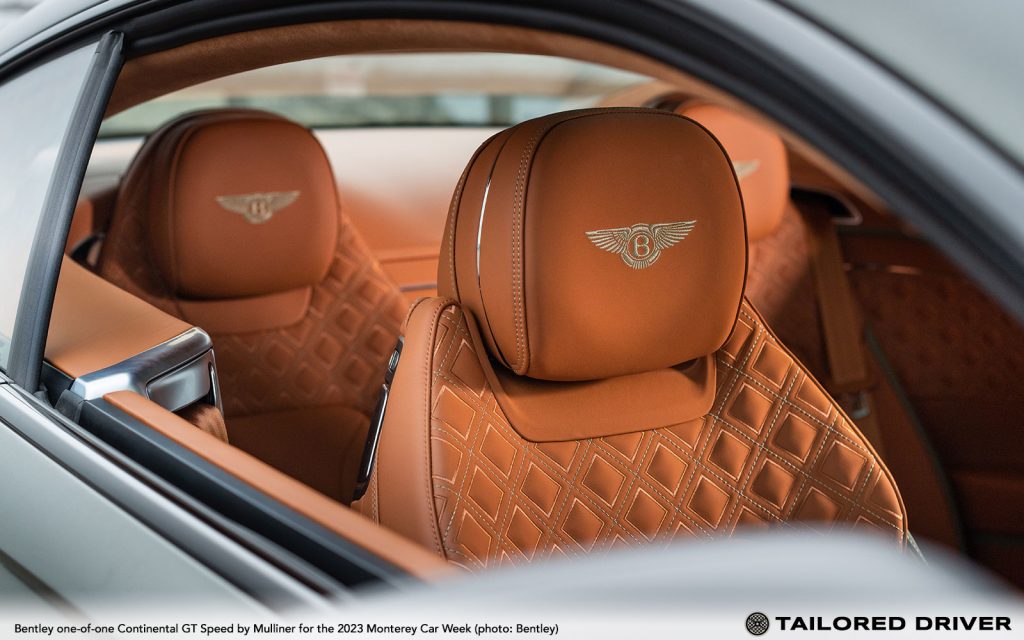
    Having redefined the Bentley brand for the 21st century when it was launched in 2003, catalysing a ten-fold increase in sales, the Continental GT continues to be the benchmark for modern, luxury grand tourers. The first production car – the most important modern car in Bentley’s rejuvenated Heritage Collection – was finished in Cypress Green (cypressgreen; metallic UNI; 6604 / 9560119; Bentley) paint, with an interior of Saddle leather upholstery and Burr Walnut veneer. The bespoke 2023 Continental GT Speed displays a specially commissioned interior inspired by that of its illustrious forbear.

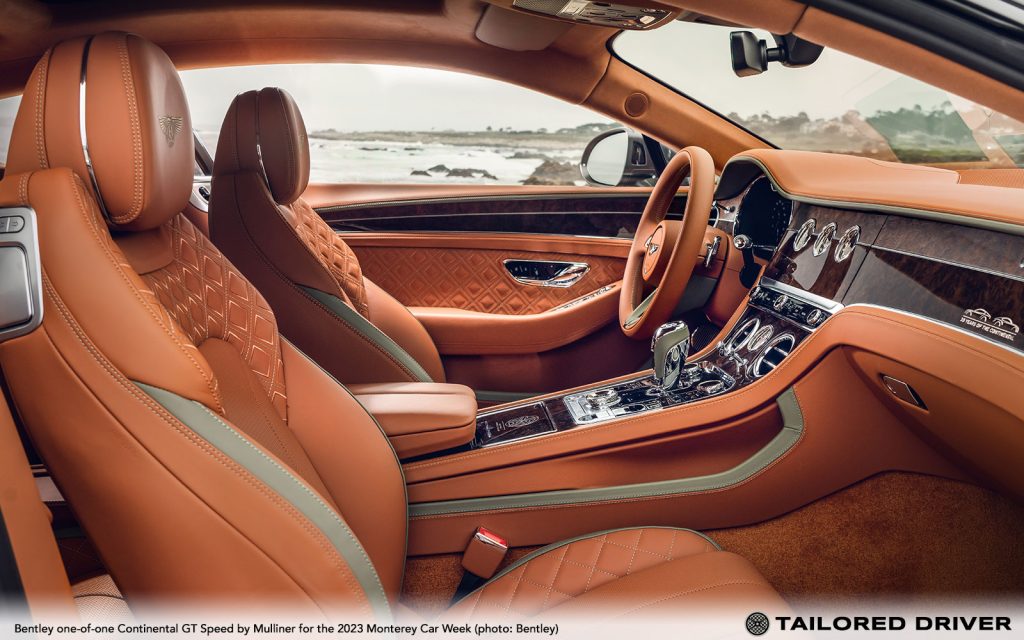
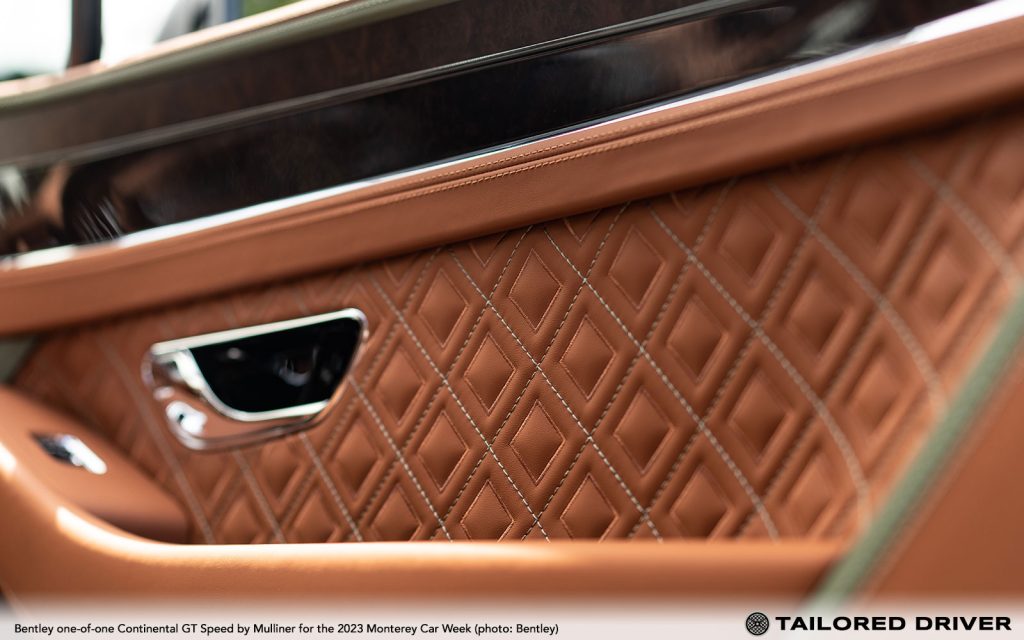
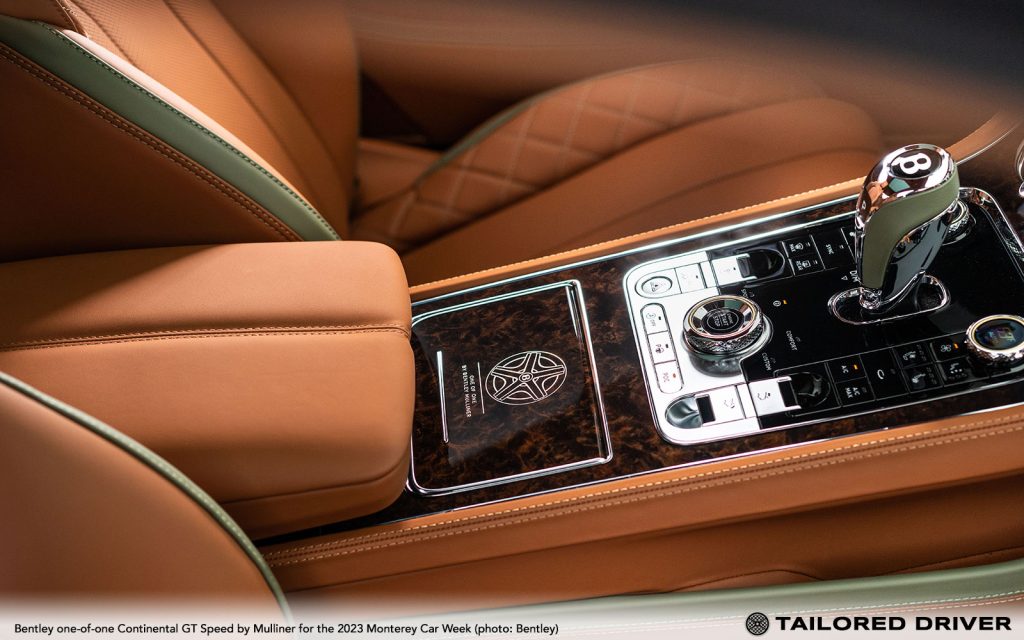
    While Saddle leather and Burr Walnut veneer feature in both cabins, the third-generation model features subtle enhancements of the original model’s theme. The rich Saddle colour is complemented by an accent hide in ‘Special Green’, with contrast stitching in the same shade throughout. The fascia and waist rails feature two different veneer finishes – open pore Dark Burr Walnut over high gloss Dark Burr Walnut – separated by a painted pinstripe in Cypress, connecting the interior with the exterior.

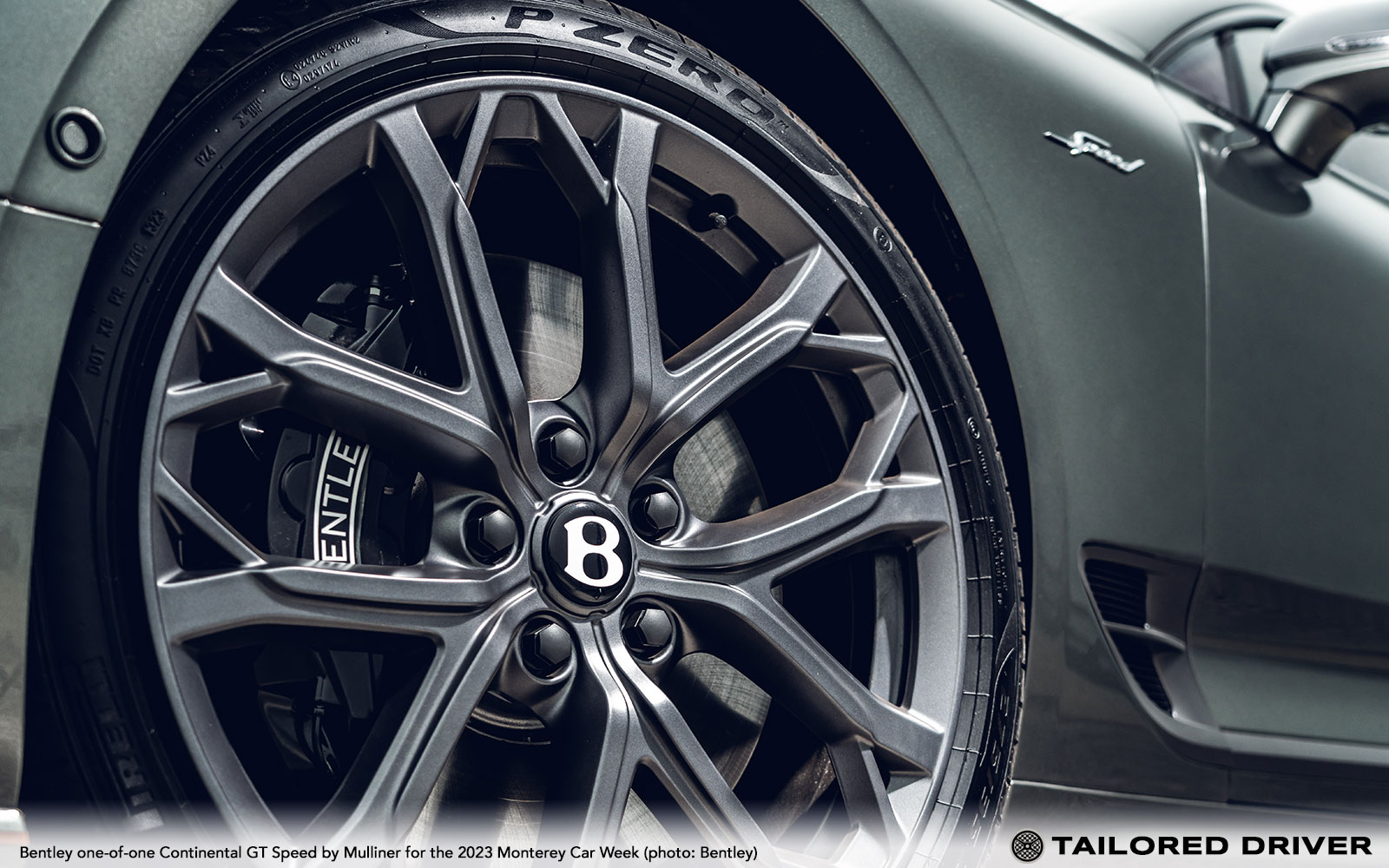
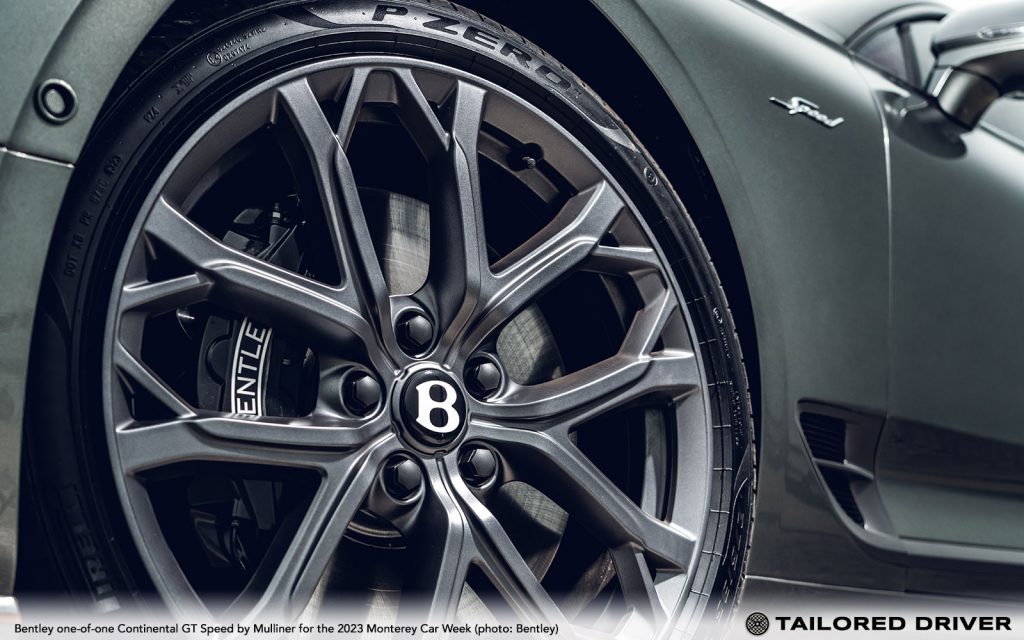
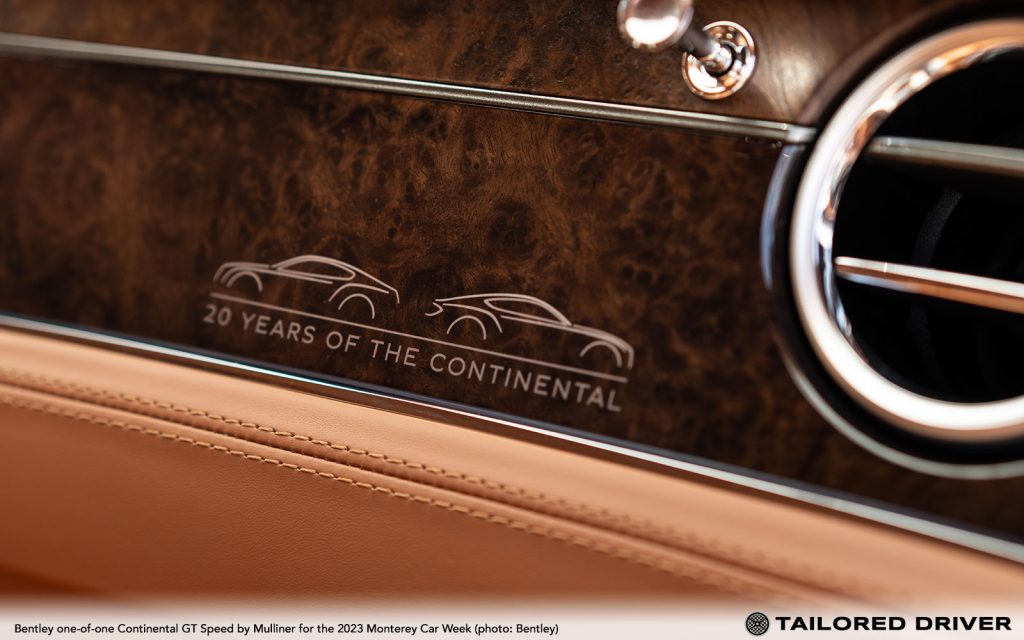
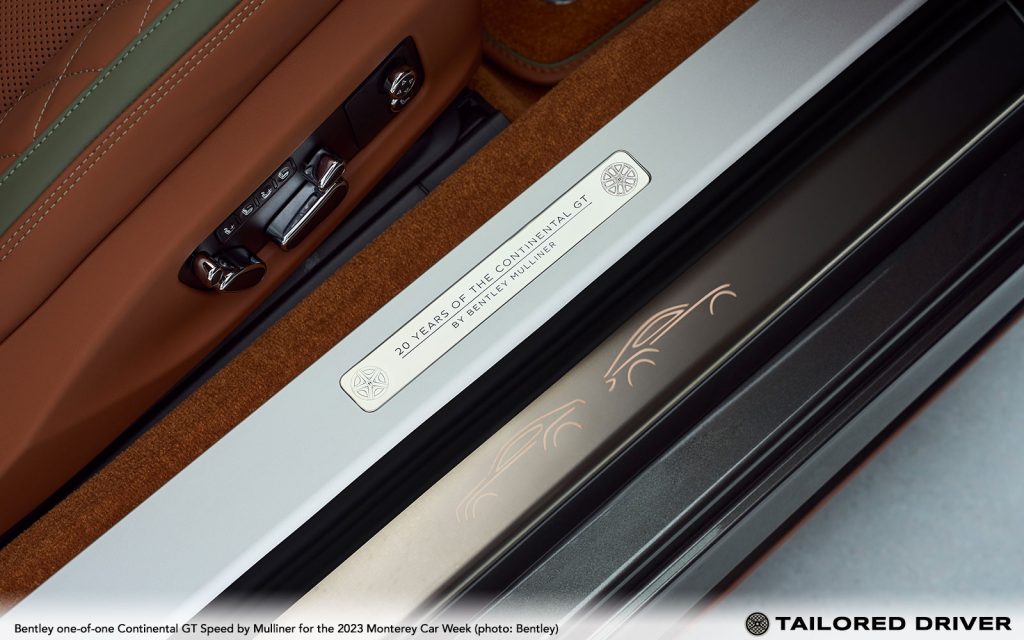
    An extensive list of features includes the Blackline, Touring and Styling Specifications – together bringing polished black exterior brightware, a suite of technical enhancements and a carbon fibre front splitter, side skirts, diffuser and subtle boot lip spoiler respectively. Self-levelling Mulliner wheel badges finished the 22” Sports Wheels in unique Dark Grey Satin. The interior features Naim for Bentley audio and the Bentley Rotating Display, while the personalised treadplates read, ’20 years of the Continental GT by Bentley Mulliner’. Outline representations of the 2003 and 2023 Continental GTs feature on the fascia, centre console and outer sill. This celebratory one-of-one car has already been sold, was handed to its new owner at The Quail, and represents the highlight of four months of activities and events to celebrate this milestone in Bentley’s history.

    20 Years and three generations

    The impact of the first-generation Continental GT was seismic, not only redefining Bentley as a modern luxury brand but also creating a new market sector. The first all-new Bentley with no carried-over components since the original 3 Litre of 2019, the Continental GT was designed at the Crewe studio under then Design Director Dirk van Braeckel and Head of Exterior Design Raul Pires. The sleek lines of Bentley’s new grand tourer were inspired by those of the 1952 R Type Continental, with a Bentley ‘powerline’ that starts low at the front and follows the shoulder line of the bonnet and door before meeting a muscular rear haunch. Twin round headlamps and a Bentley mesh grille gave a subtle nod to the company’s thunderous Le Mans-winning racers of the 1920s.

    Under the bonnet was an all-new 6.0-litre twin-turbo 48-valve W12 engine. This compact, smooth and powerful design developed 550 bhp and 650 Nm, powering all four wheels via a ZF six-speed automatic transmission. Acceleration from 0-62 mph took 4.8 seconds and top speed was a shade under 200 mph.

    During the seven years the first-generation Continental GT remained in production it sired a family of models including the Continental GT Convertible, Continental Flying Spur, Continental GT Speed and Supersports.

    Arrival of the V8

    The second-generation Continental GT, launched in 6.0-litre W12 form at the Paris Motor Show in 2010, also saw the arrival of a second all-new Bentley engine. The efficient and charismatic 4.0-litre V8, which made its debut in 2012, endowed the Continental GT with an eager, agile and responsive character, accompanied by a characterful V8 exhaust backbeat. In 2017 the line-up was joined by the limited edition 710PS Supersports, its conception inspired by the Team Bentley racing GT3.

    2018: the third generation

    Bentley’s third generation Continental GT was launched in 2018. An entirely new design, its sharper, sleeker lines took full advantage of a new, purpose-designed platform. Even its W12 engine was all-new, paired with a new dual-clutch transmission. Highlights of the new model’s specification included three-chamber air springs and 48V electric active anti-roll control, while the on-board technology took a major leap forward thanks to all-new electrical architecture. It was simultaneously faster, more comfortable, more efficient and more luxurious than its predecessors – yet unmistakably still a Continental GT.

    Around the world in 20 reviews

    A Bentley ‘baton’, designed and created in house to represent the key lines of the Continental GT, visited Monterey to start a global journey – travelling in a variety of Continental GT models across Europe, the Middle East, China, Asia Pacific and the US before returning to Crewe. At journey’s end at Bentley’s Dream Factory in Crewe, the baton – which will contain 20 mementoes of the tour – will become a time capsule as a permanent reminder of a unique journey.

  • Speed Six Continuation Series Debuts at Goodwood Festival of Speed

    Speed Six Continuation Series Debuts at Goodwood Festival of Speed

    • The first car in the Speed Six Continuation Series makes its global debut at the Goodwood Festival of Speed
    • ‘Speed Six Car Zero’ is the engineering development car for the programme, and will be retained by Bentley
    • Continuation Series by Mulliner based on original drawings and mechanic’s notes drawn from the archive
    • 1930 24 Hours of Le Mans competitor ‘Old Number 3’ and Bentley’s own Speed Six (GU409) provide real-world references
    • Finished design includes race improvements found between the 1929 and 1930 iterations of the 24 Hours of Le Mans
    • 600+ new components comprise 6½-litre six-cylinder race-spec engine
    • Initial engine tests indicate peak power of 205 bhp, within 5 bhp of original Le Mans spec engine of 1929 and 1930
    • One ‘Factory Works’ car and 12 pre-sold customer cars to follow, with each customer offered a personal fitting service for their car
    • Every single car handcrafted from scratch in the Mulliner workshop in Crewe, with each taking 10 months to complete

    [source: Bentley]

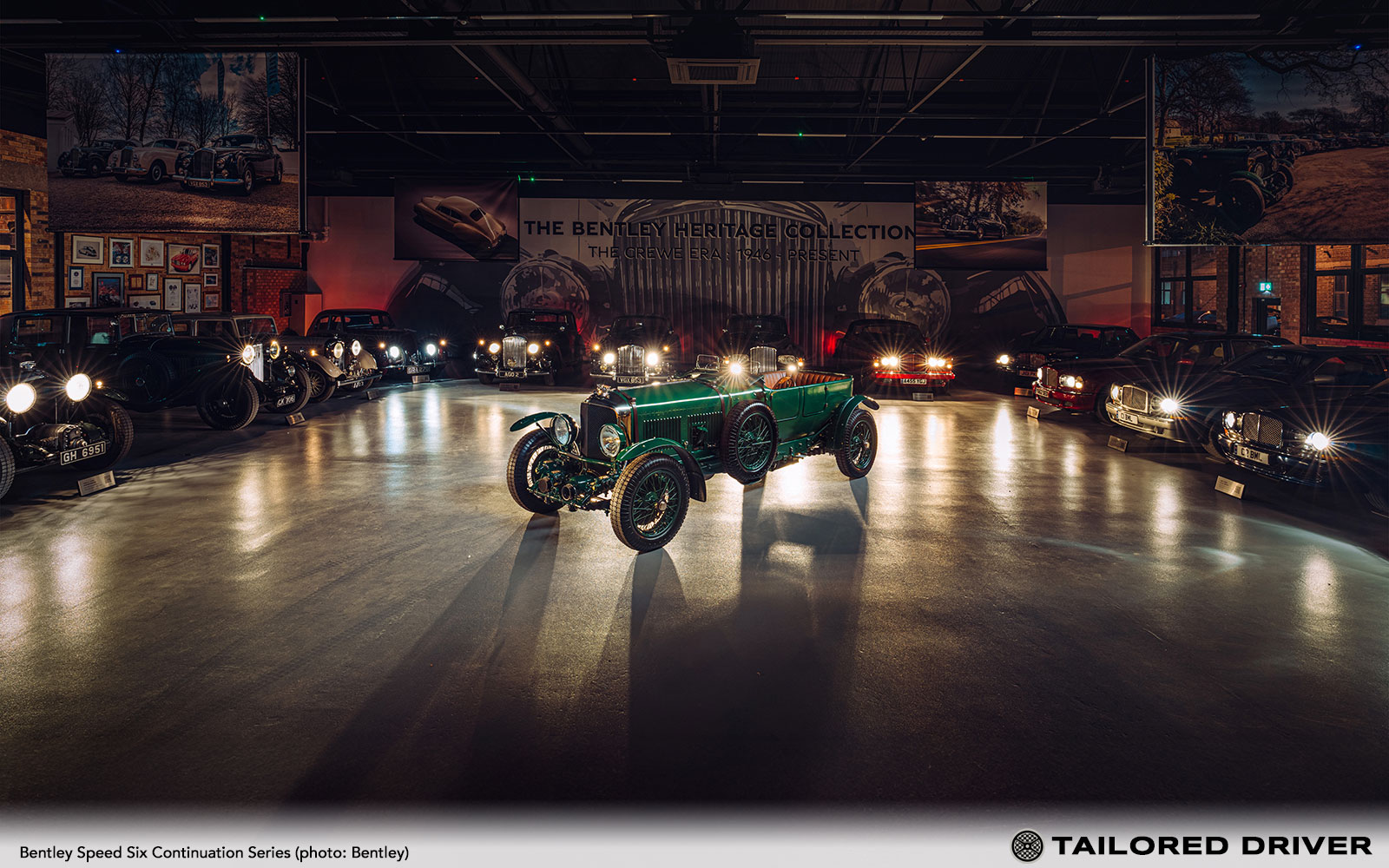
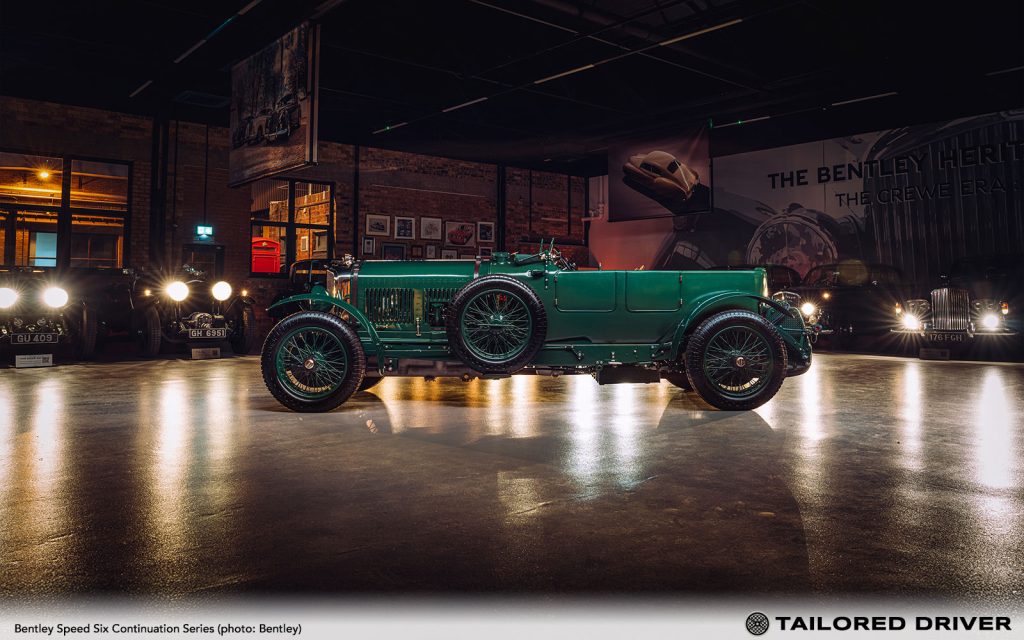
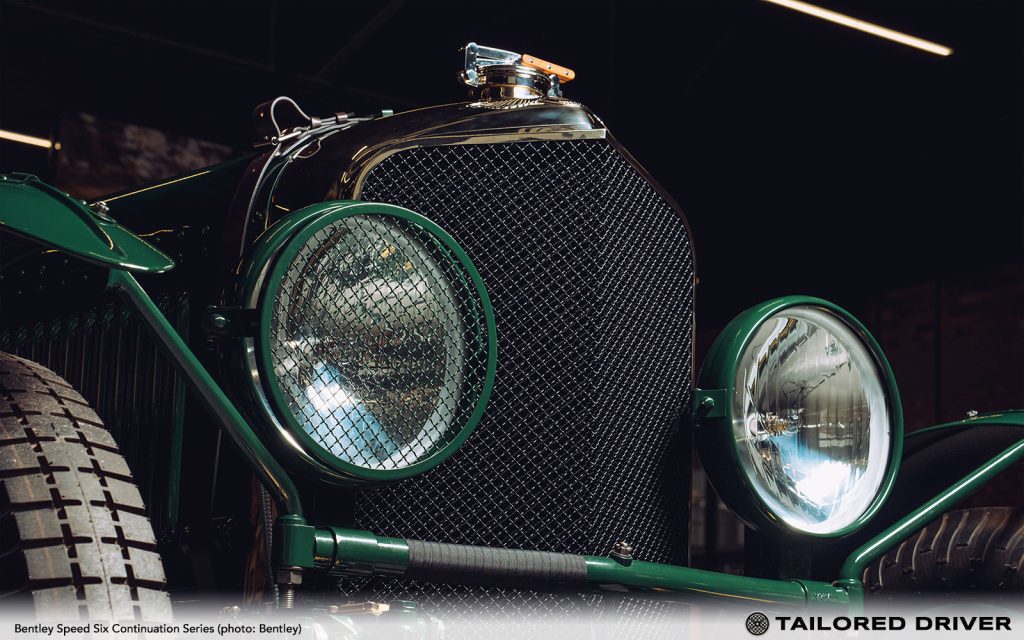
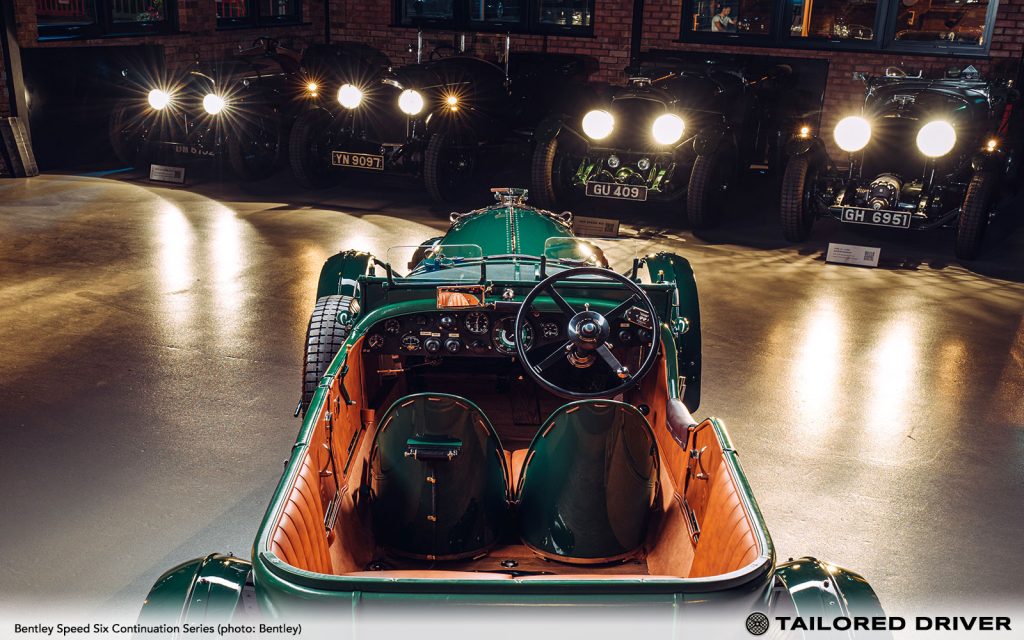
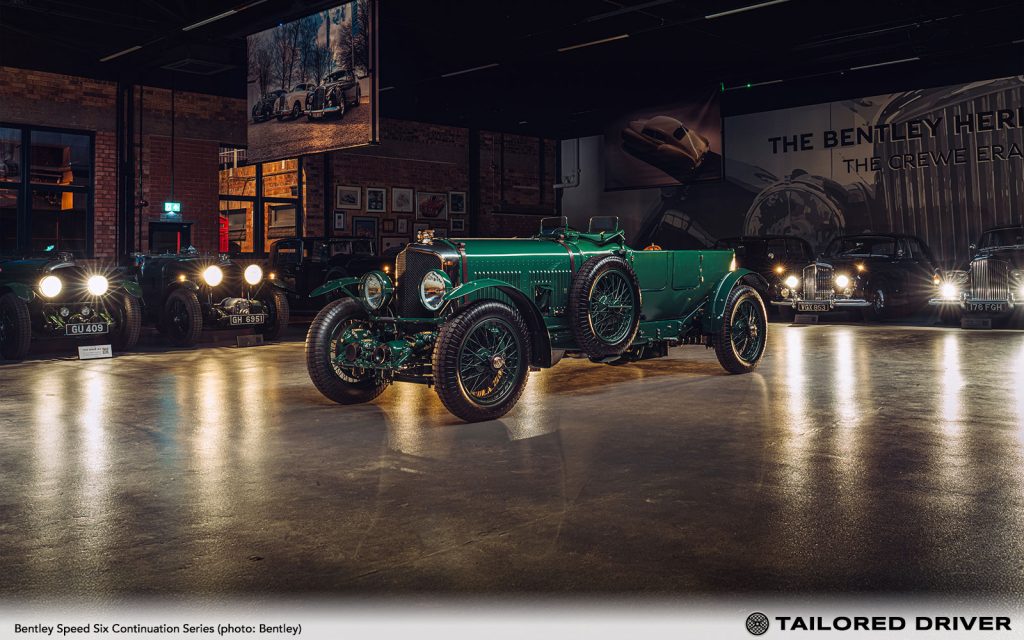
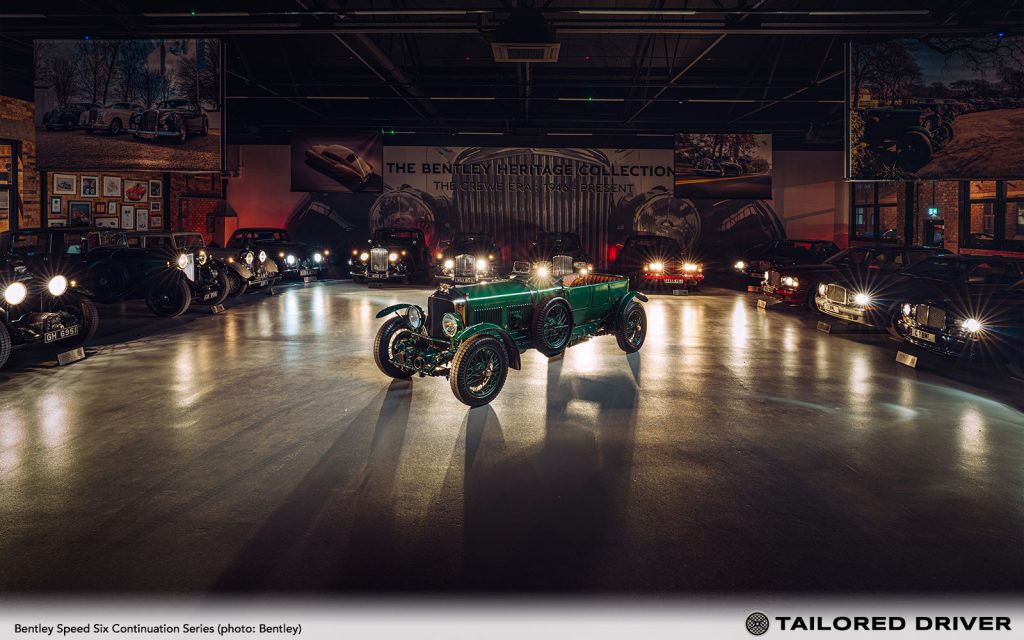
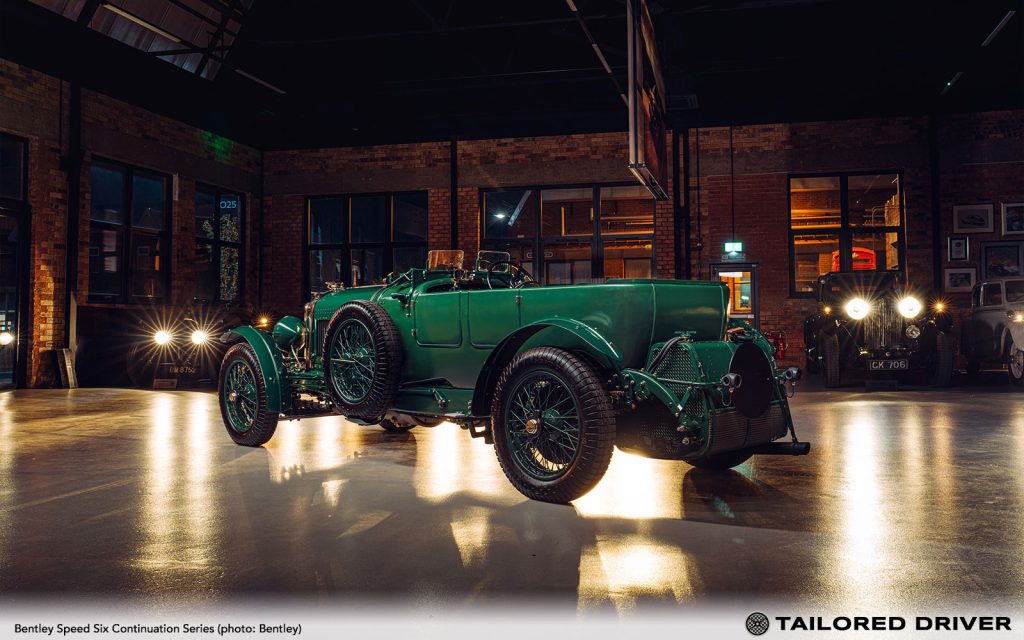
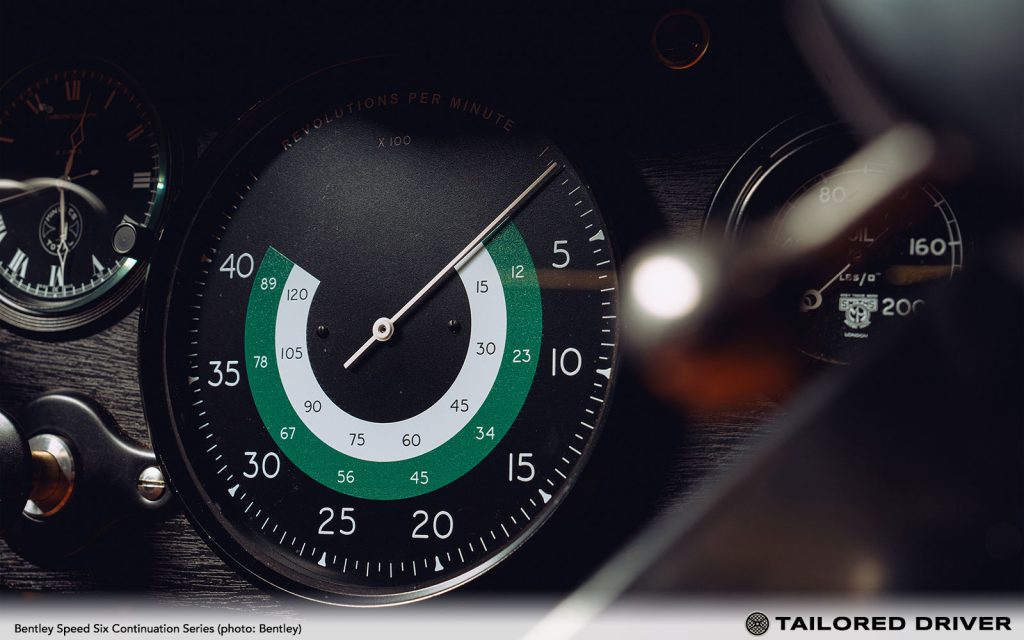
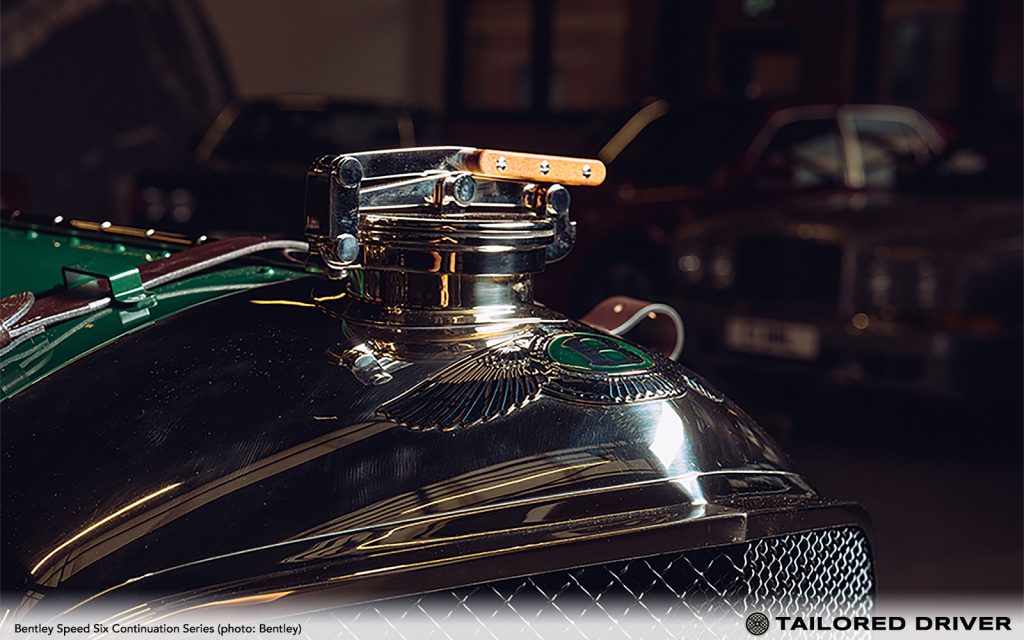
    Crewe, England – The first new Speed Six in 93 years will makes its global debut at this year’s Goodwood Festival of Speed. The most successful Bentley racing car ever, the Speed Six is regarded as one of the most important Bentleys in history. The newest Speed Six – Car Zero – will be used in a development programme consisting of real-world durability and track based testing, before being retained by Bentley ahead of the build of 12 customer cars – all of which are already sold. 

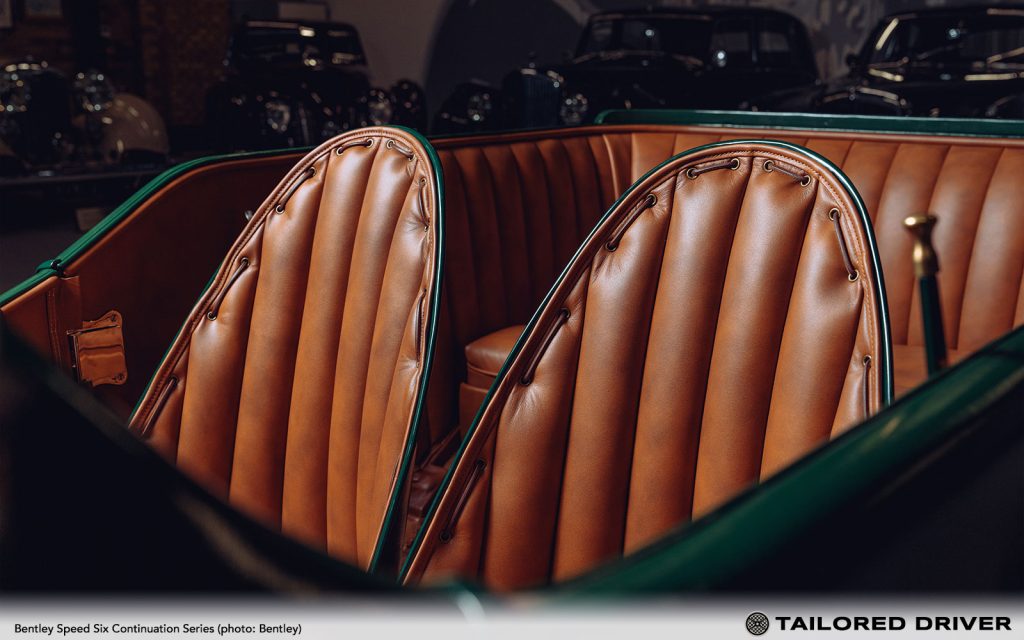
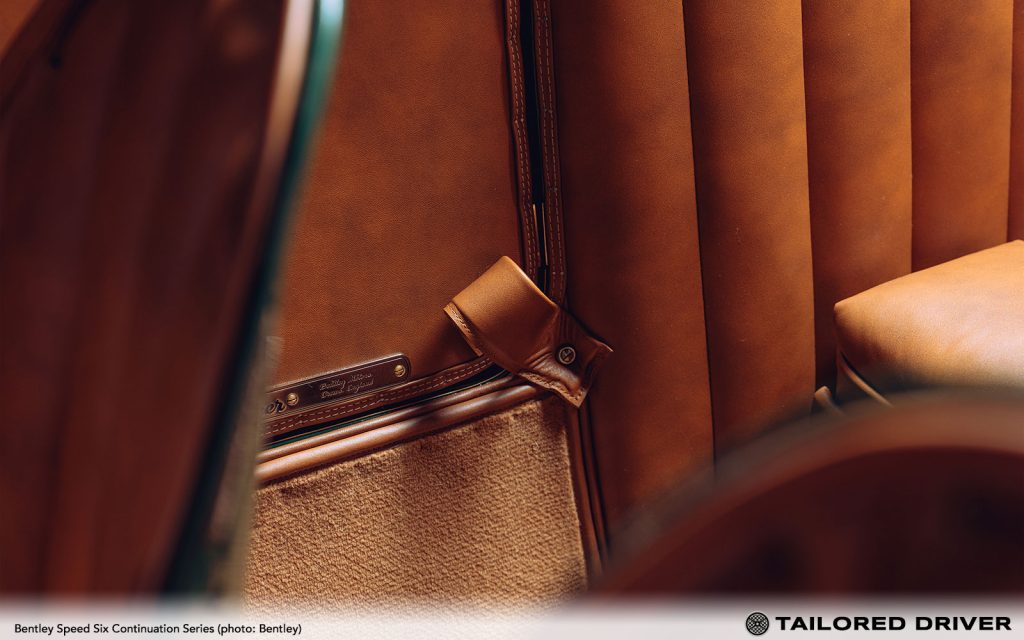
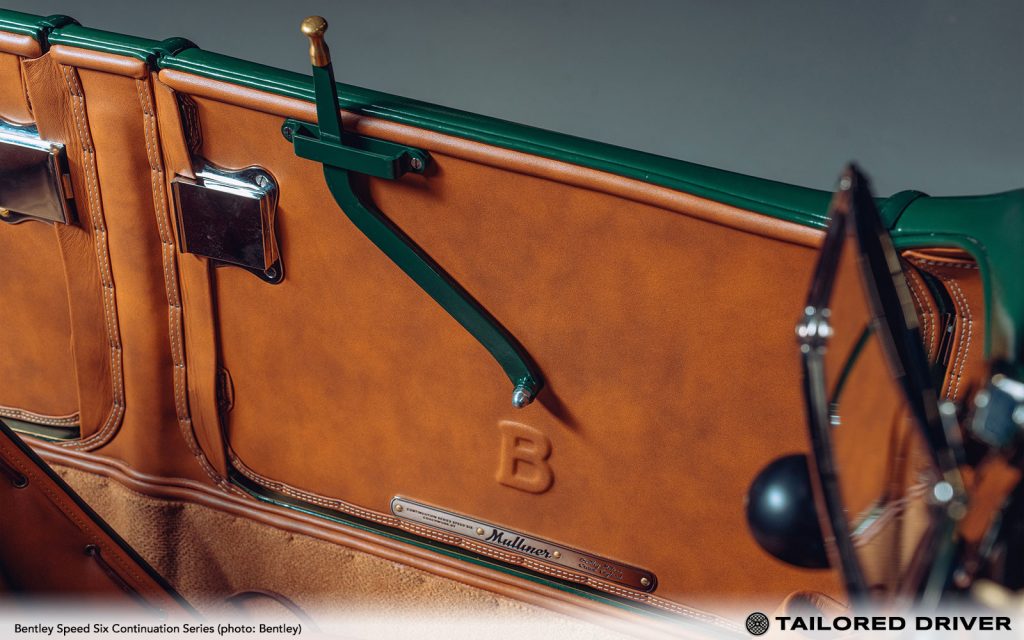
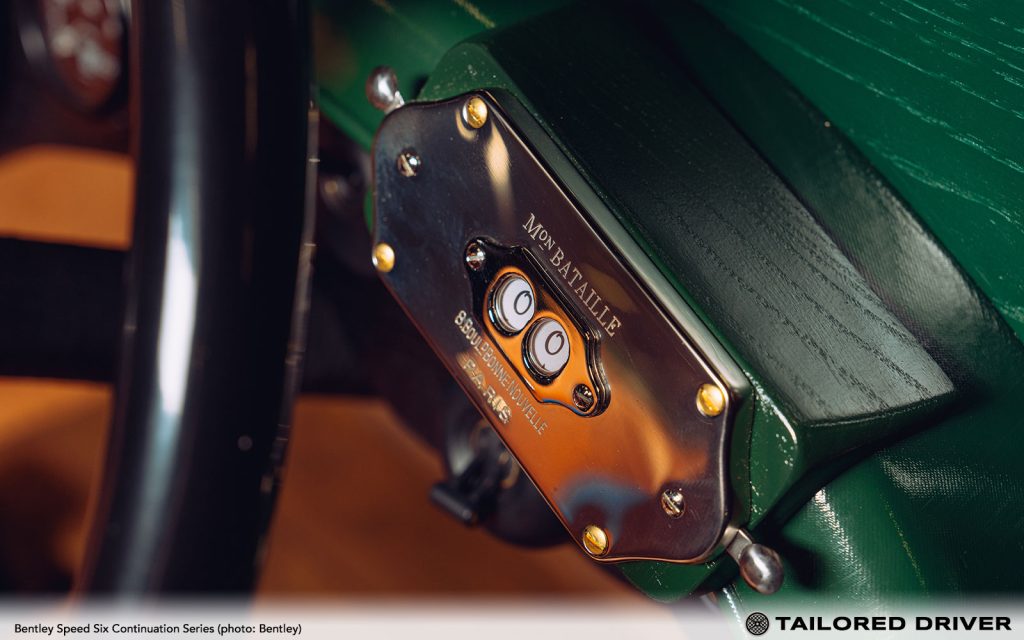
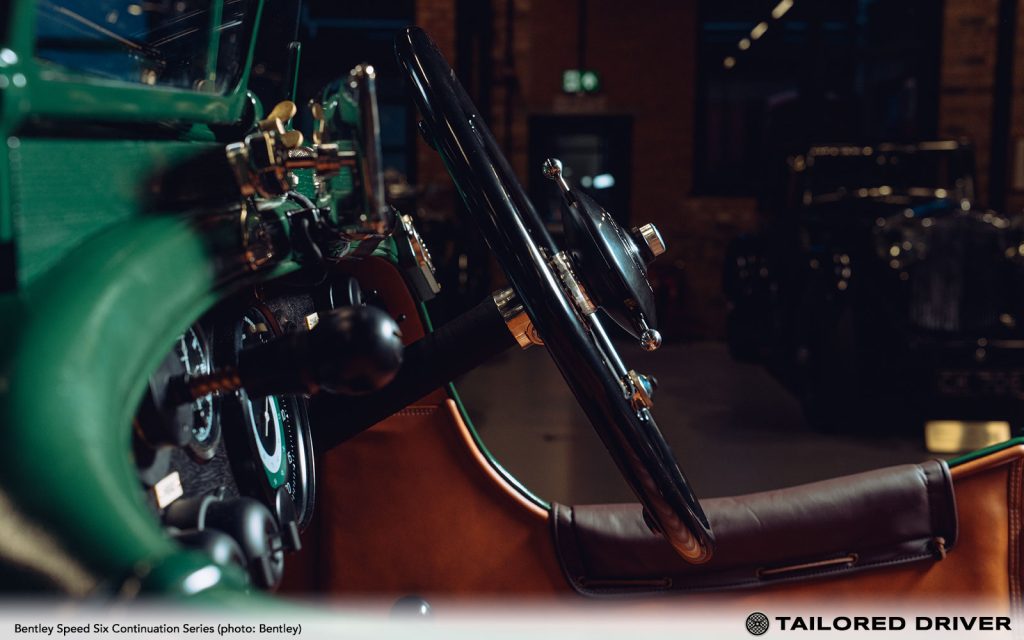
    So much more than a replica, a continuation car is built to the same designs, using the same processes, as the original car that inspires the series. The Speed Six is the second pre-war Continuation Series by Mulliner, Bentley’s bespoke and coachbuilding division, following the Blower Continuation Series which itself was the first pre-war continuation ever created.

    Extensive research has been undertaken to ensure the content of the Speed Six is correct and authentic, with particular focus on the specification and setup of the original cars for the 1930 24 Hours of Le Mans. As many original drawings have been used as possible; with 80% of the originals found via the WO Bentley Memorial Foundation. The drawings have been supplemented by original mechanic’s notes that detailed the changes between the 1929 and 1930 races, alongside data taken from the 1930 Speed Six in the Bentley Heritage Collection and an original 1930 Le Mans racer, known as Old Number 3.

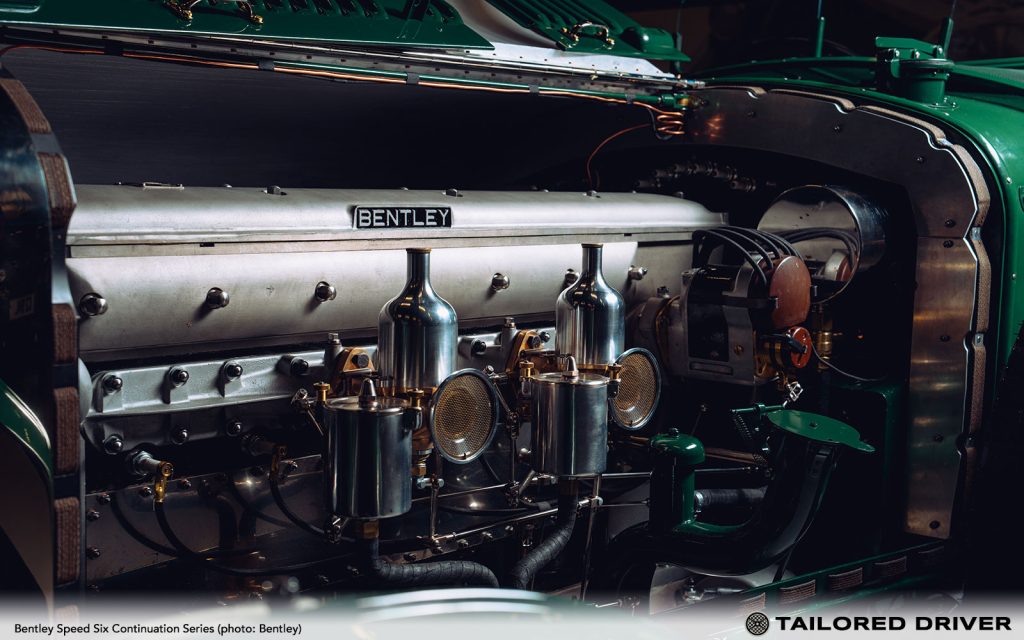
    In excess of 600 individual new parts have been required for the creation of the new 6½-litre six-cylinder race spec engine. Initial dyno testing has shown the first engines to develop 205 bhp at their peak, within 5 bhp of that documented for the original race-tuned engines in 1930.

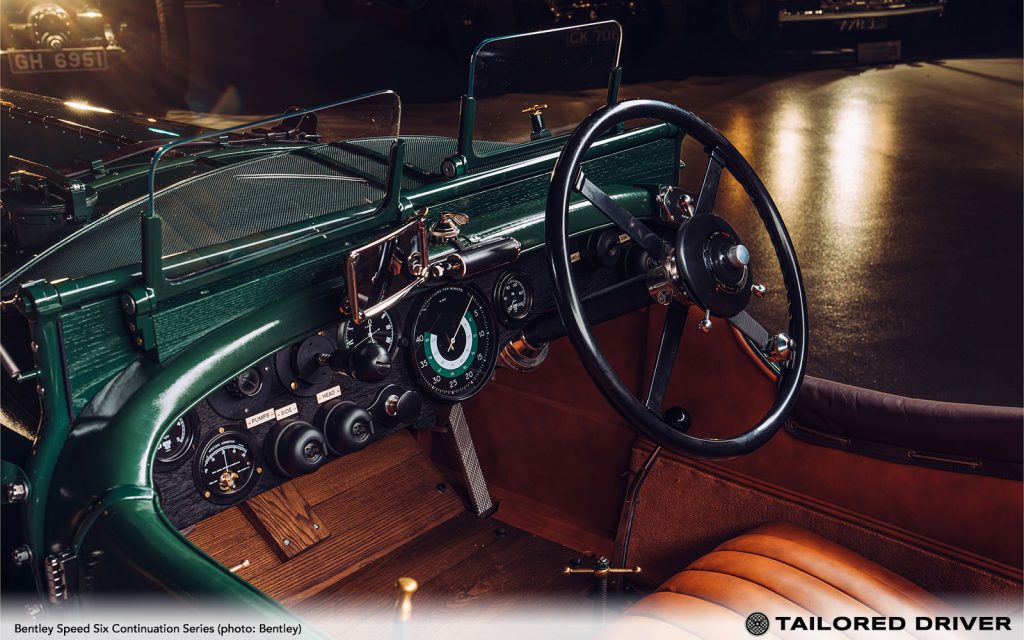
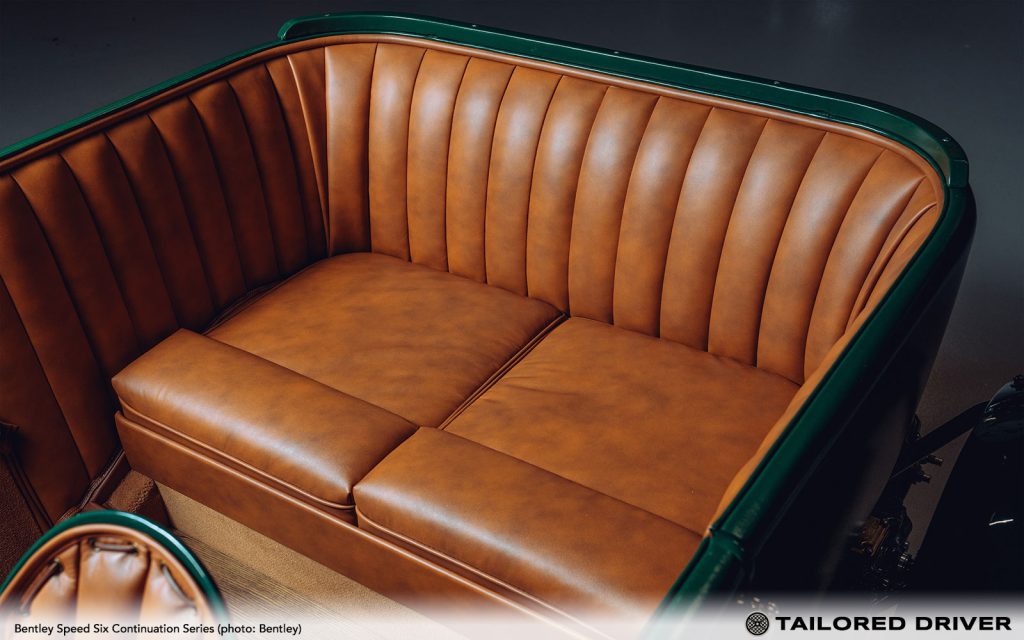
    Many of the authentic materials used on the Blower Continuation Series have also been utilised for the Speed Six, particularly on a number of the trimmed elements. Mulliner team members revisited the archives at the National Motor Museum in Beaulieu, Hampshire in order to offer five authentic period Parsons exterior paints. Speed Six Car Zero is finished in Parsons Napier Green, with an interior in Tan leather.

    Speed Six Car Zero has been built over the last ten months by an exceptionally skilled team of Mulliner artisans and specialists. As with the Blower Continuation Series, a major driver of the Speed Six programme is the development and retention of modern and traditional coachbuilding skills, and the build has seen craftspeople with decades of experience working alongside the younger generation so that skills are passed on. The finished car is a work of art, having been built and trimmed entirely in the Mulliner workshop at Bentley’s Dream Factory in Crewe.

    Over the next six months customers will have chance to discuss their specifications in further detail in personal commissioning sessions. Customers will be offered a personal fitting service in the second development car, known as Speed Six Factory Works, to ensure each car is built to each individual customer’s comfort needs.

    The validation programme for Speed Six Car Zero is comparable to that for  Blower Car Zero, and will include real world mileage accumulation and two race simulations.

    The History Of The Speed Six

    The Speed Six became the most successful racing Bentley in history, as a high-performance version of the 6½ Litre, and won Le Mans in 1929 and 1930 at the hands of Woolf Barnato, Sir Henry ‘Tim’ Birkin and Glen Kidston.

    W.O. Bentley believed that the best way to increase power was to increase capacity, as opposed to Tim Birkin’s faith in supercharging. He therefore developed a new, larger engine to succeed the 4½-litre. With a bore of 100 mm and a stroke of 140 mm, his new straight six had a capacity of almost 6.6 litres. In base form, with a single Smiths five-jet carburettor, twin magnetos and a compression ratio of 4.4:1, the 6½ Litre delivered 147 bhp at 3500 rpm. 362 examples were built at Bentley’s factory in Cricklewood, North London, on a variety of chassis of different lengths depending on the body style requirements of individual customers. 

    The Speed Six chassis was introduced in 1928 as a more sporting version of the 6½ Litre. The engine was modified to liberate more power, with twin SU carburettors, a higher compression ratio and a high-performance camshaft, responsible for an increase to 180 bhp. The Speed Six chassis was available to customers with wheelbases of 138 inches (3,505 mm), 140.5 inches (3,569 mm), and 152.5 inches (3,874 mm), with the short chassis being the most popular. 182 Speed Six models were built between 1928 and 1930, and the factory race cars were built on a 134 inch (11’2”) chassis frame.

    The racing version of the Speed Six had a further-developed engine running a compression ratio of 6.1:1 and producing 200 bhp. Two wins at Le Mans in 1929 and 1930 cemented the Speed Six’s place in Bentley history, with the 1929 victory setting a new benchmark for dominance at the race. Driven by Woolf Barnato and Sir Henry ‘Tim’ Birkin, a Speed Six led from the first lap until the chequered flag, followed by a procession of three other Bentleys. A new lap record of 7:21 had been set by Birkin, taking 46 seconds off the previous best and requiring an average speed of 83 mph, and in covering a 2,844 km distance, a further record was also attained. Such a dominant performance by one manufacturer was not seen again at Le Mans for nearly 30 years.

    Real Life Endurance 

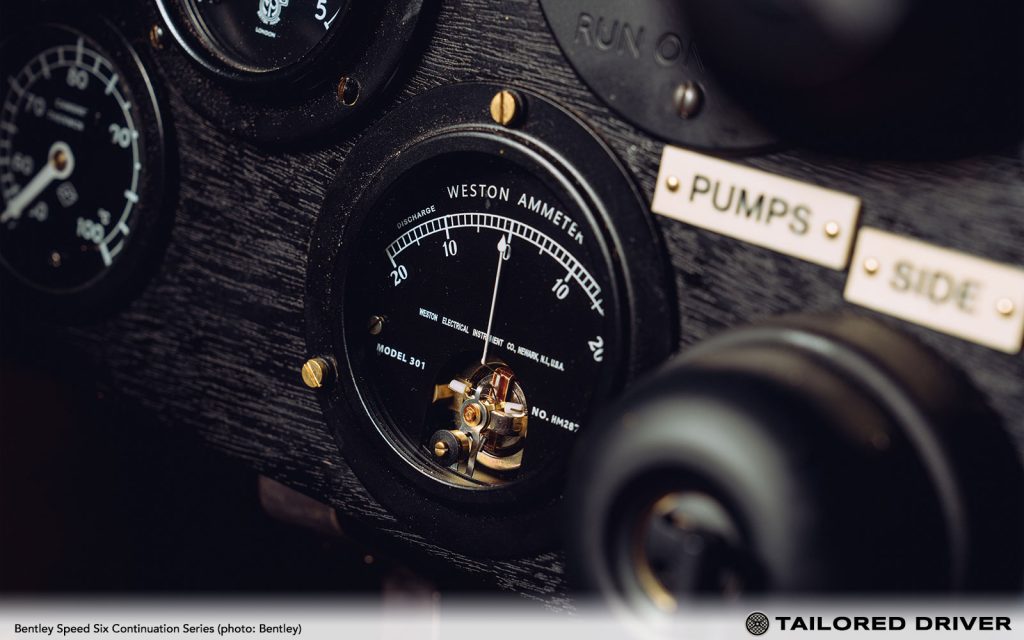
    Speed Six Car Zero, which will be displayed at this year’s Goodwood Festival of Speed, will show further instrumentation that will not be fitted to customer cars.  This has been added to the car to support the validation process and record many different aspects of data during the next six months.

    With the build of Car Zero now complete, a programme of real-world durability testing will begin. The test programme is designed to achieve the equivalent of 35,000 kilometres of real-world driving across 8,000 kilometres of track driving. Intervals of gradually increasing duration and speed will check functionality and durability under the most challenging conditions; giving confidence in future customer cars. 

    The first customer car will start build in October of this year, and the series of 12 customer cars is due to be completed by the end of 2025, with each car taking 10 months to complete.

  • Bentley Batur Completes Development Program

    Bentley Batur Completes Development Program

    • Brace of Baturs complete whole vehicle development programme
    • Two cars combine for 58 weeks of total durability work
    • Batur’s W12 engine completes two-year development and test regime
    • Tests included more than 30,000 kilometres of real world driving in varied conditions
    • More than 800 parts exclusive to Batur – all tested to the highest standards of durability
    • 750 PS W12 Batur will be the most powerful Bentley to date – the ultimate grand tourer 
    • Personal commissioning of 18 customer cars continues

    [source: Bentley]

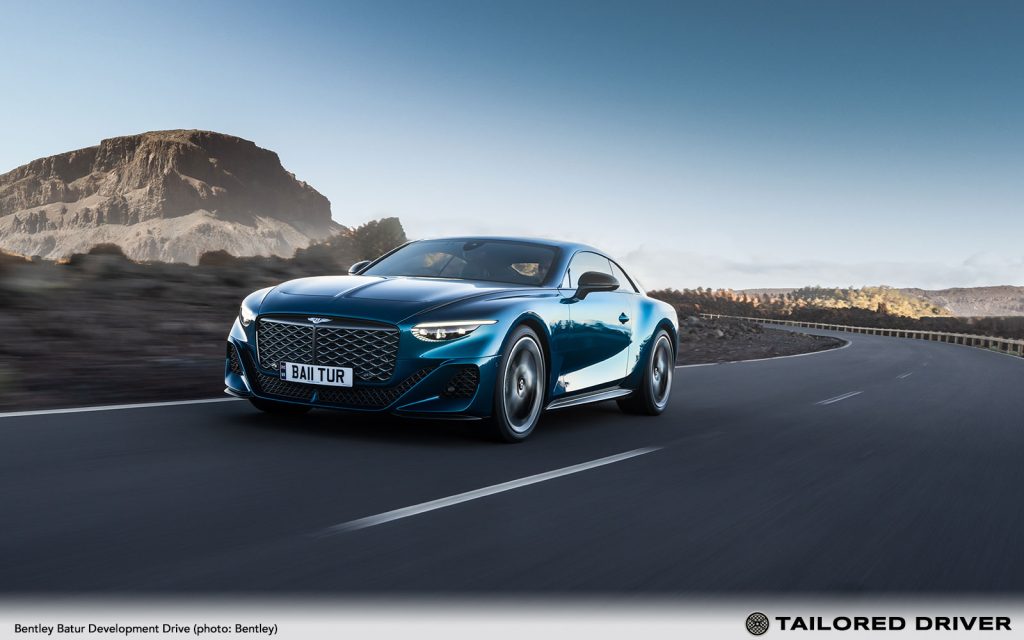
    Crewe, England –  Bentley’s ultimate grand tourer, the coachbuilt Batur by Mulliner, has completed its whole vehicle development programme, ensuring that it meets the highest standards of performance and durability. Work now commences on the build of customer cars, each of which will feature an exceptional level of bespoke craftsmanship and take around four months to handcraft – with the last one to be completed at the end of 2024.

    Following on from the creation of two development vehicles (known as Car Zero and Car Zero-Zero), just 18 Batur customer cars will be produced by hand in the Mulliner workshops. However, no concession has been made in Bentley’s rigorous testing regime, which includes durability tests on handling tracks, real-world road conditions, high speed testing beyond 200 mph, and rough surfaces. Other tests included 600 hours of solar loading, equivalent to five years in an Arizona desert, to ensure that the sustainable materials used in the Batur’s construction will be robust enough to endure a lifetime’s use.

    The original development Batur – Car Zero 

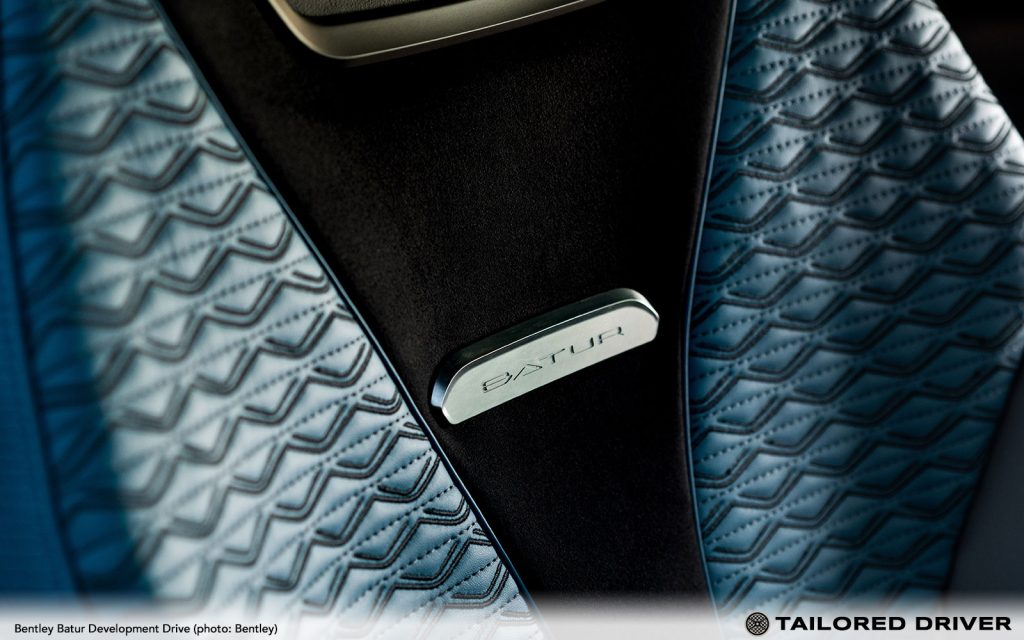
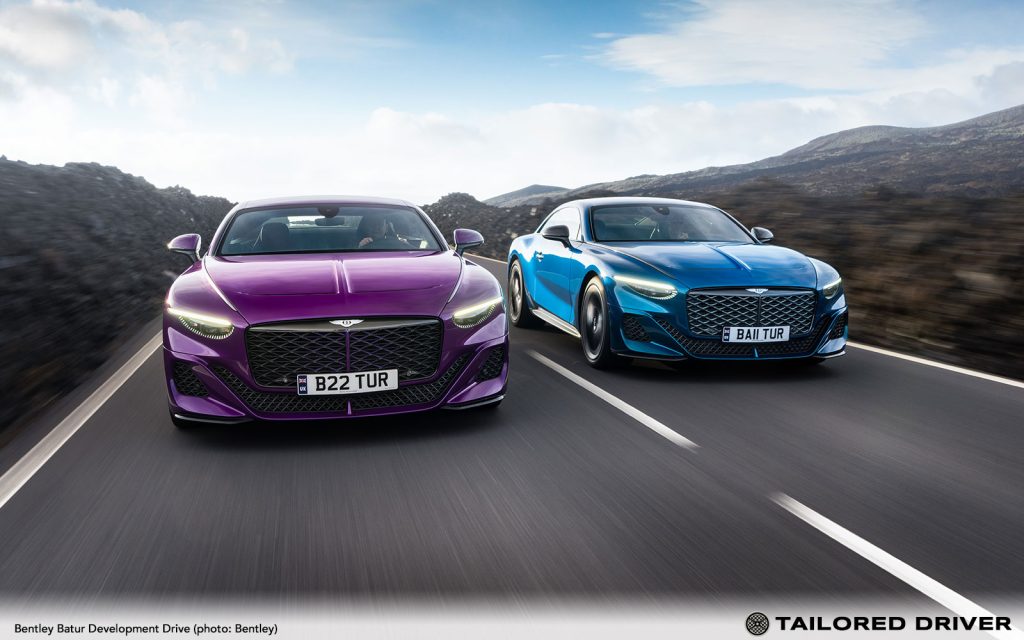
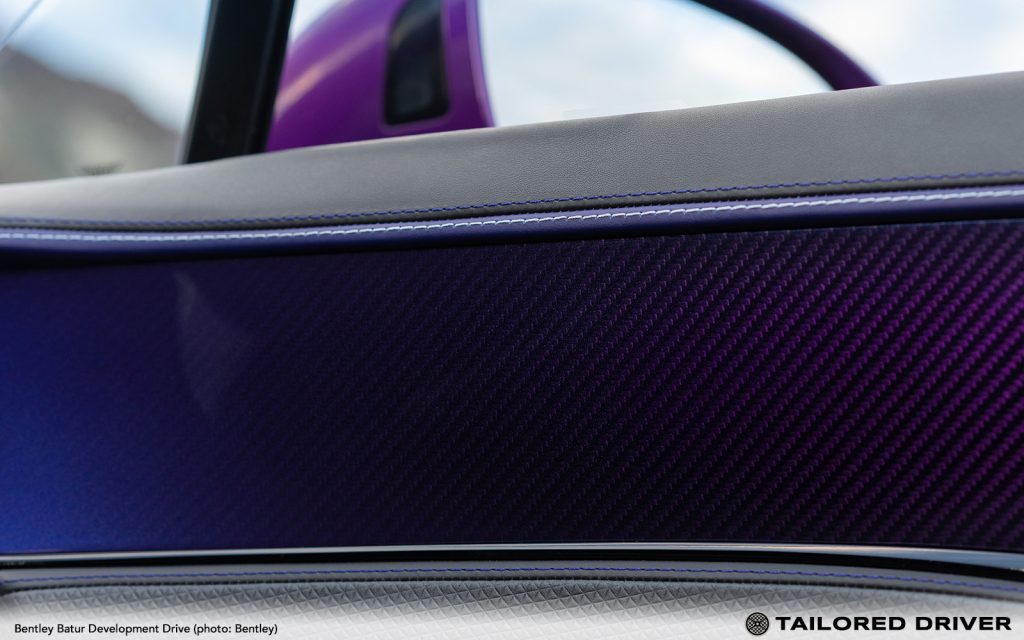
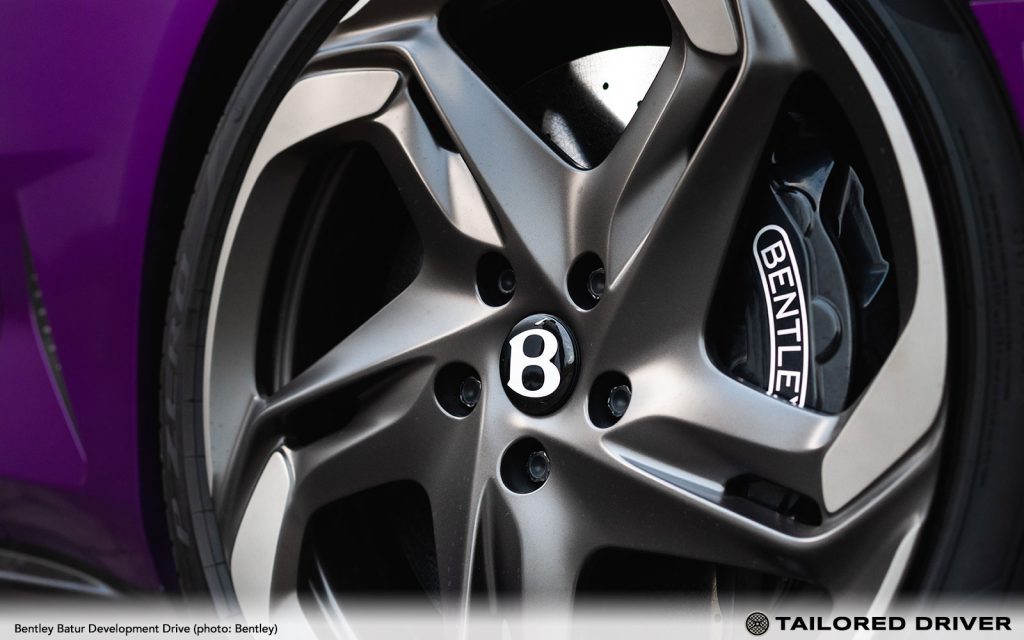
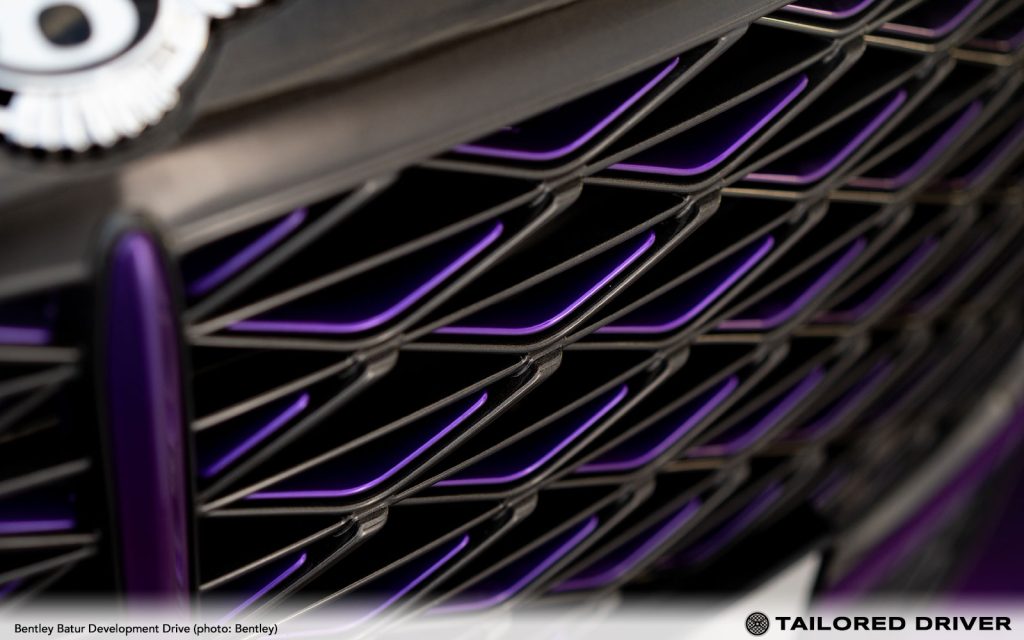
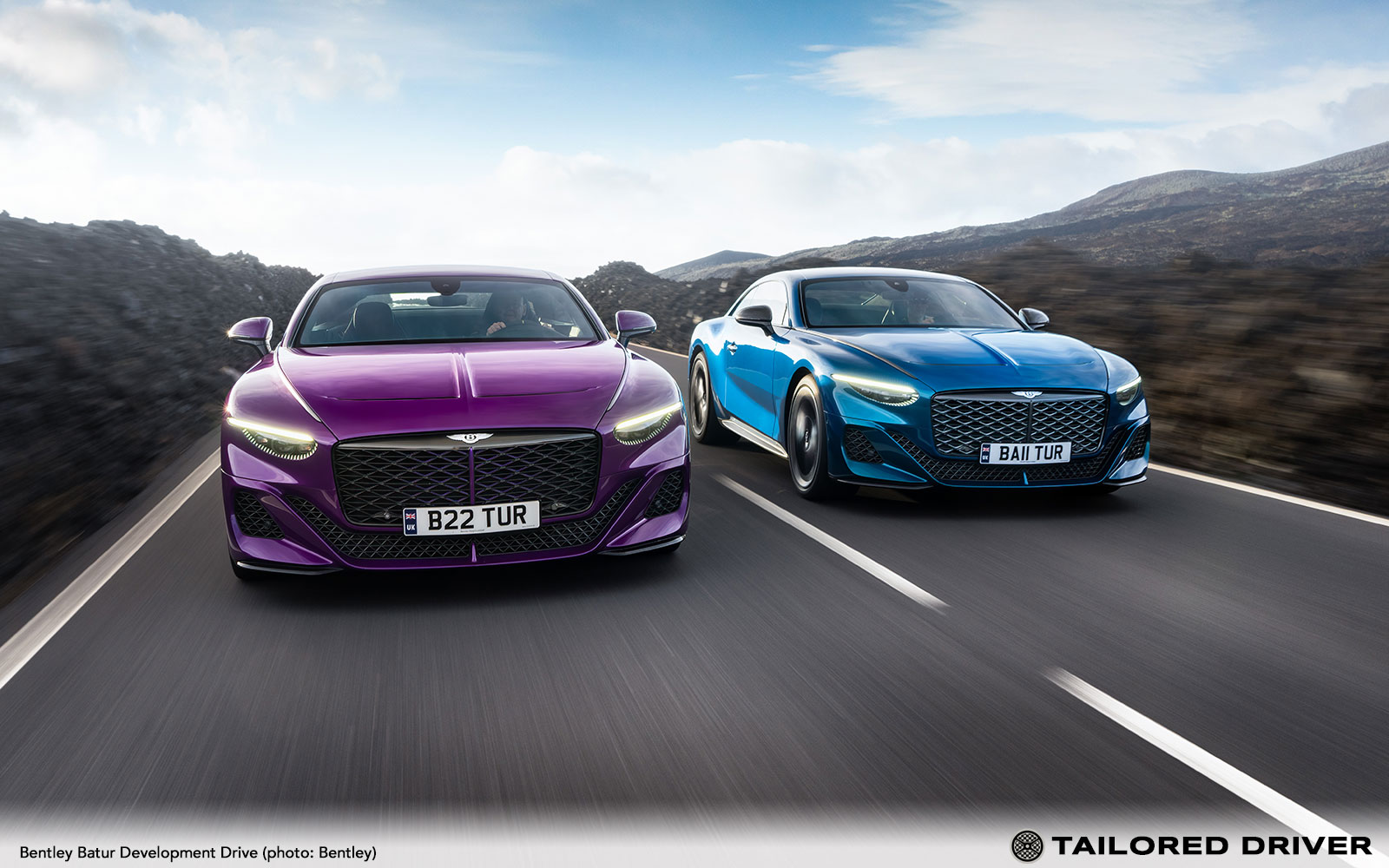
    Car Zero is no ordinary development mule. It was built to the same levels of craftsmanship as each of the 18 customer cars to come. Its bespoke exterior finish, Purple Sector, is complemented by front splitters, side skirts and rear diffuser in a high gloss natural fibre finish. The main matrix grille in Gloss Dark Titanium is accented with contrast chevrons in a horizontal ombré pattern that flows from Purple Sector in the centre, gradually darkening to Black Crystal at the periphery. The ‘endless bonnet’ line is finished in Satin Titanium, as are the 22” wheels which feature spokes in Gloss and Satin Black Crystal.

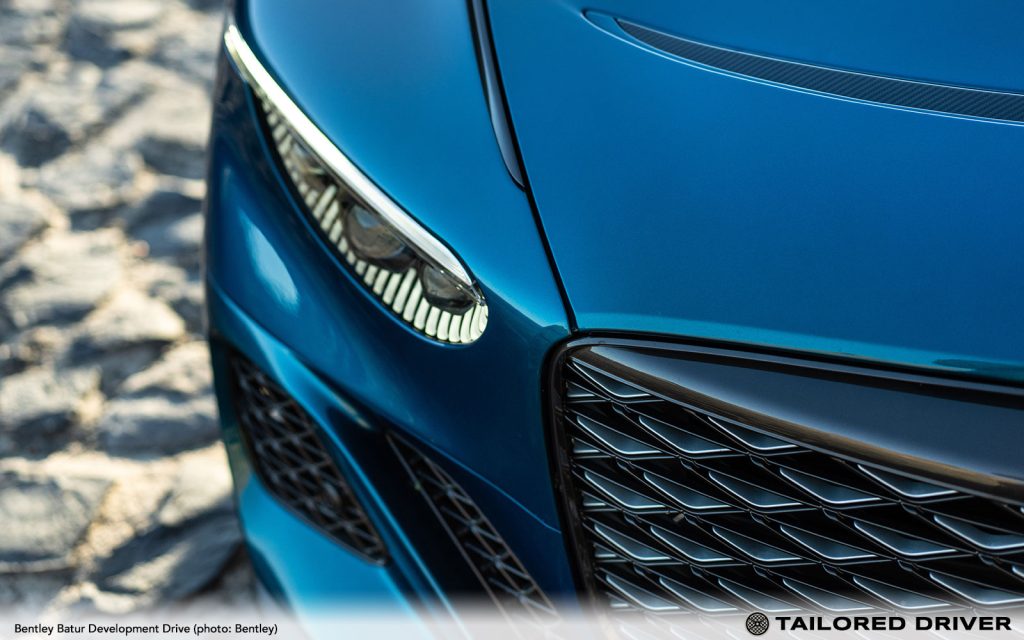
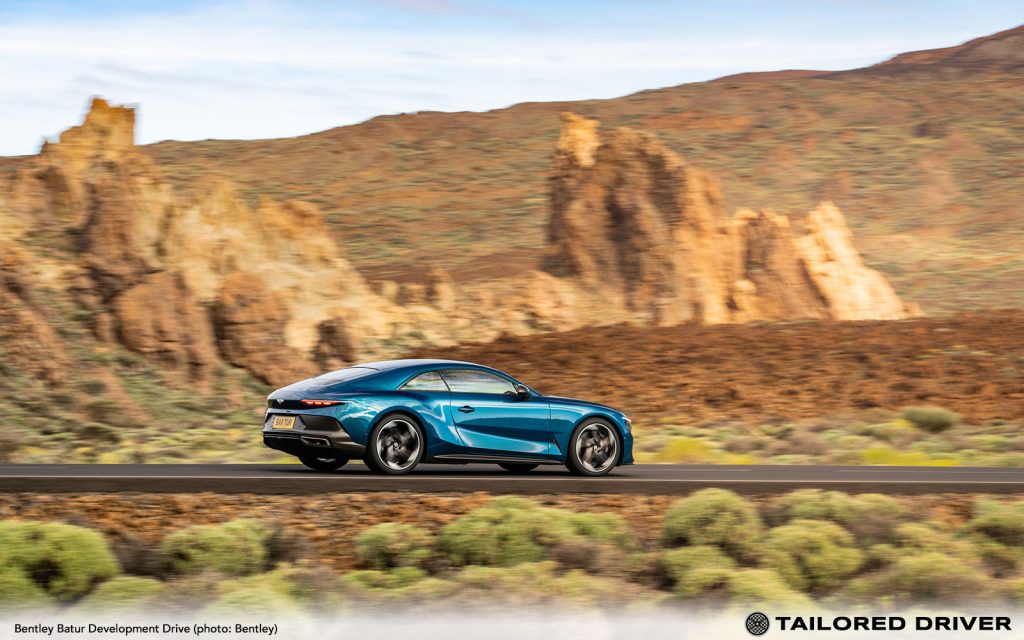
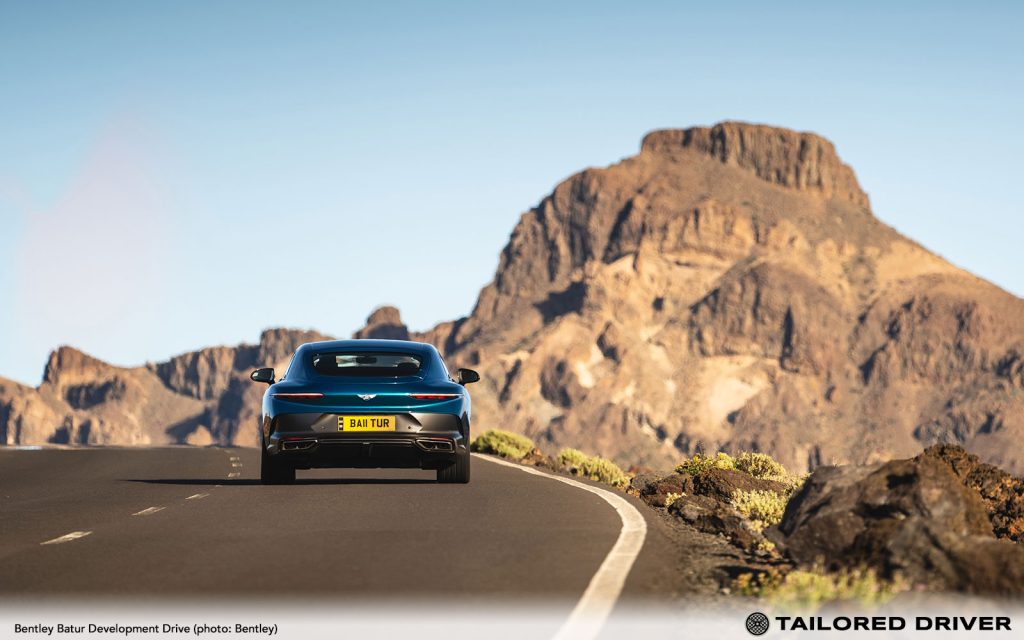
    A second development Batur, Engineering Car Zero-Zero, is finished in the equally striking Marina Teal finish. These bespoke finishes, and new components such as the one-off LED headlamp units, faced a series of tough durability tests, which included a 2,500 km European tour, high speed testing at closed circuits, and extended exposure to the harshest environments. In total, over 800 unique and one-off components have been tested and proved in 160 simultaneous weeks of intensive development work.

    The most powerful Bentley to date

    The W12 engine that powers Batur can trace its origins back to the Continental GT of 2003. The W12 has both literally and figuratively powered Bentley’s ascent to the pinnacle of automotive luxury brands. It has continued to evolve, becoming more powerful, refined and efficient with each successive generation. Now, as Bentley begins its journey to full electrification, the Batur’s W12 represents a celebration of this remarkable engine as well as its swansong. Its 750PS peak output makes it the most powerful W12 and therefore the most powerful Bentley powertrain ever built. Its new air intake system, modified turbochargers, revised intercoolers and new calibrations for engine, transmission and electronic stability control were tested to the limit in over 100 weeks of powertrain development. The engine’s breath-taking performance is matched to the most advanced Bentley chassis specification ever. Highlights include Speed-tuned air suspension, electric active anti-roll control, eLSD, four-wheel steering and torque vectoring. 

    A new coachbuilding era

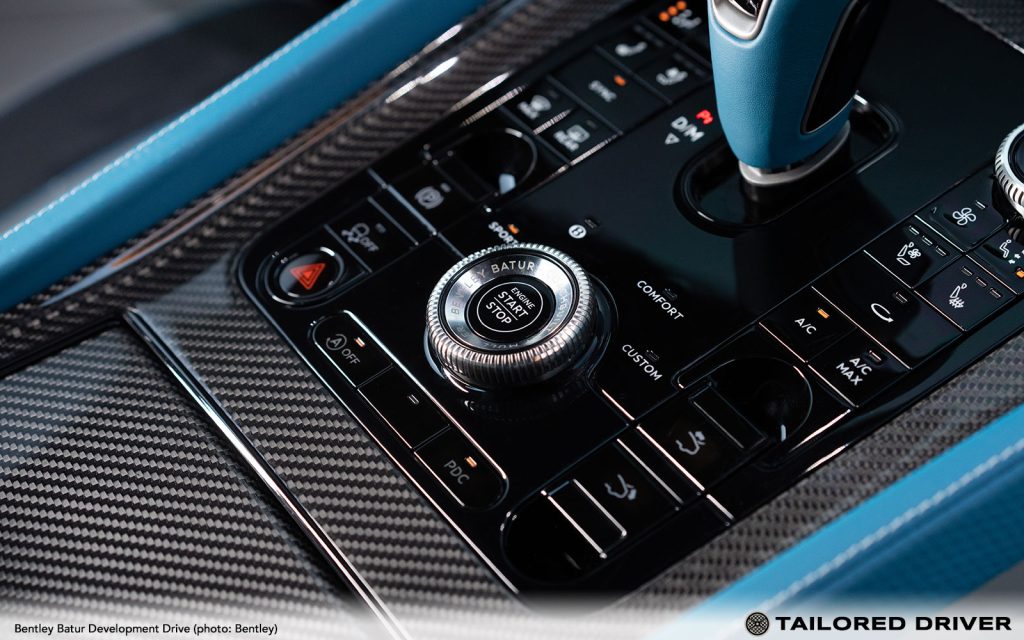
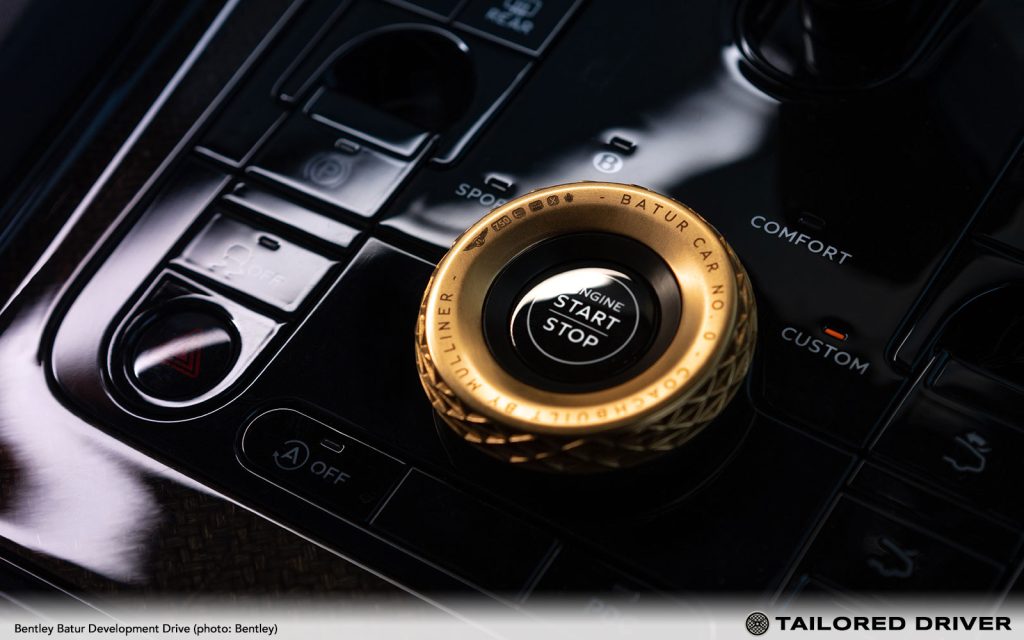
    The advanced technologies used to create Batur make it possible for Mulliner to offer customers a level of individuality unheard of in the modern era. New sustainable materials such as natural fibres and technologies such as Additive Manufactured Gold give Mulliner’s designers a near-infinite palette of choice, enabling customers to realise their unique vision of the ultimate grand tourer. Every detail has also had to pass development scrutiny, including the 18ct yellow gold options for the Charisma Dial and the Organ Stop air vent control. Made from recycled, 3D printed gold, these parts have been subjected to tests as wide-ranging as thermal loading to resistance to sun cream.

    The first customer cars 

    Having passed every test with flying colours, Batur is now ready for the next stage of its journey. All 18 examples of Batur have already been reserved, and each customer can now continue the process of co-creation, guided by Mulliner’s in-house design team. After the customer specification of the colour and finish of almost every surface of the Batur, each unique car will be handcrafted in the coming months at Mulliner’s workshop in Bentley’s carbon neutral factory in Crewe, England, with each one taking around four months to complete.

  • Bentley Batur Specifications Showcase Depth of Mulliner Personalization

    Bentley Batur Specifications Showcase Depth of Mulliner Personalization

    • Customer commissioning process begins for Bentley Batur – the latest pinnacle coachbuilt Grand Tourer from Mulliner
    • Colour, Materials and Finishes team take inspiration from the cosmos to create new combinations of materials and colours
    • Four curated specifications demonstrate the unique capability of Mulliner to deliver to any customer’s imagination
    • Carbon fibre meets a more sustainable natural equivalent, crafted using flax fibres
    • Sustainably-sourced leathers complemented by coffee-based textiles
    • Precision-machined titanium and 3D-printed 18-karat gold provide exquisite metallic touches
    • Specification process underway for 16 of the 18 Baturs to be built

    [source: Bentley]

    Crewe, England – The Batur is more than just a glimpse of Bentley’s future design. It will be a significant step towards the way future Bentleys will be made, using the planet-friendly materials and techniques needed for a more sustainable vision of luxury. Innovative technologies have been fused with luxurious materials, to create features never seen on a Bentley before. 

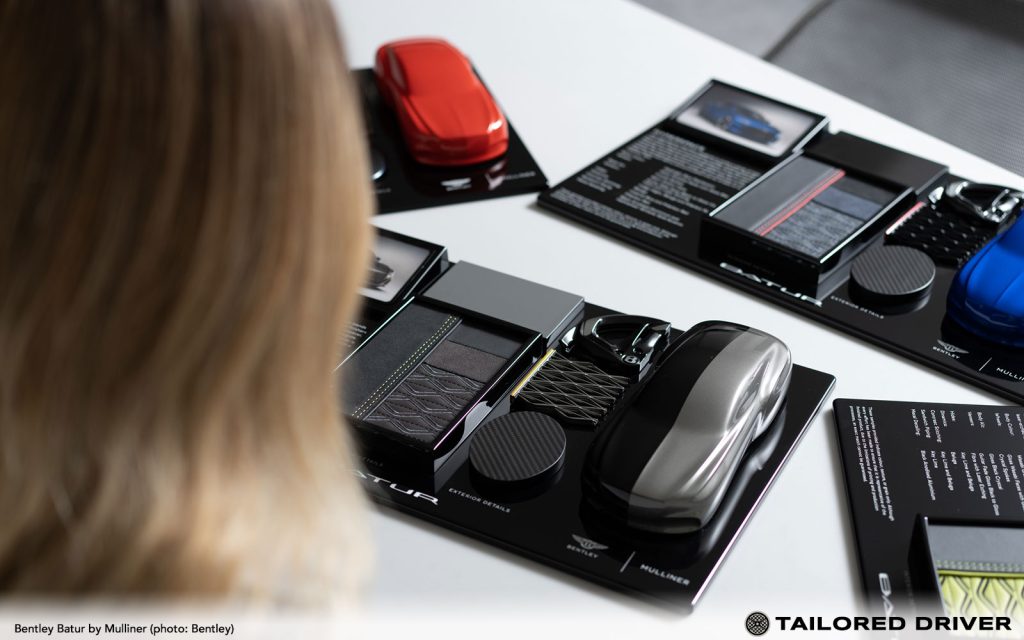
    Bentley’s Colour, Materials and Finishes team turned to the exploration of the cosmos for their inspiration in creating these specifications, utilising space-era materials and finishes to reflect the idea of a journey of exploration. For Mulliner customers, the ability to specify bespoke colours, materials and finishes is of the highest priority and the Batur demonstrates even further Bentley’s ability to use unique combinations of colour and materiality. 

    Carbon fibre is known for its incredible balance of strength with low weight – but it is not a sustainable material. New, natural alternatives to carbon fibre are now possible using high-performance composites made from flax – a sustainable ‘super-fibre’. Immensely strong and incredibly light, this material has proved suitable for use throughout the Batur, from the exterior body kit to the internal hard surfaces.  

    Where leather is used, it will be sustainably sourced, thanks to a production process that uses less water and aldehyde than traditional tanning. There will also be the option to select traceable, low-CO₂ leather – something that is only possible today in the low volumes involved in coachbuilding. Sustainable, leather-like textiles made from by-products of the coffee roasting process can even be selected, as can carpets made from recycled yarn.

    A wealth of innovative new finishes are available for the Batur. From hallmarked 18-karat yellow gold crafted using additive manufacturing, to aerospace-inspired titanium, and the composites and textiles detailed above, choices like these only add to the immense range of leathers, woods and other options. The only limit is the imagination of the individual customers.

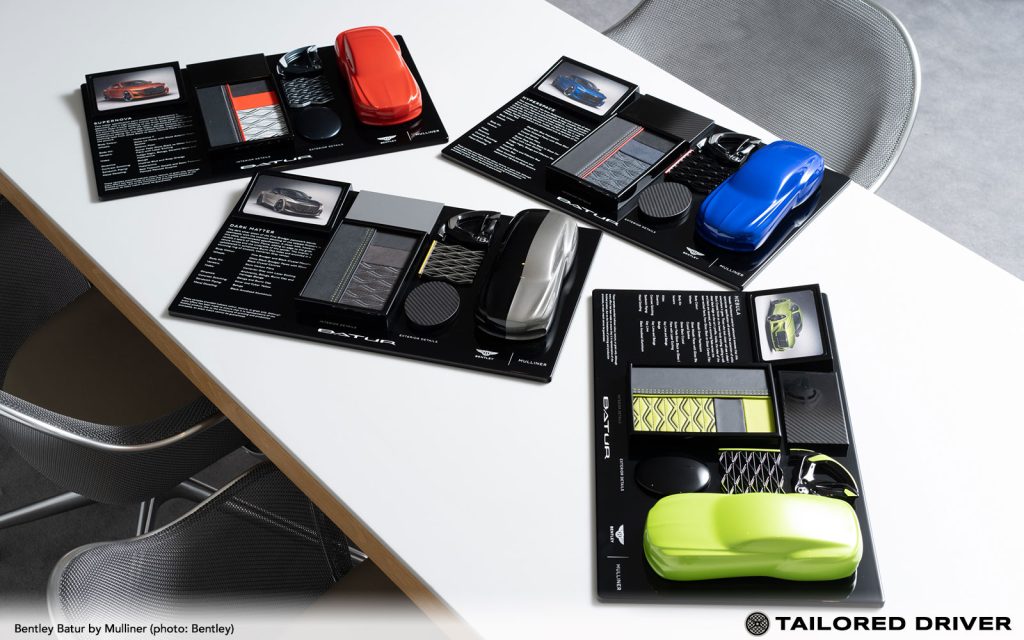
    To offer some inspiration for customers, a number of examples have been created that demonstrate what is possible at this level of bespoke commissioning.

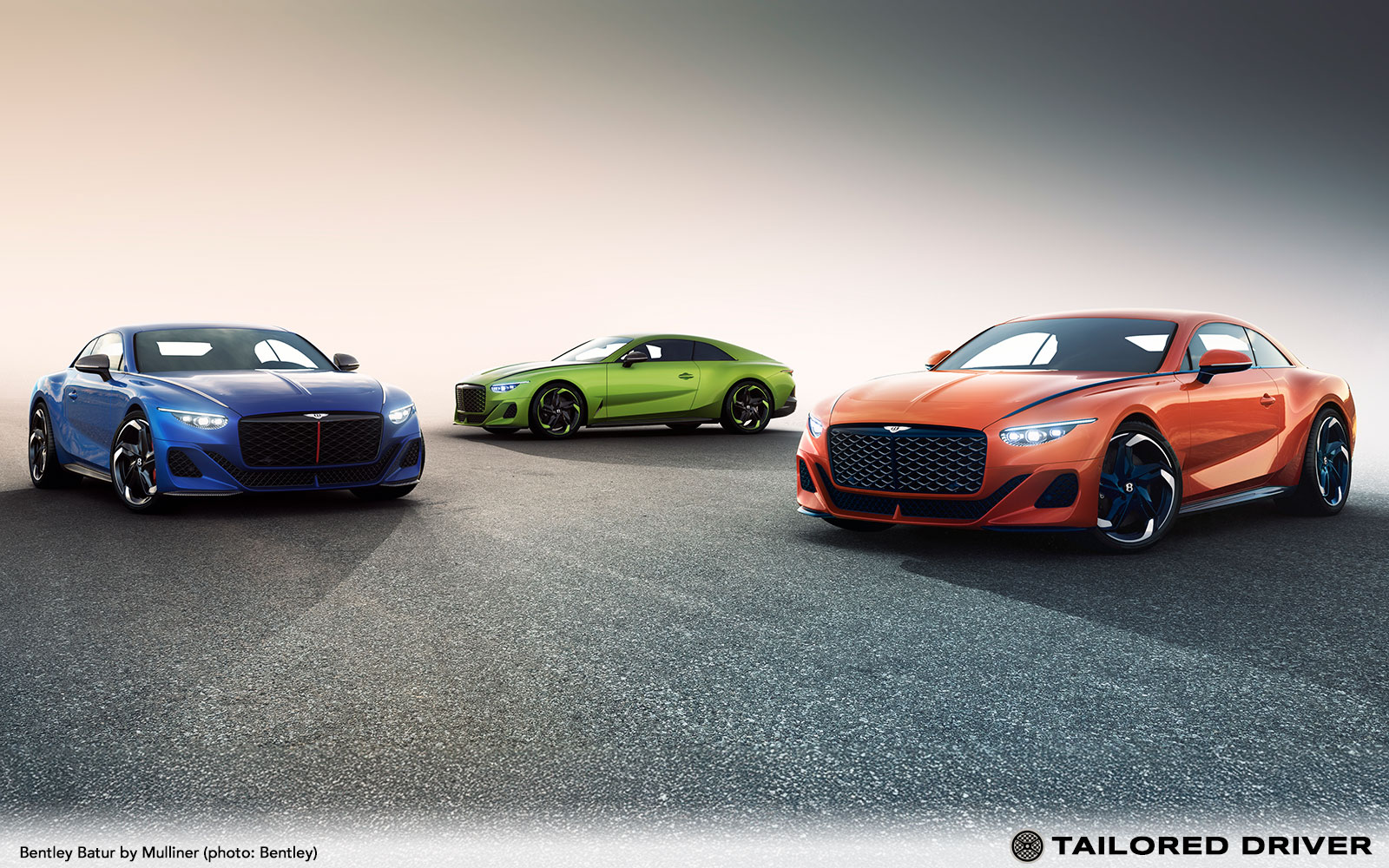
    Theme One – Nebula

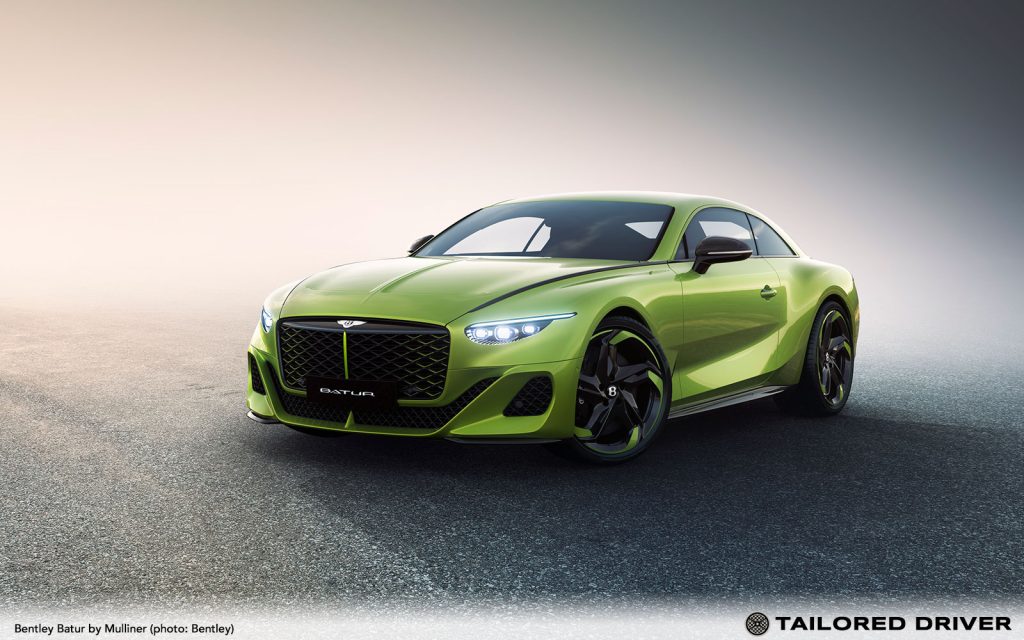
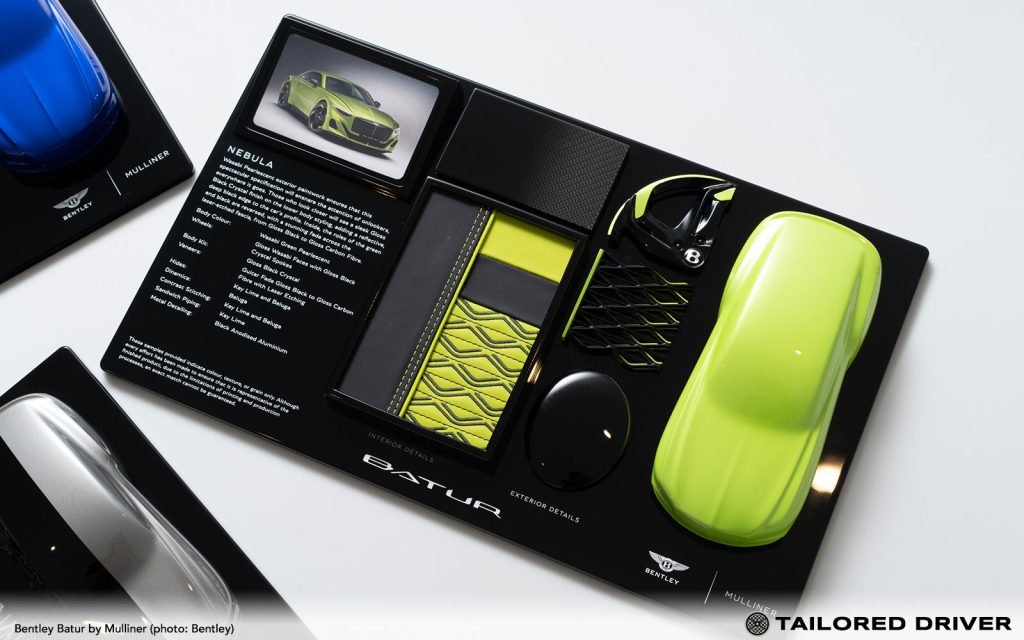
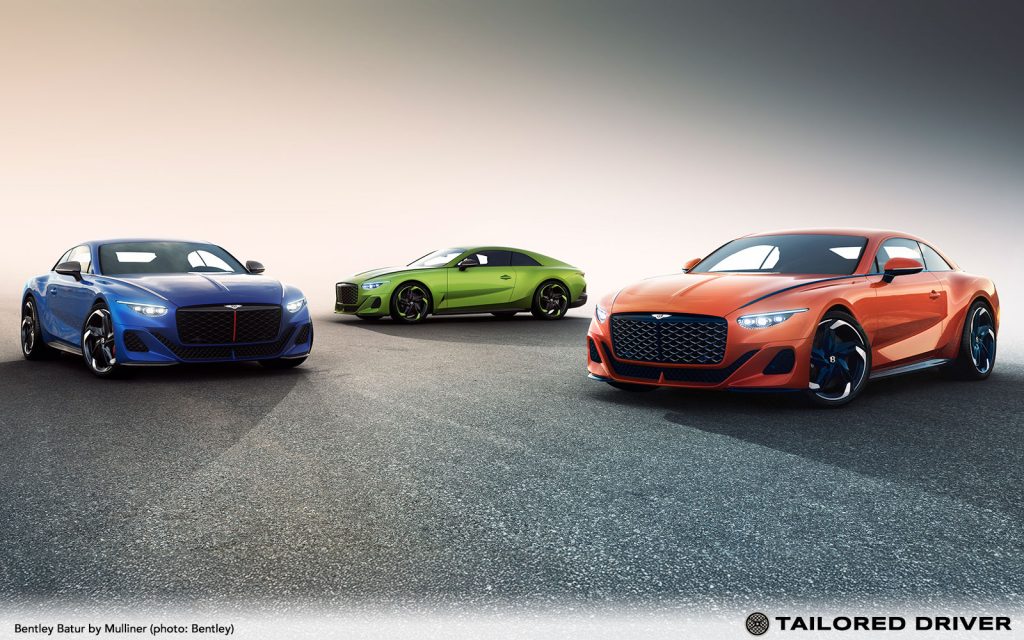
    A bold specification pushing firmly towards a high performance-focused feel with dramatic contrasts of black against vivid greens on the exterior and interior. ‘Wasabi’ exterior paintwork ensures that this spectacular specification will ensnare the attention of onlookers everywhere it goes. Those who look closer will see a sleek Gloss Black Crystal finish on the body kit, adding a reflective, deep black’ edge to the car’s profile. 

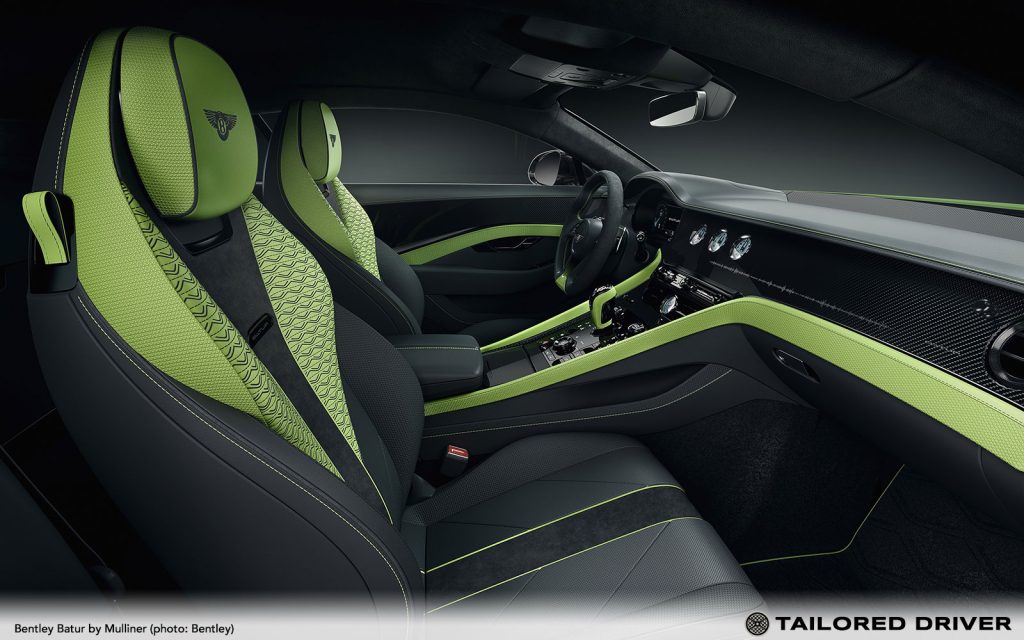
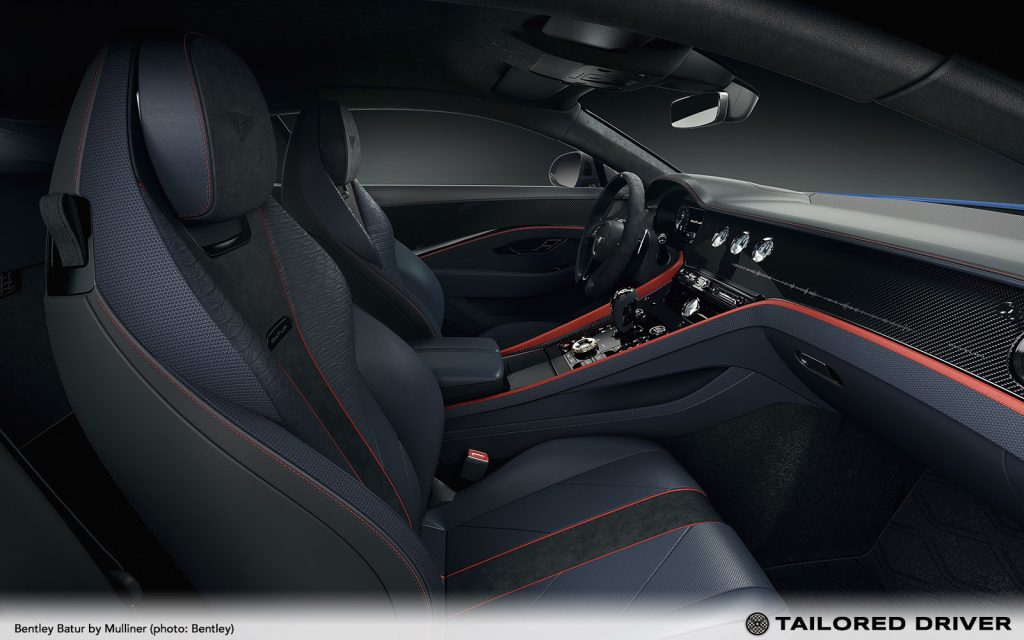
    Inside, the roles of the green and black are reversed, with a stunning ‘guitar fade’ across the laser-etched fascia, from gloss black to gloss carbon fibre.

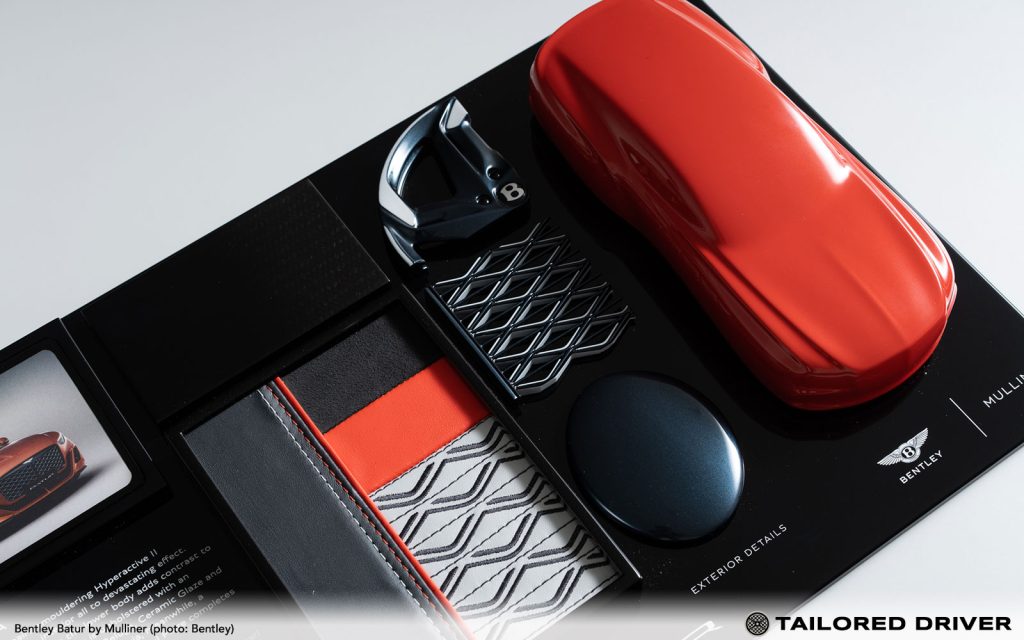
    Theme Two – Supernova

    This stellar specification pairs smouldering Sunbeam paintwork with a high-impact interior – all to devastating effect. Atlantic Pearl Crystal detailing to the body kit adds contrast to the stunning exterior. 

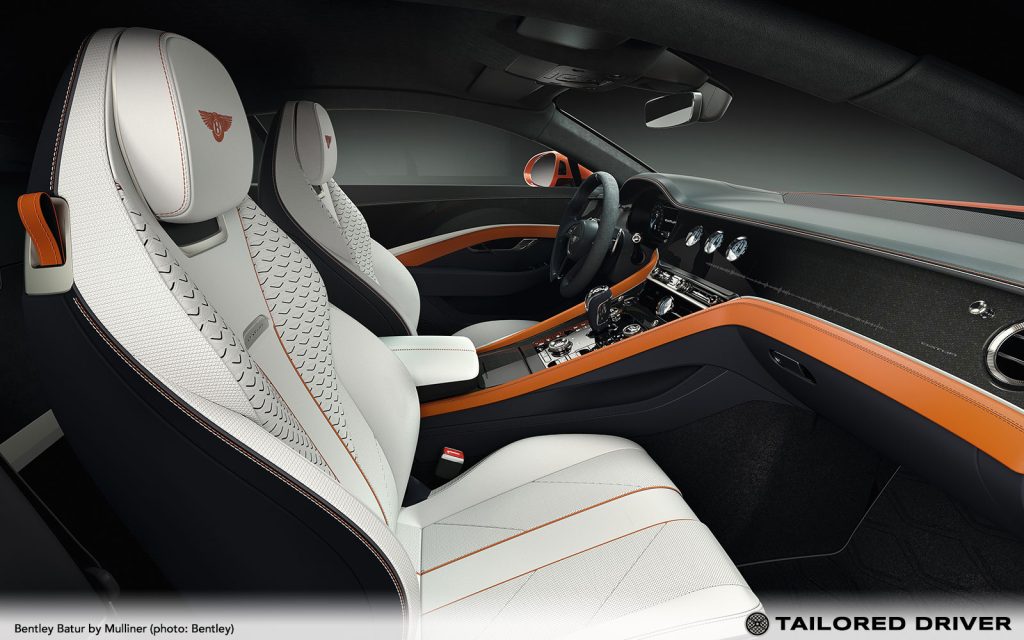
    The cabin is upholstered with a vibrant combination of Indigo Night, Beluga, Ceramic Glaze and Hyperactive, making this the only theme to have a four colourway interior. On the laser-etched fascia, meanwhile, a stunning fade from gloss black to gloss Natural Fibre completes the picture and also includes a full titanium pack with machined detailing around the cabin.

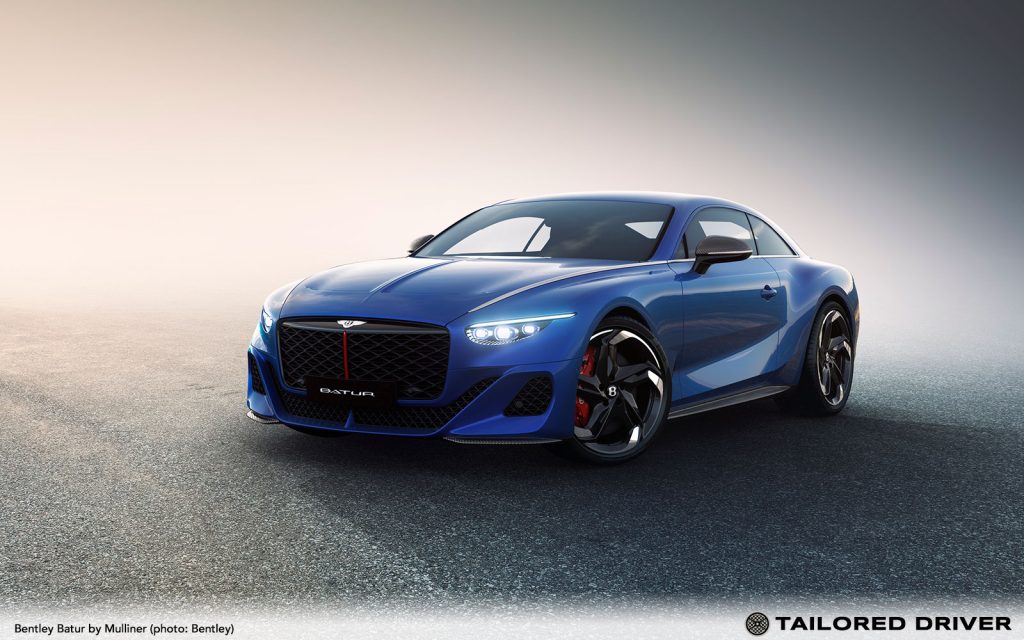
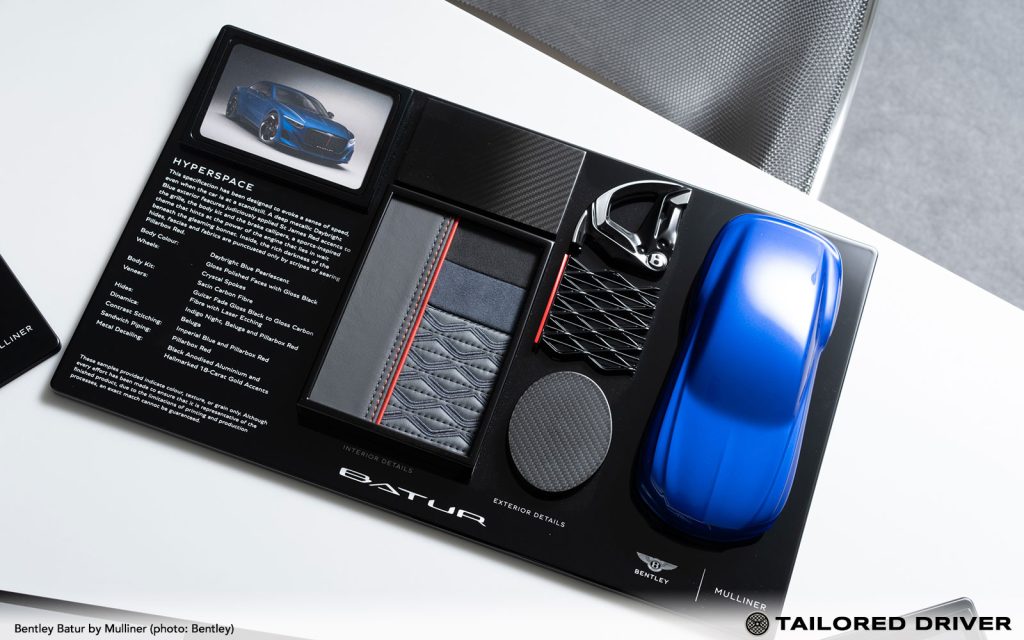
    Theme Three – Hyperspace

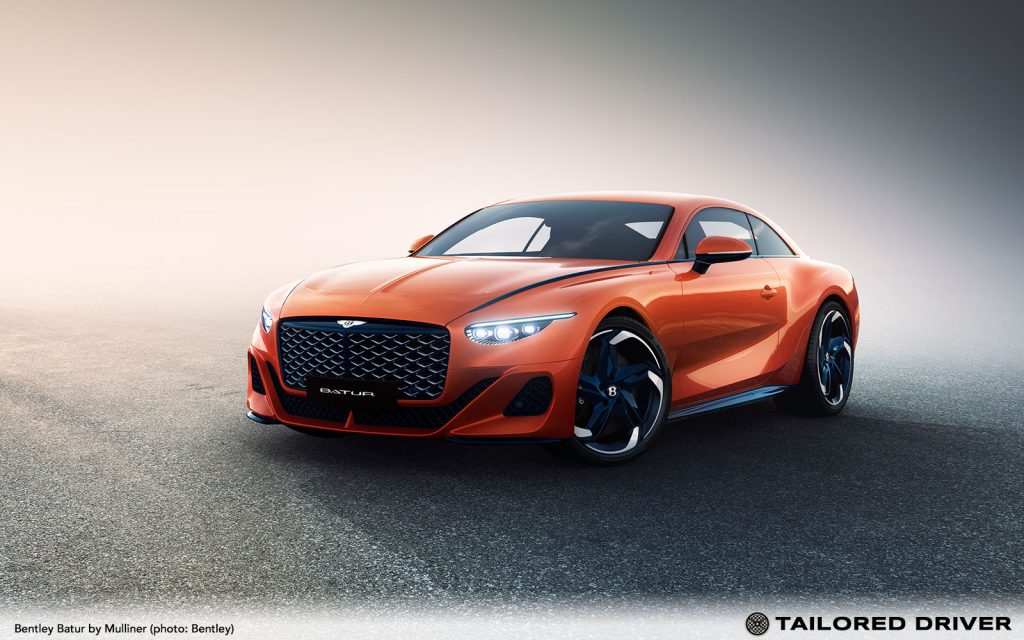
    This specification has been designed to evoke a sense of speed, even when the car is at a standstill. A deep metallic Daybright Blue exterior features is contrasted by St James Red accents to the grille, the body kit and red brake calipers – a sports-inspired theme that hints at the power of the engine that lies in wait beneath the gleaming bonnet. 

    Inside, the rich darkness of the hides, fascias and fabrics is punctuated only by stripes of searing Pillar Box Red and the 18-karat gold Bentley Dynamic Drive Selector and ‘12 o’clock’ steering wheel centre band.

    Theme Four – Dark Matter

    The dark silver sheen of the duo-tone Fine Brodgar and Black Crystal paintwork blends seamlessly with the titanium detailing of the tailpipe finishers in this sleek, sophisticated specification. A closer look, however, reveals a spark of Cyber Yellow – adding an edge to the front grille and the underside of the spoiler. 

    The interior is upholstered in sumptuous Burnt Oak hides and encircle in a stunning ring of smooth, gloss graphene. The toned down interior graphic is further interplayed with Black Anodised Aluminium details and Beluga Black accents.

    The Art of Commissioning

    W.O. Bentley built the first car to bear his name in 1919. Immediately, his creations were in high demand – but he was an engineer, first and foremost. He made engines. He would affix them to a chassis, with wheels and a transmission system. The resulting machines were certainly cars – but to turn them into luxurious recreational vehicles, streamlined racing cars, or both, the services of a coachbuilder were required.

    From the Roaring Twenties onwards, Mulliner built bespoke bodies and cabins for some of the world’s most iconic Bentleys, including the famous R-Type Continental of 1952.

    Today, Mulliner operates as Bentley’s personal commissioning division, delivering everything from bespoke modifications to coachbuilt cars. It offers an exclusive, face-to-face service for customers who demand the rarest and most exquisite vehicles, often co-designing features and finishes to suit the unique tastes of the individual.

    Mulliner offers the opportunity to build a direct relationship with the designers who will bring any customer’s vision to life. In the world of bespoke automotive craft, Mulliner has no equal.

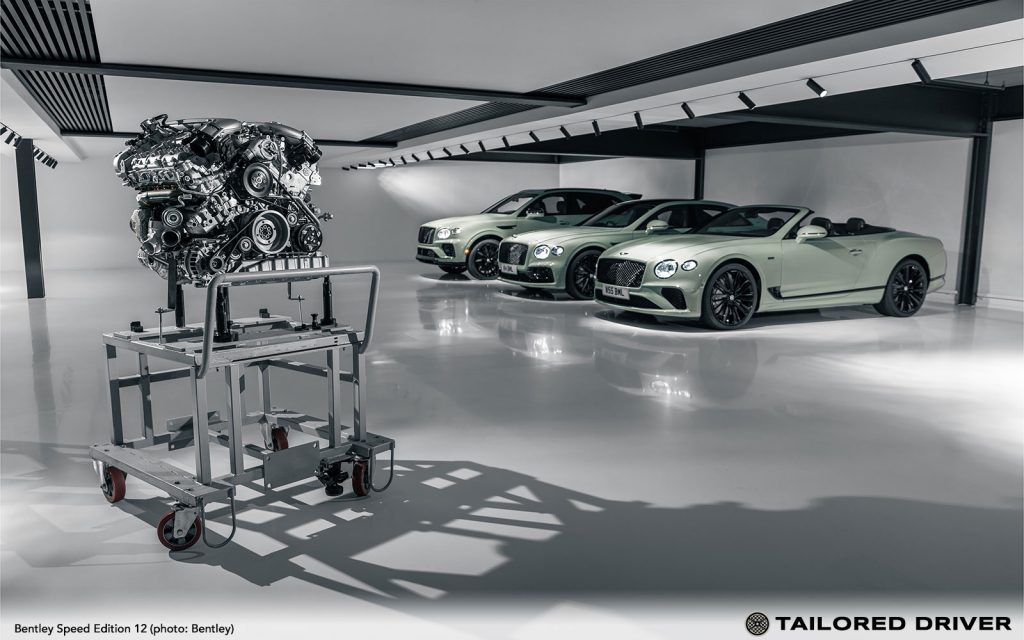
  • Tribute to an Engineering Icon: Bentley Speed Edition 12

    Tribute to an Engineering Icon: Bentley Speed Edition 12

    • Limited edition celebrates Bentley’s iconic W12 engine
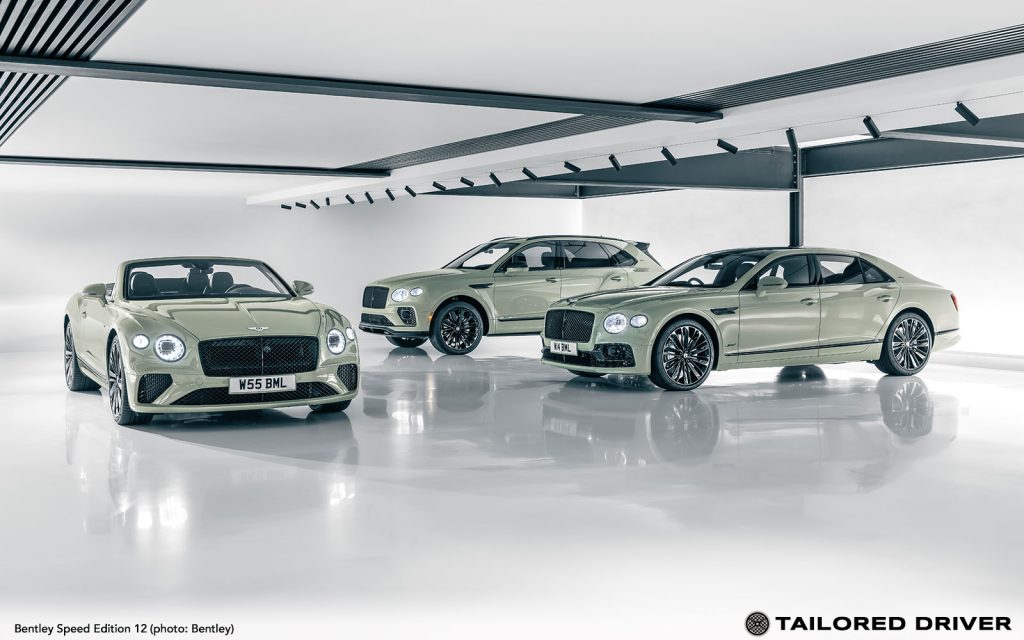
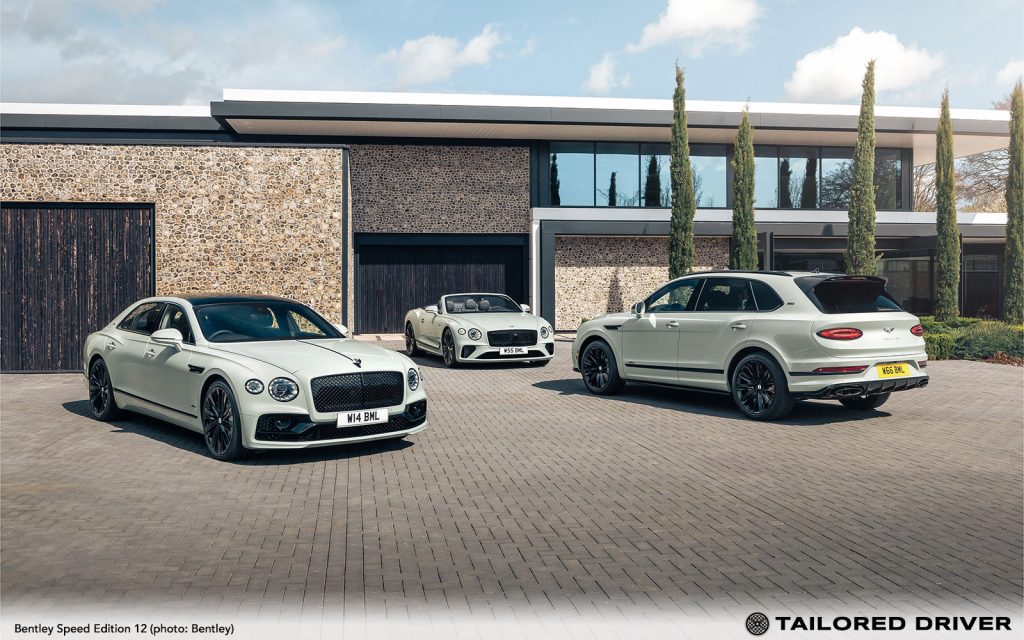
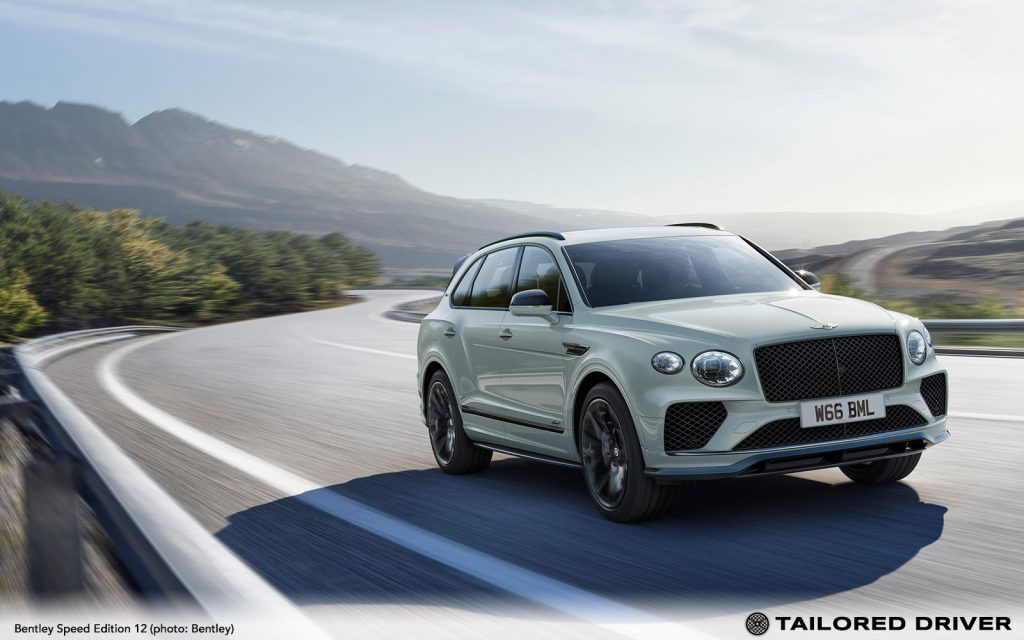
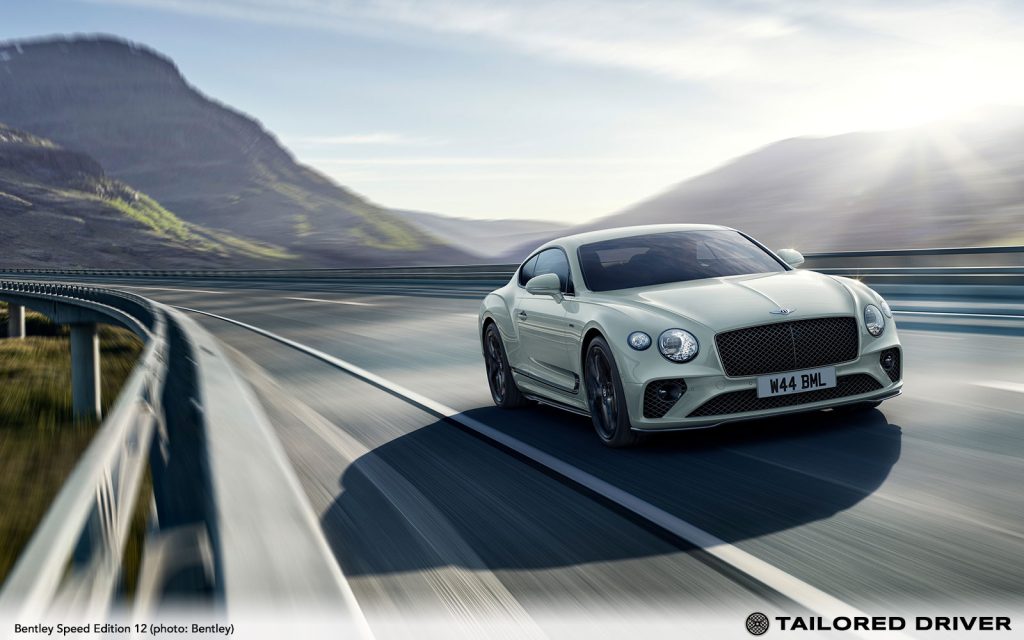
    • ‘Speed Edition 12’ available as Bentayga, Flying Spur, Continental GT and Continental GTC
    • Only 120 each of the four Speed Edition 12 models to be produced
    • Unique design features include Edition 12 badging, treadplates, seat embroidery, fascia inlays, and numbered engine plaque
    • Blackline specification and black 22” Speed wheels with silver brake calipers accentuate a performance focus
    • Optionally available with a sophisticated new paint finish, Opalite 
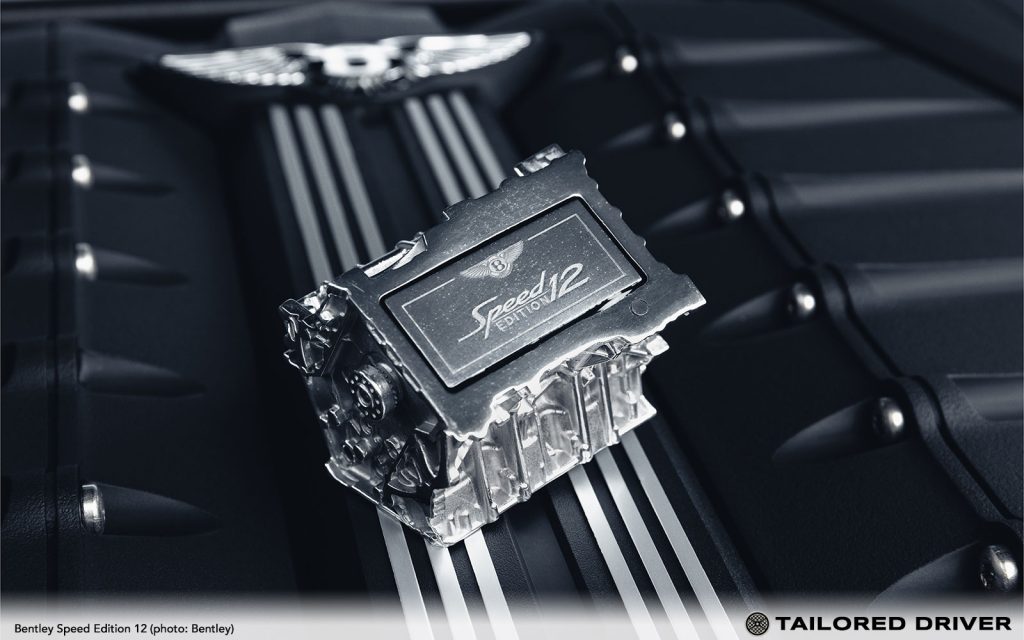
    • Owners receive a commemorative 15 per cent scale W12 engine block
    • Production of W12 to end April 2024, after more than 100,000 units – the most successful 12-cylinder engine of the modern era

    [source: Bentley]

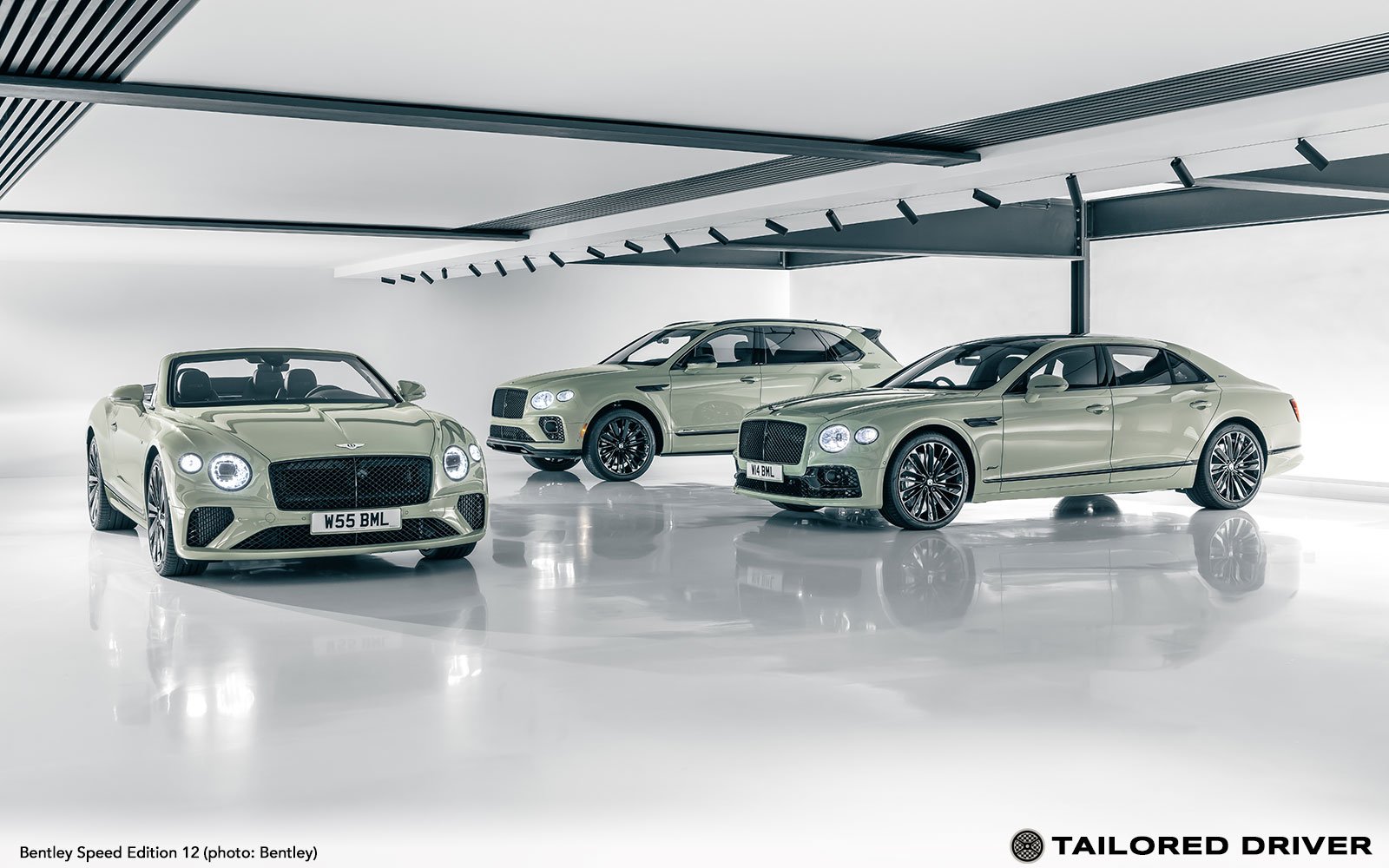
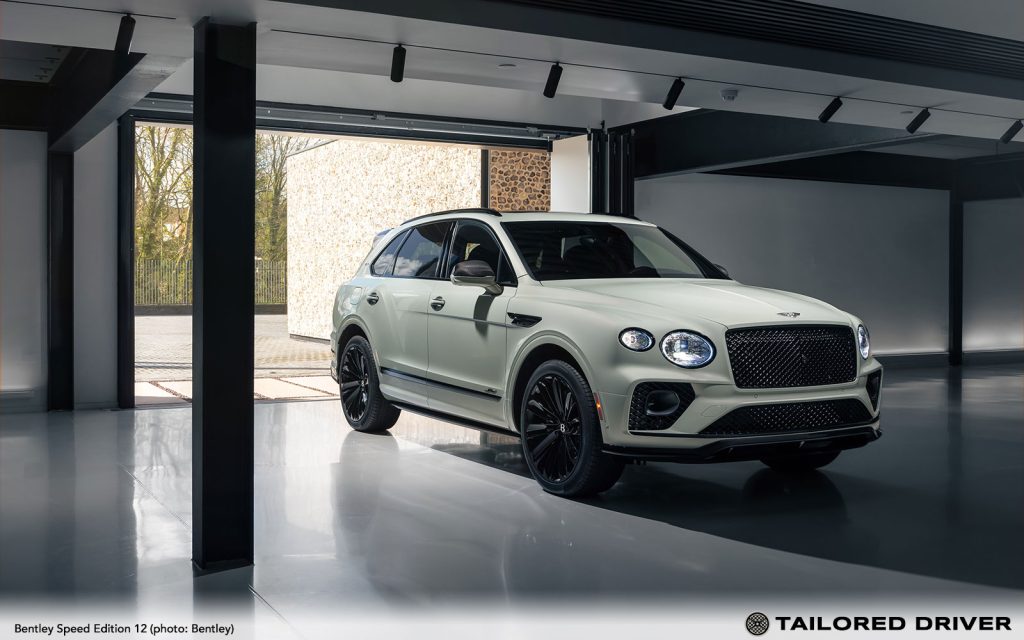
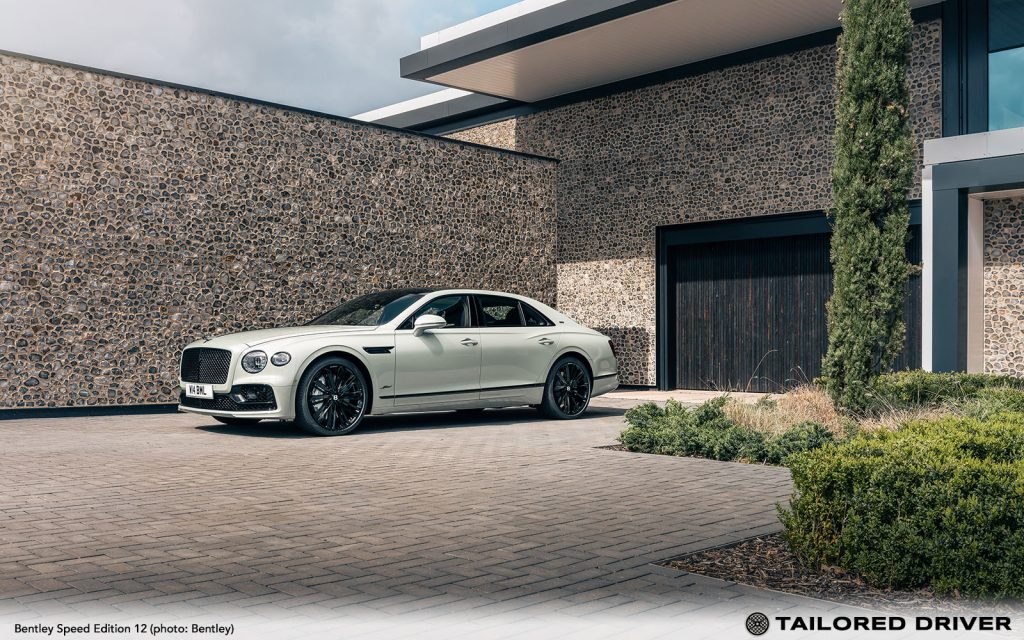
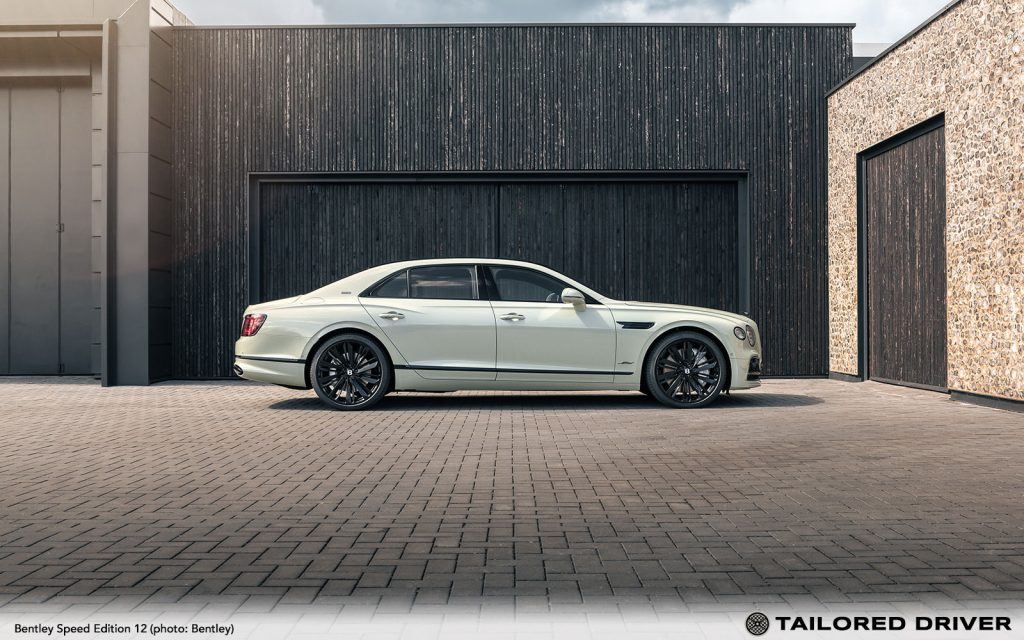
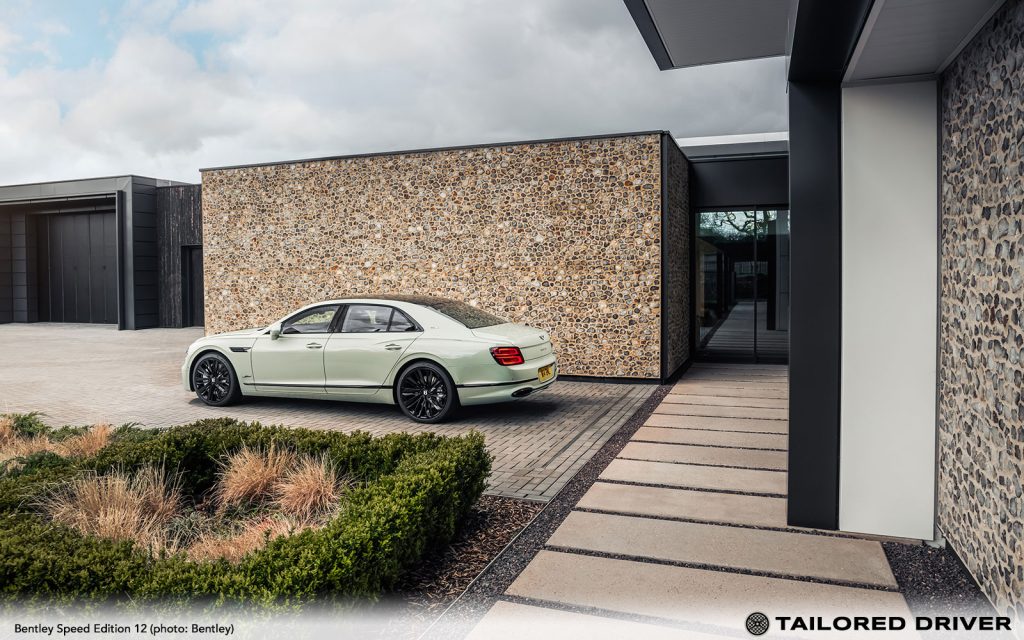
    Crewe, England –  To celebrate the remarkable W12 engine that has powered its performance flagships and indeed the brand since 2003, Bentley has created the limited-edition Speed Edition 12. Powered by the most successful 12-cylinder engine of the modern era, the Speed Edition 12 models are a fitting farewell to an extraordinary engineering achievement.

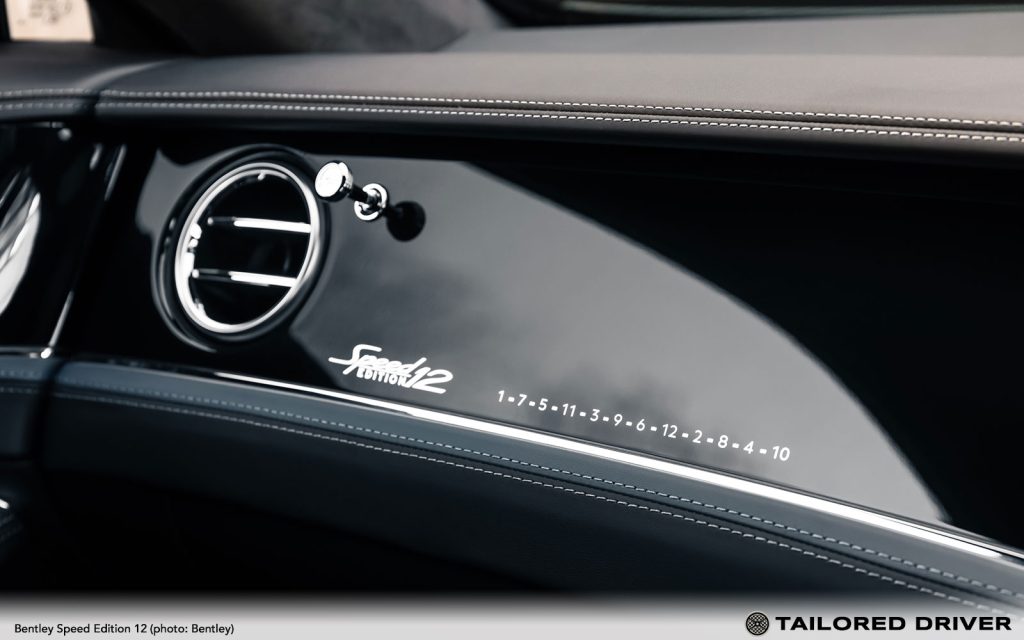
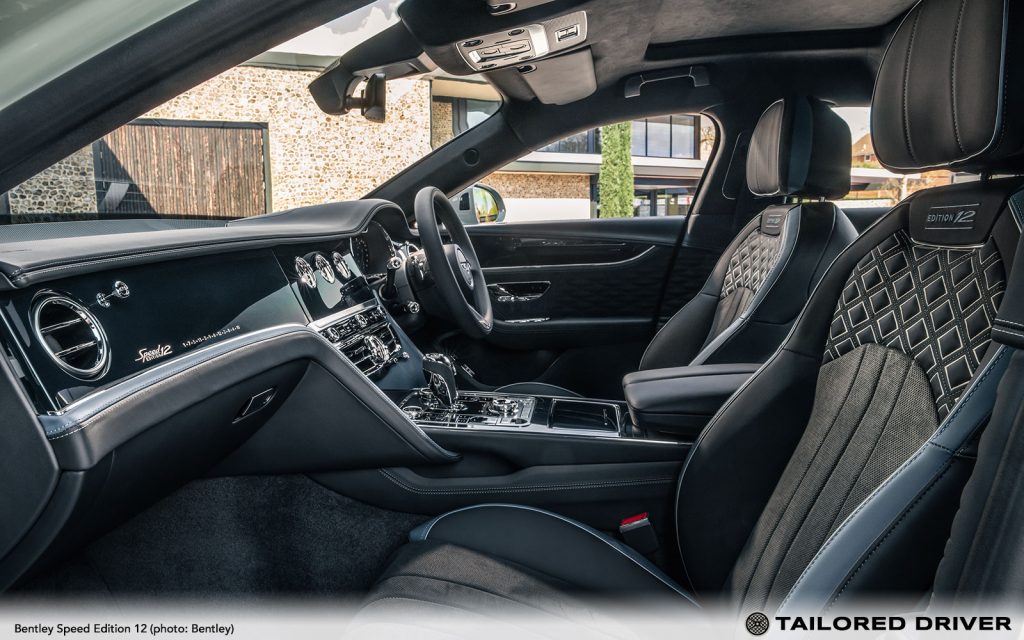
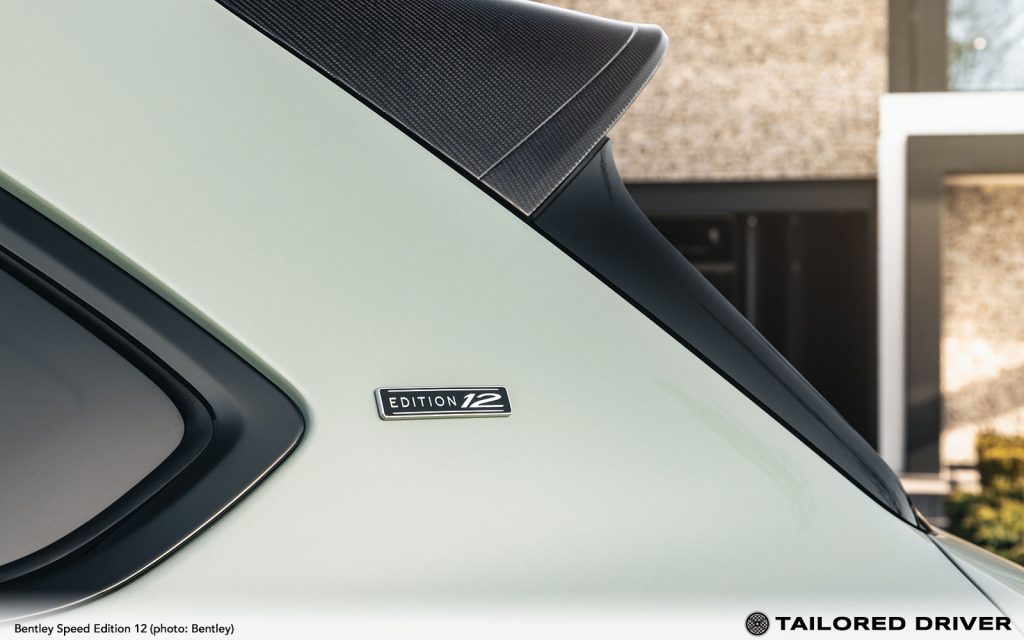
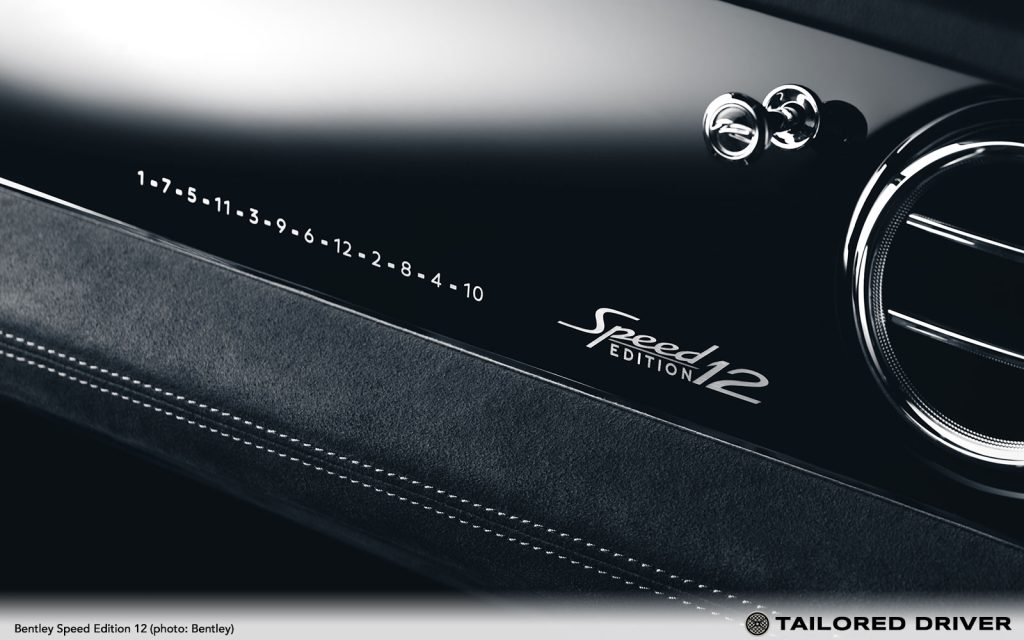
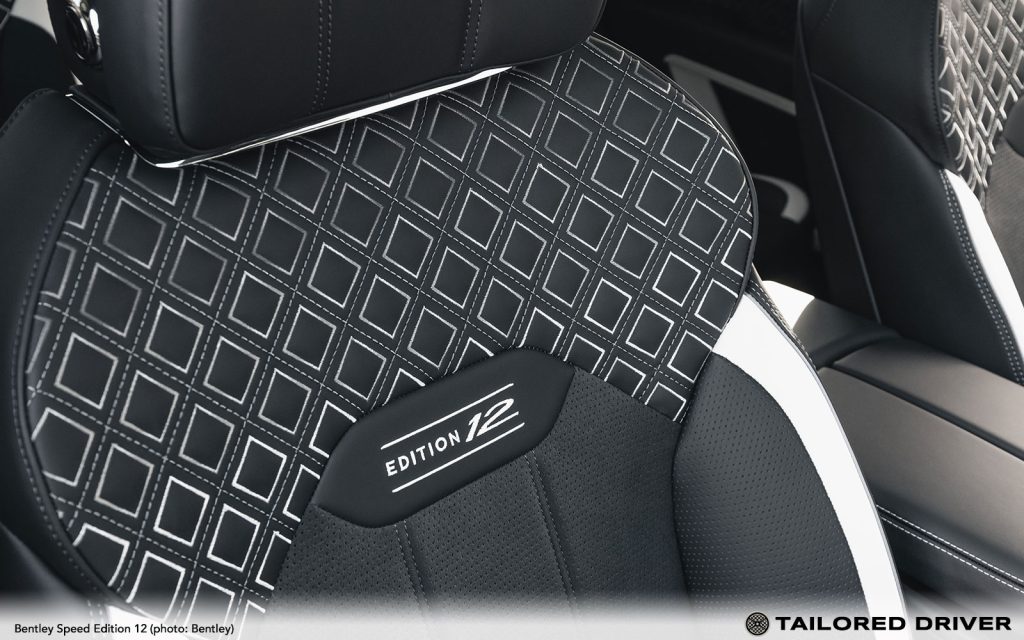
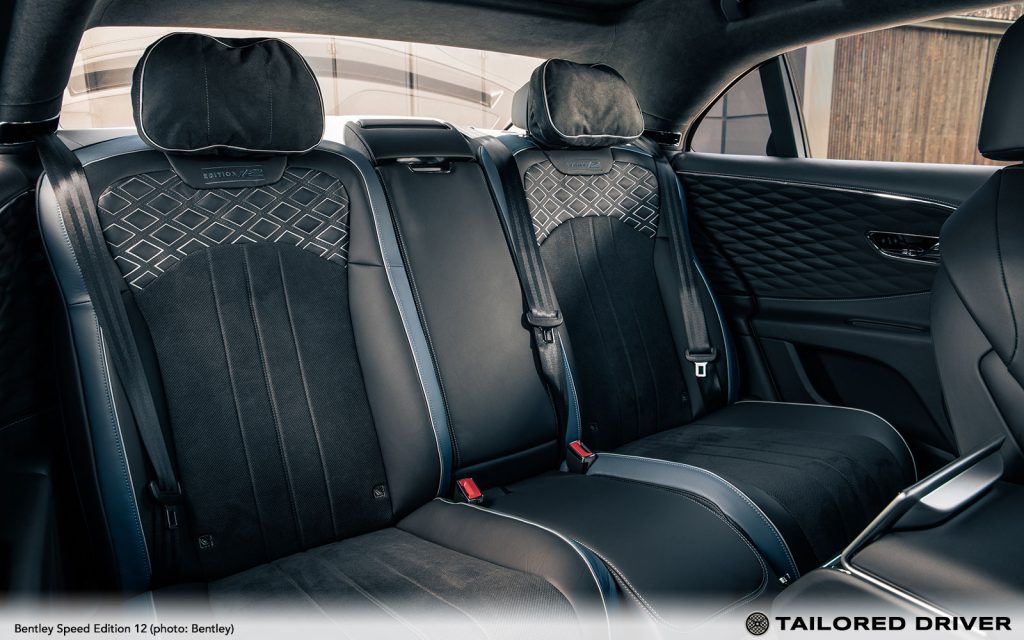
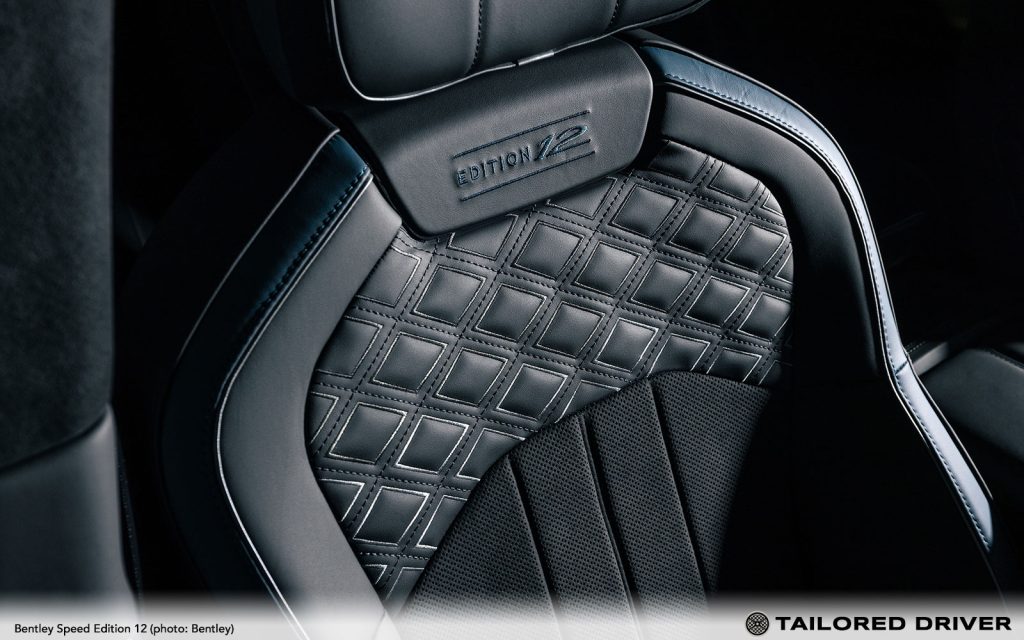
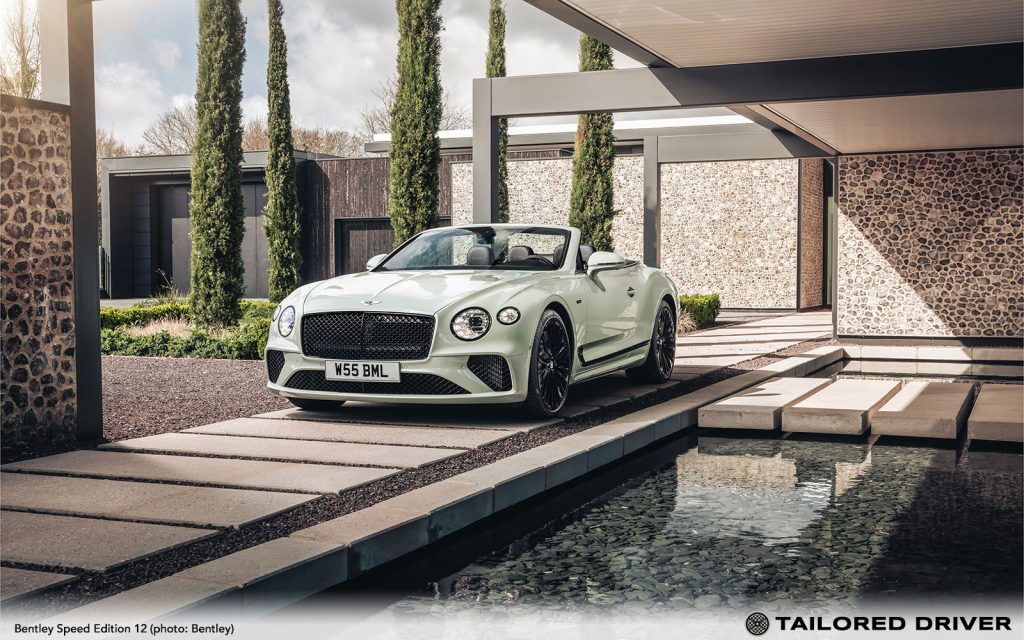
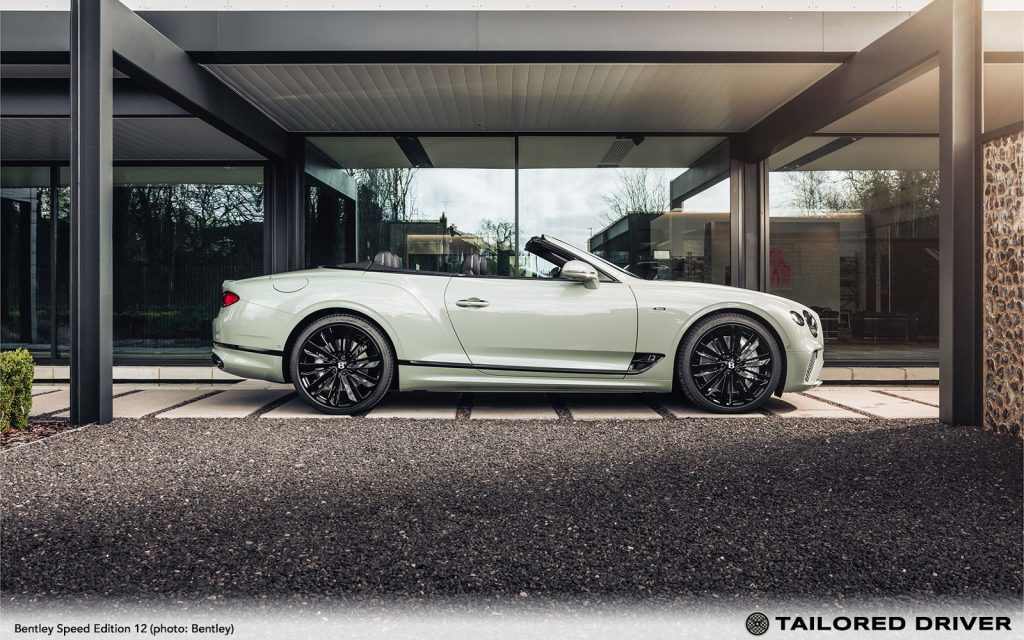
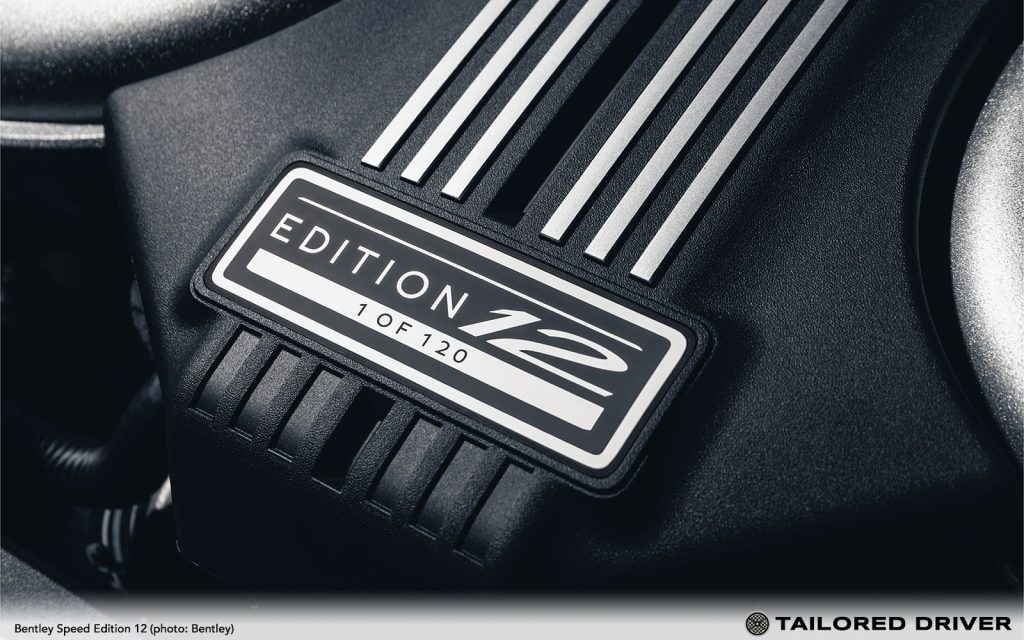
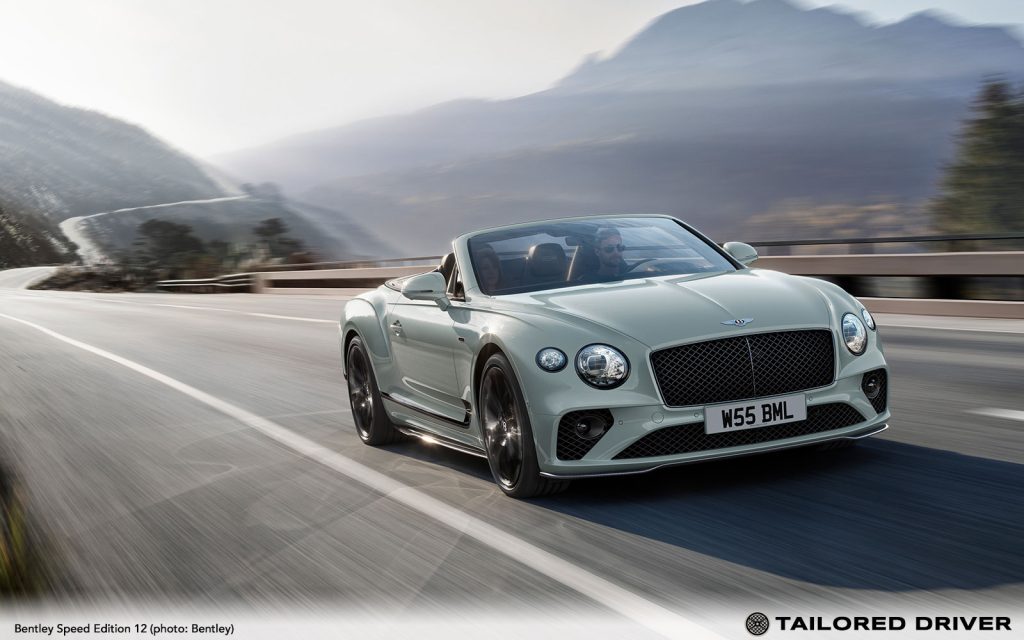
    Based on the Speed specification Bentayga, Flying Spur, Continental GT and Continental GT Convertible, the Edition 12 package features many unique design enhancements. These include Edition 12 badging, numbered engine plaque, Edition 12 embroidery, colour graduated seat contrast stitching, and a fascia in Grand Black veneer with the engine firing sequence etched alongside an inlaid Edition 12 badge.

    Only 120 of each of four models will be produced, ensuring that the Speed Edition 12 will become a rare and sought-after tribute to an engine that has powered the company’s cars – and its fortunes – for two decades. 

    The Bentley W12

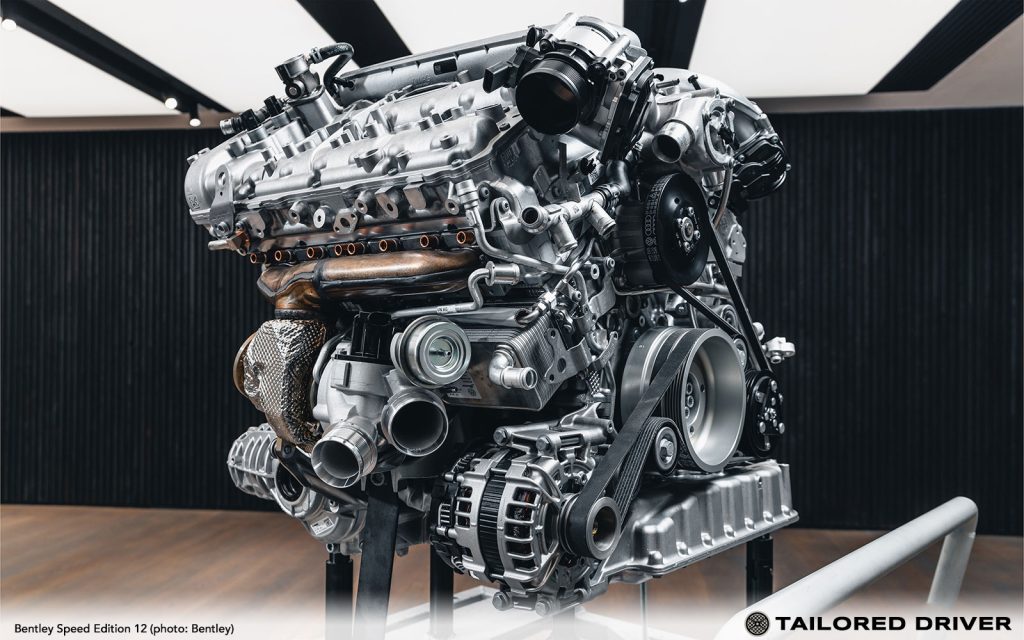
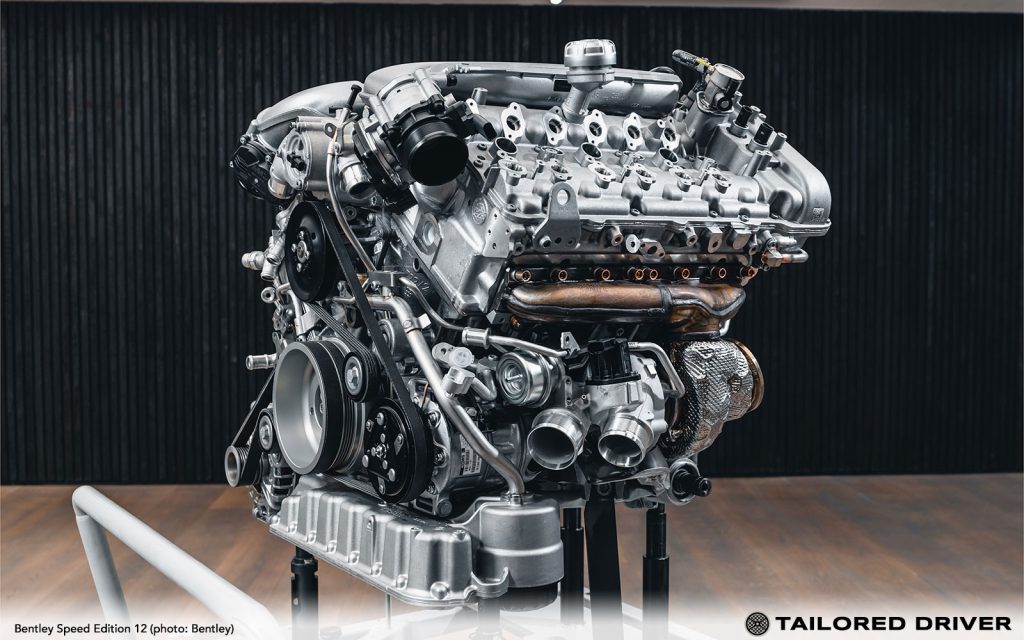
    In 2003, Bentley’s W12 engine heralded a new era for the company as the powertrain for the first all-new model under Volkswagen Group ownership, the Continental GT. The unique W-formation of the 6.0-litre twin-turbocharged W12 enabled it to be 24 per cent shorter than an equivalent V12 with no compromise in power, efficiency, or refinement. Ever since, continuous evolution has seen a 37 per cent increase in power and a 54 per cent increase in torque, along with a 25 per cent reduction in emissions. In the Speed Edition 12 models, the W12 now develops up to 659PS (650 bhp) @ 5000-6000 rpm, while the famed Bentley ‘tidal wave’ of torque sees a peak of 900Nm reached at just 1500rpm and continuing unabated through to 5000 rpm. 

    Exterior: understated distinction

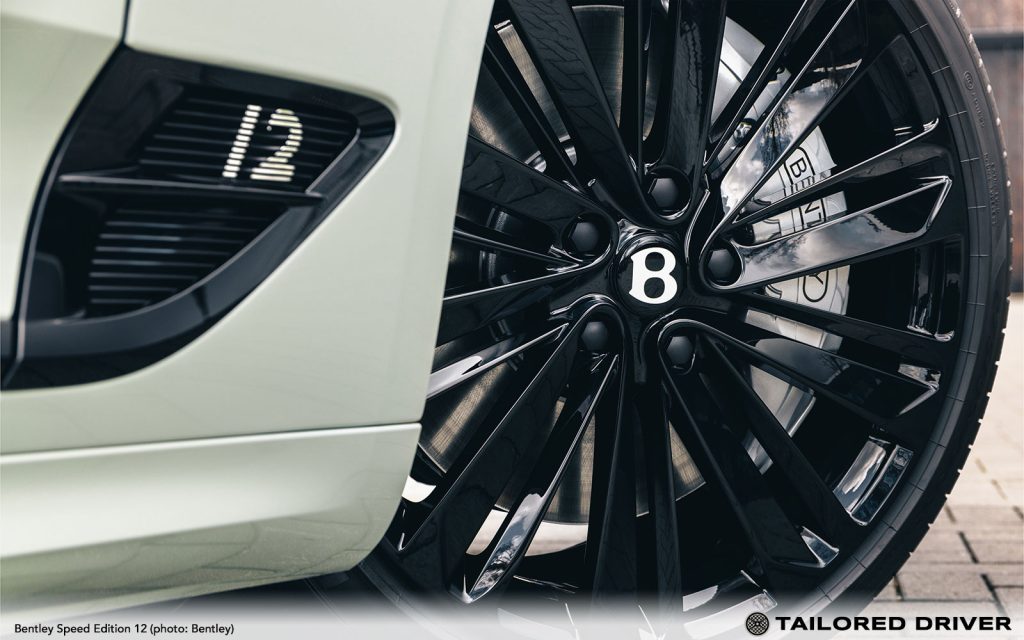
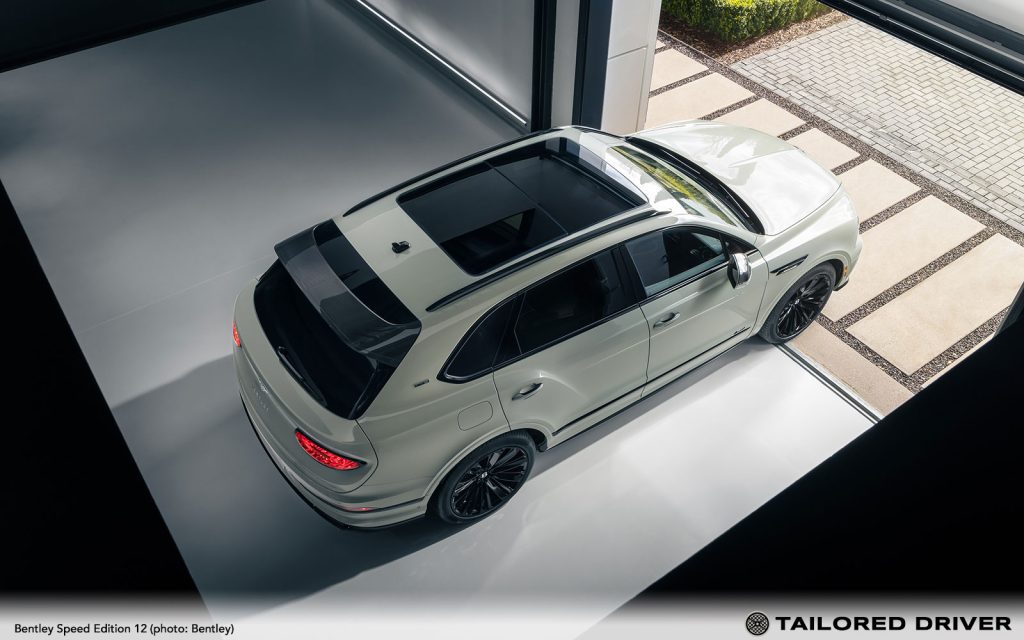
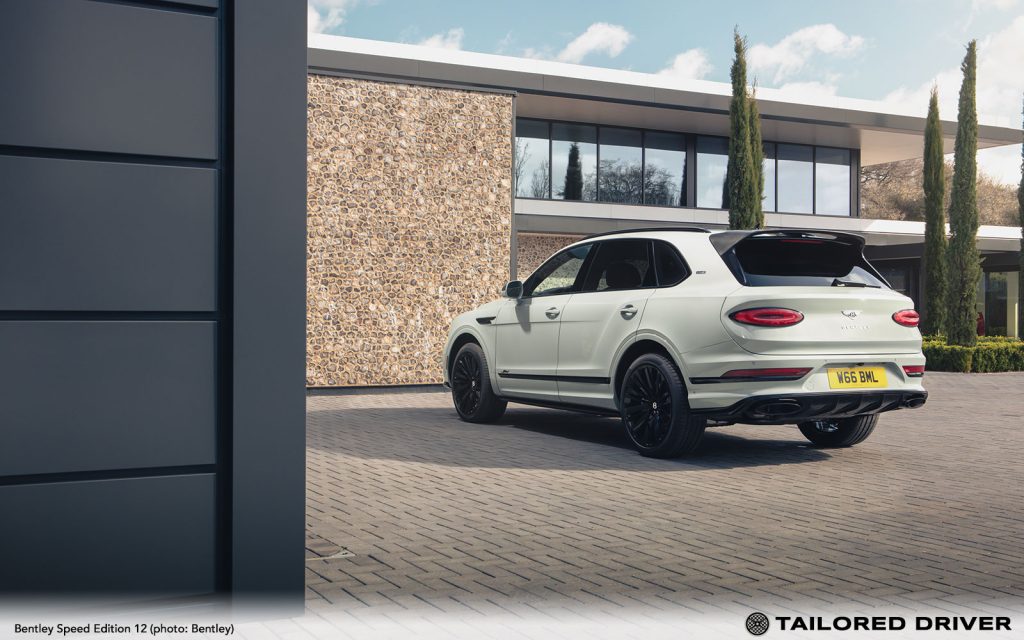
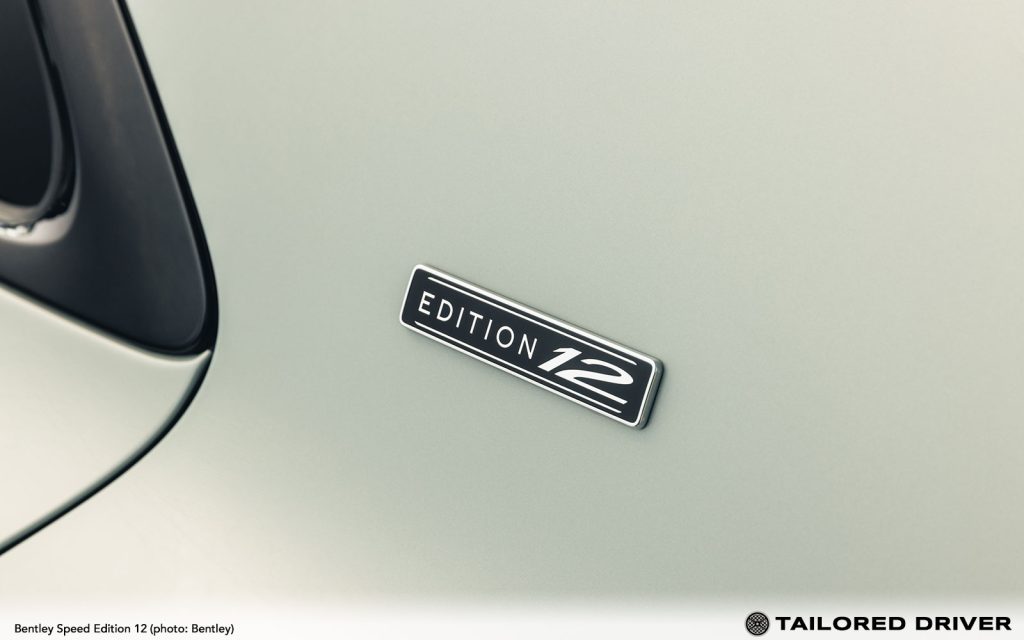
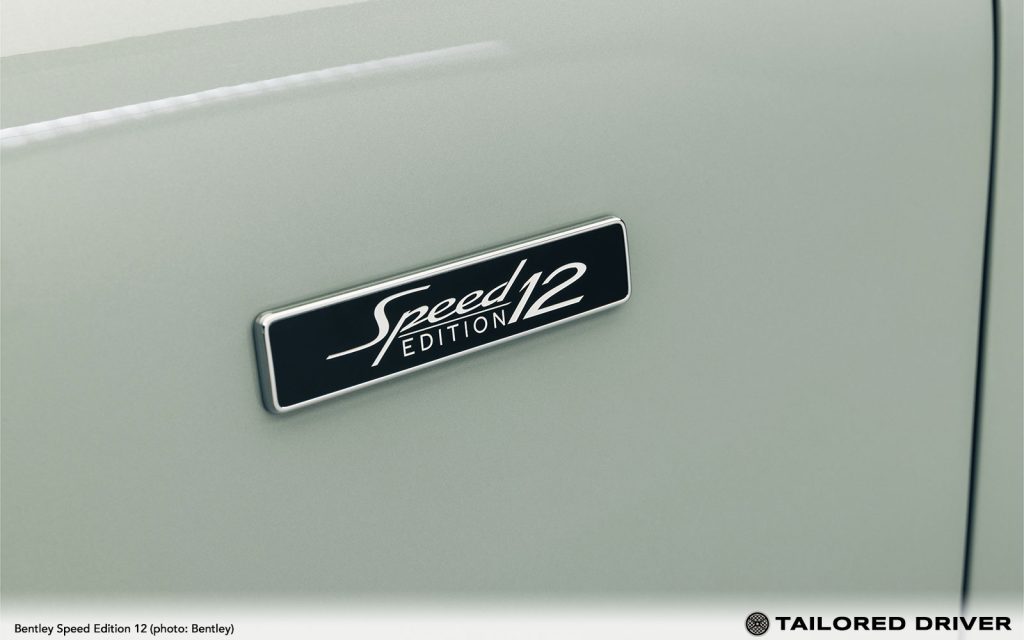
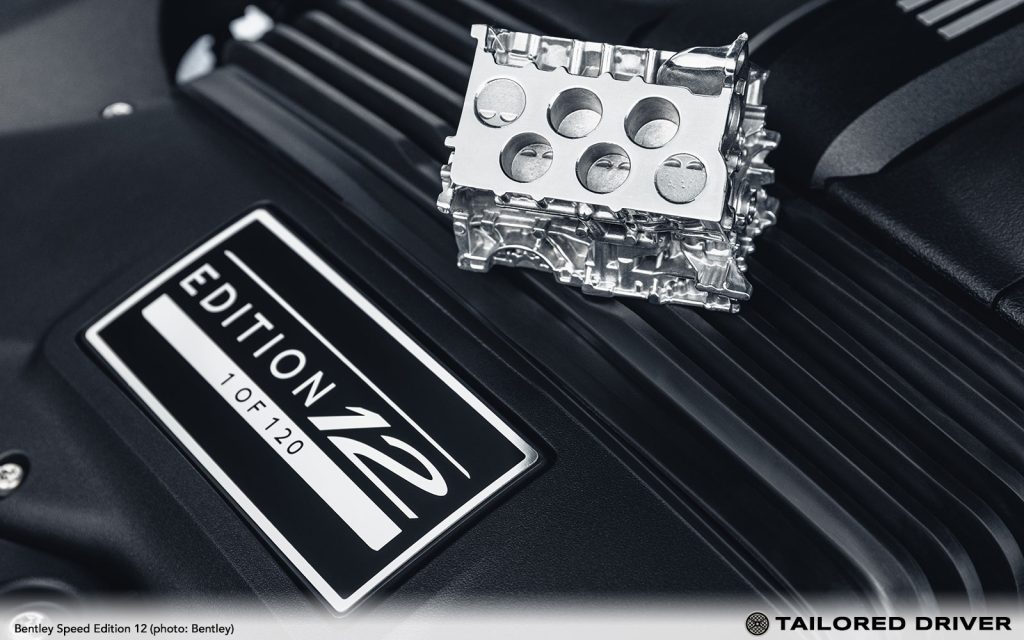
    The external features of the Speed Edition 12 models are subtle yet carefully curated, making it instantly recognisable to those in the know. Among the distinctive details are silver brake callipers, which are not available for any other Bentley model. Continental GT and Convertible models feature Speed Edition 12 badging on the front fender while Bentayga and Flying Spur models carry Edition 12 badges on the rear quarter together with the existing Speed badge. Opening the bonnet reveals a numbered Edition 12 plaque in pride of place on the engine’s cover.

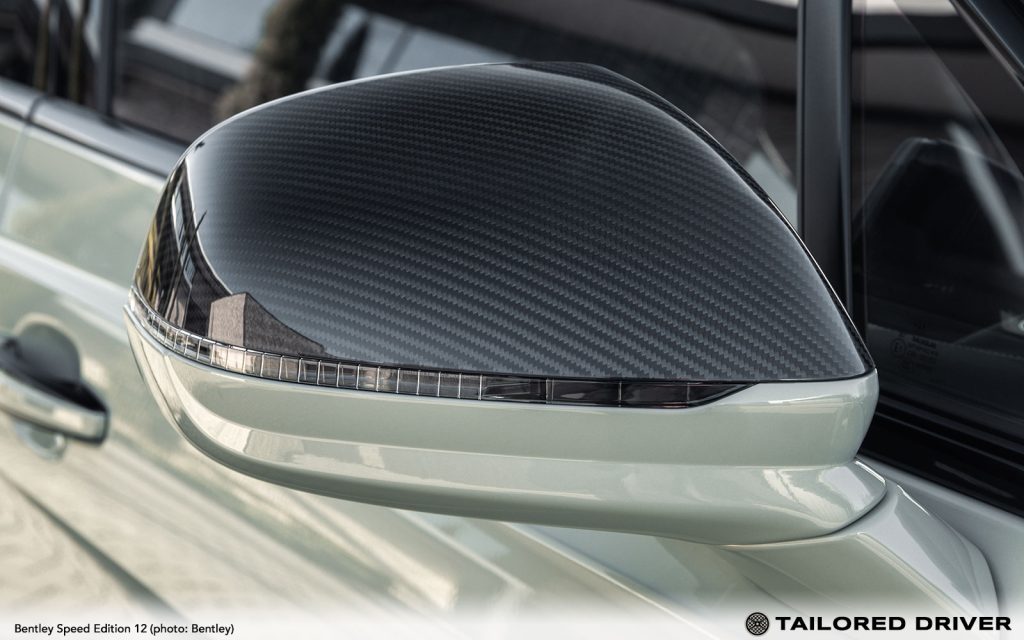
    Other exterior features include Blackline specification exterior brightware, 22” black painted Speed alloy wheels, and self-levelling wheel badges. A new paint colour, Opalite (opalite; metallic uni; 6678; Bentley), is available as an option: a light grey-green, it has a subtle copper effect that glows in bright sunshine.  

    Interior: craftsmanship masterclass

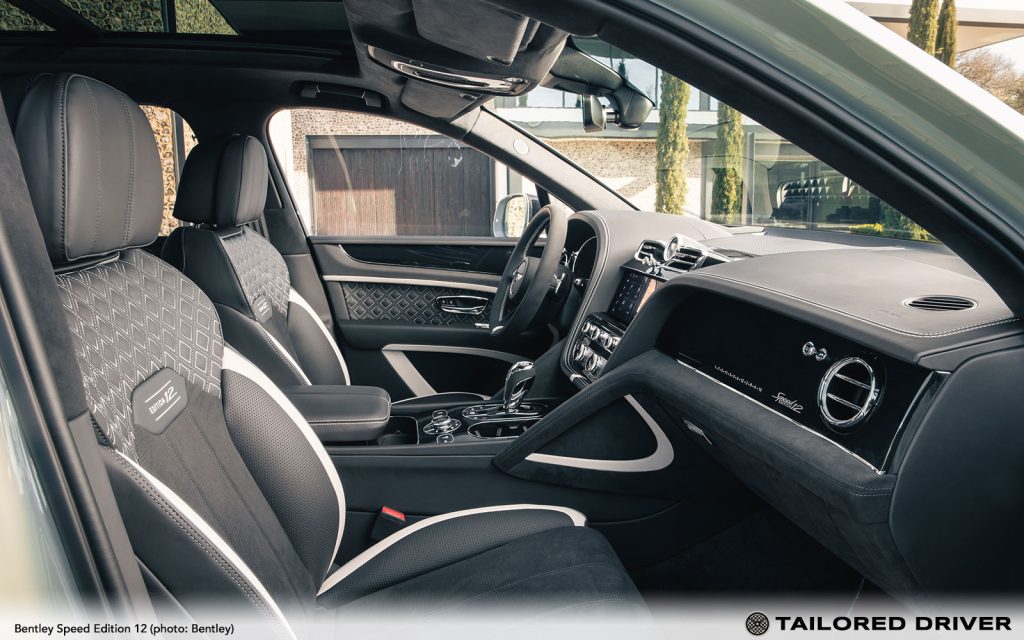
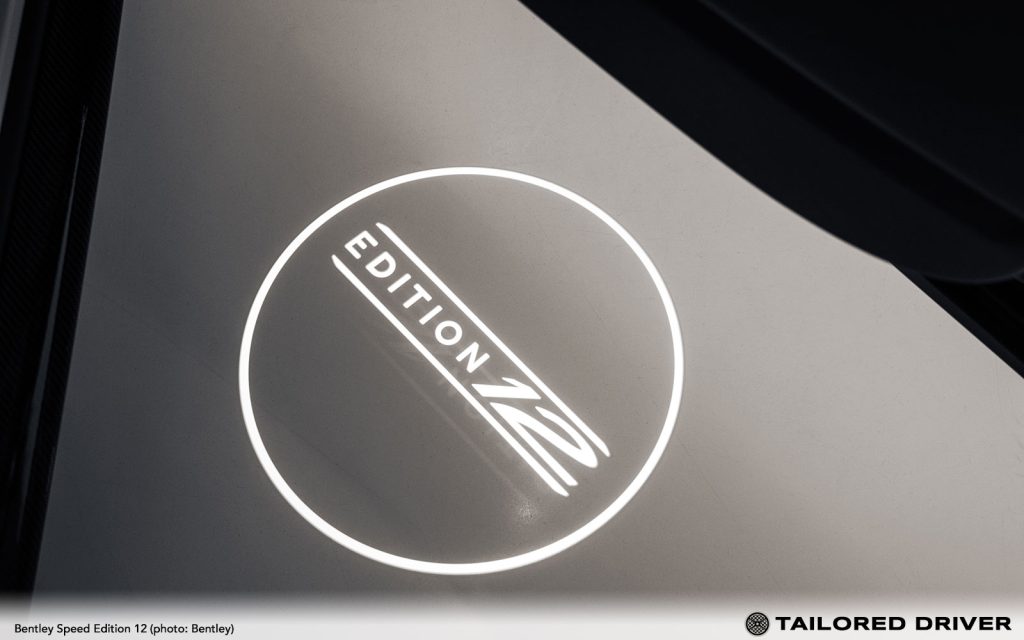
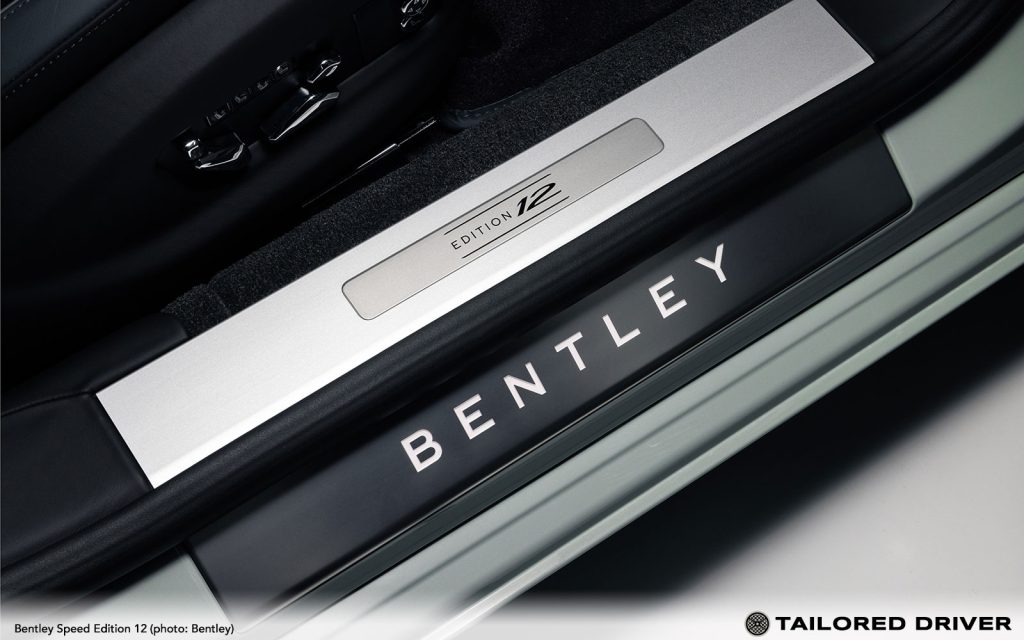
    Edition 12 welcome lamps and illuminated treadplates greet driver and passengers to an interior of hand-crafted individuality. All Edition 12 models are available with Bentley’s Speed colour splits; the main colour, Beluga black can either be chosen as the sole upholstery colour or complemented by Brunel blue, Cricketball red, Linen or Orange. Veneer in each case is high gloss Grand Black.          

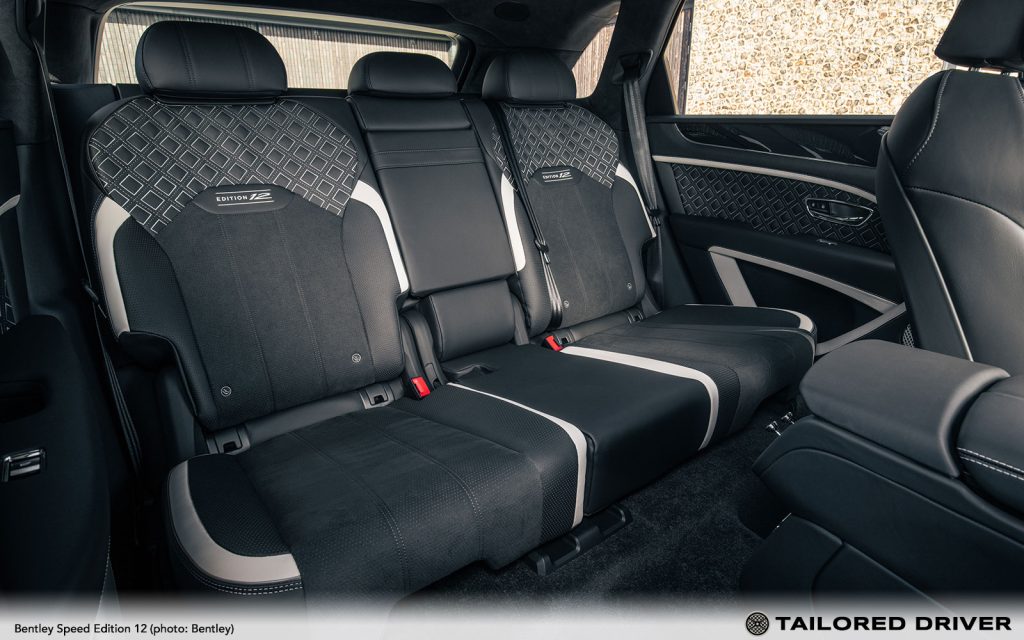
    Unique features of this limited edition include seats with Mulliner Silver piping and embroidered Edition 12 namestyle. The upper seat areas are quilted, and contrast stitched in a graduated three-colour ‘fade’ from Anthracite through Porpoise to Stratos. Quilted door panels are contrast stitched.

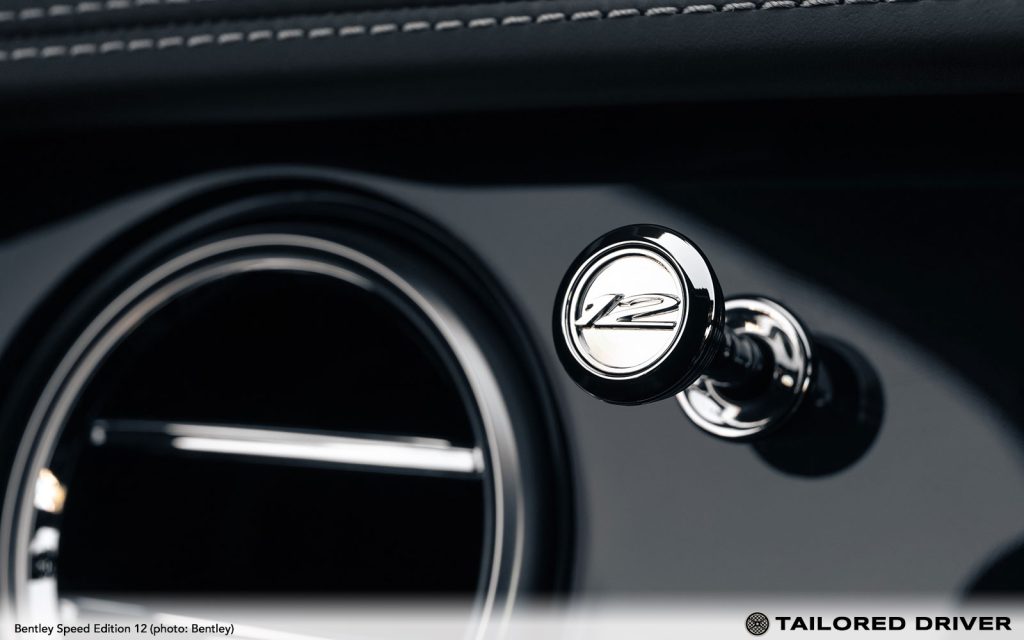
    The organ stop air vents are also unique, featuring the numeral ‘12’ machined from solid on the face of the control. As another delightful detail, the Grand Black veneer facia facing the front seat passenger features the firing sequence of the W12 engine etched alongside an inlaid Speed Edition 12 badge.

    Commemorative 15% scale model W12 block

    As a final touch, customers will receive a precise 15 per cent scale model of the Bentley W12 block as a commemorative artefact for display on desk, cabinet or shelf. The scale model W12 engines are cast using aluminium taken from a full-size W12 engine block and will serve as a permanent memento of one of Bentley’s most significant and powerful engines.

  • Bentley Continental GT / GTC Le Mans Collection Celebrate Shared History

    Bentley Continental GT / GTC Le Mans Collection Celebrate Shared History

    • Le Mans Collection marks 20th anniversary of Bentley’s sixth victory at the world’s most iconic endurance race – the 24 Hours of Le Mans
    • Shared history: 100 years since the first Le Mans – when a Bentley recorded the fastest lap
    • Bentley Rotating Display houses a valve from the engine of the 2003 Le Mans winning #7 Bentley Speed 8 
    • Limited edition of a total of 48 Continental GT and GTCs globally
    • Powered by 6.0-litre twin-turbo W12, the most successful 12-cylinder engine of the modern era
    • Crafted by Mulliner, Bentley’s personal commissioning division
    • Evocative exterior styling in Verdant green with Moonbeam racing stripe
    • No.7 on grille celebrates winning Bentley Speed 8 #7 of 2003
    • Interior features include fascia inlay of six winning wreaths, Speed 8 silhouette treadplate and digital 24-hour clock

    [source: Bentley]

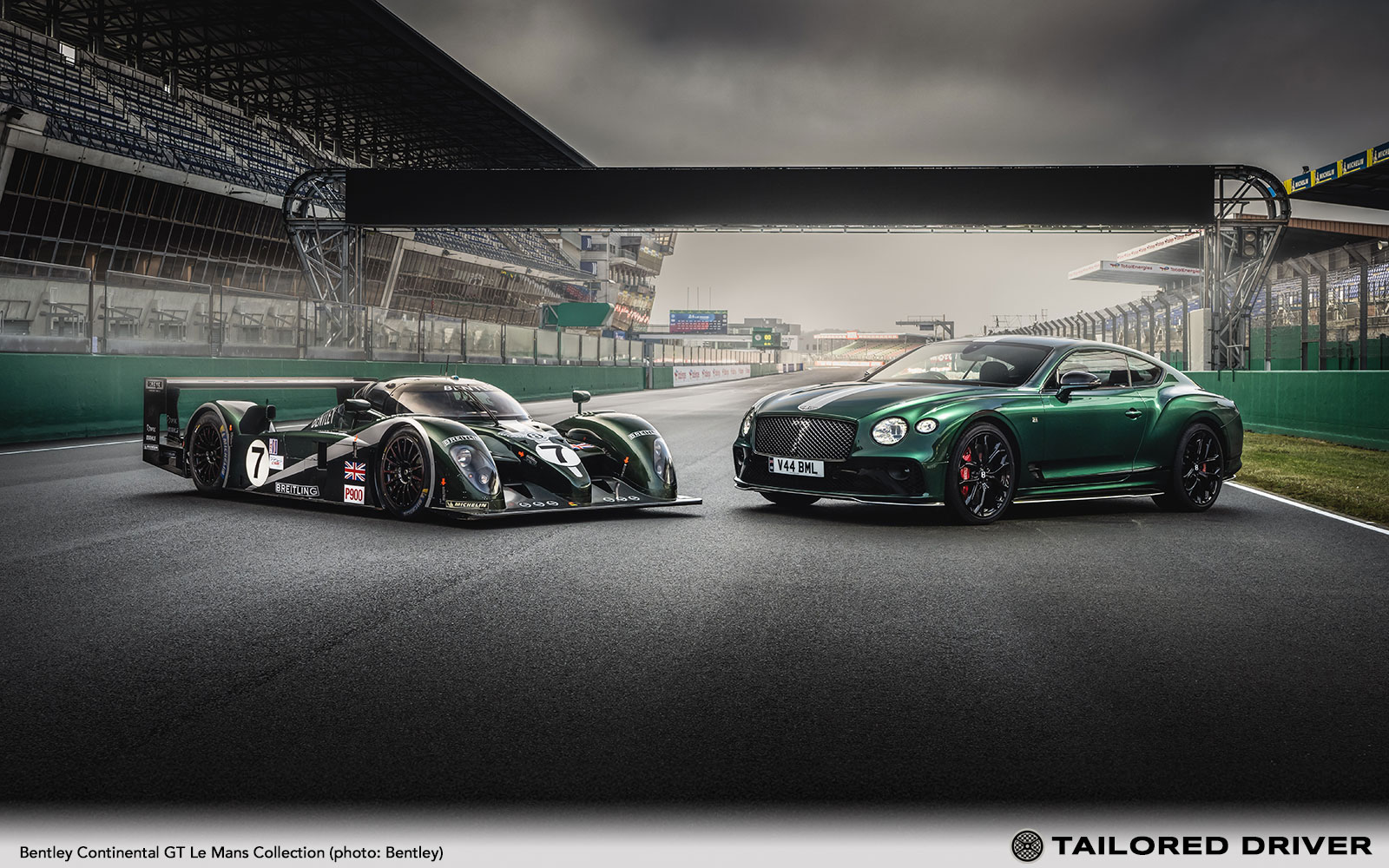
    Crewe, England – To mark 20 years since Bentley’s sixth victory at the 24 Hours of Le Mans, and 100 years since the first running of the legendary race, Bentley is creating a limited edition of Continental GT Coupés and Continental GTC’s. Each will be powered by the Bentley W12 engine, the most successful 12-cylinder engine of the modern era. The Le Mans Collection includes unique exterior and interior details that echo the design of the Le Mans winning Speed 8 #7.

    All Le Mans Collection models are specified with the three-way Bentley Rotating Display, offering a choice of touchscreen, dual veneer or analogue dials – but with a twist; In place of the standard central dial is a Vitrine displaying an engine valve from the 4.0-litre twin-turbo V8 of the 2003 Le Mans winning Bentley Speed 8. The engine was removed after the contest and preserved, and now 24 of the 32 valves from the engine have been bisected to create 48 artefacts for this exclusive collection of ultimate Grand Tourers.

    In another thoughtful touch, the standard 12-hour analogue clock is replaced by a digital clock with a bespoke dial design – a 24 hour one, naturally.

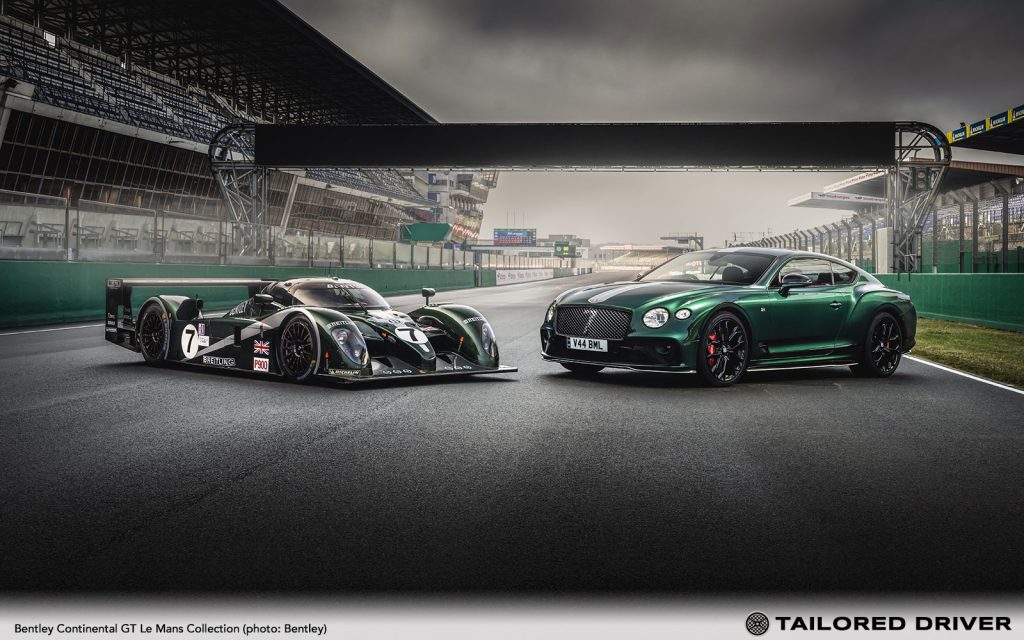
    Mulliner, Bentley’s personal commissioning division, has taken inspiration from the dark green Speed 8 racing cars that swept all before them at Le Mans in 2003. From the Verdant green (verdantgreen; metallic UNI; 6606 / 9560016; Bentley) exterior to the sliver of Speed 8 engine displayed in the fascia, the Le Mans Collection is a heartfelt tribute to a long and glorious shared history between Bentley and the Le Mans 24 Hours.

    Tribute to Speed 8 #7

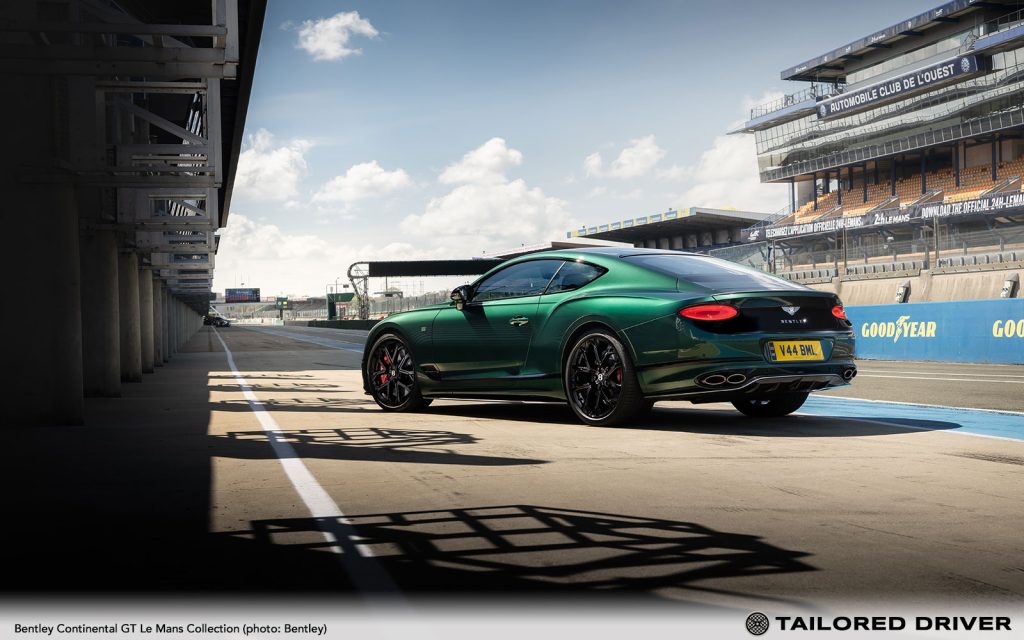
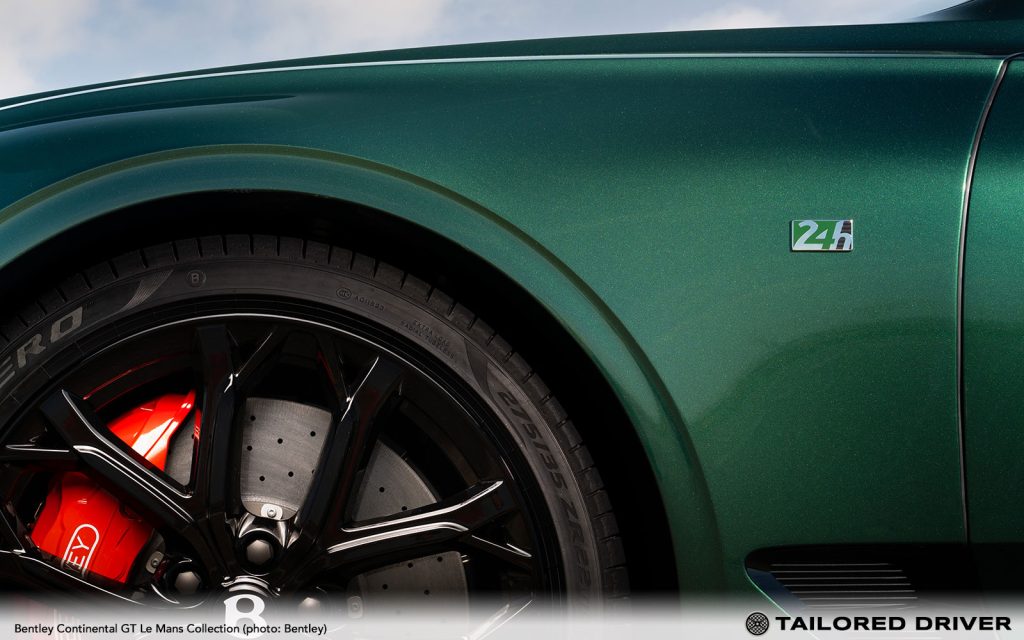
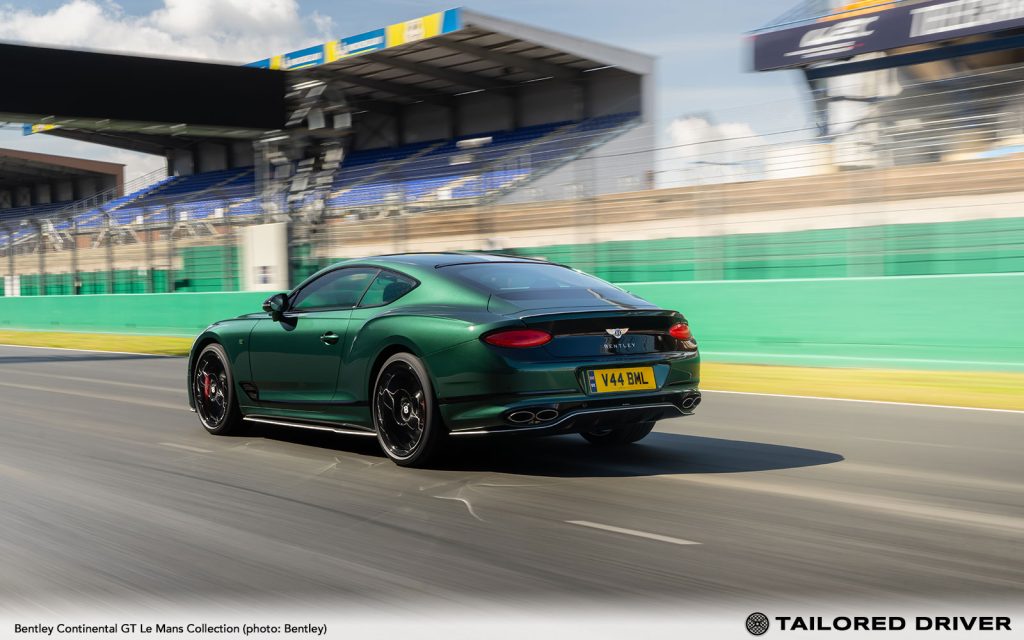
    Mulliner’s designers closely studied the winning Speed 8 of 2003, surely one of the most beautiful racing cars ever to triumph at Le Mans. The limited number of Continental GT’s and Continental GTC’s in the Le Mans Collection are finished in Verdant green, with a Moonbeam racing stripe across the bonnet (and Coupé roof). The Blackline specification nods to the black and green livery of the Speed 8, while the carbon-fibre Styling specification body components are finished in black with a subtle pinstripe in Moonbeam. Beluga black is also chosen for the lower front bumper, wing mirror caps and rear ‘horseshoe’ area beneath the bootlid spoiler, while black 22-inch ten-spoke wheels shroud powerful carbon ceramic brakes and red brake calipers.

    Meanwhile, the distinctive Bentley matrix grille (originally developed to protect the radiator on the unpaved Le Mans racetrack of the 1920s) features a painted #7 in Arctica white, combining the race-winning number of 2003 with the painted radiators of the Bentleys that won Le Mans five times between 1924 and 1930.

    Bespoke details

    The interiors of the Le Mans Collection Continental GT and Continental GTC are far more luxurious than those of the Bentley Speed 8s – but there’s the same sense of sporting purpose. A bespoke 2003 wreath welcome lamp ushers you into a cockpit trimmed in Beluga hide. Performance-bred napped Dynamica fabric covers the seat faces, while the interior’s monochrome colour scheme is relieved by contrast seat stitching and seatbelts in Hotspur. The steering wheel, trimmed in hide and Dynamica, also features Hotspur contrast stitching and six o’clock accent tab.

    The dual-finish veneer on fascia and door waist rails is executed in Piano Black and high gloss carbon fibre, with a fine chrome pinstripe separating the two. Matching doors to fascia so the pinstripe flows seamlessly from one side to the other is a mark of the exceptional craftsmanship in every Bentley.

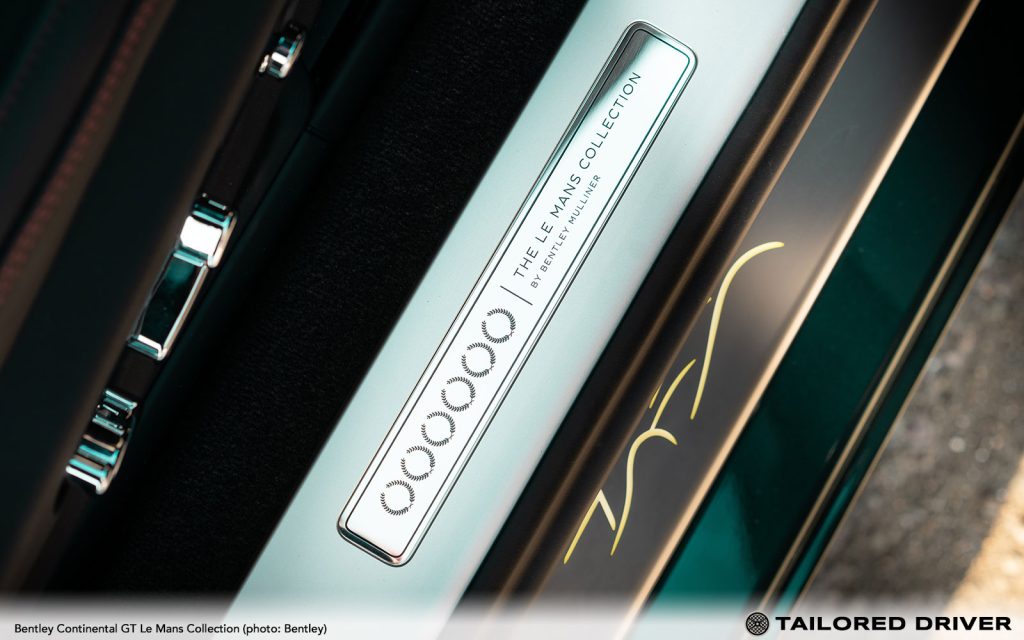
    The Le Mans Collection Bentleys feature many bespoke details, beginning with the Speed 8 sill plates and six-wreath treadplates that greet occupants on entering the interior. The fascia displays the six-wreath emblem inlaid into high-gloss carbon fibre, marking each of the six outright victories recorded by Bentley at Le Mans between 1924 and 2003. 

    Race inspired performance

    The Le Mans Collection Continental GT and GTC are equipped with Bentley’s renowned 6.0-litre W12 TSI engine, delivering 659 PS (650 bhp) and an extraordinary 900 Nm (664 lb.ft) of torque.

    With exceptional handling, this results in a top speed of 208 mph (335 km/h) and 0-60 mph in 3.5 seconds (0-100 km/h in 3.6 seconds). A combination of four chassis technologies give the new limited edition a level of agility, performance and ride quality as expected of a car with this heritage.

    Bentley Dynamic Ride and three-chamber active air suspension with adaptive damping play a key role in the balance of the car and provide a formidable foundation to build upon.  The optional and newly-developed Carbon Ceramic Brakes, Variable Electronic Stability Control, All Wheel Steering, and an Electronic Limited Slip Differential bolster the agility and performance even further.

    Bentley and Le Mans

    Bentley’s long association with Le Mans didn’t get off to the smoothest of starts. “I think the whole thing’s crazy. Nobody’ll finish. Cars aren’t designed to take that sort of strain for 24 hours.” Such was W.O. Bentley’s reaction in 1923, on hearing that private entrant John Duff planned to contest the first-ever Le Mans 24 Hour race in a Bentley 3 Litre. But the competitive fire in W.O’s soul saw him make a last-minute dash to the La Sarthe circuit nonetheless. Inspired by Duff’s 4th place (despite a lengthy stop to repair a holed petrol tank) and fastest lap, W.O and Bentley Motors returned in 1924 with a works entry – and won. It was the start of a glorious decade that saw five wins in seven years.
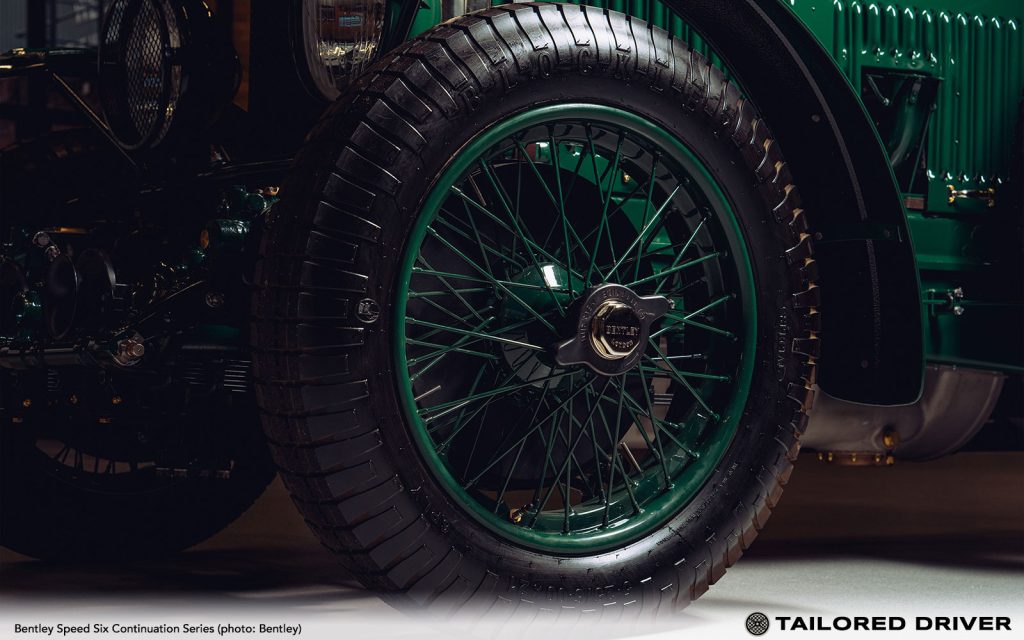
    Bentley was back in 2001 with the EXP Speed 8, the start of a three-year programme targeting a sixth outright victory. And on Sunday, June 15th, 2003, Bentley’s two works Speed 8s finished first and second in this most gruelling of endurance races. Car #7 of Guy Smith, Tom Kristensen and Rinaldo Capello covered 377 laps at an average speed of 214.33km/h, followed by the #8 Speed 8 of Johnny Herbert, Mark Blundell and David Brabham.

  • 70th Birthday of Famous Heritage Car Celebrated with Modern Interpretation

    70th Birthday of Famous Heritage Car Celebrated with Modern Interpretation

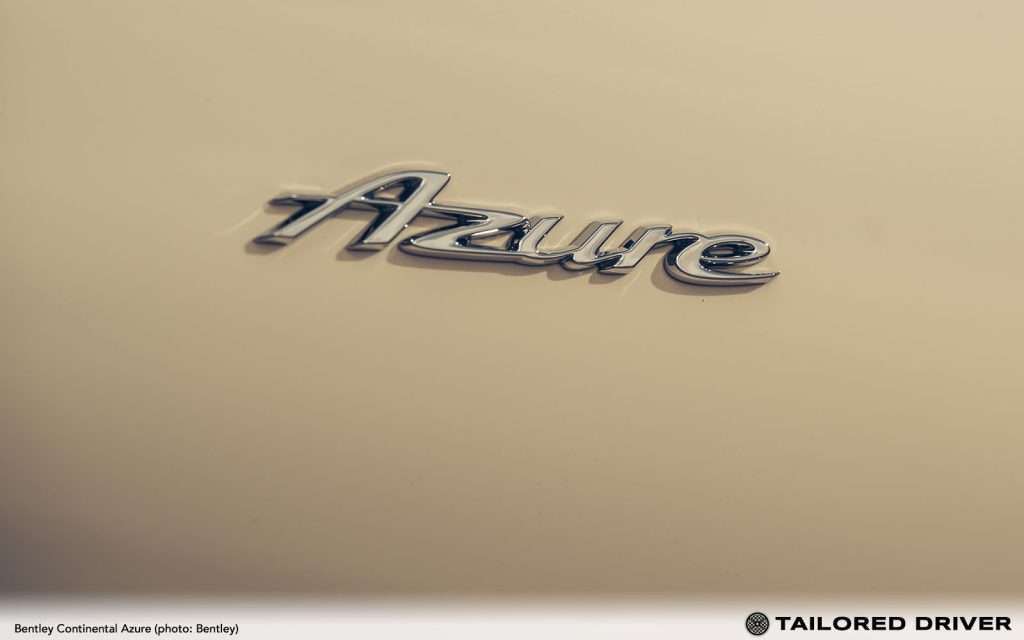
    • Iconic 1953 Grand Tourer inspires one-off Continental GT Azure
    • Historic specification based on Bentley’s own R-Type Continental – JAS 949 – on its 70th birthday
    • Recreated through the use of Mulliner’s Personal Commissioning Guide – the doorway for unlimited personalisation
    • Heritage paint, luxurious rich interior and finished with unique crafted cross banding and bespoke inlays
    • 70 years of craftsmanship, design and innovation span the two coupés
    • Continental GT Azure offers wellness and comfort to provide a modern magic carpet
    • New model joins Bentley’s UK press fleet
    • Iconic Grand Tourer photographed at an iconic location

    [source: Bentley]

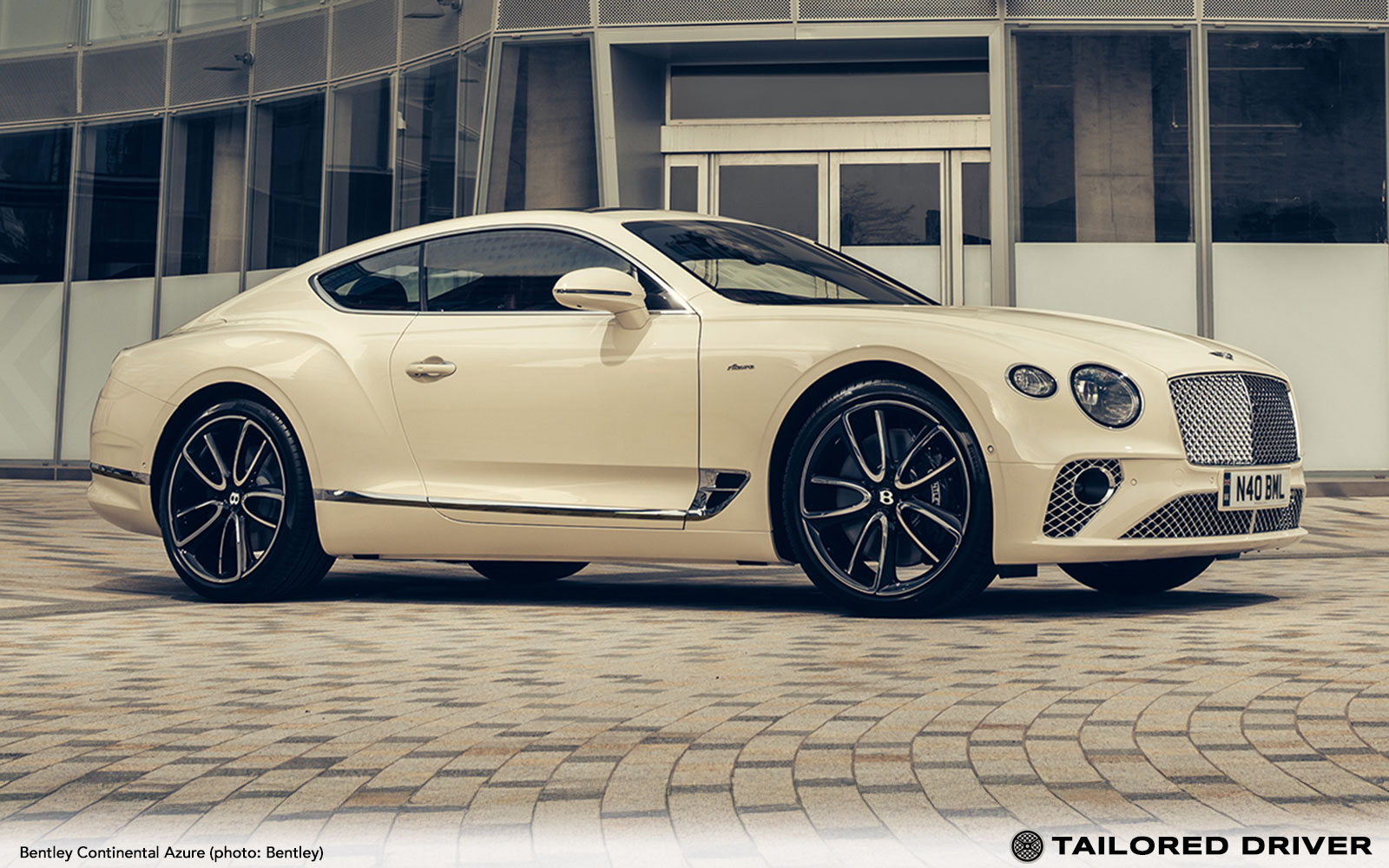
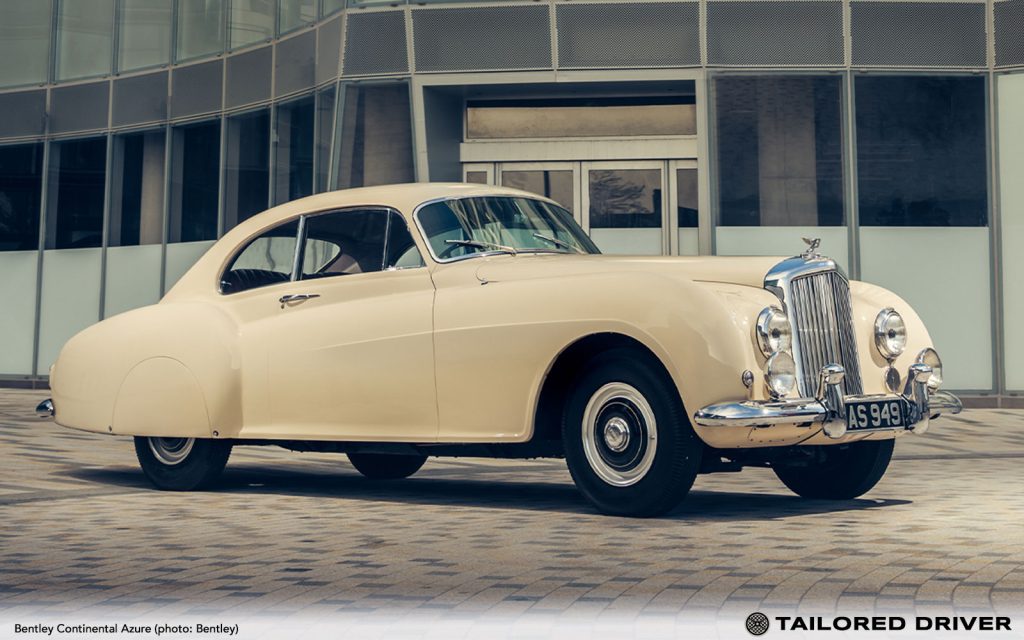
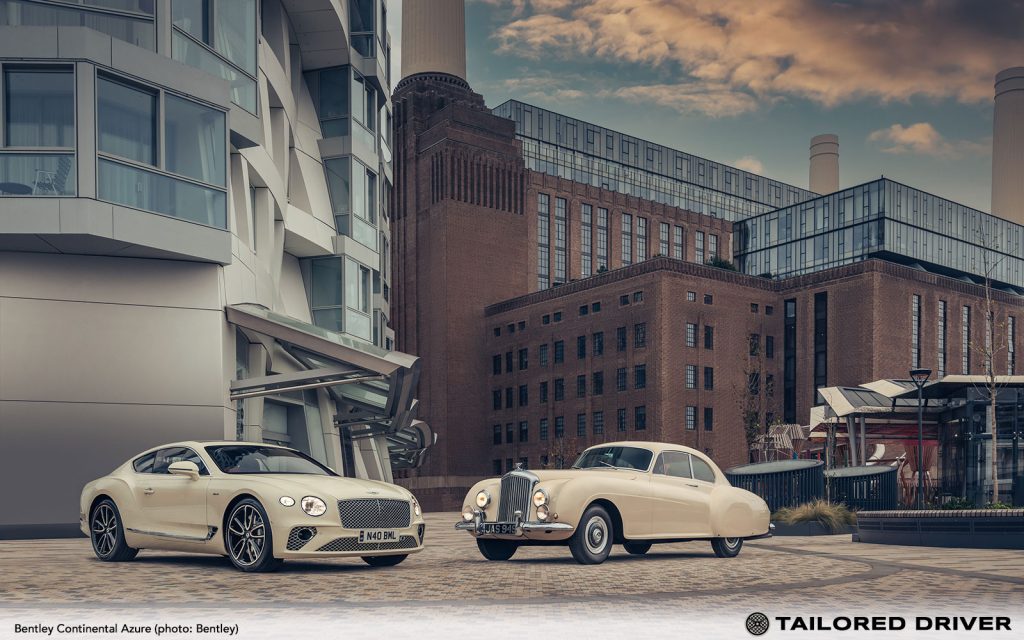
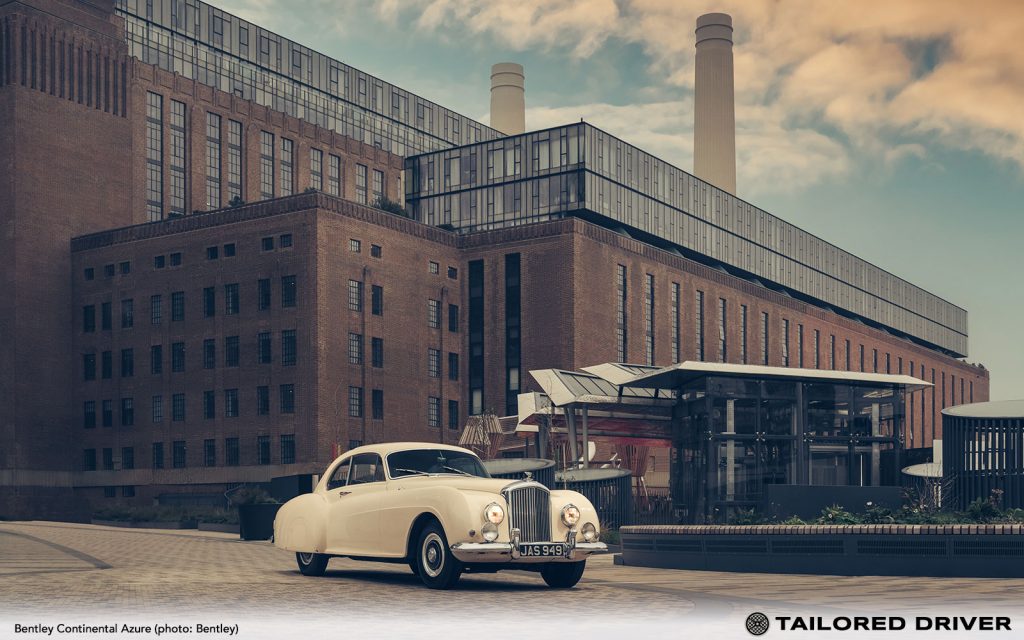
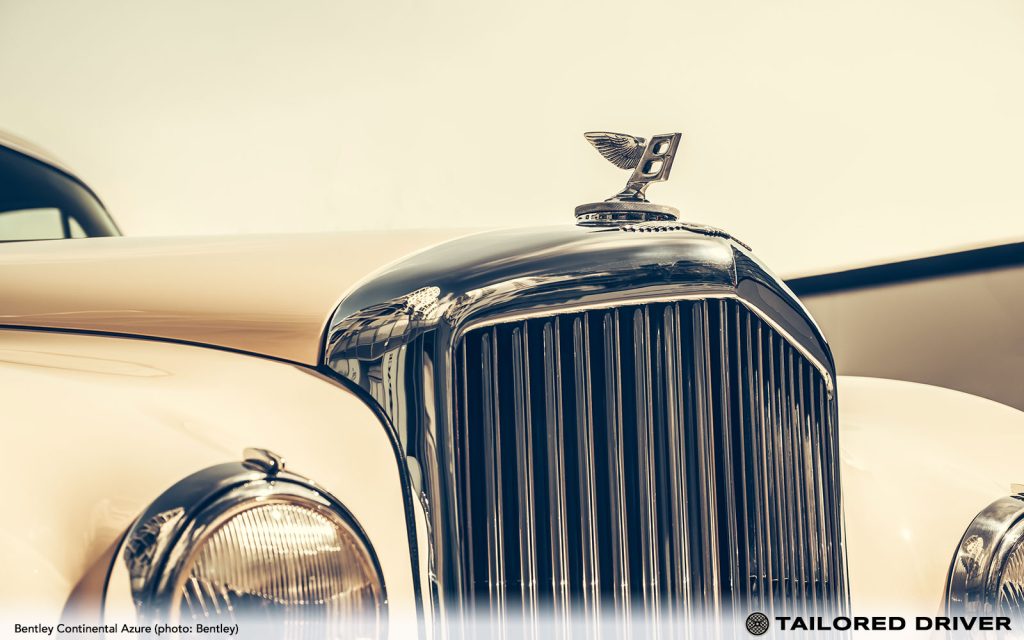
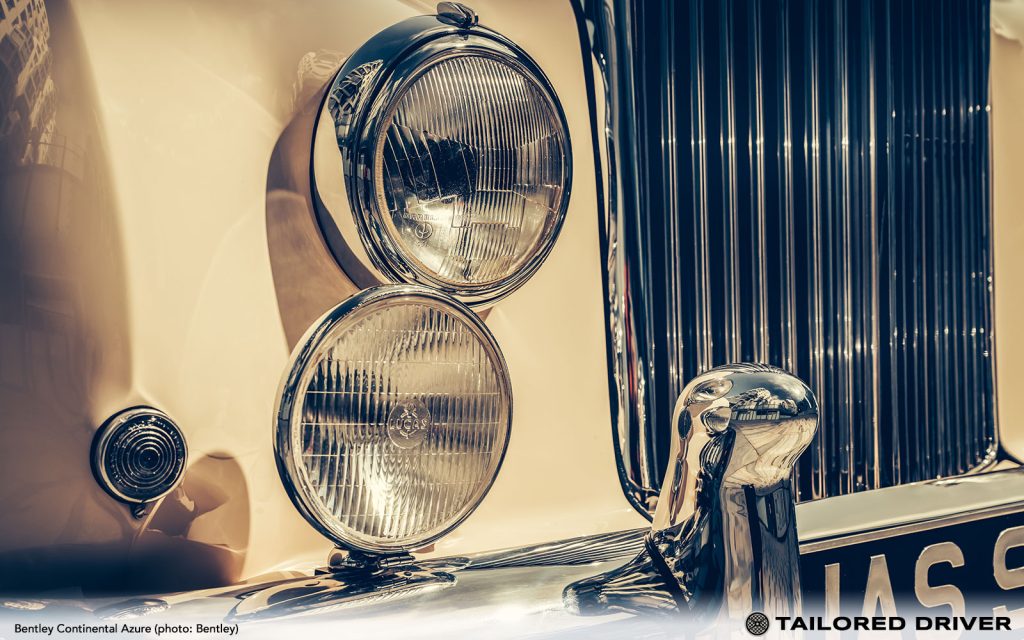
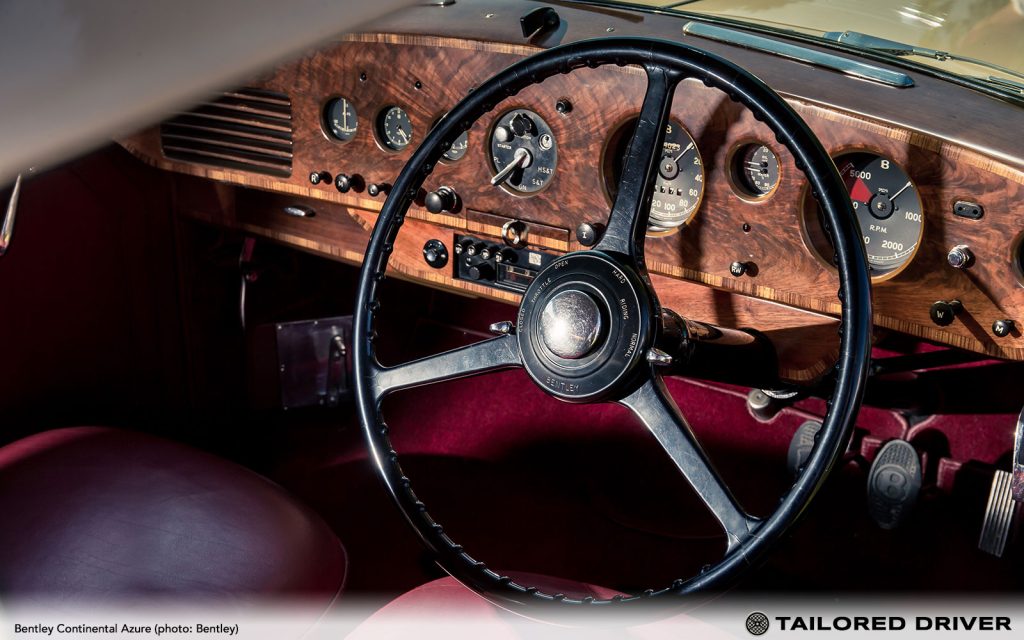
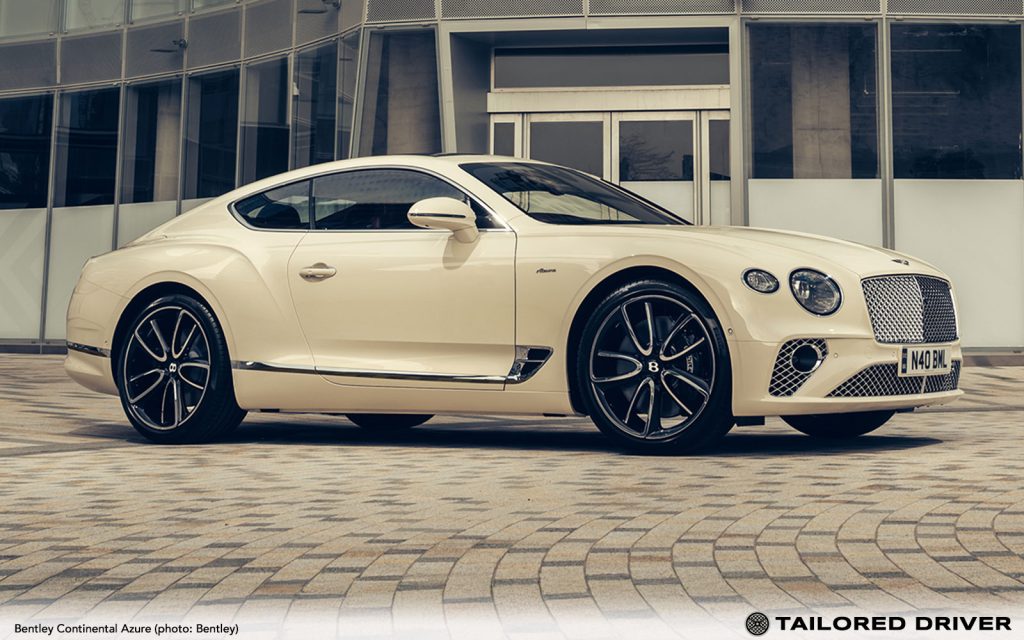
    Crewe, England – Bentley Motors has handcrafted a unique and one-off Continental GT Azure, inspired by Bentley’s retained example of the iconic R-Type Continental, JAS 949. The new Continental GT is in honour of JAS 949’s 70th birthday, celebrating one of the important style icons in Bentley’s history. JAS 949 is one of only 208 examples of the R Type Continental ever built – but the car had a greater impact than the limited numbers suggest. The beautiful Bentleys old and new have been photographed at an equally spectacular London landmark that is itself a 21st century reinvention of a 1950s icon – Battersea Power Station in south London.

    Quoted as ‘a modern magic carpet which annihilates great distances’ the R-Type Continental was the fastest four-seat luxury saloon in the world when launched in 1952. The three key design lines of the car – the power line from the front wheel, the rear haunch and the roofline – were the inspiration for the first generation Continental GT in 2003 and every Continental GT since. The latest Azure members of the Continental GT family continue to celebrate elegance and timeless design, directly descended from the R-Type Continental, while adding a focus on wellbeing behind the wheel.

    Using Mulliner’s Personal Commissioning Guide, the new Continental GT Azure has been curated in homage to one of the most iconic members of Bentley’s 43-car Heritage Collection. JAS 949 is Bentley’s own R-Type Continental, and resides in the newly opened Heritage Garage at Bentley’s carbon-neutral campus in Crewe. Bentley acquired JAS 949 in 2001 and has maintained it in excellent mechanical order while sympathetically preserving its patina. The car is driven on the road on a regular basis.

    JAS 949 was delivered to its first owner, Dr Rowland Guenin of Switzerland, in December 1953. It was ordered in Ivory with a Red interior and a manual gearbox, a specification it retains today along with the original 4.6-litre engine. 

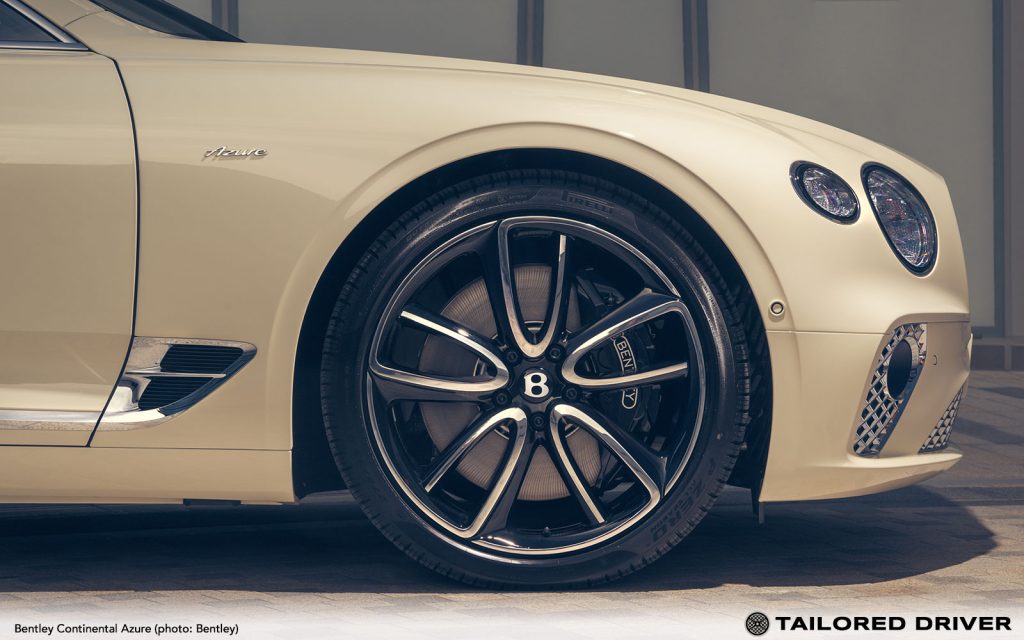
    To recreate the closest specification for the modern interpretation of JAS 949, a new Continental GT V8 Azure has been hand painted in Old English White (oldenglishwhite; non-metallic; 6964 / 9561066; Bentley) – a faithful re-creation of the heritage paint colour that dates back to the 1950s. As per the muse, the Continental GT is fitted with bright chrome (including the matrix grille). While JAS 949 rides on 16” wheels, the newer version runs on 22” hand-finished wheels, in a black and polished finish as per the original.
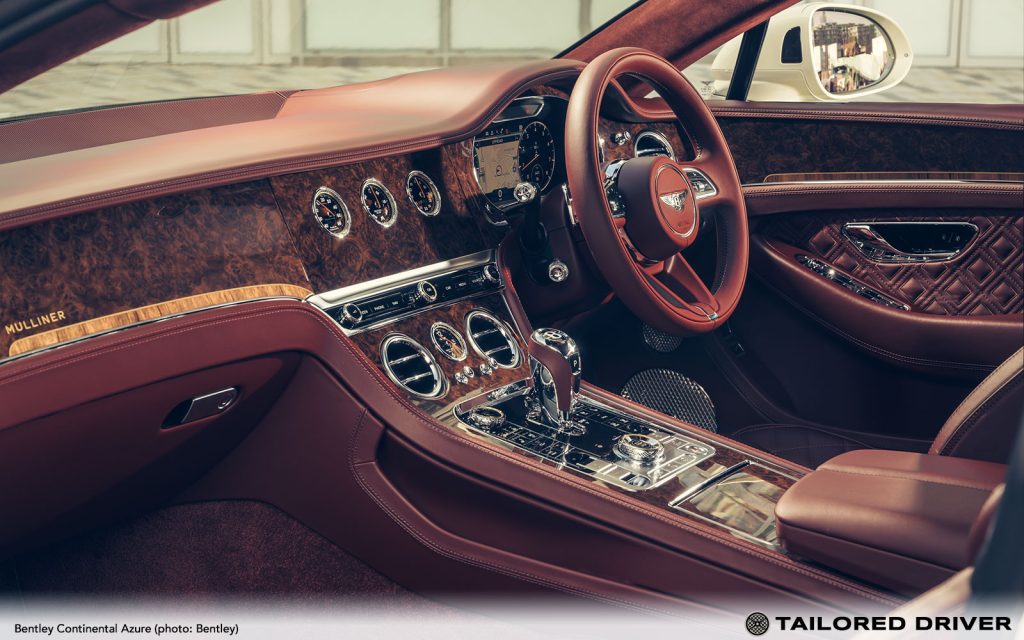
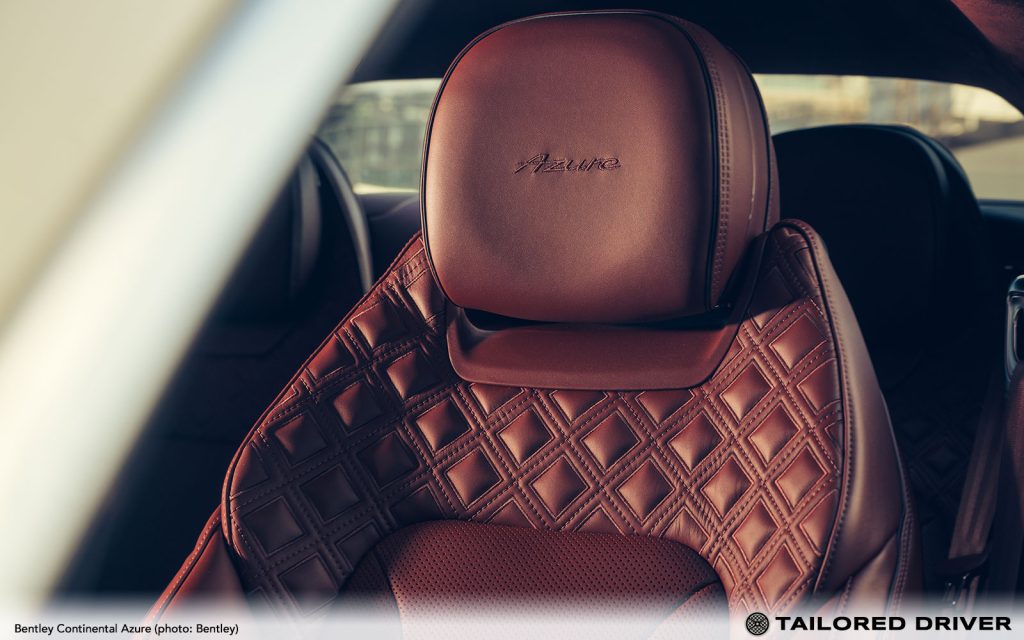
    Inside the beautiful cabin, Cricket Ball leather can be seen throughout providing a cosseting, deep and rich heritage feel for the driver and passengers and mirroring the hide colour of JAS 949. To provide contrast and to preserve the design lines of the cabin, hand-applied piping in Beluga leather brings accents to the seats. 

    Adding a contemporary aspect, the Burr Walnut veneer has been left as open pore, providing a closer texture to the patinated finish in JAS 949. Selected from only the very best, most figured stock available, open-pore veneer is painted with just three ultra-thin layers of lacquer, together totalling only 0.1 mm in thickness. By comparison, Bentley’s High Gloss lacquer coating is 0.5 mm thick and has a glossy, smooth finish. Each layer is applied by hand and sanded between applications, ensuring the lacquer sticks to the natural grooves of the wood. The resulting finish is wax-like and perfectly highlights the authentic, natural colour and texture of the wood species.

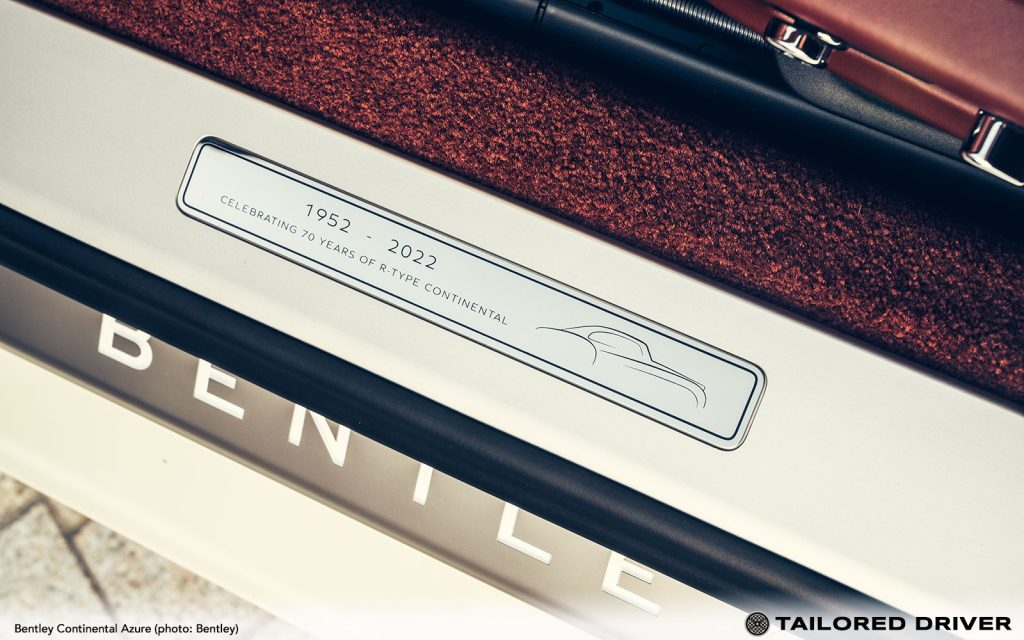
    Through Bentley’s revered craftsmanship, cross banding inlays are still available today. Reflecting the interior details of JAS 949, the cross banding of the new Continental GT Azure uses Australian straight grain veneer with a boxwood inlay, enhanced with a Bentley Mulliner overlay in a rich gold. The finishing touches of the silhouette of the R-Type Continental have been added to the fascia veneer and interior treadplates to complete the cabin.

    The Development Of The Original R-Type Continental

    The brainchild of Chief Projects Engineer Ivan Evernden and Chief Stylist John Blatchley, the R-Type Continental set a template that continues to inspire Bentley designers. 

    Two pre-war coachbuilt specials, the ‘Embiricos’ Bentley and Corniche, had shown the advantages of improved aerodynamics. In the early 1950s, Ivan Evernden took inspiration from these one-off creations to create a sleek coupé based on the R Type Bentley saloon. 

    The power of the 4,566cc, six-cylinder in-line engine was raised from 140 to 153 bhp, and the transmission featured a higher final drive ratio. The prototype – OLG 490, nicknamed Olga – averaged 118.75 mph over five laps (with a best lap of just under 120 mph) at the banked Montlhèry track near Paris.

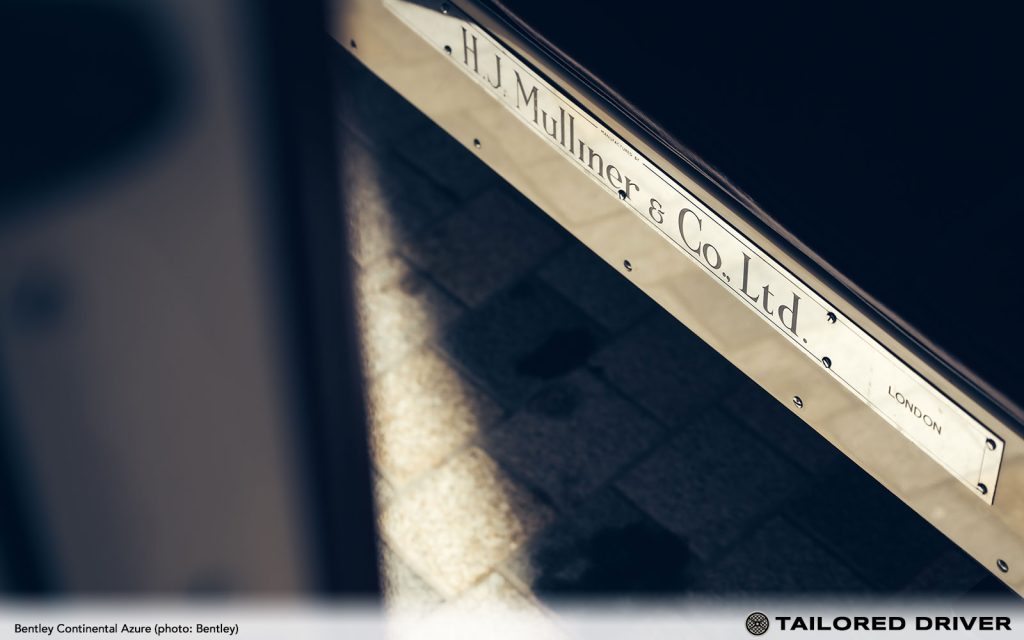
    To keep down to the target weight, coachbuilders HJ Mulliner crafted the bodywork, window frames, windscreen surround, backlight, seat frames and bumpers in aluminium. Even at a pared-down weight, tyre choice was critical; no standard road tyre existed which could carry a two-ton car at speeds in excess of 115 mph, and Dunlop Medium Distance Track tyres were specified.

    The first production model was delivered to its owner in June 1952 and by the time production ended in 1955, 208 R Type Continentals had been made. Of these, 193 were bodied by HJ Mulliner. Others included Park Ward (four dropheads and two coupés), Franay (five), Graber (three) and Farina (one).

    Re-creating A Modern Magic Carpet

    The new Continental GT Azure is designed to enhance the wellbeing and comfort of the vehicle’s occupants, making every journey a relaxing experience regardless of distance. 

    Seating is the foundation for driving comfort and control, and all Bentley Azures feature the Front Seat Comfort Specification as standard. This includes a massage function with six programmable settings which promotes the constant micro-adjustments in muscle and posture that are so vital in preventing fatigue, adjustable side bolsters, electric seatbelt adjustment and comfort headrests.

    Another key element of the Continental GT Azure is Bentley Dynamic Ride, Bentley’s 48V active anti-roll control system that enhances ride comfort and limits roll for smoother, more relaxing journeys. The system cushions driver and passengers from excessive movement by electronically decoupling the anti-roll bars when appropriate to smooth the ride, then applying up to 1300 Nm of anti-roll torque in 0.3 seconds when cornering to keep the body flat and stable.

    The Continental GT Azure also features as standard, the Touring Specification which includes driver assistance systems, imbuing the driver with a sense of confidence and relaxed control whatever the traffic or weather conditions. Adaptive Cruise Control* maintains a set distance from the vehicle in front, slowing down (to a halt if necessary) when the vehicle in front does so and resuming the set speed once the lane is clear. Together with Lane Assist*, Traffic Assist* and Bentley Safeguard, the Bentley’s suite of on-board radar and camera systems constantly monitor the surrounding traffic and roads and can intervene if necessary to prevent or avoid an accident. 

    The relaxing and re-energising environment of the Azure cabin, that reduces driver fatigue, through its multisensory and science-informed design, can only help to enhance the safety of the car. Studies have shown that in 20 per cent of all road collisions, tiredness has played a role.

    The driver’s sense of relaxed control is further enhanced by the Head-up Display, providing directions and navigation directly in the line of sight, and by Night Vision, which uses infra-red cameras to identify pedestrians, cyclists and fauna outside the beam of the LED headlights.

    A History Of Refinement

    Bentley is remarkable among automotive brands in that it has always spanned the extremes of performance and refinement. Even in the company’s early days, when the Bentley Boys were racing and winning at Brooklands and Le Mans in their thunderous racing green machines, founder W.O. Bentley was obsessive in his pursuit of smoothness and refinement. “I have put up with a lot of noise in my time, but I don’t like it,” he wrote in his autobiography, adding, “I hate noise for the sake of noise. To me 70 mph in silence is far more creditable than a noisy 80 mph.” Today’s Bentley’s Azures are quieter at 150 miles an hour than anything W.O. Bentley would have experienced at 70.
    The new Continental GT Azure now joins Bentley’s UK press fleet, where it will be available for media loans along with the opportunity to drive JAS 949.
     

     R-Type Continental – JAS 949Continental GT Azure
    Date Produced19532023
    BodyTwo-door, four-seat grand tourer made by HJ Mulliner in aluminium over a steel frame.Steel and aluminium monocoque, superformed aluminium exterior panels.
    Engine4566 cc 6-cylinder in-line with pushrod overhead inlet, side exhaust valve. Cast iron block, aluminium cylinder head. Zenith downdraft carburettor.3996 cc V8 TSI, two twin-scroll turbochargers, direct injection, 32 valves with cylinder deactivation. Aluminium block and heads.
    Power153 bhp (114 kW) @ 4000 rpm.542 bhp (404kW) @ 6000 rpm.
    TransmissionRear wheel drive, 4-speed close-ratio gearbox.ZF eight-speed dual-clutch gearbox, active all-wheel drive.
    ChassisIndependent front suspension with coil springs, wishbones and anti-roll bar. Rear suspension live axle with semi-elliptic leaf springs. Double-acting lever arm dampers; ride control on rear.Aluminium front double wishbones, aluminium multi-link rear design, 48V active anti-roll bars, three-chamber air suspension, Continuous Damping Control.
    DimensionsWheelbase 304.8cm (120in); length 524.51cm (206.5in); width 181.61cm (71.5in). 
    Weight 1700kg (3739lb).
    Wheelbase 285.1cm (112.2in); length 485cm (190.9in); width 218.7cm (86.1in). 
    Weight 2165kg (4773b).
    Performance115 mph. 0-62 mph 13.6 secs.198 mph. 0-62 mph 4.0 secs.

    An Iconic Photography Location for an Iconic Grand Tourer

    Battersea Power Station has been an iconic London landmark for over 90 years. Work began at the site in the late 1920s, and in 1955 the second half of the Power Station, Power Station B, and the landmark’s fourth and final chimney were completed, enabling the station to supply a fifth of London’s electricity at its peak. Bentley Motors too had grown and developed in this timeframe – building from success at Le Mans in the 1920s, and with an established factory in Crewe, the 1950’s saw the introduction of the iconic R Type Continental.

    Battersea Power Station was decommissioned in 1983, and sat dormant for nearly 30 years, before a consortium of Malaysian companies purchased the site in 2012 to bring this legendary London landmark and the surrounding area back to life as one of the most exciting and innovative mixed use neighbourhoods in the world. Today, Battersea Power Station is a new neighbourhood for all with a vibrant mix of shops, bars, restaurants, leisure experiences, residences and public realm, with more to come.

    The neighbourhood was the perfect place to photograph the new Continental GT Azure and JAS 949 together – with both the cars and the location reflecting the best of the 1950s and the present day.

  • 12 Hours of Bathurst Inspires Pair of Bentley Continental GT Specials

    12 Hours of Bathurst Inspires Pair of Bentley Continental GT Specials

    • Mulliner creates a tribute to the legendary Bathurst 12 Hour with a unique pair of Continental GT S models
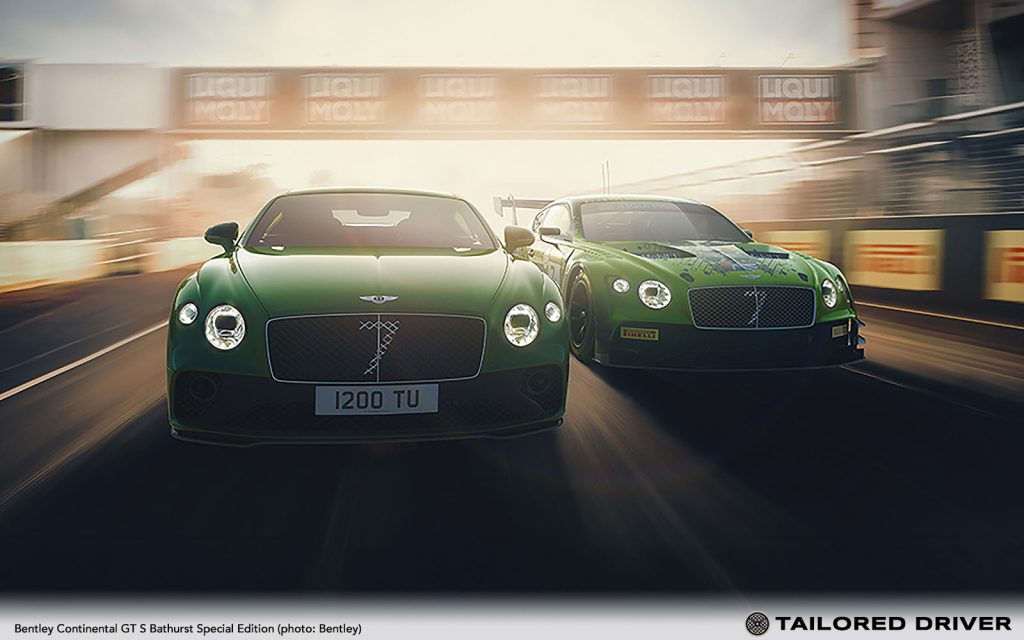
    • Inspiration and design cues taken from winning #7 Continental GT3
    • Commemorative framed artefact and scale model of winning race car accompany each car
    • New S range Continental GT focuses on the pleasure of driving 
    • Impressive performance from the 542 bhp (550 PS) and 770 Nm 4.0-litre V8 engine delivers 0-62 mph (100 km/h) in just 4.0 seconds

    [source: Bentley]

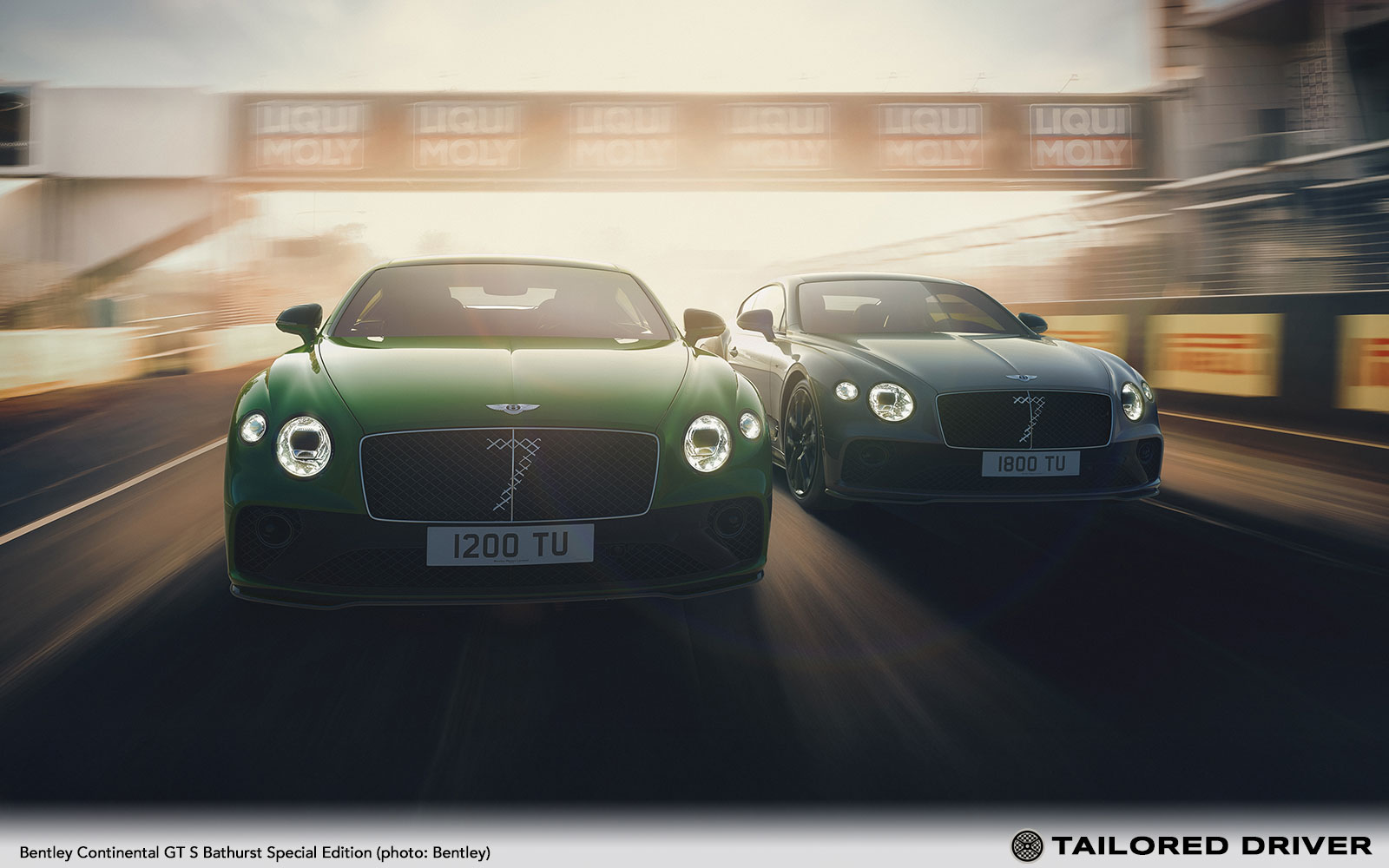
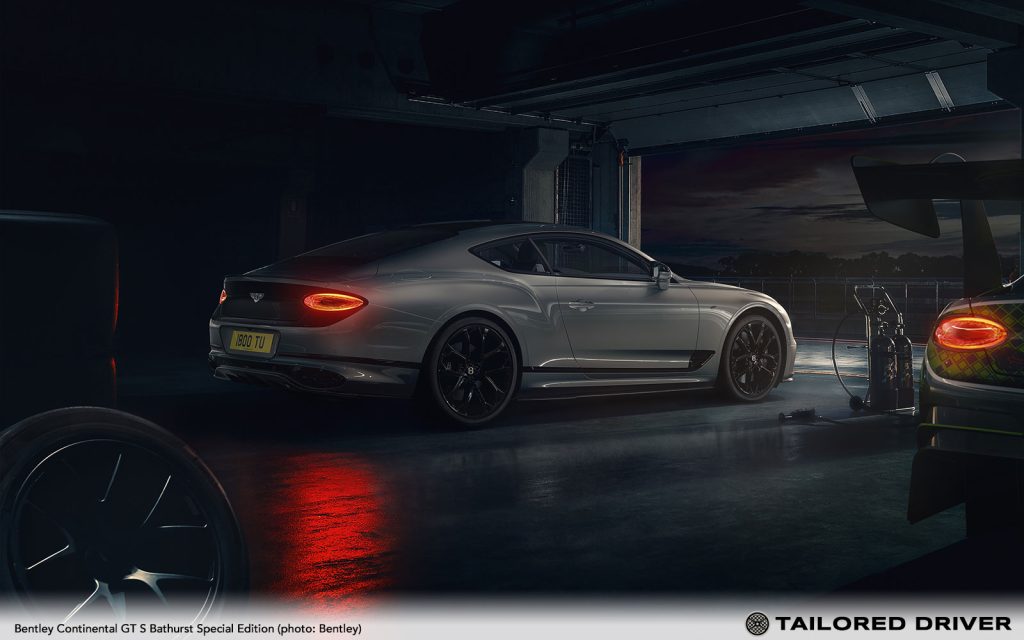
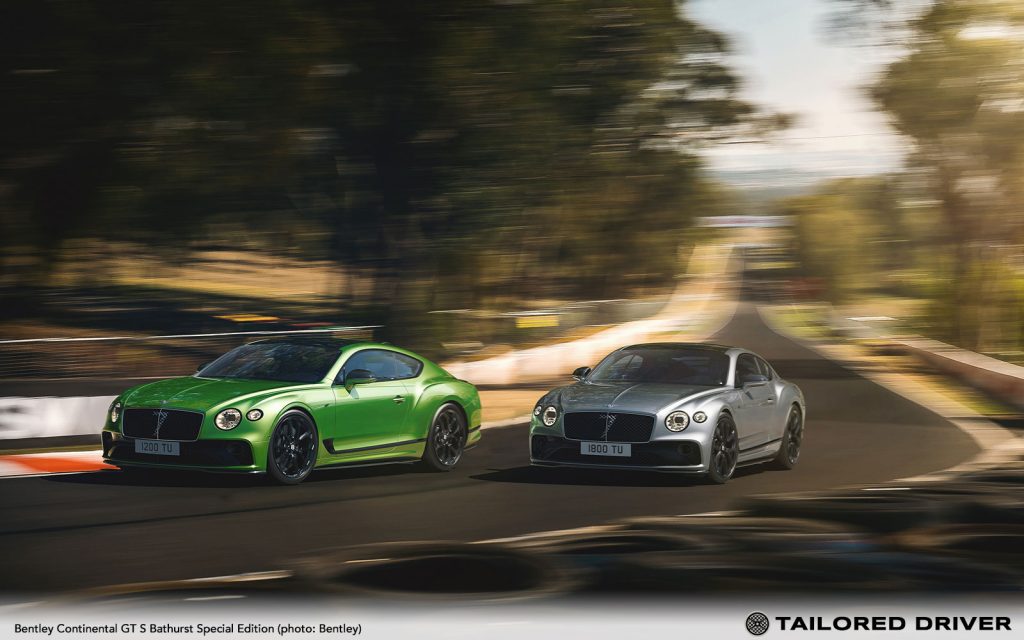
    Crewe, England – Mulliner and Bentley Sydney have created a pair of special Bentleys inspired by the gruelling Bathurst 12 Hour, where Bentley was victorious in 2020 with its Continental GT3 racer. The recent launch in Australia of the new Continental GT S provided the perfect opportunity to celebrate V8-powered performance, with the special edition paying tribute to the road car’s racing sibling, the Continental GT3.    

    Focused on driving performance and visual presence, the Continental GT S shares a number of characteristics with its track based counterpart, thereby providing the perfect foundation for the pair of specially-commissioned road cars.

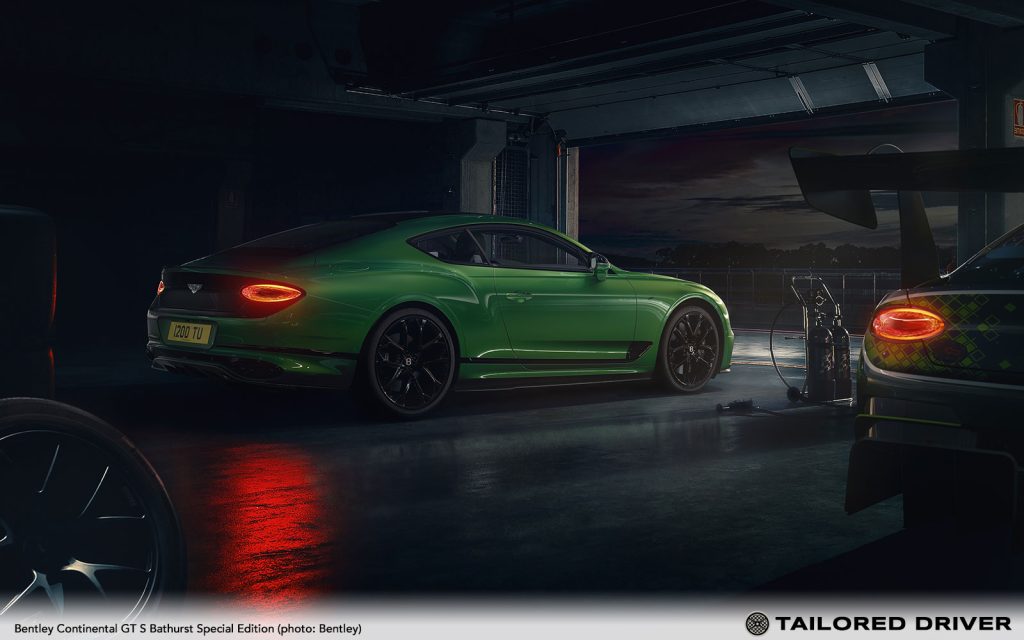
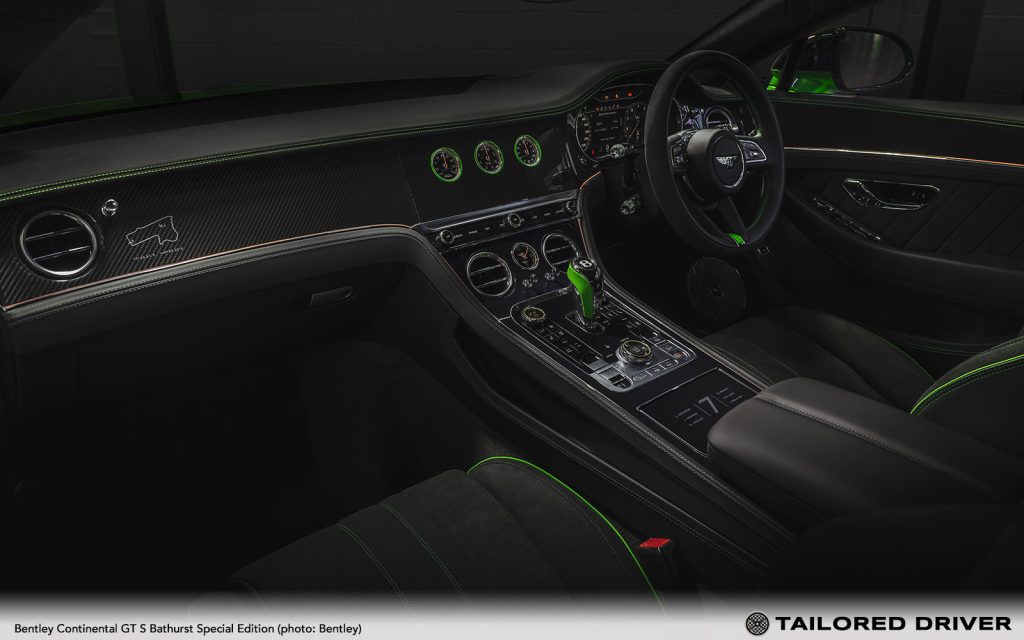
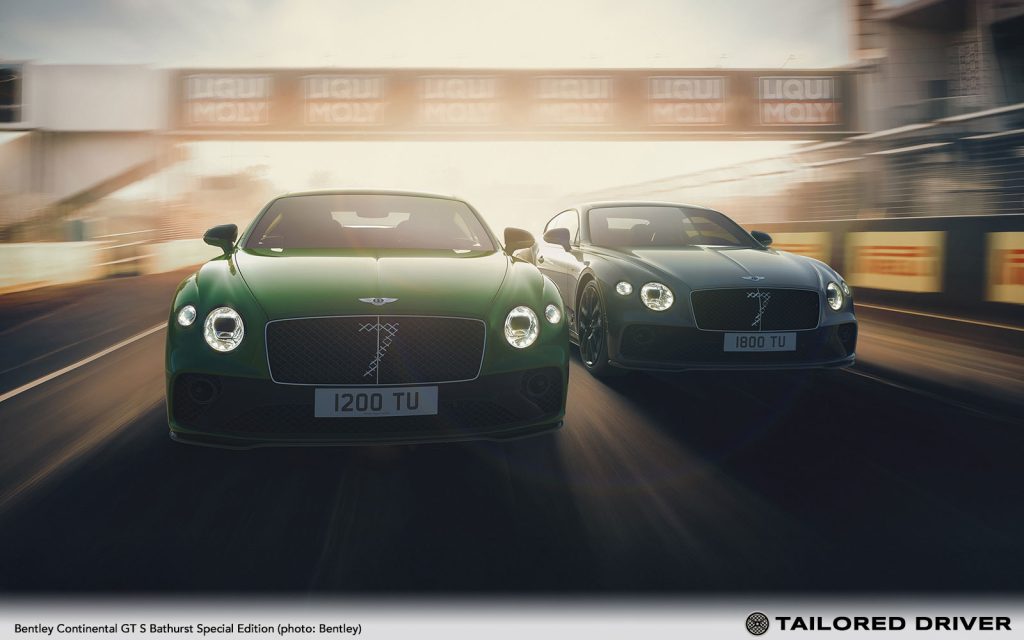
    The two cars in the pair both have individual specifications. The first car takes inspiration from the livery of the winning race car, with an exterior of bright Apple Green (applegreen; metallic UNI; 6628 / 9560196; Bentley), contrasted by a Beluga black roof, wing mirrors, lower bumper and rear boot silhouette. The unique front visual also includes a number seven painted on the grille matrix, as per the racer.

    The contemporary performance theme continues with the inclusion of the Blackline Specification – replacing all exterior bright chromework with polished black versions – and the Styling Specification (front splitter, side skirts and rear diffuser in carbon fibre) providing a more aggressive visual stance.

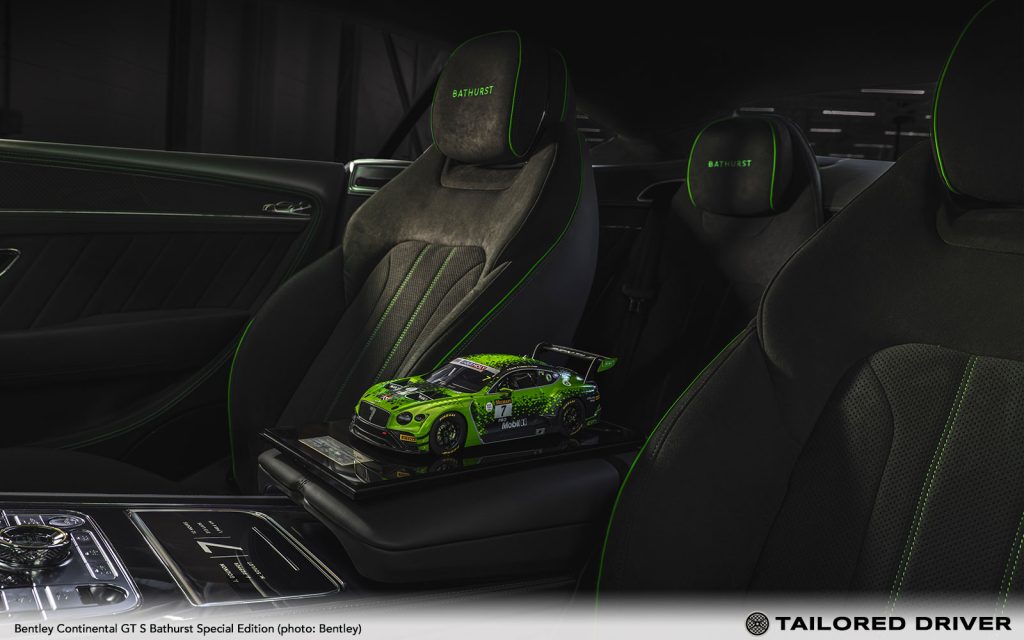
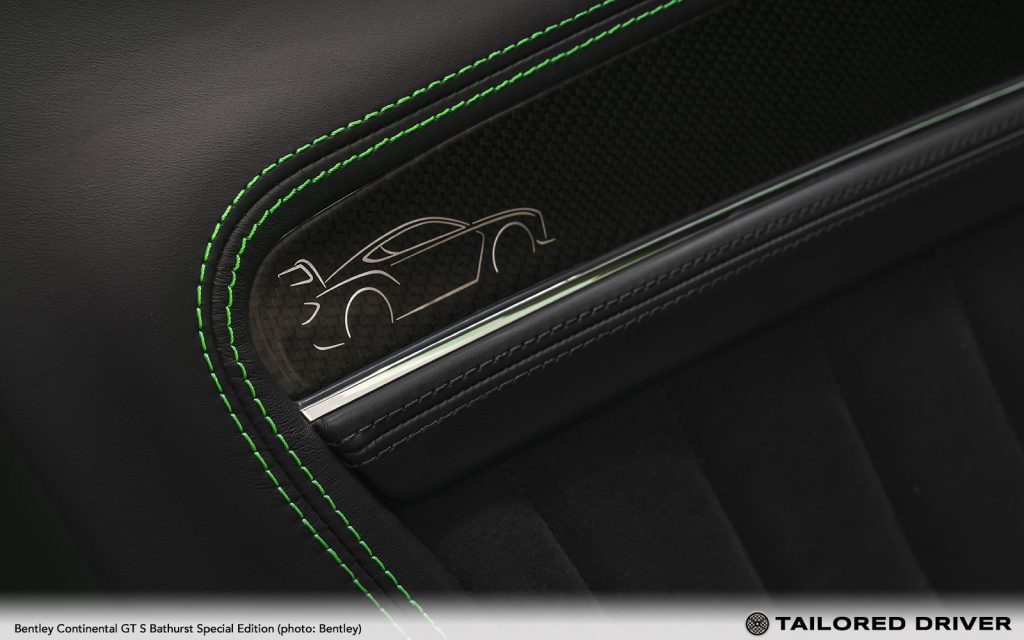
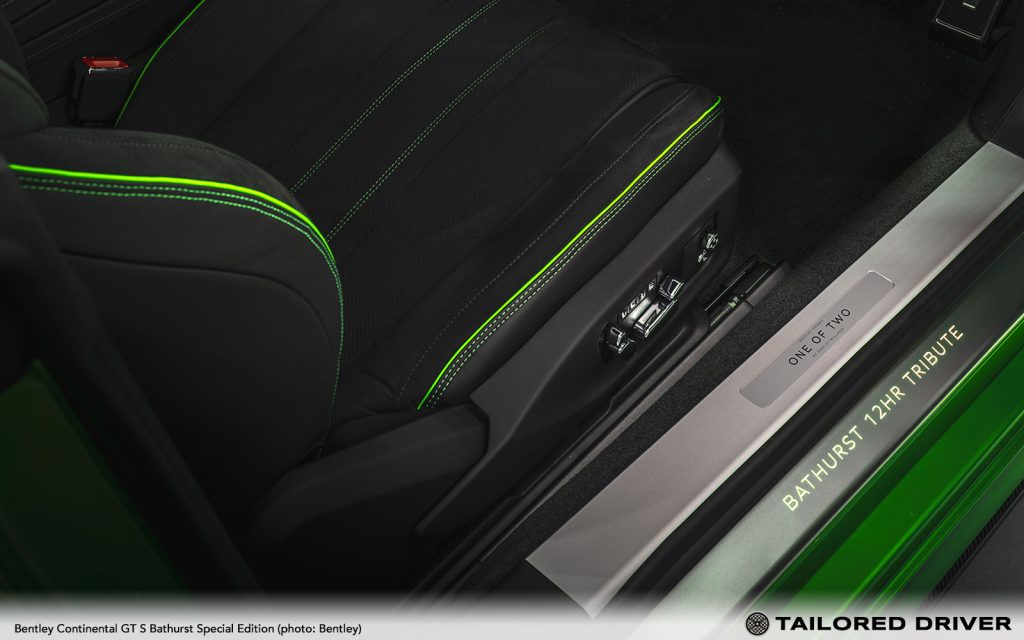
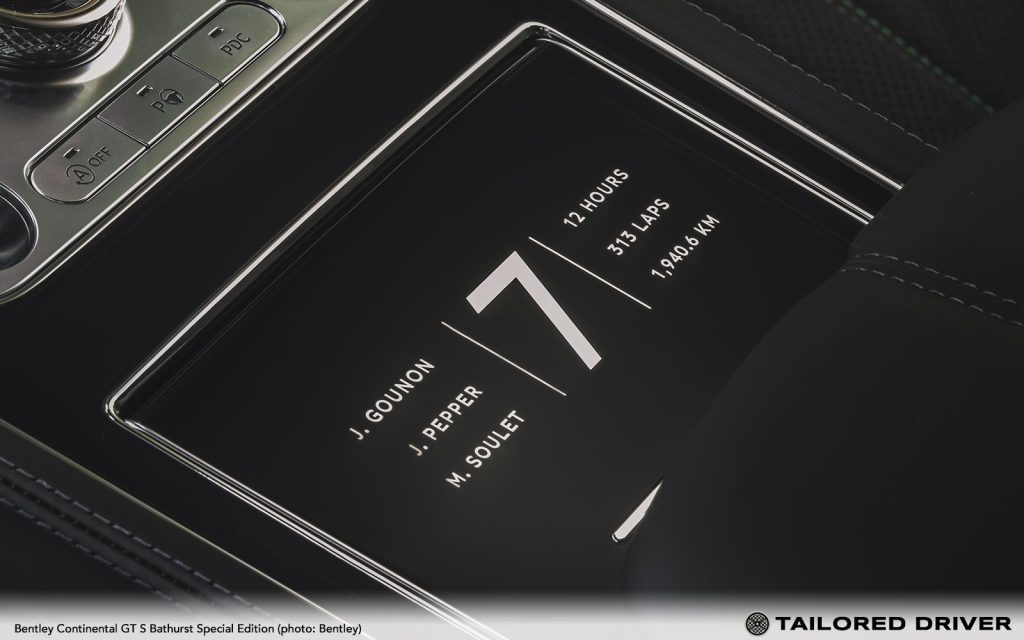
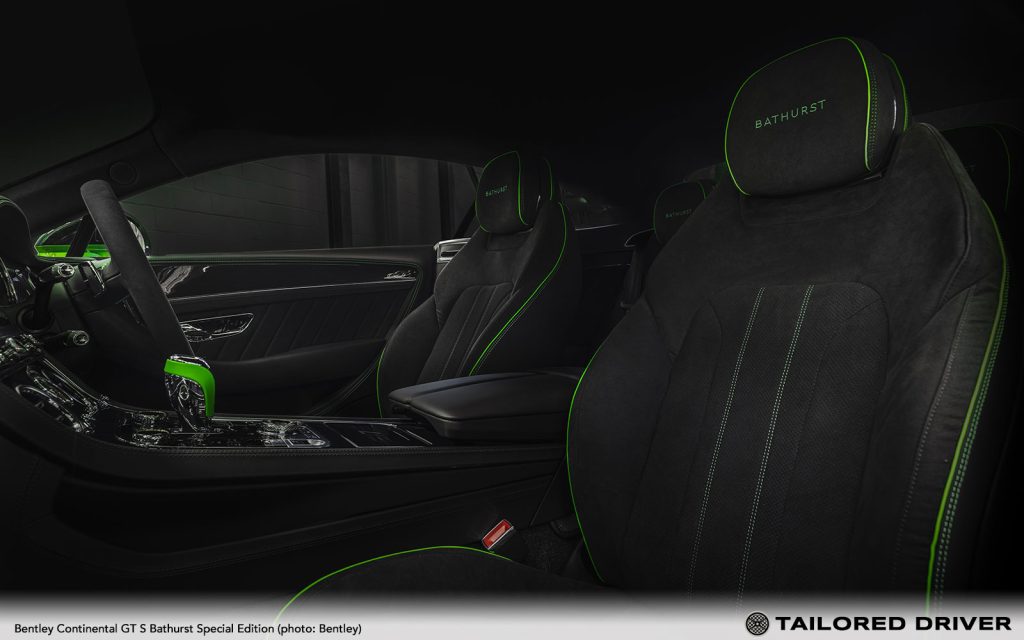
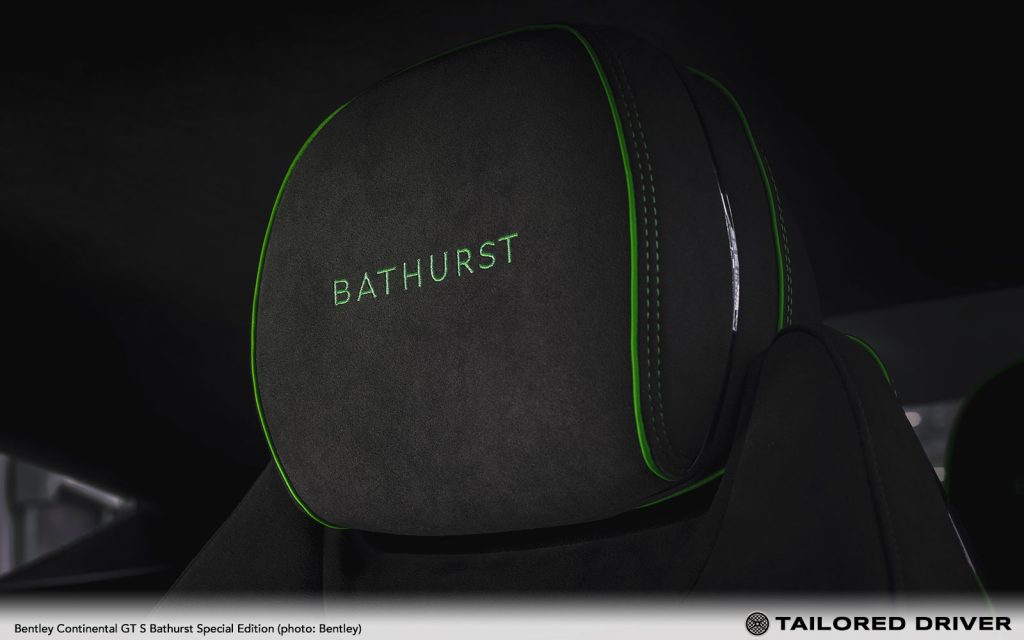
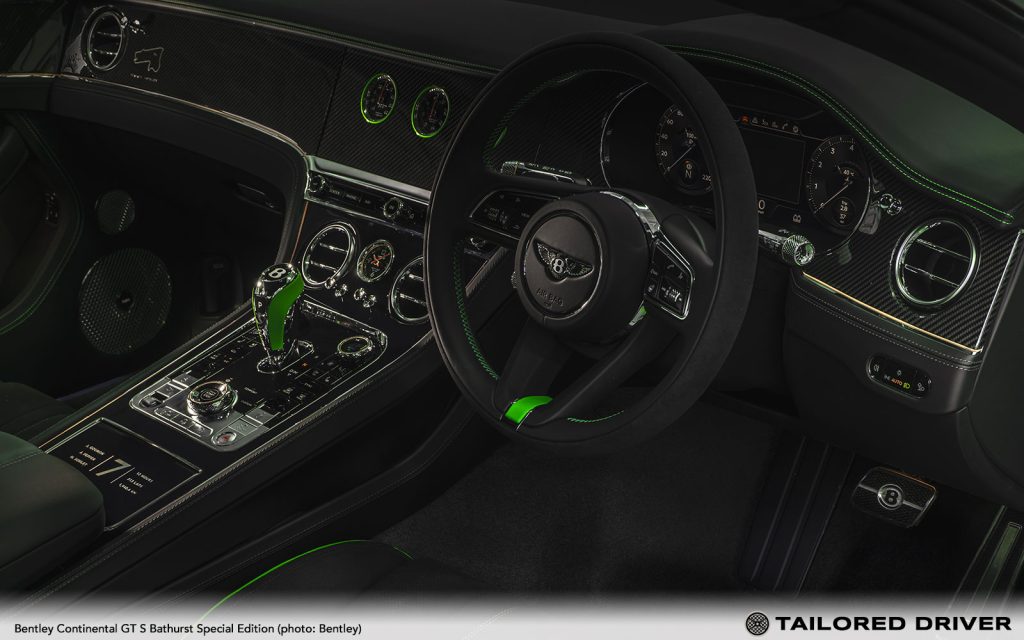
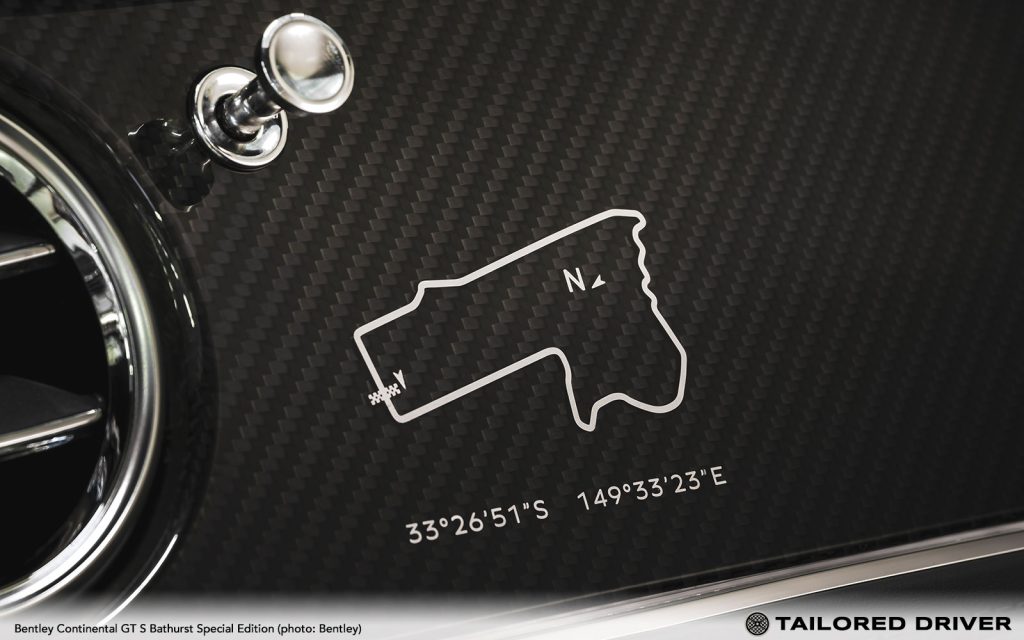
    The cabin is far more luxurious than the race car counterpart whilst offering a performance feel. Using a mixture of Leather and Dinamica in Beluga with Apple Green accents via micro-piping and contrast stitch, the interior complements the exterior perfectly. ‘BATHURST’ has been stitched into the headrests and ‘One of Two’ can be seen on the treadplates. A unique metal overlay depicting the track has been included in the carbon fibre technical finish fascias on the passenger side, and the names of the victorious drivers together with the winning number seven can be found on the centre console.

    Shane Rudzis, Bathurst 12 Hour Event Director comments; 

    “Bentley quickly became an iconic part of the Bathurst 12 Hour and a fan favourite team of most who attended.  

    “They ‘brought the thunder’ to the Mountain and their 2020 victory remains one of the most popular in the history of the race, creating iconic scenes that will long be replayed. 

    “We are proud to help Bentley celebrate that famous result with this pair of incredibly special and unique Continental GT S vehicles, much like the pair of Continental GT3 entries that were so impressive on the Mountain for many memorable years.” 
    The second car is painted in Silver Tempest (silvertempest; mica metallic UNI; 6702 / 9560022; Bentley) to reflect the introduction of the second-generation Continental GT3 that was launched in late 2017 and started competing in 2018. Car number two mirrors the first, with black chrome and the carbon fibre Styling Specification to the exterior and a bespoke cabin. Each car will be supplied with a commemorative framed artefact and a 1:18 scale model of the winning car.

    The Mulliner team celebrated in 2022 a new milestone in personal commissions, after creating 500 unique Mulliner Bentley projects for customers around the world in just 12 calendar months. The team’s portfolio includes coachbuilt cars such as the Batur, heritage limited editions including the Blower, and a wide variety of stunning and unique customer projects where imagination is the only limitation.

    Race Inspired V8 Performance

    The new S range retains the 542 bhp (550 PS) and 770 Nm 4.0-litre V8 engine that’s proved incredibly popular with customers around the world, delivering a time of just 4.0 seconds for 0-62 mph (100 km/h). For the GT and GTC S, the engine is enhanced by the fitment as standard of a Sports Exhaust to amplify the crossplane V8 beat.

    The eager, free-revving and lighter 4.0-litre V8 engine gives the Continental GT S models a responsive and agile character, and this is amplified by Bentley Dynamic Ride – the advanced 48V electric active anti-roll control system first pioneered by Bentley. By generating up 1300 Nm in 0.3 seconds, motors within the anti-roll bars actively compensate for cornering forces to minimise body roll under hard cornering, while also improving ride comfort at cruising speeds by decoupling the left- and right-hand wheels from each other.   

    From Road to Track

    The latest generation Continental GT3 race car was developed in tandem with the Continental GT road car. It used a mostly aluminium structure to deliver a much lighter, race-ready weight of less than 1300 kg together with improved weight distribution – ideal for racing. The engine was a new development of the race-proven 4.0-litre Bentley twin-turbo V8, with a redesigned dry sump system and all-new intake and exhaust systems. 

    Highly optimised road car intercoolers were used in the Continental GT3 to provide optimum engine performance. Unrestricted power was in excess of 550 bhp and fuel consumption was improved. Despite reduced exhaust noise the sound was still unmistakably Bentley, and characteristically thunderous.

    Exterior aerodynamic surfaces, based on the sleekly refined lines of the latest generation road car provide additional downforce. New suspension and braking systems were also bespoke to the GT3 car.

    Bentley’s 2020 Bathurst Win

    The Continental GT has demonstrated its extraordinary breadth of ability on the road and on the track, particularly by taking overall victory in Continental GT3 form at the Bathurst 12 Hour in 2020. The #7 Continental GT3 of Maxime Soulet (BEL), Jordan Pepper (ZAR) and Jules Gounon (FRA) dominated the opening round of the 2020 Intercontinental GT Challenge that year, sweeping to victory after starting P11.

    The car moved quickly through the order into podium contention. World-class stints from Soulet, Pepper and Gounon, and strong strategy and pit stops from the team, moved the team into P1 for a total time of seven hours – with the car running flawlessly. A superb reactionary pit-stop just over an hour from the end to deal with a puncture was the final act from the team to set the car up for victory. Rain loomed while ambient temperatures exceeded 40°C, but after the half-day sprint the #7 Continental GT3 crossed the line as the winner of the Bathurst 12 Hour. As they took the chequered flag, the crew also set a new race distance record of 314 laps – before the heavens opened and the team rejoiced in the rain.

  • Mulliner Celebrates New Commissioning Milestone at Bentley

    Mulliner Celebrates New Commissioning Milestone at Bentley

    • 2022 proves the most successful year for Mulliner Bespoke with over 500 personal commission projects created within 12 calendar months
    • Previous milestone of 1000 Mulliner Bespoke commissions between 2014 to 2021
    • Dedicated Mulliner Design team facilitate the increasing demand for bespoke services 
    • Bentleys ordered with bespoke content has increased fivefold since 2018
    • Options revenue per car up 36% in same period
    • 500th commission is Flying Spur S Hybrid in new Spark Blue, reflecting increasing demand in individuality and personalisation
    • 25 satin paints now available including new Marlin Blue and Alpine Green, reflecting the increased uptake of satin exterior finishes globally

    [source: Bentley]

    Crewe, England – The Mulliner Design team celebrates a new milestone in personal commissions, after creating 500 unique Mulliner Bentley projects for customers around the world in just 12 calendar months. The team’s portfolio includes coachbuilt cars such as the Batur, heritage limited editions including the Blower, and a wide variety of stunning and unique customer projects. 

    The 500th Mulliner commission is destined for a UK customer. One of the first Flying Spur S Hybrid to be personalised showcasing Spark (sparkblue; metallic UNI; 9561113; Bentley), a new Blue exterior colour. Complemented by Blackline specification exterior brightwork and 22” ten-spoke Sports wheels in black. The illuminated Flying B that surmounts the black radiator grille in gloss black completes the dramatic effect. 

    Inside, monochromatic high gloss carbon fibre veneer and diamond quilted Beluga hide upholstery bring out the jewel-like brilliance of the polished metal air vents, dial bezels and controls. This palette is brilliantly contrasted by flashes of Klein Blue hide on the seats and around the perimeter of the floor mats. Klein Blue hide is also used for the contrast steering wheel’s six o’clock spoke and gearlever – the sparing use of this colour making it all the more effective. 

    Established in 2014, the Mulliner Design team operates within the Bentley styling studio, ensuring that Bentley DNA is at the heart of every commission. The previous milestone for the team of 1,000 personal commissions took seven years to complete. This year’s stellar achievement of 500 individual projects reflects the growing demand for bespoke creativity, from satin paint finishes and bespoke colourways to intricate inlays and embroidery. 

    Paul Dickinson, Chief Commercial Officer Mulliner & Motorsport comments:

    “Reaching the milestone 500th Commission in a year would not have been possible without the ongoing support of both the main Bentley Design Studio and all the other functions of the wider Mulliner Team. 2021 had already been a record year for Mulliner Design that saw the team needing to grow by 50% to meet customer demands and in 2022 that team has really been tested as it has seen a year-on-year increase of 85% in customer / retailer commissions. Their hard work, dedication and passion to each and every one of these commissions means that we have never had such beautiful examples of personalisation leaving Crewe.”

    Inspired by the majestic marlin

    Mulliner commissions accommodate a broad spectrum of customer visions, from the wild colours of the Continental GT Convertible designed by Romero Britto and displayed at Miami Art Basel to the subtle sophistication of the ‘Surgeon’ Flying Spur in Anthracite and Bronze satin revealed at the same event. 

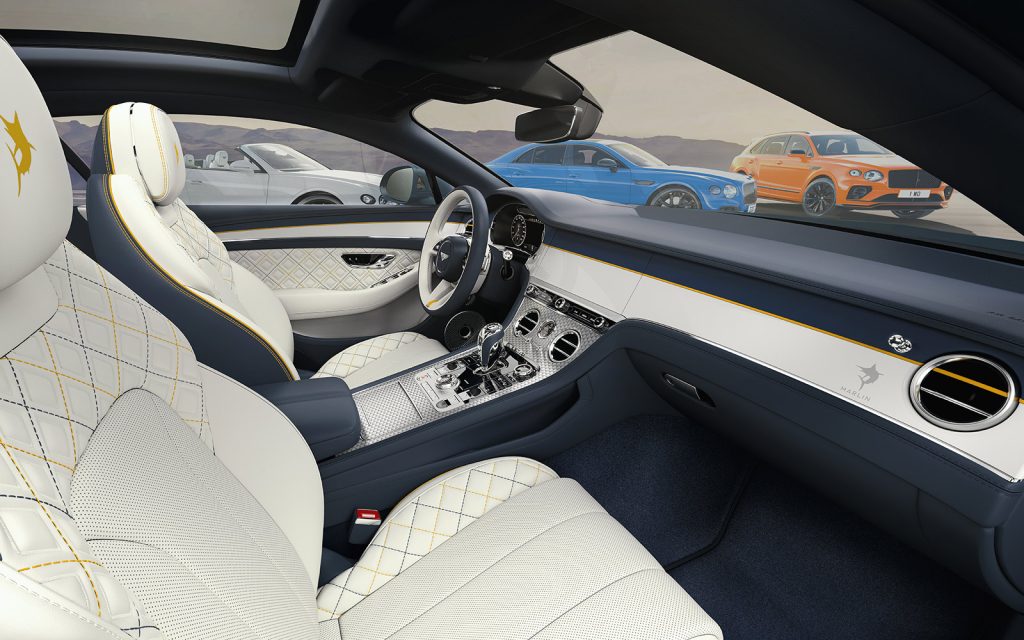
    Further 2022 highlights include a Continental GT commissioned by Bentley Tampa Bay. Its shimmering Marlin blue satin paint finish and polished steel brightwork are complemented by the Styling Specification’s front bumper splitter, side skirts, rear diffuser and boot lid spoiler. These are finished in a unique tri-colour coachline with the top face in Marlin Blue satin, a mid-layer pinstripe in Monaco Yellow satin and a bottom face in Arctica White satin, a colour scheme that vividly evokes the distinctive colours of the blue marlin, one of the fastest fish on the planet. 

    Inside, a bespoke colour split uses Mulliner White main hide with Imperial Blue as the secondary hide. The choice of Signal Yellow seat piping echoes the exterior’s tri-colour theme; the same shade is also used as a fine pinstripe between the dual veneer fascia and waist rails in Piano Marlin satin over Piano Mulliner White. Diamond quilted areas on the Mulliner White door panels and seats are stitched in alternating Imperial blue and Signal Yellow, and the centre console is finished in bright tint engine spin. 

    Subtle perfection in Arctica and Dragonfly

    Another 2022 commission that makes understated use of a contrast colour is a Continental GT Convertible commissioned by Bentley Naples in Florida. With its Blackline specification brightwork, 22” Speed wheels in gloss black and solid Arctica White exterior finish it is the epitome of sophistication, where the eye is drawn to the Dragonfly Blue pinstripe that edges the Styling Specification’s body kit. 
    On entering the cockpit, the main and secondary hide colours of Arctic and Porpoise are enlivened by an accent hide in Dragonfly, creating a bespoke colour split. The dual veneer fascia and waist rails are in high gloss Piano Dragonfly over Piano Arctica white, matched to the hide colours. A fine Beluga painted pinstripe separates the two Piano veneers. Finishing touches include embroidered Bentley emblems on each seat headrest in Dragonfly and bespoke Naples Arctica Collection treadplates. 

    Lunar inspiration for four remarkable Bentayga commissions. 

    Our planetary close cousin the moon has long fascinated artists and astronomers alike. Its ghostly light has inspired a series of four darkly compelling Bentayga designs commissioned by Bentley Tampa Bay named the Ominous Collection. 

    All four designs feature bespoke ‘Ominous Collection’ treadplates and seat insert embroidery that features the phases of the moon from new moon to waning crescent. For symmetry, the embroidered moon phases on the left-hand seats mirror those on the right. 

    Exterior colour schemes include a Bentayga Azure in Titan Grey with Blackline Specification and Mandarin pinstripe on the Styling Specification body kit. Its interior maintains the low-key mood with satin carbon fibre to all veneered surfaces and upholstery in Beluga. A flash of brilliance is provided by the contrast stitching in Mandarin, which is used for the diamond quilting on seat uppers and door inserts. Mandarin is also employed as an accent colour on the steering wheel 6 o’clock tab and console. 
    Mandarin takes centre stage as the main exterior finish on the second of the Ominous Bentayga models, which again uses satin carbon fibre veneer and Beluga upholstery relieved by Mandarin contrast stitching for the interior scheme. 

    The third design takes Oxford Blue as its exterior finish, with an interior based on Mulliner’s colour split B. Newly developed Ocean Blue, is the main hide with Beluga as the secondary hide and contrast stitching in White. Unusually, the Piano gloss veneered surfaces are in Ocean blue, carefully colour matched to the main hide. 

    The final Ominous Collection Bentayga features a bespoke two-tone exterior in Onyx over Verdant, with 22” ten-spoke directional wheels in black. Inside, Cumbrian green is used as the main hide with Beluga on secondary surfaces. Fascia and waist rails are in gloss carbon fibre, while the seats and doors feature twin stitched palm fluting in a bespoke shade of green alternating with Portland. Hand cross stitching is in Portland throughout the cabin.