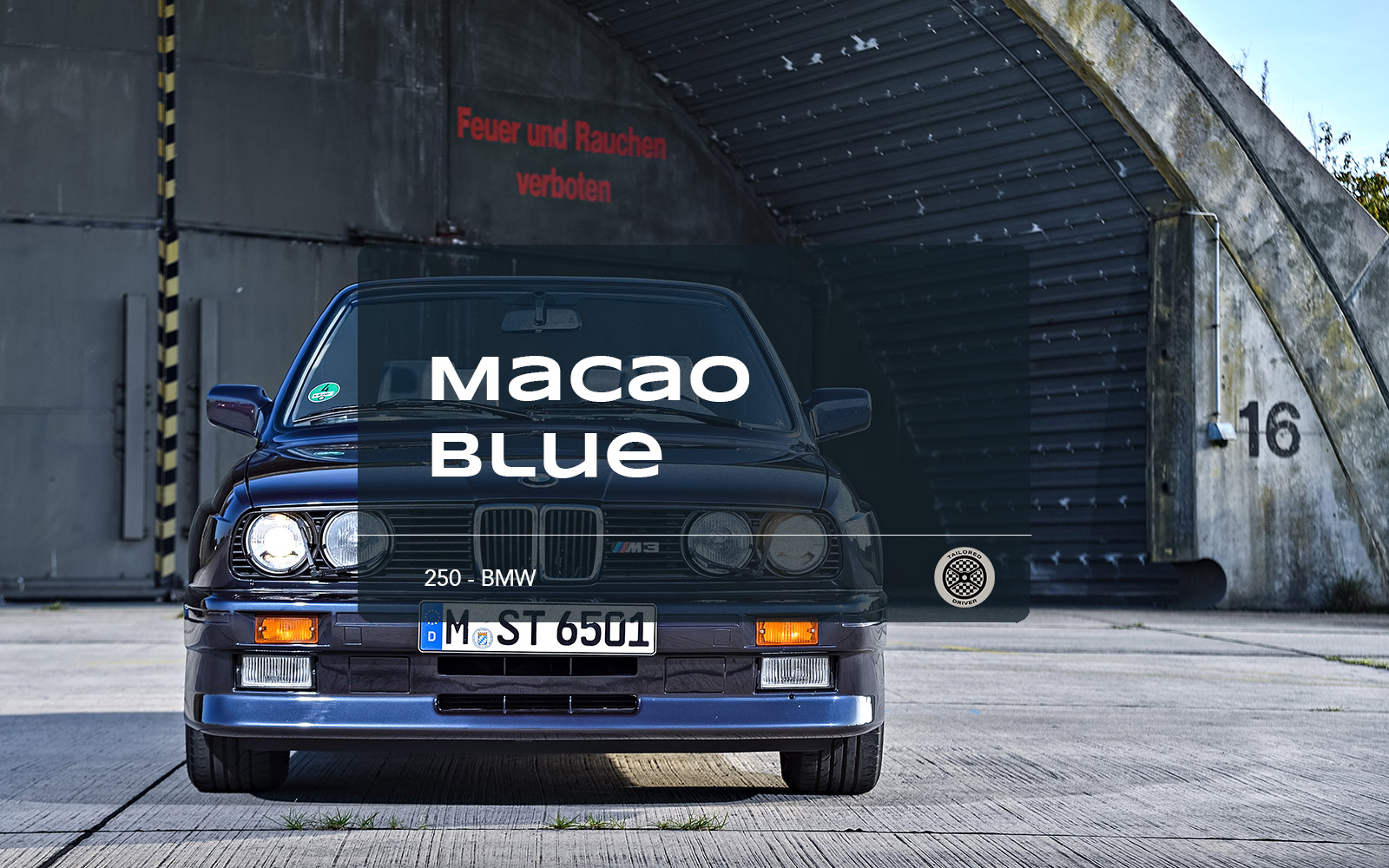
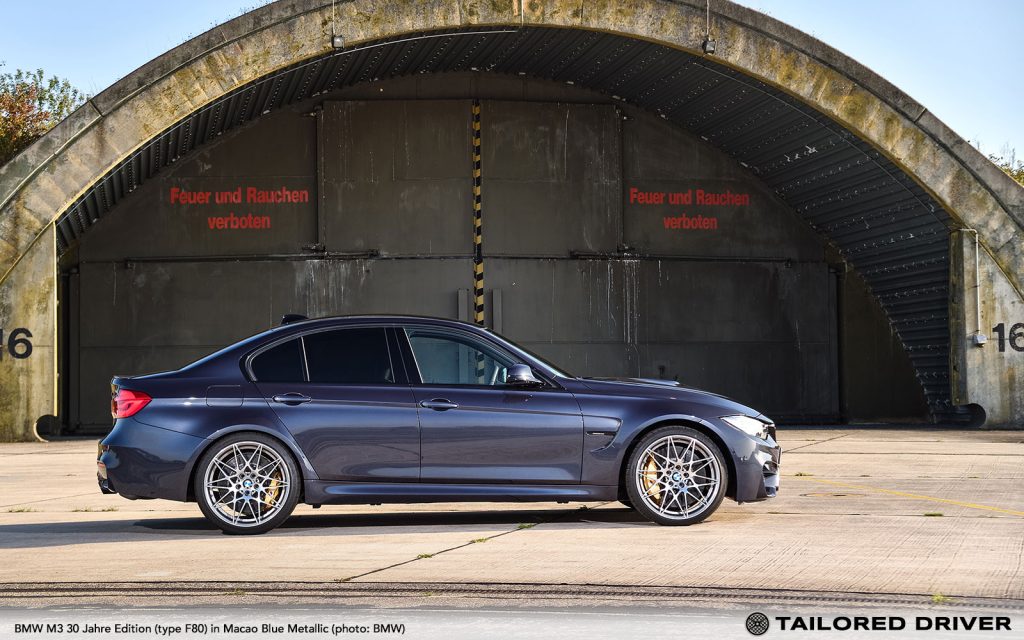
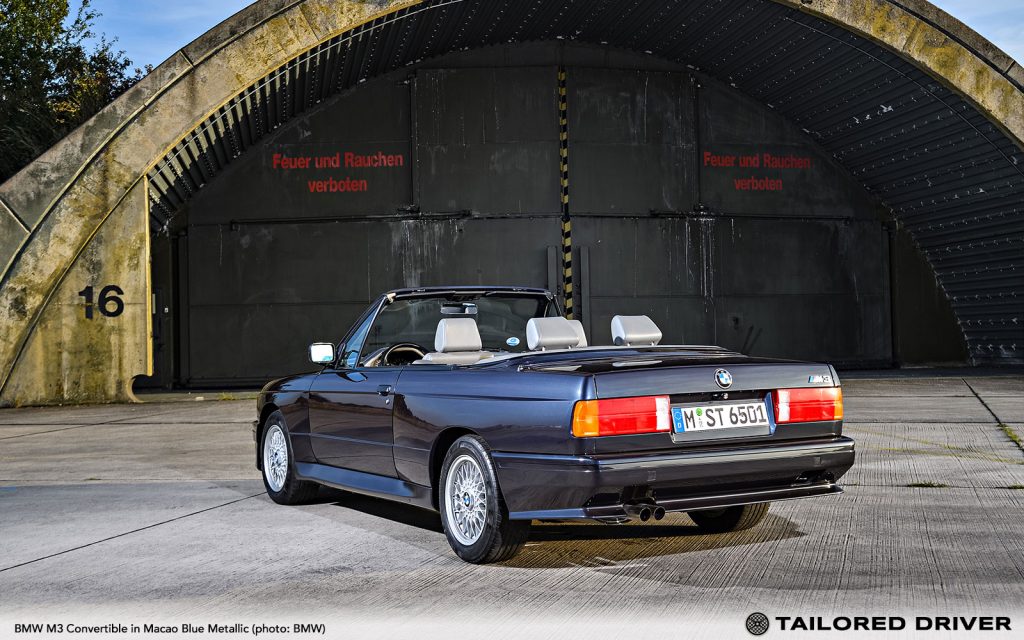
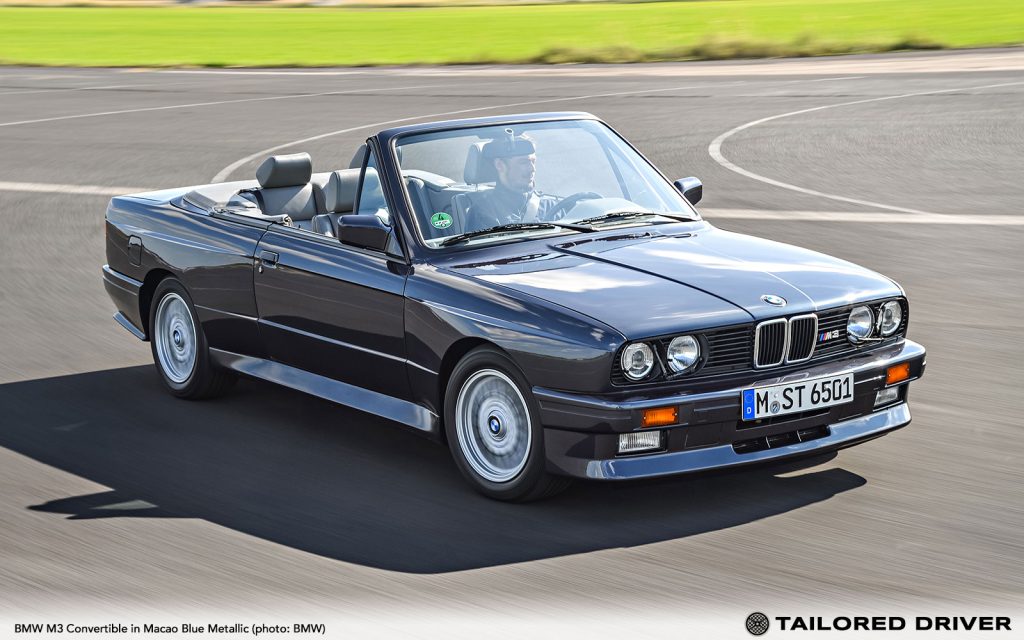
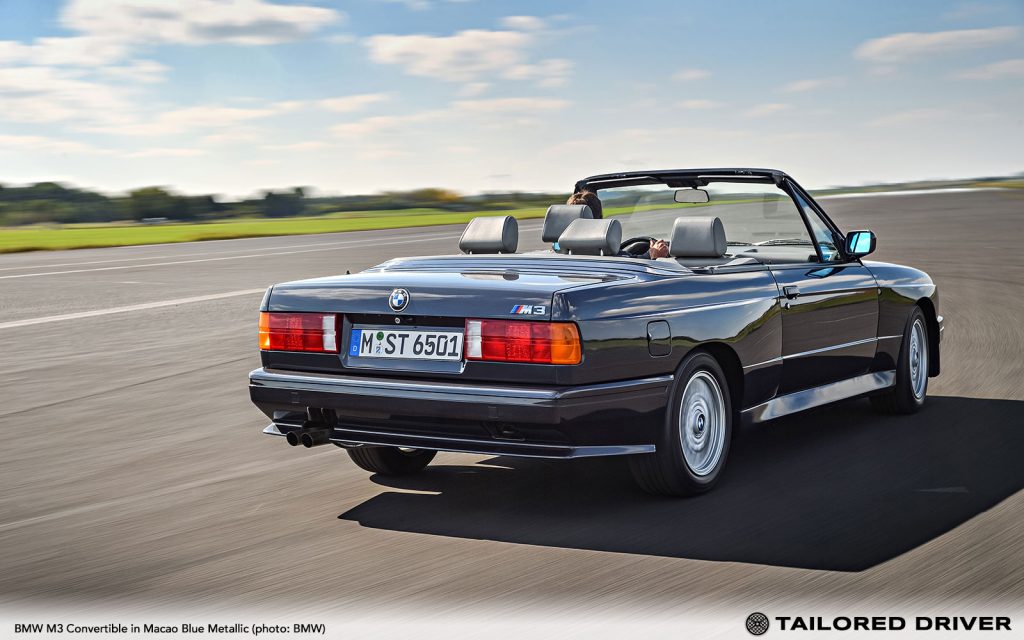
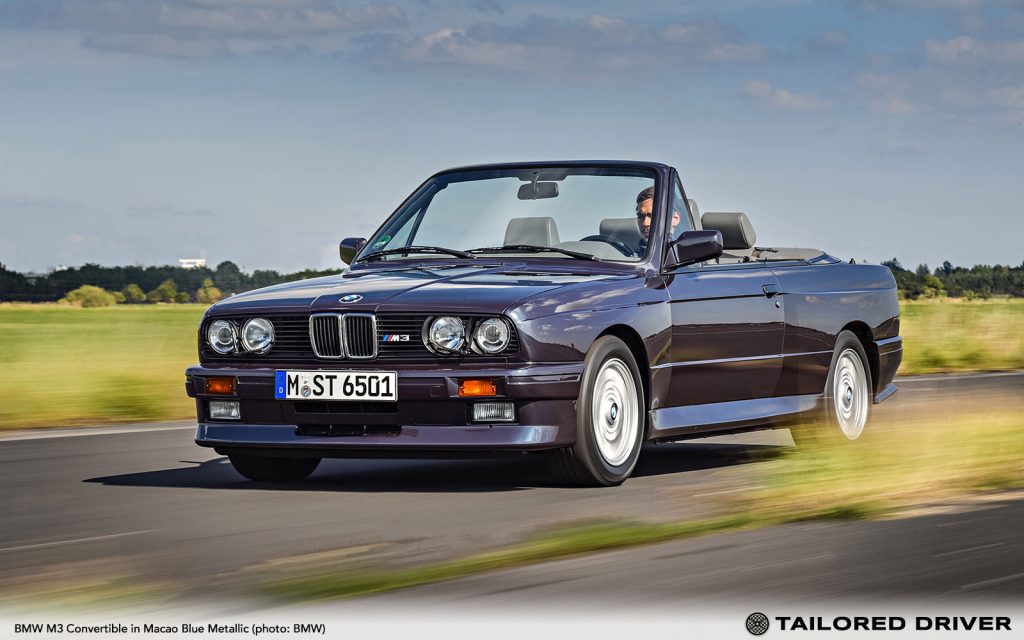
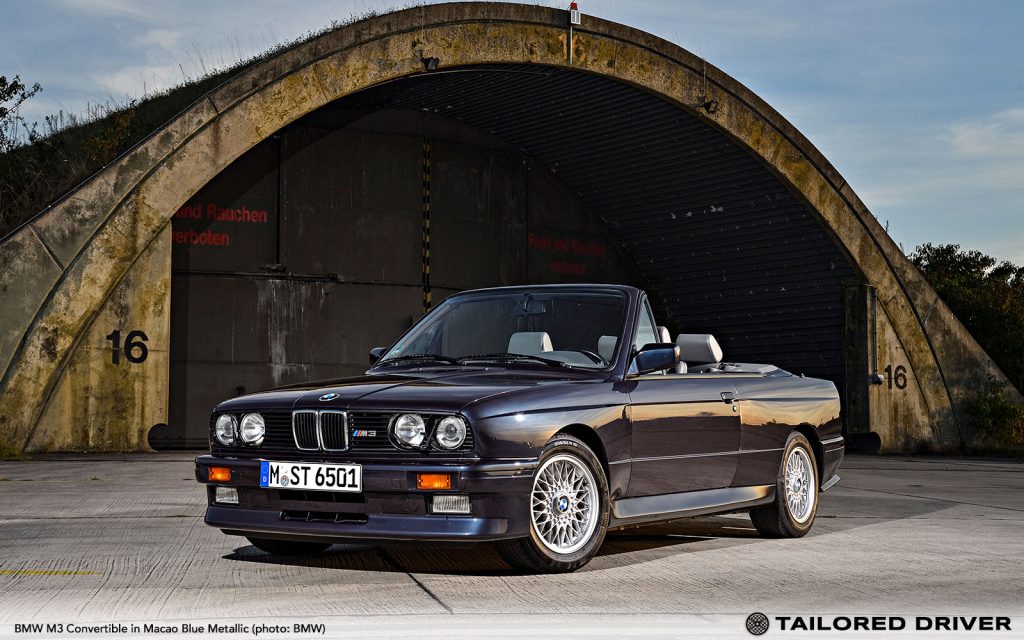
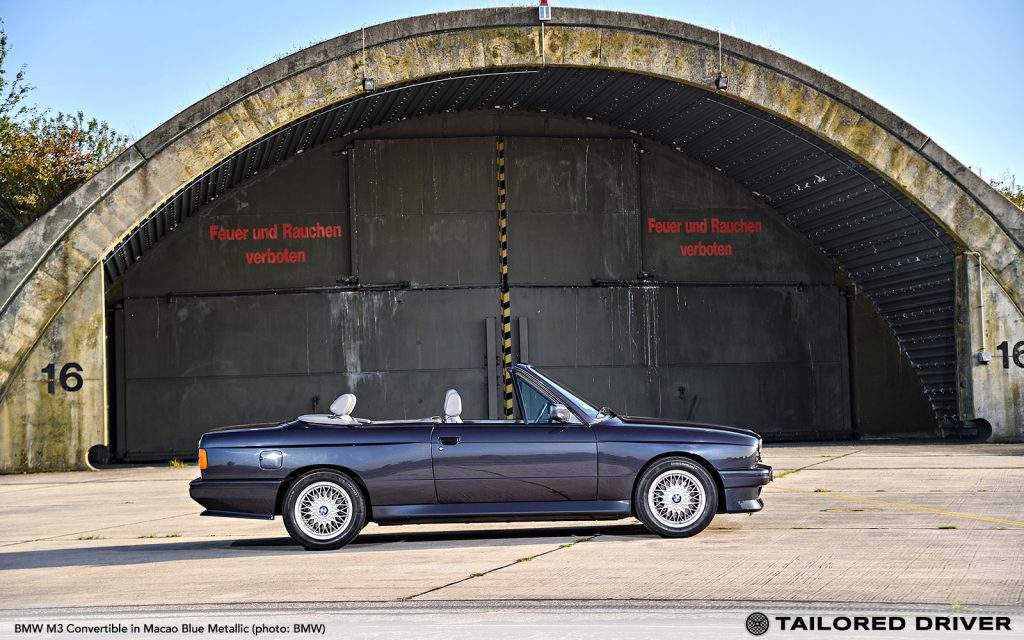
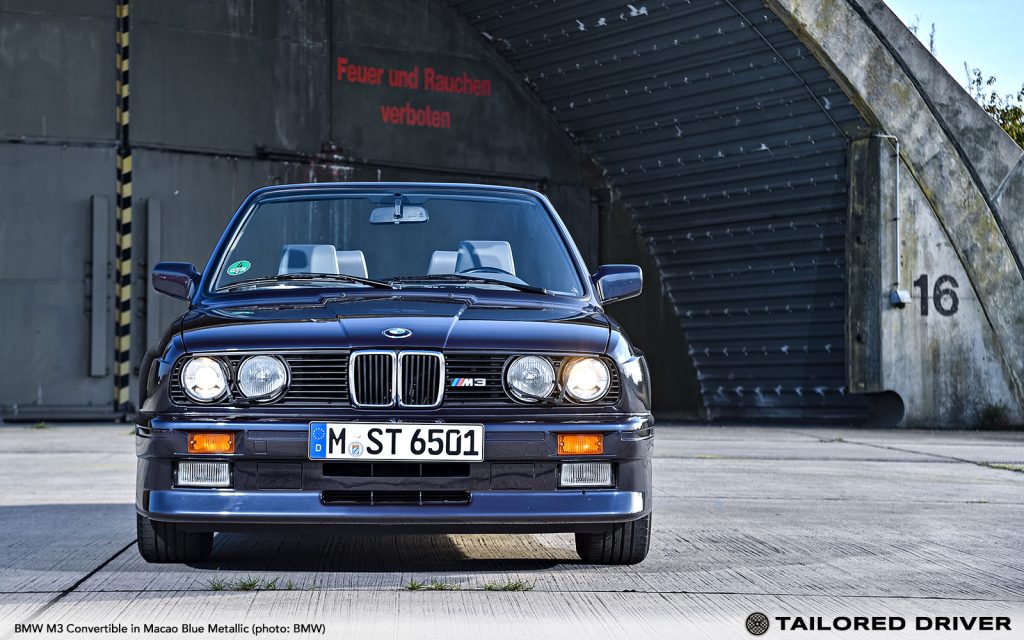
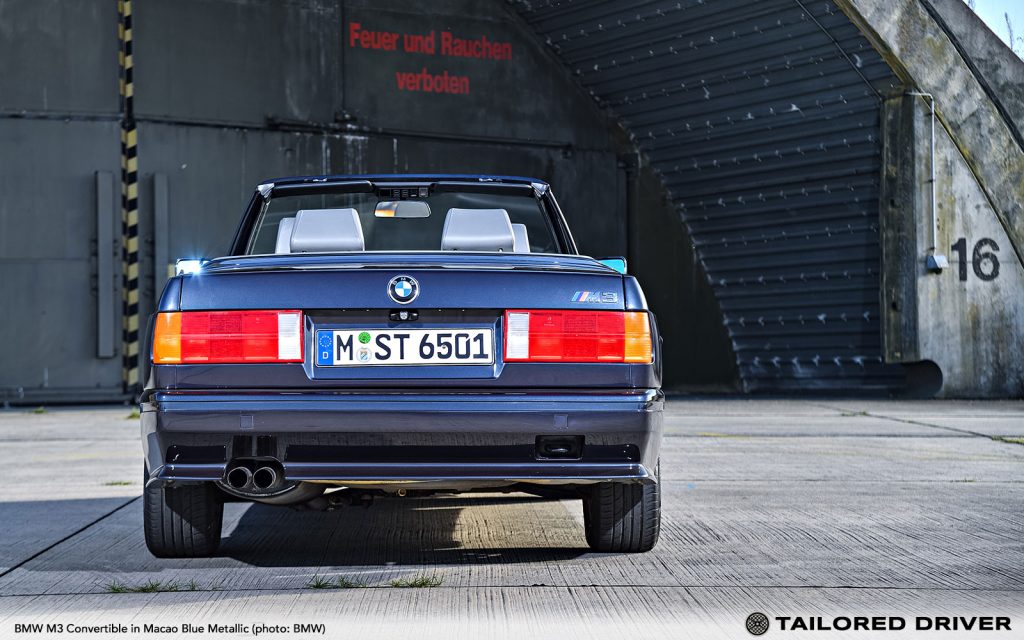
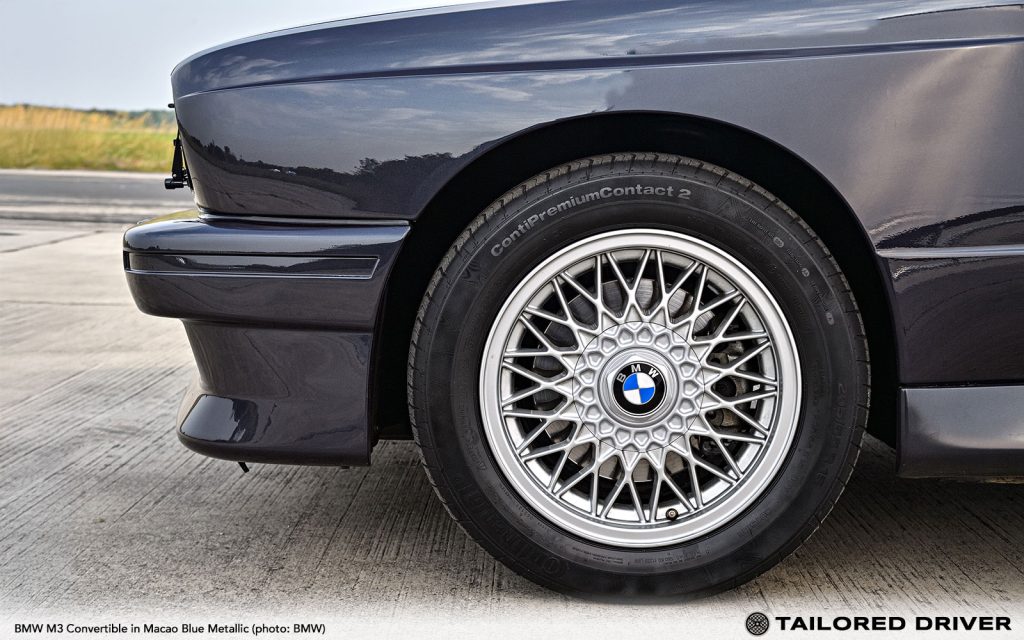
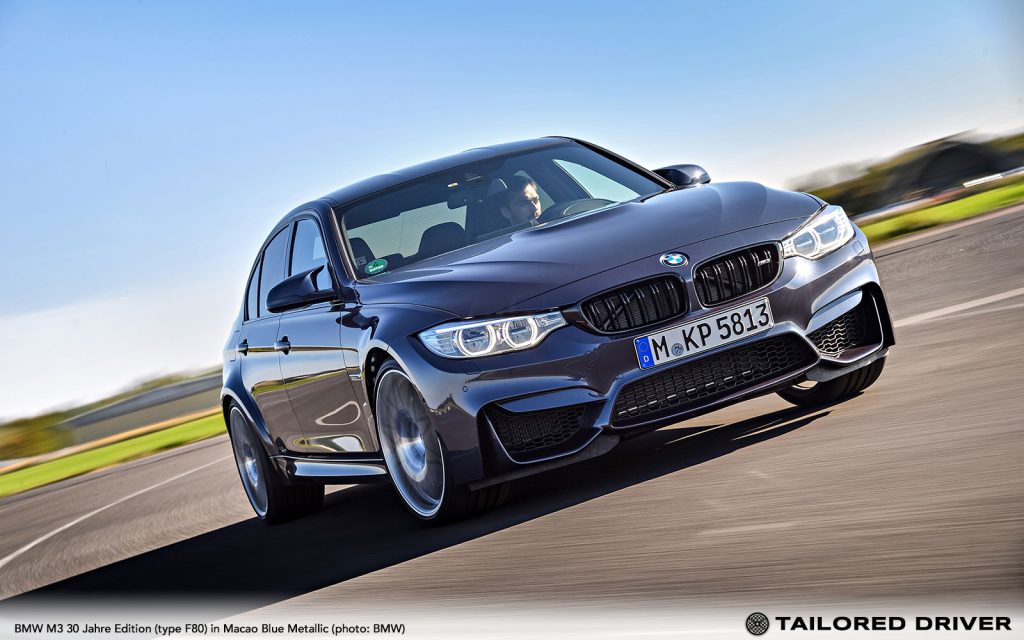
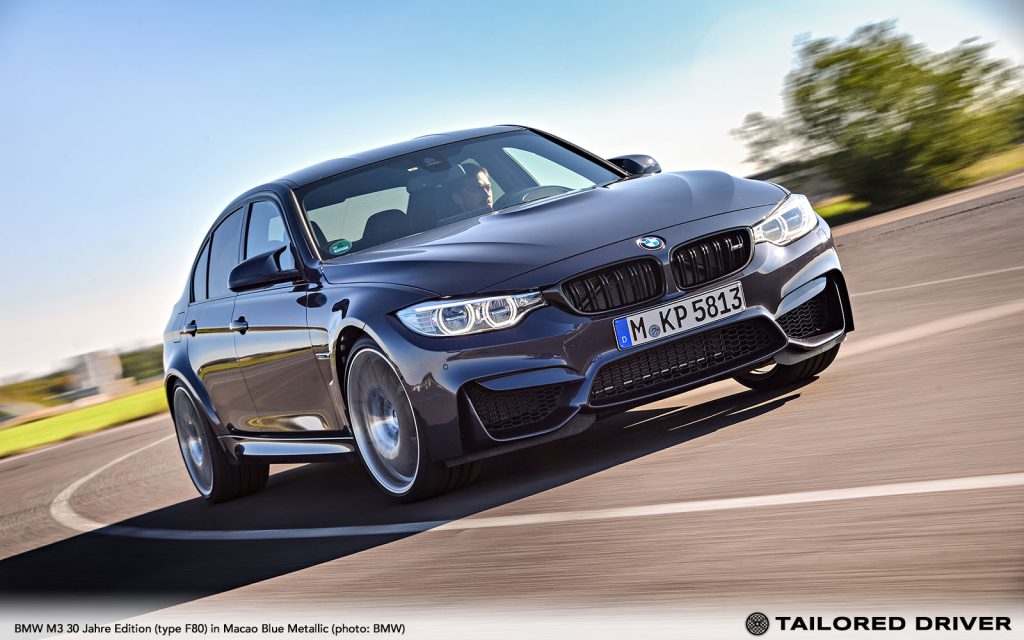
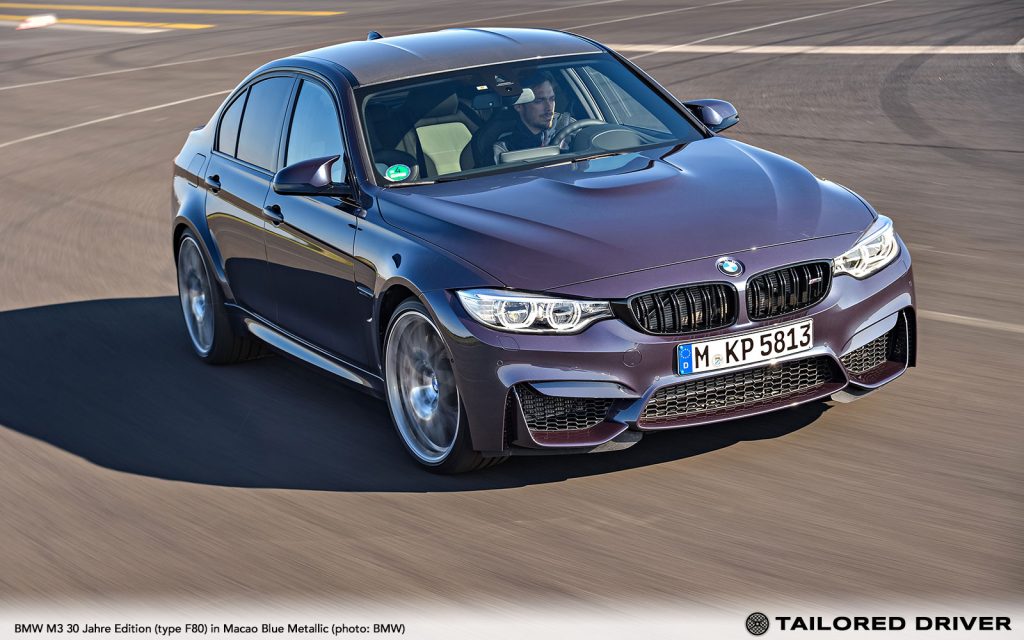
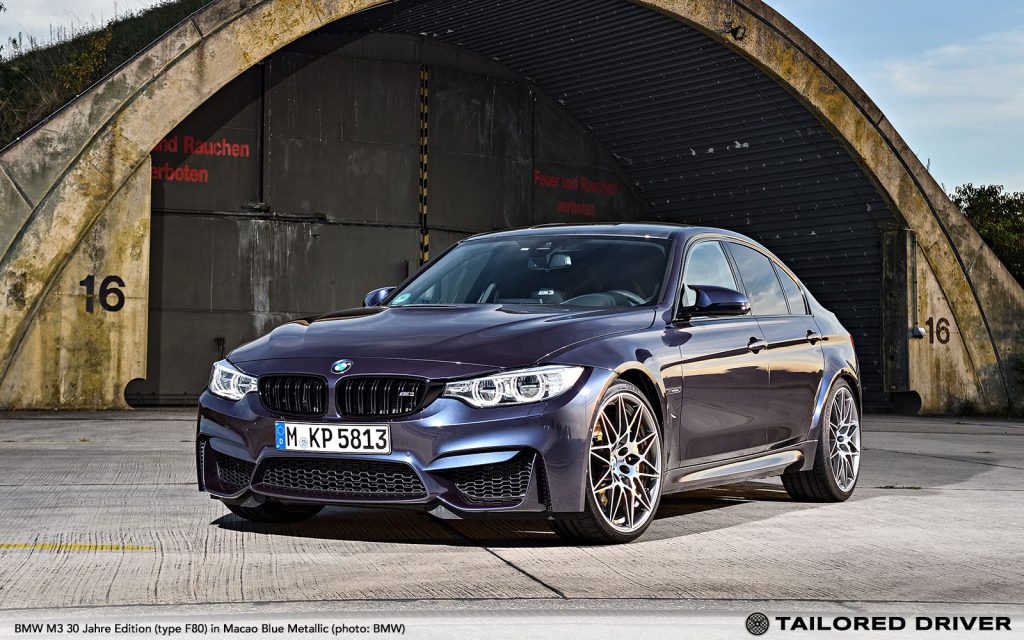
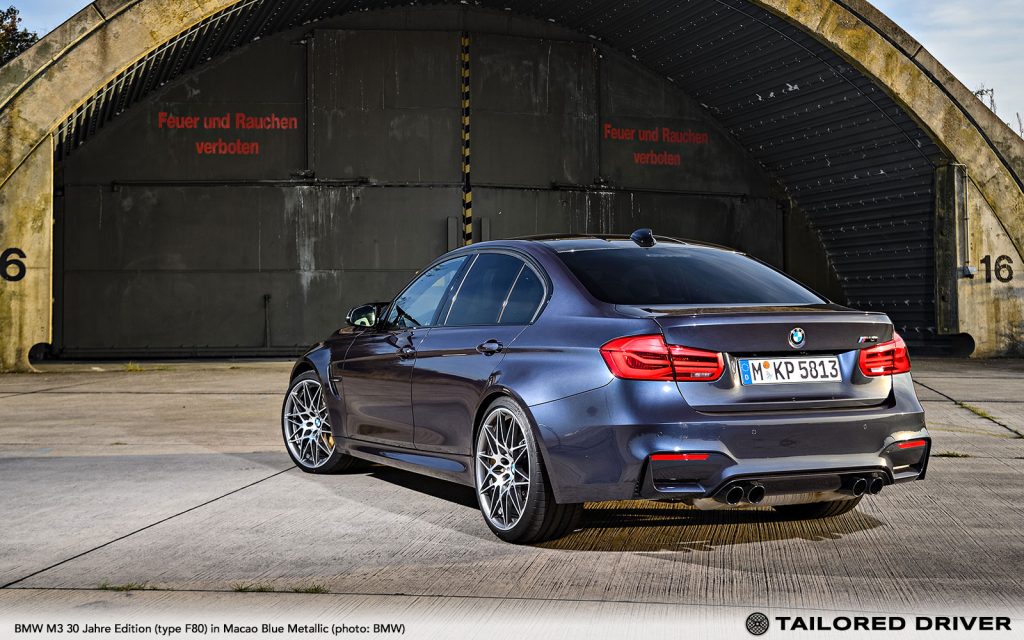
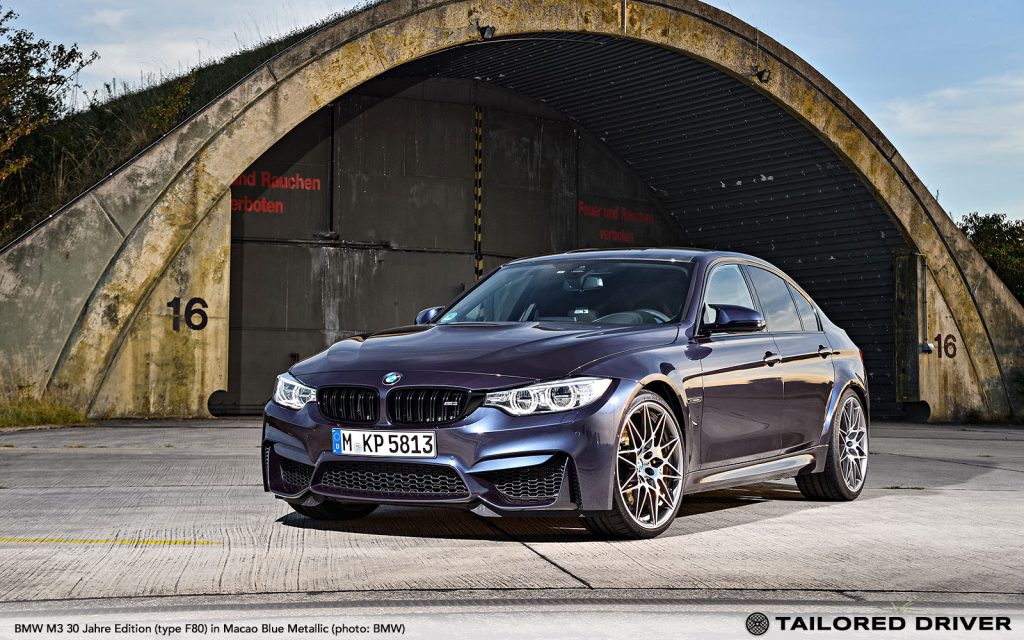
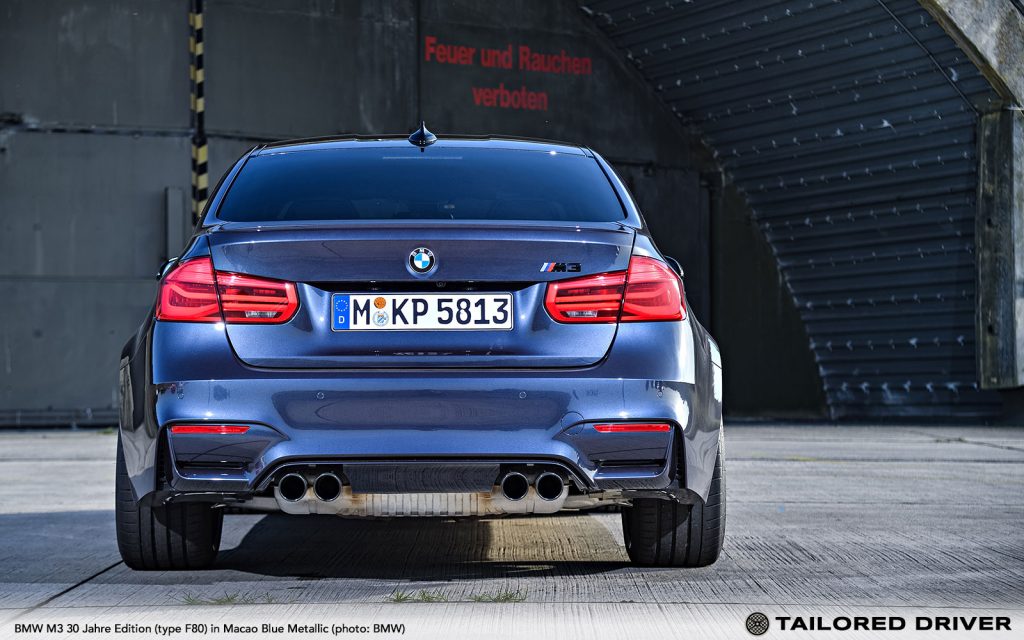
BMW Macao Blue Metallic is a color that’s only ever been standard on M cars. It debuted on the BMW M3 (type E30) in 1986, though didn’t carry over to more modern M-cars until 2016 when it resurfaced as the spec color for the BMW M3 30 Jahre (type F80).
Macao Blue Metallic is a darker blue, sitting more on the purple side of the blue spectrum. Most often, it appears as blue, though purple undertones seem to pop under certain lighting.
Given its history with BMW’s M division, Macao Blue is a subtle choice that can be had from BMW Individual, harkening an if-you-know-you-know appreciative nod from other BMW aficionados while largely going unnoticed to average members of the populace.
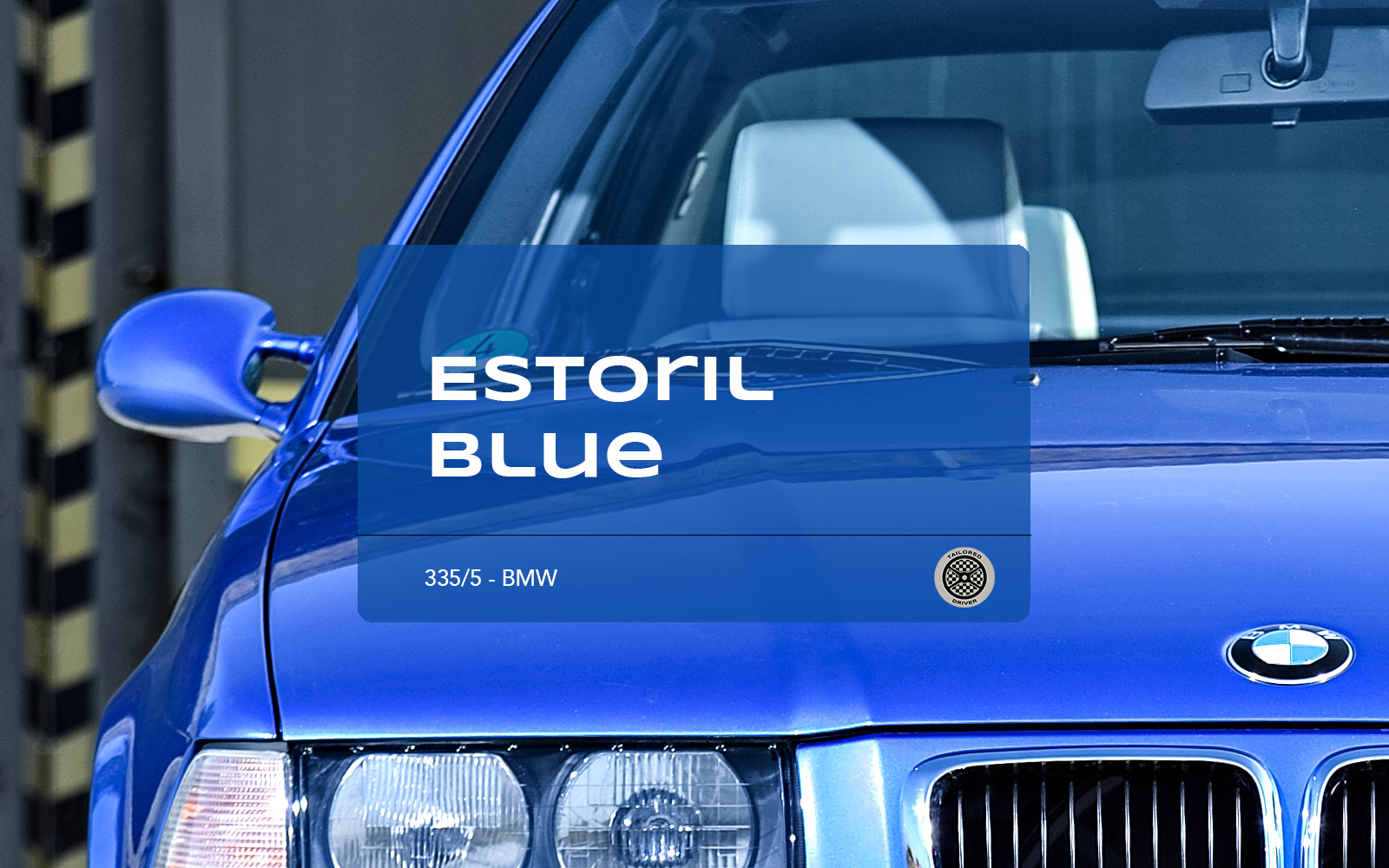
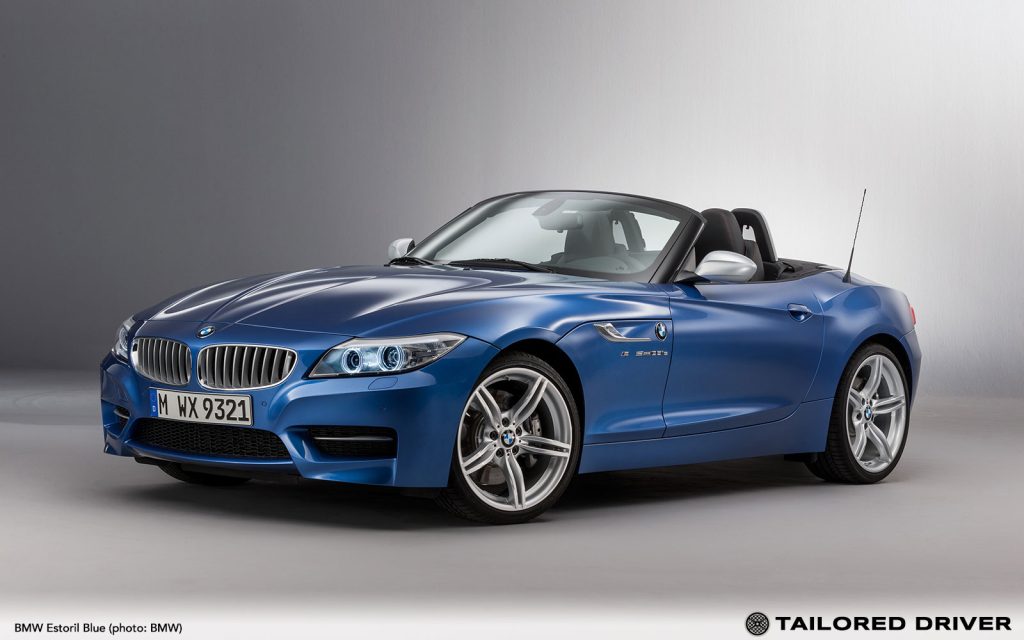
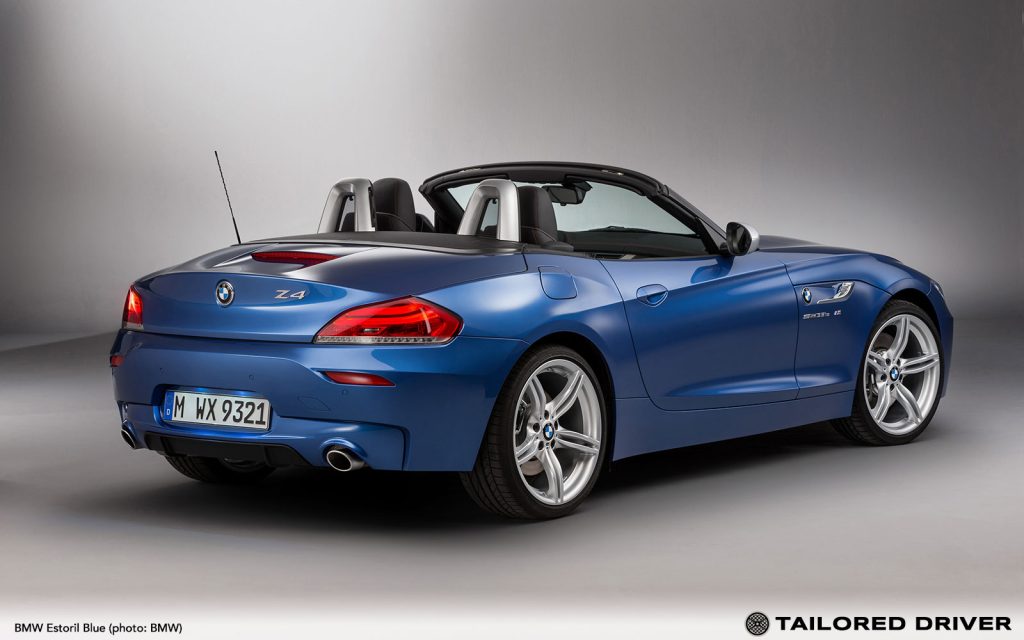
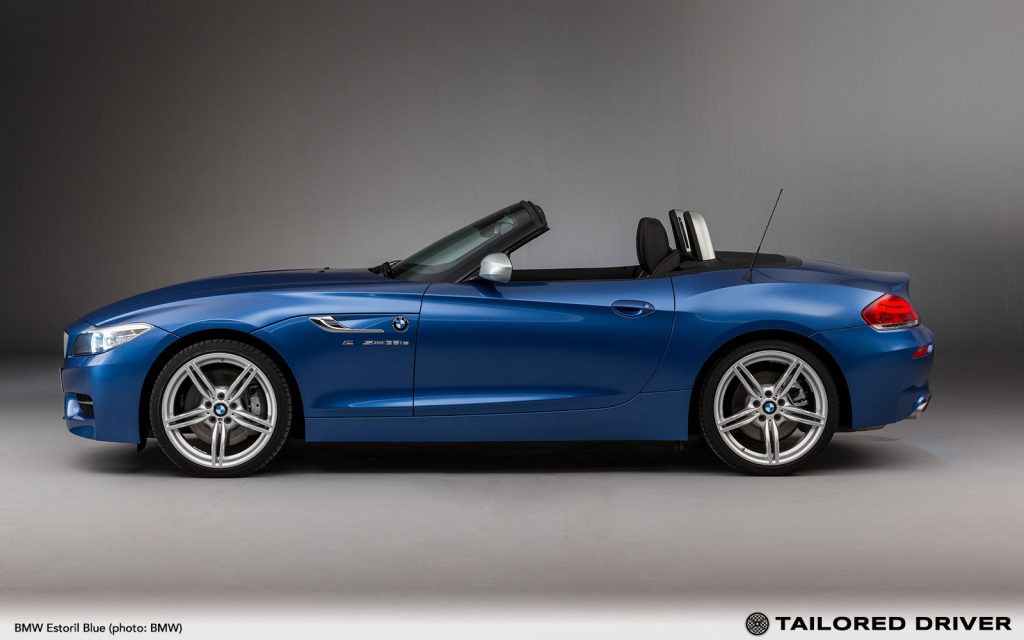
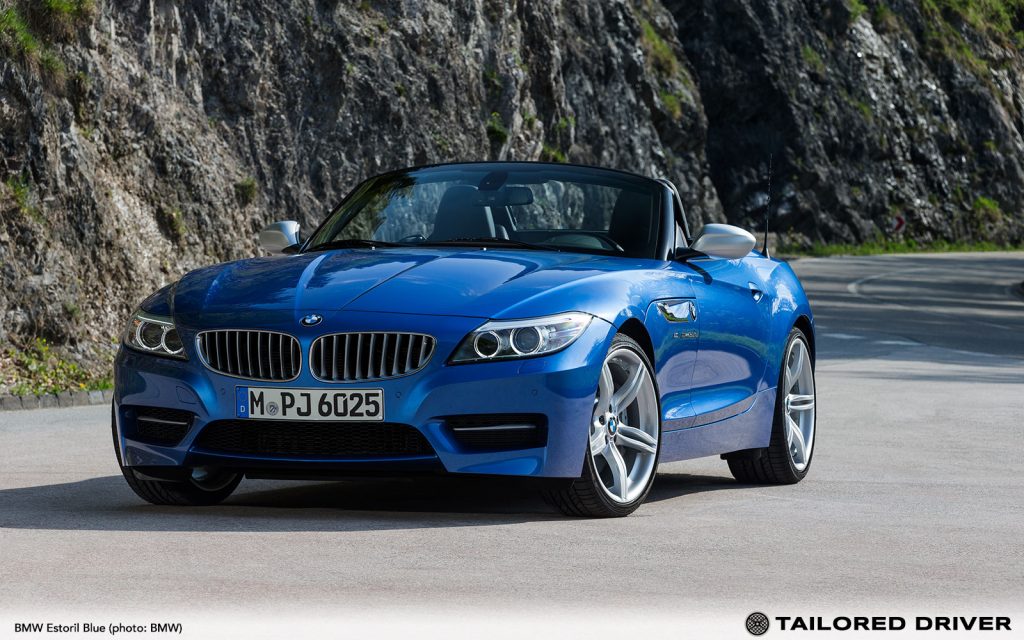
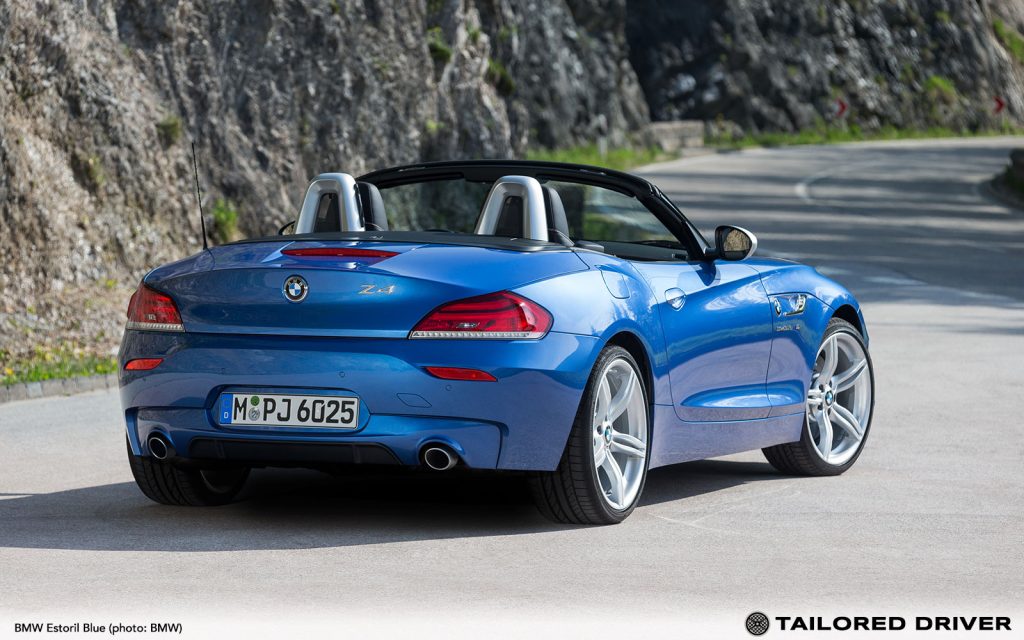
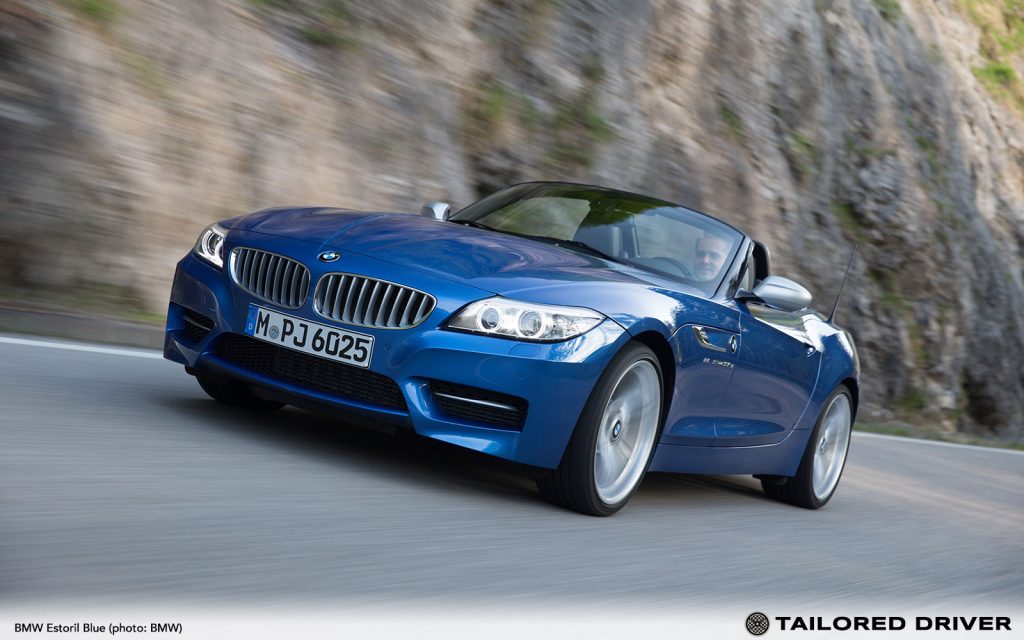
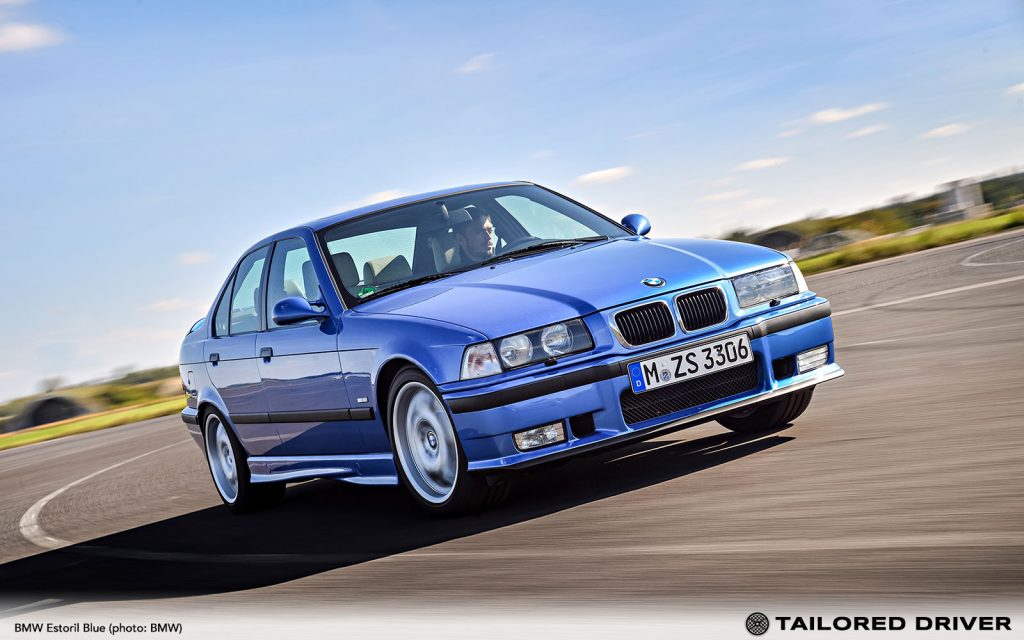
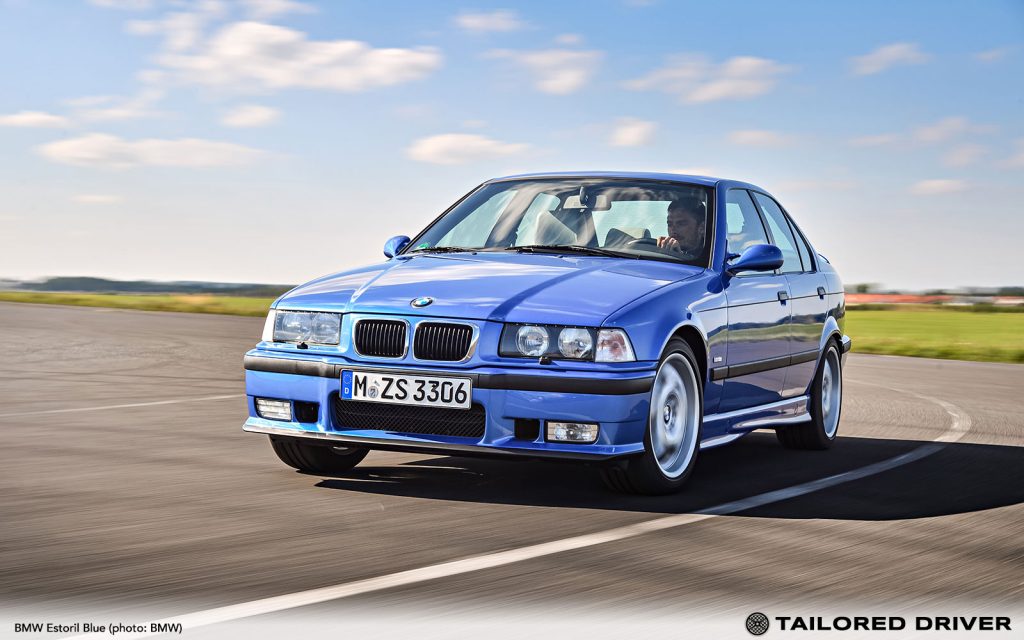
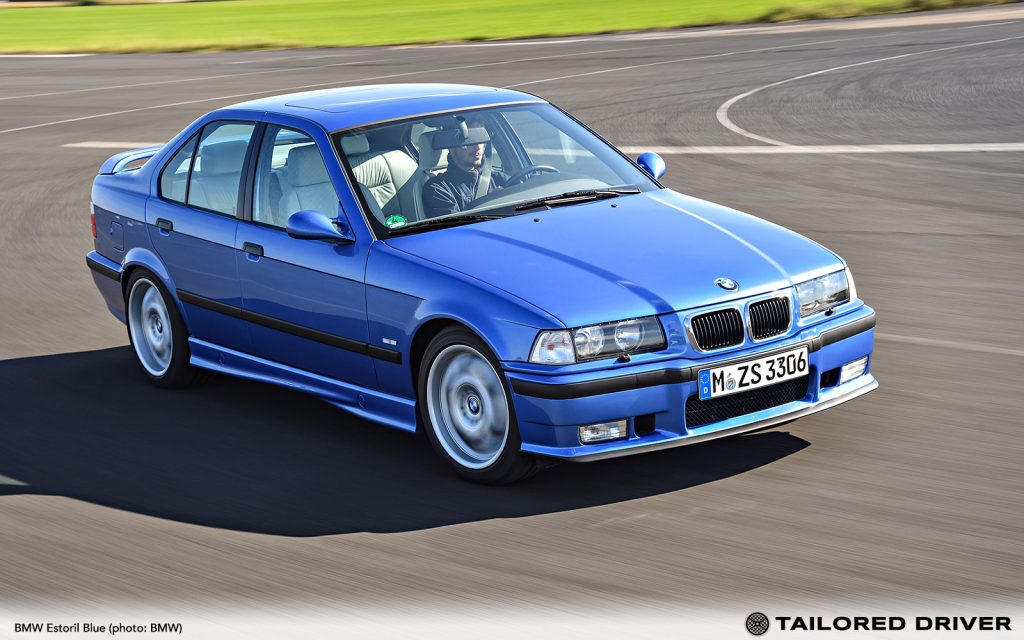
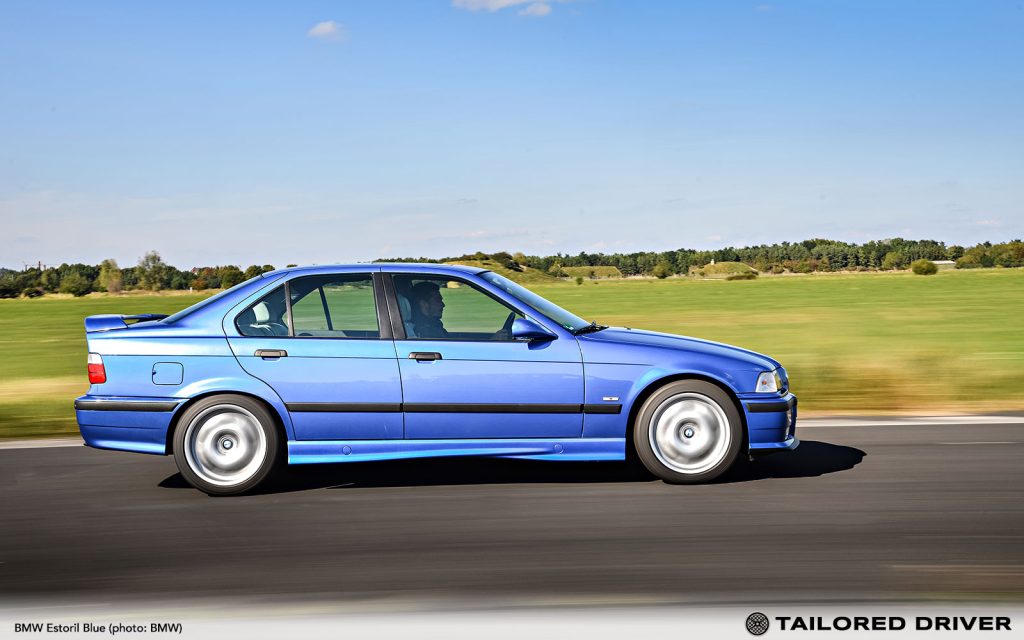
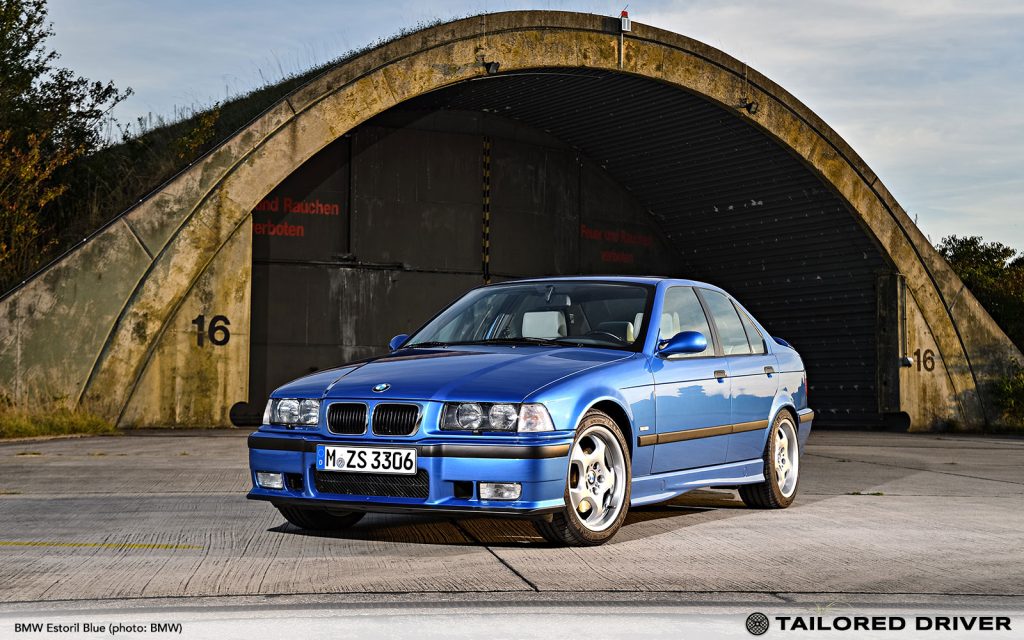
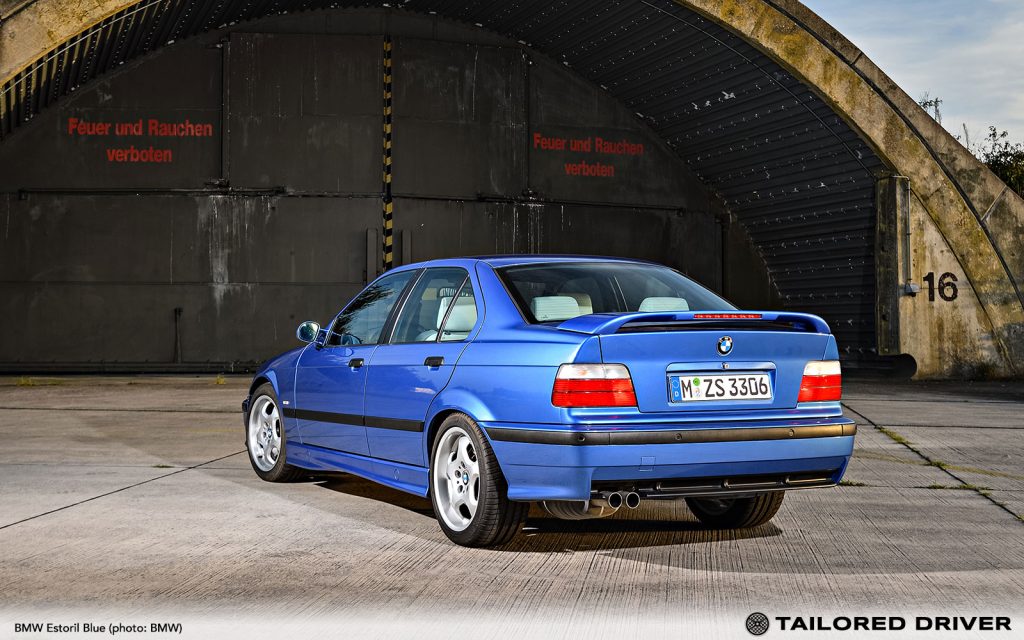
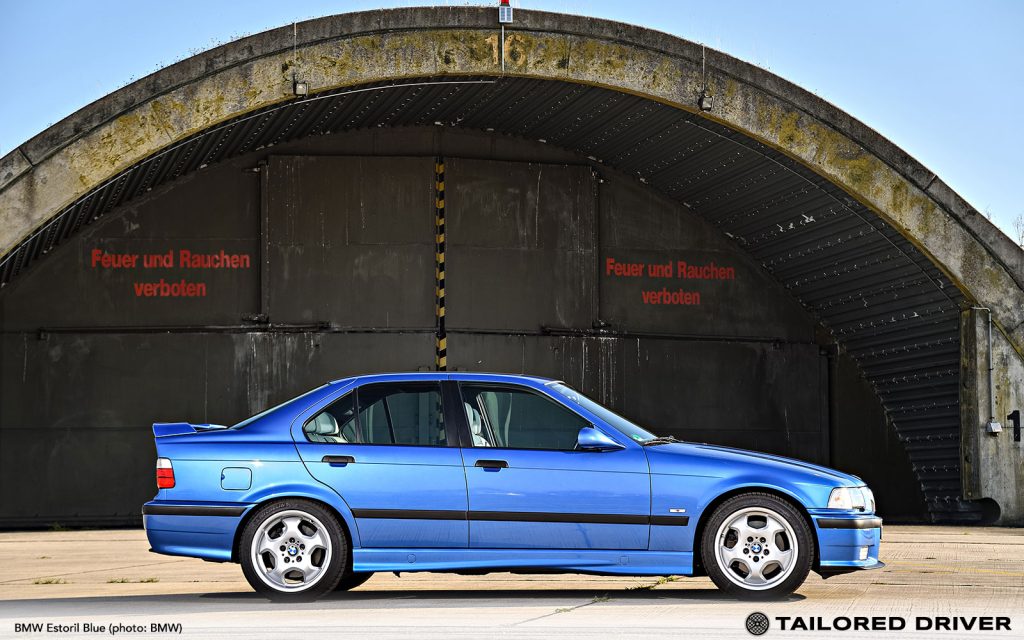
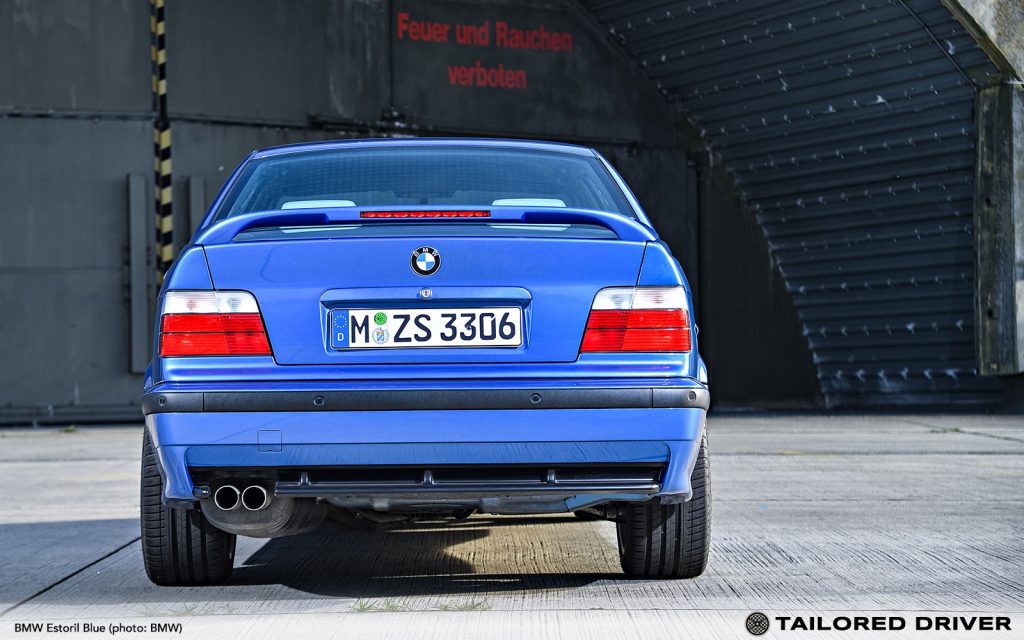
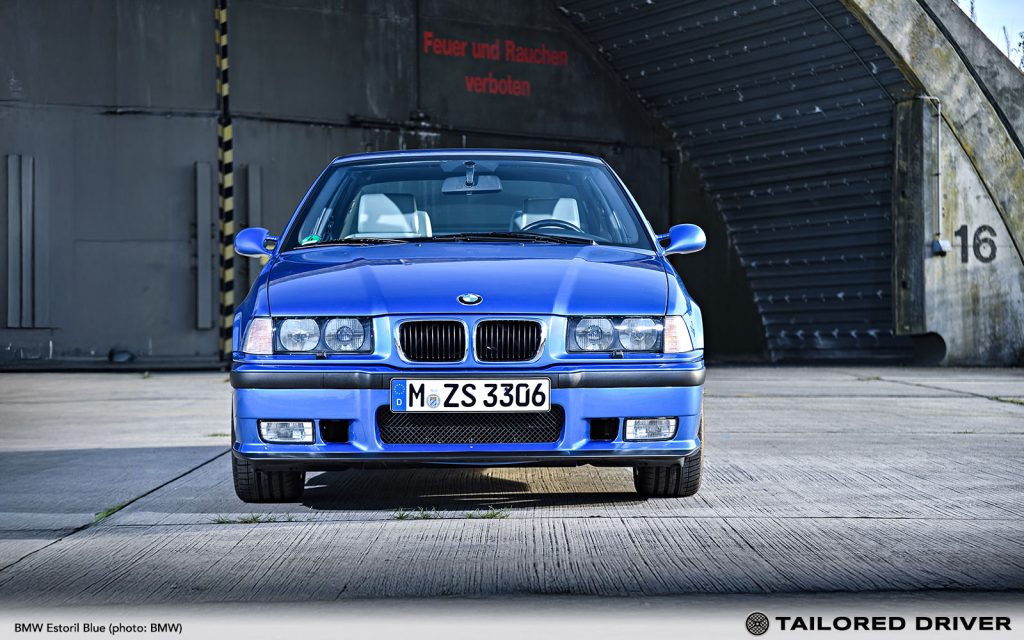
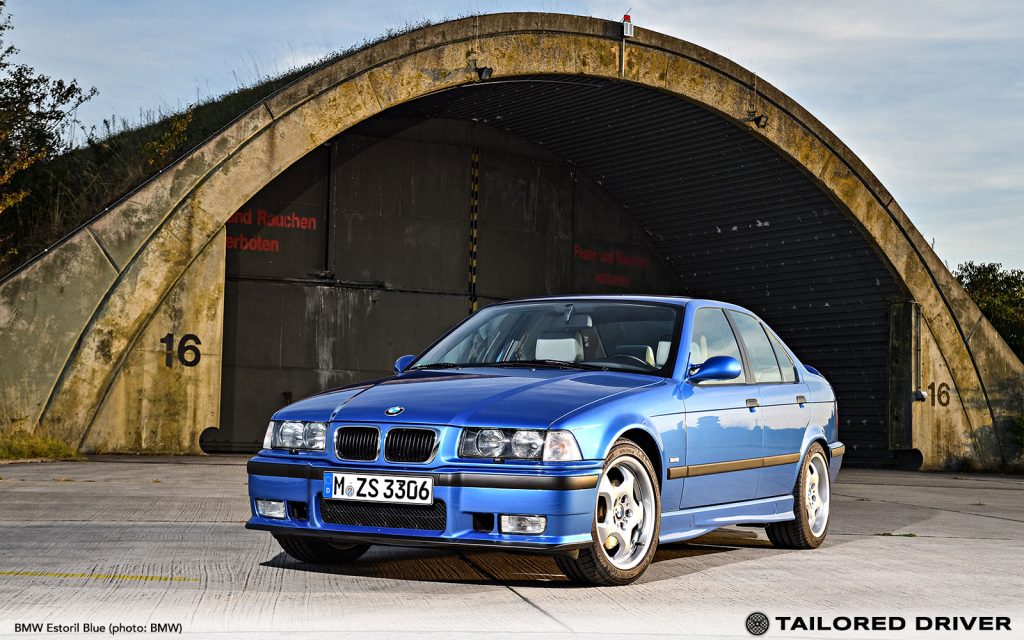
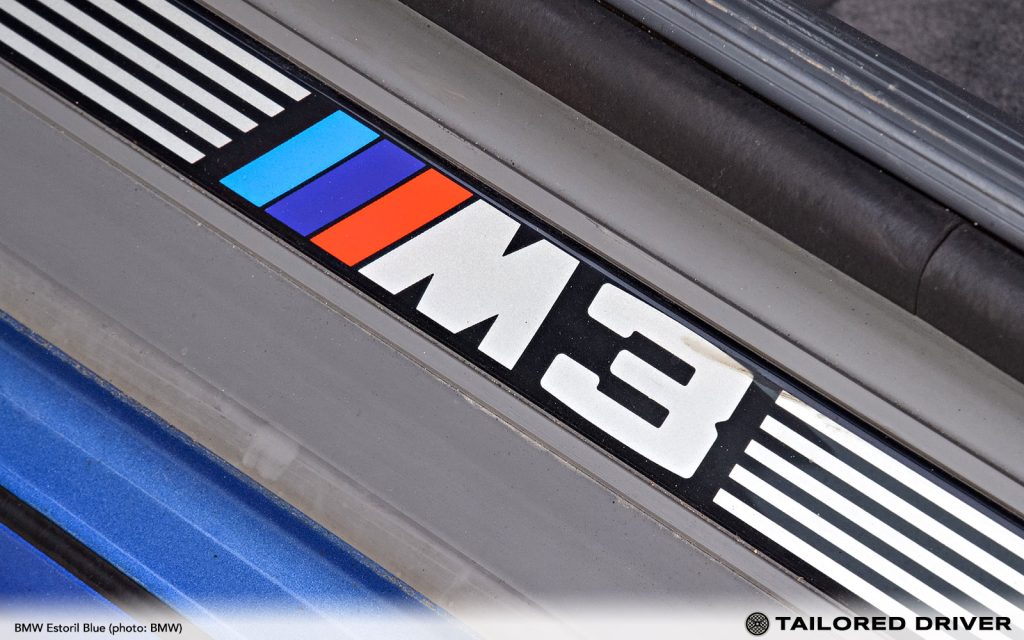
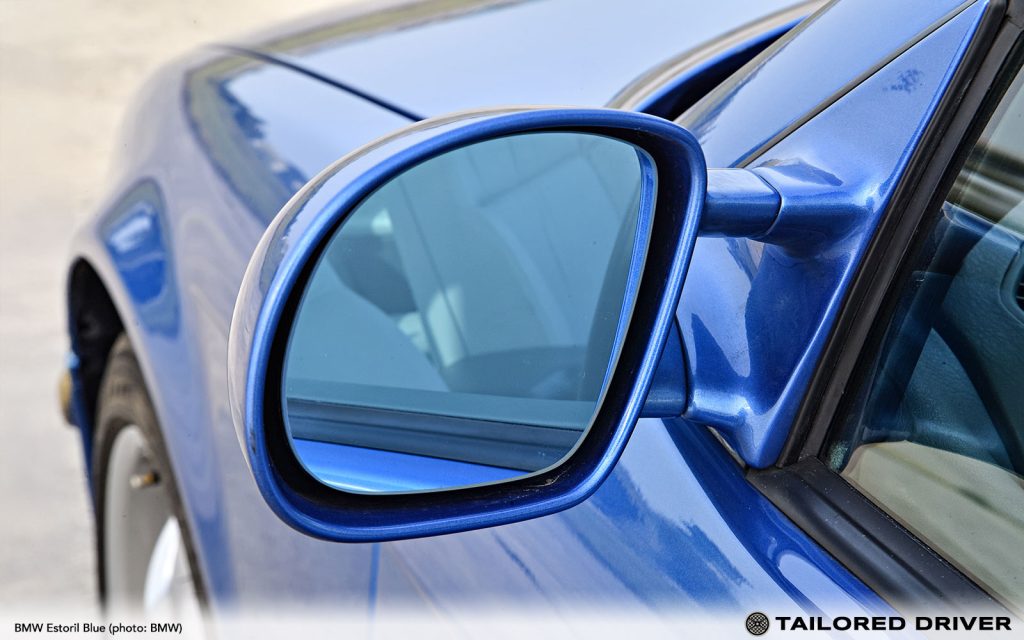
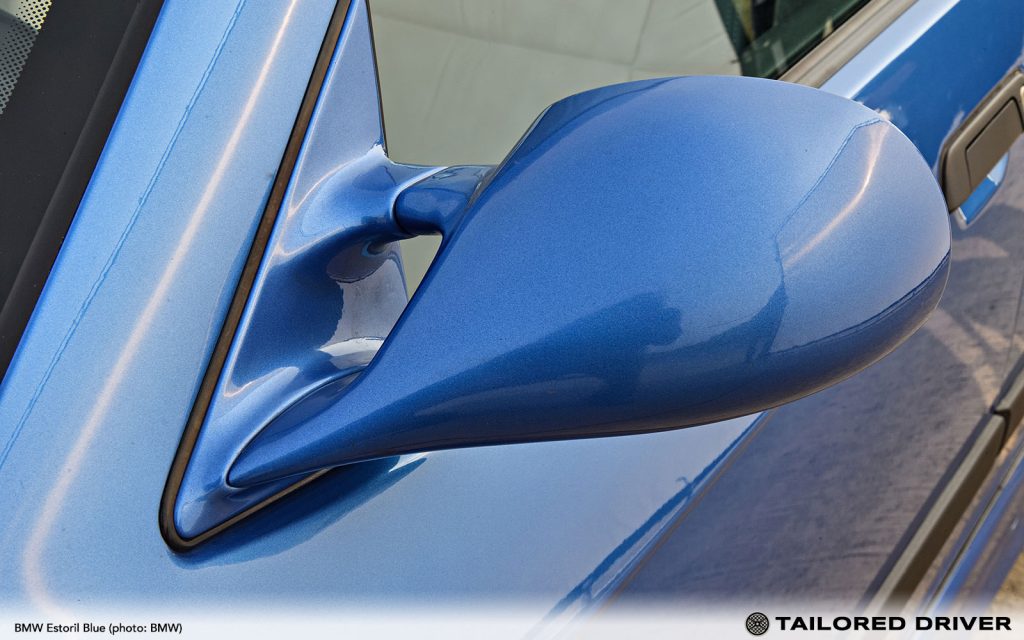
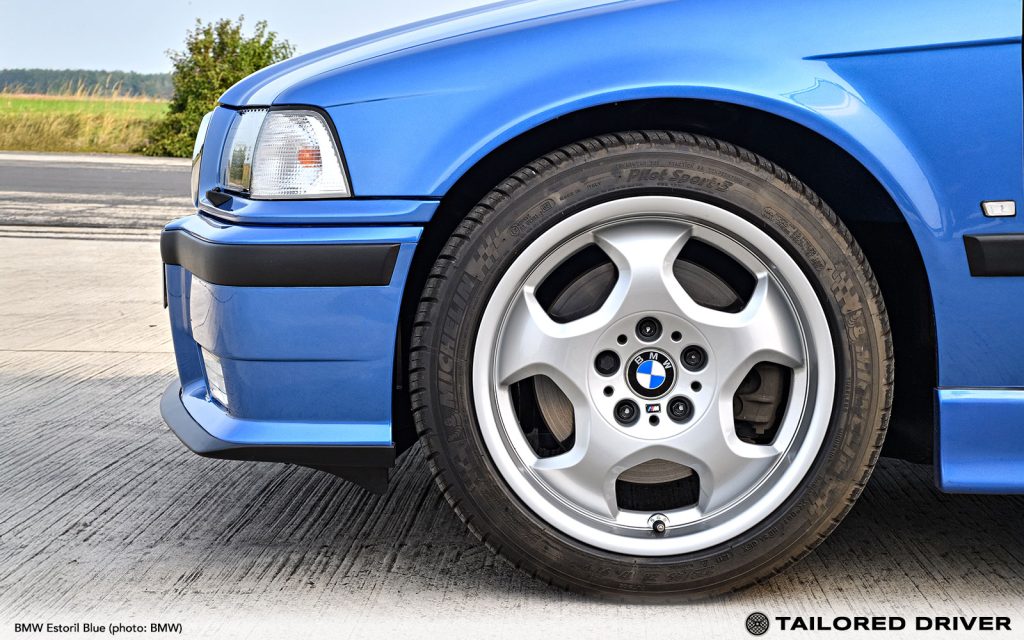
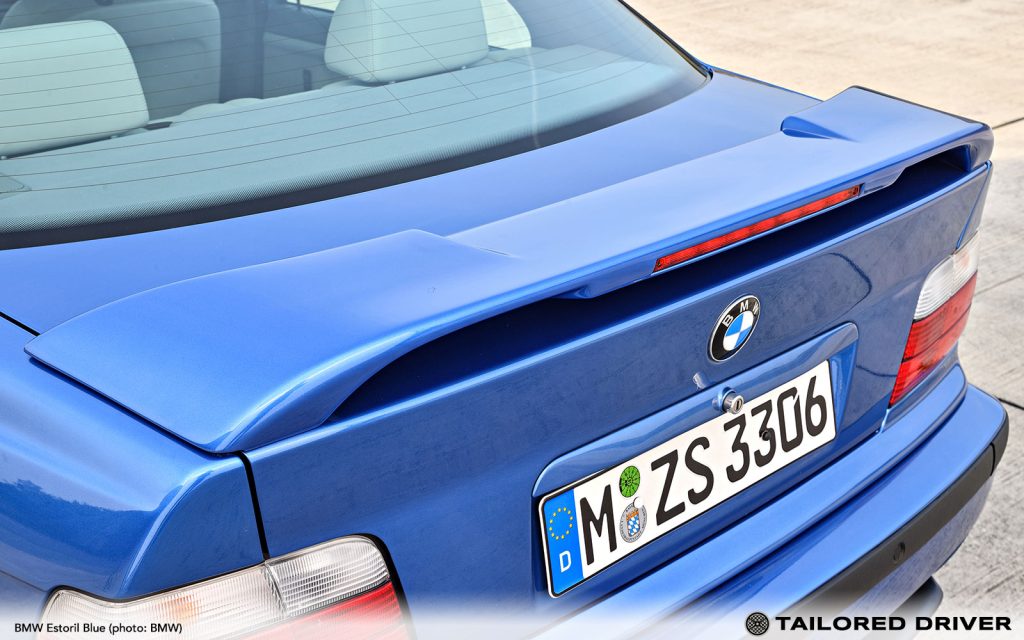
Introduced in 1992 on the E36 M3, Estoril Blue (estorilblau; metallic; 335; BMW) has become one of the more memorable rad-era colors to come from BMW M. BMW shares that the color was inspired by the blues of Portugal where the Estoril racing circuit calls home. Whether it’s the cool blue surf of the Atlantic Ocean off the Portuguese coast or the almost always-clear skies overhead, the reference to Estoril definitely sticks. That BMW Motorsport in both two and four-wheeled forms has plenty of history with the Portuguese track doesn’t hurt either.
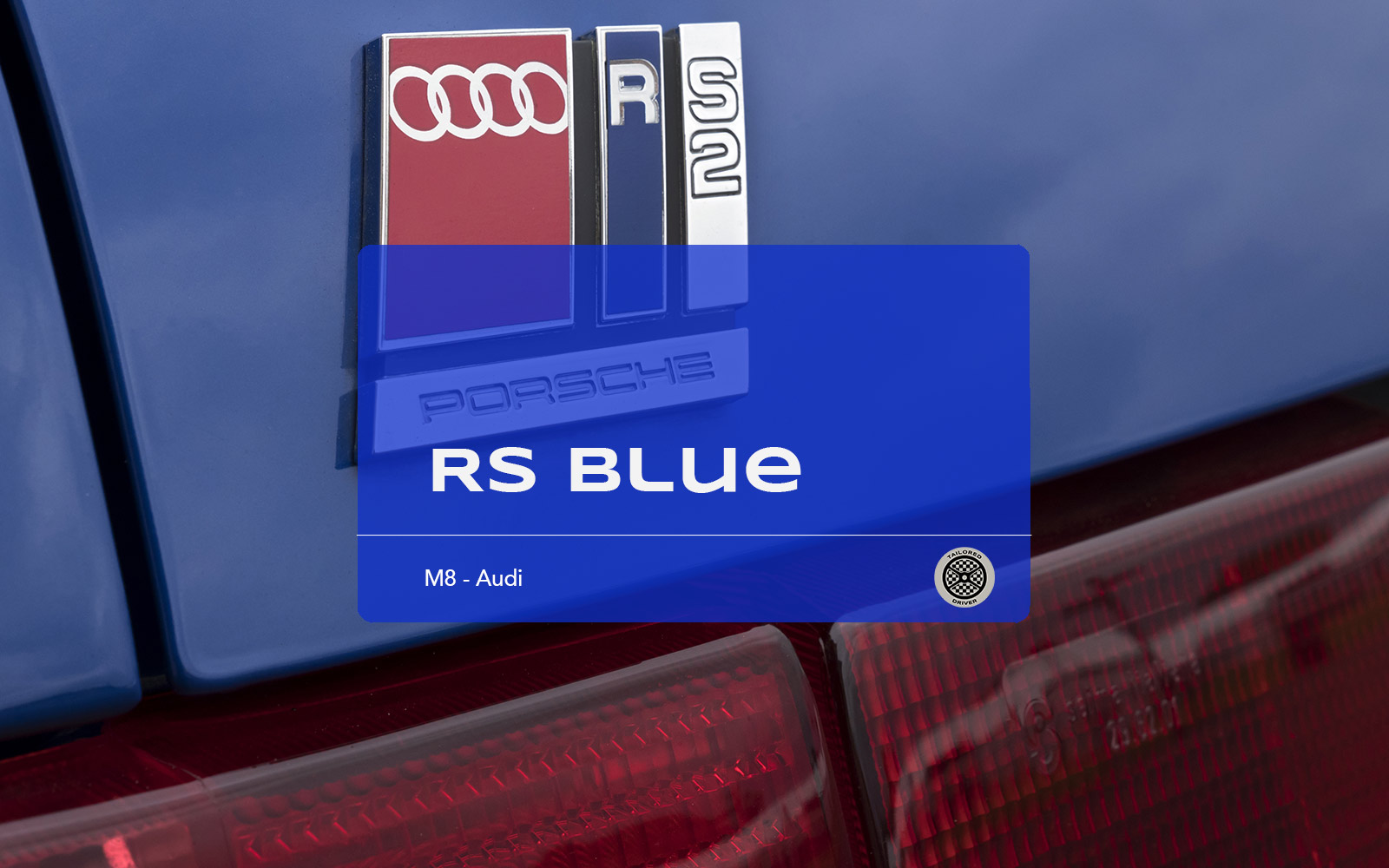
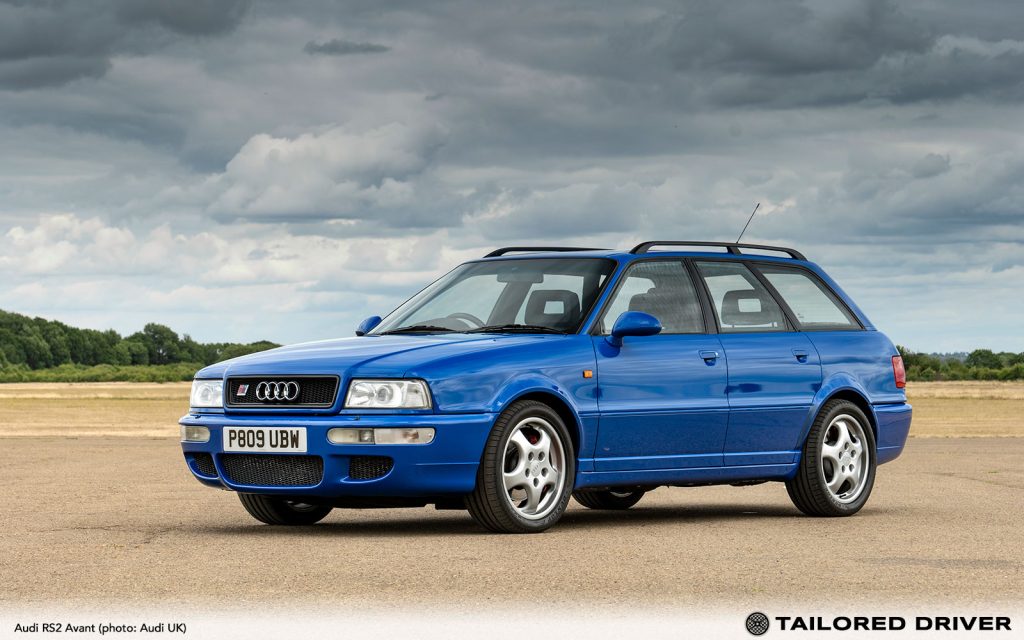
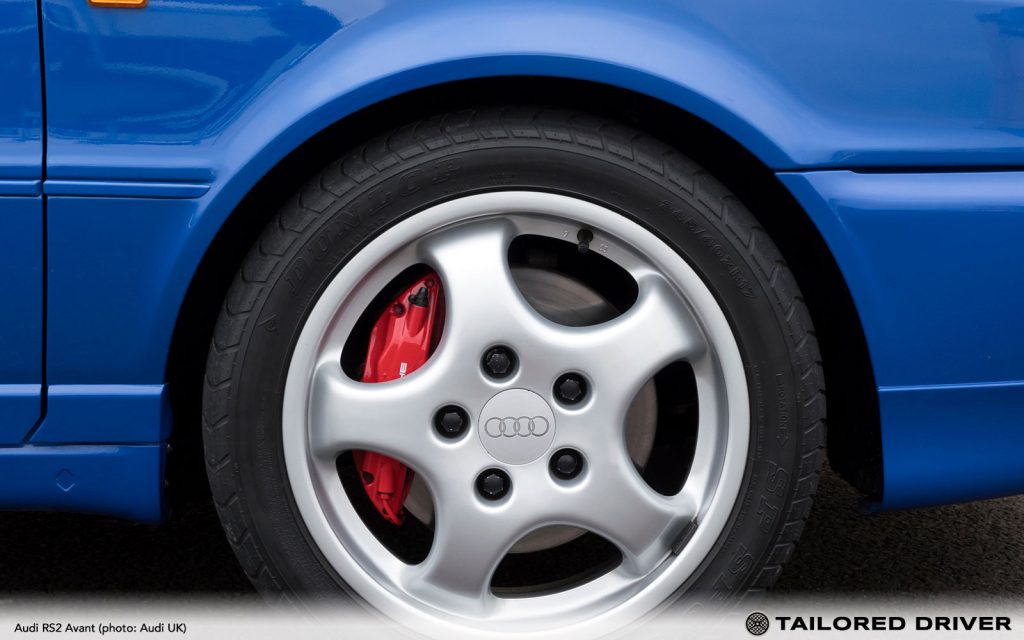
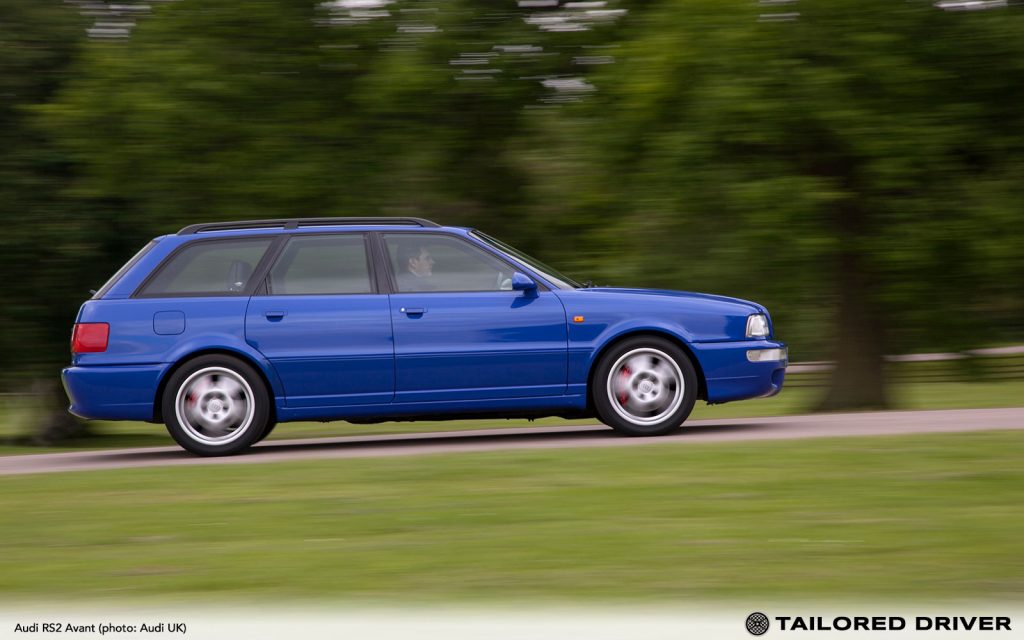
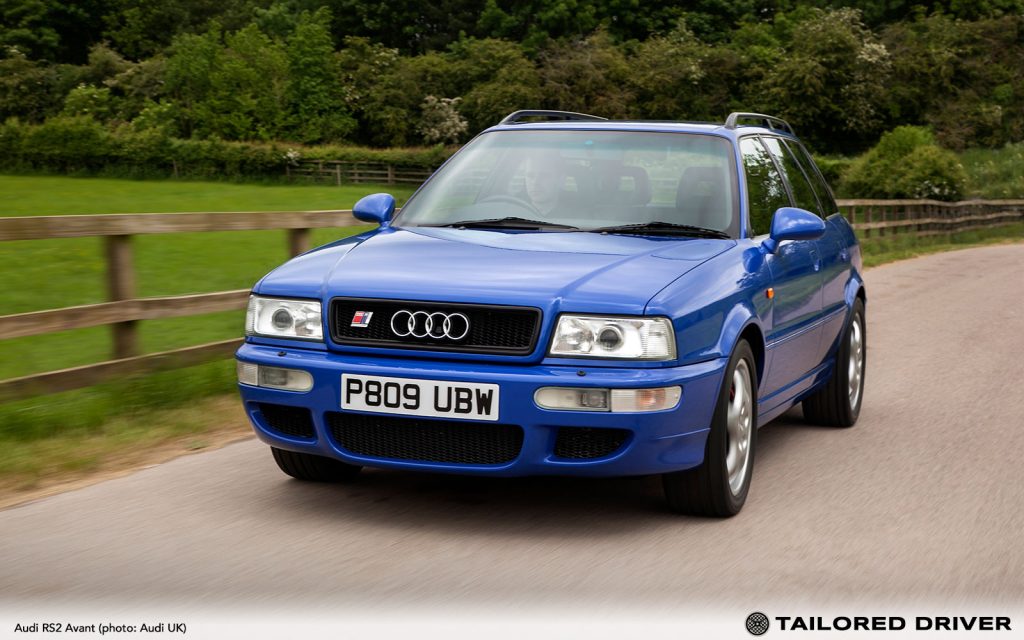
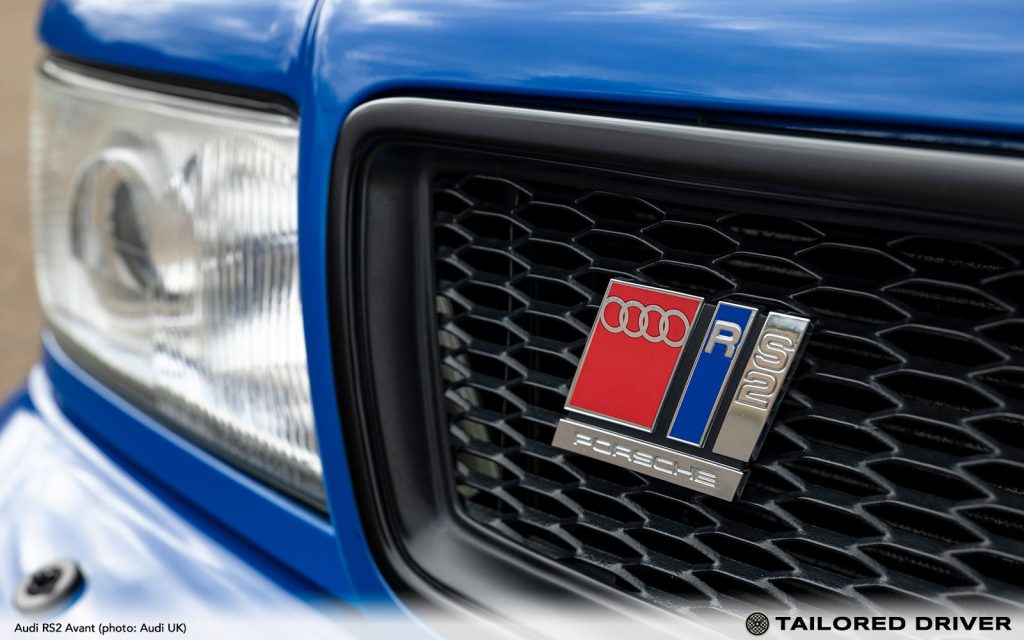
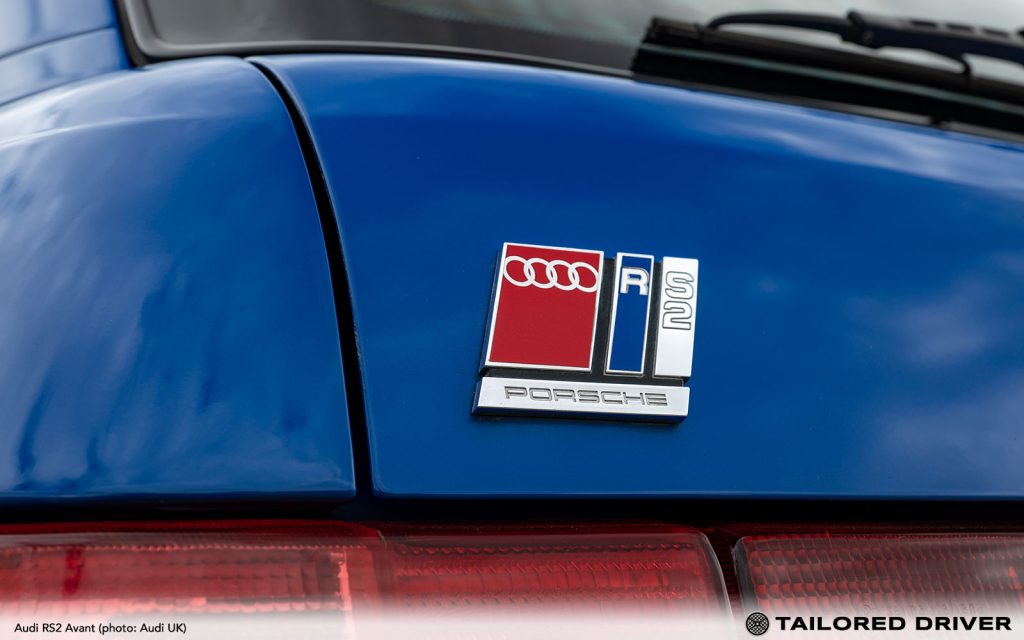
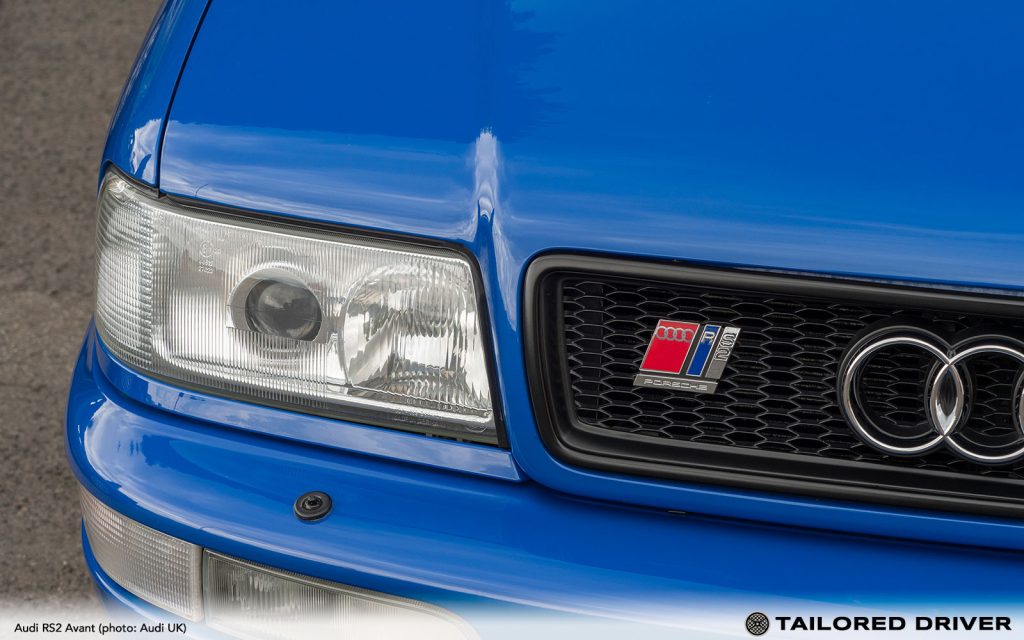
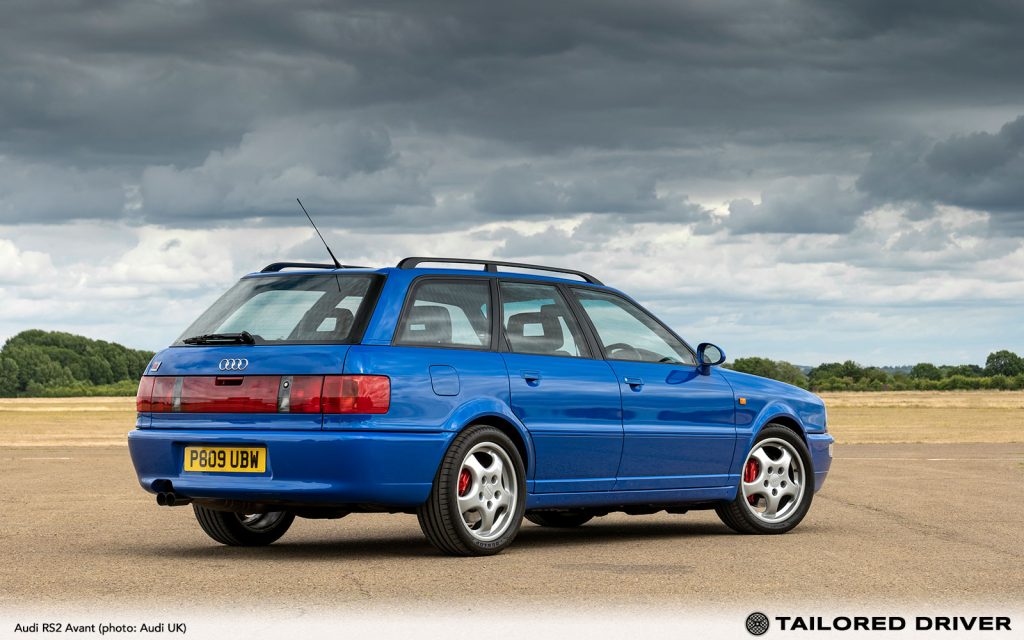
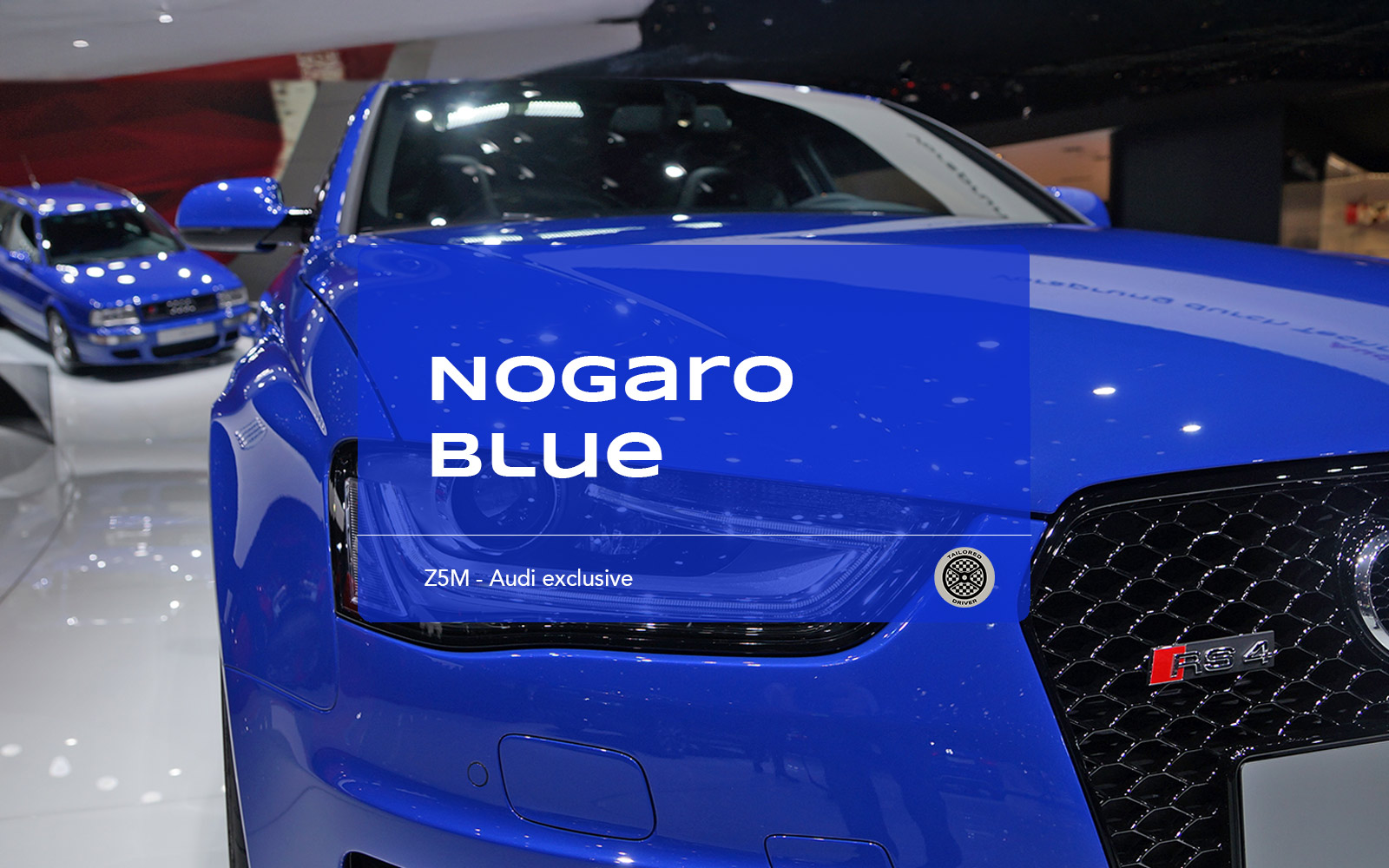
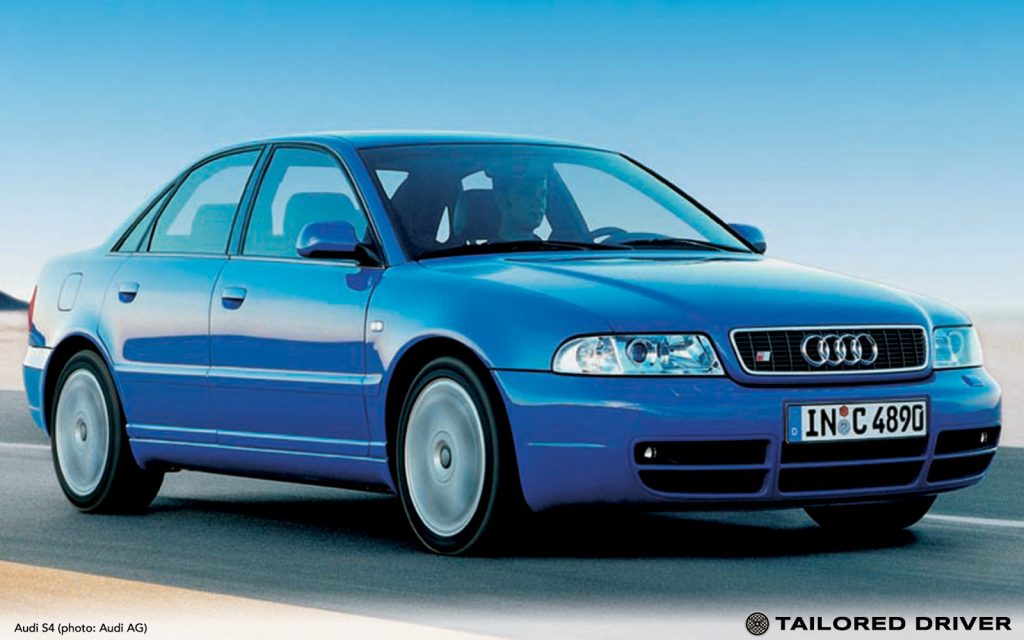
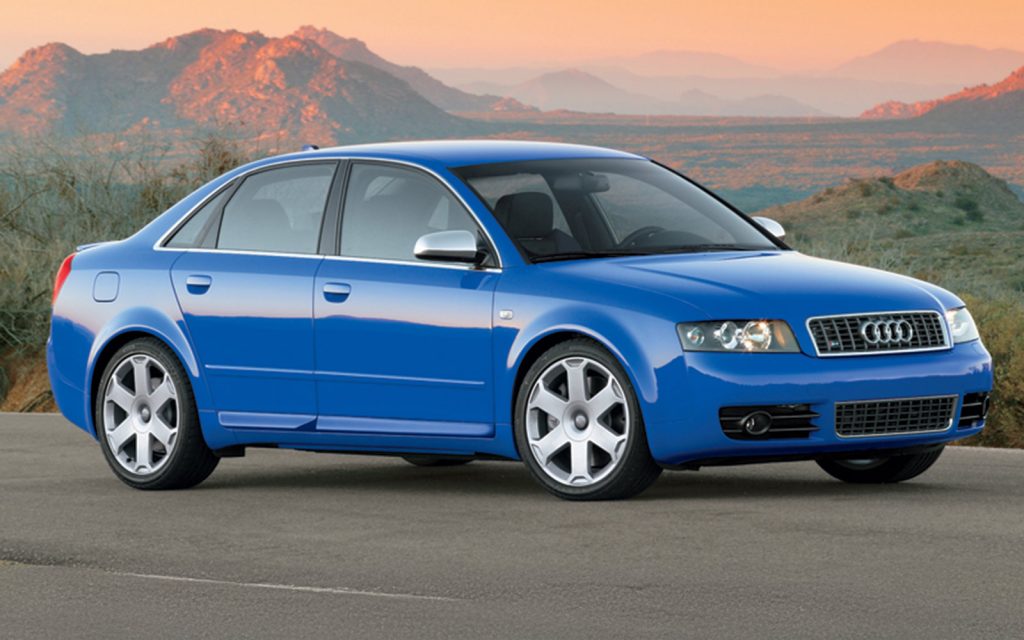
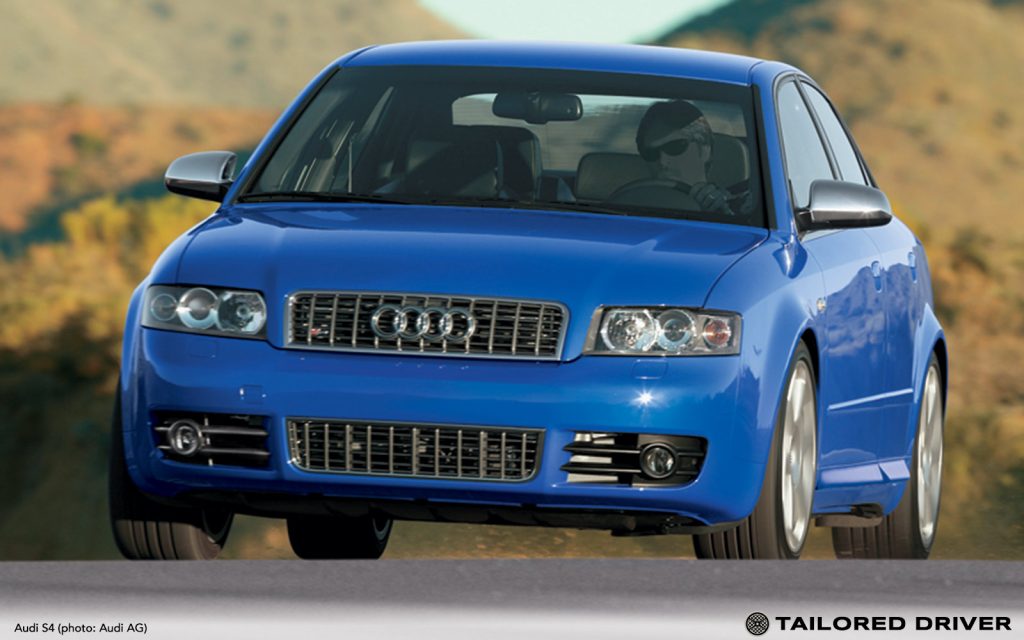
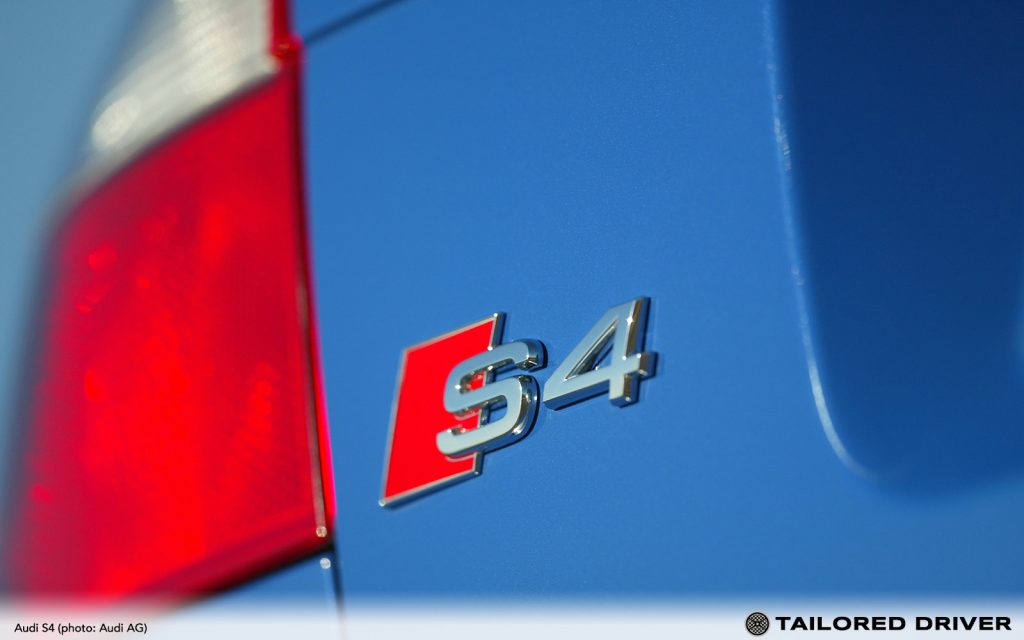
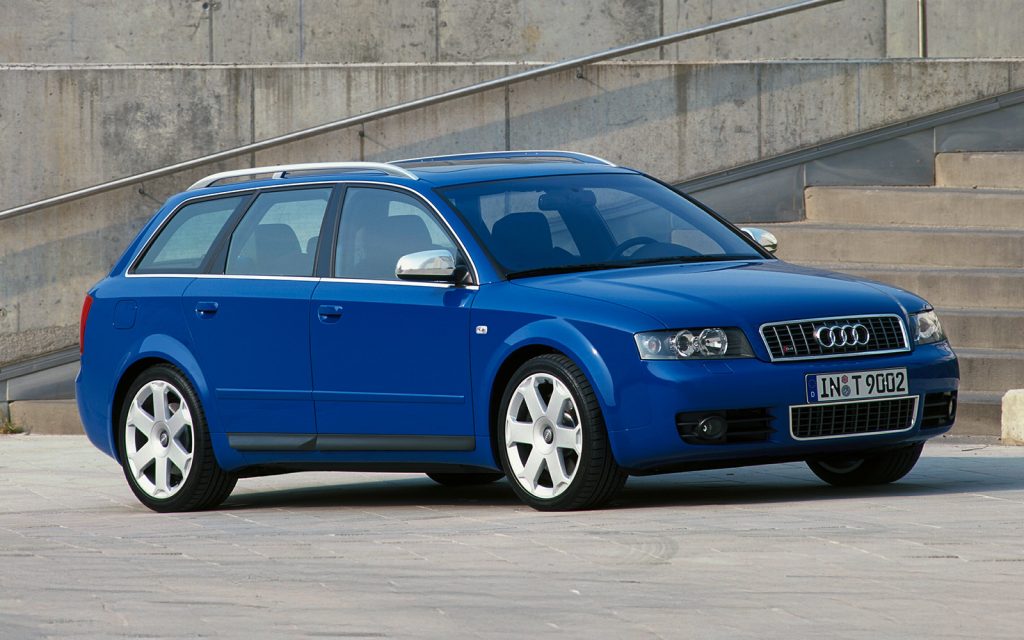
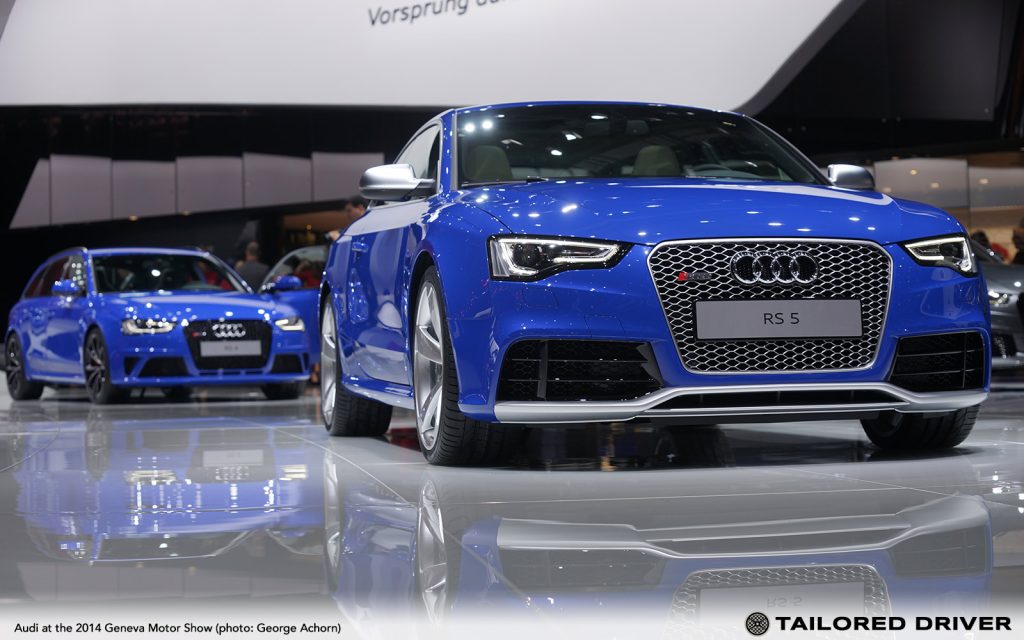
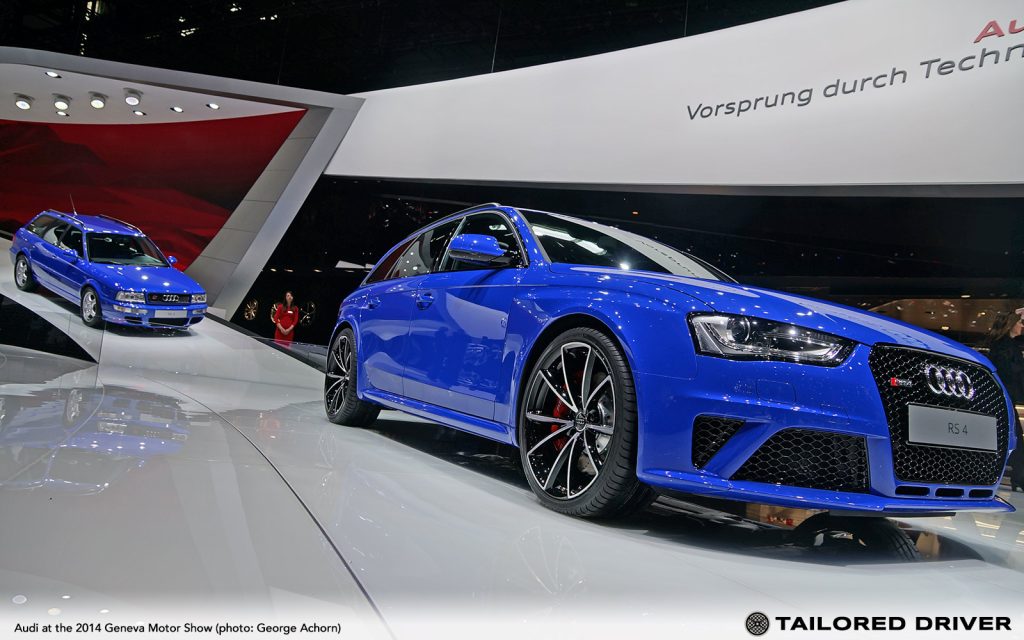
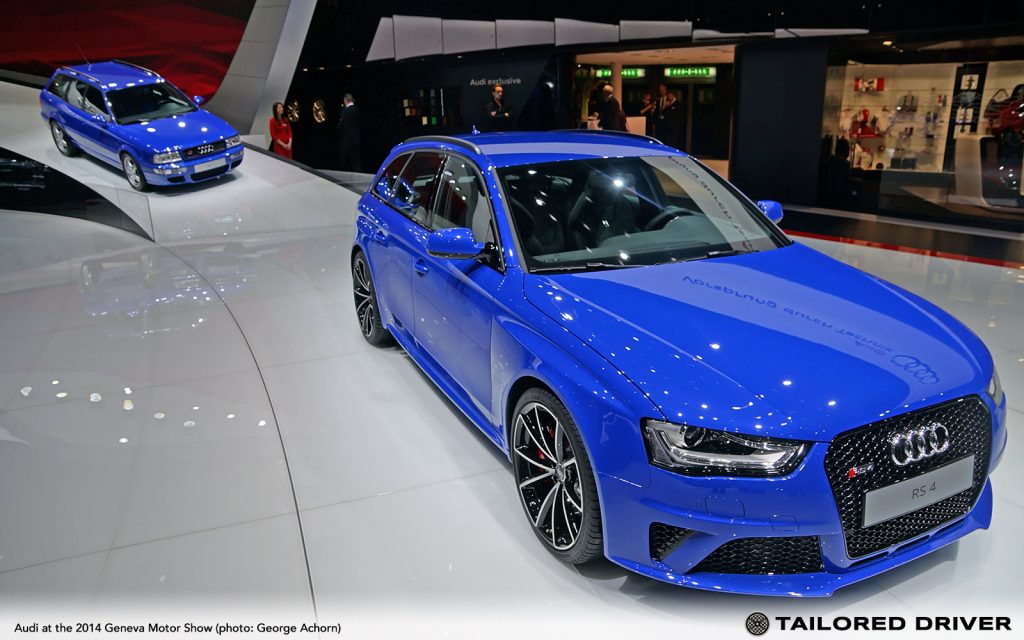
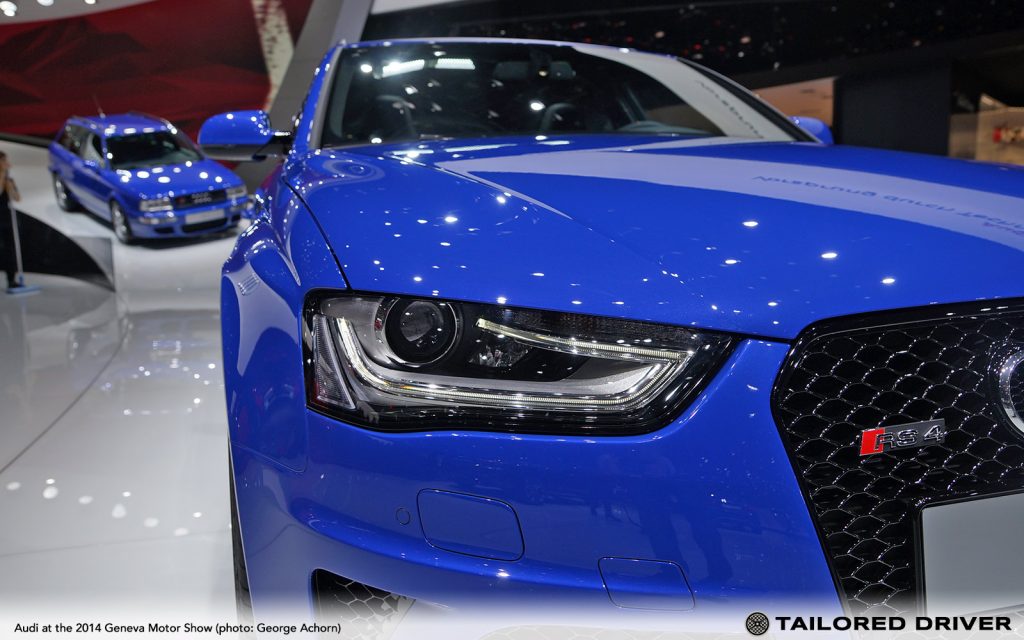
SUMMARY: In the world of OEM paint colors, we sometimes see name changes without reformulation. One example is Audi’s RS Blue (rsblau; pearl effect UNI; M8; Audi) that is perhaps the most iconic (and likely most popular) color of the Audi RS2 stock color offerings. By the time the color returned on Audi’s B5 S4, it had undergone a name change to Nogaro Blue (nogaroblau; pearl effect UNI; Z5M; Audi), but the color itself remained the same.
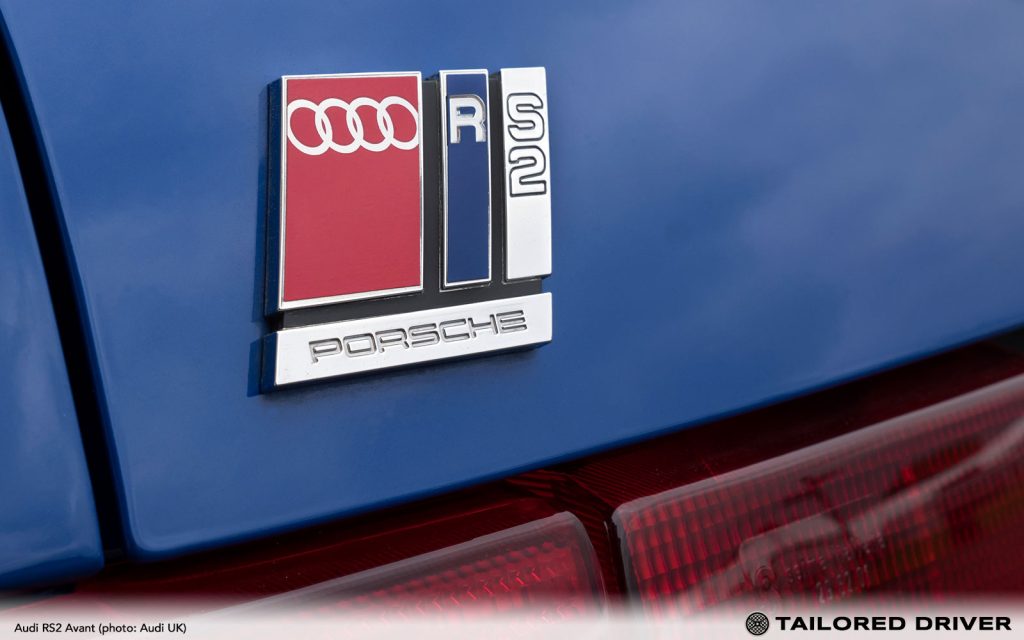
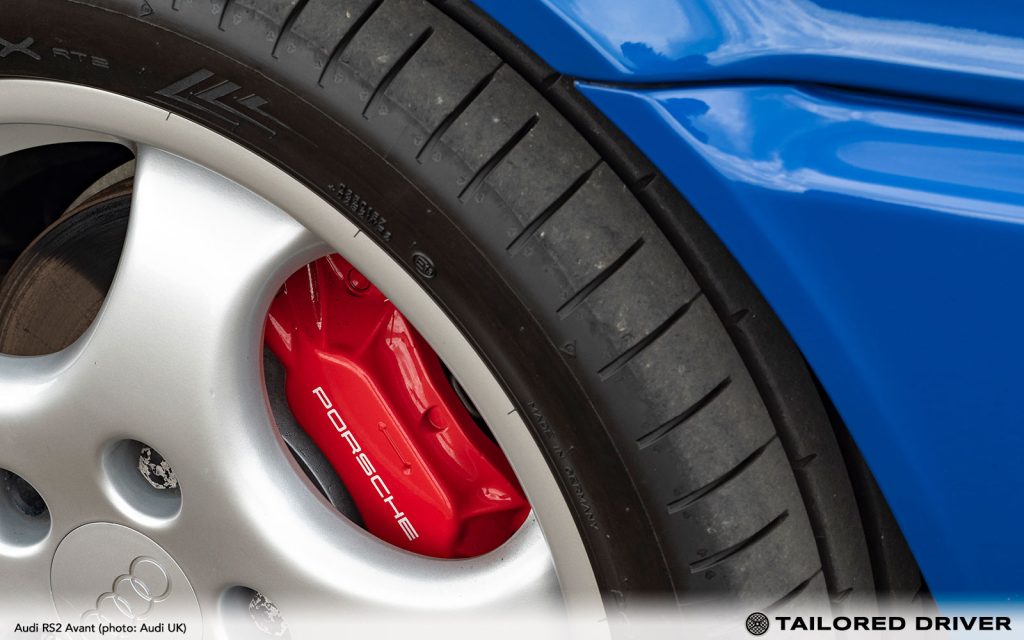
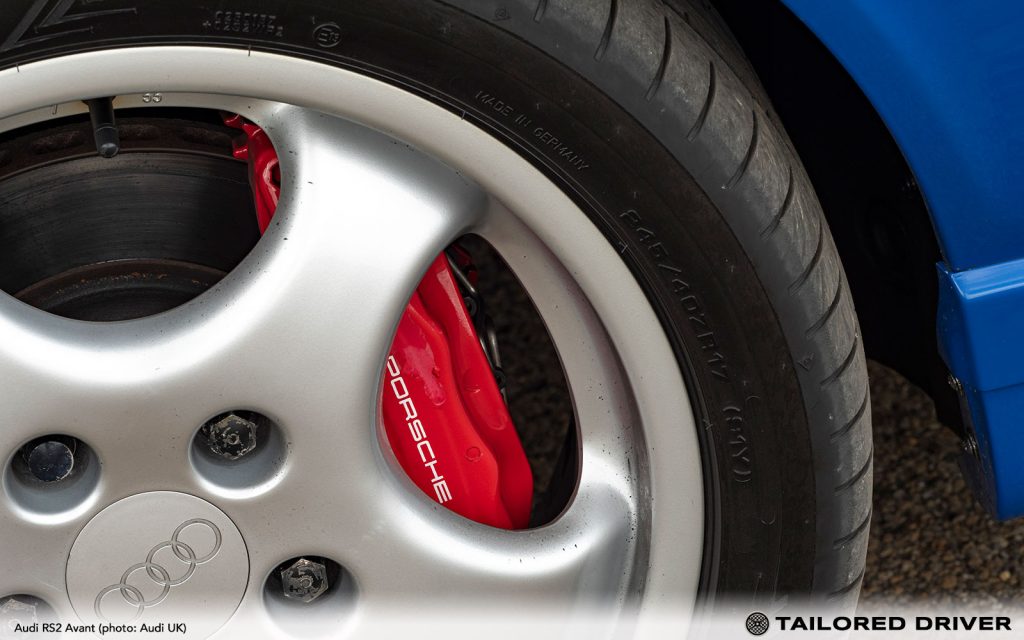
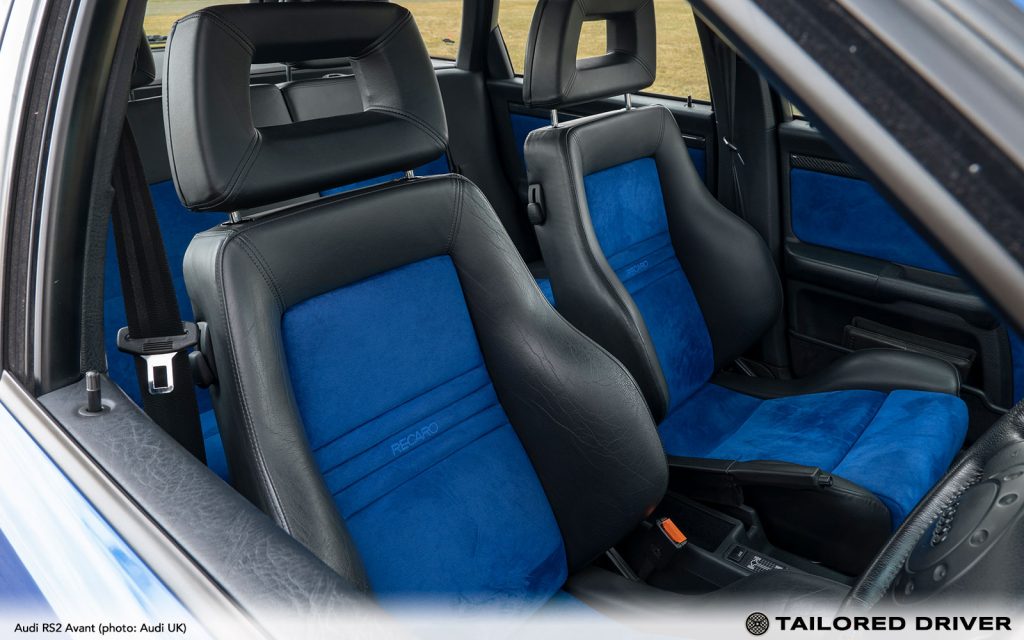
Given the lineage, tracing its roots to the wagon project conceived between Audi and Porsche and built in Stuttgart by Porsche themselves, Nogaro Blue has become an icon in and of itself, highly sought after in Audi exclusive builds or the rare times when Audi offers it on the occasional limited production special edition.
Few, other than RS2 aficionados, know it as RS Blue though. And whatever the name, the color can likely point towards the pre-war national racing color of French Blue for its inspiration. Rumor has it that Audi designers in the Simi Valley design studio sprayed out a marine blue in a request back to the factory for company car specification, which inspired the development of RS Blue.
Don’t confuse RS Blue (or Nogaro Blue) with Porsche’s Maritime Blue, a then-current Carrera Cup color at the time the RS2 rolled new out of Porsche’s factory. Models wearing Porsche badges such as the 911 Carrera RS (type 964) and 968 were rolling out of that same manufacturer painted Maritime Blue. The timing, Porsche DNA and and their similar appearance would suggest they might be the same code by another name, but park them next to each other and you’ll see a difference.
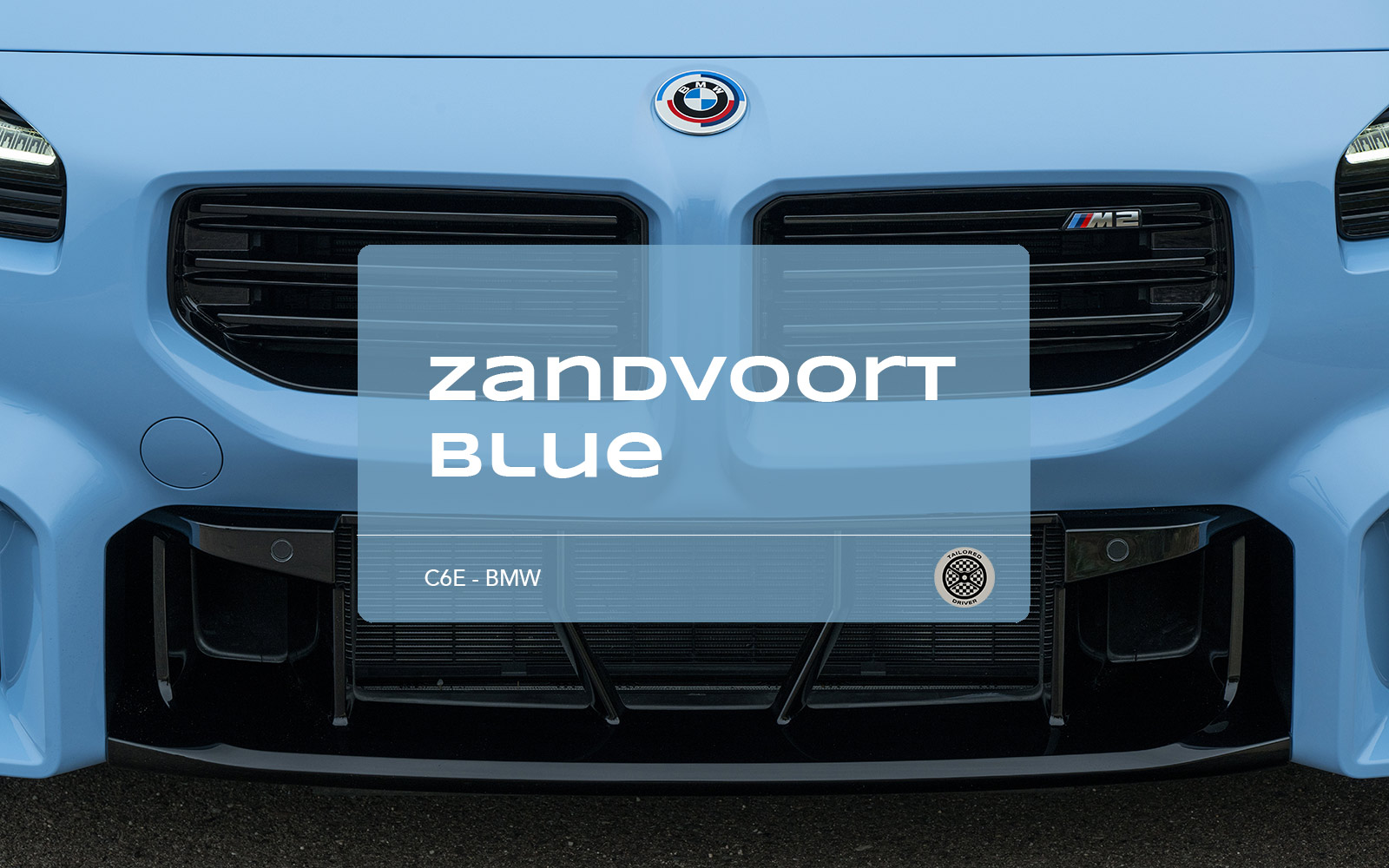
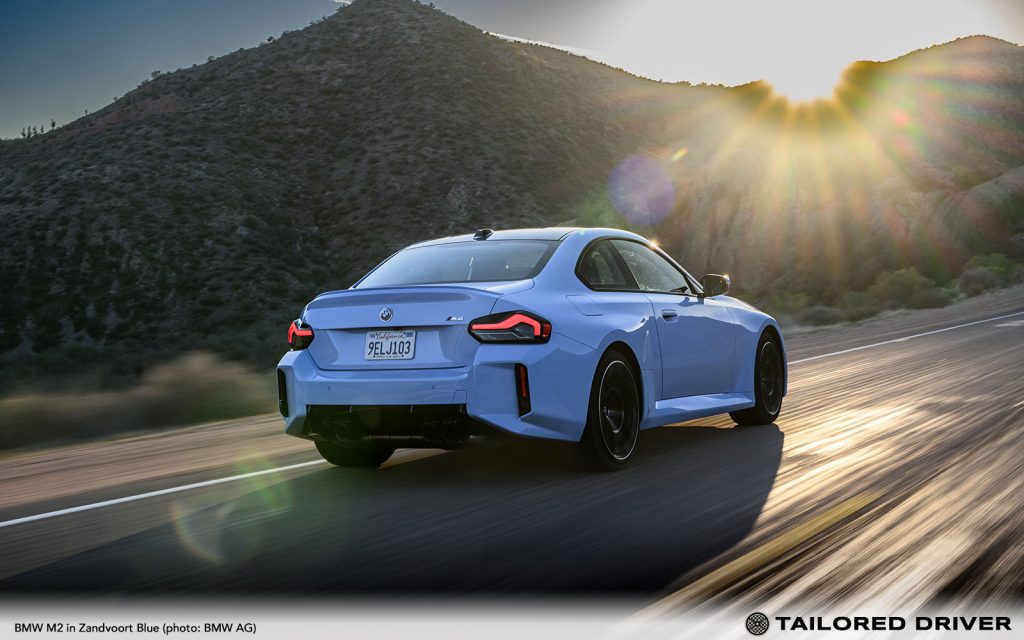
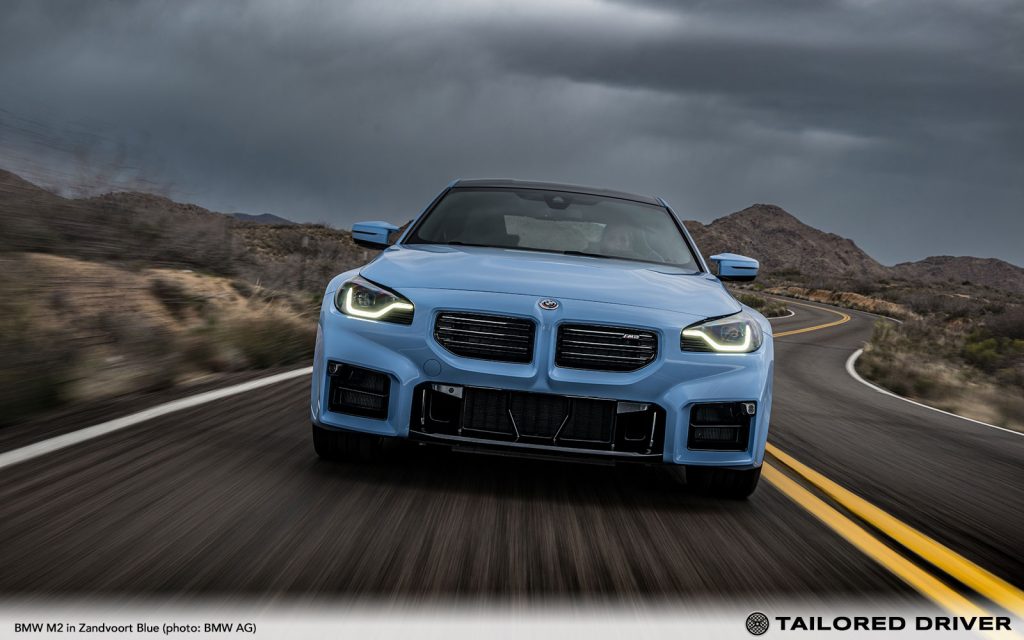
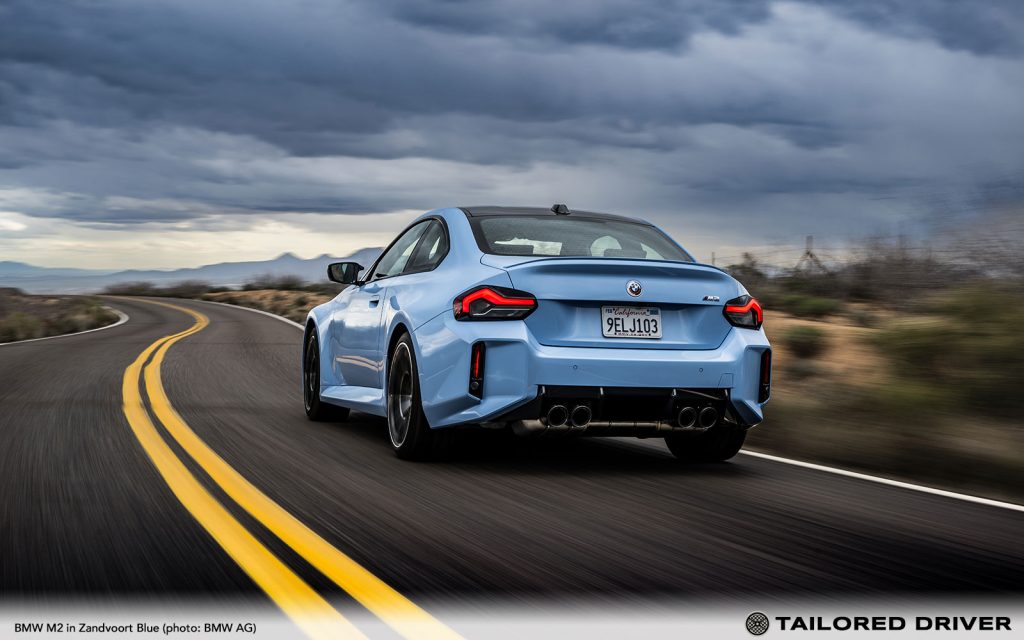
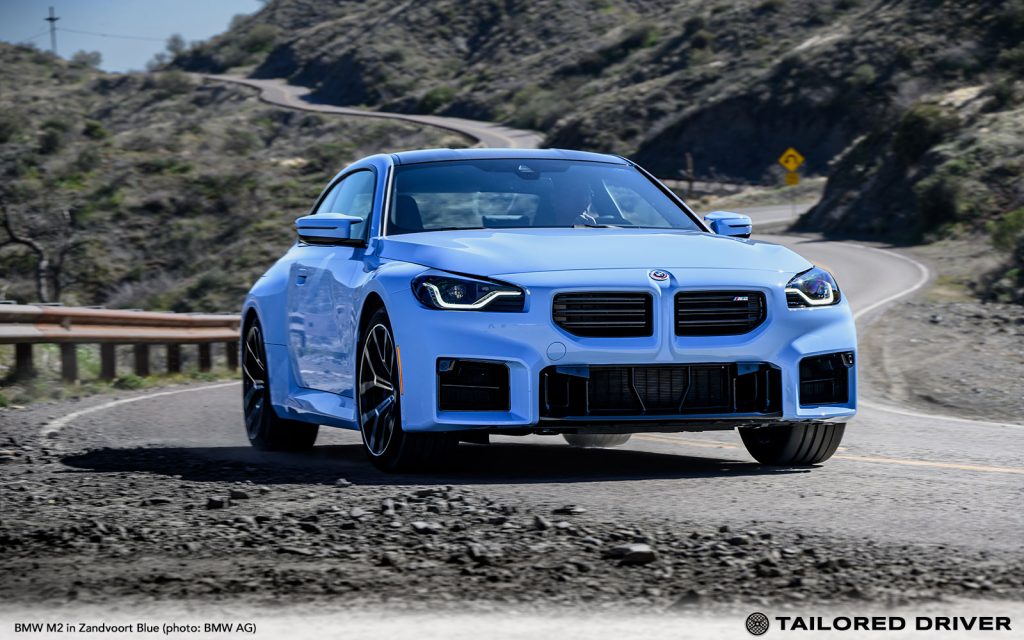
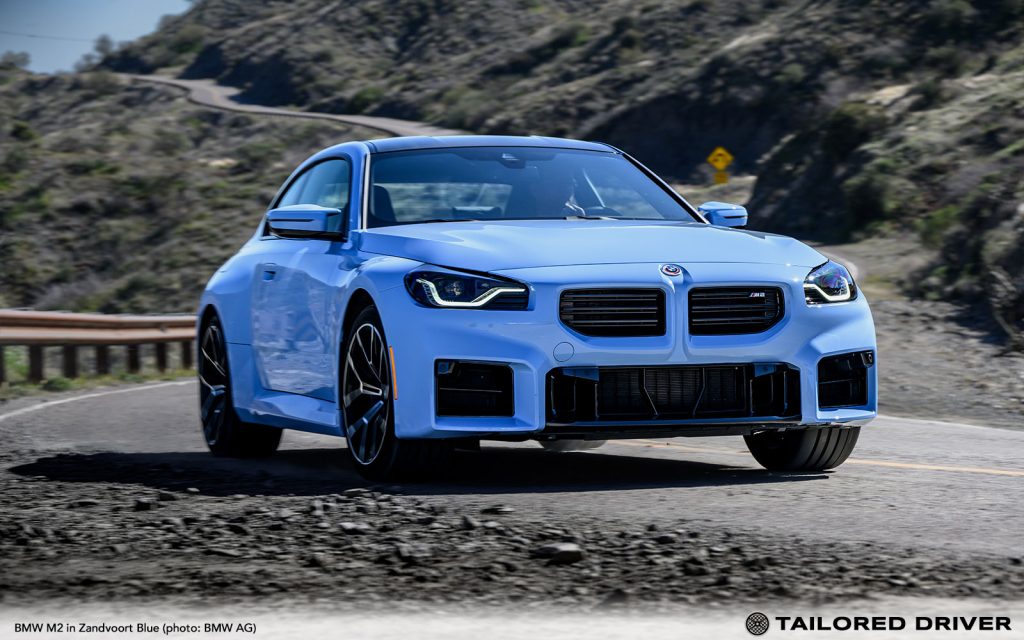
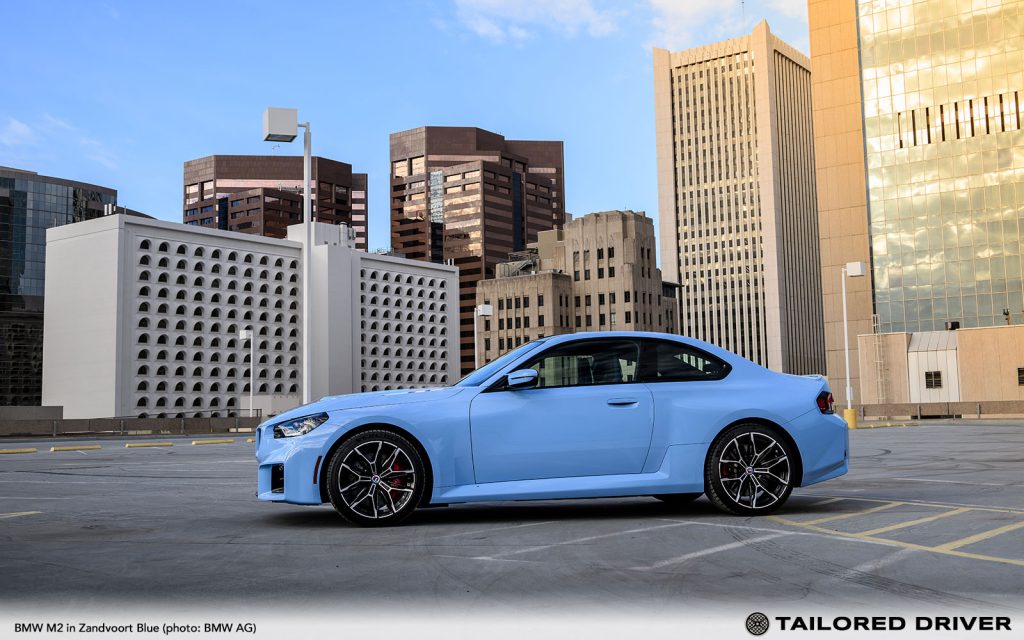
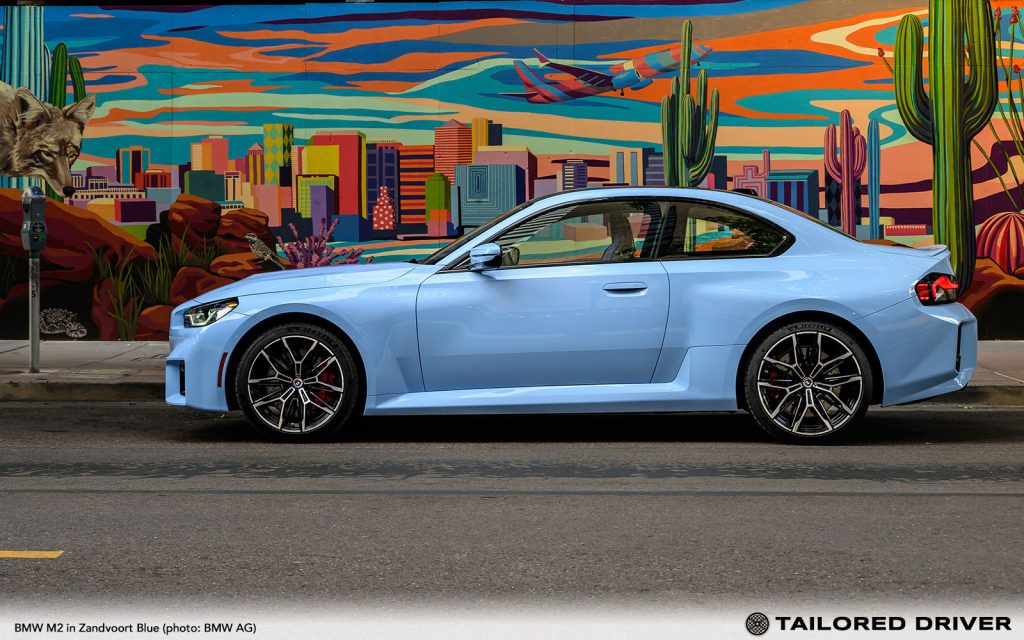
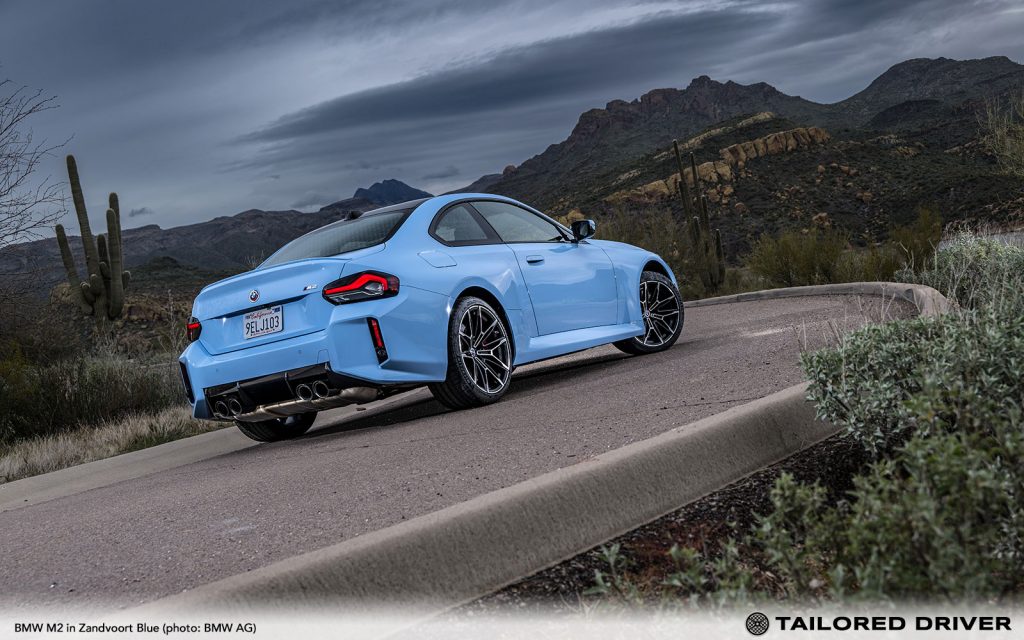
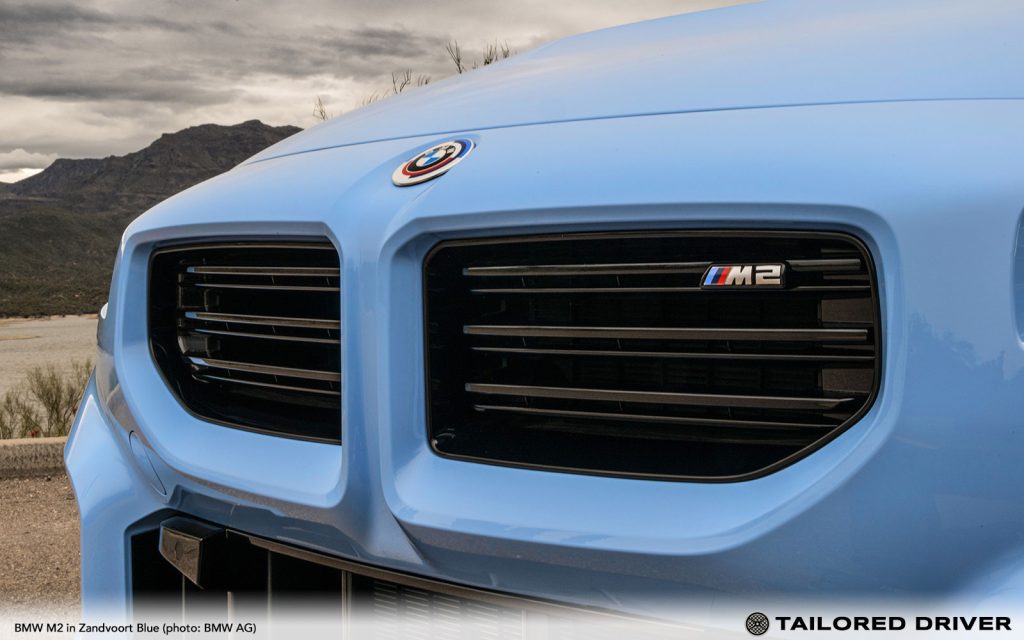
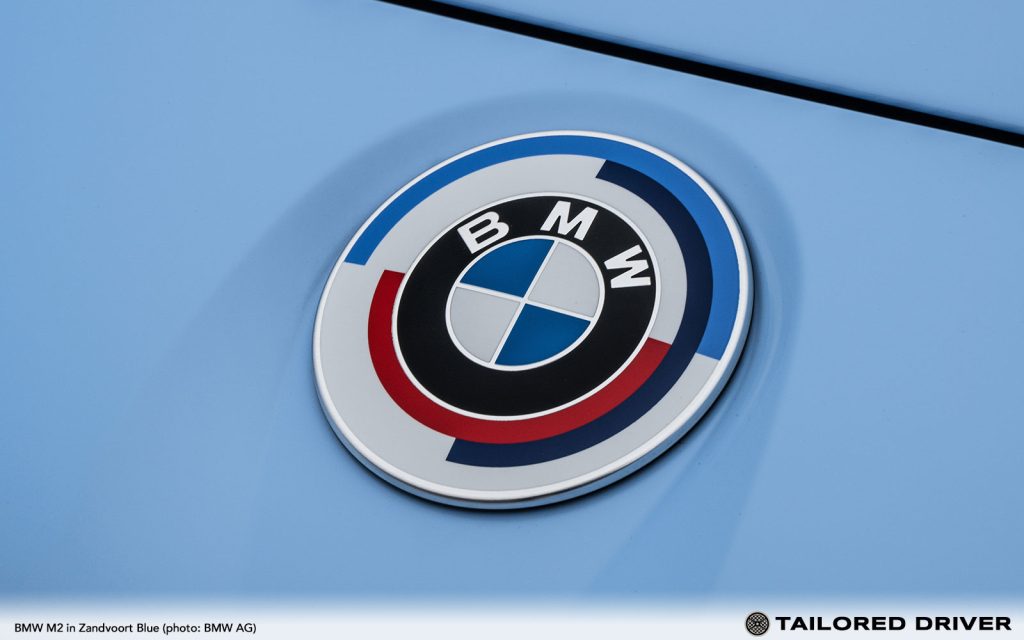
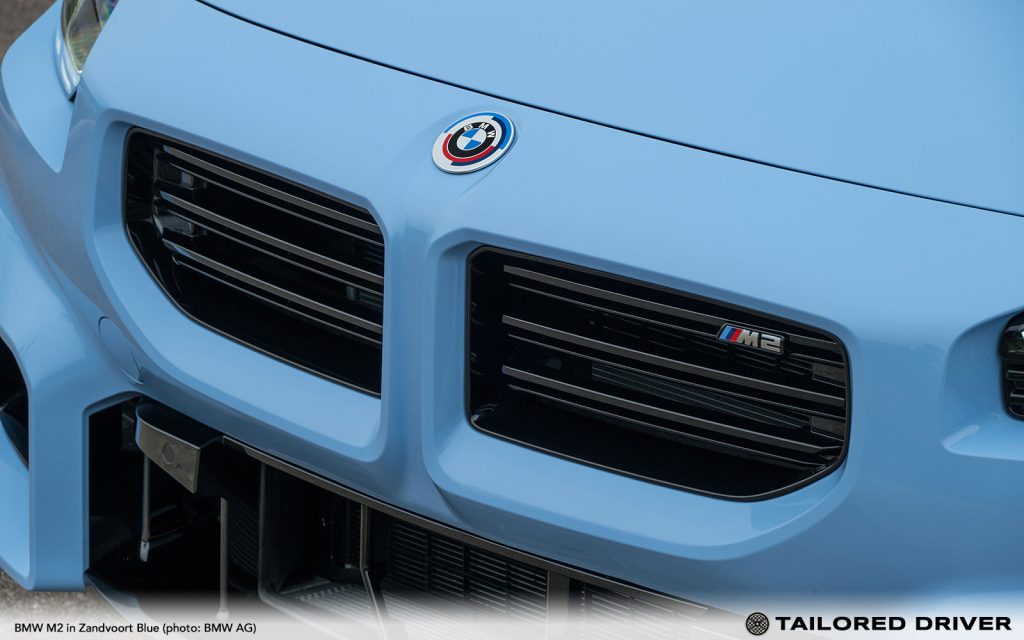
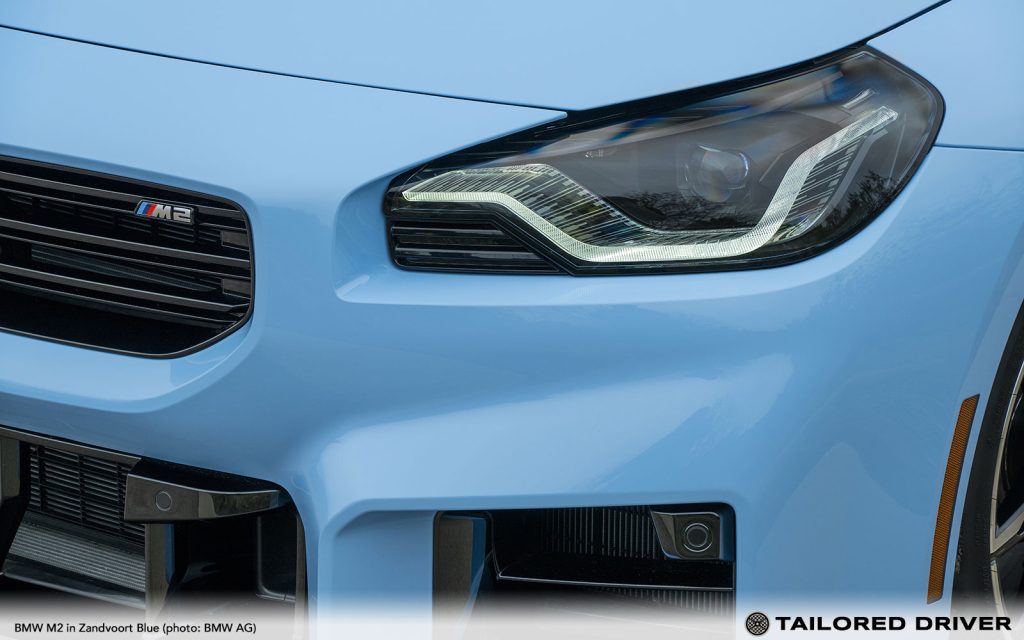
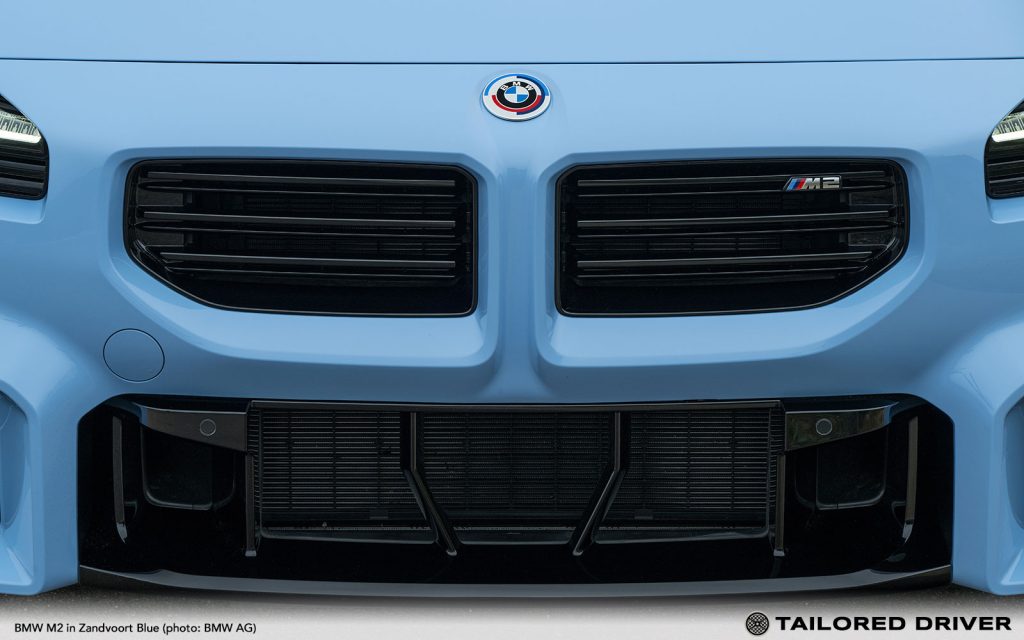
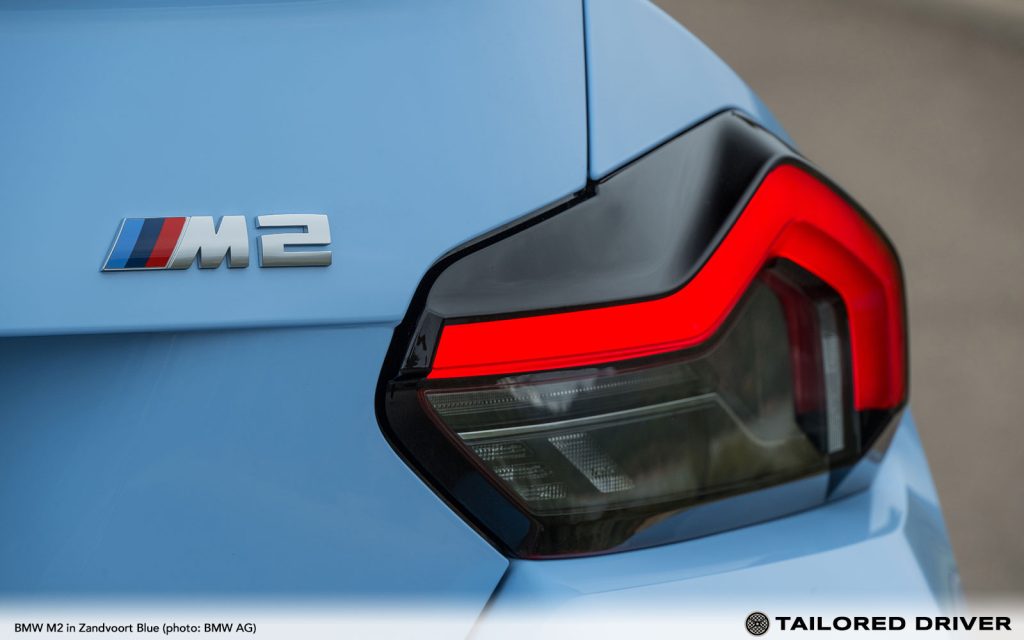
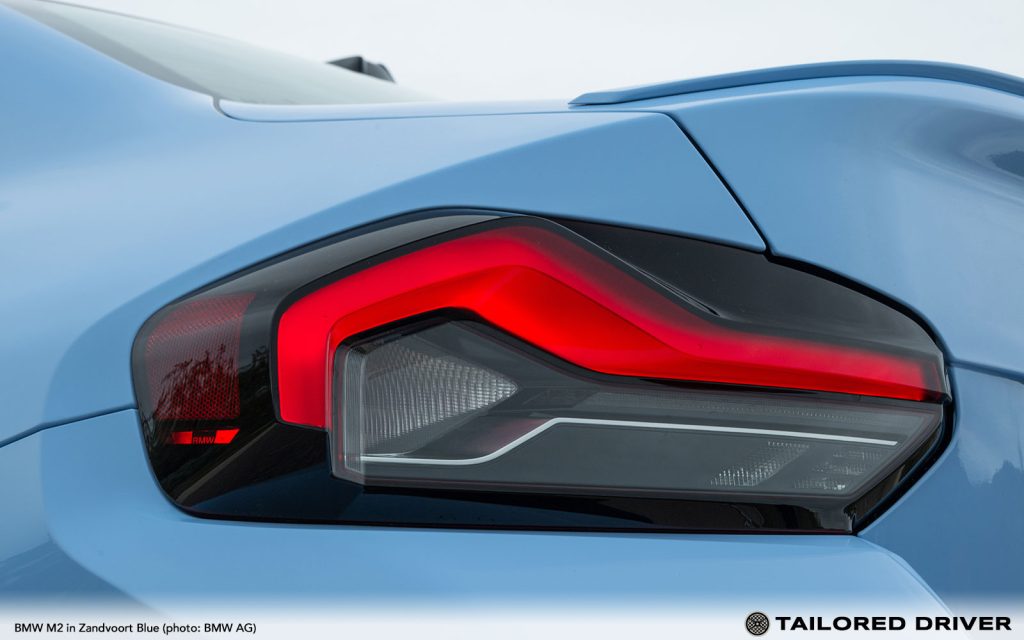
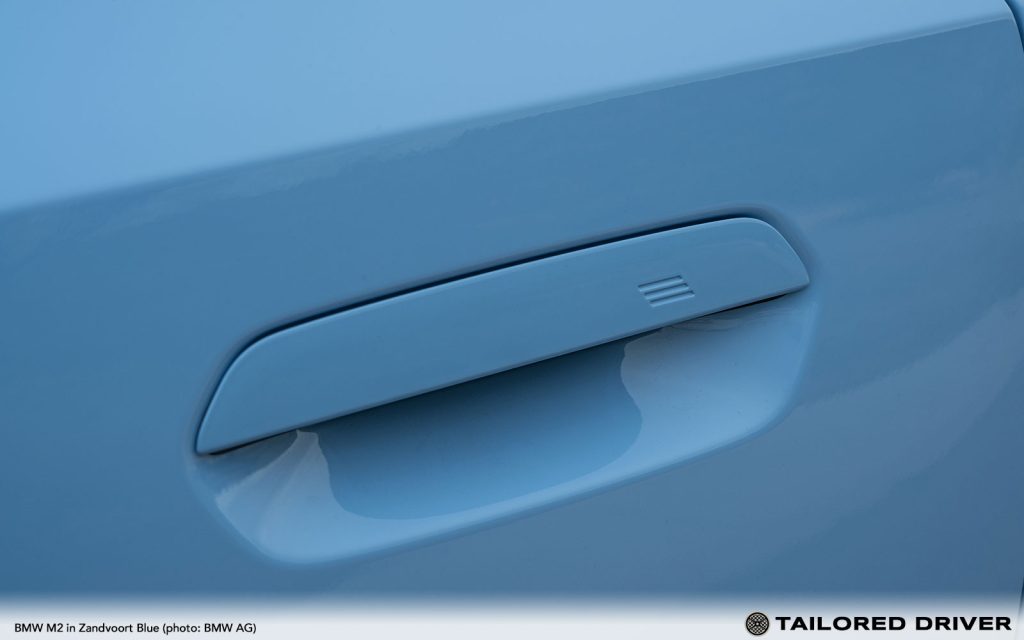
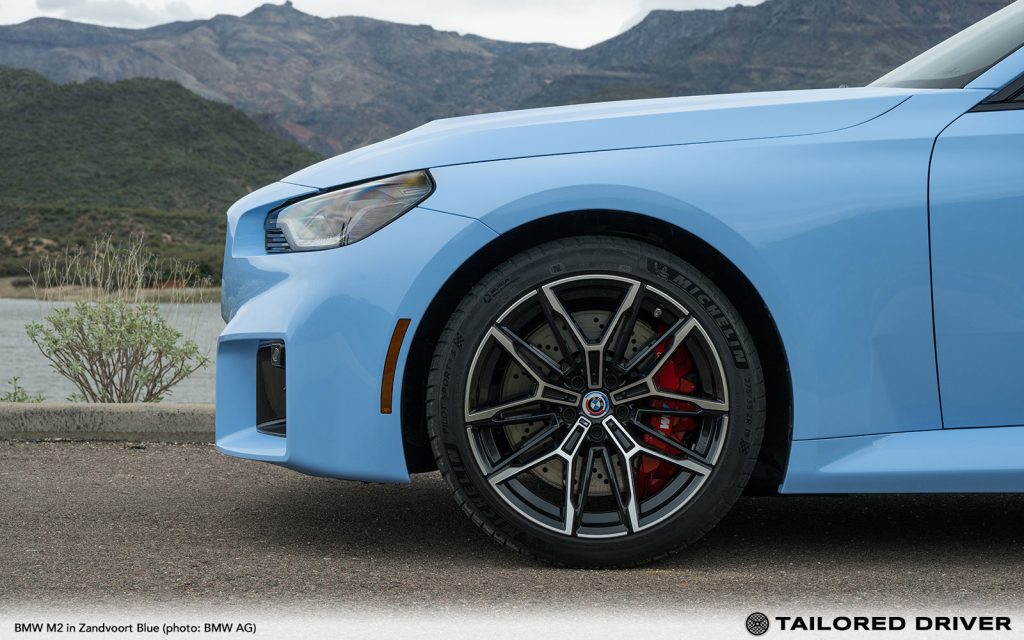
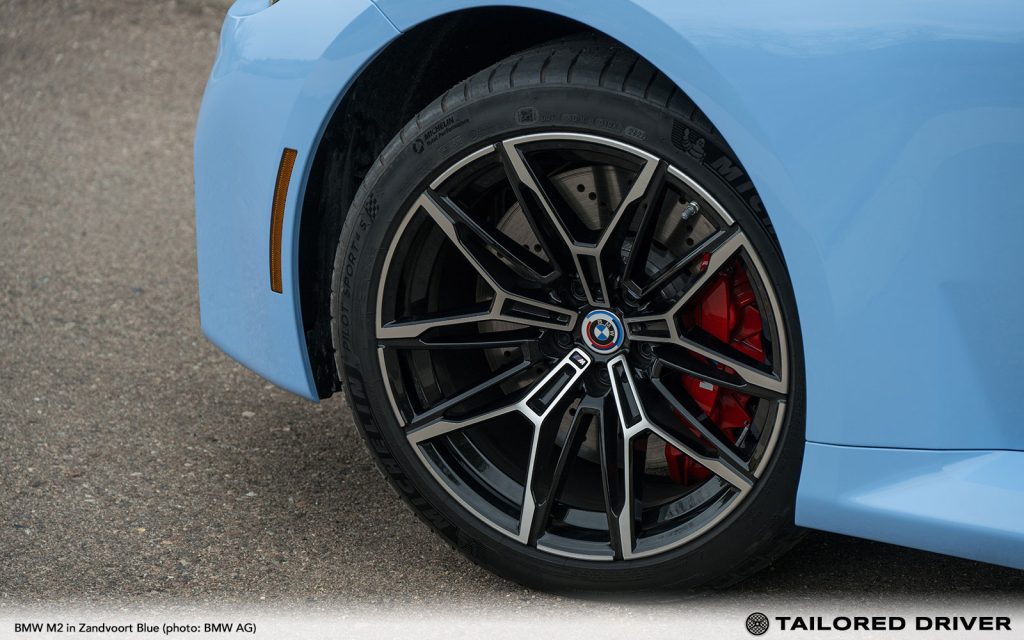
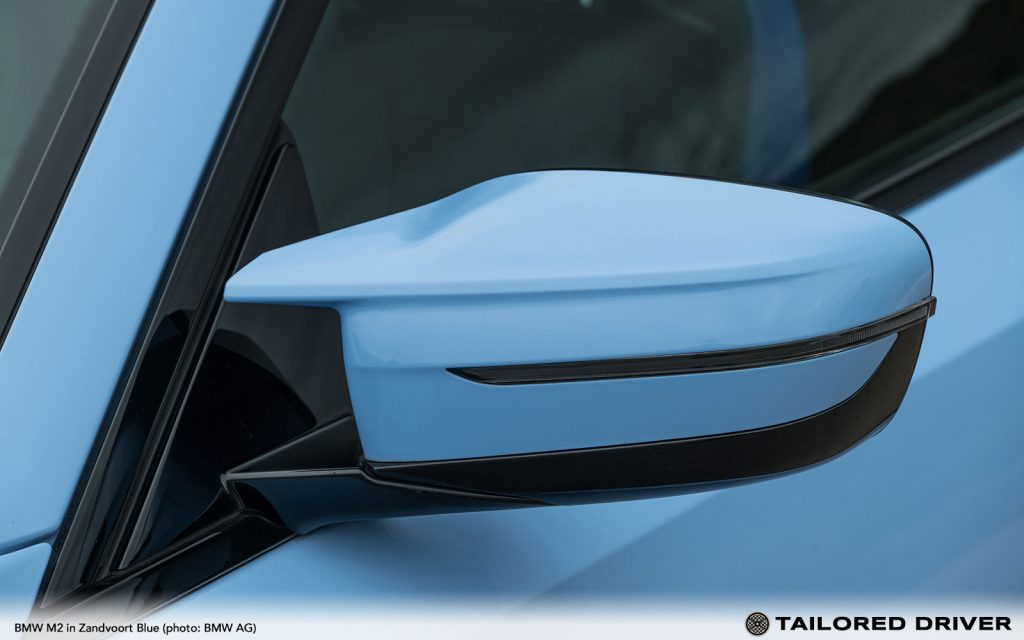
Near as we can tell, Zandvoort Blue (zandvoortblau; non-metallic uni; C6E, BMW) was introduced with the launch of the G87-generation BMW M2 as a standard color. Similar to Yas Marina Blue in the F80 M3 era, Zandvoort Blue appears to be a color-coordinated stand-in for the blue amongst the three colors in the BMW M tricolore rhombus.
Traditionally in the M motorsport logo, that blue is a light blue based on the Bavarian blue from the blue checks in the flag of Bavaria. In Zandvoort Blue’s case, it’s a bit lighter and not altogether far from Porsche Gulf Blue. Whatever the case, and artistic license considered, Zandvoort is the latest take on the blue in that logo as one of several representative colors in the G87 M2 color palette.
Also worth noting is the significance of the name. Circuit Zandvoort is a race track with F1 pedigree in The Netherlands.
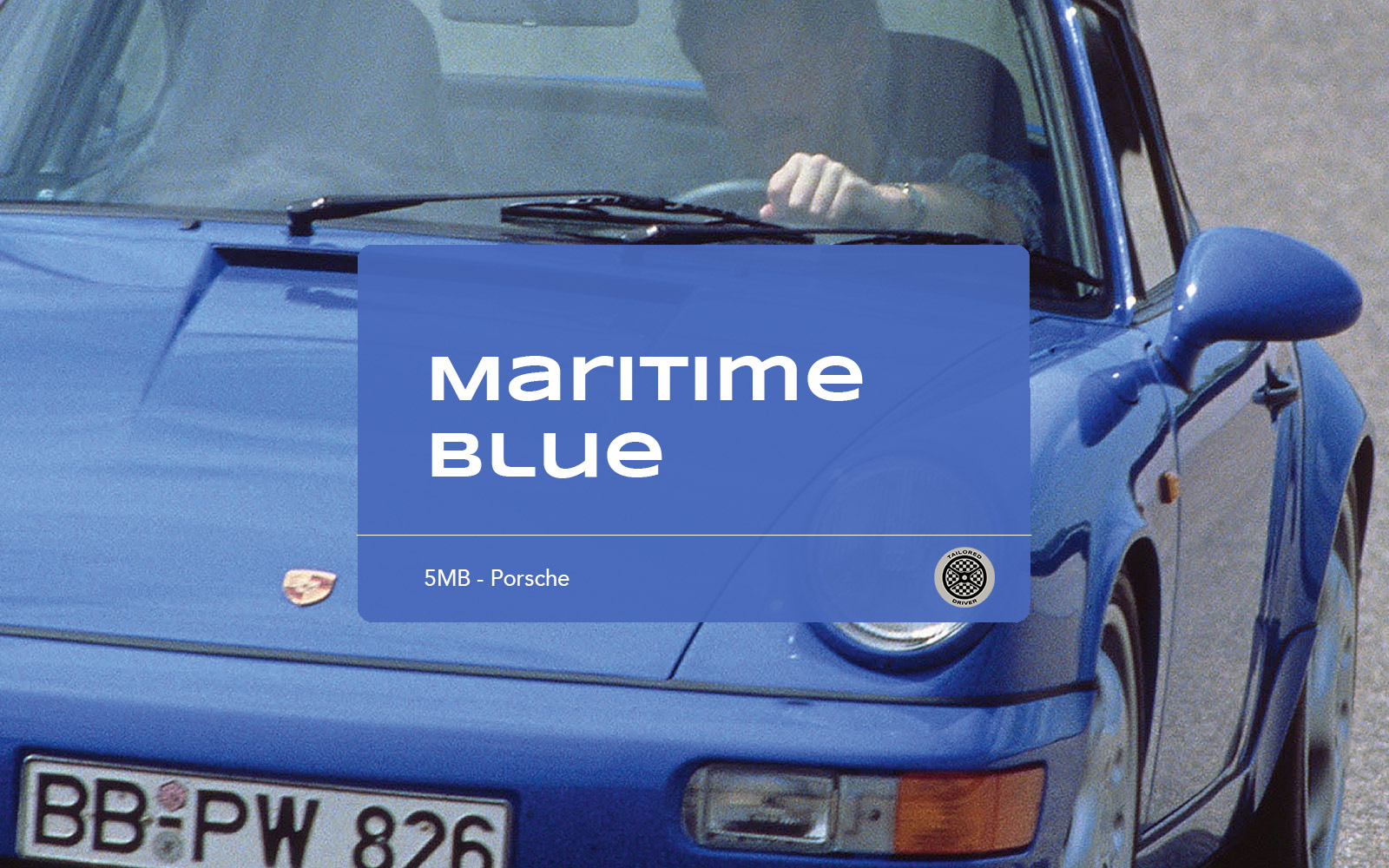
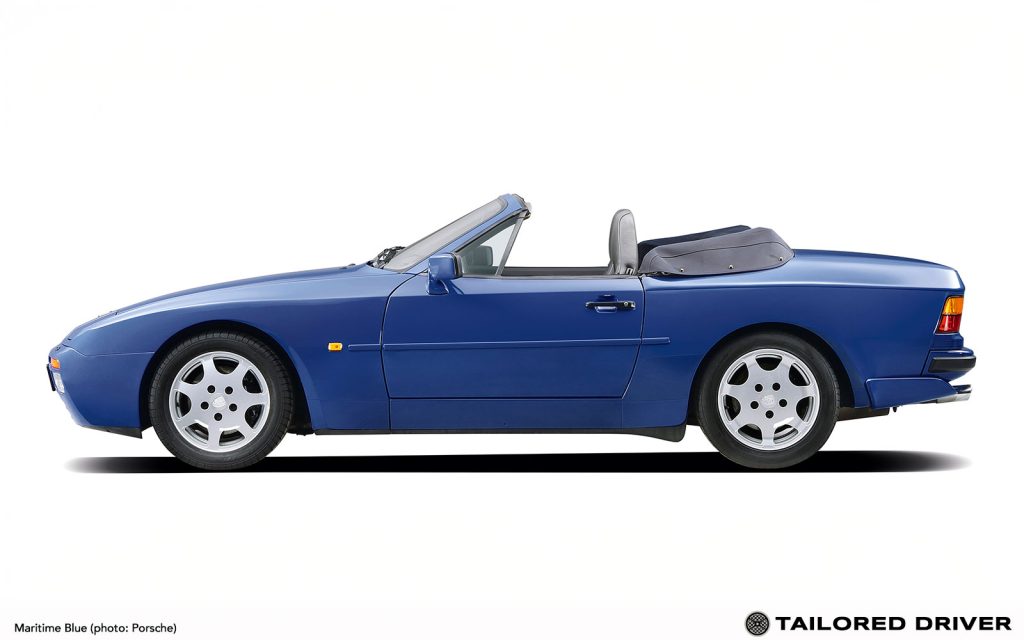
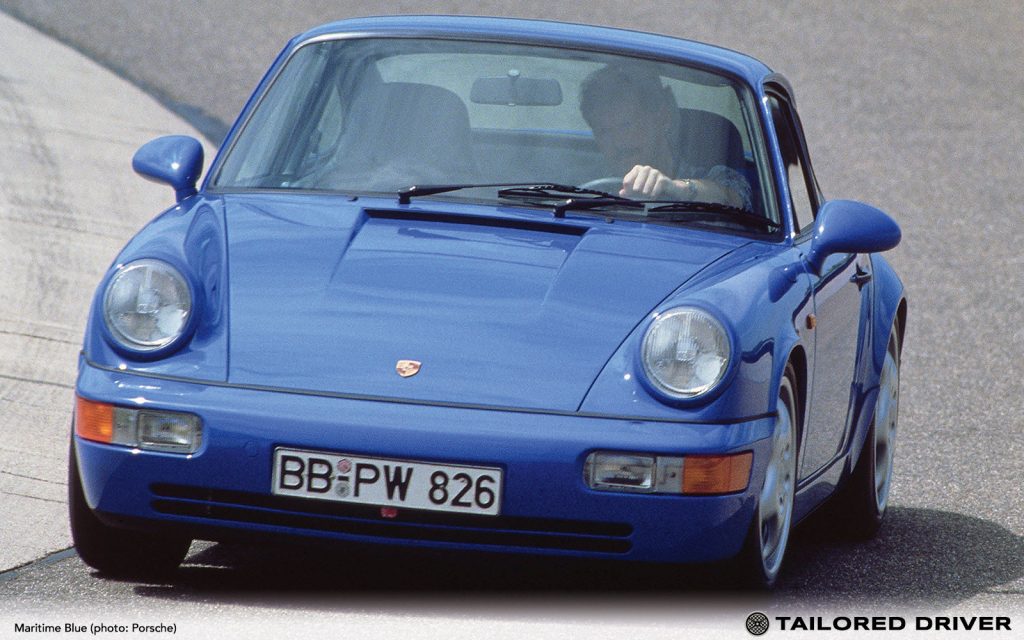
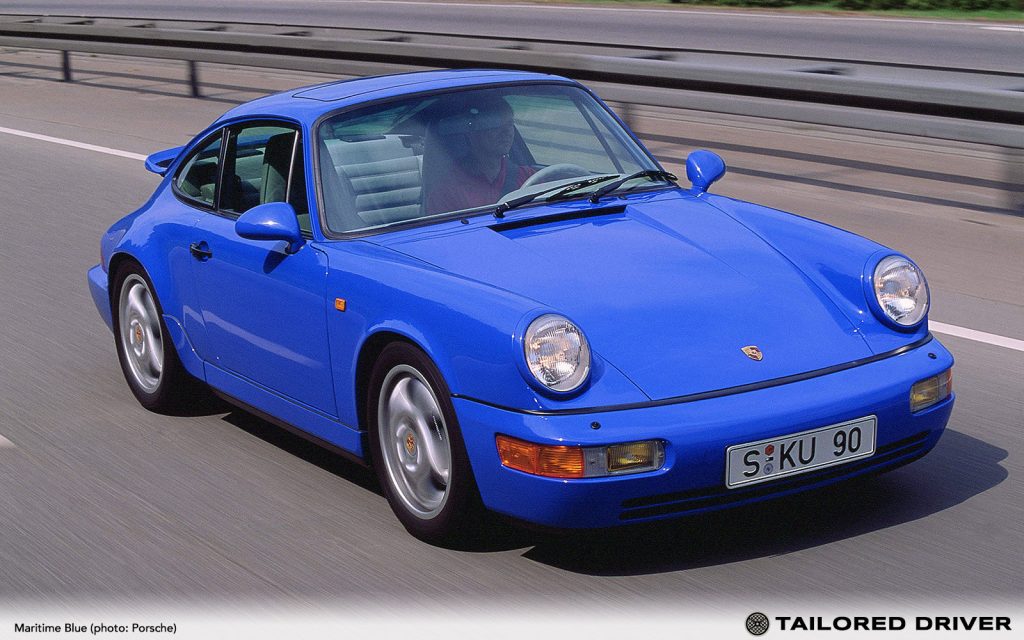
SUMMARY: Near as we can tell, Maritime Blue (maritimblau; non-metallic UNI; 5MB; Porsche) as a color was introduced or at least popularized during the 964 era. Porsche Club’s Rennbow website lists it as mainly available from 1991 to about 1995 with a few exceptions since and potentially in 1979 on the Carrera SC. They also suggest it may have evolved from early Porsche Enamel Blue. Whatever the case, the idea is simple enough – a practically primary blue that harks early national racing colors of France, often referred to as French Blue and popularized in those early pre-war racing years by Bugatti.
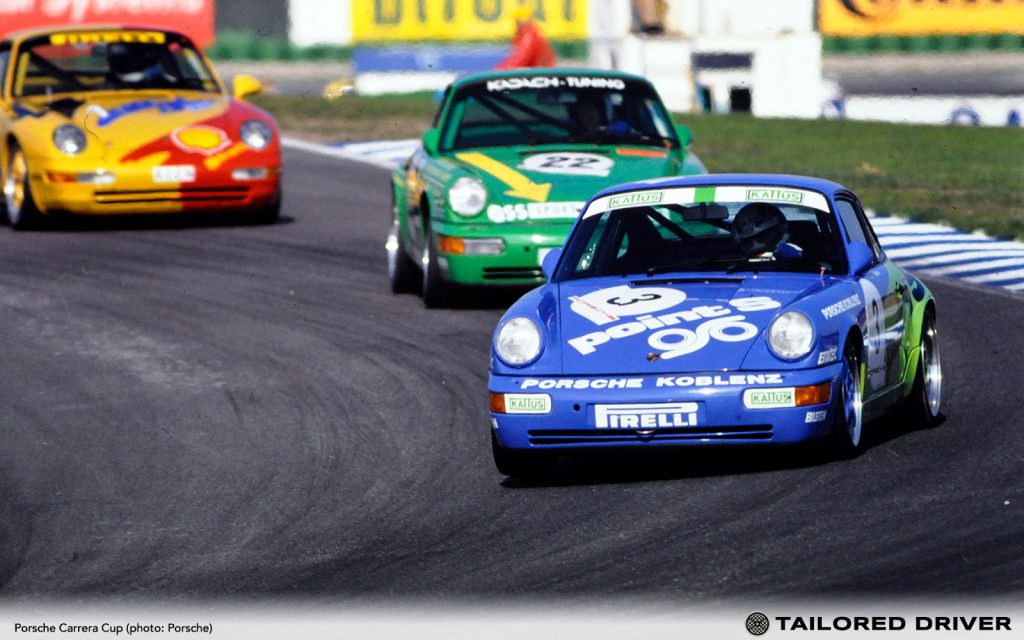
By the 964 era, the boring tones and colors (or ubiquity of Guards Red) of the 1980s were about to give way to a return to more avant-garde hues. While just colorful and envelope-pushing as were the 1960s and 1970s, the 1990s had their own unique feel. Its in this timeframe that Maritime Blue drops, alongside other colors like Rubystar and Mint Green, and quickly made even more sought after thanks to an association with the just-launched 911 Carrera Cup.
Some will mistake Maritime Blue for Audi’s Nogaro Blue. That’s not surprising given they are both very close to each other in tone, and Nogaro Blue traces its own roots to the Porsche-developed Audi RS2 Avant that came to market during the 964 era. Even still, they’re not the same and that becomes evident on the rare occasions each of these colors find themselves parked next to each other. Worth noting, Nogaro Blue is also a pearlescent paint whereas Maritime Blue is not.
Given its history with the Porsche brand and the much-loved 964 era in particular, Maritime Blue remains a popular Paint to Sample color to this day.
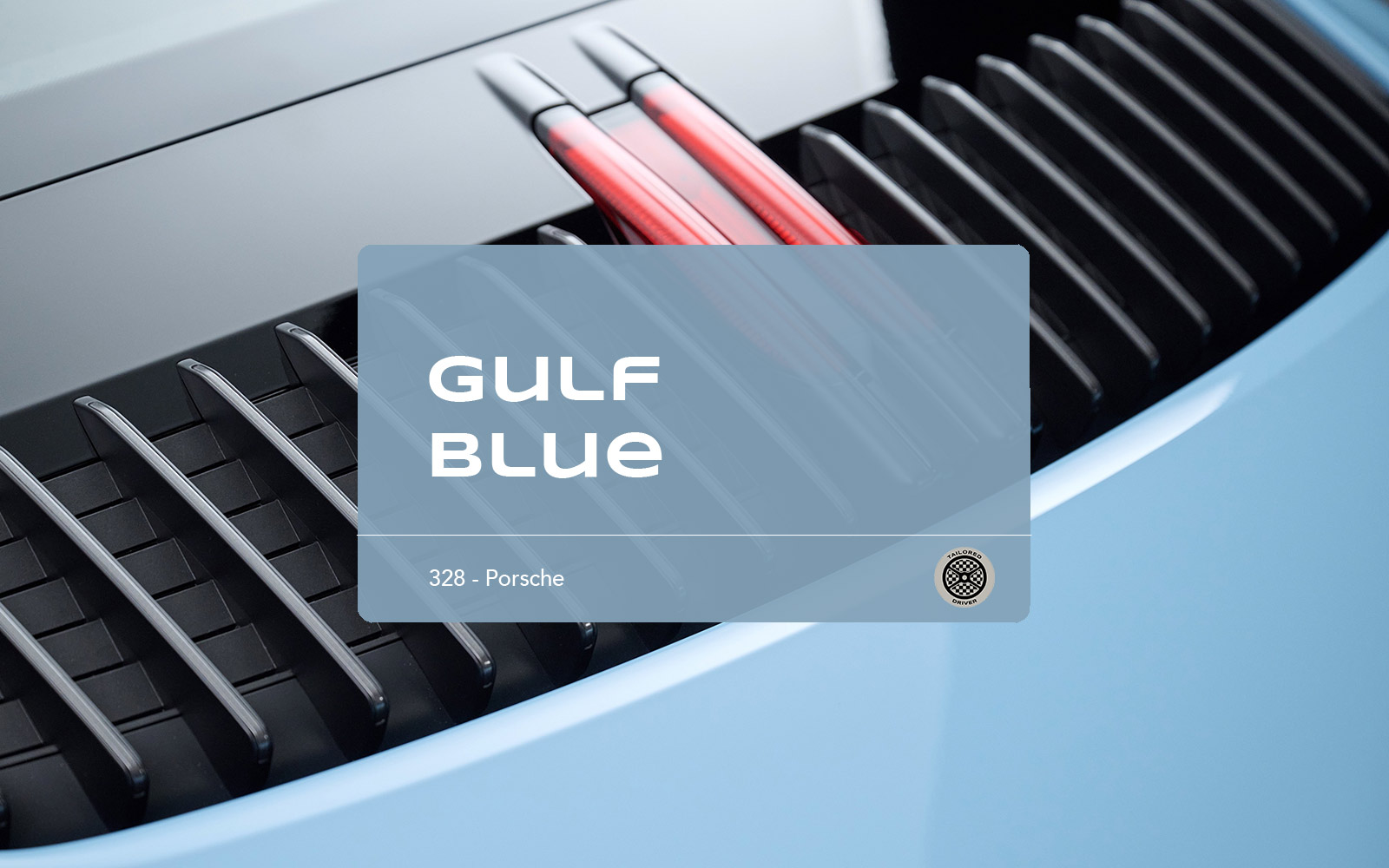
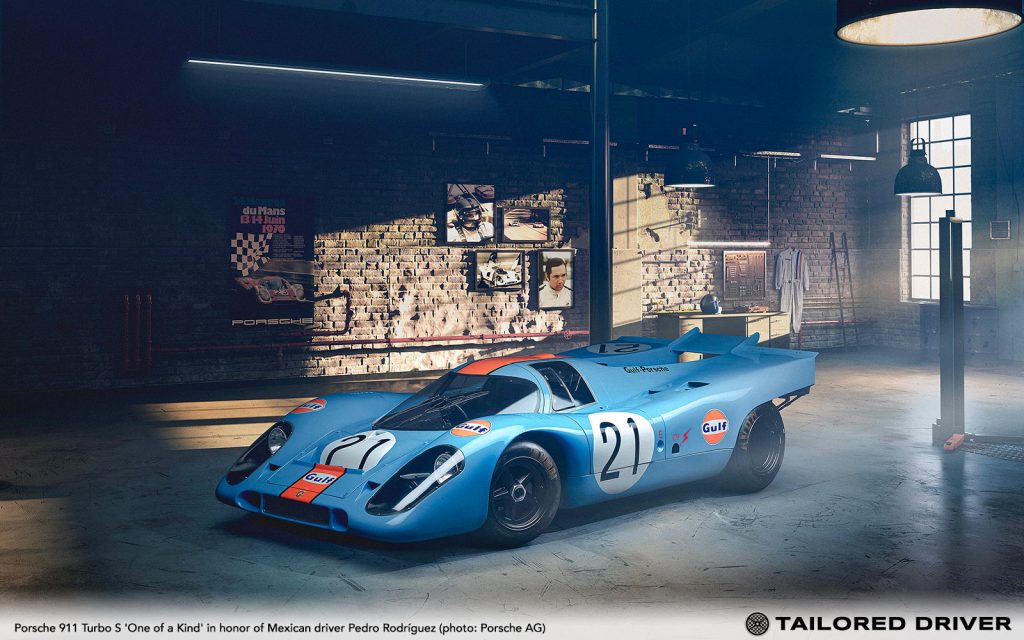
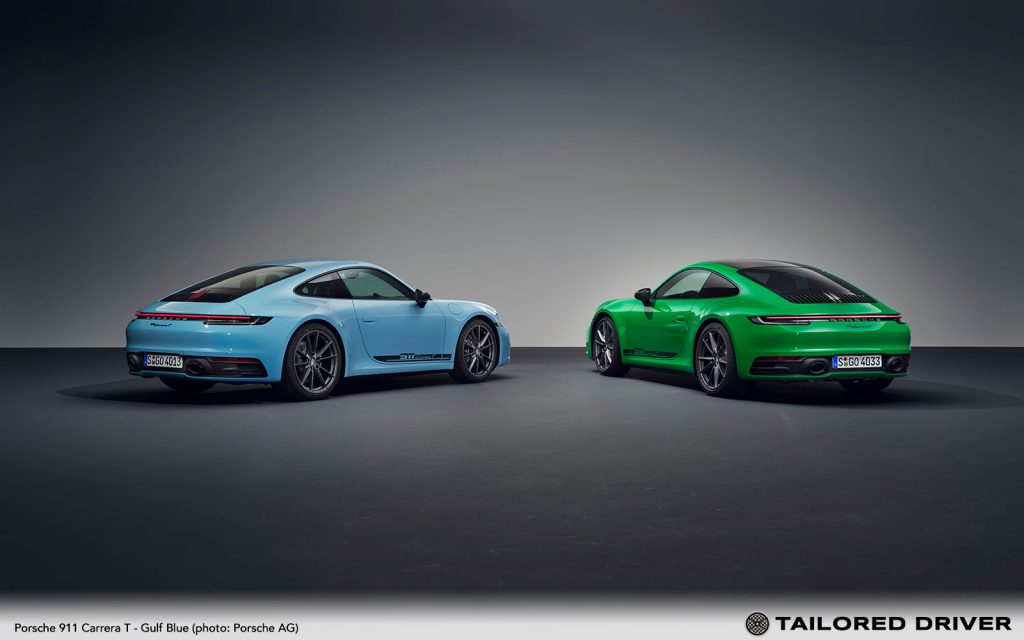
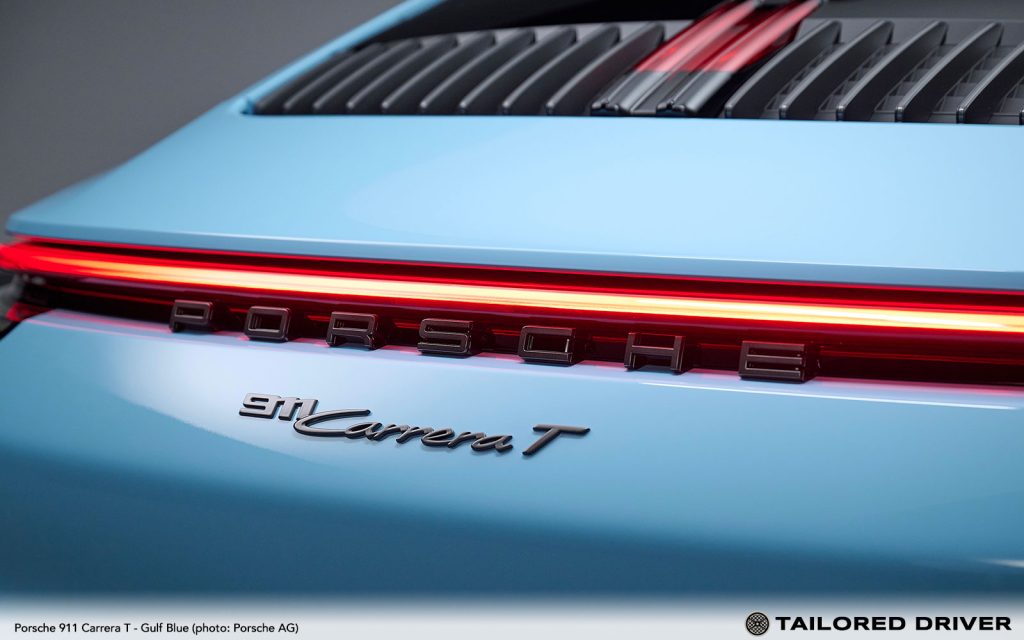
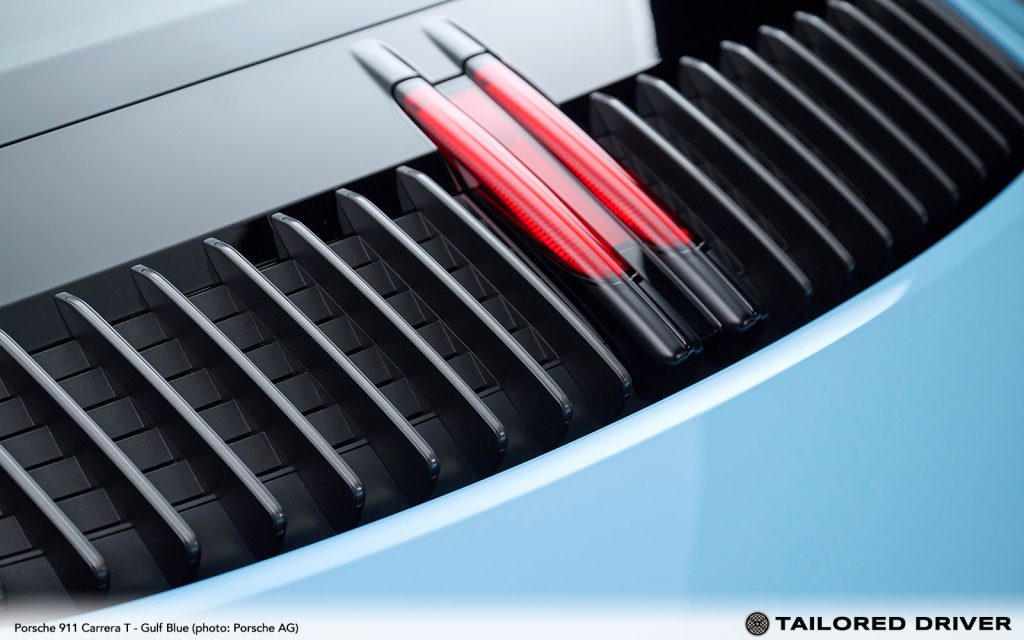
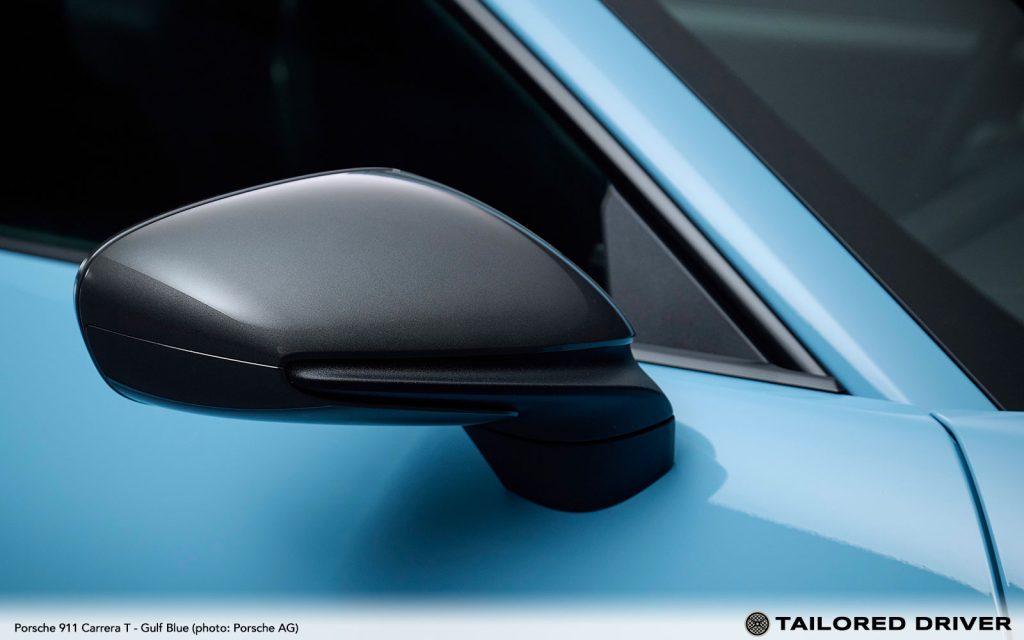
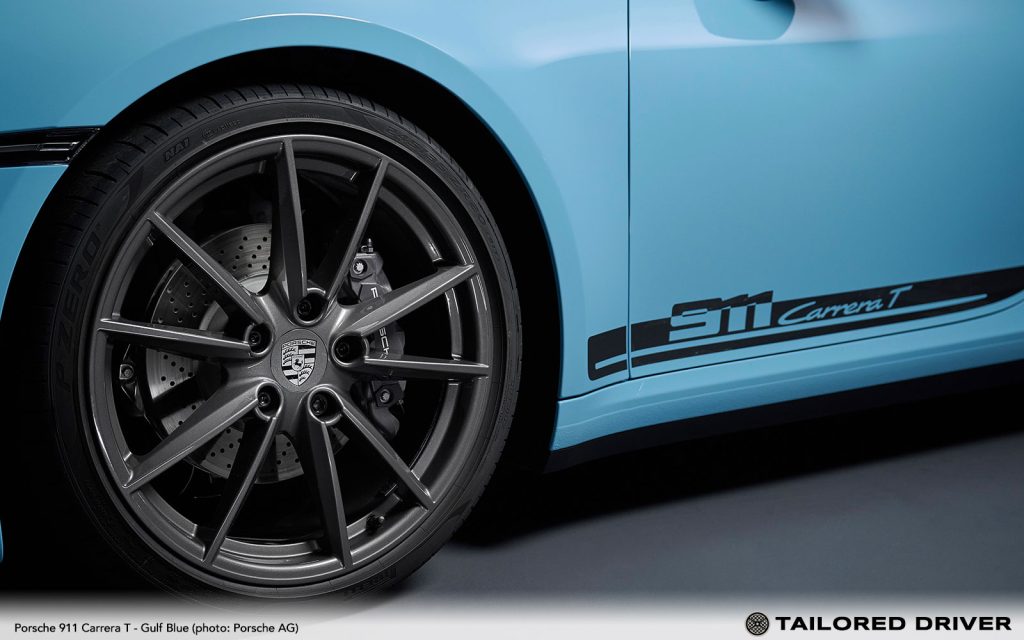
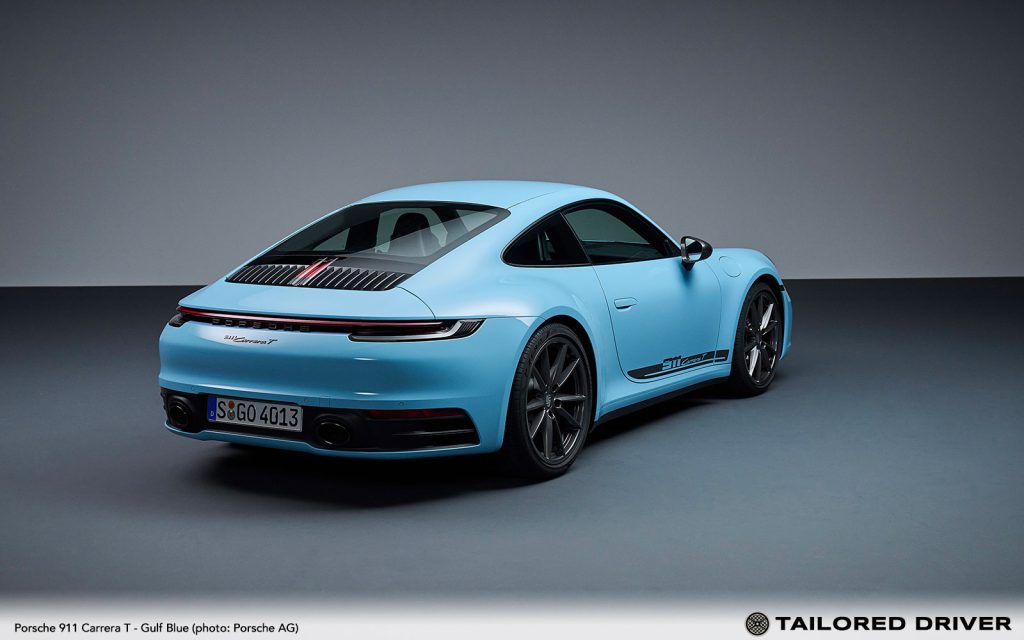
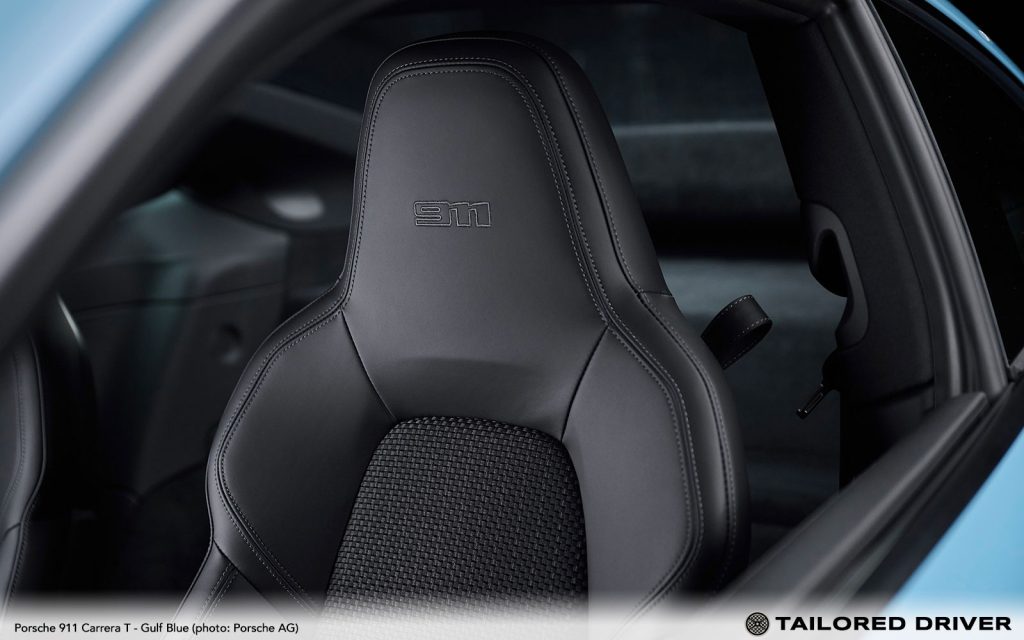
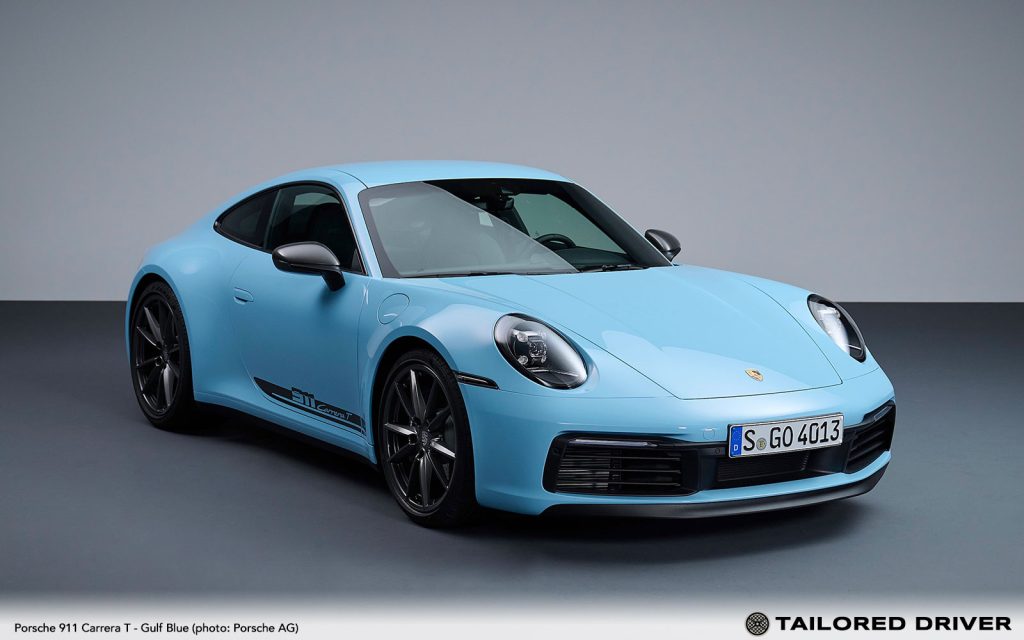
SUMMARY: The term “icon” may be loaded. For starters, the word itself is used far too often, in a way that waters down the value of the label. And, in the case of a truly iconic color such as Gulf Blue (gulfblau; non-metallic / non-metallic UNI; 328; Porsche), the color also tends to get over-used by Paint to Sample clients seeking the obvious Porsche motorsport heritage play. And what a play it is.
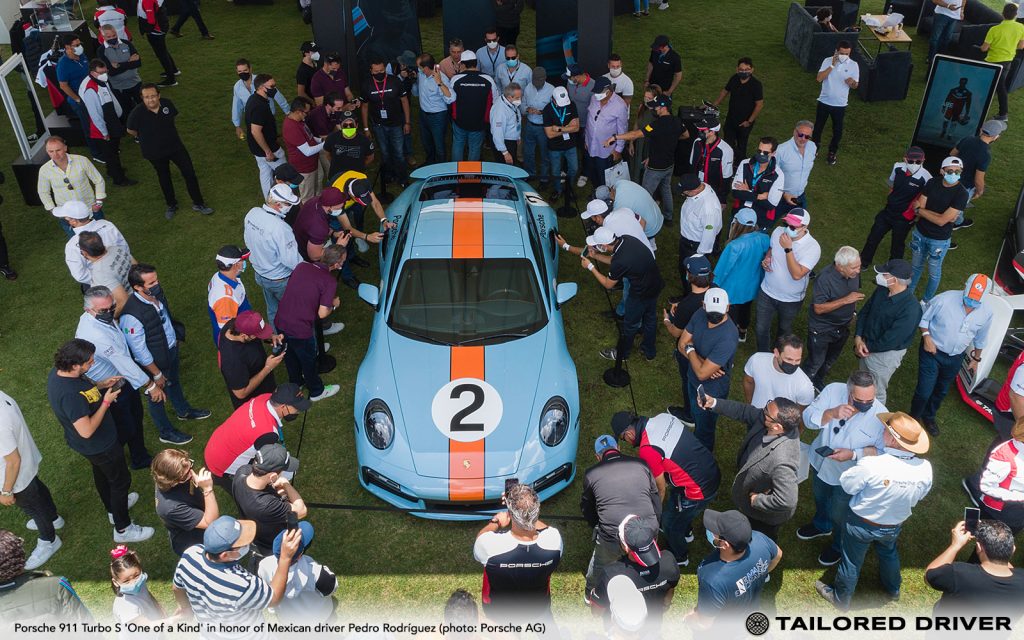
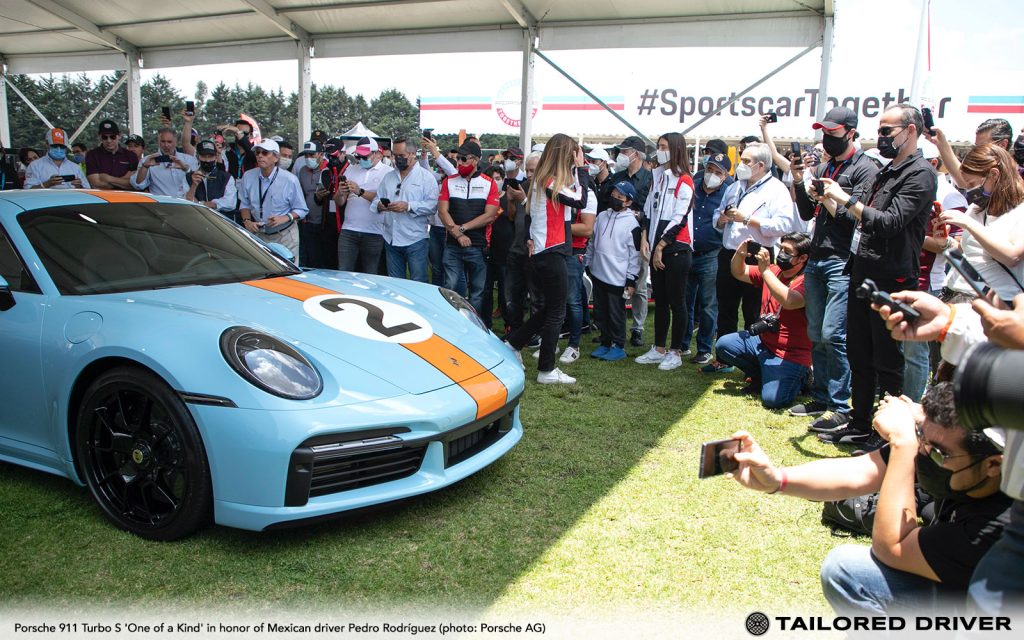
Gulf Blue gets is name from the petroleum company bearing its name. Gulf Oil has been a longtime sponsor of racing. Its trademark livery with its blue and orange color schemes have adorned race cars from far more brands than simply Porsche. Lore suggests Gulf colors used as racing livery began in 1967, with the brand’s first major win at the 24 Hours of Le Mans painted to a Ford GT40 a year later in 1968, and then again in 1969. For 1970, Gulf shifted to Porsche and adorned the 917K. That same year, Steve McQueen and his Solar Productions crew showed up in Le Mans to film the movie by the same name Le Mans. The latter catapulted the blue and orange into the consciousness of automobile and racing fans around the world, and it kicked off a long association between Gulf and Porsche.
Gulf Blue is a non-metallic light blue, almost a powder blue and not far off from what American college football fans would call a Carolina Blue. It’s quite common in the Paint to Sample Porsche space, and often paired with other race livery colors such as navy blue and orange (a.k.a. Gulf Orange, but that’s a color for another Color Focus).
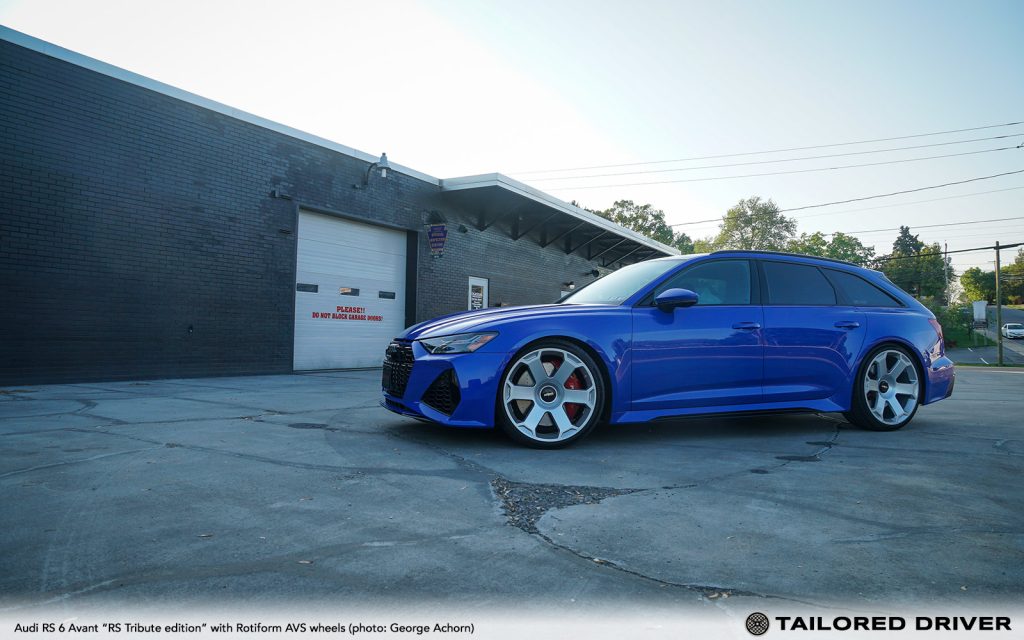
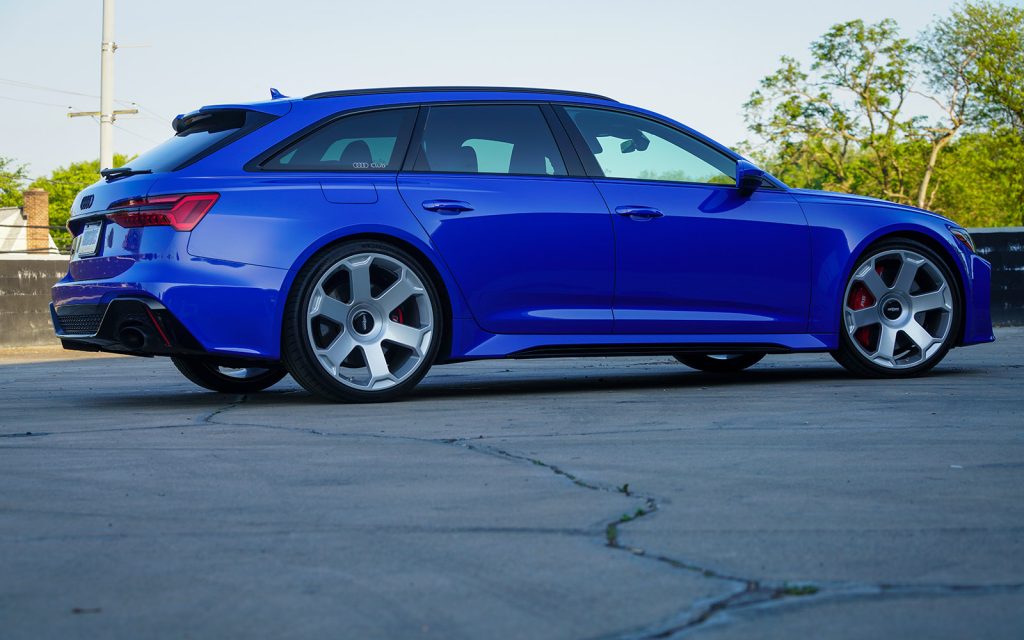
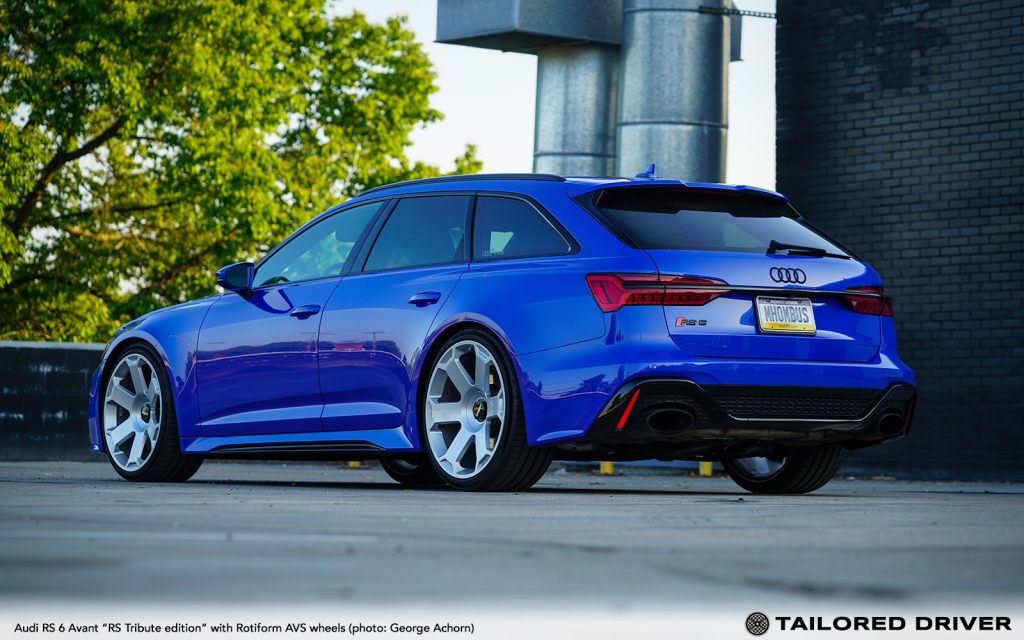
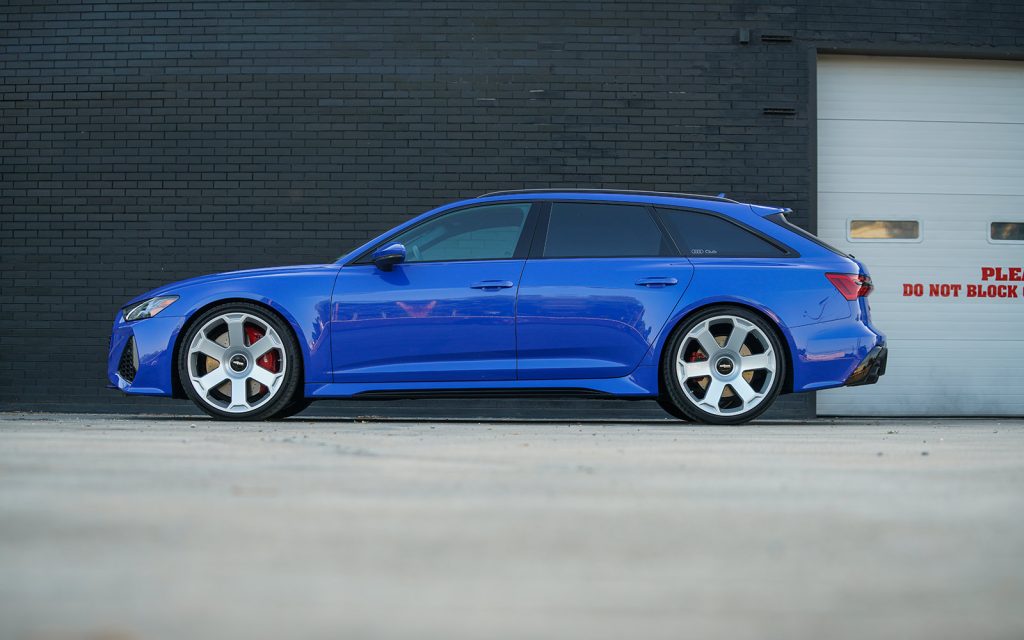
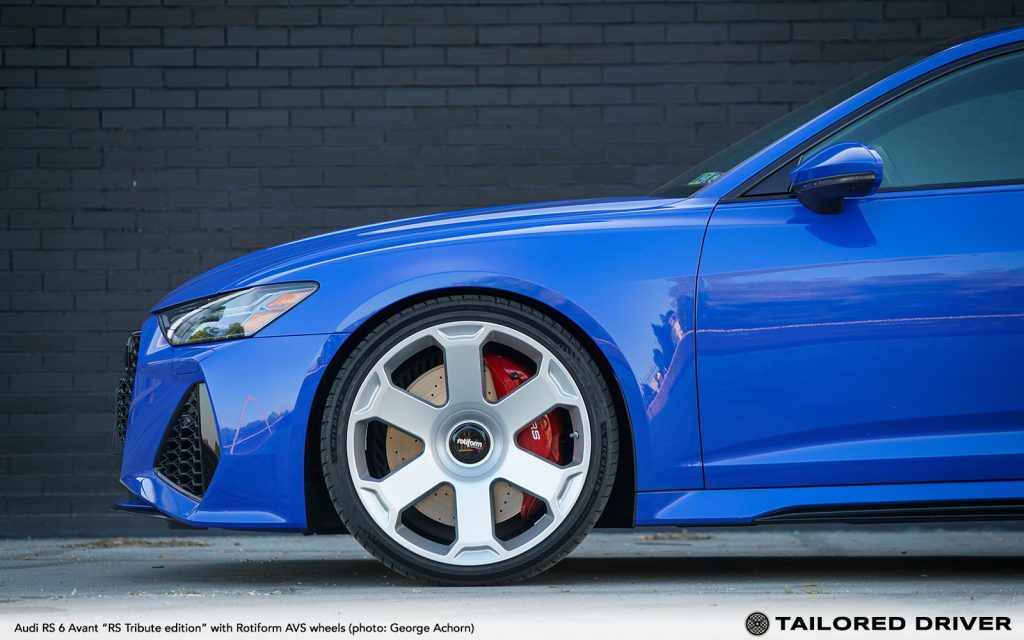
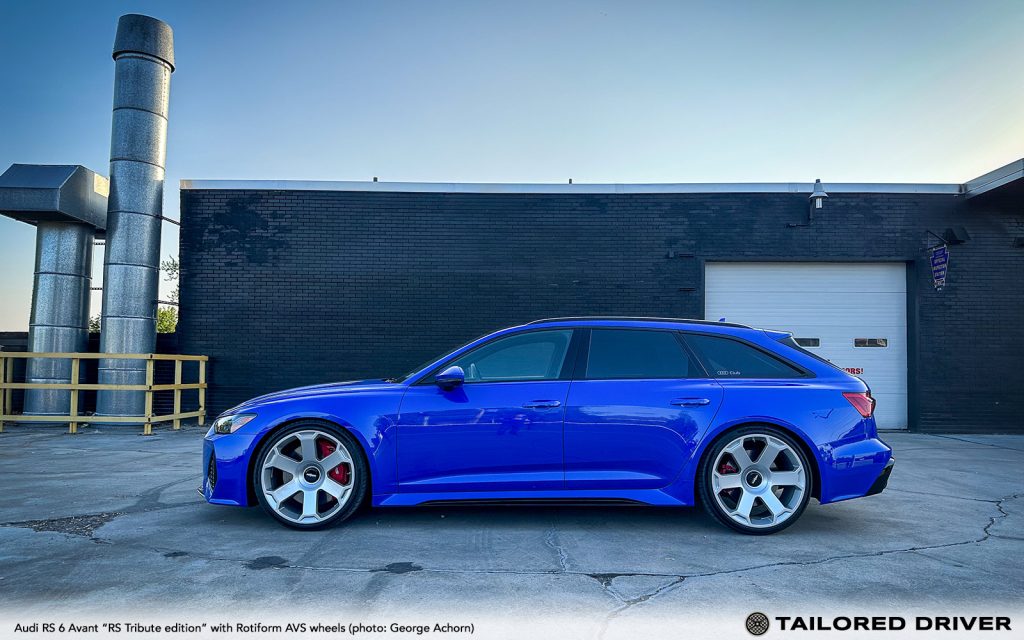
SUMMARY: Might Nogaro Blue (nogaroblau; pearl effect UNI; Z5M; Audi) be the ultimate color for four rings cars wearing an RS badge? Well, we know it is pretty much the original. The color first launched as RS Blue when it first appeared on the Porsche-built and developed RS2 Avant. It would later reappear in the B5 S4, first-generation S3 and remain a favorite for S and RS applications and special editions through to today. The “RS Tribute Edition” take not the RS 6 Avant, itself a tribute to the RS2, remains one of the most sought-after of the C8 RS 6 models sold in the U.S.A.
Nogaro Blue is a pearl effect blue that seems to hat tip the pre-war national French Blue made iconic in that era when raced on the likes of the Type 33 grand prix cars. Rumor has it that Audi designers in the Simi Valley design studio sprayed out a marine blue in a request back to the factory for company car specification, which inspired the development of RS Blue.
Don’t confuse that with Porsche’s Maritime Blue, a 90s Carrera Cup color of the same era popular on the 911 Carrera RS (type 964) and 968. The timing, Porsche DNA and and their similar appearance would suggest they might be the same code by another name, but park them next to each other and you’ll see a difference.
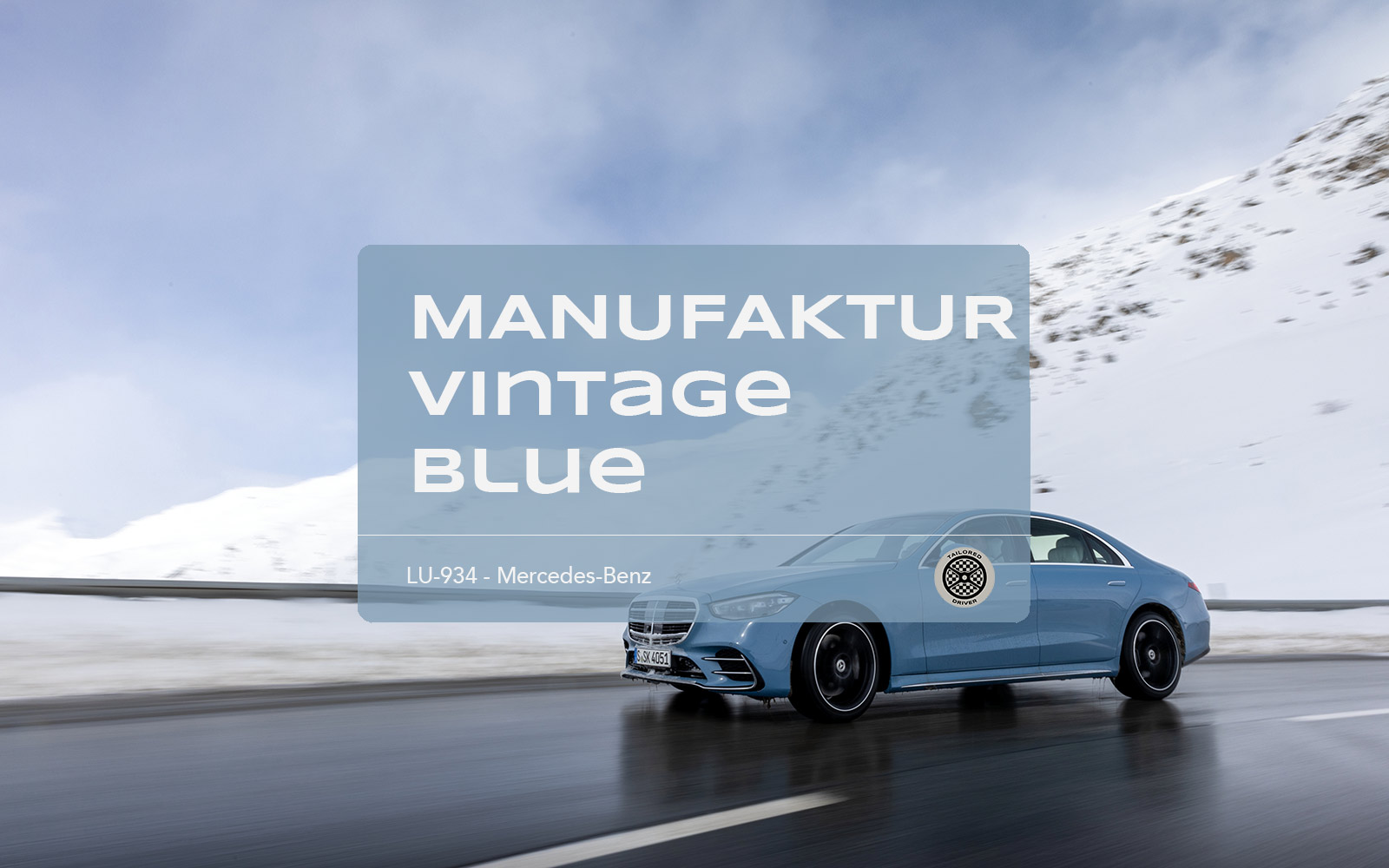
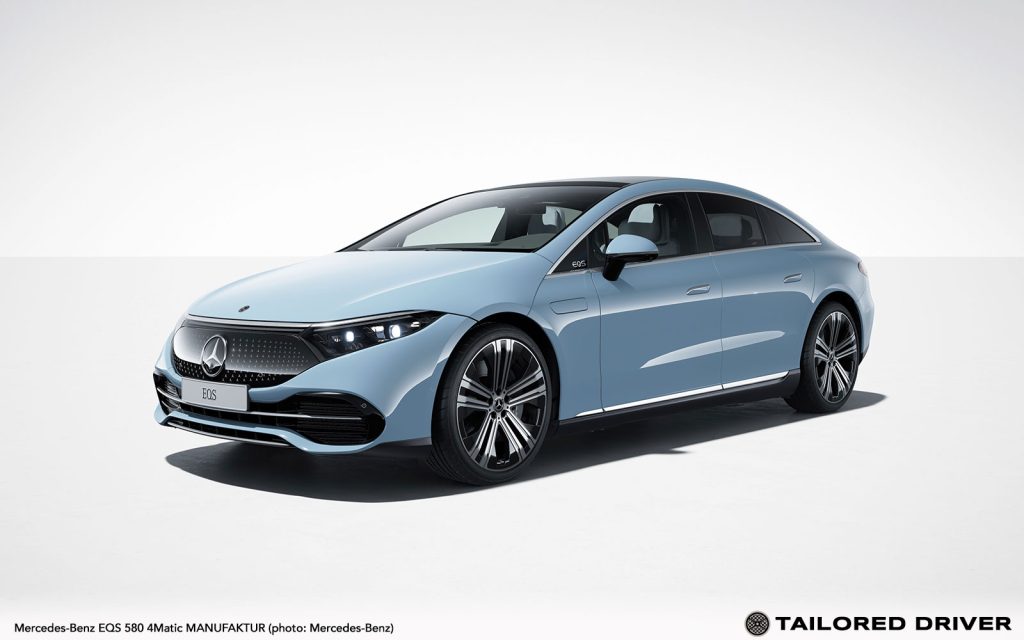
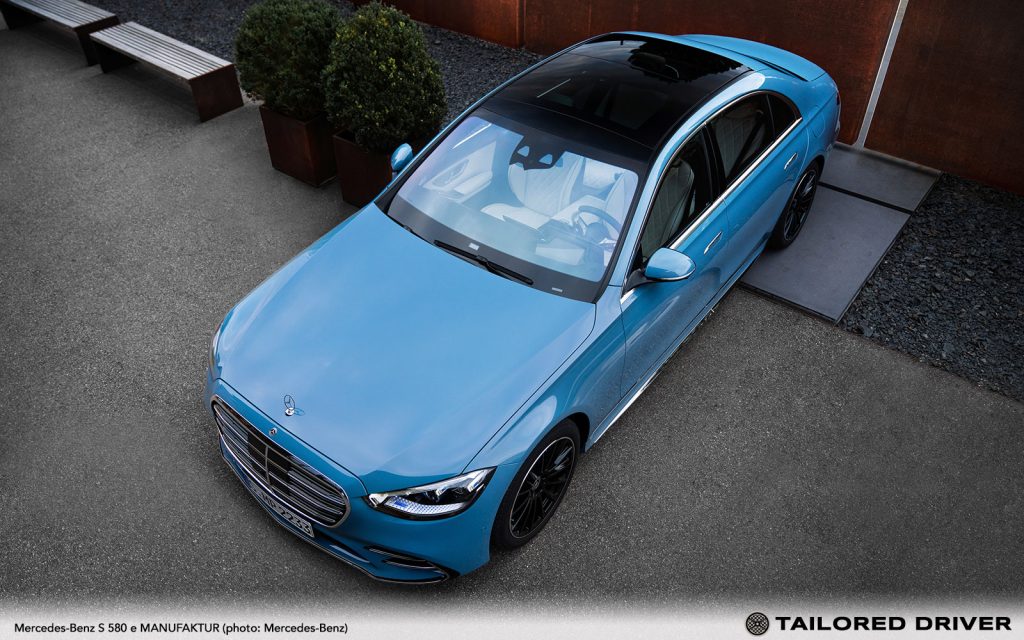
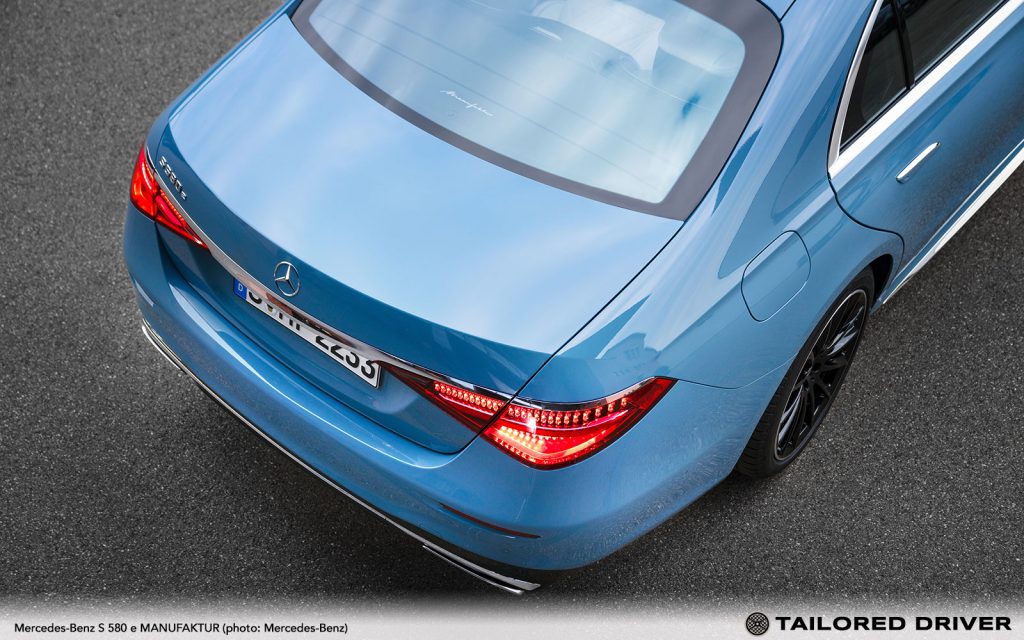
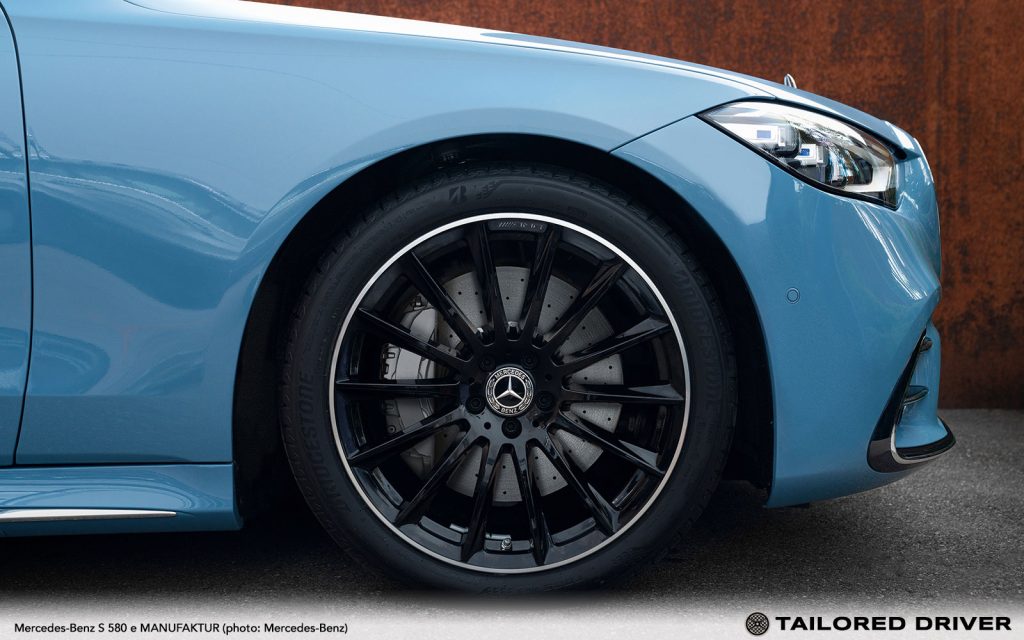
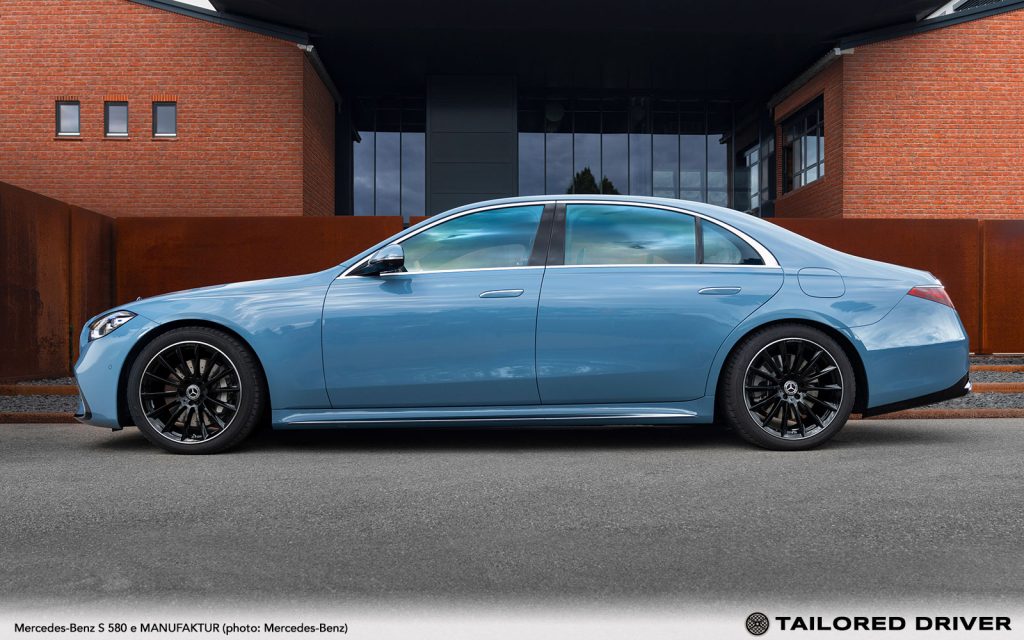
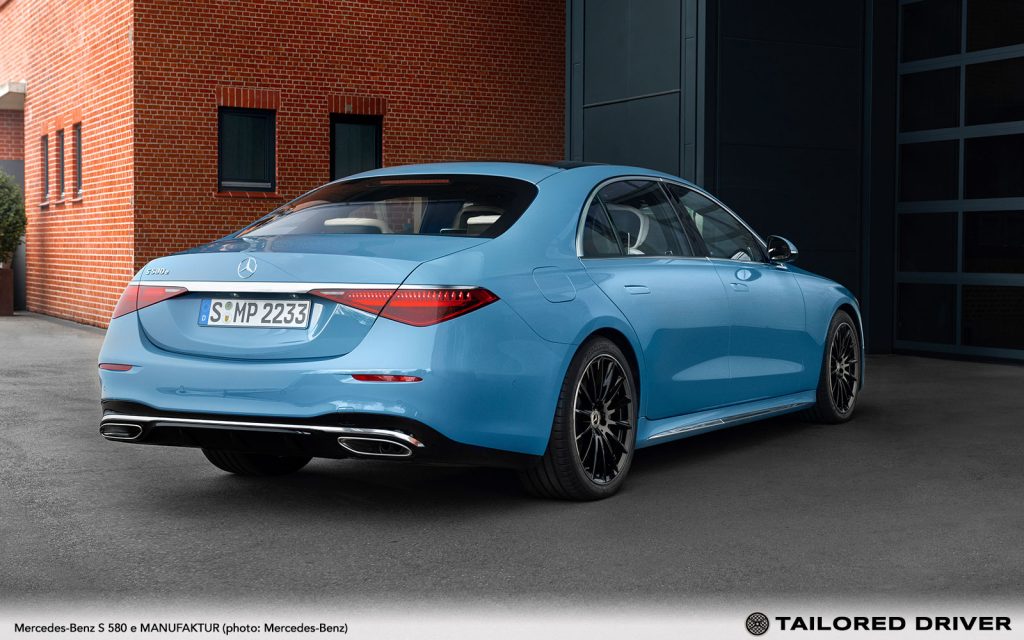
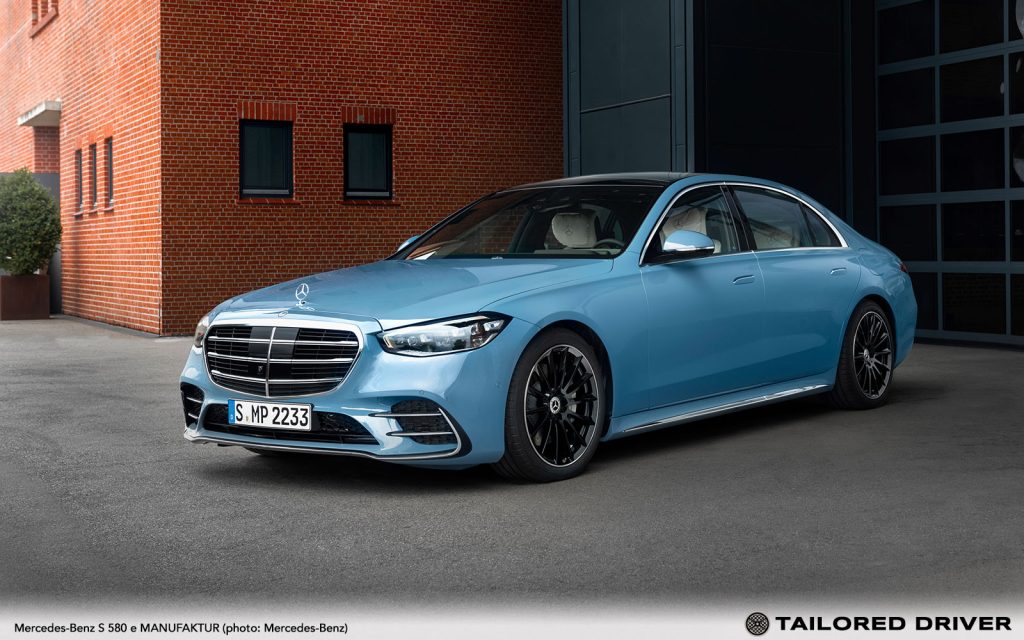
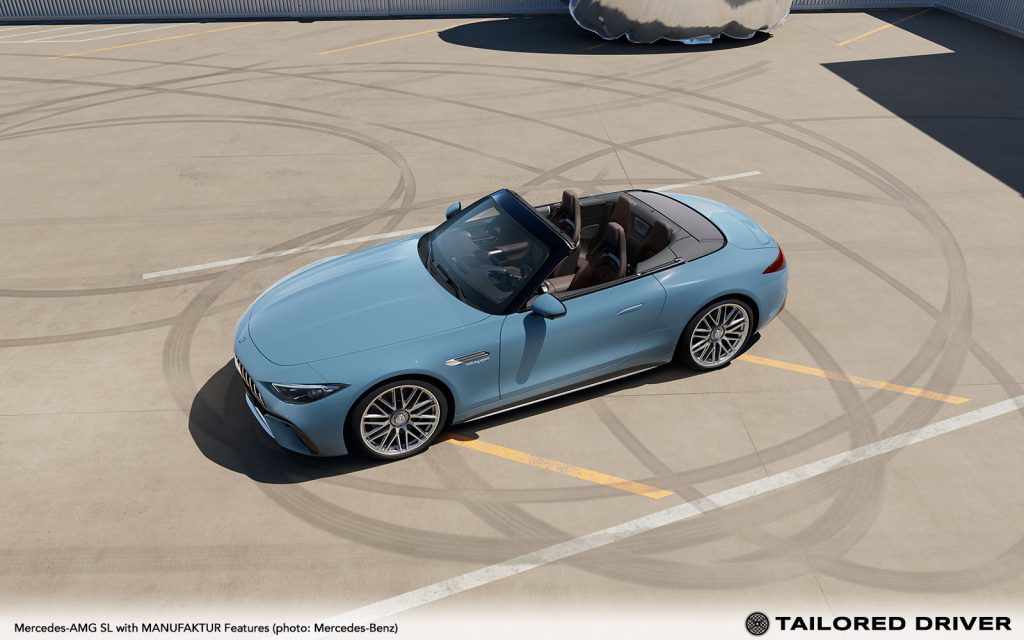
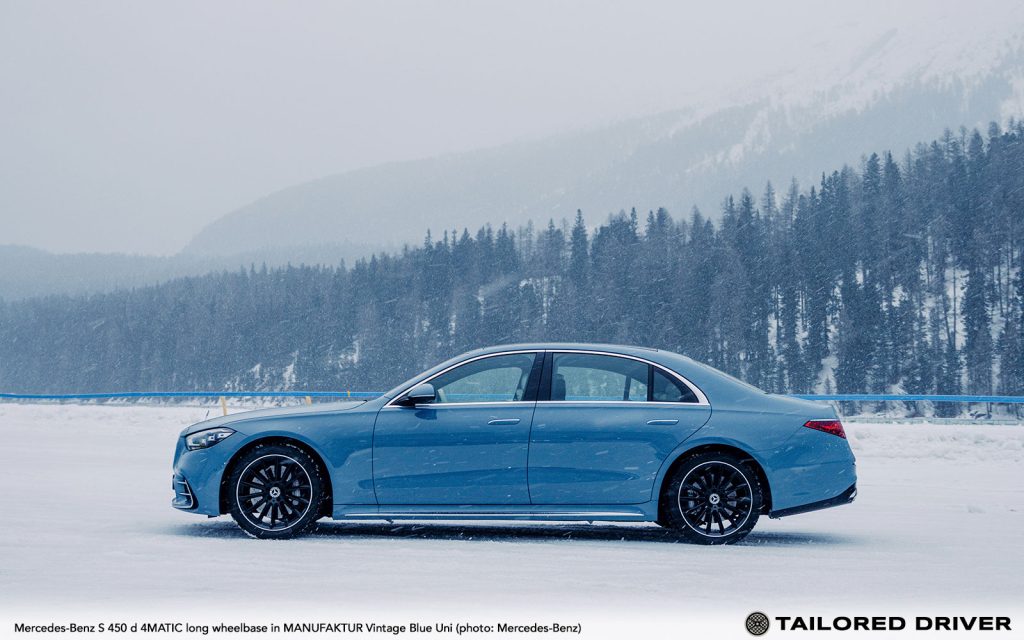
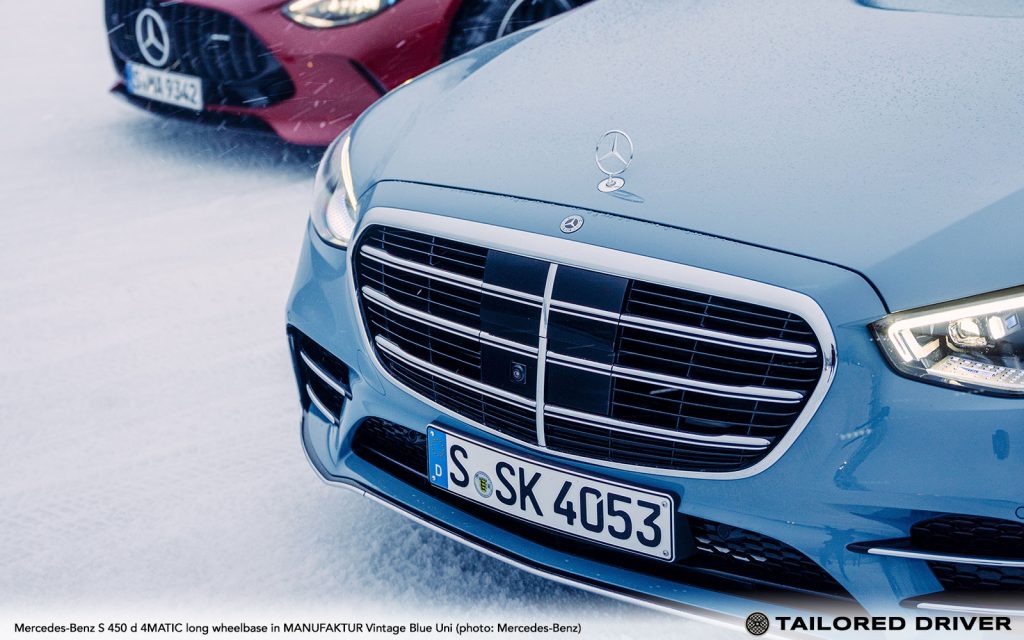
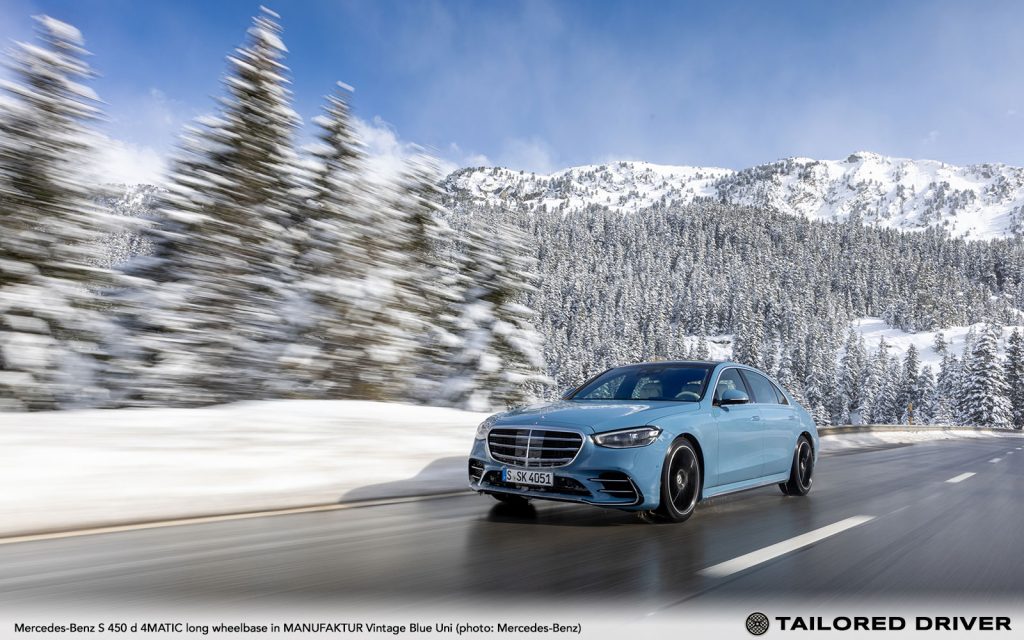
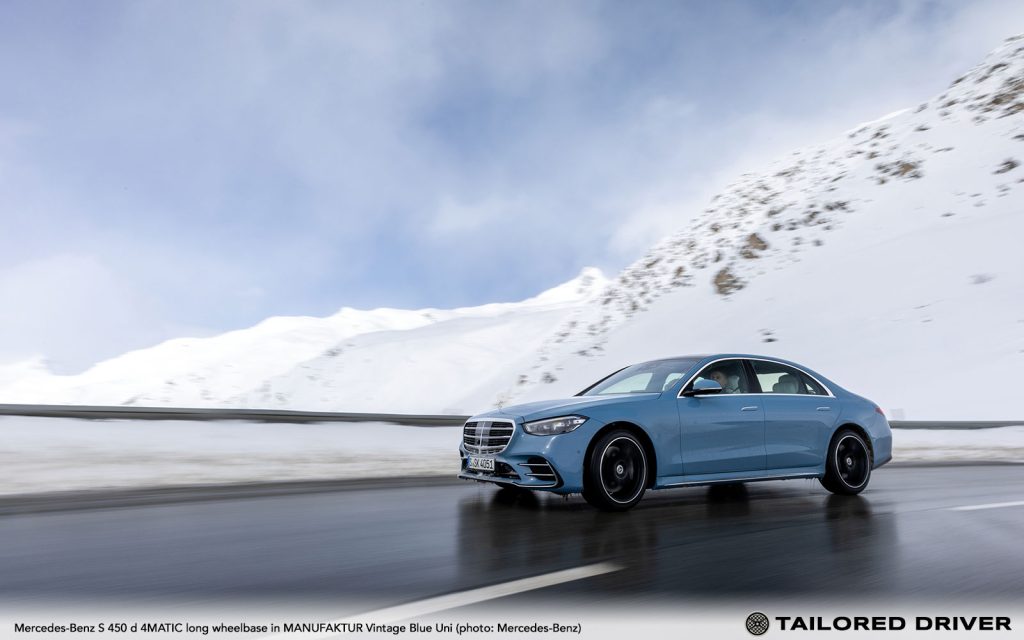
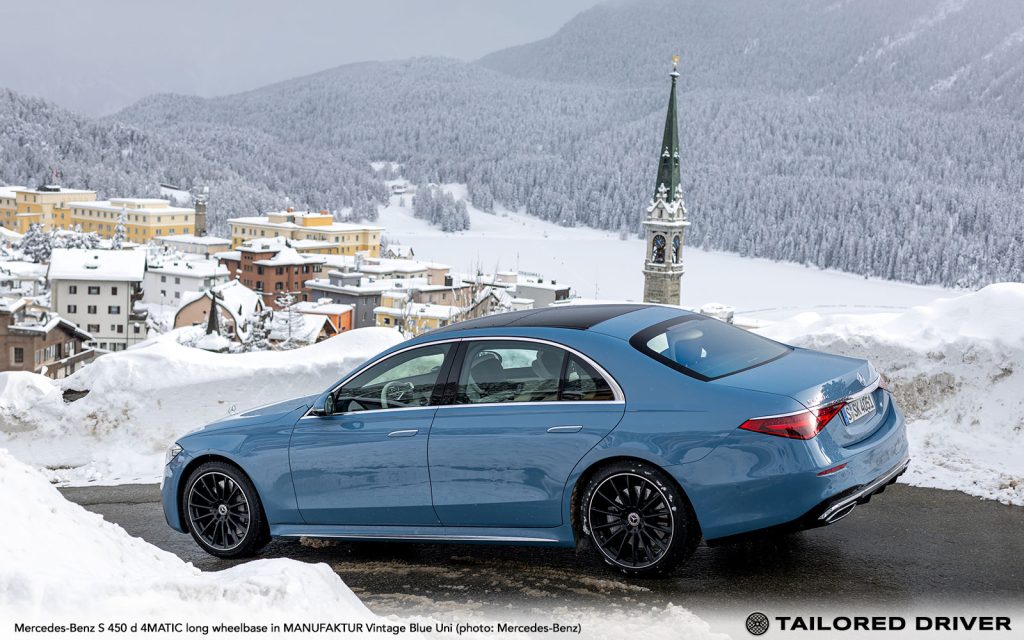
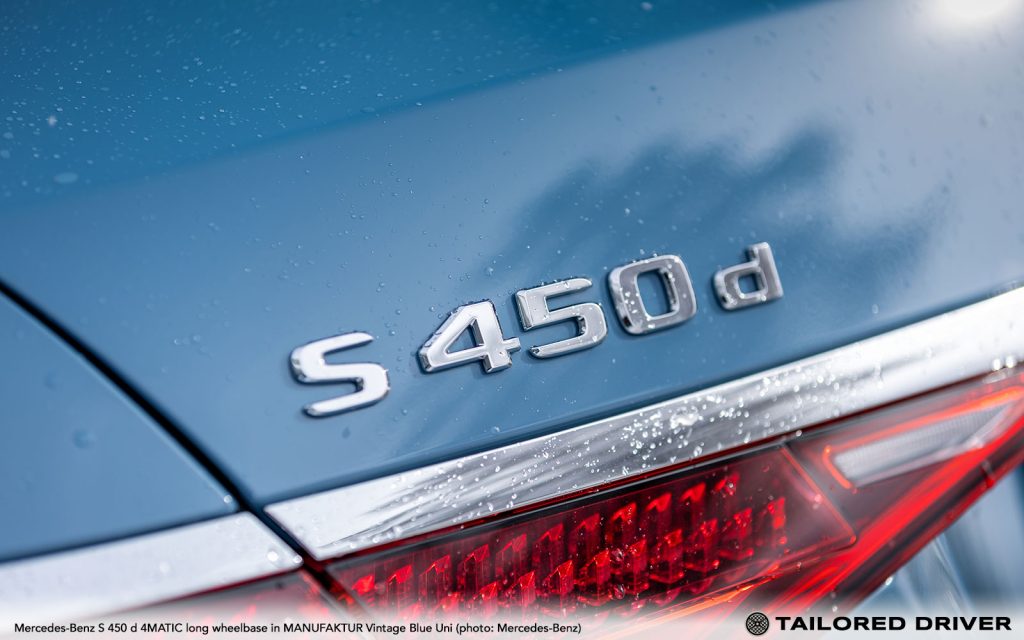
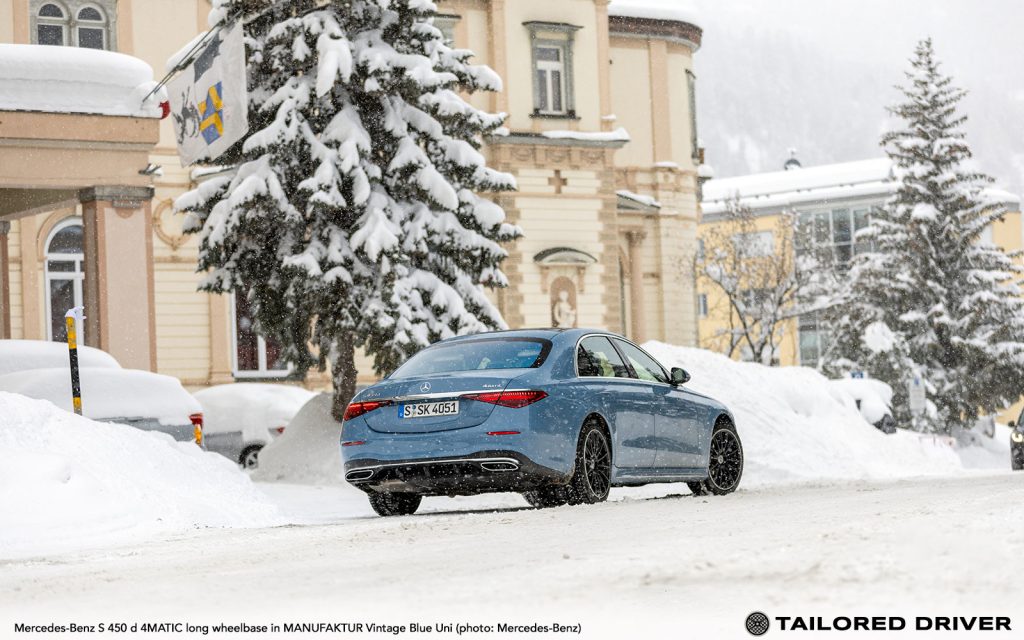
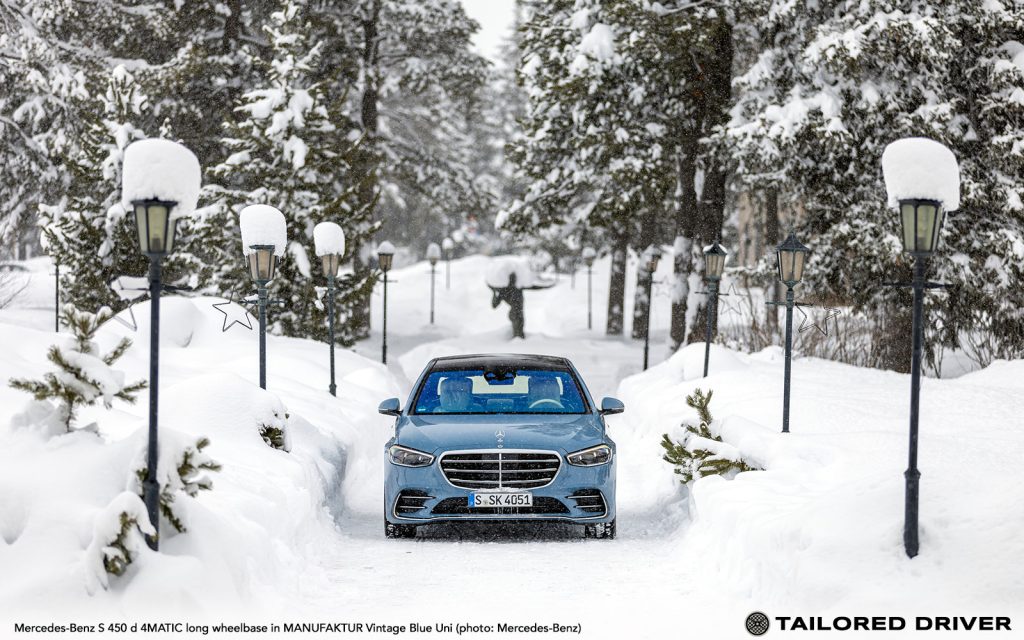
SUMMARY: It may say “Vintage” in the name, but MANUFAKTUR Vintage UNI (vintagblau; UNI; LU-934; Mercedes-Benz) is technically modern. Yes, it seems to hark visions of powder blue W115 or W123 E-Classes of the 60s and 70s… or maybe Gulf Blue racing liveries, but it’s decidedly different and decidedly modern. Mercedes-Benz rolled out this blue uni color as one of the colors in the palette of its modern era MANUFAKTUR tailoring service, offering a very unique look that’s both timeless and throwback.
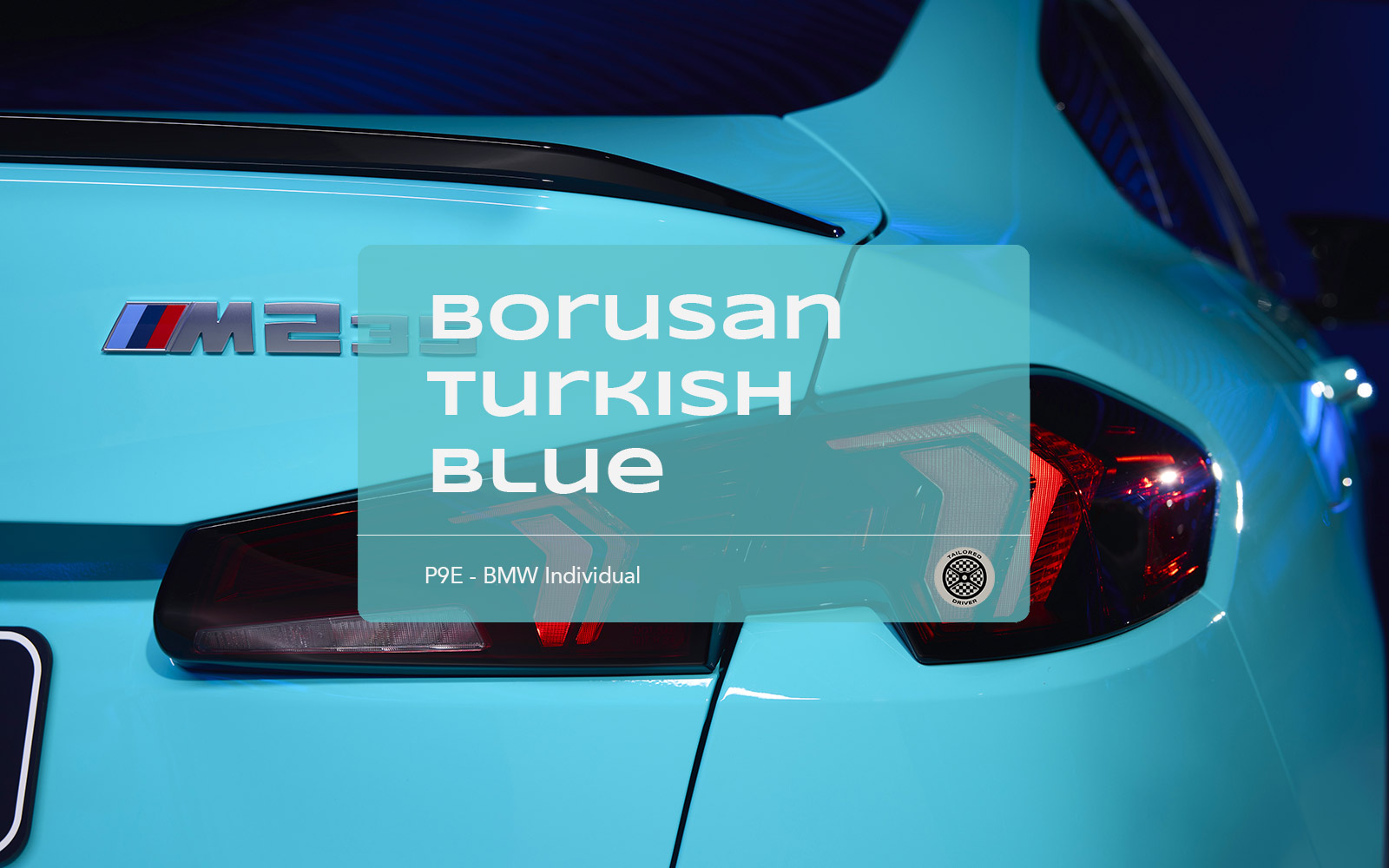
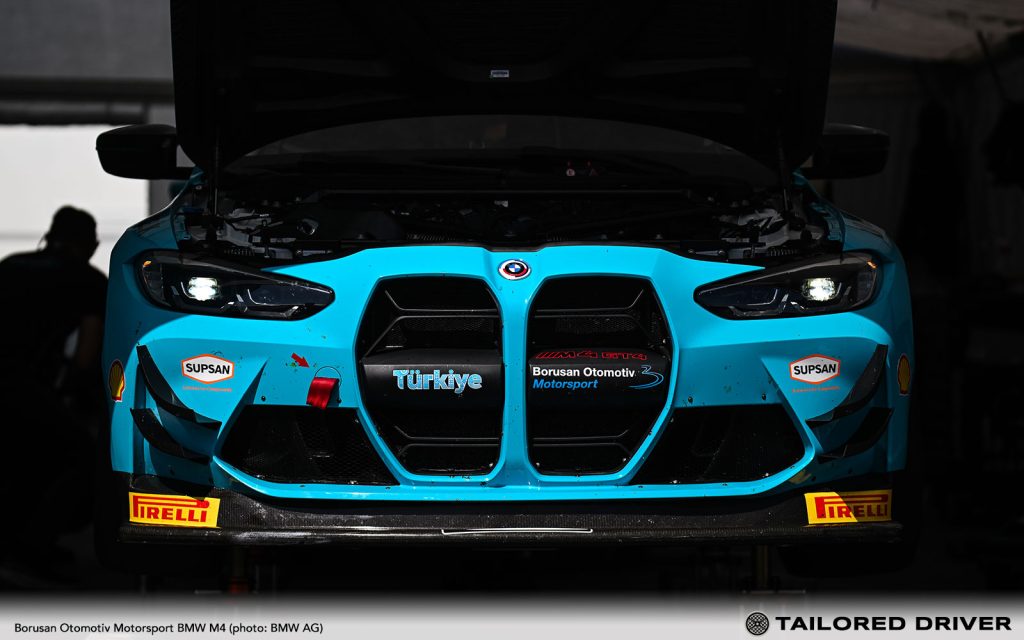
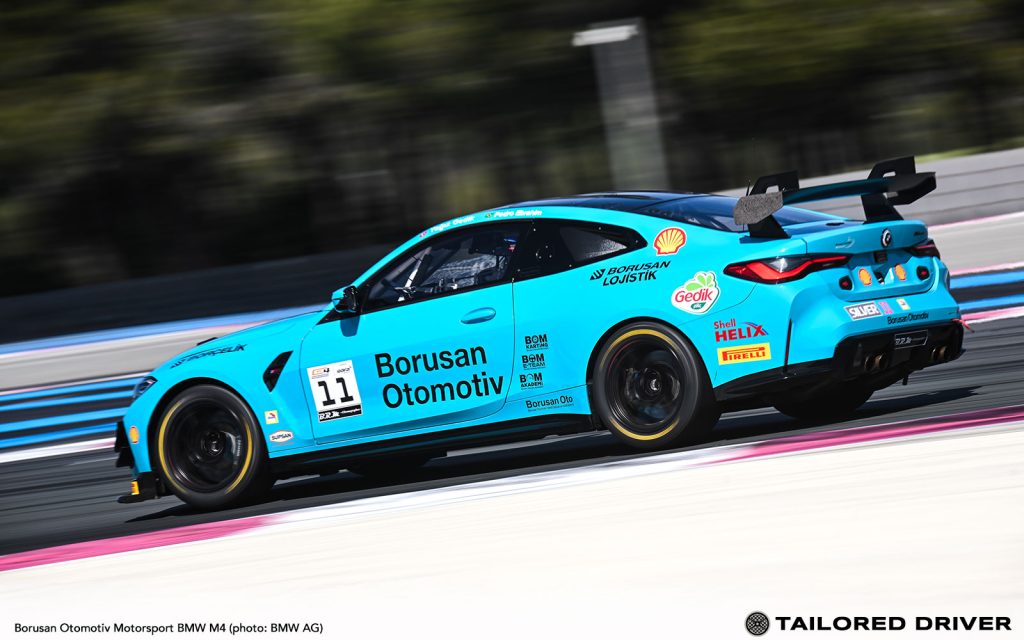
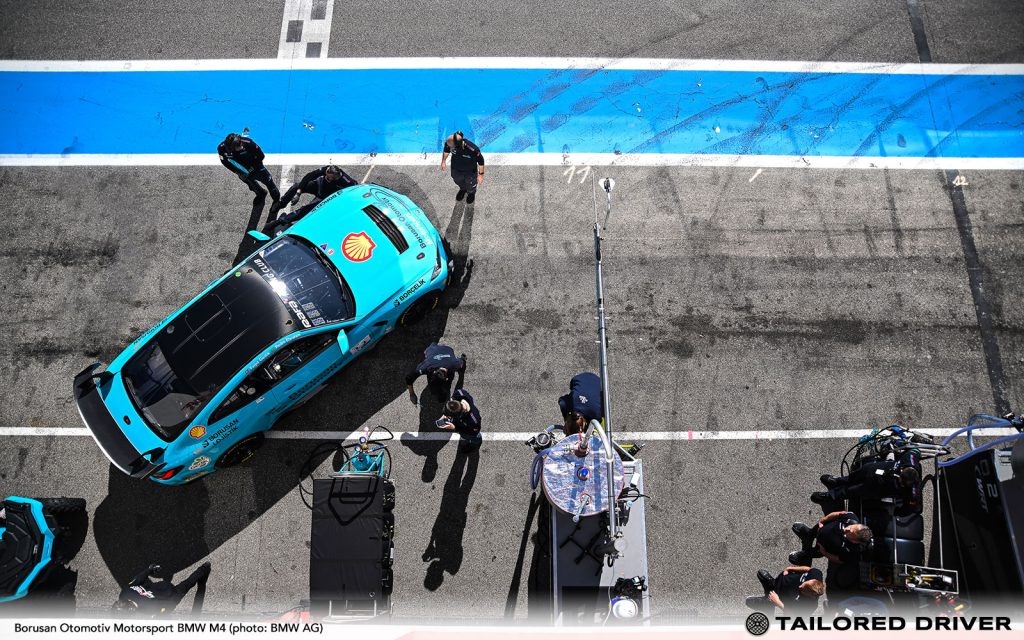
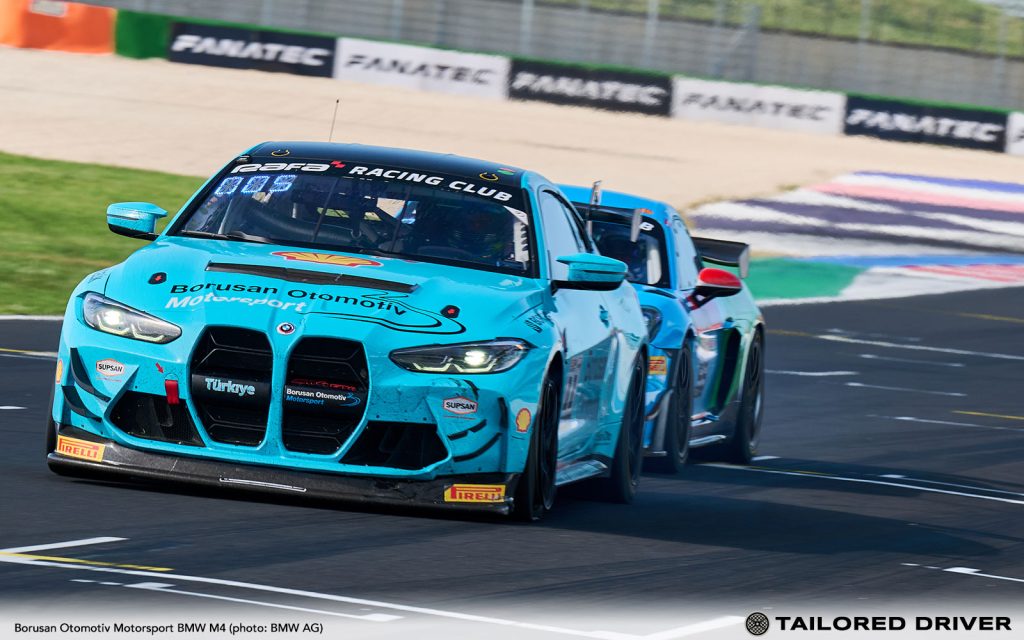
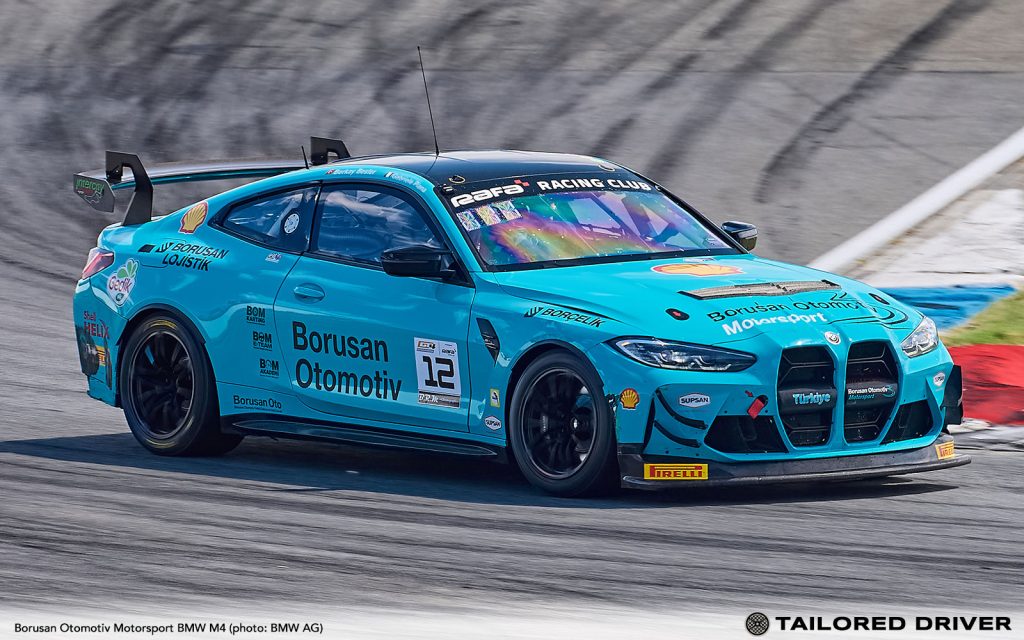
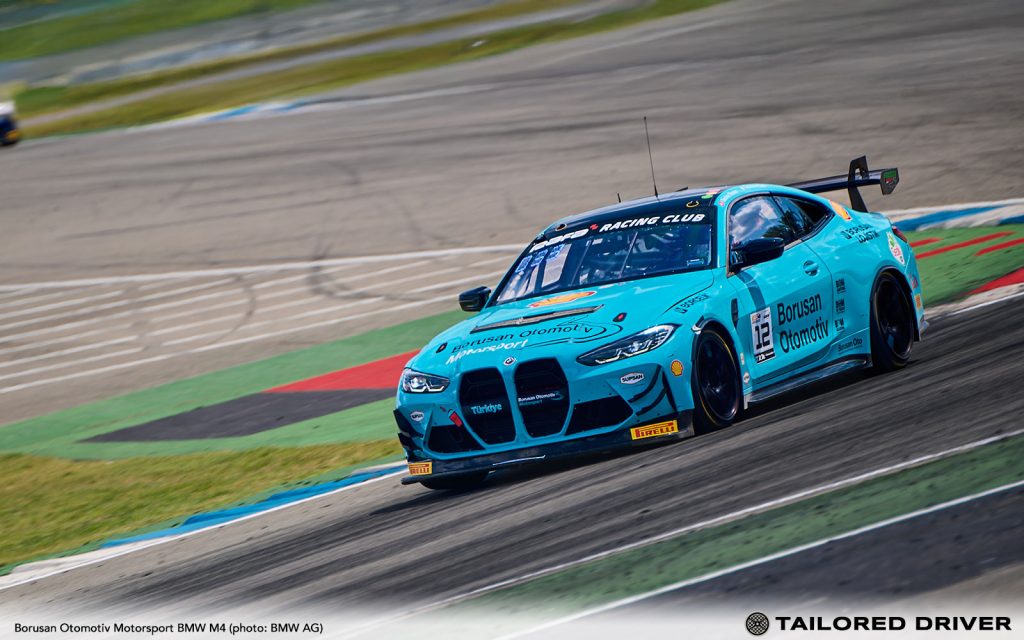
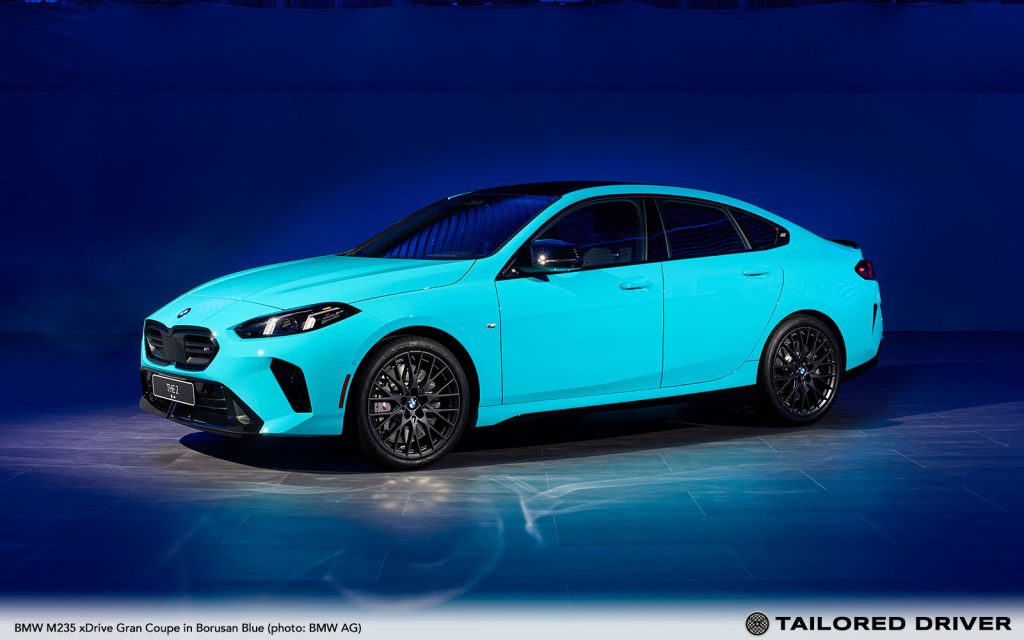
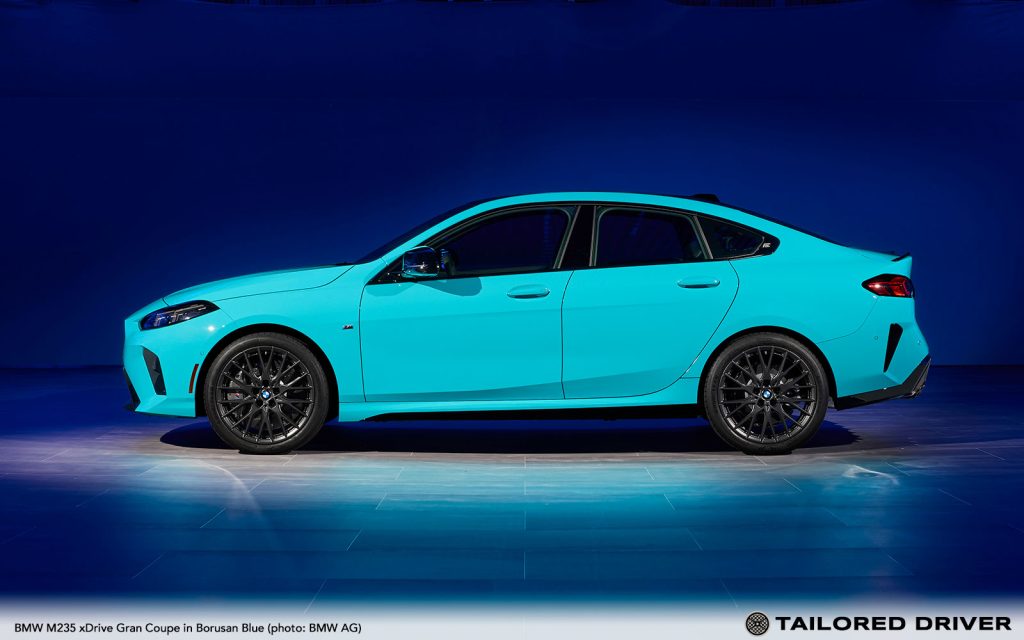
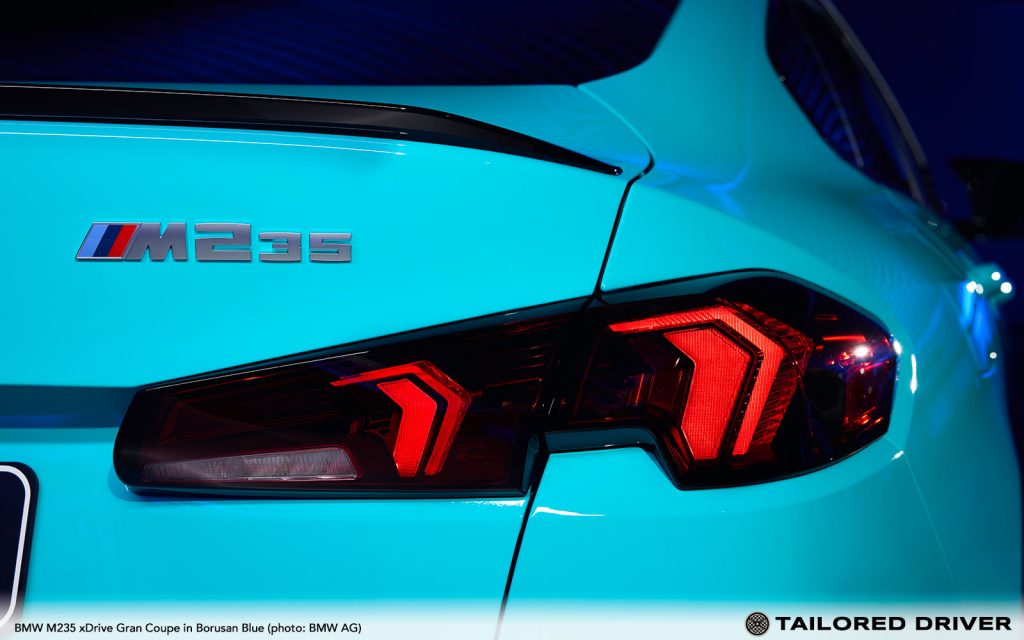
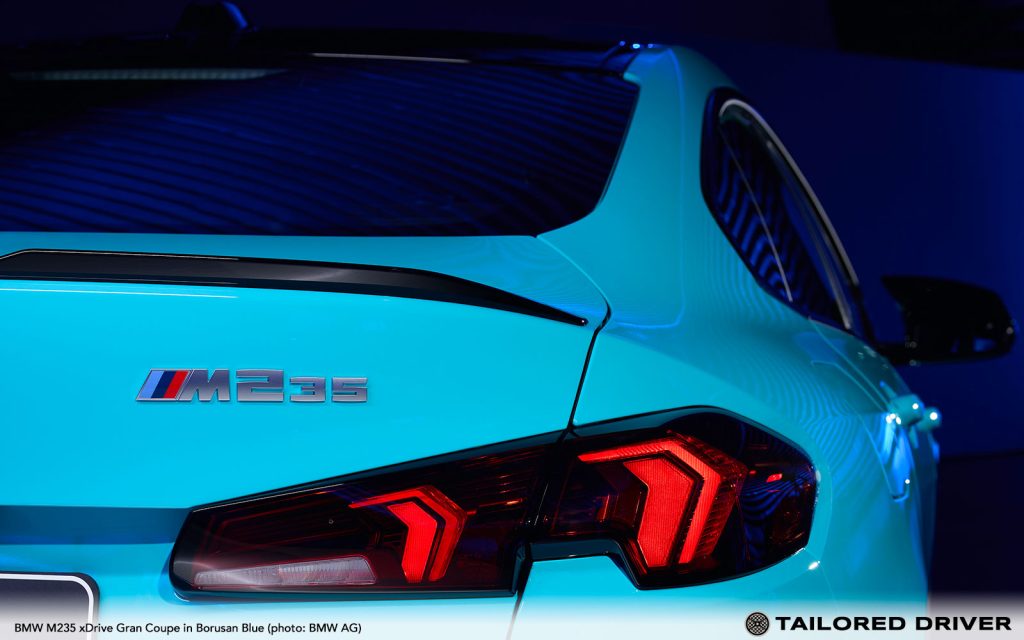
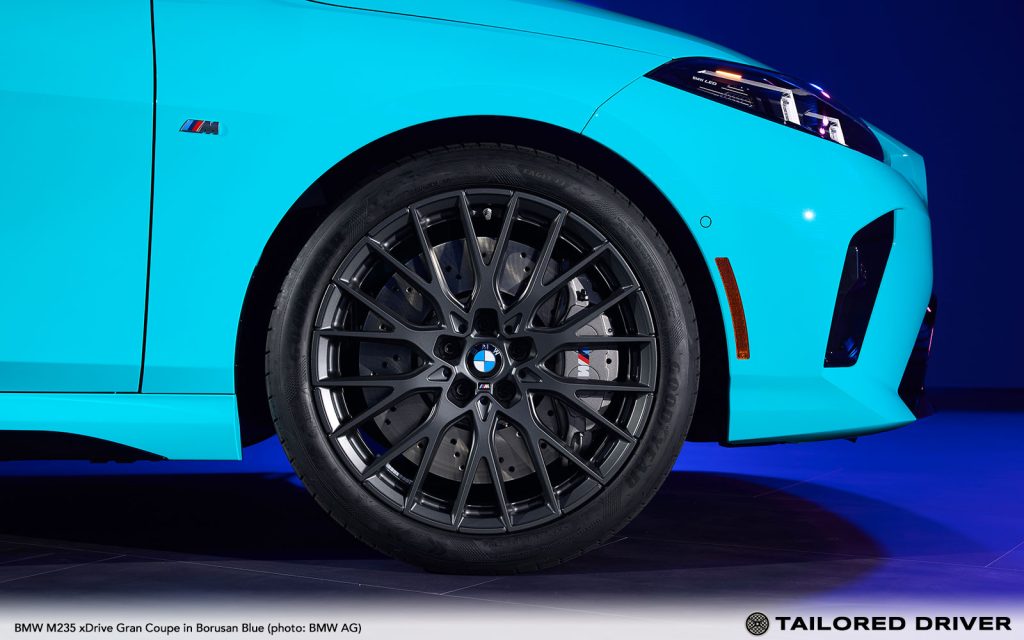
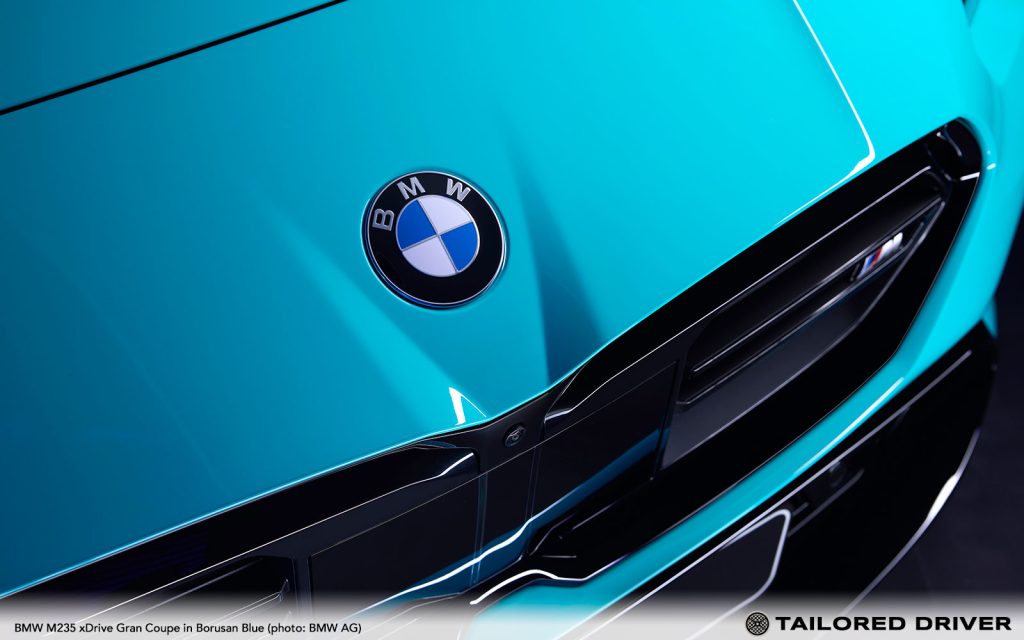
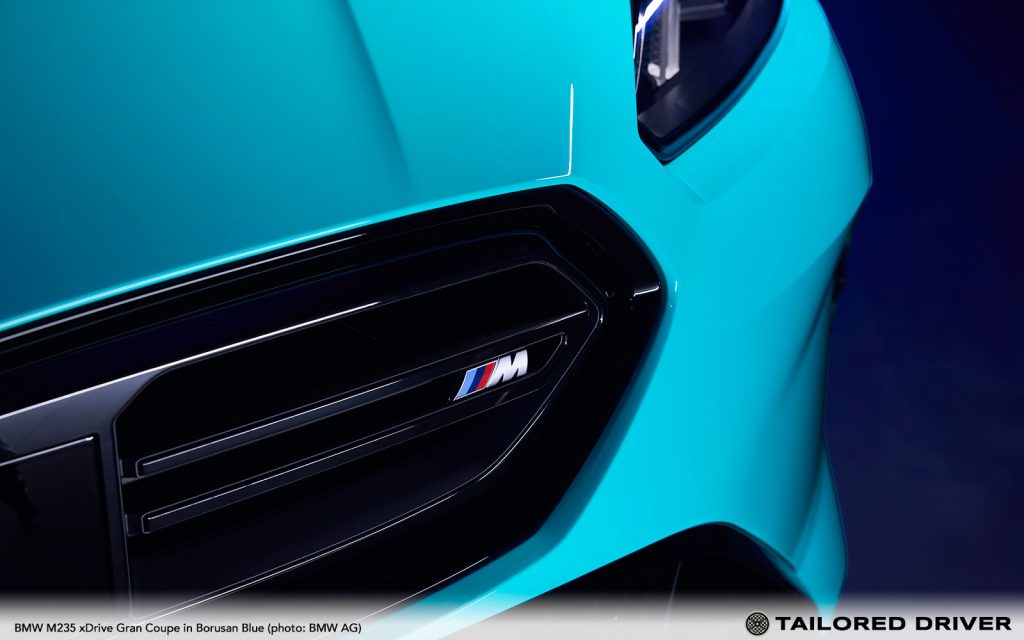
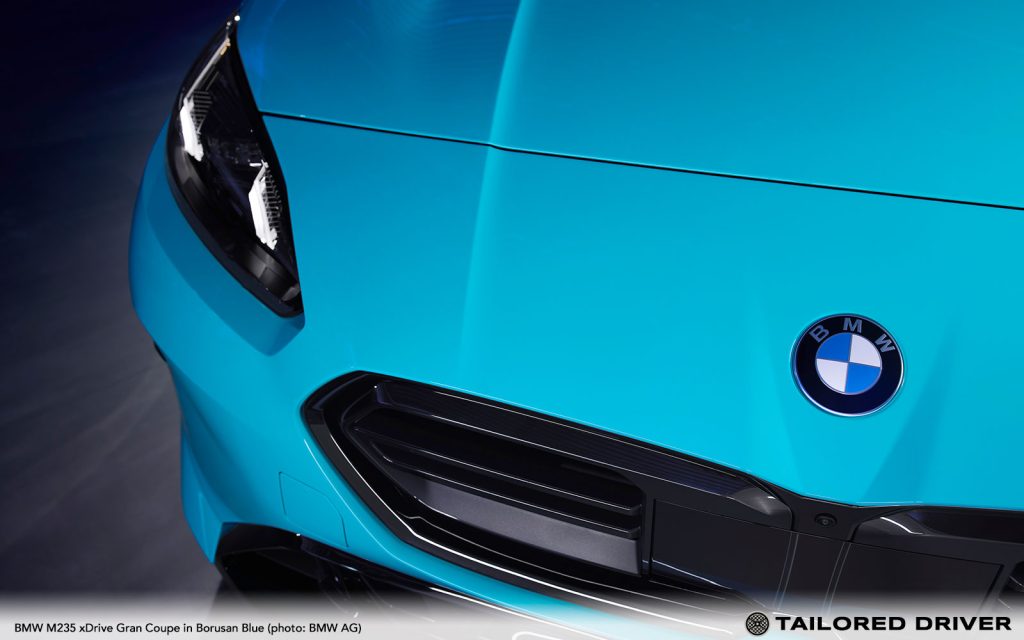
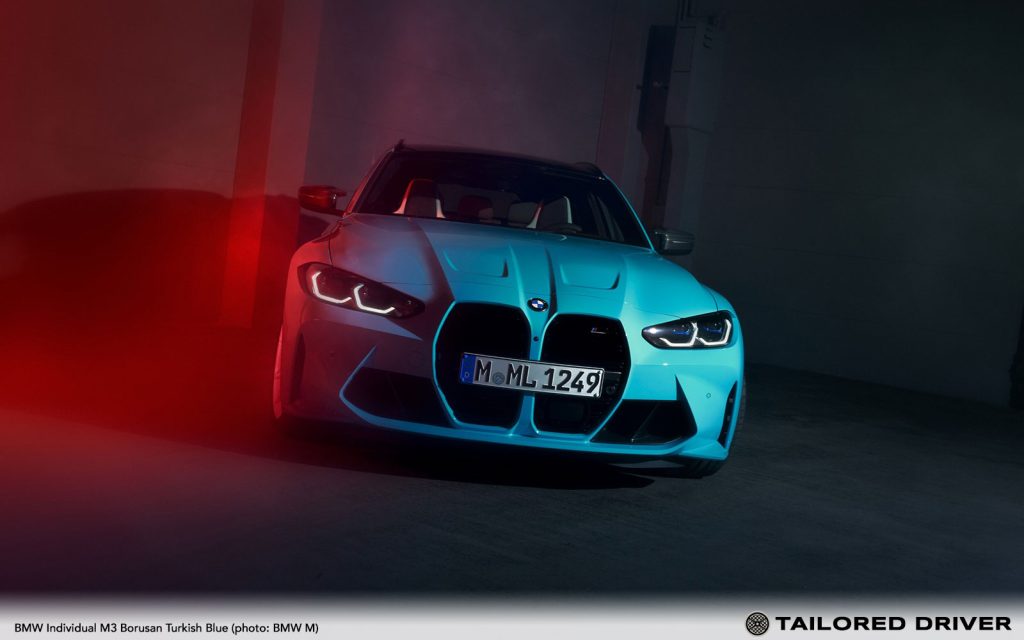
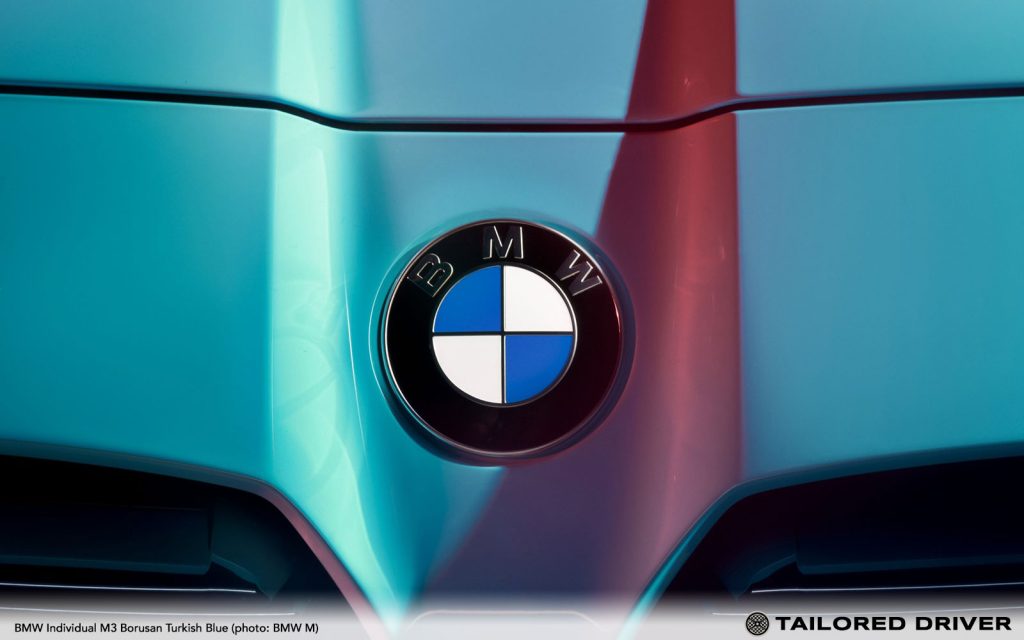
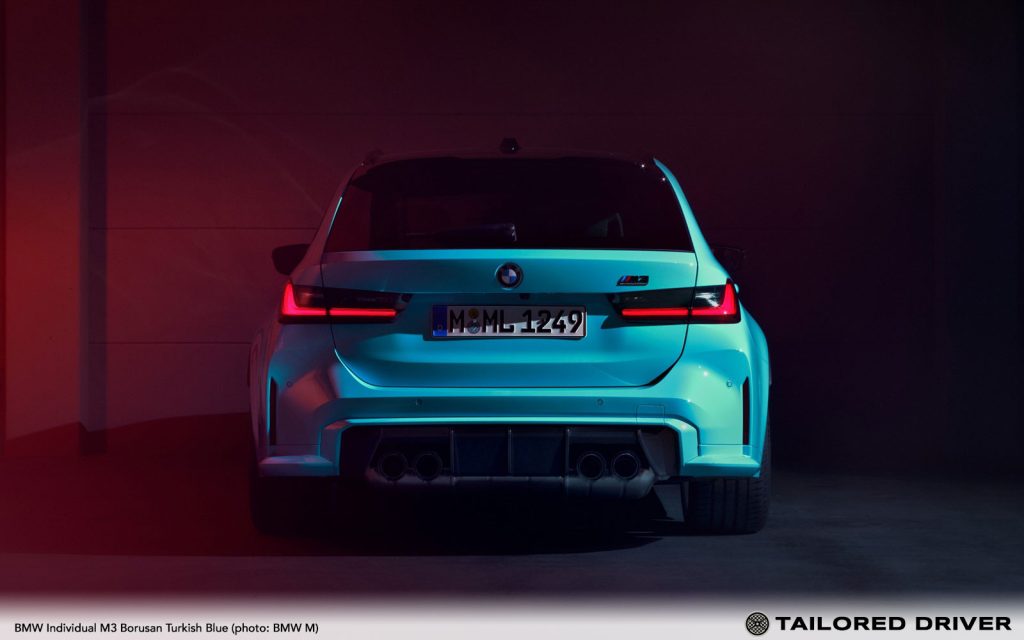
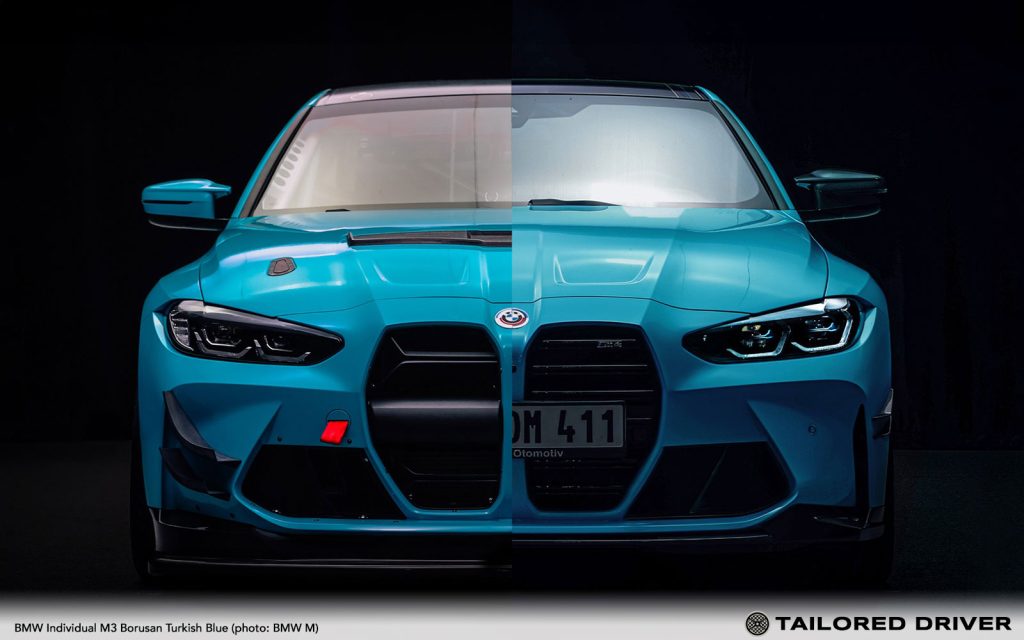
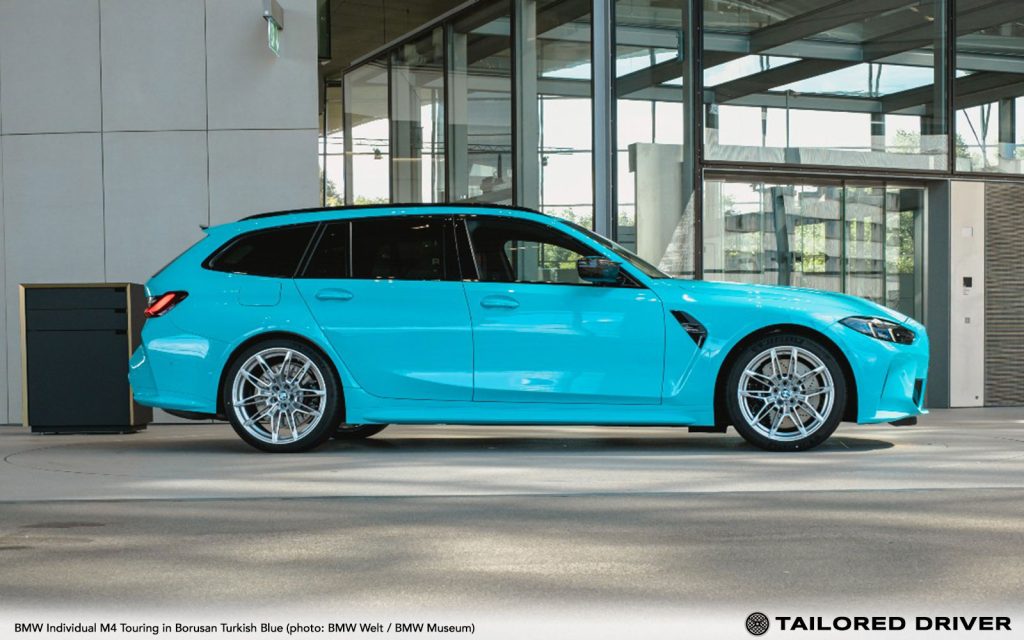
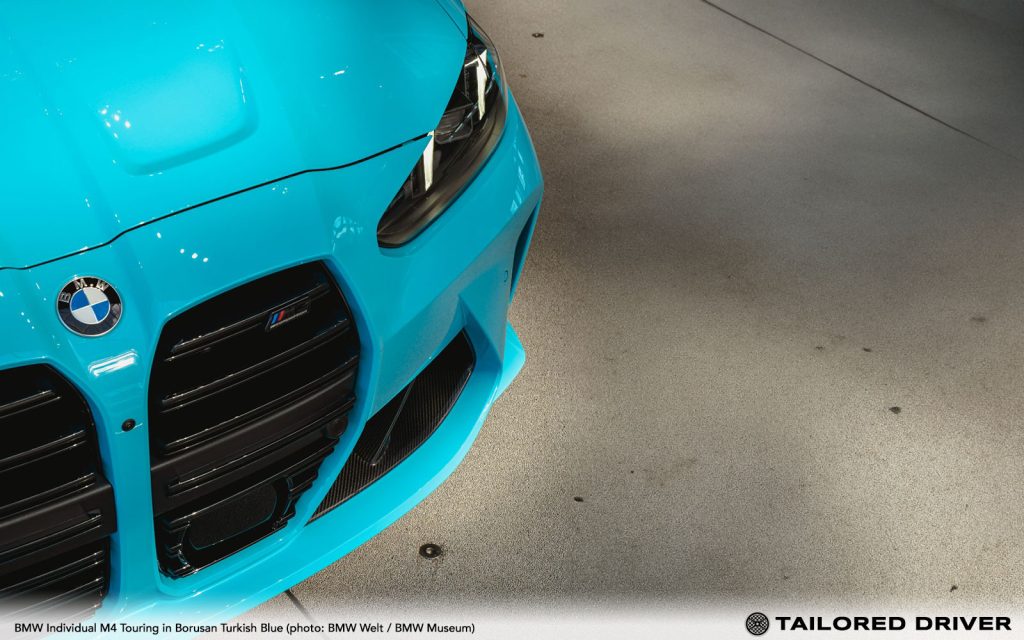
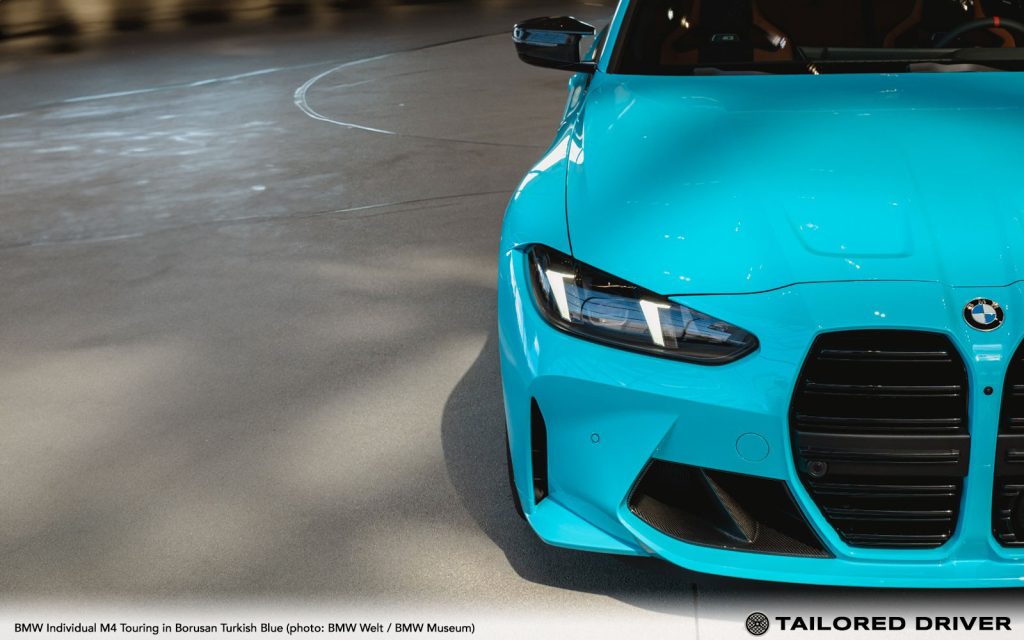
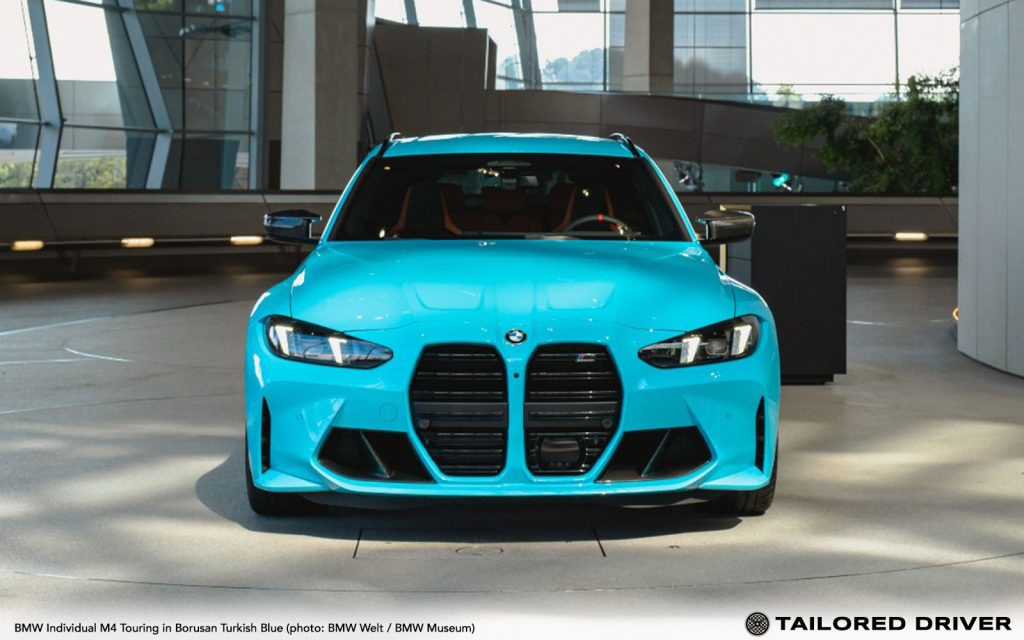
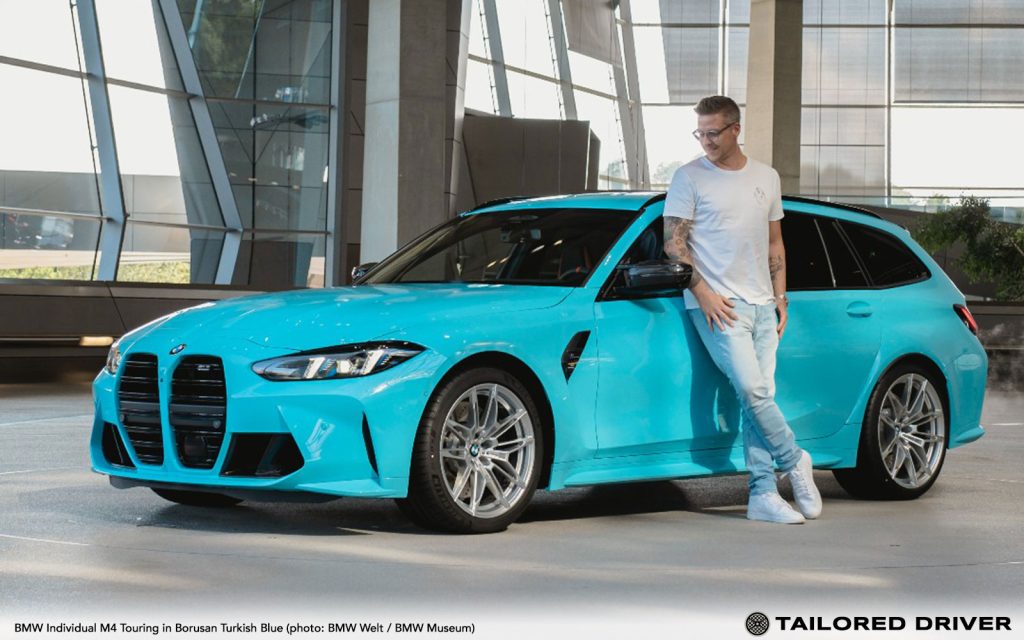
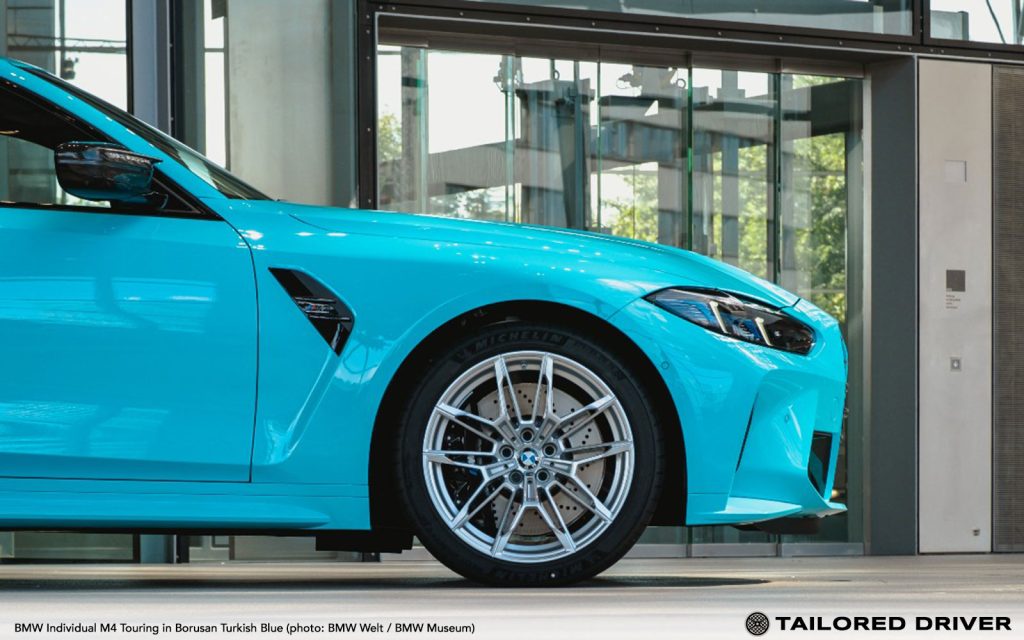
SUMMARY: Borusan Turkish Blue (borusantürkischblau; non-metallic uni; P9E; BMW) is an intense racing blue on the green side of the blue spectrum, established as a go-to color from its use on the BMW M4 GT4 racing cars of the Turkish racing team Borusan Otomotiv Motorsport. Launched in 2008, Borusan Otomotiv Motorsport, working with BMW Individual to develop this blue as a special color specifically for its cars. In more recent years, mounting success for the team has brought their signature color to the fore.
In developing the blue hue, the team was seeking an eye-catching unique color to give their cars a distinctive look on track. Following their ordering a special edition roadgoing BMW M4 Coupé in the color, the team and BMW were so impressed with the result that the color was made accessible via BMW Individual to a wider range of BMW buyers.