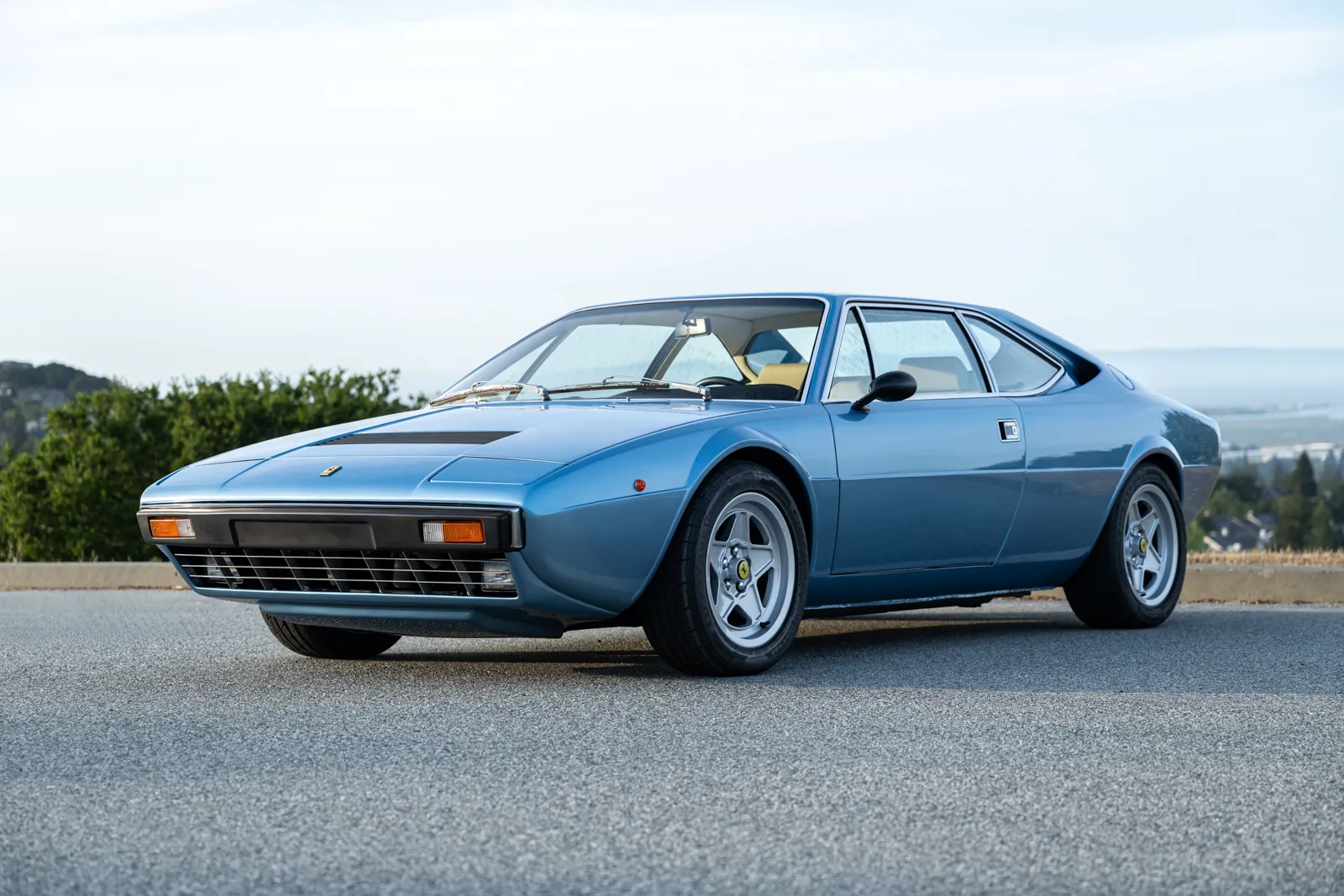
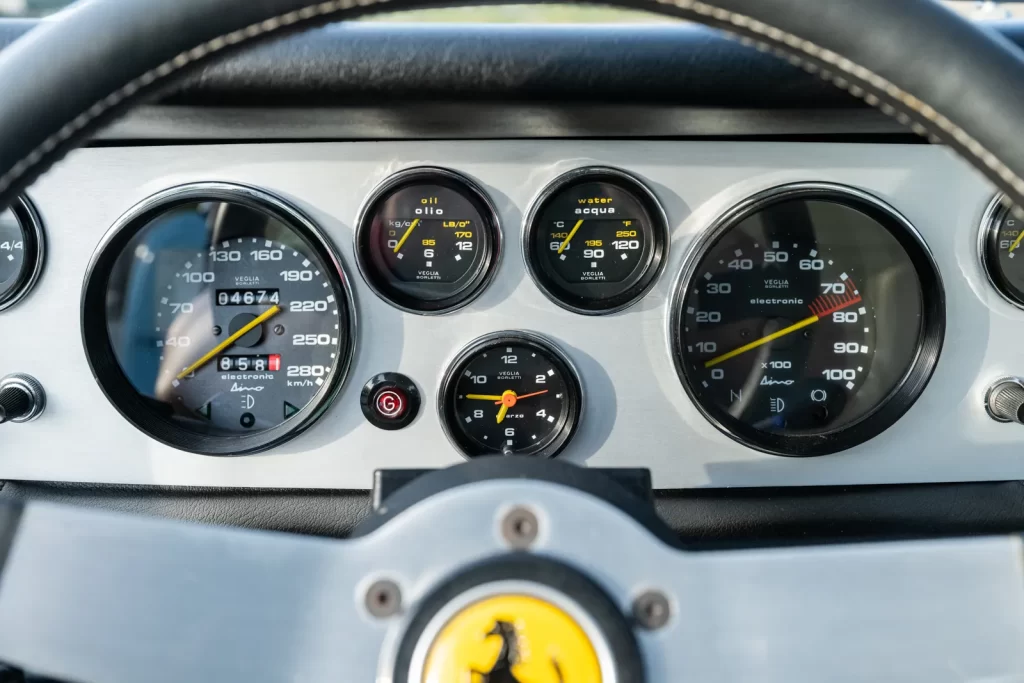
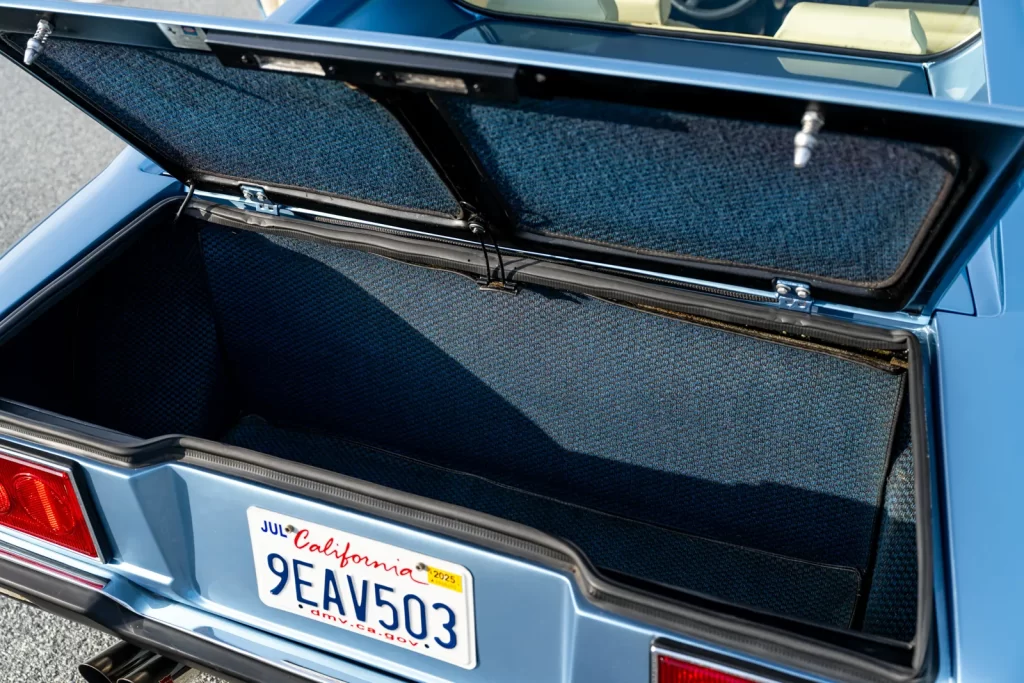
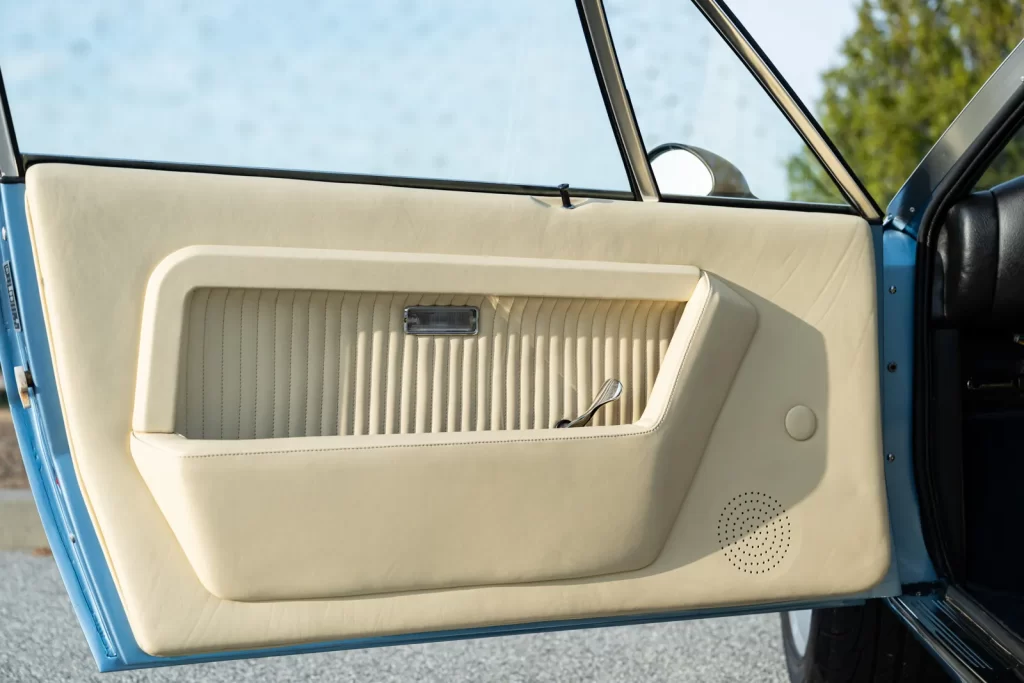
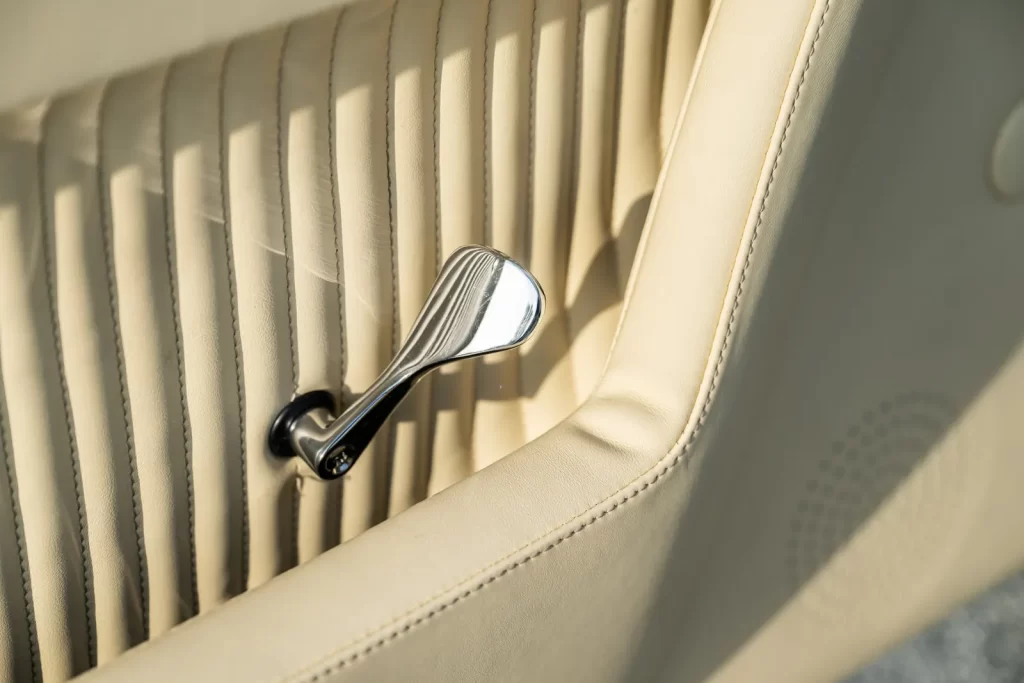
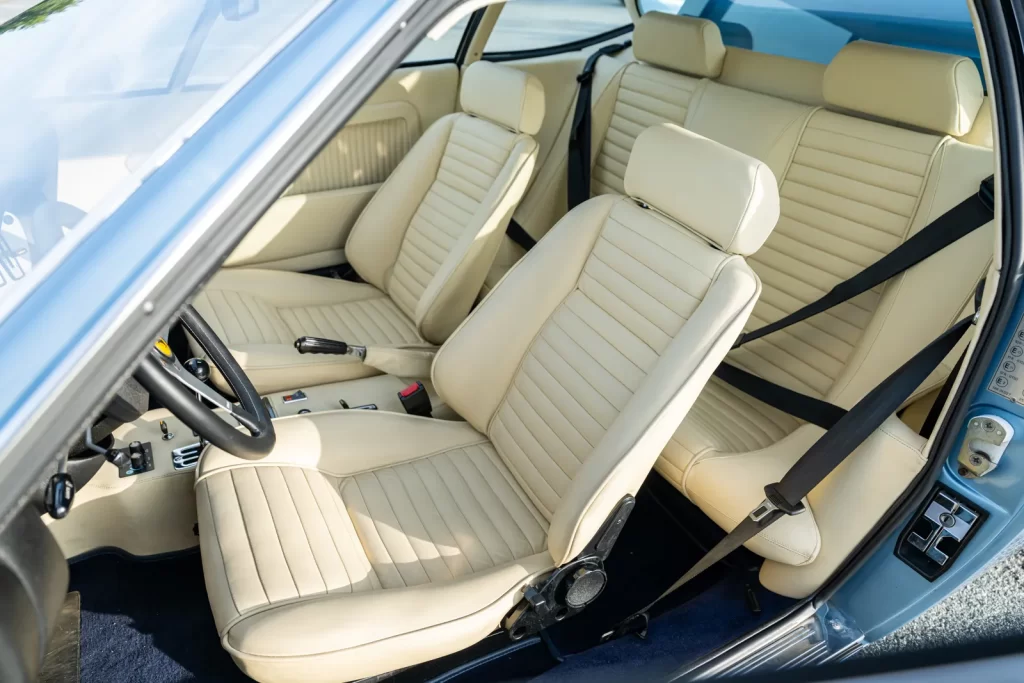
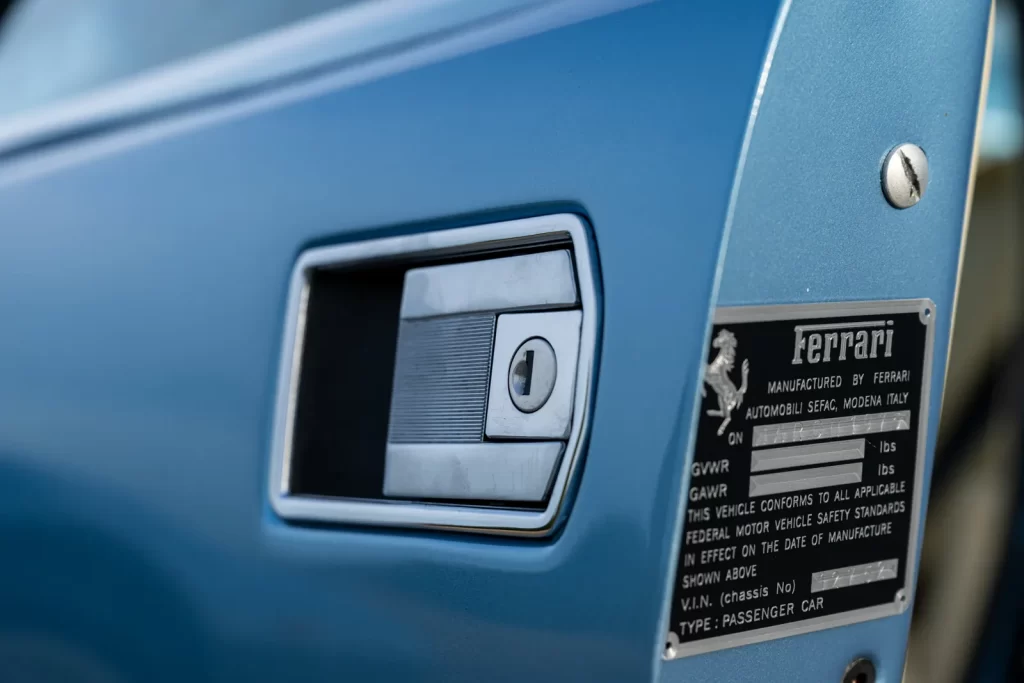
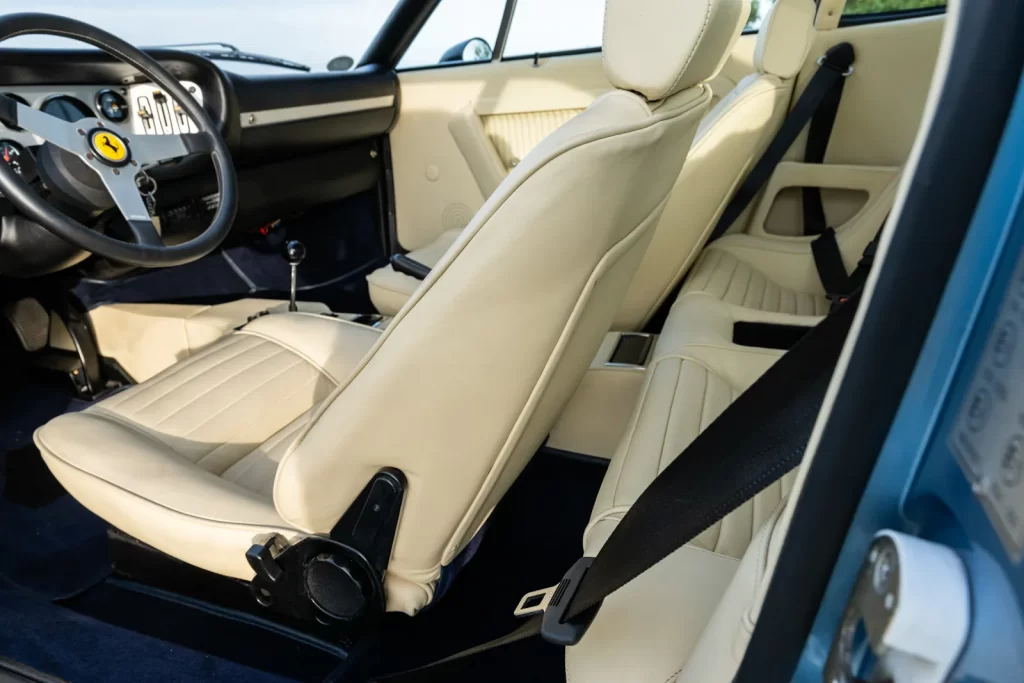
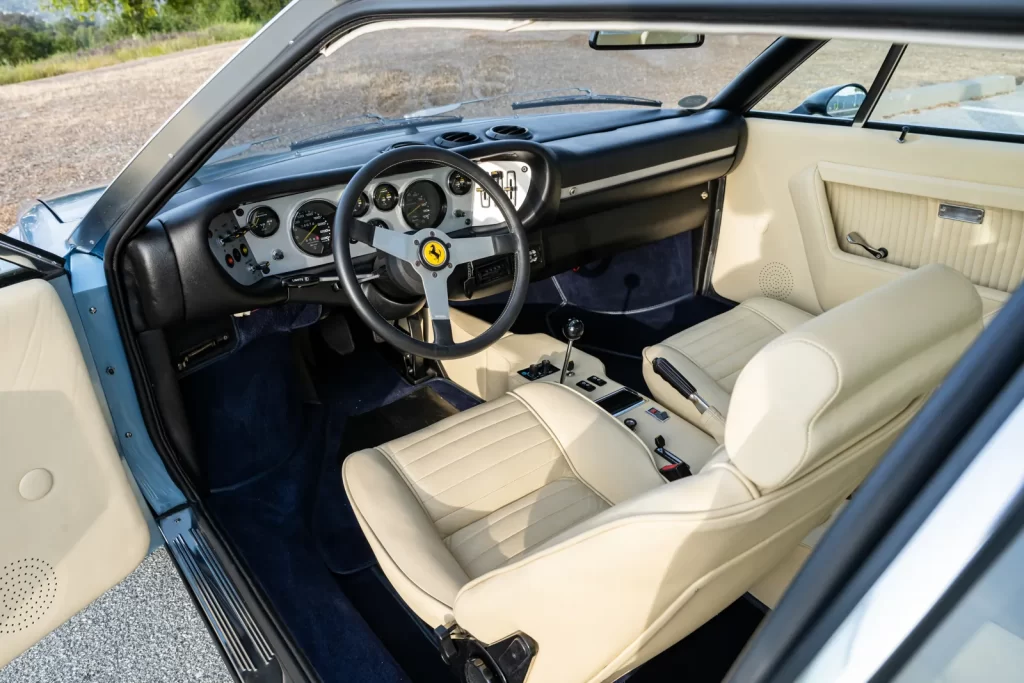
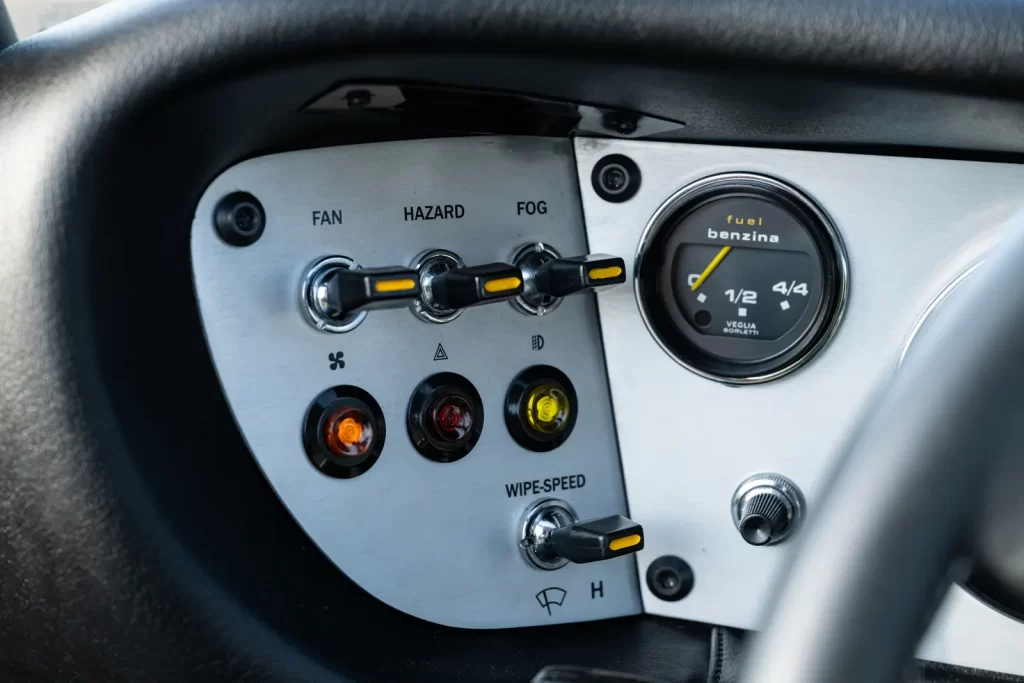
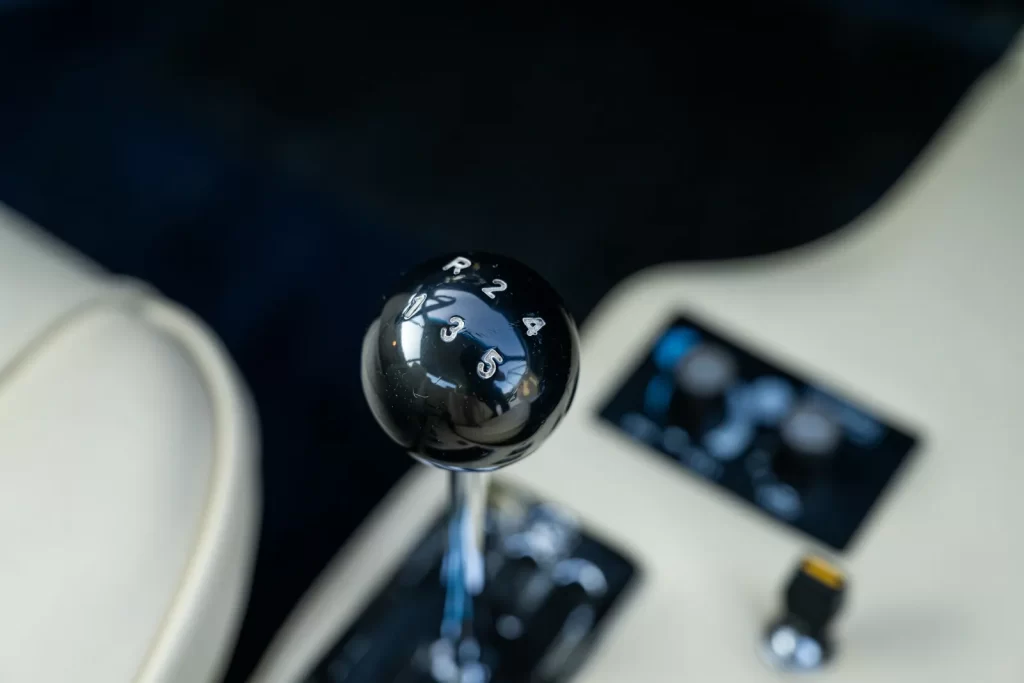
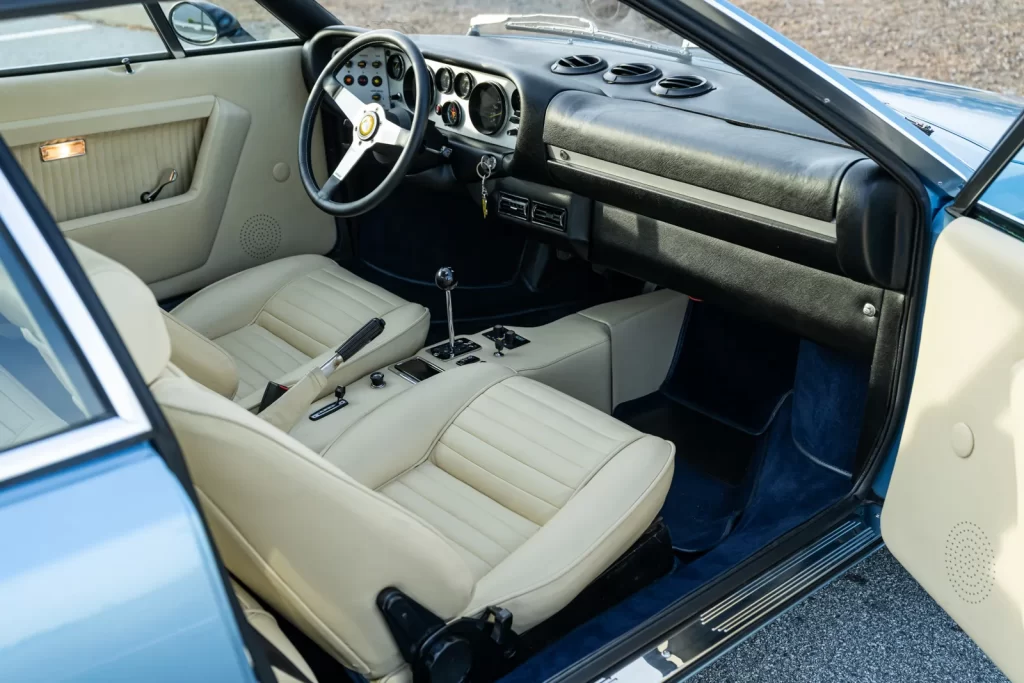
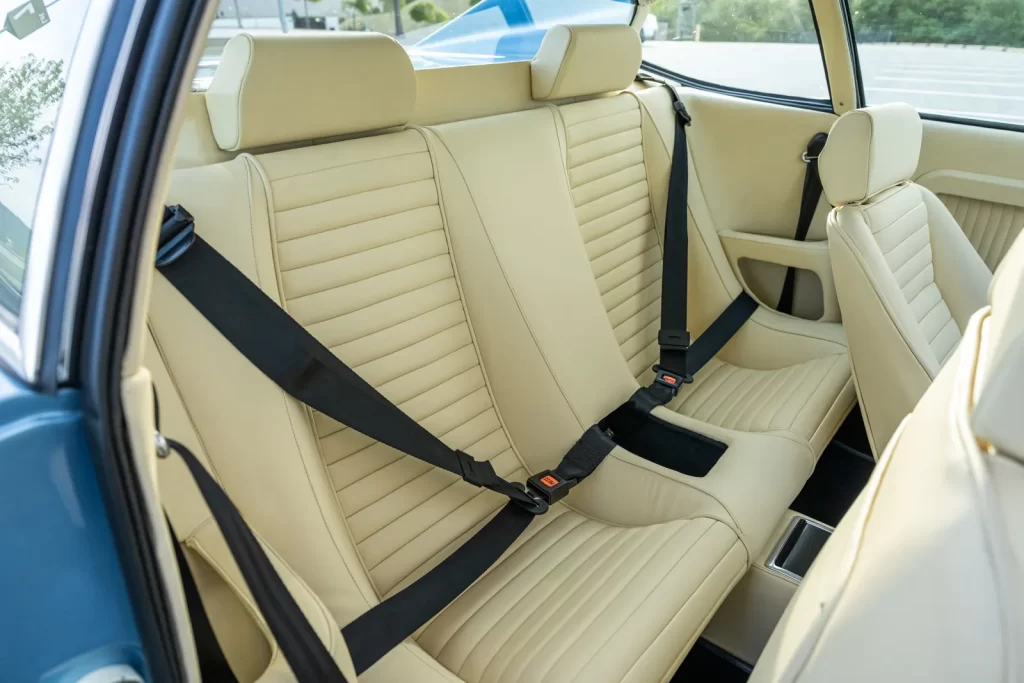
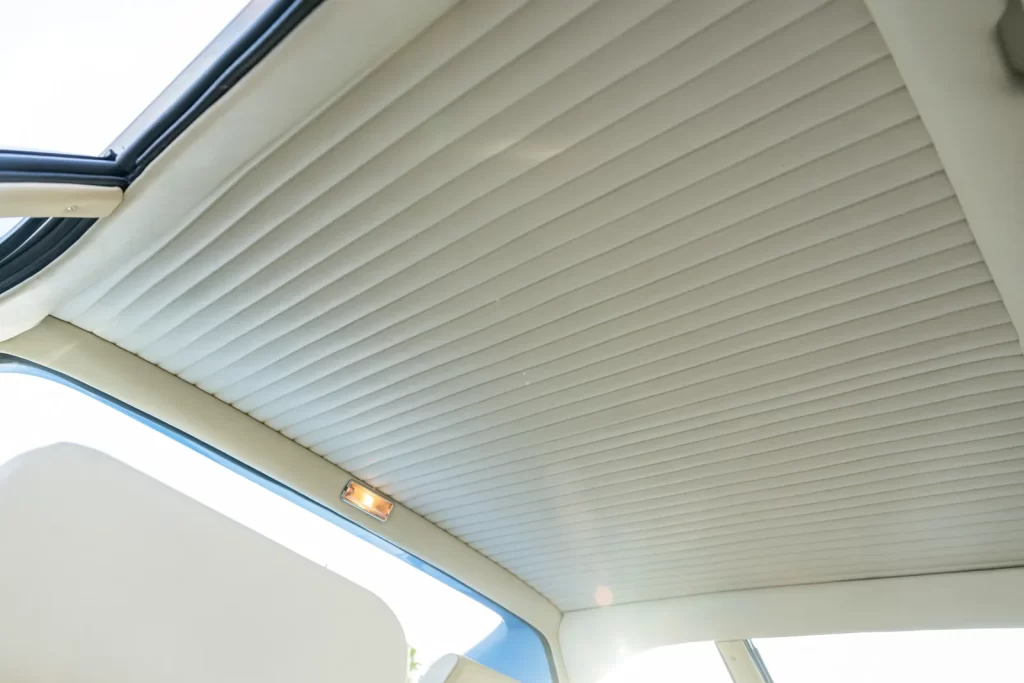
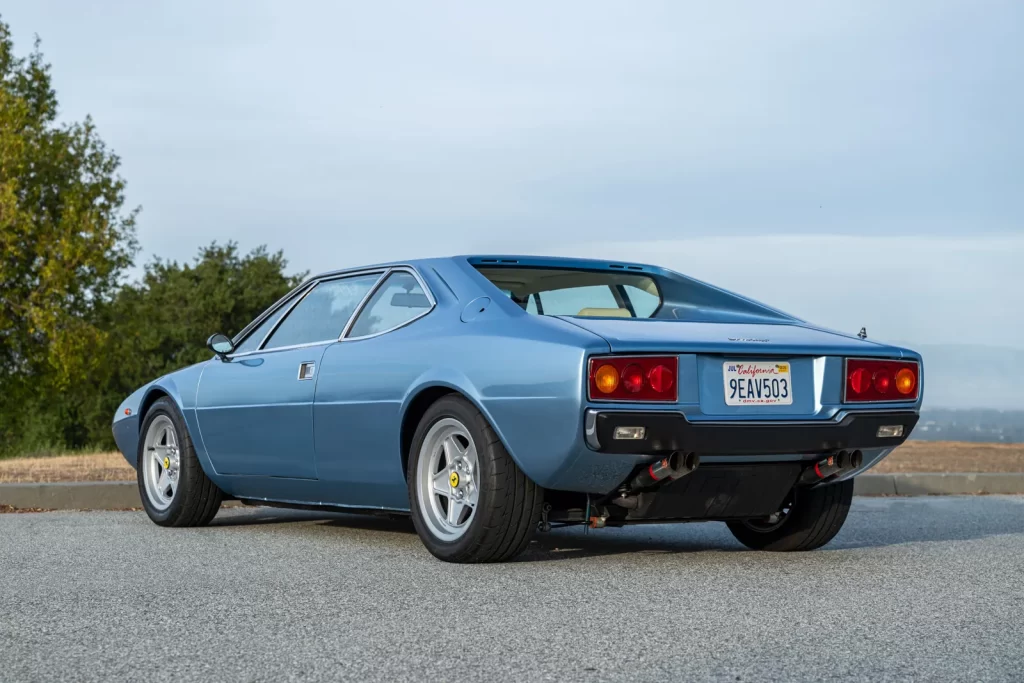
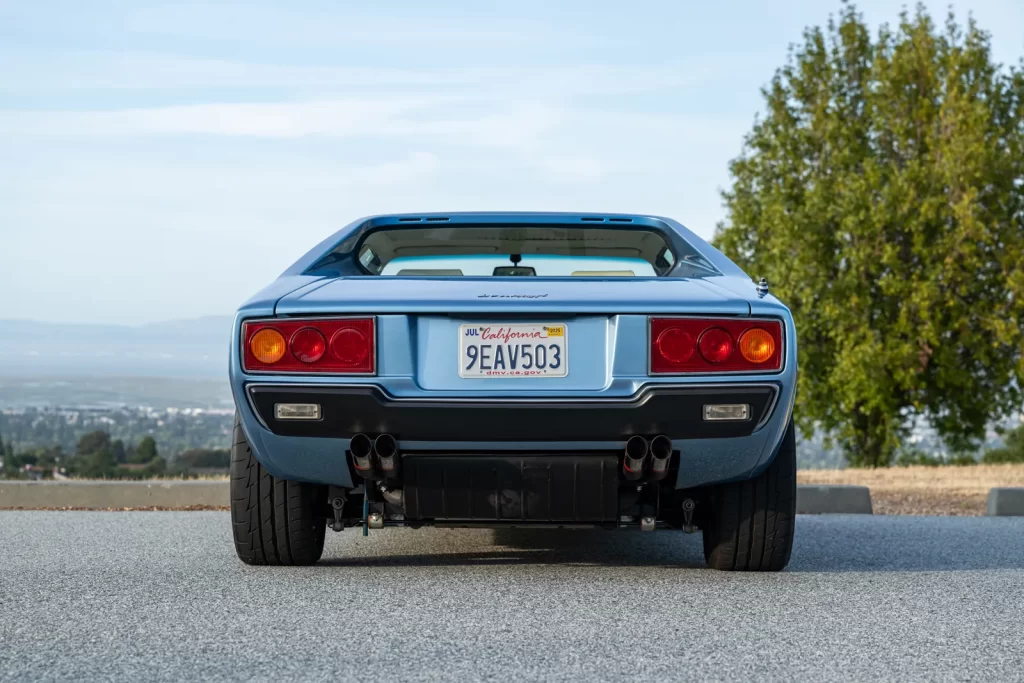
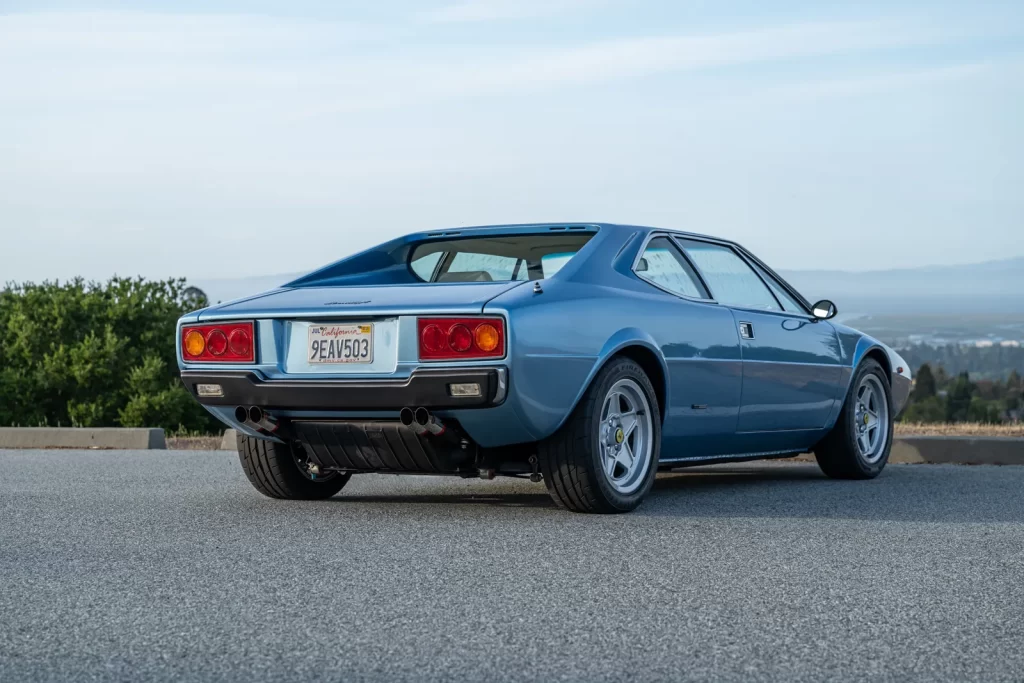
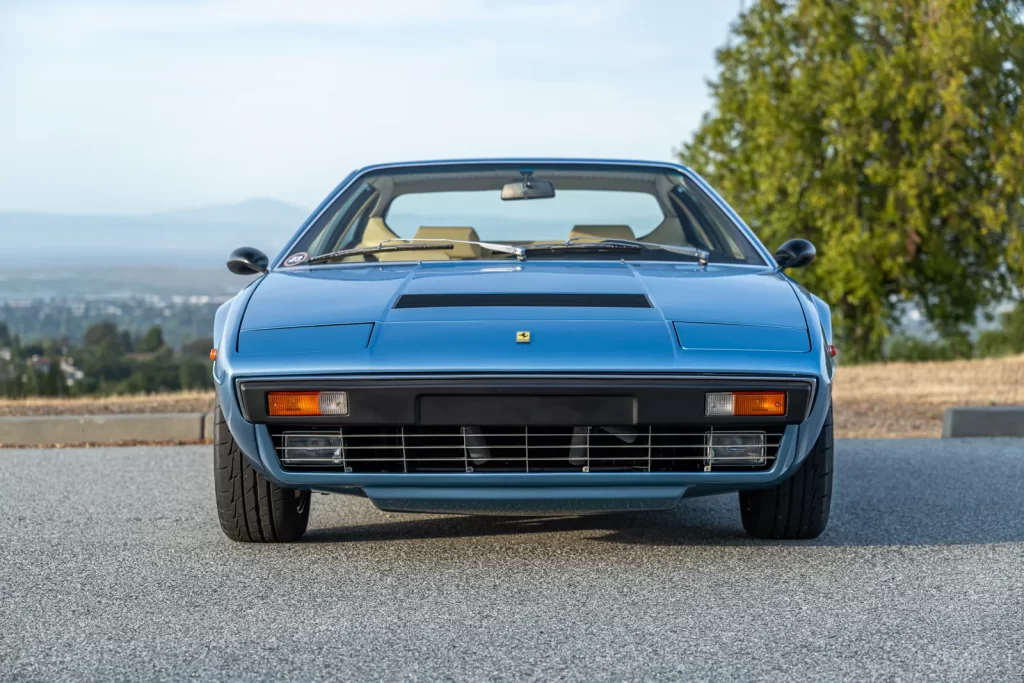
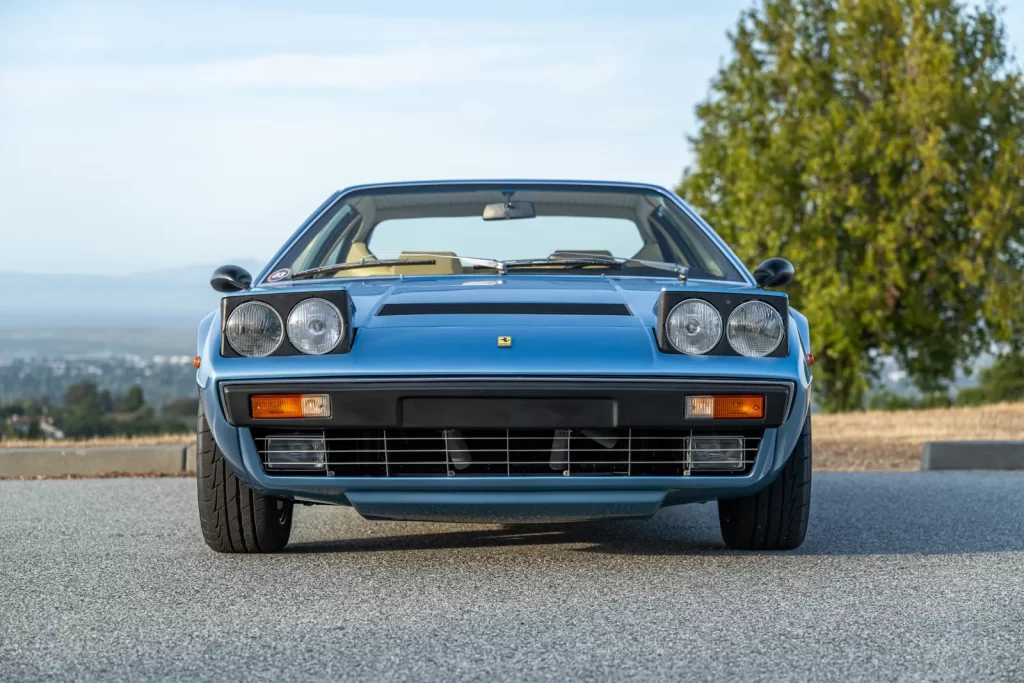
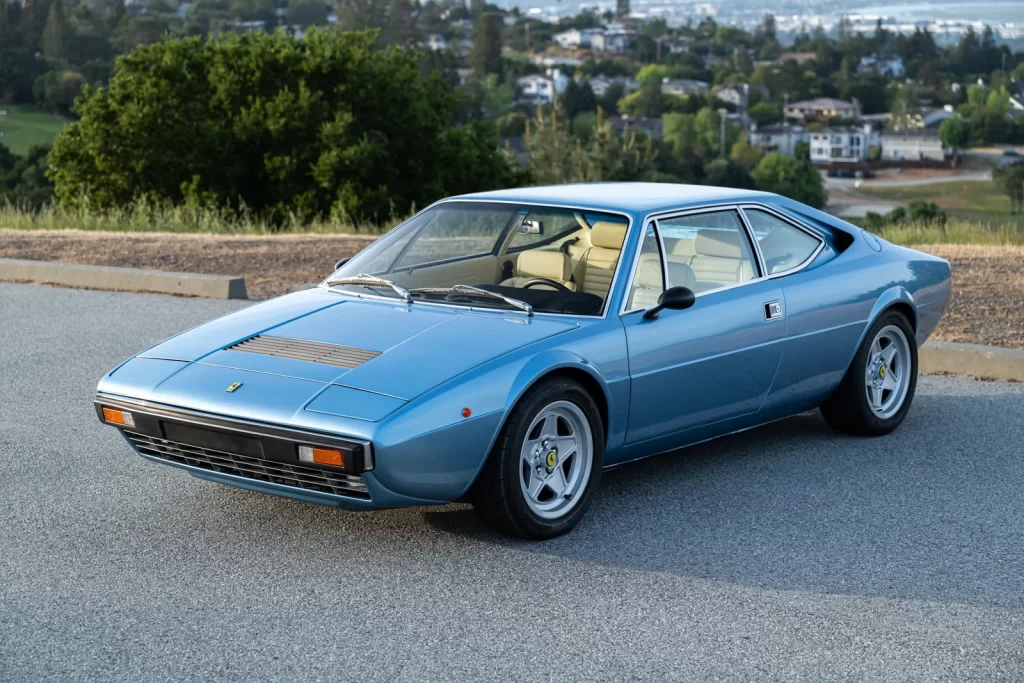
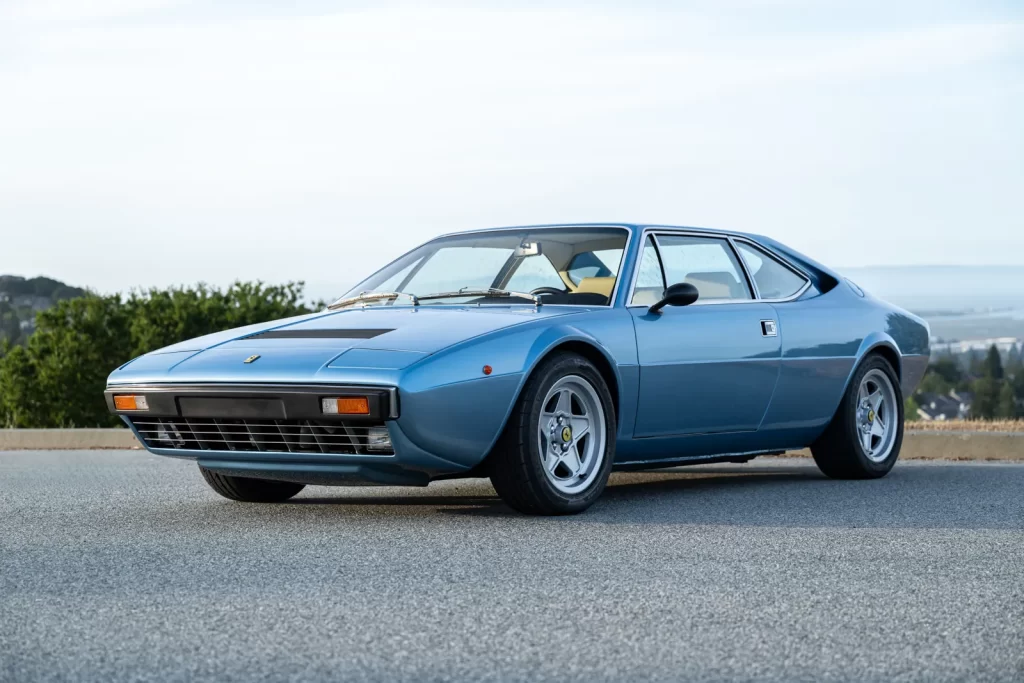
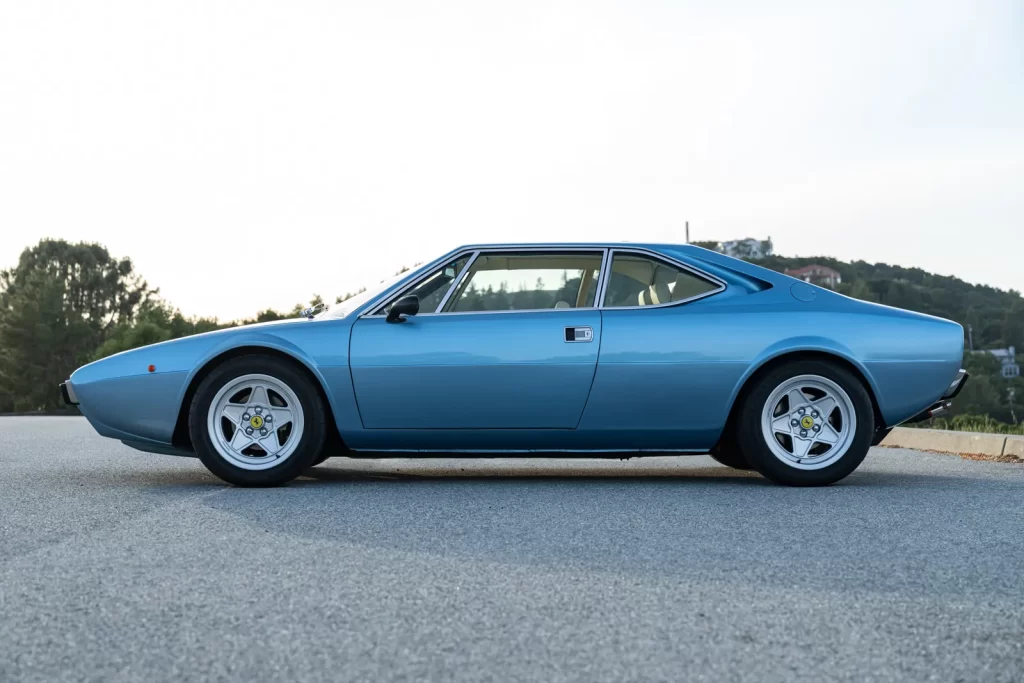
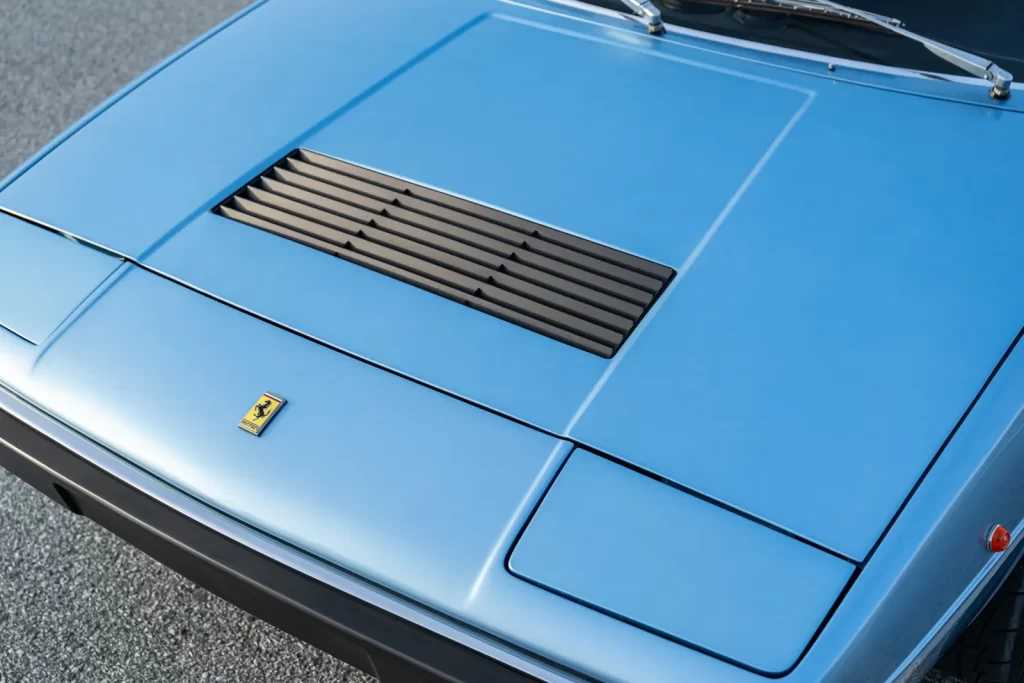
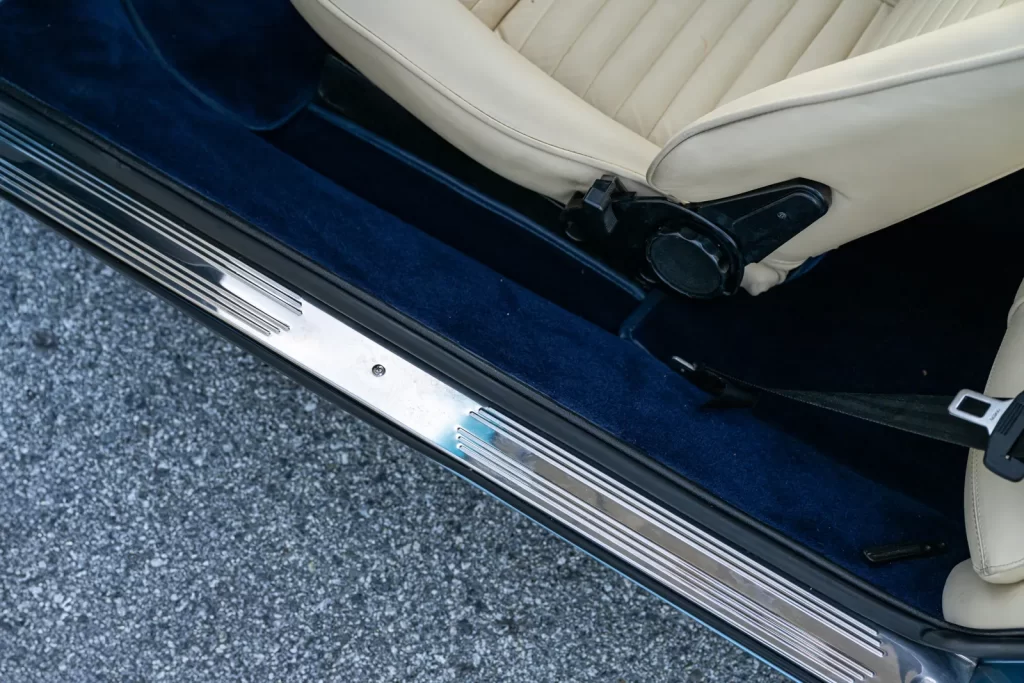
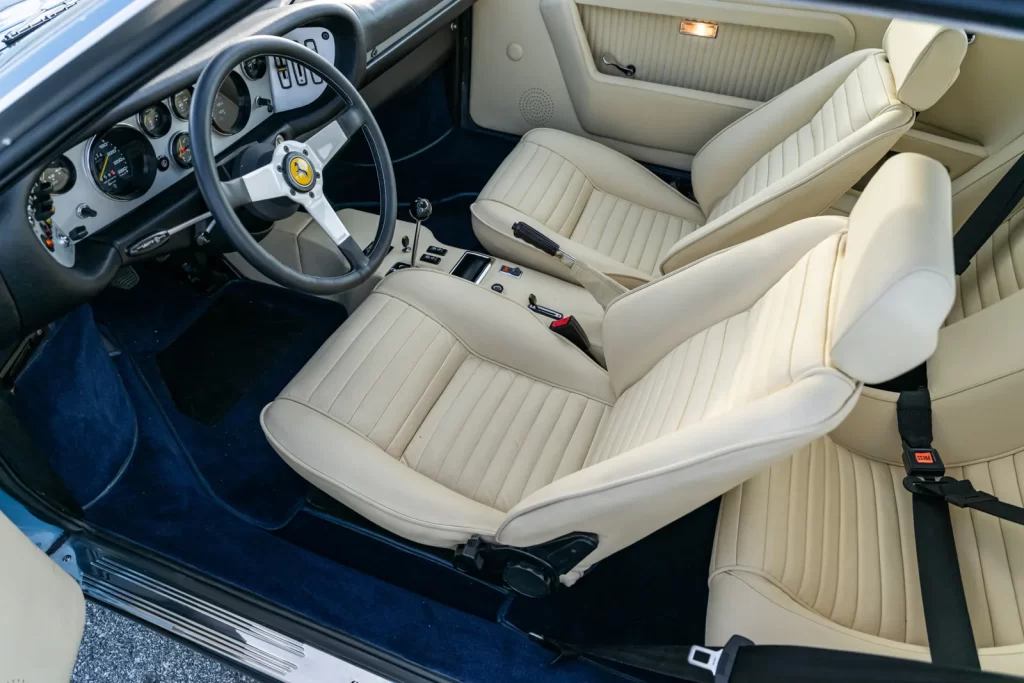
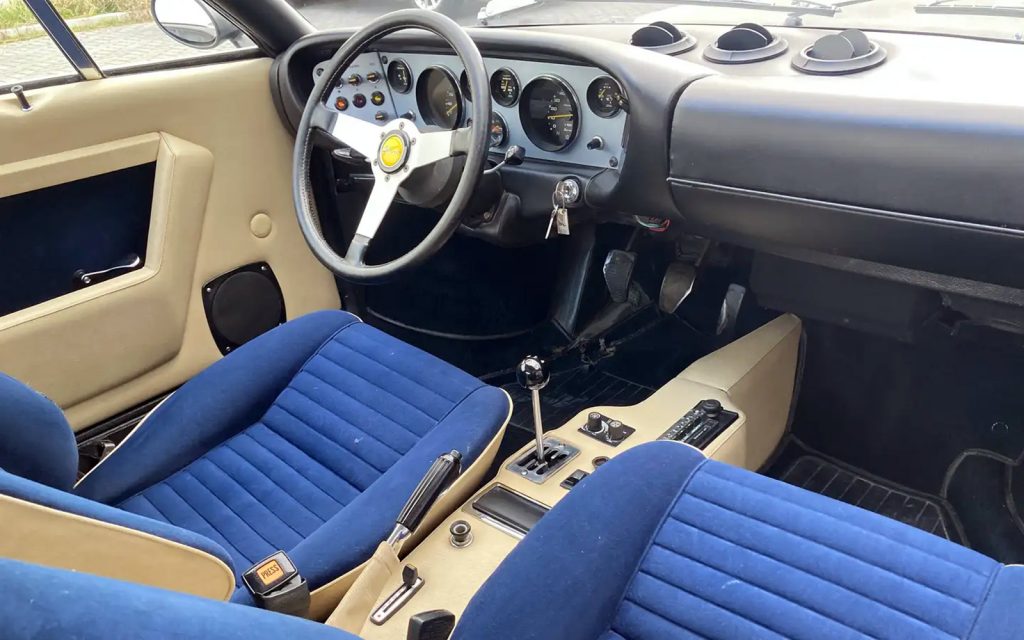
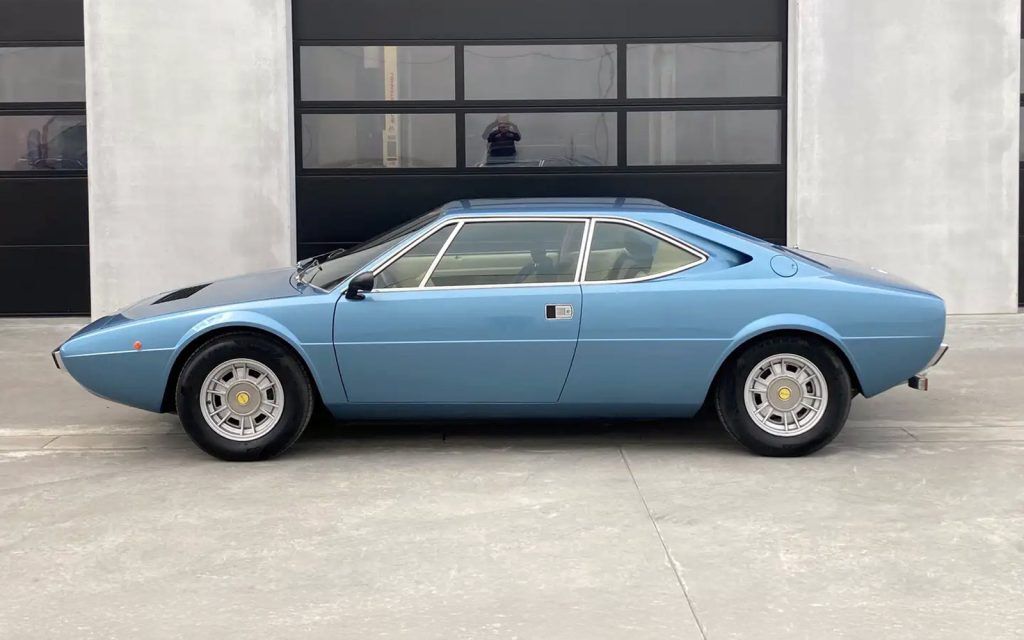
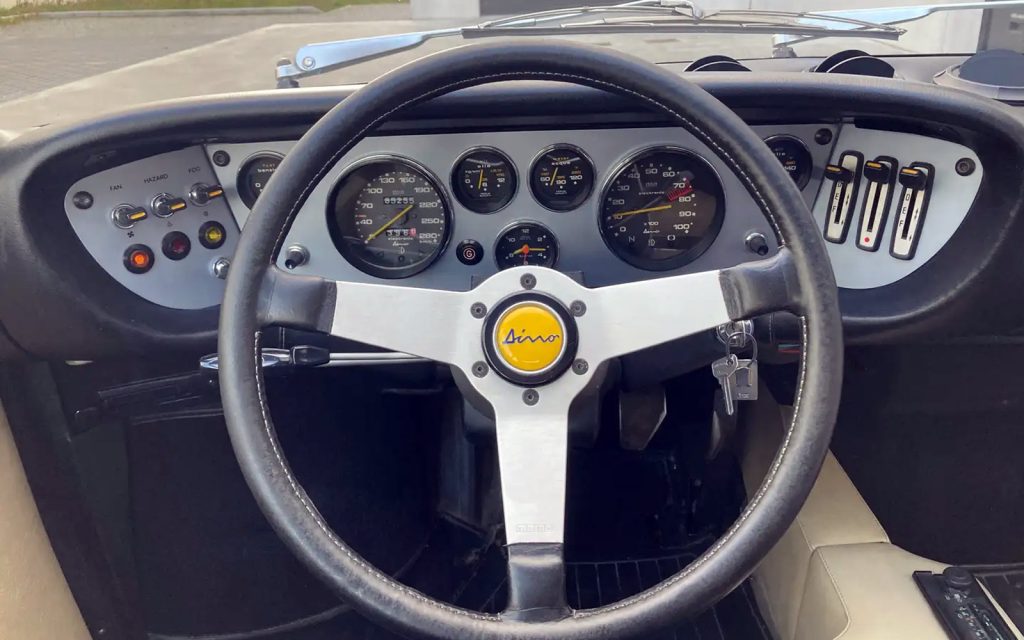
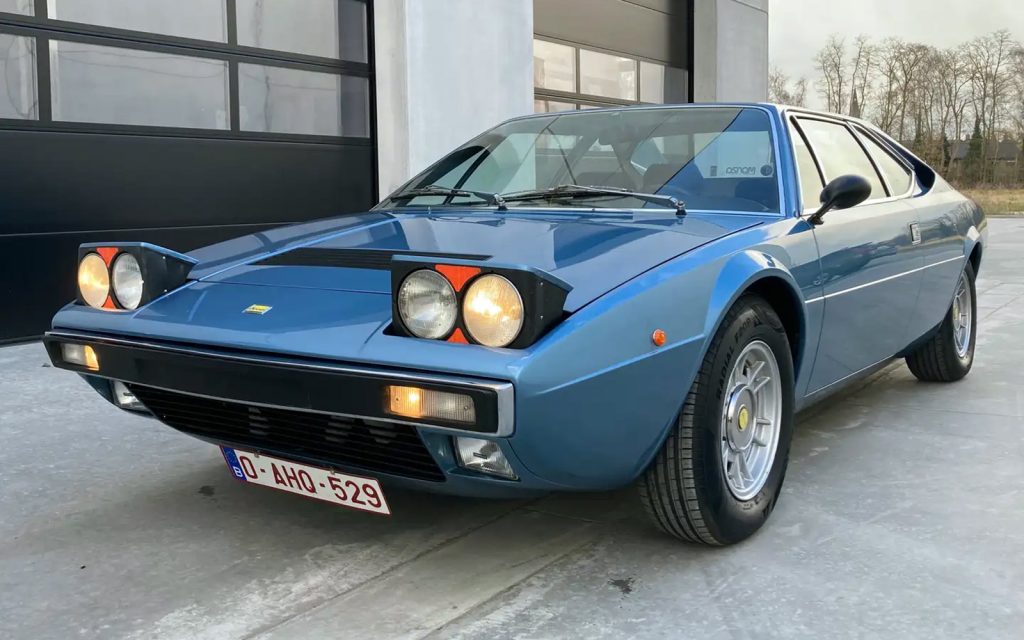
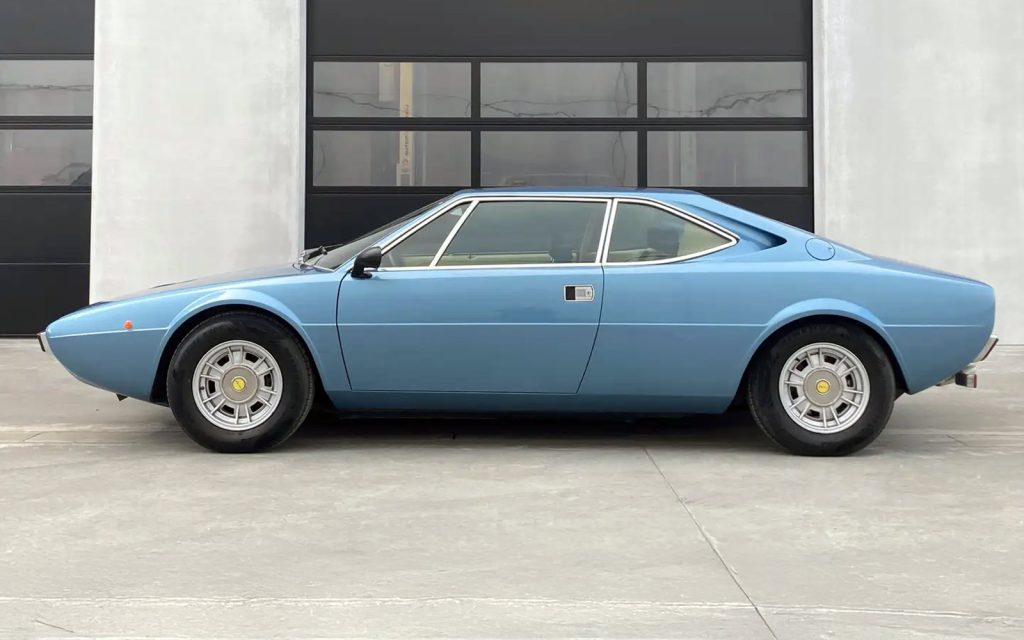
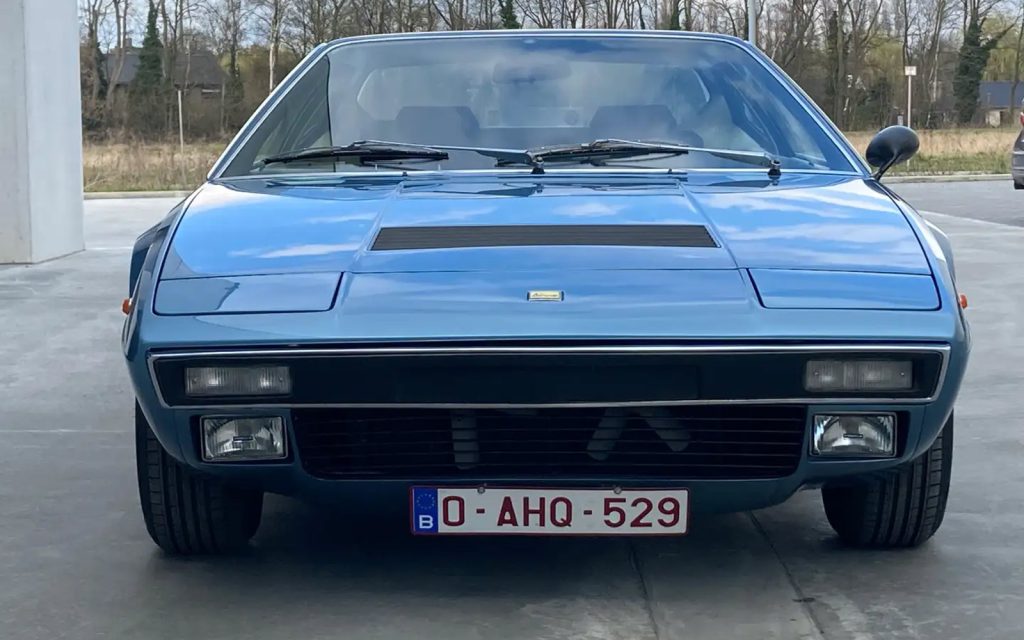
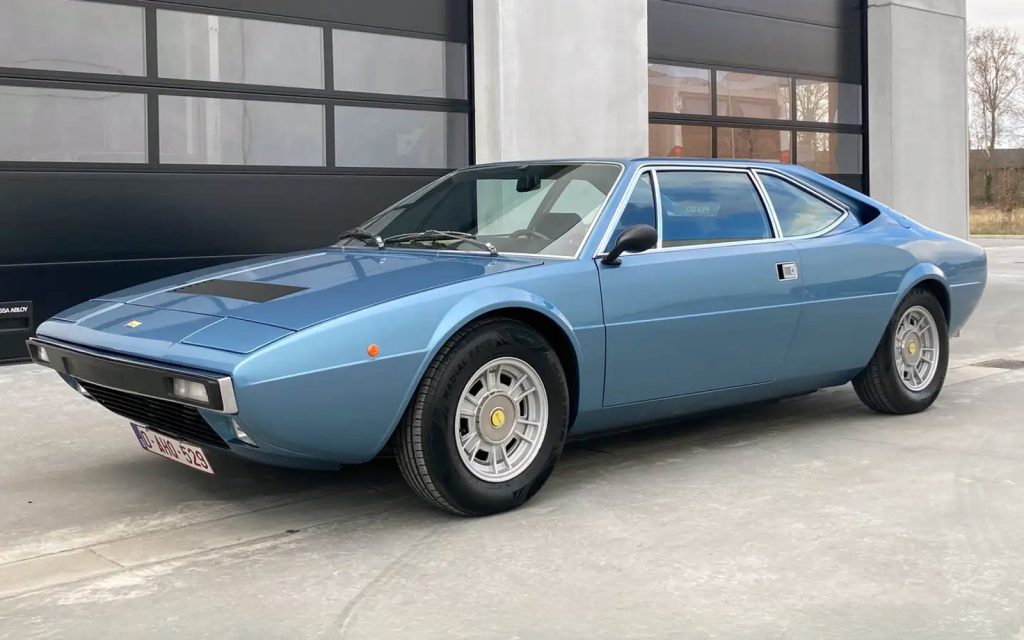
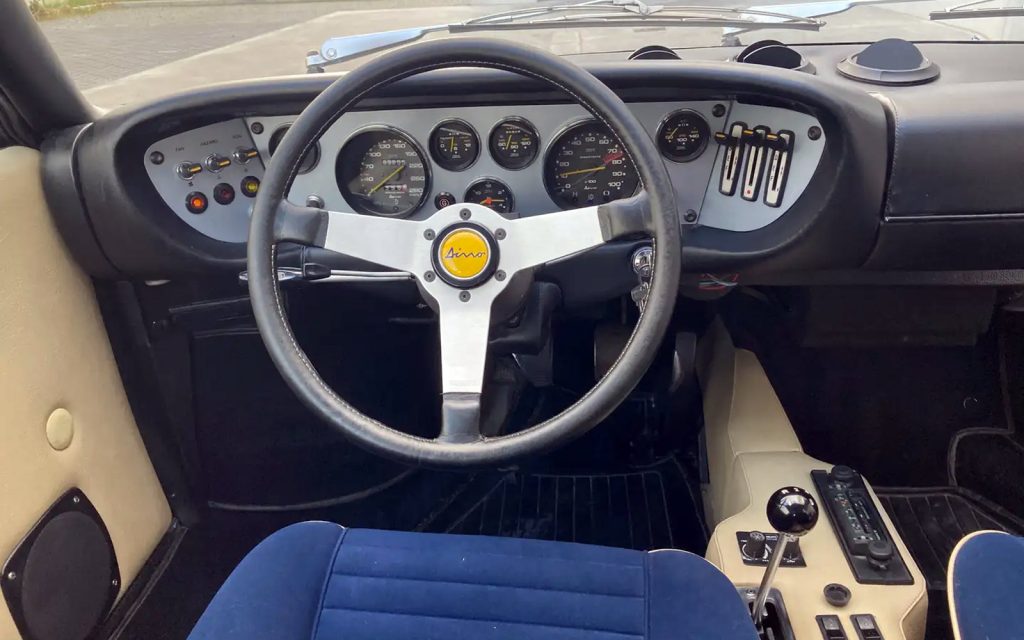
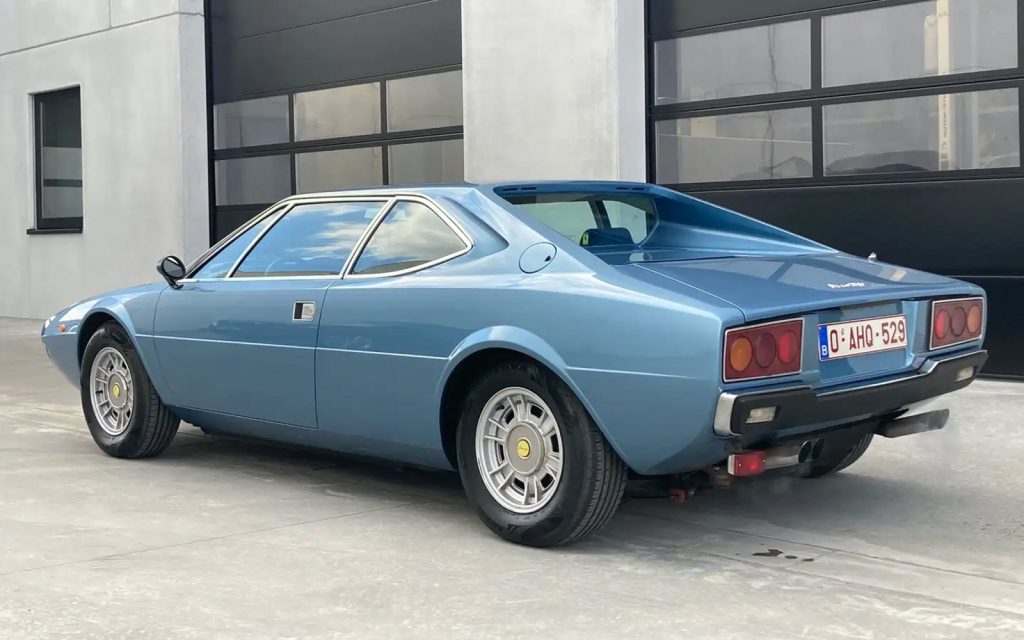
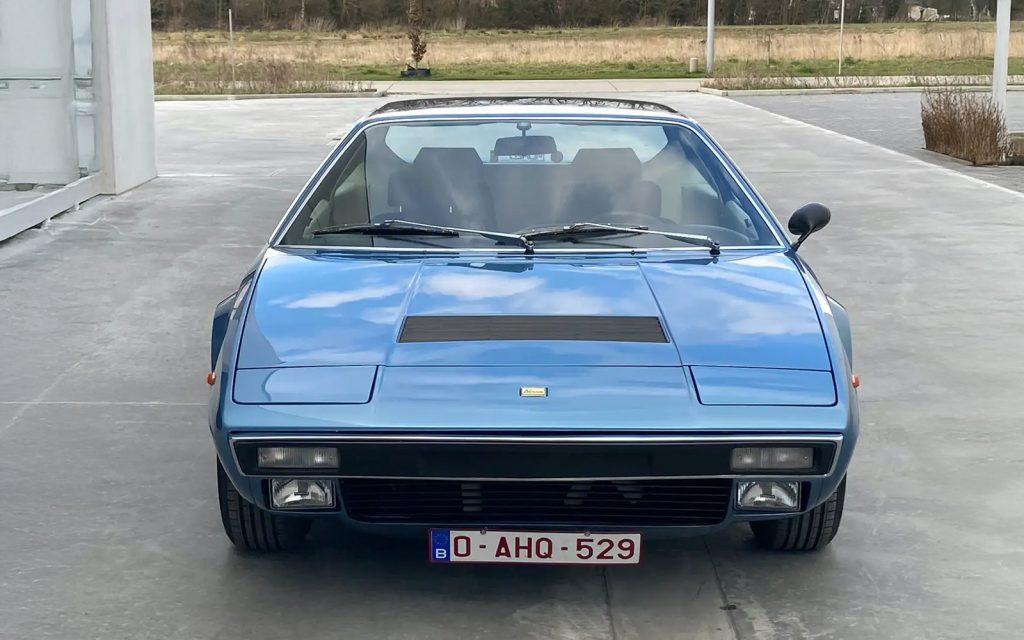
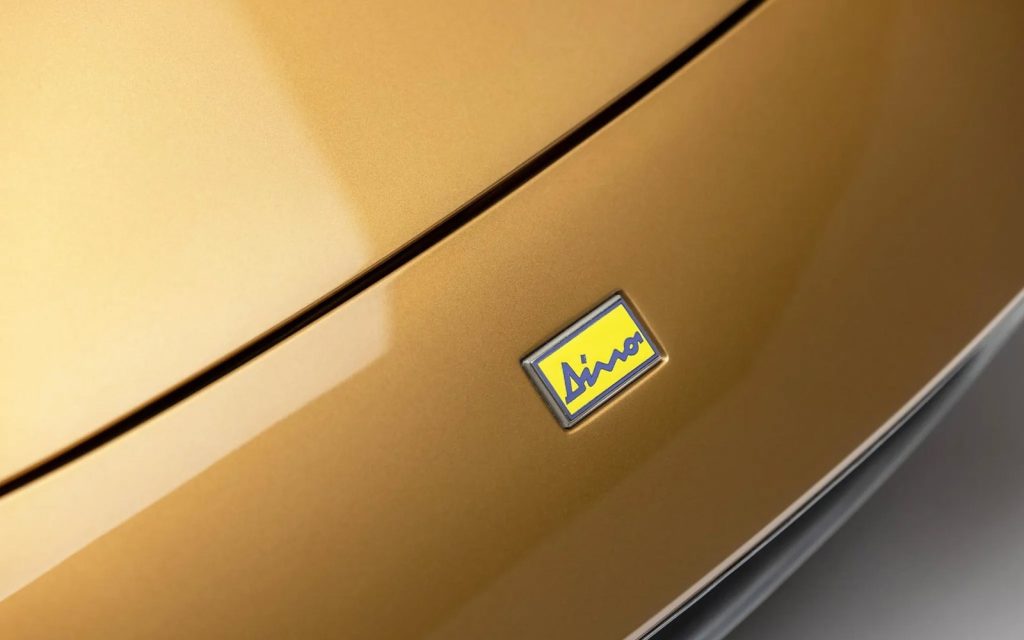
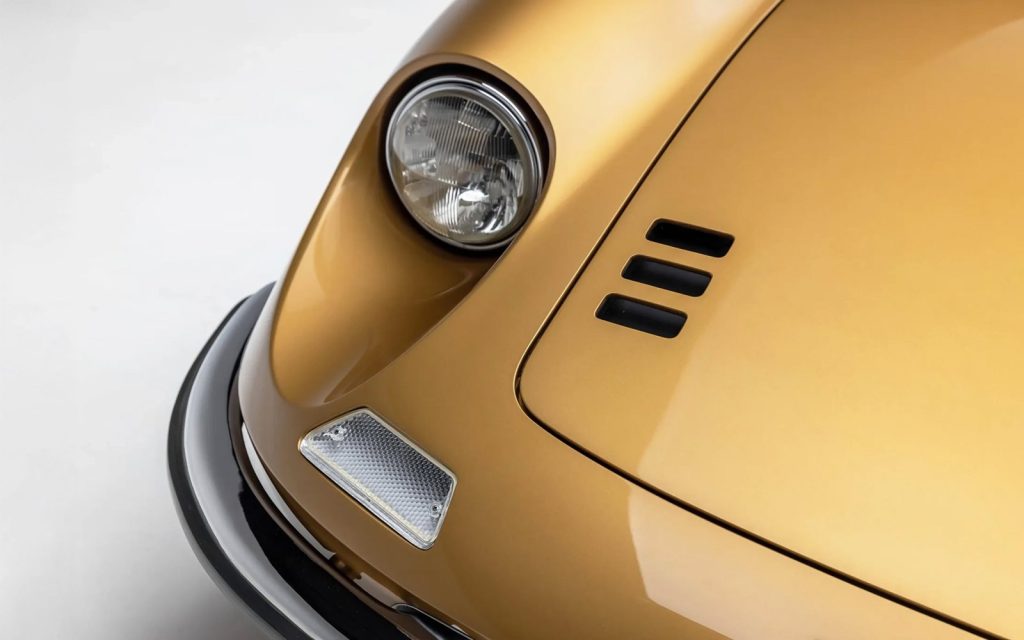
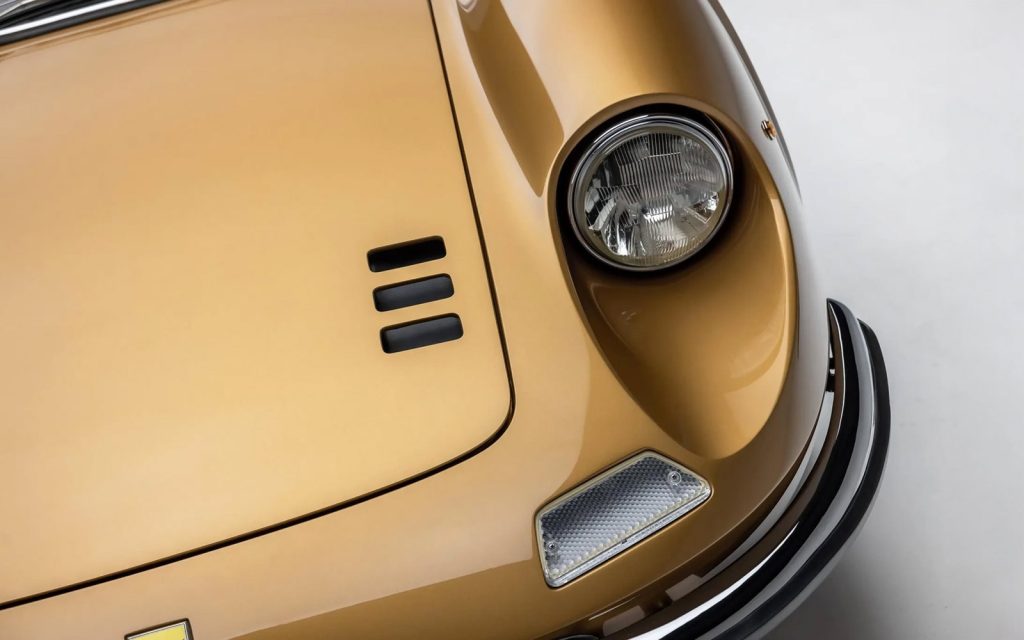
What: 1975 Ferrari Dino 308 GT4 Color: Azzurro Blue Metallic (azzurroblumetallizzato; metallic UNI; 666010; Ferrari) Chassis: 12752 Mileage: 4,700 km, 2,900 miles CurrentPrice: $71,000 Location: Woodside, CA Listing: Bring a Trailer
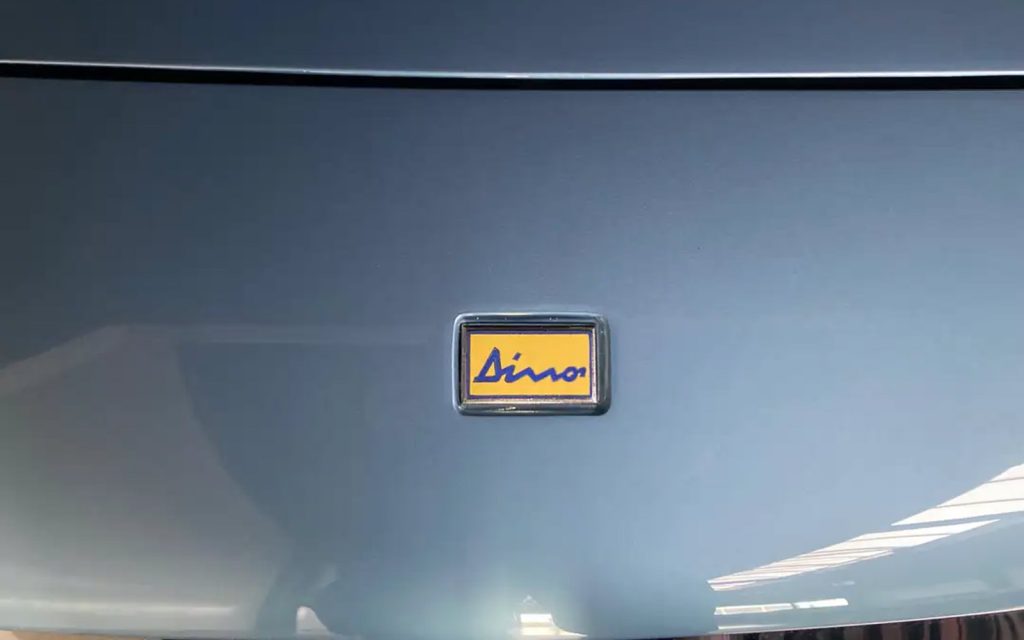
There’s no doubt that the Ferrari Dino 308 GT4 is a quirky thing in the lexicon of Maranello. The only Ferrari from the factory to have ever been designed by Bertone, it’s also a rare 2+2 mid-engine configuration that was sold and badged as a Dino in Europe as this one was.
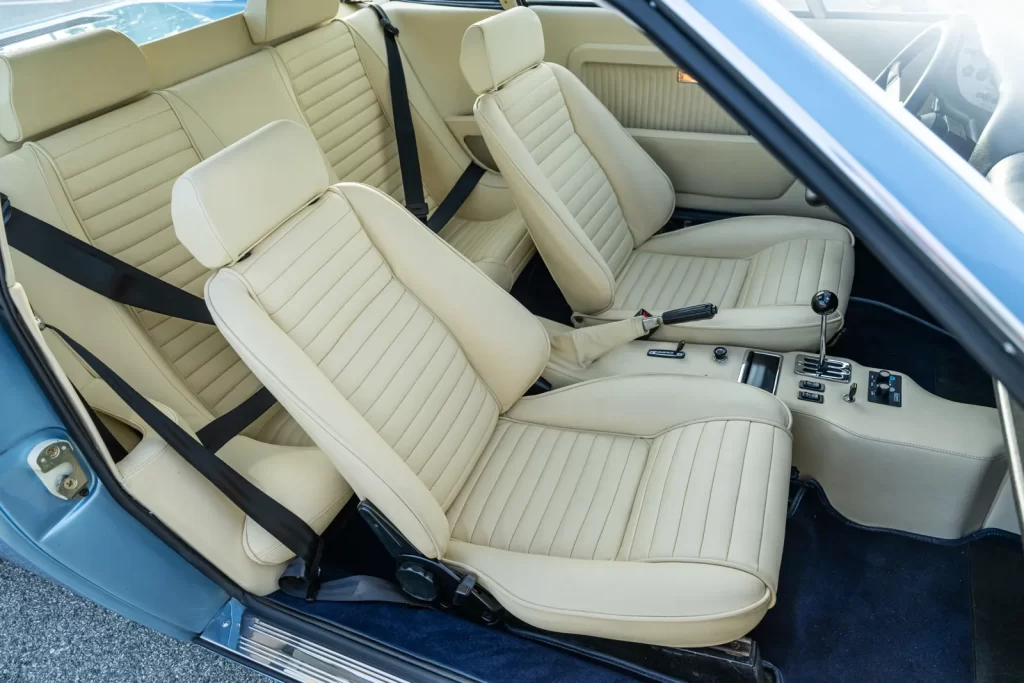
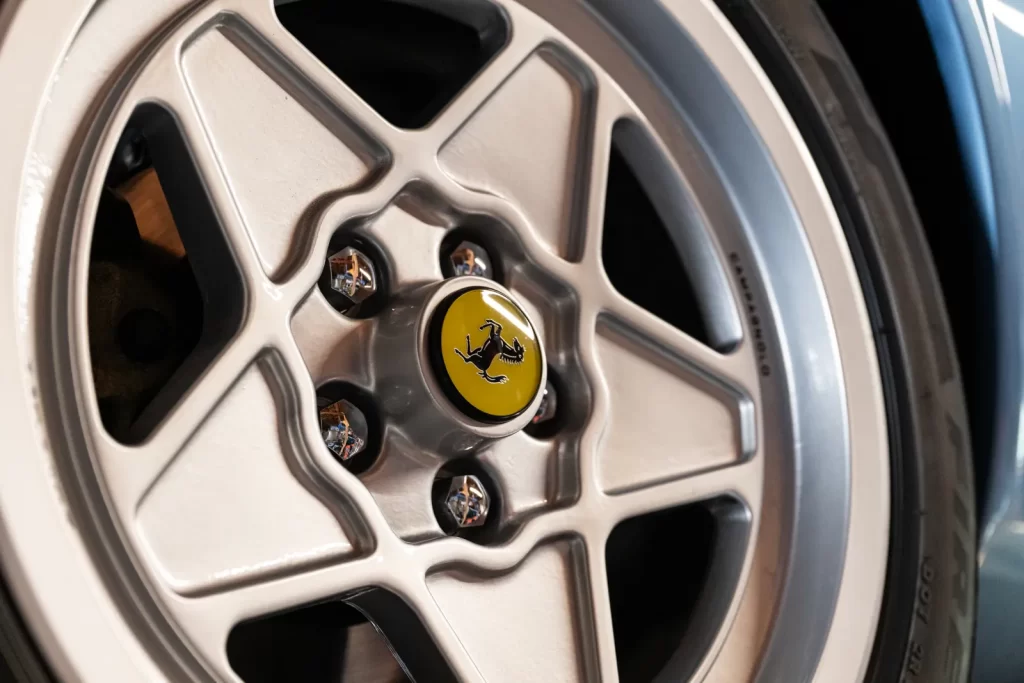
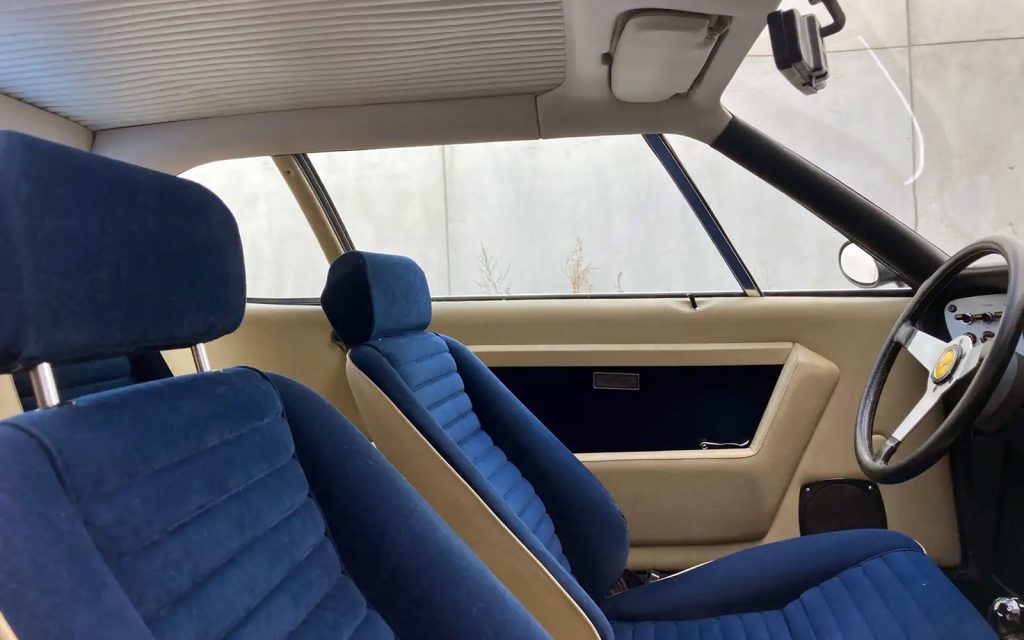
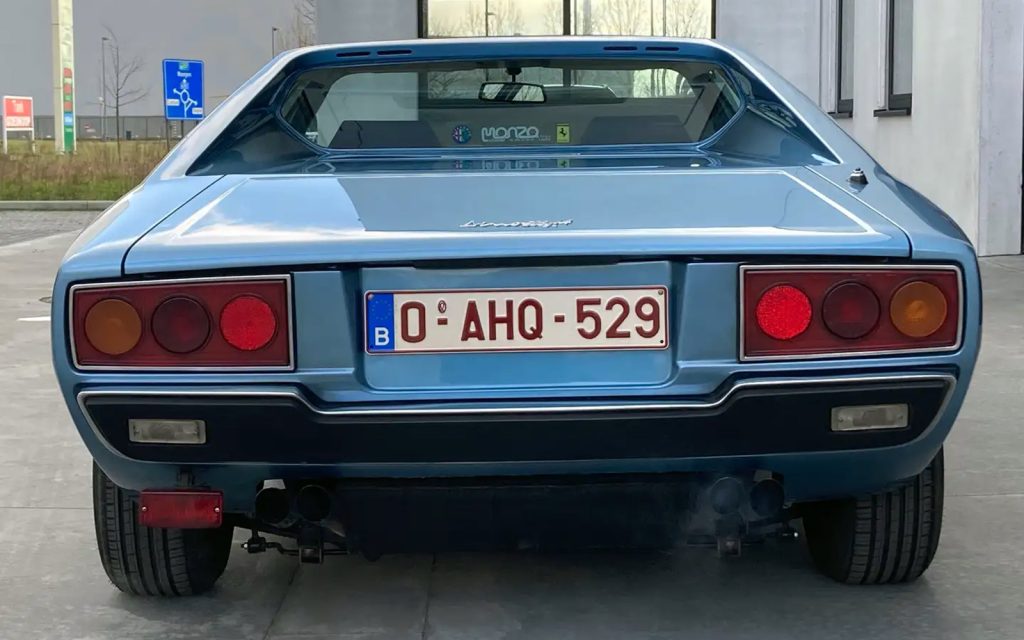
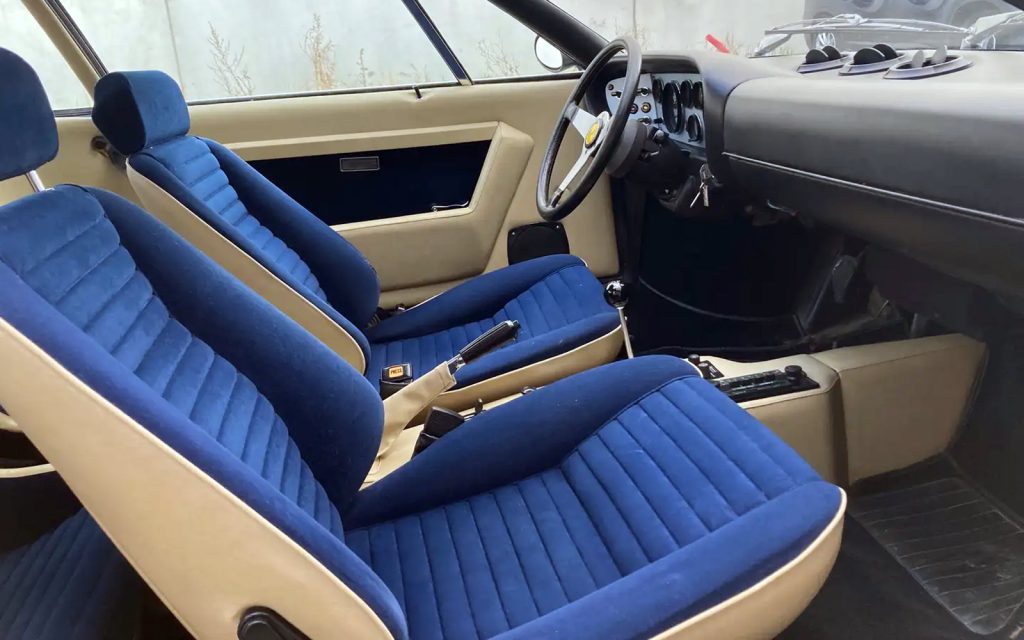
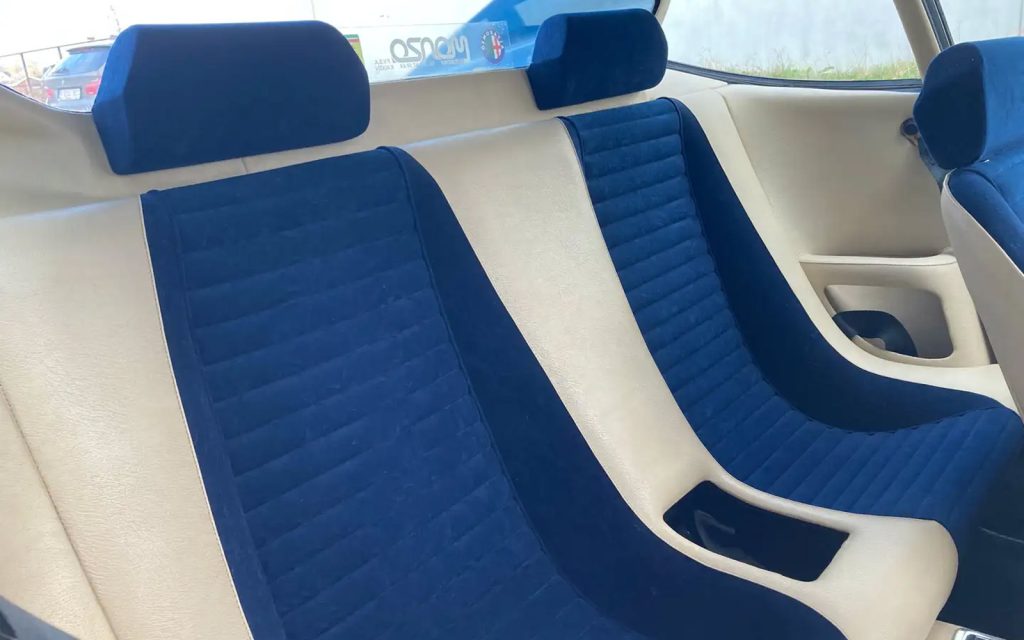
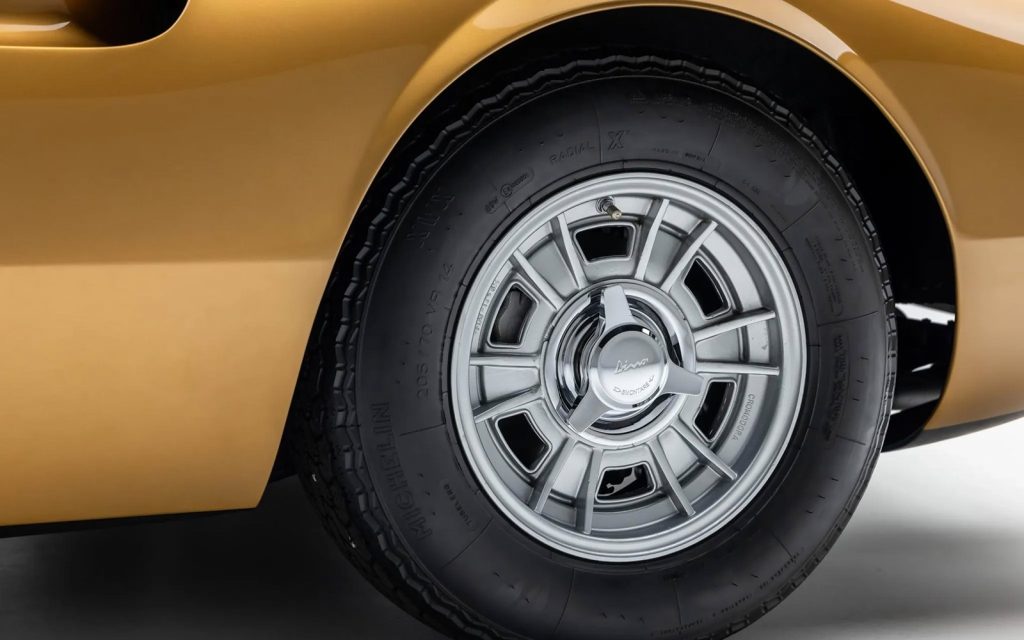
This particular car, painted rare Azzuro Blue Metallic over white leather interior was restored in 2016 and fitted with larger 16-inch Superformance wheels that mimic a factory appearance, though with a larger diameter.
This is a stunning and unique example of an equally unique Ferrari model. Check out more details in its listing over on Bring a Trailer.
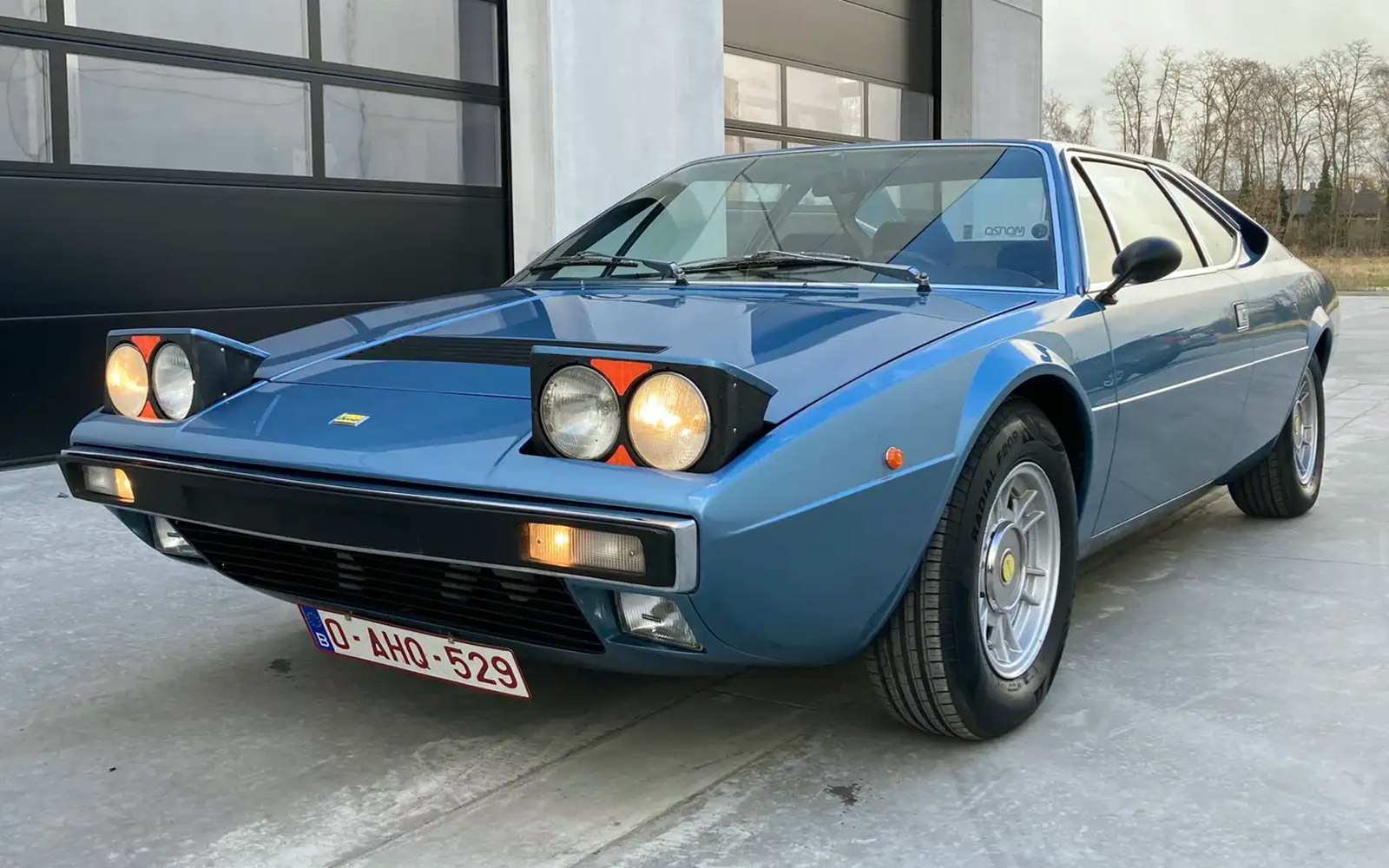
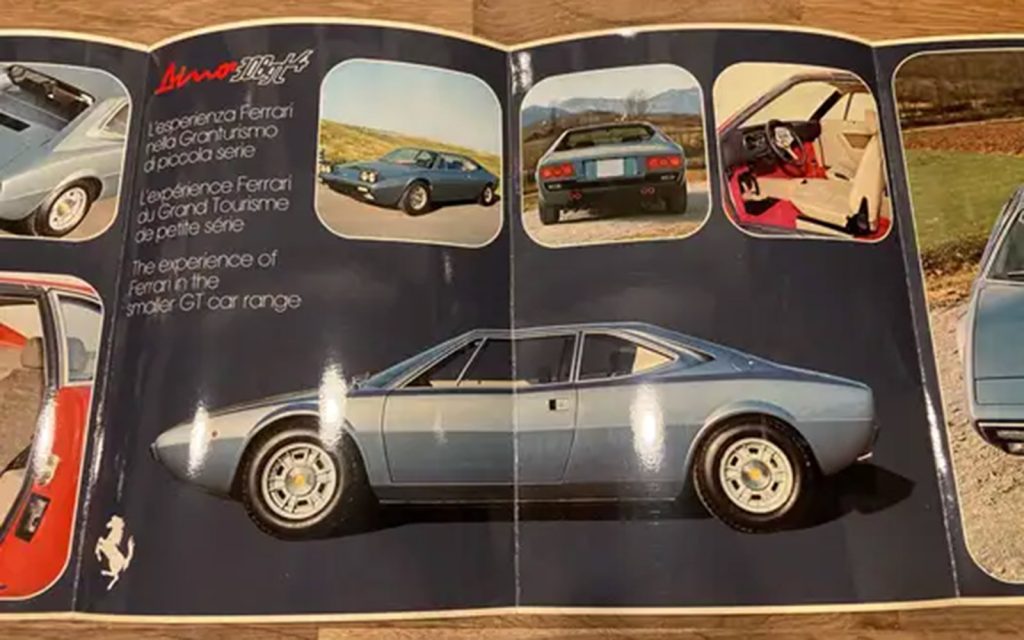
This rare colored Dino 308 GT4 was owned by the same family for over three decades until it was sold to the current owner in 2020. The car has been repainted in its original color, Blu Azorro Metallizzato, the same color as used in the brochure (see photo).
A notable detail about the 308 GT4. It is the only factory Ferrari design from Bertone, a Gandini original. Though these don’t carry the premium of earlier Pininfarina Dinos, the 308 GT4 represents one of the genuine bargains in the Ferrari collector world.
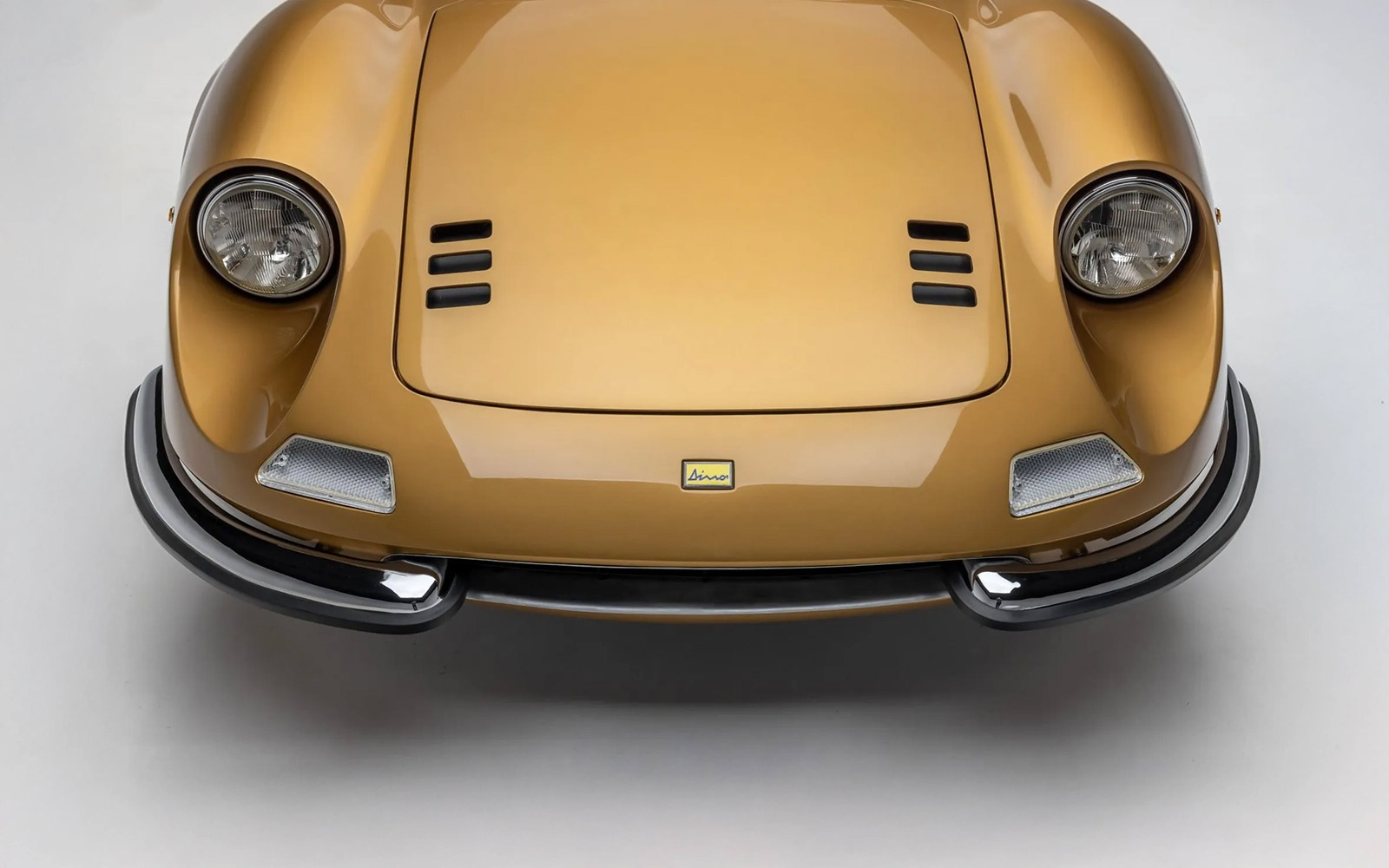
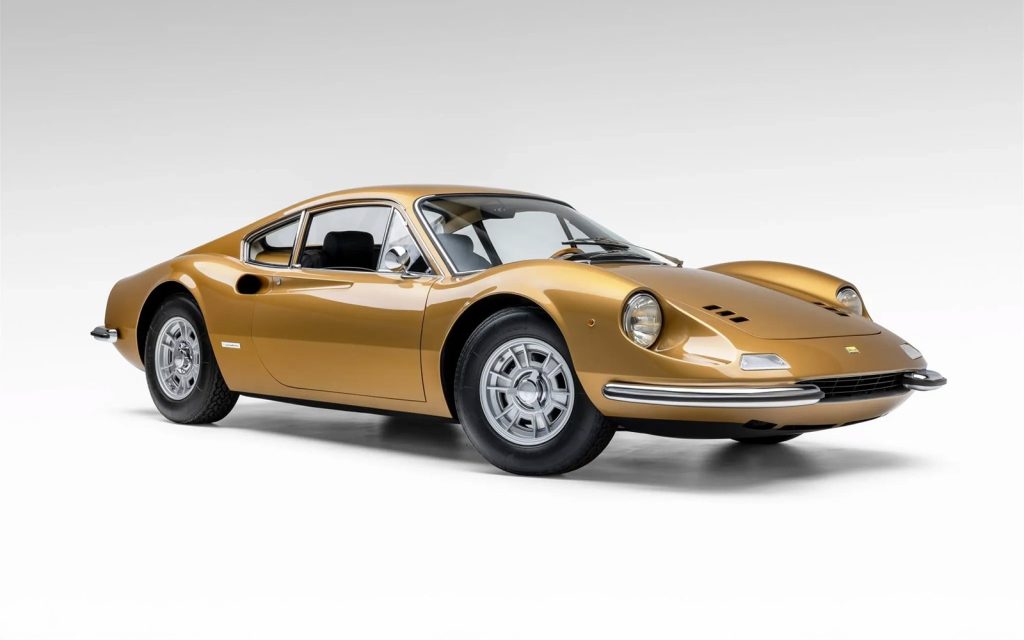
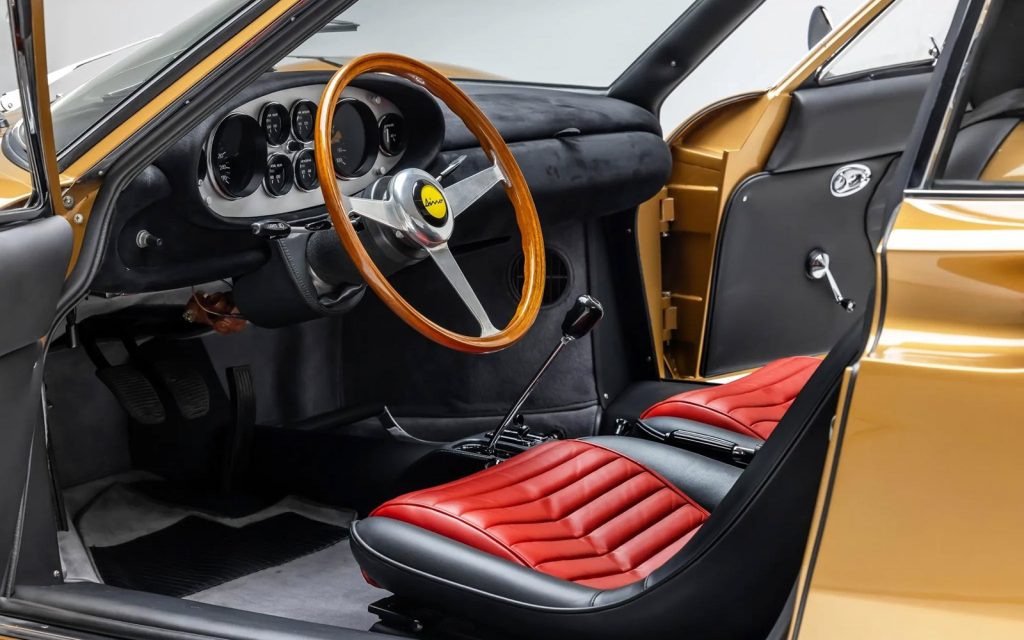
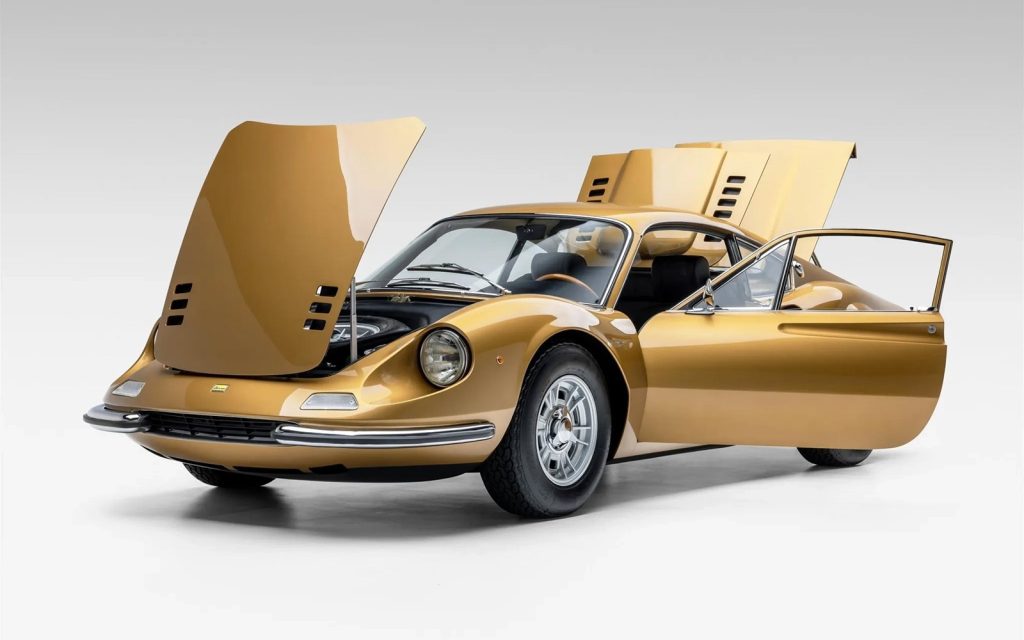
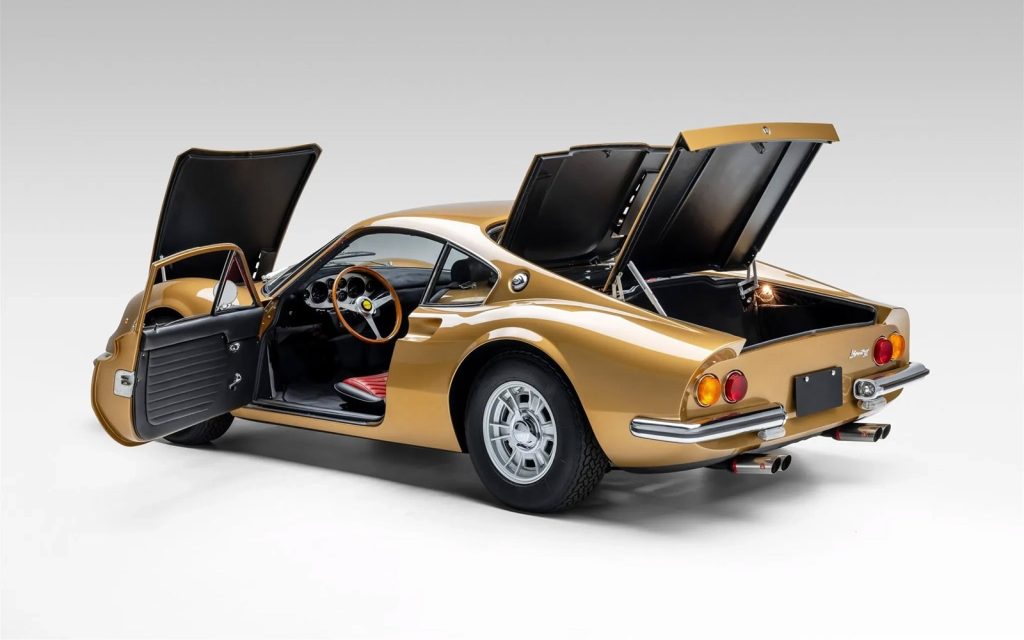
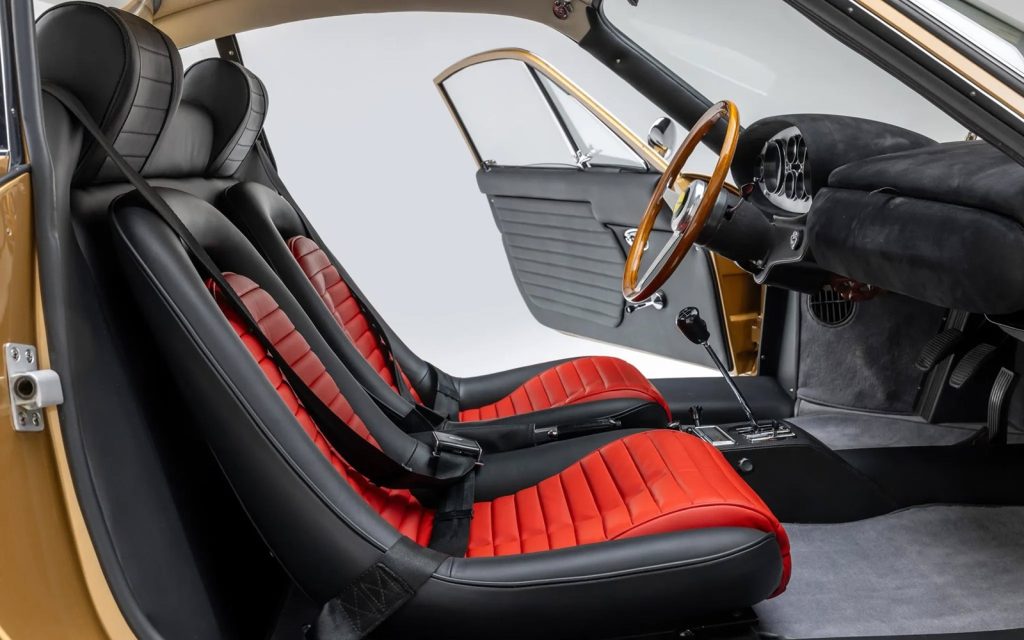
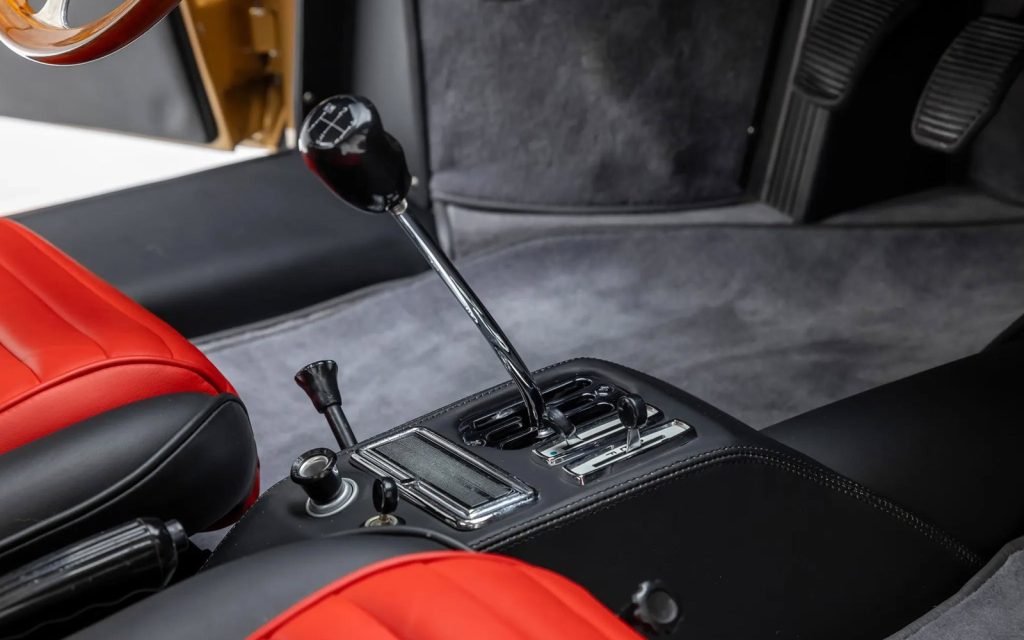
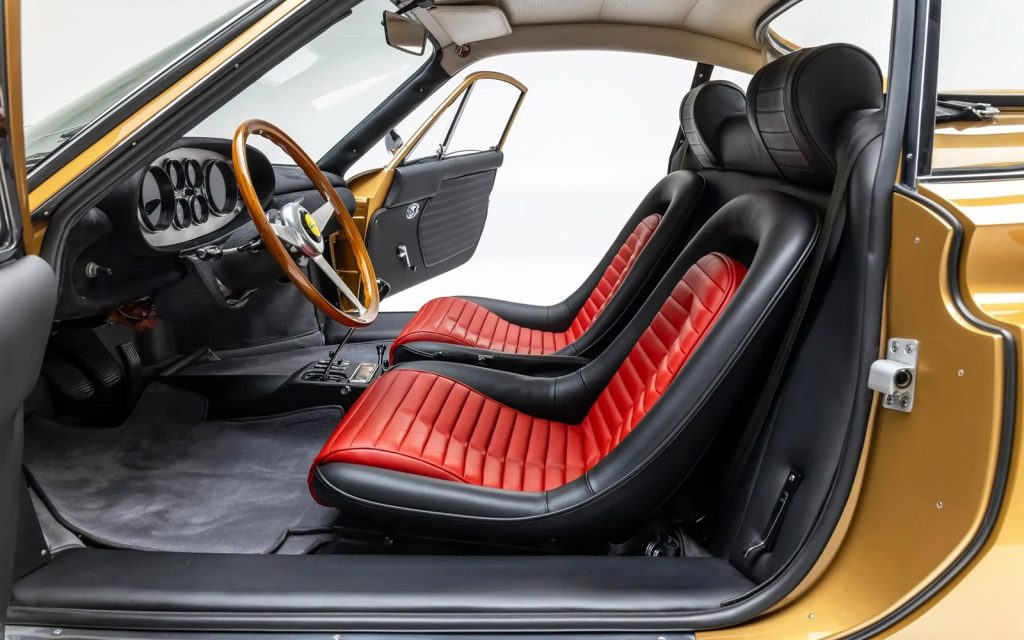
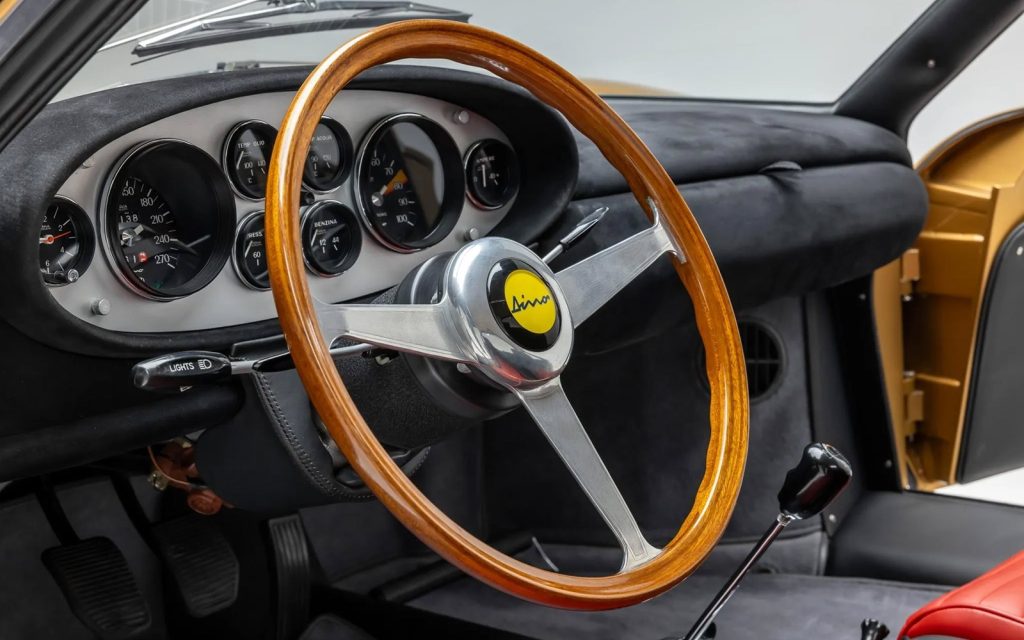
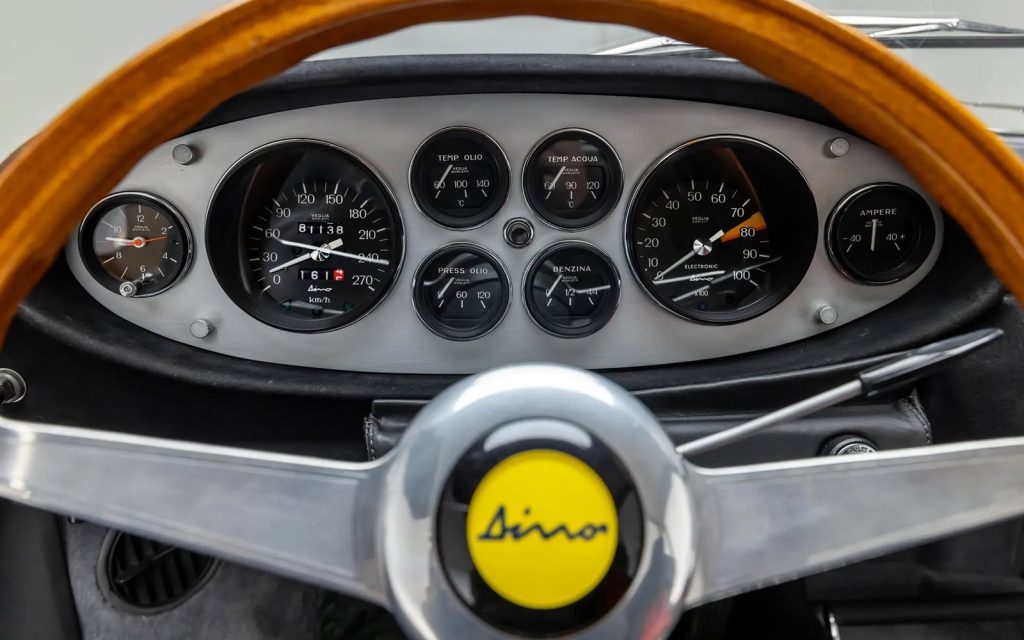
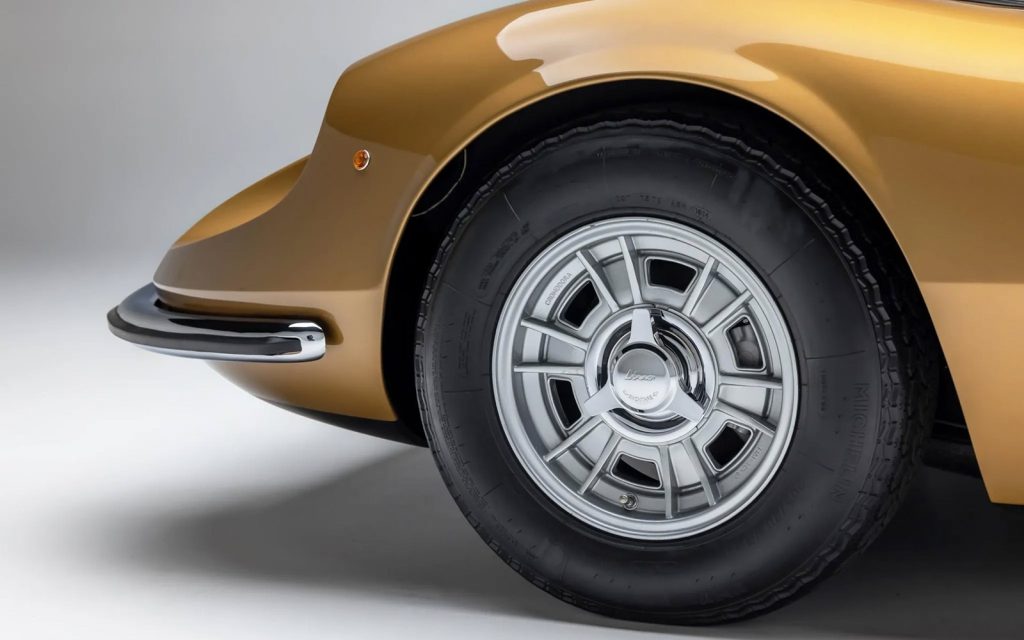
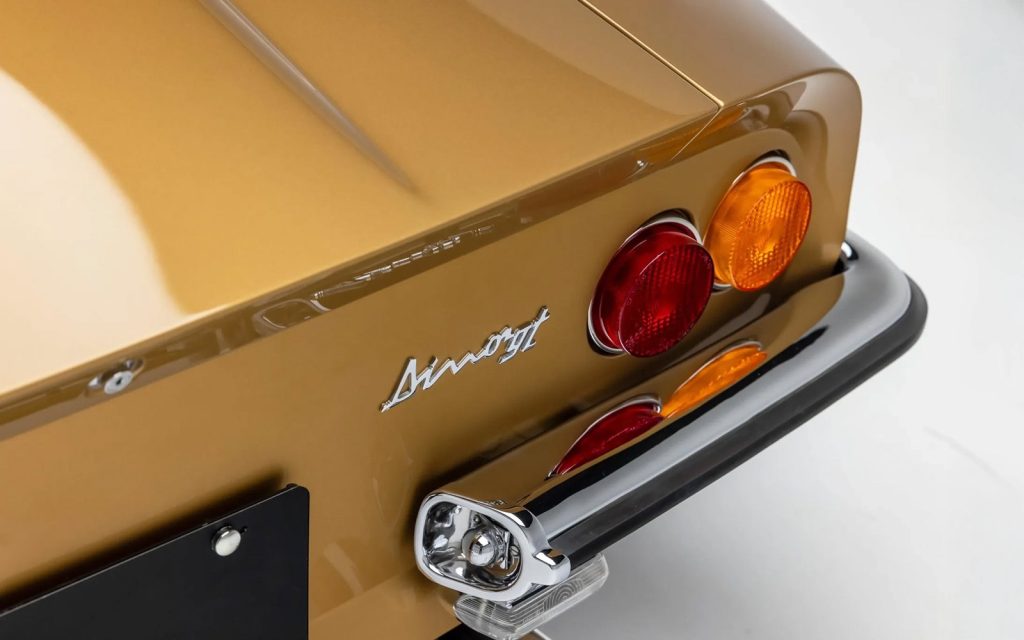
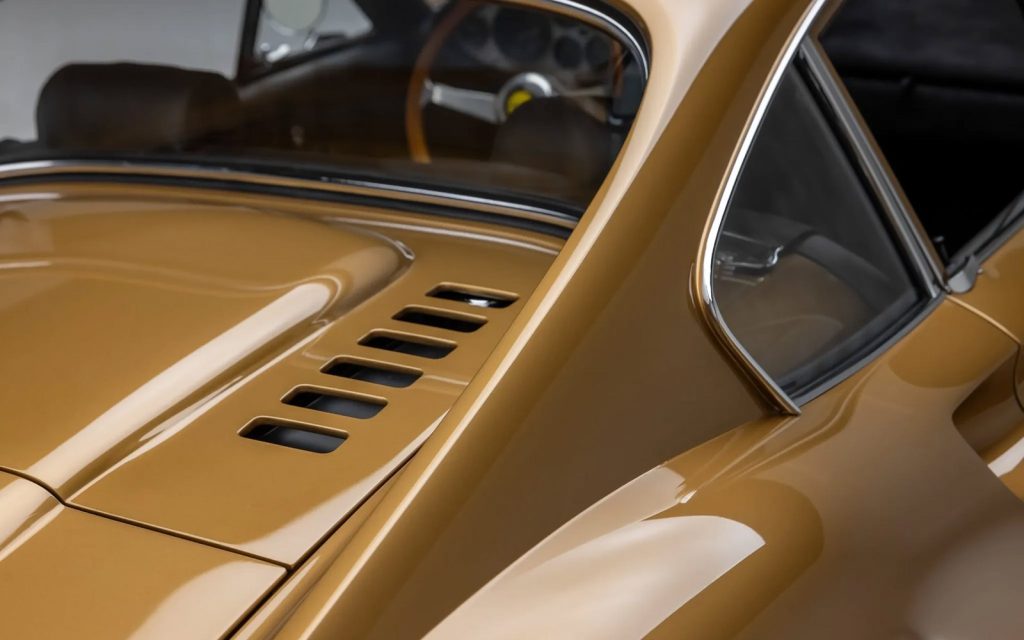
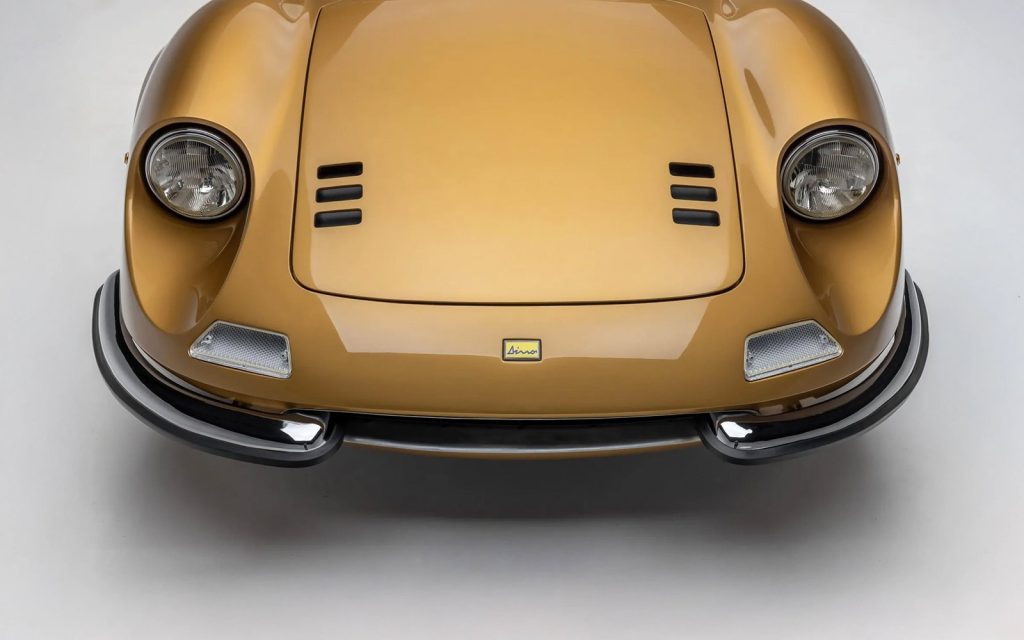
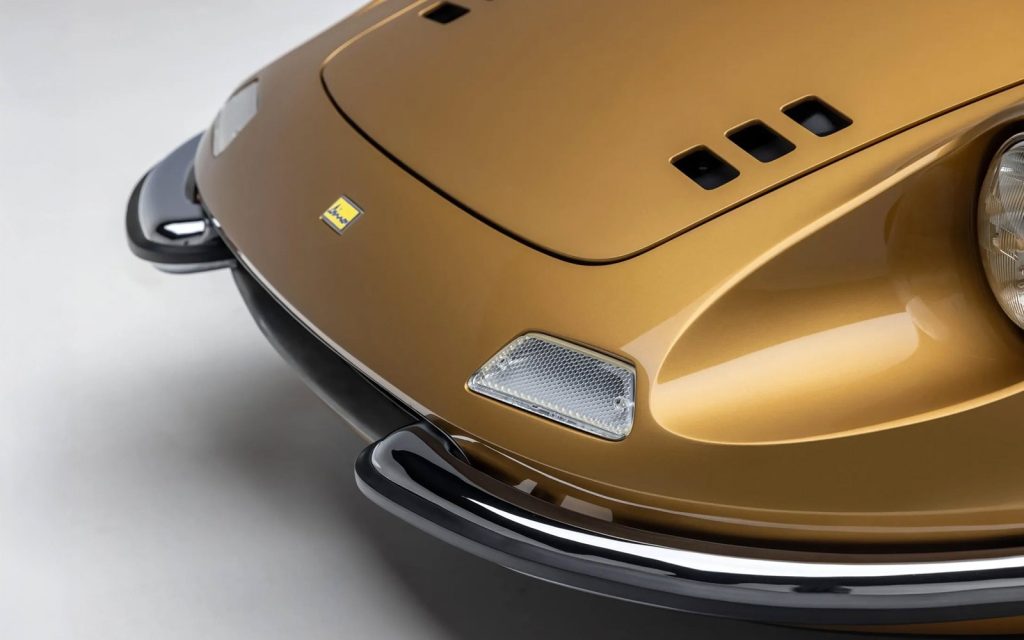
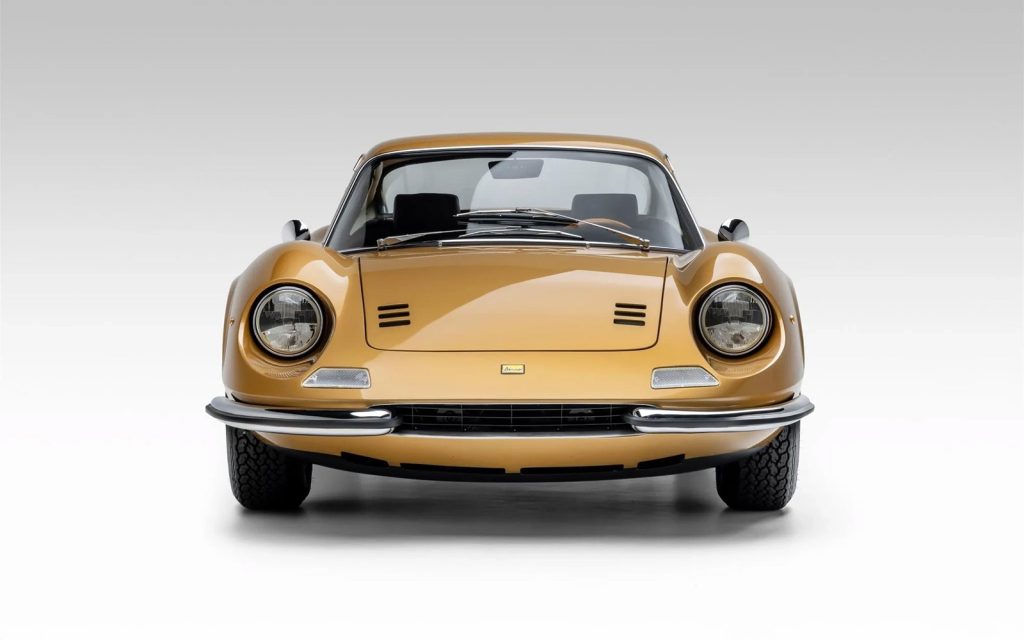
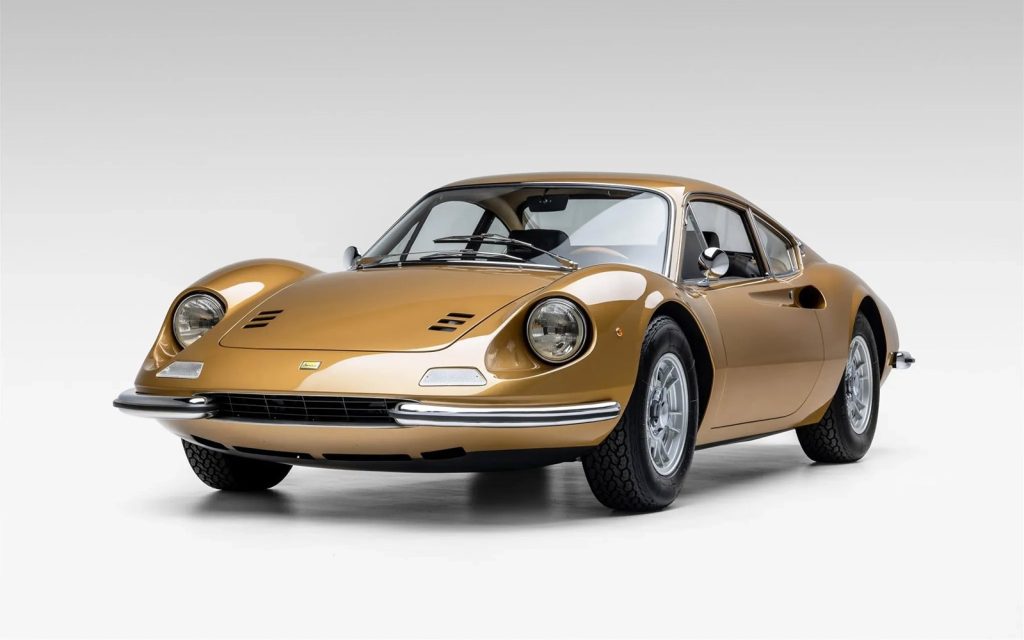
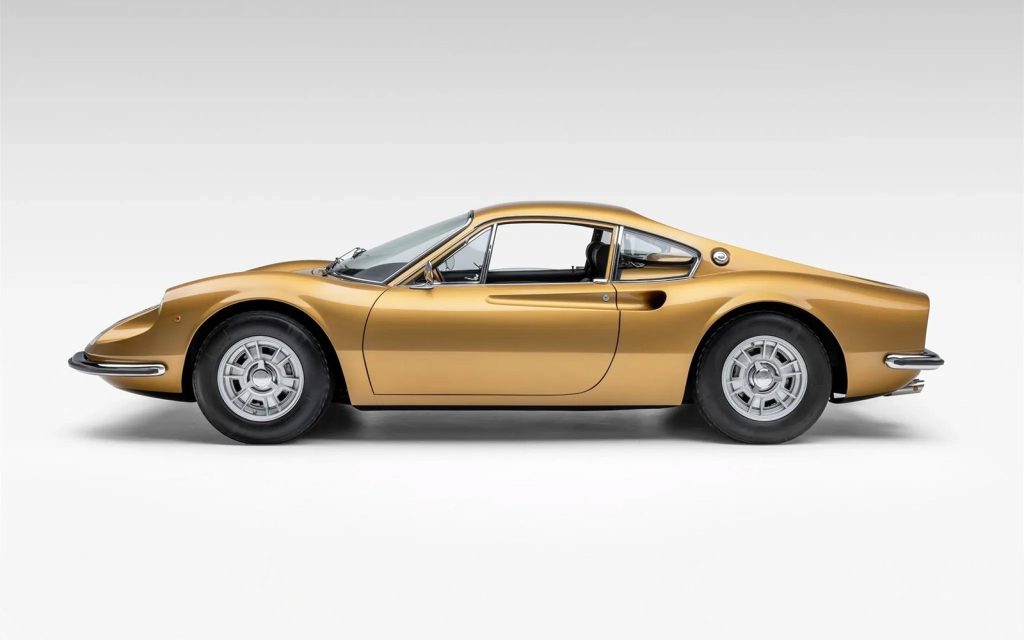
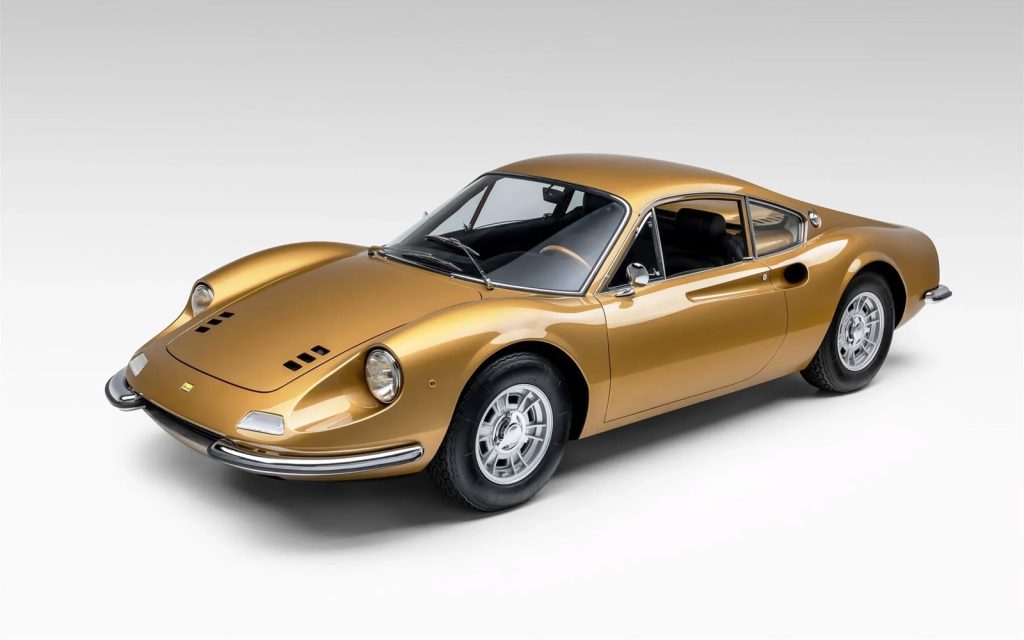
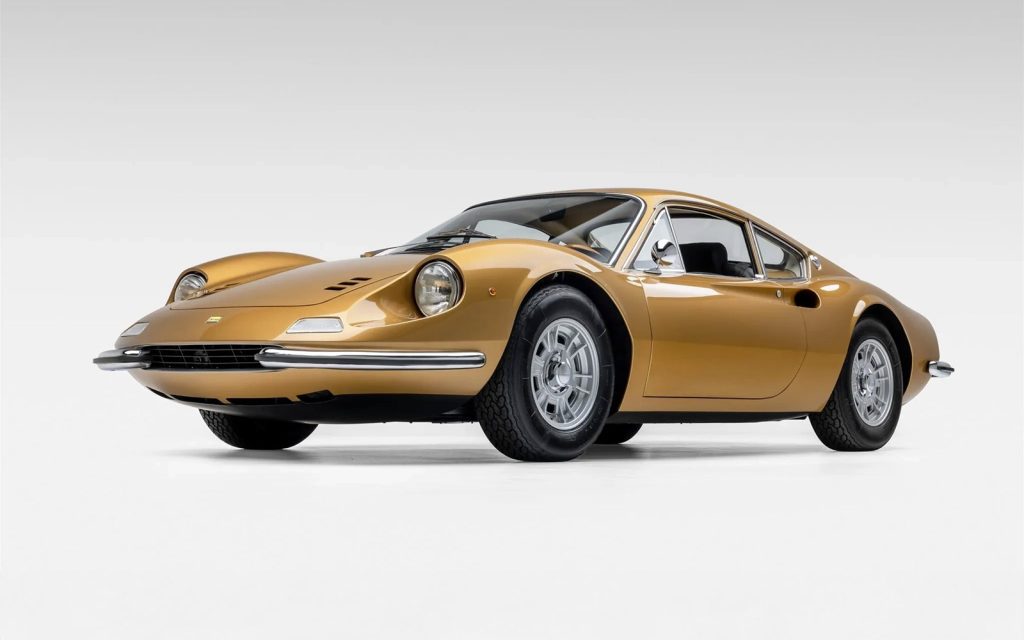
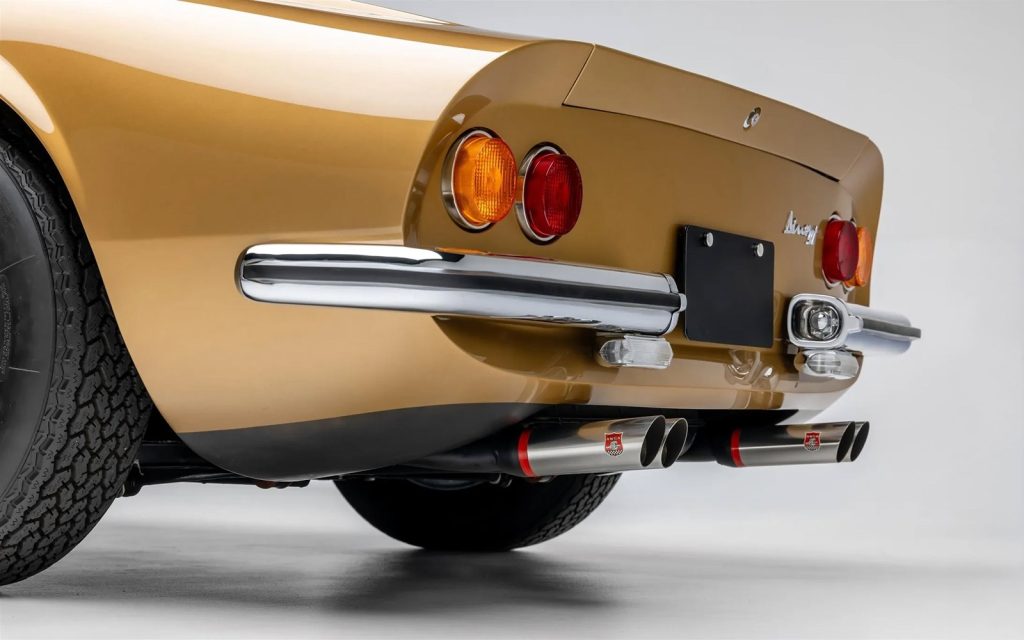
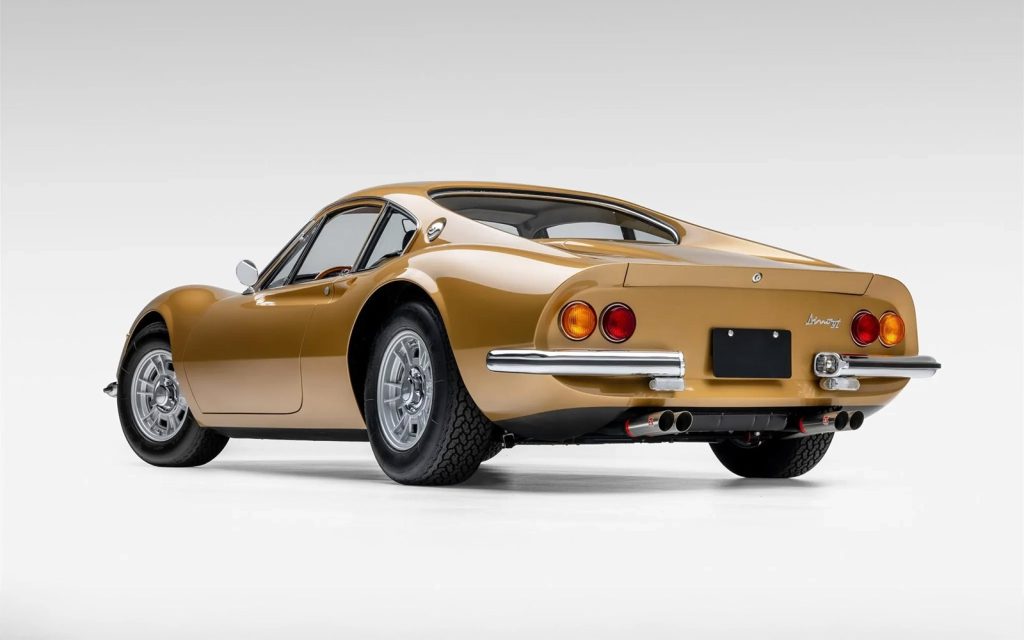
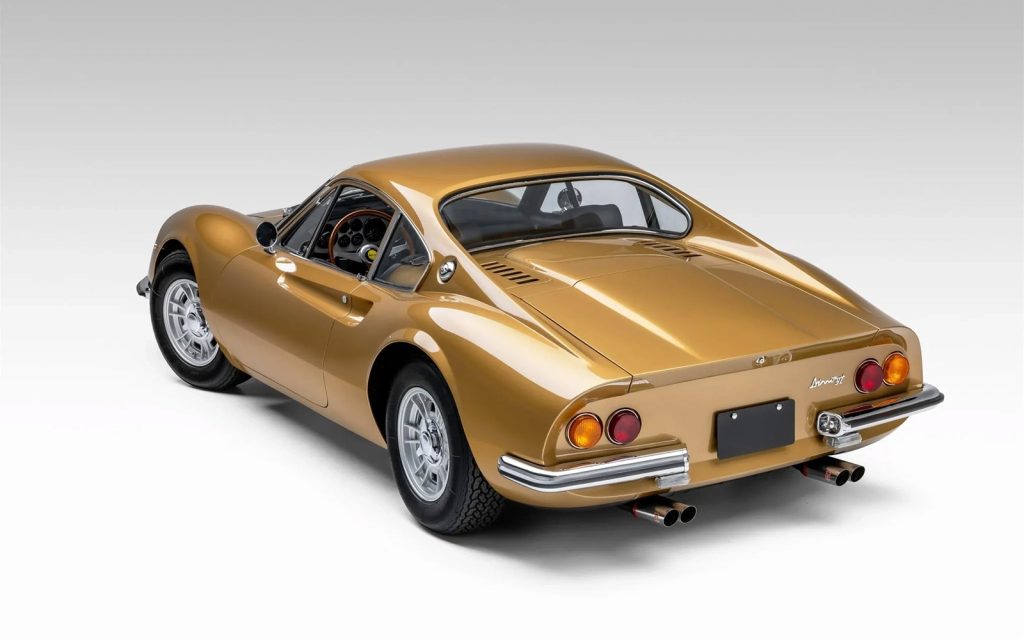
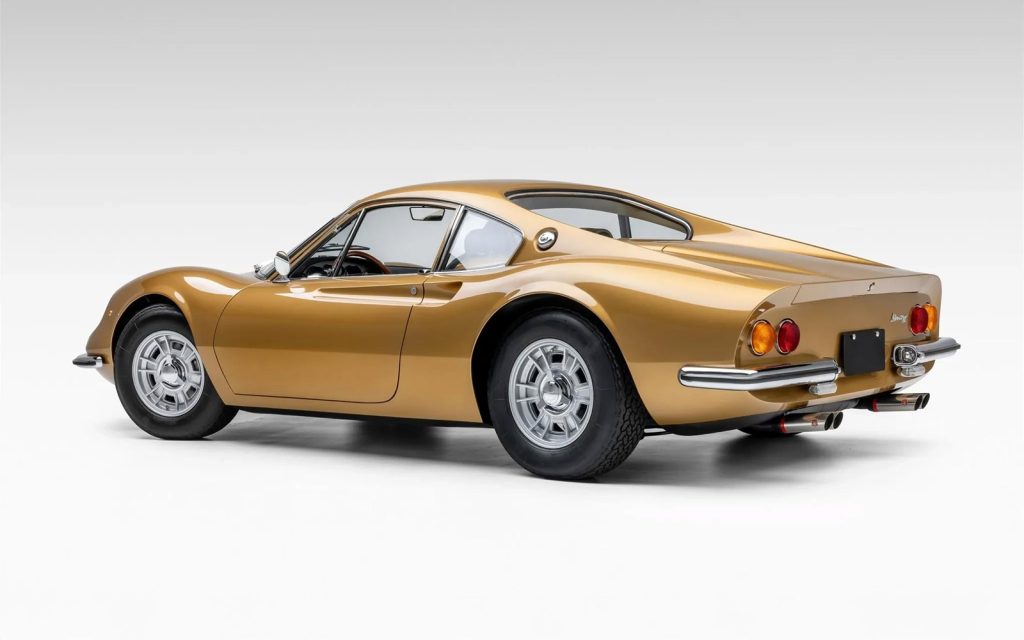
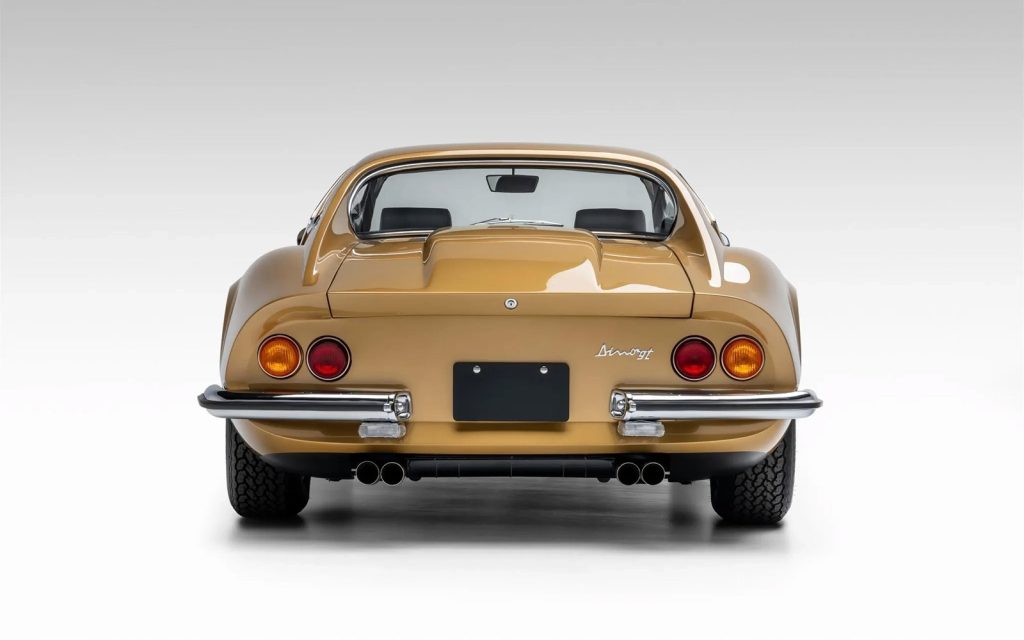
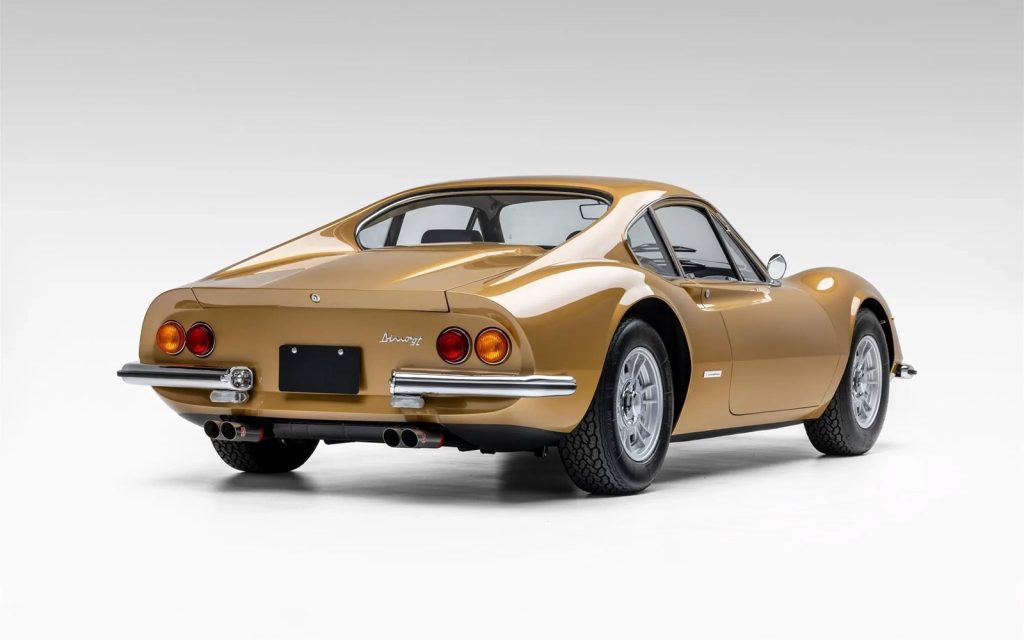
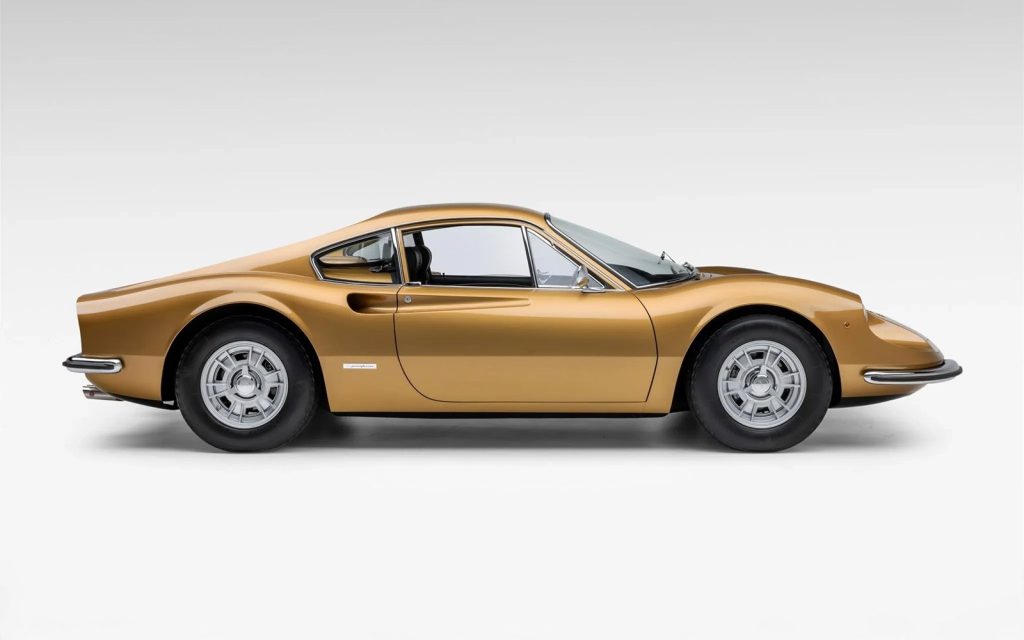
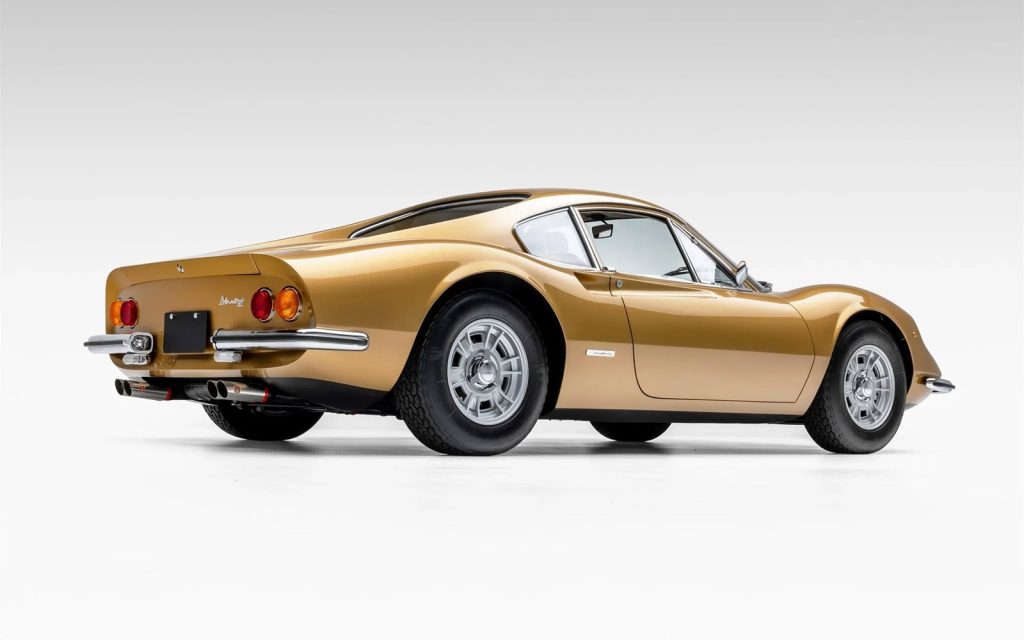
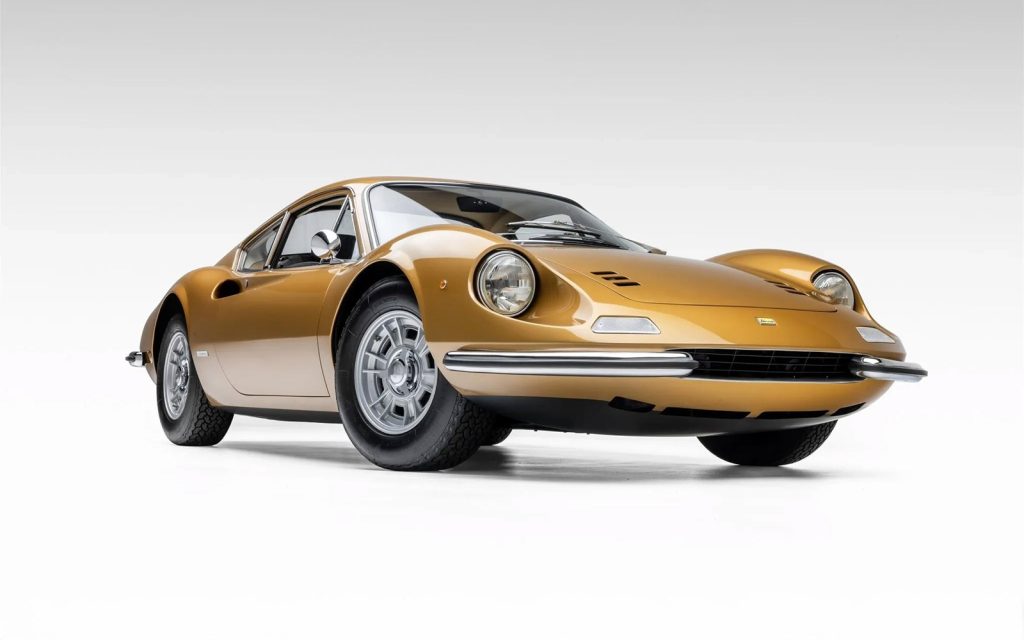
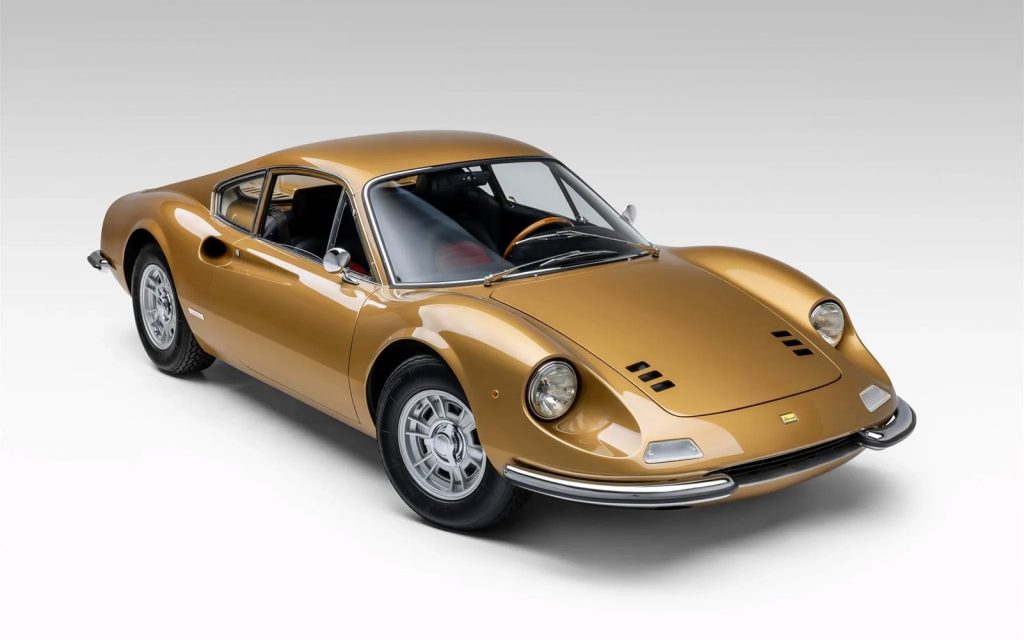
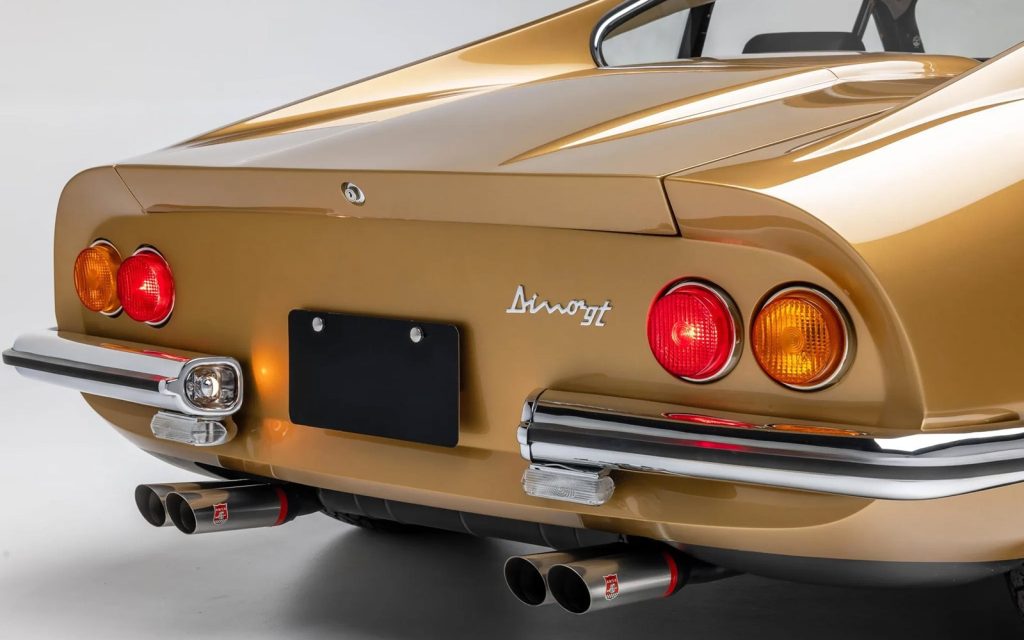
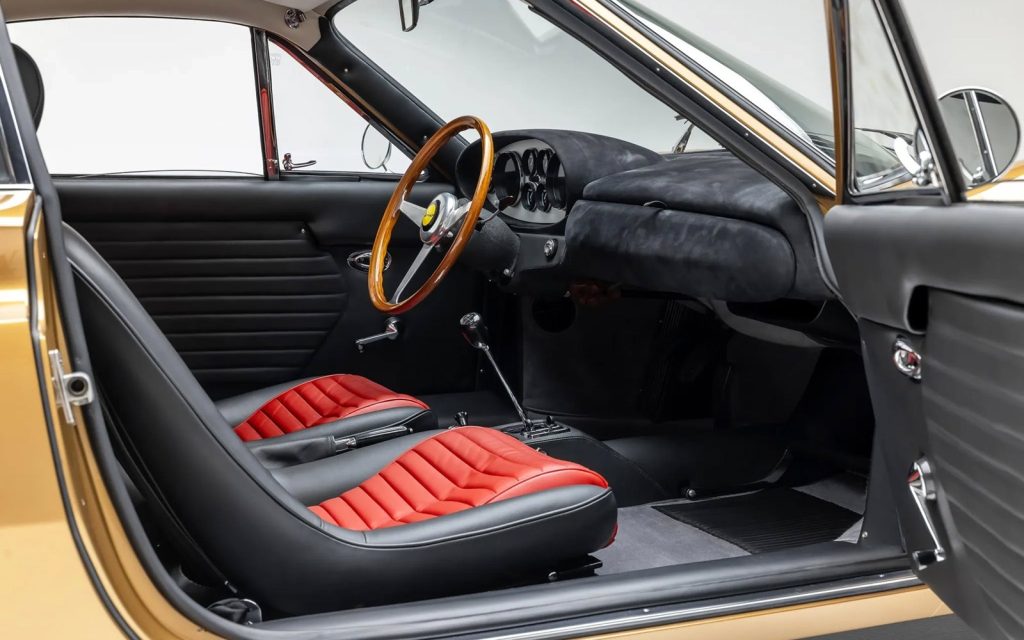
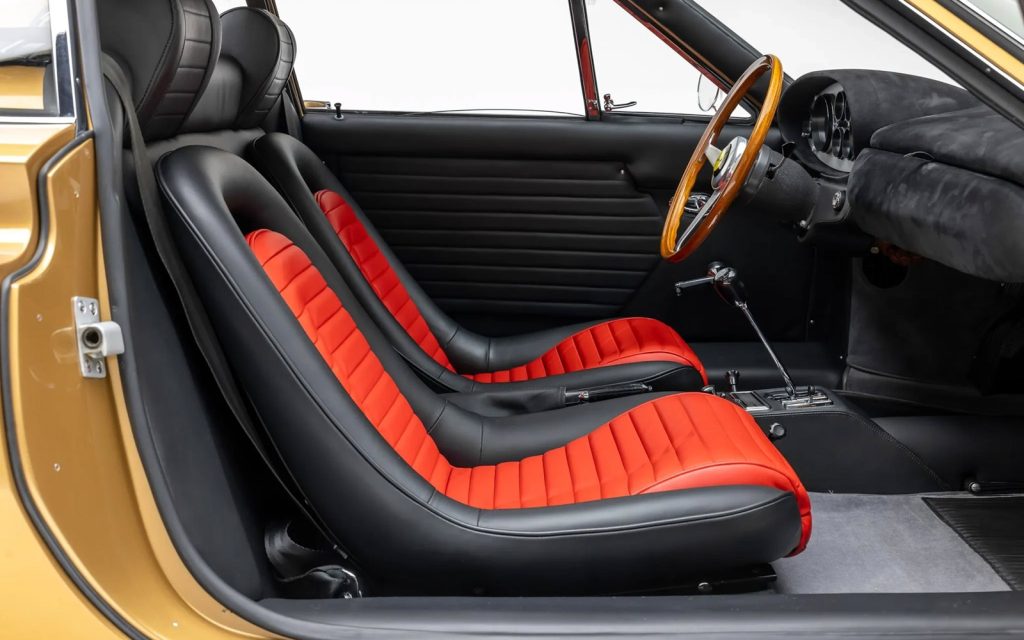
What: 1968 Ferrari Dino 206 GT Color: Nocciola Metallizzato (nocciolamtallizzato; metallic UNI; 106-M-27; Ferrari) VIN: DIN0206GT00176 Mileage: 81,000 km shown, 50,000 miles (TMU) Bid Price: $475,000 at time of publishing, 2 Days Left in Auction CarFax: N/A Window Sticker: N/A Location: Newport Beach, CA Listing:BringATrailer.com
Ferrari built just 150 examples of the Dino 206 GT in 1968. The car you see here is the 38th in that run, and one of just three to be produced from the factory in Nocciola Metallizzato (Italian for Hazelnut Metallic).
The car was produced October 1, 1968, and delivered new to a dealership in Rome. It was imported into the U.S.A. in the 1970s, and was refurbished including a repaint to yellow in the 1980s. It next moved to Japan, then back to America where it was refurbished a second time between 205 and 2017 when it was returned to its original color combination including black vinyl with red leather seat inserts.
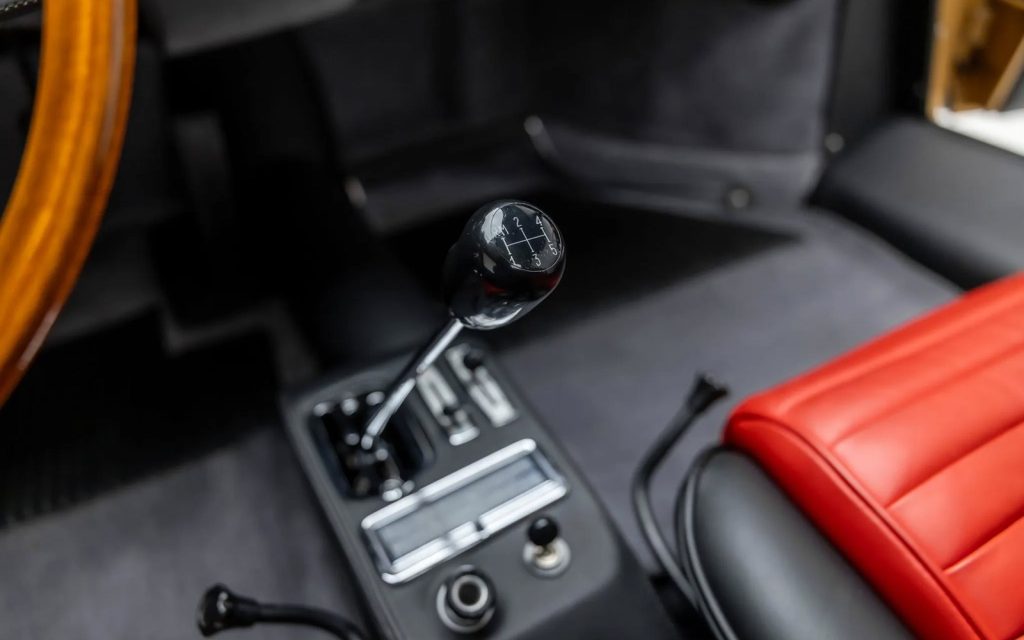
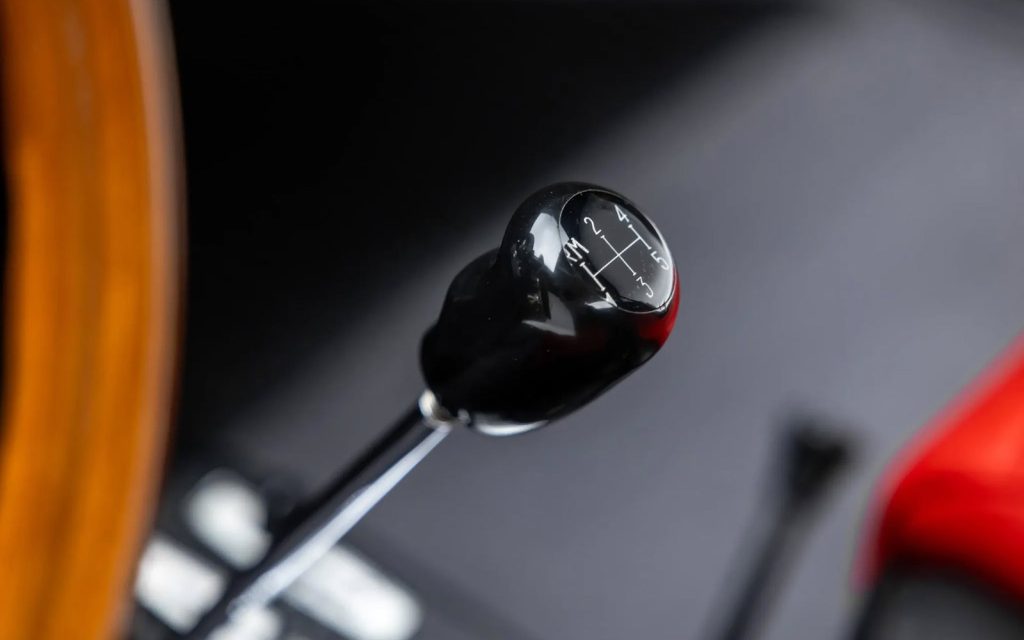
The 206 GT means it’s got the 2.0-liter quad cam V6, which is paired to a 6-speed transaxle.
The car’s listing on Bring a Trailer is quite thorough, detailing the car’s history in considerably more detail. It also includes two different sets of photos – even more of the studio shots you see here, and also shots outside under sunlight.
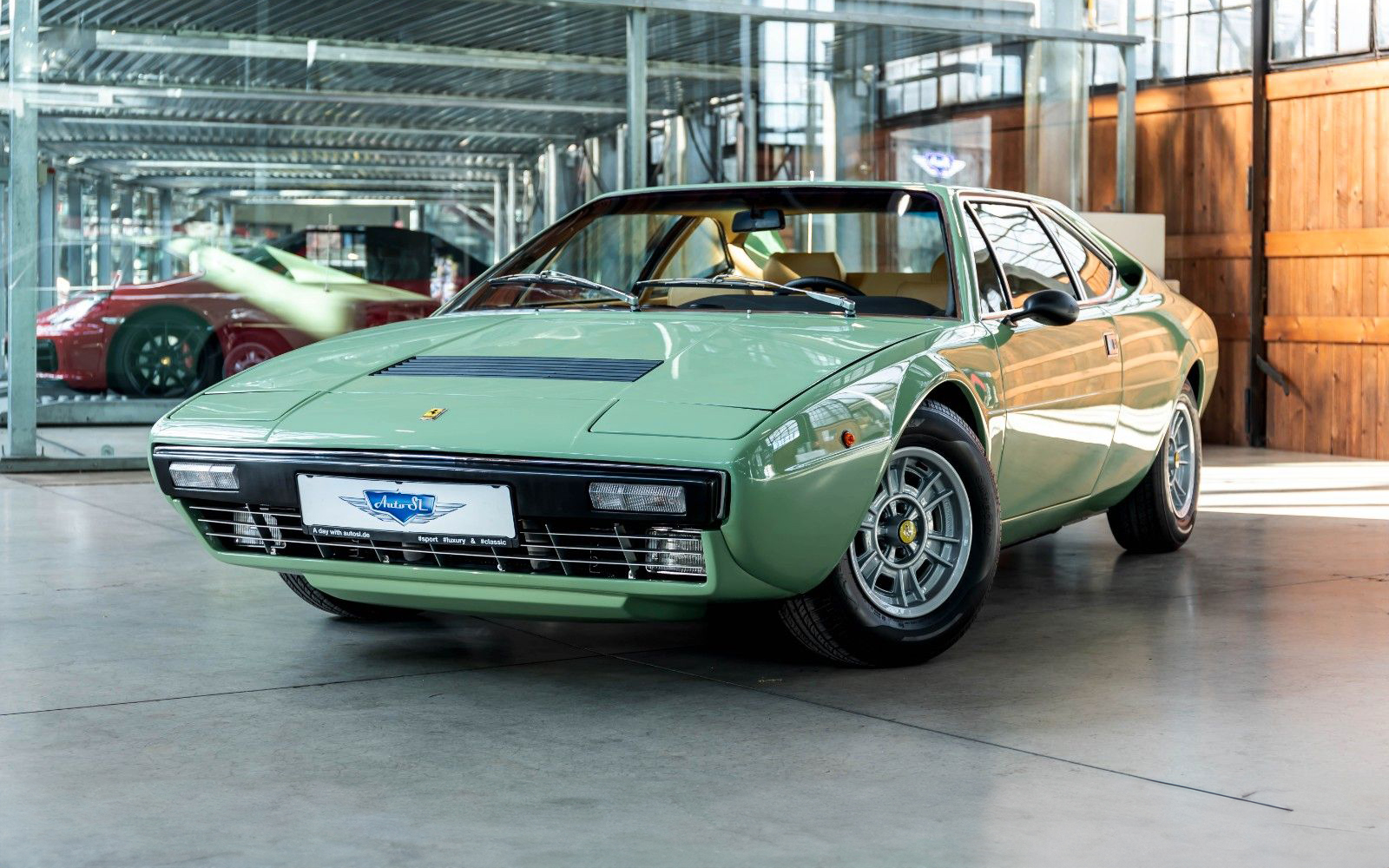
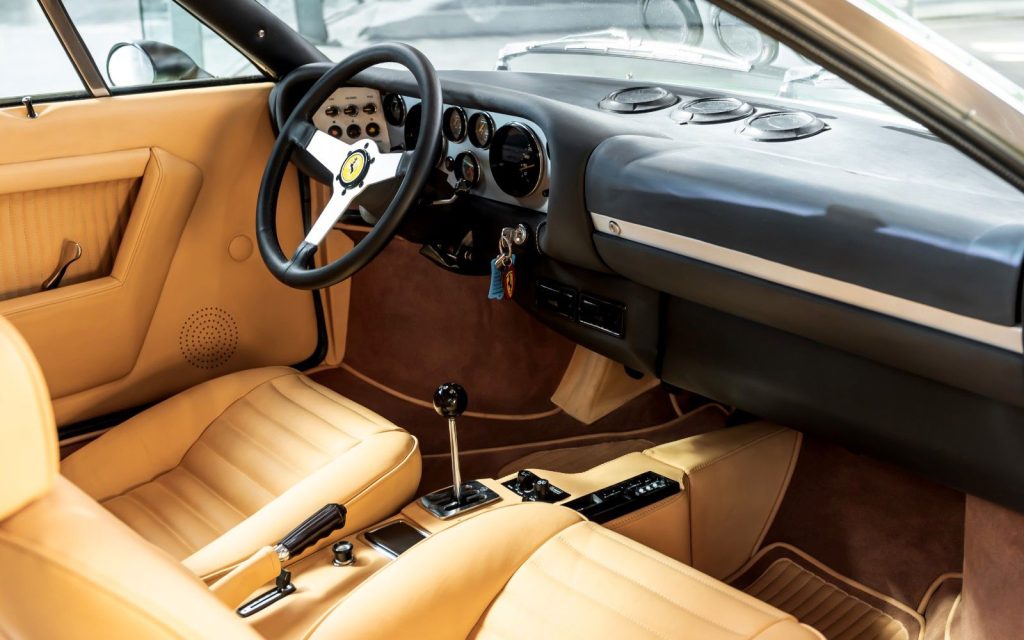
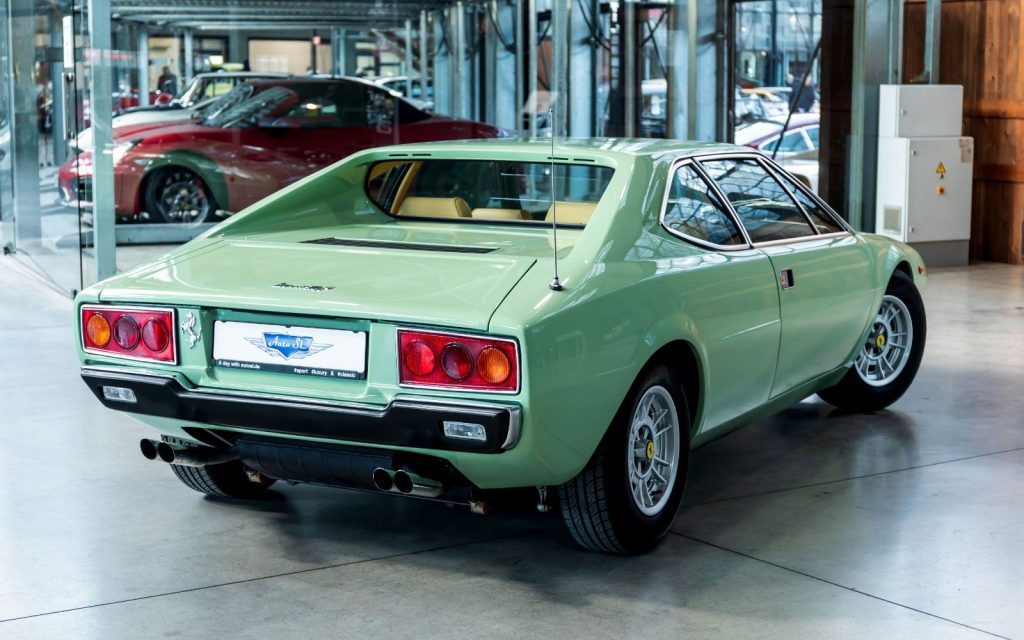
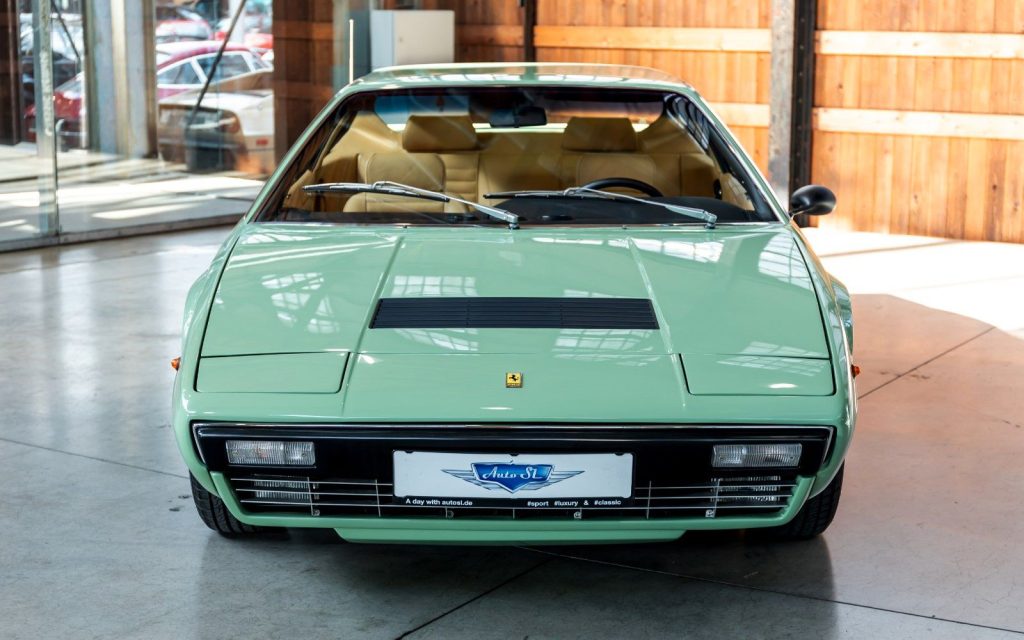
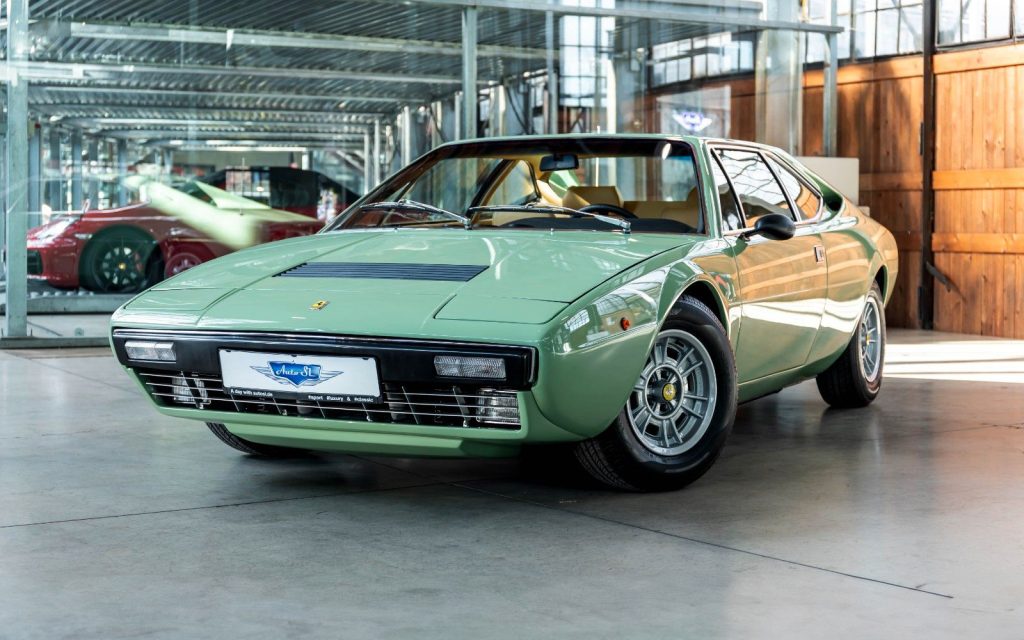
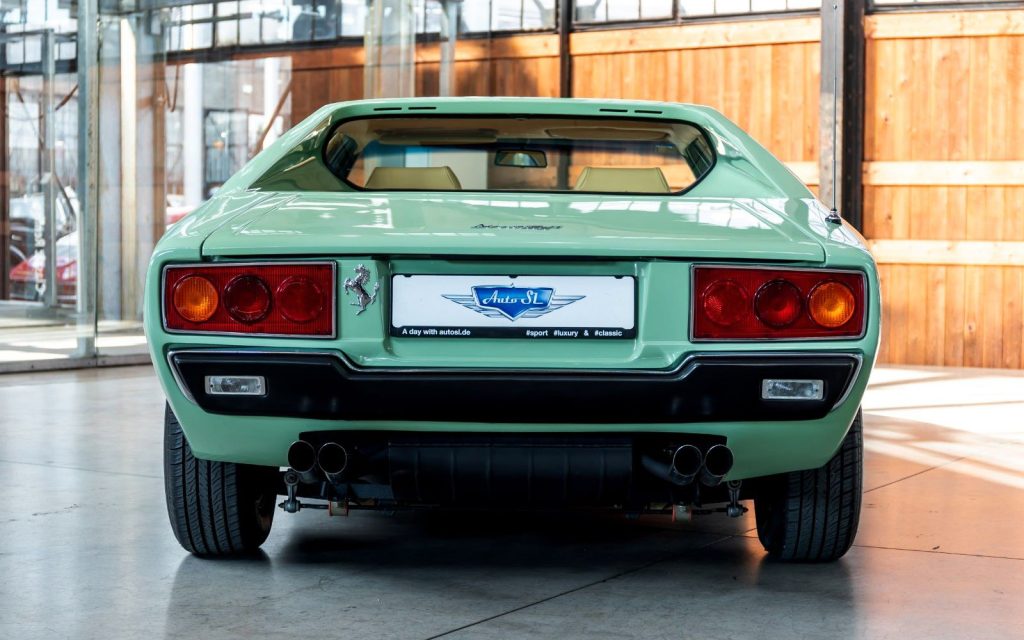
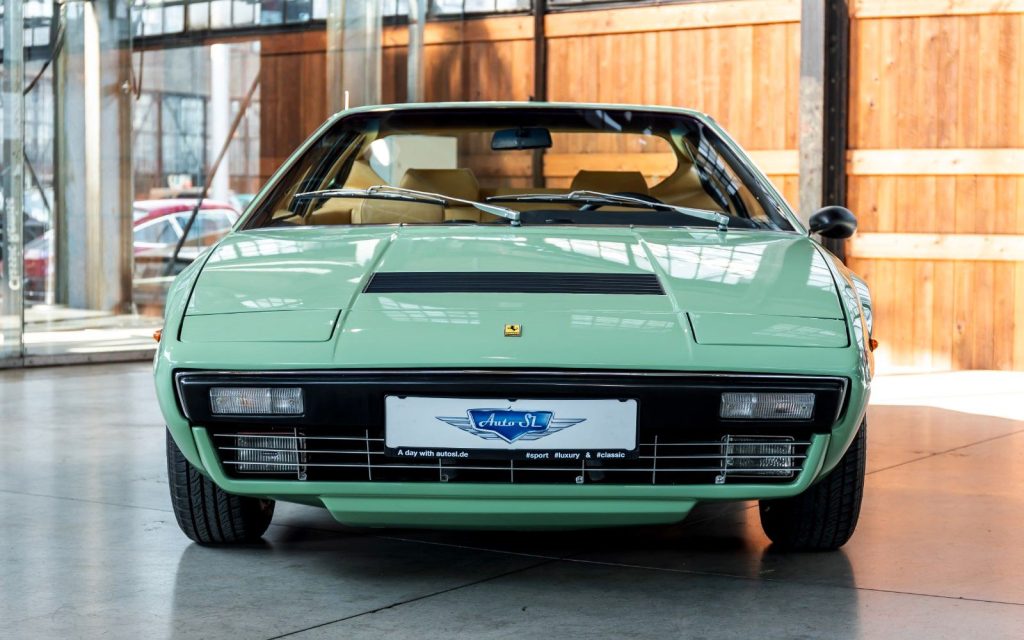
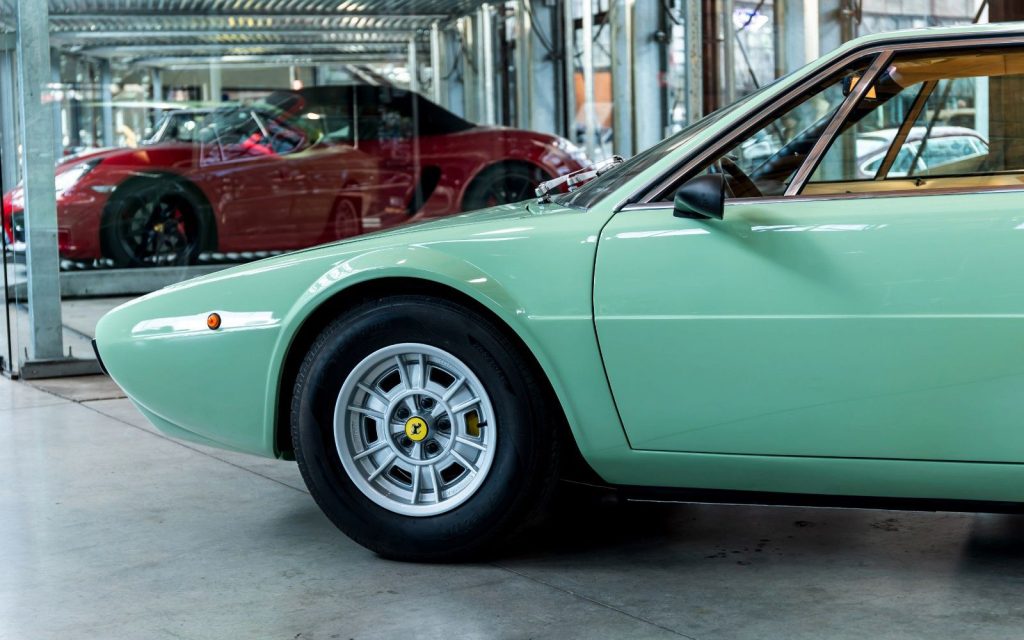
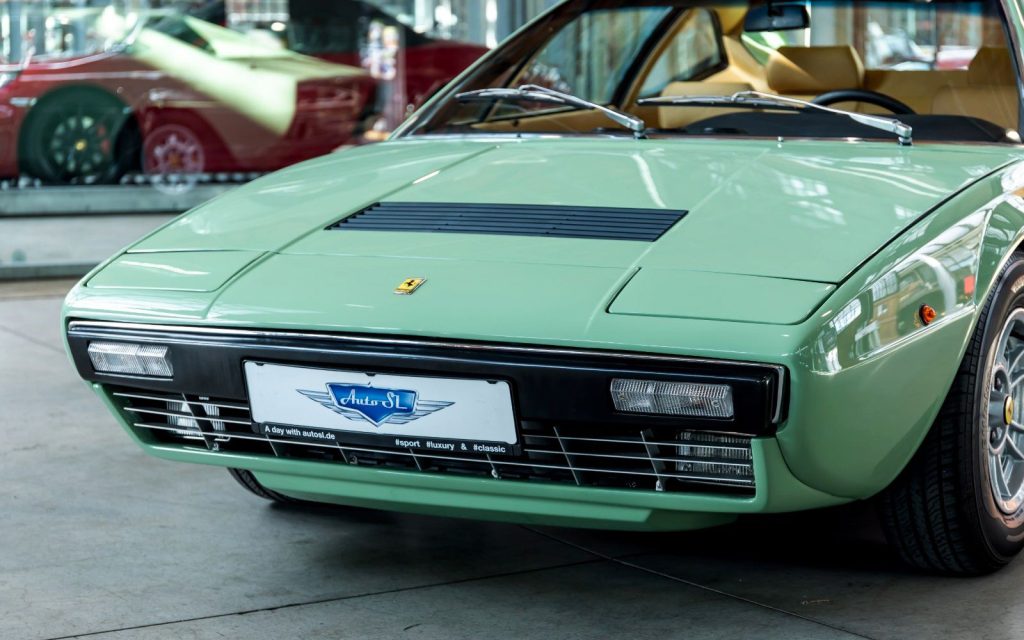
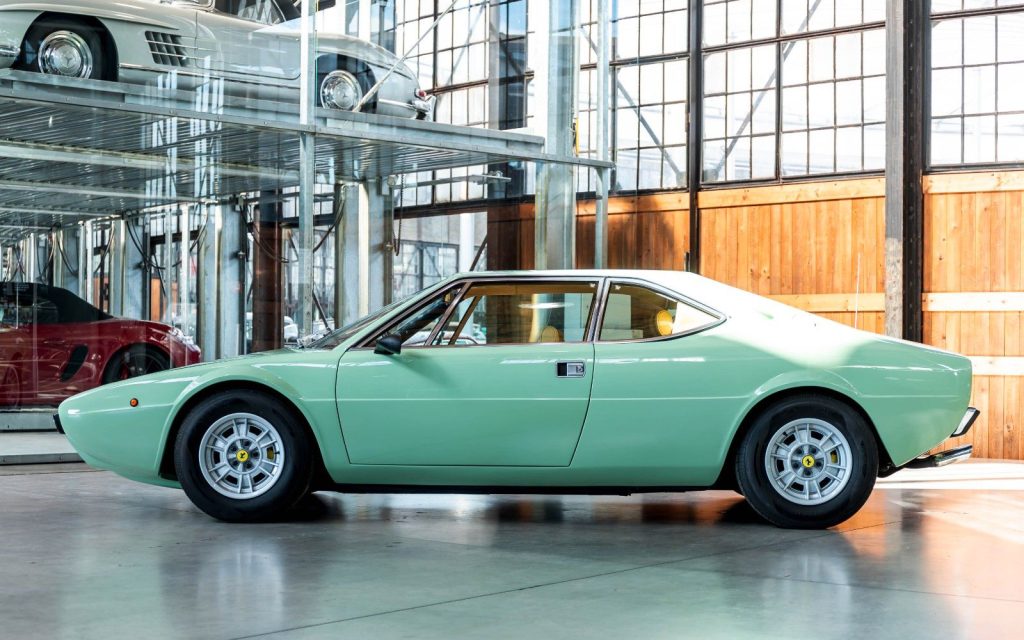
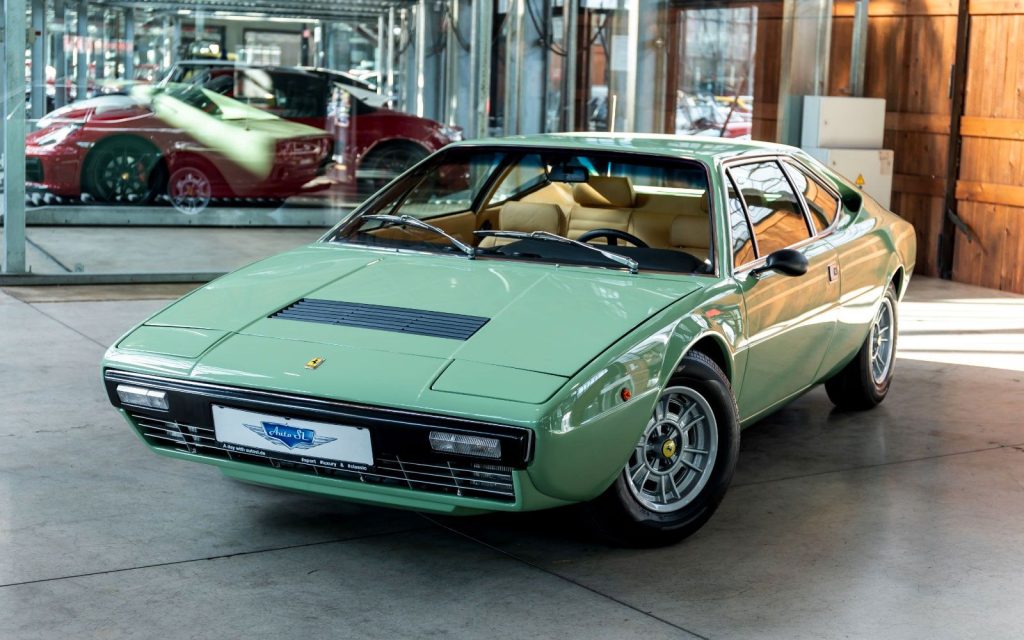
We love to watch the European market for cars that become available and are older than 25 years, the latter because that makes them an easy import into the U.S.A. One car that grabbed our attention is this light green 1974 Ferrari Dino 308 GT4 at AutoSL.de, a sportscar and exotics dealer with locations in Neuss and Düsseldorf Germany.
For those unfamiliar with the 308 GT4, it is one of the last remaining “bargains” in the Ferrari space. It shares an engine with the Ferrari 308 made famous by Magnum P.I., but it’s configured as a 2+2 and bodywork by Bertone that seems, at least in profile, influenced by the Lancia Stratos. Interestingly, the Ferrari Dino GT4 is the only Ferrari designed by Bertone from the factory.
Without the voluptuous curves of the earlier 246 Dino, nor typically the Ferrari badges on European models, nor even the Magnum P.I. product placement, the 308 GT4 tends to be forgotten about, and that is a shame. It is getting noticed though, with Hagerty on-air personality Jason Camisa and Hagerty Driver’s Club Magazine Editor-in-Chief Larry Webster both more recent collector owners of their own GT4.
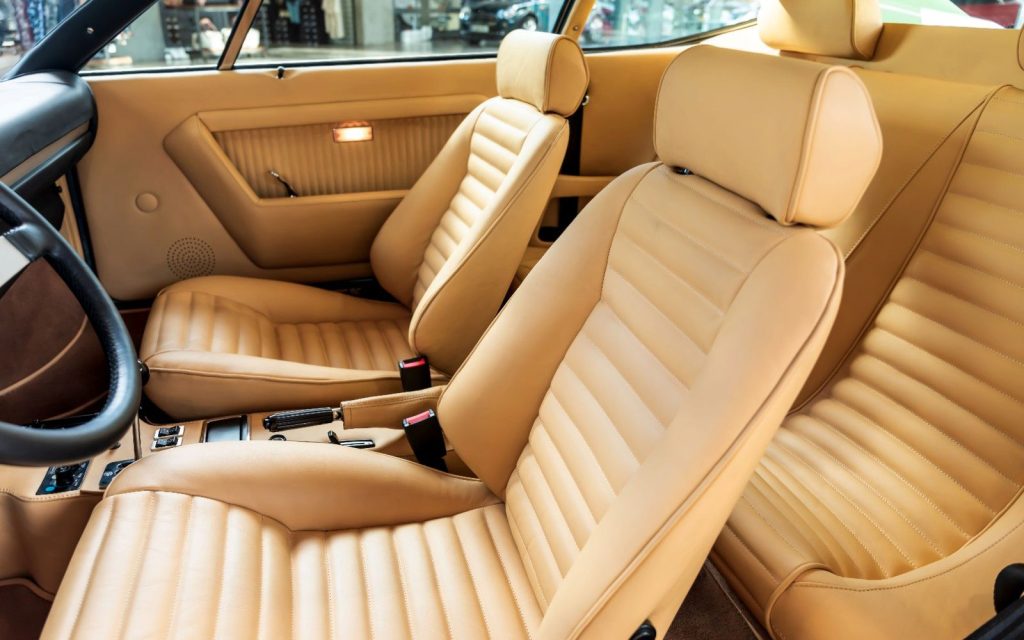
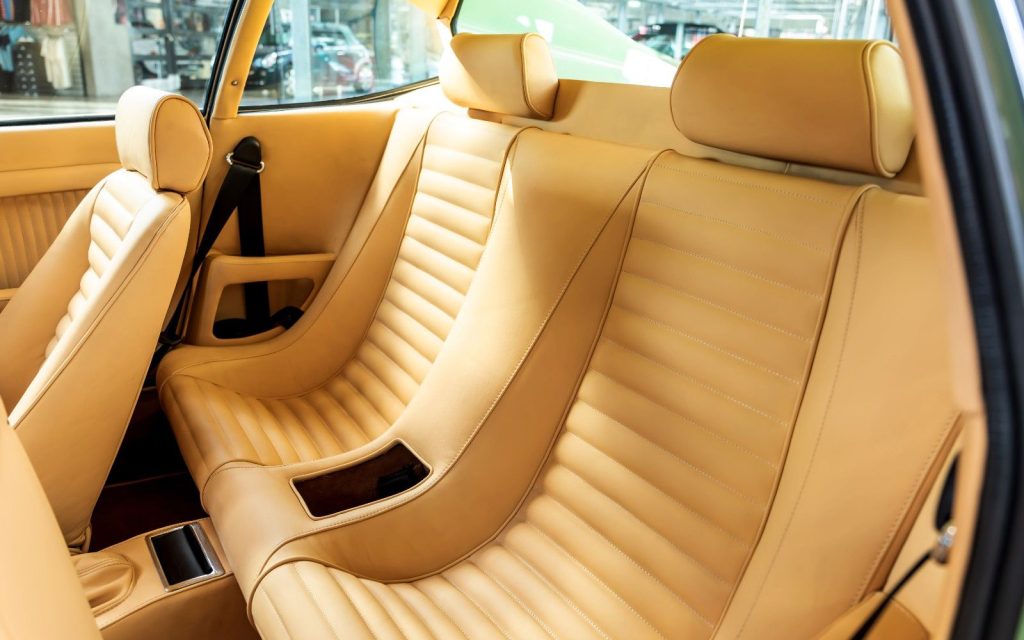
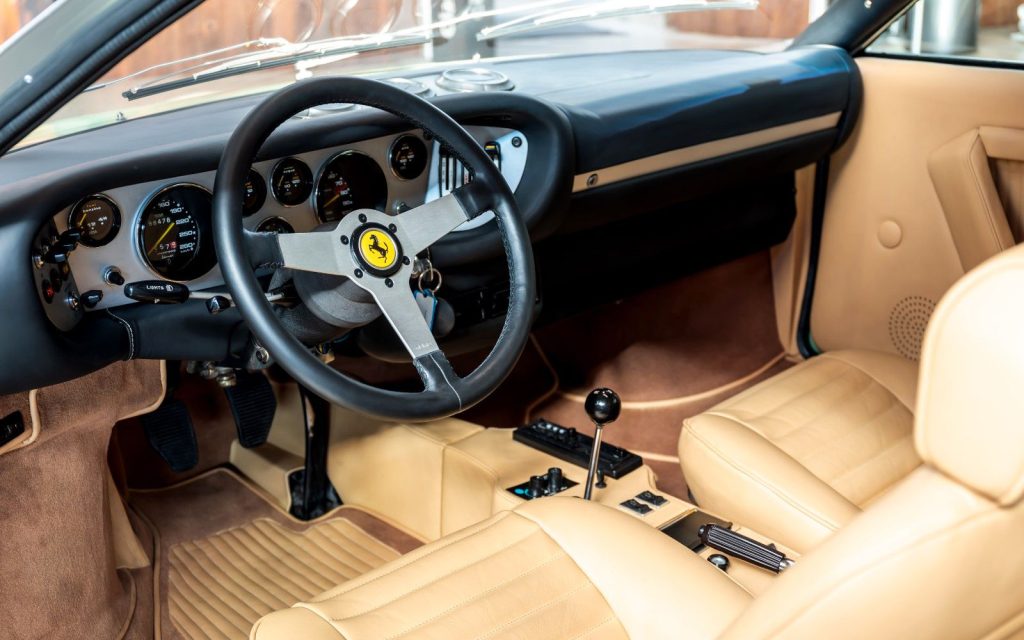
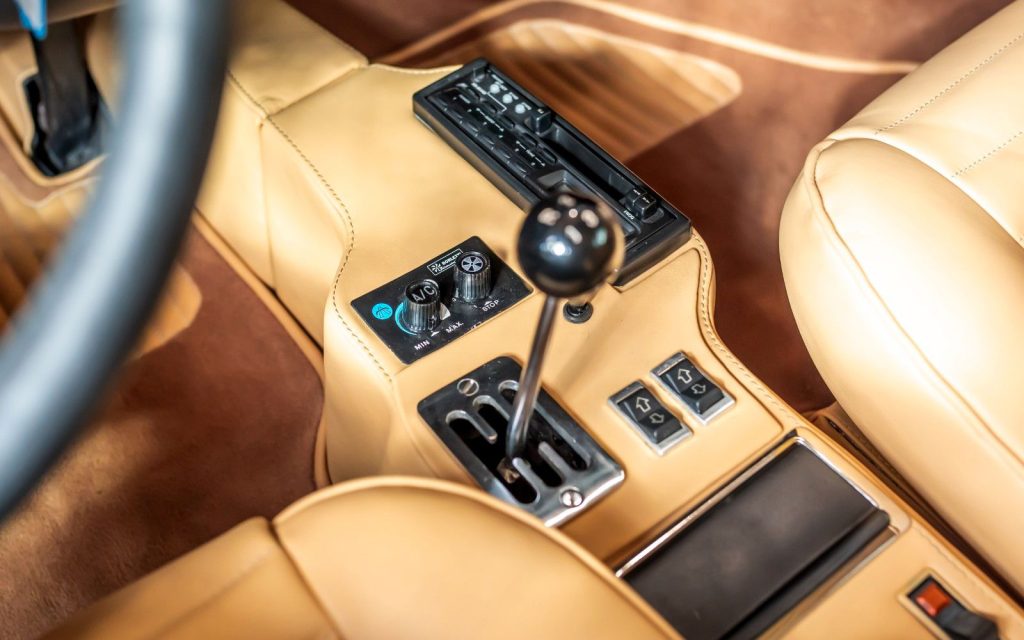
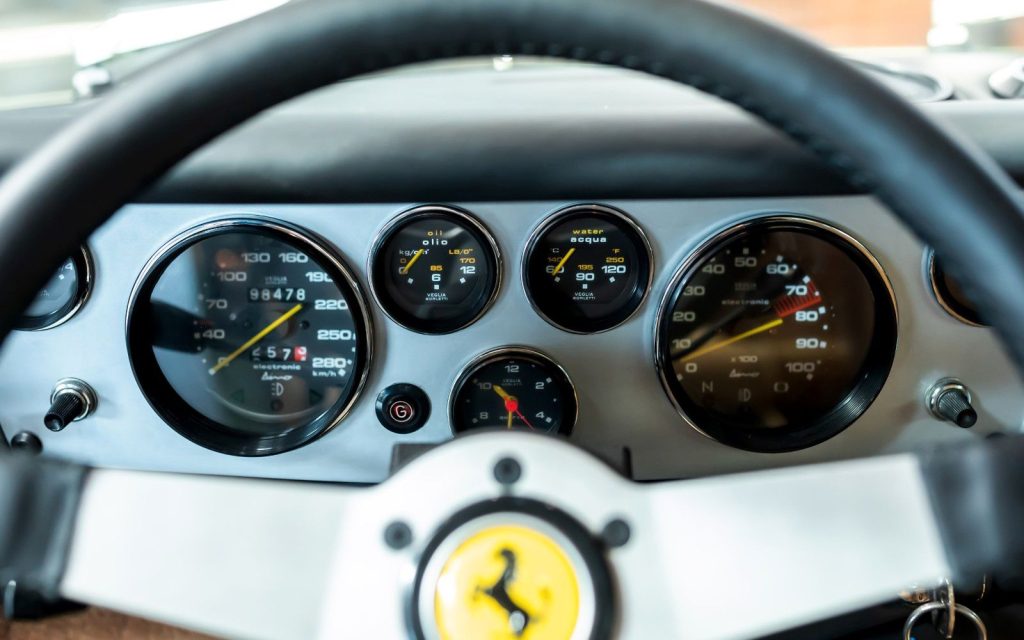
In this case, this ’74 green on tan specimen appears to be in incredible shape and has logged 98,000 km (about 60,000 miles), and has had just one owner with full records according to the dealer. What the dealer doesn’t specify is the specific name of this green hue.
The unique green color on this car is believed to be Verde Pallido, the light green famously sprayed on a Ferrari 250 GTO for Stirling Moss and raced in the 1962 24 Hours of Le Mans by Innes Ireland and Masten Gregory.
It’s beautiful and it’s also available. More importantly, as a car older than 25 years, it is easily importable into the U.S.A.
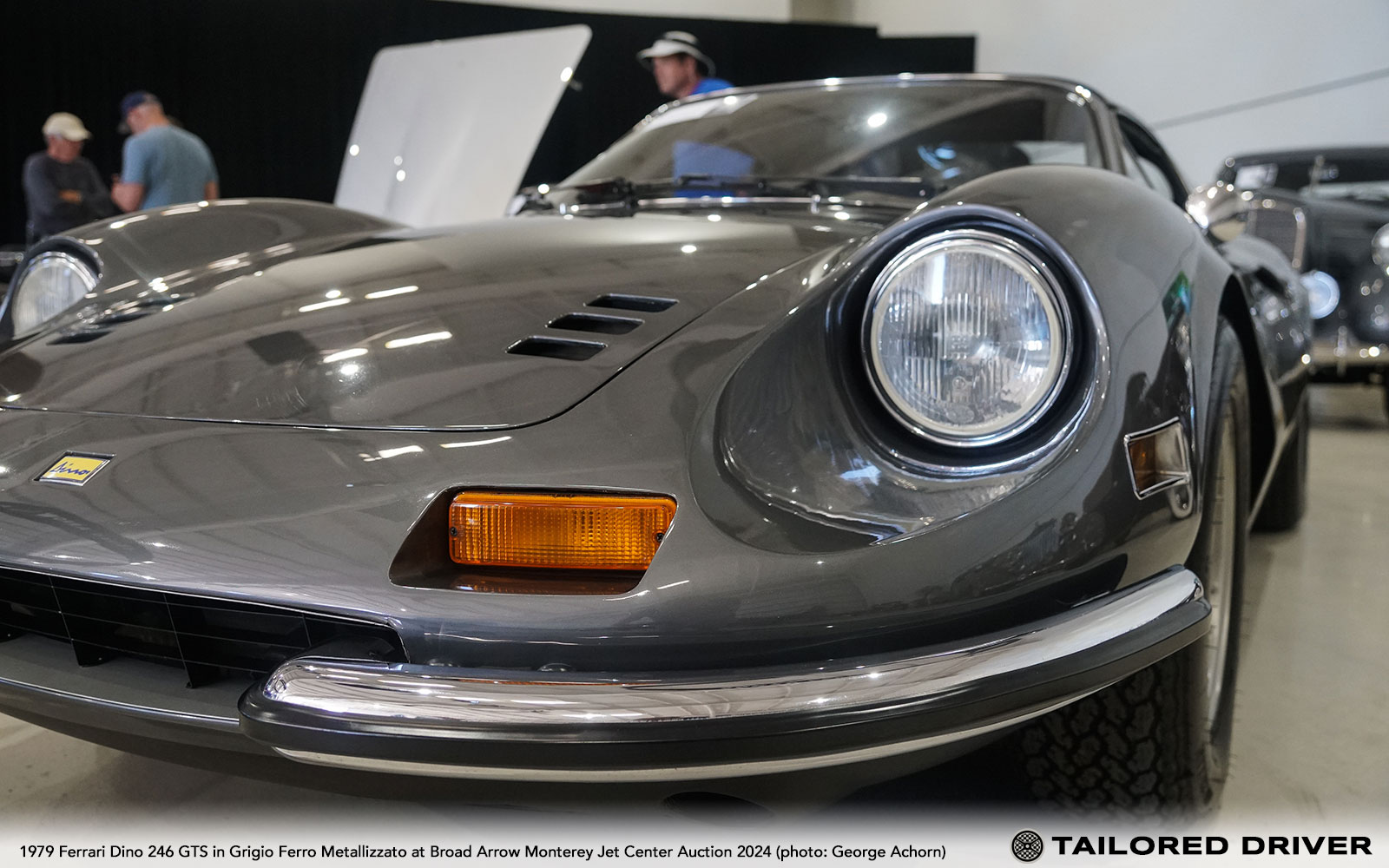
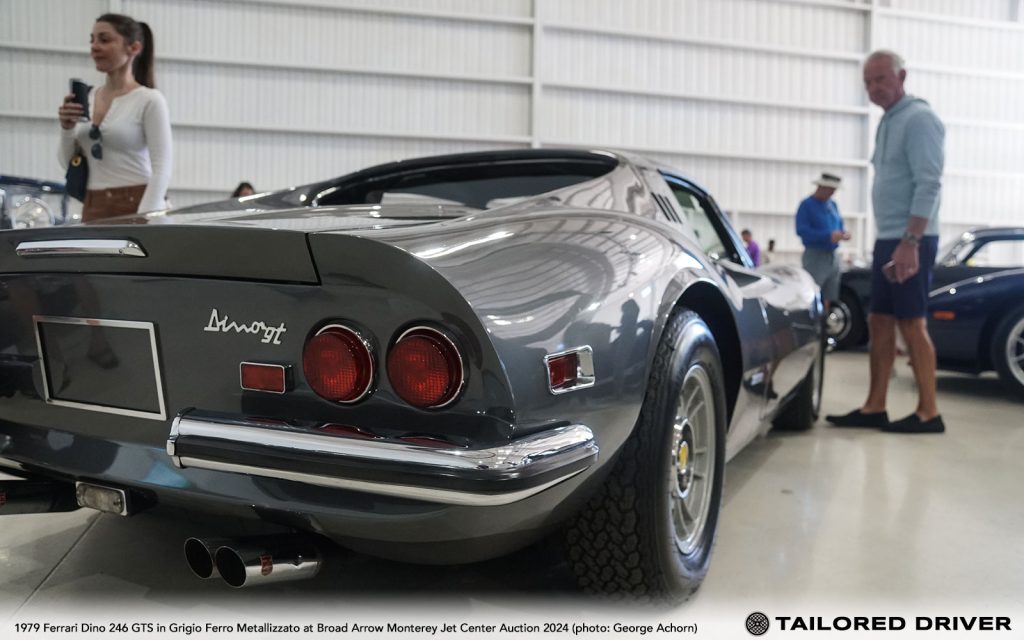
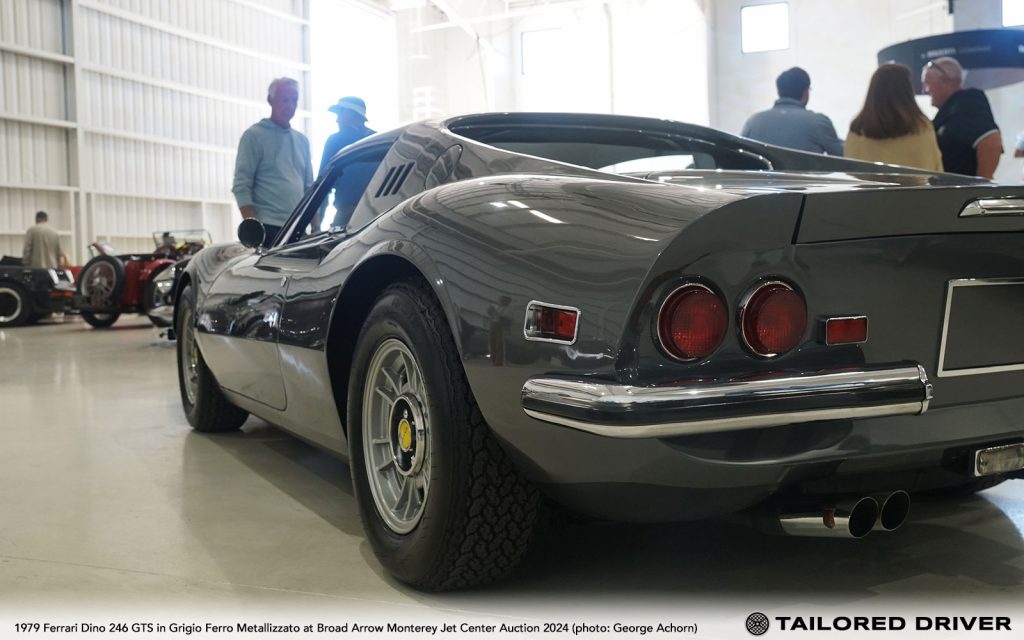
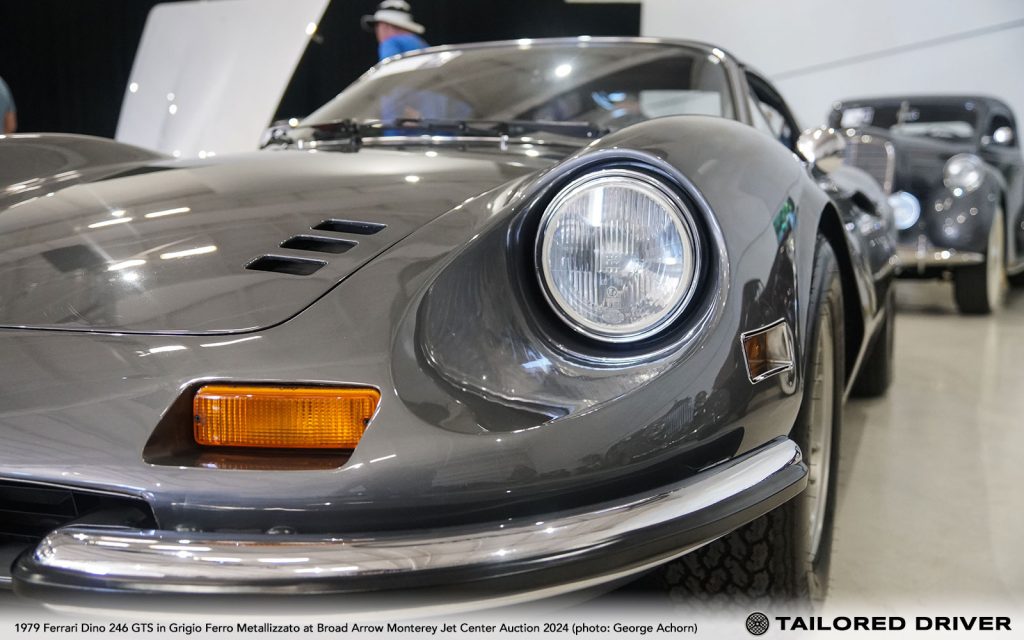
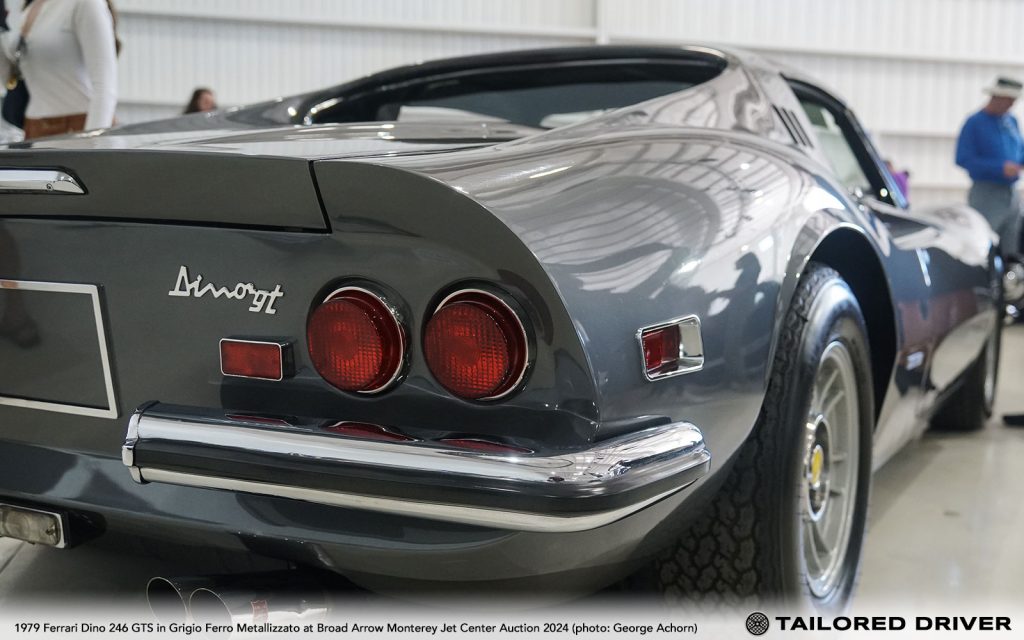
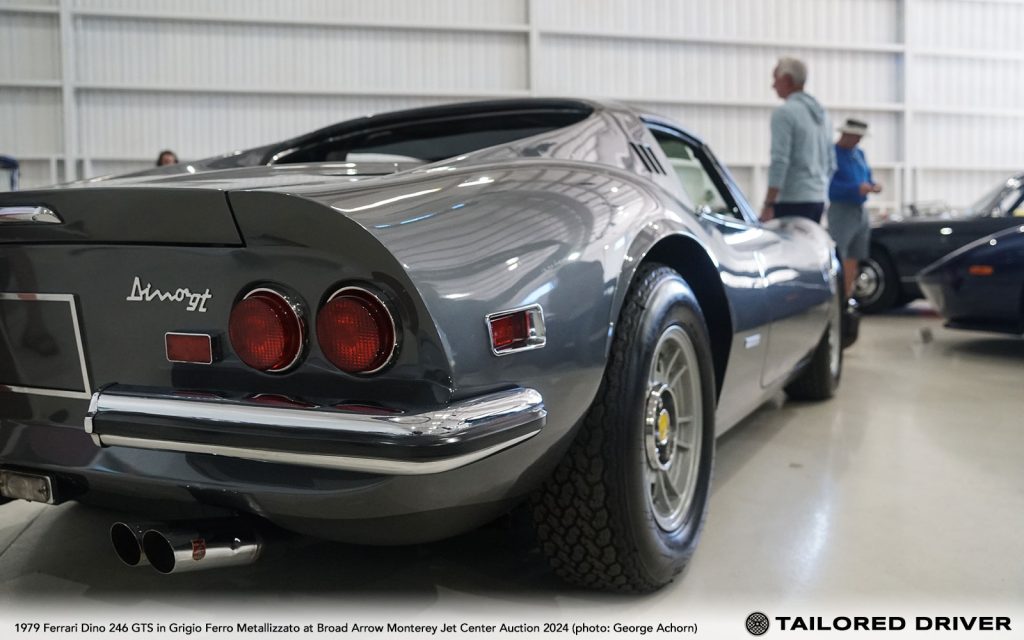
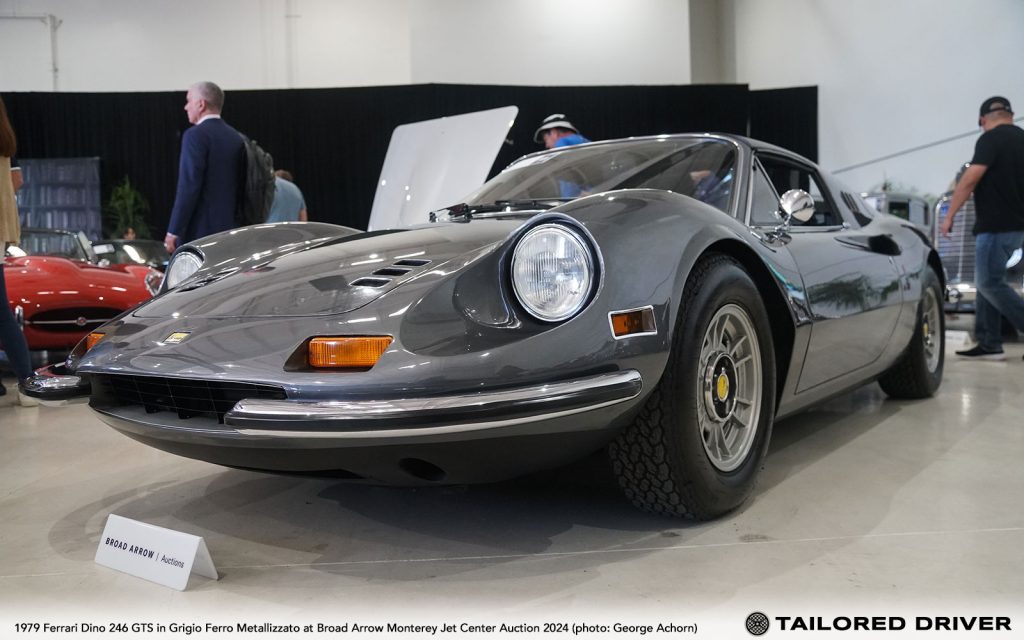
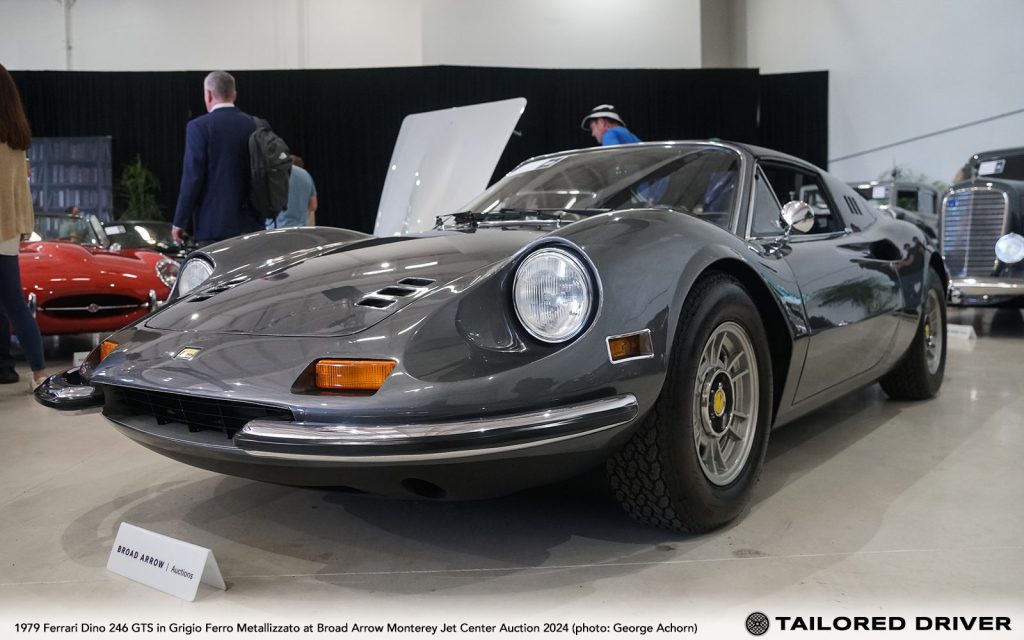
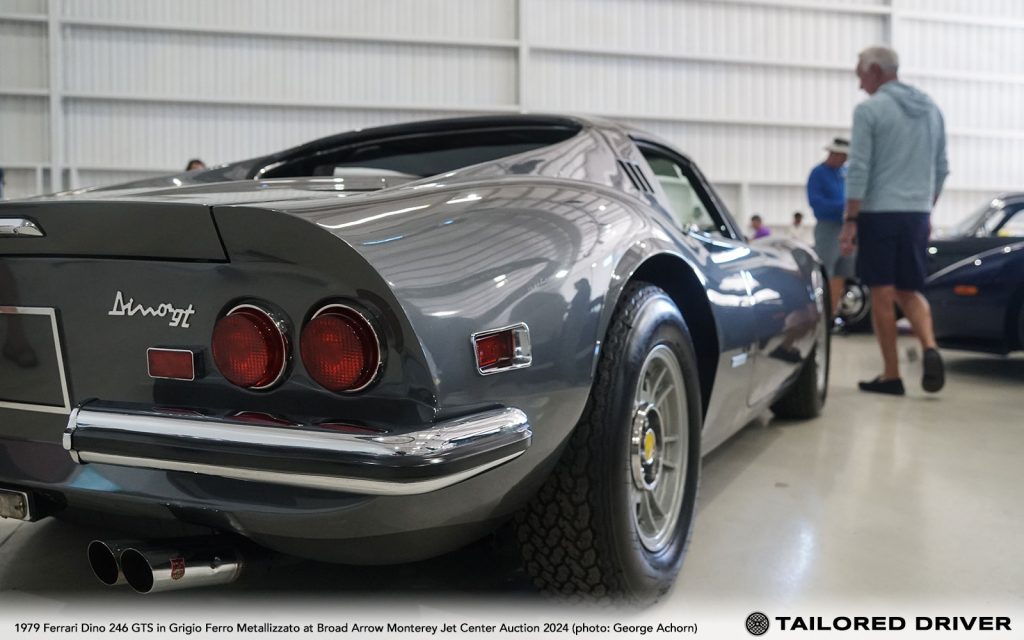
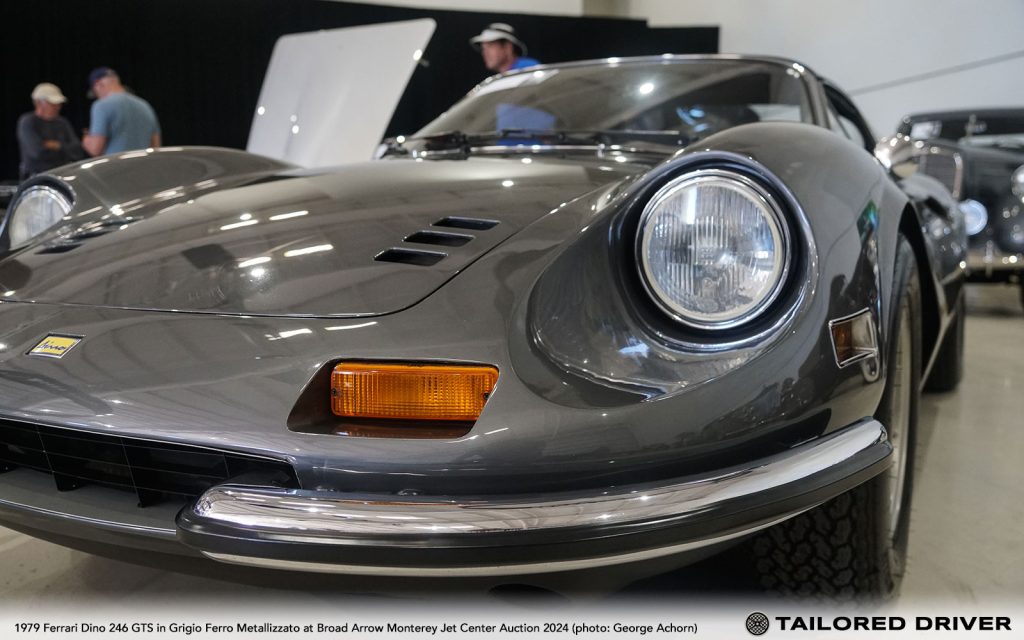
A highlight of Monterey Car Week is Broad Arrow’s Monterey Jet Center Auction held at the nearby airport. While in town for MCW, we stopped in for a visit at the Broad Arrow preview in order to take a closer look at the incredible metal they were offering for sale. Amongst that mix was this 1973 Ferrari Dino 246 GTS painted in Grigio Ferro Metallizzato (106-E-28).
Research suggests this wasn’t a special request. Grigio Ferro Metallizzato was introduced on later cars, though it remains quite rare. Only 35 Dinos were built in this color.
We encountered the car parked inside one of the Monterey Jet Center hangars that was being used for the Broad Arrow Auction. It sold for $626,500.
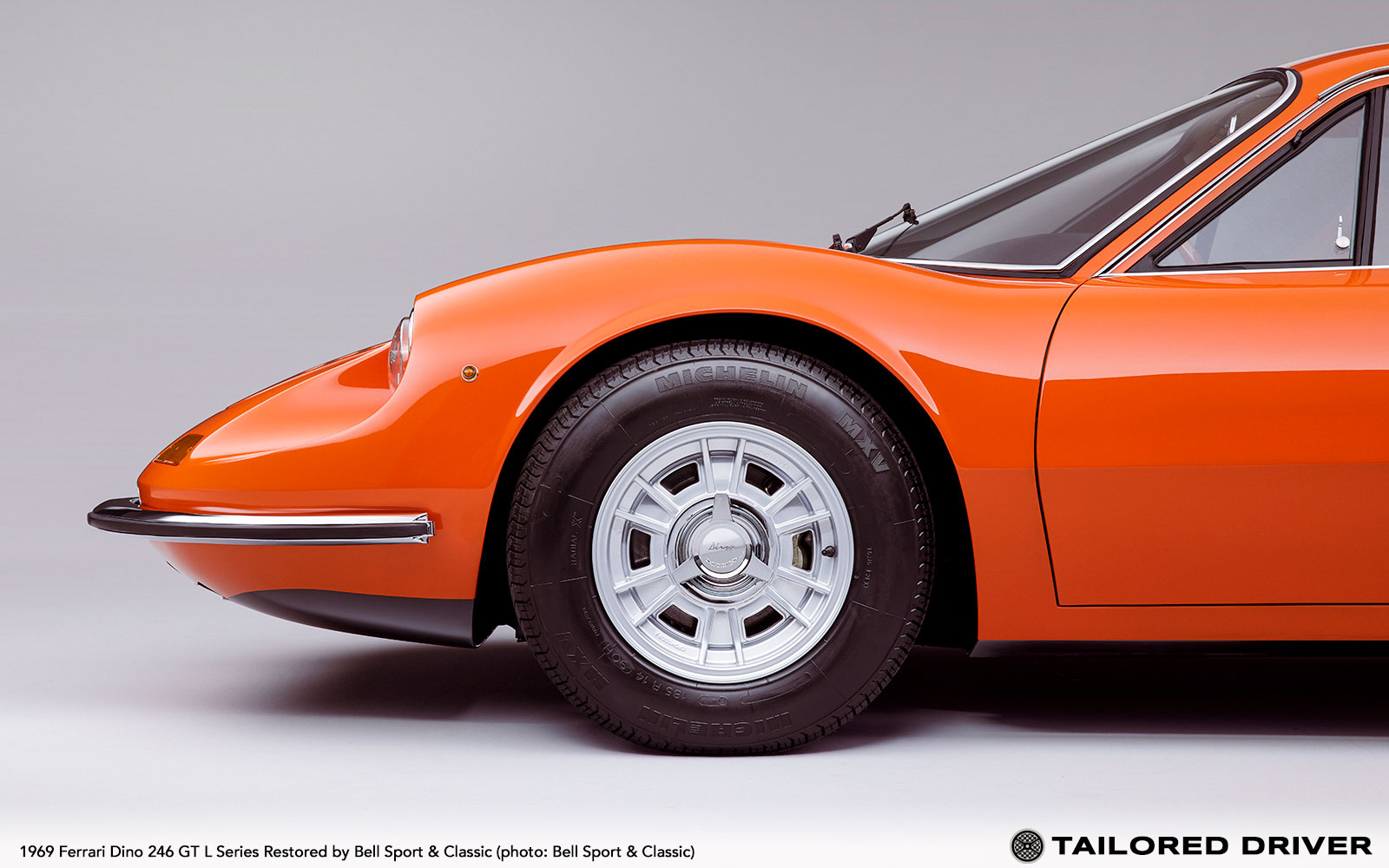
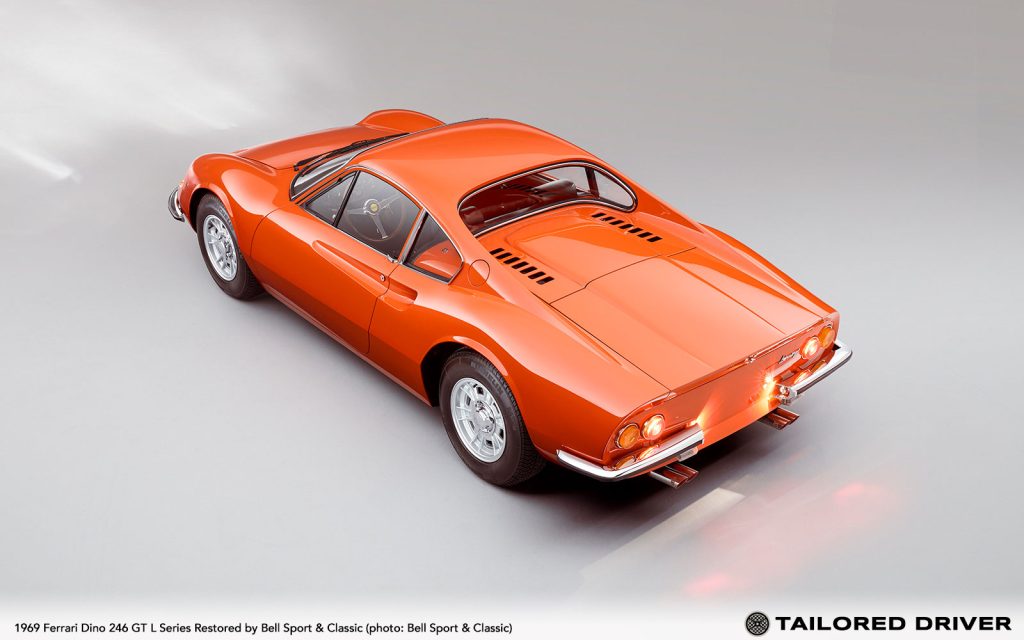
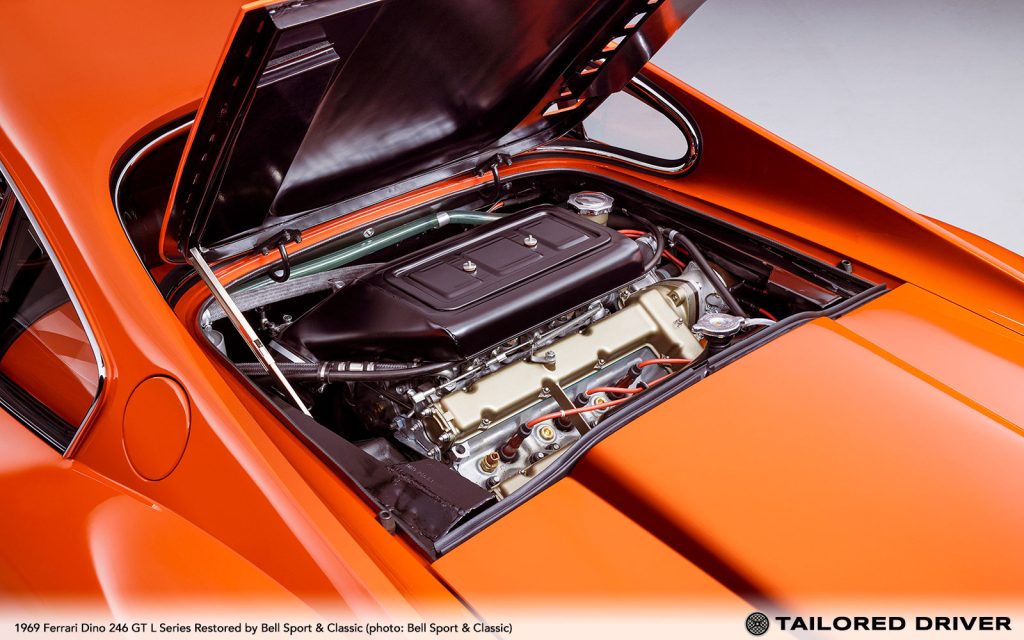
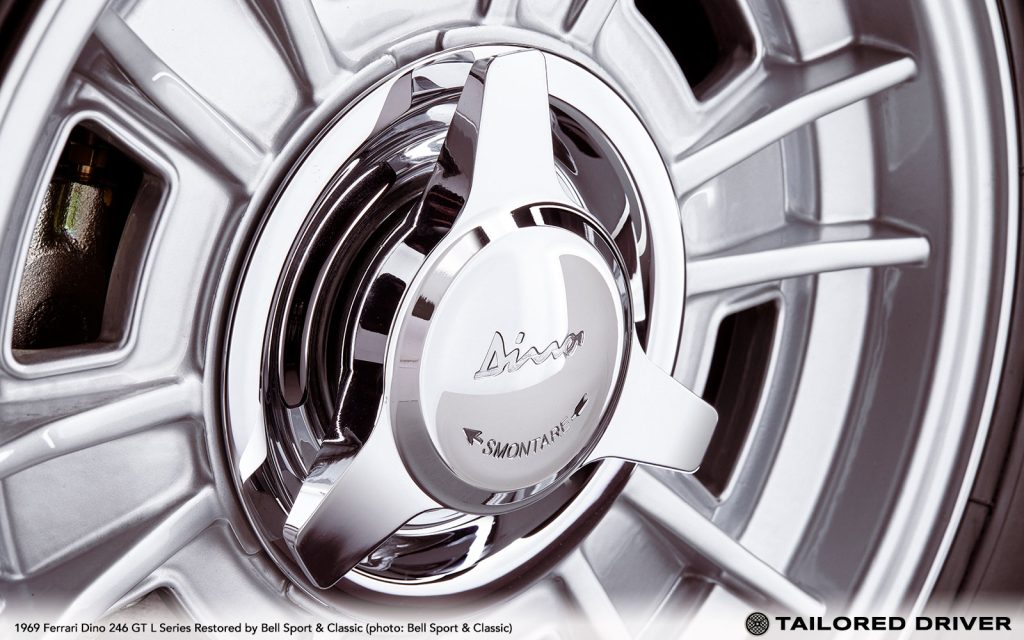
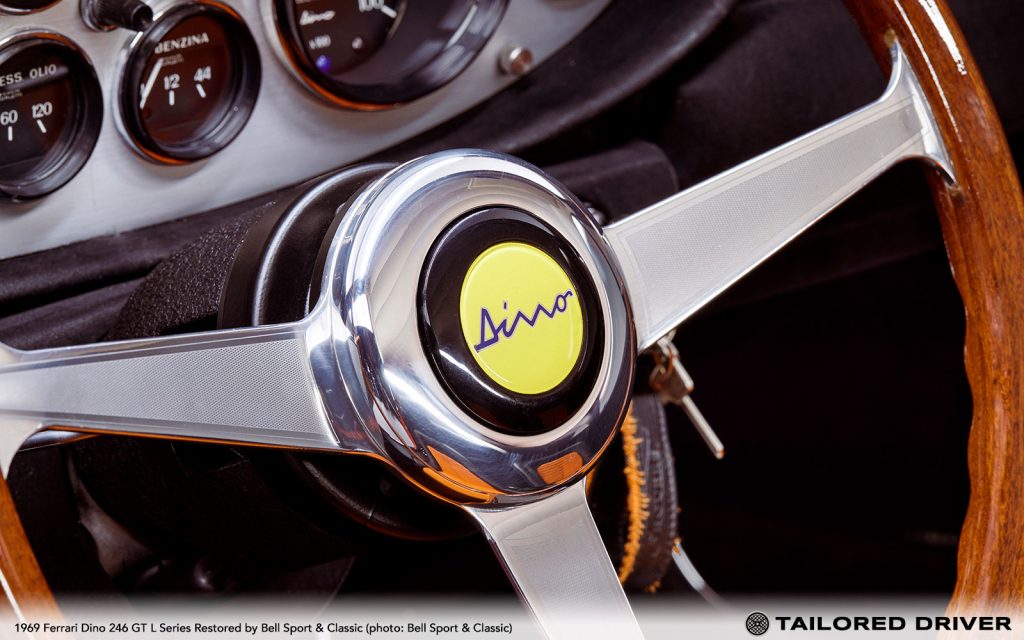
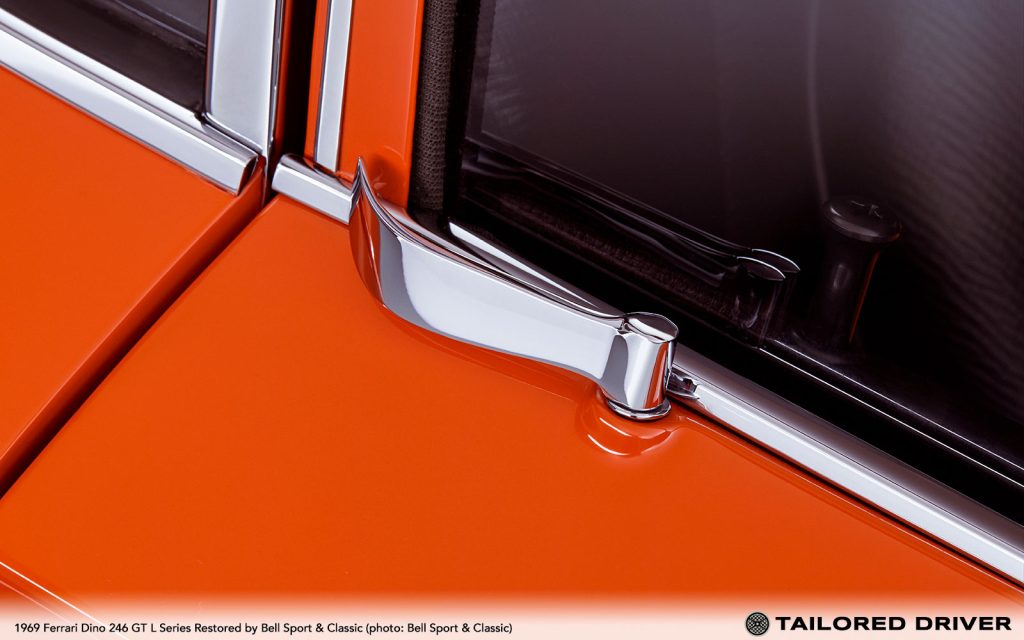
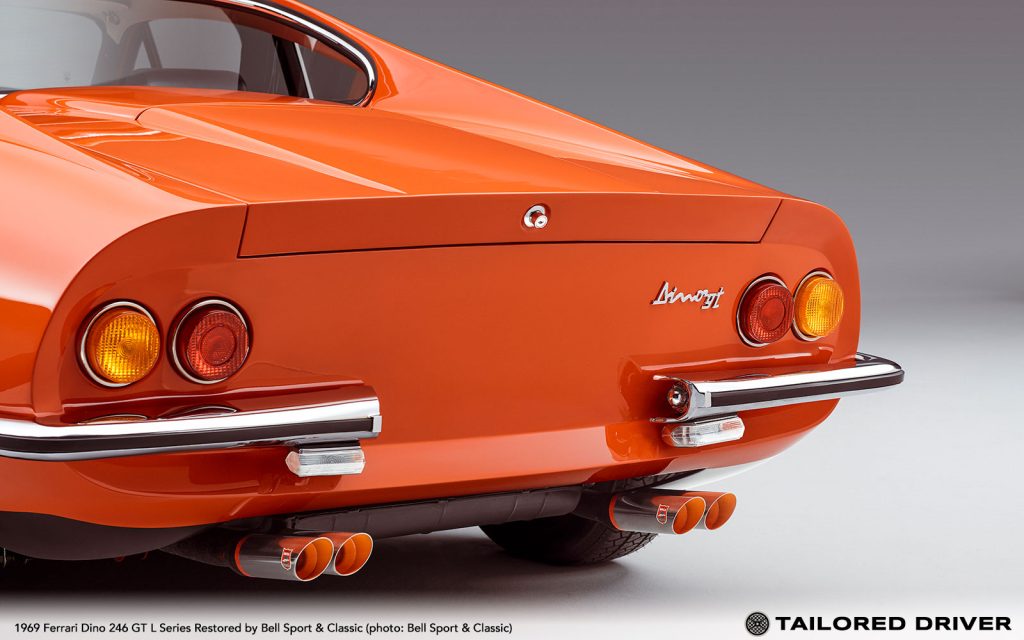
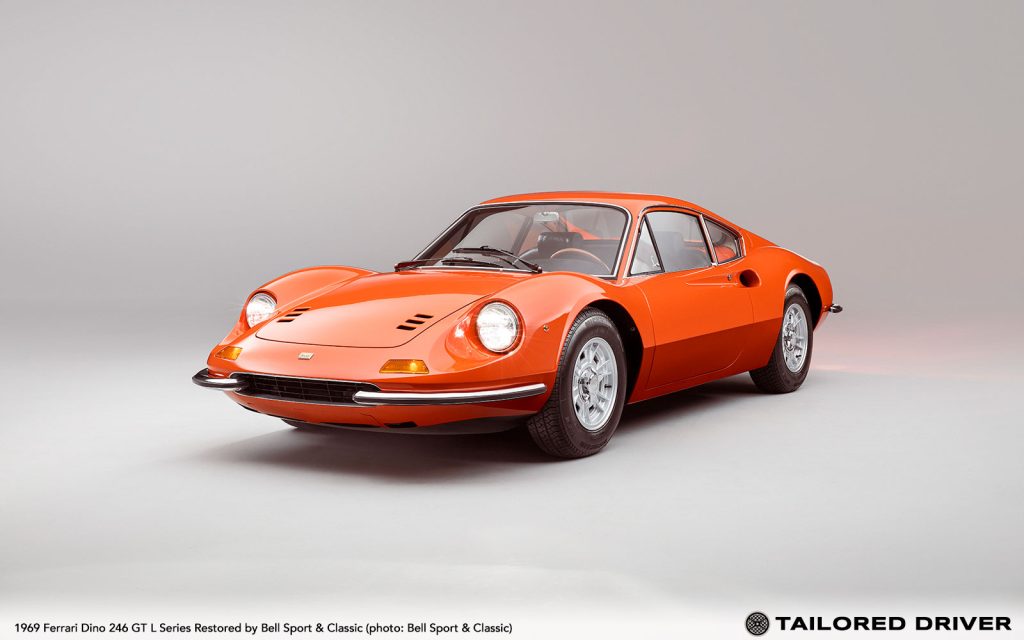
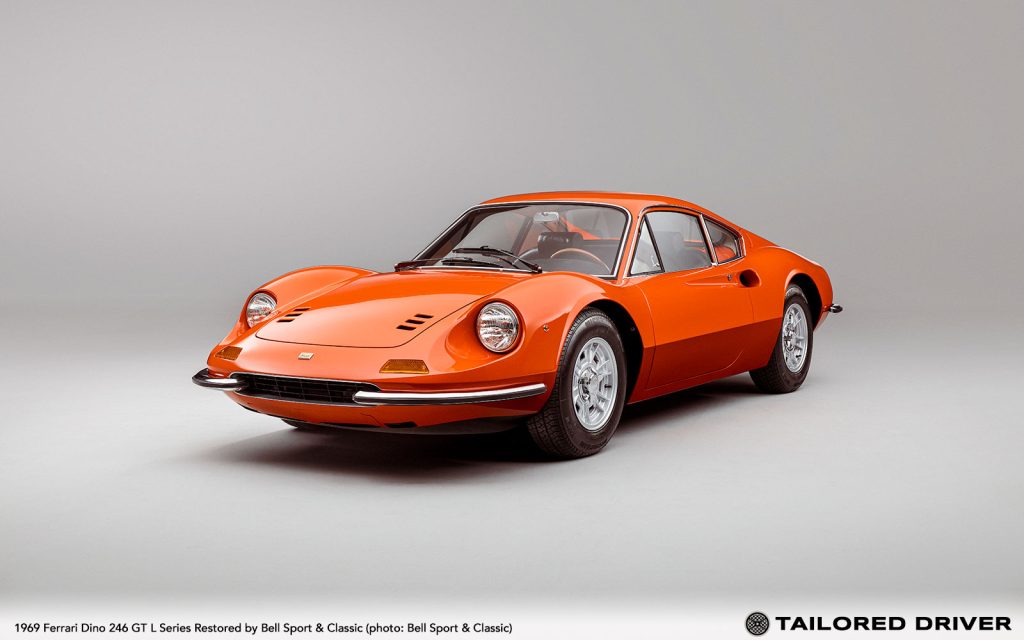
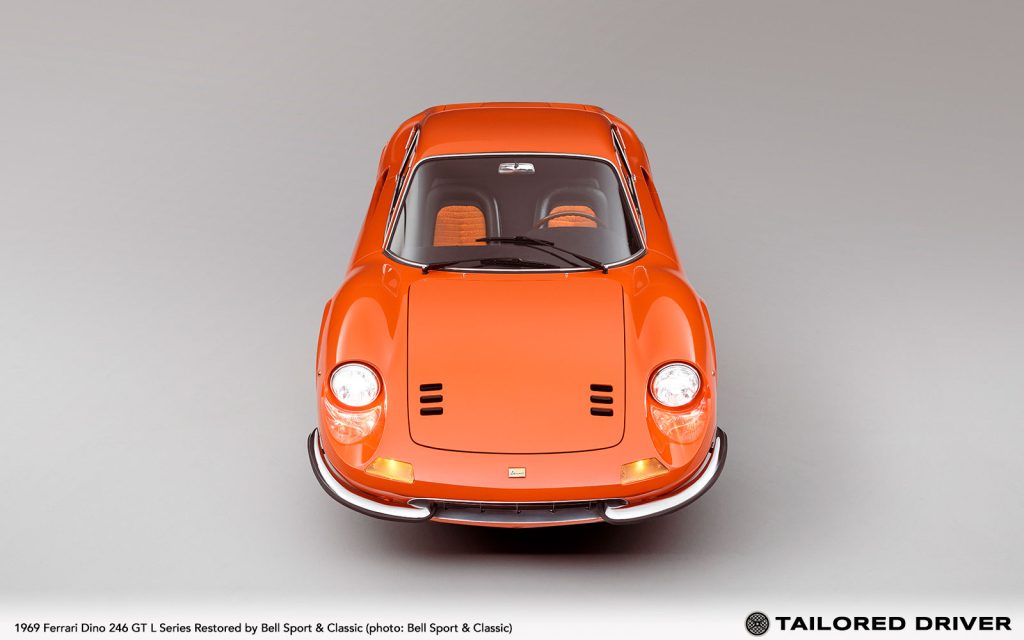
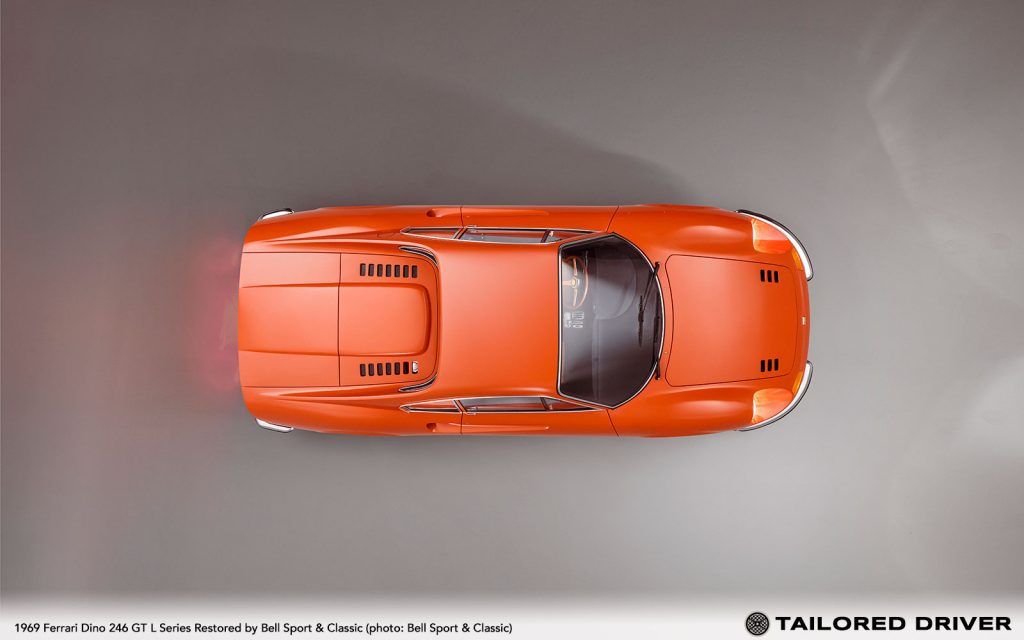
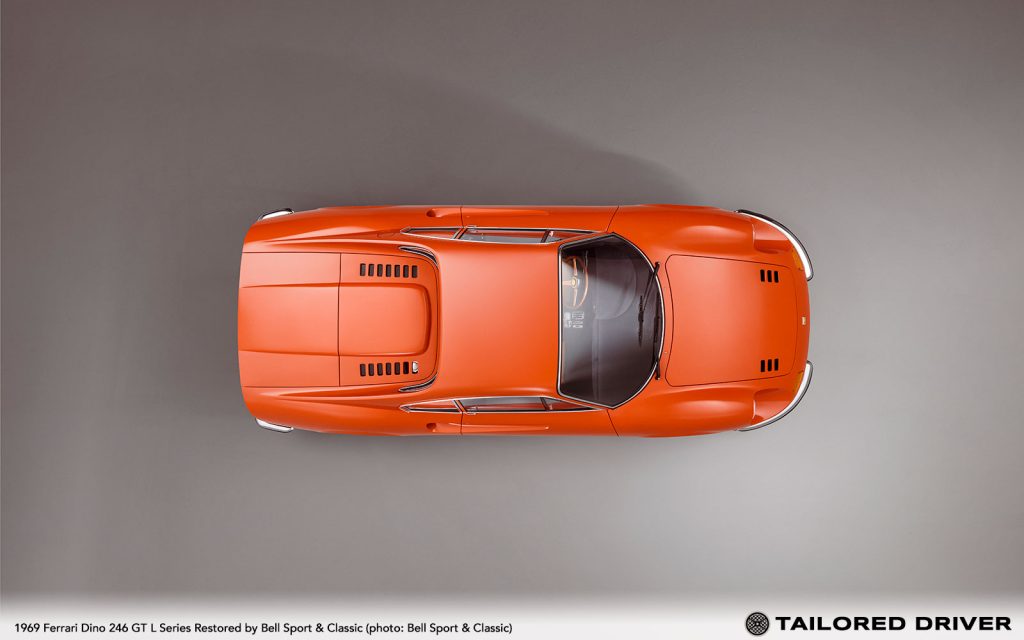
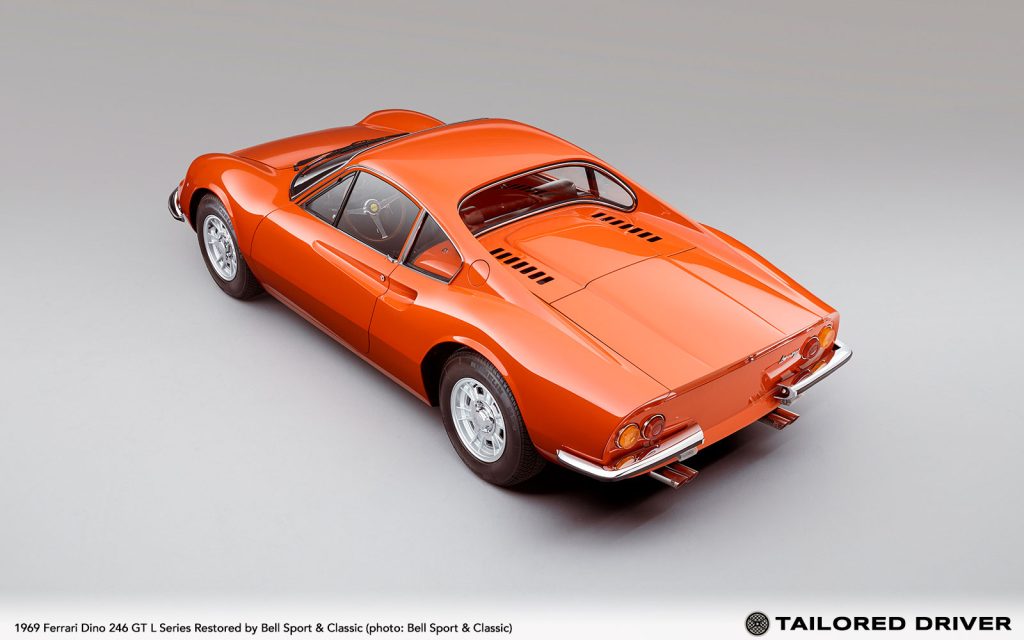
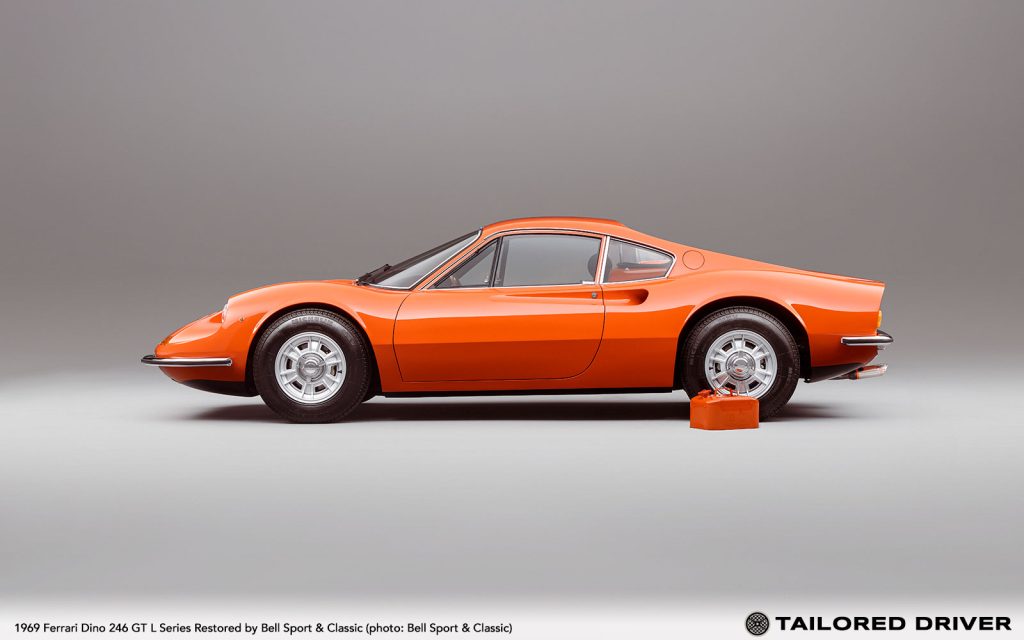
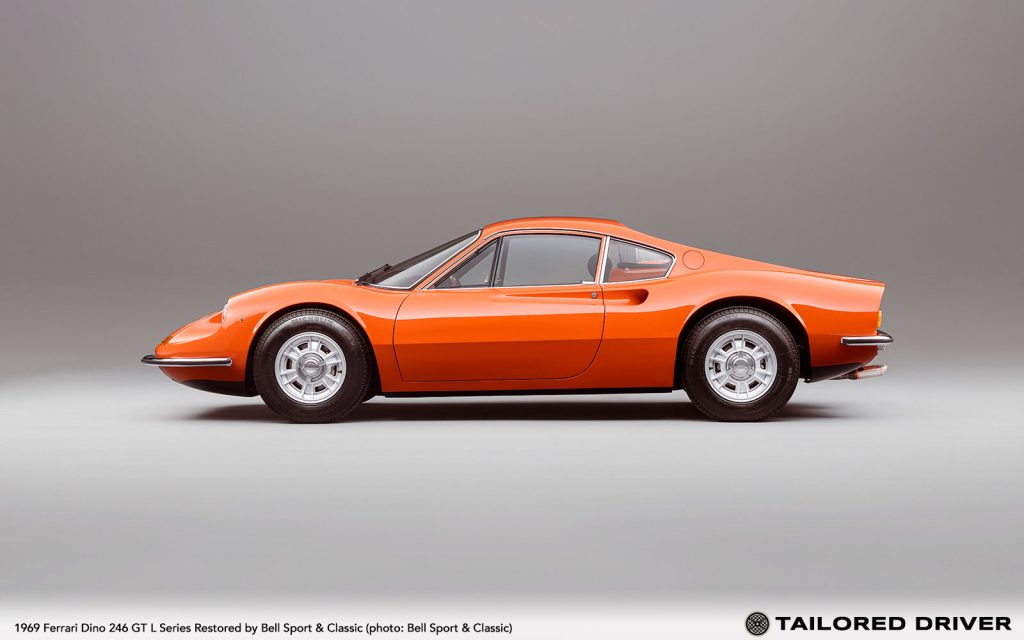
Originally appearing on Ferrari’s stand at the 1969 Frankfurt Motor Show, this remarkable Dino 246 GT L Series has been meticulously restored to concours condition
Four year strip down and rebuild to Ferrari Classiche standard by Bell Sport & Classic restoration team
Iconic model represents seminal period in Ferrari history
Arguably now the best Dino in the world, it is the latest demonstration of the benchmark-setting levels of finish Bell Sport & Classic applies to every restoration
[source: Bell Sport & Classic]
Markyate, Hertfordshire, UK – Bell Sport & Classic is delighted to reveal the latest example of its exceptional in-house Ferrari restoration expertise: a complete, ground-up, concours-level restoration of the original 246 GT Dino L Series that debuted on Ferrari’s stand at the 1969 Frankfurt Motor Show.
A seminal model from marque’s history, this significant car has been the subject of Bell Sport & Classic’s benchmark-setting standards, blending originality and the utmost attention to detail with the very latest restoration techniques to create arguably the best Dino on the planet.
Leaving the Maranello factory in 1969 and exhibited at that year’s Frankfurt Motor Show before being delivered to a customer in West Germany, it was the first Dino to be sold in the country and the seventh L Series ever made by Ferrari. Today, this concours-condition, low-mileage, early left-hand drive car represents an exceptionally rare opportunity for an aficionado to add one of the most important models built by Ferrari to their collection.
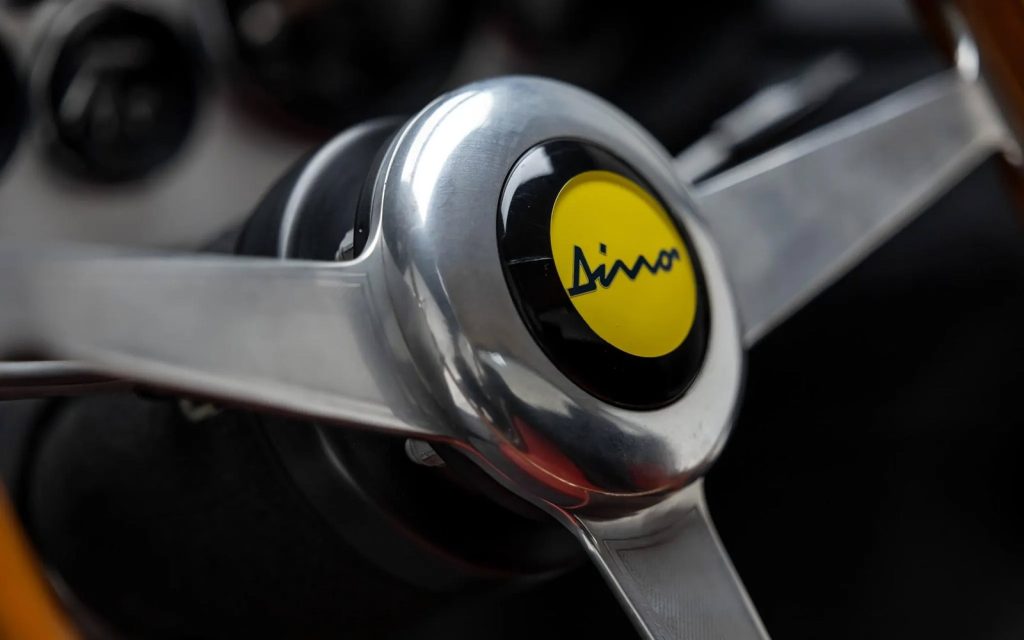
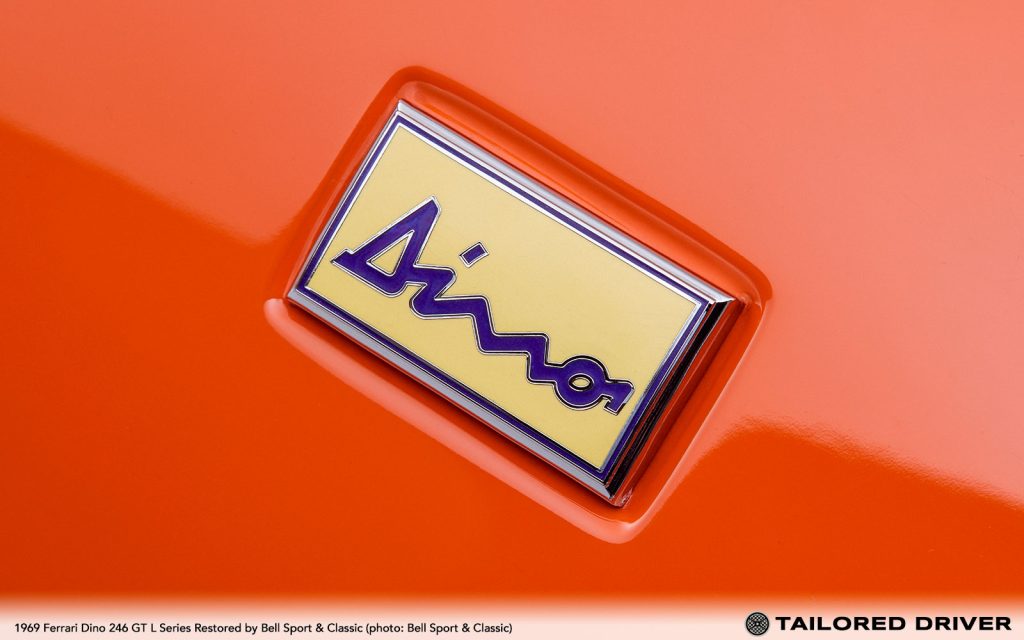
Fitting tribute and lasting legacy “Enzo Ferrari first used the ‘Dino’ name to denote a range of V6 Formula 1 and Formula 2 racing engines as a tribute to his first son Alfredo ‘Dino’ Ferrari, helped develop the engines, but tragically succumbed to illness at the age of 24 in 1956,” recounts Tim Kearns, Managing Director of Bell Sport and Classic. “When Ferrari launched its first V6-powered, mid-engined road car in 1968, it did so under the ‘Dino’ brand. And instead of the traditional Cavallino Rampante or Prancing Horse Ferrari badge, the Pininfarina-designed cars carried the signature of Alfredo ‘Dino’ Ferrari.”
The first Dino launched was the 206 GT variant, powered by a 2.0-litre V6 engine. A year later, this model was followed by the 246 GT L, which featured a 60mm longer wheelbase and boasted a more powerful 2.4-litre engine – as did the 246 GTS targa model. Maranello built just 357 examples of the L-series Dino, before following it up with the M and E-series variants, which were produced in greater numbers.
In 1969, the highly respected motoring writer and racing driver Paul Frère summed up the Dino 246 GT L’s exceptional driving attributes: “The Dino is most fun to drive on roads with lots of bends and good visibility. I know of very few cars that offer as much driving enjoyment through this type of terrain as this one does.”
Frère was far from alone in his enthusiasm for the Dino. “Critics and customers alike loved the way the Dino looked, sounded and drove. The car soon became acknowledged as a ‘lifestyle’ icon, even achieving fame in the cult classic detective television series ‘The Persuaders’, in which Tony Curtis drove a 246 GT,” reveals Tim Kearns.
“It’s remarkable to think that at the time the car made its debut, Enzo Ferrari was adamant that his road-going creations should only be fitted with V12 engines and launched the new V6-powered Dino as a sub-brand. Yet today, Ferrari has closed the circle and returned to the V6 engine format, albeit in turbocharged guise, with its new 296 GTB.”
Improving standards, respecting authenticity Before arriving at Bell Sport & Classic’s extensive restoration facilities in 2017, the Dino 246 GT, which carries the chassis number 00436, confirming its status as the 7th of 357 examples built, had been moved around the globe, spending time with owners in Germany, France, Canada, and the US. Despite the car’s far-flung travels, it had accrued only 53,400 miles (86,000km) over a period of forty-eight years. But it was, however, in a very sorry state of disrepair.
“To be honest, I doubt if many other proper restoration companies would have even considered taking this project on. The tired state the Dino was in, it just didn’t look economically viable to attempt to return it to its former glory,” recalls project leader Peter Ensor, who along with Marc Holden, Elliot East and technical director Attilio Romano formed the key team responsible for the Dino’s restoration.
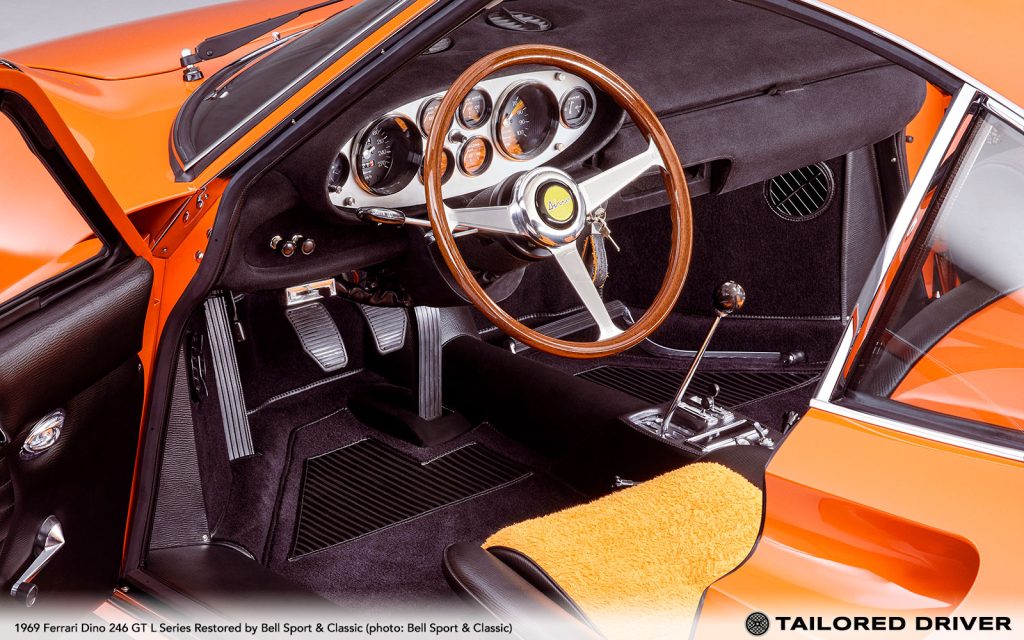
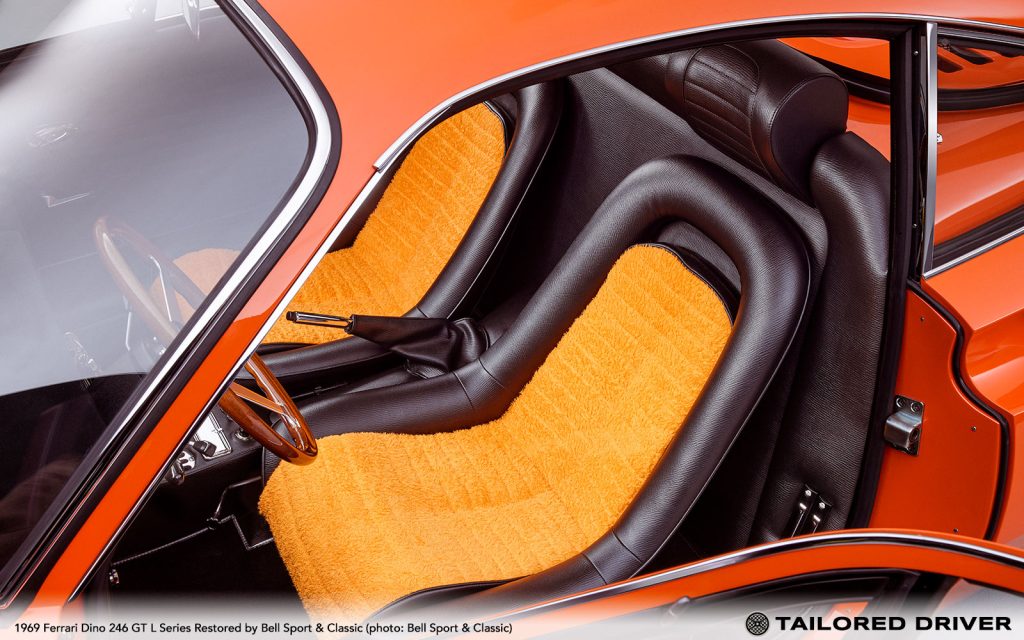
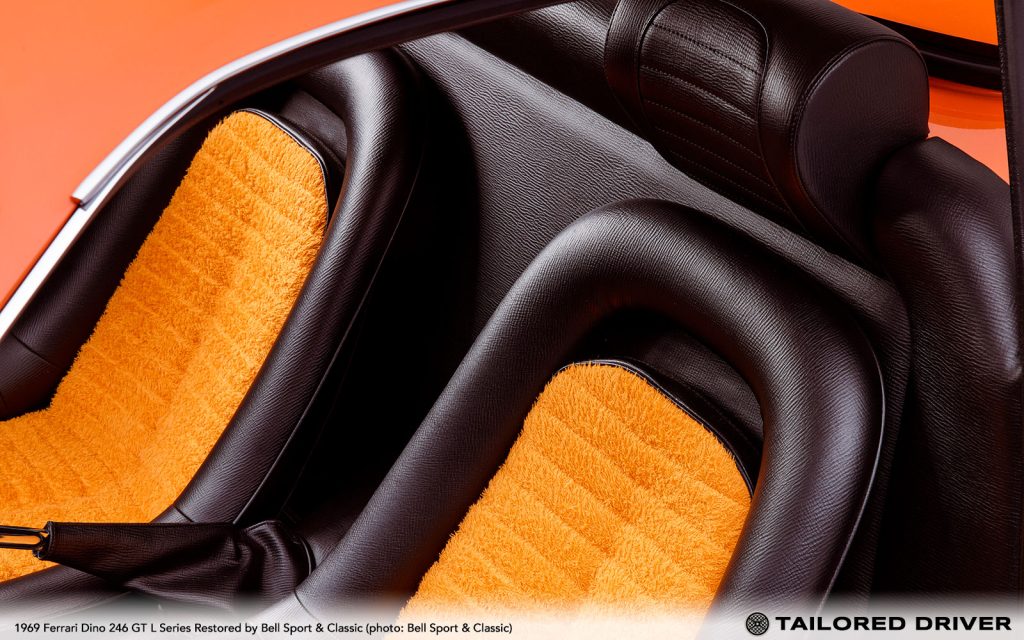
“The car had been restored twice before in its life already, but lacked real care and precision. It was painted Rosso Corsa red instead of the original Rosso Dino, which has a more ‘orangey’ hue, the leather trim was incorrect too – it was black and red as opposed to the black with orange seat towelling interior fitted at the factory. And that was just for starters. When we delved deeper, we realised that there were plenty of other problems to address too.”
Rust plagued the inner wings and the misshapen front and rear valances. The ‘scoops’ on the door panels did not align with those on the body, neither in terms of height nor angle, the wheel arch heights didn’t match from one side of the car to the other and the rear roofline was off-kilter. “And those were just the things we could see,” adds Elliot East wryly. “We also found that at some stage replacement front wing panels had been welded on top of the original items. The same ‘technique’ had been used on the sills and rocker panels, which meant the seam lines had been lost and rust had been locked in underneath.”
The full extent of the perilous state of the car was only revealed when Bell Sport & Classic completed a full strip-down to the steel monocoque. This process took several months, with the team carefully removing the aluminium panels, doors, glass and all mechanical components. Only then did it become apparent just how much effort, time, and skill – not to mention expense – would be required to restore the Dino. Yet, in some ways, the poor state of the car made it an ideal project for Bell Sport & Classic to exercise its renowned bodywork, mechanical and interior trim refurbishment expertise upon. The company prides itself in setting standards that are unmatched across the industry and deliver a level of finish significantly superior to that with which the vehicle would have left the factory in period, while fully respecting the car’s originality.
Working to the very highest standards and having gained the coveted Ferrari Classiche certification for its impeccable work restoring previous Ferrari models, Bell Sport & Classic was eminently qualified to undertake the Dino project. But despite its exceptional knowledge and experience bank, the company left no stone unturned by seeking the expertise of Matthias Bartz, a highly respected author, and the world-leading authority on the Dino model. This enabled the vehicle’s authenticity to be determined beyond any doubt, and detailed information on the original factory specification to be obtained.
Obsessive level of detail The team fully stripped the 2.4-litre V6 engine, triple Weber 40 DCF carburettors, five-speed gearbox, all-round disc brake system, front and rear coil spring, and double-wishbone suspension.
Each component was painstakingly restored to original specification, with all worn parts refabricated or replaced as required. Once rebuilt at Bell Sport & Classic’s own specialist engine workshop, the V6 was tested on a dynamometer and bench-run for a day. After being reinstalled in the car, the engine was re-tested on a rolling road and fine-tuned to ensure it produced the precise 191bhp it left the factory with.
Using the specialist information supplied by Bartz, the Bell Sport & Classic team went to extraordinary levels of meticulous detail to ensure they restored the Dino to the highest possible specification. “For example, there is a panel seal that runs along the sill underneath the doors. On sub-standard Dino restorations, it’s all too easy for this to fill up with paint, so the detail gets lost,” explains Ensor. “That might only be a minor thing to some people, but little things like that are everything to us. Call it obsession if you like, but on our Dino, there is not a single spec of paint on the panel seal, and the detailing is perfect.”
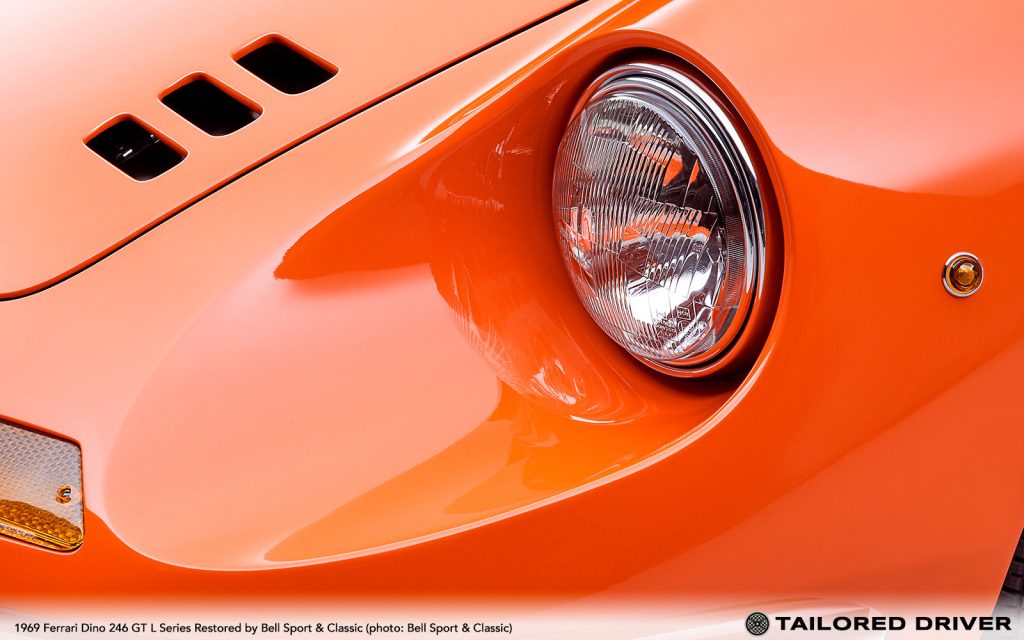
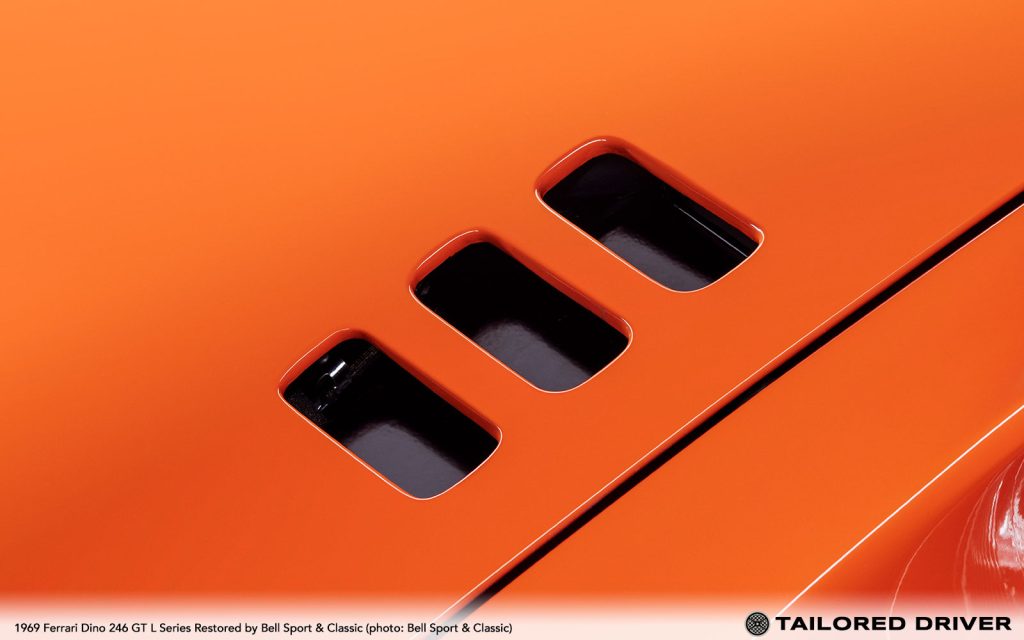
The team took a similar fastidious approach to the Dino’s iconic air intake scoops, which cut elegantly into the doors and carry on along the rear panels to ensure the mid-mounted V6 engine has a plentiful supply of cool air. “Back in the 1960s, the people building these cars at Maranello did not have the technology at their disposal that we do today and so fit and finish were often not what they could have been,” continues Ensor. “When chassis number 00436 left Maranello in 1969, it did so with a slight mismatch on the position of the door scoops, a common enough problem at the time. We have spent hundreds of hours ensuring that the scoops are now correct.”
Achieving symmetrical perfection required the wheel arches to be reformed and new sills to be fabricated and fitted. “Once we had the body panels perfect, we still had the issue of ensuring the scoops on the doors would align correctly with those on the body panels. That meant refabricating the doors and aluminium-welding the original scoops into the new skins,” reveals Ensor.
Dry build for perfect finish Bell Sport and Classic is adamant that restoration is both a science and an art. It does not consider the process to be a matter of simply replacing damaged panels and worn-out parts. Even though doing this can save time and money, the team believes that the greater the number of new components fitted to a vehicle, the greater the risk its originality becomes depleted.
Instead, the team uses its technical excellence, outstanding craftsmanship, and often its sheer patience in the passionate pursuit of perfection, carefully restoring and refurbishing every component to avoid needing new parts where possible. “Of course, lavishing attention to detail on every individual component makes the rebuild process even more challenging,” explains Ensor. “No car ever goes back together easily, and the more thorough the restoration, the more demanding the rebuild is because every single part of the car has been completely reengineered.”
The delicate and painstaking rebuild process is where the team’s skill and experience truly came to the fore, with near-constant minute adjustments of components such as body panels, window frames and sills required to ensure the perfect finish.
“It took two weeks before we were completely satisfied that the doors opened and closed correctly and that the scoops on the doors aligned absolutely perfectly with those on the rear body panels. We spent a similar amount of time fitting the curved rear screen. That’s a very tricky job because the screen is actually bigger than the space it is going into. The only way to fit it is to put one side in first and then flex the screen ever so slightly to get the other end in,” recalls Ensor.
More days and weeks ticked by with endless hours lavished on countless tasks such as repairing and polishing the front grille and ensuring the perfect positioning of the front sunken indicators. No component, no matter how small, escaped Bell Sport & Classic’s famous obsessive attention to detail.
Even the thin aluminium shell of the interior mirror had two days of polishing lavished upon it to attain perfection.
The Dino 246 GT 00436 has been gloriously returned to its Rosso Dino (rosso dino; non-metallic Uni; 350; Ferrari) paint finish, which involved first applying the period-correct grey primer followed by a Rosso Corsa undercoat with Rosso Dino final coat. This painstaking, multi-tone process ensures the rare and desirable Rosso Dino is shown most effectively. The seats have been reupholstered in period-correct black leather complete with orange towelling inserts, and beautifully installed along with a newly built dashboard. Even the engine cam covers have been restored to their original bronze colour, ensuring the car is precisely as it left the factory in August 1969 – only better.
Tim Kearns, Managing Director of Bell Sport and Classic, said: “Like every project we undertake, bringing the Dino 246 GT back to be life has been a true labour of love and most definitely not a clock-watching exercise. No amount of time, expense or attention to detail has been spared in ensuring the car is now in even better condition than when it left the factory. Along with its concours condition, the car’s low mileage adds to its considerable allure. With its mid-mounted V6 engine, the Dino differs from the Ferrari V12 GT models that preceded it. It represents a seminal point in the company’s history and stands as a fitting tribute to Alfredo ‘Dino’ Ferrari. There will always be an air of intrigue to this car too, as one cannot look at it without wondering what direction Ferrari may have taken if Alfredo had lived to take over the company’s reins from his father, Enzo. And that makes the Dino an exceptional car.”
About Bell Sport & Classic Bell Sport & Classic is a team of experts who have come together to provide customers unrivalled expertise across the sales, service and restoration of the world’s most revered classic and modern classic cars, specialising primarily in notable Ferraris but also Aston Martin and Lamborghini and other leading marques.
Authenticity, originality and quality are the bedrocks of the business; Bell Sport & Classic prides itself on sourcing the ultimate in collector cars and bringing new standards to classic car restorations. Bell Sport & Classic stands apart in the classic car world as an innovator and leader in customer service.