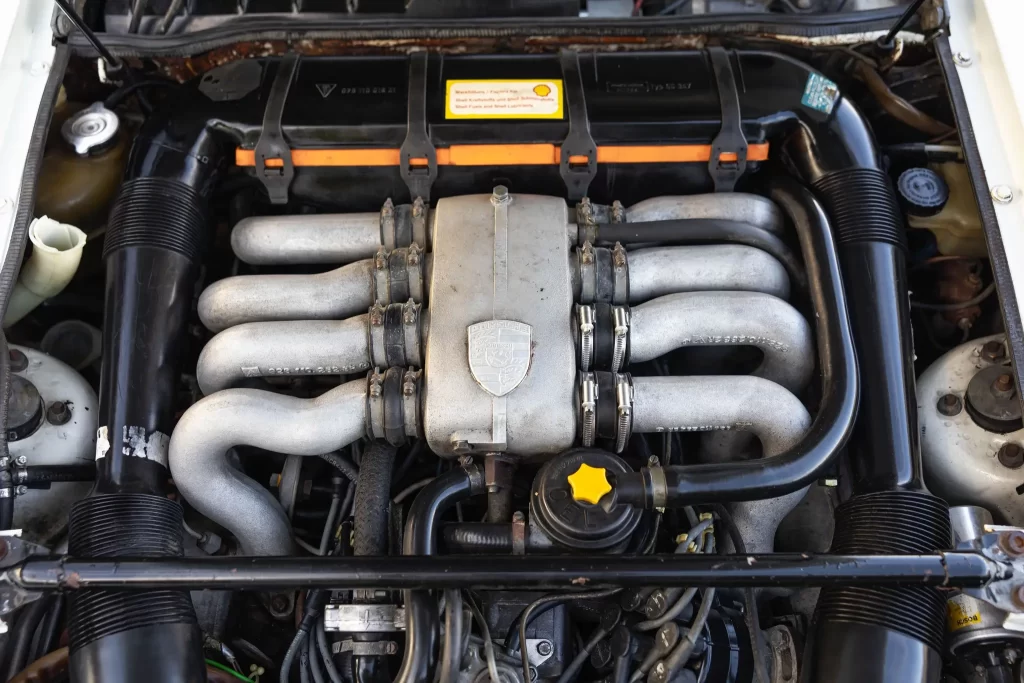
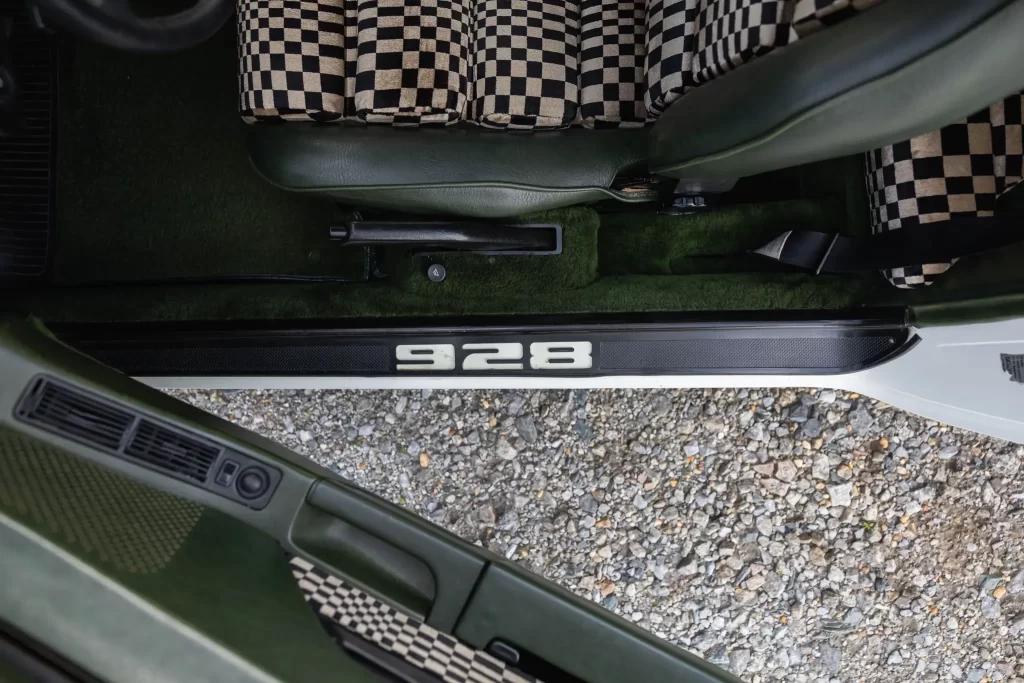
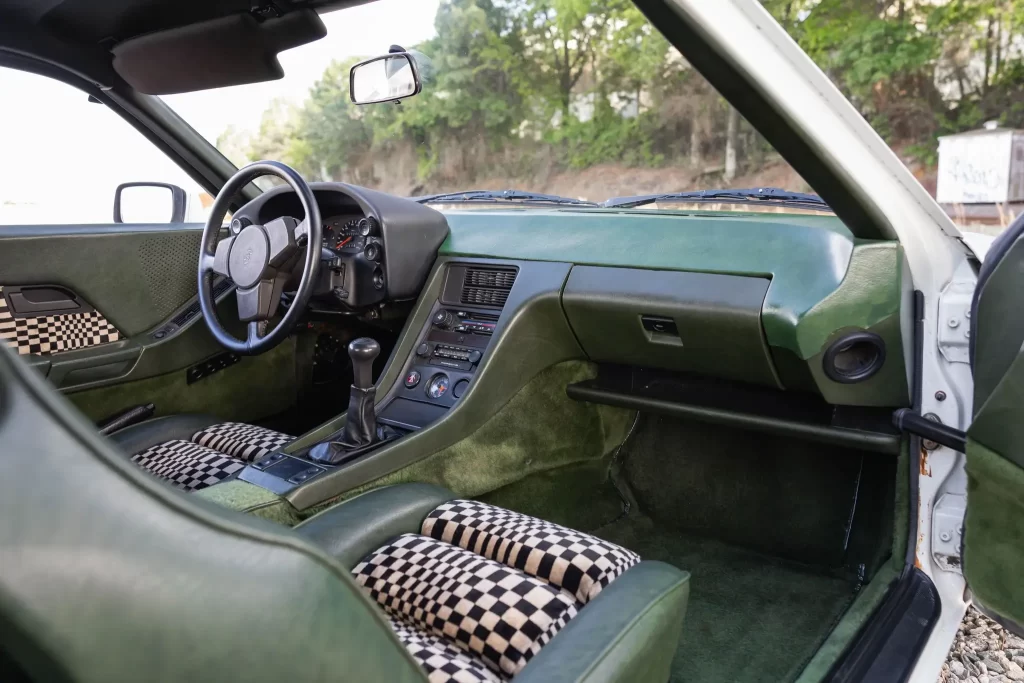
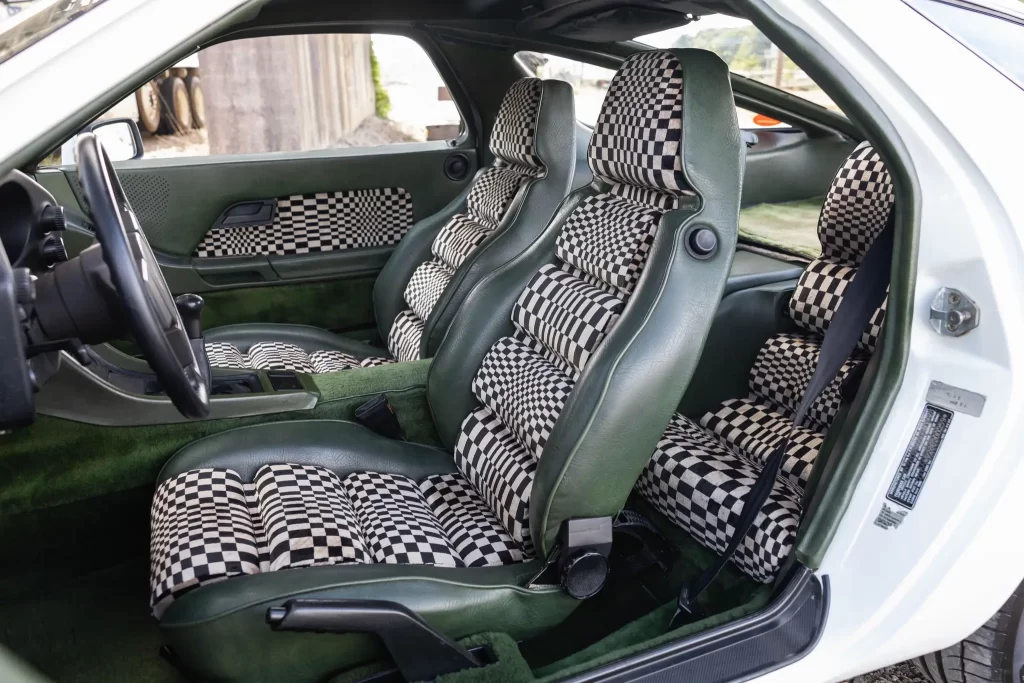
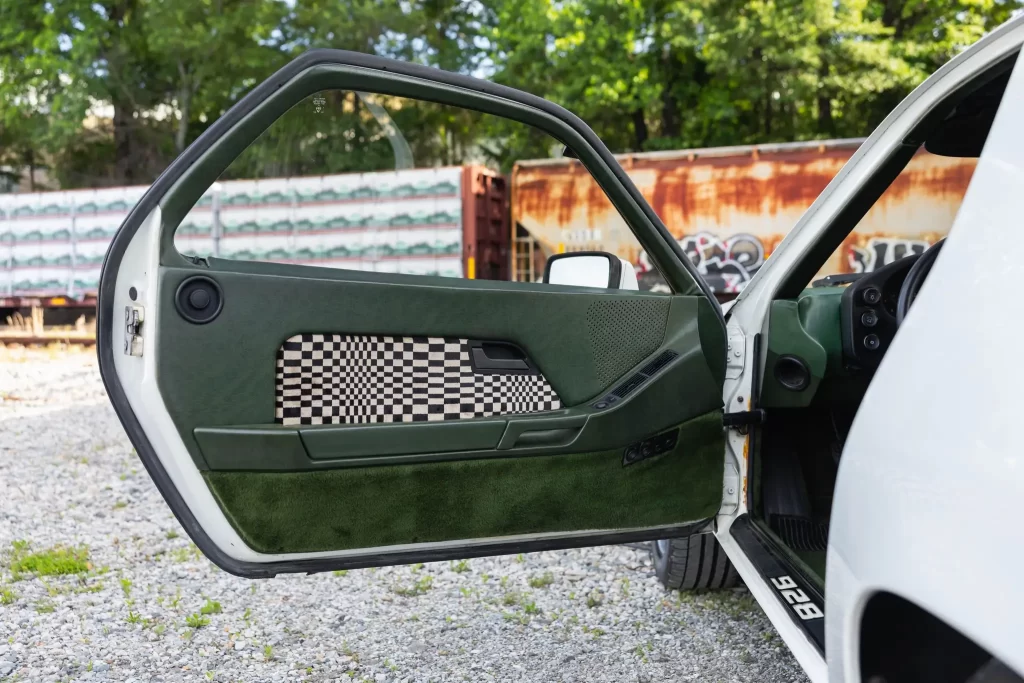
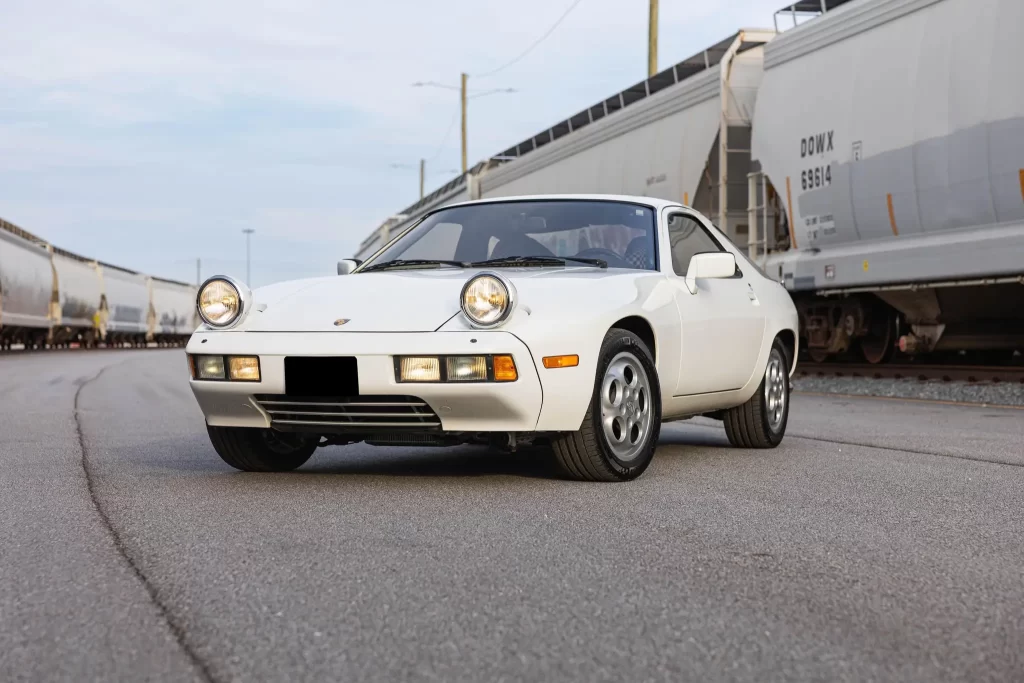
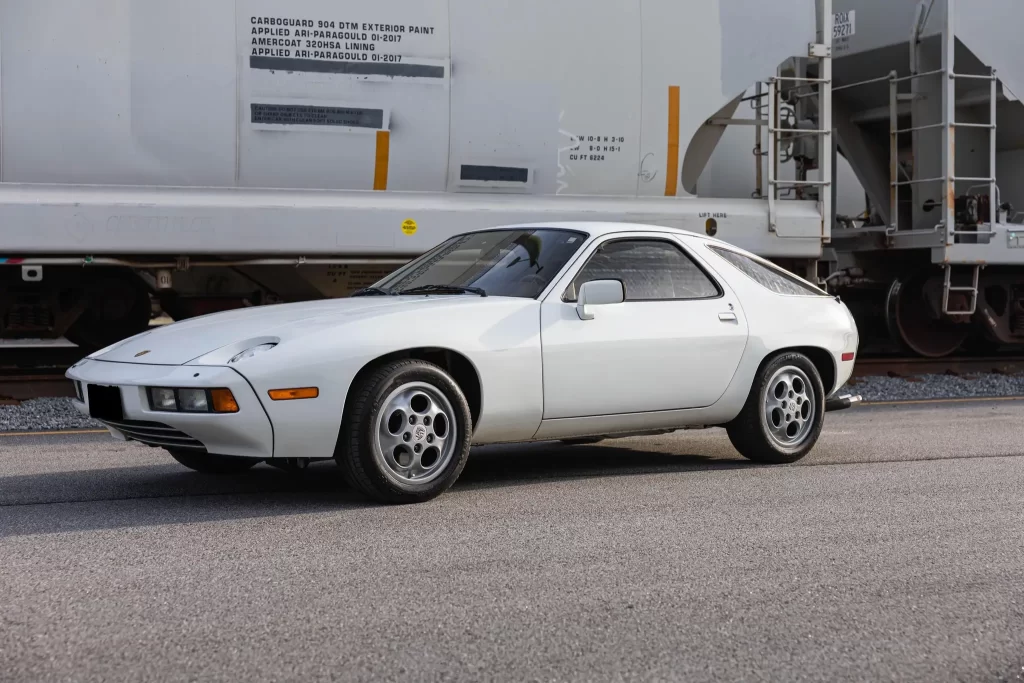
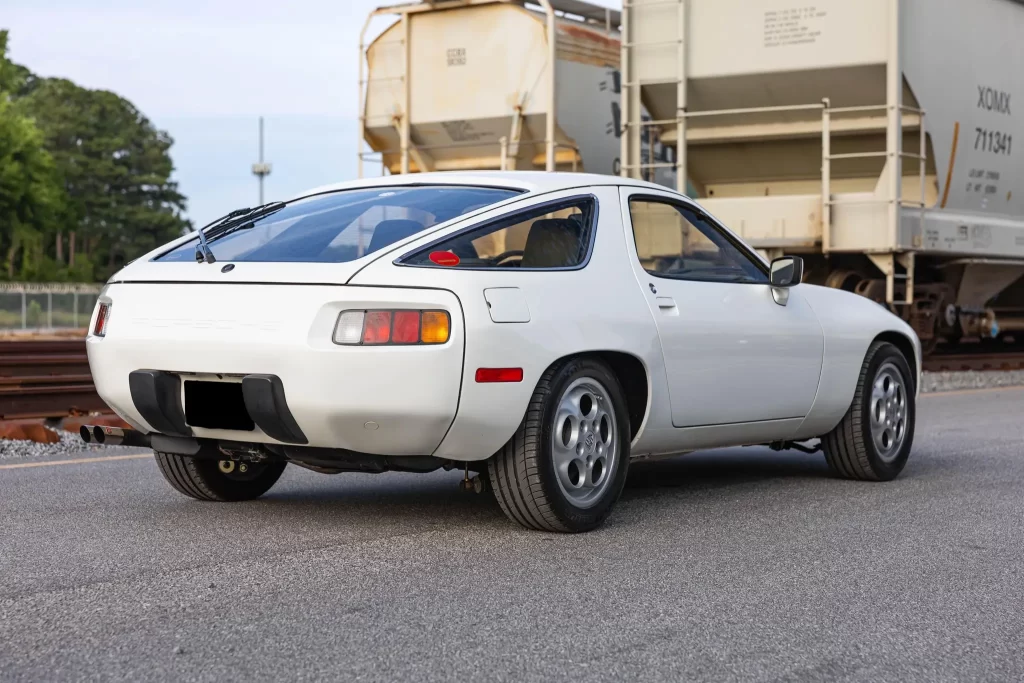
What: 1978 Porsche 928 Color: Grand Prix White (grandprixweiß; non-metallic; 908 / P5 / L908 / 9A5; Porsche) VIN: 9288200259 Mileage: 34,998 miles Price: $20,000 at 1 Day 20 Hours Remaining CarFax: N/A Window Sticker: N/A Location: Marietta, GA Listing:PCarMarket
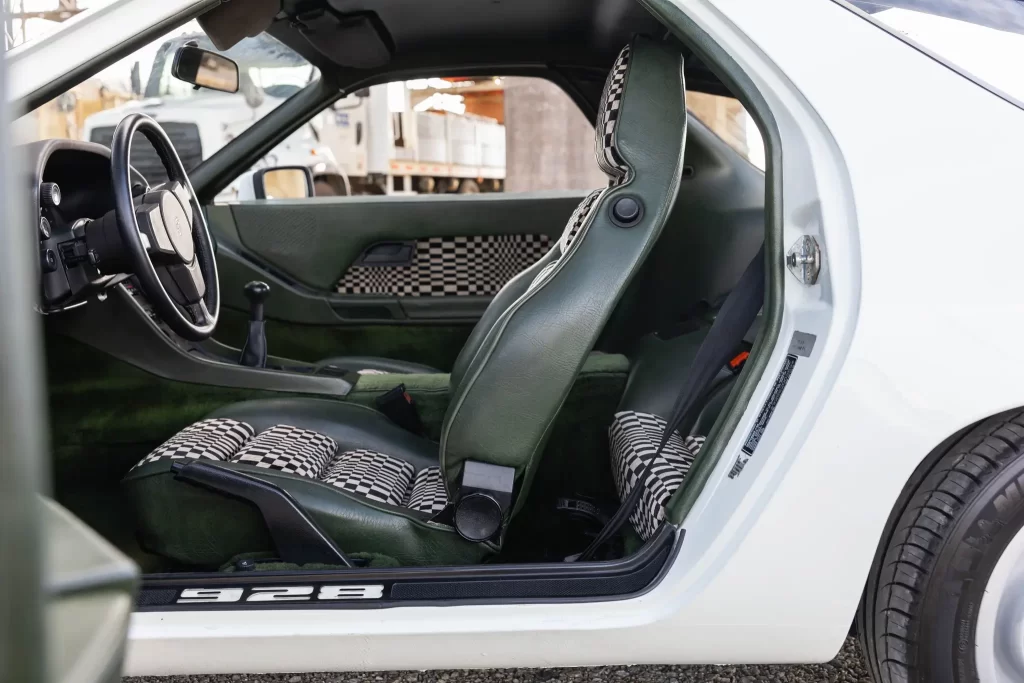
While it’s not “refrigerator white”, Porsche Grand Prix white is still just white. That’s not a bad thing, but it’s hardly qualifies as “tailored”. A Paint to Sample oddball this car is not, however… look inside.
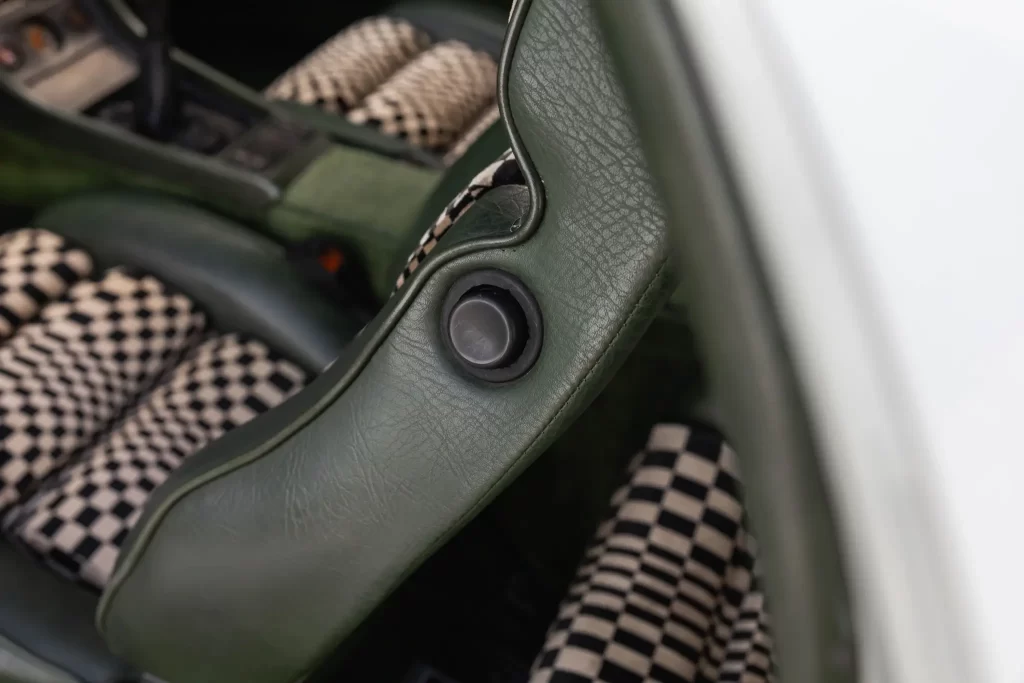
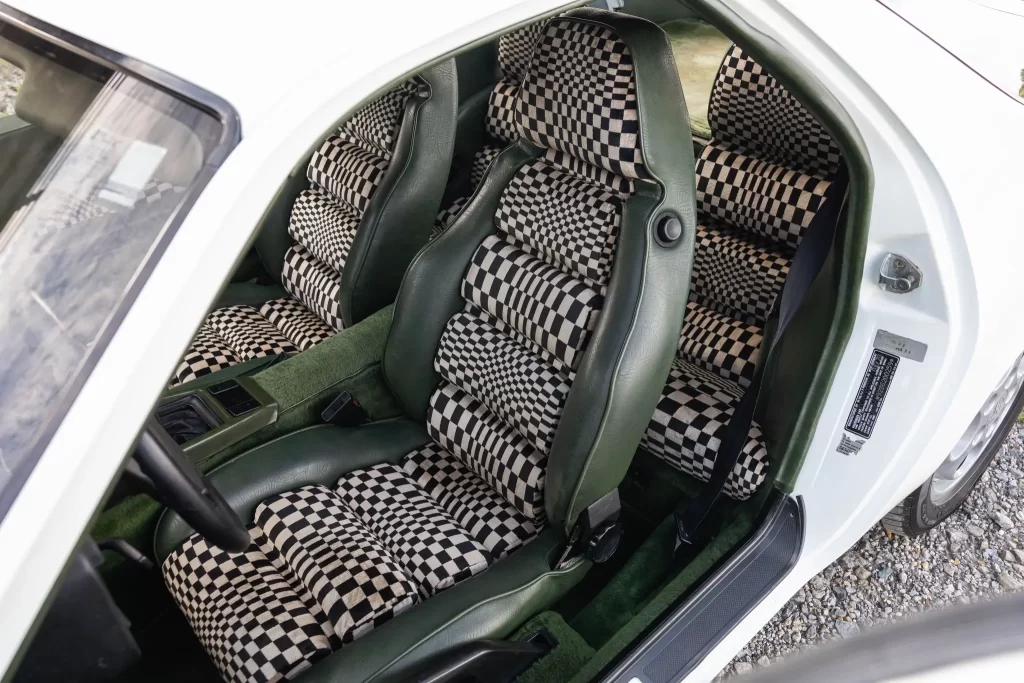
Okay, sure. So you’re familiar with Porsche’s discotastic hippie checkered flag mashup fabric pattern known as Pasha. It was a factory option, so here again… rare but worth featuring? If paired with green leatherette then we’d say yes.
Find another one. We dare you. Also, this car wins the late 1970s in our opinion. If you don’t agree. Fight us.
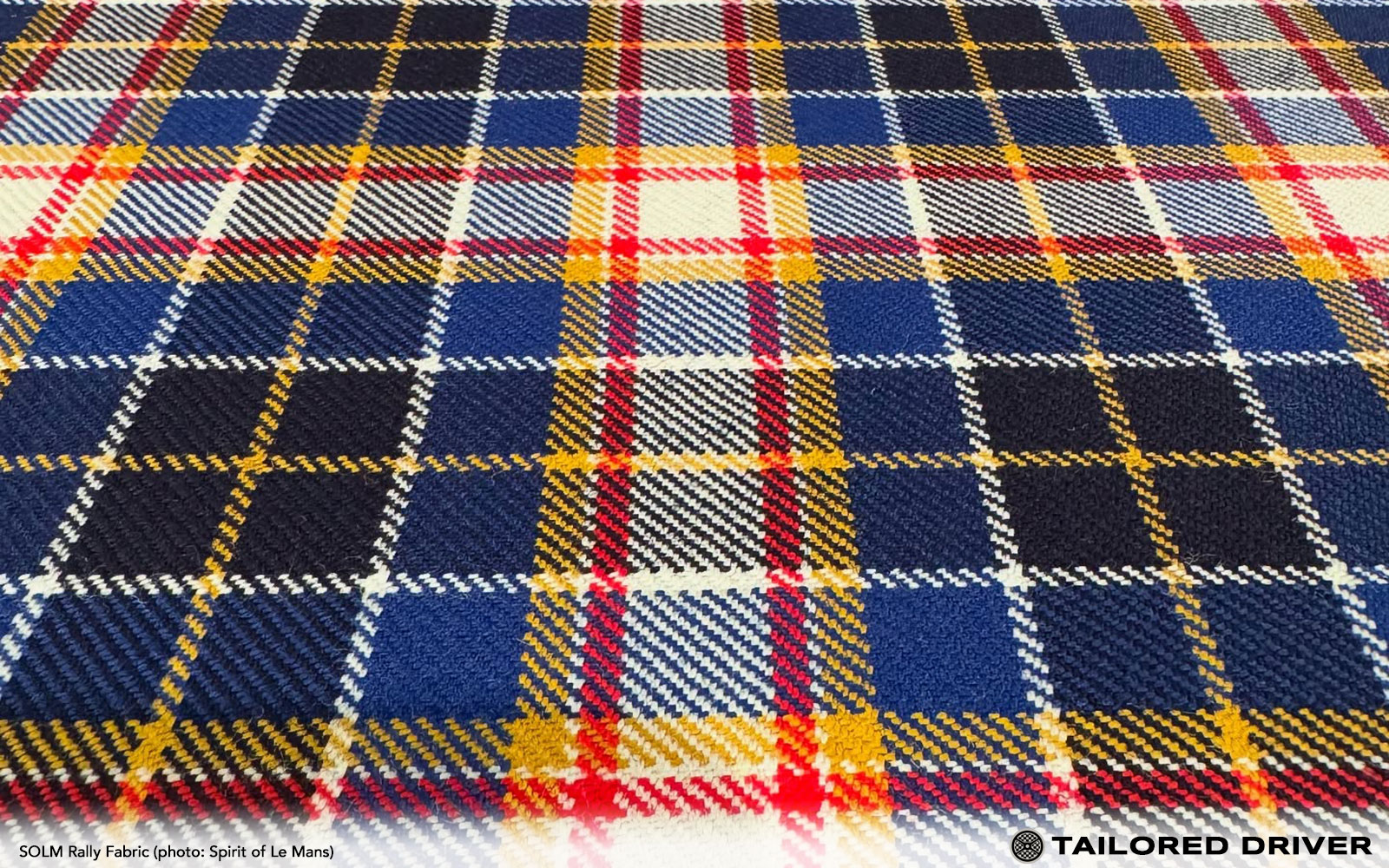
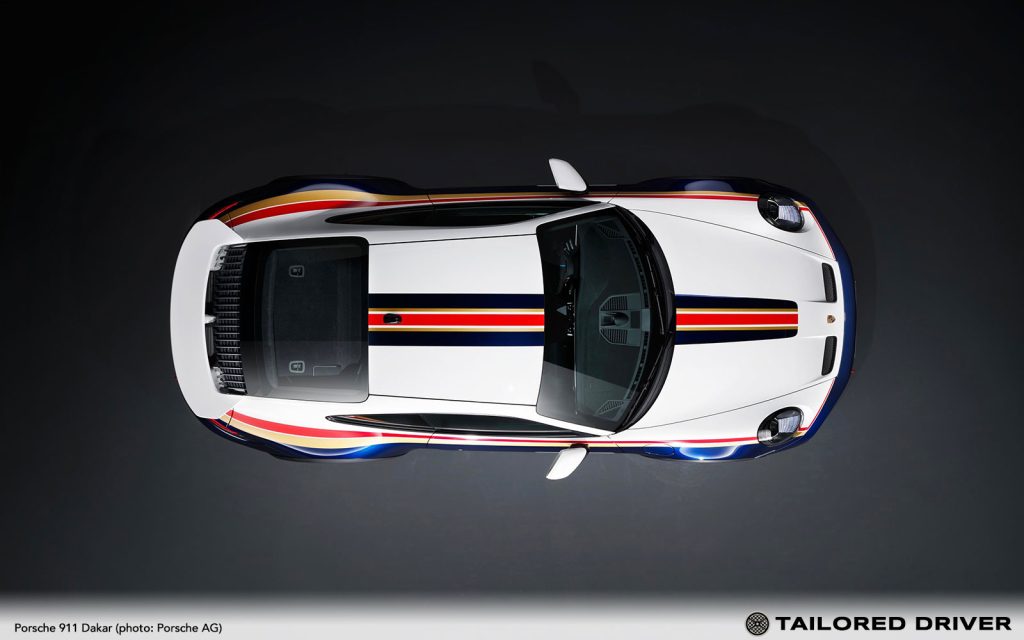
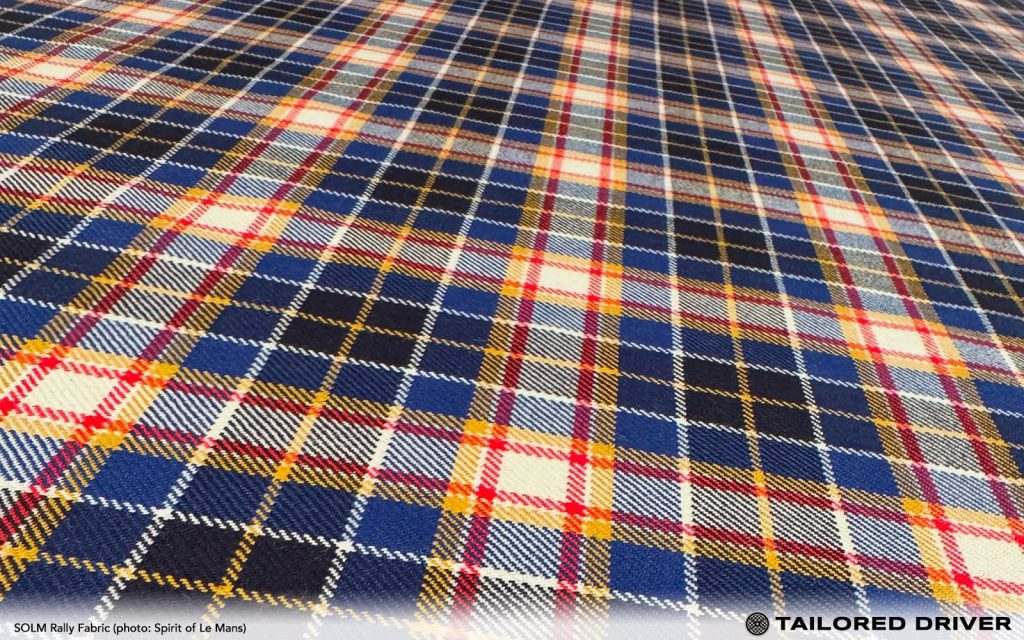
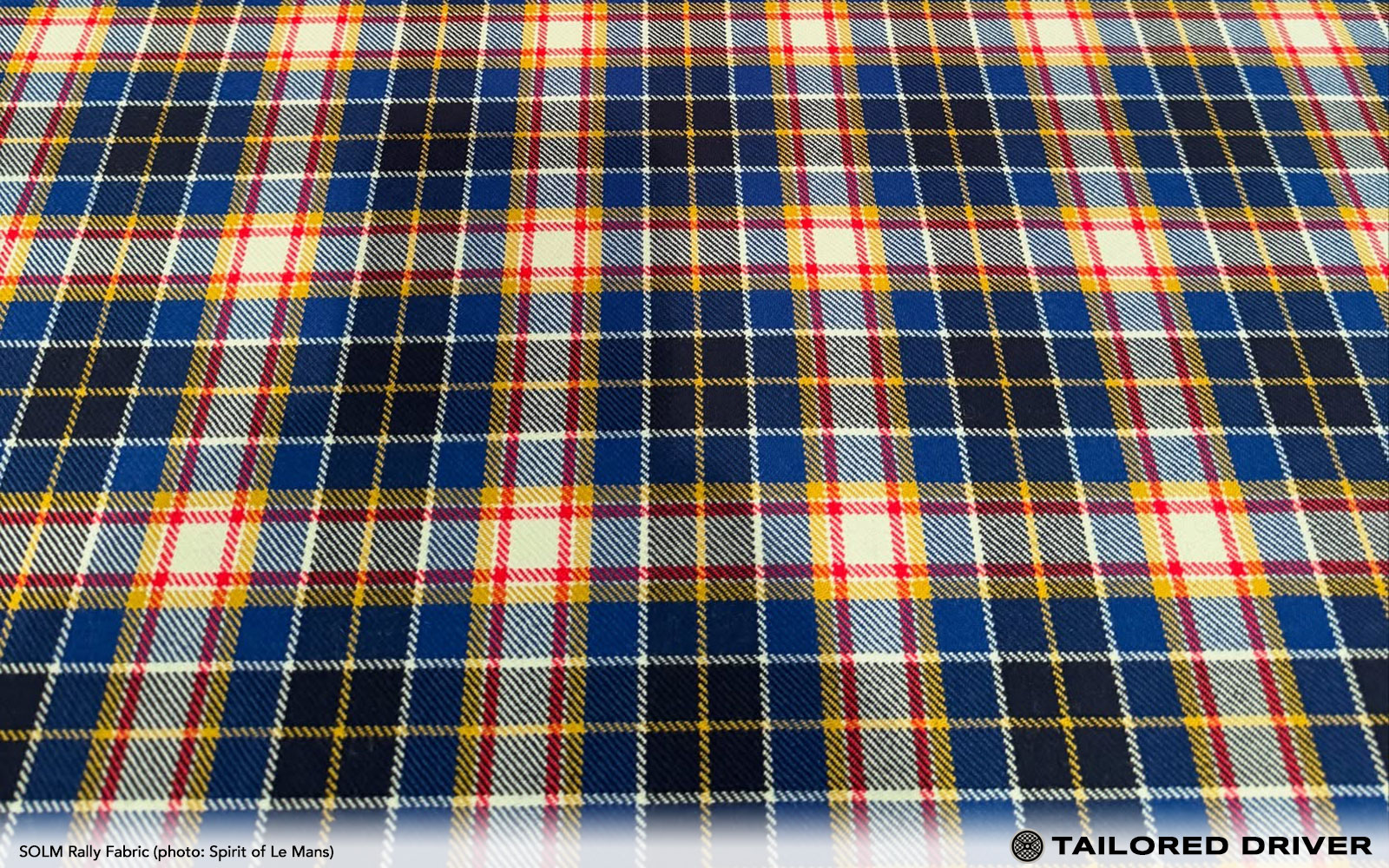
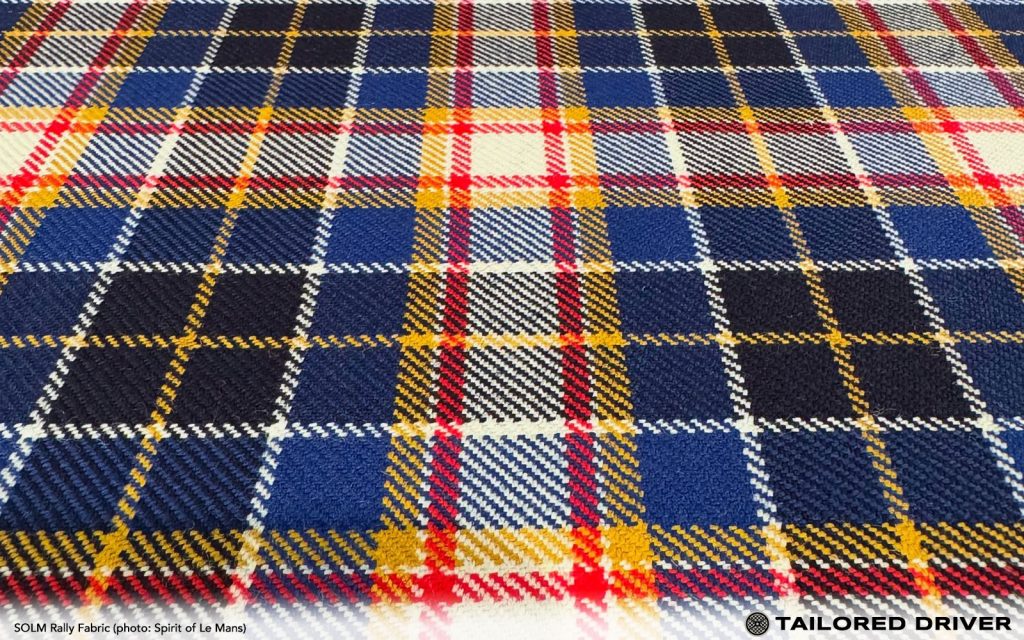
Our focus is typically factory specification, though we deviate from that in certain cases such as firms creating remasters of iconic cars. So, should we cover a fabric manufacturer that remasters iconic color combinations of racing liveries and remixes them as a tartan? That seems noteworthy, particularly when we’re checking out these first-look photos of Spirit of Le Mans’ next Rothman’s inspired pattern dubbed SOLM Rally.
Okay, the “rally” name may be a bit broad as we can think of any number of iconic rally liveries – Alitalia, HB Audi Sport, Subaru 555. Even still, Rothman’s is no lesser player in this space so we’ll give them a pass yet keep hoping they branch out into the aforementioned others. SOLM already does a take on Martini, so we’re liking this trend even if the Porsche association is quite obvious.
Why Porsche? Most reading this site probably don’t need to ask, but we’ll tell you anyway. Porsche owners love to retrofit tartans. Add in seats with modular center cushions like the current Porsche shell seats and you get companies who make whole businesses on assembling swappable seat centers for an extra bit of retro flare that doesn’t require a Sonderwunsch build allotment. We’re not so sure Gulf fabric inside a Gulf livery build isn’t just a bit too much Gulf, but if that’s what an owner wants then Spirit of Le Mans seems ready to provide it.
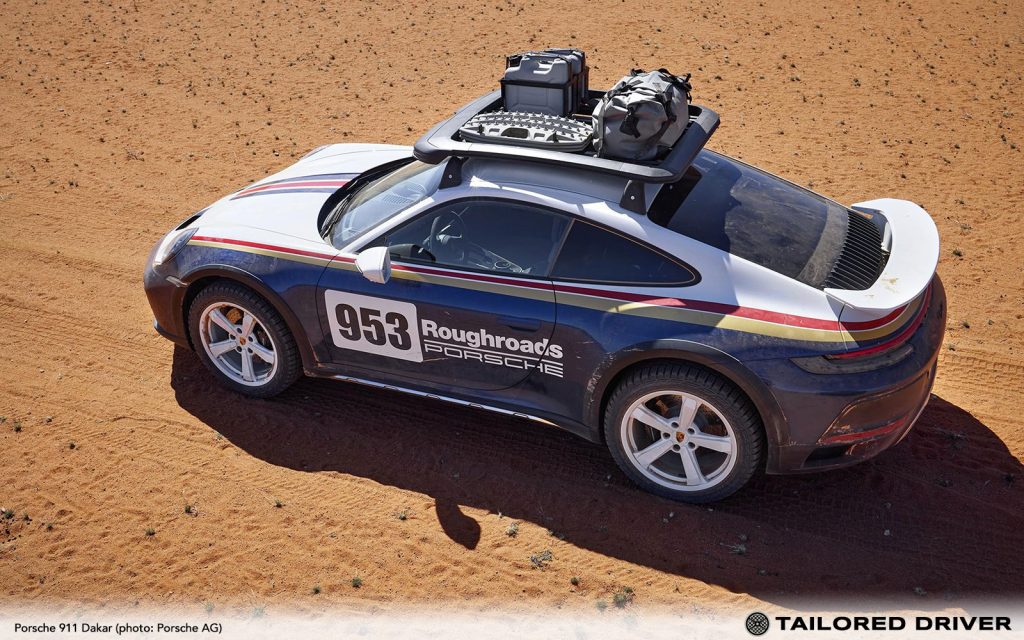
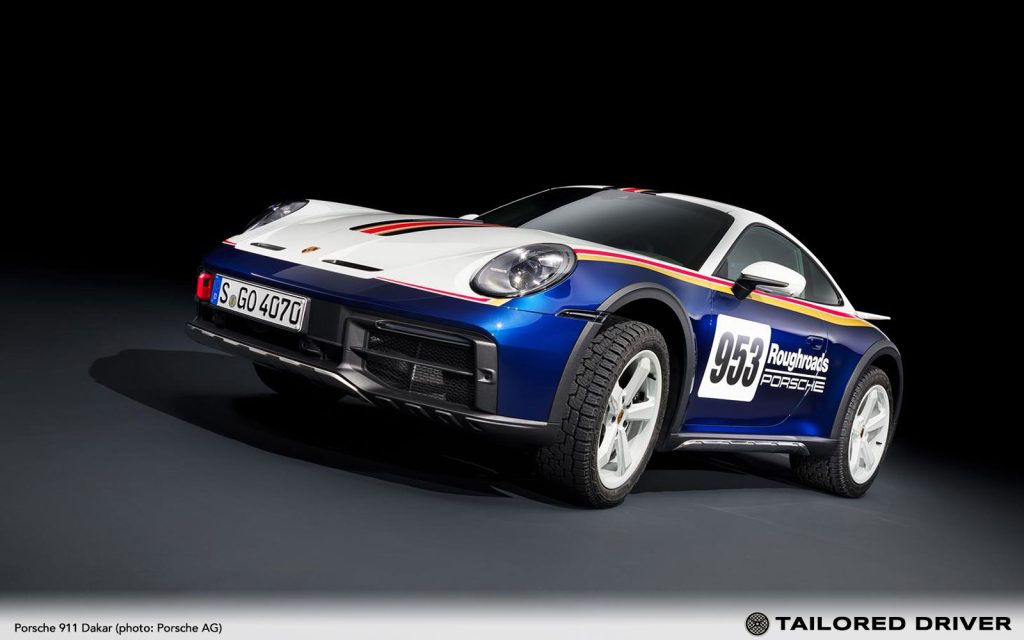
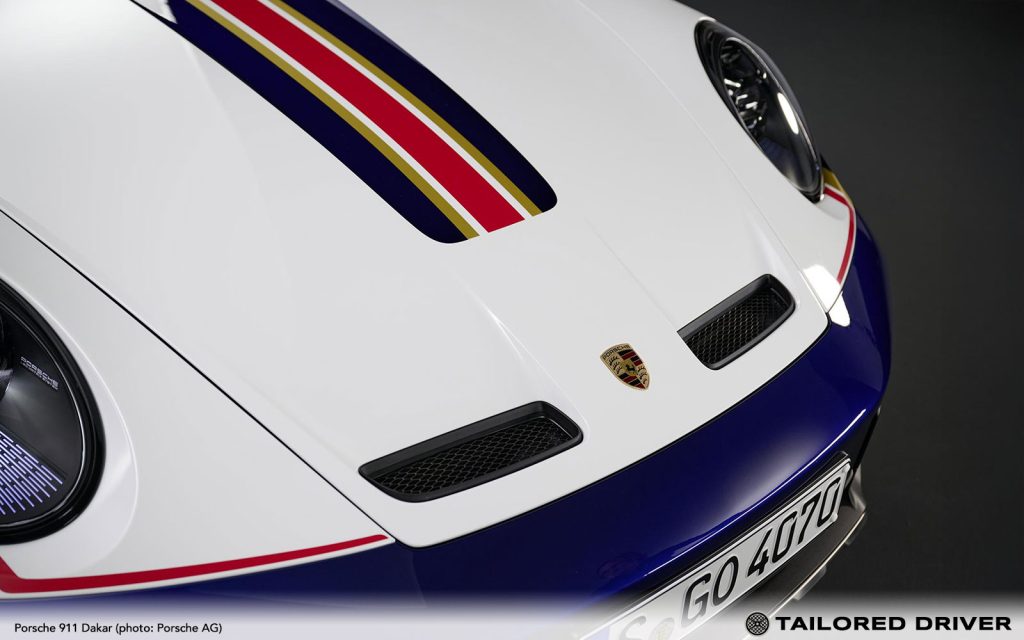
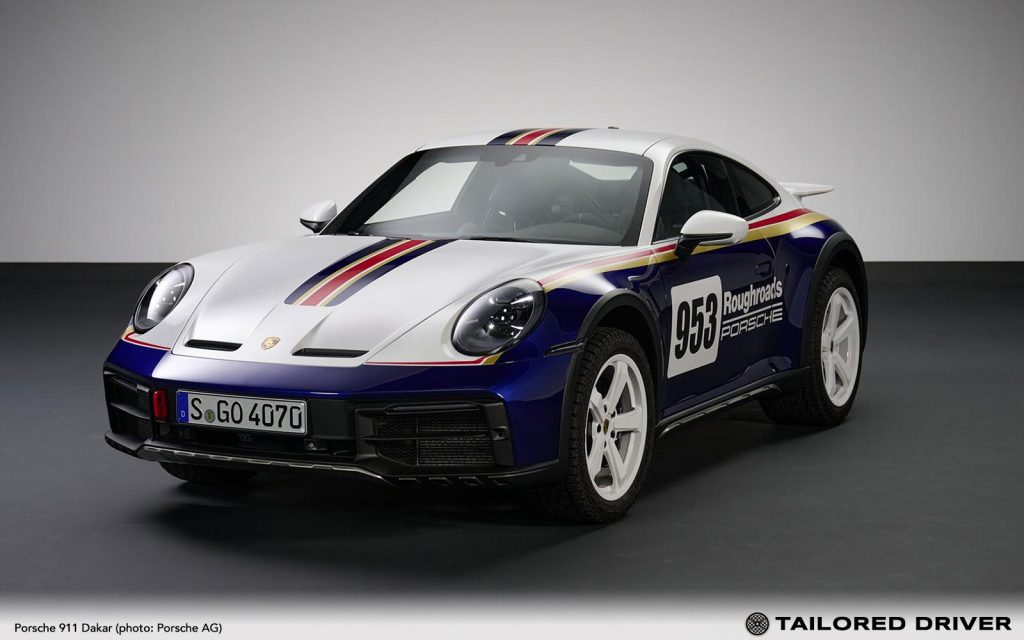
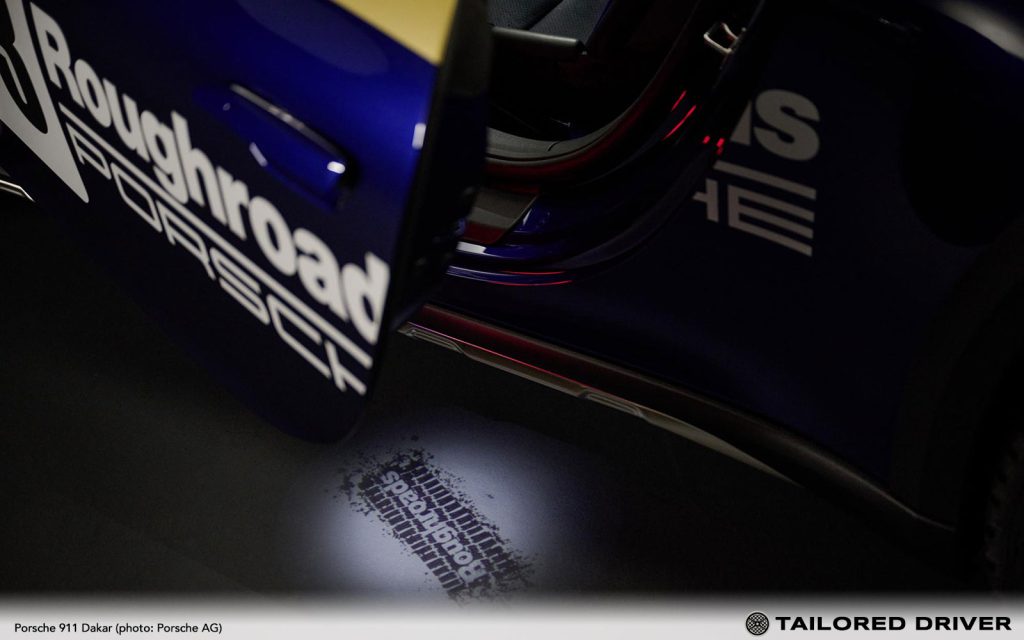
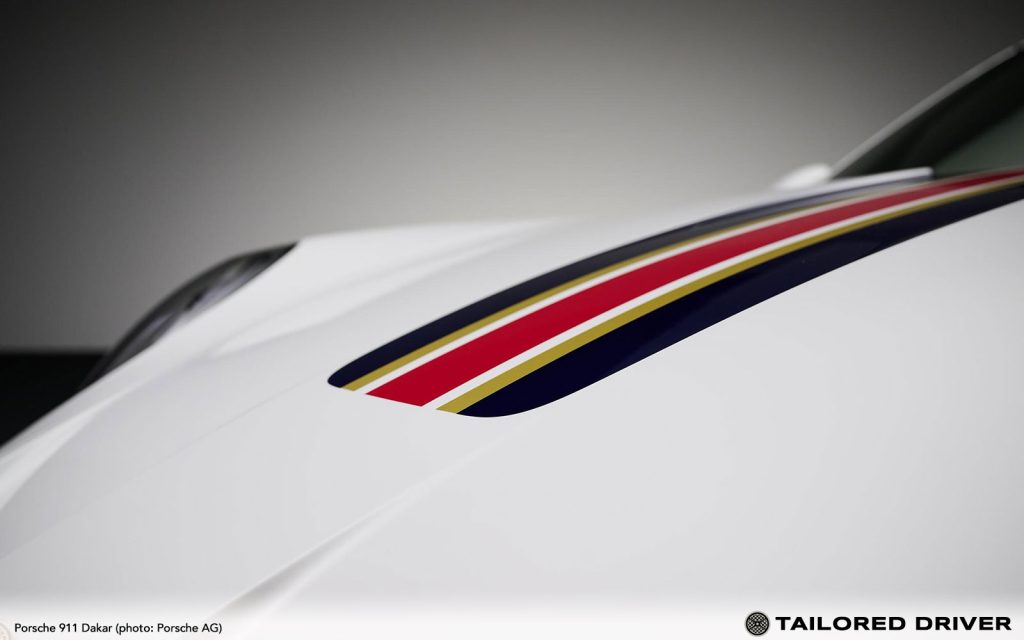
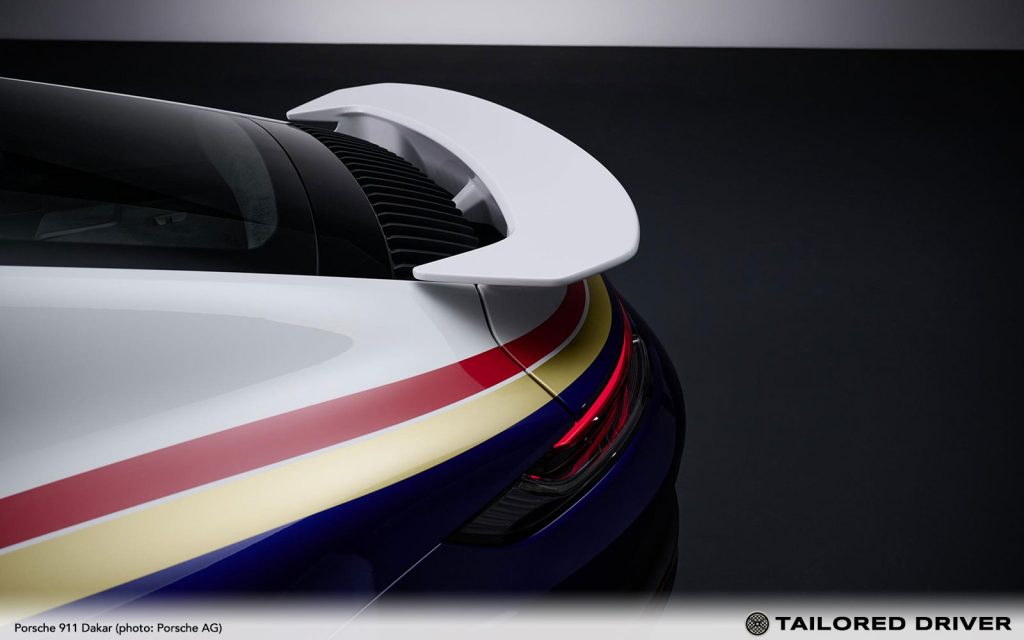
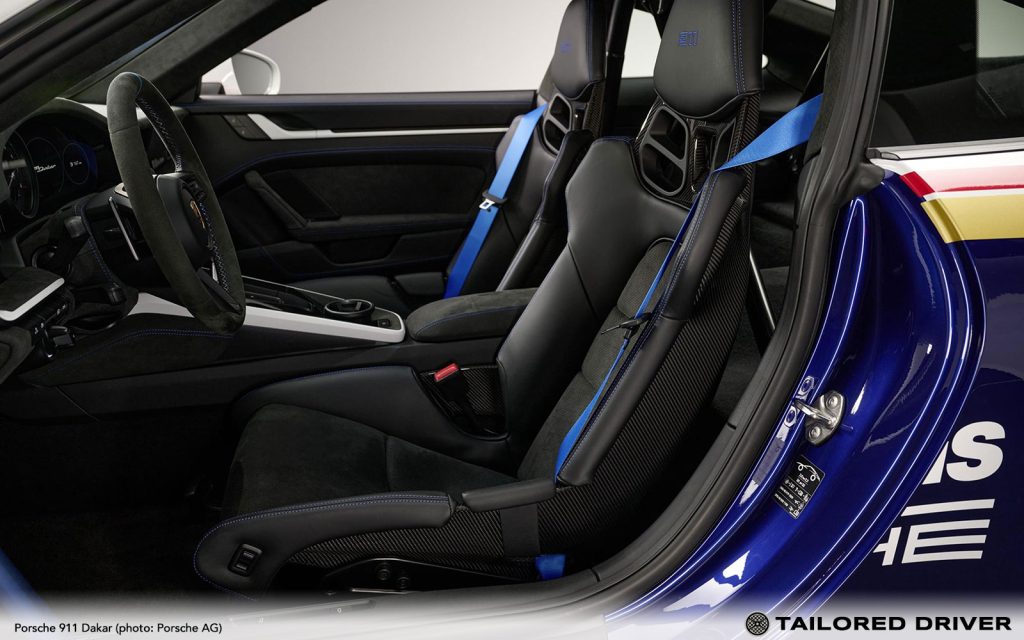
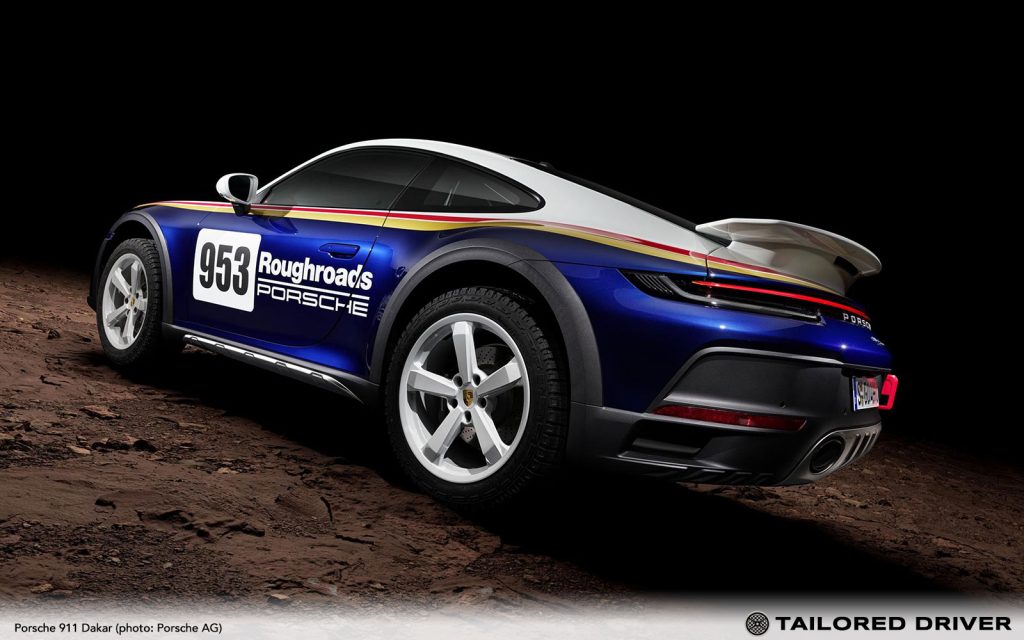
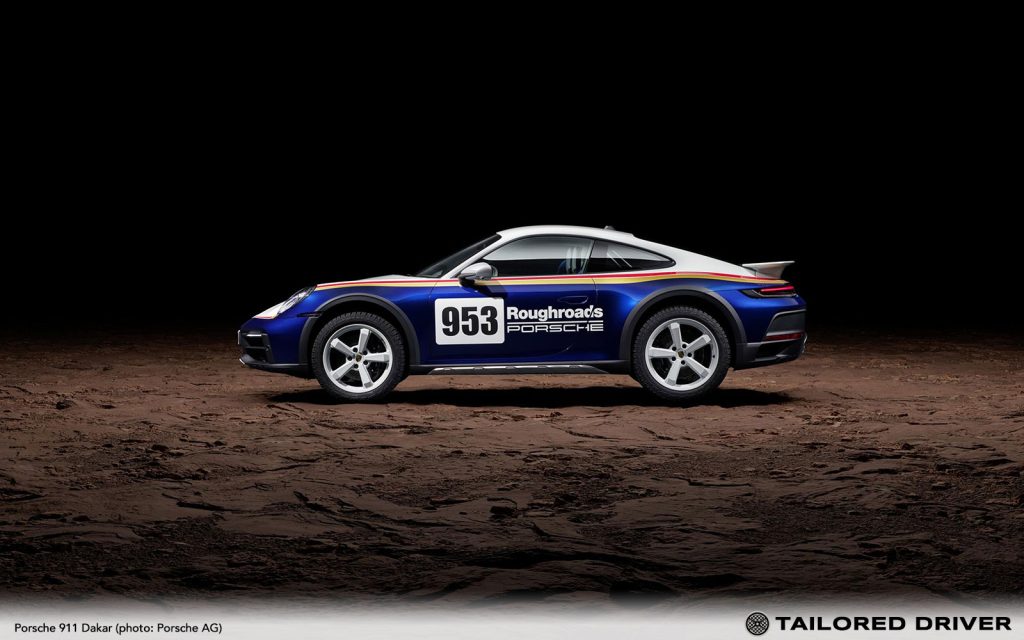
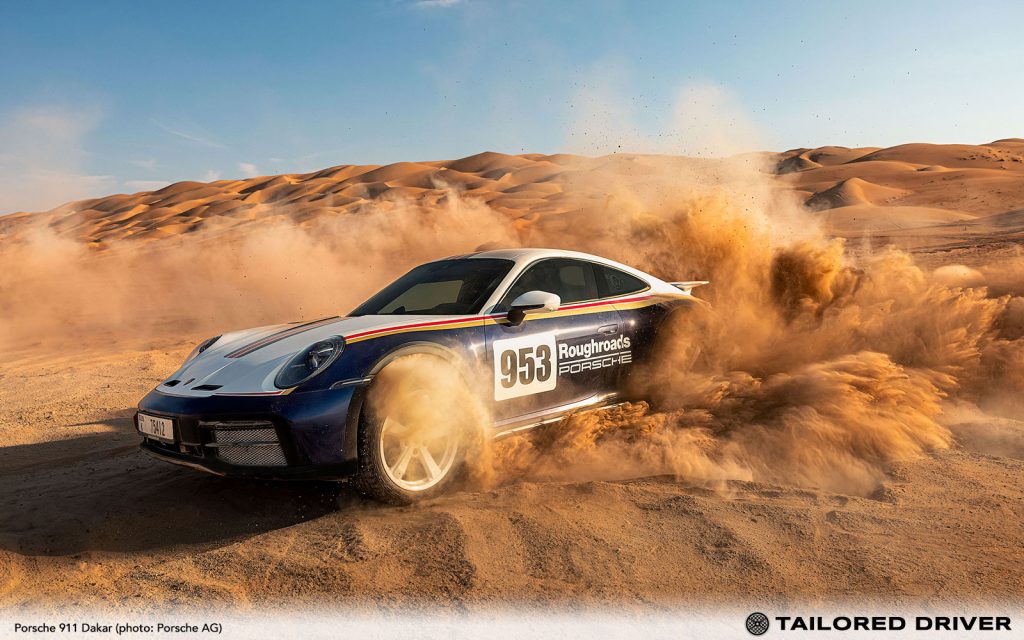
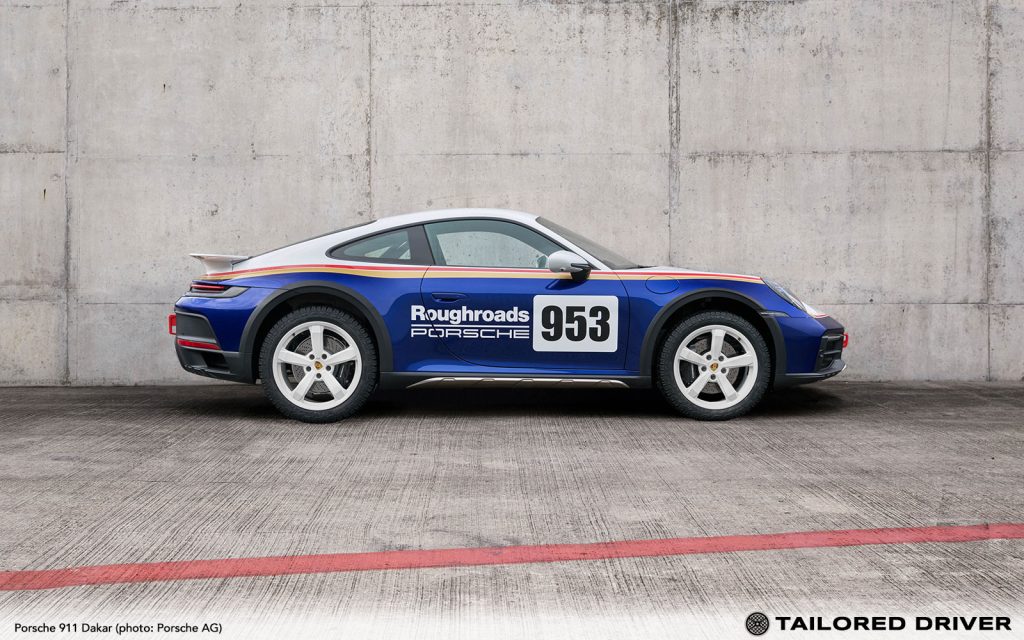
For instance, there are a lot of Porsche 911 Dakars out there wearing Porsche’s “Rough Roads” livery. Why Rough Roads? Well, while they mirrored the period Rothman’s colors of the Paris Dakar 959s (and many other Porsche race cars), they probably didn’t want to pay licensing or deal with the negative P.R. of putting a cigarette manufacturer’s name on the side of their new Safari-from-the-factory Carrera 4s. Even still, we’re guessing that Spirit of Le Mans is guessing lots of owners may want some tartan to match their cars.
SOLM Rally is just one of many incredible looking fabric patterns Spirt of Le Mans offers. They’ve even got a Gulf Racing houndstooth should that be your speed. Check them out at SOLM.co.uk.
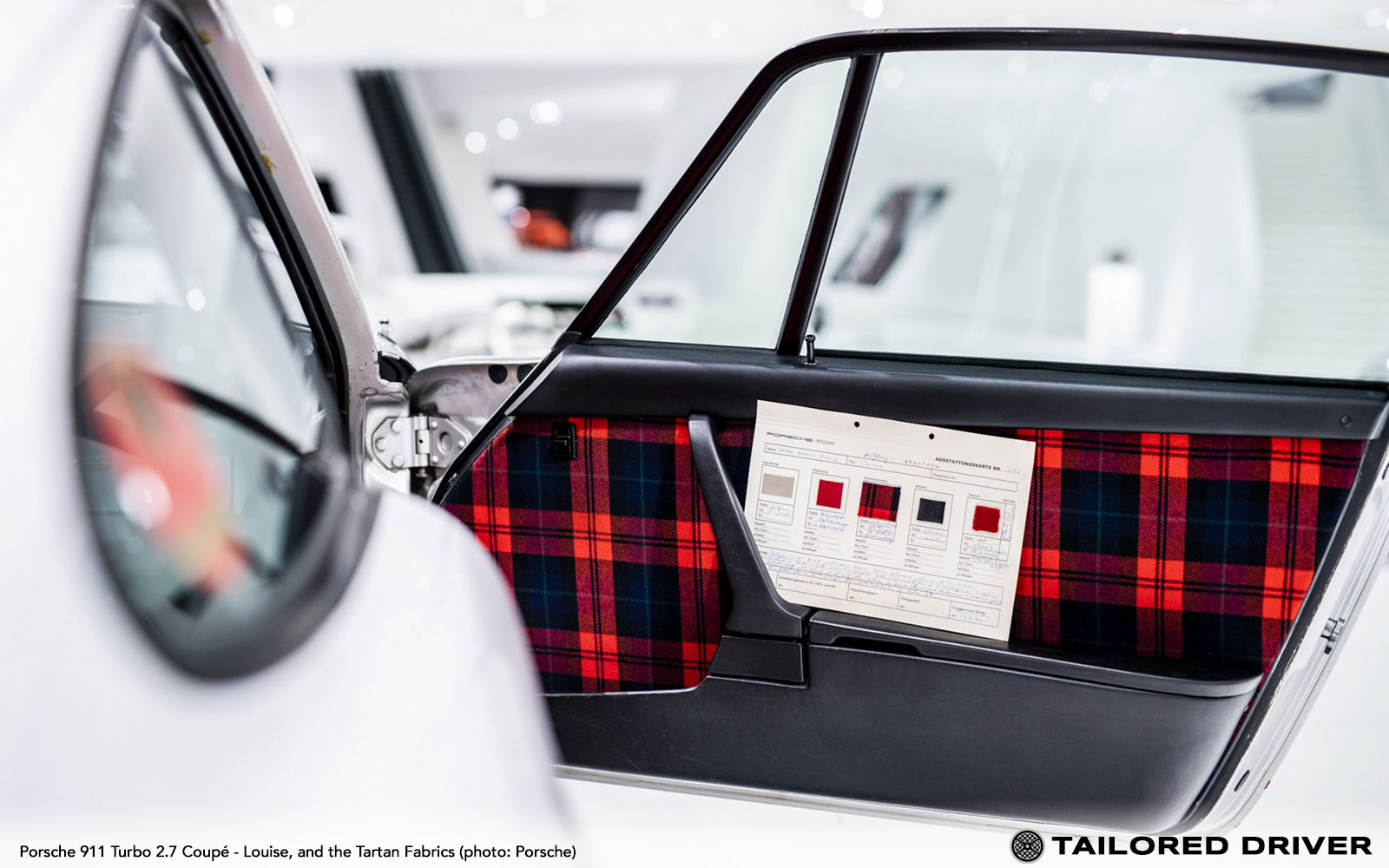
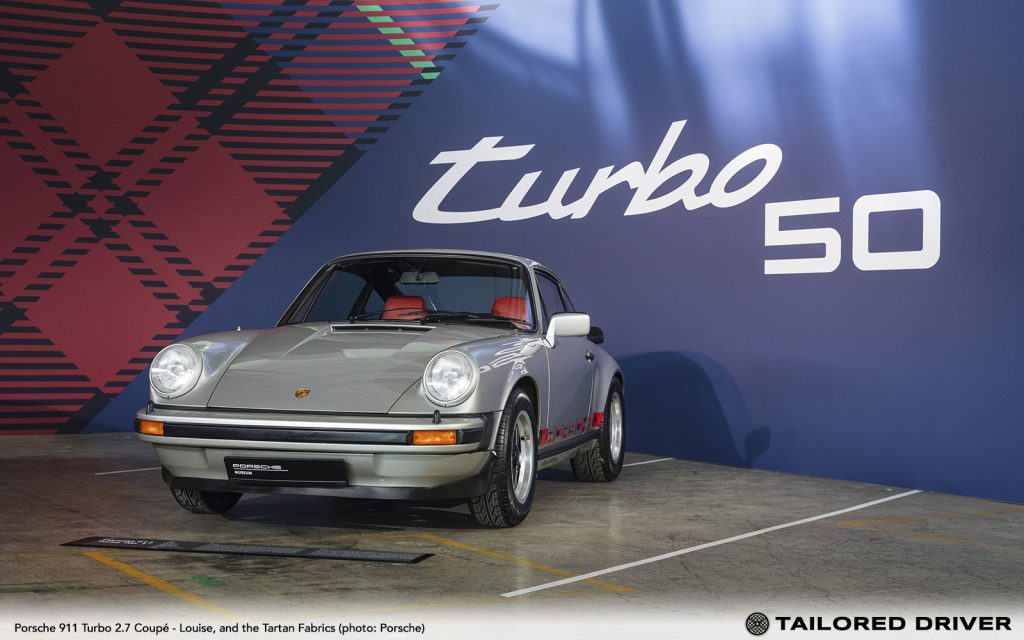
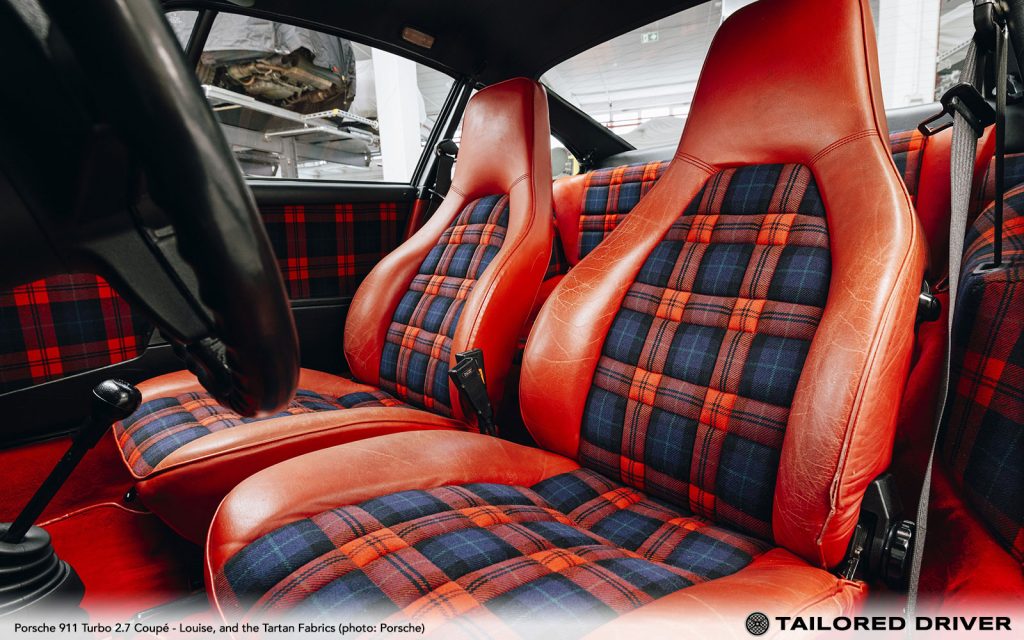
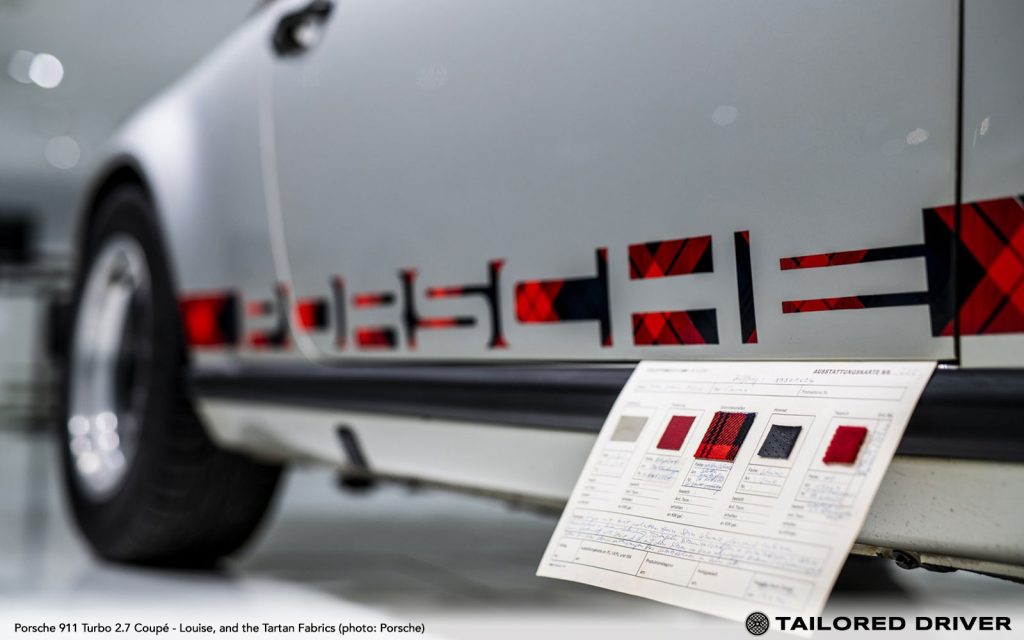
Tartan fabrics symbolise tradition and craftsmanship, belonging and confidence. Exactly 50 years ago, three tartans could be found on the options list exclusively for the Porsche 911 Turbo. It wasn’t until the 1976 model year that they appeared in the 911. To this day, this check pattern classic remains timeless and stylish – on the catwalk and in the sports car.
[source: Porsche]
The day that Anatole Lapine woke up and decided to wear a pair of tartan trousers would be the day on which the chief designer and his team would decide to include tartan fabrics in the interior programme. Dorothea Müller-Goodwyn worked as a stylist at Porsche from 1970 to 1975, and again from 1978 to 2003. “We had a Scottish colleague in our team who recommended two traditional tartan fabric makers from his homeland to me,” recalls Müller-Goodwyn, who then contacted them both. “Unfortunately, they were unable to supply us with fabrics with the qualities that we required for the interior of the sports cars: [they had to be] lightfast and abrasion-resistant.” She finally found a supplier 50 kilometres from Weissach, in Dettingen unter Teck, on the border of the Swabian Mountains. The town is home to the Berger company, which capable of weaving series-production-quality fabrics for the Porsche Style team.
Historical background: tartan as a symbol of identity
Tartans typically have a crisscross pattern that is created when threads of different colours are woven together. Traditional natives of Scotland, home of the iconic fabric, wear only the tartans of their clan, thereby identifying the family line to which they belong. However, according to the Scottish law of heraldic arms, it is not forbidden to wear the tartans of other clans.
Three Scottish patterns for the options list
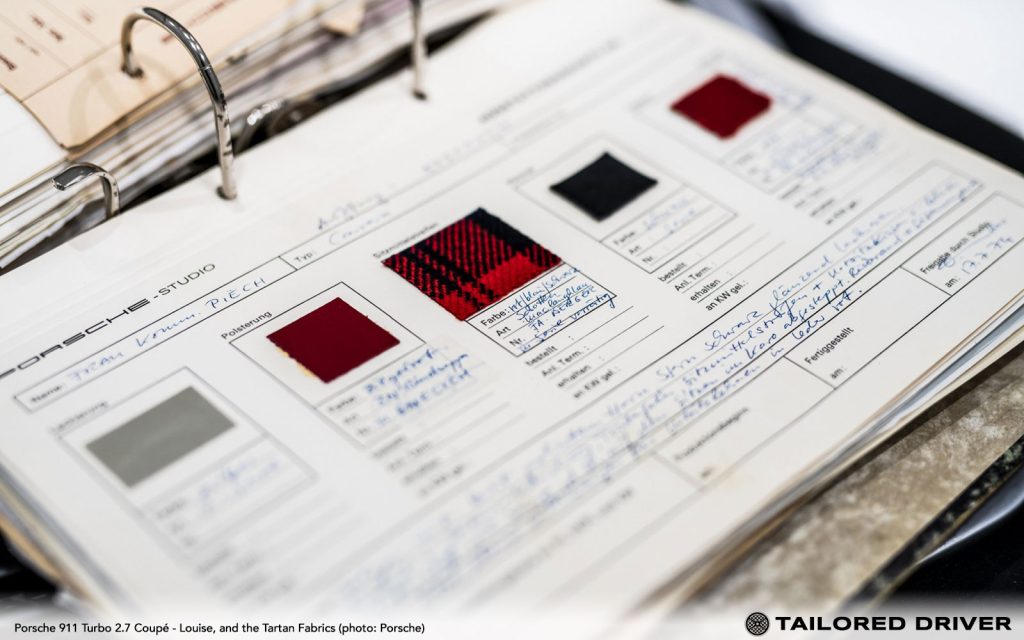
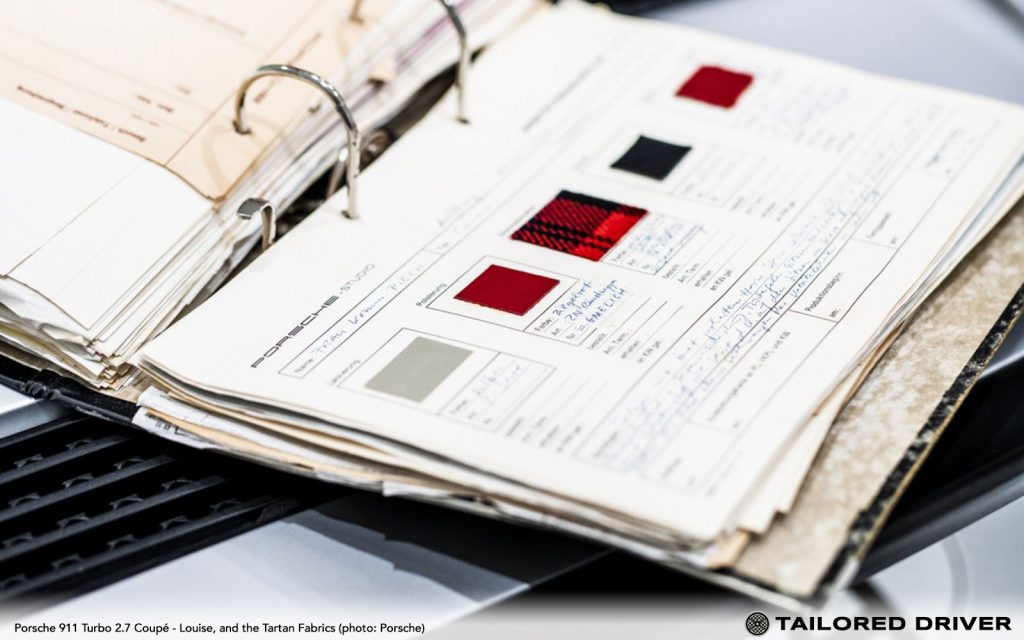
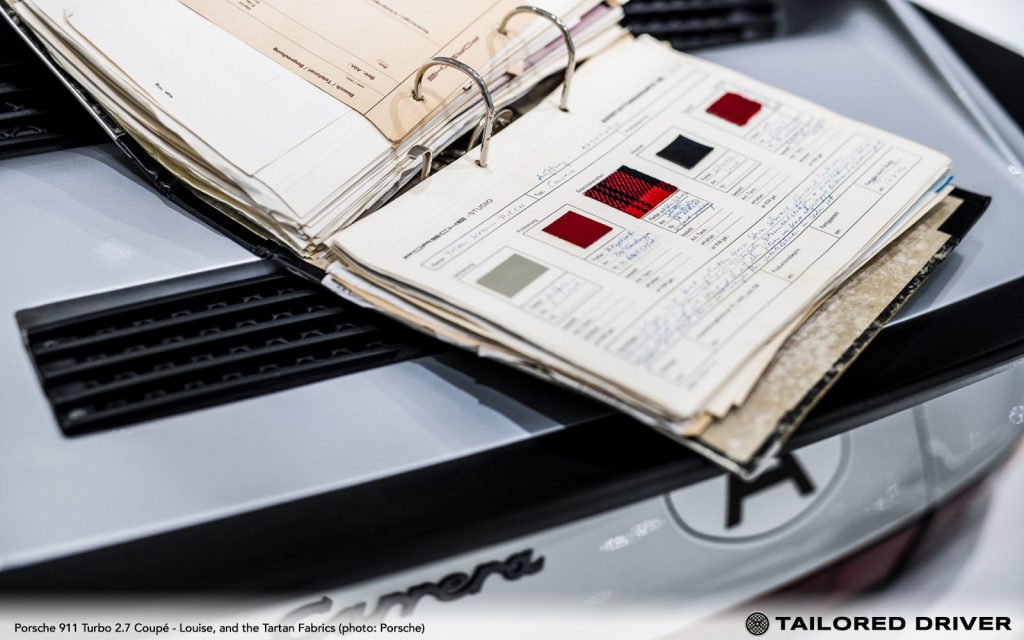
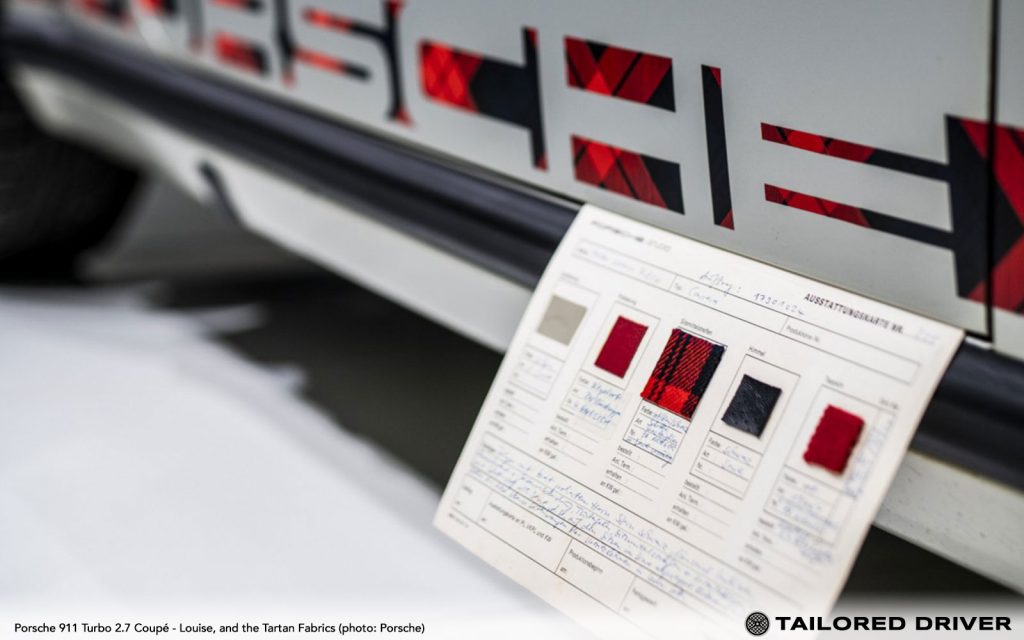
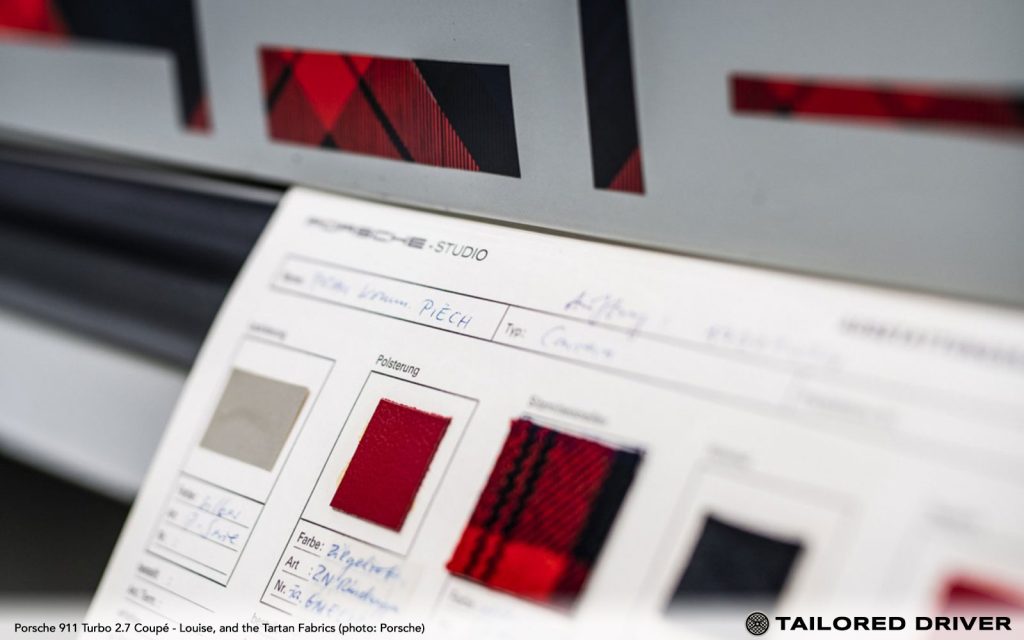
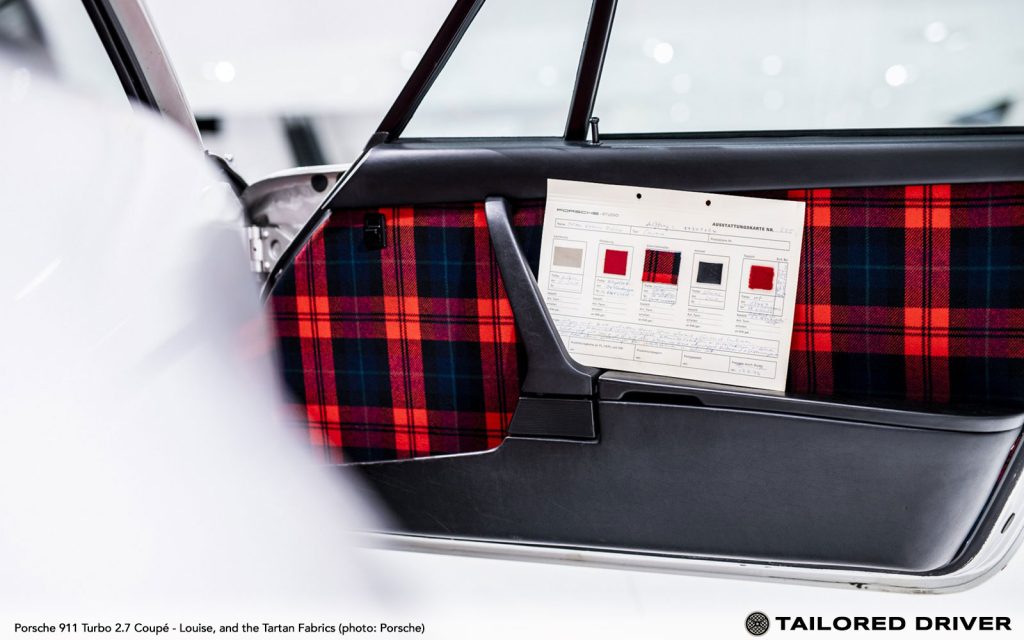
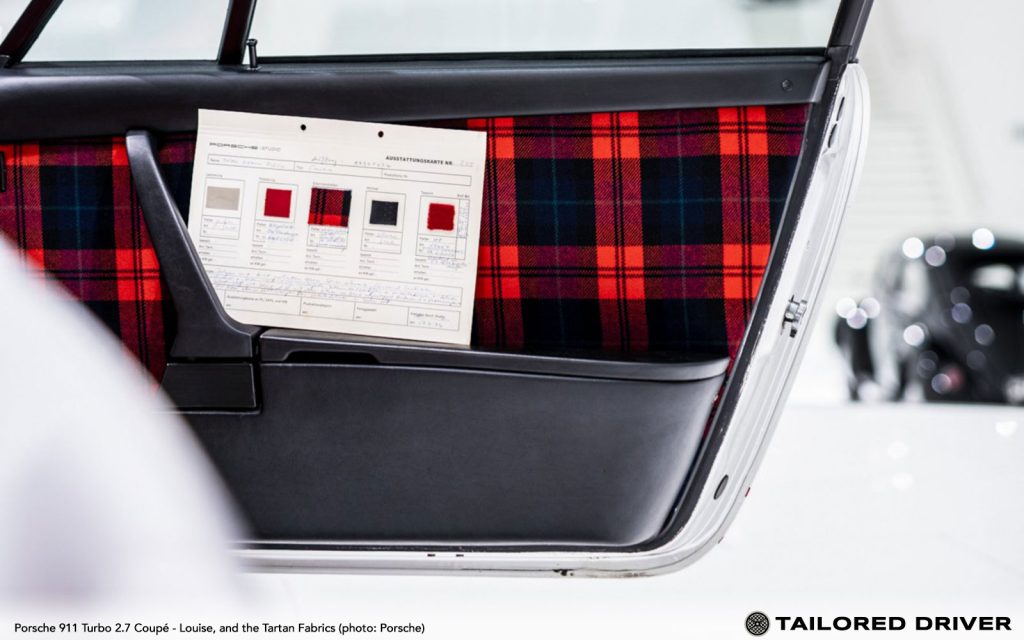
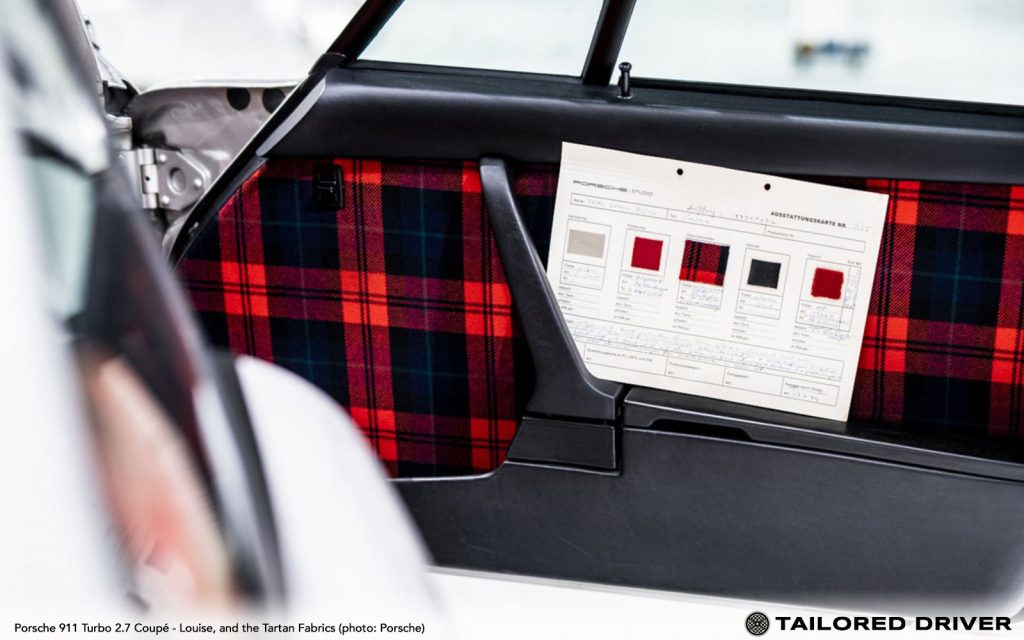
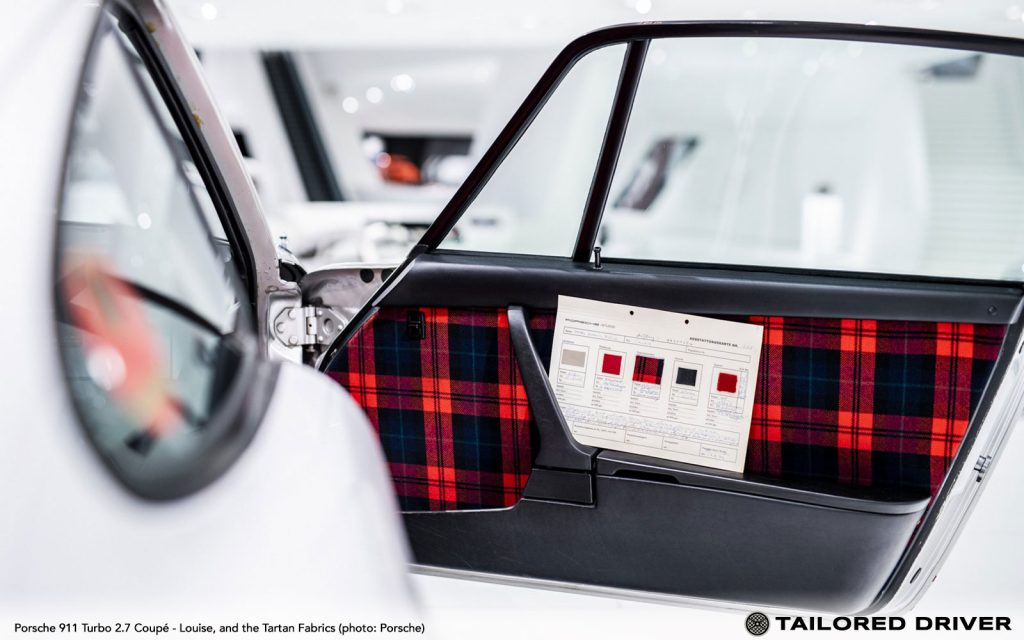
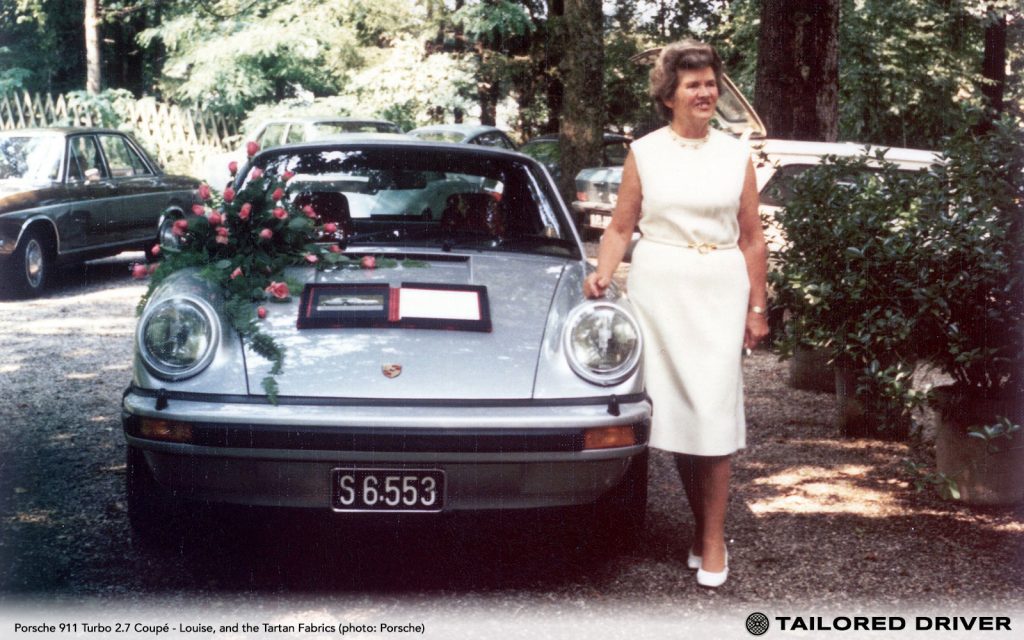
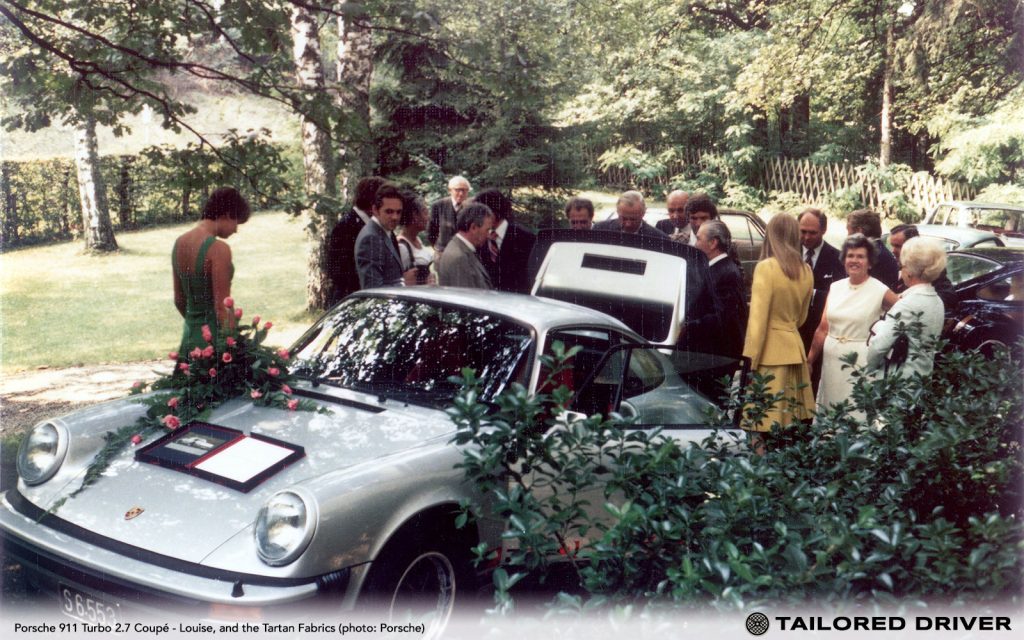
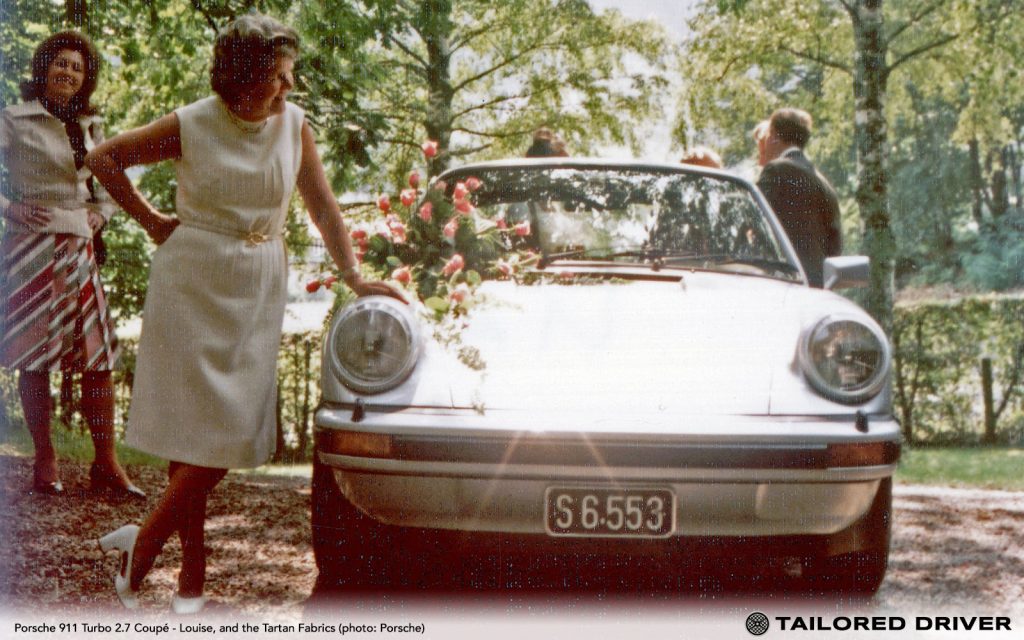
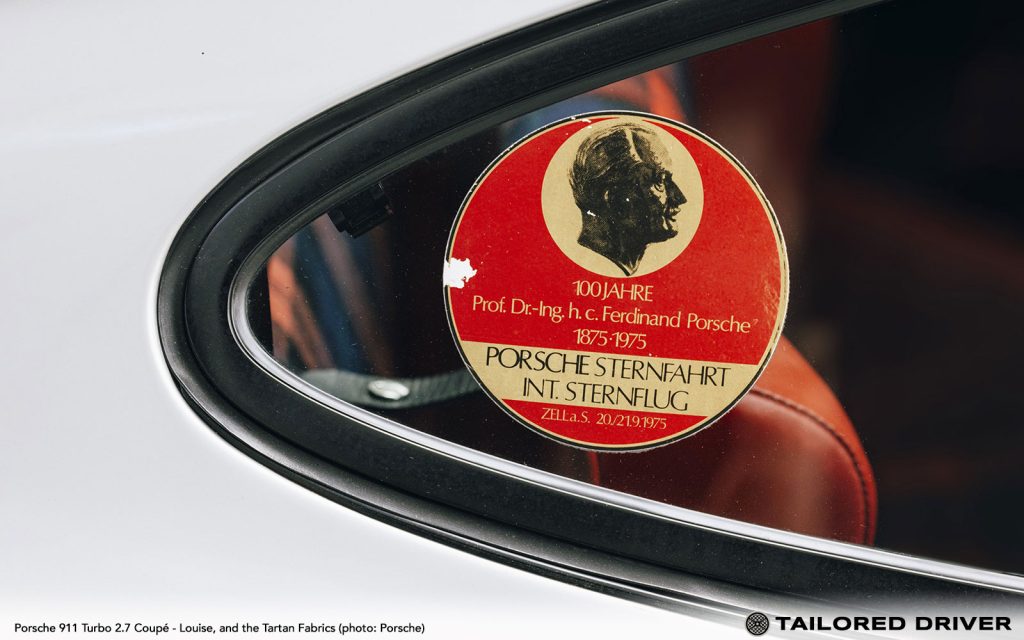
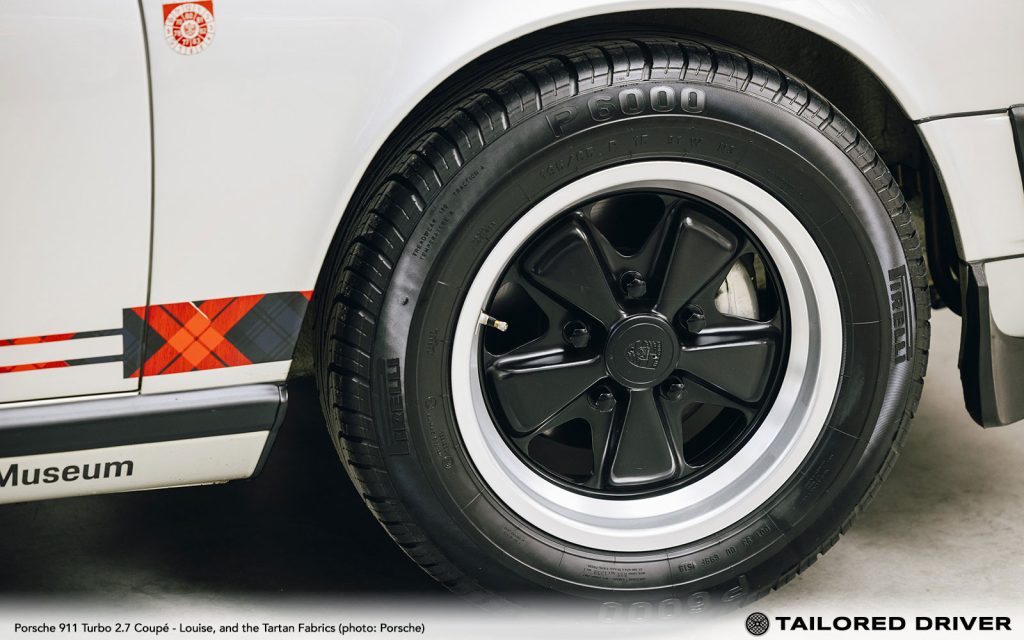
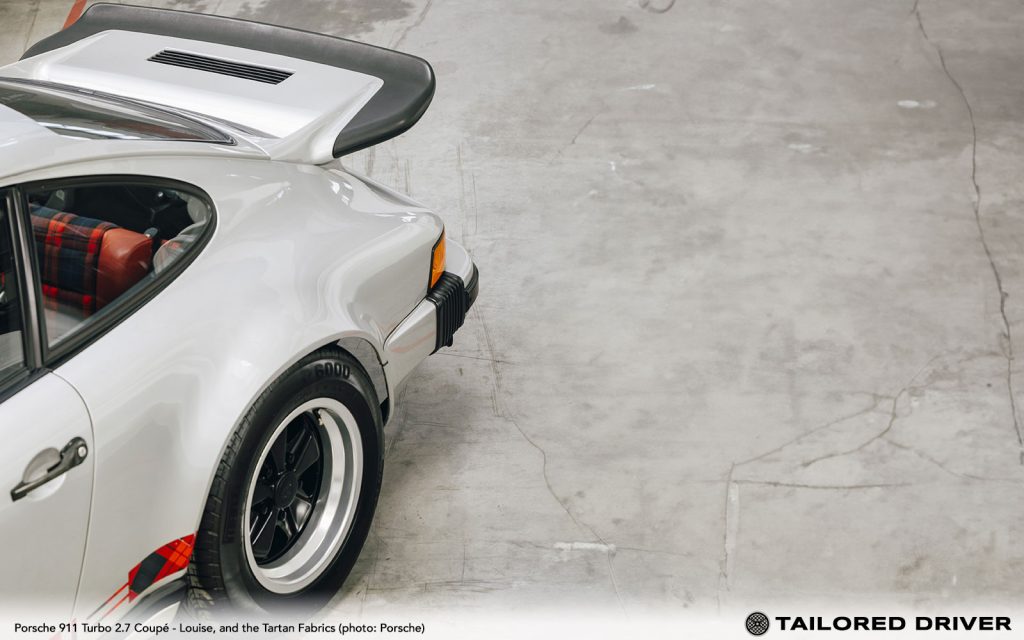
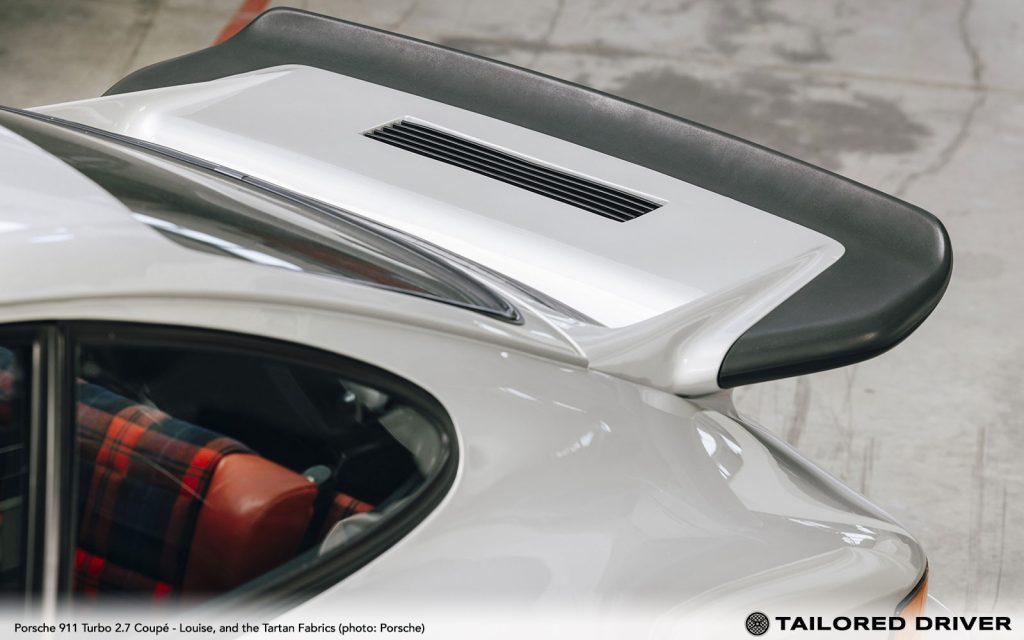
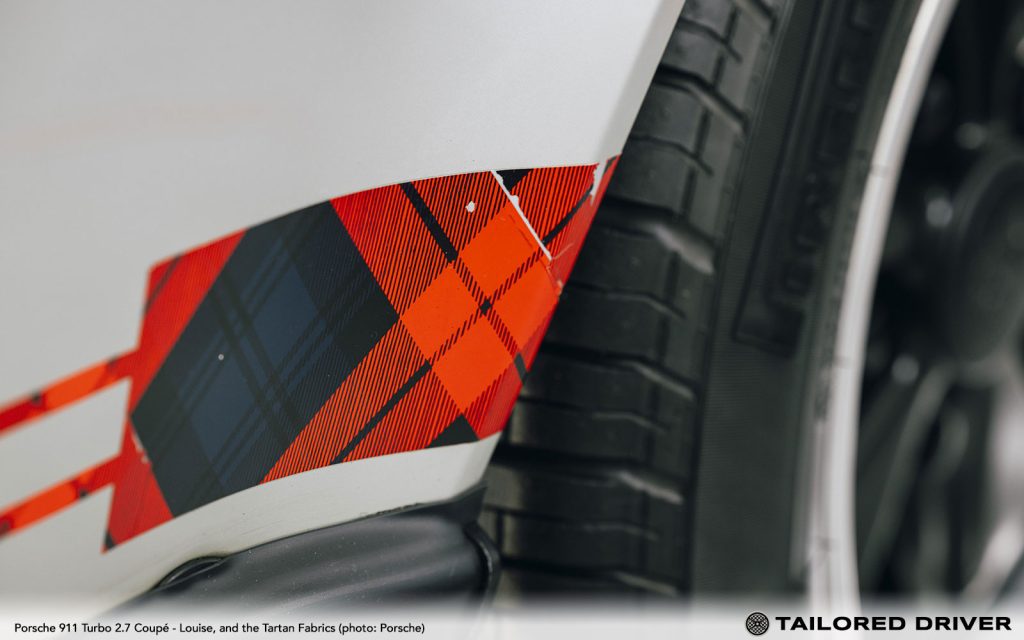
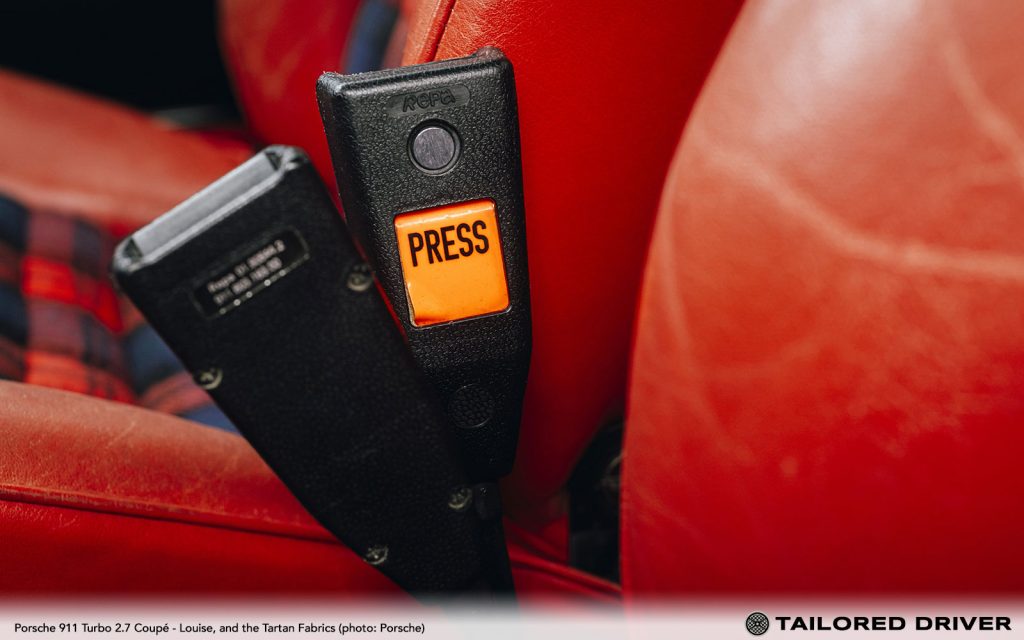
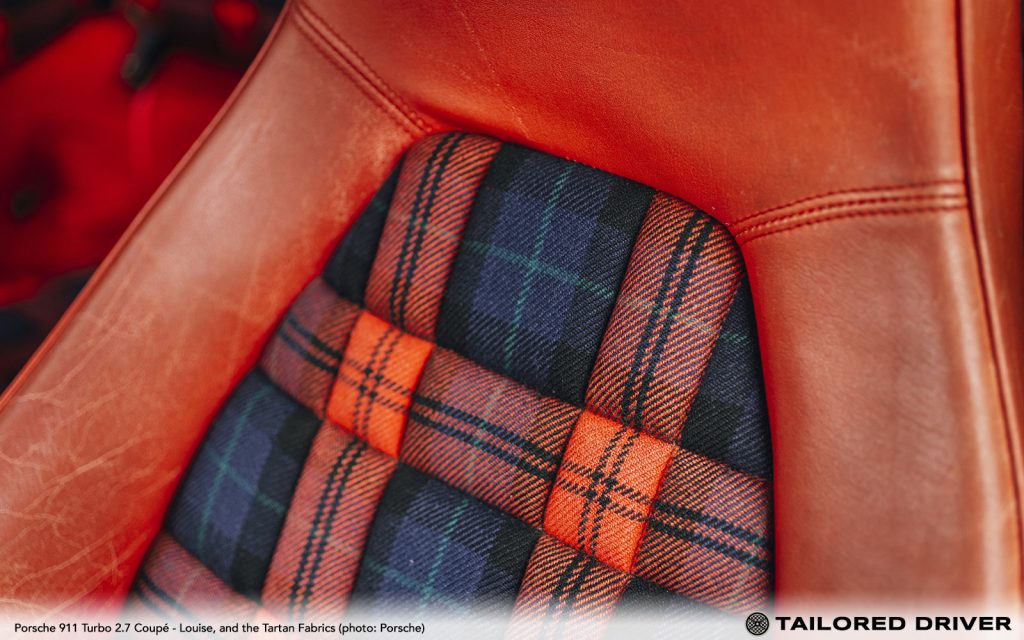
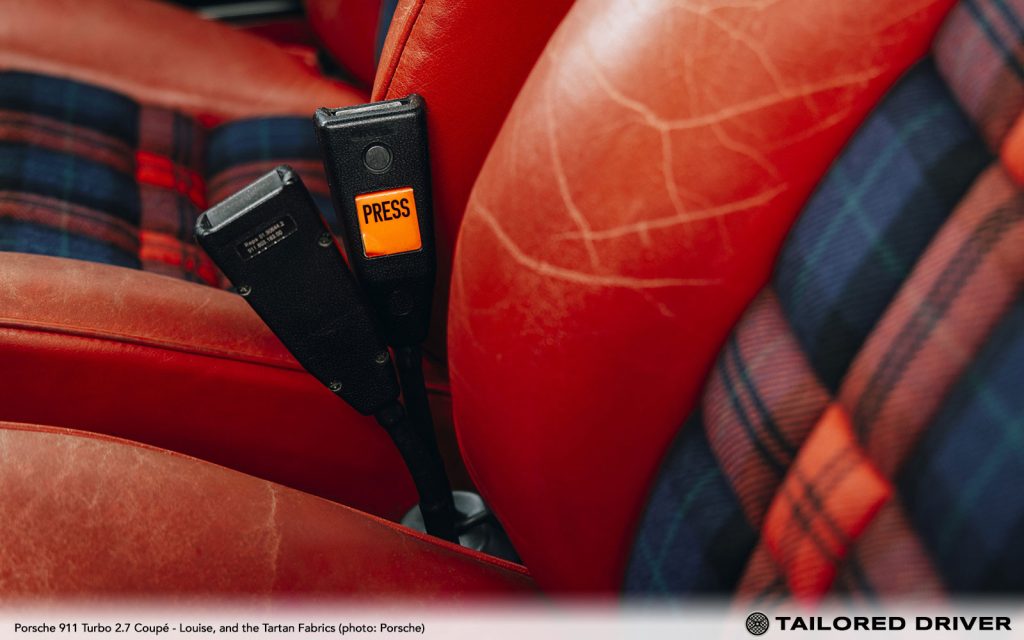
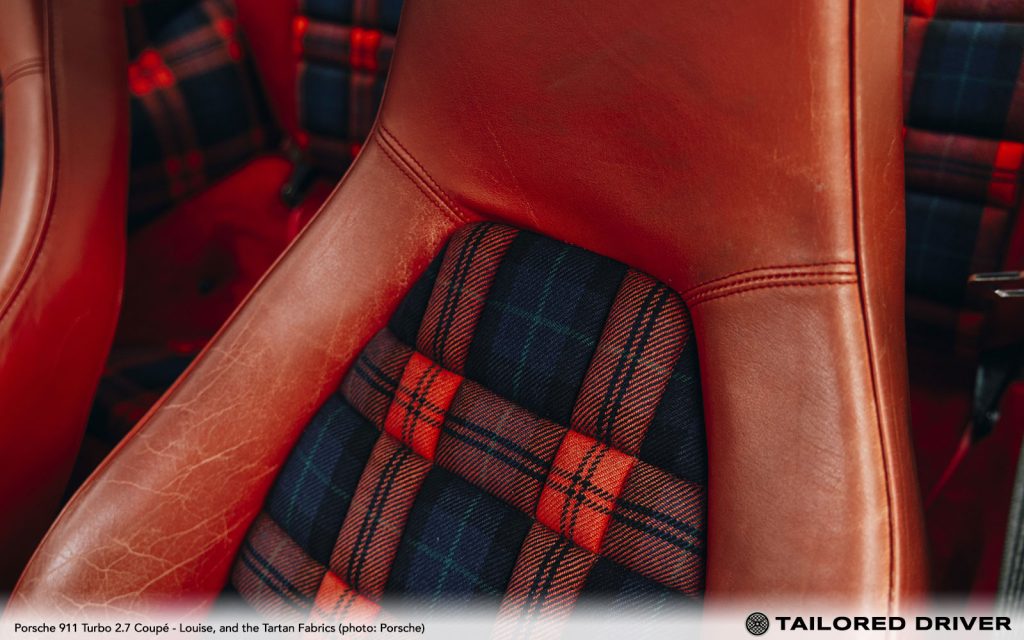
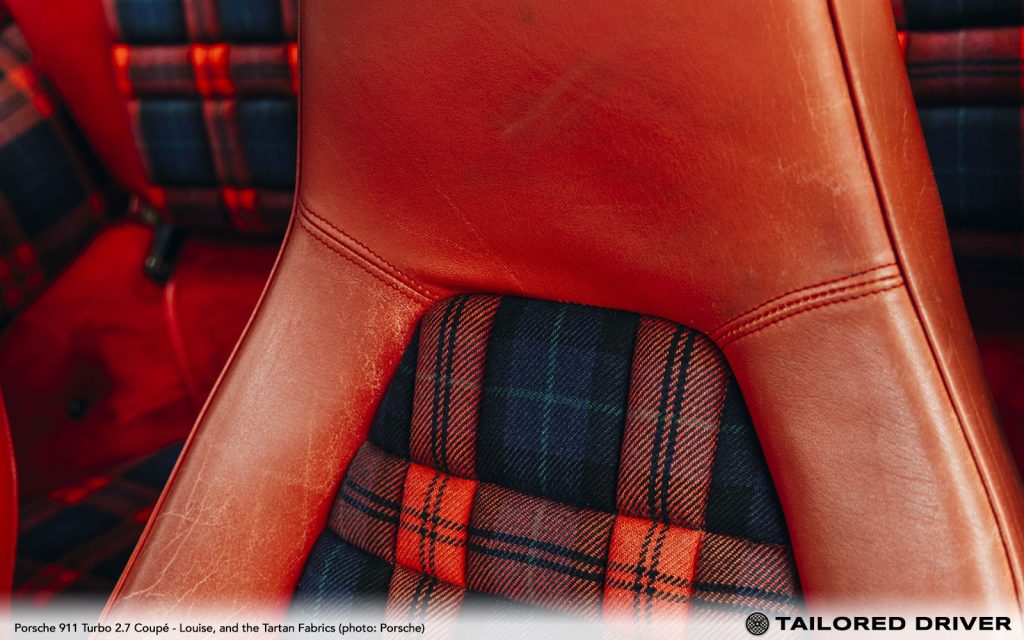
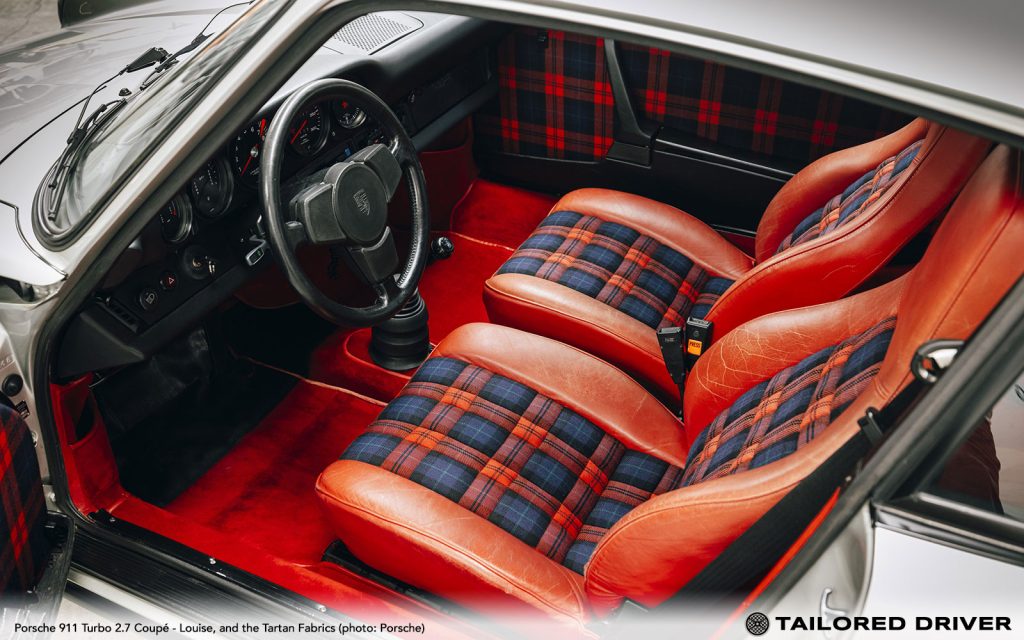
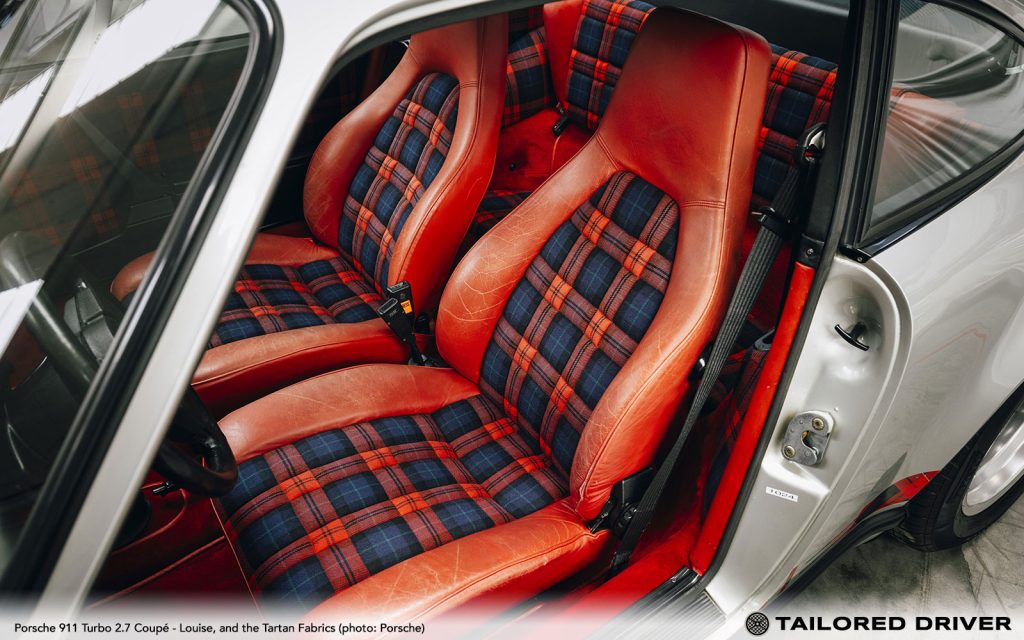
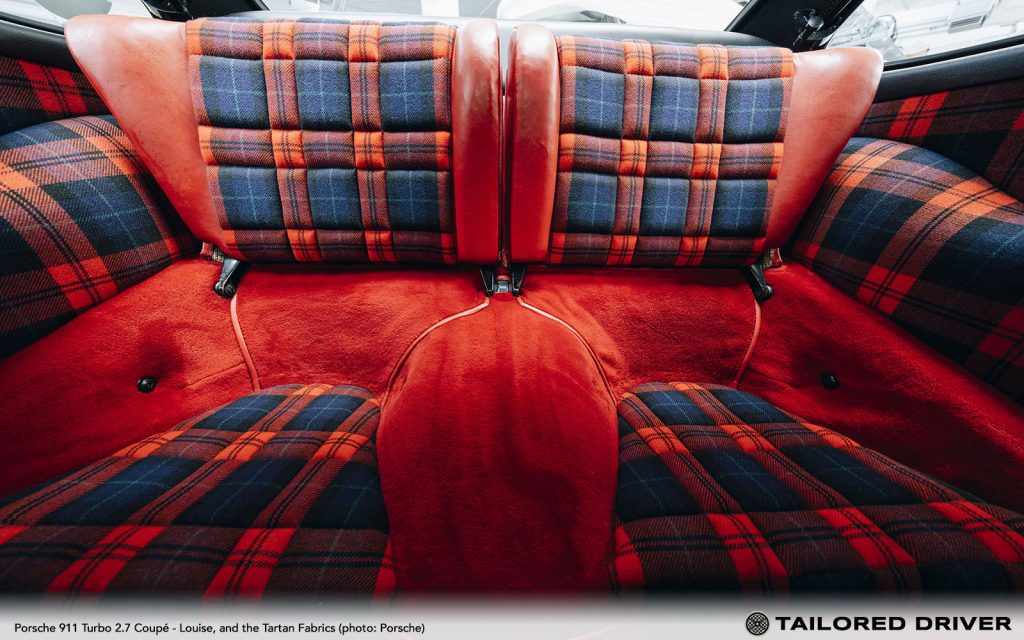
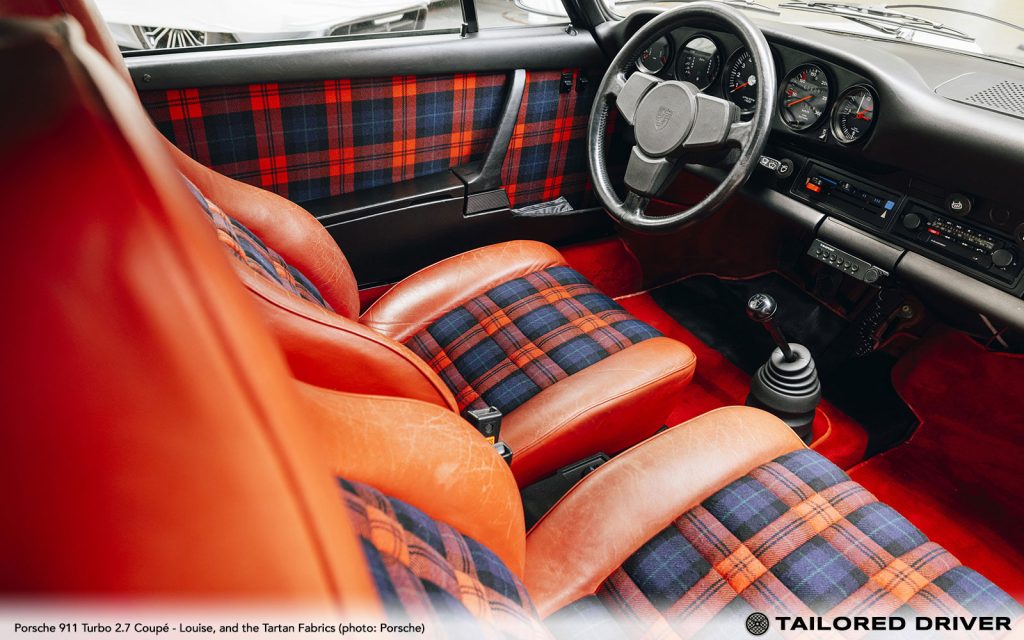
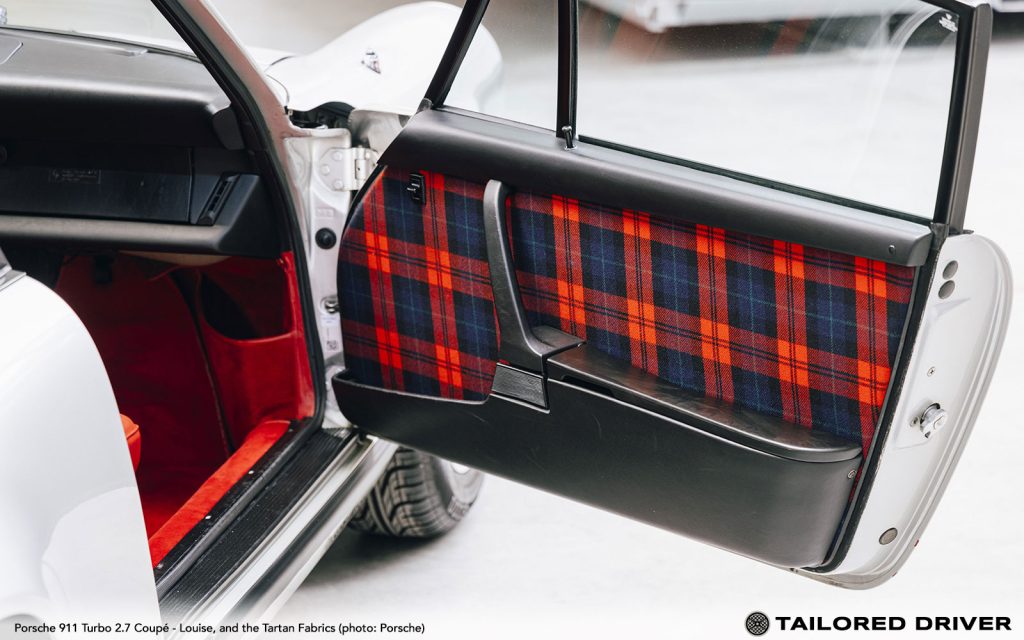
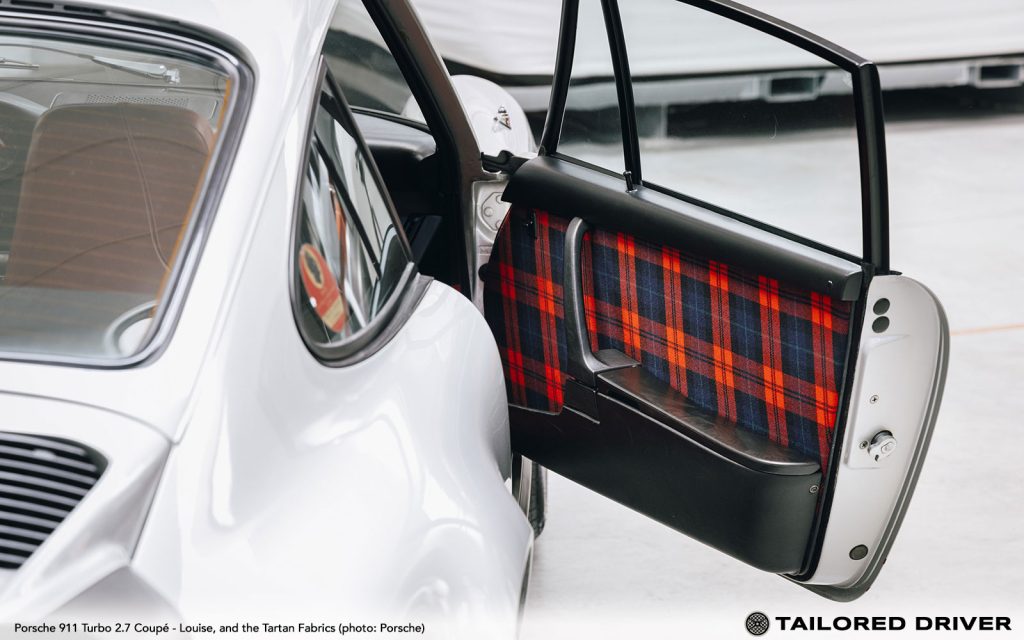
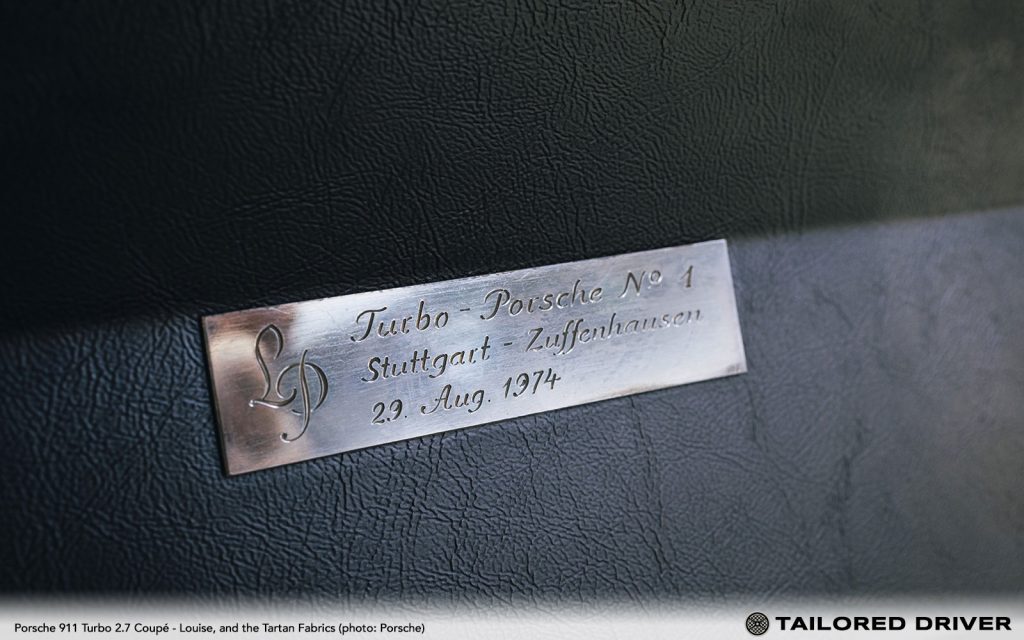
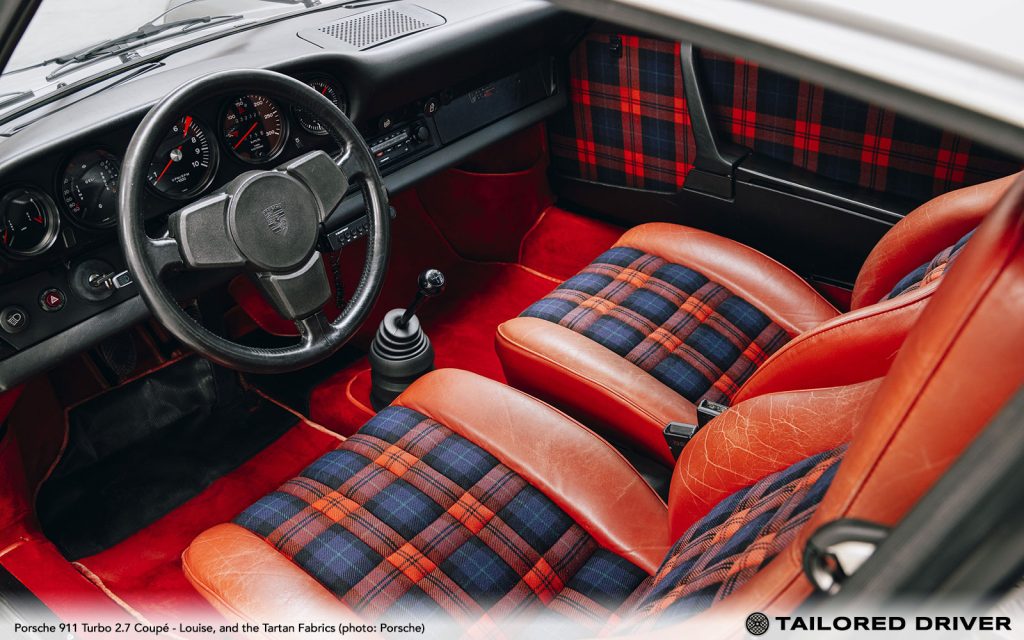
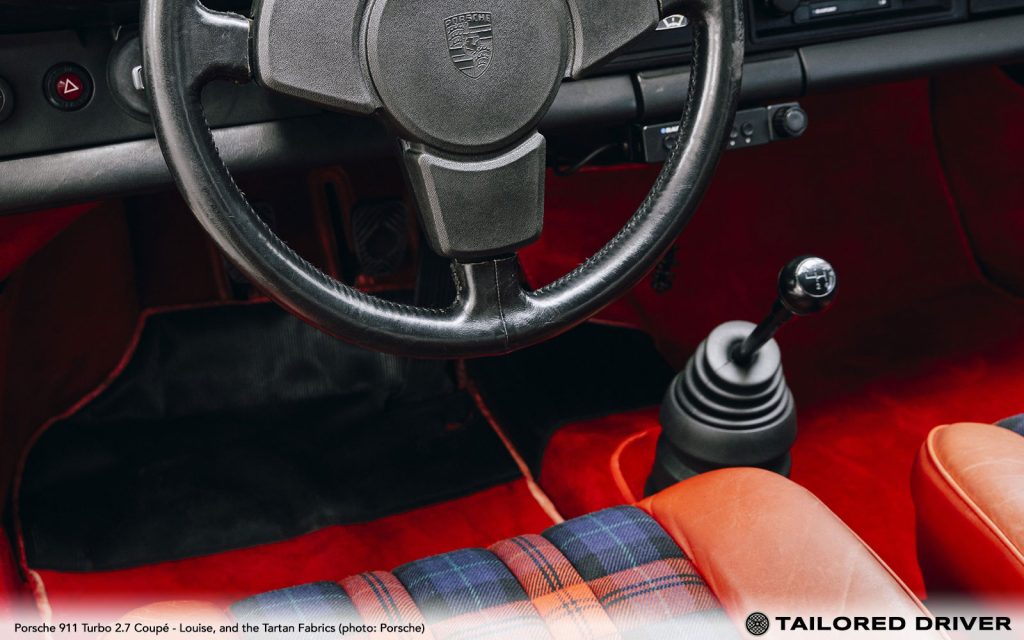
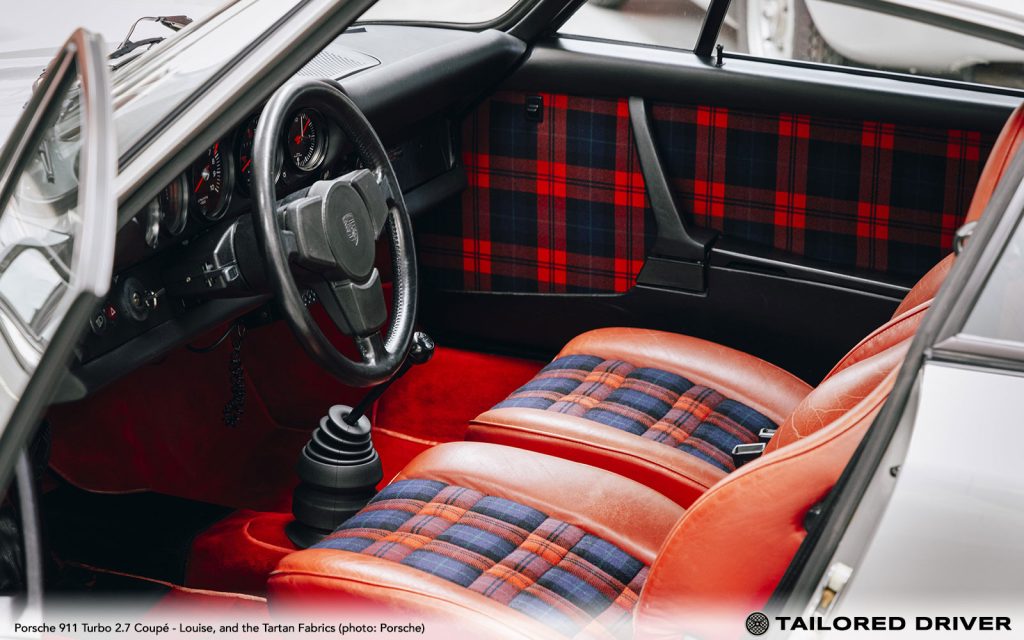
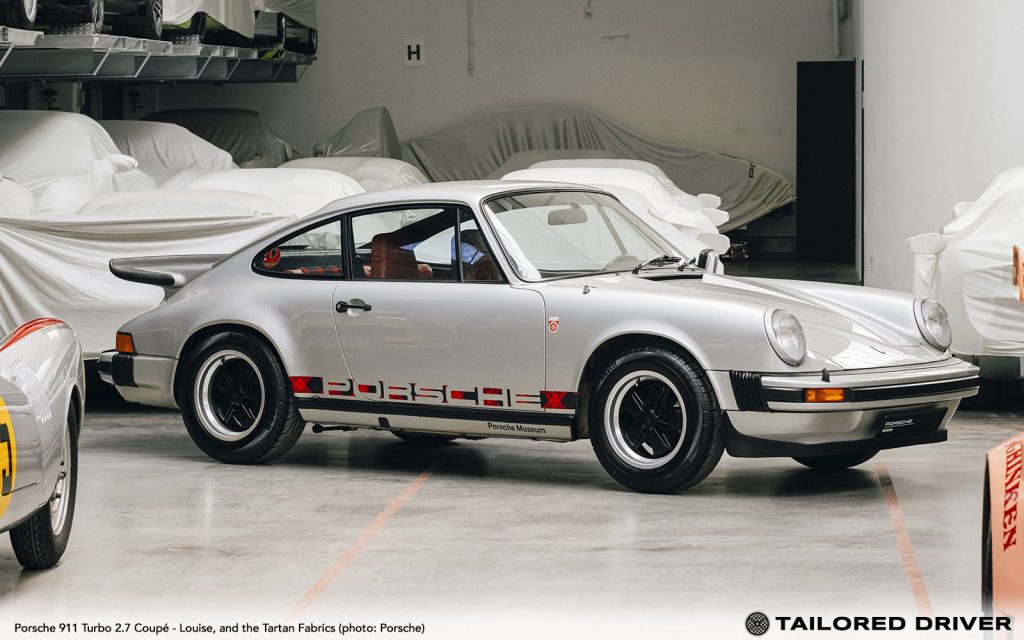
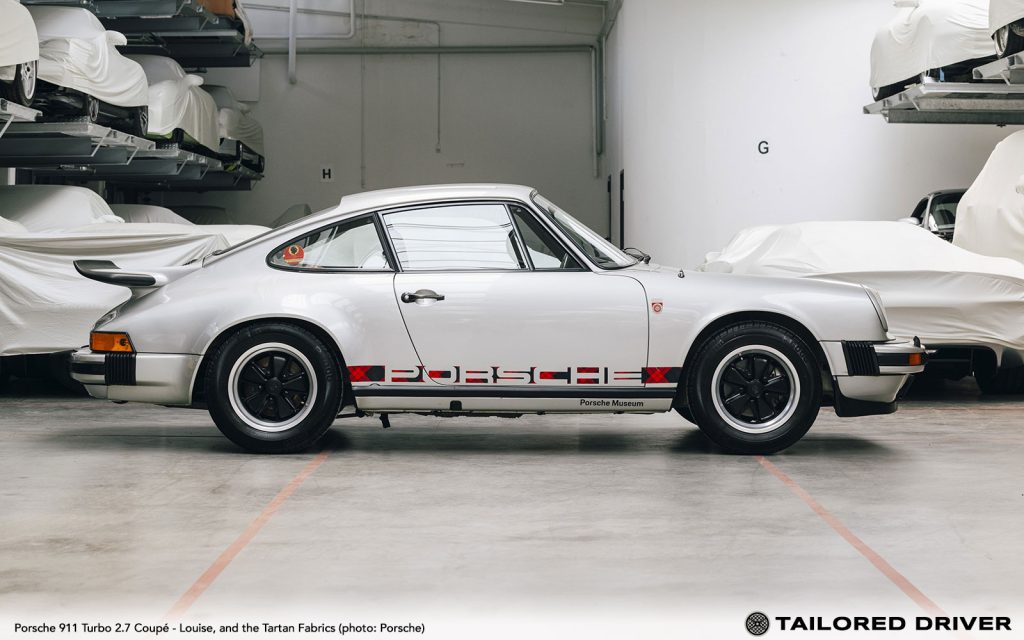
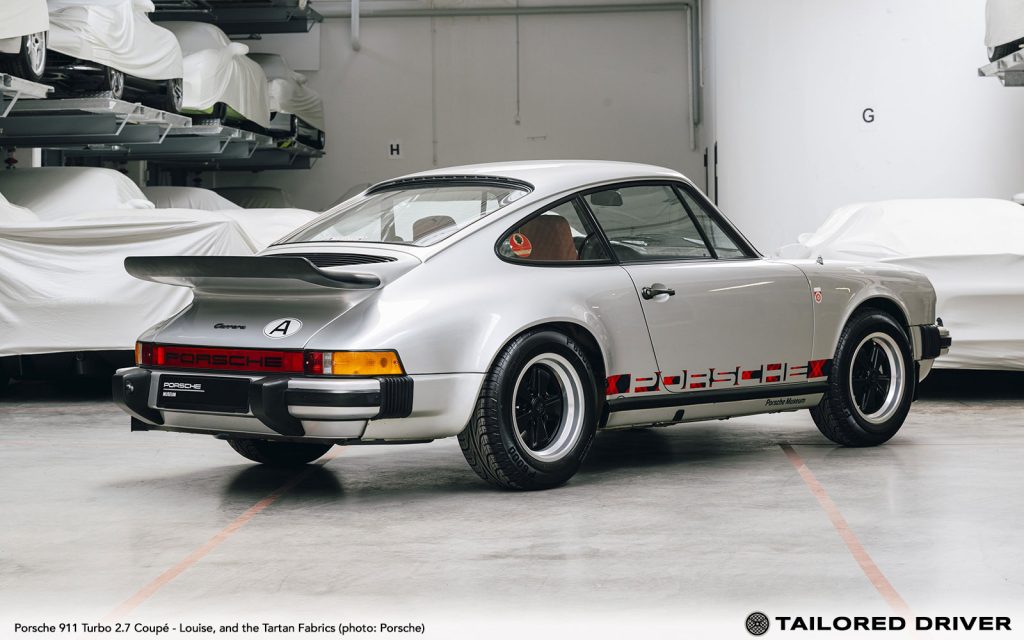
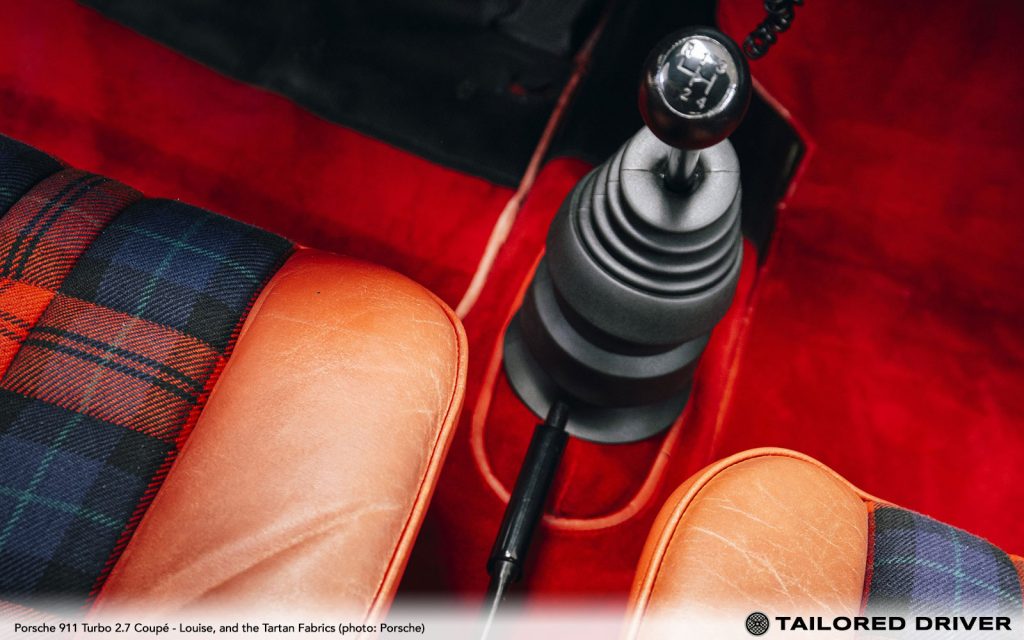
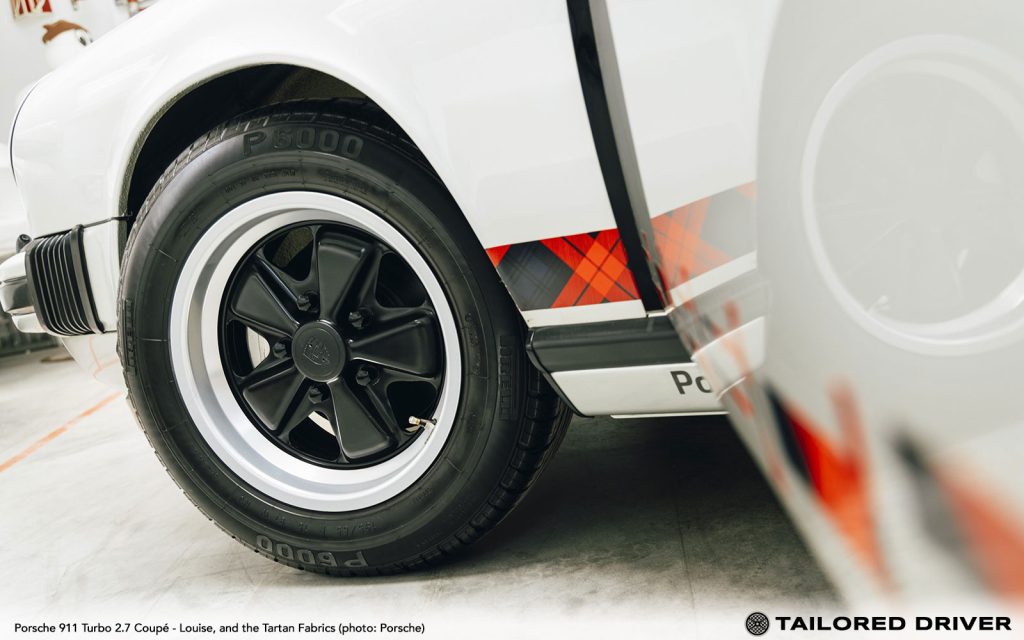
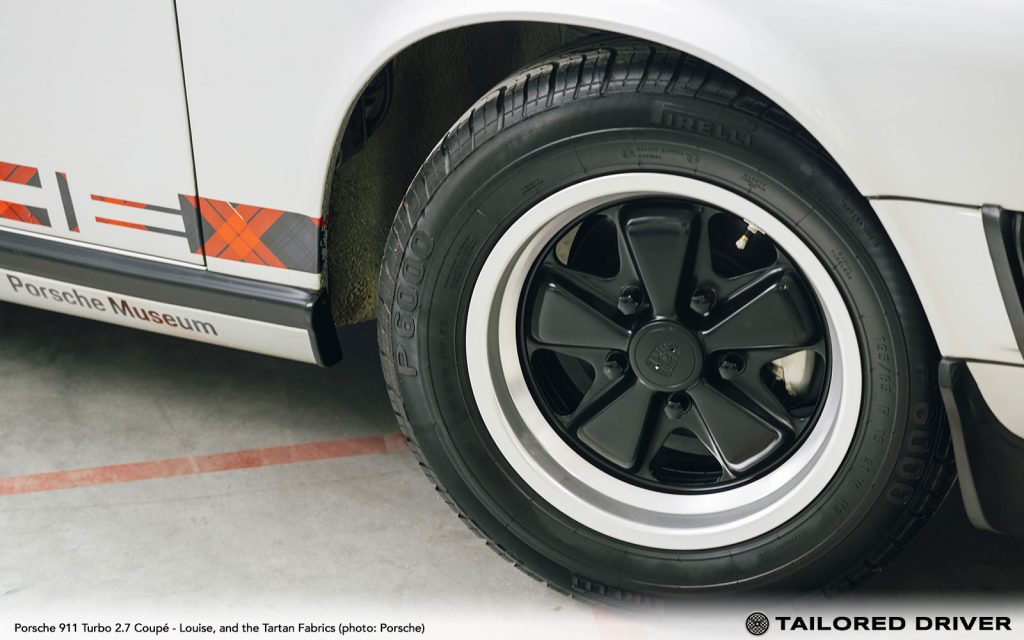
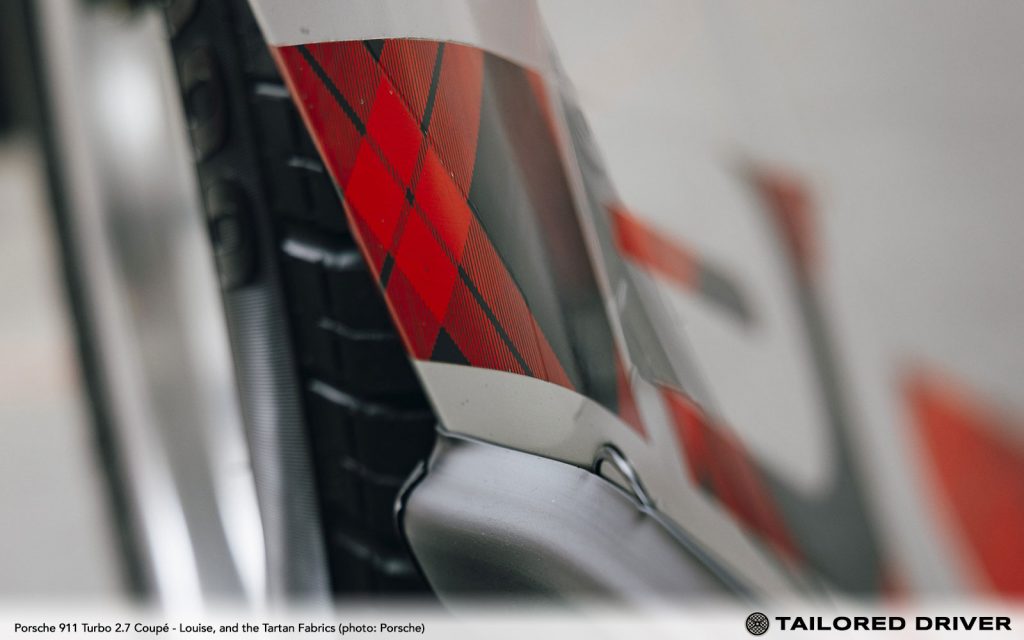
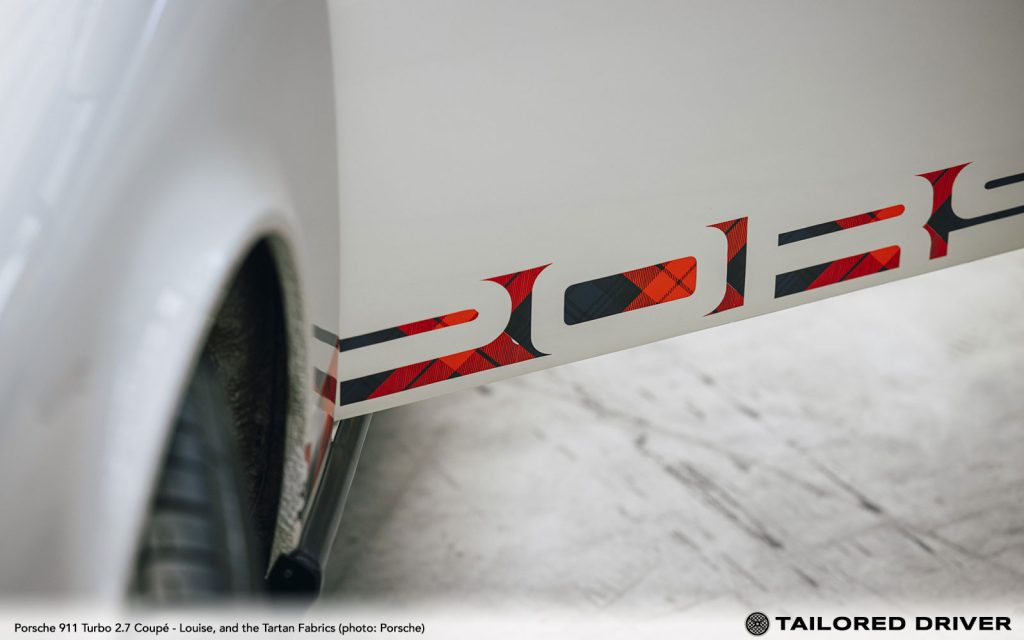
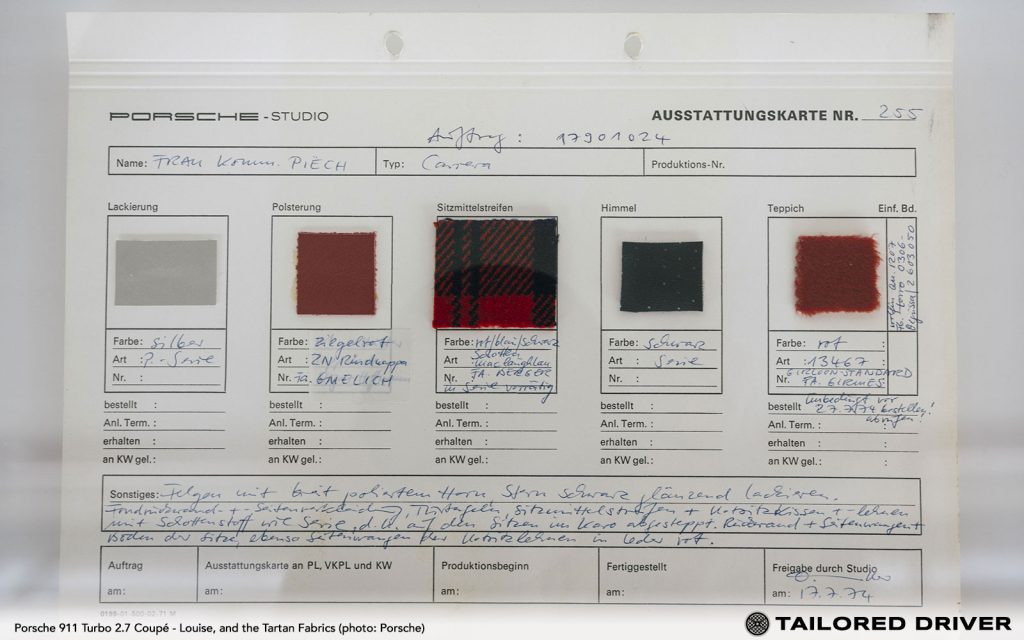
Lapine’s trousers had a blue, green and black pattern inspired by the colours of Black Watch tartan. At the 1973 International Motor Show (IAA) in Frankfurt, Porsche presented the 911 RSR Turbo concept with seat centres and side bolsters in Black Watch tartan. A year later, Louise Piëch was given the 911 Turbo ‘No. 1’ (Vin: 9115600042), with silver bodywork and an interior upholstered in brick-red cowhide leather, the seat centre in McLaughlin tartan and the Porsche logo on a background of the same tartan pattern. The name of the clan with this red and blue Scottish tartan can also be written ‘MacLachlan’. In 1974, chief designer Lapine and his team added Mackenzie – featuring beige, red, blue, white and olive green – to the trio of tartans. “Following the success of the exclusive tartans in the Turbo, in the next model year we also used them in the 911,” explains Müller-Goodwyn. To this day, it is a tradition at Porsche to reinterpret classic design elements and deploy them in cars with state-of-the-art sports car technology. This is a joint endeavour of Porsche Exclusive Manufaktur and the Style Porsche design department. As part of the Heritage Design strategy, special models are created in the Lifestyle area, which are equipped with iconographic elements. These models stem from the product strategy for highly emotive concepts with a historical connection. These concepts are often based on style-defining textiles that evoke long-forgotten times while also carrying the values of the brand into the future.