Tag: Ferrari

  • Bell & Sport Classic Reveals 3-Year Restoration of Concours-Wining Ferrari 330 GTC

    Bell & Sport Classic Reveals 3-Year Restoration of Concours-Wining Ferrari 330 GTC

    • 1966 Ferrari 330 GTC restored by world-leading specialist Bell Sport & Classic
    • Concours-winning perfection further embodies the game-changing standards Bell Sport & Classic applies to every restoration
    • Beyond obsessive approach results in arguably the best 330 GTC on the planet and further underlines Bell Sport & Classic’s position on the global stage

    [source: Bell & Sport Classic]

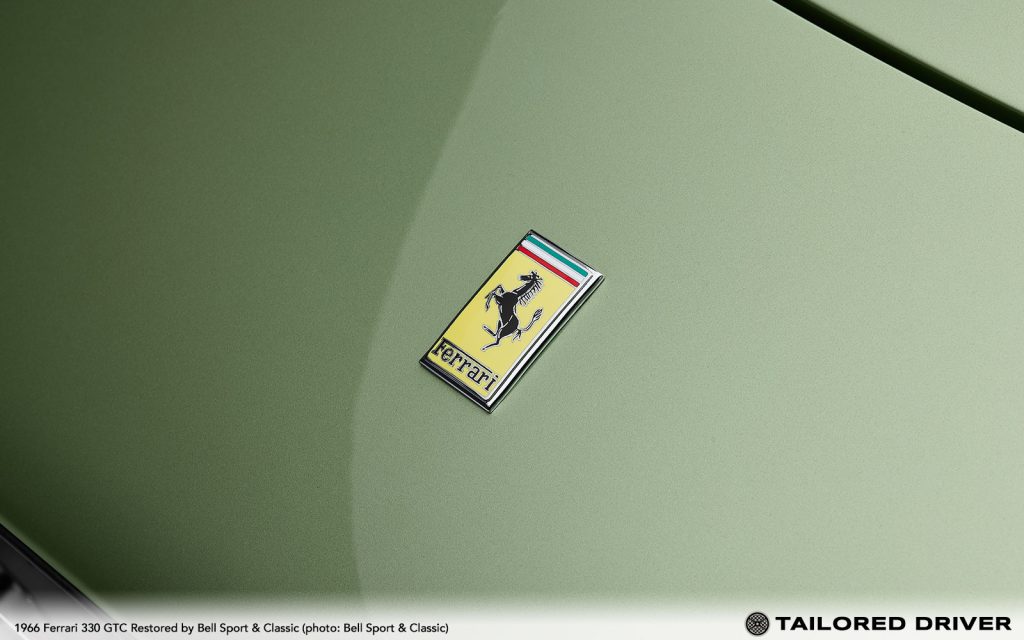
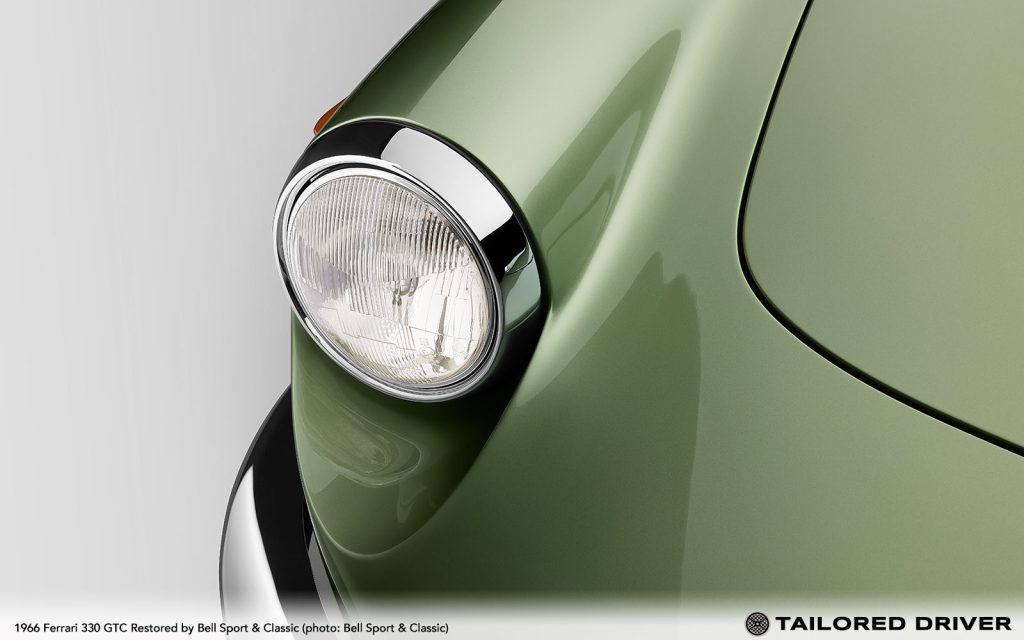
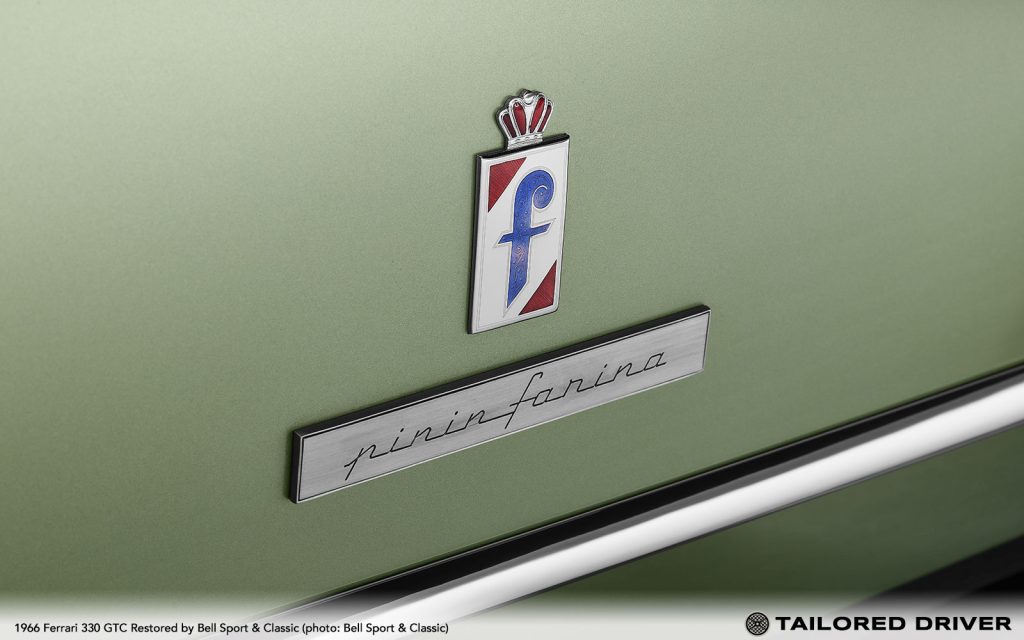
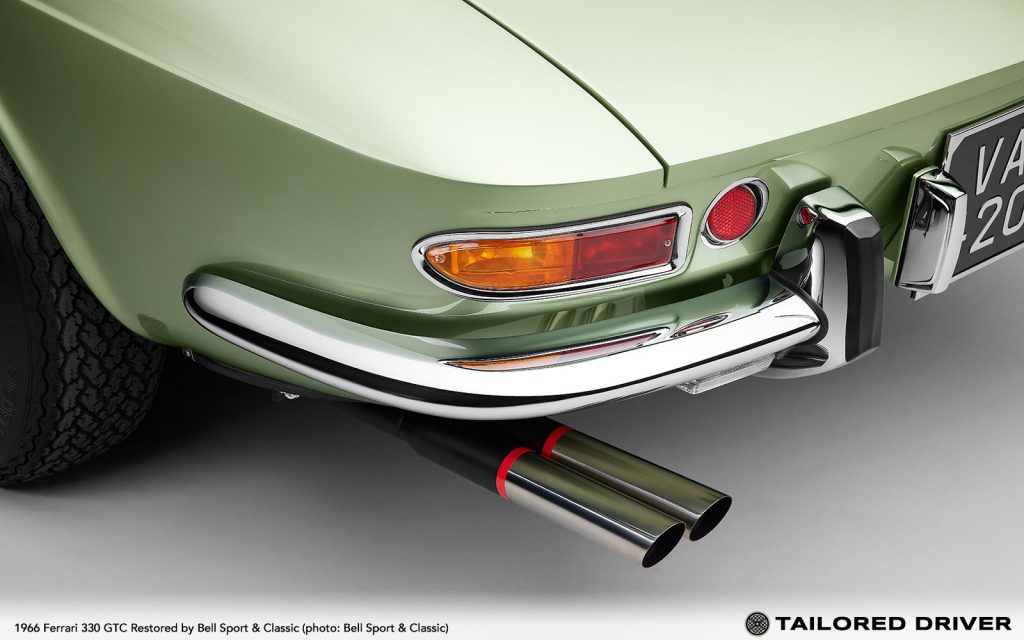
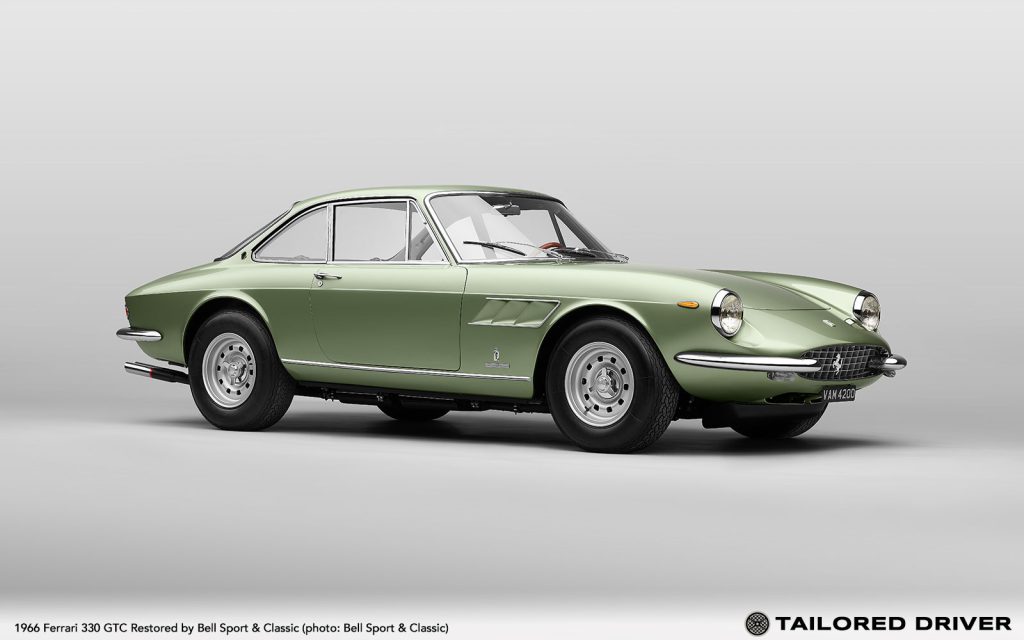
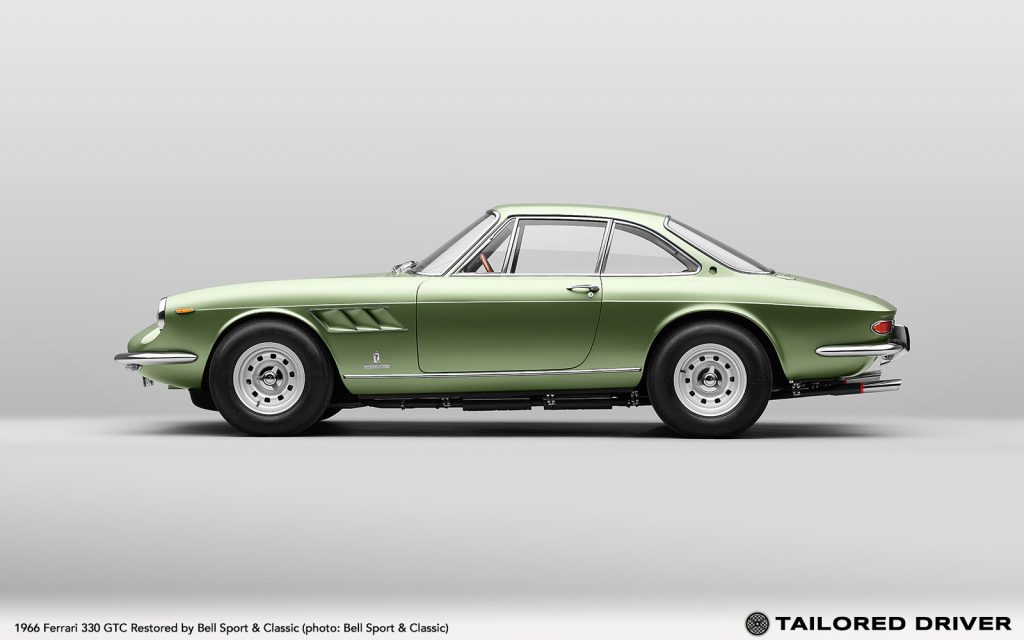
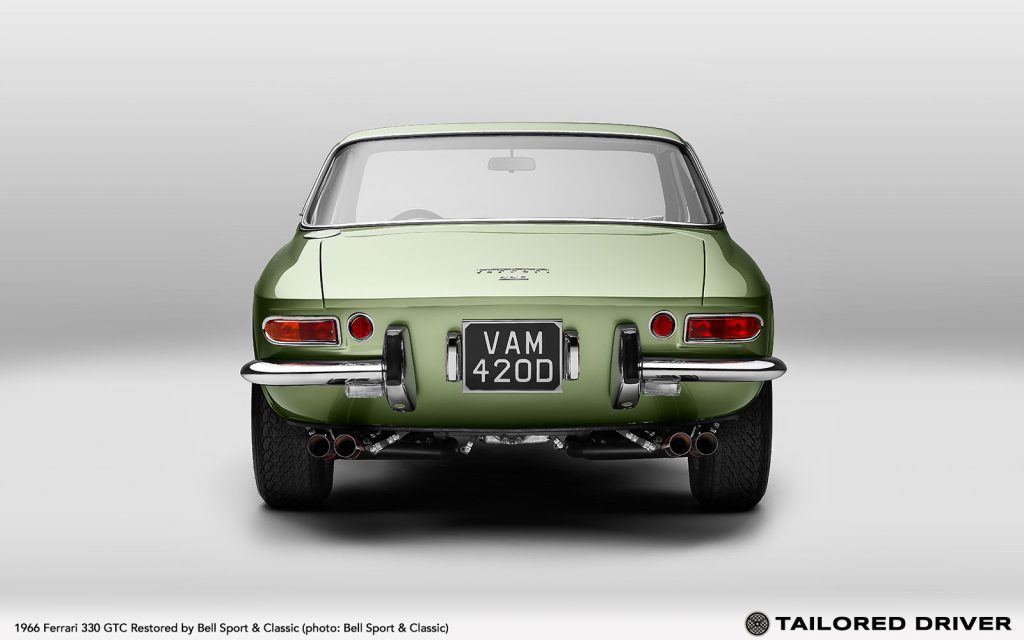
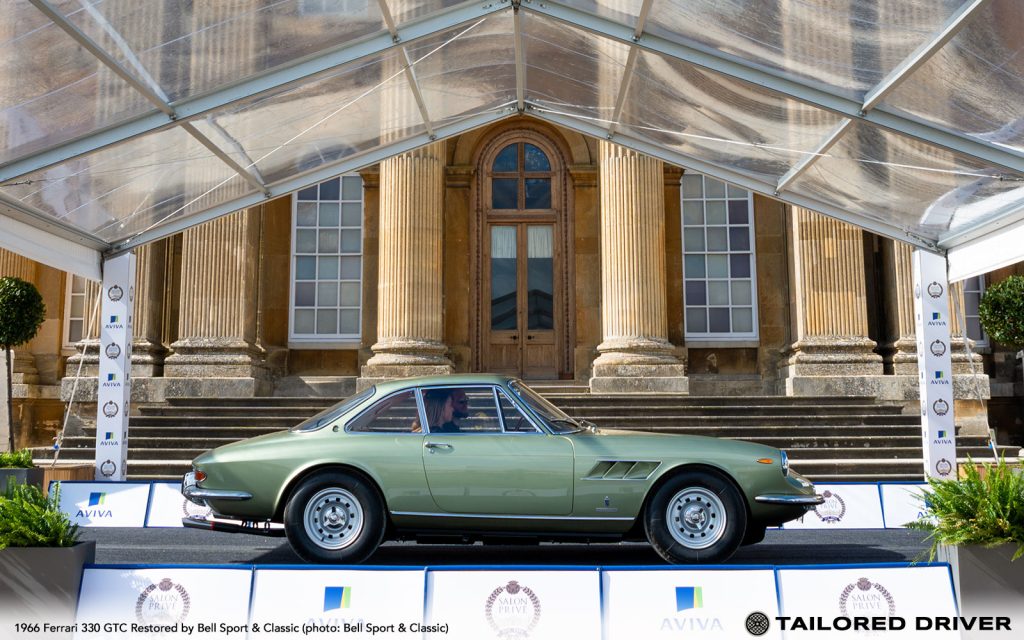
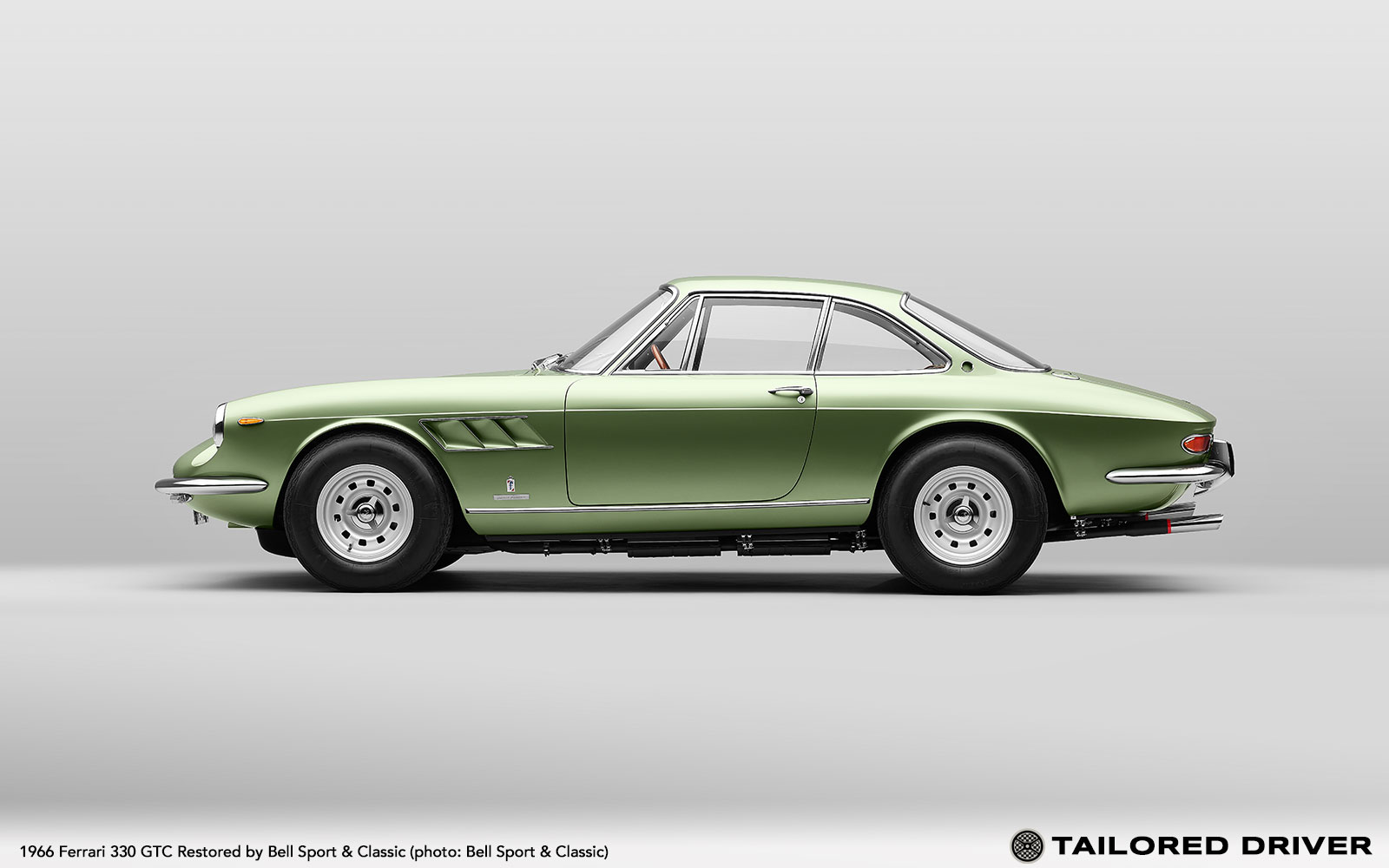
    Markyate, Hertfordshire, UK – Leading Ferrari specialist Bell Sport & Classic is proud to reveal full details of the benchmark-setting restoration of a 1966 Ferrari 330 GTC, which secured a convincing victory at the 2022 Salon Privé Concours d’Elégance in September against world-class opposition.

    The concours award and the car’s Ferrari Classiche Certificate stand testament to the intensive three-year-long restoration and rebuild at Bell Sport & Classic’s Hertfordshire headquarters. Led by the company’s expert team, who together have many decades of experience in Ferrari restoration, every component on the 330 GTC has either been restored, overhauled or reverse engineered, with the very latest restoration and engineering techniques employed.

    Like all Bell Sport & Classic’s restorations, a beyond obsessive approach was applied through an unmatched blend of experience and expertise, creating a car that is in every facet better than when it left the factory – and what is quite probably the finest Ferrari 330 GTC in existence. 
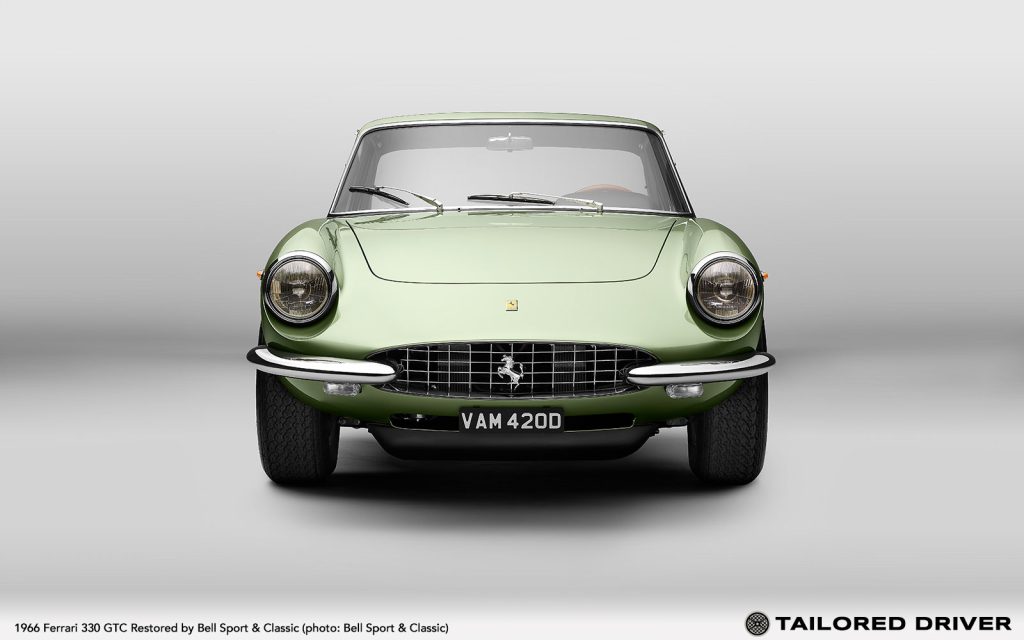
    The gentleman’s Ferrari 
    “Unveiled at the 1966 Geneva Motor Show the 330 GTC took its chassis from the 275 GTB Berlinetta and its 300hp four-litre V12 engine from the 330 2+2 Coupé. Cloaked in an achingly elegant Pininfarina body, it made an immediate impact and was very much a car for the more discerning driver. It’s the kind of Ferrari that you could imagine Enzo using as a daily driver,” explains Tim Kearns, Bell Sport & Classic’s Managing Director.

    “Maranello built 600 examples between 1966 and late 1968 and this example was built during the initial year of production,” adds Bell Sport & Classic’s Head of Acquisition & Sales, Peter Smith. “It first came to us six years ago having clearly had a good amount of use, the car initially sold into Switzerland had spent time in the US and was eventually found in Venezuela. Although the engine wasn’t running and it had been repainted blue, literally every nut and bolt was original, so it was a good example to start with – but we knew we could make it as close to perfect as possible.” 

    Two weeks were spent methodically removing all the Ferrari’s interior components before the restoration team, led by Elliot East, turned to the exterior trim and began carefully stripping parts, including the brightwork, bumpers, headlights, and glass. Only after that stage was completed was attention turned to the drivetrain and suspension components.
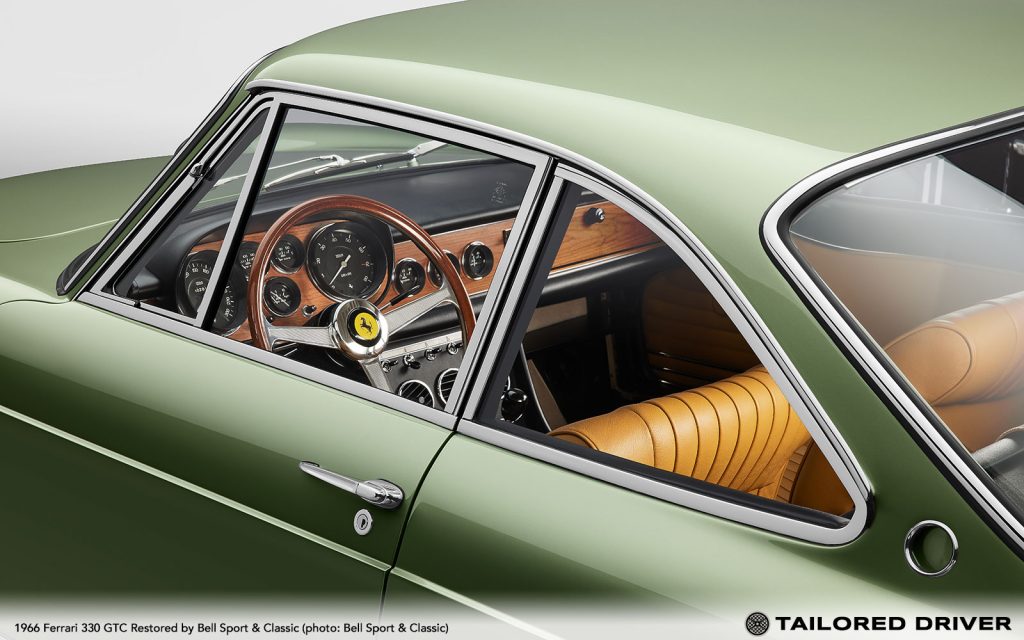
    Restored to factory-fresh specification 
    Bell Sport & Classic’s exacting approach means that the same effort is lavished on every element of the car – whether visible or not. The 330’s heavily kerbed and severely corroded original 14-inch cast magnesium wheels were restored and elevated to gleaming concours-winning condition; this same approach is applied throughout the car – even to components that will remain hidden from view, deep in the fabric of the machine.

    As Matt Wilton, who oversaw the project and has a lifetime of experience at the highest level of Classic Ferrari Restoration, explains: “Several of the imperfections were relatively minor, and would most likely never be seen by a customer, but for a Bell Sport & Classic restoration, everything matters. Yes, it’s highly time-consuming, but it gives our customers complete confidence that a car they receive from us is perfect in every detail.”

    A month was dedicated to stripping the suspension down, and the components sandblasted, before undergoing repainting and replating as required. The original shock absorbers, suspension arms and springs were all refurbished and retained.

    “The steering arm and every little bracket that had been nickel-plated originally, were replated,” continues Matt Wilton. “Other components, such as the anti-roll bar drop link, were restored to their original satin nickel finish. Absolutely everything on this car is in the same condition, or better, as the day it left the factory.”
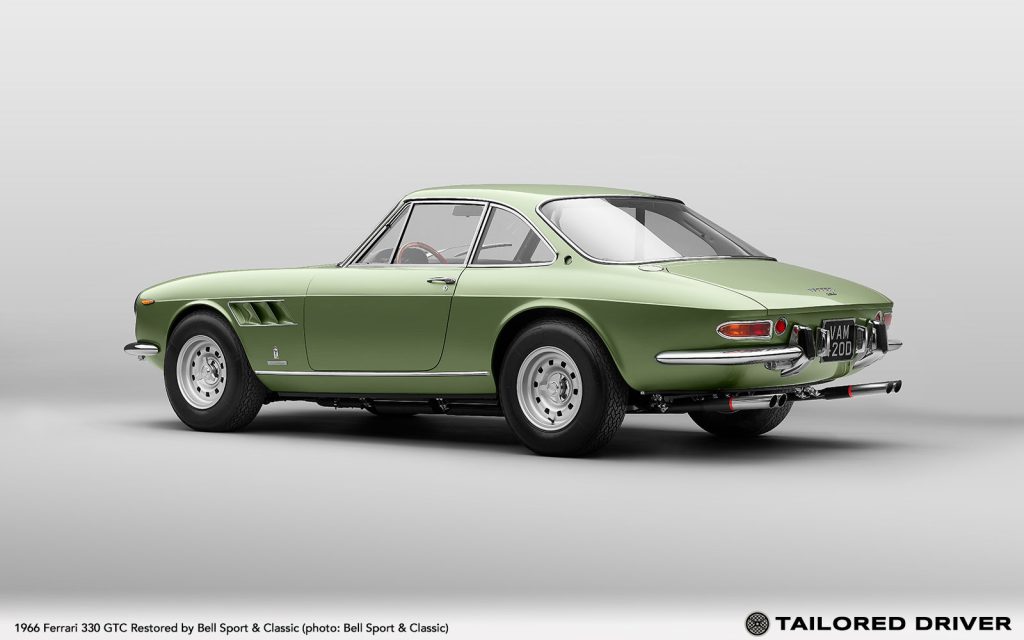
    Walnut shells for that delicate touch 
    The process that would eventually ensure an exquisite exterior finish utterly devoid of even the slightest blemish began more than two years before painting was scheduled, and involved blasting the car’s body, not by sand, but by crushed walnut shells.

    “One of the disadvantages of using sandblasting on the delicate areas of the larger panels is that it can put heat into the steel and cause it to distort. However, that doesn’t happen with walnut-blasting,” continues Elliot East. “It’s a technique that’s always best for the potentially more fragile areas.”

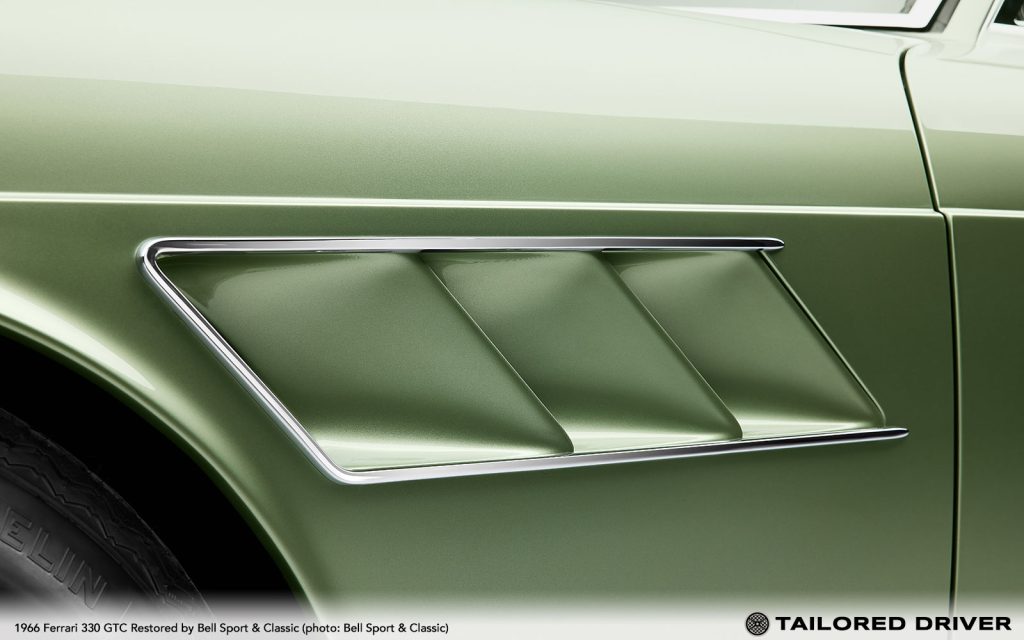
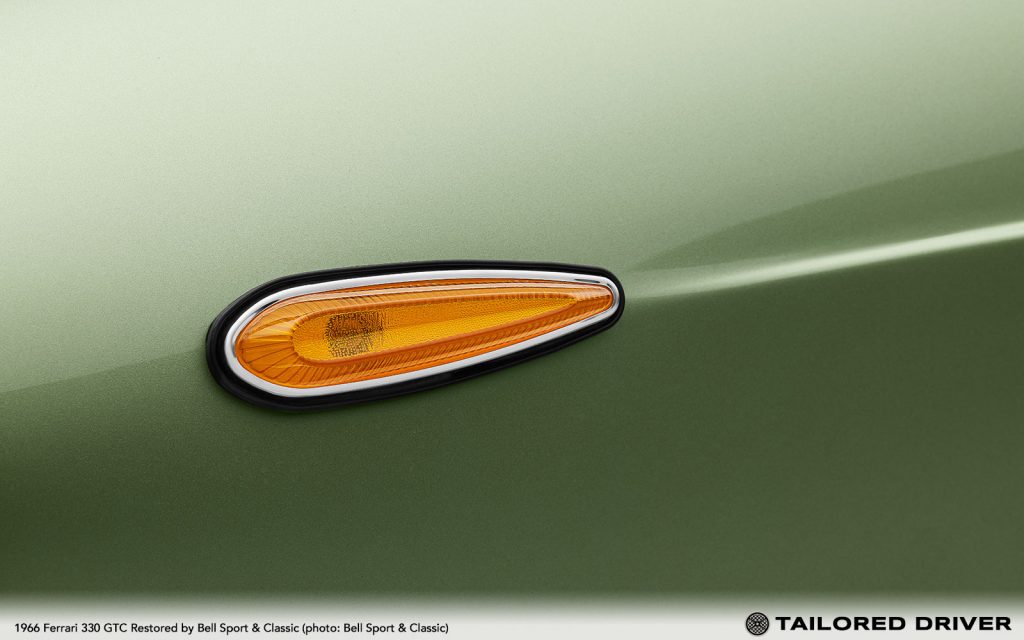
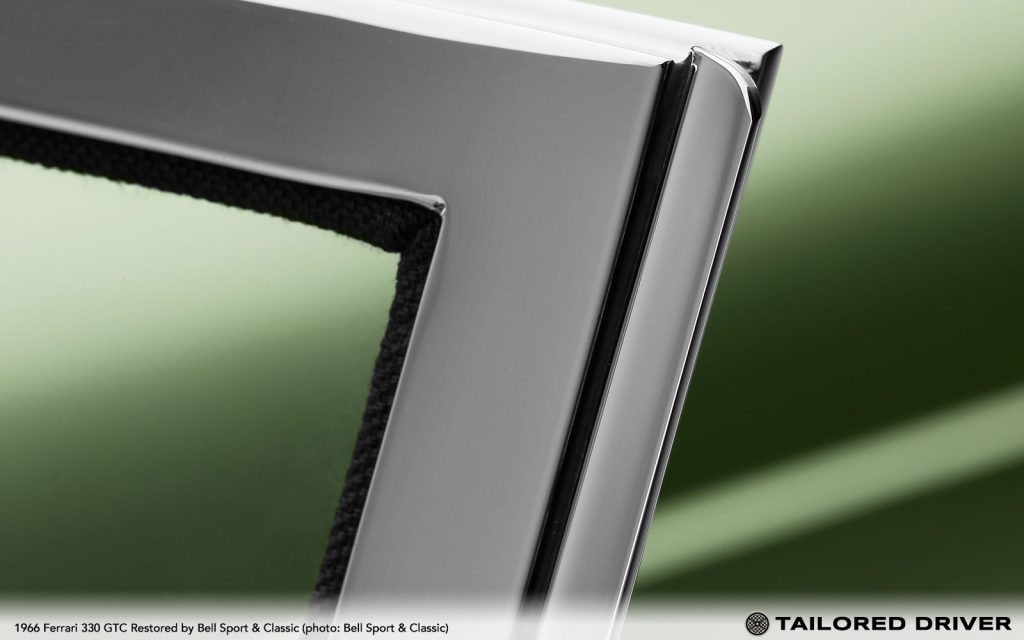
    When the car arrived at Bell Sport & Classic it was a pale blue and had clearly been painted several times over its life.  As part of the team’s restoration research process, the original factory build sheets were sourced confirmed that 330 GTC Chassis No. 9069 left Maranello a beautiful and unusual pale green.  Before the body was painted and the Ferrari returned to its stunning original light green metallic Verde Chiaro Metallizato, the team undertook a complete dry build. While this process of reassembling and then stripping back down again before painting takes time, it’s integral to every restoration project undertaken by Bell Sport & Classic.

    And again, despite the team’s accumulated decades of experience restoring historic Ferrari models, it ensures that nothing is taken for granted or left to chance. At this point, the bodywork is fully re-assembled, with components such as the glass, chrome wear, doors and all exterior fixtures fully incorporated. Every stage of the process is precisely measured, and triple checked. This painstaking attention to detail is critical to mitigating the effect of the additional thickness of the primer and paint.

    “If you have too much paint on the window frames, it could prevent the glass from fitting, or if there is too much in the guttering on the roof, it could prevent the door seal from fitting properly. We’re only talking points of a millimetre, but often that’s all it takes to make the difference,” explains Elliot East.
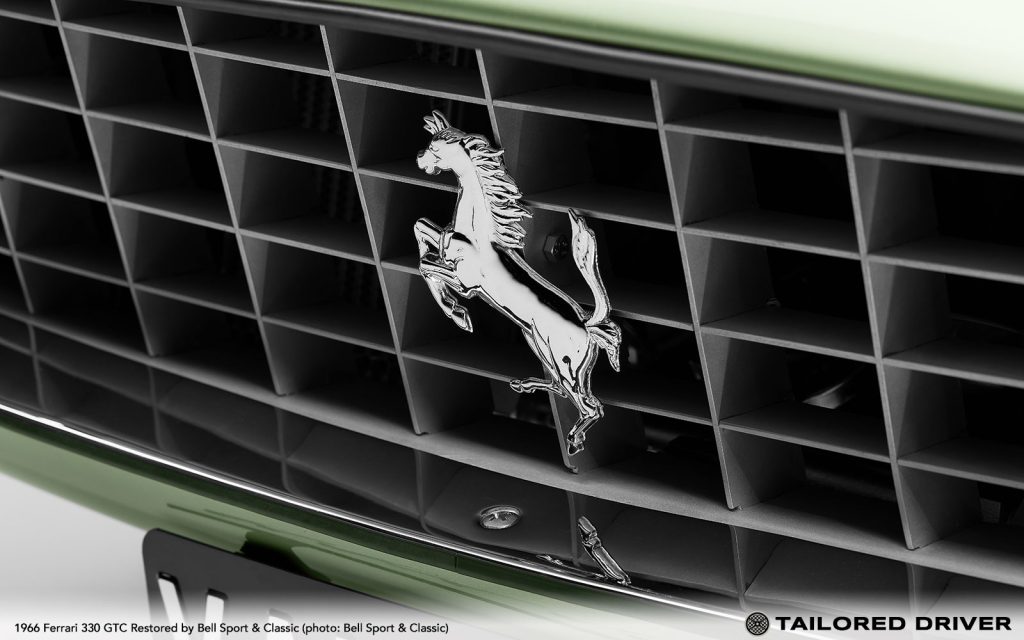
    No detail too small
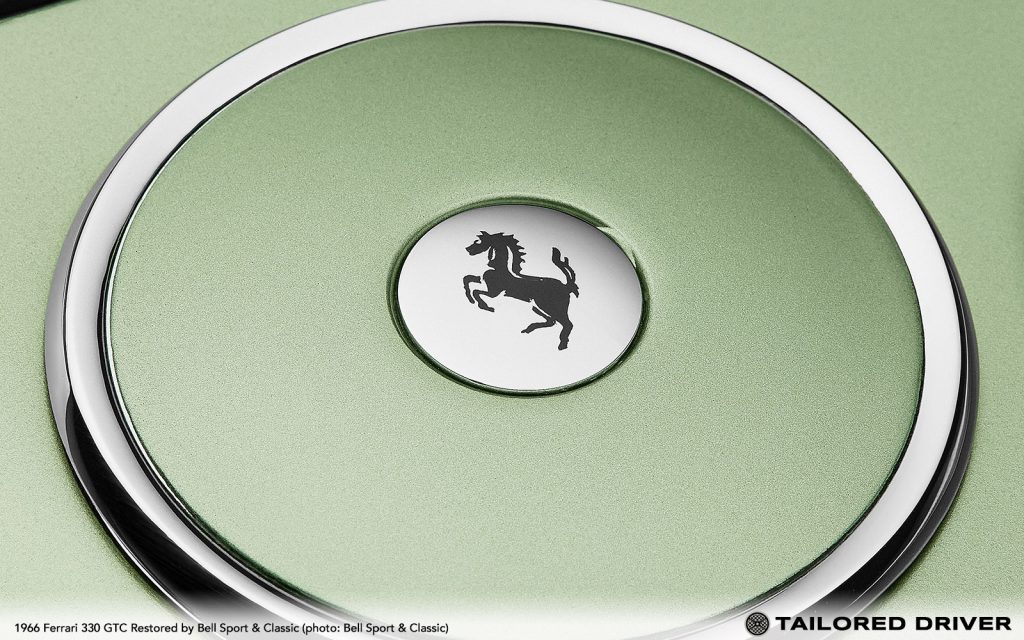
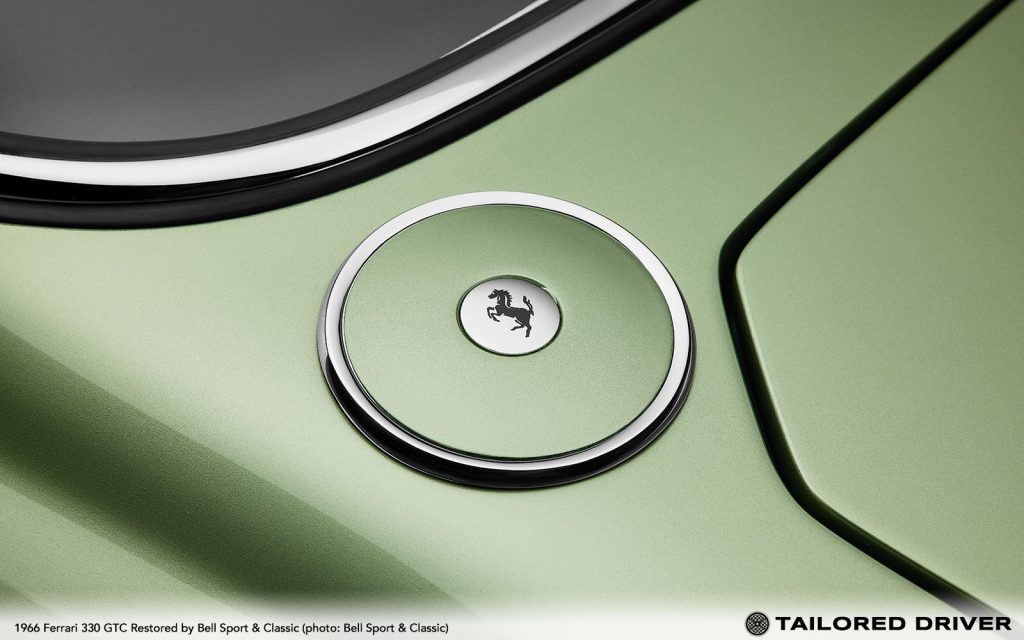
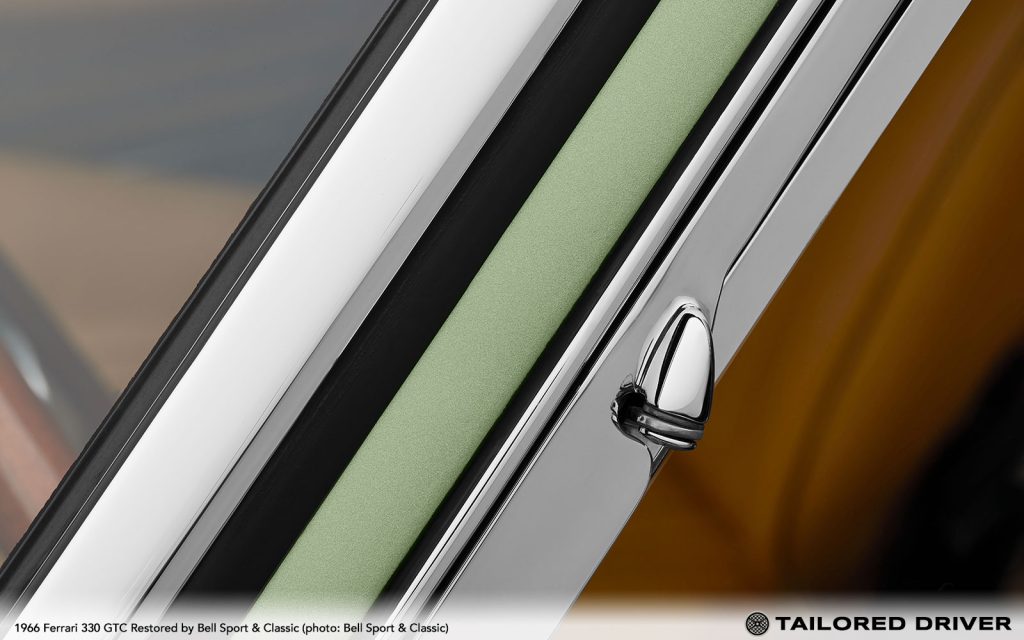
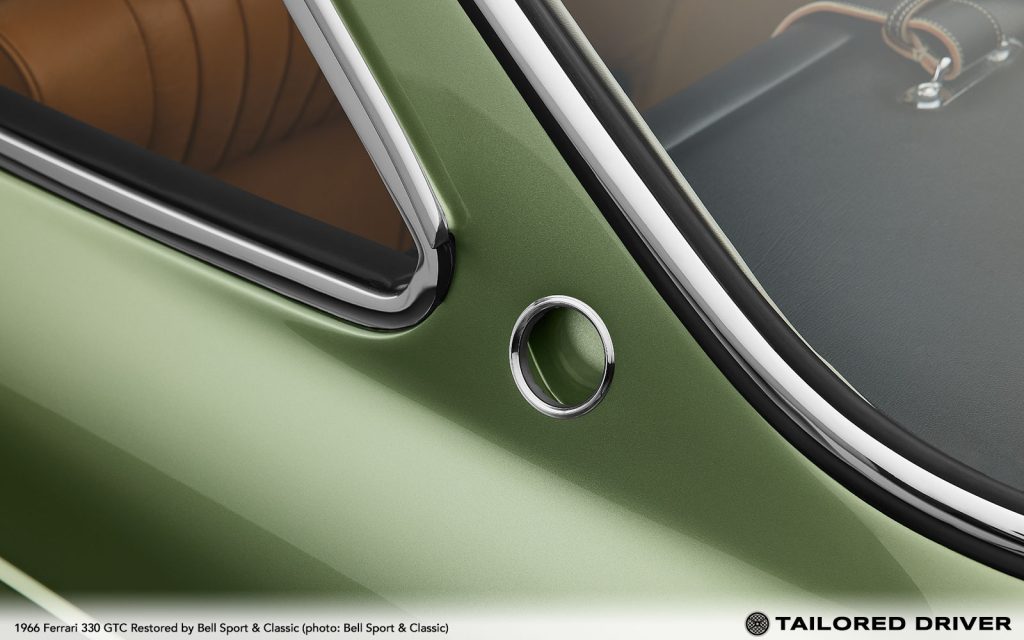
    As typified by the GTC’s chassis, Bell Sport and Classic poured as much time and effort into perfecting the paint finish on the details that can’t be seen. Even the quality of the paint finish inside the small circular demister vent in the C-pillar matches the outstanding finish of the paint on the body, a rare achievement on this model, a real ‘tell’ for those in the know.

    “As soon as we unveiled the car at Salon Privé, that was one of the areas that the judges and aficionados who really know this model went to straight away,” smiles Matt Wilton.

    “And it was the same with the satin black paint inside the wheel arches and engine bay. It took three attempts before we were certain we got exactly the correct and original degree of shine and tonality.”

    Even after the concours judges had peered into the C-pillar air vents, crawled underneath, and lifted the boot carpet, Bell Sport & Classic’s impeccable craftsmanship still stood up to the strictest scrutiny.

    Again, the pursuit of perfection continued to areas that aren’t even visible. “Despite having been painted black at some stage – as most have been – when the car was new, its twin fibreglass-coated fuel-tanks were painted a pale turquoise blue,” explains Elliot East. “It’s not an easy colour to match, and some might argue that it’s not that important as the carpet hides the tanks. But it’s important to us. And that’s why the fuel tanks are once again finished in period-perfect turquoise after we found and original area of paint inside one of the necks and colour matched it.”
    V12 beating heart
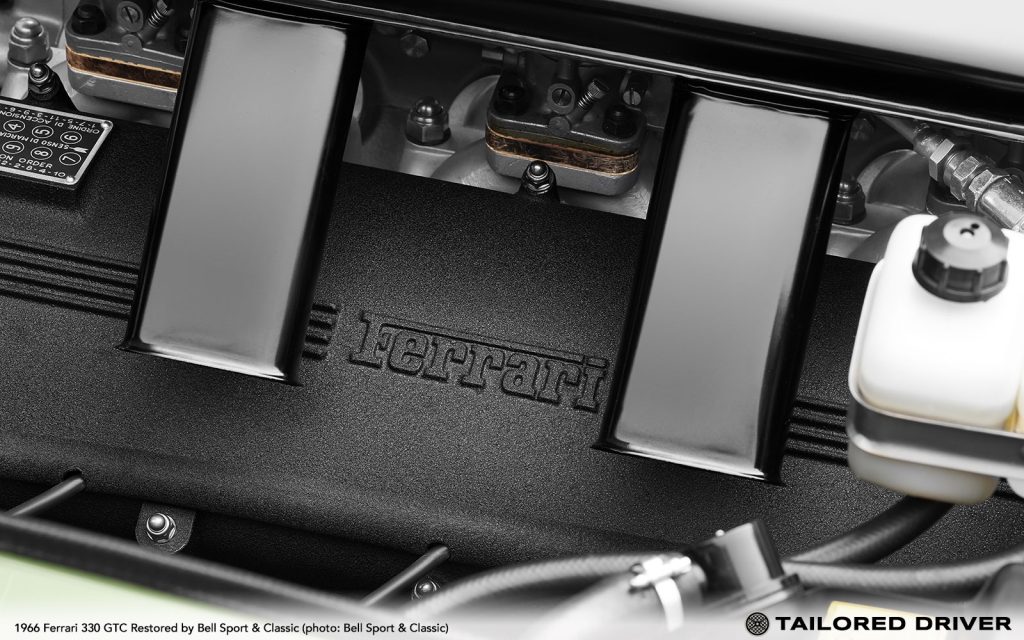
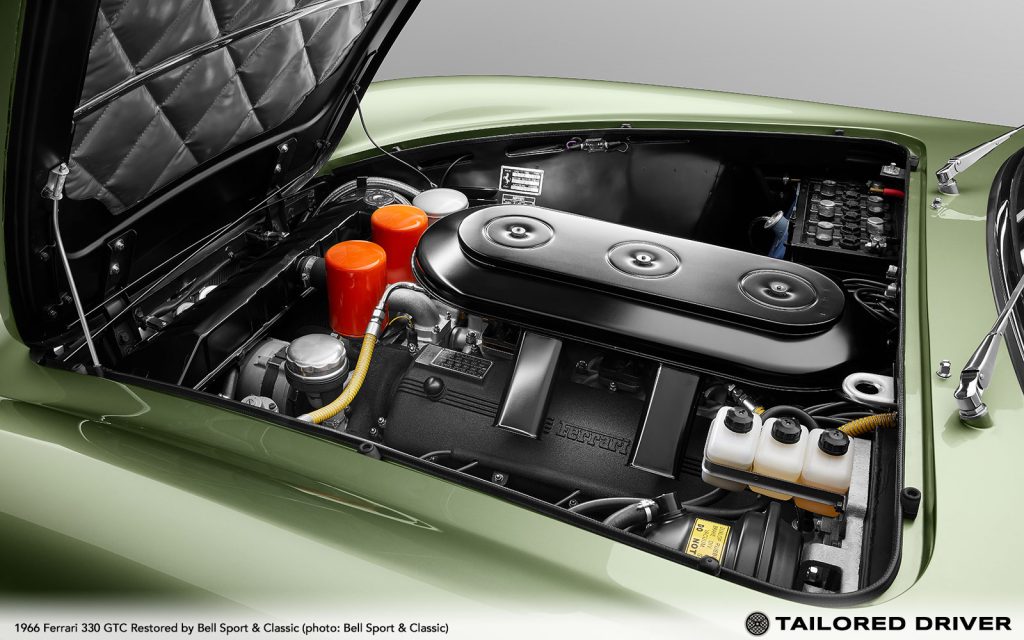
    Each phase of the strip-down, refurbishment, reassembly, and testing, of the 330 GTC’s Colombo V12 engine was completed at Bell Sport & Classic’s in-house engine workshop, under the lead of Attilio Romano, a former member of the Ferrari factory technical team in Maranello, who ran H.R. Owen’s Ferrari technical department for 22 years.

    It’s an obsessive approach, but it ensures perfection, with every single component, down to the smallest stud, stripped, vapour-blasted, refurbished and replated as required, regardless of time and expense. Once the V12 was reassembled, two days were spent on dyno-testing, assiduously checking for the most minor issues, such as potential minute oil leaks.

    Then, after the car was rebuilt and the engine placed back in situ, it was subjected to 500 miles of road testing. “We restore cars, not just to be sat on a concours lawn, but driven and enjoyed by their owners,” adds Peter Smith, himself an experienced racer and part of the project’s dynamic sign-off process. The fully rebuilt engine produces 300hp at 7000 rpm – precisely the same as in period.

    The gearbox was exposed to the same in-depth strip-down and rebuild process as the engine. And while every effort was made to maintain optimum originality, certain new parts were required to ensure a sublimely smooth driving experience. These included the selector forks, synchroniser hubs and synchroniser rings.

    In many ways, the four-pot calliper braking system proved the most challenging aspect of the drivetrain, as Elliot East explains. “We weren’t happy with the existing brake servo, which was challenging because finding an original replacement part in good condition was just about impossible.  But it’s like trying to ease off a seized nut – we never give up. And as we have contacts with parts suppliers and Ferrari enthusiasts all over the globe, we finally sourced an original.” 
    Creating a sublime interior
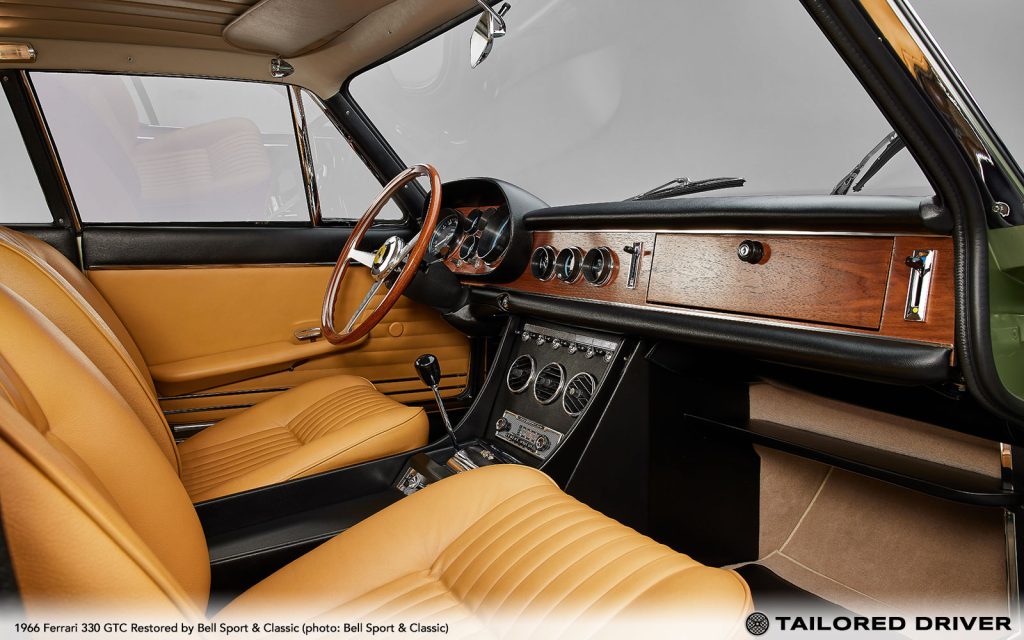
    Back in 1966, the 330 GTC left Maranello sporting a gorgeous black leather interior, but more than half a century of use had taken a very heavy toll upon it. Restoring the cabin of a historic Ferrari to its former glory represents a significant challenge that not many can truly perfect.

    Bell Sport & Classic entrusted the restoration of the car’s cabin to O’Rourke Coachtrimmers and Suppliers. Based in Rudgwick in West Sussex, the company has decades of experience in restoring Ferrari cabins to concours-winning, period-perfect condition. O’Rourke Coachtrimmers and Suppliers has built its world-leading reputation not just on the quality of its craftsmanship, but also by applying the same forensic approach and research-driven authenticity that Bell Sport & Classic exercises itself.

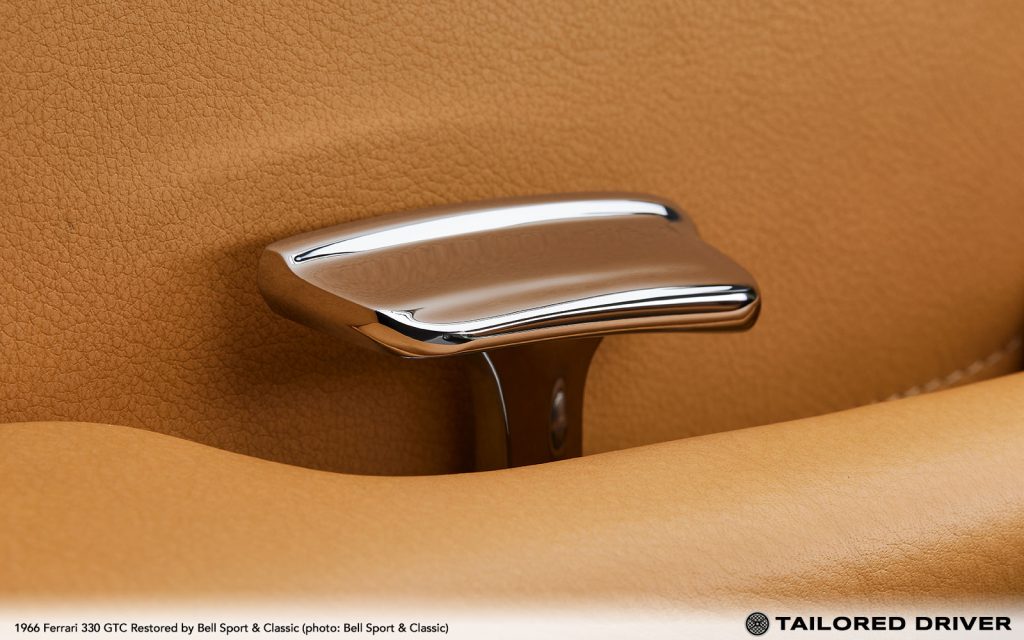
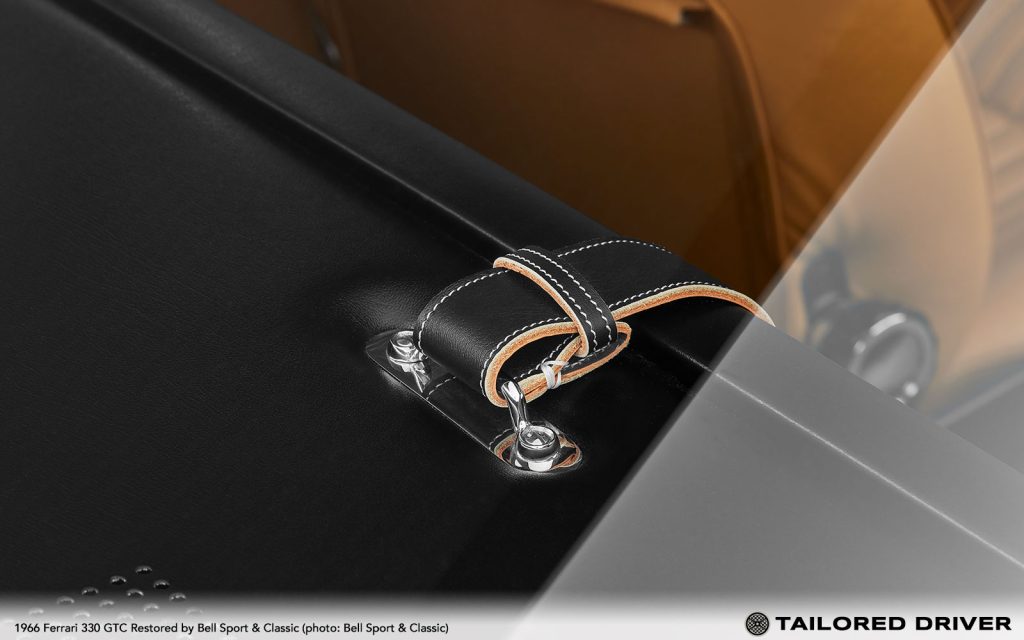
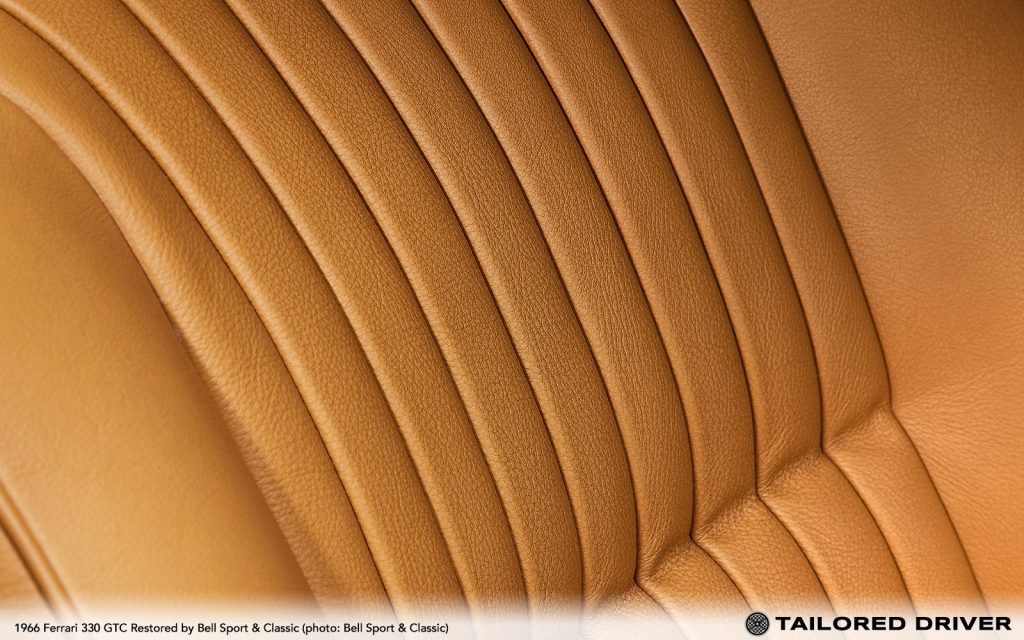
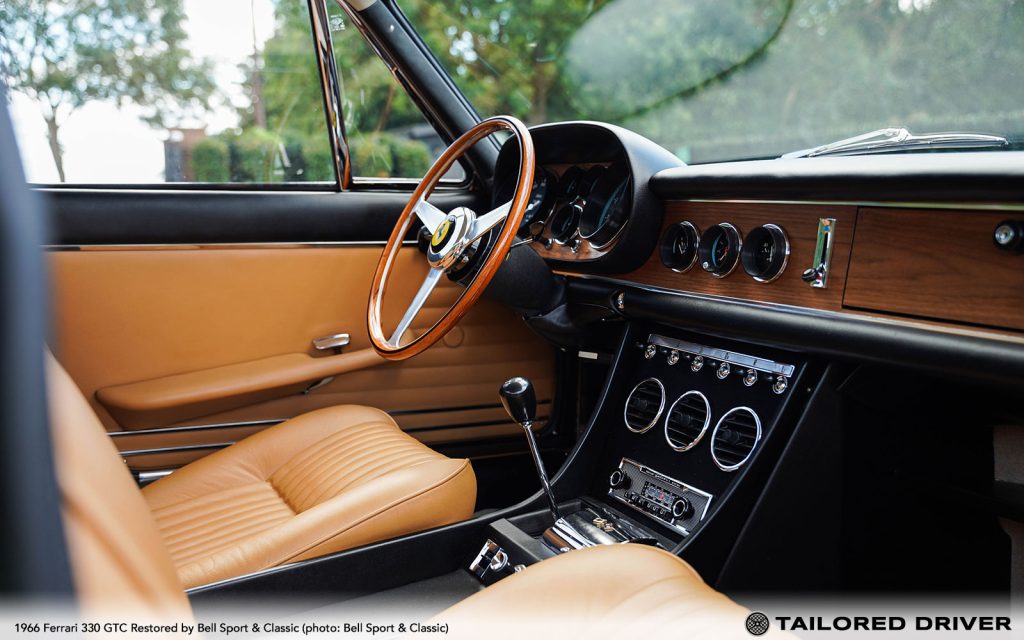
    So, when the customer wished to change the colour of the leather, it was a straightforward task for O’Rourke Coachtrimmers and Suppliers to outline the range of options offered by the factory more than half a century ago. As a result, the car’s new owner was able to select the precise Ferrari Conolly VM 218 fawn leather colour, which was matched with period-correct detailing, including the colour and weave of the carpets and the headlining, right down to the vinyl on the binding of the carpets, with all material sourced from Italy.

    Fortunately, the car’s original seat frames were in good condition and retained, although new foam inserts were fitted to ensure optimum comfort and support. New webbing was used for the belts, but all the fittings and buckles are original and have been restored, including the iconic Irvin badges.

    The Ferrari’s wooden veneer dashboard was in relatively good condition, apart from the fact that it had a mysterious hole in it. “All the original dials and controls were present and correct and accounted for, so the hole had presumably accommodated an additional aftermarket feature that had been fitted at some point and then removed again,” deduced Elliot East. Once again, vast reserves of skill, experience and patience were required to perfect this element of the restoration, with dozens of different wood stains tried and revised before the correct match was found.

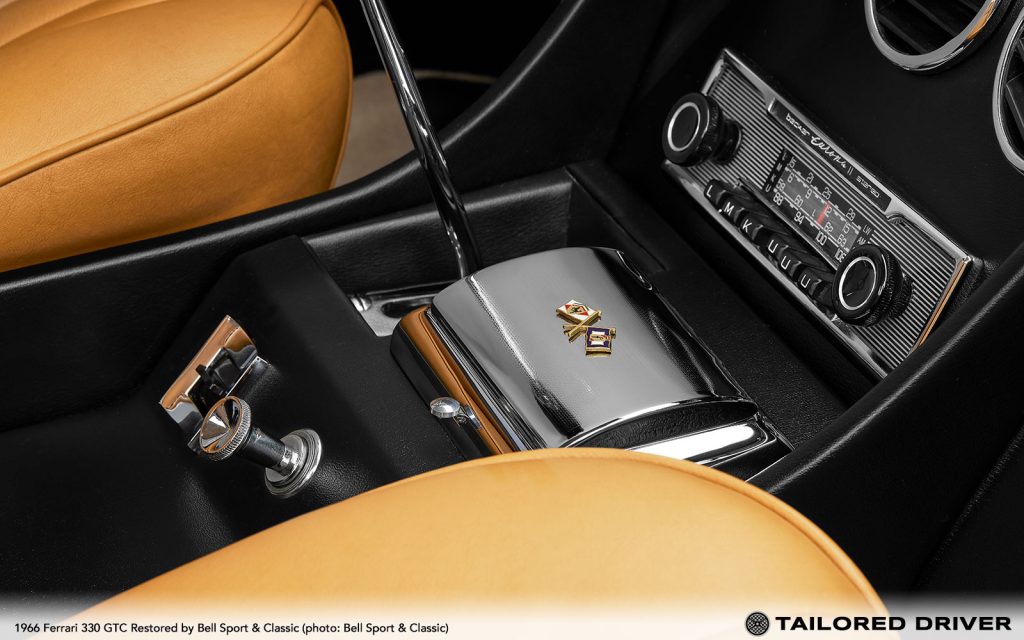
    At some point in the car’s history, a 1980s radio cassette had been fitted to the centre console.  Bell Sport & Classic removed the unit and fitted an original Beck Europa radio, of the precise type the car would have left the factory with. Restored and uprated by vintage car radio specialists, Chrome London, the period radio is equipped with modern internals and Bluetooth compatibility.
    Beauty that is much more than skin-deep 
    “With this Ferrari 330 GTC, we have created a car that looks perfect from first glance right down to the details you will never see,” adds Peter Smith. “We believe passionately that beauty is so much more than skin-deep. That’s why, if you took this car apart, every component would look new, even though it is fifty-six years old. Versus the more famous V12 Ferrari of the period, the 330 GTC hides its light under a relative bushel, but it is such a wonderful combination of style and performance that this is one Ferrari unlikely to remain underrated for much longer.” 

    Bell Sport & Classic Managing Director, Tim Kearns concludes: “It’s a fundamental part of our philosophy that we just don’t build a car to get maximum points from the judges in a concours, it’s got to drive beautifully, too. The 330 GTC was the only car in its class to take part in the Salon Privé tour in the lead up to the event. It was driven enthusiastically and enjoyed on the wonderful roads of the Cotswolds over two days, before arriving at Blenheim Palace, parking up on the Concours judging lawn, and then taking the top Ferrari prize. 

    “Every car we restore, while flawless visually, has got to perform at the highest possible level ­– it’s got to be a true driver’s car. And it has got to be capable of being used every day of the week even if it isn’t. We are confident that Bell Sport & Classic sets the standard for the restoration of historic Ferrari models. The plaudits this 330 GTC has achieved validate the beyond obsessional approach of our exceptionally talented, knowledgeable, and passionate team. It builds on the success of our other recent Ferrari restoration projects – which have been met with universal acclaim for their pursuit of perfection – and further underlines our objective to continually raise the bar. This is exactly what Bell Sport & Classic does. Watch this space for our next project.” 
    About Bell Sport & Classic 
    Bell Sport & Classic is a team of experts who have come together to provide customers unrivalled expertise across the sales, service, and restoration of the world’s most revered classic and modern classic cars, specialising primarily in notable Ferraris but also Aston Martin and Lamborghini and other leading marques.

    Authenticity, originality, and quality are the bedrocks of the business; Bell Sport & Classic prides itself on sourcing the ultimate in collector cars and bringing new standards to classic car restorations. Bell Sport & Classic stands apart in the classic car world as an innovator and leader in customer service.
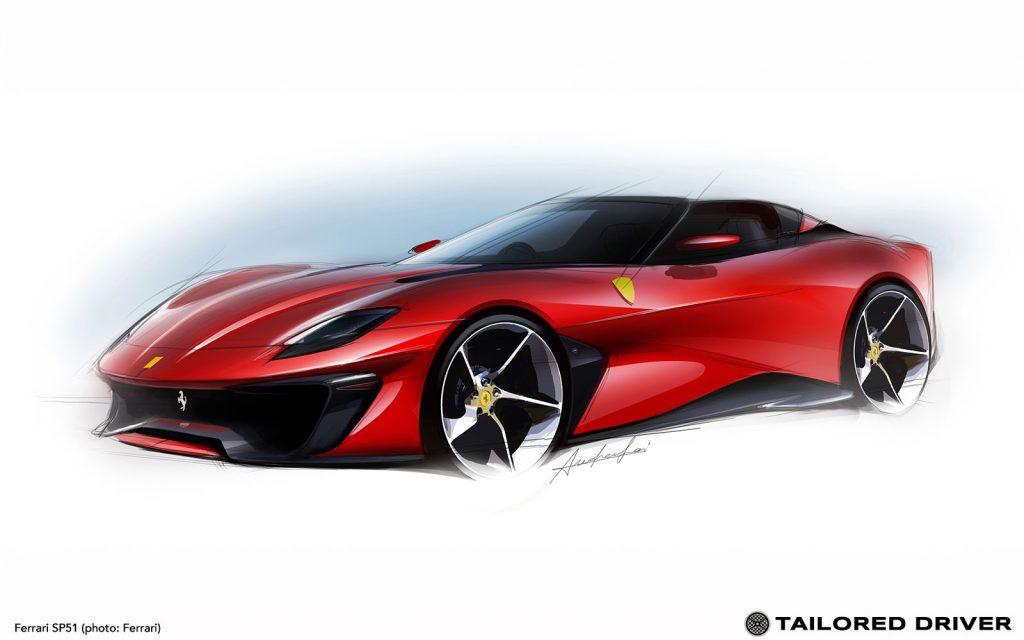
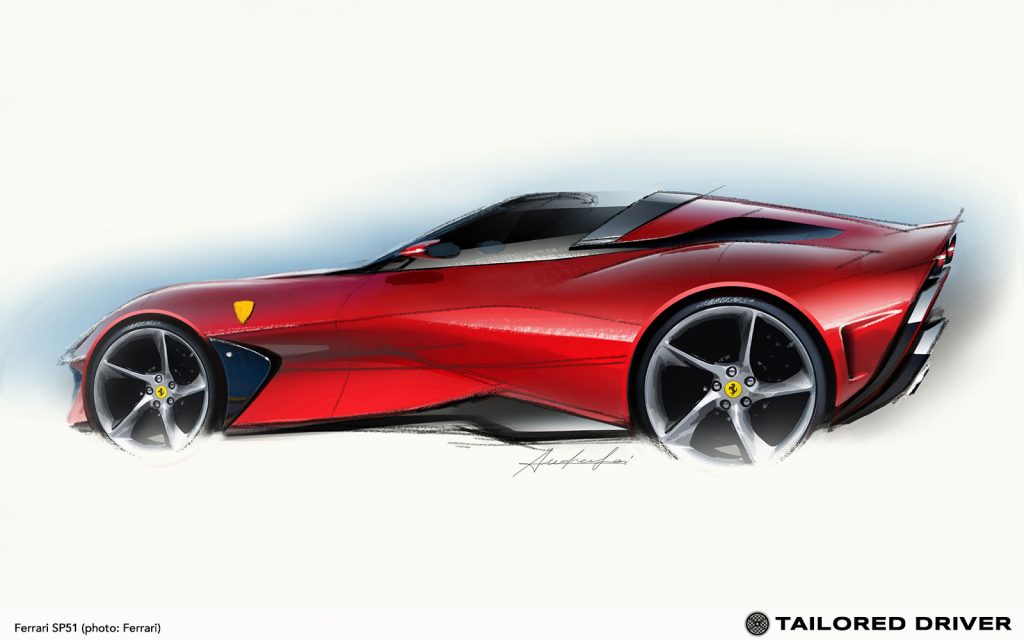
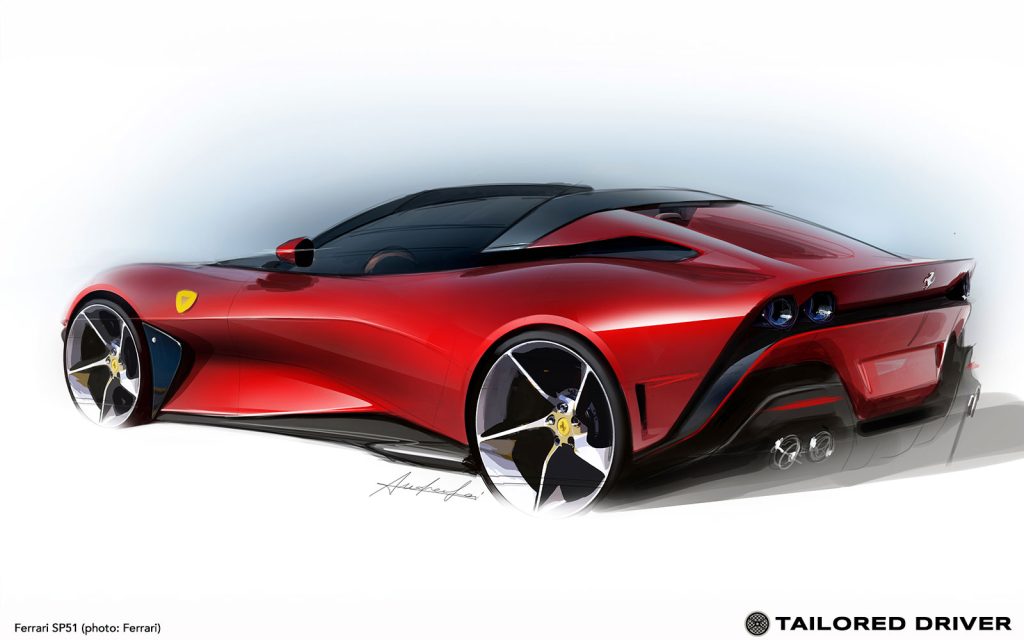
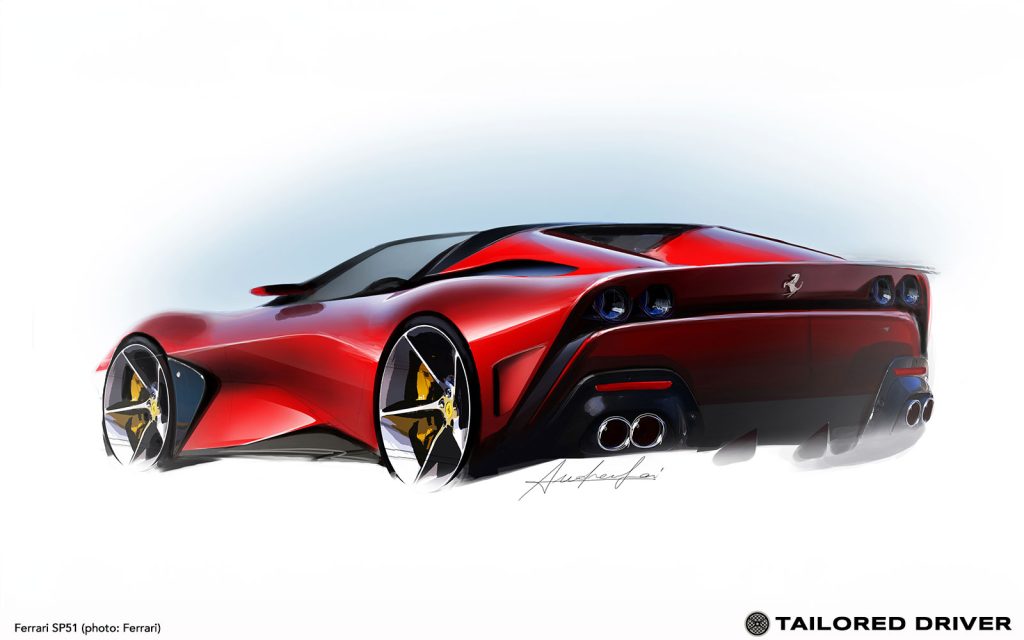
  • Ferrari SP51: The 812 GTS-Inspired Roadster is Maranello’s Latest One-Off

    Ferrari SP51: The 812 GTS-Inspired Roadster is Maranello’s Latest One-Off

    • A new Ferrari One-Off designed around its owner’s requirement
    • The SP51 is a thoroughbred roadster based on 812 GTS architecture 

    [source: Ferrari]

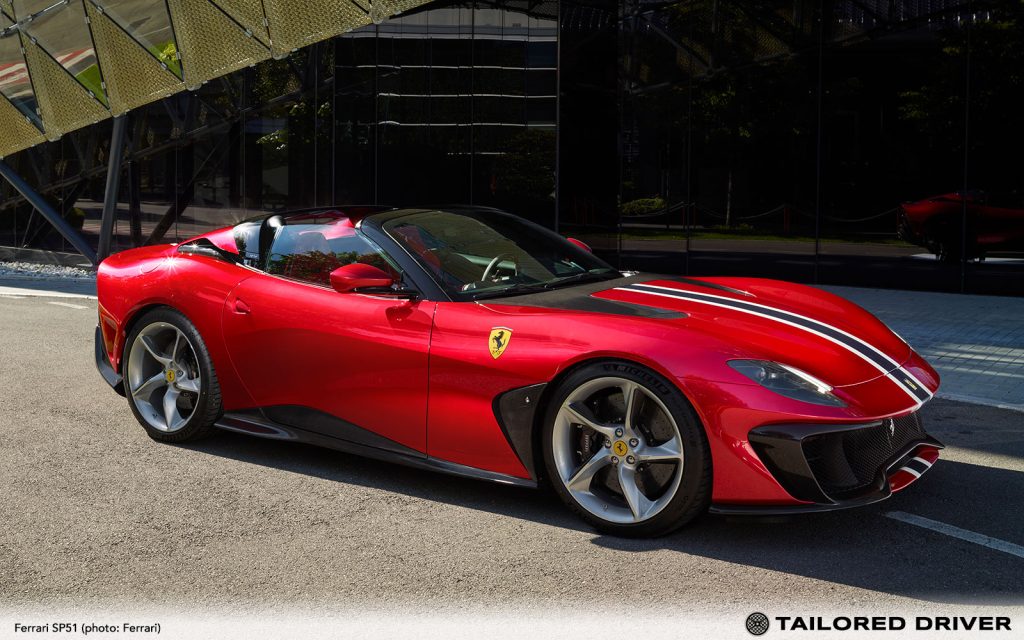
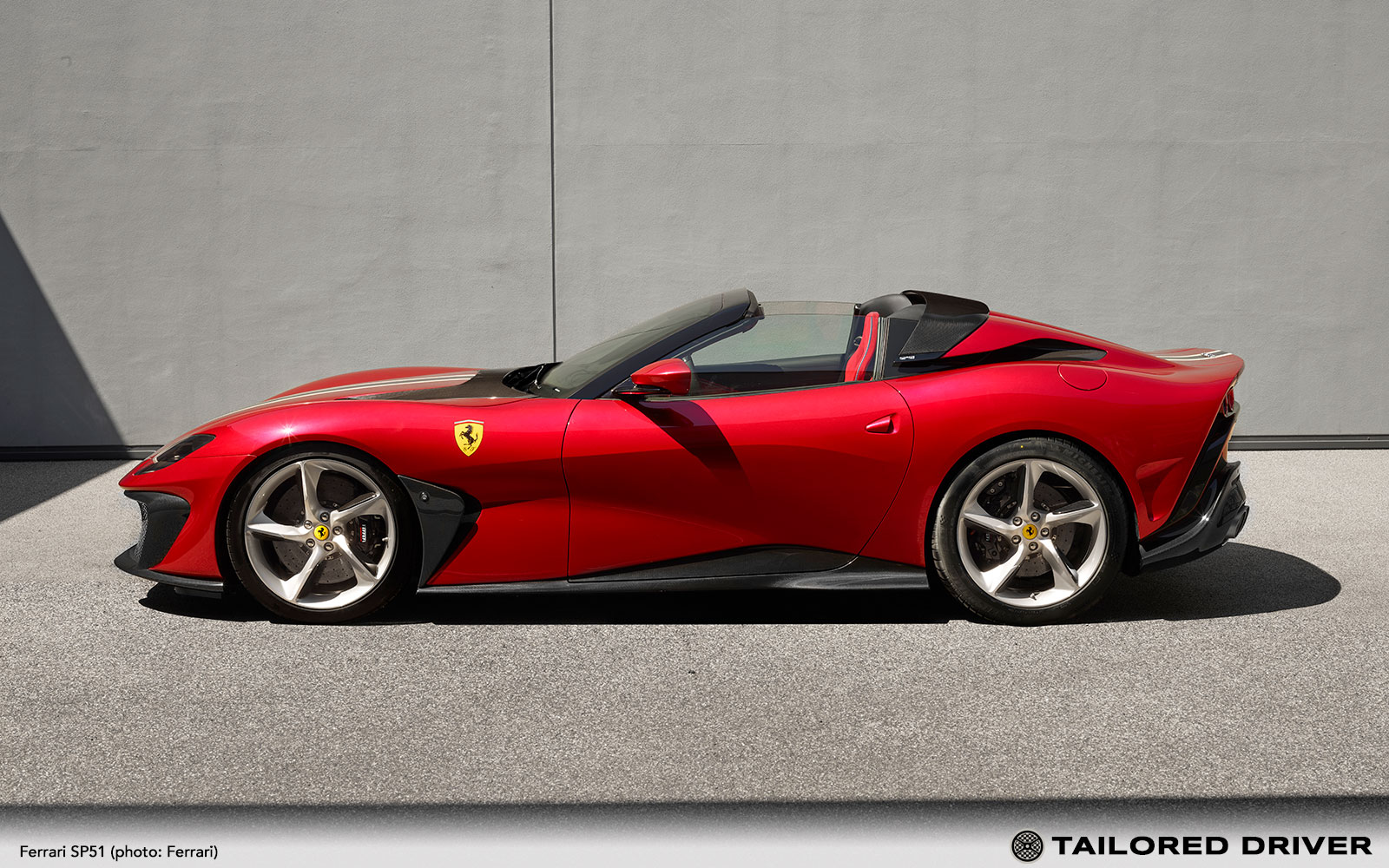
    Maranello, Italy – The latest addition to the Prancing Horse’s One-Off series, the Ferrari SP51, was unveiled today and joins the most exclusive group in Maranello’s range: unique, absolutely bespoke cars crafted to the specifications of a client, making them the very pinnacle of Ferrari’s customisation scope and range.

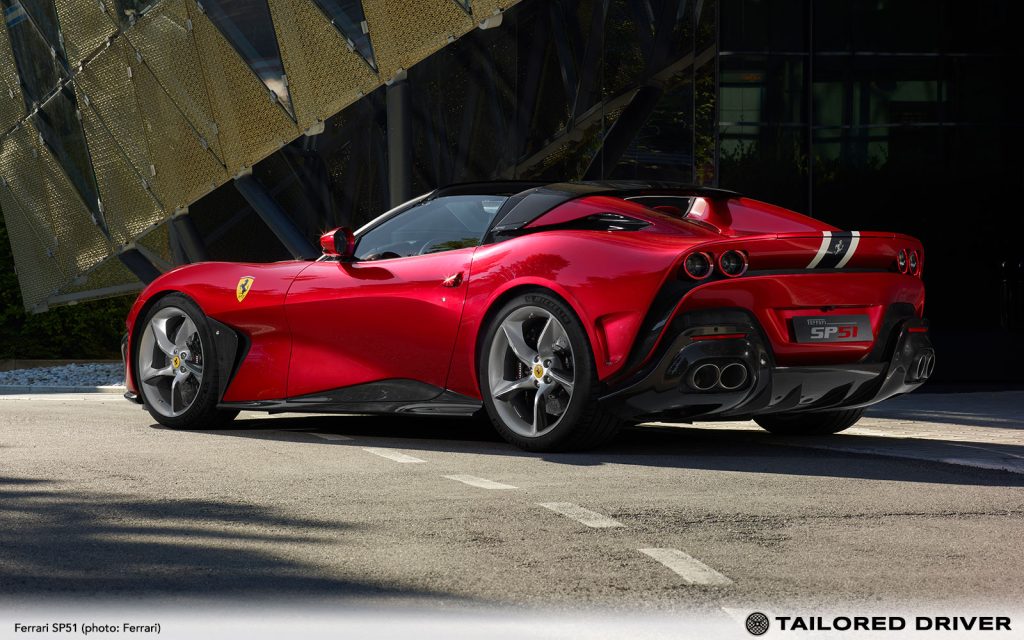
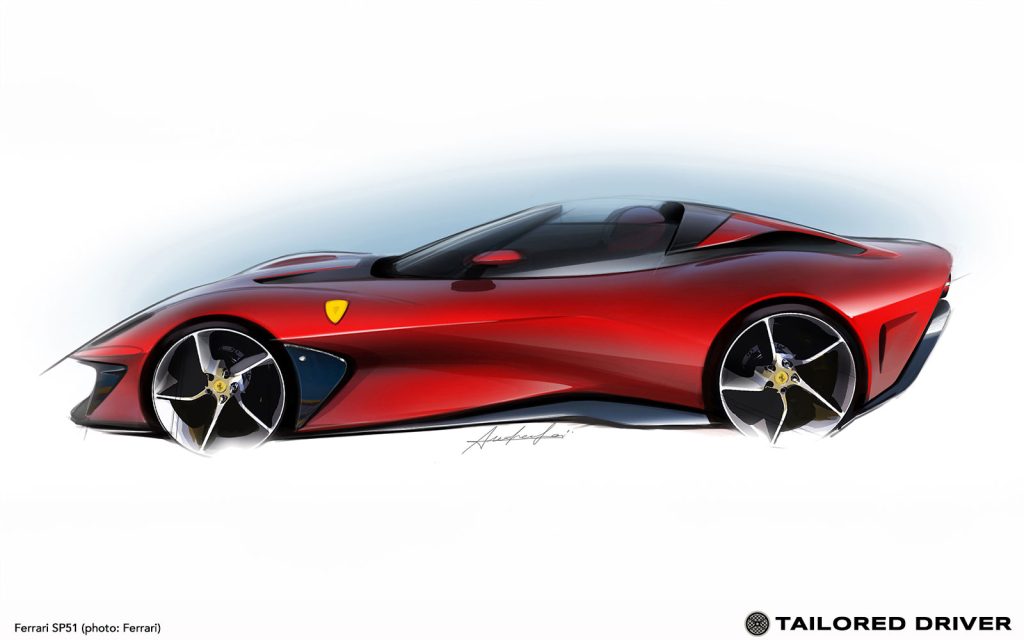
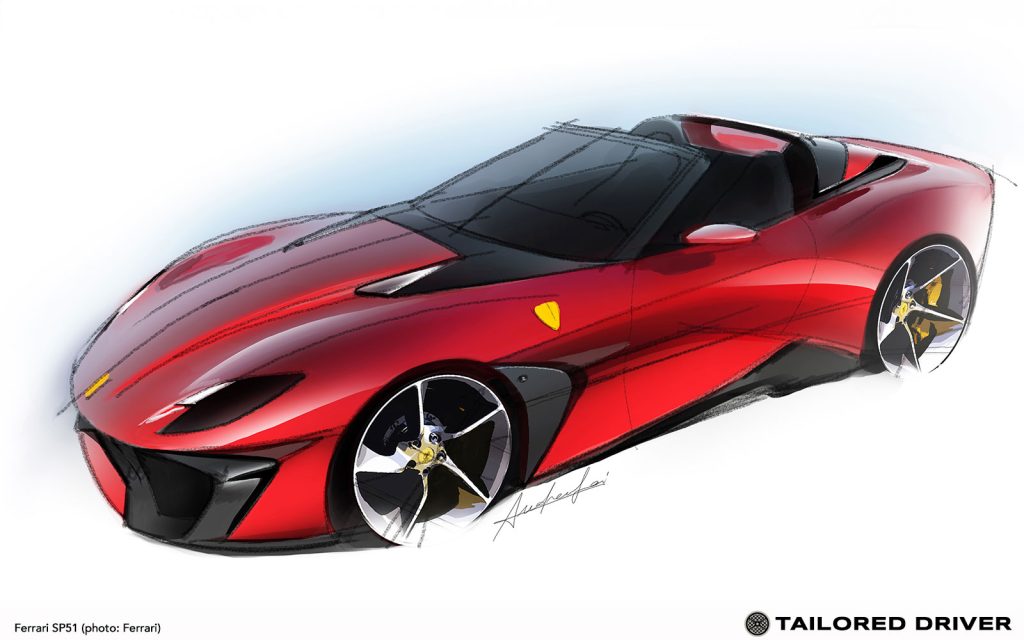
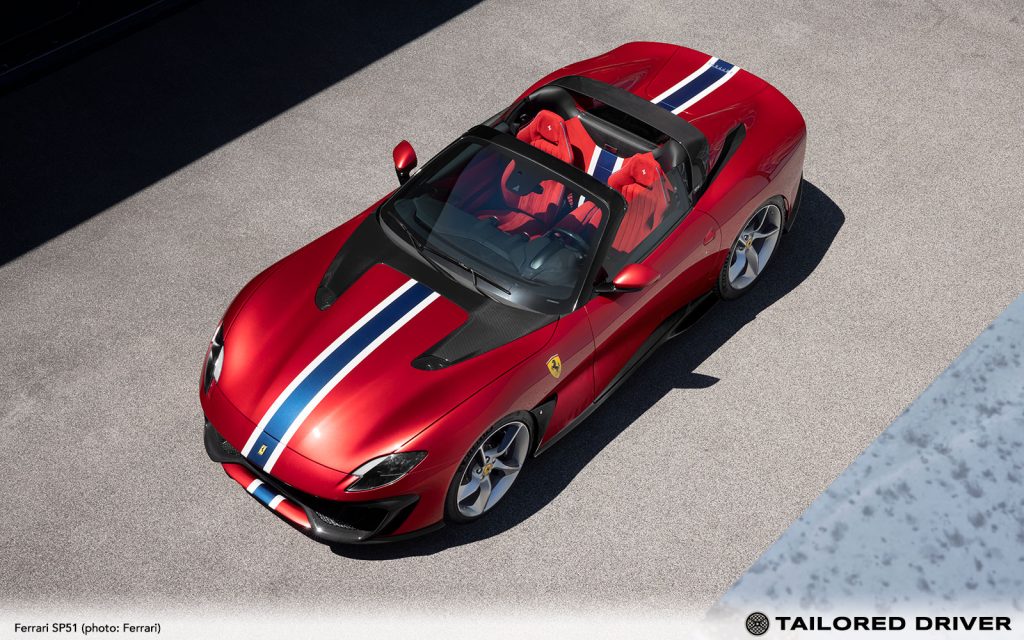
    Designed by the Flavio Manzoni-headed Ferrari Styling Centre, the SP51 is a front-engined V12 spider based on the 812 GTS platform from which it inherits its layout, chassis and engine. At first sight, the stunning new car’s most striking characteristic is its total absence of a roof, making it an authentic roadster in every respect, accentuating both its sporty character and ability to captivate both visually and in terms of en plein air driving exhilaration.

    Unsurprisingly, the SP51’s aerodynamics required meticulous honing in a process involving CFD simulations, wind tunnel and dynamic testing to guarantee not just the ultimate in comfort in the cabin, but also the same standard of acoustic comfort and wind feel as the car that inspired it.

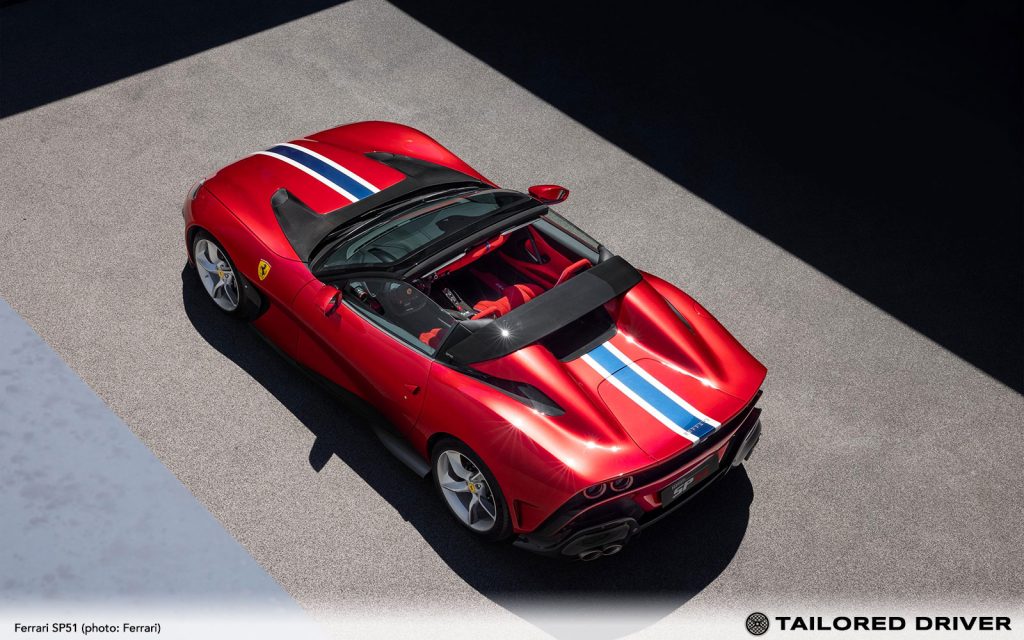
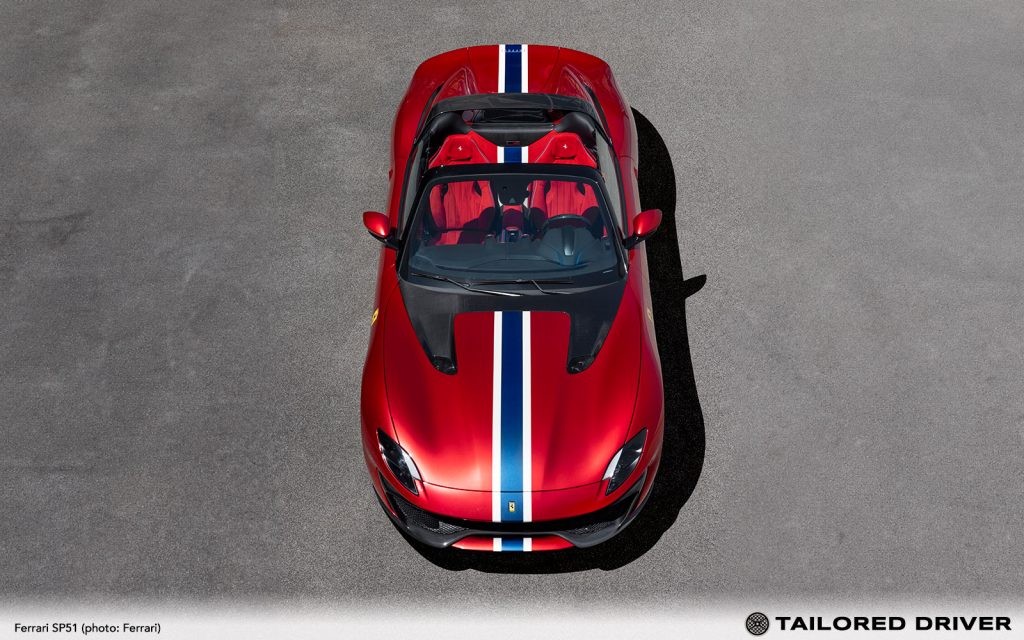
    The SP51’s styling is both powerful and harmonious, thanks to its seamlessly muscular, undulating surfaces. Its forms are modern, sinuous and sensual at once, in great part as a result of the extensive use of bare carbon-fibre both on the exterior and in the cabin. The trim on the bonnet is particularly striking as it dynamically frames the two air vents.

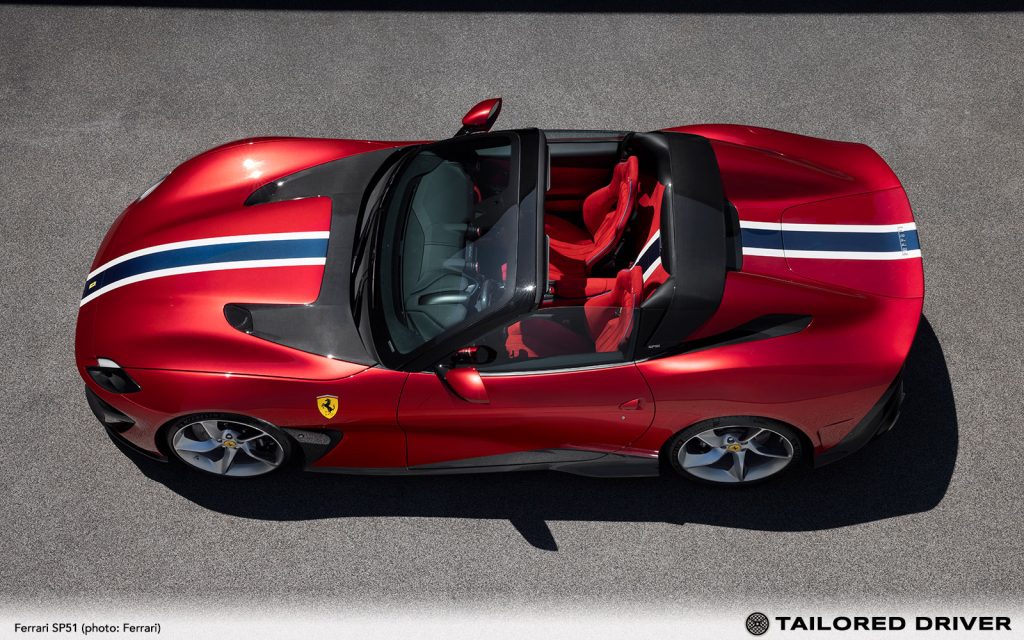
    Another of the SP51’s most captivating features is its new Rosso Passionale three-layer paintwork – the colour was developed specifically for the car and gives it an elegant yet imposing character that also exudes authority. This impression is further enhanced by the blue and white livery inspired by a legendary 1955 Ferrari 410 S which not only runs the length of the car, but is also referenced in the interior.

    At the front, specially-designed headlights give the SP51 an instantly recognisable and forceful identity all of its own. Also noteworthy are the wheels, which are specific to the car and have carbon-fibre wing profiles on each of the spokes which also feature a sophisticated tone-on-tone diamond-cut finish on the forward-facing section.

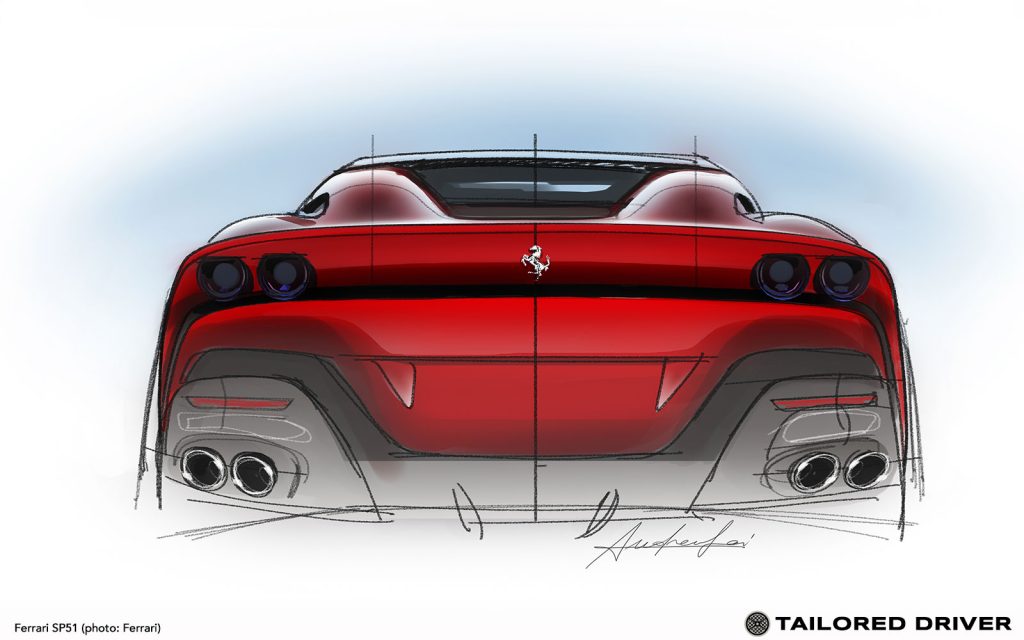
    The rear of the car is dominated by an arched theme with the taillights inset below the spoiler. Immediately behind the cabin are two flying buttresses that are visually softened by two deep carbon-fibre scoops. Between these two elements stretches a transverse, carbon-fibre wing, the profile of which folds over the buttresses. The resulting effect is vaguely reminiscent of a Targa-type car in which the flying bridge elegantly conceals the anti-roll hoop, a nod to the solution adopted on Ferrari’s early-1960s Sports Prototypes.

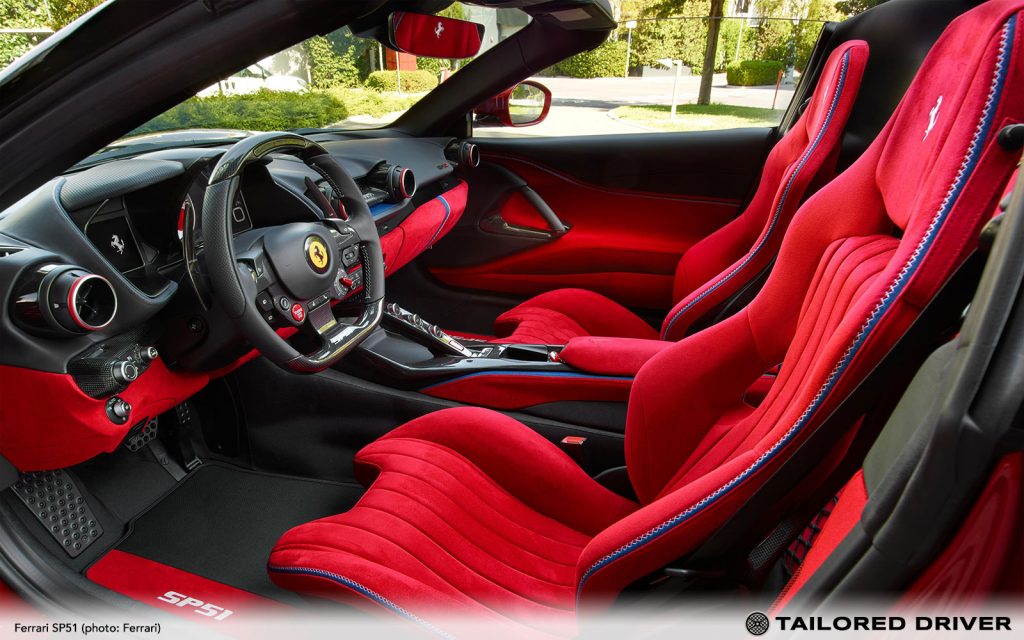
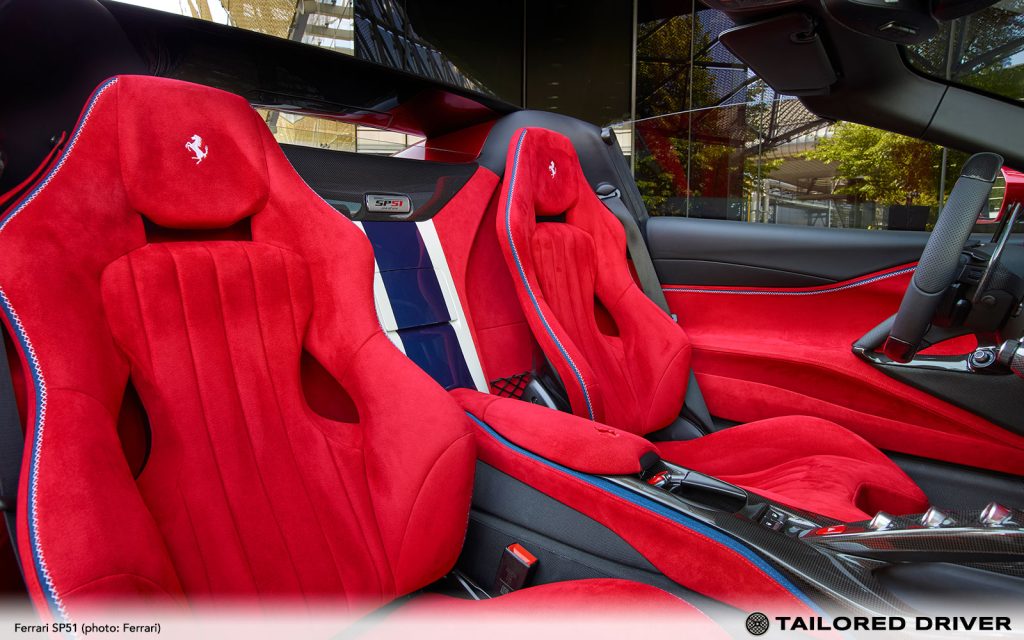
    That said, the very pinnacle of the meticulous honing process, in which the client was involved every step of the way, has to be the cabin where dizzying new heights of craftsmanship and creativity have been reached.  Its personalisation pivoted around two clever ideas: the decision to use the same Rosso Passionale colour custom-created for the exterior as the main colour for the Alcantara® trim, and the effective idea of extending the lengthwise exterior livery into the cabin. Its white and blue stripe, in fact, both appear on the central tunnel and the fascia between the two seats on the firewall, as well as on the steering wheel stitching, creating a sense of seamless continuity between exterior and interior in which the car’s roadster architecture played a vital role.

    The special finish for the door panels, the lower section of the dashboard and the sides of the seats, comprising a blue Kvadrat® insert with white cross-stitching, also picks up the livery. Glossy carbon-fibre trim has been extensively used throughout the interior where it pairs very harmoniously with the Nero Momo Opaco elements. This stylishly elegant and authoritative look is further enhanced by several white embroidered details (including the Prancing Horse and car logo, also found on the lower rim of the steering wheel).

    The Ferrari One-Off, SP51, was designed for a longstanding Taiwan-based client who is also one of our leading collectors. It is a successful roadster take on Maranello’s first front-engined V12 spider in 50 years. Its bold styling captivates at first sight. However, it brilliantly retains the signature elegance of its inspiration, the 812 GTS, whilst pushing the boundaries by offering a whole new way of enjoying en plein air driving.

    SPECIAL PROJECTS

    The Special Projects programme is aimed at creating unique Ferraris (the so-called “One-Offs”) characterised by an exclusive design crafted according to the requirements of the client, who thus becomes the owner of a one-of-a-kind model. Each project originates from an idea put forward by the client and is developed with a team of designers from Ferrari’s Styling Centre; having defined the car’s proportion and forms, detailed design blueprints and a styling buck are produced before starting the manufacturing process of the new One-Off. The entire process takes around two years on average, during which time the client is closely involved in assessing the design and verification phases. The result? A unique Ferrari sporting the Prancing Horse logo and engineered to the same levels of excellence that characterise all of Maranello’s cars.

  • Tailor Made Ferrari Roma

    Tailor Made Ferrari Roma

    A ONE-OF-A-KIND FERRARI EXPLORES PARALLELS BETWEEN ITALIAN AND JAPANESE DESIGN, CULTURE AND CRAFTS IN A CONTEMPORARY CREATIVE COLLABORATION

    [source: Ferrari]

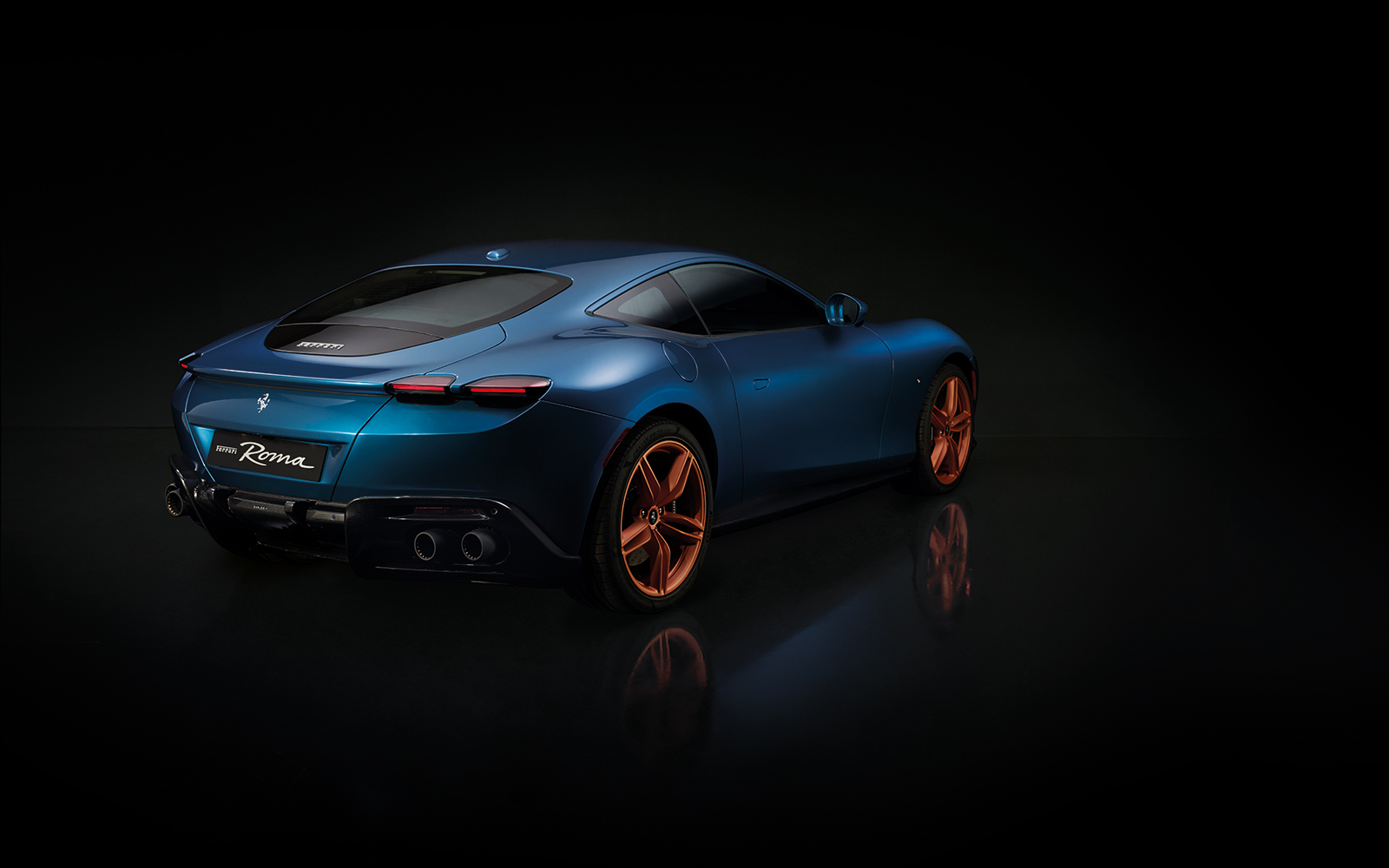
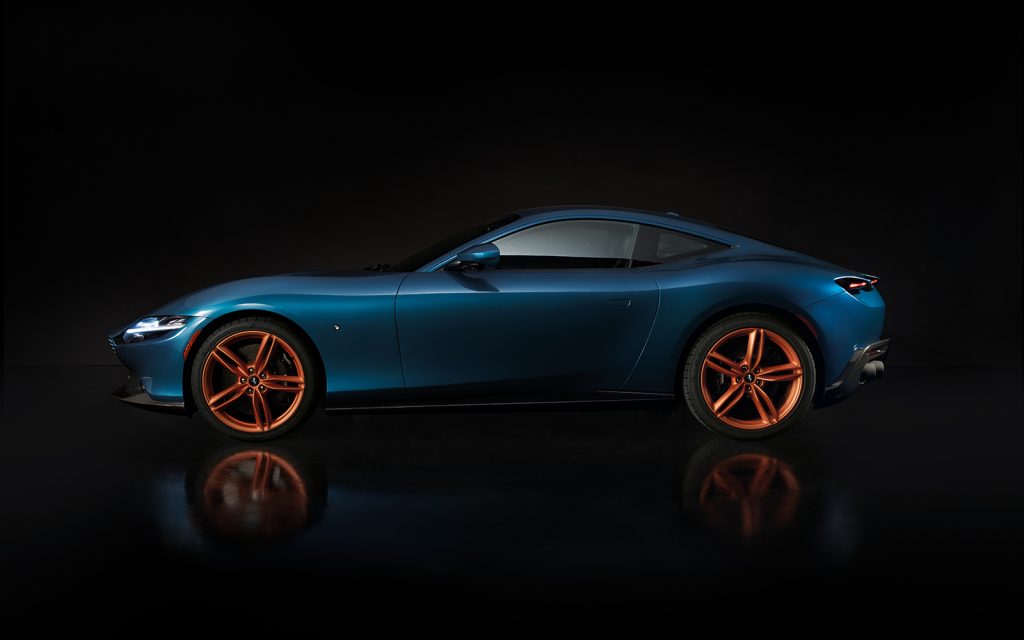
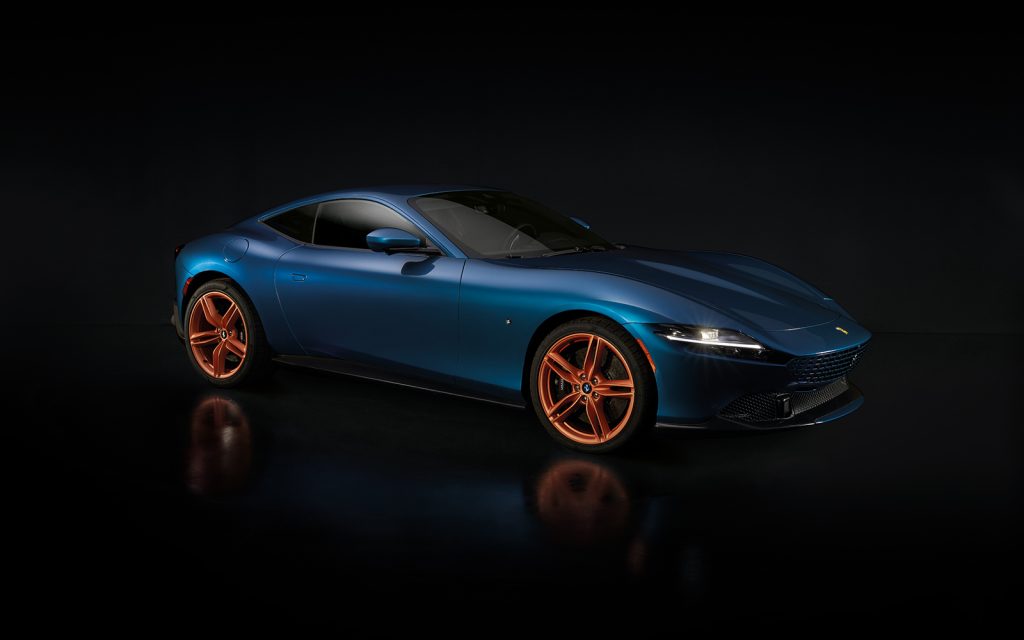
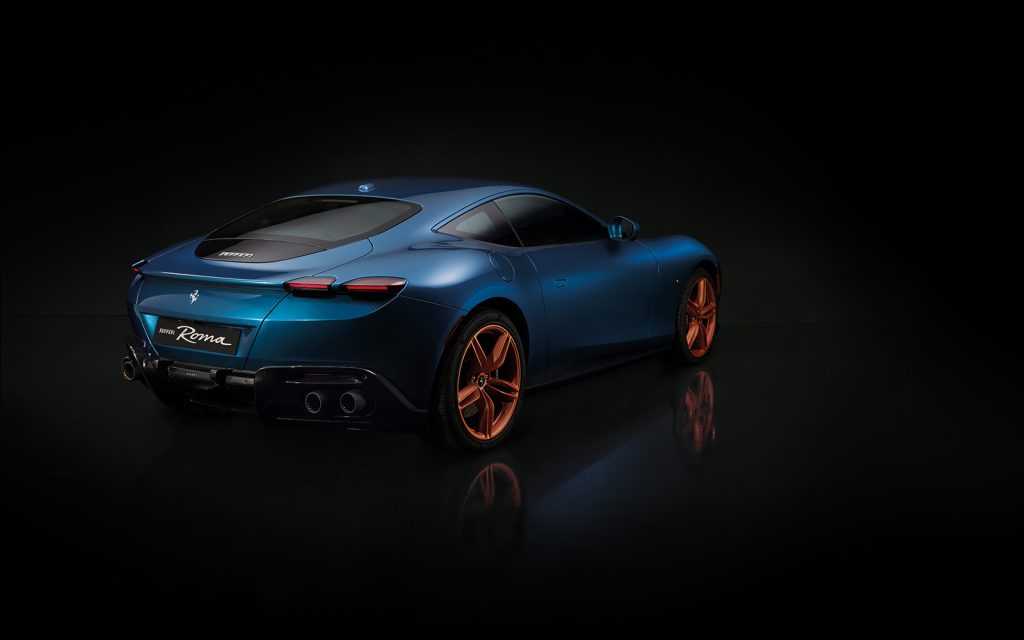
    Maranello, 17 May 2022 – Ferrari unveils a one-of-a-kind Ferrari Roma model, crafted by its bespoke Tailor Made department. The car features exquisite traditional Japanese-inspired detailing while retaining the clean, sophisticated elegance of the original car.

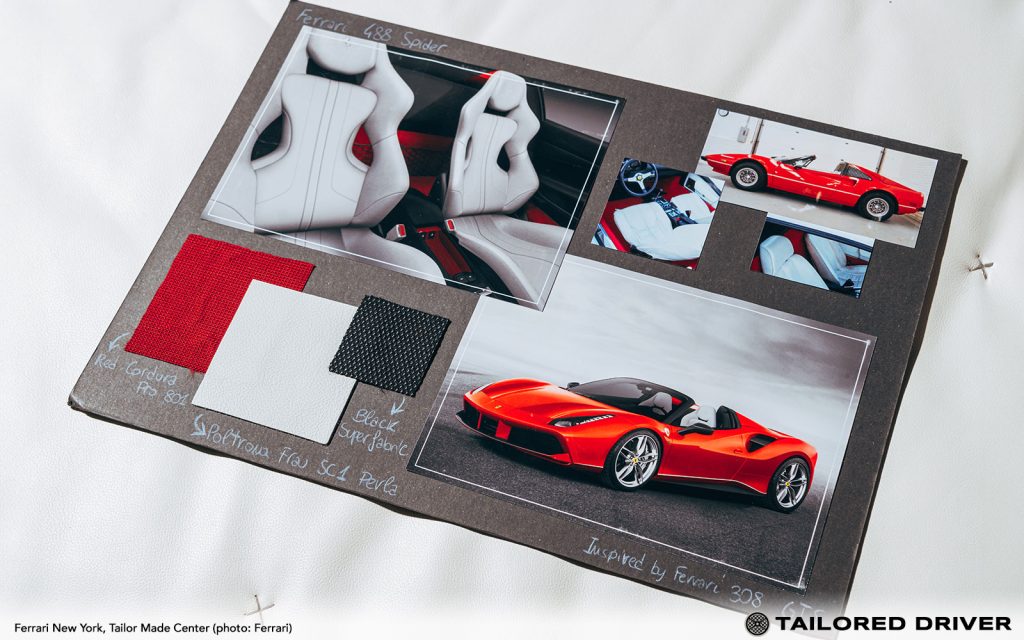
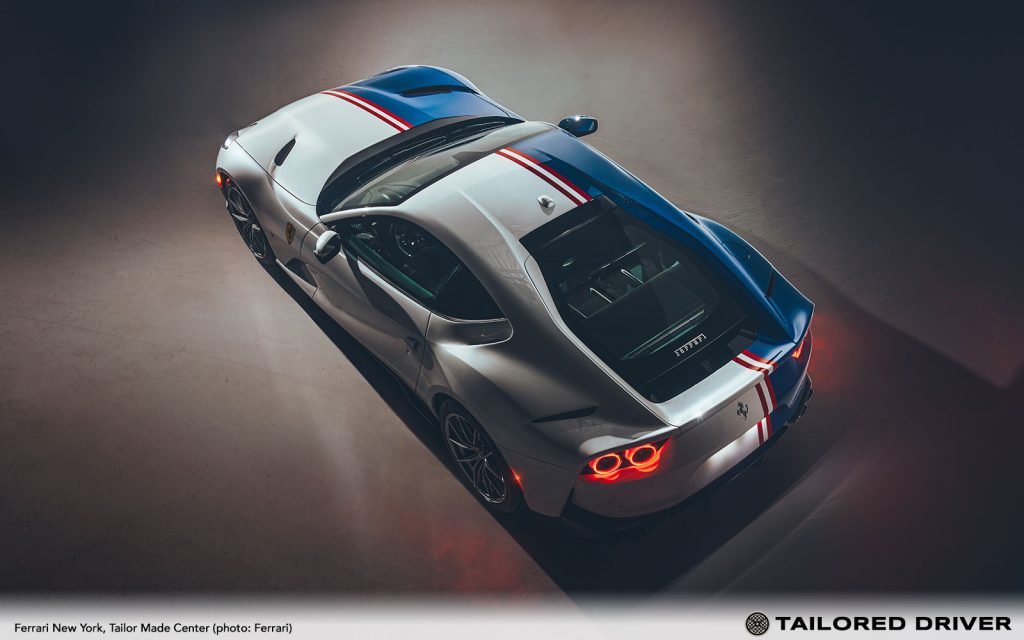
    Ferrari Tailor Made is an exclusive programme for those who wish to customise each element of their Ferrari to create a vehicle that truly reflects their personality and tastes. Customers who participate in the Tailor Made programme are assisted by a team of experts led by a personal designer that interprets their desires whilst upholding the aesthetic standards of the Ferrari brand.

    This particular car’s story began when Evan Orensten and Josh Rubin, the founders of the award-winning independent US publication dedicated to design, culture and technology COOL HUNTING, were offered, and accepted, the opportunity of customising a Ferrari Roma, to explore how far Ferrari’s bespoke personalisation programme could go and really push the boundaries.

    They met Flavio Manzoni, Ferrari Chief Design Officer, in the Ferrari Tailor Made showroom in New York. They had just returned from several research trips to Japan where they had immersed themselves in the country’s traditional crafts and artisanal methods, and proposed bringing some of those ideas and unique materials into the Tailor Made journey as envisioned by COOL HUNTING.

    Flavio Manzoni and his team were inspired by the parallels between Italian and Japanese culture and design philosophy: a single-minded devotion to quality, an emotional involvement with the client, and exquisite skills in craftsmanship that have been passed down from generation to generation.

    An idea formed – to create a Ferrari featuring some of the unique materials developed from traditional Japanese techniques while employing Ferrari’s customary innovation to modify them to accommodate the requirements of durability and functionality that a modern high-performance car demands.

    Traditional Japanese indigo dyes inspired the Ferrari Roma’s colour scheme, particularly the vivid blue exterior paint which was specially developed for this car and named Indigo Metal. This vivid colour perfectly enhances the purity of the Ferrari Roma’s shape – light appears to flow over its bodywork, accentuating its lines through highlights and shade.

    Indigo features prominently in Japanese design culture, and the traditional dye is produced naturally. COOL HUNTING had visited Toyama, one of only five remaining indigo farms in Tokushima, Japan’s traditional indigo-growing region. They learned that the dye comes from a green plant which, when harvested and fermented, becomes sukumo, traditional dried Japanese indigo that is mixed with lye, sake and limestone powder to create authentic Hon-Ai indigo dye. Because of its antimicrobial properties it was traditionally used for linens, bedding and clothing.

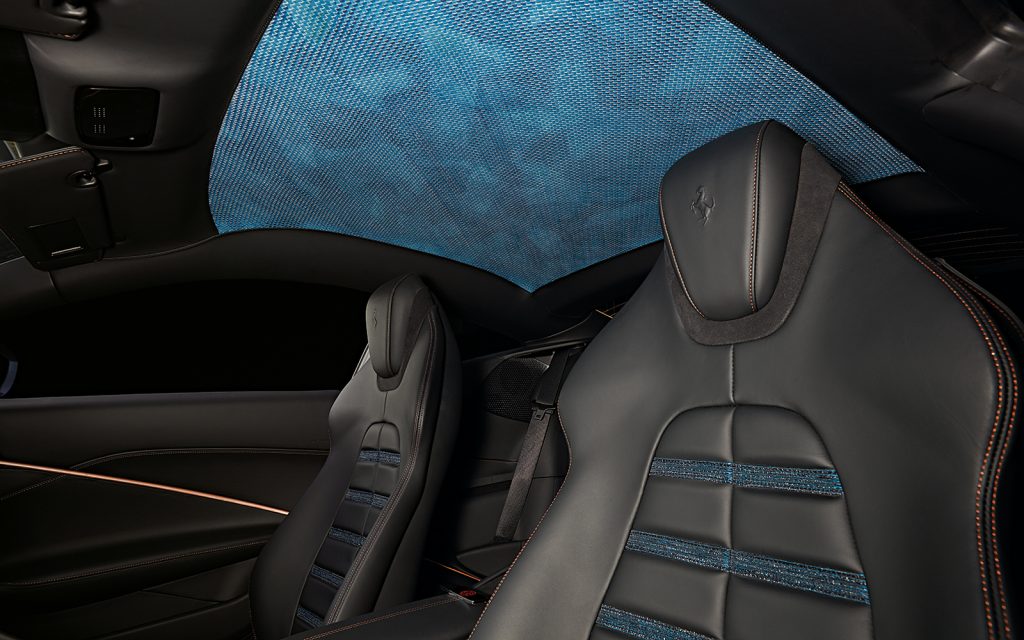
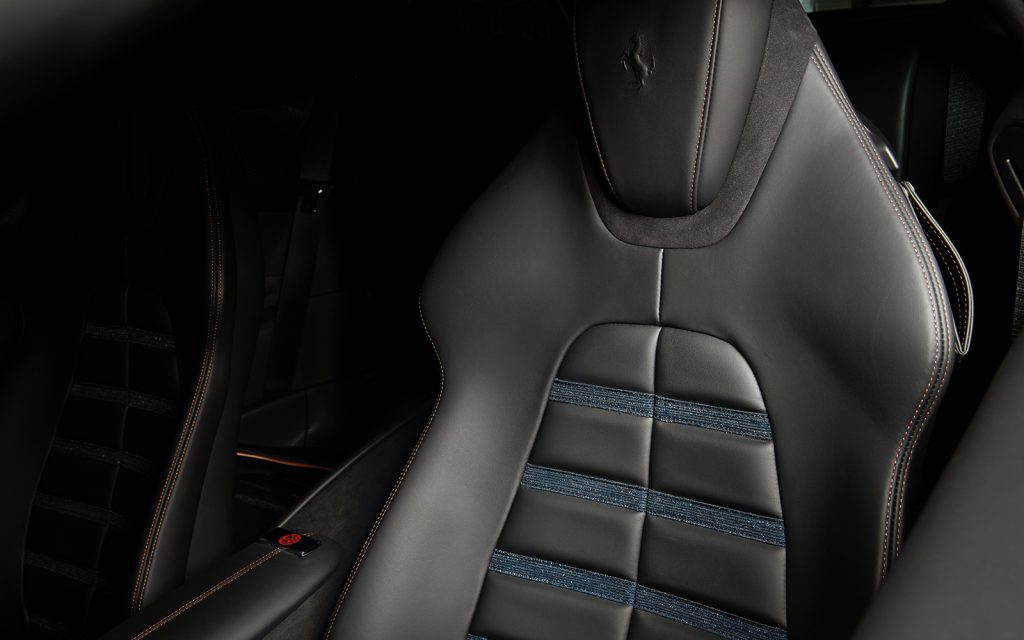
    The same colour palette is used to tie together the vehicle’s exterior and interior into one subtle, holistic statement. The indigo shade is also found in the sakiori fabric used for the seat trim inserts and the carpets.

    Sakiori is one of the world’s oldest examples of upcycling, dating from the 1700s when cotton and silk were available only to Japan’s nobility and the very wealthy. Worn-out kimonos were disassembled, their fabric cut into strands and rewoven with new fibres, creating a material that was both warm, comfortable and durable. The word comes from the Japanese saku (to rip up) and oru (to weave).

    An innovative solution was identified in making sakiori a viable material. Two vintage kimonos originally made in Amami Oshima, an island in Japan’s southern archipelago were used—an indigo-dyed kimono approximately 75 years old and one approximately 45 years old, dyed in both indigo and the island’s celebrated Amami Oshima Tsumugi mud-based dye. Instead of weaving the kimono strands with cotton or silk as is traditional, it was woven with high-tensile nylon, ensuring the durability required of this material in its application inside the vehicle. This new textile was created in the same place the original materials originated from by Hajime Shoji.

    The indigo theme is carried through to the Ferrari Roma’s headlining – a beautifully detailed piece of craftsmanship and design which is exclusively experienced by those sitting in the car. It is comprised of two indigo-dyed hides made with Asai Roektsu in Kyoto—one with a unique solid colour crafted to match the car’s colour scheme, and a hand-painted hide using the Roketsu method, which can be traced back to the 8th century. It is a wax resist-dyeing method that forms intricate repeated patterns around a single colour, and was commonly used to decorate the silk or cotton of kimonos and obis. The hides were then sent to Italy, where they were cut into strips and hand-woven by Italian artisans in a process called intreccio, forming an elegant one-of-a-kind work of art.

    The Ferrari Roma’s interior door handles also take their inspiration from Japan – they are enclosed in tightly hand-woven strips of black leather in an homage to tsukami, the ancient art of wrapping the grips of Katana swords.

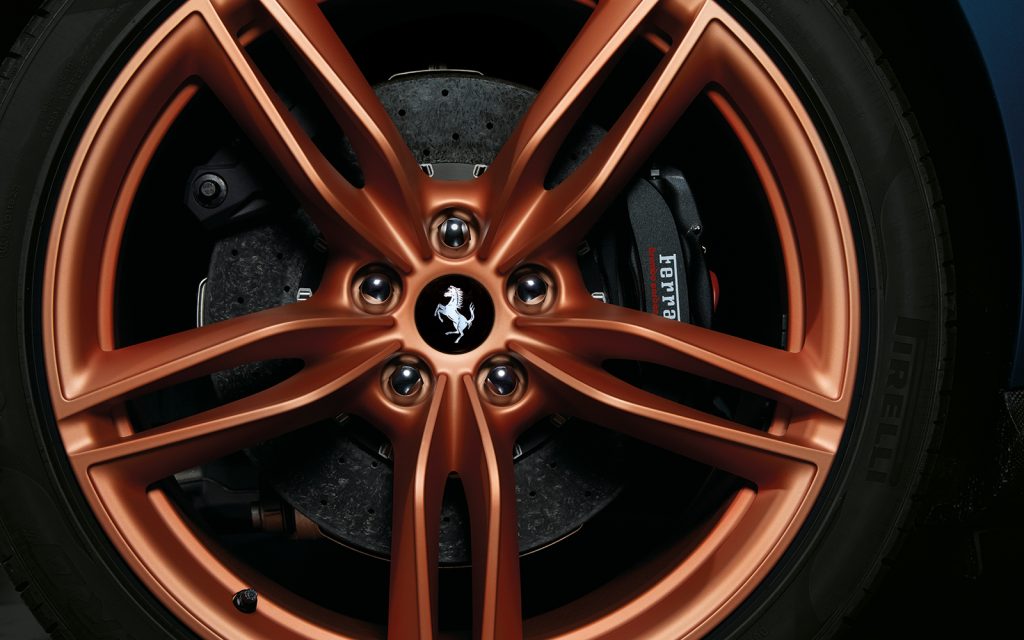
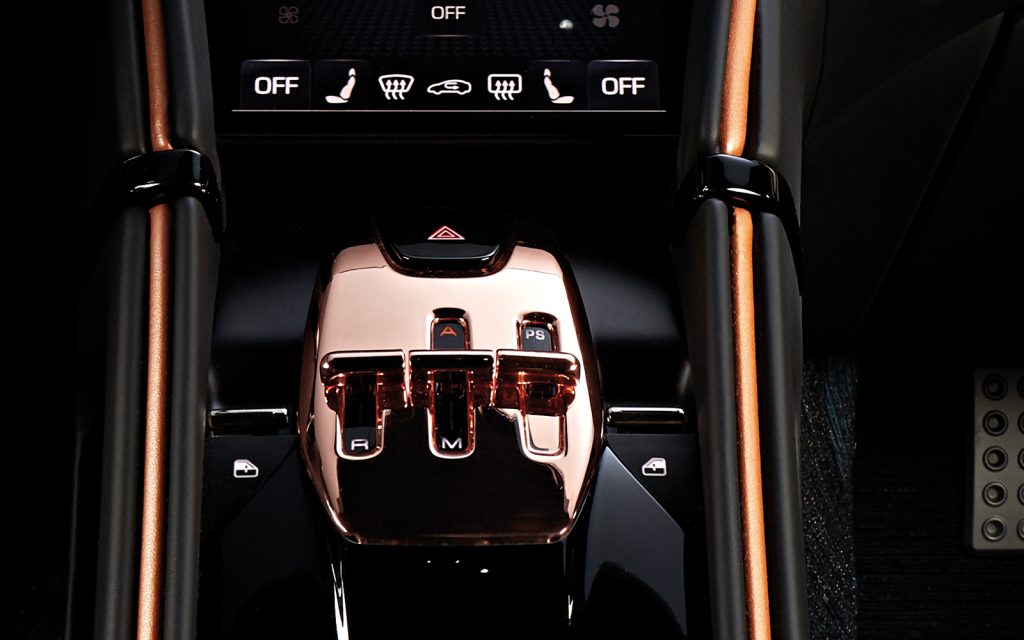
    The COOL HUNTING team were further inspired by a visit to Kaikado, a Kyoto-based family business known for its iconic copper tea canisters. Now made by the fifth and sixth generations of the family, the canisters are so skilfully crafted that they form a vacuum seal as the lid gently falls onto the body. The copper also adopts a unique natural patina with use. Inspired by this, Copper plating is found in details on the Ferrari Roma’s gear shift gate surround and levers, which were plated in Japan. The outline of the dual cockpits, the wheel rims and the kamon are also made in this colour.

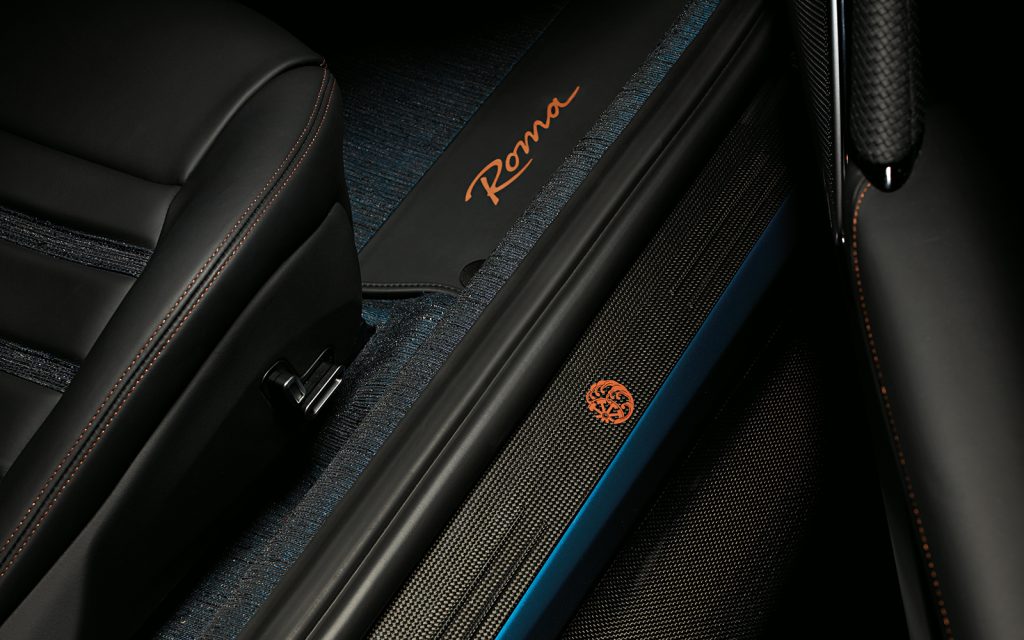
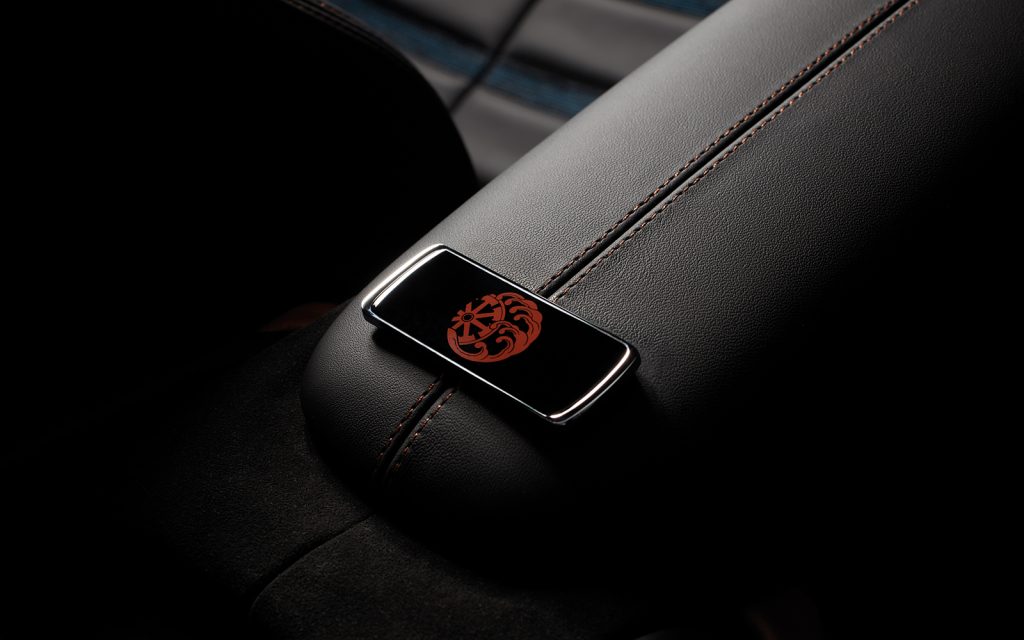
    The unique crest on the car’s dedication plate on the central armrest and door sills is a custom-made “kamon,” a symbol passed down from generation to generation in Japan. Designed by Kyogen, it represents a wheel from an ox-drawn carriage (popular transportation among aristocrats during the Heian period, 794-1185) combined with the eight pistons of the Ferrari Roma’s V8 engine forming its spokes. The numeric theme is continued in the eight wave crests that encircle the wheel – symbols of good luck, power and resilience.

    This subtle but exceptionally detailed Ferrari Roma brings together Italian and Japanese design culture in a harmonious form. It is a beautiful example of the unlimited wealth of combinations and possibilities that are available through the Ferrari Tailor Made programme.

    The Ferrari Roma features refined proportions and timeless design combined with unparalleled performance and handling. Not only is the Ferrari Roma an icon of Italian design, but it also represents the pinnacle of performance in this category, thanks to its 620-cv turbo-charged V8 from the family of engines that won the overall International Engine of the Year award four years running.

    The Tailor Made Ferrari Roma Specially Crafted for COOL HUNTING will be on display in the Ferrari Tailor Made Showroom during the New York Design Week (NYC X DESIGN), celebrating the space where this incredibly dynamic collaboration started, bringing together diverse cultural and creative forces from different parts of the world in a unique and special way.

  • Ferrari SP48 Unica: A New One-Off from Maranello

    Ferrari SP48 Unica: A New One-Off from Maranello

    • A unique new Ferrari designed to a client’s brief
    • The SP48 Unica is a two-seater sports berlinetta powered by the same twin-turbo V8 as the F8 Tributo
    • Bespoke design and aero modifications give the SP48 Unica a sporty and dynamic look

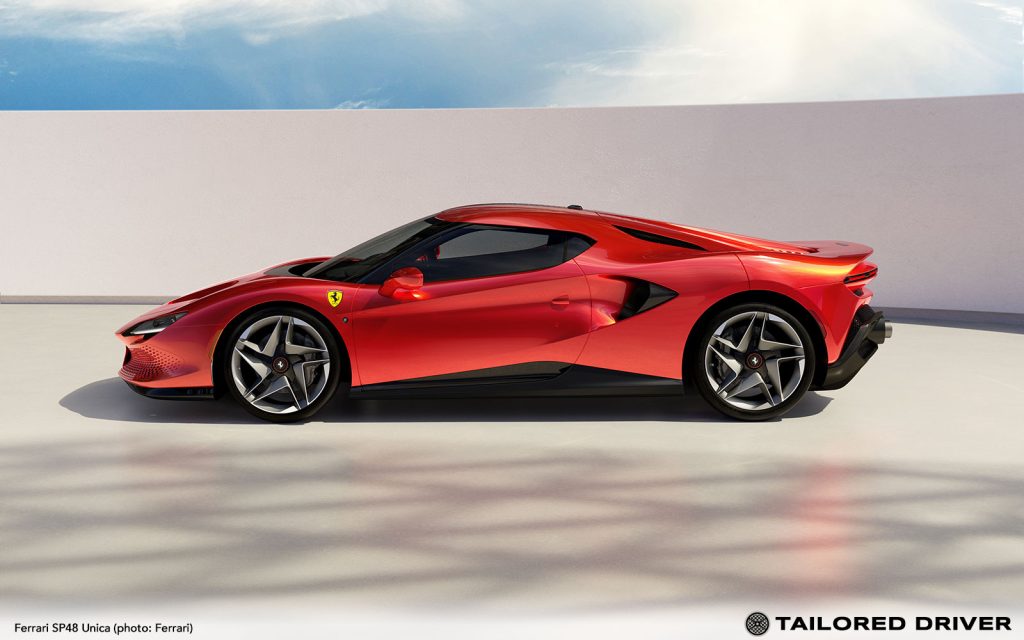
    Maranello, 5 May 2022 – The Ferrari SP48 Unica, the latest addition to the Prancing Horse’s One-Off series, was unveiled today and joins the most exclusive group in Maranello’s entire production: unique, absolutely bespoke cars crafted to the specifications of a single client and designed as a clear expression of their own individual requirements.

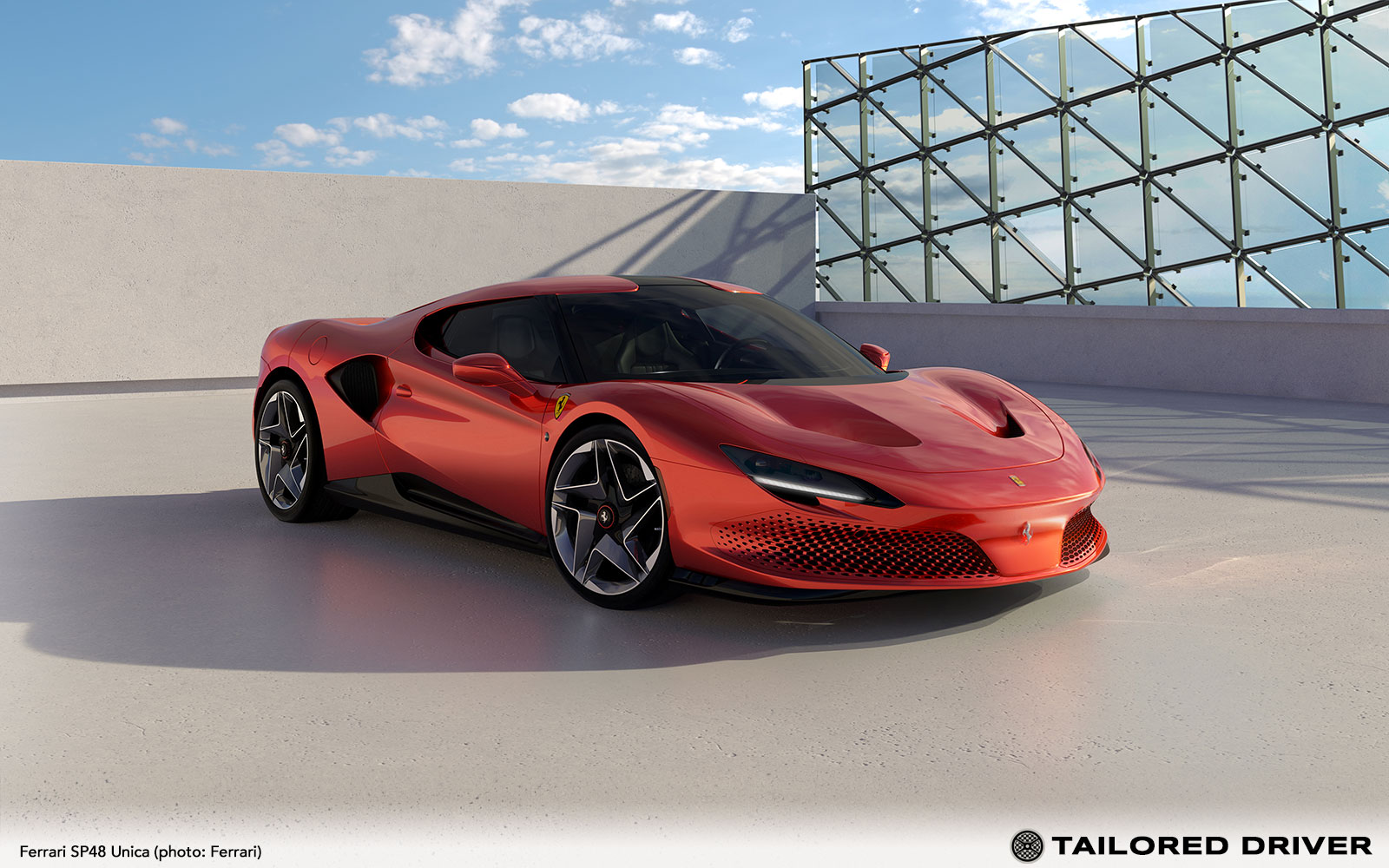
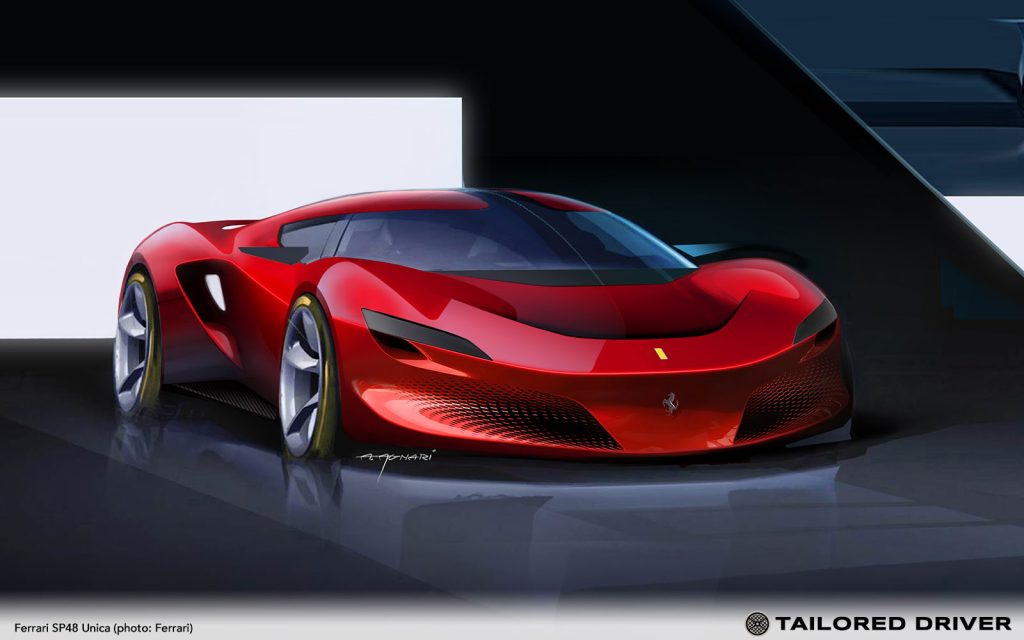
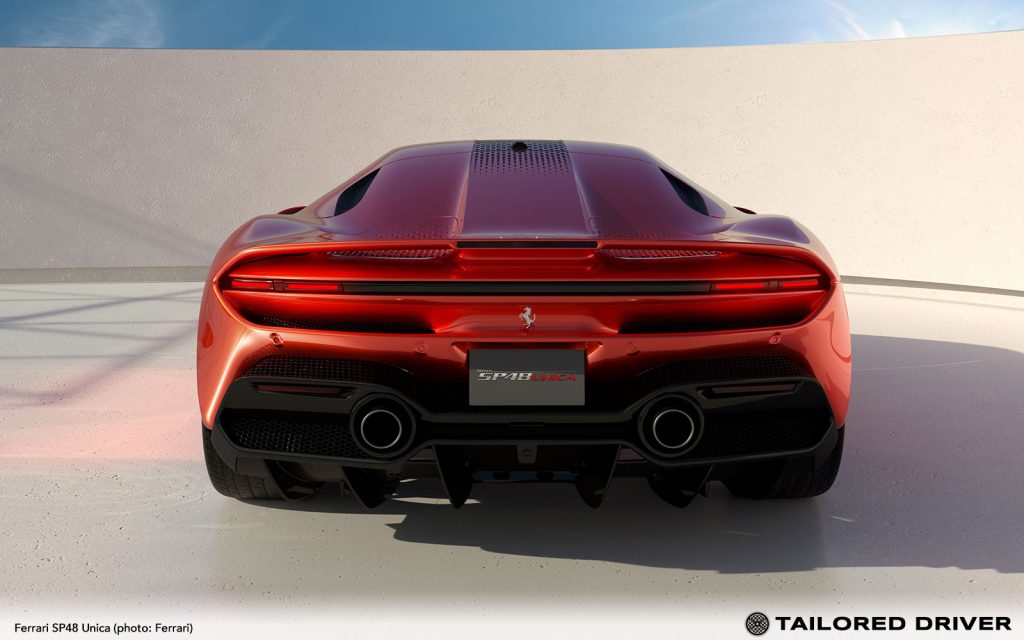
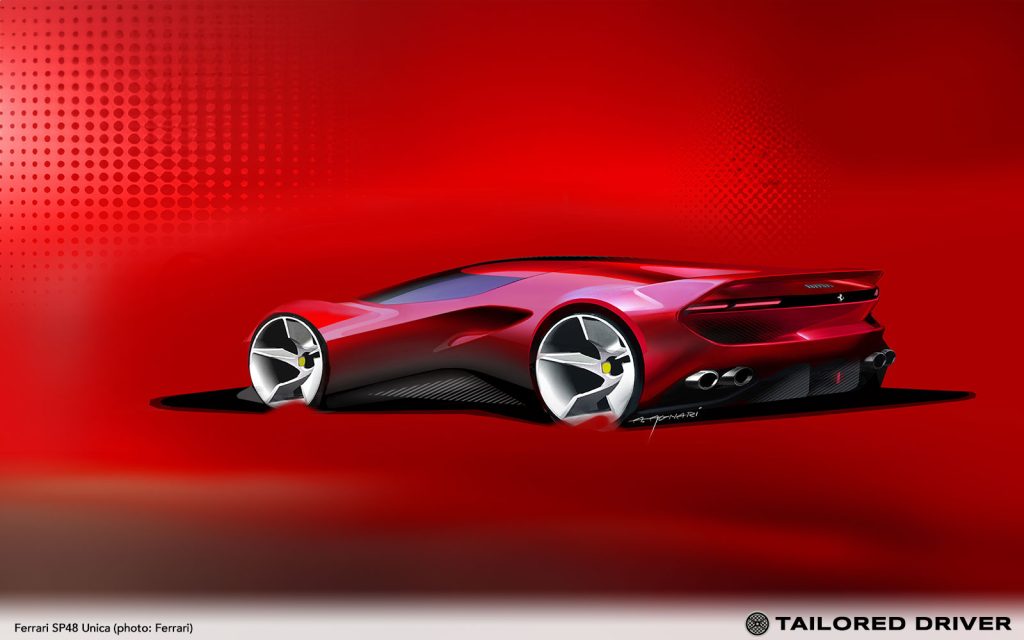
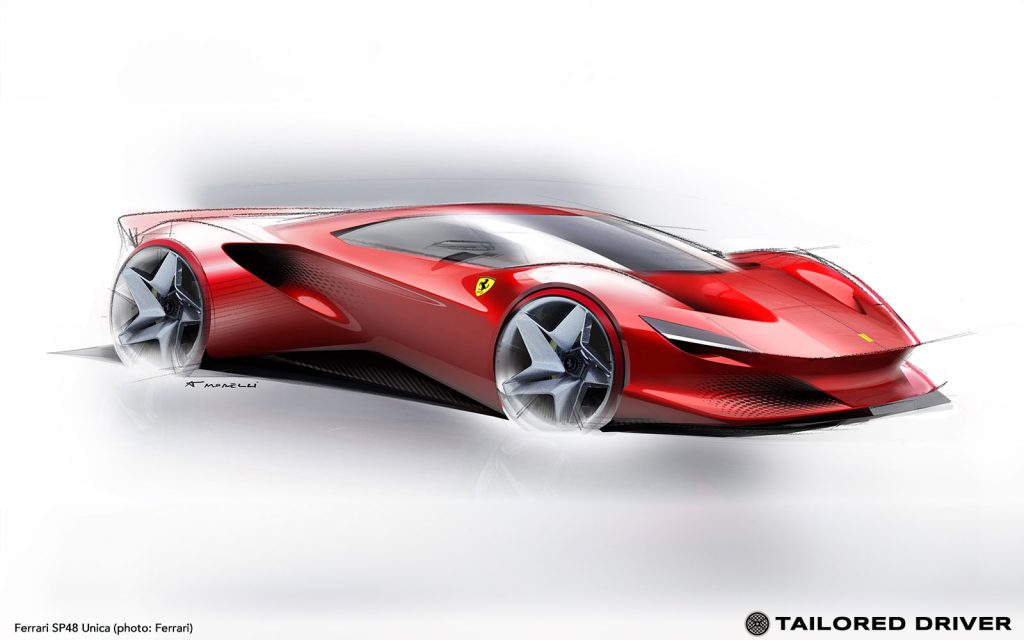
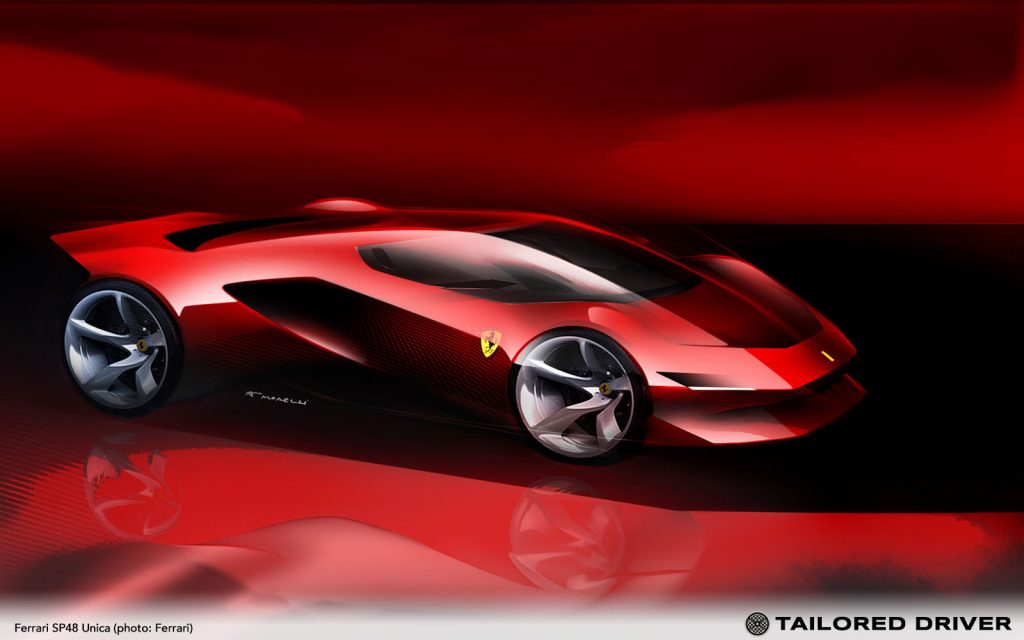
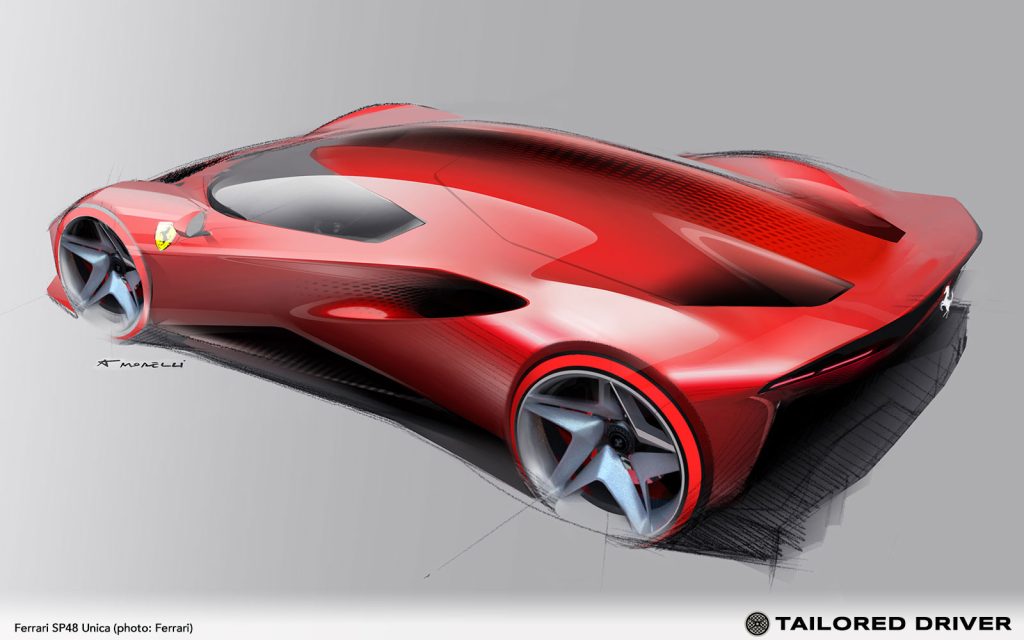
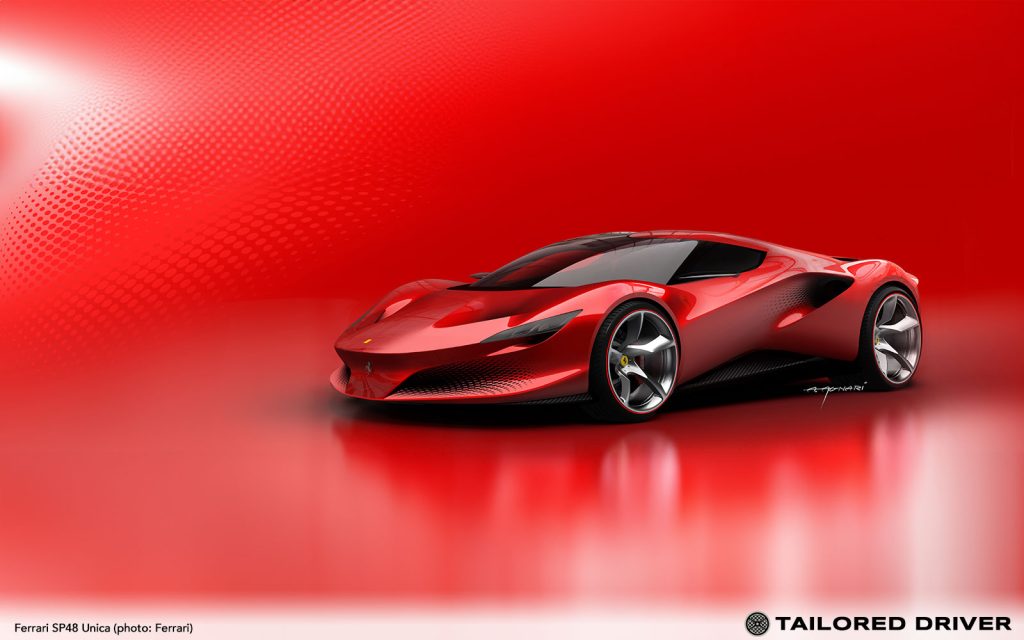
    The SP48 Unica, designed by the Ferrari Styling Centre under the direction of Flavio Manzoni, Chief Design Officer, is a two-seater sports berlinetta developed on the F8 Tributo platform. Its taut lines and aggressive stance make it instantly recognisable with respect to the original model, and it is unmistakable too, thanks to its arrow-shaped front profile. Central to achieving this effect was the redesign of the headlights and the subsequent relocation of the brake air intakes.

    A pivotal aspect of the design of this unique new car is the extensive use of procedural-parametric modelling techniques and 3D prototyping (additive manufacturing) which enabled the Ferrari Styling Centre designers and Maranello’s engineers to completely redesign the front grille and engine air intakes. This advanced production process resulted in perfect 3D grilles that seem carved from a solid volume creating a sense of seamless continuity and dynamic fluidity.

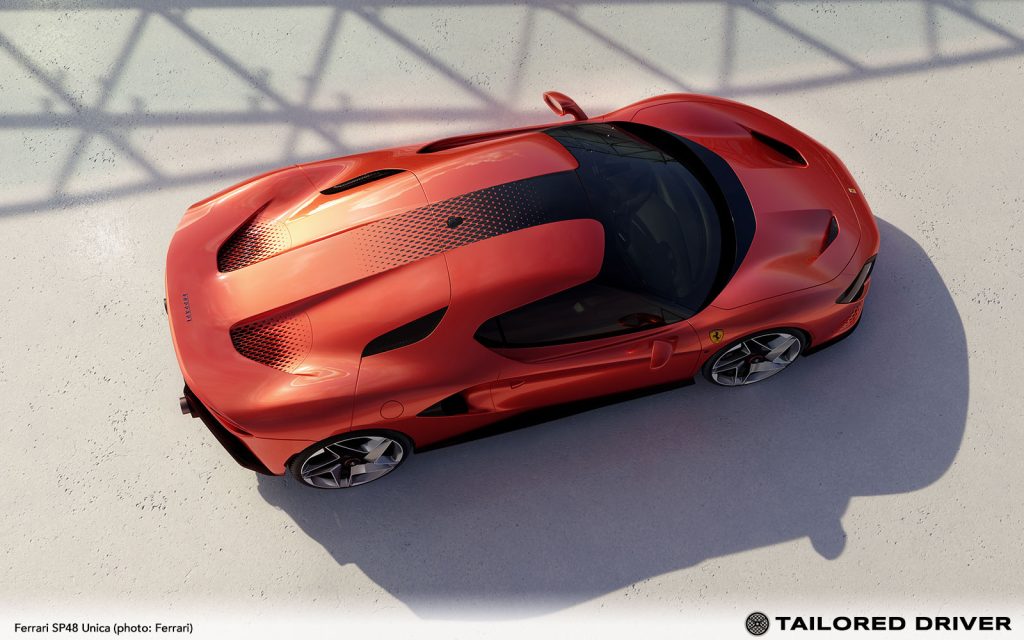
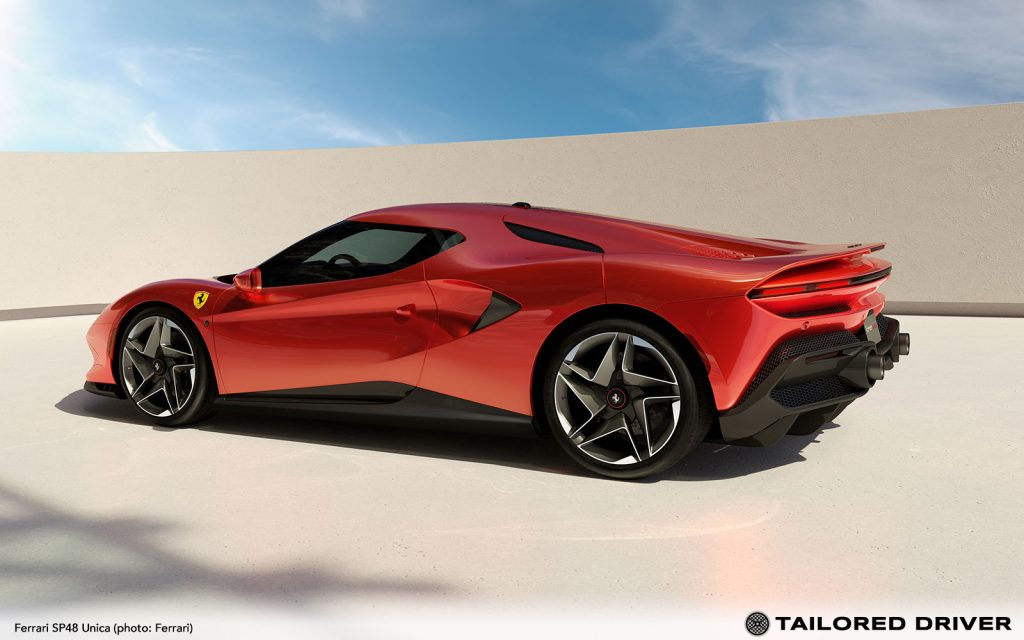
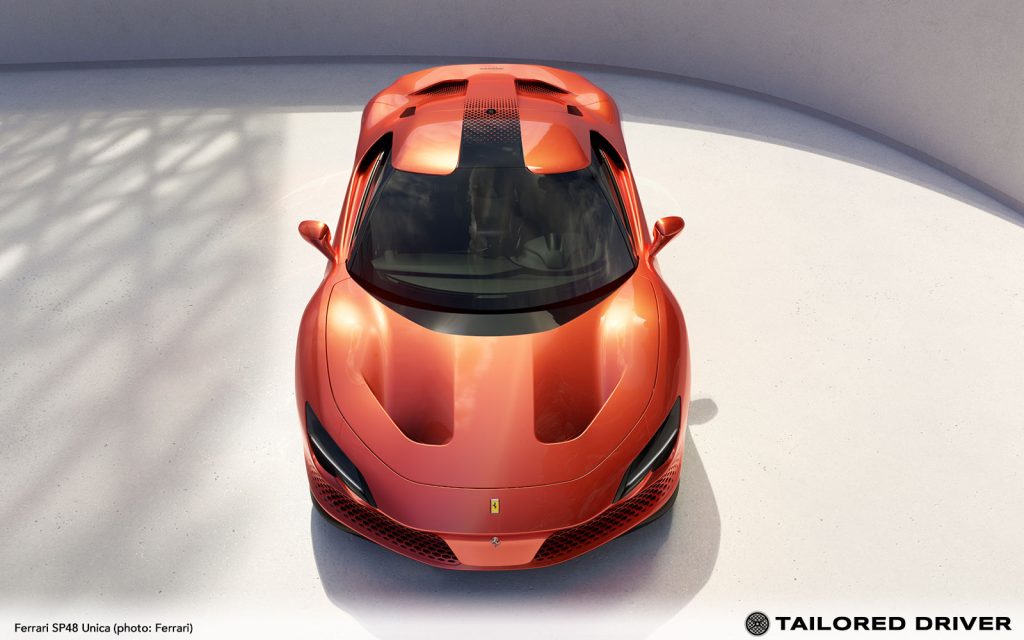
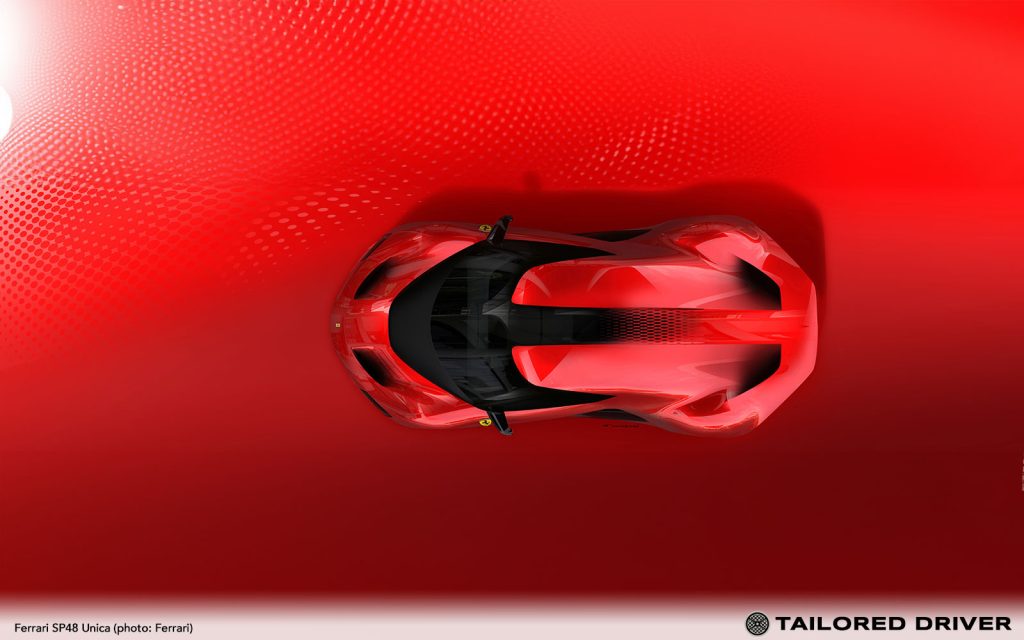
    The procedural graphic solutions adopted on the bodywork dialogue directly with the grilles and influence the SP48 Unica’s overall design:  the transition from black – which includes the windows, roof and engine cover – to the body colour is especially clear.  The striking visor effect of the front is further heightened by the reduction in the size of the side windows and the elimination of the rear screen, highlighting the powerful muscularity of the SP48 Unica which seems sculpted from a single block of metal.

    The plan view emphasises the central section of the roof which includes a graphic representation of the air intakes set into the rear part of the carbon-fibre engine cover before the rear wing. This angle allows the viewer to appreciate the styling research that went into the SP48 Unica and reveals the sophisticated interplay of symmetries and intersecting lines created by its forms.

    The SP48 Unica’s thermal-fluid-dynamic design has been honed and perfected to guarantee it satisfies all cooling requirements in addition to delivering a different aerodynamic balance. The biggest changes compared to the F8 Tributo’s styling include the air intakes for cooling flows for the engine on the front bumper and beneath the rear spoiler. Each has a deep procedural grille, every section of which is optimally angled to maximise the amount of air passing through. The car’s configuration also allowed the engineers to locate an intercooler intake immediately behind the side windows, which in turn enabled them to reduce the dimension of the intakes on the flanks. The longer rear overhang reduces suction from the roof area, boosting rear downforce.

    Although the cabin retains the F8 Tributo’s technical identity – excluding the rear screen – meticulous development work was lavished on achieving the perfect combination of colour and trim to reflect the SP48 Unica’s  sleek, sporty and aggressive personality.  A good example is the specially developed black laser-perforated Alcantara® used on the seats and most of the cabin trim, beneath which are glimpses of iridescent reddish-orange fabric that match the exterior colour. Its motif picks up the hexagonal motif of the grilles and the procedural livery on the roof, creating an appealing continuity between the car’s interior and exterior.  In the SP48 Unica cockpit, the eye is immediately drawn to the polished sill covers with the same laser-embossed hexagonal motif. Matte carbon-fibre imbues the cockpit with a sense of technicality and exclusivity, and is complemented by the Grigio Canna di Fucile accents.

    Designed for a long-standing client who was deeply involved in every step of its creation, the one-off Ferrari SP48 Unica is a bold interpretation of a sports car and cleverly enhances its racing soul and vocation for speed. The SP48 Unica achieves its goal of transforming an existing model to masterful effect, taking inspiration from and paying homage to the company’s core values of innovation and passion.

    SPECIAL PROJECTS

    The Special Projects programme creates unique Ferraris (so-called “One-Offs”) characterised by an exclusive design crafted around the requirements of each individual client to ensure each one becomes the owner of a genuinely one-of-a-kind model. Each project originates from an idea put forward by the client and then developed with a team of designers from Ferrari’s Styling Centre. Having defined the car’s proportion and forms, detailed design blueprints and a styling buck are produced before the construction of the new One-Off begins. The entire process lasts more than a year on average, during which time the client is closely involved in assessing the design and verification phases. The result? A unique Ferrari sporting the Prancing Horse logo and engineered to the same standard of excellence as every car that rolls off the Maranello assembly lines.

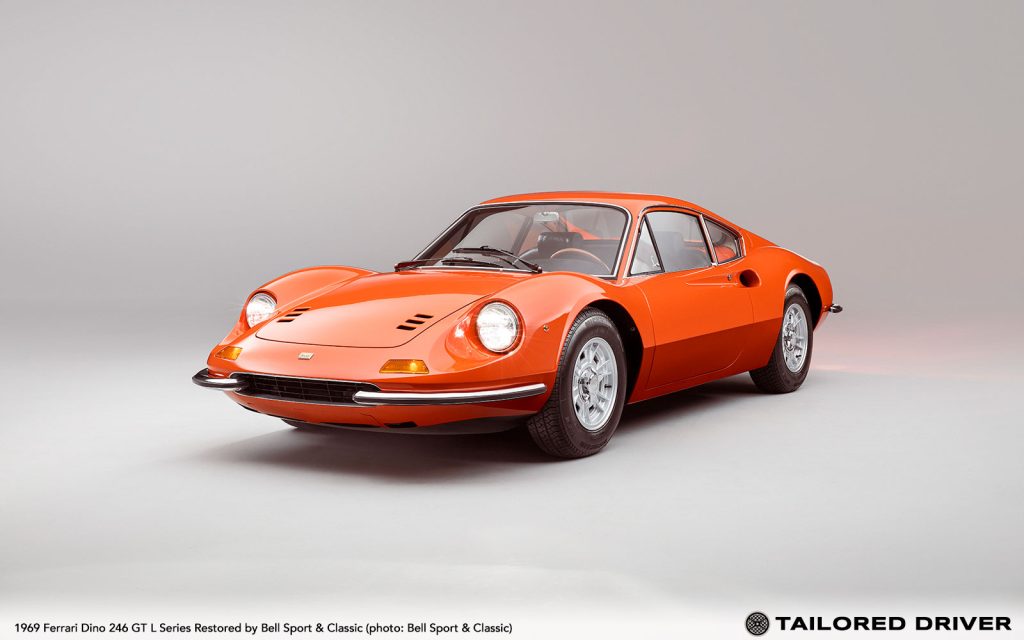
  • Bell Sport & Classic Completes Concours-Level Restoration of Rare Ferrari Dino 246 GT L Series

    Bell Sport & Classic Completes Concours-Level Restoration of Rare Ferrari Dino 246 GT L Series

    • Originally appearing on Ferrari’s stand at the 1969 Frankfurt Motor Show, this remarkable Dino 246 GT L Series has been meticulously restored to concours condition
    • Four year strip down and rebuild to Ferrari Classiche standard by Bell Sport & Classic restoration team
    • Iconic model represents seminal period in Ferrari history
    • Arguably now the best Dino in the world, it is the latest demonstration of the  benchmark-setting levels of finish Bell Sport & Classic applies to every restoration

    [source: Bell Sport & Classic]

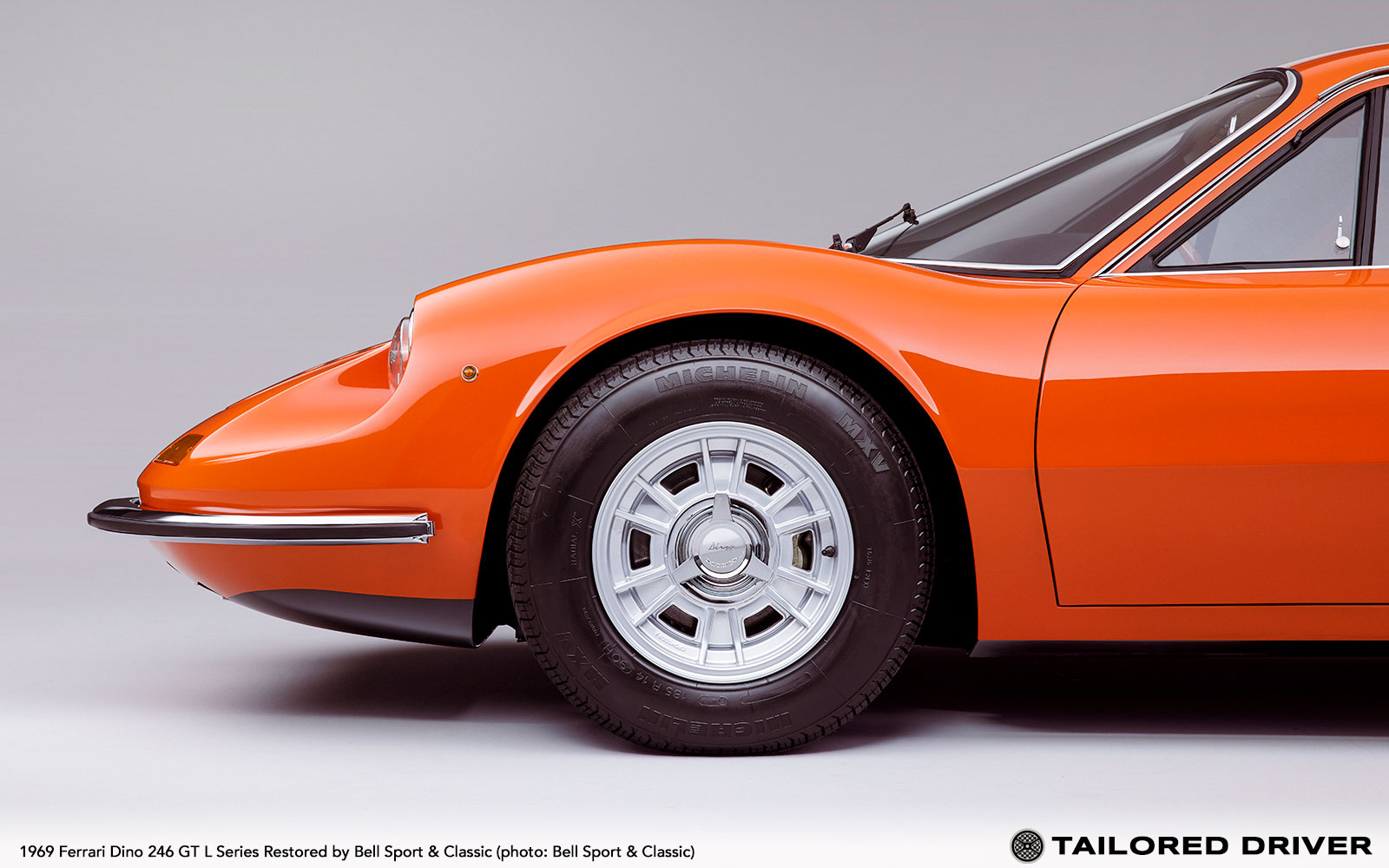
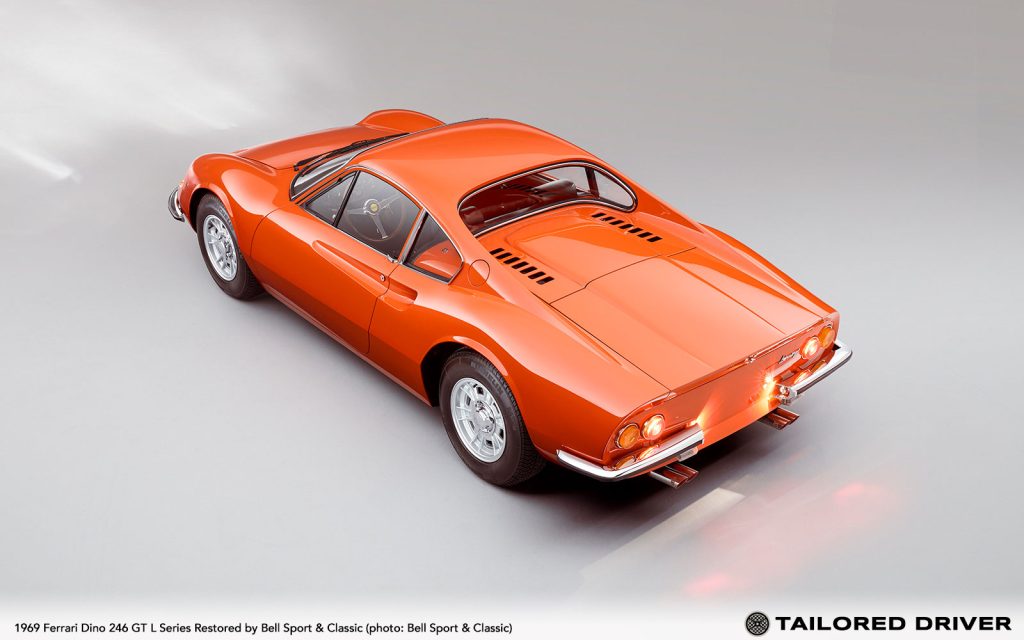
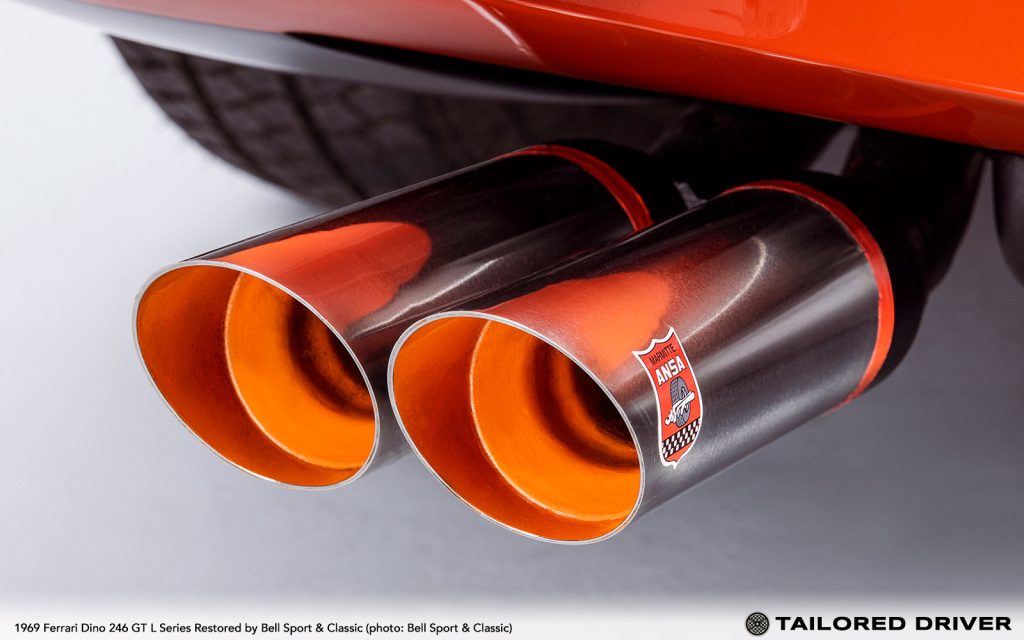
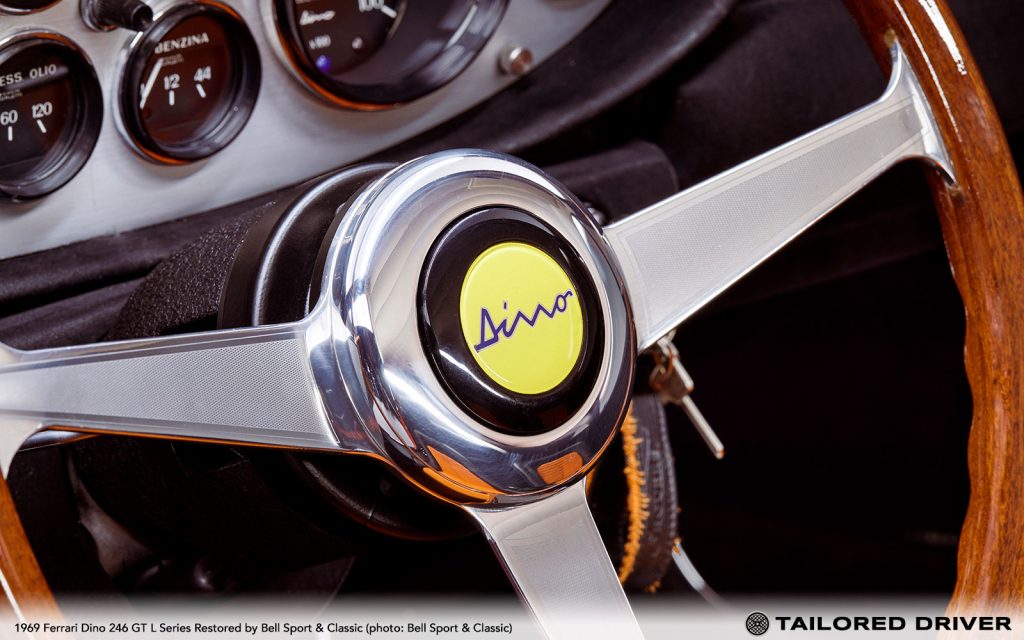
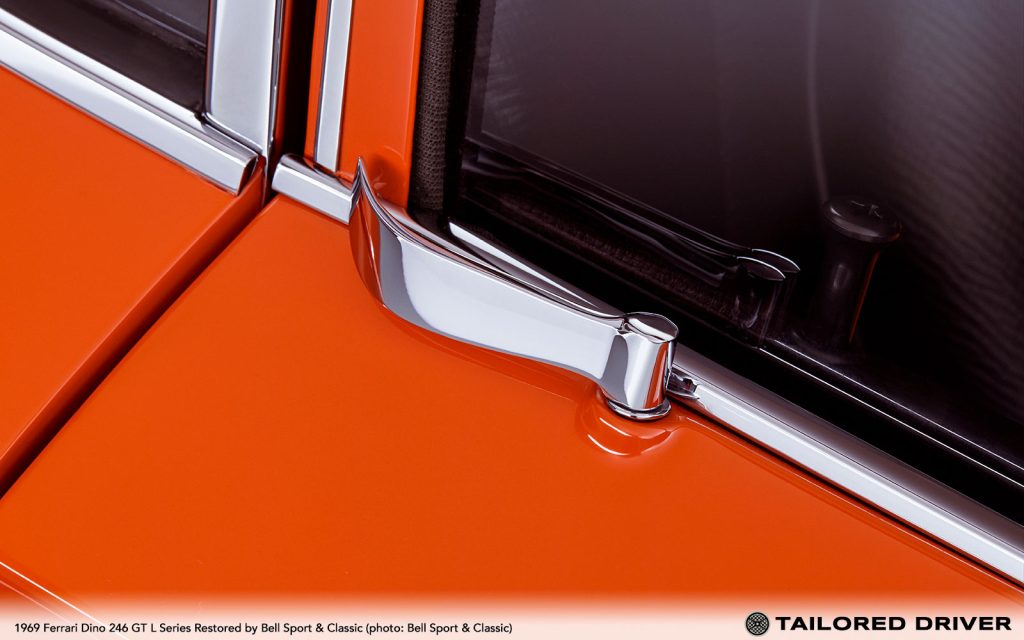
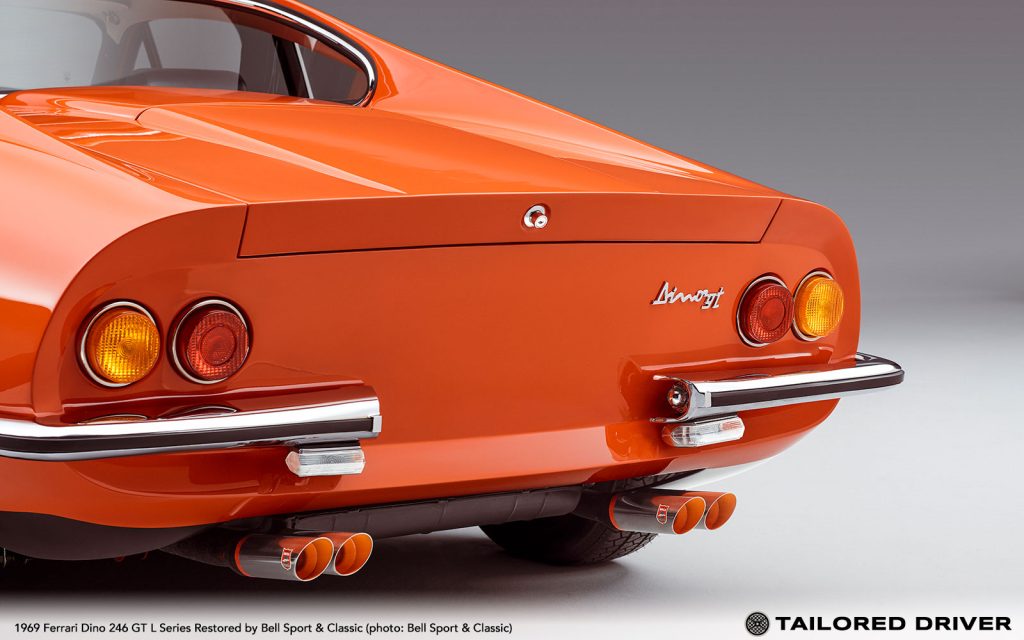
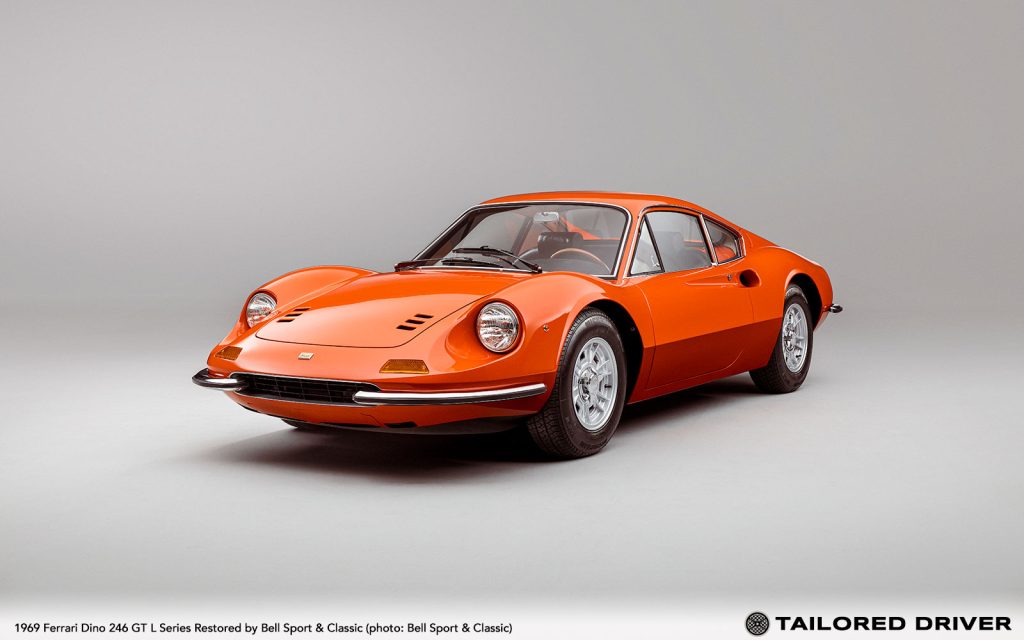
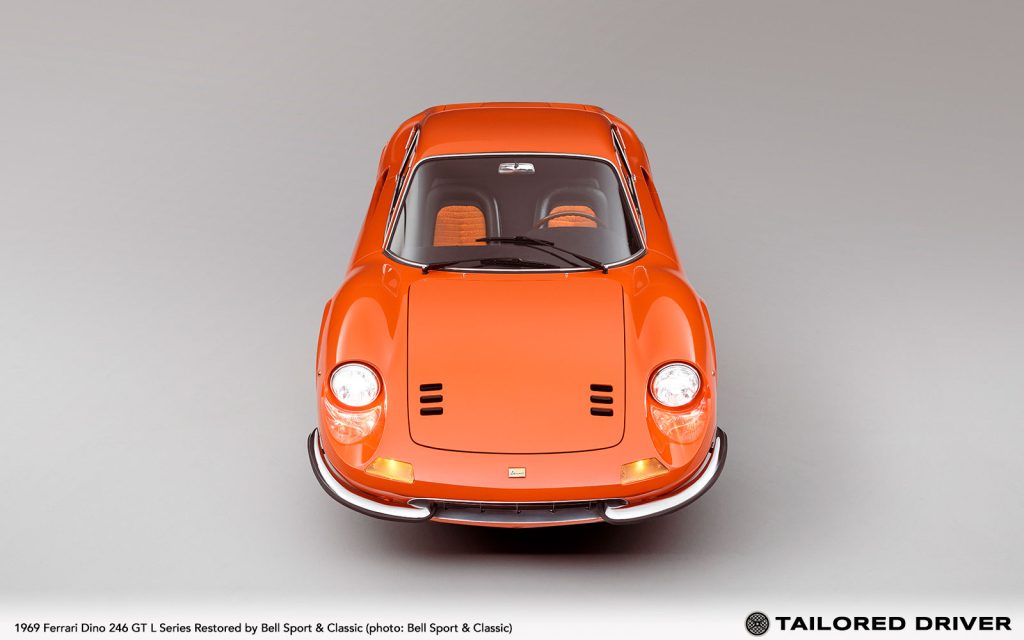
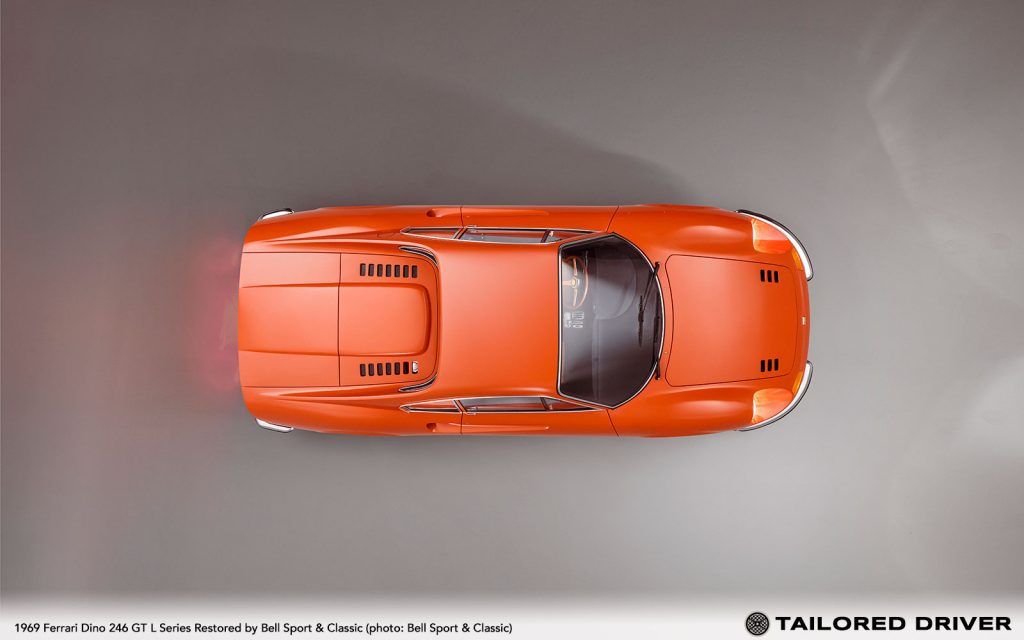
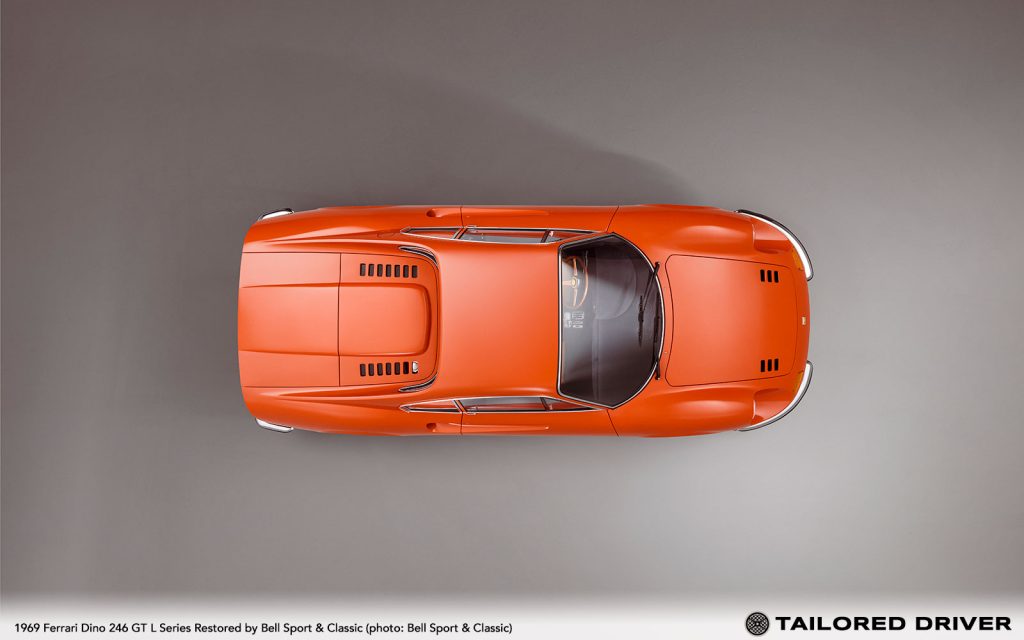
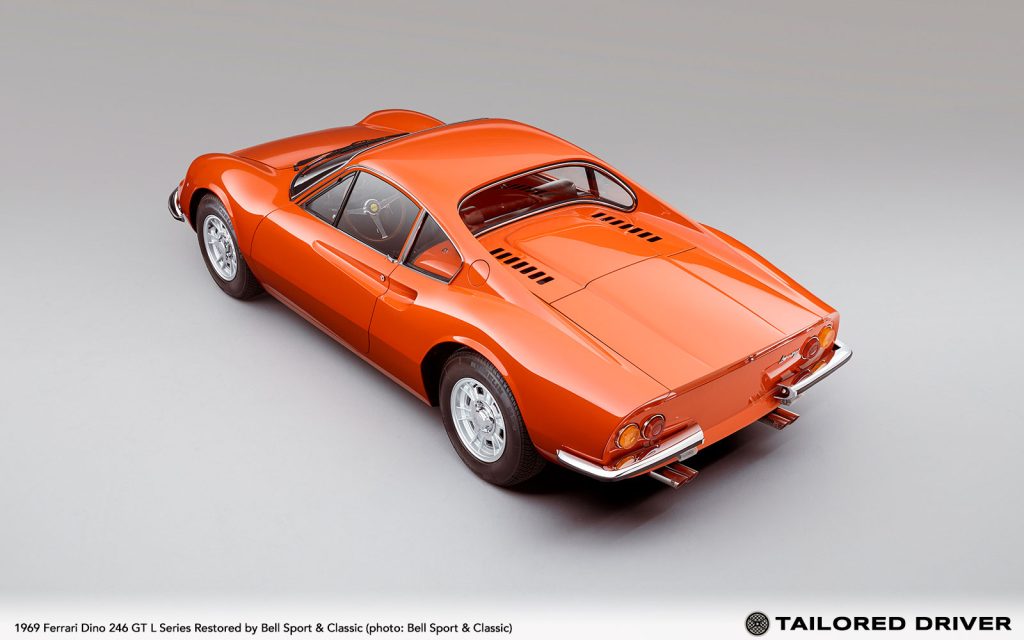
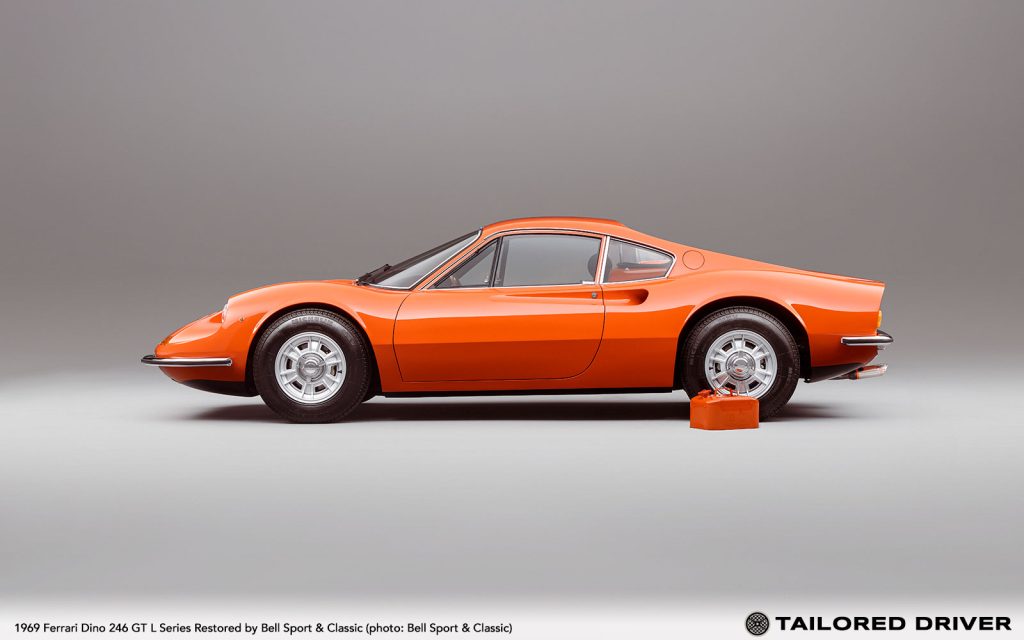
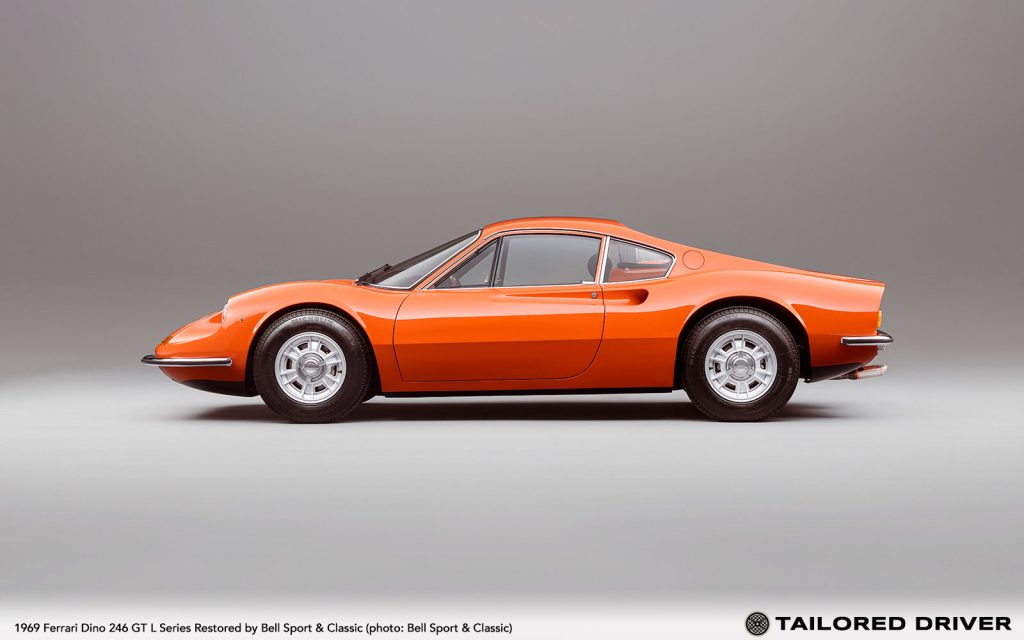
    Markyate, Hertfordshire, UK – Bell Sport & Classic is delighted to reveal the latest example of its exceptional in-house Ferrari restoration expertise: a complete, ground-up, concours-level restoration of the original 246 GT Dino L Series that debuted on Ferrari’s stand at the 1969 Frankfurt Motor Show.

    A seminal model from marque’s history, this significant car has been the subject of Bell Sport & Classic’s benchmark-setting standards, blending originality and the utmost attention to detail with the very latest restoration techniques to create arguably the best Dino on the planet.

    Leaving the Maranello factory in 1969 and exhibited at that year’s Frankfurt Motor Show before being delivered to a customer in West Germany, it was the first Dino to be sold in the country and the seventh L Series ever made by Ferrari. Today, this concours-condition, low-mileage, early left-hand drive car represents an exceptionally rare opportunity for an aficionado to add one of the most important models built by Ferrari to their collection.  

    Fitting tribute and lasting legacy
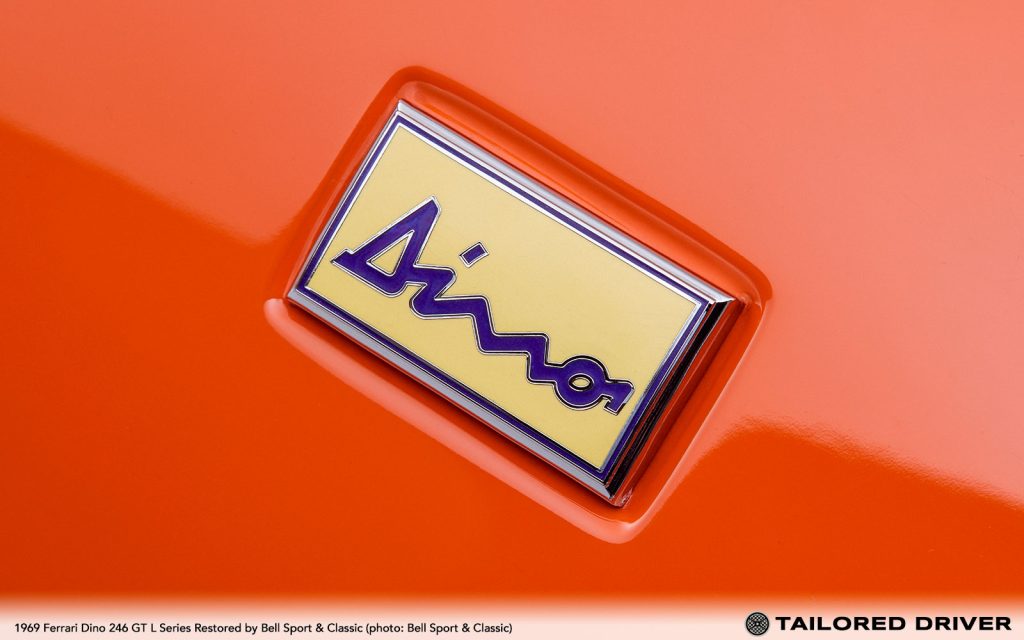
    “Enzo Ferrari first used the ‘Dino’ name to denote a range of V6 Formula 1 and Formula 2 racing engines as a tribute to his first son Alfredo ‘Dino’ Ferrari, helped develop the engines, but tragically succumbed to illness at the age of 24 in 1956,” recounts Tim Kearns, Managing Director of Bell Sport and Classic. “When Ferrari launched its first V6-powered, mid-engined road car in 1968, it did so under the ‘Dino’ brand. And instead of the traditional Cavallino Rampante or Prancing Horse Ferrari badge, the Pininfarina-designed cars carried the signature of Alfredo ‘Dino’ Ferrari.”

    The first Dino launched was the 206 GT variant, powered by a 2.0-litre V6 engine. A year later, this model was followed by the 246 GT L, which featured a 60mm longer wheelbase and boasted a more powerful 2.4-litre engine – as did the 246 GTS targa model. Maranello built just 357 examples of the L-series Dino, before following it up with the M and E-series variants, which were produced in greater numbers.

    In 1969, the highly respected motoring writer and racing driver Paul Frère summed up the Dino 246 GT L’s exceptional driving attributes: “The Dino is most fun to drive on roads with lots of bends and good visibility. I know of very few cars that offer as much driving enjoyment through this type of terrain as this one does.” 

    Frère was far from alone in his enthusiasm for the Dino. “Critics and customers alike loved the way the Dino looked, sounded and drove. The car soon became acknowledged as a ‘lifestyle’ icon, even achieving fame in the cult classic detective television series ‘The Persuaders’, in which Tony Curtis drove a 246 GT,” reveals Tim Kearns.

    “It’s remarkable to think that at the time the car made its debut, Enzo Ferrari was adamant that his road-going creations should only be fitted with V12 engines and launched the new V6-powered Dino as a sub-brand. Yet today, Ferrari has closed the circle and returned to the V6 engine format, albeit in turbocharged guise, with its new 296 GTB.”

    Improving standards, respecting authenticity
    Before arriving at Bell Sport & Classic’s extensive restoration facilities in 2017, the Dino 246 GT, which carries the chassis number 00436, confirming its status as the 7th of 357 examples built, had been moved around the globe, spending time with owners in Germany, France, Canada, and the US. Despite the car’s far-flung travels, it had accrued only 53,400 miles (86,000km) over a period of forty-eight years. But it was, however, in a very sorry state of disrepair.

    “To be honest, I doubt if many other proper restoration companies would have even considered taking this project on. The tired state the Dino was in, it just didn’t look economically viable to attempt to return it to its former glory,” recalls project leader Peter Ensor, who along with Marc Holden, Elliot East and technical director Attilio Romano formed the key team responsible for the Dino’s restoration.

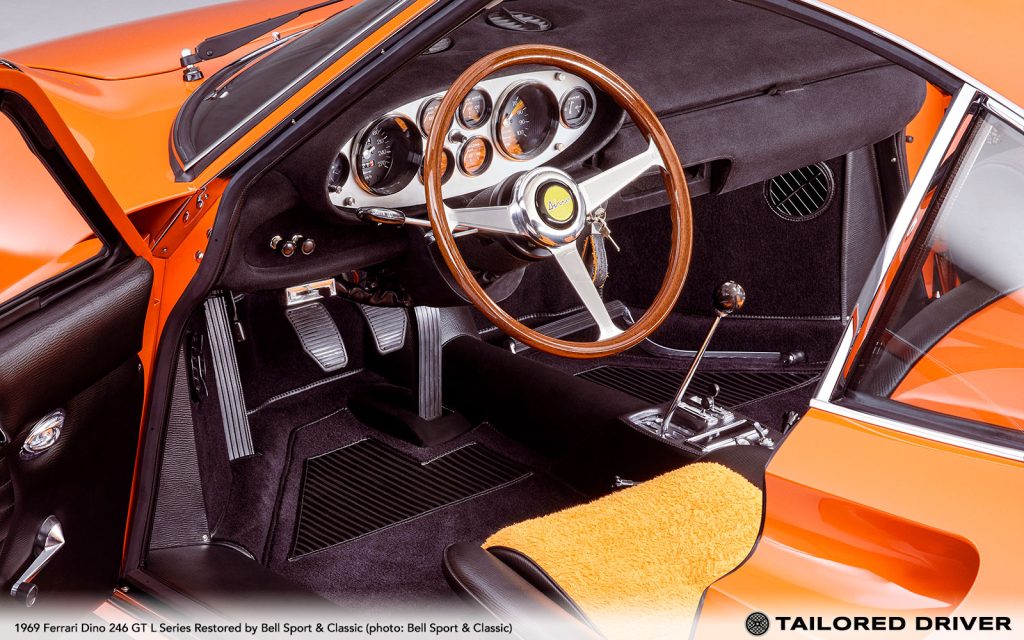
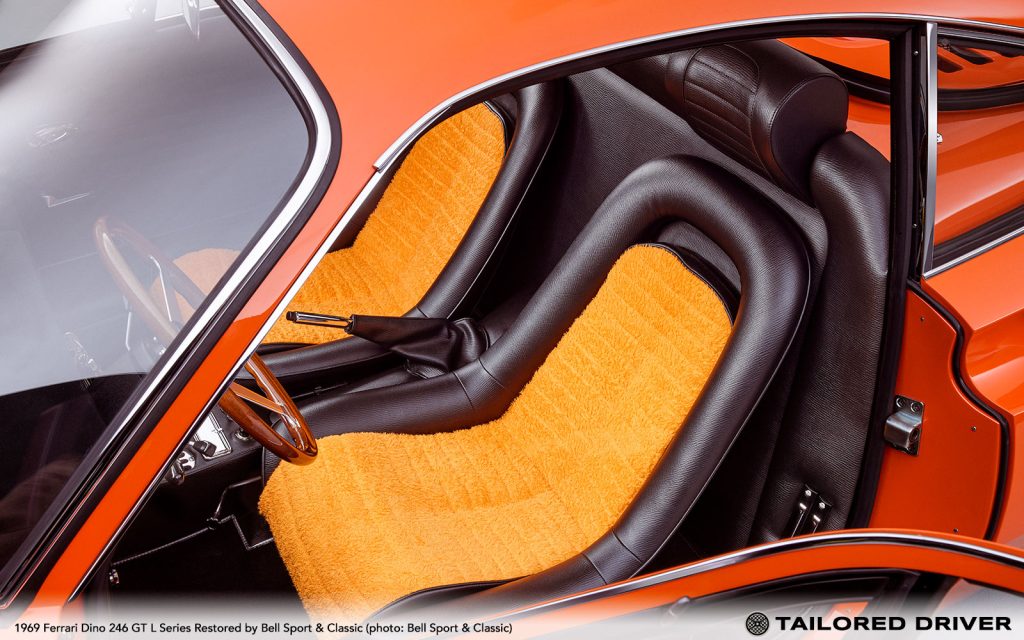
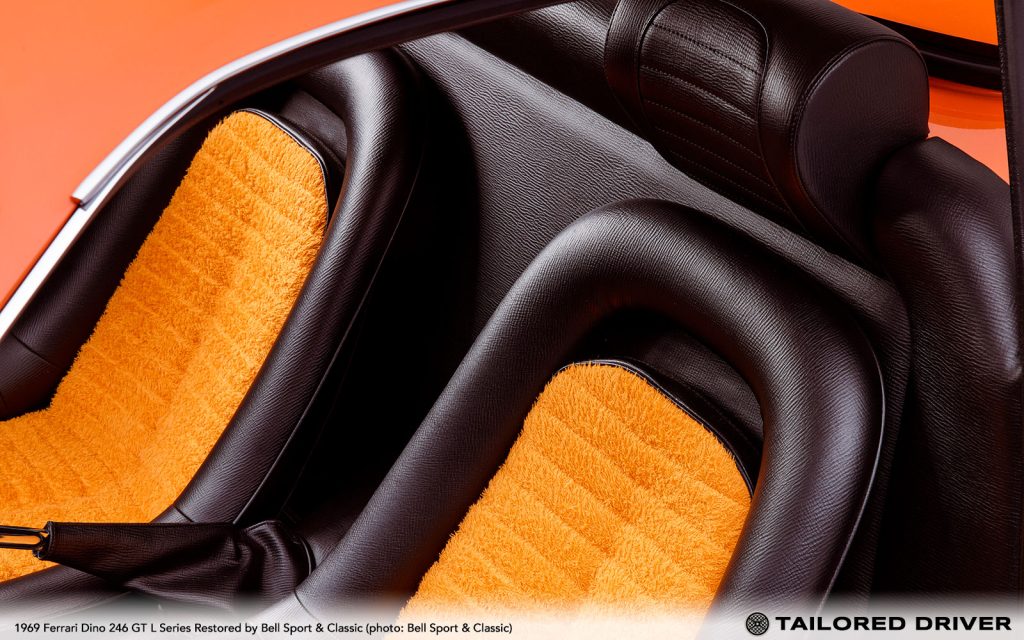
    “The car had been restored twice before in its life already, but lacked real care and precision. It was painted Rosso Corsa red instead of the original Rosso Dino, which has a more ‘orangey’ hue, the leather trim was incorrect too – it was black and red as opposed to the black with orange seat towelling interior fitted at the factory. And that was just for starters. When we delved deeper, we realised that there were plenty of other problems to address too.”

    Rust plagued the inner wings and the misshapen front and rear valances. The ‘scoops’ on the door panels did not align with those on the body, neither in terms of height nor angle, the wheel arch heights didn’t match from one side of the car to the other and the rear roofline was off-kilter. “And those were just the things we could see,” adds Elliot East wryly. “We also found that at some stage replacement front wing panels had been welded on top of the original items. The same ‘technique’ had been used on the sills and rocker panels, which meant the seam lines had been lost and rust had been locked in underneath.” 

    The full extent of the perilous state of the car was only revealed when Bell Sport & Classic completed a full strip-down to the steel monocoque. This process took several months, with the team carefully removing the aluminium panels, doors, glass and all mechanical components. Only then did it become apparent just how much effort, time, and skill – not to mention expense – would be required to restore the Dino. Yet, in some ways, the poor state of the car made it an ideal project for Bell Sport & Classic to exercise its renowned bodywork, mechanical and interior trim refurbishment expertise upon. The company prides itself in setting standards that are unmatched across the industry and deliver a level of finish significantly superior to that with which the vehicle would have left the factory in period, while fully respecting the car’s originality.

    Working to the very highest standards and having gained the coveted Ferrari Classiche certification for its impeccable work restoring previous Ferrari models, Bell Sport & Classic was eminently qualified to undertake the Dino project. But despite its exceptional knowledge and experience bank, the company left no stone unturned by seeking the expertise of Matthias Bartz, a highly respected author, and the world-leading authority on the Dino model. This enabled the vehicle’s authenticity to be determined beyond any doubt, and detailed information on the original factory specification to be obtained.

    Obsessive level of detail
    The team fully stripped the 2.4-litre V6 engine, triple Weber 40 DCF carburettors, five-speed gearbox, all-round disc brake system, front and rear coil spring, and double-wishbone suspension.

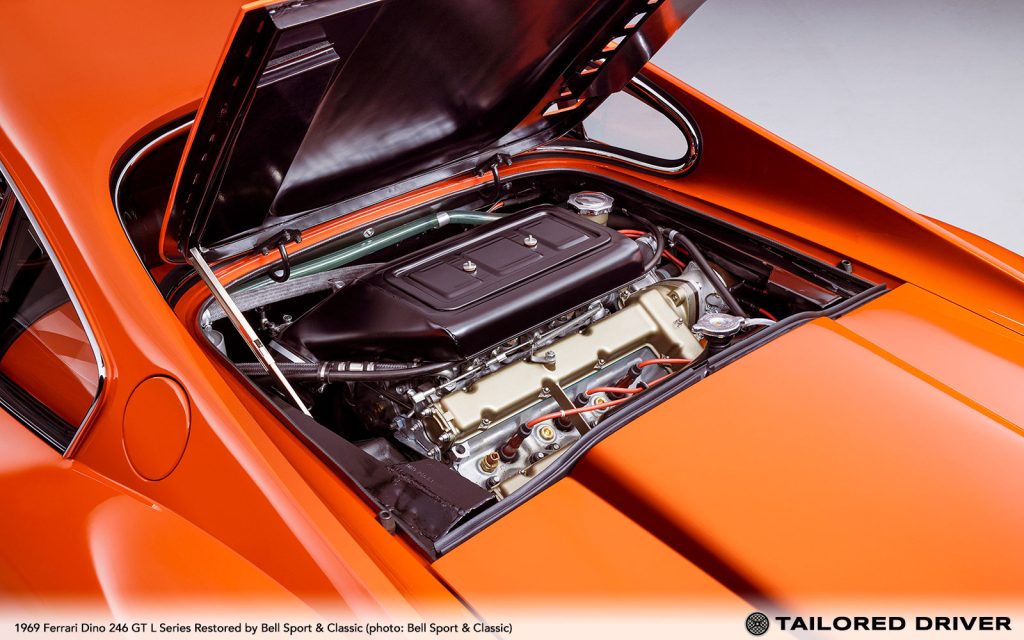
    Each component was painstakingly restored to original specification, with all worn parts refabricated or replaced as required. Once rebuilt at Bell Sport & Classic’s own specialist engine workshop, the V6 was tested on a dynamometer and bench-run for a day. After being reinstalled in the car, the engine was re-tested on a rolling road and fine-tuned to ensure it produced the precise 191bhp it left the factory with.

    Using the specialist information supplied by Bartz, the Bell Sport & Classic team went to extraordinary levels of meticulous detail to ensure they restored the Dino to the highest possible specification. “For example, there is a panel seal that runs along the sill underneath the doors. On sub-standard Dino restorations, it’s all too easy for this to fill up with paint, so the detail gets lost,” explains Ensor. “That might only be a minor thing to some people, but little things like that are everything to us. Call it obsession if you like, but on our Dino, there is not a single spec of paint on the panel seal, and the detailing is perfect.”

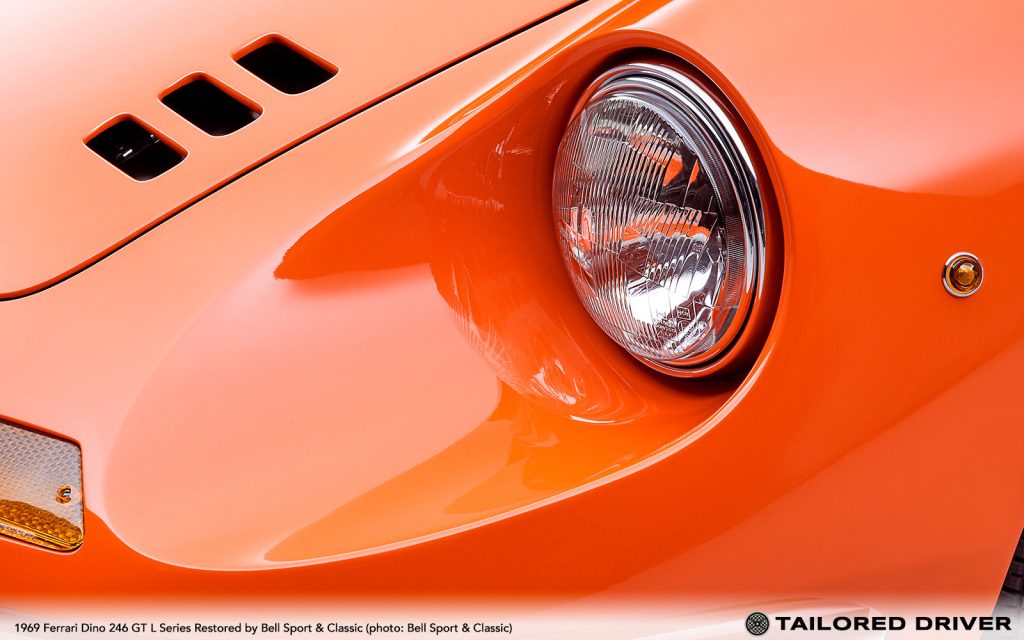
    The team took a similar fastidious approach to the Dino’s iconic air intake scoops, which cut elegantly into the doors and carry on along the rear panels to ensure the mid-mounted V6 engine has a plentiful supply of cool air. “Back in the 1960s, the people building these cars at Maranello did not have the technology at their disposal that we do today and so fit and finish were often not what they could have been,” continues Ensor. “When chassis number 00436 left Maranello in 1969, it did so with a slight mismatch on the position of the door scoops, a common enough problem at the time. We have spent hundreds of hours ensuring that the scoops are now correct.”

    Achieving symmetrical perfection required the wheel arches to be reformed and new sills to be fabricated and fitted. “Once we had the body panels perfect, we still had the issue of ensuring the scoops on the doors would align correctly with those on the body panels. That meant refabricating the doors and aluminium-welding the original scoops into the new skins,” reveals Ensor.

    Dry build for perfect finish
    Bell Sport and Classic is adamant that restoration is both a science and an art. It does not consider the process to be a matter of simply replacing damaged panels and worn-out parts. Even though doing this can save time and money, the team believes that the greater the number of new components fitted to a vehicle, the greater the risk its originality becomes depleted.

    Instead, the team uses its technical excellence, outstanding craftsmanship, and often its sheer patience in the passionate pursuit of perfection, carefully restoring and refurbishing every component to avoid needing new parts where possible. “Of course, lavishing attention to detail on every individual component makes the rebuild process even more challenging,” explains Ensor. “No car ever goes back together easily, and the more thorough the restoration, the more demanding the rebuild is because every single part of the car has been completely reengineered.” 

    The delicate and painstaking rebuild process is where the team’s skill and experience truly came to the fore, with near-constant minute adjustments of components such as body panels, window frames and sills required to ensure the perfect finish.

    “It took two weeks before we were completely satisfied that the doors opened and closed correctly and that the scoops on the doors aligned absolutely perfectly with those on the rear body panels. We spent a similar amount of time fitting the curved rear screen. That’s a very tricky job because the screen is actually bigger than the space it is going into. The only way to fit it is to put one side in first and then flex the screen ever so slightly to get the other end in,” recalls Ensor.

    More days and weeks ticked by with endless hours lavished on countless tasks such as repairing and polishing the front grille and ensuring the perfect positioning of the front sunken indicators. No component, no matter how small, escaped Bell Sport & Classic’s famous obsessive attention to detail. 

    Even the thin aluminium shell of the interior mirror had two days of polishing lavished upon it to attain perfection.

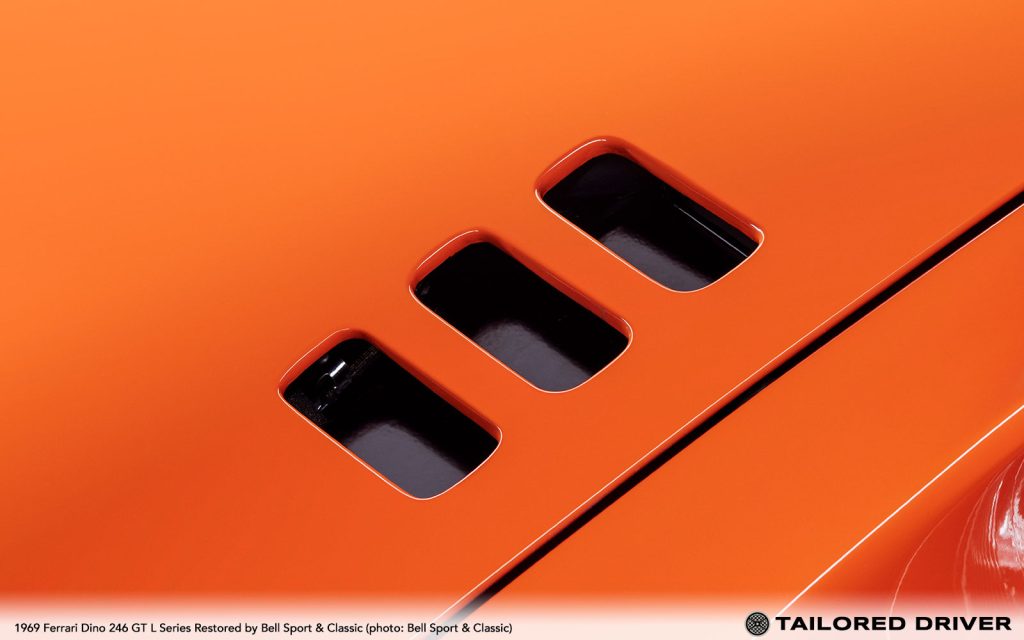
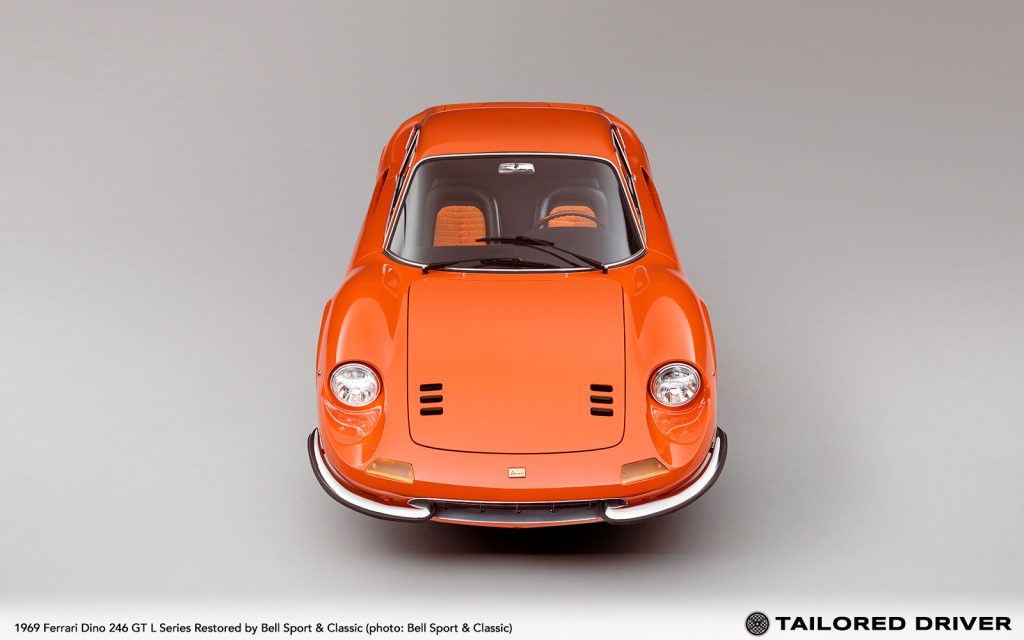
    The Dino 246 GT 00436 has been gloriously returned to its Rosso Dino (rosso dino; non-metallic Uni; 350; Ferrari) paint finish, which involved first applying the period-correct grey primer followed by a Rosso Corsa undercoat with Rosso Dino final coat. This painstaking, multi-tone process ensures the rare and desirable Rosso Dino is shown most effectively. The seats have been reupholstered in period-correct black leather complete with orange towelling inserts, and beautifully installed along with a newly built dashboard. Even the engine cam covers have been restored to their original bronze colour, ensuring the car is precisely as it left the factory in August 1969 – only better.

    Tim Kearns, Managing Director of Bell Sport and Classic, said: “Like every project we undertake, bringing the Dino 246 GT back to be life has been a true labour of love and most definitely not a clock-watching exercise. No amount of time, expense or attention to detail has been spared in ensuring the car is now in even better condition than when it left the factory. Along with its concours condition, the car’s low mileage adds to its considerable allure. With its mid-mounted V6 engine, the Dino differs from the Ferrari V12 GT models that preceded it. It represents a seminal point in the company’s history and stands as a fitting tribute to Alfredo ‘Dino’ Ferrari. There will always be an air of intrigue to this car too, as one cannot look at it without wondering what direction Ferrari may have taken if Alfredo had lived to take over the company’s reins from his father, Enzo. And that makes the Dino an exceptional car.”

    About Bell Sport & Classic 
    Bell Sport & Classic is a team of experts who have come together to provide customers unrivalled expertise across the sales, service and restoration of the world’s most revered classic and modern classic cars, specialising primarily in notable Ferraris but also Aston Martin and Lamborghini and other leading marques.

    Authenticity, originality and quality are the bedrocks of the business; Bell Sport & Classic prides itself on sourcing the ultimate in collector cars and bringing new standards to classic car restorations. Bell Sport & Classic stands apart in the classic car world as an innovator and leader in customer service.
  • Ferrari BR20: Maranello’s Latest One-Off Revealed

    Ferrari BR20: Maranello’s Latest One-Off Revealed

    • A unique new car designed by Ferrari designers to a client’s brief
    • The BR20 is a two-seater V12 coupé based on the GTC4Lusso platform
    • A sublime marriage of dynamic, modern good looks and styling flair inspired by Ferraris of the 1950s and 60s

    [source: Ferrari]

    Maranello, Italy – The Ferrari BR20, the latest addition to the Prancing Horse’s One-Off series, was unveiled today and joins the most exclusive group in Maranello’s range: unique, absolutely bespoke cars crafted to the specifications of a client and designed as a clear expression of their own unique requirements.

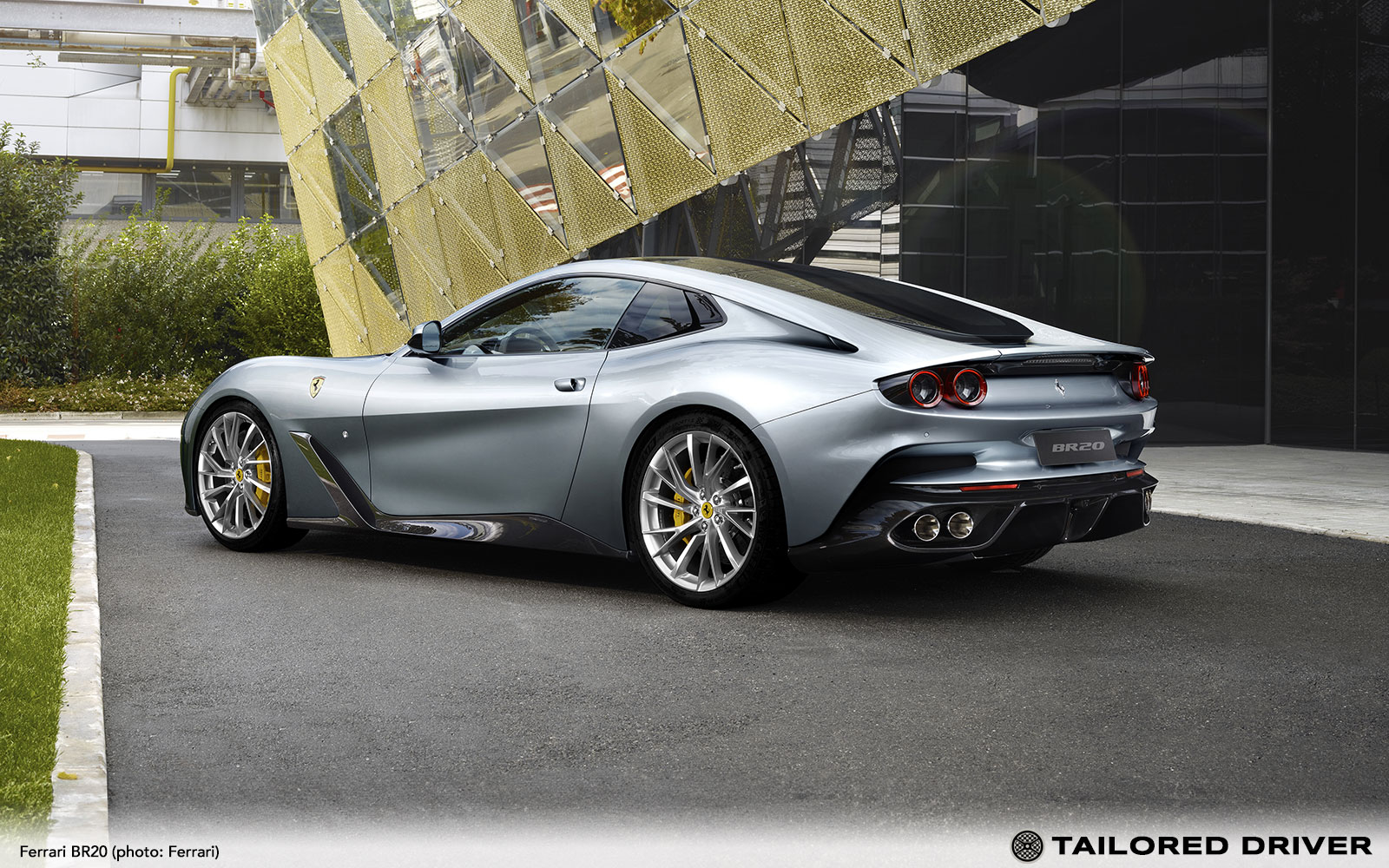
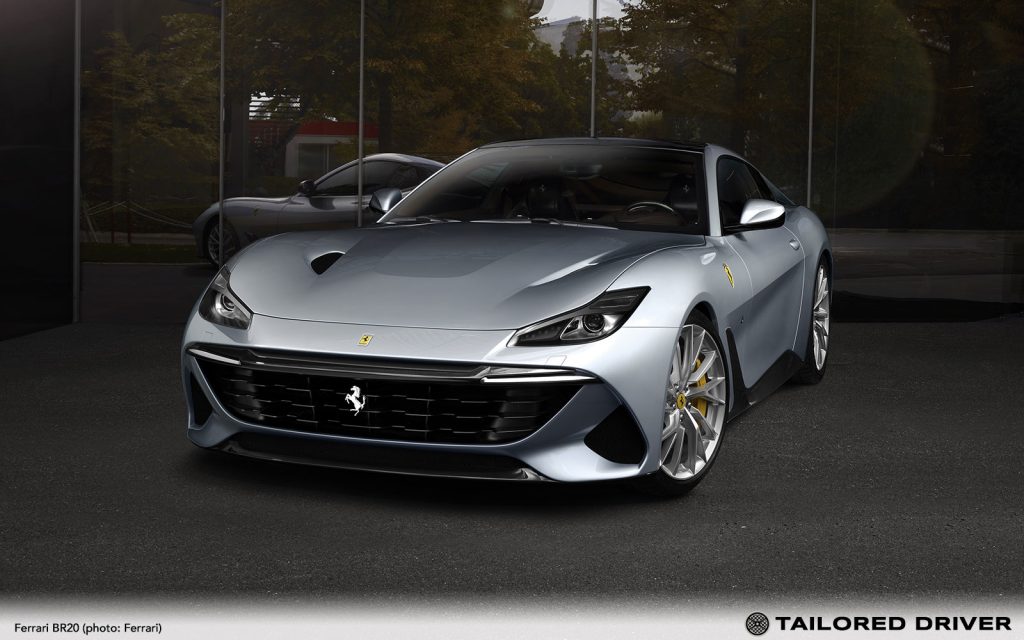
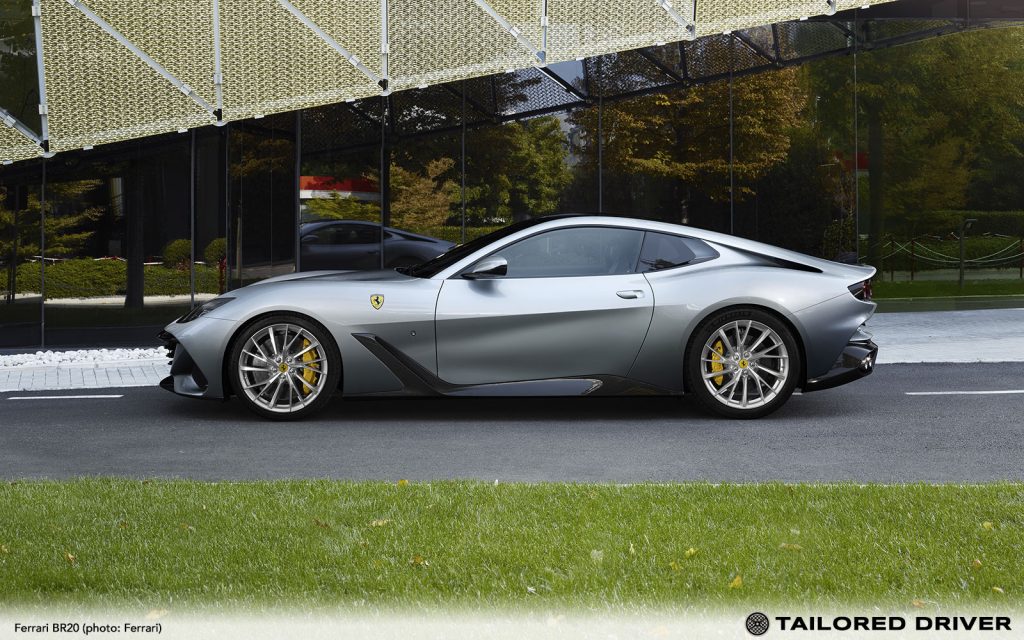
    The BR20 is a two-seater V12 coupé developed on the GTC4Lusso platform, which in terms of its philosophy and styling approach, cleverly references the magnificent Ferrari coupés of the 1950s and 60s, without the slightest hint of nostalgia. Instead, it pulls off the challenging feat of marrying timeless elegance with muscular sportiness, effortlessly incorporating styling themes typical of some of the most iconic 12-cylinders in Ferrari history, including the 410 SA and 500 Superfast.

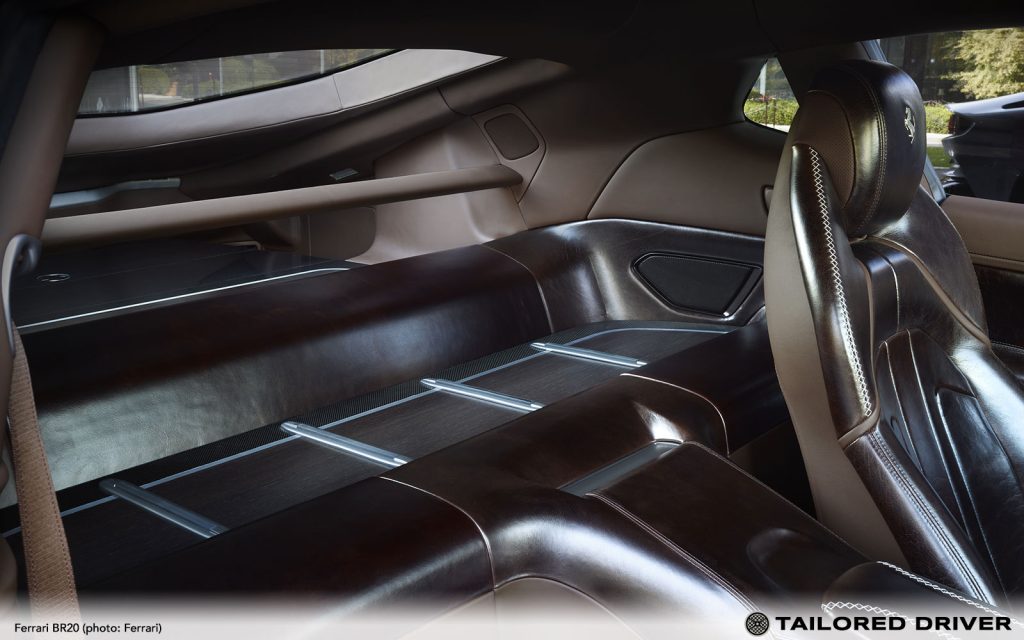
    The GTC4Lusso’s two rear seats have been removed to add extra dynamism to the BR20’s ultra-sleek fastback line. The new car is three inches longer than the original, thanks to a specific rear overhang treatment designed to create a silhouette that beautifully emphasises its proportions. One of the cornerstones of the design process for this one-off was the radical modification made to the cabin volume. This in turn gave the design team, led by Flavio Manzoni, the freedom to conceive the innovative proportions that ultimately produced a powerful yet stylistically coherent exterior design theme.

    The new cabin design solution creates the impression of a pair of arches running lengthwise from A-pillar to rear spoiler. The rear volume of the arch has been hollowed out to create an aerodynamic channel with the air outlet concealed by the black rear fascia under the spoiler. This modern take on Ferrari’s “flying buttress” theme firmly connects the car to signature Prancing Horse styling cues not just from Ferrari’s GT tradition, but also sports cars such as the 599 GTB Fiorano. To visually lighten the cabin, the black paint of the roof visually connects the windscreen to the rear screen, which stands above the surface of the rear tailgate as if to channel the air flow.

    A muscular rear bumper melds beautifully with the aggressive look of the rest of the car: twin taillights create a visual dialogue with the tailpipes, which are lower and set into a prominent aerodynamic diffuser with active flaps on the underbody. Even the BR20’s twin round exhaust tips were designed especially for this bespoke model.

    The BR20’s many carbon-fibre details highlight the edgy dynamic characteristics and powerful performance of this extraordinary four-wheel drive car. High, sinuous sills add an extra hint of dynamism to the lower section of the flanks as well as emphasising the front air vents on the wheel arches. The wide front grille sports an upper carbon-fibre element, a note of stylistic consistency with other recent Ferrari one-offs, whileunusual chrome side inserts help underline the car’s dynamic front stance.
    The BR20’s unique identity is further underscored by the front grille’s striking new horizontal slats that lend a powerful sense of three-dimensionality. A virtually endless list of elements was designed specifically for the BR20, not least its modified headlights. They are lower in height compared to those of the GTC4Lusso with slimmer DRLs, which makes the bonnet seem even longer and sleeker. The 20” tone-on-tone diamond-finish wheels were also created especially for this unique car.

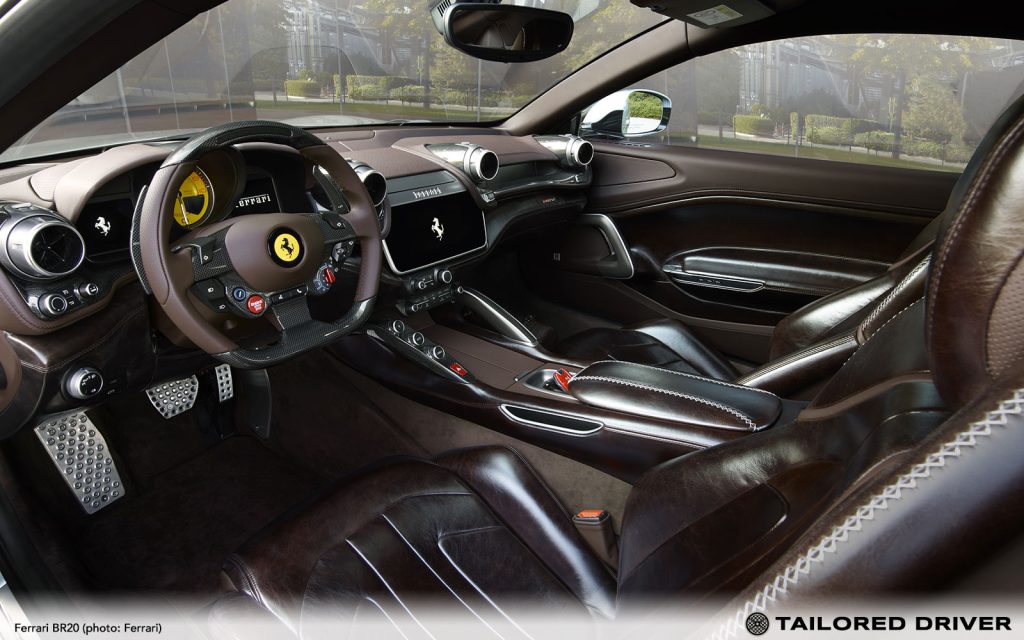
    The BR20’s interior is no less impressive, trimmed in two shades of brown leather and carbon-fibre, an exquisite combination developed according to the client’s indications. The seats are trimmed in dark brown Heritage Testa di Moro leather and sport an exclusive pattern at the front as well as silver cross-stitching. The cabin volume runs uninterrupted from the windscreen to the luggage compartment at the rear, creating a sense of unique lightness and airiness for occupants. Oak trim with carbon-fibre inserts adorns the rear bench and luggage deck, which conceals a deeper loading area when folded flat, as well as the door handles.

    Designed for a longstanding client who was deeply involved in every step of its creation, the Ferrari BR20 represents a true interpretation of the traditional coachbuilder’s art, successfully transforming an existing model in a masterful and unique way taking inspiration from and paying homage to the company’s core values of innovation and passion.

    SPECIAL PROJECTS

    The Special Projects programme is aimed at creating unique Ferraris (the so-called “One-Offs”) characterised by an exclusive design crafted according to the requirements of the client, who thus becomes the owner of a one-of-a-kind model. Each project originates from an idea put forward by the client and developed with a team of designers from Ferrari’s Styling Centre; after having defined the car’s proportion and forms, detailed design blueprints and a styling buck are produced before starting the manufacturing process of the new One-Off. The entire process lasts on average more than one year, during which the client is closely involved in assessing the design and verification phases. The result? A unique Ferrari, which sports the Prancing Horse logo and is engineered to the same levels of excellence which characterise every other Maranello production car.

  • Ferrari Omologata: A New One-Off-Creation

    Ferrari Omologata: A New One-Off-Creation

    • Fiorano sees the premiere of the 
    • 10th one-off crafted over a V12 platform

    [source: Ferrari]

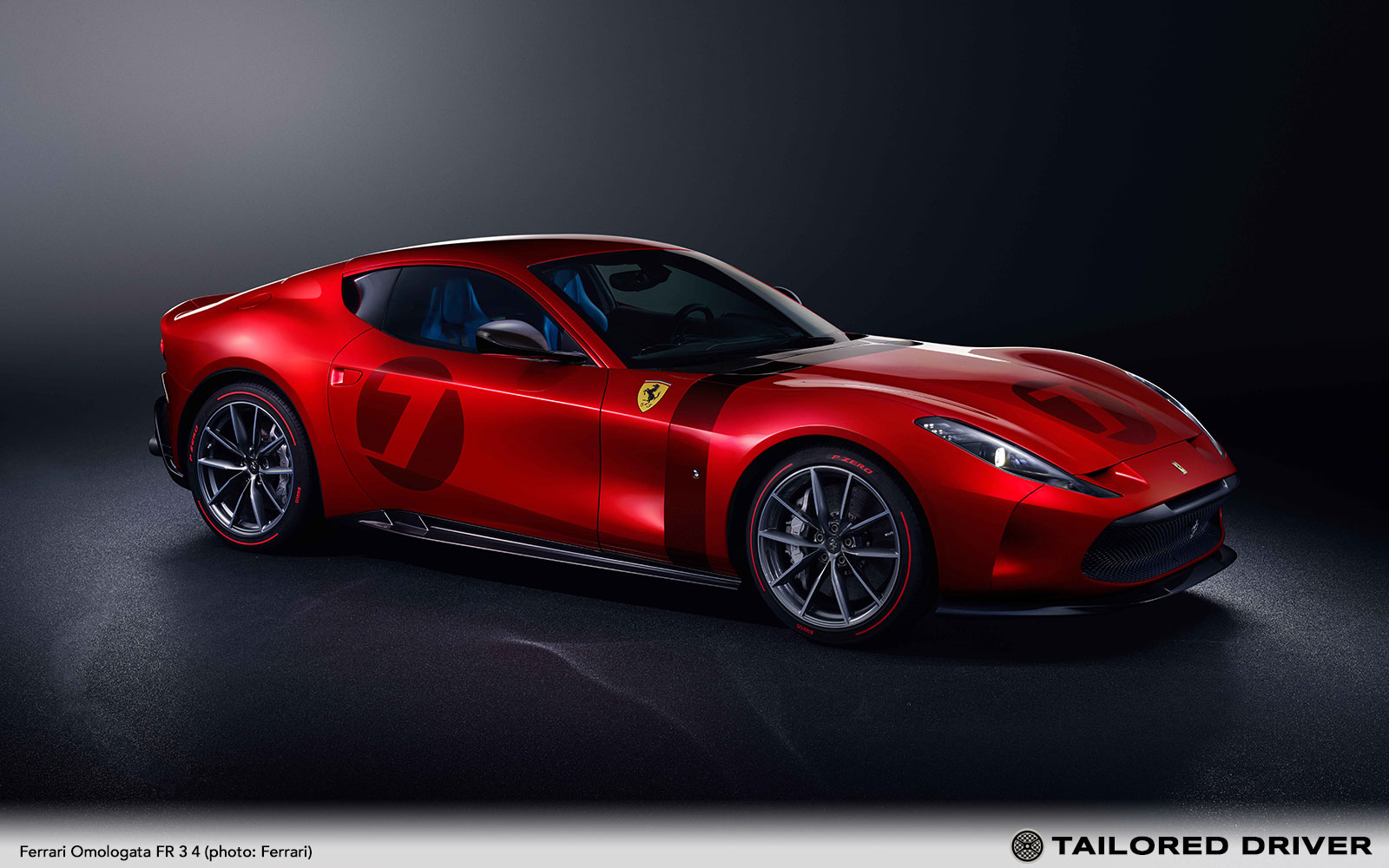
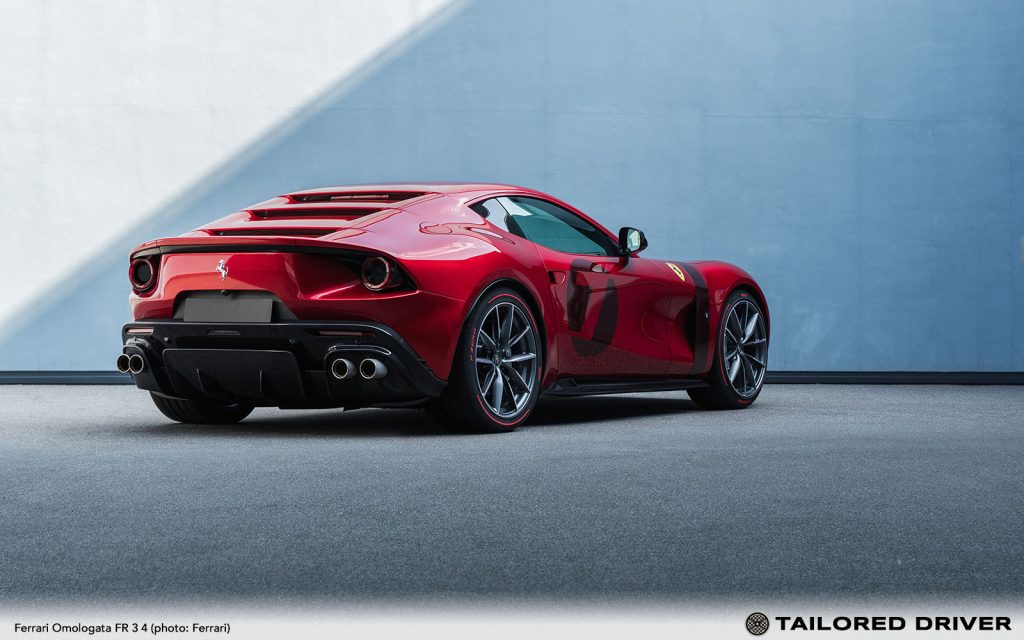
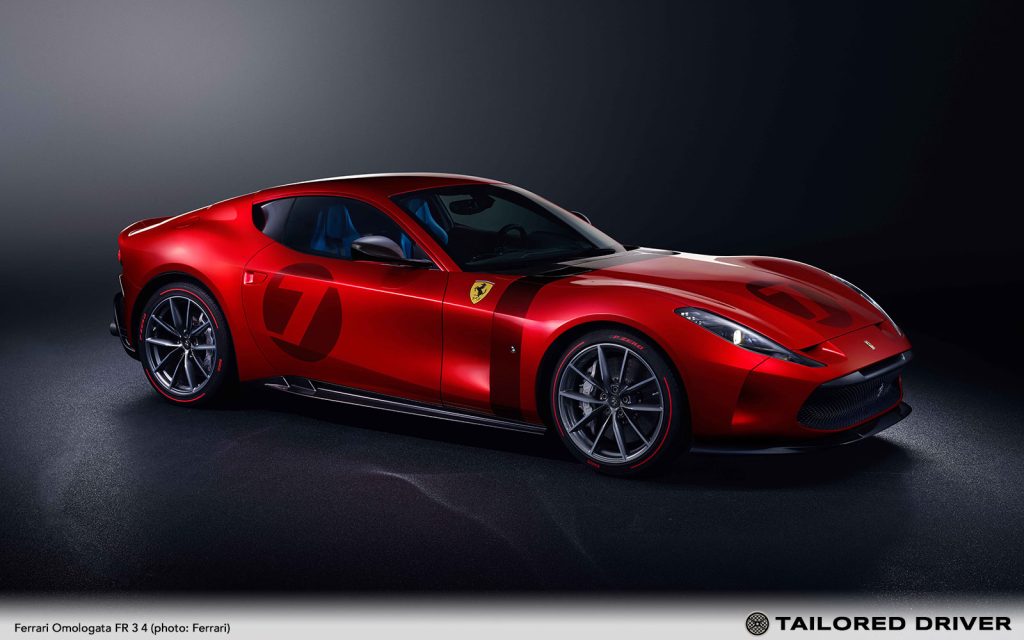
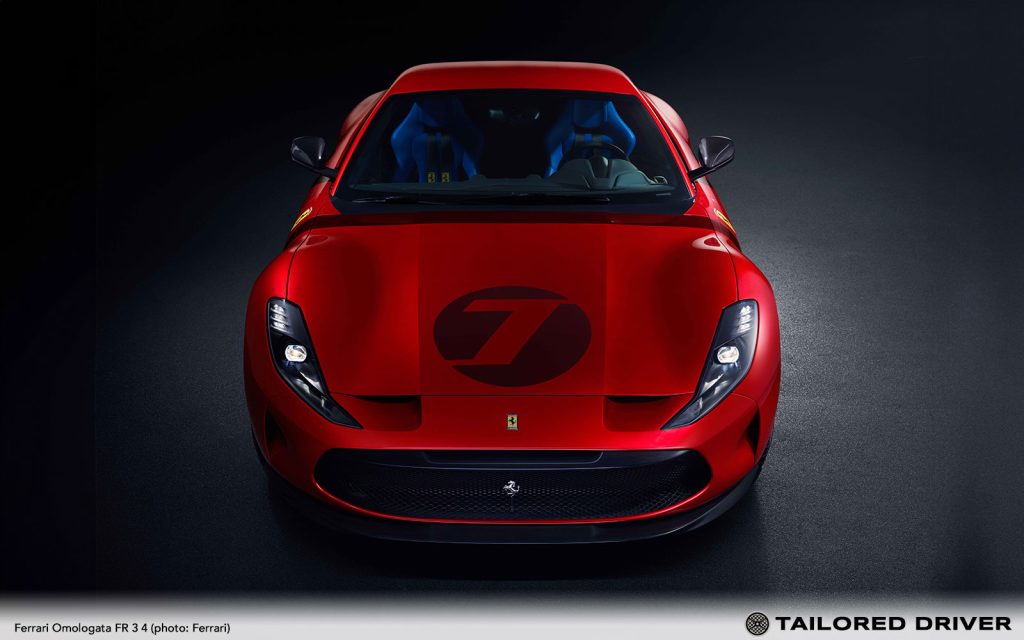
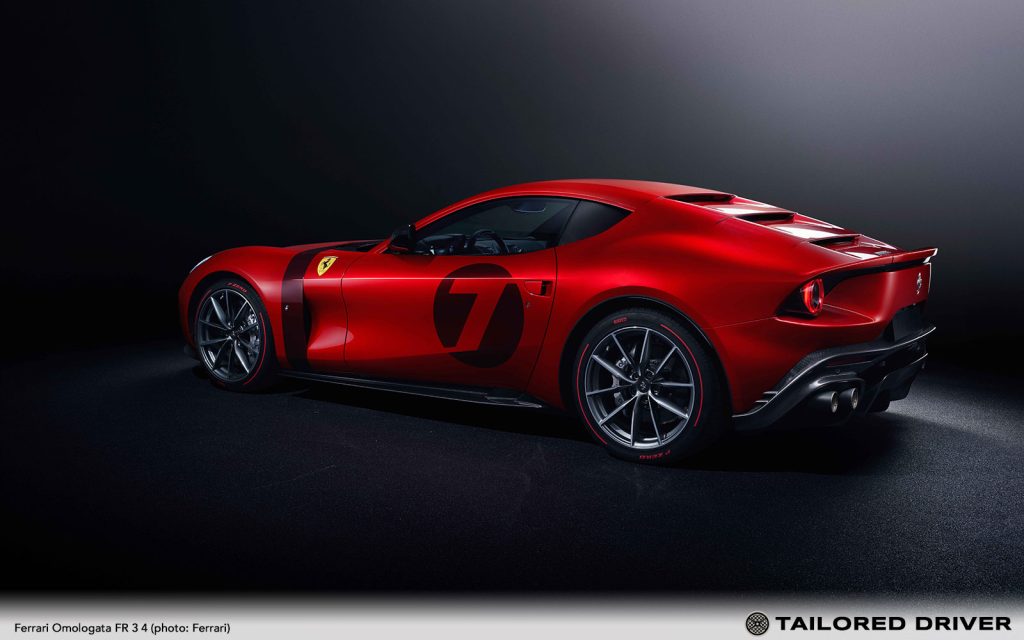
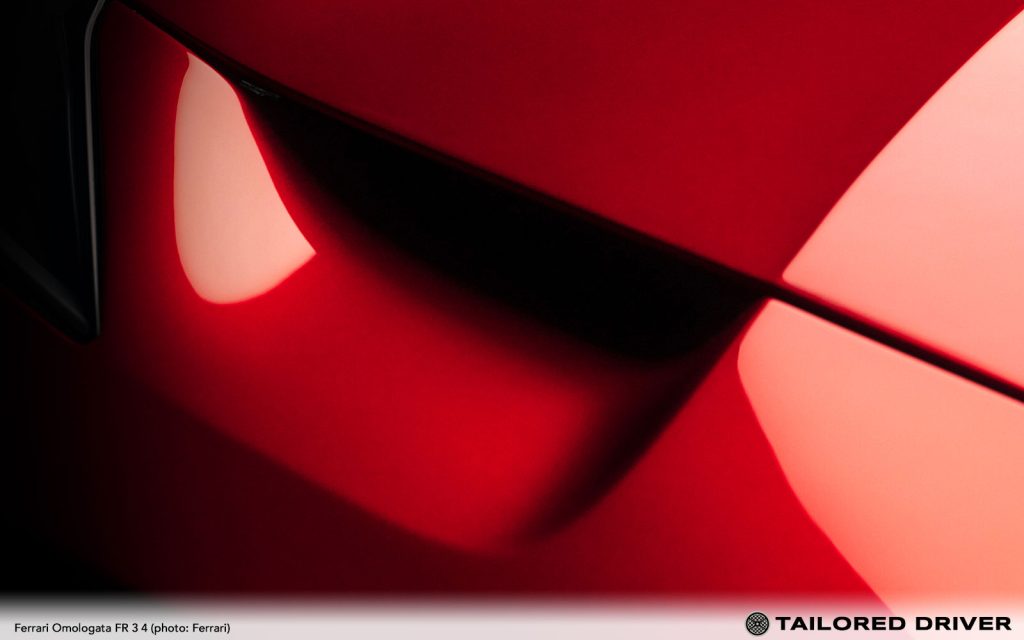
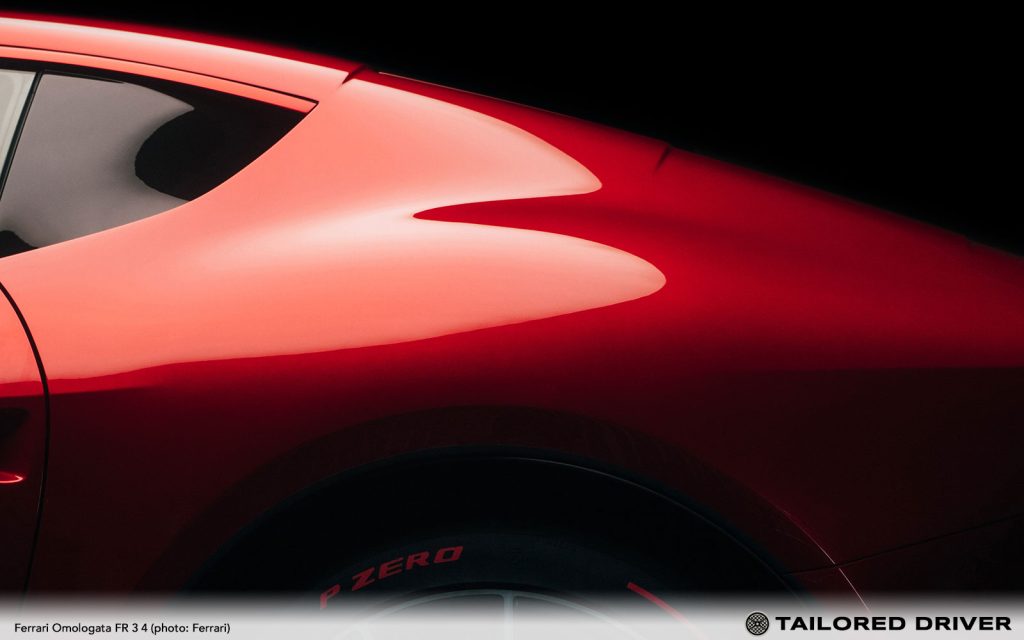
    Maranello, Italy – A unique Ferrari has been seen lapping Fiorano today during a brief yet intense shakedown. While the V12 engine note reverberating around the track may have sounded familiar, the car’s arresting looks are unique although guaranteed to strike a chord with the marque’s aficionados. With its Rosso Magma finish and sophisticated racing livery, the new Ferrari Omologata is a clear descendent of Ferrari’s great GT tradition spanning seven decades of history.

    Commissioned by a discerning European client, the latest offering in Ferrari’s line of unique coachbuilt one-off models is a vibrant evocation of the values that define Ferrari in relation to GT racing: a car that is equally at ease on the road as it is hitting the apex on the track in the hands of a true gentleman driver.

    The Ferrari Omologata project took a little over two years to complete from the initial presentation of sketches, starting with images that covered a variety of inspirations, from racing heritage to sci-fi and references to modern architecture. The idea from the onset was to create a futuristic design with distinctive elements reinterpreted in a fresh manner to provide potential for a timeless shape that is certain to leave a lasting impression.
    To achieve this, the designers unlocked every possible area of freedom from the underlying package of the 812 Superfast, keeping only the windscreen and headlights as existing bodywork elements. The objective was to exploit the proportions of the potent, mid-front layout to deliver a very sleek design defined by smooth volumes and undulating reflections, uplifted by sharp graphics with sparingly distilled surface breaks wherever dictated by aerodynamic functions. The trickiest aspect was striking the ideal balance between expressiveness and restraint: the Omologata had to ooze street presence whilst maintaining a very pure formal language.

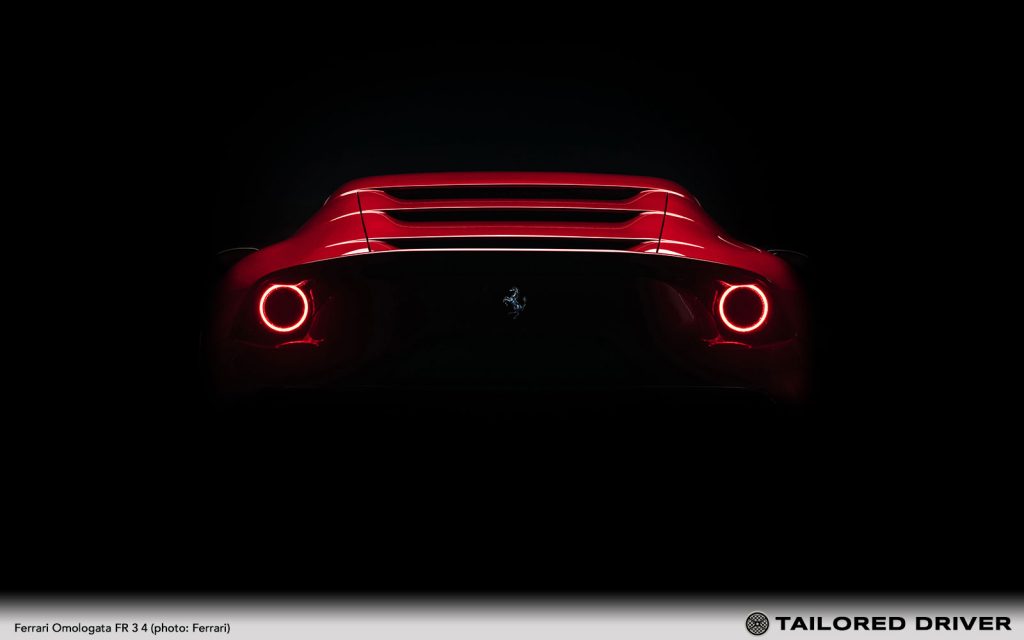
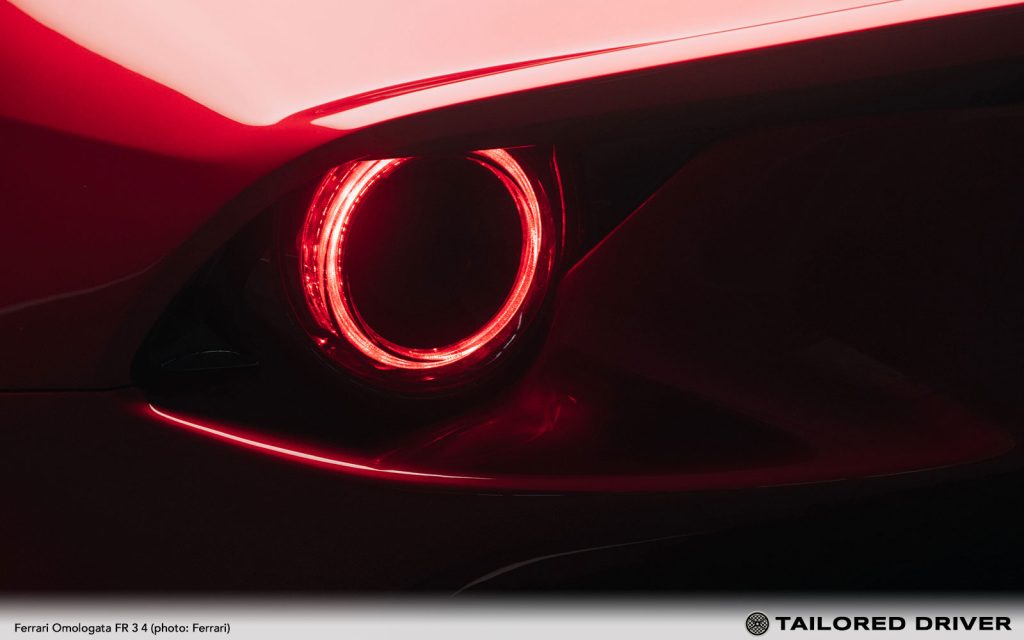
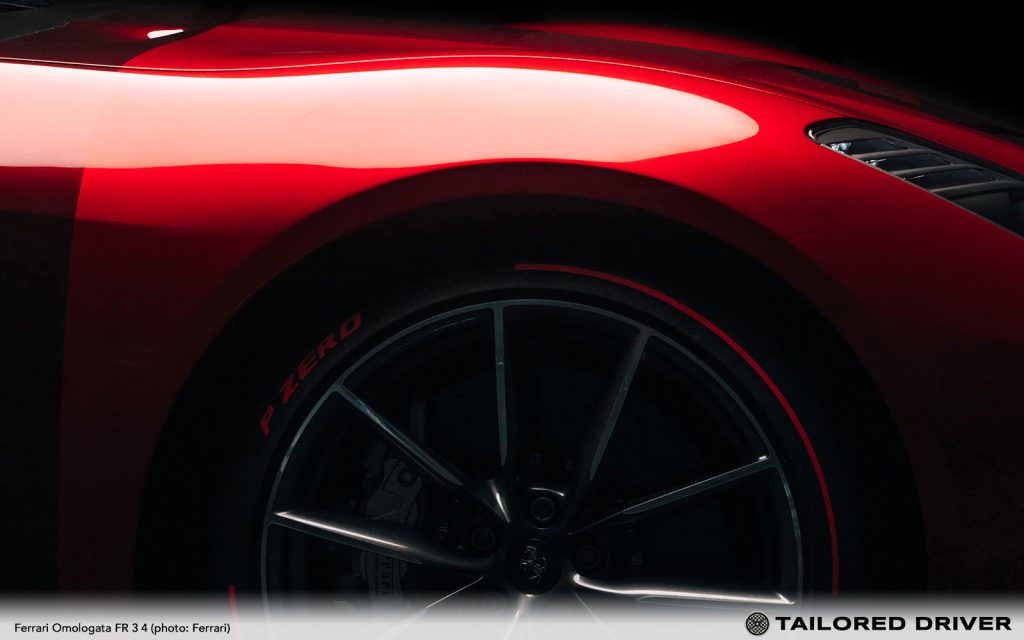
    The designers carefully studied the stance and attitude of the car from all angles, defining a tapering front volume from the flattened oval grille. The rounded section over the front wheelarches, emphasized by a contrasting stripe wrapping across the bonnet, seems to naturally extrude from the grille. Rear of the door, the flank develops into a very potent rear muscle that neatly blends upwards into the three-quarter panel. The entire volume is rendered deliberately imposing through the elimination of the rear quarter light, while three horizontal transversal cuts in the fastback volume visually lower the rear mass. The tail is surmounted by a prominent spoiler which adds not only downforce, but a more aggressive, sporty stance. Overall, the car appears to be poised to attack the tarmac even at a standstill and, seen from the rear, the deeply set single taillights underline the tension.
    Uniqueness in more than name

    Satisfying every safety constraint for road homologation without interfering with any of the usability and tractability of a Ferrari is always a huge challenge for the design team led by Flavio Manzoni, the more so when starting from an existing platform. Omologata was indeed a keyword that resonated throughout the development of this, the 10th front-engined V12 one-off Ferrari has delivered since the 2009 P540 Superfast Aperta. Beyond the clear instructions coming from the client and down to every detail on the car, the designers effectively took into account countless variables to make this a bespoke model through and through, one which could easily find its place in any Ferrari showroom. The quest for the ultimate touch went as far as developing a new shade of red just for the livery, to match the fiery triple-layer Rosso Magma over darkened carbon-fibre finish.

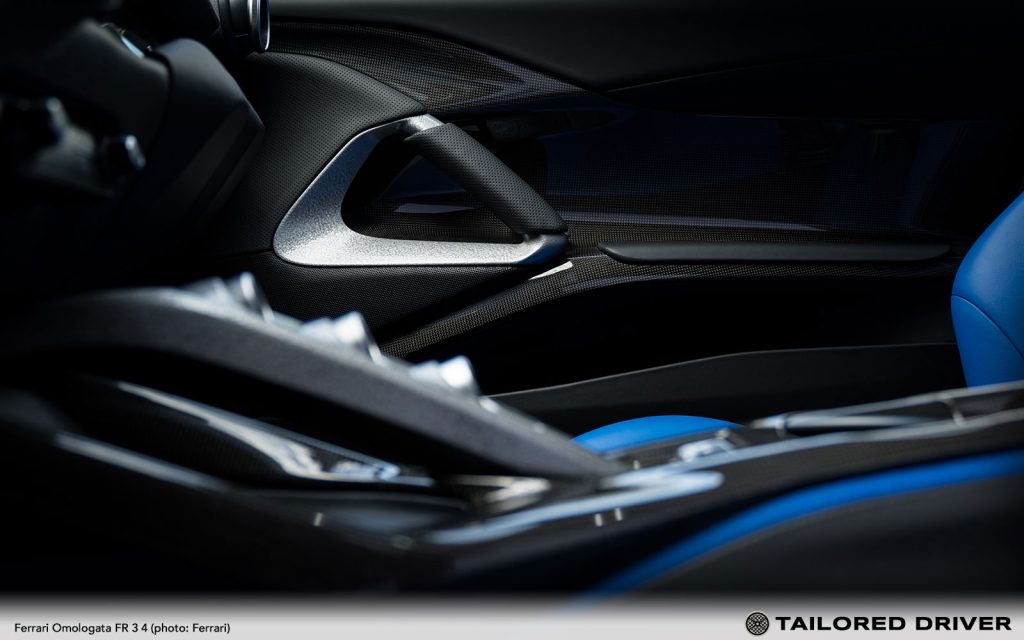
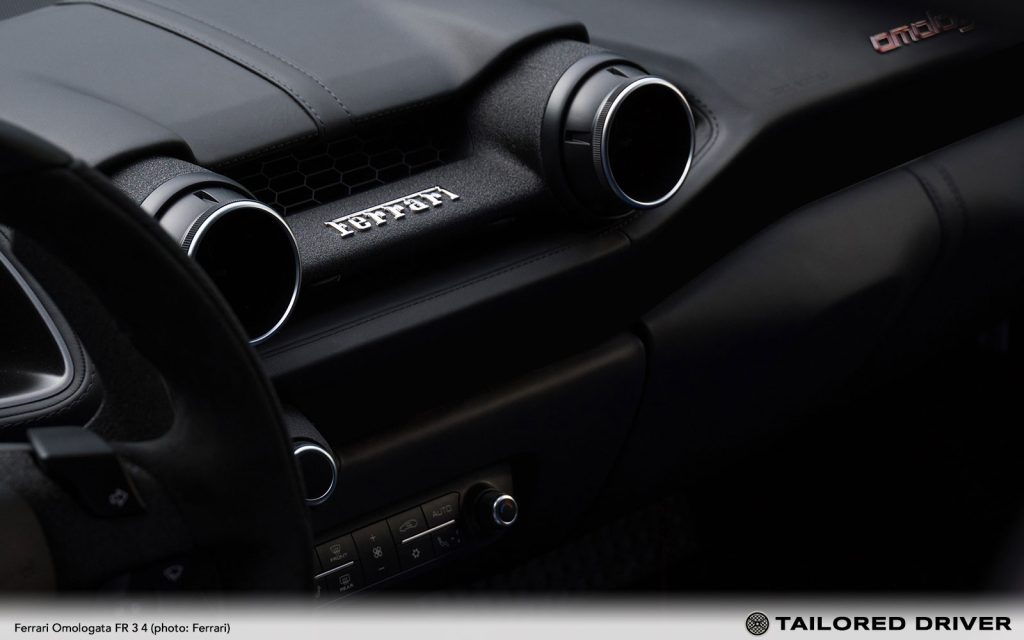
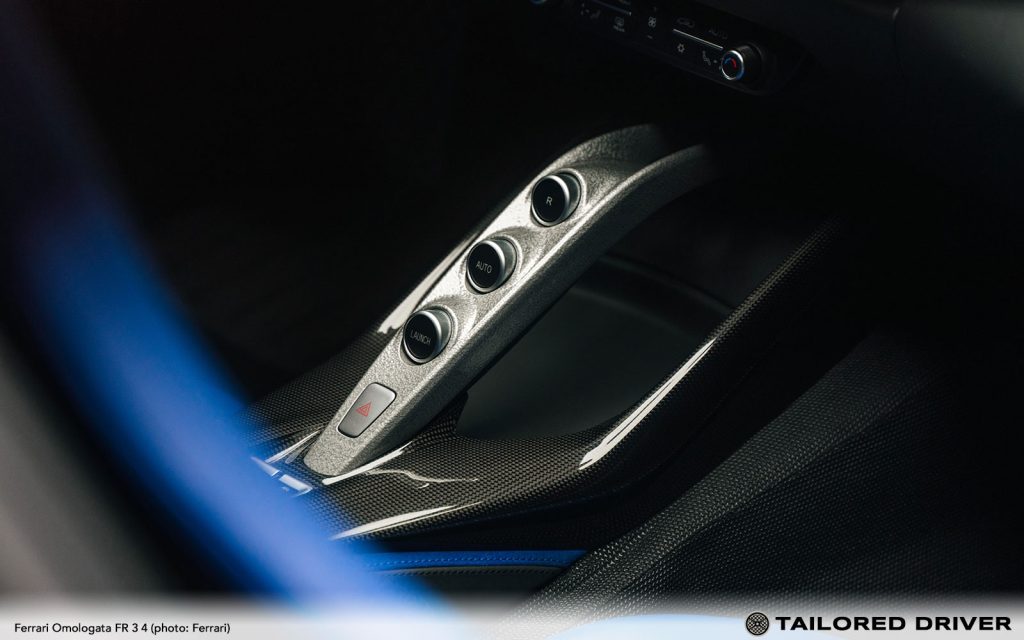
    Inside the car, a plethora of trim details suggests a strong link to Ferrari’s rich racing heritage. The electric blue seats, finished in a tasteful combination of leather and Jeans Aunde® fabric with 4-point racing harnesses, stand out against a full black interior. In the absence of rear quarter lights and screen, the atmosphere in the cabin is purposeful, reminiscent of a bygone era. Metal parts on the dashboard and steering wheel are finished with the crackled paint effect associated with the great GT racers of the 1950s and 1960s as well as with Ferrari’s engine cam covers. A hammered paint effect so often used in cars such as the 250 LM and 250 GTO finds its way on details such as the inner door handles and on the Ferrari F1 bridge.
    A fitting one-off exercise, the Omologata manages to encompass a range of subtle Ferrari signature design cues without falling into nostalgia. Its hand-crafted aluminium bodywork is sprinkled with almost subliminal details, in a way that challenges the enthusiast to identify the various sources of inspiration that played a part into its inception.

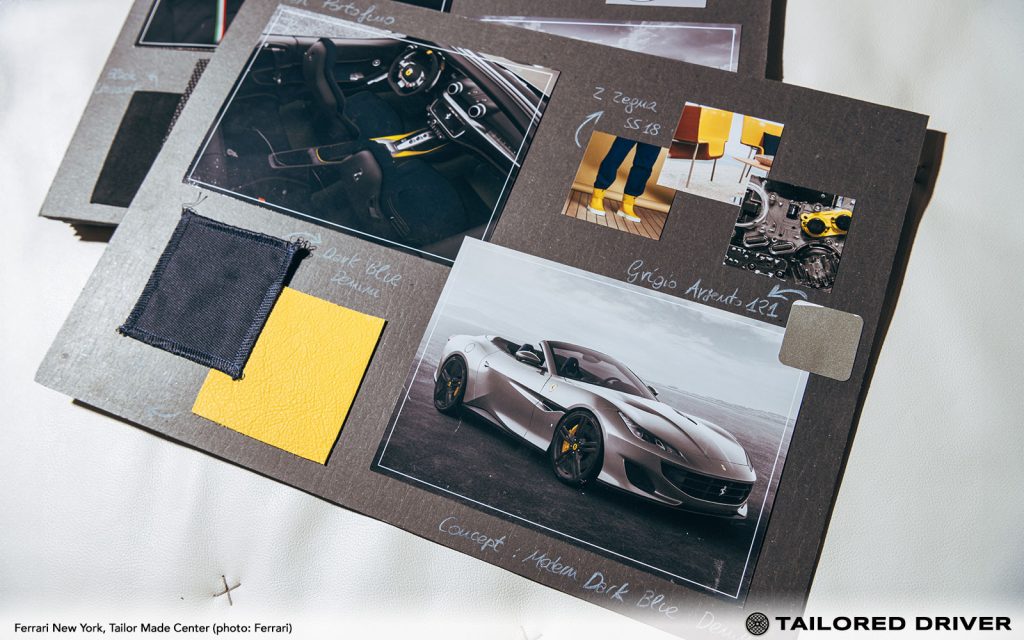
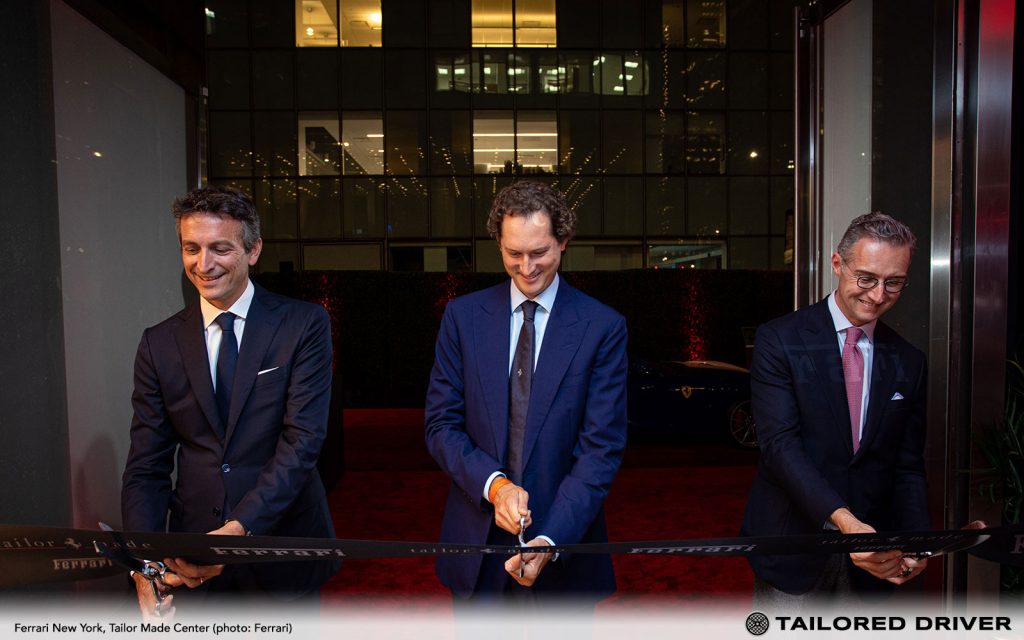
  • Ferrari Opens Tailor Made Center in New York City

    Ferrari Opens Tailor Made Center in New York City

    Redesigned showroom becomes the first of its kind in the Americas, allowing clients to customize every element of their car.

    [source: Ferrari]

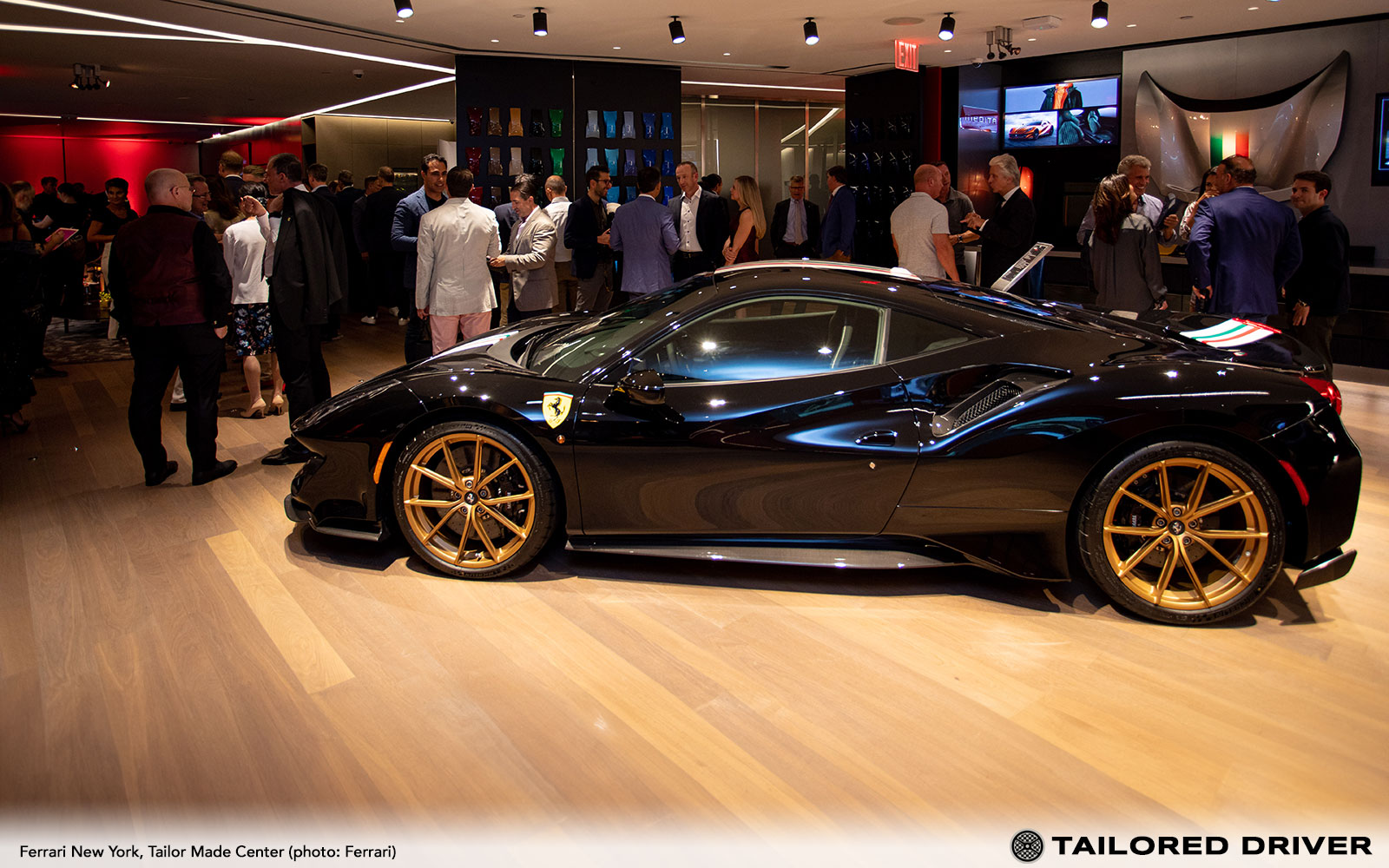
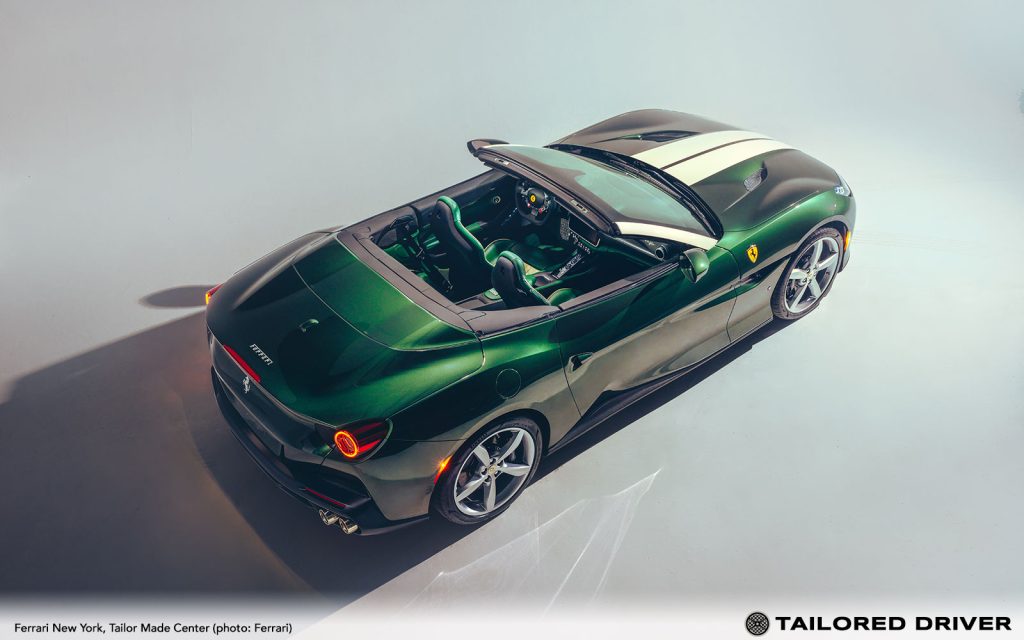
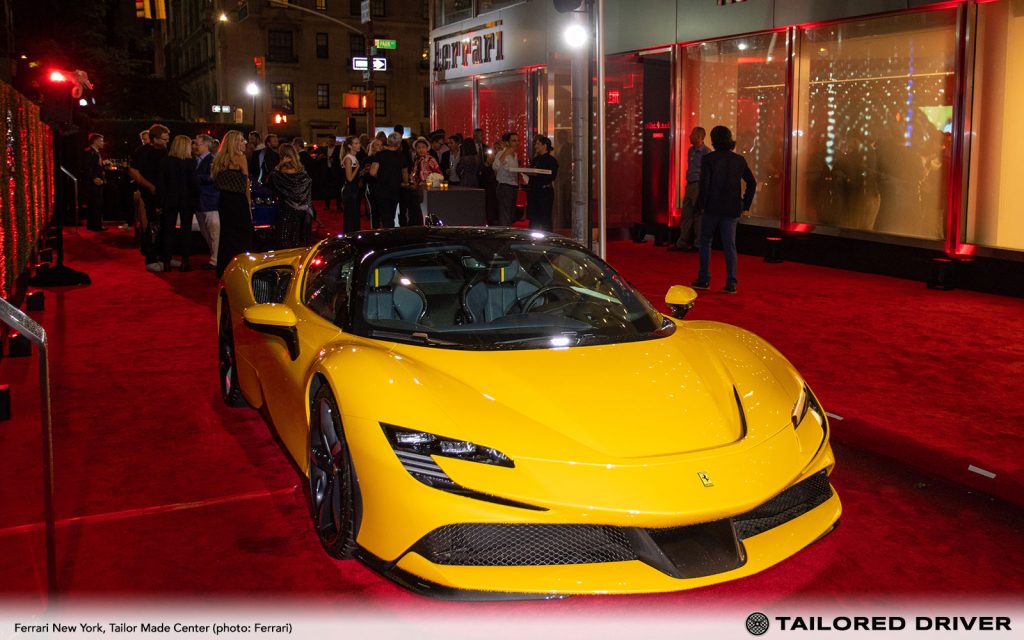
    Englewood Cliffs New Jersey, 3 October 2019 – Ferrari opens its first Tailor Made Center in the United States today in New York City.  The only space of its kind in the Americas, this new Center continues the long-standing tradition of car customization and personalization that began at the factory in Maranello in the 1950s and later grew into the inception of the Tailor Made Center in 2011, followed by the Shanghai Tailor Made Center in 2014.

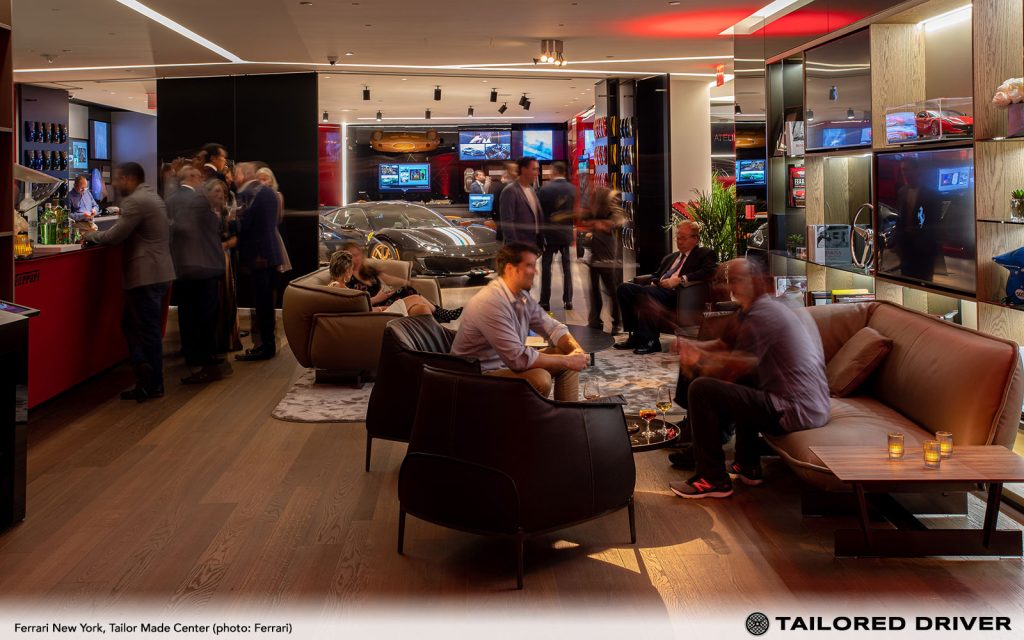
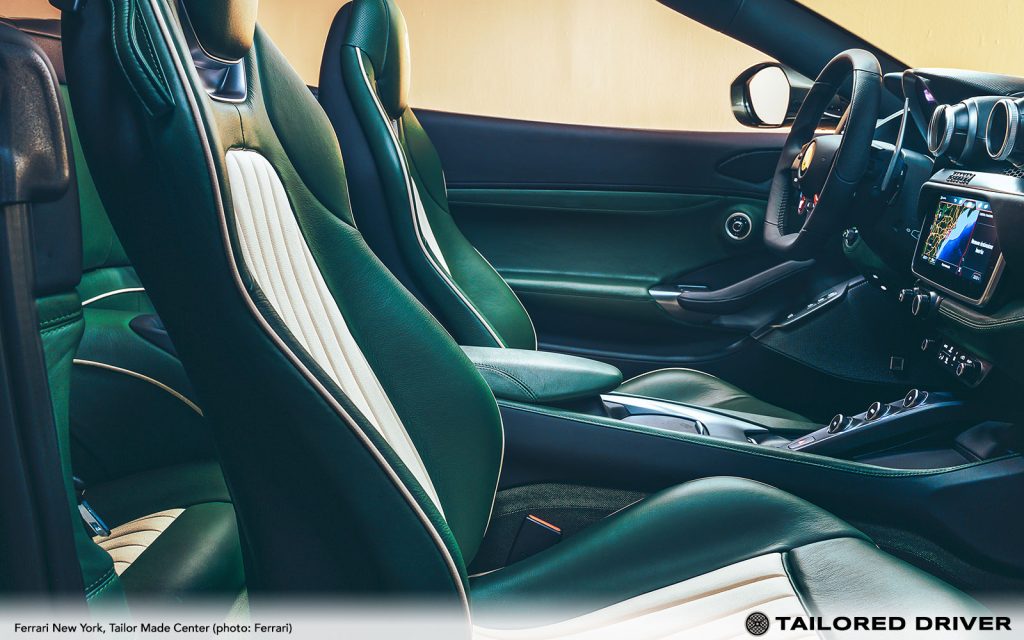
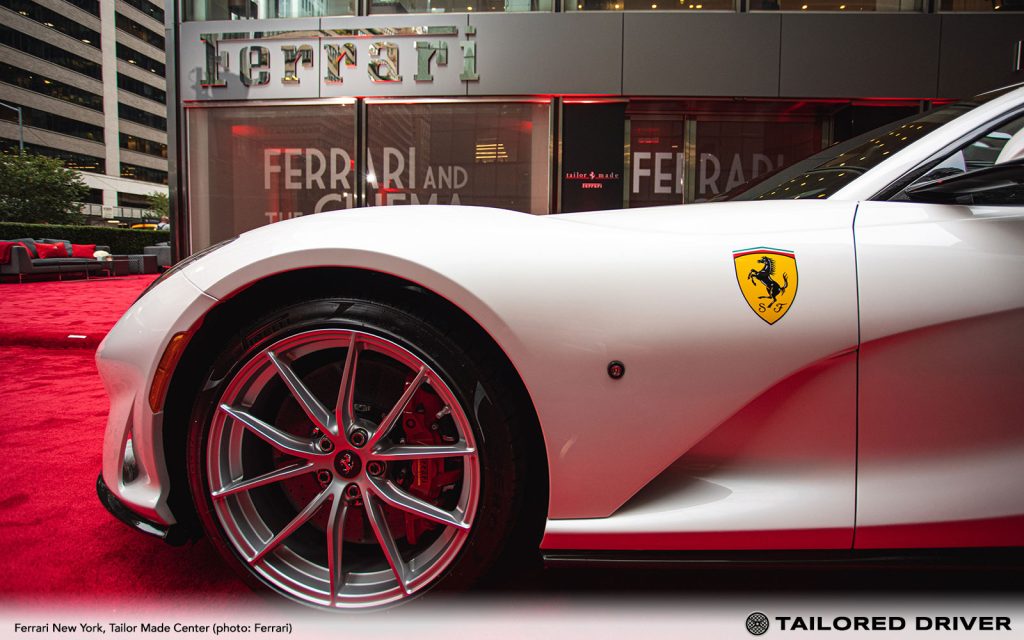
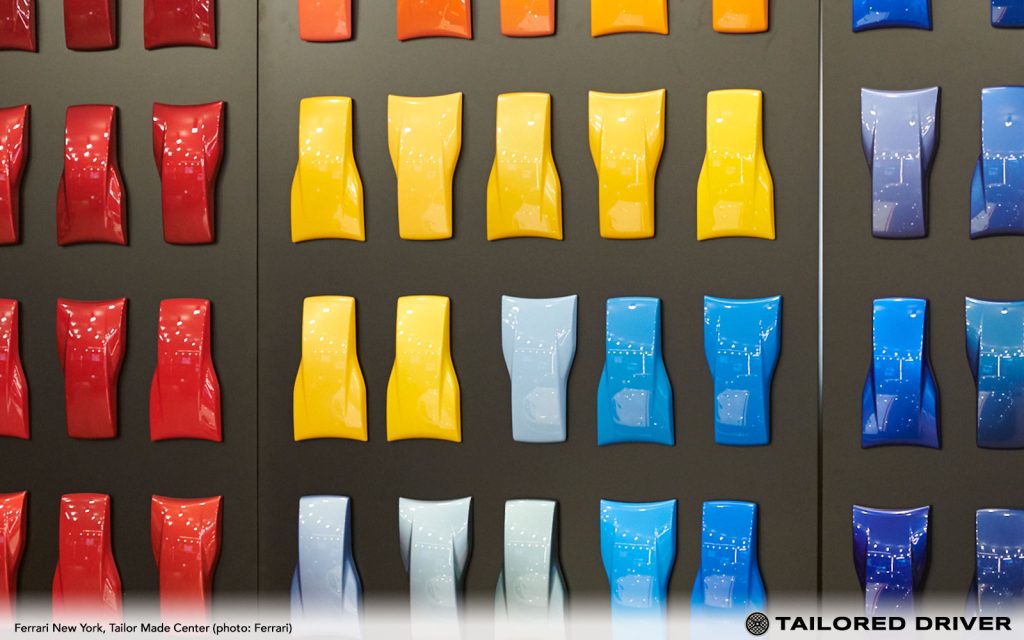
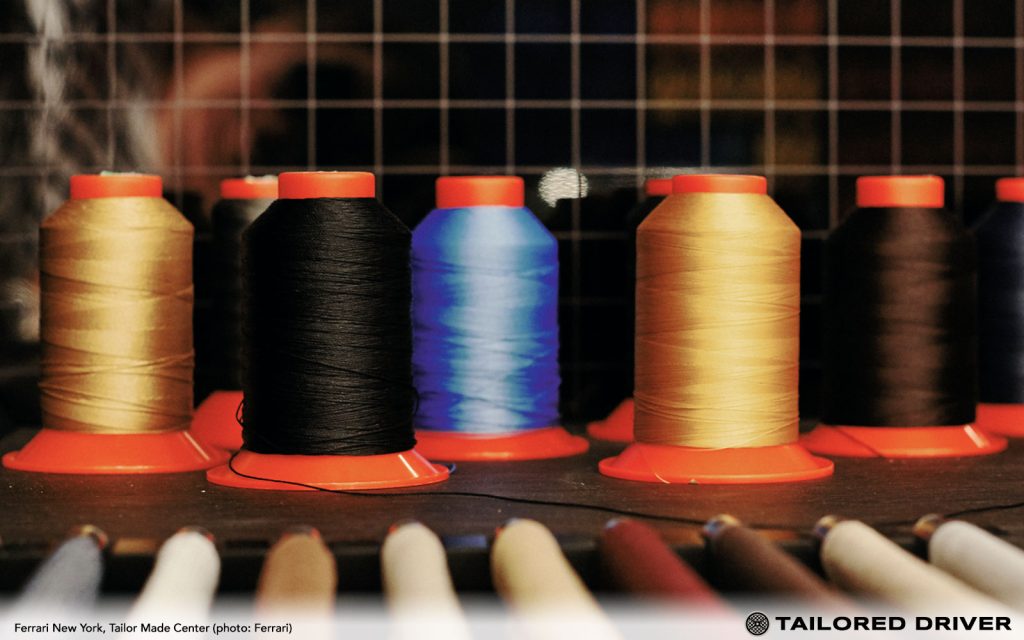
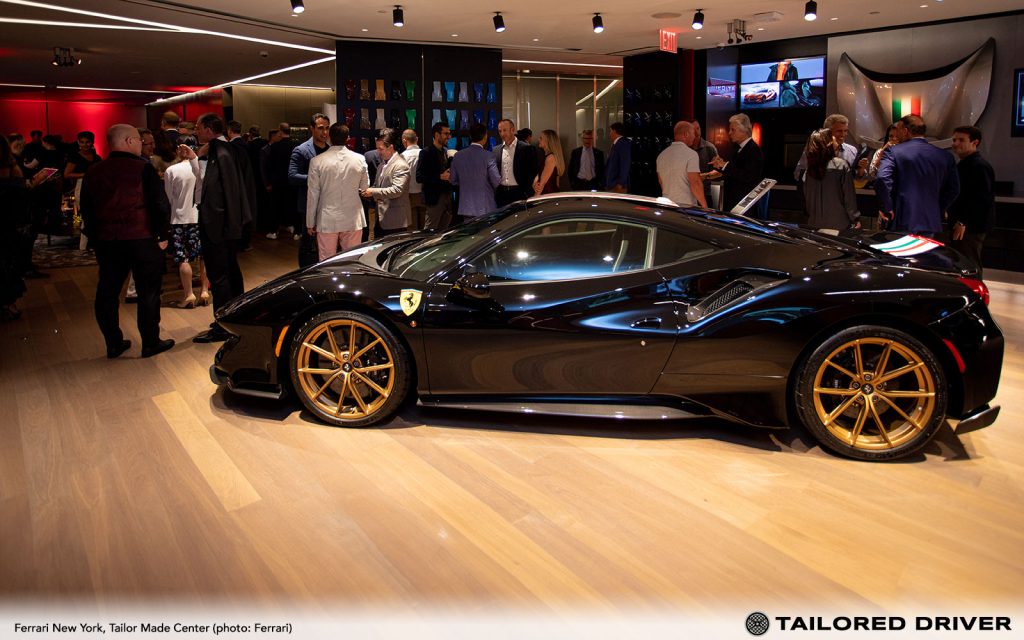
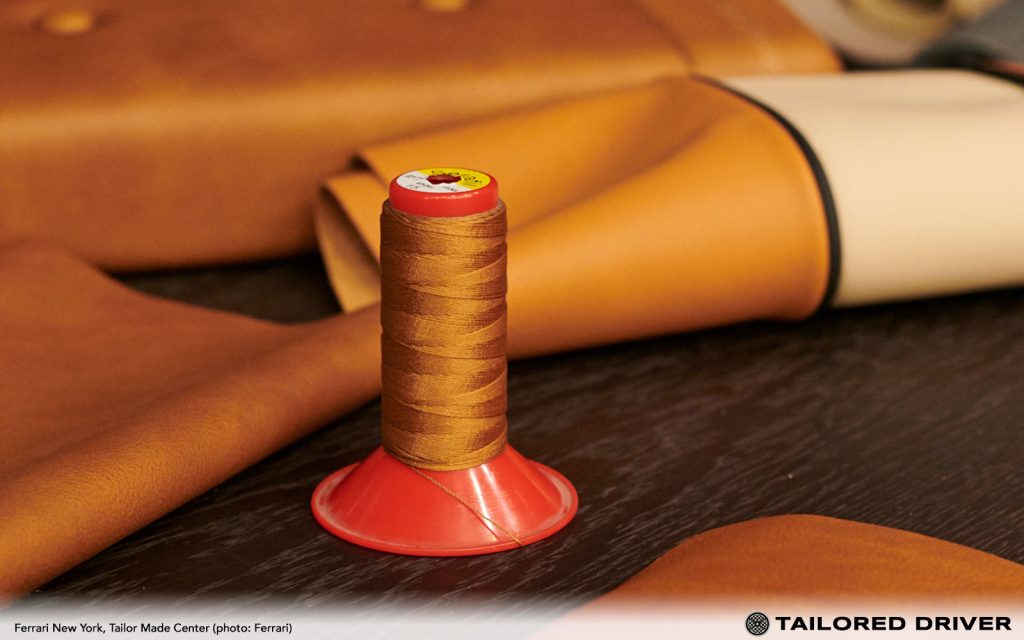
    The Tailor Made Center in New York City serves as an extension of Ferrari’s completely redesigned showroom, increasing the size of the previous showroom to 6,600 square feet. The new space includes an owners’ lounge, as well as display space for five cars.  The dedicated Tailor Made Center features an endless array of specification options to meet any Ferrari owner’s personality and tastes including an extensive range of fabrics, leathers, woods, colors and finishes.  Alongside this is an additional dedicated space for a Ferrari Atelier, equipped with the standard range of specification options.

    Three collections function as the starting point for the Tailor Made Program, serving as a connection to the deep history on which the concept is founded. Each has been developed through ongoing research by the Ferrari Design Center, pulling inspiration from the brand’s core values of innovation, elegance and passion. From the sporty and race-driven Scuderia Collection, to the Classica, drawing inspiration from the heritage and history of the house, and the Inedita, which allows free reign for experimentation, options for customization are endless.

    Owners are guided through the Tailor Made process by a Personal Designer, who collaborates with each client on every element of the car’s aesthetic to create the final configuration, from inception through delivery.

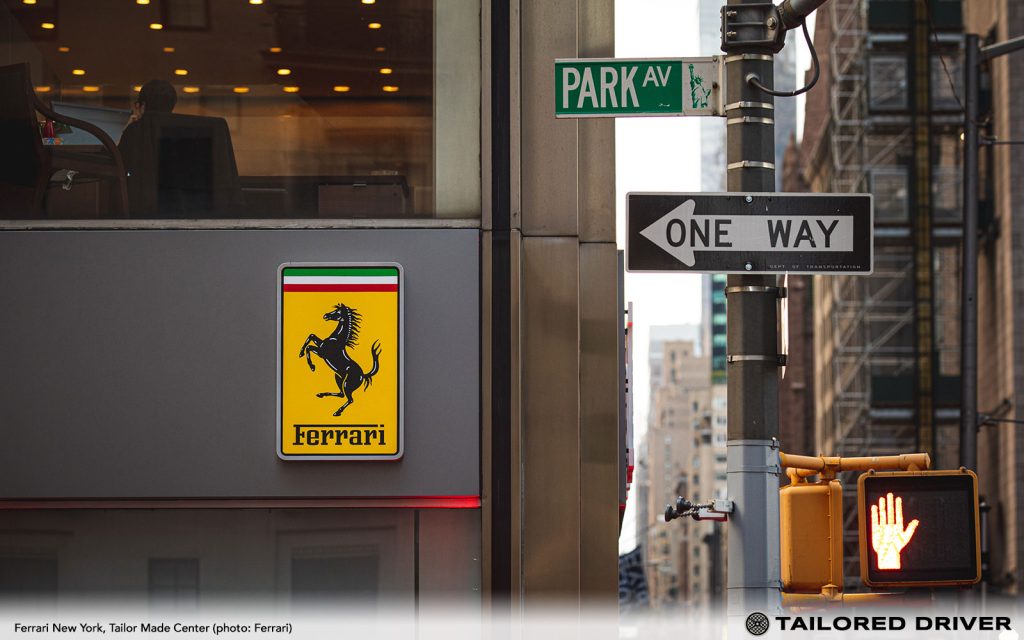
    The Ferrari New York Showroom is sure to become a destination for Ferrari clients and enthusiasts in North and South America and is located at 410 Park Avenue.

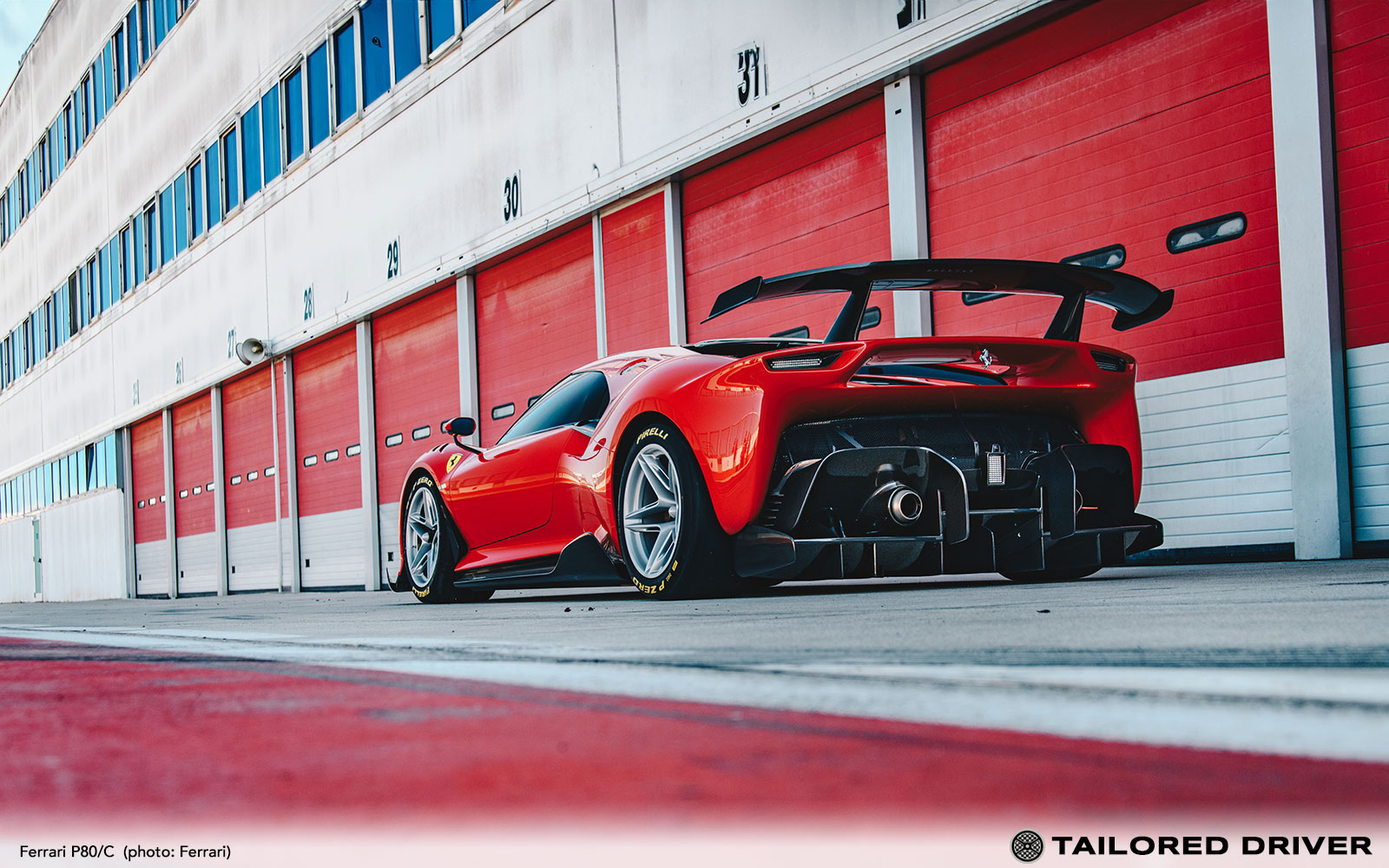
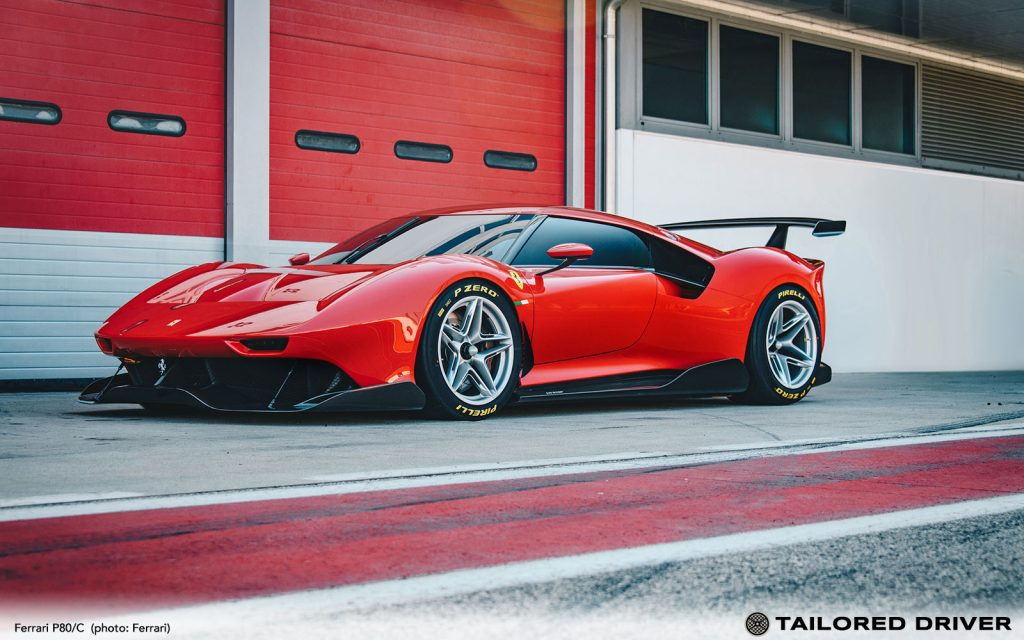
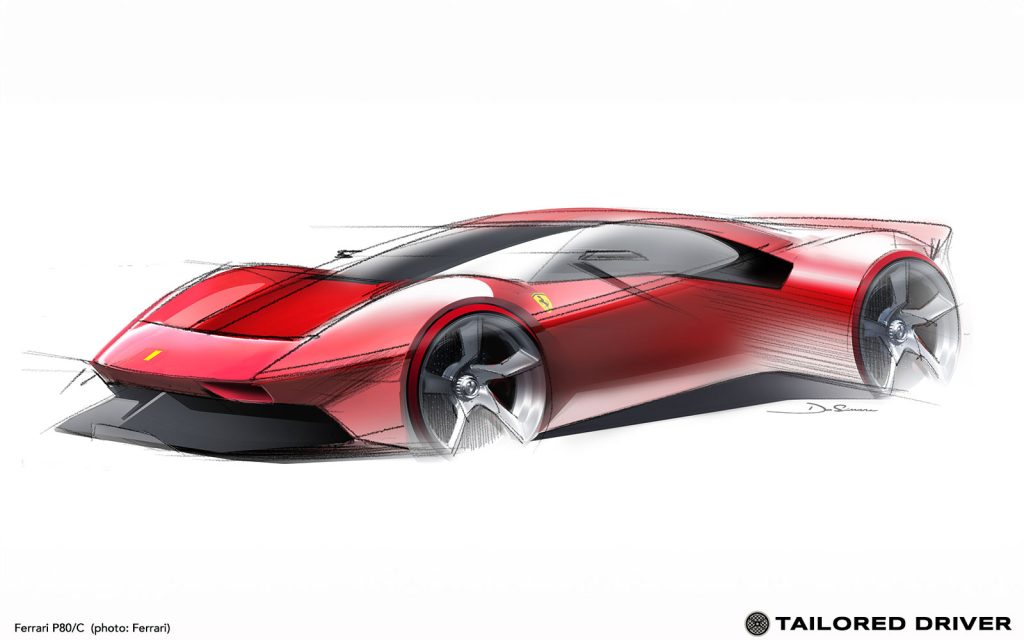
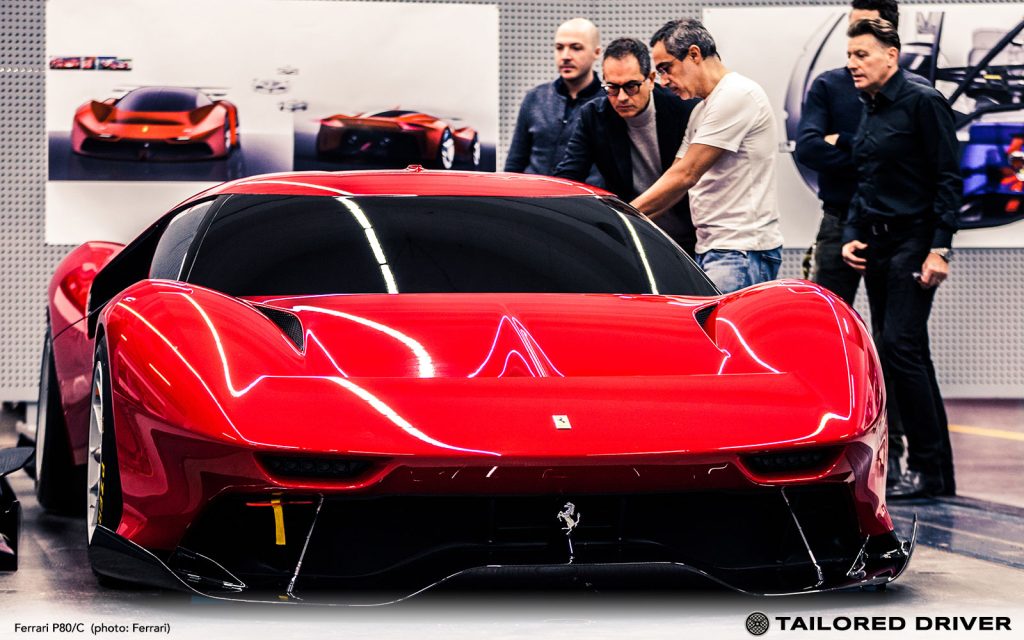
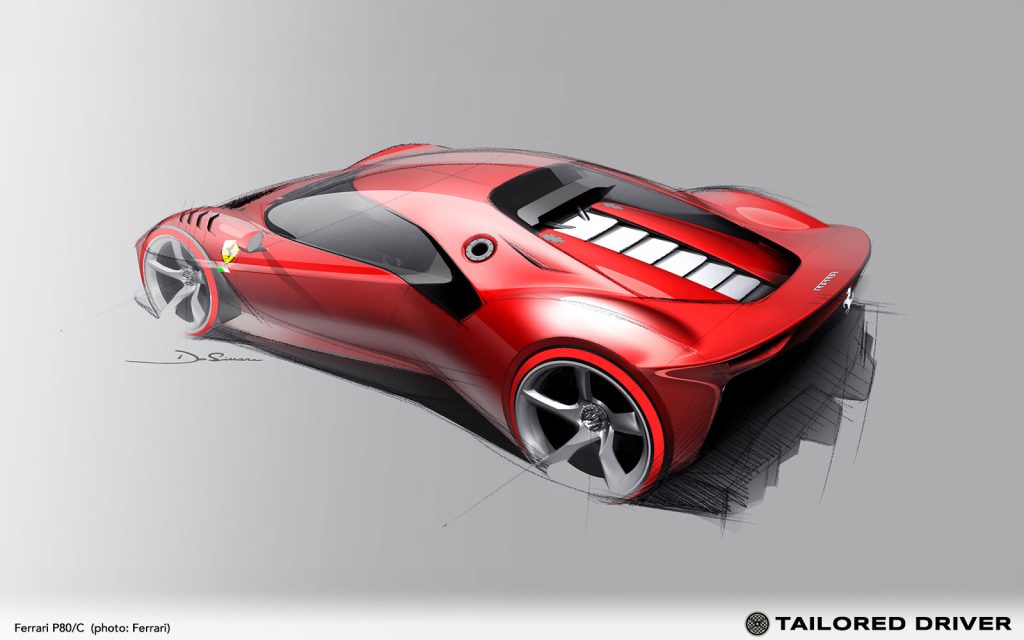
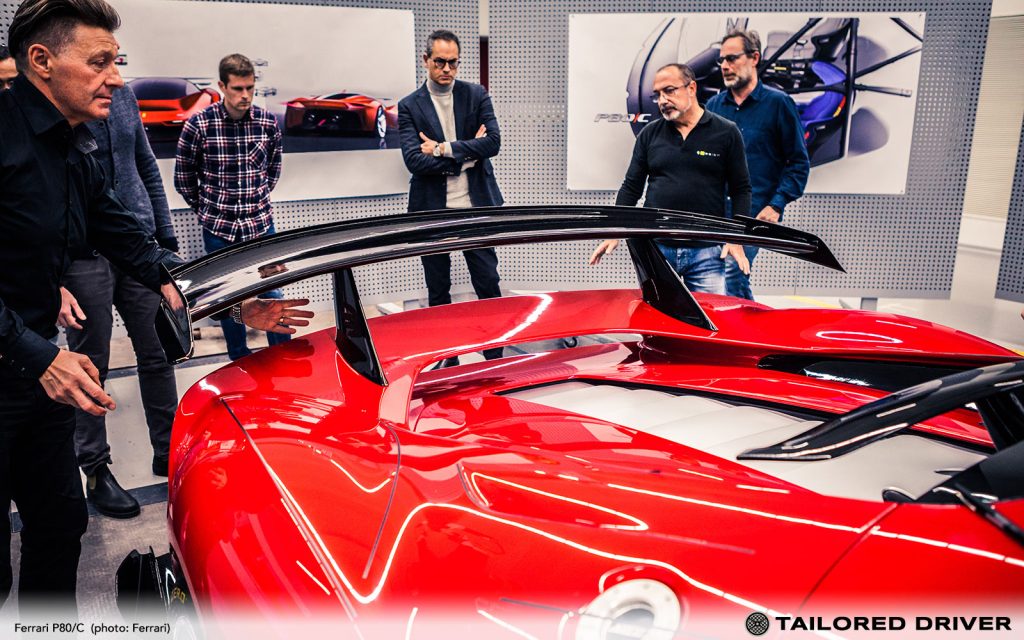
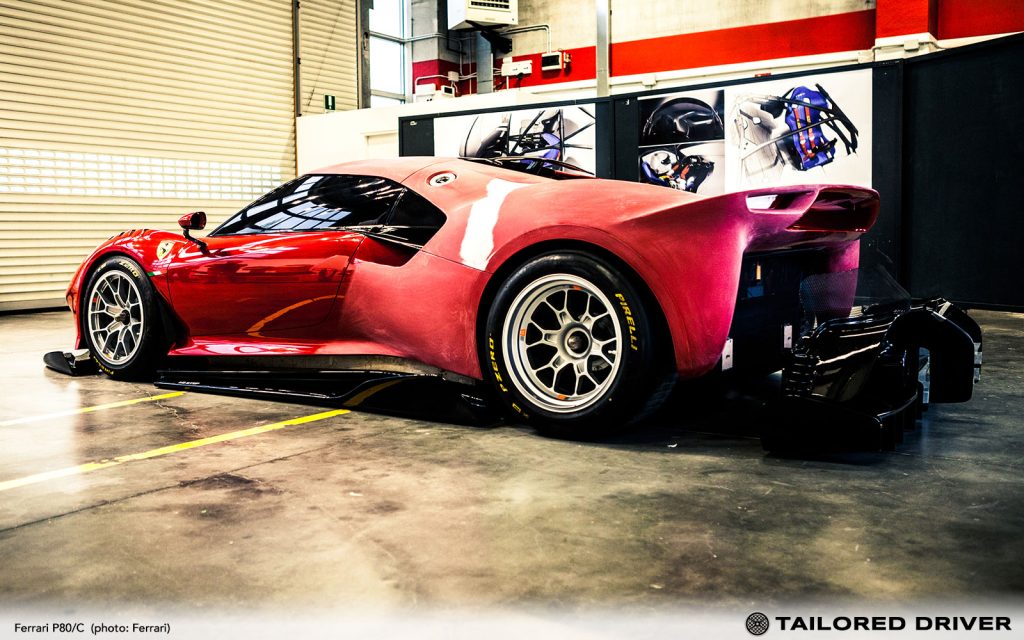
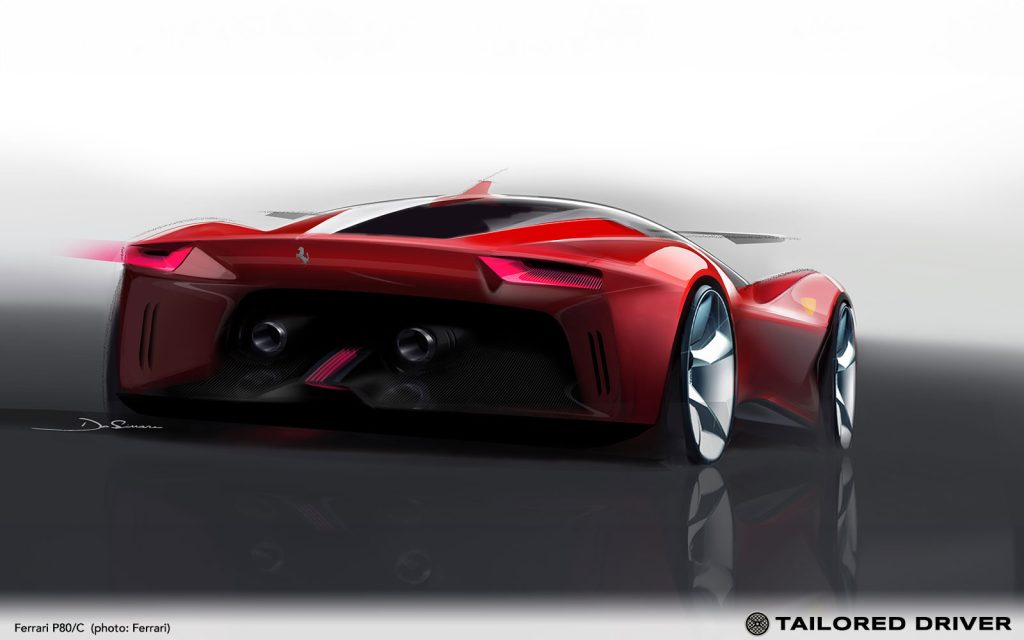
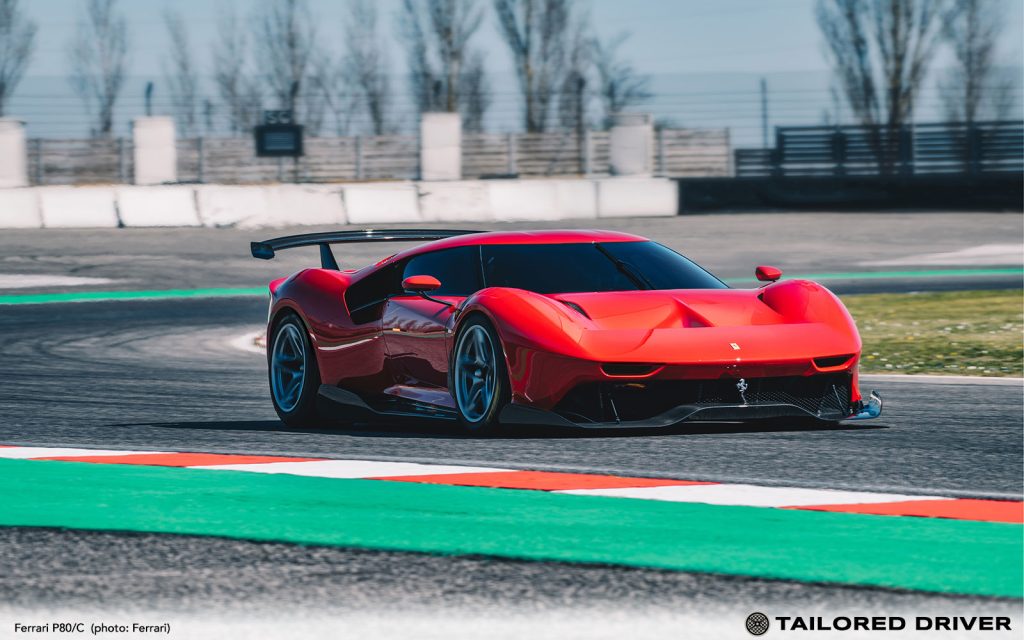
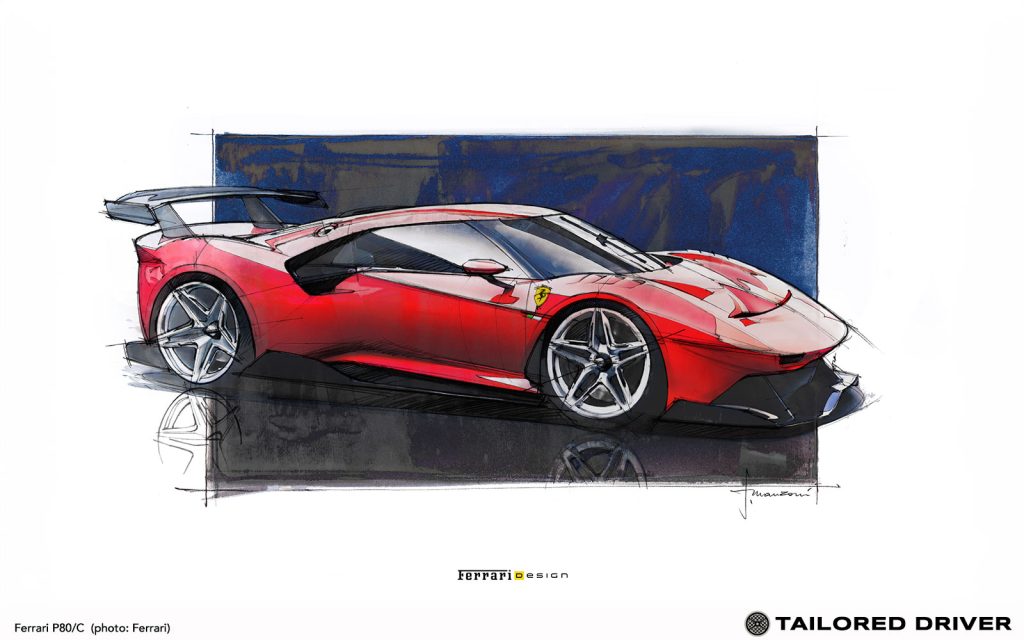
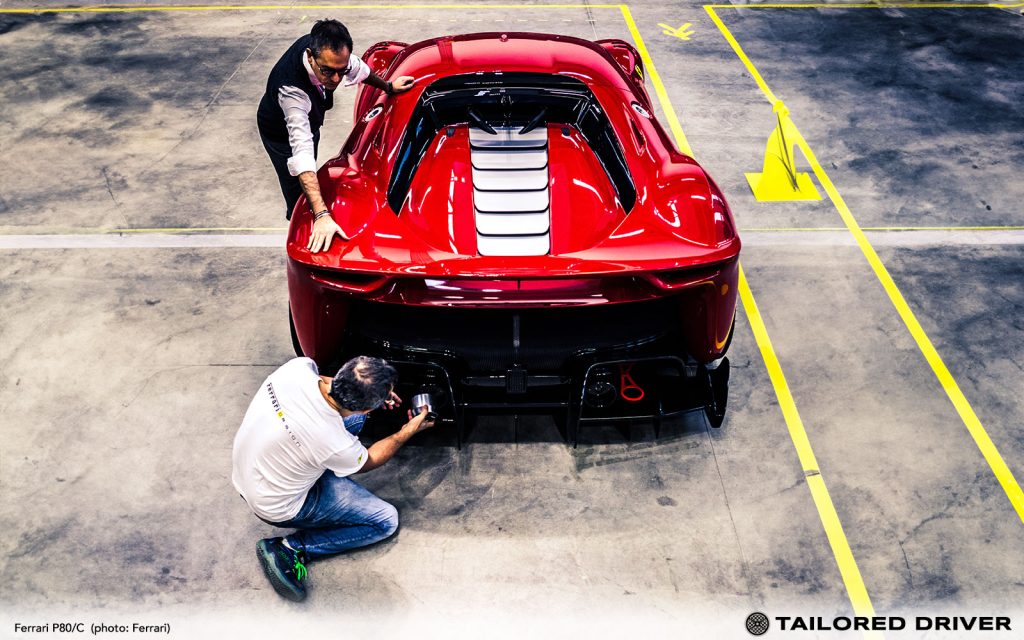
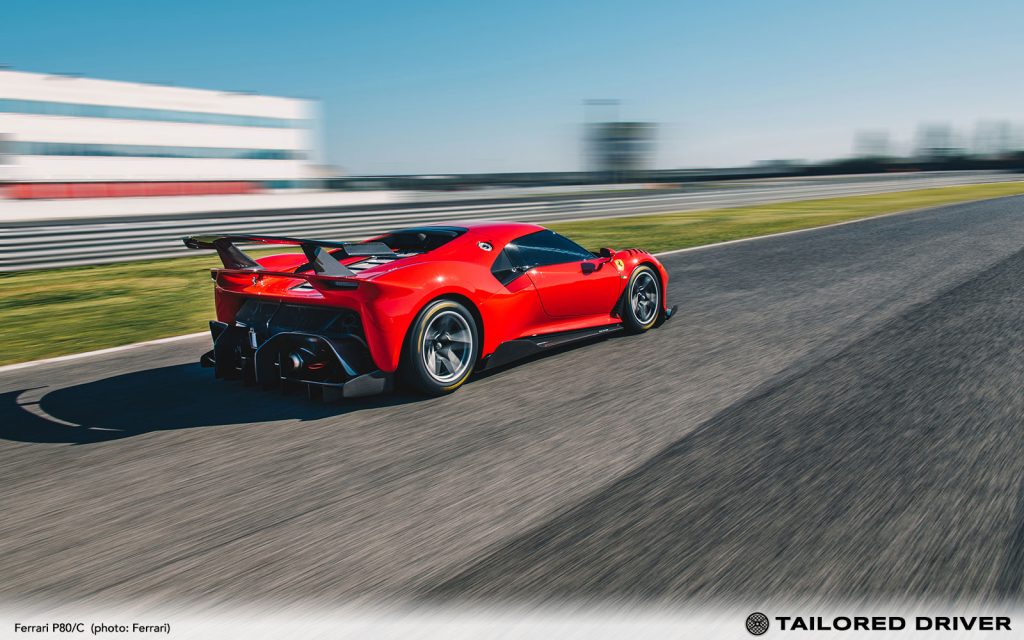
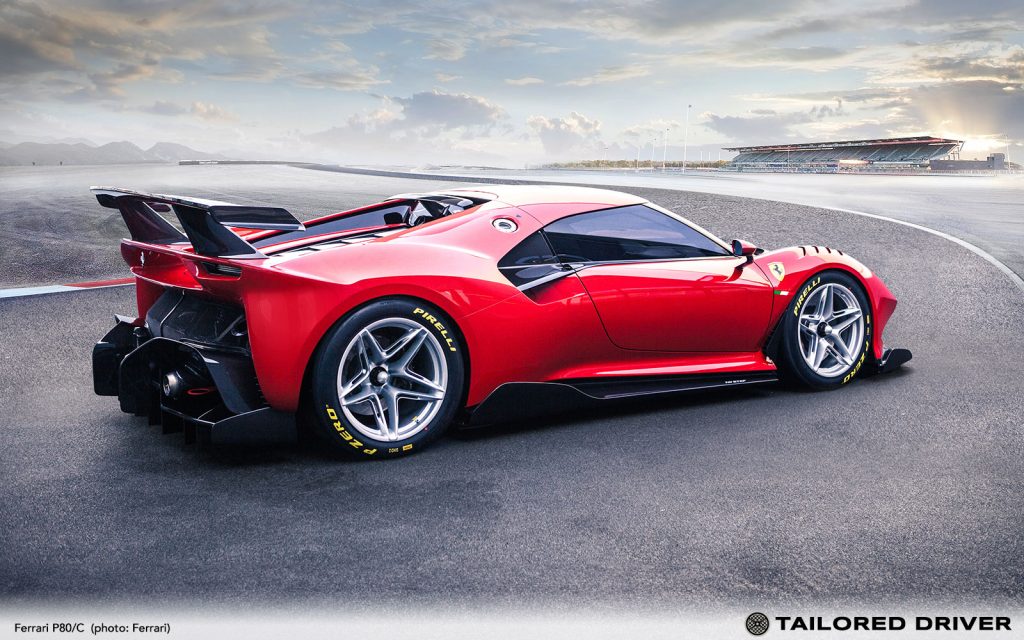
  • Ferrari P80/C – The Most Extreme One-Off Design Ever

    Ferrari P80/C – The Most Extreme One-Off Design Ever

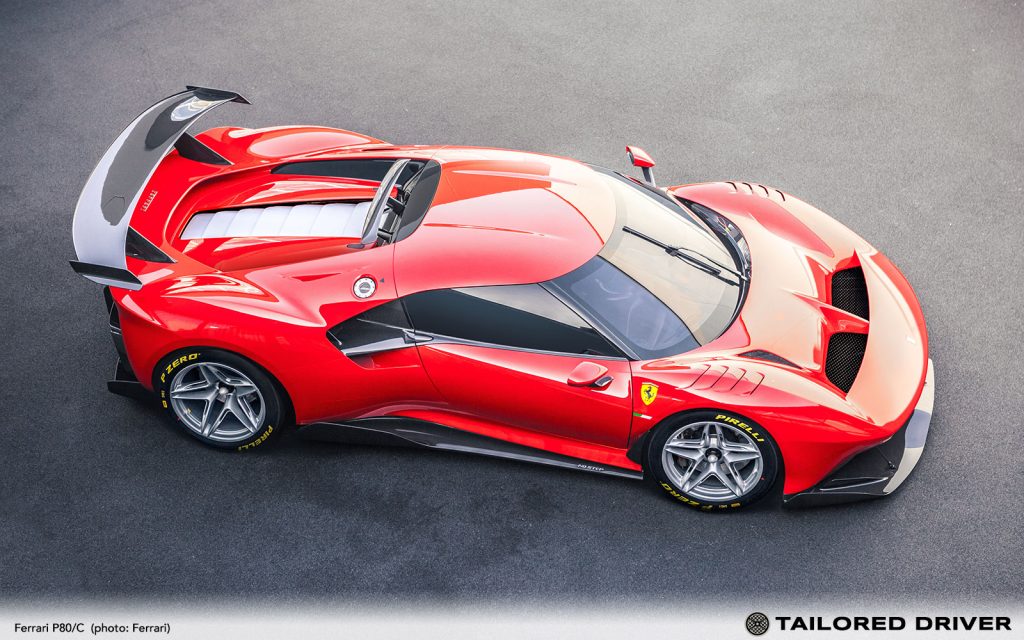
    Maranello, Italy – Creating an entirely new and modern take on the Ferrari sports prototype concept is both an ambitious and complex undertaking. But it was in this spirit, and with very specific input from the client, that the new Ferrari one-off, the P80/C, was conceived. The Ferrari Styling Centre, under the direction of Flavio Manzoni, and the engineering and aerodynamics team worked hand-in-glove with the client, sharing principles and visions in order to create a new “Hero Car” with an absolutely unique and authentic soul.

    The client, a great connoisseur of the Ferrari world, comes from a family of long-time Prancing Horse enthusiasts and admirers, and is himself a highly knowledgeable, discerning Ferrari collector. He was thus the perfect partner with whom to craft such a demanding project which required the highest level of interaction as well as emotional   involvement.

    The client’s basic brief was to create a modern sports prototype inspired by iconic models from Ferrari’s history: the 330 P3/P4 on the one hand and the 1966 Dino 206 S on the other.

    The P80/C thus set the Ferrari Styling Centre an ambitious target: to develop a new kind of product that simply did not exist in the current Ferrari range: a sports prototype inspired by the cars that essentially wrote their own styling rules becoming, in the process, famous icons that, although conceived as track cars, also went on to influence a whole series of elegant road cars. A case in point is the very close relationship between, for instance, the Dino 206 S racing car and the production Dino 206/246 GT. Both versions share a common DNA despite having a different styling lexicon: Ferrari racing elements appear in the case of the former while the latter have the more sober, refined lines of the road cars.

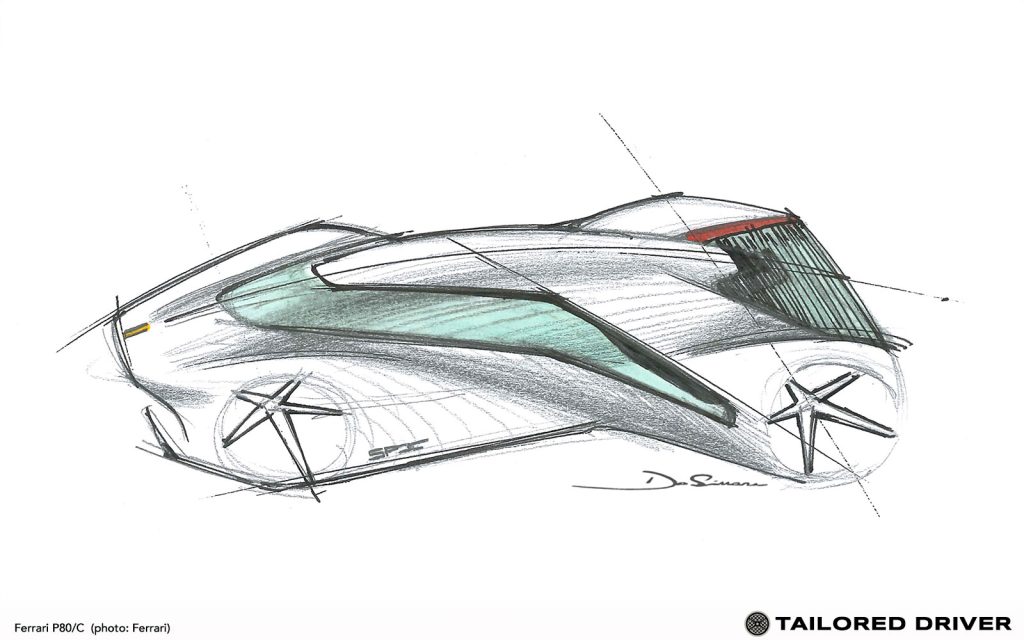
    The Ferrari Styling Centre’s goal was to create a resolutely modern car that made no major concessions to the past, apart from attempting to recreate the sensual shape of those iconic models through more muscular wings formed by the intersection of concave and convex surfaces.

    Kicked off in 2015, the P80/C project had the longest development time of any Ferrari one-off made to date. This highly intense gestation period was the result of in-depth styling research and lengthy engineering development, with meticulous analysis of performance parameters as well as scrupulous aerodynamic testing, all with a different approach than taken by Ferrari with its one-off cars in the past.

    Normally speaking, this kind of car tends to be a stylistic reinterpretation of models in the current range – a new concept or basic idea that marks a departure from the donor car is built on existing running gear. The glorious history of Italian coachbuilding is just that: a wealth of exceptional cars based on the same chassis, but bodied by different coachworks.

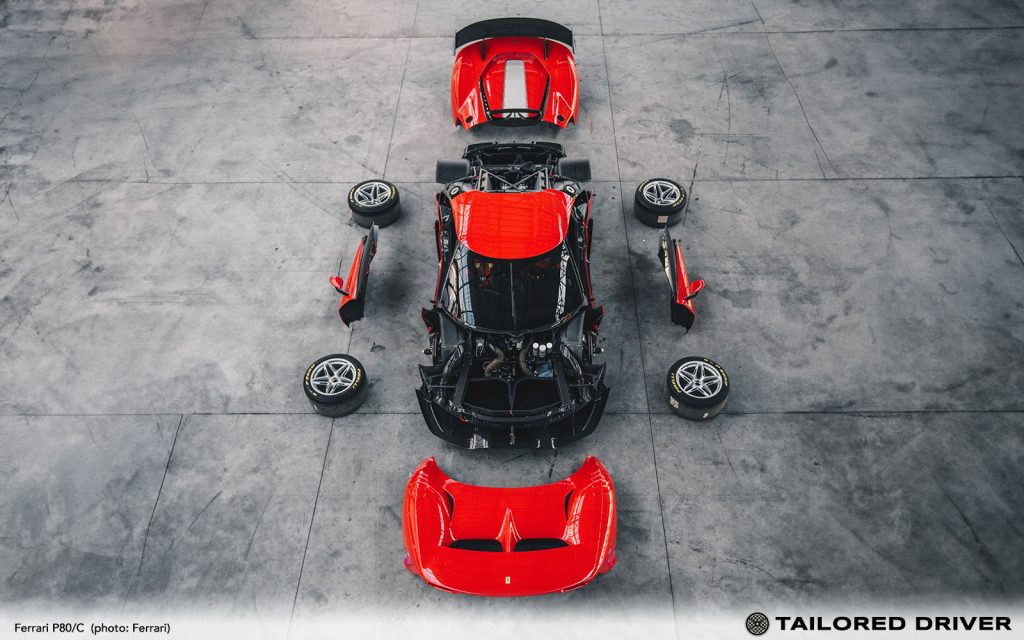
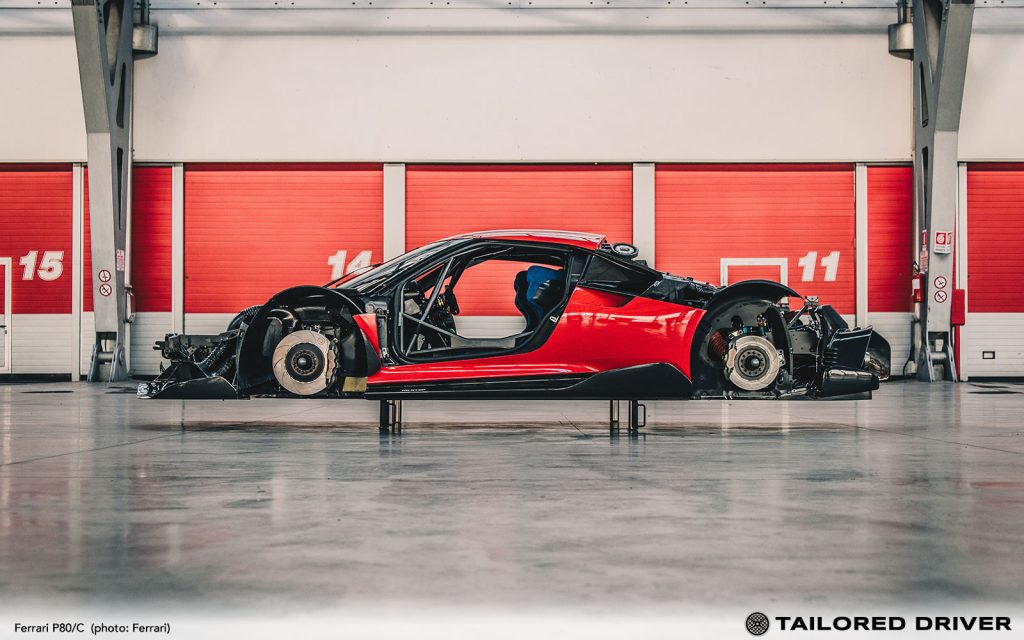
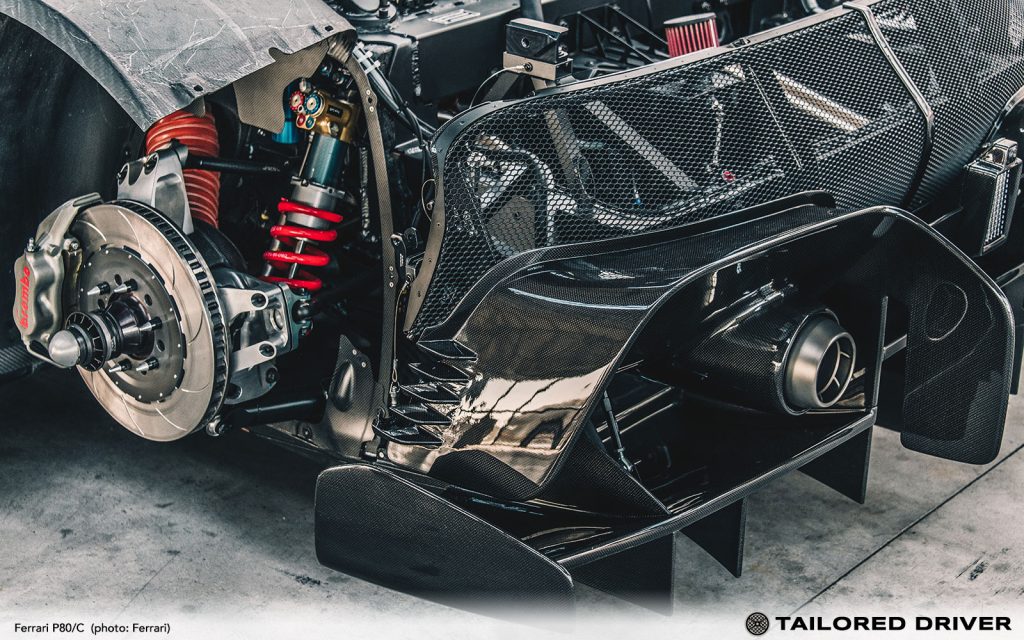
    The P80/C, however, is radically different. It is a track car, which means that performance is a major factor so this not only pointed the design team in the direction of a design that was absolutely unique, but also forced them to make radical changes to the running gear of the donor car. This involved introducing specific features required to guarantee a captivating marriage of style, technical prowess and aerodynamics.

    The decision was made to use the 488 GT3 chassis as a basis, not only for its performance, but also for its longer wheelbase (+ 50 mm compared to the 488 GTB) which allowed more creative freedom. With respect to the Ferrari 488’s classic layout in which the cockpit tends to be placed centrally, the GT chassis allowed the designers to emphasis a cab forward-effect in which the rear is elongated, lending the car a more aggressive, compact character. This was one of the cornerstones of the P80/C’s styling from the early stages of the design process.

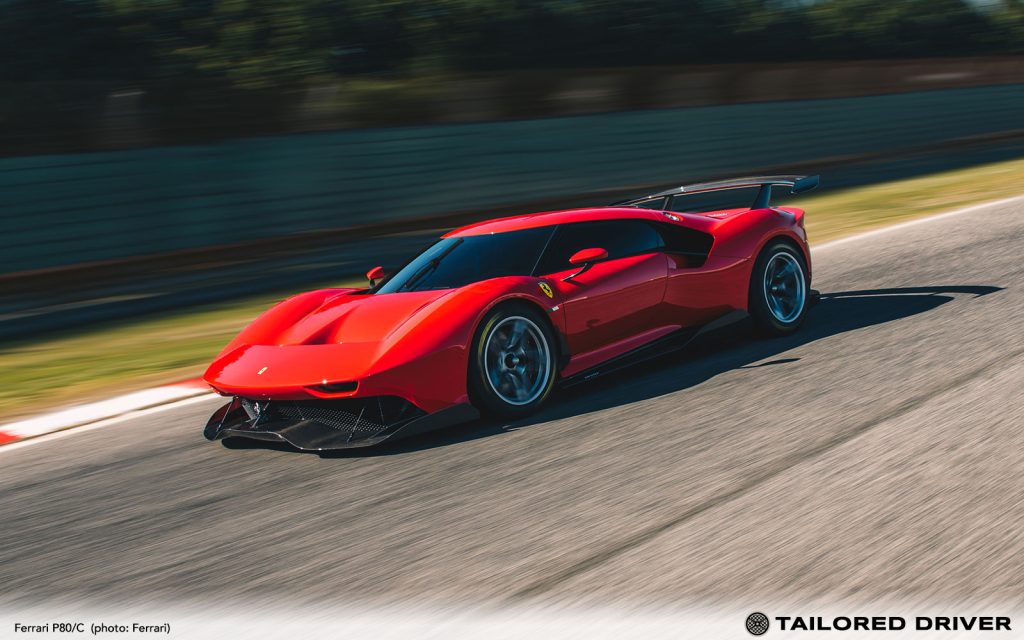
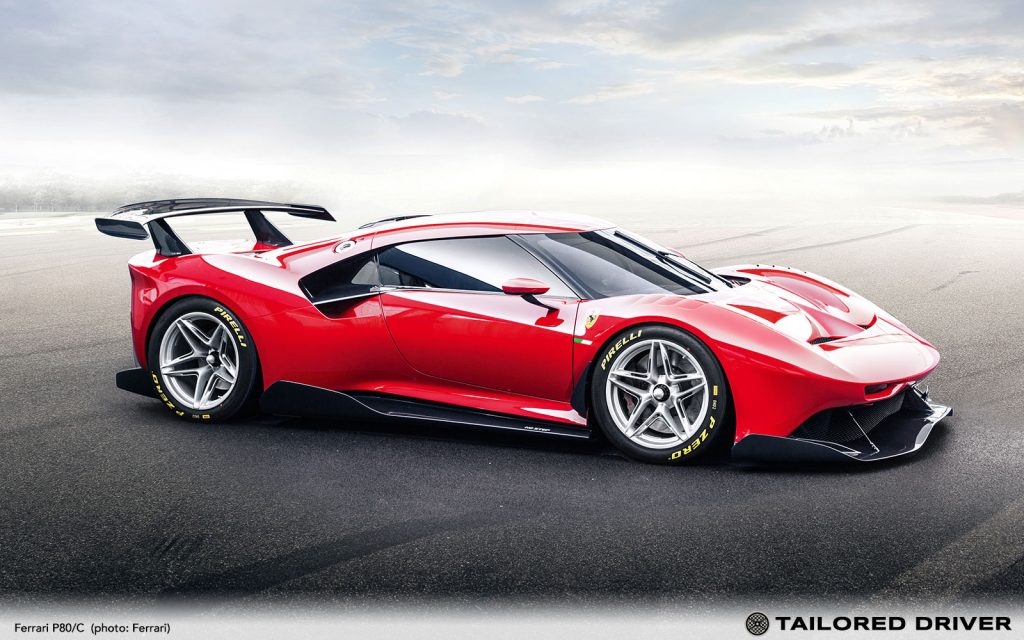
    A decisive wedge shape dominates the side view at the front of the car. The muscular forms of the front and rear wings with the cockpit set in between are emphasised by very broad buttresses that expand towards the side air intakes. This gives the impression that the cabin is completely fused with the body, and is accentuated still further by the wrap-around windscreen which references the iconic look of sports prototypes of the past. The flying buttresses converge towards the roof underlining the visor effect of the greenhouse. All of these features are references not only to the 330 P3/P4 but also homage to the Dino and the 250 LM berlinettas.

    The side windows merge graphically with a wide pocket created by the side air intakes giving a dynamic downward movement to the rear flanks. This disruptive line balances the wedge-shaped front flanks and visually separates the rear section from the rest of the car.

    Seen from above, it is clear that the bodywork is widest over the front axle, but then narrows sharply, creating a tightly sculpted waistline around the rear door before broadening out again dramatically at the tail. This particularly iconic kind of architecture is also emphasised by flying buttress-type C-pillars which are physically detached from the cabin. On the one hand, the C-pillars wraparound the intercooler air intakes, while on the other, they accentuate the sharp drop in height between the roof and the surfaces of the rear engine cover. Compared to a more normal continuation of the roofline over the engine cover, a more extreme solution was preferred, creating a large void rear of the cockpit with a vertical rear screen.

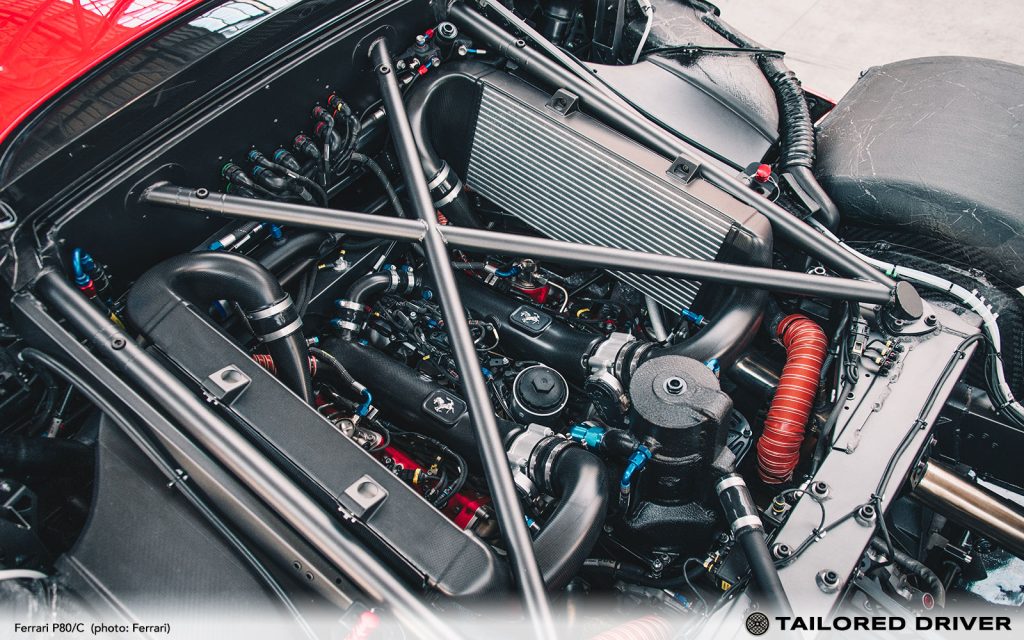
    Aerodynamic development was based on the experience gained with the 488 GT3, but was not governed by the restrictions imposed by international regulations. Thus the front splitter is specific and, while the expansion curve and vortex generators of the rear diffuser are the same as those used on the GT3, the external surfaces are all unique to the P80/C. The result is an improvement of around 5% in overall efficiency, required to make full use of the unrestricted engine.

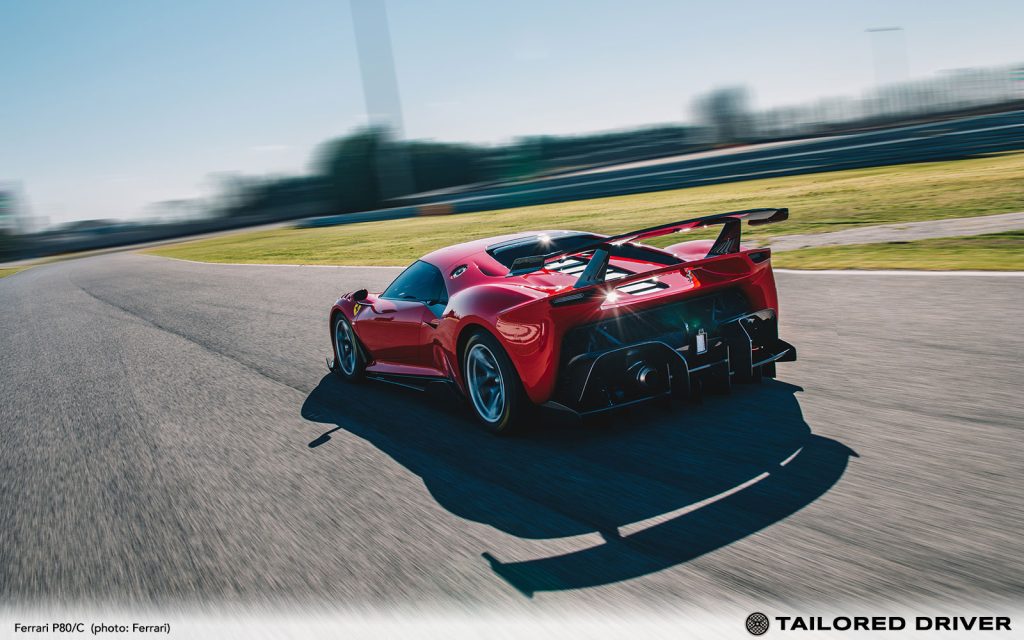
    The objective was to balance the upper bodywork’s downforce evenly over the two axles, making full use of the 488 GT3’s underbody. The configuration of the rear bodywork required the adoption of an aerodynamic profile that sits immediately rear of the trailing edge of the roof to provide a strong recompression of the flow rearwards, reinforcing the downforce generated by the tail and the wing. This aerodynamic profile was inspired by the T-wing adopted in Formula 1 in 2017 and here is designed to reduce the length of the flow over the rear, creating the effect of a very short ‘virtual’ rear windscreen and an extremely limited separation bubble.

    The front of the car has a catamaran-style formal geometry. The jutting effect of the nose is underscored by its almost wing-like shape which the interplay of voids highlights very effectively. The large radiator air vents are located just behind this wing-like structure and these outlets over the front bonnet underline the powerfully muscular wings.

    The fact that the P80/C is homologated only for track use meant that it could do without components that would be deemed vital in a road car, and which would also heavily influence its styling. Classic head lights have essentially disappeared. Or rather they have been reduced to mere slits set into niches at the front of the car reminiscent of the air intake housings in the grille of the 330 P3/P4. Unlike the 330, however, in the P80/C, said housings are not set into an oval grille but look more like two pockets carved out of the front of the car.

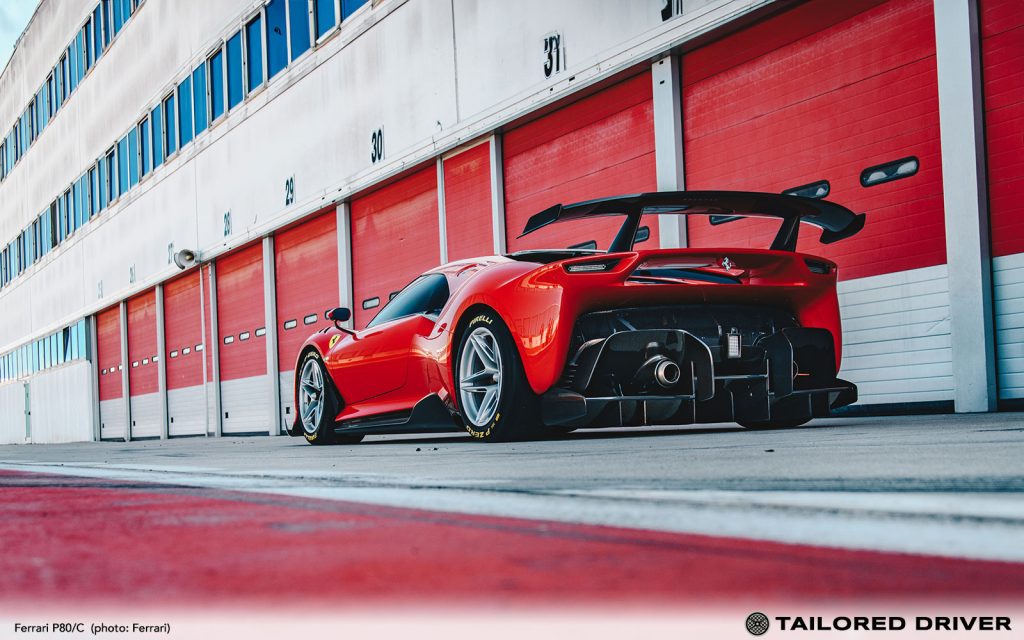
    The same styling element reappears at the rear of the car. The rear spoiler is very wide to meet aerodynamic requirements and incorporates the two signature tail lights in a way that makes them look like air vents, thus perfectly reflecting the design of the front.

    Even the rear fascia, which leaves the running gear fully visible, has a catamaran-type architecture.  This allowed the inside to be completed devoid of bodywork. In fact, its sole occupant is a grille to help evacuate heat from the engine bay. The space left is occupied by a huge rear diffuser which seems almost to be separate from the rest of the car.

    The adoption of a concave rear windscreen and aluminium louvres on the engine cover, a reference to the 330 P3/P4, gives the P80/C’s tail an instantly recognisable and unique look.

    At the client’s request, the car was designed with a dual soul: a racing set-up, which includes quite a showy carbon-fibre wing and 18” single-nut wheels, and an exhibition package complete with 21” wheels but devoid of aerodynamic appendages, to highlight the purity of its forms.

    The P80/C’s design language was crafted to be instantly clear. Although made entirely from carbon-fibre, only the parts with strictly technical functions have been left bare, while the main car body has been painted a bright statement Rosso Vero. The name was chosen by the client, proving that his loyalty to Ferrari’s sports prototype tradition extends all the way to colour.

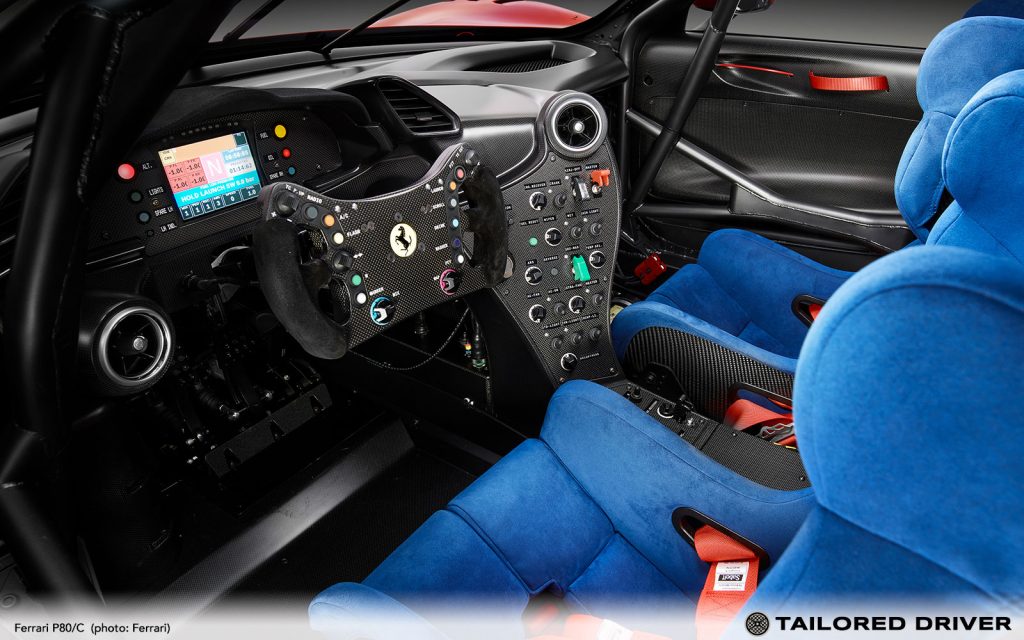
    The interior is very much the same as that of the donor car with a roll cage integrated into the bodywork. The side sections of the dashboard have been redesigned from the version seen on the 488 GT3, as have the seat upholstery and door panels – the latter are now carbon-fibre shells and no have no impact on the car’s weight.

  • Unique Tailor Made Specification for the Ferrari 488 Pista

    Unique Tailor Made Specification for the Ferrari 488 Pista

    A tribute to the FIA World Endurance Championship  world titles exclusively for client racing drivers

    [source: Ferrari]

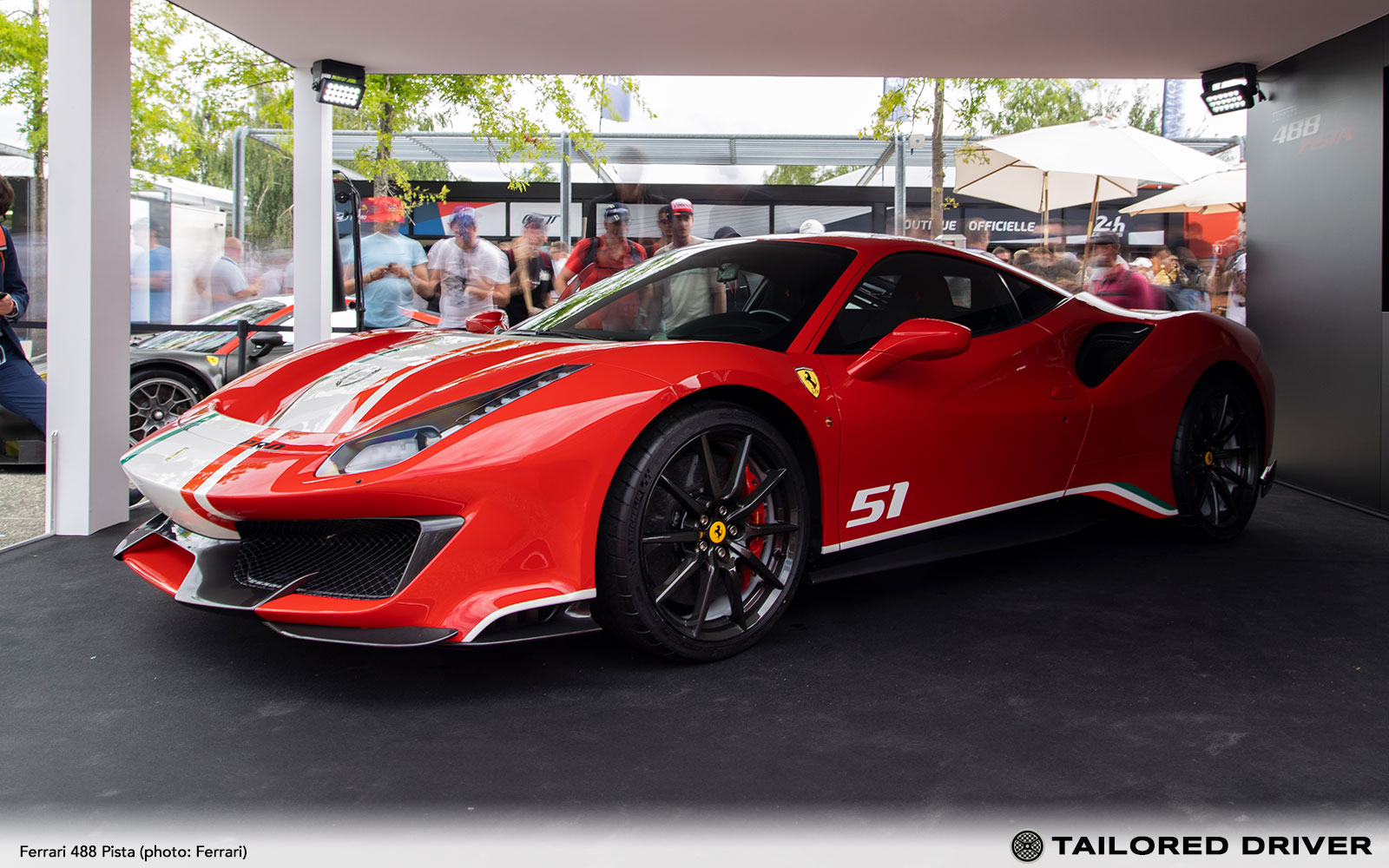
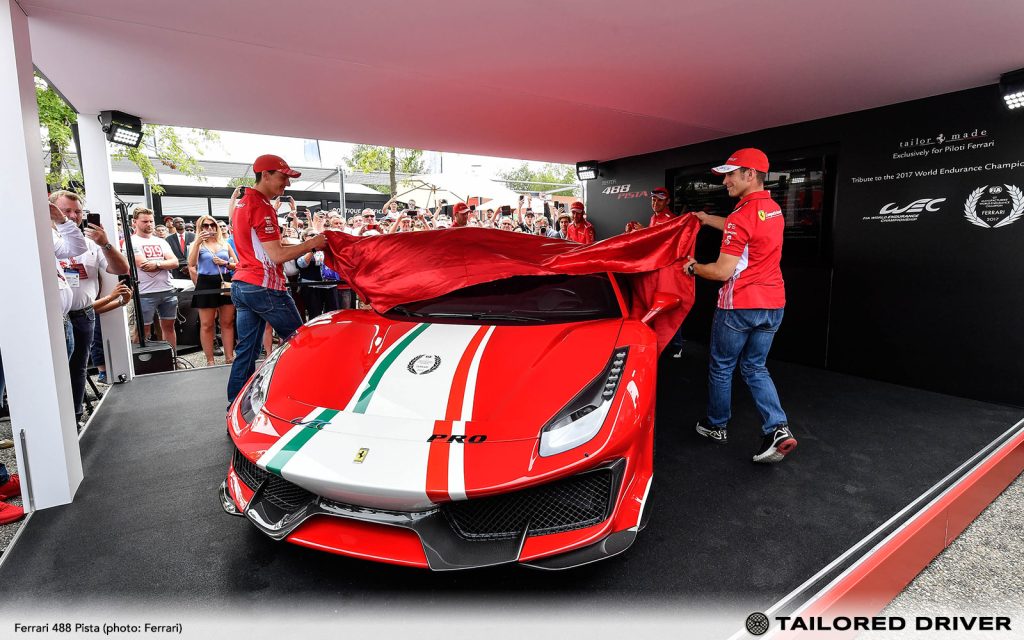
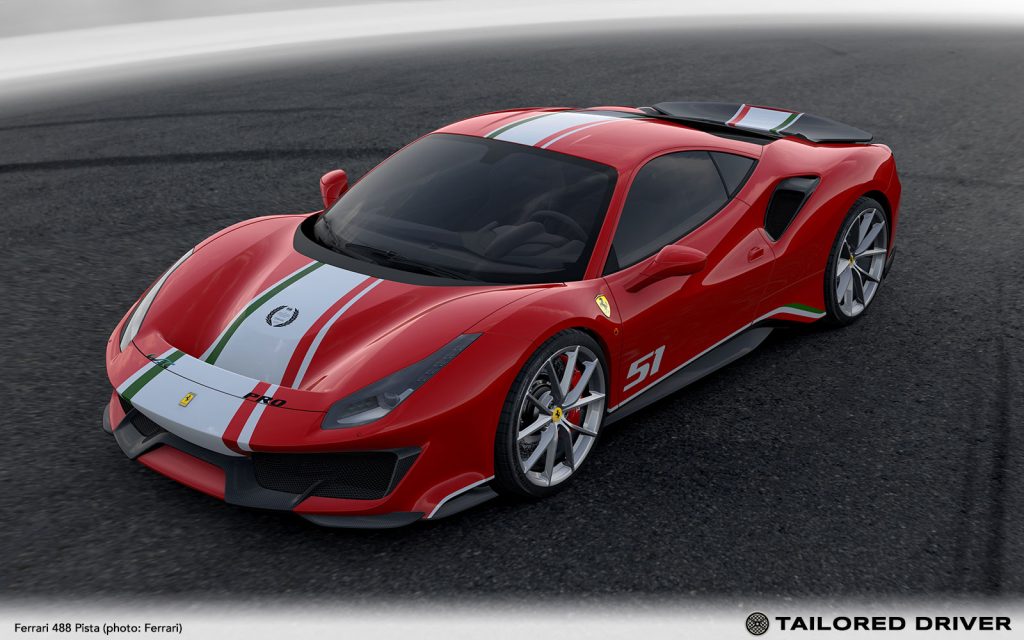
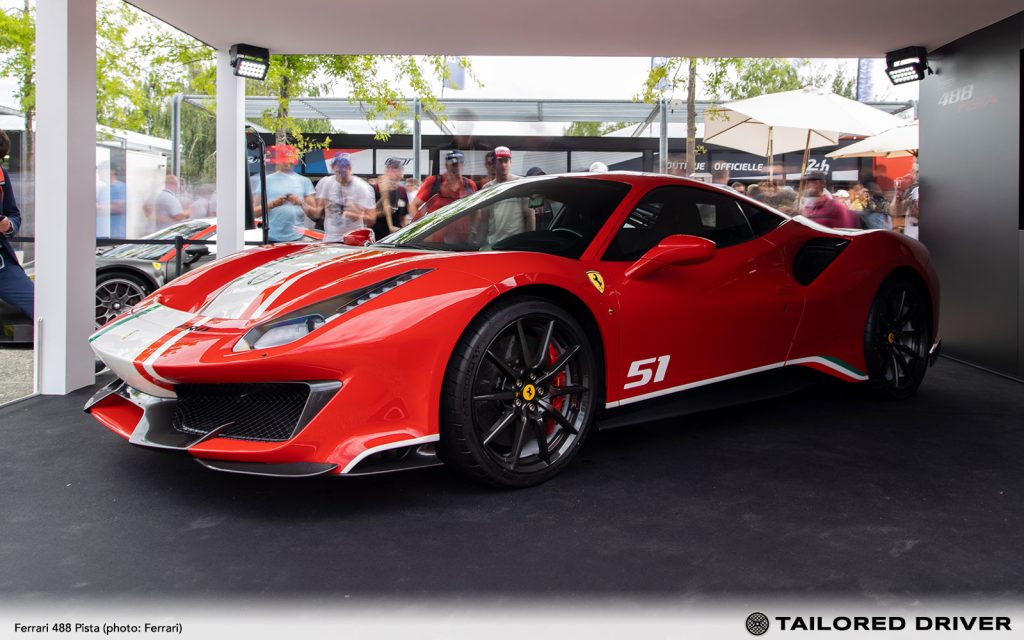
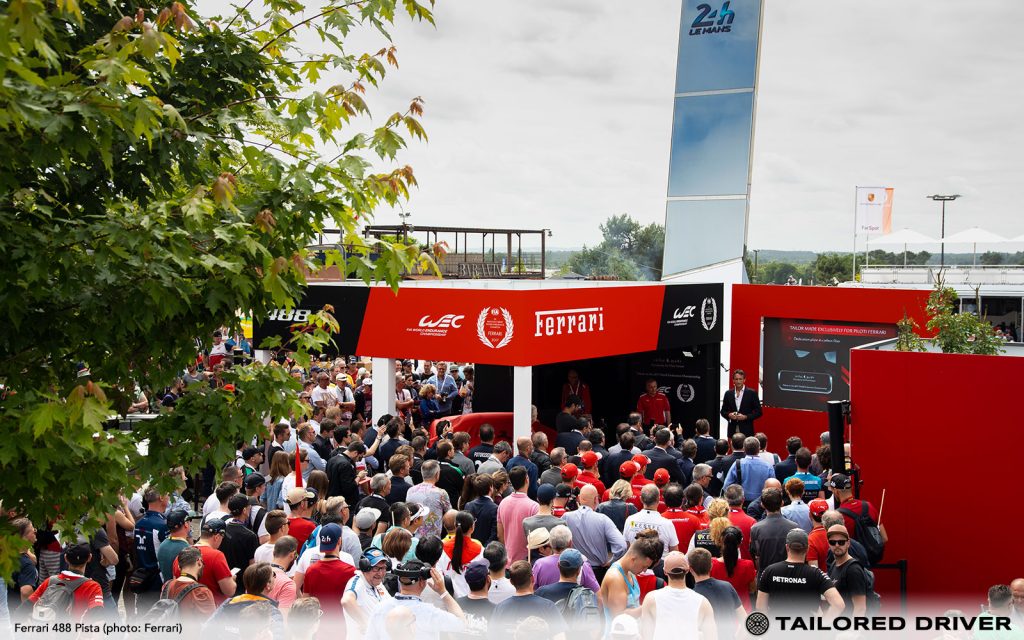
    Maranello, Italy – In occasion of the 24 Hours of Le Mans, the Prancing Horse is launching a unique ‘Piloti Ferrari’ specification for the Ferrari 488 Pista. This special custom creation, the latest from the exclusive Tailor Made programme,  was designed to recognise the success of clients who race Ferraris and will make its debut on the eve of the legendary French endurance race at the Circuit de la Sarthe. Inspired by AF Corse’s no. 51 car, with which Alessandro Pier Guidi and James Calado won the 2017 FIA World Endurance Championship (WEC) Drivers’ and Manufacturers’ titles, this special finish for the new Ferrari 488 Pista is available exclusively for customers involved in the company’s motor sports programmes.

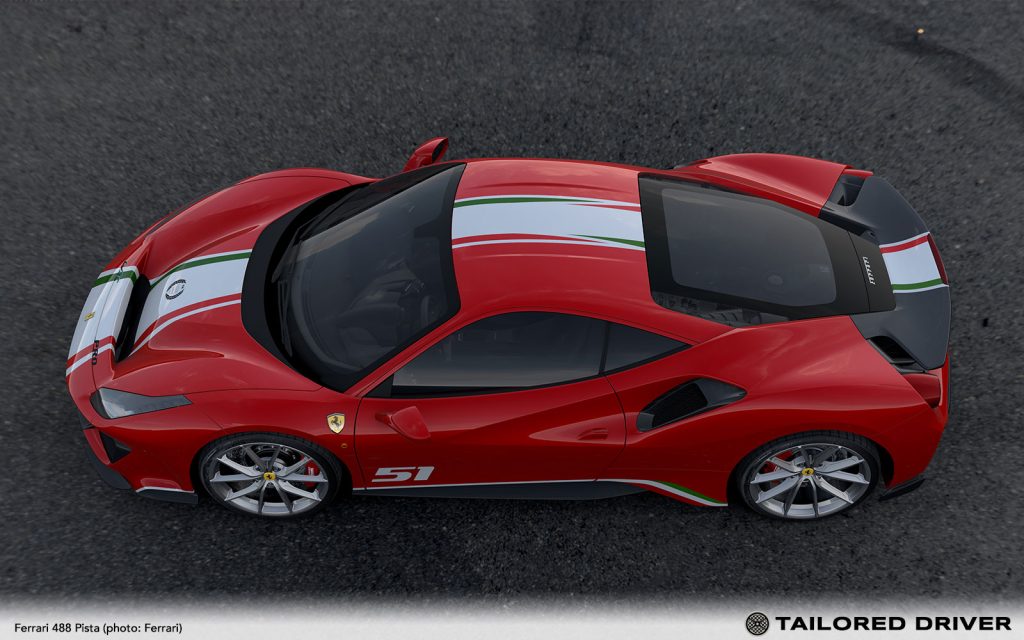
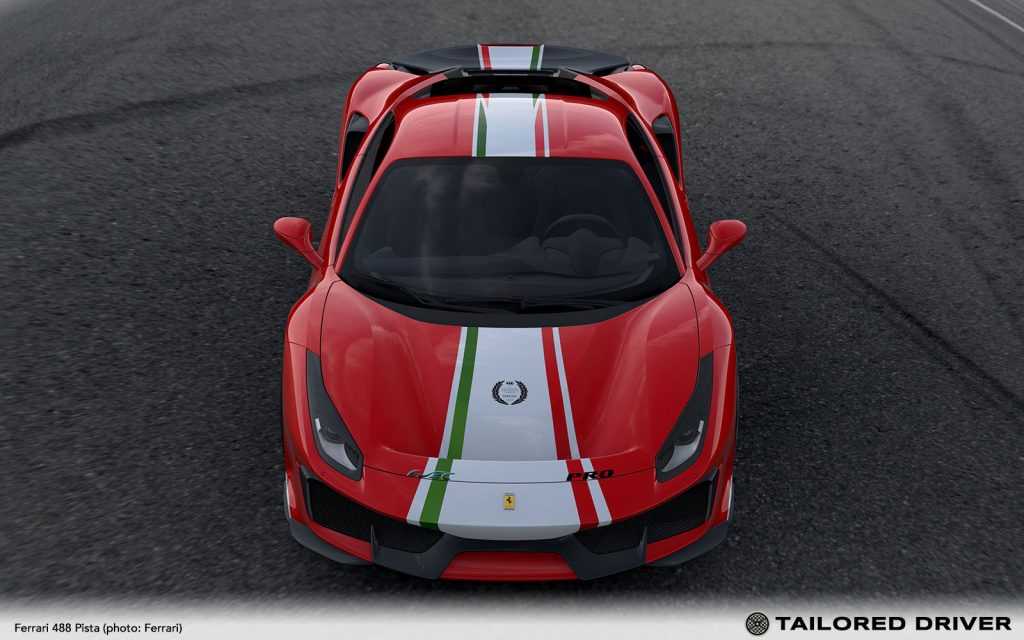
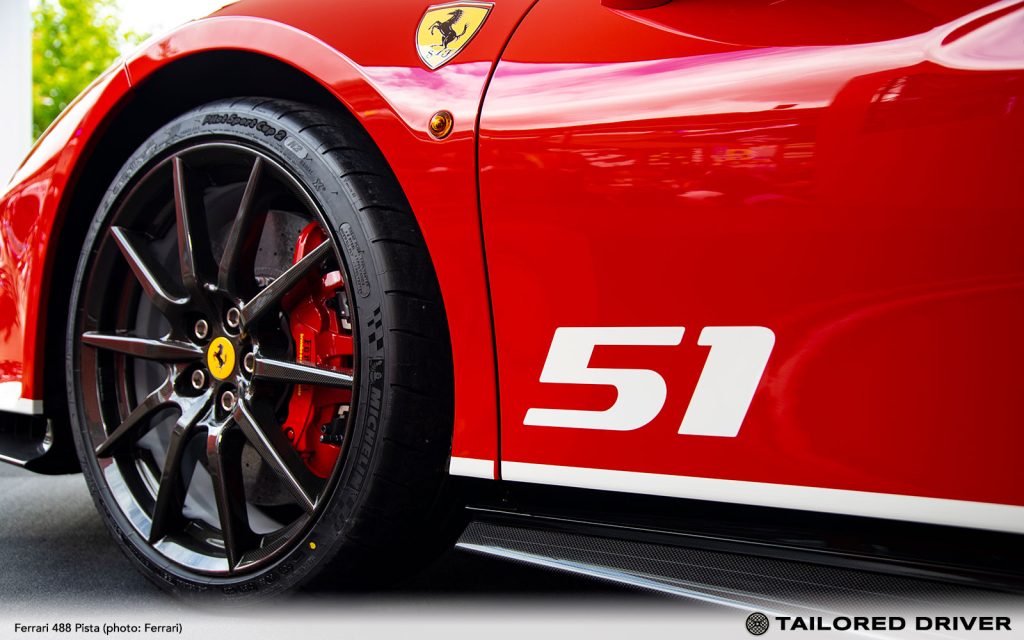
    The exterior features a new livery with stripes in the colours of the Italian flag recalling the racing version of the 488 GTE, embellished by a laurel celebrating the WEC title, the logo of the championship and the word “PRO” indicating the class the car raced in. The Italian flag livery features again along the car’s flanks which are also adorned with the personal race number each client will be able to add. The version that will be unveiled at Le Mans carries the number 51 used by the world championship drivers. The matte black S-Duct and the natural carbon-fibre ‘dovetail’ suspended rear spoiler and vent surrounds round off the personalisation of the exterior.

    The ‘Piloti Ferrari’ 488 Pista will be available in four different colours inspired by the world of racing: Rosso Corsa, Blu Tour De France, Nero Daytona and Argento Nürburgring.

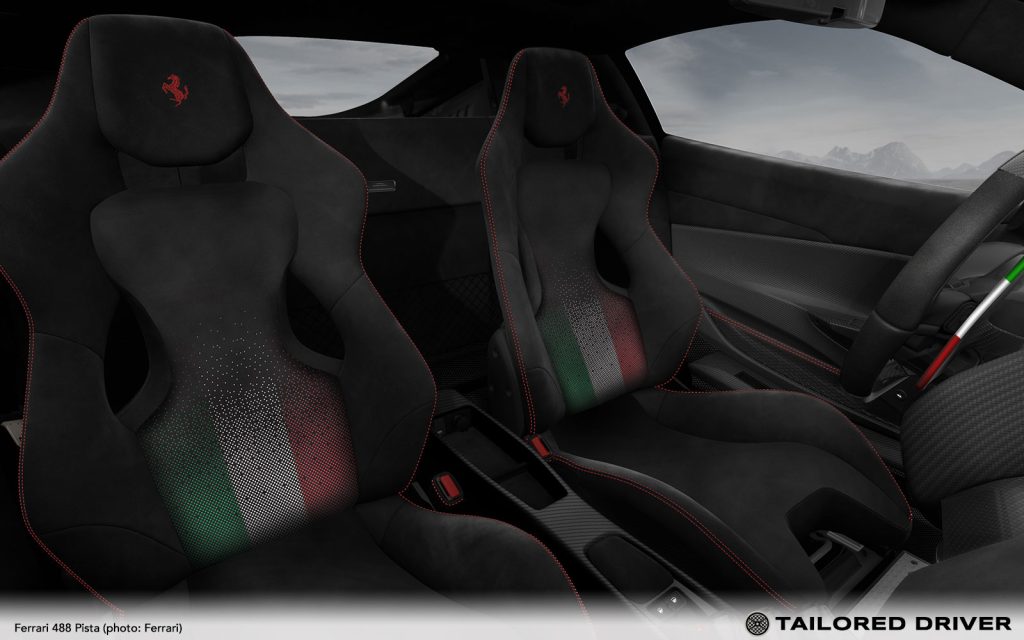
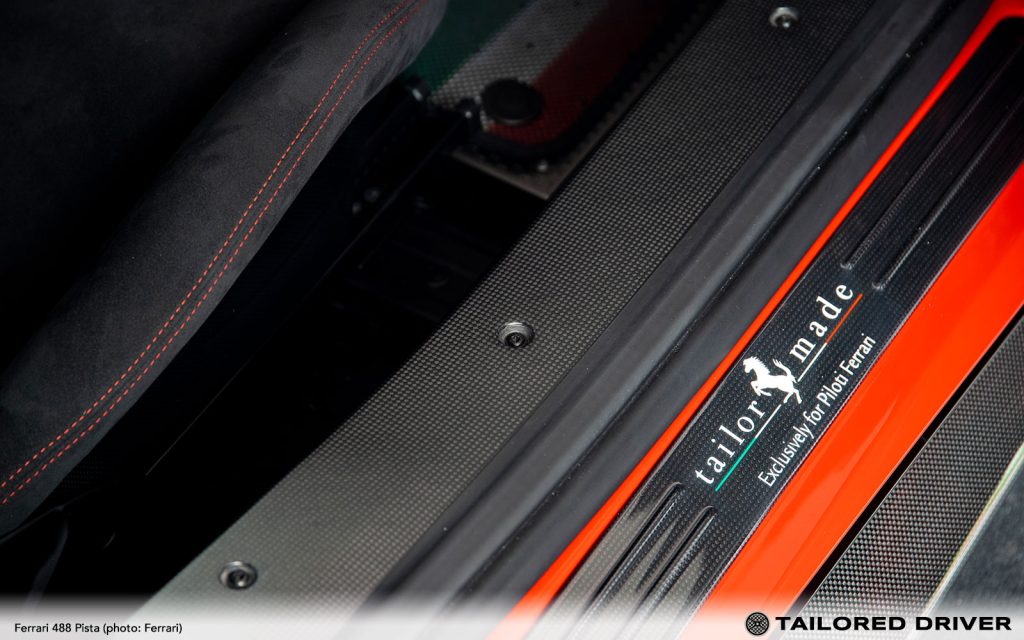
    The interior, in black Alcantara®, includes seats upholstered with a special perforated version of the same material that incorporates the Italian flag in the central band of the backrest. The national colours are also clearly visible on the edge of the gearshift paddles and on the floormats which, like the carpeting itself, are made of a special technical fabric. The number that features on the external livery also appears on the base of the steering wheel, while all the carbon-fibre trim parts have a matte finish. The personalisation of the interior is completed by an exclusive identification plate and sill trim in carbon-fibre, the latter with the Tailor Made logo.

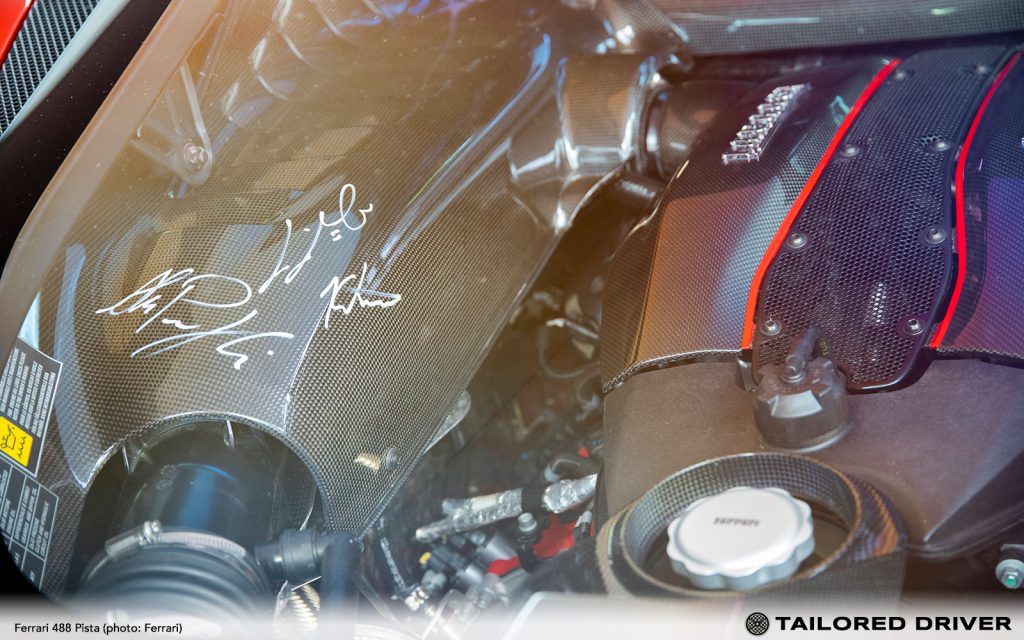
    The ‘Piloti Ferrari’ 488 Pista is powered by the latest 720-cv version of the 3.9-litre turbocharged V8 which has been voted best engine in the world for the third consecutive year at the 2018 International Engine of the Year Awards.