With the 500 GE, Mercedes-Benz presented a V8 variant of the G-Class for the first time in 1993
“Final Edition” limited to a total of 1,500 units
Exclusive equipment details including MANUFAKTUR full leather package
[source: Mercedes-Benz]
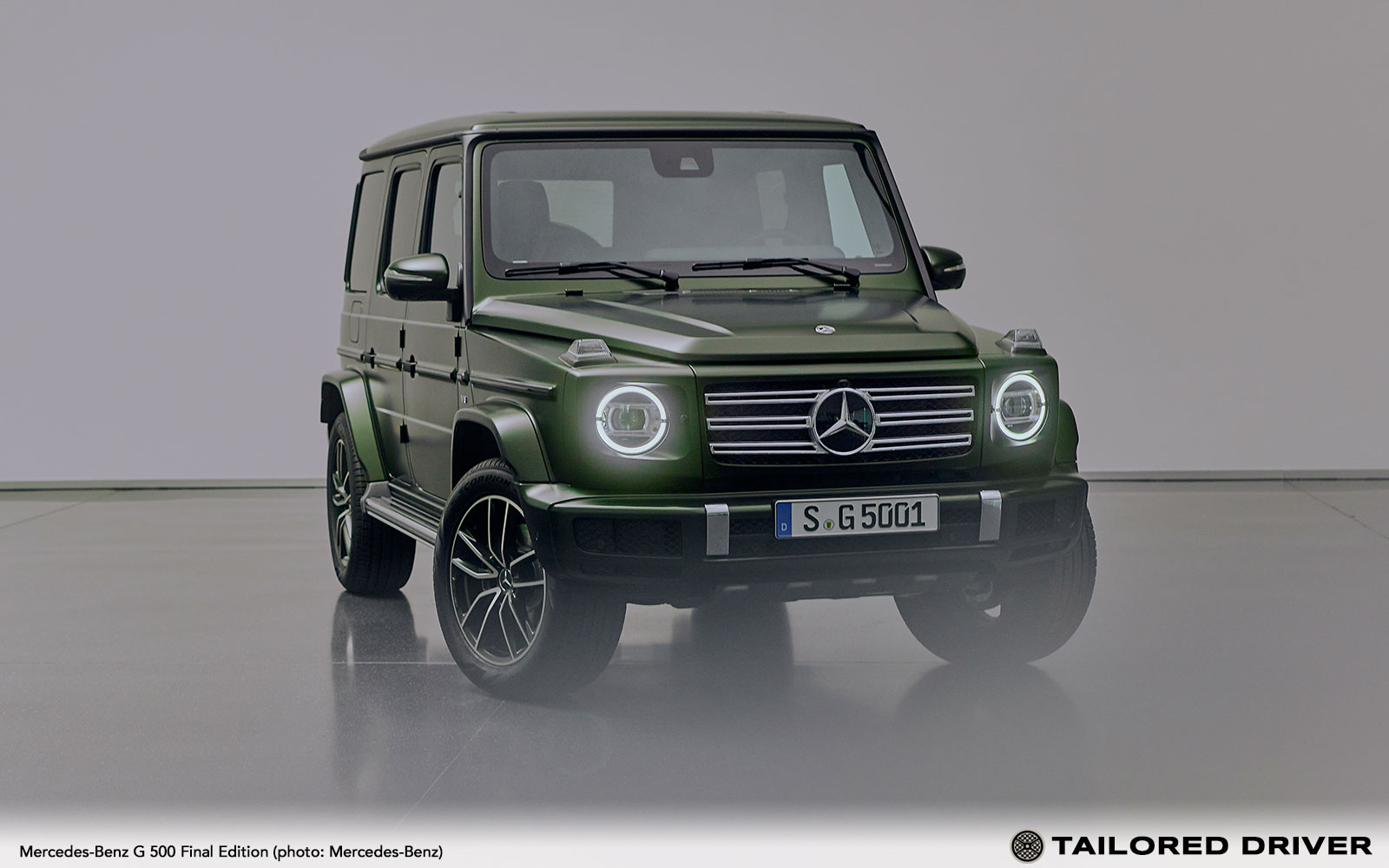
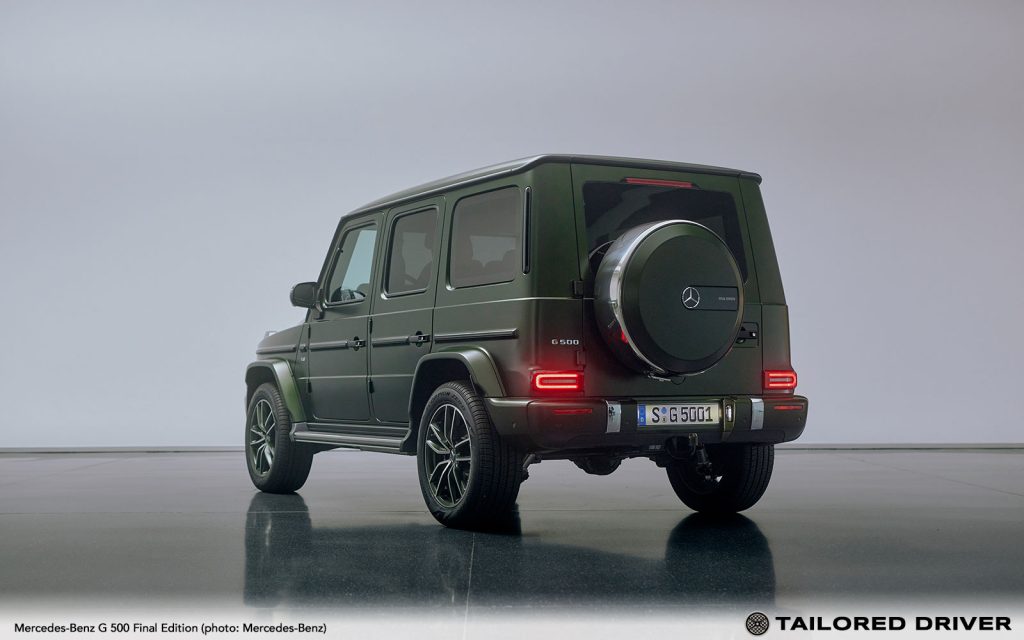
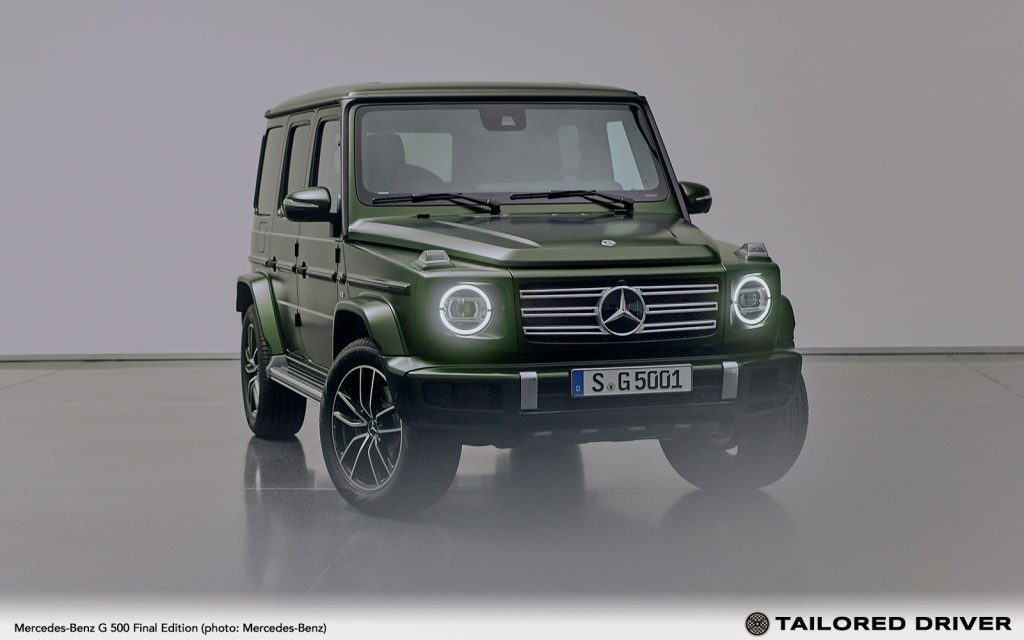
30 years ago, Mercedes-Benz equipped the G-Class with an eight-cylinder engine for the first time: the 500 GE V8 made its debut in an exclusive small series in 1993 and marked the first high point in a history of cultivated performance on and off the road. With the “Final Edition” Mercedes-Benz now celebrates the 30th birthday with a limited special model of the G 500 (WLTP: combined fuel consumption 15.7‑14.7 l/100km, combined CO₂ emissions 356 – 334 g/km[1] – V8 petrol engine, Displacement: 3.982 cc, Rated output, kW/hp: 310/421). It is available in three colour variants, each limited to 500 units. You can choose between the metallic paint obsidian black, the MANUFAKTUR paint opalith white magno and the new MANUFAKTUR paint olive magno.
“The Final Edition is our 30th birthday gift for the G 500, which in 1993 was considered the trendsetter and harbinger of the high-end off-roader in the luxury class. With its exclusive equipment details, the limited special model is also a fitting parting gift from the V8 biturbo engine in the G 500.” Dr. Emmerich Schiller, Chairman of the Managing Board of Mercedes-Benz G GmbH and Head of the Off-Road Vehicle Division at Mercedes-Benz
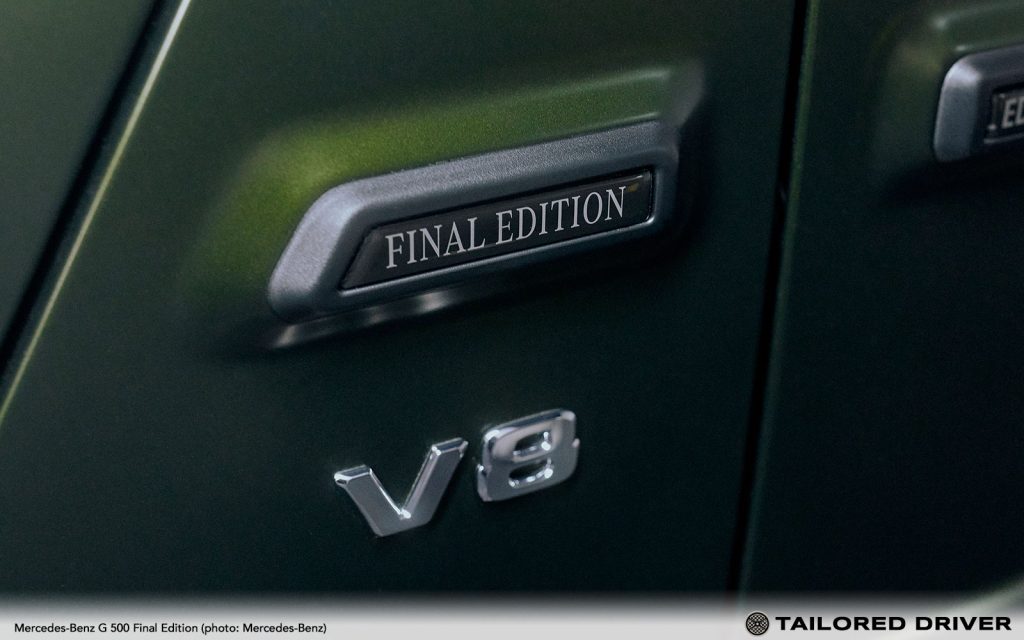
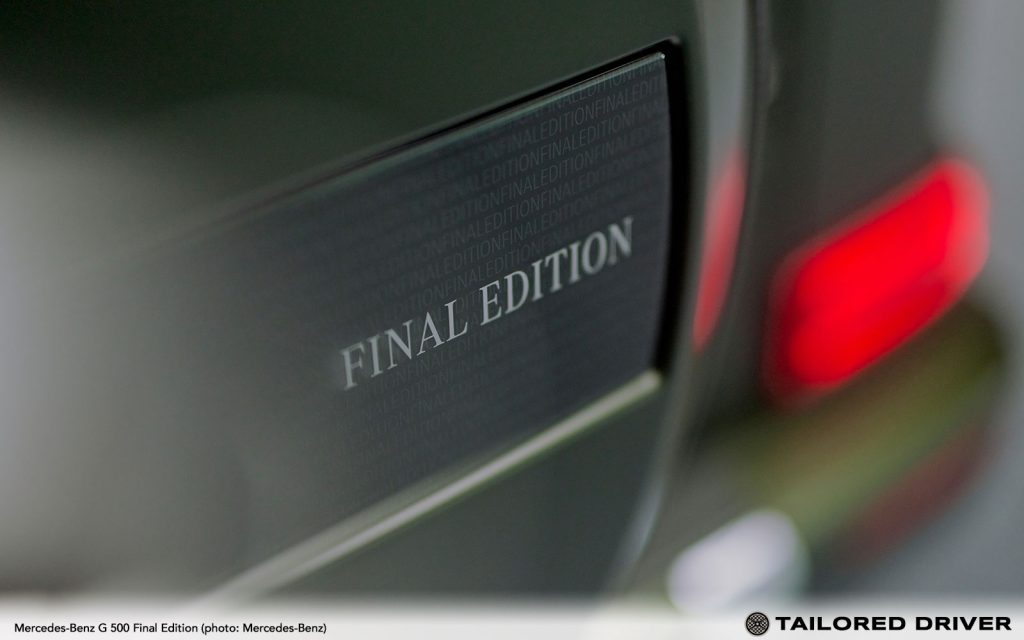
The “Final Edition” also features 20-inch AMG light-alloy wheels in a 5-twin-spoke design, which are painted in the body colour and have a high-sheen finish in combination with the MANUFAKTUR olive magno paint finish. For the other two variants, they are black and have a high-sheen finish. In addition, the special model features “FINAL EDITION” lettering, from the outer protective strip to the insert in the spare wheel cover. As part of the MANUFAKTUR logo package, doorknobs with an embossed logo complement the high-quality appearance of the “Final Edition”. There is also a logo projector in the exterior mirrors, which projects the “G” logo and the lettering “STRONGER THAN TIME” onto the asphalt when stationary. The spare wheel ring in high-gloss chrome, plus other add-on parts in both the body colour and high-gloss chrome underline the exclusivity of the limited special model. In addition, buyers receive an exclusive indoor car cover with “STRONGER THAN TIME” lettering to protect the vehicle from dust and scratches.
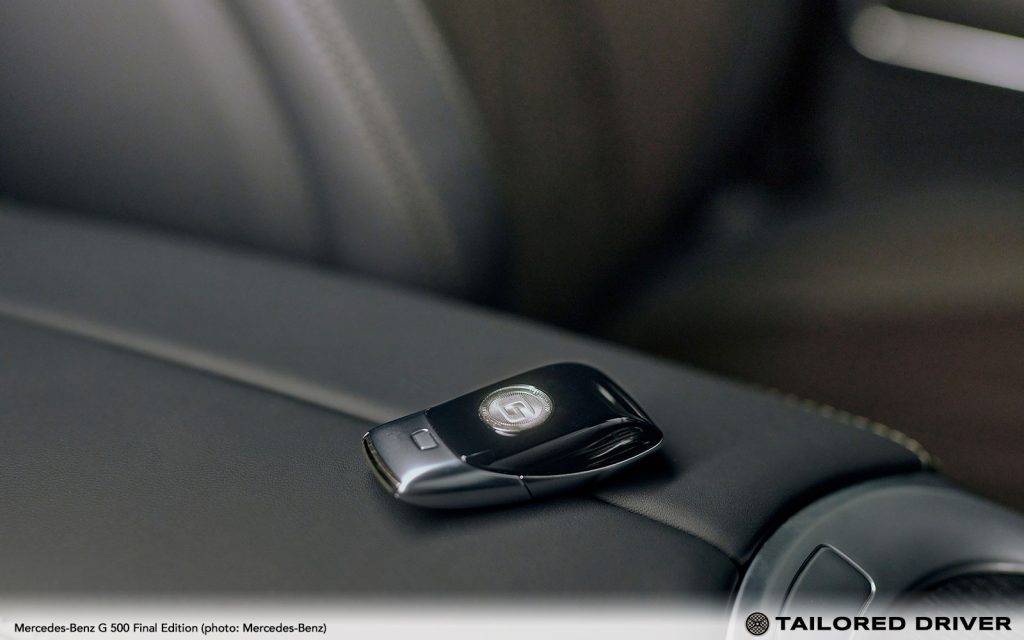
Since its introduction, high-quality interior equipment has been closely associated with the G 500. The “Final Edition” continues this tradition: as soon as the occupants get in, they are greeted by illuminated “FINAL EDITION” lettering on the door sill trims. The lettering can also be found on the insert of the grab handle for passengers. A genuine silver coin in the form of an edition-specific plaque with the appropriate lettering is attached to the back of the vehicle key. In addition, the Superior Line with the Burmester® surround sound system, the Active Multicontour Seat Package Plus and the seats in two-tone MANUFAKTUR Nappa leather are part of the standard scope of the special edition.
MANUFAKTUR full leather package: exclusive equipment for the “Final Edition”
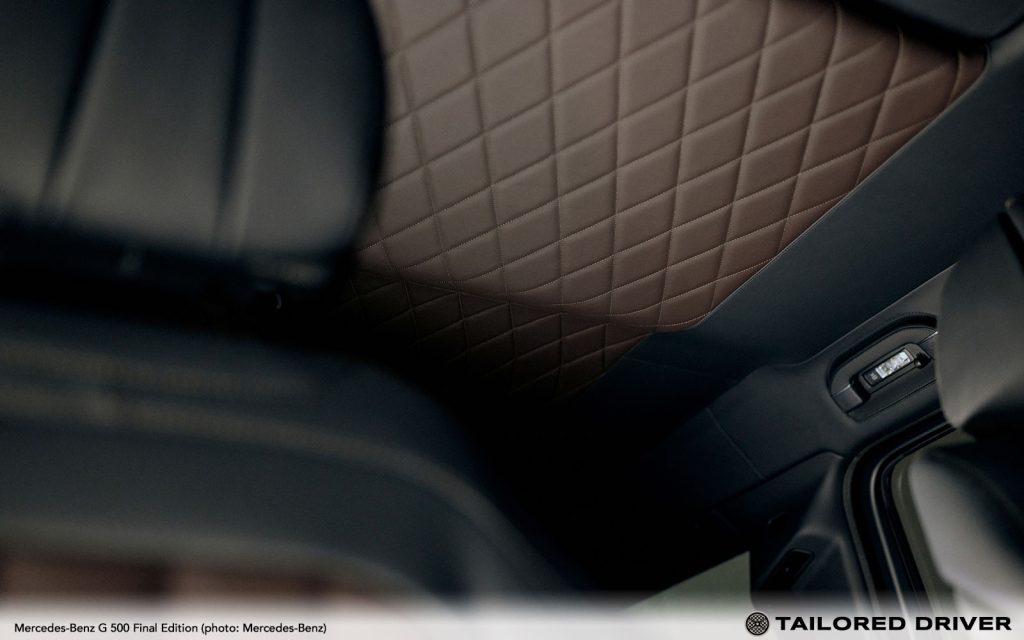
The “Final Edition” of the G 500 is exclusively equipped with the new MANUFAKTUR full leather package, which is perfectly matched to the respective exterior paintwork. The name says it all: almost the entire interior is lined with Nappa leather, from the luggage compartment to the roof lining and the panels on the seat adjustment switches. The centre section of the headliner is coloured to match the seat centre panel and features the same diamond design. In combination with the obsidian black metallic paint finish, it comes in titanium grey pearl/black. In the opalith white magno lacquered variant, the centre section is coloured in platinum white/black, and in the olive magno lacquered version in espresso brown/black.
The “Final Edition” of the G 500 can be ordered as of now at a price of 196,350 euros[2].
[1]The stated figures are the measured “WLTP CO₂ figures” in accordance with Article 2 No. 3 of Implementing Regulation (EU) 2017/1153. The fuel consumption figures were calculated on the basis of these figures.
[2] Recommended retail price in Germany, including 19% VAT. G500, V8 petrol engine, Displacement 3.982 cc, Rated output, kW/hp: 310/421.
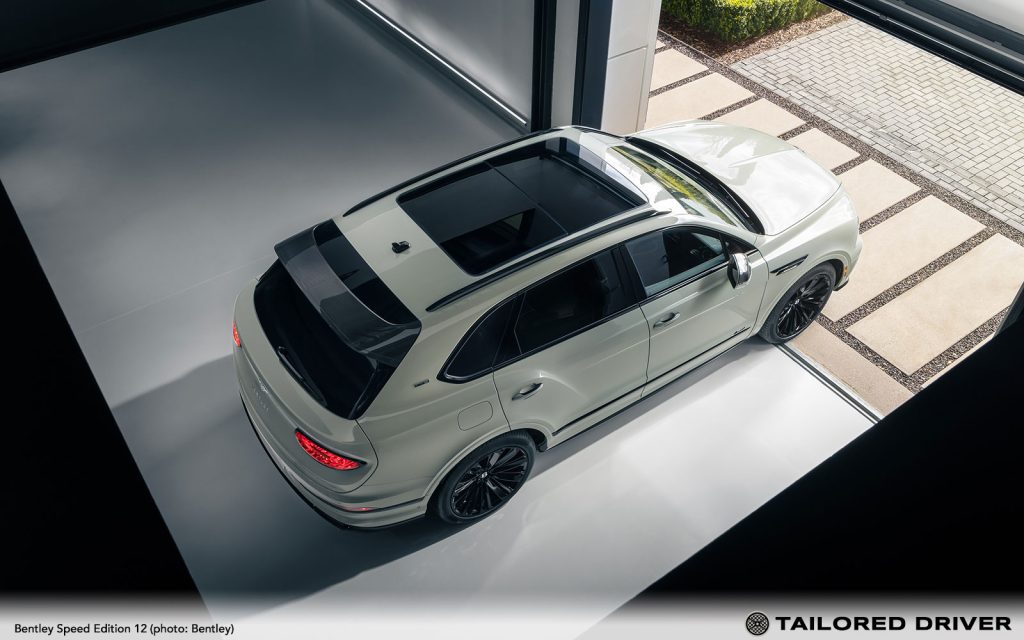
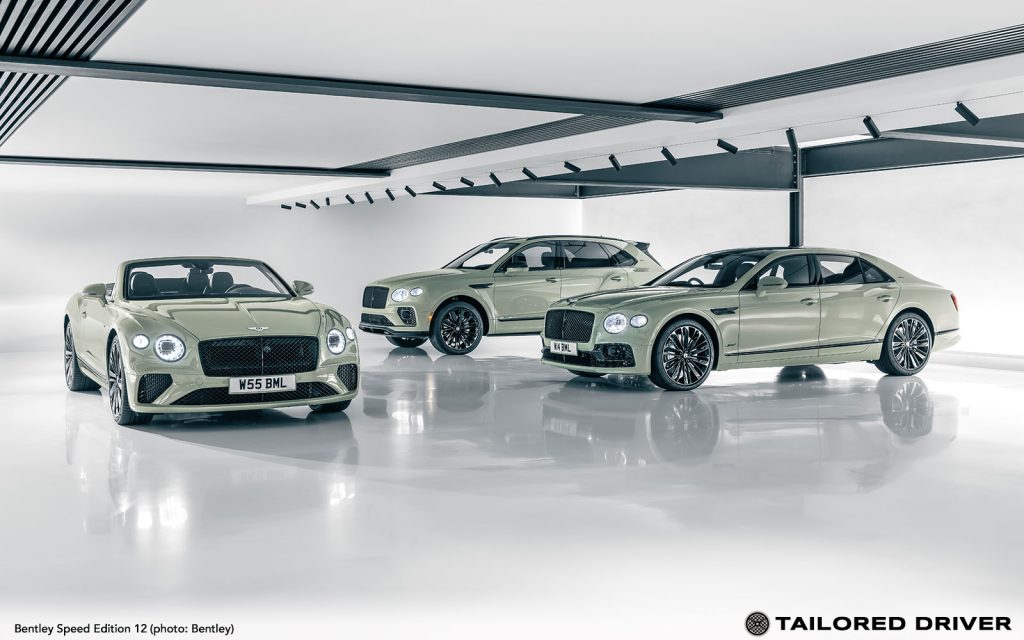
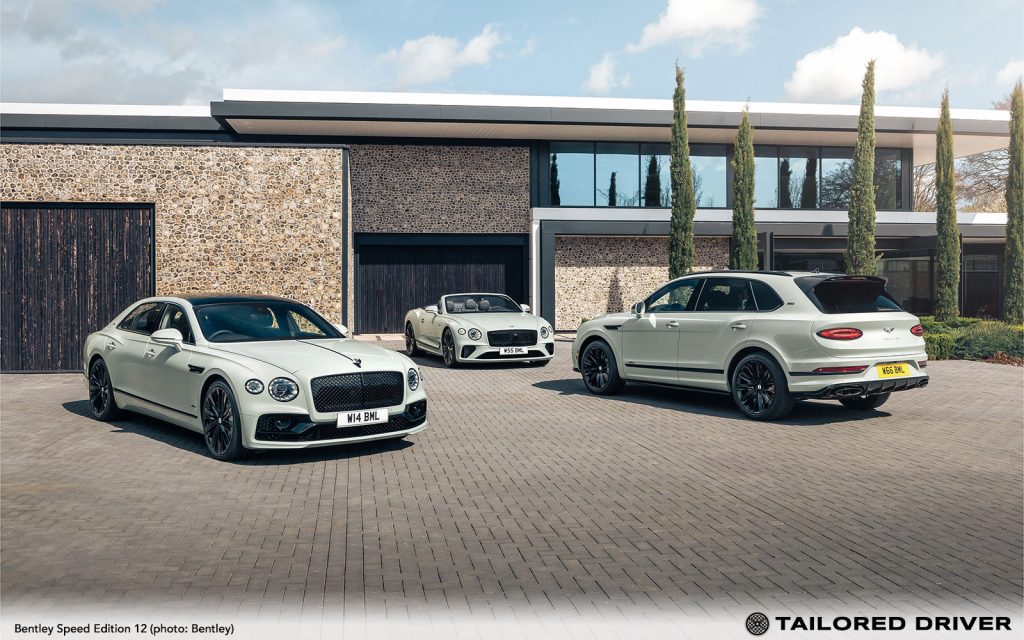
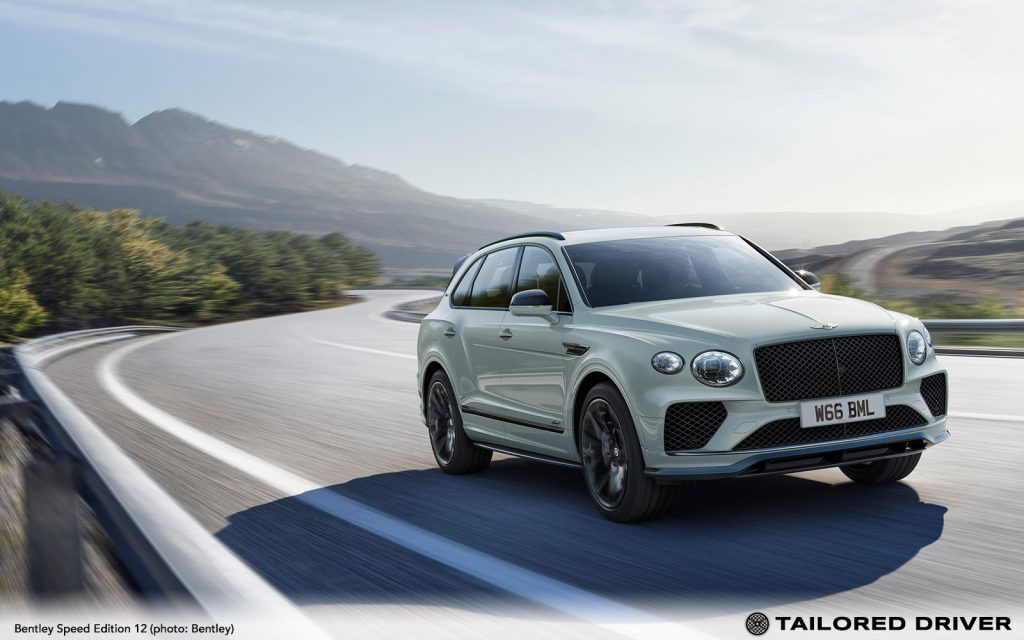
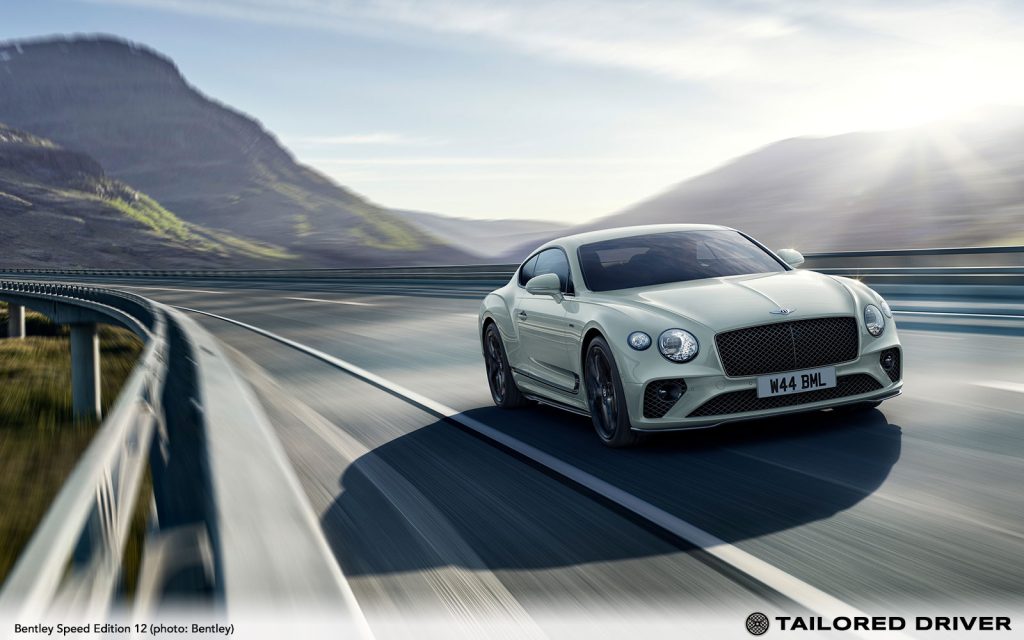
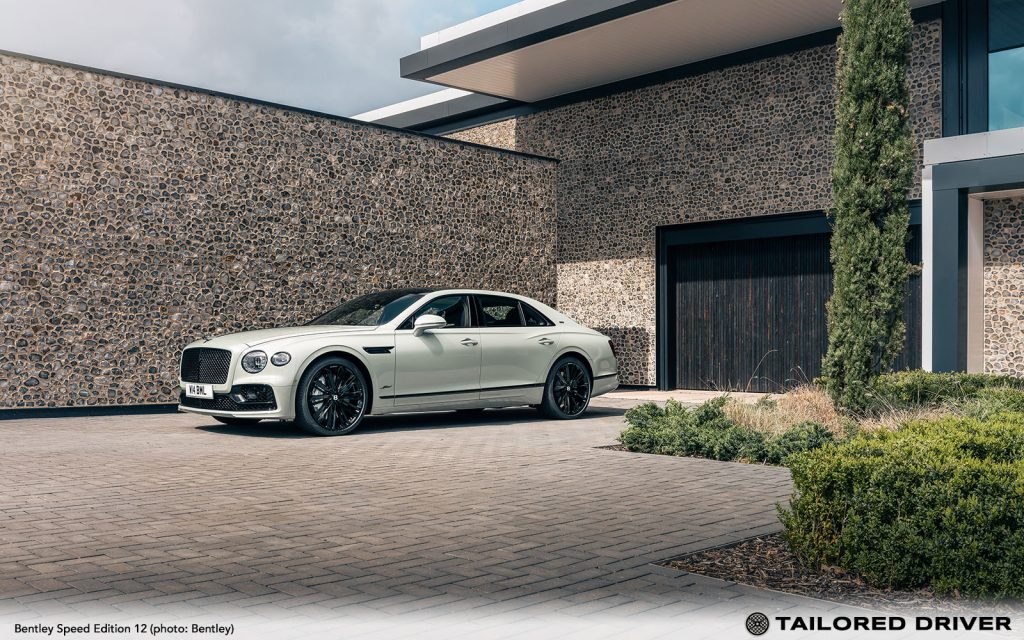
‘Speed Edition 12’ available as Bentayga, Flying Spur, Continental GT and Continental GTC
Only 120 each of the four Speed Edition 12 models to be produced
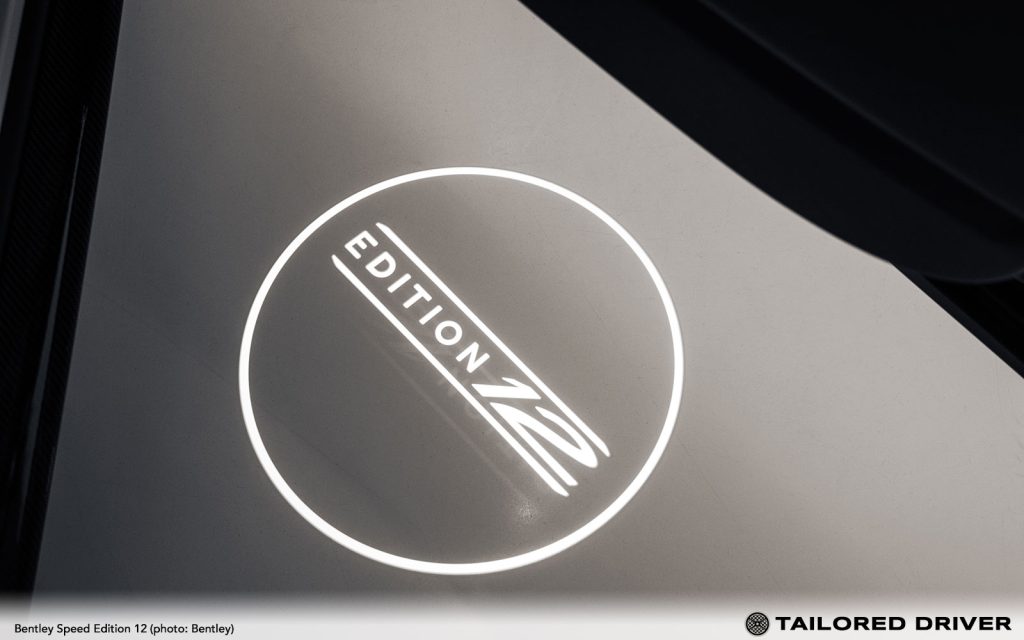
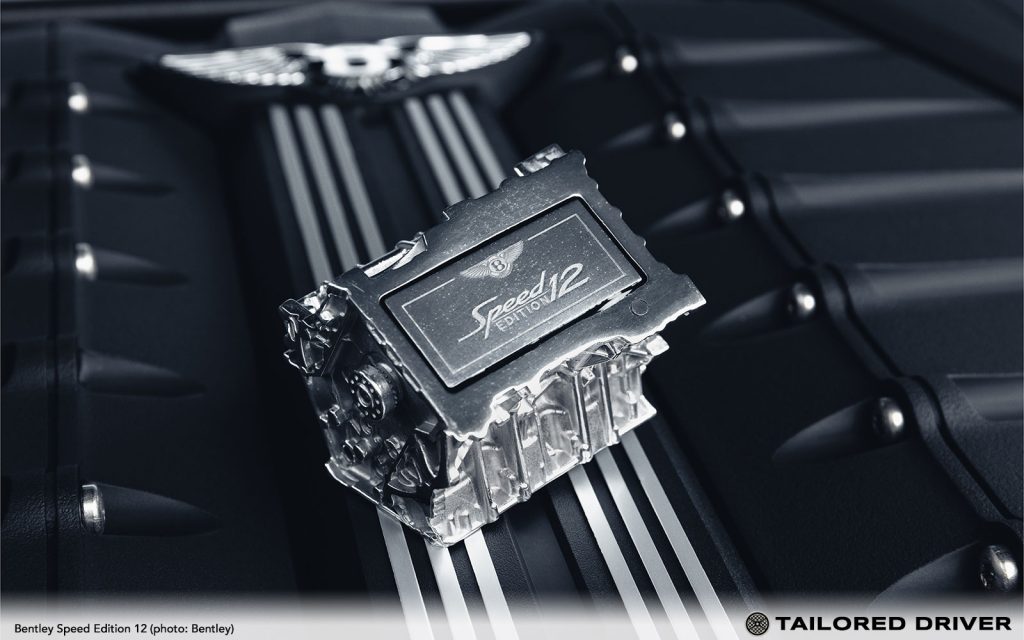
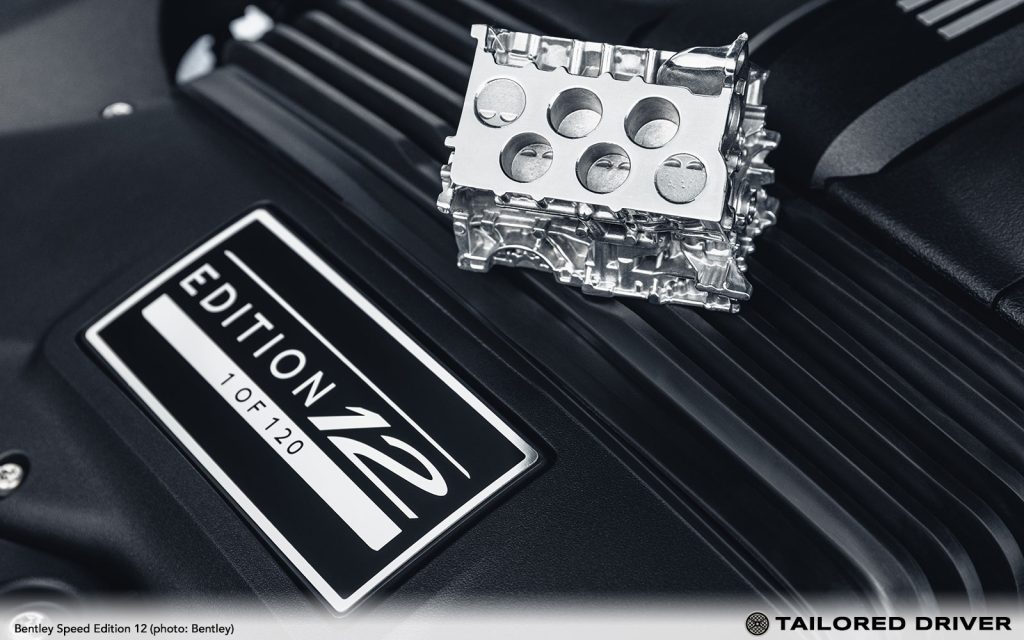
Unique design features include Edition 12 badging, treadplates, seat embroidery, fascia inlays, and numbered engine plaque
Blackline specification and black 22” Speed wheels with silver brake calipers accentuate a performance focus
Optionally available with a sophisticated new paint finish, Opalite
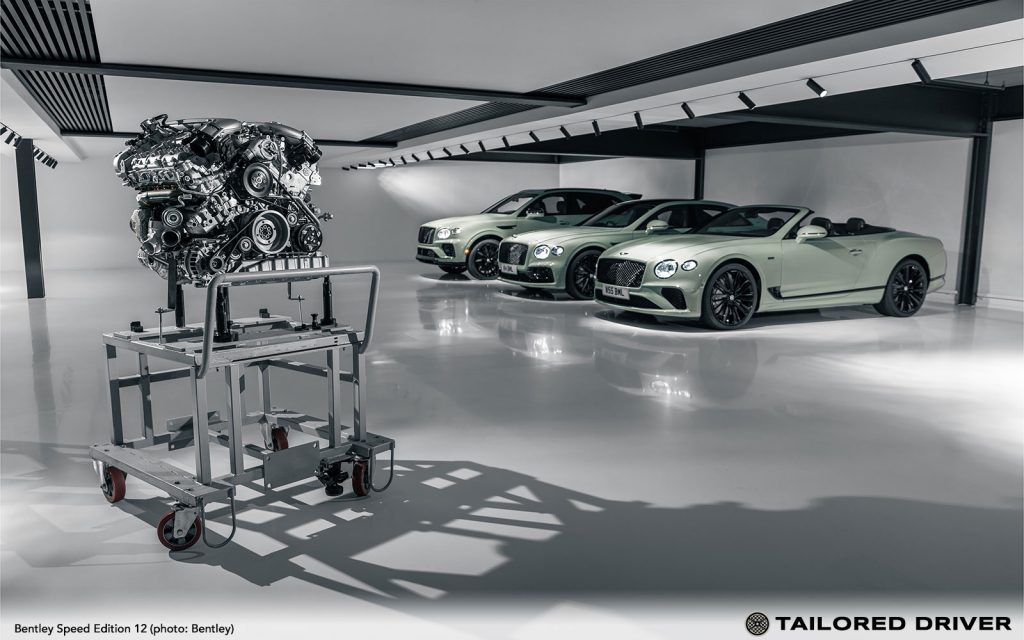
Owners receive a commemorative 15 per cent scale W12 engine block
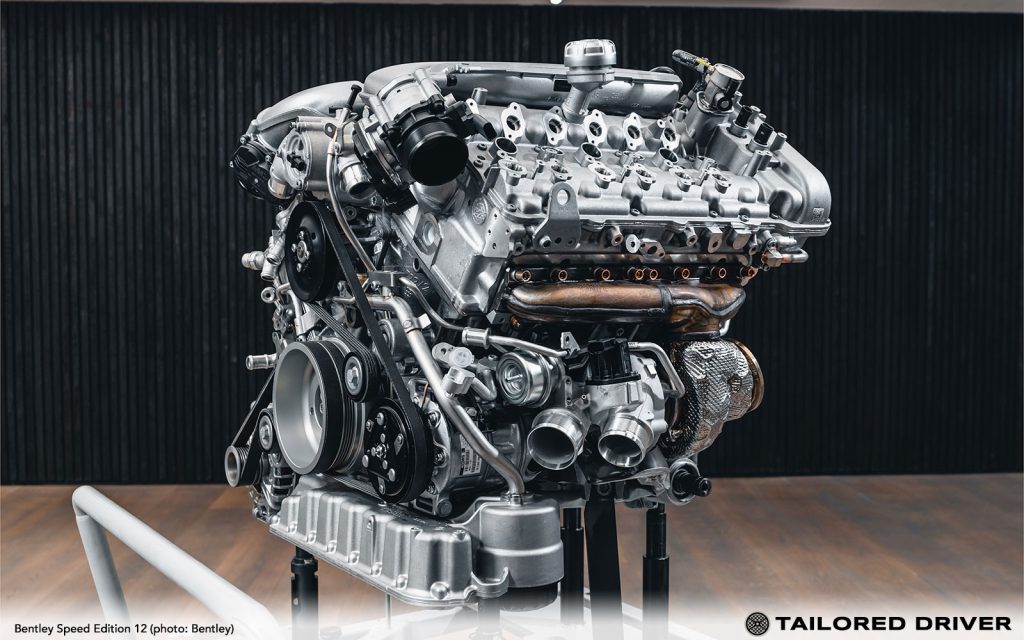
Production of W12 to end April 2024, after more than 100,000 units – the most successful 12-cylinder engine of the modern era
[source: Bentley]
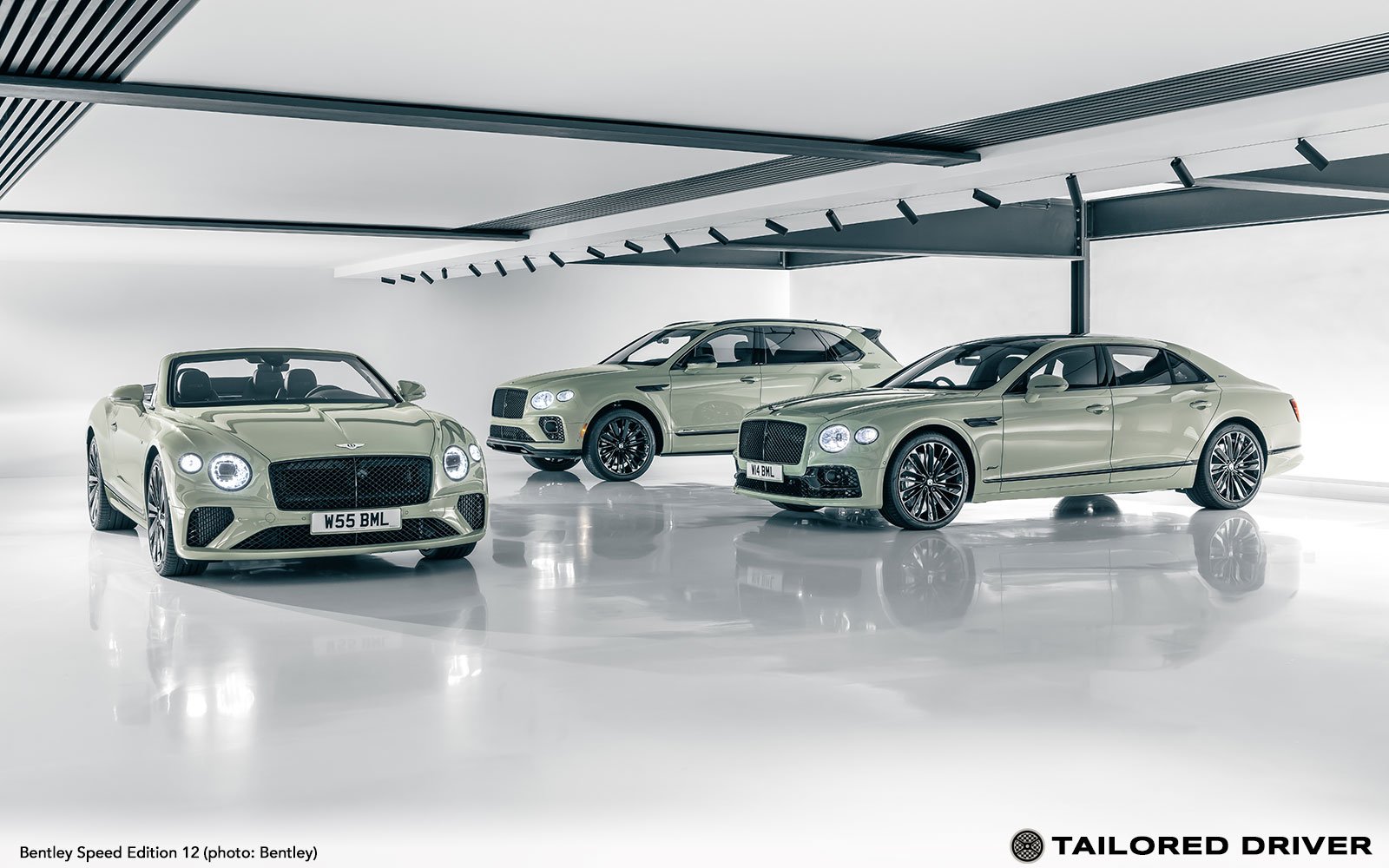
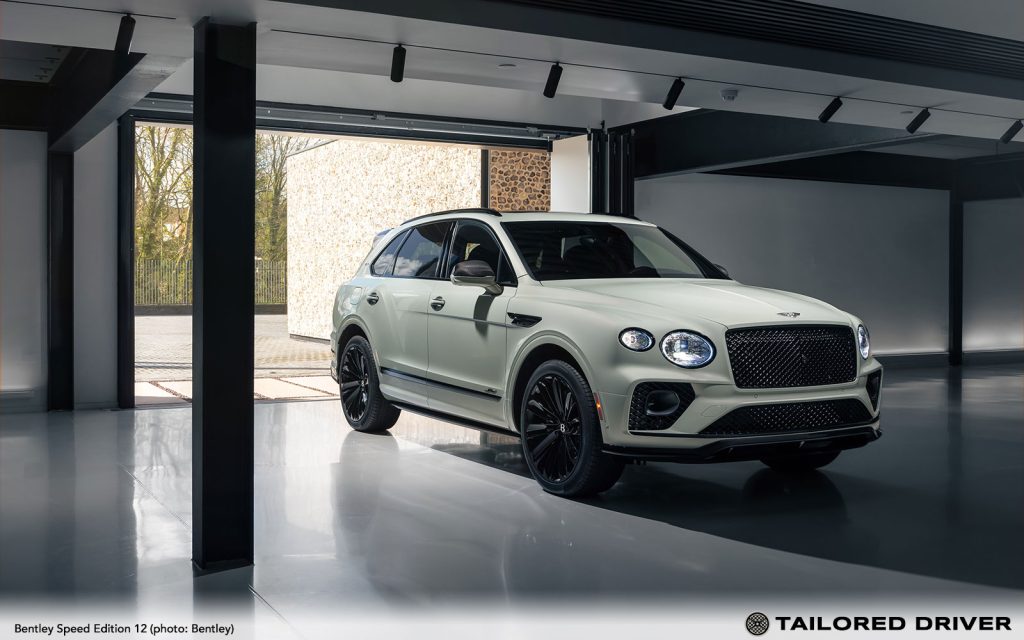
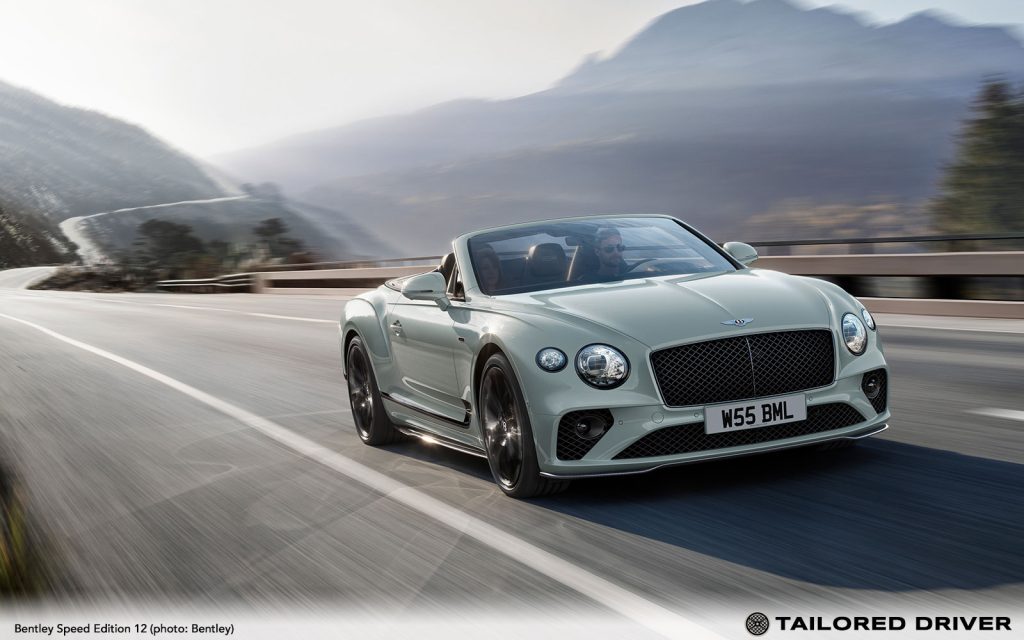
Crewe, England – To celebrate the remarkable W12 engine that has powered its performance flagships and indeed the brand since 2003, Bentley has created the limited-edition Speed Edition 12. Powered by the most successful 12-cylinder engine of the modern era, the Speed Edition 12 models are a fitting farewell to an extraordinary engineering achievement.
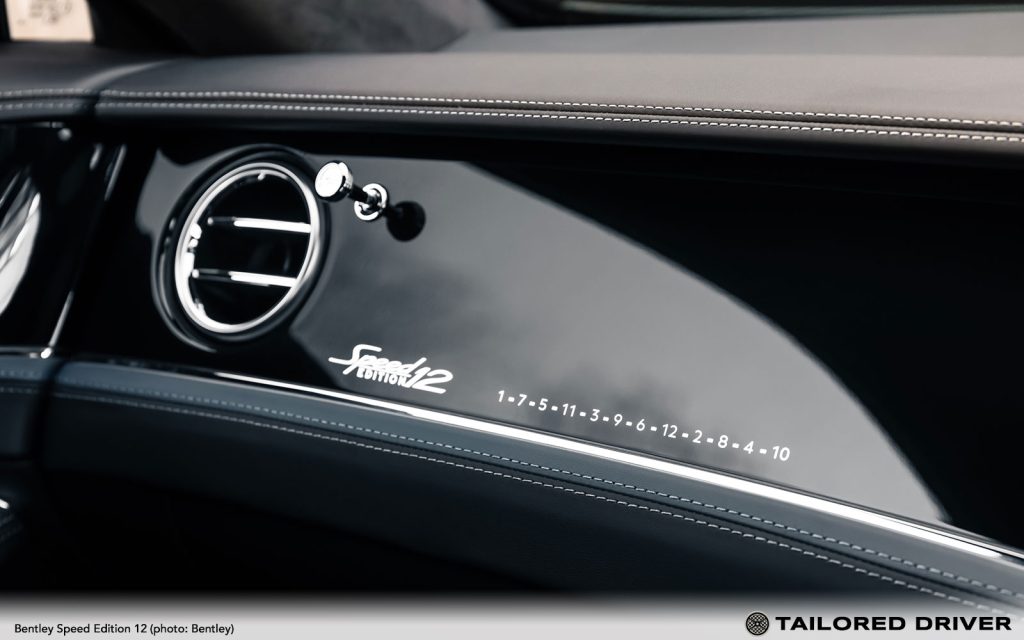
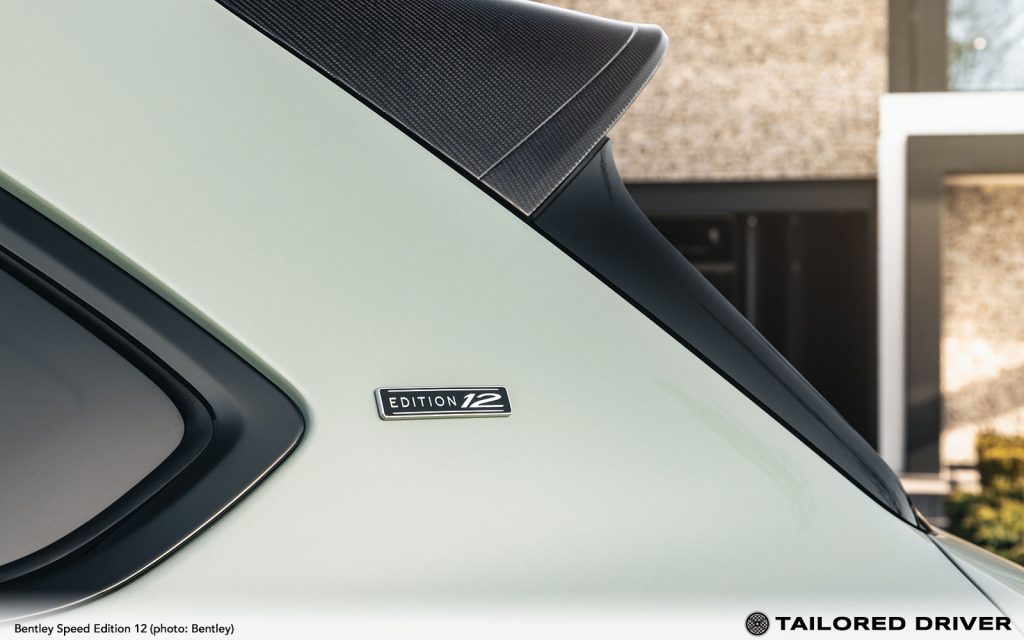
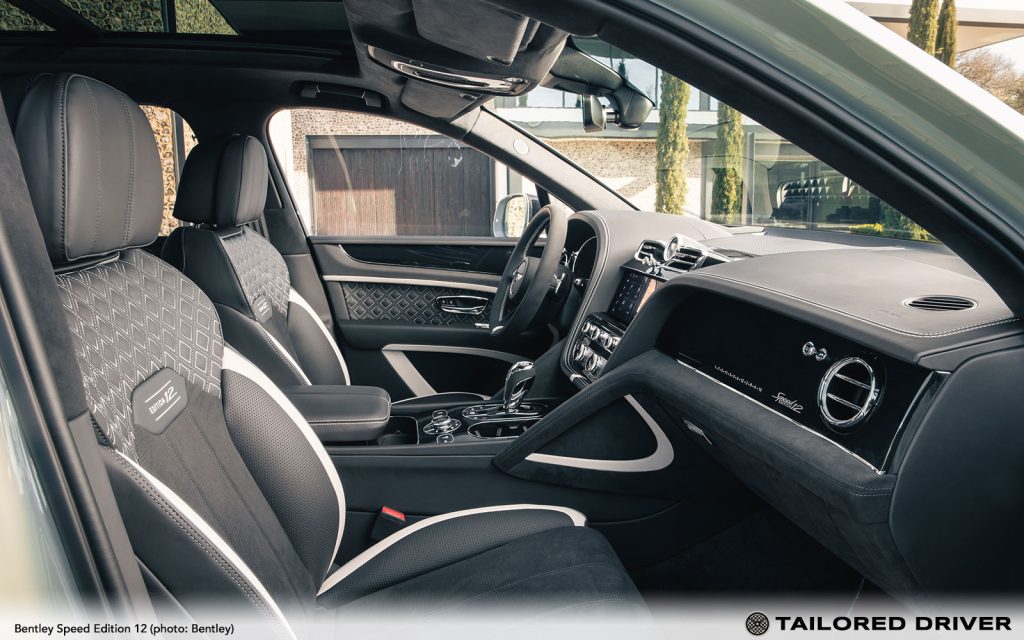
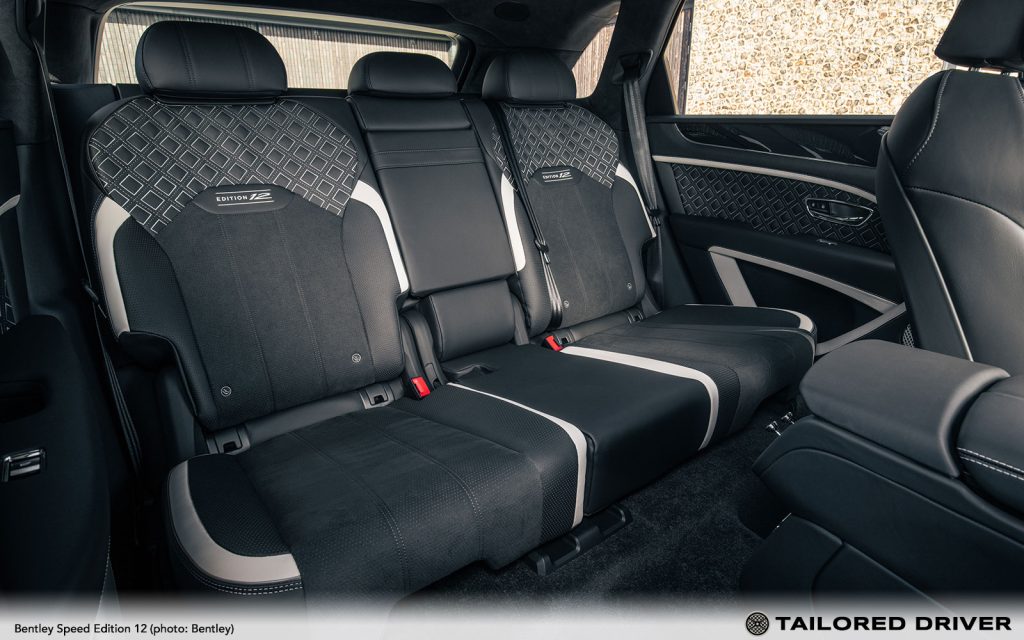
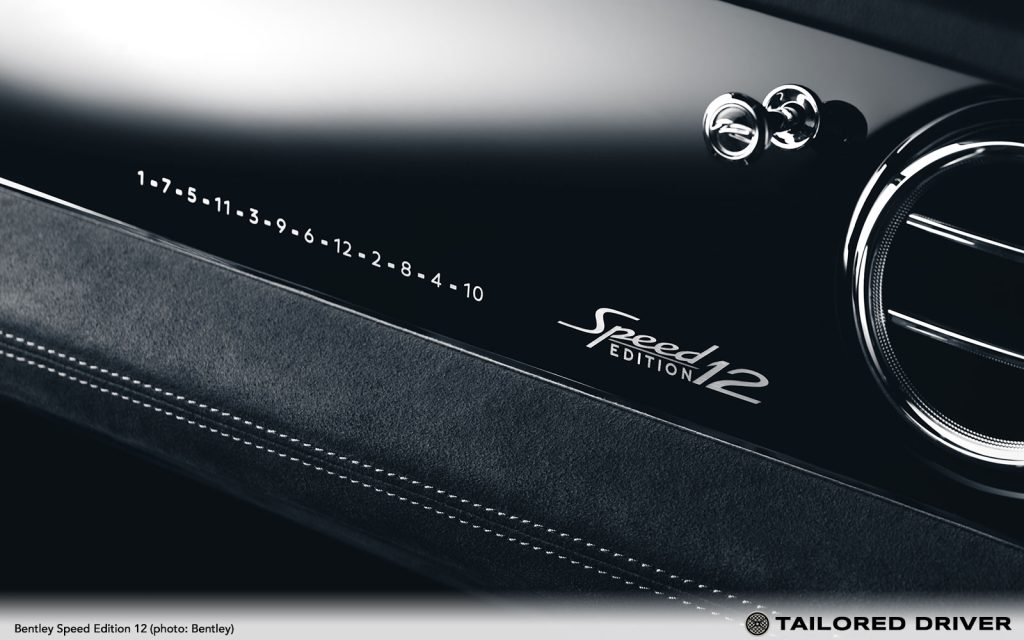
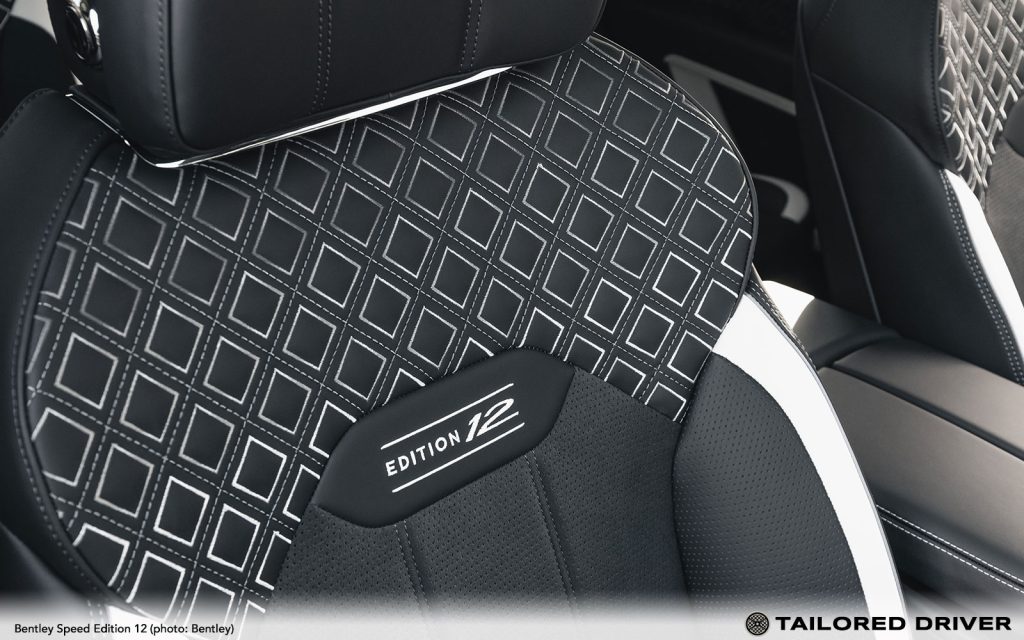
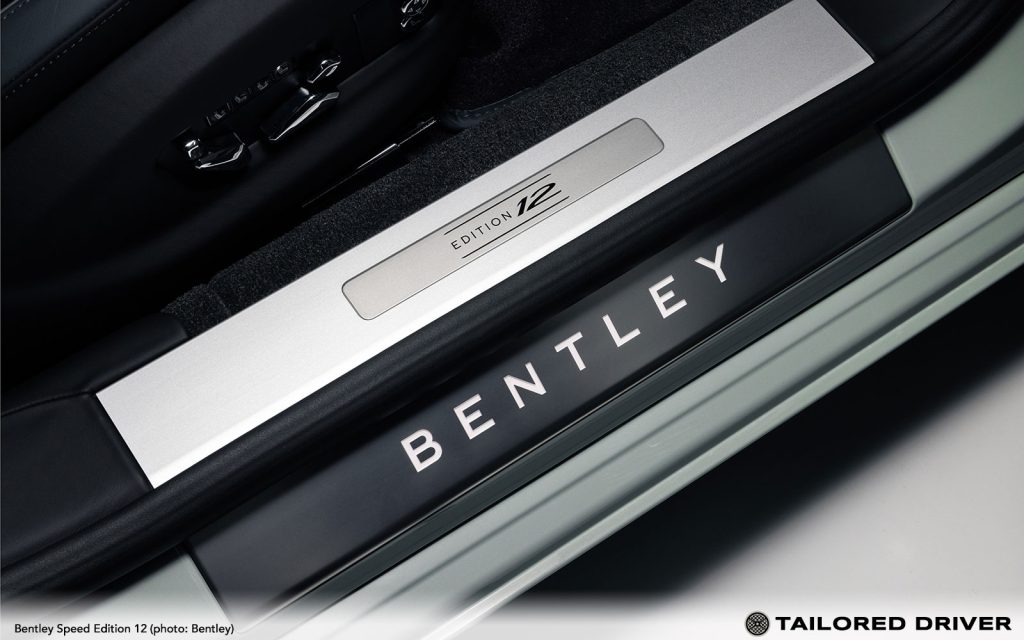
Based on the Speed specification Bentayga, Flying Spur, Continental GT and Continental GT Convertible, the Edition 12 package features many unique design enhancements. These include Edition 12 badging, numbered engine plaque, Edition 12 embroidery, colour graduated seat contrast stitching, and a fascia in Grand Black veneer with the engine firing sequence etched alongside an inlaid Edition 12 badge.
Only 120 of each of four models will be produced, ensuring that the Speed Edition 12 will become a rare and sought-after tribute to an engine that has powered the company’s cars – and its fortunes – for two decades.
The Bentley W12
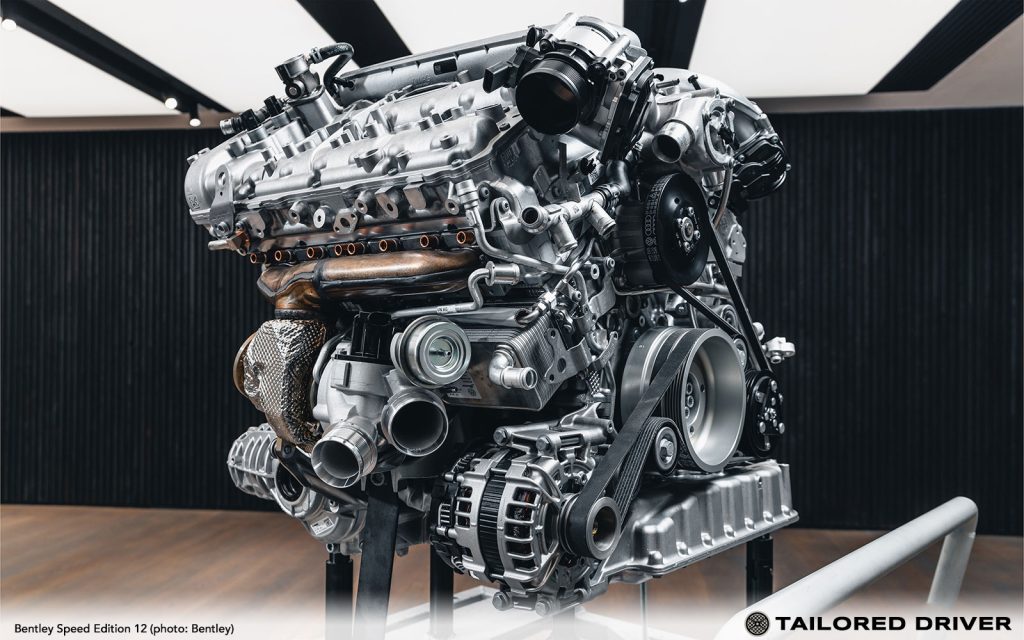
In 2003, Bentley’s W12 engine heralded a new era for the company as the powertrain for the first all-new model under Volkswagen Group ownership, the Continental GT. The unique W-formation of the 6.0-litre twin-turbocharged W12 enabled it to be 24 per cent shorter than an equivalent V12 with no compromise in power, efficiency, or refinement. Ever since, continuous evolution has seen a 37 per cent increase in power and a 54 per cent increase in torque, along with a 25 per cent reduction in emissions. In the Speed Edition 12 models, the W12 now develops up to 659PS (650 bhp) @ 5000-6000 rpm, while the famed Bentley ‘tidal wave’ of torque sees a peak of 900Nm reached at just 1500rpm and continuing unabated through to 5000 rpm.
Exterior: understated distinction
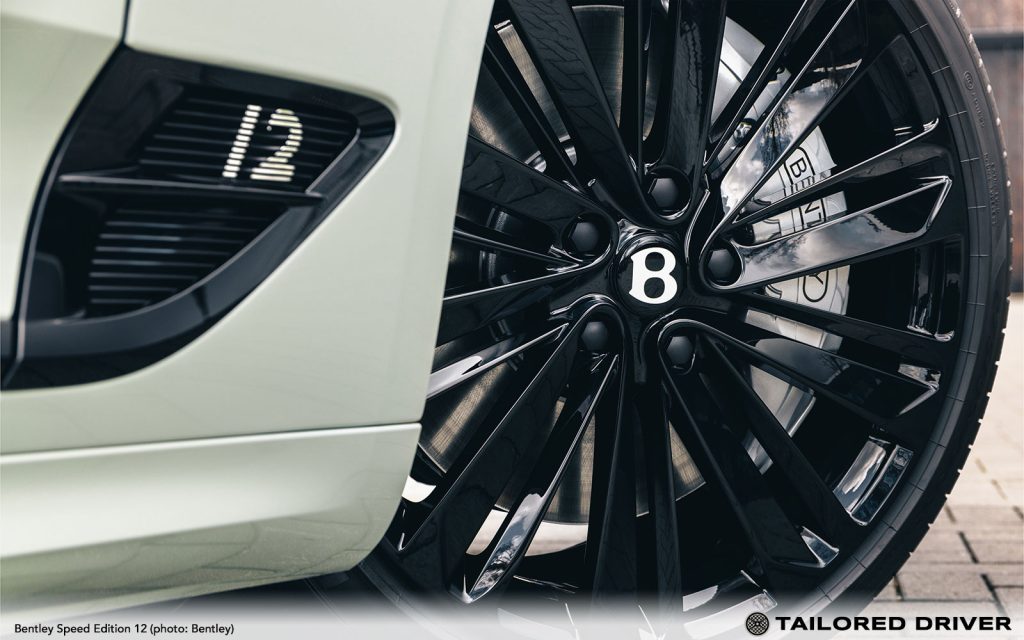
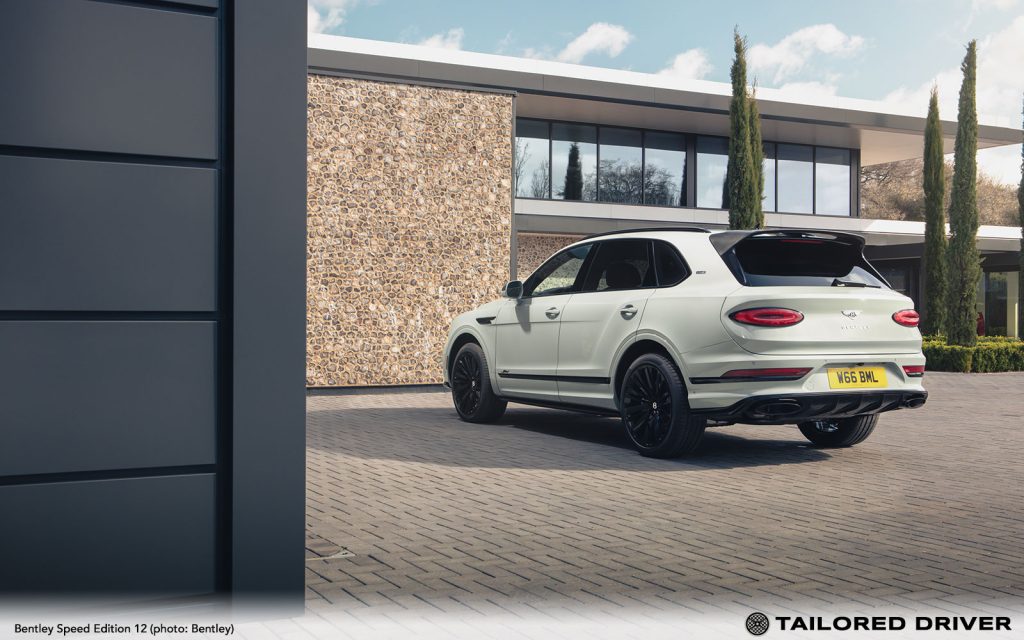
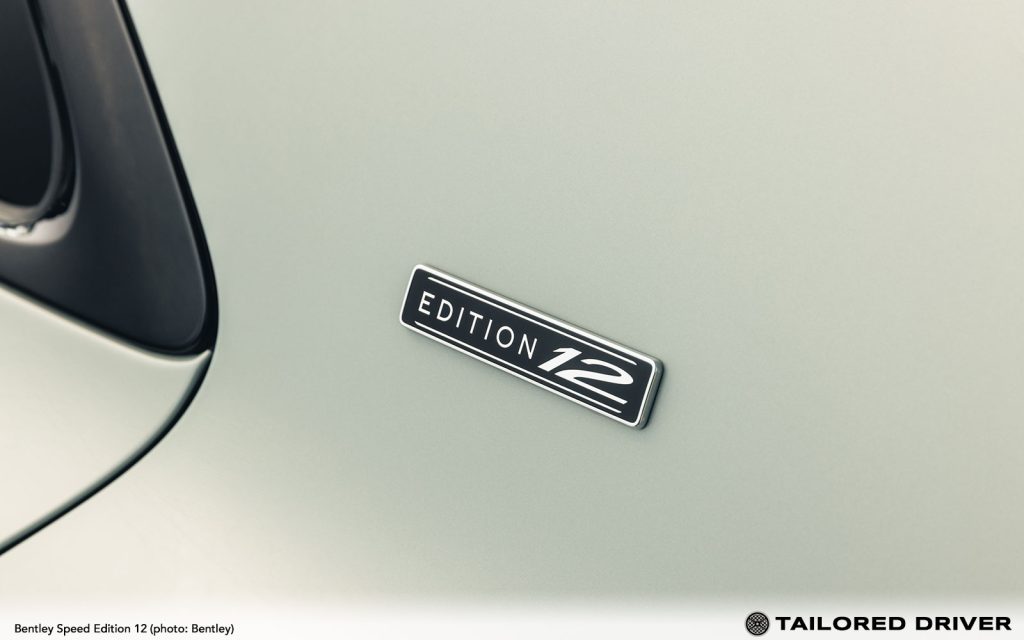
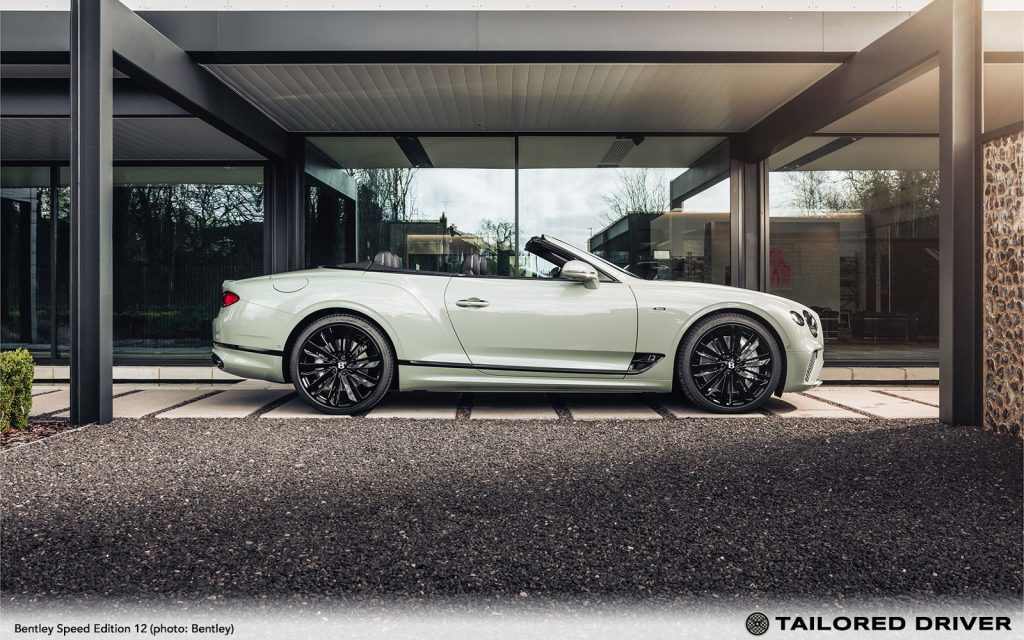
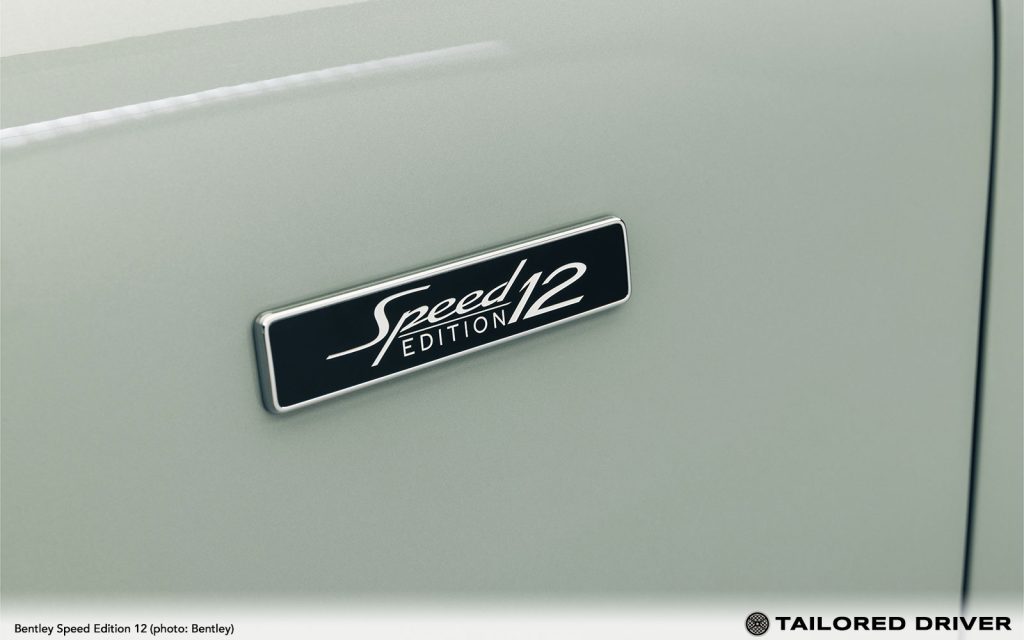
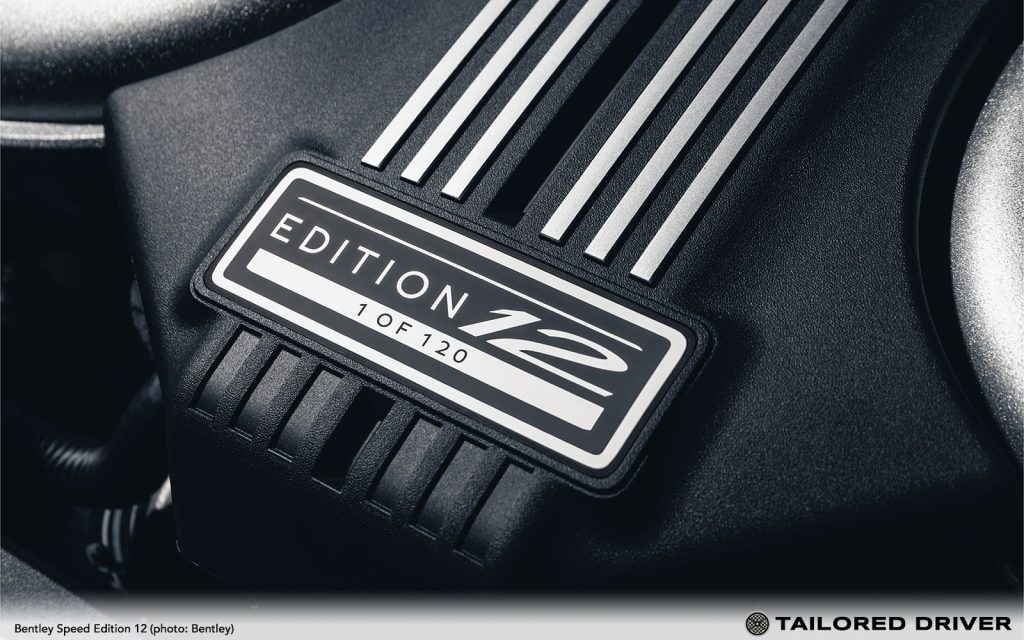
The external features of the Speed Edition 12 models are subtle yet carefully curated, making it instantly recognisable to those in the know. Among the distinctive details are silver brake callipers, which are not available for any other Bentley model. Continental GT and Convertible models feature Speed Edition 12 badging on the front fender while Bentayga and Flying Spur models carry Edition 12 badges on the rear quarter together with the existing Speed badge. Opening the bonnet reveals a numbered Edition 12 plaque in pride of place on the engine’s cover.
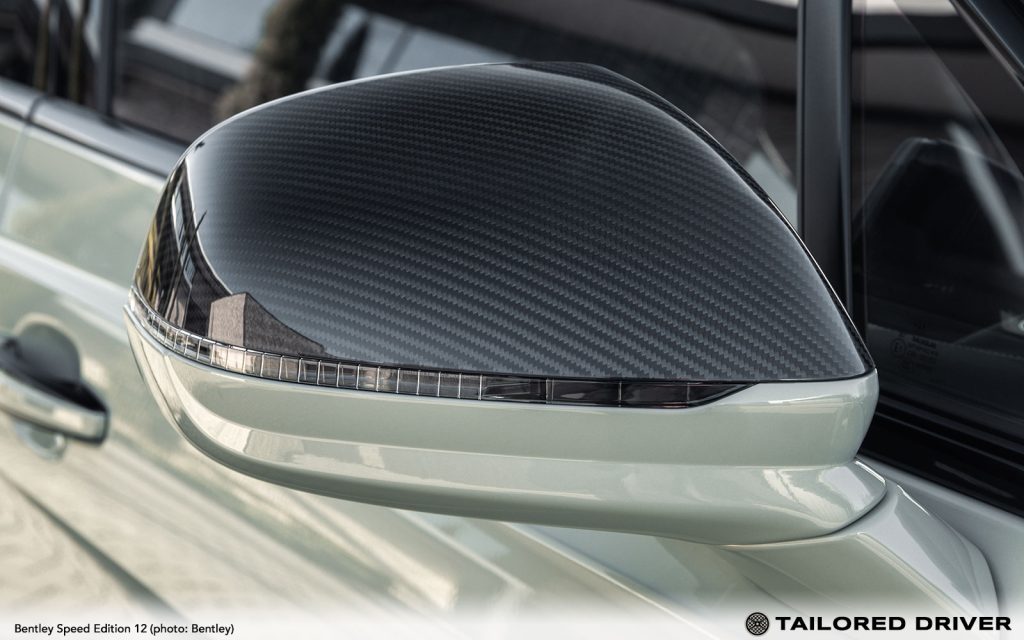
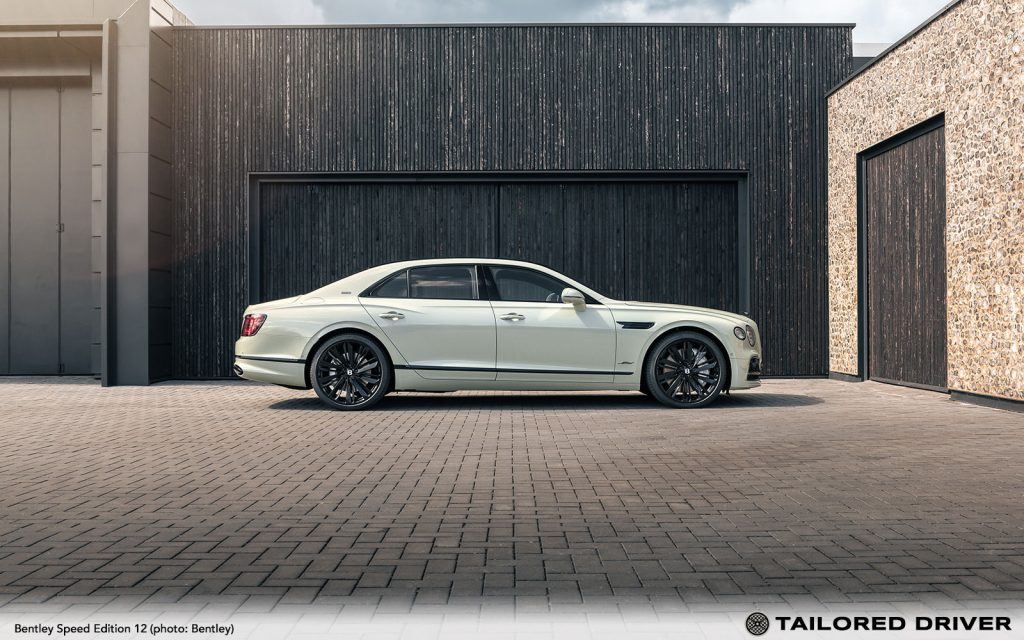
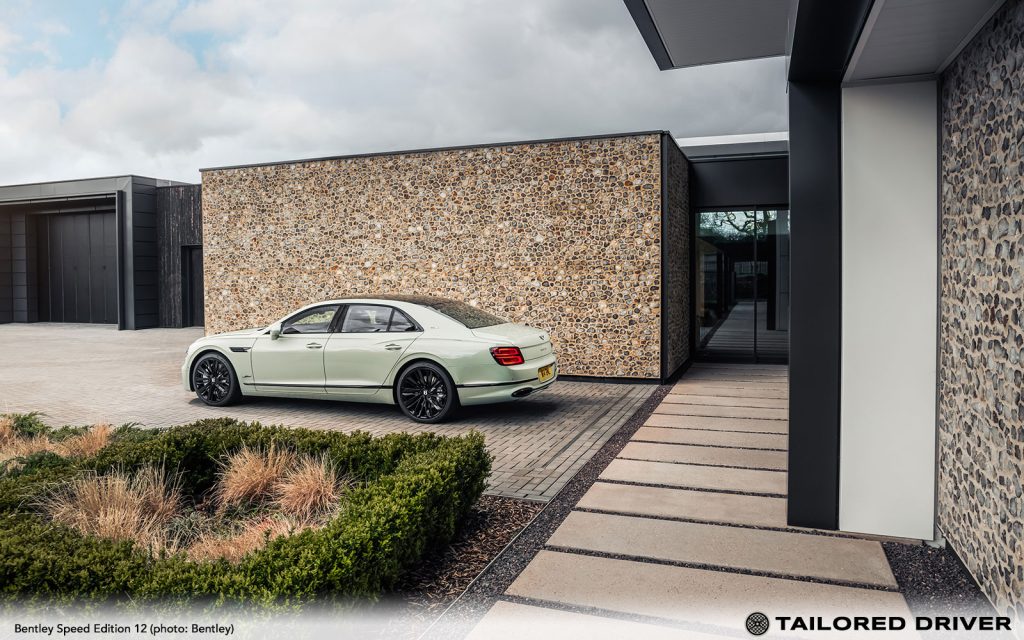
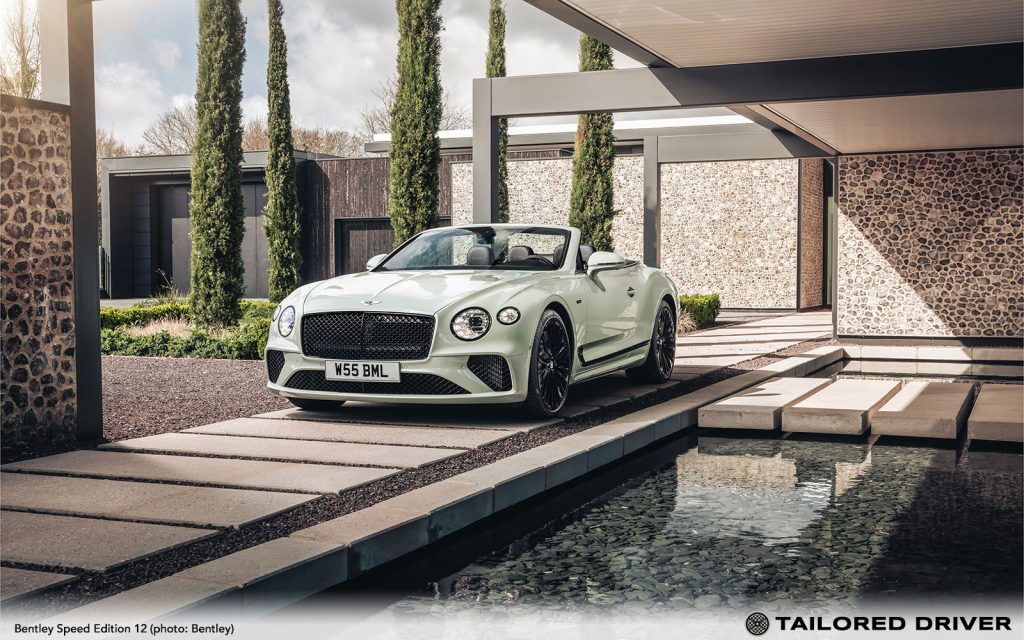
Other exterior features include Blackline specification exterior brightware, 22” black painted Speed alloy wheels, and self-levelling wheel badges. A new paint colour, Opalite (opalite; metallic uni; 6678; Bentley), is available as an option: a light grey-green, it has a subtle copper effect that glows in bright sunshine.
Interior: craftsmanship masterclass
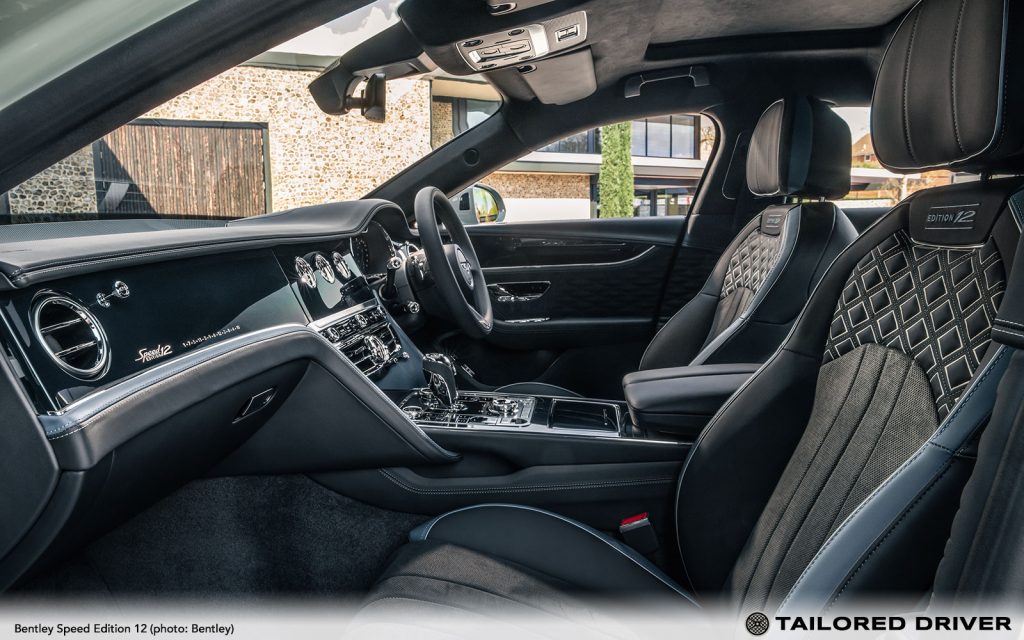
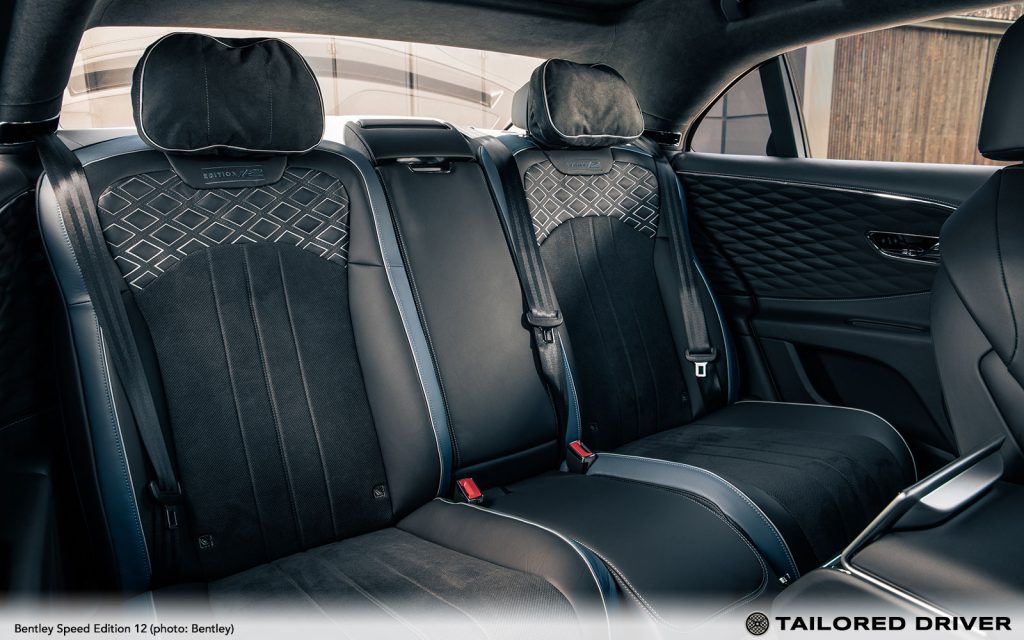
Edition 12 welcome lamps and illuminated treadplates greet driver and passengers to an interior of hand-crafted individuality. All Edition 12 models are available with Bentley’s Speed colour splits; the main colour, Beluga black can either be chosen as the sole upholstery colour or complemented by Brunel blue, Cricketball red, Linen or Orange. Veneer in each case is high gloss Grand Black.
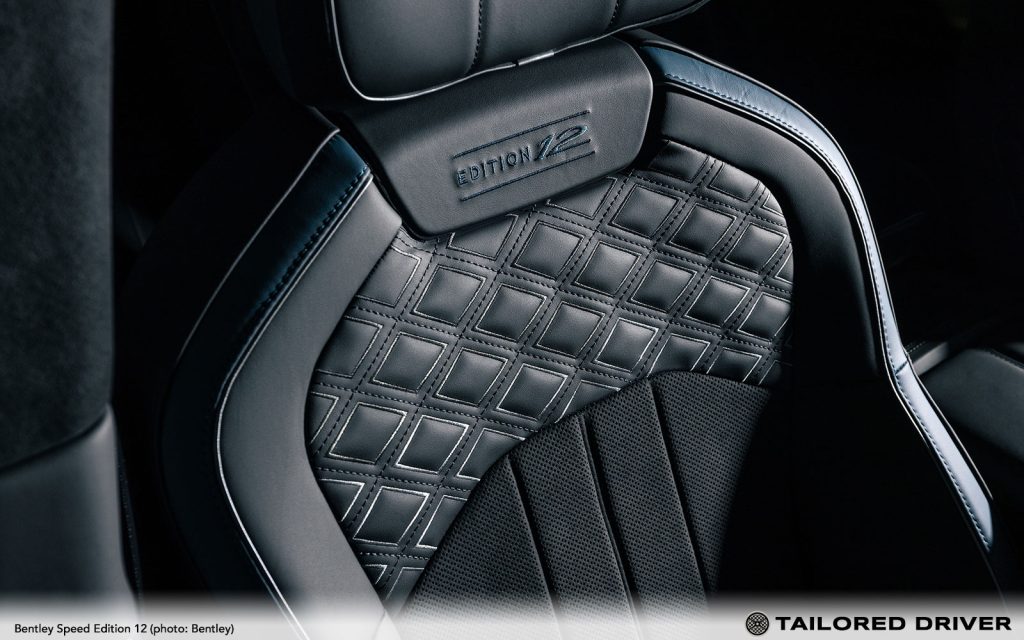
Unique features of this limited edition include seats with Mulliner Silver piping and embroidered Edition 12 namestyle. The upper seat areas are quilted, and contrast stitched in a graduated three-colour ‘fade’ from Anthracite through Porpoise to Stratos. Quilted door panels are contrast stitched.
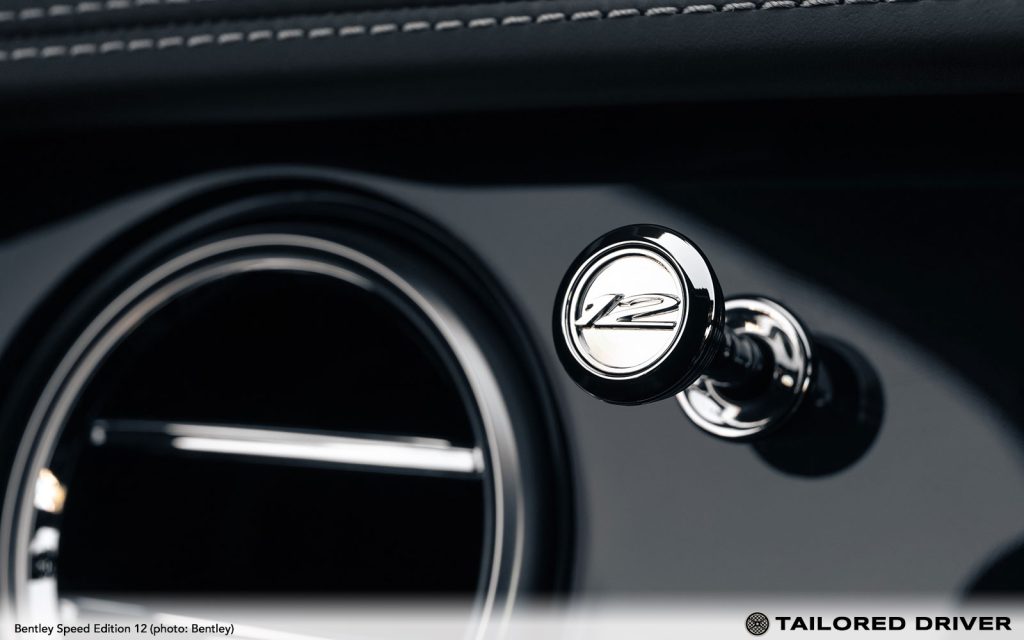
The organ stop air vents are also unique, featuring the numeral ‘12’ machined from solid on the face of the control. As another delightful detail, the Grand Black veneer facia facing the front seat passenger features the firing sequence of the W12 engine etched alongside an inlaid Speed Edition 12 badge.
Commemorative 15% scale model W12 block
As a final touch, customers will receive a precise 15 per cent scale model of the Bentley W12 block as a commemorative artefact for display on desk, cabinet or shelf. The scale model W12 engines are cast using aluminium taken from a full-size W12 engine block and will serve as a permanent memento of one of Bentley’s most significant and powerful engines.
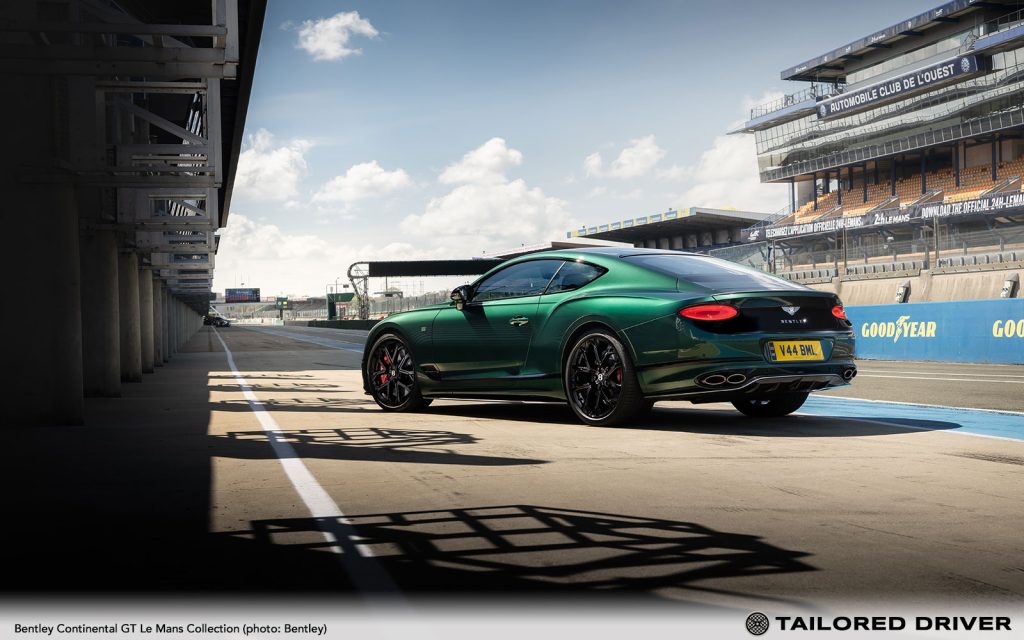
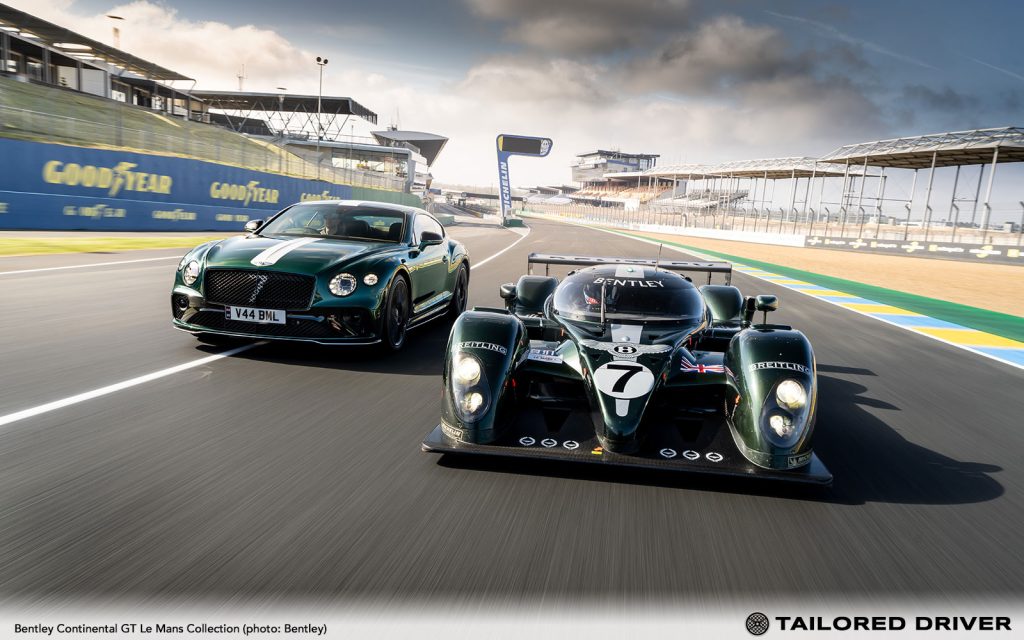
Le Mans Collection marks 20th anniversary of Bentley’s sixth victory at the world’s most iconic endurance race – the 24 Hours of Le Mans
Shared history: 100 years since the first Le Mans – when a Bentley recorded the fastest lap
Bentley Rotating Display houses a valve from the engine of the 2003 Le Mans winning #7 Bentley Speed 8
Limited edition of a total of 48 Continental GT and GTCs globally
Powered by 6.0-litre twin-turbo W12, the most successful 12-cylinder engine of the modern era
Crafted by Mulliner, Bentley’s personal commissioning division
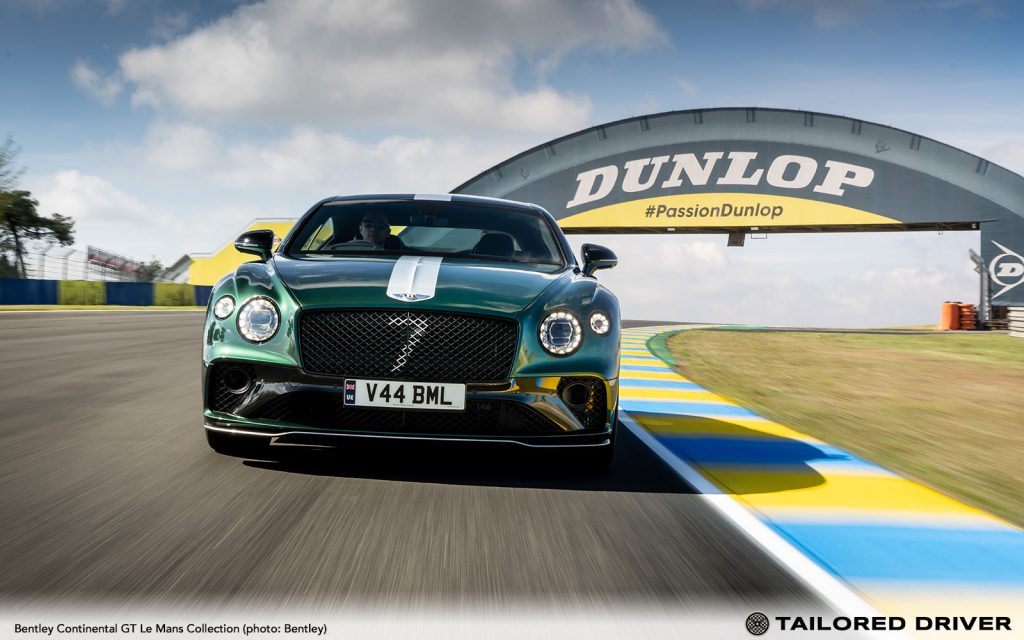
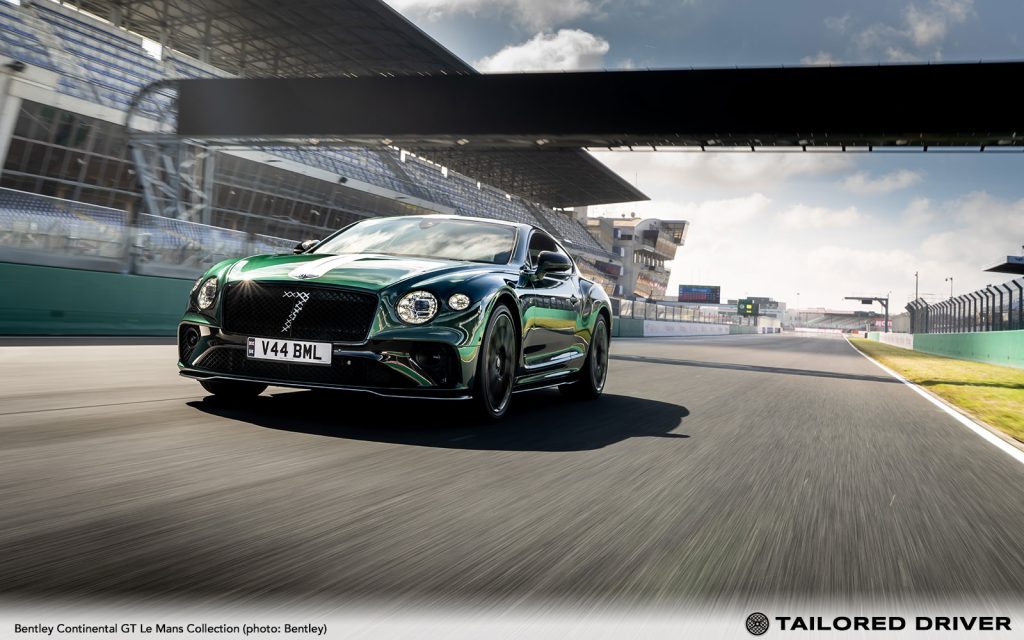
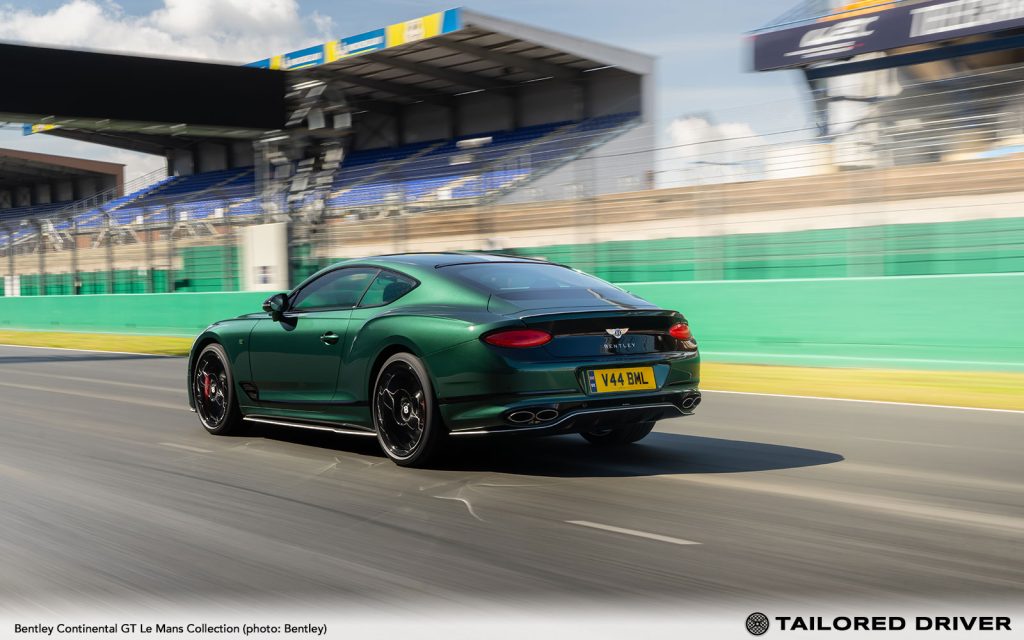
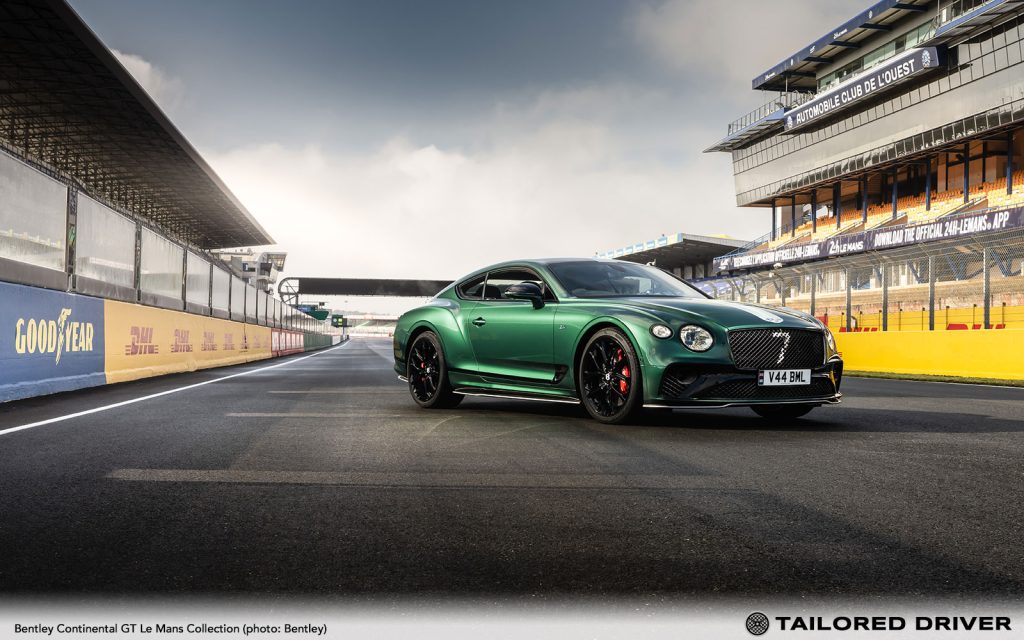
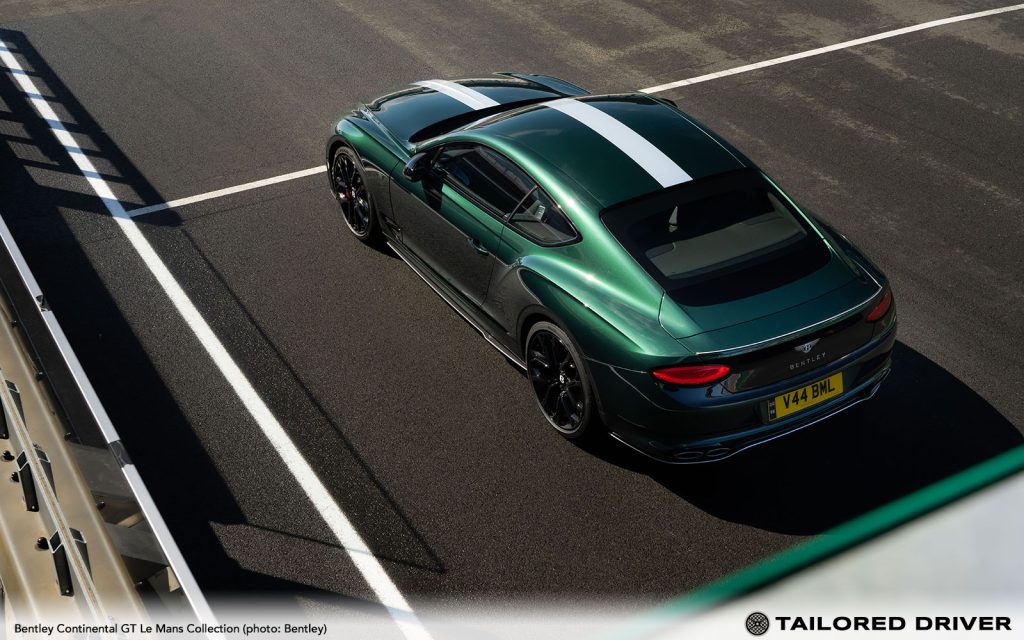
Evocative exterior styling in Verdant green with Moonbeam racing stripe
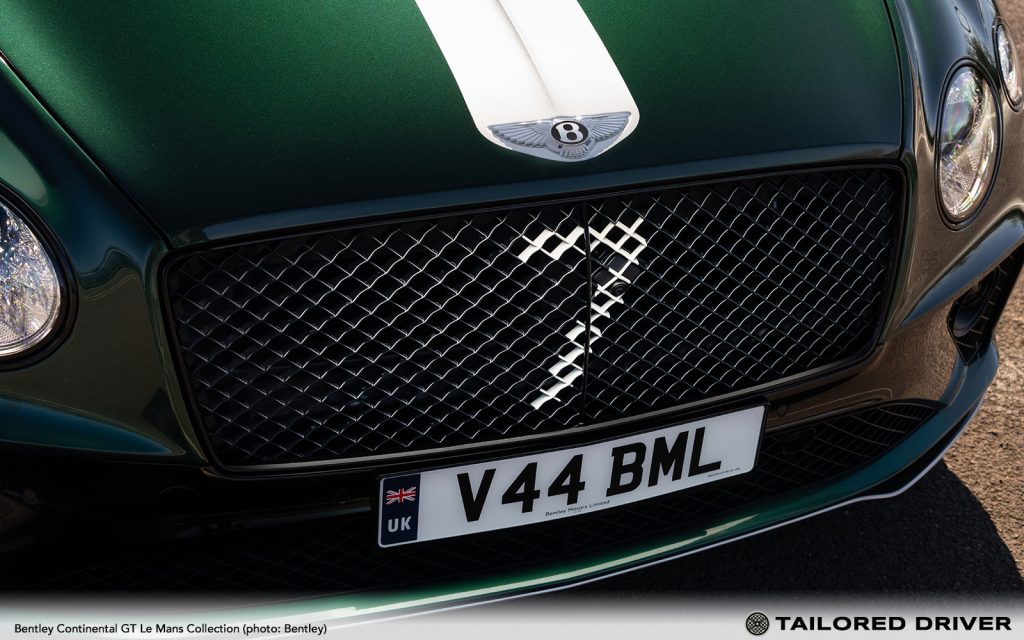
No.7 on grille celebrates winning Bentley Speed 8 #7 of 2003
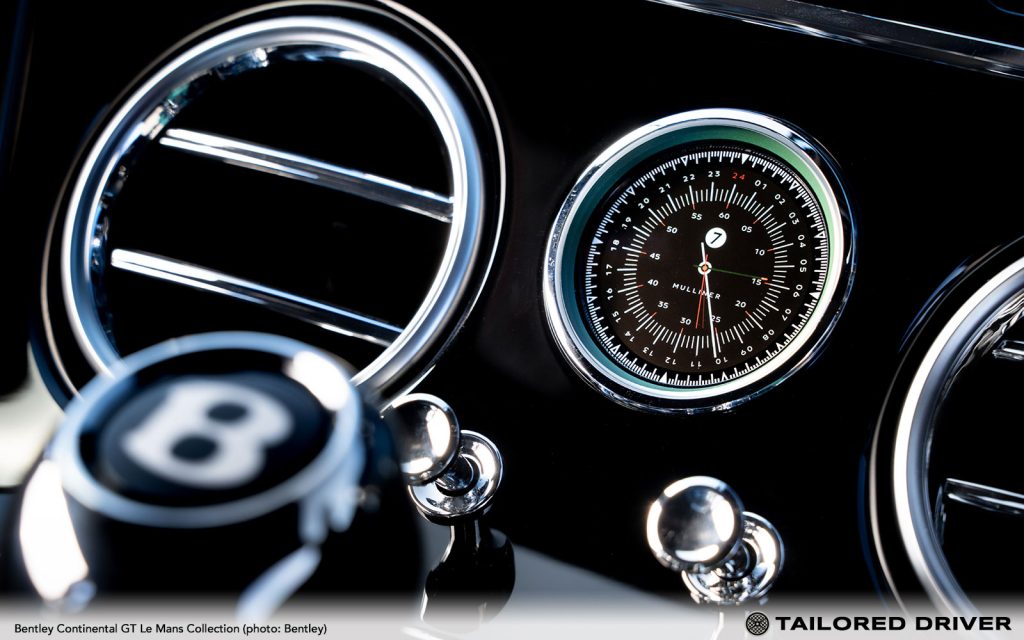
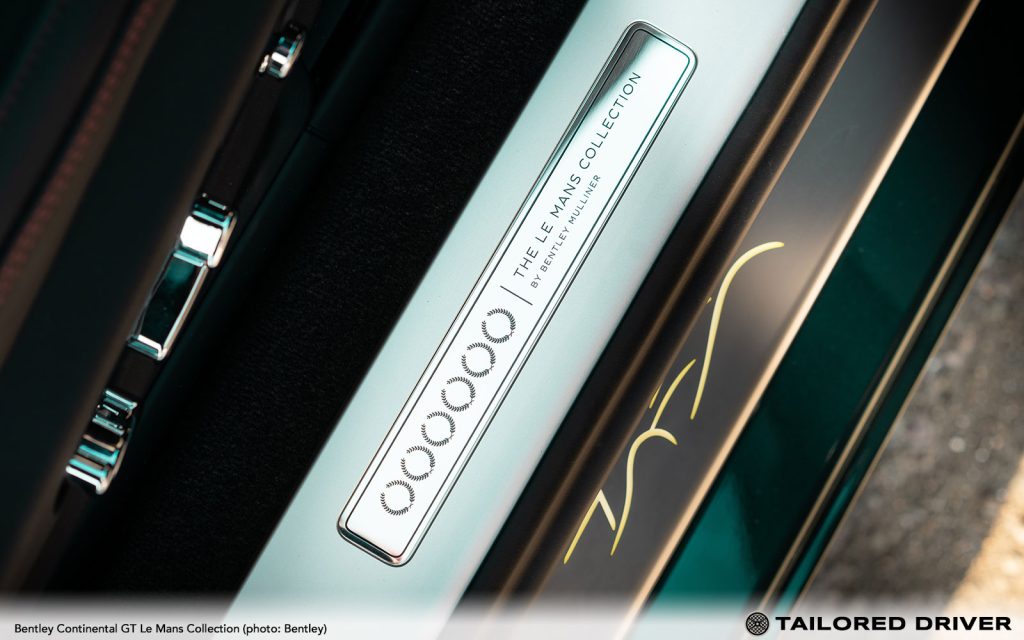
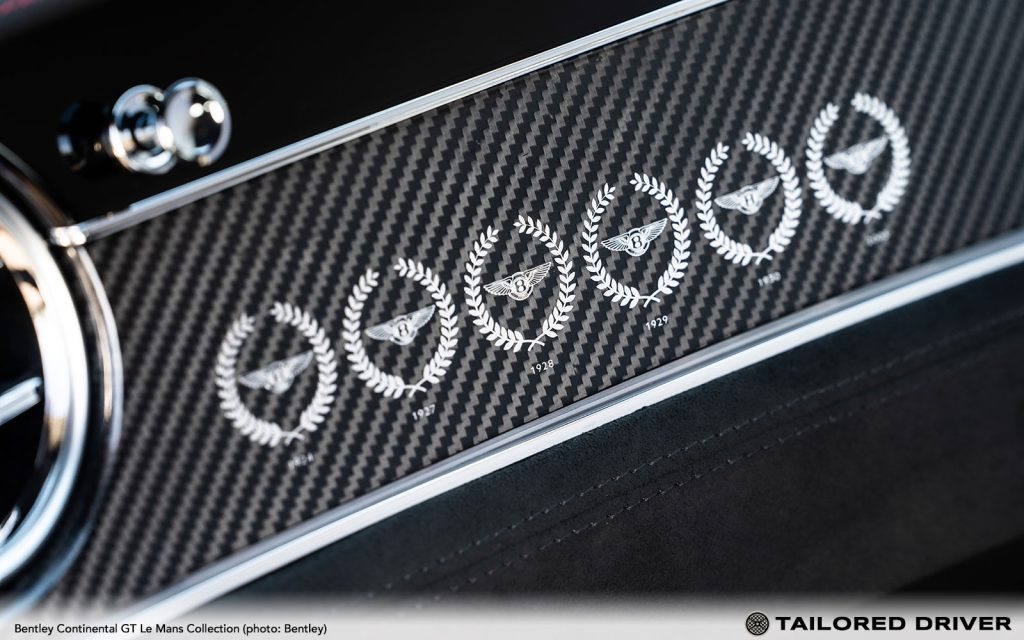
Interior features include fascia inlay of six winning wreaths, Speed 8 silhouette treadplate and digital 24-hour clock
[source: Bentley]
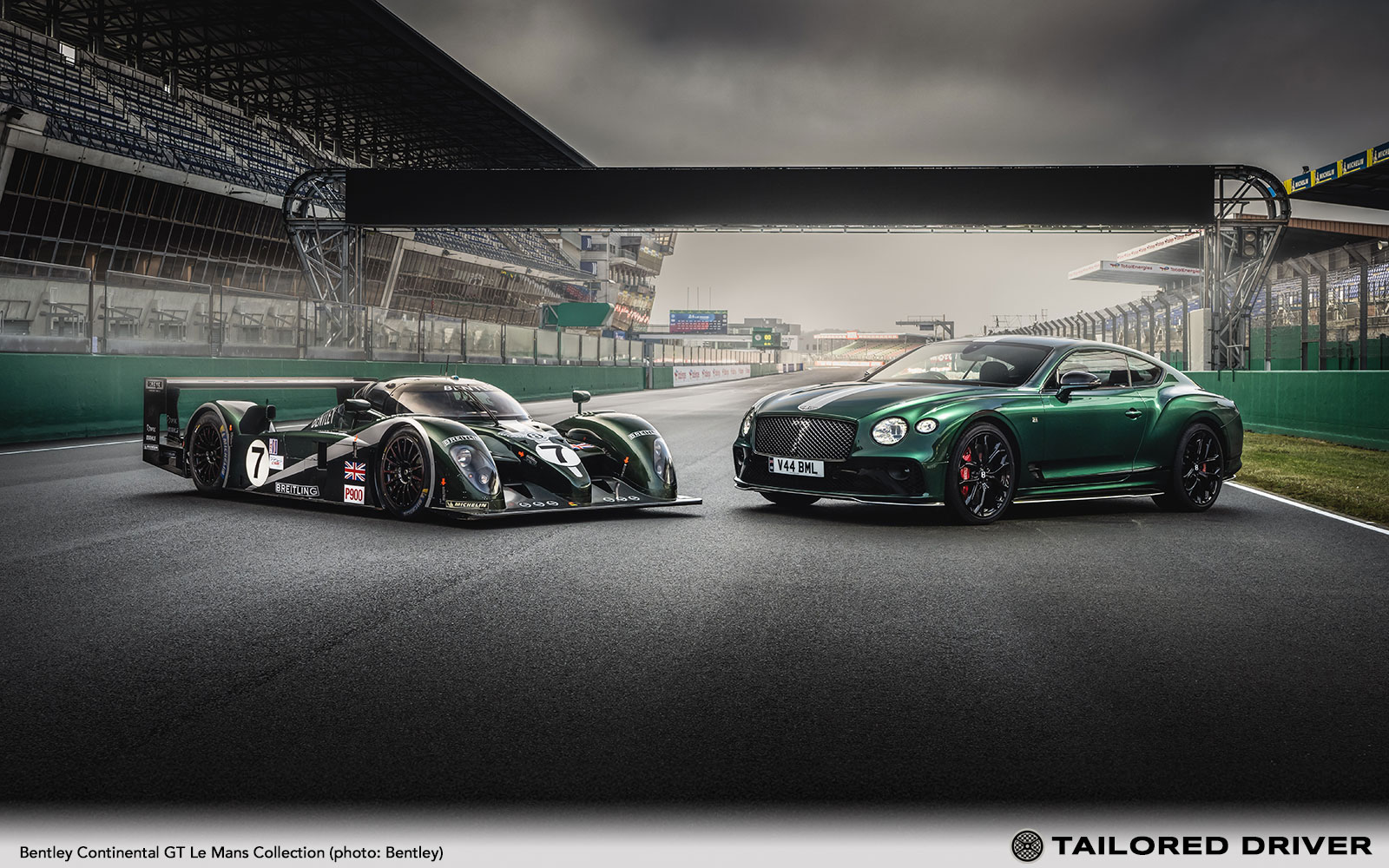
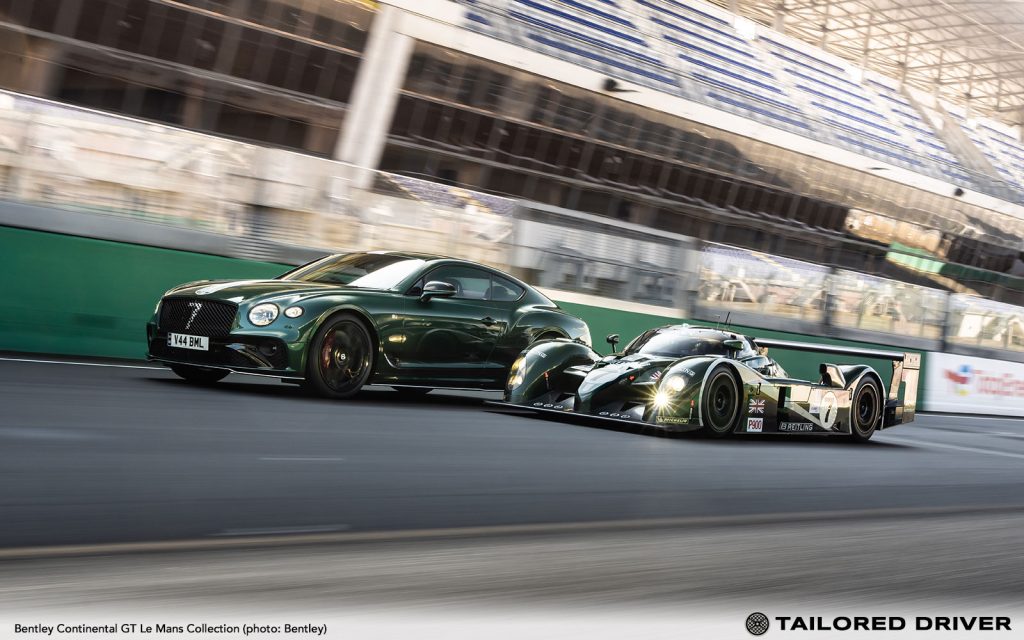
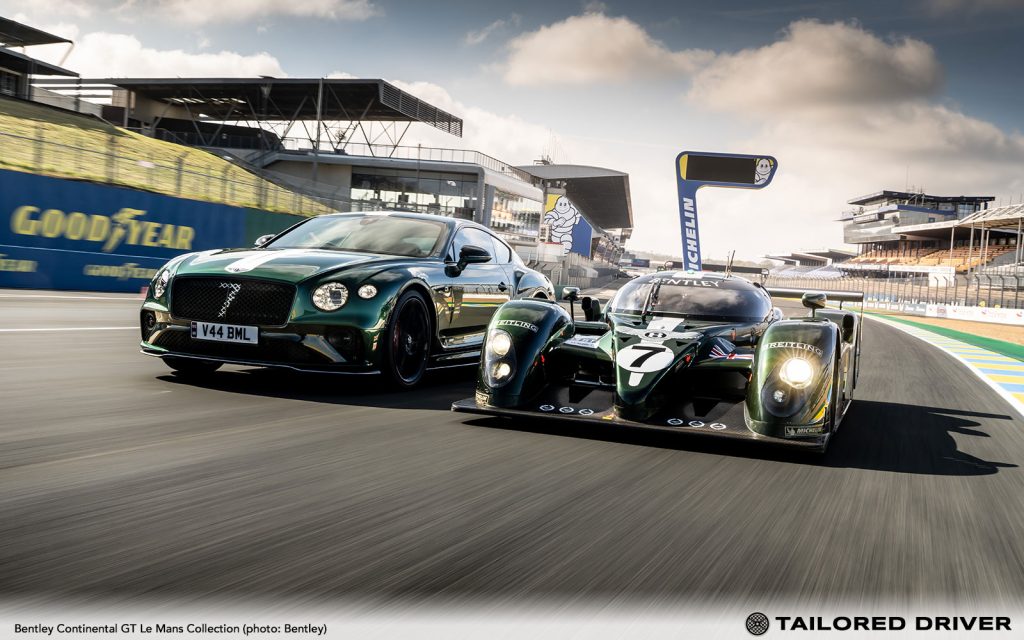
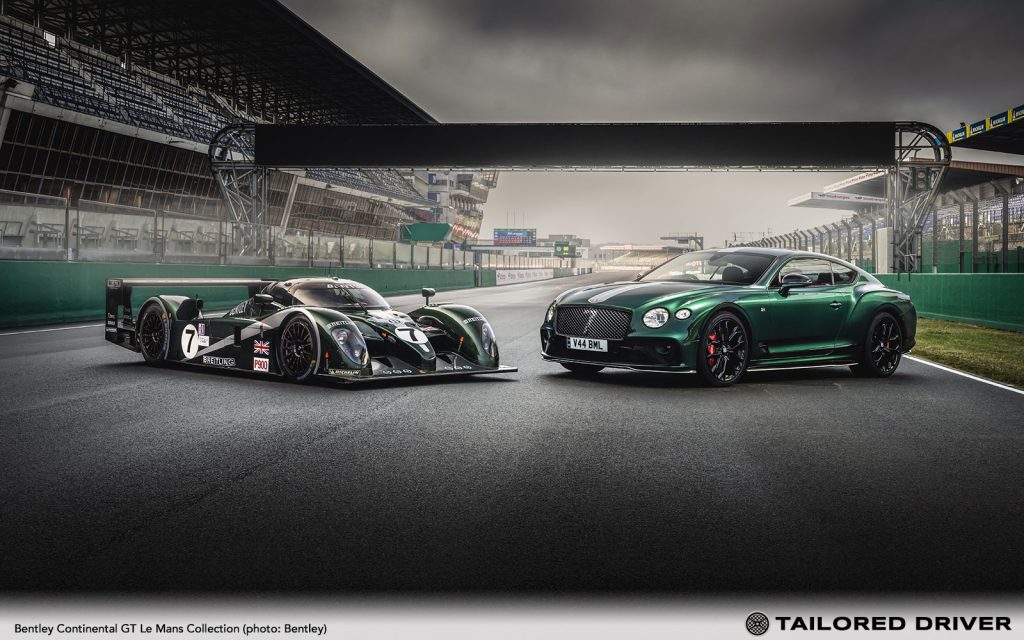
Crewe, England – To mark 20 years since Bentley’s sixth victory at the 24 Hours of Le Mans, and 100 years since the first running of the legendary race, Bentley is creating a limited edition of Continental GT Coupés and Continental GTC’s. Each will be powered by the Bentley W12 engine, the most successful 12-cylinder engine of the modern era. The Le Mans Collection includes unique exterior and interior details that echo the design of the Le Mans winning Speed 8 #7.
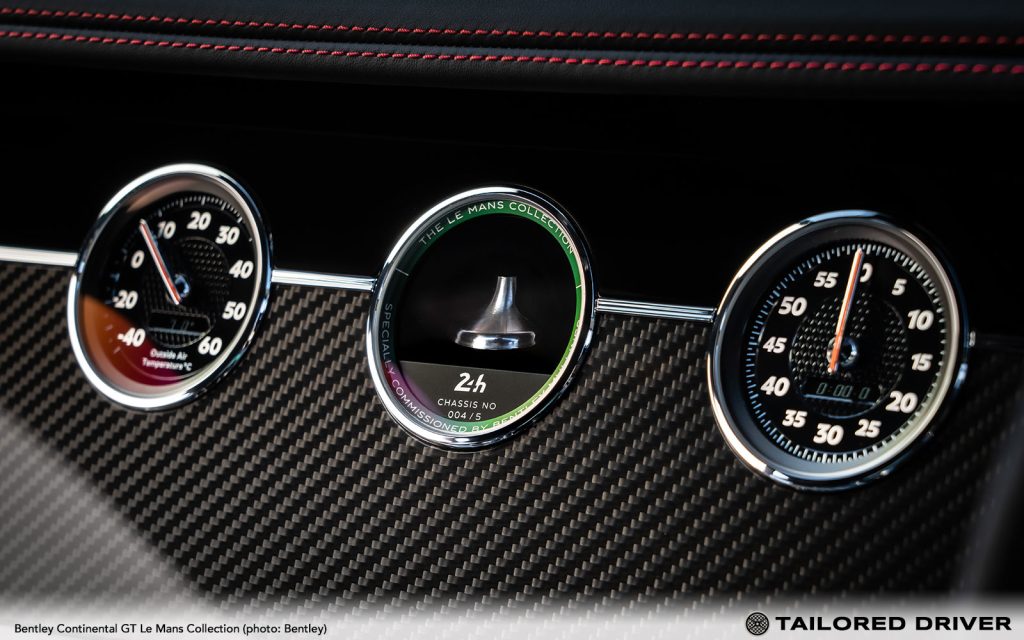
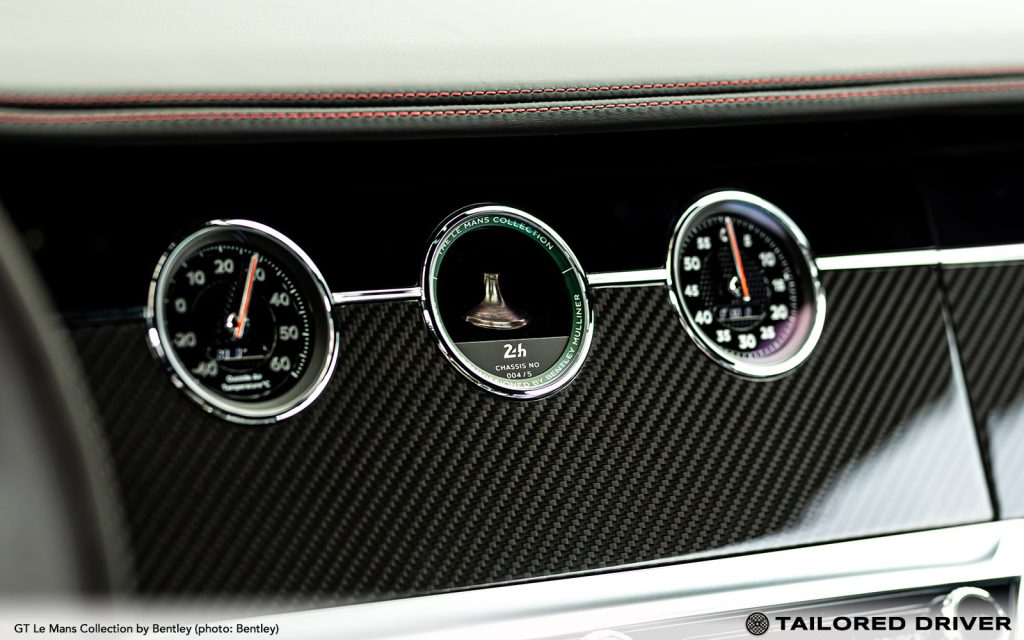
All Le Mans Collection models are specified with the three-way Bentley Rotating Display, offering a choice of touchscreen, dual veneer or analogue dials – but with a twist; In place of the standard central dial is a Vitrine displaying an engine valve from the 4.0-litre twin-turbo V8 of the 2003 Le Mans winning Bentley Speed 8. The engine was removed after the contest and preserved, and now 24 of the 32 valves from the engine have been bisected to create 48 artefacts for this exclusive collection of ultimate Grand Tourers.
In another thoughtful touch, the standard 12-hour analogue clock is replaced by a digital clock with a bespoke dial design – a 24 hour one, naturally.
Mulliner, Bentley’s personal commissioning division, has taken inspiration from the dark green Speed 8 racing cars that swept all before them at Le Mans in 2003. From the Verdant green (verdantgreen; metallic UNI; 6606 / 9560016; Bentley) exterior to the sliver of Speed 8 engine displayed in the fascia, the Le Mans Collection is a heartfelt tribute to a long and glorious shared history between Bentley and the Le Mans 24 Hours.
Tribute to Speed 8 #7
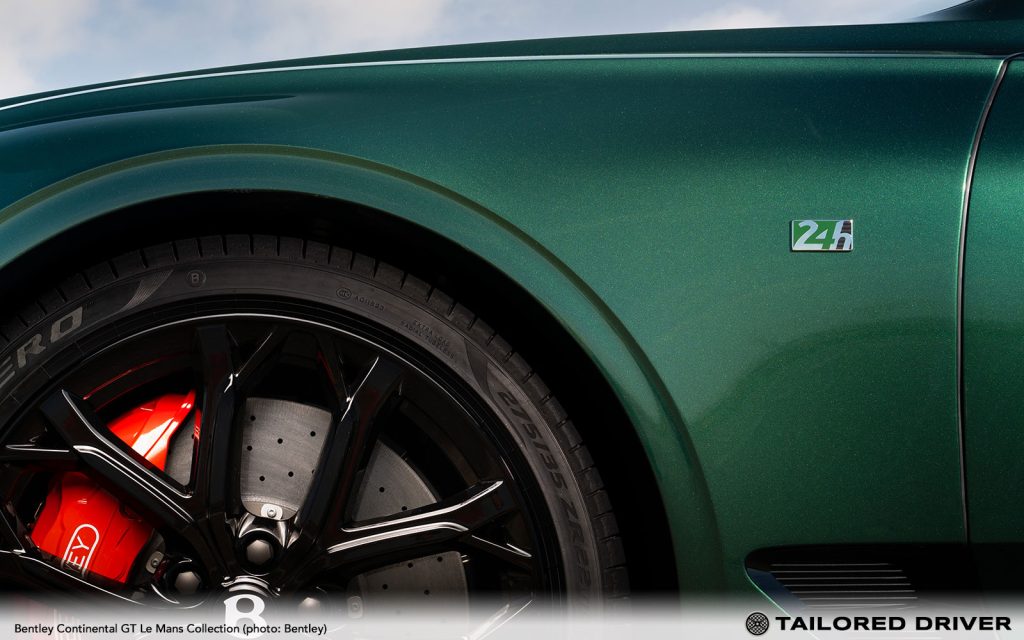
Mulliner’s designers closely studied the winning Speed 8 of 2003, surely one of the most beautiful racing cars ever to triumph at Le Mans. The limited number of Continental GT’s and Continental GTC’s in the Le Mans Collection are finished in Verdant green, with a Moonbeam racing stripe across the bonnet (and Coupé roof). The Blackline specification nods to the black and green livery of the Speed 8, while the carbon-fibre Styling specification body components are finished in black with a subtle pinstripe in Moonbeam. Beluga black is also chosen for the lower front bumper, wing mirror caps and rear ‘horseshoe’ area beneath the bootlid spoiler, while black 22-inch ten-spoke wheels shroud powerful carbon ceramic brakes and red brake calipers.
Meanwhile, the distinctive Bentley matrix grille (originally developed to protect the radiator on the unpaved Le Mans racetrack of the 1920s) features a painted #7 in Arctica white, combining the race-winning number of 2003 with the painted radiators of the Bentleys that won Le Mans five times between 1924 and 1930.
Bespoke details
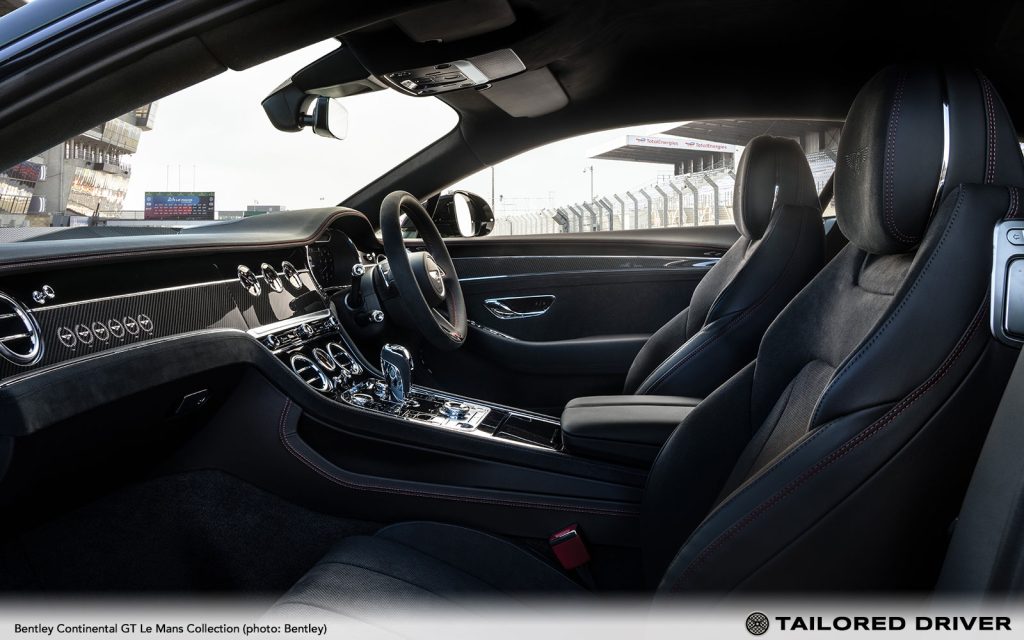
The interiors of the Le Mans Collection Continental GT and Continental GTC are far more luxurious than those of the Bentley Speed 8s – but there’s the same sense of sporting purpose. A bespoke 2003 wreath welcome lamp ushers you into a cockpit trimmed in Beluga hide. Performance-bred napped Dynamica fabric covers the seat faces, while the interior’s monochrome colour scheme is relieved by contrast seat stitching and seatbelts in Hotspur. The steering wheel, trimmed in hide and Dynamica, also features Hotspur contrast stitching and six o’clock accent tab.
The dual-finish veneer on fascia and door waist rails is executed in Piano Black and high gloss carbon fibre, with a fine chrome pinstripe separating the two. Matching doors to fascia so the pinstripe flows seamlessly from one side to the other is a mark of the exceptional craftsmanship in every Bentley.
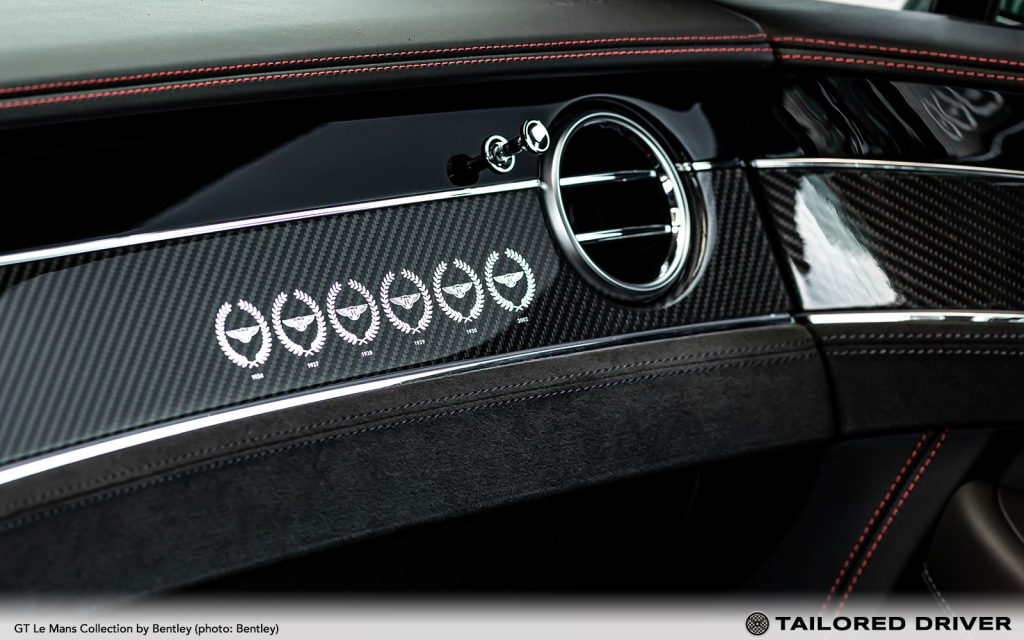
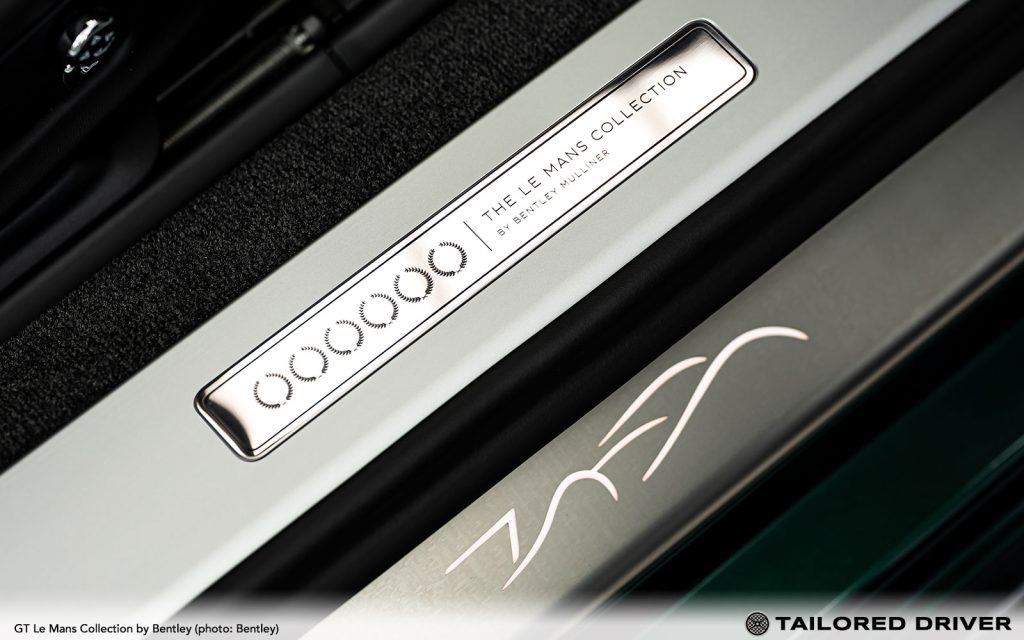
The Le Mans Collection Bentleys feature many bespoke details, beginning with the Speed 8 sill plates and six-wreath treadplates that greet occupants on entering the interior. The fascia displays the six-wreath emblem inlaid into high-gloss carbon fibre, marking each of the six outright victories recorded by Bentley at Le Mans between 1924 and 2003.
Race inspired performance
The Le Mans Collection Continental GT and GTC are equipped with Bentley’s renowned 6.0-litre W12 TSI engine, delivering 659 PS (650 bhp) and an extraordinary 900 Nm (664 lb.ft) of torque.
With exceptional handling, this results in a top speed of 208 mph (335 km/h) and 0-60 mph in 3.5 seconds (0-100 km/h in 3.6 seconds). A combination of four chassis technologies give the new limited edition a level of agility, performance and ride quality as expected of a car with this heritage.
Bentley Dynamic Ride and three-chamber active air suspension with adaptive damping play a key role in the balance of the car and provide a formidable foundation to build upon. The optional and newly-developed Carbon Ceramic Brakes, Variable Electronic Stability Control, All Wheel Steering, and an Electronic Limited Slip Differential bolster the agility and performance even further.
Bentley and Le Mans
Bentley’s long association with Le Mans didn’t get off to the smoothest of starts. “I think the whole thing’s crazy. Nobody’ll finish. Cars aren’t designed to take that sort of strain for 24 hours.” Such was W.O. Bentley’s reaction in 1923, on hearing that private entrant John Duff planned to contest the first-ever Le Mans 24 Hour race in a Bentley 3 Litre. But the competitive fire in W.O’s soul saw him make a last-minute dash to the La Sarthe circuit nonetheless. Inspired by Duff’s 4th place (despite a lengthy stop to repair a holed petrol tank) and fastest lap, W.O and Bentley Motors returned in 1924 with a works entry – and won. It was the start of a glorious decade that saw five wins in seven years.
Bentley was back in 2001 with the EXP Speed 8, the start of a three-year programme targeting a sixth outright victory. And on Sunday, June 15th, 2003, Bentley’s two works Speed 8s finished first and second in this most gruelling of endurance races. Car #7 of Guy Smith, Tom Kristensen and Rinaldo Capello covered 377 laps at an average speed of 214.33km/h, followed by the #8 Speed 8 of Johnny Herbert, Mark Blundell and David Brabham.
For the first time, Porsche has implemented a customer-specific Paint to Sample Plus colour in a new process.
[source: Porsche AG]
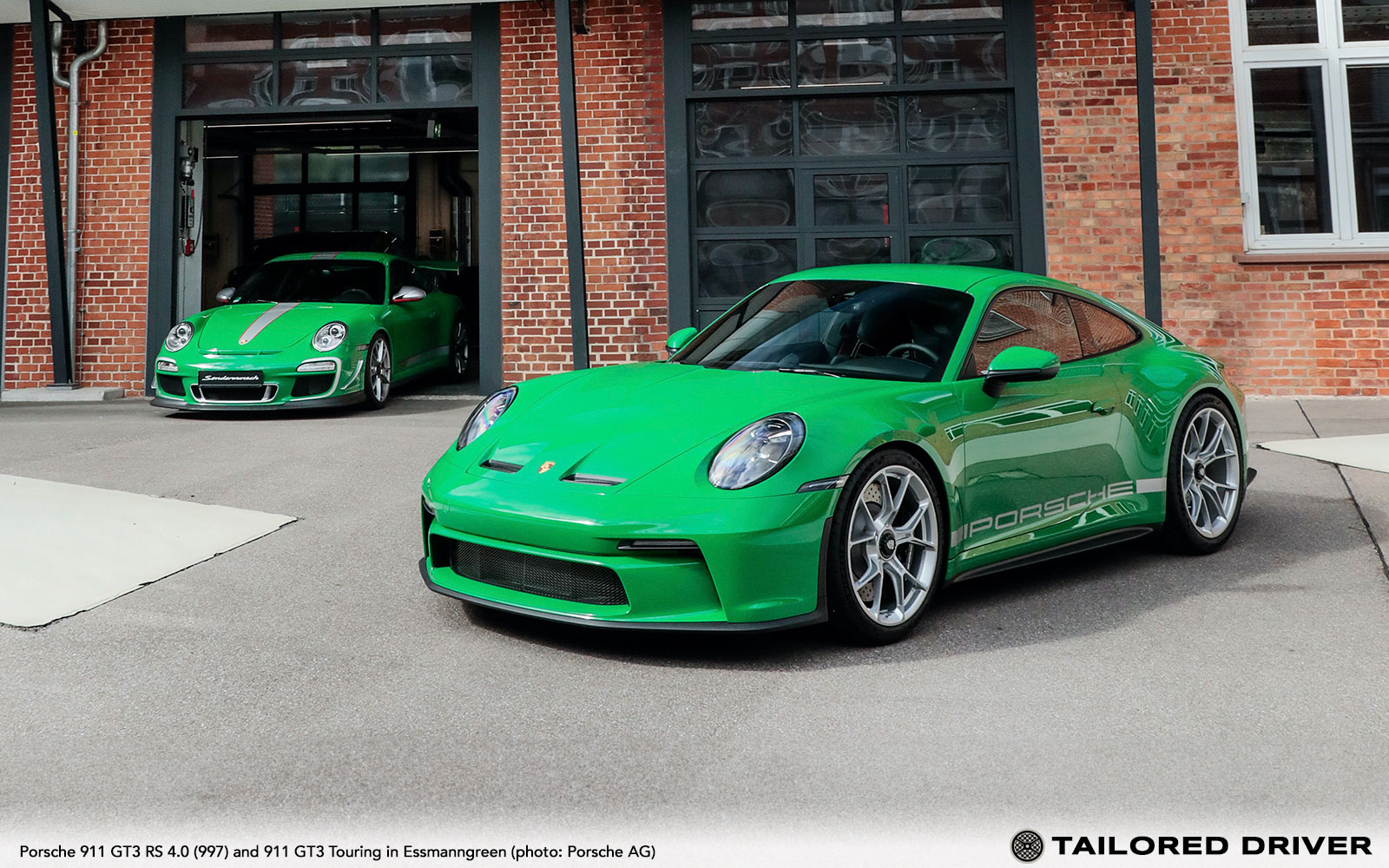
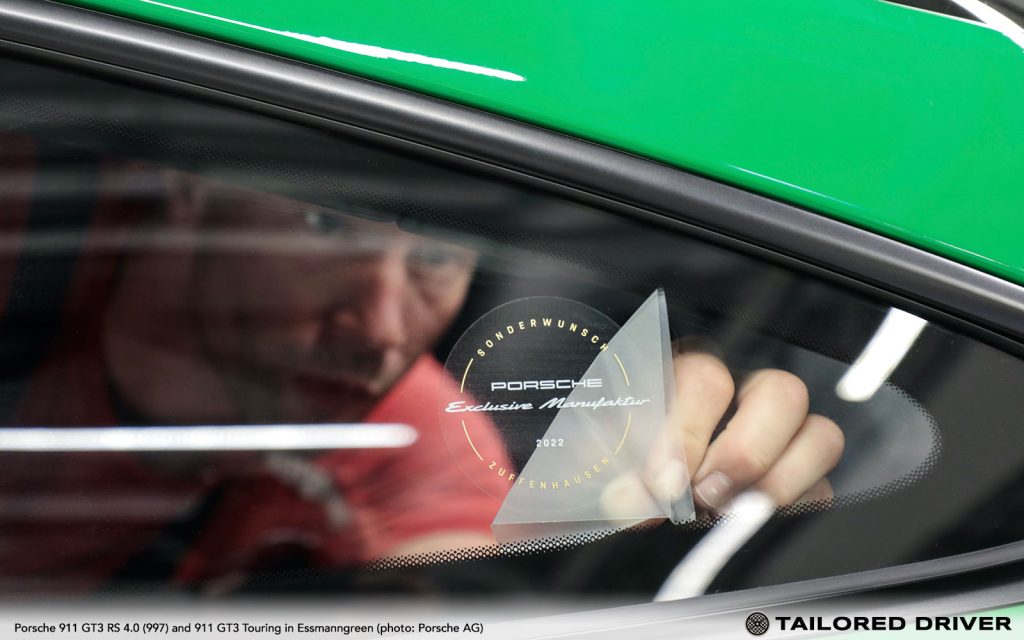
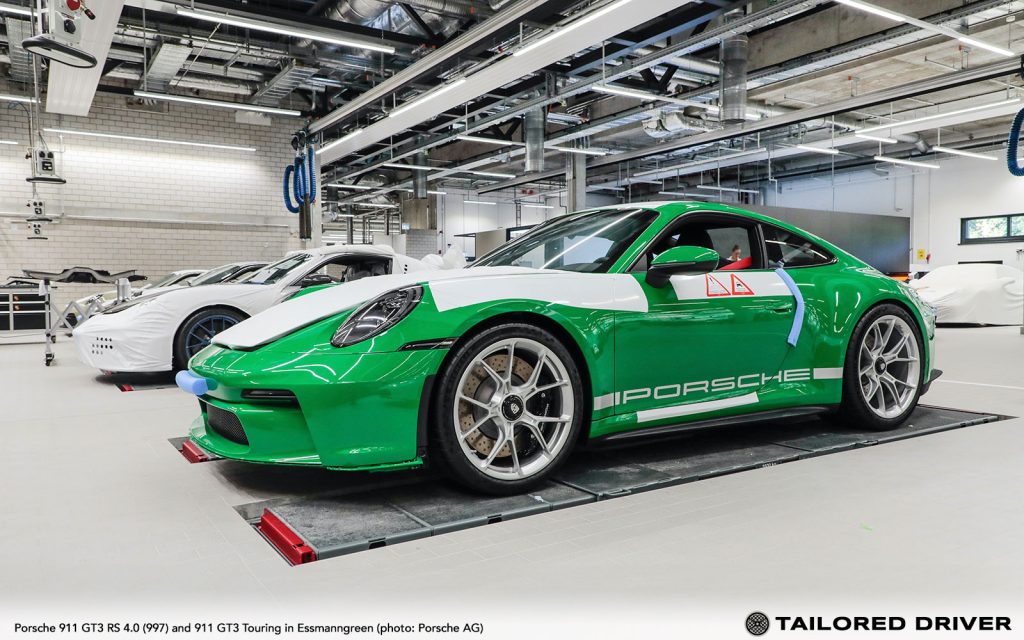
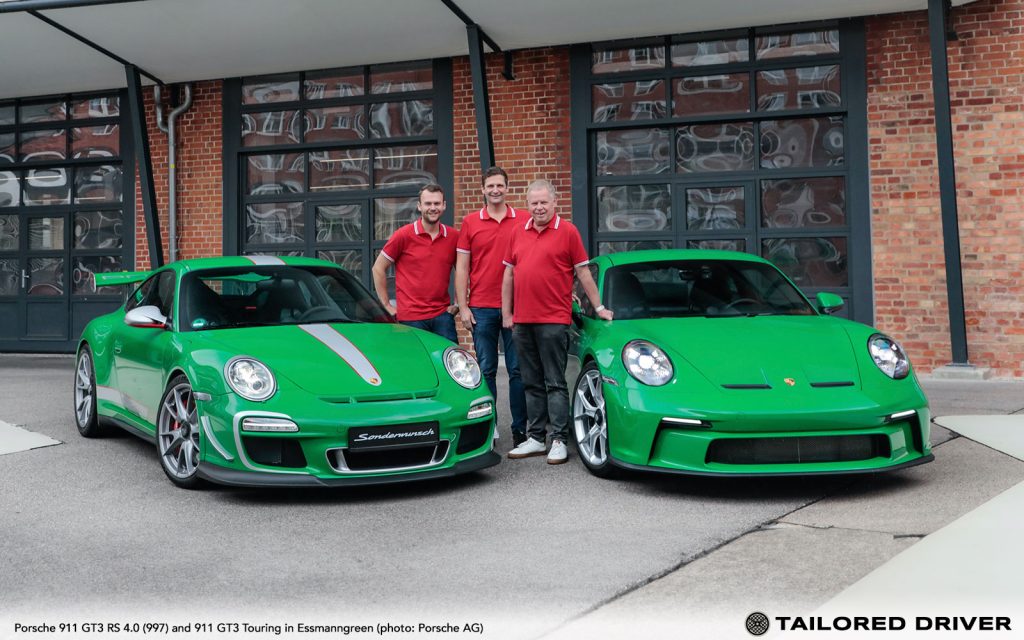
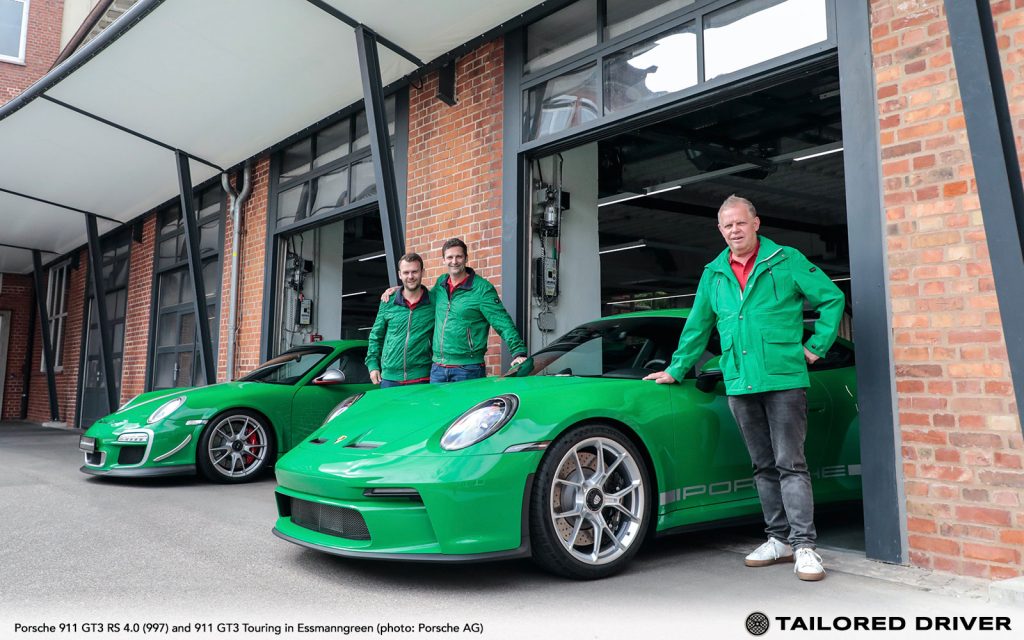
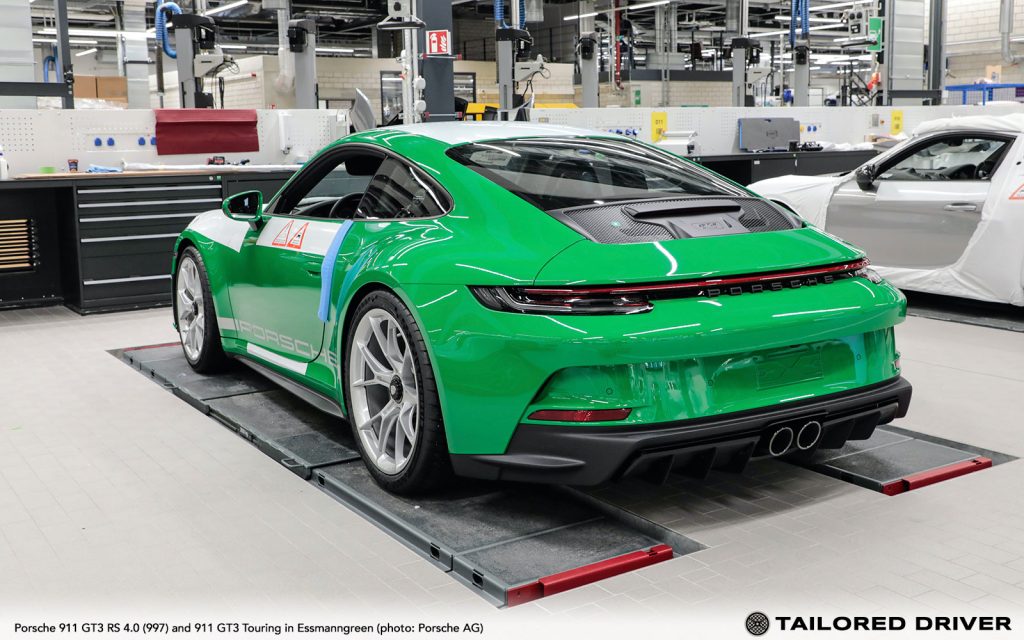
Guards Red, Racing Yellow, Carrara White Metallic – just a few of the familiar names for colours from the Porsche Car Configurator. Now a brilliantly rich green will join the palette. Michael Essmann, a long-standing Porsche lover and Managing Director of family business Elektro Essmann, has had his very own individual colour made within the scope of the Paint to Sample Plus range. As part of the model year R Paint to Sample range, starting in March 2023 the exterior colour Essmanngreen, colour code 24C, will also be available through the Car Configurator for customers of the 911, 718 and Taycan model lines.
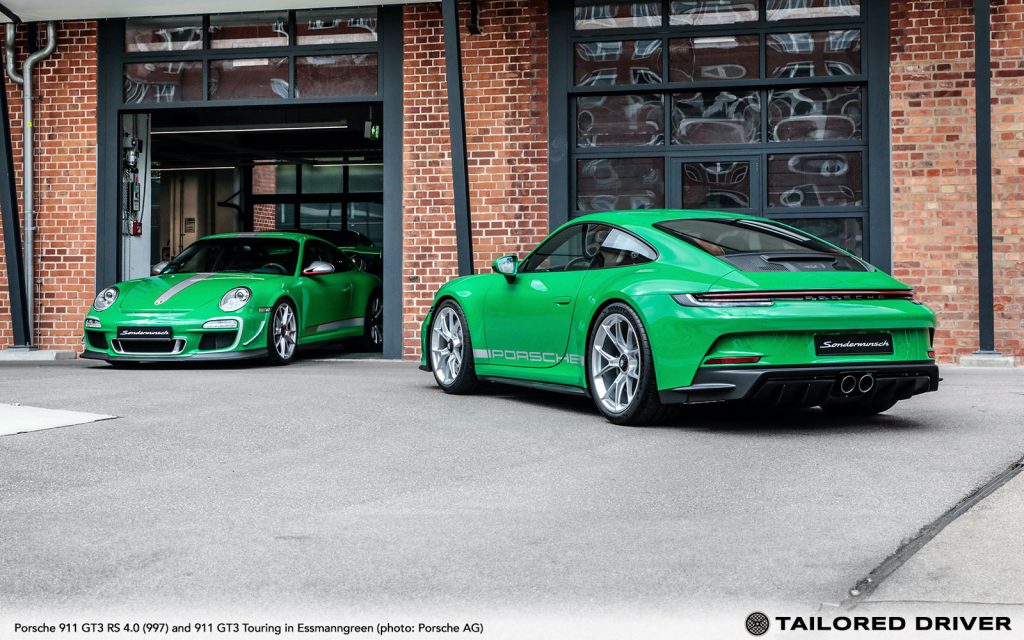
As far back as 1992, Michael Essmann had a 911 Carrera RS 3.6 (964) painted in the company colour of the master workshop for electrical installations and photovoltaic systems – the first Porsche model in Essmanngreen. Other cars followed, including a 911 GT3 RS 4.0 (997) and most recently a 911 GT3 Touring (992). Sons Mike and Stefan Essmann compete successfully in the Porsche Sports Cup, with racing cars naturally, these also displaying Essmanngreen accents on the bodies.
“My very first Porsche was a 911 SC in 1978 with which I also graduated from the Sport Driving School,” recalls Michael Essmann. “It was painted Opal Metallic. It was only later that I had the idea of using the colour of our family business for my private cars too. But every time I pick up a new Porsche in this very special colour it’s a great feeling. And to know that I’m the originator of this colour named after me.”
Highest quality and perfect colour matching
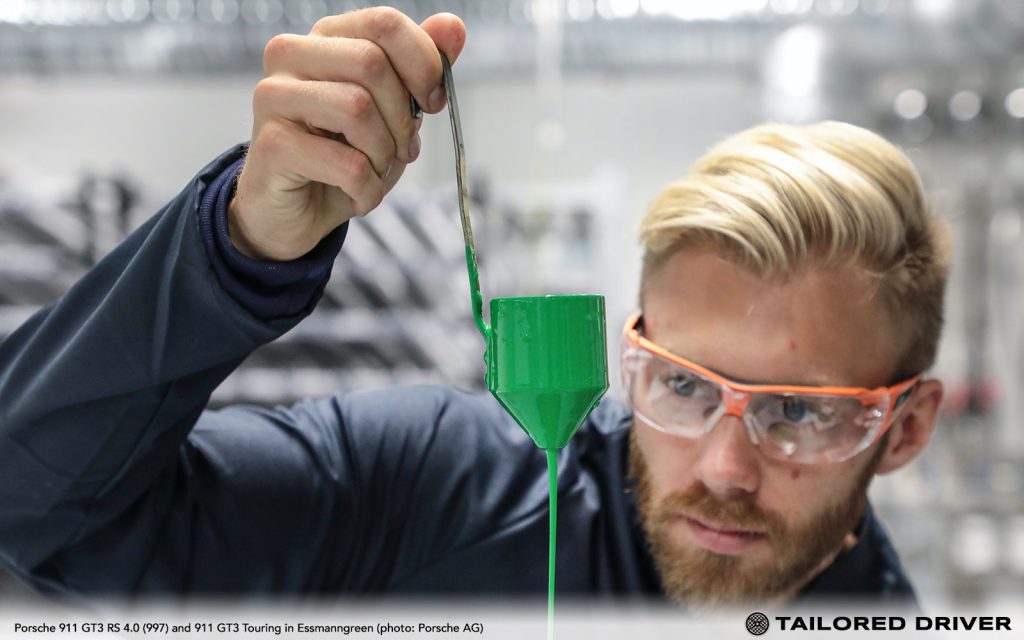
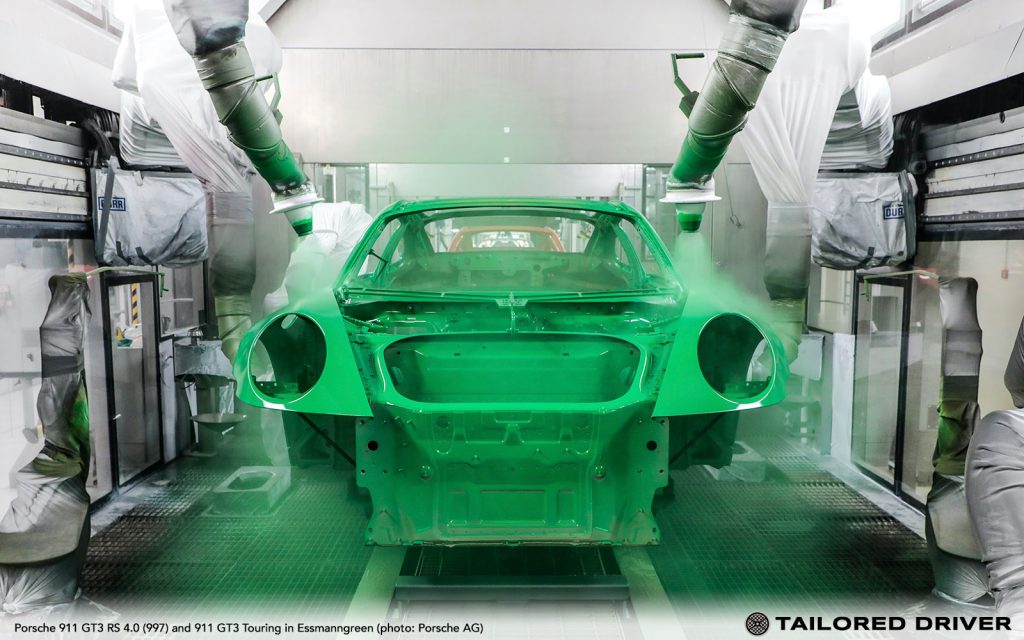
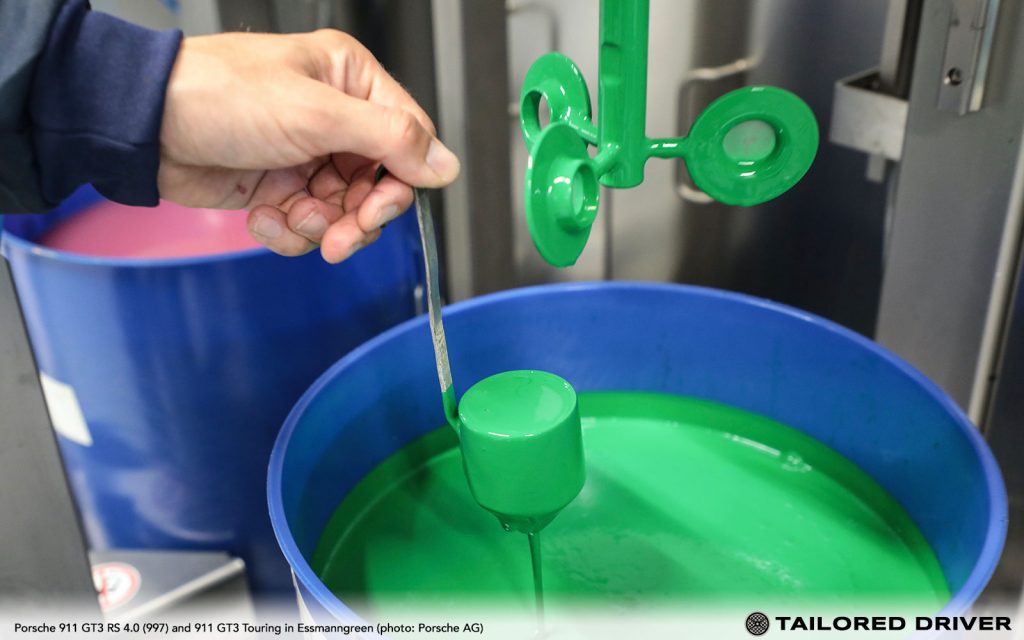
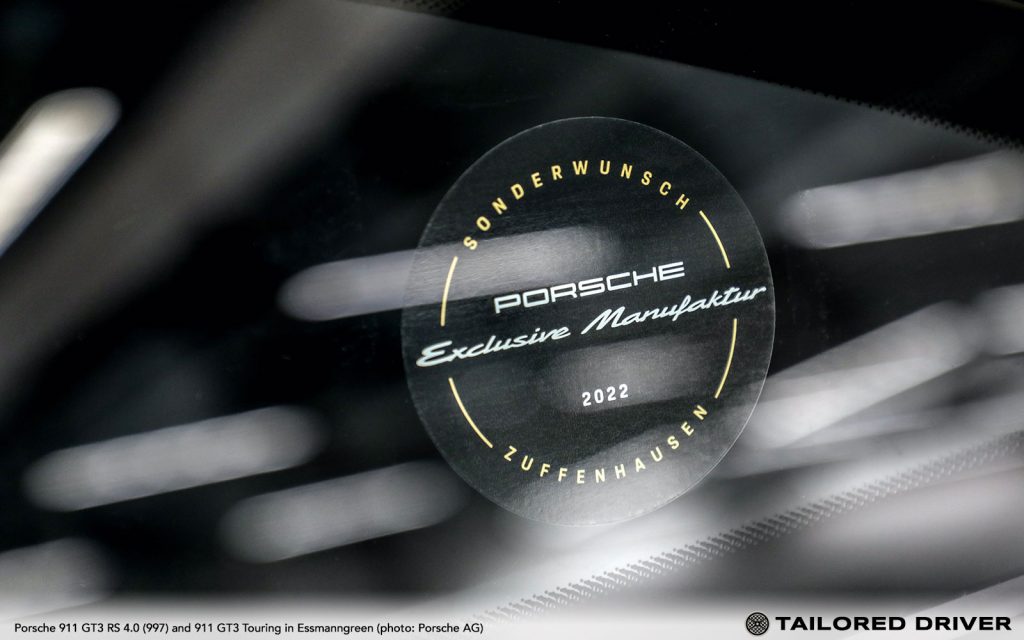
While the Custom Colour of the 964 was blended in the After Sales painting process that was standard at the time 30 years ago, the current Essmann Porsche benefits from Porsche professionalising the range of special exterior colours in 2021 and significantly expanding its capacity. A new colour-mixing bench has been put into operation at the main plant in Zuffenhausen, where paint specialists blend several dozen ingredients down to the last milligram to achieve the desired shade. When the binding agents and additives are included, the recipe for Essmanngreen contains over 100 ingredients.
Each batch is divided into two paint pots for bodywork and add-on parts. The areas to be painted on the vehicle consist largely of aluminium, plastics and carbon/fibreglass composites. This mix of materials and the different application methods and drying temperatures require slightly different paint compositions, depending on the component. A test body and so-called batch comparison plates are painted and used as a colour reference for the final acceptance of the car.
These completely new processes designed for high quality with the combination of craftsmanship and industrialisation required the re-development, testing and approval of all colours, some of which had already been used successfully in the past in the old paint shop. This is why it was necessary to develop a paint recipe for Essmanngreen on Type 992 because it was last used successfully in the old paint shop for Type 997.
“Unusual paint finishes are part of the history of our brand and are an important differentiating feature,” says Alexander Fabig, Head of Individualisation and Classic. “The intelligent combination of the production process and its industrialisation is unique. Our customers thus enjoy a very wide range of available colours and many custom paint finishes that meet the highest standards. Every colour must be deemed suitable for many different surfaces and materials – perfect colour matching is what is wanted.”
170 additional colours across all model series
Porsche has extended its colour range while simultaneously restructuring it. “Paint to Sample” used to be known as “Custom Colour”. This category includes predefined colours that have already been technically approved by the paint specialists at Porsche.
For especially individual colour requests, Porsche Exclusive Manufaktur goes a step further: “Paint to Sample Plus” allows almost complete freedom in selecting the paintwork based on a sample submitted by the customer. Thus, the Essmanngreen colour on Michael Essmann’s 911 GT3 Touring was first created as a “Paint to Sample Plus”. After technical approval, the Porsche paint specialists then added the colour to the “Paint to Sample” programme. There, Essmanngreen can now be selected from anyone who is interested via the Porsche Car Configurator. The process was started by Porsche Exclusive Manufaktur, who painted a brand-new 911 GT3 RS (992) in the this colour for exhibition purposes.
The overall range of “Colours of Choice” is very big. For the 911 and 718 model series, there are currently 115 additional paint colours to choose from, For the Taycan there are currently 108 such options, while for the Panamera and the Macan the number is 59, with the Cayenne offering a choice of 52 different colours. Taking into account a number of overlaps, there are 170 additional colours for all model series combined.
Personal design even in the interior
Michael Essmann selected not only “Paint to Sample Plus” but also further custom options from the Sonderwunsch programme of Porsche Exclusive Manufaktur. For example, his very personal 911 GT3 Touring (992) has a Porsche logo on the side whose look is based on the Porsche Heritage Design models.
In the interior, the seats were customised. Based on the 964 RS, the seat centres have a graduated colour design in Slate Grey and Crayon. Trim made of carbon enhances the dashboards. The “touring” logo is stitched into the headrests of the full bucket seats in red thread. This fits in with the overall concept as Elektro Essmann also uses red as a contrasting colour.
About Porsche Exclusive Manufaktur
A sports car as individual as your own fingerprint, as unmistakable as your own lifestyle: Porsche Exclusive Manufaktur in Zuffenhausen creates very personal customer vehicles through a combination of perfect craftsmanship and a high-tech approach. Highly qualified employees with decades of expertise devote their full attention to every detail and enhance it through hand craftsmanship.
The experts can draw on a wide range of visual and technical customisation options for the exterior and interior of Porsche cars. Visible examples include Sport Design packages, custom rim designs and interior trims, as well as the comprehensive “Paint to Sample” range for all Porsche models. Porsche Exclusive Manufaktur fulfils the highest demands with regard to materials and craftsmanship. Alongside individual customer vehicles, Porsche Exclusive Manufaktur also produces limited small series and editions. High-quality materials are combined with modern production technologies to create a harmonious overall concept.
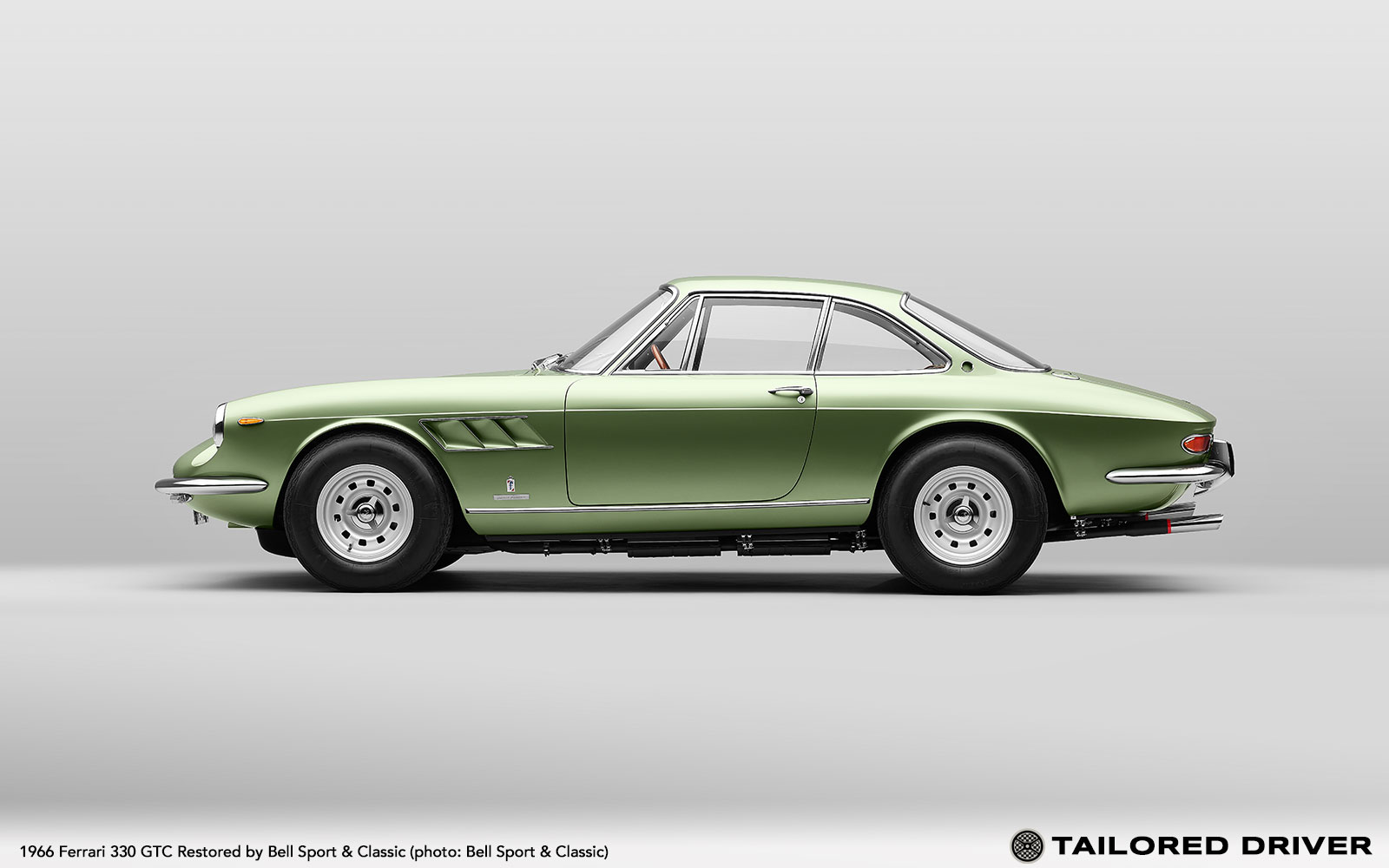
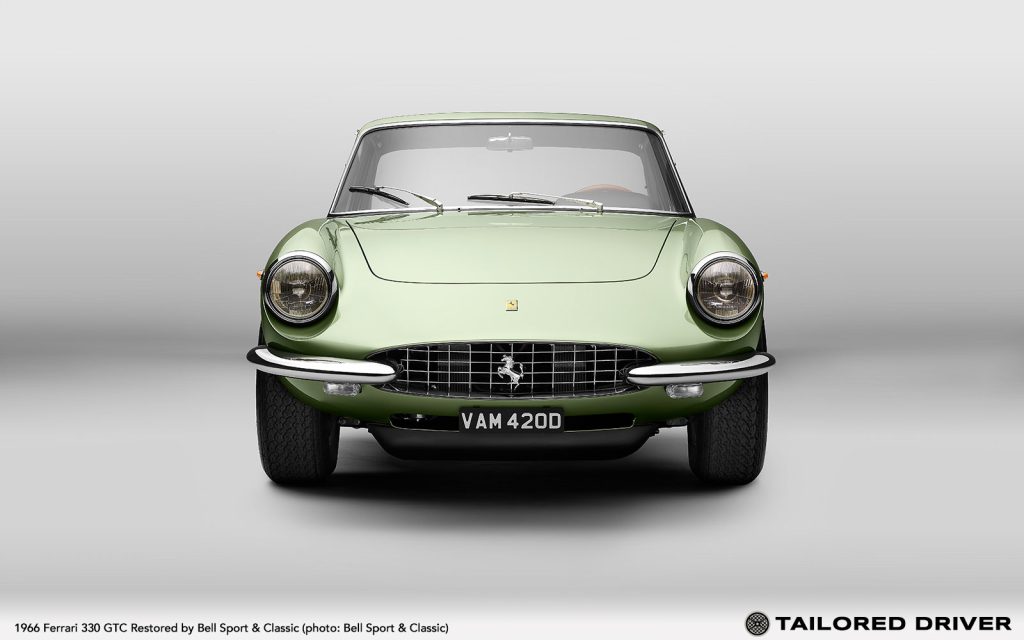
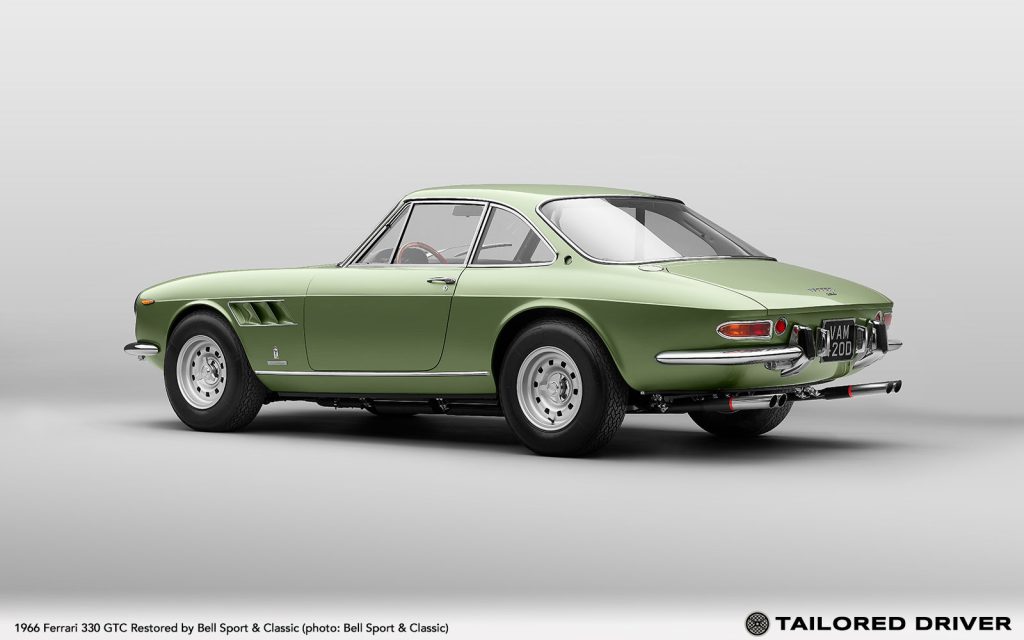
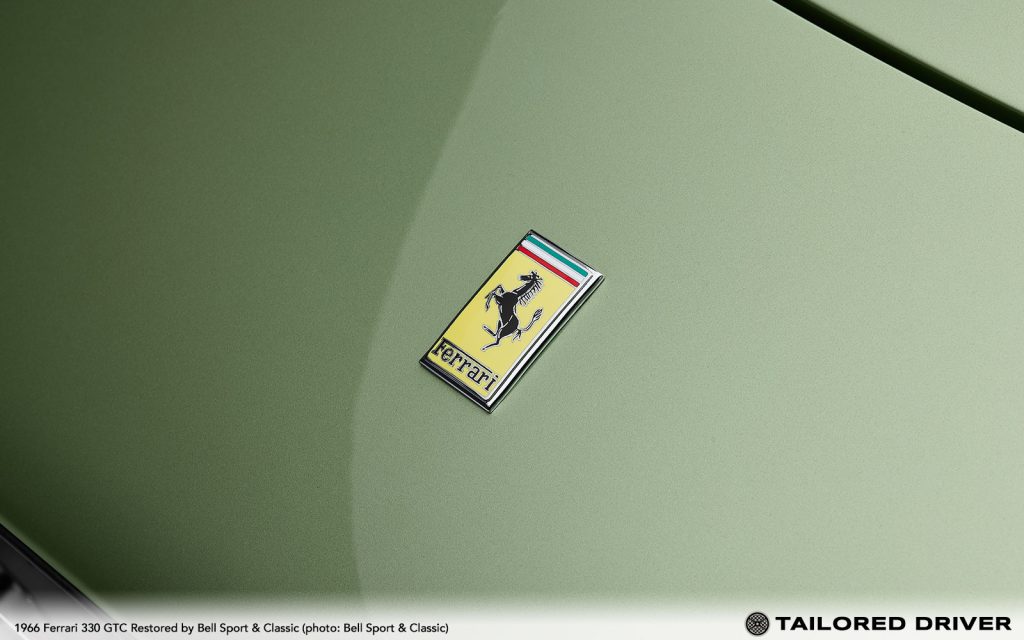
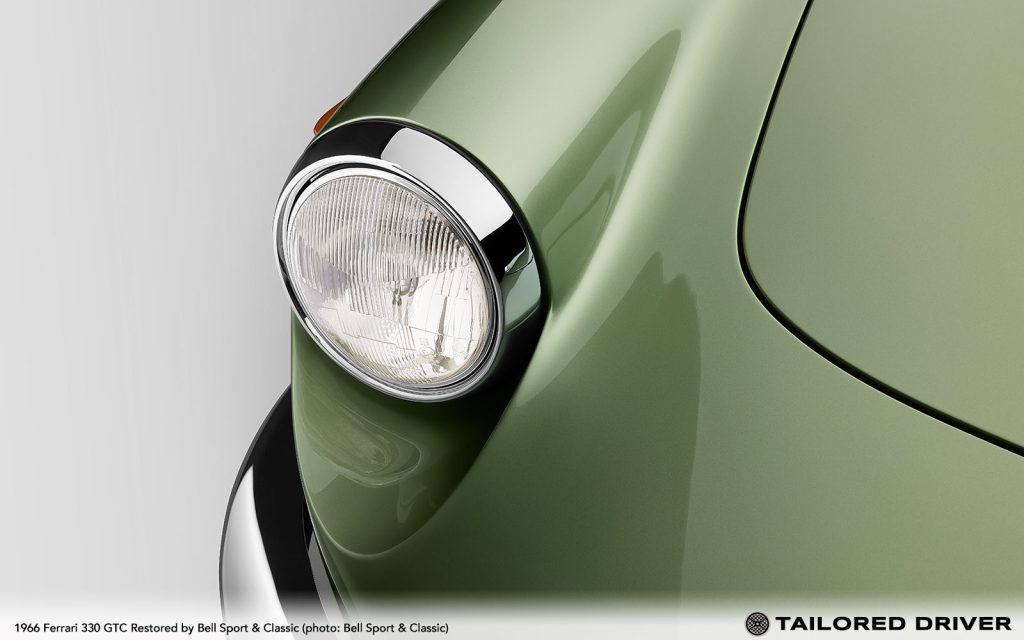
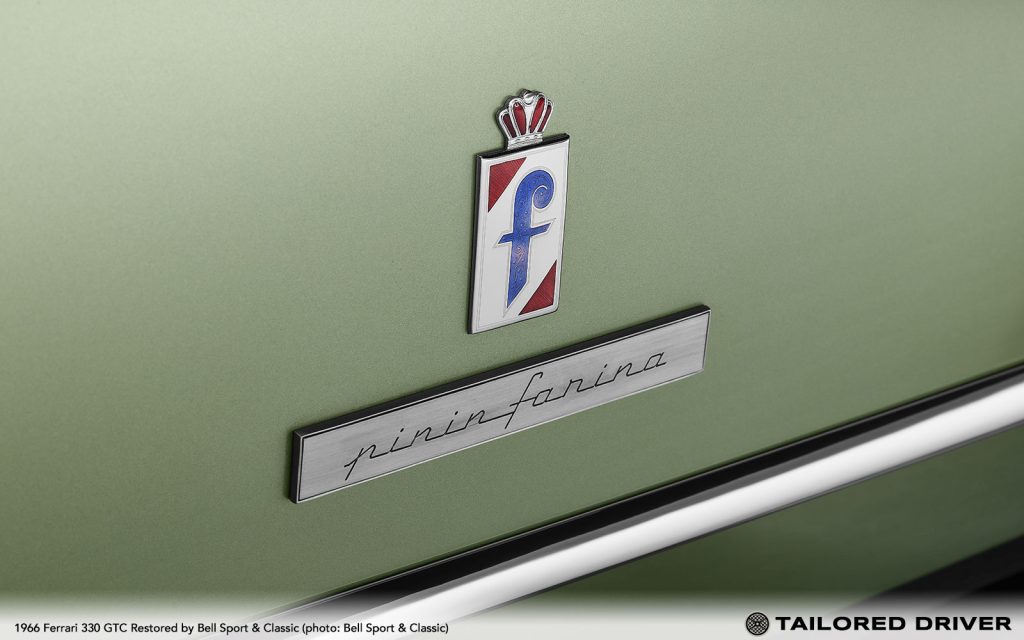
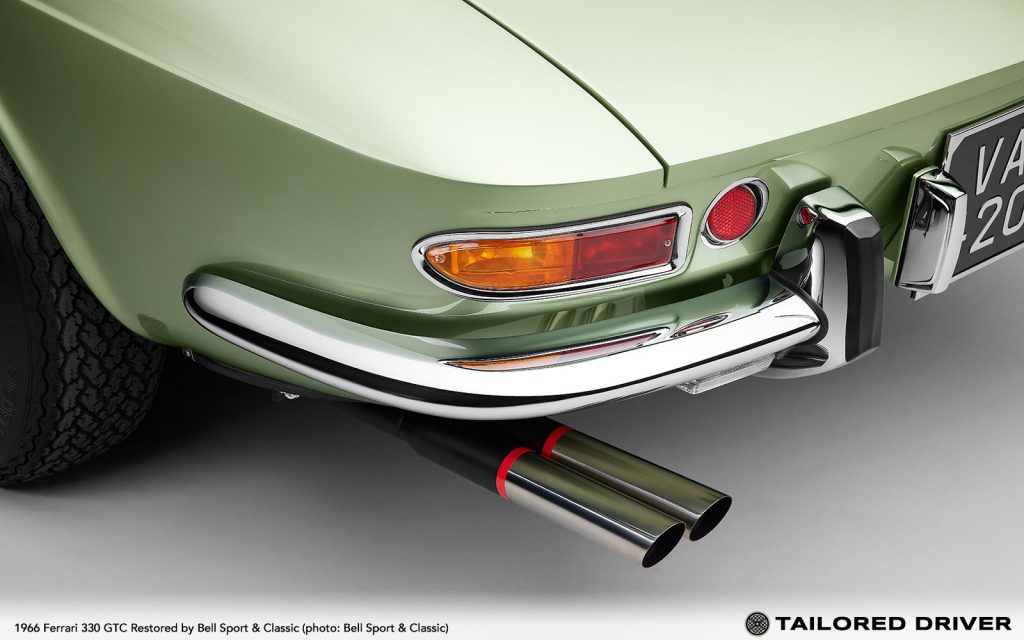
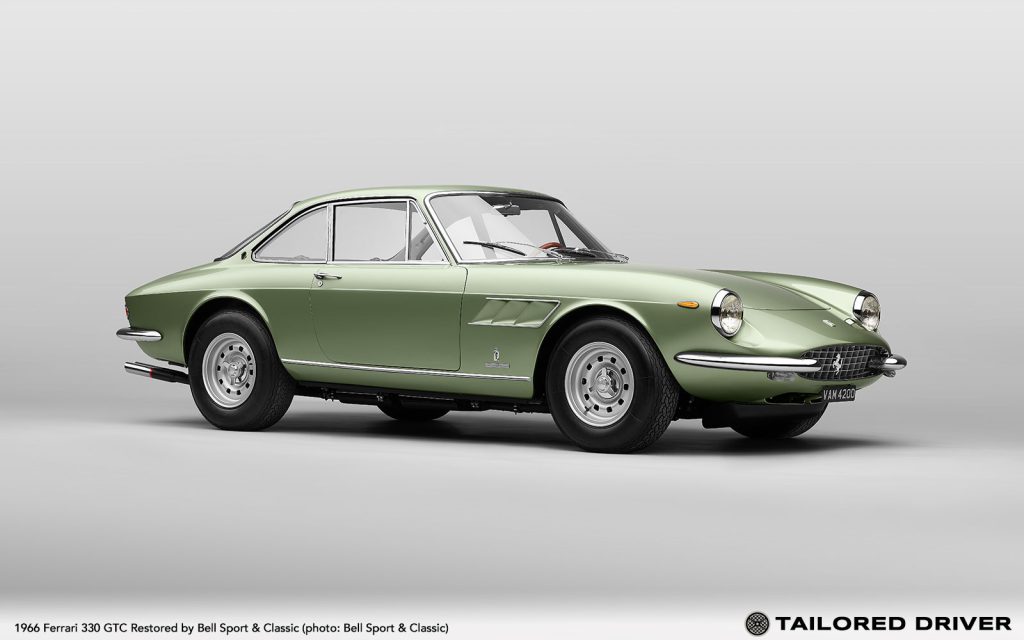
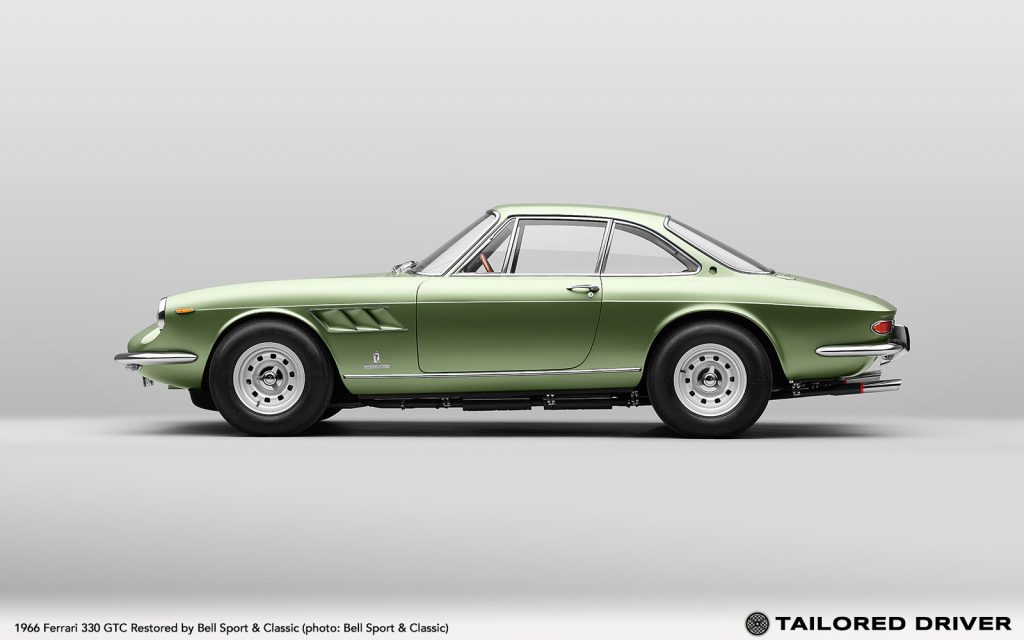
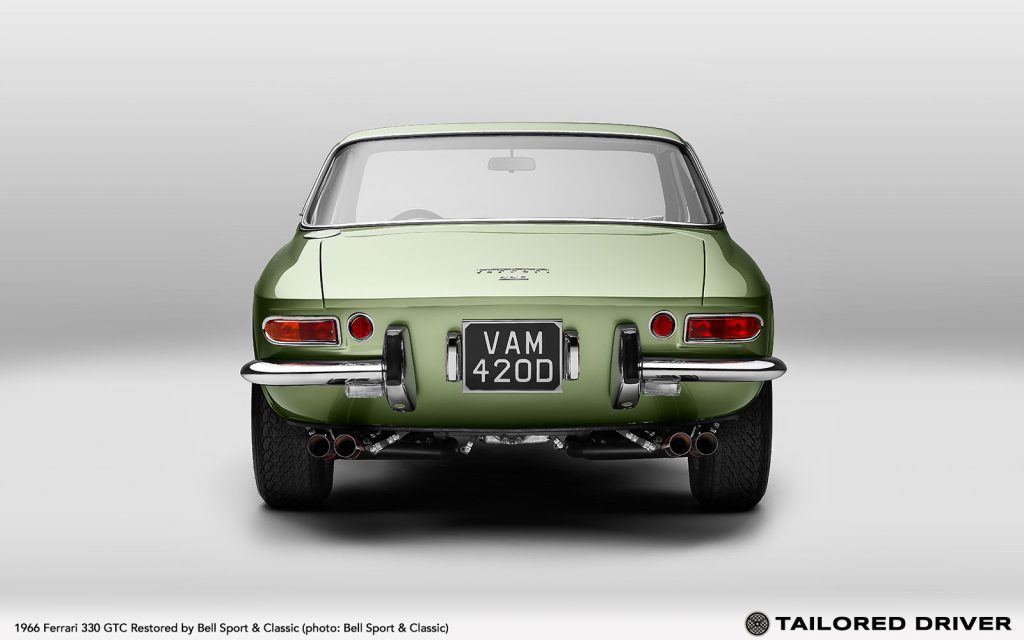
1966 Ferrari 330 GTC restored by world-leading specialist Bell Sport & Classic
Concours-winning perfection further embodies the game-changing standards Bell Sport & Classic applies to every restoration
Beyond obsessive approach results in arguably the best 330 GTC on the planet and further underlines Bell Sport & Classic’s position on the global stage
[source: Bell & Sport Classic]
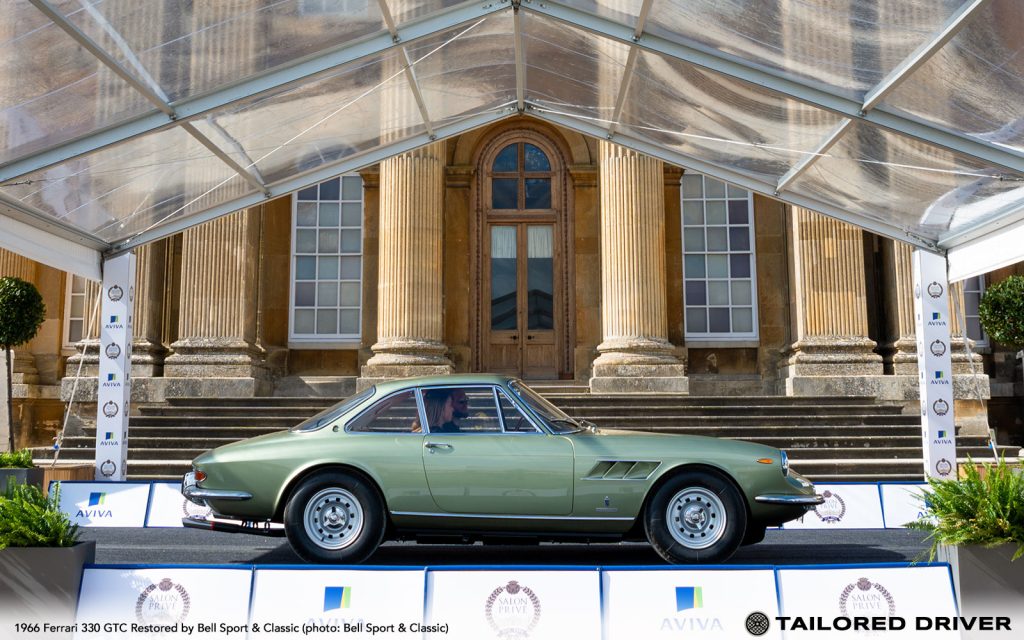
Markyate, Hertfordshire, UK – Leading Ferrari specialist Bell Sport & Classic is proud to reveal full details of the benchmark-setting restoration of a 1966 Ferrari 330 GTC, which secured a convincing victory at the 2022 Salon Privé Concours d’Elégance in September against world-class opposition.
The concours award and the car’s Ferrari Classiche Certificate stand testament to the intensive three-year-long restoration and rebuild at Bell Sport & Classic’s Hertfordshire headquarters. Led by the company’s expert team, who together have many decades of experience in Ferrari restoration, every component on the 330 GTC has either been restored, overhauled or reverse engineered, with the very latest restoration and engineering techniques employed.
Like all Bell Sport & Classic’s restorations, a beyond obsessive approach was applied through an unmatched blend of experience and expertise, creating a car that is in every facet better than when it left the factory – and what is quite probably the finest Ferrari 330 GTC in existence.
The gentleman’s Ferrari “Unveiled at the 1966 Geneva Motor Show the 330 GTC took its chassis from the 275 GTB Berlinetta and its 300hp four-litre V12 engine from the 330 2+2 Coupé. Cloaked in an achingly elegant Pininfarina body, it made an immediate impact and was very much a car for the more discerning driver. It’s the kind of Ferrari that you could imagine Enzo using as a daily driver,” explains Tim Kearns, Bell Sport & Classic’s Managing Director.
“Maranello built 600 examples between 1966 and late 1968 and this example was built during the initial year of production,” adds Bell Sport & Classic’s Head of Acquisition & Sales, Peter Smith. “It first came to us six years ago having clearly had a good amount of use, the car initially sold into Switzerland had spent time in the US and was eventually found in Venezuela. Although the engine wasn’t running and it had been repainted blue, literally every nut and bolt was original, so it was a good example to start with – but we knew we could make it as close to perfect as possible.”
Two weeks were spent methodically removing all the Ferrari’s interior components before the restoration team, led by Elliot East, turned to the exterior trim and began carefully stripping parts, including the brightwork, bumpers, headlights, and glass. Only after that stage was completed was attention turned to the drivetrain and suspension components.
Restored to factory-fresh specification Bell Sport & Classic’s exacting approach means that the same effort is lavished on every element of the car – whether visible or not. The 330’s heavily kerbed and severely corroded original 14-inch cast magnesium wheels were restored and elevated to gleaming concours-winning condition; this same approach is applied throughout the car – even to components that will remain hidden from view, deep in the fabric of the machine.
As Matt Wilton, who oversaw the project and has a lifetime of experience at the highest level of Classic Ferrari Restoration, explains: “Several of the imperfections were relatively minor, and would most likely never be seen by a customer, but for a Bell Sport & Classic restoration, everything matters. Yes, it’s highly time-consuming, but it gives our customers complete confidence that a car they receive from us is perfect in every detail.”
A month was dedicated to stripping the suspension down, and the components sandblasted, before undergoing repainting and replating as required. The original shock absorbers, suspension arms and springs were all refurbished and retained.
“The steering arm and every little bracket that had been nickel-plated originally, were replated,” continues Matt Wilton. “Other components, such as the anti-roll bar drop link, were restored to their original satin nickel finish. Absolutely everything on this car is in the same condition, or better, as the day it left the factory.”
Walnut shells for that delicate touch The process that would eventually ensure an exquisite exterior finish utterly devoid of even the slightest blemish began more than two years before painting was scheduled, and involved blasting the car’s body, not by sand, but by crushed walnut shells.
“One of the disadvantages of using sandblasting on the delicate areas of the larger panels is that it can put heat into the steel and cause it to distort. However, that doesn’t happen with walnut-blasting,” continues Elliot East. “It’s a technique that’s always best for the potentially more fragile areas.”
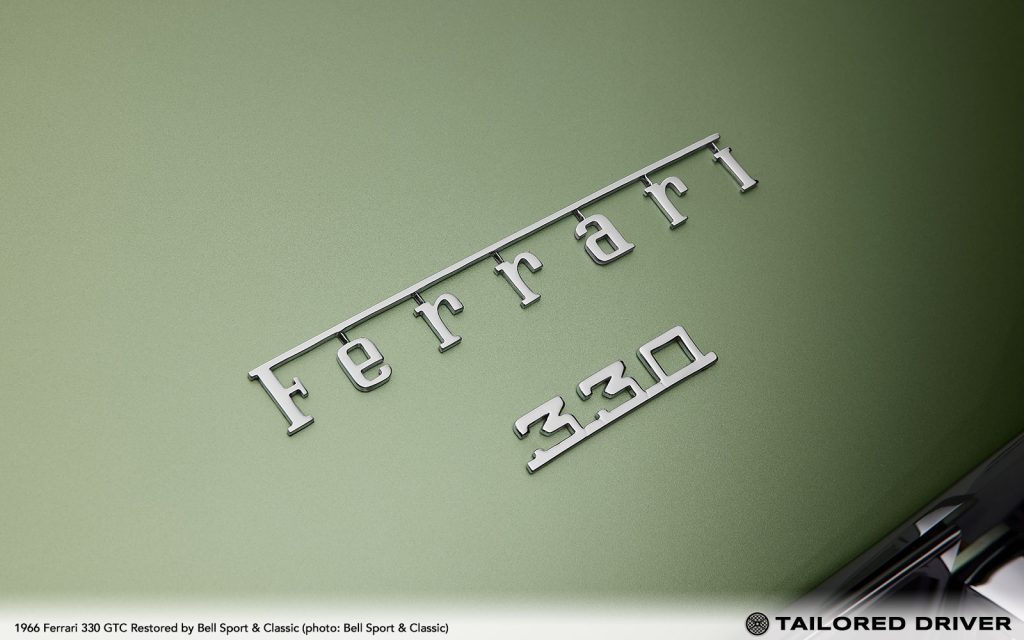
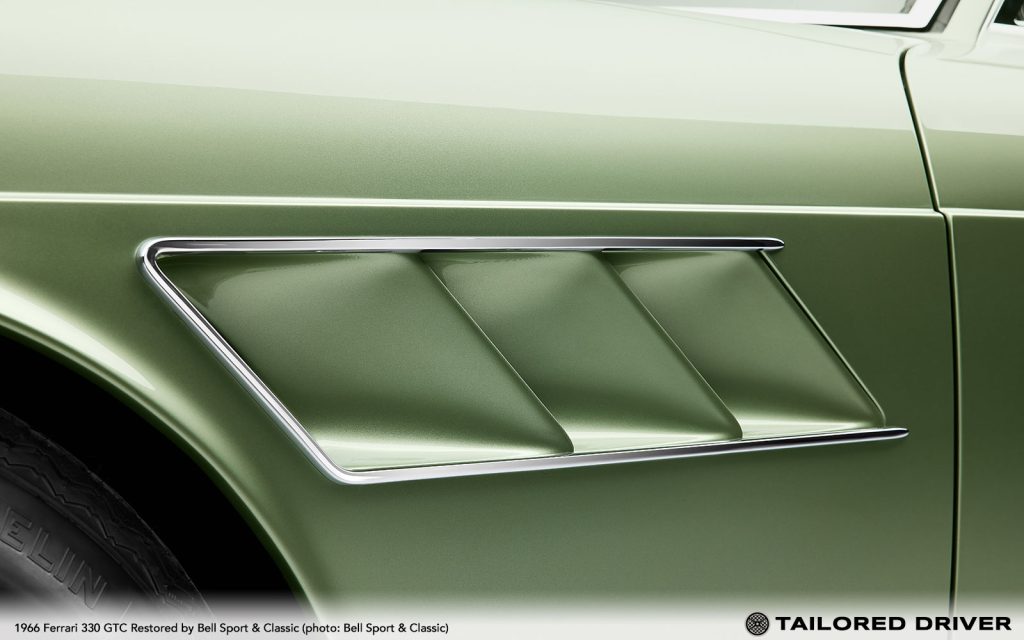
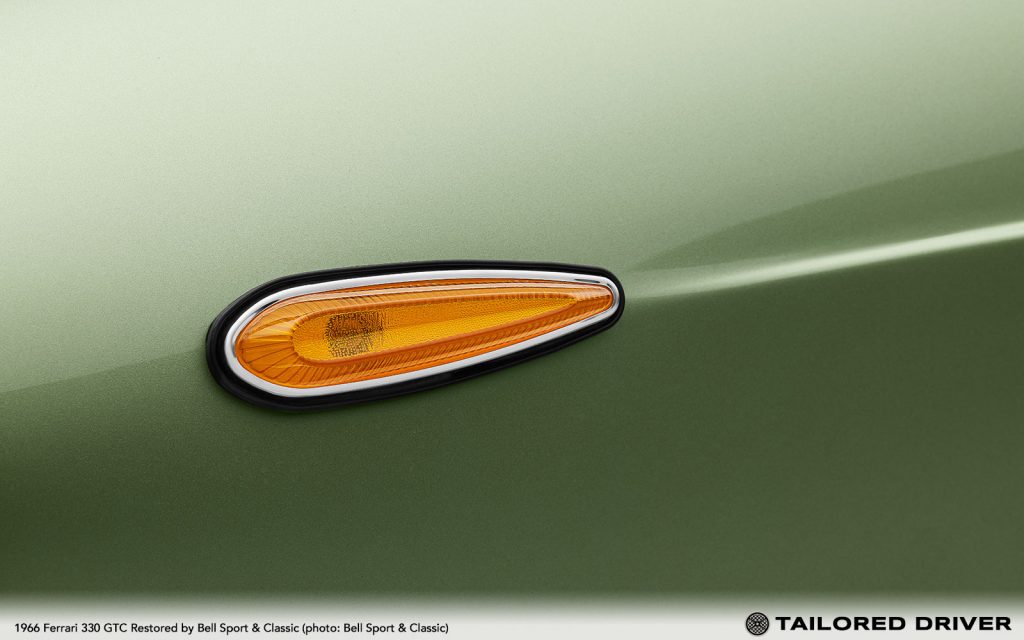
When the car arrived at Bell Sport & Classic it was a pale blue and had clearly been painted several times over its life. As part of the team’s restoration research process, the original factory build sheets were sourced confirmed that 330 GTC Chassis No. 9069 left Maranello a beautiful and unusual pale green. Before the body was painted and the Ferrari returned to its stunning original light green metallic Verde Chiaro Metallizato, the team undertook a complete dry build. While this process of reassembling and then stripping back down again before painting takes time, it’s integral to every restoration project undertaken by Bell Sport & Classic.
And again, despite the team’s accumulated decades of experience restoring historic Ferrari models, it ensures that nothing is taken for granted or left to chance. At this point, the bodywork is fully re-assembled, with components such as the glass, chrome wear, doors and all exterior fixtures fully incorporated. Every stage of the process is precisely measured, and triple checked. This painstaking attention to detail is critical to mitigating the effect of the additional thickness of the primer and paint.
“If you have too much paint on the window frames, it could prevent the glass from fitting, or if there is too much in the guttering on the roof, it could prevent the door seal from fitting properly. We’re only talking points of a millimetre, but often that’s all it takes to make the difference,” explains Elliot East.
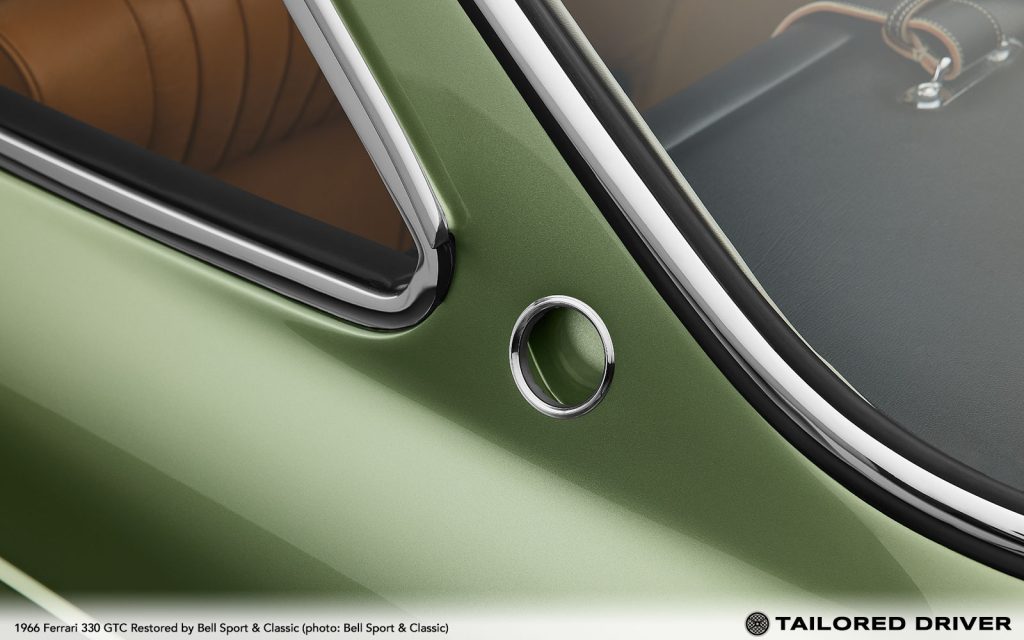
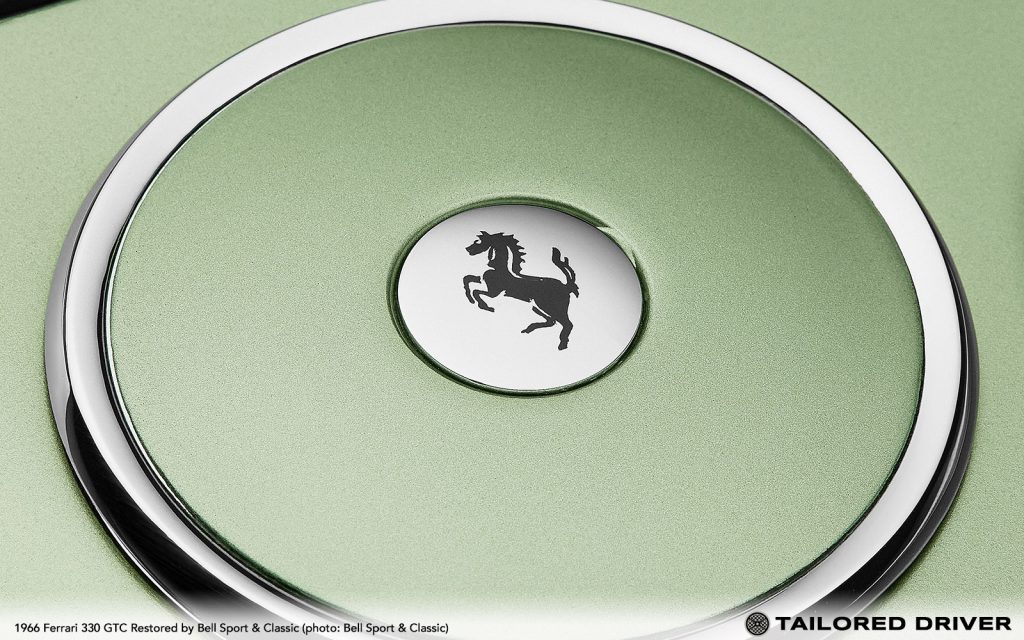
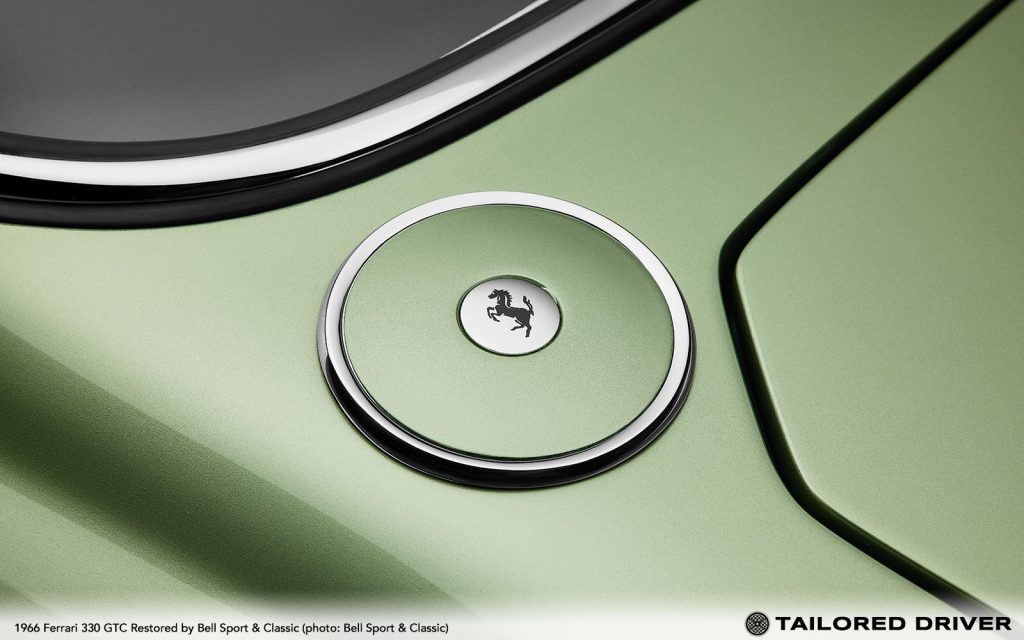
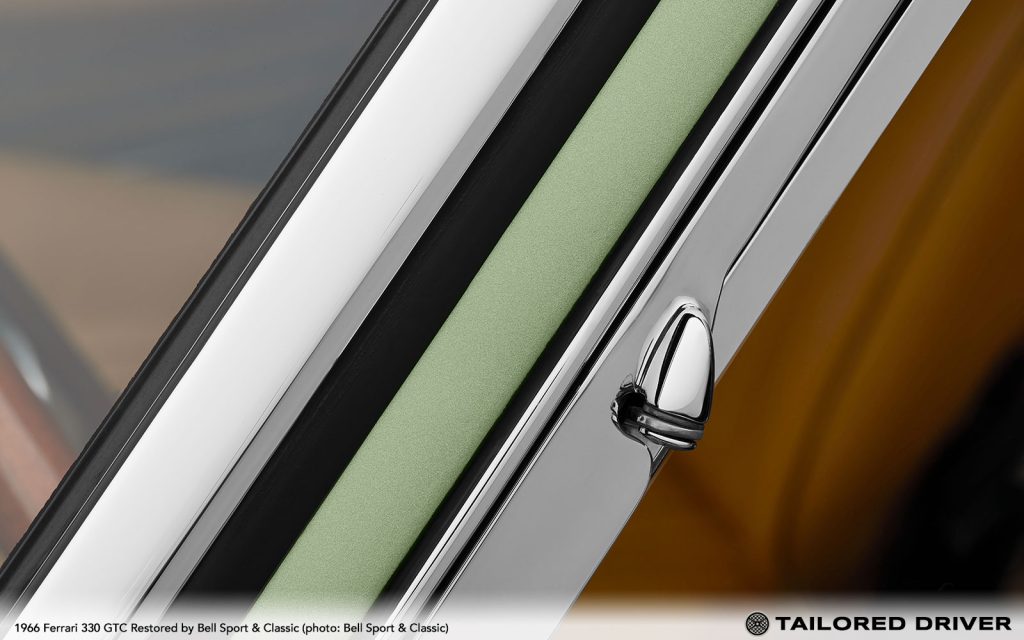
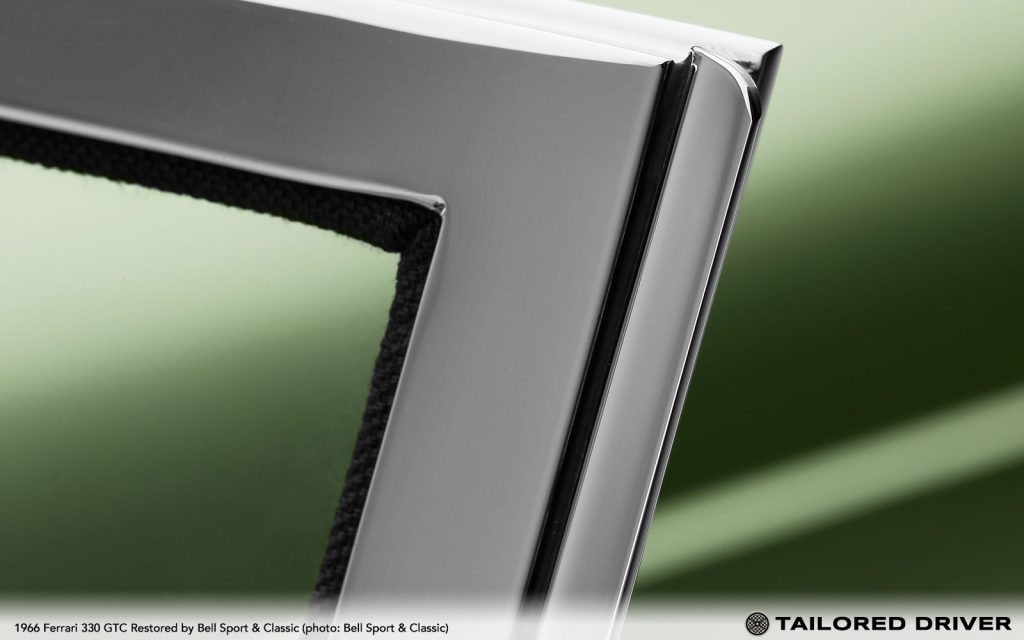
No detail too small As typified by the GTC’s chassis, Bell Sport and Classic poured as much time and effort into perfecting the paint finish on the details that can’t be seen. Even the quality of the paint finish inside the small circular demister vent in the C-pillar matches the outstanding finish of the paint on the body, a rare achievement on this model, a real ‘tell’ for those in the know.
“As soon as we unveiled the car at Salon Privé, that was one of the areas that the judges and aficionados who really know this model went to straight away,” smiles Matt Wilton.
“And it was the same with the satin black paint inside the wheel arches and engine bay. It took three attempts before we were certain we got exactly the correct and original degree of shine and tonality.”
Even after the concours judges had peered into the C-pillar air vents, crawled underneath, and lifted the boot carpet, Bell Sport & Classic’s impeccable craftsmanship still stood up to the strictest scrutiny.
Again, the pursuit of perfection continued to areas that aren’t even visible. “Despite having been painted black at some stage – as most have been – when the car was new, its twin fibreglass-coated fuel-tanks were painted a pale turquoise blue,” explains Elliot East. “It’s not an easy colour to match, and some might argue that it’s not that important as the carpet hides the tanks. But it’s important to us. And that’s why the fuel tanks are once again finished in period-perfect turquoise after we found and original area of paint inside one of the necks and colour matched it.”
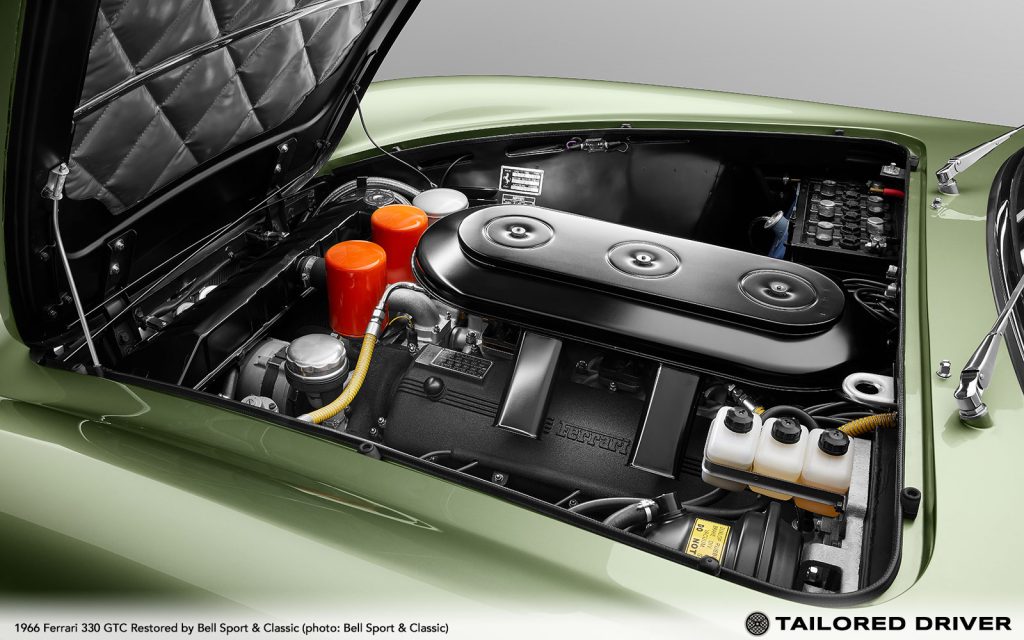
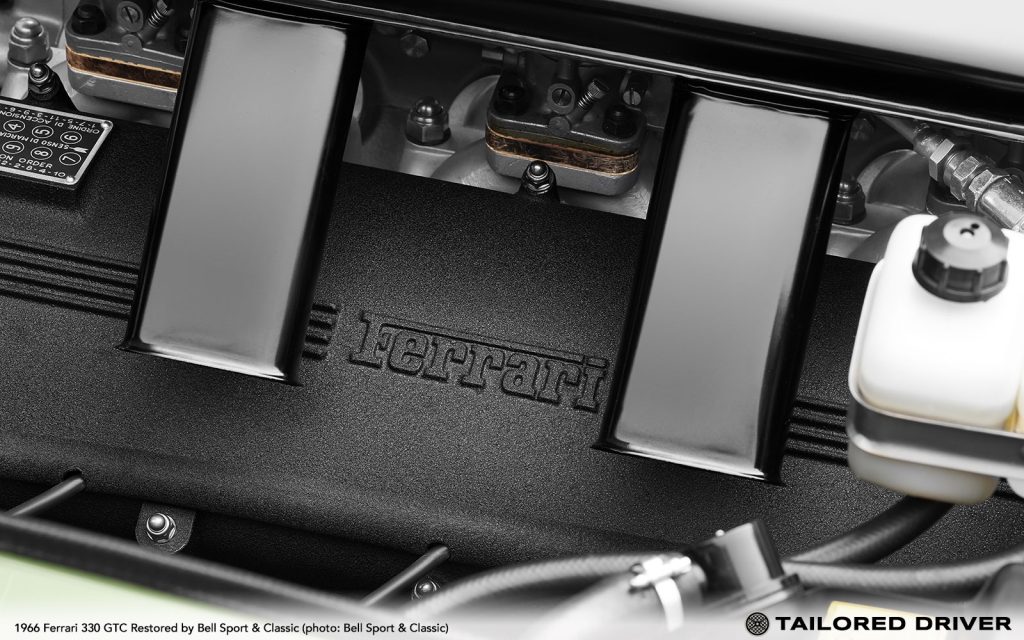
V12 beating heart Each phase of the strip-down, refurbishment, reassembly, and testing, of the 330 GTC’s Colombo V12 engine was completed at Bell Sport & Classic’s in-house engine workshop, under the lead of Attilio Romano, a former member of the Ferrari factory technical team in Maranello, who ran H.R. Owen’s Ferrari technical department for 22 years.
It’s an obsessive approach, but it ensures perfection, with every single component, down to the smallest stud, stripped, vapour-blasted, refurbished and replated as required, regardless of time and expense. Once the V12 was reassembled, two days were spent on dyno-testing, assiduously checking for the most minor issues, such as potential minute oil leaks.
Then, after the car was rebuilt and the engine placed back in situ, it was subjected to 500 miles of road testing. “We restore cars, not just to be sat on a concours lawn, but driven and enjoyed by their owners,” adds Peter Smith, himself an experienced racer and part of the project’s dynamic sign-off process. The fully rebuilt engine produces 300hp at 7000 rpm – precisely the same as in period.
The gearbox was exposed to the same in-depth strip-down and rebuild process as the engine. And while every effort was made to maintain optimum originality, certain new parts were required to ensure a sublimely smooth driving experience. These included the selector forks, synchroniser hubs and synchroniser rings.
In many ways, the four-pot calliper braking system proved the most challenging aspect of the drivetrain, as Elliot East explains. “We weren’t happy with the existing brake servo, which was challenging because finding an original replacement part in good condition was just about impossible. But it’s like trying to ease off a seized nut – we never give up. And as we have contacts with parts suppliers and Ferrari enthusiasts all over the globe, we finally sourced an original.”
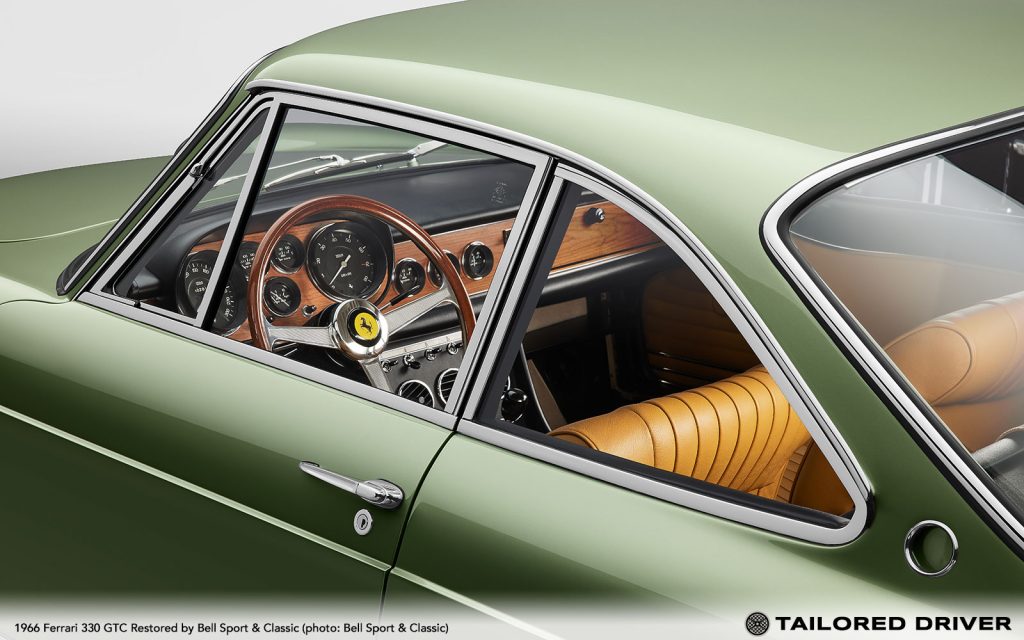
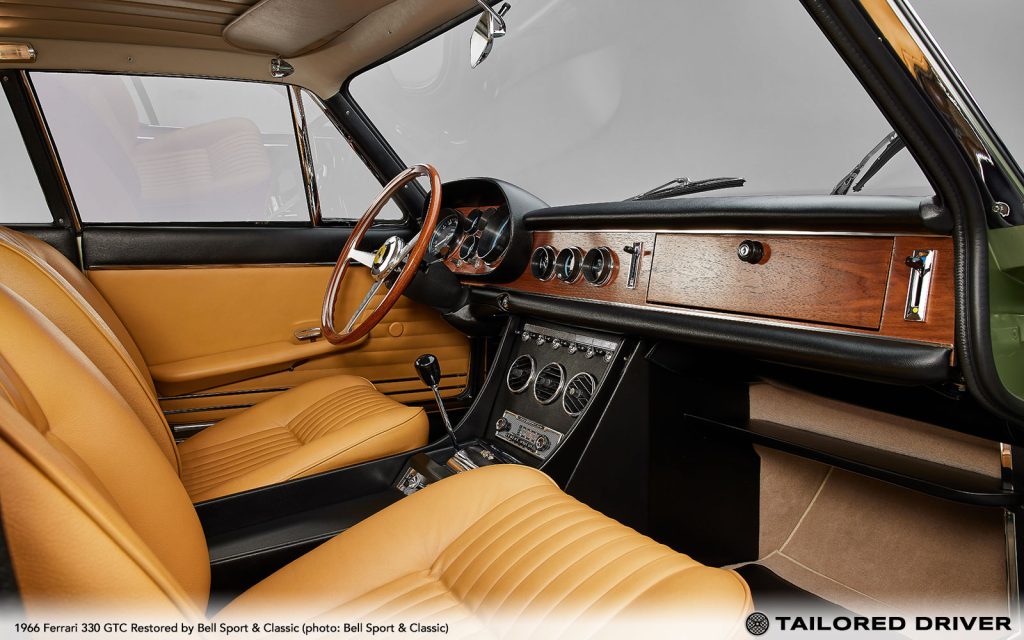
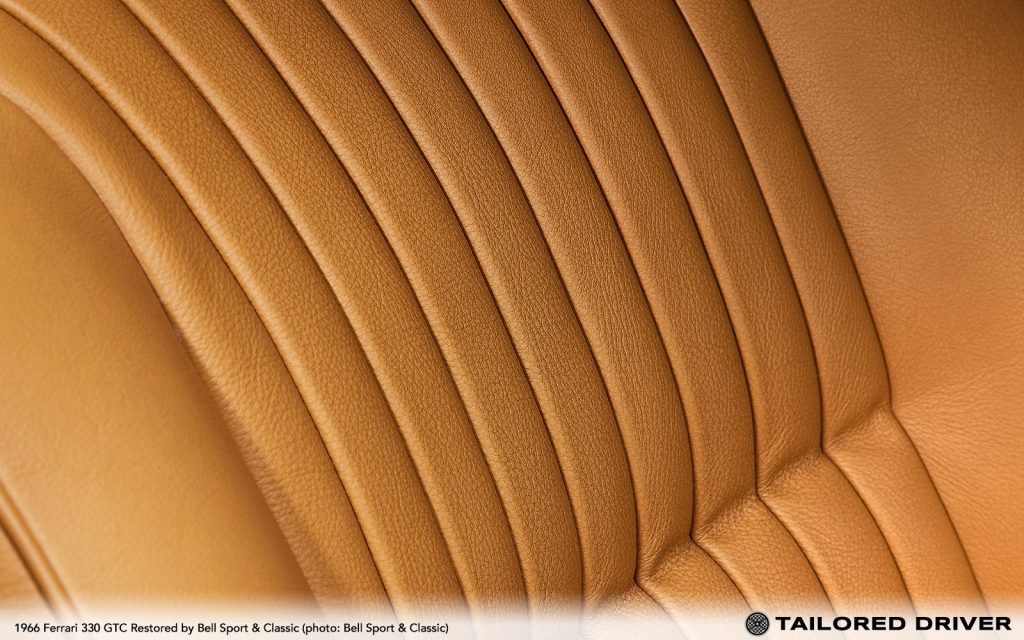
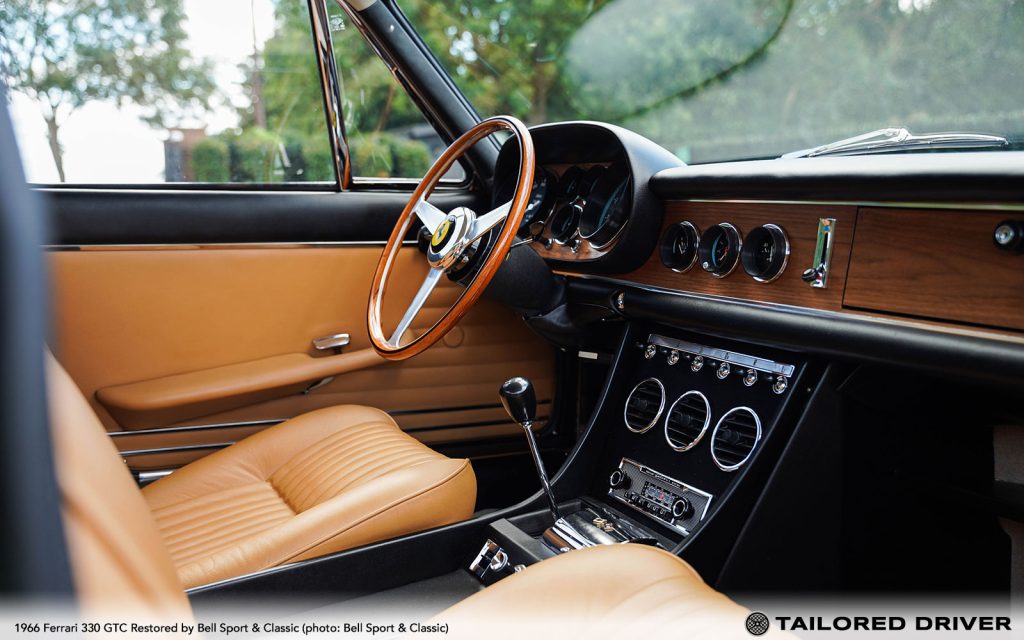
Creating a sublime interior Back in 1966, the 330 GTC left Maranello sporting a gorgeous black leather interior, but more than half a century of use had taken a very heavy toll upon it. Restoring the cabin of a historic Ferrari to its former glory represents a significant challenge that not many can truly perfect.
Bell Sport & Classic entrusted the restoration of the car’s cabin to O’Rourke Coachtrimmers and Suppliers. Based in Rudgwick in West Sussex, the company has decades of experience in restoring Ferrari cabins to concours-winning, period-perfect condition. O’Rourke Coachtrimmers and Suppliers has built its world-leading reputation not just on the quality of its craftsmanship, but also by applying the same forensic approach and research-driven authenticity that Bell Sport & Classic exercises itself.
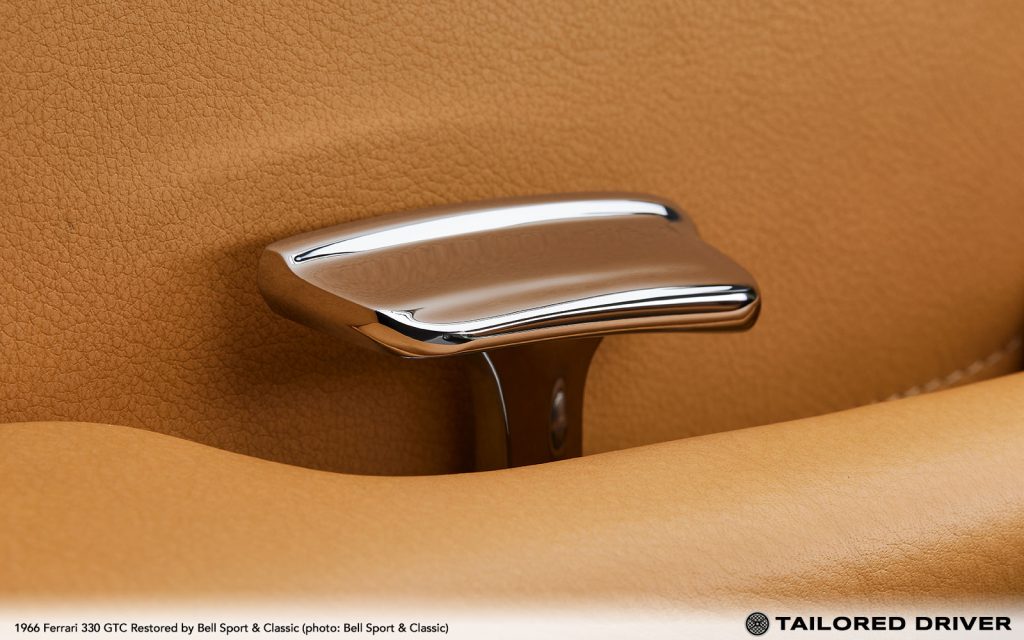
So, when the customer wished to change the colour of the leather, it was a straightforward task for O’Rourke Coachtrimmers and Suppliers to outline the range of options offered by the factory more than half a century ago. As a result, the car’s new owner was able to select the precise Ferrari Conolly VM 218 fawn leather colour, which was matched with period-correct detailing, including the colour and weave of the carpets and the headlining, right down to the vinyl on the binding of the carpets, with all material sourced from Italy.
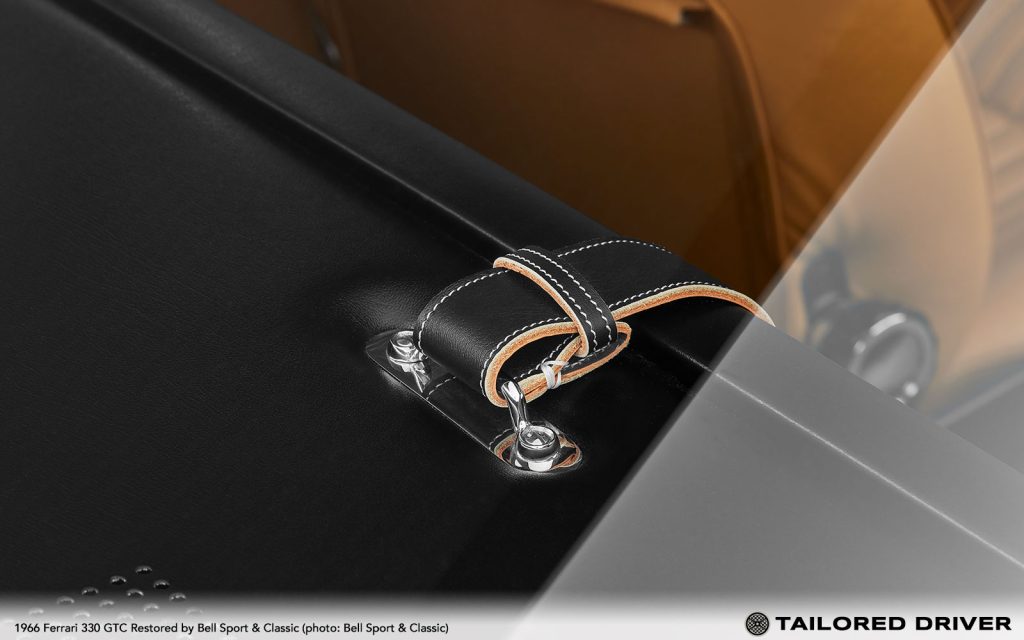
Fortunately, the car’s original seat frames were in good condition and retained, although new foam inserts were fitted to ensure optimum comfort and support. New webbing was used for the belts, but all the fittings and buckles are original and have been restored, including the iconic Irvin badges.
The Ferrari’s wooden veneer dashboard was in relatively good condition, apart from the fact that it had a mysterious hole in it. “All the original dials and controls were present and correct and accounted for, so the hole had presumably accommodated an additional aftermarket feature that had been fitted at some point and then removed again,” deduced Elliot East. Once again, vast reserves of skill, experience and patience were required to perfect this element of the restoration, with dozens of different wood stains tried and revised before the correct match was found.
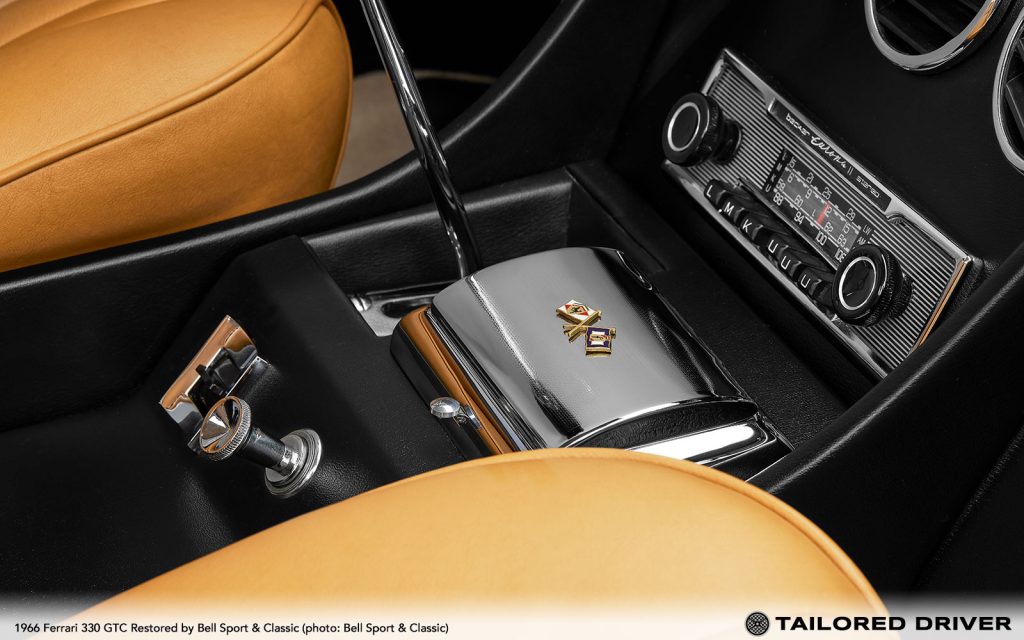
At some point in the car’s history, a 1980s radio cassette had been fitted to the centre console. Bell Sport & Classic removed the unit and fitted an original Beck Europa radio, of the precise type the car would have left the factory with. Restored and uprated by vintage car radio specialists, Chrome London, the period radio is equipped with modern internals and Bluetooth compatibility.
Beauty that is much more than skin-deep “With this Ferrari 330 GTC, we have created a car that looks perfect from first glance right down to the details you will never see,” adds Peter Smith. “We believe passionately that beauty is so much more than skin-deep. That’s why, if you took this car apart, every component would look new, even though it is fifty-six years old. Versus the more famous V12 Ferrari of the period, the 330 GTC hides its light under a relative bushel, but it is such a wonderful combination of style and performance that this is one Ferrari unlikely to remain underrated for much longer.”
Bell Sport & Classic Managing Director, Tim Kearns concludes: “It’s a fundamental part of our philosophy that we just don’t build a car to get maximum points from the judges in a concours, it’s got to drive beautifully, too. The 330 GTC was the only car in its class to take part in the Salon Privé tour in the lead up to the event. It was driven enthusiastically and enjoyed on the wonderful roads of the Cotswolds over two days, before arriving at Blenheim Palace, parking up on the Concours judging lawn, and then taking the top Ferrari prize.
“Every car we restore, while flawless visually, has got to perform at the highest possible level – it’s got to be a true driver’s car. And it has got to be capable of being used every day of the week even if it isn’t. We are confident that Bell Sport & Classic sets the standard for the restoration of historic Ferrari models. The plaudits this 330 GTC has achieved validate the beyond obsessional approach of our exceptionally talented, knowledgeable, and passionate team. It builds on the success of our other recent Ferrari restoration projects – which have been met with universal acclaim for their pursuit of perfection – and further underlines our objective to continually raise the bar. This is exactly what Bell Sport & Classic does. Watch this space for our next project.”
About Bell Sport & Classic Bell Sport & Classic is a team of experts who have come together to provide customers unrivalled expertise across the sales, service, and restoration of the world’s most revered classic and modern classic cars, specialising primarily in notable Ferraris but also Aston Martin and Lamborghini and other leading marques.
Authenticity, originality, and quality are the bedrocks of the business; Bell Sport & Classic prides itself on sourcing the ultimate in collector cars and bringing new standards to classic car restorations. Bell Sport & Classic stands apart in the classic car world as an innovator and leader in customer service.
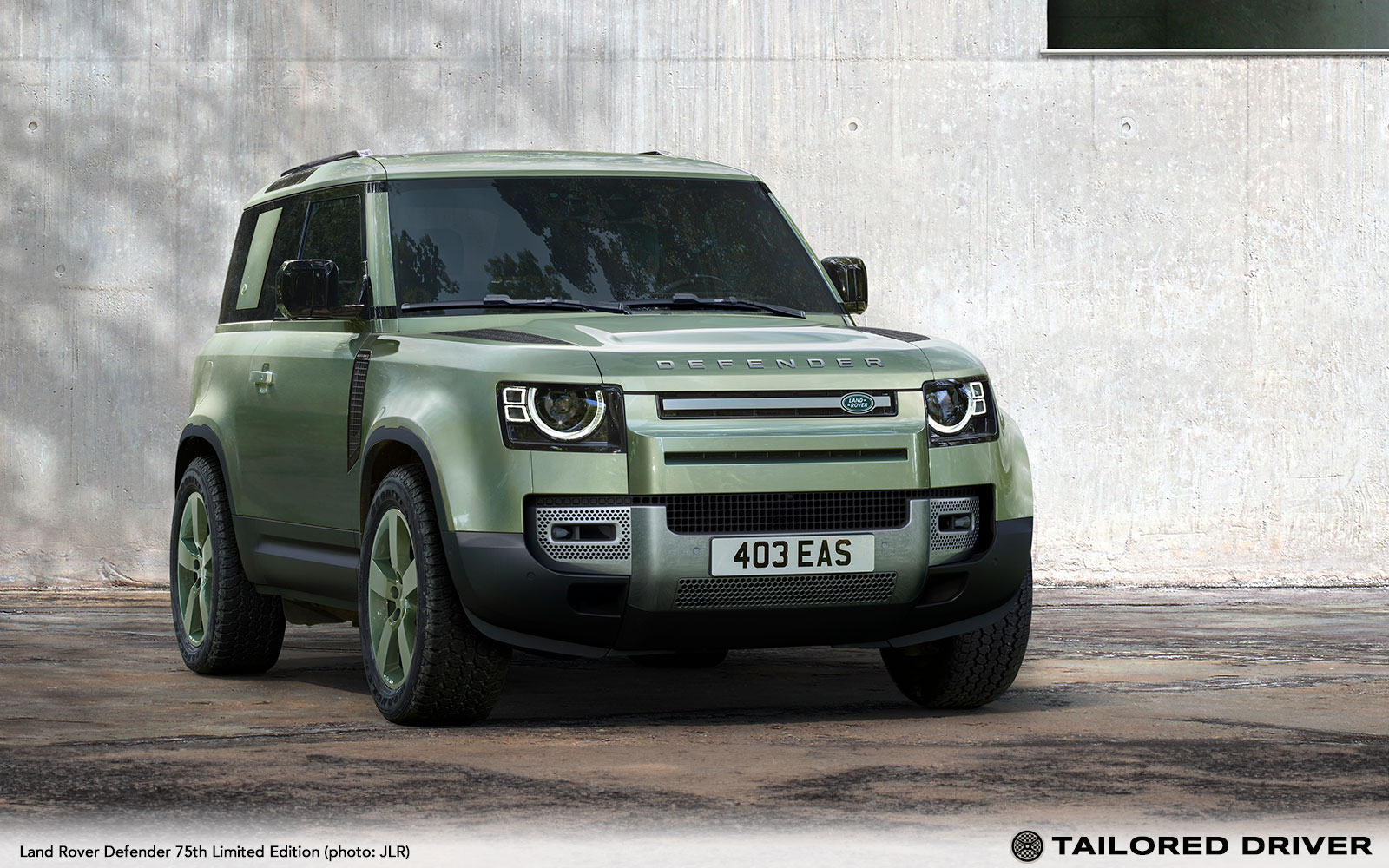
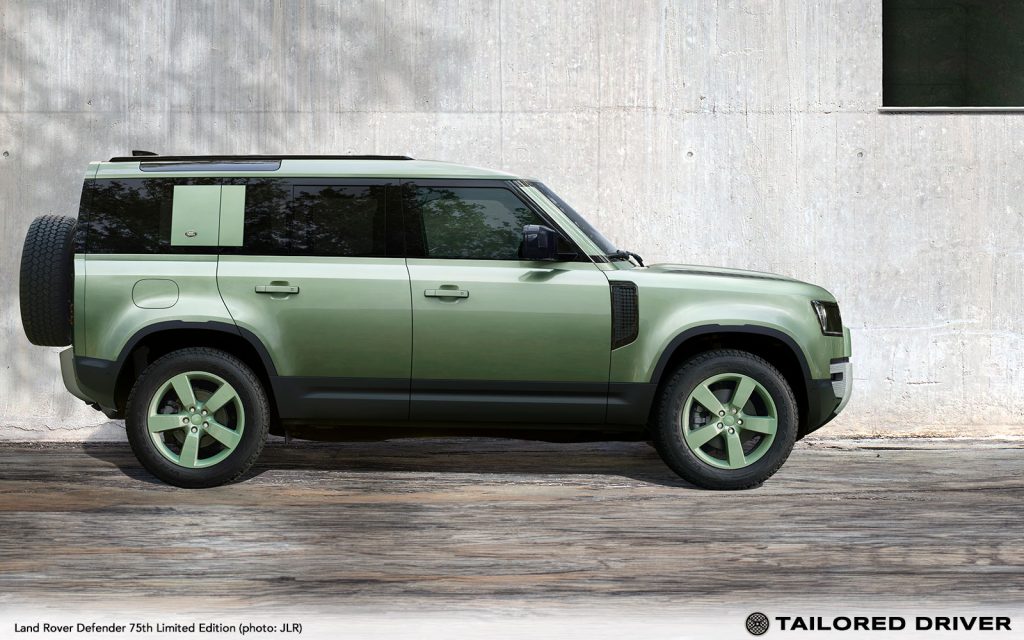
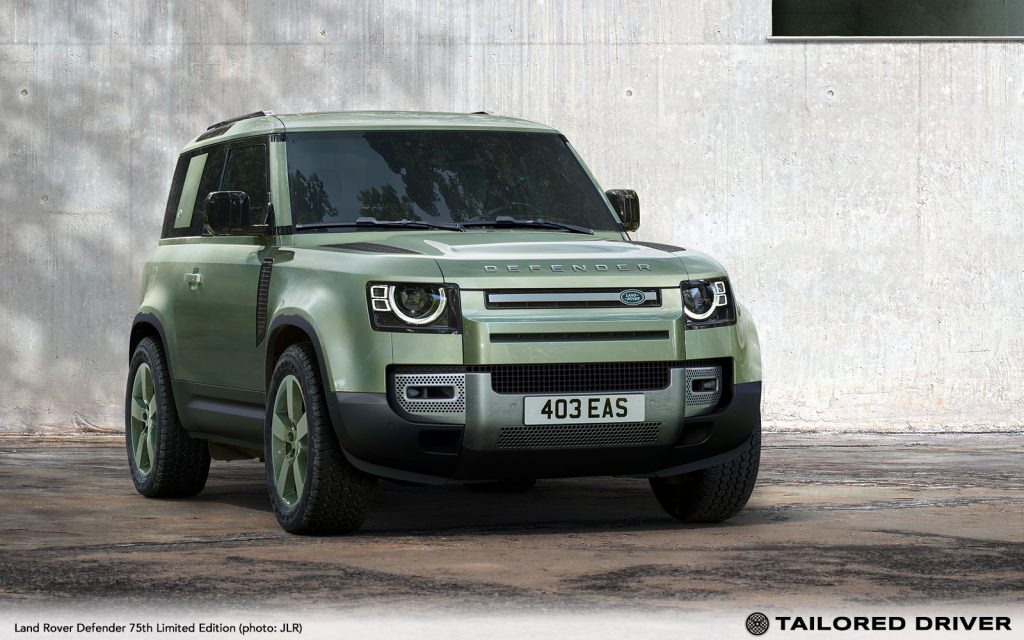
In 1948, the Series I was introduced at the Amsterdam Motor Show, and Land Rover is marking the anniversary of this milestone with the Defender 75th Limited Edition.
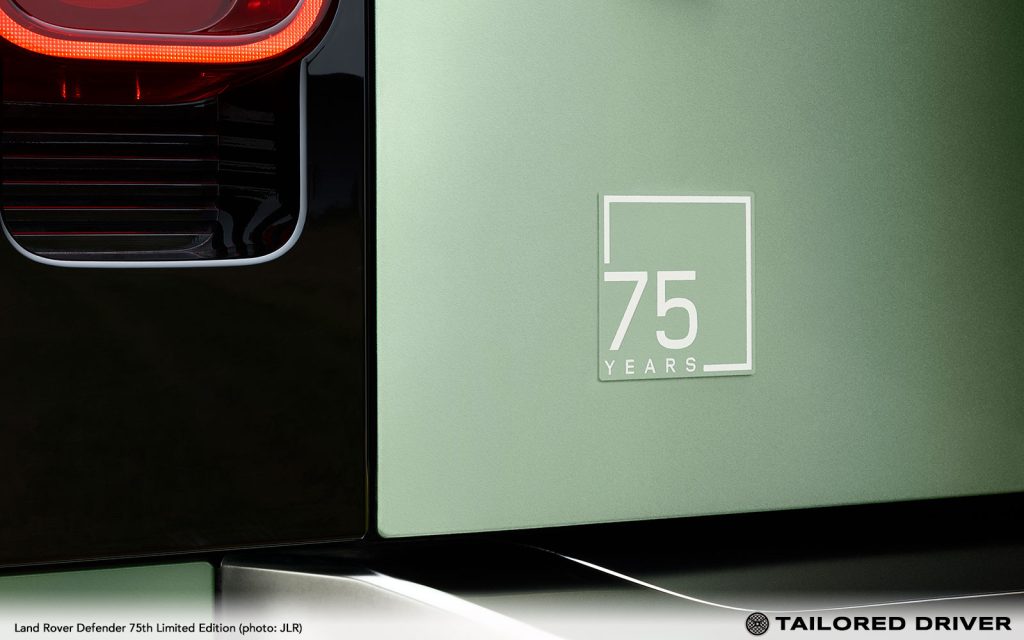
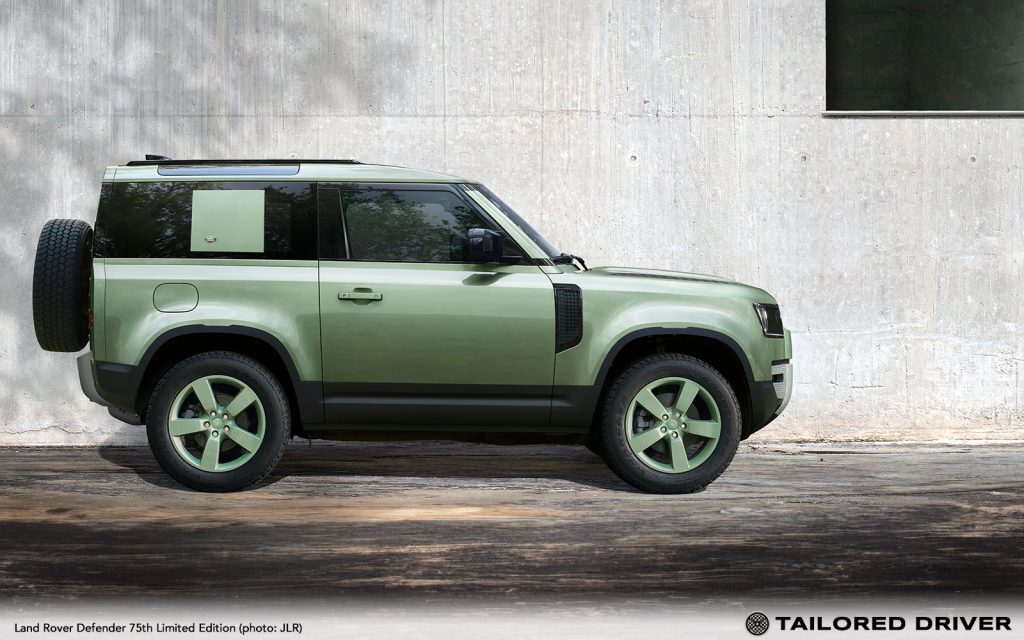
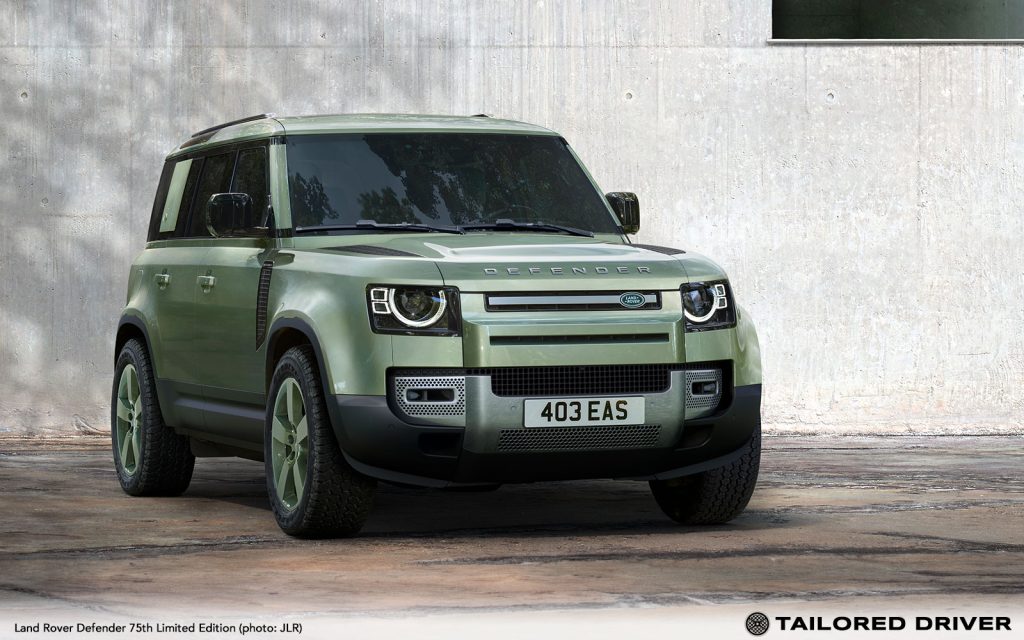
The exterior finish introduces Grasmere Green to the Defender line‑up for the first time – a hue reserved exclusively for the 75th Limited Edition – with 20‑inch alloy wheels also in Grasmere Green with matching center caps. Completing the exterior enhancements are a unique 75 Years graphic, and Ceres Silver colored bumpers.
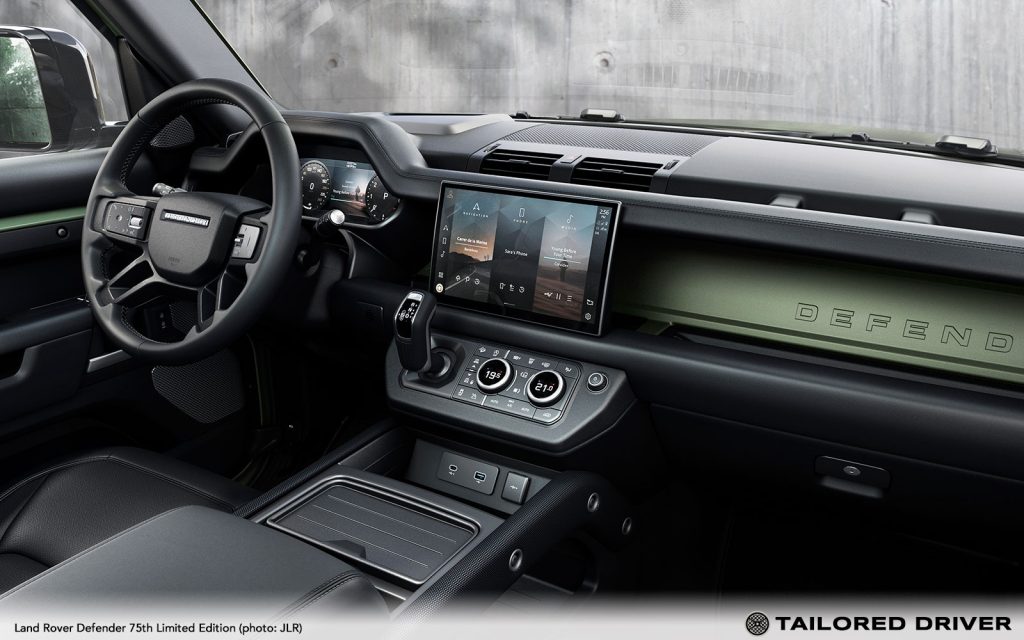
The Defender vehicle’s durable and versatile interior has received similar treatment, with the Cross Car Beam finished in brushed Grasmere Green Powder Coat and laser‑etched detailing on Cross Car Beam end caps. The seats are finished in Resist Ebony, with the veneer on the center console featuring Robustec material – the most robust fabric available on Defender.
“Since revealing the new Defender, customers around the globe have fallen in love with it and demand remains extremely strong. This new Limited Edition captures the spirit of the past 75 years, with its colour and detailing, and fuses it with innovative new technology such as Hybrid Electric power, Configurable Terrain Response, software over the air updates and unrivalled all‑terrain capability.” – Stuart Firth, Lifecycle Chief Engineer Defender
The Limited Edition has a comprehensive list of standard equipment. Innovative technology includes 3D Surround Camera, Configurable Terrain Response(1), Meridian Sound System, Premium LED front lighting, 11.4‑inch Pivi Pro(2) infotainment system, Head‑Up Display(3) and Wireless Device Charger(4).
All 75th Limited Edition models also feature a Folding Fabric Roof, while superior comfort is provided by 14‑way driver and passenger heated electric memory seats, heated steering wheel with electronic adjustments and Three Zone Climate Control. The Edition is also equipped with Tow hitch receiver, black roof rails and advanced OFF‑ROAD Capability Package.
Powertrain is exclusive to the P400 Ingenium gas engine, utilizing Mild Hybrid Electric Vehicle (MHEV) technology to optimize power delivery and fuel economy by harnessing energy normally lost under deceleration and braking.
The uniqueness of the Limited Edition ensures its place as a highly collectible Defender, revealed alongside a new range of Land Rover lifestyle goods celebrating this historic moment.
The Lifestyle Collection shares the Grasmere Green color theme and features a comprehensive range of goods including a minimalist unique watch featuring two straps, a functional backpack and clothing with unique 75 Years graphics and detail.
Land Rover was born with the launch of a single vehicle, the Series I in 1948. Today our family of SUVs is testament to the pioneering spirit of innovation that has characterized Land Rover for more than seven decades. Our Defender, Discovery and Range Rover brand families provide unrivalled capability, versatility and luxury – the perfect foundation for another 75 years of success.
About Land Rover
Founded in 1948, Land Rover designs and engineers its vehicles in the United Kingdom. For over 70 years the brand has built a reputation for providing its clientele with some of the most luxurious and capable vehicles in the world; whether driving through the heart of the city or traversing the countryside on‑ and off‑road. Today’s Land Rover lineup includes the Defender; Discovery and Discovery Sport; Range Rover, Range Rover Sport, Range Rover Velar and Range Rover Evoque. Land Rover is fully engaged with sustainability initiatives and social concerns with continuous involvement in environmental and community programs. For more information, visit the official Land Rover website at www.landroverusa.com.
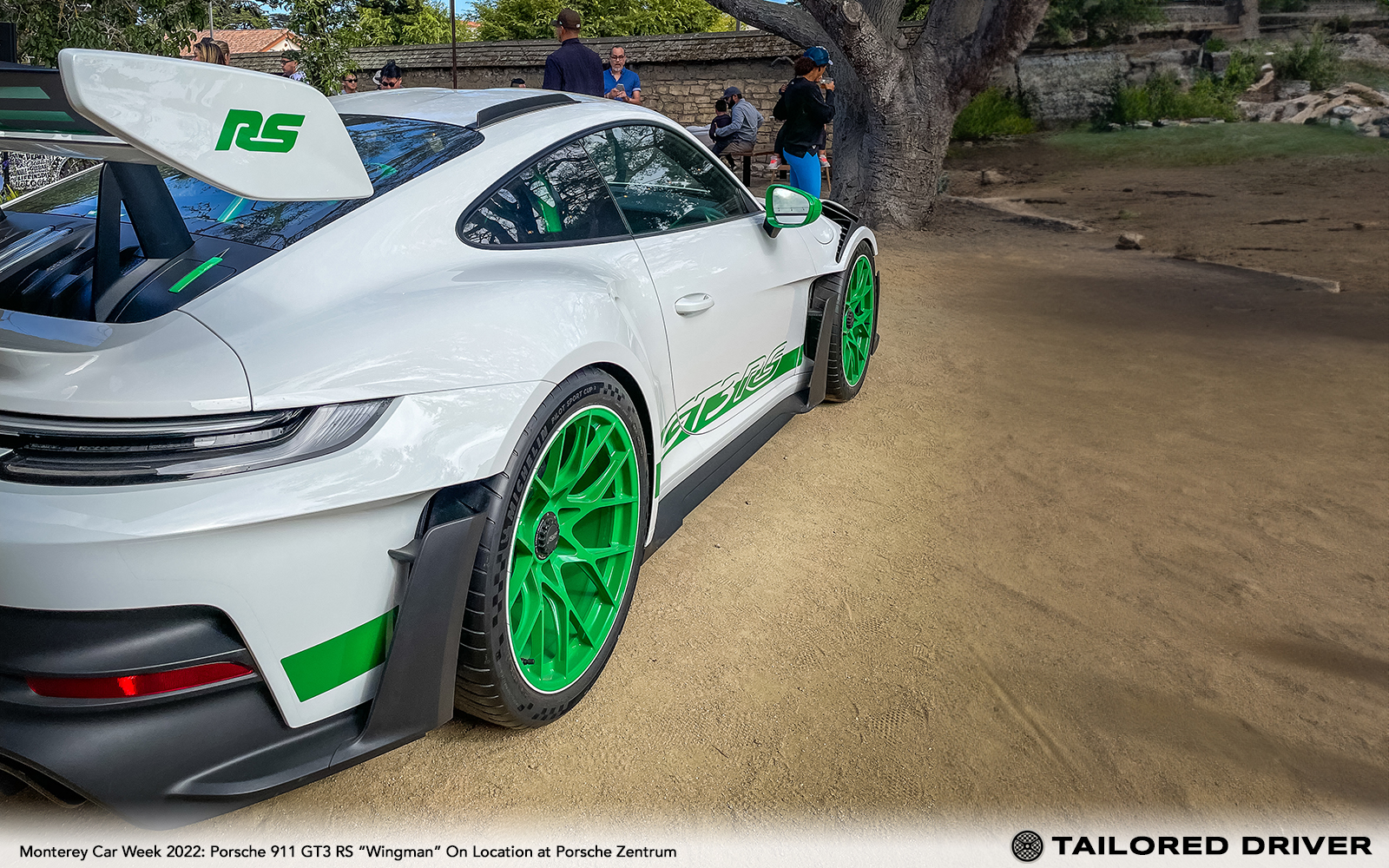
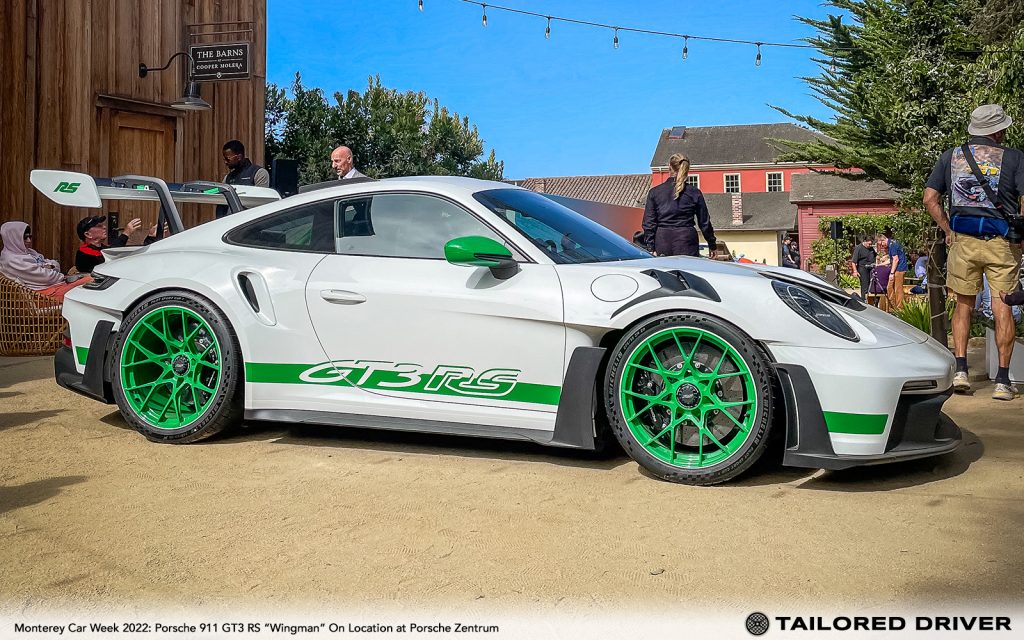
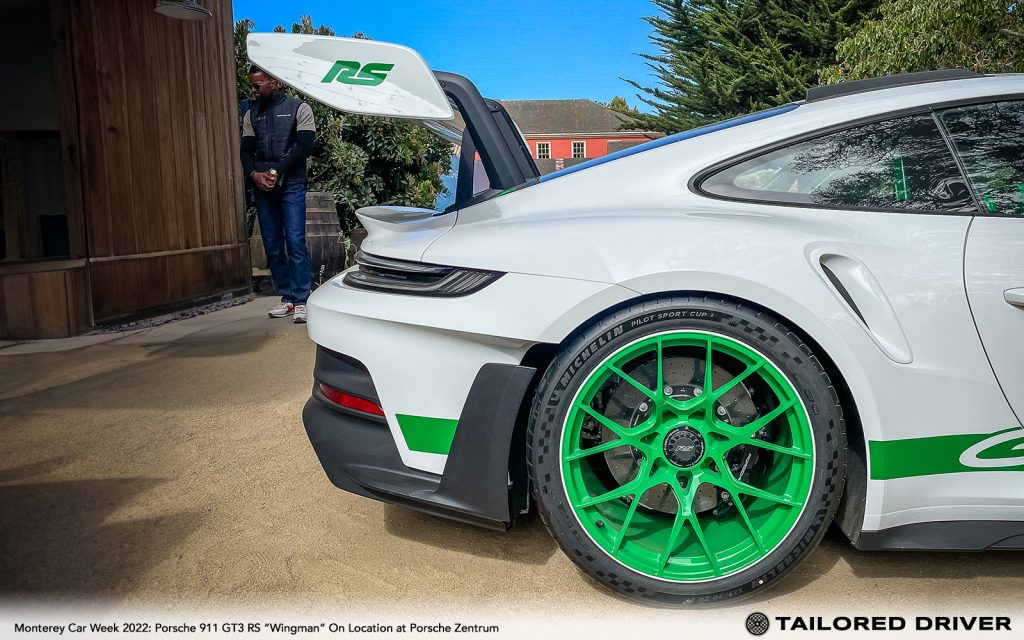
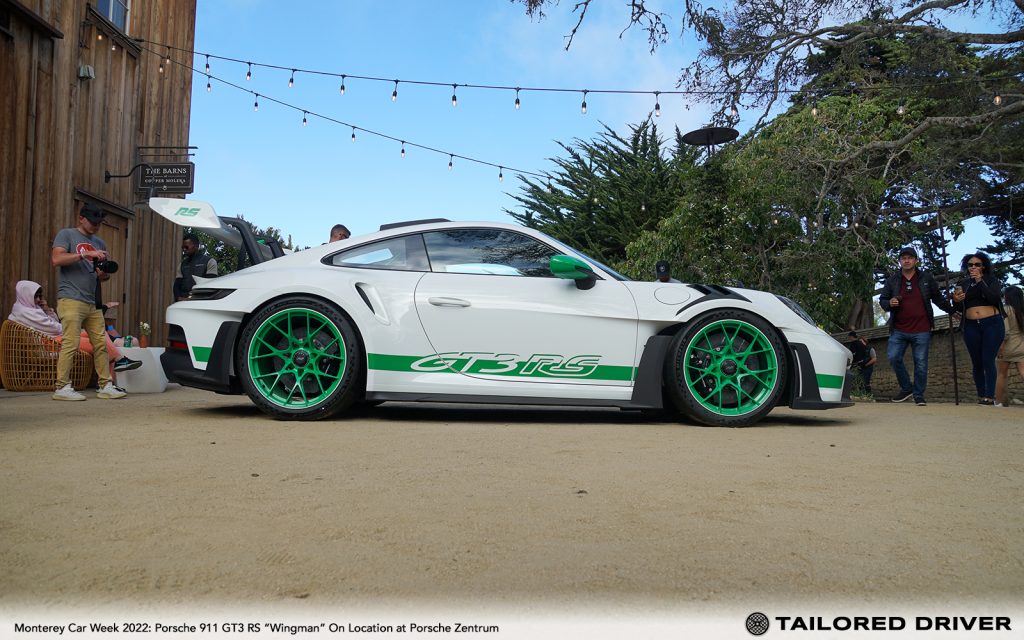
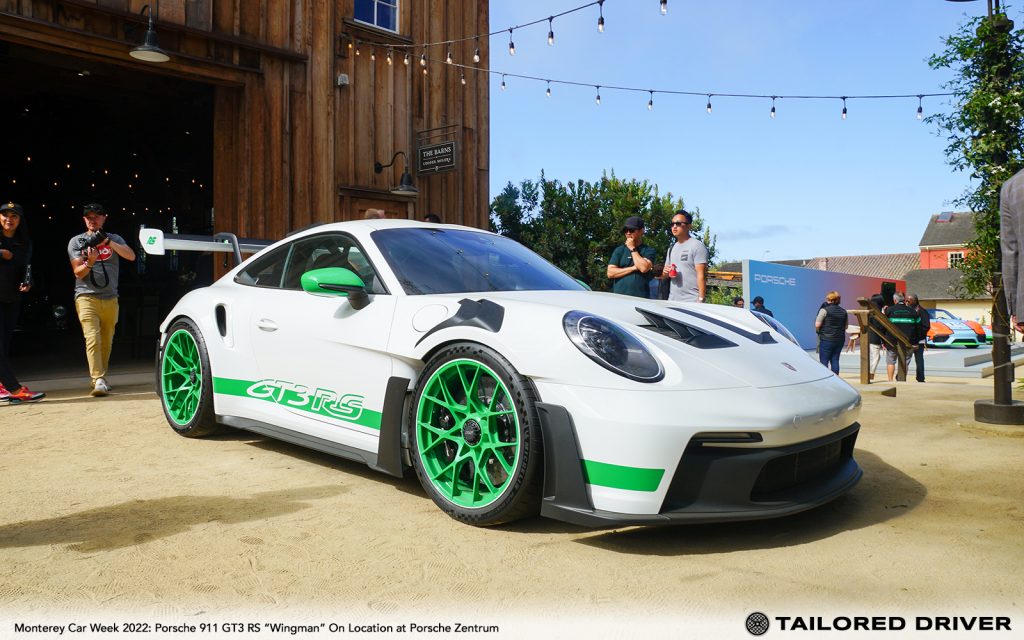
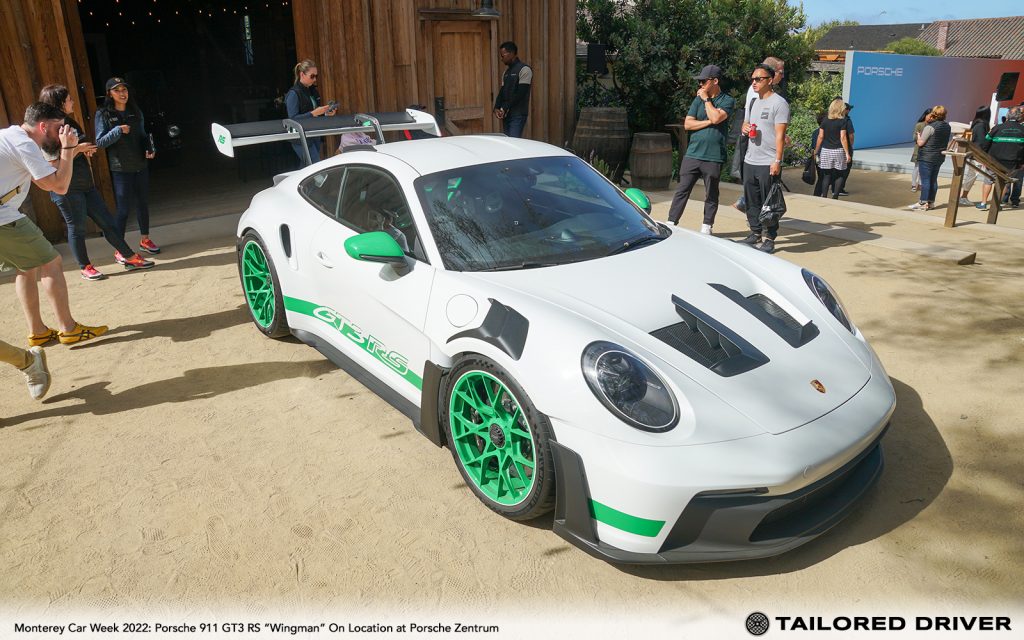
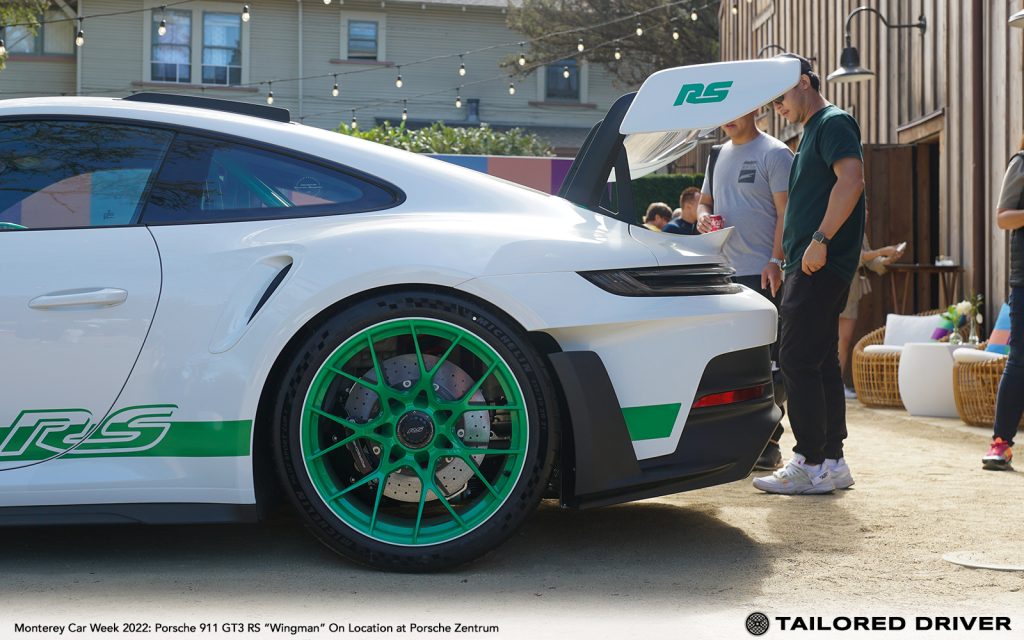
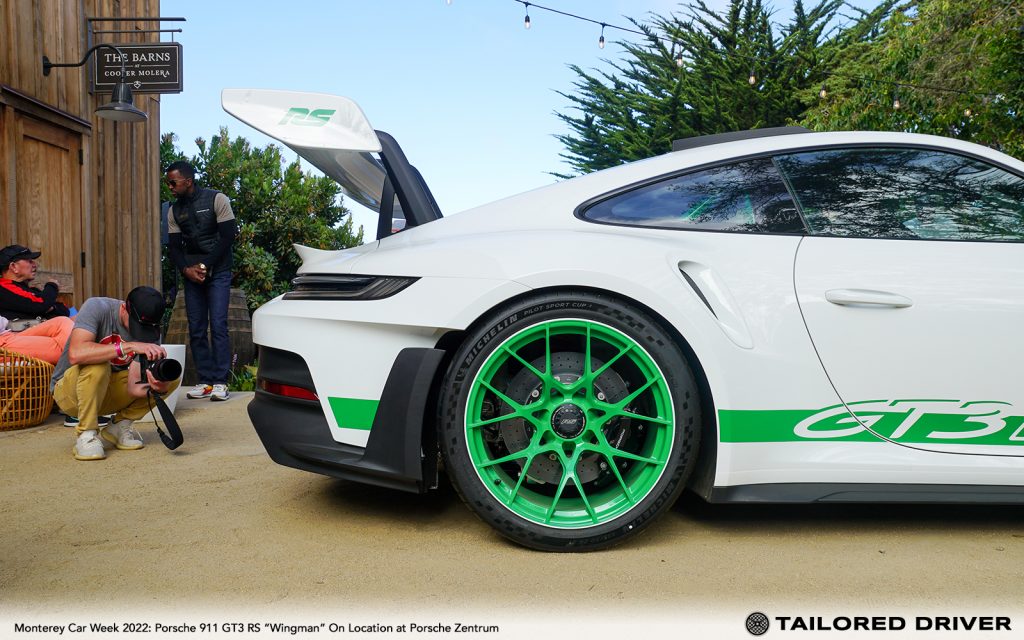
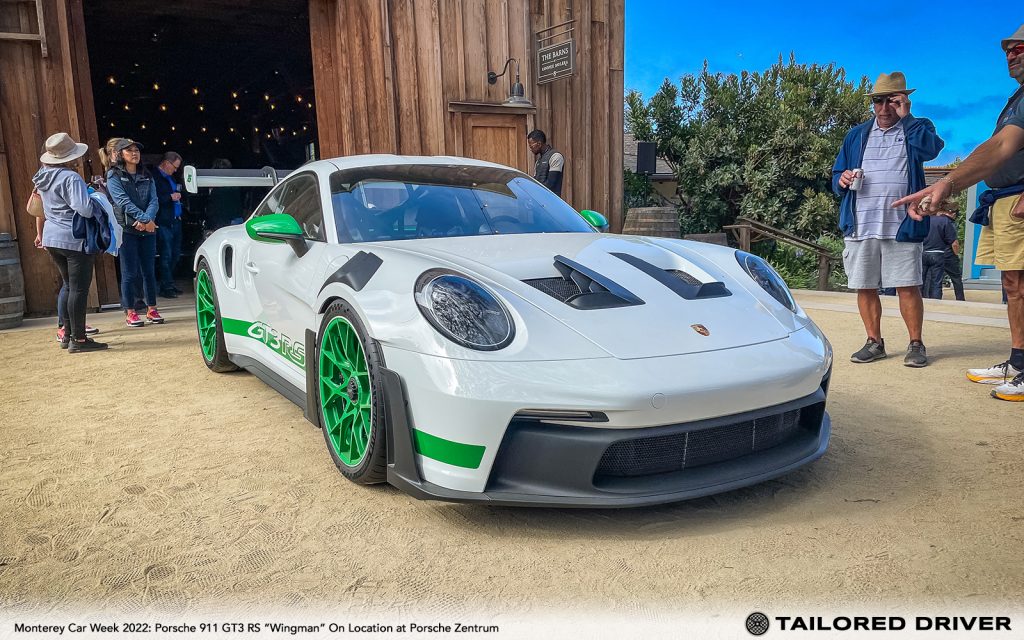
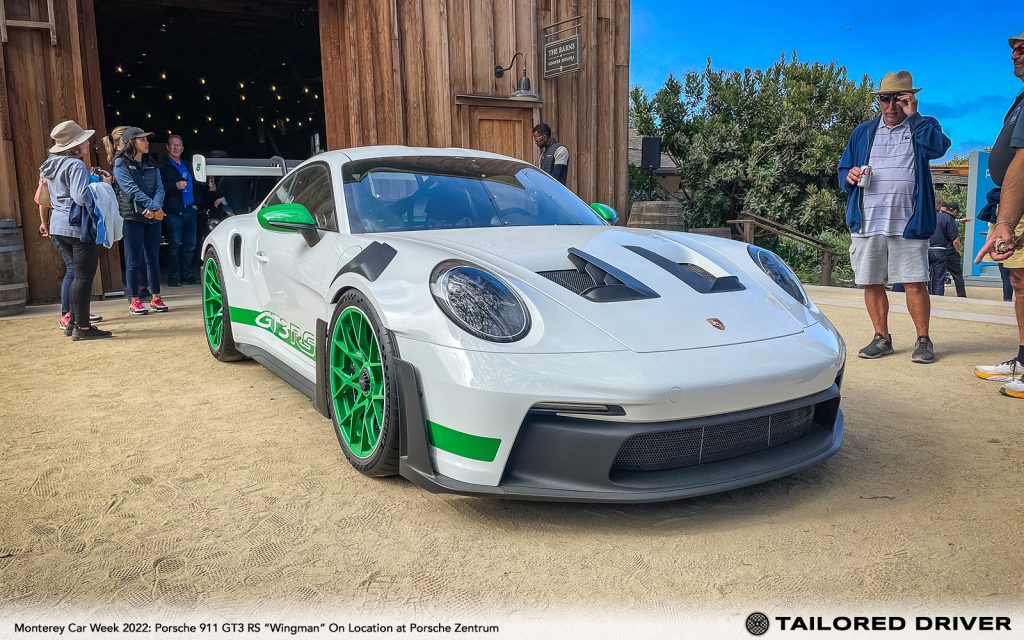
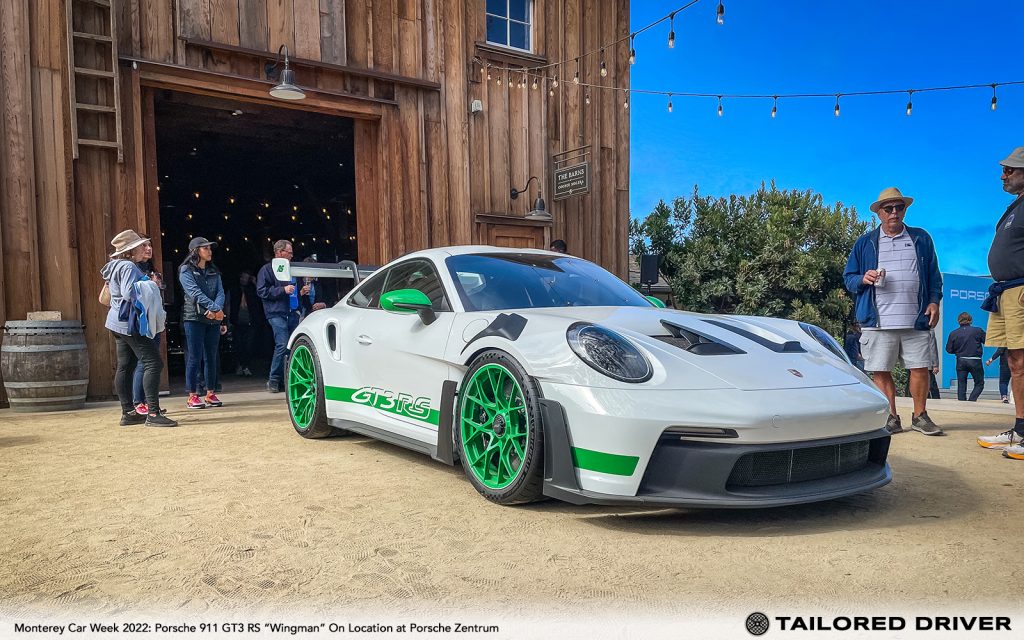
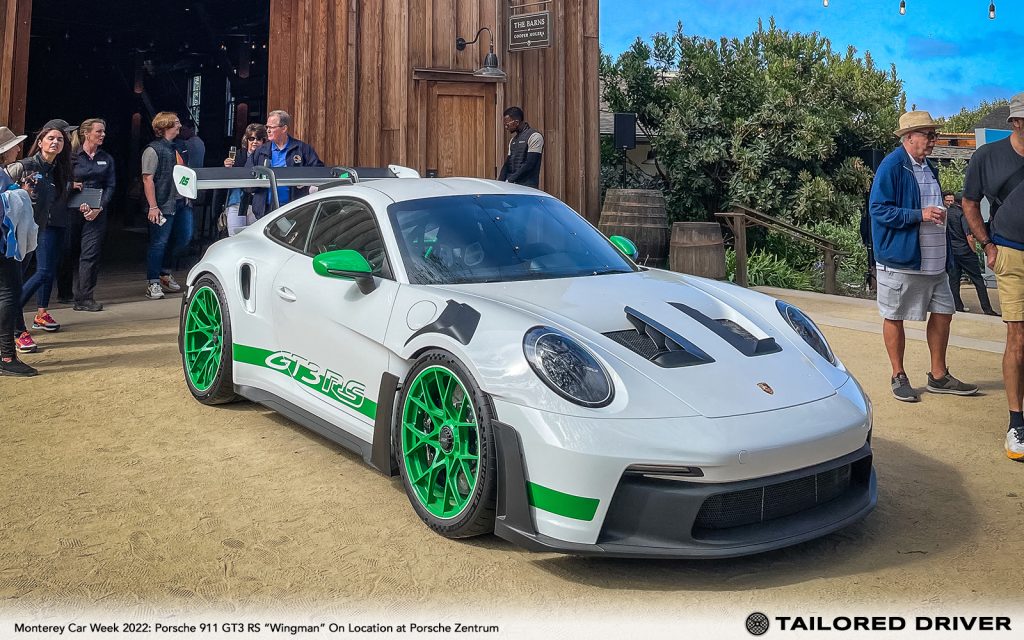
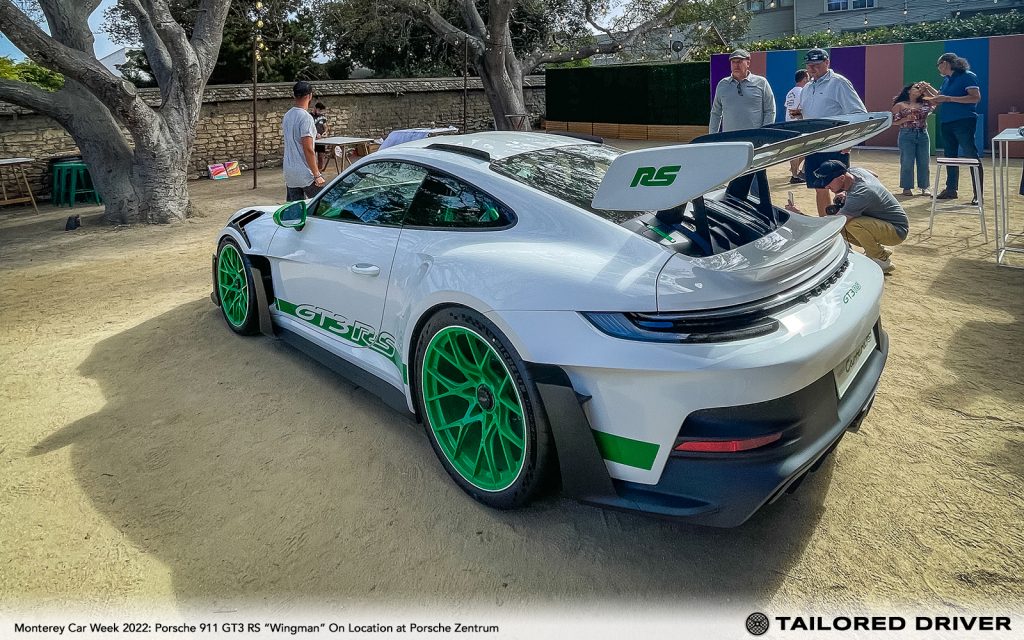
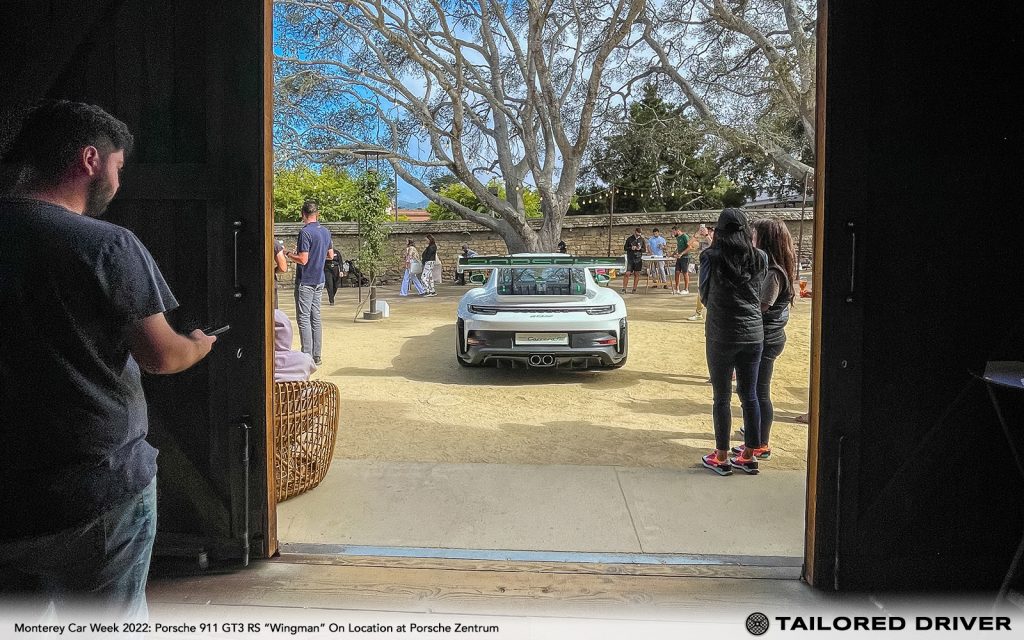
Porsche first pulled the wraps off its 992 GT3 RS show car at The Quail on Friday, and with end of secrecy now completed it headed over to the Porsche Zentrum at The Barns at Cooper Molera near downtown Monterey. That’s where we caught up with it.
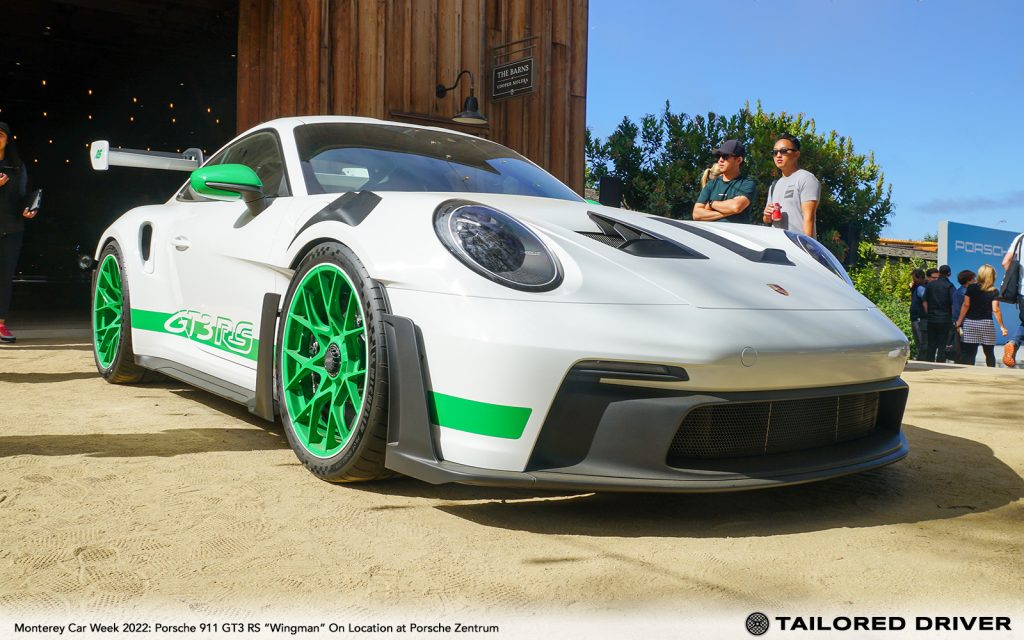
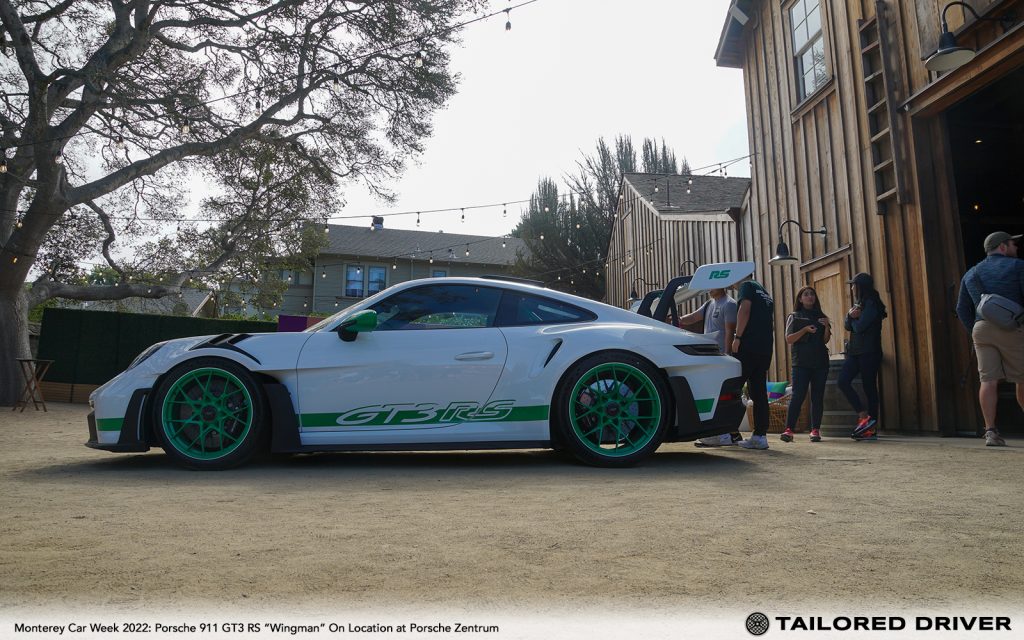
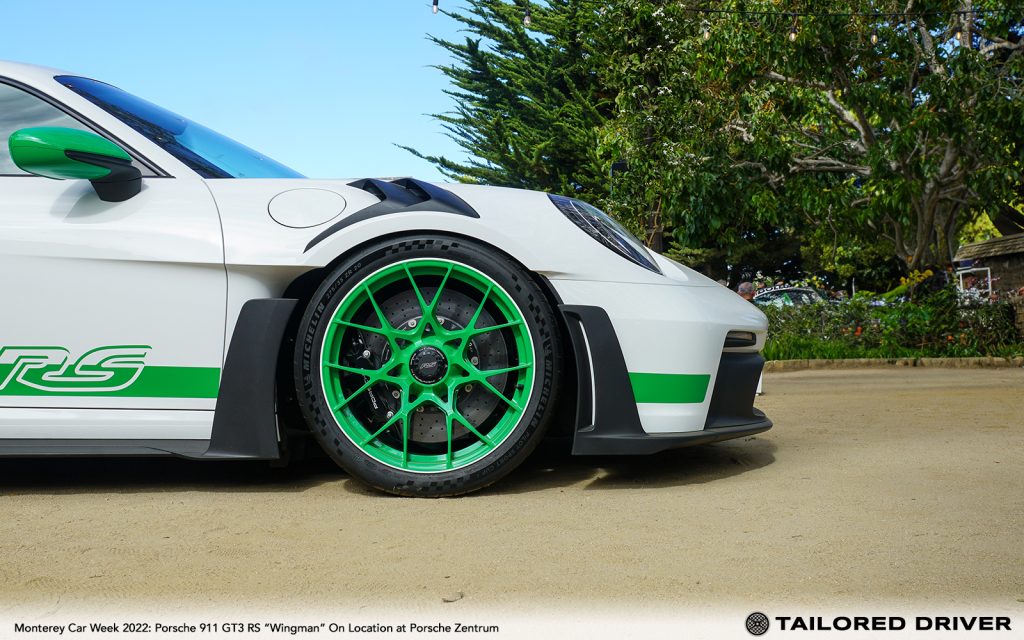
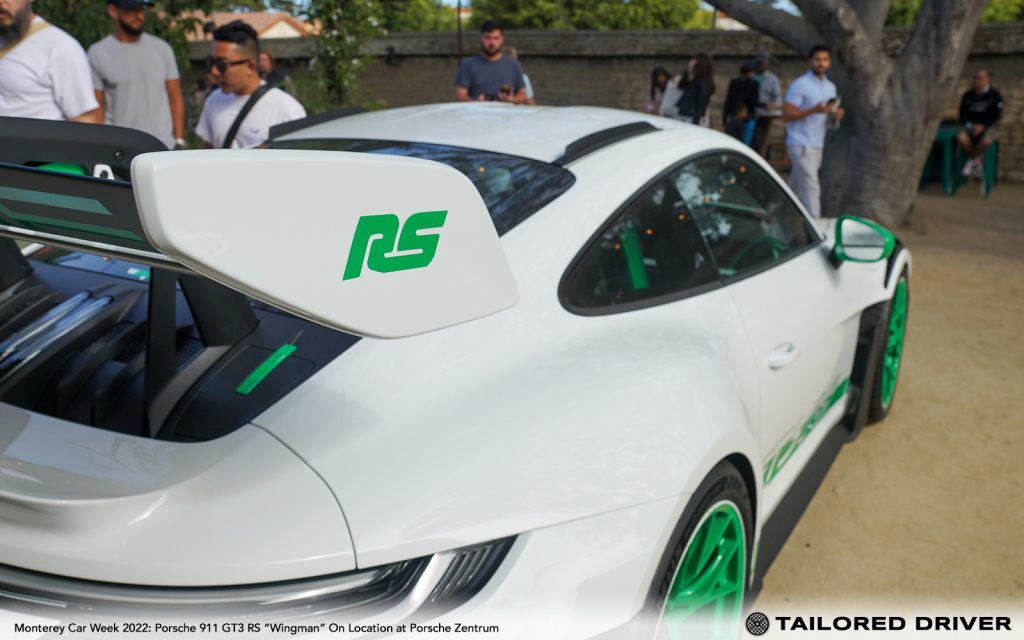
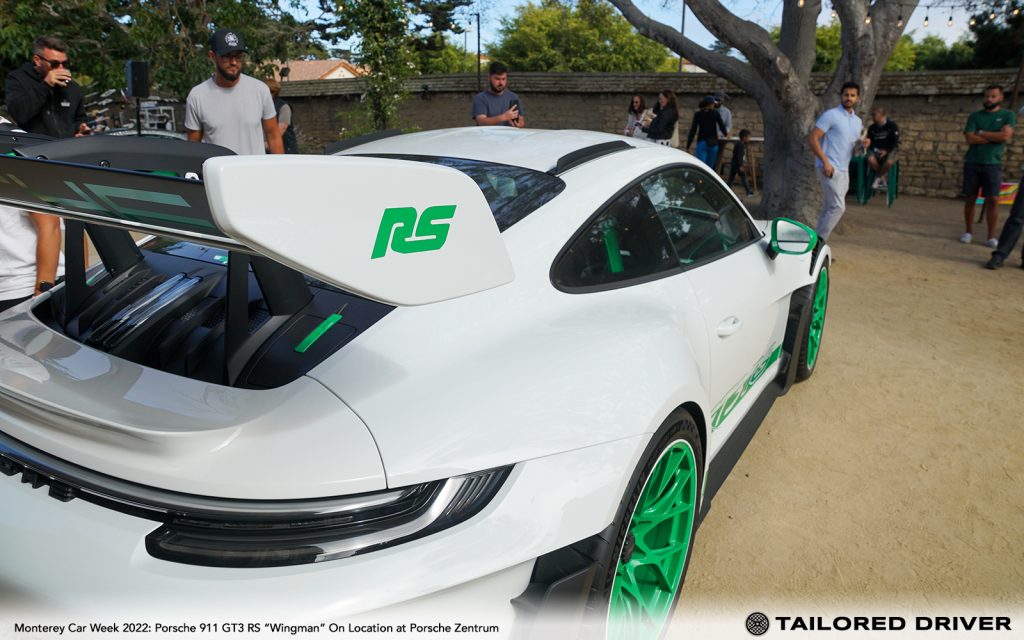
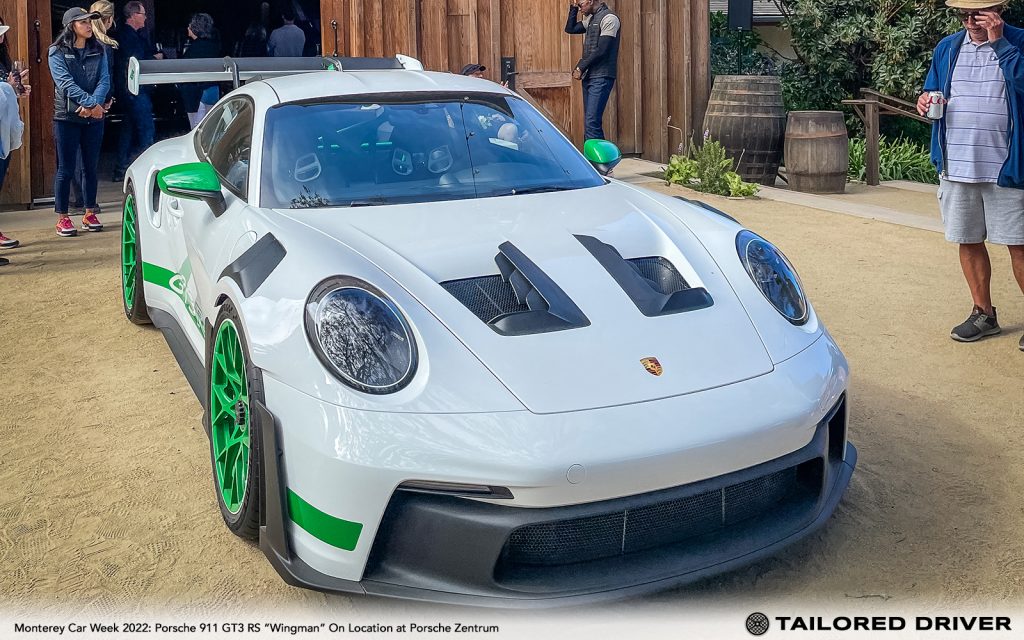
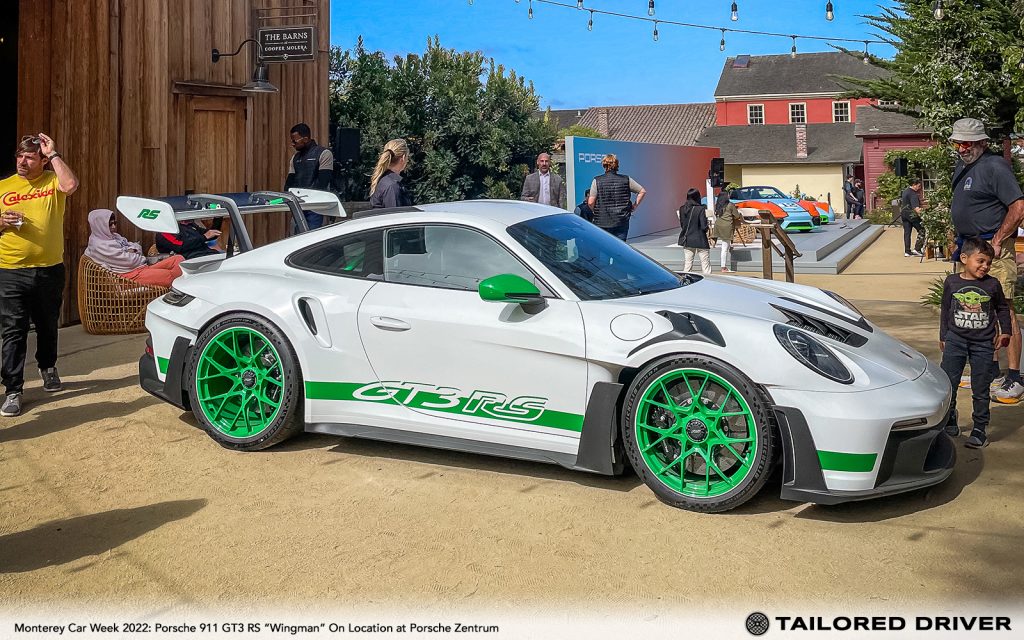
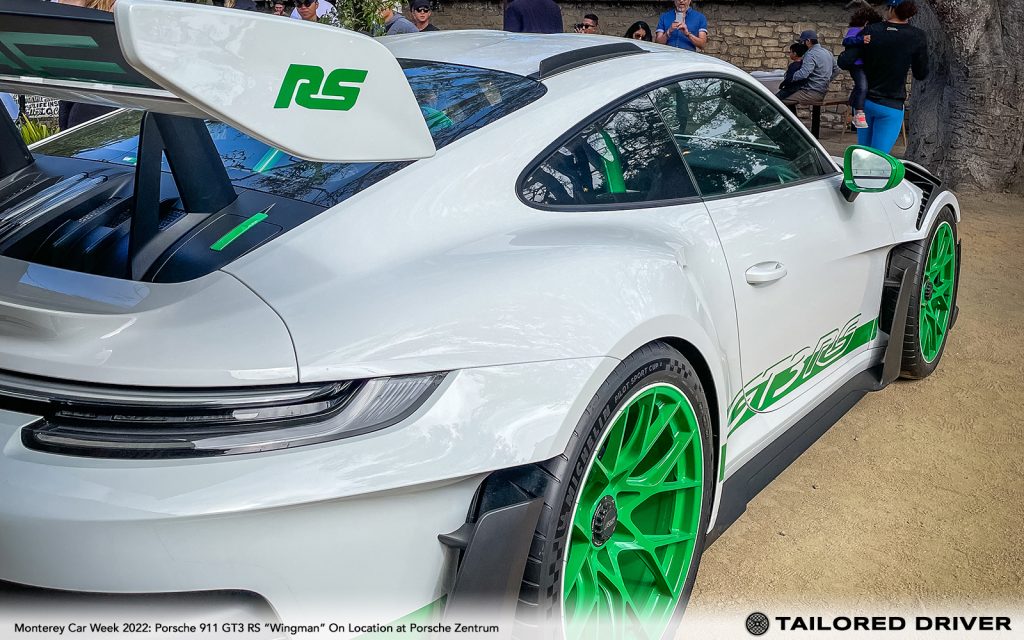
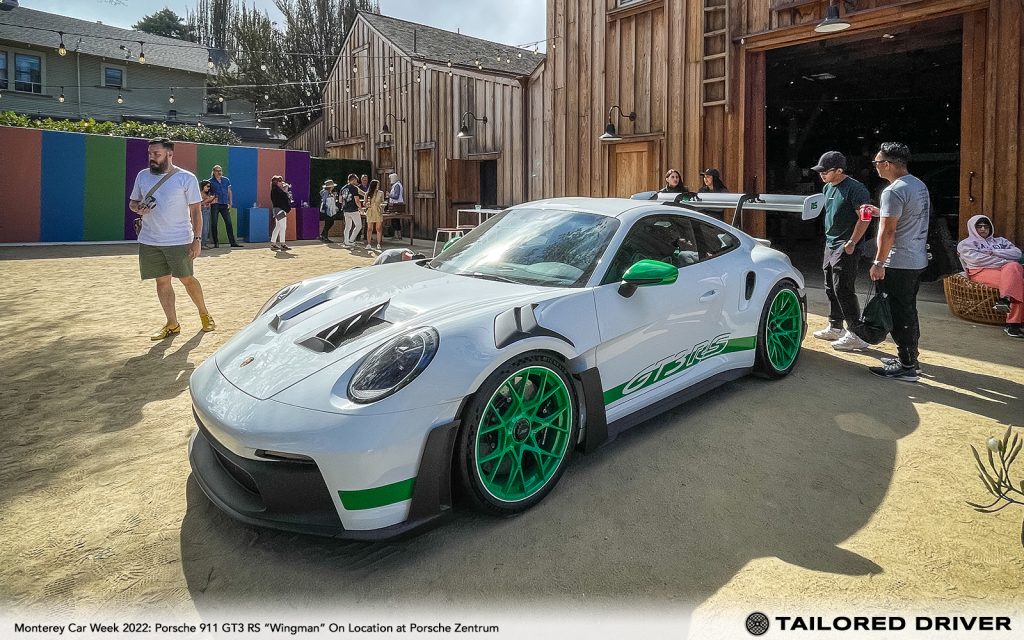
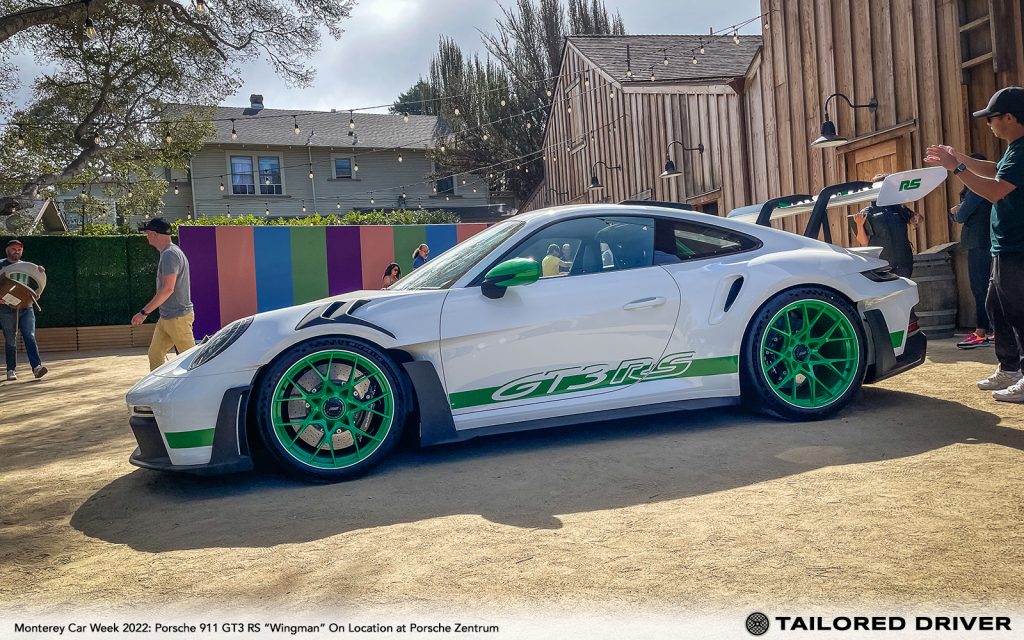
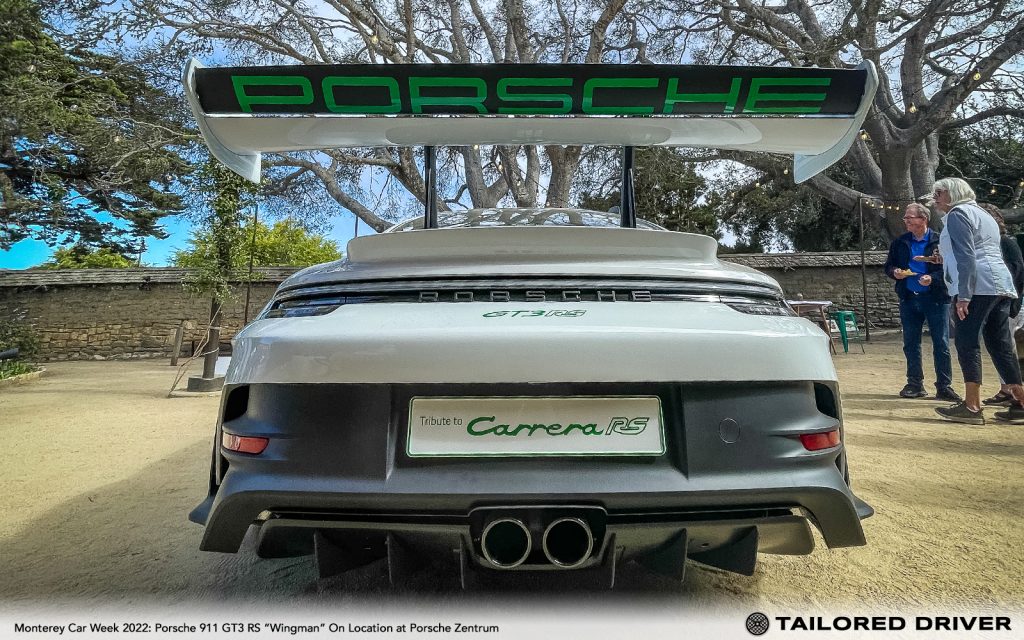
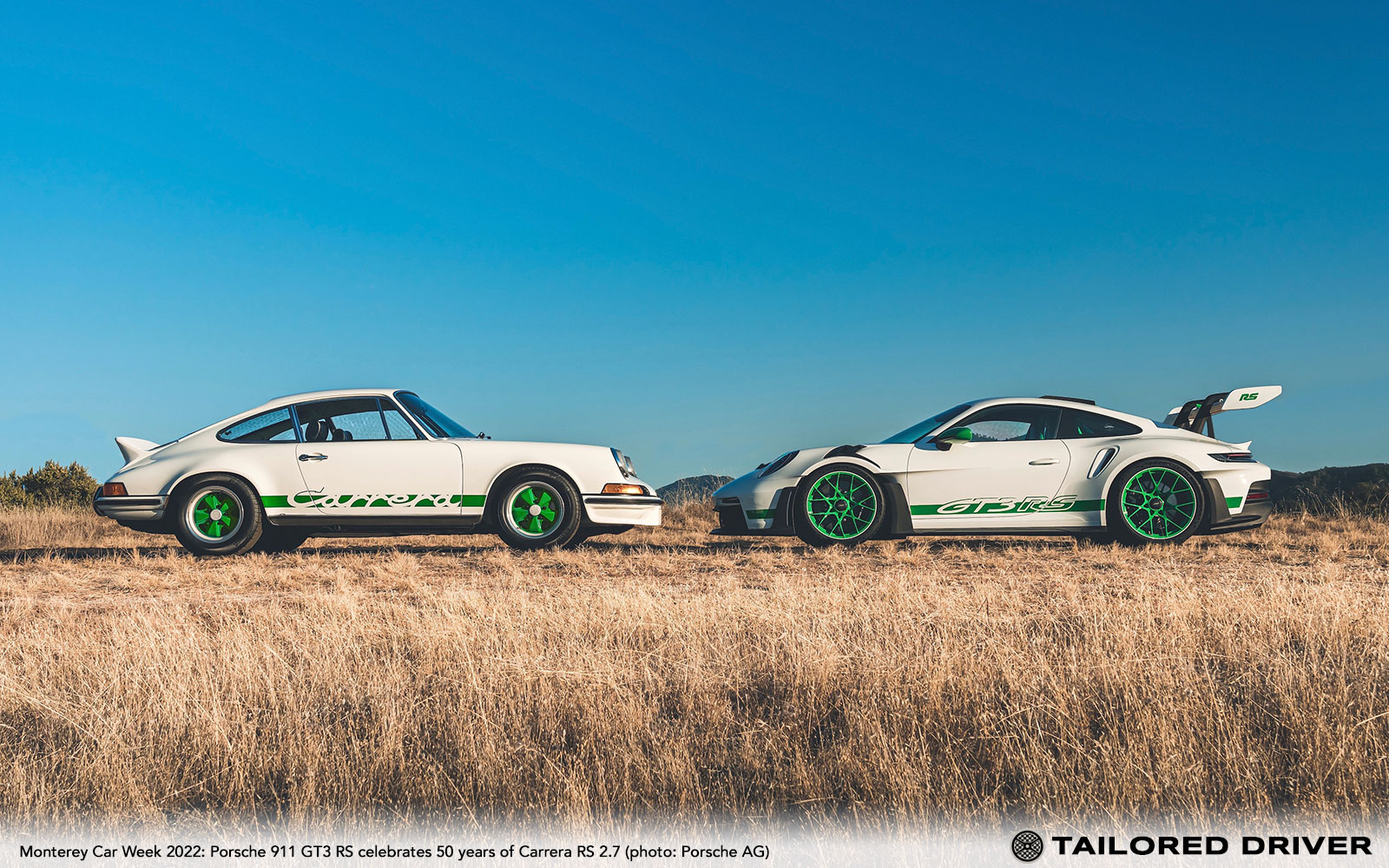
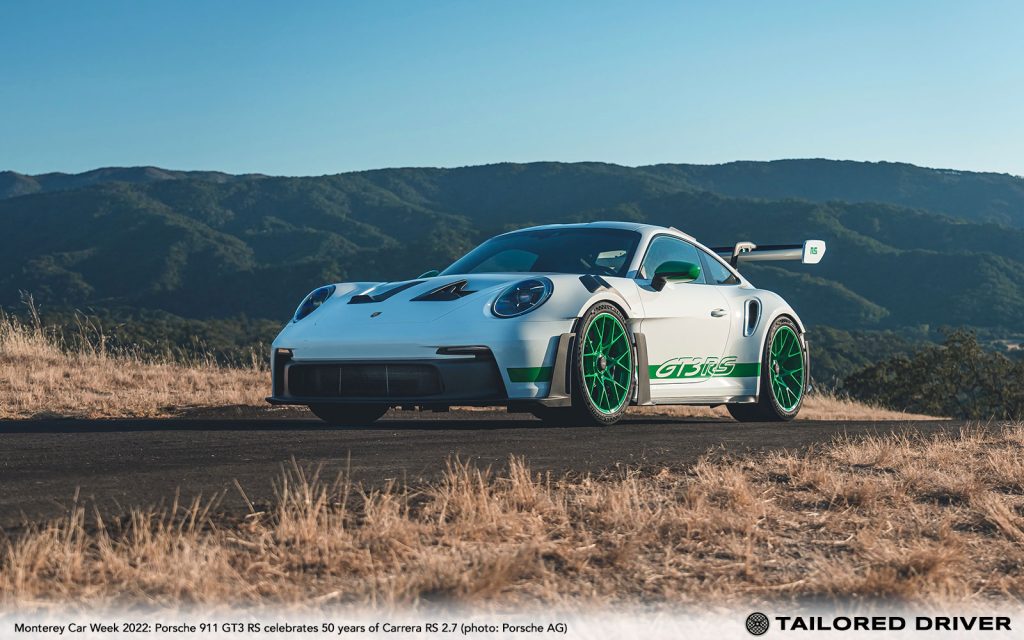
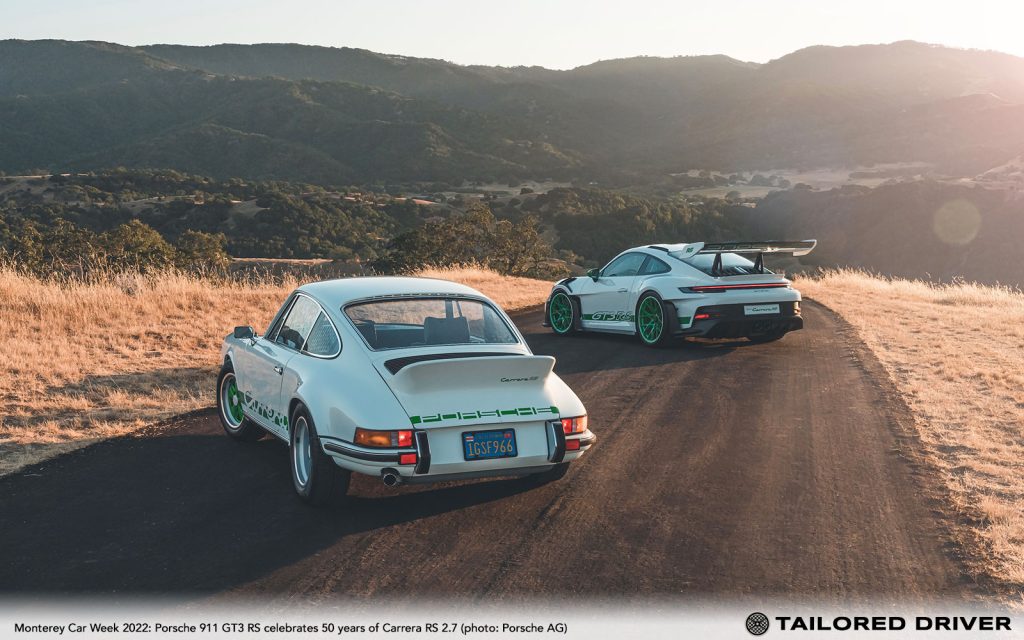
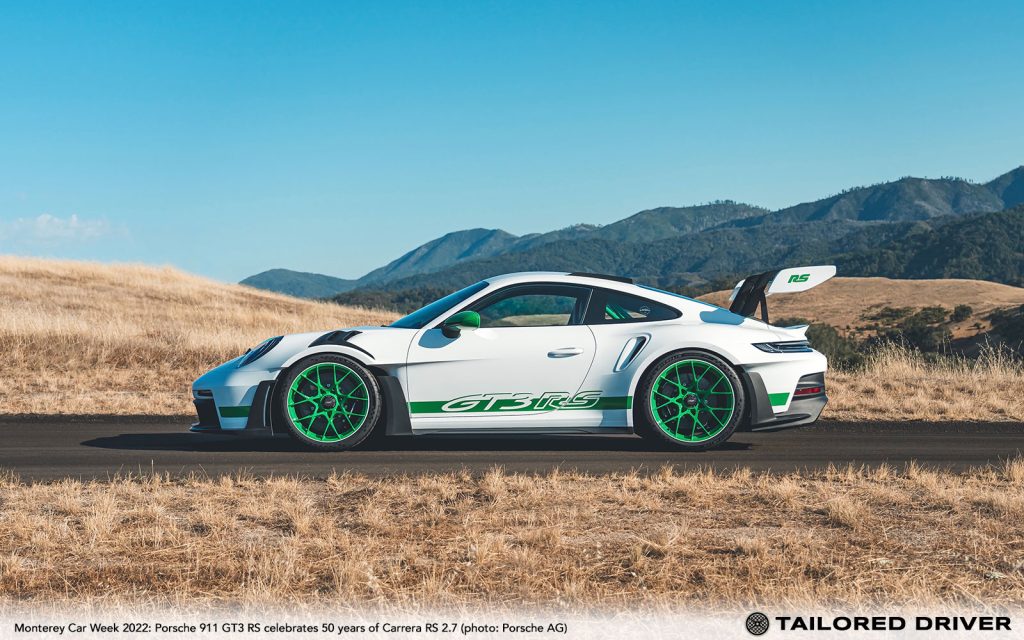
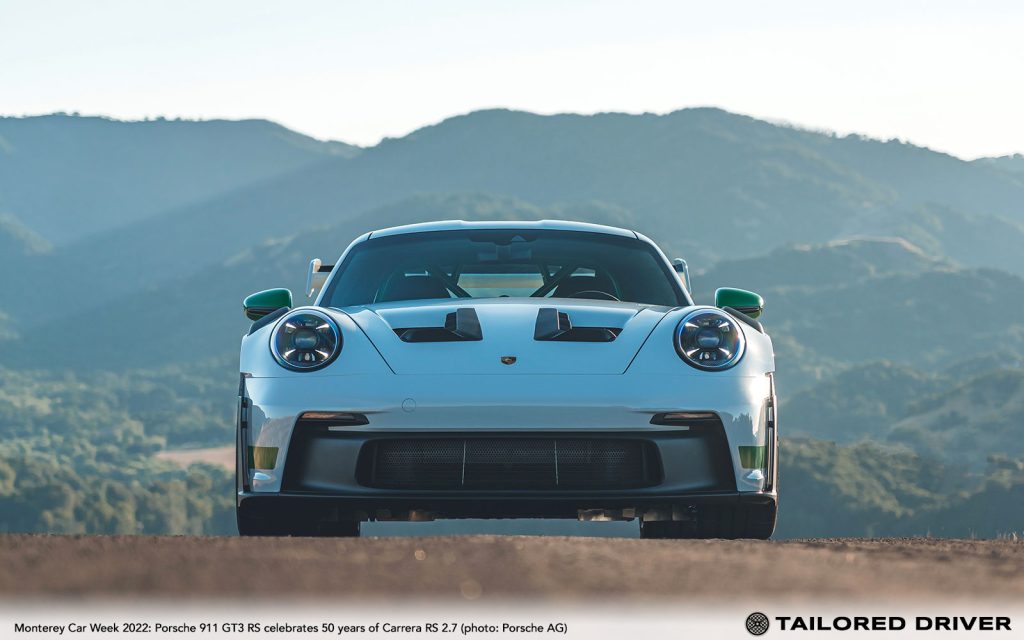
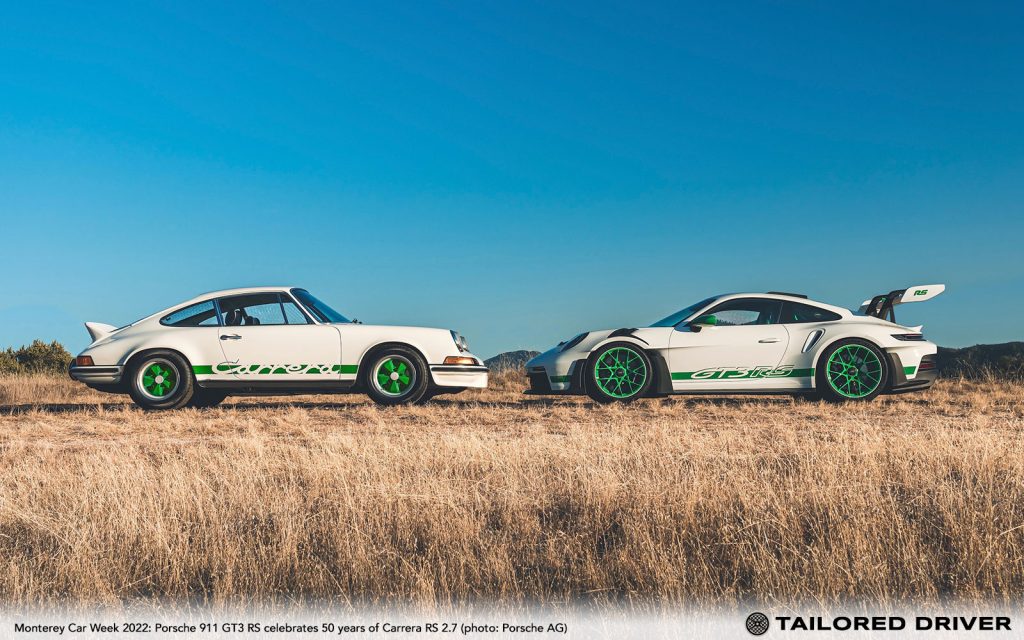
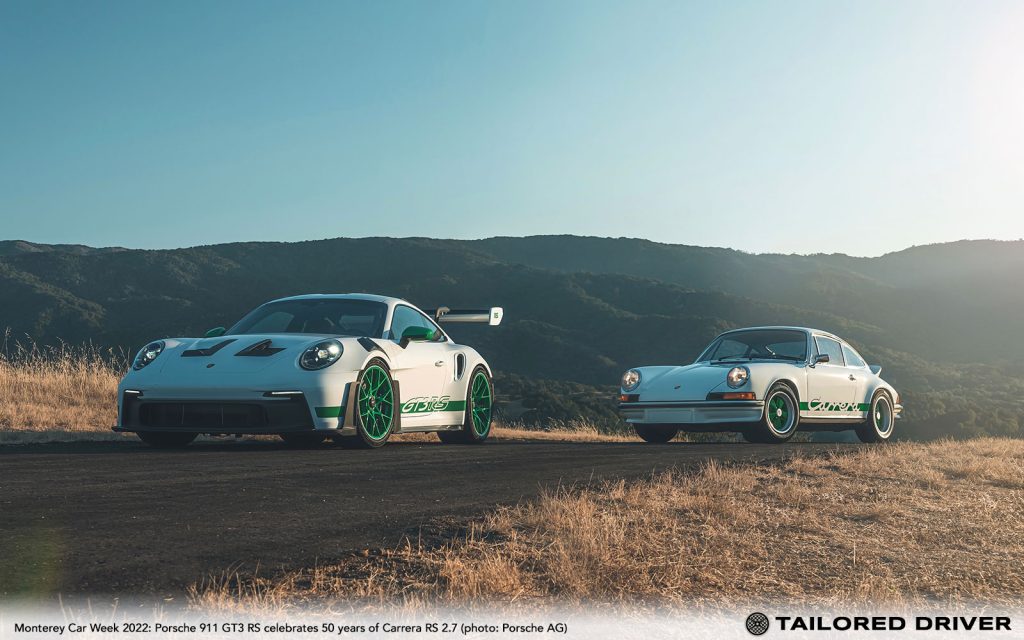
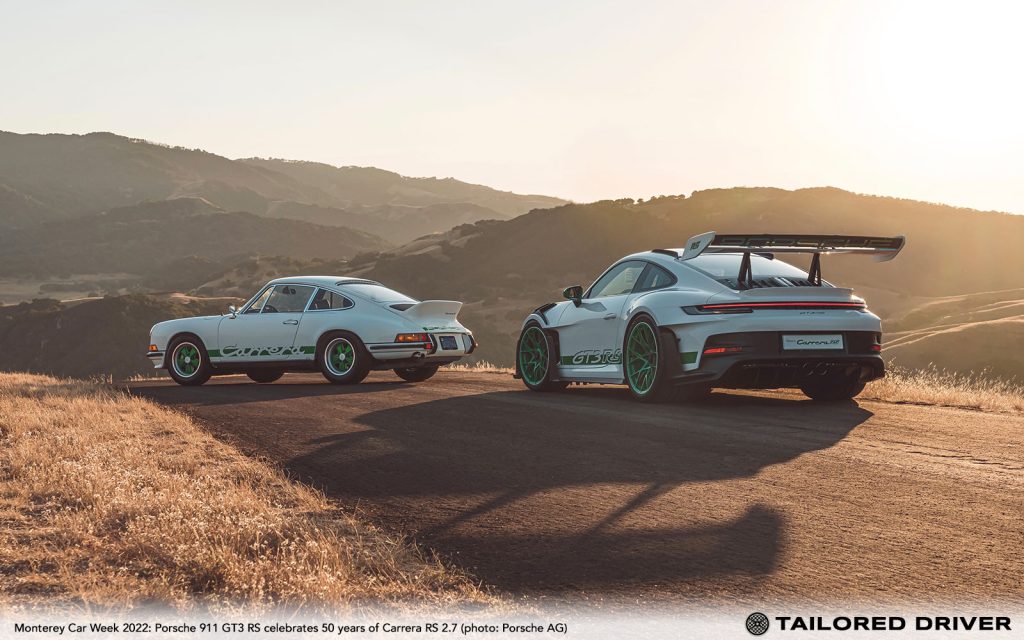
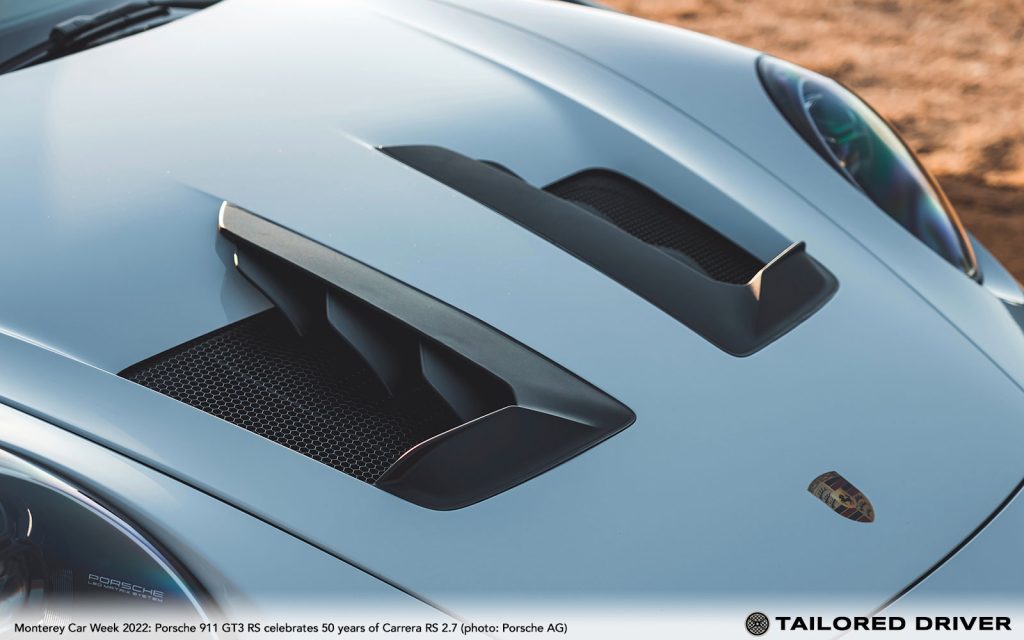
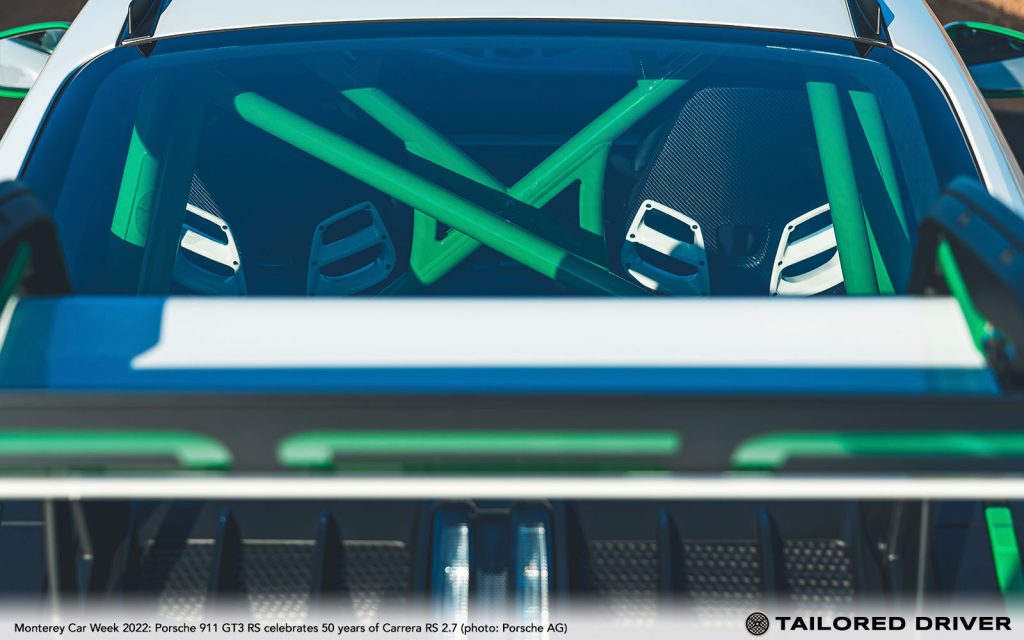
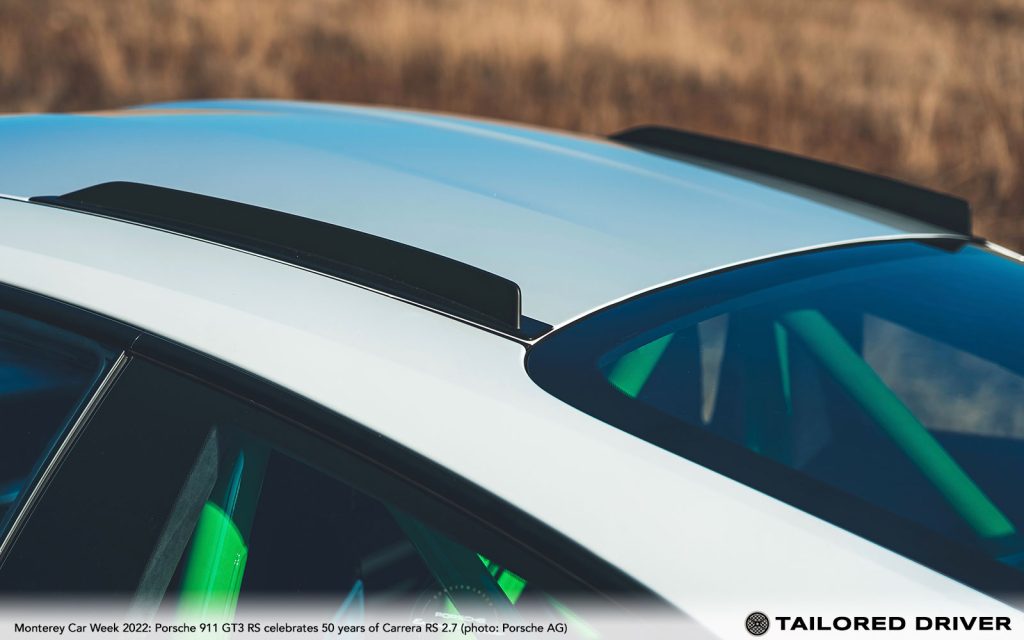
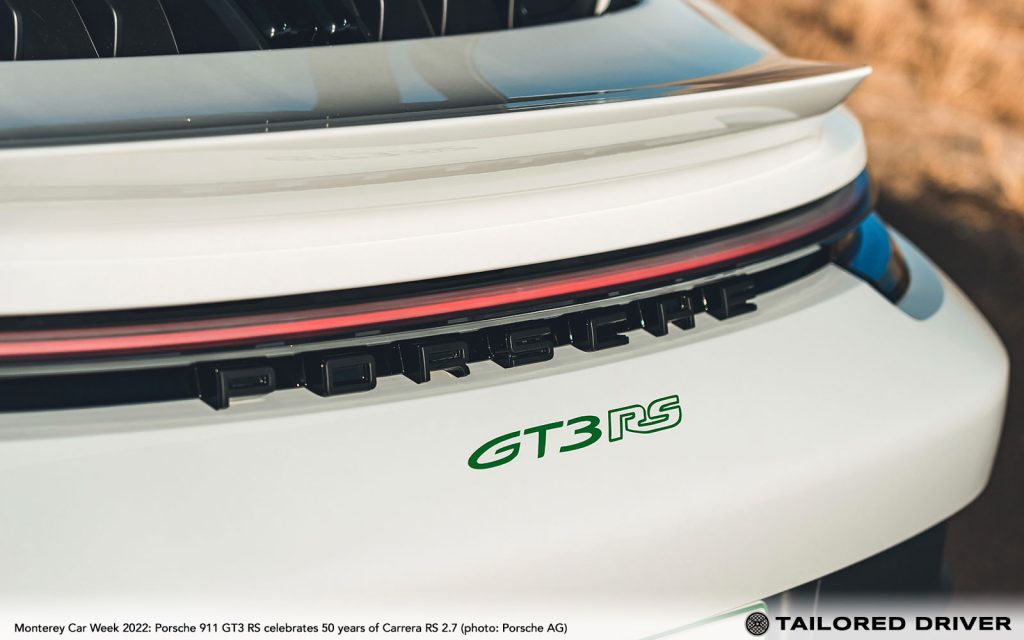
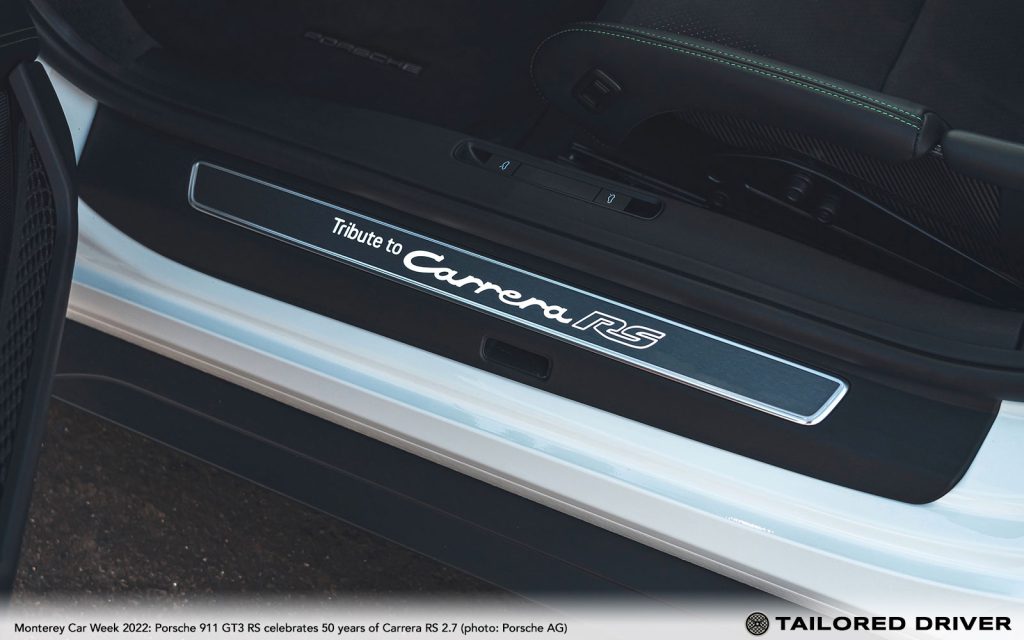
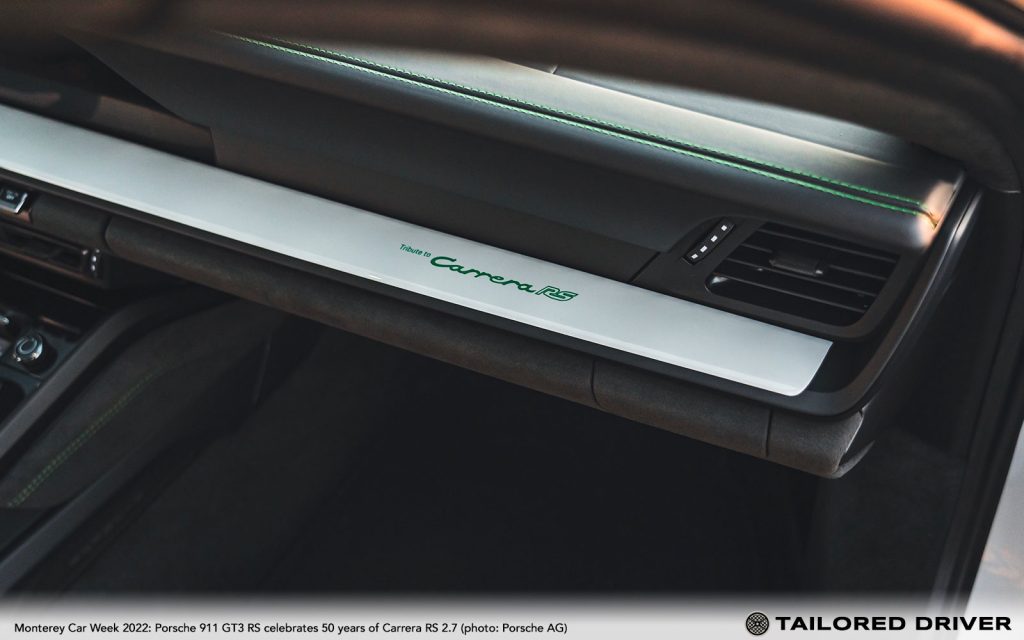
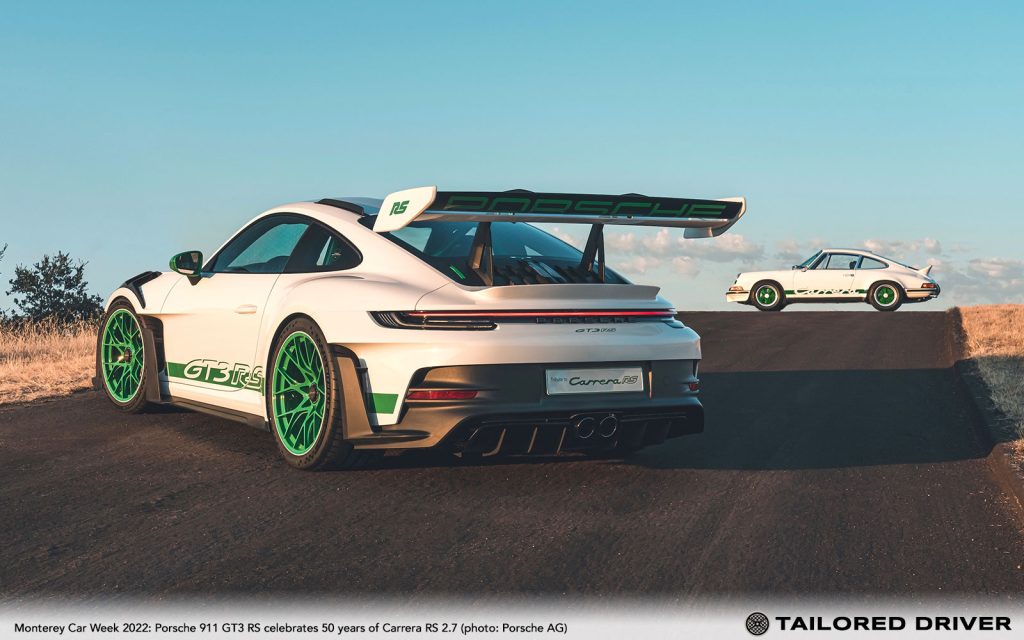
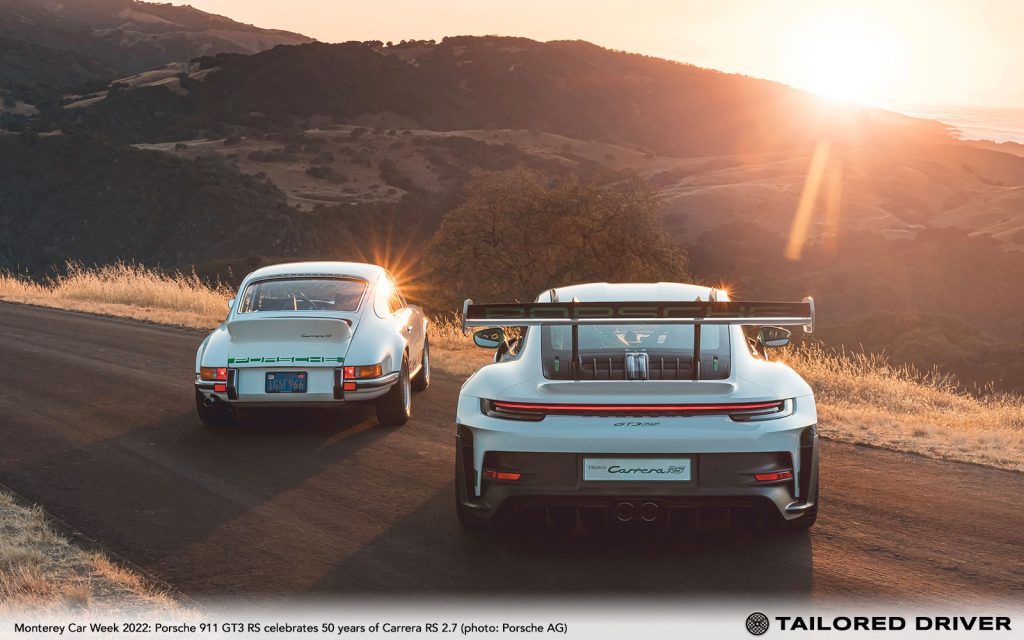
This show car, dubbed “Wingman” that no doubt pays tribute to its trick aerodynamics, pays tribute to 50 years of the original Carrera RS 2.7 with attention-grabbing green and white livery that will enjoy limited-availability as the Tribute to Carrera RS Package from Porsche Exclusive Manufaktur.
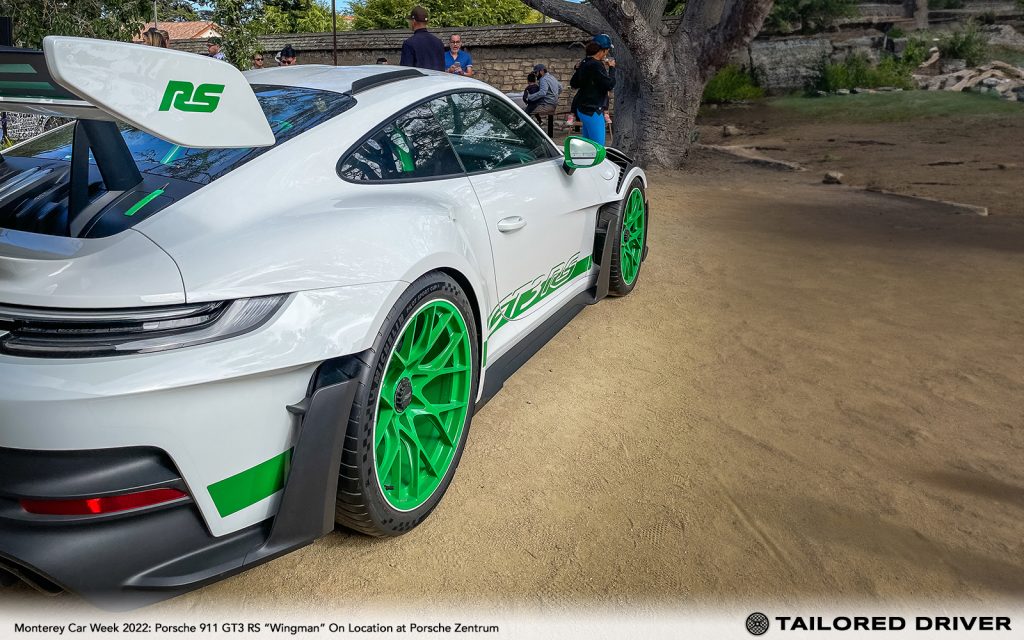
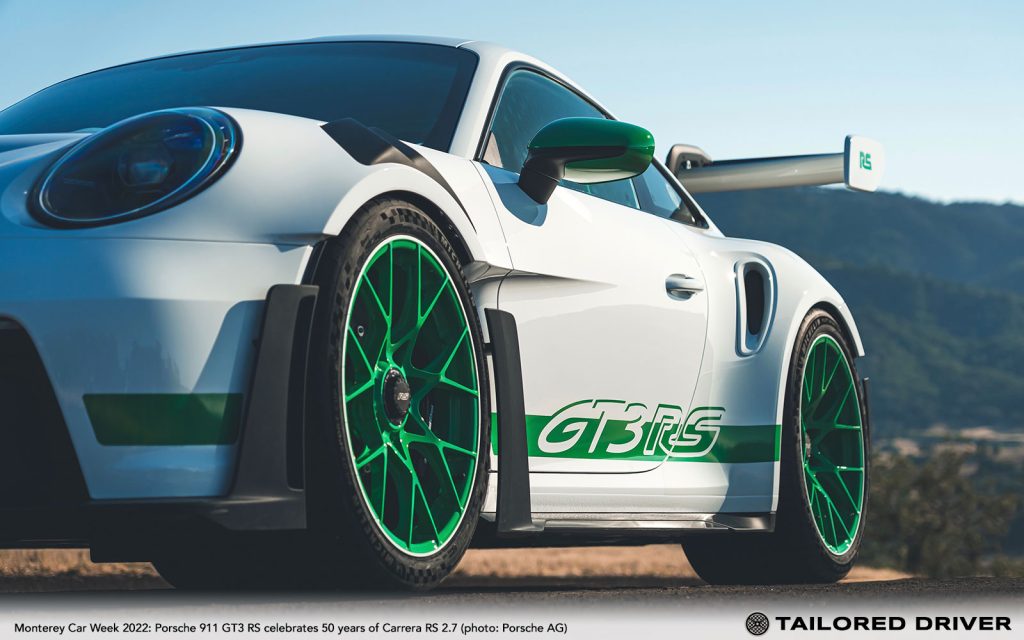
The main color of the Porsche is simply listed as white, while the eye-catching stripes are painted in Porsche Python Green. In person, it looks fantastic thanks to the iconic history associated.
“Wingman”, along with several other key Porsche models and historic cars, was on display for the remainder of Monterey Car Week and available for public view during operational hours of the Monterey Car Week Porsche Zentrum temporary facility.
Check out more photos from our first encounter with Wingman in the gallery below.
Monterey, CA – The 2023 Porsche 911 GT3 RS made its first in-person appearance today at The Quail, A Motorsports Gathering, only two days after its digital world premiere. The show car – customized by the GT Model Line and Style Porsche – is a tribute to the 1972 911 Carrera RS 2.7.
Additionally, as announced by Kjell Gruner, President and CEO of Porsche Cars North America Inc. (PCNA), the car will serve as inspiration for a limited-availability Porsche Exclusive Manufaktur offering exclusive to U.S. customers: a Tribute to Carrera RS Package.
“America is the second home of the 911 and a special tribute exclusive to the U.S. is the perfect way to celebrate the 50th anniversary of the 911 Carrera RS 2.7,” said Gruner. “So many of us idolized the original 1972 car. We want to create a special experience that combines exclusive options on the new GT3 RS with a one-of-a-kind list of accompanying items. Together, it will be an exciting and individual tribute to the RS lineage. This is a live project in its early stages, and is being created by enthusiasts, for enthusiasts as a joint effort between our colleagues in Zuffenhausen, Flacht and our team in America. The ideas and concepts are really exciting and we’re having a lot of fun developing it – all of us are looking forward to sharing more details with you soon.”
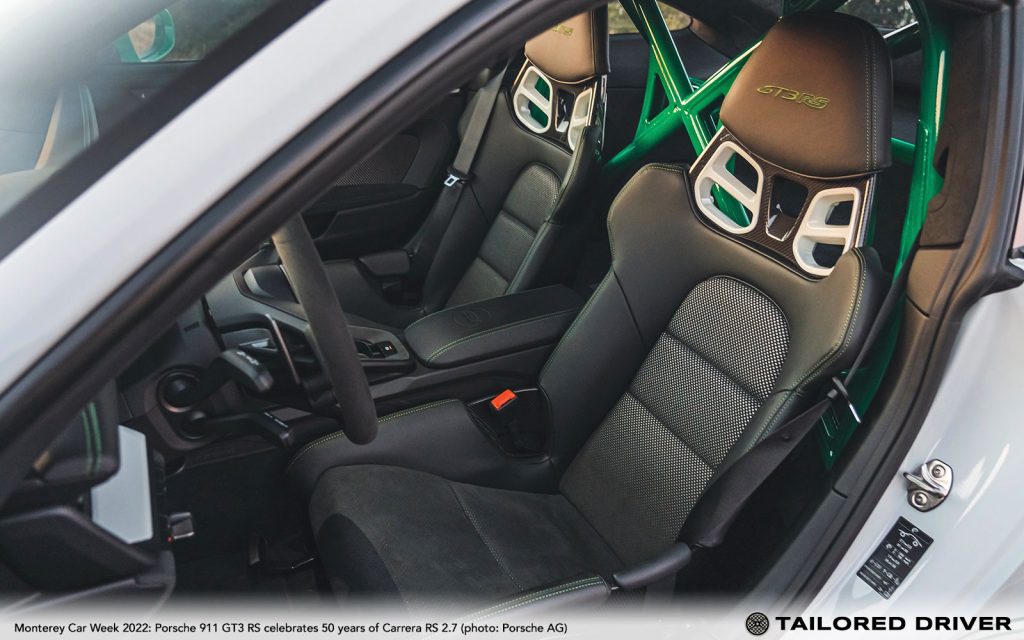
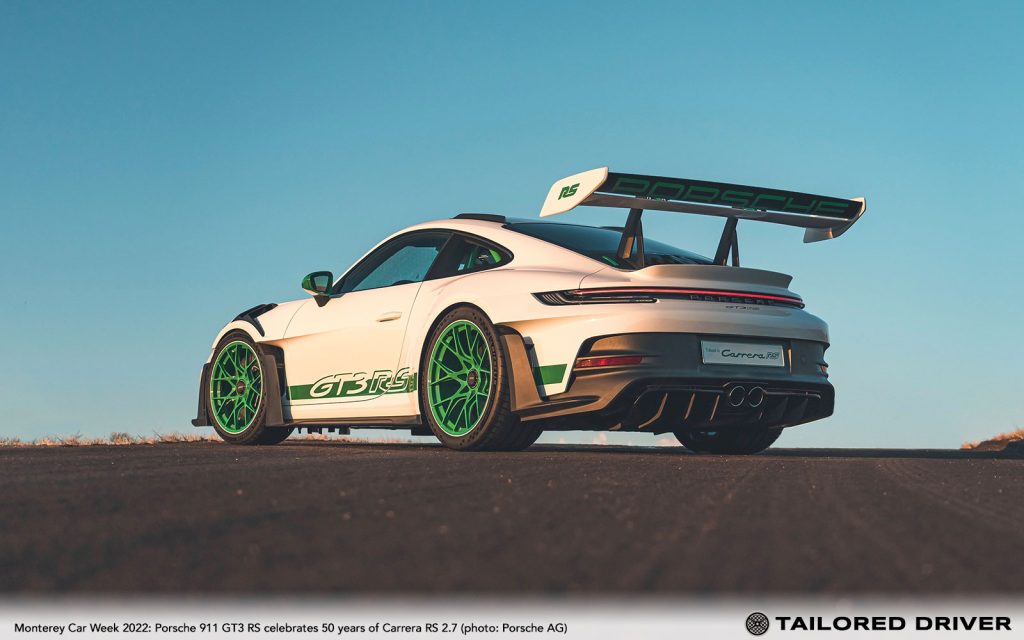
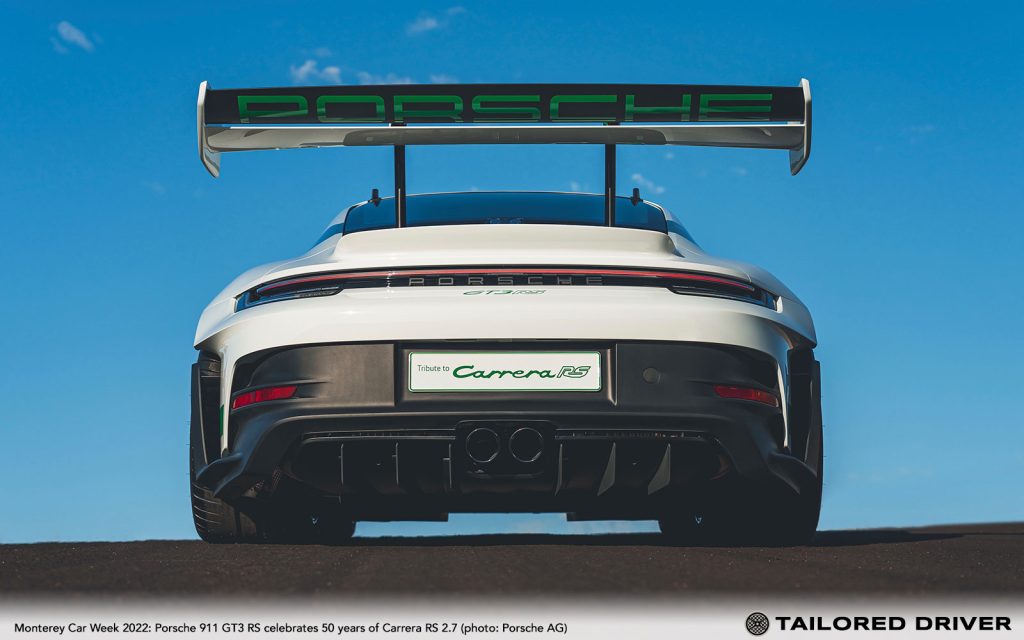
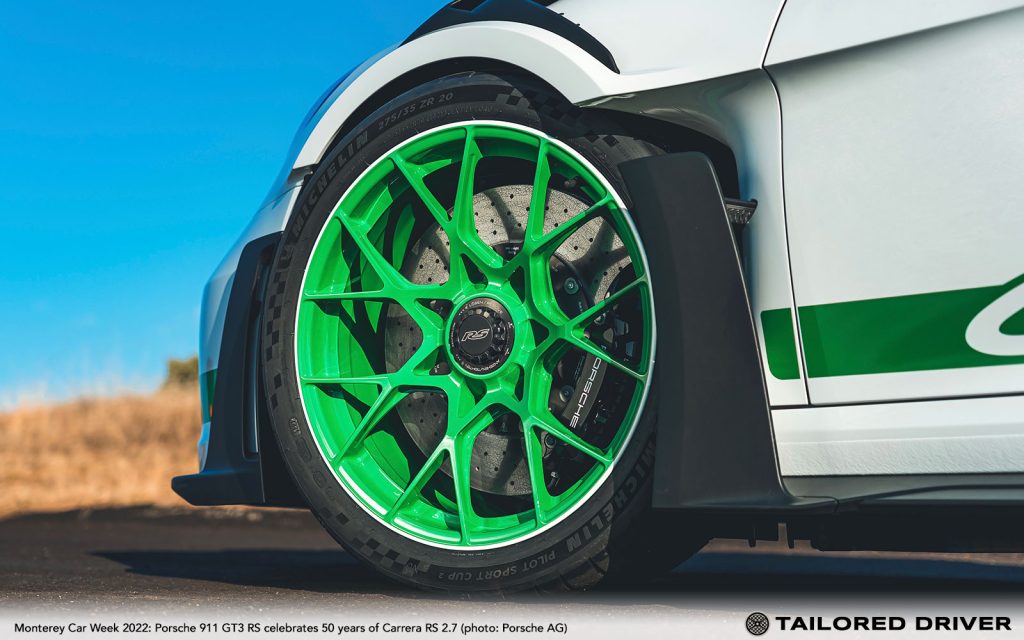
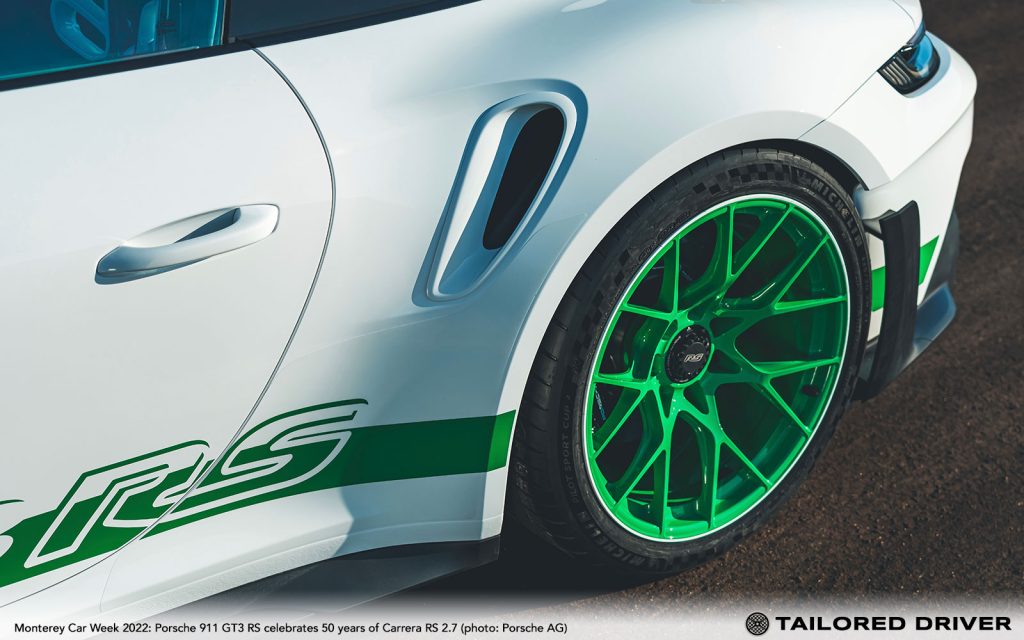
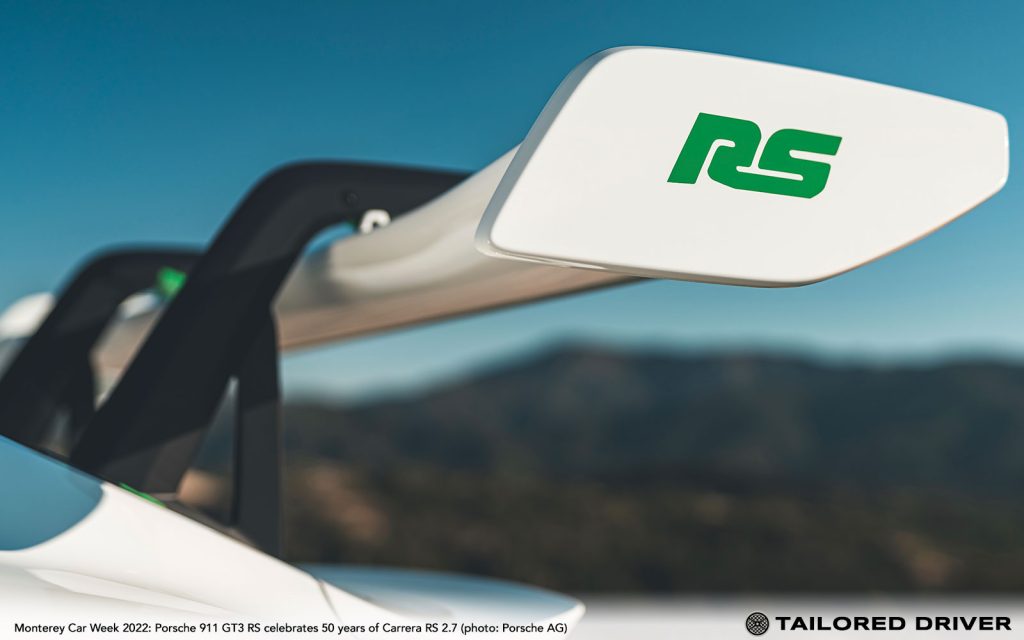
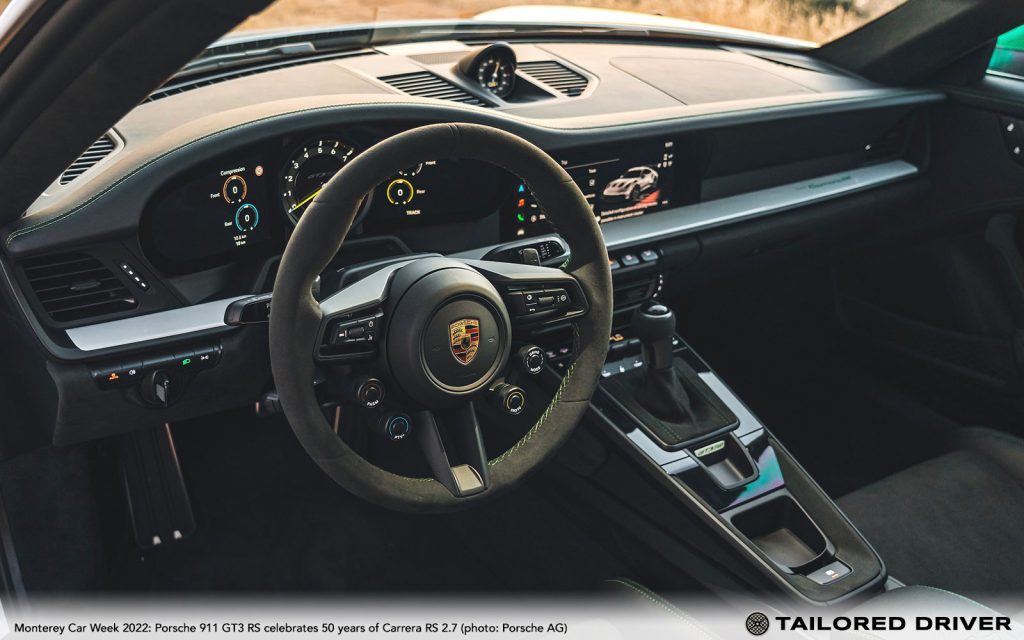
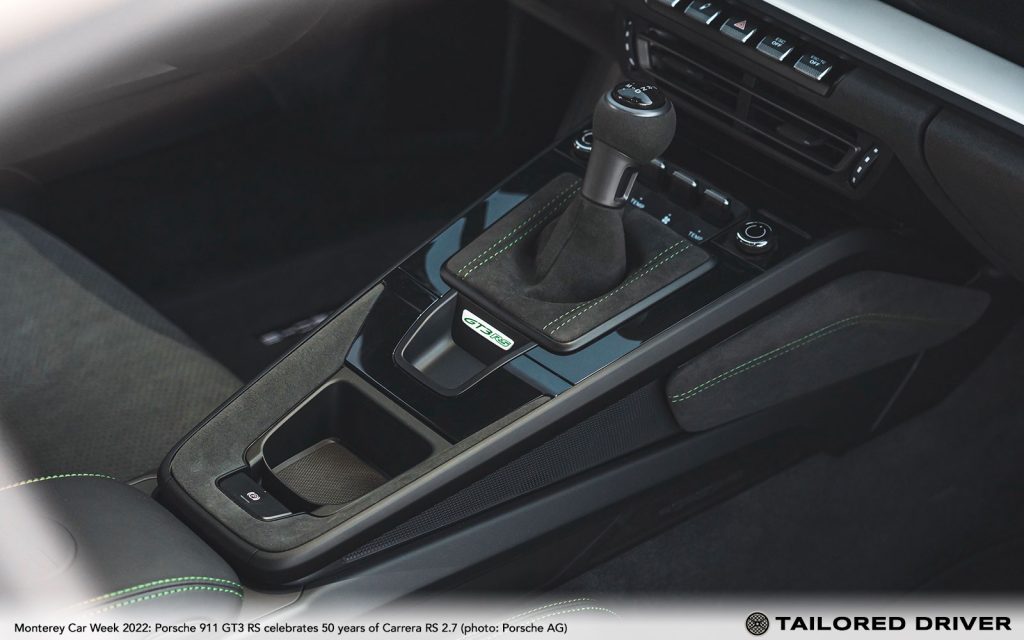
Appropriately for Monterey Car Week, the model on display is extensively personalized. Finished in white with key areas in Python Green, the car is a direct reference to the iconic white and green color configuration offered in 1972 on the first 911 “RS” model as well as a new interpretation of it. In this instance, the body is finished in non-metallic white including side air intakes painted to match with model designation graphics on the sides and rear in Python Green, forged aluminum wheels in Python Green with white pinstripes. Exclusive Design taillights emphasize the green-on-white theme by eliminating the red color from the rear taillights and third brake light. Finally, the side plates on the left and right ends of the large rear wing are painted white with RS logos in Python Green.
“Porsche Exclusive Manufaktur allows customers to personalize their car to a point where the vehicle is as much a reflection of them as it is of Porsche,” said Karl-Heinz Volz, Director of Exclusive Manufaktur Options. “Personalization is a Porsche tradition dating back to our first production model, the 356, when a customer requested a wiper be added to the rear window of their car. Today it is an incredibly extensive personalization program, offering options ranging from small changes to true one-off creations.”
The headlights also feature a pinstripe ring in white, something that is not available via the normal list of factory-available options. The color combination continues inside the car with matching stitching, trim panels in white to match the exterior.
“As a car enthusiast growing up, my walls were plastered with models that I was particularly fond of. One of the most influential was the 911 Carrera RS 2.7. As a young kid it captured me imagination and even today it puts a smile on my face,” Andreas Preuninger, Director GT Model Lines, said. “That’s where the styling inspiration of the 996 GT3 RS came from, which was one of my first projects at Porsche. At the time, that car felt totally extreme so colors nodding to the forefather made sense. Today, it’s a very emotional moment for me to pay tribute to the first 911 RS model with our most extreme and capable 911 GT3 RS yet.”
About the 2023 911 GT3 RS
The 2023 Porsche 911 GT3 RS is the most extreme street-legal 911 model yet. Its 4.0-liter naturally aspirated boxer six-cylinder engine generates 518 hp, and revs to 9,000 rpm (911 GT3 RS: Fuel consumption* combined (WLTP) 13.2 l/100 km, CO₂ emissions* combined (WLTP) 299 g/km, CO2 class G ). That power is routed exclusively to the rear wheels via a seven-speed PDK dual-clutch automatic transmission. Making extensive use of motorsport-derived aerodynamics, it generates more than 900 lbs. of downforce at 124 mph and 1,895 lbs of downforce at 177 mph.
This is also the first example of a 911 GT3 RS with active aerodynamics, a feature that is used to offer incredible levels of downforce, provide deceleration assistance by creating an air brake, and by offering a Drag Reduction System (DRS) that can reposition aerodynamic elements to cut drag at the driver’s command in certain conditions.
About the 1972 / 1973 911 Carrera RS 2.7
Fifty years ago, the world knew the 911 Carrera RS 2.7 as Germany’s fastest sports car. It began as a homologation special and featured many technological innovations. It was the most powerful version of the first-generation 911, generating 210 PS at 6,300 rpm and 188 lb.-ft. of torque at 5,100 rpm from its air-cooled flat-six developed by Hans Mezger and Valentin Schäffer.
A more potent engine was only part of the success story. Much like the new 911 GT3 RS, wind tunnel testing and aerodynamic science introduced never-before-seen technology to the 911. The ducktail, now as much an icon of style as an element of function, was critical in achieving stability at high speeds. Not only did it unlock the ability to drive faster, but it did so without incurring additional drag. In fact, it reduced the drag coefficient
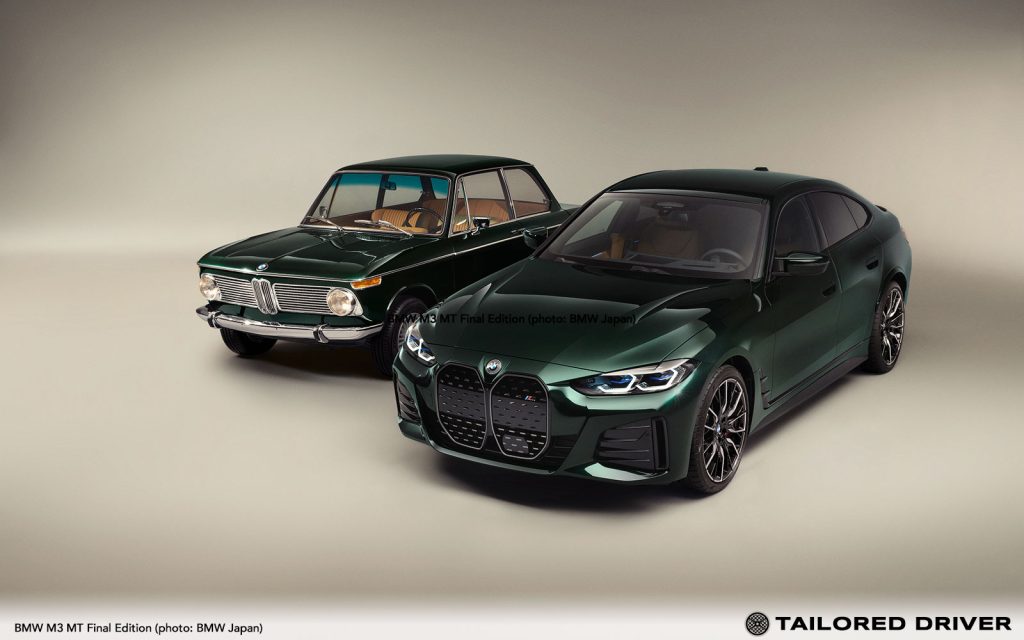
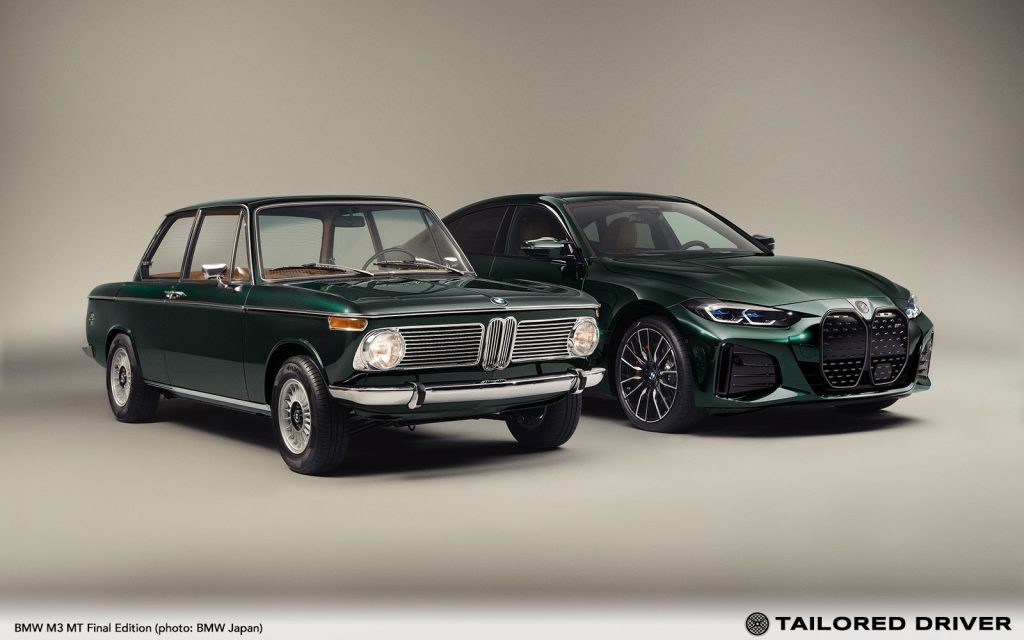
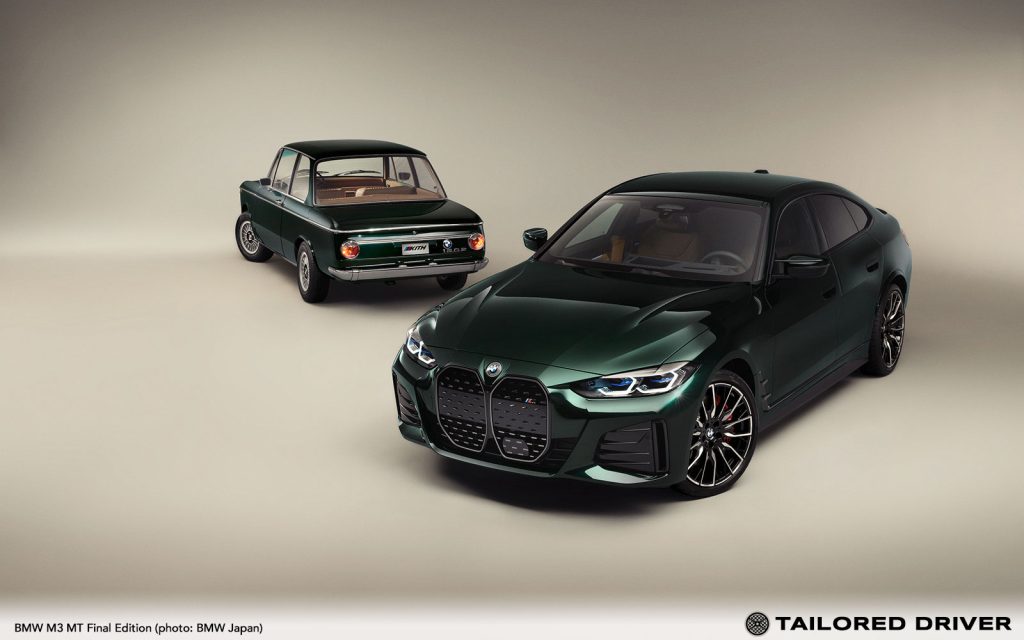
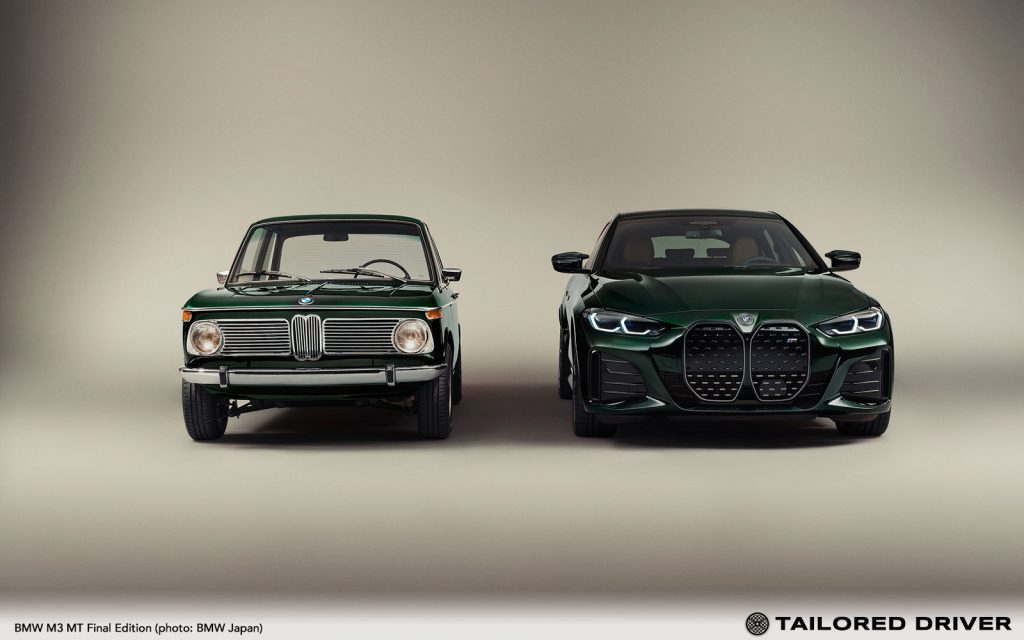
Highly limited edition of the fully electric Performance BMW M vehicle with unique Kith features
Historic BMW 1602 from 1972 electrified and adorned with design details by Ronnie Fieg
Lifestyle collection available worldwide in Kith stores and online
[source: BMW]
Munich. More than just electrically charged: the BMW i4 M50 (electricity consumption in kWh/100 km: – (NEDC) / 22.5–18.0 (WLTP); electric range (WLTP) in km: 416–520) is not just the first fully electric M automobile, but also the second BMW M vehicle that New York designer Ronnie Fieg has exclusively designed as part of the collaboration between his brand, Kith, and BMW M GmbH – inside and out. Only seven BMW i4 M50 by Kith vehicles will be produced for the public. One of those is the only vehicle within this collaboration being auctioned to a global public audience. To mark the limited edition, Kith is selling a 51-piece collection comprising apparel and accessories, inspired by the colours of the Kith Vitality Green(kithvitalitygrün; metallic; P9H; BMW) vehicle paint and BMW Individual Caramel Merino vehicle leather in its stores all over the world and online
A symbol of the transformation of BMW in the age of electric vehicles.
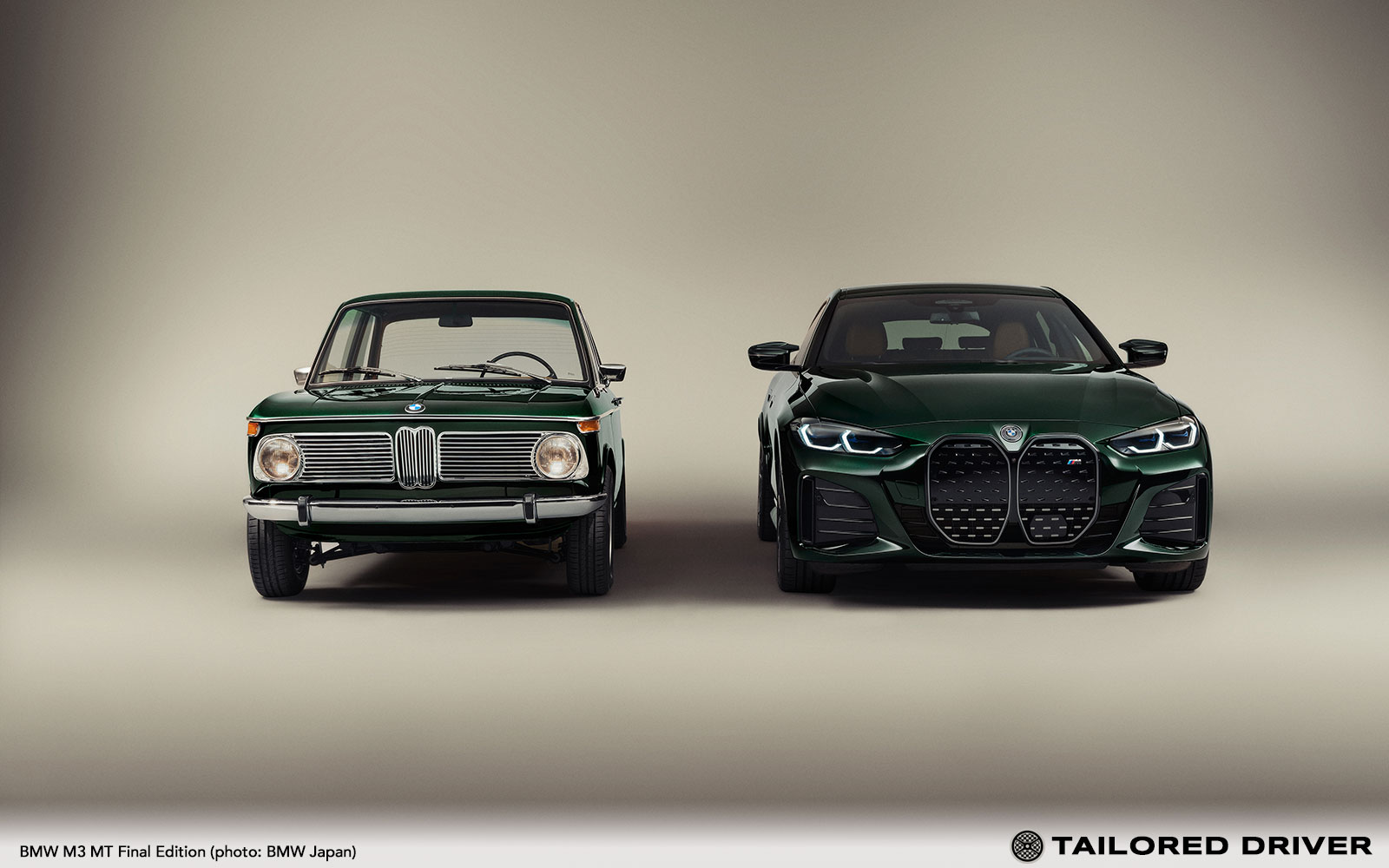
In BMW M’s 50th anniversary year, a historic vehicle is bridging the gap between the past and the electrified present. Ronnie Fieg as an automotive enthusiast has transformed a 1972 BMW 1602 into a contemporary electric car. This is based on the 1972 Olympic Games in Munich, where two BMW 1602s, converted into electric cars, were used at various long-distance competitions as accompanying and camera cars by the organisation committee. This was the start of a pioneering, forward-looking evolution of electrified vehicles at BMW. To commemorate the debut of electrification at BMW, BMW and Kith Season 2 presents the 1972 BMW 1602 Elektro by Ronnie Fieg.
The unique 1972 BMW 1602 Elektro by Ronnie Fieg will be handed over to the designer by the BMW Group. He already owns an impressive collection of BMW vehicles, including a legendary BMW E30 M3 by Kith stemming from Season 1 of the collaboration. His passion for BMW was sparked as a boy by his grandfather; the collaboration with BMW M means this comes full circle for him. Ronnie Fieg founded his Kith label in 2011. The collaboration between the BMW and Kith brands started in 2020 with the design of a BMW M4 Competition Coupé by Ronnie Fieg. The 150 editions of the exclusive BMW M4 Competition × Kith were sold out in less than 30 minutes.
A combination of sportiness and aesthetics.
The success of the first brand collaboration with Kith led to this second edition, where electromobility is the focus. As the first fully electric M model, the BMW i4 M50 can be called the “Brand Shaper”. It has the well-regarded M DNA and as a BEV shows the responsible direction that BMW is going in. The 1972 BMW 1602 tells the story of the very first electrified BMW, which came onto the market 50 years ago and which is part of the brand’s high-performance segment. The sportiness of the lifestyle and streetwear label Kith is a perfect match for the BMW M. Ronnie Fieg gives both models a new aesthetic with his design.
BMW goes Kith Vitality Green.
For the first time ever, BMW is naming a new colour after a brand partner: Kith Vitality Green is a rich, dark green that is not available on a serial BMW, as it is limited to this exclusive collaboration. New logos merged with each other are a hallmark of the various Kith partnerships with globally famous companies. BMW changed its brand emblem for a collaboration partner for the first time two years ago. The well-known BMW emblem was again altered this time: an additional ring in the colour Kith Vitality Green was added around the brand logo that adorns the hood of the BMW i4 M50 by Kith. The green ring lists the partnership, model and year as well as the fact that it is an electric car. The logo on the hood of the 1972 BMW 1602 by Ronnie Fieg looks different again: the BMW letters have been swapped for Kith. A similar logo in black and white with the subline “Elektro-Auto” can be found as an engraving on the lid of the cup holder in the BMW i4 M50 by Kith.
The interior goes Caramel.
Kith Vitality Green is the colour in which all vehicles of the collaboration are painted. While the exterior is an exquisite green, the full-grain merino leather interior is in the colour Caramel. In the 1972 BMW 1602 Elektro by Ronnie Fieg, the leather of the seats is embossed with the Kith lettering, as are the leather inserts in the footwells for the driver and front passenger. The logo altered to feature the Kith lettering instead of BMW can also be found on the centre holes of the rims.
The interior of the BMW i4 M50 by Kith is also particularly harmoniously coordinated in Caramel. The knee bolster, steering column, seat and side panelling, as well as the lower part of the A and B posts are all upholstered in merino leather. The front and rear floor mats are also trimmed in caramel-coloured leather and embroidered with the M logo, which has been changed to Kith, and the M stripes. Kith lettering in a box design is embossed on the headrests as well as the front centre armrest. “KITH Exclusive Edition” has been laser-engraved into the trim.
Technology and luxury in the limited edition.
The technology has been taken over from the BMW i4 M50, which combines the innovative power of the BMW M with that of the BMW i for the first time. The BMW i4 M50 with its fully electric powertrain fed by two BMW M eDrive motors achieves a powerful 400 kW (544 hp) in Sport Boost mode and offers a dynamism typical of a BMW M in an as-yet-unseen edition, which takes it from 0 to 100 km/h in 3.9 seconds. It is locally emission-free and has a reach of up to 520 kilometres according to WLTP. As the first purely electric Gran Coupé from BMW M, this extraordinary vehicle creates a class of its own and proves itself for everyday use too, thanks to its impressive reach, luxurious spaciousness and intelligent networking.
In addition to the standard equipment in the BMW i4 M50 and specific scope of the Kith collaboration, the model is equipped with a few special additions as standard. Alongside the adaptive M chassis, these include the M sports brakes with red brake callipers, the M aerodynamic package and the BMW Individual Shadow Line lights. The Professional and Plus driving assistants also contribute to the luxurious driving feeling, as well as the electric sliding glass roof, the fine oak wood trim and the M high-gloss Shadow Line exterior trim. The features are rounded off by the Harman/Kardon surround sound audio system, which provides the perfect soundtrack to the joy and driving experience in the BMW i4 M50 by Kith.
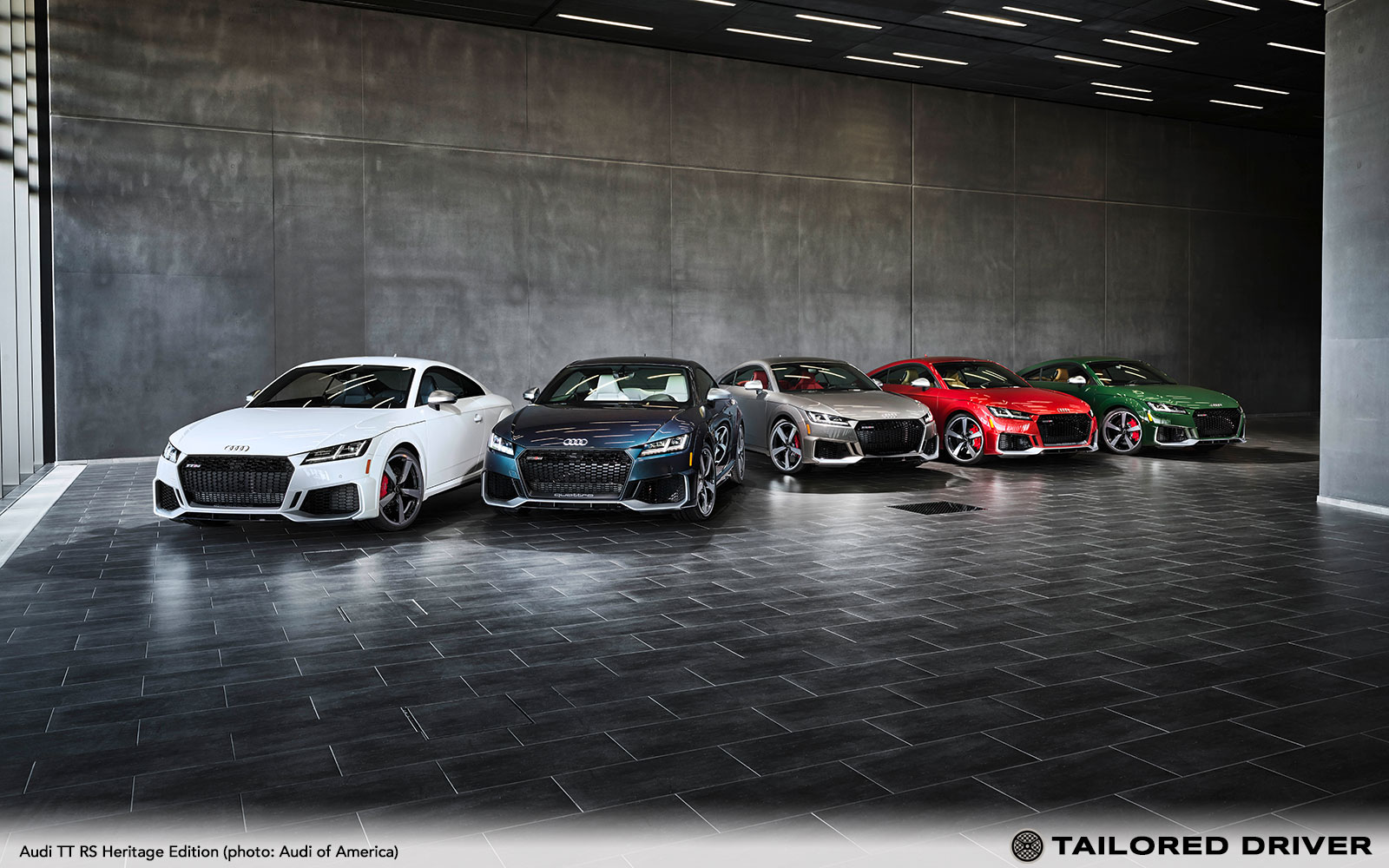
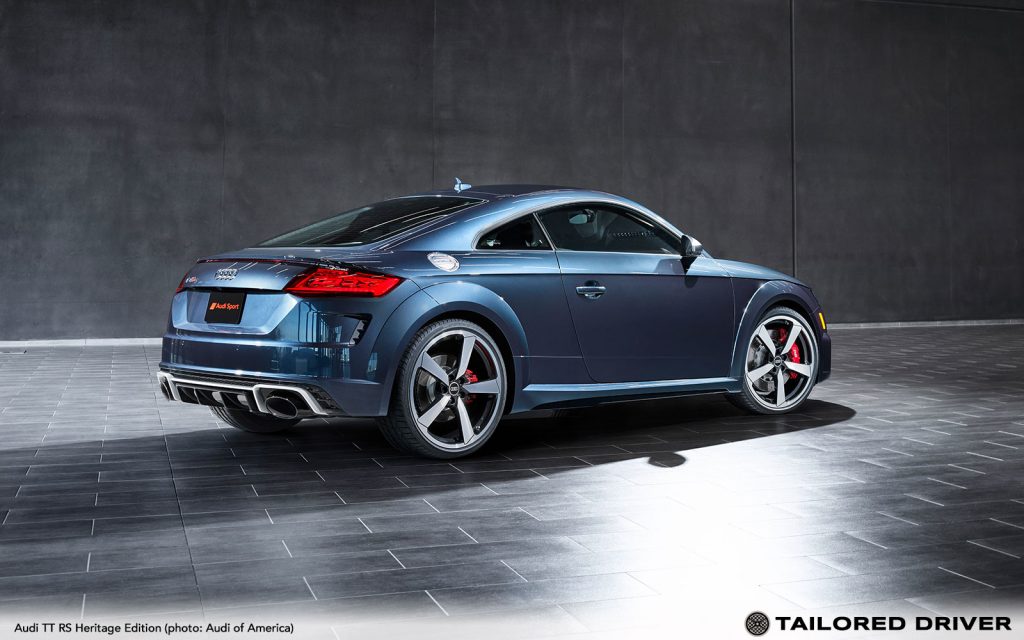
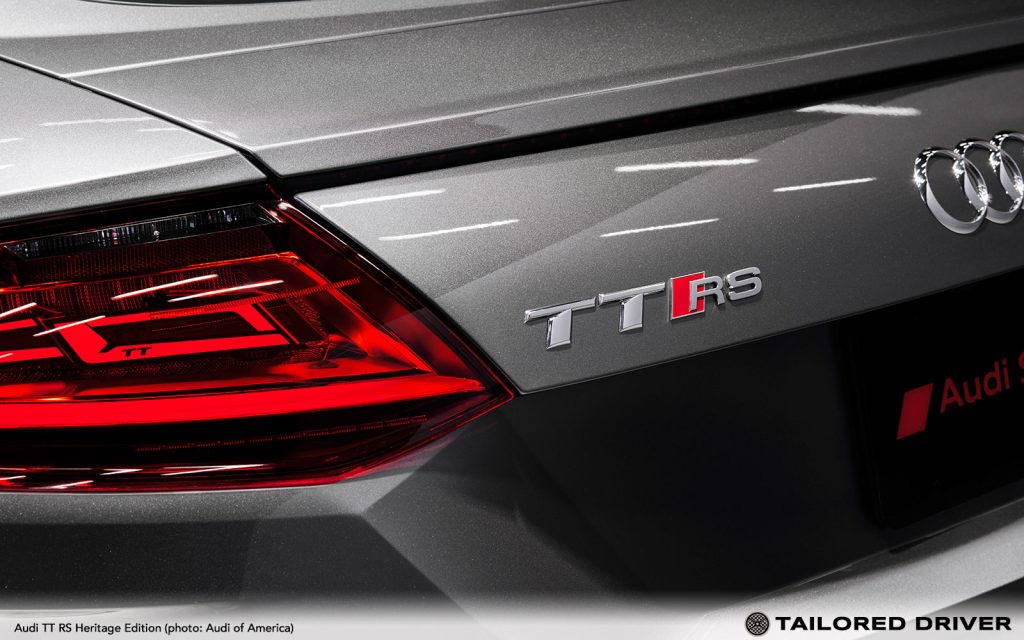
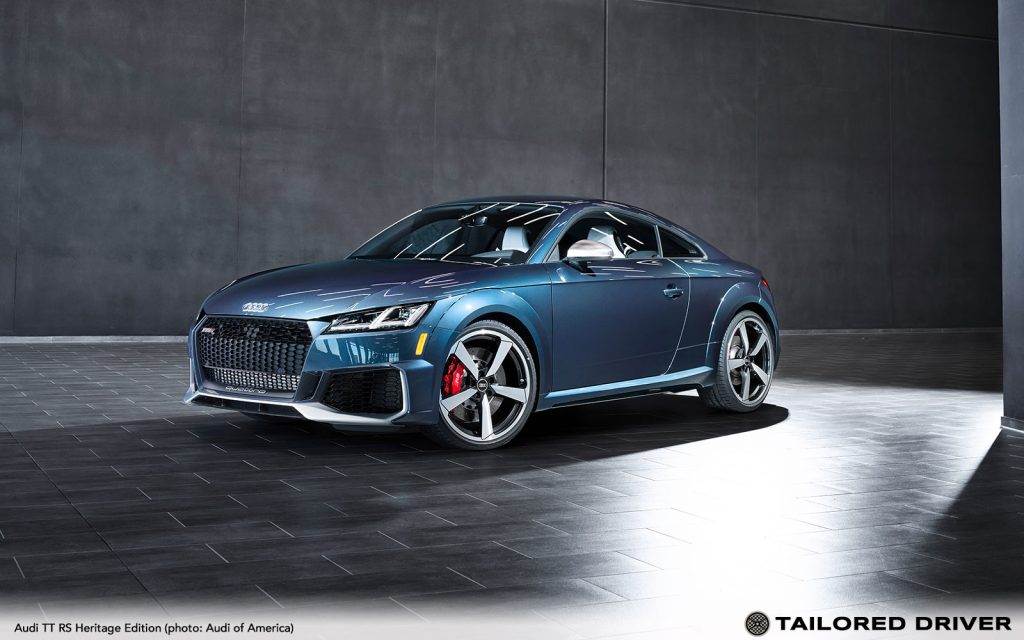
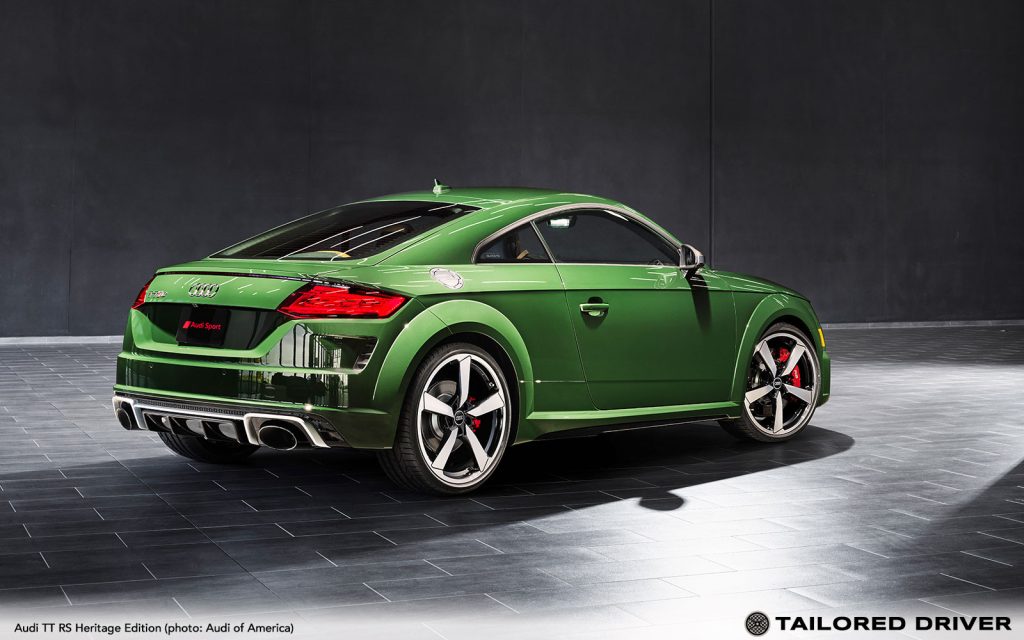
Audi TT RS no longer offered after the 2022 model year in the U.S.
Five Audi heritage colors celebrate legendary five-cylinder engine and bids farewell to pinnacle performance of a design icon in the U.S.
Limited number of just 50 (10 of each) color combinations available
[source: Audi of America, Color Code Information Researched and Provided by Tailored Driver]
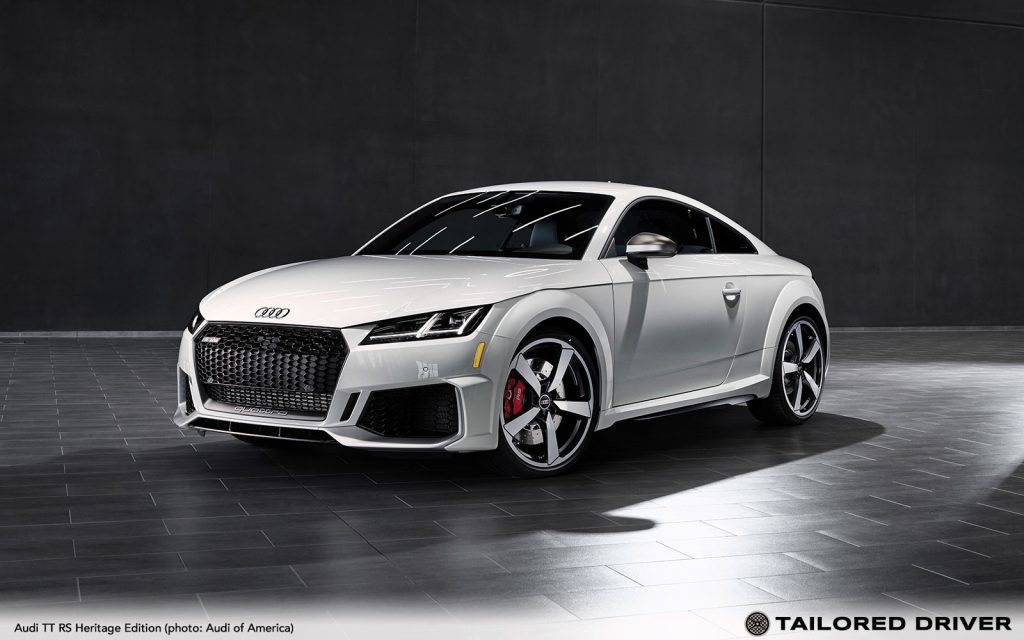
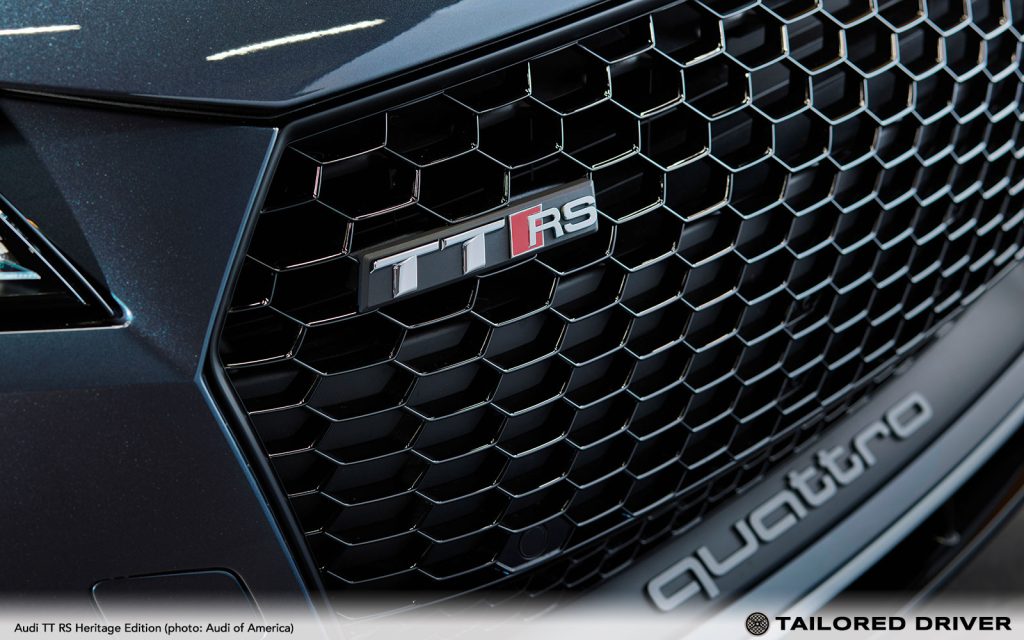
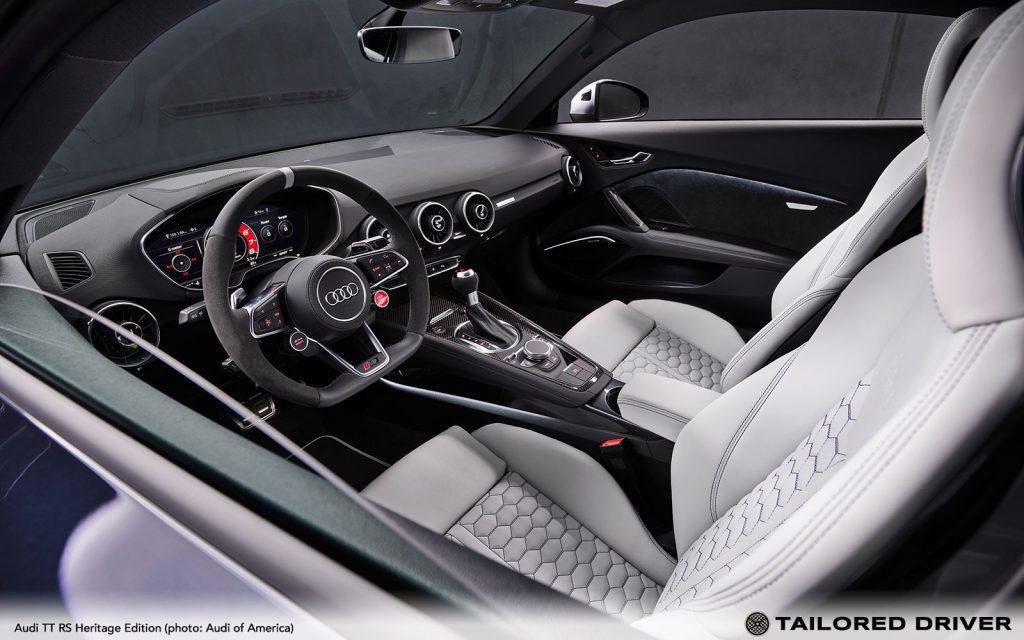
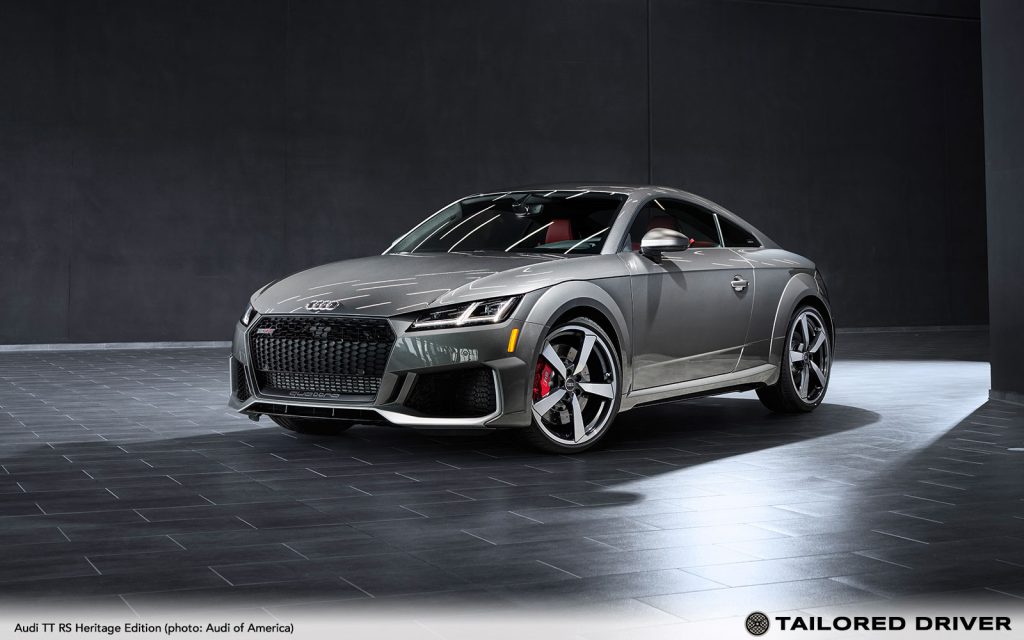
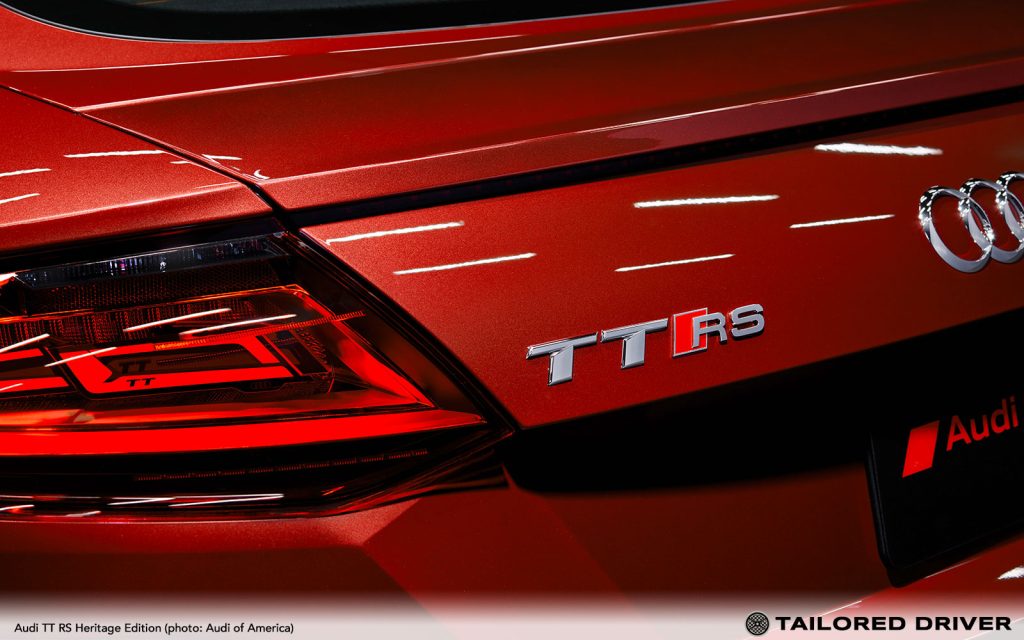
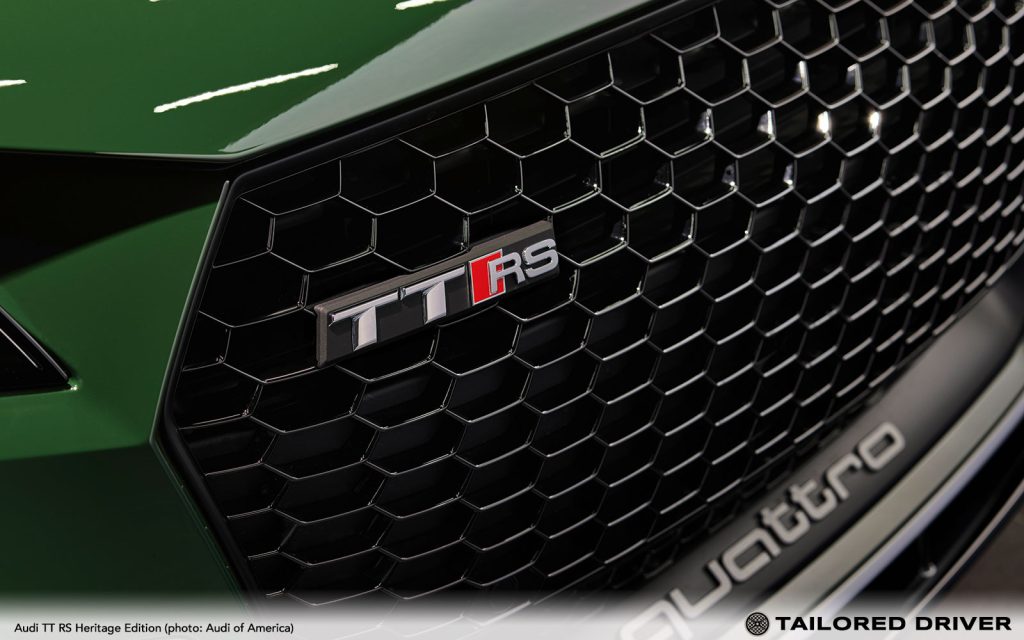
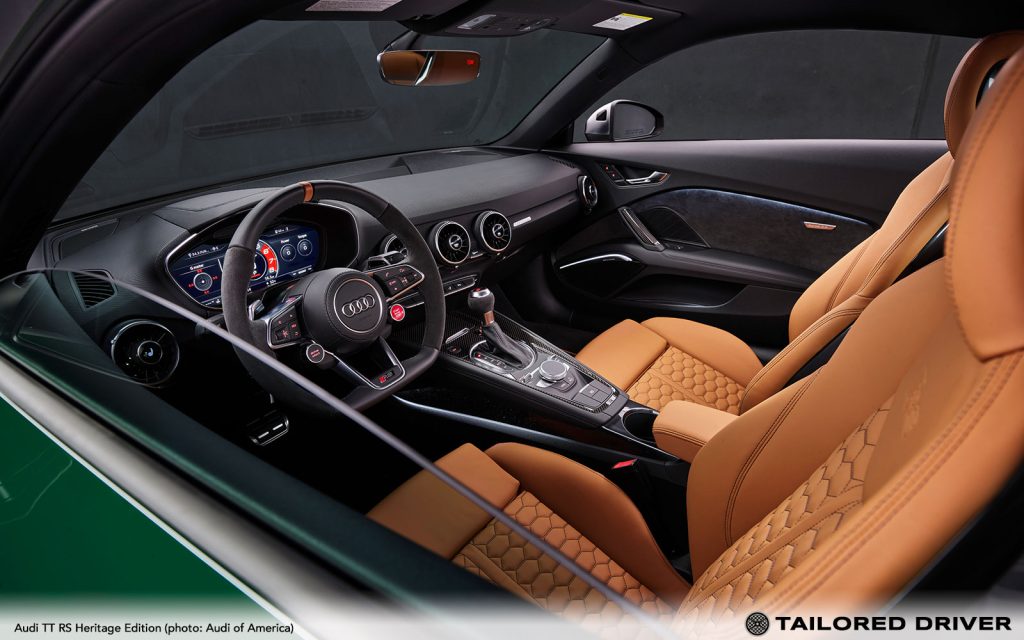
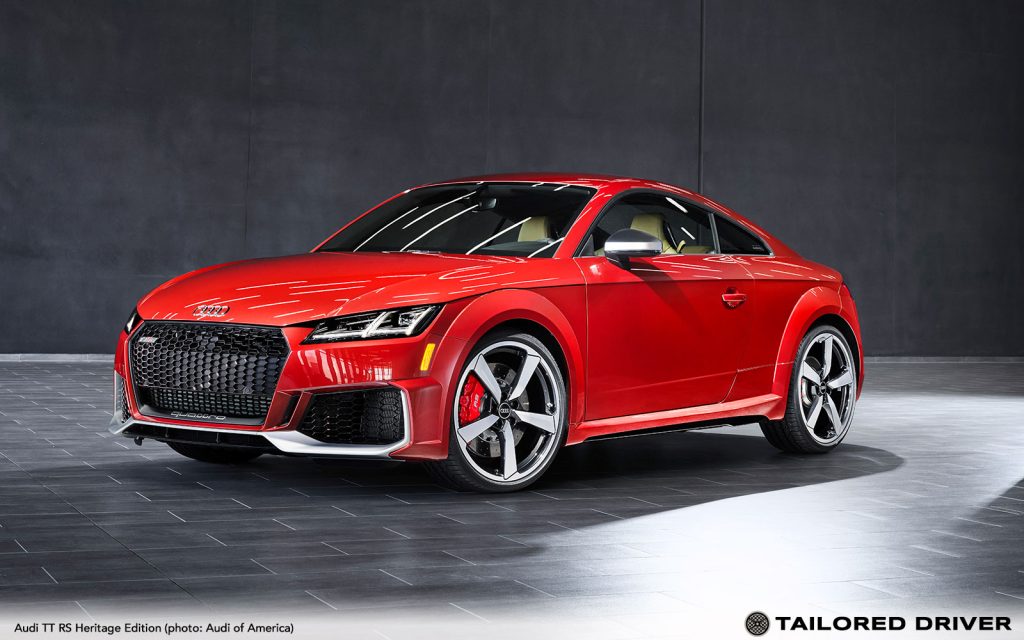
HERNDON, VA – Today, Audi of America announces a limited offering of 50 special units of the 2022 Audi TT RS Heritage Edition that combines the power of the emotive Audi five-cylinder engine heritage along with the storied paint colors that once adorned the Audi Ur-quattro. While still available outside of the U.S., the 2022 Audi TT RS Heritage Edition signals the appropriate farewell to the remarkable high-performance coupe following the 2022 model year. The TT and TTS models will continue to be available in international markets and in the U.S. market.
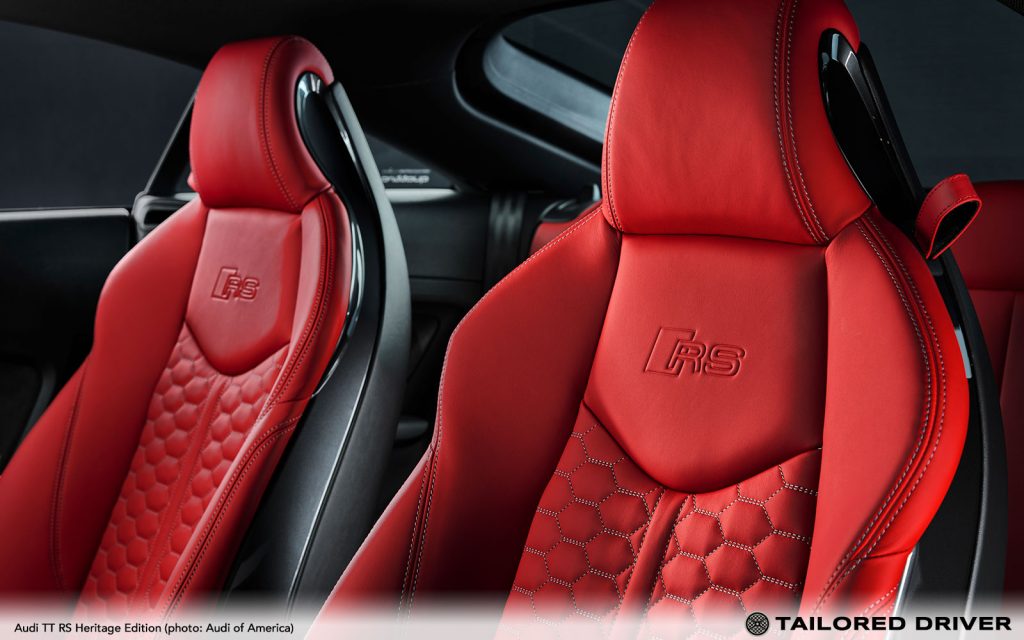
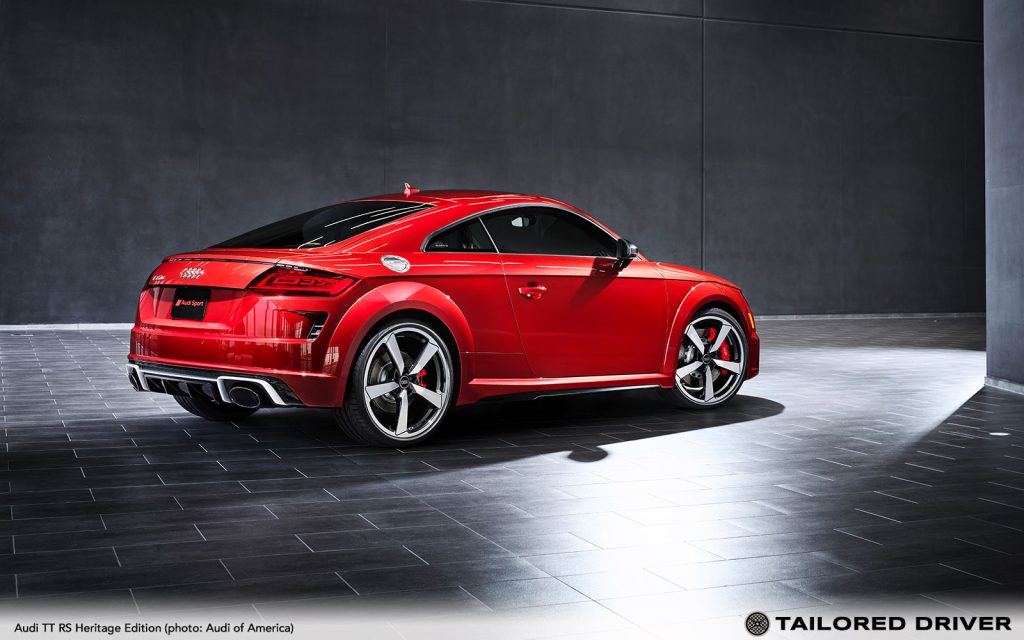
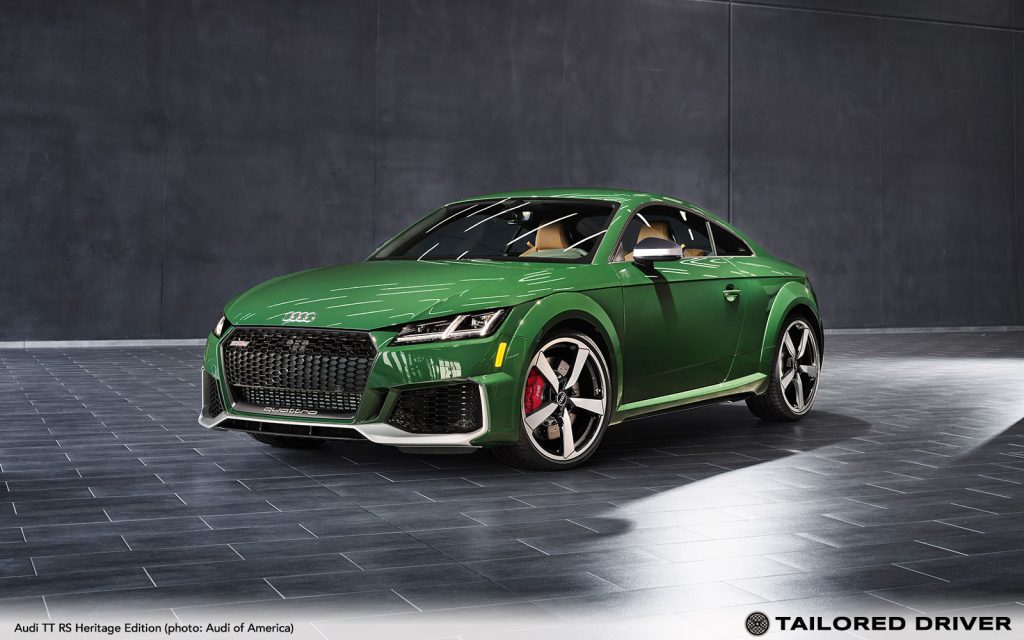
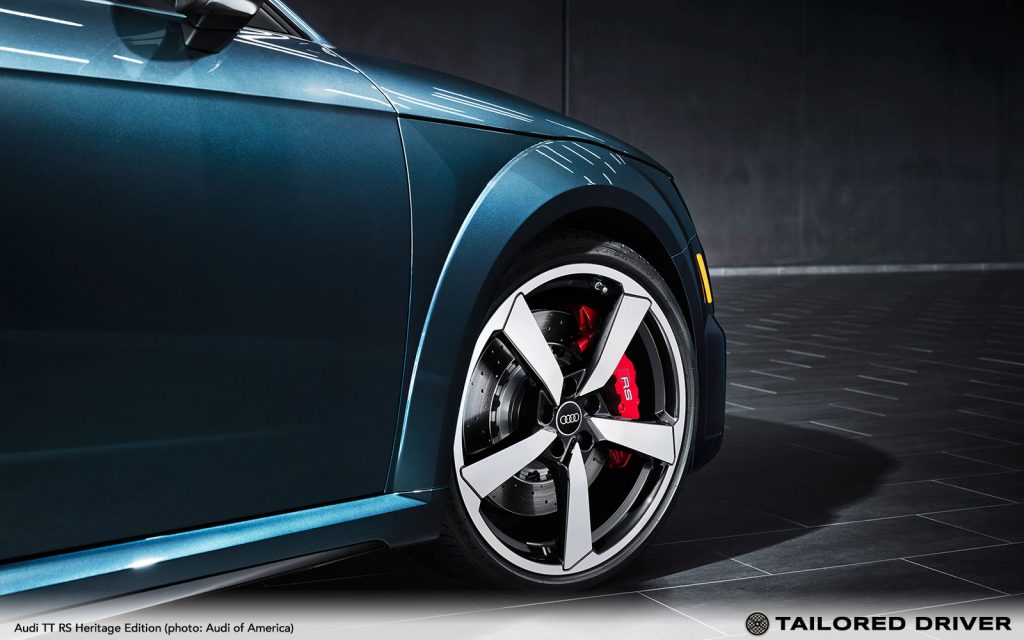
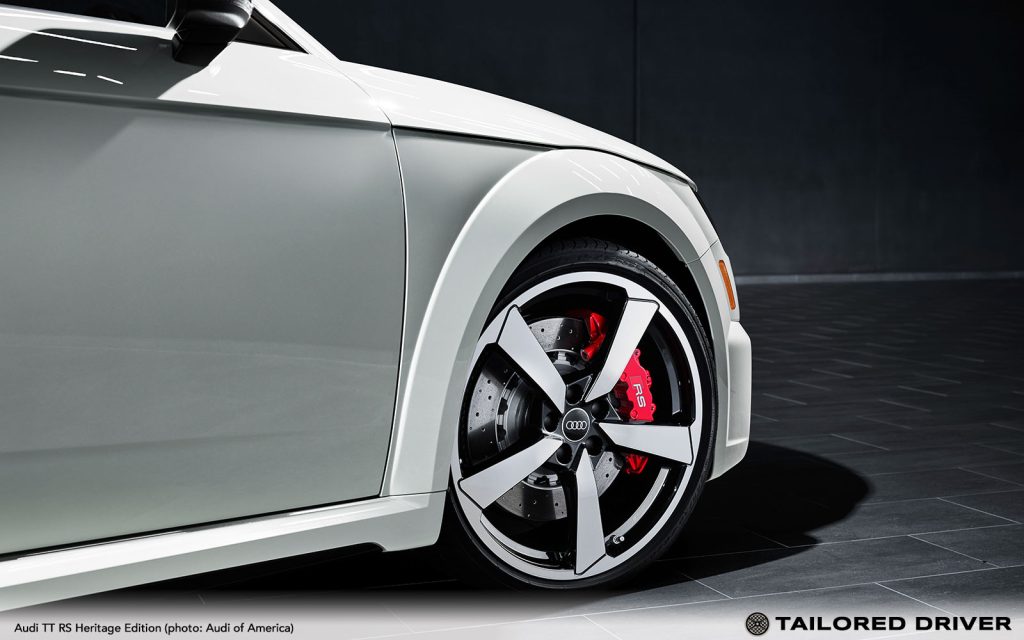
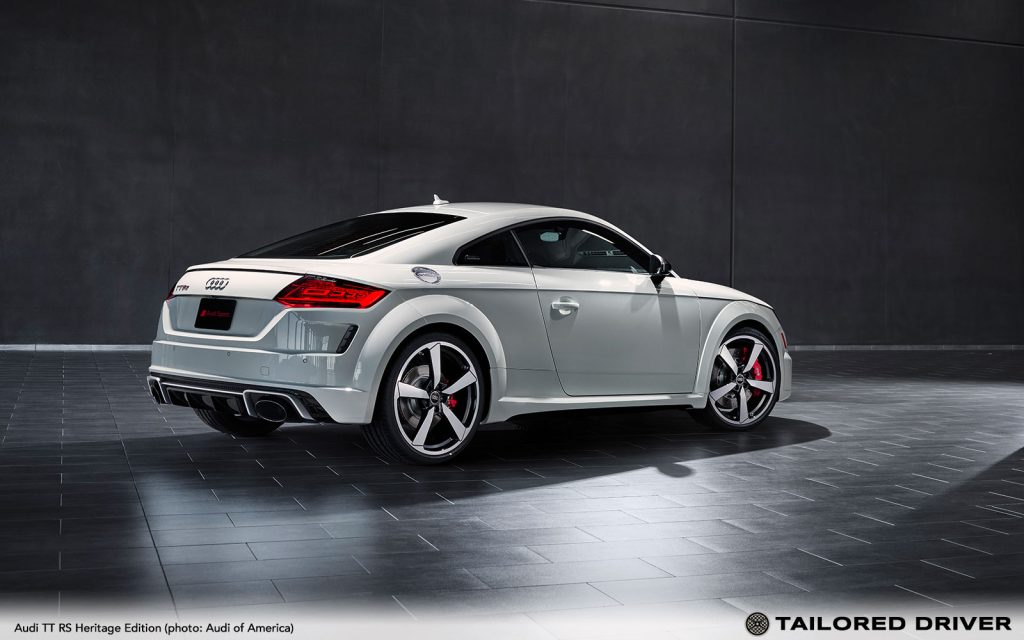
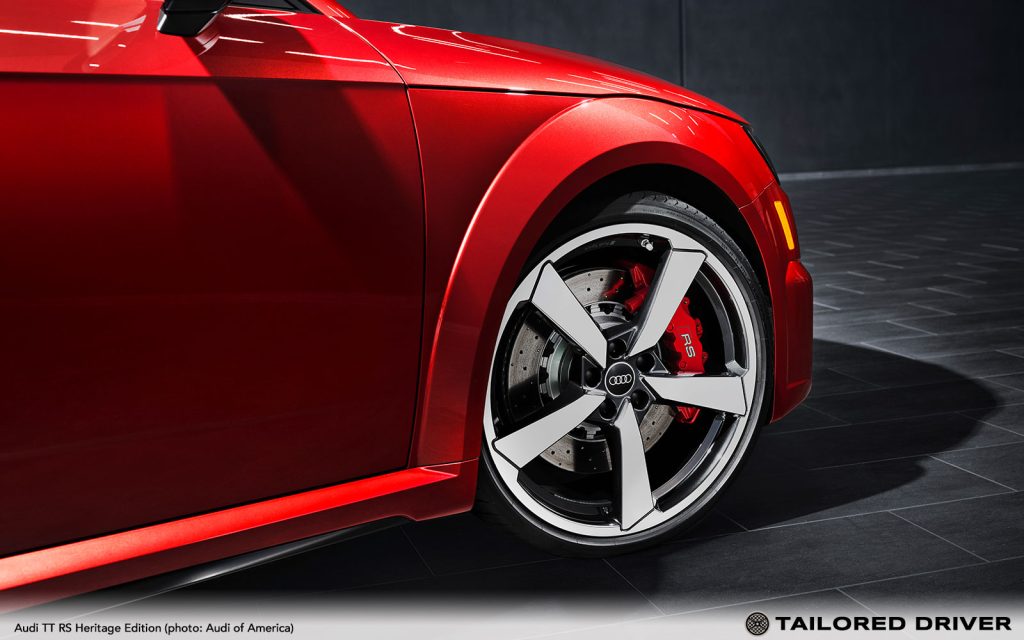
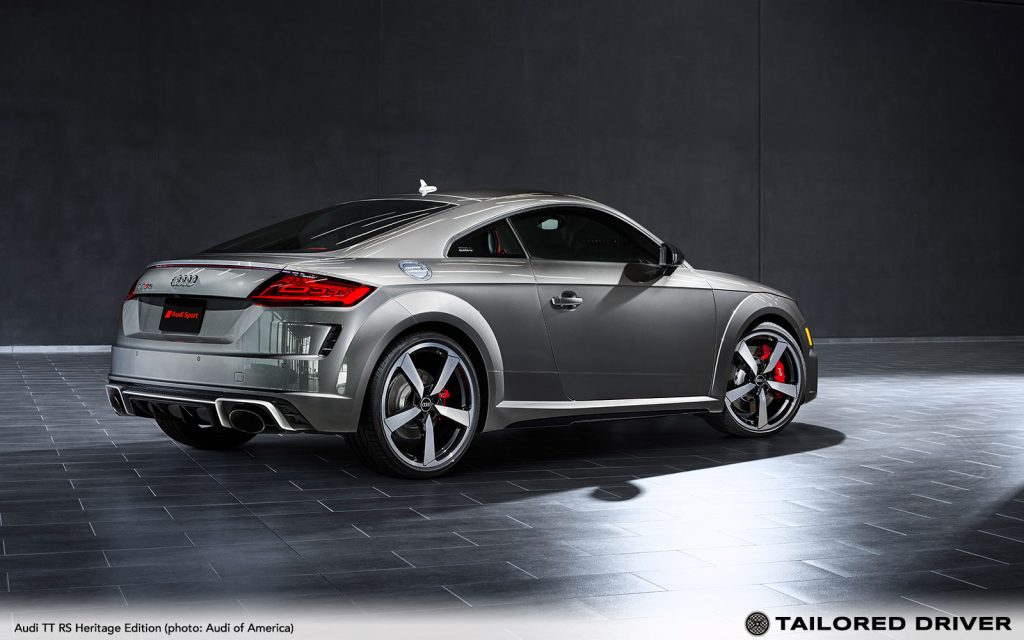
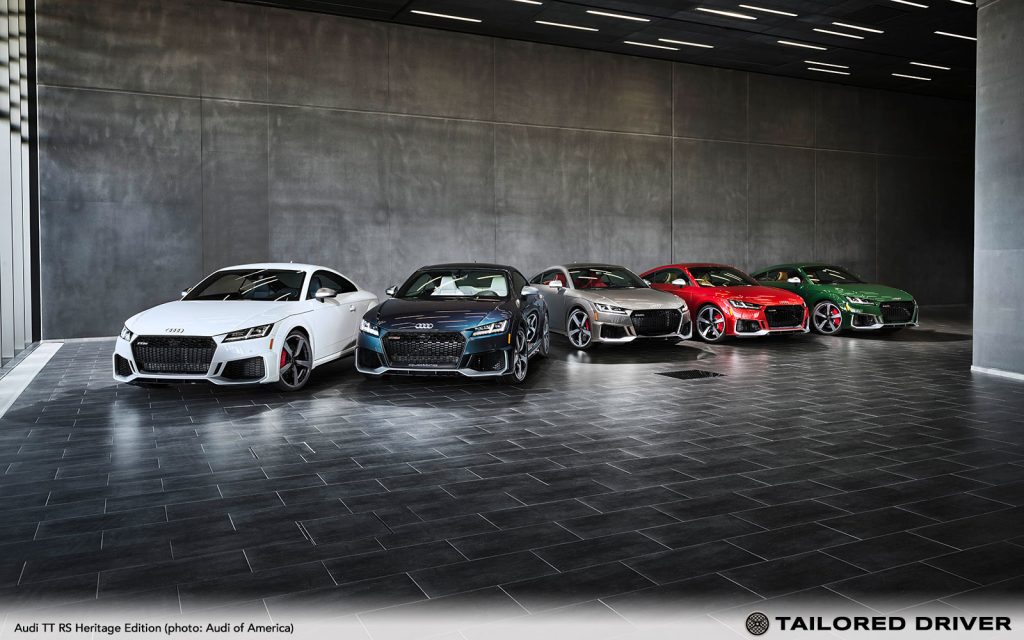
Five heritage color combinations celebrate the legendary five-cylinder engine For the 2022 model year, a limited number of just 50 highly collectible TT RS models will be available with the Heritage Edition nomenclature that blends five different exterior paints of the past that celebrate the heritage of the Audi Ur-quattro. The legendary Ur-quattro was powered by the storied Audi five-cylinder engine of its time with the modern version supporting the high performance Audi TT RS today. The limited TT RS Heritage Edition is available in five different color combinations, listed below in the five-cylinder firing order, and is limited to only 10 units of each.
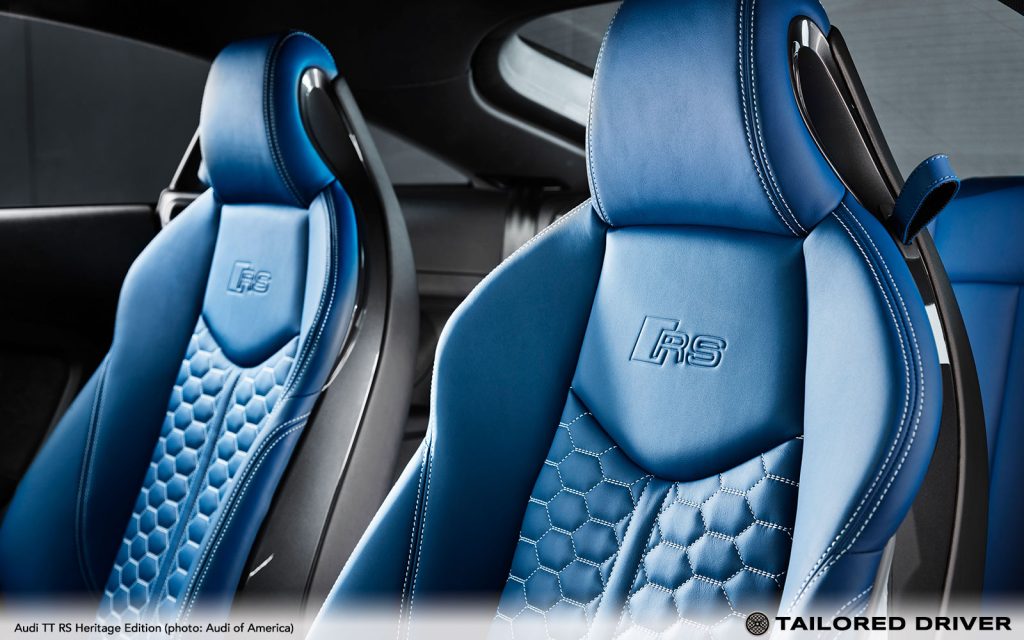
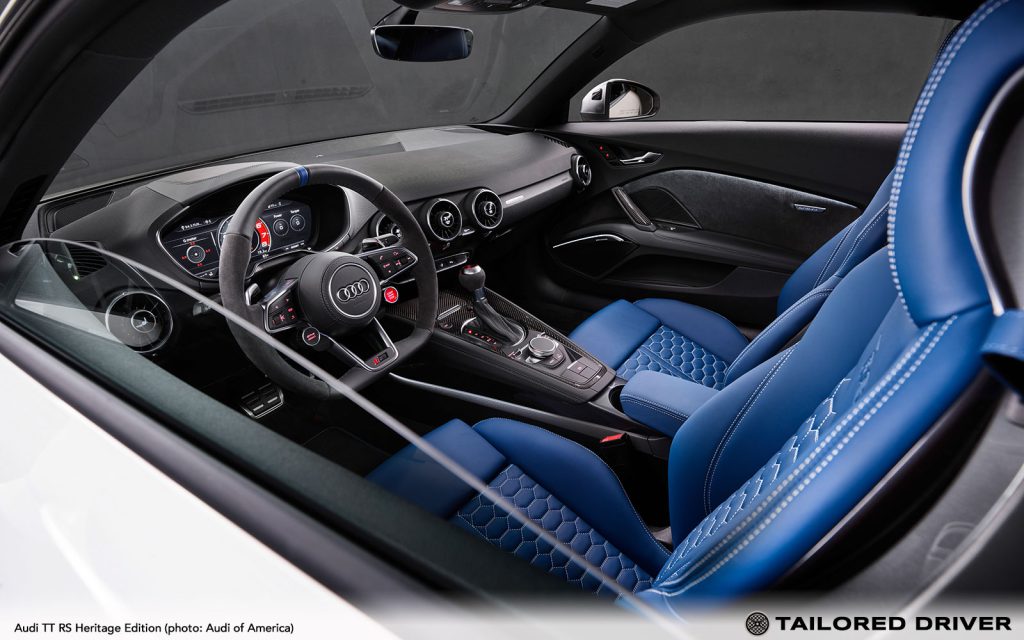
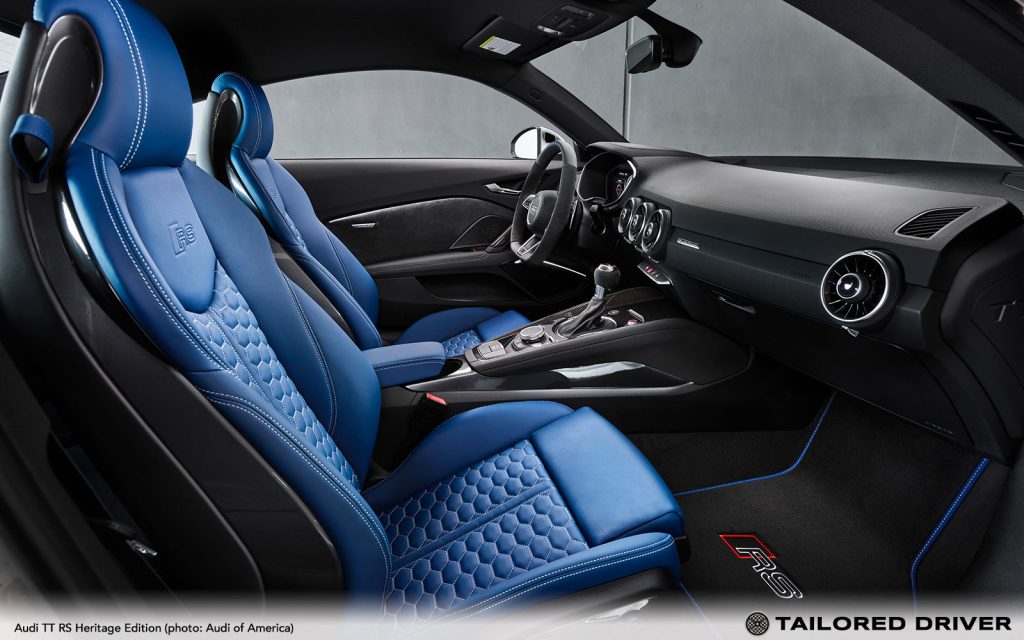
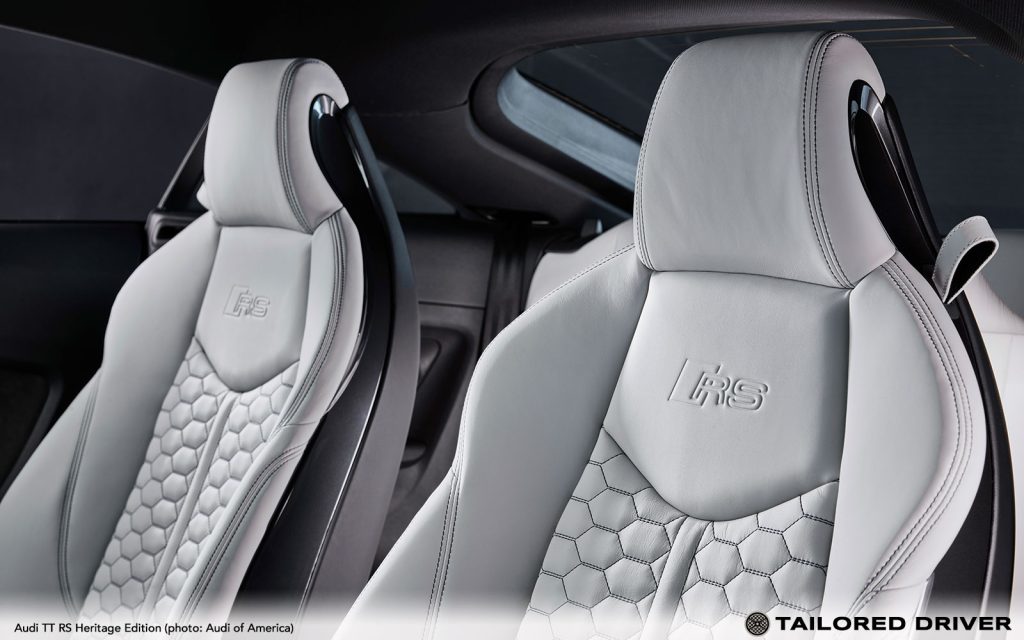
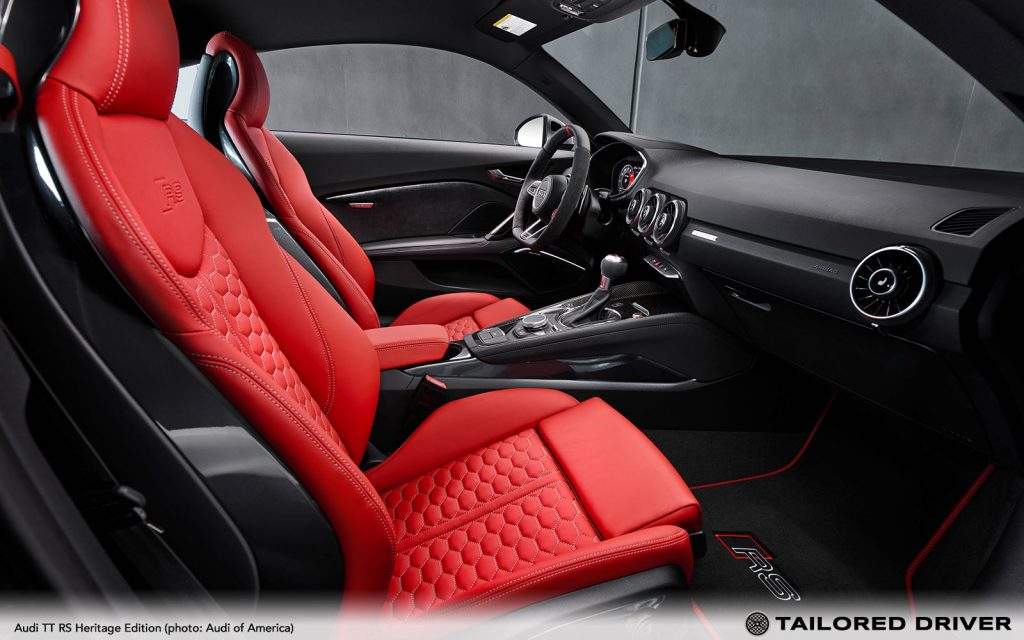
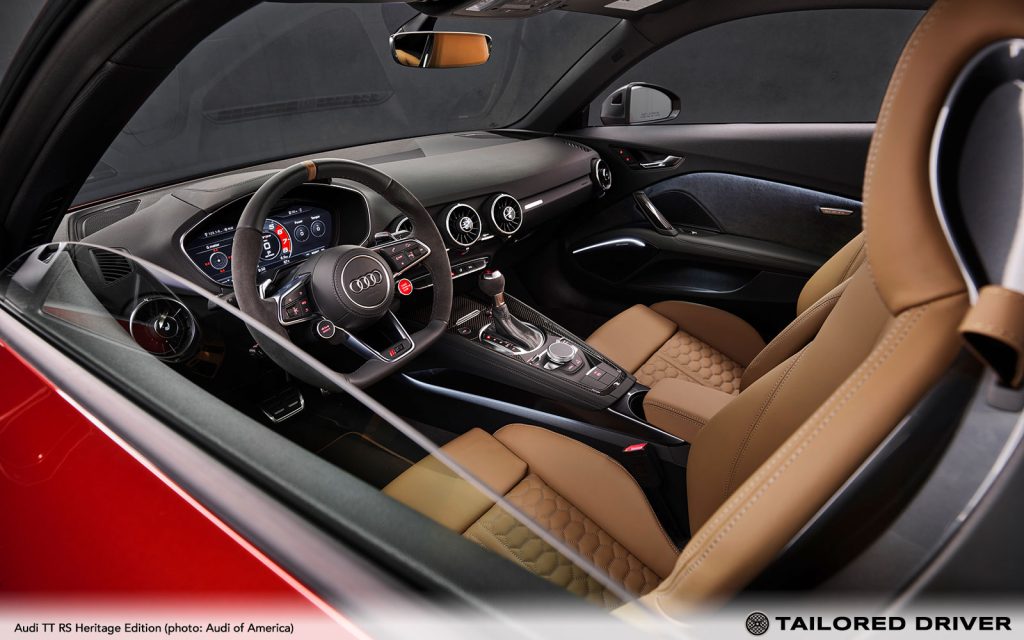
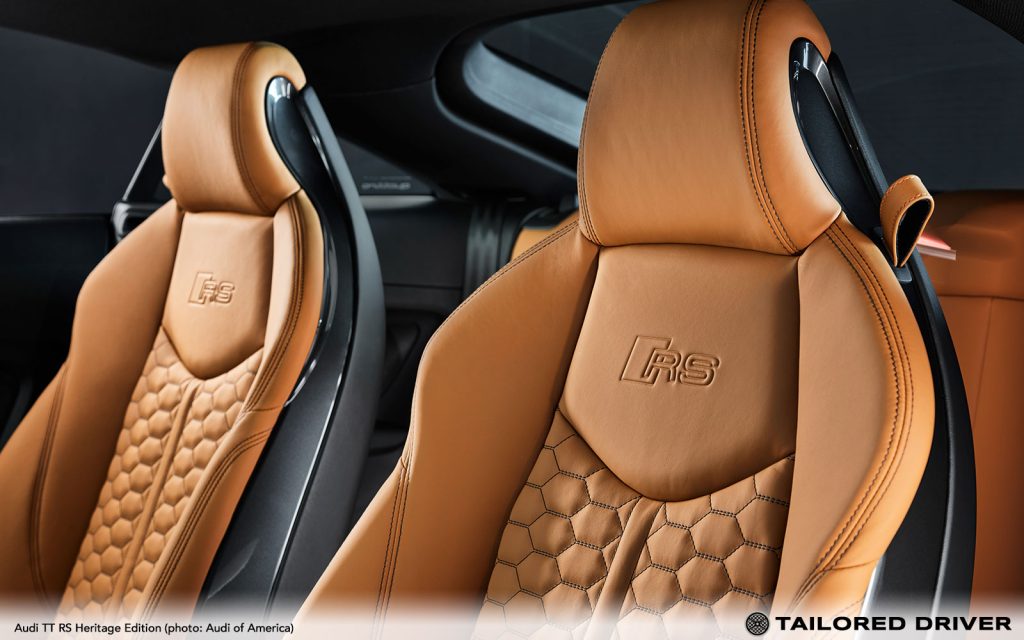
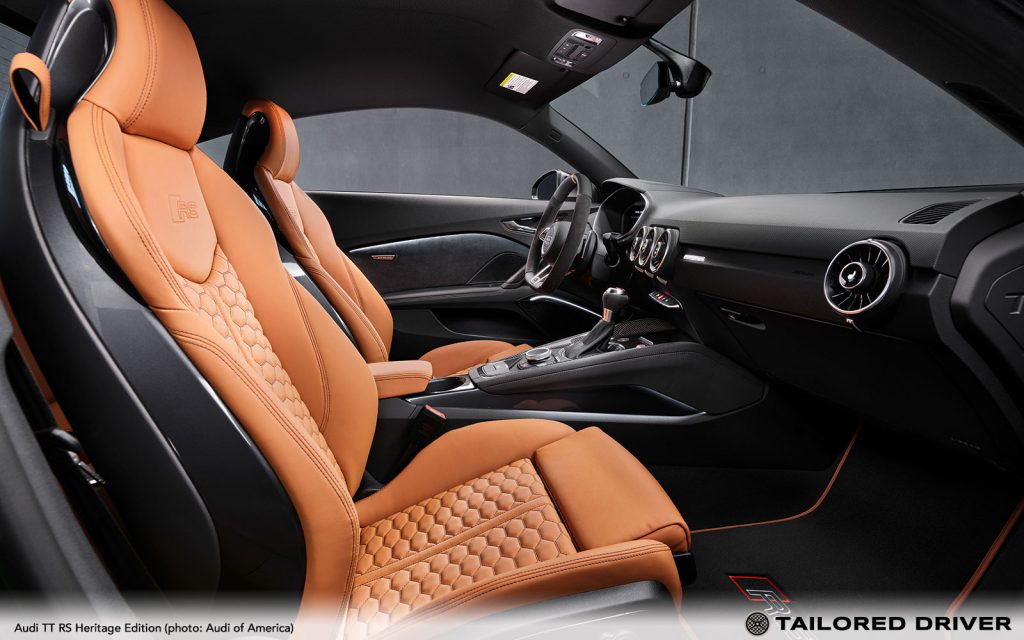
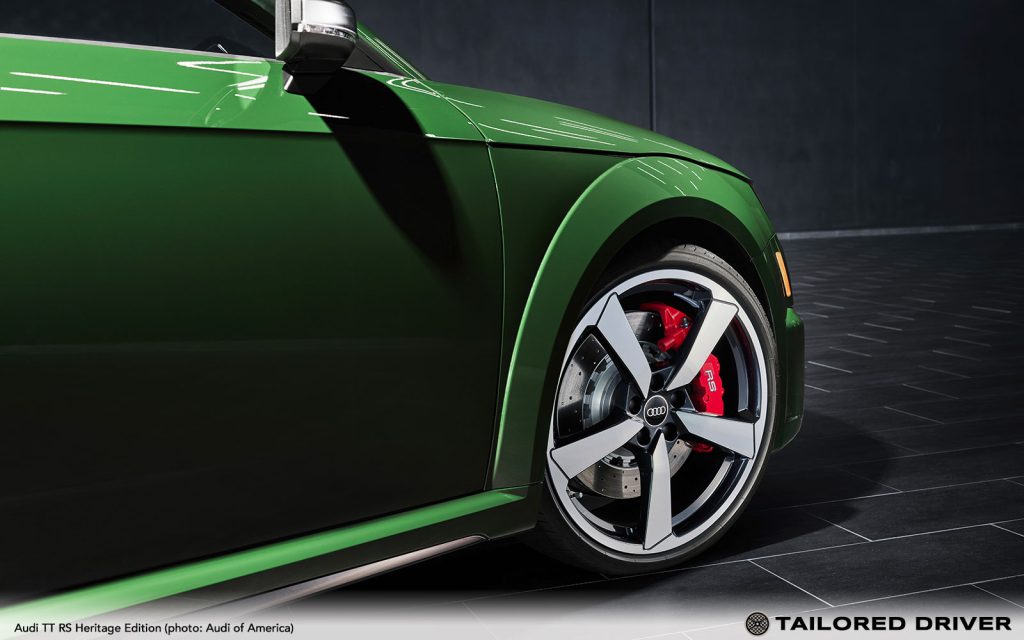
1. Alpine White (alpinweiß; non-metallic UNI; L90E; Audi) with Ocean Blue leather and Diamond Silver stitch 2. Helios Blue metallic (heliosblaumetallic; metallic UNI; LA5Y; Audi) Diamond Silver leather and Ocean Blue stitch 4. Stone Gray metallic (steingraumetallic; metallic UNI; LY7U; Audi) with Crimson Red leather and Jet Gray stitch 5. Tizian Red metallic (tizianrotmetallic; metallic UNI; LB3V; Audi) with Havanna Brown leather and Jet Gray stitch 3. Malachite Green metallic (malachitgrünmetallic; metallic UNI; LY6A; Audi) with Cognac Brown leather and Black stitch
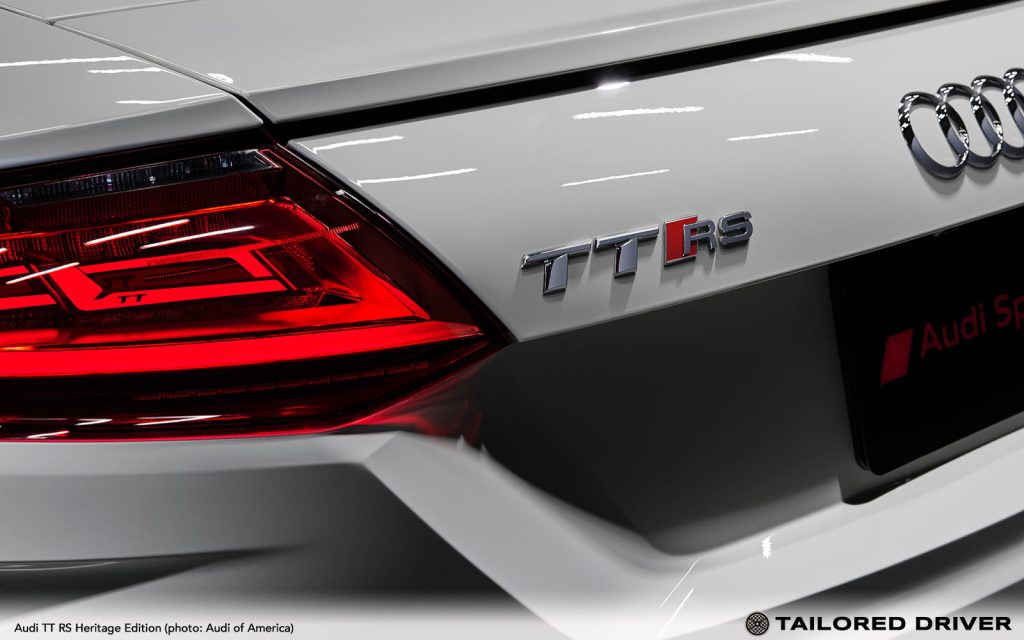
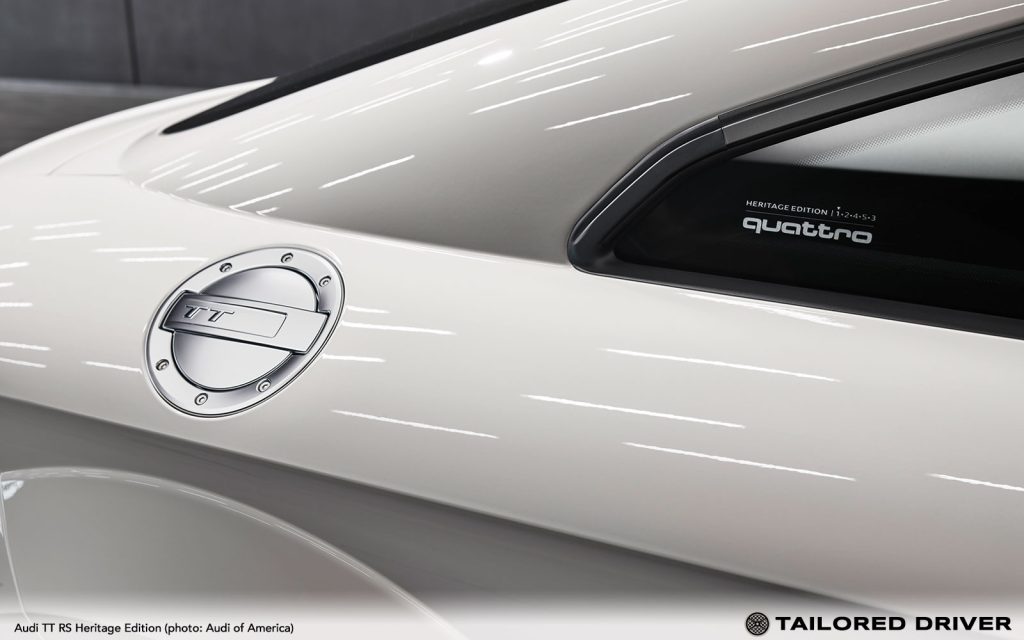
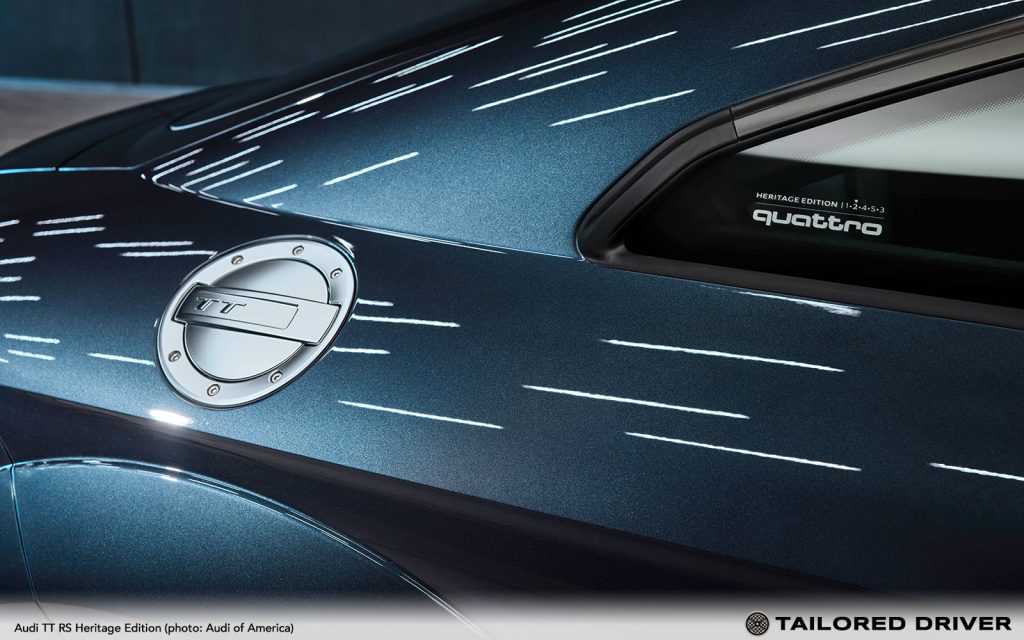
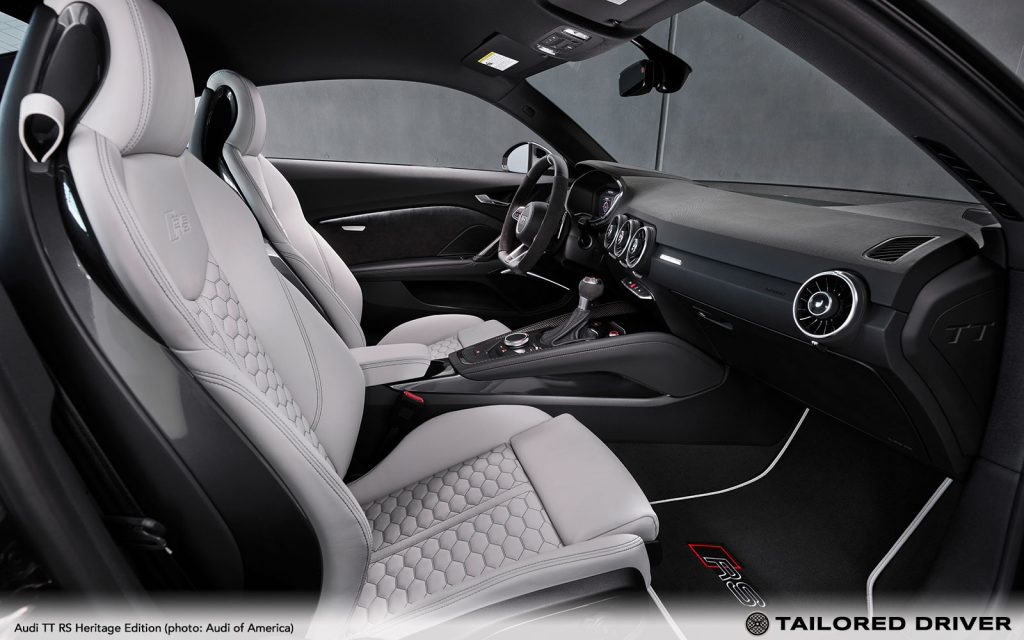
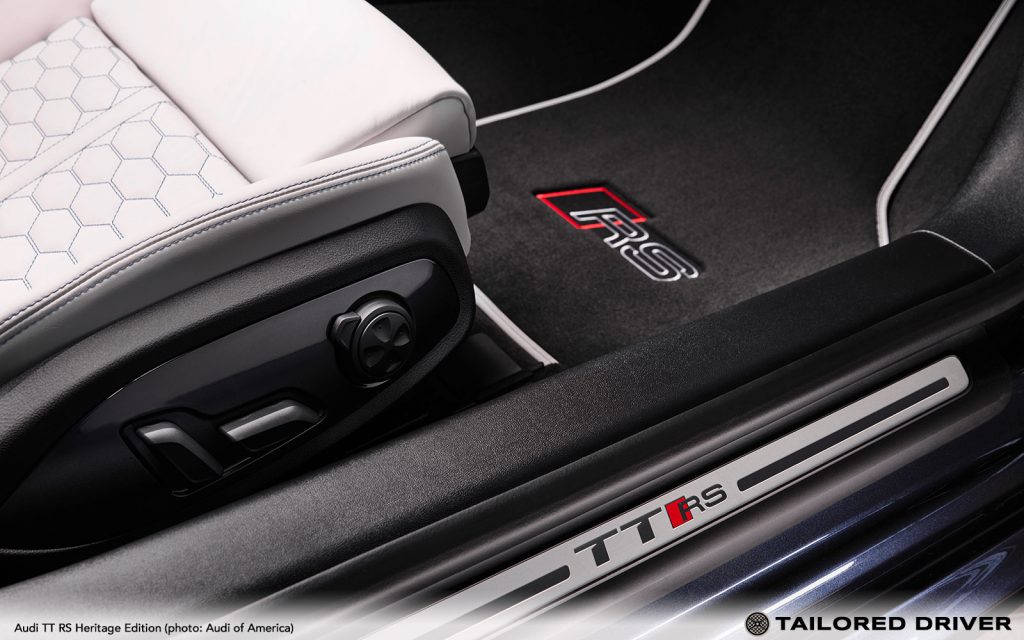
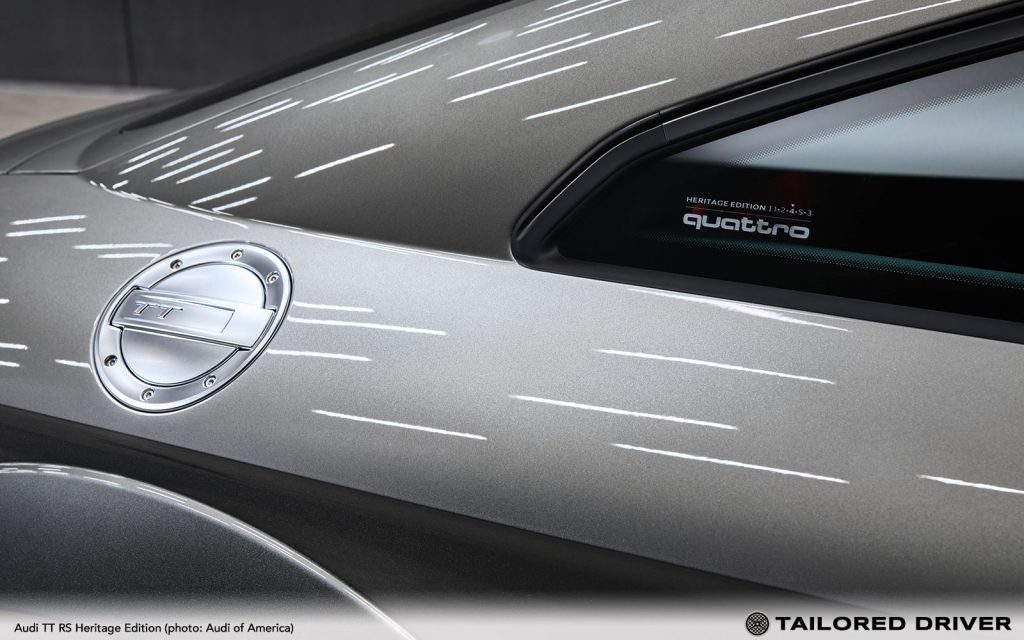
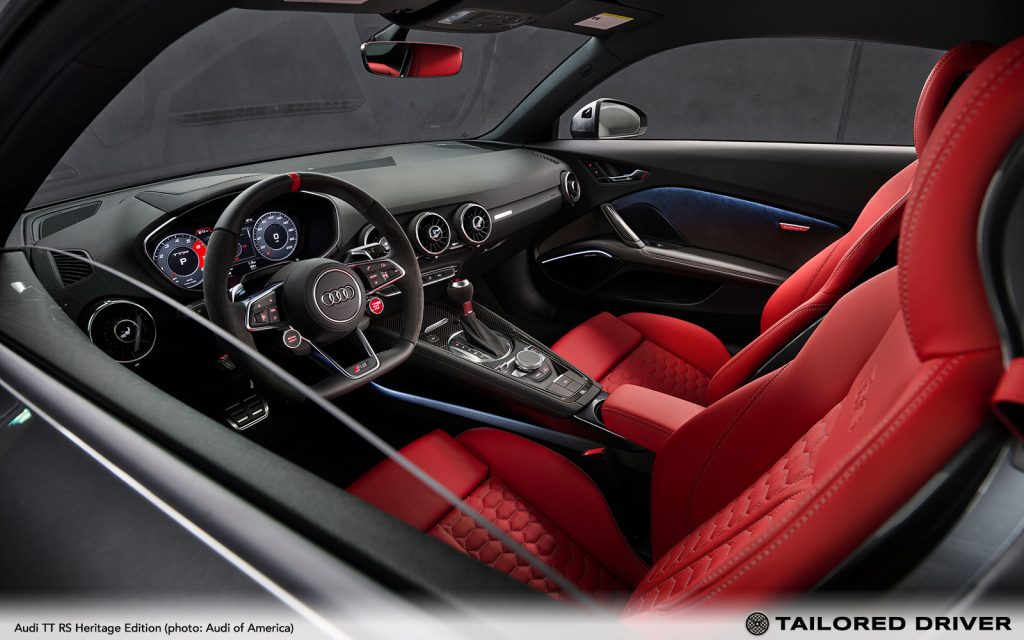
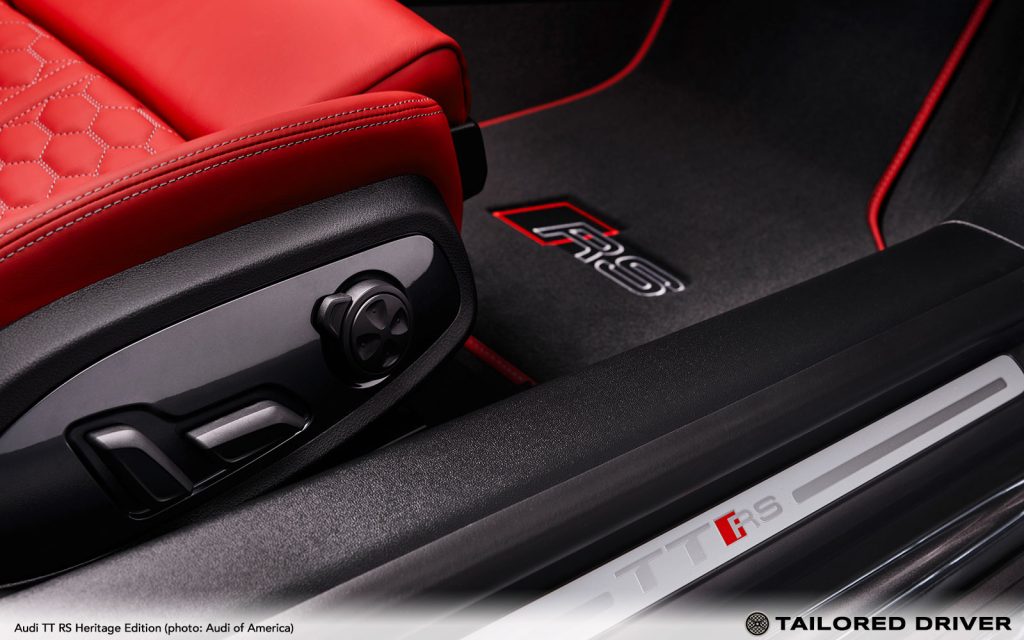
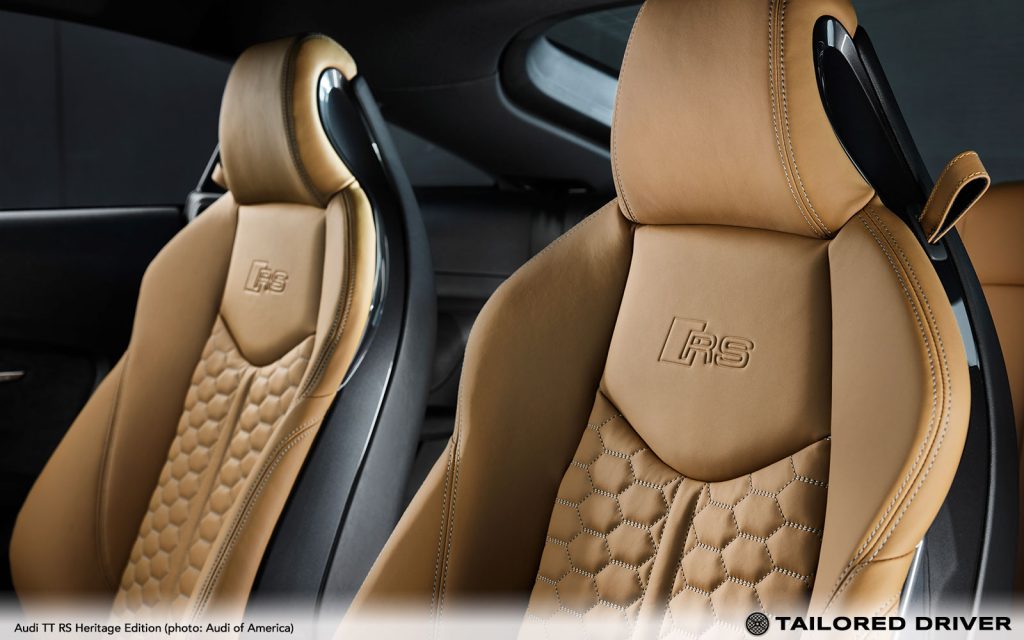
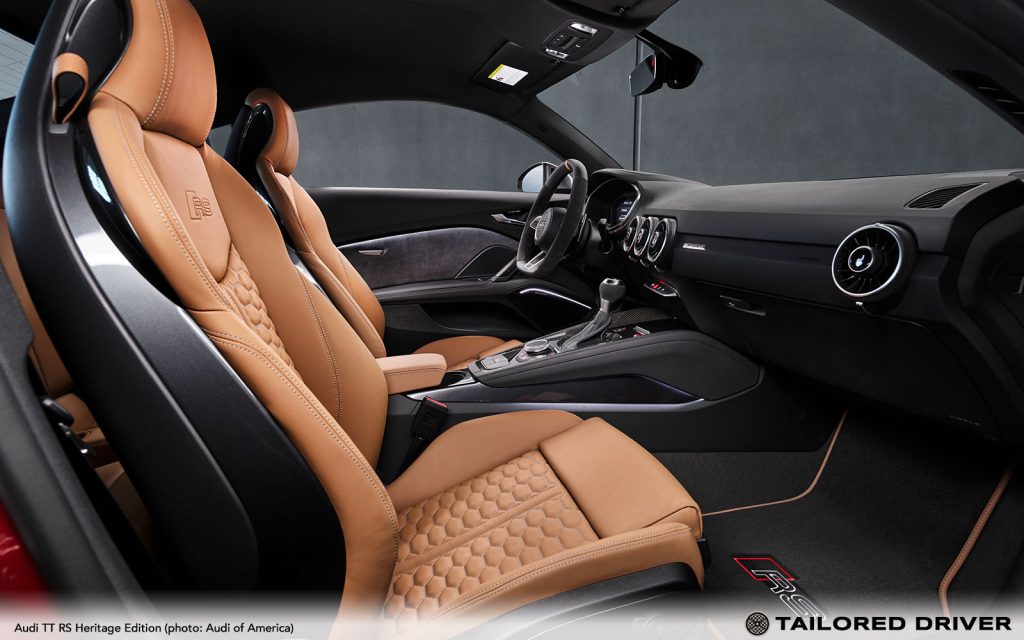
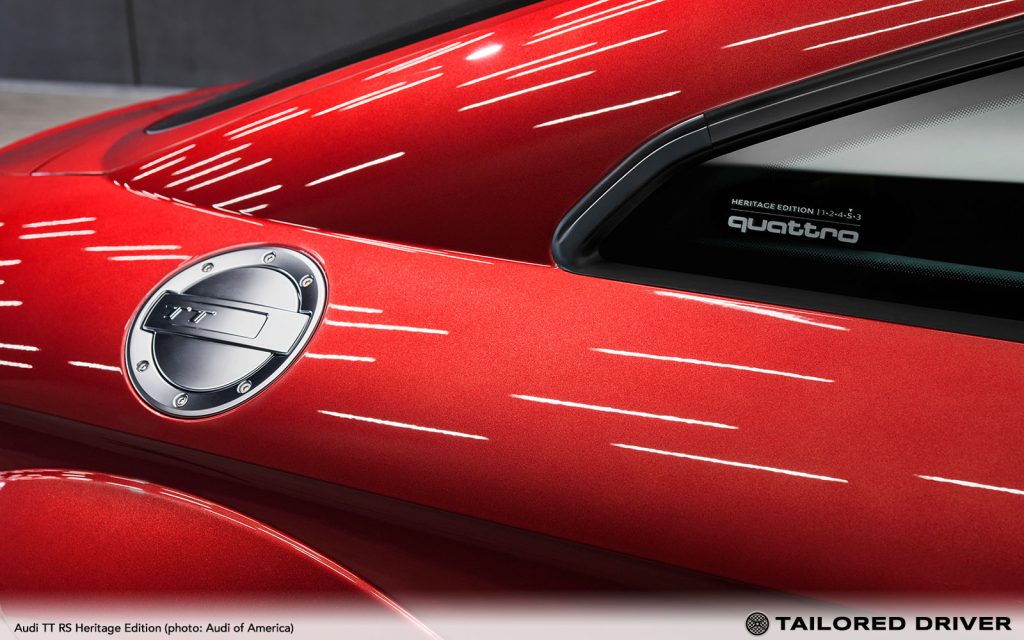
The interior leather and contrast stitching combinations are leveraged from the current Audi exclusive portfolio of upholstery selections, and include several first-time color combinations for the U.S. market. To further underline the exclusivity of the limited edition model, the TT RS Heritage Edition exhibits an understated, yet distinctive etch of “HERITAGE EDITION” script followed by the firing order of the five-cylinder engine “1-2-4-5-3”, underlined by a “quattro” script in the rear quarter glass on the right side of each car.
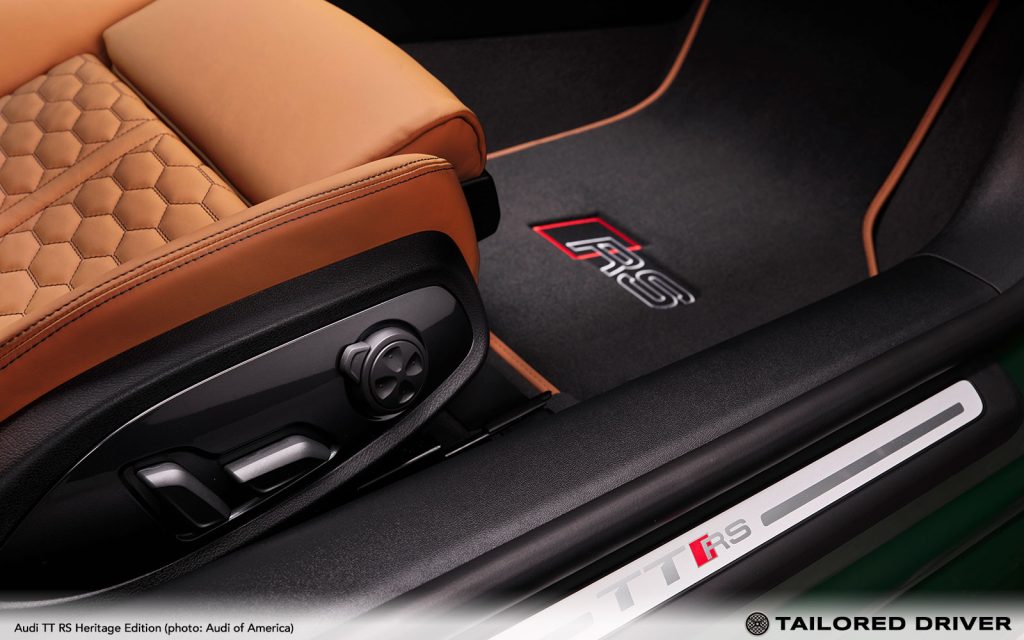
Additionally, the TT RS Heritage Edition presents an exclusive list of standard equipment:
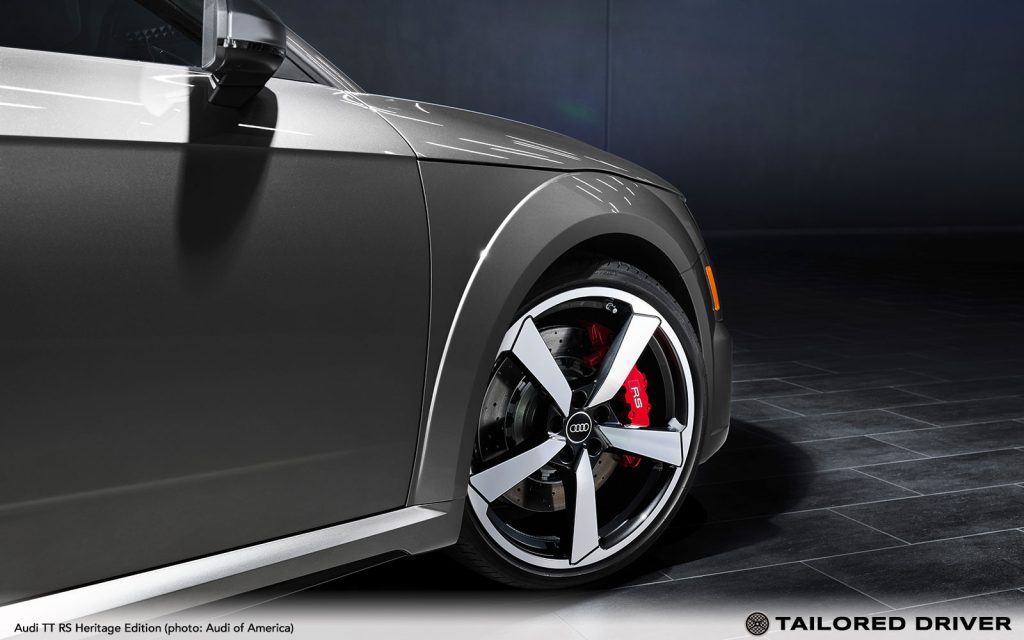
20” 5-arm cutter design wheels in bi-color anthracite finish
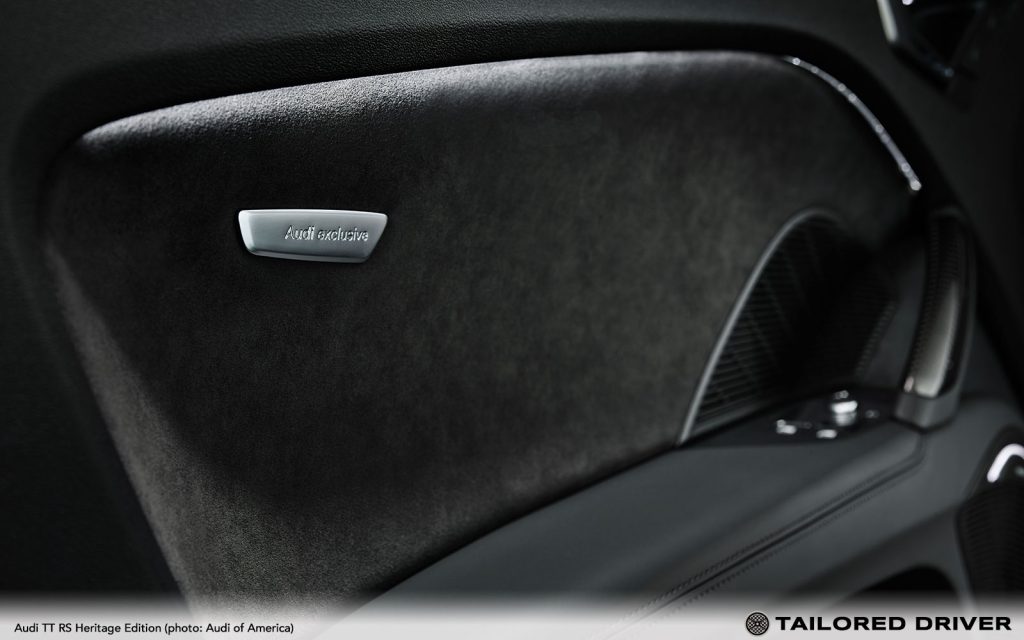
Audi exclusive etching in rear quarter glass
174 mph top speed limiter
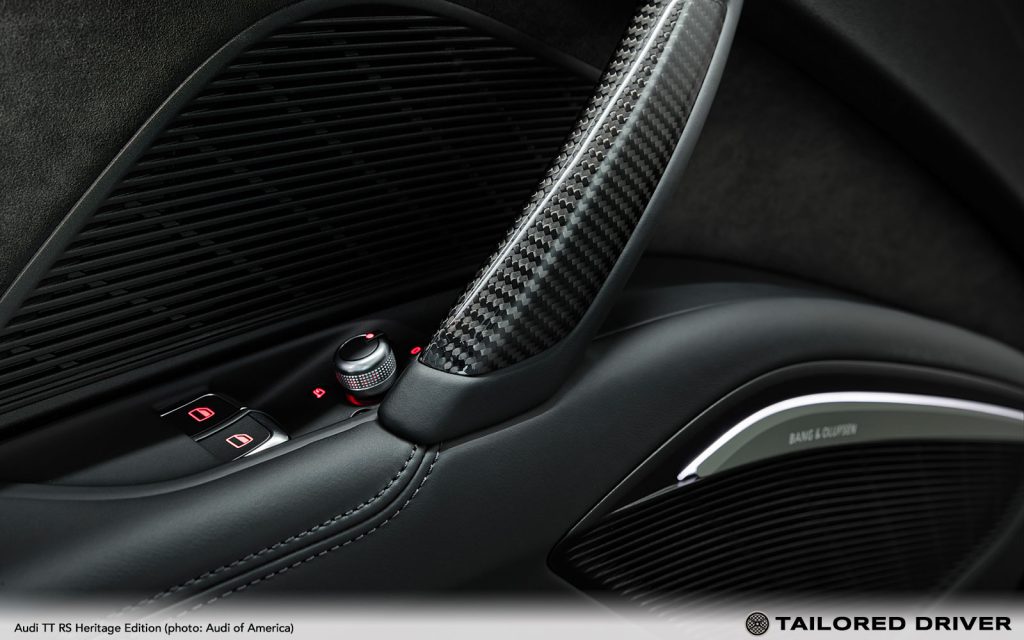
Alcantara covered steering wheel with 12 o’clock marker in leather color
Alcantara covered shift lever
Alu-optic exterior elements including mirror housings
OLED taillights
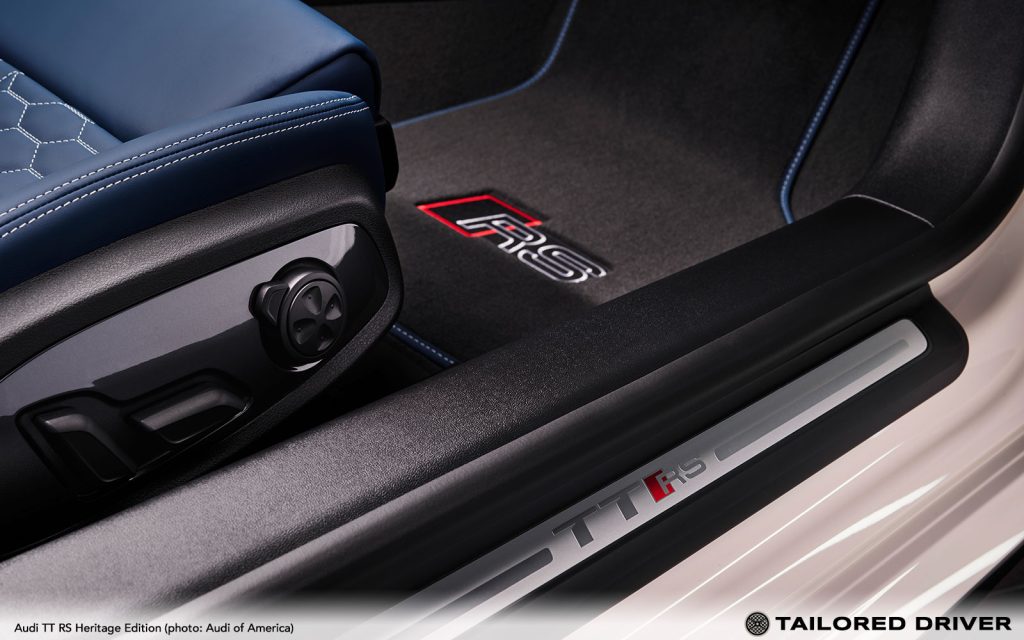
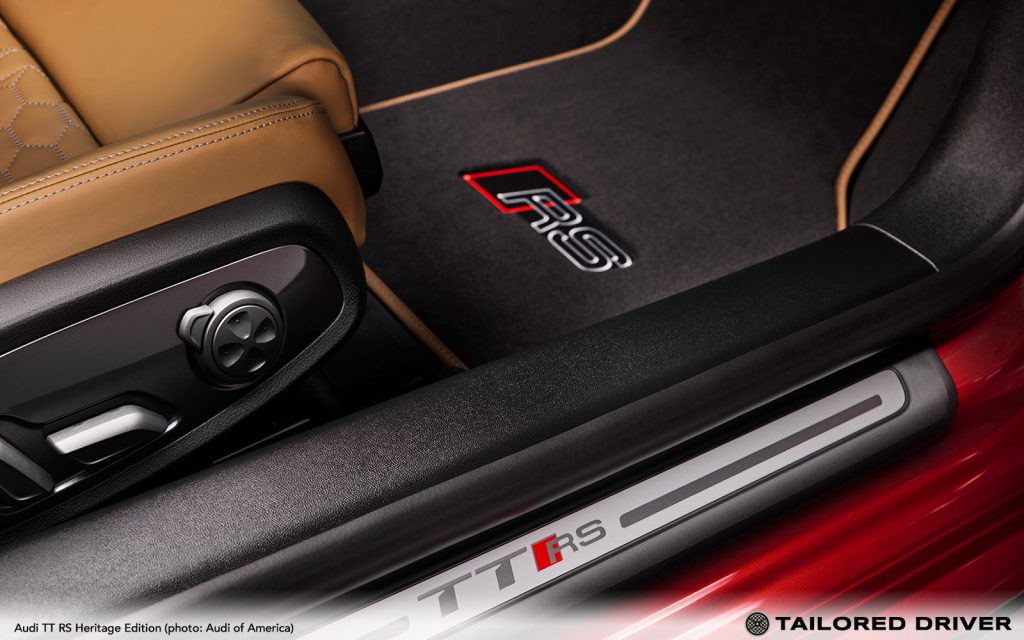
RS logo floor mats with contrast stitching
Sport exhaust with black tips
Electric spoiler / rear wing delete
Hear that heritage sound? It’s legendary performance. The five-cylinder engine has deep historical roots in Audi’s DNA, and is a fundmental pillar of the emotional connection to the Audi Sport brand. The engine has achieved countless victories in motorsports from courses in rally around the world to the tarmac in the IMSA GTO and at the Nuerburgring in the legendary 24-hour race, the 5 cylinder has prevailed. It even earned the “International Engine of the Year Award” nine times in a row since 2010. Yet – it is the unique and distinctive sound of the five-cylinder engine that has captured the emotion of enthusiasts. Due to the odd number of cylinders, and more specifically, the 1-2-4-5-3 firing order, the Audi five-cylinder engine’s sound is unmistakable and presents a symphonic rhythm that is accompanied by deep tone characteristics.
Besides its visibility in motorsports, the legendary engine harkens back to the Ur-quattro coupe from the 1980s, and has been a part of just two U.S. market Audi products over the last few years – the Audi TT RS Coupe and RS 3 Sedan. The engine remains one of brand’s more powerful engines with 394 horsepower and 354 lb-ft of torque that brings the TT RS Coupe from 0-60 mph in just 3.6 seconds.
The return of the five-cylinder. A social network comeback Until 2012, the five-cylinder engine remained absent from the Audi portfolio for nearly 30 years. In 2009, the first Audi TT RS made its global debut in the world markets, and was only a dream to drive on the roads stateside, until Audi of America took a stance to get the car to the U.S. In 2011, Audi of America would exhibit a signed petition on Facebook to bring the first generation TT RS to the U.S. market – the petition resulted in an astounding 12,000 signatures in just one month.
After the success of the social media campaign, Audi of America brought the product in limited production run for just two model years, 2012-2013. In both years, Audi of America offered a total of approximately 1,200 highly collectible TT RS models properly outfitted exclusively with a six-speed manual transmission, which became the final manual transmission offer in any Audi RS- model, globally.
Fond farewell While 2022 is the last model year for the TT RS in the U.S., the model will live on in other international markets for some time. The 2022 Audi TT RS Heritage Edition and the 2022 Audi TT RS model are expected to go on sale in the U.S. toward the beginning of 2022. The TT RS celebrated its 10 year anniversary since its introduction as a 2012 model year in the US market.
The limited edition model, no doubt to become a sought after model for enthusiasts and collectors alike, celebrates the victory, performance, and expansive history of the legendary five-cylinder engine for the Audi brand which will continue to be available once the all-new RS 3 goes on sale next summer in the U.S.
MSRP pricing detail
Model
2022 Audi TT RS Heritage Edition
$85,350
2022 Audi TT RS
$73,200
Prices exclude $1,045 destination charge, sales taxes, title, options, and dealer charges. Dealer sets actual price.
At Audi of America, we believe the Future is Electric. Our U.S. model lineup will be 30 percent electrified, including fully electric vehicles and plug-in hybrids, by 2025, and globally we are committed to net CO2 neutrality by 2050. In 2020, Audi sold 186,620 vehicles in the U.S., and this year, we look forward to the next chapter in our journey to reinvent premium mobility with the arrivals of the fully electric Audi e-tron GT and Audi Q4 e-tron. Learn more about who we are and how we’re working to create a more electric, innovative, and inclusive future at audiusa.com or media.audiusa.com.
This information and any vehicle specifications are preliminary and subject to change.