Tag: interior

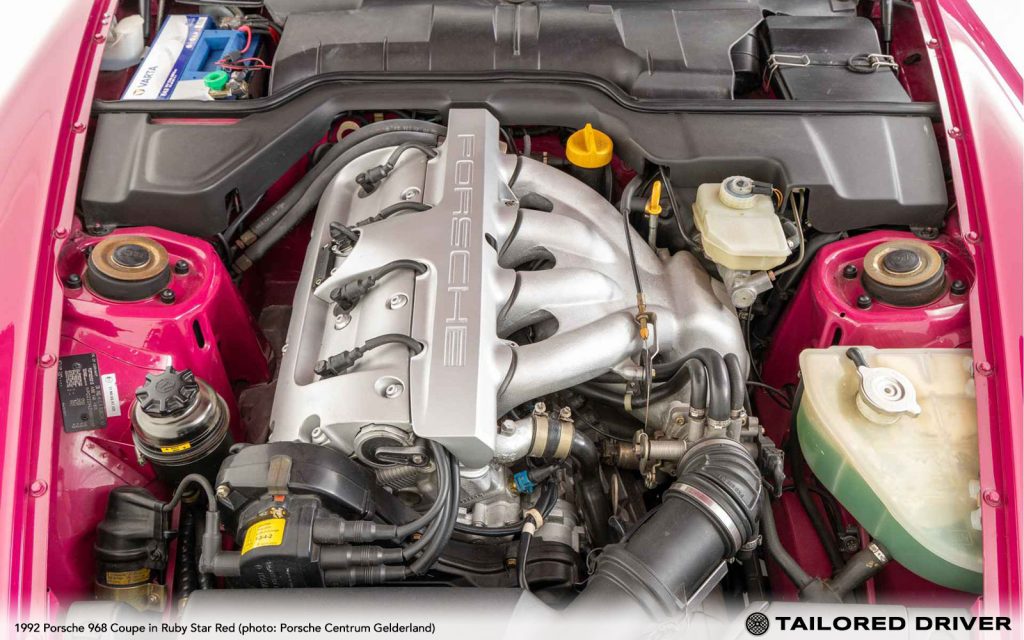
  • European Market Find: Rubystone Red Porsche 968, Low Mileage / High Price

    European Market Find: Rubystone Red Porsche 968, Low Mileage / High Price

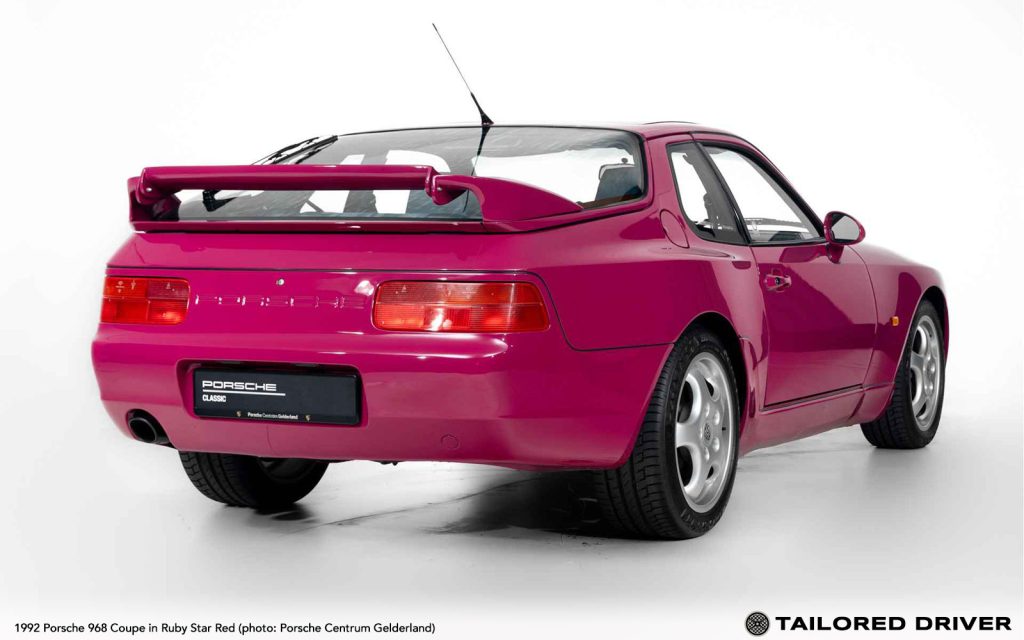
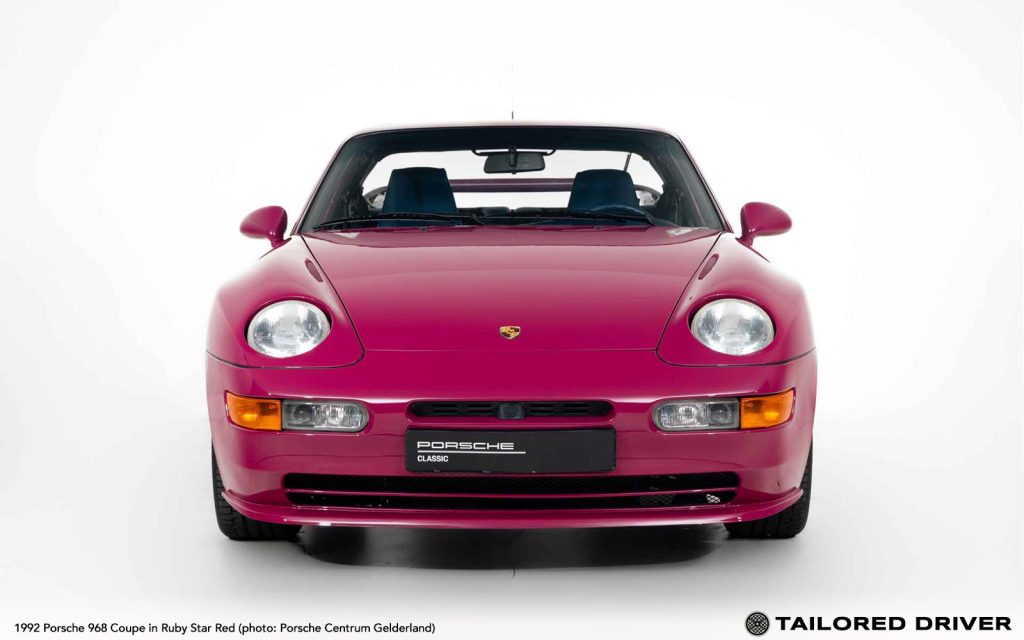
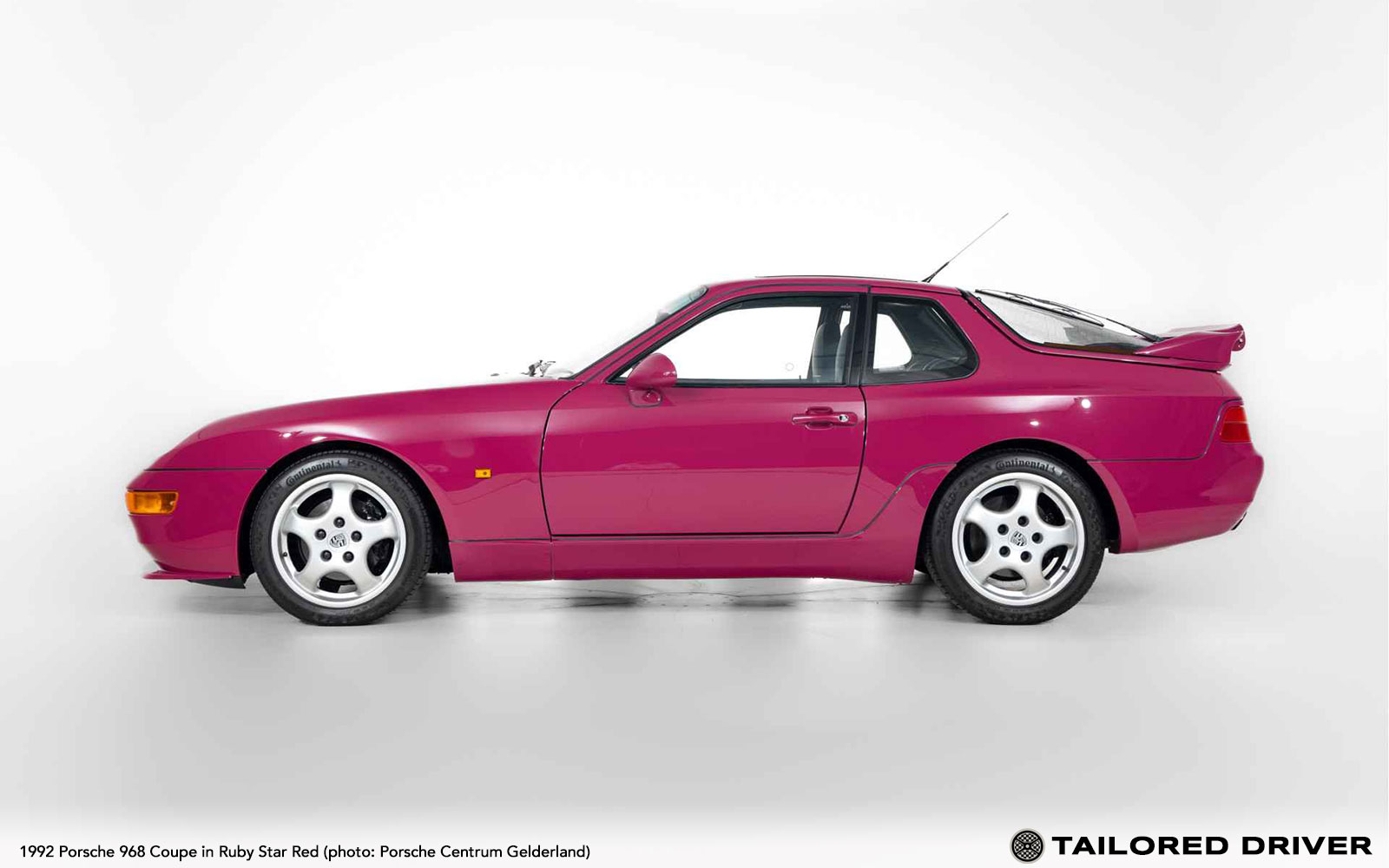
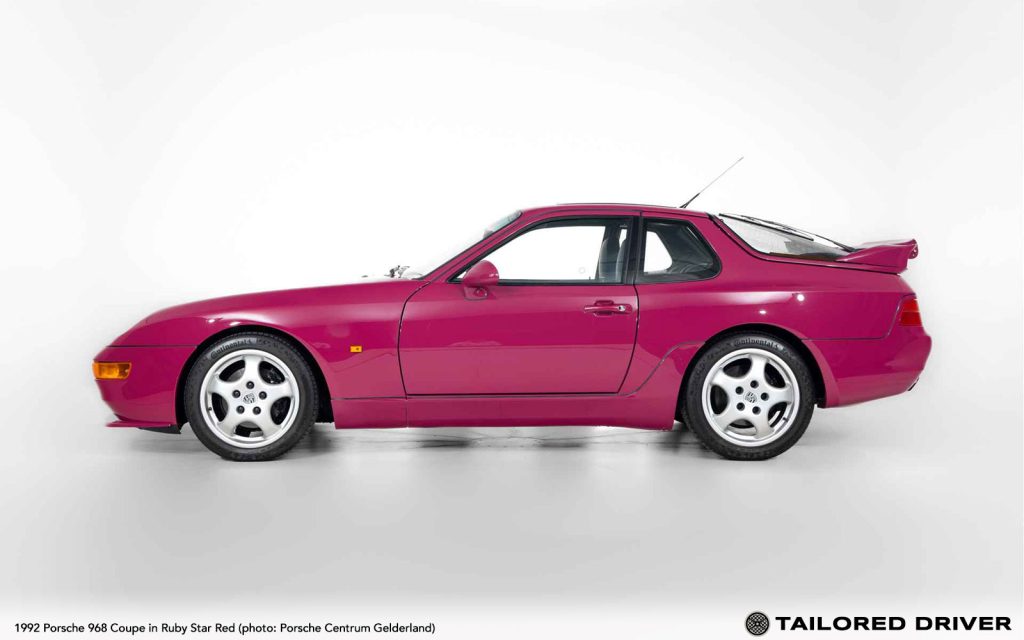
    What: 1992 Porsche 968 Coupé
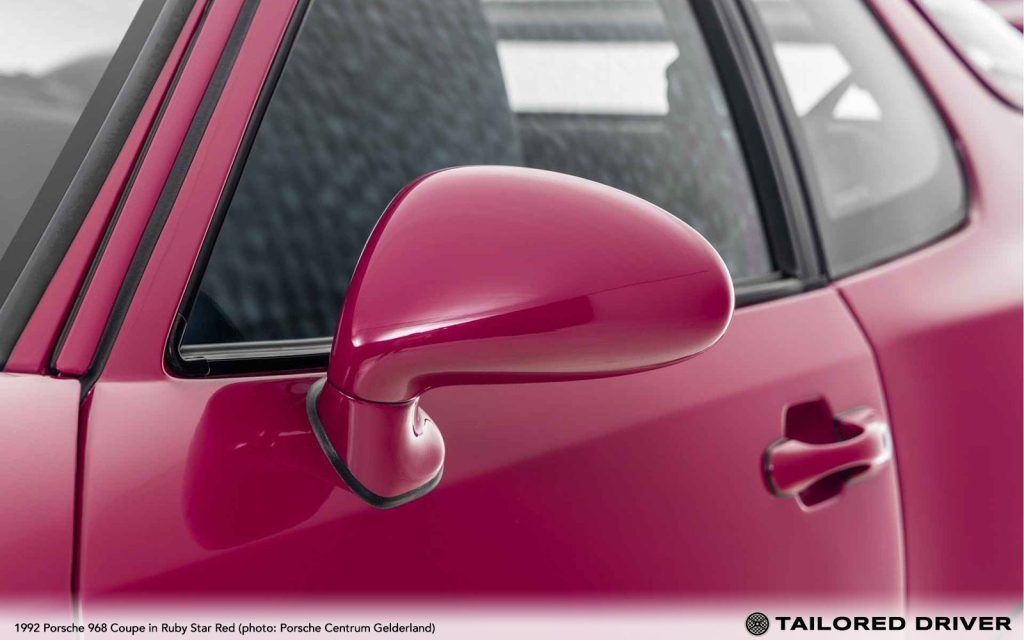
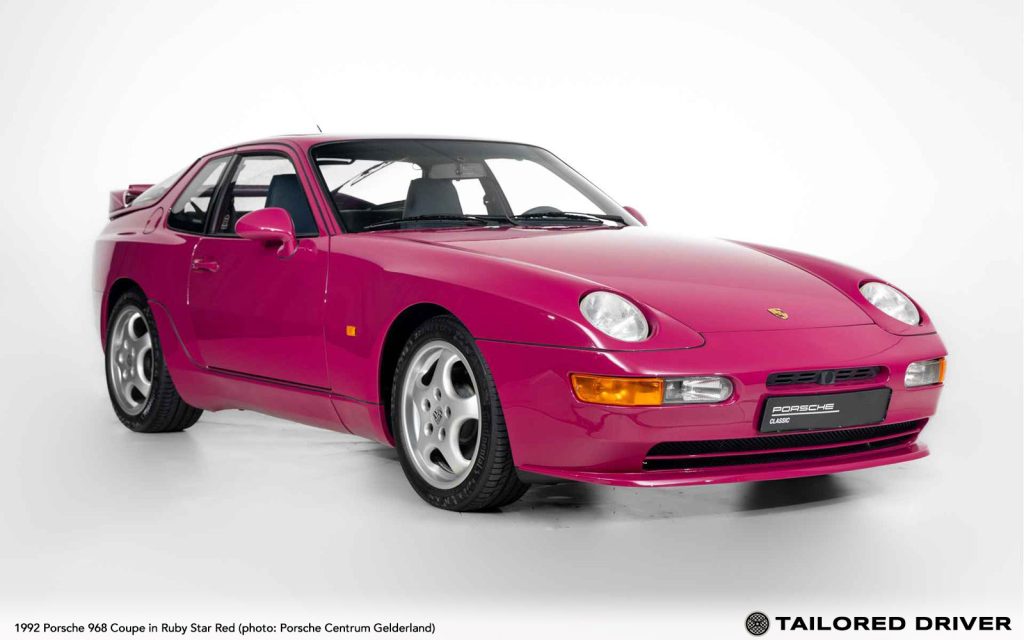
    Color: Rubystone Red a.k.a. Ruby Star (sternrubin; 82N; Porsche)
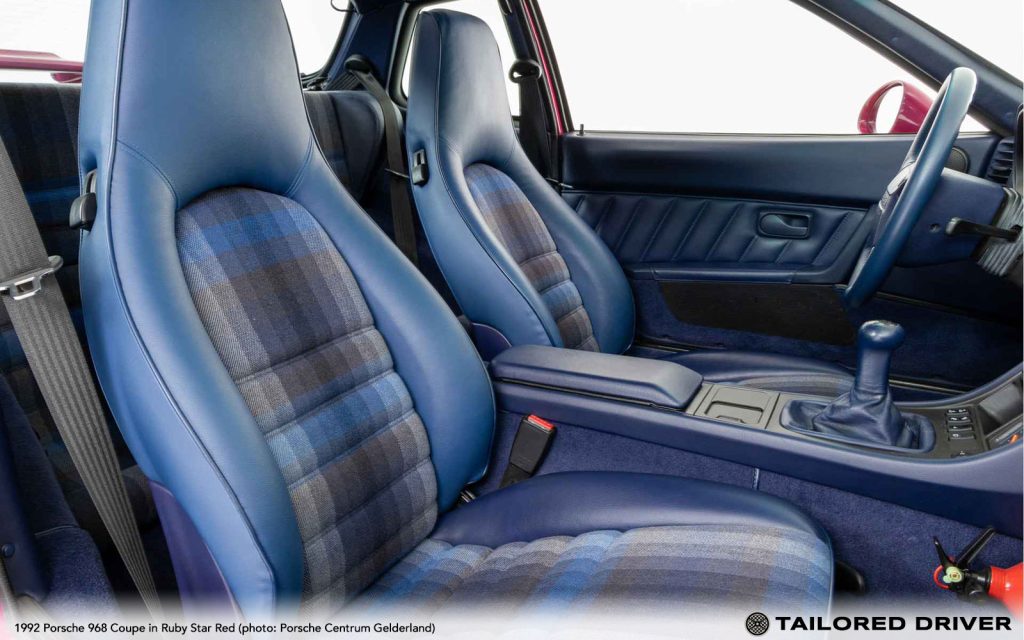
    Interior: Blue
    VIN: N/A
    Mileage: 42,125 km / 26,175 miles
    Price at Time of this Writing: € 74,900
    CarFax: N/A
    Window Sticker: N/A
    Location: Heteren, NL
    Dealer listing: Link
    Why we love mention it:

    The Porsche 968 is (or rather was) one of the last good deals in the Porsche market. It’s also arguably one of the best Porsches of the transaxle era. And while the European market only Clubsport or the super rare Turbo are the big money versions, super low mileage, great spec and incredible condition can approach 911 money. Take for instance this Rubystone Red version sitting inventory at Porsche Centrum Gelderland in the Netherlands.

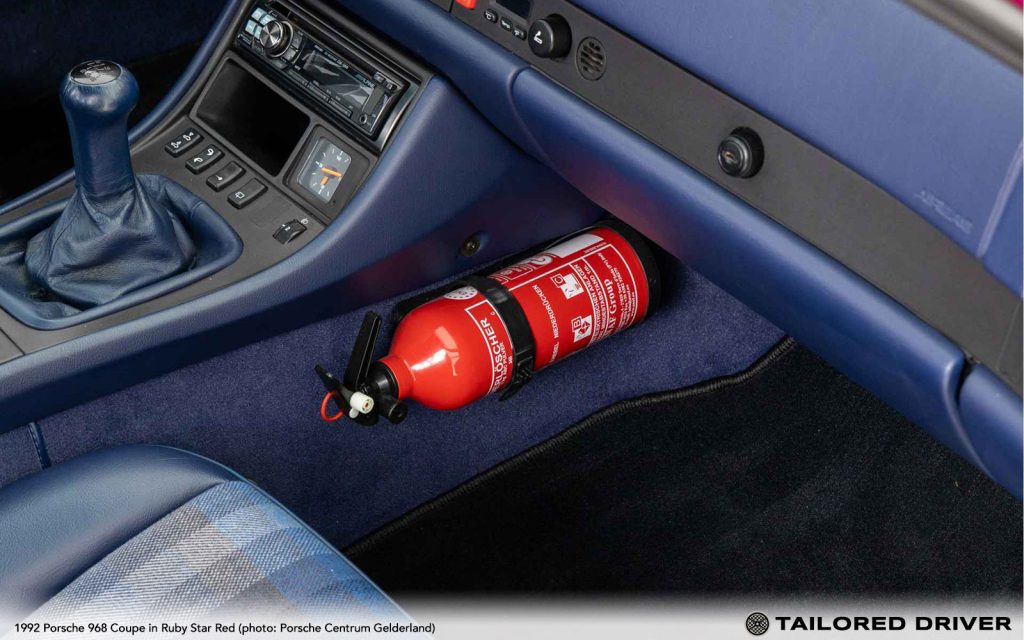
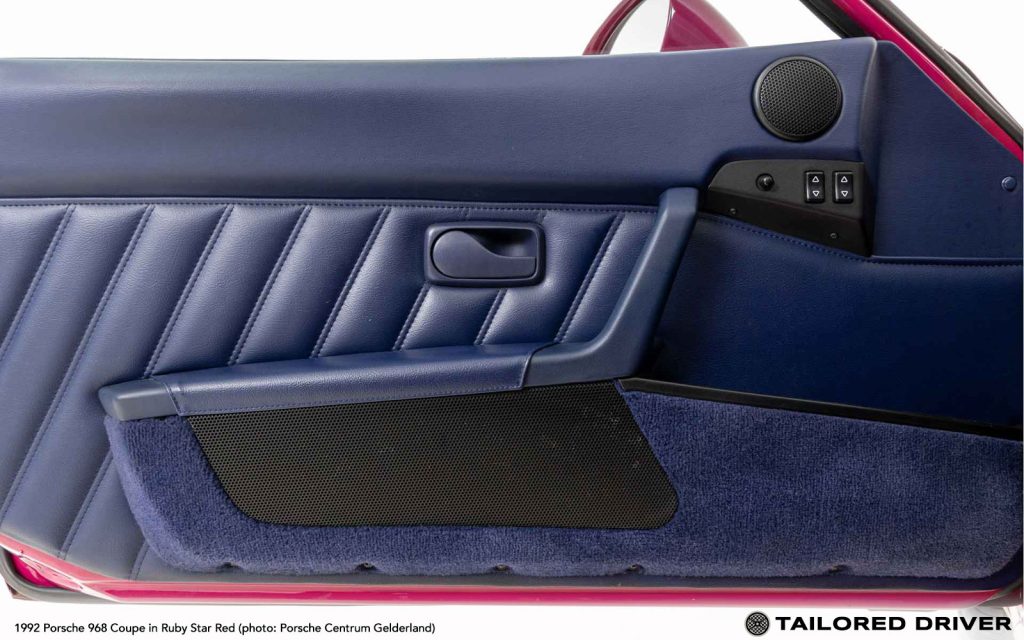
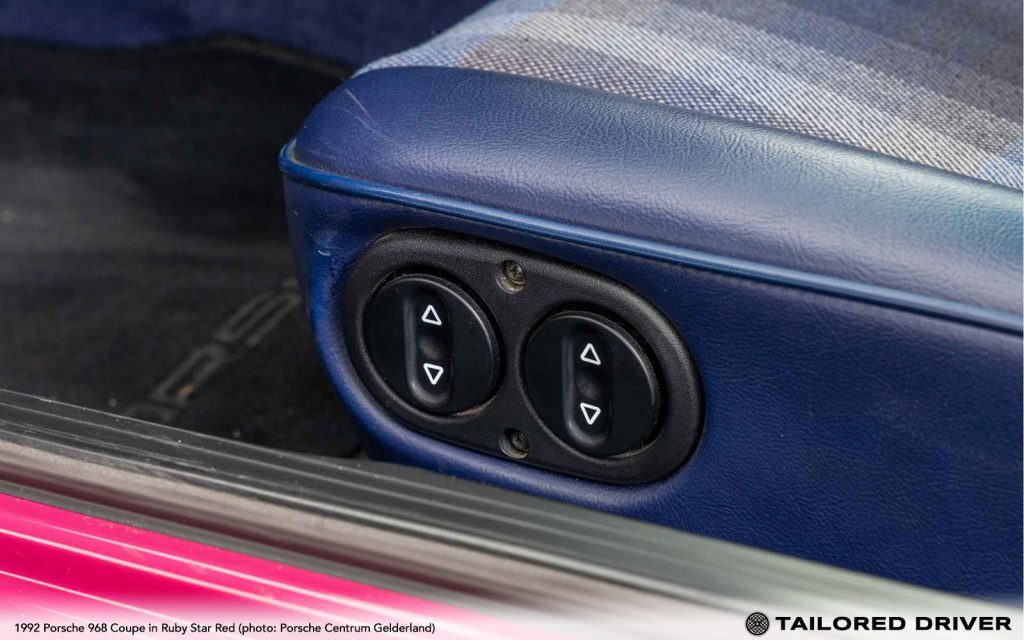
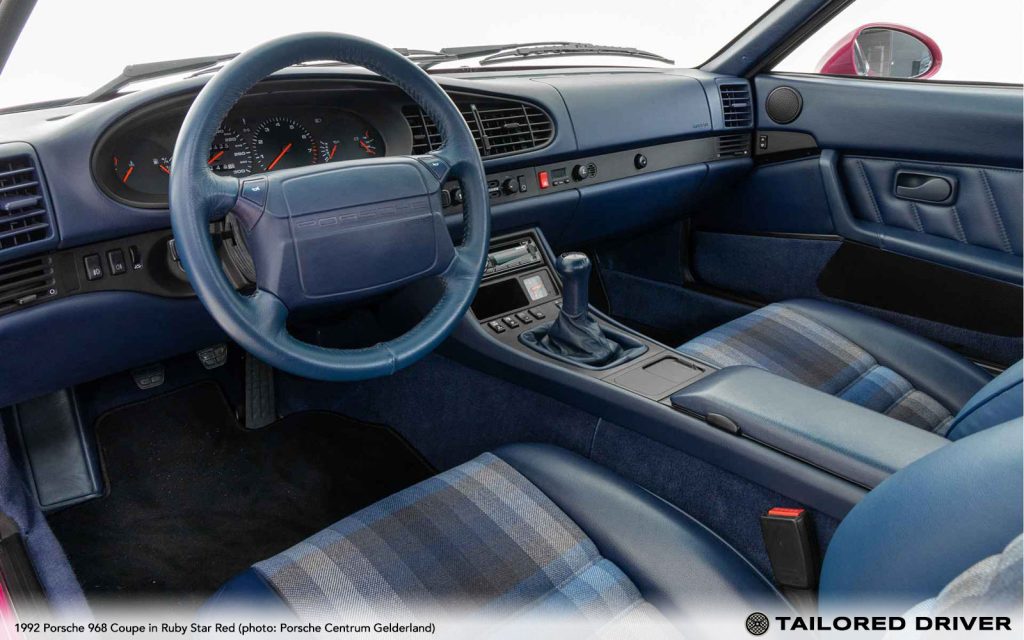
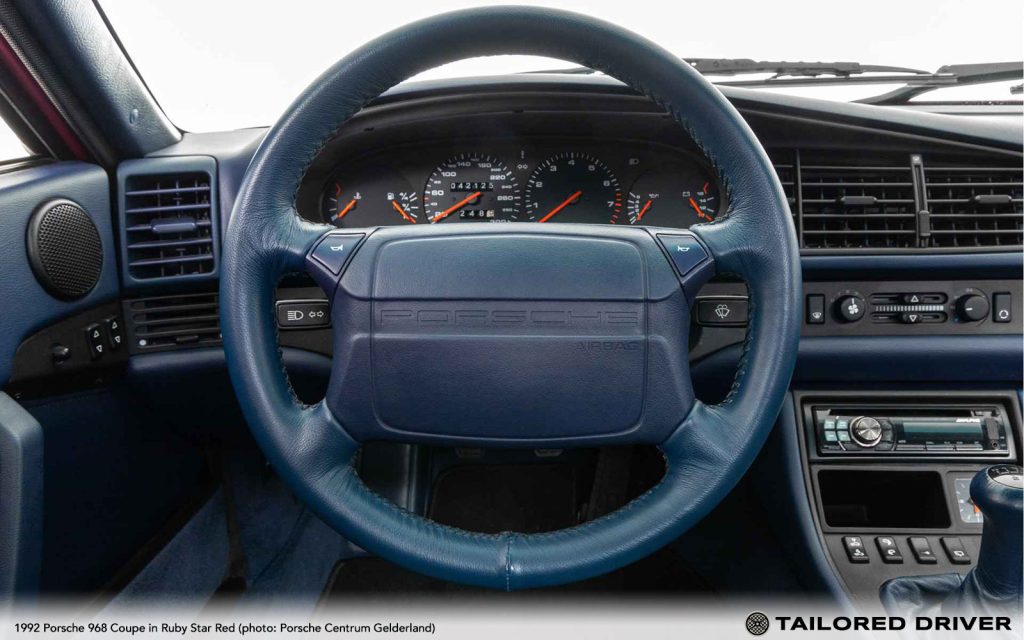
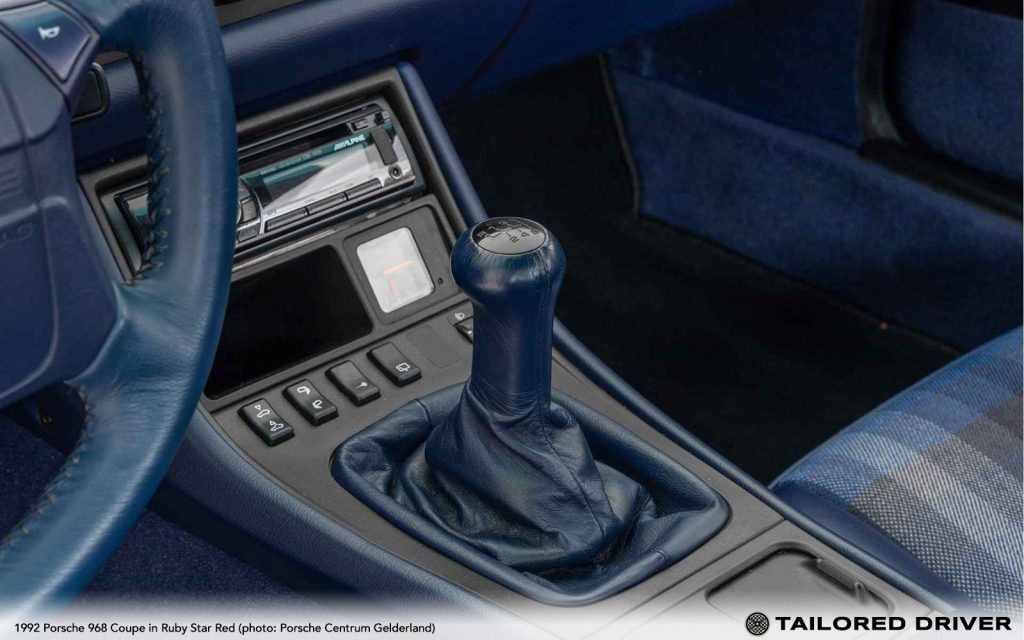
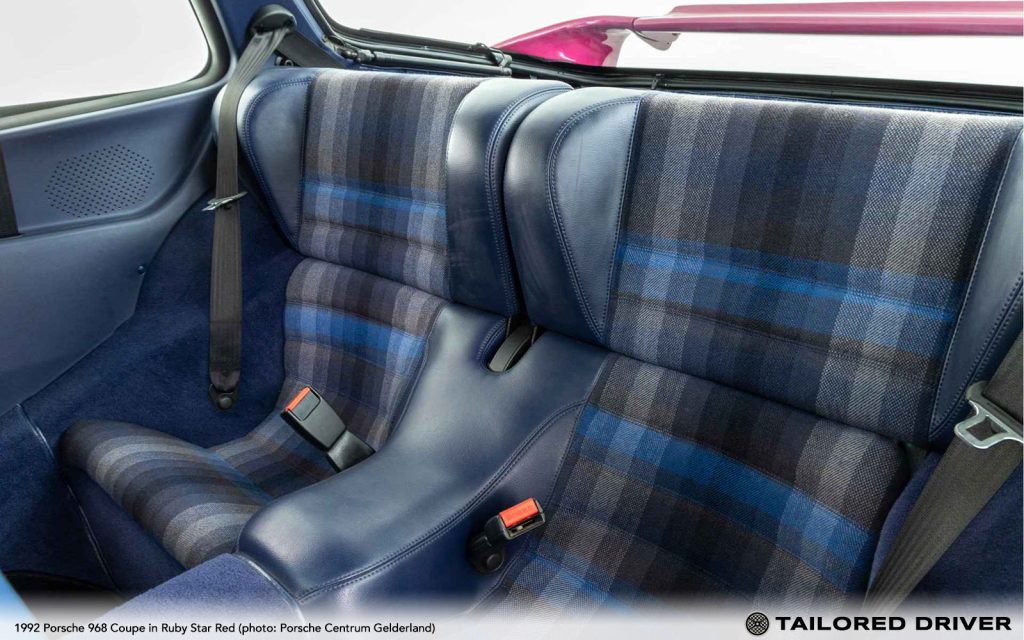
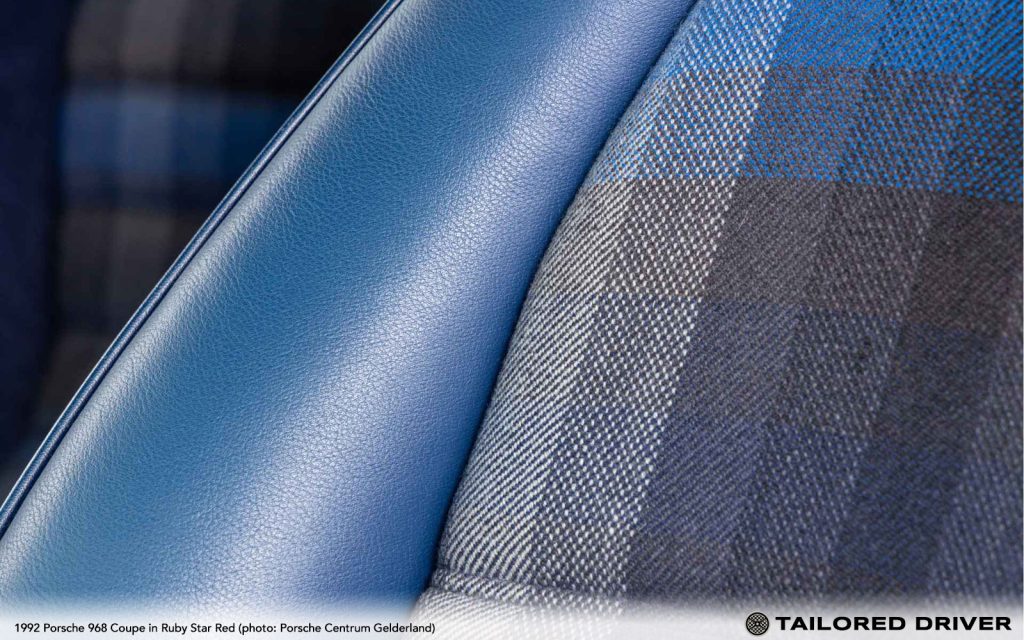
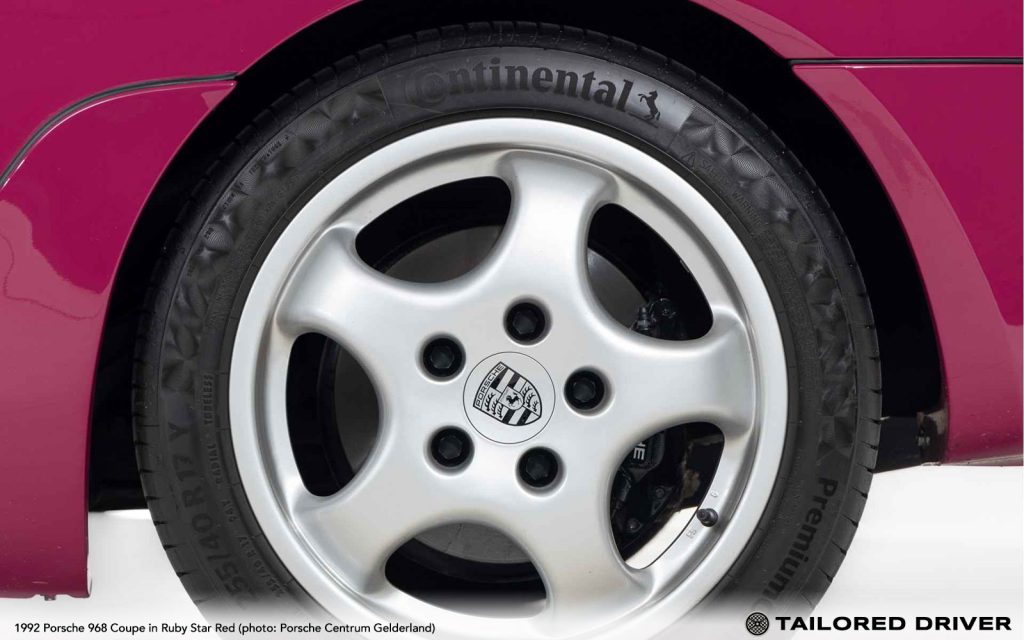
    At little over 26,000 miles logged, the car is practically new. And we’d argue that while perhaps polarizing, the spec is incredible. From the 964 era Carrera Cup comes the original Rubystone Red (a.k.a. Ruby Star), and it’s paired with blue leather and partial Studio Check fabric seats.
    A translation of the meat and potatoes of the listing goes as follows:

    Hereby we offer you this beautiful 968 3.0 Targa with only 42,000 km! Presented in a truly fantastic color combination. The exterior in the cult color Rubystone with the interior in a combination of leather and fabric in multicolor cobalt blue. Exactly as it was delivered new to its first owner by Porsche Zentrum Alltöttnig in Germany. The original purchase invoice, many other invoices, the maintenance booklets and the original German Letter are all present.

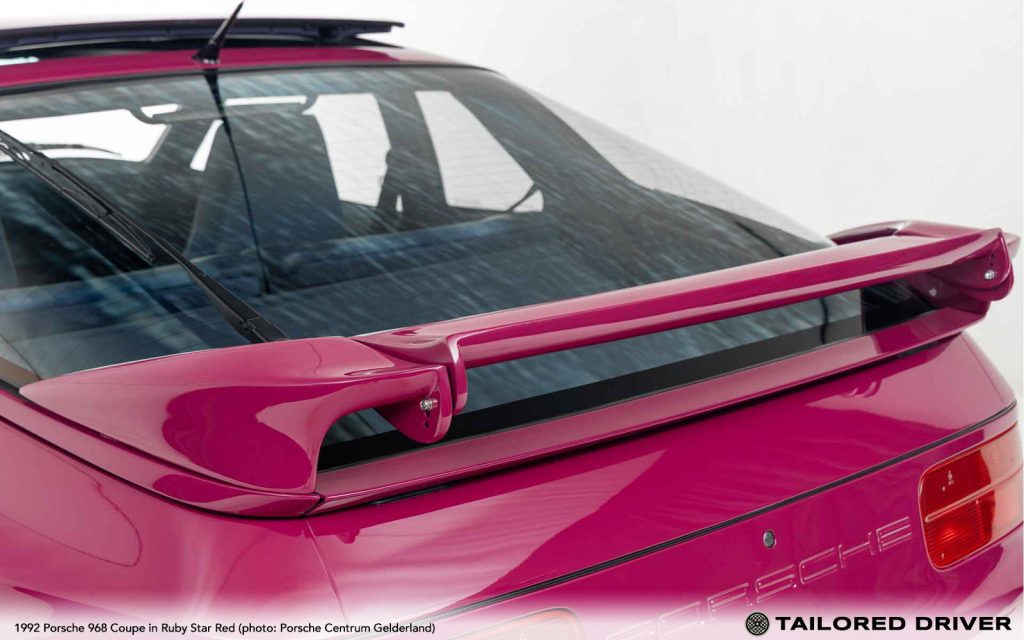
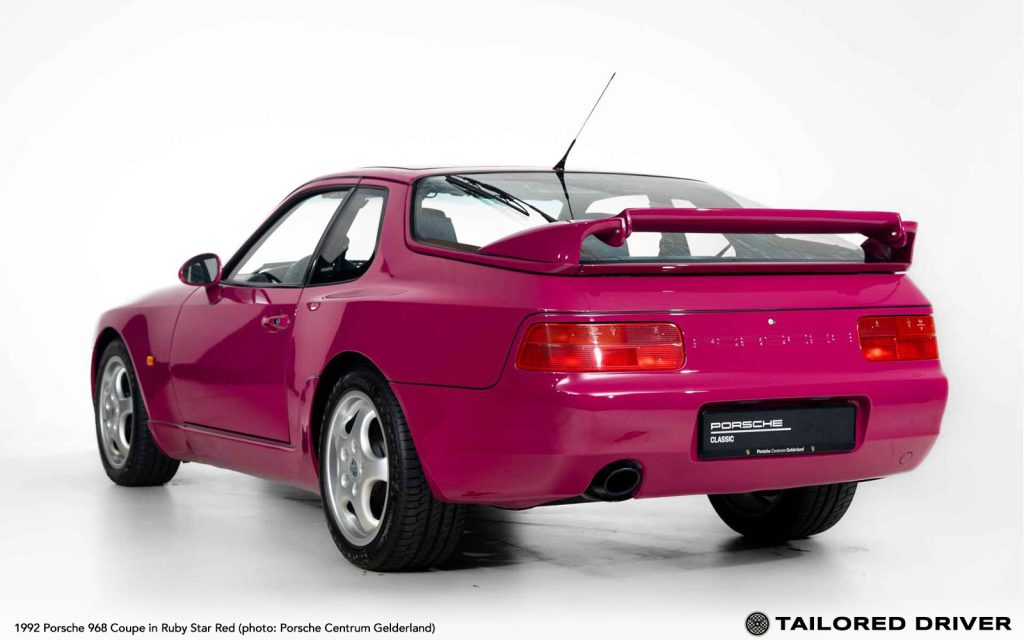
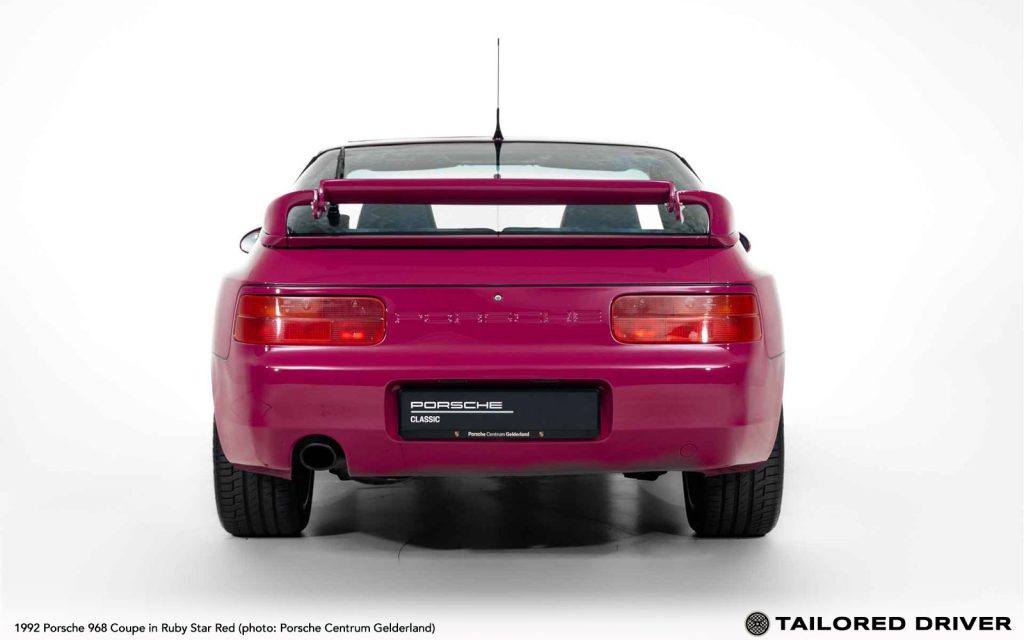
    Worth noting, while amazingly pristine, our eye is catching two potential modifications that **could** have come from the factory. These include the chin spoiler (that was possibly a Porsche Tequipment accessory) and the adjustable rear spoiler that appears to be identical to the design on the 968 Turbo. Factory replica parts like these do exist in the aftermarket, which would be less desirable on a car this original. It’s possible these were special wishes items, but that should be checked via the mentioned original purchase invoice the dealer has on file or with the Porsche Classic department in Stuttgart.
    Another peculiarity worth noting on any European market 968 (or 944, or 924) is the mention of the term “Targa”. In the U.S., familiarity with G-body 80s 911 models with full open Targa roofs can be confusing when you see one of these cars listed also as “Targa”. In regard to the transaxle cars mentioned, a Targa simply refers to the very large sunroof that came on these cars from the factory.

    Whether those parts are original or not, that’d be easy to rectify for an owner seeking ultimate originality. And if they’re not original and you like OEM plus upgrades from maybe the ultimate 968 model ever, consider it a bonus.

    As with any of our European Market Finds, this car is older than 25 years, making it an easy import into the U.S.A. should you be so inclined.
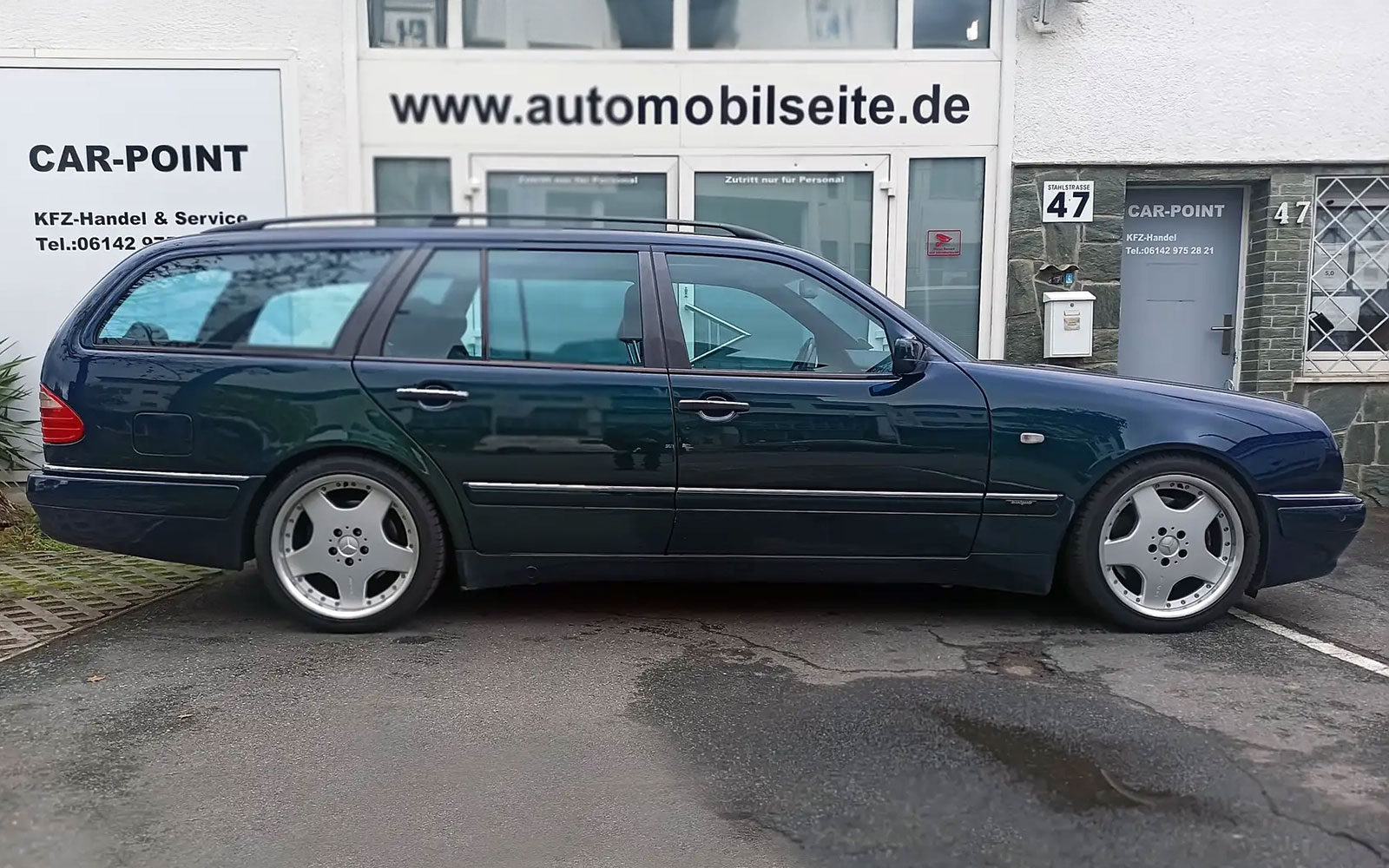
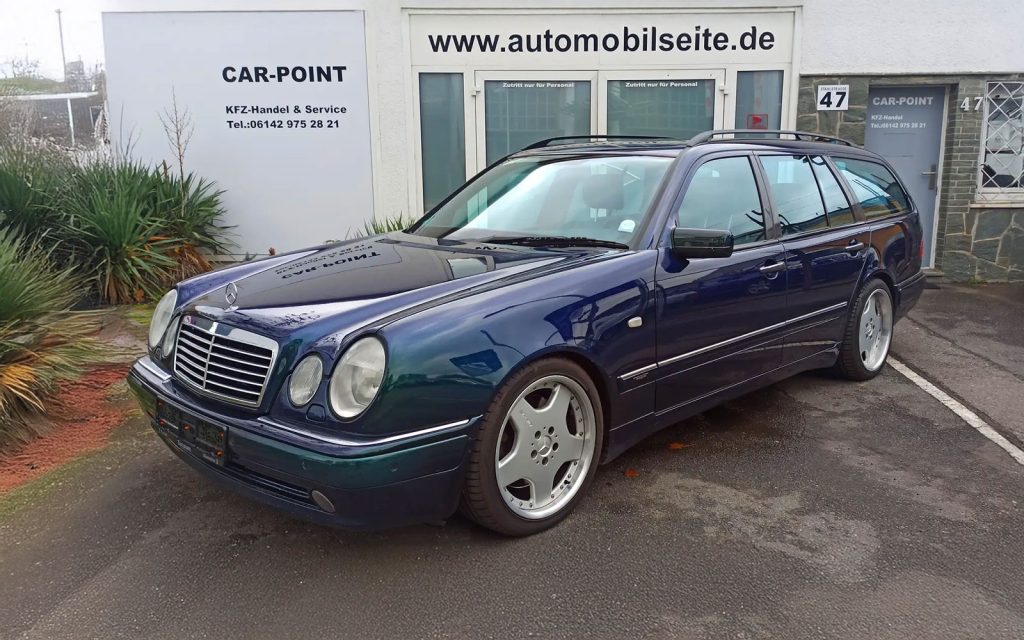
  • European Market Find: Mystery Blue 1999 Mercedes-Benz E 55 AMG Avantgarde Wagon

    European Market Find: Mystery Blue 1999 Mercedes-Benz E 55 AMG Avantgarde Wagon

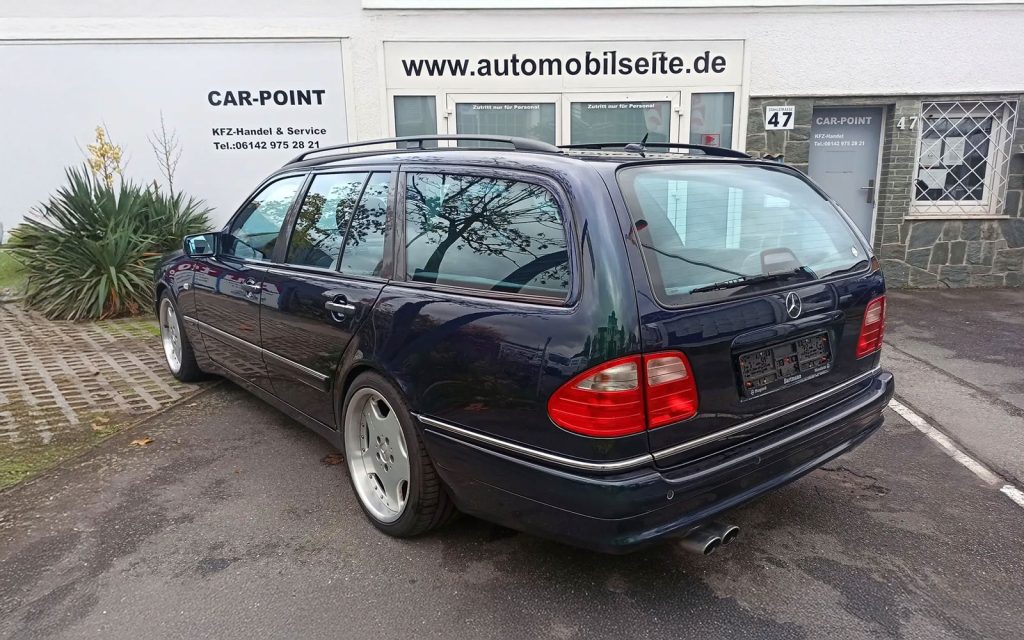
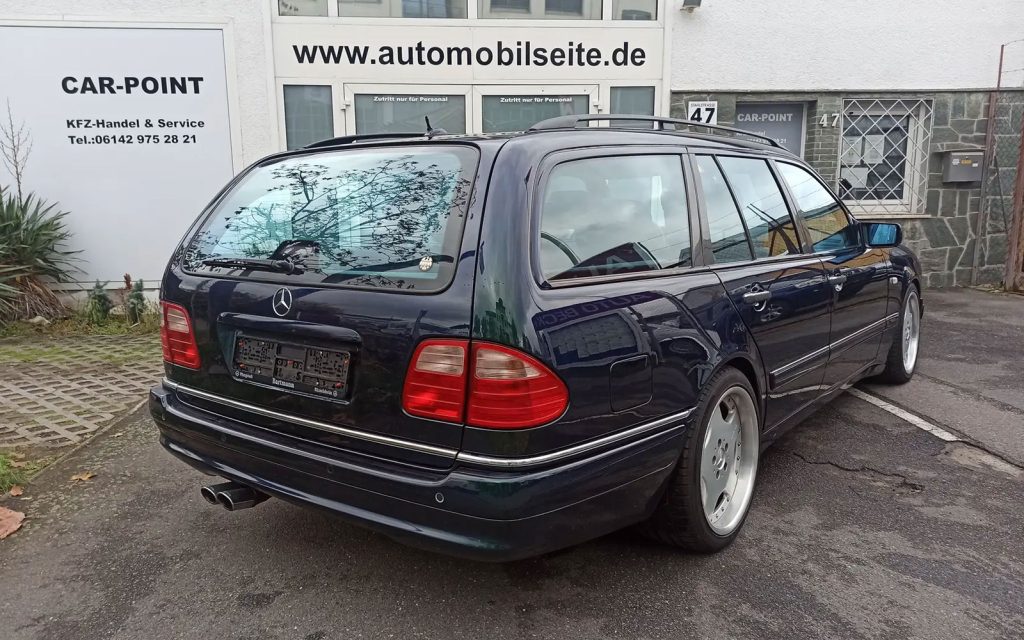
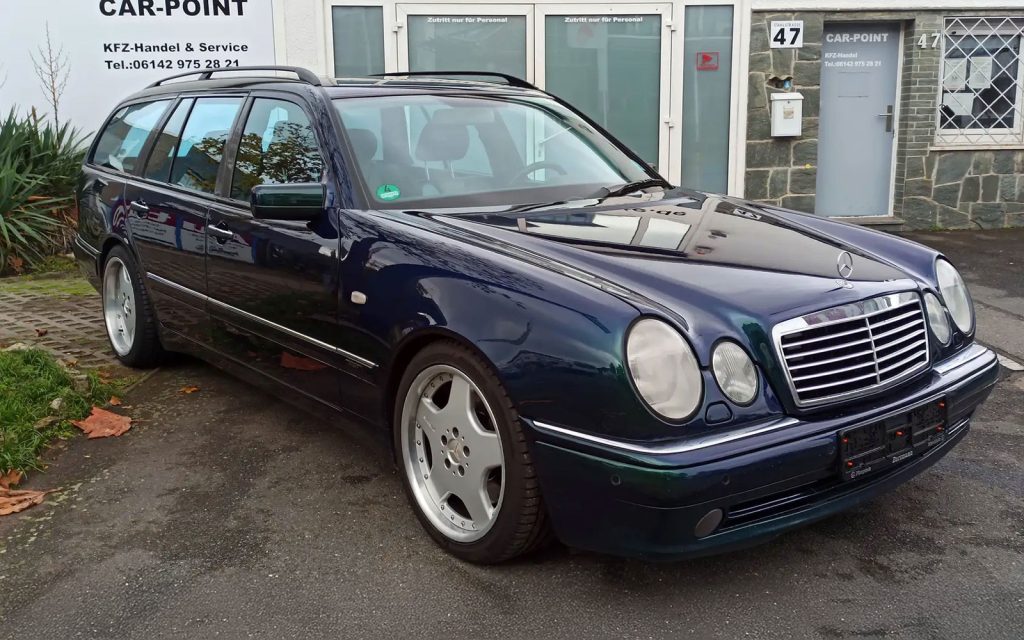
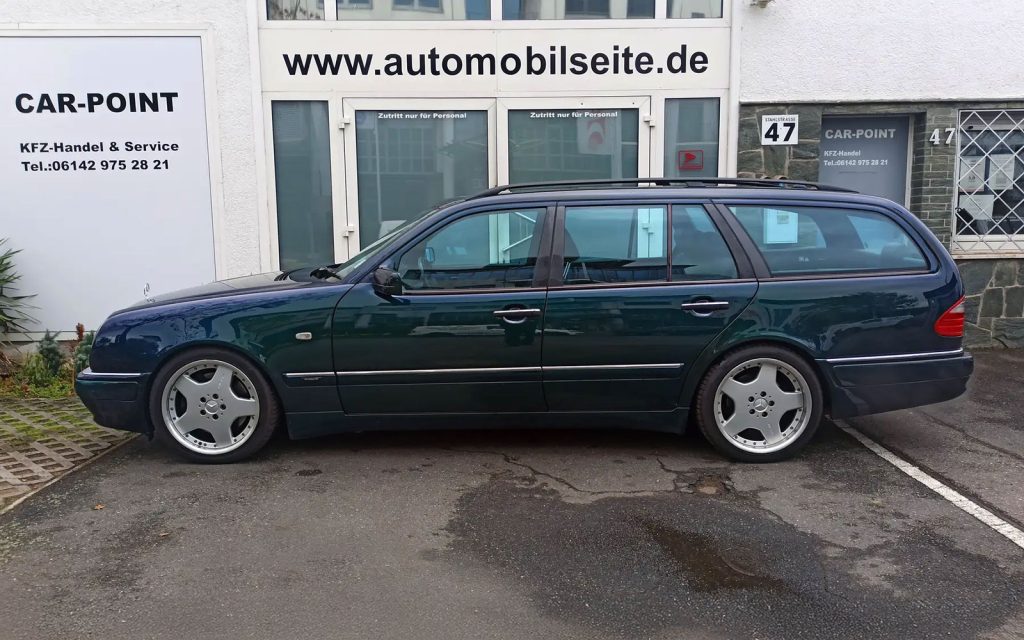
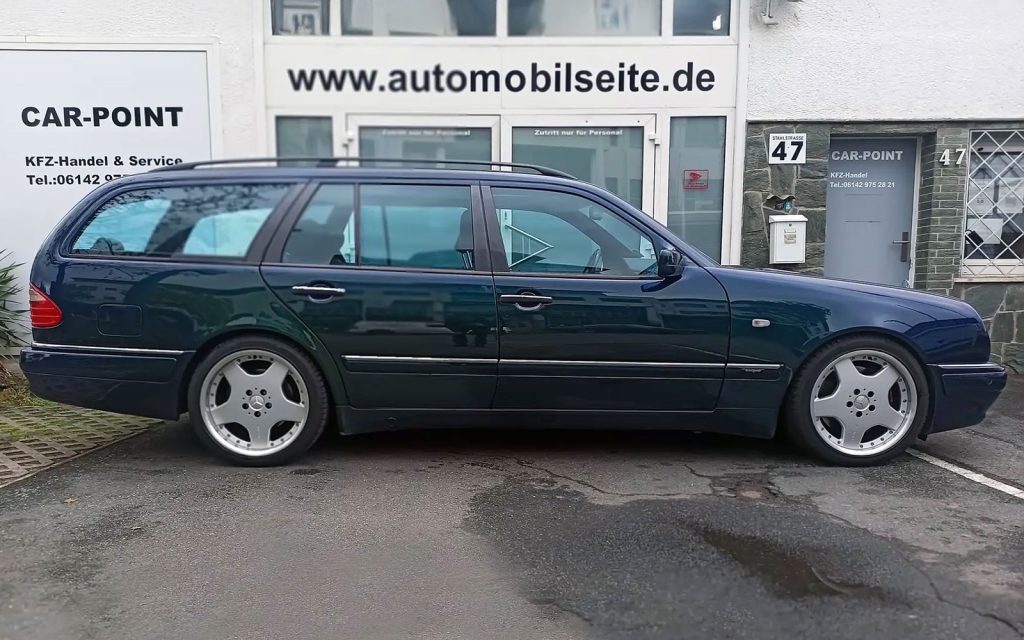
    What: 1999 Mercedes-Benz E 55 AMG Station Wagon
    Color: Unknown Green or Blue
    VIN: N/A
    Mileage: 199,999 km (24,273 miles)
    Price at Time of this Writing: € 19,900
    CarFax: N/A
    Window Sticker: N/A
    Location: Rüsselsheim-Königstädten, Germany
    Dealer listing: Link

    Why we love it:

    Hear us out. Yes, we know the E 55 AMG Station Wagon was sold in the United States. They’re exceedingly rare, especially in solid survivor condition, but they were sold here. Still, anyone who loves these cars or is seeking a unique long roof may find this one worth going through the extra effort of importation. That it’s old enough for easy import is one obvious reason, but more so is the unique build specification this car got from the factory. This sort of specification would have been extremely difficult if not impossible for anyone in North America to order, so it’s worth noting… even if it does have a dash of turn-of-the-century Y2K kitsch in the color choices.

    Regarding the color, it’s a bit of a puzzle. It’s listed as “green” and 027 Designo-LCP paintwork, then later in the thorough option code listing we see Z98 PAINT FINISHES OUTSIDE THE SAMPLE CARD. So, we know it’s special paint, but we don’t know what color as “027” is effectively ambulance white in the lexicon of Mercedes-Benz color codes.

    Looking over the photos, the color almost appears to be a predominantly blue metallic that fades to green from certain angles or in certain lighting conditions. So, we’re not even sure if it’s blue or green. Maybe it’s both.

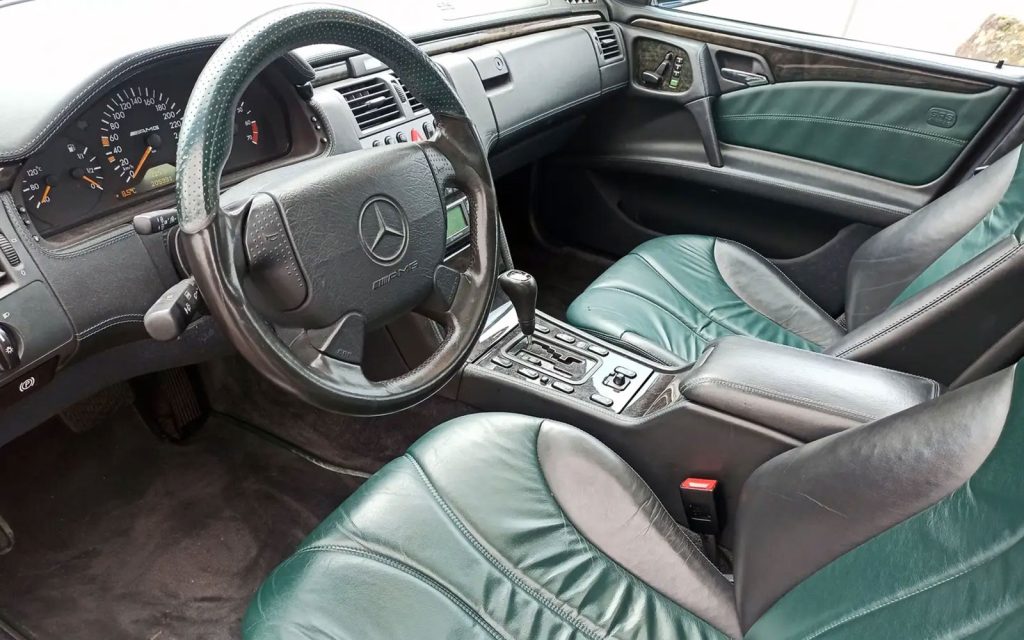
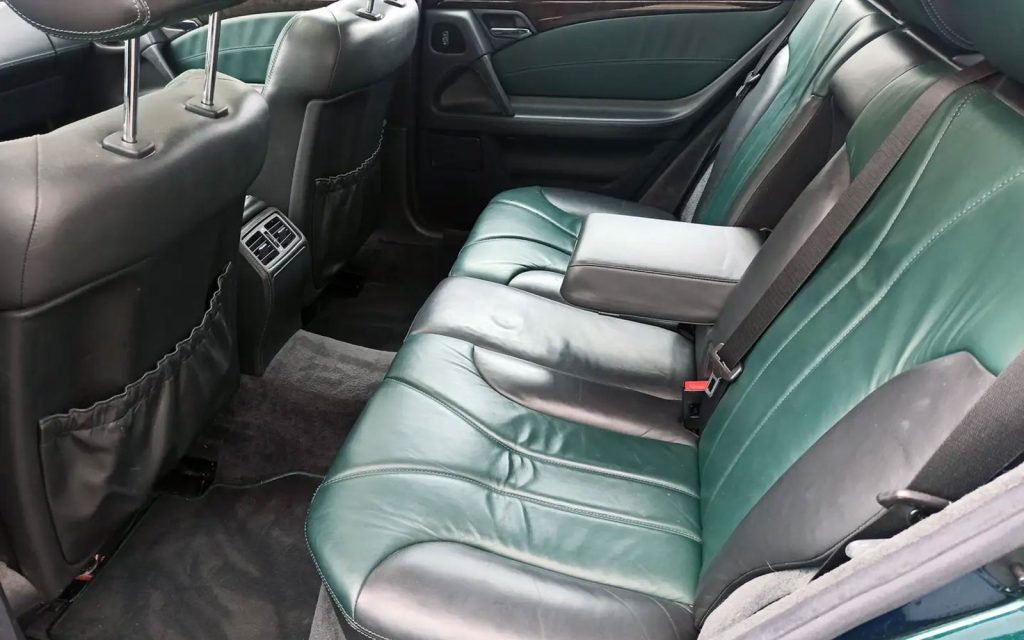
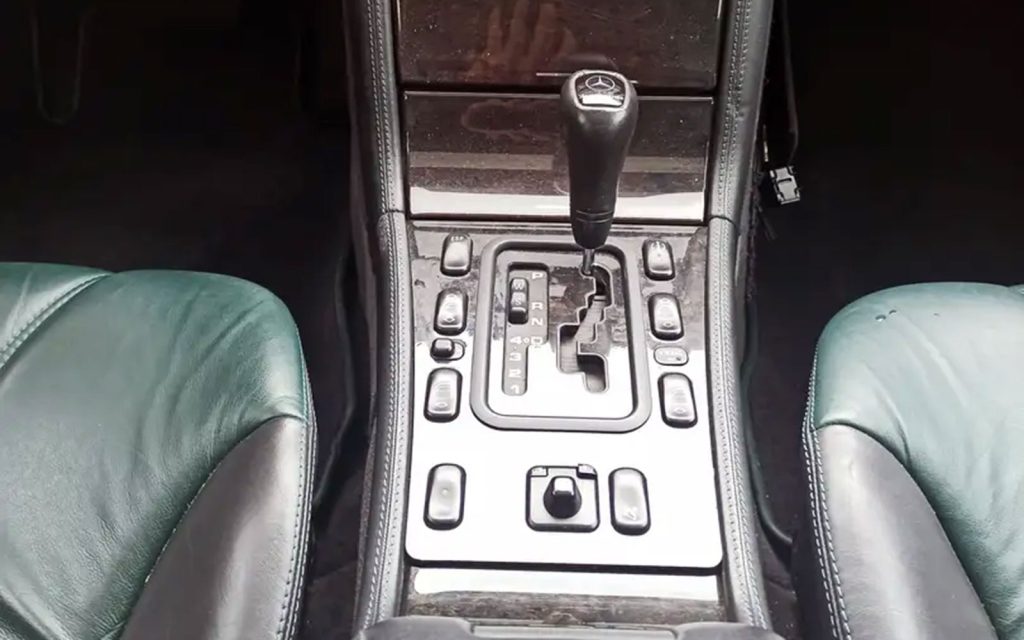
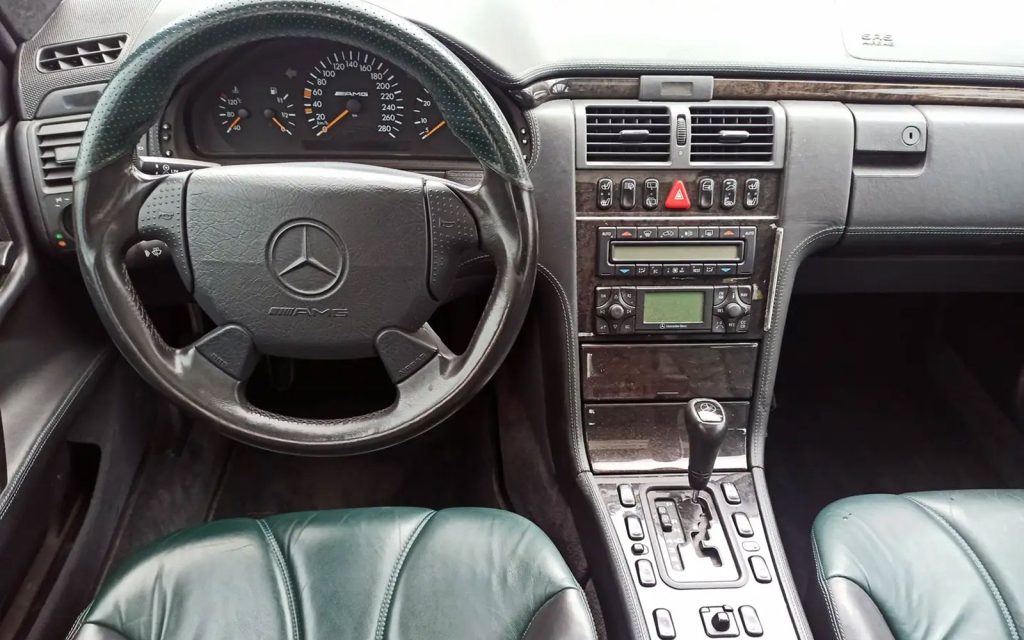
    Inside, the car has a period “Avantgarde” interior package, which is typically two-tone leather with segments of the seats in some more bold color. In this case, that color is green that would have been popular in the late 1990s when this car was produced. It’s not a timeless shade of green, but it definitely puts you in the period and plays on the theme.
    We’re going to go ahead and list the listing description and options (translated to English with Google Translate) for reference here. We found them all in the car’s listing over on AutoScout24.

    LISTING TRANSLATION BELOW:

    Beautiful E55T AMG in LCP from 2nd hand with no maintenance backlog
    Vehicle from 2nd hand
    23 years in one hand
    Service booklet available
    AMG rims in several parts in 18″
    Inspection with engine mount recently new
    Summer tires in 5/2024 new
    Non-smoker
    Very well-maintained vehicle
    Sale on behalf of customer
    Original equipment codes according to MB query
    Sales name E 55 T AMG
    AMG order number 0822300604
    Delivery date14.12.1998
    Paint number027 (Invalid designo-LCP paint)
    Interior 581 (Exclusive leather – black/anthracite)
    Engine 11398060006397
    Transmission 72263601237265
    213 PARAMETER STEERING / VARIO STEERING
    214 ADAPTIVE DAMPING SYSTEM
    220 REAR PARKING ASSIST
    231 GARAGE DOOR OPENER
    242 RIGHT DRIVER’S SEAT ELECTRICALLY ADJUSTABLE WITH MEMORY
    249 INTERIOR AND EXTERIOR MIRROR AUTOMATICALLY DIMMING
    260 TYPE PLATE ON REAR LID REMOVED
    275 MEMORY PACKAGE (DRIVER’S SEAT, STEERING COLUMN AND MIRROR)
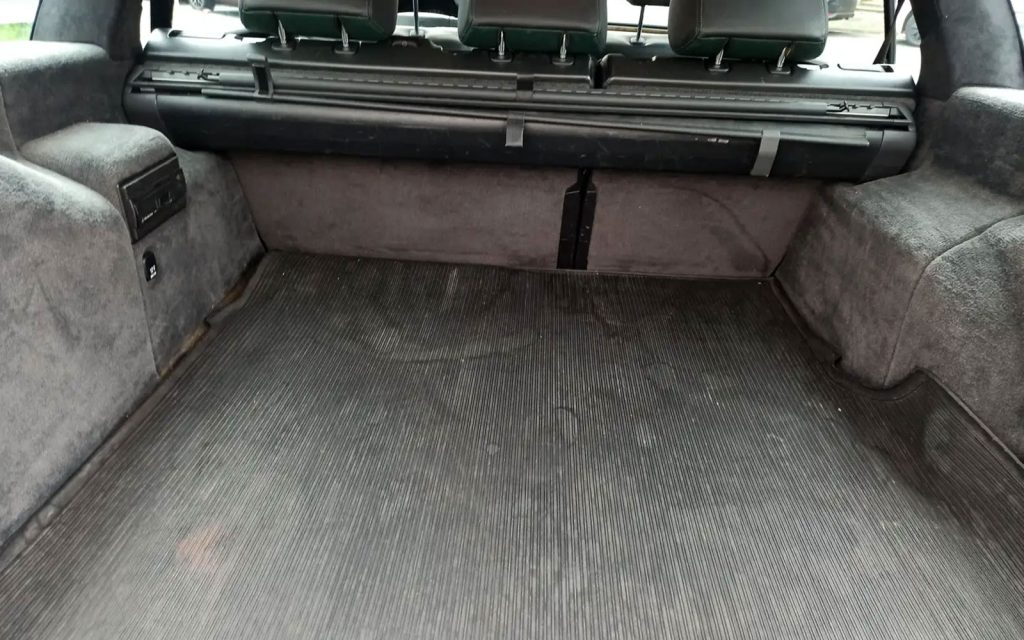
    312 SUN BLIND IN THE CARGO AREA (PARTITION GRID)
    345 RAIN SENSOR
    351 ECALL EMERGENCY CALL SYSTEM
    363 ECALL CONVERSION TO NATIONAL EMERGENCY CALL
    414 ELECTRIC GLASS SUNROOF
    423 AUTOMATIC 5-SPEED GEARBOX
    472 PETROL PARTICULATE FILTER (OPF) WITHOUT SENSORS
    500 ELECTRICALLY FOLDABLE EXTERIOR MIRROR
    543 SUN VISOR WITH ADDITIONAL FUNCTION
    551 BASIC BURGLAR AND THEFT ALARM SYSTEM (EDW)
    570 ARMREST WITH COMPARTMENT AND REAR COMPARTMENT VENTILATION
    581 AUTOMATIC AIR CONDITIONING
    581 EXCLUSIVE LEATHER – BLACK/ANTHRACITE
    600 HEADLIGHT CLEANING SYSTEM
    611 SURROUND LIGHTING
    612 XENON HEADLIGHT LIGHT UNIT
    673 BATTERY WITH LARGER CAPACITY
    682 FIRE EXTINGUISHER
    772 AMG STYLING – FRONT SPOILER, SIDE SKIRTS
    774 AMG 5-SPOKE WHEELS 18″ ALL AROUND
    810 SOUND SYSTEM PREMIUM
    815 SINGLE DVD DRIVE
    819 SOUND2LIGHT
    873 HEATED SEATS FOR DRIVER AND PASSENGER
    882 SENSORS AND SIREN BURGLAR AND THEFT ALARM SYSTEM
    910 ALTERNATOR WITH LARGER CAPACITY
    954 EQUIPMENT LINE/PACKAGE – AVANTGARDE
    988 INVALID (VEHICLE REGISTRATION AND COC PAPER AND TYPE PLATE)
    Z51 BUSINESS CONSOLE WITH SOCKET
    Z98 PAINT FINISHES OUTSIDE THE SAMPLE CARD

  • Aimé Leon Dore‘s custom Porsche 993 Turbo Pays Homage to New York

    Aimé Leon Dore‘s custom Porsche 993 Turbo Pays Homage to New York

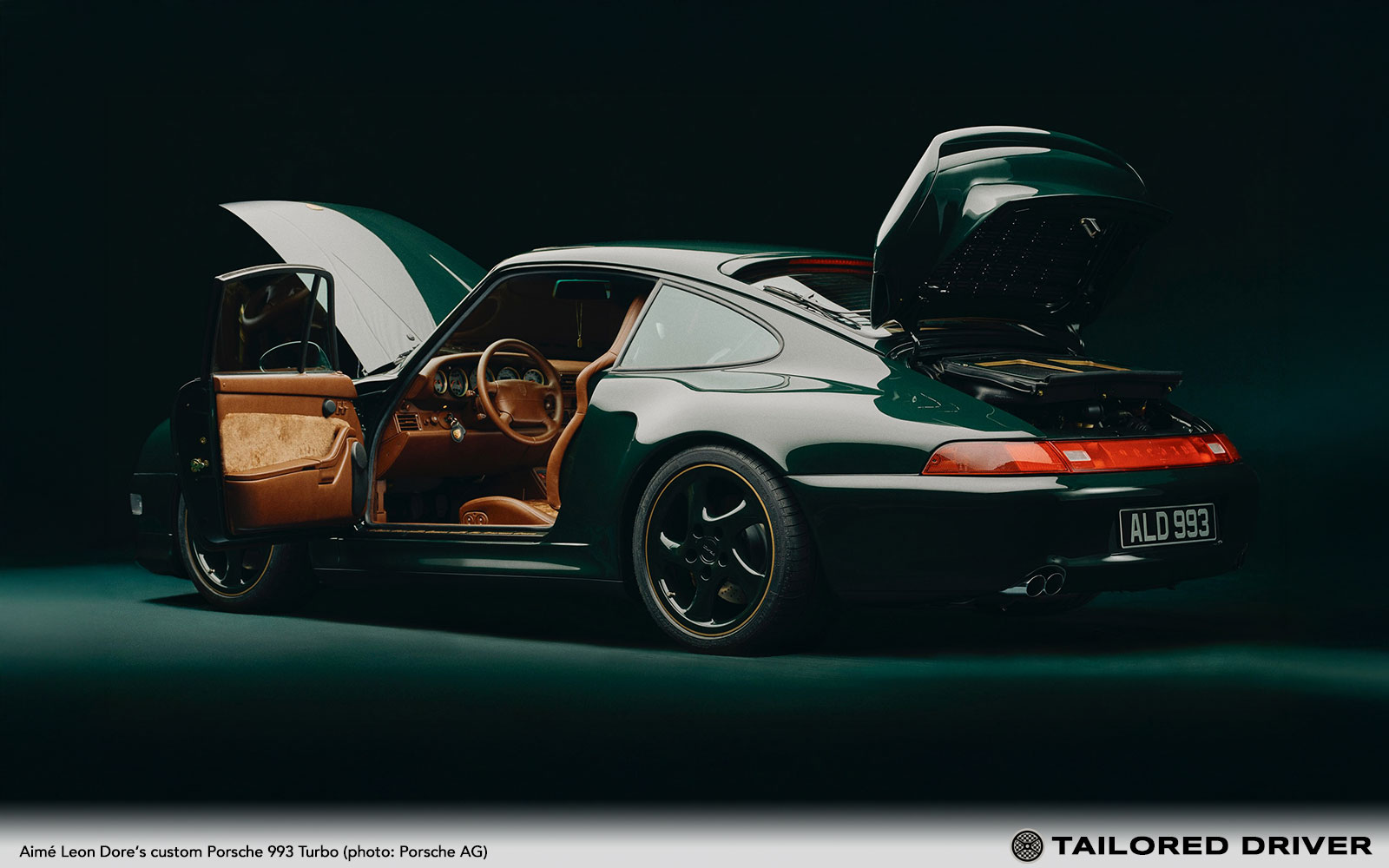
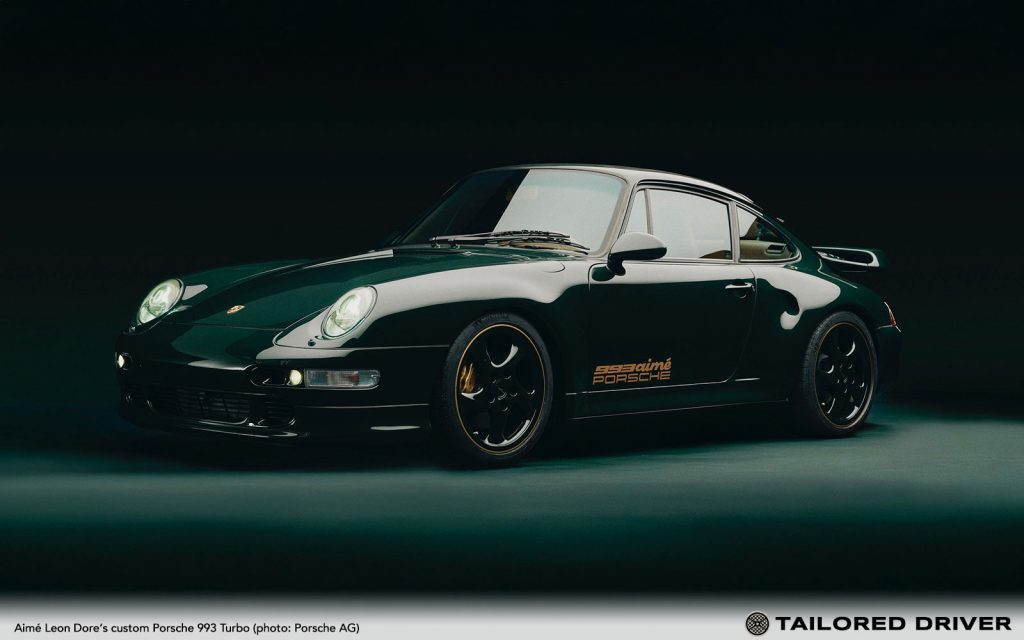
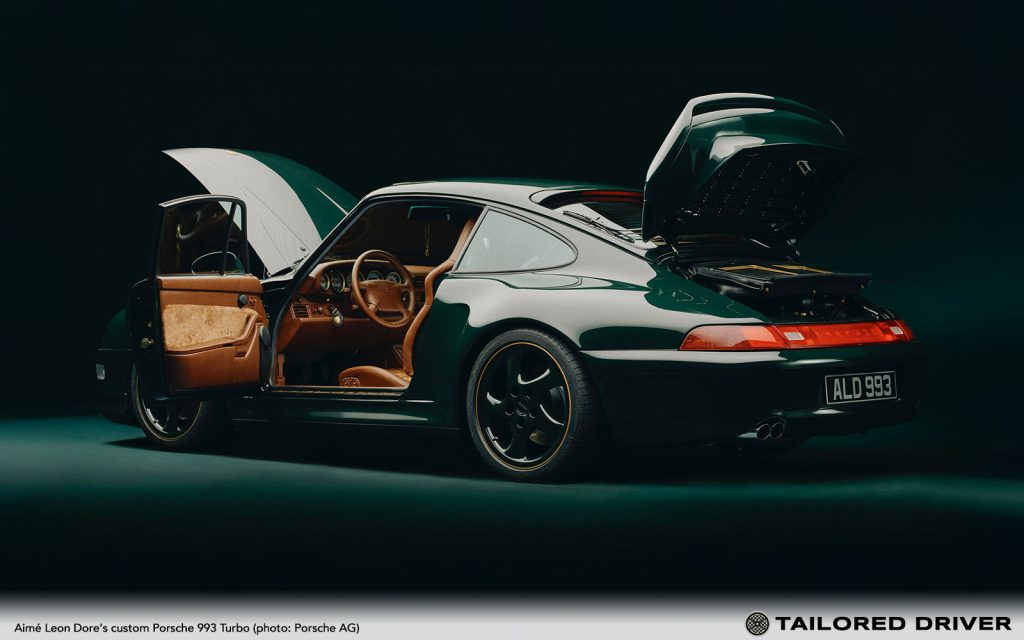
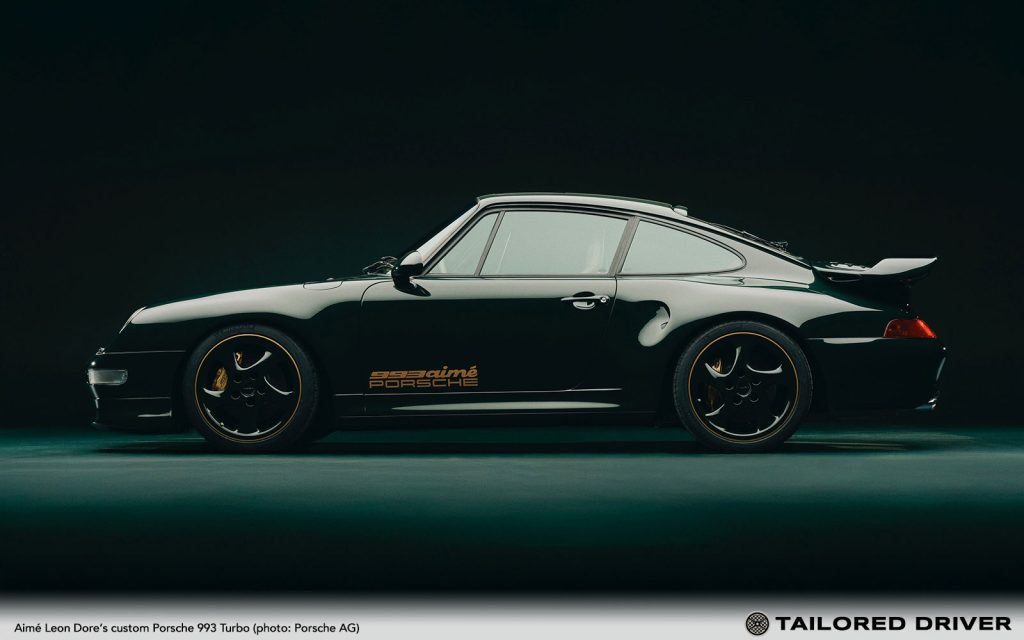
    The New York-based fashion and lifestyle brand Aimé Leon Dore (ALD) unveils the bespoke Porsche 993 Turbo – the fifth classic model restored in its long-standing partnership with Porsche.

    [source: Porsche AG]

    Renowned for its unparalleled engineering and timeless design, the Porsche 993 Turbo is hailed as one of the greatest sports cars in history. It combines the final iteration of the air-cooled engines with a powerful twin-turbo powertrain that set a new standard for performance, handling, and durability. Aimé Leon Dore’s restoration goes beyond aesthetics, delivering both a visual and technical revival of the celebrated classic.

    Porsche 993 Turbo by Aimé Leon Dore

    During an intensive development process, for a sportier look, elements from the 993 Turbo S were incorporated, including the iconic Turbo S spoiler, which provides both a visual enhancement and increased downforce. Additionally, the 993 Turbo S Exhaust and Front Splitter were fitted to improve aerodynamics, elevating the car’s performance and aggressive front-end design.

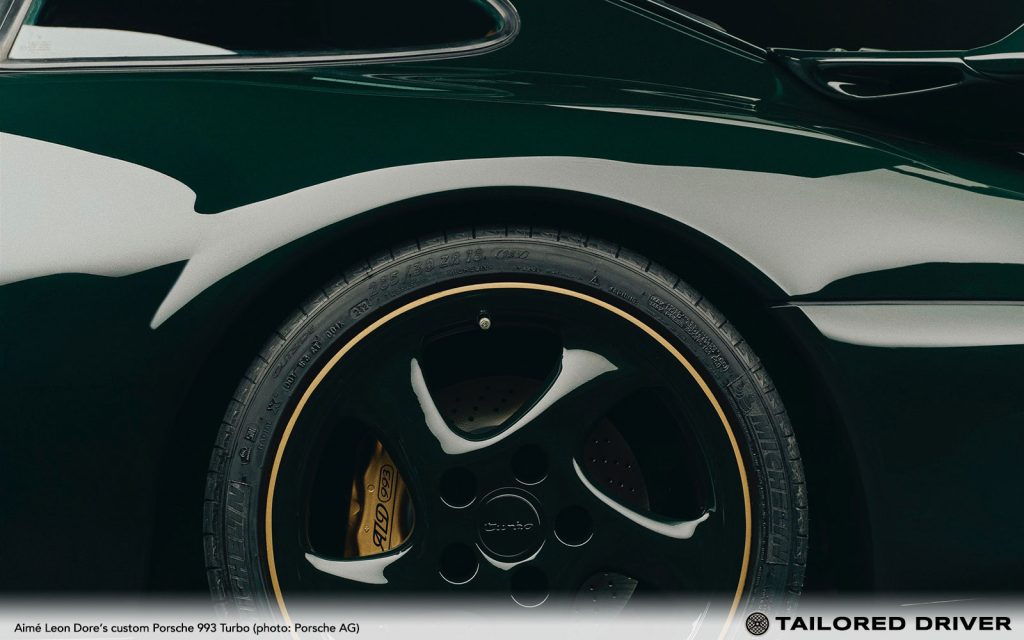
    The 18-inch Porsche Turbo Twist rims were finished in Mulberry Green to match the exterior, highlighted with a gold accent encircling the rims. Michelin, Porsche’s trusted tire partner known for outfitting the seven-time title-winning Porsche 963, provided 18″ Michelin Pilot Sport PS2 tires specifically for the 993 Turbo. 

    It’s great to see the latest installment of our partnership with Aimé Leon Dore”, says Deniz Keskin, Director Brand Management and Partnerships at Porsche AG. “The 993 is an iconic member of the 911 family and dream car for so many enthusiasts all around the world. ALD’s take is a wonderful way of contributing to that enduring legacy.”
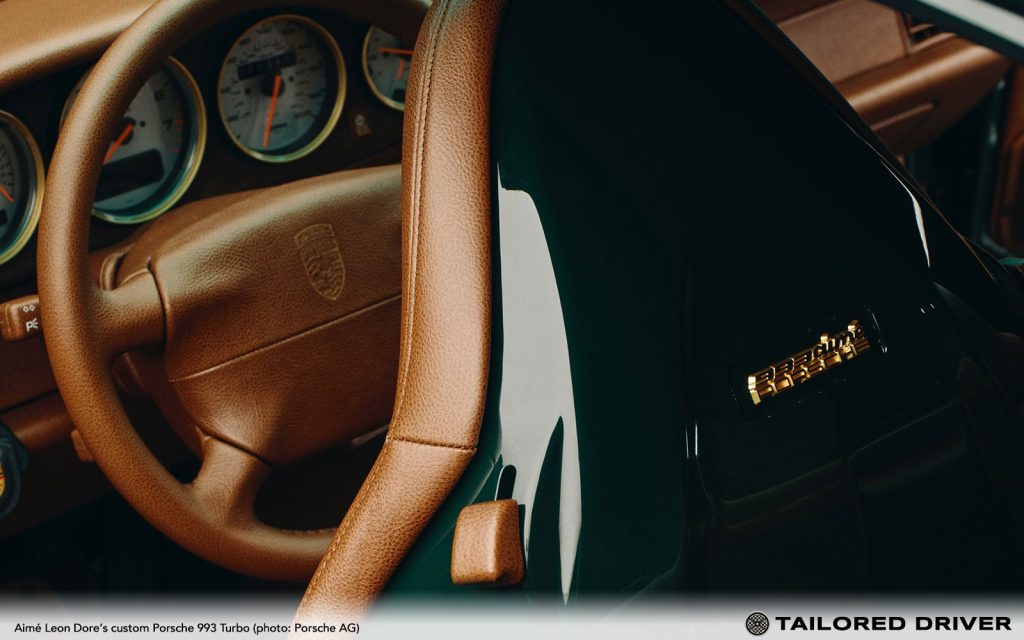
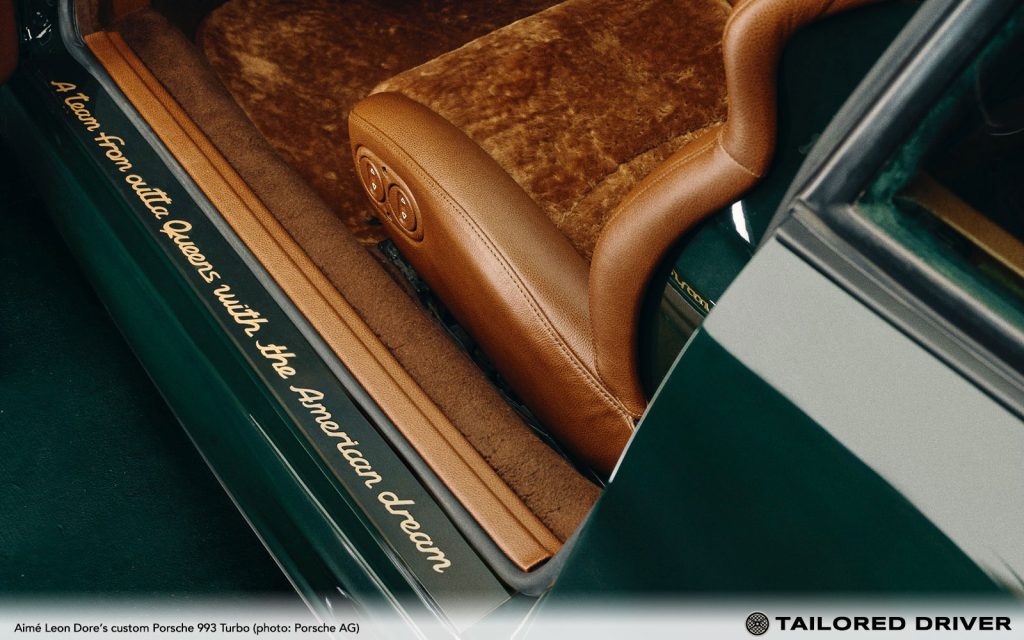
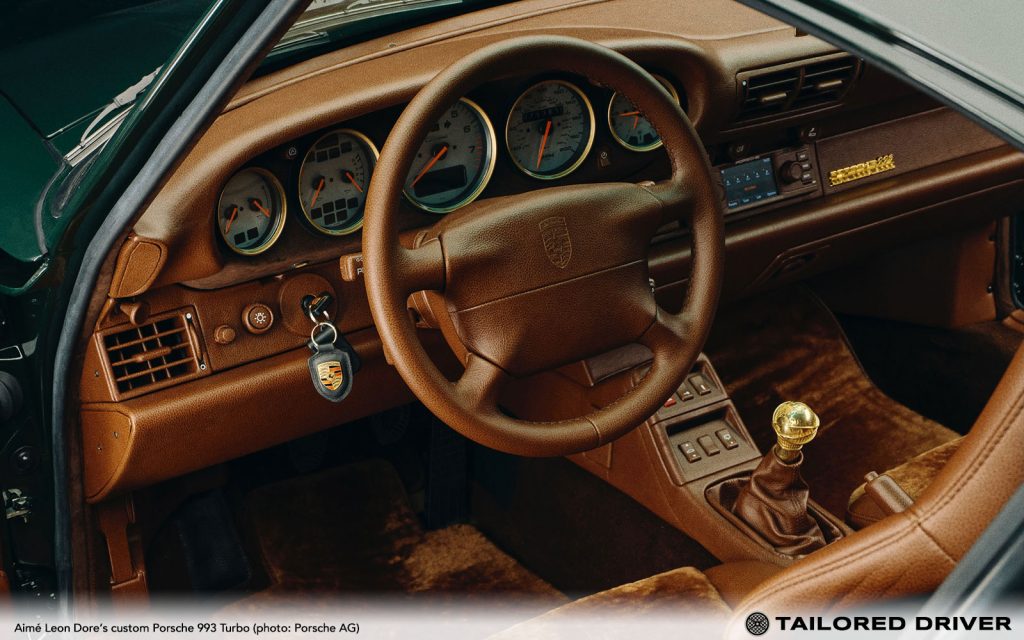
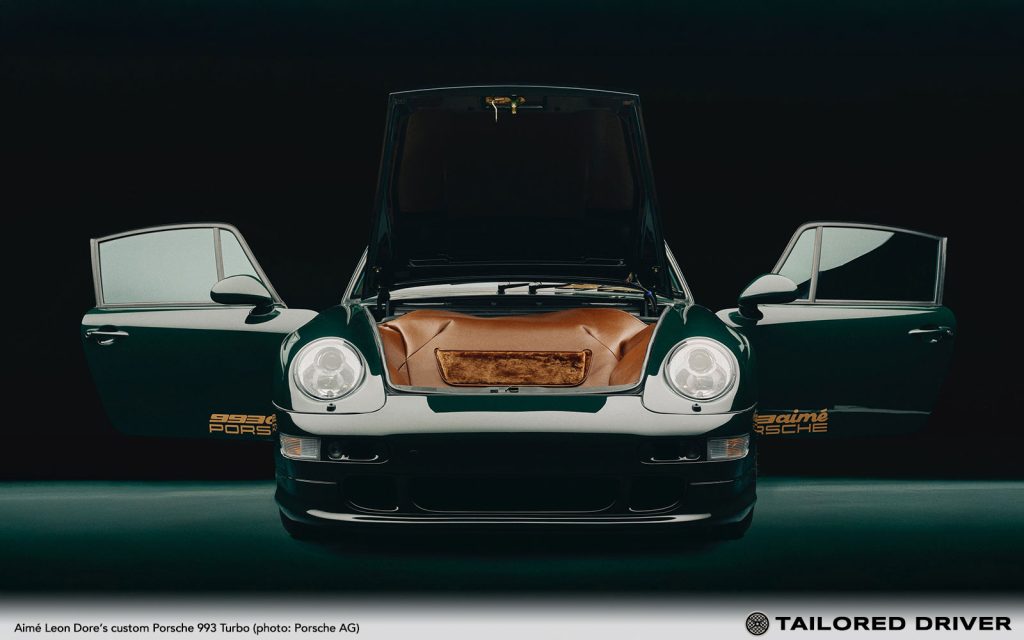
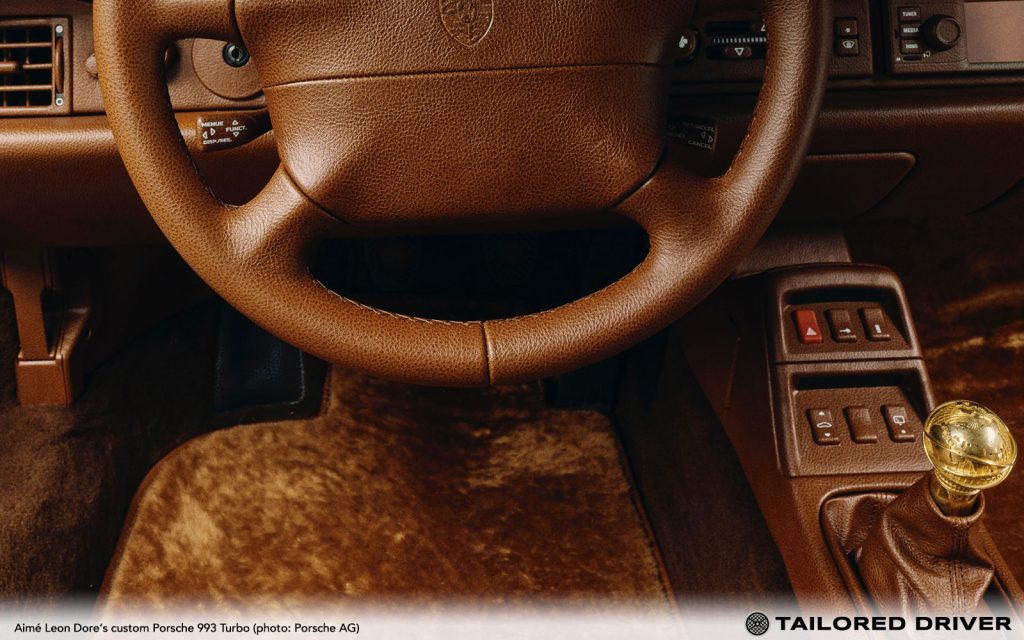
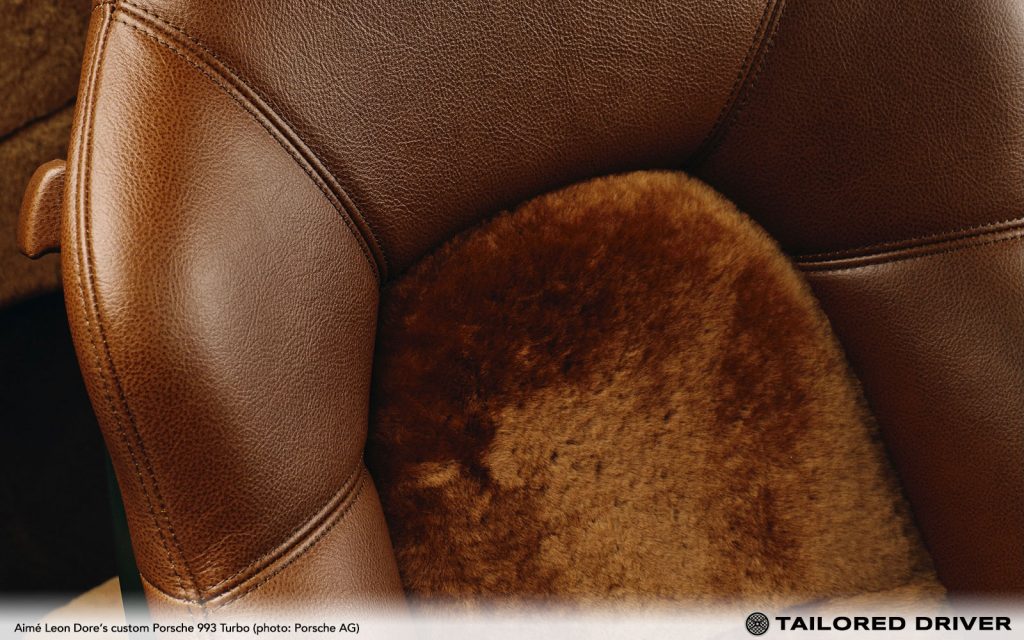
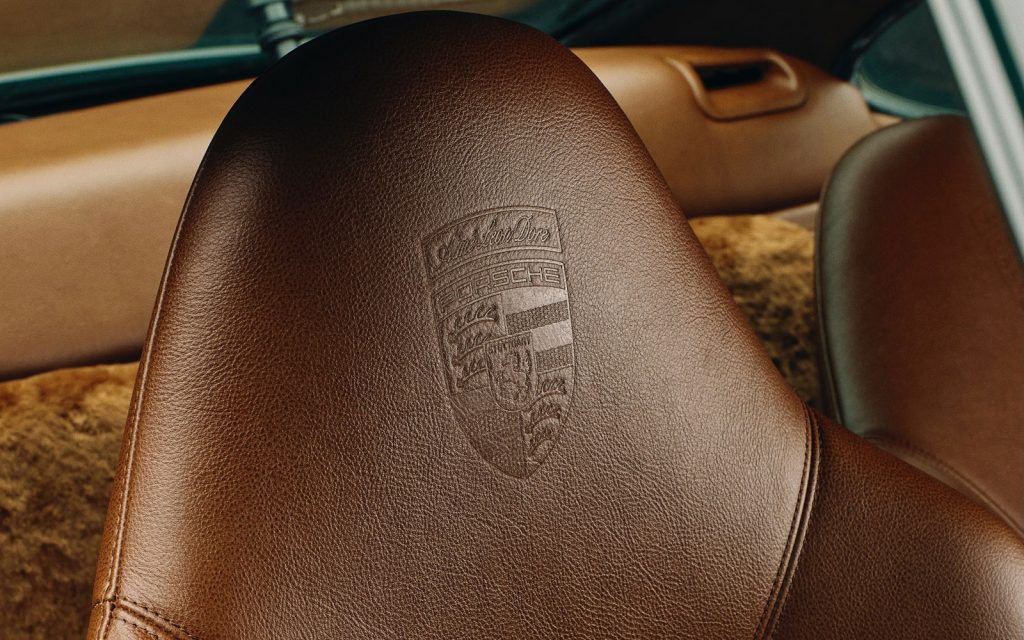
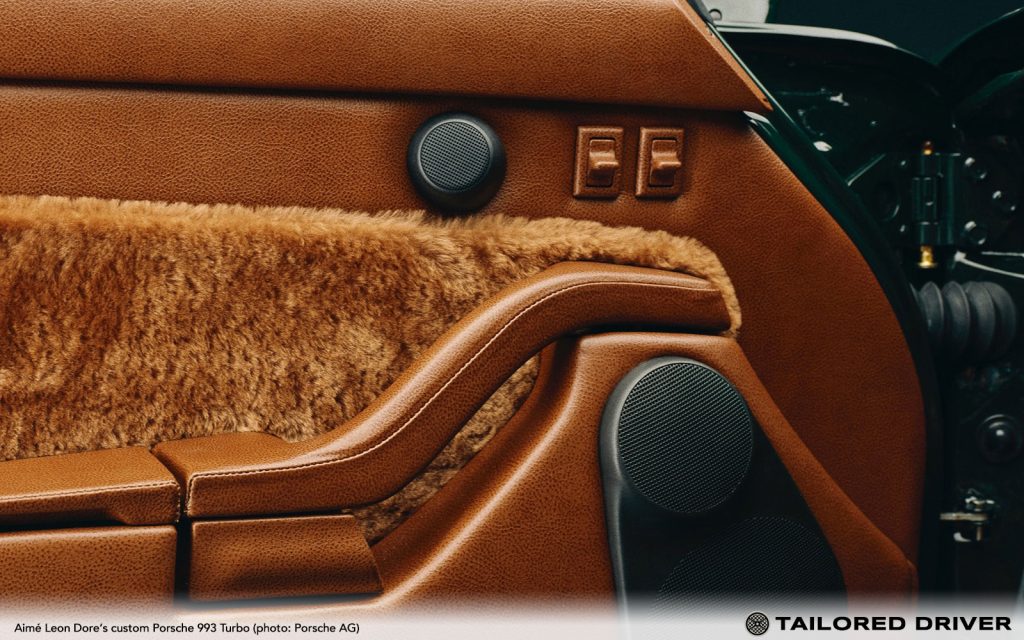
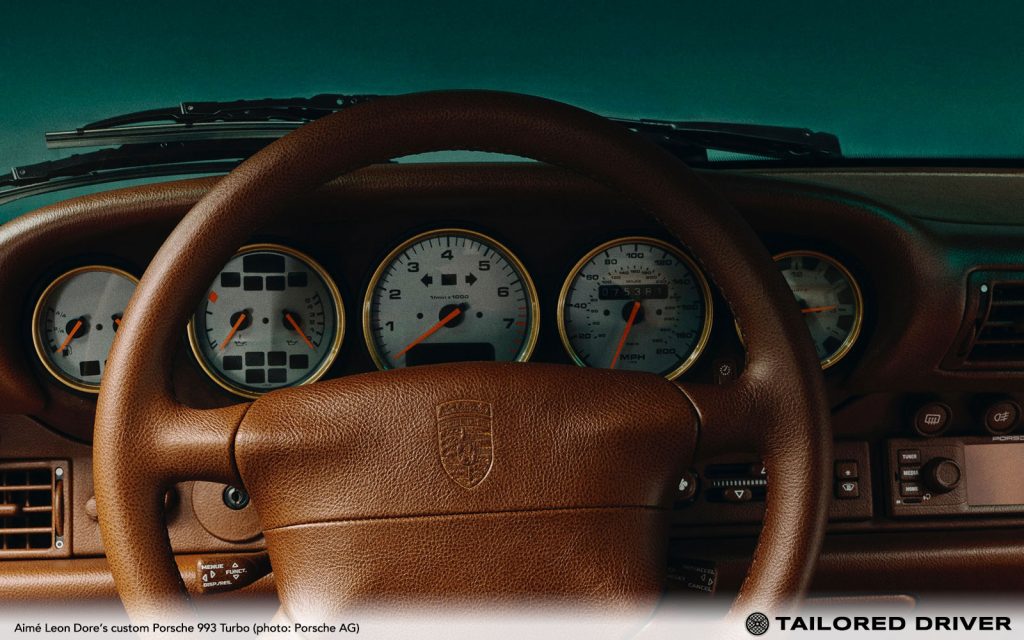
    Aimé Leon Dore’s refined design language extends to the interior, featuring dark brown leather, lambswool accents, and hardback seats. The seat backrests are painted in Mulberry Green, echoing the car’s exterior. Dark brown carpets, floor mats, seats, and instrument cluster were selected for a cohesive, monochromatic look. The steering wheel and headrests display a custom Aimé Leon Dore and Porsche logo, highlighting the long-standing partnership between the two brands. A custom brass Unisphere gear knob brings a distinctive and personal touch to the interior. The door sills also feature the inscription “A team from outta Queens with the American dream,” a nod to the brand’s roots and the inspiration behind Aimé Leon Dore’s brand.
    Exclusive capsule collection with Porsche Design

    Inspired by the exclusive Mulberry Green Porsche 993 Turbo, the capsule collection features a range of apparel and accessories, including the long-awaited Leather Club Jacket.
    “It has been a refreshing experience to work on this capsule with the ALD team”, says Nicola Ader, Director Marketing & PR Porsche Lifestyle Group. “The result is the perfect match for the car and a great way for both communities around the world to become part of this project.”

    The capsule collection will be available on November 22nd both in-store and online at Aimé Leon Dore.

    For the first time, Porsche Design of America will also offer a select range from the limited-edition capsule, available exclusively on the West Coast at the Porsche Design Store in Beverly Hills.

    About Aimé Leon Dore

    Founded by Teddy Santis, Aimé Leon Dore is a New York City-based fashion and lifestyle brand known for its focus on high-quality products that blend classic and contemporary styles, drawing inspiration from the city’s diverse cultural influences.

  • The Bentley ‘Expressions of Texture’ Collection

    The Bentley ‘Expressions of Texture’ Collection

    • ‘Expressions of Texture’ Collection commissioned by Bentley Rancho Mirage, California
    • Four bespoke Continental GT Speed Convertibles show range of creative possibilities offered by Mulliner Personal Commissioning
    • Each design inspired by the stunning landscapes, scenery and skies around Palm Springs
    • Satin exterior finishes, stone fascia veneers and one-off blind embossed upholstery among the many bespoke features
    • 75 per cent of Bentley customers now add Mulliner content to their car

    [source: Bentley]

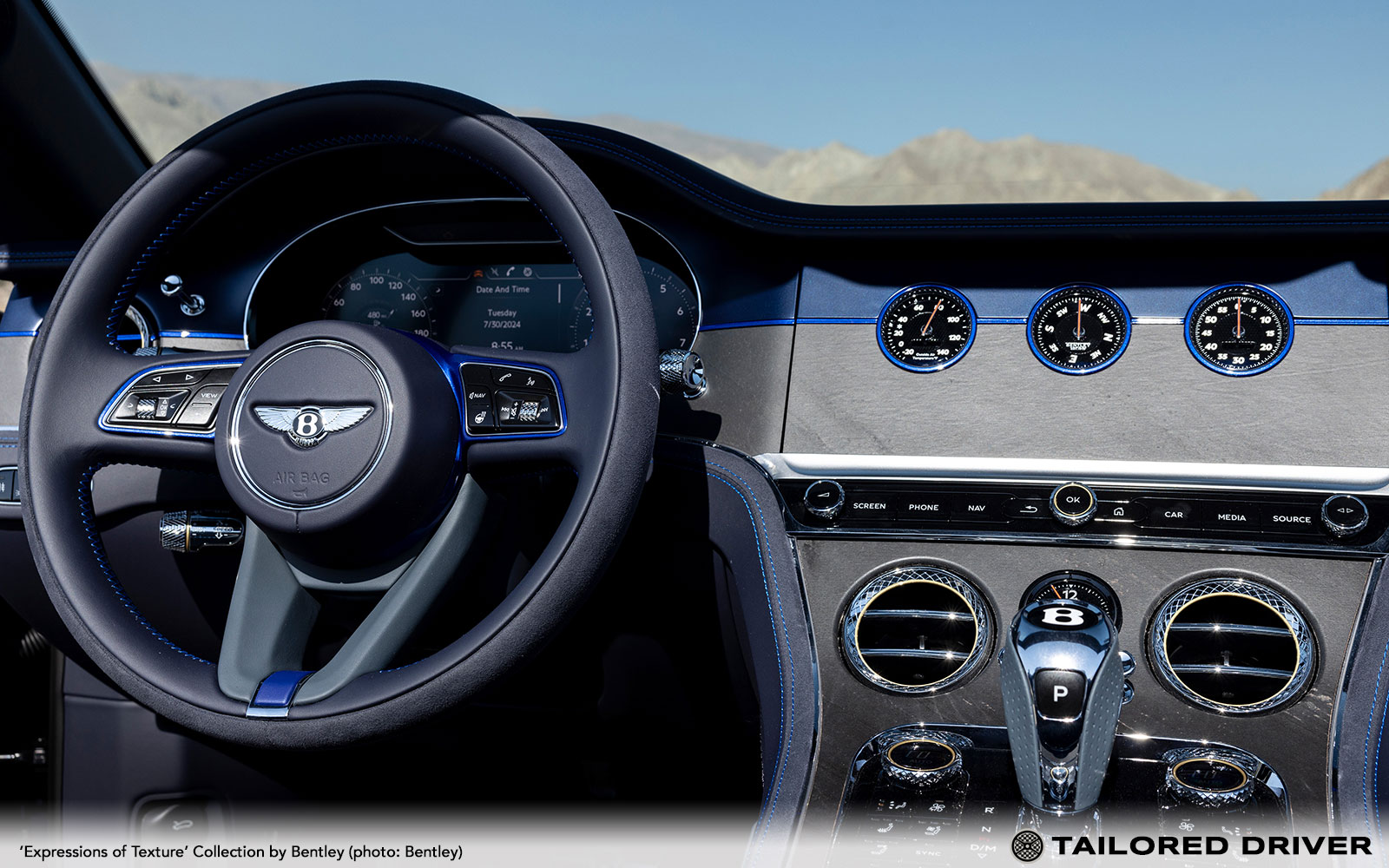
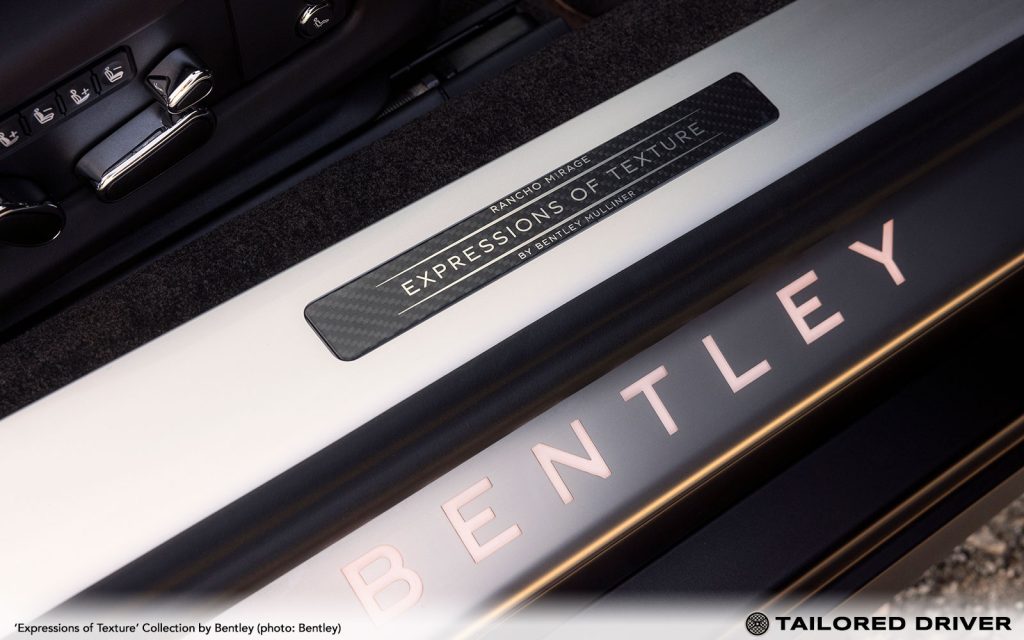
    Crewe, England – ‘Expressions of Texture’, a collection of four Continental GT Speed Convertibles, provides a visual and tactile showcase for the creative possibilities offered by Mulliner Personal Commissioning. The Collection was a co-creation between Bentley Rancho Mirage and the Mulliner bespoke team, each side inspiring the other to greater heights of creativity. 

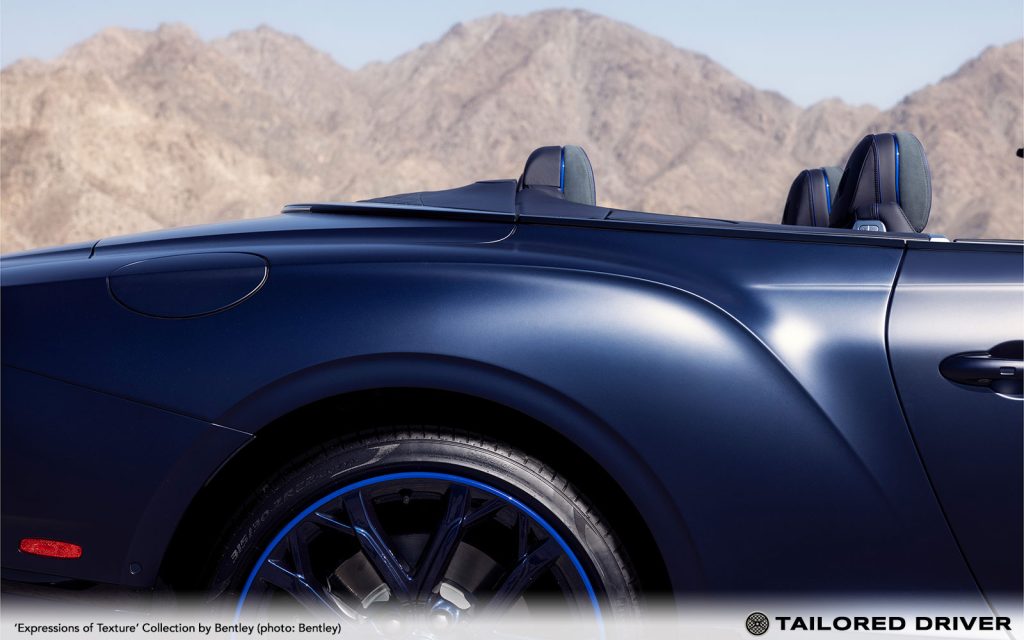
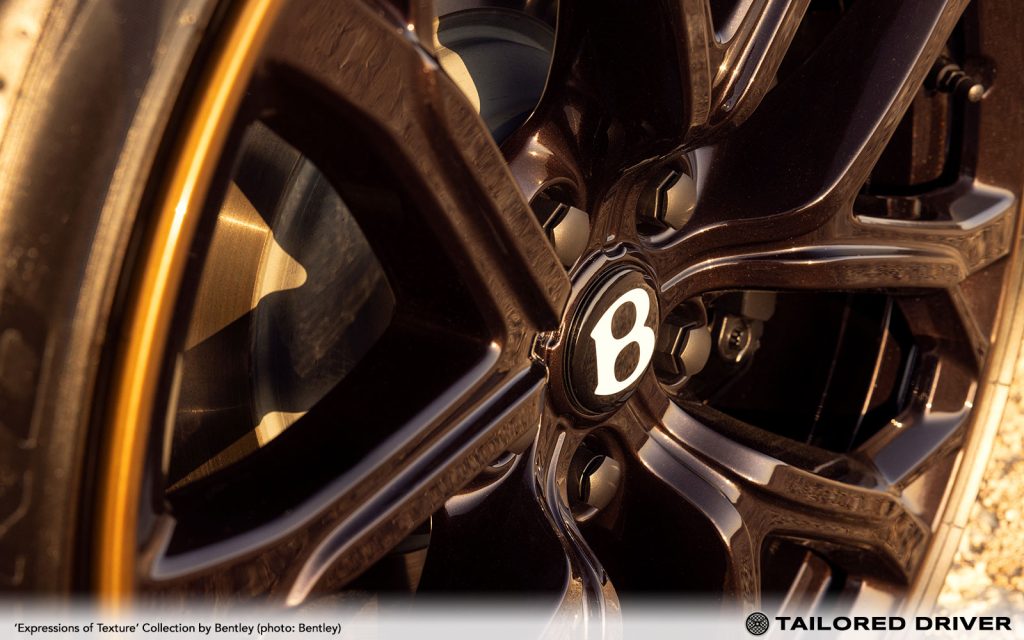
    All four models are specified in satin paint from Mulliner’s 15-colour range, with each finish taking up to 55 hours of painstaking craftsmanship. Other exceptional features include wafer thin 200-million-year-old stone veneers, and blind embossed upholstery whose design reflects the landscapes of the Colorado Desert’s Coachella Valley.

    Reflections of landscape
    The desert resort city of Rancho Mirage is set amid the varied and spectacular landscapes of the Coachella Valley, with arid desert, vivid greenery and rugged, age-weathered mountains all within easy driving distance. This variety provided the inspiration for the team at Bentley Rancho Mirage, expressed through the specifications of the four Continental GT Speed Convertible models in the Expressions of Texture Collection.

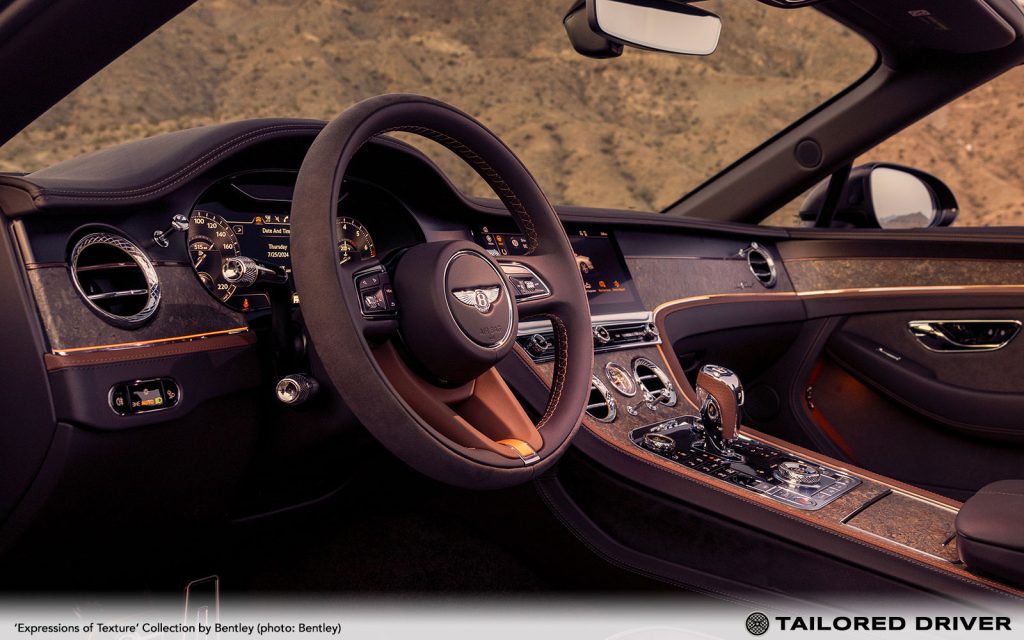
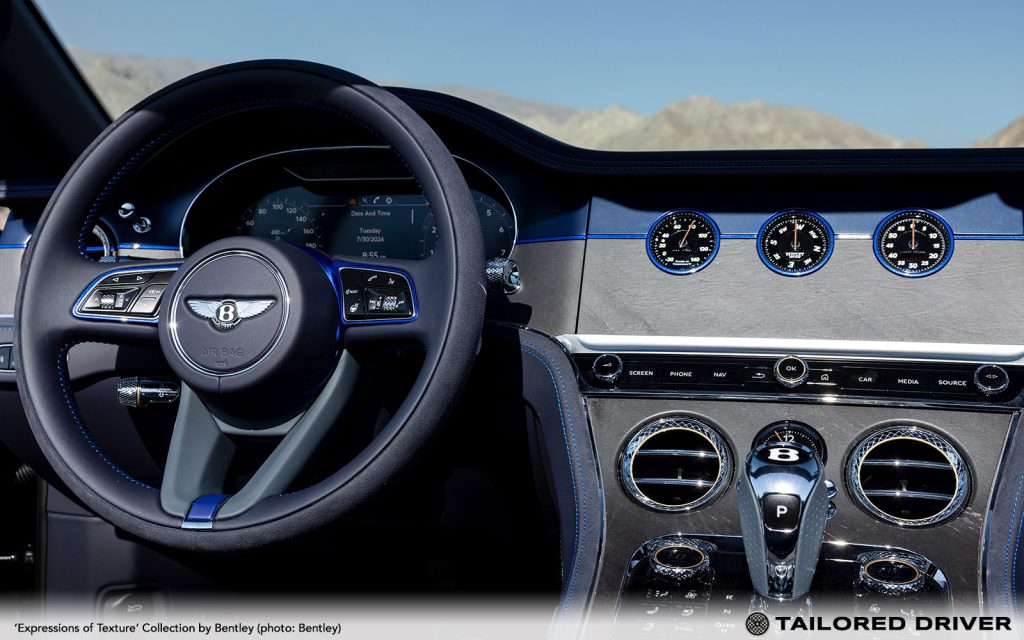
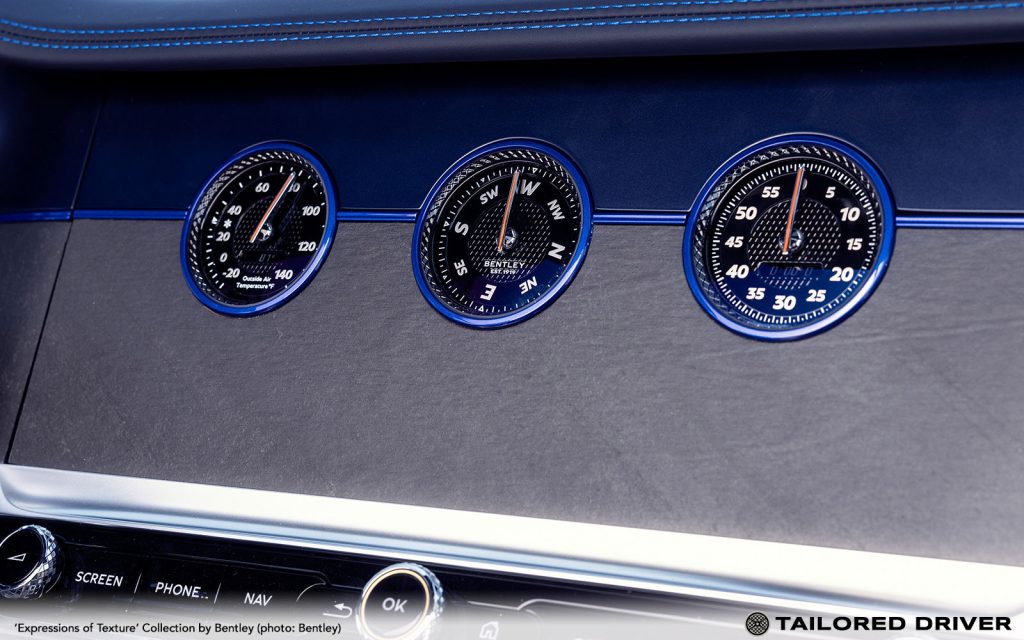
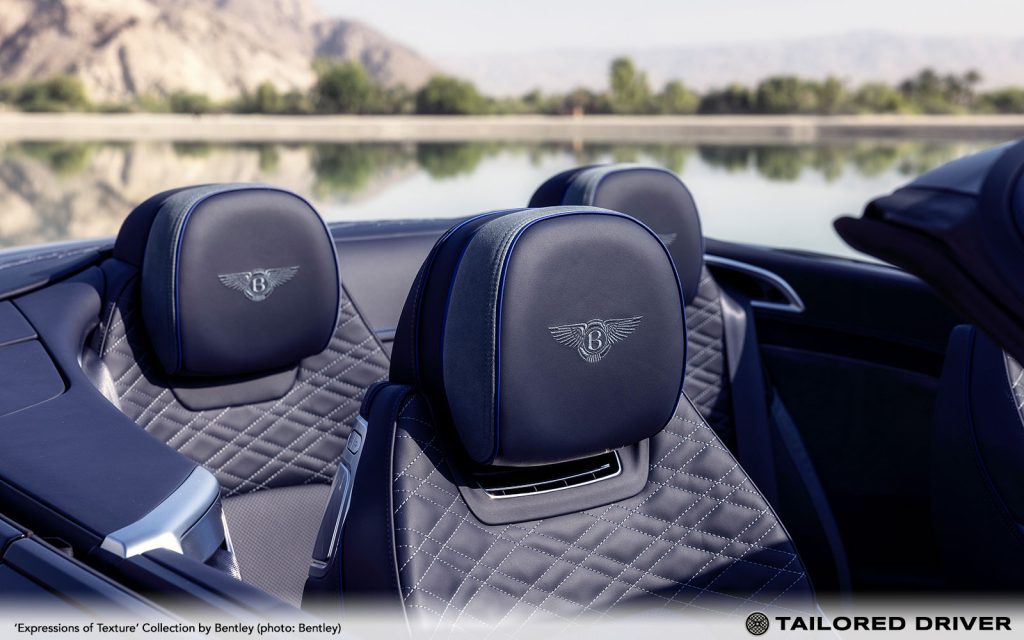
    The clear, star-studded night skies of the Coachella Valley inspired a Continental GT Speed Convertible in Peacock Blue satin, the exterior subtly enhanced by a tri-tone Styling Specification featuring satin carbon fibre, Electro Blue and Peacock Blue. For the interior, a two-tone fascia in Peacock Blue satin is paired with Slate stone veneer and divided by an Electro Blue pinstripe, the same colour outlining the bullseye air vent vanes and headrests. Other exquisite details include Serenity quilting on the seat uppers and tonneau cover.

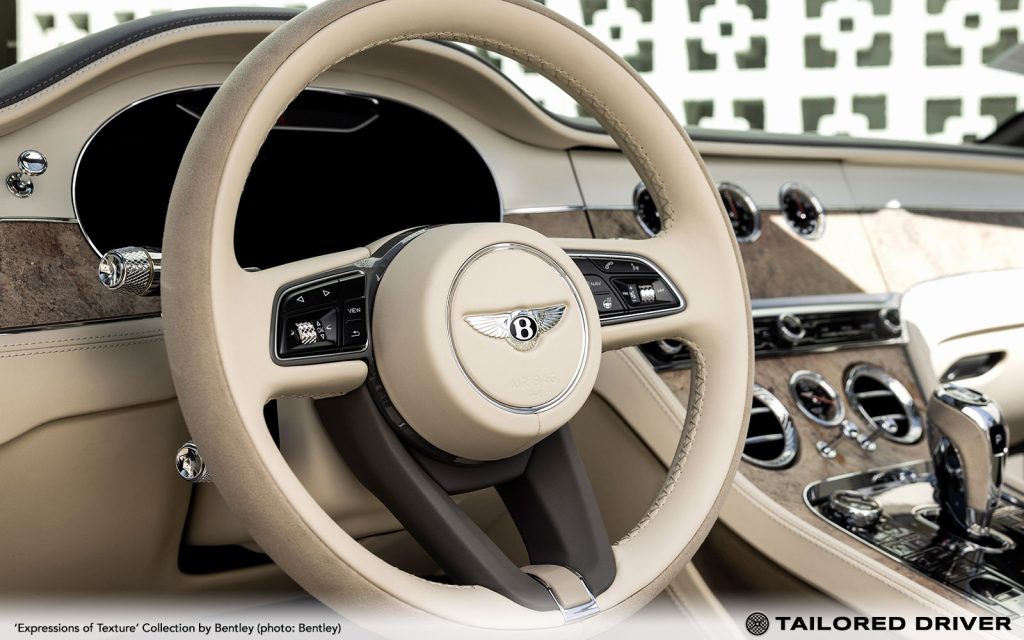
    The rippling, fluid forms of sand dunes sculpted by the desert wind are reflected in another model from the collection, finished in Ghost White Pearl satin with Tungsten wheels and featuring a Silver Tempest pinstripe. The blind quilting of the seat uppers and tonneau cover was created specifically for this model, their flowing graphics inspired by the desert dunes. A fascia and console in Ghost White Pearl satin over Autumn Stone veneer is a masterclass in subtle sophistication.

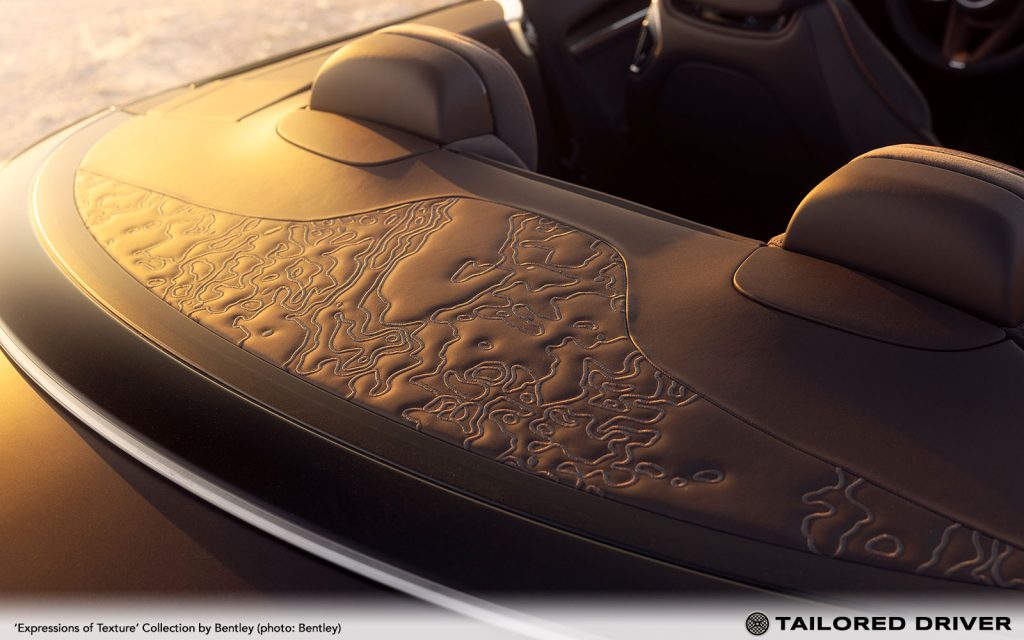
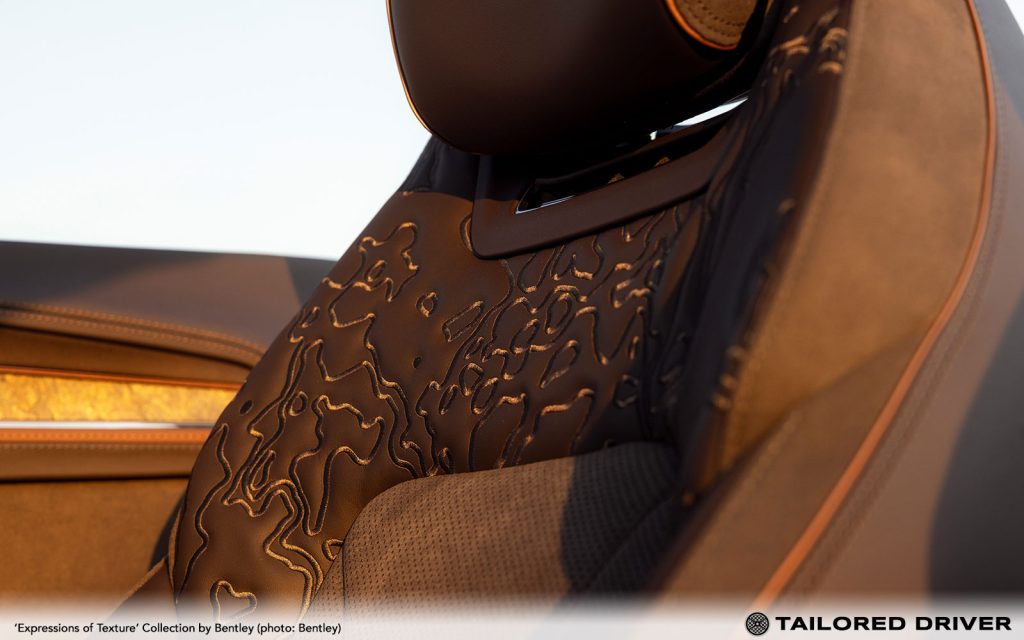
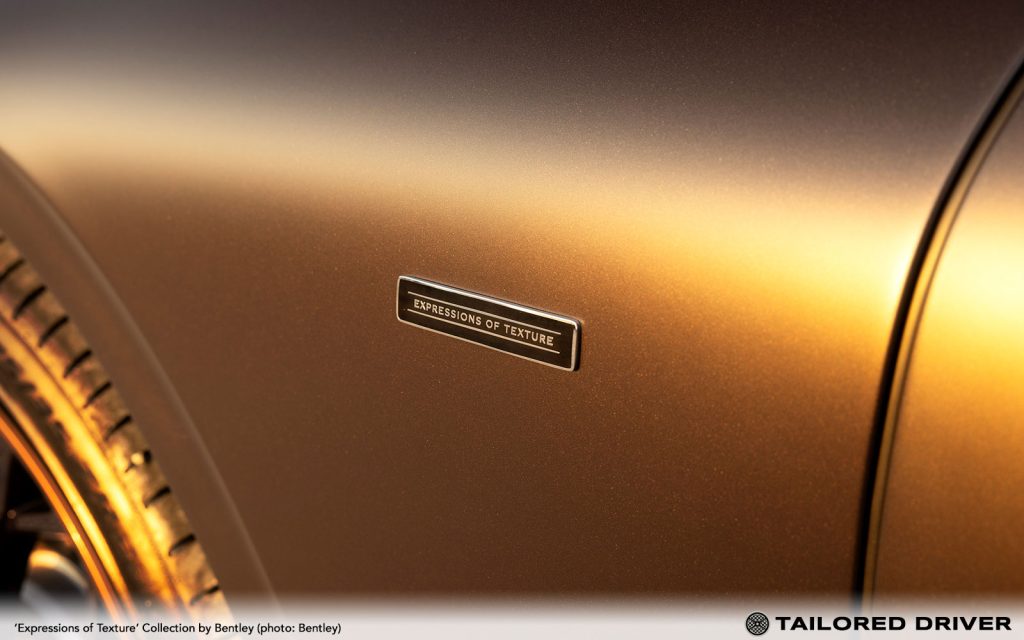
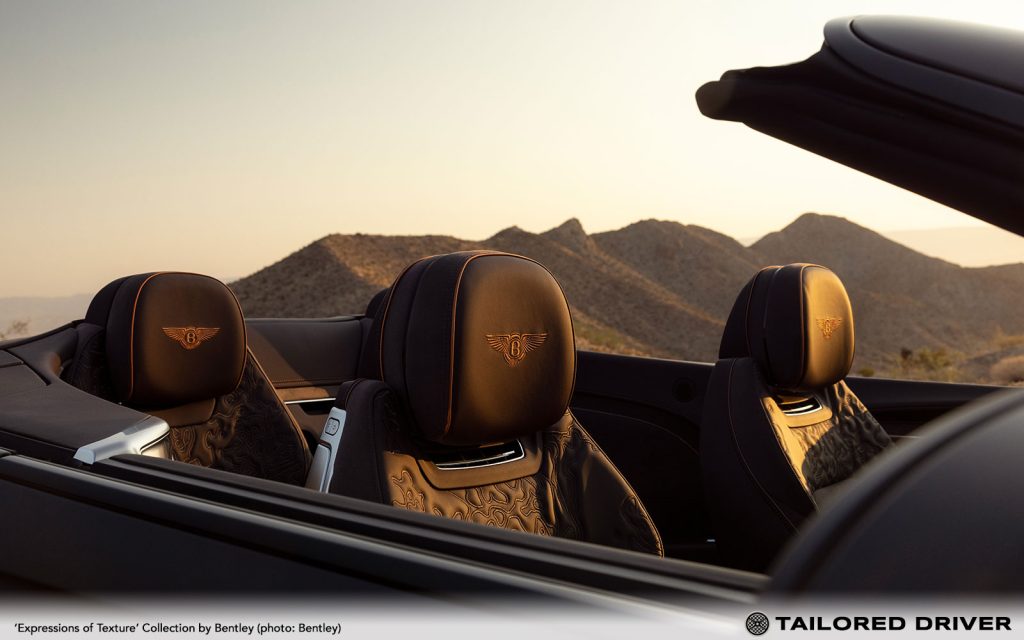
    The inspiration for a Havana satin Continental GT Speed Convertible came from the rugged mountains that surround the Coachella Valley and their earthy tones in the glow of the setting sun. The interior of Cognac and Burnt Oak hide is enhanced by bespoke, blind quilted seat backs and tonneau cover whose design represents the topographic features of California’s Death Valley. The same topographic map design is even carved in 3D on the floor mats, while the fascia and console feature the exterior finish of Havana satin over Copper Stone veneer, divided by a pinstripe in Bronze.

    Adventures in colour, texture and form
    All four models in the ‘Expressions of Texture’ Collection, which also includes a Continental GT Speed Convertible in British Racing Green satin, demonstrate that the choice of colour is just one element in the personal commissioning journey. The tactile softness of Dinamica upholstery, the cool touch of stone veneer and the yielding contours of quilting all offer customers a limitless palette of creative possibilities.

    Mulliner’s Chief Commercial Officer, David Parker comments, “We hope that the Expressions of Texture Collection will inspire customers to explore the full range of possibilities offered by the Personal Commissioning Guide. At Mulliner we believe that whatever our customers can imagine, we can create.”

    Bentley Mulliner
    Bentley Mulliner is the birthplace of coachbuilding – the oldest automotive coachbuilder in the world. As Bentley’s personal commissioning division, Bentley Mulliner responds to the requirements of Bentley’s most discerning customers, creating vehicles that are a true expression of their individuality. From special features and finishes to unique and limited-edition coachbuilt vehicles, the Mulliner name continues to represent the ultimate in Bentley design and craftsmanship.

  • European Market Find: Incredible Spec / Condition Tax Dodge Maserati Merak 2000 GT

    European Market Find: Incredible Spec / Condition Tax Dodge Maserati Merak 2000 GT

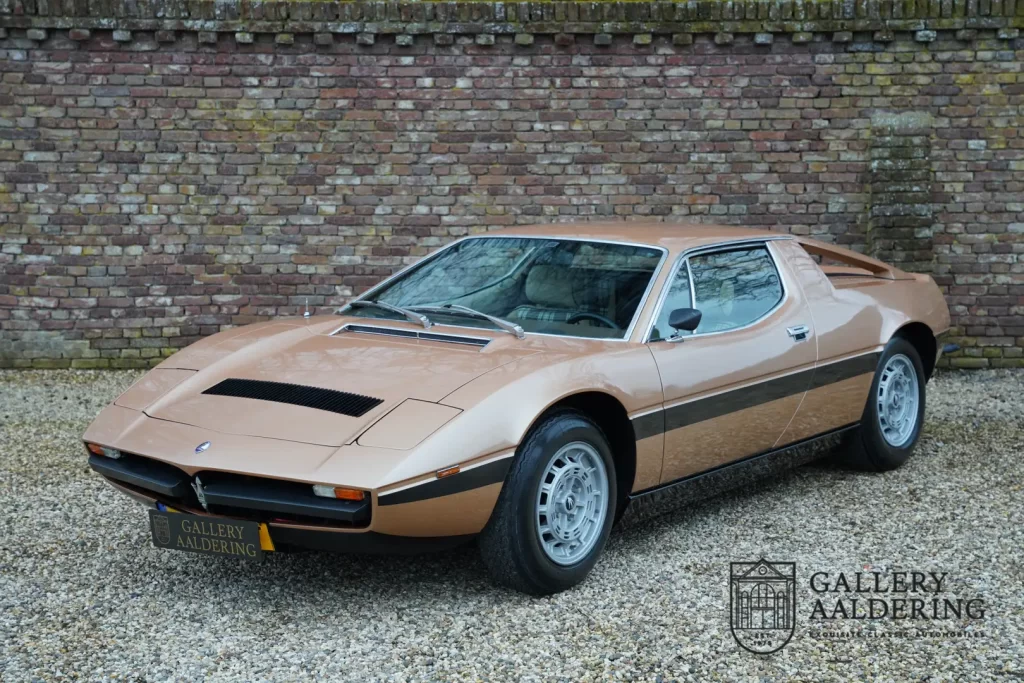
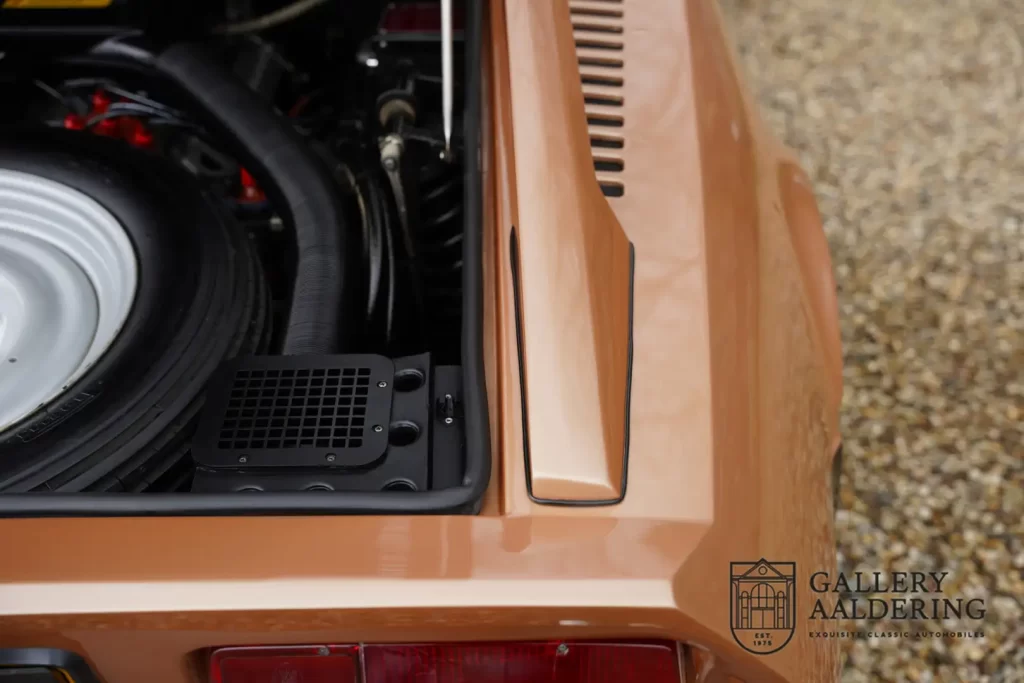
    We’re pushing the boundaries with this particular market find. We suspect it’s a specification straight out of the 1981 order book. We can’t confirm the color name or code. And, it’s in Europe, meaning our primarily North American audience would have to import it. Luckily enough, its 1981 model year makes it an easy import. Its excellent specification and remarkably preserved condition also makes it easy on the eyes.

    For those not familiar with the Maserati Merak, it’s a mid-engine Italian sportscar from the 1970s and into the 1980s, a halcyon era of that genre. Penned by Giorgetto Giugiaro, it has all of the exotic feel of more known 70s/80s mid-engine Italian offerings from Ferrari or Lamborghini, but we’d argue it’s just as exotic a look… especially when built to an exquisite specification.

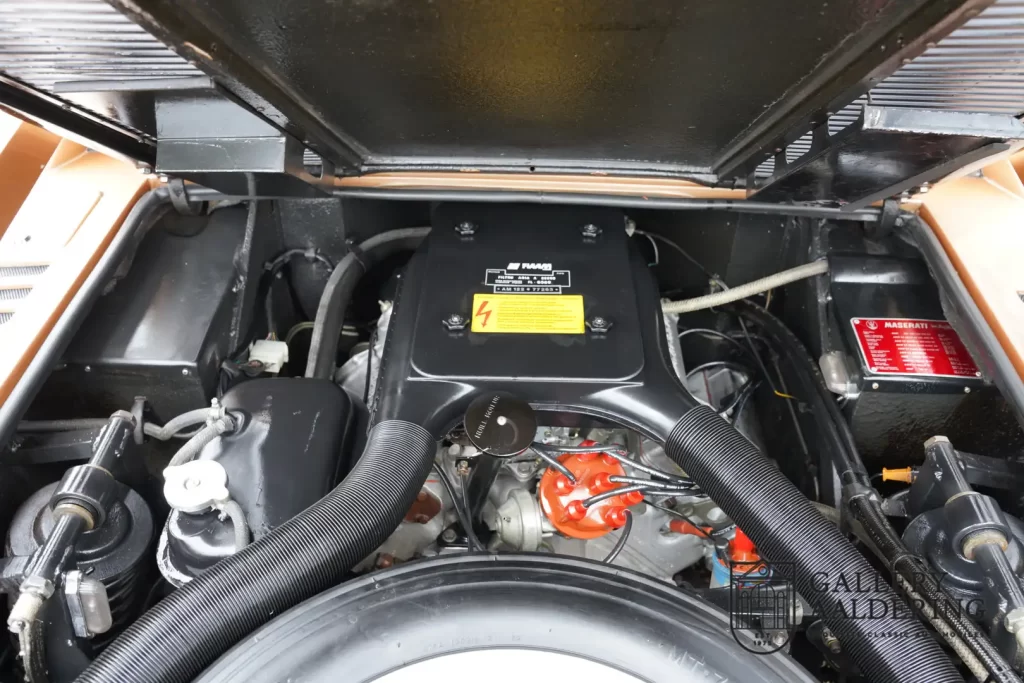
    Regarding specification, drivetrain may be arguably not exotic in 2000 GT form. Maserati launched the 2000 GT in 1977 almost exclusively for the Italian market. The Merak 2000 GT was built to avoid Italian customers from being penalized with a Value Added Tax (VAT) of 19% for any cars over 2-liters of displacement. That tax was deflating enough to Italian car manufacturer sales that brands began to specially make 2-liter examples of their entry-level models. Ferrari launched its 208 GTB, Lamborghini introduced the Urraco P200 and Maserati added the Merak 2000 GT.

    Unlike today where Maserati and Ferrari can largely pull from the same corporate parts bin, the brand was owned by Citroën at that time. In as much, Maserati developers turned to the French manufacturer to source a workable engine, and for this it replaced the Merak SS’s 2.9-liter V6 derived from Citroën SM’s 2.7-liter V6 with a smaller 2.0-liter V6 also from the SM.

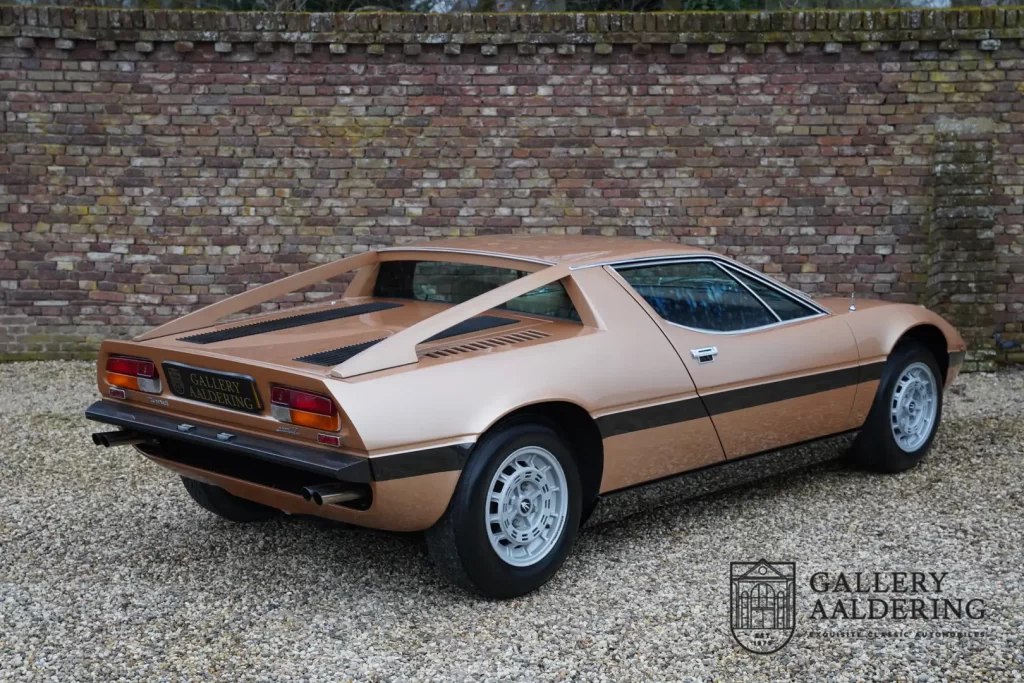
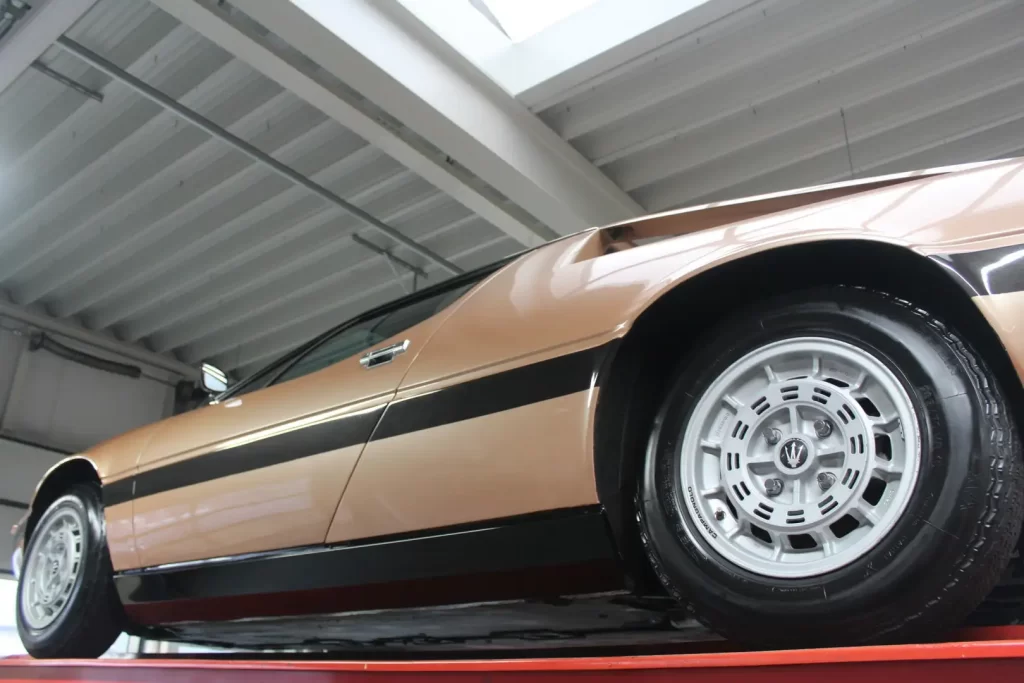
    Visually, the 2000 GT is most easily identified for its black side stripes that run horizontally down the mid-section of the body. Over time, a lot of 2000 GTs had their stripes removed to look higher dollar, though its likely that cars still sporting the original stripes as this one does are probably worth more today.

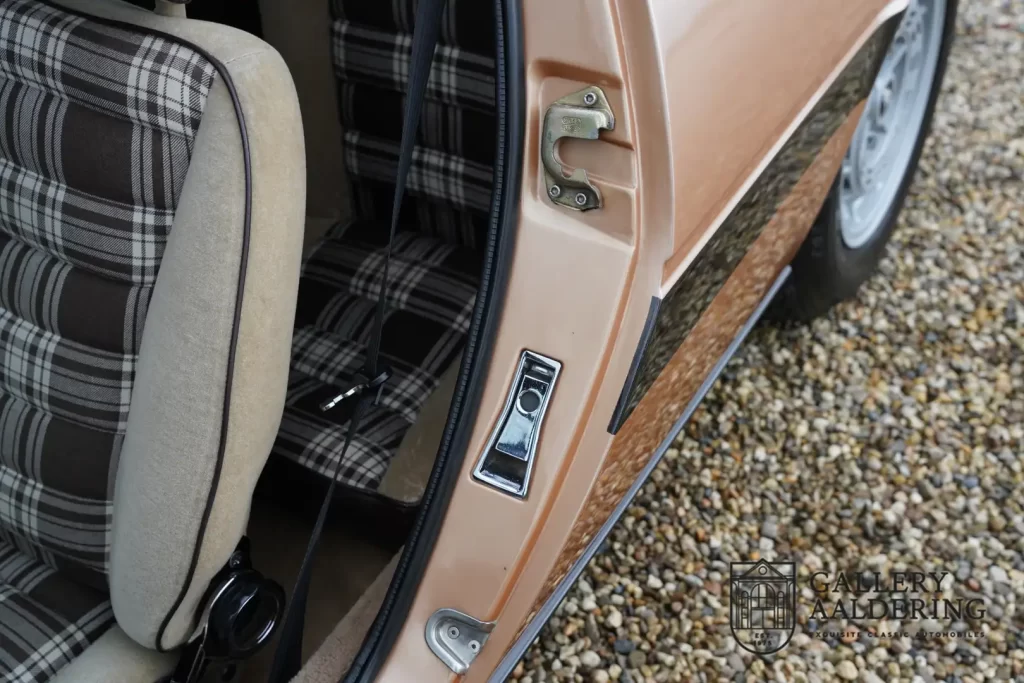
    The Merak 2000 GT was offered in just two colors, a metallic blue or this other metallic that is often referred to as “gold”, though we’d argue is a bit more of a light brown. We’re not 100% sure of the name though as we were unable to dig up any confirmation of the paint colors or codes, despite ample searching and the dealer’s own detailed listing. If you know the color or code, drop us a note in the comments below.

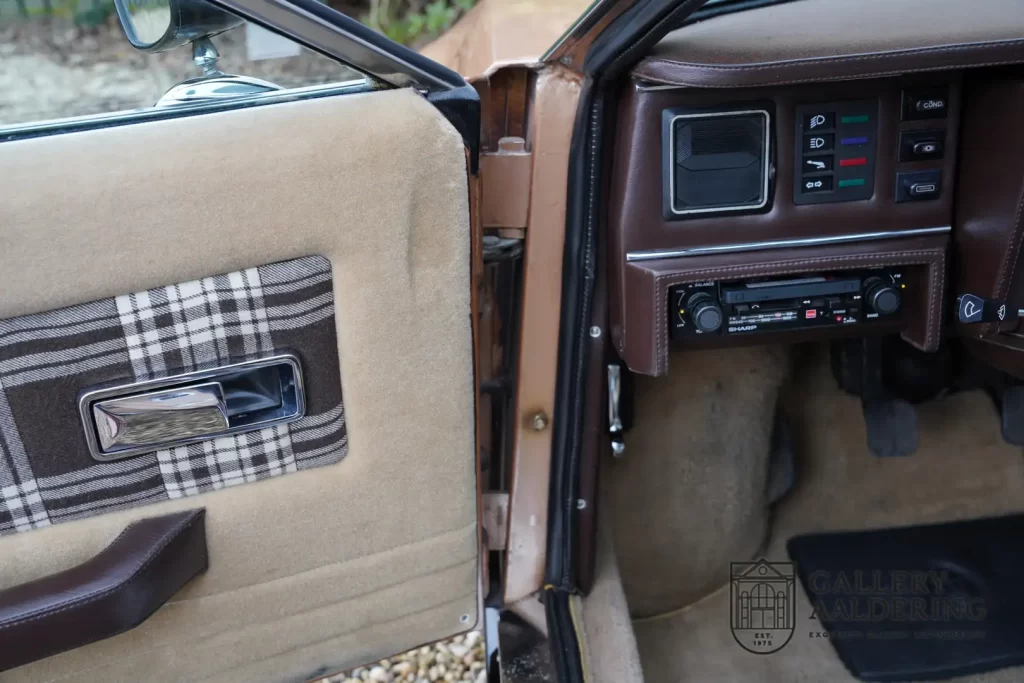
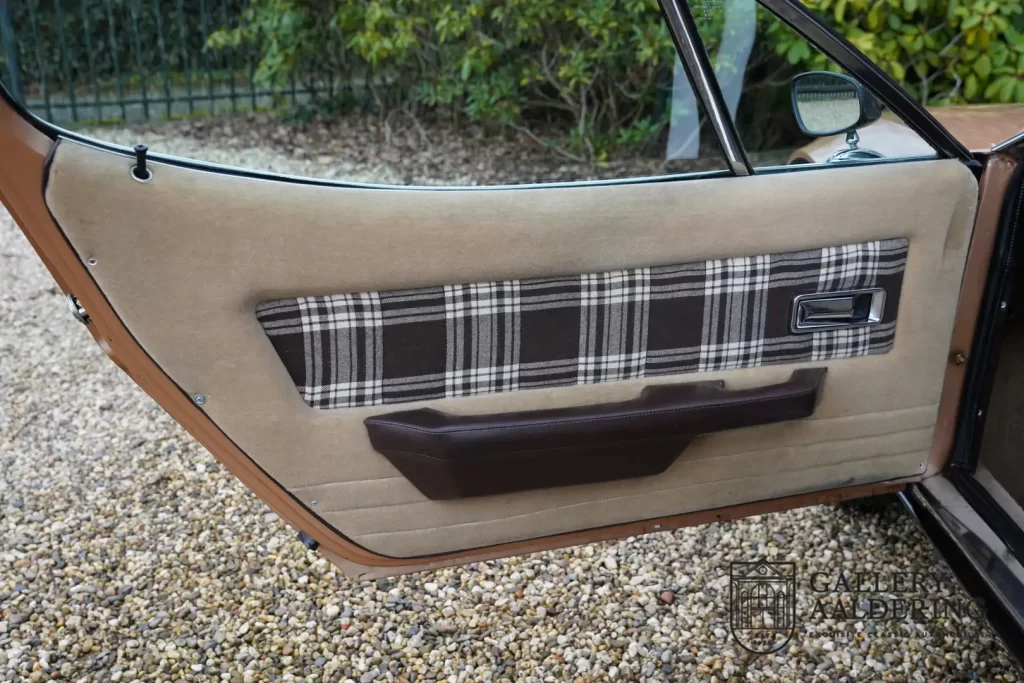
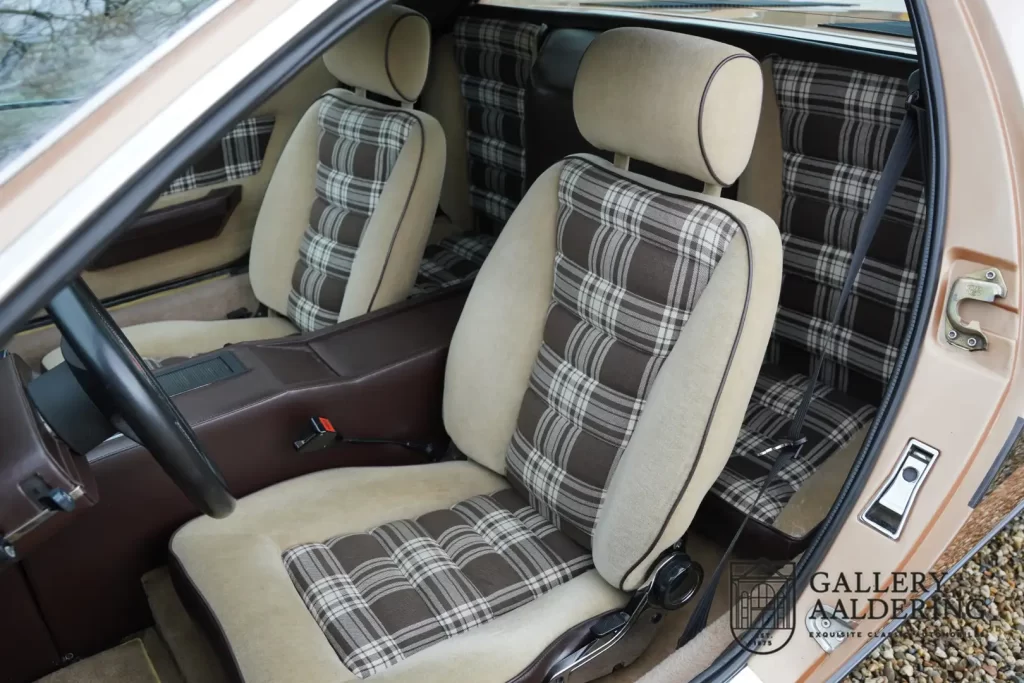
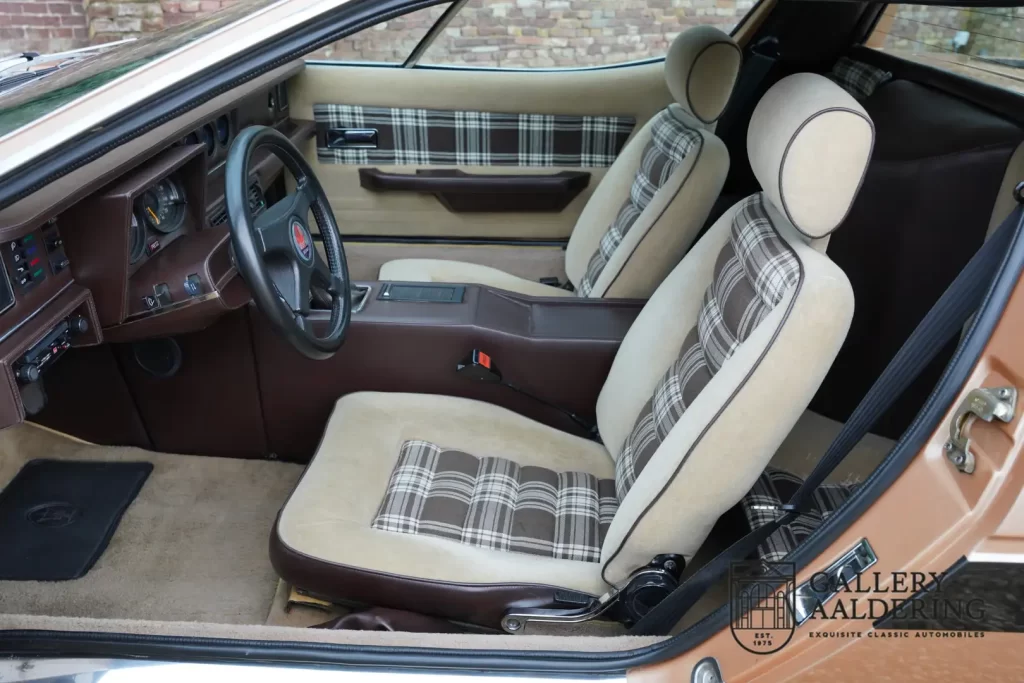
    Whatever the case of the name, the look of the color is very unique. Browns were popular in that time period though typically fell out of vogue, and certainly weren’t the more usual reds or blues the mass market tends to prefer. In our eyes, that makes it more unique, and it also makes it incredibly paired with the particular highly preserved tartan interior of this car.

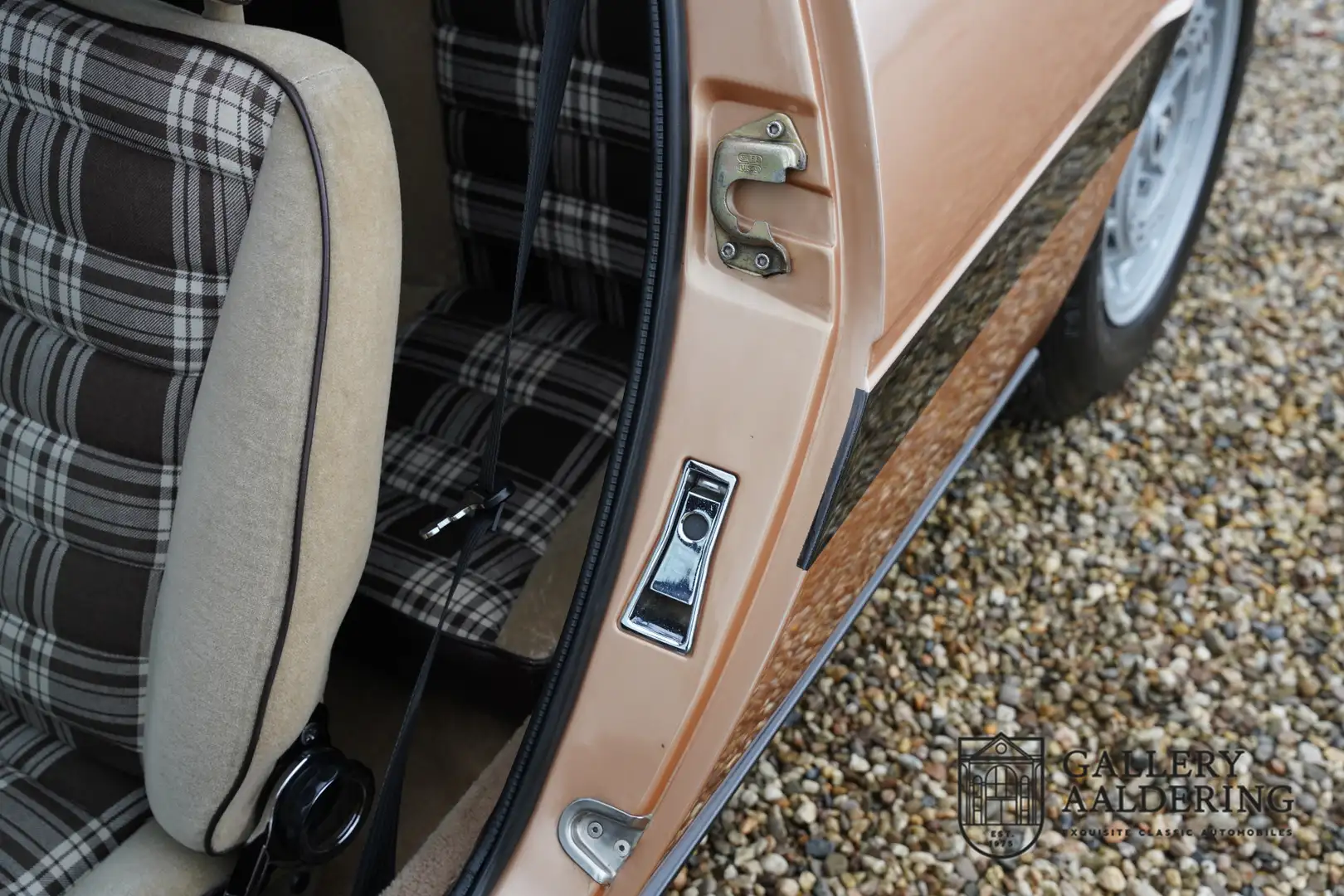
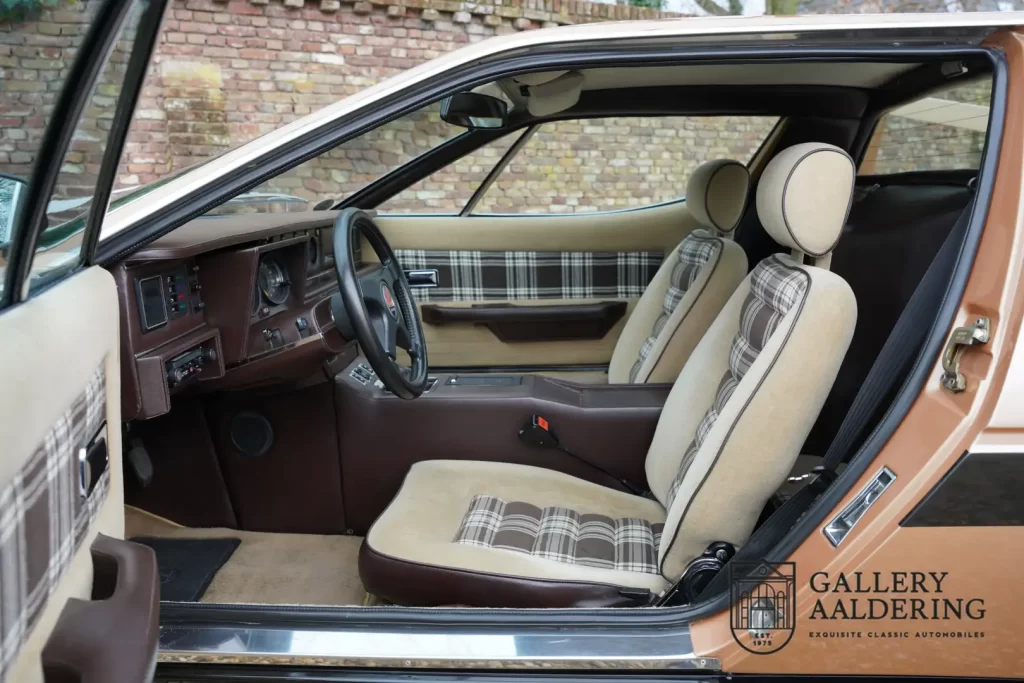
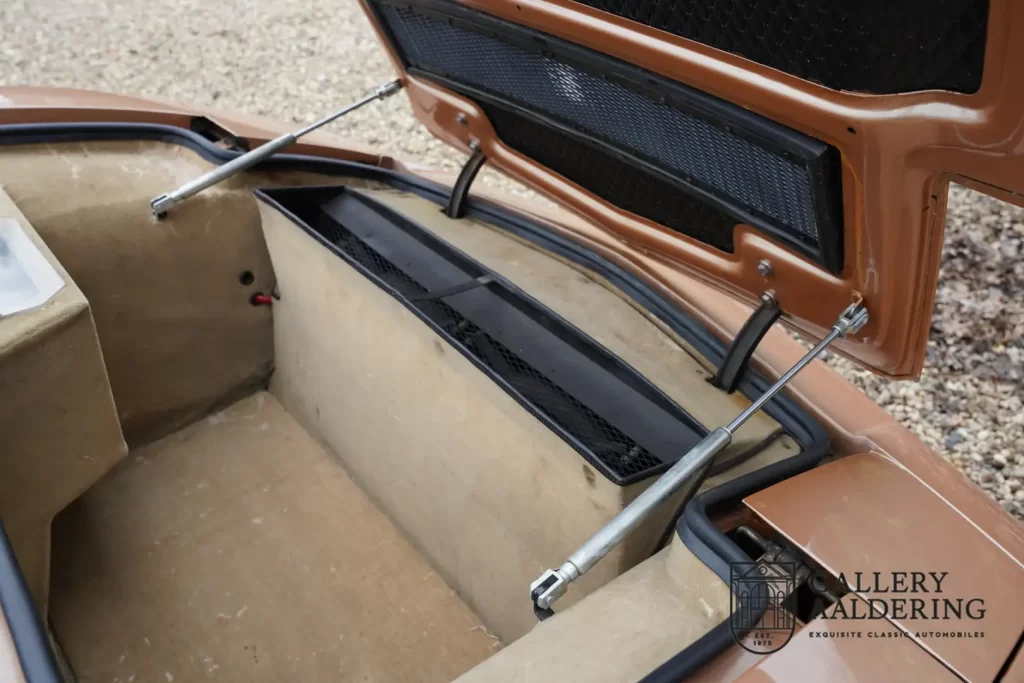
    Inside, brown leather helps elevate the feel of quality of an era of dashboard and center console that’s not always the most robust. Here, it looks well-kept and well-paired with tan fabric seats and brown and tan tartan seat centers. Whereas the 2000 GT may not be the most preferable drivetrain, this interior makes this car incredibly attractive despite its power deficiencies.

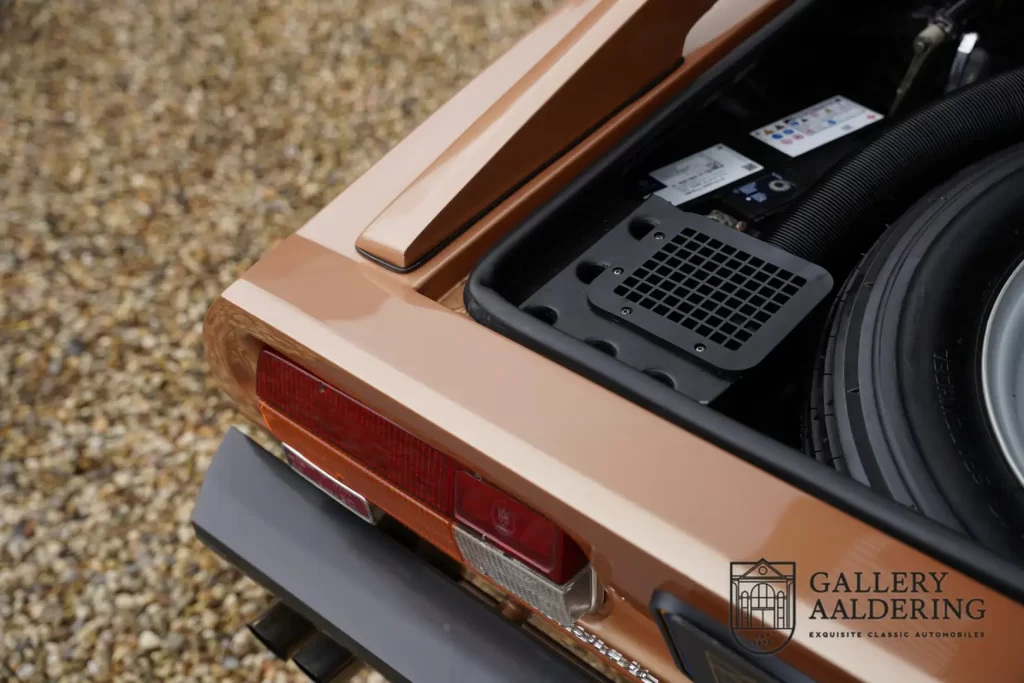
    This Merak 200 GT is listed for sale at Gallery Aaldering in Brummen, NL. Yes, that means you’ll have to import it if you want it. It’s logged just 14,925 km (9,273 miles), so it’s practically new by that count.

    If you’re interested in seeing more of the car, you can check it out HERE.

  • Tartan: A Pattern with a History at Porsche

    Tartan: A Pattern with a History at Porsche

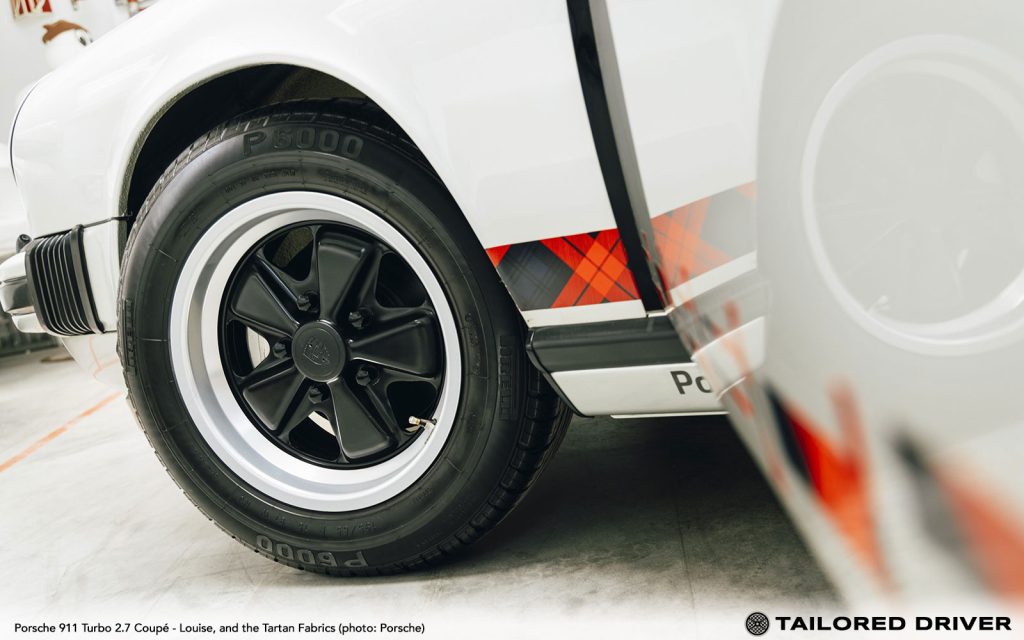
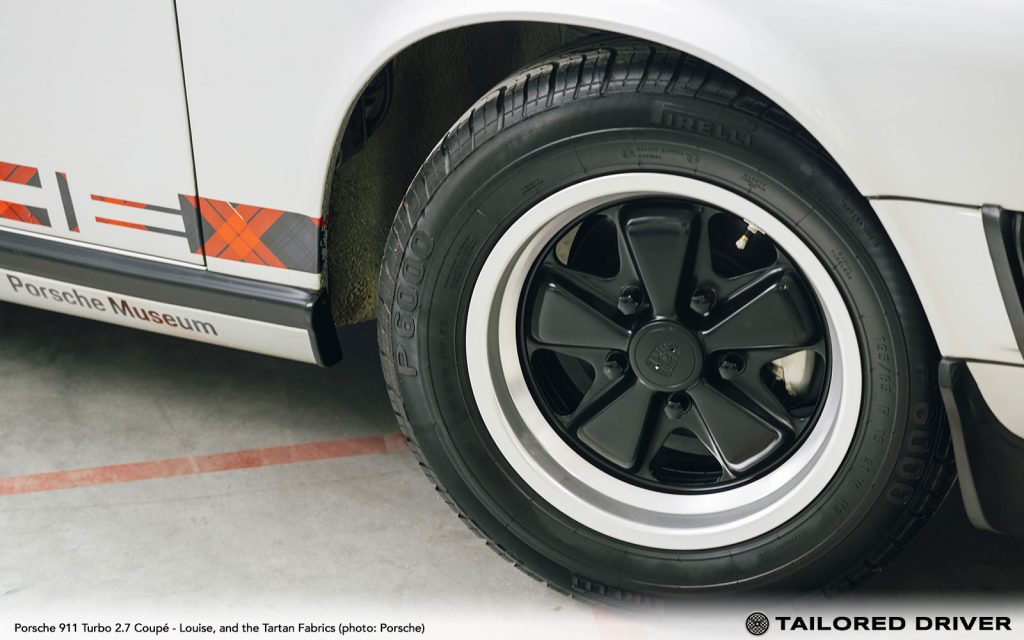
    Tartan fabrics symbolise tradition and craftsmanship, belonging and confidence. Exactly 50 years ago, three tartans could be found on the options list exclusively for the Porsche 911 Turbo. It wasn’t until the 1976 model year that they appeared in the 911. To this day, this check pattern classic remains timeless and stylish – on the catwalk and in the sports car.

    [source: Porsche]

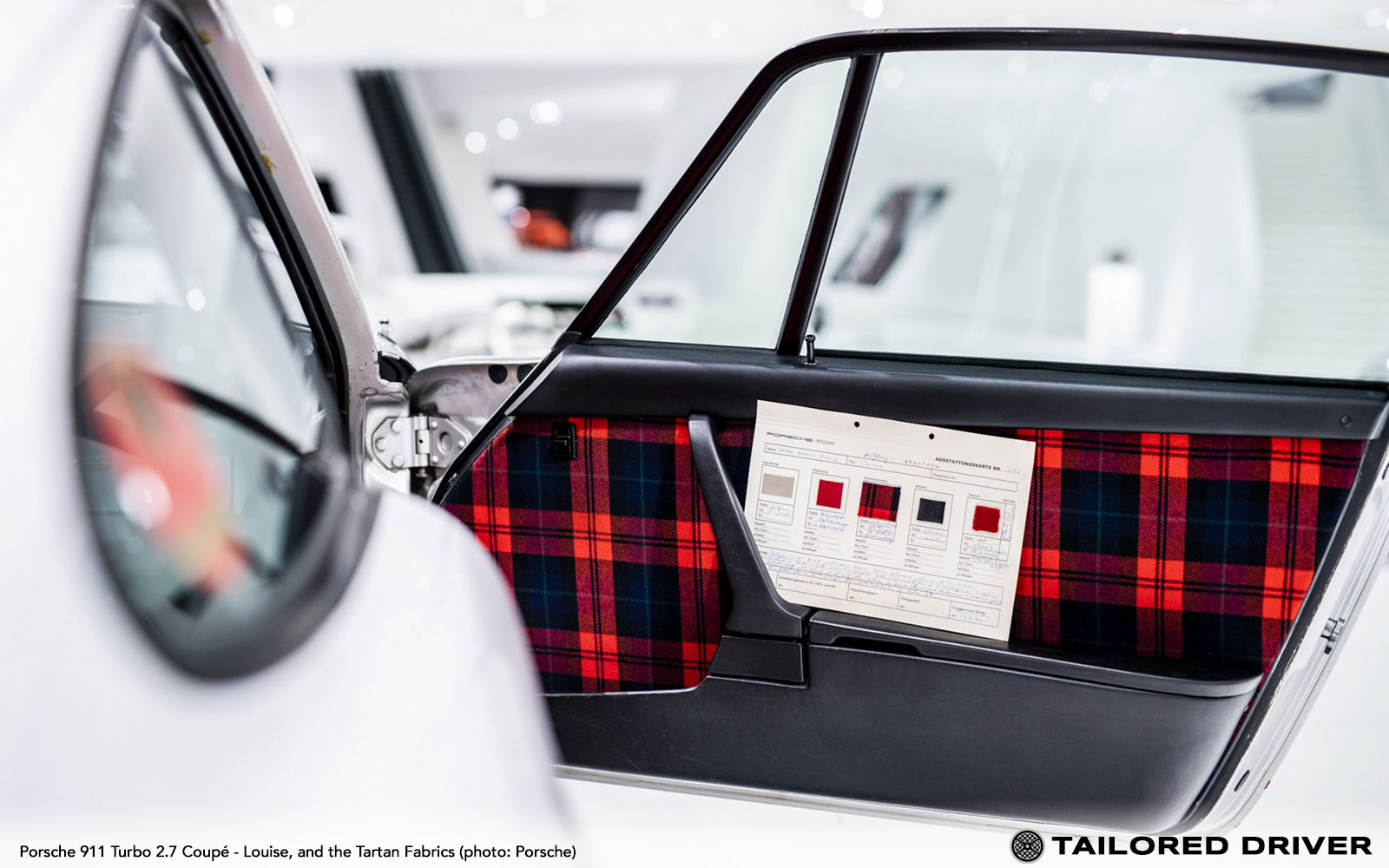
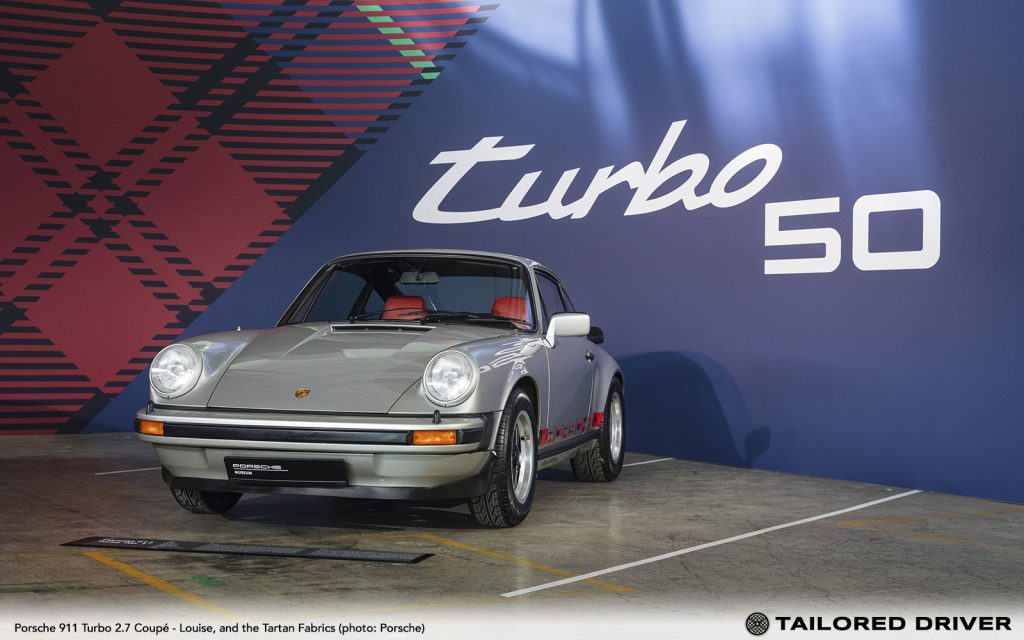
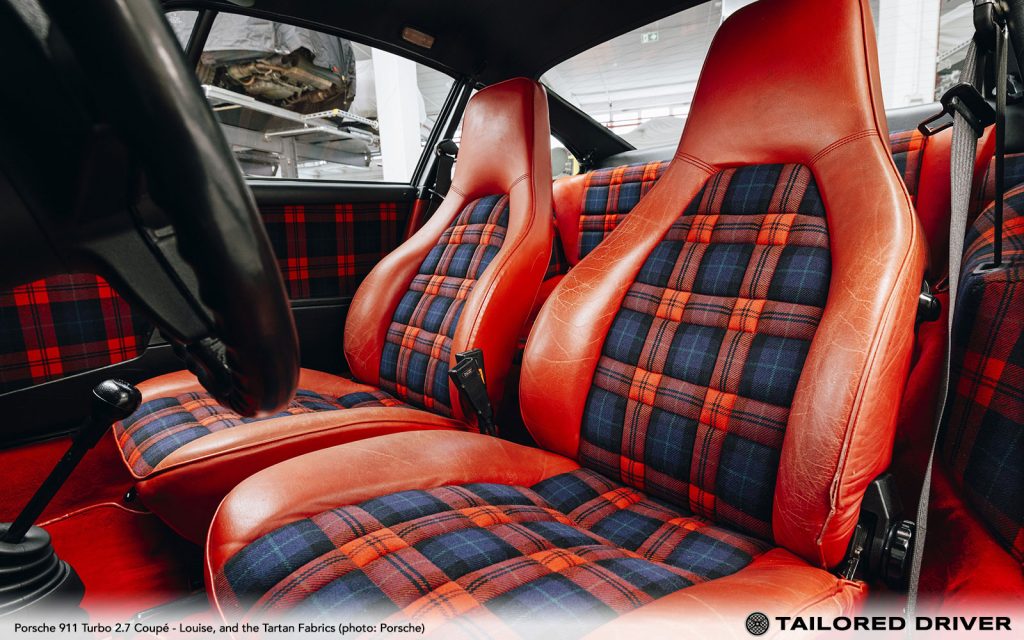
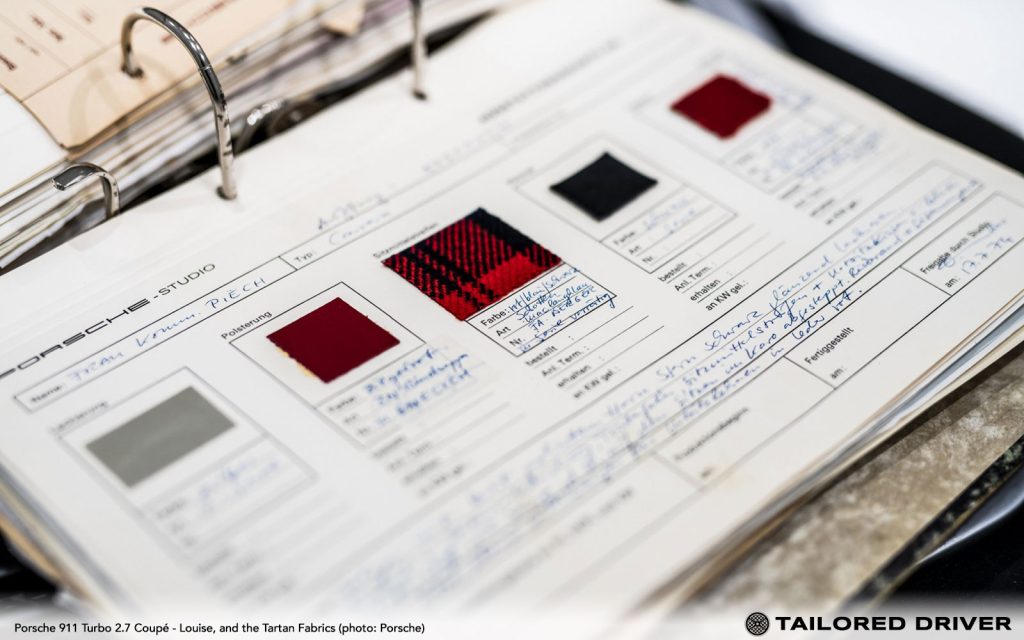
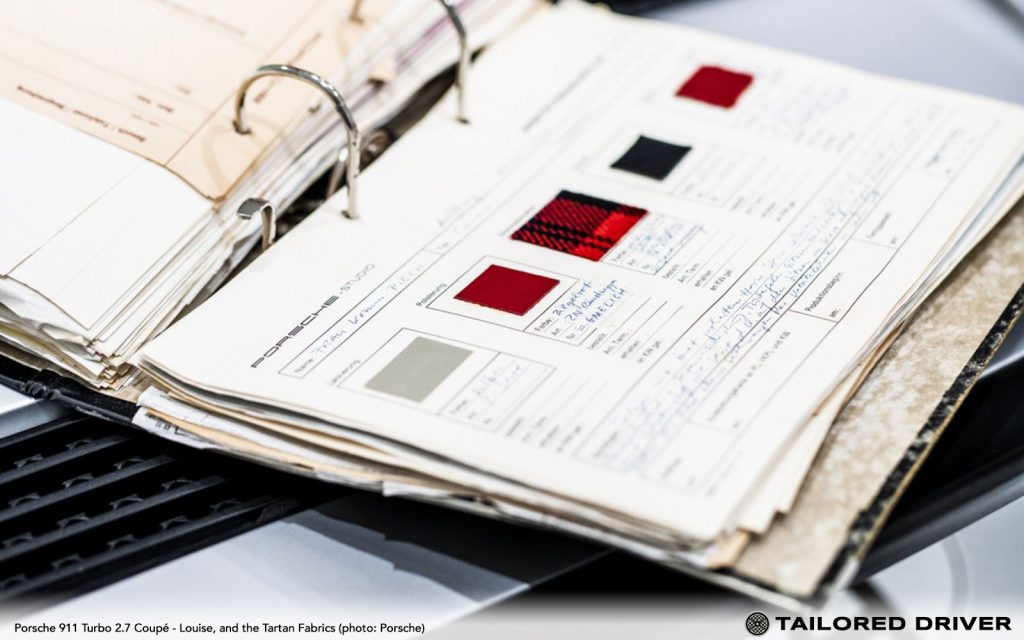
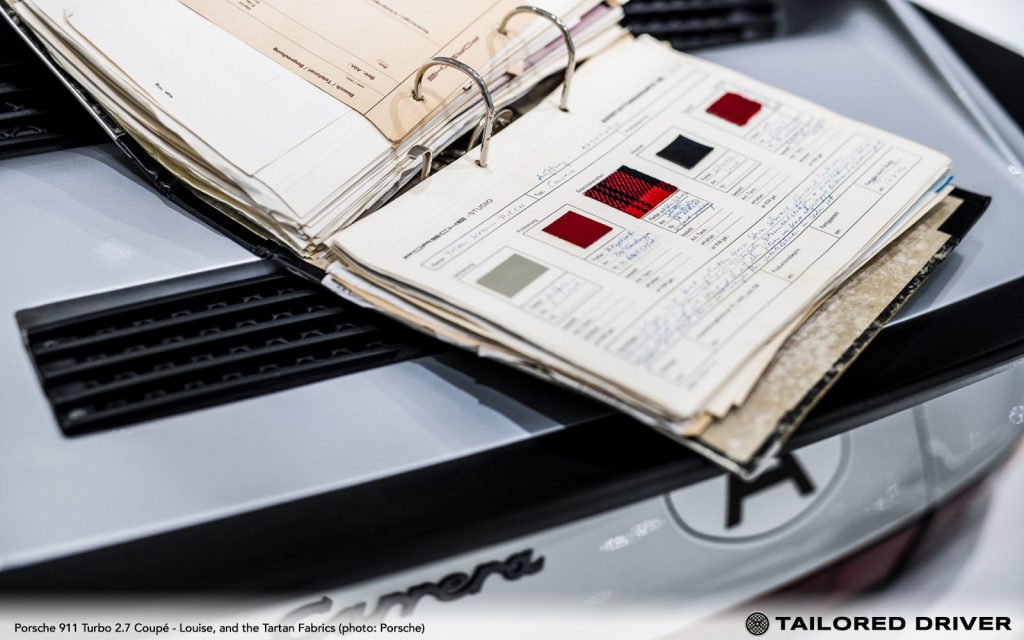
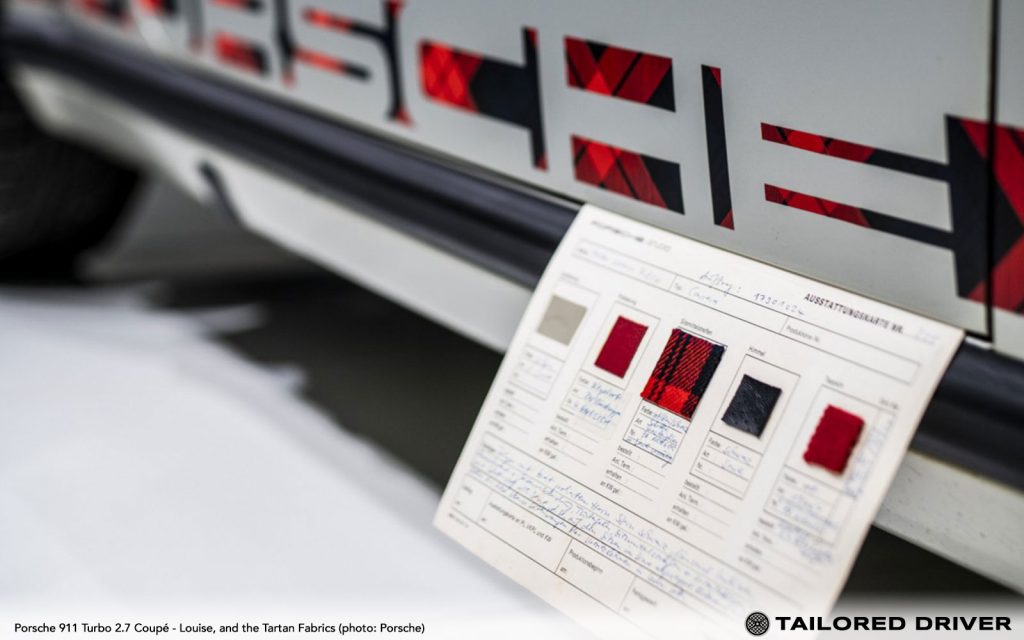
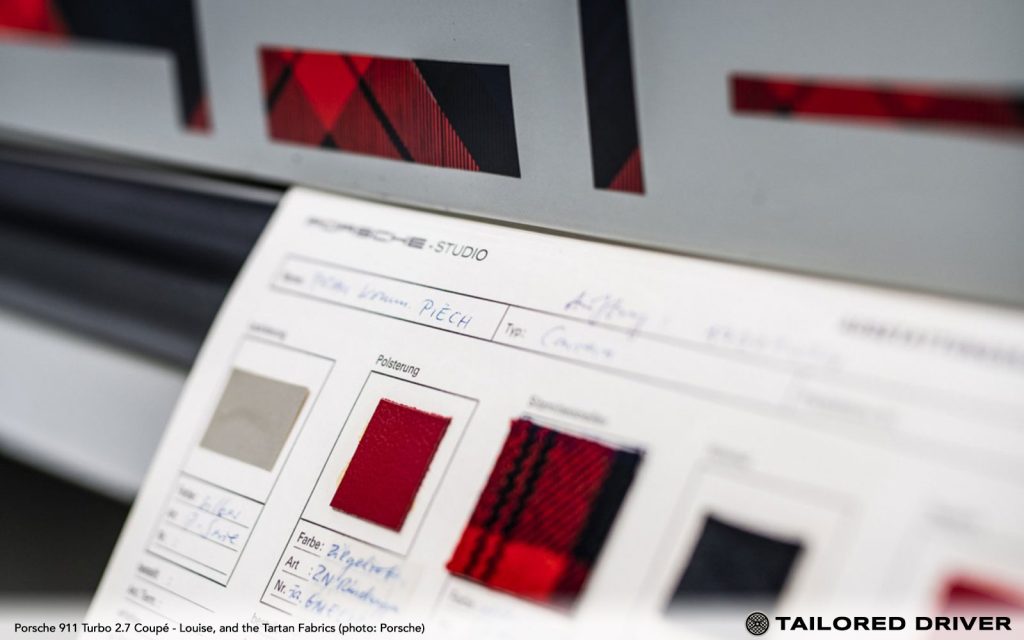
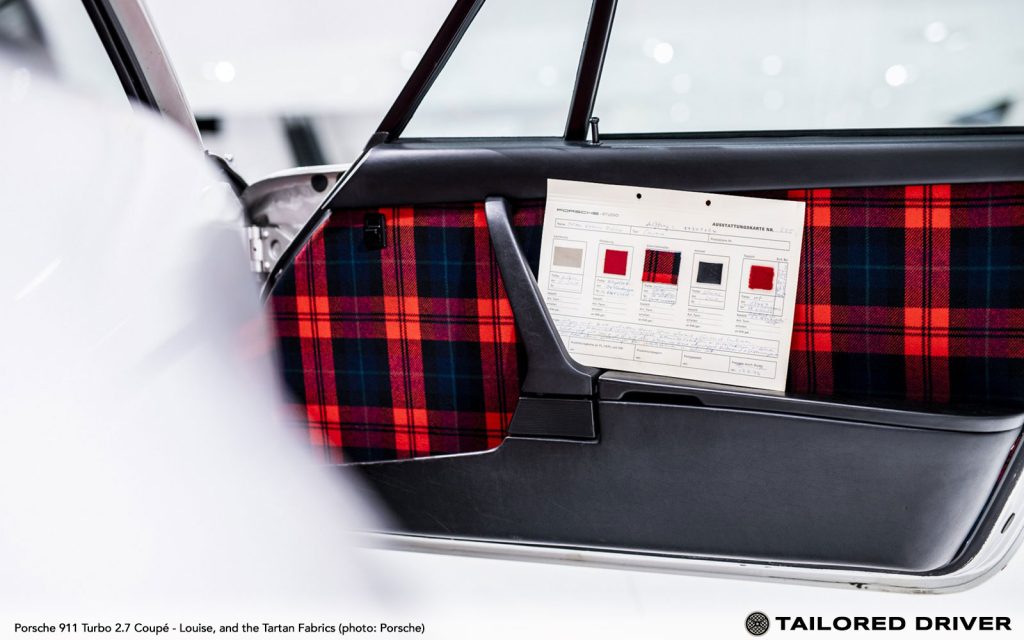
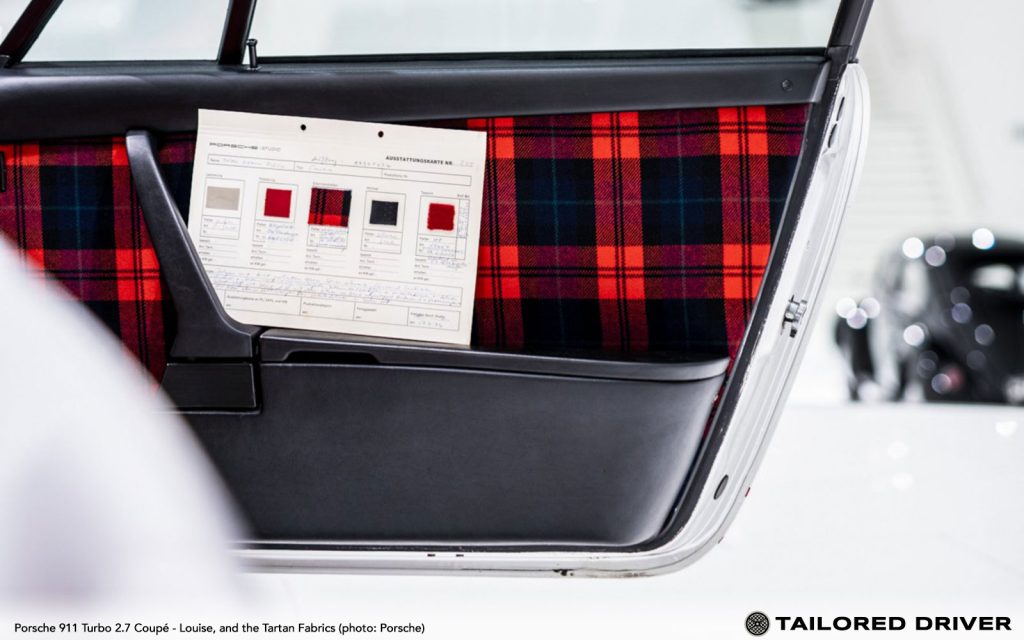
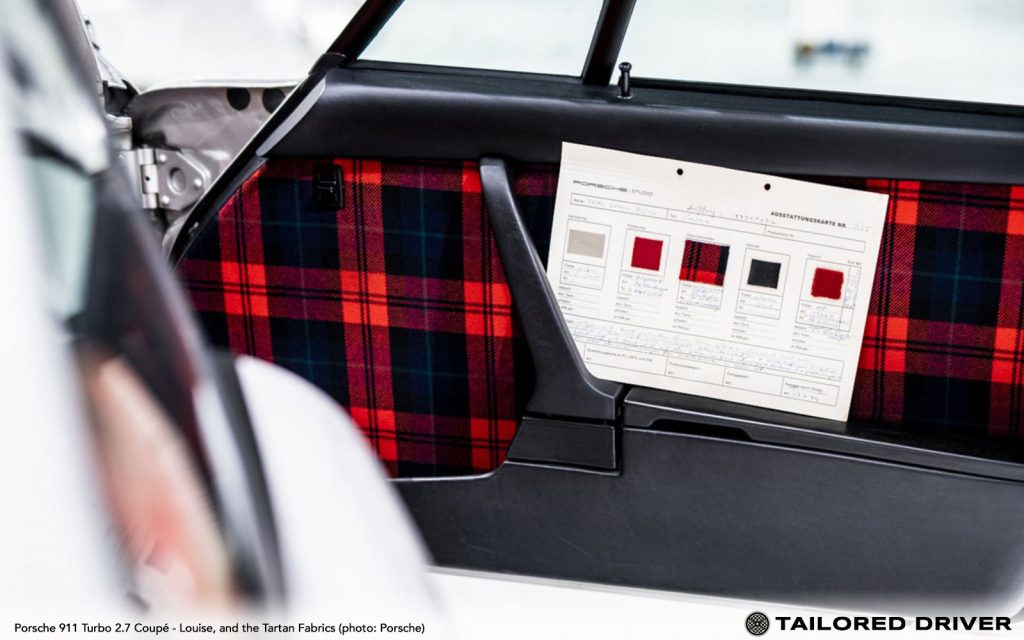
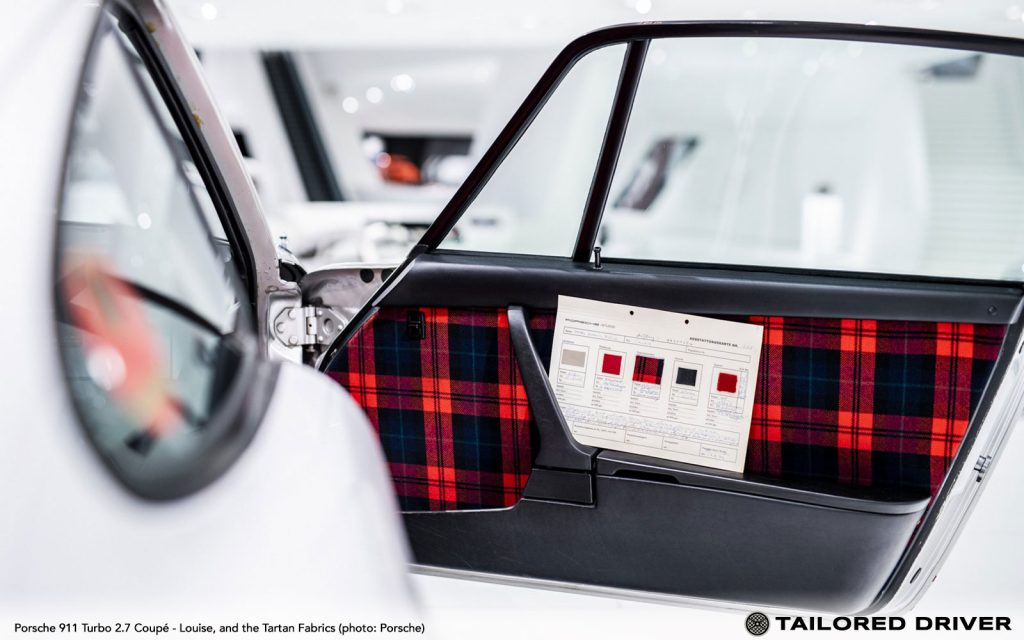
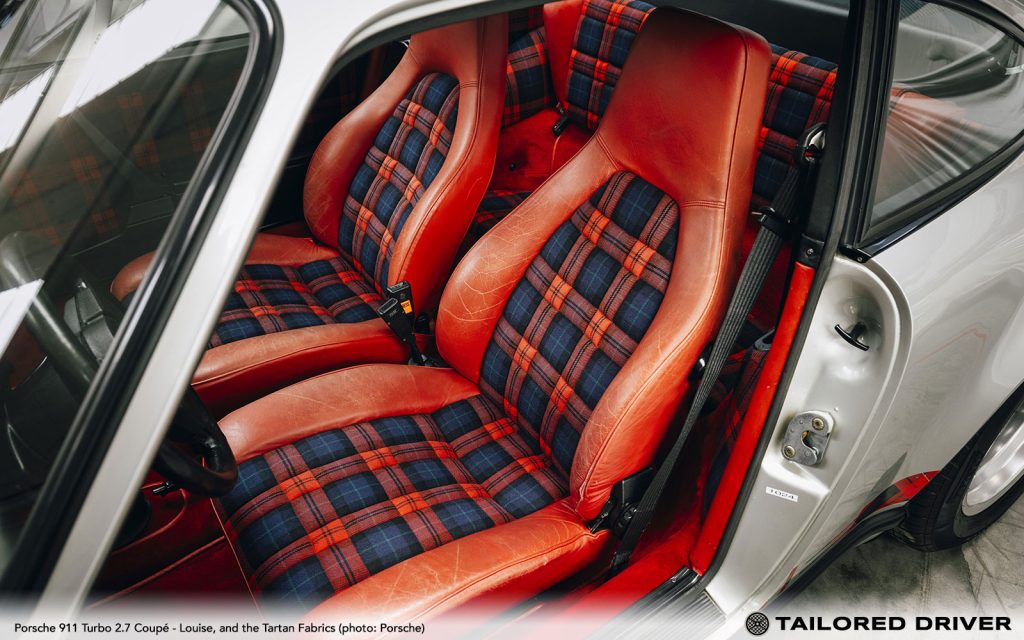
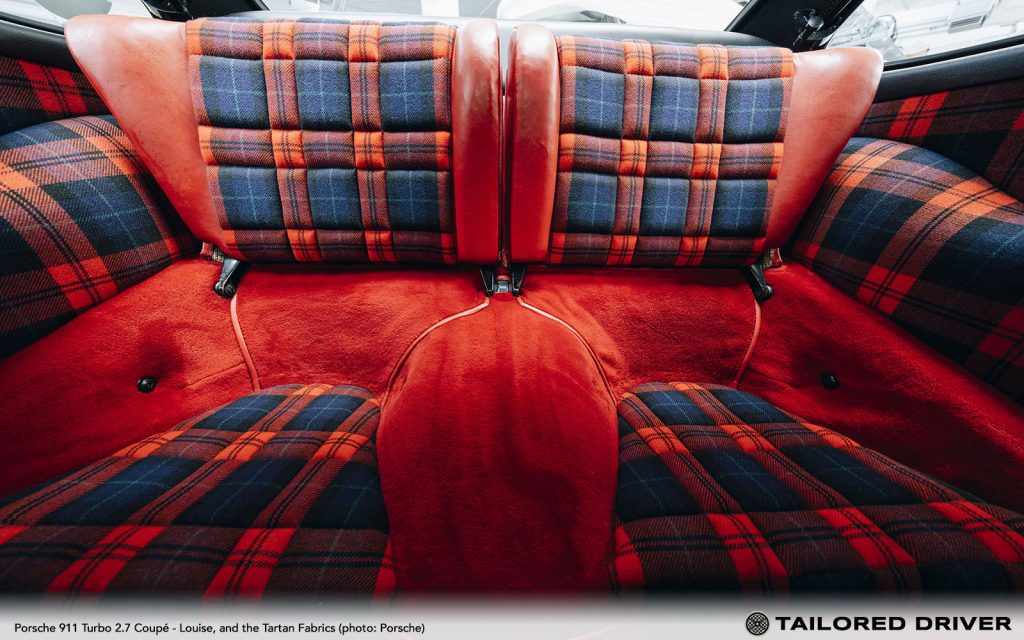
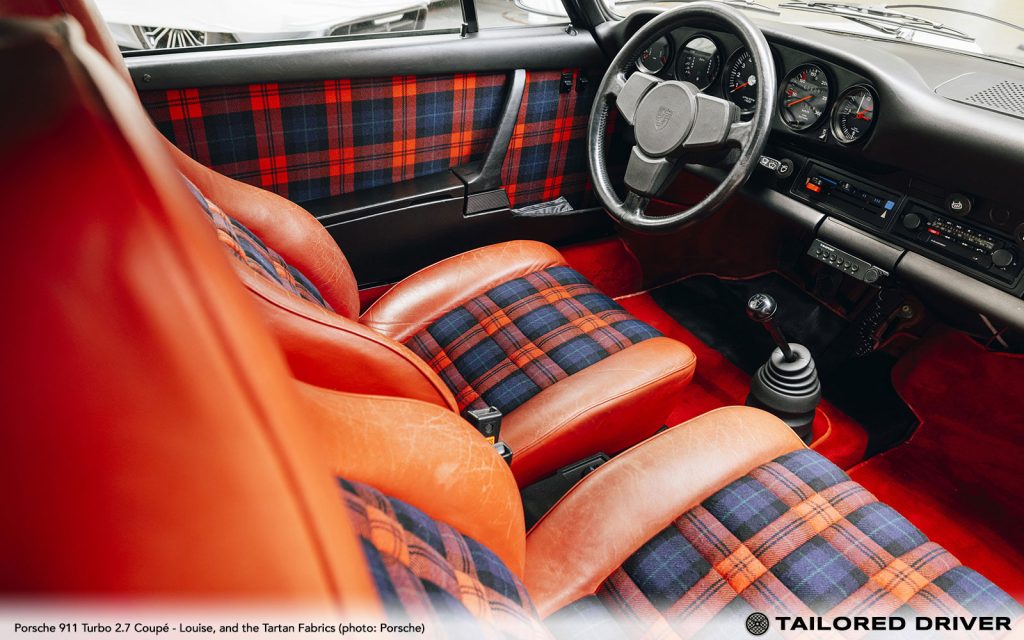
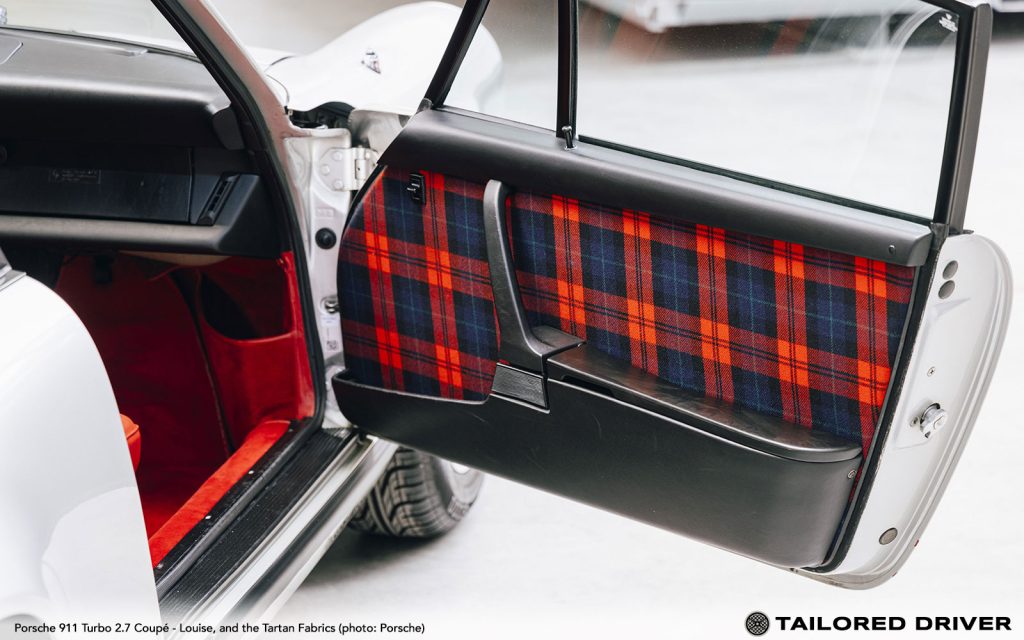
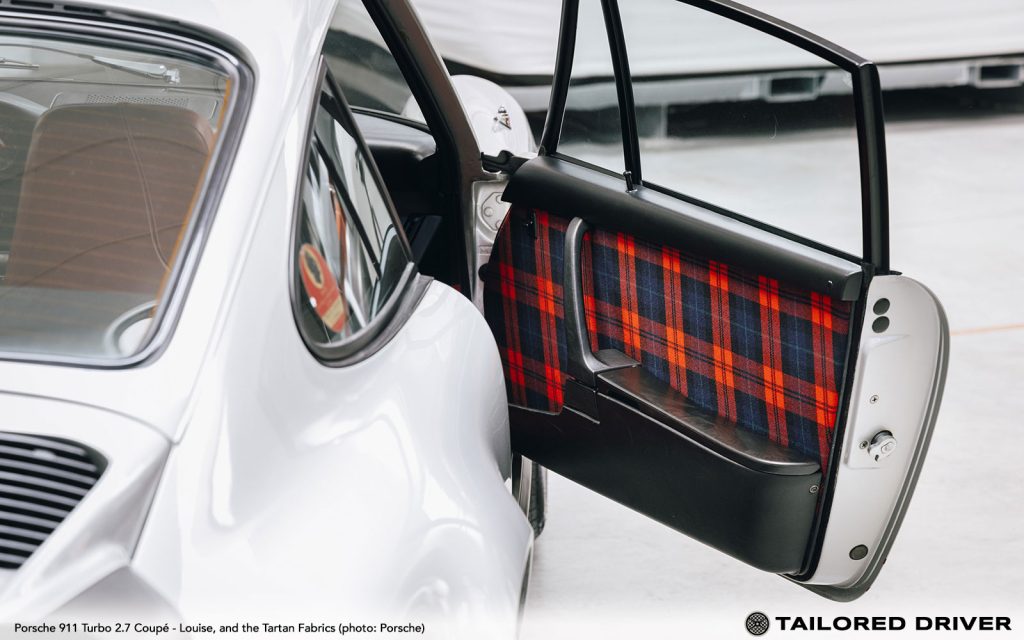
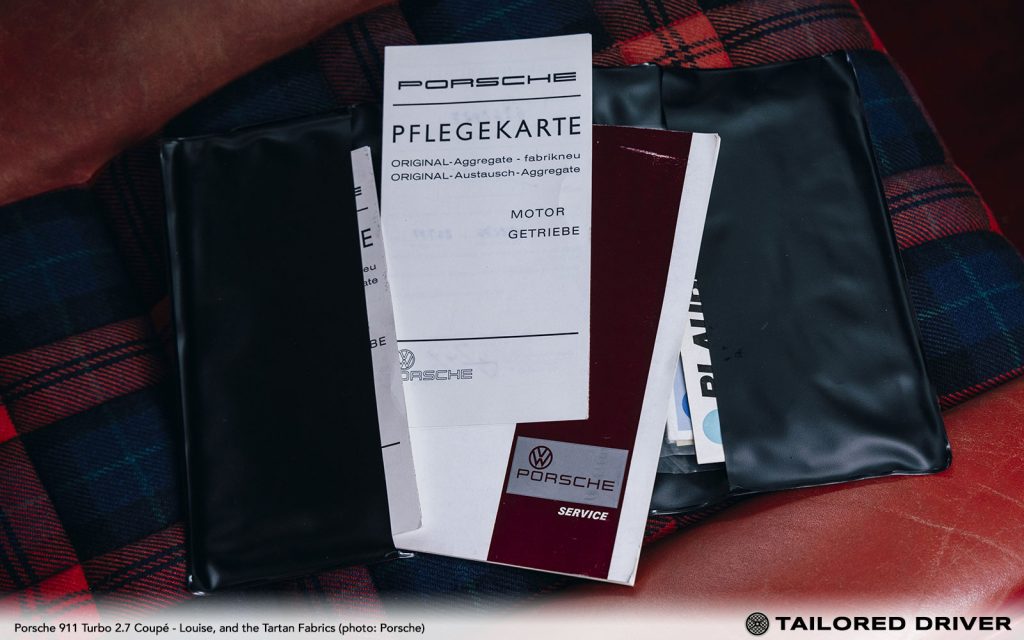
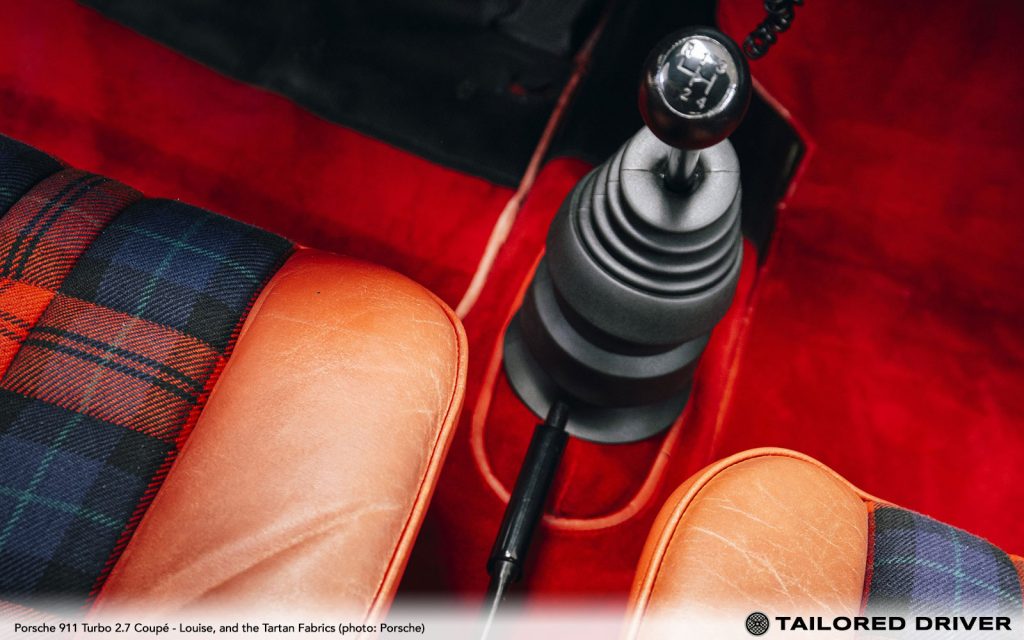
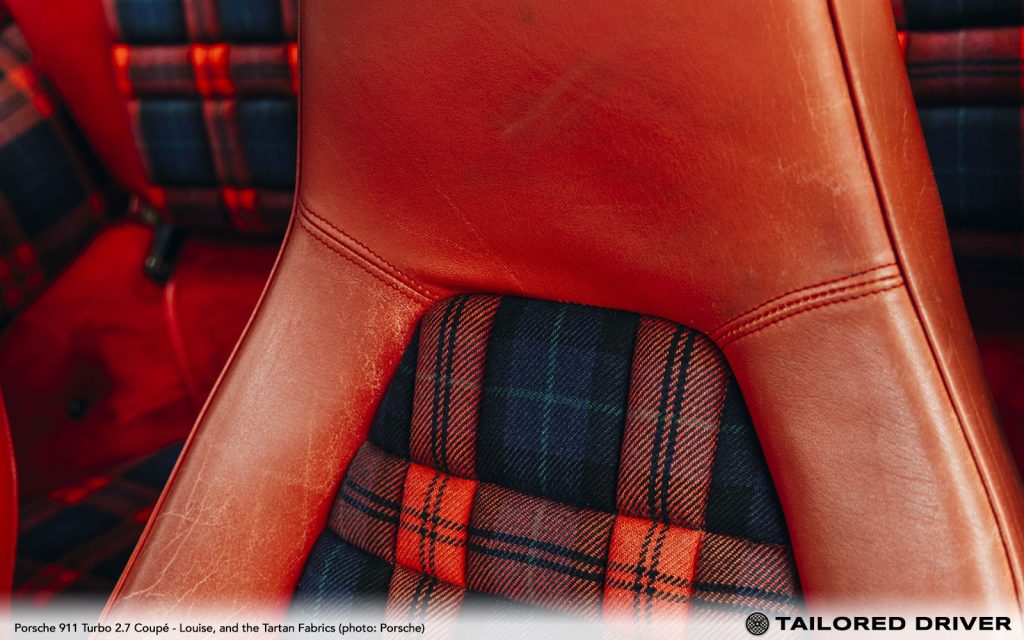
    The day that Anatole Lapine woke up and decided to wear a pair of tartan trousers would be the day on which the chief designer and his team would decide to include tartan fabrics in the interior programme. Dorothea Müller-Goodwyn worked as a stylist at Porsche from 1970 to 1975, and again from 1978 to 2003. “We had a Scottish colleague in our team who recommended two traditional tartan fabric makers from his homeland to me,” recalls Müller-Goodwyn, who then contacted them both. “Unfortunately, they were unable to supply us with fabrics with the qualities that we required for the interior of the sports cars: [they had to be] lightfast and abrasion-resistant.” She finally found a supplier 50 kilometres from Weissach, in Dettingen unter Teck, on the border of the Swabian Mountains. The town is home to the Berger company, which capable of weaving series-production-quality fabrics for the Porsche Style team.

    Historical background: tartan as a symbol of identity

    Tartans typically have a crisscross pattern that is created when threads of different colours are woven together. Traditional natives of Scotland, home of the iconic fabric, wear only the tartans of their clan, thereby identifying the family line to which they belong. However, according to the Scottish law of heraldic arms, it is not forbidden to wear the tartans of other clans.

    Three Scottish patterns for the options list

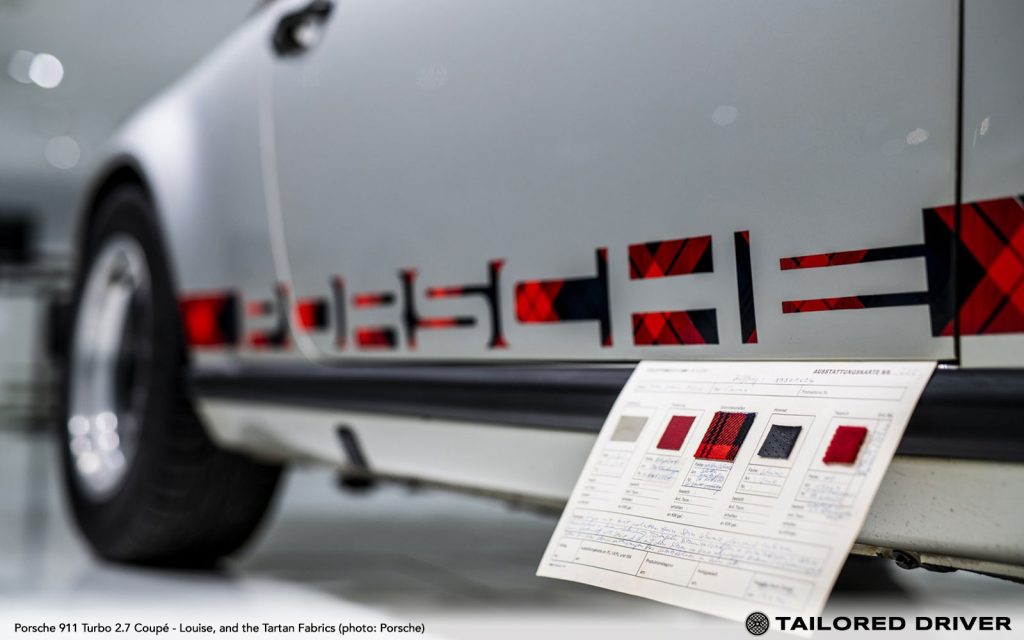
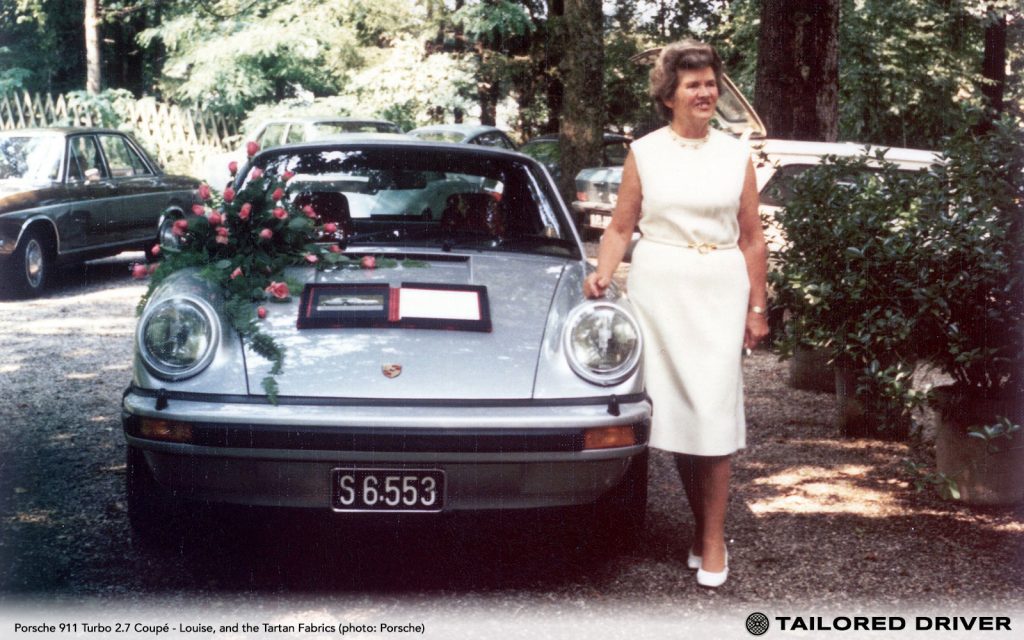
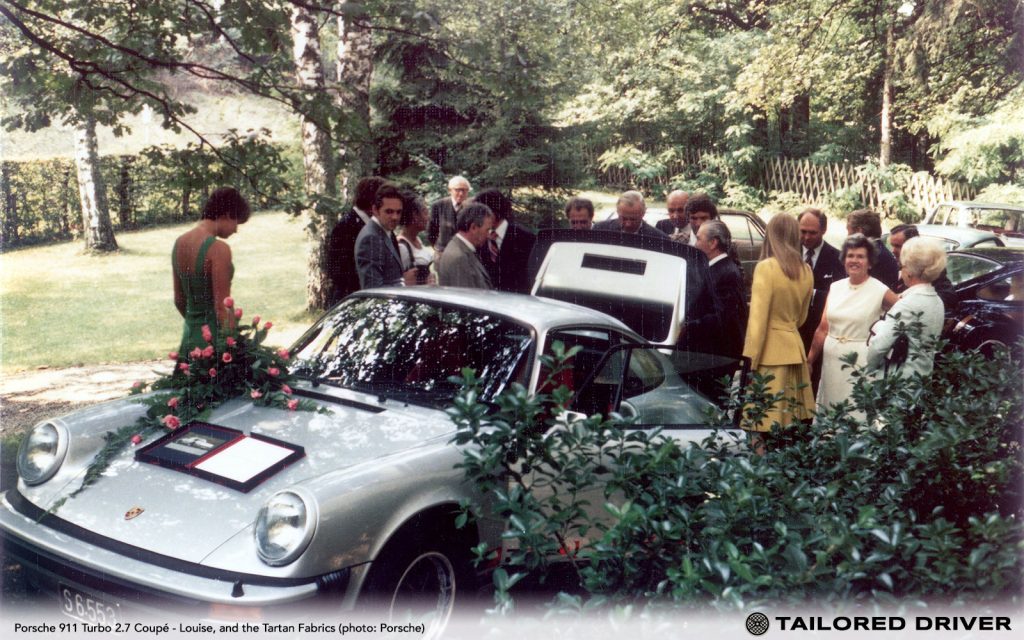
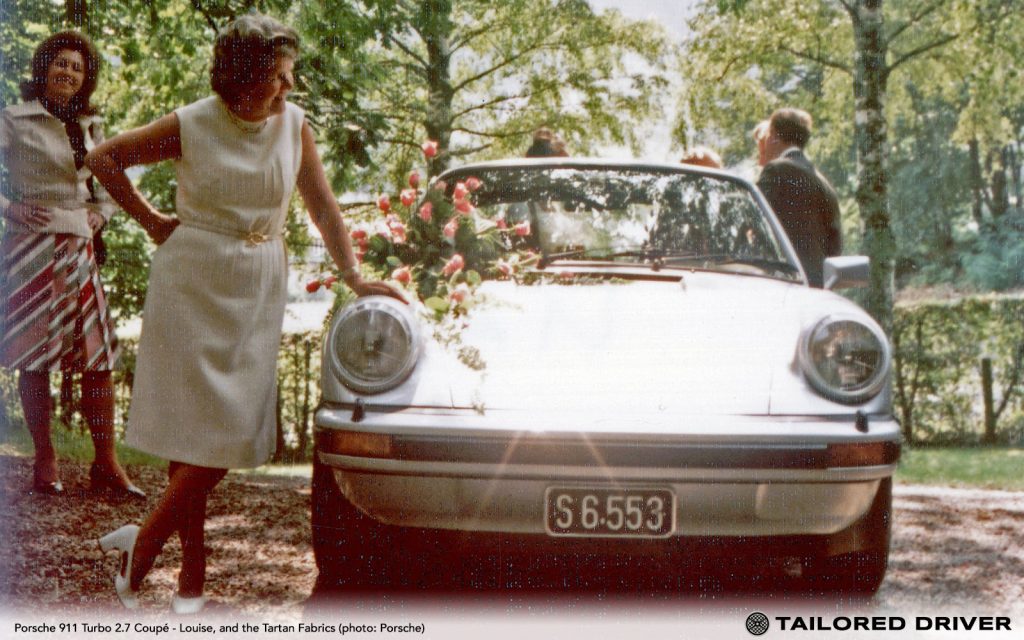
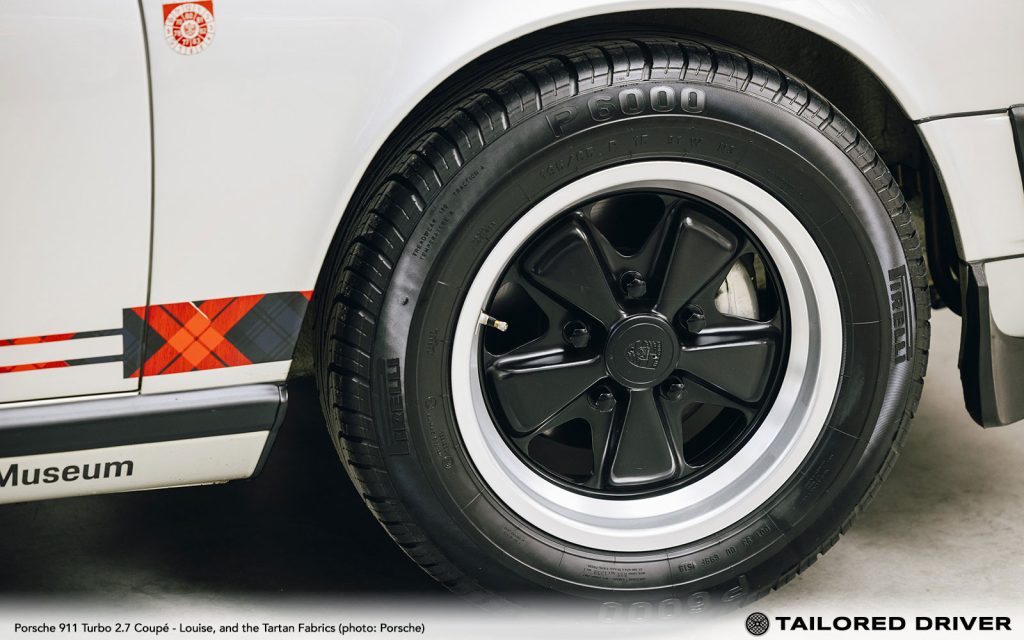
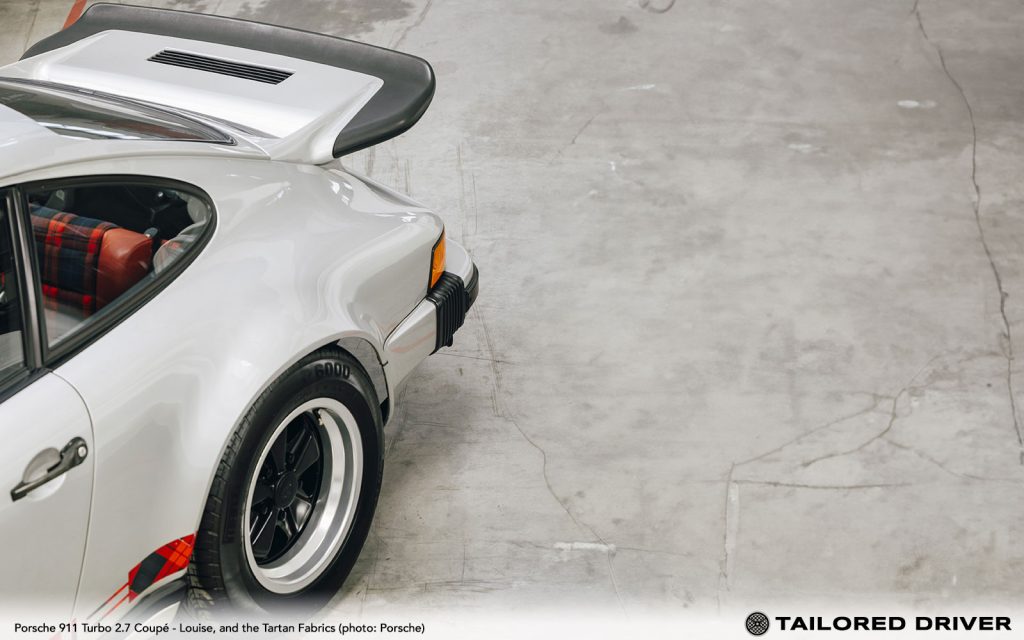
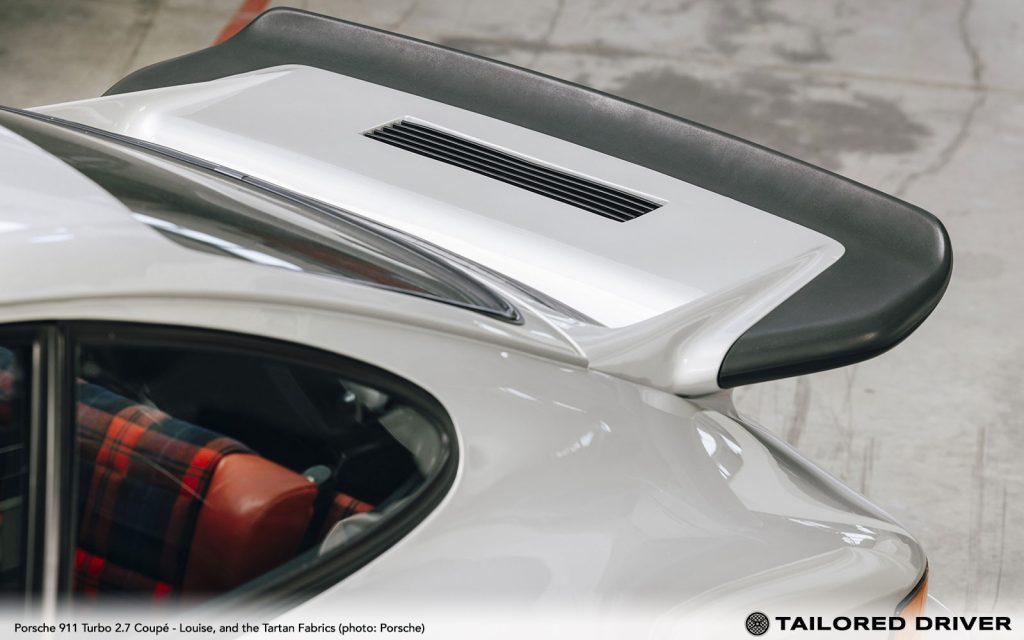
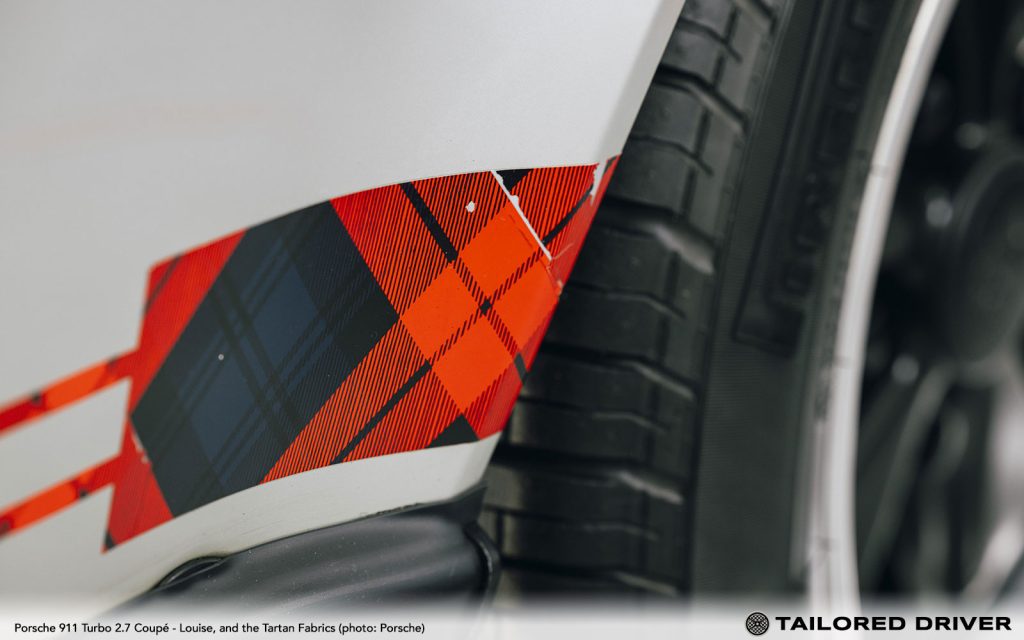
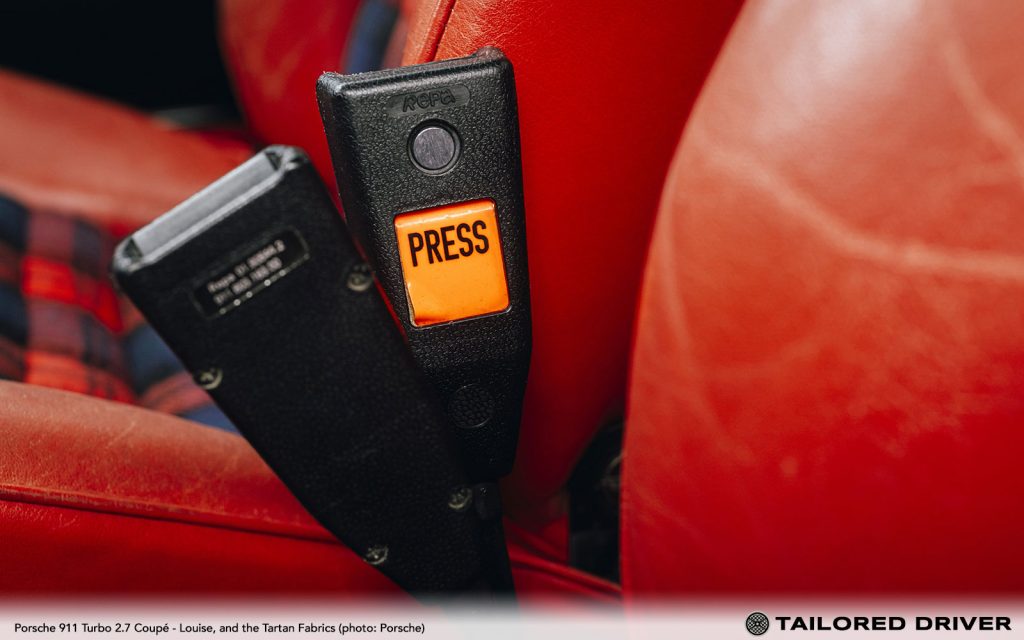
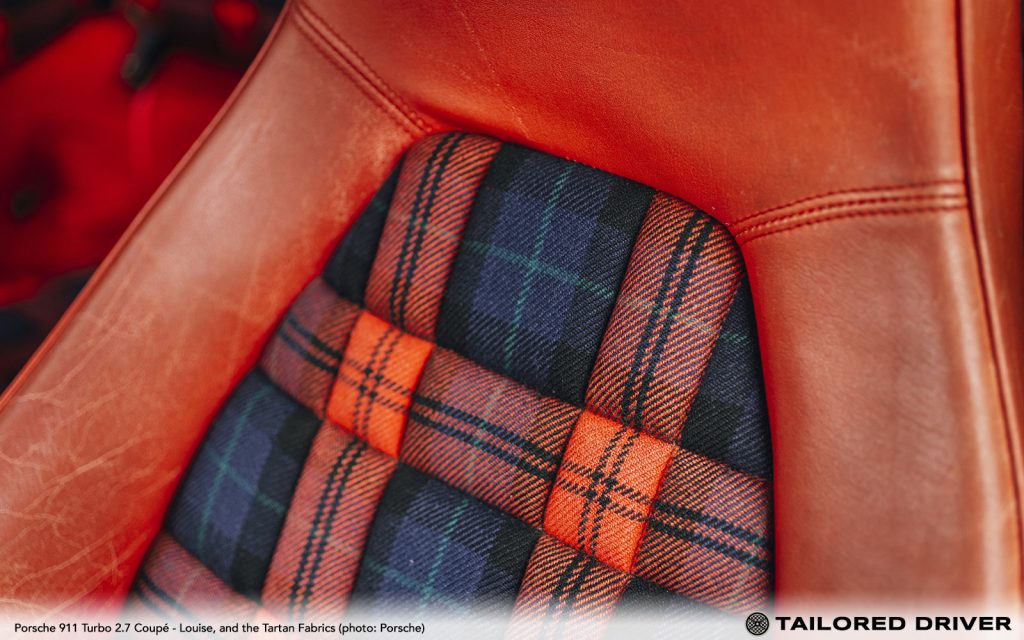
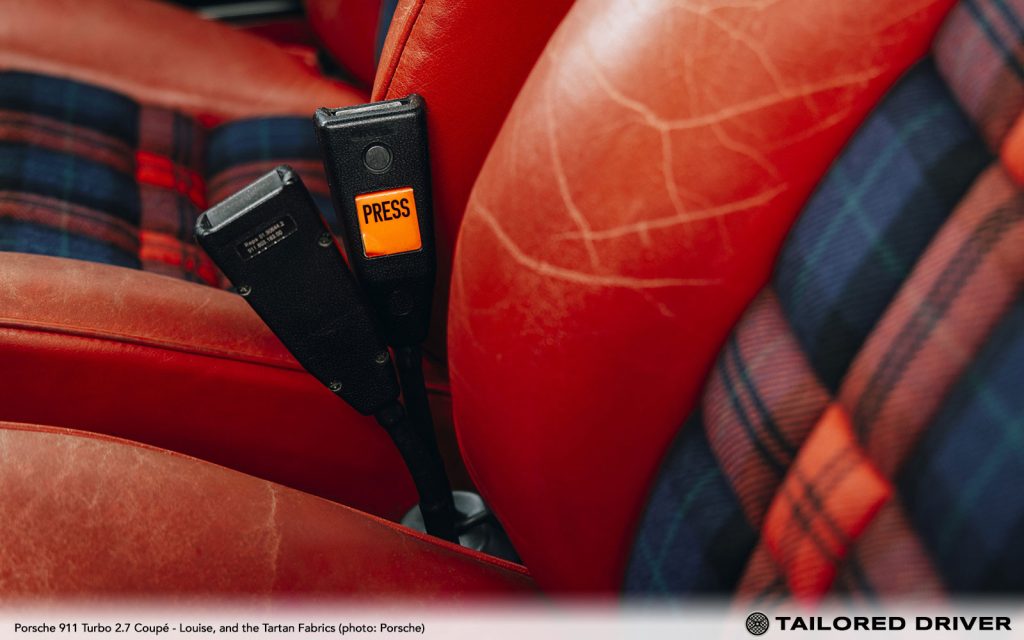
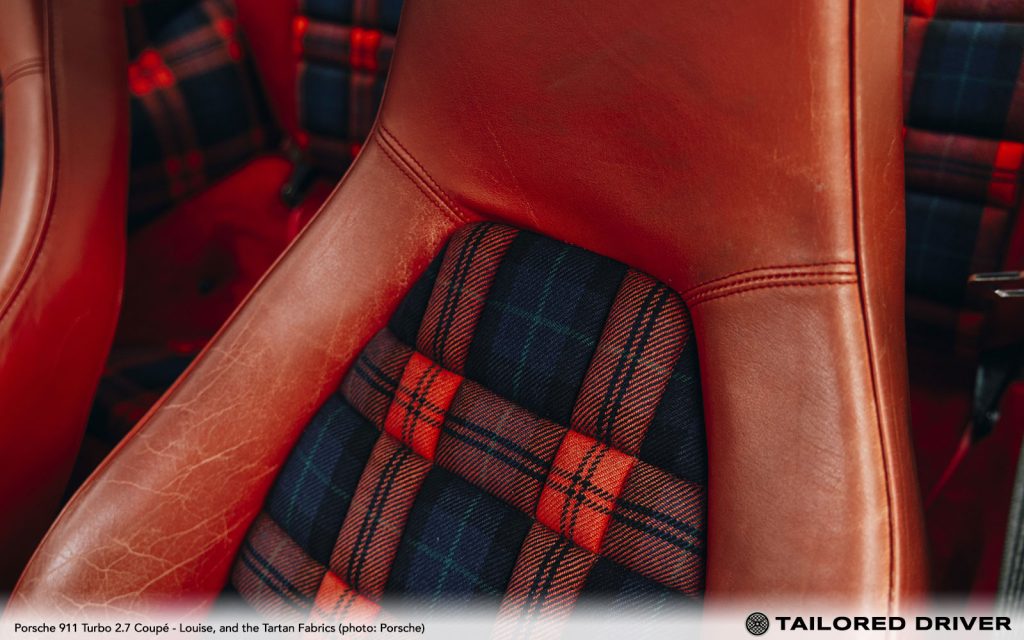
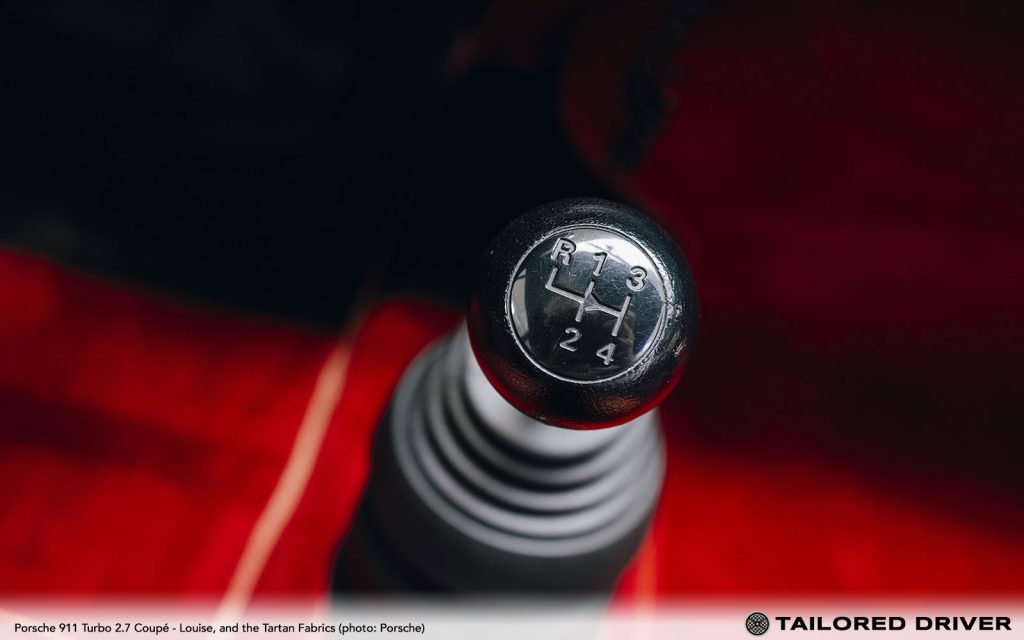
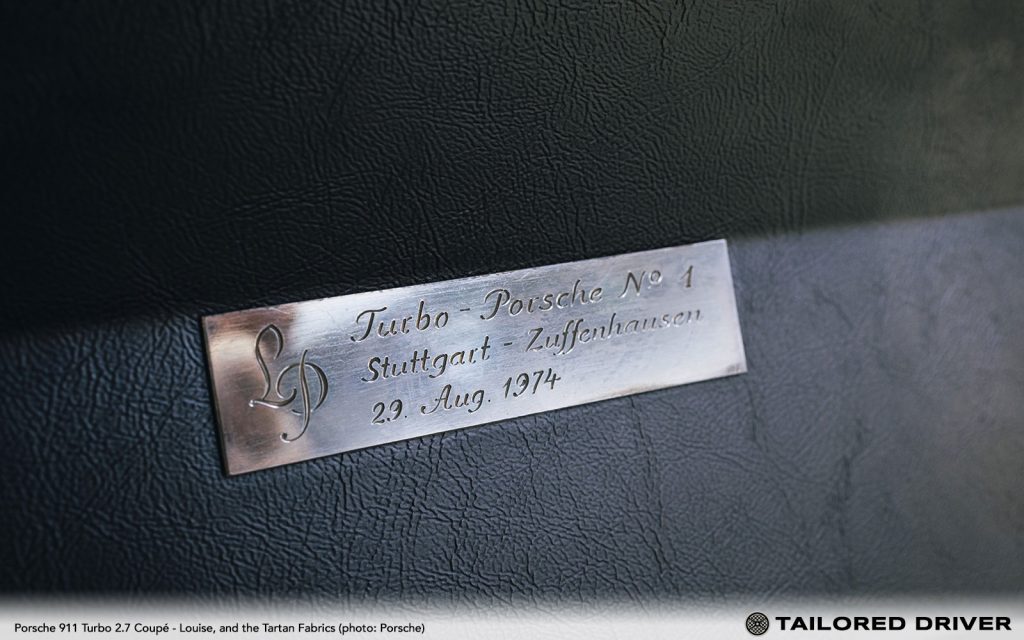
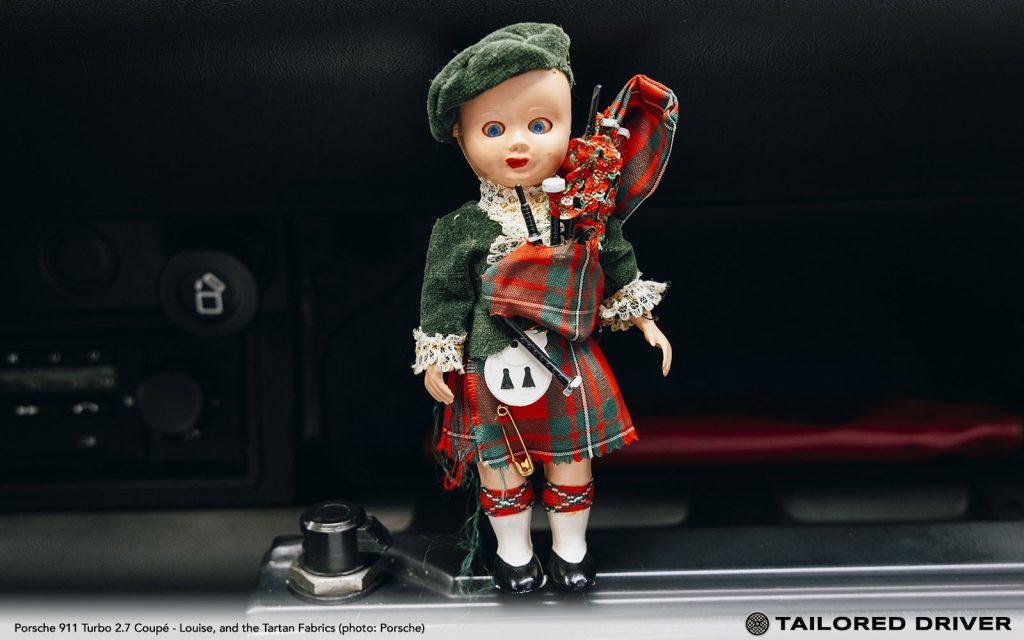
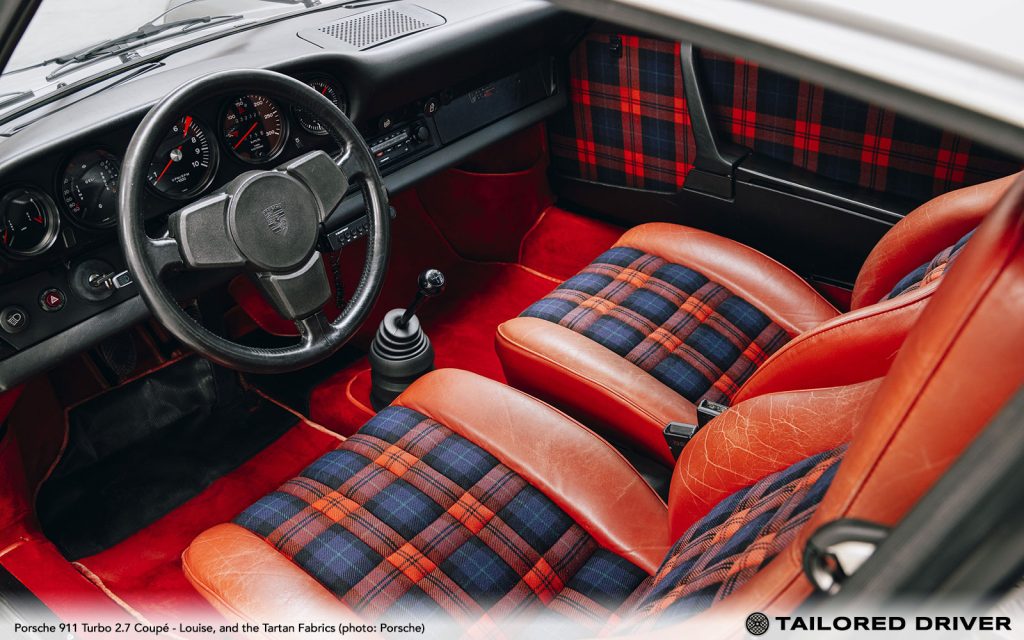
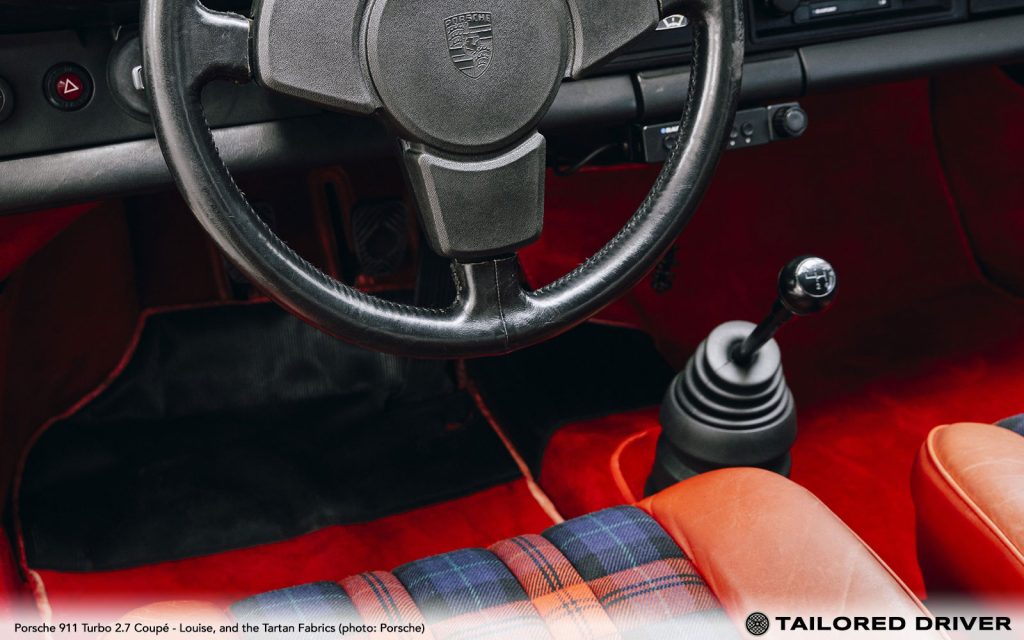
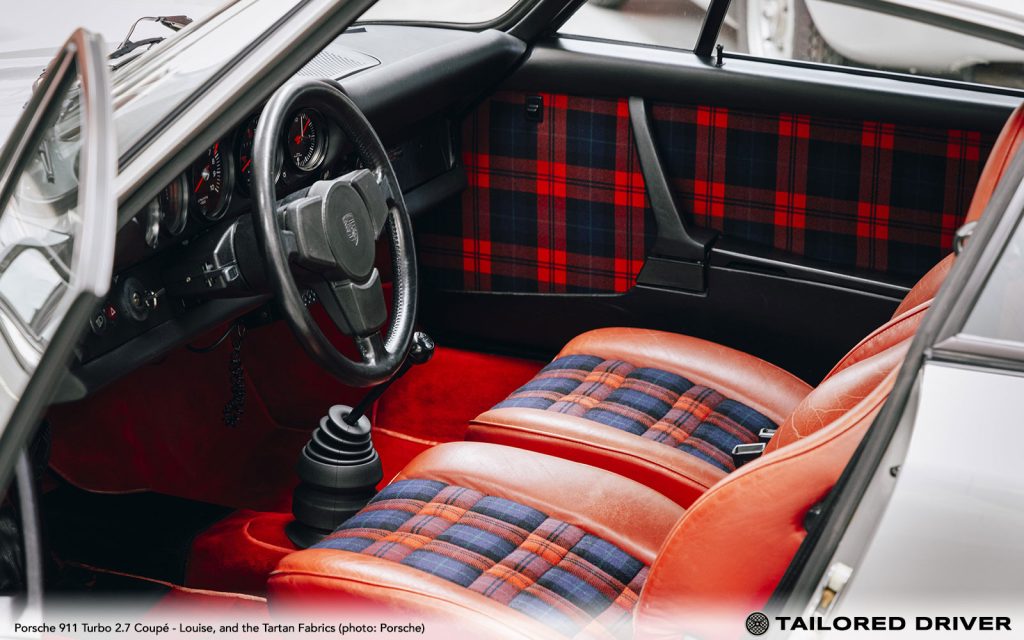
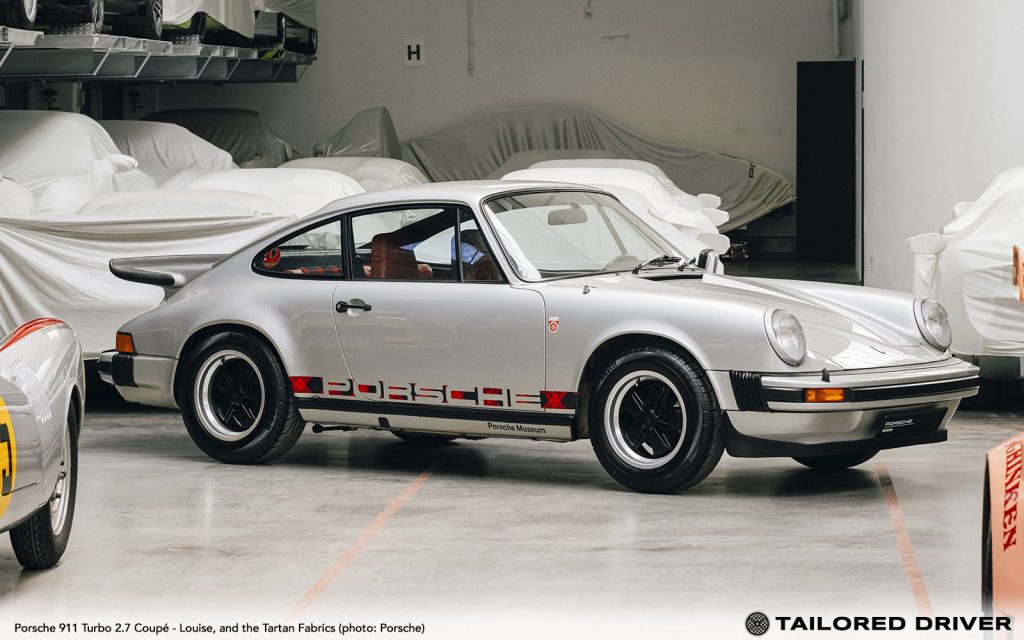
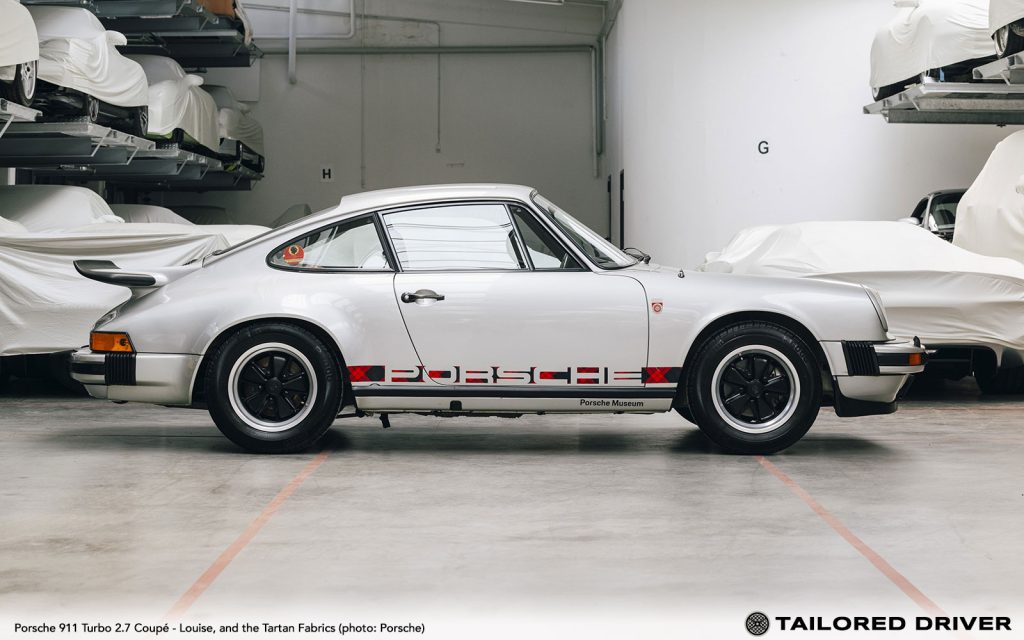
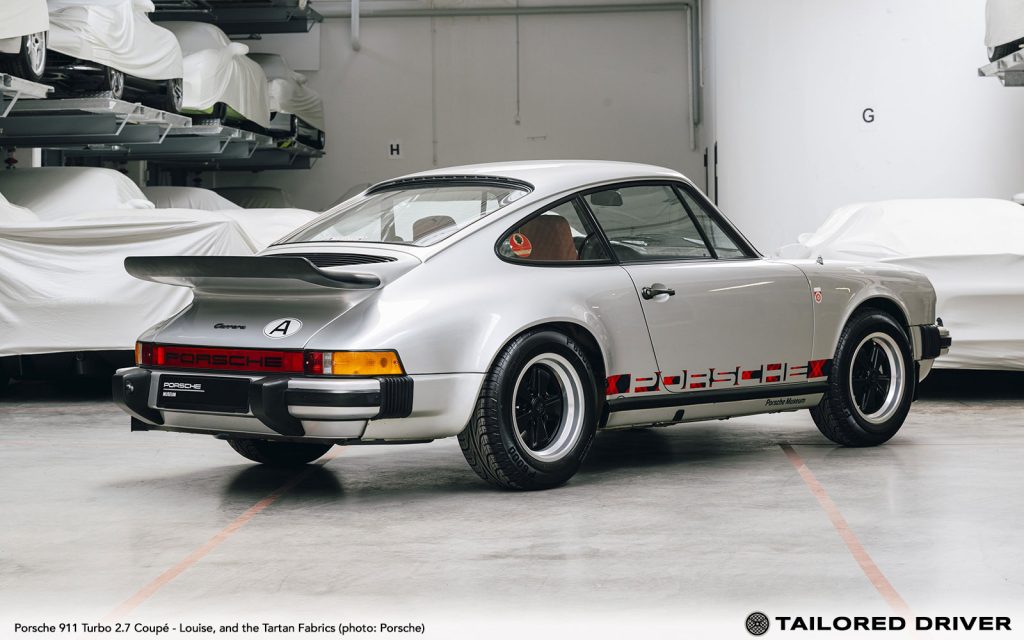
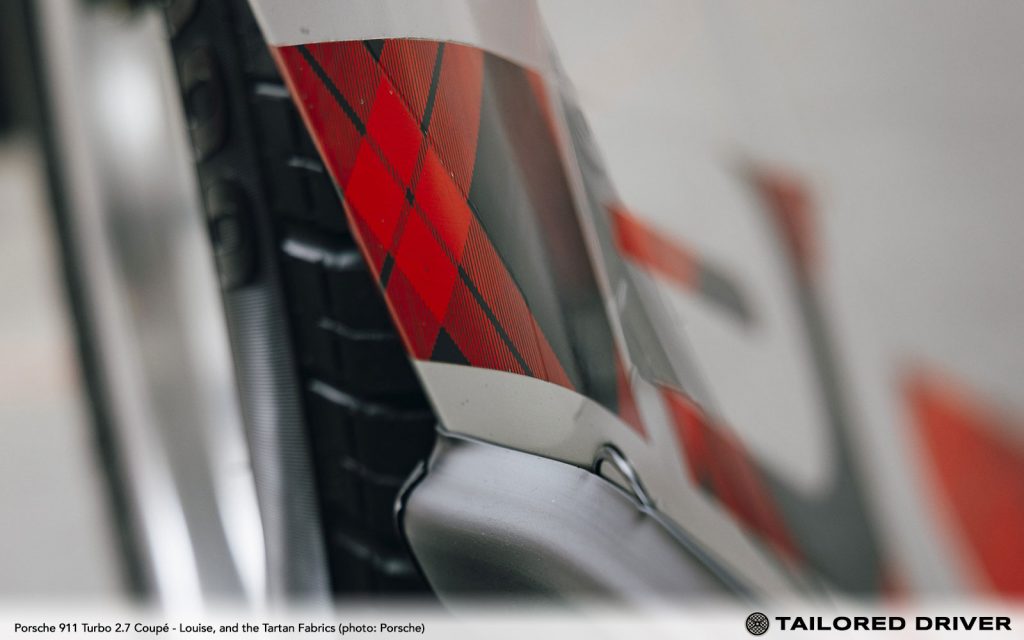
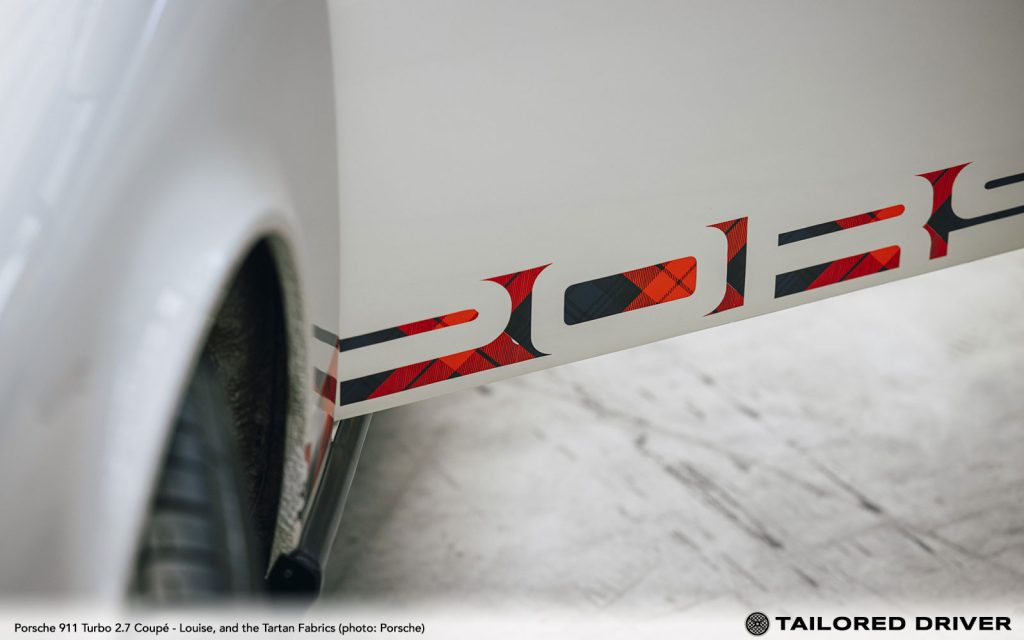
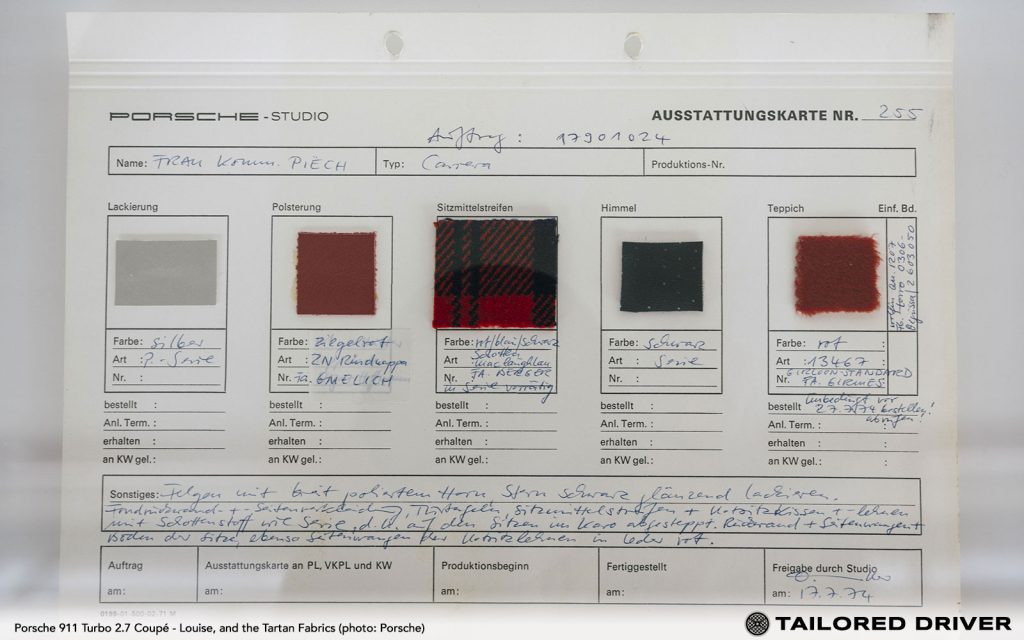
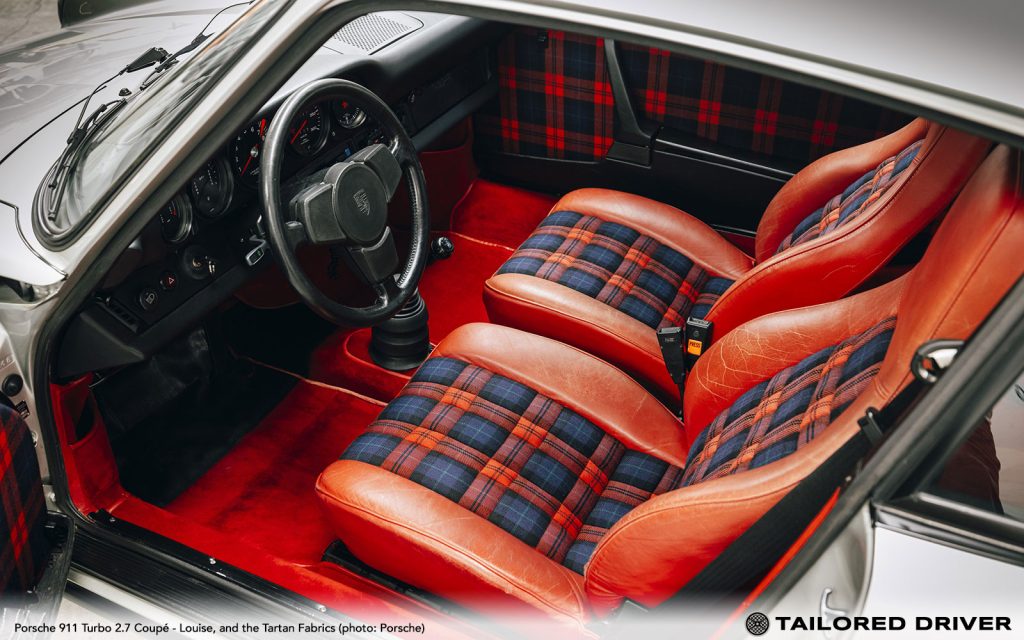
    Lapine’s trousers had a blue, green and black pattern inspired by the colours of Black Watch tartan. At the 1973 International Motor Show (IAA) in Frankfurt, Porsche presented the 911 RSR Turbo concept with seat centres and side bolsters in Black Watch tartan. A year later, Louise Piëch was given the 911 Turbo ‘No. 1’ (Vin: 9115600042), with silver bodywork and an interior upholstered in brick-red cowhide leather, the seat centre in McLaughlin tartan and the Porsche logo on a background of the same tartan pattern. The name of the clan with this red and blue Scottish tartan can also be written ‘MacLachlan’. In 1974, chief designer Lapine and his team added Mackenzie – featuring beige, red, blue, white and olive green – to the trio of tartans. “Following the success of the exclusive tartans in the Turbo, in the next model year we also used them in the 911,” explains Müller-Goodwyn. To this day, it is a tradition at Porsche to reinterpret classic design elements and deploy them in cars with state-of-the-art sports car technology. This is a joint endeavour of Porsche Exclusive Manufaktur and the Style Porsche design department. As part of the Heritage Design strategy, special models are created in the Lifestyle area, which are equipped with iconographic elements. These models stem from the product strategy for highly emotive concepts with a historical connection. These concepts are often based on style-defining textiles that evoke long-forgotten times while also carrying the values of the brand into the future.

  • The Porsche 911 Turbo 50 Years

    The Porsche 911 Turbo 50 Years

    • Exclusive 50th anniversary model of the 911 Turbo
    • Limited to 1,974 units
    • Design evokes historic 911 Turbo models

    [source: Porsche AG]

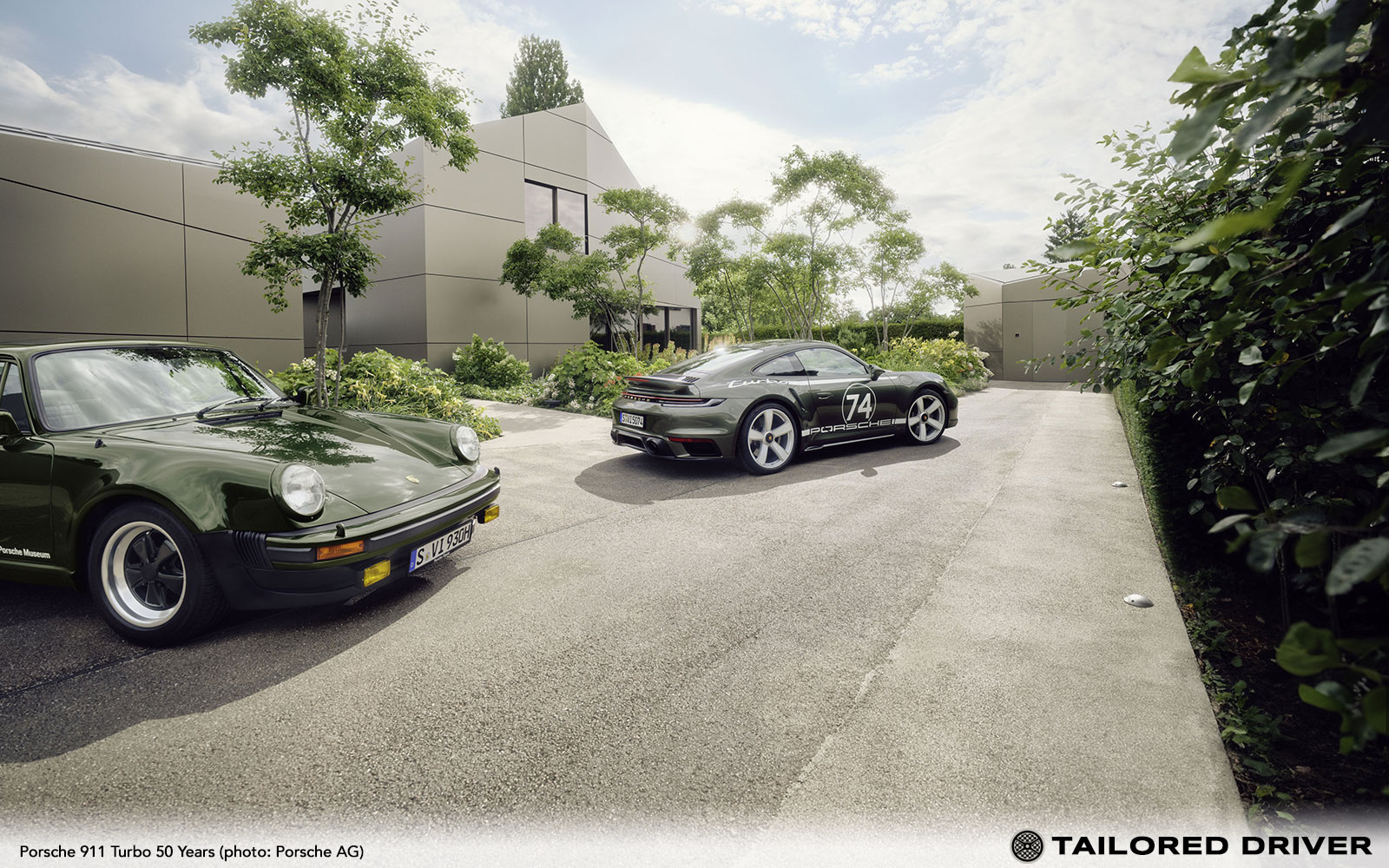
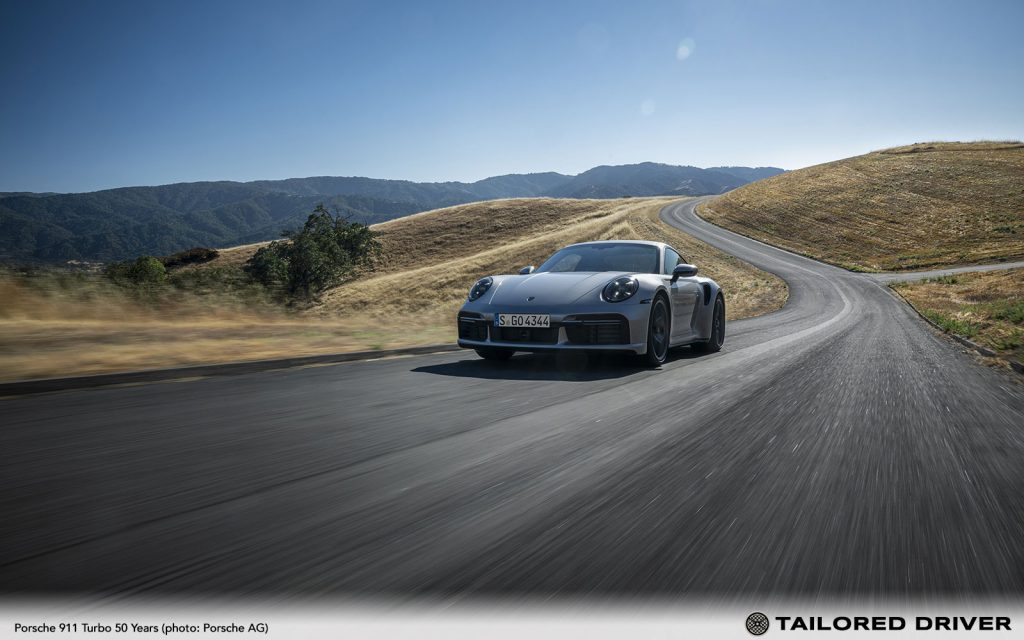
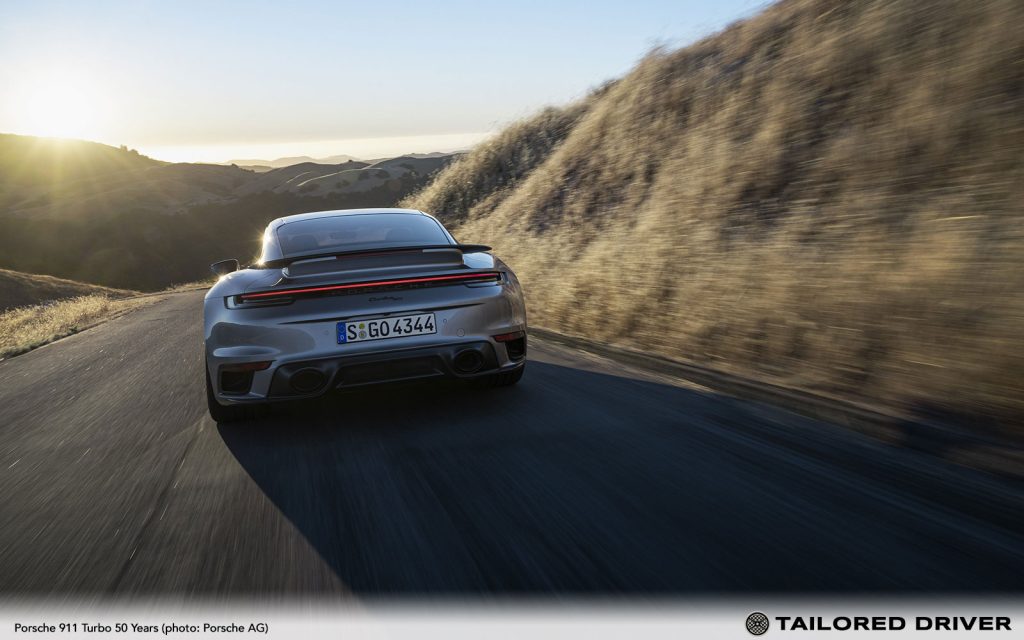
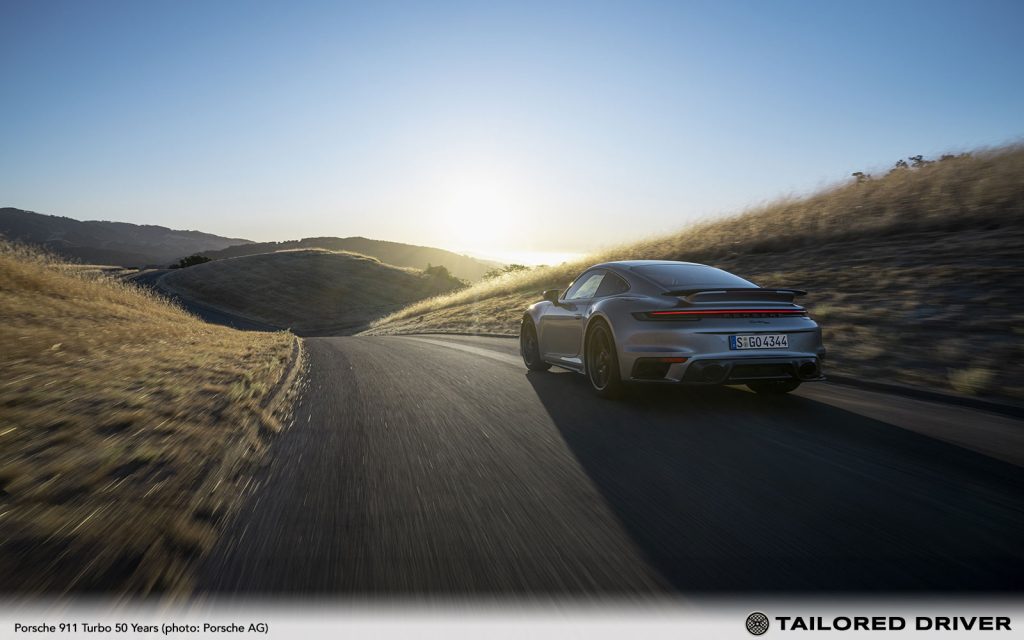
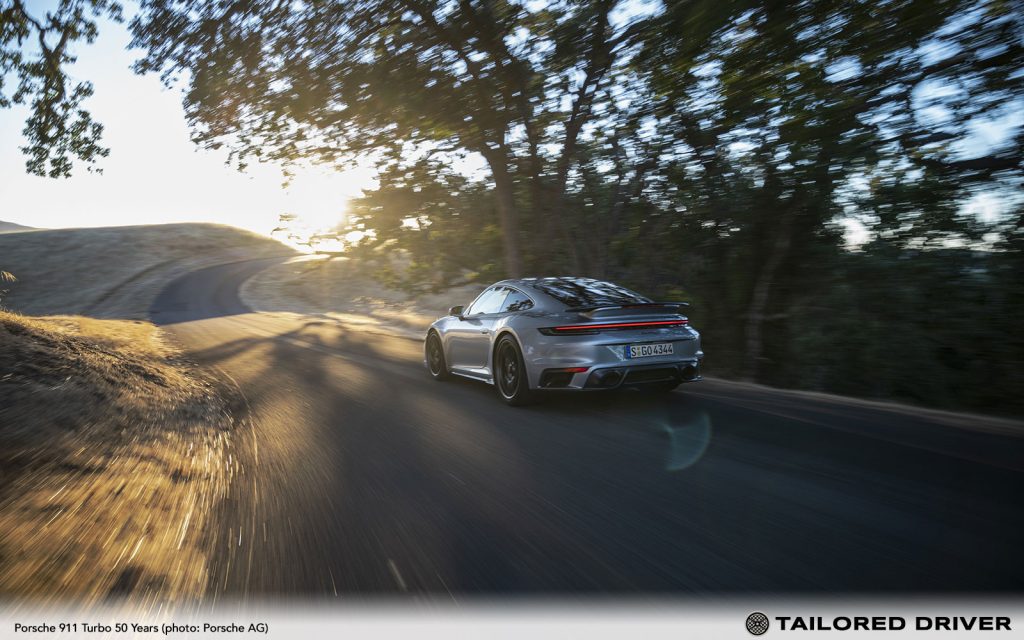
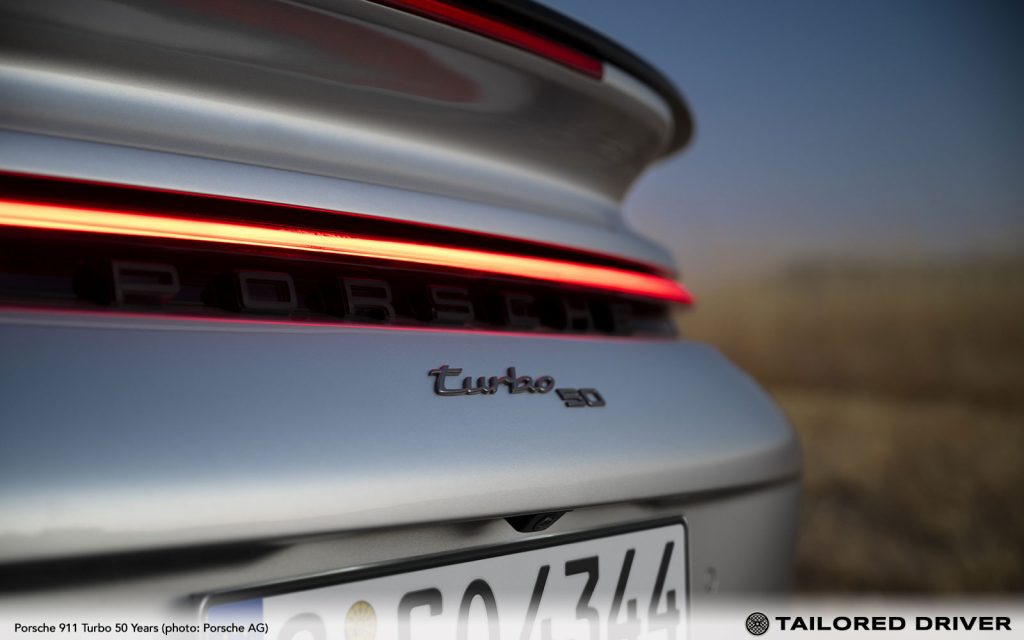
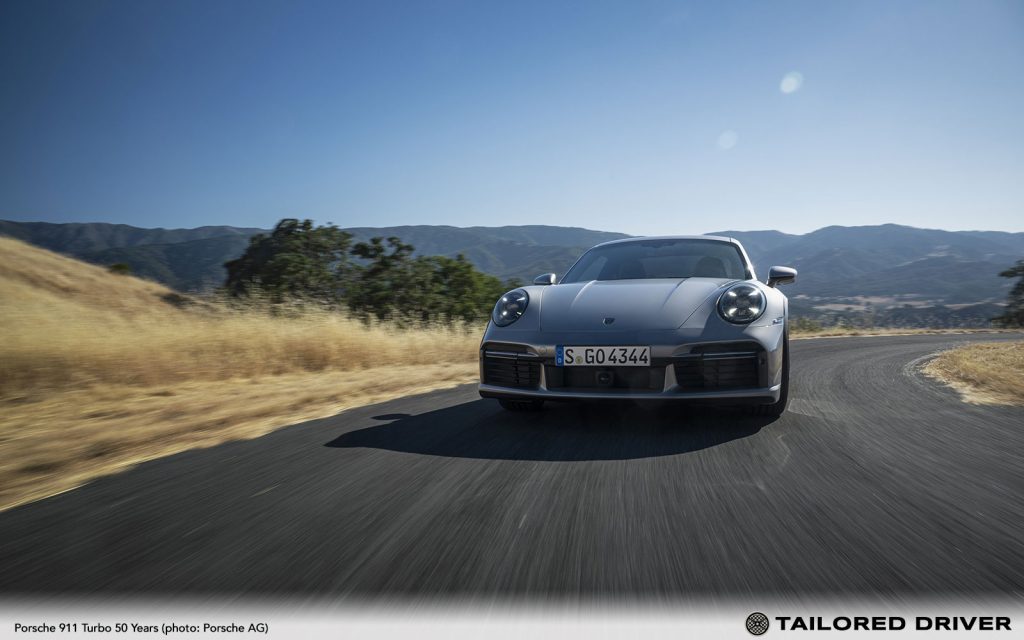
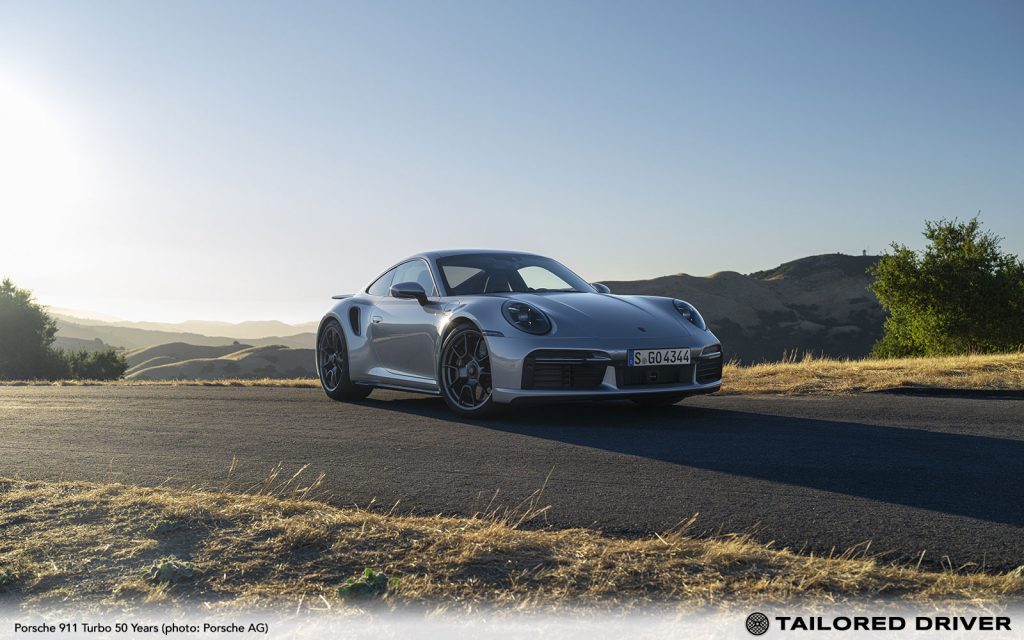
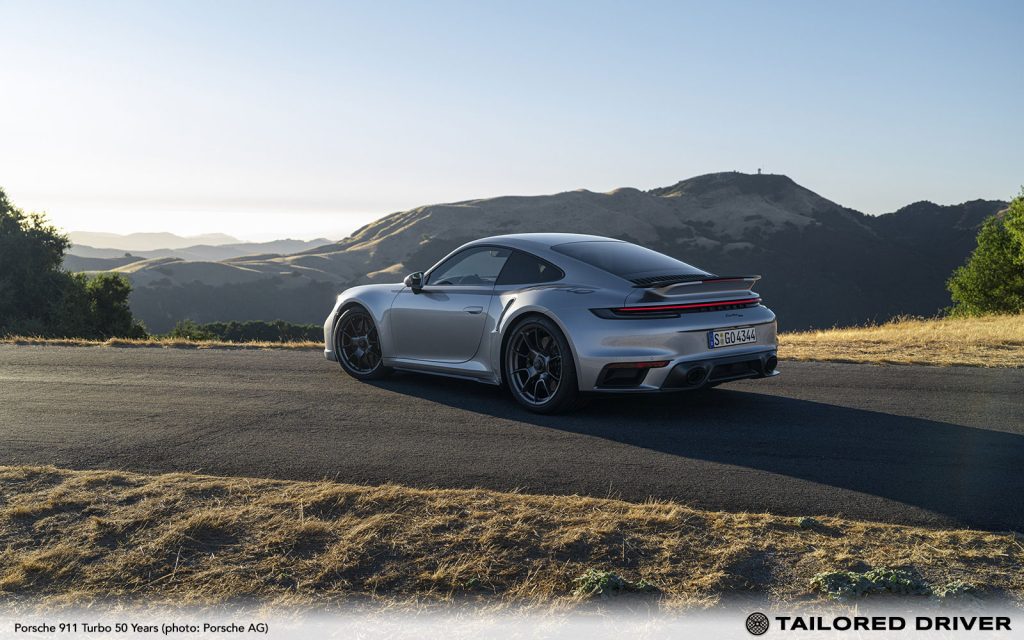
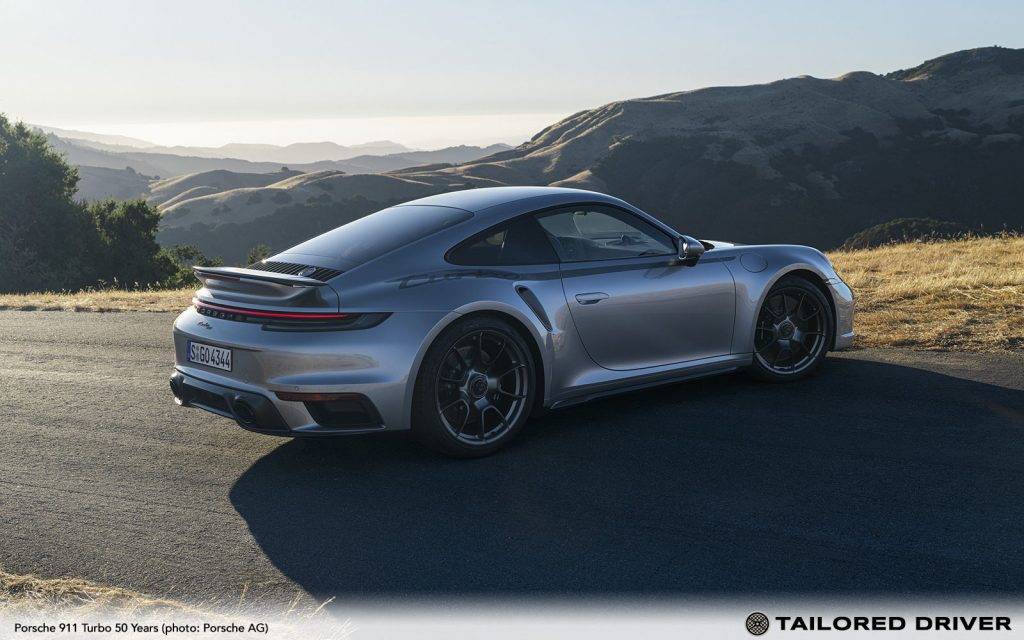
    Stuttgart. To mark the 50th anniversary of the 911 Turbo, Porsche is launching an exclusive anniversary model of its iconic sports car. The 911 Turbo 50 Years combines outstanding performance and the finest materials with exclusive design elements. The interior and exterior evoke historic 911 Turbo models, complemented by timelessly elegant and contemporary styling elements. An optional Heritage Design Package further refines the aesthetics of the anniversary model. Porsche has limited the 911 Turbo 50 Years, which is based on the last-generation 911 Turbo S, to 1,974 units in honour of the year in which the first 911 Turbo made its debut.

    Unique anniversary model with Turbo feel and design
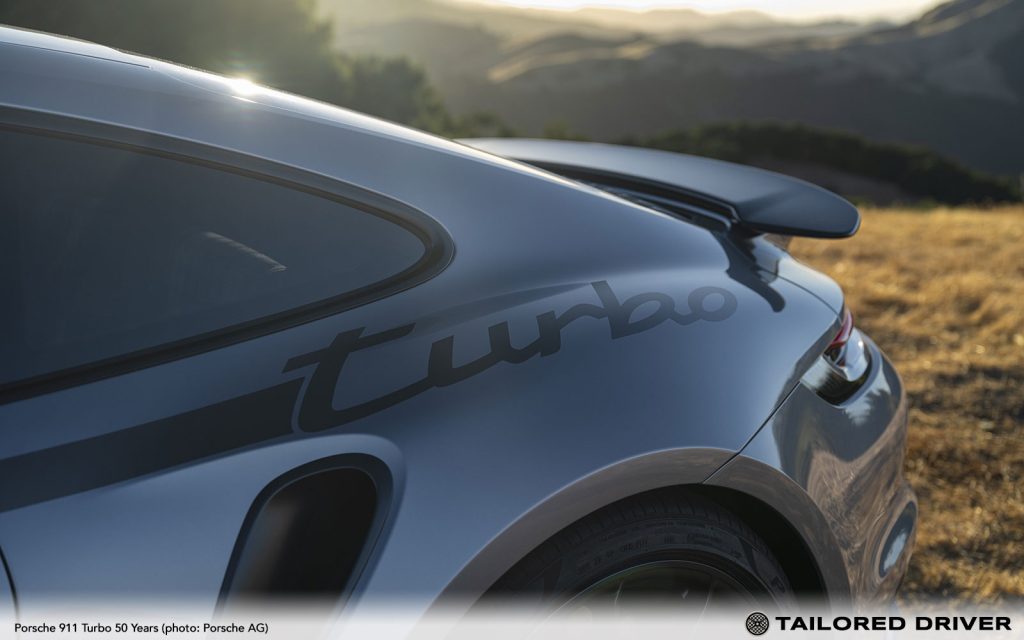
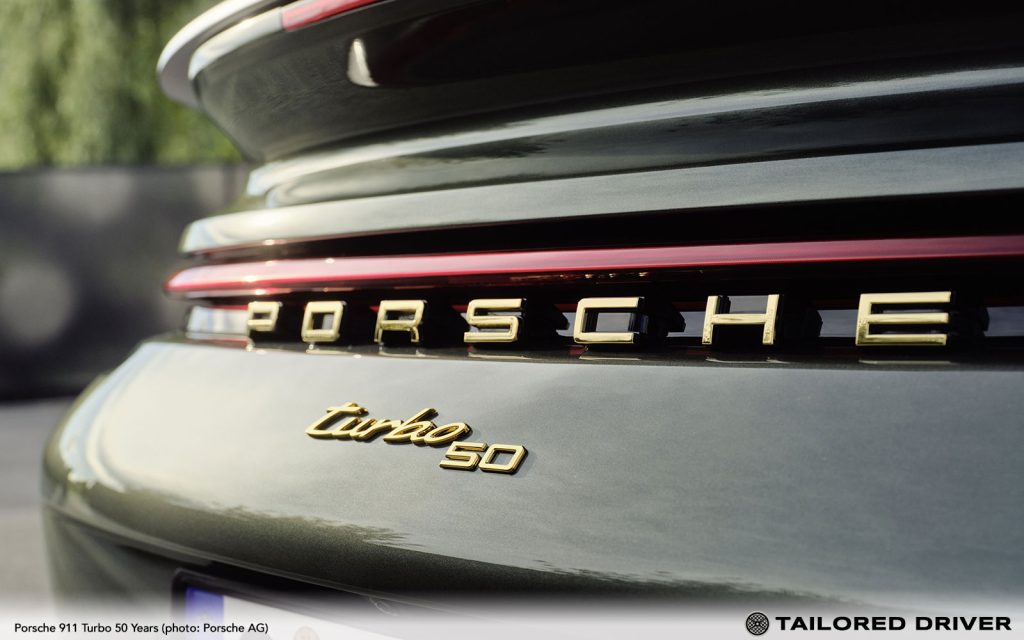
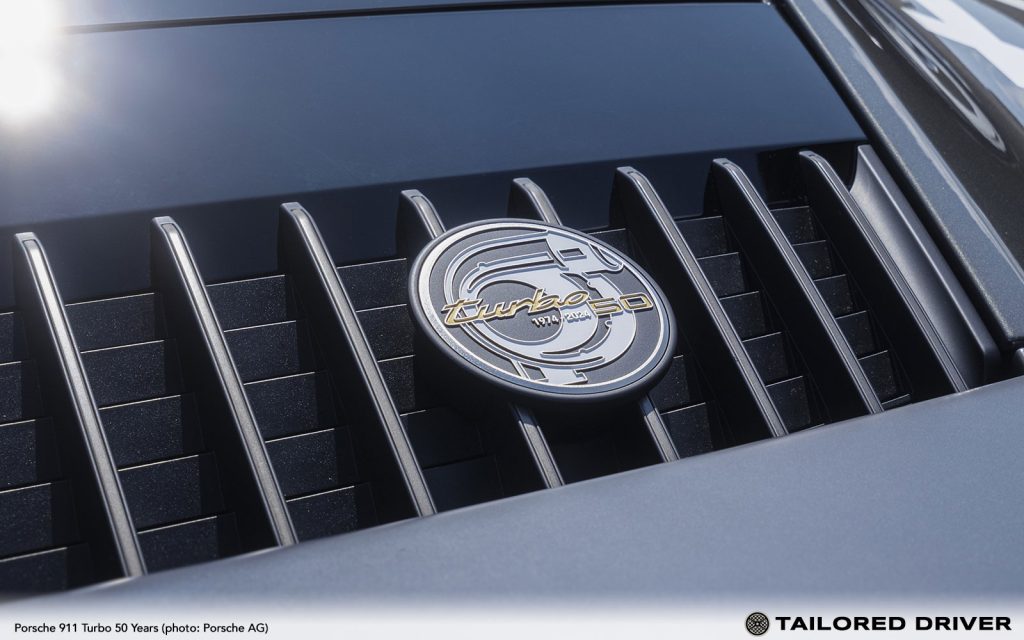
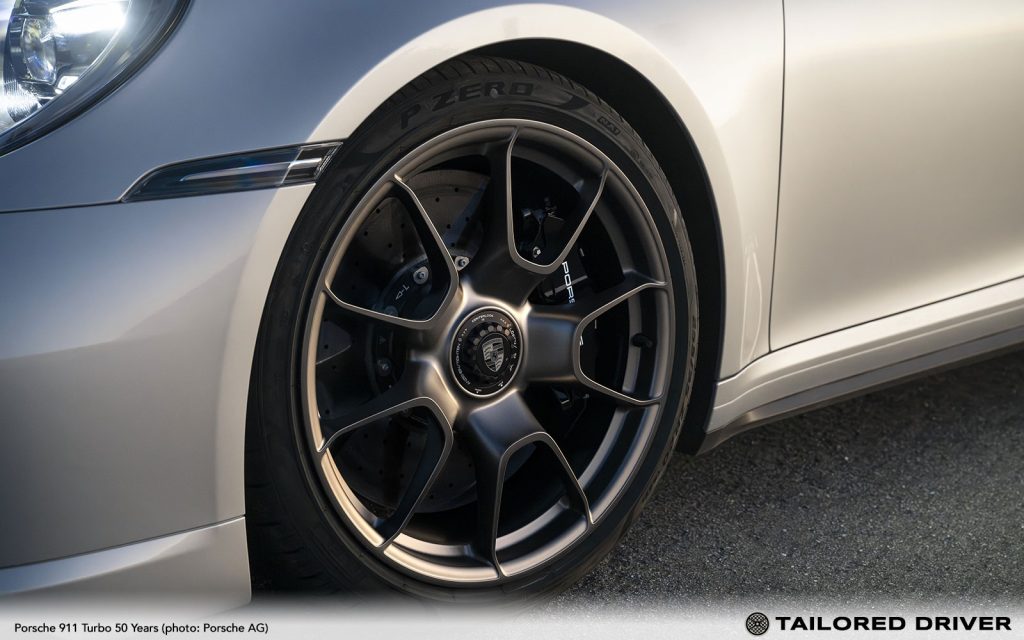
    When it was introduced in 1974, the Type 930 Porsche 911 Turbo shifted the boundaries of what was possible. It brought the benchmark turbo technology from the 917/10 and 917/30 racing cars into a production sports car with superior performance and combined it with a unique design and unprecedented day-to-day usability. The 911 Turbo 50 Years anniversary model – based on the 911 Turbo S introduced in 2019 – both pays tribute to and reinterprets this heritage. The standard side vinyl graphics are a nod to the historic livery of the Porsche 911 RSR Turbo presented at the Frankfurt Motor Show in 1973, itself a forerunner of the 911 Turbo. It features the current Porsche Turbo-exclusive colour Turbonite, which here makes its first appearance on a 911. Turbonite is also used on inlays in the rear engine cover, the fuel tank cap and in the Porsche crest. It is also being used as a contrasting colour in the Turbo 50 model logo. Another historical reference is the use of Anthracite Grey on the rear wing blade, rear apron, mirror base and air intake trims. A badge on the rear engine cover grille features a turbocharger icon and the years 1974–2024. When the door is open, the LED door projector projects the image of a turbocharger onto the ground next to the car. The 911 Turbo 50 Years comes with the 911 Turbo S Exclusive Design wheels in Turbonite as standard.

    Interior recalls the zeitgeist of the 1970s
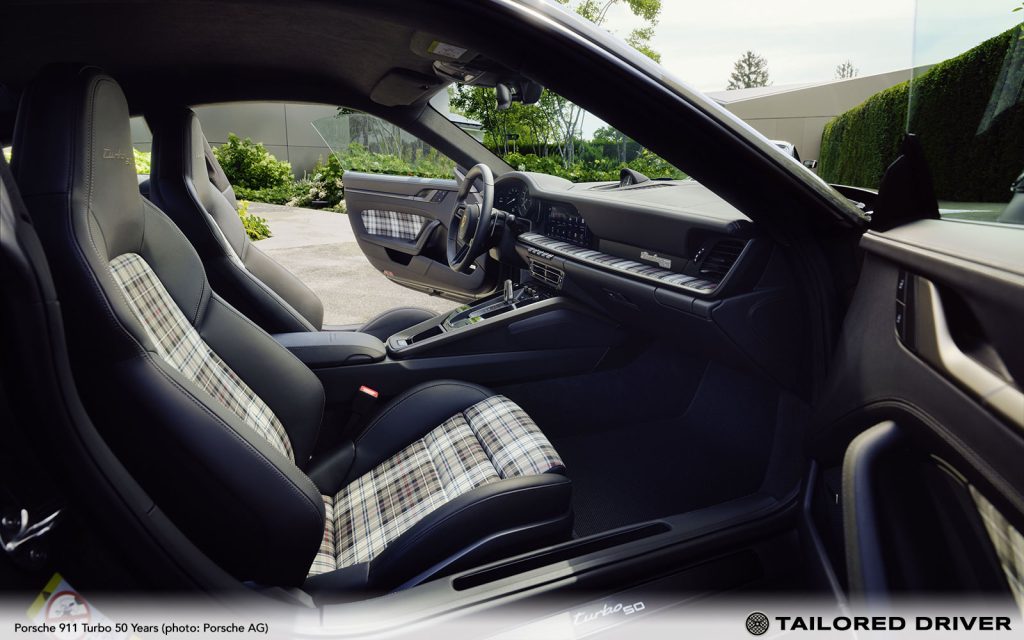
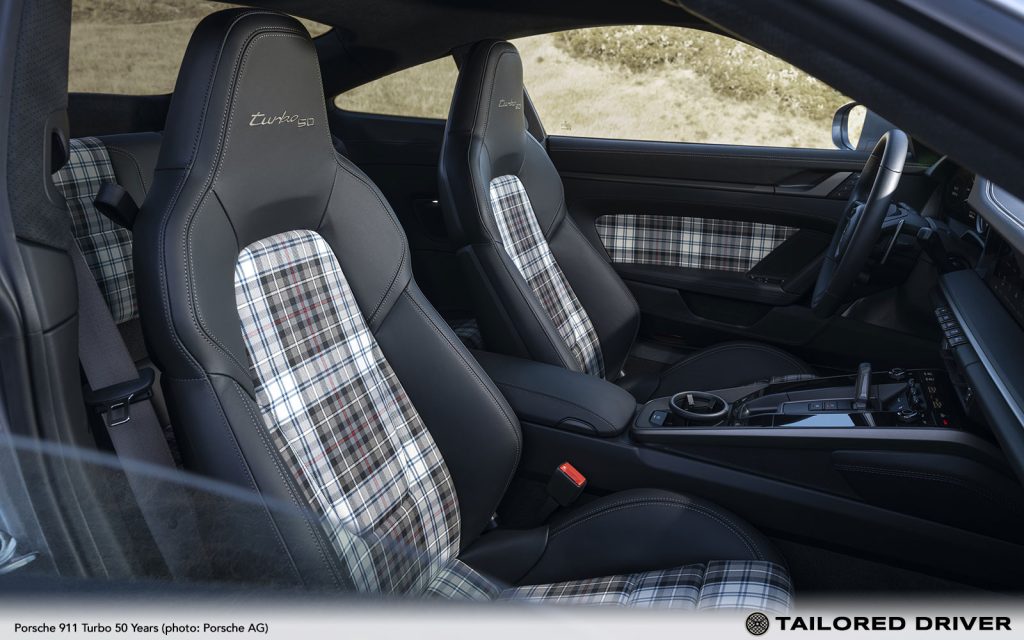
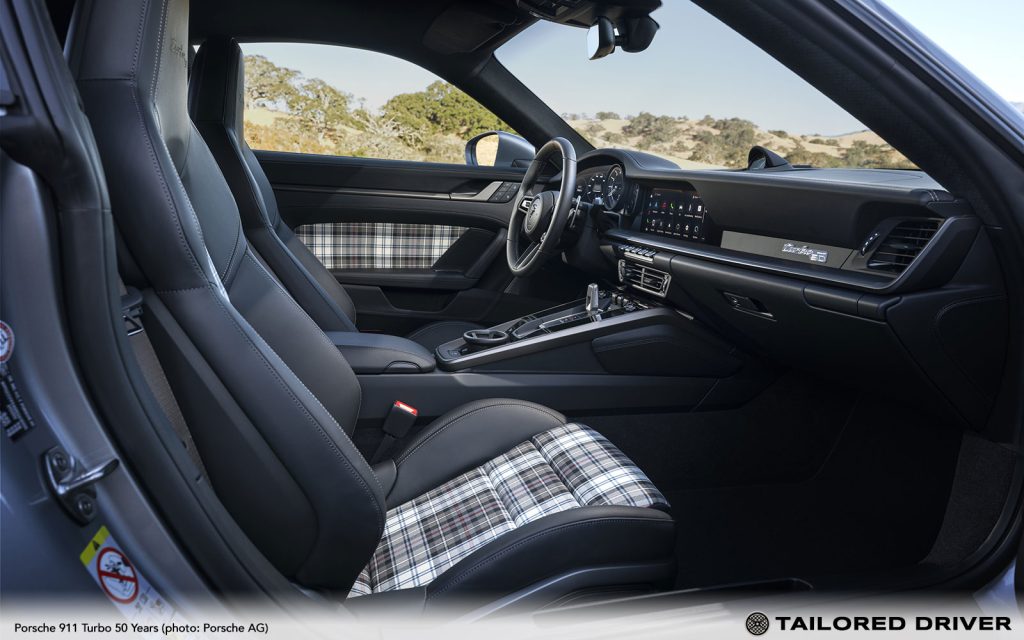
    The interior of the 911 Turbo 50 Years is also redolent of Turbo history. As an exclusive tribute to the early Porsche 911 Turbo models, the iconic McKenzie tartan adorns the centre panels of the seat covers and the interior door panels. Additional contrasts in Turbonite further differentiate the car from the regular 911 Turbo S series-production model. These Turbonite accents include the seat belts, controls, decorative stitching, trim strips with decorative inlays in black leather and the Porsche crest on the GT sports steering wheel. An illuminated Turbo 50 logo, meanwhile, features on the door kick plates, which are finished in black brushed aluminium. The logo is embroidered into the headrests of the Adaptive Sports Seats Plus. There is also a Turbo 50 logo on the back of the left rear seat. Above the glove compartment is an anniversary plaque in aluminium, which bears both the Turbo 50 logo and the individual limited-edition number of the sports car. The A-pillar, sun visors and roof lining are upholstered in perforated Race-Tex. An analogue Porsche Design Subsecond clock with a special Turbo 50 design adorns the dashboard.

    Even more history with Heritage Design package
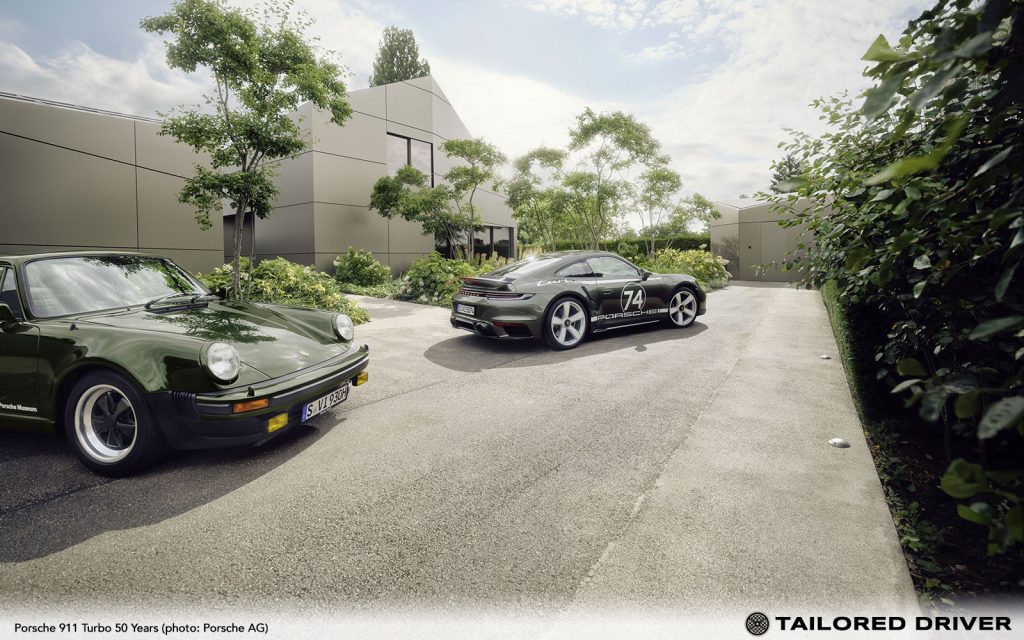
    The historically inspired, optionally available 50 Years of Turbo Heritage Design Package complements the anniversary model with numerous additional exclusive design and equipment features that hark back to the 911 Turbo models of the 1970s. The base colour of the Heritage Design Package is provided by the Aventurine Green Metallic paintwork. Alternatively, both the standard 911 colours and Paint to Sample programme colours are also available. One component of the Heritage Design Package is a high-quality decorative graphic in White (satin finish) consisting of three elements: the lollipop with individually selectable car numbers between 0 and 99, the 50 years of Turbo logo and a Porsche logo. Those who prefer a minimalistic look can dispense with some or all of the graphic elements. The historic Porsche crest from 1964 is used on the front bonnet as well as on the centre caps of the Sport Classic wheels, painted in Brilliant Silver and White (satin finish). The Turbo 50 and Porsche logos on the rear are in Gold. In the interior, additional leather features and additional tartan design elements round off the anniversary model. The dashboard trim, glove box and seat backrest inlays are covered with the classic pattern. The historic Porsche crest is mounted on the steering wheel, while the centre console storage compartment bears the Porsche Exclusive Manufaktur logo embossed in the leather. The dials in the instrument cluster and the Sport Chrono clock in the Heritage Design Package are finished in green.

    Outstanding in performance, style and history
    Technically, the Porsche 911 Turbo 50 Years is based on the 911 Turbo S that has been in production since 2019. Its 3.7-litre boxer engine with variable turbine geometry (VTG) twin turbocharging delivers 478 kW (650 PS) and 800 Newton metres of torque. With a kerb weight of 1,640 kilograms, the result is a power-to-weight ratio of 2.52 kg/PS. The 911 Turbo 50 needs just 2.7 seconds for the sprint from 0 to 100 km/h and hits 200 km/h in a mere 8.9 seconds. Power is transmitted to the wheels by the 8-speed dual-clutch transmission (PDK) and the active all-wheel-drive Porsche Traction Management (PTM) with Porsche Torque Vectoring Plus (PTV Plus), including the electronically controlled rear differential lock with fully variable torque distribution. A sports exhaust system with black tailpipes comes as standard. The 10 millimetre-lower Porsche Active Suspension Management (PASM) sports suspension and the lift system on the front axle are also included as standard, as are the LED matrix headlights, including the Porsche Dynamic Light System Plus. The brake callipers of the standard PCCB brake system feature a black finish.

    Exclusive Chronograph for a timeless sports car
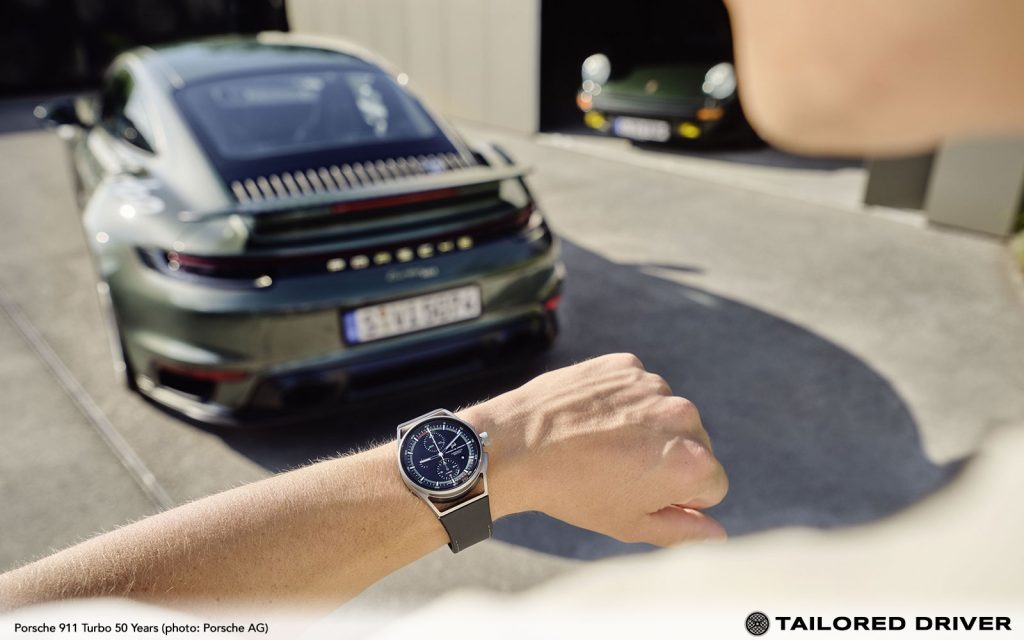
    Exclusively for the owners of the 911 Turbo 50 Years, Porsche Design Timepieces is releasing a special timepiece as an homage to the anniversary model. The 911 Turbo 50 Years chronograph is equipped with the COSC-certified Porsche Design WERK 01.200 movement with flyback function. Like the vehicle, the watch is limited to 1,974 units and combines classic design with modern technology. Its black dial with elements in Turbonite is a perfect likeness of the timepiece on the dashboard. The strap, made of black vehicle leather with decorative stitching in Turbonite, features a folding clasp. The transparent case offers a view of the winding rotor in the same style as the wheels of the 911 Turbo 50. The limited-edition number engraved on the titanium housing corresponds to the limited-edition number of the vehicle. The chronograph is also available in a special version in conjunction with the Heritage Design Package.

    Ready for immediate order
    The limited-edition 911 Turbo 50 Years anniversary model can be ordered now at prices starting from € 274,000 including VAT and country-specific equipment. Deliveries will start in autumn 2024. It can already be seen in the ongoing Beyond Performance – 50 Years of Porsche Turbo special exhibition at the Porsche Museum in Stuttgart-Zuffenhausen.