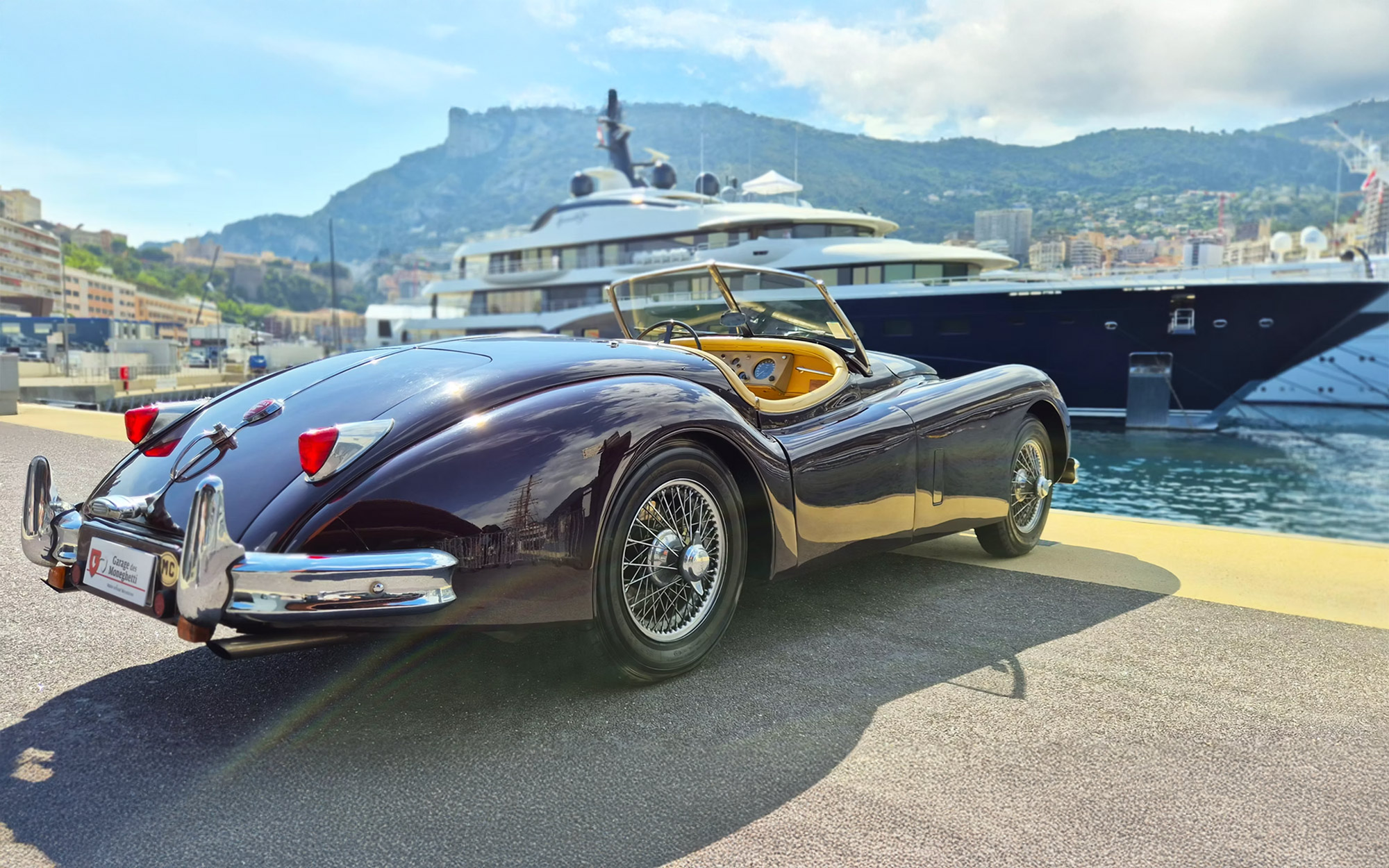
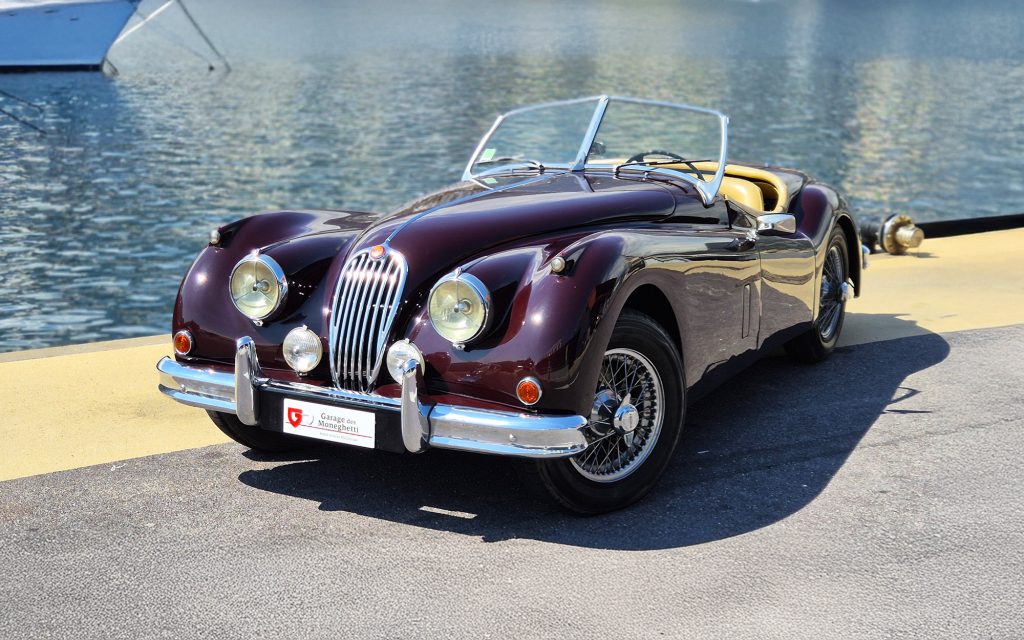
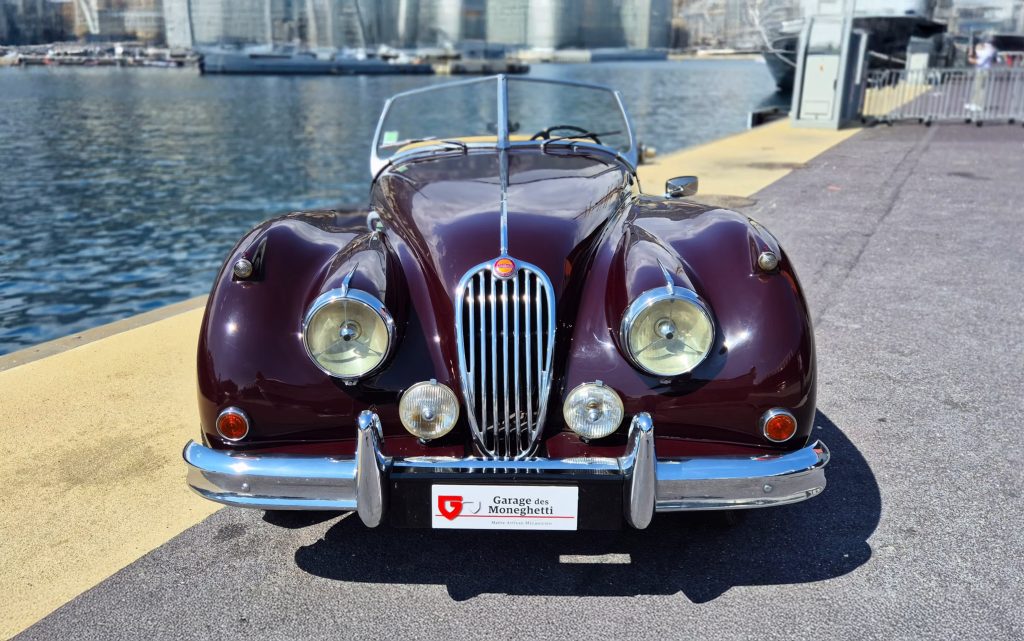
If you’ve been seeking a vintage Jaguar Roadster, this one makes a compelling case for a number of reasons. No, it’s not any sort of paint-to-sample special, but it is a rare period color that looks great and has all the makings of an incredible heritage story to share with friends. First up is the color – Imperial Maroon. It was a standard color back in the day, and it also has royal context. While not affiliated with Jaguar back then, Jag’s contemporary sister brand Land Rover displayed a collection of cars last year at Pebble Beach painted the same basic Royal Claret color – the literal color painted on cars for the English Royal Family. This color being the color it is, and the name Imperial referring to a monarchy, the tie to the royal livery is pretty obvious.
The car itself is a desirable ’55 Jaguar XK140 Roadster. In 1955, Jaguar was in a dominant place in the automotive industry. 70 years ago this week, at the 1955 24 Hours of Le Mans, disaster happened when a Jaguar D-type collided with another car and was sent into the crowd amassed along the front straight. While a terrible incident, it’s an unforgettable moment in racing history and one that happened the very year this was produced.
The car in question seems well kept, including a conversion to disc brakes. Its carbonated 4.4-liter 6-cylinder and 4-speed transmission likely help it move down the road with relative ease. Its Imperial Maroon over beige leather is a handsome and stately configuration for a car of this most voluptuous era of sportscar history.
Now pivot to the car’s location in Beausoleil, France. In case the yachts in the background haven’t made it obvious, Beausoleil is literally a suburb of Monaco and the listing suggests the car is actually housed in the principality of Monaco. According to the listing, it was acquired via Sotheby’s auction in 1990. While that means you have import the car to the U.S. where most of our readership is based, it also gives you an excuse to travel to Monaco for a test drive, perhaps purchase and collect. And should you collect, how could you resist a little extra time on the French Riviera driving such a wonderful thing.
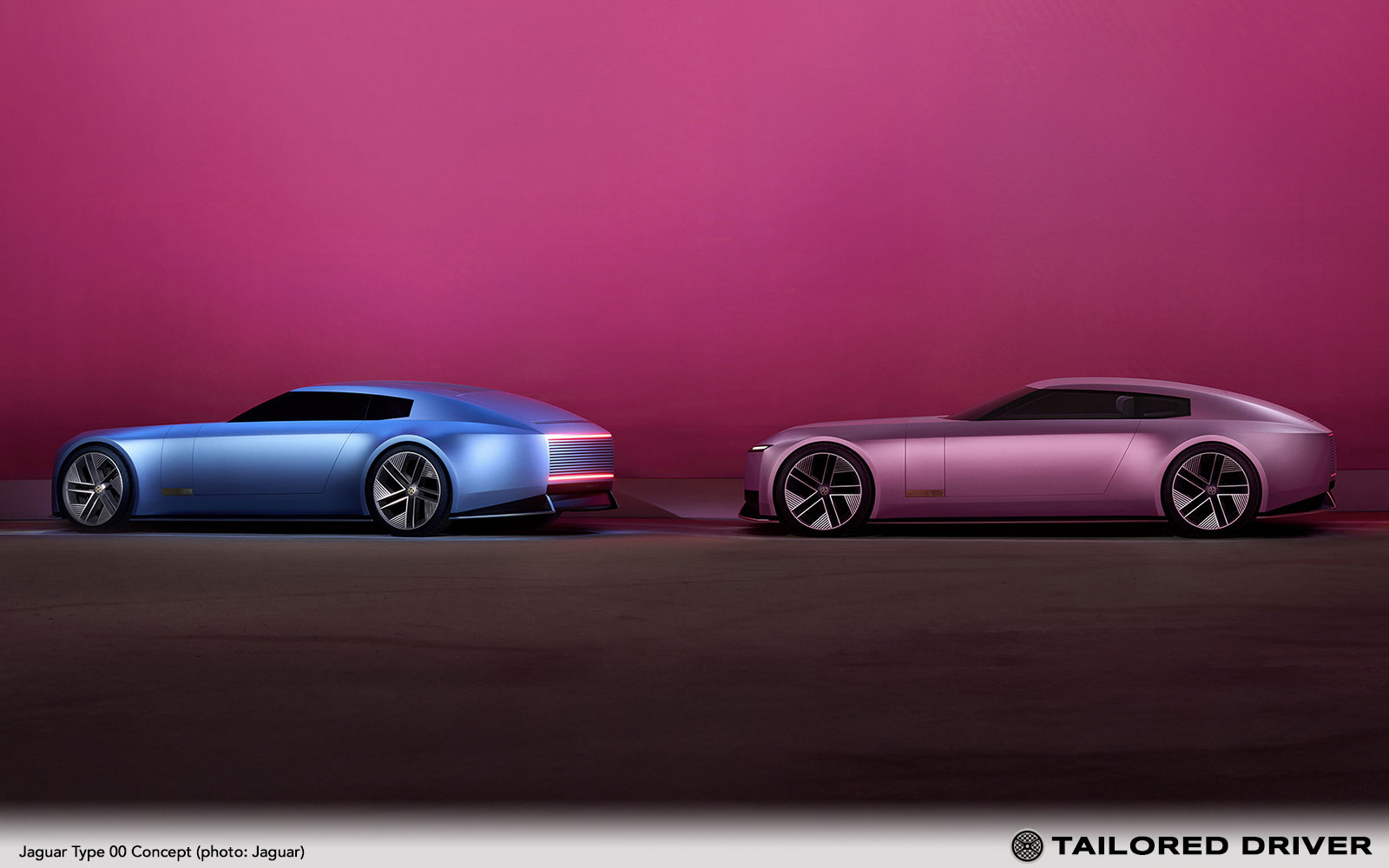
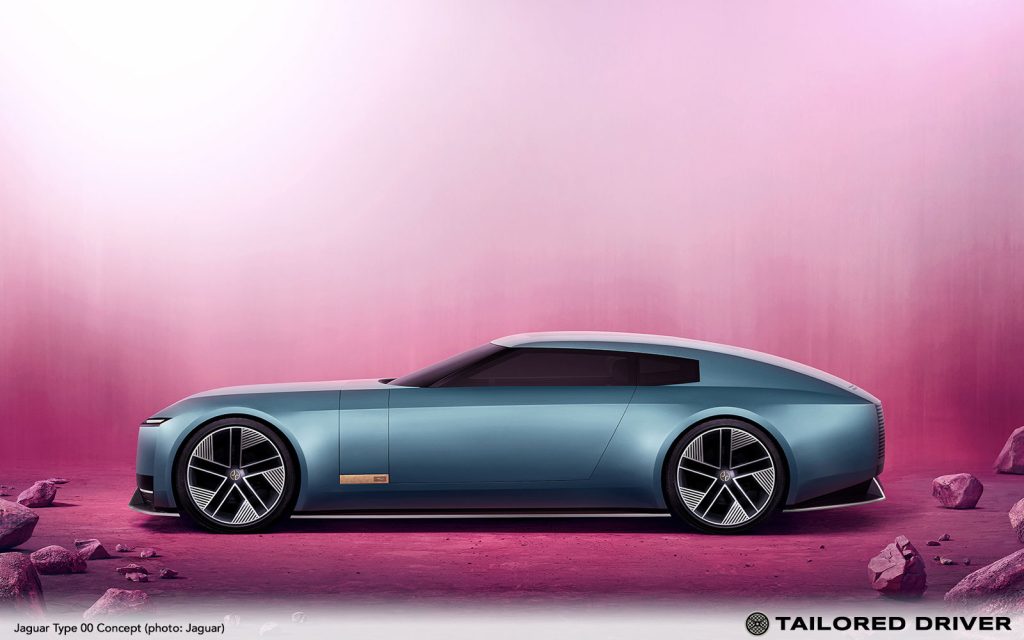
Editor’s Note: Jaguar’s been raising a bit of an uproars these last few weeks as it wiped away its historic imprint on the internet, replacing it first with avantgarde androgynous fashion video shorts and then hints of a car. Now, ahead of the launch of its roadgoing new EV products, it’s unveiled the Type 00 Concept that’s a bold and brutal design laden heavily with high fashion color and materials? Is it a brilliant move or a grand folly? Time will tell.
Whatever the answer, it’s a bold take on color and naming those colors was a key part of the initial message. So, while not a car on the road just yet, we have no doubt these colors will be watched closely, and with similar polarizing responses.
PRESS RELEASE: JAGUAR UNVEILS TYPE 00. UNMISTAKABLE. UNEXPECTED. DRAMATIC.
Introducing an unmistakable, unexpected and dramatic physical manifestation of Jaguar, as the brand continues its transformation.
[source: Jaguar]
Jaguar is recapturing its original ethos to ‘Copy Nothing’. Following the debut of its bold new visual identity last month, the next step on its transformational journey has been revealed in the form of a distinctive design vision concept
Jaguar Type 00 is an example of Jaguar at its best. A fearless statement. An object of desire. A concept with bold forms and exuberant proportions to inspire future Jaguars
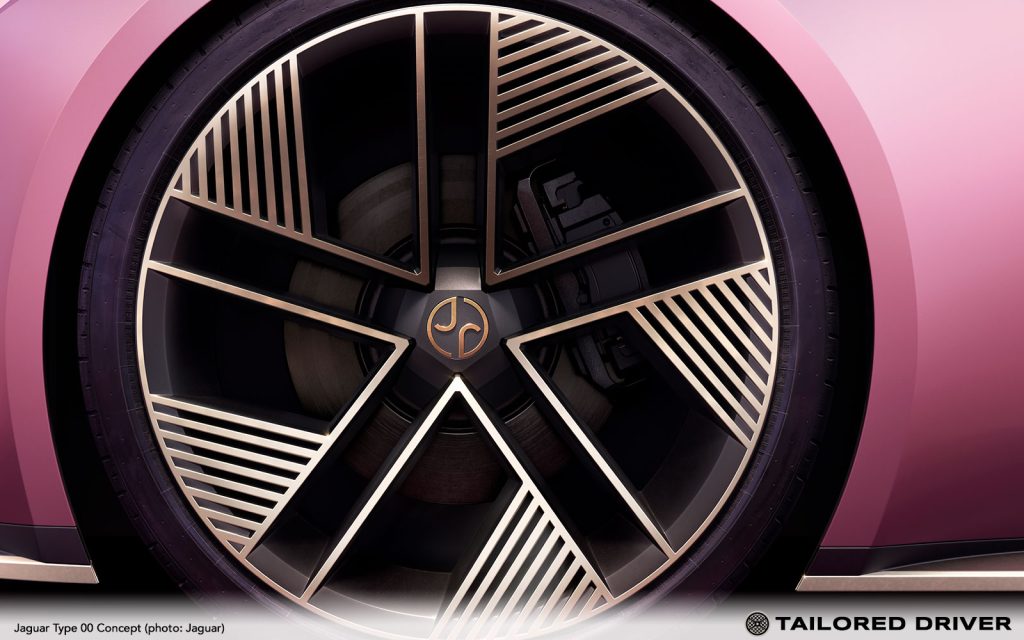
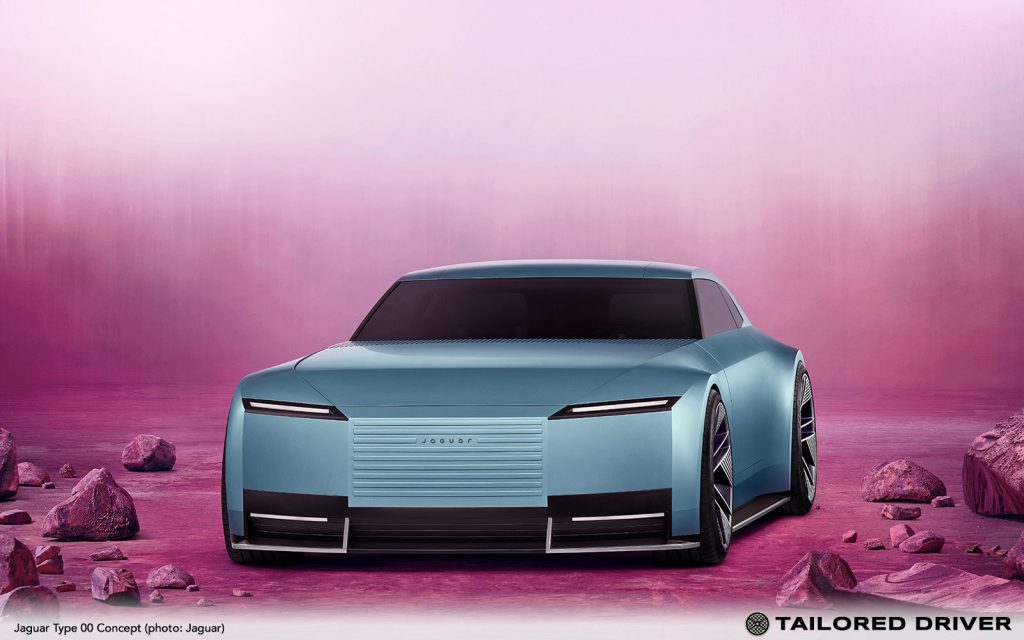
Unique and different to the norm. Visionary design defies electric vehicle convention, featuring a long bonnet, sweeping roofline, fastback profile and 23‑inch alloy wheels for a dramatic silhouette
Type 00 showcases Jaguar’s vibrant new identity. Symbols of change highlight the transformation, inspired by Jaguar’s rich heritage, including the leaper – a precious mark of provenance
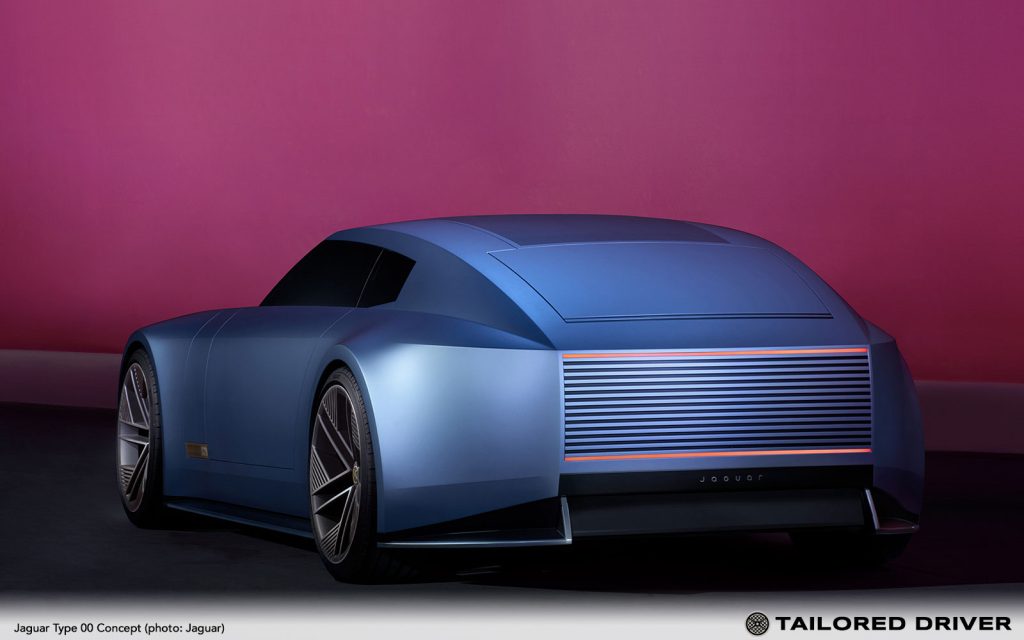
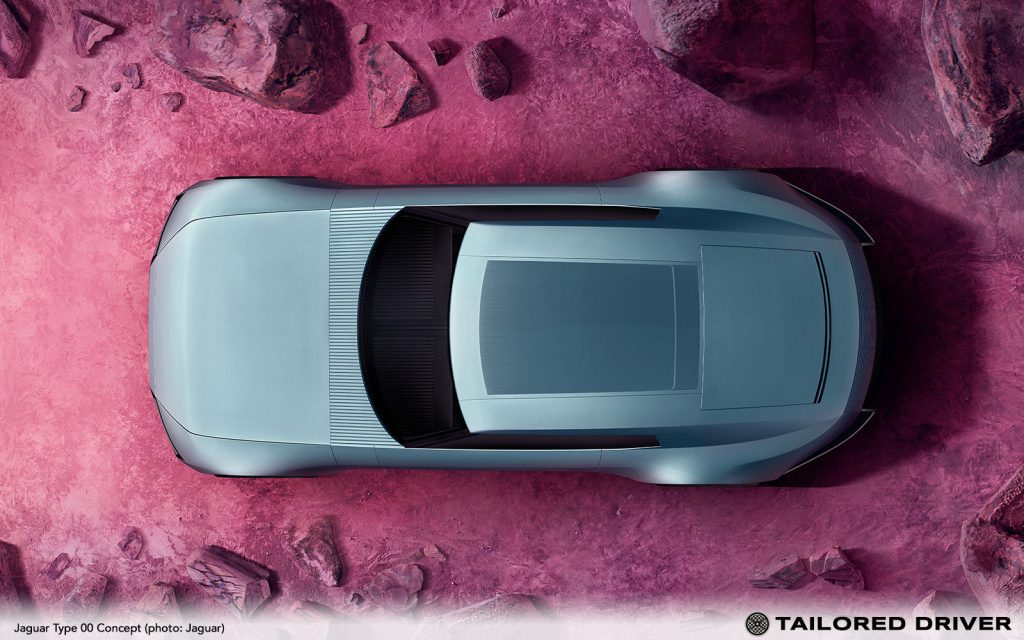
A fearless new face for Jaguar. Flush surfaces. Glassless rear tailgate and panoramic roof with body‑harmonised glazing create a sense of sculpture
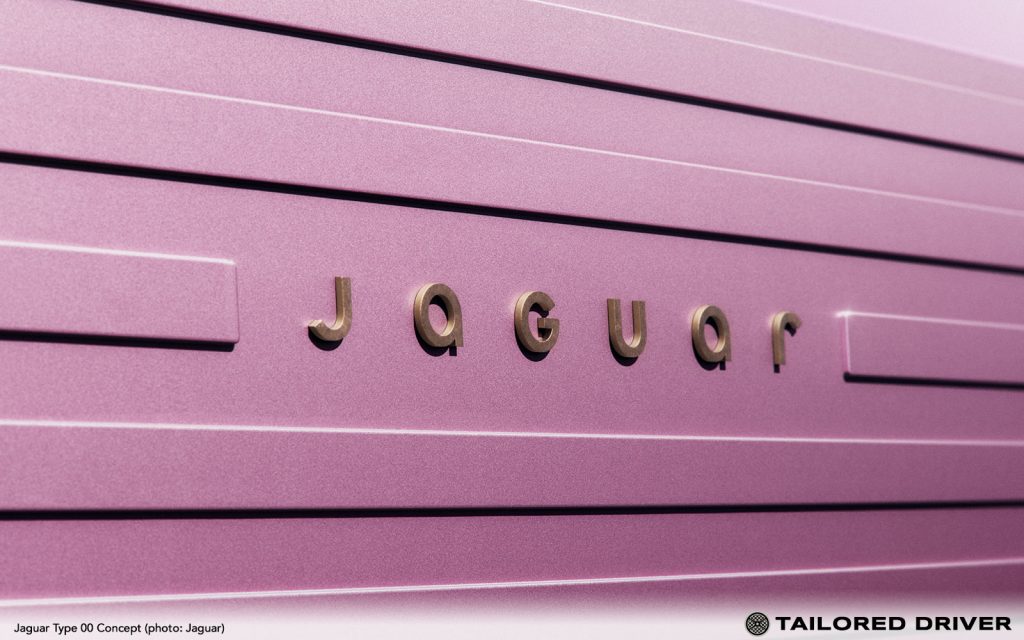
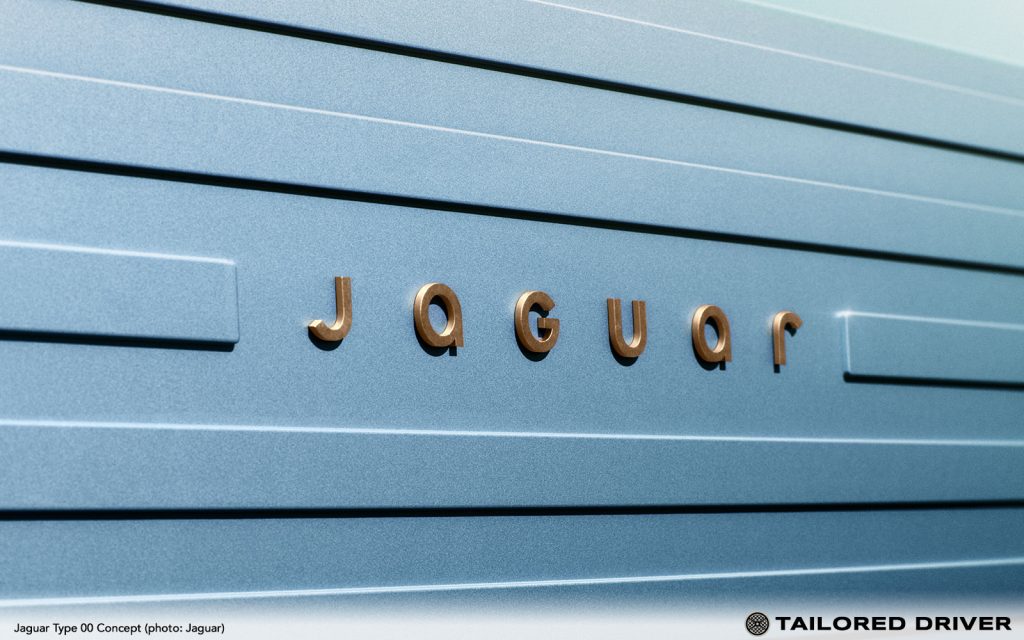
Type 00 is presented in two colours, dubbed Miami Pink and London Blue – the former reflects the iconic Art Deco surroundings of its reveal, the latter references its British heritage
Global re‑emergence of Jaguar at Miami Art Week emphasises its purpose as an advocate for art, in a celebration of British artists and creativity
Jaguar’s first reimagined production car will be an electric four‑door GT – to be revealed in late 2025 and built in the UK. See: www.jaguar.com/copy‑nothing
New model will use dedicated Jaguar Electric Architecture (JEA) and target a range of up to 770km WLTP (478 miles) and 430 miles (692km) EPA*, and adding 321km (200 miles) of charge in as little as 15 minutes*
In Miami, Jaguar’s transformation into an electric‑only brand with an elevated family of highly desirable and exclusive new luxury vehicles continues. This transition extends beyond the products Jaguar designs and engineers; it represents a reimagination of the entire brand.
Introducing Type 00. The physical manifestation of Jaguar’s new creative philosophy – Exuberant Modernism.
The ‘Type’ prefix is a link to the brand’s provenance, to models like the pioneering E‑type. The first zero references zero tailpipe emissions. The second represents its status as car zero in our new lineage. Its visionary design defies electric vehicle convention with a long bonnet, sweeping roofline, 23‑inch alloy wheels, fastback profile and boat‑tail to create a dramatic silhouette with sophisticated, modernist surfaces. This design was enabled by our unique and dedicated architecture JEA (Jaguar Electrical Architecture).
Exuberant Modernism
Jaguar’s new creative philosophy is founded on three fundamental characteristics and expressed in every part of the brand and everywhere it appears – represented in both a new artistic visual identity and the way it builds relationships with clients.
EXUBERANT. Vibrant, uninhibited and fearless. In the vehicles it creates and moments it curates
MODERNIST.Future‑facing, curious and inspired by the world. Respectful of the past, not dictated by it
COMPELLING. Holistic, sensory and extraordinary. Generating meaningful connections with clients
Capturing the Spirit of Jaguar
Type 00 is a prelude to a future generation of Jaguars that will recapture the spirit and essence of the brand at its best. Our start point was a blank sheet of paper from both a design and engineering perspective. A new and unique architecture, JEA, was developed from scratch to enable the dramatic design of Type 00. This dedicated technology platform will ensure clients experience a captivating driving experience, engaging handling and exemplary ride comfort.
The latest electrification technologies and awe‑inspiring designs will make future Jaguars stand out in an increasingly homogenous EV market.
Built in the UK, the first new‑generation production Jaguar will be a four door GT to be revealed in late 2025. It will target a driving range up to 770km (478 miles) WLTP* or 430 miles (692km) EPA*, on a single charge and adding up to 321km (200 miles) of range in as little as 15 minutes when rapid charging.*
Exclusive Brand Stores
Jaguar will come to life in a select number of exclusive brand stores for clients around the world. These environments will present an immersive step into the world of Jaguar, embracing their setting and local culture and be complemented by a wider global network of luxury retailers. Jaguar’s first new brand store will be in the heart of the luxury fashion district of Paris, in the 8th arrondissement.
Dramatic Exterior
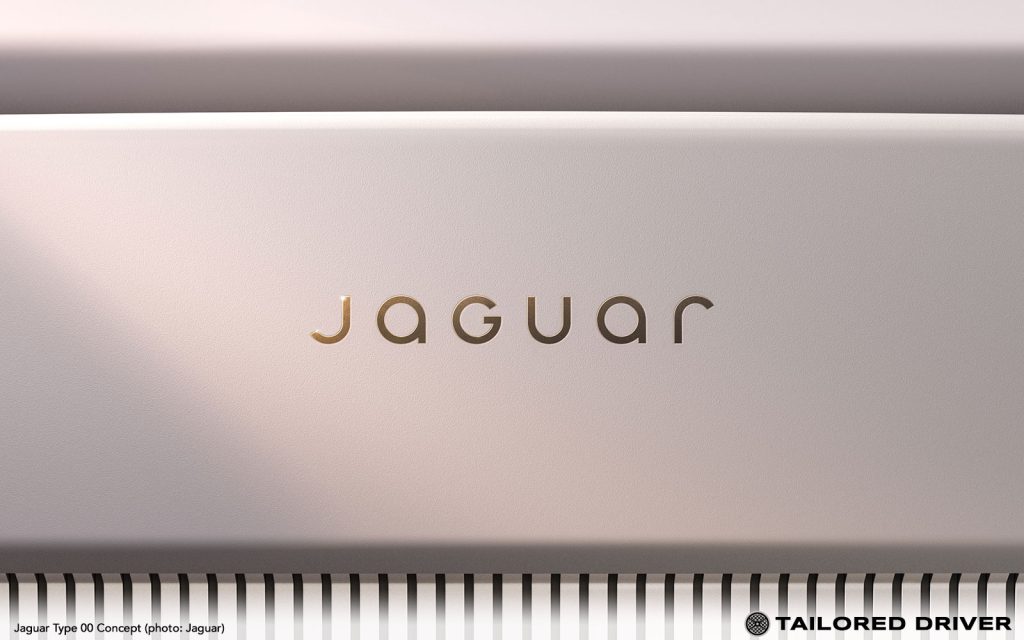
The confident new face combines upright, flush surfaces with the new Jaguar device mark at its centre. A distinctive and precise front light signature emphasises the corners of the car, giving width and grounding it.
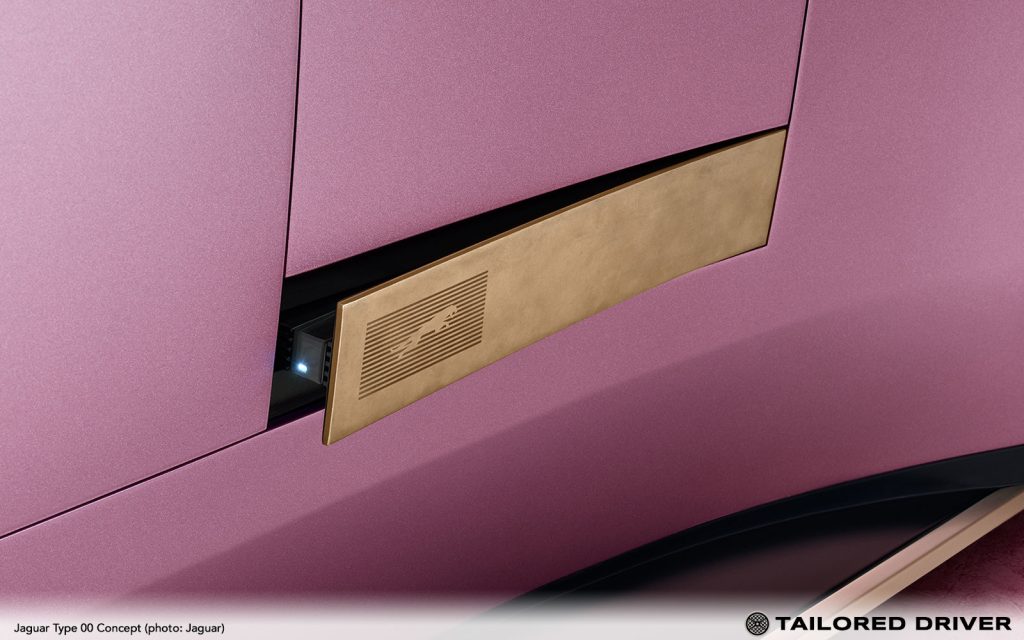
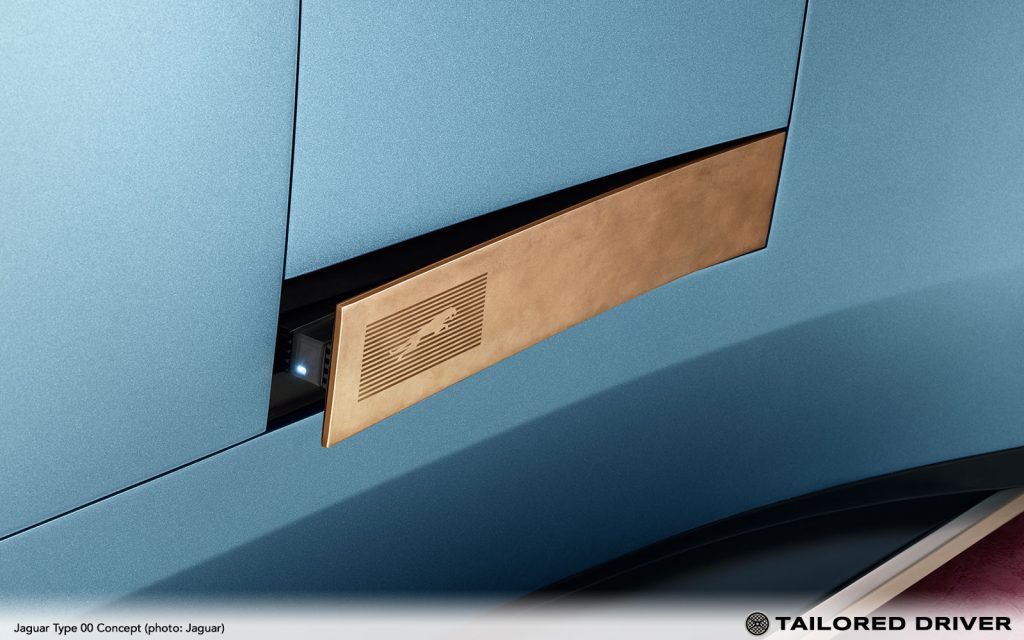
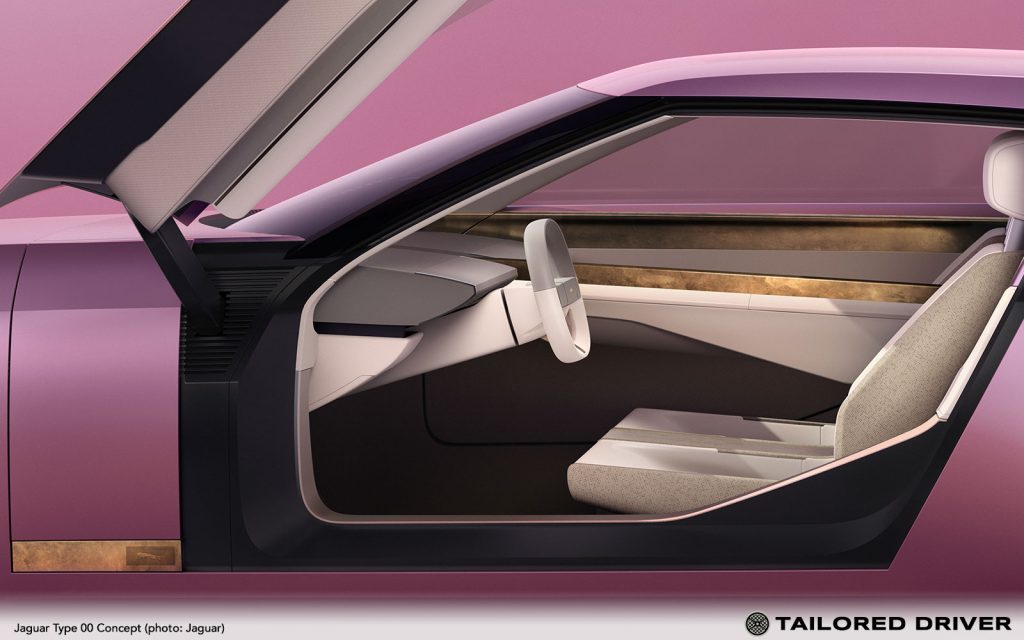
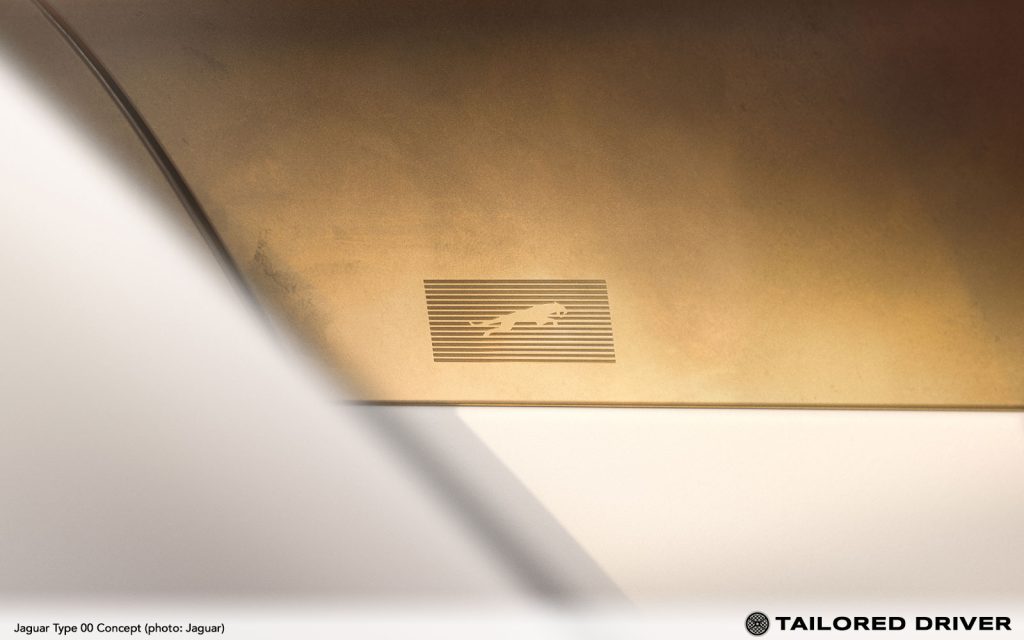
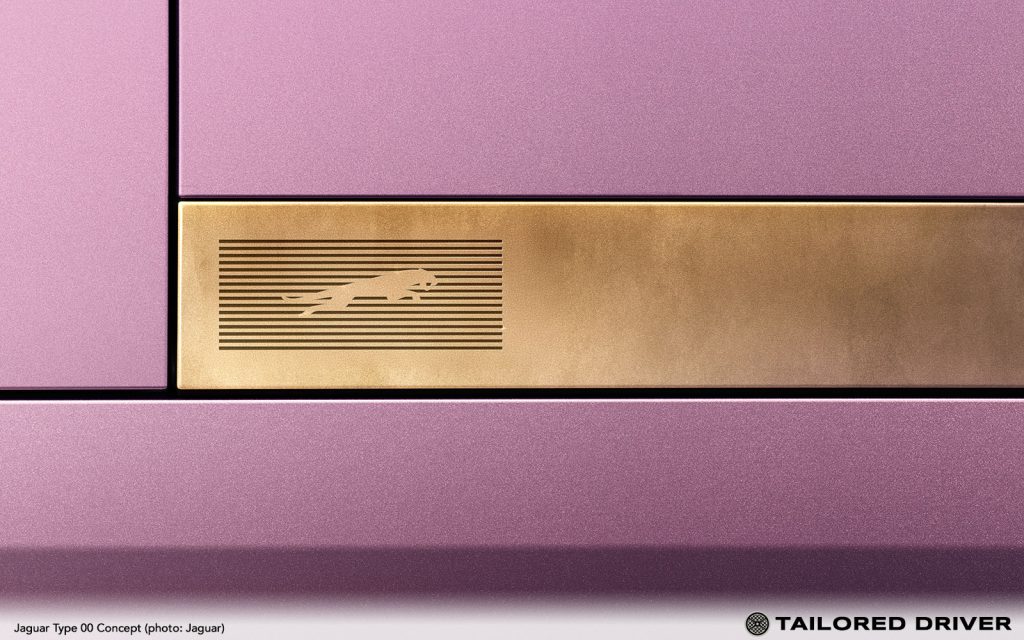
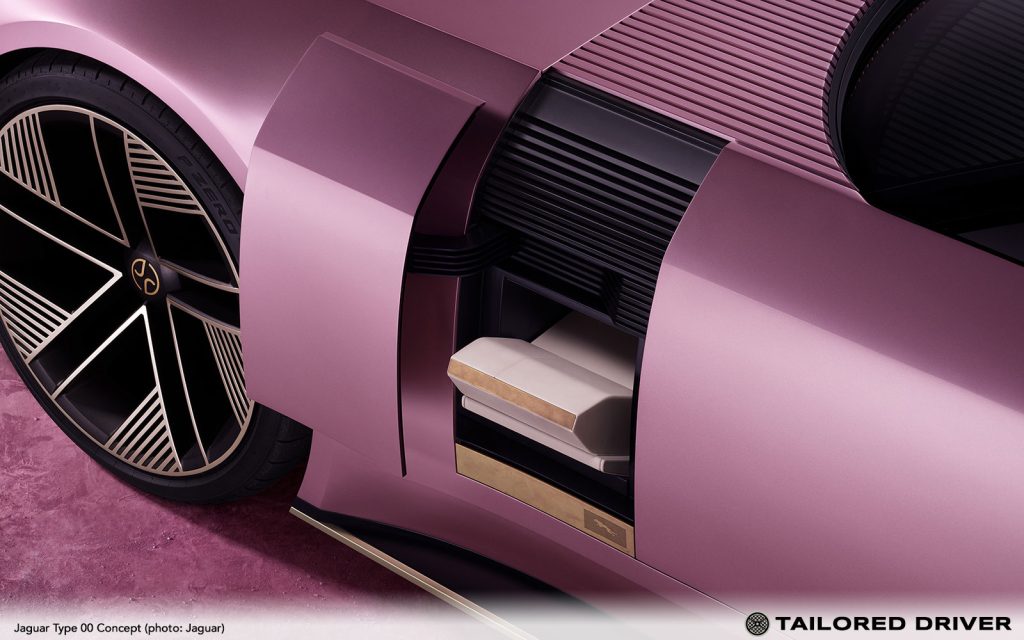
The side profile is dominated by bold proportions, with the Jaguar ‘leaper’ laser‑etched into a hand‑finished brass ingot on each side of the car. These ingots theatrically deploy to reveal rear‑facing cameras that – like the charging ports and front air intakes – remain hidden until needed.
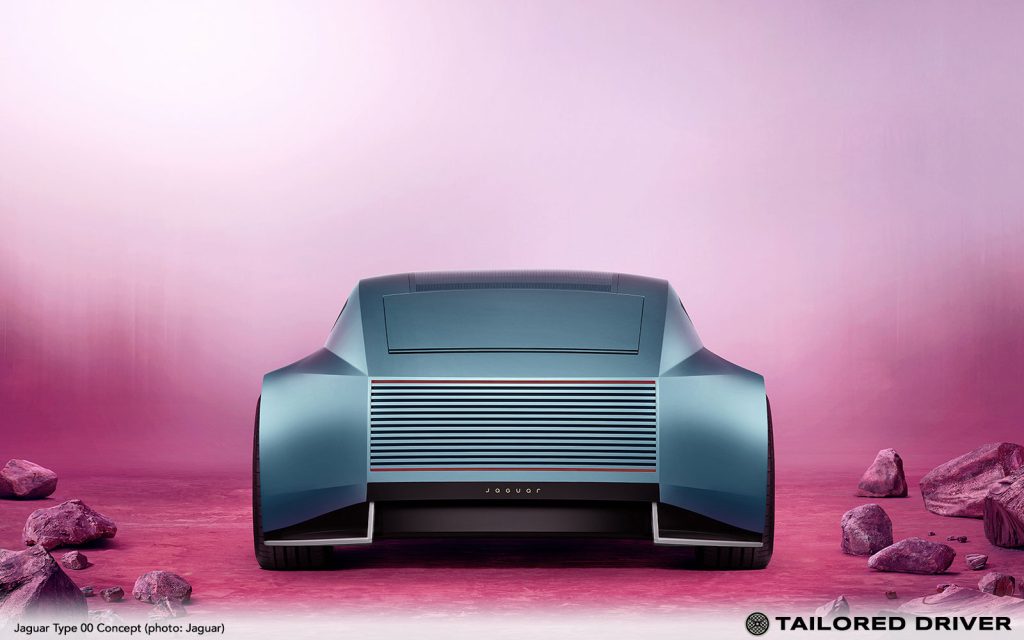
The rear continues the bold statement. A glassless tailgate and panoramic body‑harmonised glazed roof create a sense of sculpture. The rear elevation is defined by distinctive horizontal Strikethrough graphics, which hide dramatic full‑width taillights and emphasise the power and scale of Type 00.
Just as a pair of E‑types attended its 1961 launch at the Geneva Motor Show, the reveal of Type 00 celebrates two contrasting interpretations of Jaguar’s new design vision. A Satin Rhodon Rose example – dubbed ‘Miami Pink’ in honour of the pastel colours of the city’s iconic Art Deco architecture – is inspired by the distinctive rose colour that brass takes on as it ages. It is joined by a striking Inception Silver Blue model. Dubbed ‘London Blue’, it is inspired by the Opalescent Silver Blue of the 1960s and was chosen to reflect Jaguar’s British heritage.
Captivating Interior
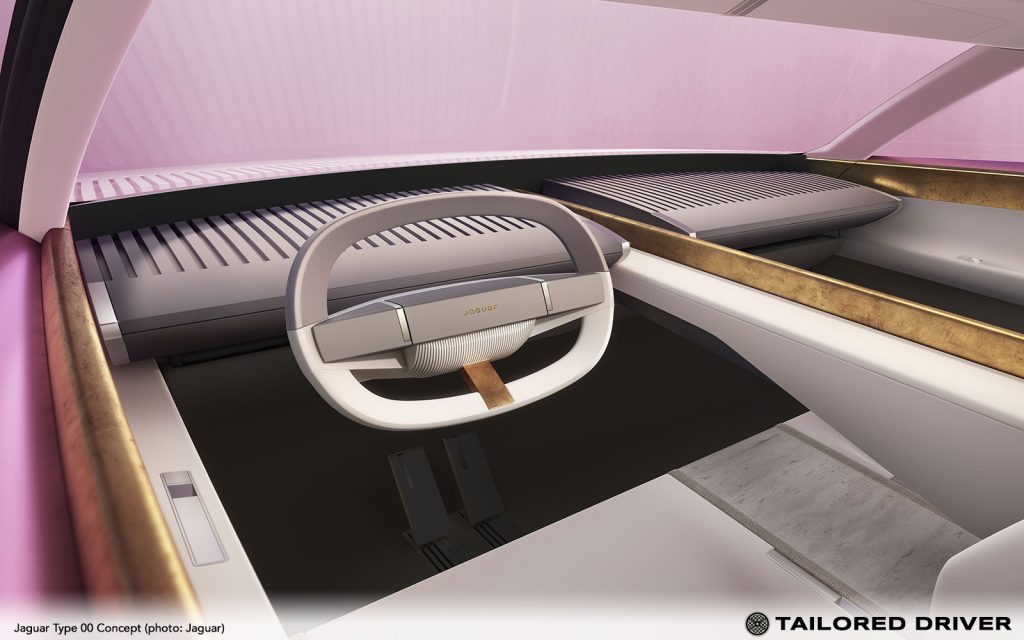
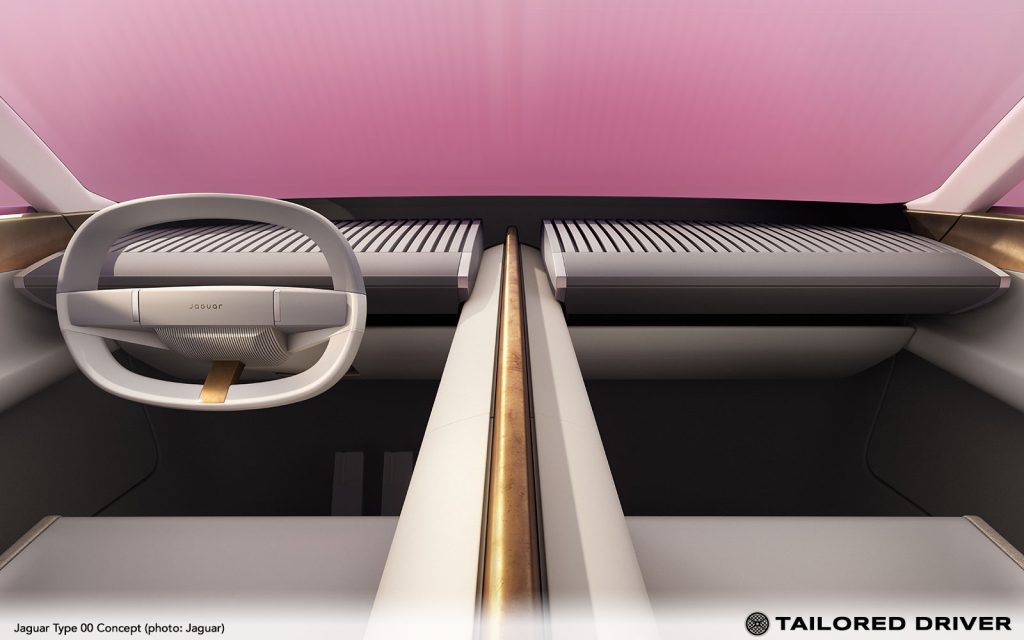
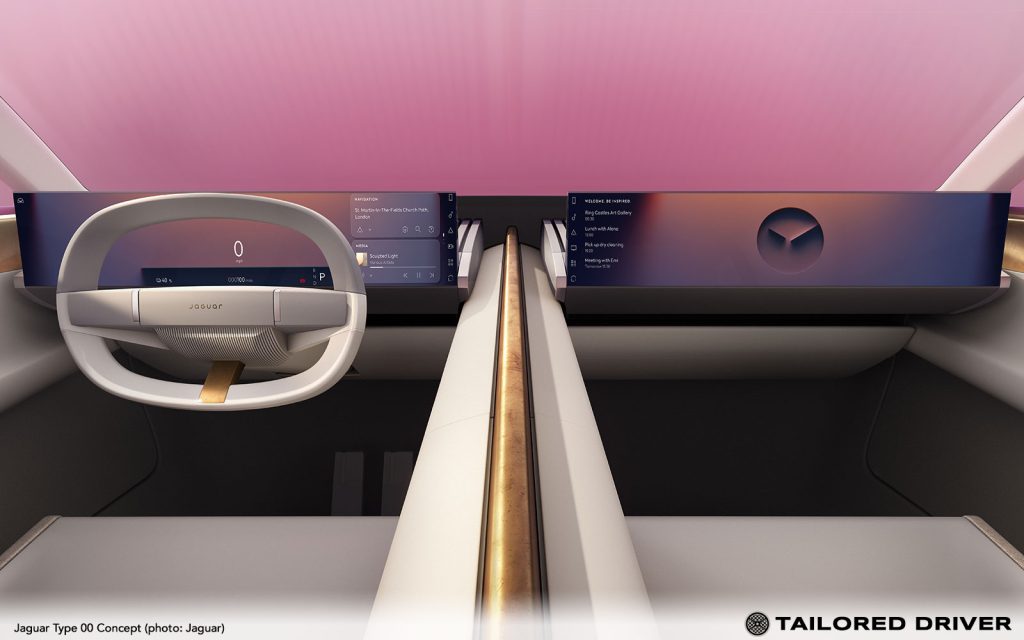
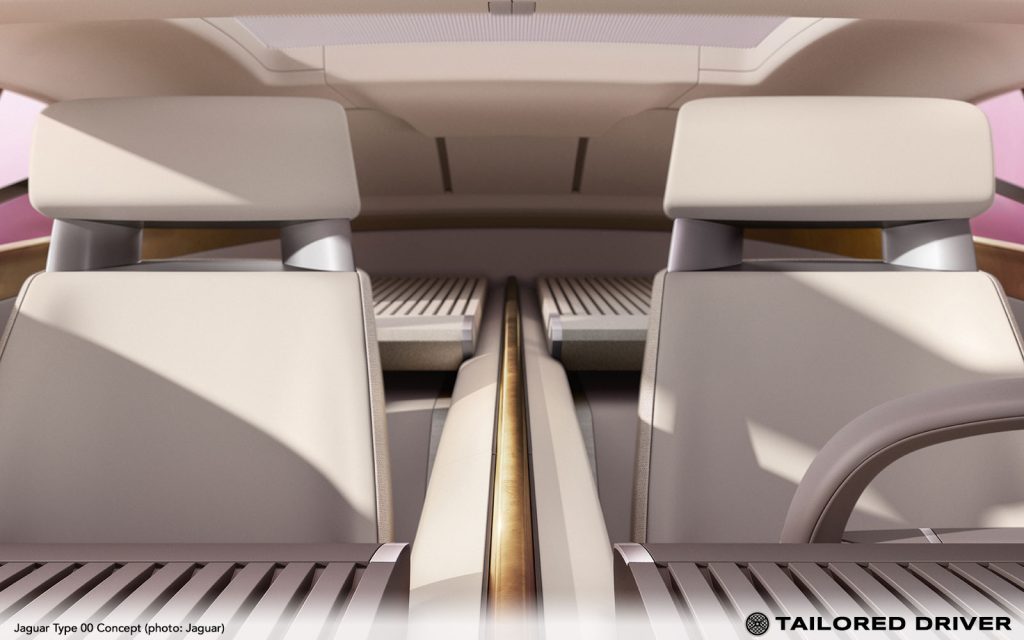
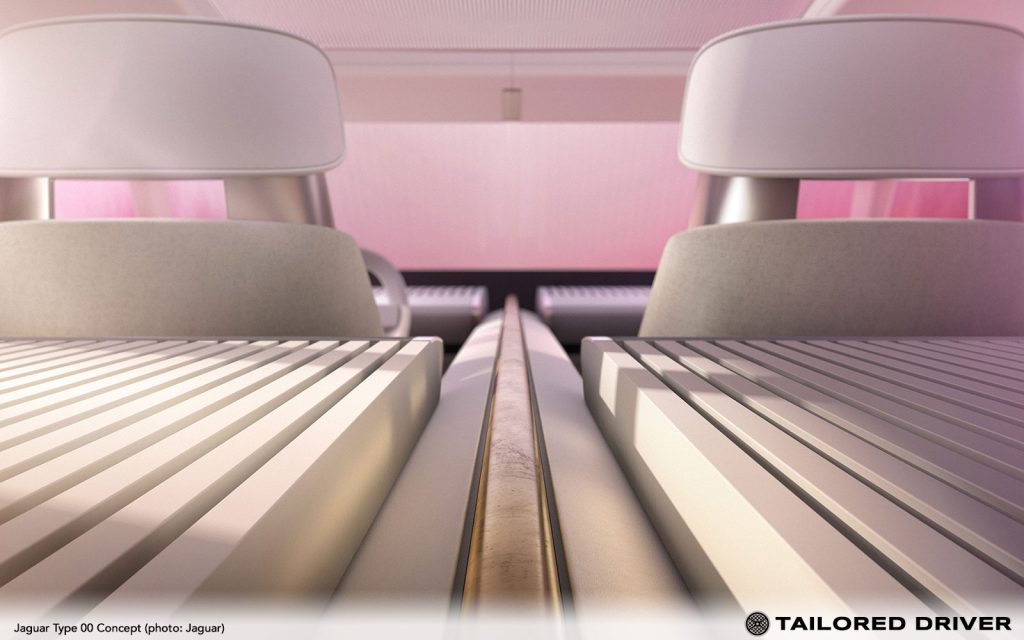
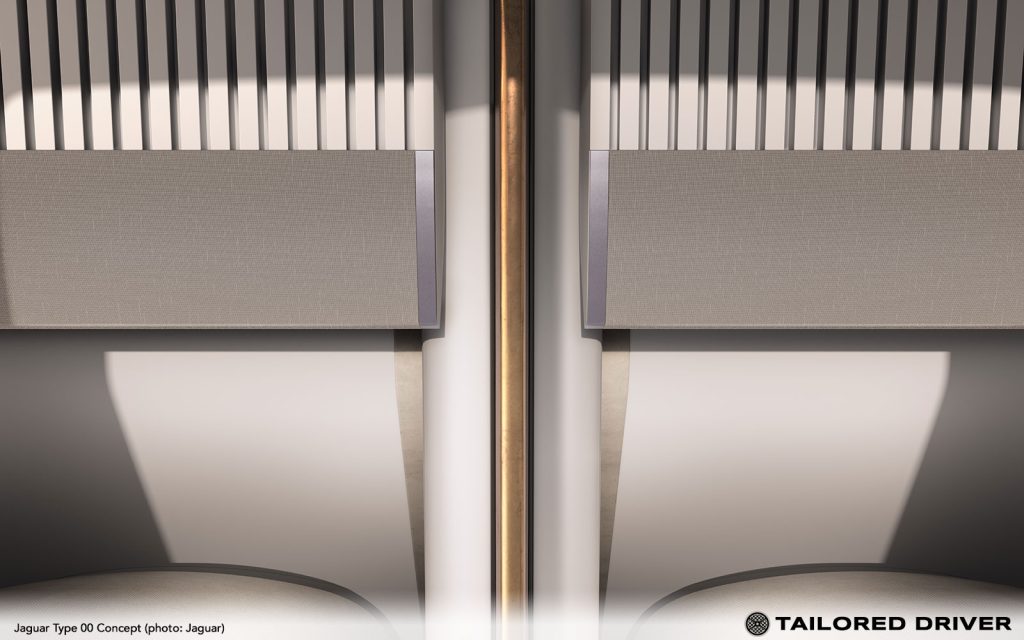
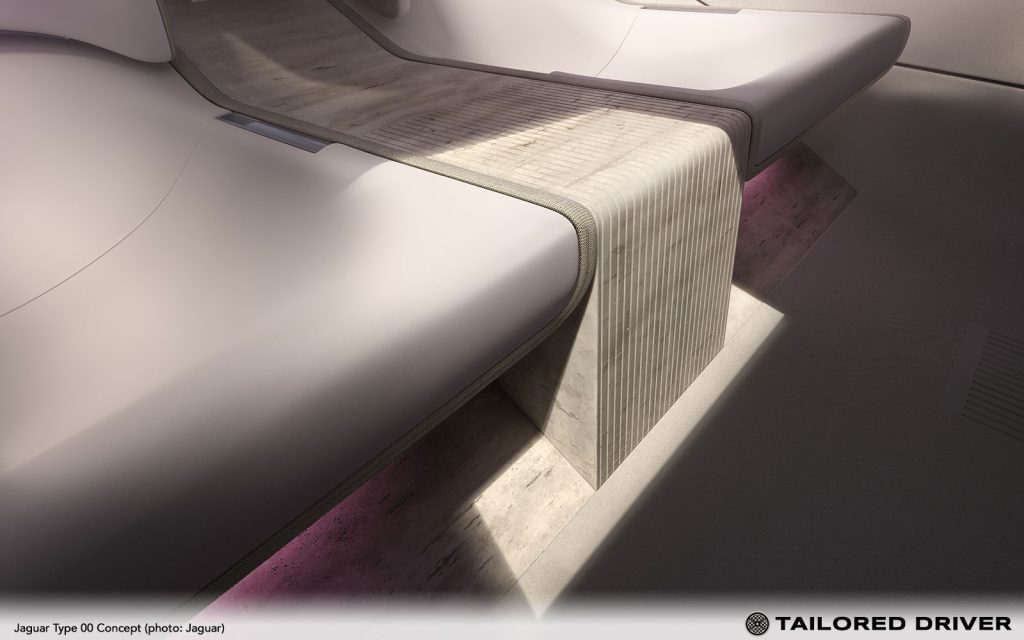
A pair of dramatic butterfly doors and ‘pantograph’ tailgate open to reveal a modernist interior that shares its exuberant proportions with the exterior. The awe‑inspiring cabin features three hand‑finished brass lines which run the length of the interior, with a central 3.2m‑long brass spine that splits a pair of floating instrument panels.
Soothing travertine stone functions as a plinth, supporting the floating seats and central spine. It inspires the rich layered tonal colour palette of the interior. Woven textiles add to the sense of craftsmanship. A tactile wool blend, inspired by handwoven yarns, envelops the two seats, sound bar and flooring.
A Sensory Experience
Type 00 is an experience for the senses. Its body‑harmonised glazed roof casts a subtle pattern onto the materials inside, bringing textures to life and changing their character throughout the day.
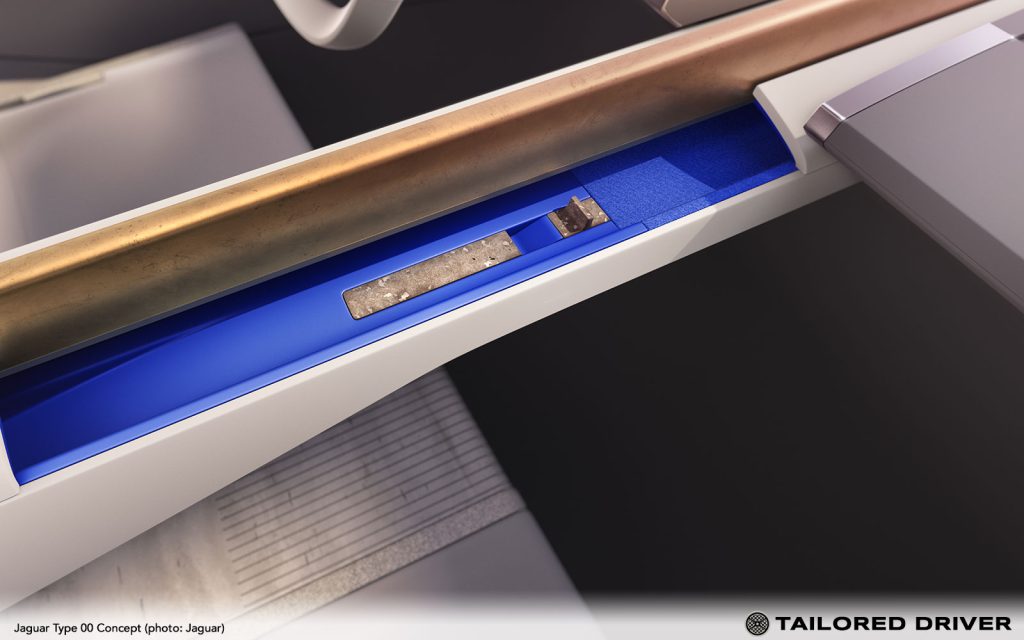
Jaguar’s design team explored new ways of enhancing the interior. Occupants can tailor the cabin to suit their mood using the uniquely crafted Prism case. The objective of this feature is for occupants to engage with the vehicle and extend the concept of customisation and personalisation. It stows behind an exquisitely engineered powered door on the bodyside and contains three totems of natural materials – Brass, Travertine and Alabaster.
Placing one of the totems inside the centre console tailors the mood of the interior. Everything, from the ambient lighting and unique soundscape to the tailored screen graphics, reflect the properties of the chosen material. Bespoke scents interact with the materials for unprecedented personalisation.
This exuberant and artistic approach to engaging the senses extends to the display screens, where animations are formed through the creative technique of ‘Chiaroscuro’ – using light and shadow to define three‑dimensional objects.
Symbols of Change
DEVICE MARK:Jaguar’s signature.
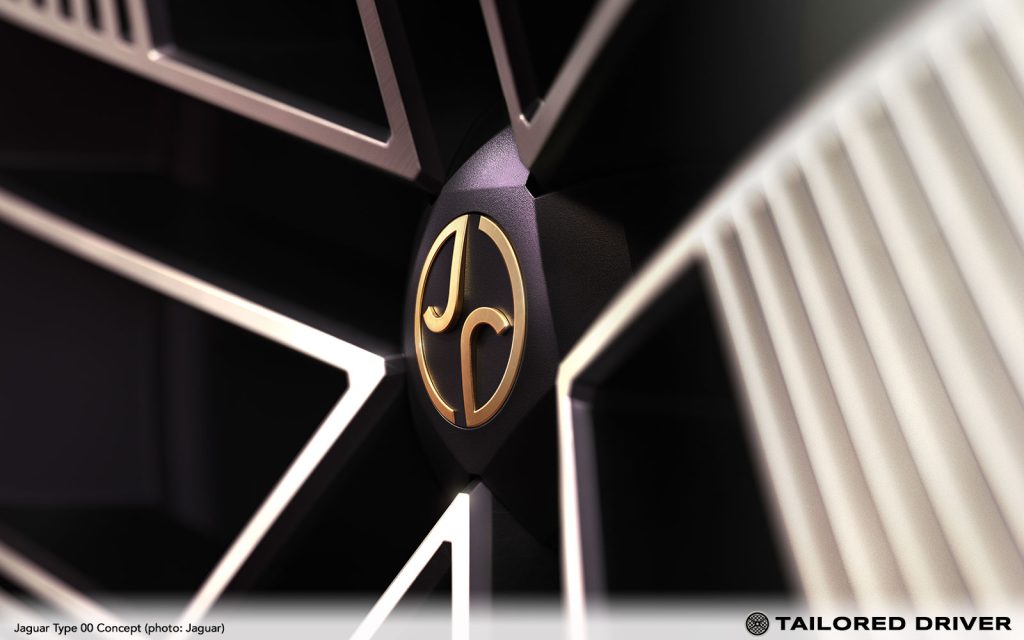
A celebration of modernism – geometric form, symmetry and simplicity. Inspired by Malcolm Sayer, Jaguar’s designer of the C, D and E‑type who uniquely blended science and art to produce timeless shapes in these cars. The geometric letter forms are rotated to create perfect visual symmetry and balance. It creates a modernist form that spells out the distinguished Jaguar name.
MAKER’S MARKS:The Jaguar ‘leaper’ and monogram.
The ‘leaper’ is a precious mark of provenance. Now, always leaping forward ‑ it is a signpost of our forward‑facing outlook and a representation of excellence. It is the hallmark of the brand, as it has been since the beginning.
The new monogram replaces the ‘Growler’ that represented the sound of combustion engines of the past. The new monogram is a discreet artistic motif that incorporates the ‘j’ and the ‘r’ from opposite ends of the device mark. The term ‘opposite’ signifies our approach to do things differently and defy electric vehicle convention.
STRIKETHROUGH:This bold linear graphic generates a presence and an immediately recognisable visual for Jaguar and symbolises striking through imitation and the ordinary.
EXUBERANT COLOURS: The exuberant and bold use of colour is a cornerstone of Jaguar’s new brand identity, embedded in its association with art. Always presented with texture or movement.
Artistic Endeavour
Jaguar has earned a reputation for original thinking inspired by the singular vision of founder, Sir William Lyons, who believed that Jaguar should be a ‘copy of nothing’ and that its cars should be considered as artforms.
Jaguar showcased its creative reimagining at Miami Art Week with a series of curated gallery spaces in two locations. As the Official Luxury Automobile of Art Miami, it presented ‘Jaguar. Exuberance.’ – an immersive exploration of its dramatic new visual language featuring original works by British artists. Then, at the fashion and architectural playground of Miami Design District, Jaguar unveiled its ‘Copy Nothing’ installation for the public global debut of Type 00.
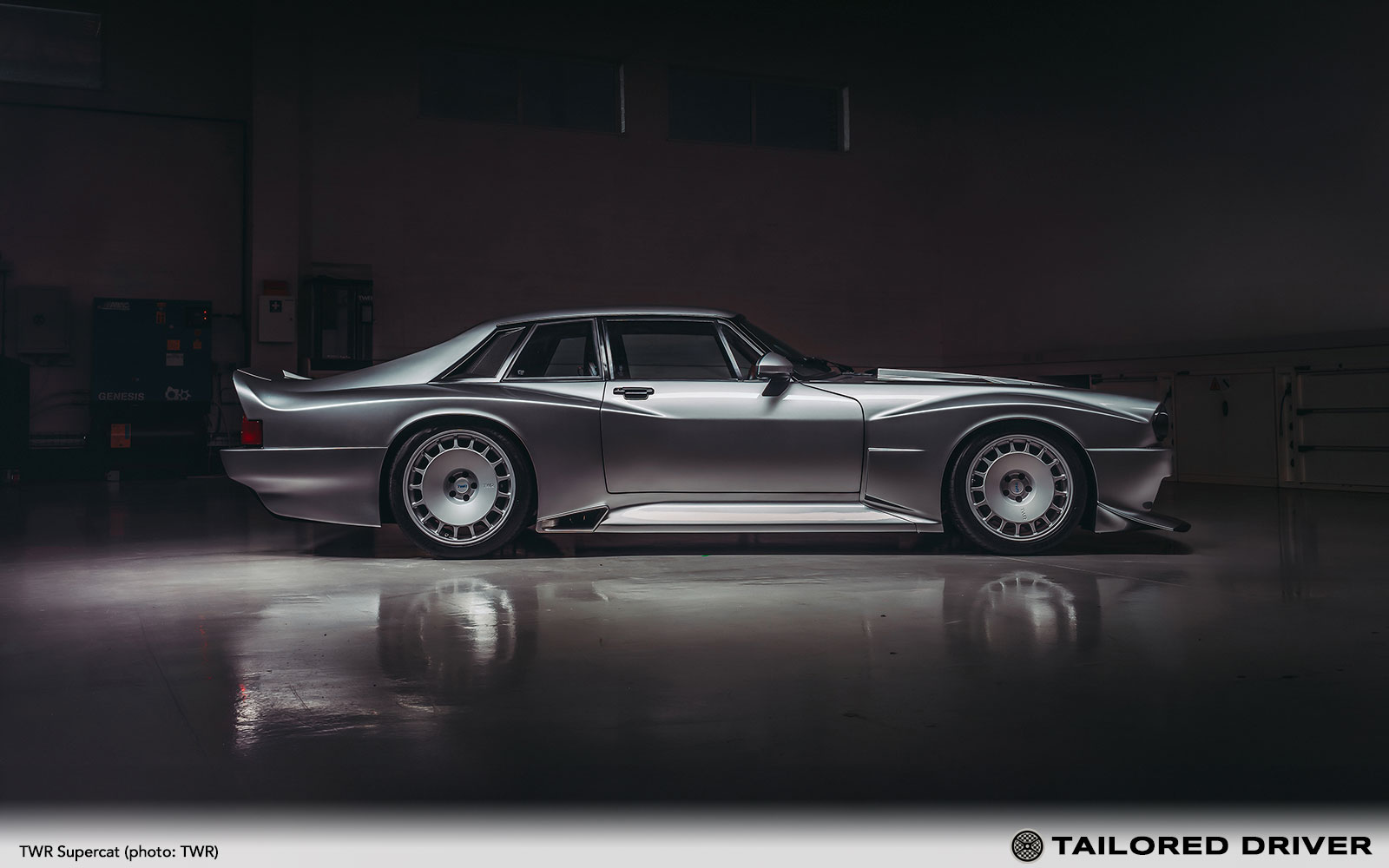
Contemporary carbon-fibre body constructed on classic Jaguar XJS foundations.
Supercharged V12 engine with confirmed output of 660bhp and 730Nm torque.
Immersive and analogue driving experience from 6-speed manual gearbox and rear-wheel drive.
Available to commission now, with numbers strictly limited to 88.
Available in the UK and markets worldwide.
[source: TWR]
Newbury, UK
“Almost 40 years after my father’s original company dominated the racetrack, we’ve brought the TWR name roaring back with our new Supercat. Our debut product, designed as an authentic, analogue Super-GT for the committed driving enthusiast, has been developed for over three years by some of modern motorsport’s brightest talent. Built on the foundations of the classic Jaguar XJS, it uses modern materials and production methods, plus our in-house supercharged V12, to deliver a visceral, immersive driving experience on the road and the track. With production limited to just 88 examples and every car individually commissioned, it’s a chance to own something truly unique and personal, rooted in motorsport history but completely contemporary in its design, engineering and performance.” Fergus Walkinshaw, Director and Founder, TWR
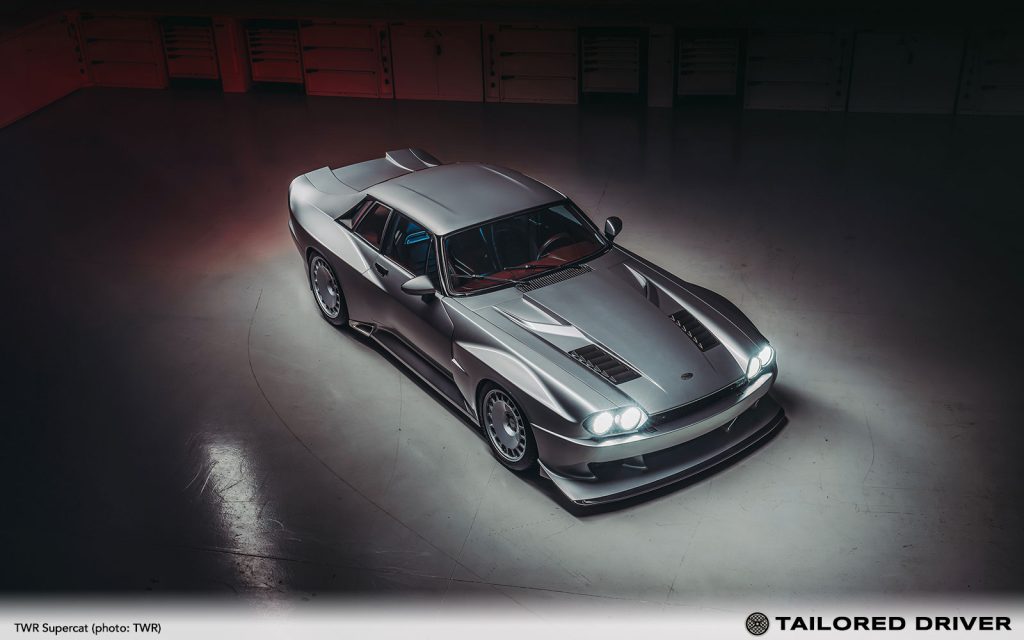
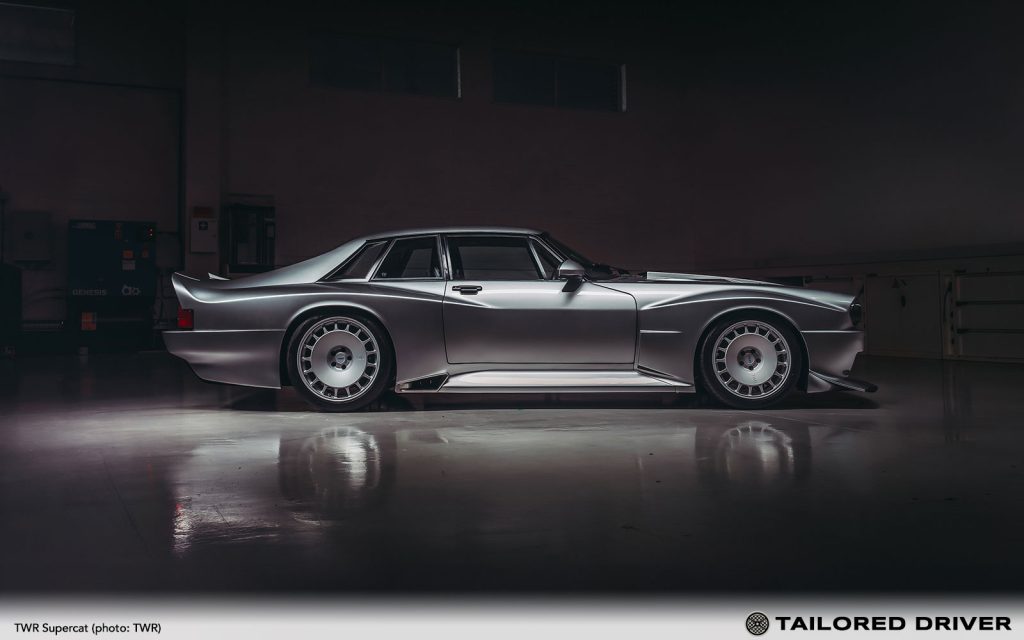
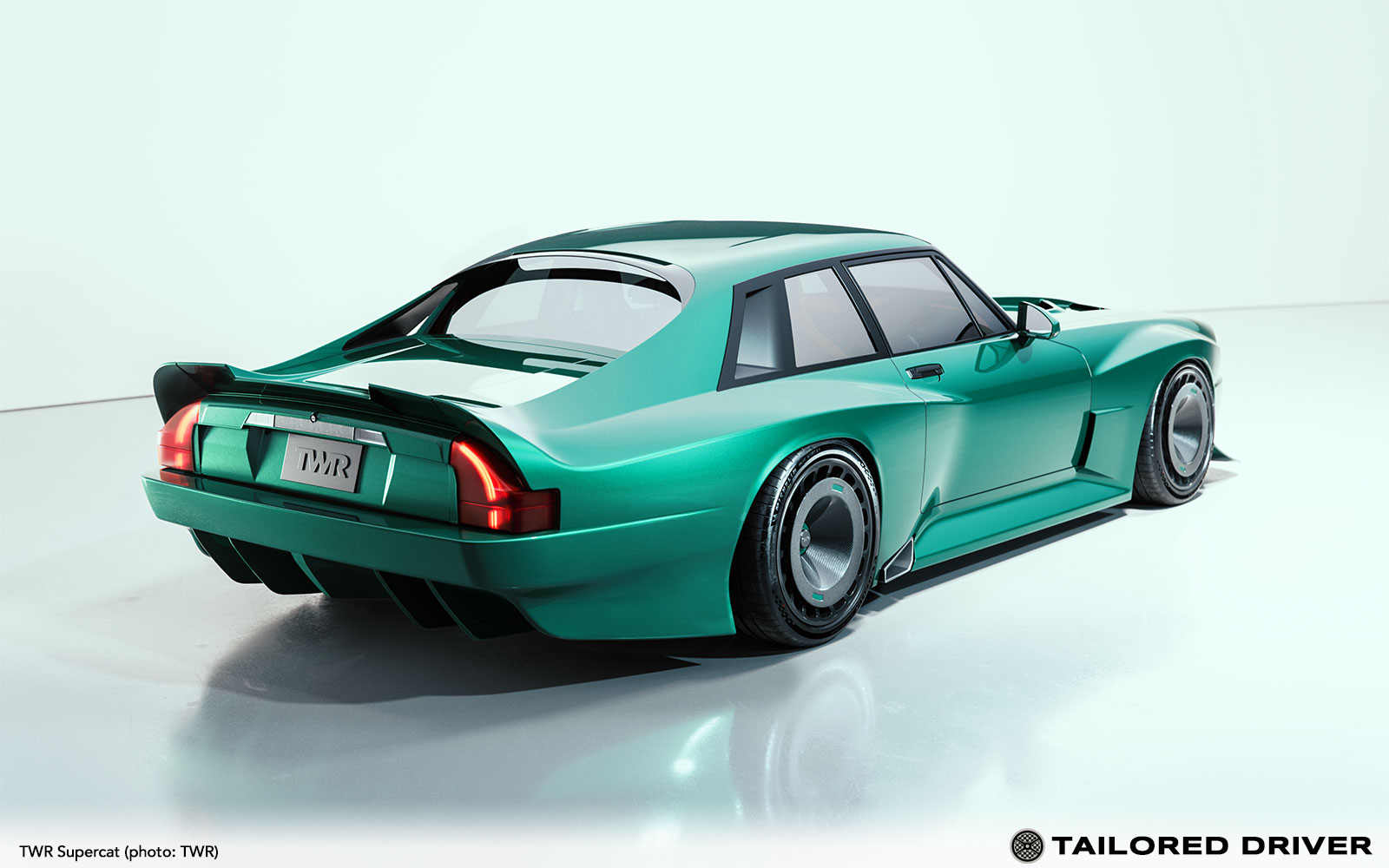
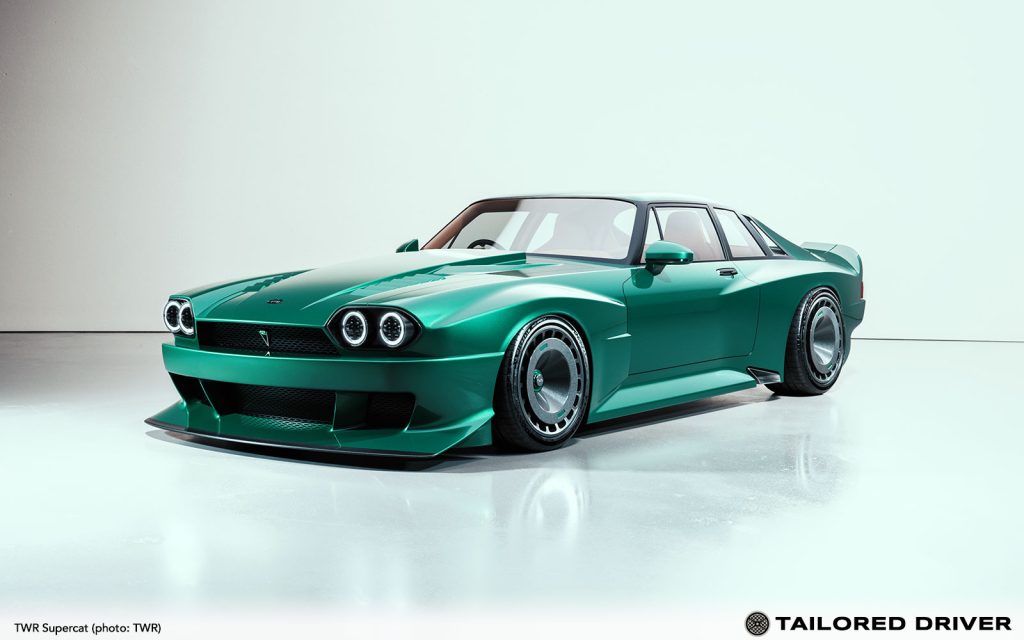
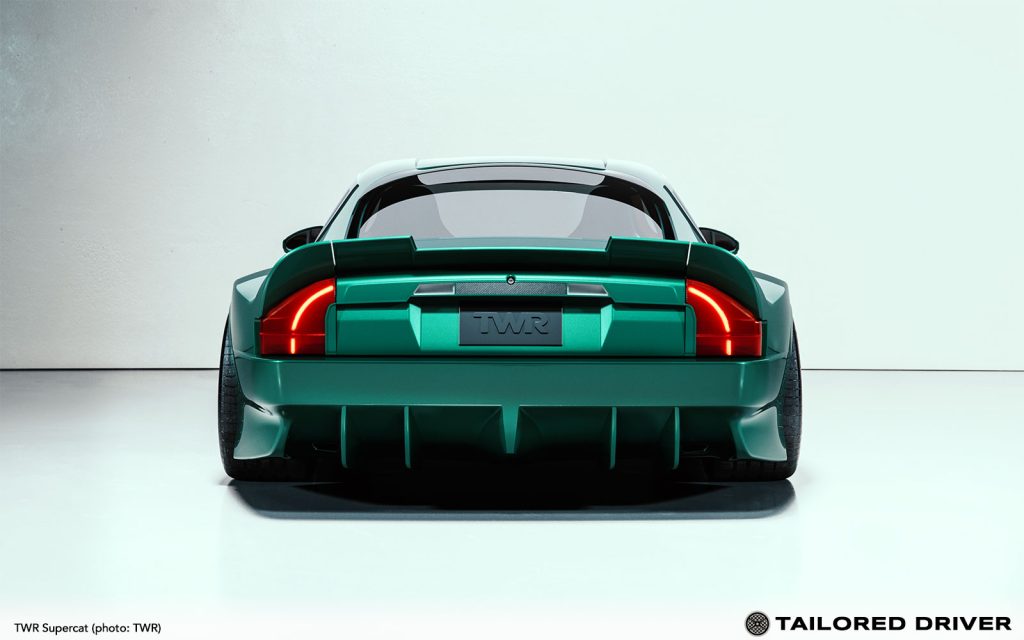
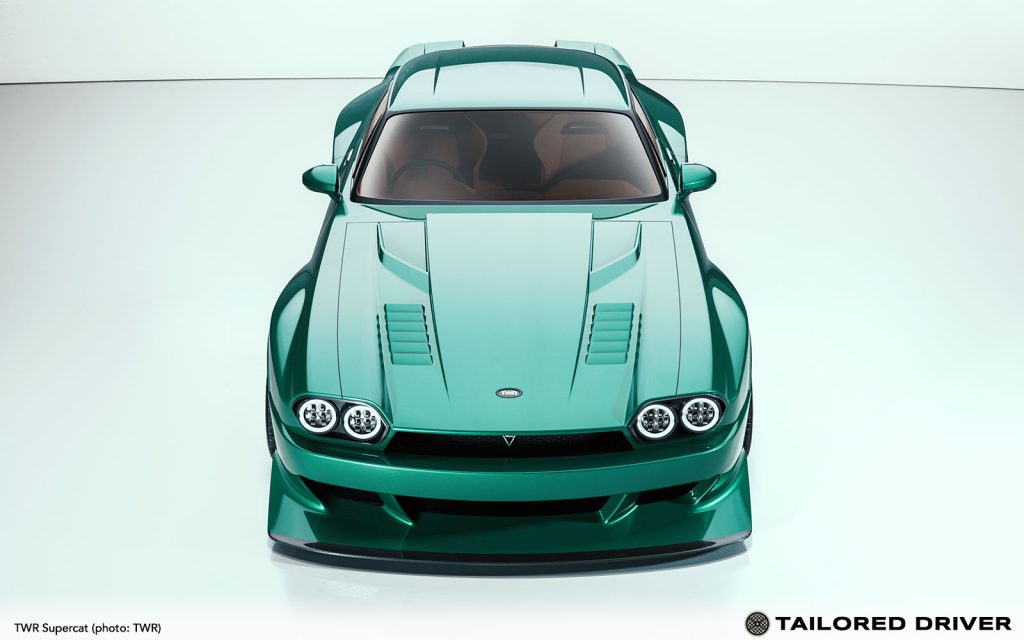
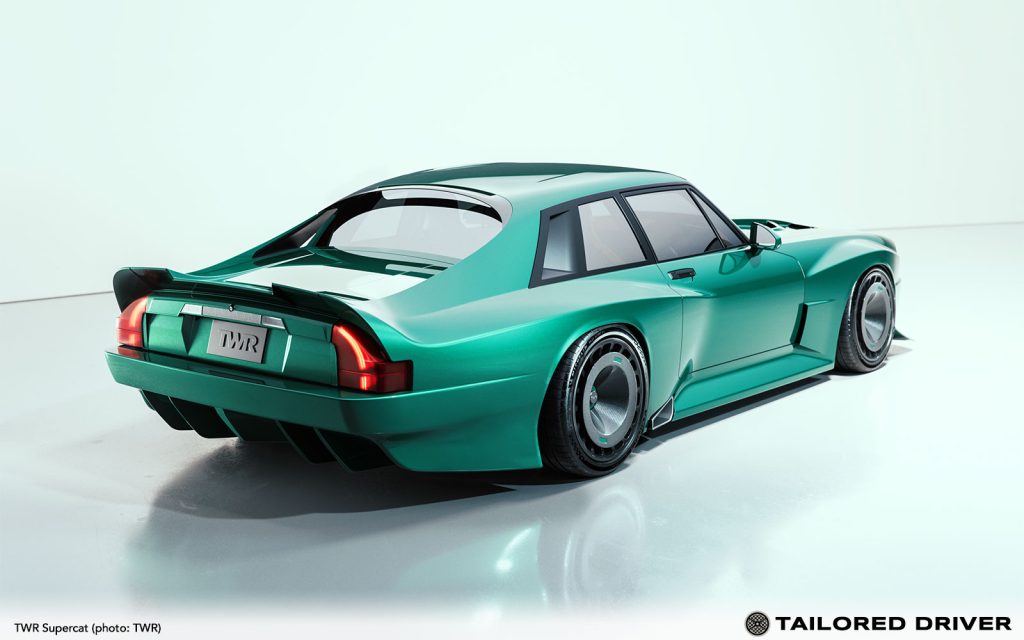
TWR has formally unveiled the Supercat, its radical new Super-GT underpinned by the legendary Jaguar XJS. Widely previewed in the summer of 2024, the Supercat has already earned acclaim from clients and commentators ahead of its public launch today.
The Supercat has been engineered by a team representing some of the most celebrated names in motorsport, including McLaren, Ferrari, Porsche, Williams, and Renault F1. The team is led by TWR director and co-founder Fergus Walkinshaw. His father, Tom Walkinshaw, the revered constructor and racer behind the original TWR, drove Jaguars to victory in the European Touring Car Championship, Spa 24 Hours, and Bathurst during the 1980s.
A True TWR Super-GT The Jaguar XJS provides the essential foundation for the TWR Supercat, which also incorporates design elements inspired by other iconic racing Jaguars of the era, including the XJR-9, XJR-15, and the XJ220 supercar.
True to its motorsport heritage, the Supercat features rear-wheel drive and a six-speed manual gearbox, delivering an authentic, engaging, and entirely analogue driving experience. Beneath its long, sculpted, carbon-bodied bonnet lies a formidable supercharged V12 engine, developed in-house by TWR engineers. This power unit produces an impressive 660bhp and 730Nm of torque.
TWR’s philosophy emphasises that exceptional driving cars are not solely defined by raw power. This is demonstrated through a suite of engineering enhancements ensuring the Supercat excels dynamically in the world’s most demanding motorsport and road environments.
To manage the significant increase in power, the car’s structure has been reinforced with an integrated tubular steel framework, while lightweight carbon-fibre body panels contribute to a 9.3% reduction in weight compared to the original Jaguar XJS (1,605kg vs 1,770kg).
Additional features include the option for carbon ceramic disc brakes, fully programmable traction control, launch control, and five distinct driving modes. These modes enable drivers to tailor the car’s dynamics to suit various road and track conditions.
Double wishbone suspension, enhanced by an active dynamic damping system, ensures a composed and comfortable Super-GT driving experience on extended continental journeys. It also provides the precision, feedback, and stability required for dynamic road and track settings. This duality of character defines the Super-GT ethos, fulfilling the mission of creating a car capable of both high-speed touring and spirited track performance.
The Supercat excels at delivering on its mission. It is the perfect tool for driving to the Nürburgring, offering adjustable suspension and steering for a supreme GT driving experience on the journey there. Once on the track, the car adapts seamlessly to deliver exhilarating performance, before returning occupants home in supreme comfort.
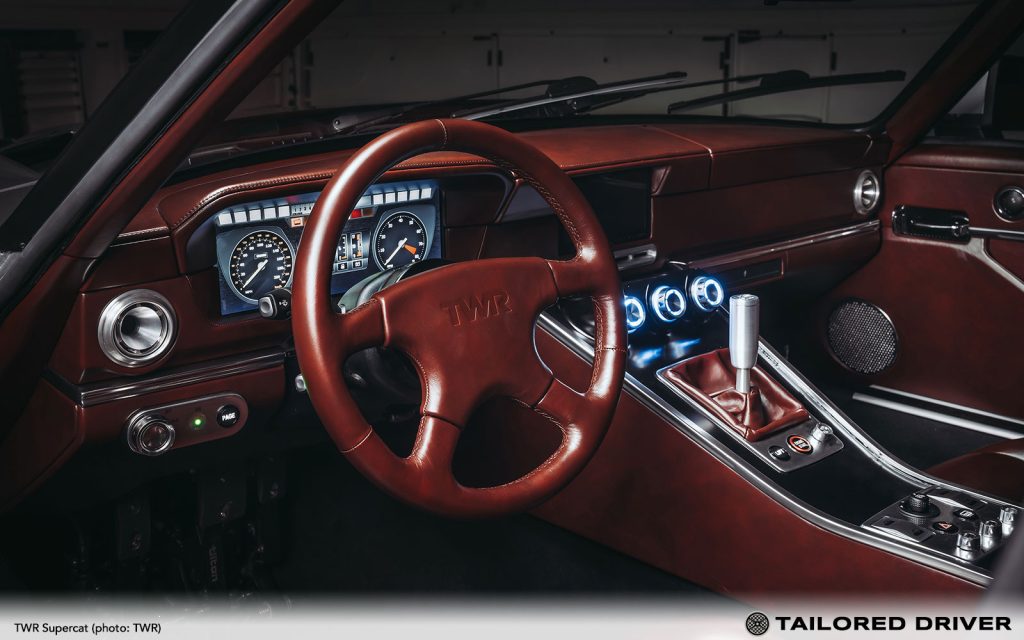
Practicality has not been overlooked. The rear seats have been replaced with a significantly expanded luggage area, ensuring ample space for long-distance touring — a hallmark of the Super-GT DNA. Interior comfort is elevated with a completely overhauled cabin that integrates modern features while paying homage to the classic Jaguar XJS design.
This includes a fully digital multimedia interface (MMI) with Apple CarPlay and Android Auto compatibility. Suspension and steering settings can be easily adjusted via an intuitive toggle interface. Carbon fibre-backed leather seats are available in a contemporary design or a ‘heritage’ option, referencing the original XJS seat louvres.
Radically Styled “I am proud to have designed a TWR true to its racing and performance DNA, building on the foundations of one of Britain’s great automotive icons. The TWR Supercat represents an entirely new expression of the original. As a designer, working with a new palette of highly technical materials has allowed me to re-energise the form and stance of the Jaguar XJS, boldly expressing our mission to create a true Super-GT. Collaborating with TWR’s exceptional team of engineers and aerodynamicists, we’ve created a car where every line and feature serves a performance purpose, authentically representing TWR’s legacy on both the track and the road.” — Khyzyl Saleem, Designer, TWR Supercat
The TWR Supercat brings to life a vision for a modern, high-performance TWR car built upon the classic Jaguar XJS. Its striking silhouette has been designed by Khyzyl Saleem, one of the world’s leading digital and 3D car concept stylists, renowned for his performance-focused projects with iconic names such as the late Ken Block and Travis Pastrana.
Saleem’s design efforts were further bolstered by the involvement of Magnus Walker, the legendary British-born designer and car collector. Walker’s expertise in global car culture was instrumental in refining the vision of creating a vehicle that blends the Jaguar XJS’ foundational legacy with the bold, distinctive aesthetics and substance of a contemporary TWR car.
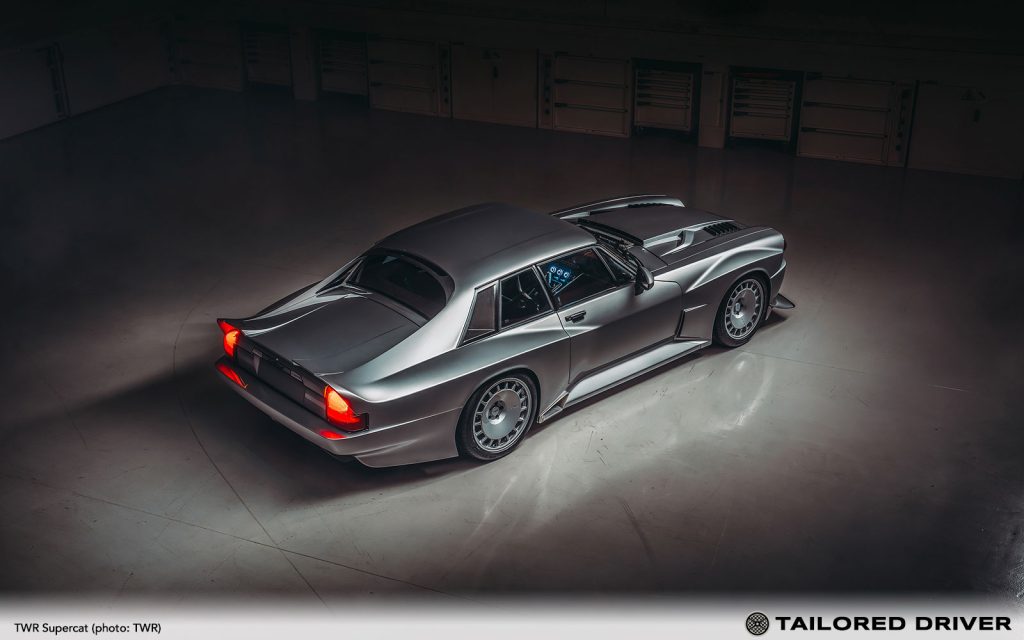
Their combined efforts lend the Supercat a more aggressively muscular character while preserving the Jaguar XJS’ iconic profile, including its signature silhouette, flying buttresses, and front-end graphic. Subtle design cues pay homage to TWR’s decades-long relationship with the Jaguar marque.
In keeping with TWR’s guiding philosophy, the Supercat’s design is driven by engineering requirements to achieve exceptional performance. Saleem’s design proposals were rigorously evaluated for aerodynamic efficiency by a former World Championship-winning Mercedes-Benz F1 aerodynamicist. This collaboration ensures the Supercat delivers a visceral and engaging driving experience, fulfilling the original design brief.
The resulting design not only communicates the Super-GT’s dynamic intent but also incorporates a suite of aerodynamically functional features to generate critical downforce. These include precision-designed splitters and in-body aero enhancements that provide the stability demanded in both high-speed touring and track settings.
Key aerodynamic innovations include a complete reimagining of the XJS’ iconic flying buttresses, now reshaped to optimise airflow from the body to the rear haunches. The floorplan has been flattened and paired with a bespoke, fully re-engineered rear splitter to generate additional downforce necessary to manage the Supercat’s extraordinary power output. To accommodate these changes, the exhaust system has been repositioned from the rear to the side of the car.
The Supercat’s broader stance further reinforces its dynamic character. Its width has increased from 1,793mm to 1,975mm compared to the original XJS, enhancing its visual and aerodynamic profile. This wider footprint is complemented by TWR Forged Monoblok wheels, sized at 18 inches at the front and 19 inches at the rear — a significant evolution from the original XJS’ 15-inch alloys.
The First of a New Breed of TWRs As the first TWR production car, the Supercat is the perfect exemplar of the company’s philosophy: blending modern engineering, materials, and methods with a classic base to create something that truly captures the spirit of TWR, which reshaped world motorsport in the 1980s and 1990s.
Future TWR models will undergo the same rigorous development and testing process, adopting protocols and facilities used by the world’s leading sports car brands, racing teams, and other performance specialists.
The same philosophy is applied to the manufacturing of every TWR product, with every car hand-built at the company’s facility in Newbury, Berkshire, at TWR’s dedicated factory.
The Magic Number TWR is now accepting commissions for the Supercat, whose production run will be strictly confined to just 88 examples worldwide, in homage to Tom Walkinshaw’s famous win with the XJR-9 at Le Mans in 1988. The first customer deliveries are expected in the summer of 2025.
Every Supercat is built to order, and customers have a wide range of personalisation options. Orders have already been taken across the United States, the UK, Europe, Asia, and the Middle East in both right-hand-drive and left-hand-drive configurations. Prices will vary according to individual specifications but start at £225,000, excluding local taxes. A limited number of build slots remain open, with a £35,000 deposit.
TECHNICAL SPECIFICATIONS
Component
Subcomponent
Jaguar XJS V12 HE
TWR Supercat
Chassis
Steel Monocoque
Steel Monocoque + Steel and Carbon Fibre Reinforcement
About TWR: Established in 2020 by Tom Walkinshaw’s son, Fergus Walkinshaw, alongside his business partner John Kane, TWR aims to stretch the famous name into the modern automotive world. While a separate entity from the original Tom Walkinshaw Racing, the new company shares much of the DNA and spirit that helped the original TWR brand to become a world leader in performance and motorsport engineering. From its base in Newbury, Berkshire, TWR is making its name as a constructor of bespoke automobiles for a whole new generation, seeking to protect and perfect the analogue driving experience with its products, whilst also working with class-leading manufacturers to help maximise the potential of their offerings
KEY PEOPLE Fergus Walkinshaw, Co-Founder & Technical Director For Fergus Walkinshaw, TWR co-founder, success on the race track and through performance car engineering is in his DNA. His father, Tom, is the ‘TW’ in the first generation of TWR, and Fergus was along for as much of the fun as he could be. “Growing up, I was always around cars and motorsports. They’re part of the family – obviously because of my dad, but my mum was also very much into cars. There was no escape from it.”
Walkinshaw’s upbringing, along with all things quick, served him well. He competed in the Ginetta Juniors championship and Supercup and fixed up his own and others’ cars for road and track. His aptitude for all things mechanical led him to the Automotive Engineering degree at the UK’s Oxford Brookes University. Walkinshaw aimed to use his knowledge to set up his race team.
In the early 2010s, Walkinshaw’s motorsport business changed tack – he noticed there was more interest in modifying road cars and building track cars than creating machines for competition. We always tried to stick with more unique stuff where you had to think about it, design something. We wanted to do proper engineering.”
It may seem like Walkinshaw was looking to follow in his father’s footsteps from early on, but that isn’t quite the case: “I wanted to go my own path with it. But there was always the heritage of what my dad did in the background.”
Meeting co-founder John Kane through a rally, and establishing a relationship with him over years of building cars, Walkinshaw notes that the idea of bringing TWR back started as an initial business conversation that has now yielded the introduction of an extraordinary new car, the Supercat Super-GT.
In realising their shared vision to build a car worthy of TWR’s racing and performance car heritage, they have created a new segment in the introduction of a true drivers’ Super-GT. This is just the beginning. “We’re not going to be a company that just does Jaguar, or restomods. We’re an engineering company that focuses on cars – road, or race and there is such diversity in the marques TWR has been associated with, our Supercat is just the start.
John Kane, Co-Founder, TWR John Kane is founder and co-owner of the next generation of TWR and is a man with a huge passion for cars. “From early on I always played around with and modified my cars. From a Vauxhall Belmont, to a Montego… even a Citroen AX. At this early stage he also had an affiliation with the big cats, buying an XJ6 and XJ-C along the way. I did the basics: wheels, stereo, lights, etc. I did what you did when you were young.”
Kane went into property development, which meant he left his Citroen behind: “In the 2000s I had a BMW 330Ci, then an M3 and progressed to a Ferrari 430. That was my first serious car. But I was, as before, into trying to make them better. That part is where my passion comes from.”
Kane found himself racing Caterhams, learning about dynamics and development, and creating fearsome track cars – including some incredible Time Attack machines. Having nurtured his passion for driving on track, and touring around the world, his collection grew to include over 50 cars. His tastes are broad, as he holds the keys for a selection of everything from a 1965 Lotus 7, and a Mini Cooper, to modern Supercars and Hypercars.
It’s through that collection he crossed paths with Fergus Walkinshaw. In 2017 the pair met while taking part in a car rally and struck up a friendship. The duo ended up working together on a series of cars – even creating an unusual track spec Alfa Romeo 4C together.
In 2018 Kane took ownership of the facility TWR is based in now, though its purpose was not defined. He wanted to create a hub for car culture, this turned out to be the popular Podium Place in Newbury, UK. The plan was to open the space to other businesses, and early on it became clear that not only was TWR going to come back, but it would be from there it would make its return.
“The Supercat is the kind of car I want to build. A proper enthusiasts’ car. We call it a Super-GT, which in my mind is the best of all worlds. It’s the car that you can drive across countries with a passenger and a bunch of luggage, then take on a track.” Kane notes that track-biassed GTs come with plenty of punch, but not much space, and conventional GTs get space without the track chops. His ideal car is comfortable, adjustable, durable, and punishingly fast. His ideal car is the Supercat.
For Kane, TWR’s attitude is key. He saw what the company did on and off track in its heyday and his goal is to carry on that spirit. With the XJS-based Supercat, he feels the company’s on the right track: “I feel like this is something that TWR would have done if they had the chance. TWR’s deal is to push the boundaries of what you can do with a car, and that’s what we’ve done.
About Magnus Walker Magnus Walker is one of the best known petrolheads in the world. His distinctive style, and seemingly endless creativity has garnered him global respect. Above all else, though, is his passion. When Magnus Walker sets his mind to making something, you know it’ll be something truly special.
Walker moved to the US from Sheffield in 1986, swiftly pouring his talent into his clothing line, Serious, which outfitted everyone from Alice Cooper to Madonna. The popularity of his designs allowed him to indulge another passion: real estate. After several timely building acquisitions in LA’s Downtown led him into the commercial film business, he also started amassing an enviable collection of Porsches. In 2012 the Urban Outlaw film made its debut. Telling the story of Walker and his race-inspired road-going Porsche builds, it made him an overnight star in the automotive world.
His collection has since evolved – where once it was mostly made up of a single marque, today it features vehicles from brands located all over the world.
Known for his distinctive dreadlocks and epic beard, Magnus Walker’s style has been wrought from decades working in several of the most creative industries on the planet, which is why we approached him to work with us on bringing the next generation of TWR to life.
He is familiar with TWR’s stellar past, and knows the legacy the next generation has to live up to. Our collaboration will mark the first time Walker has worked in an official capacity with a vehicle manufacturer.
An iconic marque, an iconic man… a combination that can only lead to great things.
About Khyzyl Saleem If you’ve been anywhere near the internet, you’ll know Khyzyl Saleem’s work. A petrolhead from a young age, he got into photoshop, and then 3D modelling, which resulted in global acclaim for his myriad creations. His work took him to the world of video games, where he worked for Electronic Arts on various titles. In his free time, Khyzyl created his own takes on supercars, modified icons, and did whatever took his fancy in the virtual world. As a result of his tinkering, his Instagram account became a shop window for what happens when a truly brilliant mind is given the space to create anything they want, and it blew up. Soon enough everything he created became newsworthy.
At the same time, Khyzyl set up LTO – Live To Offend. There was demand for Khyzyl’s work to make the leap from the virtual world to reality, and he was more than willing to make that happen, and so LTO was formed to create body kits for some of the world’s most iconic cars.
You’ll likely have seen LTO’s work at events all over the globe, notably Las Vegas’ SEMA show where Khyzyl’s creations draw huge crowds. Such is the impact of his work, that Khyzyl’s been called upon by the likes of the late Ken Block, Travis Pastrana, and more to give their cars a little something that others simply don’t have.
Though he’s been responsible for plenty of bodykits and renders over the years, before working with TWR Khyzyl hadn’t turned his skill to a whole car. This will be his first full-on design – every detail has come about as a result of his seemingly limitless creativity, of course with input from Walker.
With Walker and Khyzyl on board, it’s clear to see that TWR is taking the next generation seriously: working with two of the greatest minds of the modern automotive era.
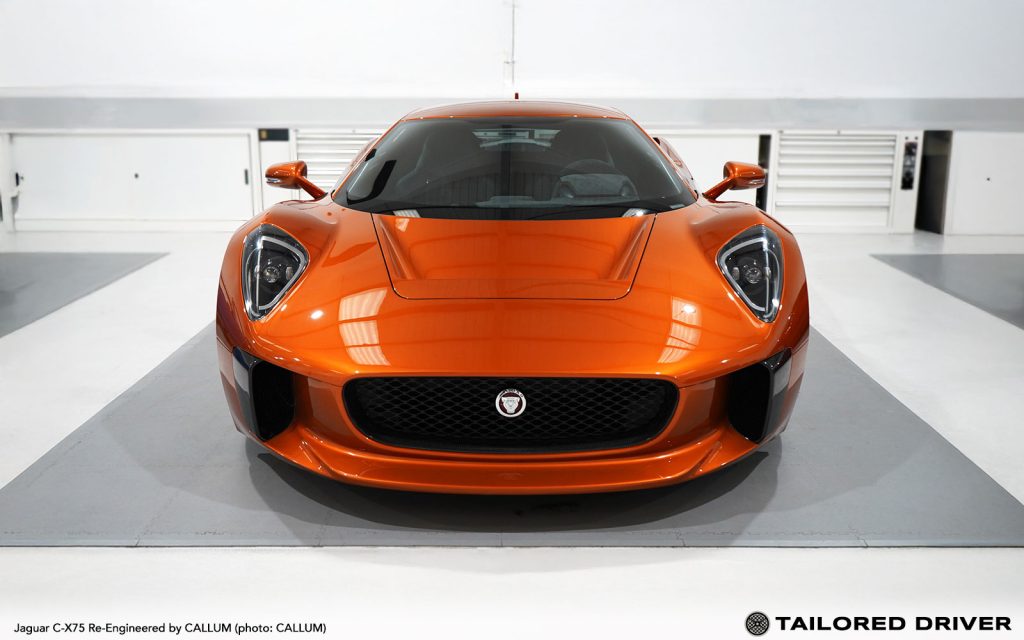
A thoroughly reengineered Jaguar C-X75, created by CALLUM, takes the car to its ultimate road-going conclusion
Bespoke commission blends customer’s wishes with the original designer’s aim, producing a capable, refined and elegant supercar
All-new interior, enhanced powertrain and active aero result in a driver-focussed machine, engineered to enjoy every day
[source: CALLUM Designs]
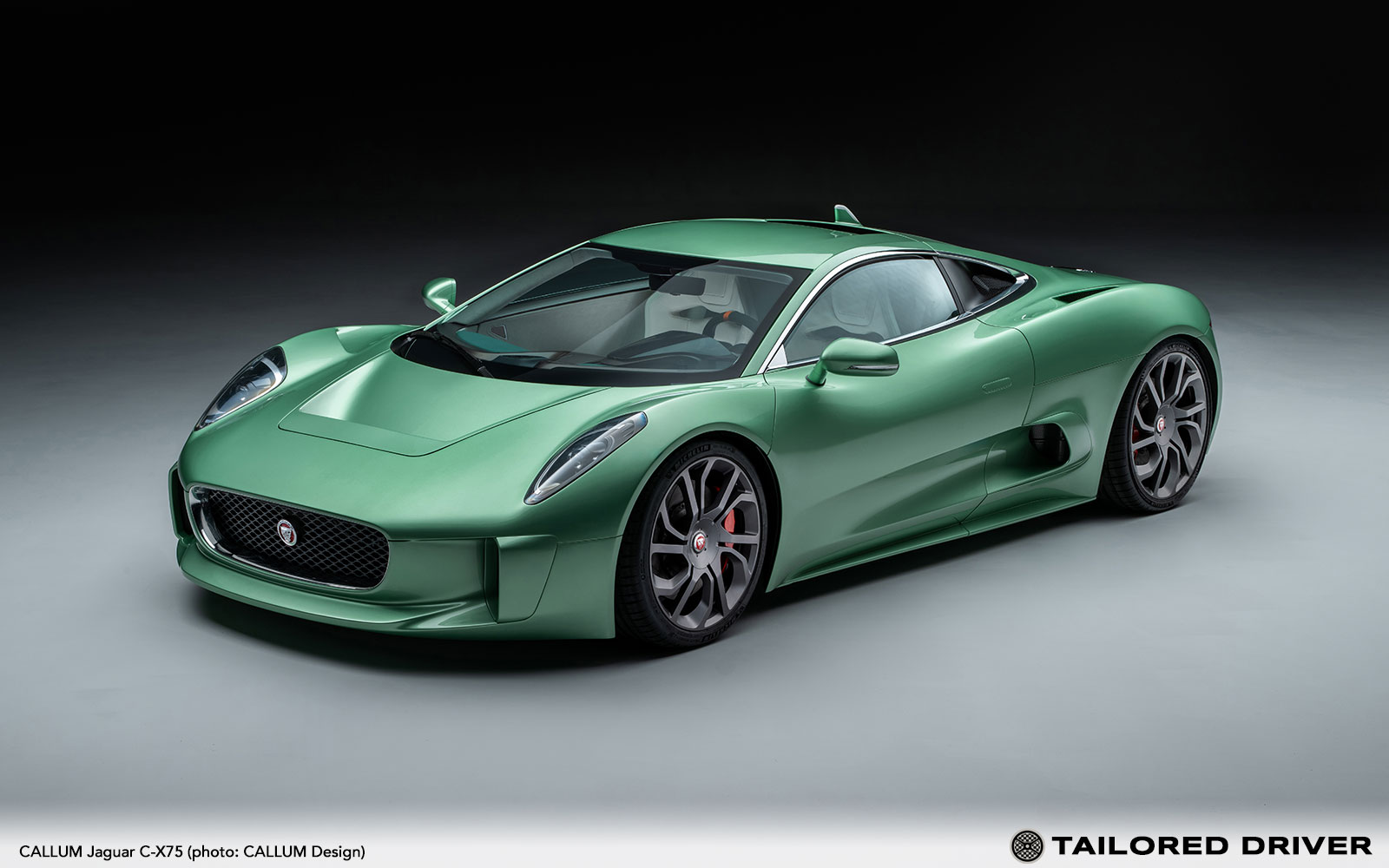
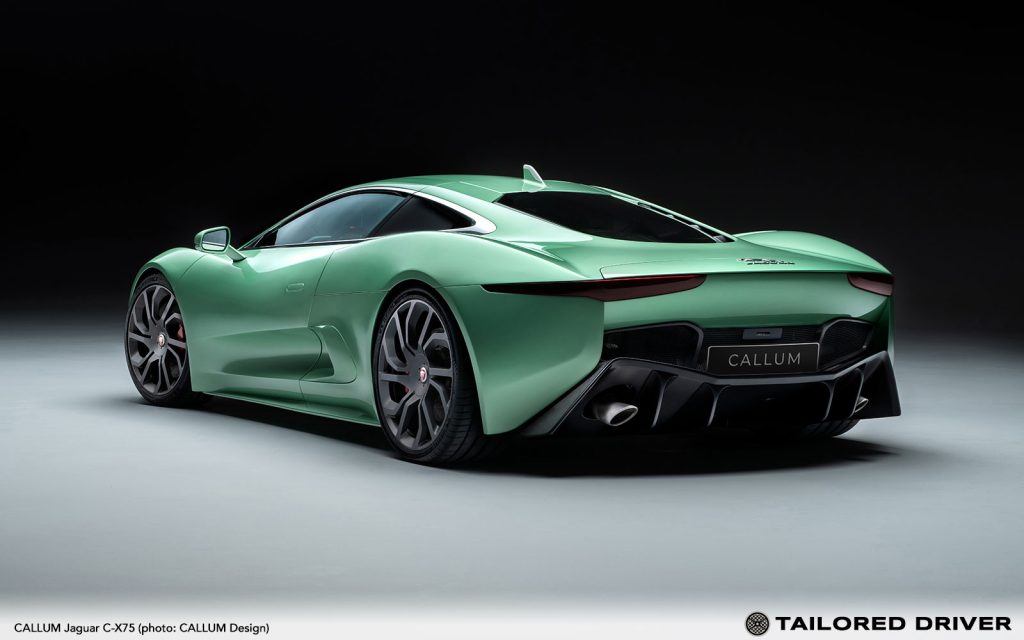
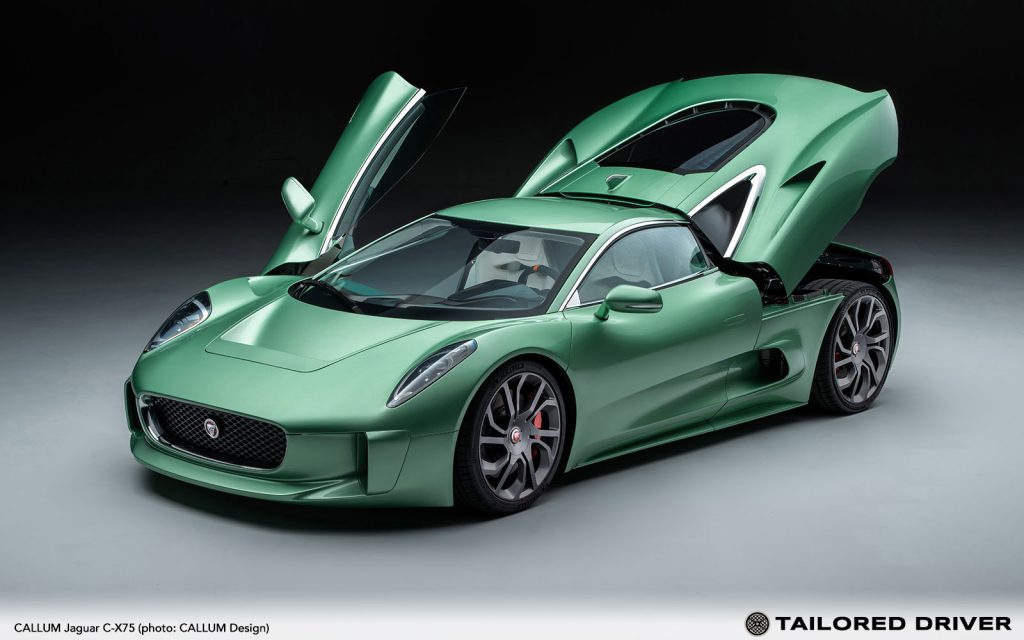
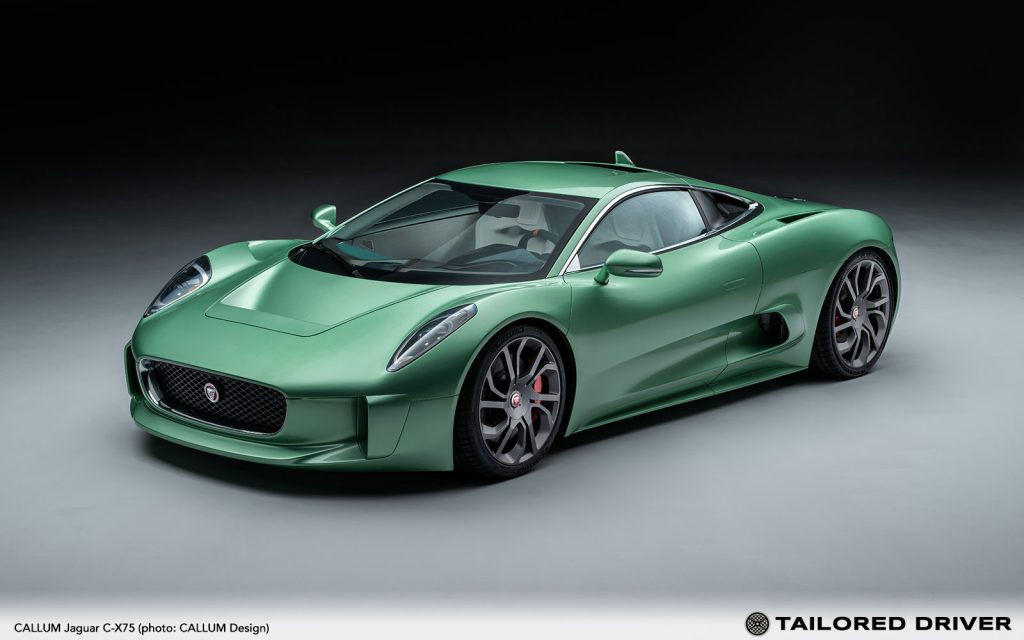
CALLUM has completed a second customer commission of the Jaguar C-X75, meticulously addressing every element to deliver the most refined iteration of the iconic supercar. Truly bespoke, it follows CALLUM’s earlier transformation of one of the four stunt cars used in the James Bond film Spectre. This time, CALLUM has gone beyond the core practicalities of readying C-X75 for the road by engineering performance, comfort and convenience into the essence of the car. Fulfilling the customer’s wish for a C-X75 that realises the promise of the original concept, the result is a thrilling, engaging and very personal commission of a much admired car.
Working in close collaboration with the owner of the C-X75, CALLUM ensured that each request – no matter how detailed or complex – was expertly integrated into the final build. Drawing on CALLUM’s previous experience transforming stunt car 007 for road use, this new commission using Car 001 goes far beyond the hundreds of standard modifications necessary for achieving Individual Vehicle Approval (IVA) certification. Car 001 now features a reengineered drivetrain, active aero and an exquisite and contemporary interior that dramatically enhance the driving experience.
“C-X75 was ‘the one that got away’ – a car brimming with unfulfilled potential,” says Ian Callum, who led the team that created the car in 2010 and is now design director and co-founder of CALLUM. “We’ve combined the customer’s wishes with carefully engineered solutions to bring C-X75 to the thoroughly satisfying conclusion it always deserved.”
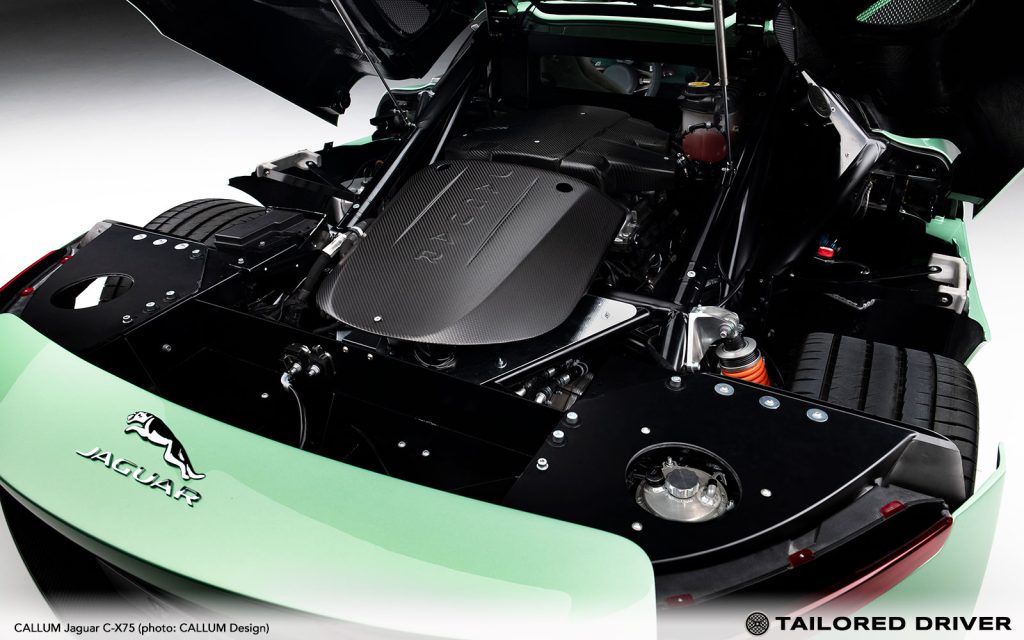
The supercharged V8 engine is now mated to a seven-speed dual clutch transmission. Thanks to CALLUM’s in-house software and proprietary body and comfort electronics, C-X75 now offers the ability to perform as a usable road car or, when desired, switch into a dynamic sporting mode. On command, gear shifts become sharper, throttle response is more immediate and the exhaust system, tuned by an acoustic expert, enhances the experience with its exhilarating soundtrack.
To complement the increased performance, CALLUM’s engineers developed an advanced active aero package. At speeds above 60km/h it provides additional downforce to increase stability and deliver confidence-inspiring handling. An air brake function bleeds in added control during hard braking. For urban driving, a hydraulic front lift suspension offers enhanced practicality. Through extensive testing, CALLUM honed its road-focused setup, resulting in neutral, predictable balance through sweeping turns and arrow-straight stability where higher speeds are legally possible. The original front 20” and rear 21” wheels are wrapped in Michelin’s acclaimed Pilot Sport 4S tyres – ideal for road and occasional track use.
CALLUM’s designers seized the opportunity to take the exterior to the next level whilst retaining the much-admired form. Over 1,000 hours of craftsmanship went into perfecting the car’s bodywork, including precise panel alignment and a lustrous deep paint finish in Willow Green. Combining earthy tones with a hint of yellow, this gentle and natural shade is inspired by the soft muted hues of the willow tree’s delicate leaves. Distinctive touches – such as machined-from-solid, brushed aluminium finish window surrounds, bespoke filler cap and visual carbon fibre accents for the quarter light intakes and diffuser, along with the polished metal grille – contribute to the car’s striking presence. Further subtle exterior details include an etched C-X75 emblem on the exhaust tailpipe and enhanced light diffusion from the rear lights.
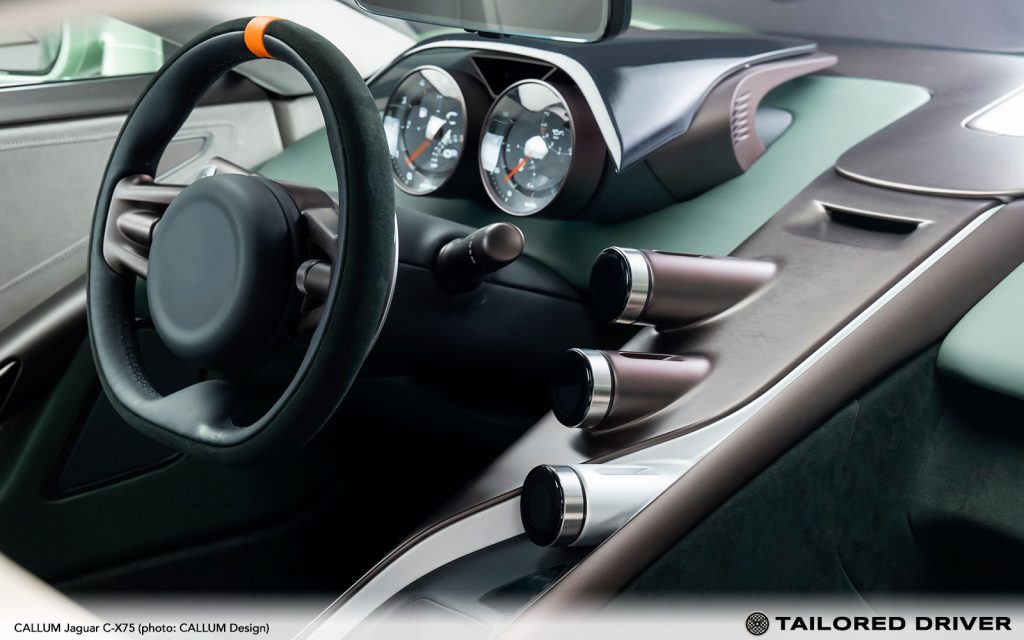
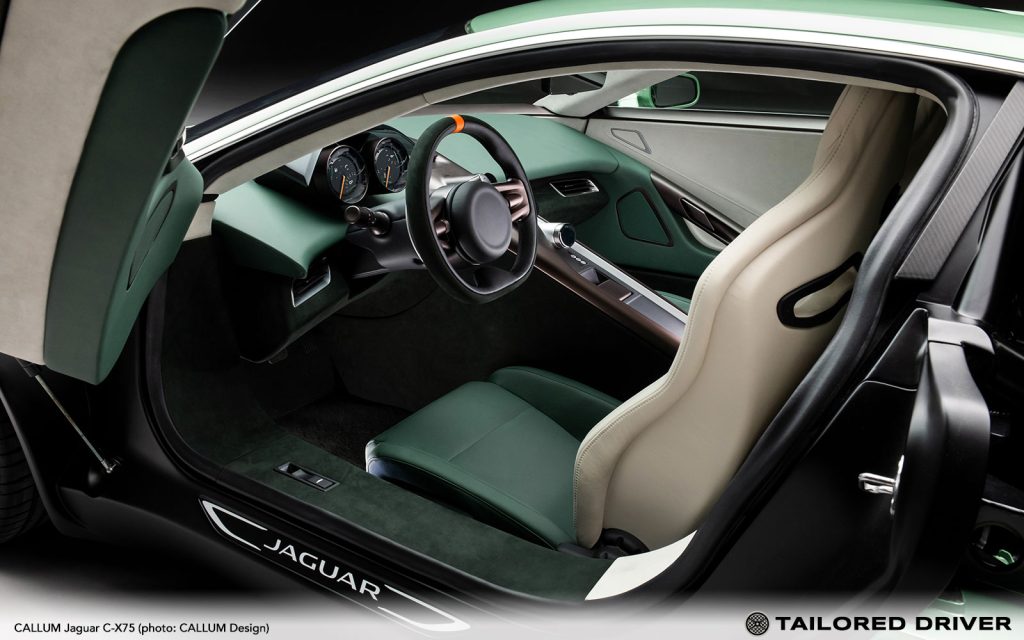
Inside, the transformation is more dramatic. The stunt car’s functional cockpit is replaced with a driver-centric, premium environment. The interior features a sophisticated blend of dark green and cream tones, split by a bold and dynamic 40-degree-angled “waterline” that runs through the cabin. “Sporting cars typically feature darker interiors, while comfort is often associated with lighter shades,” explains CALLUM’s head of design, Aleck Jones. “We wanted to fuse those elements in a dynamic way to reflect the dual nature of this car.”
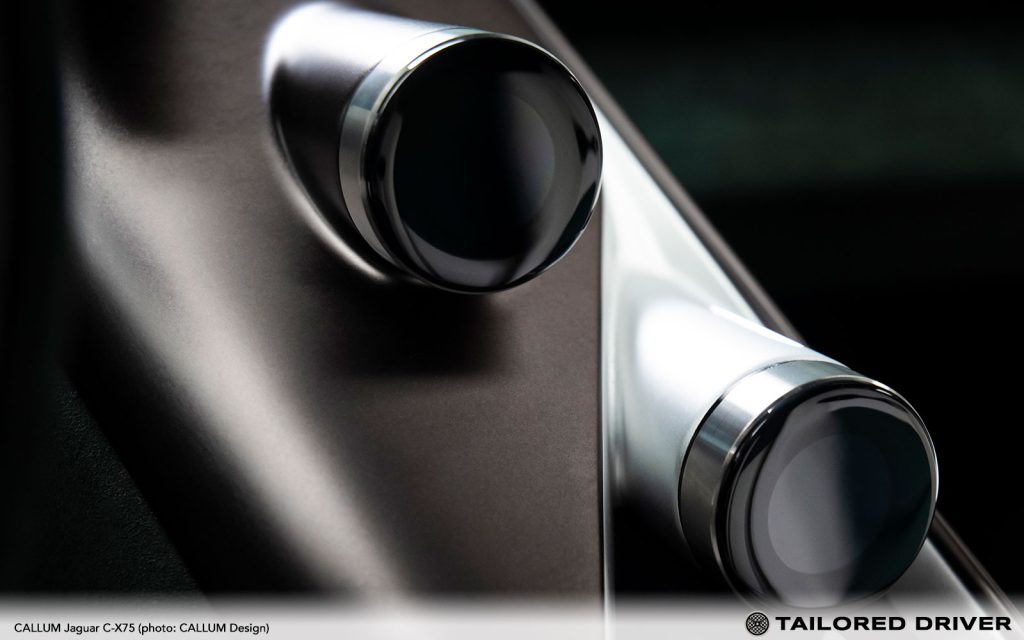
Interior surfaces span a variety of leather textures, accentuated by a prominent metal “Arrowhead Necklace” feature that encircles the cockpit before plunging down the centre console. Three tactile rotary controls, all angled toward the driver, each with integrated touchscreens, continue the theme of clean lines. A wireless charging pad and Apple CarPlay offer an intuitive user interface and seamlessly connect with a powerful, bespoke sound system featuring punchy subwoofers and a crisp-sounding centre speaker concealed behind CALLUM’s signature deconstructed tartan.
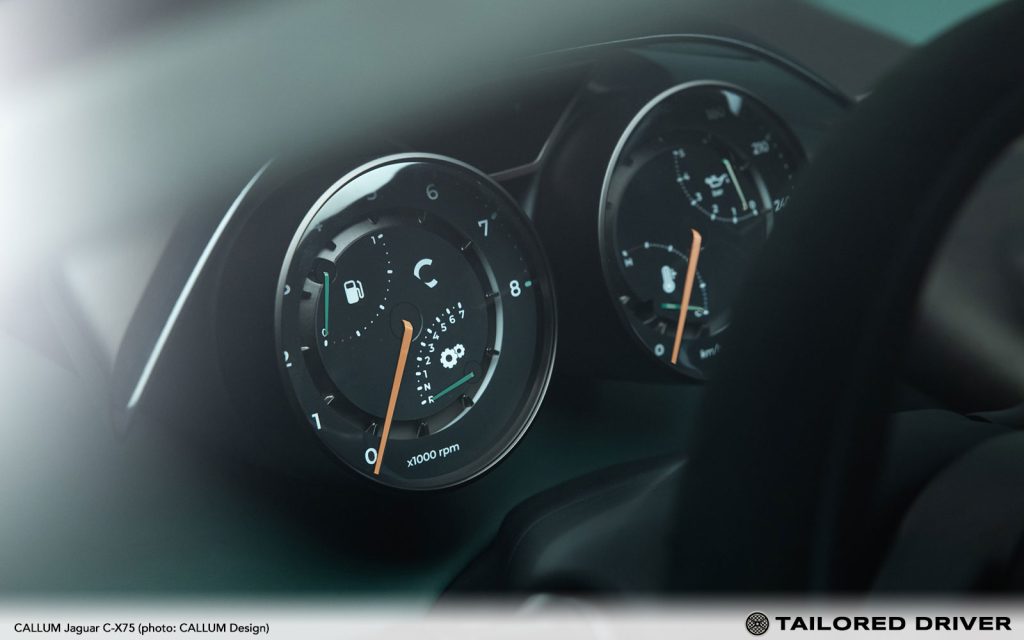
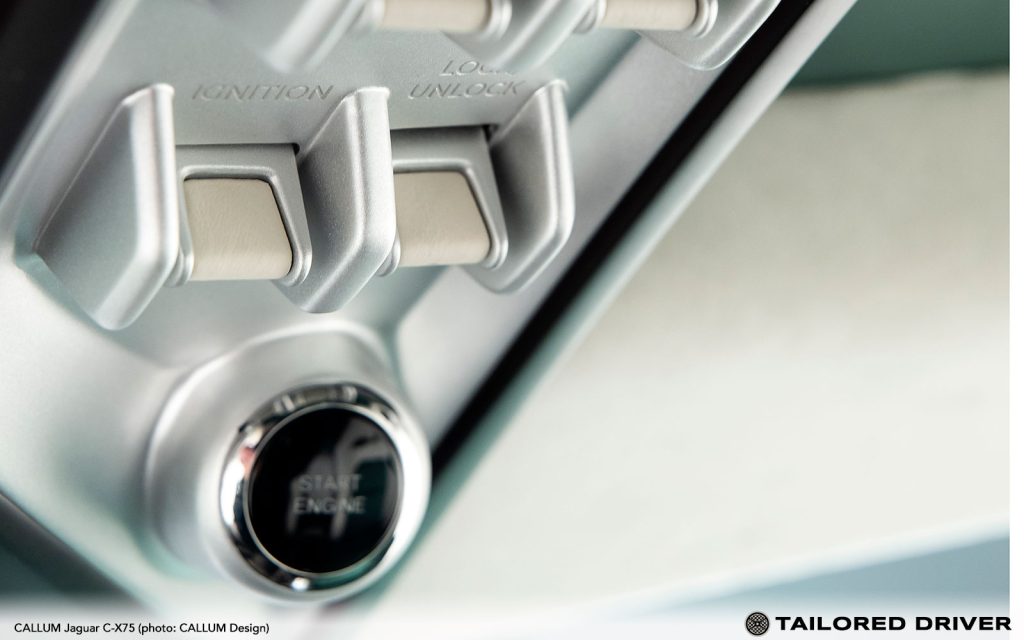
The minimalist cockpit is crowned by an acrylic cowl that covers the digital instrument cluster, while all other controls, including the start button, are in a roof-mounted console – a nod to aircraft design whilst ensuring the pure cabin lines are retained. “Clean and beautiful, the interior is simple, not simplistic,” adds Jones. The seats, chosen specifically by the customer for optimal support, are upholstered in supple Bridge of Weir leather and complemented by three-point seat belts for added convenience. The steering wheel is custom-machined from solid billet to the customer’s exact specifications. A digital rear-view mirror, an electronic park brake integrated with the transmission and an immobiliser with ‘blipper’ key are further examples of the lengths CALLUM has gone to transform the stunt car.
“While engineering a raw stunt car into a refined modern supercar with all the expected attributes presented significant challenges, finding the right solutions excited us all,” says CALLUM’s engineering director, Adam Donfrancesco. “Integrating features including aircon and premium audio whilst also balancing the NVH, refinement and hygiene factors such as engineering the door seals to keep the elements out, all whilst ensuring it still sounded mega, was a formidable but thrilling challenge and the results speak for themselves.”
As well as pushing the envelope of C-X75’s performance and refinement, CALLUM’s engineers also embraced advanced additive manufacturing with partner Stratasys. Innovations in materials and processes enabled CALLUM to create complex forms, unlocking more elegant design solutions previously not possible. Applications include a substantial number of the interior elements, such as the sill trim that ingeniously incorporates cup holders, highlighting CALLUM’s ability to blend functionality with form.
This refined C-X75 is the latest in a growing list of ‘bespoke’ one-of-one projects that CALLUM is delivering from its Warwick, UK, headquarters. “Through the reengineering of this one-off supercar along with the electrification and validation of a lightweight sportscar, the limited production run of our own CALLUM Vanquish 25, as well as low volume interior design and manufacture programmes for cars such as the Prodrive P25, CALLUM is demonstrating its prowess at bringing a vision to an on-road reality,” adds CALLUM’s managing director, David Fairbairn.
About CALLUM CALLUM is a design and engineering business that creates and crafts its own bespoke and limited-edition products, and provides consultancy and services to partners and third parties. Combining progressive design with engineering that pushes boundaries, CALLUM’s products and services span automotive, lifestyle, and travel.
Nimble and agile, CALLUM operates from its 20,000ft2 facility in Warwick, UK, that houses the latest technology to deliver: design; 3D modelling, printing and scanning; colour, materials and finishes development; whole vehicle engineering; vehicle development and homologation testing; prototyping; machining, and trim services.
CALLUM takes a collaborative approach: bringing together a team of 20+ talented individuals with experience across art, audio, automotive, fashion and motorsport, as well as embracing opportunities to collaborate with other businesses. Striving to build a legacy through innovative design and engineering, CALLUM takes on projects that intrigue and excite, creating stories that stir the imagination.
Established in July 2019, CALLUM’s founding members include British designer Ian Callum CBE, admired for his prolific automotive work that includes the Aston Martin Vanquish. Through its Next Generation initiative, CALLUM strives to support and nurture young minds and talent, fostering an environment that encourages peer-to-peer learning to ensure CALLUM remains relevant, progressive, and true to its roots.
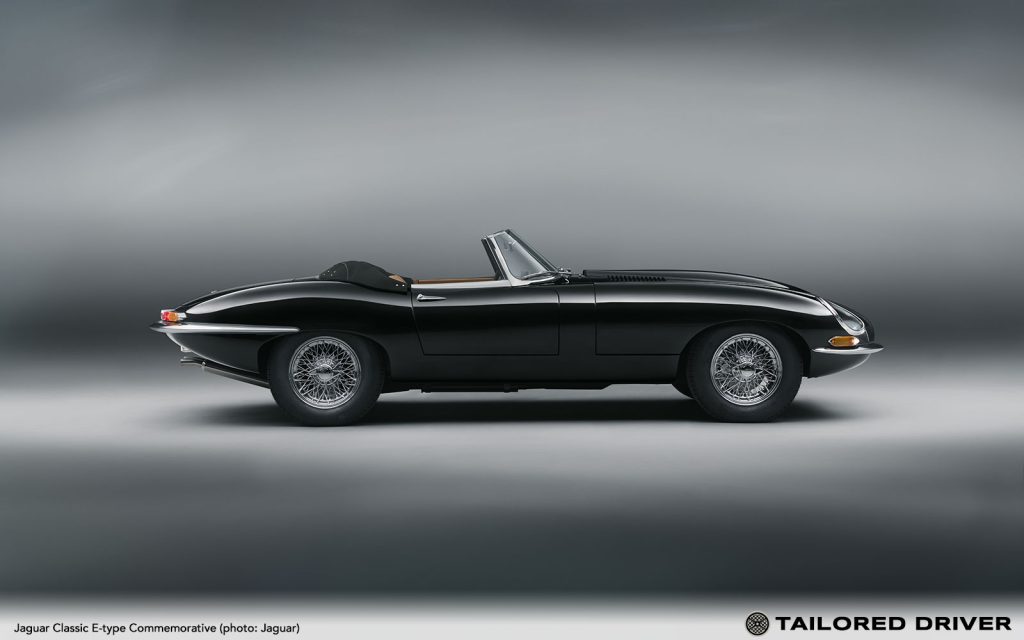
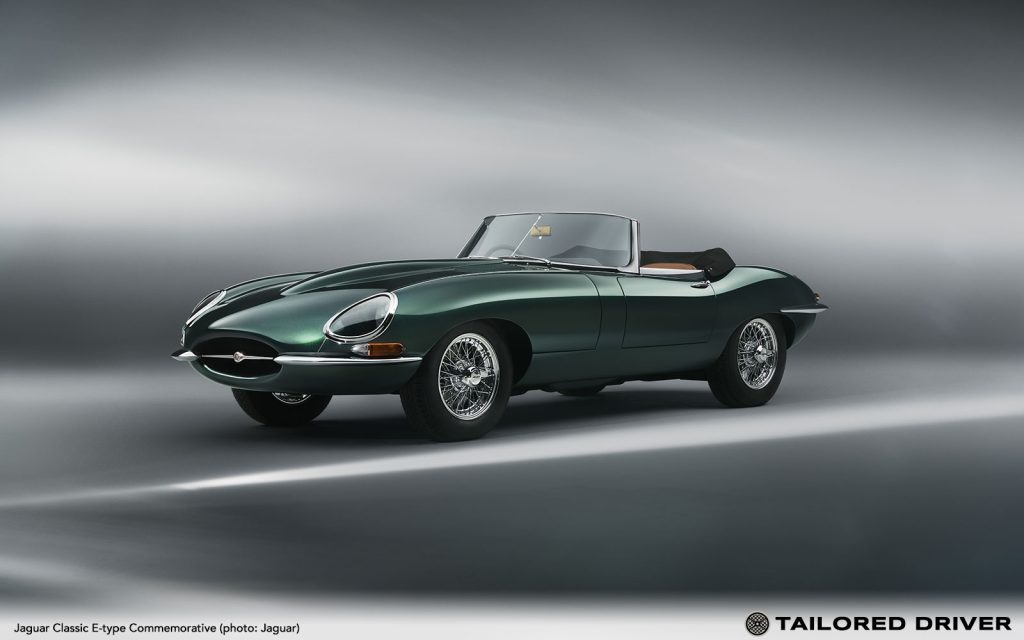
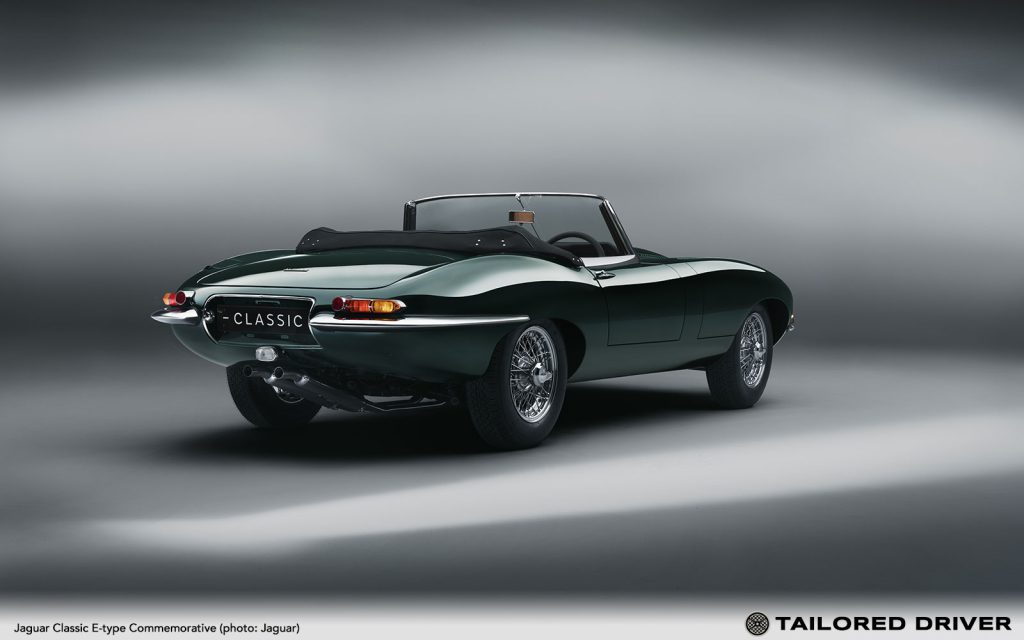
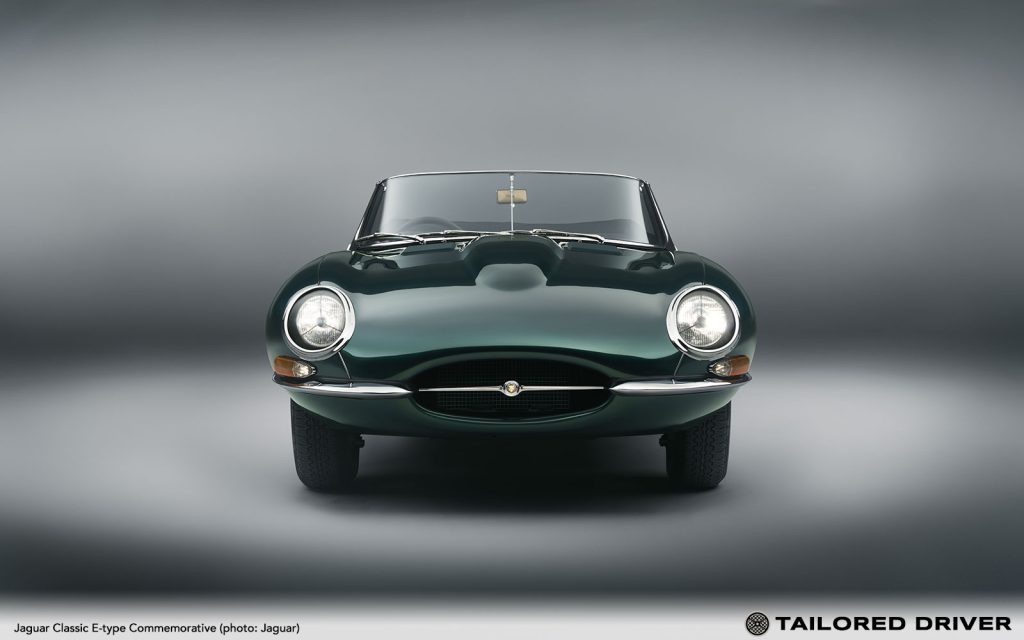
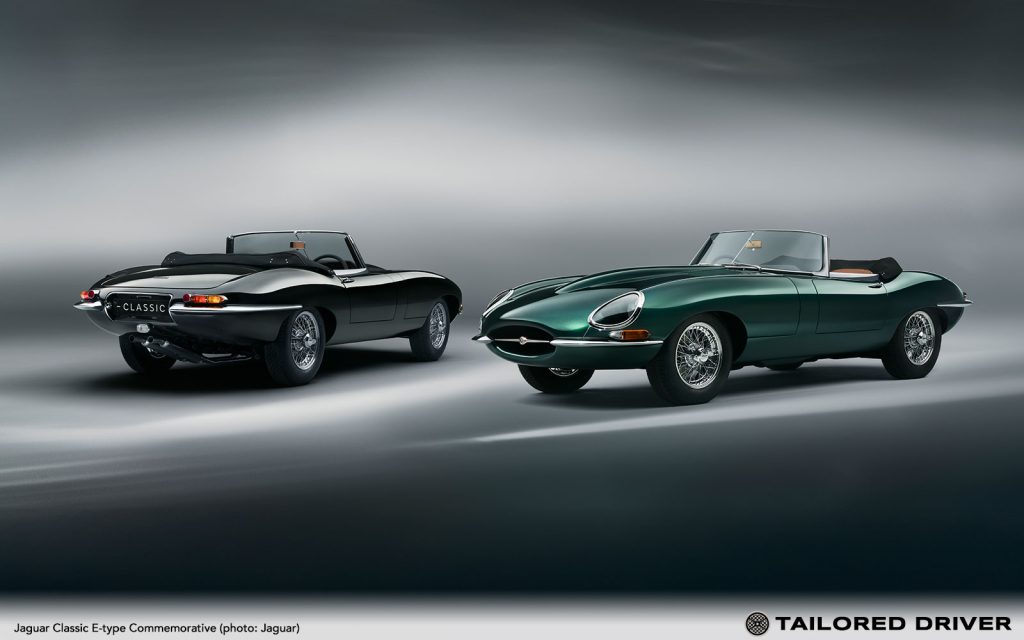
Exclusive Jaguar Classic E‑type Commemorative celebrates the iconic sportscar and marks 50 years since the end of E‑type production in 1974
Just two of these Works Bespoke commissions have been created, inspired by the original Commemorative Editions
Each of the two cars are individual, collectible automotive gems, featuring hand‑crafted finishes and exquisite detailing
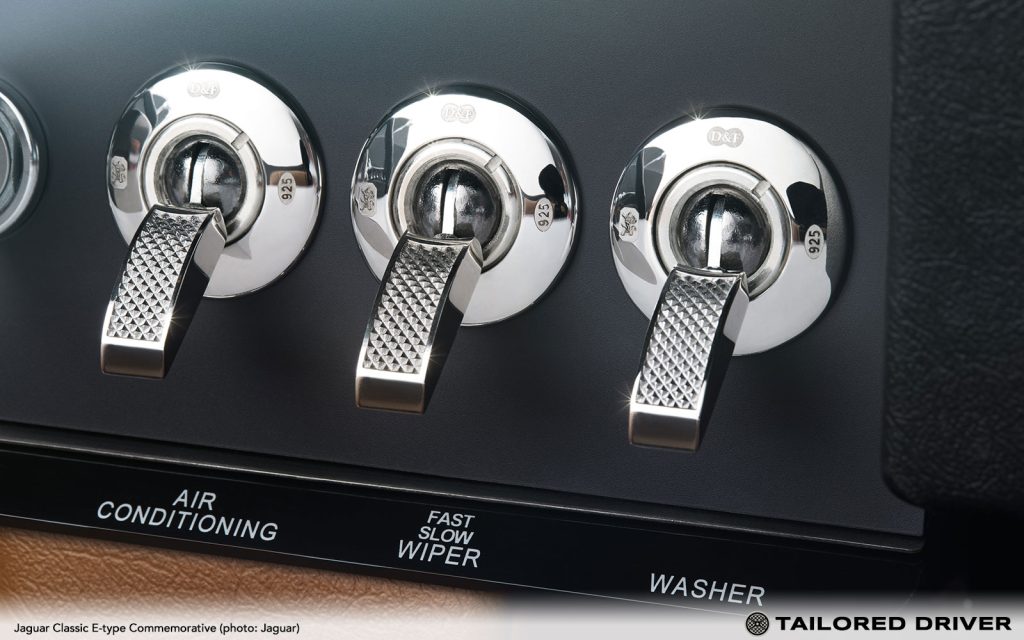
Jaguar Classic has collaborated with luxury jewellery designers Deakin & Francis to adorn the interior with mother of pearl, silver and 18ct gold – merging decades of British design heritage and exuberance into automotive masterpieces
For updates from Jaguar Classic, follow @jaguar.classic on Instagram
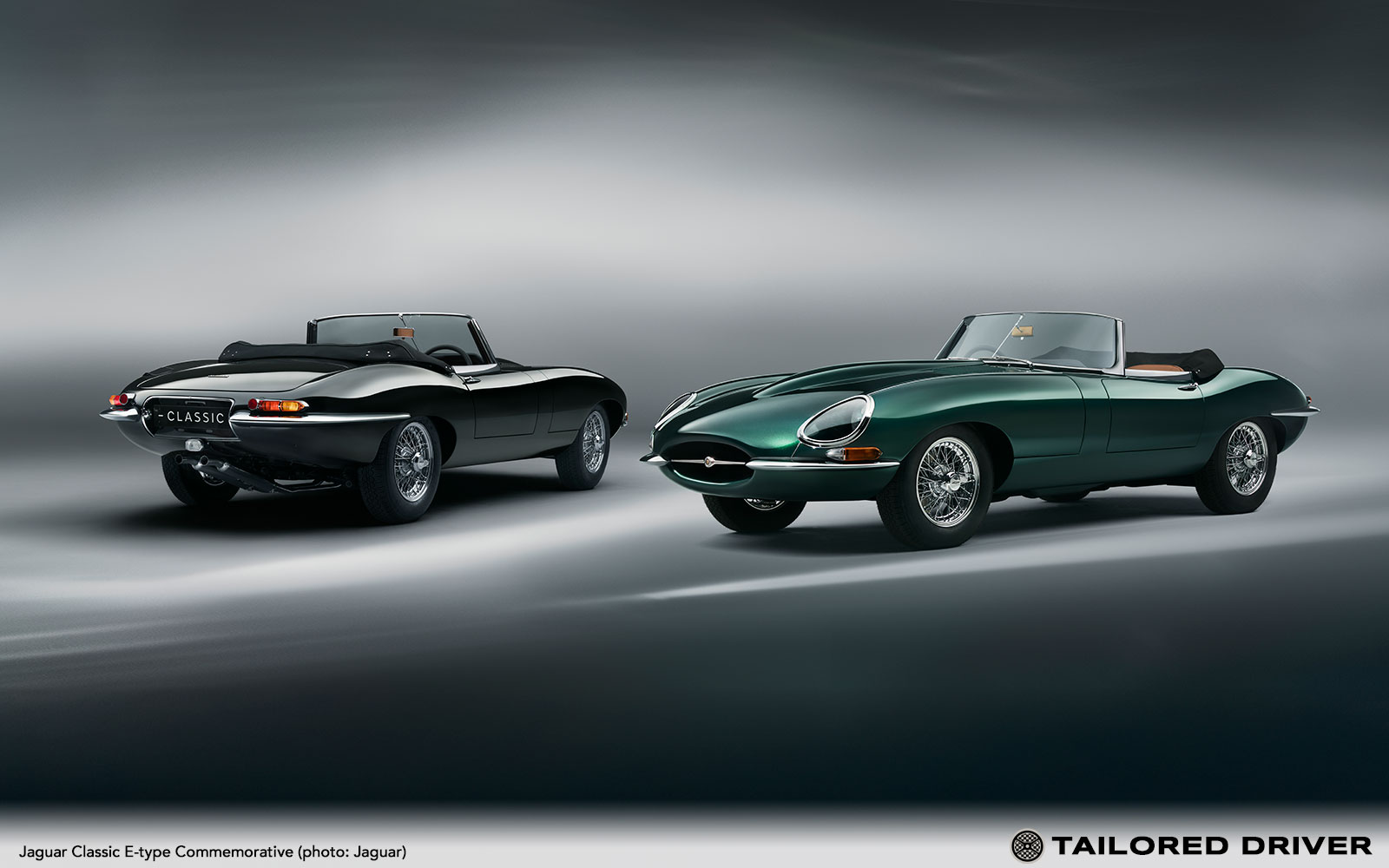
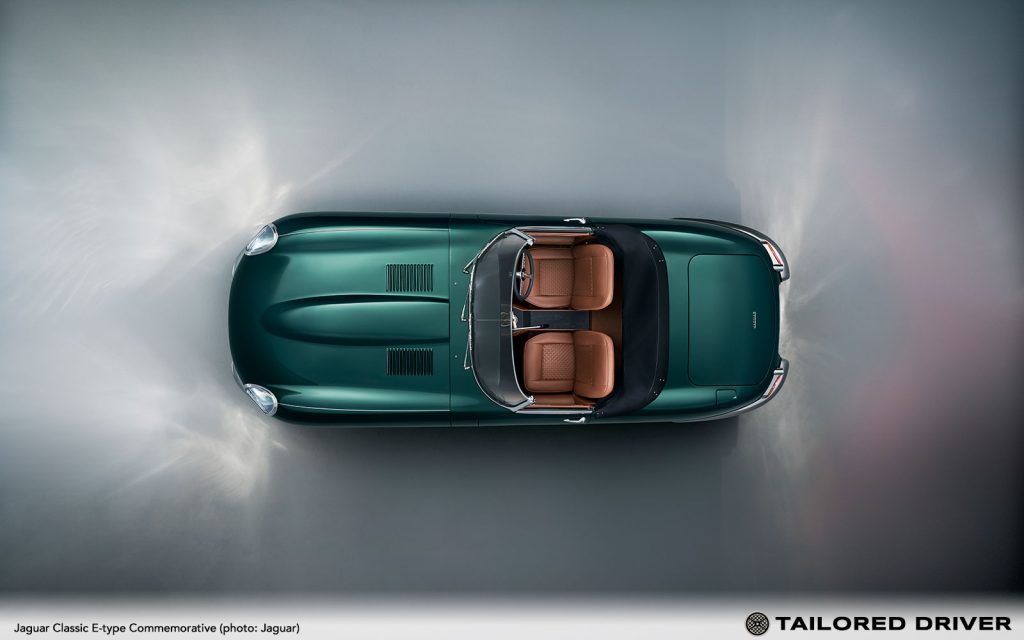
Coventry, UK – Fifty years since the last Jaguar E‑type rolled off the production line, two rarefied Series I Jaguar Classic E‑type Commemorative models have been exclusively created for a loyal, discerning client in Southeast Asia to celebrate the iconic sports car.
Each example carries references to key moments from E‑type history, from the blueprint of its inception to the last Series III models. Celebrating the style and sophistication of the original with new, precious details, the two beautiful vehicles are the finest examples of Works Bespoke creations by Jaguar Classic.
The pair of Jaguar Classic E‑type Commemorative creations bring the E‑type story full circle, inspired by the final 50 Commemorative Editions from 1974 – and they will be the only two examples ever to leave the Jaguar Classic workshop.
The Jaguar Classic E‑type Commemorative vehicles are the ultimate expression of E‑type, with a unique hand built specification making each one a truly individual collectors’ item. Every detail – inside and out – receives the careful attention of the dedicated Jaguar Classic experts, with upgrades meticulously orchestrated over more than 2,000 hours.
“With E‑type Commemorative, our Classic team set out to improve on an already near‑perfect design. As the original creators of E‑type, we are uniquely positioned to subtly integrate both aesthetic and engineering enhancements borne out of decades of knowledge, skill and passion. The unique specification and our collaboration with renowned jewellers Deakin & Francis has resulted in a machine as close to driveable precious metal as it is possible to conceive.” – LENNARD HOORNIK, CHIEF COMMERCIAL OFFICER
Timelessly crafted with unparalleled finishes
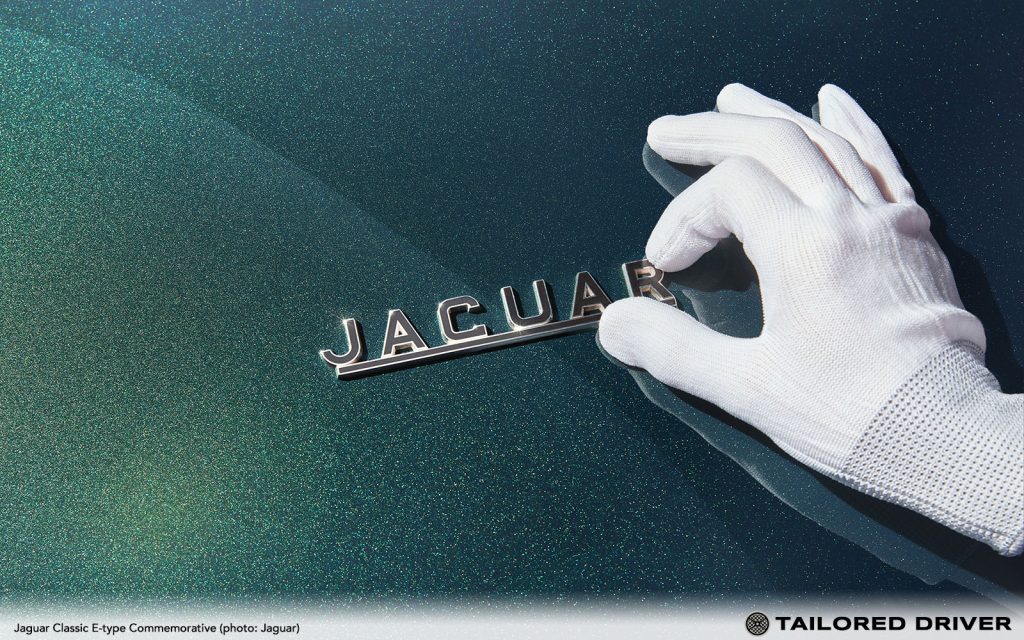
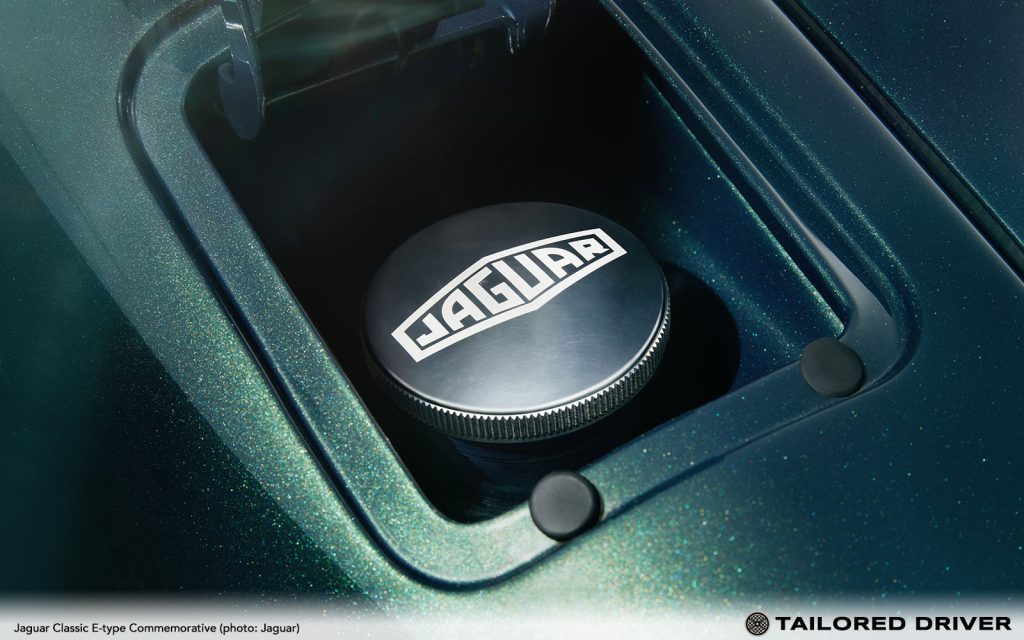
The two Jaguar Classic E‑type Commemorative vehicles are both drophead coupes, in one‑of‑one specifications. One is finished in Signet Green, while the other is Opal Black – both updates of original colour schemes from 1974.
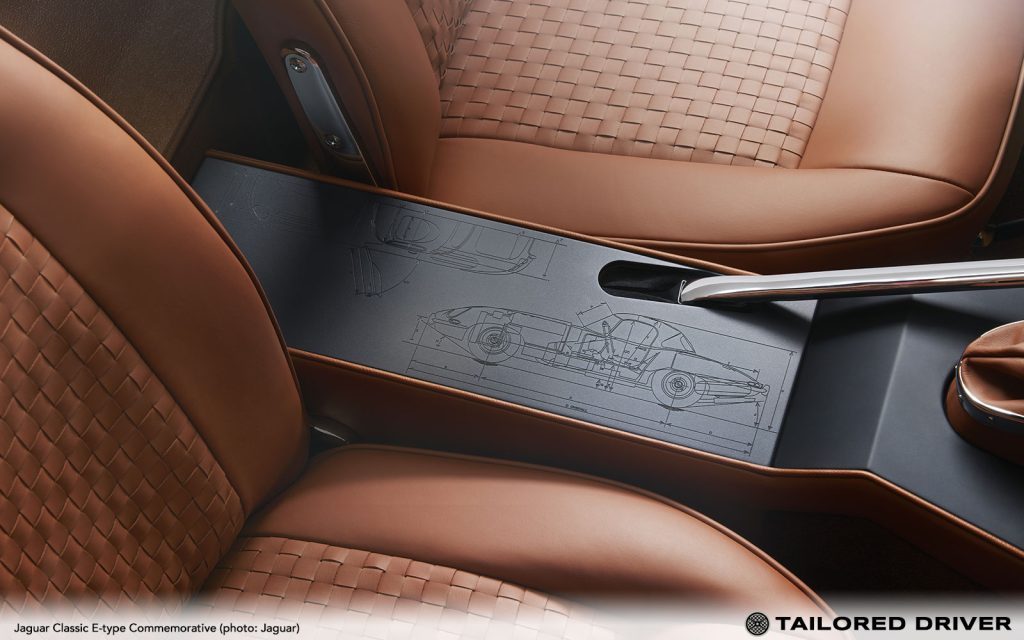
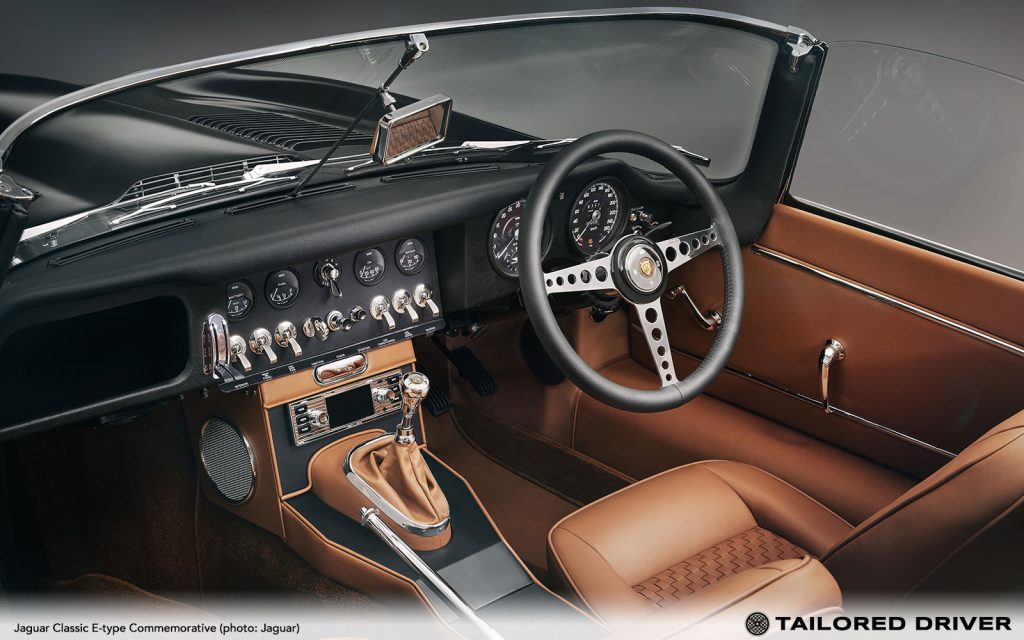
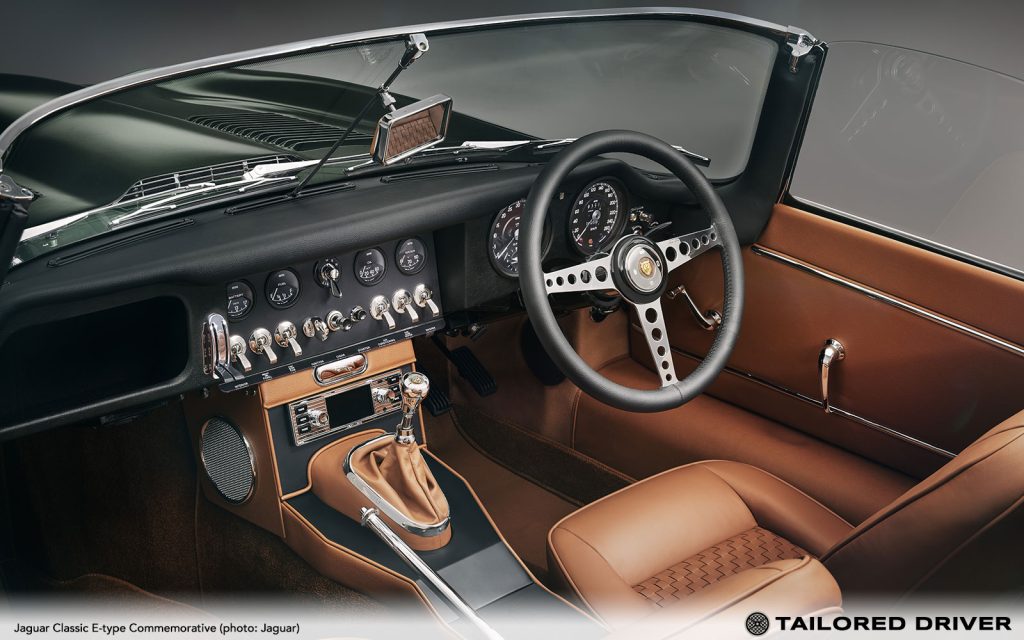
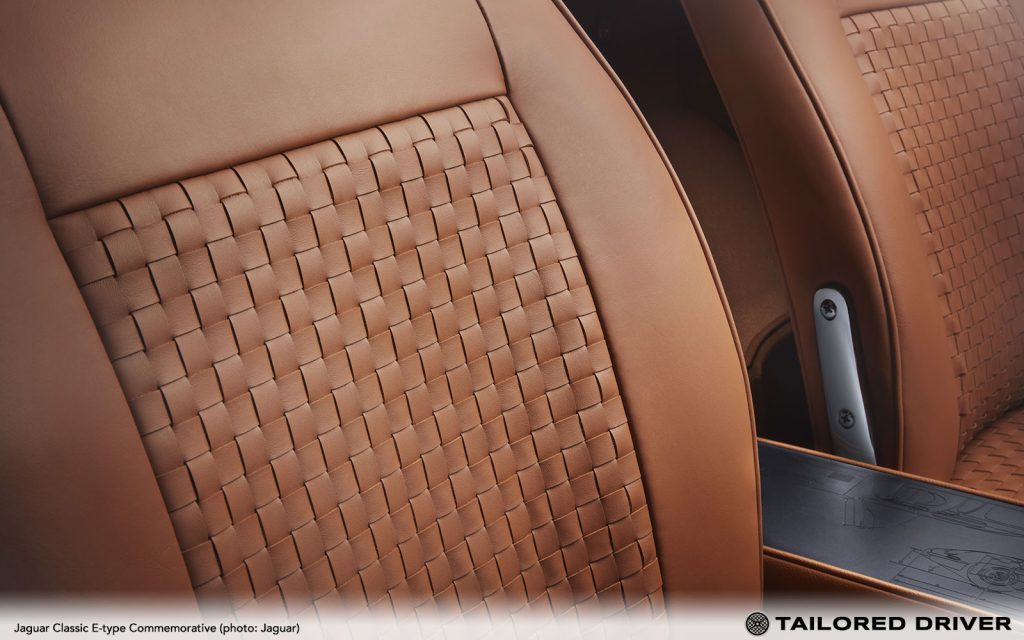
The elegant exterior is matched by a timeless interior, featuring Bridge of Weir tan leather seats hand‑woven and stitched in the Jaguar Classic trim shop – with matching black and tan leather trim. This uniquely tactile woven finish has never been made available at Jaguar Classic before and blends traditional skills and design inspiration with a contemporary aesthetic.
Bespoke elements adorn the interior, with an anodised aluminium centre console bearing a unique engraving of a genuine early Series I E‑type blueprint sourced from within the archives. The blueprint was previously displayed alongside E‑type at the New York Museum of Modern Art (MOMA), with the anodised aluminium centre console becoming a hallmark of each E‑type produced at Jaguar Classic.
Custom jewellery
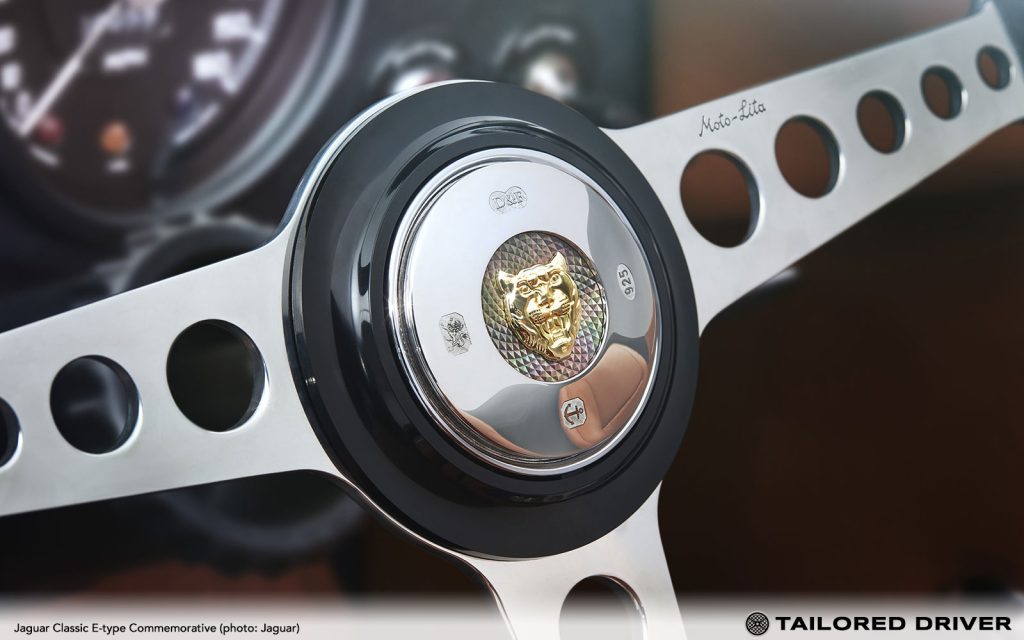
Setting the Jaguar Classic E‑type Commemorative vehicles apart is jewellery adorning the interior and exterior of each model by Deakin & Francis. England’s oldest manufacturing jeweller has been crafting masterpieces over seven generations, since its inception in 1786.
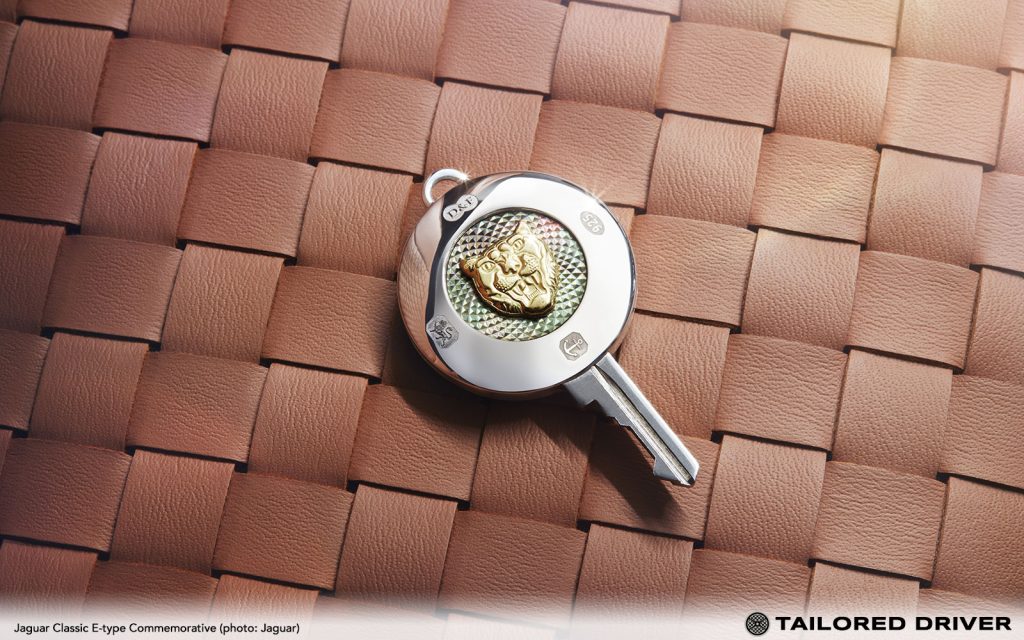
A collaboration of passionate craftspeople bridging local industries, each E‑type Commemorative is adorned with mother of pearl, hallmarked solid silver and 18ct gold details.
In the same spirit as Jaguar Classic, the renowned silversmiths live and breathe their time‑honoured craft, working locally to exacting standards in nearby Birmingham’s legendary Jewellery Quarter.
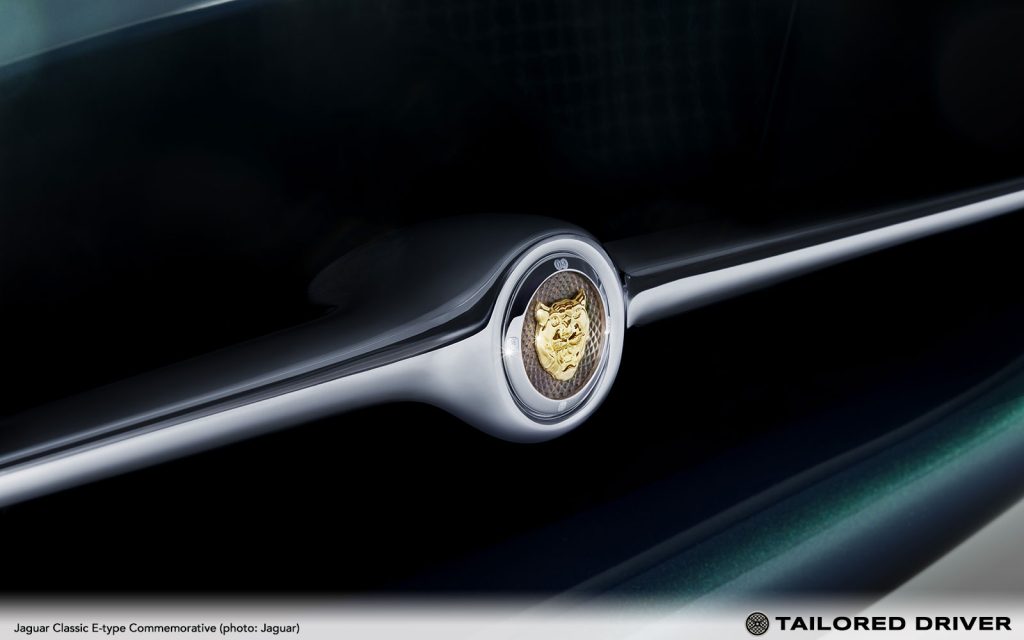
At the front, the motif bar badge is finished in silver with guilloche mother of pearl and an 18ct gold Growler icon, while at the rear, badges are enamelled sterling silver.
Inside, the steering wheel horn push is finished in silver with an 18ct Growler badge and mother of pearl inlay, while a sterling silver gear knob with mother of pearl and 18ct gold Growler detail provides decadent tactility.
“Deakin & Francis is proud to be a part of this inspiring collaboration with Jaguar Land Rover Classic, bringing together two of Britain’s most iconic heritage brands. Such a partnership reinforces each brand’s complete commitment to superior quality and celebrates a shared passion for pushing boundaries in design and craftsmanship, while offering our discerning customers a truly one‑of‑a‑kind experience.
“Techniques honed by Deakin & Francis, which have never been seen before in the automotive world, have been seamlessly integrated into these incredibly rare vehicles. Together we have created two extraordinary classics that blend the artistry of Deakin & Francis, with the expertise of Jaguar Land Rover Classic.” – HENRY DEAKIN, MANAGING DIRECTOR, DEAKIN & FRANCIS
The exquisite detailing extends to the instrument panel switches, which are finished in knurled silver with a hallmarked silver bezel. This attention to detail extends to the key cover, which is finished in silver with matching mother of pearl and 18ct gold.
Technical specification
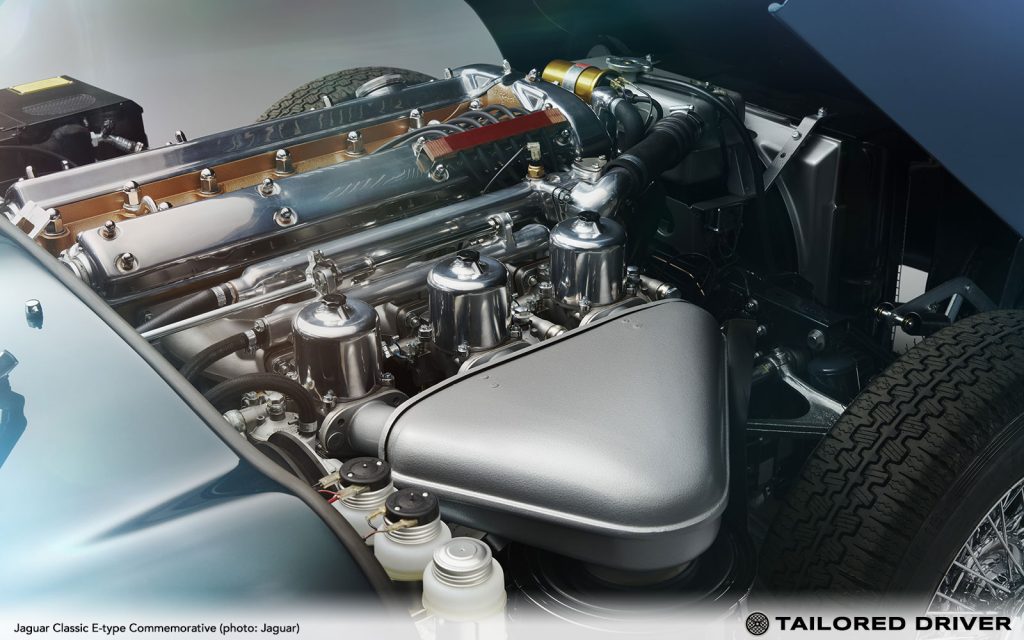
Under the elegant bonnet of each E‑type Commemorative is the famous 3.8‑litre engine, now with Electronic Fuel Injection and a Jaguar Classic five‑speed manual gearbox. This combination delivers the perfect blend of driving engagement and everyday usability.
Making the vehicles even more suited to use in the 21st century, they are fitted with a discreet Jaguar Classic Bluetooth radio and heated windscreen, providing modern comforts while retaining all the character and authenticity of an E‑type interior.
FURTHER INFORMATION
For more information on the full range of cars, services, parts and experiences offered by Jaguar Classic, visit: www.jaguar.com/classic
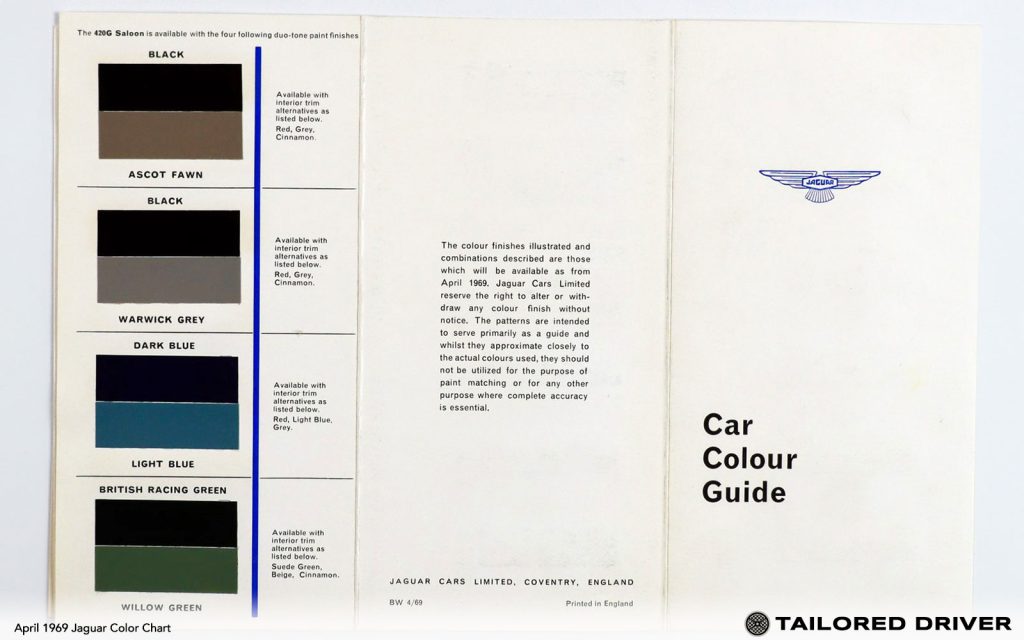
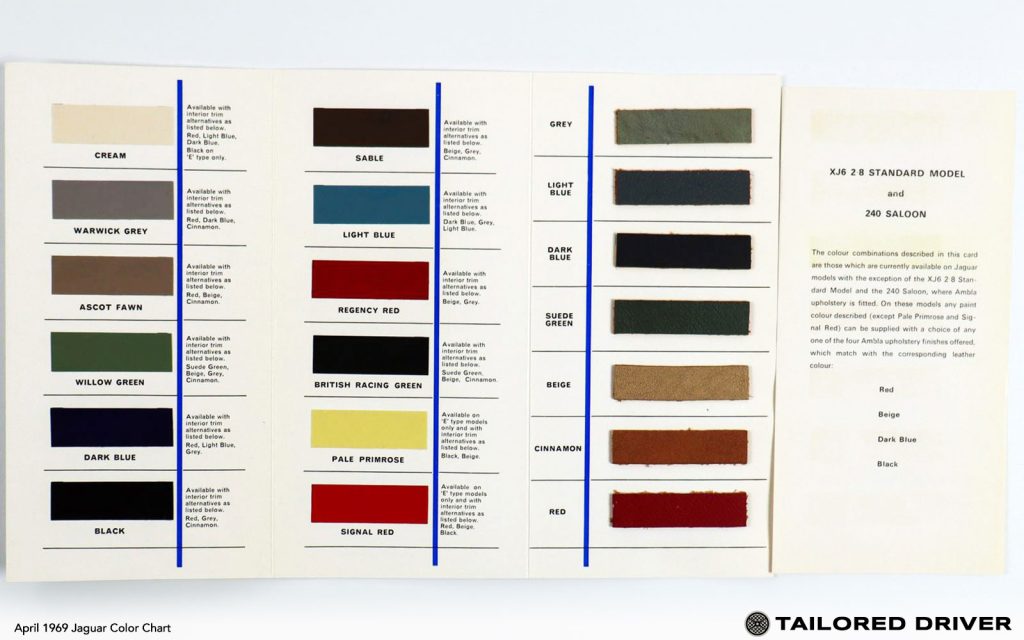
Continuing in our series of cataloguing factory colors is this vintage Jaguar Color Guide dated April 1969. While these would have been standard colors, it’s fascinating to look back on both what was offered and perhaps have vintage colors such as these resurrected for modern specifications.
The book reads:
“The color finishes illustrated and combinations described are those which will be available from April 1969. Jaguar Cars Limited reserve the right to alter or withdraw any color finish without notice. The patters are intended to serve primarily as a guide and whilst they approximate closely to the actual colors used, they should not be utilized for the purpose of paint matching or for any other purpose where complete accuracy is essential.“
Paint colors Include: Cream, Warwick Grey, Ascot Fawn (maybe the most Jaguar color name ever), Willow Green, Dark Blue, Black, Sable, Light Blue, Regency Red, British Racing Green, Pale Primrose and Signal Red.
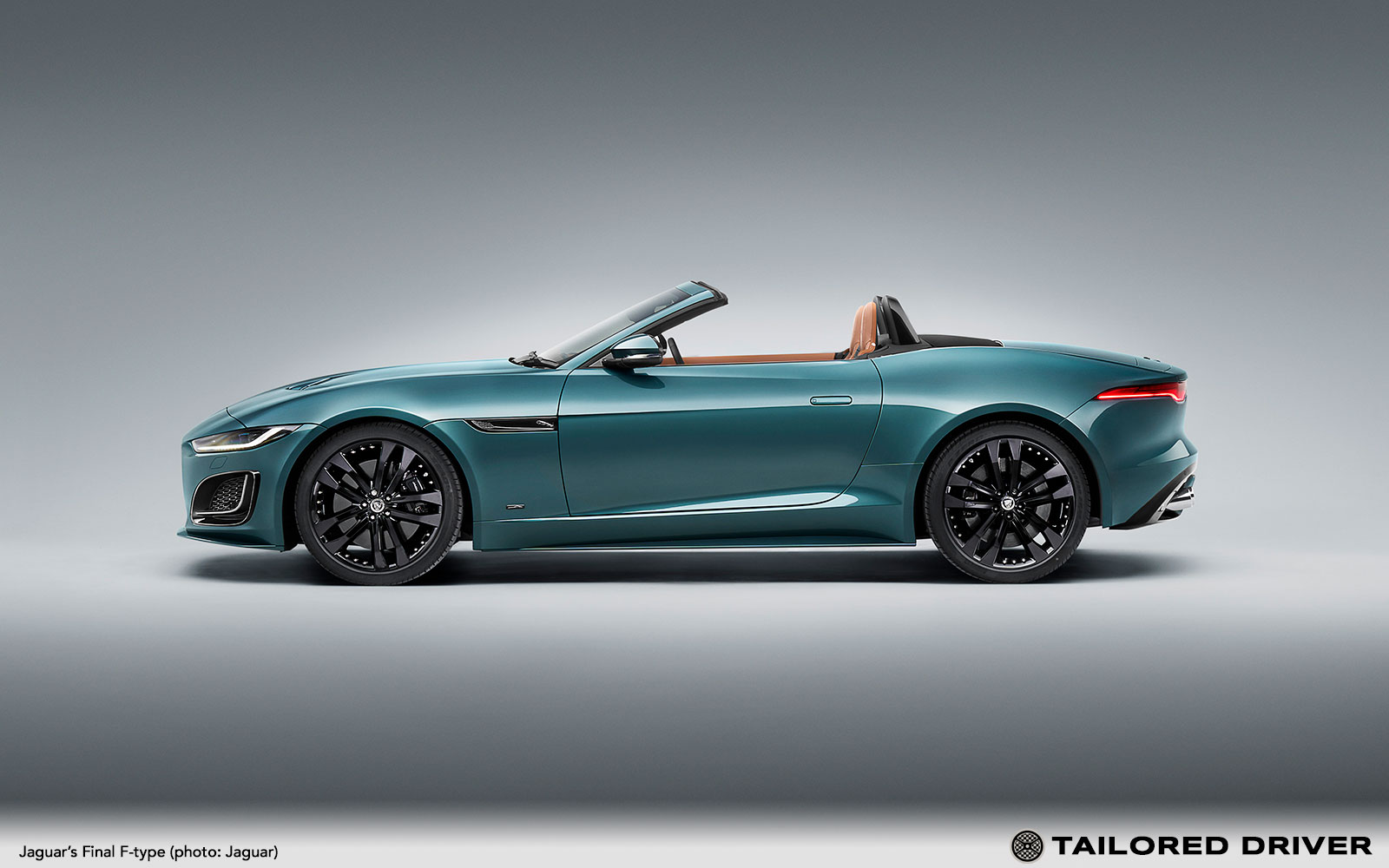
Final F‑TYPE to be placed into official Jaguar Heritage collection, 50 years to the day since the last E‑type was produced
Jaguar Daimler Heritage Trust (JDHT) adds final coupé and convertible to its collection of iconic examples of the brand’s rich provenance
F‑TYPE available to buy until early 2025 as production ends at Castle Bromwich
Jaguar is preparing to take its founding vision into a new all‑electric era from 2025
[source: Jaguar]
The final Jaguar F‑TYPE sports car made at the brand’s manufacturing facility in Castle Bromwich will join the Jaguar Heritage collection – 50 years to the day since the last Jaguar E‑type drove off the production line.
The final F‑TYPE is a 5.0 litre V8 Convertible in Giola Green with a black roof and a Tan Windsor leather interior – similar to that of the 5.3 litre V12 final E‑type Series III Convertible built in 1974 and registered as HDU 555N.
This special F‑TYPE will be handed to the custodians of Jaguar’s history, the Jaguar Daimler Heritage Trust (JDHT). It will join its E‑type predecessor in the official Jaguar Heritage collection and take part in a series of special events and activities this year.
Both F‑TYPE and E‑type marked the end of their production on almost the same day and on the threshold of a new and exciting era. Just as the last E‑type in 1974 heralded the birth of the radical Jaguar XJ‑S, the final F‑TYPE has been produced as Jaguar readies an even bolder transformation – spearheaded by a four‑door electric GT that promises to be a copy of nothing when it is revealed in 2025.
“The singular vision of Jaguar’s founder, Sir William Lyons, was to always be future‑facing, relevant and original. This has been the foundation of Jaguar through almost a century of evolving contemporary British luxury
“Today, as we celebrate F‑TYPE and our 75‑year history of innovative Jaguar sports cars, we are also looking forward to the beginning of a new era. We will reimagine and elevate the Jaguar brand that will be focused on growing client intimacy and engagement, underpinned by our purpose to inspire like no other.” – Rawdon Glover, Managing Director, Jaguar
F‑TYPE was first launched as a convertible in 2013 and was Jaguar’s first two‑seat sports car in almost 40 years. It received universal acclaim and was named 2013 World Car Design of the Year. The coupé made its debut the following year.
87,731 F‑TYPEs have been produced and it will continue to be available until early 2025. JDHT records show that Jaguar produced 72,528 E‑types, ending with a special run of 50 cars. All but one was painted black, while the second‑to‑last car was British Racing Green and was supplied to a private Jaguar collector.
Both cars will reside in the JDHT at Gaydon alongside the last series XE, XF, and XF Sportbrake which also finished manufacture recently.
About Jaguar Jaguar will transform into an all‑electric luxury brand by 2025, with uniquely expressive vehicles defined by pioneering technologies and visionary design. A copy of nothing.
We are already on the journey to electrification, with a curated range of electric hybrid and full electric models. Today’s Jaguar range comprises the I‑PACE all‑electric performance SUV, F‑PACE performance SUV, E‑PACE compact performance SUV, XE and XF saloons, XF Sportbrake and F‑TYPE sports car.
Jaguar is designed and engineered in the UK and sold in 117 countries. It belongs to the JLR house of brands with Range Rover, Defender and Discovery.
New TWR Supercat revealed ahead of physical summer launch.
Stunning carbon fibre silhouette, designed by Khyzyl Saleem in collaboration with Magnus Walker.
TWR Supercat to produce in excess of 600bhp from its supercharged V12.
6-speed Manual gearbox for connected and analogue driving experience.
Reservation book now open for orders, with deliveries starting this year.
Strictly limited to 88 units. Prices start at £225,000 exc. Local taxes.
Available in the UK and major international markets including the USA
[source: TWR]
Newbury, UK
“After more than two years of extensive design, engineering and development work, we are proud to unveil the design of TWR’s debut product. The outcome is a true drivers’ Super-GT built from the foundations of the iconic Jaguar XJS and appropriately named the Supercat. This bold expression of the breed fulfils our mission to build cars worthy of TWR’s winning legacy, starting with this remarkable car as it enters its 50th year. As order books open, we cannot wait for clients to experience the most powerful, dynamic and visceral evocation of a British icon that has been revolutionised from the ground-up to be ready for those that demand to be connected to the cars they drive, whether on the track or the road. This is the TWR way and will define this and every future project we undertake.”
Fergus Walkinshaw, Director and Founder, TWRBackground:The order book for TWR’s debut limited production performance car is now open. This coincides with the unveiling of the exterior design ahead of a full dynamic debut in Summer 2024.The TWR Supercat is a supercharged V12 powered Super-GT boasting more than 600 BHP and built from the legendary Jaguar XJS platform. It is the first of a new generation of cars from one of the most storied and celebrated names in motorsport and performance cars.It is fitting that TWR has chosen a Jaguar as the first chapter in its contemporary history. Indeed, TWR has a long winning association with Jaguar and the XJS through victories in the most demanding motorsports environments in the world including Spa and Bathurst. The Supercat will be strictly limited to 88 individual builds a number chosen to celebrate the 1988 Le Mans win in the TWR Jaguar XJR-9.In prioritising bold and contemporary design and delivering a truly involving driving experience, the car, makes a clear statement on the fundamentals that will underpin all future TWR projects that will enter production.Indeed, TWR’s performance and motorsport DNA are evidenced in every element of the car. The selection of a manual transmission, weight-saving materials and an exhaustive testing, development and tuning programme all speak to the company’s commitment to delivering visceral and dynamic driving experiences for those who desire a truly connected and analogue driving experience.In realising this first, landmark product, TWR has drawn inspiration from previous masterpieces across the history of the great name, stemming from Tom Walkinshaw’s work with touring cars, Le Mans monsters like the XJR-9, XJR-15 and even the XJ220 supercar.Order books officially open today. Clients wishing to join those who have already committed to reservations following the announcement of the revival of TWR can secure their build slot with a £10,000 refundable deposit. Production will be strictly limited with first deliveries to take place in the fourth quarter of 2024.As individual builds, all TWR clients will be afforded a full scope for personalisation. Therefore pricing will vary depending on individual specifications but will start at an indicative price of £225,000 excluding local taxes.
Extensive Engineering, Test & Development:The TWR Supercat has been engineered by a team led by Fergus Walkinshaw, son of TWR founder, Tom Walkinshaw. He has gathered a group of technical and operational talent from the most celebrated names in motorsport and performance car development. This includes: McLaren, Ferrari, Porsche, Williams, Mercedes F1 and Renault F1.The design, engineering and development programme of the Supercat series sets the standard for all future TWR products and production runs. The development of this project started more than two years ago and has taken hundreds of thousands of collective hours to get to its current production-ready state.This includes a full test and development programme that has taken place across specialist proving-ground facilities utilised by the world’s leading performance car brands, F1 teams and performance specialists. This includes full aerodynamic and CFD testing and durability and dynamic testing that replicates highly dynamic driving scenarios on both the road and the track.
Bold and contemporary design:Like the engineering talent that has led the realisation of the Supercat project, TWR has invested significantly in world-class design talent. Khyzyl Saleem worked as Design Lead. His approach, is shaped by his standing among the world’s leading digital and 3D car concepting stylists and through many performance-focused OEM projects, including with the late Ken Block and Travis Pastrana.“This project is an incredible opportunity to interpret TWR’s winning legacy in today’s design language. In so many ways, my career in the digital and physical realms have been leading to this moment. In merging the requirements of Super-GT form and racing functionality we have created a unique identity that is instantly recognisable from its silhouette. I am proud of the work we have done to bring inspirations from TWR’s performance and racing car history into this extraordinary new design. I cannot wait to work with our clients in shaping their own personal styling requirements for this incredible modern interpretation of a car that deserves its place among the most celebrated examples of British automotive design.”
Khyzyl Saleem, Vehicle Designer, TWRMagnus Walker, designer, car collector and one of the leading figures in the contemporary automotive world also consulted on the Supercat project. His experience as a collector, restorer and modifier of iconic sportscars was essential in delivering Walkinshaw’s vision to create a car built from the foundations of a Jaguar XJS while delivering distinctive aesthetics and substance befitting a contemporary TWR car.“Fergus and his incredible team are adding to TWR’s legacy by rewriting the rules of contemporary performance GT design. Like every collector and enthusiast, I love the Jaguar XJS as an iconic expression of a British GT. TWR’s uncompromising approach to delivering pure performance and driver involvement takes this to another level. I couldn’t be more proud to have contributed to this landmark statement of TWR’s bold future.”
Magnus Walker, Design Consultant, TWR SupercatThe result clothes the Jaguar XJS’ iconic profile, silhouette, flying buttresses and front graphic in an altogether more muscular styling. The result speaks of TWR’s clear vision to deliver a dynamic Super-GT that is equally at home on the track as on the road. Subtle nods to TWR’s long-standing Jaguar heritage combine to create a more aggressive overall aesthetic through reference to iconic cars like the Jaguar XJ220, XJR-9 and XJR-15.A fundamentally re-imagined interior will be unveiled when the car makes its dynamic debut in the summer of 2024.
An involving and characterful TWR Super-GT from the ground up:While the Supercat retains the unmistakable stance and silhouette of the Jaguar XJS, every exterior panel has been re-sculpted in Carbon Fibre. This material selection reflects the utilisation of motorsport engineering principles that will characterise this and all future TWR products. The development of the body alone took tens of thousands of hours.This has delivered a significant weight saving, drag improvements and significant rigidity benefits over traditional panel materials. Delivering the mechanical dynamic advantage is fundamental to TWR’s promise to deliver a truly involving and analogue Super-GT experience for both road and track.
TWR: A motorsport and performance legend regenerated:The new car is the first offering from the modern TWR, founded by Fergus Walkinshaw and business partner John Kane to build upon the legacy left by Fergus’s father, legendary constructor and racer Tom Walkinshaw who built the original TWR into a global motorsport and performance engineering powerhouse during the 1980-90s.The Supercat is the first TWR product for the 21st century, and as such is a rolling showcase for what the company can do, fusing modern engineering and production techniques with a classic base to create something truly unique, truly sporting, and truly TWR. Work on the project began almost three years ago at TWR’s Newbury base which will serve as the production home for this and future TWR projects.
The Supercat is due to make its first public appearances this summer, with a program of appearances at high-profile events to be announced shortly.
About TWR Established in 2020 by Tom Walkinshaw’s son, Fergus Walkinshaw, alongside his business partner John Kane, TWR aims to stretch the famous name into the modern automotive world. While a separate entity to the original Tom Walkinshaw Racing, the new company will share much of the DNA and spirit that helped the original TWR brand to become a world leader in performance and motorsport engineering.
From its base in Newbury, Berkshire, TWR will make its name as a constructor of bespoke automobiles for a whole new generation, seeking to protect and perfect the analogue driving experience with its own products, whilst also working with class-leading manufacturers to help maximise the potential of their own offerings.
About Magnus Walker Magnus Walker is one of the best known petrolheads in the world. His distinctive style, and seemingly endless creativity has garnered him global respect. Above all else, though, is his passion. When Magnus Walker sets his mind to making something, you know it’ll be something truly special.
Walker moved to the US from Sheffield in 1986, swiftly pouring his talent into his clothing line, Serious, which outfitted everyone from Alice Cooper to Madonna. The popularity of his designs allowed him to indulge another passion: real estate. After several timely building acquisitions in LA’s Downtown led him into the commercial film business, he also started amassing an enviable collection of Porsches. In 2012 the Urban Outlaw film made its debut. Telling the story of Walker and his race-inspired road-going Porsche builds, it made him an overnight star in the automotive world.
His collection has since evolved – where once it was mostly made up of a single marque, today it features vehicles from brands located all over the world.
Known for his distinctive dreadlocks and epic beard, Magnus Walker’s style has been wrought from decades working in several of the most creative industries on the planet, which is why we approached him to work with us on bringing the next generation of TWR to life.
He is familiar with TWR’s stellar past, and knows the legacy the next generation has to live up to. Our collaboration will mark the first time Walker has worked in an official capacity with a vehicle manufacturer.
An iconic marque, an iconic man… a combination that can only lead to great things.
About Khyzyl Saleem If you’ve been anywhere near the internet, you’ll know Khyzyl Saleem’s work. A petrolhead from a young age, he got into photoshop, and then 3D modelling, which resulted in global acclaim for his myriad creations. His work took him to the world of video games, where he worked for Electronic Arts on various titles. In his free time, Khyzyl created his own takes on supercars, modified icons, and did whatever took his fancy in the virtual world. As a result of his tinkering, his Instagram account became a shop window for what happens when a truly brilliant mind is given the space to create anything they want, and it blew up. Soon enough everything he created became newsworthy.
At the same time, Khyzyl set up LTO – Live To Offend. There was demand for Khyzyl’s work to make the leap from the virtual world to reality, and he was more than willing to make that happen, and so LTO was formed to create body kits for some of the world’s most iconic cars.
You’ll likely have seen LTO’s work at events all over the globe, notably Las Vegas’ SEMA show where Khyzyl’s creations draw huge crowds. Such is the impact of his work, that Khyzyl’s been called upon by the likes of the late Ken Block, Travis Pastrana, and more to give their cars a little something that others simply don’t have.
Though he’s been responsible for plenty of bodykits and renders over the years, before working with TWR Khyzyl hadn’t turned his skill to a whole car. This will be his first full-on design – every detail has come about as a result of his seemingly limitless creativity, of course with input from Walker.
With Walker and Khyzyl on board, it’s clear to see that TWR is taking the next generation seriously: working with two of the greatest minds of the modern automotive era.
With hundreds of improvements, one of only four surviving stunt cars from the James Bond movie Spectre has been extensively upgraded for road use by CALLUM
CALLUM, co-founded by its original designer Ian Callum, will reveal the revamped C-X75 on 21 April at the next Bicester Scramble, held at Bicester Heritage
Scramblers will be the first to see the now road legal, iconic car, up close
[source: CALLUM]
Warwick, UK – A Jaguar C-X75 used in Spectre’s dramatic car chase has been substantially re-engineered by CALLUM to make it road legal. Its public debut will be on 21 April 2024 at Bicester Heritage’s upcoming Scramble.
Originally created by the Jaguar Design team, led by Ian Callum in 2010, the Jaguar C-X75 played a starring role in 007’s action sequences filmed in the Vatican City. Just four of the five stunt cars survived with this particular chassis, Car Seven, the only one now licenced for UK road use after extensive work by CALLUM’s engineers.
Built by Williams Advanced Engineering for the 2015 film, the C-X75 stunt cars were designed to withstand punishing chase scenes. Constructed around a robust, tubular spaceframe chassis with rally-derived suspension and Jaguar’s 5.0 litre, supercharged V8 engine, CALLUM’s private customer commissioned the Warwick-based team to transform the C-X75 for road use whilst carefully preserving its iconic history.
To achieve the Individual Vehicle Approval (IVA) certification needed for UK road use, CALLUM’s engineers made hundreds of changes including new E-marked glass, switchgear, a quieter exhaust and catalytic convertors along with associated engine calibration tuning. Having previously achieved IVA for other niche cars not originally destined for the road, such as Aston Martin’s DB4 GT Continuation Series, CALLUM has accumulated significant experience to develop low volume, novel engineered solutions. Examples on the C-X75 include creating new wing mirrors with integrated side repeaters to replace the foam models used on the stunt car.
In addition to satisfying the legislative requirements, CALLUM’s craftspeople sought solutions to improve the quality of the bodywork and fittings. Surplus quick release latches, essential to enable access during filming were removed. Panel gaps were reduced and aligned, the carbon fibre surface finish was enhanced, carefully resurfaced and repainted.
The original stunt car C-X75 was praised for its taut body control, sharp steering and agility. Led by CALLUM engineering director Adam Donfrancesco, its in-house engineers ensured the fluid and engaging driving dynamics were retained by making detailed but minor adjustments to dampers and ride height.
“Stunt cars are arguably the true stars, bringing to life the legendary scenes that stay with us as car enthusiasts,” says Donfrancesco. “So few actually survive the rigours of filming, preservation was key whilst meeting the legislation and it’s great we can reveal it to the enthusiastic Scramblers.”
“Ian Callum and CALLUM have been long-time supporters and friends of Bicester Heritage, so we are delighted to be able to showcase its latest work on the C-X75. It is surely one of the finest chapters in his impressive back catalogue, and to see it on the road would be an unforgettable sight,” says Dan Geoghegan, chief executive, Bicester Motion.
April’s Scramble, which takes place on 21 April 2024 and coincides with Drive-it Day, sold out in less than three weeks with over 8,000 enthusiasts set to attend the Oxfordshire venue renowned for a relaxed atmosphere and an unparalleled mix of new and classic vehicles on show across the former airbase.
The Jaguar C-X75 will be located at The Armoury on the site.
About CALLUM CALLUM is a design and engineering business that creates and crafts its own bespoke and limited-edition products, and provides consultancy and services to partners and third parties. Combining progressive design with engineering that pushes boundaries, CALLUM’s products and services span automotive, lifestyle, and travel.
Nimble and agile, CALLUM operates from its 20,000ft2 facility in Warwick, UK, that houses the latest technology to deliver: design; 3D modelling, printing and scanning; colour, materials and finishes development; whole vehicle engineering; vehicle development and homologation testing; prototyping; machining, and trim services.
CALLUM takes a collaborative approach: bringing together a team of 20+ talented individuals with experience across art, audio, automotive, fashion and motorsport, as well as embracing opportunities to collaborate with other businesses. Striving to build a legacy through innovative design and engineering, CALLUM takes on projects that intrigue and excite, creating stories that stir the imagination.
Established in July 2019, CALLUM’s founding members include British designer Ian Callum CBE, admired for his prolific automotive work that includes the Aston Martin Vanquish. Through its Next Generation initiative, CALLUM strives to support and nurture young minds and talent, fostering an environment that encourages peer-to-peer learning to ensure CALLUM remains relevant, progressive, and true to its roots.