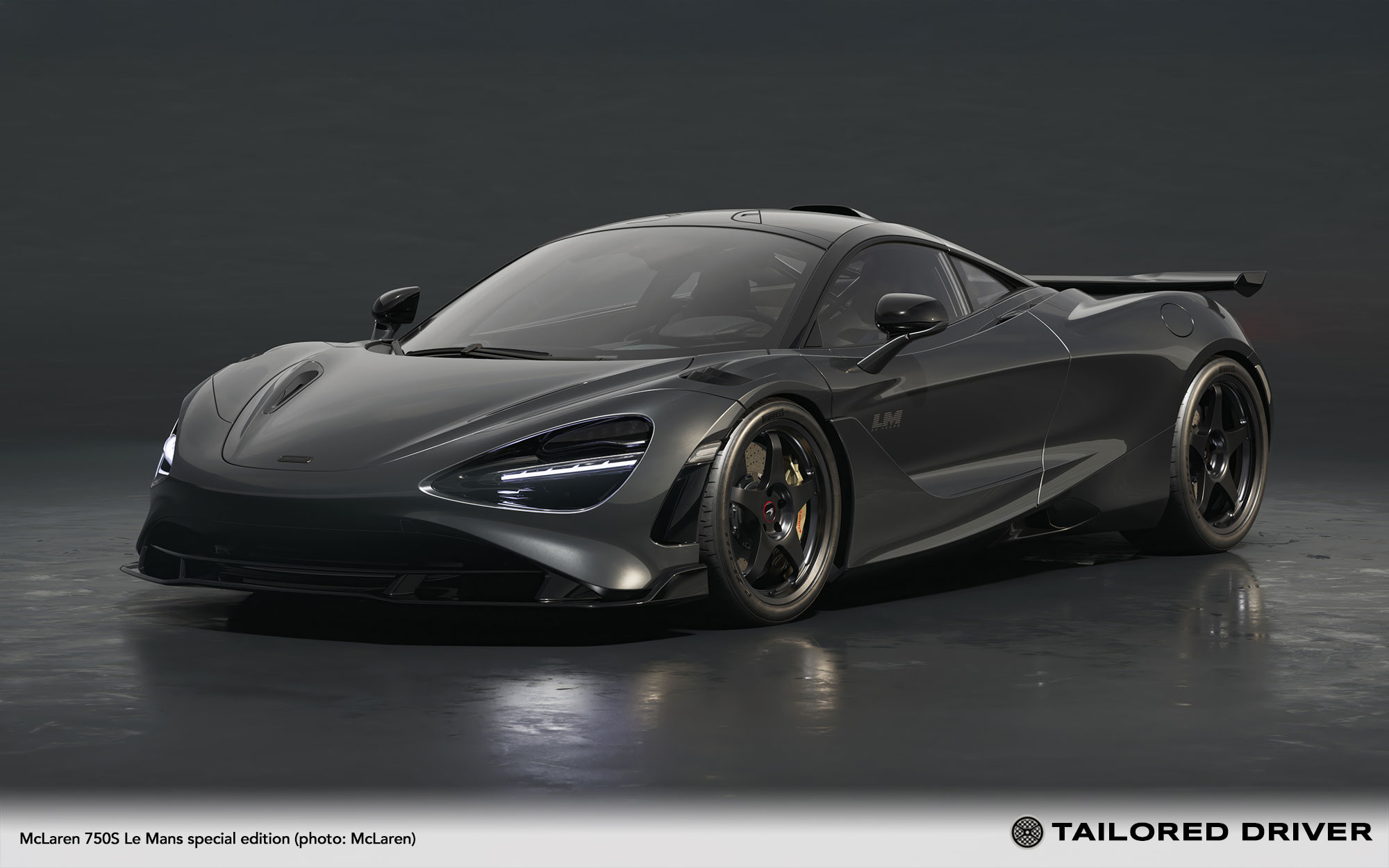
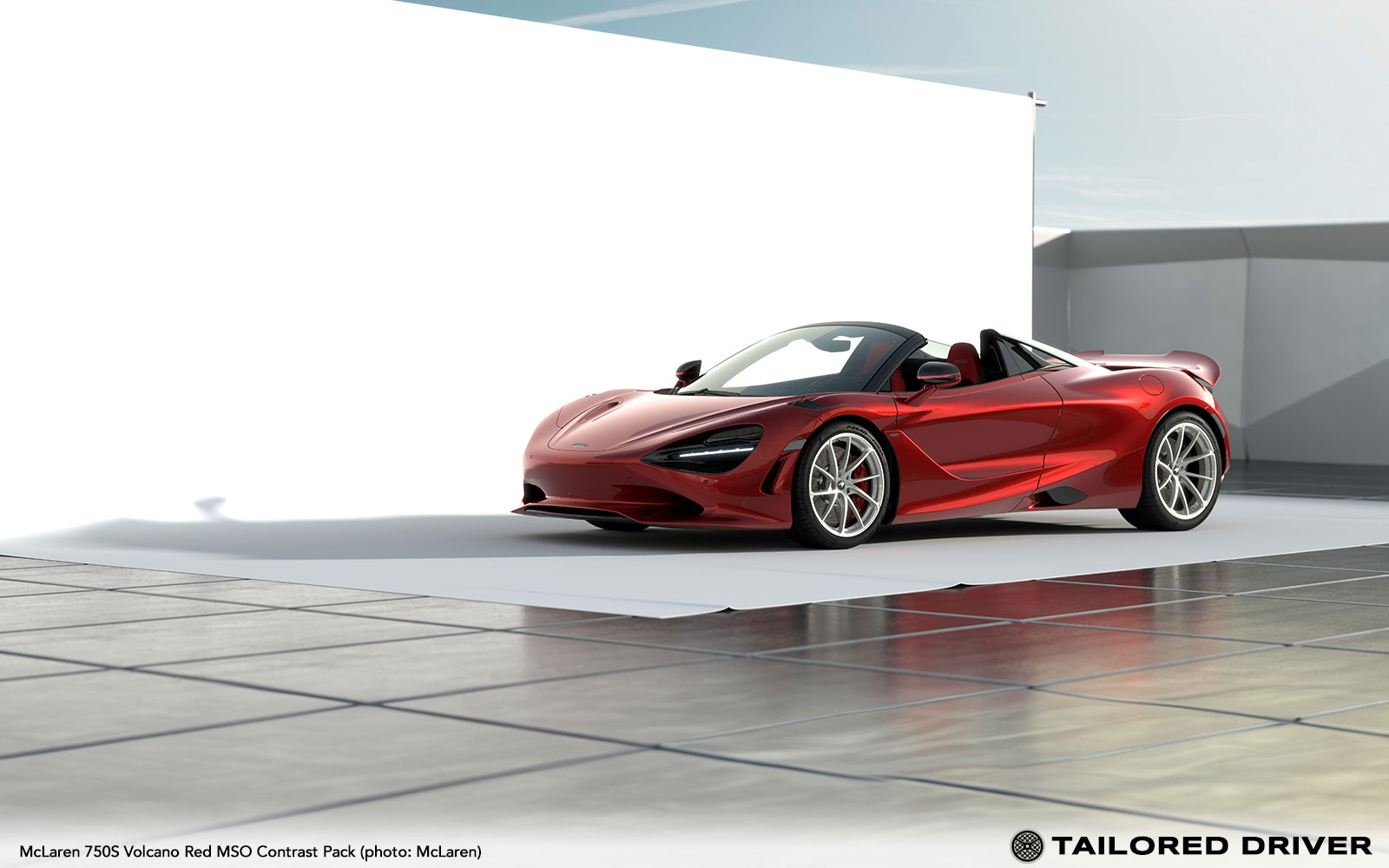
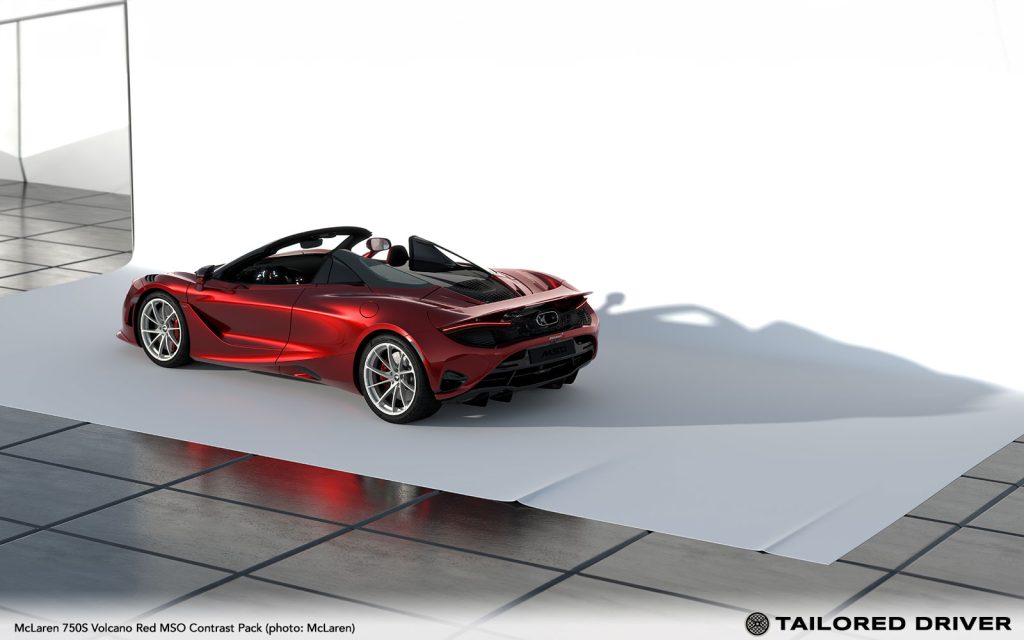
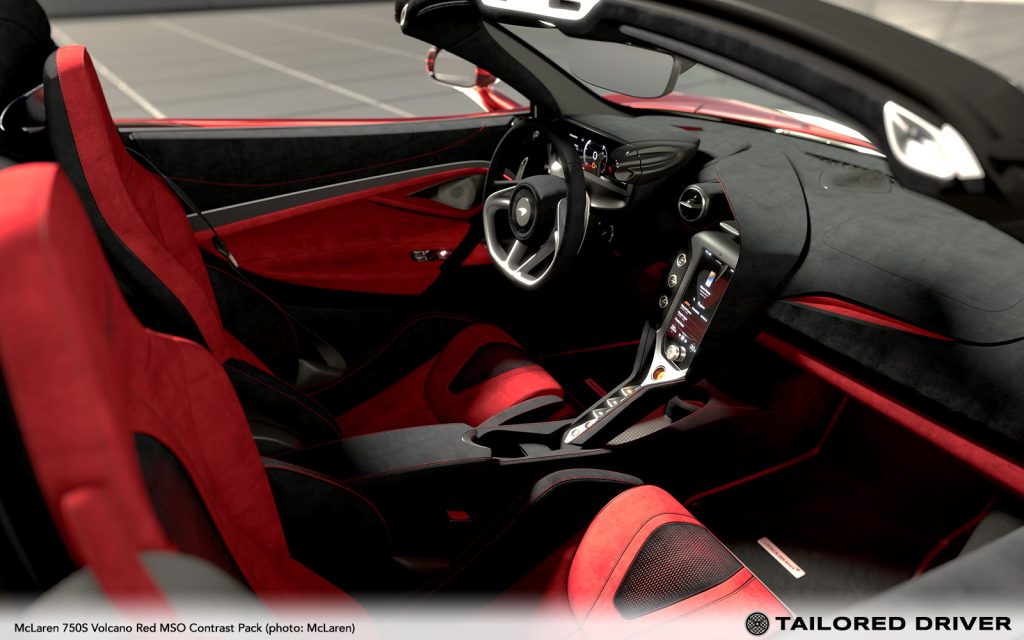
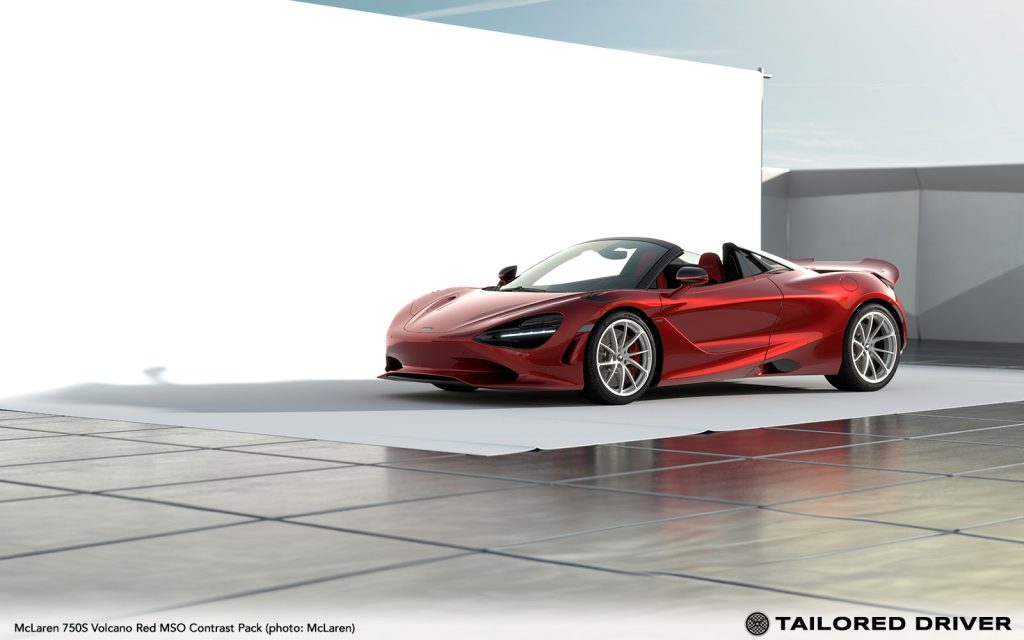
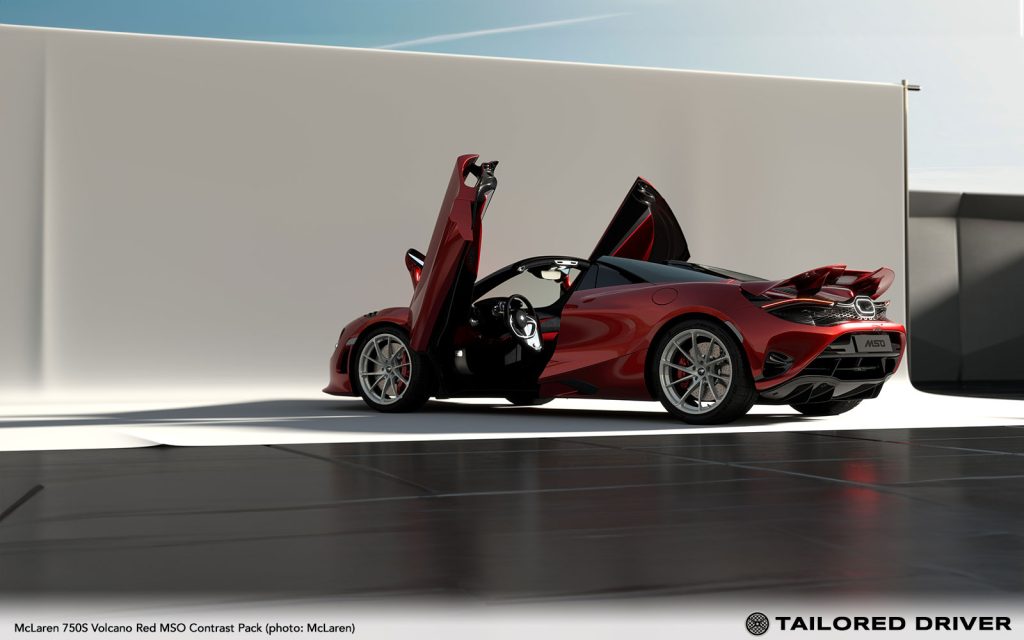
McLaren is headed back to Le Mans, 30 years since the brand’s most recent victory at the fabled French endurance race. In as much, there’s plenty to celebrate and Woking plans to do that with this special edition 750S coupe.
On June 18, it will have been 30 years since drivers JJ Lehto, Yannick Dalmas and Masanori Sekiya stood on the top of the podium beneath the iconic Rolex race clock and celebrated their victory – the first appearance at Le Mans for McLaren, though it would be their only victory there since.
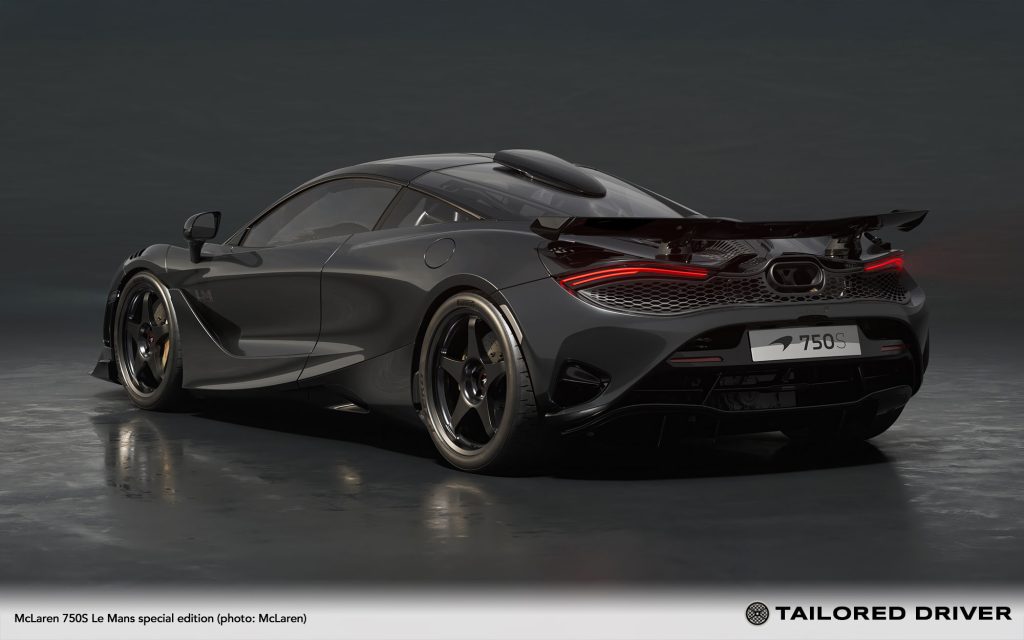
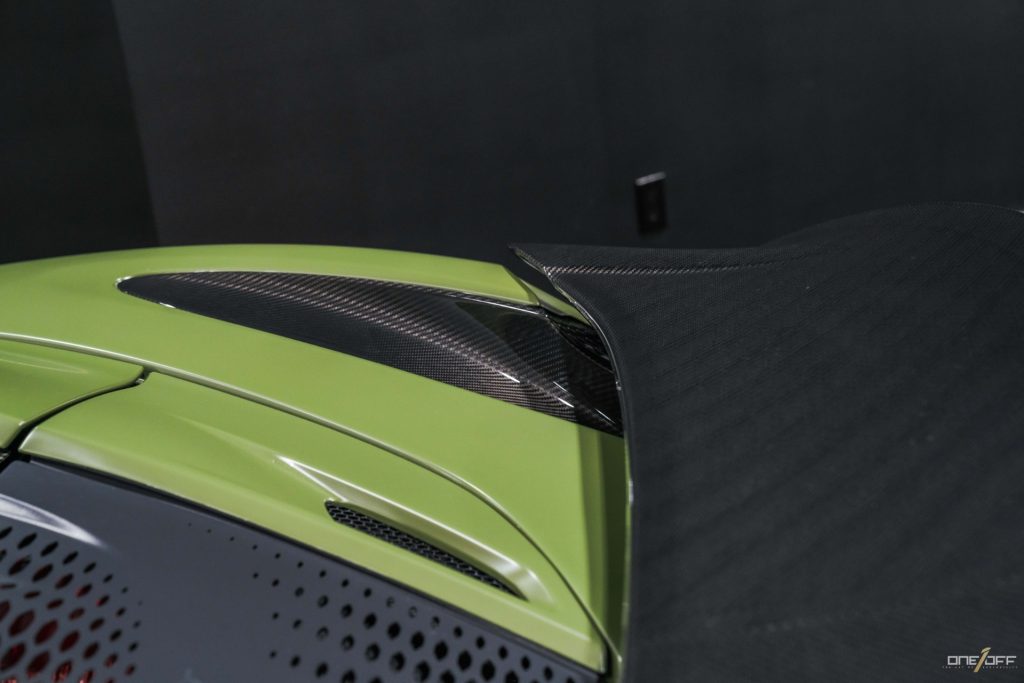
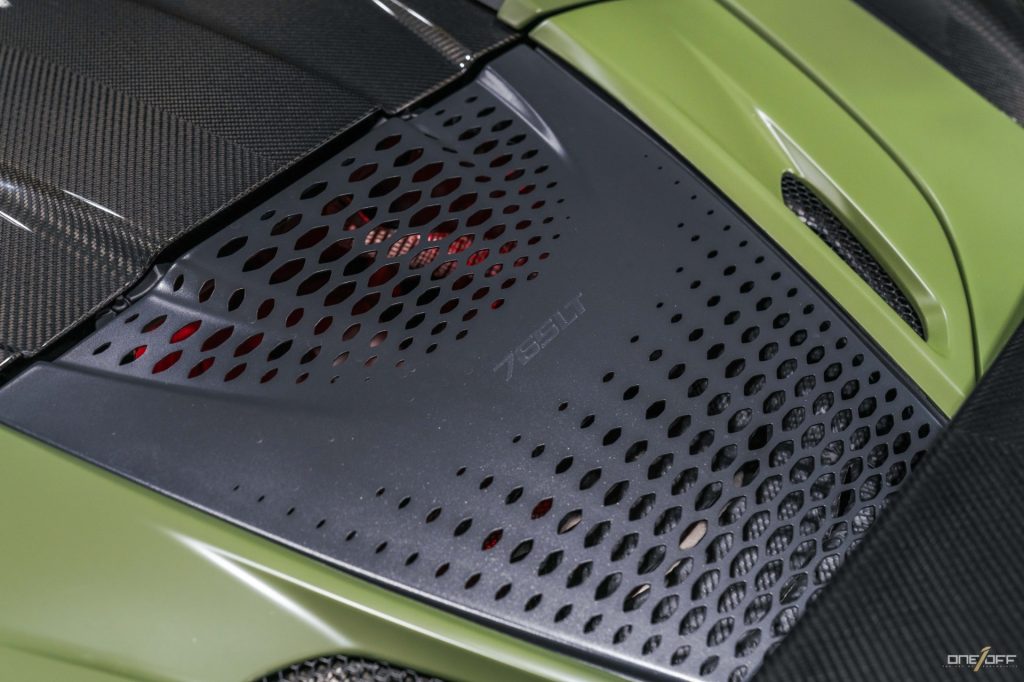
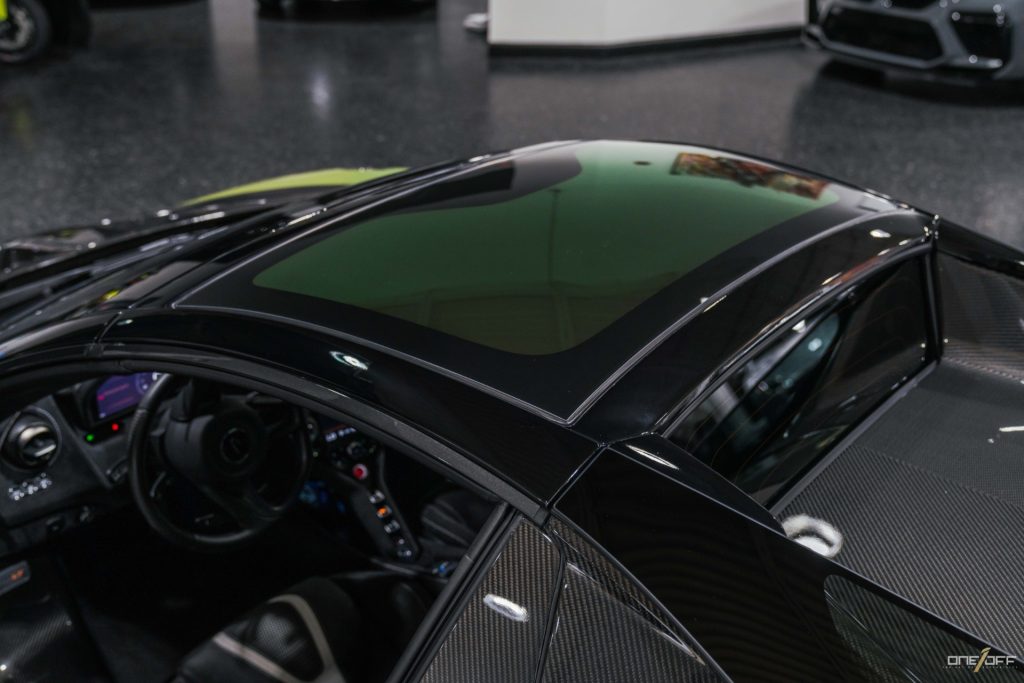
Acknowledging that 30-year anniversary will be just 50 examples of McLaren’s 750S. The design features a new MSO High Downforce Kit (HDK) that bestow the 750S with additional track-focused enhancements. Further additions include a roof scoop, unique 5-spoke LM wheel design harkening the wheels of the 1995 Le Mans-winning car plus further Le Mans branding.
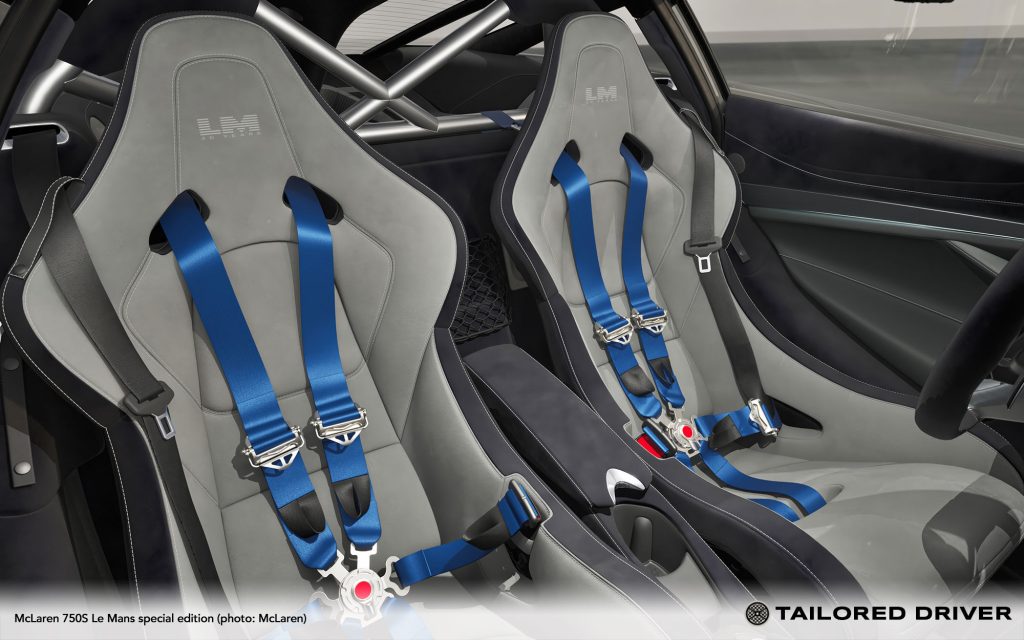
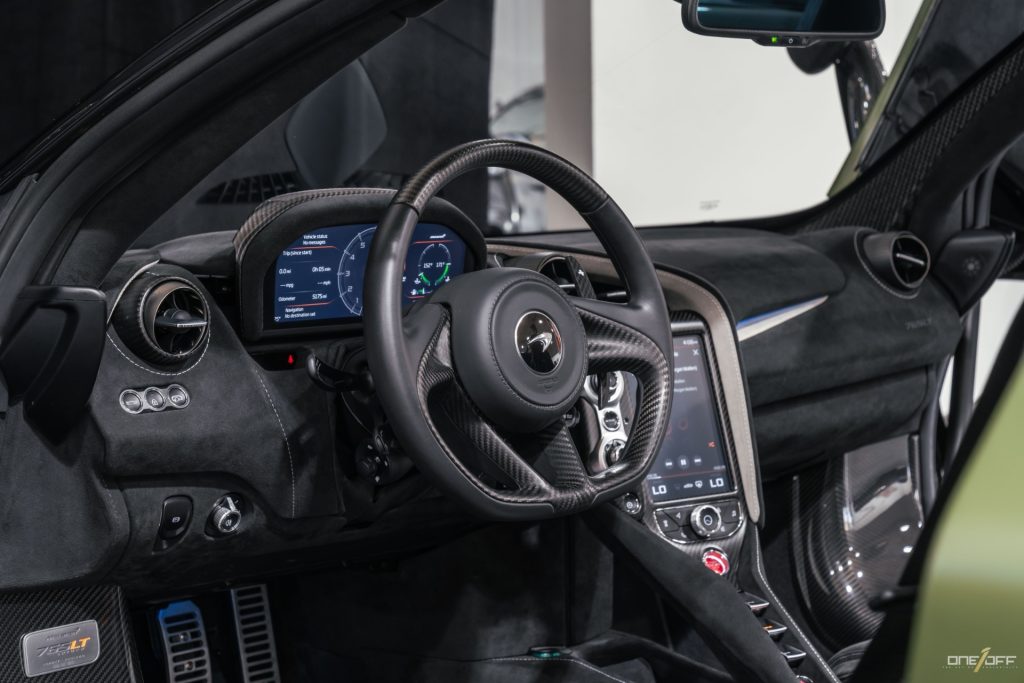
Colors will be limited as well, though several will be offered. These include Le Mans Grey or McLaren Orange exterior. Inside, Carbon Black with Dove Grey or Carbon Black with McLaren Orange interiors are meant to complement or contrast.
McLaren plans a return to Le Mans, and is set to arrive in 2027 with a new LMDh prototype squarely aimed at that top step beneath the Rolex clock. Until then, 50 lucky McLaren owners can celebrate the plan in their very own 750S Le Mans special edition.
Further details can be found in the original press release and gallery below.
PHOTO GALLERY
PRESS RELEASE, source: McLaren
750S Le Mans special edition celebrates 30th anniversary of McLaren’s iconic debut victory with MSO High Downforce Kit (HDK) enhancements
Special edition 750S coupe celebrates the 30th anniversary of McLaren’s 1995 race win
June 18, 2025, marks 30 years since JJ Lehto, Yannick Dalmas and Masanori Sekiya claimed victory in the 24 Hours of Le Mans on McLaren’s first appearance as a constructor in the world-famous race
Celebratory 750S features new MSO High Downforce Kit (HDK) giving additional track performance enhancements
Special edition cars available in tribute Le Mans Grey or McLaren Orange exterior and Carbon Black with Dove Grey or Carbon Black with McLaren Orange interior colours to contrast or complement
Additional features include roof scoop, unique 5-spoke LM wheels and Le Mans branding
Limited to just 50 examples worldwide and set to become one of the most sought-after 750S cars
McLaren Automotive celebrates the 30th anniversary of its winning debut at the 24 Hours of Le Mans – completing a unique Triple Crown* achievement – and McLaren’s return to the top class of the event from 2027. With just 50 cars being built, the 750S Le Mans is set to be one of the most sought-after McLaren series production supercars.
On June 18, 1995 McLaren F1 GTR #59 – driven by JJ Lehto, Yannick Dalmas and Masanori Sekiya – won the gruelling 24-hour race, joined by three more McLaren F1 GTRs in the top five placings. Just days before the 30th anniversary, two McLaren GT3 EVO cars – based on the 750S – will compete for LMGT3 honours at this year’s edition of the endurance classic.
The McLaren 750S Le Mans pays homage to the iconic #59 F1 GTR with matching Le Mans Grey exterior paint – with the option of McLaren Orange also available – roof scoop and 5-spoke LM wheels. It will also feature the new MSO High Downforce Kit (HDK), which adds visual drama to the 750S with a raised carbon fibre Active Rear Spoiler with integral endplates. In conjunction with a front bumper featuring an enlarged carbon fibre splitter and rear wing, downforce is increased by 10 per cent compared to the standard 750S, enhancing track performance and echoing the famous McLaren F1 LM edition’s aerodynamic additions. Completing the HDK package is a new body-coloured carbon fibre under-wing panel featuring gloss black louvres.
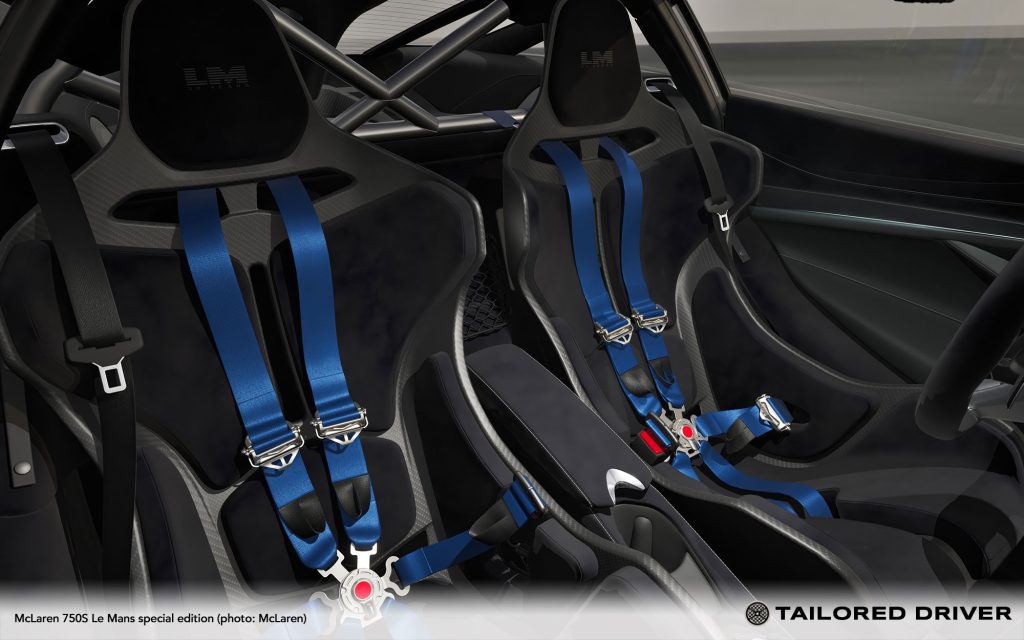
McLaren 750S Le Mans customers will also have a choice of Carbon Black with Dove Grey or Carbon Black with McLaren Orange interior colour combinations with Le Mans branding and a dedication plaque, with all cars featuring a portfolio of unique features as standard:
Exterior
Choice of two exterior paint themes: Le Mans Grey or McLaren Orange
High Downforce Kit (HDK) front bumper with enlarged Carbon Fibre Splitter in Gloss Black, Raised Carbon Fibre Active Rear Spoiler in Gloss Black and Louvred Body Colour Carbon Fibre Under-Wing Panel with Gloss Black Louvres
5-spoke Le Mans wheel with Stealth finish and Le Mans branding
F1 Gold Special Colour Brake Calipers with red McLaren logo
Wheel Centre Caps with blue/red colour detail
Gloss Black Carbon Fibre Roof Scoop
Carbon Fibre Front Fenders with Gloss Black Louvres
Gloss Black exterior details
Natural Titanium Exhaust Finisher
Painted Le Mans exterior branding
Interior
Choice of two unique Le Mans interior themes; Carbon Black Alcantara with Jet Black Softgrain Leather and Dove Grey Alcantara or Carbon Black Alcantara with Jet Black Softgrain Leather and McLaren Orange Alcantara
Le Mans debossed headrest branding
Le Mans branded floormats
Bespoke Le Mans dedication plaque
In addition, a range of options are available exclusively to 750S Le Mans customers, including:
Exterior Details in Gloss Visual Carbon Fibre, including the Hood Air Intakes, Door Mirror Casings, Side Air Intakes, Rear Fender Air Intakes and Raised Active Rear Spoiler Endplates
Gloss Visual Carbon Fibre HDK and Underbody pack, including the Front Splitter, Rear Diffuser and Raised Active Rear Spoiler
Gloss Visual Carbon Fibre Raised Active Rear Spoiler only
Gloss Visual Carbon Fibre Louvre pack including the Front Fender Louvres and Rear Under-Wing Panel Louvres
Gloss Visual Carbon Fibre Roof Scoop Outer
Track Brake Upgrade incorporating F1 Gold Special Colour Brake Calipers with red McLaren logo
An optional track record plaque lists the 1995 Le Mans victory, with Triple Crown* achievements also featured alongside McLaren’s many significant motorsport successes. Mounted in the front luggage compartment, this option is available to purchasers of all new 750S cars.
Purchasers of the Le Mans edition cars will also benefit from the multi-award winning** benchmark-beating 750S performance delivered by the mid-mounted, 750PS M840T 4.0-litre, twin-turbocharged V8 McLaren engine. A motorsport-inspired carbon fibre Monocage II central structure and Proactive Chassis Control III suspension system help to ensure that the 750S is the lightest and most agile car in its class, now enhanced by the HDK aerodynamic additions.
“The 750S Le Mans marks not just 30 years since our debut victory in the iconic race but an exciting time for the brand with McLaren GT3 EVO cars competing in this year’s race and the announcement of our return to the top, Hypercar class in 2027.
This exclusive 750S is the first McLaren Le Mans edition since the F1 LM to feature HDK aerodynamic enhancements and is set to become one of our most sought-after supercars, with previous Le Mans editions of the 650S and 720S commanding a premium over standard models.”
Henrik Wilhelmsmeyer, Chief Commercial Officer, McLaren Automotive
Celebrating the start of the 2025 DTM season, Dörr Motorsport has worked with McLaren Special Operations to create a limited edition 750S Dörr Motorsport DTM Collector’s Edition. The car celebrates the association between Dörr and their McLaren based campaign in the legendary German racing series.
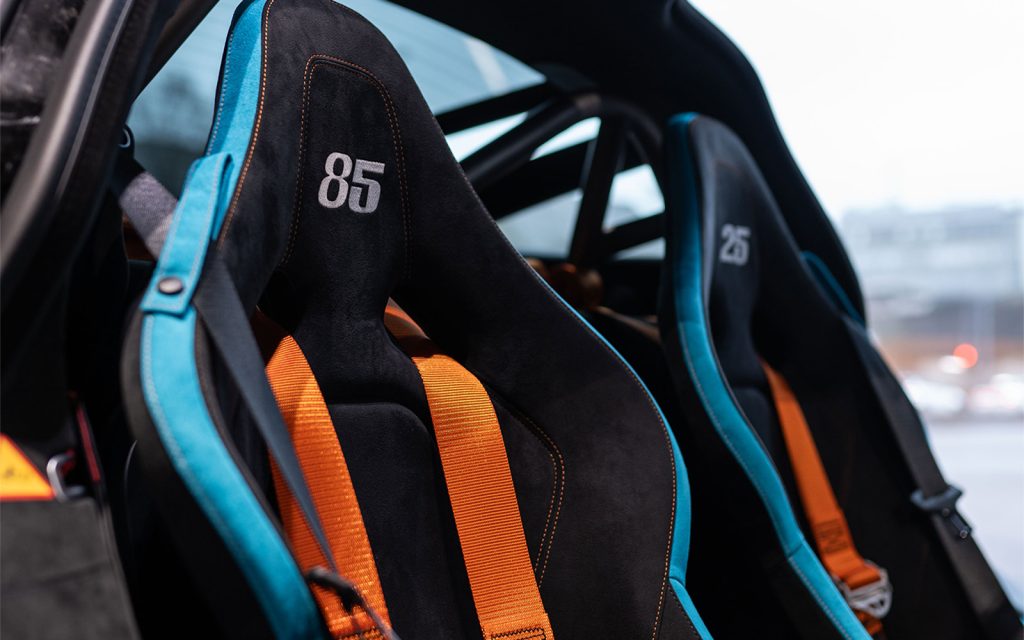
Painted Anniversary Orange (anniversaryorange; non-metallic UNI; 39538; McLaren), the car also features chrome logos, DTM branding and blue accents in team colors. Inside, the model boasts racing harnesses, a roll cage and details harkening the Dörr association including embroidered starting numbers on the seats.
Only six cars will be built – three coupes and three spiders. Unfortunately, this is a European market only affair. Still, if you’re curious, perhaps Dörr and McLaren Special Operations can help you spec something similar.
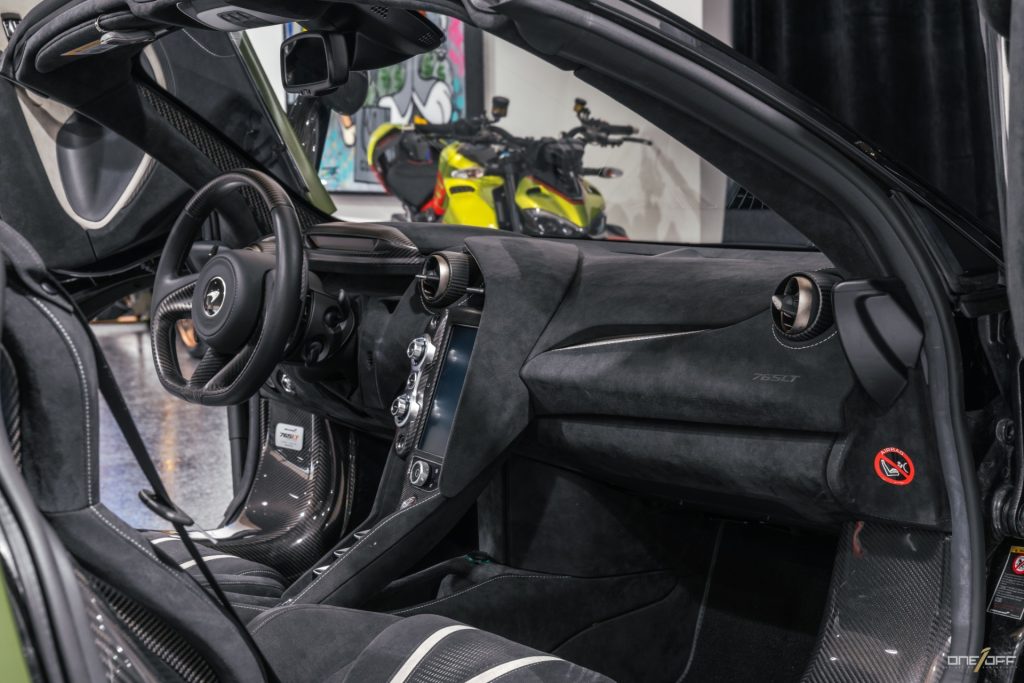
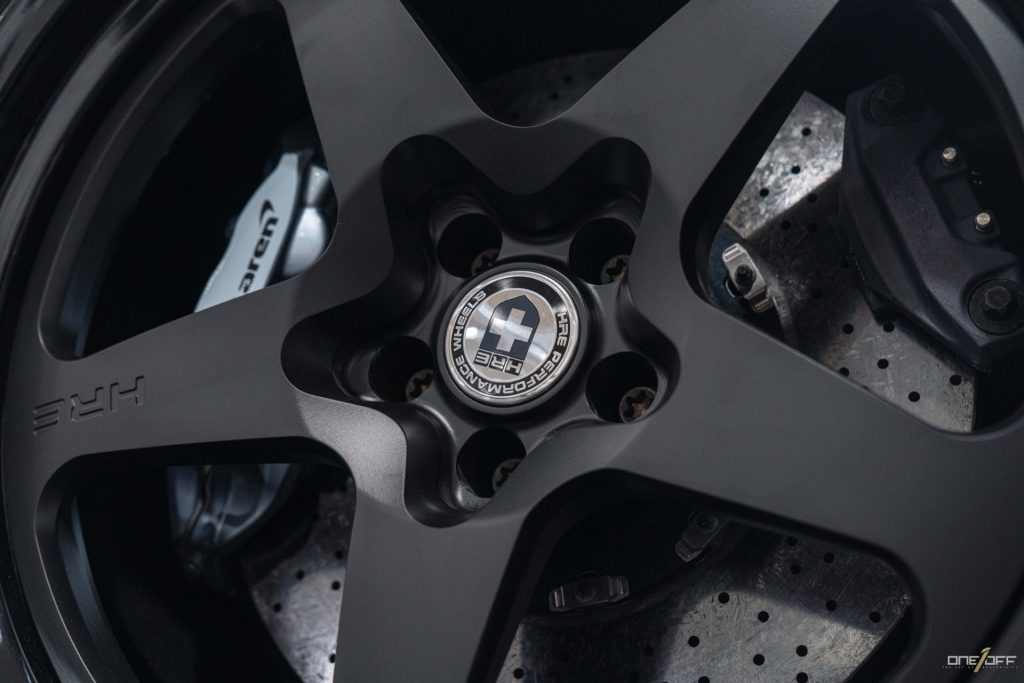
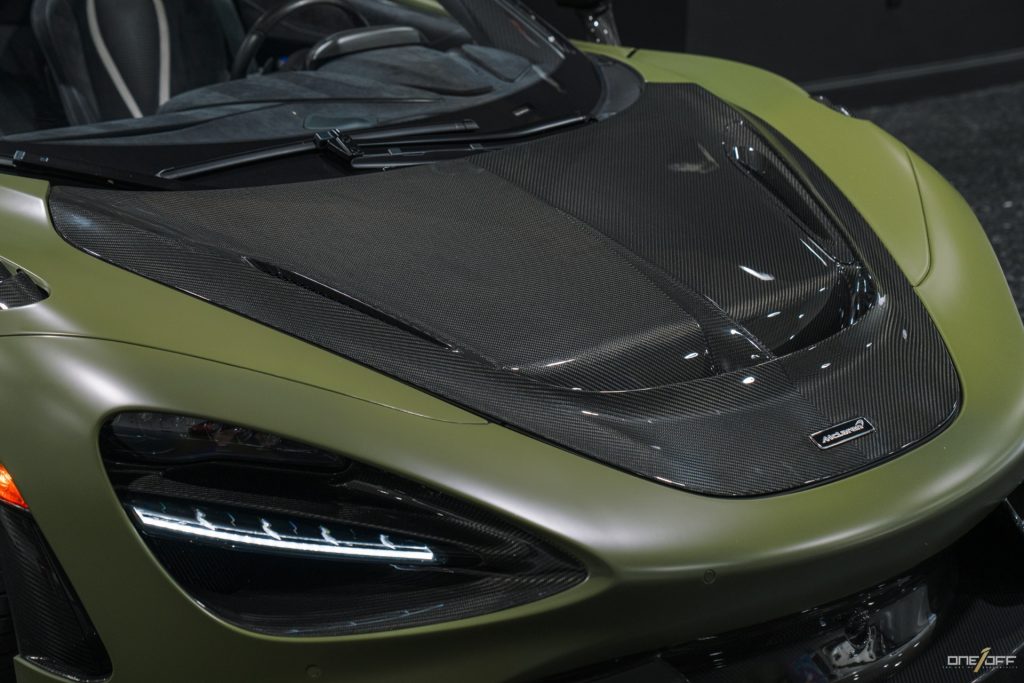
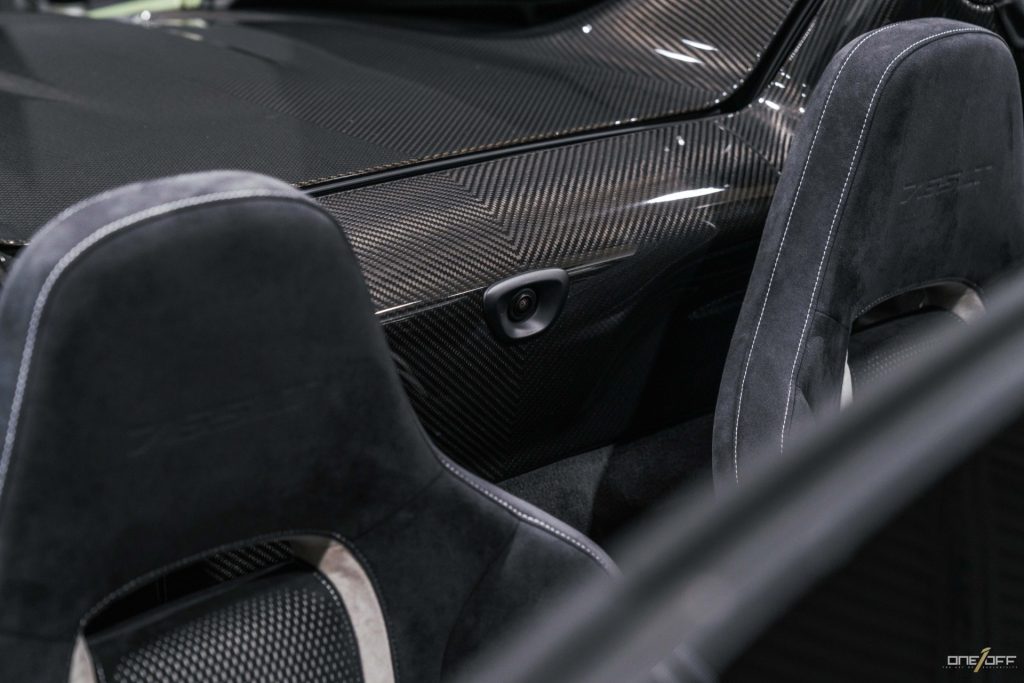
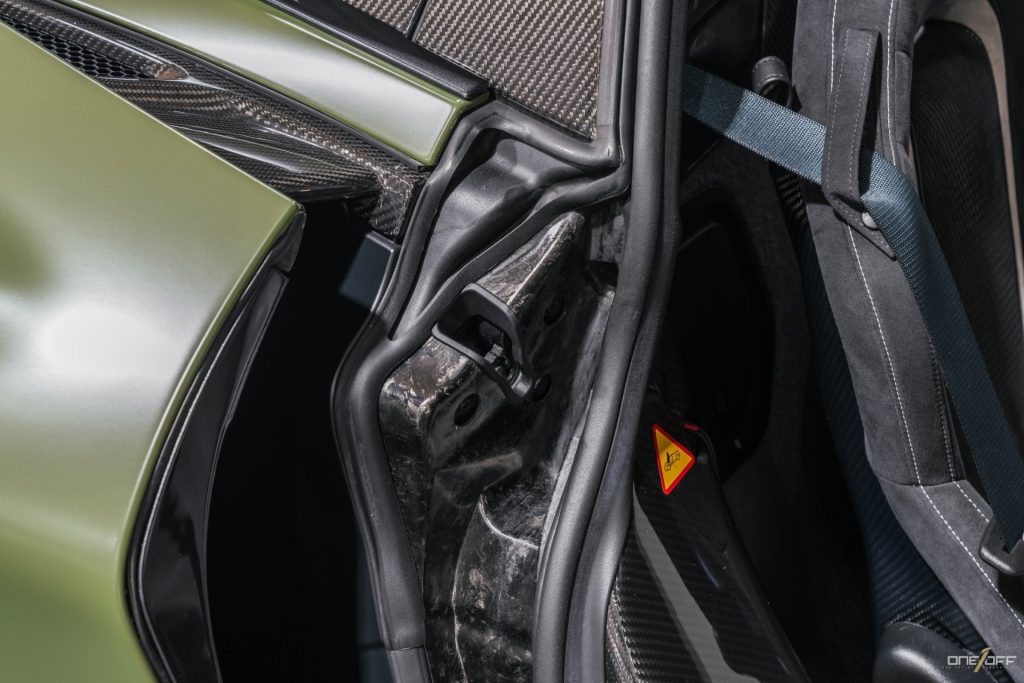
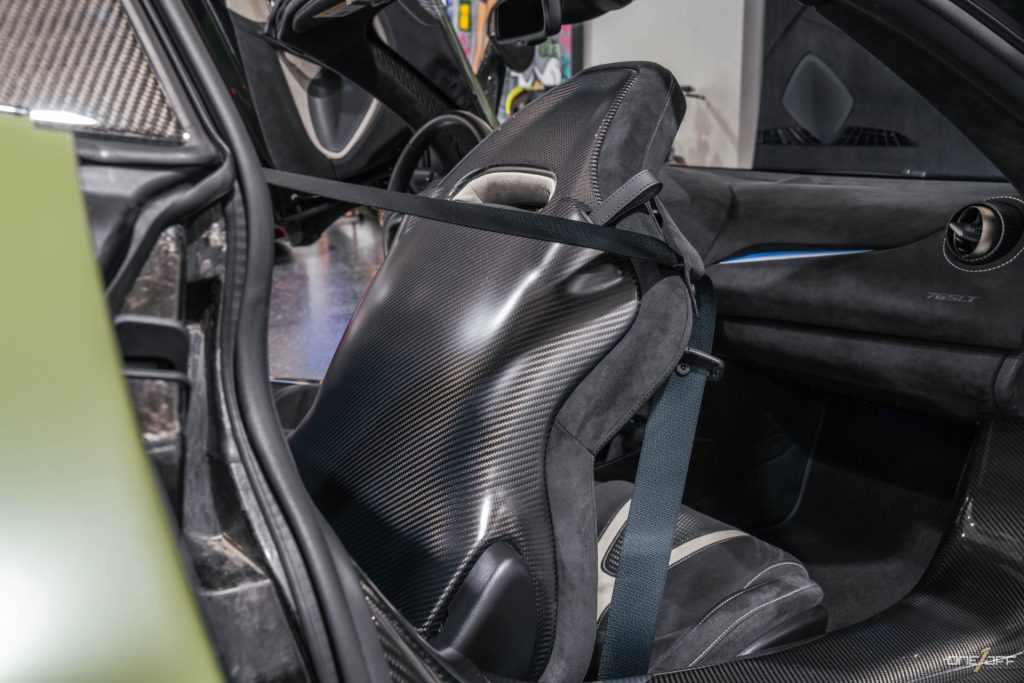
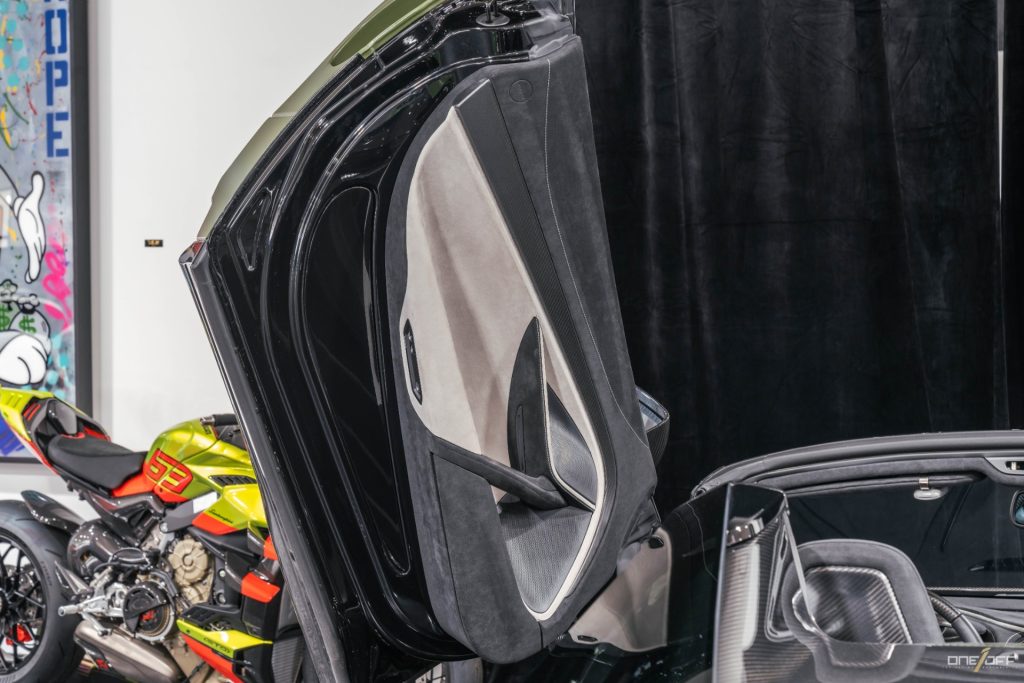
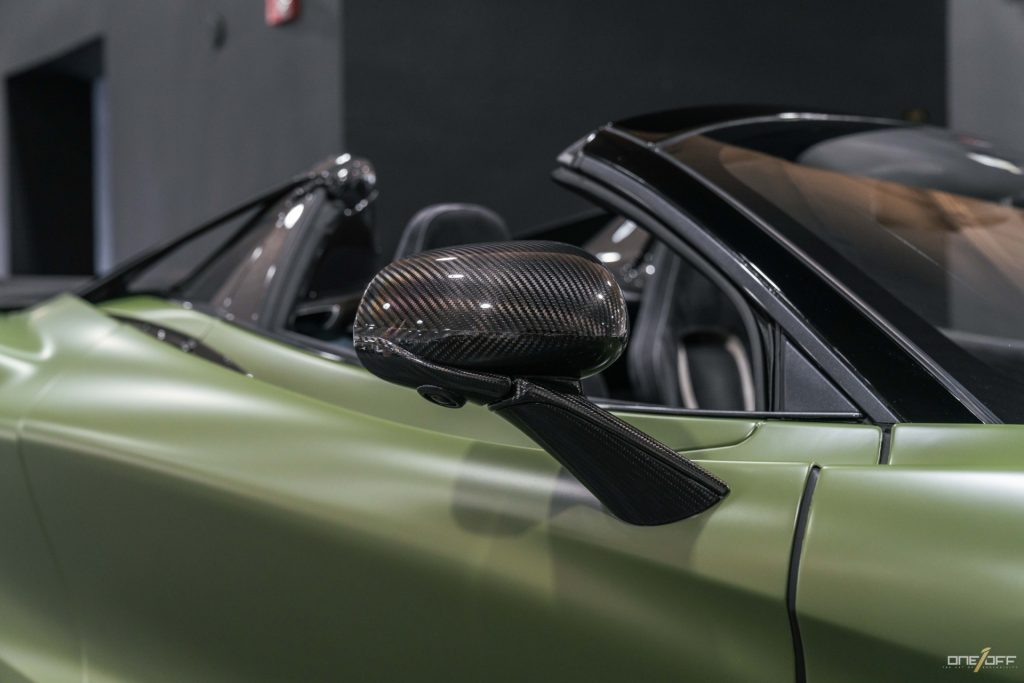
Sort of the opposite of that line from Field of Dreams, McLaren Special Operations exists in a world of If you come we will build it. Understandably, this can take the form of an infinite number of different Tailored Drivers, so it makes our life a bit more difficult. Take this Satin Urban Green 765LT for example- we simply can’t find a color code, nor can we find another example of MSO painting a car this color. Search after search only returns this exact car wearing different wheels. Now, we can surmise that MSO borrowed an existing color, likely BMW’s Urban Green, and applied it lovingly with a satin clear final stage, and called it a day. If that is indeed the case, then paint code goes from unknown to a variation of the “YA04” that we’ve seen before and is linked above.
So here we are, exactly where we find ourselves with many McLaren finds, wondering what the precise code is. It’s admittedly at times a frustrating endeavor, but as Tailored Driver grows we want to catalog and feature builds such as these to provide equal parts reference and inspiration. For now, place this MSO build in that bucket. We can’t wait to see how you interpret it with your very own Tailored Driver.
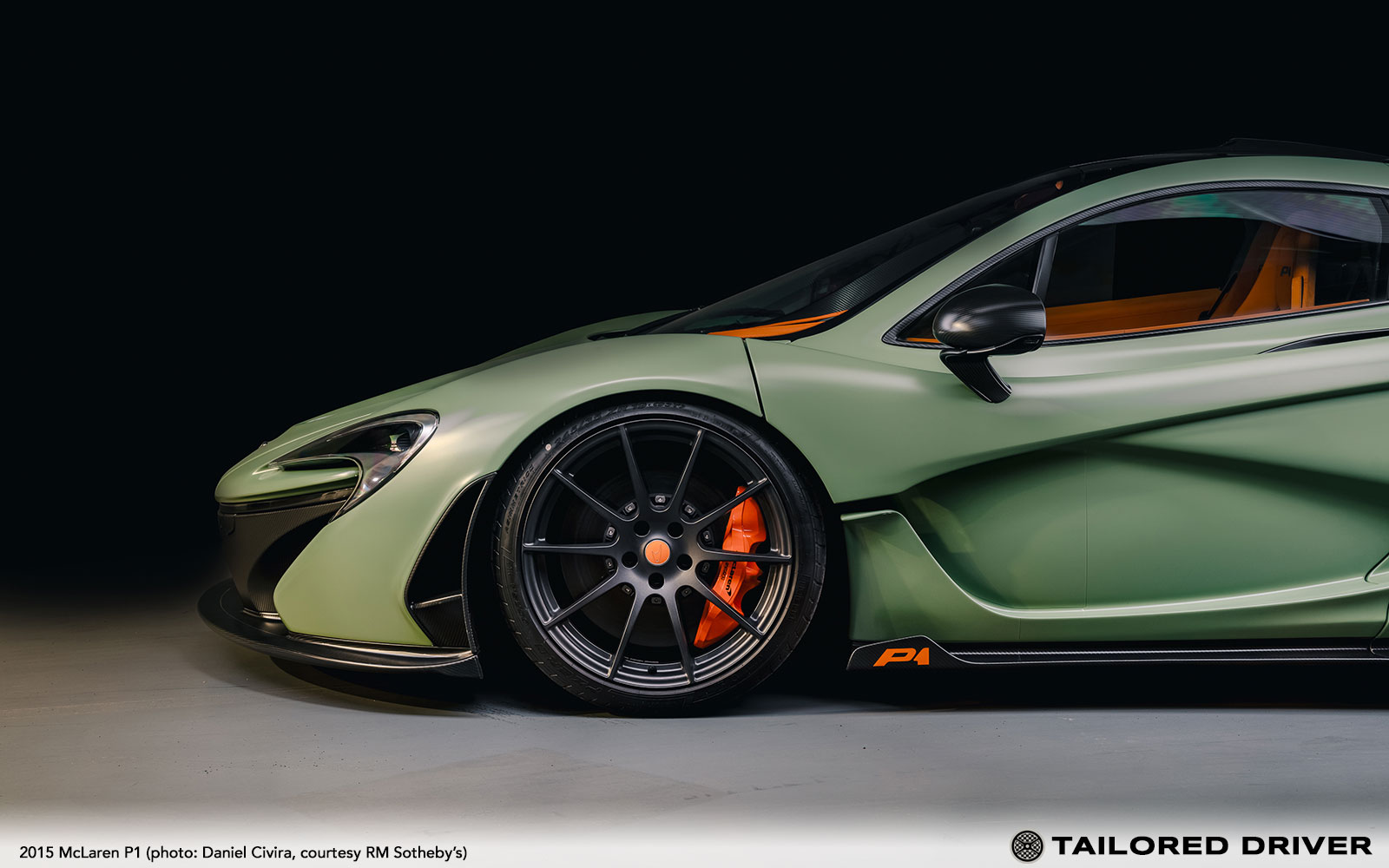
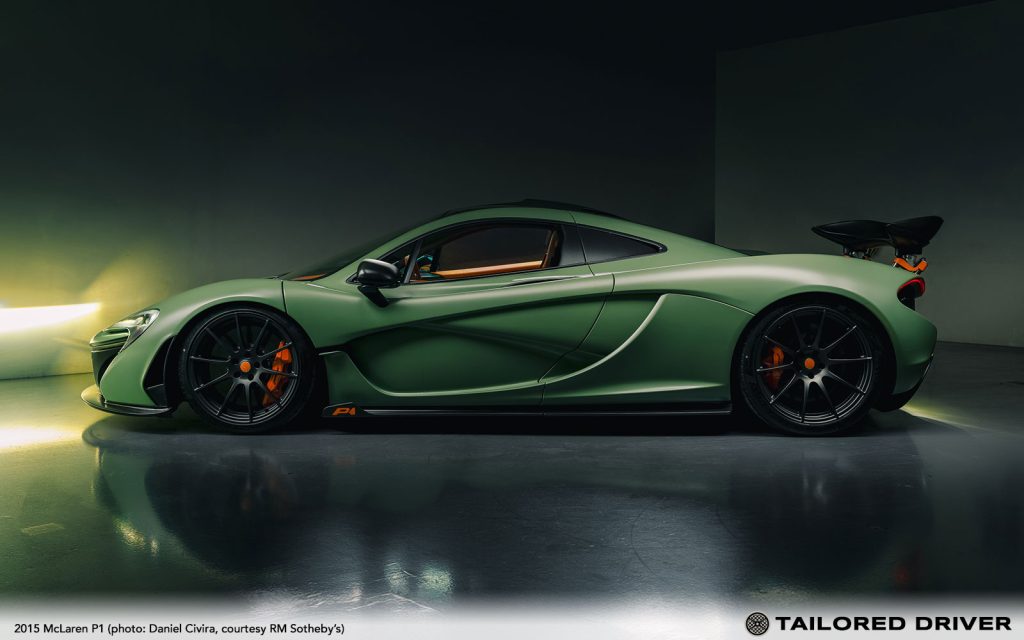
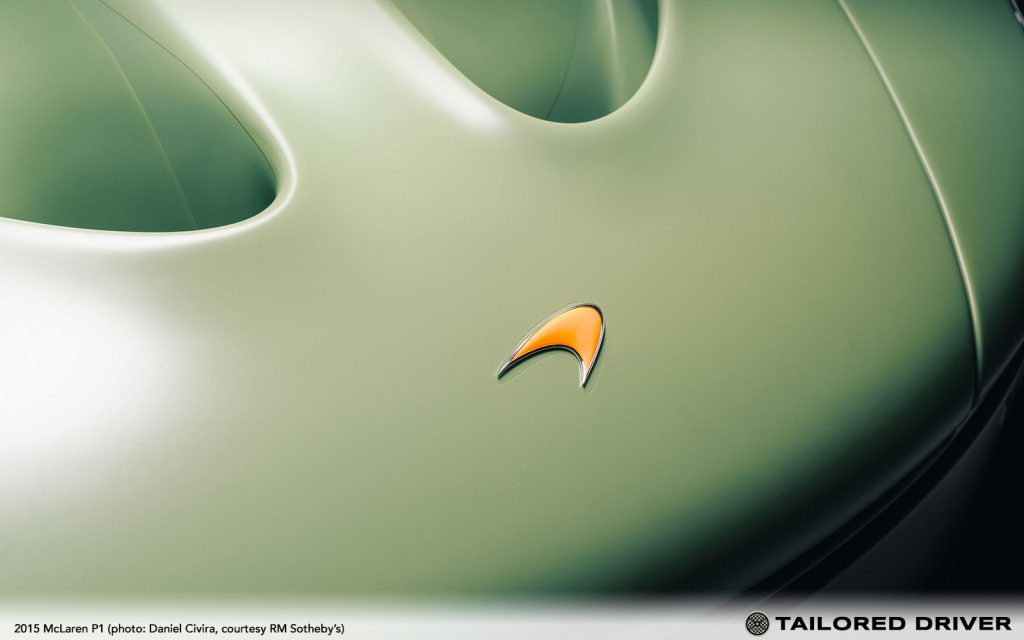
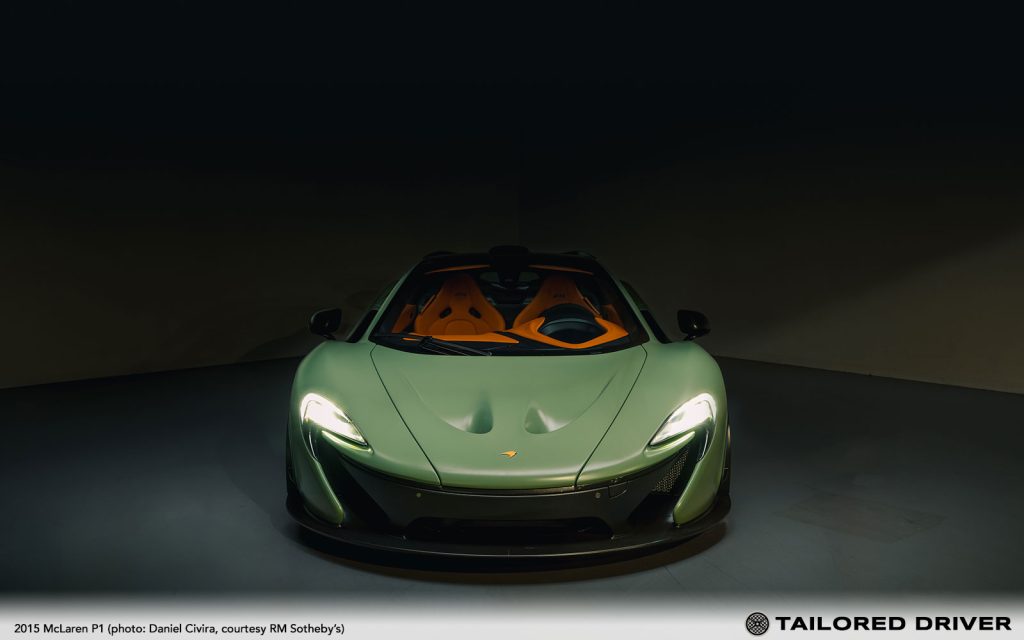
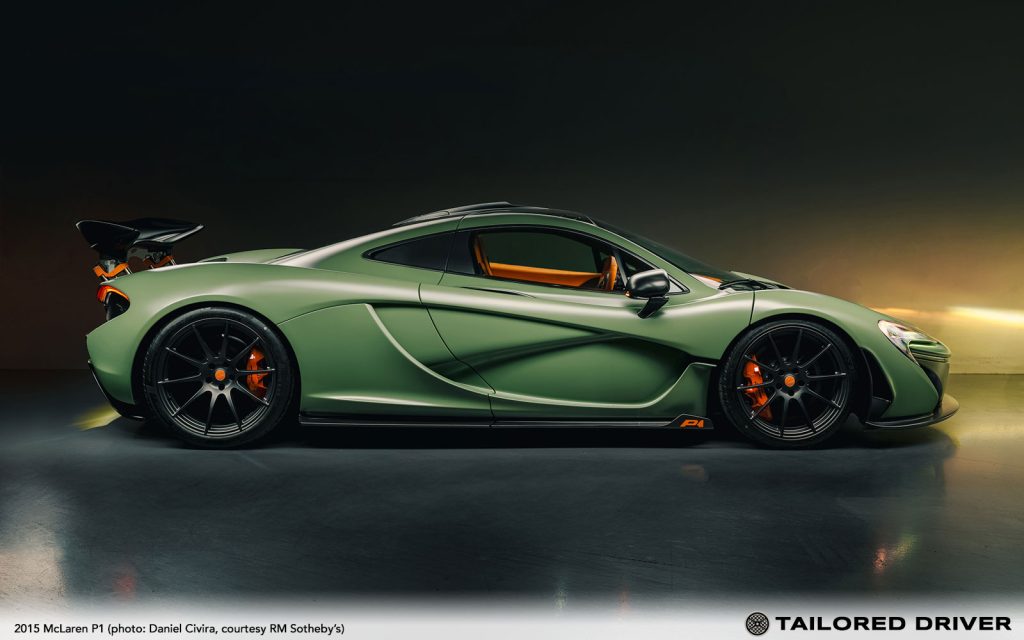
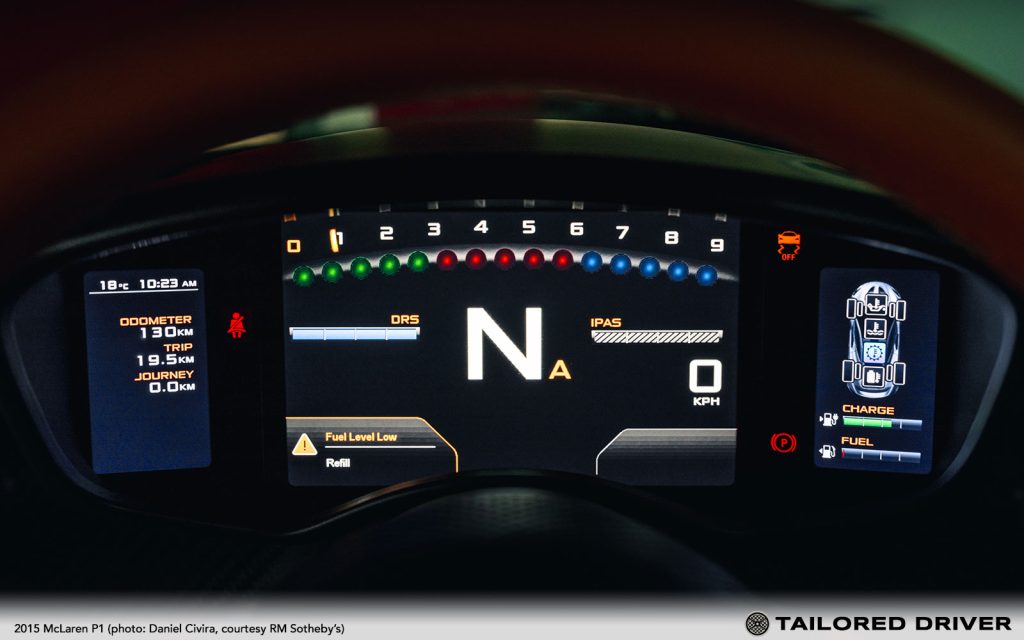
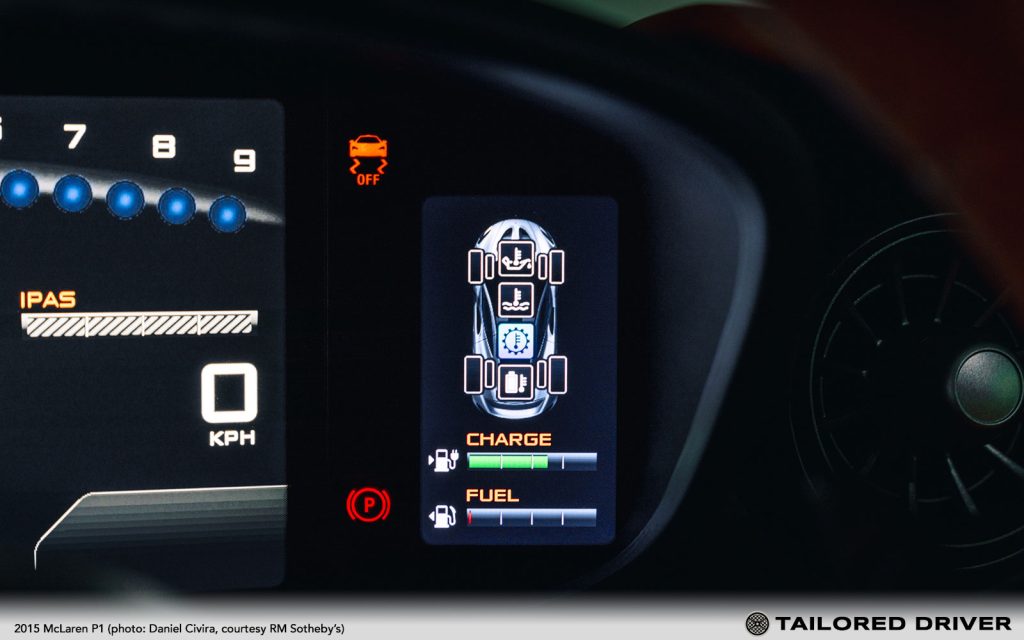
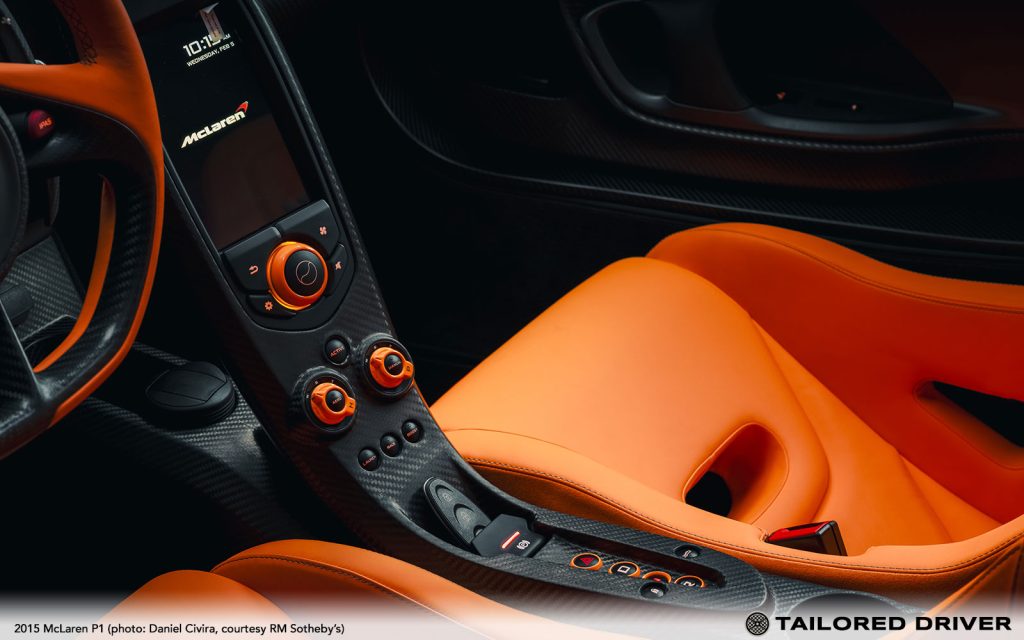
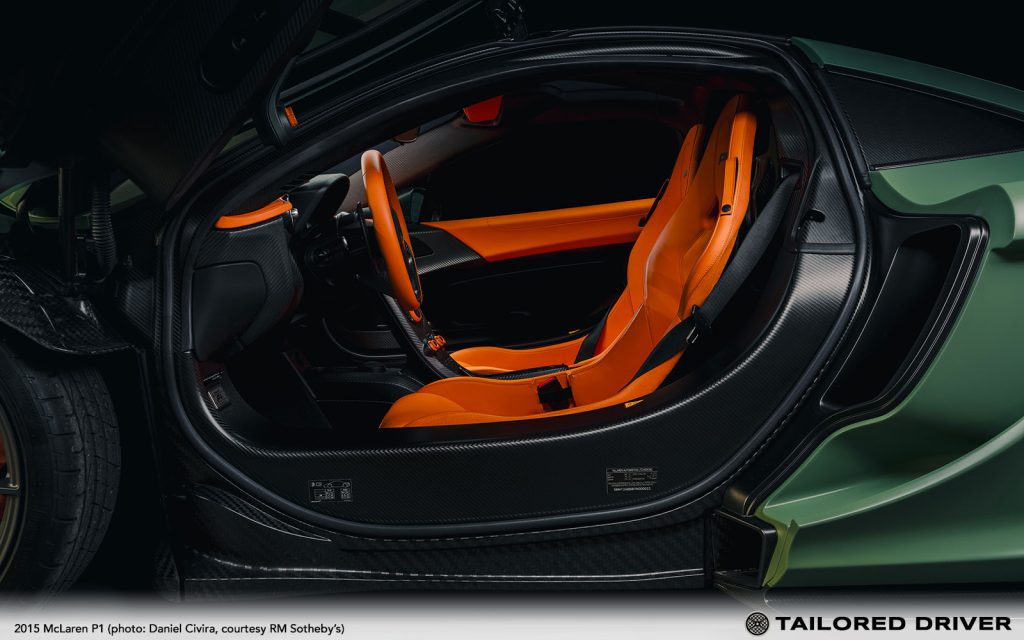
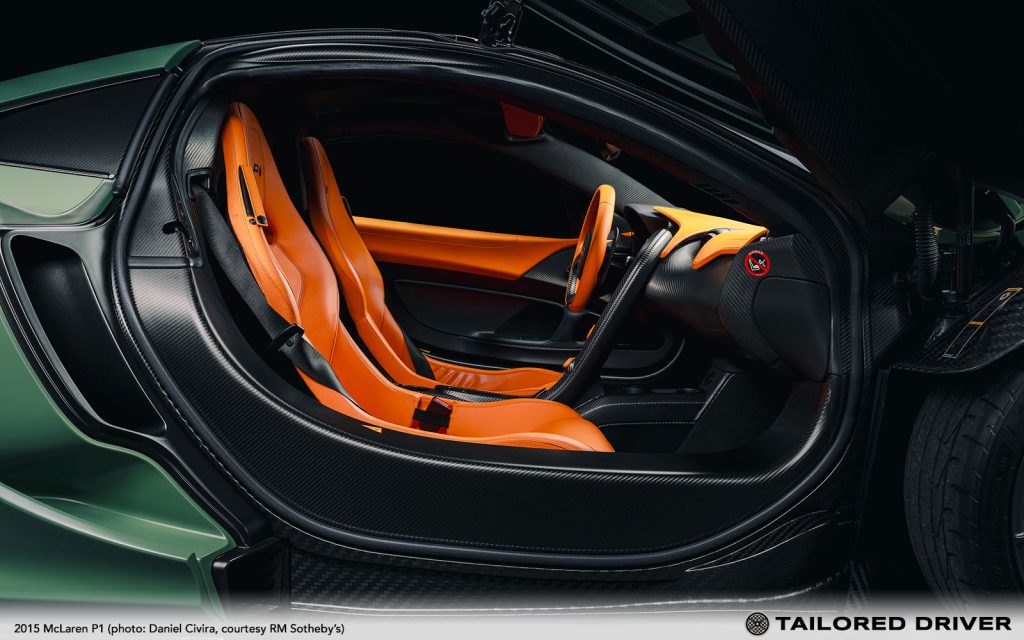
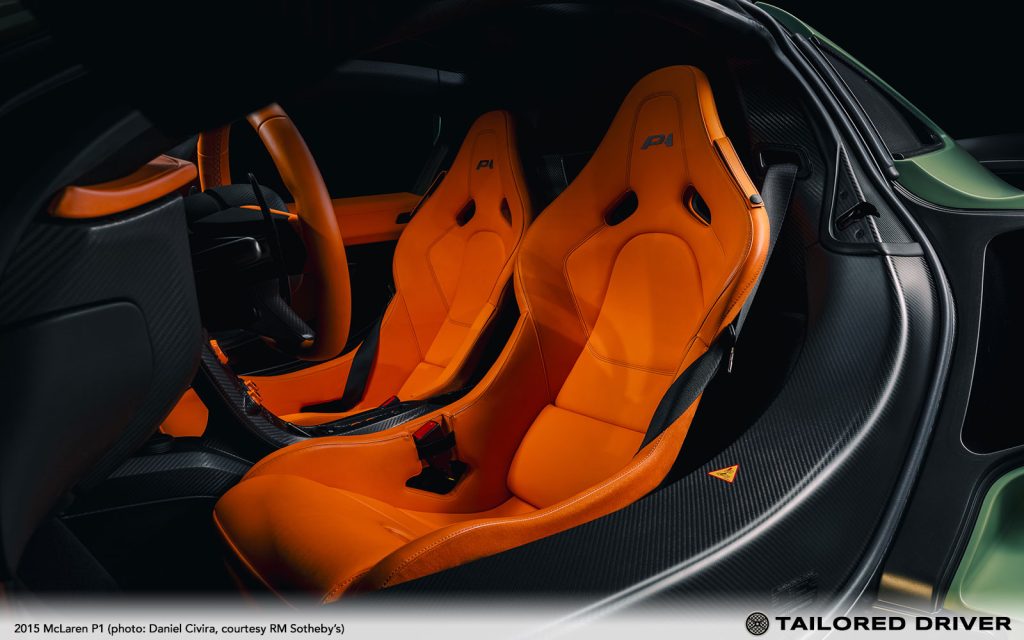
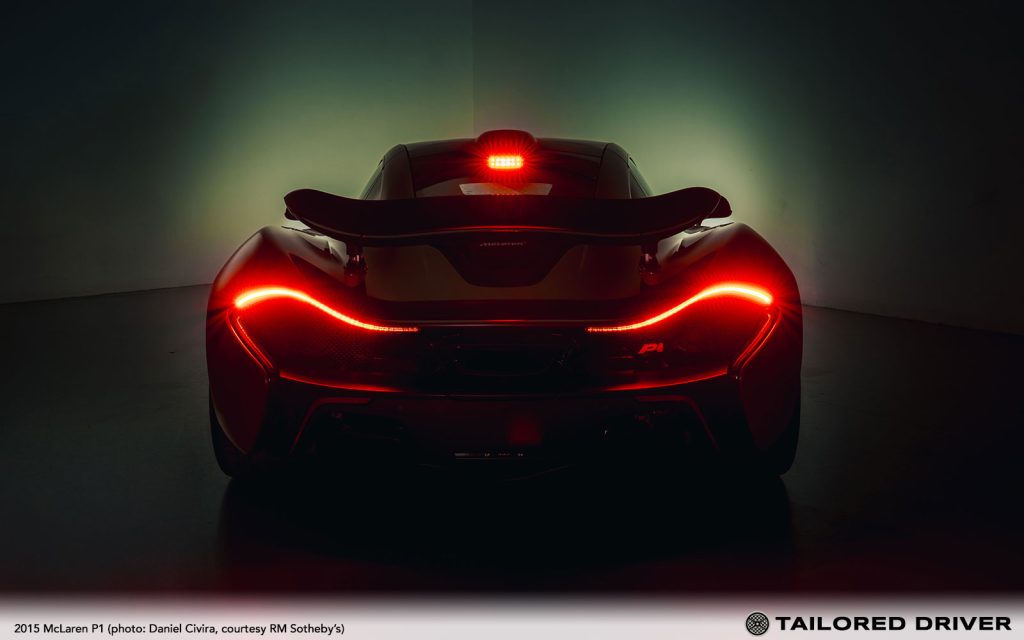
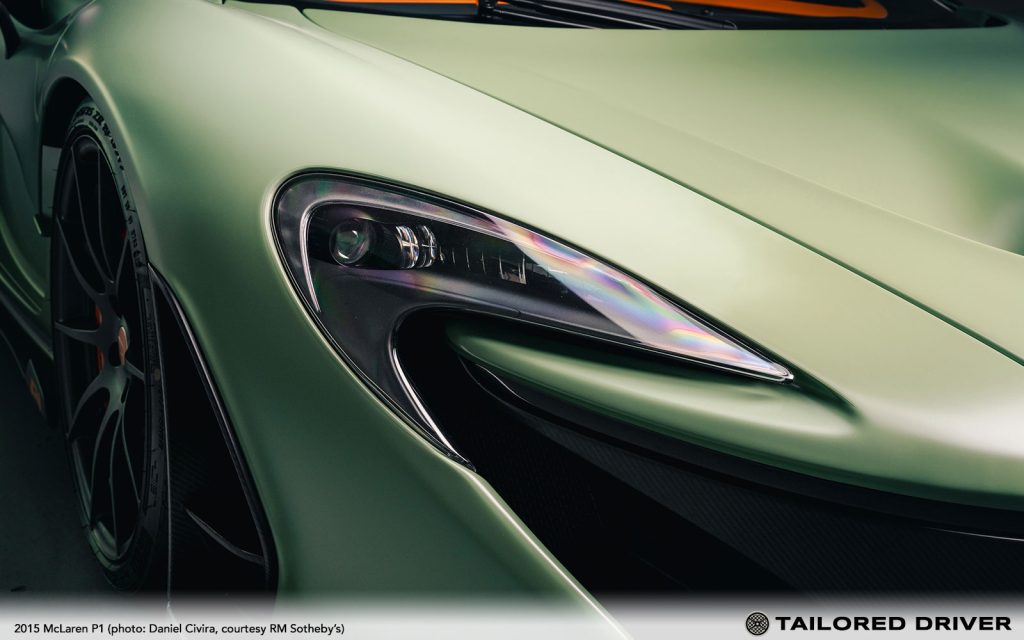
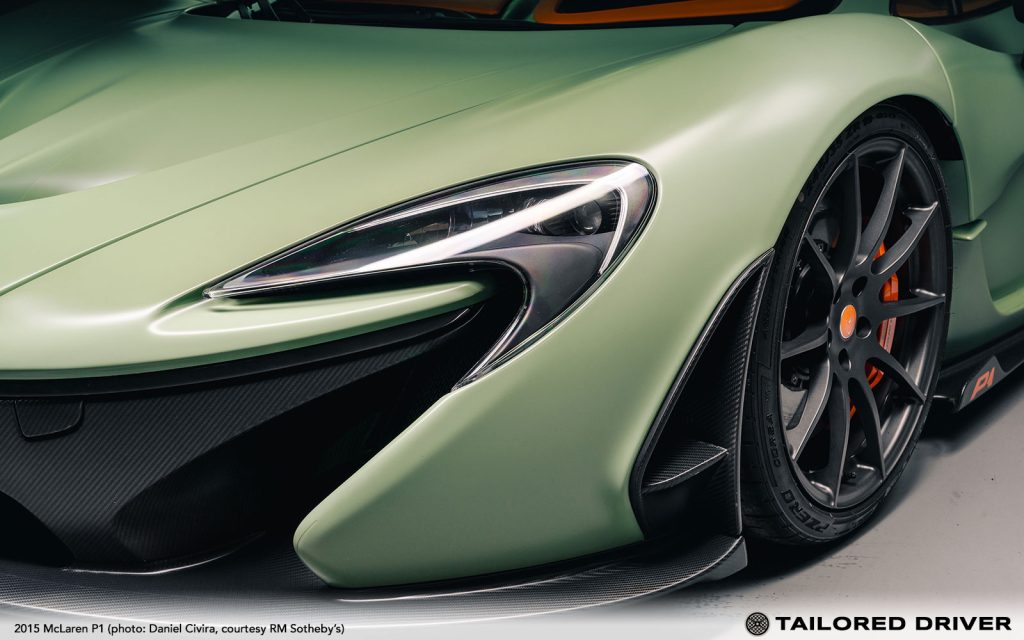
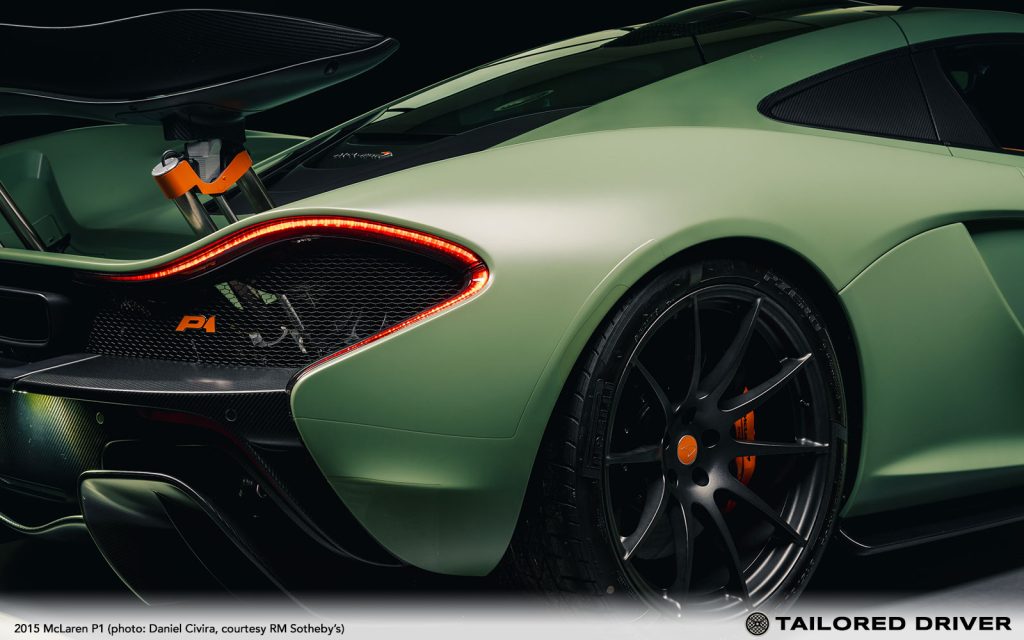
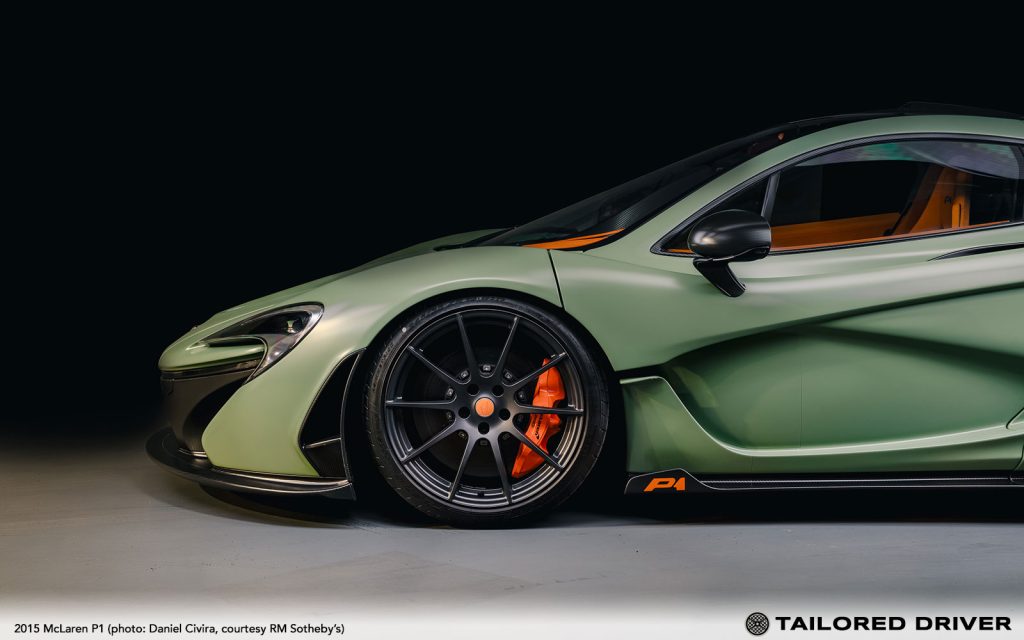
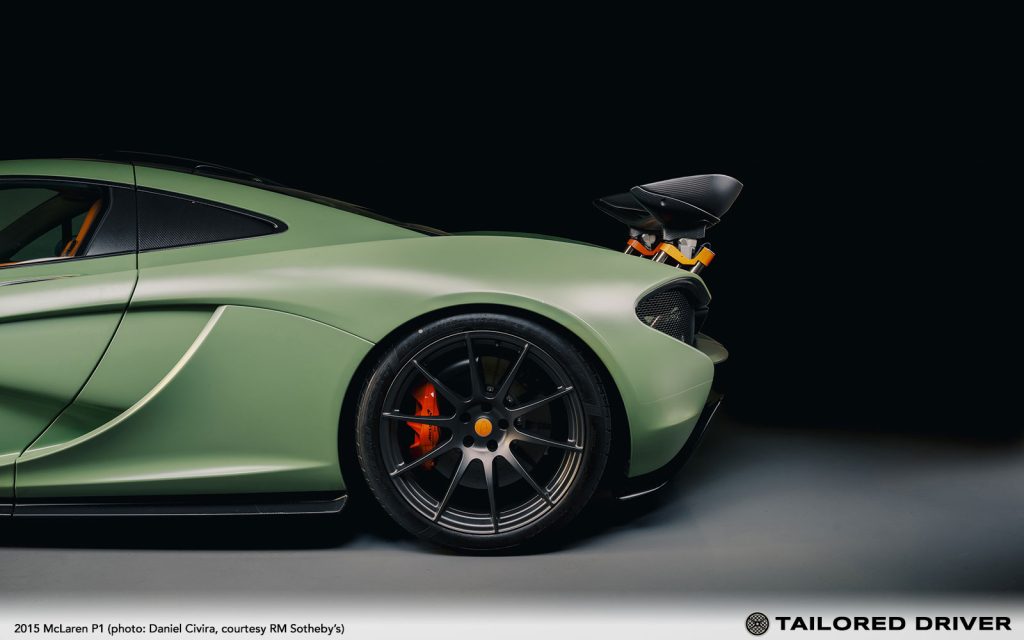
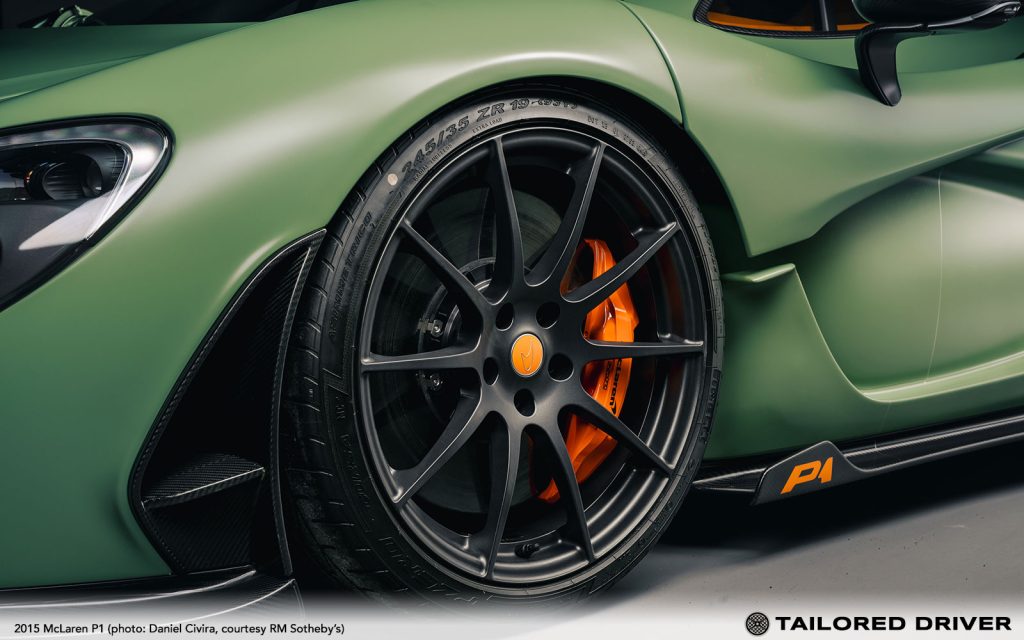
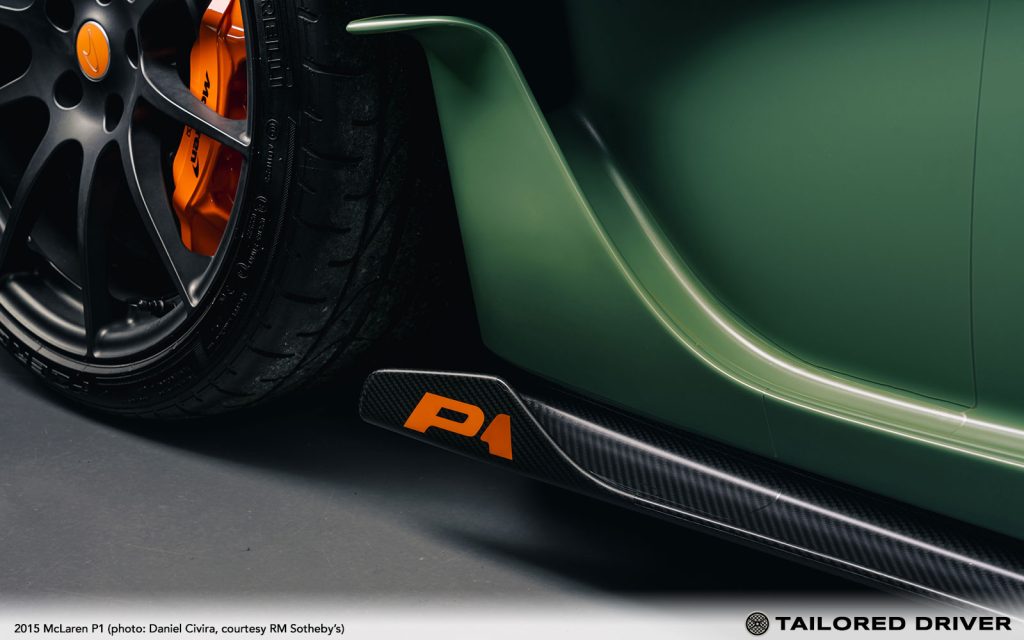
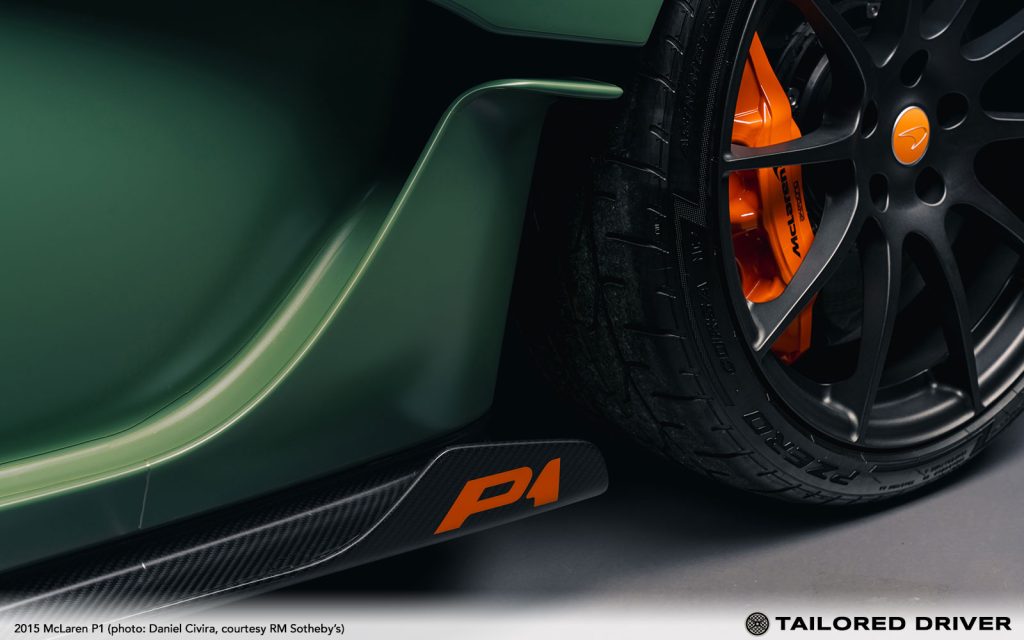
What: 2015 McLaren P1 Color: Unknown Matte Green VIN: SBM12ABB8FW000022 Mileage: 130 km, 81 miles from new Price at Time of this Writing: Sealed Bid CarFax: N/A Window Sticker: N/A Location: Dubai, United Arab Emirates Auction Listing:RM Sotheby’s
Okay, this is both not a North American spec car nor is it old enough for easy import. It’s so special though, we’re making an exception. We figure the motivated owner who can afford it likely isn’t terribly worried about importation and road registration in the U.S. or Canada. At least, that was the excuse we’re telling ourselves to add this car to our blog.
The P1 was McLaren’s first hypercar since the legendary F1. In its time, it teed up against the likes of the Porsche 918 Spyder and Ferrari LaFerrari. 375 cars were built, making it more exclusive than either the Porsche or the Ferrari.
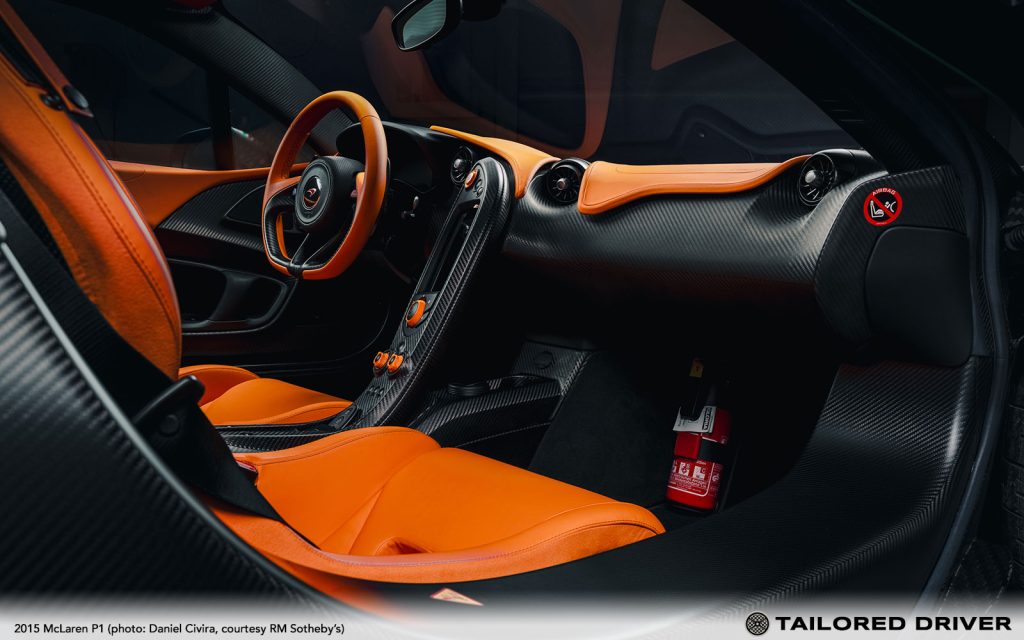
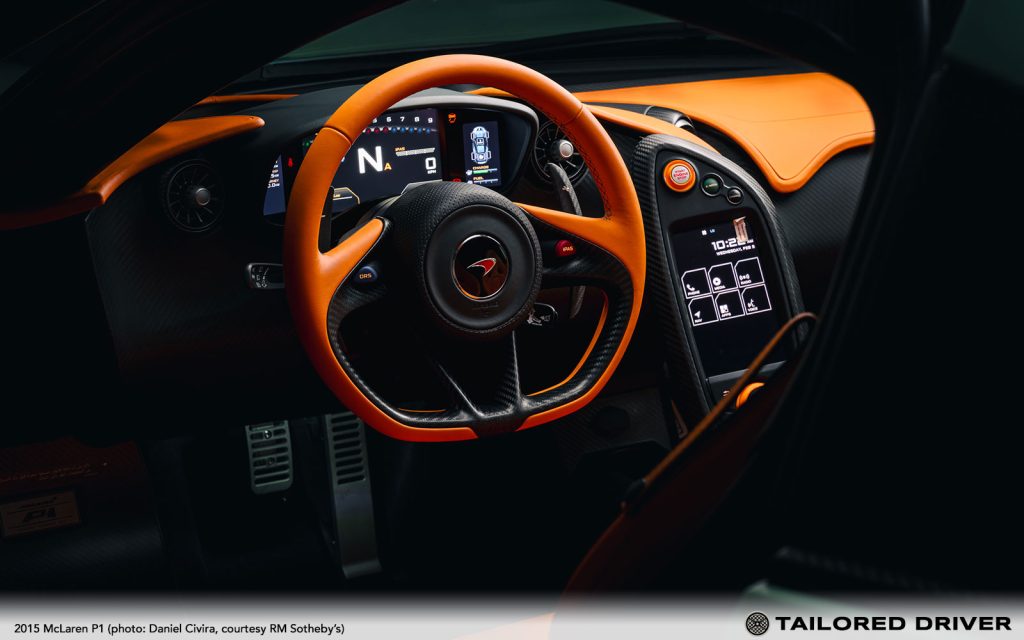
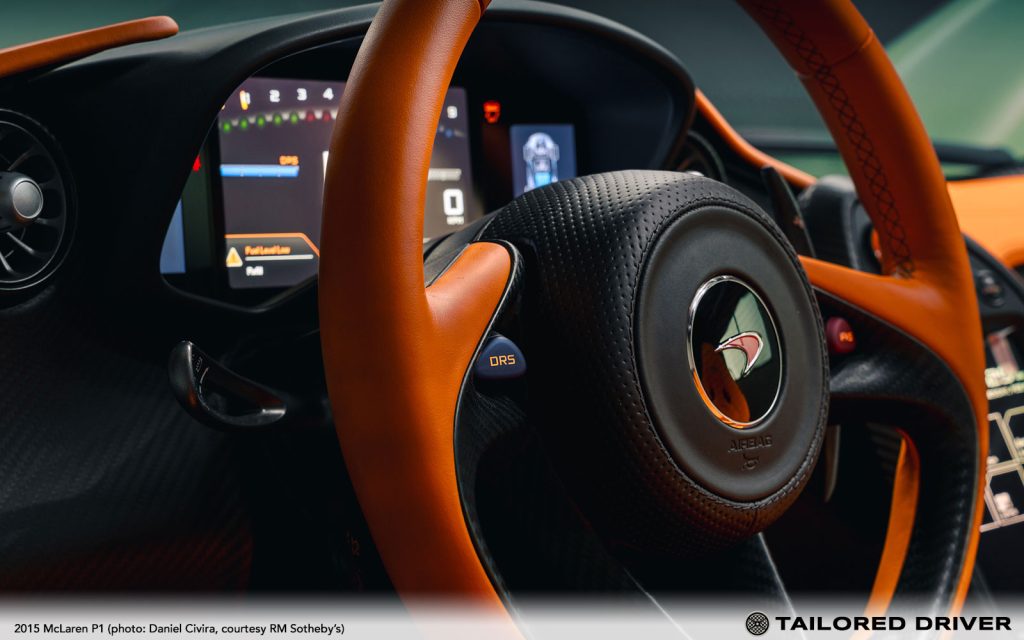
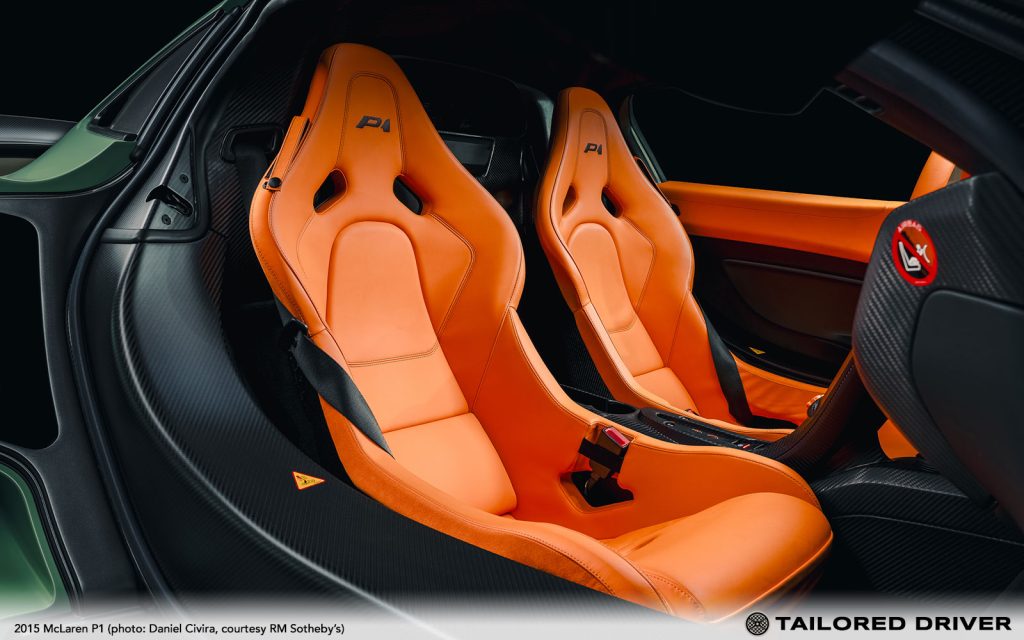
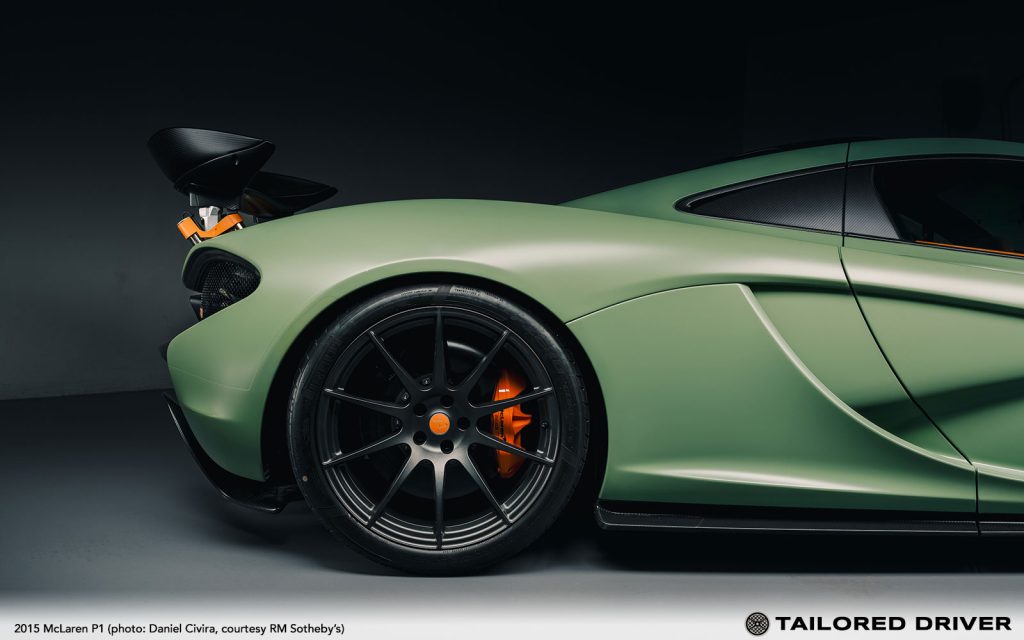
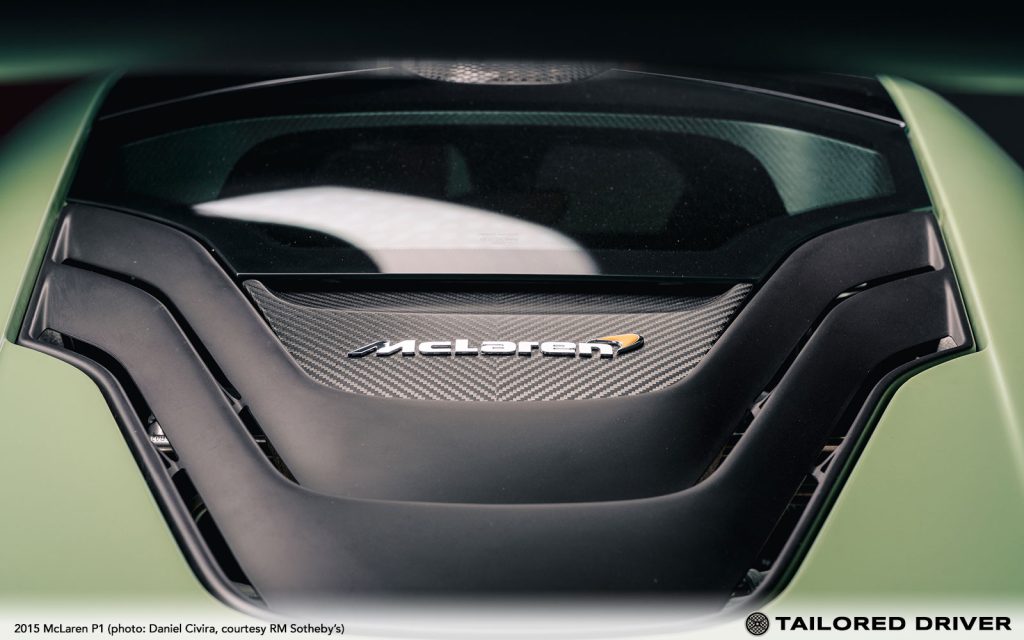
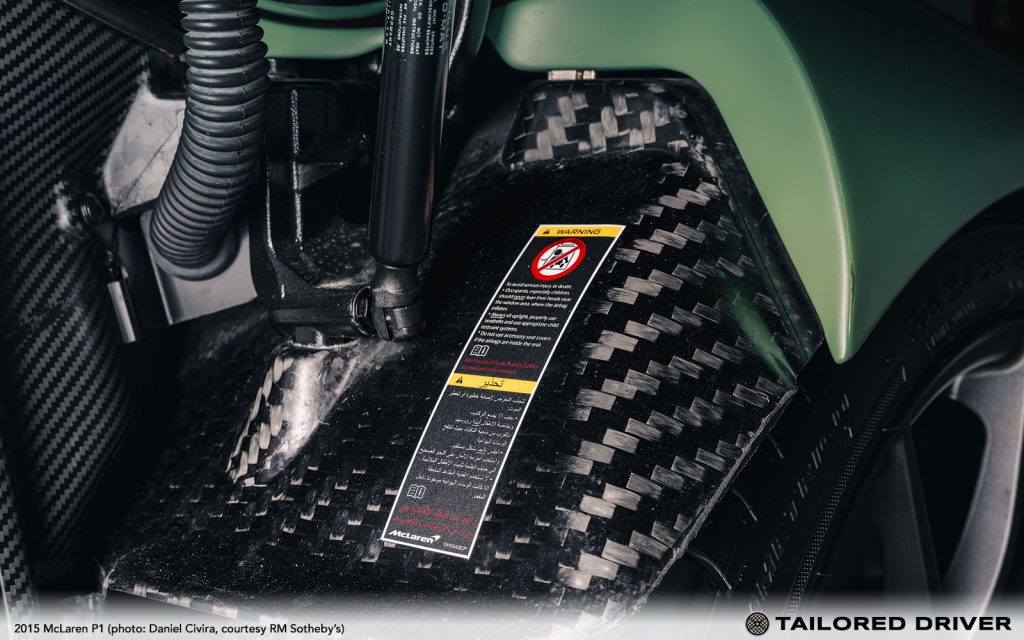
The car you see here was delivered new to Qatar, and is painted a non-specified shade of “Matte Green”. It’s one of “only a handful” to boast matte paintwork according to RM. And while that exterior is a bit subdued military spec, the interior is decidedly more rowdy in McLaren Orange. The orange continues to the P1 graphics and McLaren badges front and rear that are typically painted in red. Also orange are the brake calipers, wheel caps, tops of the rear spoiler, hydraulic rams, top of the engine and side skirts just aft the front wheels.
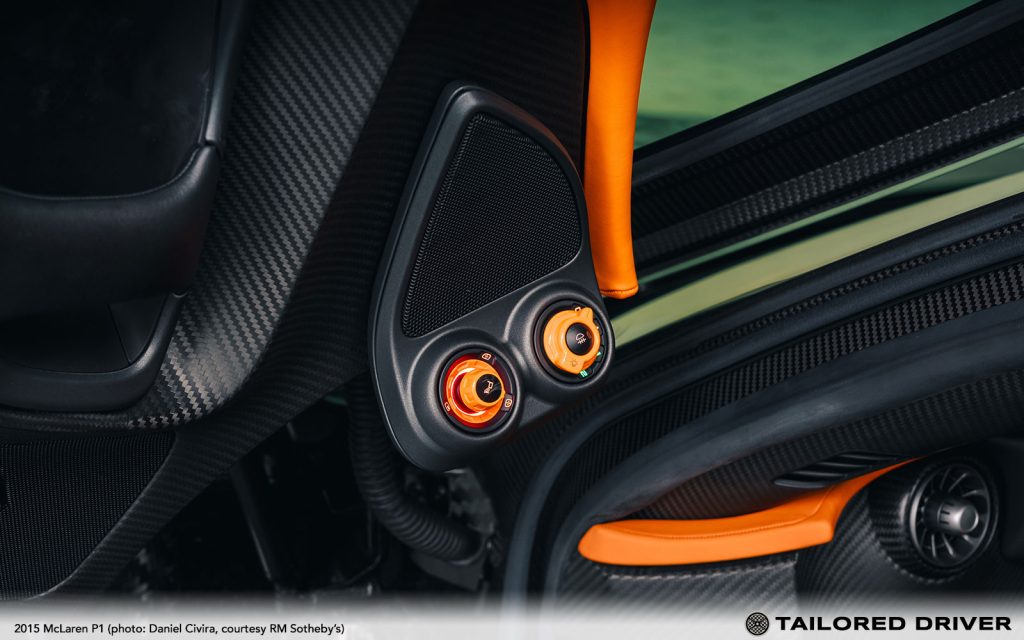
Beyond the seats, McLaren Orange accents continue through the interior including contrast stitching, P1 logos in the headrests, upper dashboard and steering wheel. Elements such as switchgear for the IRIS system, powertrain management, trim surrounding the start button and light and mirror switches on the driver’s side door are also color-matched in McLaren Orange.
The summer of 1995 saw Lanzante etched into the motorsport history books, securing victory at the 24 Hours of Le Mans with the #59 McLaren F1 GTR. Lanzante will honour this legacy with its most ambitious project to date.
‘Project 95-59’ – codenamed after the year and the race-winning Le Mans entry number – is a limited-run, bespoke-engineered model based on a McLaren platform, embodying the experiences and knowledge built up by the team across three decades. It has been designed with the driver at the centre of the action, with a focus on engineering, technical, ownership and useability. The result is a driver-focused three seat layout with luggage capacity, enhanced touring range and a target power-to-weight figure of 700hp per ton.
The driver-focused model has been penned by renowned automotive designer Paul Howse, whose impressive creative CV includes the aerodynamic shape of the iconic P1. This latest design has been exclusively previewed to a select group of VIP customers as the design and development programme accelerates towards a public debut at Goodwood Festival of Speed.
More details of this unique celebration will be announced in the coming weeks.
Follow Lanzante via @lanzantelimited on Instagram to be kept up to date.
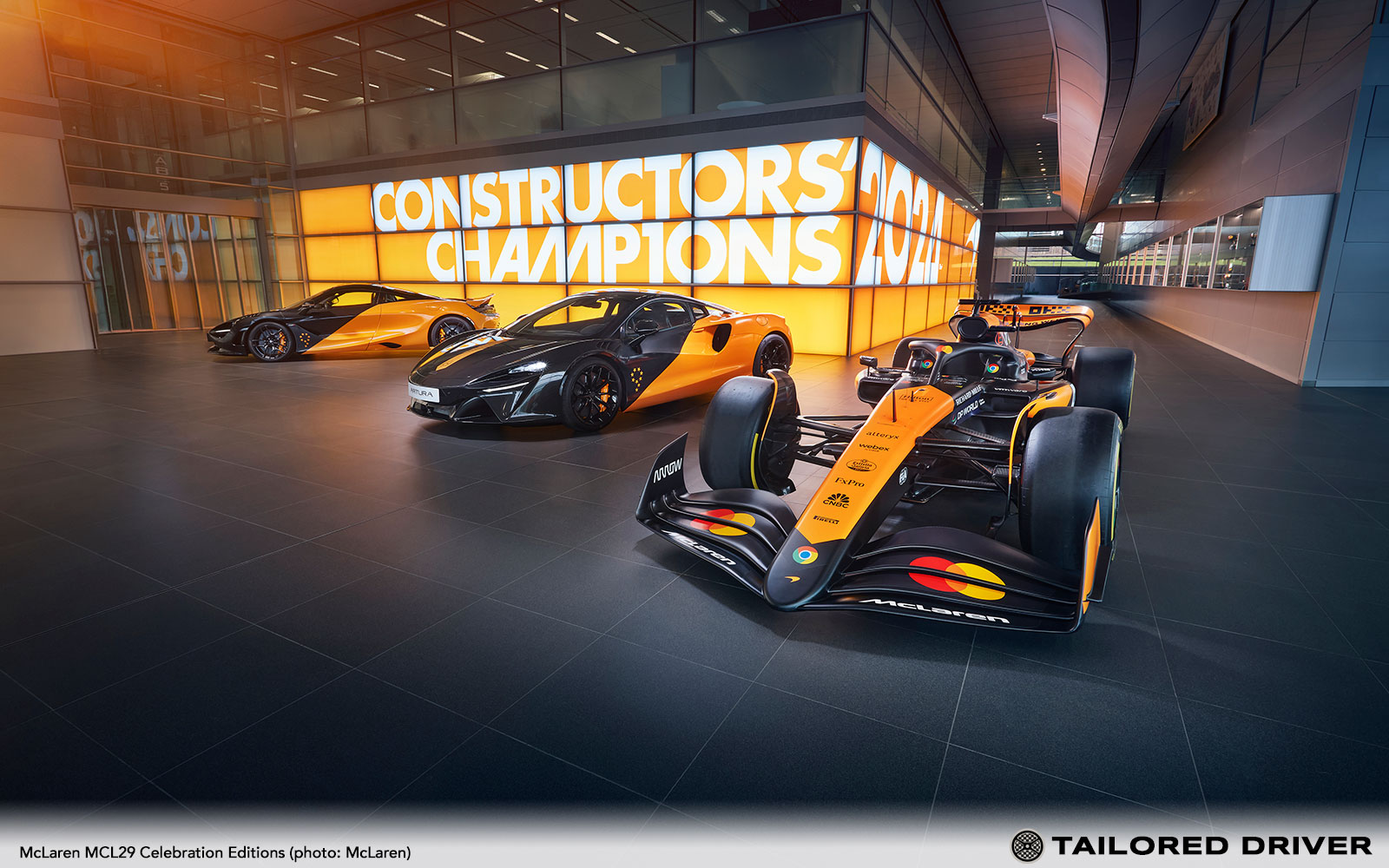
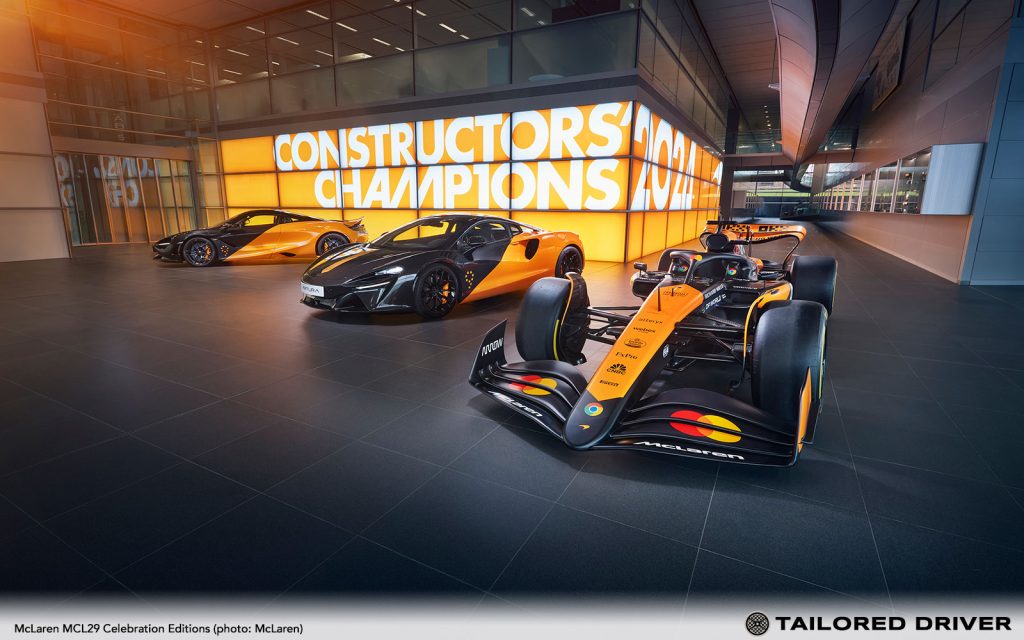
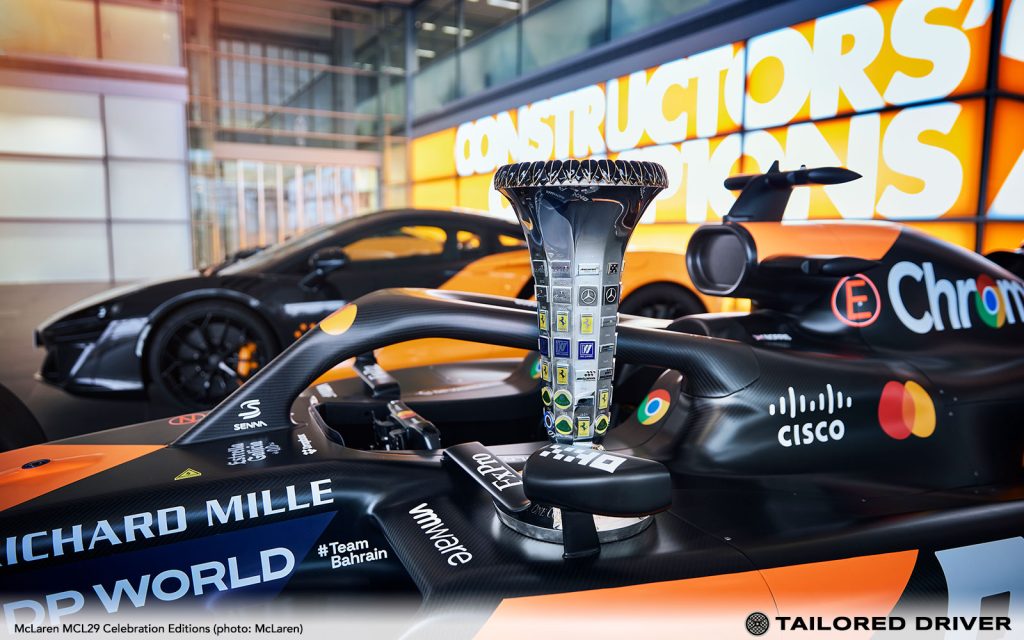
MCL38 Celebration Edition Artura and 750S mark McLaren winning its ninth Formula 1 Constructors’ World Championship
Just nine Artura and nine 750S MCL38 Celebration Edition cars globally
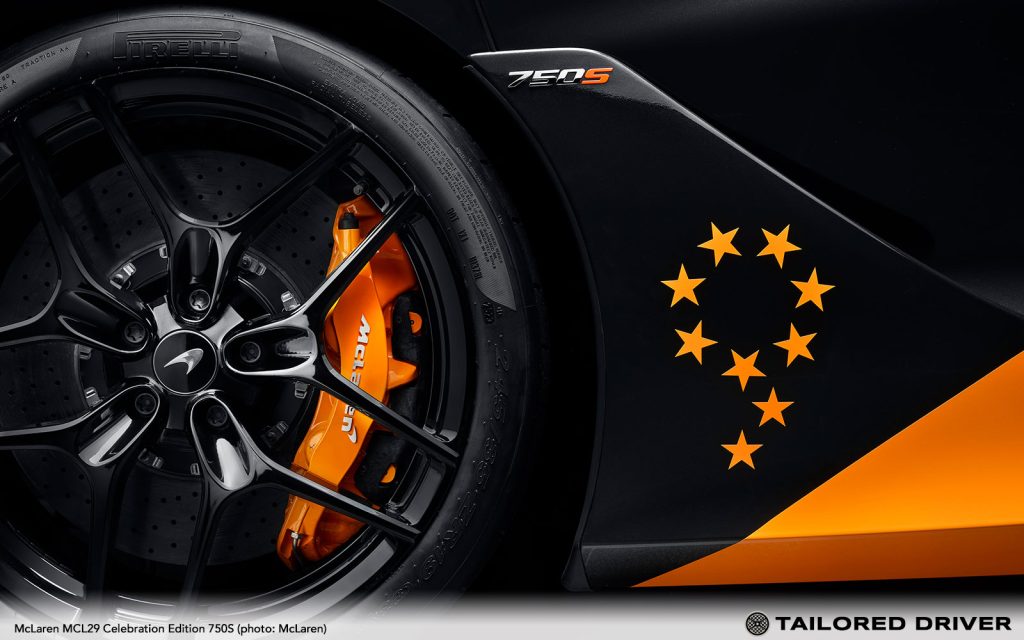
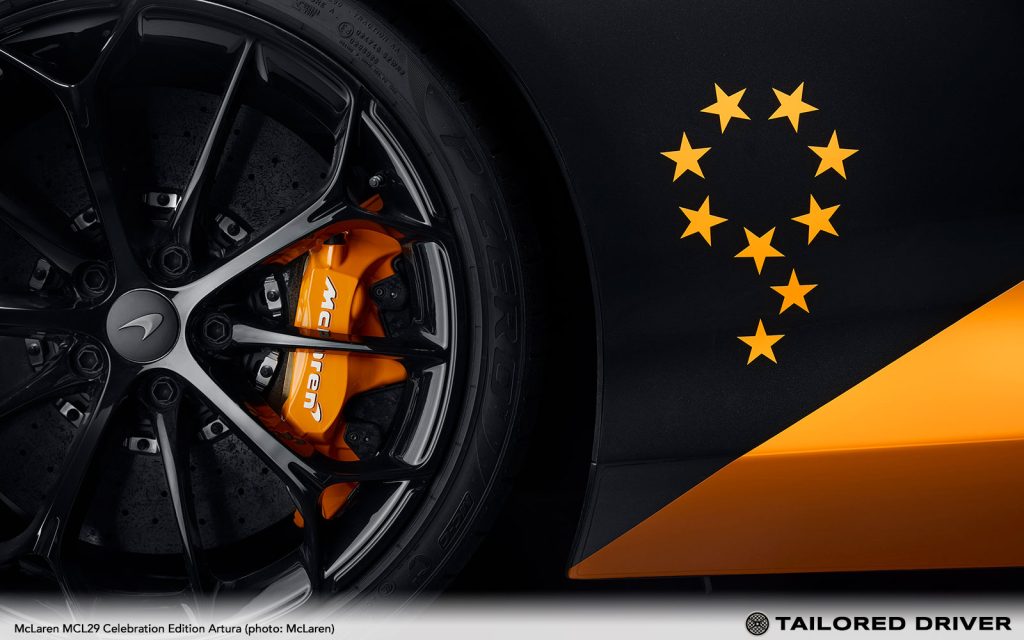
Bespoke exterior livery echoes McLaren Formula 1 colours of signature Papaya Orange and Anthracite, with branding of Champions’ Laurel and Nine-Star logos
Both models feature Visual Carbon Fibre Sill Covers personally signed by drivers Lando Norris and Oscar Piastri
‘MCL38’ dedication plaque on each car incorporates a piece of carbon fibre bodywork from 2024 MCL38 Formula 1 car
[source: McLaren]
Eighteen McLaren customers will have the opportunity to be a part of the brand’s commemorations of winning the 2024 Formula 1 World Constructors’ Championship, following confirmation that a very limited production run of MCL38 Celebration Edition supercars are to be built. Just nine Celebration Edition Arturas and the same number of 750S will be offered for sale, the number of each chosen to mark McLaren’s ninth Constructors’ Championship victory.
McLaren won the 2024 Formula 1 World Constructors’ Championship at the season-closing Abu Dhabi Grand Prix, having led the standings since the Azerbaijan Grand Prix in September. Drivers Lando Norris and Oscar Piastri accrued a combined eight pole positions and six Grand Prix victories with the McLaren MCL38 on their way to the team’s first such success since 1998.
The ultra-exclusive Celebration Edition cars are named in honour of the MCL38 2024 World Constructors’ Championship-winning Formula 1 car. Both models feature a bespoke livery curated by McLaren Special Operations, reflecting the Papaya Orange and Anthracite colourways that distinguish McLaren within the motorsport world and incorporating the chevron colour transition that has become synonymous with the brand. A Champions’ Laurel and ‘Nine-Star’ logo are proudly displayed, alongside additional orange accents including a bonnet stripe that features a Champions’ Laurel and brake calipers.
“The relentless pursuit of excellence is intrinsic to the McLaren mindset and in 2024 we demonstrated this with incredible success on both the track and the road. The achievements of Zak Brown, Andrea Stella, Lando Norris, Oscar Piastri and the entire McLaren Racing team in winning the Formula 1 Constructors’ Championship are beyond inspirational – and what better way to mark this than with an ultra-exclusive Celebration Edition of our award-winning Artura and 750S. Just nine examples of the Artura and nine of the 750S MCL38 Celebration Edition cars will be produced, each proudly commemorating McLaren’s most recent championship victory as well as delivering the exhilarating and unbeatable driving experience inherent in our world-class supercars.” Michael Leiters, CEO, McLaren Automotive
The interior of the MCL38 Celebration Edition is equally striking, with the Visual Carbon Fibre Extended Sill Cover on the driver’s side personally signed by Lando Norris and Oscar Piastri and Champions’ Laurel on the seat headrest section. Each example of the nine Artura and nine 750S MCL38 Celebration Edition carries a bespoke and rare souvenir – an MCL38 dedication plaque incorporating a genuine section of carbon fibre bodywork from an MCL38 Formula 1 car. An additional bespoke track record plaque, located in the bonnet storage area, lists the pole positions, race wins and fastest laps recorded by the MCL38 Formula 1 car during the victorious 2024 season.
The unique features include:
McLaren Artura MCL38 Celebration Edition
Bespoke painted livery
Visual Carbon Fibre Extended Sill Cover signed by Lando and Oscar and MCL38 Formula 1 car line graphic
Dedication plaque incorporating MCL38 Formula 1 car bodywork
Champions’ Laurel on headrest
Bespoke track record plaque
Papaya 12 o’clock steering wheel marker
McLaren 750S MCL38 Celebration Edition
Bespoke painted livery
Visual Carbon Fibre Extended Sill Cover signed by Lando Norris and Oscar Piastri, with MCL38 Formula 1 car line graphic
Dedication plaque incorporating MCL38 Formula 1 car bodywork
Champions’ Laurel on headrest
Bespoke track record plaque
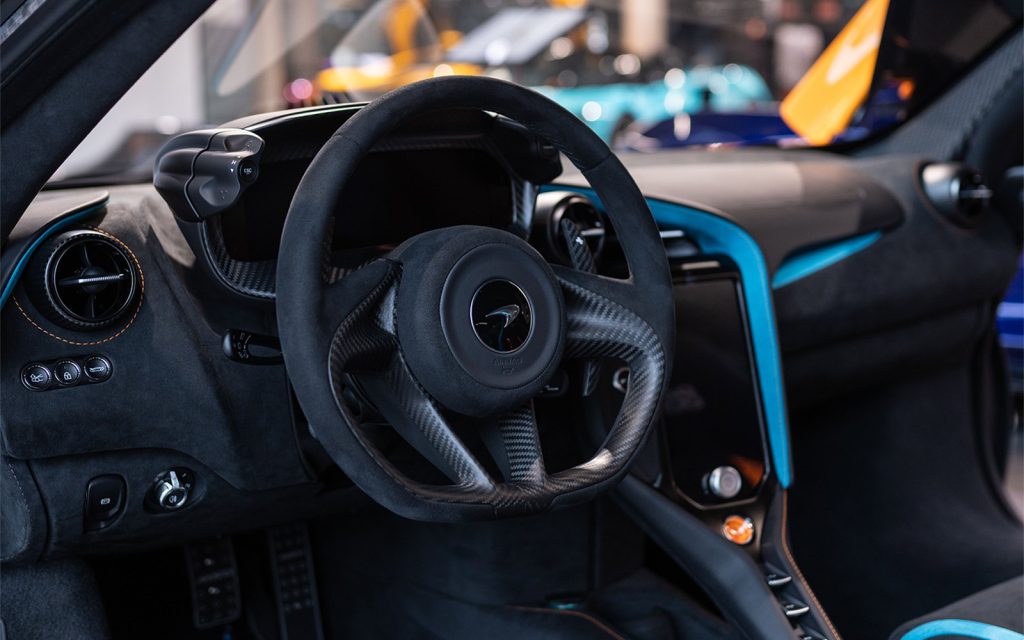
Visual carbon fibre steering wheel with papaya 12 o’clock steering wheel marker and papaya accent on the clasp
Papaya mirror stripe
Papaya stripe on the leading edge of the front splitter
Like the MCL38 Formula 1 car, both the Artura and 750S have been decorated with awards in 2024* and owners of the Celebration Editions will be able to experience the astonishing performance of a McLaren supercar, whether it is the Artura’s 3-litre V6 hybrid powertrain or the 750S’s 4-litre twin-turbocharged V8. Both models feature McLaren’s signature carbon fibre monocoque chassis and supreme aerodynamics, with the 750S also equipped with an active rear wing and Proactive Chassis Control III suspension system.
About McLaren Automotive: McLaren Automotive is a producer of ultra high-performance, lightweight supercars. Launched in 2010, the company is now the largest part of the McLaren Group.
Headquartered at the McLaren Technology Centre (MTC) in Woking, Surrey, England, McLaren Automotive is driven by the challenge of creating the world’s most exhilarating, engaging and benchmark setting vehicles. Leveraging over 60 years of history in authentic, racing performance, McLaren has delivered some of the most spectacular supercars ever made.
The company’s product portfolio of GTS, supercar, Motorsport and Ultimate models are retailed in over 40 markets around the world. Its cars are assembled by hand at the McLaren Production Centre (MPC), based on the same campus as MTC in Woking.
McLaren is a pioneer that continuously pushes the boundaries. In 1981, it introduced lightweight and strong carbon fibre chassis technology into Formula 1 with the McLaren MP4/1.
Then in 1993 it designed and built the legendary McLaren F1 road car. Built around a carbon fibre chassis, it established McLaren’s supercar DNA, realised for the 21st century in 2011 with the introduction of the McLaren 12C – McLaren Automotive’s first production car.
McLaren was the first to deliver a hybrid hypercar, the McLaren P1™, in 2013. Launching the Ultimate Series of vehicles, P1™ was followed by the McLaren Senna in 2018 and its track-only GTR derivative followed a year later. 2019 also saw the introduction of the Speedtail hybrid hyper-GT and at the end of the year the open-cockpit Elva roadster – the lightest McLaren road car ever – was announced.
McLaren’s LT models represent the ultimate expression of track performance in series production supercars. Limited in volume, they are distinguished by a name coming from the ‘Longtail’ version of the F1 GTR, which first raced in 1997. The LT designation was incorporated into McLaren Automotive nomenclature in 2015 with the arrival of the 675LT coupe and 675LT Spider. In 2018, the McLaren LT portfolio grew with the announcement of the 600LT, and in 2020 and 2021 respectively the 765LT coupe and 765LT Spider were introduced.
Also in 2021, the company unveiled its all-new high-performance hybrid supercar, the McLaren Artura. The Artura is the first McLaren to benefit from the McLaren Carbon Lightweight Architecture (MCLA). The MCLA is designed, developed and manufactured at the McLaren Composites Technology Centre in the Sheffield region of England using world-first processes and will spearhead the brand’s electrified future.
2022 saw McLaren announce the Solus GT, a single-seat, closed-cockpit track car which brought to life a futuristic concept that was originally created for virtual gaming.
In 2023, McLaren unveiled its lightest and most powerful series-production supercar, the 750S – a thorough development of the award-winning 720S supercar. McLaren also introduced the new GTS, replacing the McLaren GT.
The McLaren Artura Spider was revealed in early 2024 as the brand’s first high-performance hybrid convertible. Its introduction was part of a major model year uplift for the Artura nameplate, and meant McLaren’s series-production line-up of GTS, new Artura and 750S had been introduced within 12 months of each other.
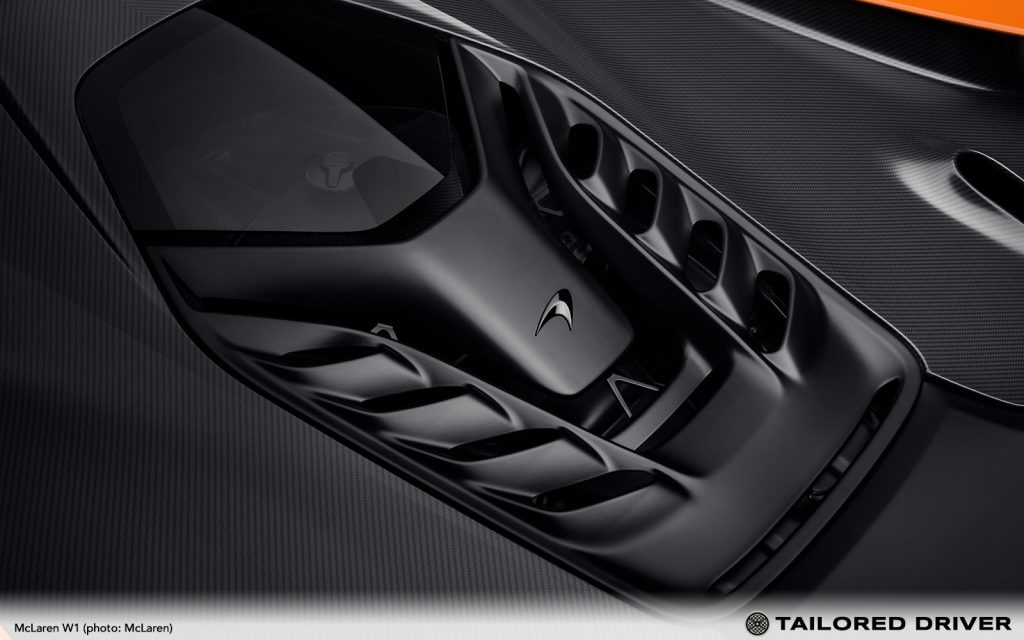
A new chapter in the McLaren ‘1’ car story was announced in October 2024, with the reveal of the McLaren W1 supercar. A clear successor to the McLaren F1 and McLaren P1TM, the W1 is the manifestation of McLaren’s World Championship mindset, with epic power and performance and new heights of dynamic and aerodynamic excellence.
McLaren Automotive also chooses to partner with like-minded, world-leading companies and organisations who push the boundaries in their respective fields. These include Ashurst, Bowers & Wilkins, Dynisma, Gulf, Pirelli, Richard Mille and Tumi.
About McLaren Group: The McLaren Group is a global leader in high-performance supercar production and elite motorsports.
Founded in 1963 by racer, engineer and entrepreneur Bruce McLaren, the Group is formed of McLaren Automotive, which hand-builds lightweight supercars and races them in global series, including the World Endurance Championship; and a majority stake in McLaren Racing which competes in six racing series.
The team competes in FIA Formula 1 World Championship, the NTT INDYCAR SERIES, the ABB FIA Formula E World, the Extreme E Championship as the NEOM McLaren Extreme E Team, and F1 Academy with ART Grand Prix, and the F1 Sim Racing Championship.
The Group is globally headquartered at the iconic McLaren Technology Centre in Woking, Surrey, England.
With a reputation for innovation and technological excellence, McLaren is one of the UK’s largest independent companies.
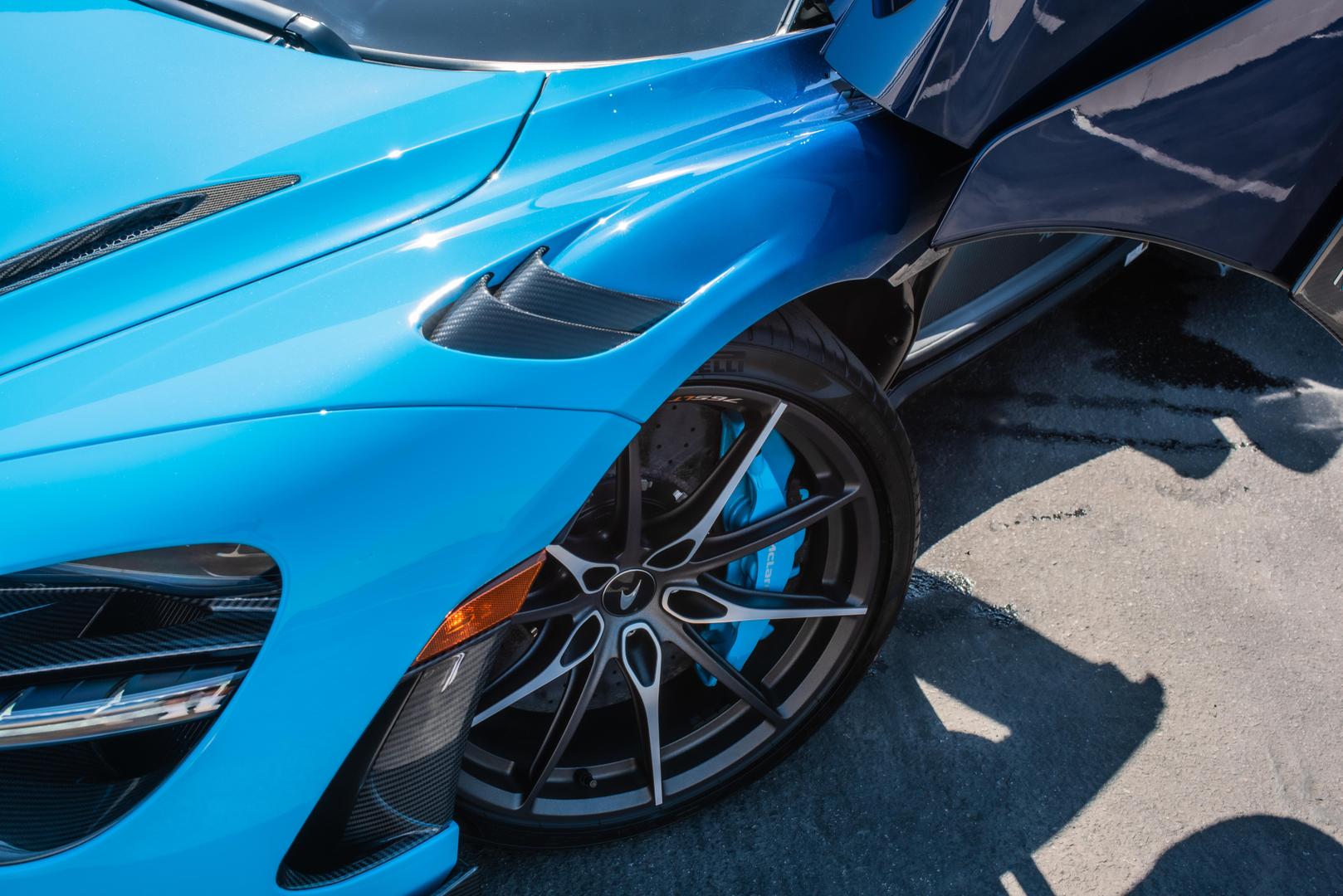
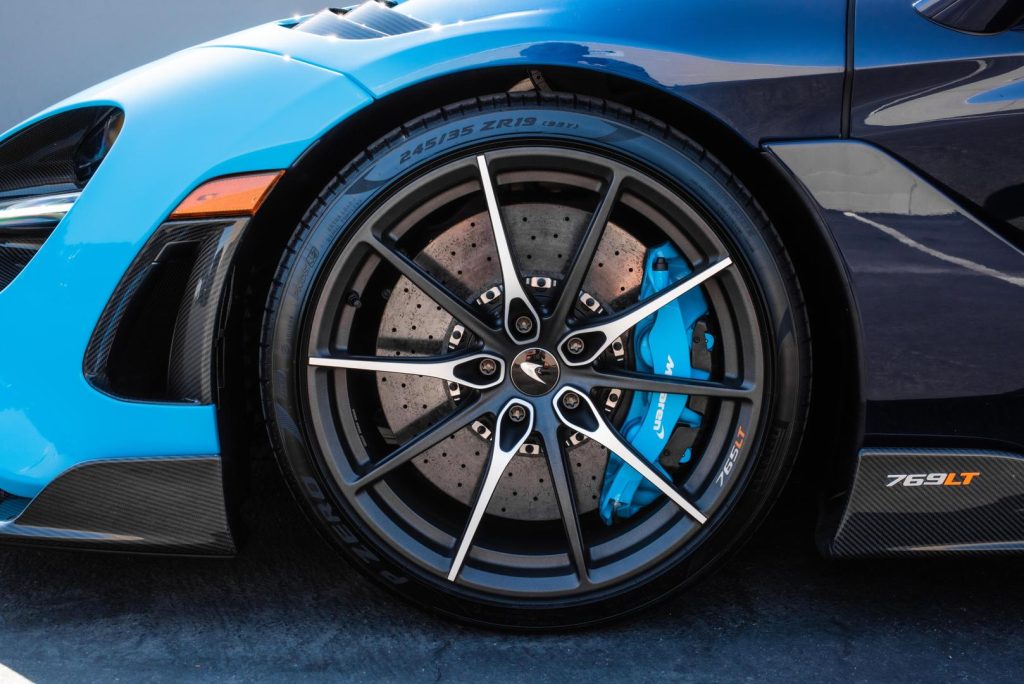
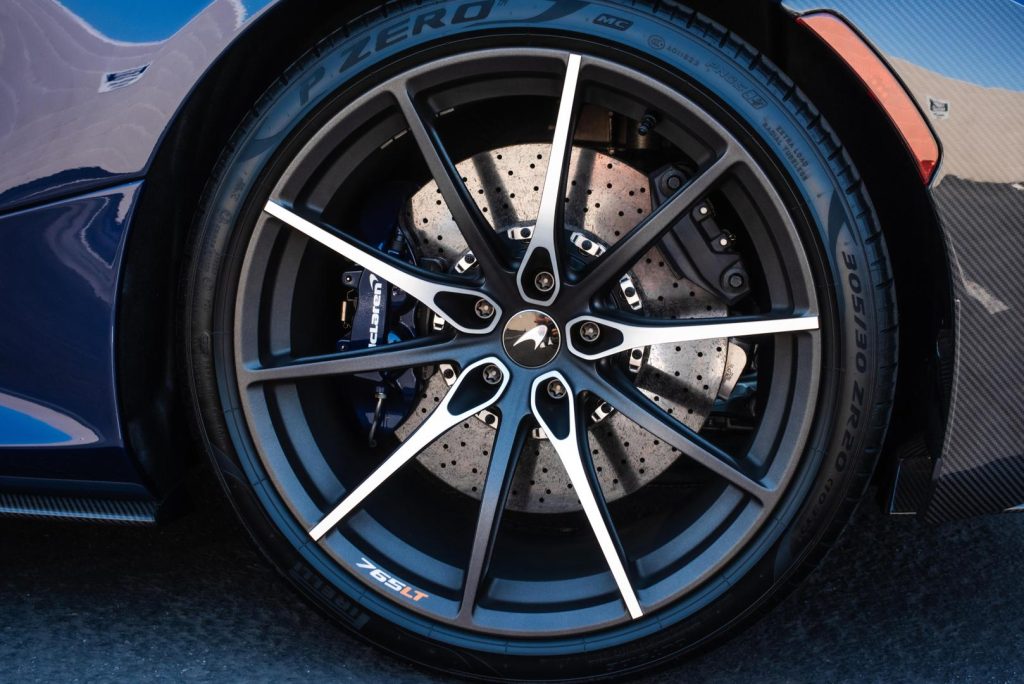
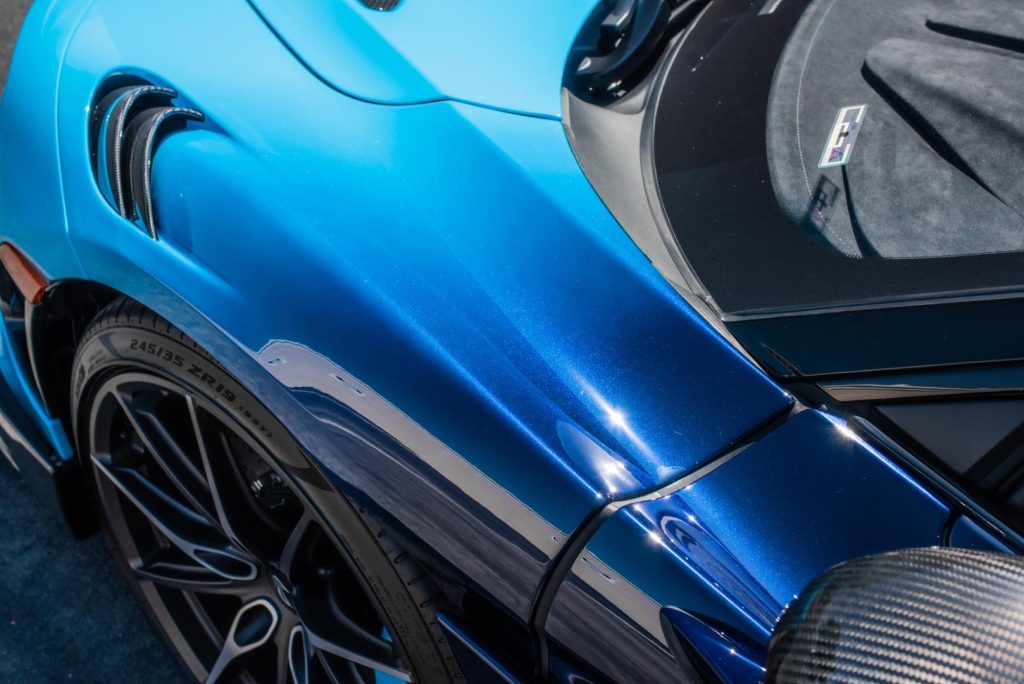
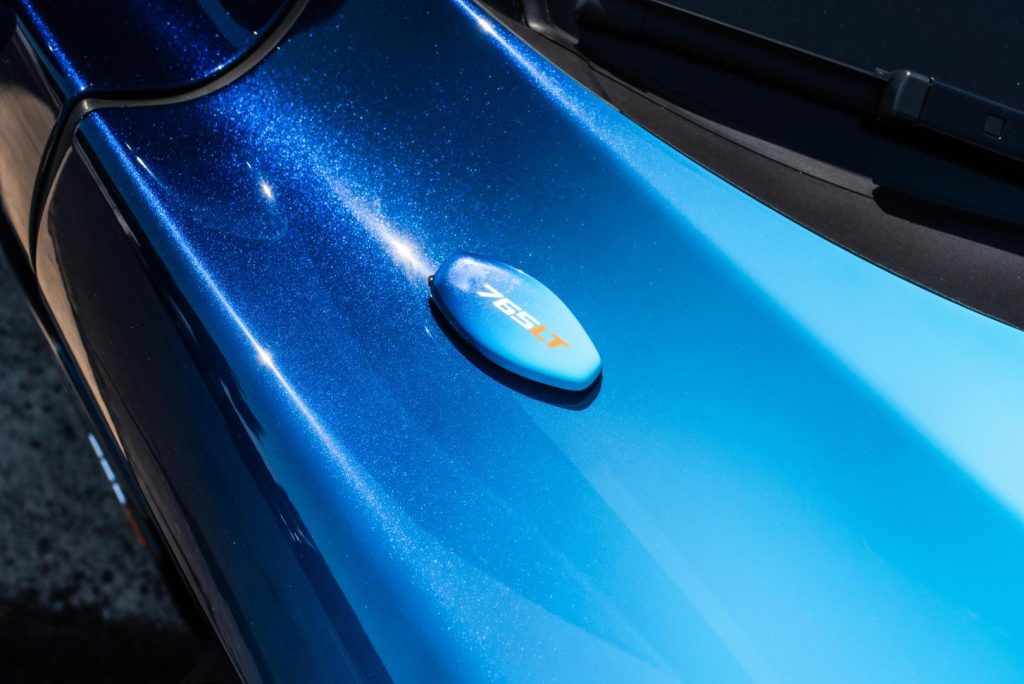
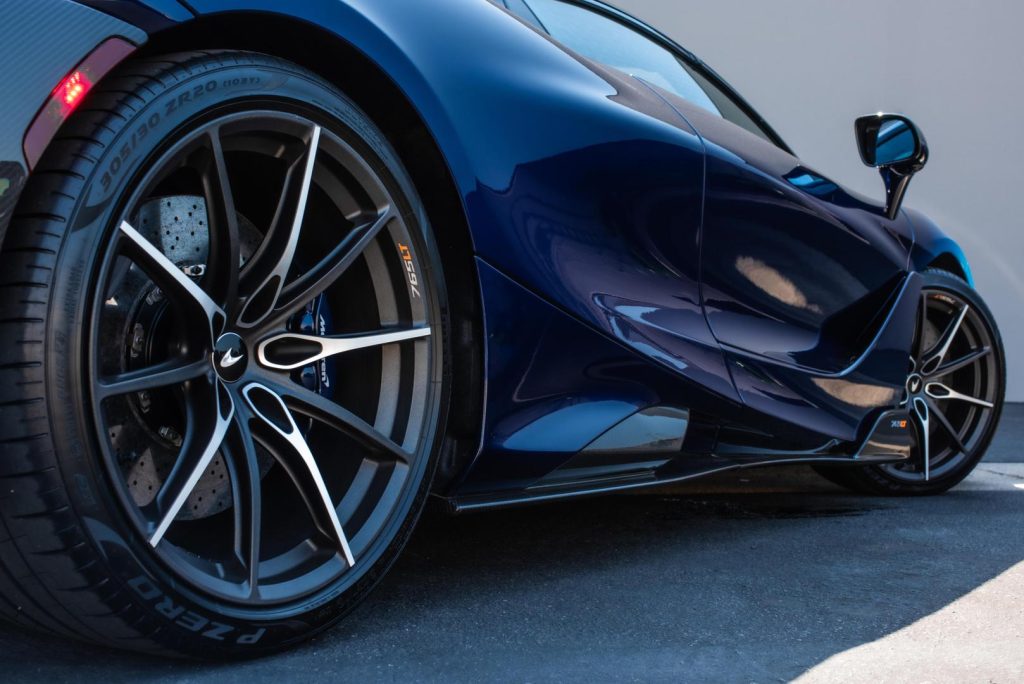
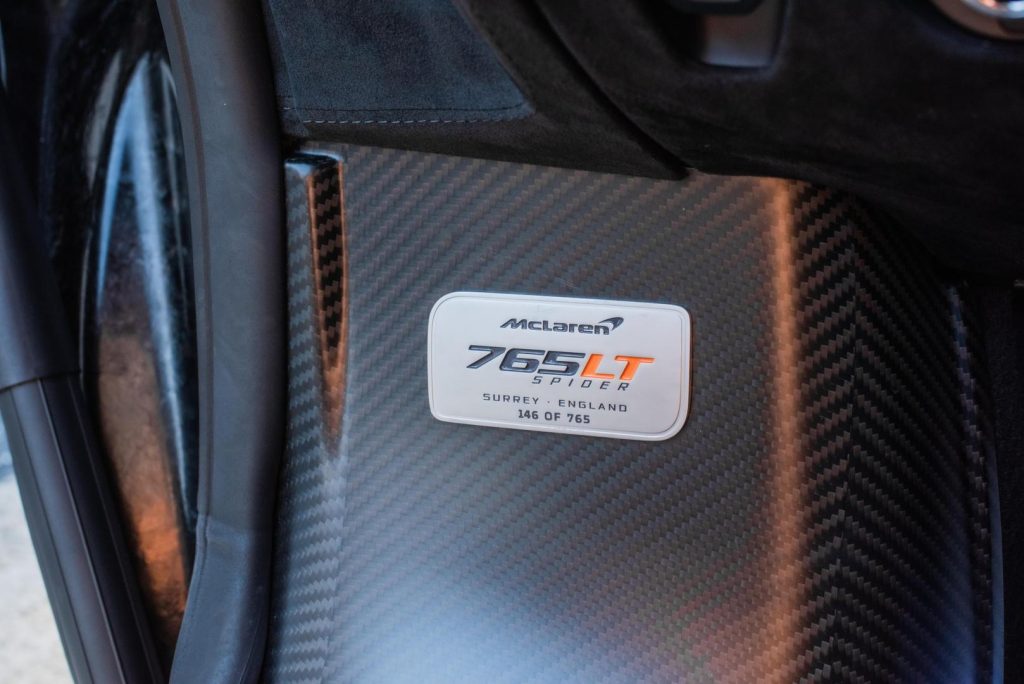
McLaren Special Operations will do just about whatever you want, and the original Tailor of this McLaren 765LT (VIN: SBM14SCA9NW765146) made it their mission to push the limits. The result is a vehicle with not just one, but two bespoke MSO paint hues, and a claimed $40,000+ in MSO touches. Mission accomplished.
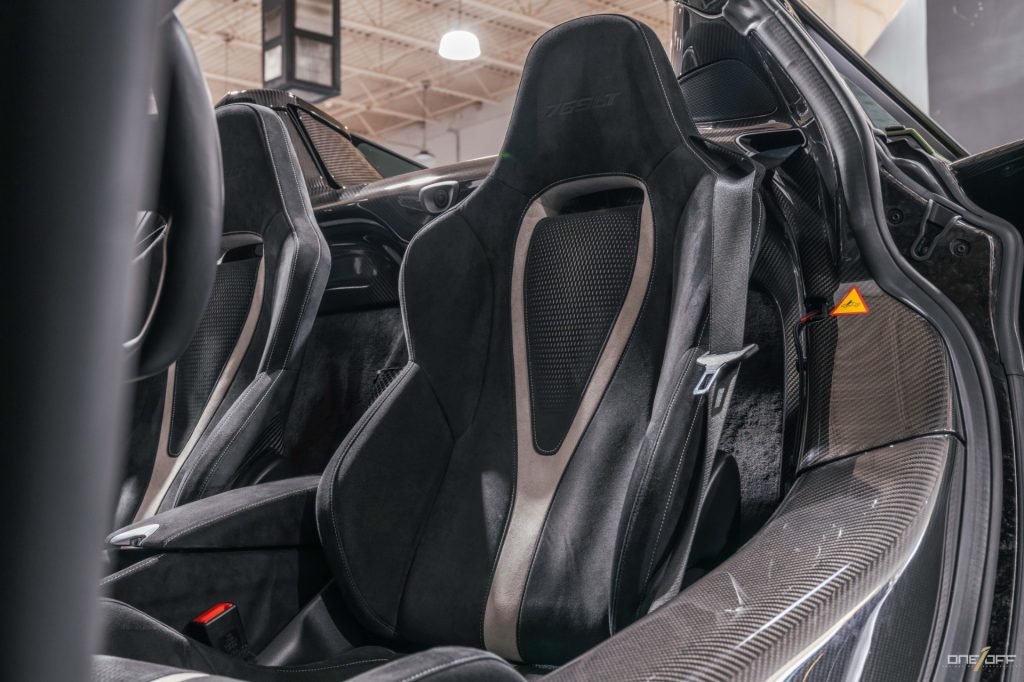
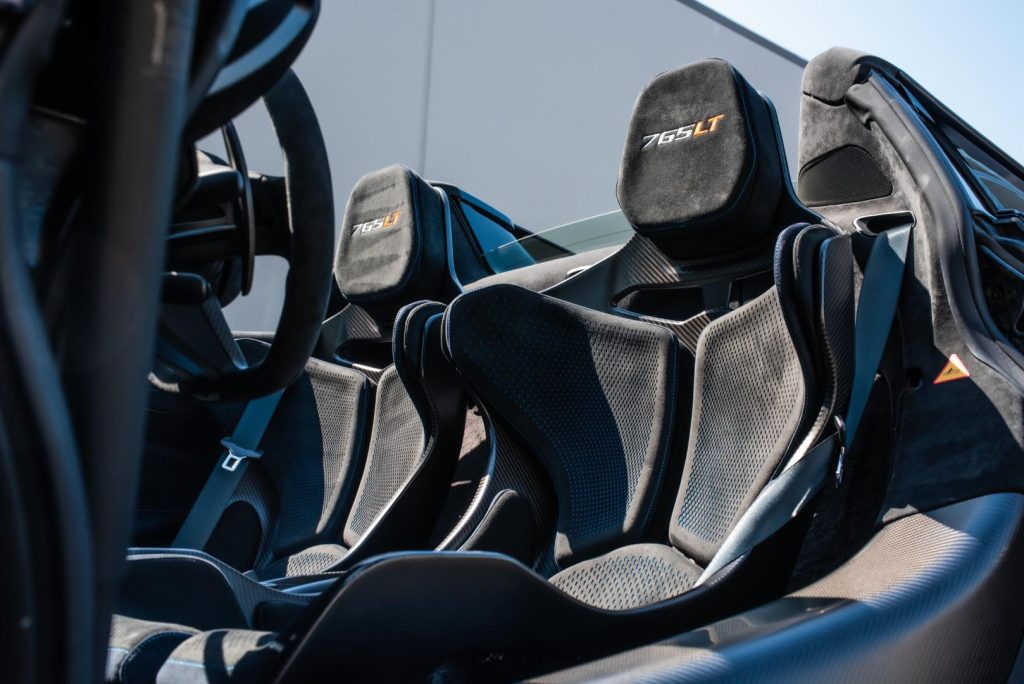
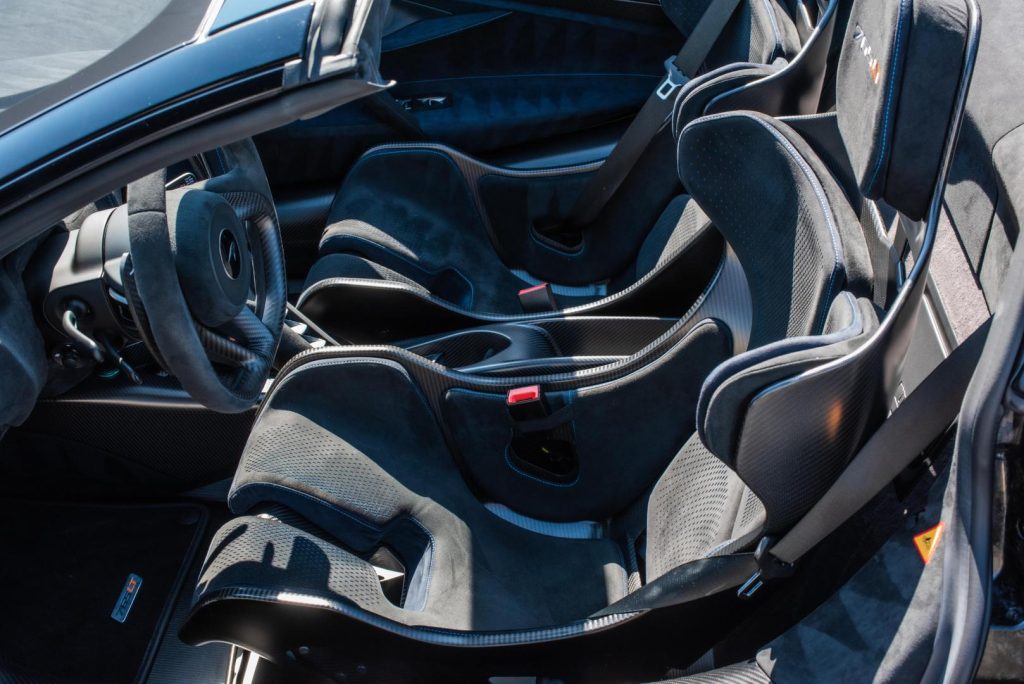
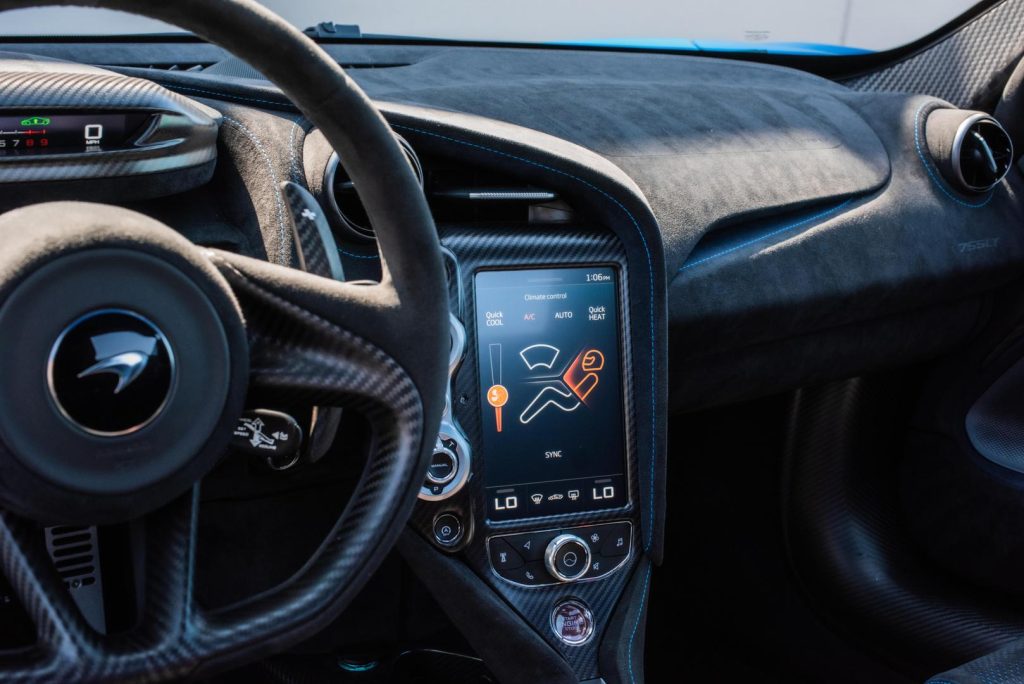
This McLaren 765 LT features MSO Velocity paint, in this case fading from the bright MSO Fistral Blue to the more subdued MSO Atlantic Blue, with matching MSO painted brake calipers (Fistral up front, Atlantic out back), which we can confirm was worth the risk. It’s an absolutely stunning finish, making it all the better that this Tailor kept the interior tame. Black vented fabric on matte Carbon Fiber Racing Seats was the move, and MSO stitching on the headrest with model designation is a tasteful play.
In all, the McLaren 765LT you see here carried an original sticker of just over half a million dollars. Fortunately for someone, this Tailored Driver could be theirs for $639,765, representing an appreciation of about $80/mile experienced by the prior owner. We’d say that’s money well spent.
Get all the details on this Tailored Driver, by checking out the full listing here.
Ground-breaking successor to two of the greatest supercars of all time – the McLaren F1 and McLaren P1TM – opens new chapter in McLaren’s famous ‘1’ car lineage
Created with McLaren’s World Championship mindset; underpinned by the principles that define a real supercar
Epic all-new V8 hybrid powertrain with 1275PS – the highest power output of any McLaren ever and greater than all core competitors
All-new MHP-8 V8 combustion engine develops 928PS – at 233PS per litre the highest-ever output from a McLaren engine – and revs to 9,200rpm
Power-dense E-module develops 347PS; integrates electric motor and control unit for reduced weight and optimised packaging
World-beating McLaren lightweight engineering delivers vehicle weight of 1,399kg, enabling best-in-class power-to-weight ratio of 911PS/tonne – the highest ever for any McLaren supercar
Formula 1-inspired ground effect aerodynamics and McLaren race mode combine to deliver world-first, radical ‘road to track’ character transformation, lowering ride height by 37mm at the front and 17mm at the rear and engaging up to 1,000kg of downforce
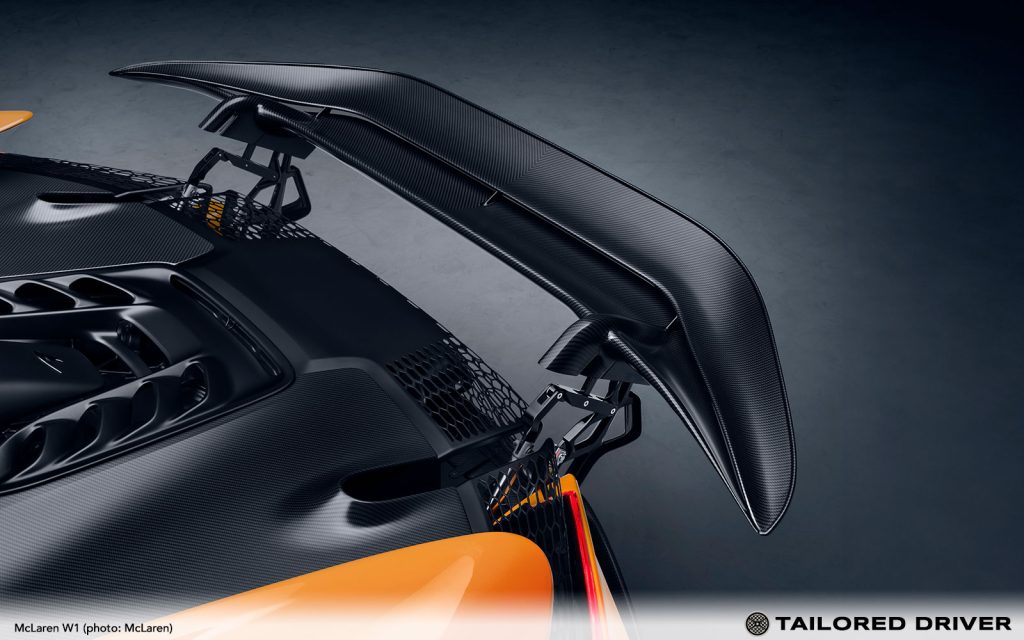
The most advanced active aero features ever in a road-legal McLaren, with revolutionary McLaren Active Long Tail rear wing that extends rearwards by 300mm just one of multiple patents filed for aerodynamic innovations
New W1 is fastest-accelerating and fastest-lapping road-legal McLaren ever, achieving the astonishing combination of being quicker than a Speedtail to 300km/h (186mph) in a straight-line and 3 seconds a lap ahead of a McLaren Senna on McLaren’s reference track
Incredible acceleration of 0-200km/h (0-124mph) in 5.8 seconds and 0-300km/h (0-186mph) in less than 12.7 seconds; maximum speed electronically limited to 350km/h
Pure driver control and engagement from McLaren trademark rear-wheel drive with 1275PS and 1340Nm made possible by extraordinary Formula 1 know-how that only McLaren as a racing company can deliver
New McLaren Race Active Chassis Control III suspension with Race mode ensures unparalleled breadth of capability across both road and track
Supreme feel and feedback from McLaren Hydraulic Performance Steering and hydraulic braking to create real supercar sensation
New 8-speed transmission with E-reverse, coupled with new hydraulic electronic differential
Bespoke McLaren Aerocell carbon fibre monocoque and McLaren Anhedral Doors optimised for aerodynamic performance; constructed using motorsport techniques
Formula 1-inspired front suspension is mounted directly into the Aerocell with externally visible front arms and key components 3D-printed for weight optimisation, including the use of titanium components
Unmatched supercar driver ergonomics and best-in-class visibility on road and track
Unique seating design integrated into the Aerocell monocoque for the purest driver connection to the car
Pedals, steering wheel and primary controls move to fully embrace driver within the cockpit environment
Virtually unlimited bespoke options available via MSO, including new McLaren InnoKnit tailored interior material
Comprehensive warranty (4-year vehicle; 6-year HV battery) and 4-year service plan complement unique ownership experience
Pricing from circa £2.0 million including taxes in the UK, with the final cost dependent on the level of MSO personalisation
Just 399 customer cars will be produced – and all are already customer allocated
[source: McLaren]
The new McLaren W1 is the ground-breaking successor to two of the greatest supercars ever – the McLaren F1 and McLaren P1TM – and elevates the McLaren ‘1’ car lineage to new heights in every aspect of performance.
The Ultimate expression of a real supercar, the new W1 has been created according to the McLaren ethos of class-leading performance, informed by the core principles that underpin every McLaren supercar: epic power applied through cutting-edge aerodynamics and lightweight chassis technologies; the highest levels of dynamic excellence and the purest driver connection; the perfect driver environment, for all driving situations; and awe-inspiring visual and aural drama.
All of McLaren’s significant and renowned expertise in lightweight engineering and aerodynamic performance, inspired by years of racing innovation and the company’s World Championship mindset, was applied to W1. The engineering team behind the new McLaren Ultimate model have between them contributed to 16 McLaren Formula 1 World Championship titles across driver and constructor categories. This expertise as part of a bigger team has resulted in the most focused supercar that McLaren has ever built, but also one with a huge breadth of capability.
“The McLaren W1 is a celebration of both the excellence of the iconic McLaren F1 and McLaren P1TM and the manifestation of McLaren’s World Championship mindset. With our new Ultimate supercar, we are again pushing the boundaries of real supercar performance with an epic hybrid powertrain featuring our all-new MHP-8 V8 engine, the most advanced aerodynamic platform of any McLaren road car and extensive use of advanced lightweight materials. This allows us to engineer a supreme track driving experience from the same car that gives unparalleled driving enjoyment on the road.
“Formula 1-derived aerodynamics, pure rear-wheel drive and McLaren hydraulic performance steering showcase McLaren’s approach to purposeful innovation as a racing company that always delivers the best possible performance. It is therefore no surprise that the new W1 is our fastest-lapping and fastest accelerating road-legal car ever. It also provides the purest driver connection by remaining true to the principles that underpin the ultimate supercar driving experience. This really is a car that only McLaren could create.” Michael Leiters, Chief Executive Officer, McLaren Automotive
W1 is a supercar for all occasions; more than any other McLaren, it is equally at home on road and track and as the fastest-lapping and fastest accelerating McLaren road-legal supercar yet, is exhilarating to drive whatever the circumstances.
The spine-tingling driver enjoyment ensured by the W1’s revolutionary new high-downforce, low-drag, ground-effect aerodynamics design is further enhanced by the unique transformation process from Road mode to Race mode for track driving: W1’s ride height lowers (by 37mm at the front and 17mm at the rear) and a heave system stiffens the suspension. Front and rear active wings are deployed, with the McLaren Active Long Tail extending rearwards by up to 300mm to assist in generating the 1,000kg of downforce available in W1.
The all-new MHP-8 4.0-litre twin-turbo V8 engine that debuts in W1 is coupled with a power-dense E-module to deliver scintillating speed. The epic power of this all-new 1275PS High-Performance Hybrid powertrain and McLaren’s relentless dedication to lightweight engineering has resulted in levels of performance previously only attainable by track-only supercars and race cars.
Just as the W1 name celebrates McLaren’s World Championship mindset, the date of the public reveal of the car was also chosen with this in mind: October 6th 2024 is the 50th anniversary of Emerson Fittipaldi sealing McLaren’s first Formula 1 Drivers and Constructors World Championships.
Epic performance from V8 High-Performance Hybrid powertrain with pure RWD At the heart of W1 is an all-new High-Performance Hybrid powertrain, comprising McLaren’s all-new MHP-8 V8 combustion engine, an all-new E-module (integrating a radial flux electric motor and motor control unit), and an 8-speed transmission with E-reverse. Power and torque are to the rear wheels only, through an E-differential.
The 928PS of the new V8 and 347PS of the E-module combine to produce 1275PS, giving W1 the highest-ever power output of any McLaren and putting it above all core competitors. Engineered for epic power delivery and breathtaking performance, the powertrain combines with a vehicle weight of 1,399kg to deliver an astonishing power-to-weight ratio of 911PS/tonne for W1 – the highest-ever for any road-legal McLaren and more importantly, best-in-class.
This huge amount of power, together with total torque of 1340Nm and instant throttle response from the E-module, gives W1 astonishing acceleration figures: 0-100km/h takes 2.7 seconds, 0–200km/h (124mph) is possible in just 5.8 seconds and 0-300km/h (186mph) can be achieved in under 12.7 seconds.
McLaren has challenged convention by choosing to retain the purity of a rear-wheel-drive chassis in a car with this much power and torque, at a time when competitors are turning to front-wheel-drive assistance. Only McLaren could successfully achieve acceleration of this magnitude with dynamic performance to match in a rear-wheel-drive supercar, thanks to its extensive heritage in Formula 1 which exclusively deploys power through the rear wheels to reach the pinnacle of performance and ultimate steering precision.
McLaren’s all-new MHP-8 flat plane crank 90-degree V8 engine is central to the delivery of the W1’s epic power. Designed from the outset to be at the centre of the very best electrified powertrains, the twin-turbocharged 3,988cc unit has a lightweight block, cylinder heads and pistons in aluminium and showcases McLaren’s expertise in engineering combustion engines that set new standards – for example, plasma spray coated cylinder bores are employed to allow engine speeds of up to 9,200rpm.
A 350bar Gasoline Direct Injection (GDI) system and port fuel injection extend the performance scope of the MHP-8 engine without adversely affecting emissions, enabling the highest-ever specific power output in a McLaren – a massive 233PS per litre.
The twin-scroll turbochargers in W1 are optimised to deliver higher peak power and torque than previous components, available throughout the rev range and improved response from as low as 2500rpm.
The exhaust features tubular manifolds that are engineered to maximise driver engagement as well as performance, with long, equal-length runners tuned to build sound to a crescendo as the engine speed approaches its 9,200rpm electronic rpm limit.
The motorsport-derived E-module that works in combination with the combustion engine is mounted to the side of the transmission and contributes up to 347PS. Comprising a radial flux E-motor and integrated Motor Control Unit – an engineering approach similar that taken in IndyCar racing – the E-module is a masterclass in maximising efficiency while minimising package volume and weight, The whole unit weighs just 20kg and further advantages include reducing coolant volume, low-voltage and high-voltage connections and seals. The sealed unit improves serviceability with a dry interface outside of the transmission unit.
The E-motor element is capable of spinning up to 24,000rpm has a specific output of 23PS/kg, which is directly comparable to Formula 1 E-motors.
The E-module is powered by a 1.384kWh battery, which together with the management unit and power distribution unit is enclosed on a structural carbon fibre floor housed within a cavity in the carbon fibre monocoque, located as low as possible to benefit vehicle centre of gravity.
The motorsport-derived battery cells are designed to prioritise high power outputs to the E-module, increasing throttle response and boosting overall power to the levels needed to deliver the eye-watering levels of performance that W1 reaches. Even with this focus on maximising power, the W1 can be driven in zero-emission, electric-only mode for up to 2km (1.6 miles).
The battery state of charge is managed to maintain a minimum level of charge to crank the engine on vehicle start-up, power for the reversing function and a reserve for when the car remains parked for extended periods.
In line with McLaren’s commitment to minimising weight, the total weight of hybrid components has been reduced by 40kg compared to the McLaren P1TM while delivering almost double the electric power. Further weight is saved by the absence of engine ancillaries including the alternator, starter motor and additional pipework required for a conventional HVAC system.
Born from Formula 1-inspired ground-effect aerodynamics McLaren has been synonymous with aerodynamic innovation and excellence since its very beginnings, with Bruce McLaren himself always determined to push for any advantage offered by new ways of managing airflow to balance lift and drag in the most efficient way possible. The 1967 championship-winning McLaren M6A Can-Am racecar employed ground effect aerodynamics with great success and while it was another decade before the technology came to Formula 1 – and the 1990s before the McLaren F1 showed how effective it could be in a road car – ground effect remains a significant advantage as part of an overall aerodynamic package for those car makers who can master it.
It is no surprise then that the new McLaren W1’s striking design is defined by aerodynamic requirements, with McLaren’s engineers focusing on combining the high downforce and low drag that ground-effect innovations provide to the foundations for the new Ultimate McLaren’s extraordinary abilities.
The aerodynamic platform of W1 is the most advanced ever in a McLaren road car, the result of 350 hours of wind tunnel sessions with 5000 points tested. The concept begins with the Aerocell monocoque, which is shaped to facilitate full ground effect aerodynamics. Featuring integrated seating – which saves almost 70mm in wheelbase requirement – and raised footwells with an adjustable pedal box and steering to ensure the optimum driving position, the Aerocell is unique to W1, which also features the highest number of aerodynamic and active surface areas of any McLaren.
The Aerocell also incorporates fixings for McLaren’s first-ever Anhedral doors. The decision to adopt this door concept was dictated by aerodynamic requirements demanding a door design that is hinged only from the roof. In conjunction with the reduced-size side window drop glass, the McLaren Anhedral Door allows optimisation of airflow from the front wheel arches into the high temperature radiators, providing extra cooling space that allows the size of the radiators required to cool the powertrain to be reduced, optimising packaging and saving weight. The fact that the door shape is reminiscent of the bodyside of the McLaren MCL38 Formula 1 car is also a neat visual signature.
The W1 builds on the Formula 1-inspired aerodynamic innovation that first distinguished the McLaren P1TM from its competition and has been honed in subsequent McLaren cars. The attention to aerodynamic requirements in W1 even extends to the powertrain, which is inclined by 3 degrees to accommodate the car’s high-downforce rear diffuser.
The key to W1’s duality of dynamic character – offering a sublime driving experience on road and track alike – is McLaren Race mode. When deployed, this engages shape-shifting aerodynamic technologies to enable world-best, radical ‘road to track’ character transformation. Uniquely in W1, much of the downforce is achieved using all of the underbody for ground effect, with this maximised when Race mode is selected.
The lowering of ride height – by 37mm at the front and 17mm at the rear – and deployment of active front and rear wings is not just theatre: in Race mode W1 is capable of generating up to 350kg of downforce at the front and 650kg at the rear, giving total downforce of up to 1000kg in high-speed corners.
The active front and rear wings and a roof-mounted air flow diverter W1 are among the most advanced aerodynamic features ever in a road-legal McLaren. The revolutionary McLaren Active Long Tail rear wing – arguably visually the single most dramatic element of the new W1 – is absolutely integral to the aerodynamic performance of the car. McLaren’s first association with a ‘longtail’ name dates back to the 1997 F1 GTR, but in the case of this new Active Long Tail wing it is an essential part of the strategy for management of drag, lift and downforce.
Actuated by four E-motors and moving up, down, and – depending on whether the W1 is in Road mode or Race mode – also 300mm rearwards and adjusting in pitch, the McLaren Active Long Tail extends the working area of the rear diffuser in Race mode and is key to the generation of downforce. It also operates in DRS and airbrake configurations as required to help optimise aerodynamic balance.
The front wing is actuated by two E-motors and swings through an arc to create a full-width lower frontal area, feeding air under the car in Race mode via a Formula 1-style T-tray and keel. The two wings work in conjunction with each other and other elements of the design to allow fast and accurate management of aerodynamic requirements.
For road driving the Active Long Tail wing sits over the rear bodywork and front and rear wing deployment is optimised for this environment, with the front wing sitting higher at low speeds to avoid damage from speed bumps. W1’s vehicle lift system further reduces this risk.
The design of the front suspension also contributes to aerodynamic efficiency, with the lower wishbones of the pushrod and inboard damper system raised significantly to keep the channel of air flowing cleanly towards the rear of the car. Other components have an optimised aerodynamic profile to further assist. Conditioning airflow at the rear of the car is less of a priority since the diffuser manages this function, meaning outboard springs and dampers are the optimum solution.
Dynamic genius without compromise, driven by McLaren DNA McLaren’s philosophy of Lightweight Engineering and the use of bespoke carbon fibre structures deliver a vehicle lightest dry weight of just 1,399kg for W1, which is key to the requirement for outstanding performance, everywhere – whether on road or on track.
The all-new McLaren Race Active Chassis Control III suspension with McLaren Race mode ensures huge breadth of capability, from road-legal compliance to fastest lap performance and pure driver connection.
The Comfort handling setting gives the occupants a smooth ride quality with increased body control at medium and high speeds, while Sport provides a more engaging, connected setup with focus on body control and agility at all speeds. When Race mode is selected a stable aerodynamic platform is prioritised, with an active heave element deployed for superior track dynamics and consistent downforce.
W1’s suspension system works in combination with the front and rear active aero features integrated into a unique underfloor design delivering ground affect aerodynamics. This allows the required levels of load and grip to deploy the torque through the driven axle, mitigating the need for all-wheel-drive and therefore the additional weight required on the front axle. The ability to manage such a high level of torque on rear axle only is a key enabler to preserve McLaren’s best-in-class McLaren Hydraulic Performance Steering feedback and feel on the front axle.
Continuing the Formula 1 influence, the front suspension setup also includes titanium torsion bars and an active heave element crosslink, while the rear has a Z-bar with active droplinks to control heave. In the relentless pursuit of light weight, 3D printing was used for the front uprights and wishbones of the advanced suspension system.
Braking on W1 is a further advance on McLaren’s renowned high-performance hydraulic system, enhanced to meet the differing demands of flawless road and track response and feel while delivering Ultimate stopping power. W1 will come to a standstill from 100km/h in 29 metres and from 200km/h in just 100 metres.
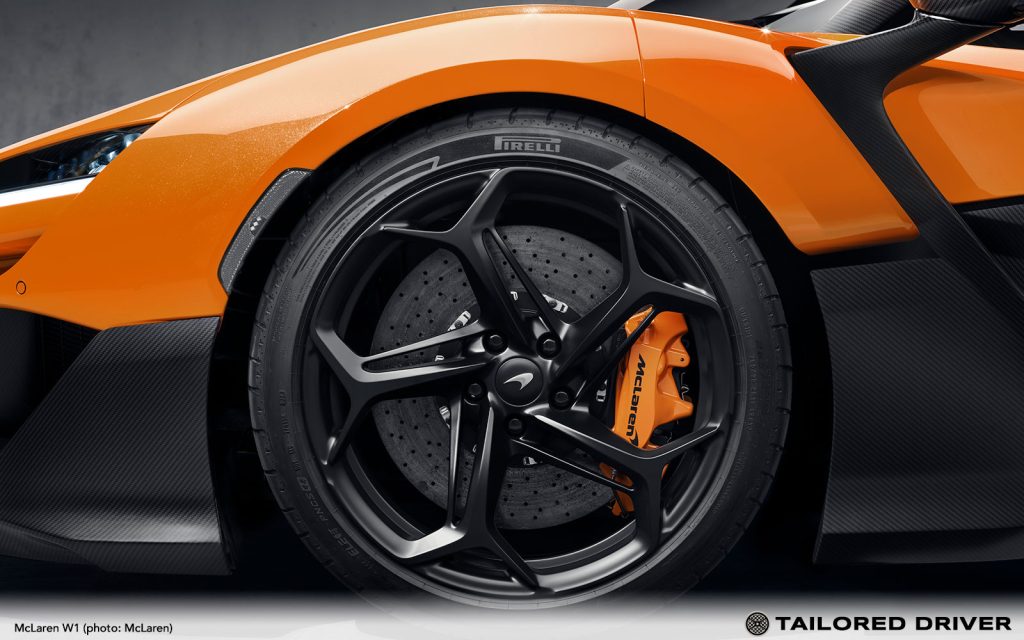
The front brakes are activated with 6-piston calipers and the rear by 4-piston calipers, both of a forged monobloc design. The 390mm discs in the McLaren Carbon Ceramic Racing+ (MCCR+) system are unique to W1, featuring an additional ceramic layer compared to previous carbon ceramic discs. This provides greater durability while allowing for a more aggressive brake pad and higher friction levels to further increase braking efficiency.
Brake performance is further optimised with aerodynamic features to keep the system cool. Directly inspired by Formula 1-style ducts, these have been designed to also increase downforce and radiator cooling by managing the wake of the tyres, while the brake lines have been routed to minimise airflow disruption under the car.
The electronic parking brake is integrated on the rear calipers, saving weight while at the same time improving component stiffness.
The fastest lapping and fastest accelerating road-legal McLaren ever Bettering even the super-lightweight and track-focused McLaren Senna – by an astonishing 3 seconds a lap at McLaren’s Nardo reference circuit – W1 is also the fastest accelerating road-legal McLaren ever. Hugely impressive in isolation, these two parameters are even more incredible when you consider that you need both high downforce and very low drag to achieve them.
Inspired by the work of generations of Formula 1 Race Engineers, McLaren’s Race mode gives a choice of two suspension settings – Race and Race+, with the latter being the firmest available. This allows drivers to select settings according to whether they are on undulating, bumpy tracks where consistent aerodynamic downforce is needed, or flat, smooth surfaces on which the ground effect platform is optimised.
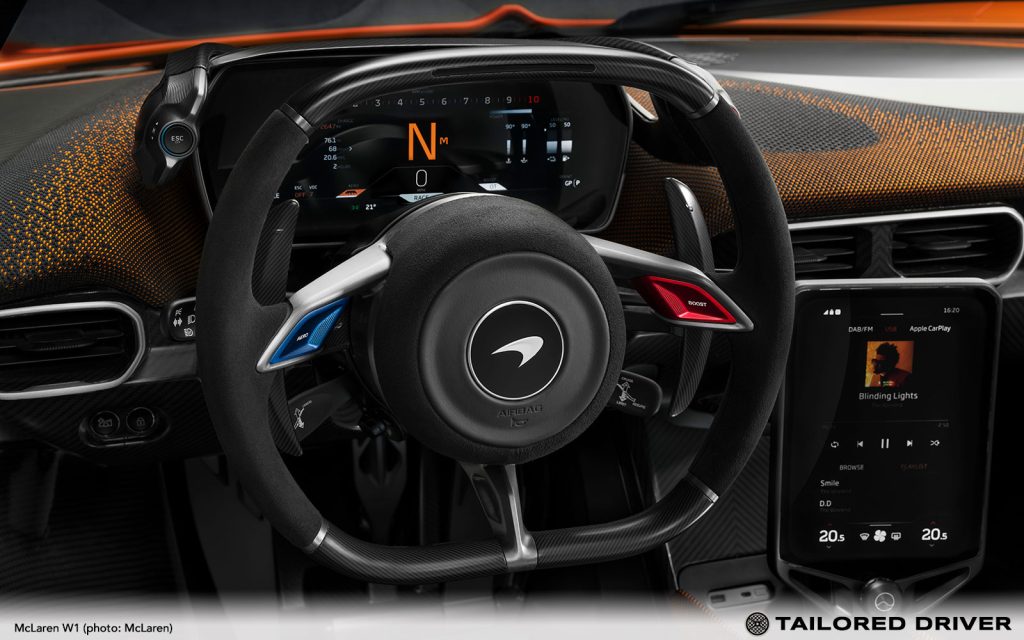
Powertrain options in Race mode are a ‘GP’ setting for consistency over a longer track session, or ‘Sprint’ for maximum performance and E-module deployment over one lap. Two buttons on the steering wheel, ergonomically positioned within easy reach of the driver’s thumbs, give the driver further options: ‘Boost’ instantly deploys full E-module power available – the same principle as employed in Formula 1 – to give the driver everything for overtaking on track or additional speed out of corners as desired. This can be combined with the Aero button for an on-demand Drag Reduction System (DRS) effect from the rear McLaren Active Long Tail wing.
Tyre performance is intrinsic to mechanical and aerodynamic grip and W1 features three 265/35 front and 335/30 rear tyre options from McLaren’s technical partner, Pirelli. To fit the car’s extreme requirements, the Pirelli P ZEROTM Trofeo RS road legal track tyre is the standard fitment. The tyre has a compound specially developed to maintain the highest performance and consistent grip over a track session. Pirelli P ZEROTM R and Pirelli P ZEROTM Winter 2 tyres – again both bespoke to W1 – are also available, the former being a road-focused solution and the latter delivering outstanding cold weather performance.
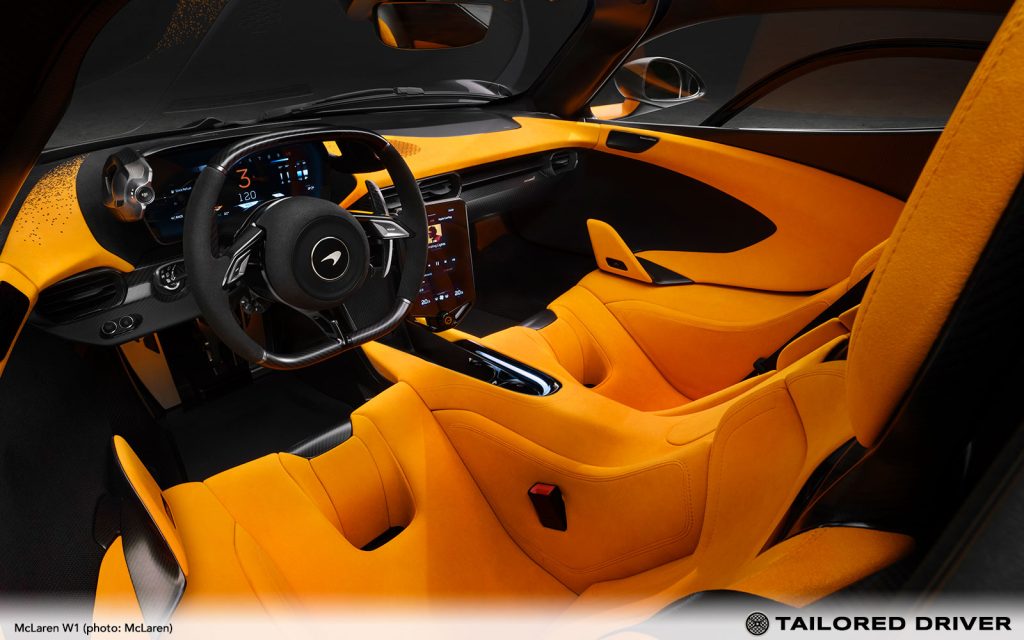
The perfect supercar driving environment The excitement of driving W1 begins with the McLaren Anhedral Doors opening upwards to reveal recesses in the roof and the front lower opening that help to provide access to the innovative and comfortable cabin. The doors also feature a sculpted concave section on the inside to maximise occupant space.
As is core to the McLaren DNA, W1 has unmatched supercar ergonomics and best-in-class visibility, with remarkably spacious cockpit room for both driver and passenger. Glazed sections in the rear three-quarter view and optionally in the upper doors provide an airy feel to the interior. Forward vision is exceptional, with the W1 incorporating McLaren’s narrowest A-pillars yet. Even the sun visors are designed with lightweighting in mind; made from carbon fibre, they are just 3mm thick.
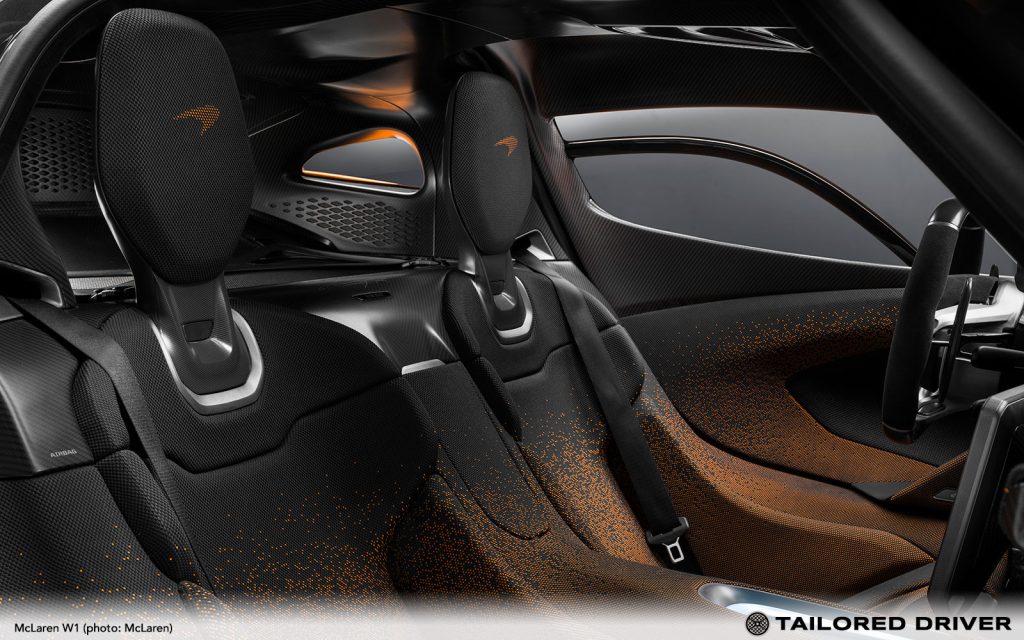
Seating is uniquely integrated into the McLaren Aerocell carbon fibre monocoque, directly connecting the driver – and passenger – to the chassis. Both seats are fully upholstered for optimal support and comfort and provide a driving position that is more reclined than usual, with a high level of thigh support.
The pedals, steering wheel and primary controls move to fully embrace the driver within the cockpit environment, with a perfect driving position easily found by adjusting the floor-mounted aluminium pedals, which have a unique adjustment action. The unique-to-W1 wheel is smaller and flatter than previous McLaren steering wheel designs. Integral shift lights that prompt the driver to select the next gear as the 9,200rpm redline approaches, are optionally available.
True to the McLaren supercar principle of a pure driver-focused interface, the only two buttons on the steering wheel are Boost and McLaren Aero Deployment controls. Inspired by Formula 1, these have been ergonomically designed to be easy to reach and activate by the driver moving their thumbs and not their hands from the wheel.
Chassis and powertrain modes are adjusted via rocker controls on the instrument binnacle, which moves with the steering column to allow mode adjustments within easy reach of the wheel. The W1’s driver display has been engineered to ensure the full screen remains visible to the driver despite the smaller steering wheel and even doubles as an aerodynamic flow diverter for air from the compact HVAC system – which efficiently provides cool or warm air as desired in all driving modes, including EV-only operation.
Further theatre is provided by overhead start/stop, gear selection and Race mode switchgear together with the window controls. These are housed by the digital rear-view display; designed to resemble a conventional rear-view mirror for driver familiarity, the camera position and angle is deliberately placed to discreetly display a small section of the Active Long Tail wing in order to give context and perspective to the driver’s rear view to ease vehicle positioning in traffic and low-speed manoeuvring including parking.
Further information and adjustments can be found on the high resolution 8” touch screen McLaren Infotainment System (MIS II) located between the driver and passenger. This has Apple CarPlay with USB C connectivity, with USB A also provided for device charging and storage access.
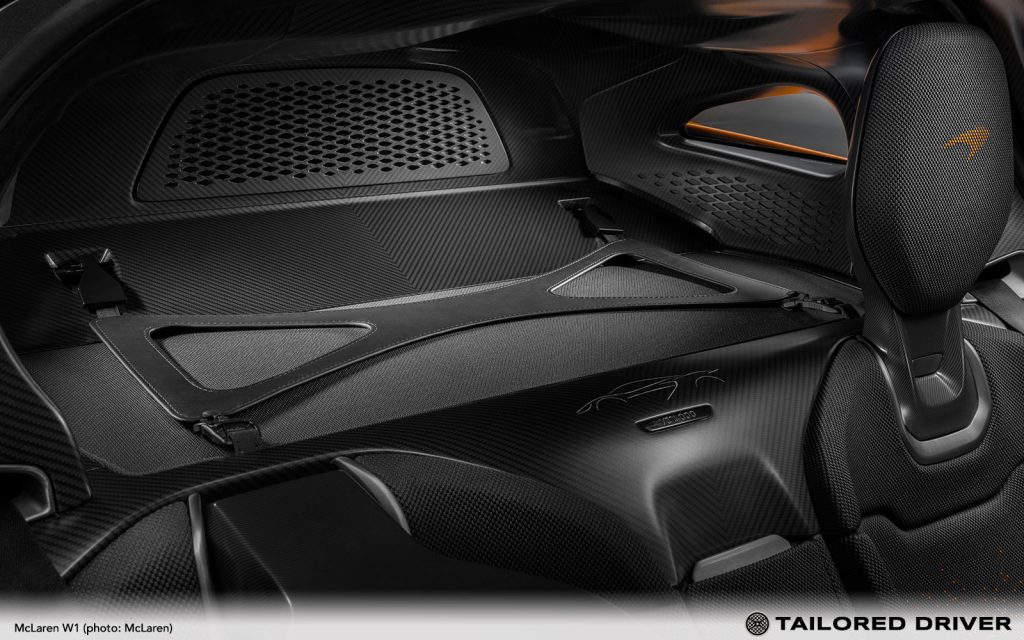
Between the fixed seats there is a storage area with a sliding cupholder, while there is a second area for small items behind the armrest. The W1 also has a luggage stowage shelf behind the seats, accessible by moving the headrests, which fold flat forwards to provide a loading platform. With up to 117 litres of storage space, two weekend bags or two crash helmets can be accommodated.
Visually arresting engineering McLaren’s Performance by Design strategic approach centres on the five key principles of McLaren’s design DNA – Epic, Athletic, Functional, Focused and Intelligent – and the new W1 clearly meets this brief. The heavily sculpted form – with almost every panel made from carbon fibre – is immediately recognisable as a McLaren supercar and a bold visual demonstration of the W1’s duality of character, the smooth, flowing upper surface contrasting with the extreme and uncompromising ground effect underbody.
The front aspect of W1 showcases its aerodynamic brilliance, with a large amount of lower bodywork layering designed to condition the flow of air towards aerodynamic surfaces heading towards the rear of the car. The upper nose section features intakes around the lights and upper wheelarches, with a large single nostril in the centre of the bonnet. At the rear of this is an aerodynamic blade that lifts to reveal the EVSE charging port, brake and washer fluid reservoirs. Visible carbon fibre aerodynamic structures and exposed suspension components are also a theme that echoes throughout the car.
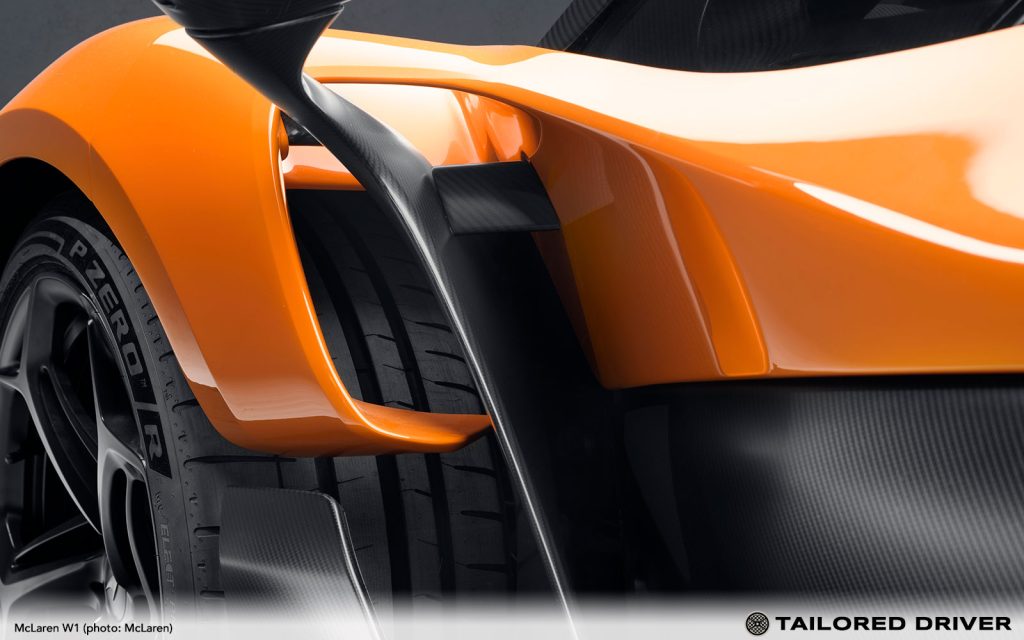
The side aspect of W1 is influenced by Formula 1 sidepod design, with a wide cut-out for the convex-shaped door that creates space for air to exit the front wheel arch via two outlets – through which the front suspension arms can be seen – and two large intakes ahead of the rear section. The most prominent of these, which feeds the high temperature radiators, is triangular in shape and provides an undercut in which the second intake is located ahead of the rear wheel and features a channel that feeds the rear diffuser and brake ducts. Even the side mirrors have been designed with aerodynamics in mind; they are placed as far outboard as possible on a support blade and are shaped to direct their wake away from the rear of the car so as not to disrupt efficiency of the radiators or the Active Long Tail wing.
The heavily-haunched rear bodywork includes an intricately detailed engine cover that sits below the flow diverter, which also houses the shark fin audio and navigation antennae and sits above and forward of the central stop light and rear-view camera. This directs clean air towards the twin-element Active Long Tail wing, which sits above the large twin centre-exit exhaust. Completing the muscular rear section is the prominent multi-fenced rear diffuser.
Seen from above, W1’s form is remarkably clean for an aerodynamically-led design, with a pronounced hammerhead-shaped nose and tight teardrop cabin form, which then opens up to the McLaren Active Long Tail wing. This is contrast to the strikingly complex lower bodywork, which is intentionally detailed to fully optimise ground effect.
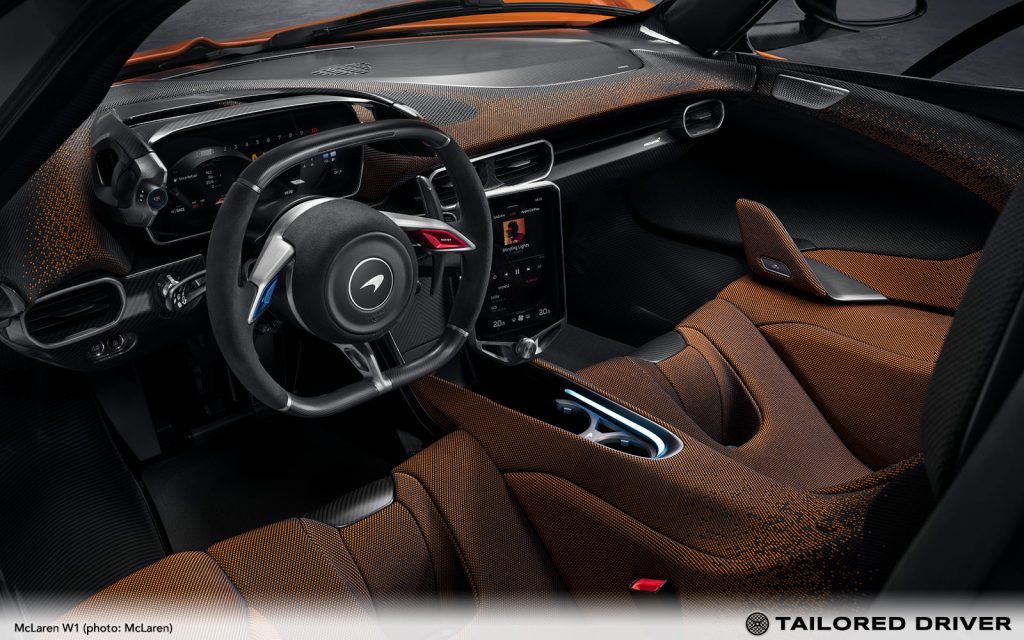
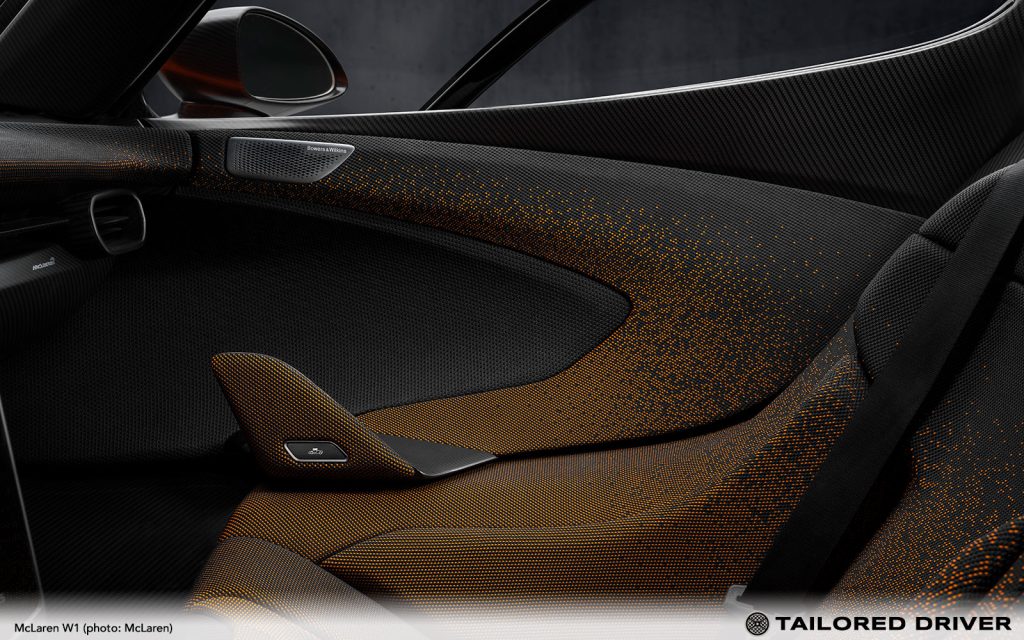
Exceptionally individual and uniquely desirable Virtually unlimited bespoke personalisation is available through McLaren Special Operations, giving owners freedom to create their very own unique supercar. A range of luxury and innovative interior materials are available, including the world-first use of McLaren InnoKnit, an infinitely flexible and super-lightweight material tailored to seamlessly integrate interior surfaces and components. This material is knitted to fit, removing any wasteful cutting or sewing requirements.
InnoKnit can be tailored to many and multiple colours, textures and shapes with precision patterns and has also been integrated into audio and visual elements, with the use of graphic elements to diffuse and project ambient cabin lighting. The material can also be incorporated into the speaker grilles of the W1’s high-specification Bowers & Wilkins bespoke audio system.
The W1’s exterior details, including the use light and dark body surfaces partly inspired by its aerodynamic styling but also current Formula 1 livery design, also creates limitless opportunities for customers to personalise their own car with McLaren Special Operations (MSO) using visualisation tools including virtual reality and augmented reality to create their own unique W1.
Ultimate warranty provision with servicing and maintenance to match Every W1 comes as standard with a comprehensive warranty [4-year/unlimited mileage vehicle; 6-year/75,000km HV battery] and a 4-year inclusive service plan that complements a unique ownership experience.
The new hybrid powertrain has been developed to a maintenance cycle similar to the V6 hybrid powertrain and the service schedule for W1 will follow a 12-month cycle. This is in line with McLaren series production supercars rather than schedules of many track-focused cars which have reduced service intervals based on the number of hours of running.
With the 399 examples of W1 that will be built all allocated. Further information about the W1 can be found at: https://cars.mclaren.com/en/W1
The new McLaren W1 in detail “W1 is a supercar that embodies all of the fundamentals of performance, honed through decades of motorsport and supercar innovation. Underpinned by epic power and a light vehicle weight of just 1,399kg – which combine to give a best-in-class ratio of 911PS-per-tonne – W1 not only eclipses all other road-legal McLarens on both acceleration and lap times, it redefines supercar acceleration and performance full-stop. In delivering ground-breaking low drag for straight-line performance and high downforce for awesome cornering ability, especially with the unique new McLaren Race mode engaged, we have elevated the standards for real supercar credentials to an entirely new level”. Marcus Waite, Head of Attributes and Performance, McLaren Automotive and former Formula 1 Race Engineer.
Epic performance from V8 High-performance Hybrid powertrain with pure RWD
All-new 4-litre twin-turbo 90-degree V8 engine with highest specific output of any McLaren – at 233PS/litre
Motorsport-derived E-module and battery provides up to 347PS for perfect throttle response and epic combined power
All-new 8-speed gearbox and E-differential deploys up to 1275PS and 1340Nm to the rear wheels for maximum driver engagement
Powertrain inclined within chassis by 3 degrees to accommodate high-downforce rear diffuser
“To build the most authentic next-generation supercar requires an all-new powertrain and at the heart of this is our new V8 twin-turbo internal combustion engine. We’ve designed it to be much more power-dense than our previous V8 – generating 233PS per litre and capable of revving higher – at 9200rpm in W1 – with greater outputs as well as supreme driver engagement. Coupled with a motorsport-derived E-module and battery and driven through an all-new gearbox and E-differential, it is our most extreme – and exciting – powertrain yet.” Richard Jackson, Chief Engineer, Powertrain, McLaren Automotive – 30 years of Powertrain expertise, 10 of these at McLaren, including the M630 V6
The W1 features the McLaren High-performance powertrain with an all-new V8 engine, E-module unit and transmission designed for epic performance. McLaren’s relentless approach to light weight engineering has produced a system that is power-dense, contributing to W1’s astonishing output and power-to-weight ratio.
The combined output of the HPH powertrain is 1275PS and 1340Nm, with instant throttle response from the torque of the E-module. This translates to 0–200km/h (186mph) in 5.8 seconds and 0-300km/h in under 12.7 seconds. W1 is also capable of zero-emissions driving on electric power alone.
The attention to aerodynamic requirements in W1 extends to the powertrain, which is inclined by 3 degrees to accommodate the rear diffuser. A key focus of the powertrain development programme has been optimising cooling requirements with the aerodynamic concept of the vehicle to deliver sustained, high-performance in track conditions. The car runs three separate water glycol circuits running at different temperatures: a high temperature circuit cools the engine with four radiators, two at the front and two in the middle of the car. A low temperature circuit is used for charge cooling for maximum performance with the front centrally-mounted radiator. A dedicated hybrid cooling circuit is used to cool the E-module, high voltage battery, charger and DC/DC converter. The transmission is cooled by a thermostatically-controlled oil-to-air radiator for maximum cooling on track. Including HVAC, engine oil cooling and battery dielectric cooling a total of 10 heat exchangers are used in the cooling system.
W1’s Powertrain modes have been set up to optimise driving in all environments. In addition to an Electric mode for near-silent EV running, Comfort mode – default on startup – provides relaxed cruising for town and motorway driving using the E-module for torque infill only. In Sport mode, the E-module is fully deployed for full hybrid power with ignition cut gear shifts and a more engaging throttle response. Race mode offers a Sprint setting for maximum power from the E-module and combustion engine, while Grand Prix focuses on consistent performance over a whole track session, balancing E-module deployment and harvesting.
The fact that the new McLaren W1 is rear-wheel drive-only when such astonishing levels of power and torque are available is tribute to McLaren’s incredible heritage in racing, where successfully developing vehicle platforms able to deploy large amounts of torque to the rear axle is essential. At a time when competitors are turning to front-wheel-drive assistance, McLaren’s Formula 1 knowledge and expertise – in combination with meticulous engineering attention to lightweighting, weight distribution and finely tuned vehicle dimensions and kinematics – provided the competitive advantage to deliver the rear-wheel drive solution that is true to supercar principles and only McLaren could deliver.
All-new, next generation V8 engine The W1 debuts the all-new 4.0-litre twin-turbo flat plane crank V8 engine that will, alongside the M630 V6, power the next generation of McLaren hybrid supercars. Like the V6, it has been designed to be extremely power-dense and is capable of much higher outputs than the previous generation M840T.
The McLaren designed MPH-8 90-degree V8 has a lightweight aluminium engine block, cylinder heads and pistons. It features direct injection with fuel port injection and spray plasma coated bores, which at 92mm, allow higher engine speeds, with a stroke of 75mm for a total capacity of 3,988cc.
In extending the engine speed range, valve actuation uses sliding finger followers with a Diamond-Like-Carbon (DLC) coating. To reduce the loads in the system the new engine also uses hollow intake valves enabling the use of a lighter, single valve spring per valve arrangement in addition to sodium cooled hollow exhaust valves.
Due to the higher speeds and loads of the all-new engine, a novel approach has been taken for the crankshaft torsional damper. Unlike conventional road car engines that use external dampers, the new V8 has an internal viscous damper where the viscous fluid is actively oil cooled through a labyrinth cooling channel.
Lubrication is through an electronically controlled variable displacement vane oil pump. The dry sump is scavenged by a four-stage pump that uses gerotors rather than gear pumps for improved mechanical refinement. The scavenge pump feeds an oil tank which has been specifically developed for the extreme G-loads that W1 can generate.
As a result the engine is capable of revving to 9,200 RPM – more than any previous road-legal McLaren – generating 928PS, a specific output of more than 233PS per litre. Total combustion output alone is an astonishing 103PS more than the McLaren Senna GTR, which is the most powerful application for the previous-generation M840T V8. A wide band of torque peaks at 900Nm as the power builds to a crescendo approaching the 9,200 RPM redline. Despite the higher output, the MPH-8 is also marginally lighter than the M840T series and 55mm shorter.
The exhaust manifold feeds large capacity twin-scroll turbochargers. The turbine and compressor have been optimised to deliver higher peak power and a significant increase in torque throughout the speed range compared to the M840T. Up to 30% greater torque is available giving instant response from as low as 2500rpm. The compressors feed the engine through charge coolers, with low-volume intake manifolds connected directly to the intake ports to maximise performance and transient response.
The exhaust features tubular manifolds that are engineered to maximise driver engagement as well as performance, with long, equal-length runners tuned to build sound to a crescendo as the engine speed approaches its 9,200rpm electronic rpm limit.
E-module and battery The all-new V8 engine has also been designed from the outset to be centre of the very best electrified powertrains and W1’s E-module has been designed to boost power and torque and provide acceleration and response times appropriate to the V8’s extremely high output.
W1 uses a motorsport-derived E-module mounted to the side of the transmission that contributes up to 347PS. The E-module consists of a radial flux E-Motor capable of spinning up to 24,000rpm with a specific output of 23PS/kg, which is directly comparable to Formula 1 E-motors. This is combined with an integrated Silicon Carbide Motor Control Unit (MCU), which converts the high-voltage DC current of the battery to AC current. Combining the two units maximises efficiency and minimises package volume and weight; the whole unit weighs just 20kg. Further advantages include reducing coolant volume, low-voltage and high-voltage connections and seals. The sealed unit improves serviceability with a dry interface outside of the transmission unit.
The E-module is powered by a 1.384kWh battery, which is conditioned using second-generation dielectric immersion cooling, transferring heat into the dedicated electric drive cooling circuit through a heat exchanger for increased cooling during sustained track running. The battery, management unit and power distribution unit is enclosed within a fireproof cover and mounted on a structural carbon fibre floor. It is housed within a cavity built into the carbon fibre monocoque – located as low as possible to benefit centre of gravity – and is further shielded from impact by the engine, transmission and rear structure.
The battery cells are also motorsport-derived and specifically designed to prioritise high power outputs to the E-module to increase throttle response and boost overall power.
The battery state of charge is managed to maintain a minimum level of charge to crank the engine on vehicle start-up, power for the reversing function and a reserve for when the car remains parked for extended periods. W1 has an onboard charger that supports EVSE connection, allowing the battery to be replenished to 80% in just 22 minutes.
The total weight of hybrid components has been reduced by 40kg compared to the McLaren P1TM while delivering almost double the electric power. Further weight is also saved by the reduction of engine ancillaries including the alternator, starter motor and additional pipework required for a conventional HVAC system.
All-new eight-speed transmission The W1’s transmission is an all-new 8-speed DCT with a much higher torque capacity than previous McLaren transmission systems. The E-module torque is fed into the transmission downstream of the clutches allowing the W1 to deliver combined torque from the V8 engine and E-module of 1340Nm at the input shaft.
The hybrid power is transmitted via an all-new hydraulic E-differential to the rear wheels for heightened driver involvement. The purity of driver connection from rear-wheel drive has long been recognised as one of the principles of supercar engineering, the benefits to vehicle balance under power which the driver can adjust to influence lateral movement. In conjunction with McLaren Hydraulic Performance Steering uncorrupted by driven wheels, this allows drivers to fully engage with their car to bring maximum enjoyment, on track or on road.
With W1’s powertrain delivering 1275PS, the level of sophistication in the transmission, the suspension system, the steering, the brakes and the tyres needed to be equal to this epic power delivery. And while drivers have the option to disengage electronic controls, the levels of precision and freedom these simultaneously offer is testament to the expertise McLaren has brought to W1. Acceleration from standstill to 200km/h in just 5.8 seconds in a rear-wheel drive only supercar – the most powerful in its class against core competitors – is simply astonishing.
Born from Formula 1-inspired ground-effect aerodynamics
W1’s entire underbody designed to deploy full ground effect aerodynamics
McLaren active front and Long Tail rear wings deploy dramatically to condition air under the car and extend diffuser area in Race mode
Total downforce limited to 1,000kg with low aerodynamic drag
At least 350 hours of wind tunnel sessions with 5,000 points tested and over 3,000 CFD simulation runs carried out in development followed by multiple patent applications
“The McLaren W1 is the perfect execution of a bold and ambitious aerodynamic philosophy that delivers impressive lap times through not only high downforce but optimal aerodynamic behaviour and active control. The all-integral aerodynamic platform with the Aerocell as the centrepiece enables fully underbody ground effect in Race mode. Inherently efficient, W1 deploys staggering level of downforce for relatively little drag. Thanks to numerous innovations, we have succeeded in incorporating elegantly F1-inspired vortical flow field to an uncompromised road car.” Robin Algoo, Principal Aerodynamics Engineer, McLaren Automotive and former Formula 1 aerodynamicist
The W1 builds on the Formula 1-inspired aerodynamic innovation that first distinguished the McLaren P1TM from its competition and continued with subsequent Ultimate models and supercars. While the McLaren P1 TM race mode was designed to maximise downforce, the W1 takes this to the next level, using the most active surface areas of any McLaren and full ground effect to transform into a track-only supercar at the touch of a button.
The W1’s Race mode allows the vehicle to be more capable on track than any other road-legal performance car but without the compromises associated with track-capable supercars.
The W1 is capable of running a stiffer spring and damping setup in Race mode, with ride height also lowered substantially – by 37mm at the front and 17mm at the rear – to take full advantage of the chassis’ inbuilt ground effect aerodynamics. But the most dramatic – and effective – feature is the active aerodynamics. The centre portion of the front wing feeds air downstream of the car up to the keel, whilst the outboard sections of the front wing generate front downforce.
Under braking, the front wing deploys to reduce front downforce by backing off the outboard sections while protecting brake cooling. The centre line sees a reduction of air further reducing front downforce to shift the aero balance rearward providing braking stability. At the rear, the McLaren Active Long Tail wing is capable of moving 300mm rearward to extend the working area of the diffuser, generating up to five times more downforce than in road configuration.
The W1’s front wing has a level of performance comparable to rear wing on most supercars and activates through an arc to trim downforce to balance the car, reduce the stall effect in order to optimise powertrain cooling or simply working with the vehicle lift to aid ground clearance. At its most extreme in Race mode, it works as a full width wing to maximise front downforce.
The frontal area of the car also contains a variety of air intakes designed to condition the flow of air for cooling and aerodynamic effect to the rear of the vehicle. The front of the chassis is raised to optimise this airflow with the inboard front suspension – which includes a high-mounted aerodynamically-shaped lower suspension wishbone – helping to guide air. The monocoque features a narrow waist and in combination with a Formula 1-inspired underfloor T-Tray and keel, air is directed to the rear surfaces. The latter also generates vortices that are conditioned to control the wake from the front wheels, pushing this out from the underfloor airflow.
The structural rear diffuser is the most extreme to be incorporated in a McLaren road car and begins to curve upward – expanding the air to create downforce – from behind the cabin section and ahead of the rear axle line. In order to accommodate this large element, the powertrain has been inclined by 3 degrees and the high temperature radiators and rear lower suspension wishbones have been raised to accommodate the underfloor space. The diffuser itself is shrink-wrapped to the powertrain and intricately detailed with prominent fences, working with the Active Long Tail wing to maximise downforce.
The Active Long Tail wing is aided by a roof-mounted flow diverter device that controls air to the rear of the car, keeping it connected to the rear deck and wing. This allows the Active Long Tail wing to work at a lower height, reducing aerodynamic drag and, in Race mode, to extend the diffuser effect. In this mode it moves 300mm rearwards through a 180-degree arc; in this position the wing leading edge sits behind the diffuser trailing edge effectively becoming an extension of the underbody. The added benefit relative to a conventional high mounted wing is that instead of the rear bodywork being lifted by the wing’s suction effect, it is now being pushed down due to stagnation of the air on the upper surface of the wing. Another first for a McLaren car is the use of E-motors on the active front and rear wings, with six actuators allowing a greater degree of accuracy and speed of movement.
Comprised of two elements to maximise overall curvature, the Active Long Tail wing’s supports have been aerodynamically profiled and each features a slot gap to improve performance in crosswinds.
The front wing and Active Long Tail rear wing are tuned to constantly adjust according to the driver’s steering, accelerating and braking inputs and the vehicle’s speed. Under straight line acceleration the Active Long Tail wing will tilt to reduce drag, while the front wing will trim accordingly to optimise vehicle balance without compromising on steering feel or the flow of air for brake and powertrain cooling. Under braking, the Active Long Tail acts as an airbrake while the front wing swings up to significantly reduce pitch sensitivity. In cornering situations both wings will set to their optimal position to balance downforce according to the vehicle speed.
The W1 is heavily influenced by Formula 1 aerodynamic advances. This includes heavily undercut side intakes that echo sidepods and aerodynamic appendages that carefully manage the wake with the front wheels at the straight ahead or under steering lock, the latter yielding the highest gains. Even the side mirrors are placed as far outboard as possible and shaped to flow air away from the rear of the car so as not to disrupt efficiency of the Active Long Tail wing.
Given this level of detail, it is no surprise that the engineers spent a lot of time in half-scale and full-size wind tunnels, with at least 350 hours and 5,000 points tested across many iterations and conditions carried out during the research process in addition to over 3,000 CFD simulation runs. This is comparable with Formula 1 and sports-prototype race car development and has resulted in several patent applications in areas relating to the McLaren Active Long Tail rear wing, front active wing, monocoque, flow diverter, underbody aerodynamics, tyre wake-deflecting systems and the heave damping system.
The result is a car that can generate up to 1000kg of downforce, but without the aerodynamic drag penalty associated from conventional upper body aerodynamic devices. W1 generates 20% less drag than a McLaren Senna with its rear wing in DRS configuration.
Dynamic genius without compromise, driven by McLaren DNA
Built using motorsport pre-preg carbon fibre techniques – stronger, lighter and with a 3K gloss finish
First use of Anhedral doors on a McLaren car
Formula 1-inspired inboard damping and heave dampers with McLaren Race Active Chassis Control III for superior high-speed grip on track and comfort on the road
McLaren Carbon Ceramic Racing+ (MCCR+) brake system with 390mm discs and extreme brake ducts for supreme stopping power on track
At the heart of every McLaren road car is a carbon fibre structure, but the W1’s McLaren Aerocell central structure differs in two attributes. Firstly, it is constructed using pre-preg carbon fibre. This method, also used in the Solus GT track-only car, is more commonly used in low-volume motorsport applications. The carbon fibre is pre-impregnated with a resin system that simplifies the curing process and pressure treatment is then applied in the mould, which gives the Aerocell higher structural strength. This allows for a lighter structure – the Aerocell is pound-for-pound McLaren’s lightest monocoque yet – and the high uniformity of finish from the process negates the need for additional bodywork in some areas. The chassis has a 3K gloss finish with surfaces visible from the exterior and interior of the car.
Secondly, the Aerocell has been designed to integrate W1’s extreme aerodynamic focus. With sections of the chassis finished to a high standard, the shape has been designed to save further weight with integrated exterior and interior surfaces. The exterior also contains aerodynamic surfaces that have been achieved by raising the floor of the monocoque by 65mm, which has lifted the footwell position and rising to 80mm towards the front of the Aerocell. At the same time, to reduce the length of the Aerocell – and of the overall vehicle – the decision was taken to fix the seat position and incorporate seating into the monocoque. Reducing the wheelbase by almost 70mm, this also has the added benefit of saving further weight – the seats are the lightest yet in a McLaren.
With the front of the Aerocell being positioned higher than the monocoques in other McLarens, the lower-front suspension mountings are integrated into the central structure. This higher positioning optimises high-energy air flow under the car and also means no subframe is needed, contributing further weight-saving.
One challenge arising from there being no front subframe was the mounting of the steering rack – which is higher than is usually the case – requiring a bespoke solution. This is resolved with a cut-out on each side of the monocoque, enabled by designing the structure to efficiently transfer the loads around it, made possible by McLaren’s mastery of carbon fibre engineering. The resulting position of the steering rack, closer to the centre of the road wheels, enables W1 to run in either of the two ride height settings linked to the Road or Race modes, with optimal steering geometry maintained in both positions.
The Aerocell also incorporates fixings for McLaren’s first Anhedral doors. The decision to eschew the traditional Dihedral door design that began with the McLaren F1 three decades ago has brought aerodynamic benefits. This allows optimisation of airflow extracted from the front wheel arches into the high temperature radiators, providing an extra 100mm of cooling space, enough to reduce the size of the radiators required to cool the powertrain.
The Anhedral door design also aids ingress and egress from the vehicle, in conjunction with offsetting the A-pillar as it meets the chassis. This creates more space at the lower front of the opening for stepping into the raised footwell.
The aerodynamic focus of the chassis relies heavily on ground effect, an area that is maximised in Race mode, when the car is dramatically lowered. Airflow conditioned by the lower body interfaces with the structural diffuser – which is shrink-wrapped to the powertrain – that has been constructed using Intermediate Modulus Carbon Fibre (IMCF). Another first for McLaren, this method produces a material with a higher strength for this type of application and is more heat resistant as well as being lighter than conventional carbon fibre structures. Further weight is saved since the diffuser’s strength and stiffness removes the need for a cross car structure linking the suspension pick-up points and this solution also allows significant diffuser volume.
The rear diffuser also forms part of the crash structure, acting as a rear bumper. W1 also incorporates a new rear frame that adds significant stiffness by tying into the upper part of the Aerocell. It is made from a box-section aluminium hollow casting, which is lighter than a more conventional ‘I’-shaped section.
The W1 is the first McLaren road car to employ pushrods; these link to inboard dampers which, in conjunction with the use of wishbones, torsion bars and heave dampers is directly inspired by Formula 1. The front of the car utilises this concept to optimise aerodynamic efficiency, with an optimised aerodynamic profile of some components helping to keep the channel of air flowing cleanly towards the rear of the car. At the rear, where conditioning airflow is less of a priority, traditional outboard springs and dampers are employed.
Continuing the Formula 1 influence, the front suspension setup also includes torsion bars and an active heave element, while the rear has a Z-bar with active droplinks to control heave. In the relentless pursuit of light weight, 3D printing was used for the titanium front uprights and wishbones of the advanced suspension system.
The all-new McLaren Race Active Chassis Control III suspension with McLaren Race mode ensures huge breadth of capability, from road-legal compliance to fastest lap performance and pure driver connection.
The Comfort handling setting gives the occupants a smooth ride quality with increased body control at medium and high speeds, while Sport provides a more engaging, connected setup with focus on body control and agility at all speeds. When Race mode is selected a stable aerodynamic platform is prioritised, with an active heave element deployed for superior track dynamics and consistent downforce.
This is achieved by dramatically lowering the ride height, increasing ride stiffness and engaging the heave springs, which are designed to control vertical movement. This creates a more aerodynamically stable platform and more predictable dynamic behaviour at speed, optimising overall downforce and increasing driver confidence on high-speed tracks.
The default Race mode is set up with a degree of compliance for undulating or uneven track surfaces. The additional Race+ setting for flat, smooth surfaces gives tighter control of the chassis to optimise aerodynamics.
Braking uses the McLaren Carbon Ceramic Racing+ (MCCR+) system. With an additional ceramic layer the 390mm brake discs have superior durability, while allowing for a more aggressive brake pad and higher friction levels. The front brakes are activated with 6-piston calipers and the rear by 4-piston calipers, both of a forged monobloc design. Further weight is also saved by integrating the electronic parking brake on the rear calipers, which also improves stiffness of the system.
Brake performance is further optimised with wheel aerodynamic appendages to keep the system cool. The most extreme design yet in a McLaren and directly inspired by Formula 1-style ducts, these have been designed to also increase downforce and radiator cooling by managing the wake of the tyres, while the brake lines have been re-routed to improve airflow under the car.
Overall stopping performance is sensational; W1 will stop from 200-0km/h in just 100 metres and 100-0km/h in 29 metres.
The fastest lapping and fastest accelerating road-legal McLaren ever Bettering even the super-lightweight and track-focused McLaren Senna – by an astonishing 3 seconds a lap at McLaren’s Nardo reference circuit – W1 is also the fastest accelerating road-legal McLaren ever. Hugely impressive in isolation, these two parameters are even more incredible when you consider that you need both high downforce and very low drag to achieve them.
With a history of performance benchmarks that includes the P1TM and various LT models as well as the track-focused McLaren Senna, W1 has been designed to be the most engaging McLaren yet but also a supercar capable of the fastest lap time of any road-legal McLaren car.
Areas of intense dynamic focus includes the Formula 1-inspired inboard front suspension concept and its aerodynamic placement, which is new to a McLaren road car. The ground effect aerodynamics have also been fine-tuned to work on both smooth and bumpy circuits to ensure a stable platform for the driver.
This process has meant an expansion in the range of driver-adjustable chassis and powertrain modes. Powertrain defaults to Comfort, which deploys the E-module for torque infill at low revs only and an Electric mode for near-silent EV driving can be selected, while Sport gives full hybrid power, adding theatre to gear shifts and a more engaging throttle response. The Comfort Handling setting gives the occupants a smooth ride quality with increased body control at medium and high speeds, while Sport provides a more engaging, connected setup with focus on body control and agility at all speeds.
Powertrain options in Race mode are a ‘GP’ setting for consistency over a longer track session, or ‘Sprint’ for maximum performance and E-module deployment over one lap. Two buttons on the steering wheel, ergonomically positioned within easy reach of the driver’s thumbs, give the driver further options: ‘Boost’ instantly deploys full E-module power available – the same principle as employed in Formula 1 – to give the driver everything for overtaking on track or additional speed out of corners as desired. This can be combined with the Aero button for an on-demand Drag Reduction System (DRS) effect from the rear McLaren Active Long Tail wing.
Tyre performance is intrinsic to mechanical and aerodynamic grip and W1 features three 265/35 front and 335/30 rear tyre options from McLaren’s technical partner, Pirelli. To fit the car’s extreme requirements, the Pirelli P ZEROTM Trofeo RS road legal track tyre is the standard fitment. The tyre has a compound specially developed to maintain the highest performance and consistent grip over a track session. Pirelli P ZEROTM R and Pirelli P ZEROTM Winter 2 tyres – again both bespoke to W1 – are also available, the former being a road-focused solution and the latter delivering outstanding cold weather performance.
The perfect supercar driving environment
McLaren Anhedral Door design provides ease of ingress and egress to cabin
Driver and passenger seating is integral to W1 Aerocell monocoque
Driver-focused cockpit most intelligent use of space of any McLaren
Unique steering wheel and moving pedal box
With its fixed seats and raised footwells, W1’s driving position would appear more akin to a sports prototype racing car – but in practice is tailored towards superior occupant comfort. The anhedral doors feature with a sculpted concave section on the inside to maximise occupant space, with a cantilevered door fin blade that appears to float away from the occupants – minimalist yet beautiful and functional.
As is core to the McLaren DNA, W1 has unmatched supercar ergonomics and best-in-class visibility, with remarkably spacious cockpit room for both driver and passenger. Glazed sections in the rear three-quarter view and optionally in the upper doors provide an airy feel to the interior. Forward vision is exceptional, with the W1 incorporating McLaren’s narrowest A-pillars yet. Even the sun visors are designed with lightweighting in mind; made from carbon fibre, they are just 3mm thick.
Seating is uniquely integrated into the McLaren Aerocell carbon fibre monocoque, directly connecting the driver – and passenger – to the chassis. Both seats are fully upholstered for optimal support and comfort and provide a driving position that is more reclined than usual, with a high level of thigh support.
The pedals, steering wheel and primary controls move to fully embrace driver within the cockpit environment, with a perfect driving position easily found by adjusting the floor-mounted aluminium pedals, which have a unique adjustment action. Smaller than the previous design, the flattened wheel gives the driver the best view of the road ahead of any McLaren as the steering wheel rim and binnacle both sit low. The flatter bottom of the wheel also aids leg clearance. The steering rack has been repositioned closer to the centre of the wheel to better maintain geometry in road and Race modes and has the distinctive McLaren Hydraulic Performance Steering feel. Integral shift lights that prompt the driver to select the next gear as the 9,200rpm redline approaches, are optionally available.
True to the McLaren supercar principle of a pure driver-focused interface, the only two buttons on the steering wheel are Boost and McLaren Aero Deployment controls. Inspired by Formula 1, these have been ergonomically designed to be easy to reach and activate by the driver moving their thumbs and not their hands from the wheel.
Chassis and powertrain modes can be adjusted via rocker switches on top of the instrument binnacle. Designed to move with the steering column to allow mode adjustments to be made within reach of the wheel. The W1’s driver display has been engineered to ensure the full screen remains visible to the driver despite the smaller steering wheel.
The binnacle is also designed to be aerodynamically efficient – it doubles as a flow diverter providing the driver with a cool or warm stream of air as desired from the cabin-wide diffuse air vent. This works with four adjustable fascia vents to optimise the compact HVAC system – which efficiently provides cool or warm air as desired in all driving modes, including EV-only operation.
Further information and adjustments can be found on the high resolution 8” touch screen McLaren Infotainment System (MIS II) located between the driver and passenger. This has Apple CarPlay with USB C connectivity, with USB A also provided for device charging and storage access.
Between the fixed seats there is a storage area with a sliding cupholder, while there is a second area for small items behind the armrest. The W1 also has a luggage stowage shelf behind the seats, accessible by moving the headrests, which fold flat forwards to provide a loading platform. With up to 117 litres of storage space, two weekend bags or two crash helmets can be accommodated.
Visually arresting engineering
Design inspired by racing but purposed for all environments
Contrast between elegant upper body and sculpted lower section echoes duality of W1
Limitless degree of personalisation available from MSO with lightweight luxury materials and innovative use of audio-visual elements
“The McLaren designers who brought W1 to life were aware from the moment they began to work on the project that they would be making history, creating a new Ultimate McLaren inspired by decades of Formula 1 racing heritage and two of the greatest supercars ever – the McLaren F1 and McLaren P1™.
“The W1 is immediately and unmistakeably a McLaren. The shoulder-line leaping forward, the pronounced wheelarches, the sunken cabin and the short overhang and open structure at the rear of the car are all pure McLaren design characteristics, defining an extraordinary new supercar that will have its own chapter in McLaren history.”
Tobias Sühlmann, Chief Design Officer, McLaren Automotive, with several years’ experience heading luxury automotive design departments
McLaren’s design DNA is expressed in compact dimensions and an athletic body form, by visible functional features and respect for aerodynamic principles.
The W1’s heavily sculpted form epitomises McLaren’s performance-led design yet displays its aerodynamic excellence with elegance and flair. It is also a clear visual demonstration of its duality of character, with a smooth, flowing upper surface that contrasts with the extreme, sculpted ground effect lower body.
Almost every panel is made from carbon fibre, the exception being the composite roof centre panel and flow diverter. Construction of these elements differ simply to allow the audio and navigation antennae – which is mounted in the flow diverter – to operate efficiently, a prime example of McLaren’s desire to create an extreme car for all occasions.
“The McLaren W1 required the highest level of interaction between design and aerodynamics. With a holistic approach to maximising airflow throughout the car, including the interior, both teams collaborated from day one. This required a new approach to solving challenges, from meeting aerodynamic and performance targets with elegant supercar proportions to incorporating cabin architecture within a compact space while preserving a clean, decluttered and ergonomic area with sculpture and theatre. A car that is extreme, yet still usable day-to-day. The process of transforming an extreme concept into a compelling and intricate design has been tremendously satisfying.” Alex Alexiev – Principal Designer, McLaren Automotive, with 13 vehicle programs at McLaren over 11 years
The front aspect of W1 showcases its aerodynamic brilliance, featuring a wide front active plane wing, which moves in a swing arc and a large amount of bodywork layering designed to condition the flow of air towards aerodynamic surfaces heading towards the rear of the car. The upper nose section is cleaner in design, but features intakes around the lights and upper wheelarches, with a large single nostril in the centre of the bonnet where hot air can escape from the front radiators. At the rear of this is an aerodynamic blade that lifts to reveal the EVSE charging port, brake and washer fluid reservoirs.
The side aspect of W1 is dominated by a wide cut-out for the convex-shaped door which creates space for air to exit the front wheel arch via two outlets – through which the front suspension arms can be seen – and two large intakes ahead of the rear section. The most prominent of these, which feeds the high temperature radiators, is influenced by Formula 1 sidepod design. Its triangular shape provides an undercut in which the second intake is located ahead of the rear wheel and features a channel that feeds the rear diffuser. Even the side mirrors have been designed with aerodynamics in mind; they are placed as far outboard as possible on a support blade and are shaped to direct their wake away from the rear of the car so as not to disrupt efficiency of the radiators or the Active Long Tail wing.
The heavily-haunched rear bodywork includes an intricately detailed engine cover that sits below the flow diverter, which also houses the shark fin audio and navigation antennae and sits above and forward of the central stop light and rear-view camera. The flow diverter directs clean air towards the twin-element Active Long Tail wing, which sits above the large twin centre-exit exhaust. Completing the muscular rear section is the prominent multi-fenced rear diffuser.
Seen from above, W1’s form is remarkably clean for an aerodynamically-led design, with a pronounced hammerhead-shaped nose and tight teardrop cabin form, which then opens up to the McLaren Active Long Tail wing. This is contrast to the strikingly complex lower bodywork, which is intentionally detailed to fully optimise ground effect.
The sense of drama to W1’s design is heightened by the anhedral doors, a departure from McLaren’s traditional dihedral operation. Highly intricate, these open upwards with recesses in the roof and at the lower front opening helping to provide access to the compact, yet spacious cabin, which is designed to make the most intelligent use of space in a McLaren yet.
Exceptionally individual and uniquely desirable Virtually unlimited bespoke personalisation is available through McLaren Special Operations, giving owners freedom to create their very own unique supercar. A range of luxury and innovative interior materials are available, including the world-first use of McLaren InnoKnit, an infinitely flexible and super-lightweight material tailored to seamlessly integrate interior surfaces and components. This material is knitted to fit, removing any wasteful cutting or sewing requirements.
InnoKnit can be tailored to many and multiple colours, textures and shapes with precision patterns and has also been integrated into audio and visual elements, with the use of graphic elements to diffuse and project ambient cabin lighting. The material can also be incorporated into the speaker grilles of the W1’s high-specification Bowers & Wilkins bespoke audio system.
Leather and Alcantara® can also be specified, which can incorporate perforated sections for audio and visual elements. Other luxury materials can also be integrated into the cabin, including 1K carbon fibre interior jewellery for switchgear.
The W1’s exterior details, including the use light and dark body surfaces partly inspired by its aerodynamic styling but also current Formula 1 livery design, also creates limitless opportunities for customers to personalise their own car with McLaren Special Operations (MSO) using visualisation tools including virtual reality and augmented reality to create their own unique W1.
Ultimate warranty provision with servicing and maintenance to match Every W1 comes as standard with a comprehensive warranty [4-year/unlimited mileage vehicle; 6-year/75,000km HV battery] and a 4-year inclusive service plan that complements a unique ownership experience.
The new hybrid powertrain has been developed to a maintenance cycle similar to the V6 hybrid powertrain and the service schedule for W1 will follow a 12-month cycle. This is in line with McLaren series production supercars rather than schedules of many track-focused cars which have reduced service intervals based on the number of hours of running.
McLaren W1
Technical Specification
Engine configuration
MHP-8 90° 4.0L (3988cc) twin-turbocharged V8 – hybrid drivetrain with radial flux electric module
Drivetrain layout
Longitudinal, mid-engined, RWD
Power PS (bhp/kW) @ rpm
1275 (1258/938): 928 (916/683) from petrol engine, 347 (342/255) from electric module
Torque Nm (lb ft) @ rpm
1340 (988) @ 4500-5000rpm: 900 (664) from petrol engine, 440 (324) from electric module
Transmission
8-speed DCT with E-reverse
Steering
McLaren Hydraulic Performance Steering Electro-Hydraulic Power Assisted
Chassis
McLaren Aerocell with high footbox, integrated seating, integrated front subframe, integrated single piece upper structure
Suspension
McLaren Race Active Chassis Control III with visible inboard active heave suspension, 3D printed and titanium suspension components, rear active drop links and adaptive damping. Front and rear double wishbone
Brakes
McLaren Carbon Ceramic Racing+ (MCCR+) system withFront: 390mm brake discs with 6 piston Forged Monobloc Front Calipers.Rear: 390mm brake discs with 4 piston Forged Monobloc Rear Calipers and Integrated EPB
Wheels (inches)
F19 x 9.5J / R20 x 12.0J
Tyres
Pirelli P ZERO™ R Tyres & Pirelli P ZERO™ Trofeo RS TyresF 265/35/R19R 335/30/R20
Length, mm (inches)
4635 (182)
Wheelbase, mm (inches)
2680 (106)
Height, mm (inches)
1182 (47)
Width, with mirrors, mm (inches)
2191 (86)
Width, mirrors folded, mm (inches)
2074 (82)
Track (to contact patch centre), mm (inches)
Front: 1676 (66); Rear 1624 (64)
Lightest dry weight, kg (lbs)
1399 (3084)
Power-to-weight (PS/tonne)
911
Fuel tank capacity, litres (UK/USA gallons)
62 (16/19)
Battery capacity (KWh)
1.384
Battery charge time (minutes)
22 (via EVSE cable) to 80%
Electric-only range (km/miles)
2/1.6
Luggage capacity, litres (wet/DIN)
118/87
Performance data
0-97km/h (0-60mph)
2.7 seconds
0-100km/h (0-62mph)
2.7 seconds
0-200km/h (0-124mph)
5.8 seconds
0-300km/h (0-186mph)
<12.7 seconds
Maximum speed km/h (mph)
350 (217) (electronically limited)
200-0km/h (124mph-0) braking, metres (ft)
100 (328)
100-0km/h (62mph-0) braking, metres (ft)
29 (95)
Downforce kg (lbs)
Limited to 1000 (2205) @280km/h (174mph):Front: 350 (772) maxRear: 650 (1433) max
Efficiency
CO2 emissions, g/km WLTP EU (combined)
<310
Warranty
Vehicle (years/miles)
4 unlimited
HV battery (years/km/miles)
6 75,000/45,000
Roadside assistance (years)
4
Service plan (years)
4
Notes to editors:
A selection of high-resolution images accompanying this release is available to download from the McLaren Automotive media site – cars.mclaren.press
About McLaren Automotive: McLaren Automotive is a producer of ultra high-performance, lightweight supercars. Launched in 2010, the company is now the largest part of the McLaren Group.
Headquartered at the McLaren Technology Centre (MTC) in Woking, Surrey, England, McLaren Automotive is driven by the challenge of creating the world’s most exhilarating, engaging and benchmark setting vehicles. Leveraging over 60 years of history in authentic, racing performance, McLaren has delivered some of the most spectacular supercars ever made.
The company’s product portfolio of GTS, supercar, Motorsport and Ultimate models are retailed in over 40 markets around the world. Its cars are assembled by hand at the McLaren Production Centre (MPC), based on the same campus as MTC in Woking.
McLaren is a pioneer that continuously pushes the boundaries. In 1981, it introduced lightweight and strong carbon fibre chassis technology into Formula 1 with the McLaren MP4/1.
Then in 1993 it designed and built the legendary McLaren F1 road car. Built around a carbon fibre chassis, it established McLaren’s supercar DNA, realised for the 21st century in 2011 with the introduction of the McLaren 12C – McLaren Automotive’s first production car.
McLaren was the first to deliver a hybrid hypercar, the McLaren P1™, in 2013. Launching the Ultimate Series of vehicles, P1™ was followed by the McLaren Senna in 2018 and its track-only GTR derivative followed a year later. 2019 also saw the introduction of the Speedtail hybrid hyper-GT. Its most recent Ultimate model, Elva, is the lightest McLaren road car ever.
McLaren’s LT models represent the ultimate expression of track performance in series production supercars. The name stems from the ‘Longtail’ version of the F1 GTR, introduced in 1997, and was incorporated into McLaren Automotive nomenclature in 2015 with the arrival of the McLaren 650S-based 675LT coupe and Spider. In 2018, the LT legend continued with the McLaren 570S-based 600LT. The latest chapter in the LT story was written in 2020 and 2021, with the introduction of the 765LT coupe and Spider.
Also in 2021, the company unveiled its all-new high-performance hybrid supercar, the McLaren Artura. The Artura is the first McLaren to benefit from the McLaren Carbon Lightweight Architecture (MCLA). The MCLA is designed, developed and manufactured at the McLaren Composites Technology Centre in the Sheffield region of England using world-first processes and will spearhead the brand’s electrified future.
2022 saw McLaren announce the Solus GT, a single-seat, closed-cockpit track car which brought to life a futuristic concept that was originally created for virtual gaming.
In 2023, McLaren unveiled its lightest and most powerful series-production supercar, the 750S – a thorough development of the award-winning 720S supercar. McLaren also introduced the new GTS, replacing the McLaren GT.
The McLaren Artura Spider was revealed in early 2024 as the brand’s first high-performance hybrid convertible. Its introduction was part of a major model year uplift for the Artura nameplate, and meant McLaren’s series-production line-up of GTS, new Artura and 750S had been introduced within 12 months of each other.
McLaren Automotive also chooses to partner with like-minded, world-leading companies and organisations who push the boundaries in their respective fields. These include Ashurst, Bowers & Wilkins, Dynisma, Gulf, Pirelli, Richard Mille and Tumi.
About McLaren Group: The McLaren Group is a global leader in high-performance supercar production and elite motorsports.
Founded in 1963 by racer, engineer and entrepreneur Bruce McLaren, the Group is formed of McLaren Automotive, which hand-builds lightweight supercars and races them in global series, including the World Endurance Championship; and a majority stake in McLaren Racing which competes in the Formula 1 World Championship, INDYCAR series, Formula E, Extreme E and F1 Academy.
The Group is globally headquartered at the iconic McLaren Technology Centre in Woking, Surrey, England.
With a reputation for innovation and technological excellence, McLaren is one of the UK’s largest independent companies.
McLaren’s MSO division makes it’s impact by doing just about whatever their clients demand. Multiple colors, gradients, and even full liveries are all well within scope, admittedly to differing levels of success. In my opinion, this is one big swing that really paid off.
When I think McLaren, I think muted exterior and a wild-ass contrasting interior. In today’s example, MSO went full purple-haze by pairing MSO Bespoke Purple leather with the relatively tame Onyx Black. Although Onyx does have a fairly prominent metallic flake, you’d be forgiven if you never noticed.
Is this insane? Perhaps, but if the above is the litmus, we’d happily be certified.
This Tailored Driver (VIN: SBM14FCA6NW006381) is currently available in Bonita Springs, FL at Gulf Coast Motorworks having covered just under 3,000 miles since it left Woking. It could be yours for an at time of writing $309,995.
Enhanced visual personalization and new option packs from McLaren Special Operations now available for the 750S supercar
New MSO Contrast Packs combine MSO Bespoke paint colors with additional exterior details and the option of further Bespoke interior treatments
New Stealth Badge pack joins the list of options on 750S for the 2025 Model Year, alongside Visual Carbon Fibre Fender Louvres
A touch of McLaren’s racing heritage is now standard on 750S with the Start/Stop button finished in eye-catching Papaya orange
750S, Artura Spider and coupe, and the new McLaren GTS complete a refreshed and boosted McLaren line-up
[source: McLaren]
Building on the 750S introduced in 2023 as a replacement for the award-winning 720S, the 2025 model year specification of McLaren’s benchmark-beating supercar offers enhanced optional specification and new levels of colorful visual personalization, including new content packs created by McLaren Special Operations (MSO).
The new MSO Contrast Packs provide the customer with the opportunity to further enhance their 750S with the trademark craftsmanship of MSO, McLaren’s bespoke personalization division. MSO’s dedication to creating the most alluring and unique paint colors – unparalleled in the automotive industry – paired with expert design and the world-class execution of incredible projects such as the remarkable 750S with 3-7-59 Theme, inspires a new range of options.
12 pre-configured themes for the MSO Contrast Packs are available, while other combinations can be explored upon request. The packs are available at time of purchase and within the standard retailer ordering process.
MSO Contrast Pack 1 bundles a selection of MSO Bespoke paints not available as regular colors (Volcano Red, Volcano Orange, Anniversary Orange, Solar Yellow, Napier Green, XP Green, Tokyo Pearl, Viola Viola, Dove Grey, Soho Grey, Tarmac Black, Alaskan Diamond White) with a Bespoke paint for the brake calipers and a unique pinstripe effect on the door mirror caps (matching or contrasting colors for calipers and pinstripe, depending on body paint color selected).
Customers wanting even more MSO content can choose Contrast Pack 2, which features the exterior features of Pack 1 in combination with bespoke interior treatments. These include full Alcantara interior upholstery in Carbon Black and colorful interior accents and MSO motif headrests, complementing or contrasting with the MSO paint color selected.
The range of regular options on 750S extends for the 2025 model year to include Stealth badging, which comprises black McLaren badges front and rear as well as a black McLaren Speedmark on each wheel center cap. Body Color Carbon Fibre Front Fenders with Gloss Visual Carbon Fibre Louvres are also new to the options list, now available separately as a line-fit choice to the combined option of Body Color Carbon Fibre Fenders with Body Color Louvres.
The Stop/Start button on the 750S changes to Papaya orange for 2025 model year cars. Papaya is McLaren Racing’s traditional color, seen first in the M6A Can-Am racer in 1967 and adopted by the McLaren Formula 1 team – then competing under the Bruce McLaren Motor Racing banner – during the 1968 championship.
“In its first year on sale the 750S has been a huge success. The car’s stellar reception with both the media who have driven it and with customers has exceeded all expectations, and the Model Year enhancements for 750S with new options from McLaren Special Operations ensure it remains a benchmark defining supercar with exclusivity and remarkable craftsmanship. It is a core part of our line-up with new Artura Spider and coupe, and the new GTS; a strengthened McLaren line-up that is more thrilling than ever.” George Biggs, Chief Sales & Marketing Officer, McLaren Automotive
2025 model year 750S, the new Artura Spider and coupe and the new McLaren GTS are available to order now at one of over 100 locations in McLaren’s global retailer network, spanning 40 markets. Customers desiring further bespoke personalization for their new order can also explore the possibility of a virtual spec session with McLaren Special Operations by contacting their retailer.
About McLaren Automotive: McLaren Automotive is a producer of ultra high-performance, lightweight supercars. Launched in 2010, the company is now the largest part of the McLaren Group.
Headquartered at the McLaren Technology Centre (MTC) in Woking, Surrey, England, McLaren Automotive is driven by the challenge of creating the world’s most exhilarating, engaging and benchmark setting vehicles. Leveraging the McLaren name’s 60-year history of authentic, racing performance, it has delivered some of the most spectacular supercars ever made.
The company’s product portfolio of GTS, supercar, Motorsport and Ultimate models are retailed in over 40 markets around the world. Its cars are assembled by hand at the McLaren Production Centre (MPC), based on the same campus as MTC in Woking.
McLaren is a pioneer that continuously pushes the boundaries. In 1981, it introduced lightweight and strong carbon fibre chassis technology into Formula 1 with the McLaren MP4/1.
Then in 1993 it designed and built the legendary McLaren F1 road car. Built around a carbon fibre chassis, it established McLaren’s supercar DNA, realized for the 21st century in 2011 with the introduction of the McLaren 12C – McLaren Automotive’s first production car.
McLaren was the first to deliver a hybrid hypercar, the McLaren P1™, in 2013. Launching the Ultimate Series of vehicles, P1™ was followed by the McLaren Senna in 2018 and its track-only GTR derivative followed a year later. 2019 also saw the introduction of the Speedtail hybrid hyper-GT. Its most recent Ultimate model, Elva, is the lightest McLaren road car ever.
McLaren’s LT models represent the ultimate expression of track performance in series production supercars. The name stems from the ‘Longtail’ version of the F1 GTR, introduced in 1997, and was incorporated into McLaren Automotive nomenclature in 2015 with the arrival of the McLaren 650S-based 675LT coupe and Spider. In 2018, the LT legend continued with the McLaren 570S-based 600LT. The latest chapter in the LT story was written in 2020 and 2021, with the introduction of the 765LT coupe and Spider.
Also in 2021, the company unveiled its all-new high-performance hybrid supercar, the McLaren Artura. The Artura is the first McLaren to benefit from the McLaren Carbon Lightweight Architecture (MCLA). The MCLA is designed, developed and manufactured at the McLaren Composites Technology Centre in the Sheffield region of England using world-first processes and will spearhead the brand’s electrified future.
2022 saw McLaren announce the Solus GT, a single-seat, closed-cockpit track car which brought to life a futuristic concept that was originally created for virtual gaming.
In 2023, McLaren unveiled its lightest and most powerful series-production supercar, the 750S – a thorough development of the award-winning 720S supercar. McLaren also introduced the new GTS, replacing the McLaren GT.
The McLaren Artura Spider was revealed in early 2024 as the brand’s first high-performance hybrid convertible. Its introduction was part of a major model year uplift for the Artura nameplate, and meant McLaren’s series-production line-up of GTS, new Artura and 750S had been introduced within 12 months of each other.
McLaren Automotive also chooses to partner with like-minded, world-leading companies and organizations who push the boundaries in their respective fields. These include Ashurst, Bowers & Wilkins, Dynisma, Gulf, Monroe, Pirelli, Plan International, Richard Mille and Tumi.
About McLaren Group: The McLaren Group is a global leader in high-performance supercar production and elite motorsports.
Founded in 1963 by racer, engineer and entrepreneur Bruce McLaren, the Group is formed of McLaren Automotive, which hand-builds lightweight supercars and races them in global series, including the World Endurance Championship; and a majority stake in McLaren Racing which competes in the Formula 1 World Championship, INDYCAR series, Formula E, Extreme E and F1 Academy.
The Group is globally headquartered at the iconic McLaren Technology Centre in Woking, Surrey, England.
With a reputation for innovation and technological excellence, McLaren is one of the UK’s largest independent companies.