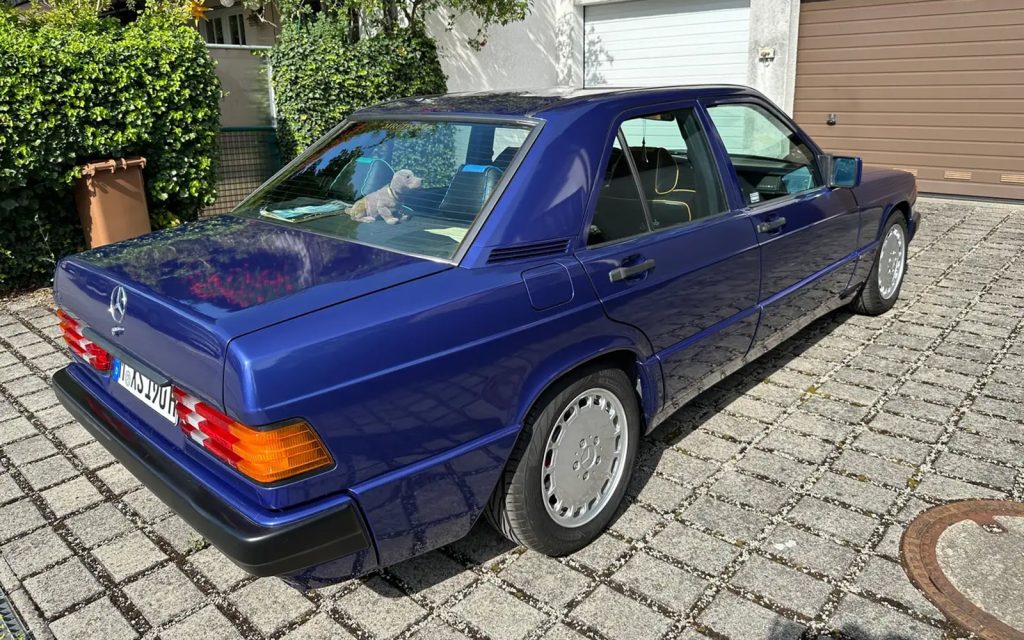
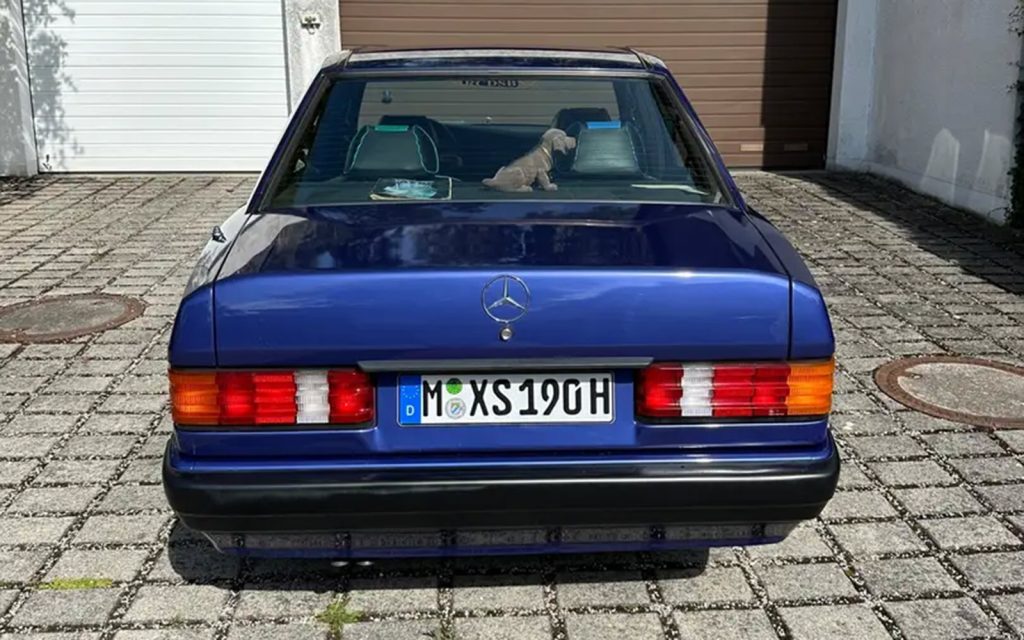
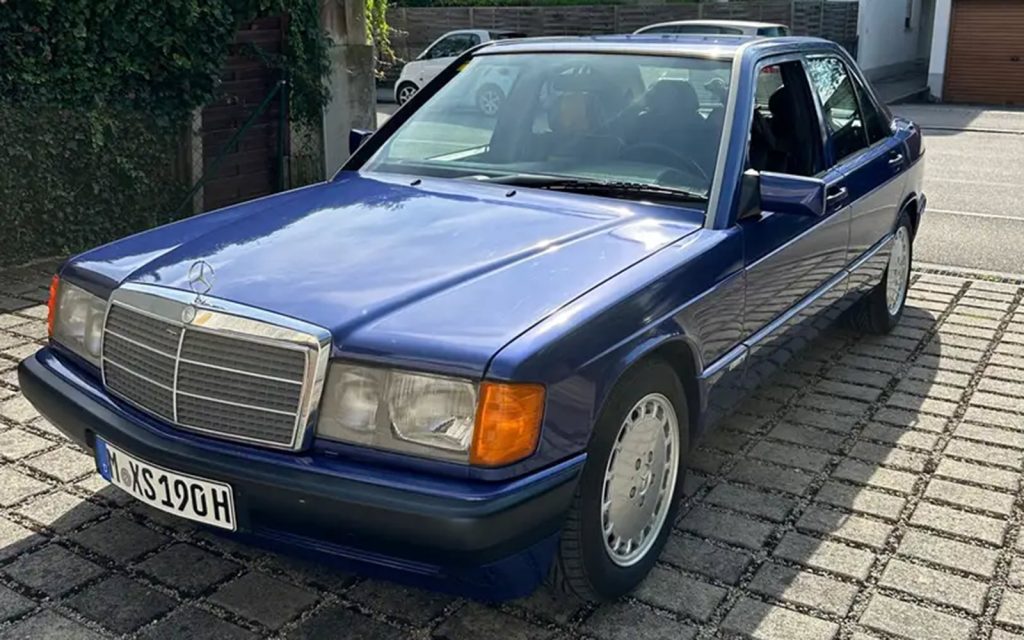
What: 1992 Mercedes-Benz 190 E 2.3 Sportline Avantgarde azzurro Color:Azzurro Blue(azzurroblau; metallic UNI; 366; Mercedes-Benz) VIN: Unknown Mileage: 130,100 km / 80,840 miles Price at Time of this Writing: €15,000 CarFax: N/A Window Sticker: N/A Location: Private Seller, Münich, Germany Listing:Link
Why We Love It:
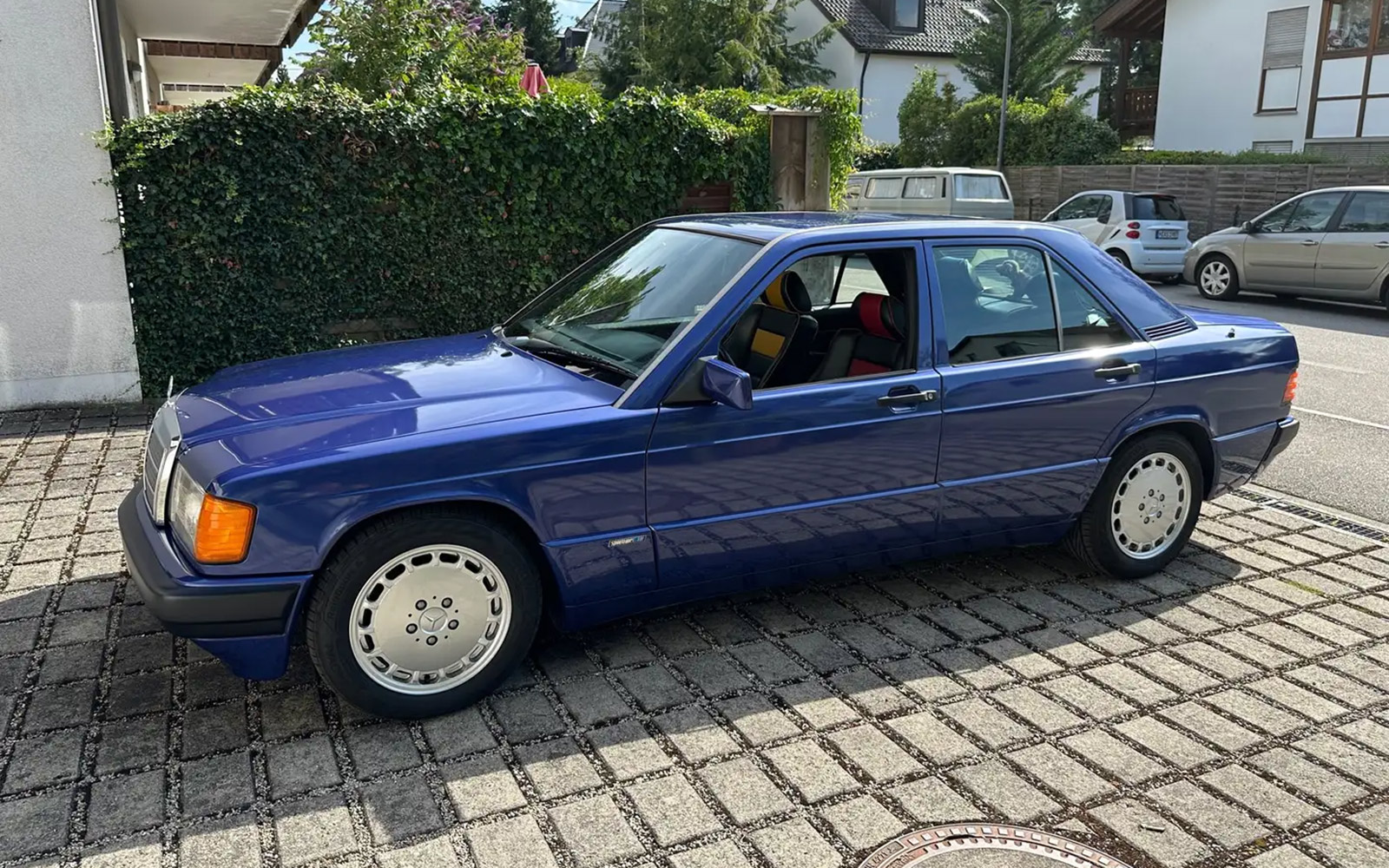
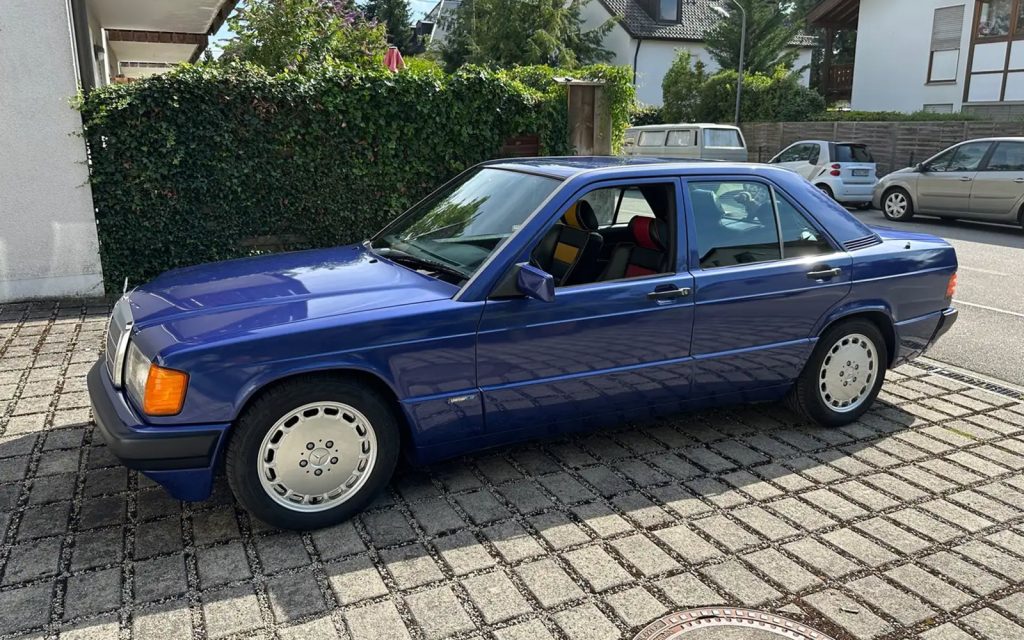
One of several cars built in Mercedes-Benz Avantgarde series of W201 190 Es, the 190 E Avantgarde Azzurro is a unique thing indeed. With DTM-harkening 190 EVOs making anything W201 even more interesting, the azzurro and all its 90s German kitsch offer a more unique approach to the package.
Perhaps inspired by other market offerings such as the Volkswagen Color Concept cars, or Wolfsburg’s even more radically quirky Harlequin models, the Avantgardes utilized color in order to dial up the fun factor of a then aging W201 range.
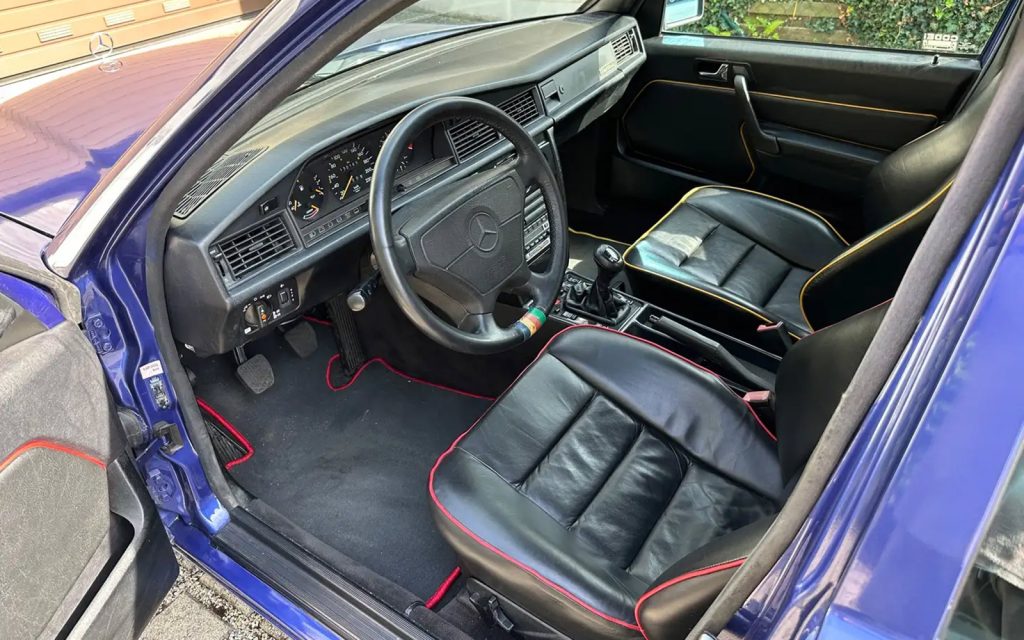
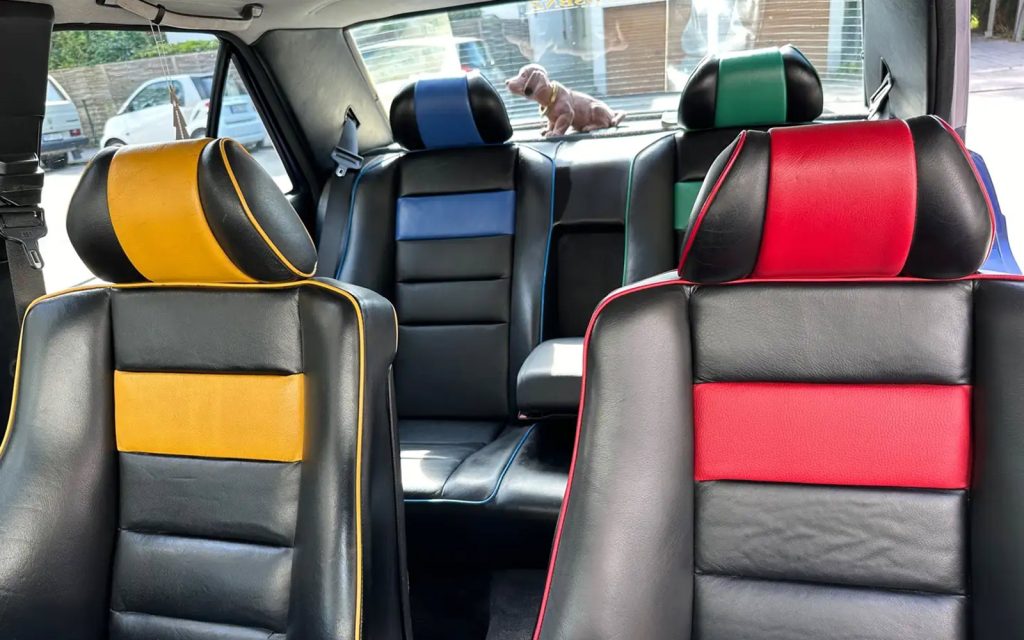
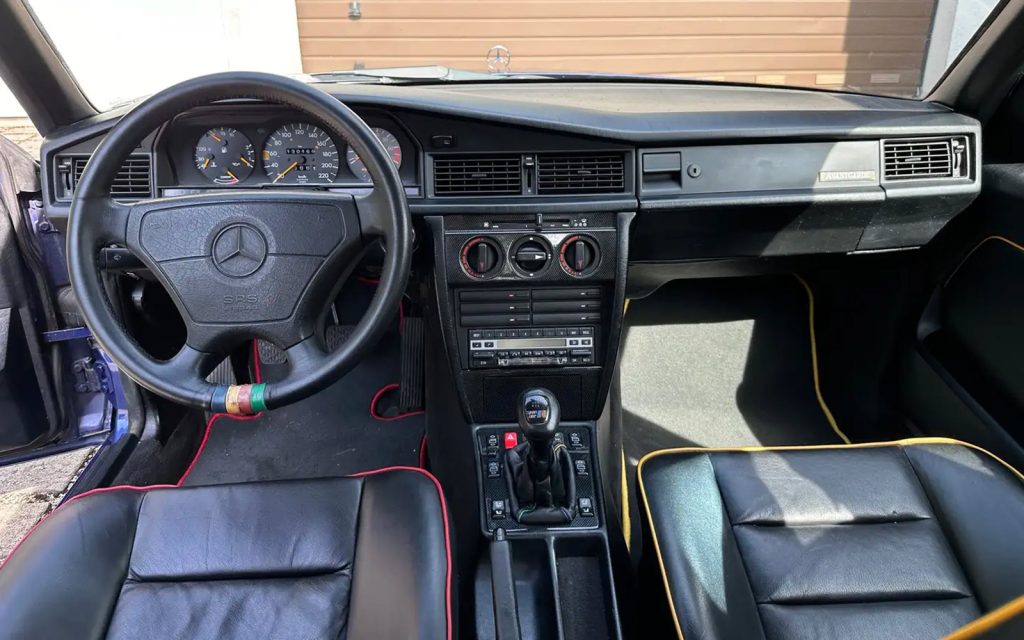
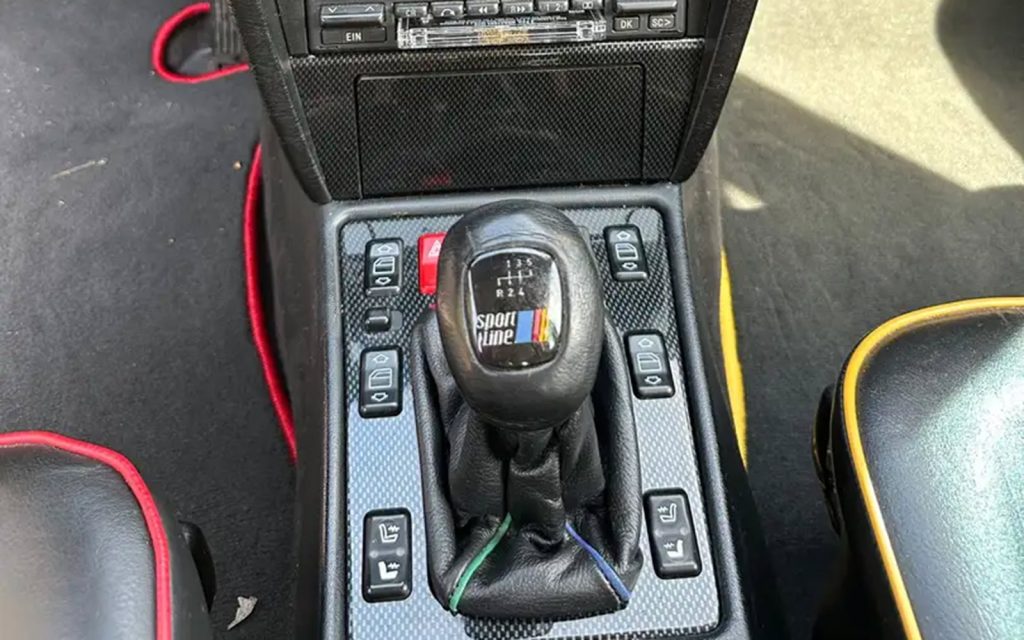
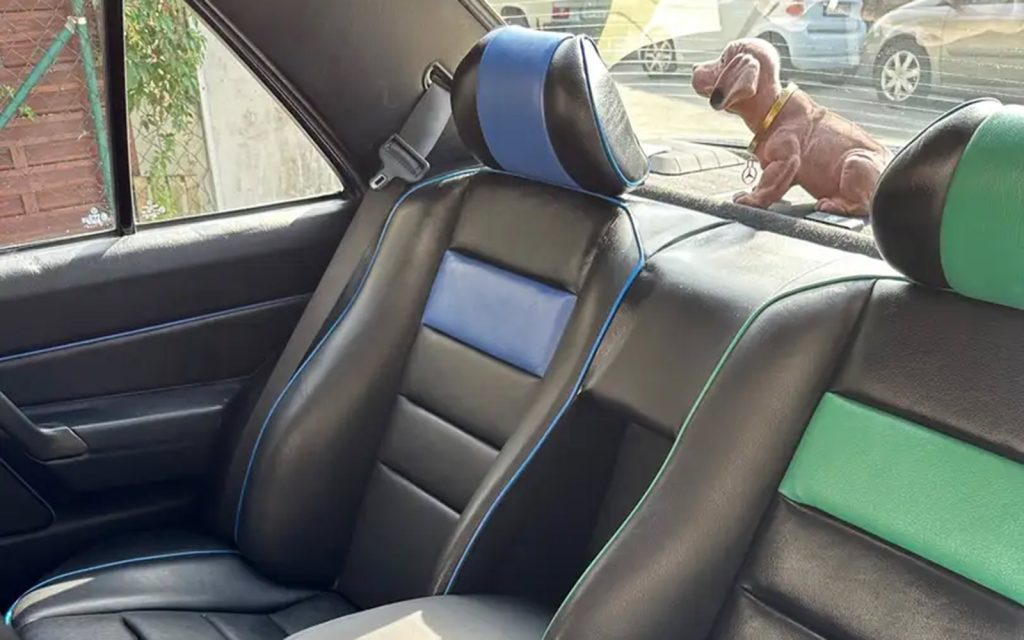
The most notable differences on the Avantgarde azzurro is the use of color. For starters, its Azzurro Blue metallic paint was unique to the Avantgarde offering. Then, much like the Harlequin, it artfully incorporated multiple colors in trim on the seats, big-bolstered rear individual seating, the floor mats, the shift knob and the steering wheel. More substantively for drivers, it also got Mercedes’ Sportline suspension that was 20% stiffer and 23 mm lower than run-of-the-mill 190s.
Only 950 azzurro models were built, though it was their quite literal avant-garde nature that likely played into Mercedes’ choice to not sell the cars in the U.S.A. Fortunately, they’re now old enough for import and this clean and preserved example has just come on the market near Münich, listed for sale by an individual.
This is one of our Euro market finds, so the usual caveats apply for our primarily North American readership. For Europe and other markets, we focus on cars older than 25 years, meaning a relatively easy import into the USA. This is often done by working with firms such as our friends at Orchid Euro, you can have the car purchased, transported to port, shipped to America and cleared through customs for clients seeking this sort of service.
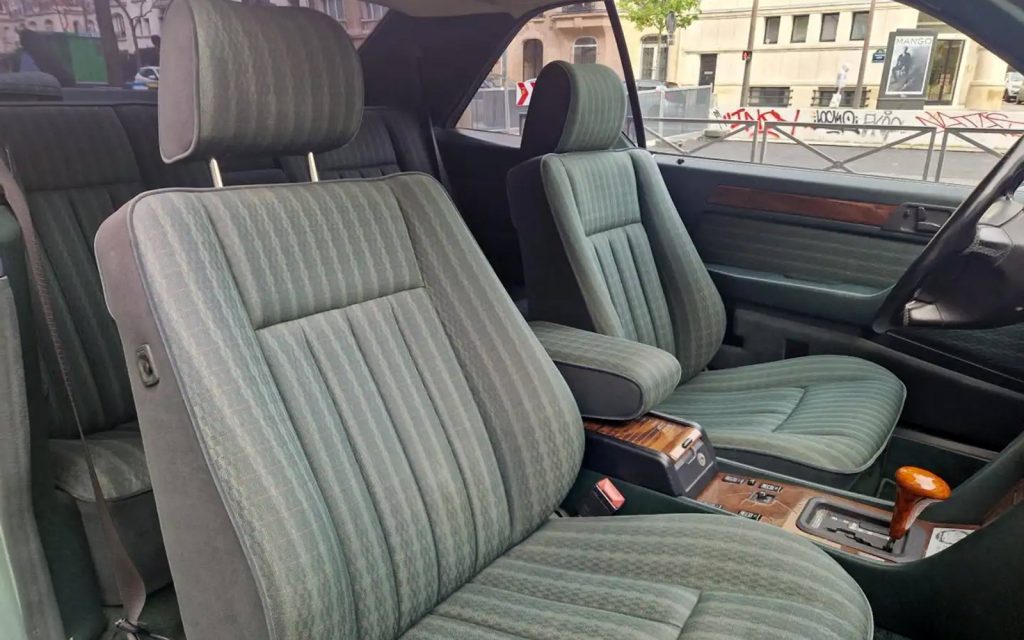
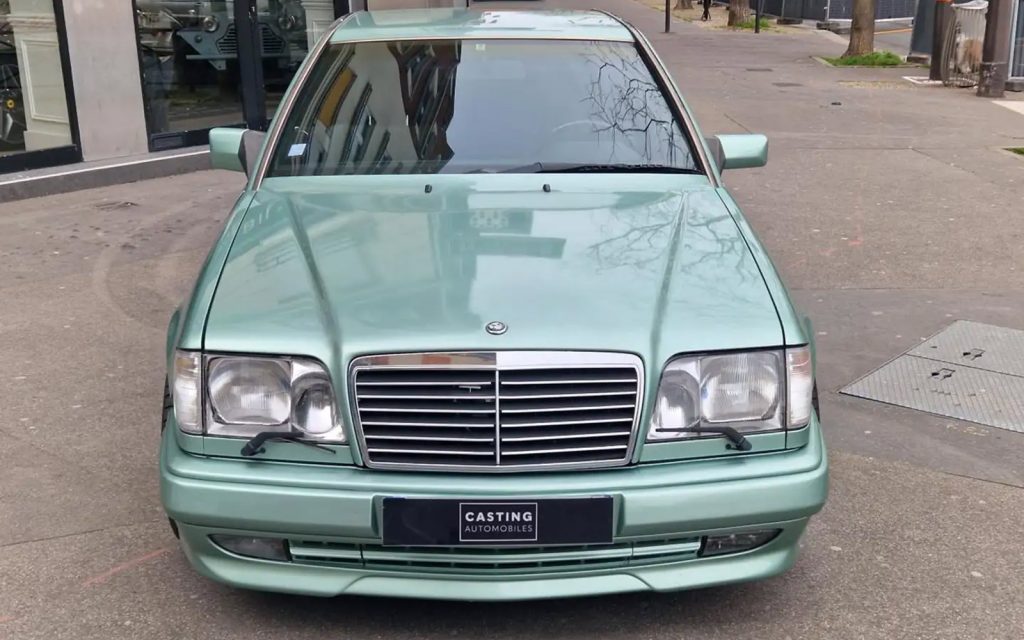
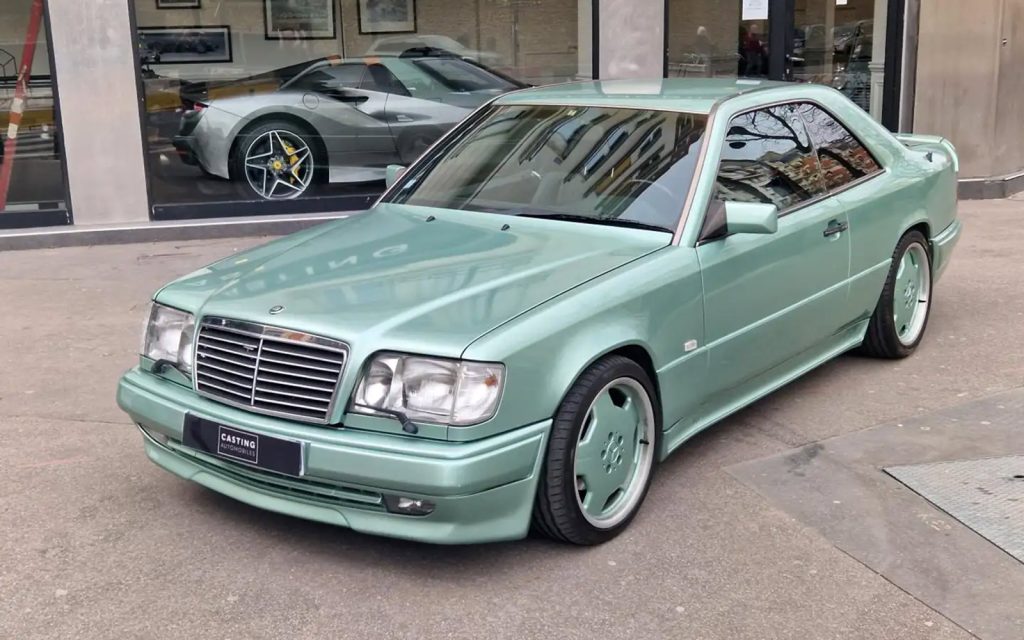
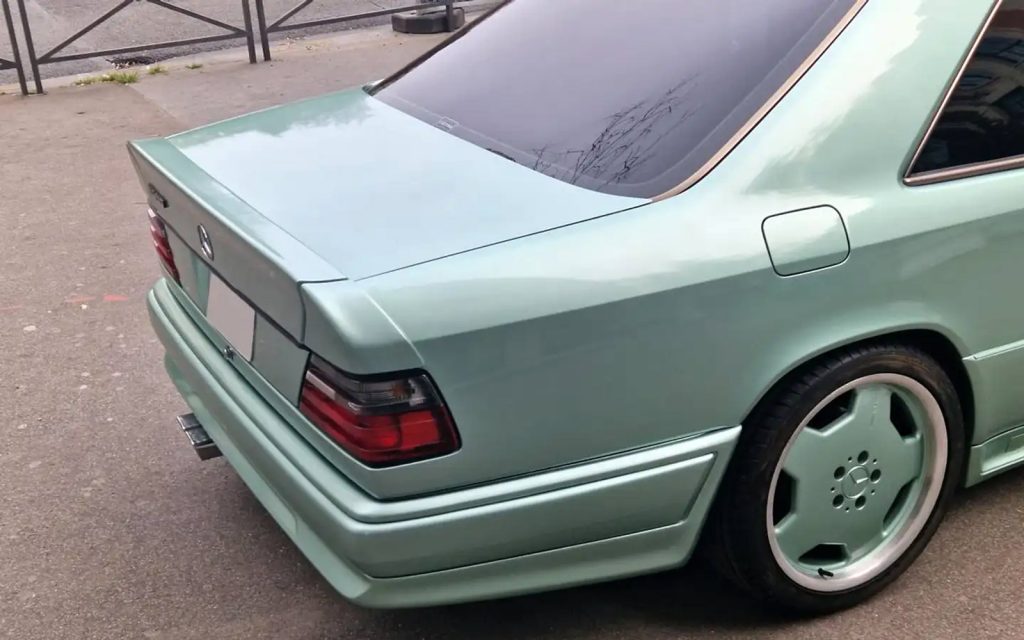
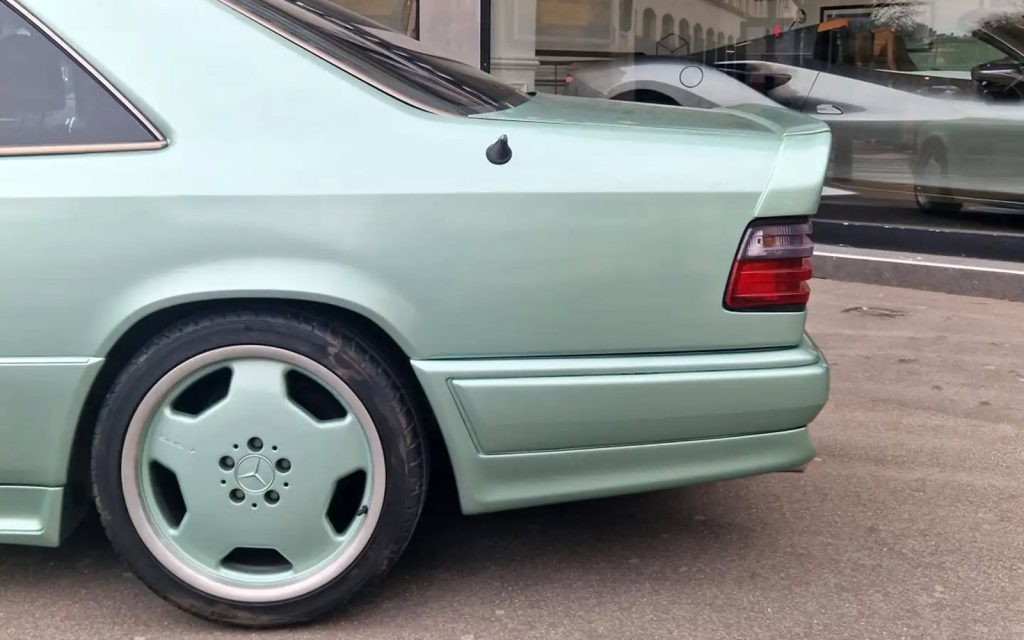
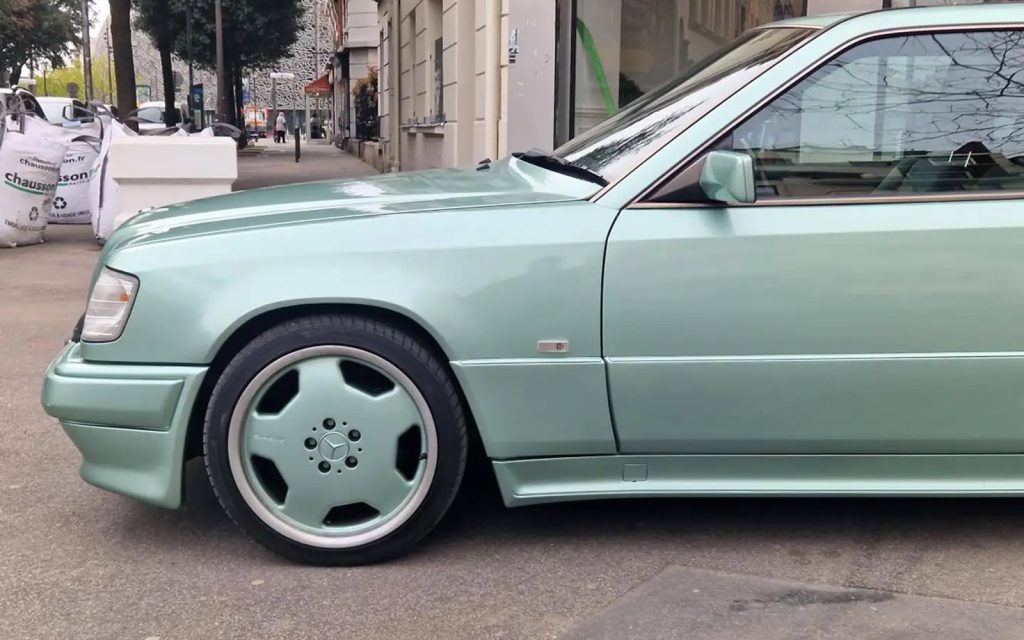
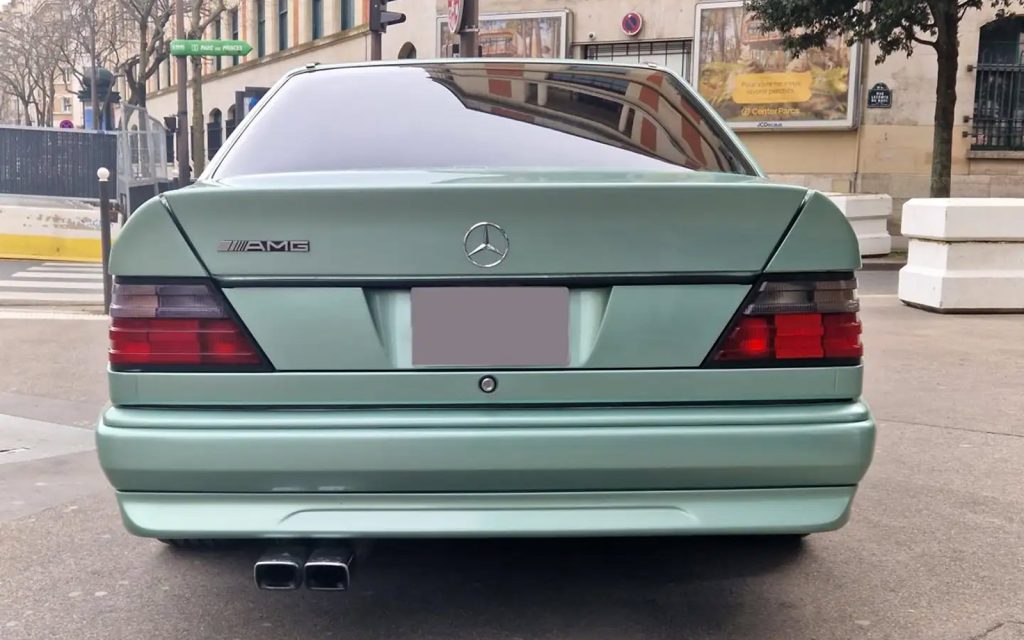
What: 1992 Mercedes-Benz 300 CE 3.4 AMG Color: Crystal Green Metallic (kristallgrün; metallic UNI; 256; Mercedes-Benz) Chassis Number: N/A Mileage: 100,500 km, 62,447 miles Price at Time of this Writing: €95,000 CarFax: N/A Window Sticker: N/A Location: Casting Automobiles, Paris, France Dealer listing:Link
Why we love it:
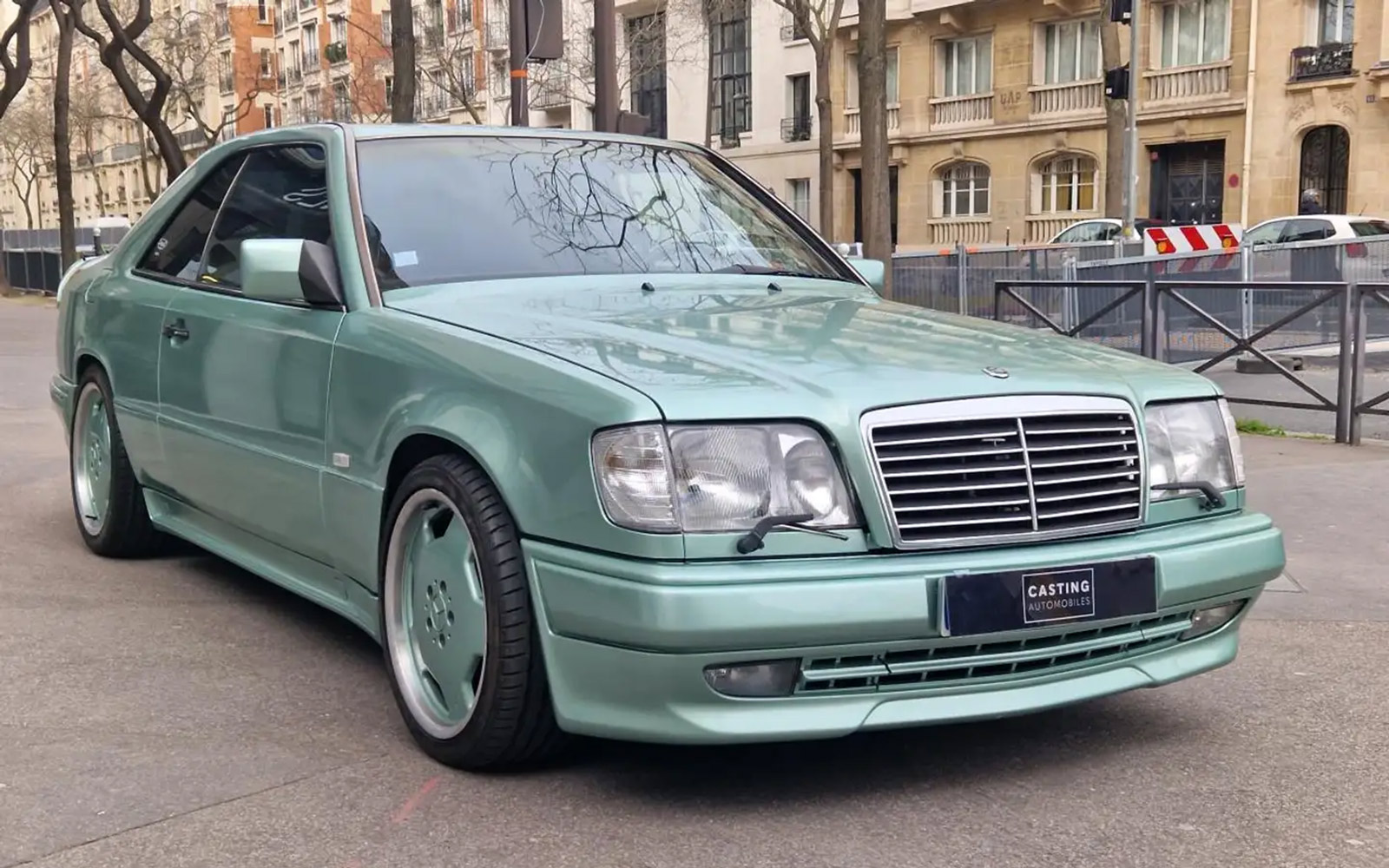
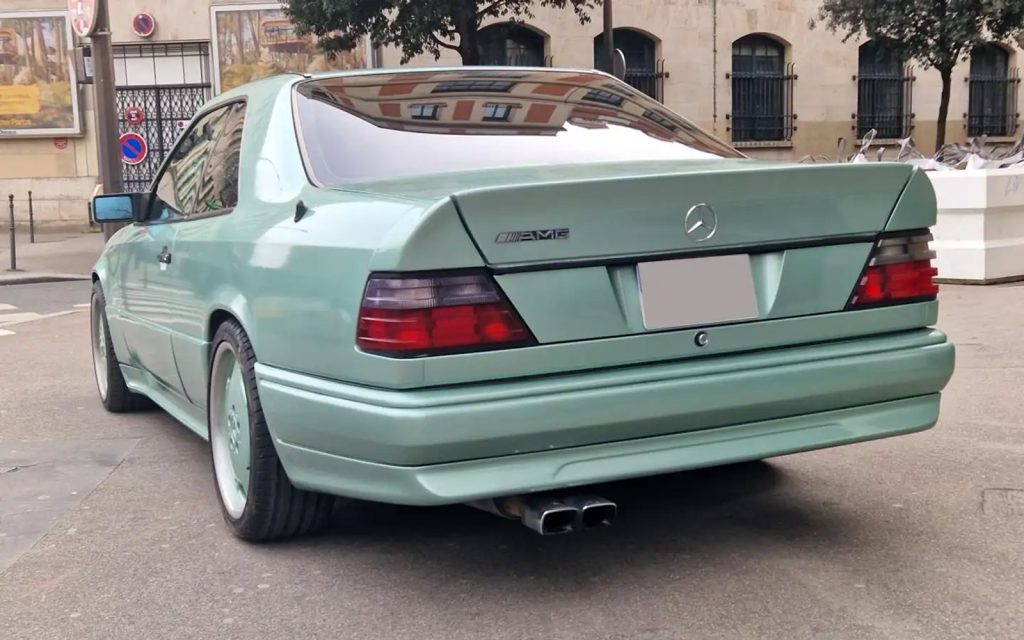
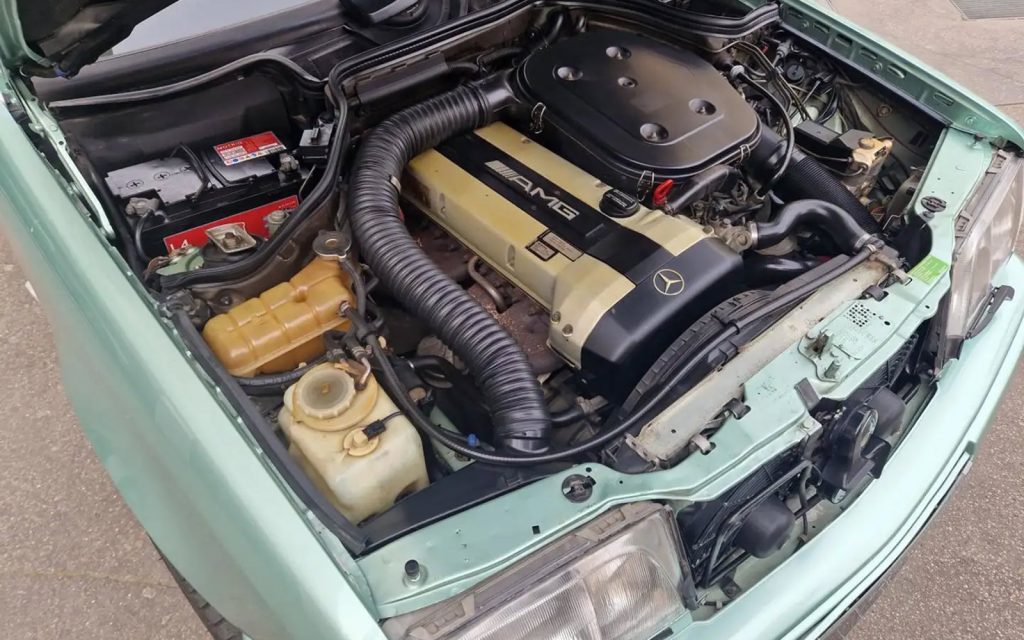
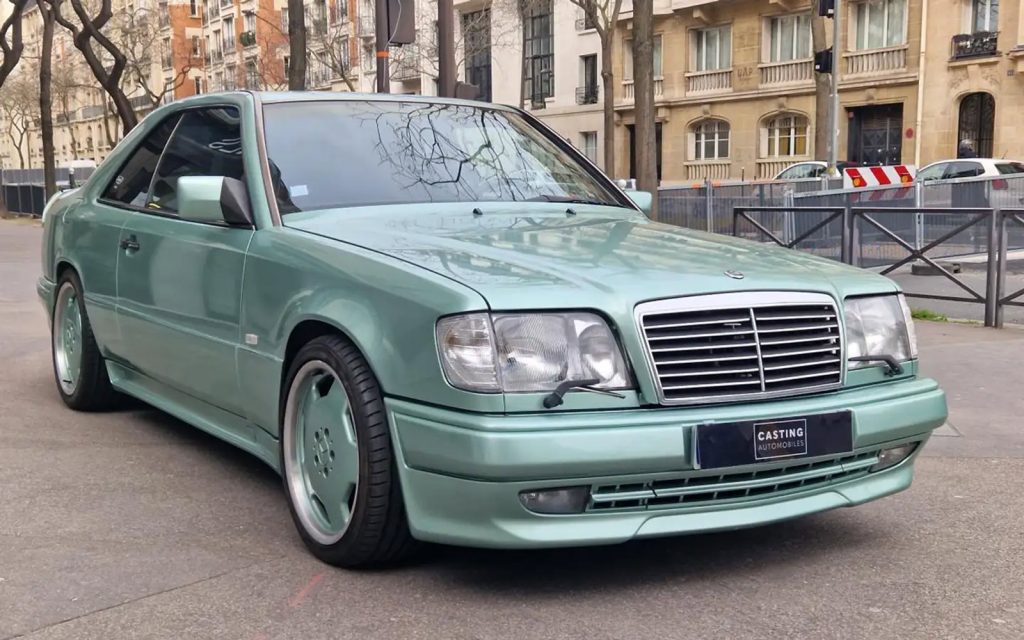
Likely due to rarity, it’s not uncommon to see a W124-generation Mercedes-Benz 300 CE coupe built by AMG crossing the six figure mark. Transaction prices approaching six figures (actually passing them by the time you convert to U.S. dollars and import) aren’t something we typically see of 1990s era cars from Mercedes-Benz. However, make them a well preserved AMG and it’s a whole new ballgame.
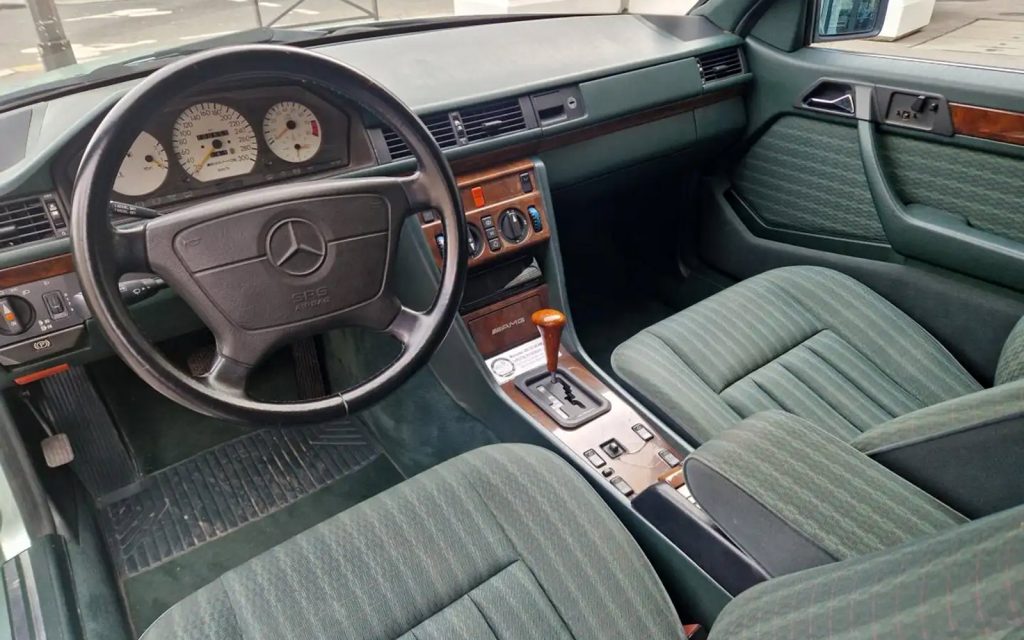
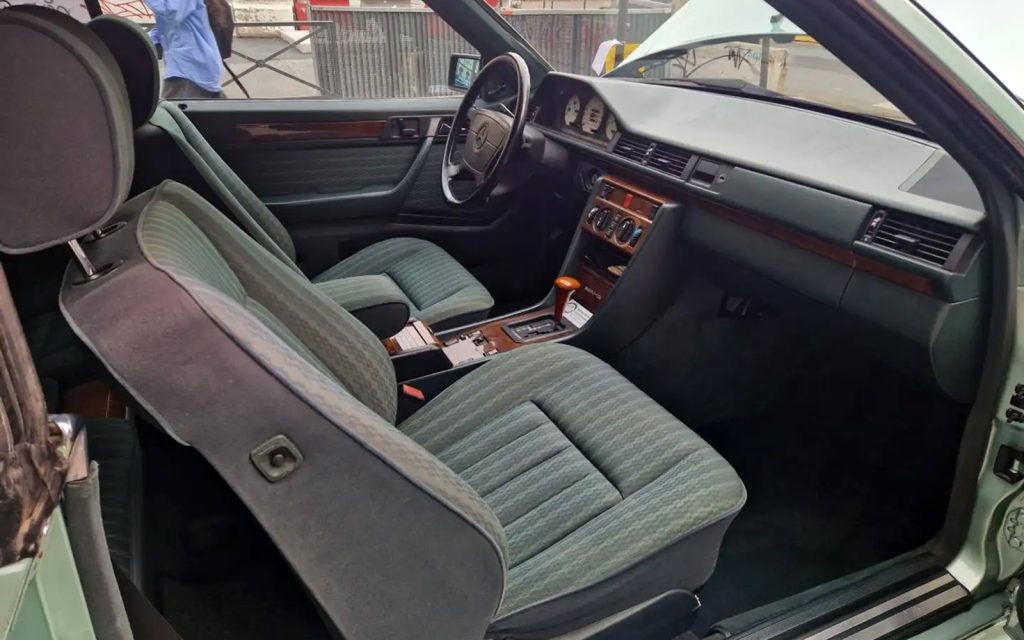
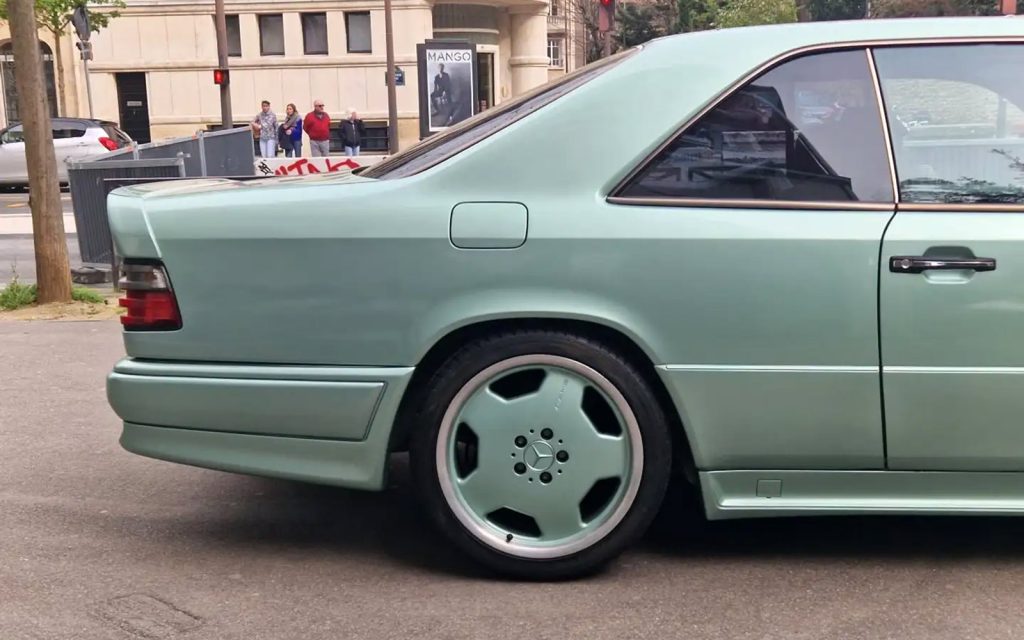
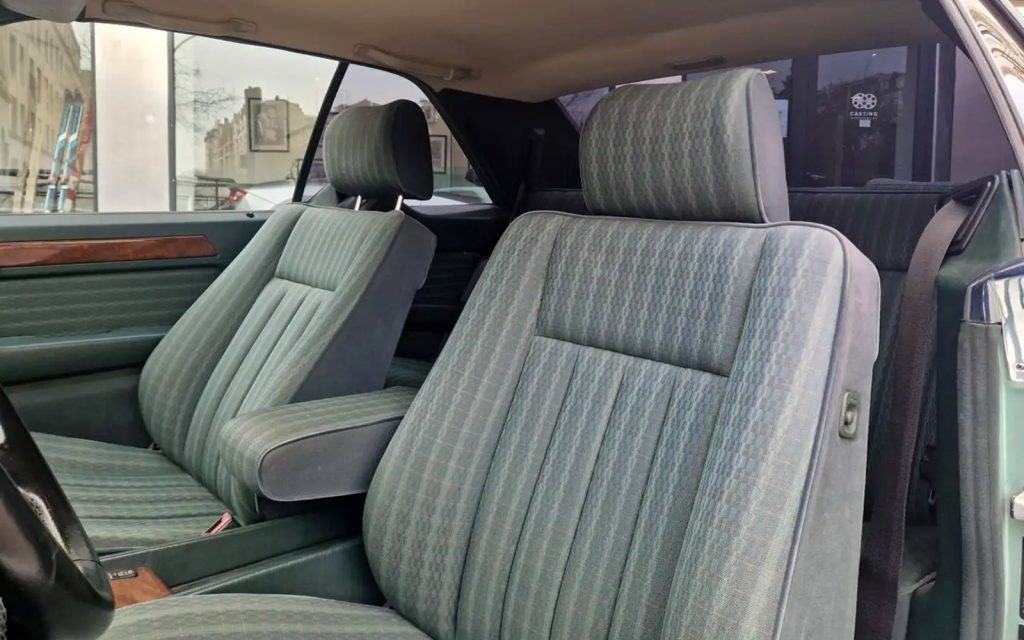
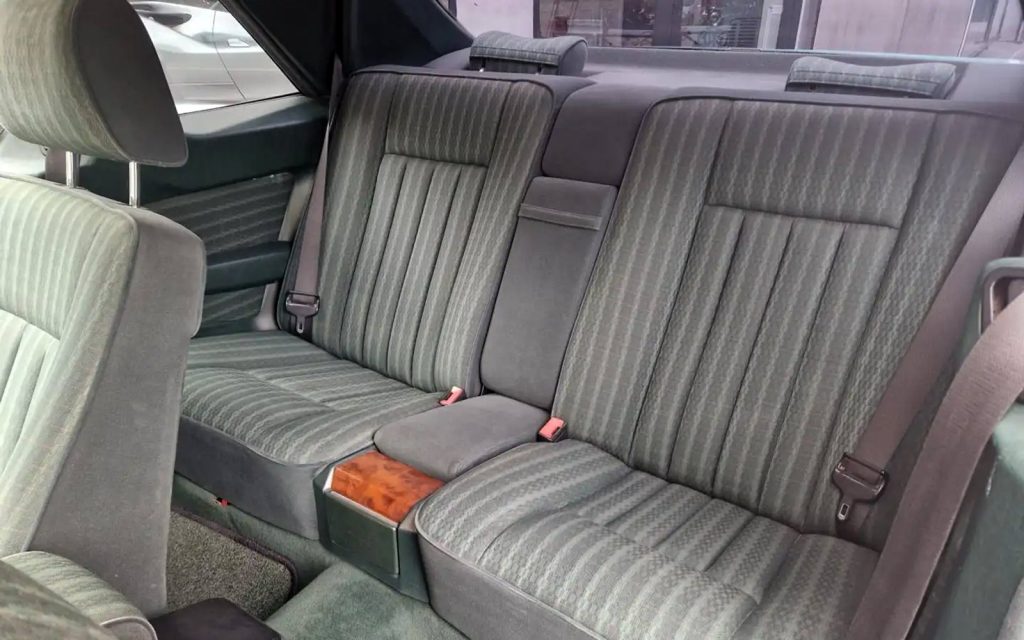
If you’re a connoisseur of these cars, then we think it’s worth pointing your attention towards this particular specimen – a tone-on-tone coupe in a rare color of Crystal Green Metallic paired with green-tartan seating. It appears to have originated from Japan, though can now be found at a specialty dealer in Paris, France.
Translating the listing gleans a few more notes about the car based around option codes. Where’s what it says:
916 VEHICLES FOR HOT COUNTRIES – ADDITIONAL PARTS, HEATED REAR WINDOW
ORIGINAL JAPANESE CAR CRYSTAL GREEN (256U) with PINE CANVAS (066)
221 LEFT FRONT SEAT WITH ELECTRICAL ADJUSTMENT
222 RIGHT FRONT SEAT WITH ELECTRICAL ADJUSTMENT
240 EXTERIOR TEMPERATURE INDICATOR
341 ADDITIONAL INDICATORS
425 5-SPEED AUTOMATIC GEARBOX
430 HEADRESTS, TINTED UPPER PART
600 HEADLIGHT WASHER-WIPER DEVICE
613 LEFT-HAND DRIVE HEADLIGHTS
664 20 LITERS OF FUEL AND VE III PACKAGING MODE
802 CHANGE OF MODEL YEAR, LAMINATED GLASS
Now, throw in the fact that this is a fully-built and well-preserved AMG model constructed on the W124 chassis a full 13 years ahead of Mercedes-Benz’s own buyout of AMG and you have a thoroughly interesting specimen for a serious MercedesBenz collector.
This is one of our Euro market finds, so the usual caveats apply for our primarily North American readership. For Europe and other markets, we focus on cars older than 25 years, meaning a relatively easy import into the USA. This is often done by working with firms such as our friends at Orchid Euro, you can have the car purchased, transported to port, shipped to America and cleared through customs for clients seeking this sort of service.
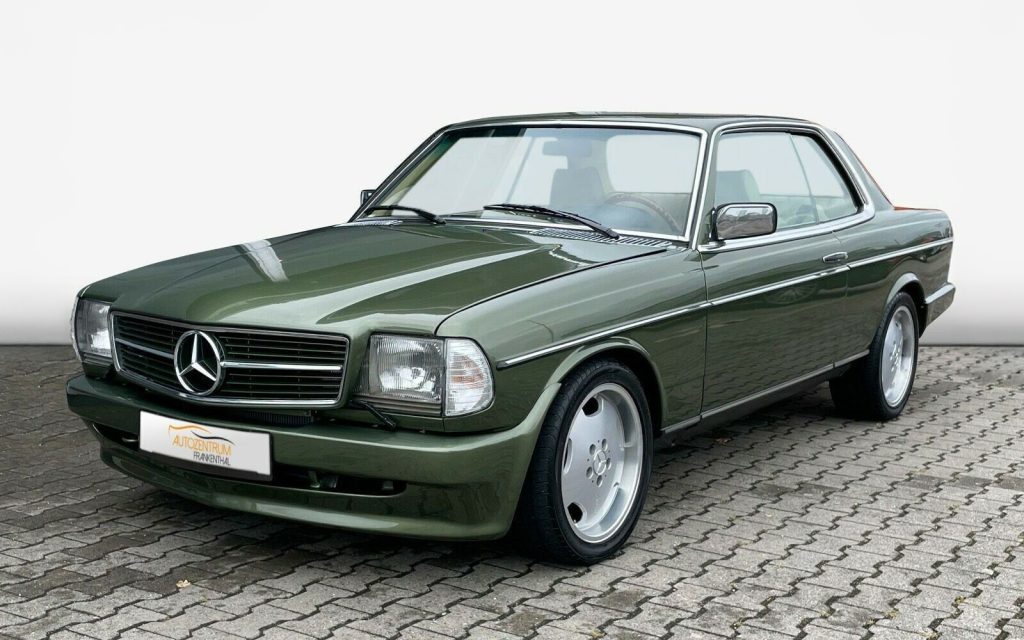
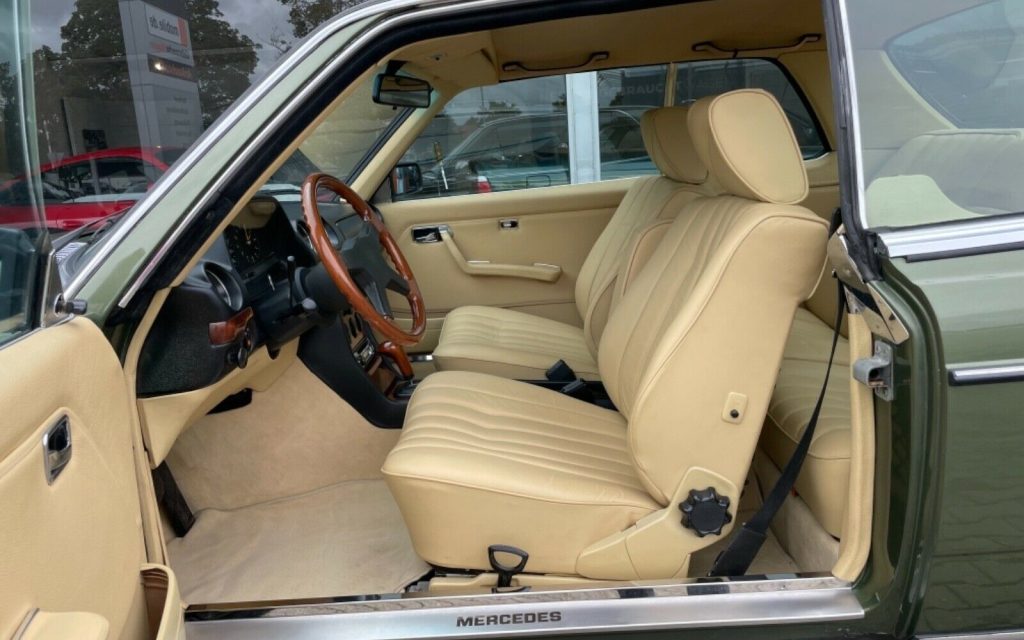
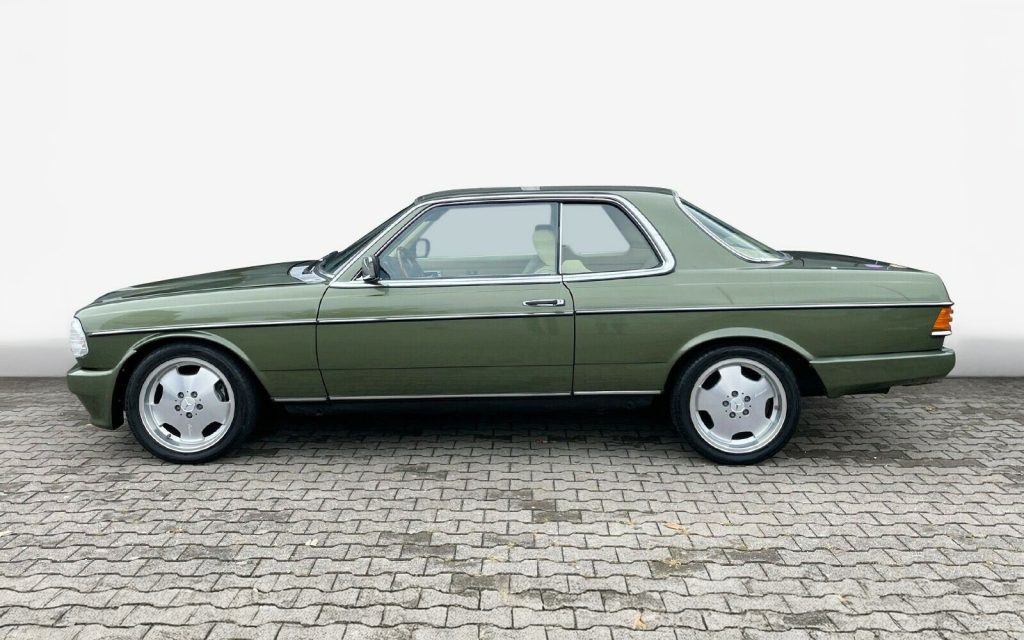
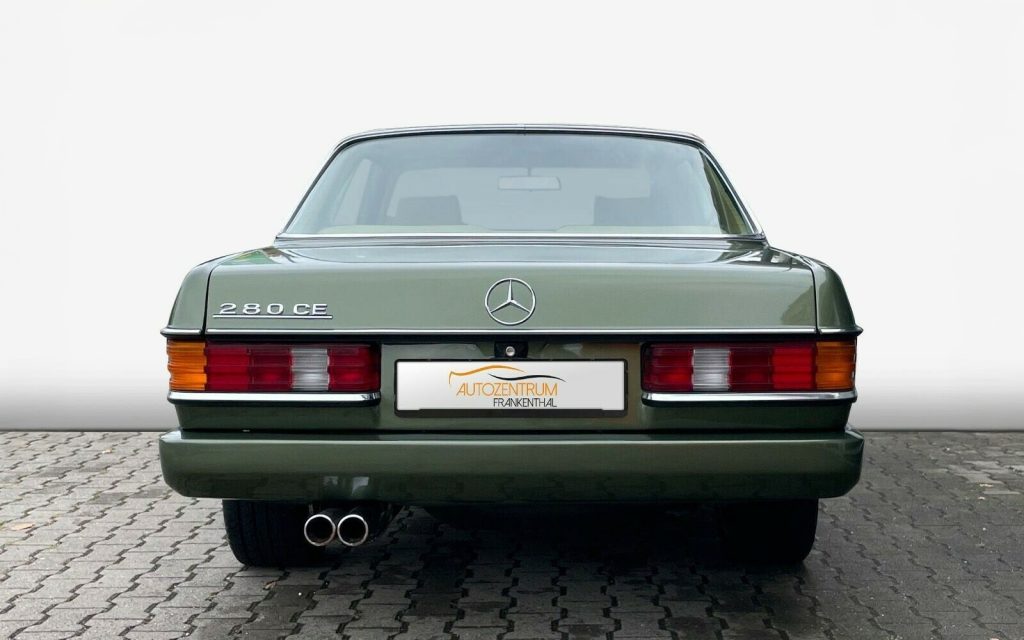
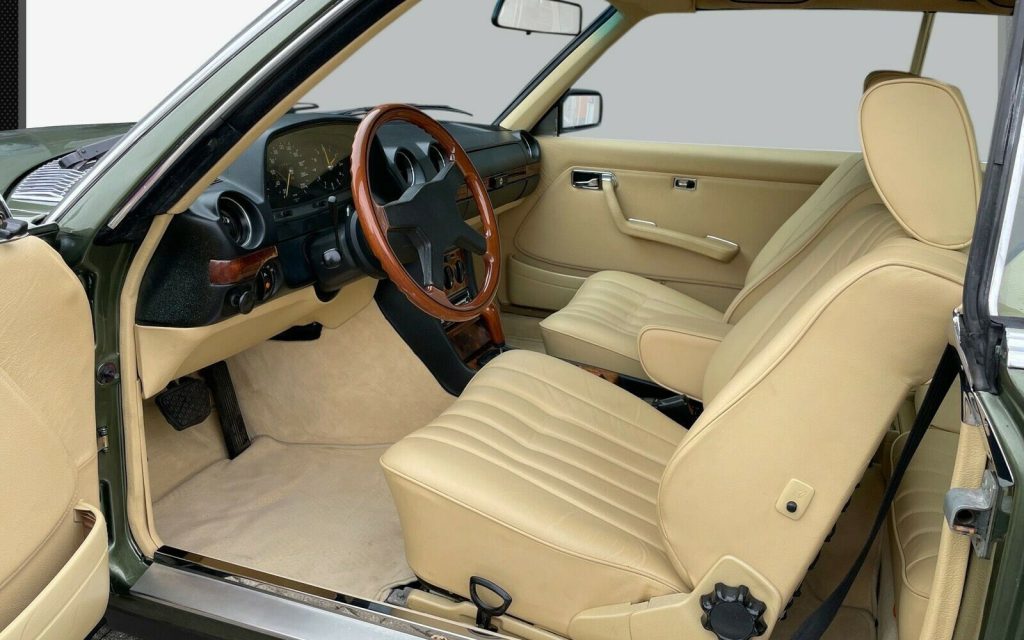
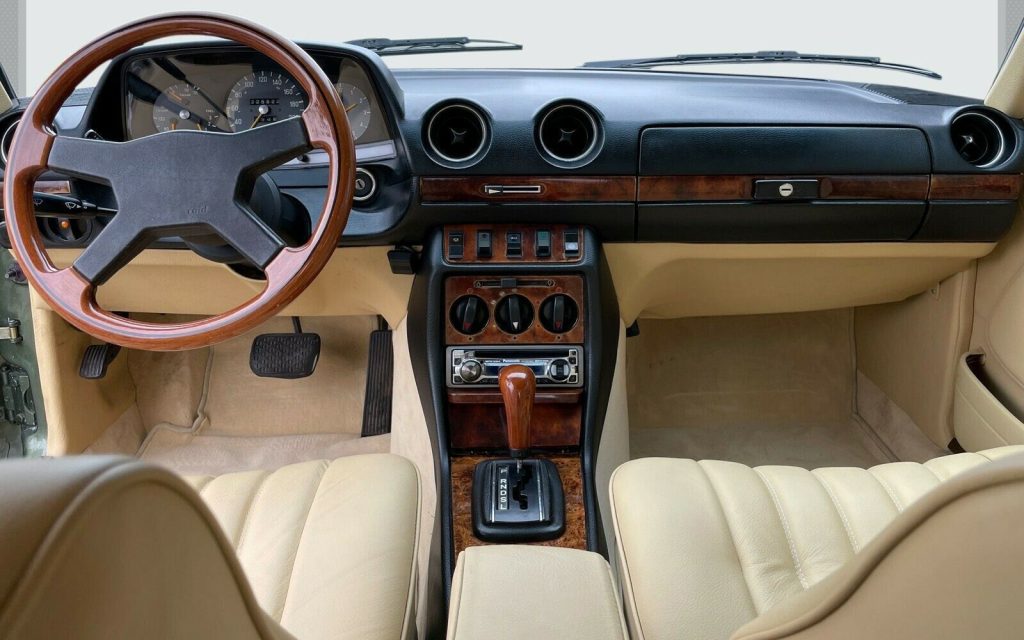
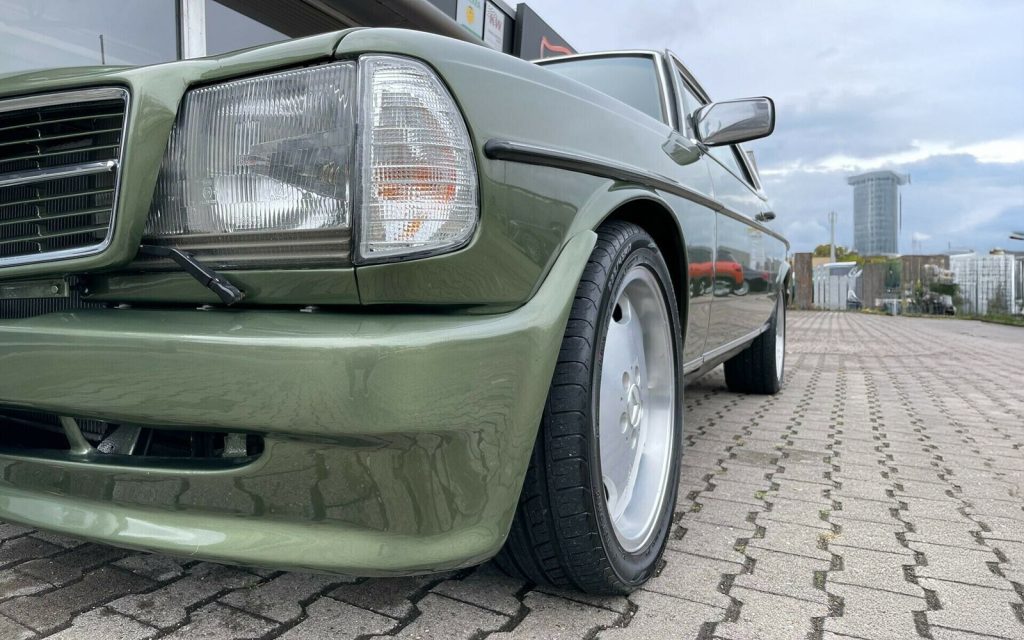
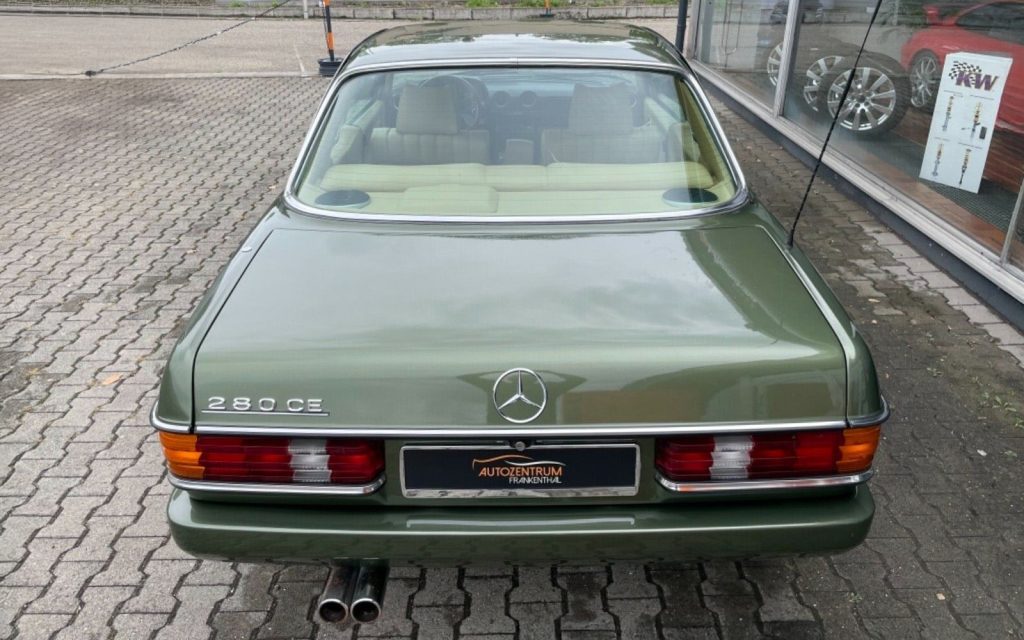
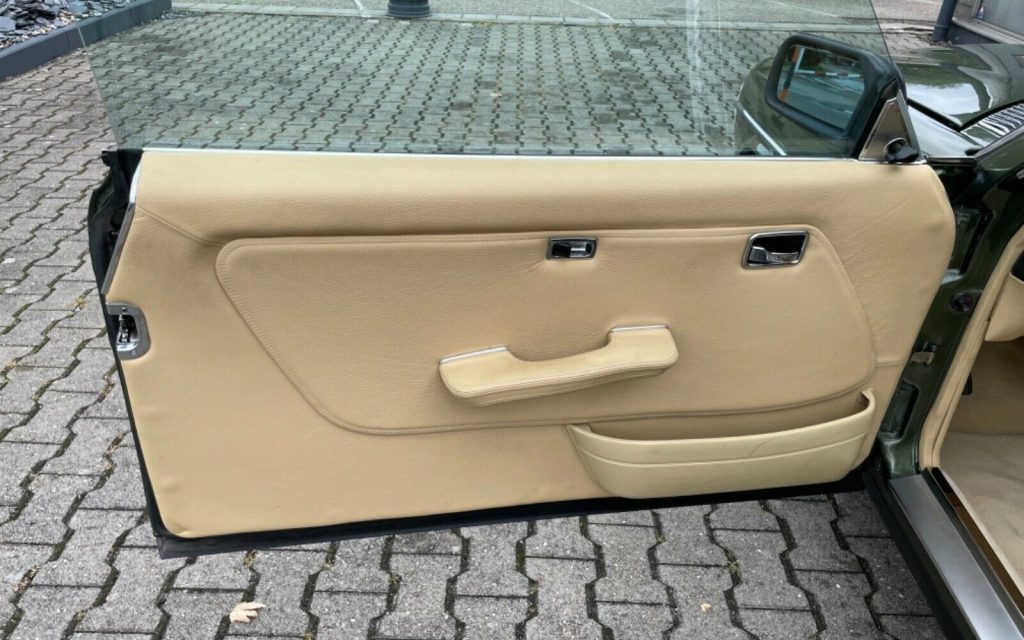
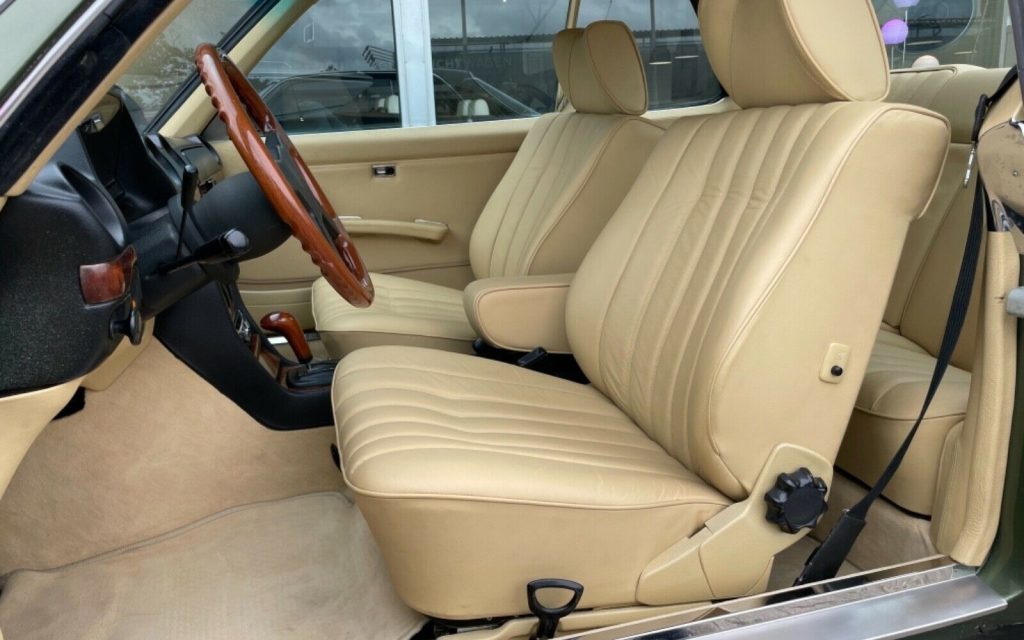
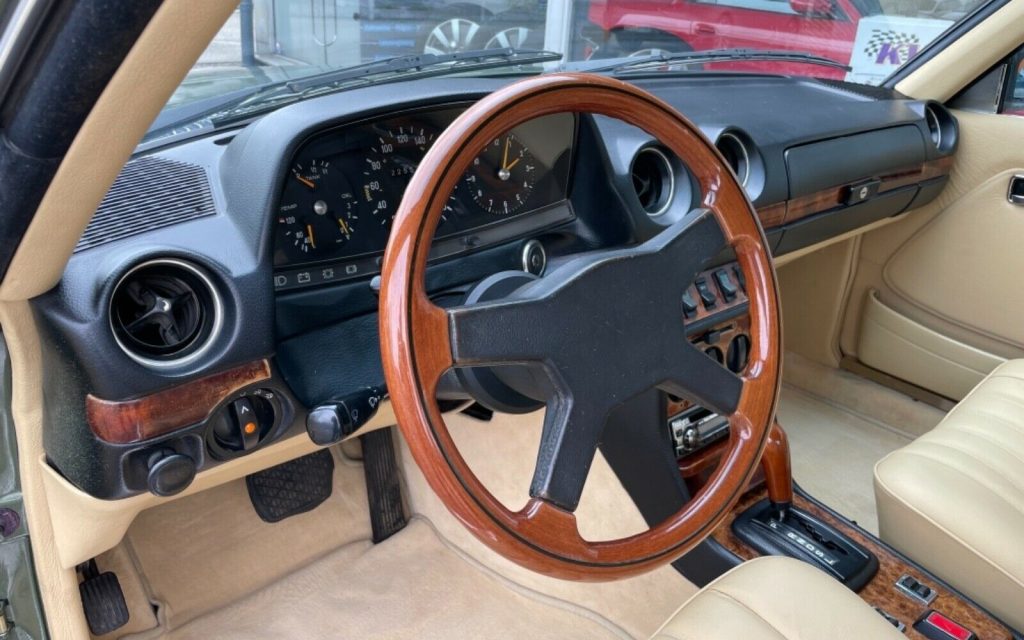
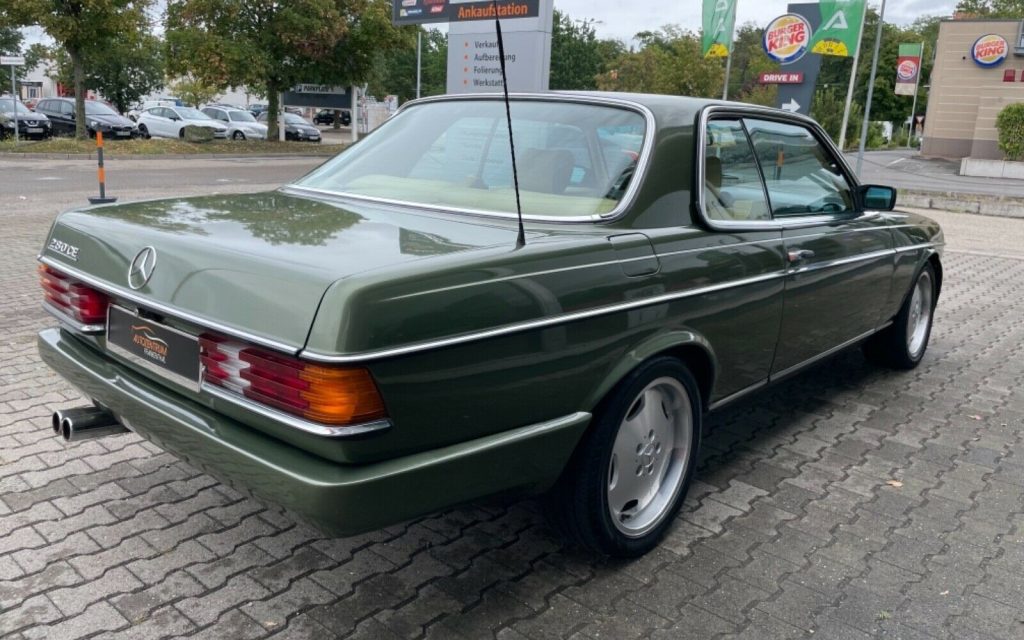
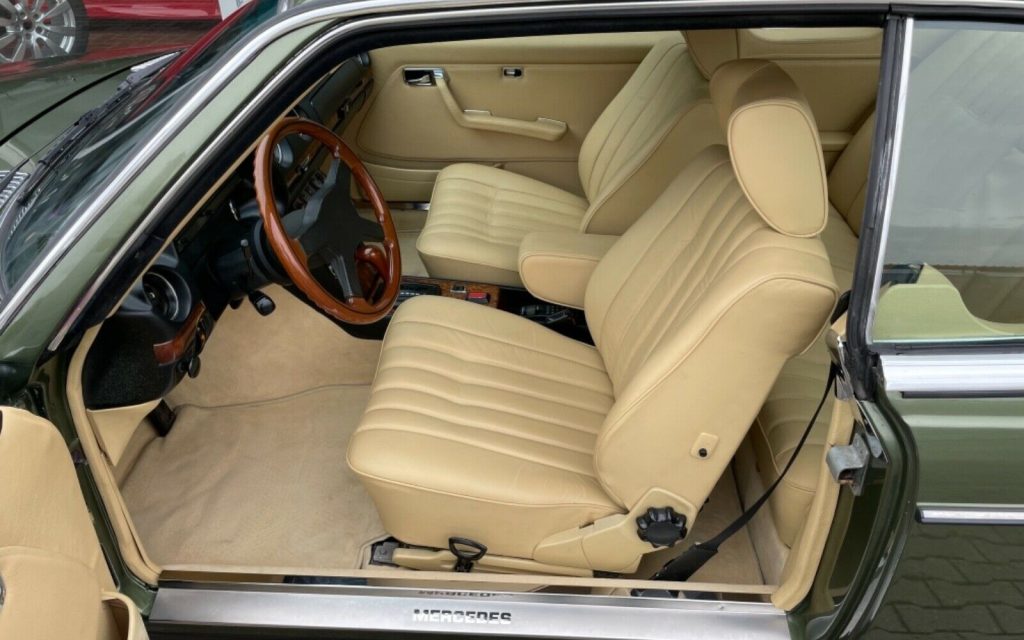
What: 1978 Mercedes-Benz 280 CE Coupe Color: Cypress Green (zypressengrün; metallic UNI; 876; Mercedes-Benz) Chassis Number: N/A Mileage: 222,000 km, 137,944 miles Price at Time of this Writing: €18,990 CarFax: N/A Window Sticker: N/A Location: Autozentrum Frankenthal, Frankenthal, Germany Dealer listing:Link
Why we love it:
Nowadays, the W123-generation Mercedes Benz 280 CE is a pretty rare thing. Built in a day when nomenclature and badging actually stood for something, the 280 CE is an E-class Coupe (a.k.a. “CE”) with a 2.8-liter V6 (i.e. 280).
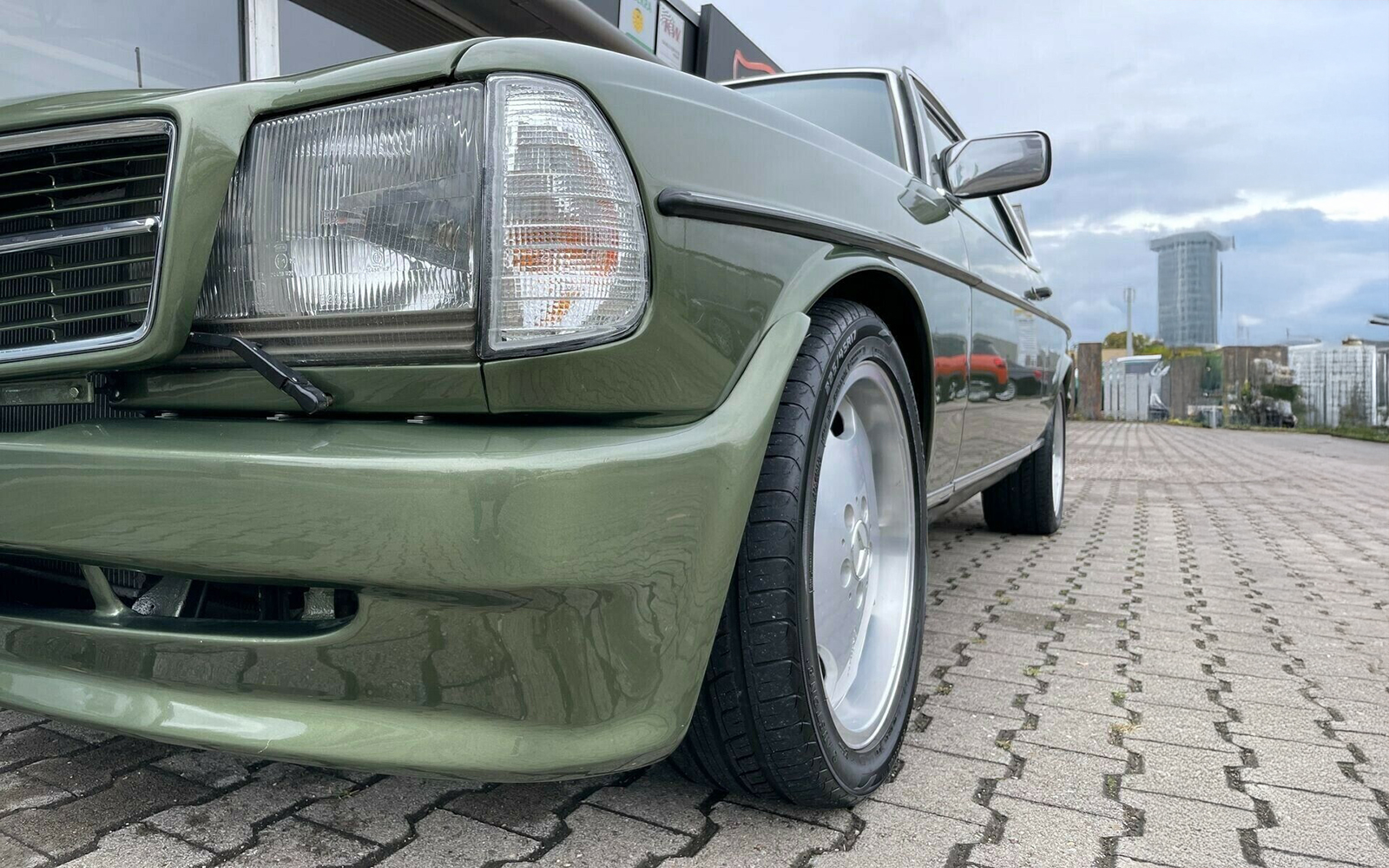
This one is Cypress Green metallic, making it a rare spec but neither a custom build from the factory nor a special limited edition factory model. Hawk-eyed viewers of our “tailored driver” qualification rules may call foul here as a result, but we’re also keen on occasionally listing the very tasteful and/or very rare specifications that may have been off the factory standard option list, but are nevertheless still both rare and sought-after. We think this car qualifies.
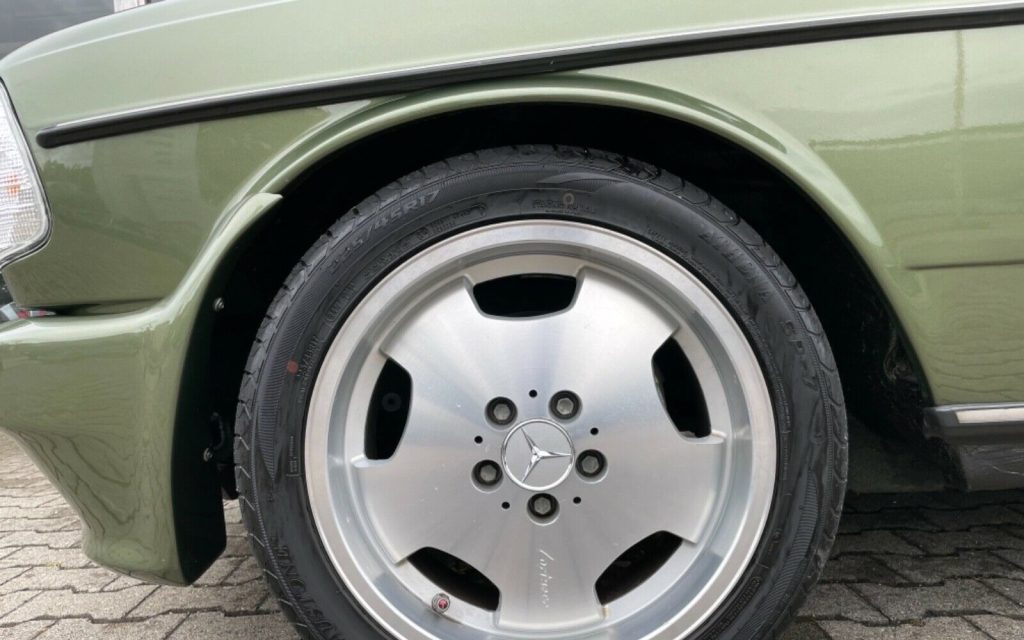
In the tailored car collector space, sometimes points are also deducted for modifications. Here again, we tend to give leeway for modifications from iconic aftermarket brands that are period correct. In this case, that includes wheels from longtime Mercedes tuning house Lorinser, a wooden steering wheel from Raid and color-matched bumper covers / body kit from 80s European car accessories house Zender. While these changes may boot this car out of a hallowed space at a Mercedes-Benz factory museum, we suspect they’d definitely earn you street credit at the local cars and coffee.
This is one of our Euro market finds, so the usual caveats apply for our primarily North American readership. For Europe and other markets, we focus on cars older than 25 years, meaning a relatively easy import into the USA. This is often done by working with firms such as our friends at Orchid Euro, you can have the car purchased, transported to port, shipped to America and cleared through customs for clients seeking this sort of service.
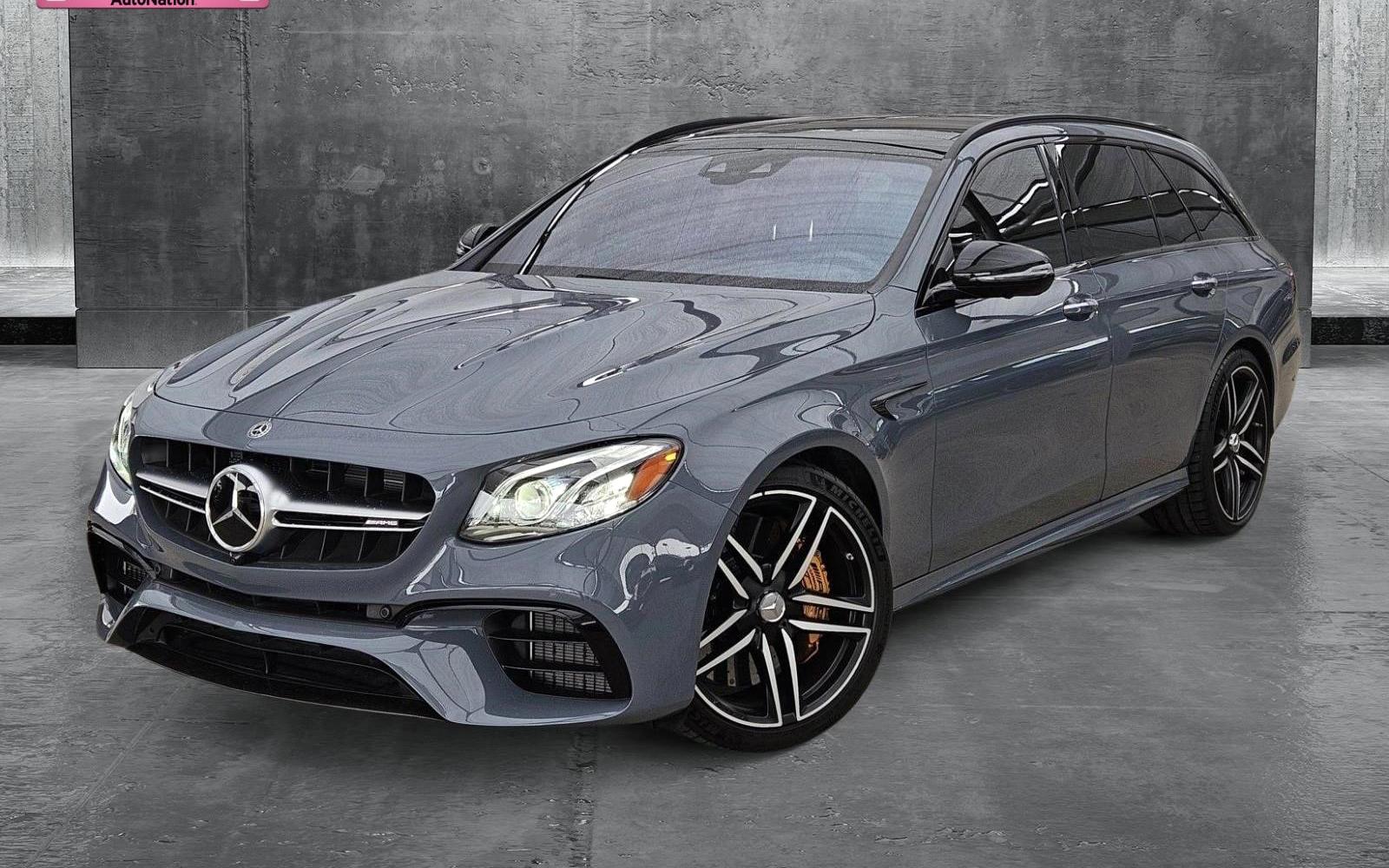
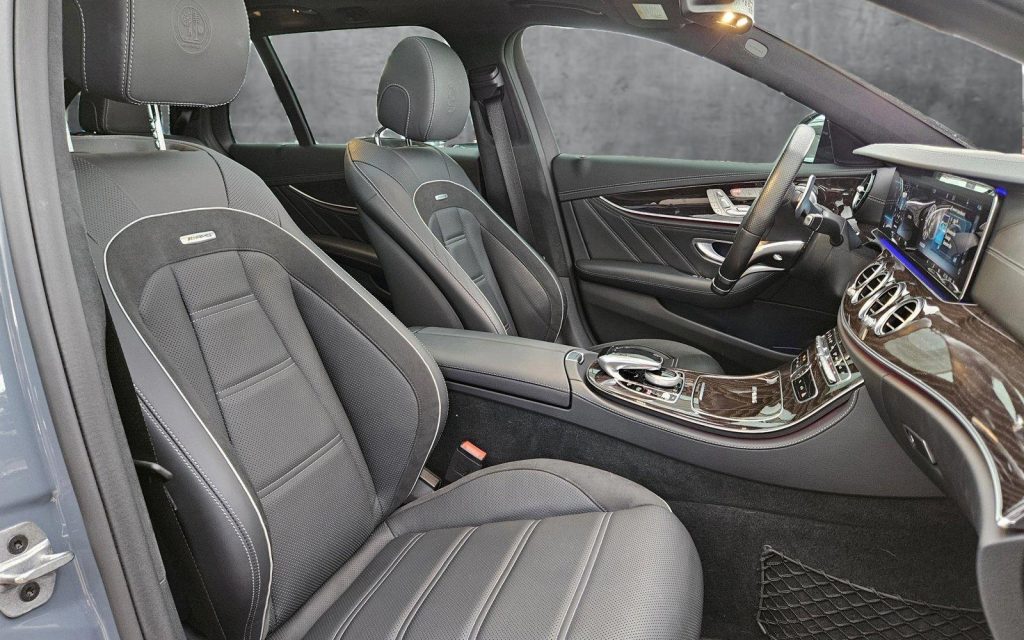
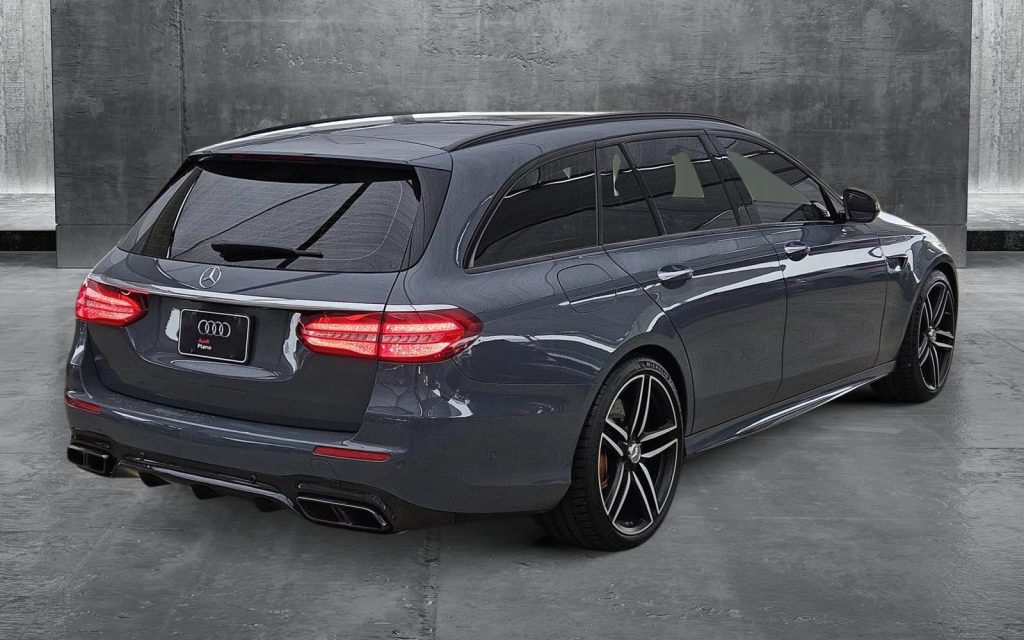
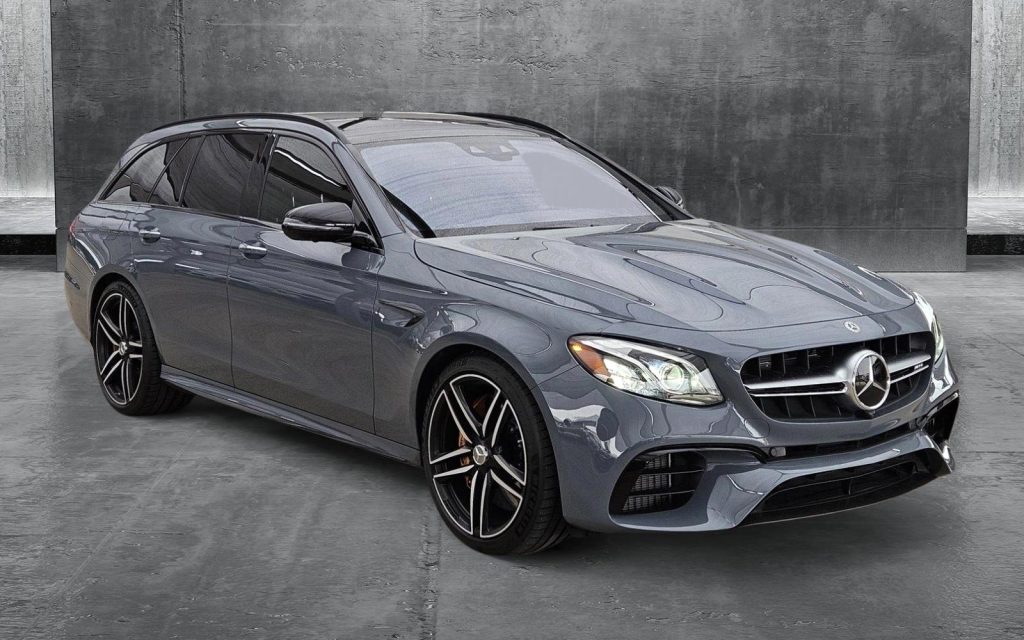
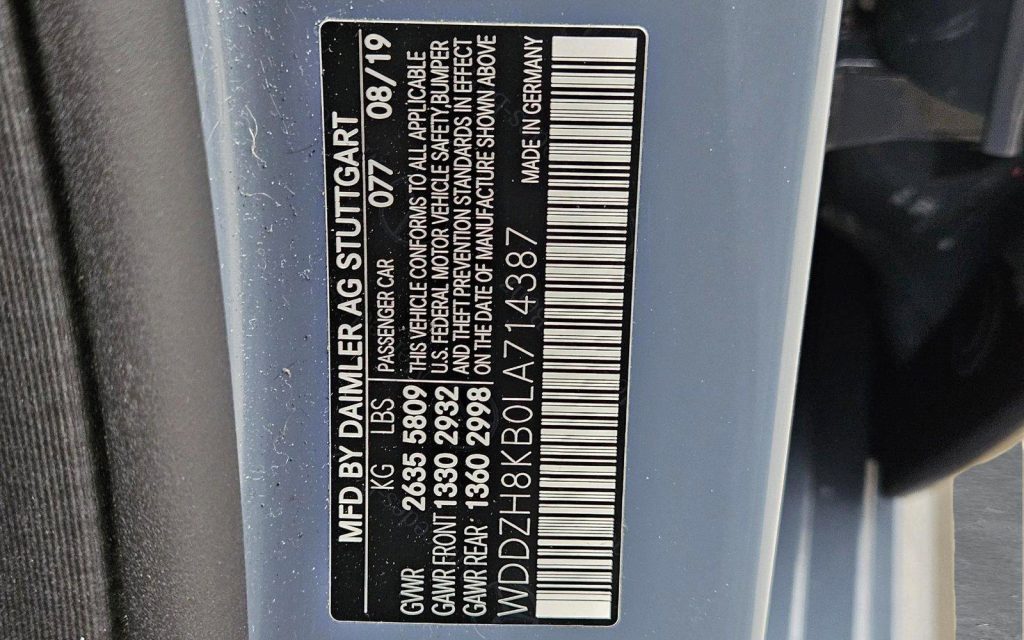
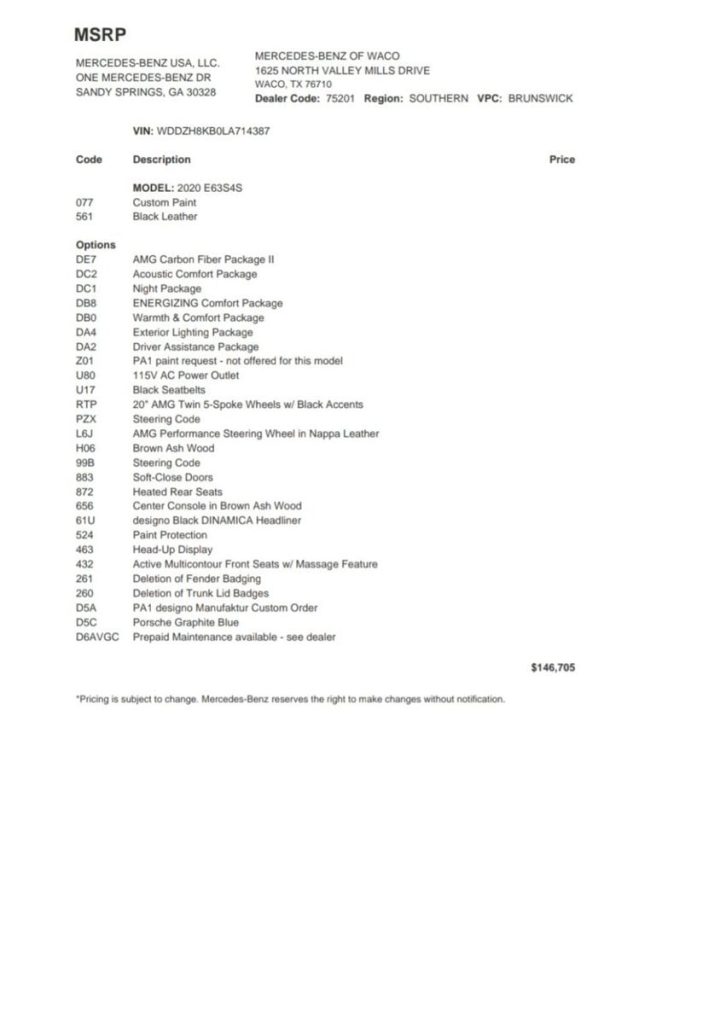
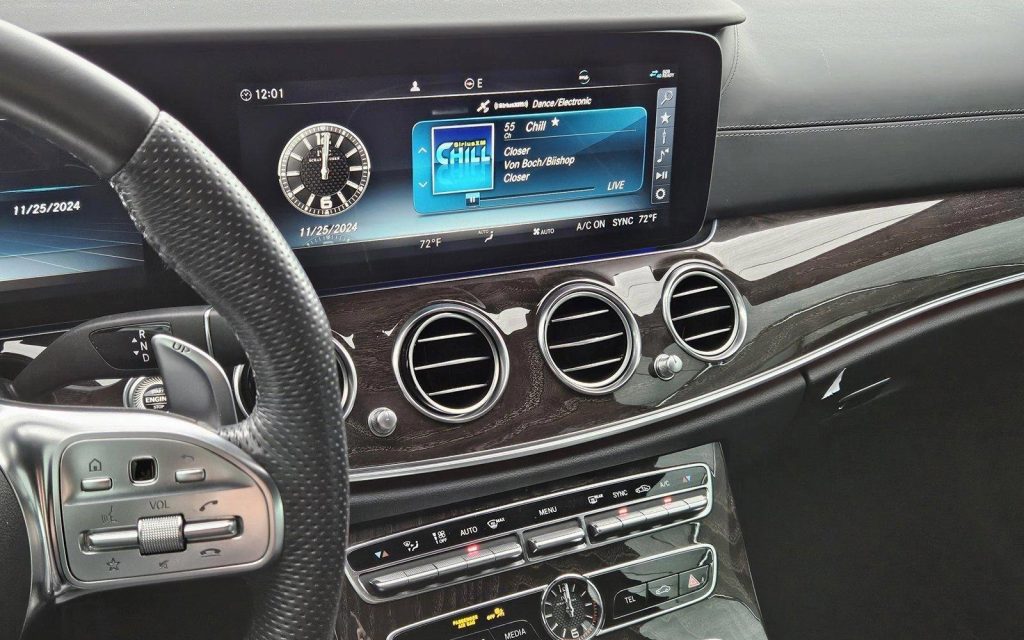
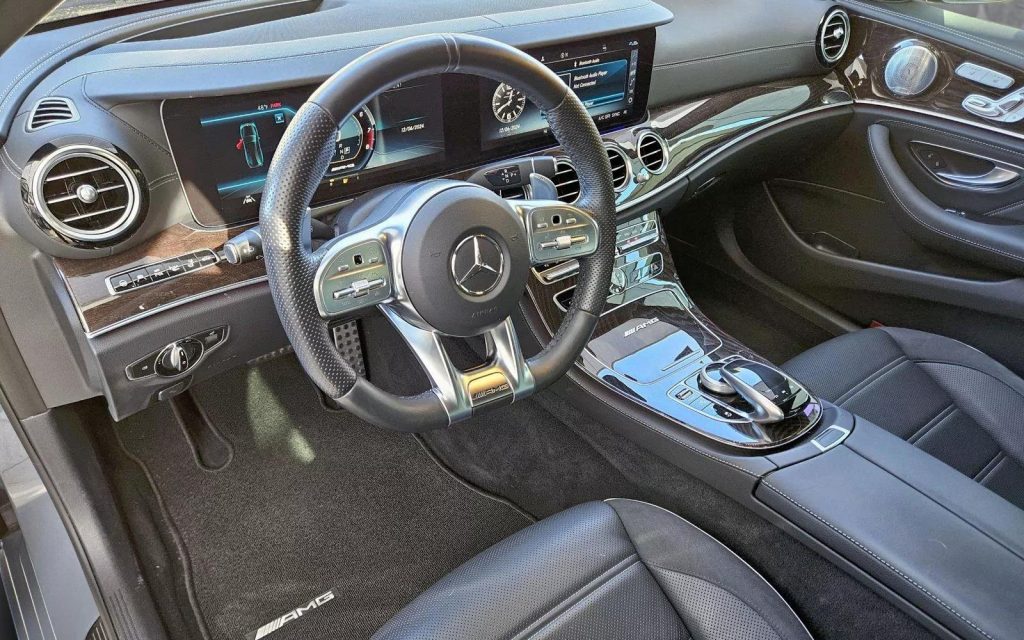
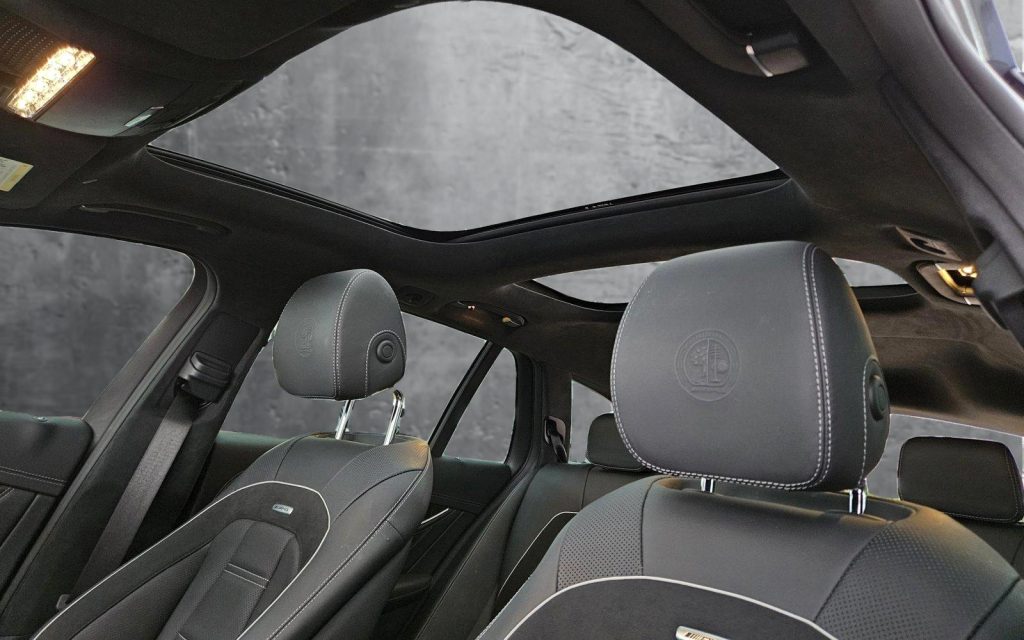
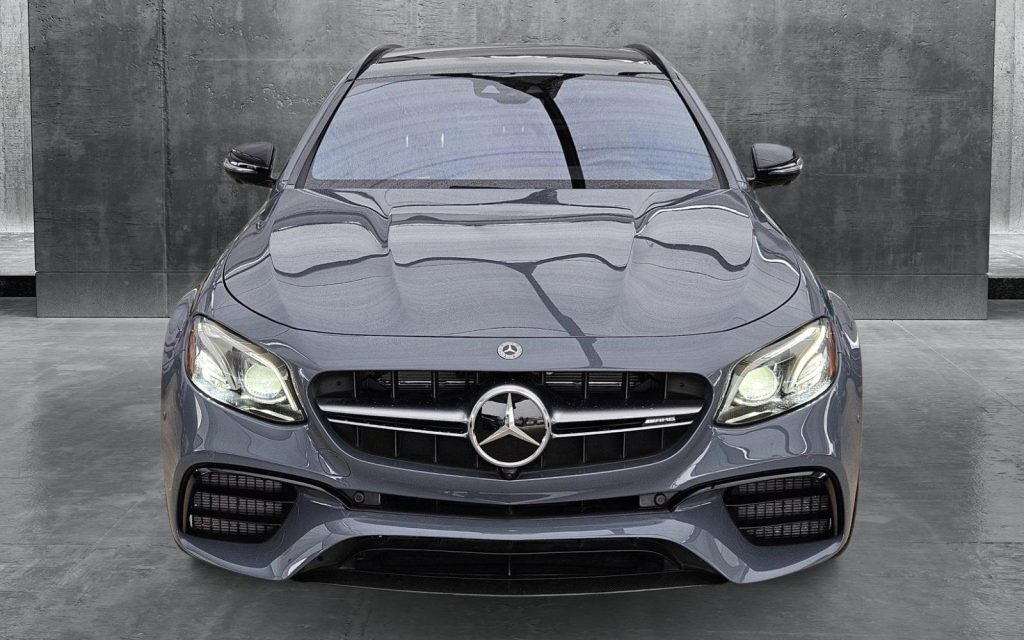
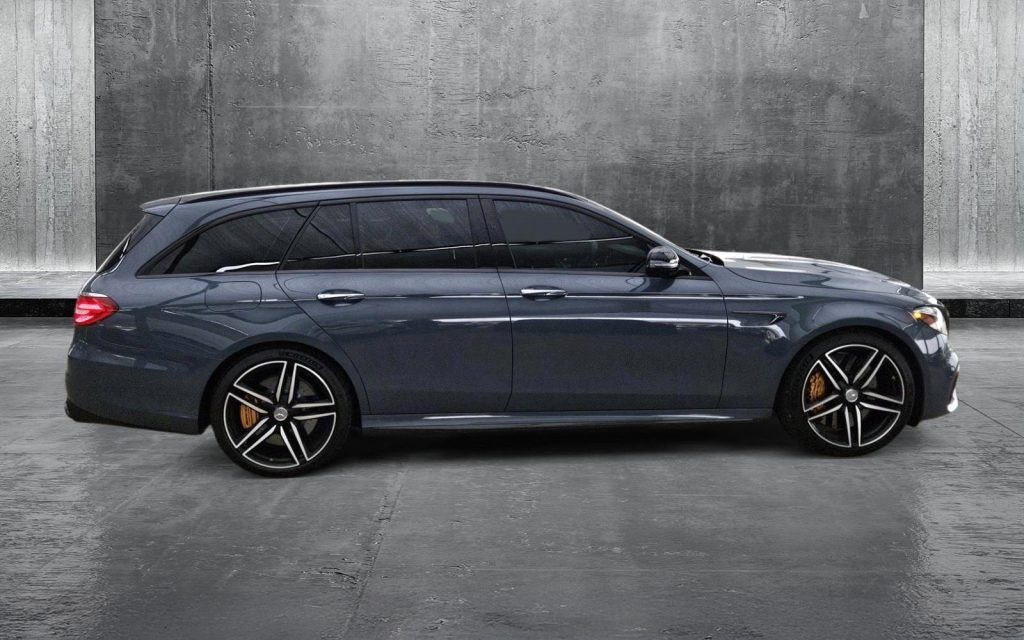
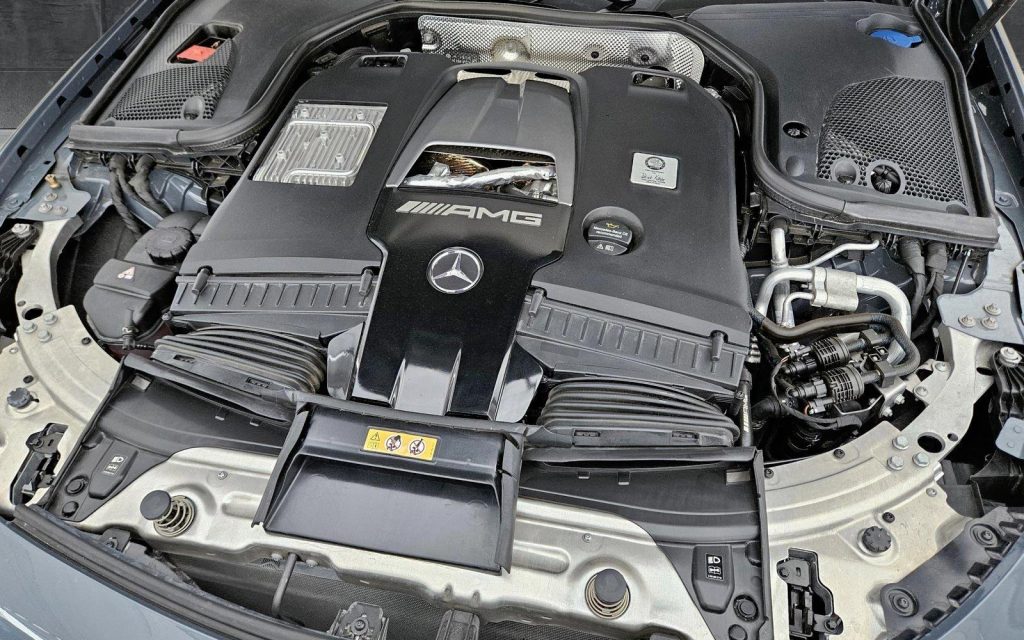
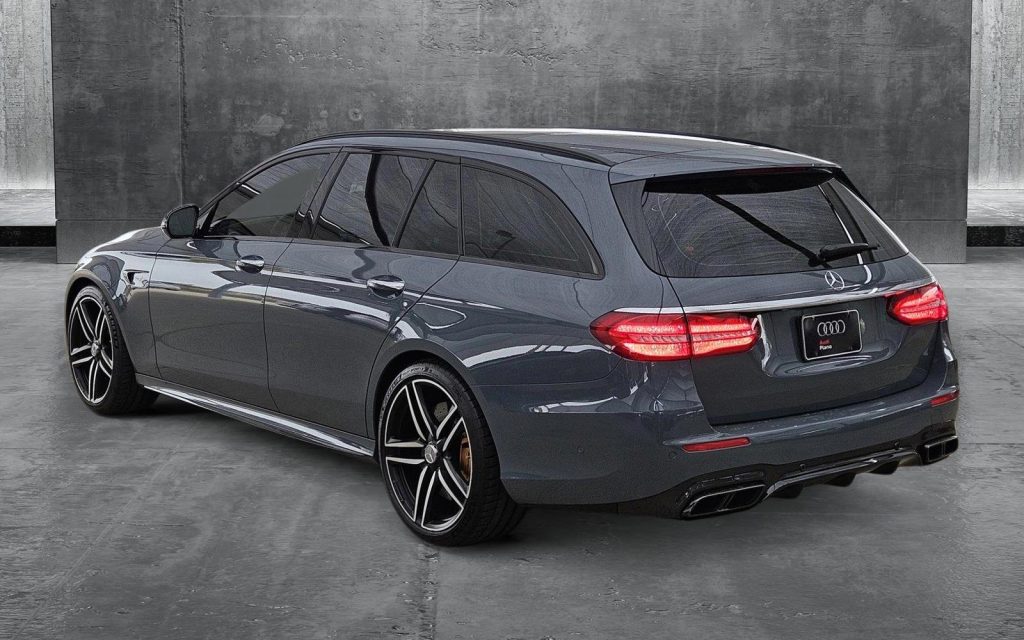
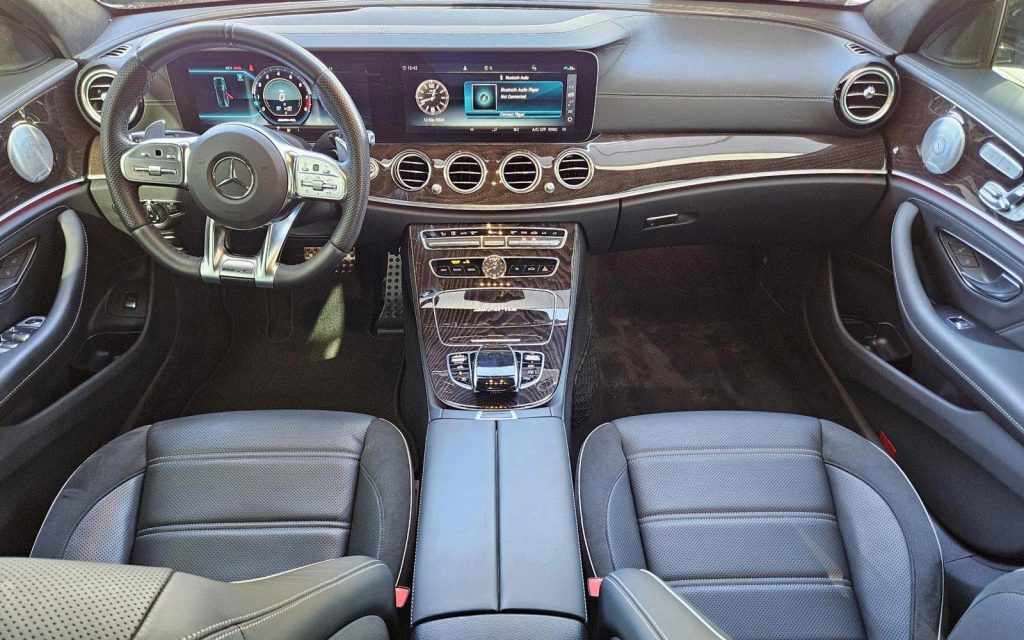
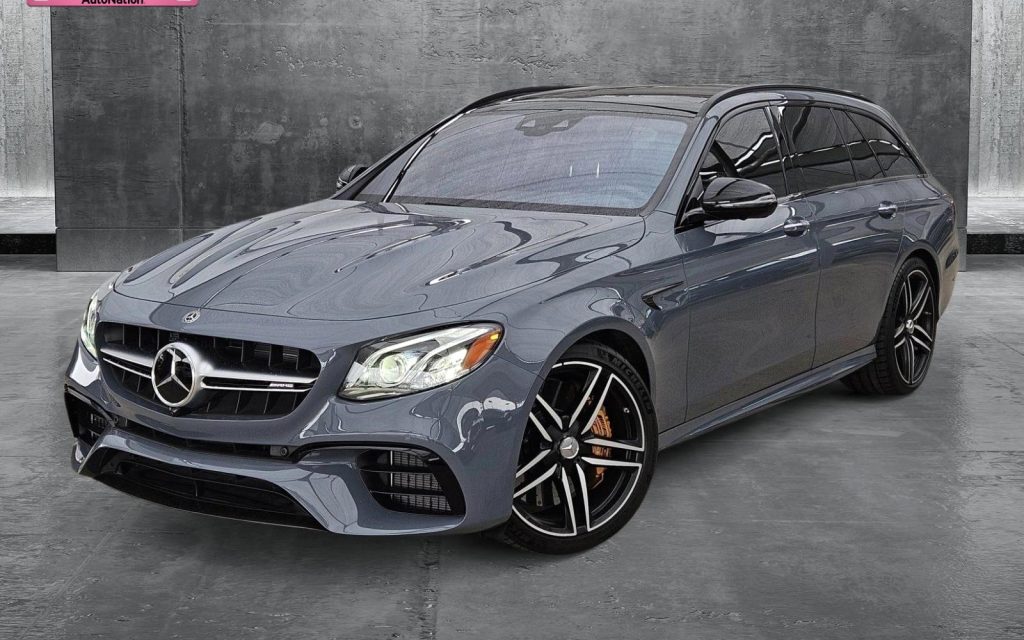
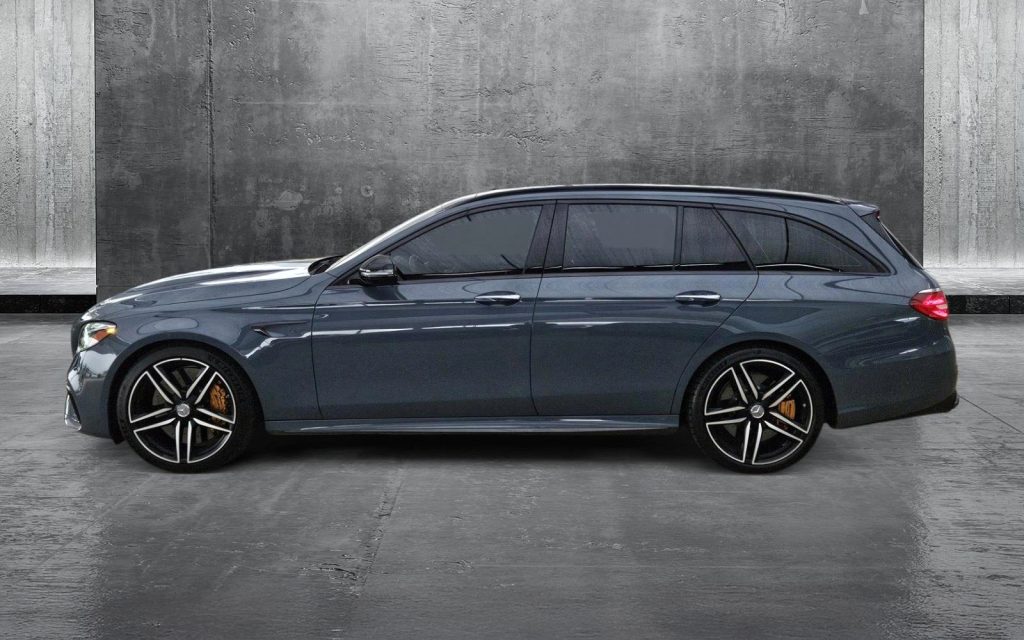
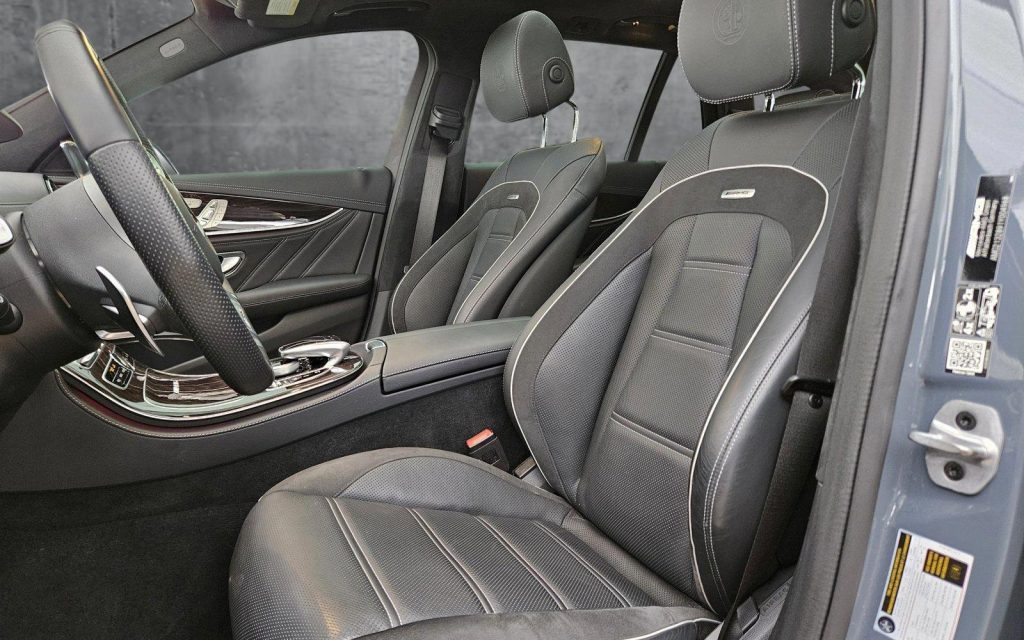
What: 2020 Mercedes-AMG E 63 S Estate Color: Porsche Graphite Blue Metallic (graphitblau; metallic UNI; M5G; Porsche) VIN: WDDZH8KB0LA714387 Mileage: 6,990 miles Price at Time of this Writing: $103,882 CarFax:Link Window Sticker: see gallery below Location: Audi Plano, Plano, TX Dealer listing:Link
Why we love it:
Cars like this S213 E 63 Estate are next level on the if-you-know-you-know factor. Some will scratch their heads over the idea of spending money on a custom order (a.k.a. “PA1” inside Mercedes) and then choose a subtle color like a grey tone. We see that as the signature of a connoisseur though, not needing to be noticed by everyone. It goes further though. This isn’t just any grey, but Porsche’s Graphite Blue Metallic, meaning you have to be a specific level of brand color aficionado to pick up on what’s going on with this long roof.
Or… maybe it’s much simpler than that. Maybe the original owner just wanted to match his Porsche. Whatever the case, we love this car shared by @designomanufaktur via @winglessGT3 on Instagram.
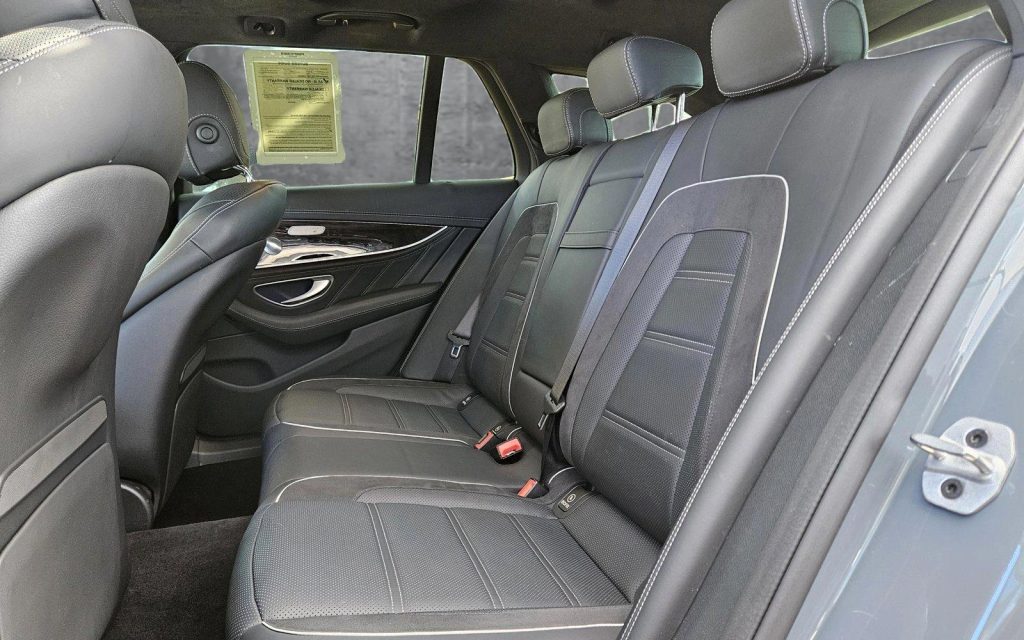
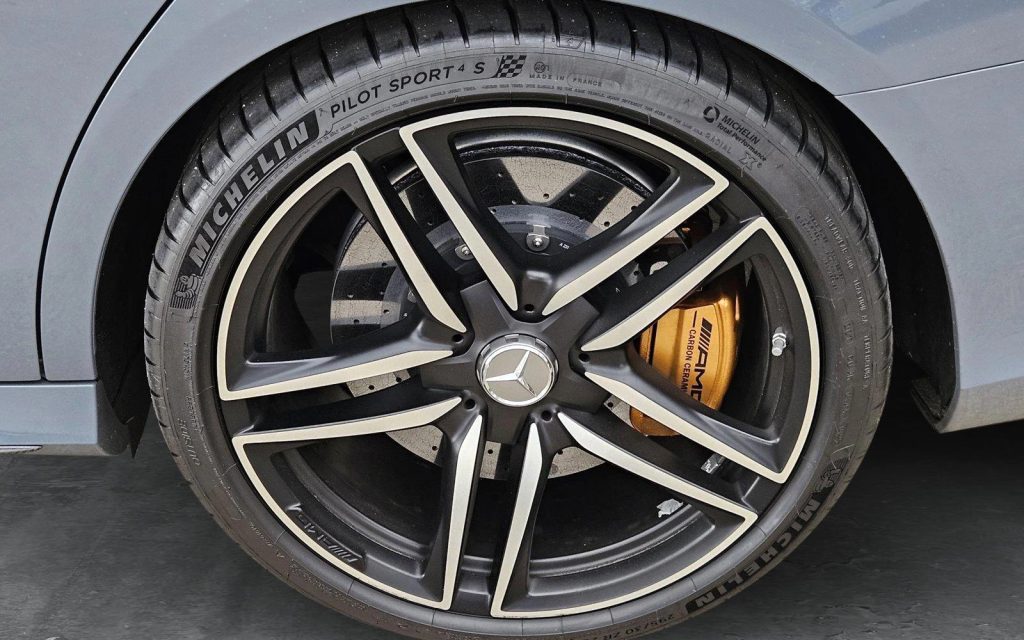
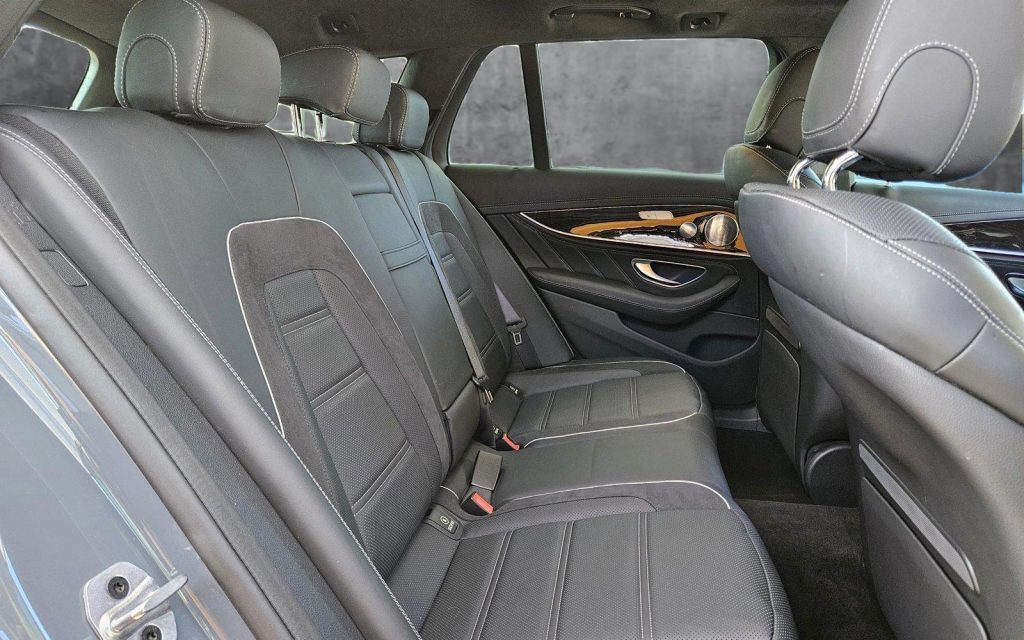
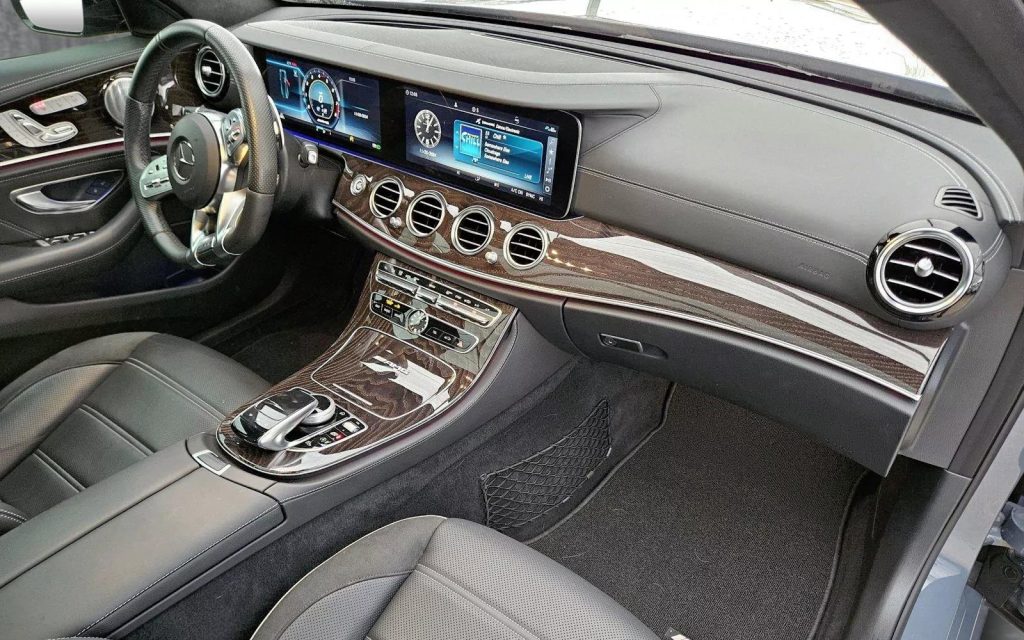
The car’s got other sought-after options too including carbon ceramic brakes, AMG Night Package, Acoustic Comfort Package, Multibeam, 20-inch twin 5-spoke AMG wheels with black accents, and (a nod to autobahn burners of the past) it’s debadged.
Check out more via the dealer’s listing, and frankly even more as identified by Mercedes experts including @wongnathan01 via the @designomanufaktur Instagram post embedded above.
Here’s the dirty little secret about the car business. Though they’re well loved by aging car enthusiasts finally ready to spend some of that disposable income, newly minted vintage cars (30-years old in this case) can tend to be a paint for car manufacturers. Many of these cars have been garaged or retired, yet a smaller owner base remains a small yet highly outspoken group. Even still, this group holds a lot of influence with friends and family, meaning they help sell the new cars where the actual money is made. Classic parts divisions are often on minimal budgets if they exist at all. Still, some companies get the value, underlining the timelessness and inherent value of their product, and one of those is Mercedes-Benz.
We caught the below press release from the Mercedes-Benz global PR distribution, highlighting the latest cars to get support from their classics department. You’ll notice some regular players from our Market Finds series, with Mercedes’ own MANUFAKTUR division active in that time period, as well as Designo and Avantgard paint and design packages regulars in our European Market Finds mix for their unique and colorful options.
Bravo Mercedes. This isn’t a part of the business most easily associated with profits, but it remains core to support of owners and enthusiasts who care about your brand, which pays dividends in authenticity and passion that are hard to quantify yet critically necessary for a long-lived and/or premium brand.
BEGIN PRESS RELEASE – One Star, Four Eyes and Thousands of Parts: Mercedes-Benz Classic for the H Number Plate
[source: Mercedes-Benz]
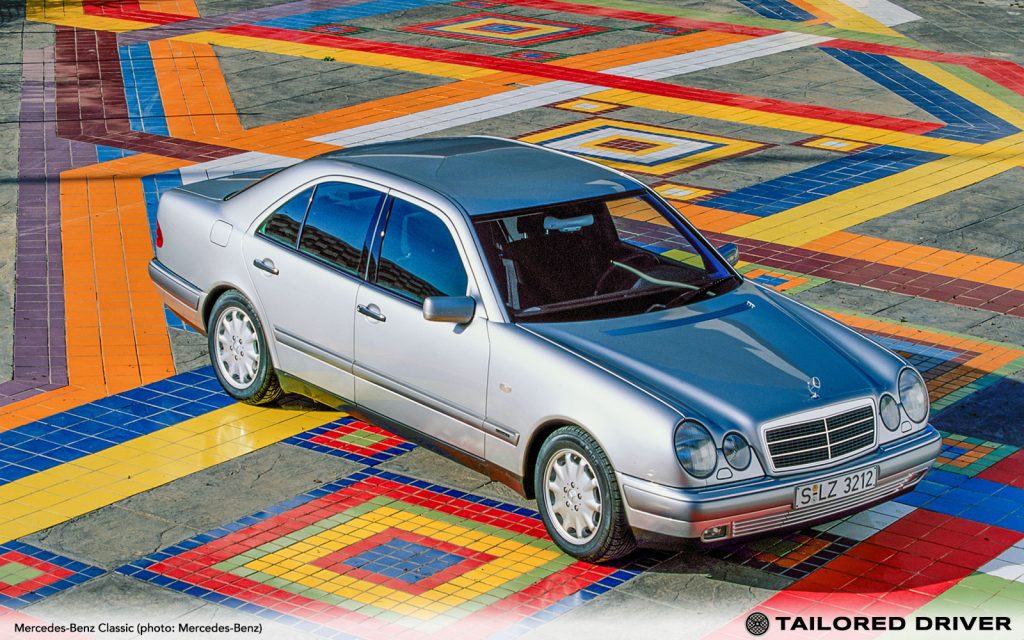
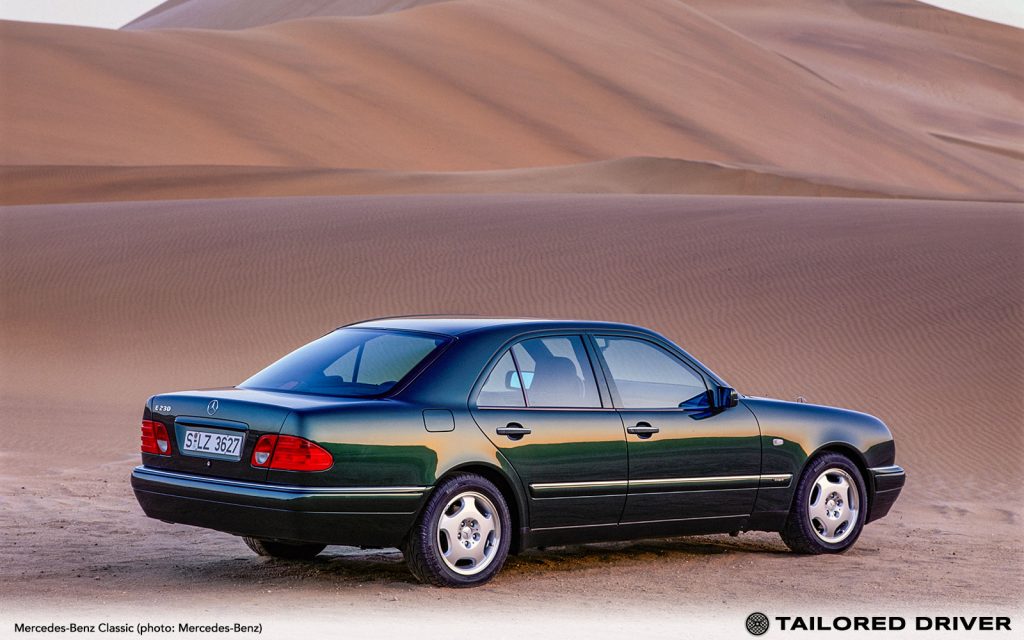
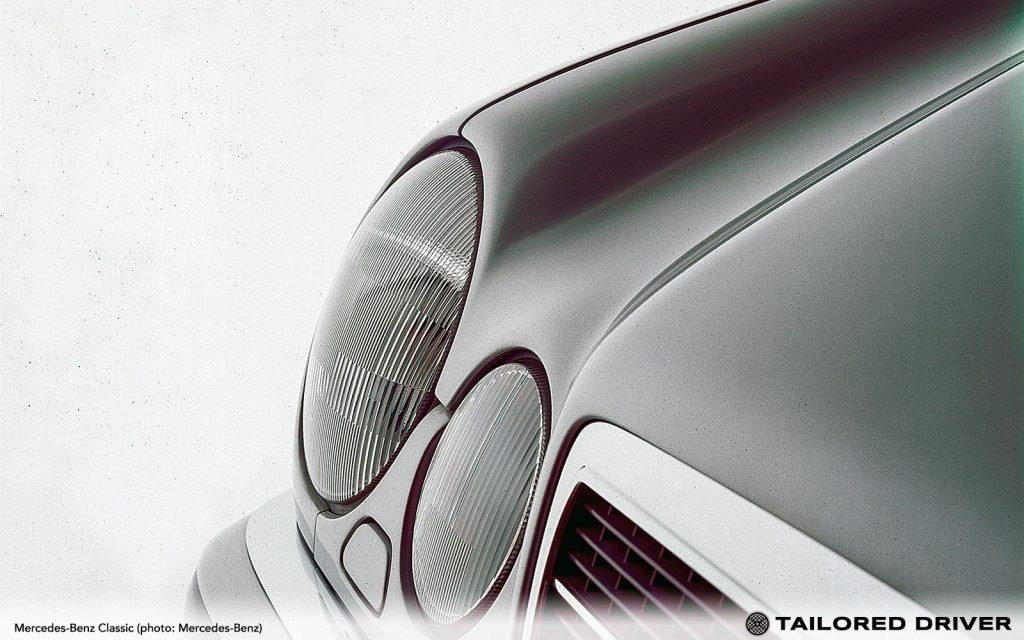
Premiere of model series 210 in 1995: First E-Class with “four-eye face”
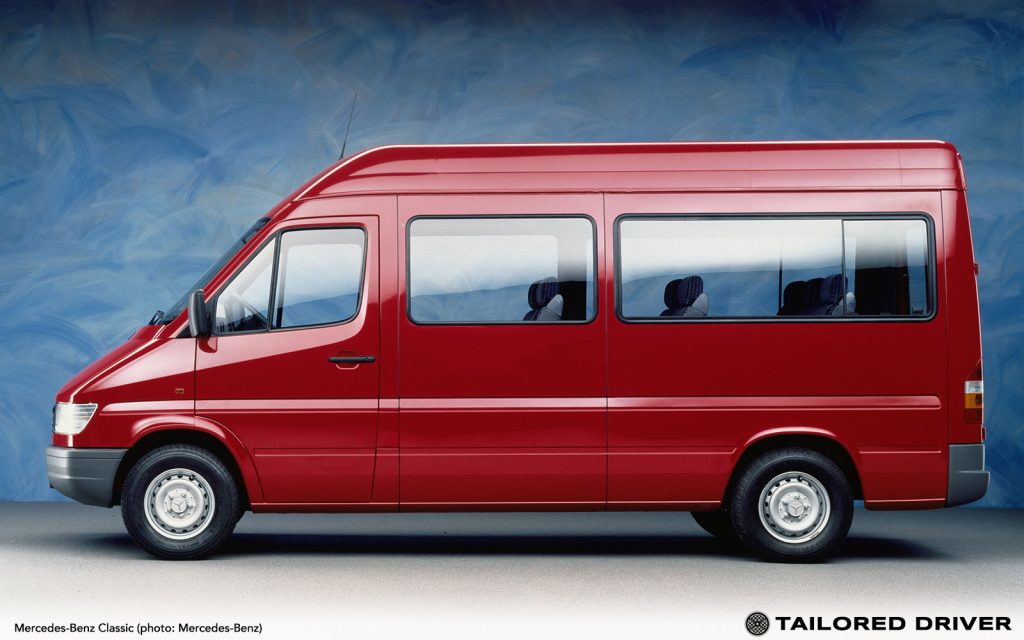
The Sprinter shapes an entire vehicle category
Further models and model variants from 1995 are ready for the classic car certificate
Mercedes-Benz Classic Genuine Parts keep classics on the road
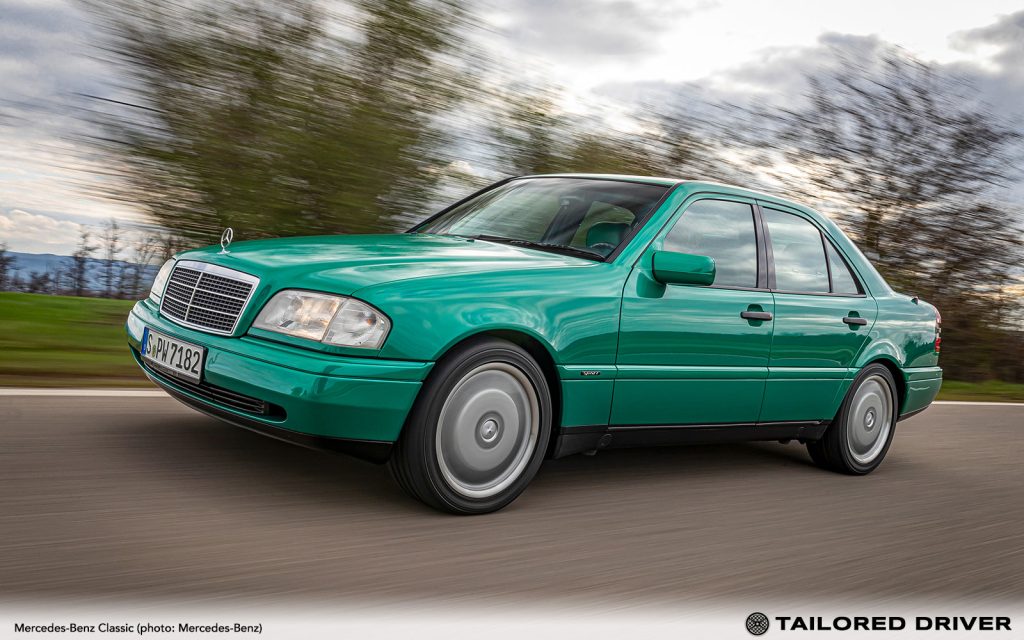
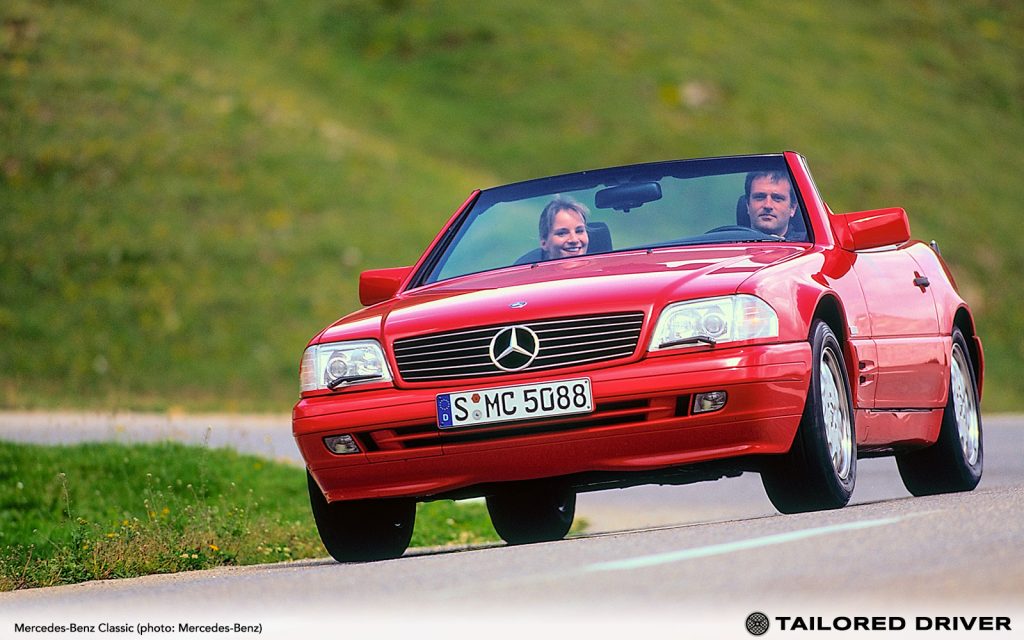
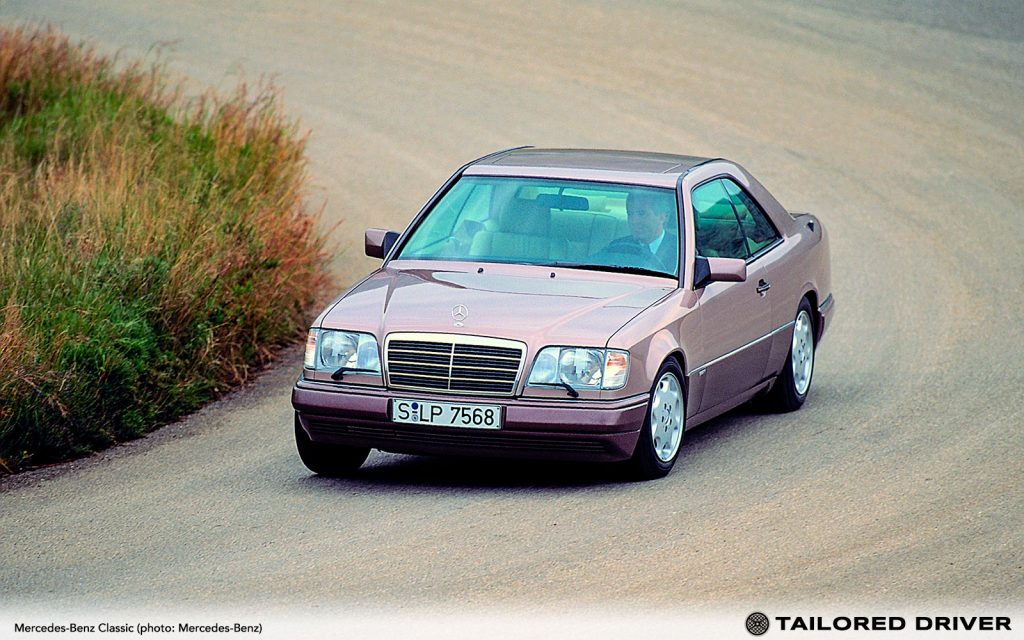
Is your favourite car with the star actually already due for the H number plate? Every year, owners of Mercedes-Benz vehicles which have weathered the years marvel at which of the brand’s models and model series find themselves on this threshold to becoming classics. In 2025, for the first time, these include the E-Class of model series 210, the first generation of the Sprinter and models of the SL of model series 129 and the E-Class Coupé of model series 124.
One prerequisite for the coveted H number plate is a classic car certificate in accordance with Section 23 of the German Road Traffic Licencing Code (StVZO). Vehicles can qualify which are 30 years or older. This certificate attests to the good original condition of a classic vehicle. With or without the H number plate: with its services, Mercedes-Benz Heritage GmbH plays considerable role in keeping classics as well as younger vehicles from throughout the brand’s history in optimum condition. Particular attention is paid to components which are relevant to driving and safety. Mercedes-Benz Classic offers an extremely comprehensive supply of spare parts worldwide with around 160,000 part items. Many are ready for pick-up within 24 hours from just under 3,000 authorised dealers in 170 countries.
January 1995: Sprinter becomes new synonym for vans
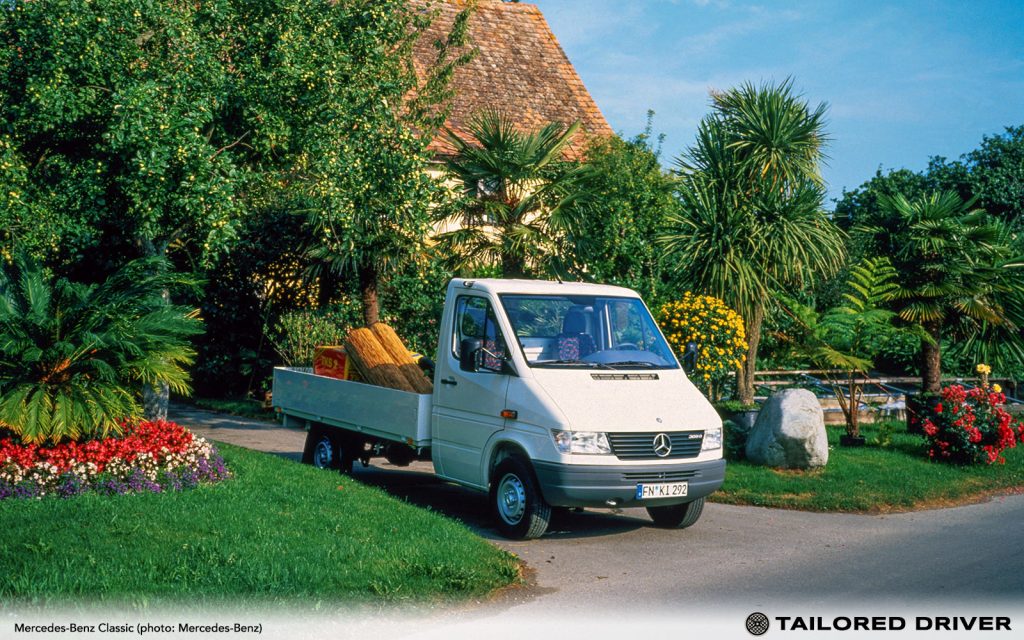
The Mercedes-Benz Sprinter premieres on 23 January 1995. On this day, 500 of the agile vans leave the Düsseldorf plant bound for German Mercedes-Benz dealerships. The “Van of the Year 1995” is so successful that it soon lends its name to an entire vehicle category – known colloquially as the “Sprinter Class”. The van is available in various wheelbases with different body variants. The offer initially comprises three models with petrol, diesel and turbodiesel engines. The ABS anti-lock braking system, ABD automatic brake differential and – for the first time in a van – four disk brakes are standard features.
June 1995: E-Class of model series 210 with “four-eye face”
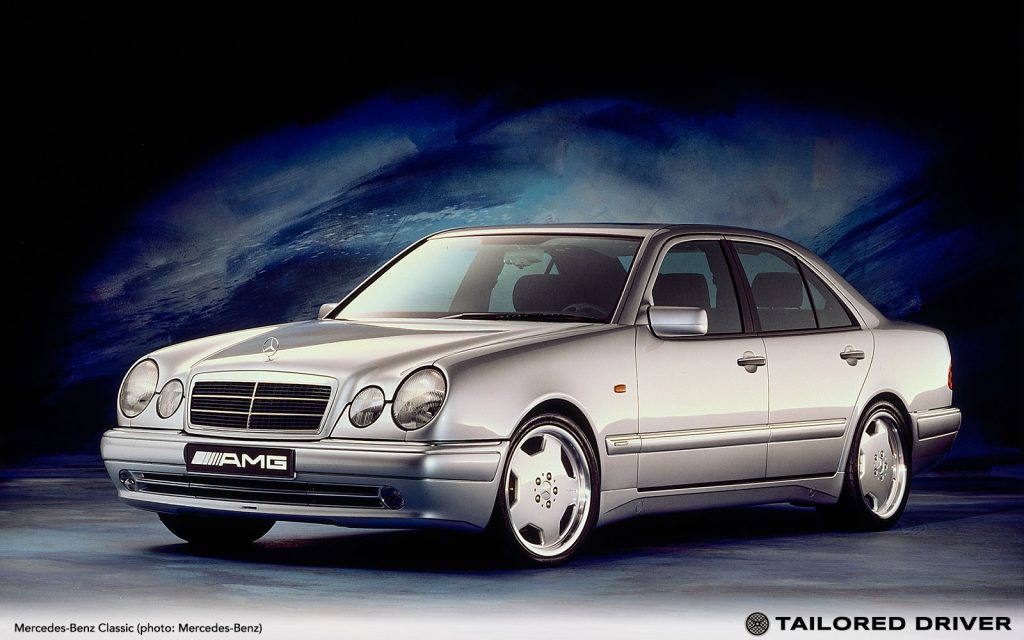
Mercedes-Benz presents the second E-Class generation in June 1995. Model series 210 sets an unmistakable visual accent with its “four-eye face”. This designation comes from the four round headlamps at the front. The CLASSIC, ELEGANCE and AVANTGARDE feature lines on offer are groundbreaking. The new E-Class initially starts with four diesel engines with four, five and six cylinders, as well as five petrol engines with four and six cylinders, and the E 420 with eight cylinders. In September 1995, the E 50 AMG follows as a top-of-the-line model; its eight-cylinder engine has an output of 255 kW/347 hp.
March and September 1995: Model series 129 with facelift and special model “Mille Miglia”
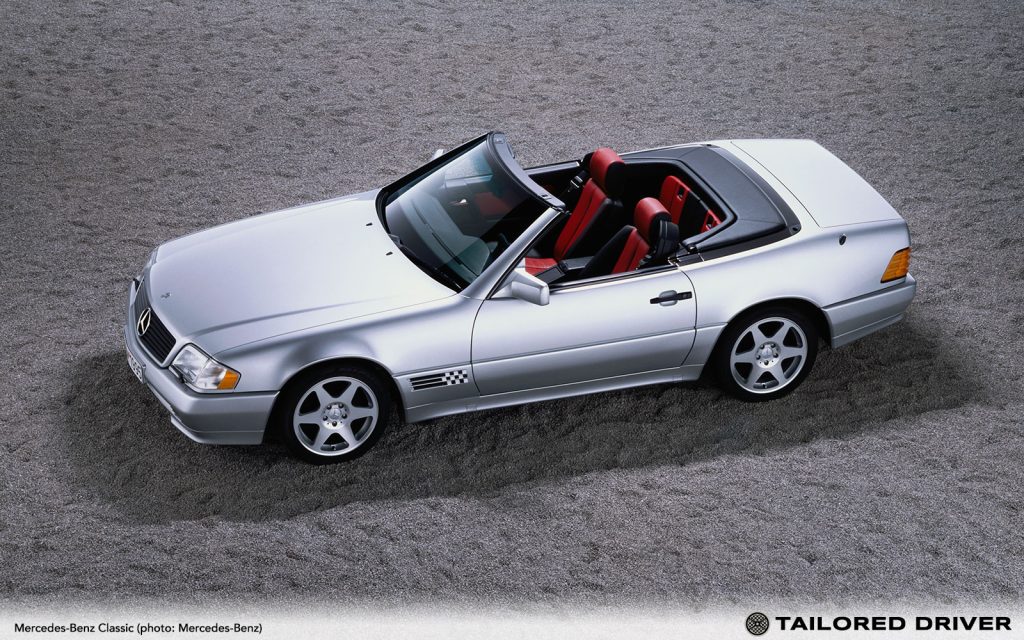
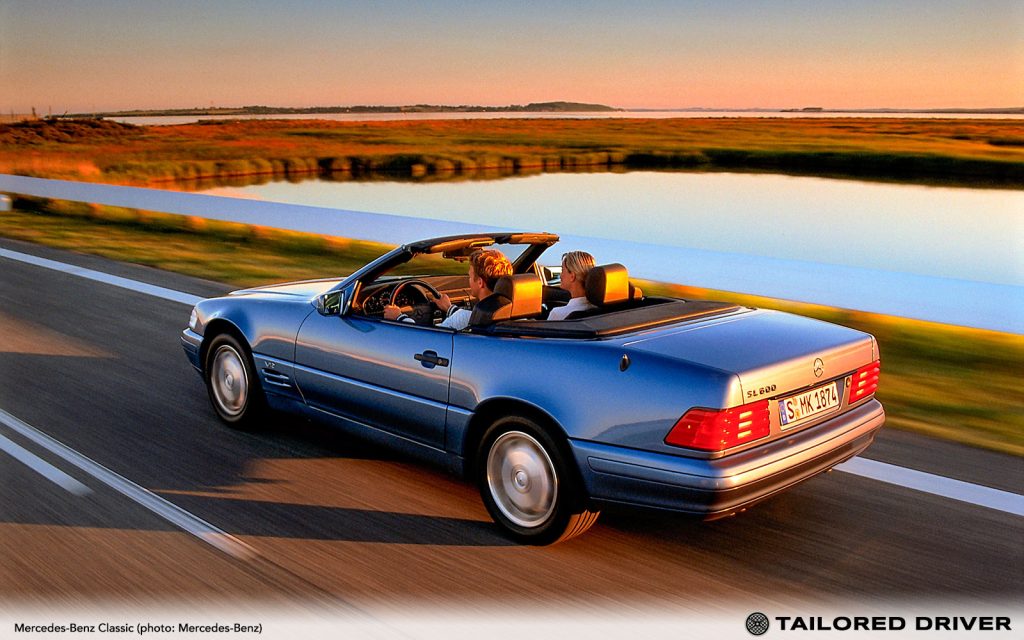
The updated SL of model series 129 premieres in September 1995. It is the first facelift of this generation of the Mercedes-Benz sports car. In addition to changes regarding details of the design, the SL is subject to technical innovations. These include a five-gear automatic transmission and revised engines in the SL 500 and SL 600. The Electronic Stability Program ESP® is available upon request for the two top models of model series. Headlamps with xenon gas discharge bulbs and a hardtop with a glass roof are now available as special features. In 1995, Mercedes-Benz presents the SL special model “Special Edition” of the W 129 with Mille Miglia style elements, of which 630 vehicles are produced. The “Mille Miglia” model is even more exclusive. Created as a support vehicle of the famous regularity drive for classic automobiles, only ten units are produced on the basis of the Special Edition.
October 1995: Mid-size van Vito
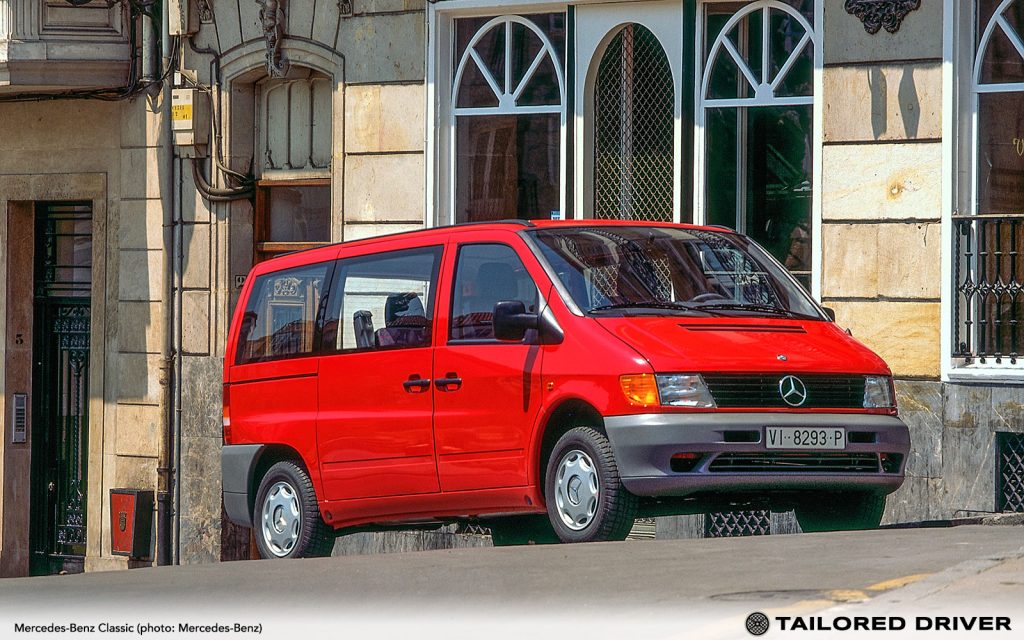
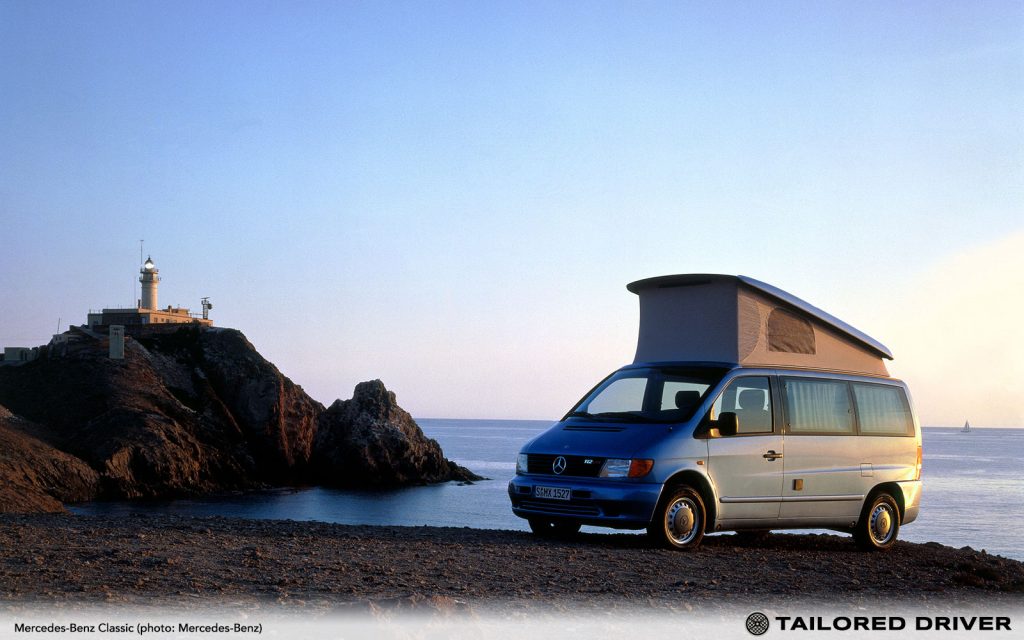
Vito is the name of the new light van in the mid-size segment from Mercedes-Benz. Model series 638 is presented in Madrid in October 1995. The commercial vehicle ranked below the Sprinter is available in Germany from March 1996 on. The offer comprises three feature versions and four engines.
Model variants and facelift in 1995
In the course of 1995, new models complement the Mercedes-Benz passenger car range. From January 1995, the E 200 Coupé of the 124 model series, previously reserved for export to Italy, Greece and Portugal, is also available in Germany. The C-Class of model series 202 is revised in September 1995 and is provided with an extended range of engines.
With genuine parts, the classic remains on the road – Authentic and stable in terms of value
Whether for the second generation of the E-Class, the SL of model series 129, the first Sprinter or other classics with the star: Mercedes-Benz Classic Genuine Parts have a comprehensive range of spare and wearing parts available for classic automobiles of the brand. The service stands for the highest quality and originality down to the last detail. Thus, Mercedes-Benz Heritage GmbH makes a significant contribution to maintaining the authentic condition of the brand’s classics in the long term.
A selection of parts for the vehicles presented here:
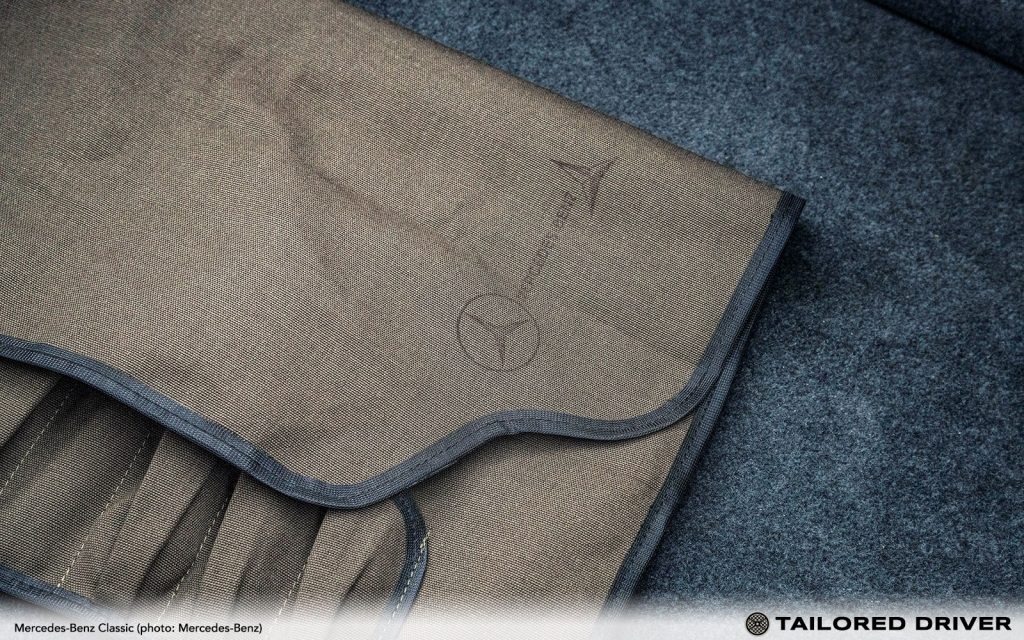
For the E-Class of model series 210, the radiator grille (part number A 210 880 00 83, EUR 755.67), left headlamp (part number A 210 820 03 61 64, EUR 594.79), right headlamp (part number A 210 820 04 61, EUR 594.79) and tool bag, empty (part number A 314 585 00 01, EUR 36.84) are available. The range of parts available for the E 50 AMG includes the left front catalytic converter (part number HWA 210 490 03 19, EUR 1,485.95), left front brake disk (part number HWA 210 421 01 12, EUR 481.62) and right front brake disk (part number HWA 210 421 02 12, EUR 481.62).
The spare parts portfolio for the Sprinter comprises, for example, the grille for the bonnet (part number A 901 830 02 18, EUR 18.09), the right headlamp (part number A 901 820 06 61, EUR 328.15) and left headlamp (part number A 901 820 05 61, EUR 328.15) as well as the right rear lens (part number A 000 826 19 56, EUR 55.12) and left rear lens (part number A 000 826 18 56, EUR 55.12).
For the facelifted SL of the 129 model series from September 1995 onwards, among other parts, the radiator (part number A 129 500 01 03, EUR 797.82), the front right mud wing (part number A 129 880 04 18, EUR 957.95), the front left mud wing (part number A 129 880 03 18, EUR 957.95) and the windscreen (part number A 129 670 09 01, EUR 1,003.57) are available.
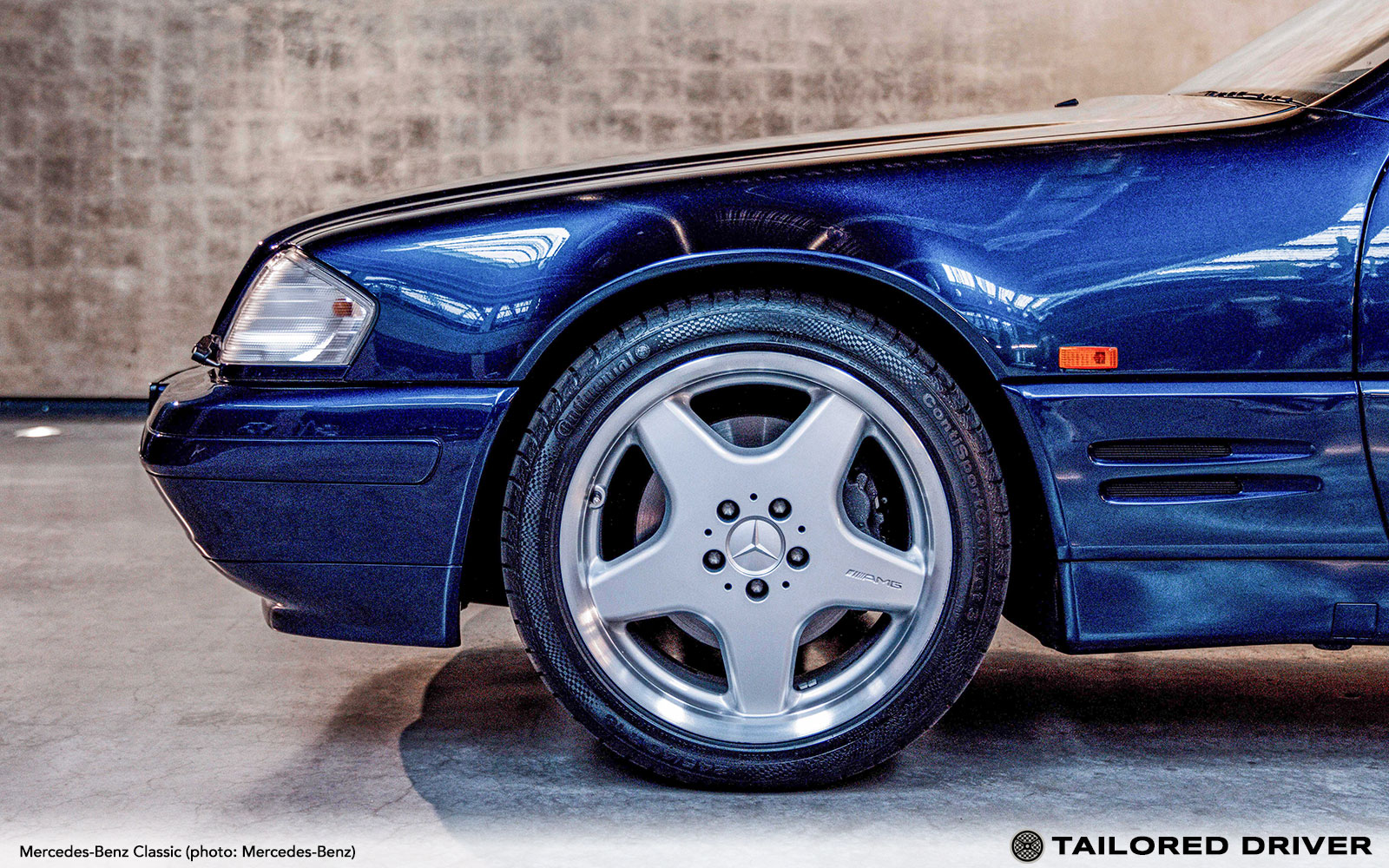
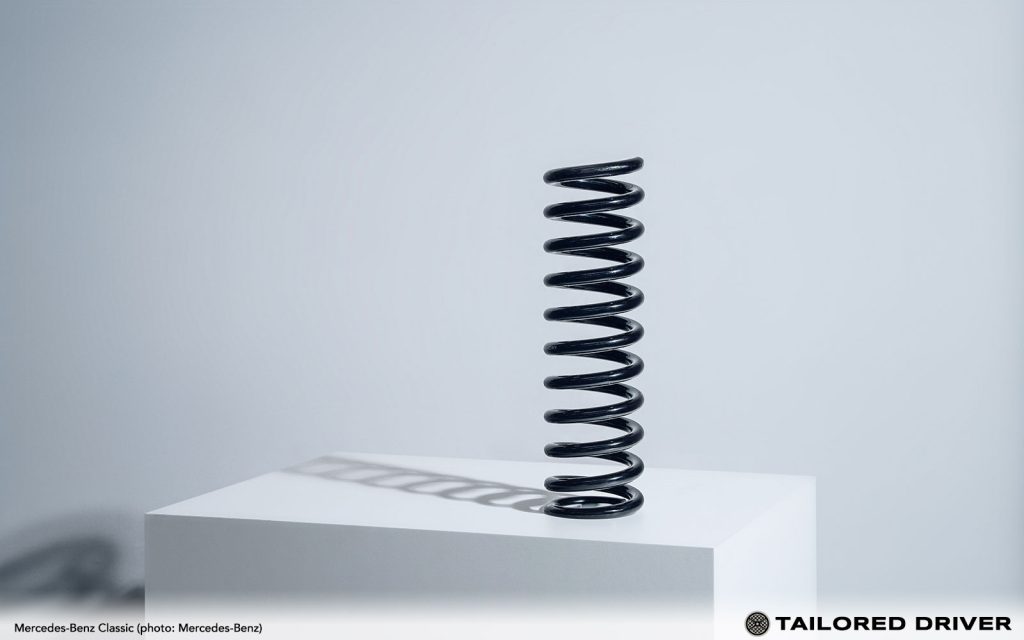
For the E 200 Coupé of the 124 model series, for example, the eight-hole rim 6.5 x 15 (part number B 664 700 85, EUR 240.00), the front axle spring (A 124 321 19 04, EUR 167.22) and the Mercedes star (part number A 210 880 01 86, EUR 39.71) are available.
For the facelifted C-Class of the 202 model series, in addition to many other parts, the gear lever of the mechanical five-gear transmission (part number A 202 267 01 11 9C 05, EUR 220.39), the steering knuckle on the right (part number A 202 330 01 20, EUR 338.45) and the steering knuckle on the left (part number A 202 330 00 20, EUR 338.45) are available.
All prices specified are recommended retail prices for Germany and include 19 per cent value added tax. The Mercedes-Benz Classic Genuine Parts specified and other Mercedes-Benz Classic Genuine Parts can be found at: teilesuche.mercedes-benz-classic.com
Radical design concept to kick off the Mythos series
Commemorates the design language of legendary racing cars
Intensive driving experience for two people
Strictly limited, extensive equipment
[source: Mercedes-Benz]
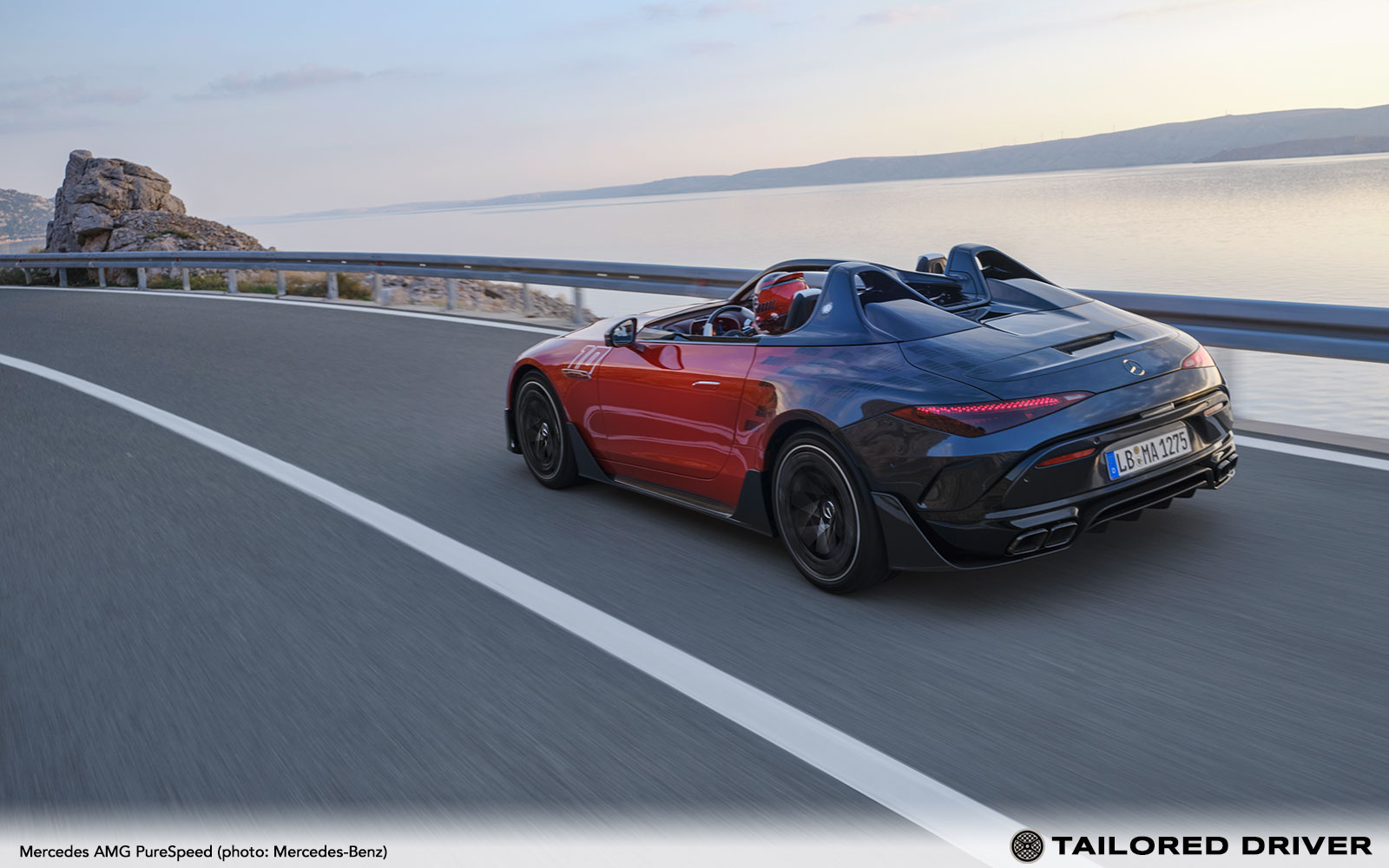
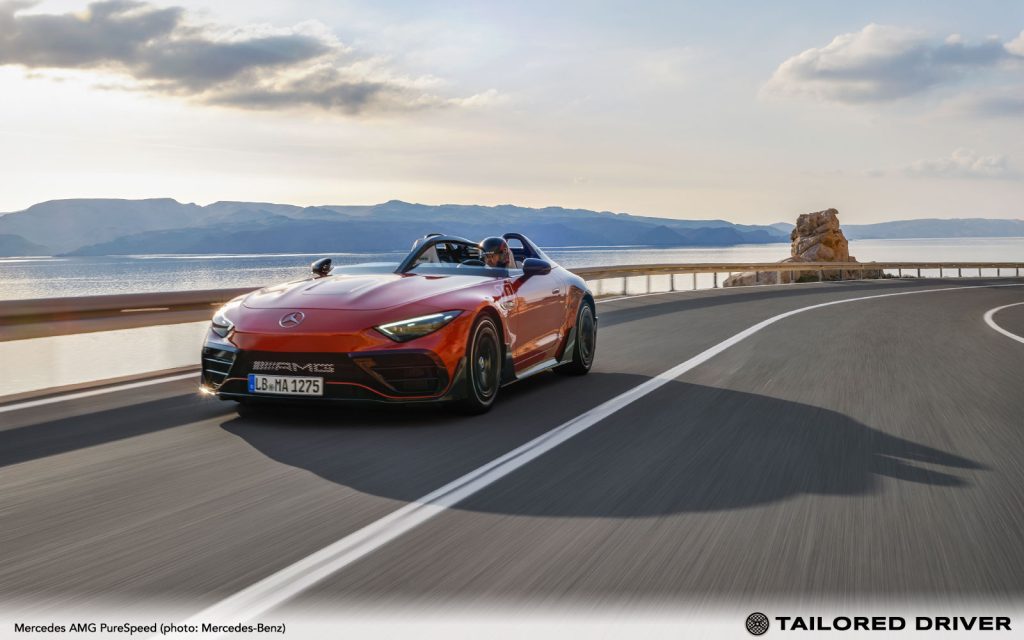
Affalterbach/Abu Dhabi — As the first model in the strictly limited Mercedes-Benz Mythos series, the Mercedes-AMG PureSpeed (combined energy consumption: 13.7 l/100 km | combined CO₂ emissions: 312 g/km | CO₂ class: G)1 is celebrating its world premiere at the Formula 1™ Abu Dhabi Grand Prix. The uncompromising realisation of a fully open, two-seater performance car with no roof or windscreen is a tribute to racing and offers an unforgettable driving experience.
“The Mercedes-AMG PureSpeed is the most direct way to experience performance and fun at the wheel. Thanks to the car’s radically open design with no roof or windscreen, nothing separates the driver and passenger from the elements, allowing them to fully appreciate the vehicle, the road and the landscape with all their senses. The striking design reinterprets elements of legendary racing cars and makes for a fascinating, timeless silhouette. In this way, the PureSpeed bundles the traditional strengths of AMG: highly emotional and very high performance vehicles that inspire – at a glance and behind the wheel.” Michael Schiebe, CEO of Mercedes-AMG GmbH and Head of Business Units Mercedes-Benz G-Class and Mercedes-Maybach
The Mercedes-AMG PureSpeed celebrates Mercedes-Benz’s tradition in motorsport with its thrilling racing car design, innovative materials and modern technology. The exclusive small series is strictly limited to 250 models.
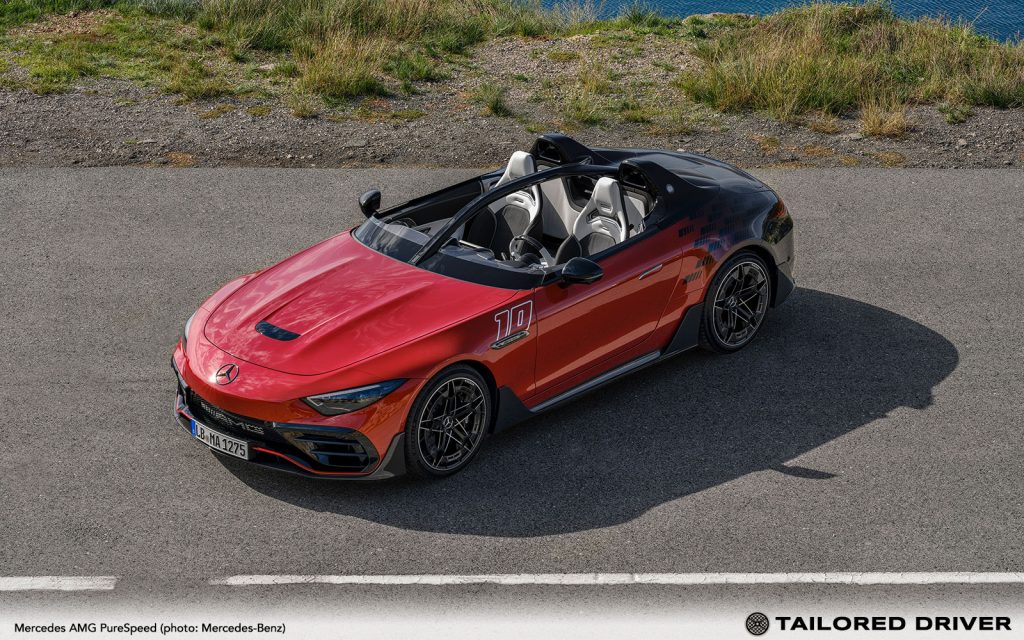
Sports car design inspired by Mercedes-AMG ONE hypercar The design of the Mercedes-AMG PureSpeed is characterised by a combination of a low silhouette, a long bonnet and a very low front end with a distinctive shark nose. With its wide air intake, AMG lettering and a dark, chrome-plated Mercedes star on the soft nose, the front resembles the Mercedes-AMG ONE. In addition, the car features an aerodynamically optimised bonnet. The aerodynamics team’s extensive precision work is also evident in the small, partially transparent deflectors on the car’s front and sides, which keep turbulence from bothering the driver and passenger. Aerodynamic, sharply defined visible carbon fibre elements in the lower part of the car make for a strong contrast to the sensual, round shapes of its upper part. The boot lid and rear diffuser are also aerodynamically optimised. Their design takes the lack of a roof into account.
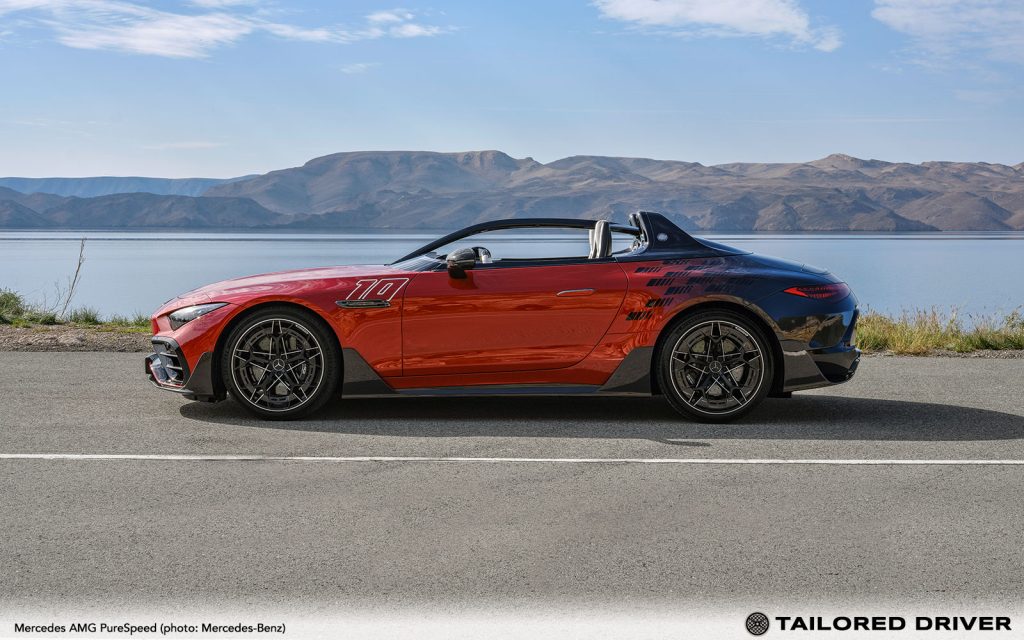
The design of the 21-inch forged aluminium wheels is characterised by carbon fibre covers on the front and rear axles. The rear covers are fully closed for less air resistance. The front covers are open to optimise front end airflow and brake cooling. The front features 275/35 R 21 tyres on 9.5 J x 21-inch rims; the rear uses 305/30 R 21 tyres on 11.0 J x 21-inch rims.
The design team’s precision work can also be seen in the side sill trim with aero flics. The muscular shoulders above the wide-track rear wheels merge into the elegant boot lid and the wide rear apron.
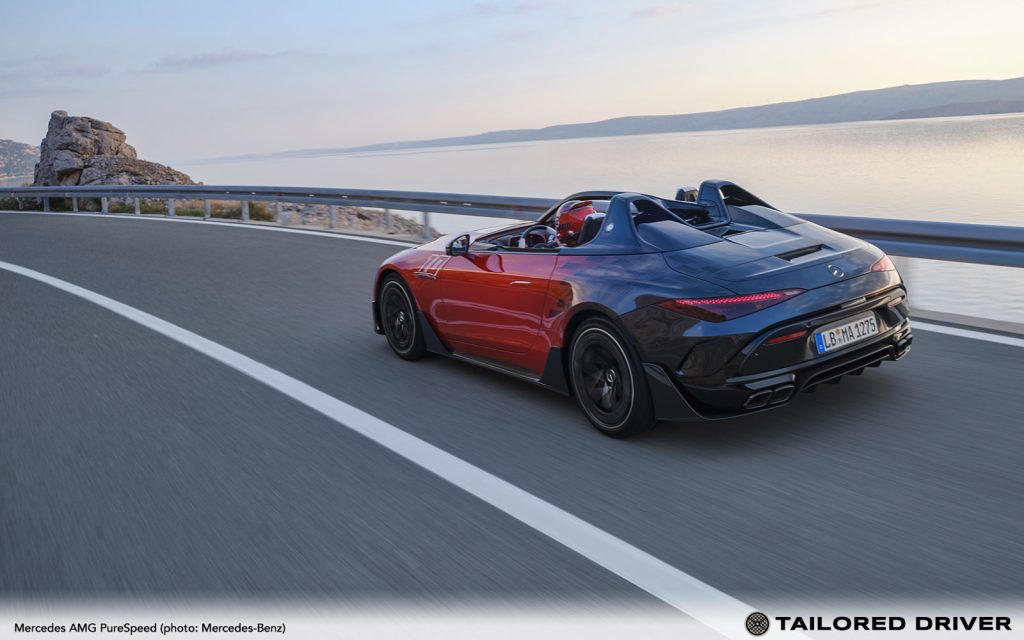
HALO system in place of A-pillar Another highlight is the HALO system, which the car uses instead of the conventional A-pillar. This element was inspired by the premier class of motorsport and has been part of every Formula 1™ vehicle since 2018. It protects the driver’s head in the event of an accident. The safety system in the Mercedes-AMG PureSpeed consists of a robust tubular steel bracket. The bifurcated safety feature is firmly attached to the car’s shell structure. The aerodynamically optimised component protects both passengers; as such, it bifurcates behind the car’s occupants. The roll-over protection system also features two rigid roll bars that are concealed beneath the aerodynamic scoops. These components are also part of the shell structure. As one interesting detail, HALO is indirectly lit at the bottom by narrow LED strips, taking ambient lighting to a new level.
There are also two aerodynamically optimised helmets designed and manufactured specifically for the Mercedes-AMG PureSpeed. They come in the colour of the car and have an intercom communication system. The helmets allow the driver and passenger to communicate clearly, even at high speeds. As an additional feature, smartphones can be paired with the intercom system, allowing the driver and passenger to talk on the phone and listen to music through the helmets’ speakers.
A tribute to legendary Mercedes models Many other features are also a tribute to motorsport. The two scoops behind the seats bear the AMG emblem and are reminiscent of legendary racing cars such as the 300 SLR, the car that Stirling Moss and Denis Jenkinson drove to victory at the 1955 Mille Miglia (a 1,000-mile race) in Italy. Fittingly, the PureSpeed comes in an exclusive Silver Arrow finish in mystic silver magno.
The optional motorsport styling package offers finishes that range from Le Mans red to graphite grey with a black AMG pattern. The latter is a tribute to the colour of the Mercedes that won the Targa Florio race in Sicily exactly 100 years ago. The car was finished in red, a colour only used by Italian manufacturers at the time.
German racing cars, on the other hand, were traditionally white. The red finish was intended to prevent Italian motorsport tifosi from trying to obstruct the German car. The plan worked: With Christian Werner at the wheel, the Mercedes 2-litre racing car with the number 10 was the first to cross the finish line. To commemorate this victory 100 years ago, the motorsport styling package features a ‘10’ on the front wing.
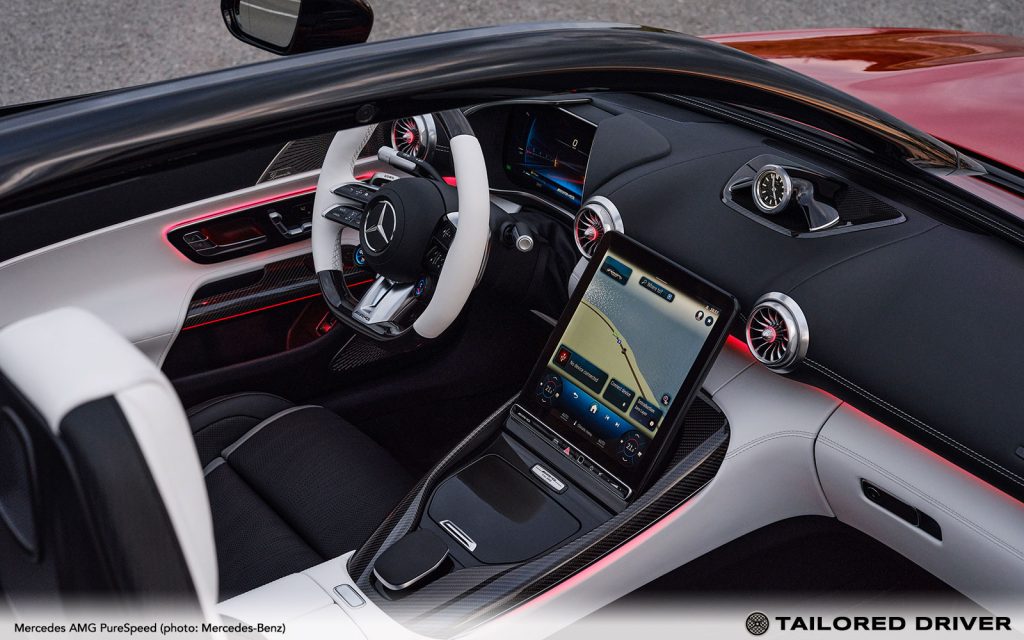
Two-tone colour and equipment concept With its classic two-tone colour and equipment concept in crystal white/black, the interior adds additional highlights. AMG Performance seats with special leather covers and unique decorative stitching offer optimal lateral support in addition to exclusive optics. Their design with flowing lines is inspired by the air that flows around the car. The heated multicontour seats increase the comfort level. The area behind the seats features carbon fibre. Integrated leather pads on the back continue the seats’ flowing lines, while the deep-pile AMG floor mats echo the seats’ colour, design and decorative stitching. The door sill trim also comes upholstered in leather. The AMG Performance steering wheel systematically continues the two-tone interior concept.
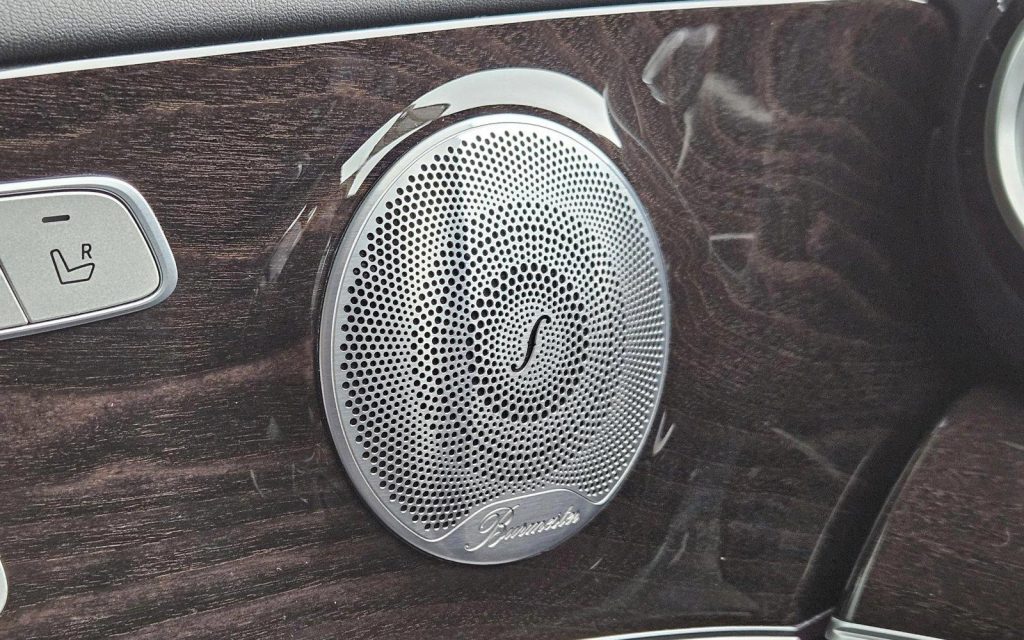
Another interior highlight is the custom-made analogue clock designed by IWC Schaffhausen. It is prominently placed in the middle of the dashboard in a drop-shaped housing in glossy black on a base made of visible carbon fibre. The base of the clock features a sophisticated design that makes the clock appear to float. The premium chronometer has a PureSpeed specific dial with AMG rhombi. For optimum visibility, the dial is illuminated at dusk and in the dark. The characteristic bezel underscores the visual affinity with the legendary IWC Ingenieur Collection. The Burmester High-End 3D Surround Sound System with 15 speakers and 1,170 watts of system power make for an authentic sound experience similar to a summer open air festival. A badge in the centre console reads ‘1 out of 250’ to indicate the model is part of the strictly limited Mythos series.
To protect the car from inclement weather such as rain or storms when parked, a protective weather cover is available as standard. It is stretched over the interior, including the HALO, and fastened to the wheel arches in the traditional way. Each customer also receives a custom-made, PureSpeed specific AMG indoor car cover. With a breathable outer skin of tear-resistant synthetic fibres and an anti-static inner fabric of flannel, it protects the car from dust and scratches in the garage.
Body shell: AMG sports car architecture with composite aluminium structure The PureSpeed is based on Mercedes-AMG’s sports car architecture. The chassis consists of an aluminium space frame with a self-supporting structure. This design ensures maximum rigidity, providing the perfect foundation for precise driving dynamics and sporty body proportions. The intelligent material mix reduces its weight. Materials used include aluminium, magnesium, fibre composites and steel. There are also carbon fibre parts for the aero elements at the front and rear aprons as well as the side sill and the trim behind the seats.
Sophisticated aerodynamics for unadulterated fun at the wheel The car features a host of active aerodynamic elements, such as the extendible rear spoiler, which is seamlessly integrated into the boot lid. It changes its position depending on driving conditions. The control software takes numerous parameters into account, including driving speed, longitudinal and lateral acceleration and steering speed. The spoiler adopts five different angles at speeds above 80 km/h, allowing it to optimise driving stability or reduce drag, depending on its position.
The active aerodynamic element concealed in the underbody in front of the engine also contributes to safe and dynamic handling. Weighing around two kilograms, this carbon fibre profile reacts to the AMG driving modes, automatically lowering it by approximately 40 millimetres at speeds above 80 km/h. This creates what is known as the Venturi effect, which additionally sucks the car to the road surface and reduces the lift on the front axle. The driver feels this effect directly in the steering, as it allows the PureSpeed to be steered even more precisely around corners and lends the car even more lane stability.
Similar to the AMG GT 63 PRO, the underbody also features aerodynamic add-on elements that compensate for the lack of a roof and improve downforce. The lift system on the front axle is used to raise the PureSpeed before going over bumps or kerbs.
Powerful and sonorous: AMG 4.0-litre V8 biturbo engine The AMG 4.0-litre V8 biturbo engine with 430 kW (585 PS) of maximum power and 800 Nm of maximum torque provides dynamic propulsion and excellent driving performance. Combined with the special design concept of the PureSpeed, this creates a uniquely exciting driving experience, because the radically open design makes even lower speeds feel subjectively much faster. But the objective figures are impressive as well: the car goes from zero to 100 km/h in 3.6 seconds, with a top speed of 315 km/h. Then there is the legendary AMG V8 engine sound, which can be felt even more directly in the PureSpeed.
Transmission with wet starting clutch The AMG SPEEDSHIFT MCT 9G transmission combines an emotional shifting experience with extremely short shifting times. A wet starting clutch replaces the torque converter. It reduces the car’s weight and, thanks to its lower mass inertia, optimises the response to accelerator commands, particularly during sprinting and load changes.
Greater traction and driving stability: Fully variable all-wheel drive AMG Performance 4MATIC+ The PureSpeed comes with the AMG Performance 4MATIC+ all-wheel drive. The intelligent system combines the advantages of different drive concepts: Fully variable torque distribution between the front and rear axles ensures optimal traction at the physical limit, as well as high driving stability and safety in all conditions.
Suspension and brakes: Semi-active roll stabilisation and optimal deceleration The innovative AMG ACTIVE RIDE CONTROL suspension with semi-active hydraulic roll stabilisation makes for optimum road contact. Instead of conventional mechanical lateral stabilisers, the system uses active hydraulic elements that compensate for rolling movements in fractions of a second. The system enables optimum steering and load-changing behaviour with AMG-typical handling including dynamics, precision and driver feedback. At the same time, it increases driving comfort when driving straight ahead and when driving over bumps. The wide-track rear axle increases agility, which is particularly noticeable on winding country roads.
The standard AMG high-performance ceramic composite braking system ensures excellent deceleration values and precise control. It impresses with short braking distances, sensitive response and high stability – even under extreme loads. The 6-piston fixed brake callipers at the front and 1-piston floating callipers at the rear come in black with white AMG logos.
Active rear-axle steering: Combining agility and stability The PureSpeed is equipped with active rear-axle steering. Depending on the speed, the rear wheels either turn in the opposite direction (below 100 km/h) or in the same direction (above 100 km/h) as the front wheels. The system provides both agile and stable handling – characteristics that would be at odds without rear-axle steering. Other benefits include easier vehicle control at the limit and less steering effort due to the more direct steering ratio at the front.
Mercedes-Benz AG at a glance Mercedes-Benz AG is part of the Mercedes-Benz Group AG with a total of around 166,000 employees worldwide and is responsible for the global business of Mercedes-Benz Cars and Mercedes-Benz Vans. Ola Källenius is Chairman of the Board of Management of Mercedes-Benz AG. The company focuses on the development, production and sales of passenger cars, vans and vehicle-related services. Furthermore, the company aspires to be the leader in the fields of electric mobility and vehicle software. The product portfolio comprises the Mercedes-Benz brand with Mercedes-AMG, Mercedes-Maybach and G-Class with their all-electric models as well as products of the smart brand. Mercedes-Benz AG is one of the world’s largest manufacturers of luxury passenger cars. In 2023 it sold around two million passenger cars and 447,800 vans. In its two business segments, Mercedes-Benz AG is continually expanding its worldwide production network with more than 30 production sites on four continents, while gearing itself to meet the requirements of electric mobility. At the same time, the company is constructing and extending its global battery production network on three continents. As sustainability is the guiding principle of the Mercedes-Benz strategy and for the company itself, this means creating lasting value for all stakeholders: for customers, employees, investors, business partners and society as a whole. The basis for this is the sustainable business strategy of the Mercedes-Benz Group. The company thus takes responsibility for the economic, ecological and social effects of its business activities and looks at the entire value chain.
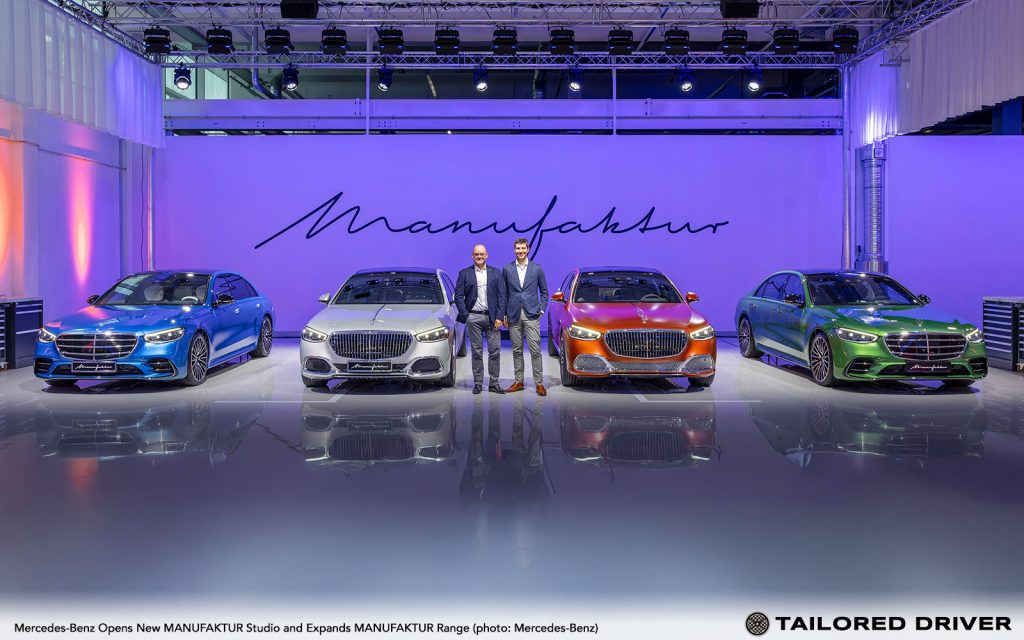
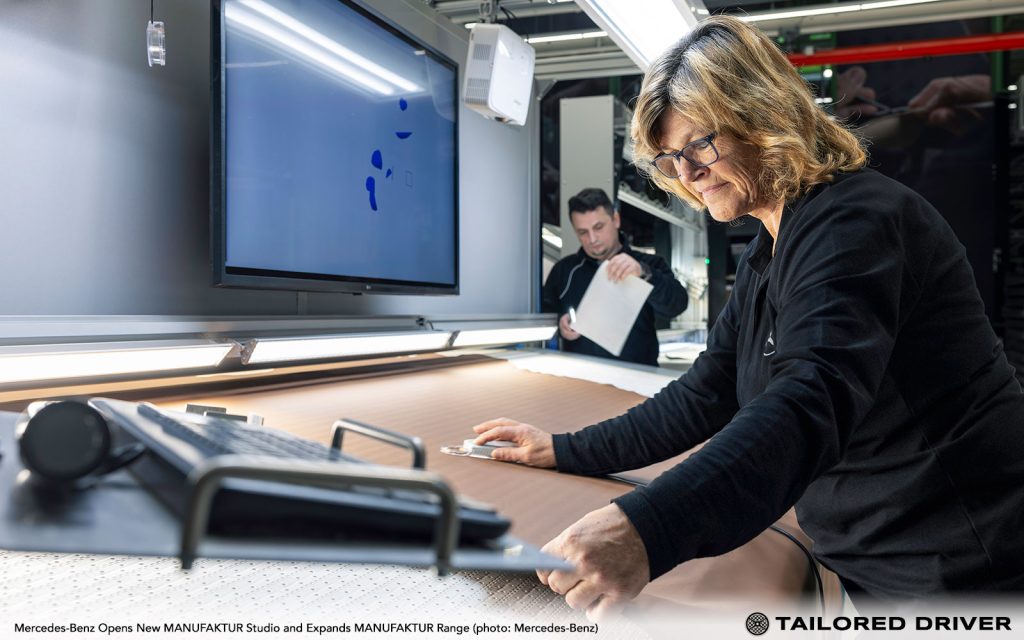
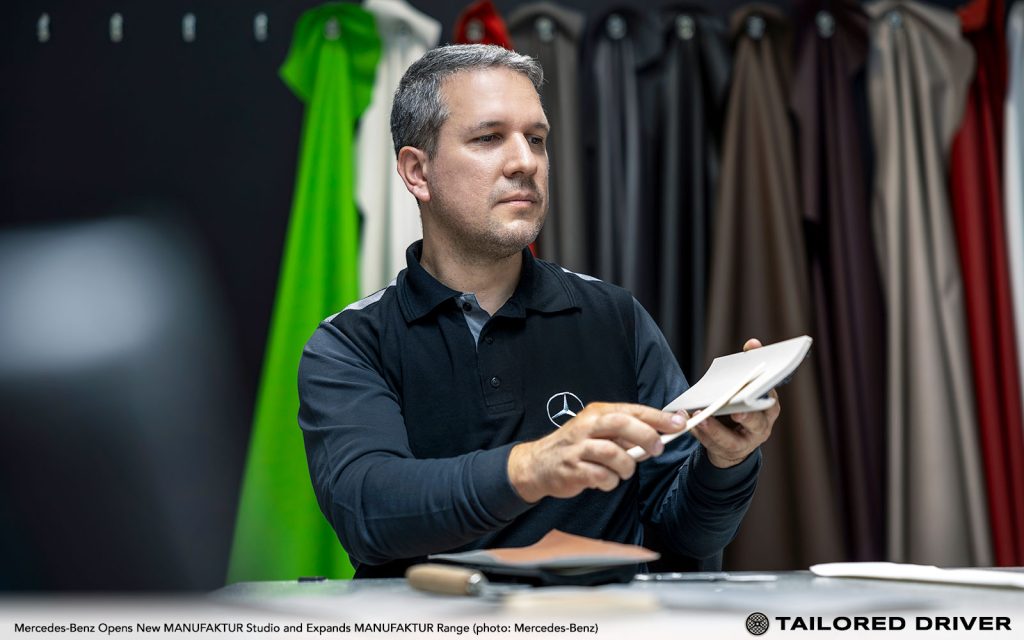
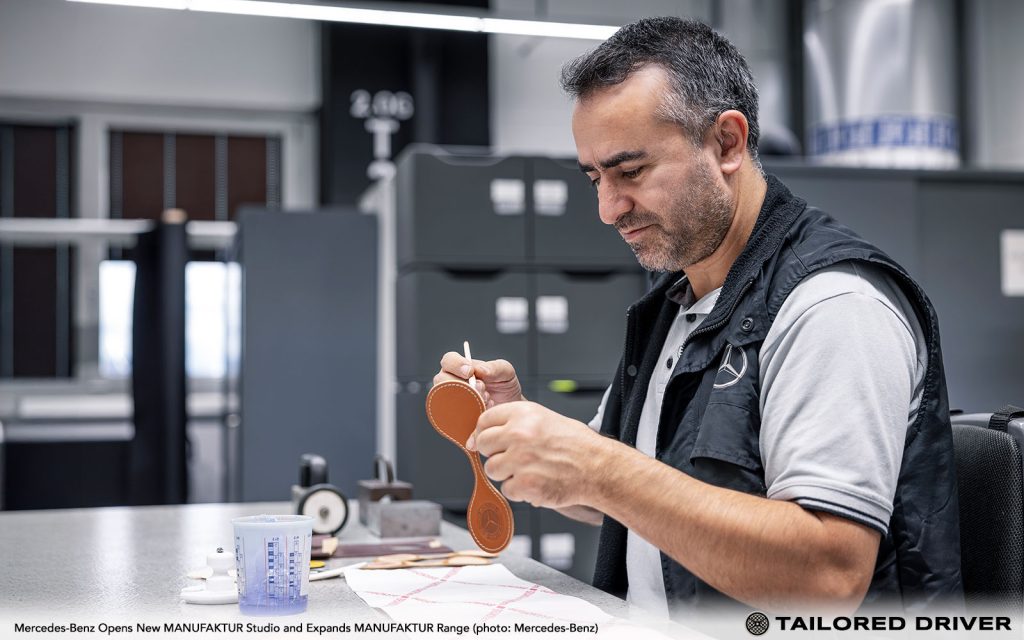
“Made in Sindelfingen” is a traditional seal of quality for Mercedes-Benz customers. It refers to where top-of-the-range models such as the S-Class, which stand for precision and exclusivity, are produced in the ultra-modern Factory 56. However, Sindelfingen is not only the birthplace of the S-Class, it is also the home of MANUFAKTUR – the cross-brand individualization and personalization program of Mercedes-Benz. Here, specialized employees contribute their expertise in upholstery finishing, interior fittings, fabrication and special paintwork for customization of top-end vehicles. With the strategic further development of the MANUFAKTUR program, Mercedes-Benz continues the tradition of impeccable craftsmanship and enhances the role of Sindelfingen as a top-end vehicle manufacturing location.
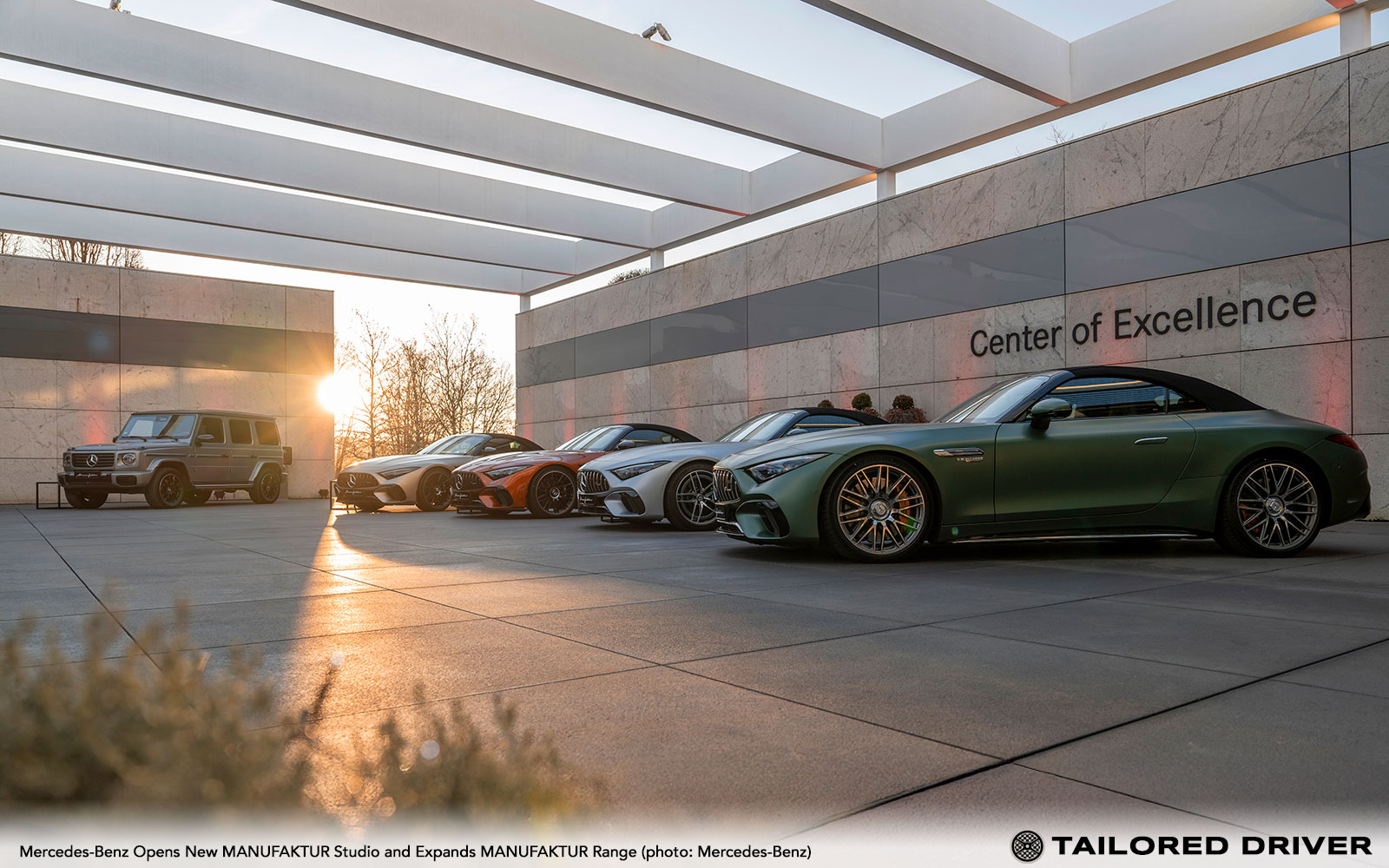
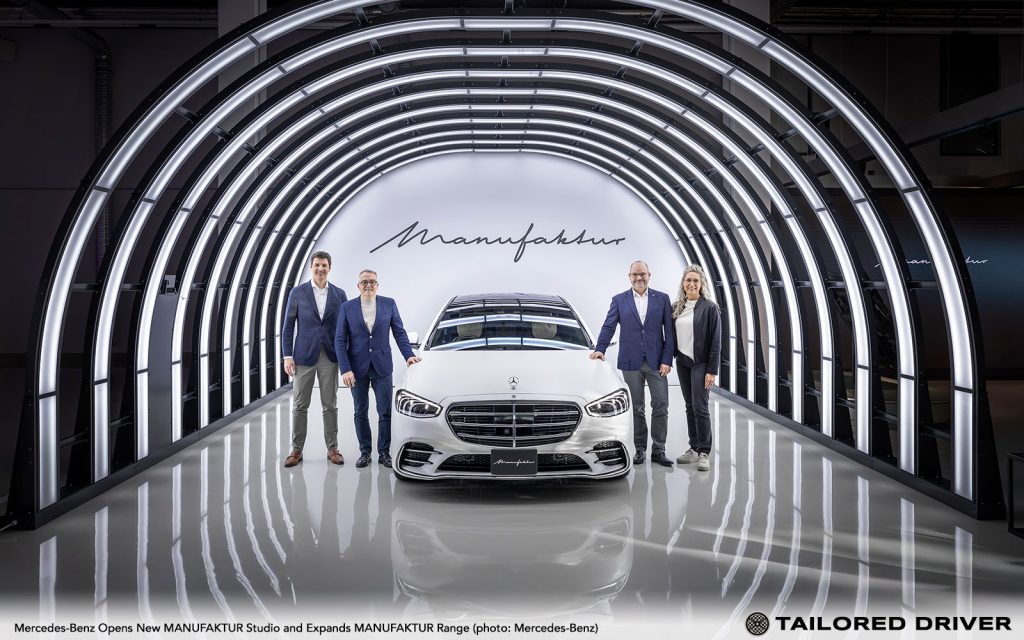
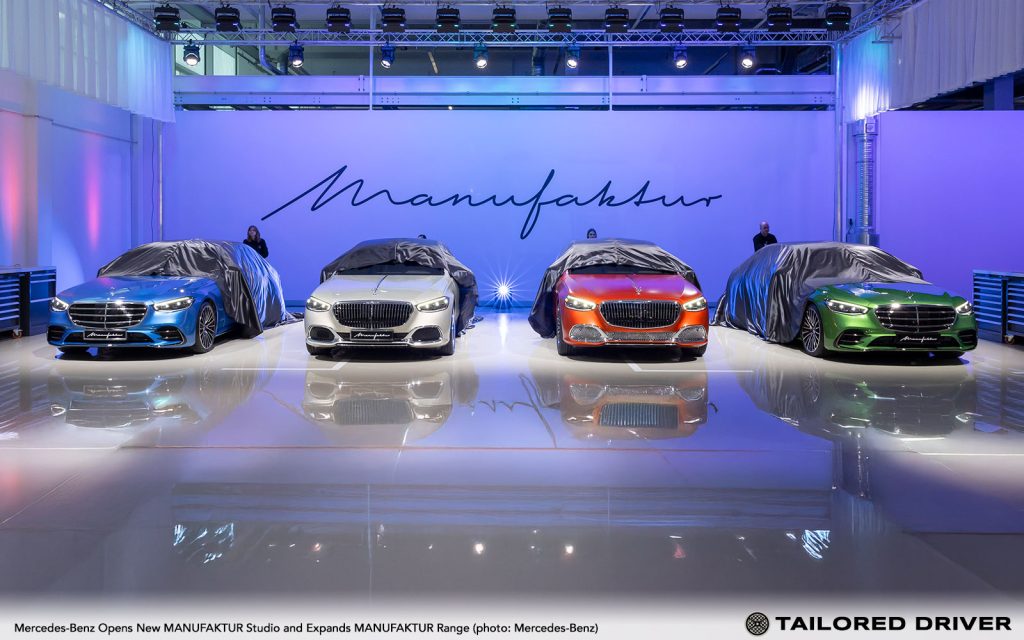
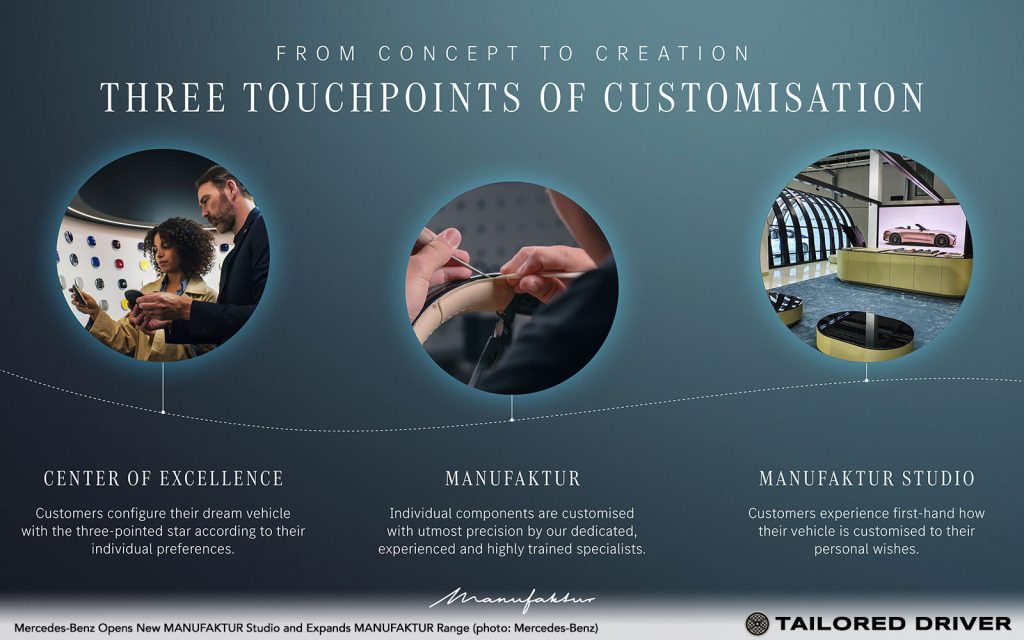
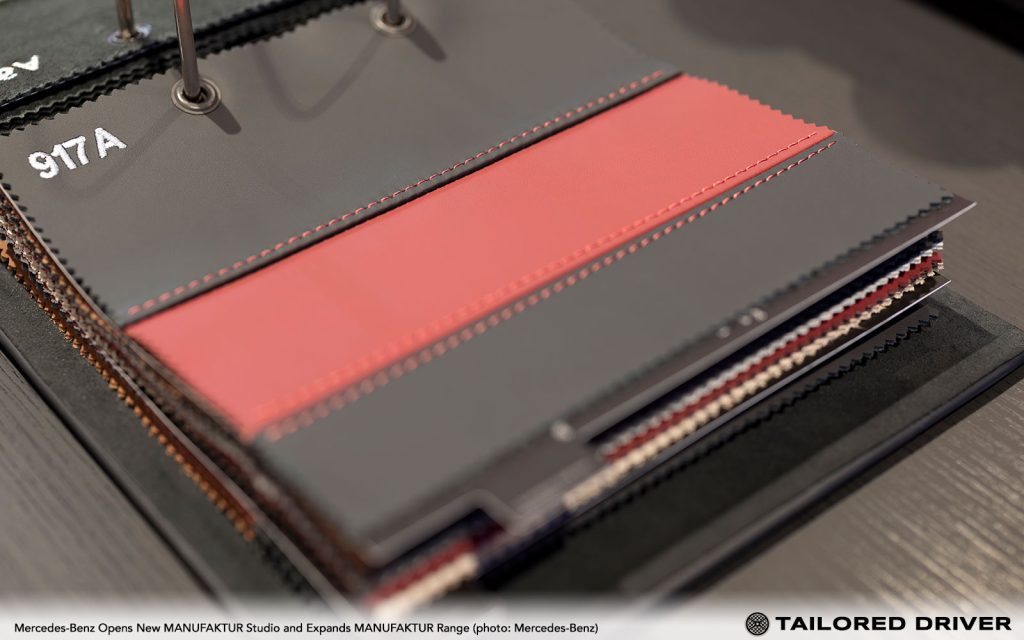
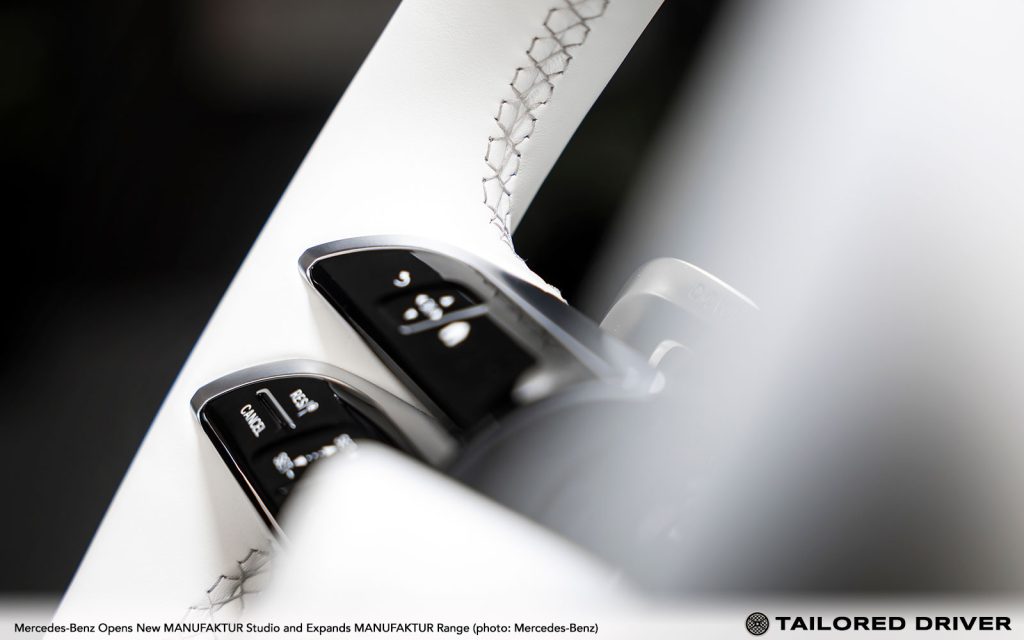
Customers with exclusive customization wishes can now experience the MANUFAKTUR program up close at several locations at the Sindelfingen site – at the traditional Center of Excellence, in the MANUFAKTUR and now also in the MANUFAKTUR Studio, which officially opened on December 5, 2024.
“In our new MANUFAKTUR Studio at the heart of the Sindelfingen factory complex, we’re offering our customers an exclusive area for a product experience with the highest degree of customization. By expanding the MANUFAKTUR experience, we are strategically developing the location and the ‘Made in Sindelfingen’ seal of quality. We’re now combining traditional craftsmanship with innovative, digital production processes.” Jörg Burzer, Member of the Board of Management of Mercedes-Benz Group AG, Production, Quality & Supply Chain Management
“Our MANUFAKTUR program offers discerning clients the opportunity to customize a selection of vehicles with the star according to their wishes. Whether it’s paints selected for the exterior or exclusive materials in the interior – thanks to MANUFAKTUR, there are numerous options for creating your personal dream car. Because of the program’s success, we are now expanding it further. In the new MANUFAKTUR studio, our customers can witness live how their wishes are turned into reality. Here, select equipment, which is handcrafted at MANUFAKTUR, is installed into its respective vehicle. We are also delighted to be able to offer a variety of new exclusive colors and interior equipment for the S-Class next year.” Michael Schiebe, Chairman of the Board of Management of Mercedes-AMG GmbH and Head of the Mercedes-Benz G-Class & Mercedes Maybach divisions
After customers configure their dream vehicle at the Center of Excellence, individual components are meticulously crafted by hand at MANUFAKTUR. In the new MANUFAKTUR Studio, customers can then experience first-hand how the vehicle is customized according to their individual wishes. Both locations combine craftsmanship, attention to detail and state-of-the-art production technologies to make individual vehicle dreams or even custom concepts a reality. At the same time, Mercedes-Benz is introducing innovative high-tech manufacturing methods and extensively expanding customization options.
MANUFAKTUR: skillful hands are the most valuable tools
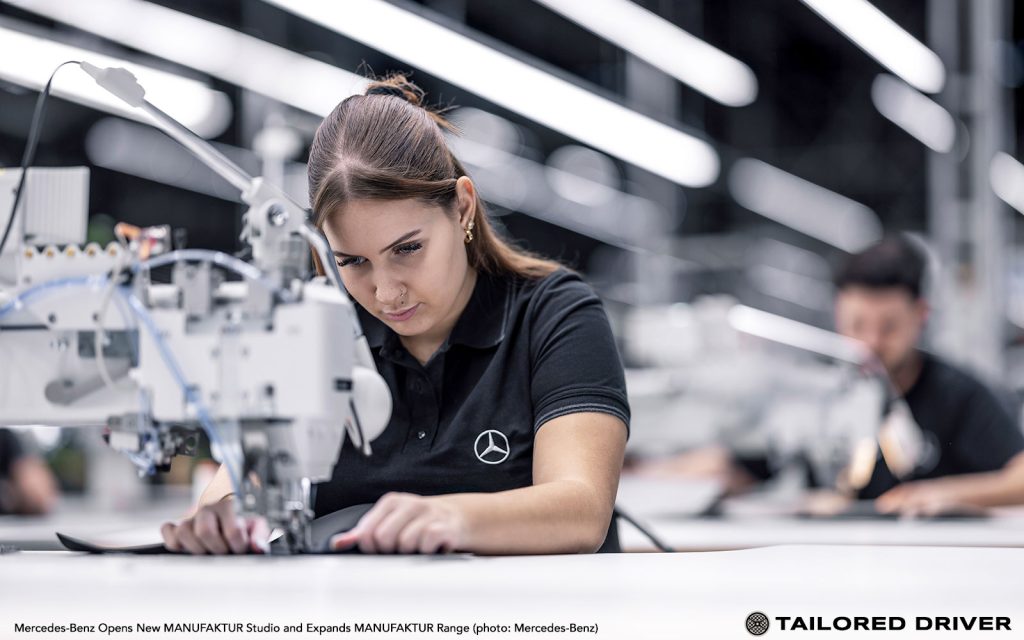
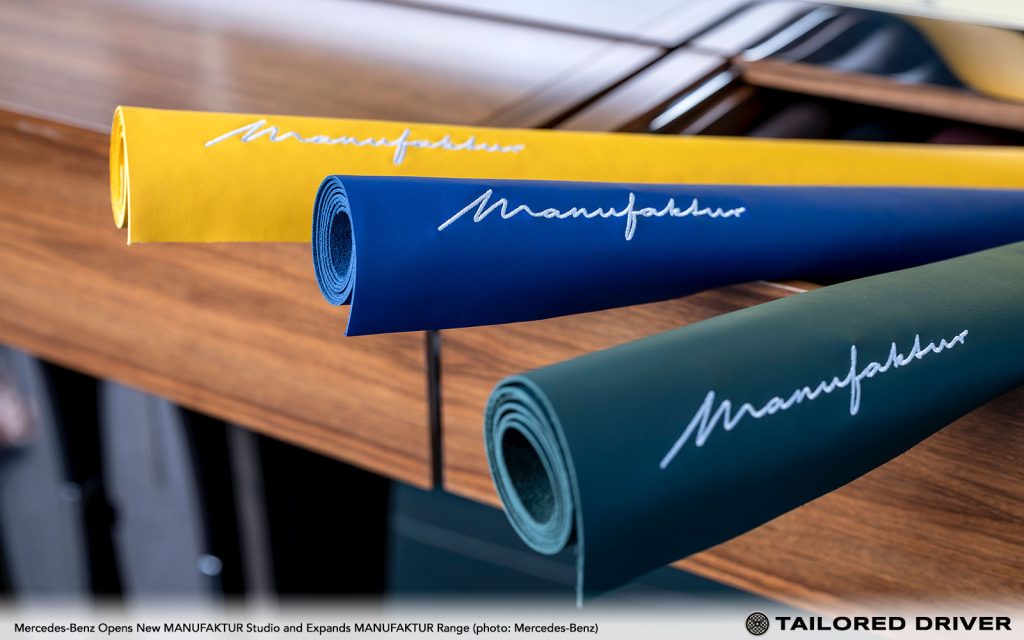
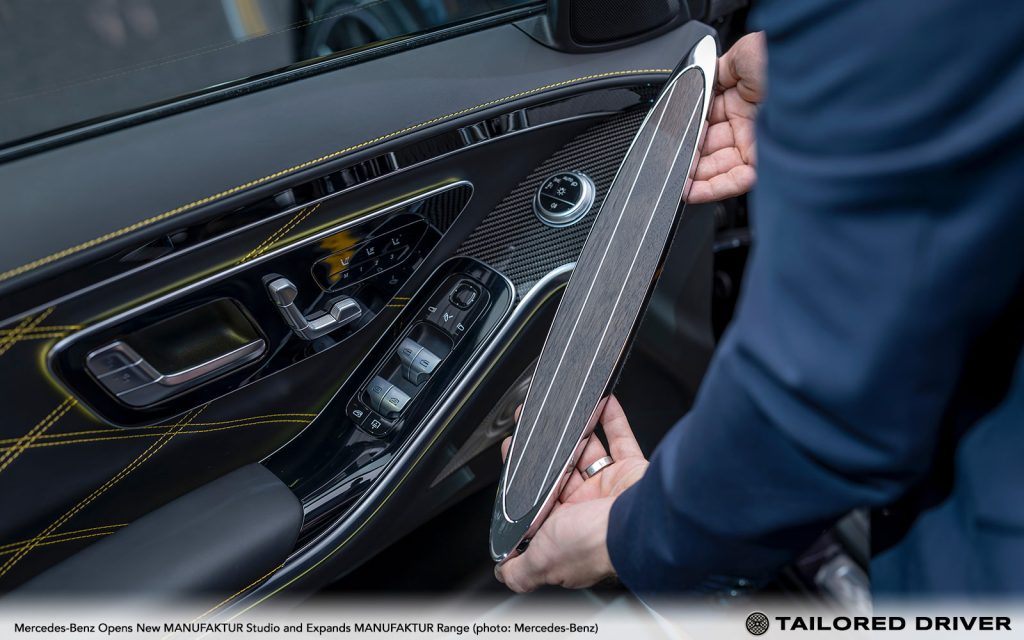
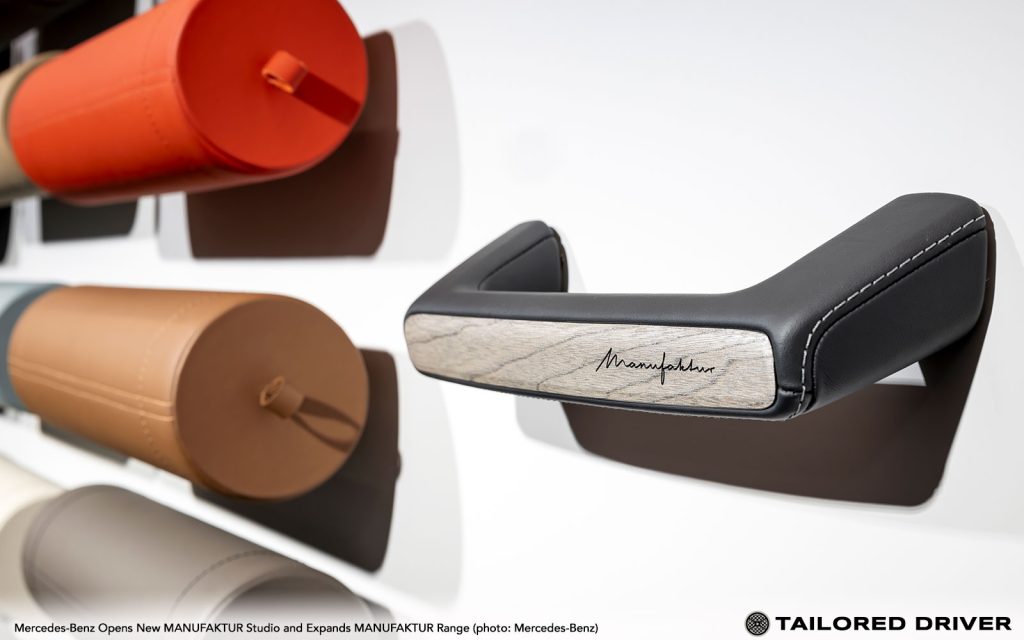
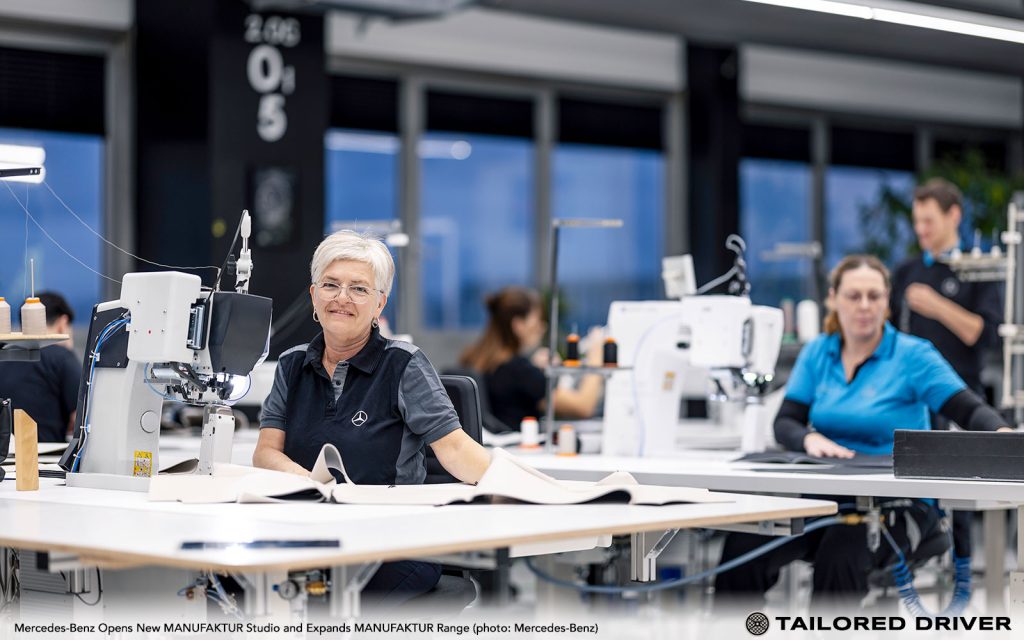
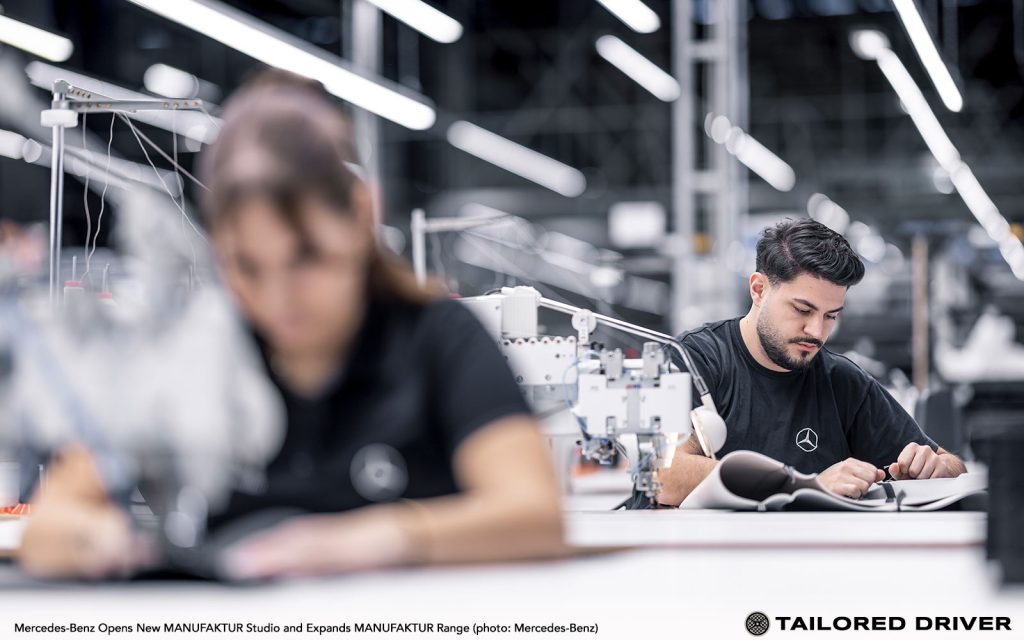
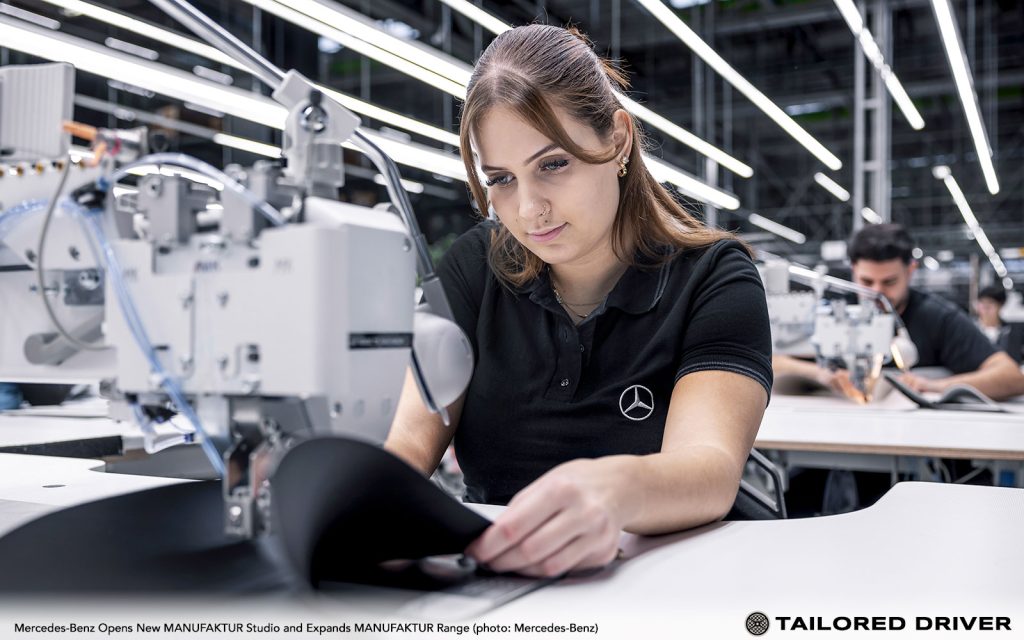
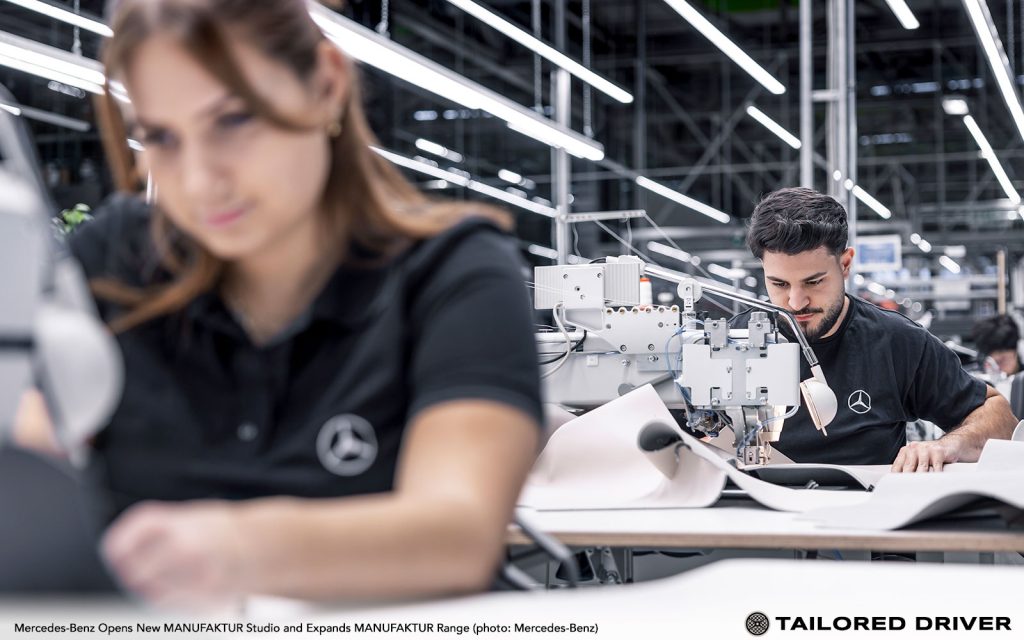
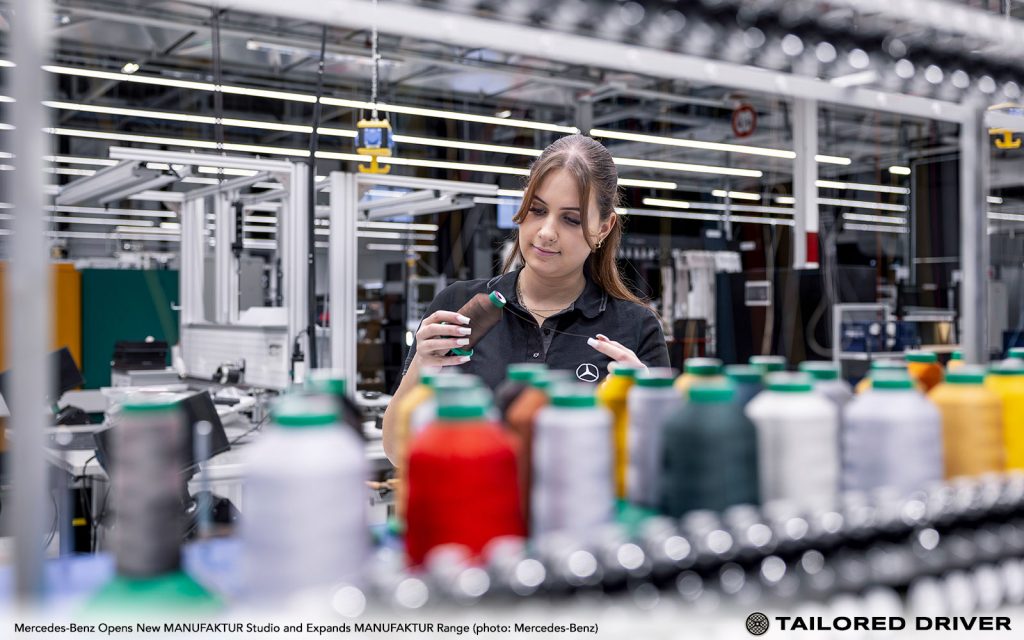
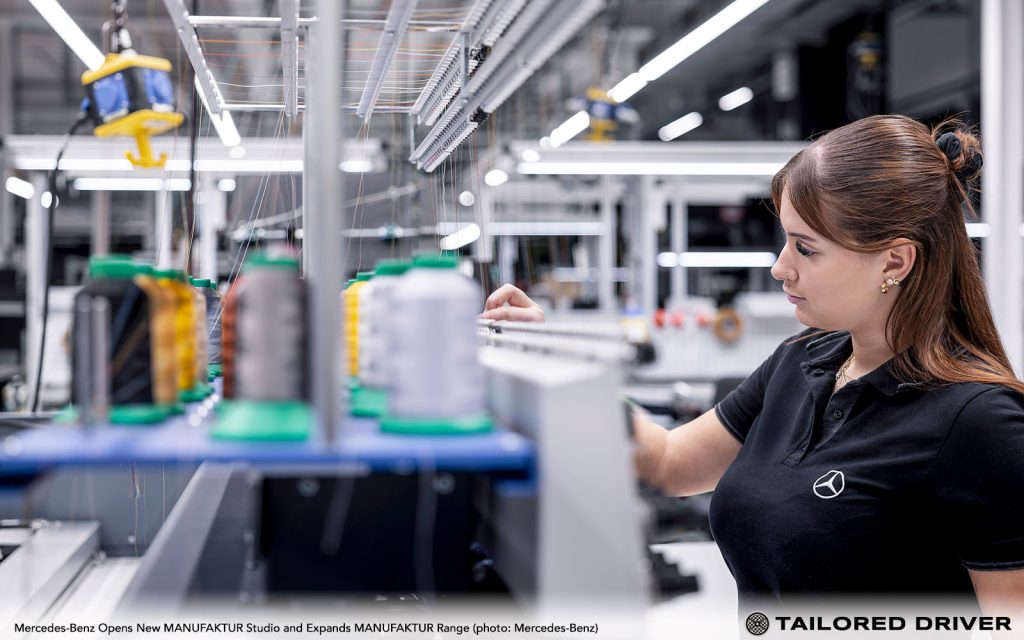
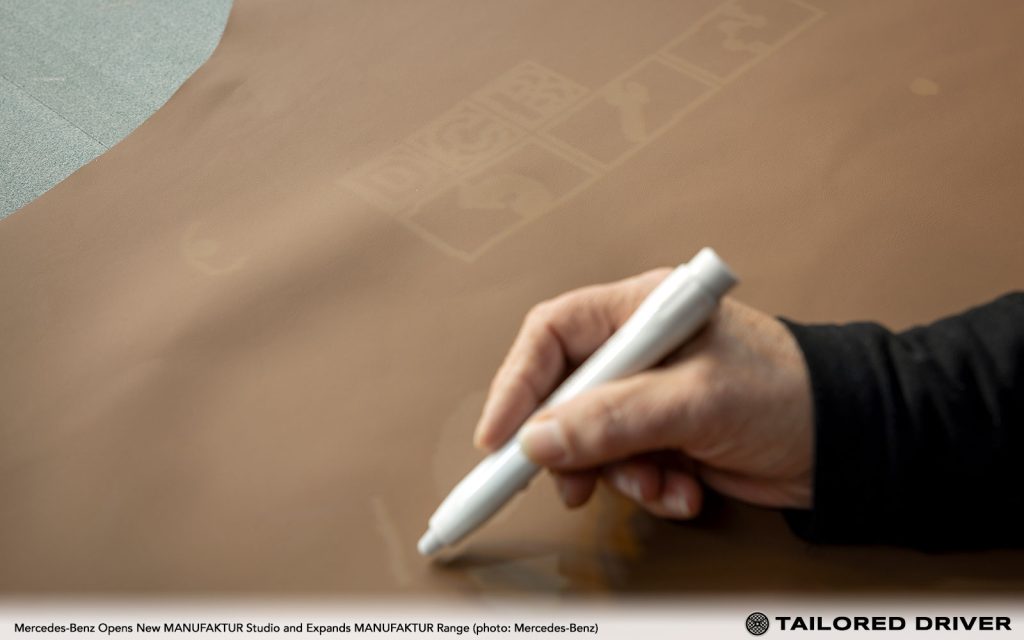
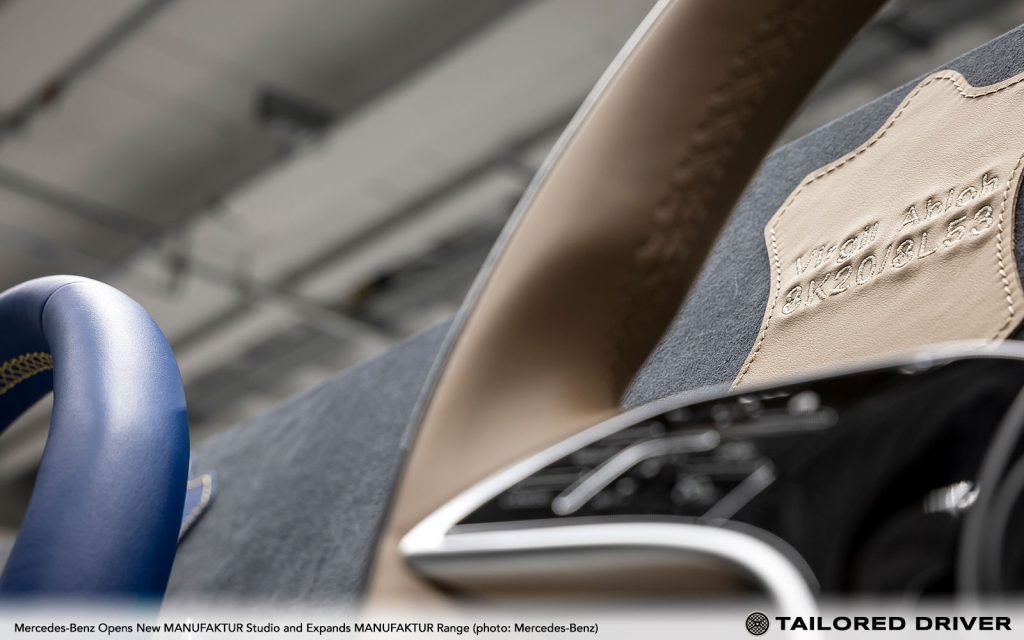
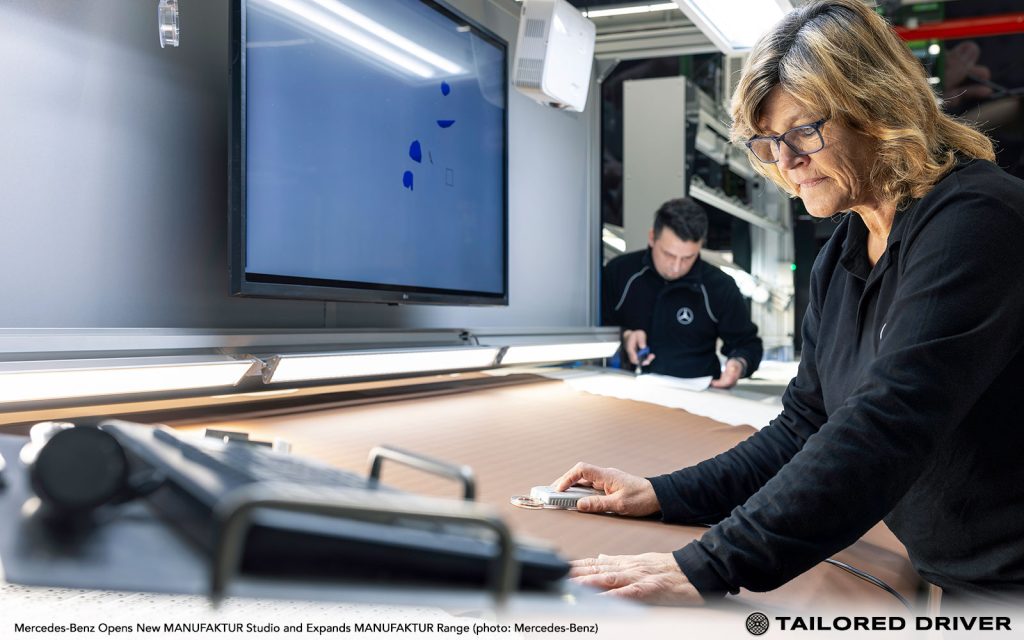
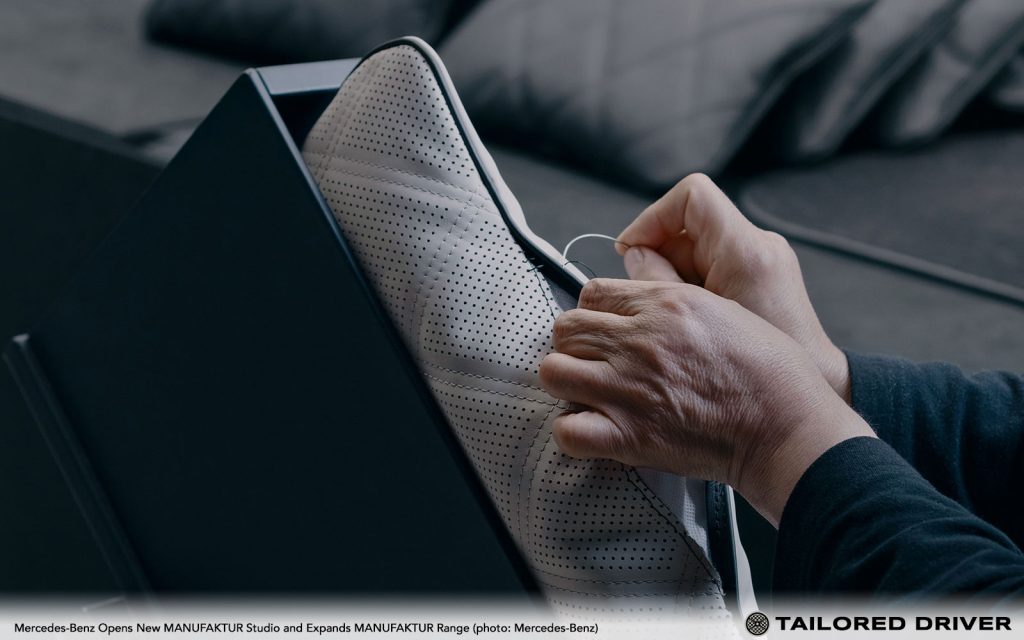
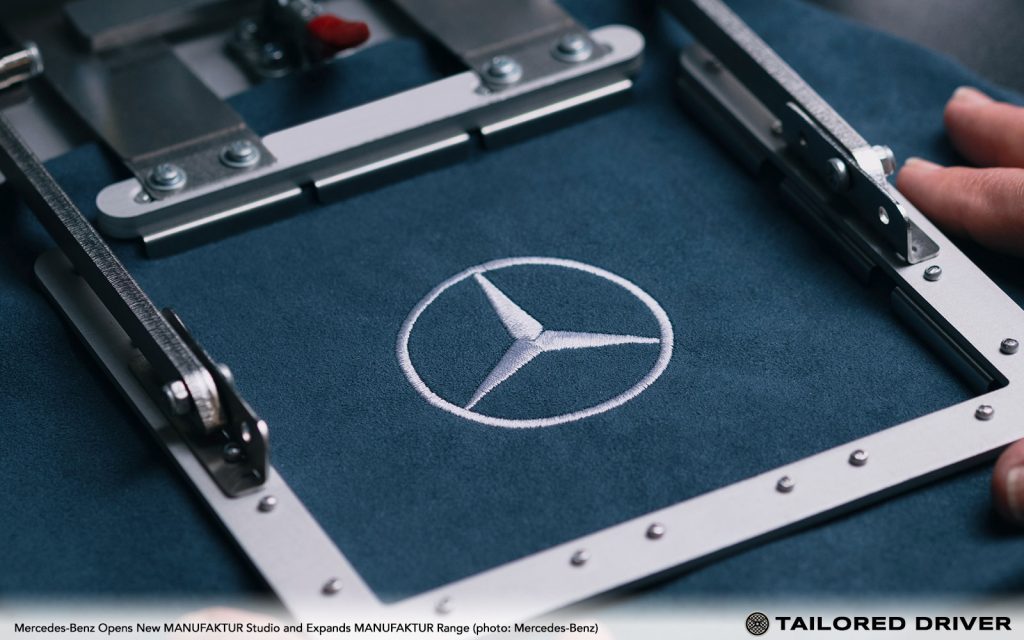
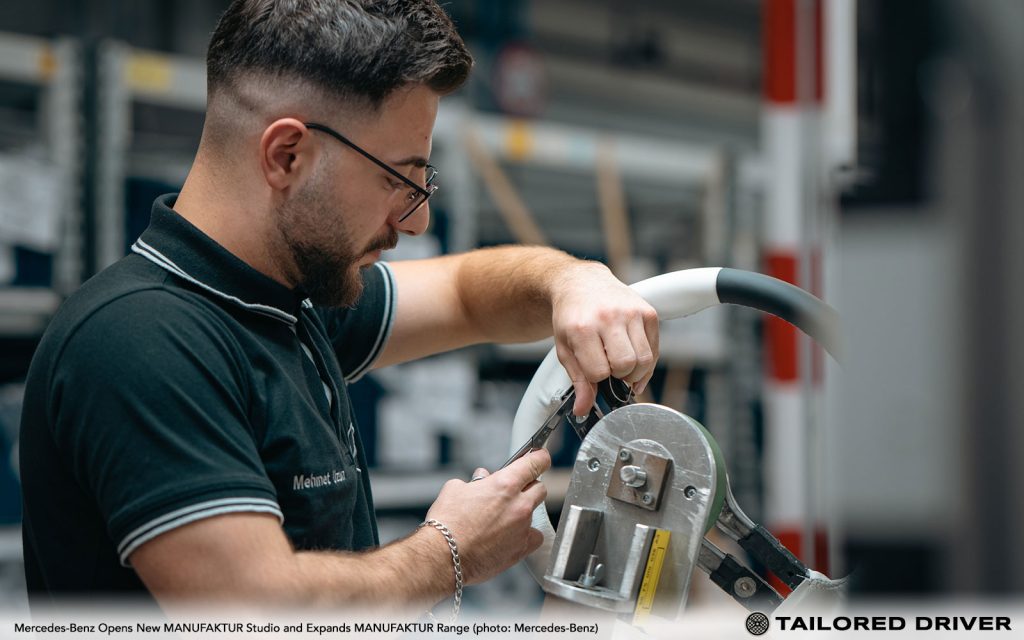
The MANUFAKTUR team consists of experienced and extensively trained specialists. Their dedication to the craft is reflected in the outstanding quality of their work. Skilled hands are the most valuable tools here. Whether it’s leather cladding, cutting, embroidering or sewing – all interiors are finished with exquisite craftsmanship and the utmost precision. The production of small and intricate details is just as much at home here as the production of larger components. This includes, for example, a leather headliner, which is sewn together from many individual pieces.
The digitalization of individual work steps speeds up MANUFAKTUR processes and makes a significant contribution to quality assurance. Individual steps are also optimized with artificial intelligence. This can quickly and reliably detect small irregularities in leather hides, for example, and reduces the workload on employees.
The MANUFAKTUR Studio: individualization independent of series production
The innovative matrix production in the MANUFAKTUR Studio enables variable individualization of up to 20 vehicles per day, regardless of the model series. The highly flexible production structure has been completely reorganized. With the help of driverless transport systems that can move in any direction (autonomous guided vehicles, also known as “AGVs”), customer vehicles are transported between individual production clusters as required and independently of fixed sequences. Each of the nine clusters in the MANUFAKTUR Studio can be approached flexibly with the AGVs and operates independently of cycle times. In this way, the vehicle’s custom equipment can be installed effectively.
This is supported by the digital twin, which is used to monitor and, if necessary, optimize every stage of production. Last-minute changes are also possible. All production stations are networked via MO360, the in-house digital ecosystem for production. This means all production data can be accessed by every employee in real time via the MO360 data platform.
PixelPaint – an innovative high-resolution painting process for exclusive customer solutions
The innovative and resource-saving PixelPaint process revolutionizes the wide-ranging options for multi-colored vehicle paint jobs. Inspired by the function of an inkjet printer, this new technology applies high-quality paint directly onto the body of the vehicle with incredible precision. This allows for the application of custom patterns with the highest level of accuracy – ideal for individually designed dream vehicles. Customers can request bespoke design elements according to their ideas, which are limited only by technical feasibility.
Growing range for select top-end vehicles from the Mercedes-Benz Group
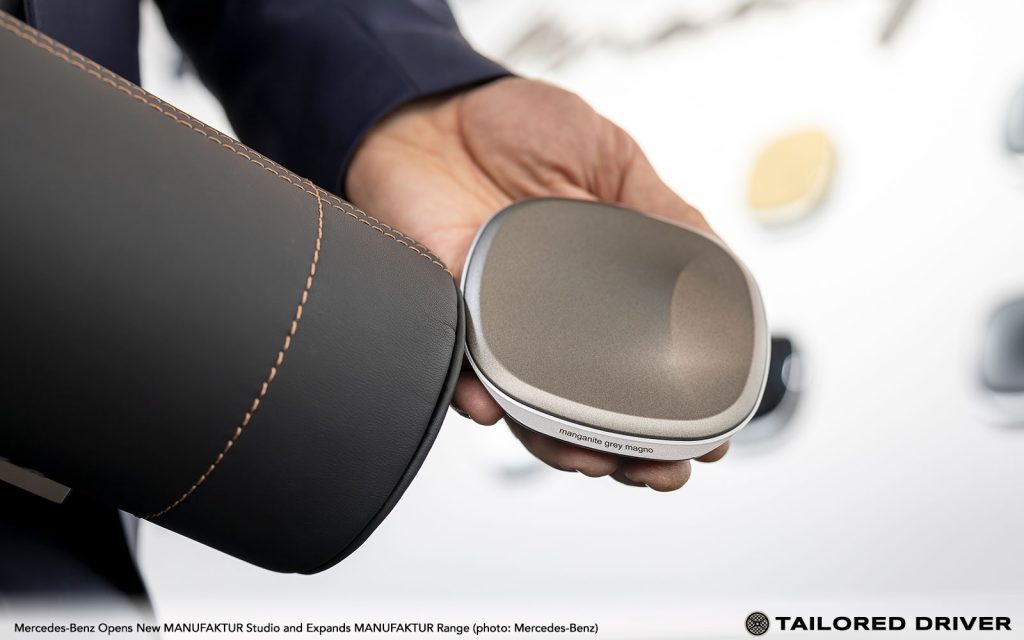
The MANUFAKTUR individualization and customization program consists of a growing range of equipment for select Mercedes-Benz, Mercedes-AMG and Mercedes-Maybach models. The MANUFAKTUR portfolio comprises an exclusive selection of materials, colors and finishes that go beyond standard options and create a highly individual experience. The focus here is on expanding the individualization options for customers in the top-end segment.
The S-Class will be available in the future with even more MANUFAKTUR Exclusive colors and further MANUFAKTUR options. As the Mercedes-Benz flagship, the S-Class exemplifies the extensive customization options of the MANUFAKTUR program. A similar expansion is also planned for select Mercedes-AMG and Mercedes-Maybach models.
About Mercedes-Benz USA Mercedes-Benz USA (MBUSA), headquartered in Atlanta, is responsible for the distribution, marketing and customer service for all Mercedes-Benz products in the United States. MBUSA offers drivers the most diverse lineup in the luxury segment with 18 model lines ranging from the sporty GLA SUV to the flagship S-Class and the dynamic all-electric vehicles from Mercedes-Benz. MBUSA is also responsible for Mercedes-Benz Vans in the U.S. More information on MBUSA and its products can be found at www.mbusa.com and www.mbvans.com.
Handcrafted one-off based on the new electric G-Class fulfils high requirements
Vehicle to be handed over in time for the 2025 Jubilee and contributes to the realisation of the encyclical “Laudato Si”
Pope Francis invites CEO Ola Källenius and the team involved from Graz, Sindelfingen and Rome to a private audience
Long tradition continues: Mercedes-Benz has been supplying cars to the Vatican for almost 100 years
[source: Mercedes-Benz]
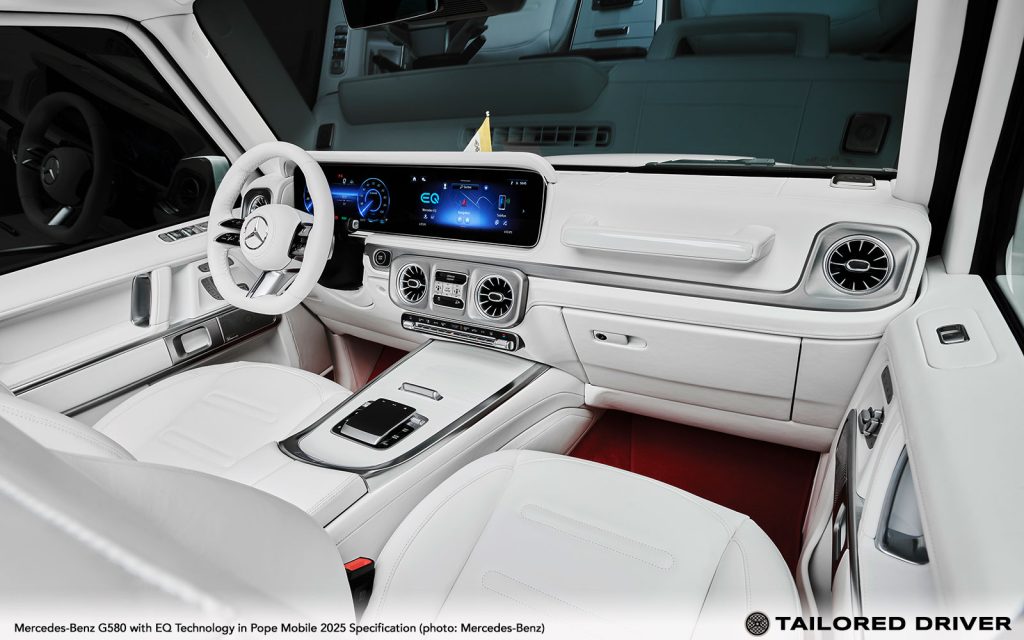
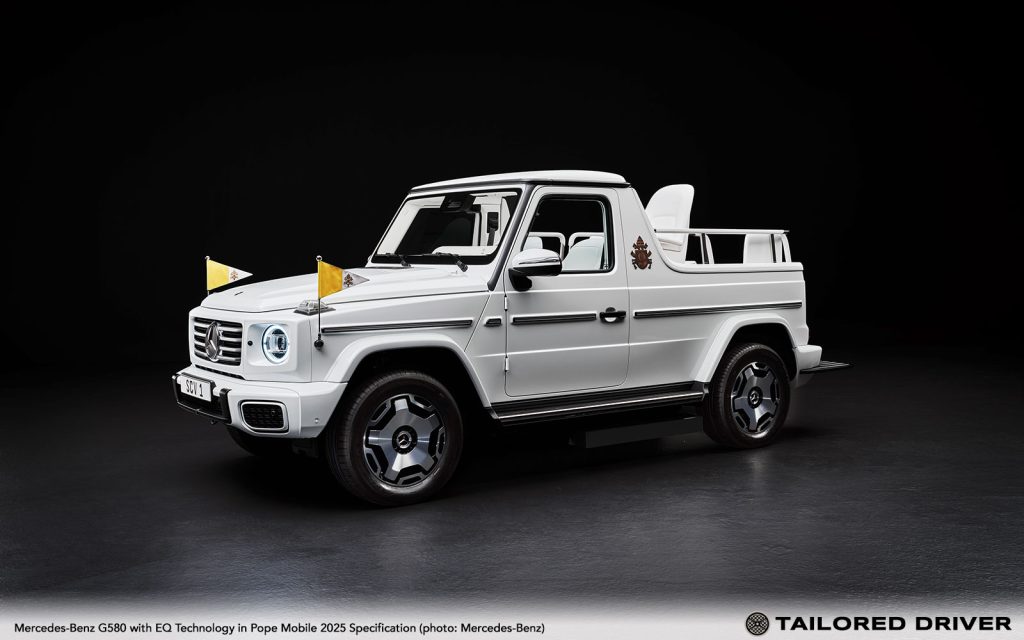
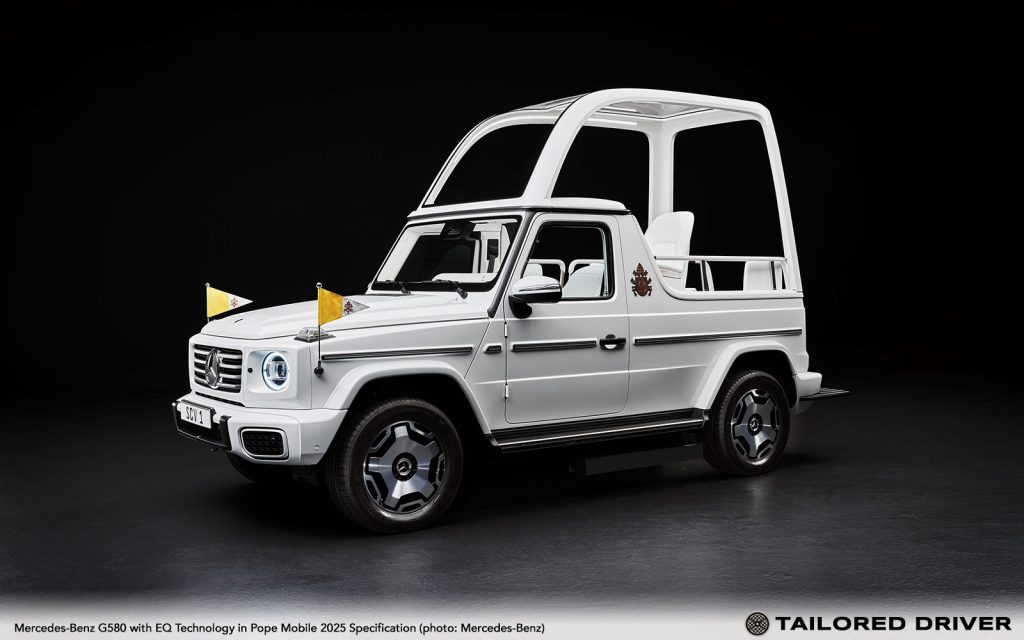
Mercedes-Benz has been supplying cars to the Vatican for 94 years and for the past 45 years, the Pope has been using the renowned “Popemobiles” based on the Mercedes-Benz G-Class. Now, for the first time, the Popemobile from Mercedes-Benz is going all-electric: Mercedes-Benz CEO Ola Källenius and the team members involved personally handed over a handmade unique vehicle based on the new electric G-Class to Pope Francis in the Vatican today.
This means that the Pope will be travelling locally emission-free in a new Mercedes-Benz in time for the 2025 Jubilee – an event that only takes place every 25 years and one for which millions of pilgrims are expected in Rome. The vehicle fulfils high requirements and was developed in close cooperation with the Vatican specifically for the Pope’s use. Its electric drivetrain, which was adapted to the particularly low speeds required for public appearances, contributes to the realisation of the encyclical “Laudato Si”. In it, Pope Francis describes the need for sustainable development.
At the handover, Ola Källenius thanked Pope Francis and all those involved and emphasised the sustainable business strategy of Mercedes-Benz:
“With the new Popemobile, Pope Francis is the first pope to be travelling in a fully electric Mercedes-Benz when making public appearances. This is a special honour for our company, and I would like to thank His Holiness for his trust. With this Popemobile, we are also sending out a clear call for electromobility and decarbonisation. Mercedes-Benz not only stands for the special and individual – but also for consistently creating the conditions for a net-carbon-neutral[1] new car fleet in 2039.” Ola Källenius, Chairman of the Board of Management of Mercedes-Benz Group AG
A unique experience: Pope Francis invites participating team members from Graz, Sindelfingen and Rome
Ola Källenius was accompanied by Britta Seeger, Member of the Board of Management responsible for Sales and Marketing, and Marc Langenbrinck, CEO of Mercedes-Benz Italia, at the appointment just outside St Peter’s Basilica. But the Holy Father also met with those who developed and built his new vehicle. Employees from Design, Research & Development, Manufacturing and Sales & Marketing were therefore also invited to the event and were able to hand over “their” vehicle on behalf of many others involved. The handover was followed by a private audience with the Pope. A team of specialists from Graz (A), Sindelfingen (D) and Rome (I) worked together for around a year. The project was managed by the team in Rome while the electric drivetrain was adapted by the team in Graz. The experts from Sindelfingen produced the bodywork, interior fittings and customised equipment using traditional craftsmanship.
Handmade model: Details of the vehicle based on the new G580 with EQ technology
The electric drivetrain of the new G580 with EQ technology (combined energy consumption: 30.4-27.7 kWh/100 km | Combined CO₂ emissions: 0 g/km | CO₂ class: A)[2]was adapted to fully utilise the advantages of the four near-wheel motors for the special purpose of slow journeys at public appearances.
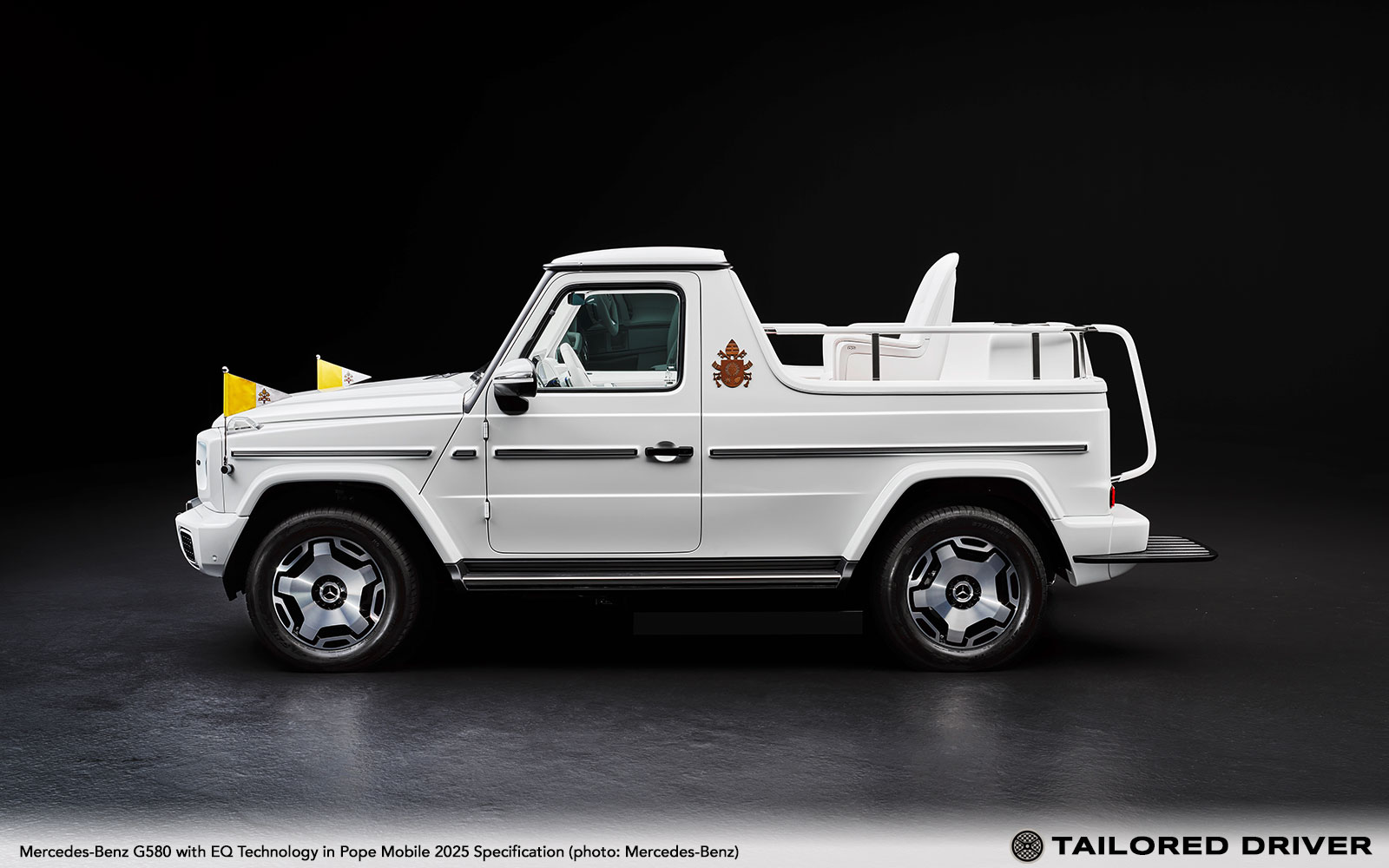
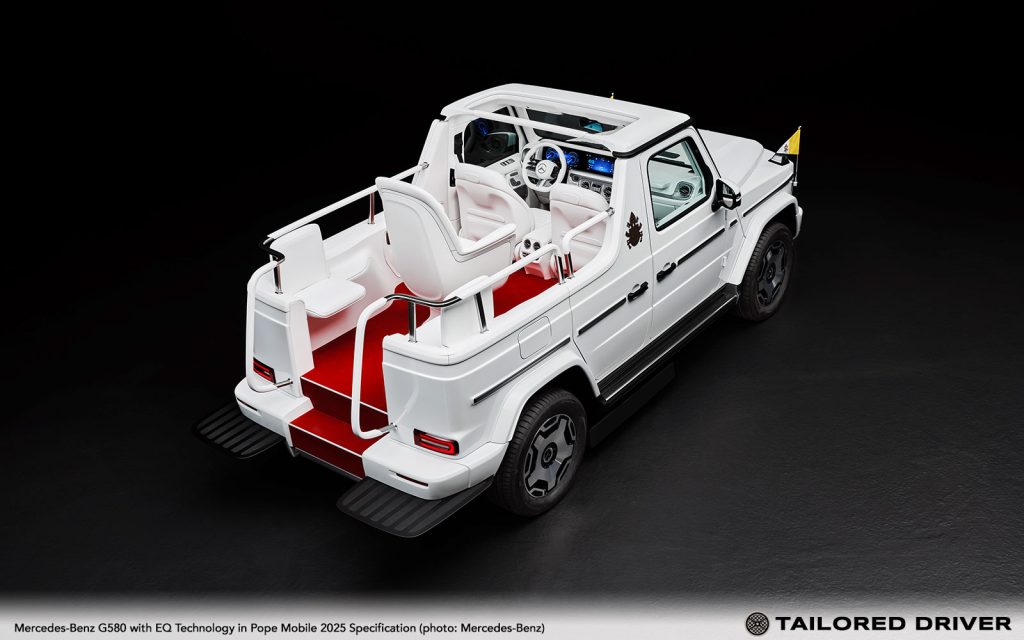
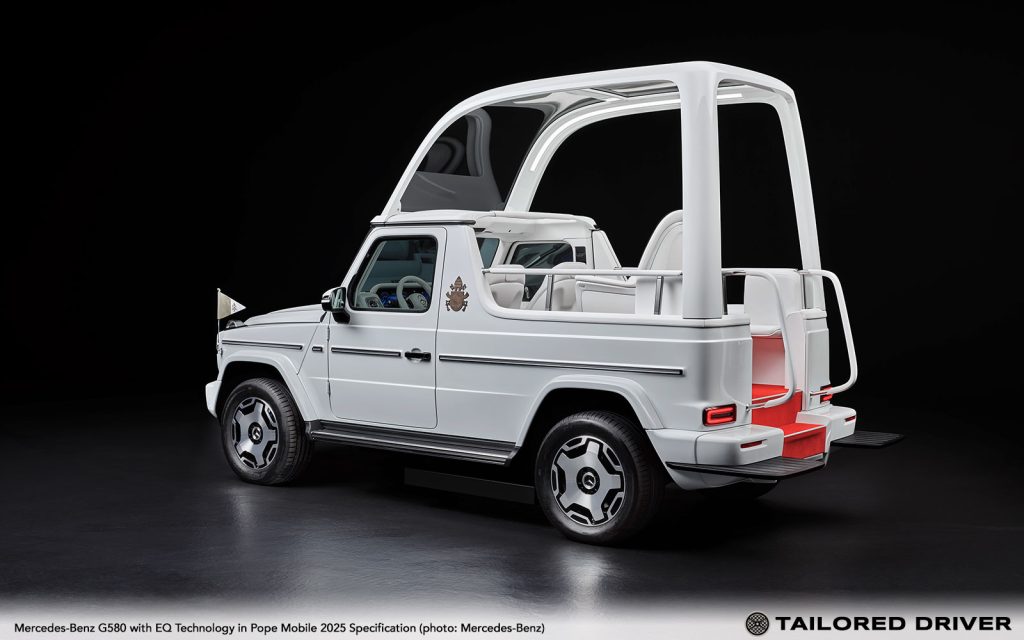
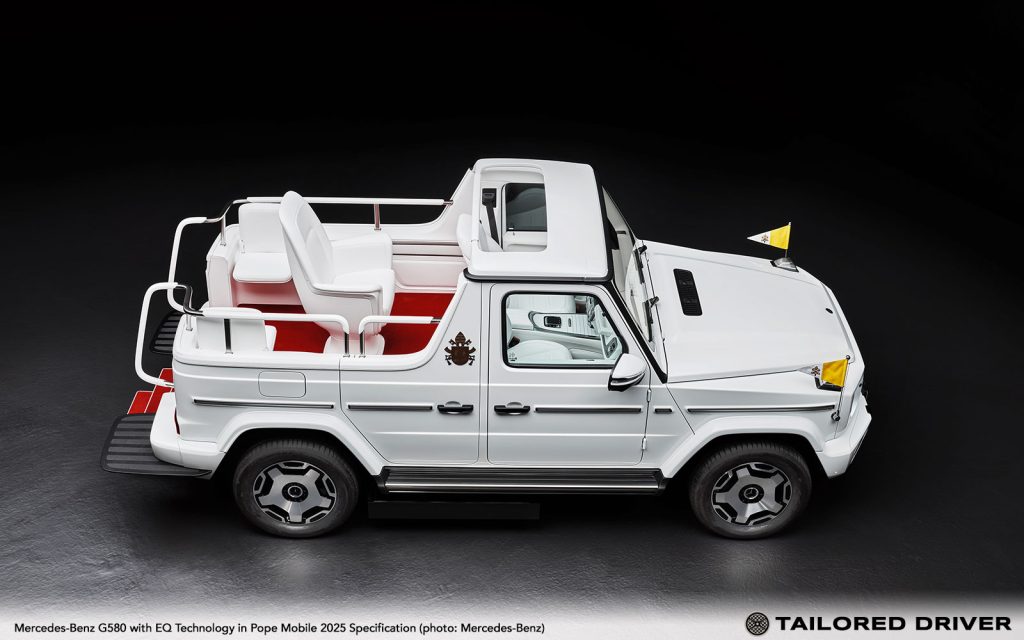
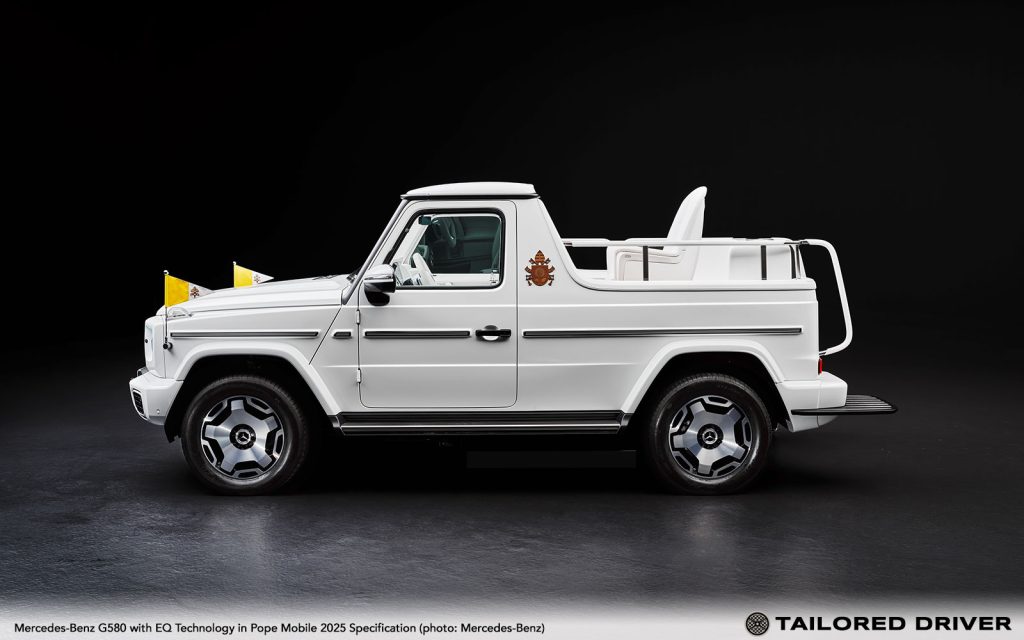
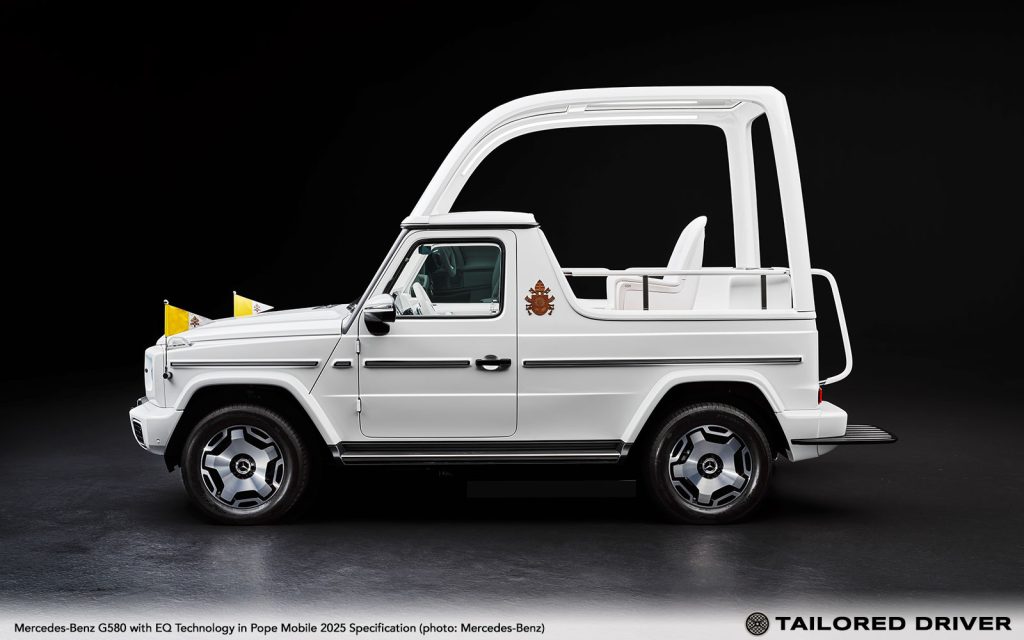
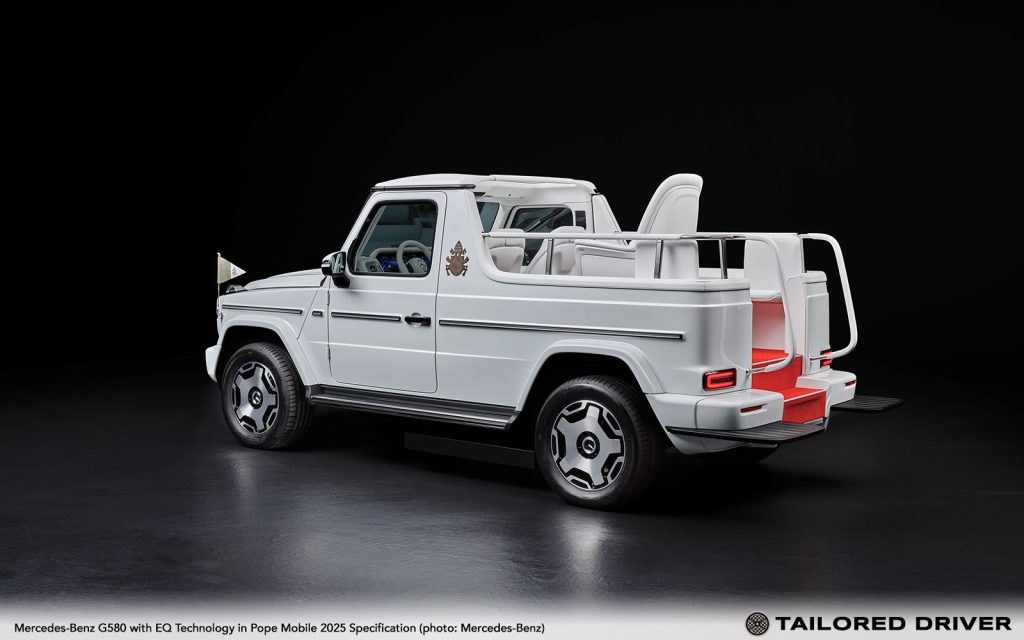
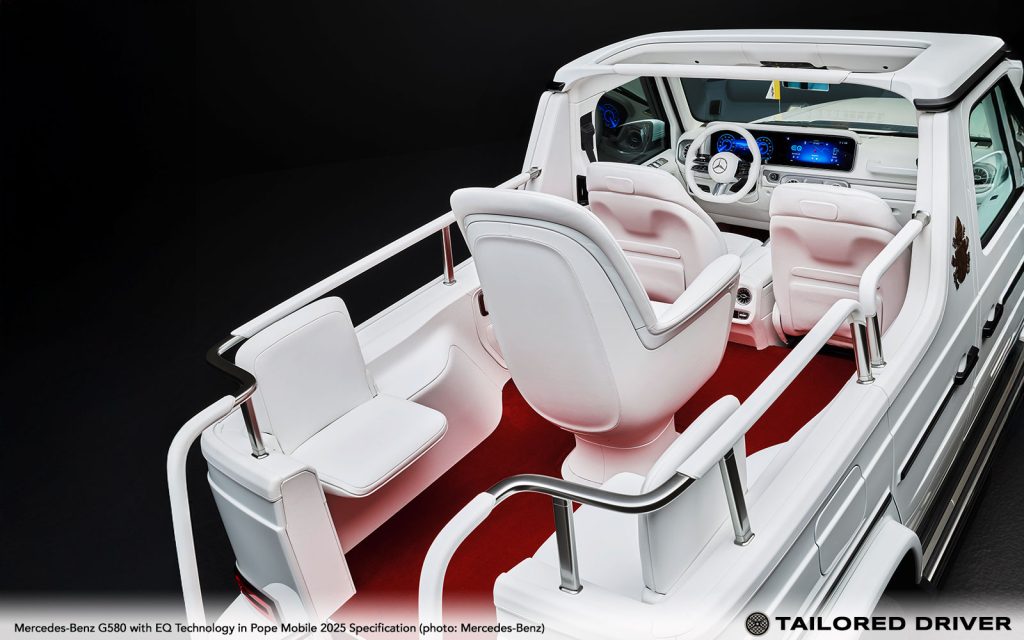
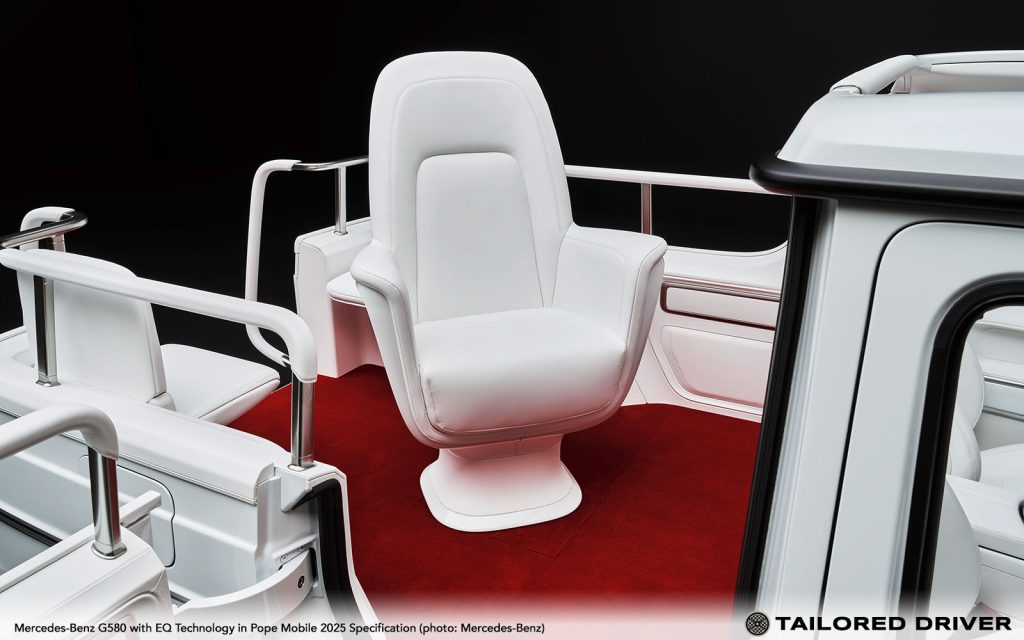
In the rear, the bench seat was replaced by a centrally positioned and height-adjustable single seat. This swivelling main seat makes it possible to move around flexibly and address an audience from different angles. Behind the single seat, two single seats have been integrated on the left and right for additional passengers.
The roof was removed at the B-pillar, and the B-pillar itself was harmoniously transitioned into the side wall to create an unmistakable side profile. In case of rain or bad weather conditions, a separate hardtop offers protection for the occupants. The left rear door was removed and rebuilt by the specialists – in traditional coachbuilding style – from a single piece and seamlessly welded into the bodyshell. On the right-hand side, the hinges of the rear door were relocated to the opposite side.
Like the previous Popemobiles, the vehicle is painted in classic pearl white on the outside.
A long tradition: The history of Mercedes-Benz vehicles for the Vatican
Mercedes-Benz has been manufacturing vehicles for the head of the Catholic Church and his travels and public appearances for almost 100 years. The first vehicle of this type was a Nürburg 460 Pullman Saloon for Pope Pius XI from 1930. At the time, Mercedes-Benz was awarded the delivery contract due to a harmonious overall package – and because the team at the time transferred an important characteristic of previous carriages to the vehicle: The possibility of travelling with two dignitaries and other staff using folding seats. In the 1960s, John XXIII received a 300 Landaulet with an automatic transmission and extended wheelbase. His successor Paul VI initially used a 600 Pullman Landaulet and later a 300 SEL – also a Landaulet. In the 1980s, John Paul II used the first vehicle officially called Popemobile for events in St Peter’s Square, a modified 460 series G model. From 2002, he used a 463 series G 500, which was also used by his successors Benedict XVI and Francis. Specially-designed cars based on the Mercedes-Benz M-Class and the GLE were also used at times. After their retirement from service, some of the Popemobiles were placed for viewing in the Vatican and the Mercedes-Benz Museum in Stuttgart.
Statements from Britta Seeger, Marc Langenbrinck, Gorden Wagenerand participating team members
“We build the perfect Mercedes for every customer – including, for almost 100 years, the Vatican. We are overjoyed to be able to fulfil the Holy Father’s wish for an electric Popemobile and are particularly proud to be able to build the vehicle according to his requirements. This cooperation at eye level honours us deeply and is a valuable symbol of sustainable change together.” Britta Seeger, Member of the Board of Management of Mercedes-Benz Group AG, responsible for Sales & Marketing
“The G-Class is one of Mercedes-Benz’s most iconic vehicles and we are proud that we can develop vehicles for the Holy Father in this tradition. The first all-electric G-Class combines sustainability, elegant design and maximum functionality. It is a great honour for us to be able to present this special vehicle to Pope Francis today.” Gorden Wagener, Chief Design Officer Mercedes-Benz Group AG
“Today we are experiencing an important moment that underlines the deep bond that has united Mercedes‑Benz Italy and the Vatican for more than half a century. As Pope Francis emphasizes, business must be an integral part of the community. Thus, it is a great honor for us to contribute to this unique project. On behalf of the large family of Mercedes-Benz Italy, I would like to extend to the Holy Father my sincerest wishes for his well-being and the fruitful continuation of his Magisterium. We look forward to a wonderful Jubilee and we are certain that ‘our Papamobile’ will be a valuable support for His Holiness in the many engagements that await him.” Marc Langenbrinck, Mercedes-Benz Cars Italy Sales & Head of Mercedes-Benz Italy
“I’m very proud that I was able to contribute to the electric Popemobile. From the first sketch to the final sign-off, the team’s work was characterised by great passion, professionalism and respect for the task. The vehicle represents an incredible amount of manual labour and passion – but it’s also full of state-of-the-art technology. The fact that Pope Francis has invited some of us to hand it over personally really tops everything off. It’s an experience that you’ll tell your grandchildren about.” Klaus Millerferli, Development Engineer at Mercedes-Benz AG in Sindelfingen
“With the G-Class, we are used to working on one of the most legendary and iconic Mercedes-Benz models on a daily basis. Building a vehicle for the Pope is something also very special for us – but even here we have experience. The entire team in Graz is very happy and proud that the Vatican is once again relying on our G.” Peter Zotter, Development Engineer at Mercedes-Benz G GmbH in Graz
[1] Net carbon-neutral means that carbon emissions that are not avoided or reduced at Mercedes-Benz are compensated for by certified offsetting projects.
[2] The specified values were determined in accordance with the WLTP (Worldwide harmonised Light vehicles Test Procedure) measurement method. The ranges given refer to ECE markets. The energy consumption and CO₂ emissions of a car depend not only on the efficient utilisation of the fuel or energy source by the car, but also on the driving style and other non-technical factors.
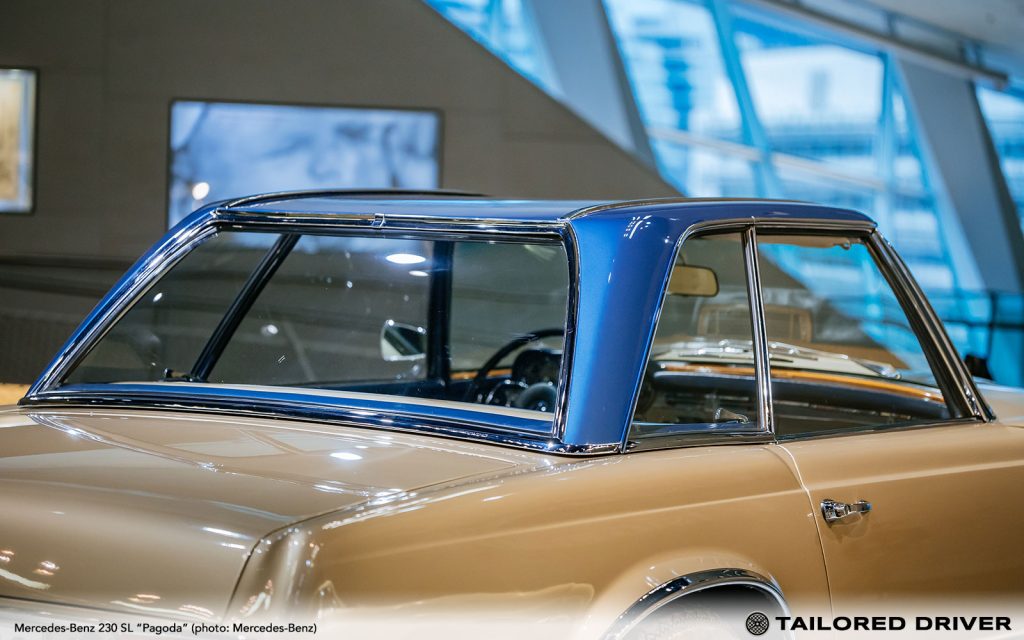
The hardtop design of the SL model series 113 is reminiscent of Asian temples
World’s first sports car with a safety body
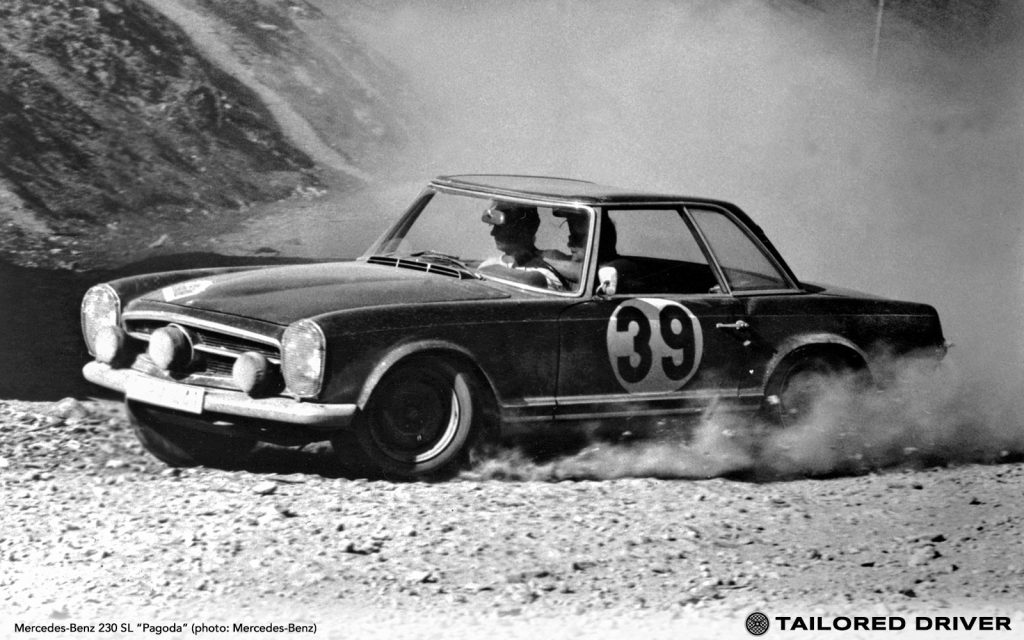
Rally dancers: Winner at Spa-Sofia-Liège 1963 after 5,500 gruelling kilometres
Genuine parts from Mercedes-Benz Classic ensure authenticity and thus value retention
[source: Mercedes-Benz]
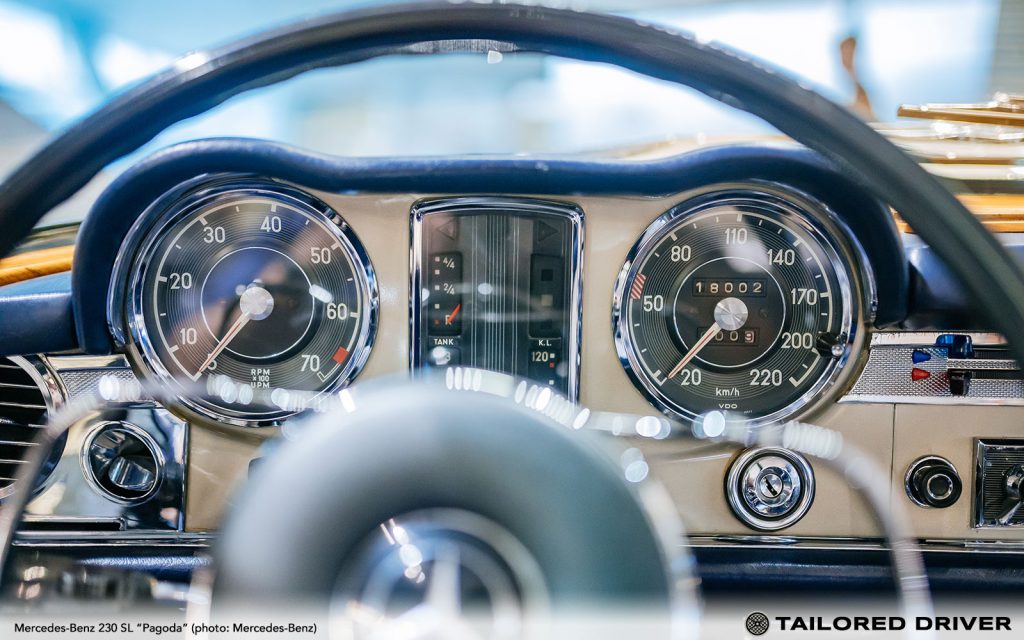
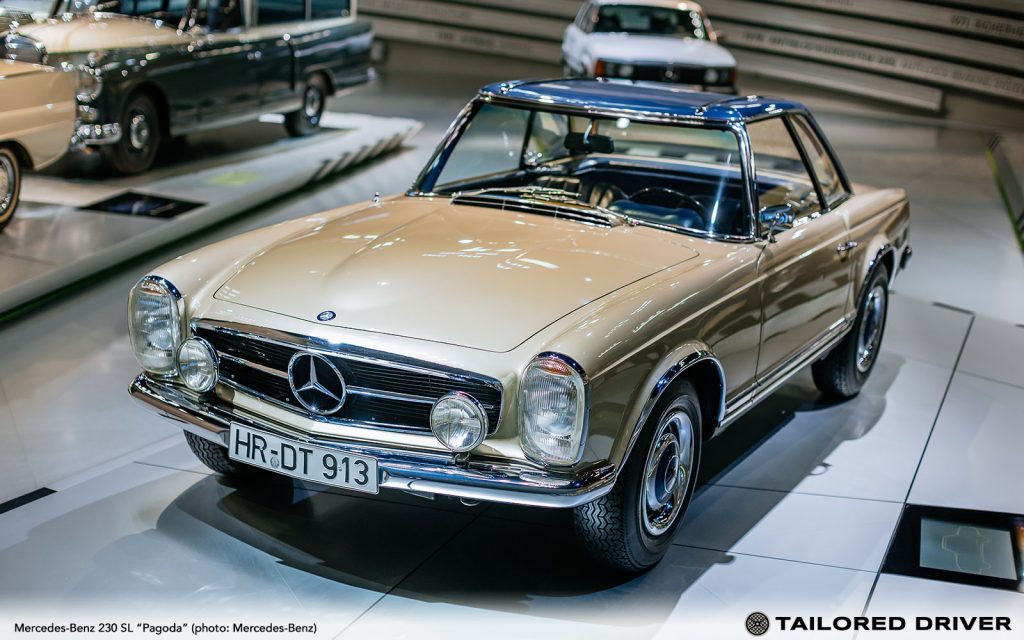
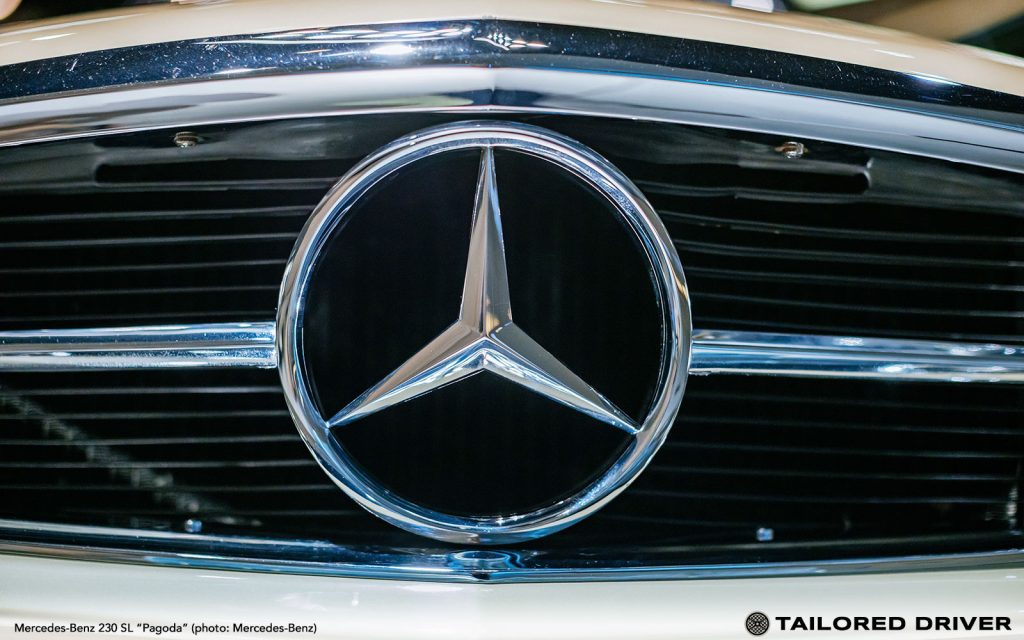
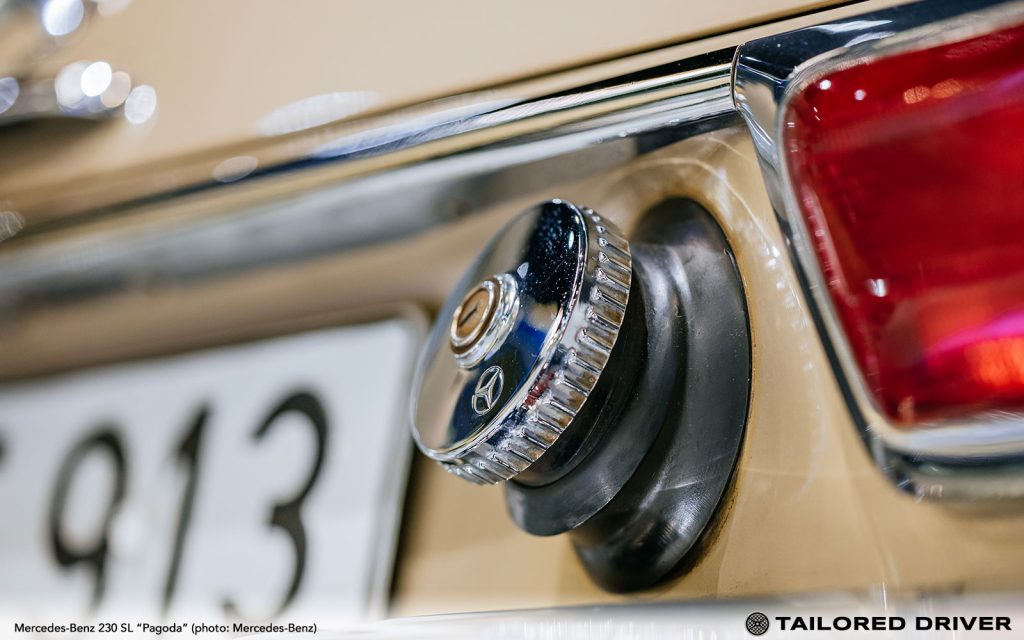
“Close-up” – the name of this series from the Mercedes-Benz Museum says it all. Each instalment tells a surprising, exciting or behind-the-scenes story, illuminating details of a vehicle, an exhibit or an architectural or design feature. In the spotlight this time: Mercedes-Benz 230 SL “Pagoda” from 1964 in Legend Room 5: Visionaries – Safety and the Environment, 1960 to 1982.
No. 8/2024: Mercedes-Benz 230 SL (W 113)
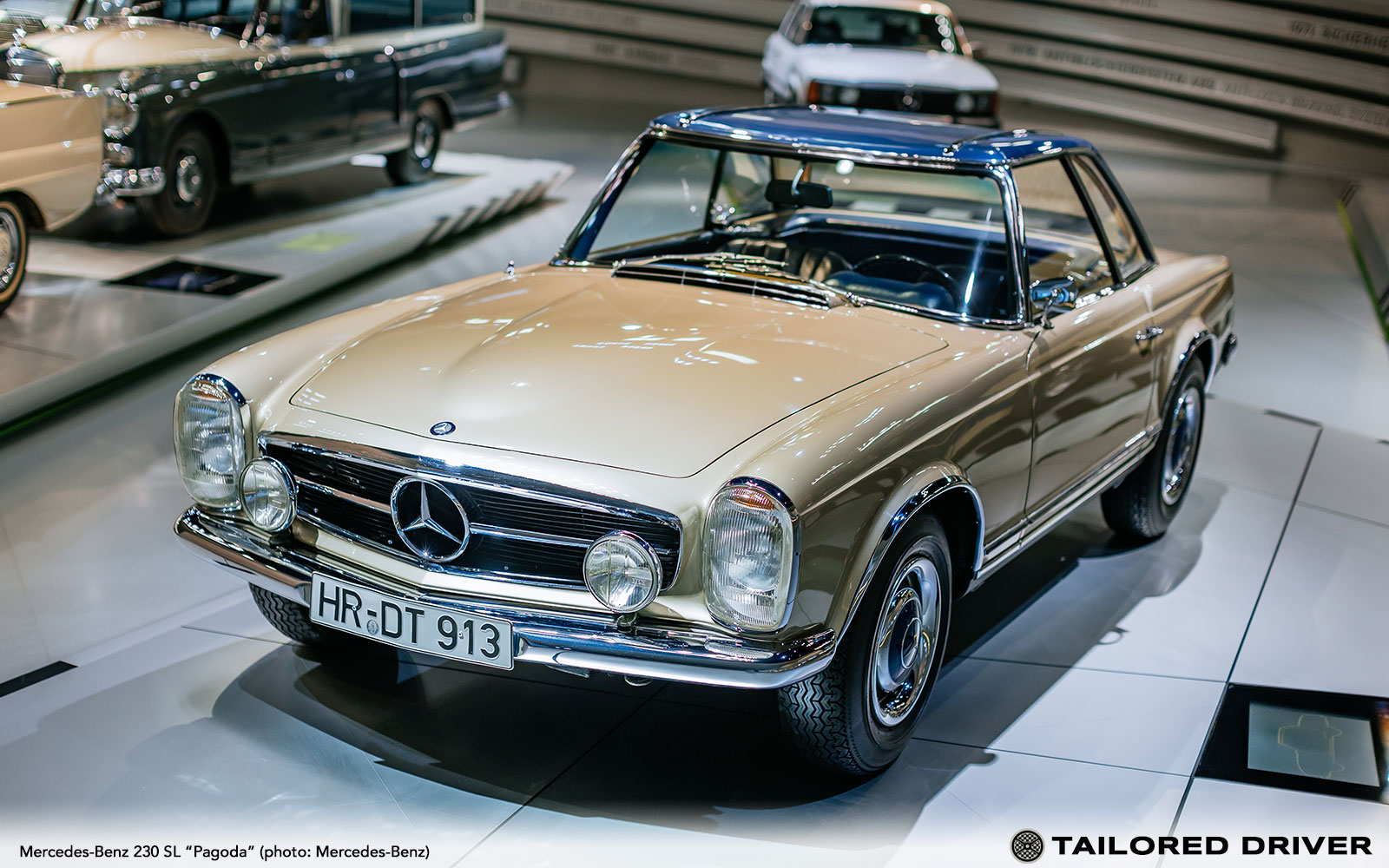
Memorable: What an unconventional nickname for a car: “Pagoda”. The name was coined a long time ago for the Mercedes-Benz SL model series 113. This SL was called “Pagoda” for the first time in Italy, recalls former chief designer Bruno Sacco.
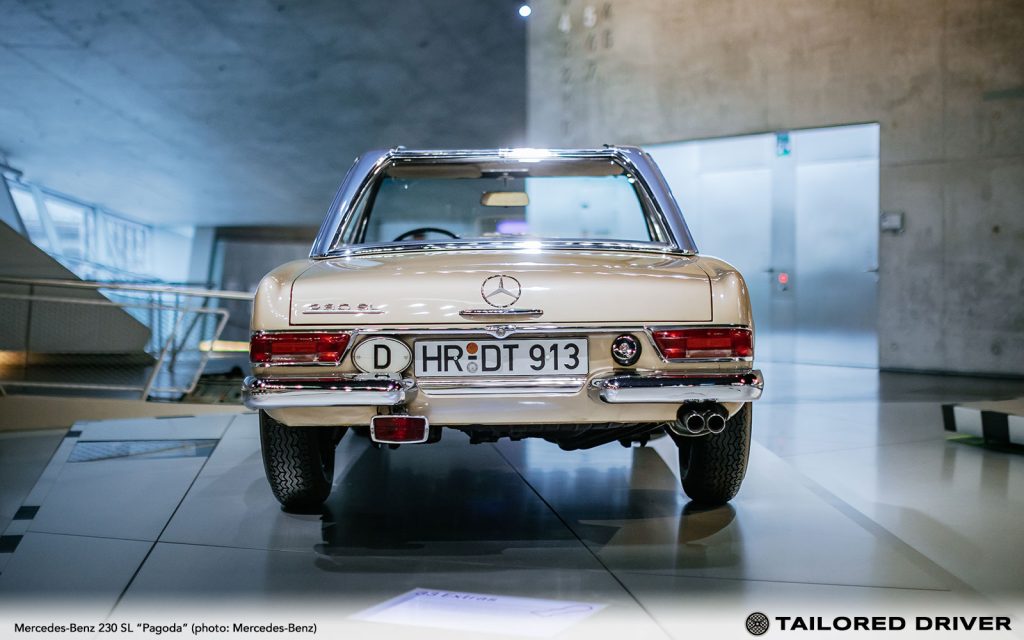
Style icon: The name “Pagoda” is based on the sports car’s characteristic hardtop, which is slightly curved inwards and is reminiscent of Asian temples. The shape was designed by Paul Bracq, who became the first designer in the “Main Department for the Development of Car Bodies” at the Sindelfingen plant in March 1957. The pagoda roof is a stroke of luck for the image and design of the sports car. And of course the overall design: clear lines of great simplicity and lightness create an expressive elegance. Even decades later, Bracq still described the design of the W 113 as “perfect”.
Stability: The idea for the concave roof line came from a technician. Force progressions in the bodywork are an area of expertise of Béla Barényi. He points out that a roof curved downwards is more stable than sheet metal that is curved upwards. This, however, is only of limited practicality for everyday use of the model series 113 since the hardtop of a sports car is rarely used with a roof luggage rack for transporting loads.
Innovative: Another of Barényi’s inventions is of great significance in terms of safety: his concept for the body with crumple zones at the front and rear and a customisable passenger compartment in between. In 1959, the Mercedes-Benz model series 111 was the world’s first vehicle with this safety body. Of course, the new SL, which appeared in 1963, also had it – a milestone in the world of sports cars. This underscores why this SL is in Legend Room 5: Pioneers – Safety and Environment, 1960 to 1982.
Predecessor model: The Geneva Motor Show from 14 to 24 March 1963 is the premiere venue for the 230 SL, the first version of the model series 113. The roadster with a 2.3-litre six-cylinder engine and 110 kW (150 hp) takes on a challenging legacy. It replaces two predecessors, the 190 SL (W 121) and 300 SL Roadster (W 198), both of which had been extremely popular and successful from the outset. The 300 SL had already become a legend with the coupé produced from 1954 on.
A true all-rounder: With the new model, the company opts for a happy medium. The 230 SL is neither an uncompromisingly tough roadster nor a gentle boulevard sports car. It is a comfortable yet sporty two-seater with a high level of driving safety.
Portfolio: The model series 113 is developed further. On 27 February 1967, the company presents the 250 SL, also with 110 kW (150 hp), but with a displacement of 2.5 litres and therefore greater torque. This is replaced less than a year later by the 280 SL with a 2.8-litre engine and 125 kW (170 hp), which is even more powerful.
Rally racer: Motorsport is also in the genes of this SL generation. The victory of Eugen Böhringer and Klaus Kaiser in a Mercedes-Benz 230 SL at the Spa-Sofia-Liège long-distance rally from 27 to 31 August 1963 – around 5,500 kilometres at top speed – is legendary. Böhringer calls the sports car a “dancer” because it is more manoeuvrable than the saloon with its longer wheelbase.
Young at heart: Production of the 280 SL comes to an end in March 1971. Its successor is the completely newly designed 107 model series. A total of 48,912 units of the three SL models of the W 113 are produced in eight years of production. Today, they are among the brand’s most popular classics. No wonder: they combine sportiness with a high level of everyday practicality, comfort and timeless elegance. The comprehensive supply of Mercedes-Benz Classic Genuine Parts available through the manufacturer is a major advantage when it comes to preserving any “Pagoda”. Looking for a part? Click here for the parts finder: https://teilesuche.mercedes-benz-classic.com.
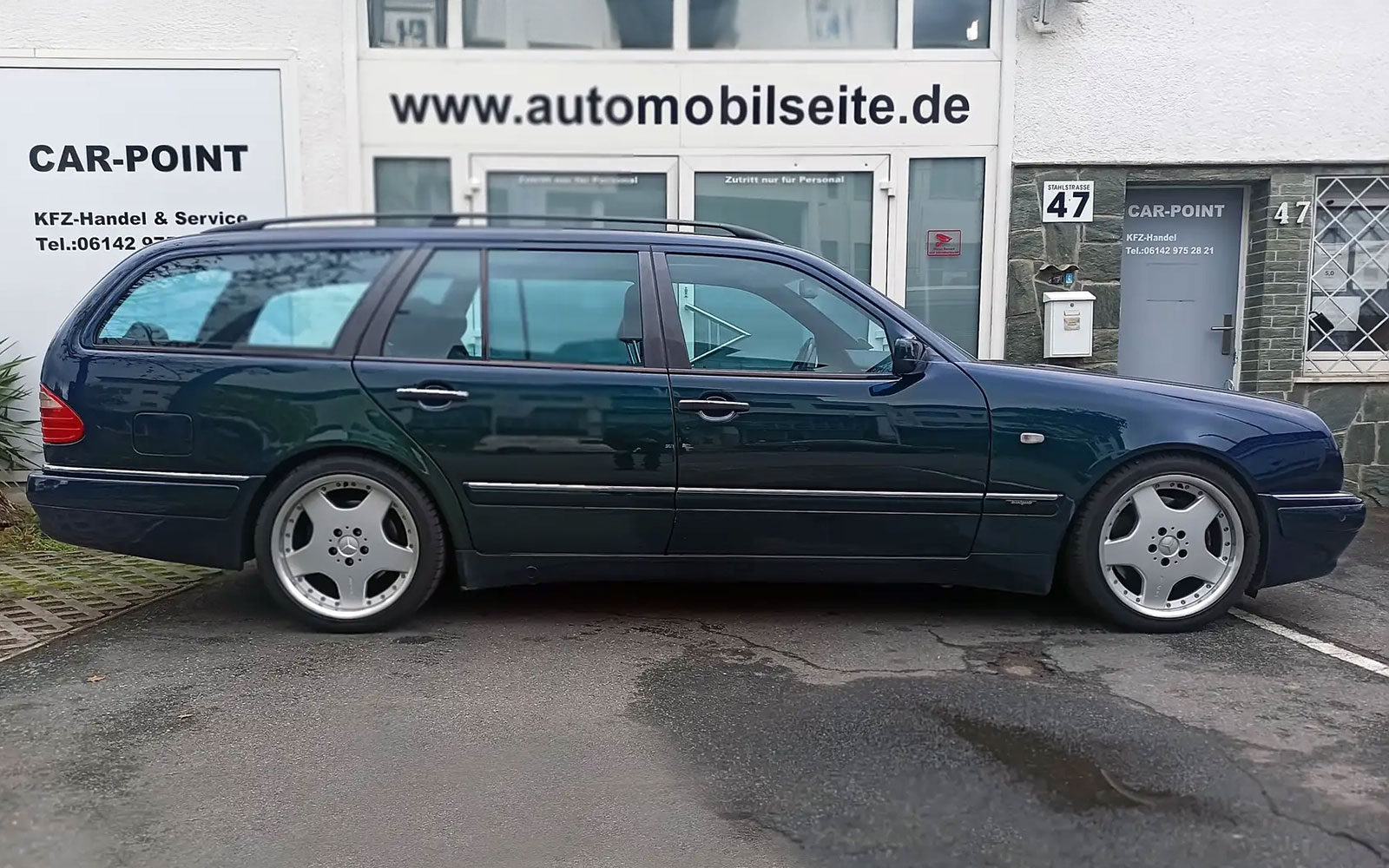
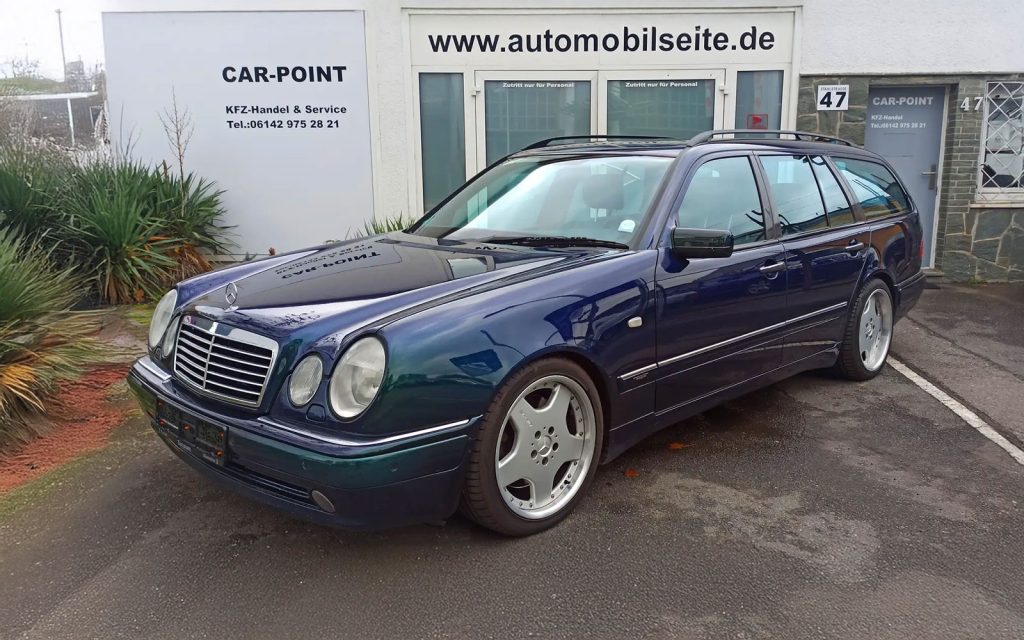
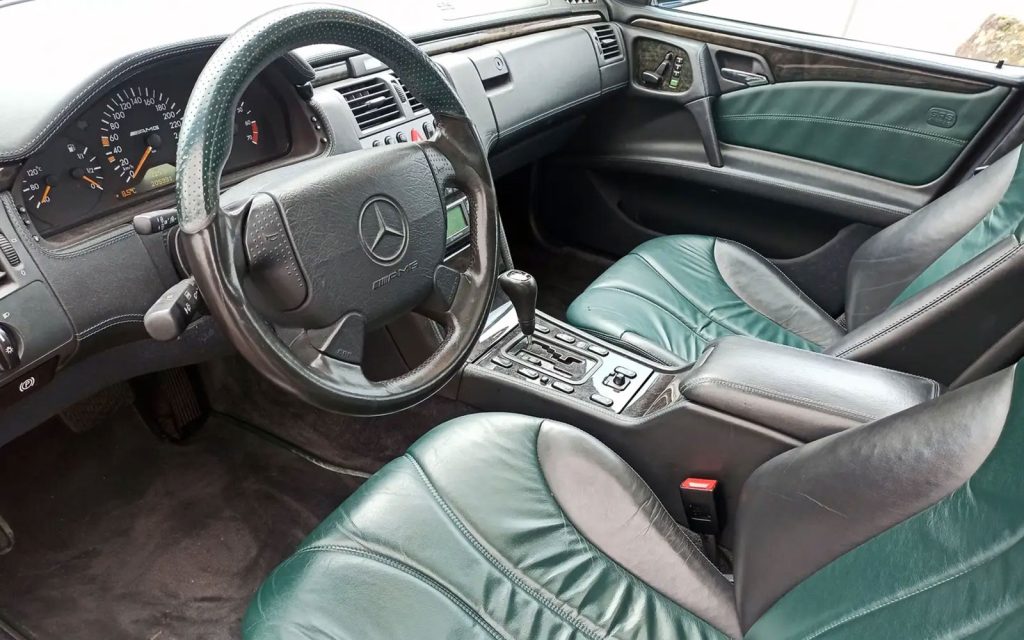
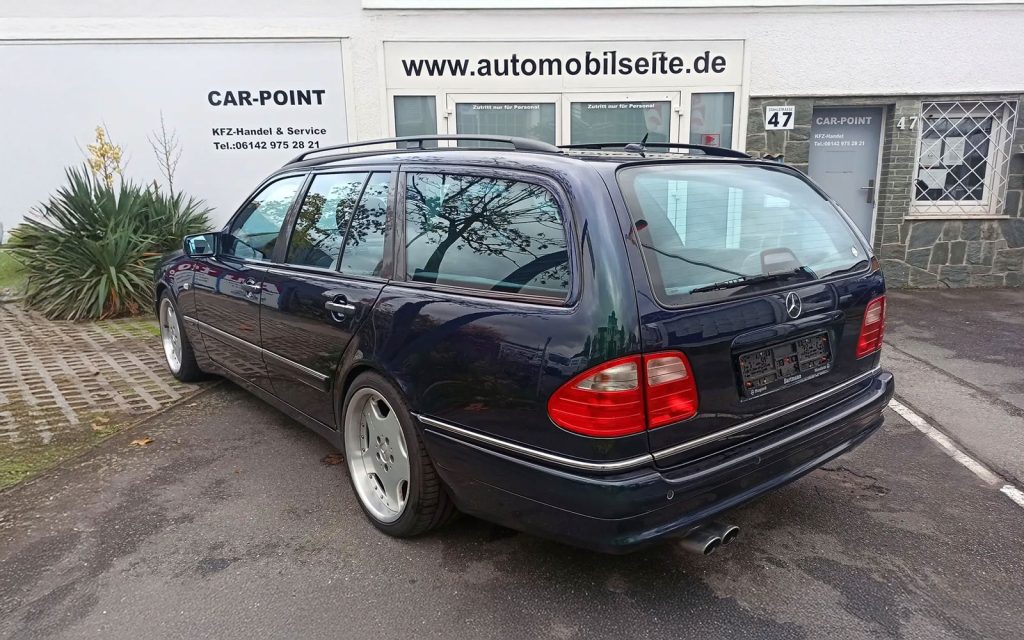
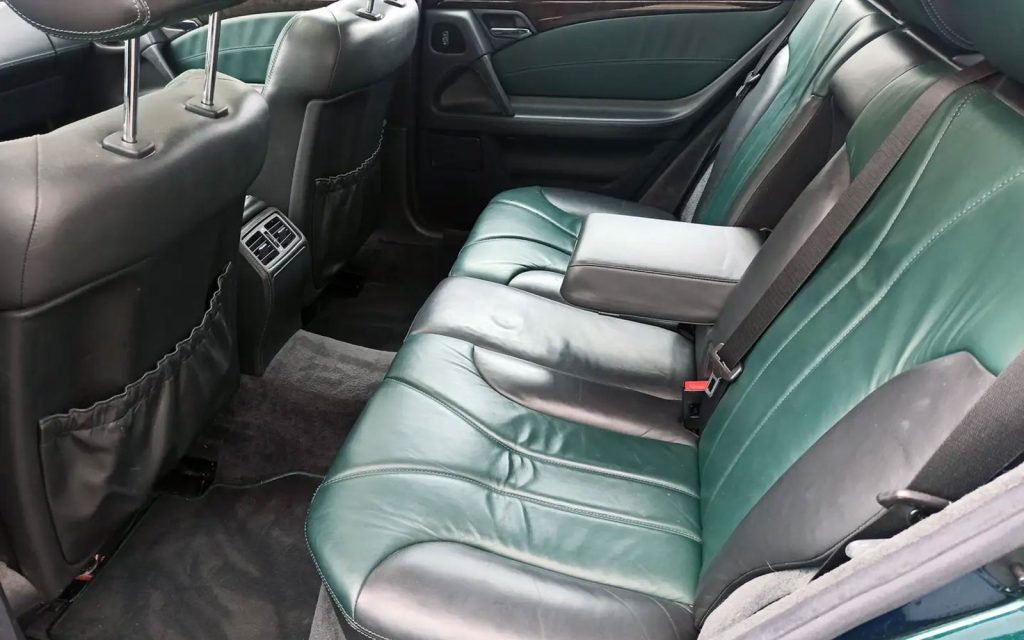
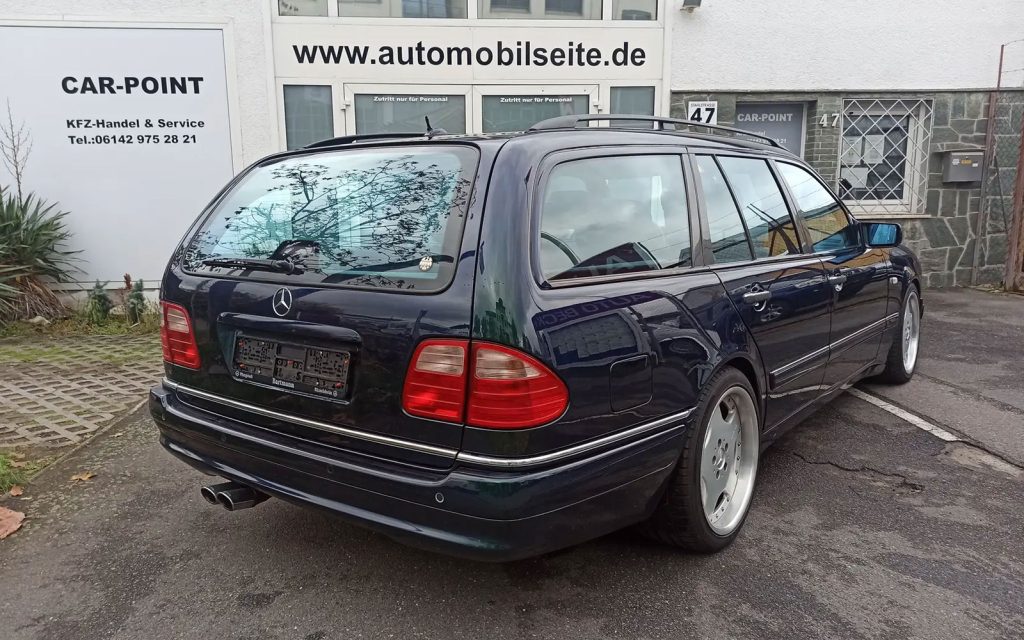
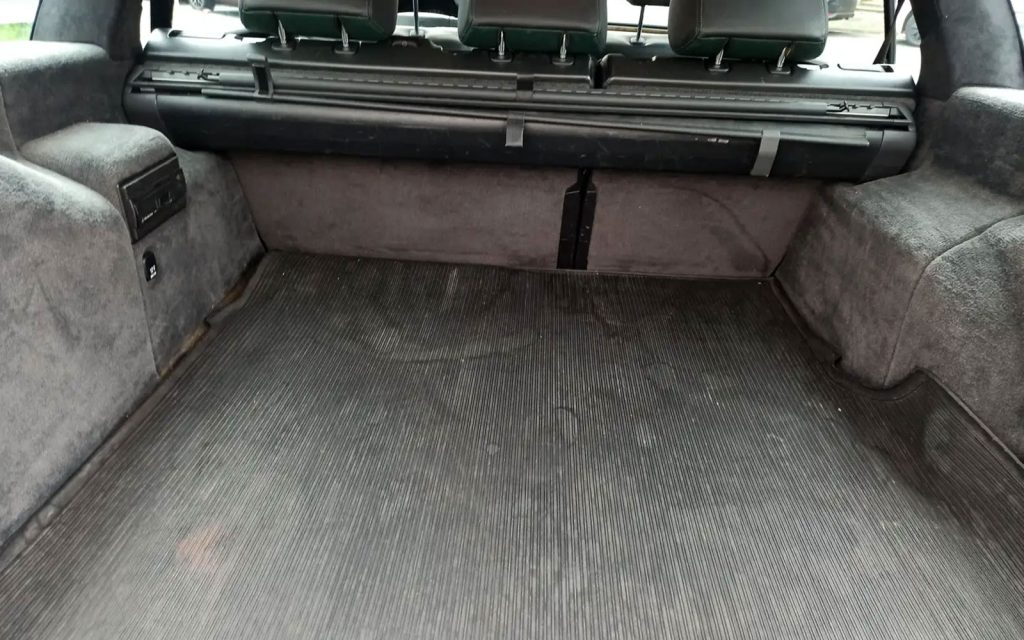
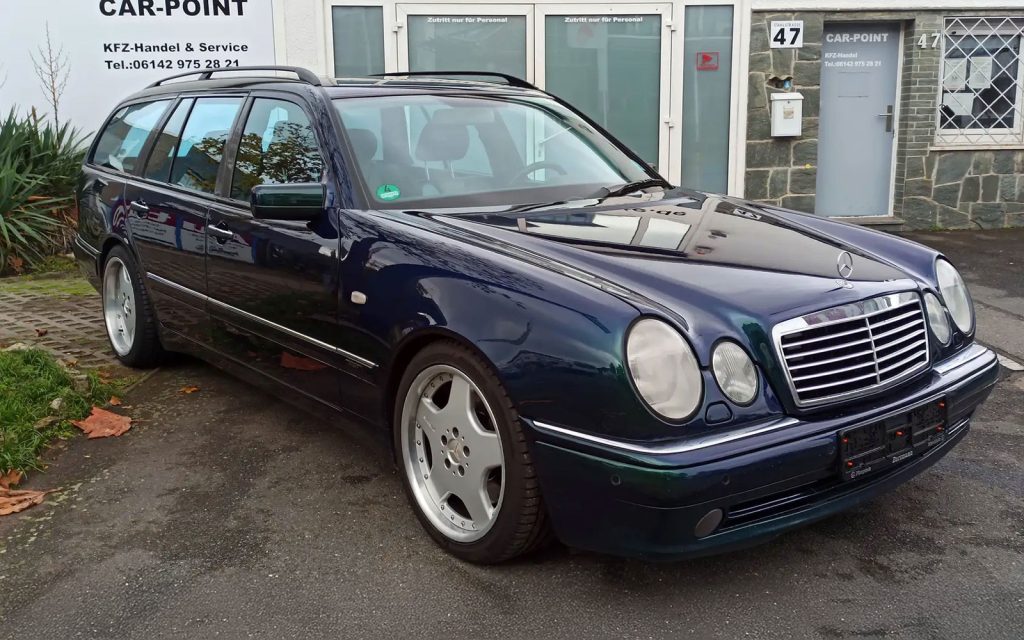
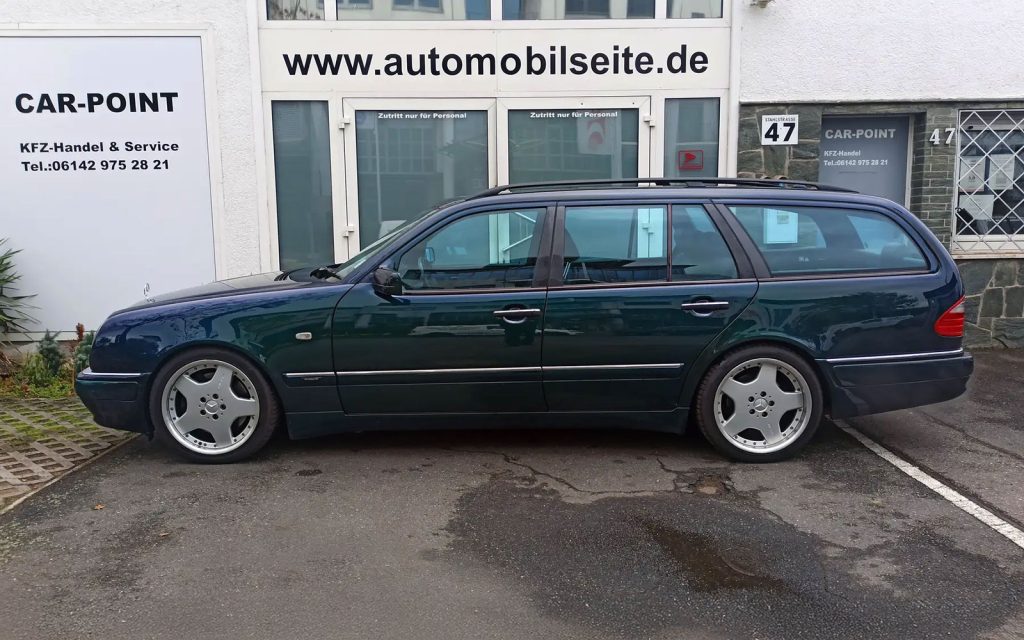
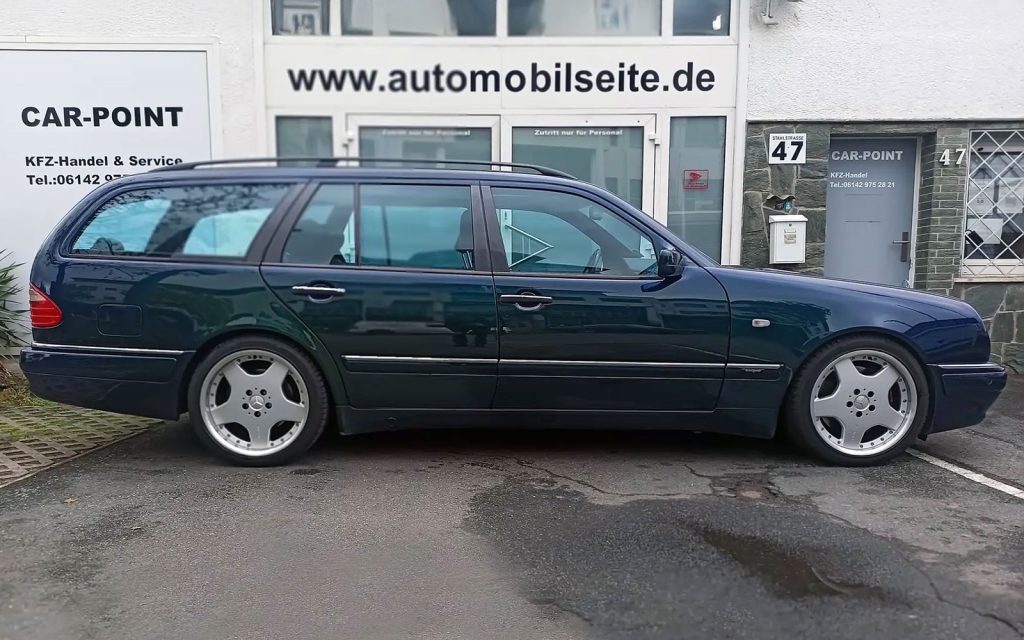
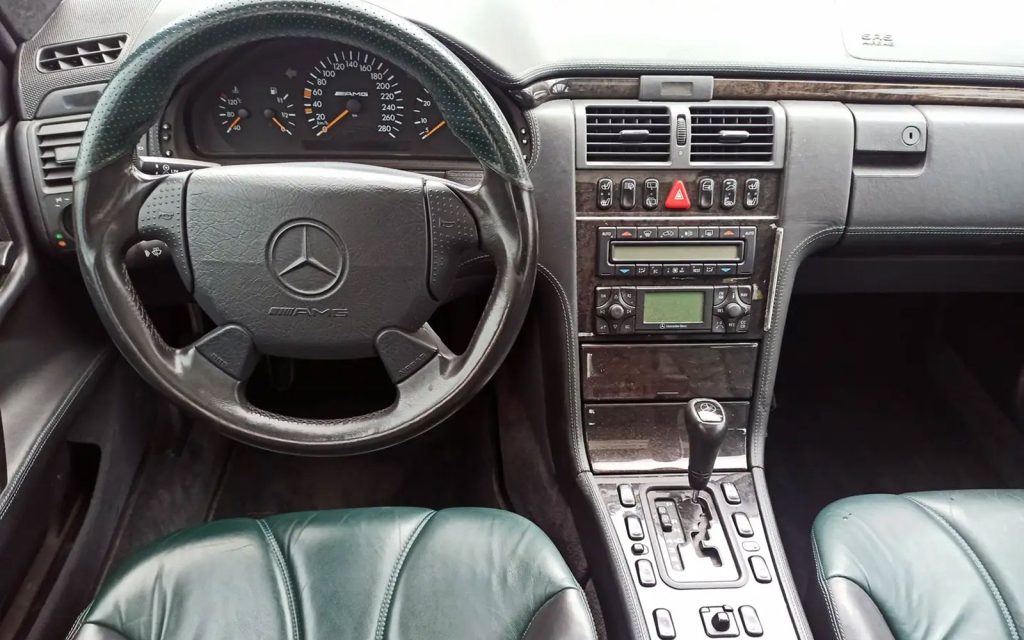
What: 1999 Mercedes-Benz E 55 AMG Station Wagon Color: Unknown Green or Blue VIN: N/A Mileage: 199,999 km (24,273 miles) Price at Time of this Writing: € 19,900 CarFax: N/A Window Sticker: N/A Location: Rüsselsheim-Königstädten, Germany Dealer listing:Link
Why we love it:
Hear us out. Yes, we know the E 55 AMG Station Wagon was sold in the United States. They’re exceedingly rare, especially in solid survivor condition, but they were sold here. Still, anyone who loves these cars or is seeking a unique long roof may find this one worth going through the extra effort of importation. That it’s old enough for easy import is one obvious reason, but more so is the unique build specification this car got from the factory. This sort of specification would have been extremely difficult if not impossible for anyone in North America to order, so it’s worth noting… even if it does have a dash of turn-of-the-century Y2K kitsch in the color choices.
Regarding the color, it’s a bit of a puzzle. It’s listed as “green” and 027 Designo-LCP paintwork, then later in the thorough option code listing we see Z98 PAINT FINISHES OUTSIDE THE SAMPLE CARD. So, we know it’s special paint, but we don’t know what color as “027” is effectively ambulance white in the lexicon of Mercedes-Benz color codes.
Looking over the photos, the color almost appears to be a predominantly blue metallic that fades to green from certain angles or in certain lighting conditions. So, we’re not even sure if it’s blue or green. Maybe it’s both.
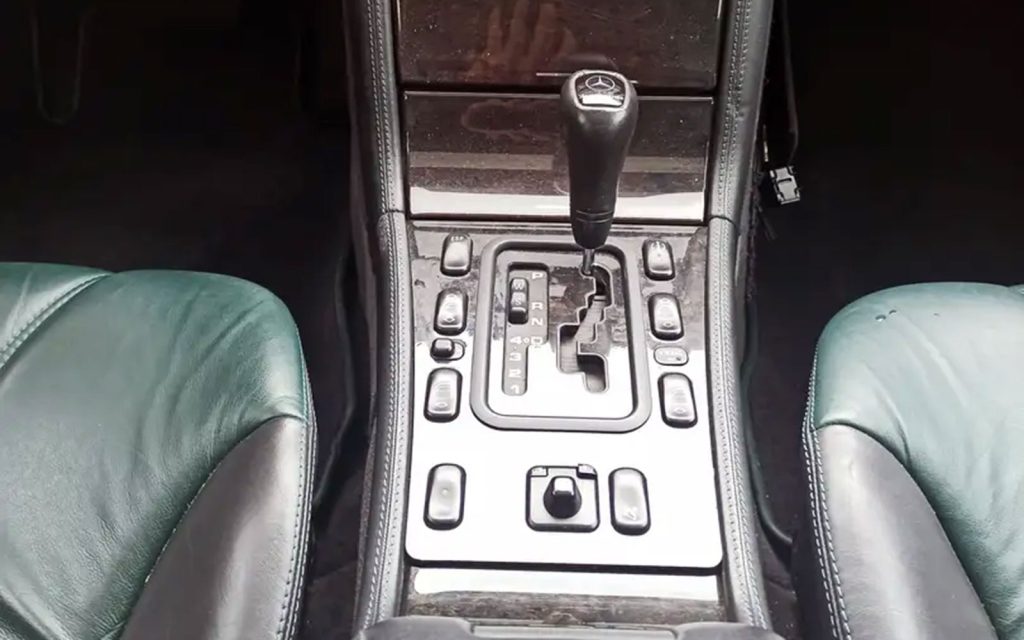
Inside, the car has a period “Avantgarde” interior package, which is typically two-tone leather with segments of the seats in some more bold color. In this case, that color is green that would have been popular in the late 1990s when this car was produced. It’s not a timeless shade of green, but it definitely puts you in the period and plays on the theme.
We’re going to go ahead and list the listing description and options (translated to English with Google Translate) for reference here. We found them all in the car’s listing over on AutoScout24.
LISTING TRANSLATION BELOW:
Beautiful E55T AMG in LCP from 2nd hand with no maintenance backlog Vehicle from 2nd hand 23 years in one hand Service booklet available AMG rims in several parts in 18″ Inspection with engine mount recently new Summer tires in 5/2024 new Non-smoker Very well-maintained vehicle Sale on behalf of customer Original equipment codes according to MB query Sales name E 55 T AMG AMG order number 0822300604 Delivery date14.12.1998 Paint number027 (Invalid designo-LCP paint) Interior 581 (Exclusive leather – black/anthracite) Engine 11398060006397 Transmission 72263601237265 213 PARAMETER STEERING / VARIO STEERING 214 ADAPTIVE DAMPING SYSTEM 220 REAR PARKING ASSIST 231 GARAGE DOOR OPENER 242 RIGHT DRIVER’S SEAT ELECTRICALLY ADJUSTABLE WITH MEMORY 249 INTERIOR AND EXTERIOR MIRROR AUTOMATICALLY DIMMING 260 TYPE PLATE ON REAR LID REMOVED 275 MEMORY PACKAGE (DRIVER’S SEAT, STEERING COLUMN AND MIRROR) 312 SUN BLIND IN THE CARGO AREA (PARTITION GRID) 345 RAIN SENSOR 351 ECALL EMERGENCY CALL SYSTEM 363 ECALL CONVERSION TO NATIONAL EMERGENCY CALL 414 ELECTRIC GLASS SUNROOF 423 AUTOMATIC 5-SPEED GEARBOX 472 PETROL PARTICULATE FILTER (OPF) WITHOUT SENSORS 500 ELECTRICALLY FOLDABLE EXTERIOR MIRROR 543 SUN VISOR WITH ADDITIONAL FUNCTION 551 BASIC BURGLAR AND THEFT ALARM SYSTEM (EDW) 570 ARMREST WITH COMPARTMENT AND REAR COMPARTMENT VENTILATION 581 AUTOMATIC AIR CONDITIONING 581 EXCLUSIVE LEATHER – BLACK/ANTHRACITE 600 HEADLIGHT CLEANING SYSTEM 611 SURROUND LIGHTING 612 XENON HEADLIGHT LIGHT UNIT 673 BATTERY WITH LARGER CAPACITY 682 FIRE EXTINGUISHER 772 AMG STYLING – FRONT SPOILER, SIDE SKIRTS 774 AMG 5-SPOKE WHEELS 18″ ALL AROUND 810 SOUND SYSTEM PREMIUM 815 SINGLE DVD DRIVE 819 SOUND2LIGHT 873 HEATED SEATS FOR DRIVER AND PASSENGER 882 SENSORS AND SIREN BURGLAR AND THEFT ALARM SYSTEM 910 ALTERNATOR WITH LARGER CAPACITY 954 EQUIPMENT LINE/PACKAGE – AVANTGARDE 988 INVALID (VEHICLE REGISTRATION AND COC PAPER AND TYPE PLATE) Z51 BUSINESS CONSOLE WITH SOCKET Z98 PAINT FINISHES OUTSIDE THE SAMPLE CARD