Tag: MY1960

  • Monterey Preview: 1960 Ferrari 400 Superamerica SWB Cabriolet for Auction with RM

    Monterey Preview: 1960 Ferrari 400 Superamerica SWB Cabriolet for Auction with RM

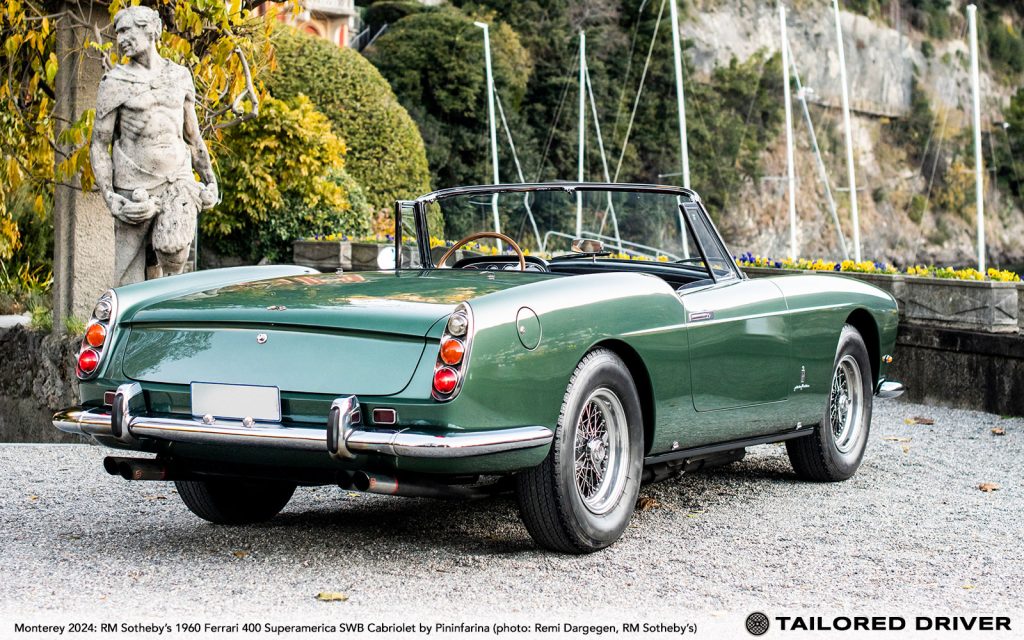
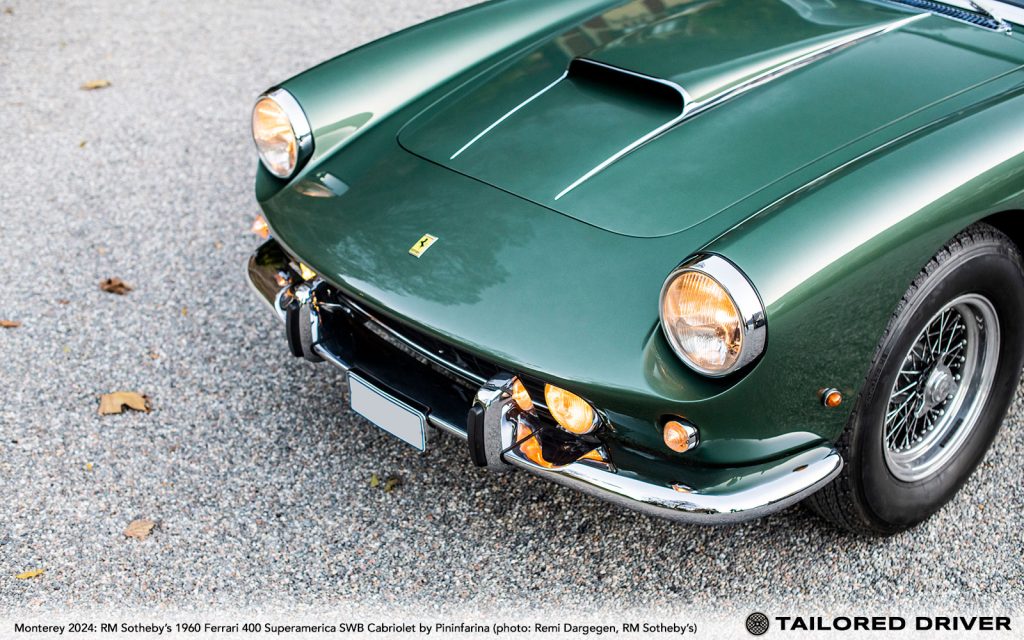
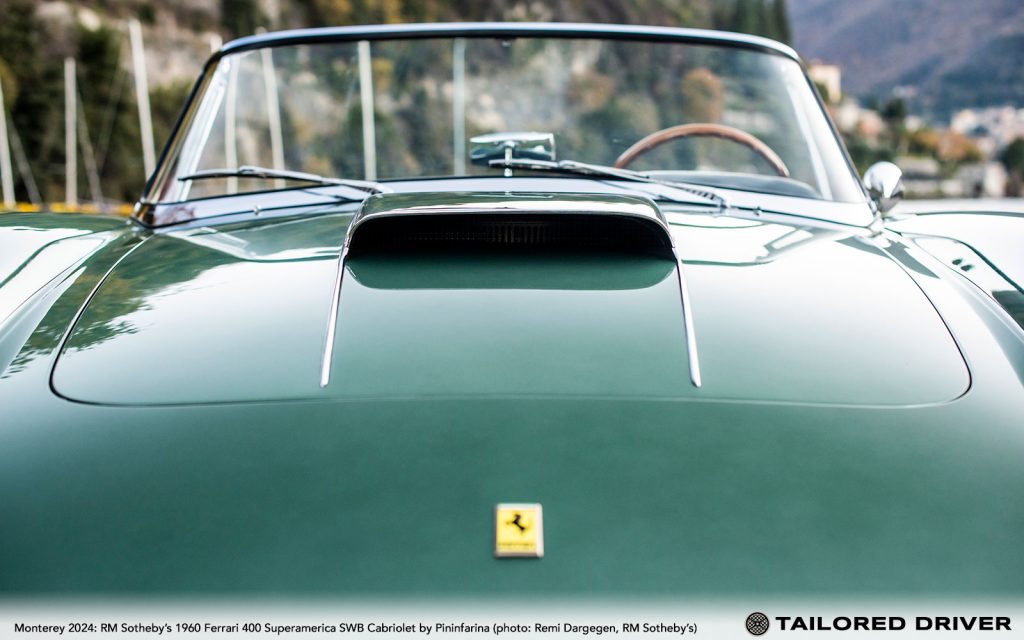
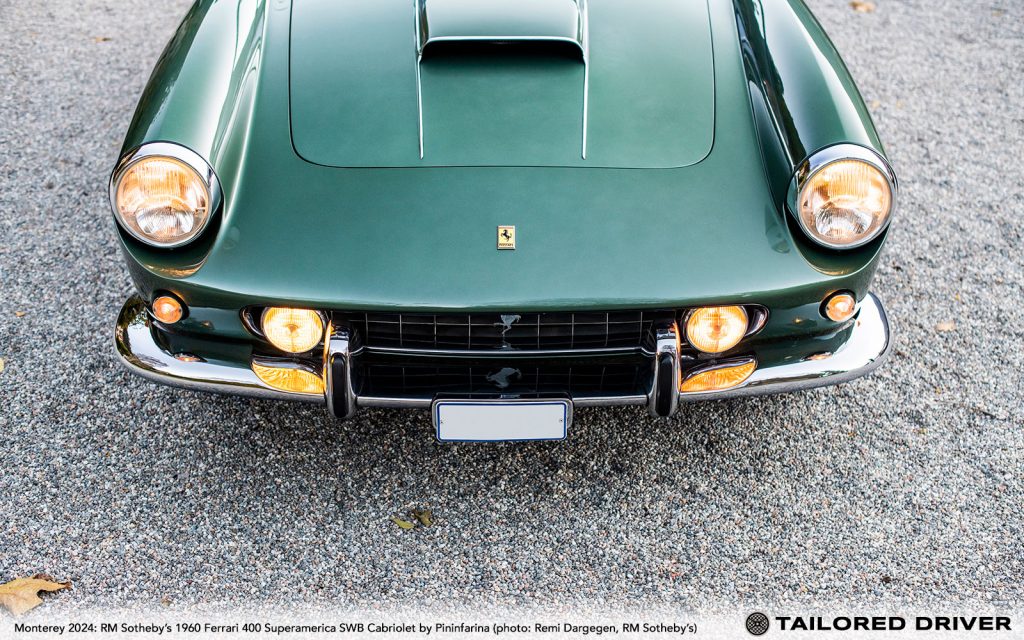
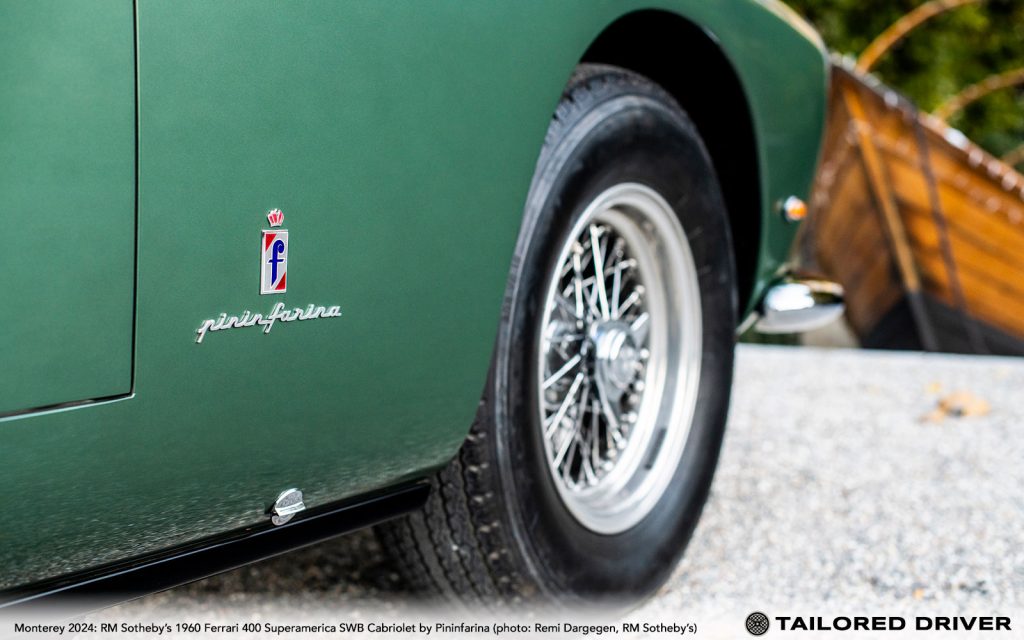
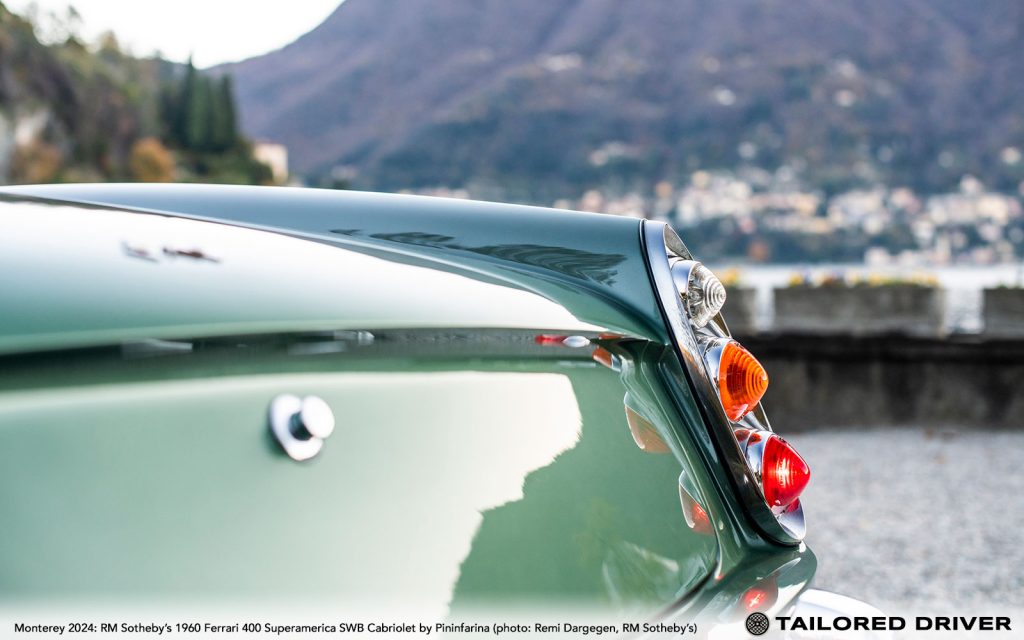
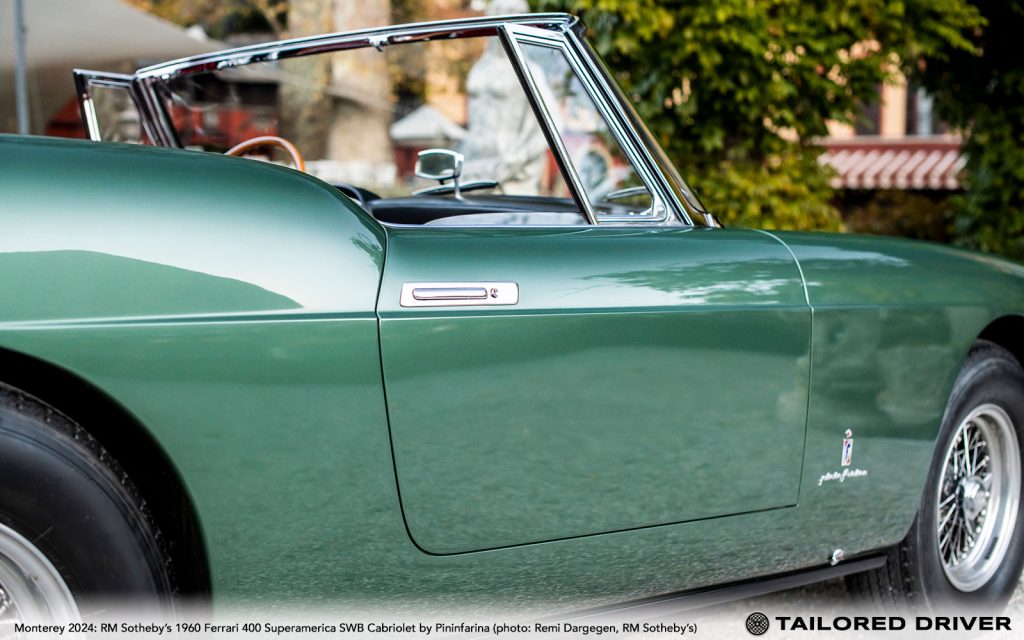
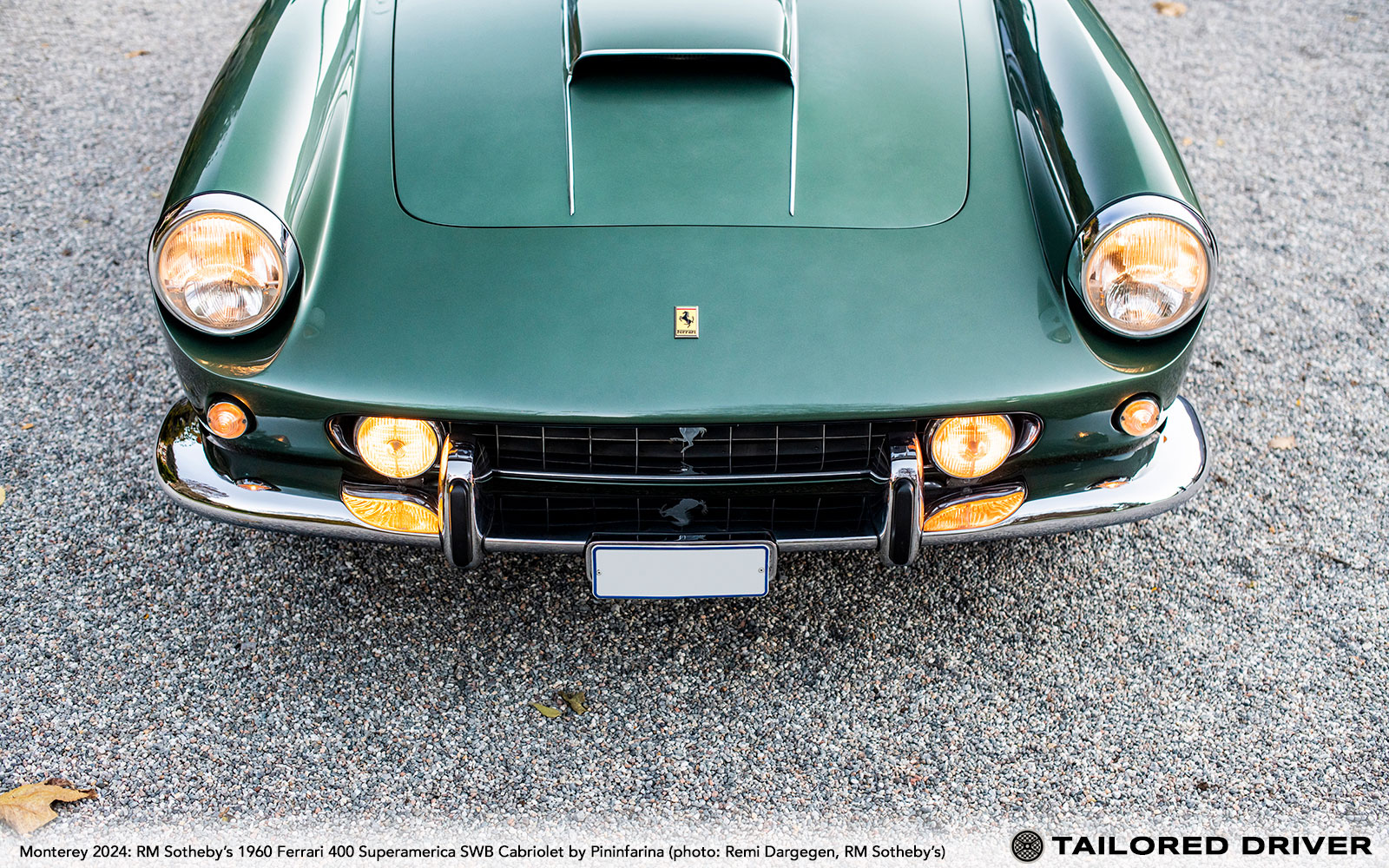
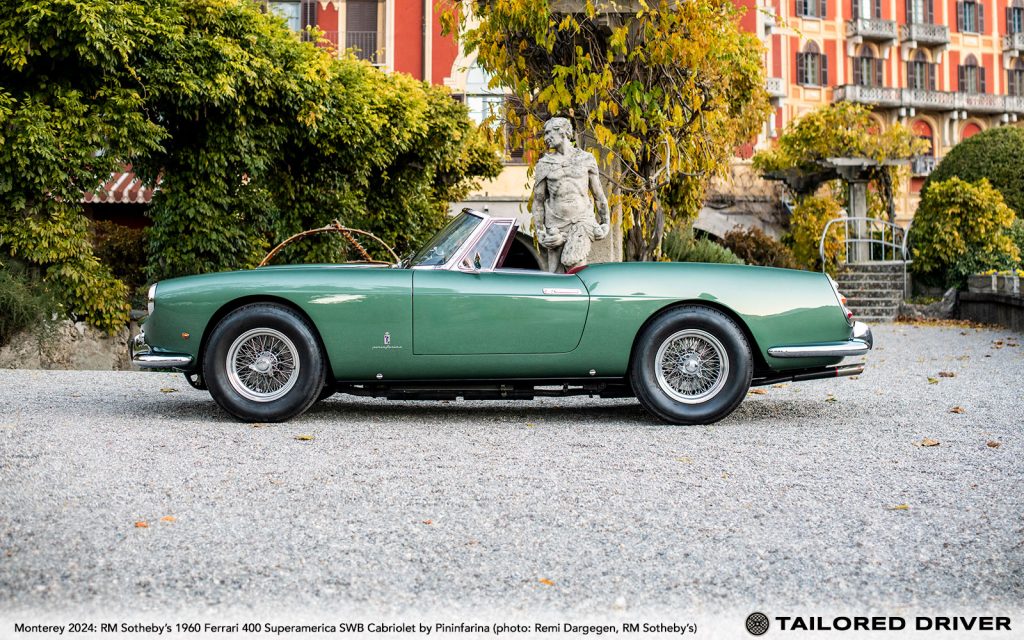
    Third of just Seven short-wheelbase Ferrari 400 Superamerica Cabriolets, there’s no doubt this fully restored specimen (chassis #: 1945 SA) will command a large price when it crosses RM Sothebys’ block at Monterey Car Week in August. And while it is exemplary of the car-as-art 1960s era at Ferrari, it’s this car’s unique factory correct green hue of Verde Bottiglia that grabs our attention the most.
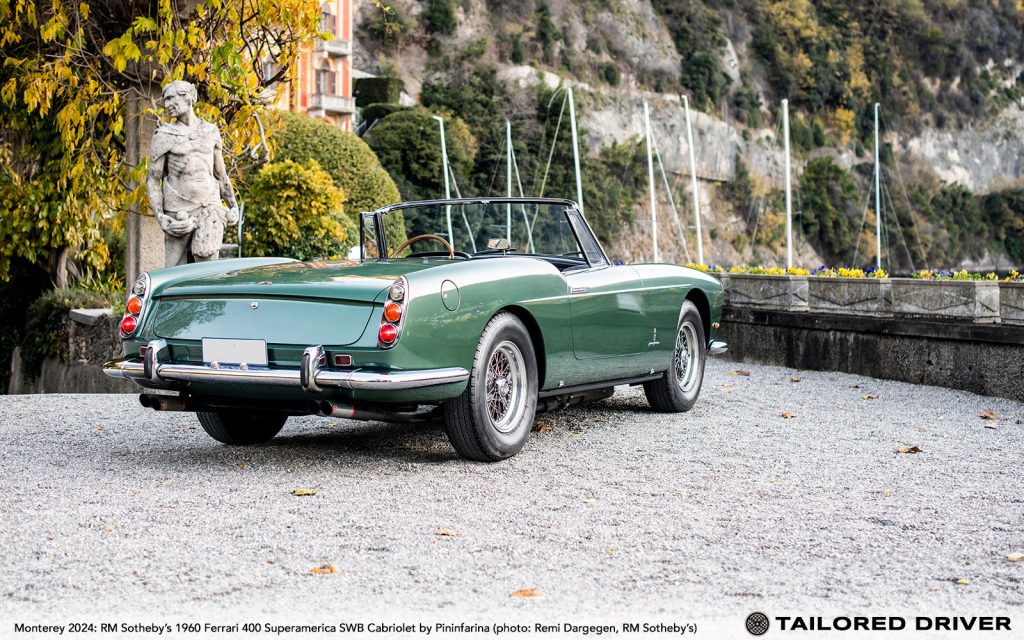
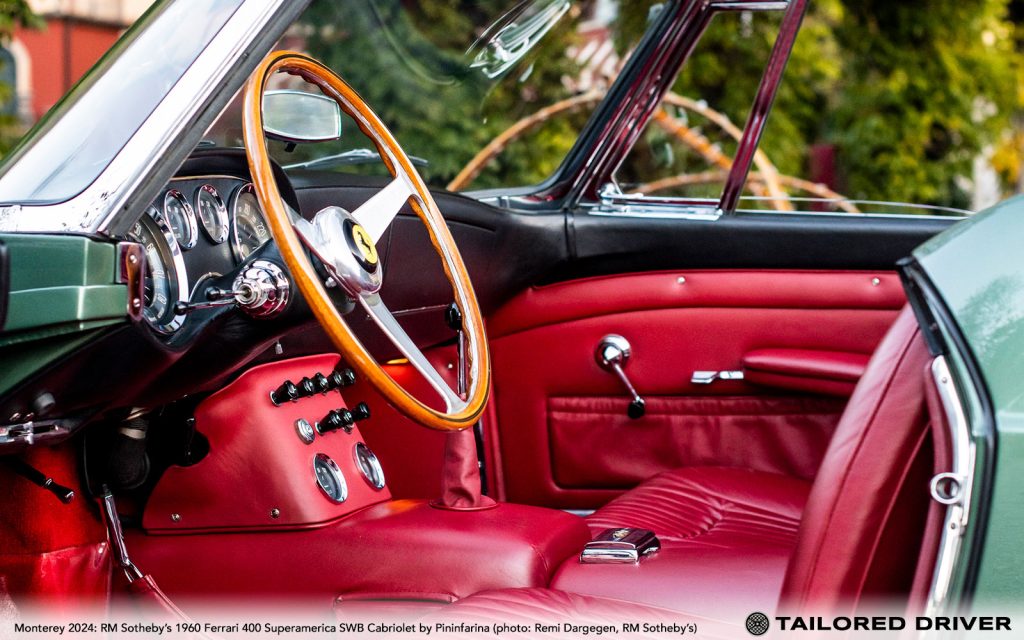
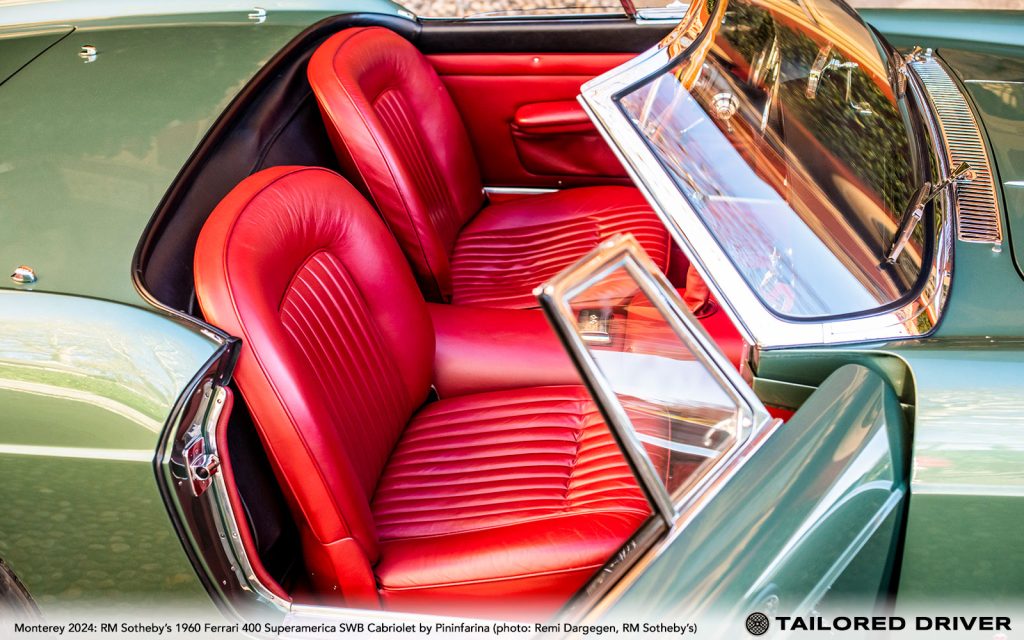
    The color combination, Verde Bottiglia exterior with Rosso (red) leather is also fascinating. The pairing makes the car one of one, but even more interesting to us is how well the two colors work together. Green and red can be a mixed bag in how the two colors play off of each other, though they seem to work well here. Then again, what color combination wouldn’t work well on a 1960 Ferrari 400 Superamerica SWB Cabriolet by Pininfarina?
    Check out the full description from RM below the photo gallery, and direct link to this Lot’s listing page HERE.
    • The third of seven short-wheelbase 400 Superamerica Cabriolets
    • Fully restored to concours standards by US-based Ferrari specialists Classic Coach and Greg Jones
    • Well-maintained by Autofficina Omega in its current ownership
    • Ferrari Classiche Red Book certified; finished in its striking, factory-correct, one-off combination of Verde Bottiglia over Rosso
    • Formerly of the Oscar Davis Collection
    • Seldom shown since its most recent restoration; an exciting concours opportunity

    [source: RM Sotheby’s]

    Addendum: Please note that an import duty of 2.5% of the purchase price is payable on this lot if the buyer is a resident of the United States.

    Ferrari’s Superamerica models of the late 1950s and early 1960s were truly the last word in sporting excellence. Offering the very best money could buy in terms of luxury and performance, it is no surprise that these cars often found their way into the garages of heads of state, barons of industry, and other well-to-do individuals.

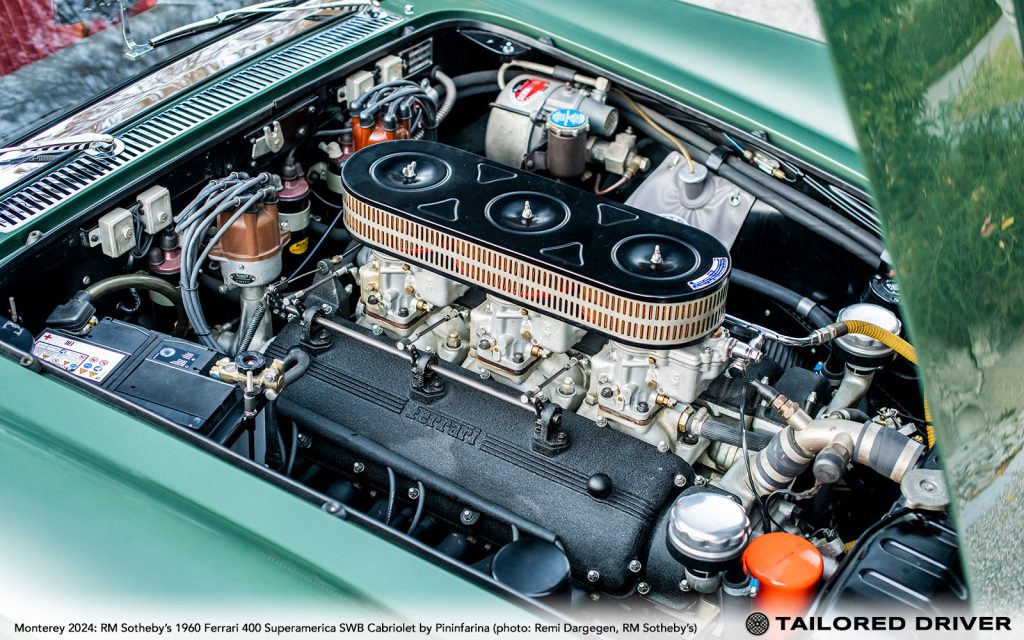
    Succeeding the 410 Superamerica, the 400 Superamerica offered numerous improvements over its predecessor. While the engine decreased in displacement from 5.0 liters to 4.0 liters, several other new features countered this. The 5.0-liter V-12 was a “long-block” Lampredi-designed unit, while the revised smaller engine was based on the Colombo single-overhead-camshaft powertrain that was first utilized in the 250 Europa GT. To increase the capacity from 3.0 liters, the bore was enlarged to 77 millimeters and the stroke was lengthened to 71 millimeters, providing a total capacity of 3,967 cubic centimeters. Furthermore, a twin-coil and distributor ignition system was used, along with triple Weber carburetors, granting the engine an improved 340 horsepower—but also an incredible 400 Nm (295 pound-feet) of torque from 2,000 rpm and a maximum torque or 450 Nm (331 pound-feet) at 6,000 rpm.

    As a result, these cars are considered today among the best-driving of 1960s Ferraris. Boasting 25% greater engine capacity than a 250 GT Berlinetta or California Spider, the 400 Superamerica produces far more horsepower and torque than either of its forebears. The 400 Superamerica was also fitted with an overdrive as standard—while no overdrive was available for the 250 GT models apart from the GTE—making it far more comfortable to drive over long distances. Finally, it is important to remember that the 400 Superamerica’s chassis and powertrain were so great that they provided the basis for the 330 LMB and 330 TRi racing cars, of which the 330 TRi LM won the 24 Hours of Le Mans in 1962.

    The 400 Superamerica production run can be divided into two groups, based on either long- or short-wheelbase chassis. The first batch of cars produced—which includes the car on offer here, chassis 1945 SA—boasted a 2,420-millimeter chassis, while the second batch boasts the longer 2,600-millimeter chassis. Of the short-wheelbase cars, just 25 examples were produced, with only seven bodied as cabriolets.

    THE THIRD OF SEVEN SHORT-WHEELBASE CABRIOLETS

    Chassis number 1945 SA was constructed in mid-1960 as the third of those seven short-wheelbase cabriolets, and it was built to left-hand-drive configuration with open headlamps. It was finished in a beautiful, one-off color combination of Verde Bottiglia (MM 16364) over Rosso (VM 3171). It was fitted from new with a set of three Weber 46 DCF carburetors, like on a 250 SWB “SEFAC Hot Rod,” and a pair of Bosch ignition distributors. The coachwork was completed by Pinin Farina in July of 1960 and was sold new to Helmut Horton, a German entrepreneur based in Croglio, Switzerland. In January of the following year, the car was registered in Milan under Horten Italiana S.r.l, and it remained in Italy for the following three years under Horton’s ownership.

    The Superamerica was officially exported out of Italy in spring of 1964 and was next known with a Mr. Warzits in Germany. By 1985, the car was acquired by Bernard Pfister of Geneva, Switzerland, now repainted white. Pfister repainted the car red in 1989 and it remained in Switzerland with him for the next few years, typically on display at Ferrari Suisse SA in Nyon.

    In June 1997, 1945 SA was listed for sale in Marseille, France and was purchased one month later by Scott Rosen of Bedford Hills, New York. Subsequently exported to the United States, the car remained in his ownership for two years before being purchased by the late noted sports car enthusiast Oscar Davis of Elizabeth, New Jersey.

    One year later, Davis sold the Superamerica to a Florida-based collector, yet the car would stay in northern New Jersey for the time being, as it was entrusted to Classic Coach for a full restoration. Founded in 1972 and well-known and regarded in Ferrari circles in the United States, Classic Coach was Ferrari’s first authorized bodywork repair facility in the US. Their owners would later open two authorized Ferrari dealerships in the US: Ferrari of Central Florida and Ferrari of Tampa Bay.

    It was decided that chassis 1945 SA would be returned to its original color combination of Verde Bottiglia over Rosso during this complete, frame-off restoration. No cost was spared to restore the Superamerica back to a spectacular standard. Following the completion of the restoration work, the car was shipped to noted Ferrari specialist Greg Jones of Stuart, Florida. Jones was entrusted with further dialing in the car mechanically, ensuring that every facet of the car worked perfectly. Receipts for the work completed by both Classic Coach and Greg Jones are in the car’s history file.

    Remaining with that owner until 2015, the car was sold via RM Sotheby’s to its current owner, a Monaco-based enthusiast—a discerning collector who happened to do business in the past with the first owner. With him, the car returned to Europe, and has been used and enjoyed as its manufacturer would have intended. Seen occasionally driving around the streets of Monaco, the car has been shown once at Elégance et Automobile à Monte-Carlo in 2019.

    Chassis 1945 SA was granted Ferrari Classiche certification in 2016, confirming that it retains its original body, chassis, transmission, and rear axle. Classiche documentation notes that the current engine, stamped 1945 SA, is a replacement engine that was installed by the Ferrari factory in November of 1963. With its current owner, the car has been very well maintained by Autofficina Omega of Corrado Patella, including further mechanical work to ensure it drives and performs as one would expect. Its most recent service work with them was the fitment of a new clutch in February 2020.

    Presenting in excellent condition throughout, this special 400 Superamerica SWB Cabriolet is sure to be welcomed with open arms at major concours events worldwide. Well-maintained and enjoyed with its current owner, it could easily be used on the road as a warm-weather weekend driver. Regardless of whether it is to be enjoyed on the open road or the concours lawn, it will certainly be a joy to own and will attract only the most favorable of compliments wherever it goes.
  • Emory Motorsports Creates Ultimate Outlaw Early Porsche, the 356 RSR

    Emory Motorsports Creates Ultimate Outlaw Early Porsche, the 356 RSR

    • At Nearly 400 Horsepower And Less Than 2,000 Pounds
    • This Is The Most Insanely Hot-Rodded 356 Ever Built

    [source: Emory Motorsports]

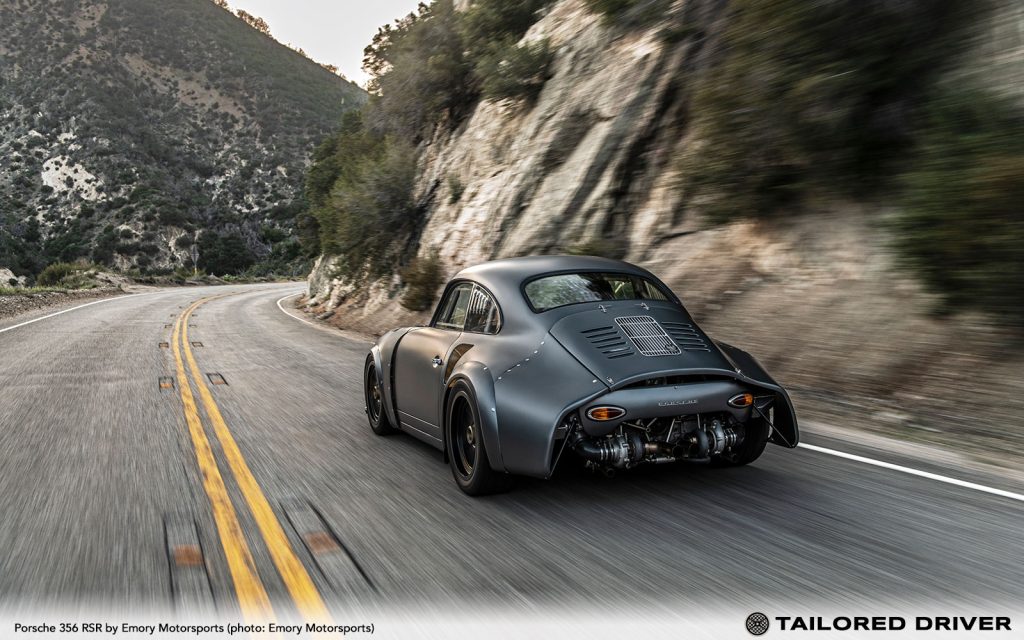
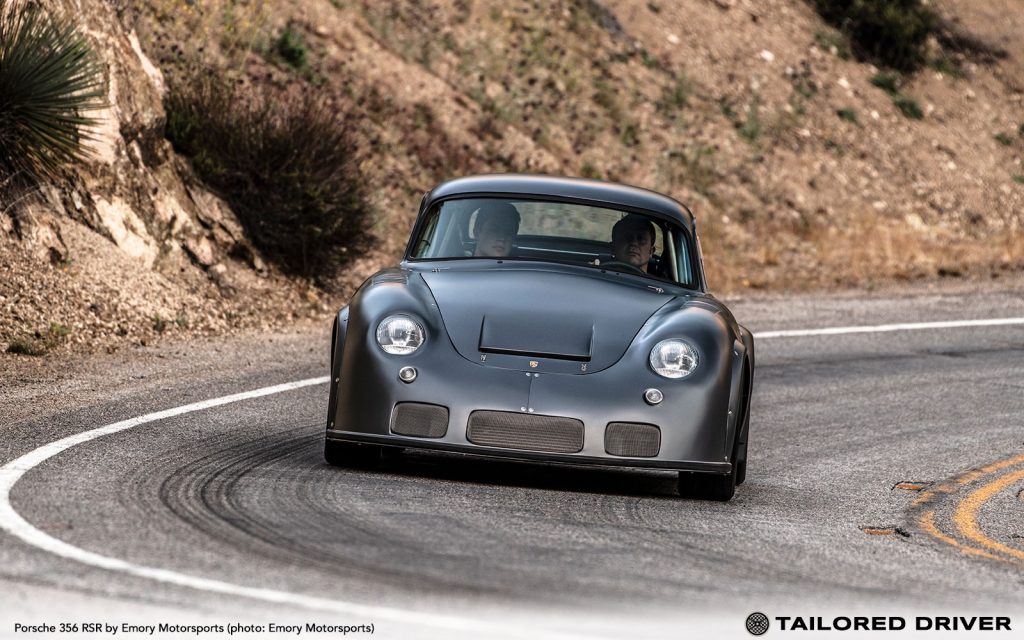
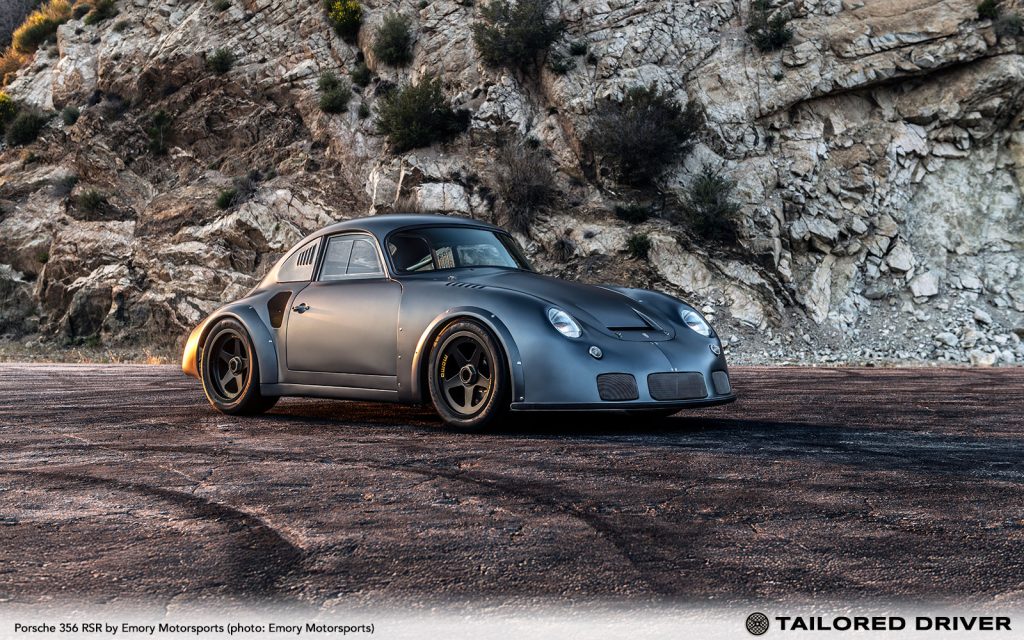
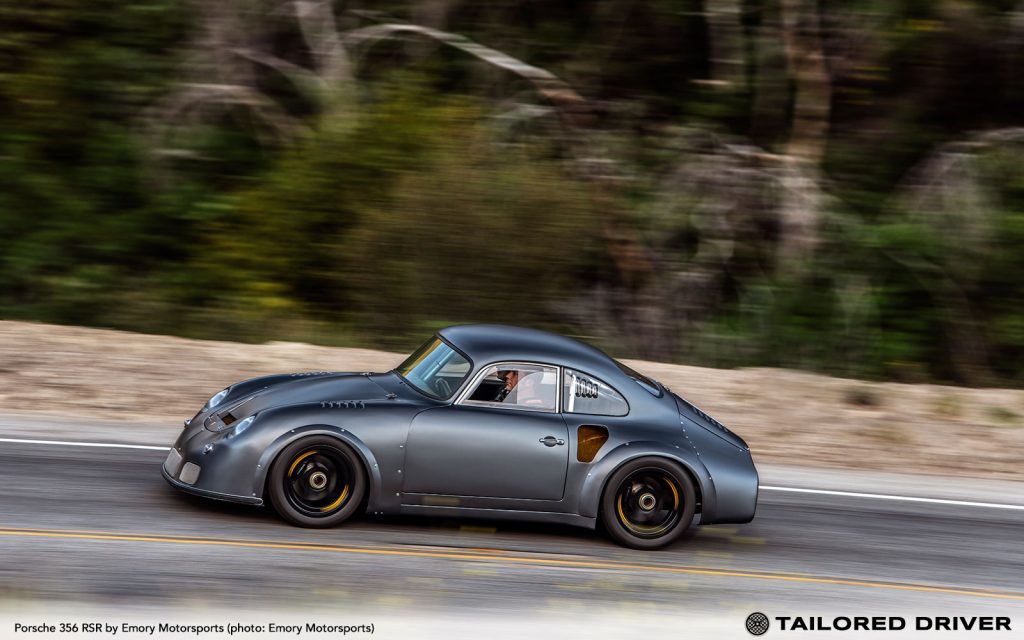
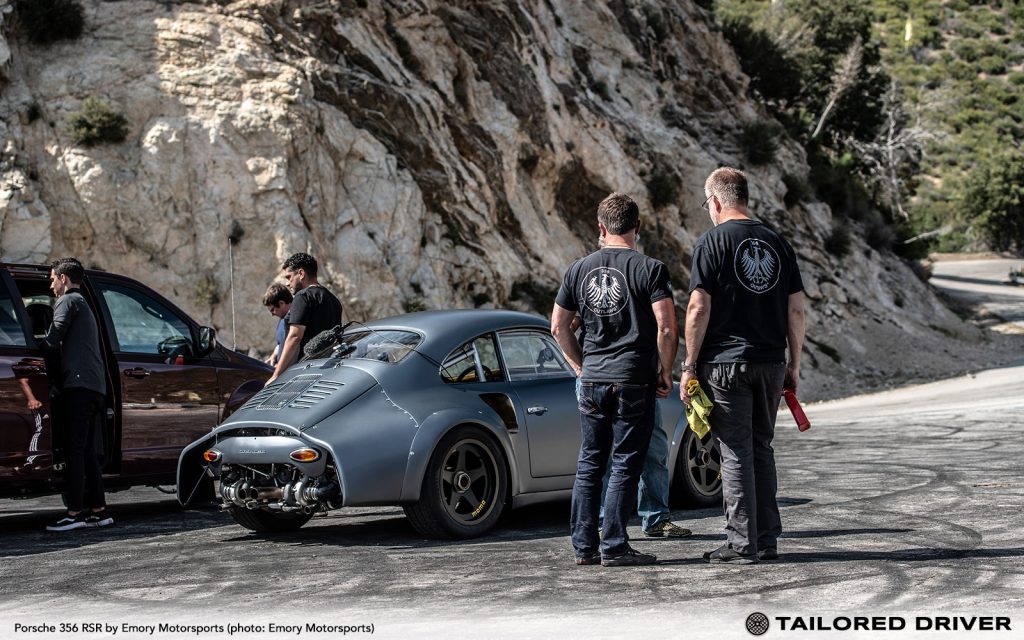
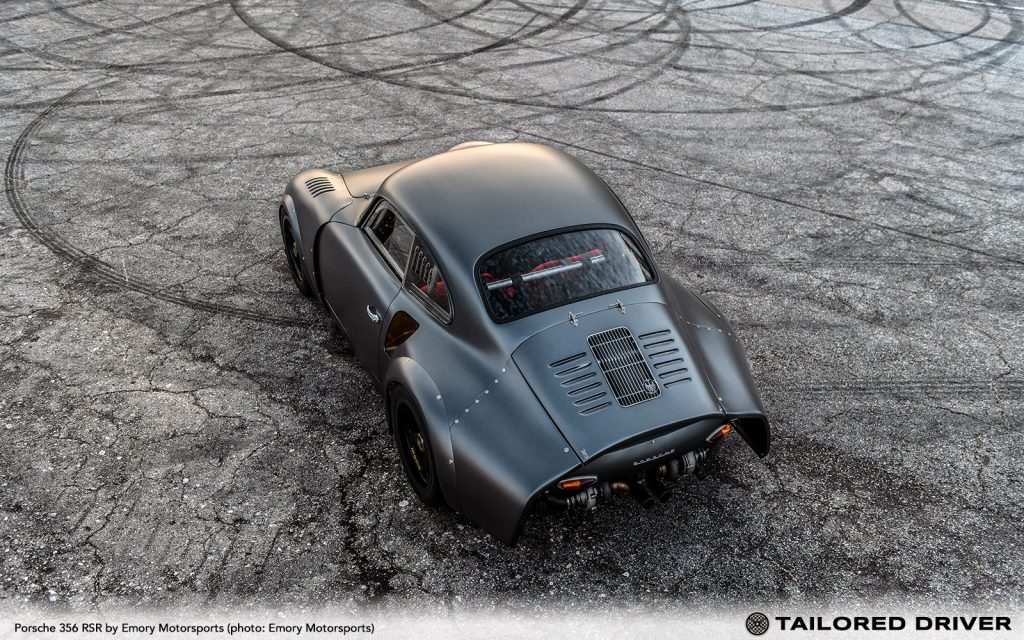
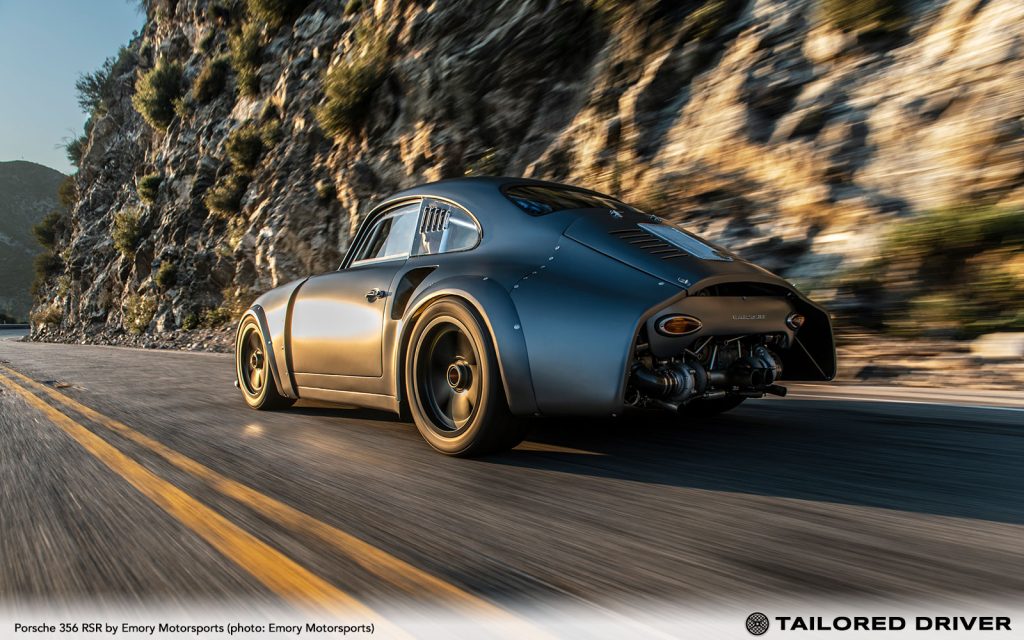
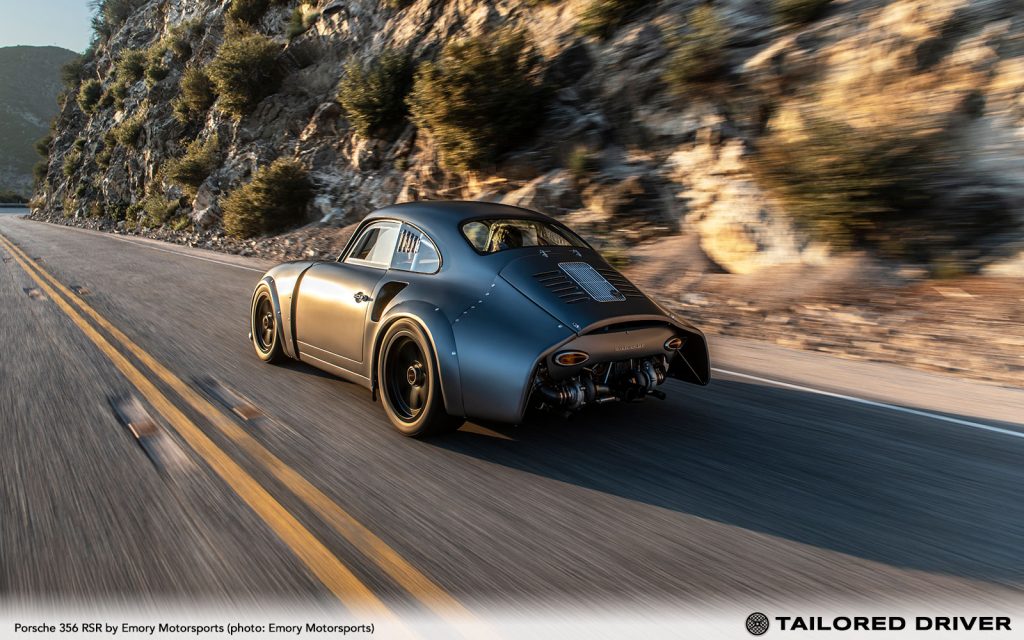
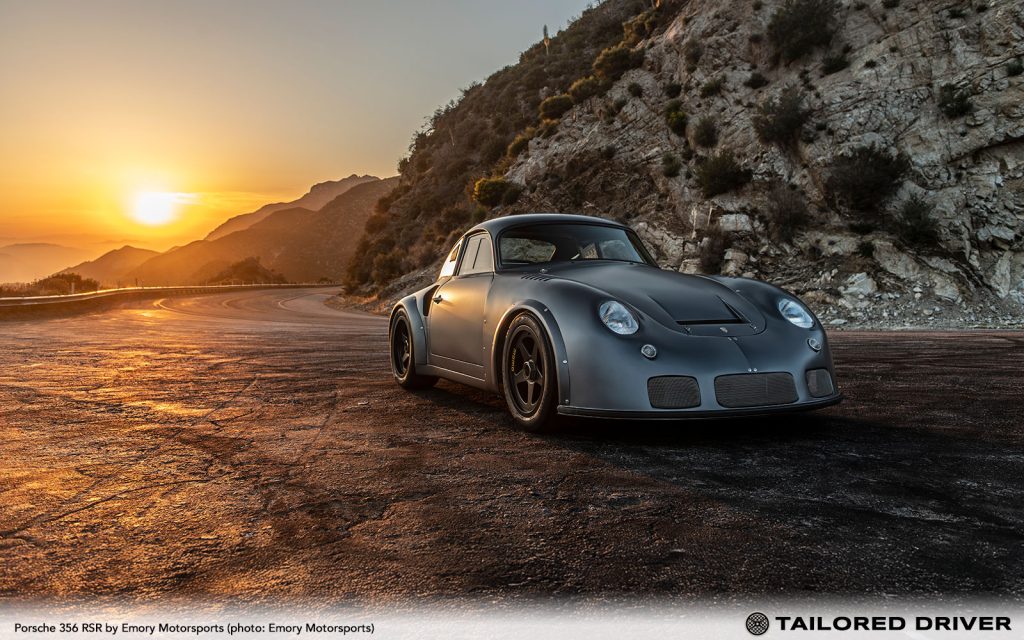
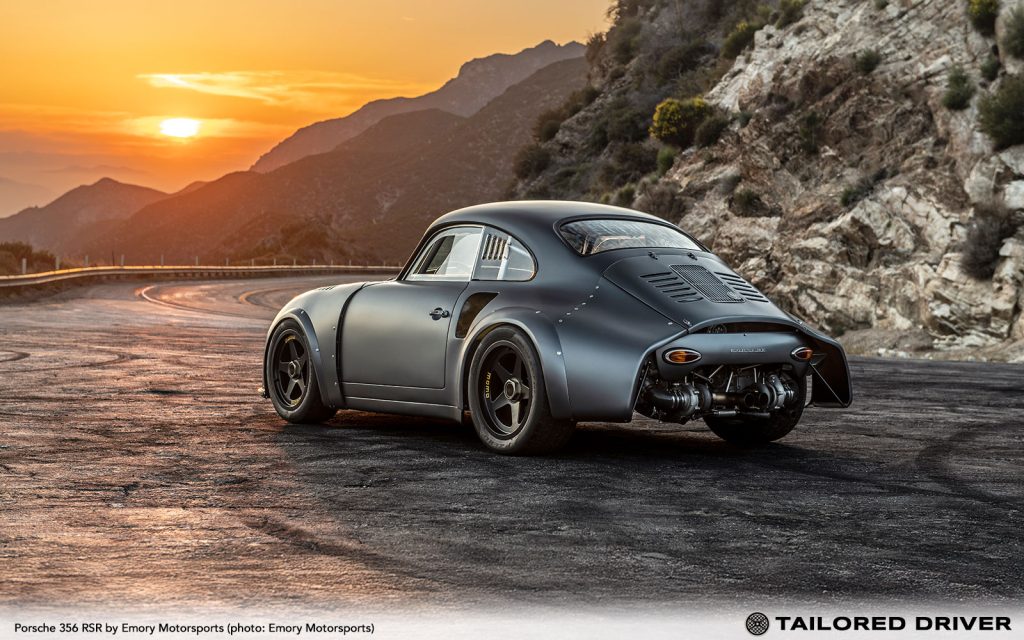
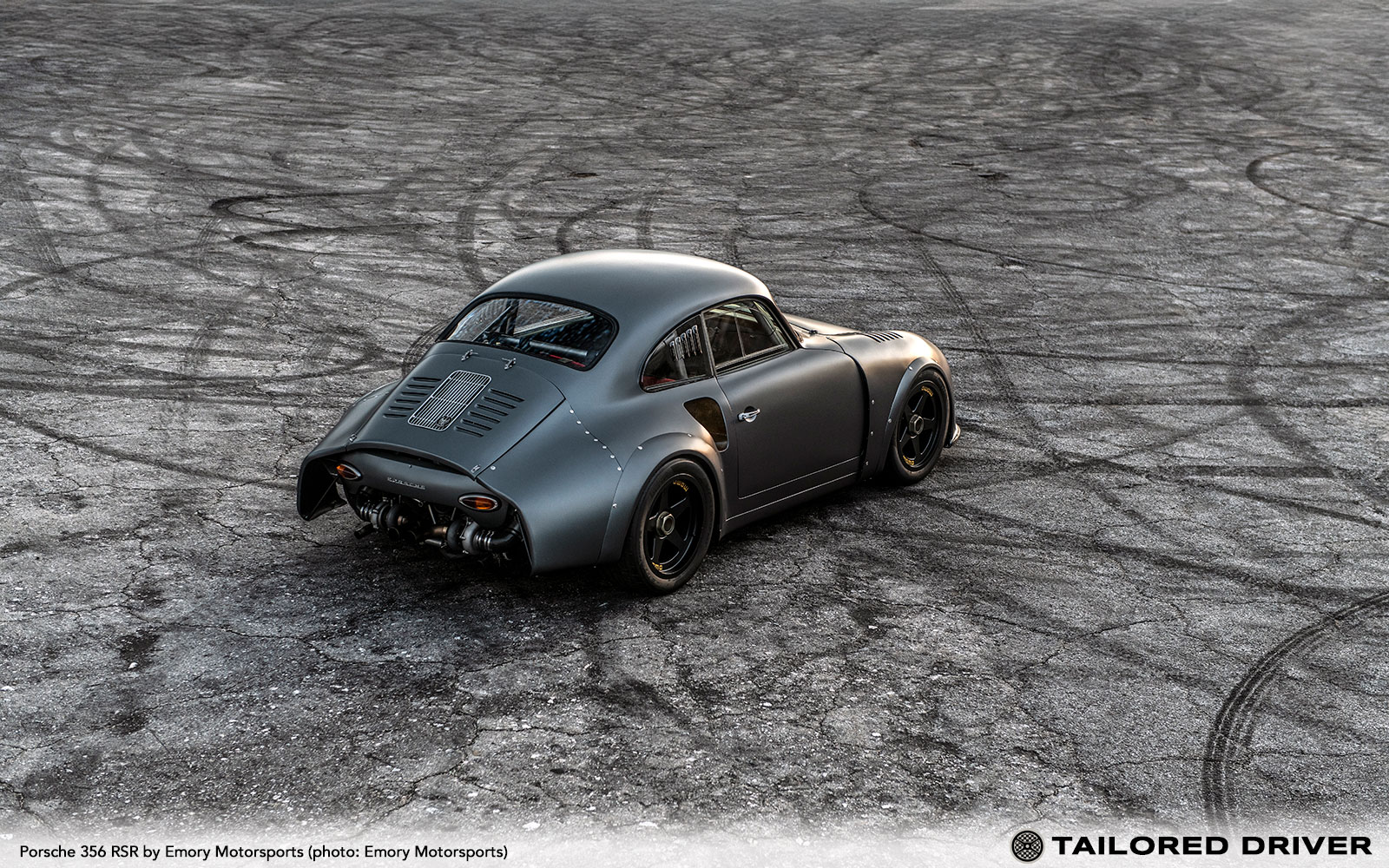
    NORTH HOLLYWOOD, CA — When car enthusiasts hear Batmobile and German car in the same sentence, they normally think of the BMW 3.0 CSL. Emory Motorsports’ latest creation will update that association to Darth Vader and Porsche 356.

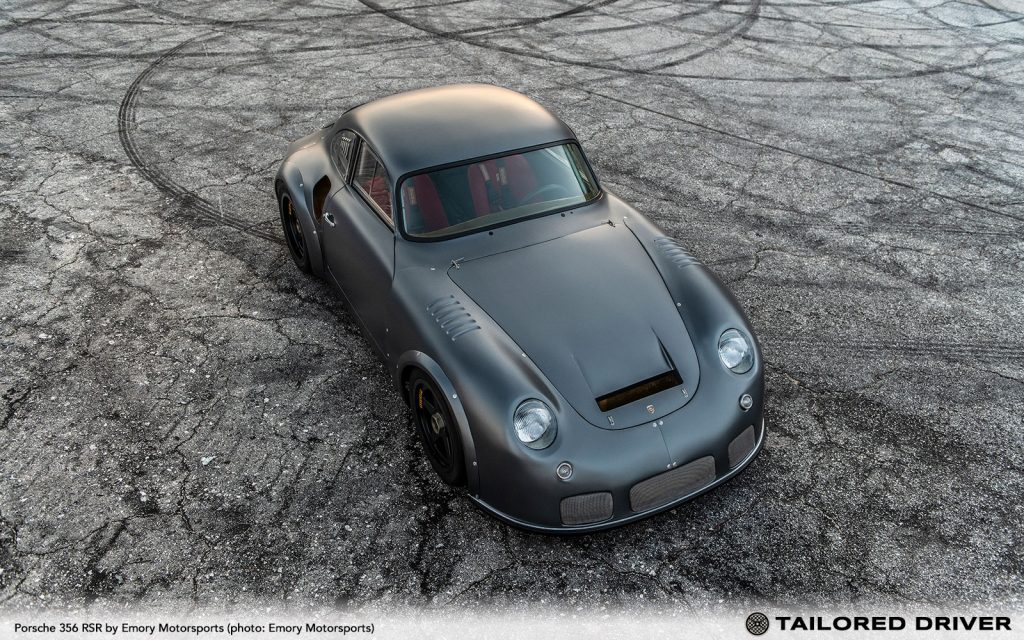
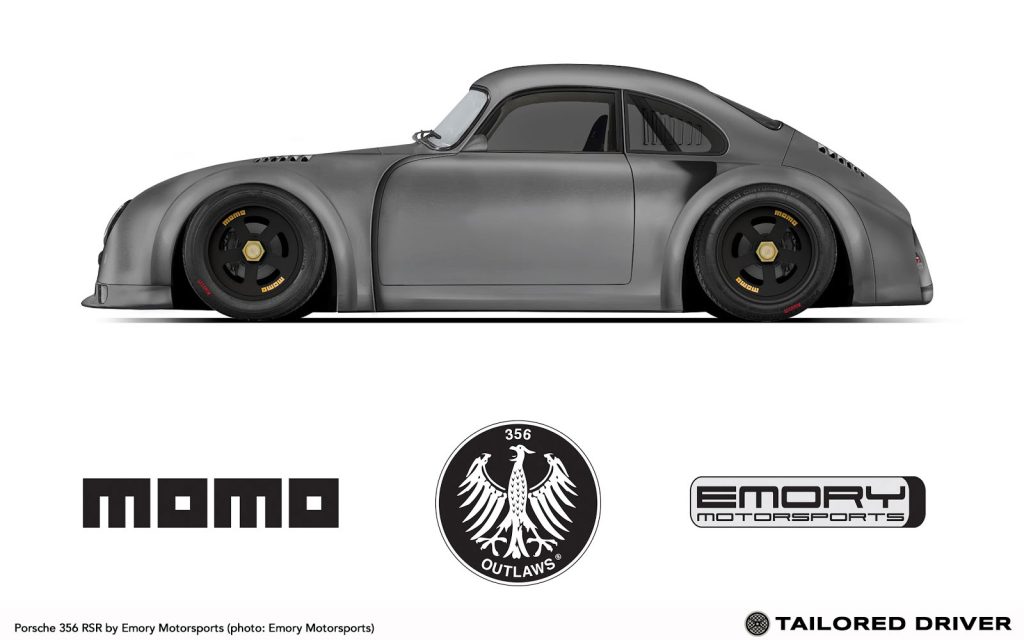
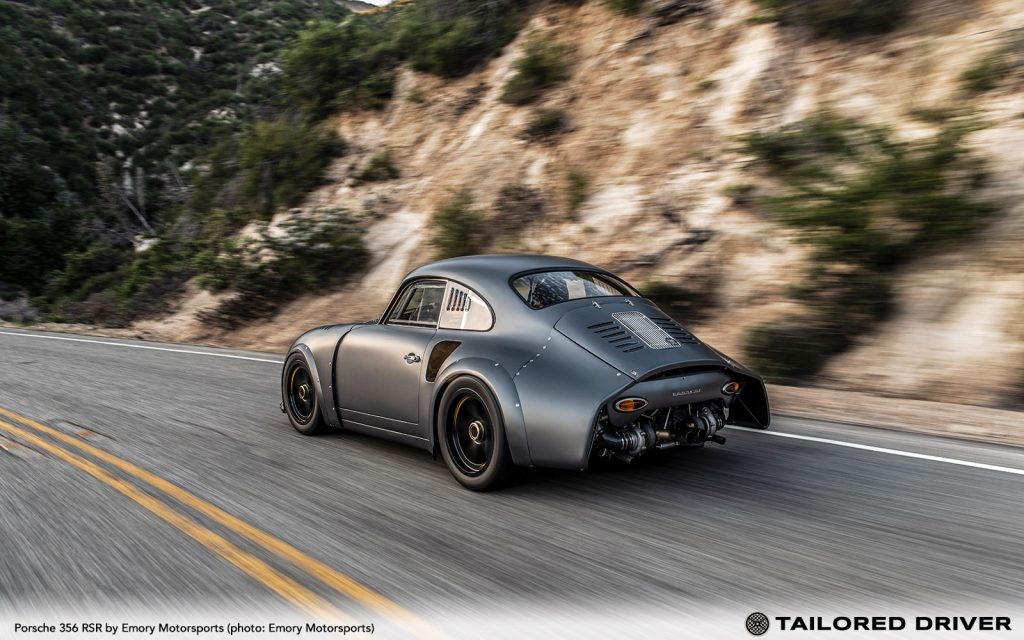
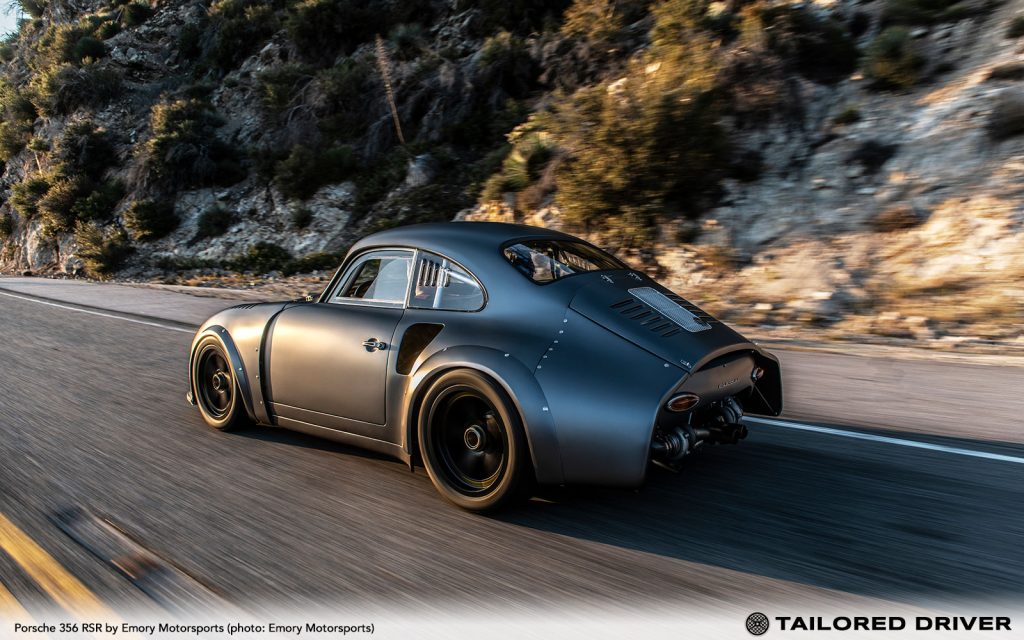
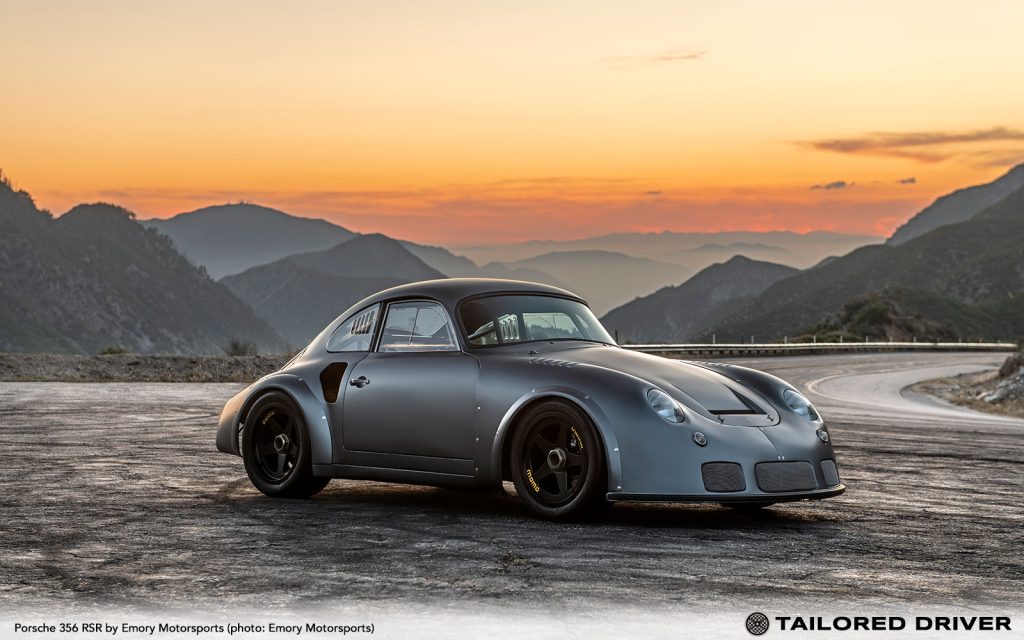
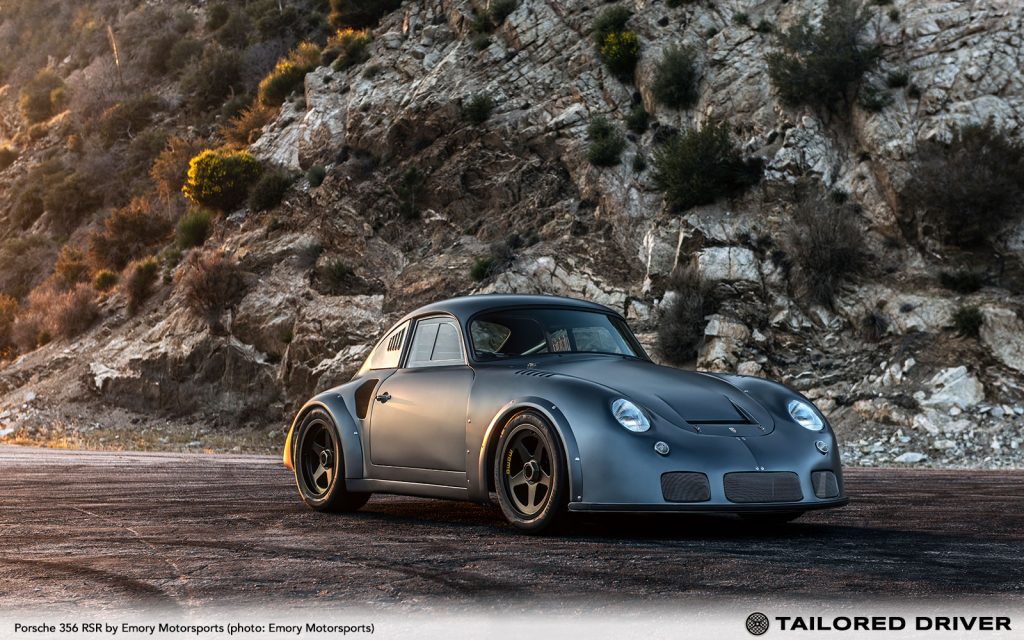
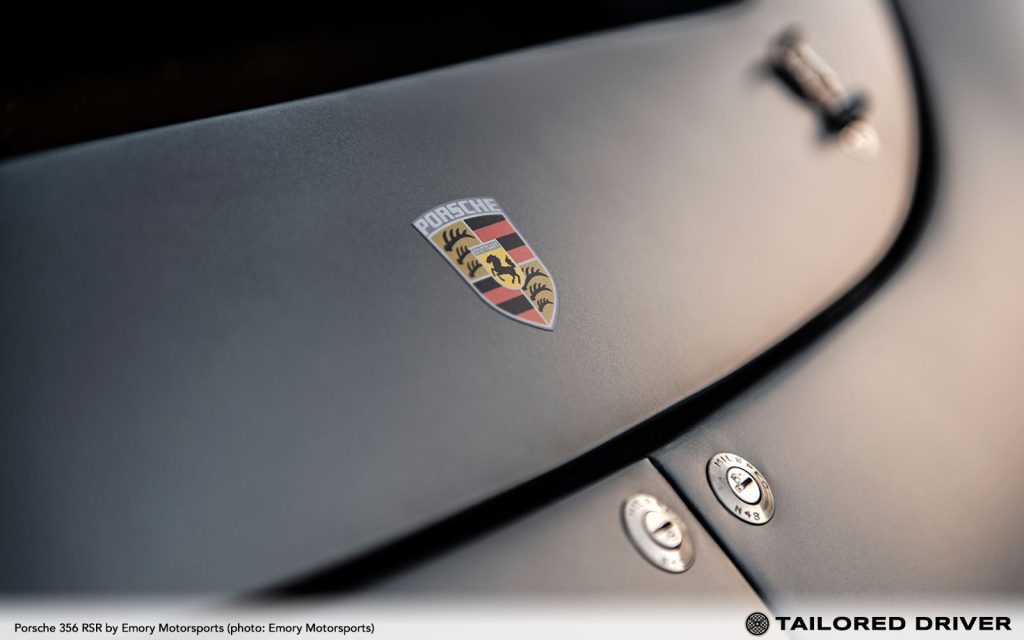
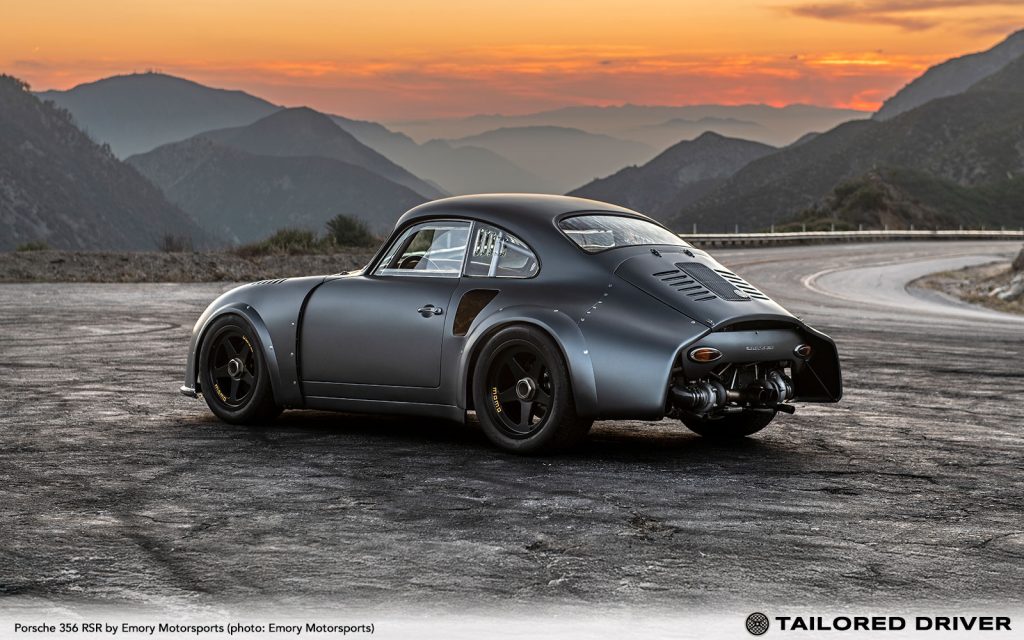
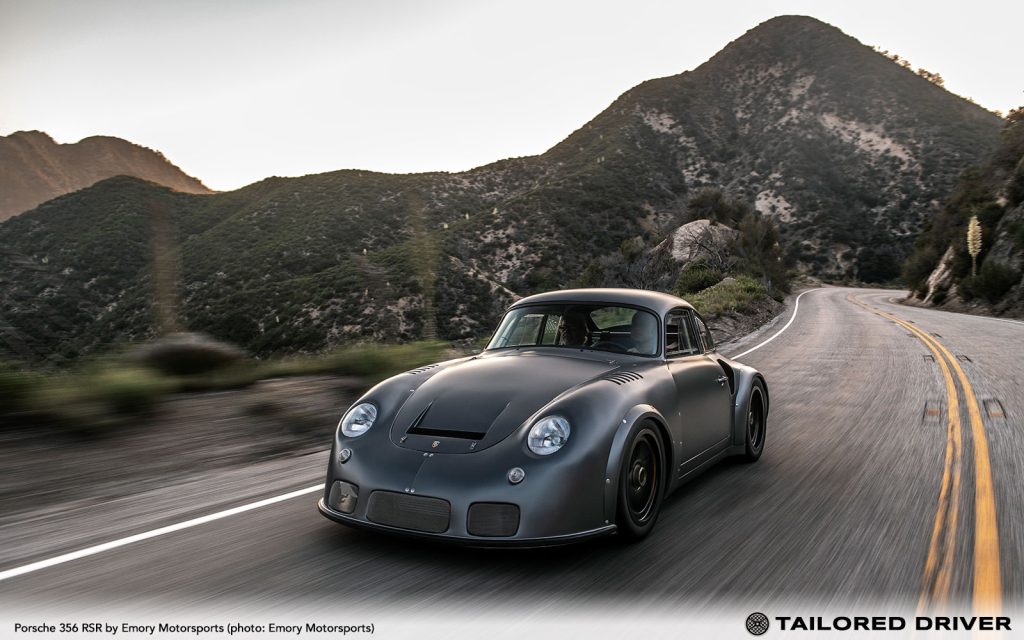
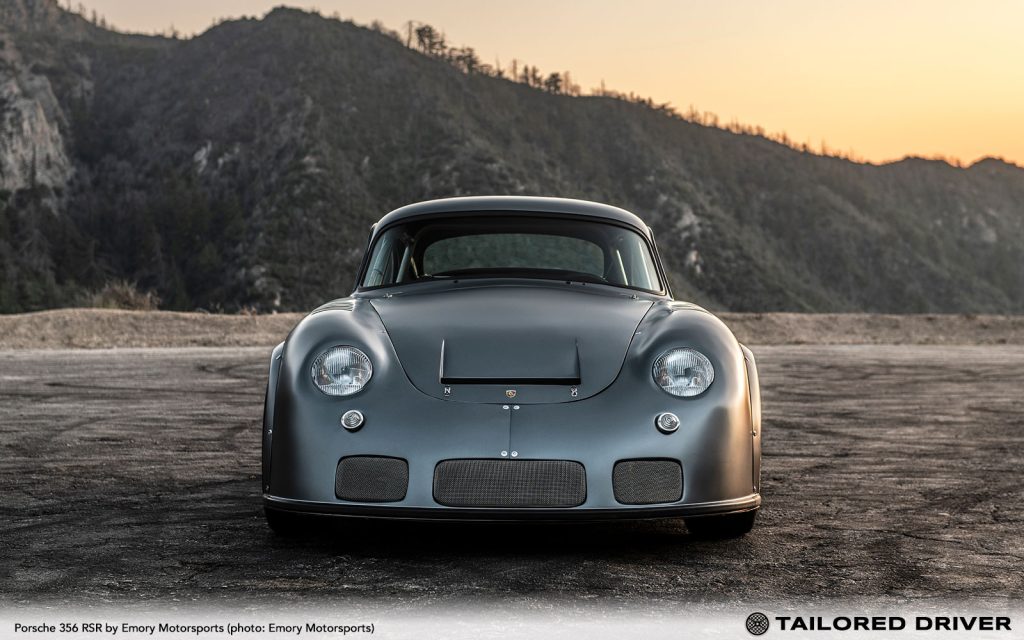
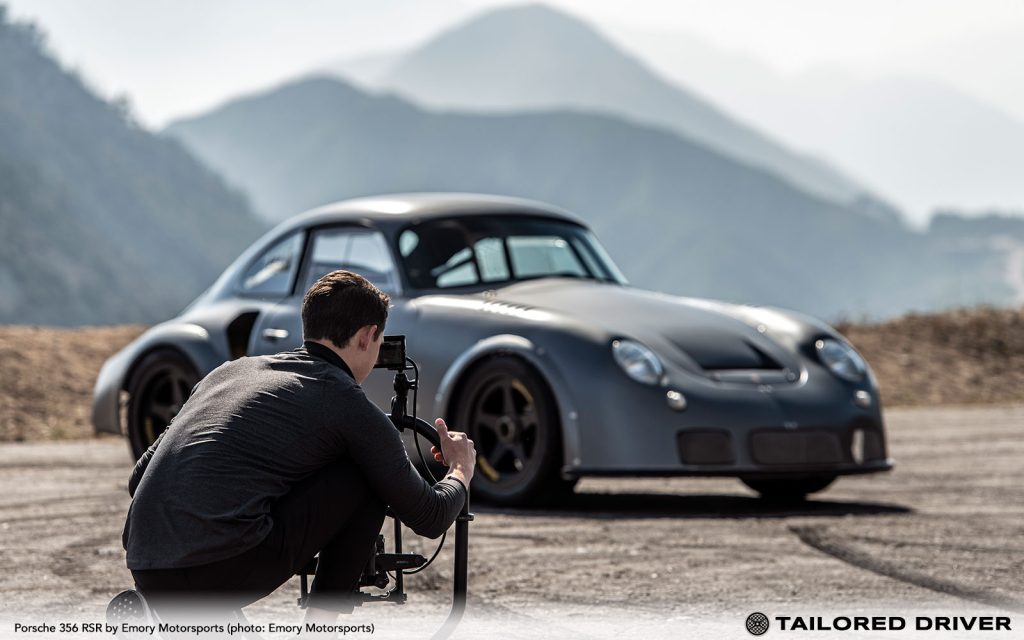
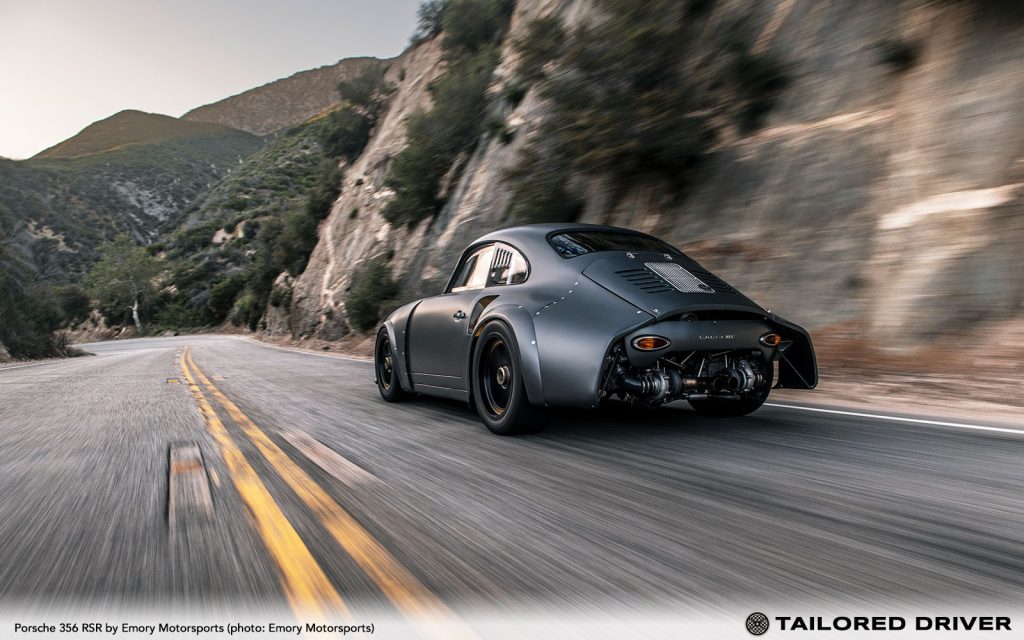
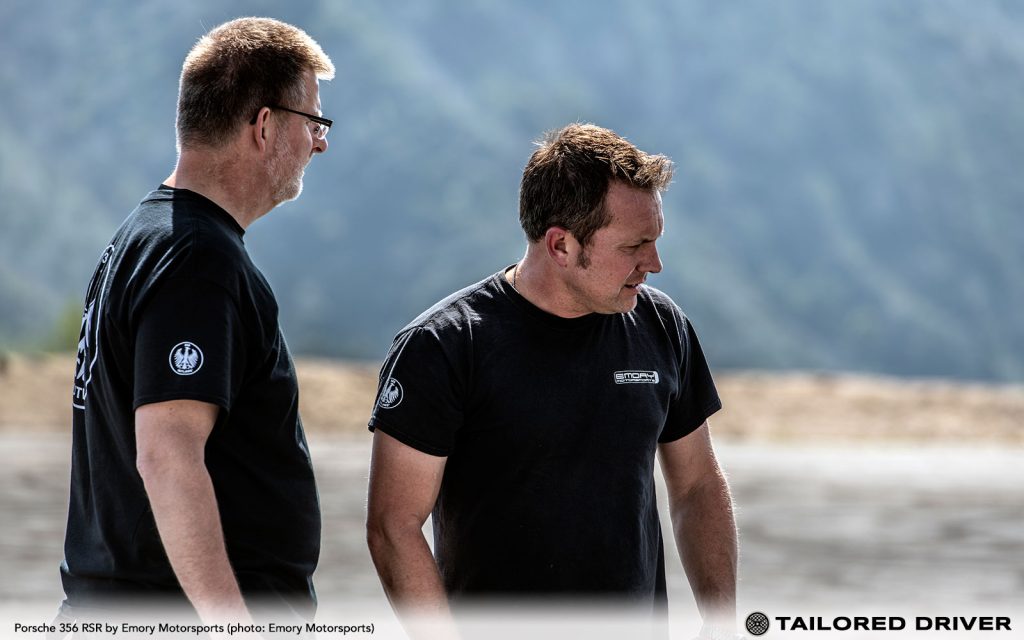
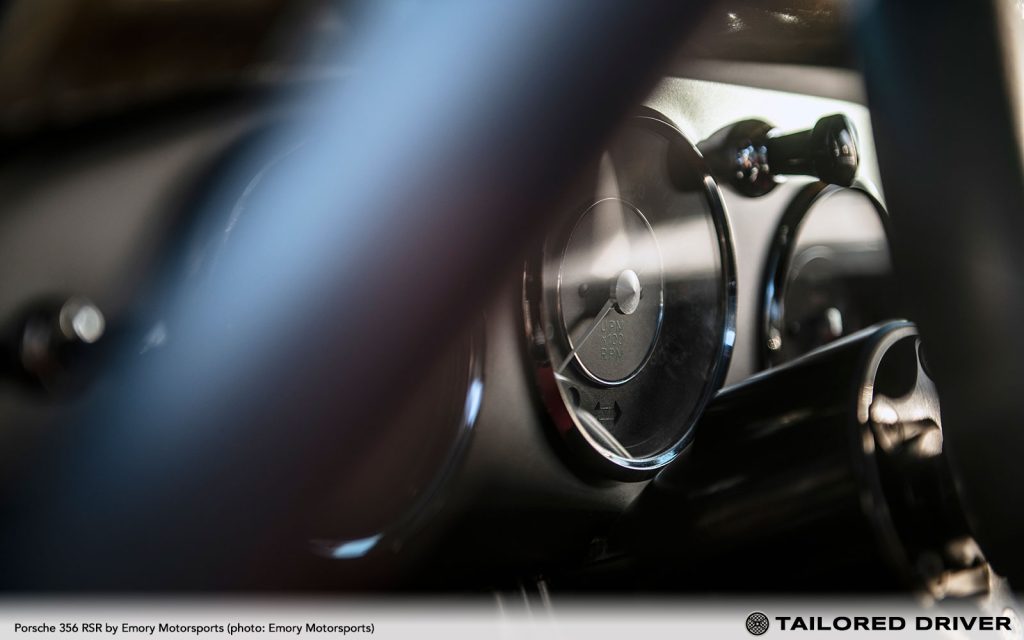
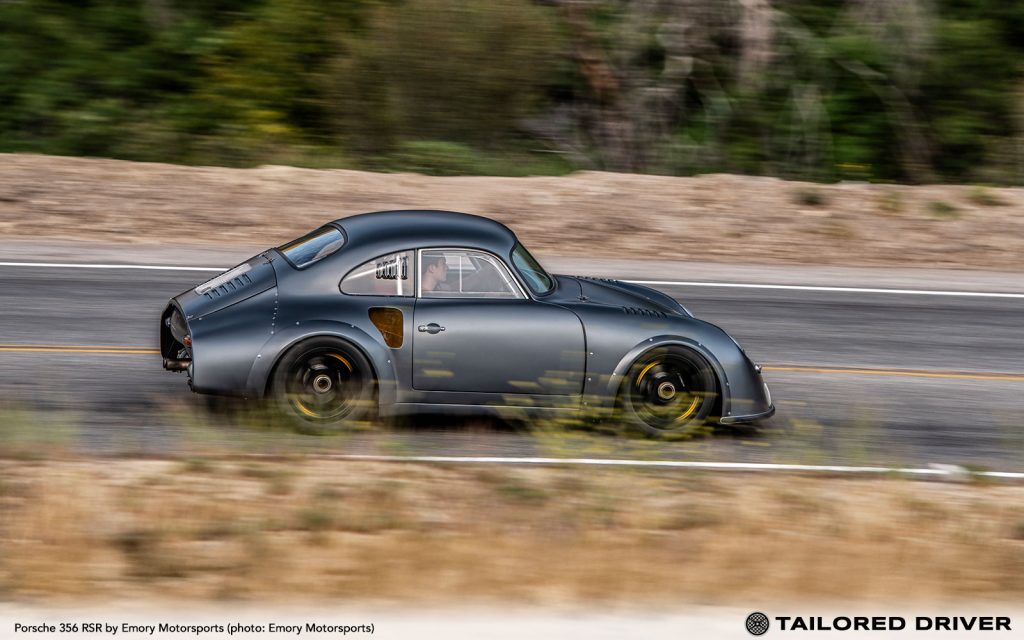
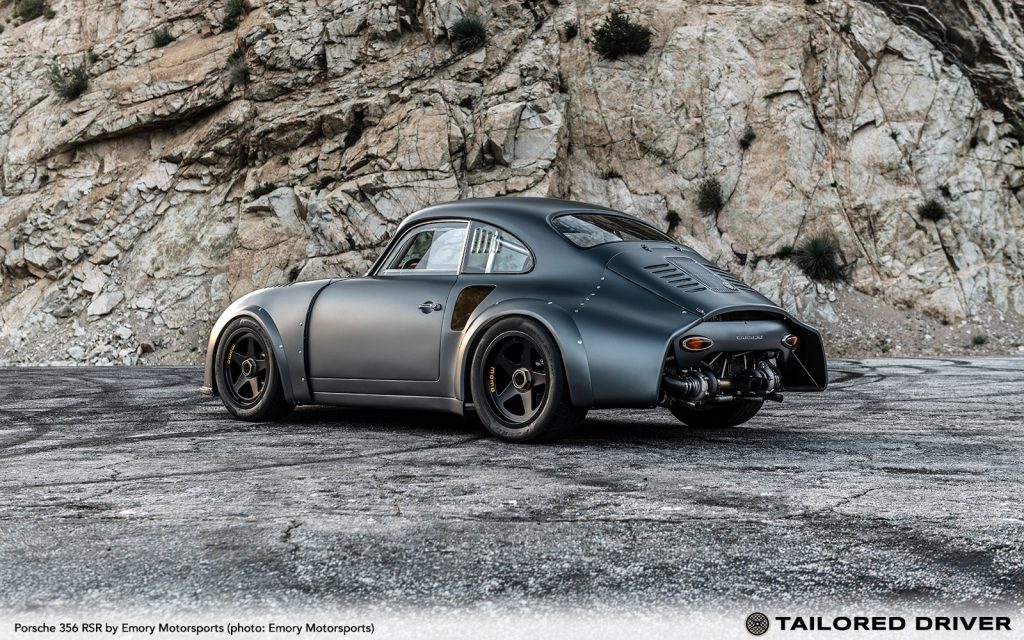
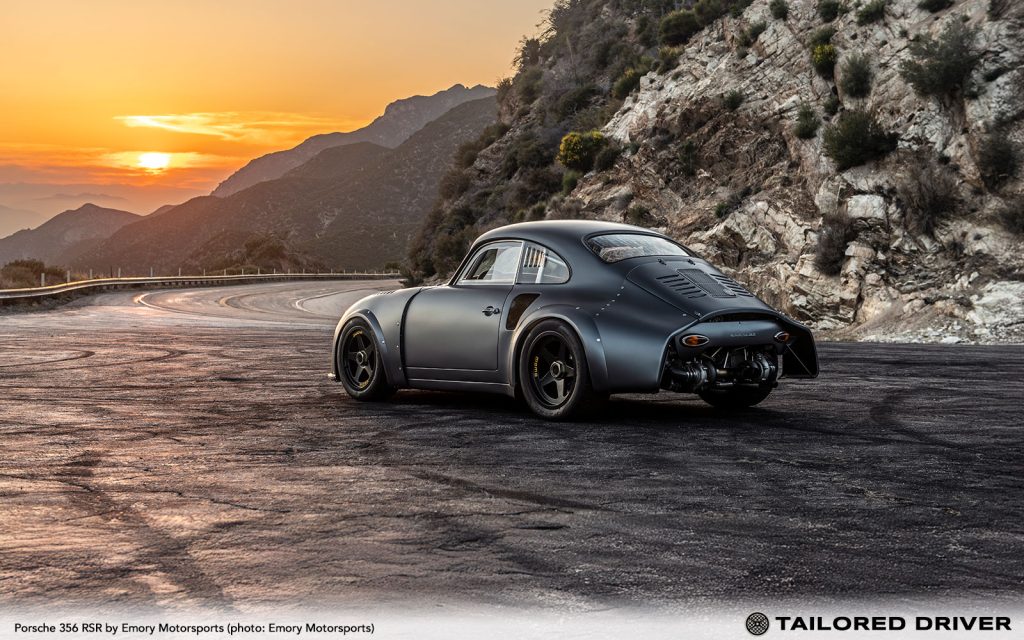
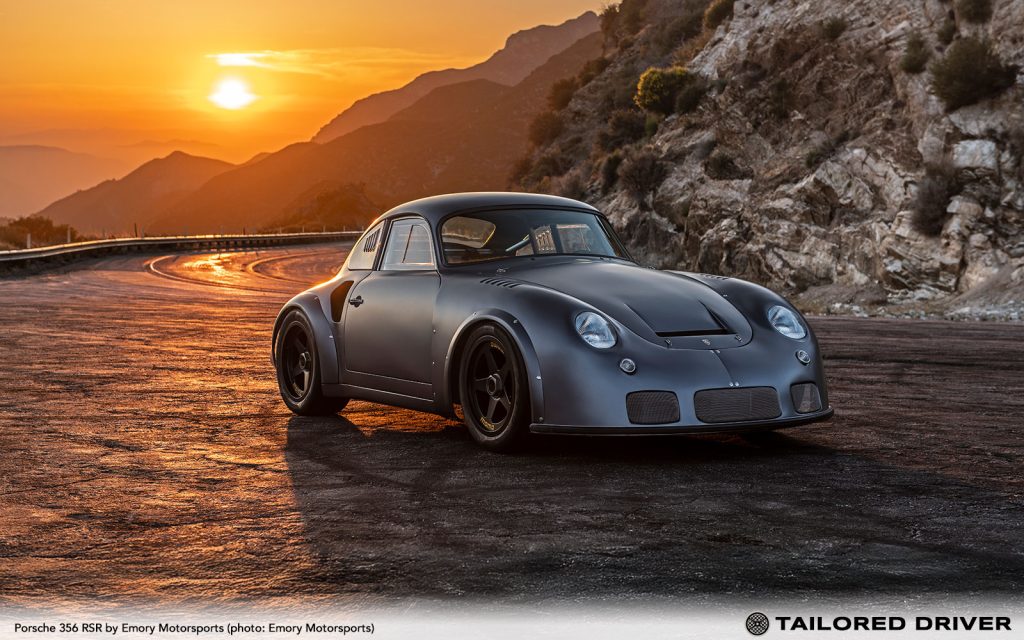
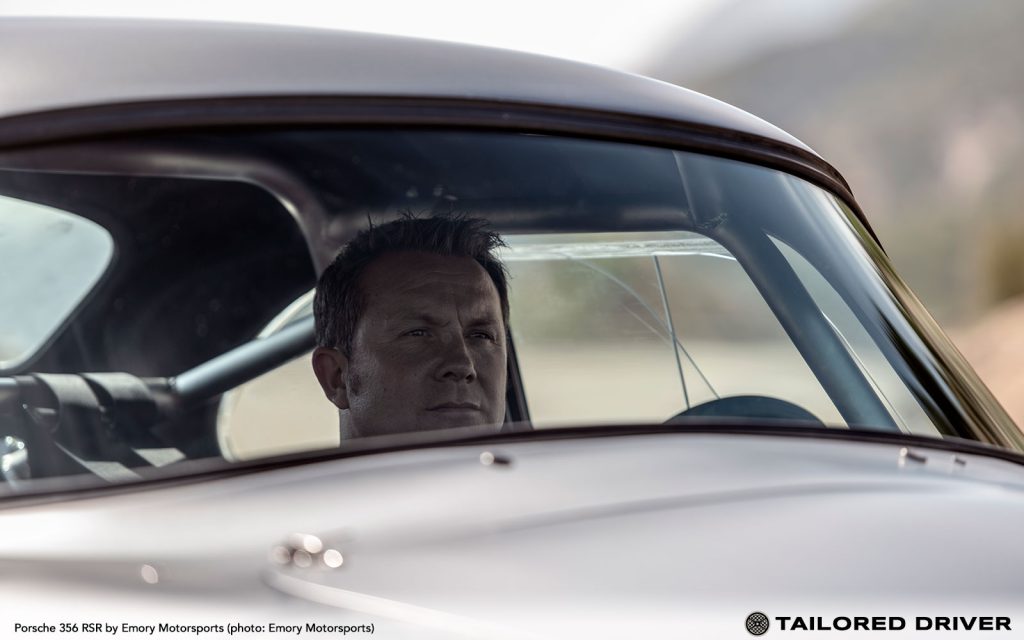
    Third-generation car customizer/renowned early Porsche expert Rod Emory pulled a lifetime of automotive expertise together to create an exotic 1960 Porsche 356 RSR. As a grandson of one of Los Angeles’s first hot-rod shop owners, the son of the Baja Bug creator, and a former Top Fuel mechanic and competitive off-road racer, Rod was able to leverage every ounce of his automotive DNA in this builder’s dream project.

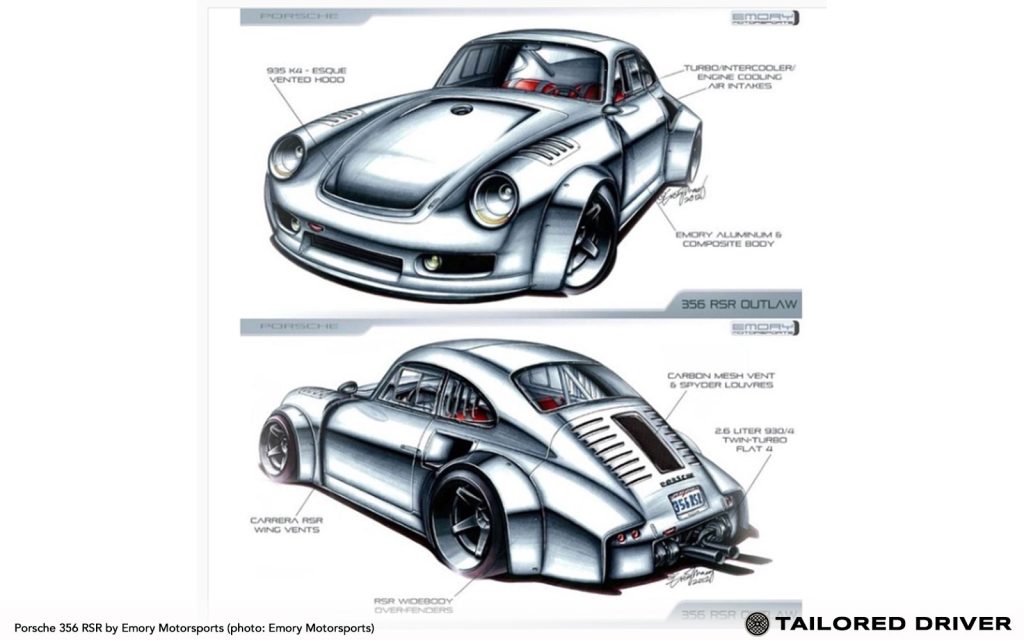
    “It started back in 2012 when I had my friend Greg Macey sketch a concept I had had in mind for quite some time,” Rod Emory says. “The idea was to create an homage to the Porsche works 935 cars of the 1970s while retaining our Emory 356 Outlaw styling. Greg did phenomenal sketches, which we posted on Instagram. MOMO CEO Henrique Cisneros reached out and asked what it would take to turn the concept into reality. Once we zeroed in on the details, we had a second rendering done by Avedis Djinguelian to serve as a more representative style guide to the finished product. The actual build time was about four full years.”

    As with other Emory Outlaw and Emory Special builds, the project began with the perfect donor car: a 1960 356B T5 coupe whose roof was undamaged but the rest of the body panels were destined for scrap. 

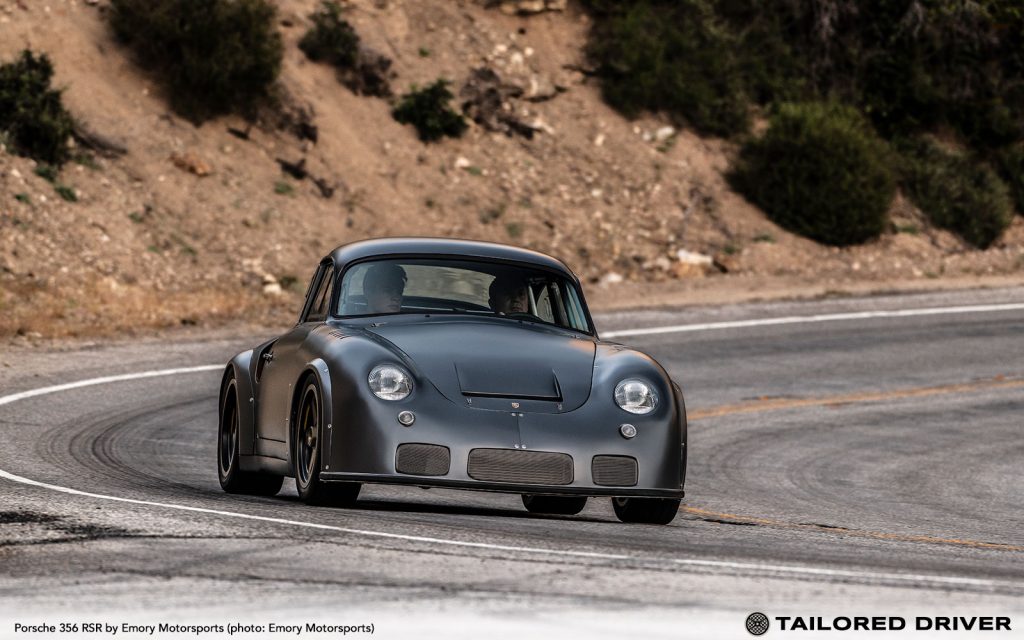
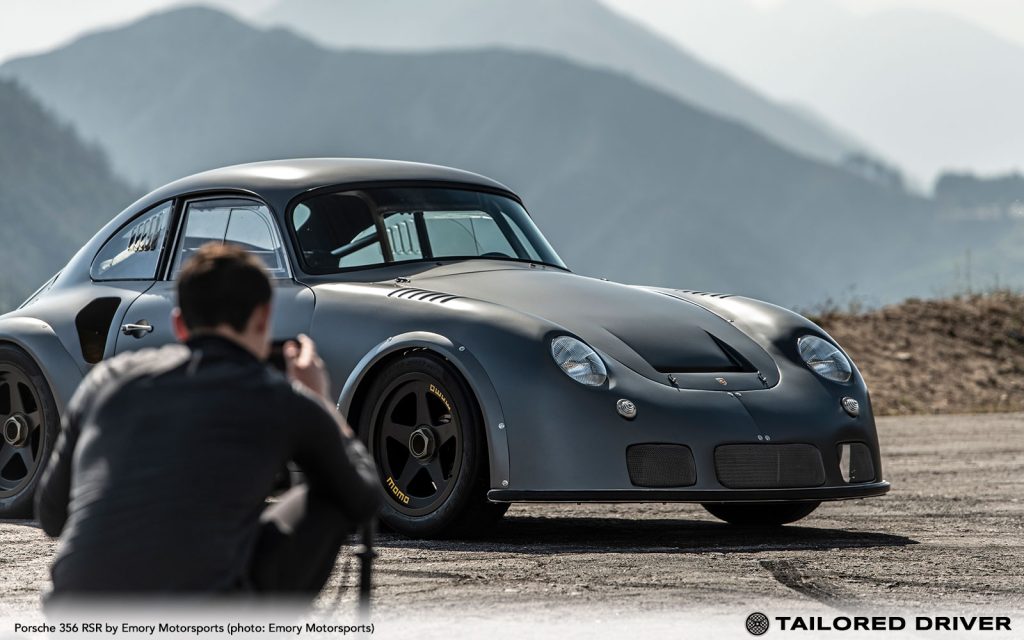
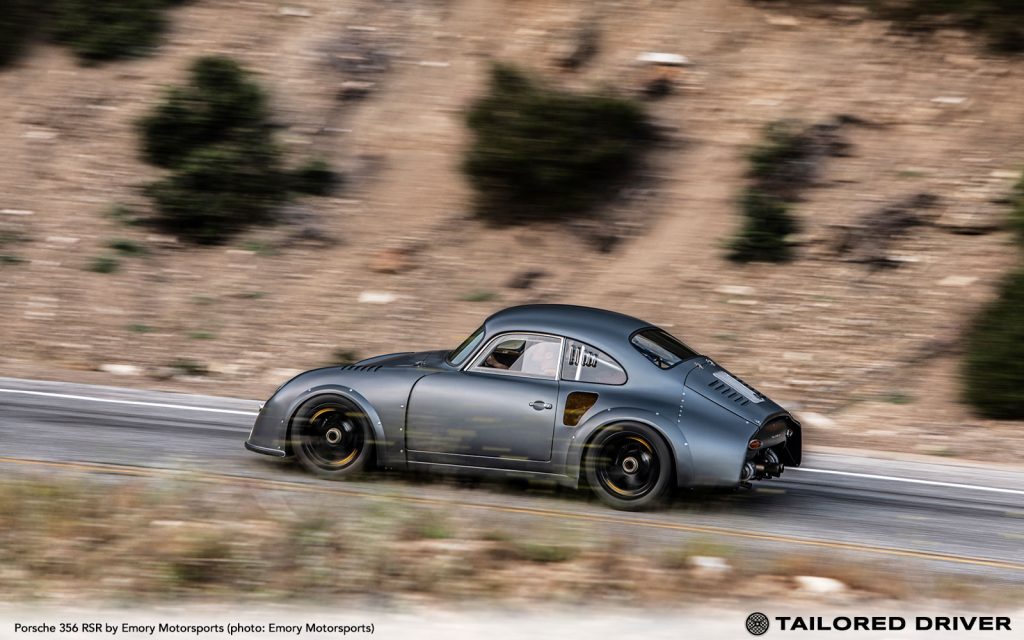
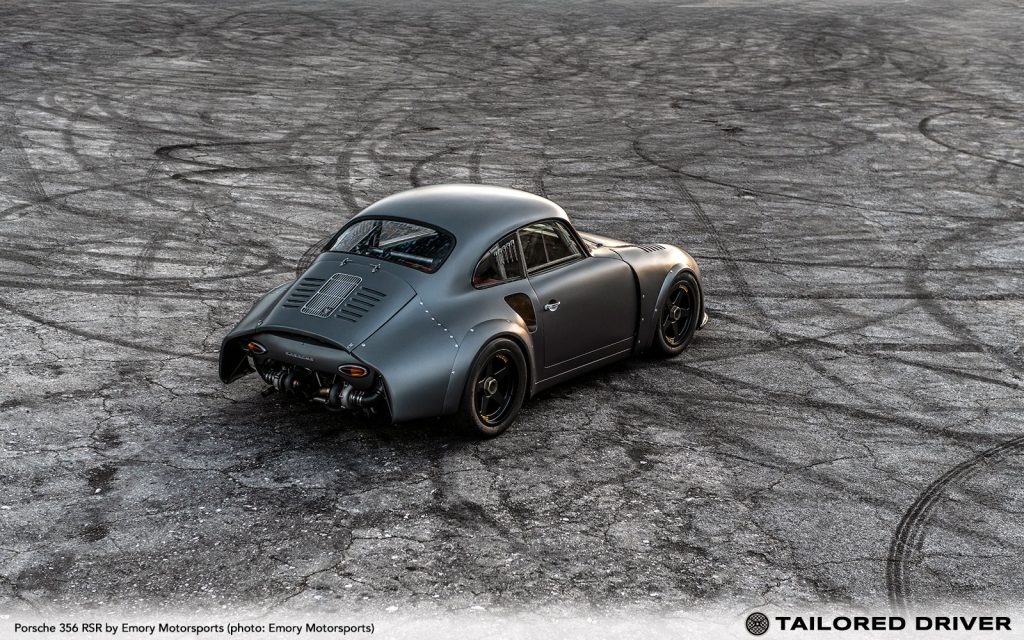
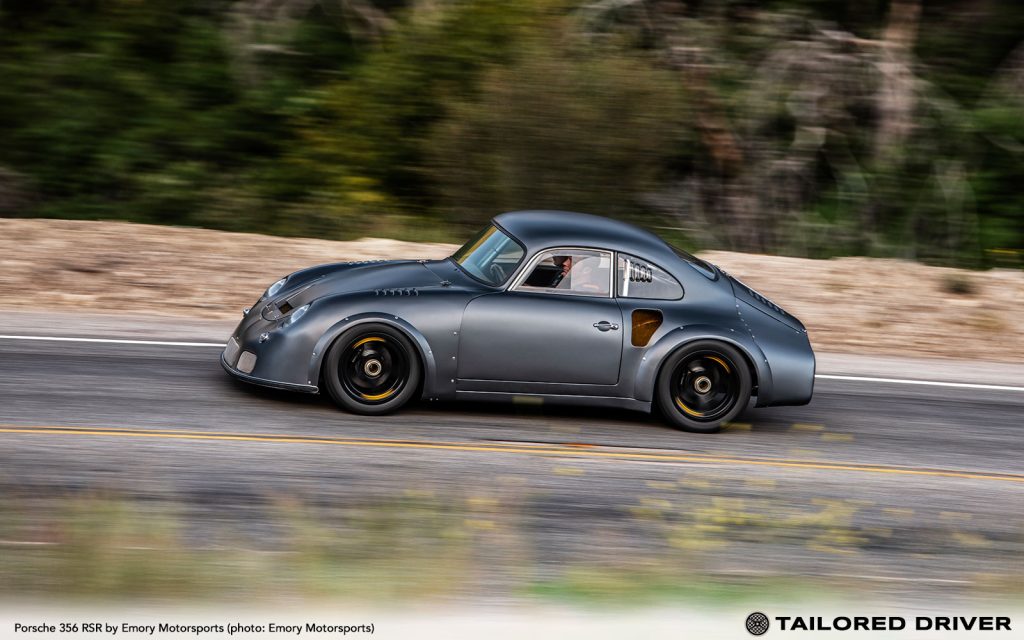
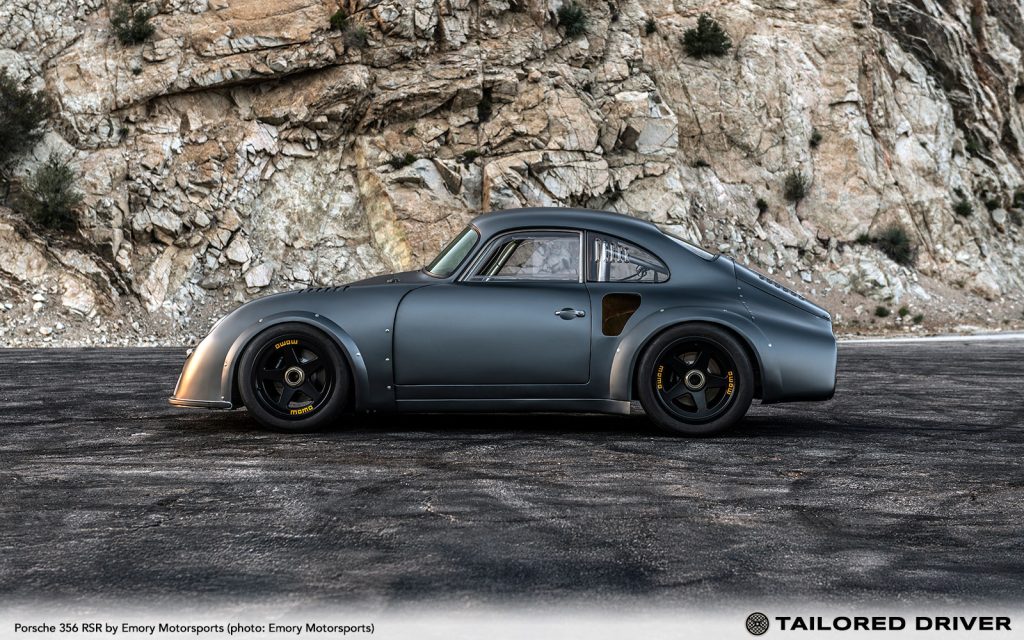
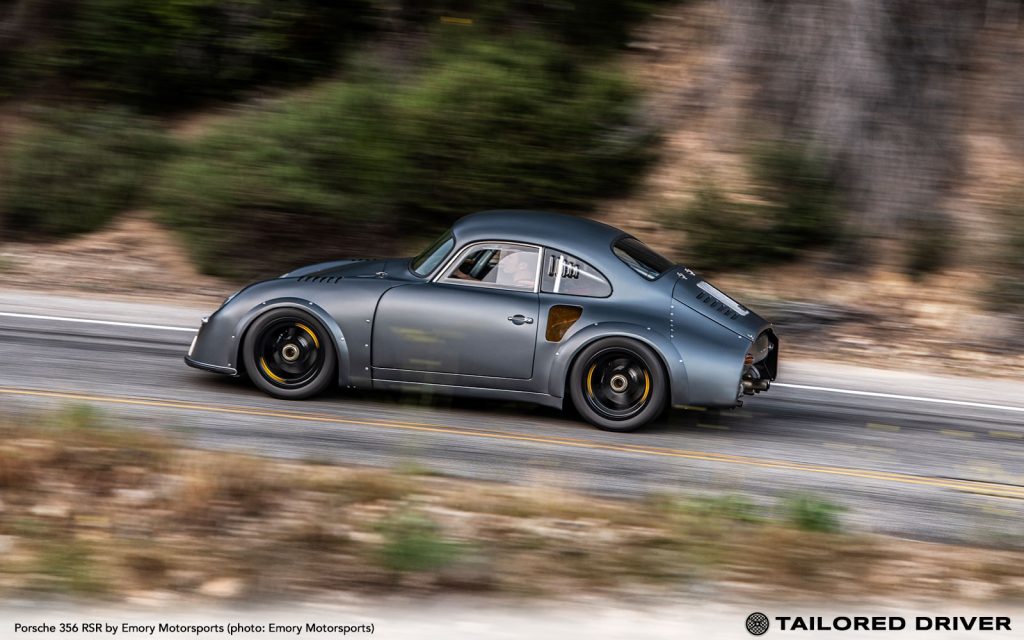
    With fresh experience combining a 356 body and 911 chassis in the world’s first AWD 356 (the Emory/Independent Fabrication 356C4S project), Rod’s crew knew where to nip/tuck to combine the best of the two Porsche sportscar iterations, some 35 years apart in age. The result is a seamless super-performance concoction whose 356 silhouette is artfully preserved, thanks to its factory greenhouse and doors. This car is an example of Emory Motorsports’ highest-performance “RS” designated cars.

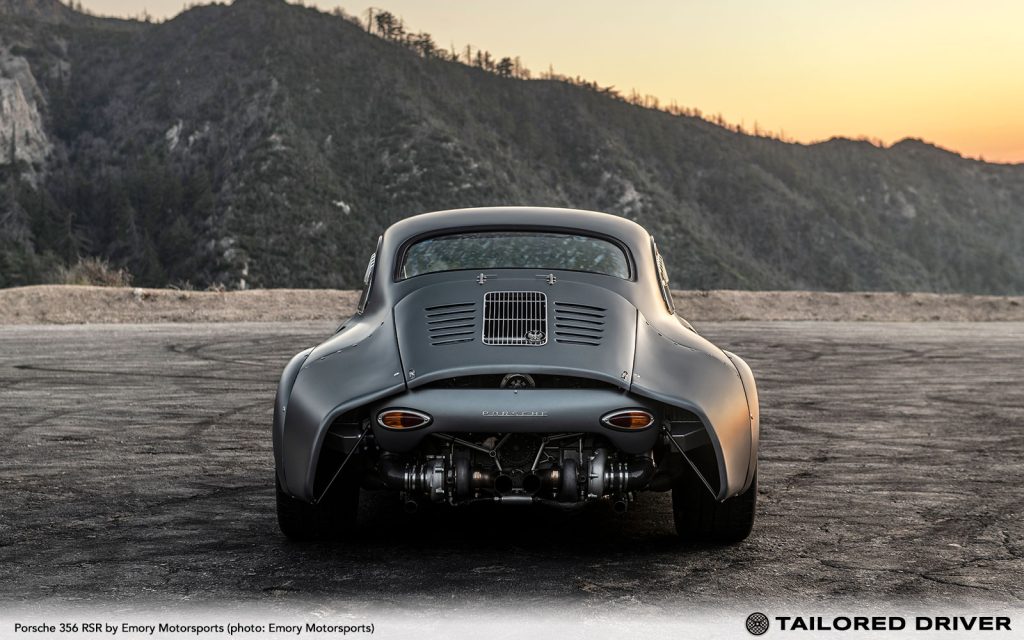
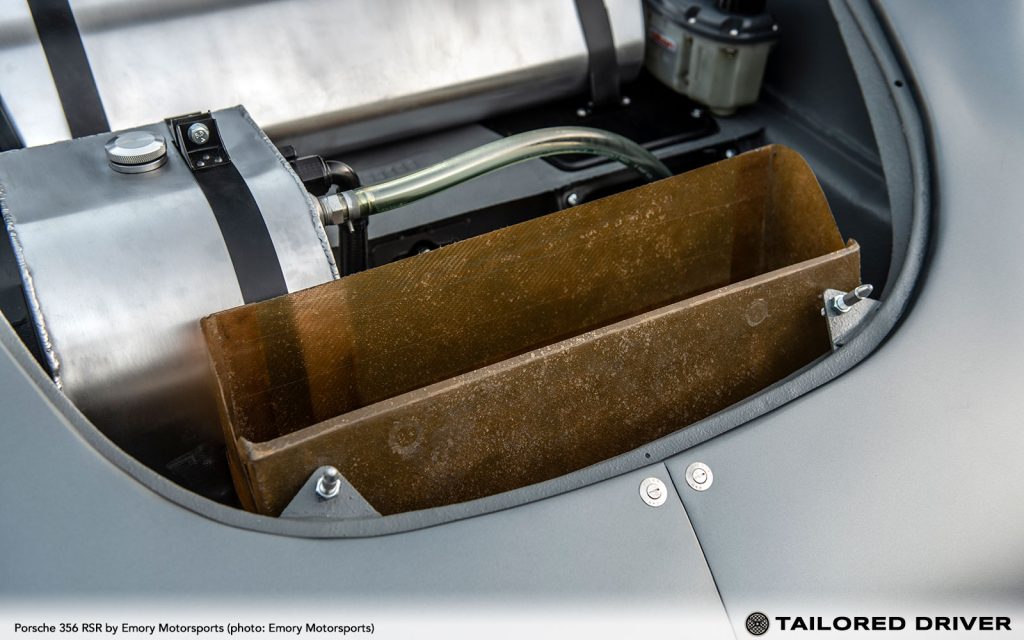
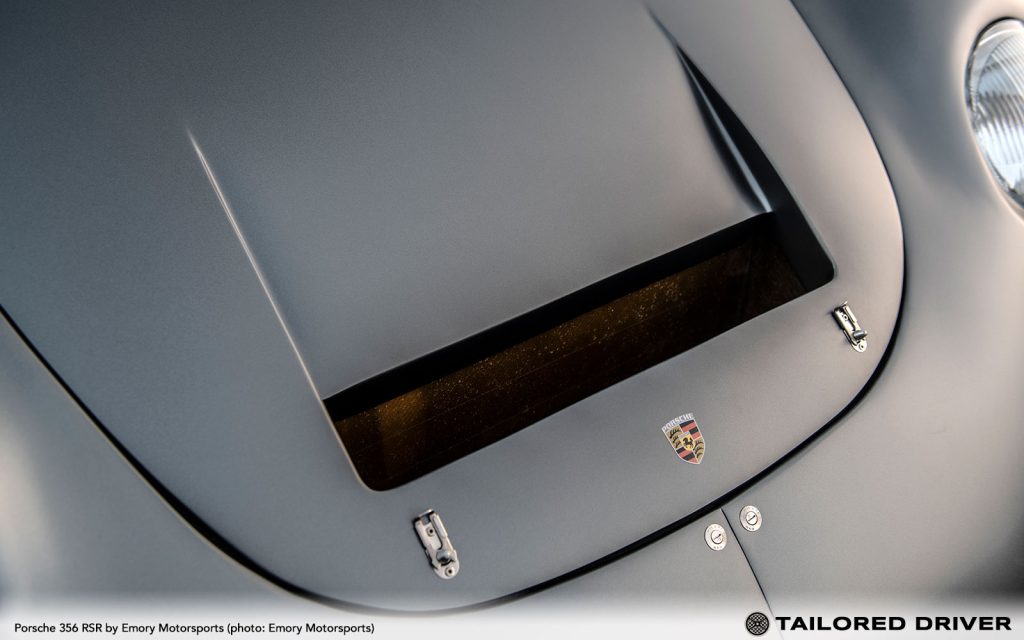
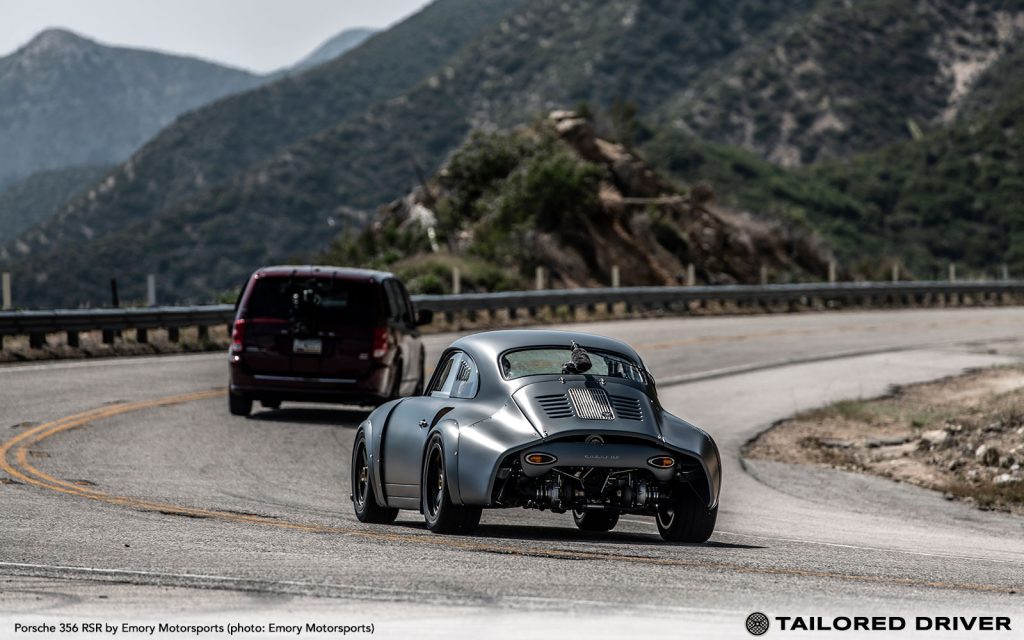
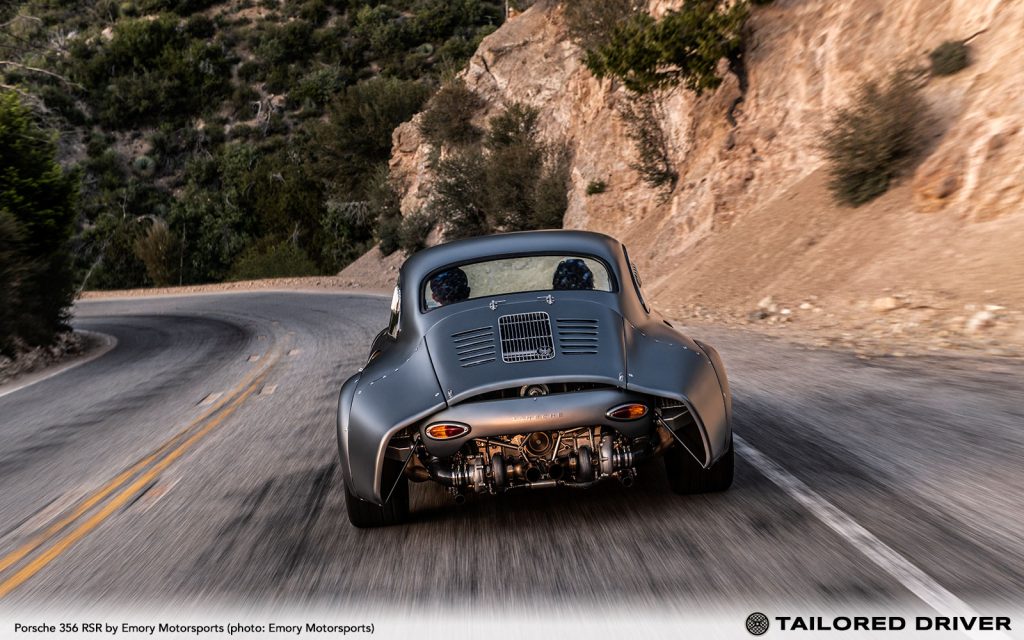
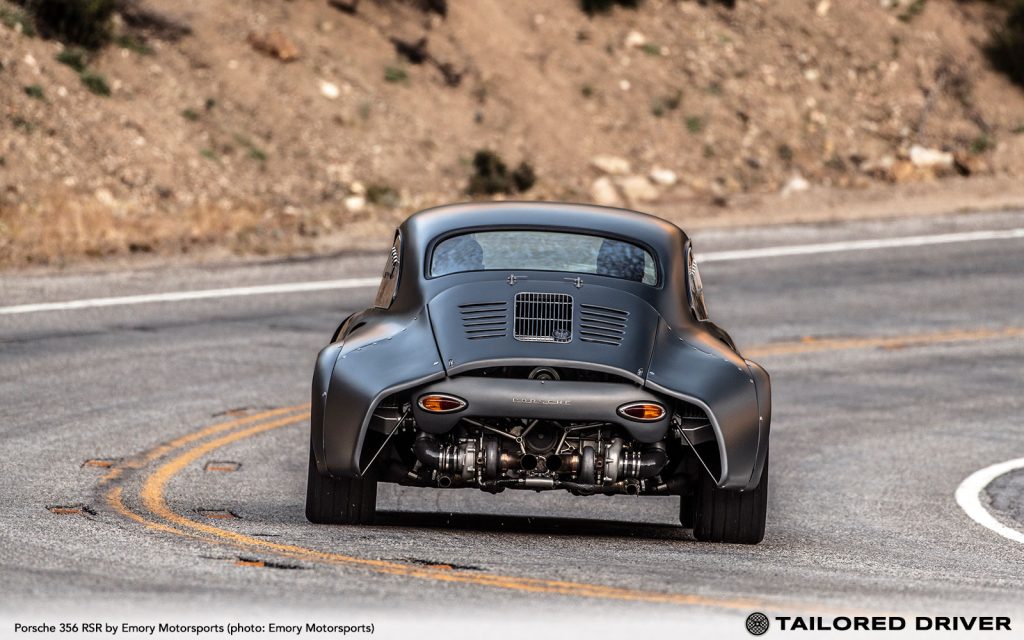
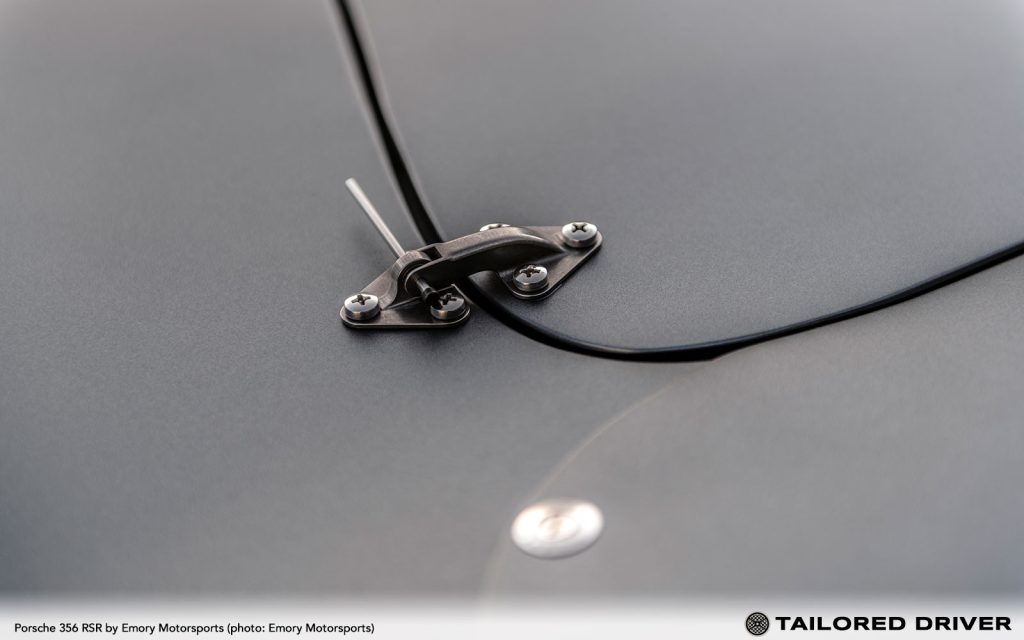
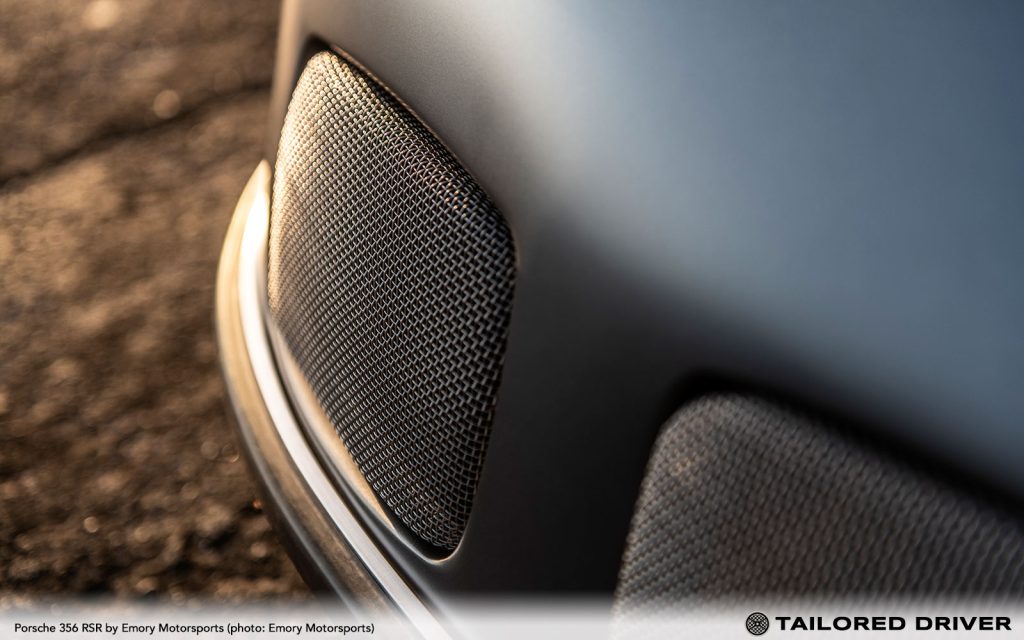
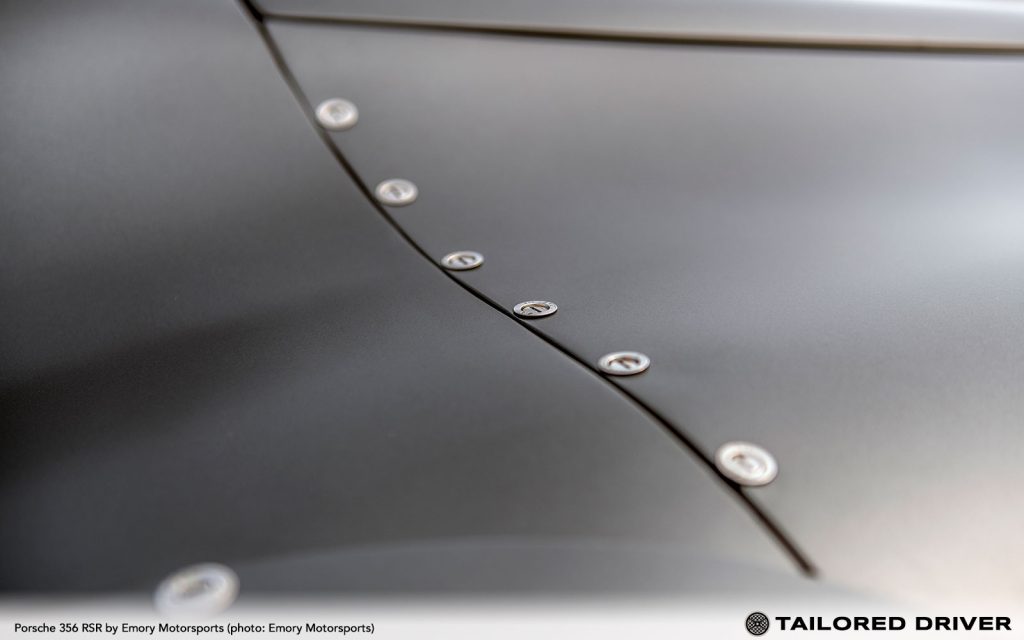
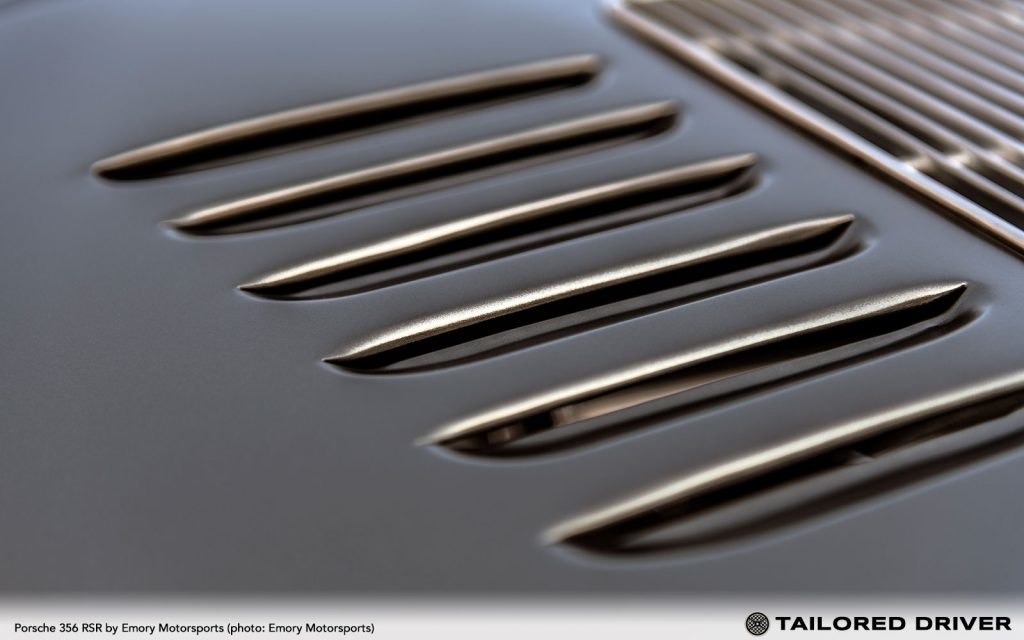
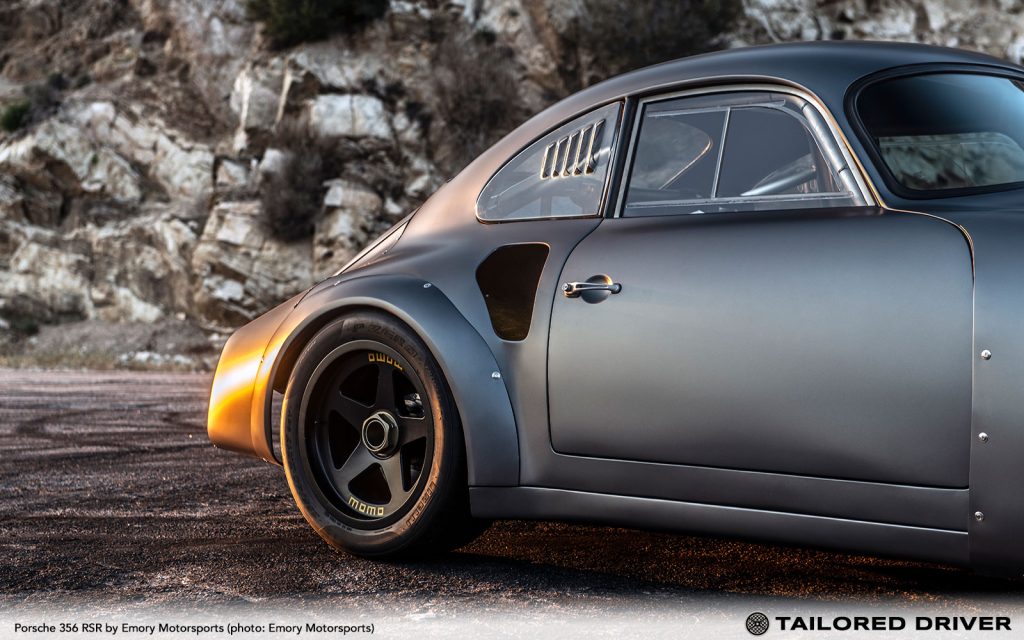
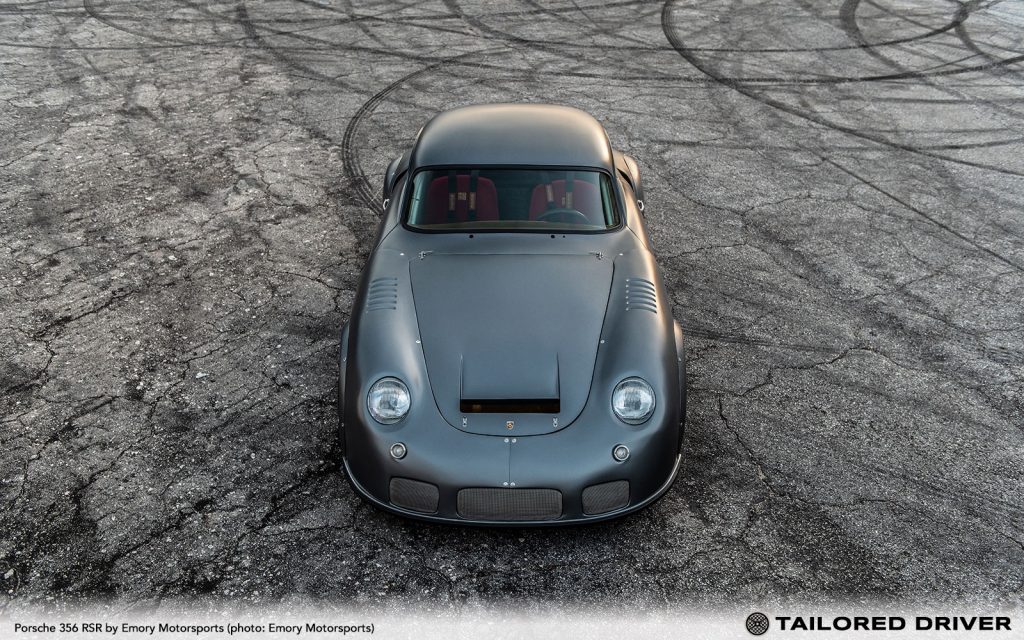
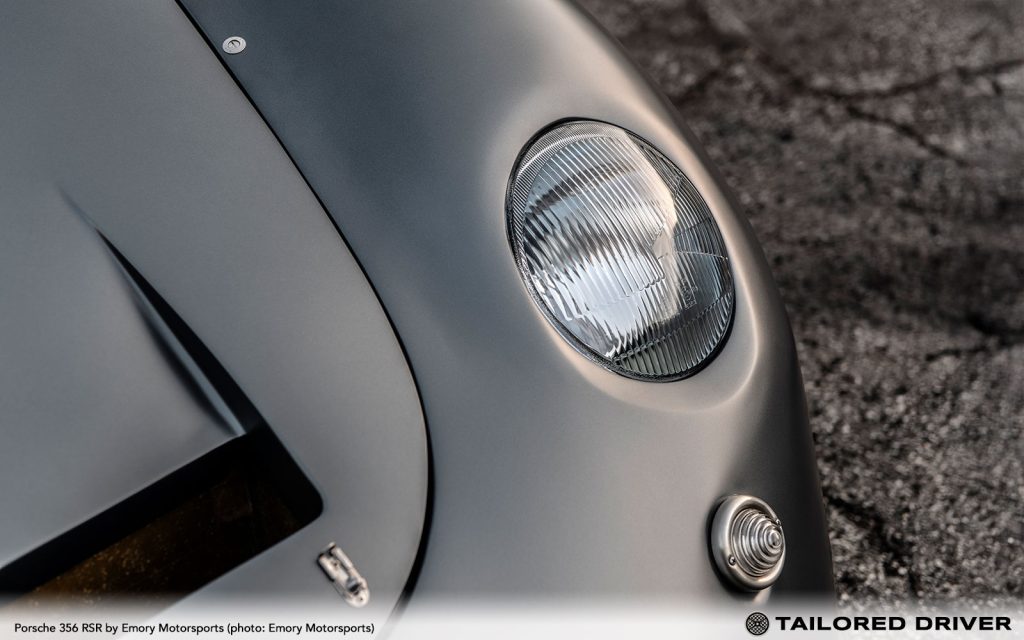
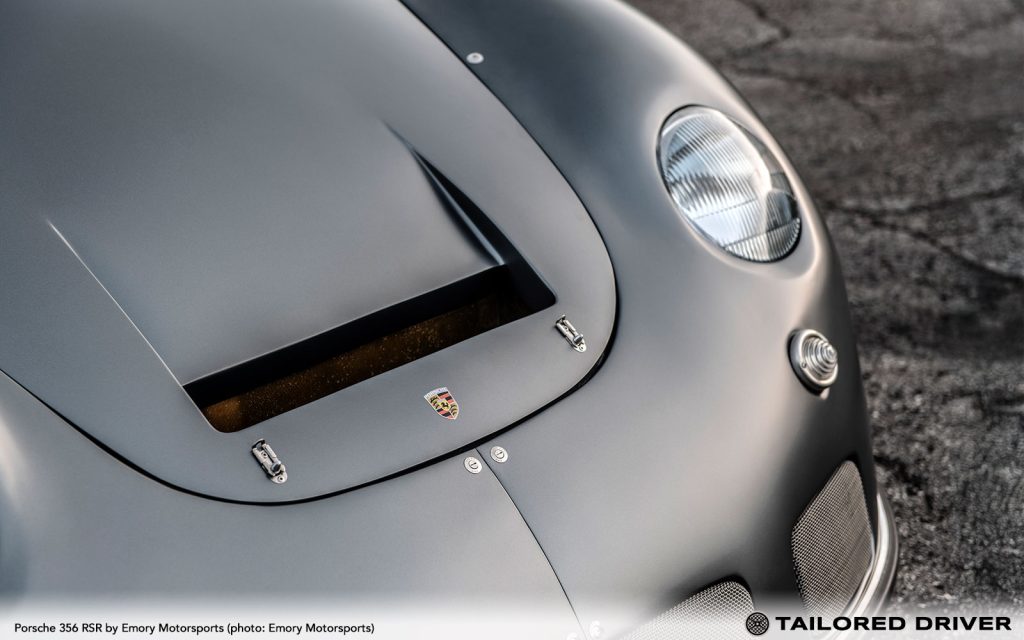
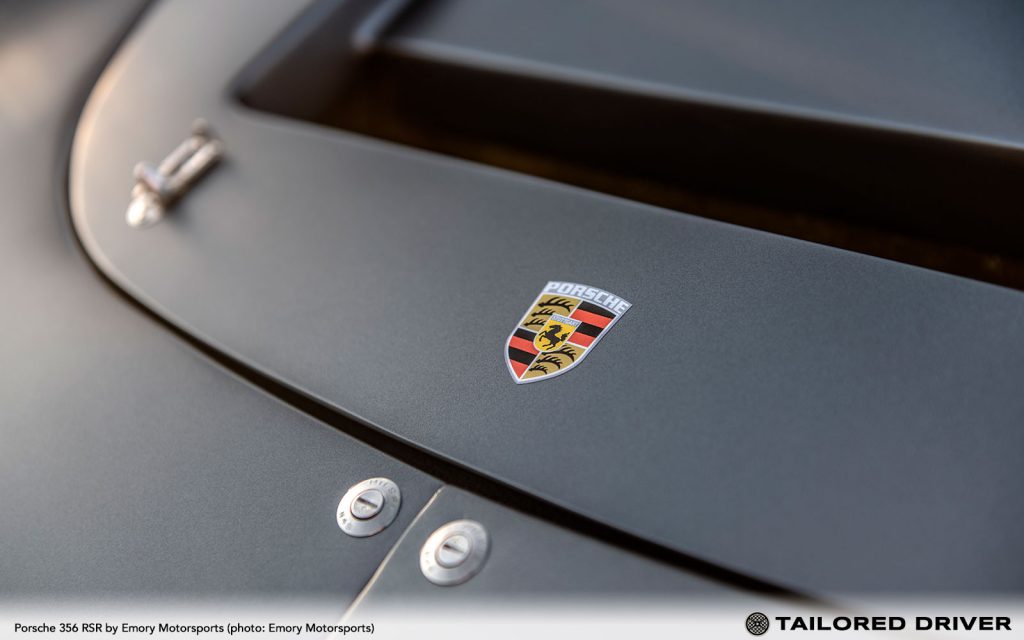
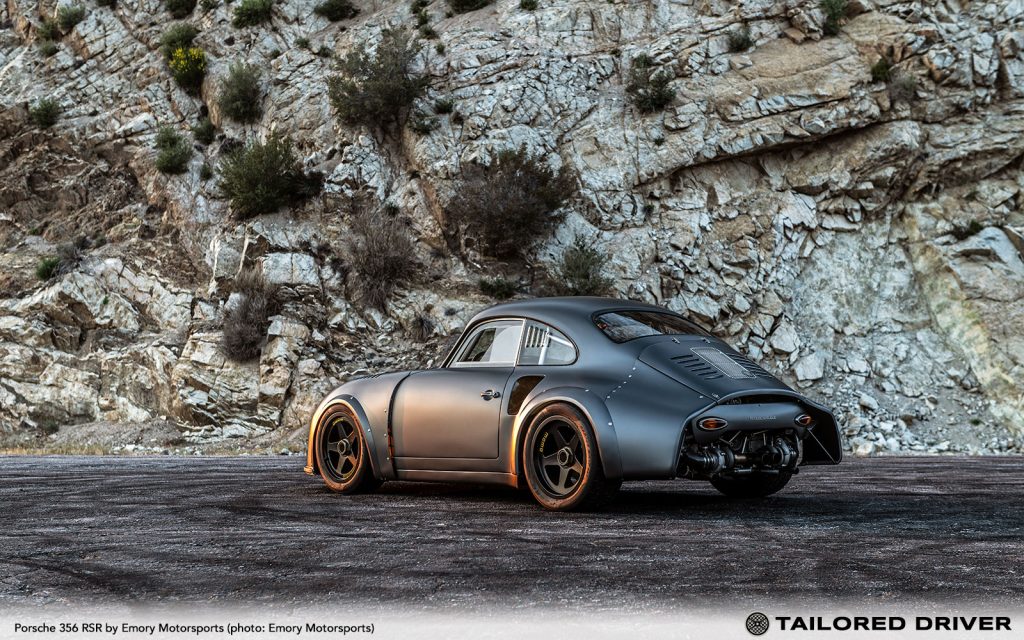
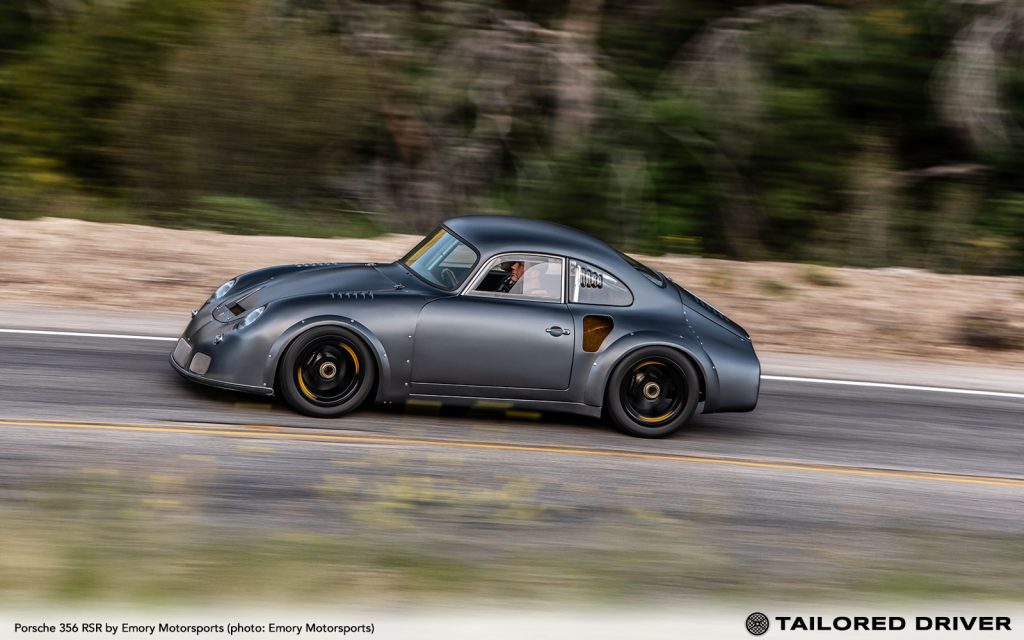
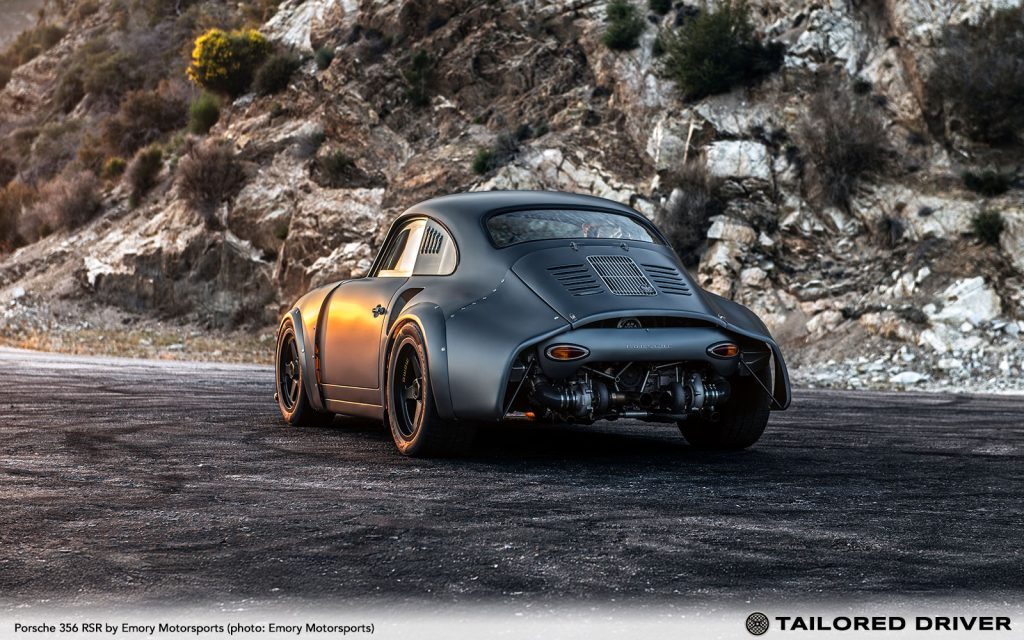
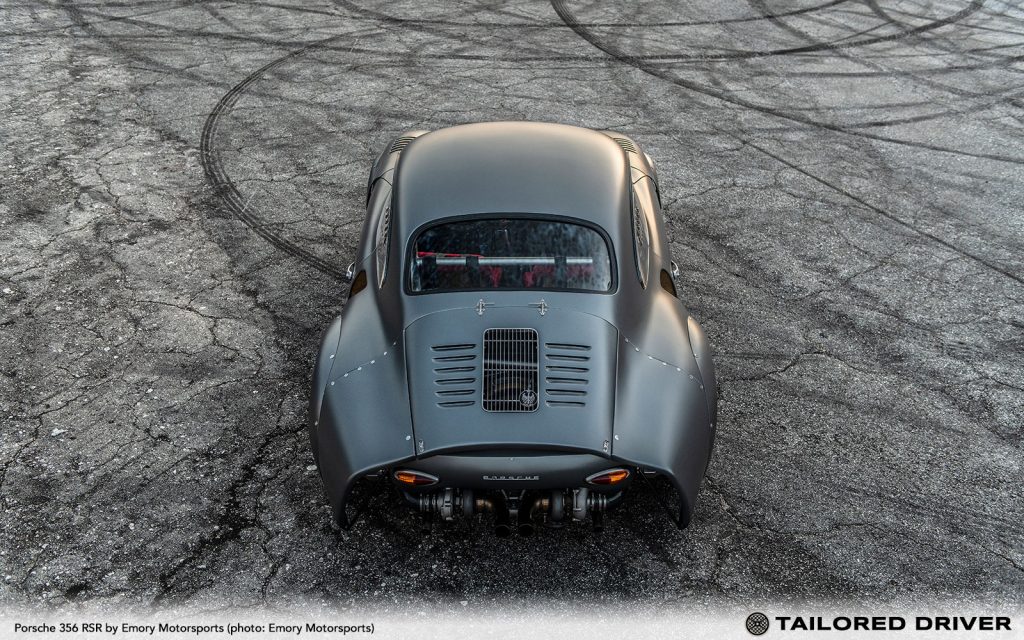
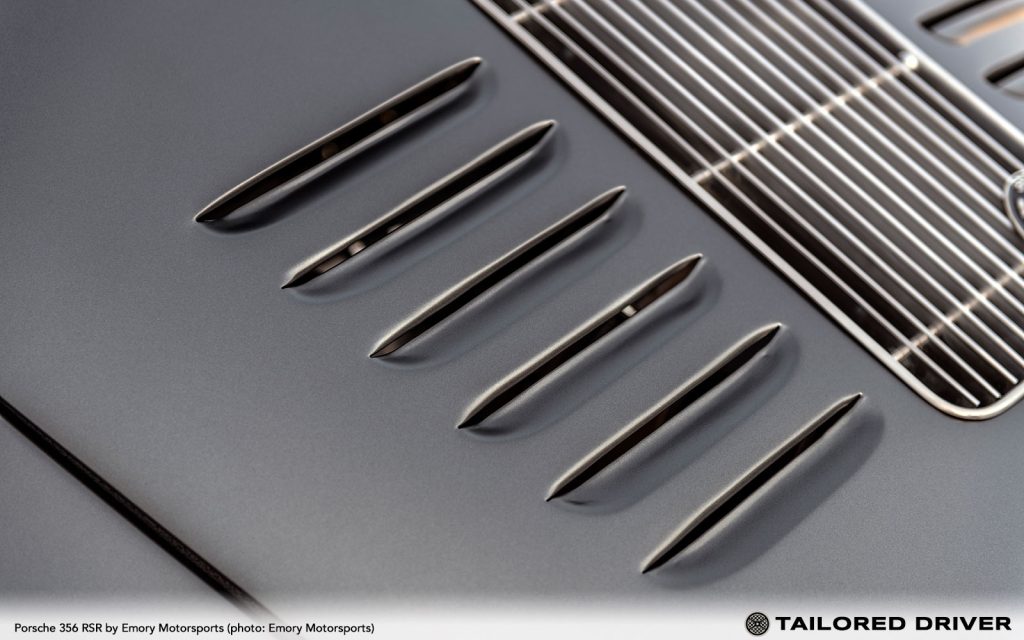
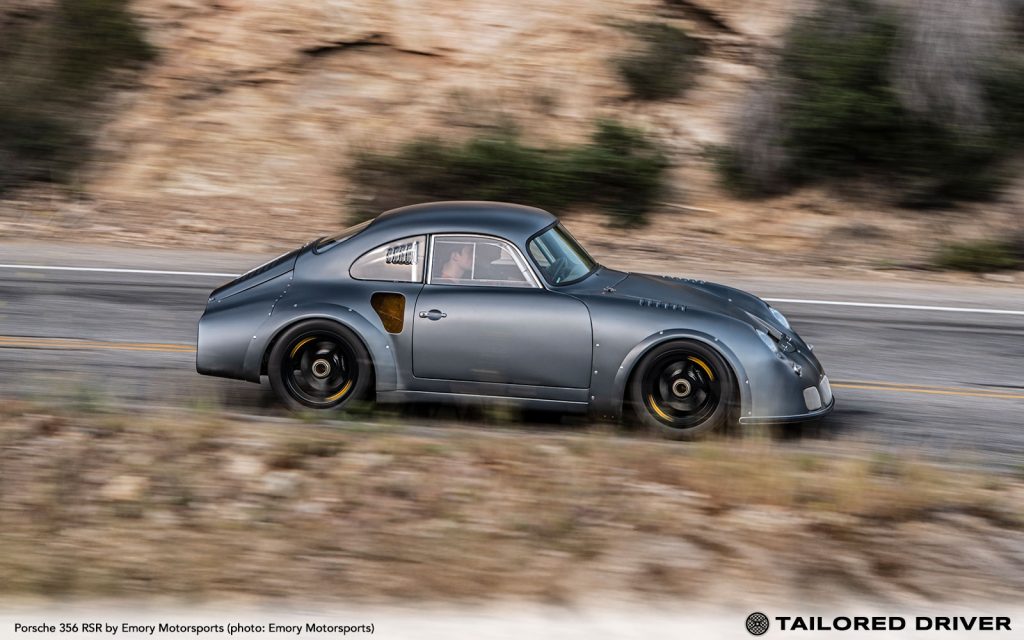
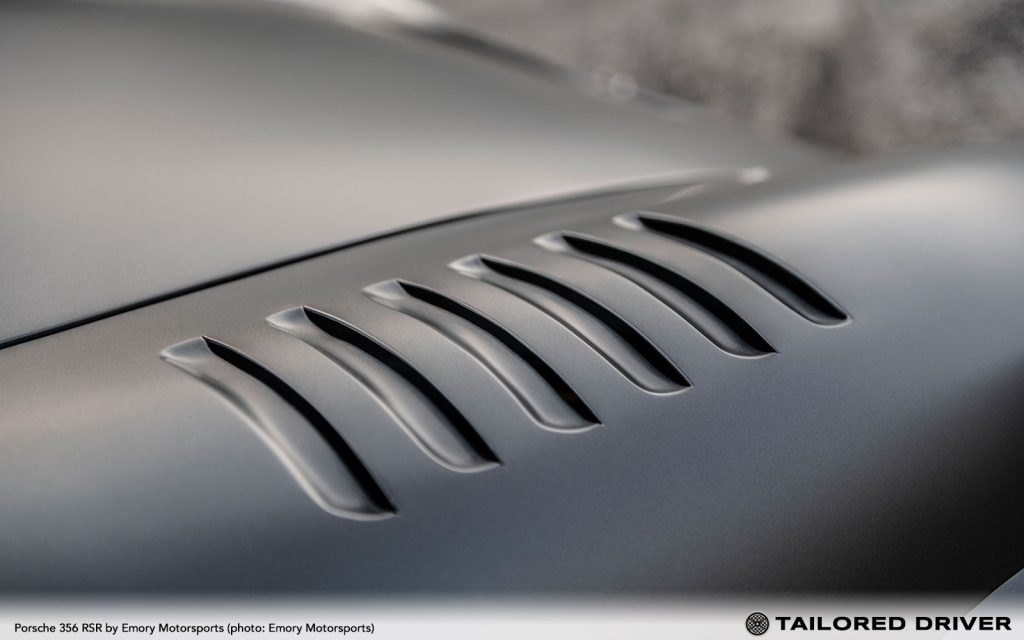
    All of the car’s now-removable nose and tail bodywork is hand-formed aluminum, as is the aluminum deck lid with custom stainless hinges and one-piece aluminum bonnet with oil-cooler air outlet. To relieve wheel-well air pressure, Emory Motorsports added louvers and front fender stand-offs. Other custom air-management modifications include stainless mesh grilles for the cooling ducts and intercooler air inlets in the steel section of the rear fenders. Final exterior touches are modified Porsche 911 rocker panels and Plexiglas side and quarter windows. The body color is a custom blend of PPG hues that Rod Emory calls Meteorite Matte Metallic.

    To merge the Porsche unibodies, the difference in wheelbase was essentially split (85 mm) with a clever redistribution of the length. However, all of the stock 964 suspension pick-up points were retained. Also, the engine frame section was tailored to a length appropriate for a 356-correct air-cooled four.

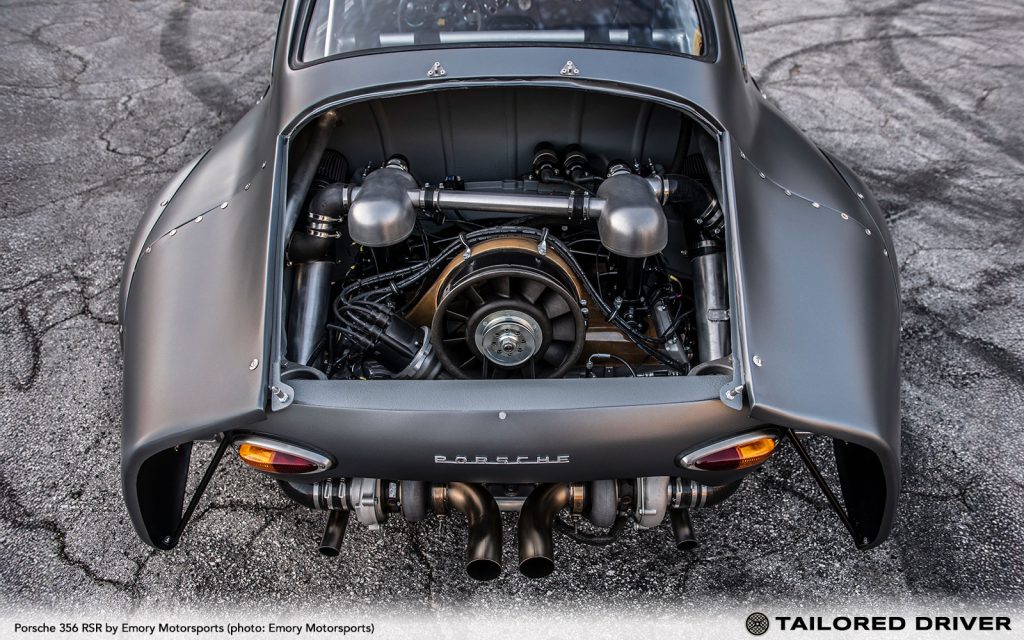
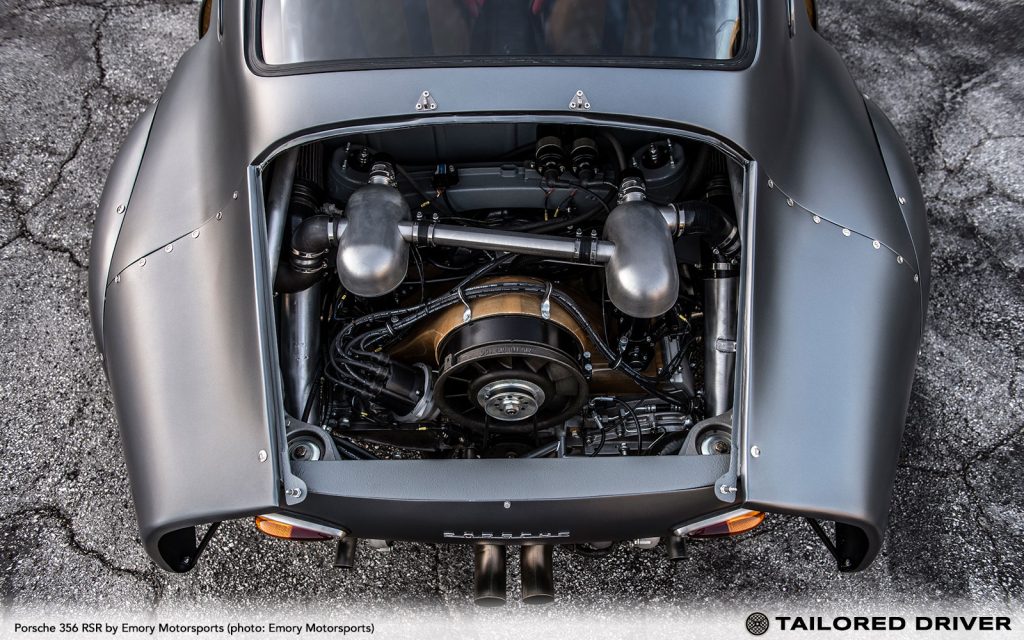
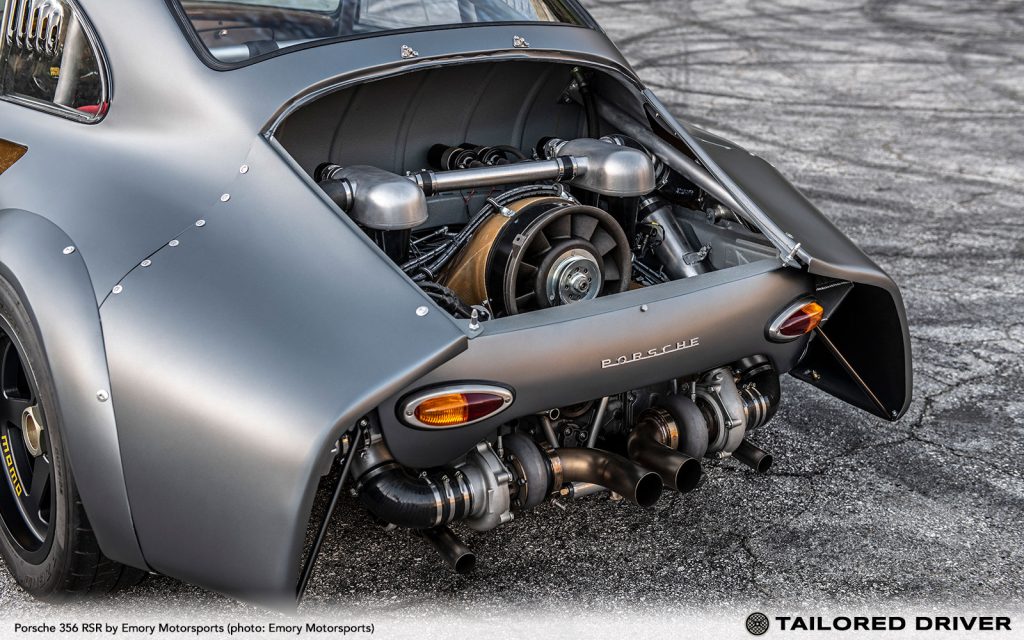
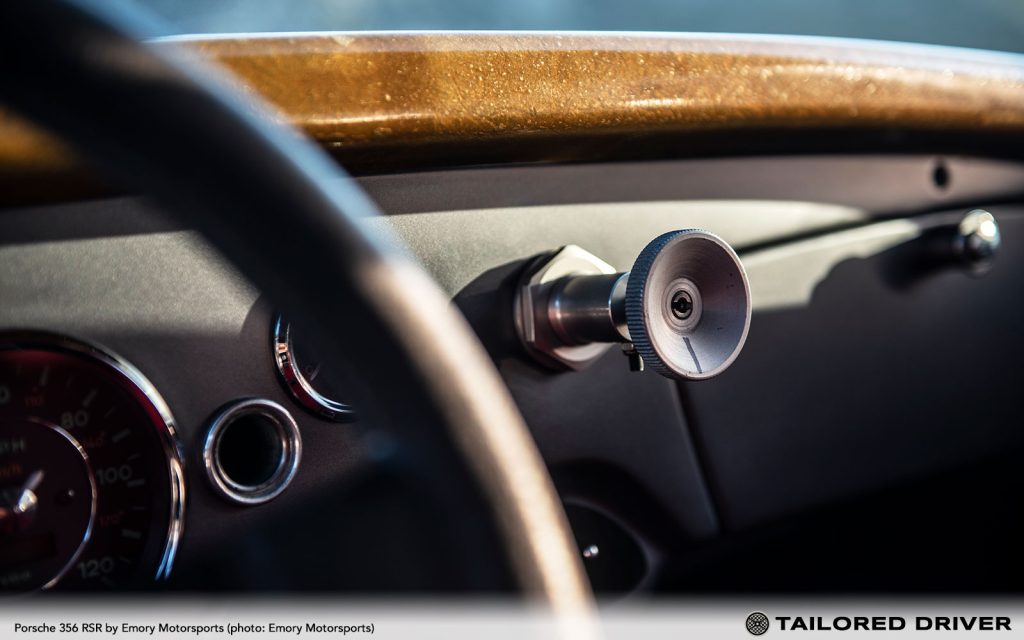
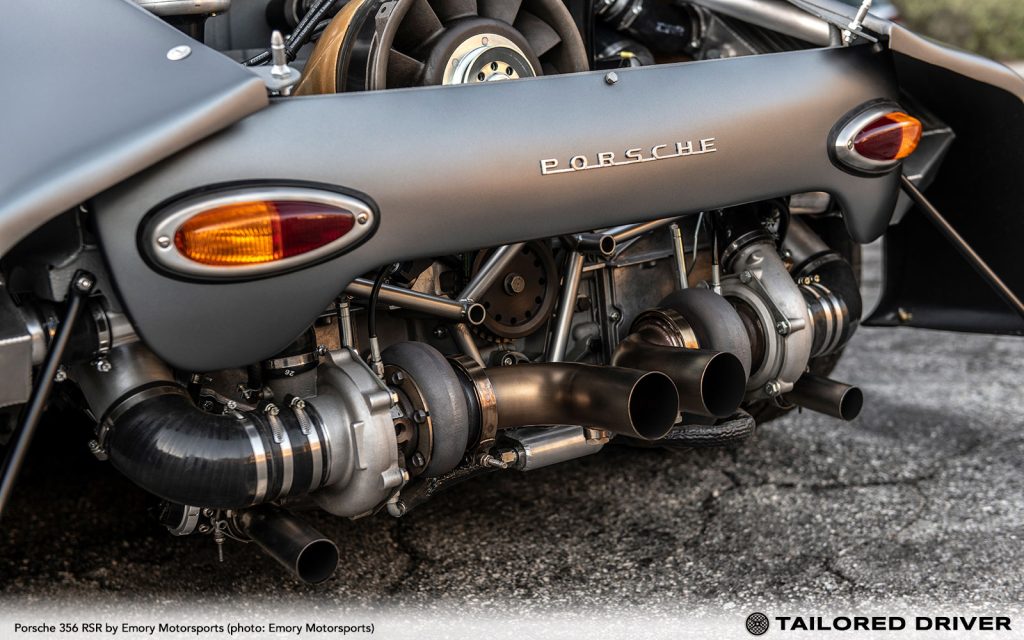
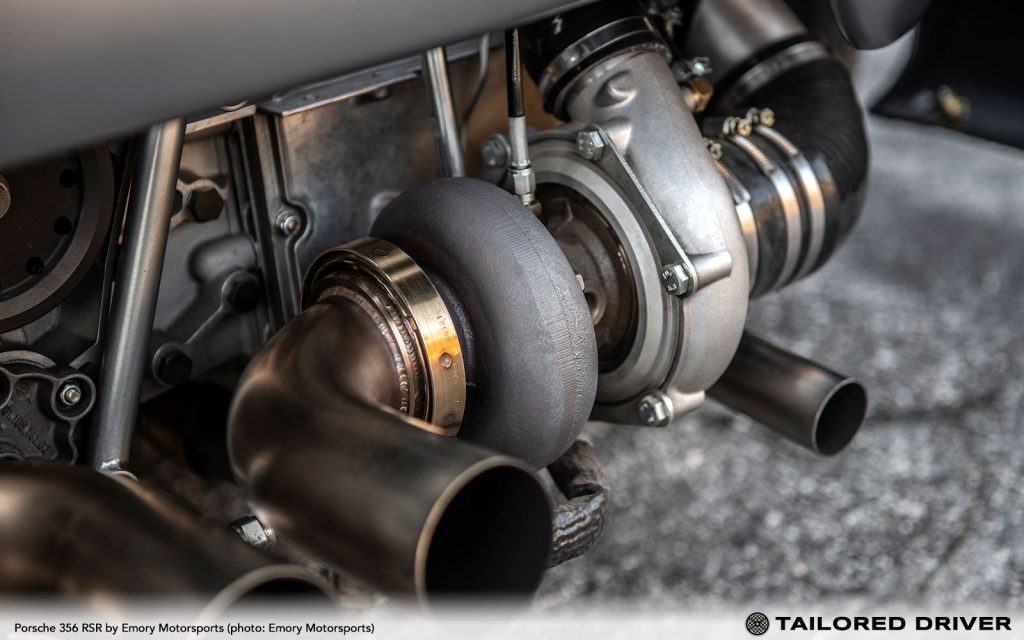
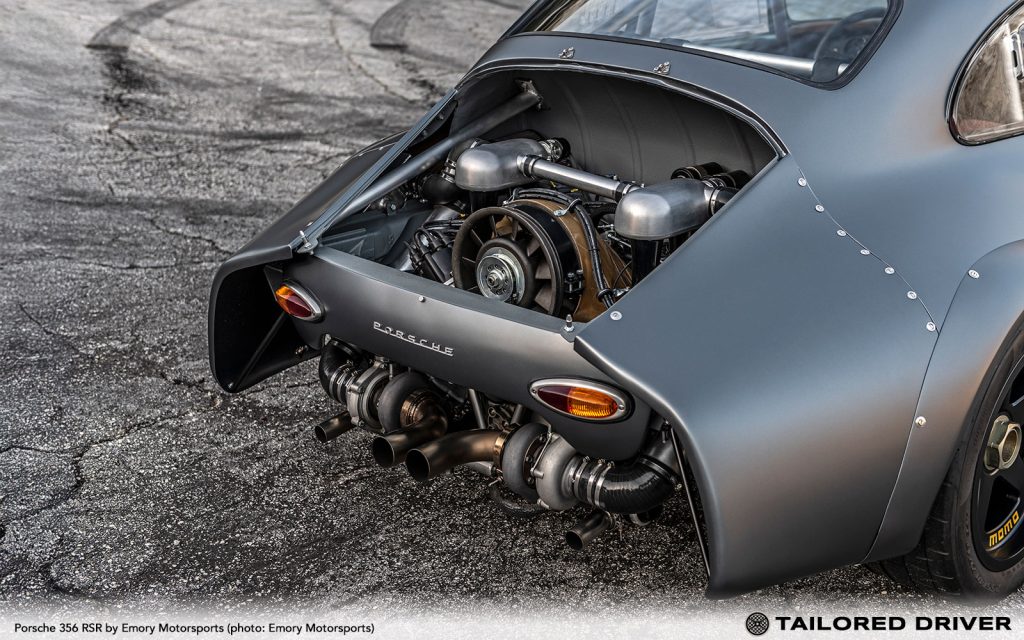
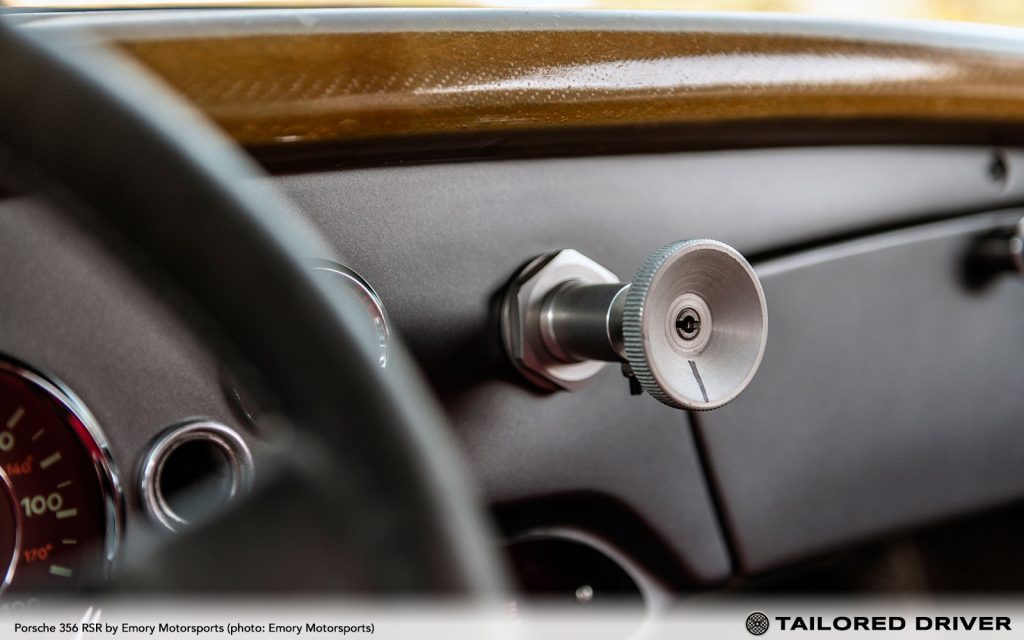
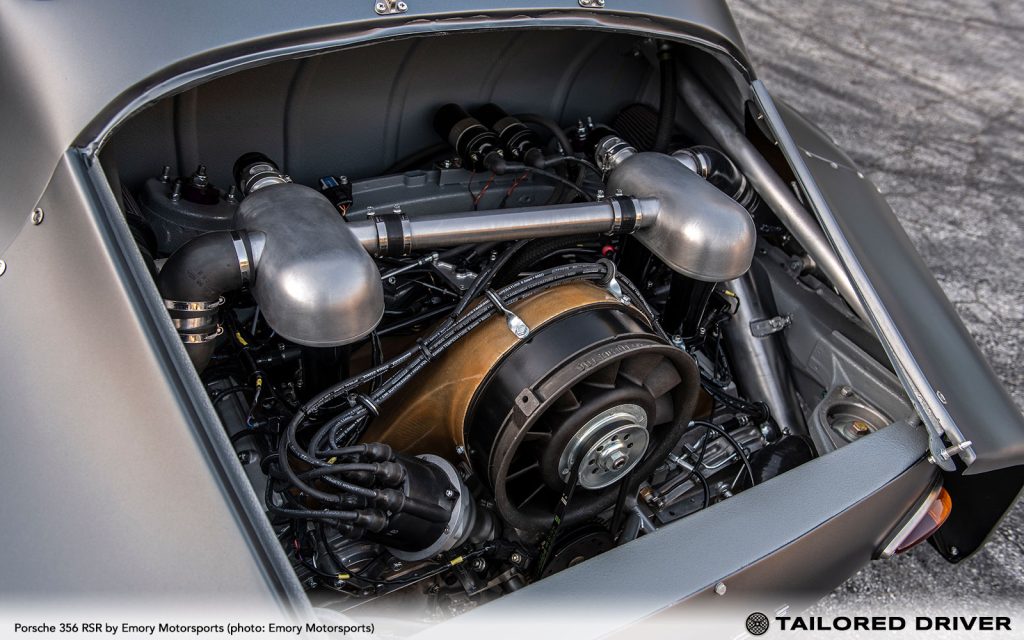
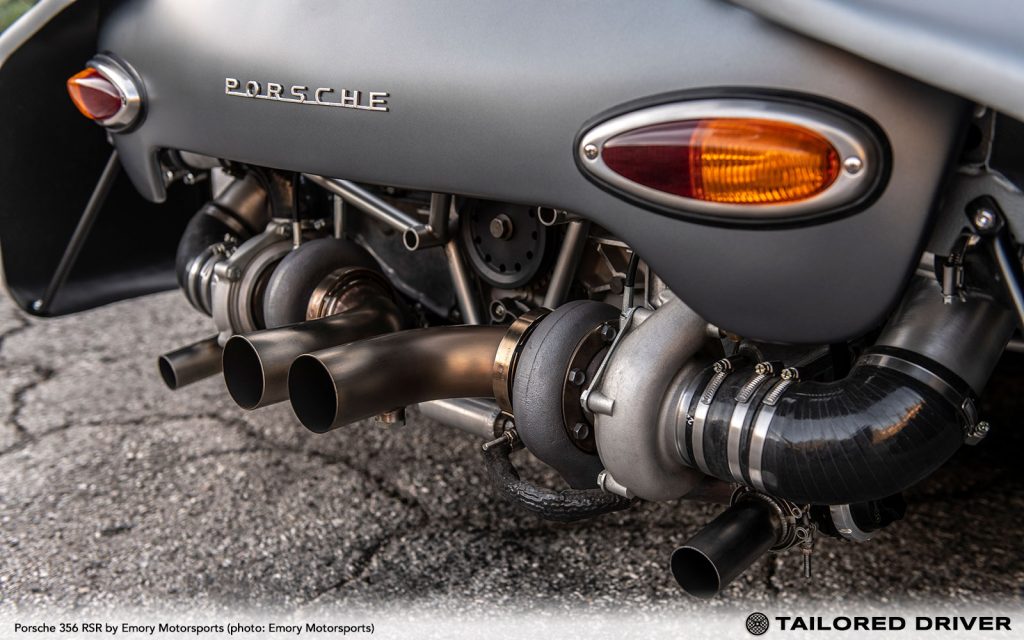
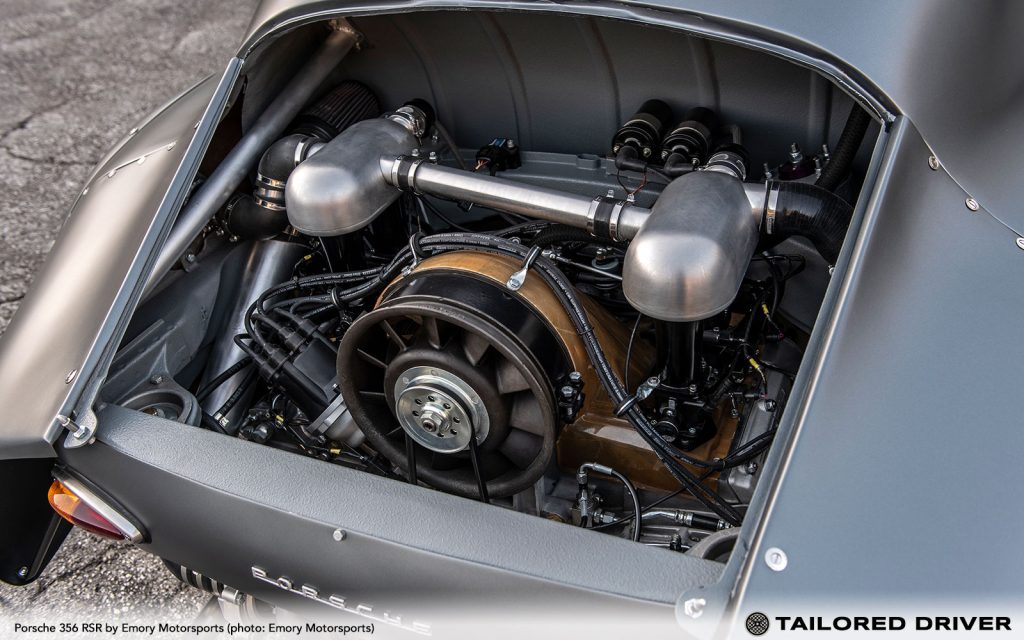
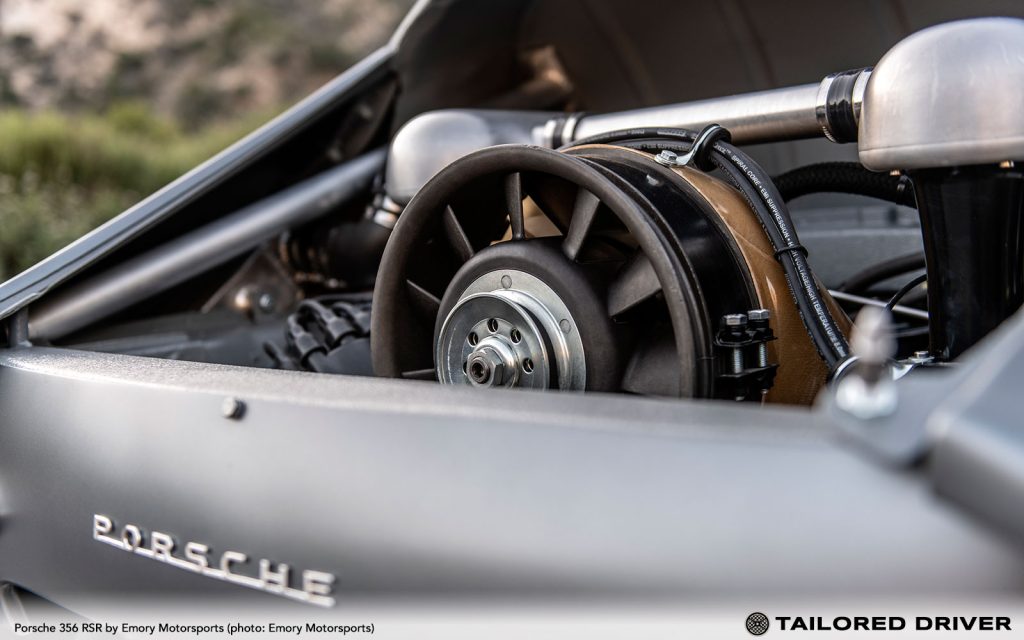
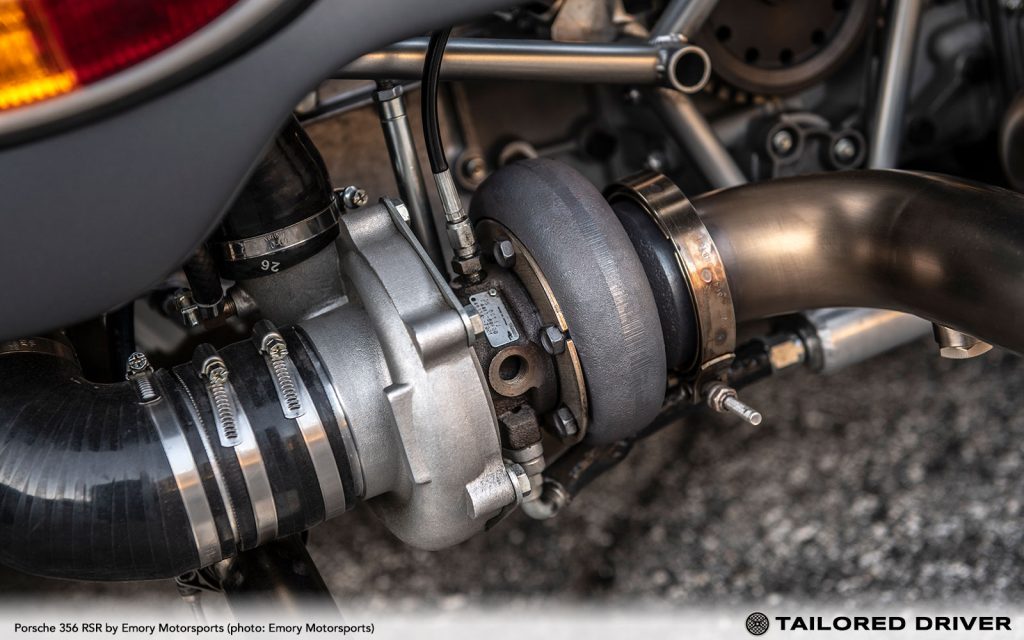
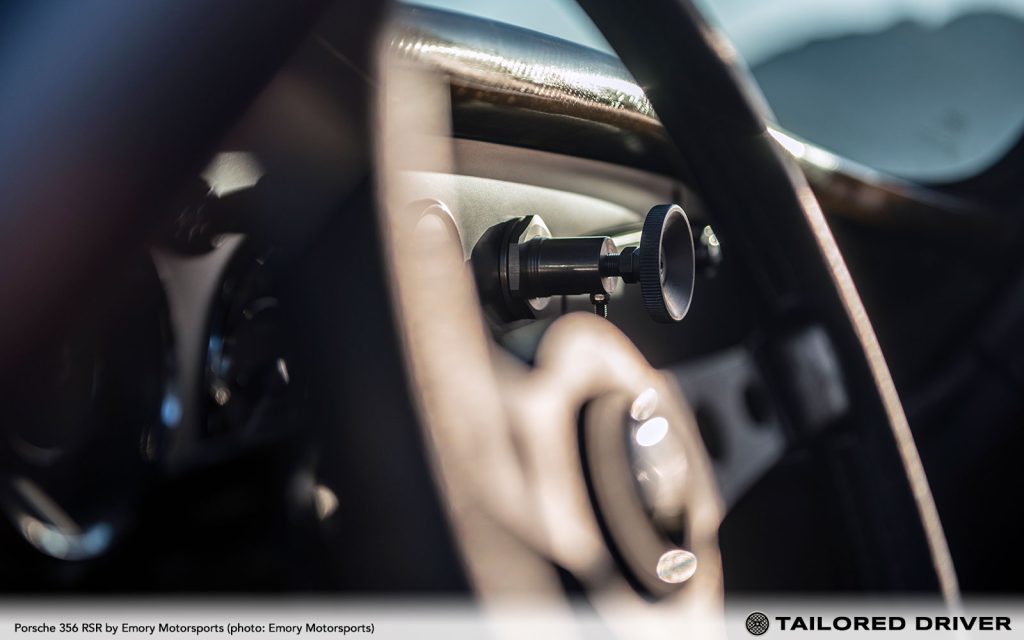
    Speaking of which, the exotic Emory-Rothsport twin-turbo Outlaw-4 engine produced a whopping 393 horsepower on Rothsport Racing’s engine dyno – incredible in a car that weighs only 1,950 pounds. This proprietary engine block, developed by and only available in Emory Motorsports builds, is a collaboration between Rod Emory and Jeff Gamroth of Rothsport Racing. The “Outlaw-4” engine’s architecture is based on the dry-sump Porsche 3.6L powerplant from the 1990s. To get the crazy power, Rothsport Racing created a purpose-built fuel-injection system with a one-off intake plenum and twin-plug distributor, managed by a Motec computer. The RSR race-inspired twin-turbo system uses two Garrett GT28R ball-bearing turbos with Turbosmart wastegates, backed by custom intercoolers. A dash-mounted 935-style boost control knob allows dialing up as much as 1.2 bar boost from the turbos. 

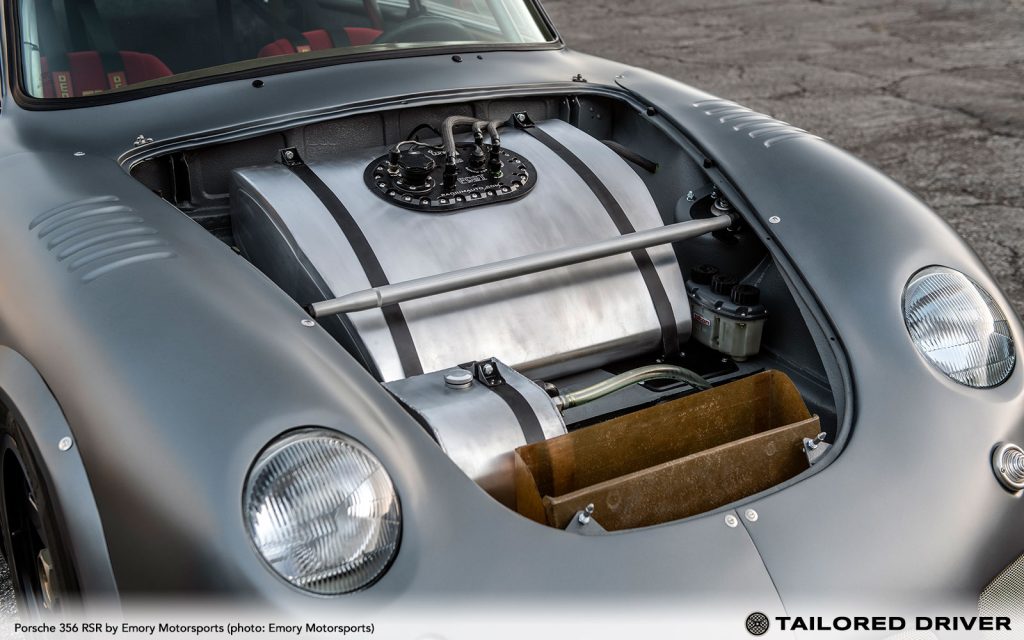
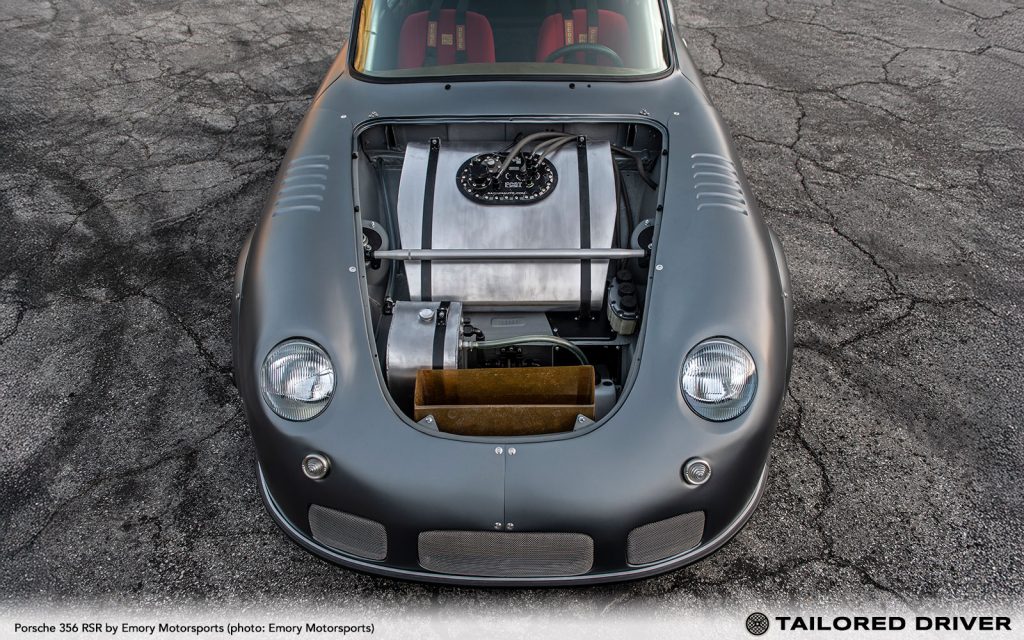
    Other Outlaw-4 details include a full-flow oil system with remote filter and cooler, plumbed with XRP lines and fittings. Also, Rothsport Racing fabricated a custom 3-2-1 stainless-steel exhaust system, which ends with a muffler-less straight pipe. The fuel system includes an 18-gallon Fuel Safe fuel cell, cradling a Radium FCST fuel delivery system.

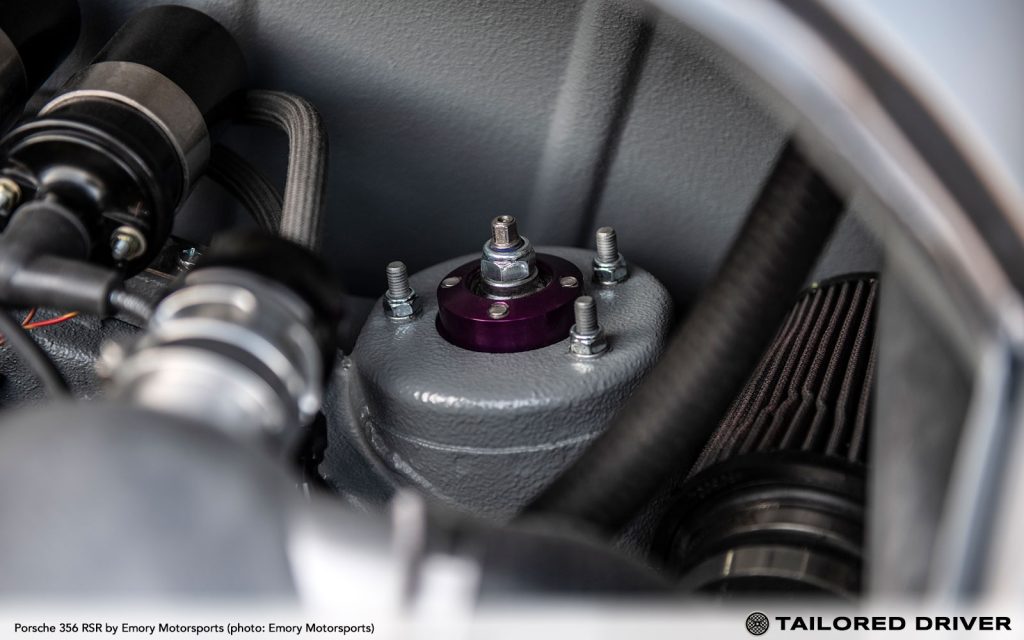
    The 356 RSR’s suspension was designed around the extreme power-to-weight ratio. Ride is controlled by KW coilovers with 1.5 inches of on-demand lift to negotiate driveway aprons. Eisenlohr Racing Products front camber plates and mono-ball mounts make for additional adjustability. Flatter cornering is made possible by Tarett Engineering swaybars. Also, the 964 non-power rack-and-pinion steering and brakes were retained, albeit with custom Coleman Racing rotors and hats. 

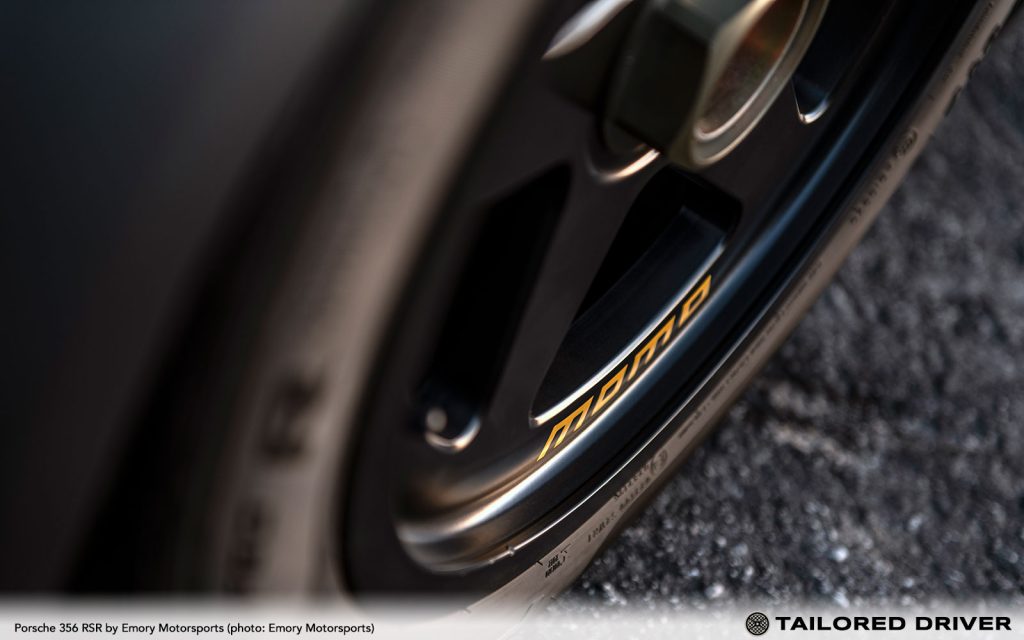
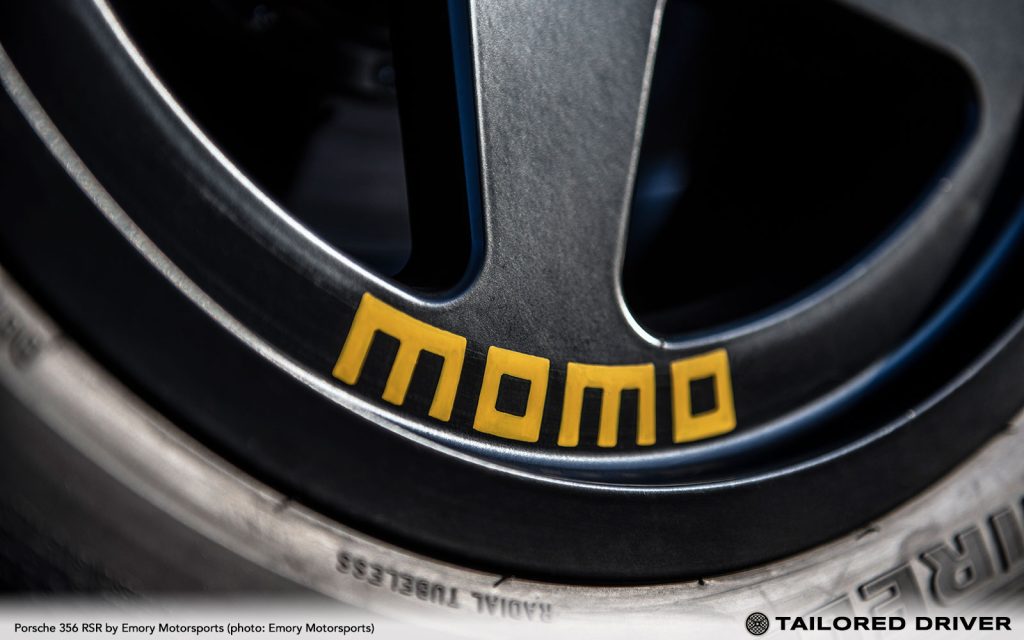
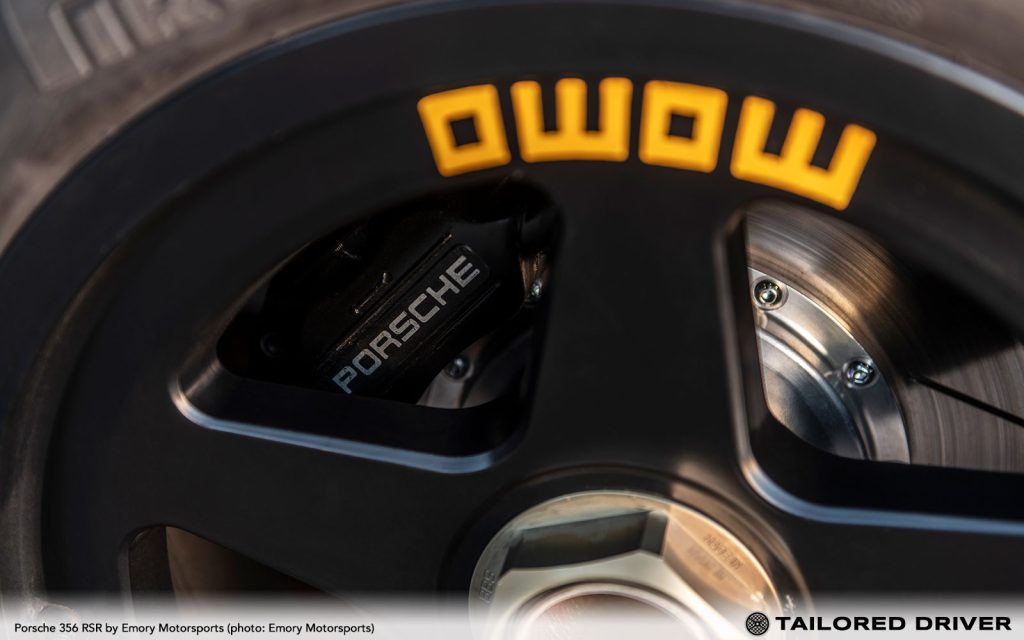
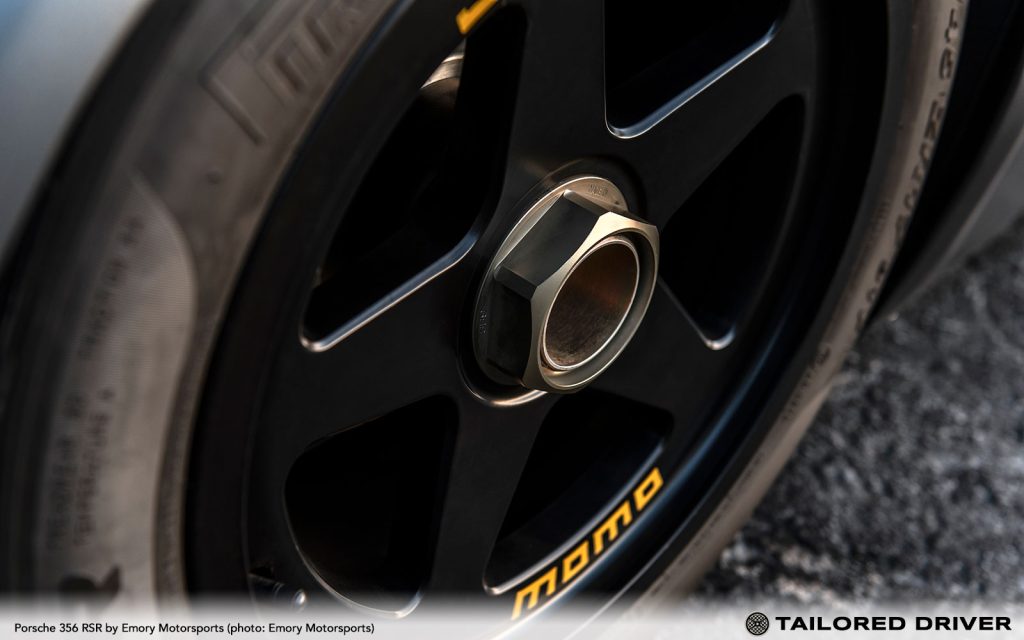
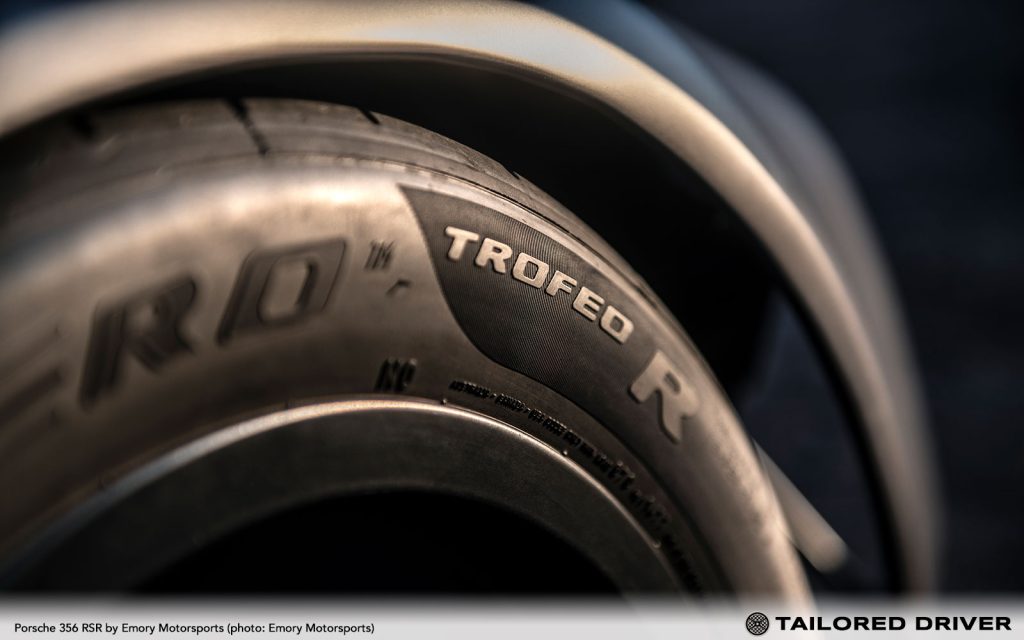
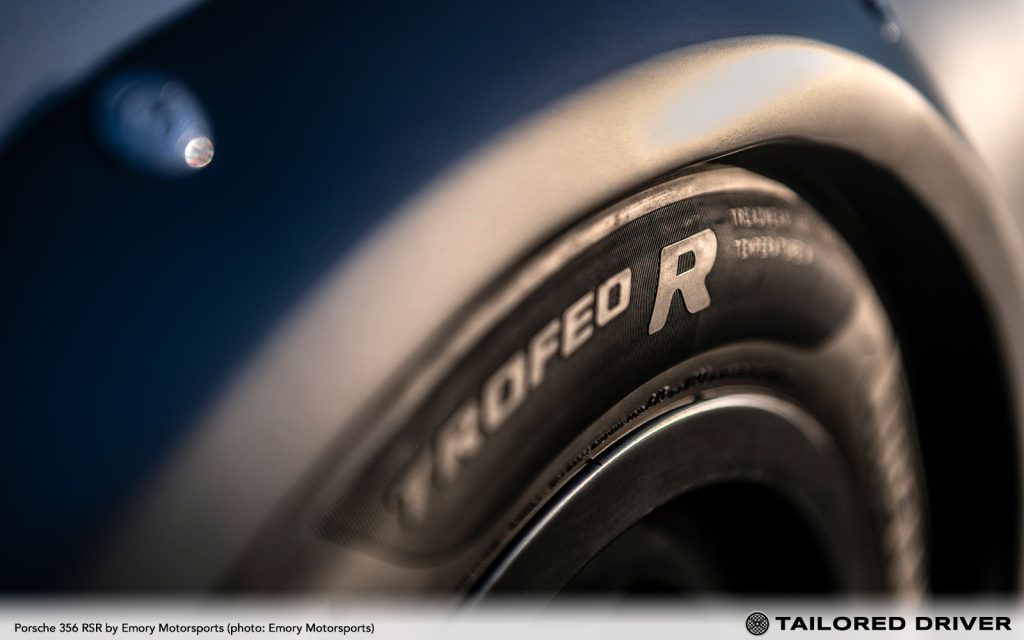
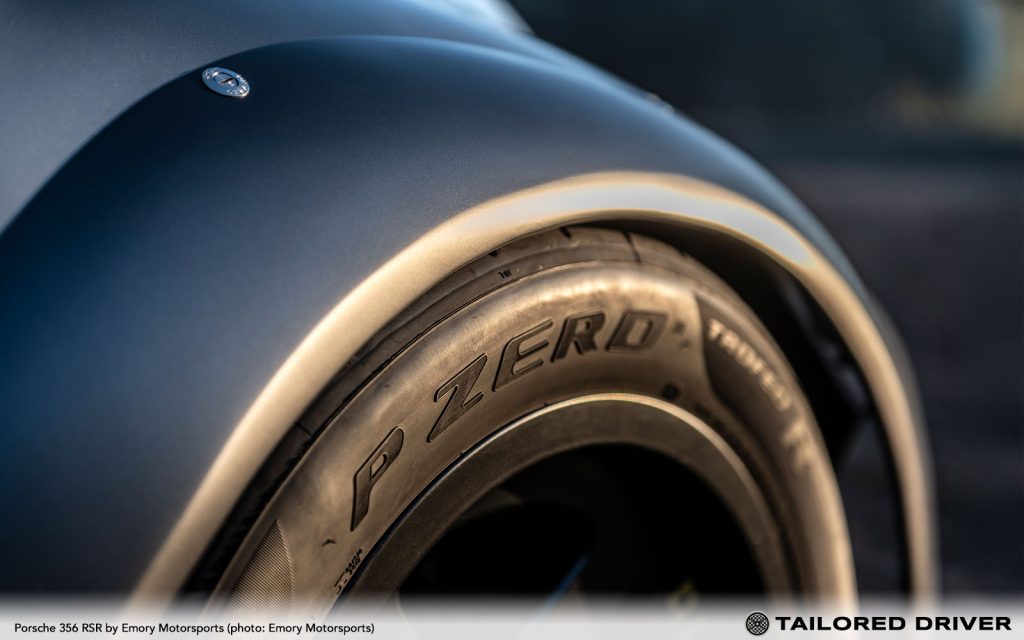
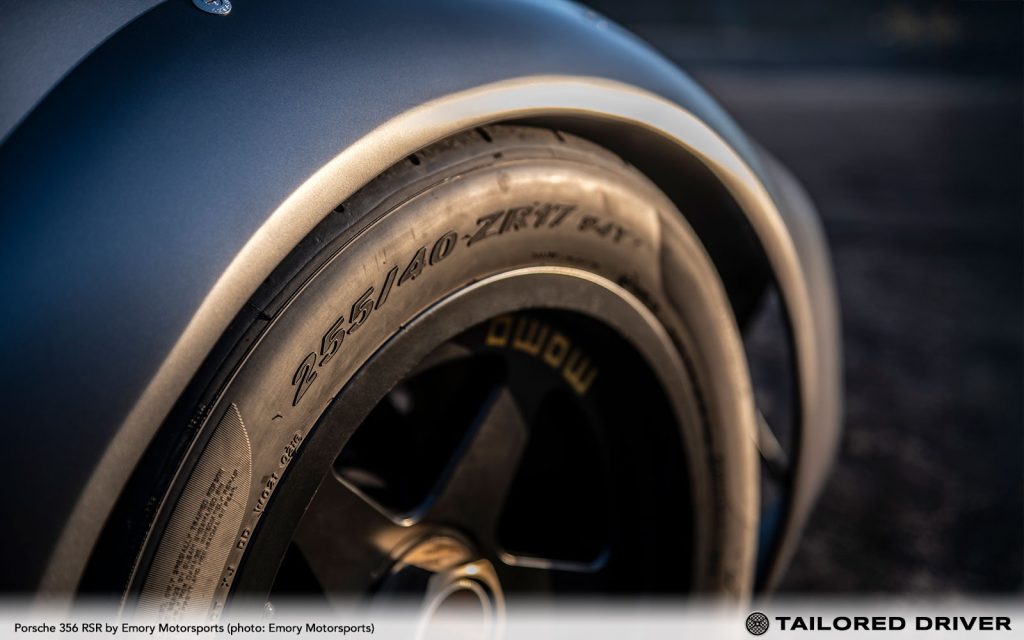
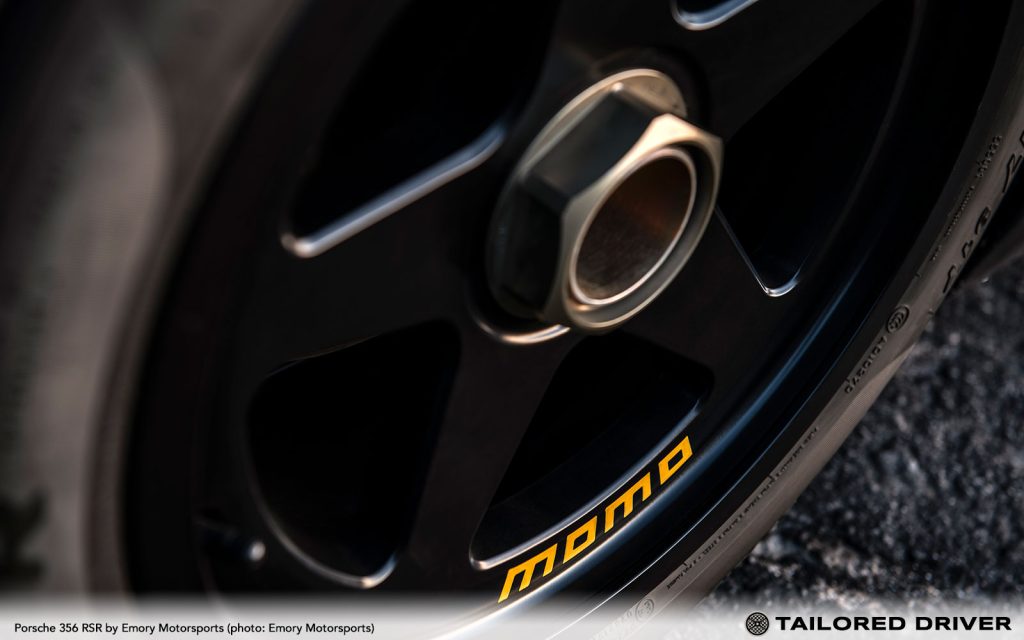
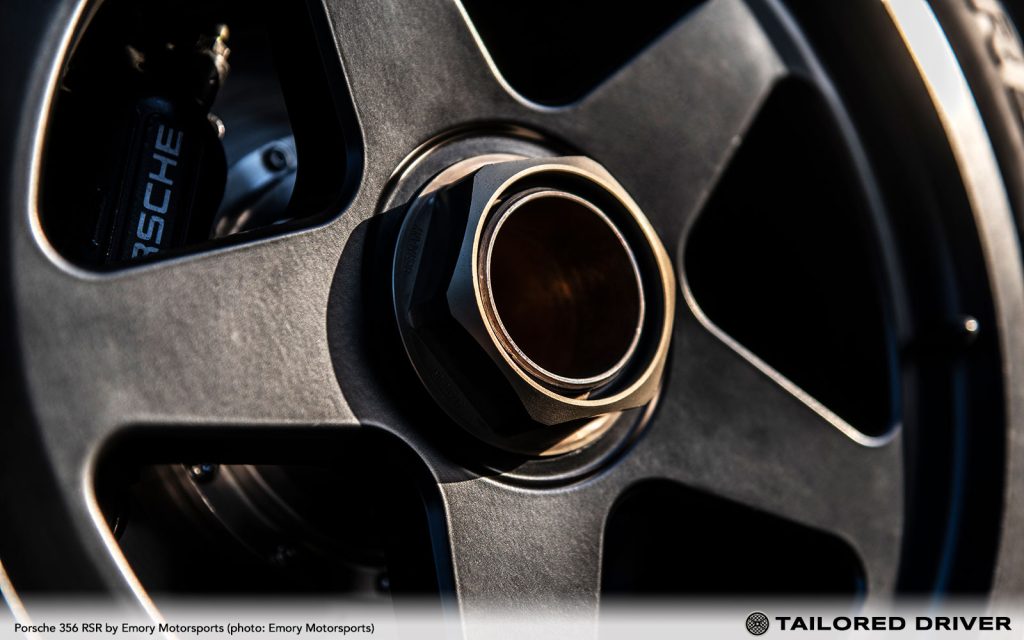
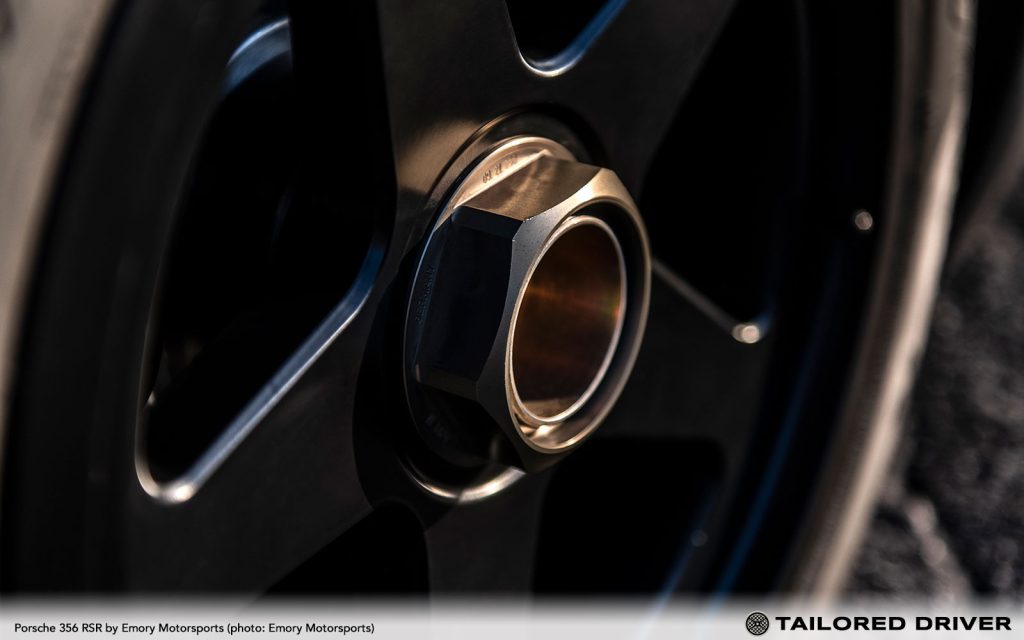
    Competition components were one of the project’s springboards, but street-legality was the goal. Rod Emory has an affinity for the MOMO 5-spoke wheels with centerlock hubs from the Porsche works 935. Wheels like those were at the top of his must-have list. One bespoke set of MOMO Heritage center-lock wheels were created just for this car; fronts are 17×7 and the rears are 17×8, wrapped in Pirelli P Zero Trofeo R tires.
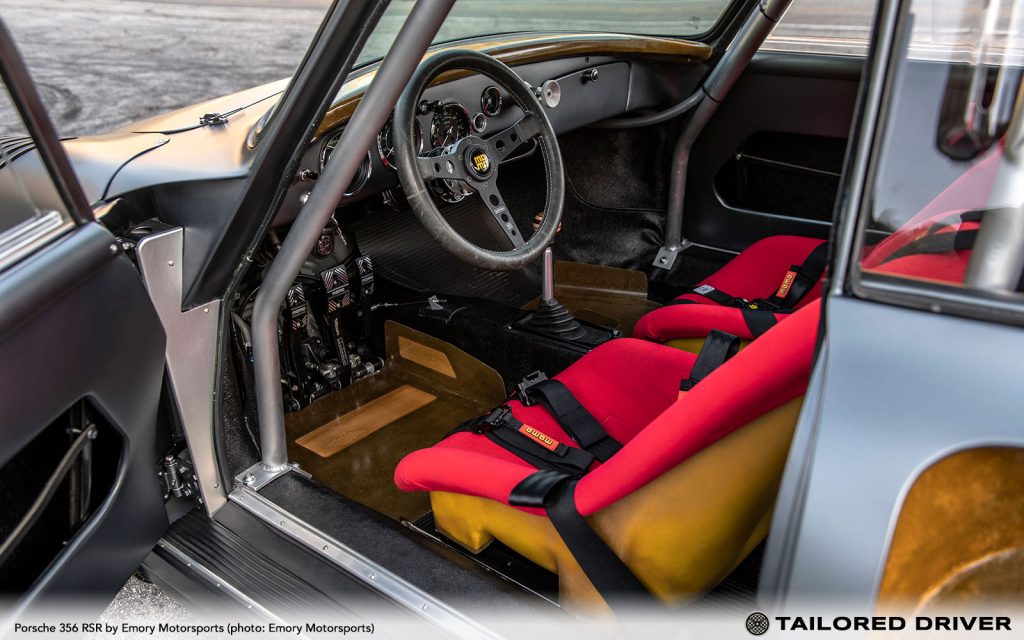
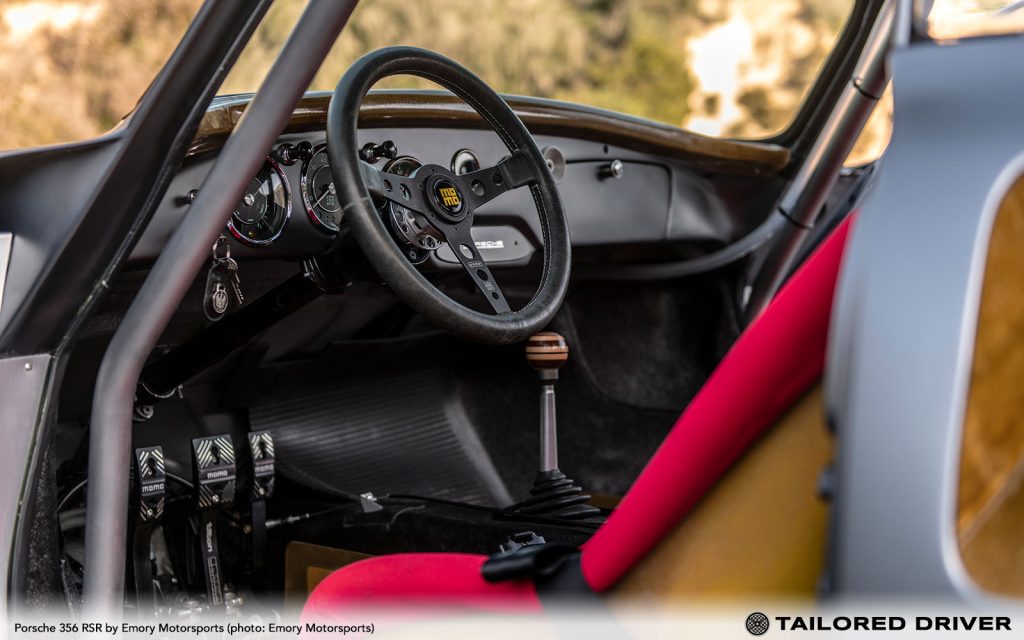
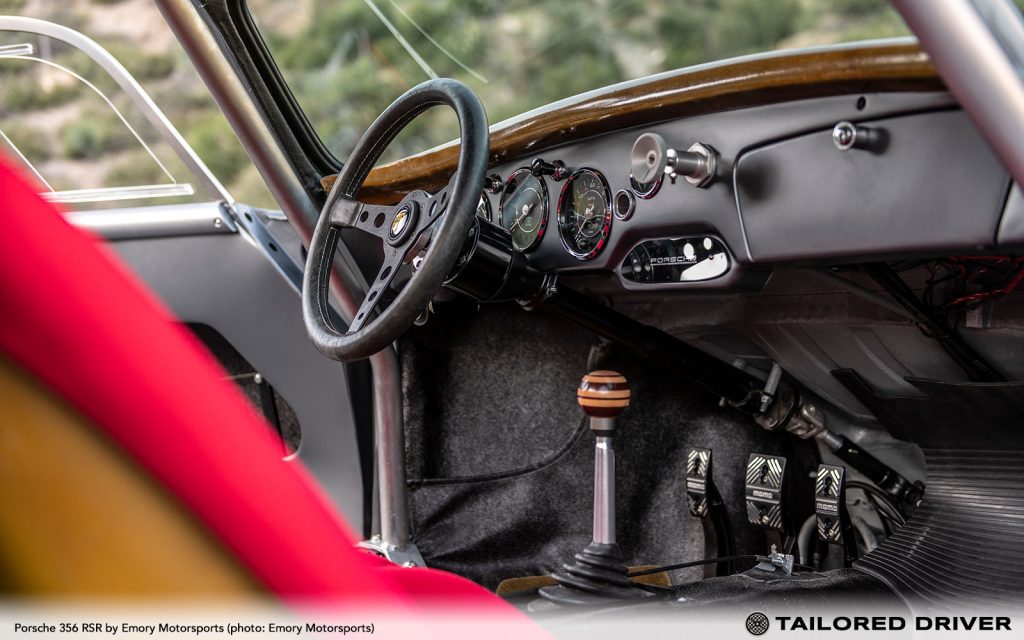
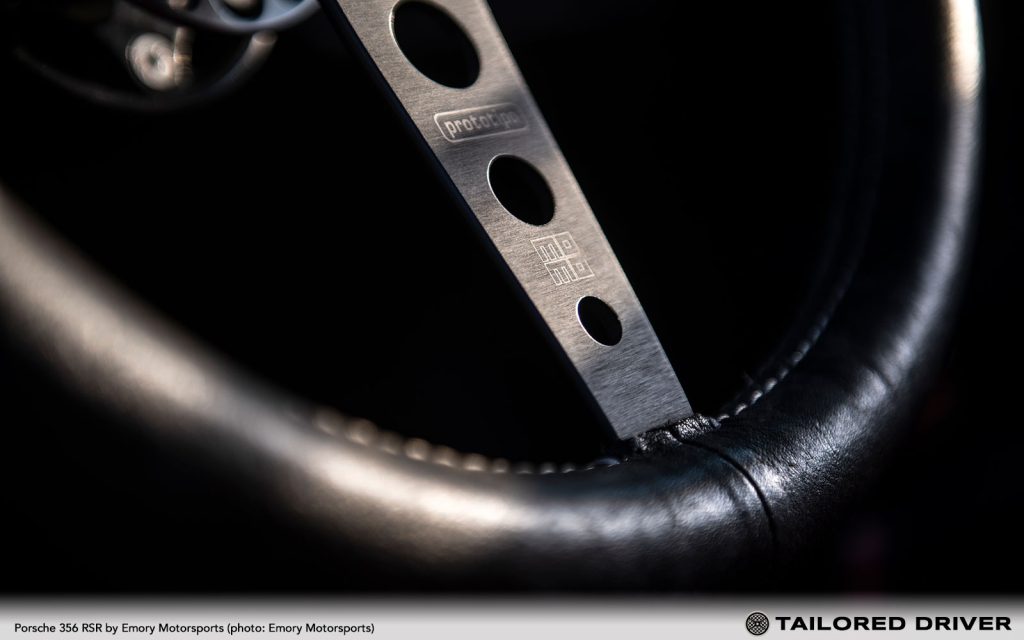
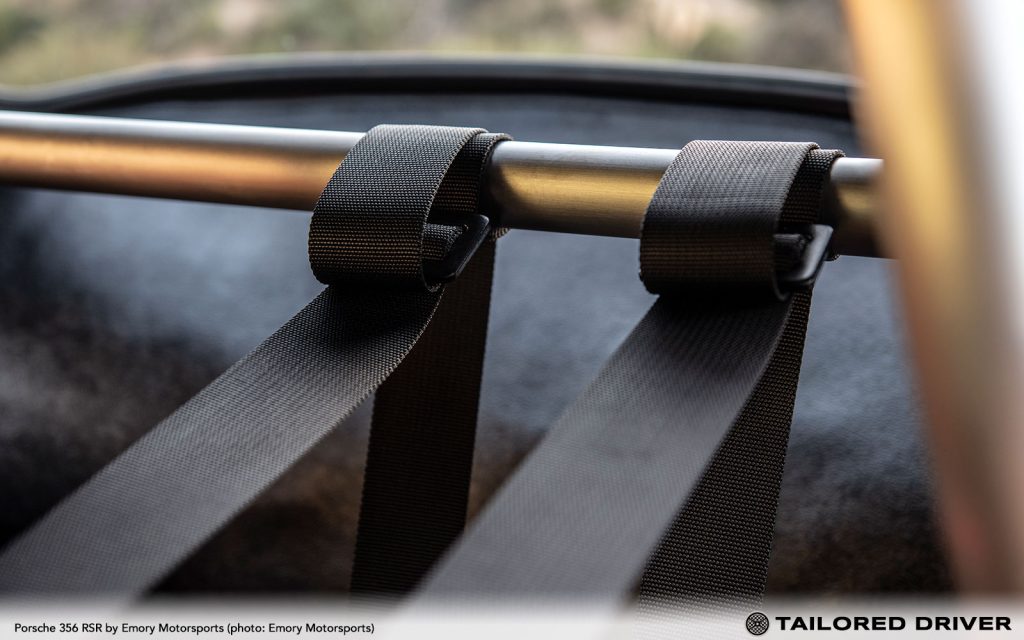
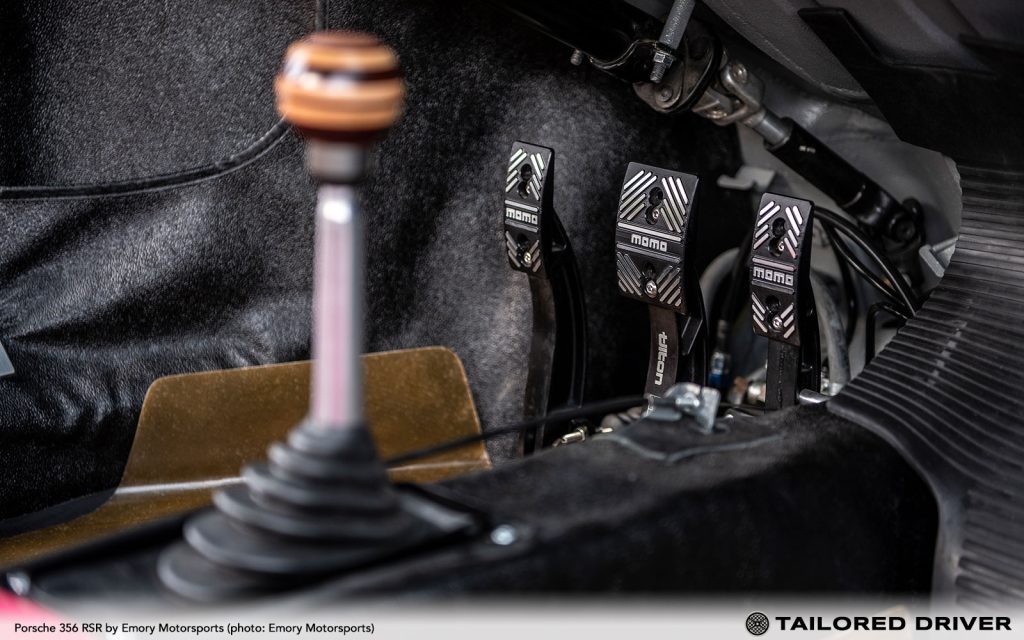
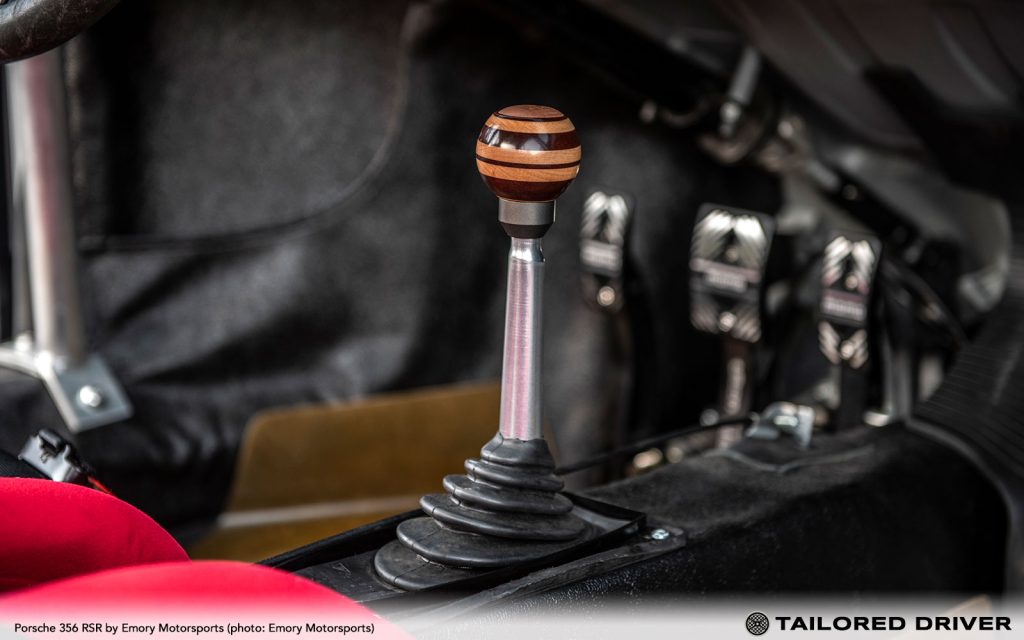
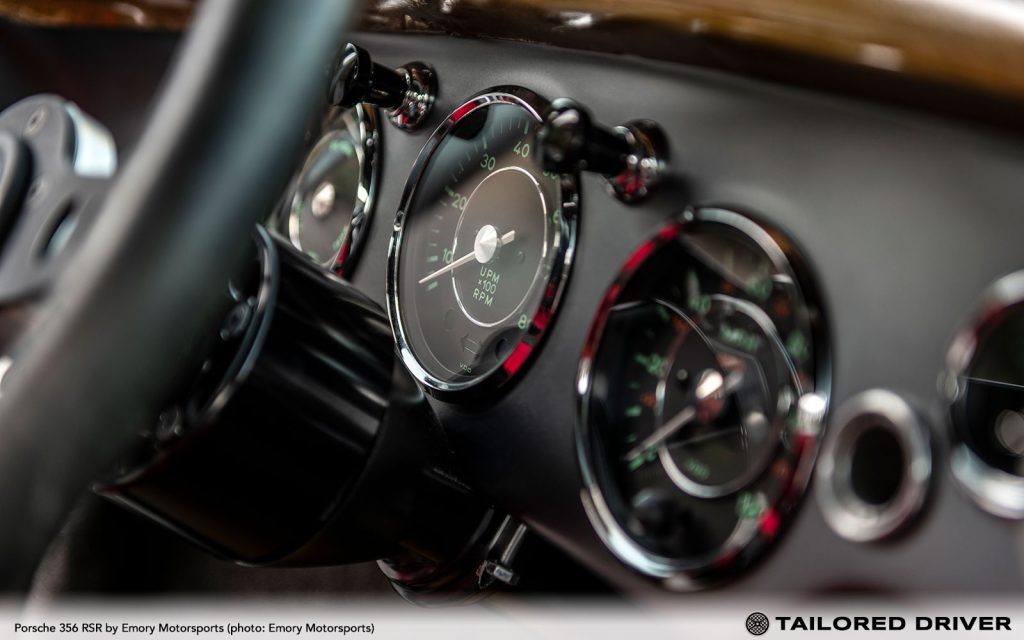
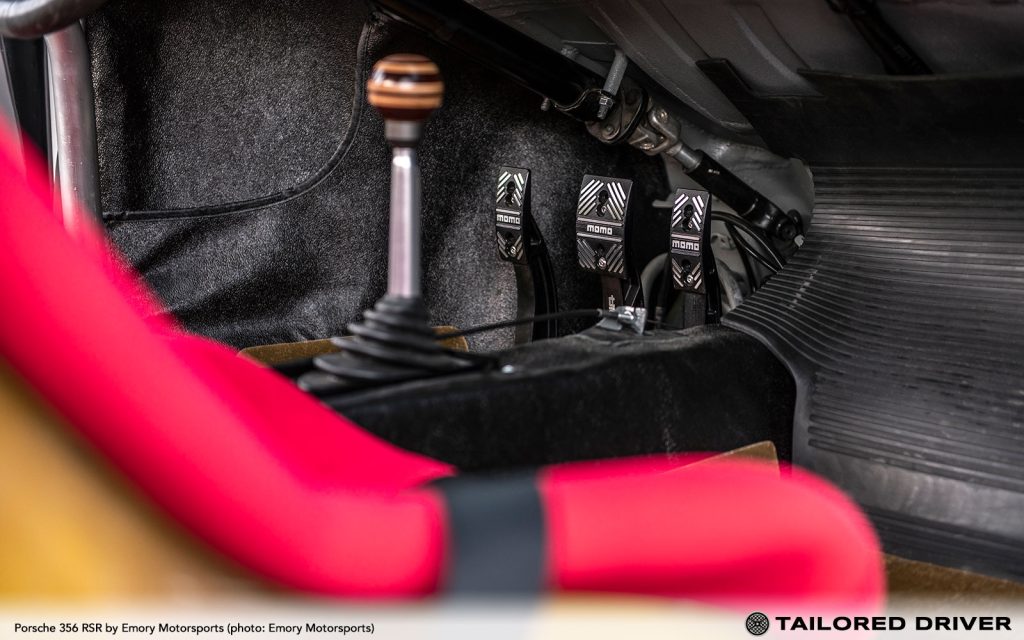
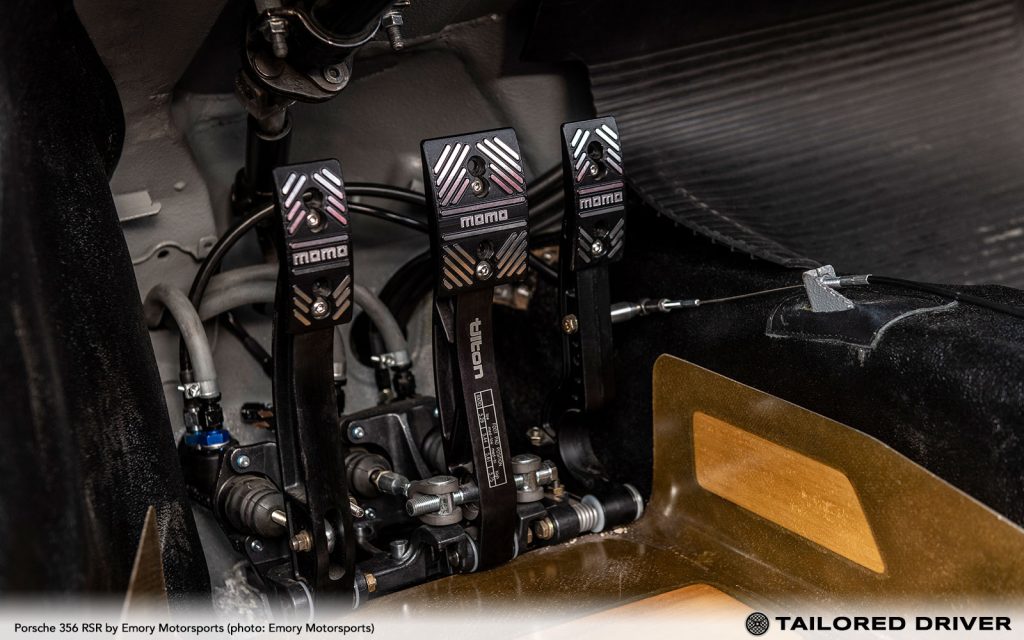
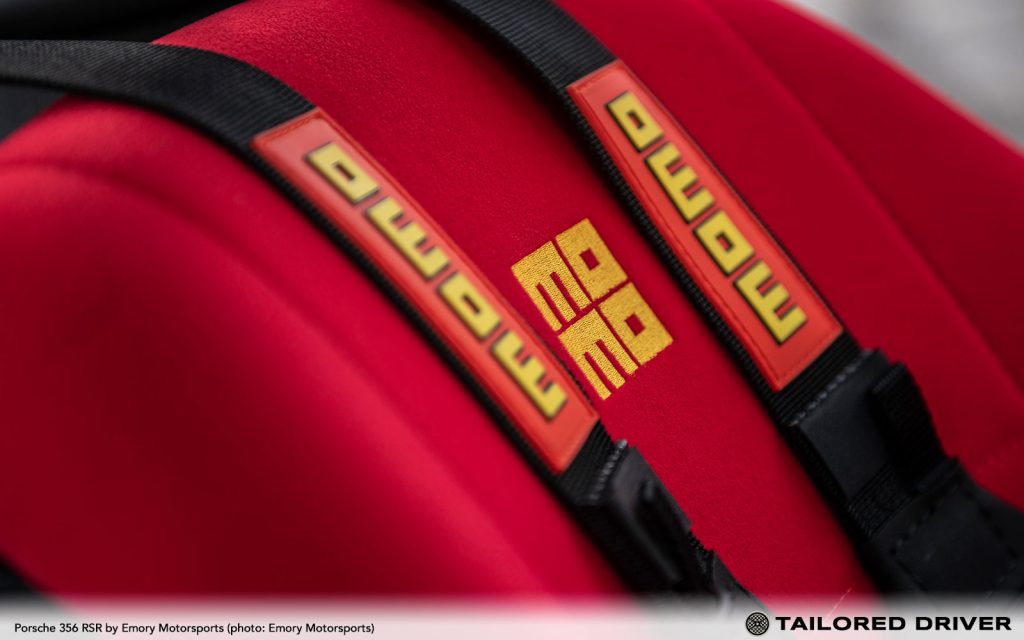
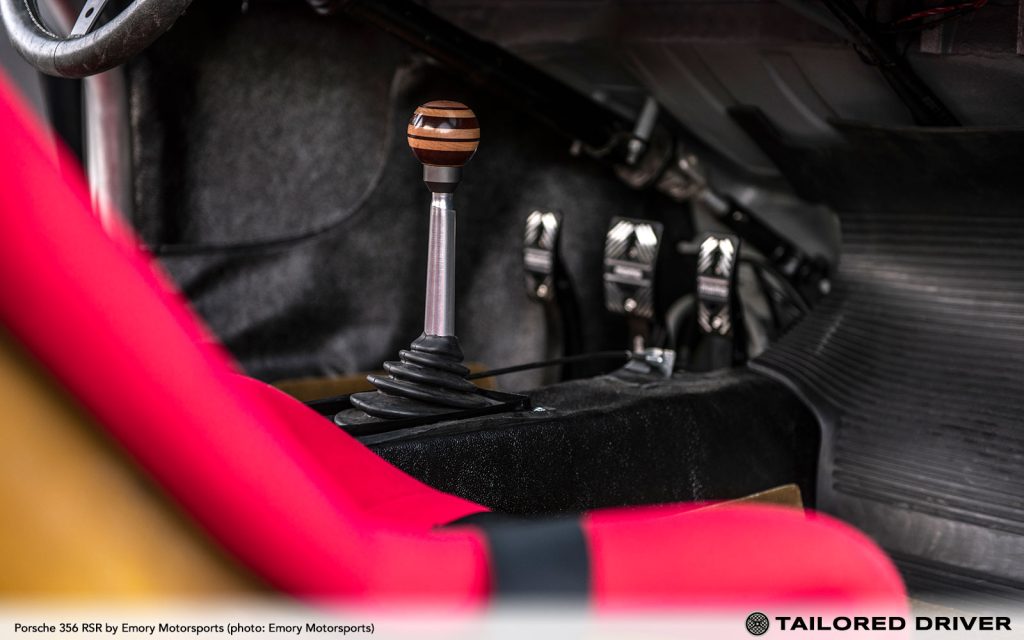
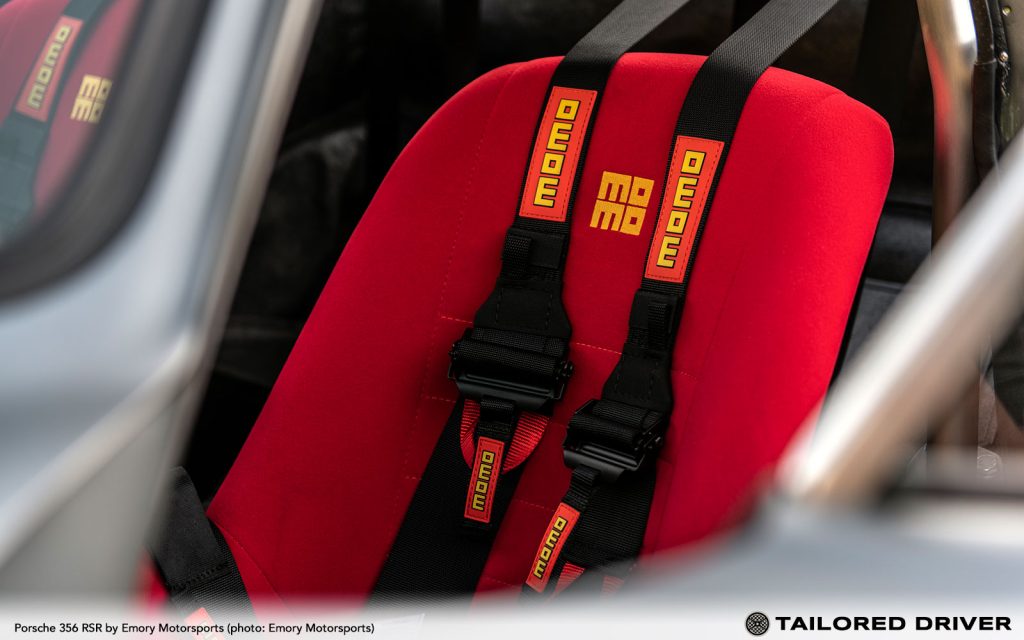
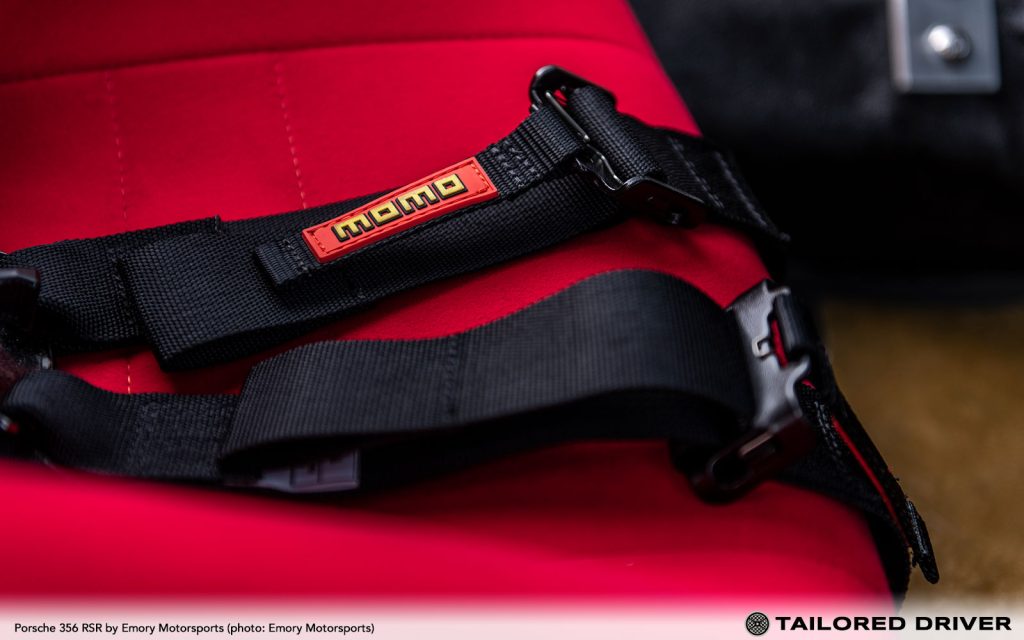
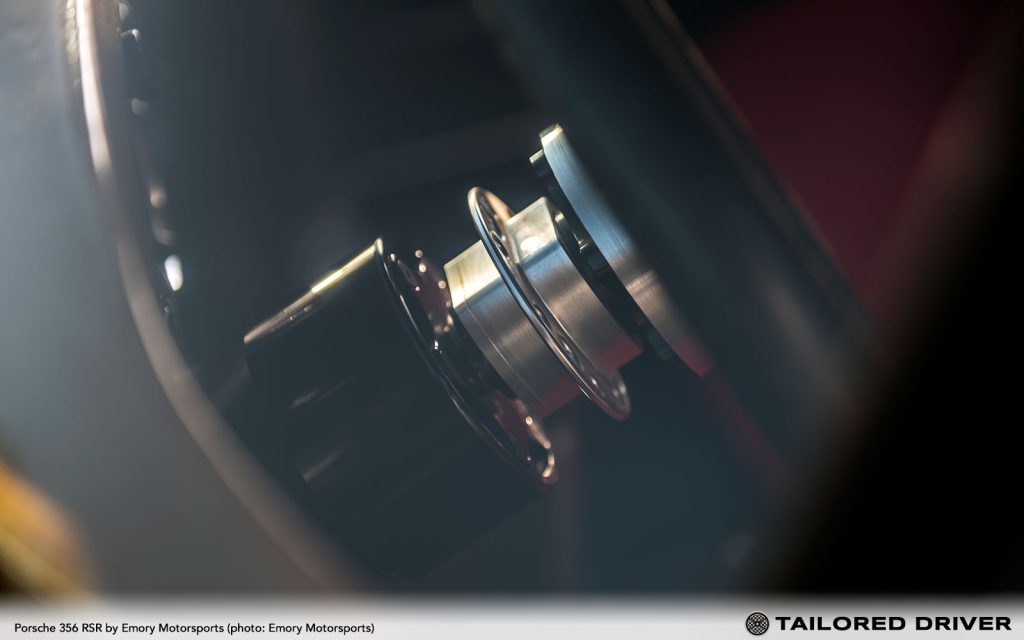
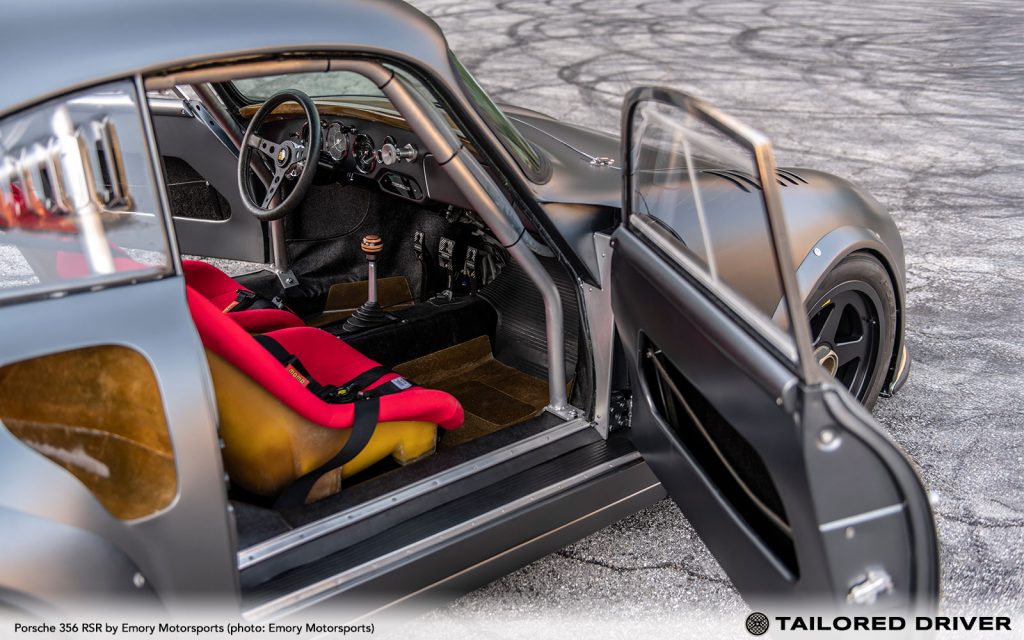
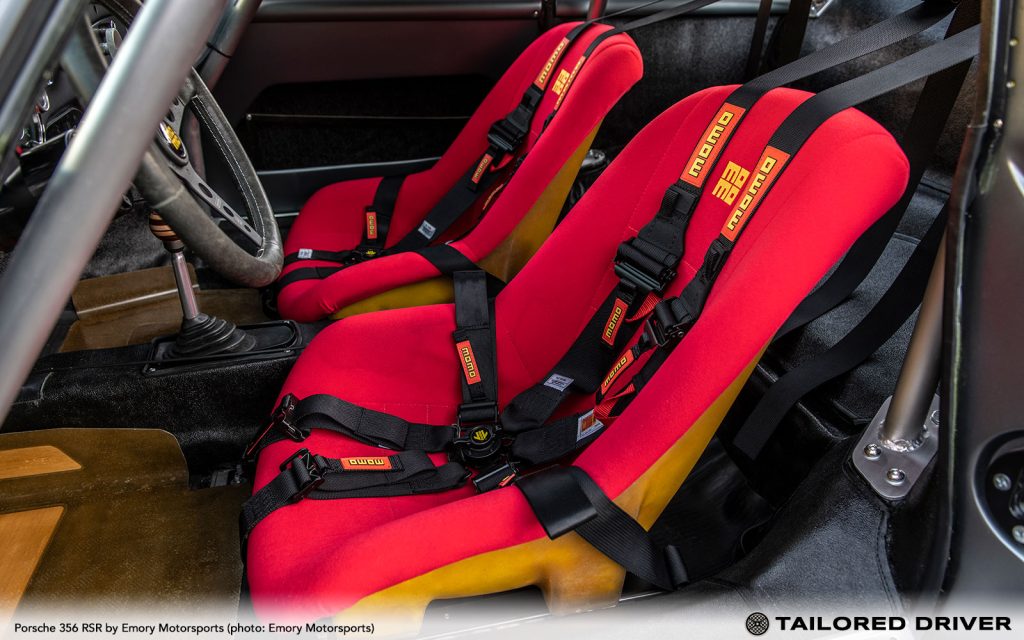
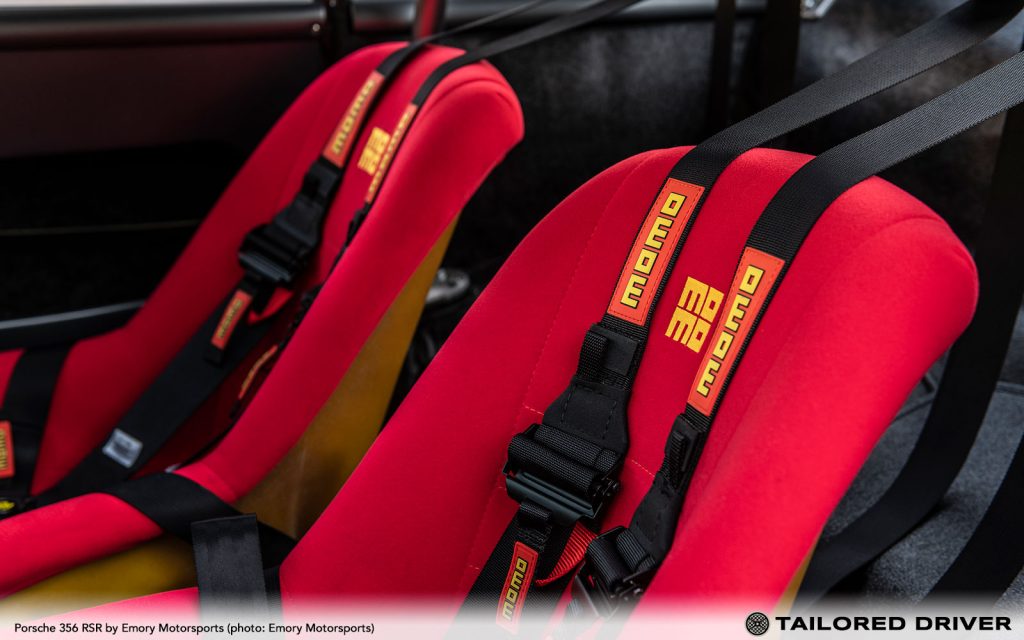
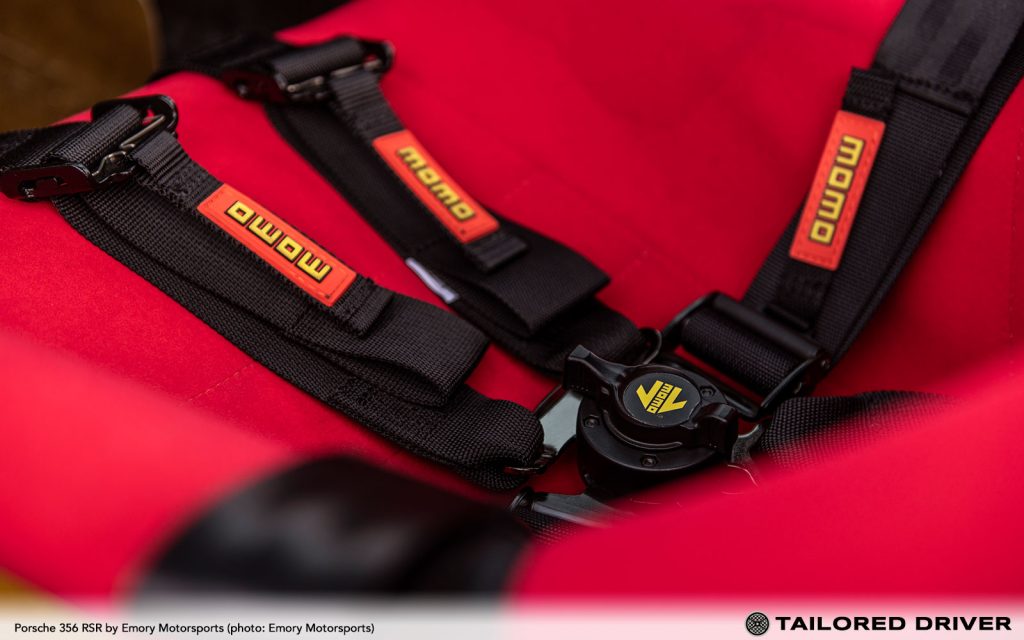
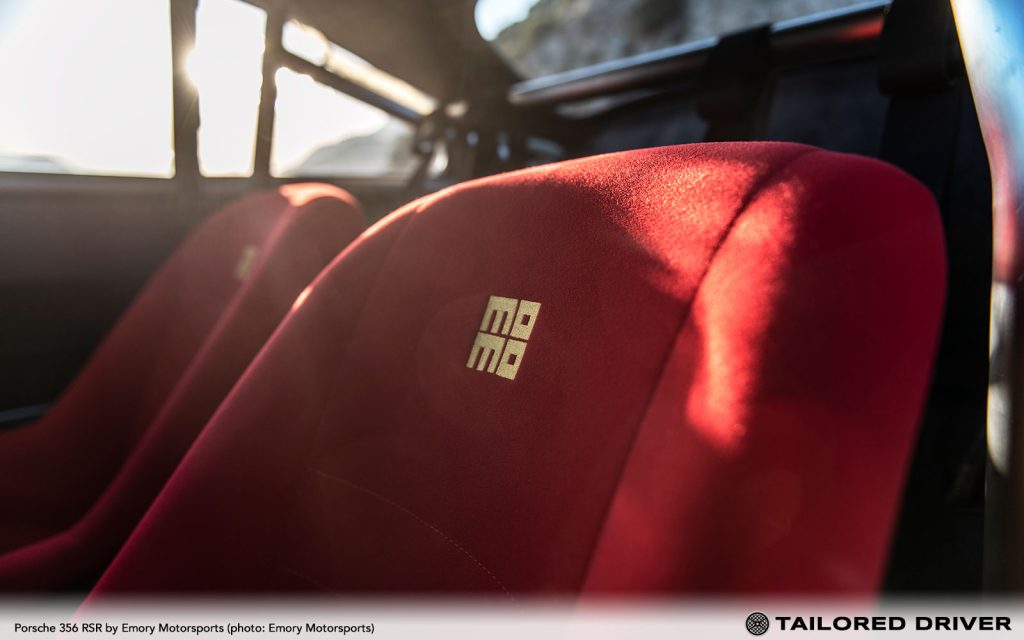
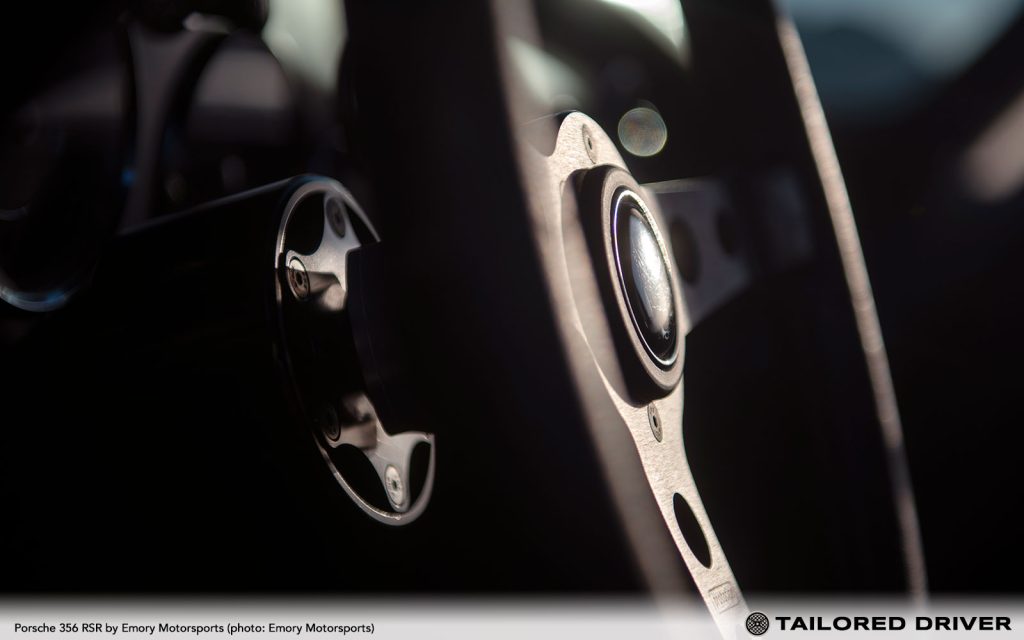
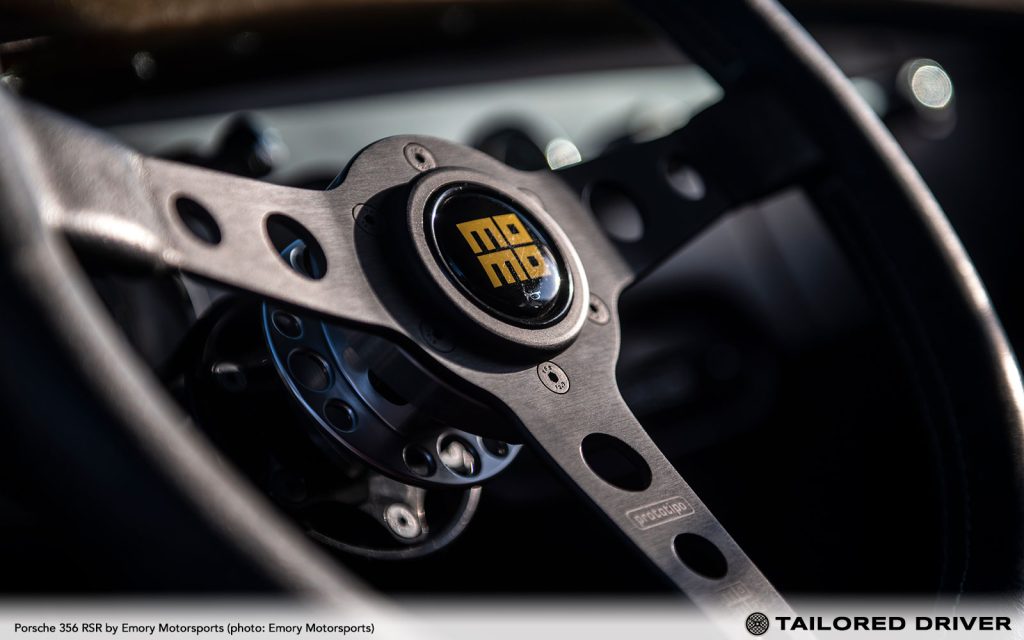
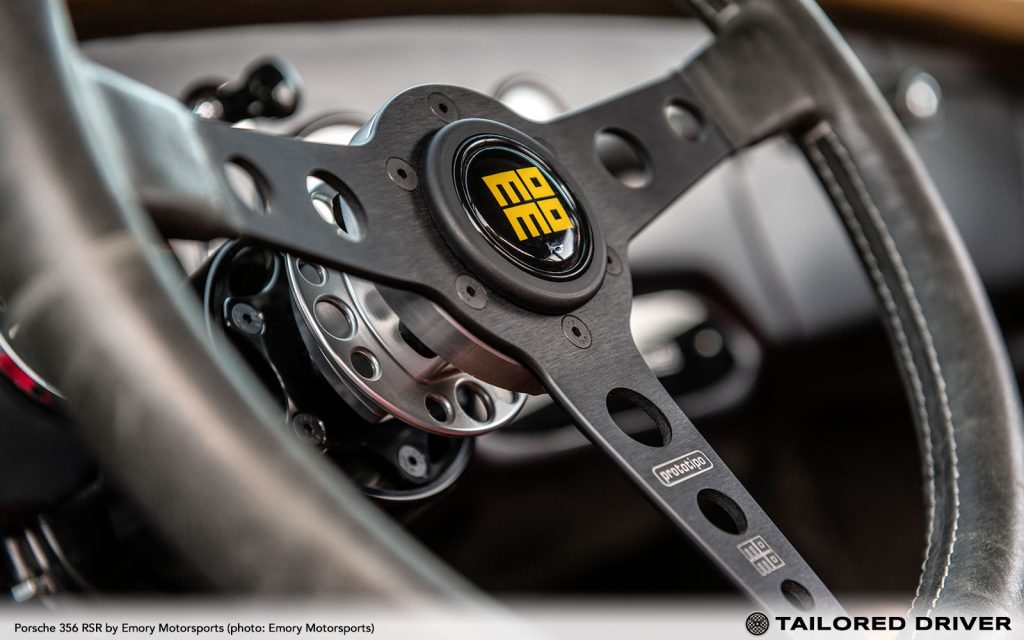
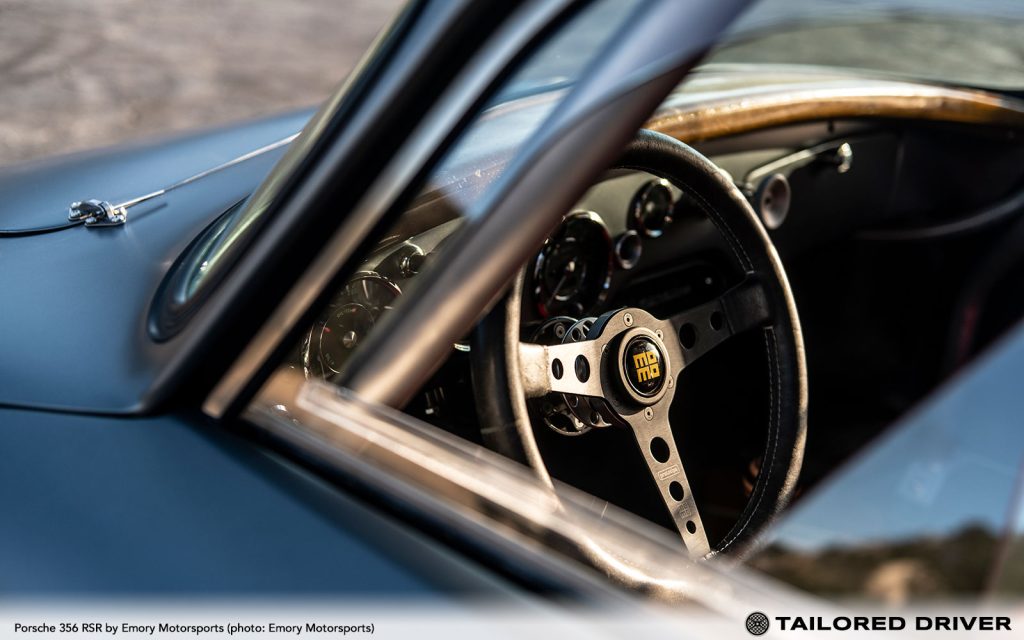
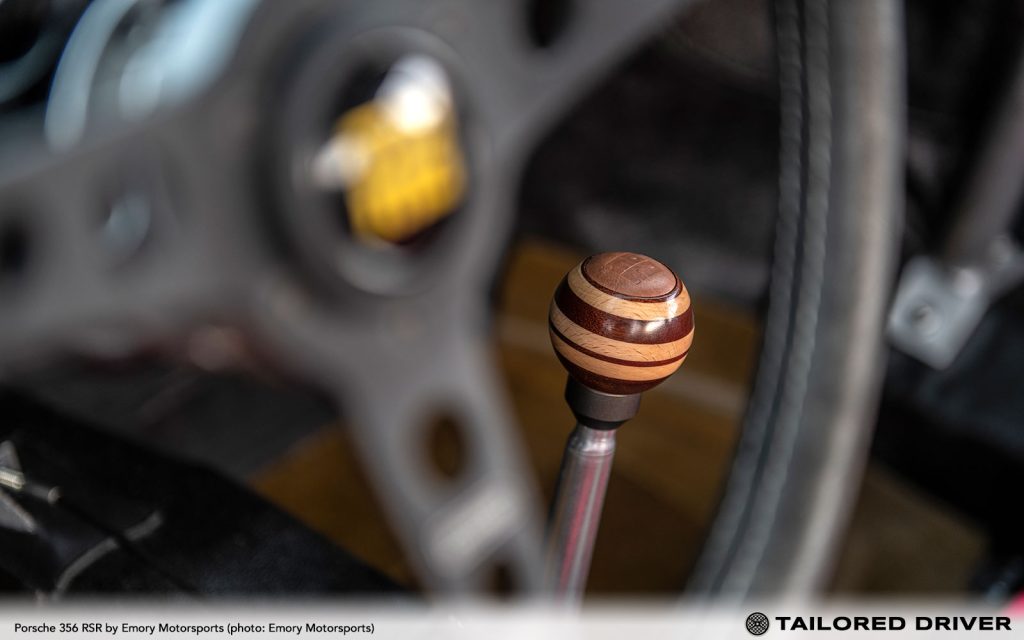
    The MOMO influence continues into the interior. Rod Emory is a huge fan of the 911 RSR MOMO Prototipo steering wheel, and MOMO recently unveiled a distressed version for a historic effect – complete with a quick-release hub. The adjustable Tilton pedals feature custom MOMO billet pads. The shifter knob is also a Porsche 917-inspired MOMO unit atop a Rothsport Racing shifter. Seats are custom and are modeled after the 911 RSR. They are covered in fire-retardant Spanish Red Veltex fabric with custom-embroidered MOMO logos. Occupants are kept in place by easy-adjust and quick-release 6-point MOMO competition harnesses. Safety is also improved by a custom Emory Motorsports removable rollcage.
    The 356 RSR has a few other cues that celebrate Porsche’s competition history. The amber fiberglass footboards and dash caps were inspired by the 917 and 935. The car’s marine-grade rubberized Hardura flooring is the same material used in Porsche GT cars. The floormat’s backing has sound-absorbing insulation.
    “People had strong reactions when we debuted the 356 RSR at Luftgekühlt this past May,” Rod Emory said. “It was too over-the-top even for some of the forgiving purists – something we’re used to after being branded Outlaws by the period-correct owners decades ago – but the car definitely attracted a lot of attention and now serves as a benchmark for what we can do with Porsche’s extremely flexible platforms.”

    For more information on Emory Motorsports, please call 971.241.7017 or visit EmoryMotorsports.com or @rodemory.

    MOMO 1960 PORSCHE 356 RSR SPECIFICATIONS

    Vehicle: 1960 Porsche 356B T5 coupe / 1990 Porsche 964 C2

    Engine: Emory/Rothsport Outlaw-4 2.4L boxer

    Power: 375-400 hp @ 1.2 bar

    Transaxle: G50/03 five-speed manual transmission

    Differential: Quaife limited-slip

    Suspension: KW adjustable coil-overs with hydraulic lift, Eisenlohr Racing Products upgrades, Tarett Engineering sway bars

    Chassis: 356 wheelbase lengthened 85 mm 

    Wheels: 17×7 MOMO Heritage front, 17×8 MOMO Heritage rear

    Tires: Pirelli P Zero Trofeo R

    Body: Extensively modified with removable aluminum nose and tail sections

    Paint: PPG Meteorite Matte Metallic

    Accessories: MOMO distressed Prototipo steering wheel, MOMO 5-point competition harnesses, MOMO shift knob, Tilton pedal with MOMO pads, custom seats, amber fiberglass interior panels and air-management ducting, removable rollcage, Fuel Safe fuel cell, Radium FCST surge tank, XRP plumbing

    About Emory Motorsports

    Founded in 1996 by Amy and Rod Emory, Emory Motorsports initially provided turnkey prep, repairs, and logistics for vintage racers. When Rod Emory began doing custom builds, the company eventually evolved into one of the world’s leading resources for Porsche 356 customization and restoration.

    Rod Emory’s automotive roots date to 1948, when his grandfather Neil Emory founded Valley Custom Shop. An innovator in body chopping and channeling, Neil Emory created the bodywork for the infamous land-speed record-holding SoCal Streamliner. Rod’s dad, Gary, created the first Baja Bug while working as parts manager at Chick Iverson Porsche in the 1960s. He later founded Porsche Parts Obsolete and became the go-to source for hard-to-find replacement parts.

    Rod applied his grandfather’s sheet-metal fabrication skills and dad’s Porsche obsession and design sensibility to the 356 models. Porsche purists labeled the Emorys as ‘Outlaws’ when they dared attempt to enter shows in the 1990s with subtly modified cars that combined OE parts from different models. The Emorys happily became champions of the Porsche Outlaw movement. Since then, Emory Motorsports has stunningly rejuvenated more than 180 Porsche 356s and a few early 911s. The company also meticulously restored what is now regarded as the most historically significant Porsche ever, a 356 SL Gmund that took a class victory at the 1951 24 Hours of Le Mans – Porsche’s first international race win.

    Emory Motorsports Partners

    Birdwell Beach Britcheshttps://www.birdwell.com

    Dannmar Equipment: https://dannmar.com

    Gaudin Porsche of Las Vegas: https://www.gaudinporschelv.com

    Gunnar Racinghttp://www.gunnarracing.com

    Levrack: https://levrack.com

    Mechanix Wearhttps://www.mechanix.com/us-en

    Miller Welders: https://www.millerwelds.com

    Milwaukee Tool: https://www.milwaukeetool.com

    MOMO: https://momo.com/en-us/heritage/

    Mothers: http://www.mothers.com

    Period Correcthttps://periodcorrect.com

    Porsche Design: https://www.porsche-design.us

    Pirellihttps://www.pirelli.com/tires/en-us/car-light-truck/home

    Rothsport Racinghttp://www.rothsport.com

    Rustoleum: https://www.rustoleum.com

    Vanshttps://www.vans.com

    Vintage Electric Bikes: https://www.vintageelectricbikes.com

  • Emory Motorsports Designs Custom 1960 356 Porsche for Music Icon John Oates

    Emory Motorsports Designs Custom 1960 356 Porsche for Music Icon John Oates

    Legendary Hall & Oates Guitarist Unveils His Car Alongside Celebrated Porsche Outlaw Builder Rod Emory During Porsche Cars’ 70th Anniversary Party

    [source: Emory Motorsports]

    NORTH HOLLYWOOD, CA — Having sold some 40 million records worldwide, Hall & Oates are considered the world’s best-selling music duo in history. The record-breaking band was famously inducted into the Rock and Roll Hall of Fame in 2014, but what many fans don’t know is celebrated guitarist/vocalist/composer John Oates is also a long-time Porsche fan. 

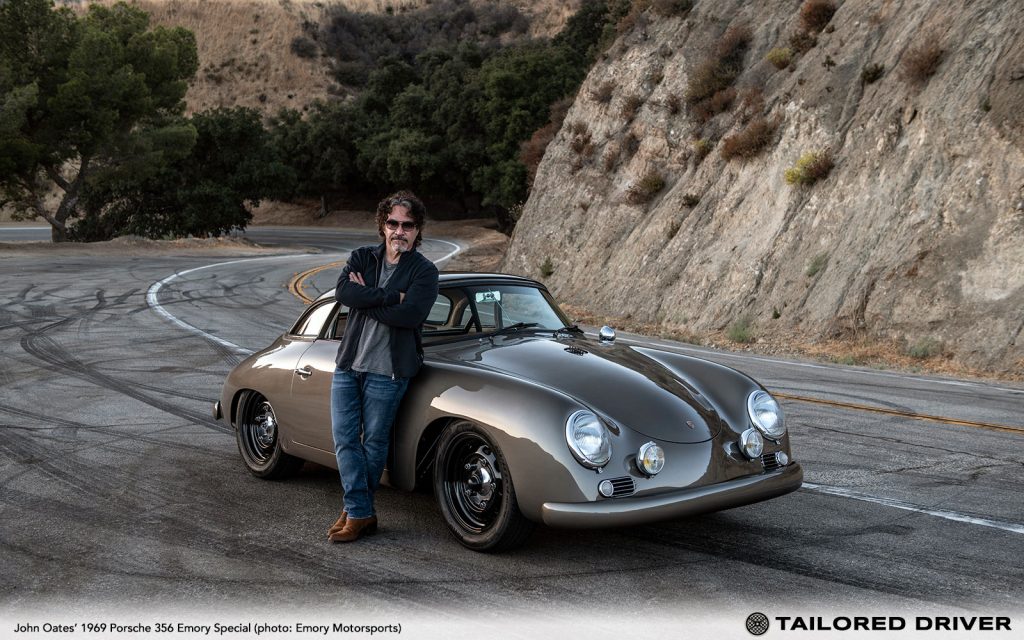
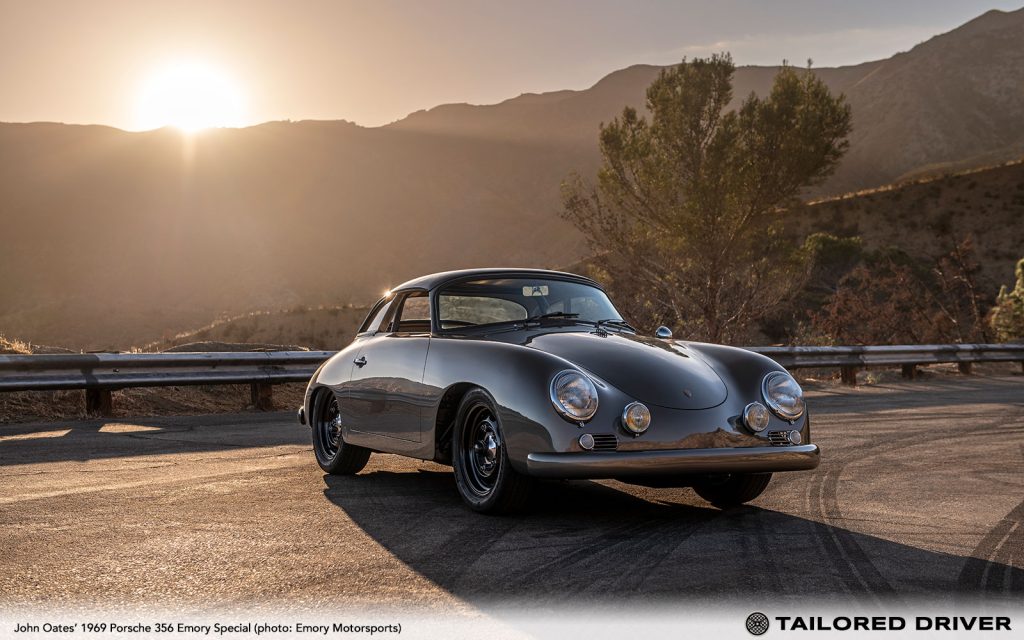
    The consummate collaborator, Oates contacted Emory Motorsports Founder Rod Emory about creating a truly one-of-a-kind classic Porsche. As a longtime Porsche enthusiast and collector, Oates wanted the perfect Porsche 356. Working closely with Emory, Oates made it clear he wanted to preserve the elegant styling of the 356 but imbue the car with more-modern performance and other custom touches. Rod found the ideal donor car, a 1960 356B Cabriolet, and went to work alongside Oates on the build. 

    Long known by enthusiasts for creating the Porsche Outlaw movement with his custom 356s, Rod Emory also offers his clients more-subtle Emory Special builds. Growing up in a family of auto customizers and designers, Rod Emory created John Oates’ Emory Special using many of the same customizing techniques – and many of the same actual tools – that his grandfather Neil pioneered dating back to 1948 when he founded Valley Custom in Burbank, California. Known as one of the seminal minds in the golden age of hot-rodding, Neil built a reputation for stately, understated coachwork that Rod employs to this day at Emory Motorsports. 

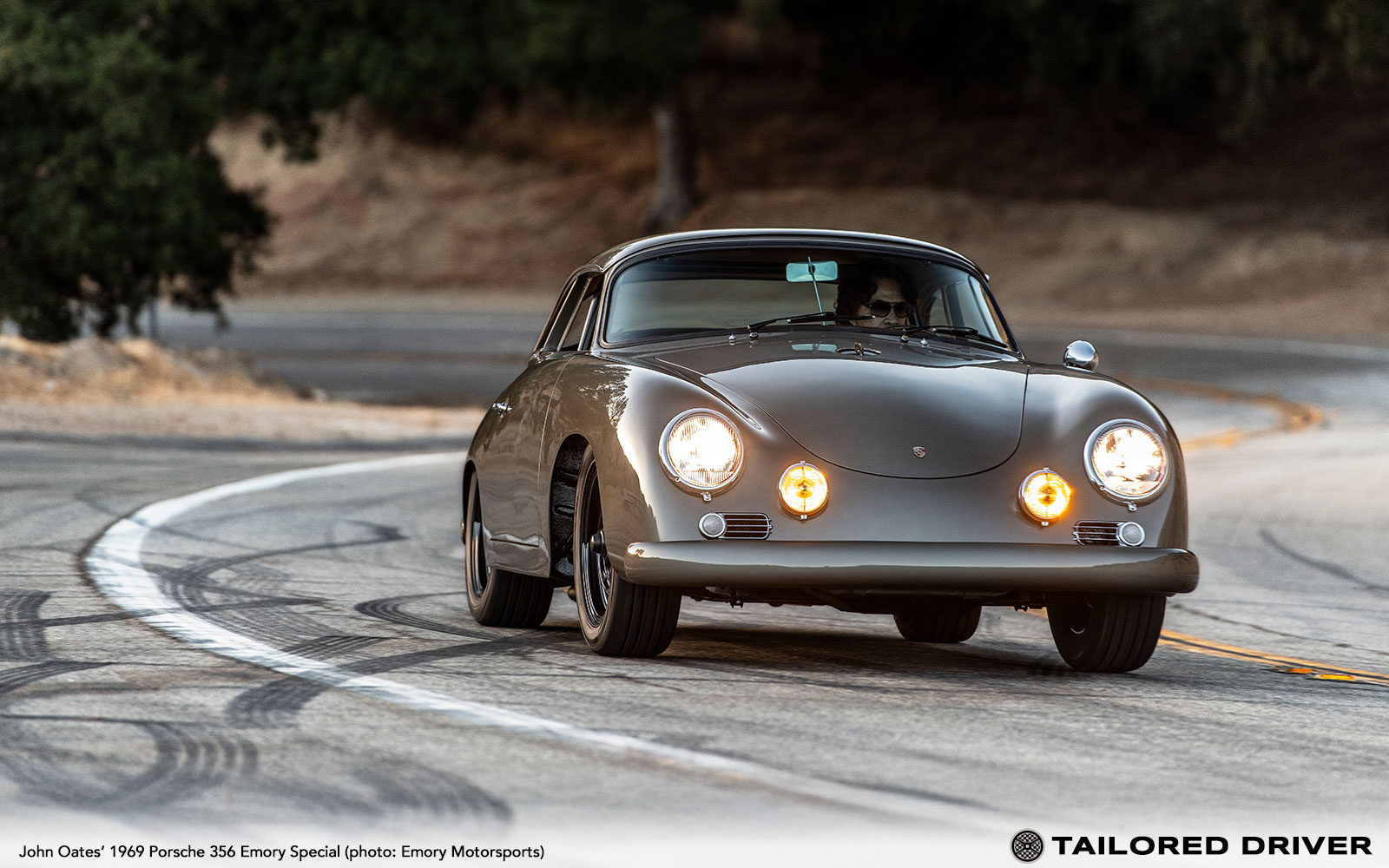
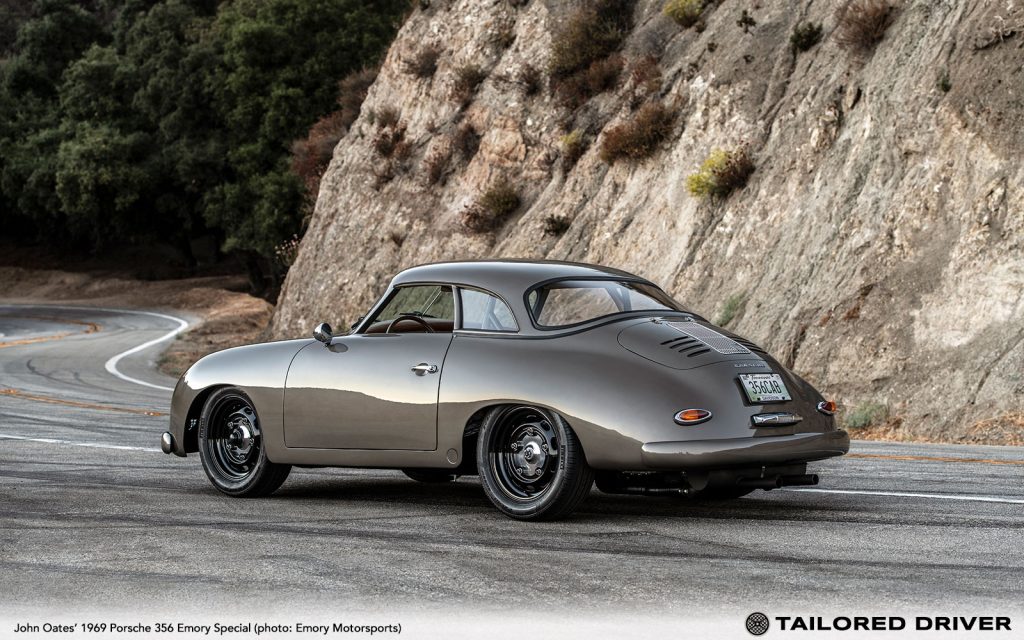
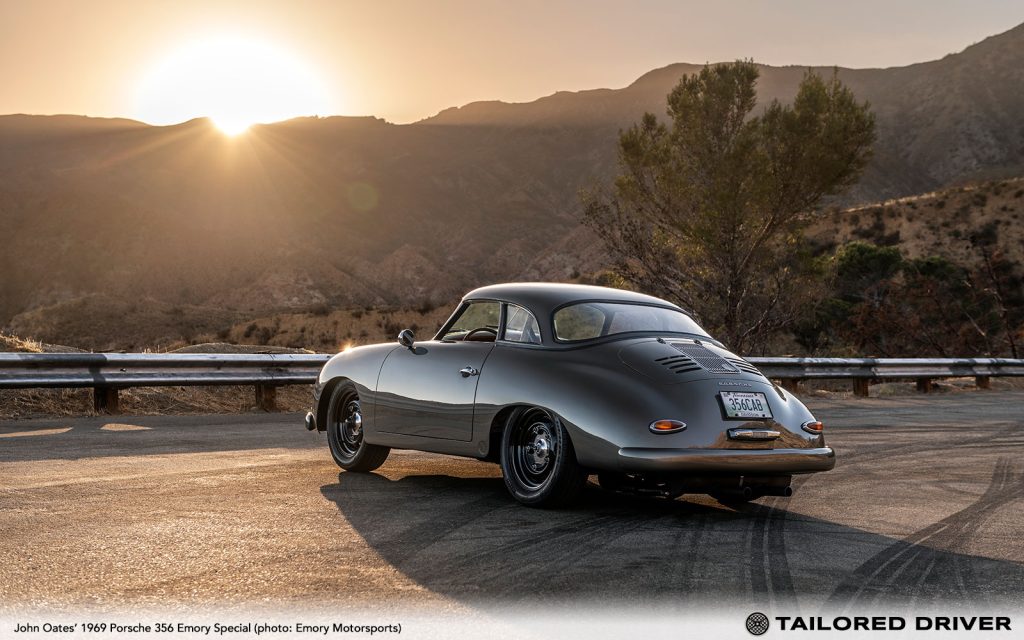
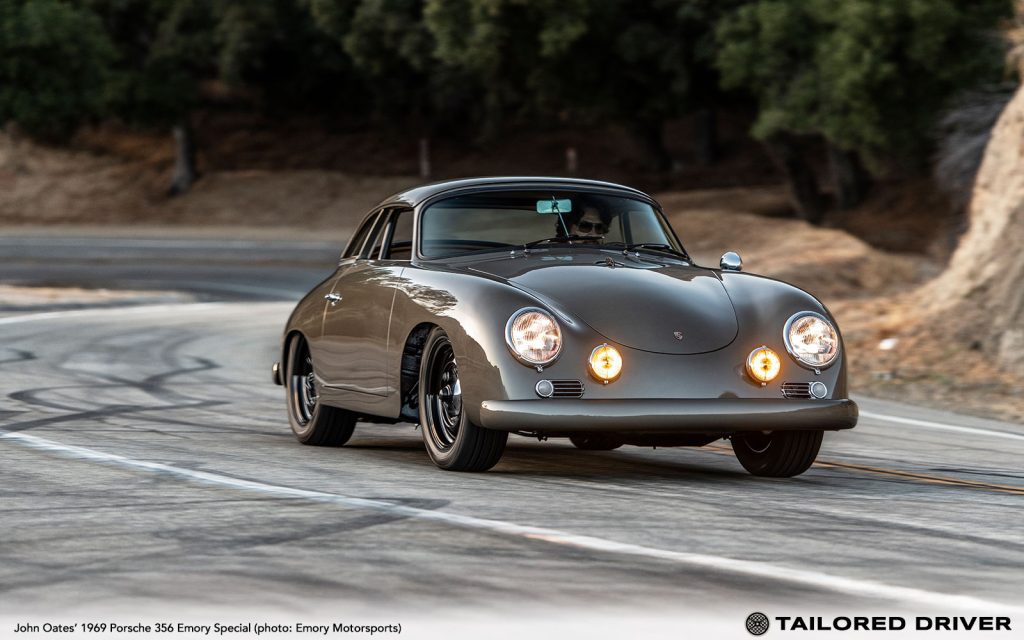
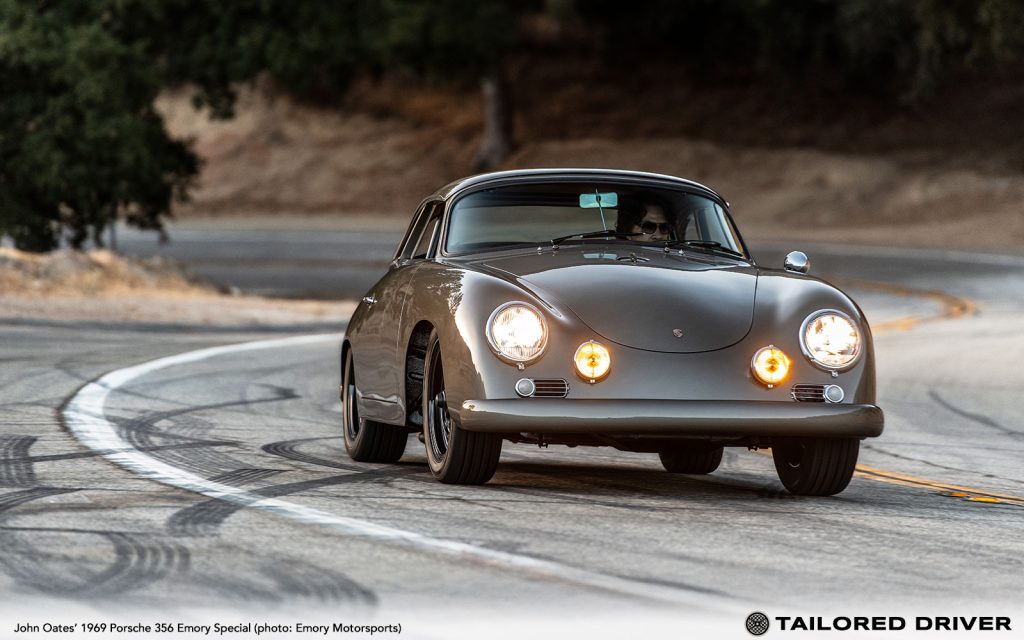
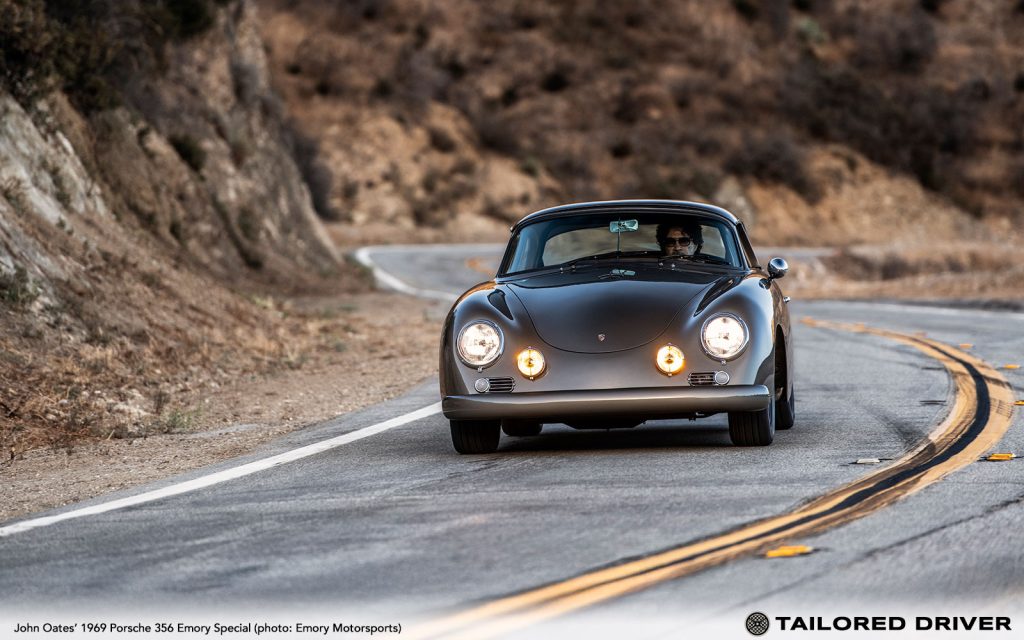
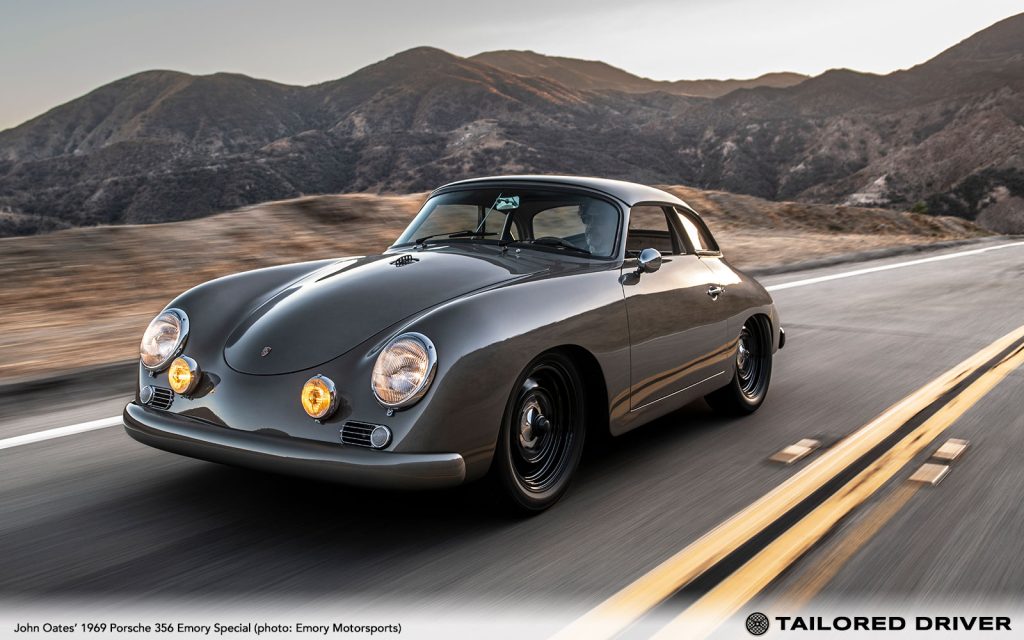
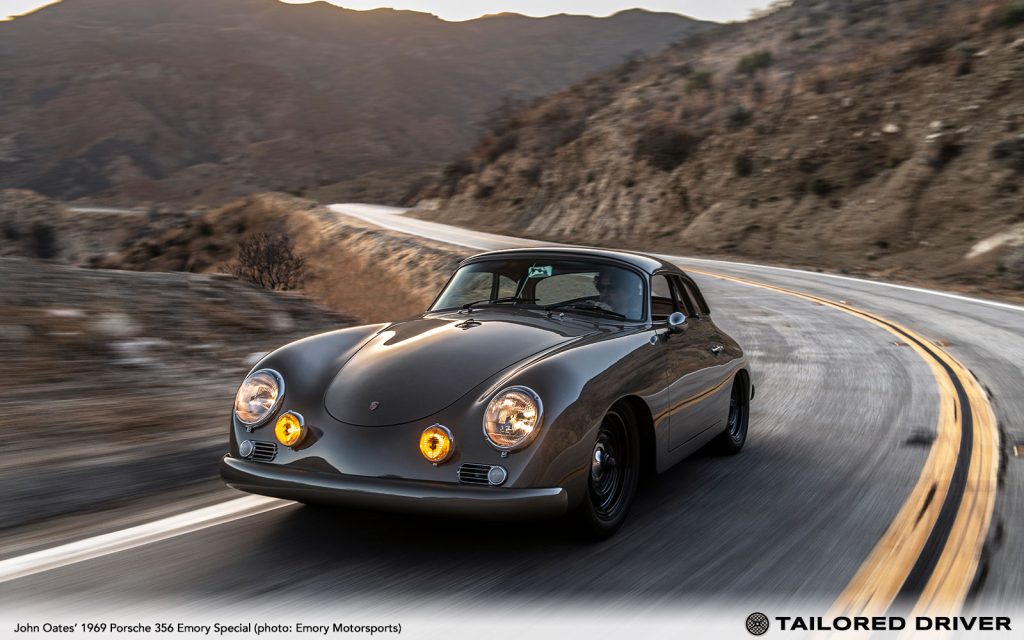
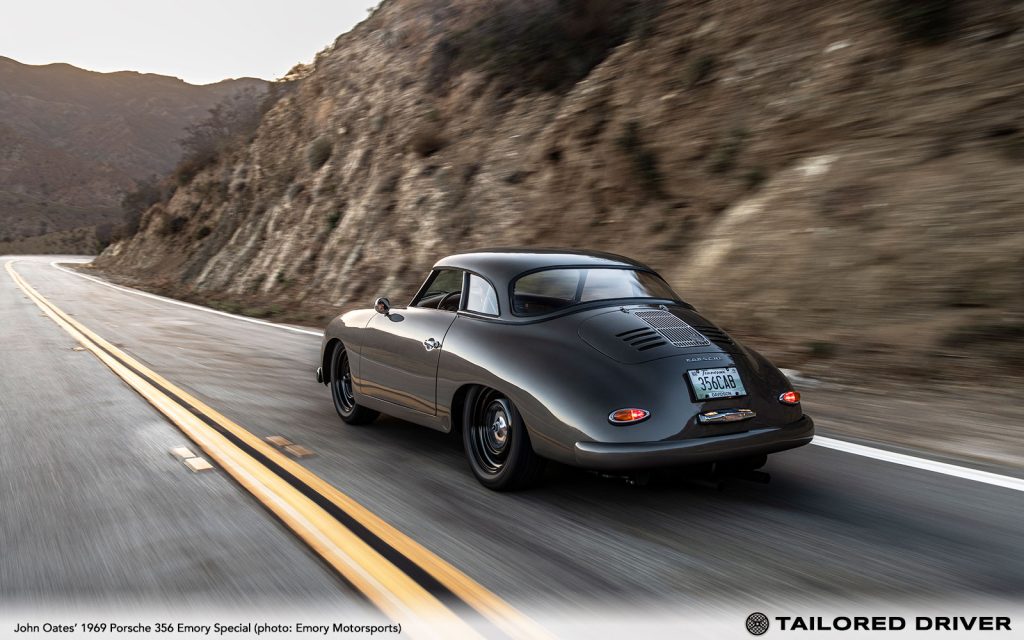
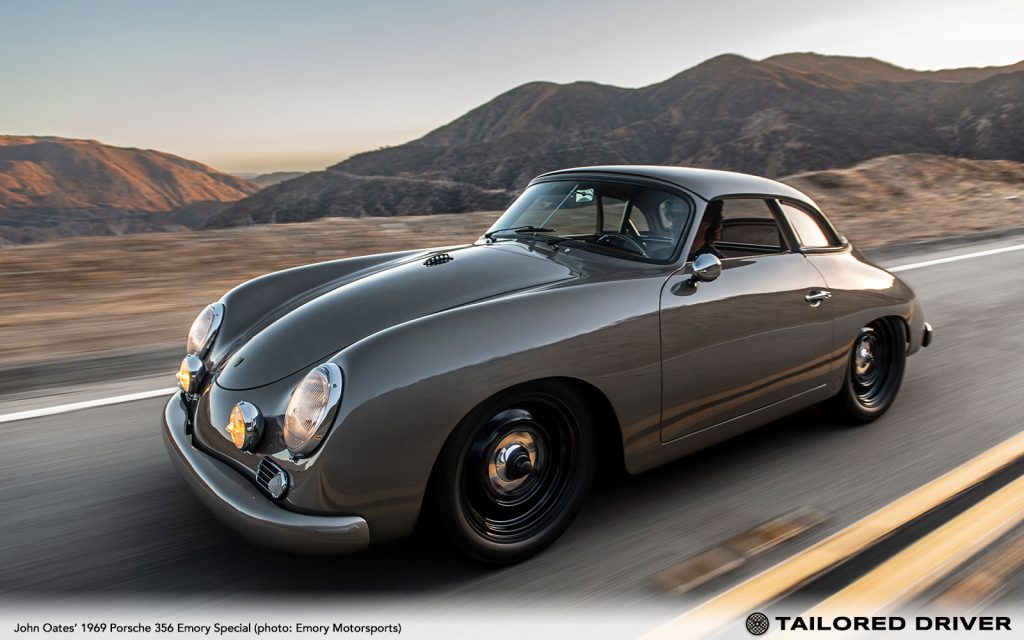
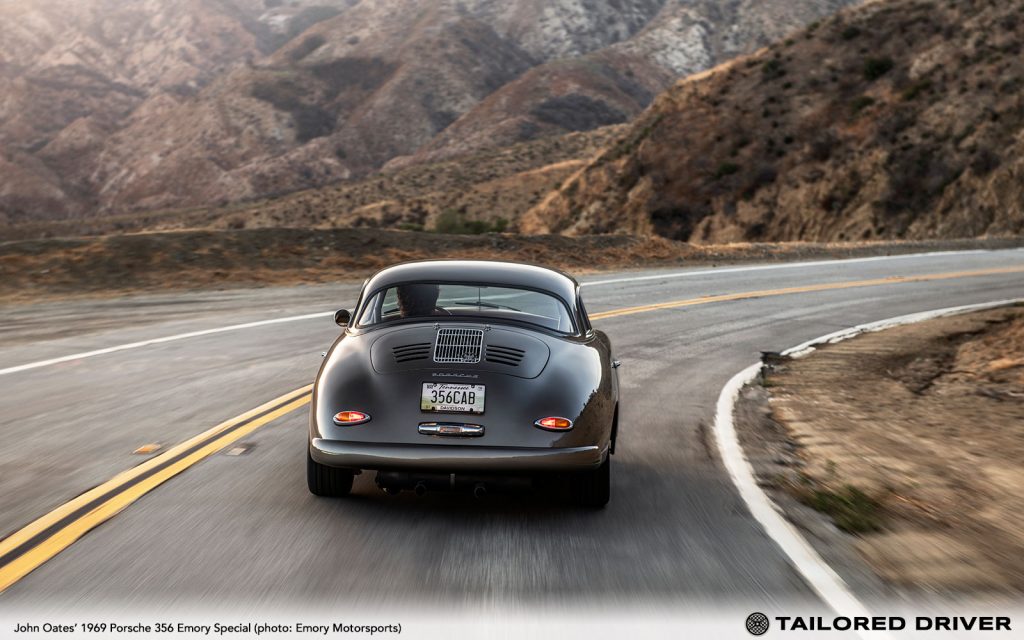
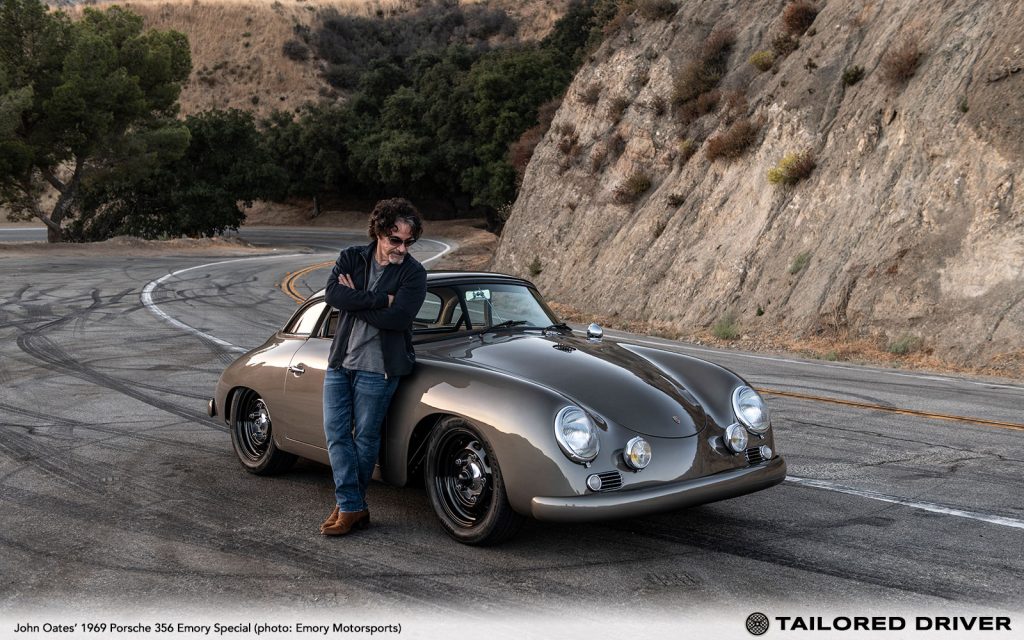
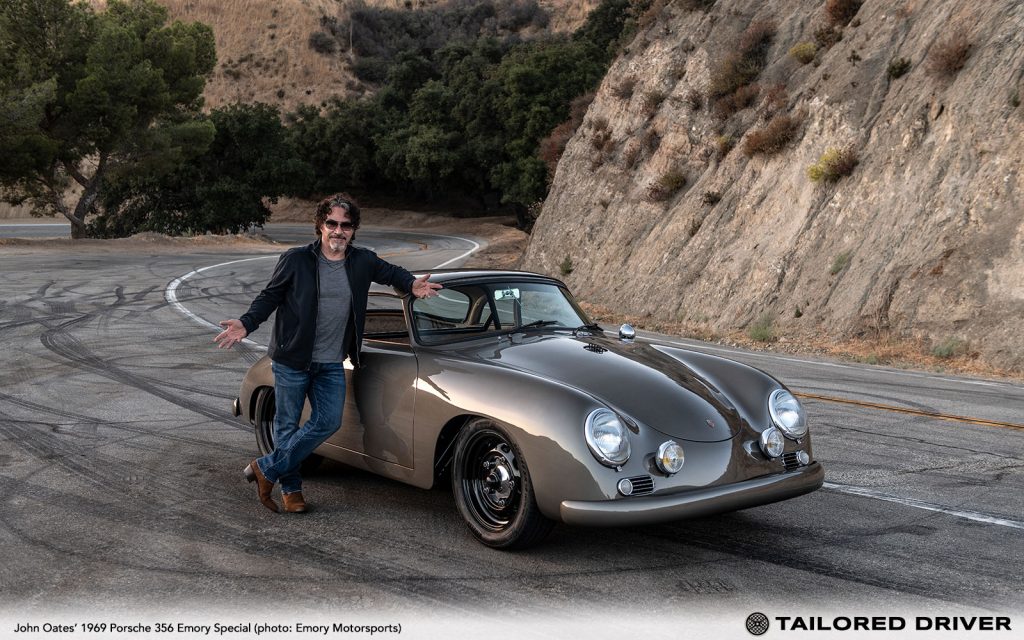
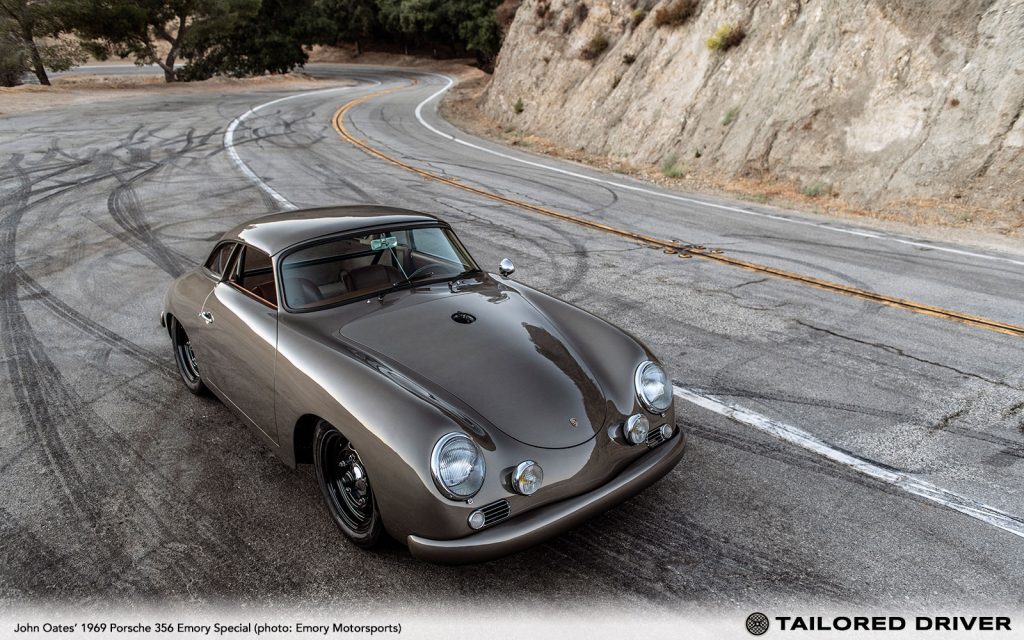
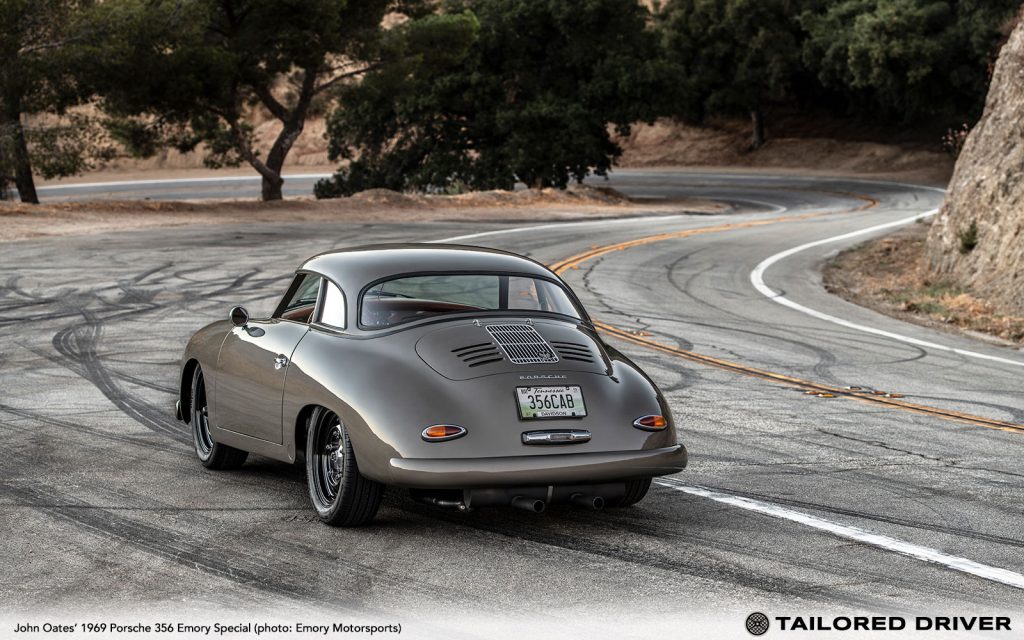
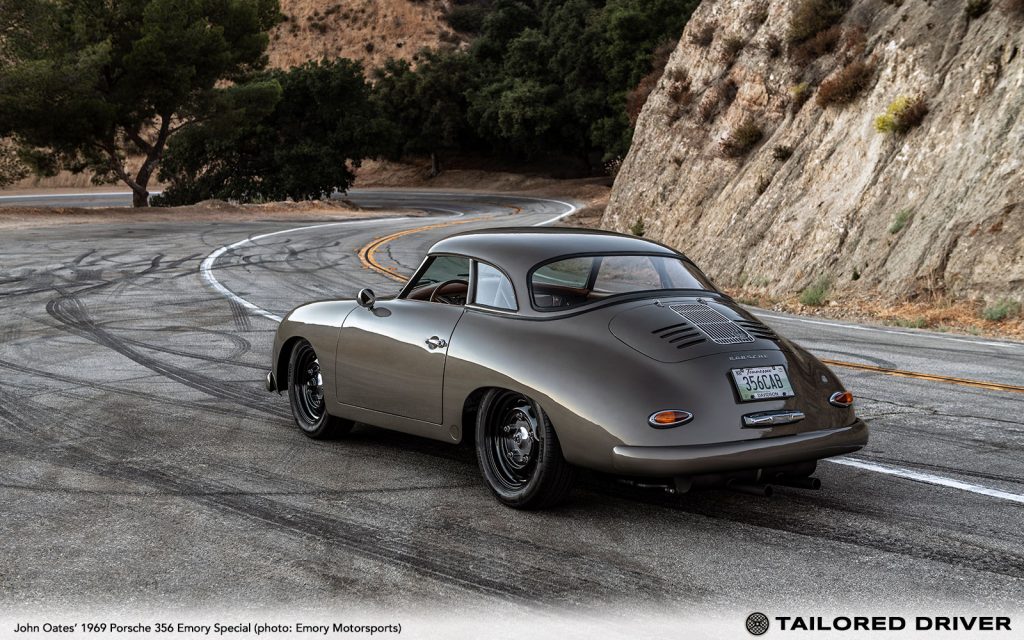
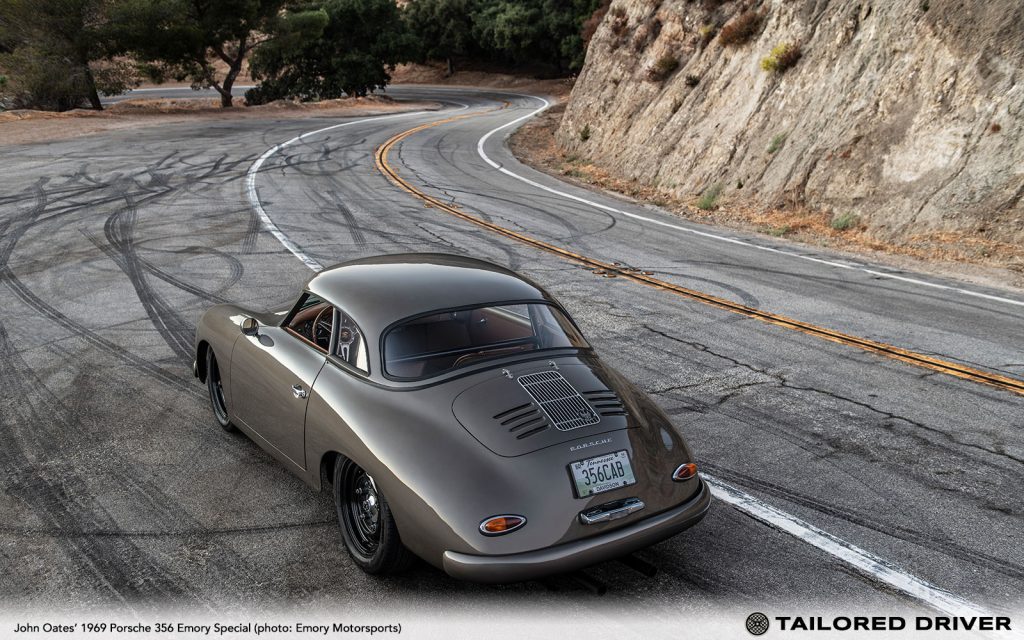
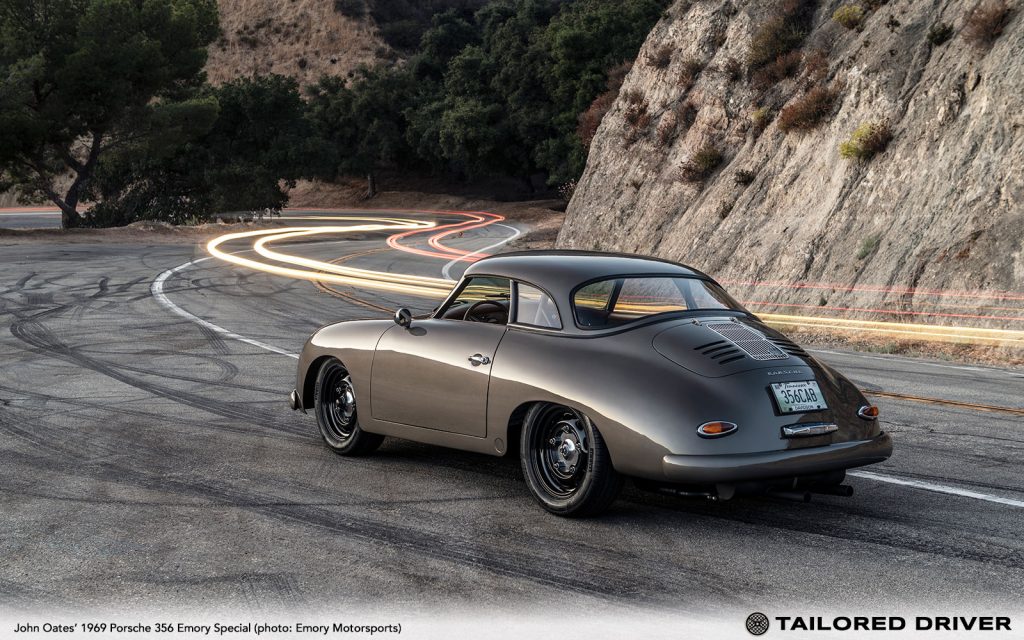
    Oates’ 1960 356 Emory Special is no exceptionThe overall design further enhances the original 356 body with seamless, subtle alterations. Working together, Oates and Emory succeeded in restoring and designing one of the most beautiful 356 cars to ever grace the road. Bespoke cars like the Oates 1960 Emory Special are built to order by Emory Motorsports, beginning with damaged donor cars that Rod secures from all over the country. During the build, body modifications are done to change the 356’s profile while still retaining its iconic design language and proportions. 

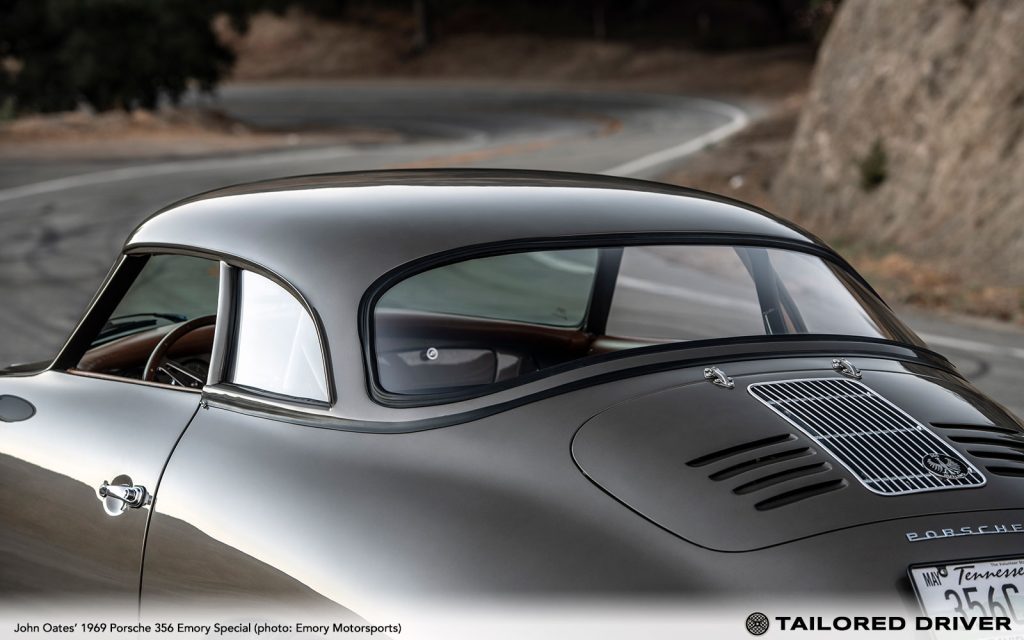
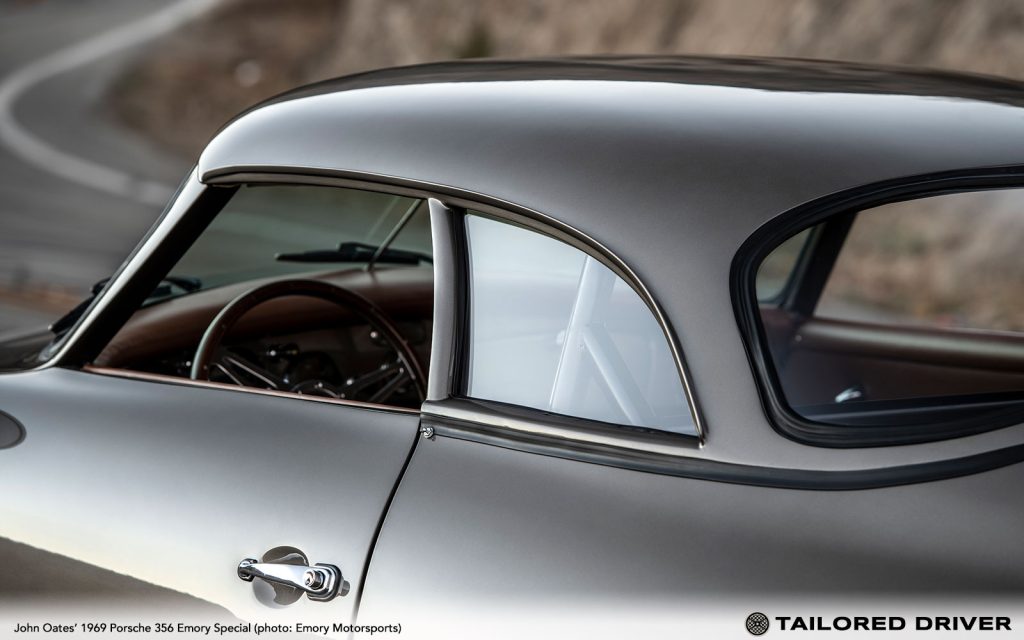
    “When people hear custom, their minds tend to go to the outrageous, but our work is all about restraint,” explains Emory Motorsports Founder Rod Emory. “John’s 356 is perfect example. The body began life as a 1960 356B Cabriolet, which had a removable hard top. We replaced the car’s damaged nose with 356A-style bodywork, but leaned it back for a sleeker appearance. We also modified the windshield frame the same way. The removable hard top was tailored to create a more streamlined roof profile, and we integrated body-hugging 356A-style bumpers. Everything is presented in the same way a new 356 would be rolling off the line. The key difference is the subtle changes Emory Motorsports makes to the original design.”

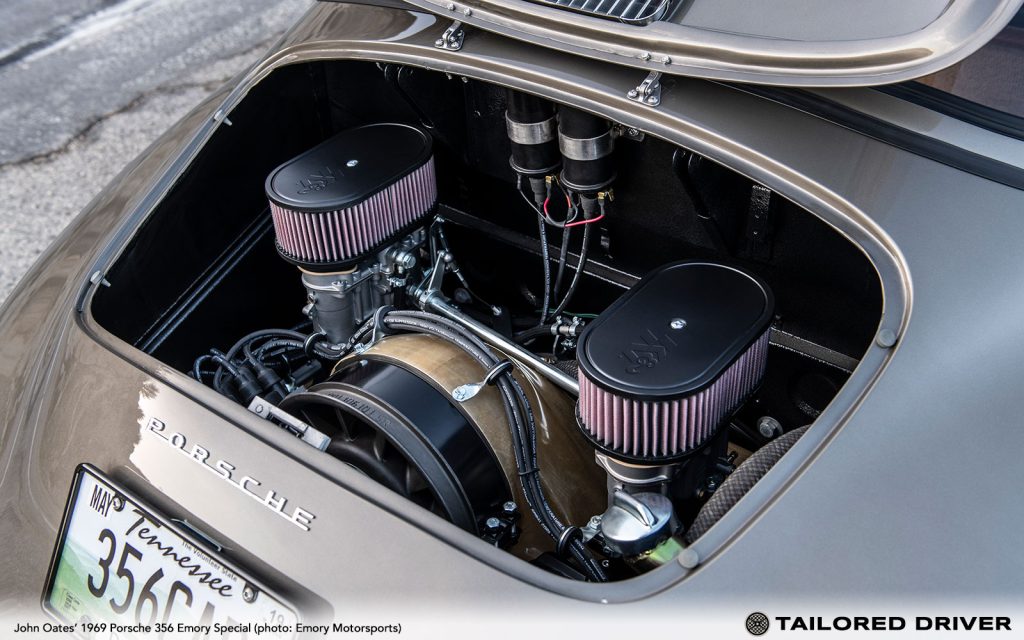
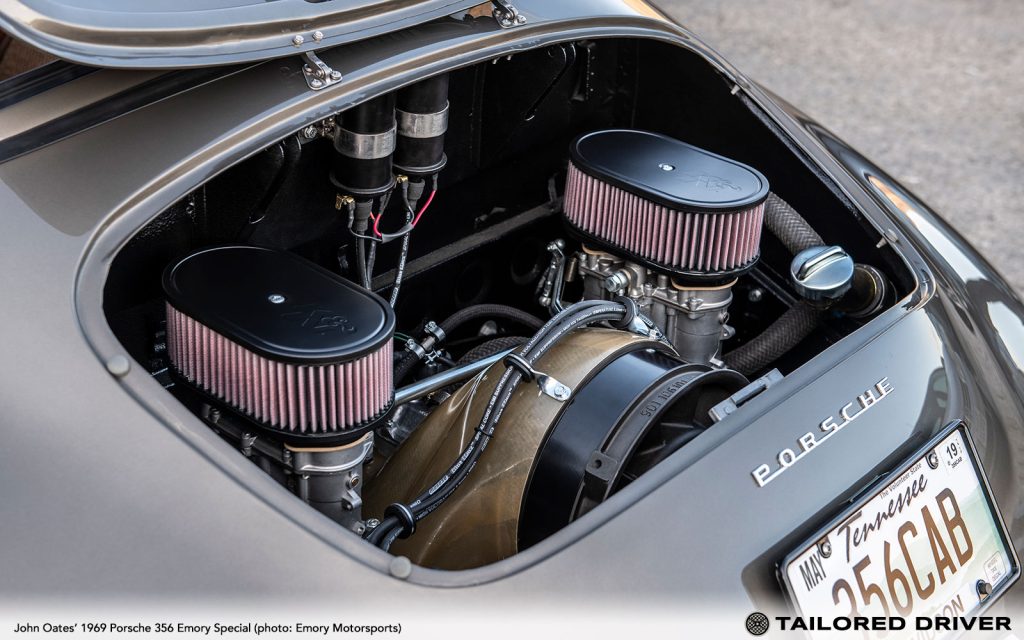
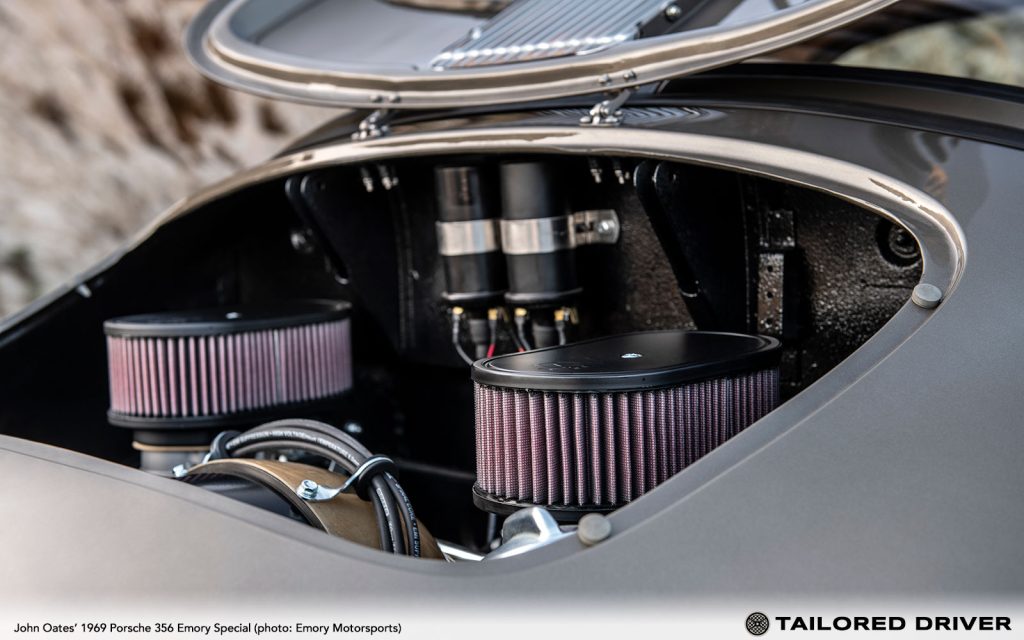
    Emory Motorsports surrounds vintage sheetmetal with later Porsche-performance DNA for Emory Special and Emory Outlaw builds. John Oates’ 1960 356 is a prime example. Power is supplied by the new Emory-Rothsport “Outlaw-4” engine. Emory collaborated with Porsche GT racing team crew chief Jeff Gamroth of Rothsport Racing to create an all-new air-cooled four-cylinder engine block, based on the dry-sump Porsche 3.6L Type 964 engine – but also incorporating the best features of three generations of the 911 powerplant. Custom cam housings, camshafts, and crankshafts are designed to work with OE Porsche engine components. 

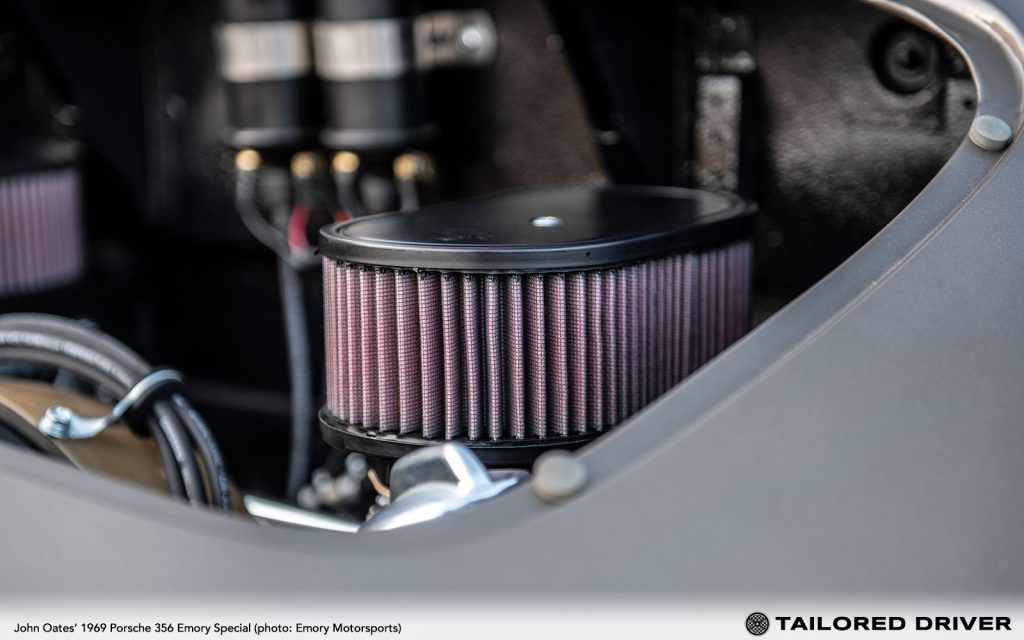
    The Outlaw-4 engine makes use of the 3.6L twin-plug and dry-sump design features for the sake of performance. However, the new engine takes advantage of MSD computer-controlled ignition, augmented by a custom distributor and full-flow oiling with remote filter and cooler. John Oates’ engine is the 2.4L Outlaw-4 configuration with custom headers leading to a 911 sport muffler. It is fed by a through-hood fuel filler atop a custom 18-gallon GT Fuel Safe cell. The Outlaw-4 engine is mated to an early Porsche 911 901l aluminum-case 5-speed transmission.

    Chassis modernizing was also part of the plan from the outset. Emory adapted early Porsche 911 independent rear suspension with custom-narrowed trailing arms. Adjustable Koni shocks control the ride, and Emory added front and rear swaybars to control body roll during aggressive cornering. Handling is also improved with a proprietary Emory four-wheel disc-brake system, which stops the 205/55ZR16 Pirelli P Zero Rosso tires on custom 15×6 billet alloy wheels. The wheels were powdercoated black and have mirror-polished hubs. 

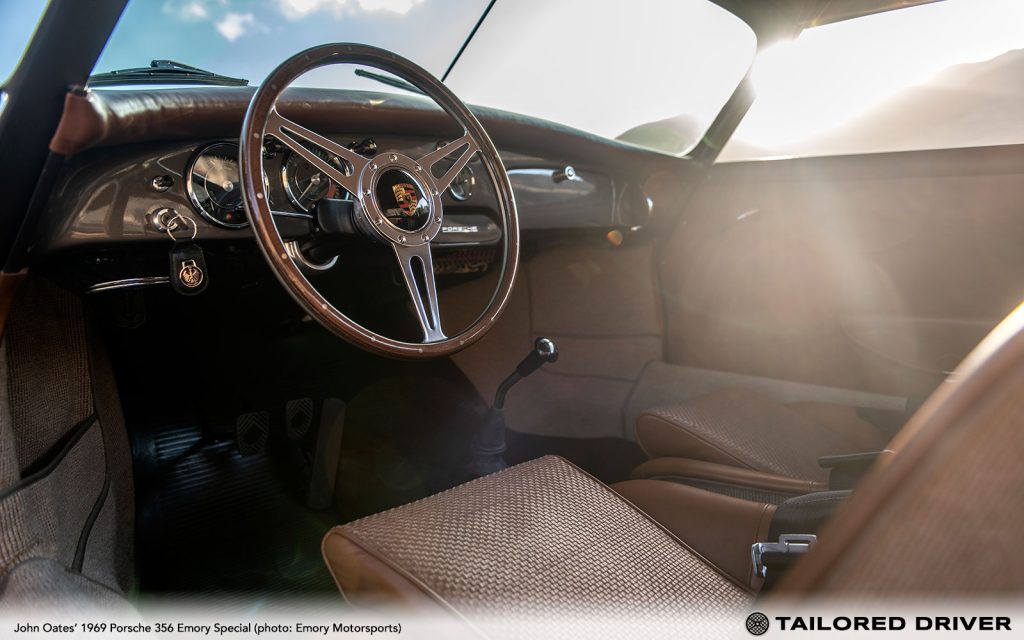
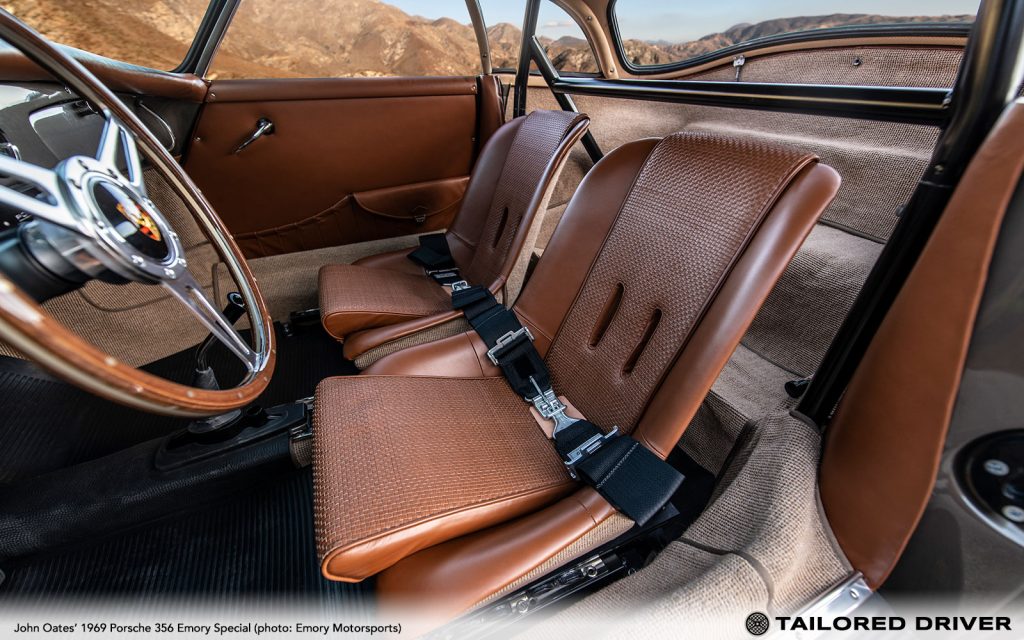
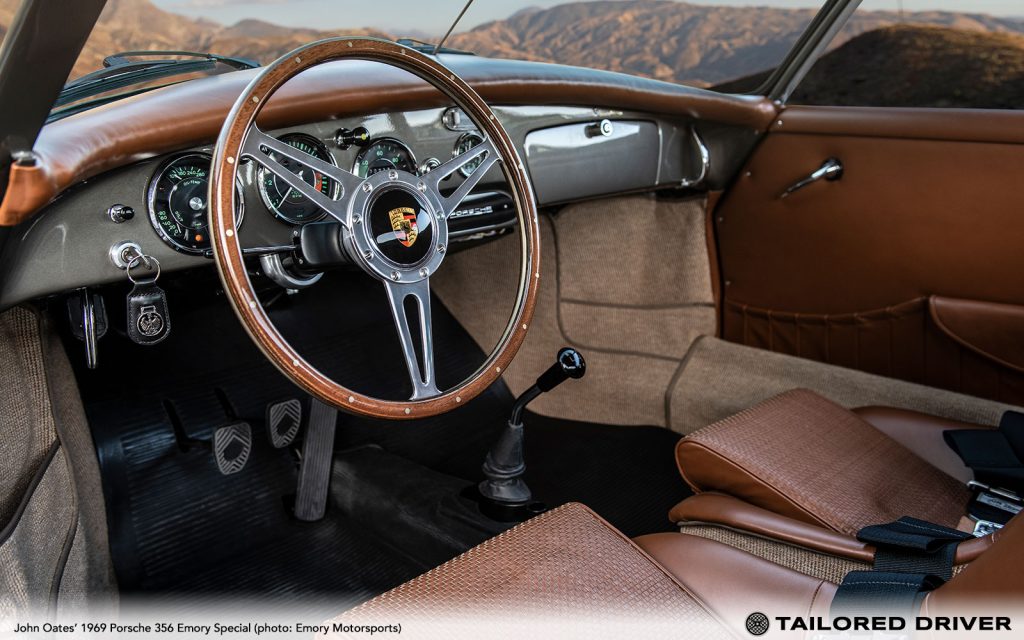
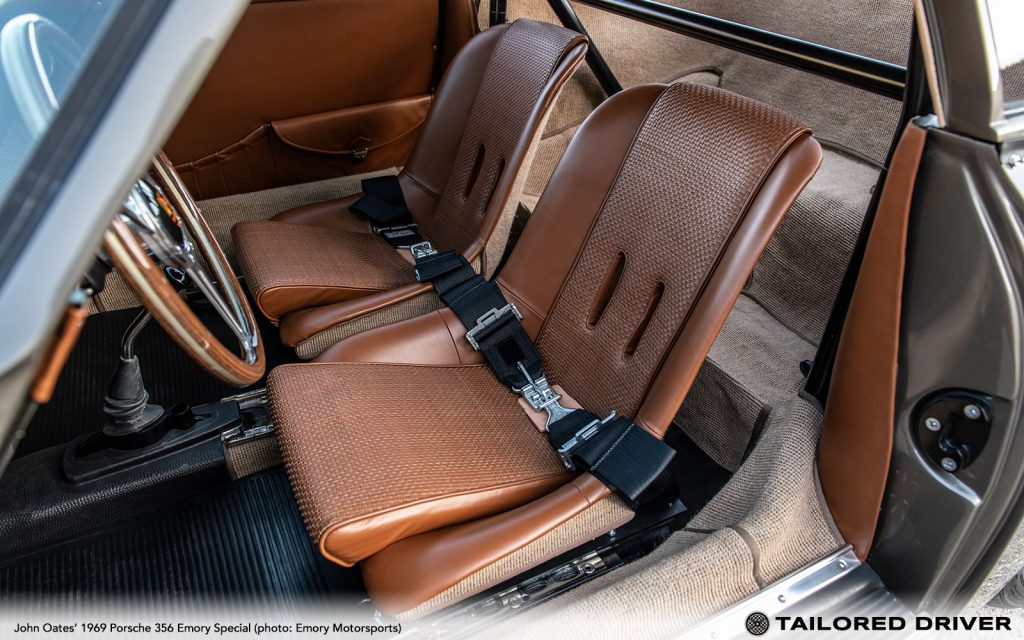
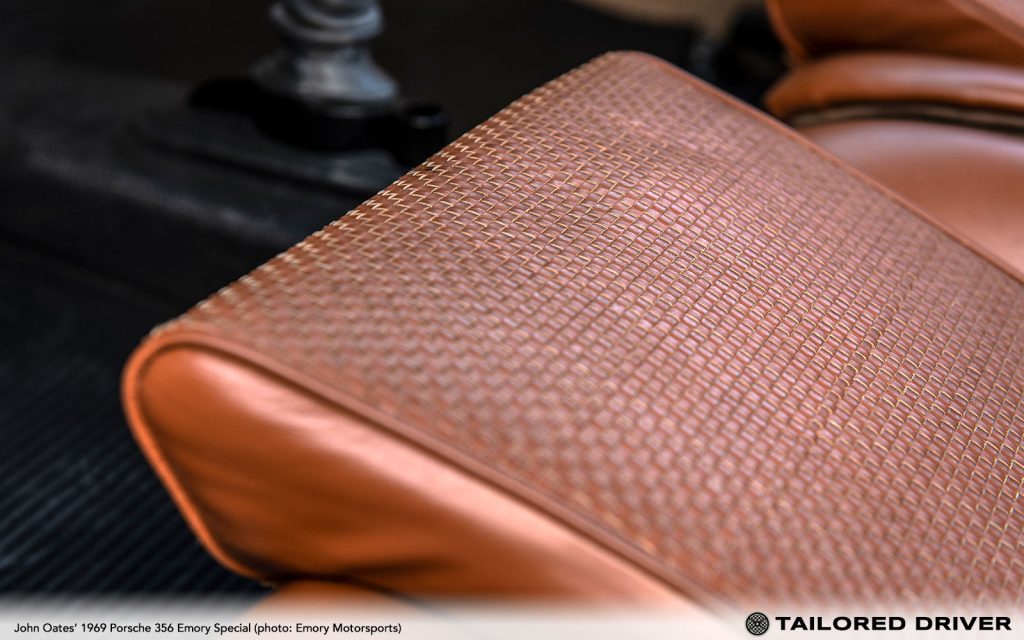
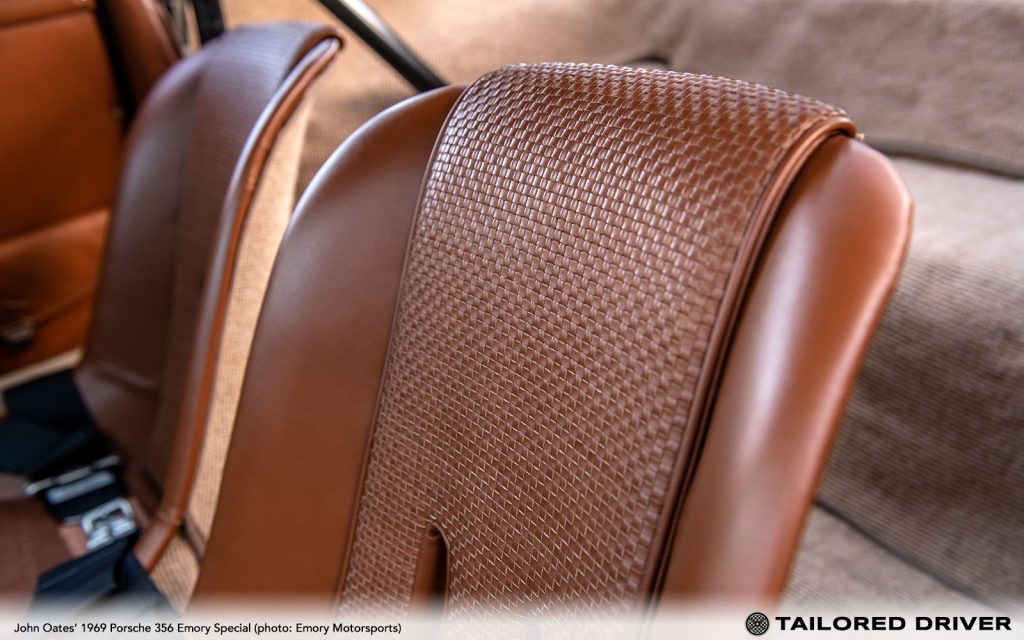
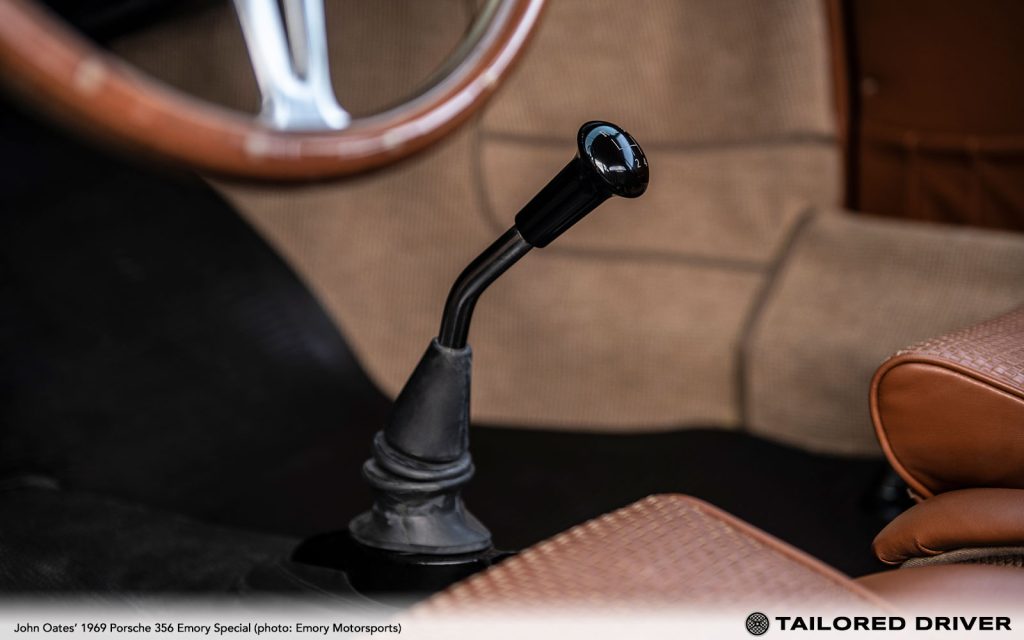
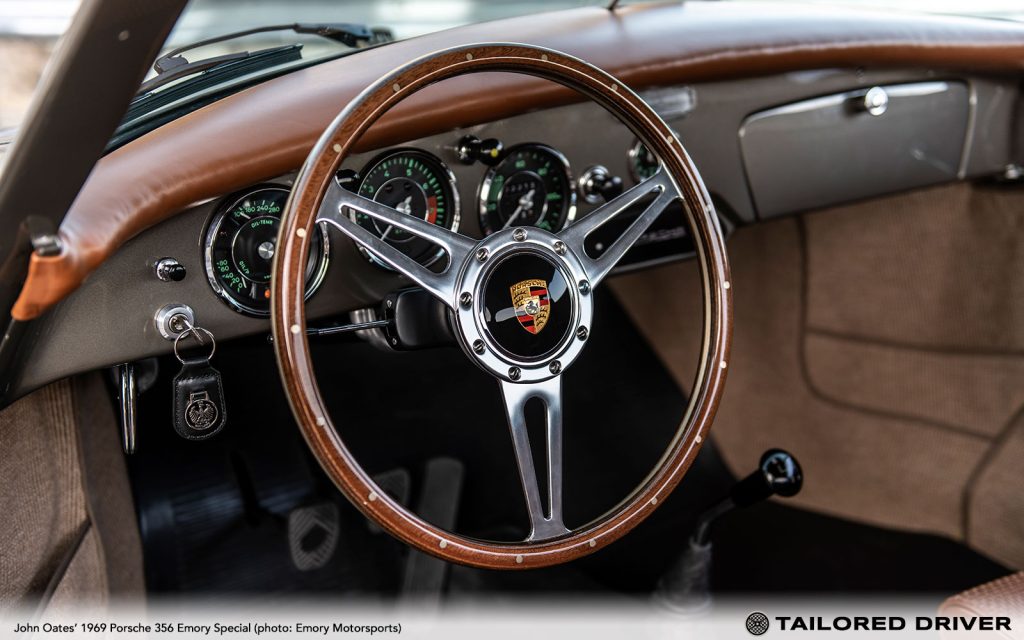
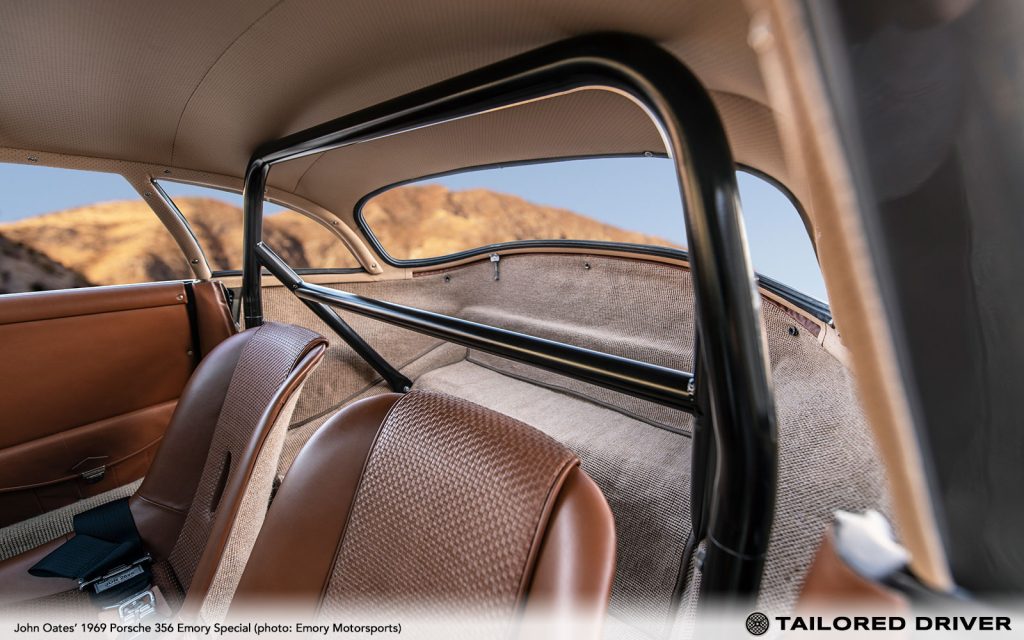
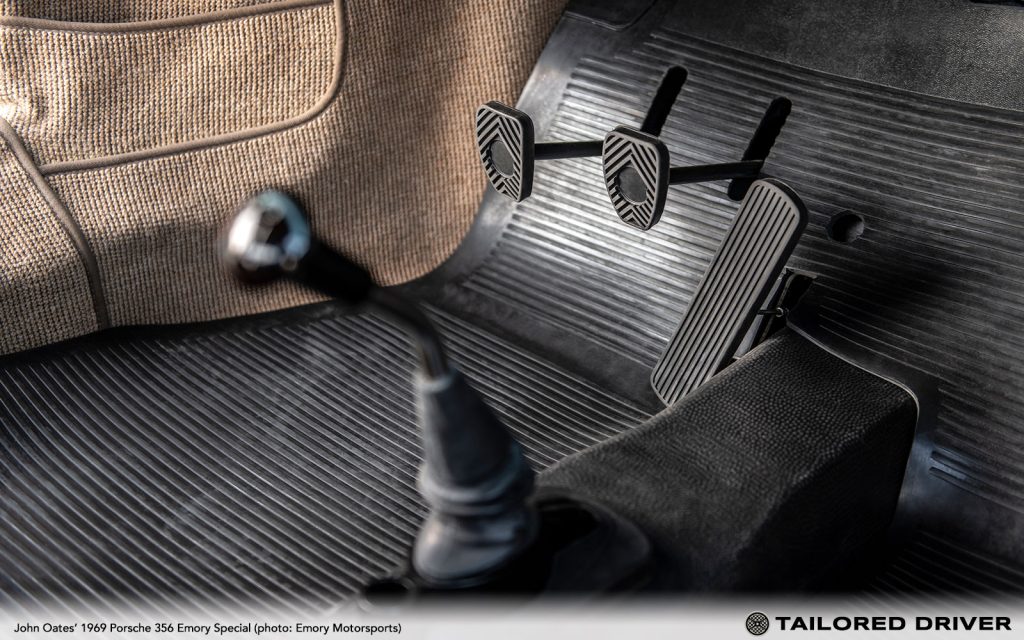
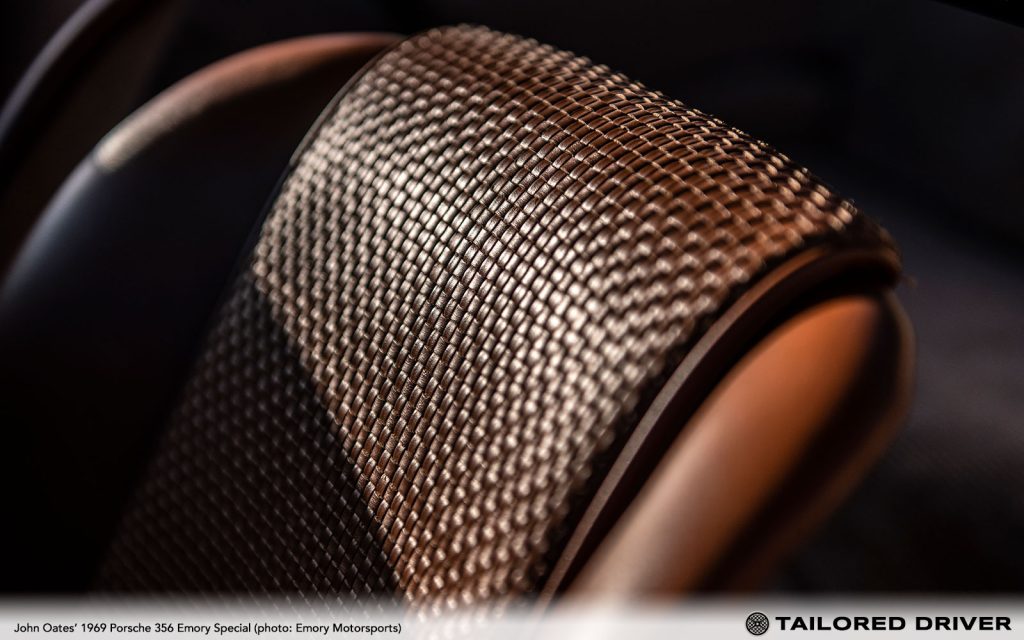
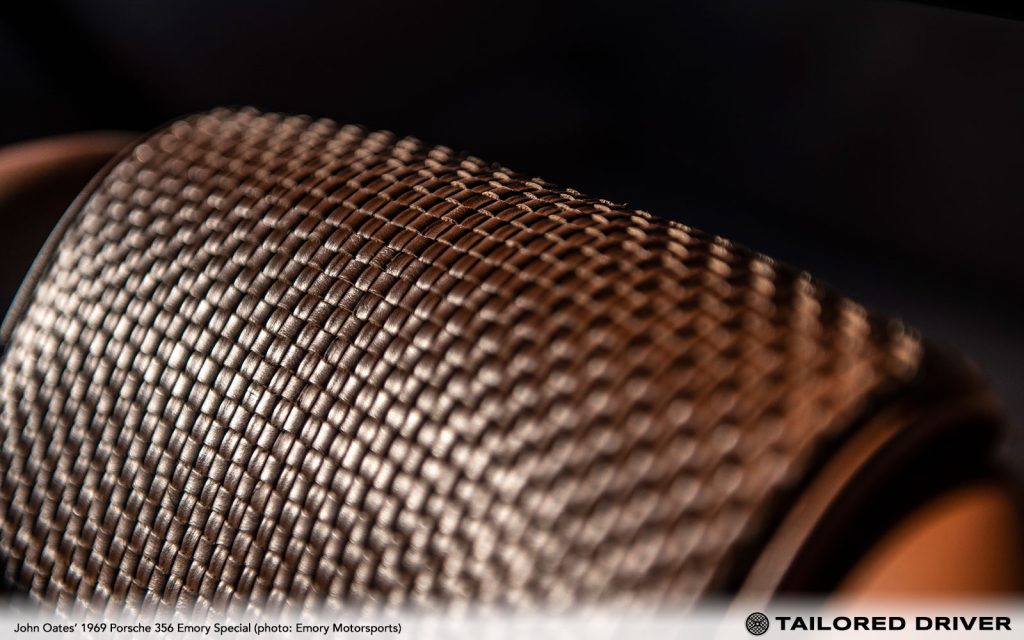
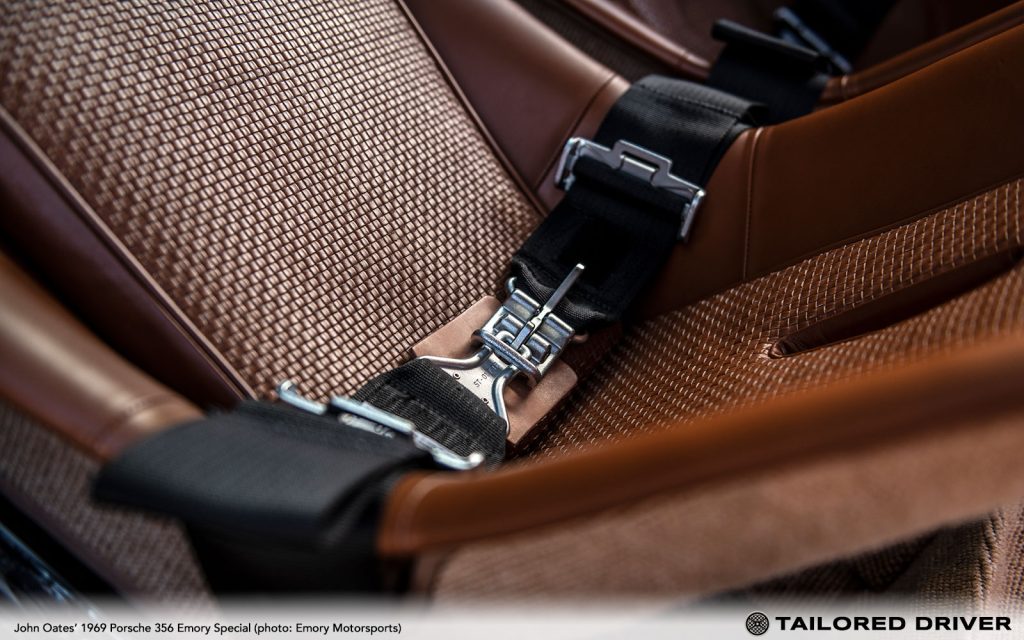
    John Oates worked directly with Rod Emory to map out the interior cabin. Hydes cognac leather is showcased throughout. The Speedster-style seats received basketweave inserts and 2-point competition harnesses. German square-weave carpet in is augmented by traditional rubber floormats.

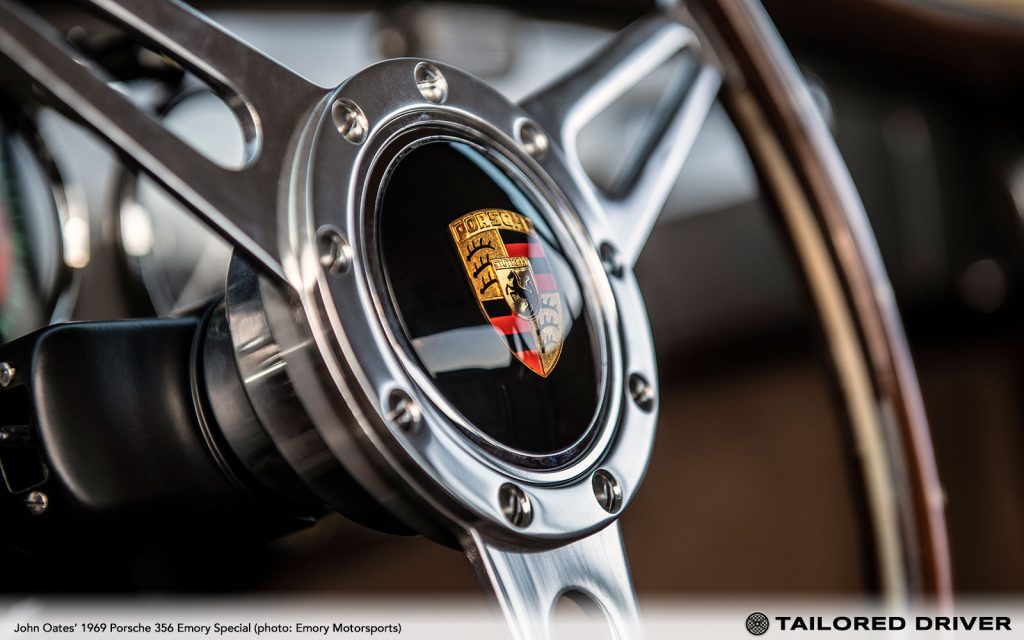
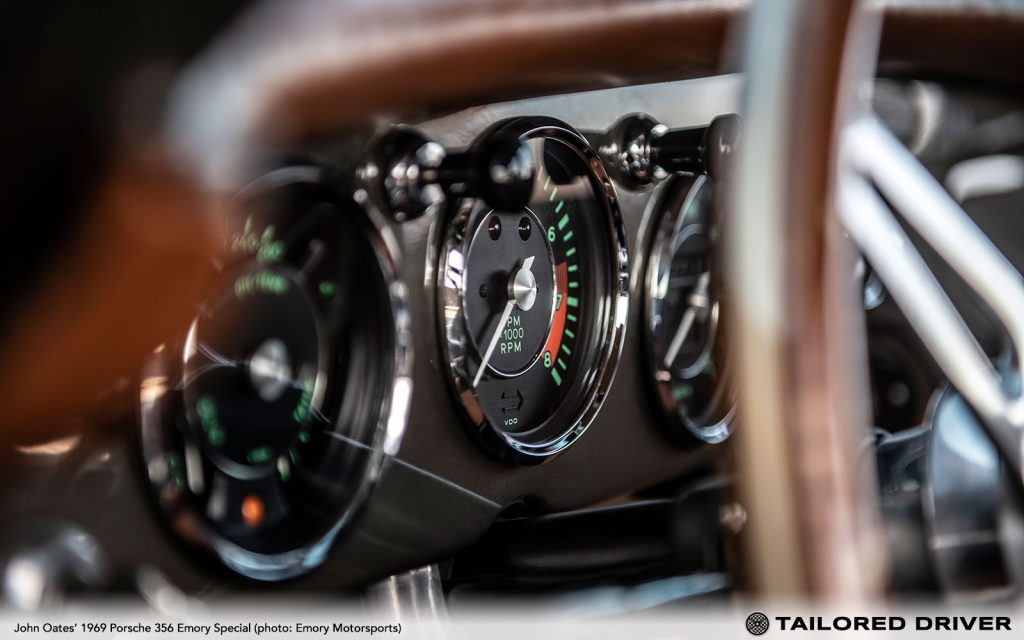
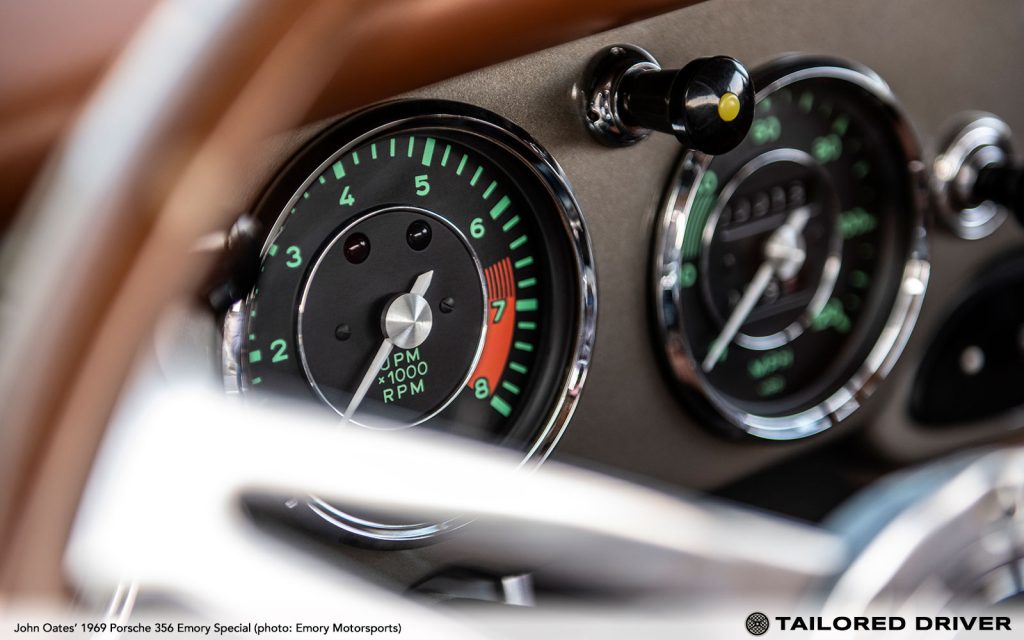
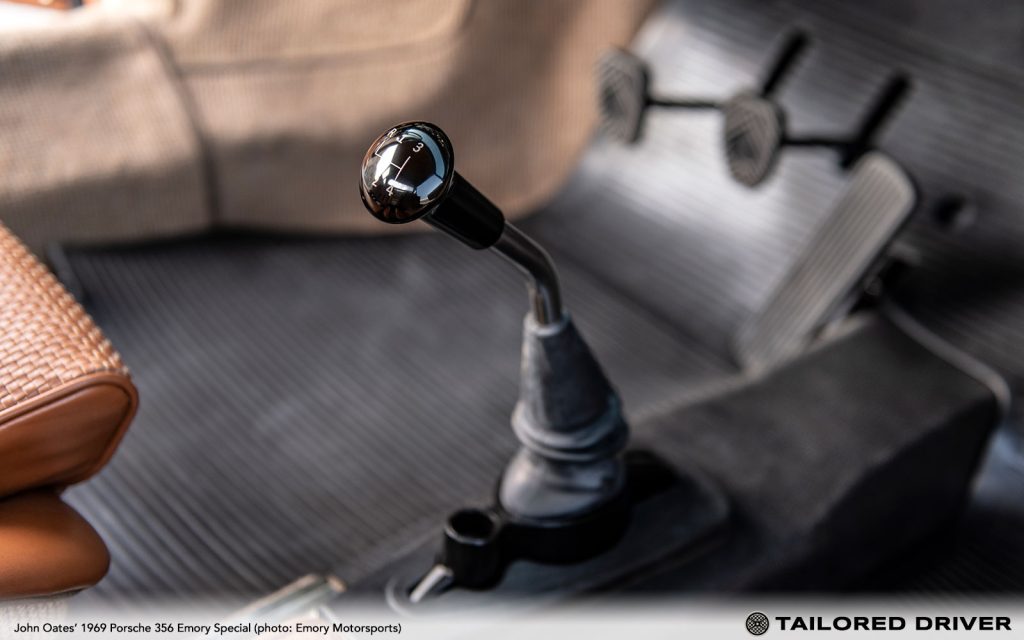
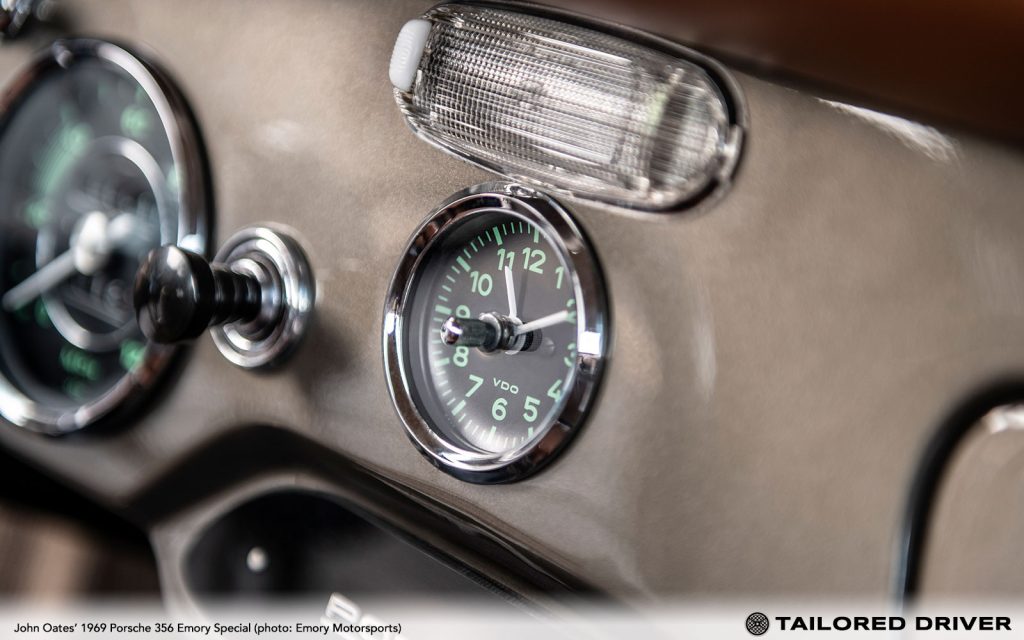
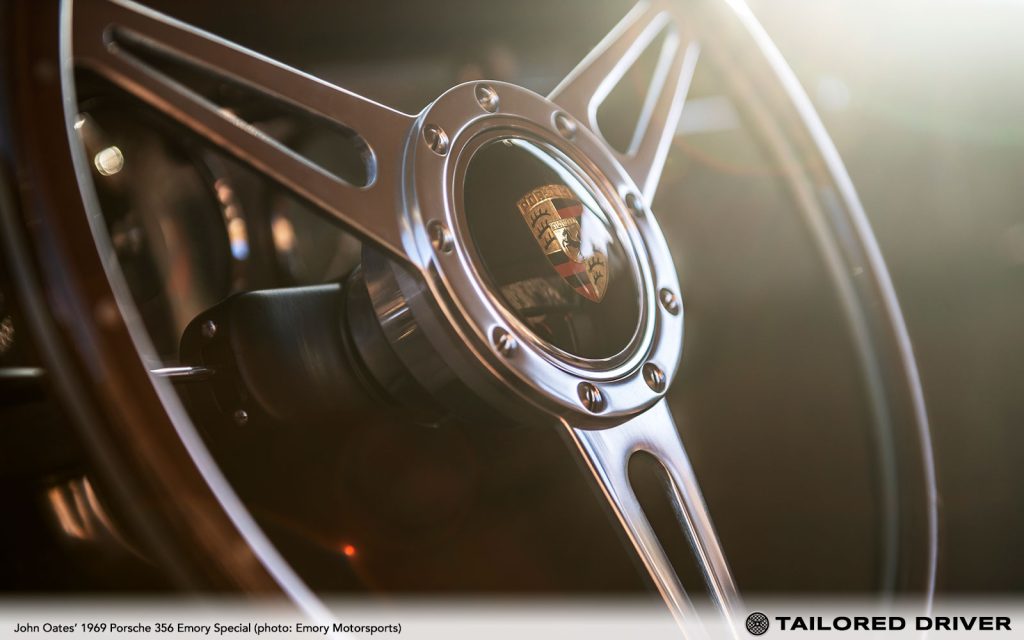
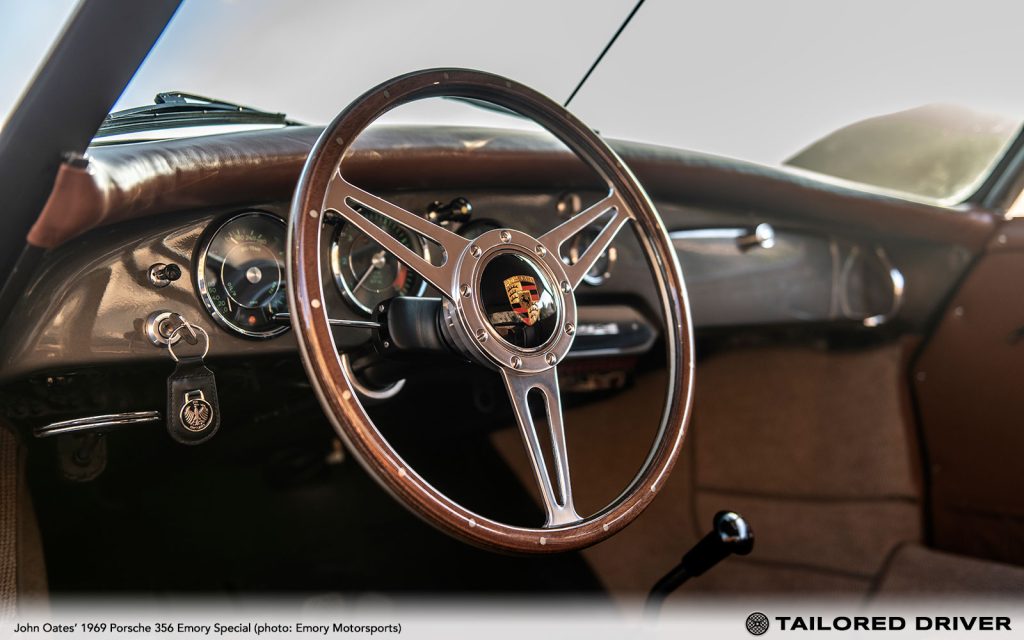
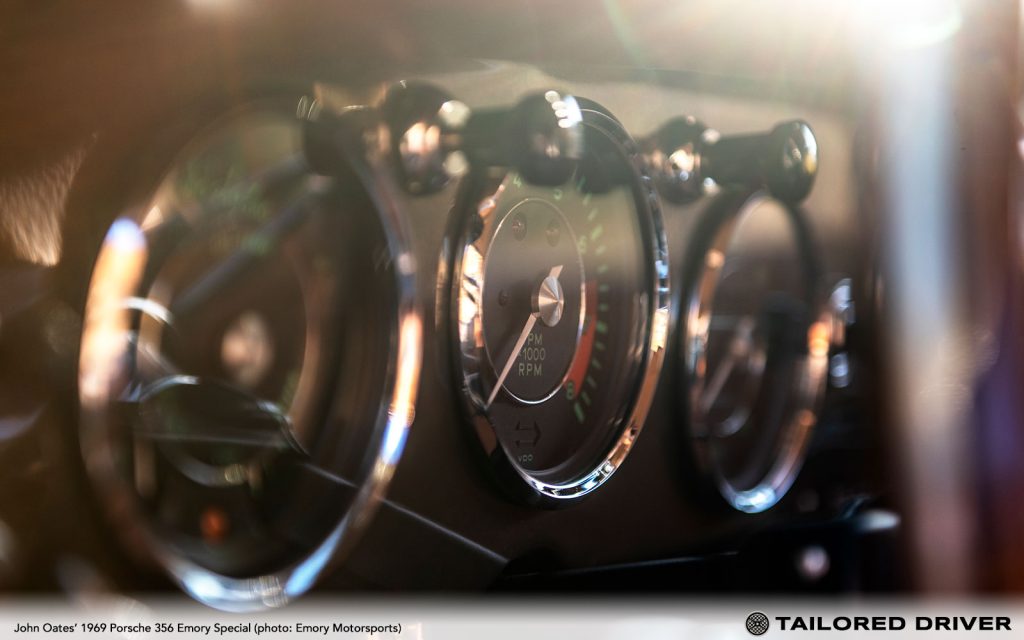
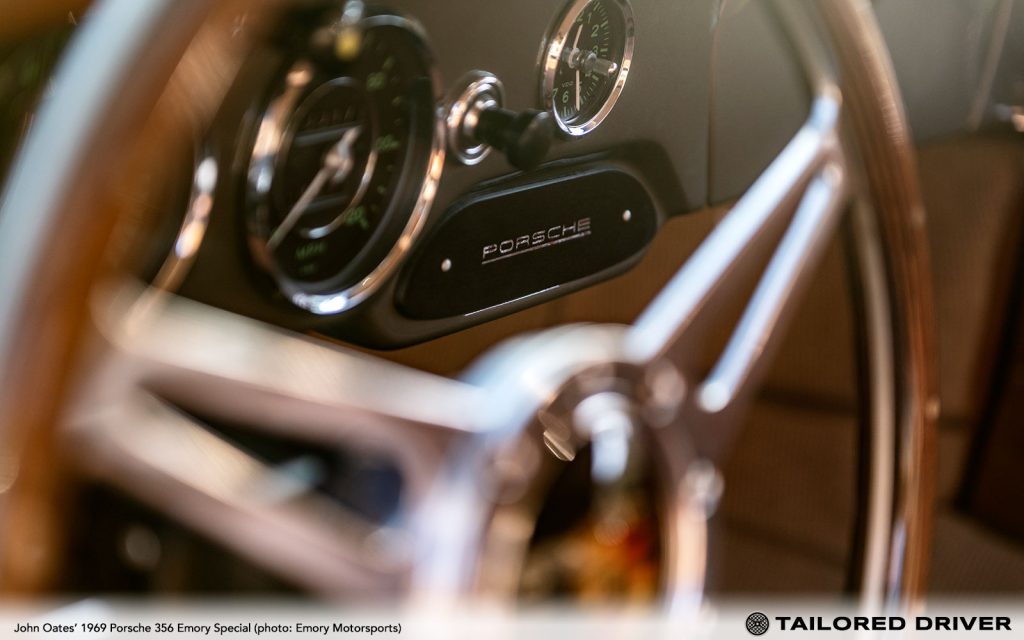
    Other interior features include the mid-1960s Porsche 904-style triple gauge, accented by a Derrington steering wheel, an Emory Outlaw shift knob, black control knobs and escutcheons, and the radio-delete option. A removable rollbar was added in case Oates decides to track his 356.

    Final exterior details really set this car apart. To complement the removable rollbar, Emory created interchangeable hard and soft tops. The re-profiled OE hardtop is pictured; the car also has a custom soft top for summer cruising. 

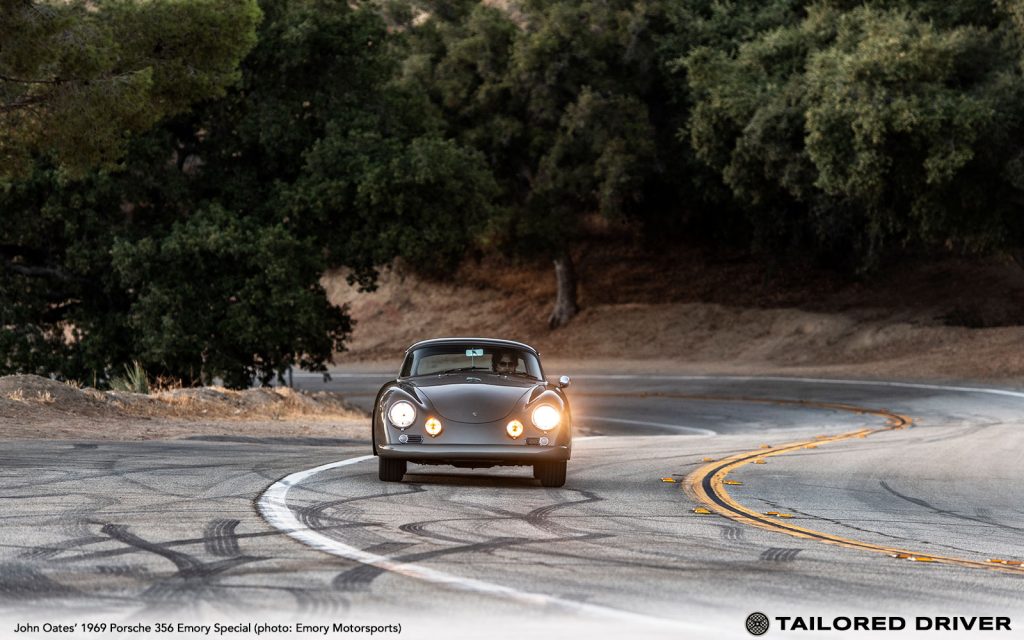
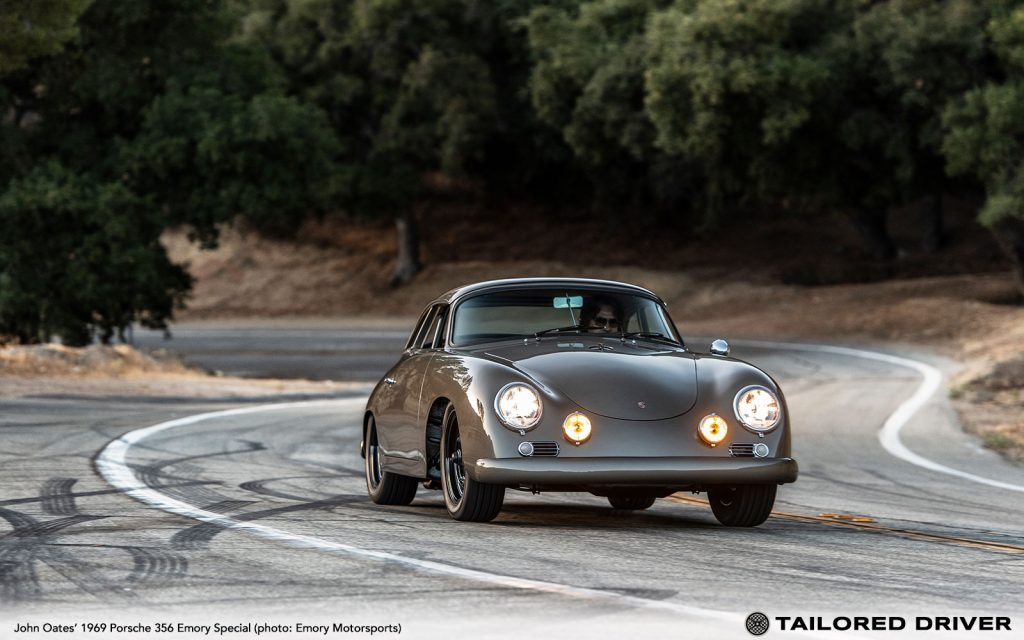
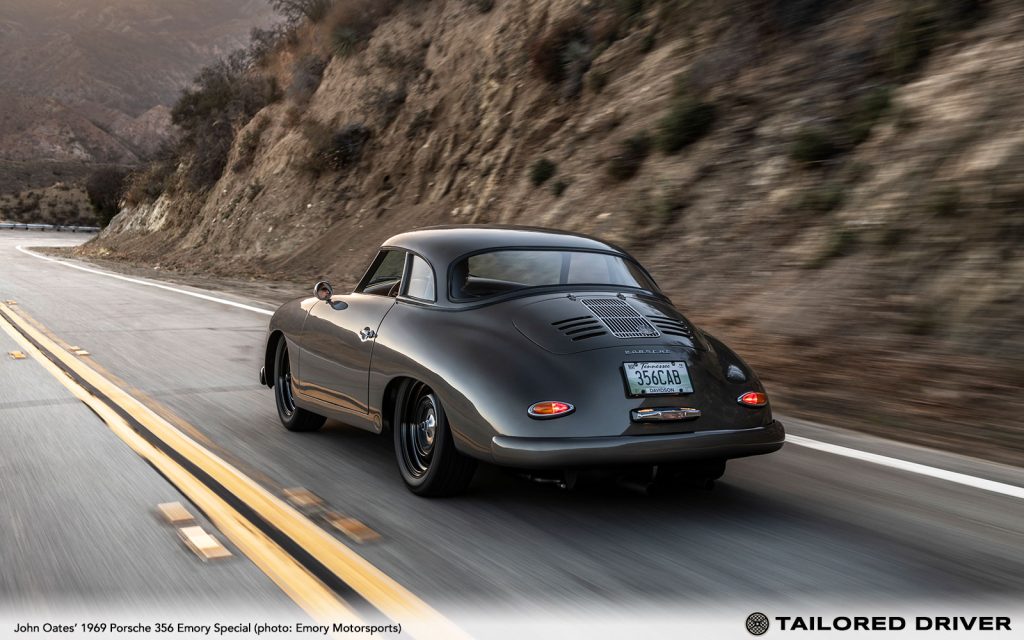
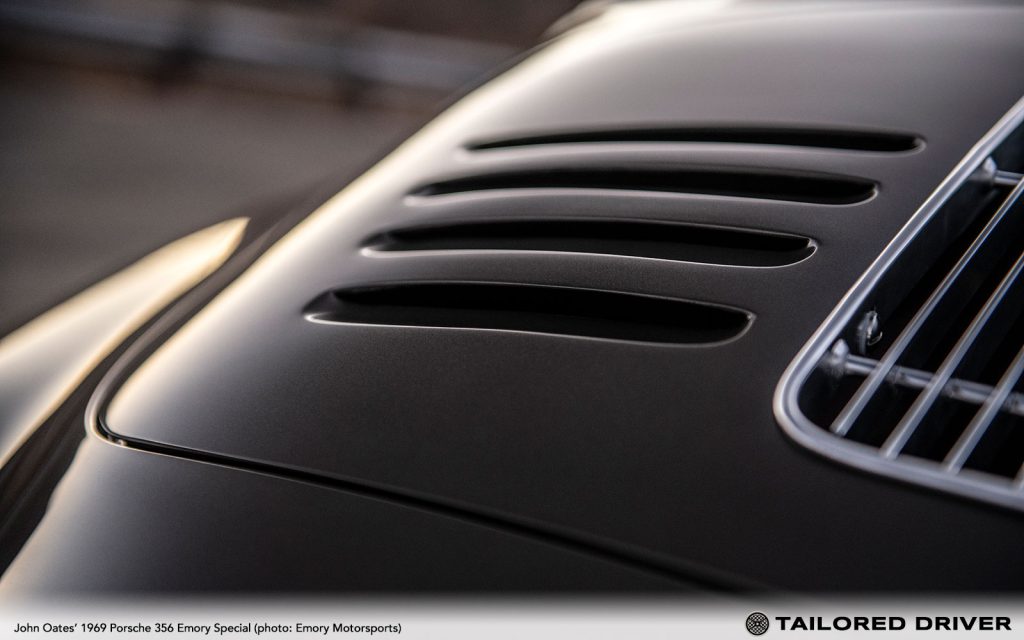
    Finished in Graphite Grey Metallic RM paint, Oates’ 1960 356 Emory Special has a few additional bespoke body modifications. These include a hood-handle delete, body-hugging bumpers, body-mounted driving lights, and a signature Emory reverse-louvered deck lid. The 200-horsepower car weighs 1,850 pounds.

    John Oates debuted his Emory Special 356 in late October at an intimate party and private concert at the Porsche Experience Center in Atlanta as part of the marque’s 70th Anniversary celebration. For more information on Emory Motorsports, please call 971.241.7017 or visit EmoryMotorsports.com.

    About Emory Motorsports

    Founded in 1996 by Amy and Rod Emory, Emory Motorsports initially provided turn-key prep, repairs, and logistics for vintage racers. When Rod Emory began doing custom street builds, the company evolved into one of the world’s leading resources for Porsche 356 customization and restoration.

    Rod Emory’s automotive roots date to 1948, when his grandfather Neil Emory founded Valley Custom Shop. An innovator in body chopping and channeling, Neil Emory created the bodywork for the infamous land-speed record-holding SoCal Streamliner. Rod’s dad, Gary, created the first Baja Bug while working as parts manager at Chick Iverson Porsche in the 1960s. He later founded (Porsche) Parts Obsolete and became the go-to source for hard-to-find replacement parts.

    Rod applied his grandfather’s sheetmetal skills and dad’s Porsche obsession and design sensibility to the 356 models. Porsche purists labeled the Emorys’ cars “outlaws” when they dared attempt to enter shows in the 1990s with subtly modified 356s that combined OE parts from different eras. The Emorys happily became champions of what is now known as the “Porsche Outlaw” customizing movement. 

    Emory Motorsports has created some of the most stunning early Porsches ever built. The company also did a meticulous Pebble Beach Concours-recognized restoration of the most historically significant werks Porsche ever, a 356 SL Gmund that took a class victory at the 1951 24 Hours of LeMans – Porsche’s first international race win.