Tag: Pininfarina

  • Deep Dive on Sultan of Brunei Ferrari F40 Collection

    Deep Dive on Sultan of Brunei Ferrari F40 Collection

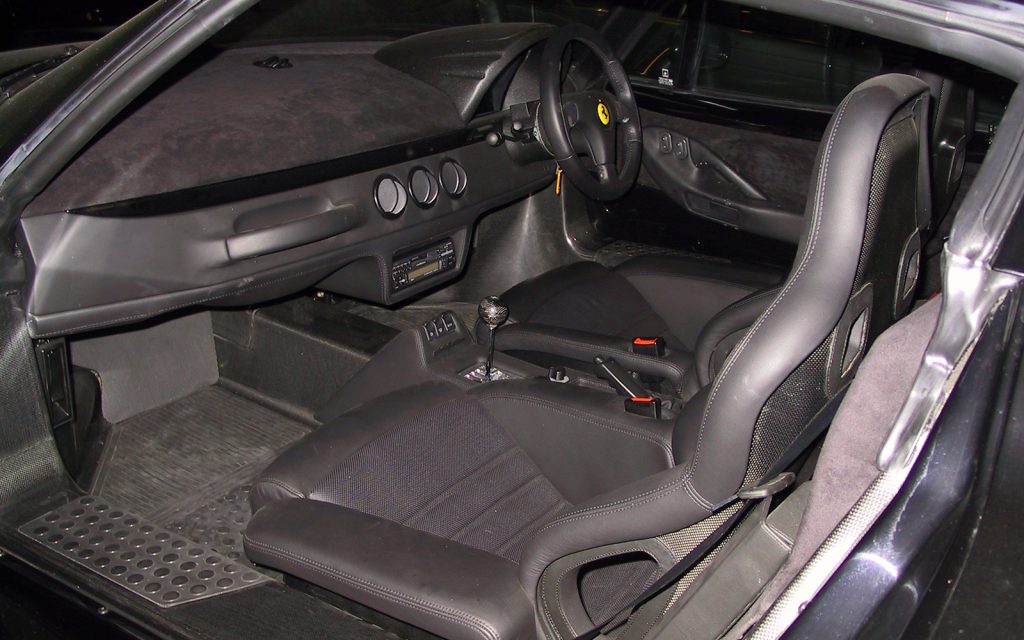
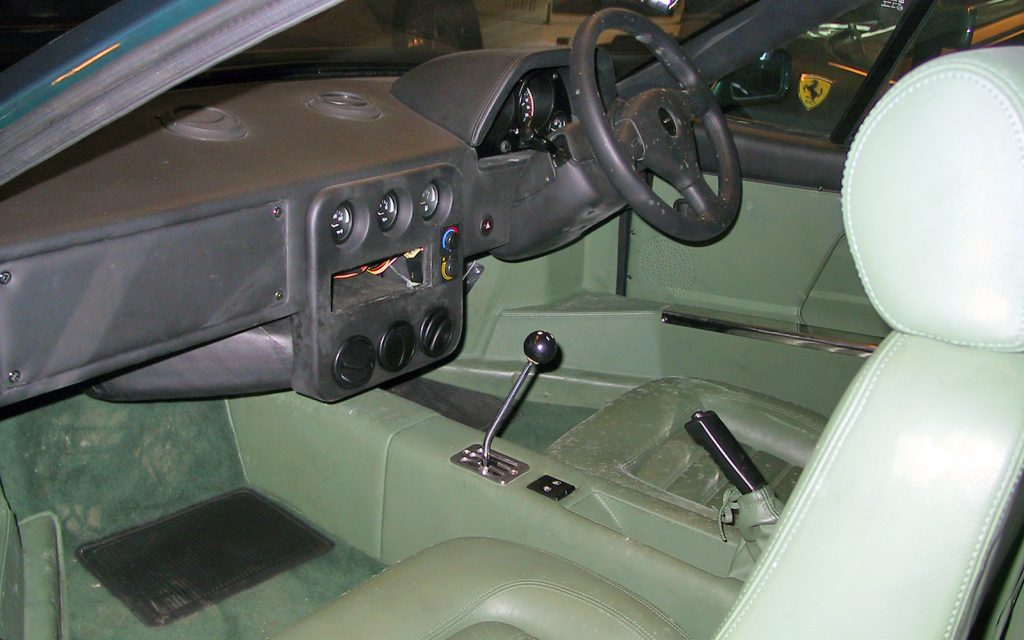
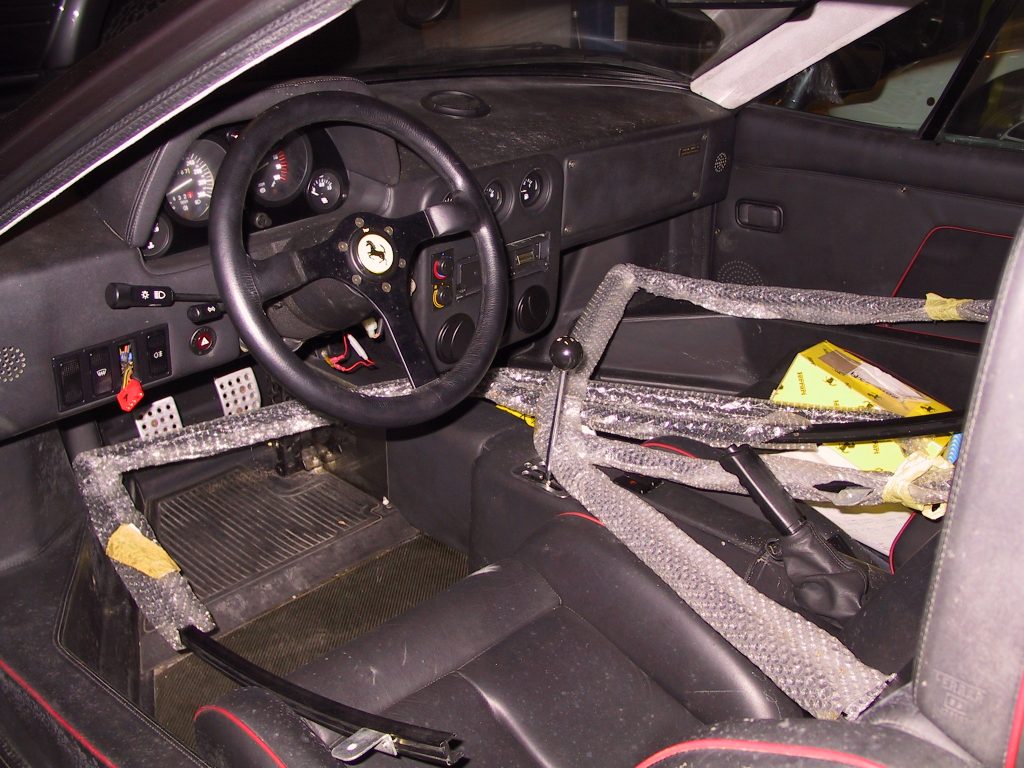
    We’ve found a new set of photos posted by All-Star RADwood Facebook Group member Dave Skulman depicting photos of Ferraris from Brunei royal family collection and notably F40s with a few F50s thrown in. Skulman shared the shots along with some itemization, and we saw that as a good reason to make a post documenting them as best we can through some research and a very informative video from Car Throttle. So, with this post we’re going to focus on the F40s and link all the sources. We’ll also update this as further information is collected or shared with us. If you have a tip, drop it below in the comments.

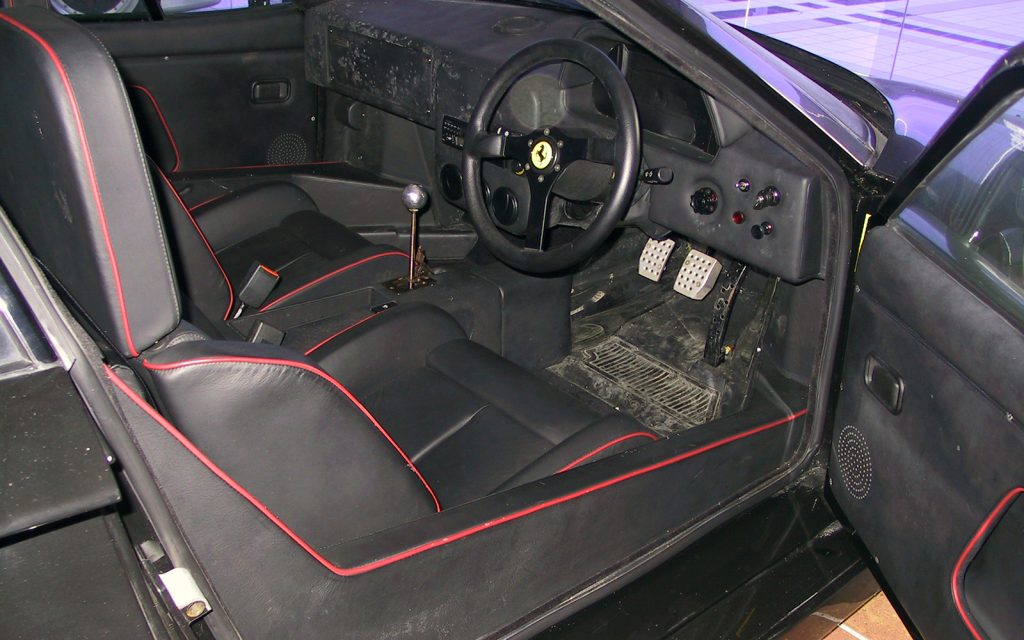
    First is the Skulman post from earlier today. It appears embedding isn’t available for it, so we’ll link it HERE. The associated shots seem to be from one of the many holding buildings that has housed the Brunei collection over the years. We’ve heard rumors of these buildings not being HVAC controlled, and further that this tends to see the cars degrade in condition where they sit. Based on some of the mold seen on the interiors, it suggests these rumors are correct and that the damp air isn’t helping these cars any.

    Even still, by piecing together these photos and the details outlined in the post and in the CarThrottle video posted above, we’ve done our best to identify each car.
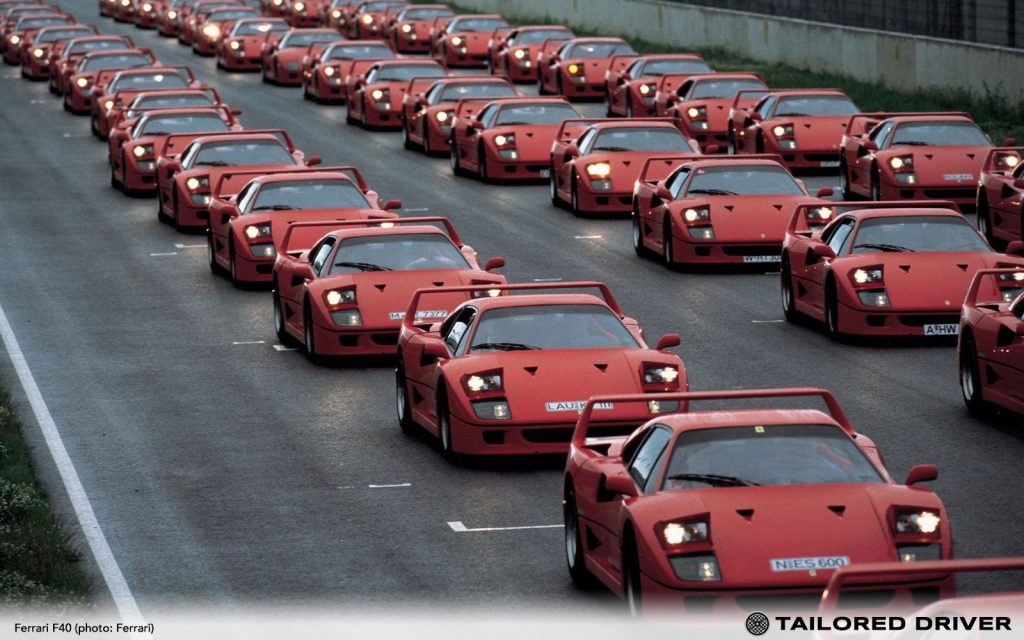
    So, let’s begin with a brief history. The Ferrari F40 (type F120) was a mid-engined rear-wheel-drive sportscar built from 1987-1992, with LM race versions built until 1994 and GTE specification race cars extending to 1996.

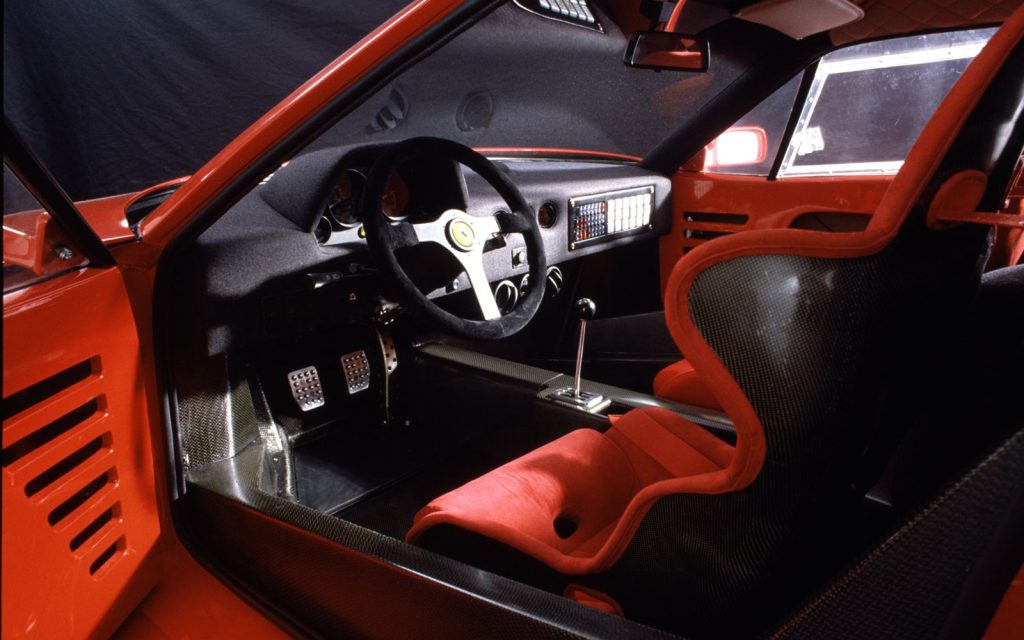
    The car was named F40 to celebrate Ferrari’s 40th Anniversary, and only 400 units planned to be sold at a price of approximately $400,000 U.S.. In the end, 1,311 to 1,315 were built with 213 going to the USA. Power came from a high-revving 2.9-liter version of the turbocharged V8 from evolved from the 288 GTO. The Pininfarina-designed body was made of kevlar, carbon fiber and aluminum, and each one was painted Rosso Corsa, with red fabric interior and left-hand drive steering configuration. Ferrari didn’t deviate. While some of these cars have been repainted over the years, all of the cars were produced in identical spec when new.
    Enter the Sultan of Brunei. Known for perhaps the most lavish car collection the world has ever seen, the infamous dictator loaded with oil wealth amassed over 2,500 vehicles many of which were the embodiment of an appetite for the most extreme funded by unlimited resources. The Brunei royal family’s collection was said to include cars like Zonda-powered Mercedes-Benz S-Class station wagons, four-door and long roof Ferraris, Jaguar XJ220s, one-off Bentley Java road cars, Bentley SUVs built long before any Bentayga ever existed, McLaren F1s and of course many, many other Ferraris including a large mix of F40s (source: WhichCar.com.au)

    Relevant to this story, the Ferrari F40 LM was produced as a series of racing cars by Michelotto, the same Paduan firm that had produced the Ferrari GTO Evolution and had produced parts for the road cars. 19 cars were produced.

    Worth noting, much of the information about the Brunei royal family’s F40s comes from Paulo Garella. Garella was Pinifarina’s Prototype Manager in the 1990s and was in charge of tailoring most of the F40s they had. His account is critical to this mix. So, let’s dig into what we know.

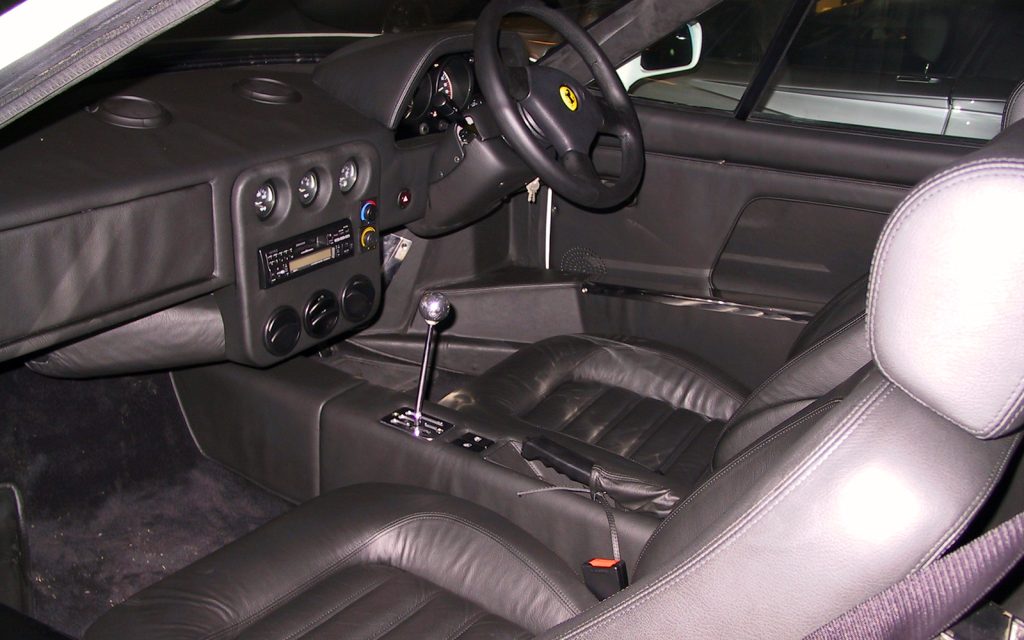
    Following their procurement, most of these cars were sent to Pininfarina where Garella and his team set about their customization. Seven were road cars, each fitted with leather interiors and comfort seats sourced from the Ferrari 512 TR parts bin. Each were also fitted with air conditioning, radio, electric windows and adjustable tilt steering wheel. Several were also said to be fitted with freer flowing exhaust and ECU flash to augment power from a peak 428 lb-ft. to 480 lb-ft, though which cars received the performance upgrades is unclear.

    Most were converted to right-hand drive. These included a gloss black over black leather, emerald green over green leather, forest green over black leather, Rosso Corsa over black leather and gloss white over black leather. Two of these seven cars reportedly remained left hand drive as they came from the factory, but received similar tailoring and interior changes. These were said to include a matt black over black leather and grey over black leather, however photos from today’s post confirm the matt black car is right hand drive.
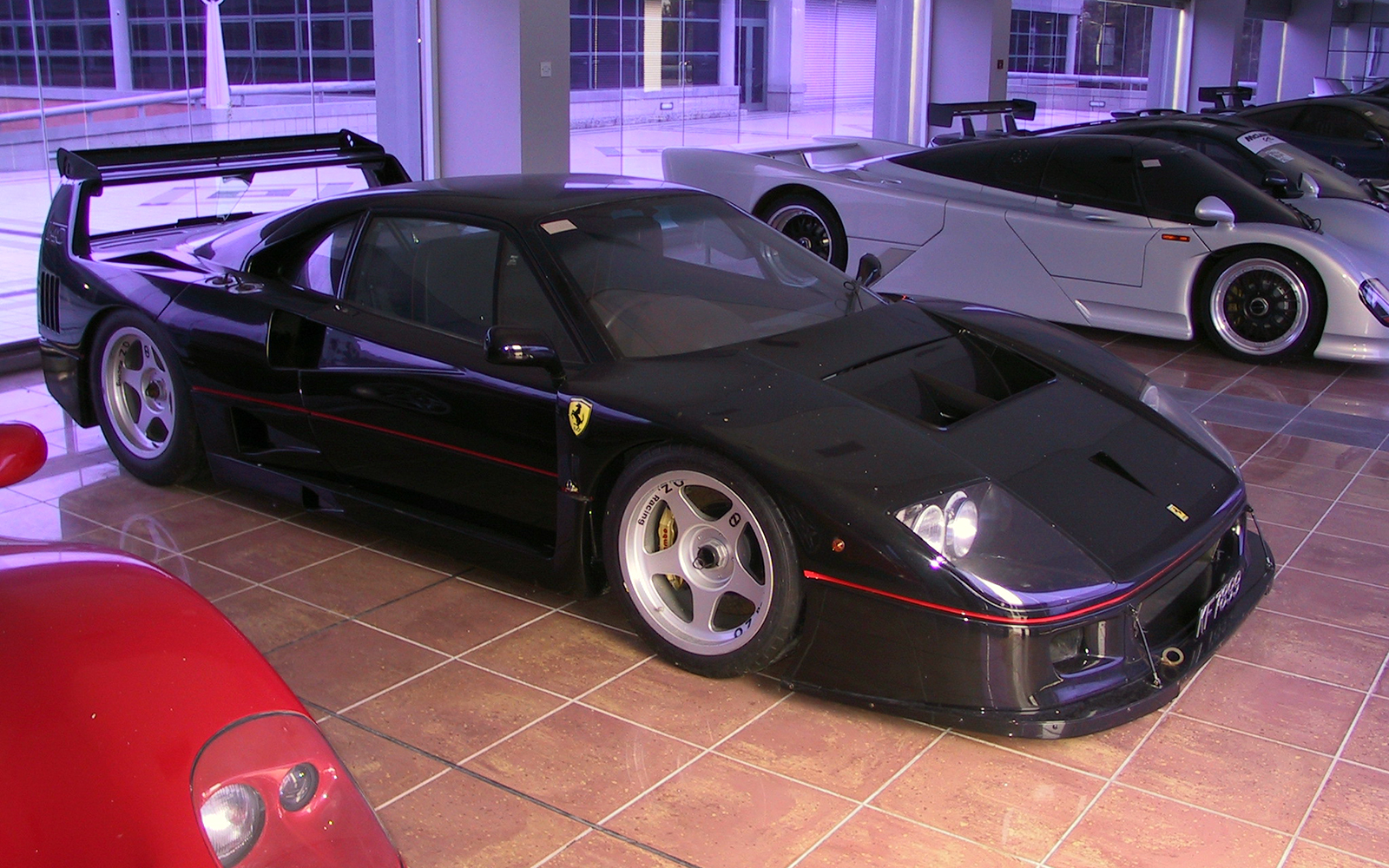
    Beyond these seven, there were two F40 LMs. One was left in its original Rosso Corsa and remained largely original. The other was resprayed in black with distinctive red stripe around the beltline. The latter is also believed to have been in an accident while on a test drive during its time at Pininfarina, but it was reportedly repaired before being delivered.

    Built before Paolo’s time in his position at Pininfarina were two other earlier F40s. Both were converted to right-hand drive. The first was yellow with black leather interior and the second was painted matte grey with grey leather interior and fitted with comfort seats from the Testarossa rather than the 512TR like the later cars. This car also featured a red stripe around the beltline.

    Here’s a breakdown of what we know of each car. Given there’s no conclusive list that we’ve yet found, we’re piecing this together largely based on the original Facebook post we found this morning and comparing that to the previous CarThrottle video that contained all but one of the cars. If you have a source for further information, drop us a note below in the comments and we’ll update this list.

    F40 #1 – F40, Gloss Black / Black, RHD

    Specification: F40 Road Car
    VIN: Unknown
    Registration Plate:
    Color: Gloss Black (Resprayed by Pininfarina, Paolo Garella Era)
    Modifications & History: Right-hand drive, Full leather interior with 512TR comfort seats, power windows, and radio. We have no photo of this car at this time.
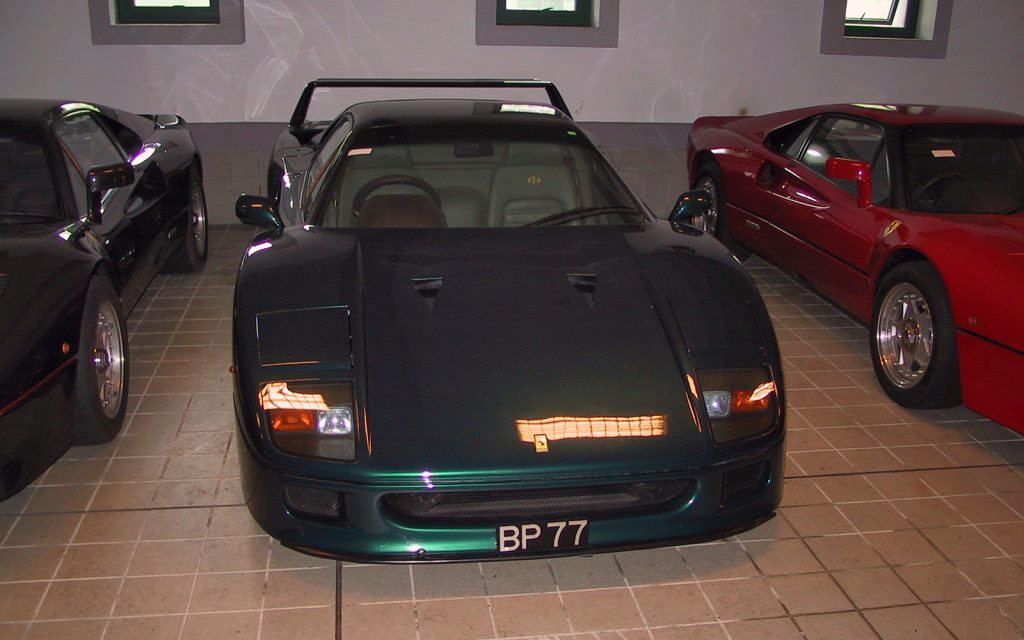
    F40 #2 – F40, Green / Green, RHD

    Specification: F40 Road Car
    VIN: Unknown
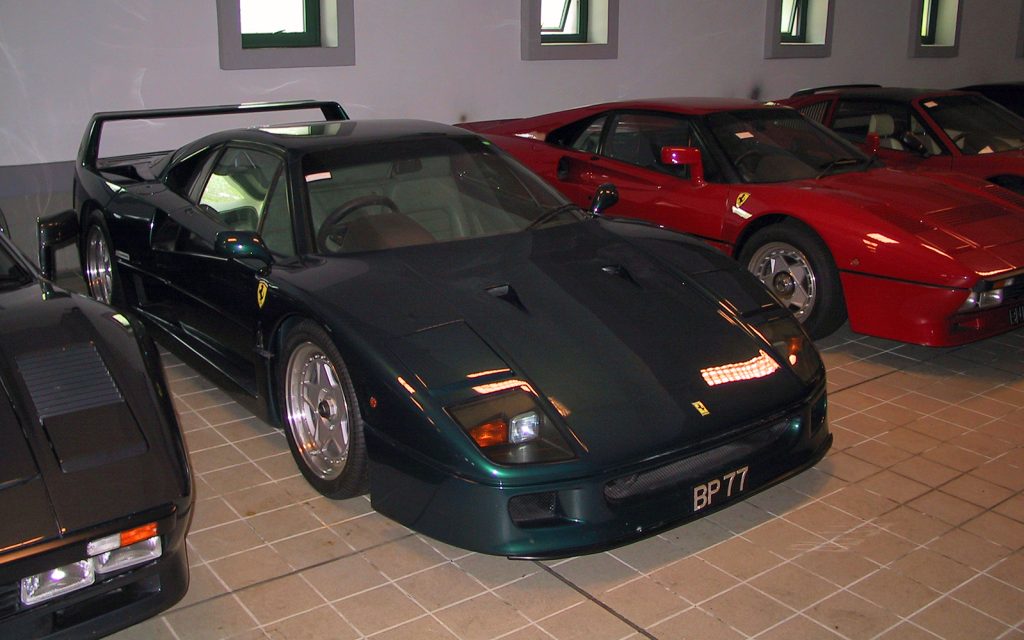
    Registration Plate: BP77
    Color: Emerald Green (Resprayed by Pininfarina, Paolo Garella Era)
    Modifications & History: Right-hand drive, Full leather interior with 512TR comfort seats, power windows, and radio (radio missing in photo). Car is listed as “emerald green” by CarThrottle but appears to be darker in these photos shot in admittedly dark lighting.

    F40 #3 – F40, Green / Black, RHD

    Specification: F40 Road Car
    VIN: Unknown
    Registration Plate:
    Color: Forest Green (Resprayed by Pininfarina, Paolo Garella Era)
    Modifications & History: Right-hand drive, Full leather interior with 512TR comfort seats, power windows, and radio. We have no photo of this car at this time.
    F40 #4 – F40, Rosso Corsa / Black, RHD

    Specification: F40 Road Car
    VIN: Unknown
    Registration Plate: Unknown
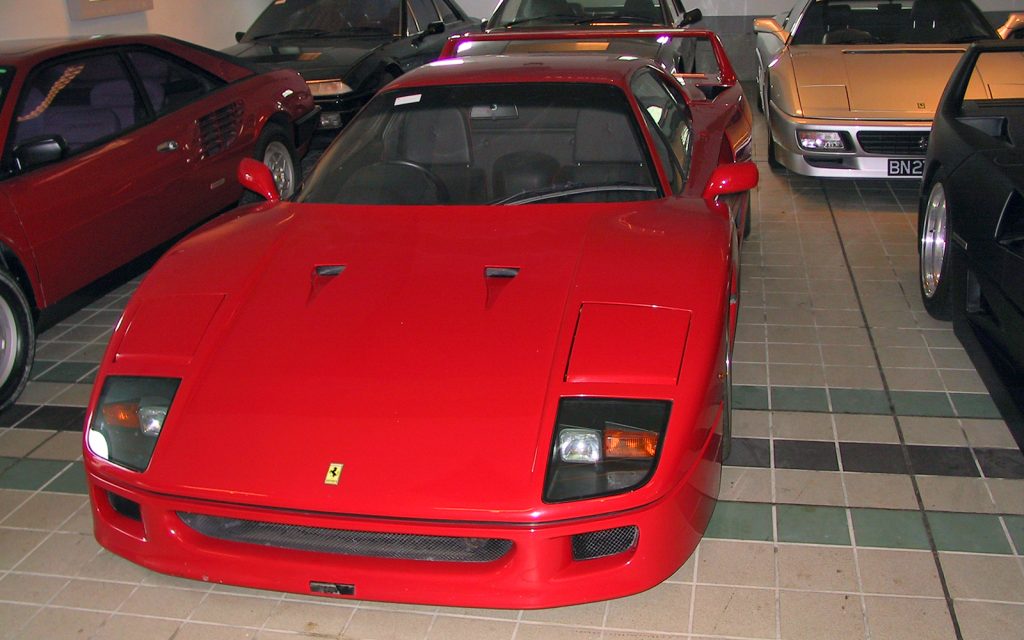
    Color: Rosso Corsa (Possibly Original from Factory, Paolo Garella Era)
    Modifications & History: Right-hand drive, Full leather interior with Testarossa (listed as 512TR by Car Throttle) comfort seats, power windows, and radio. Photos also show hole in front bumper.
    F40 #5 – F40, Gloss White / Black, RHD

    Specification: F40 Road Car
    VIN: Unknown
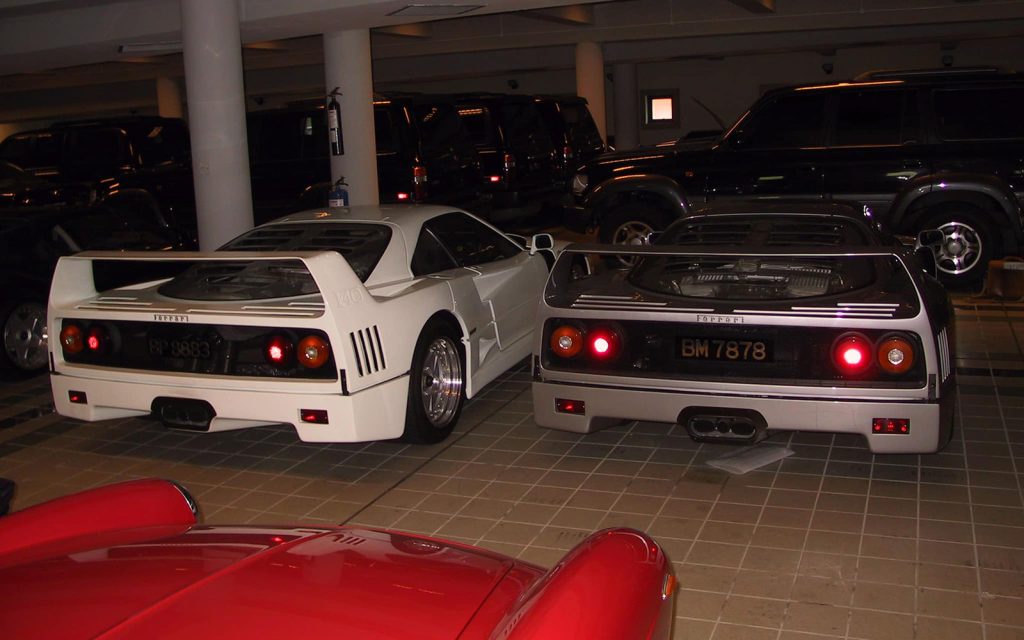
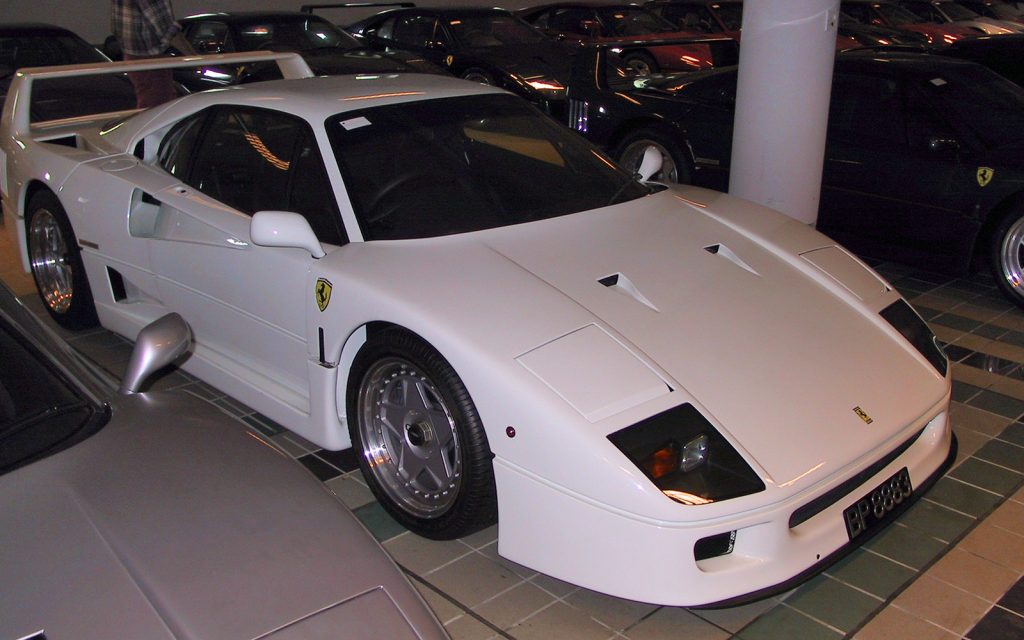
    Registration Plate: BP8883
    Color: Gloss White (Resprayed by Pininfarina, Paolo Garella Era)
    Modifications & History: Right-hand drive, Full leather interior with 512TR comfort seats, power windows, and radio.
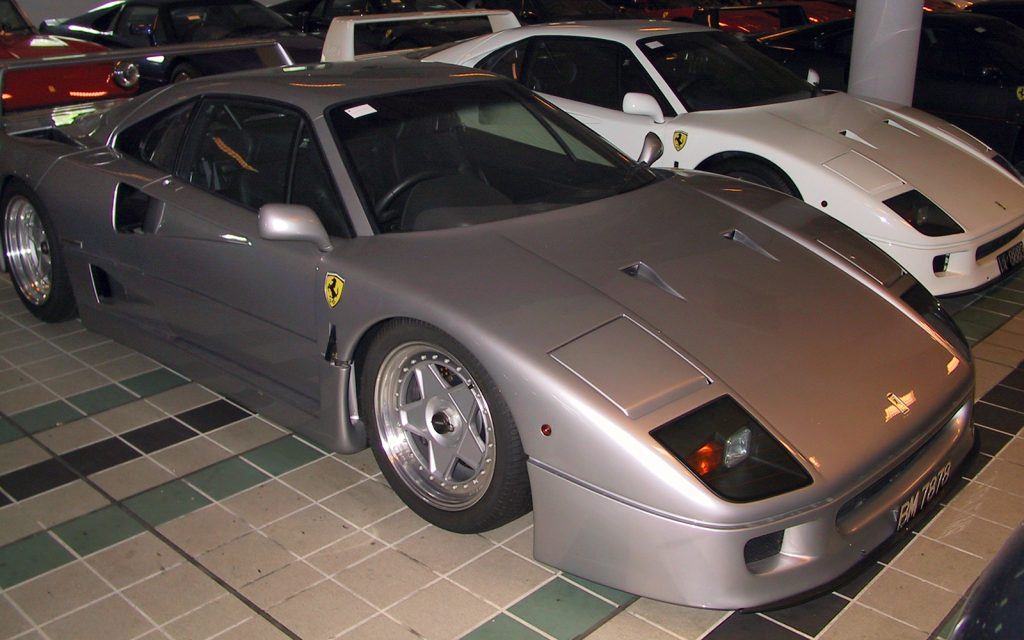
    F40 #6 – F40, Silver / Black, RHD

    Specification: F40 Road Car
    VIN: Unknown
    Registration Plate: BM7878
    Color: Silver (Resprayed, likely by Pininfarina)
    Modifications & History: Right-hand drive, Full leather interior with 512TR comfort seats. This car is not in the CarThrottle video inventory but shows up in this photo set and with specification similar to other Paolo Garella Era RHD cars.
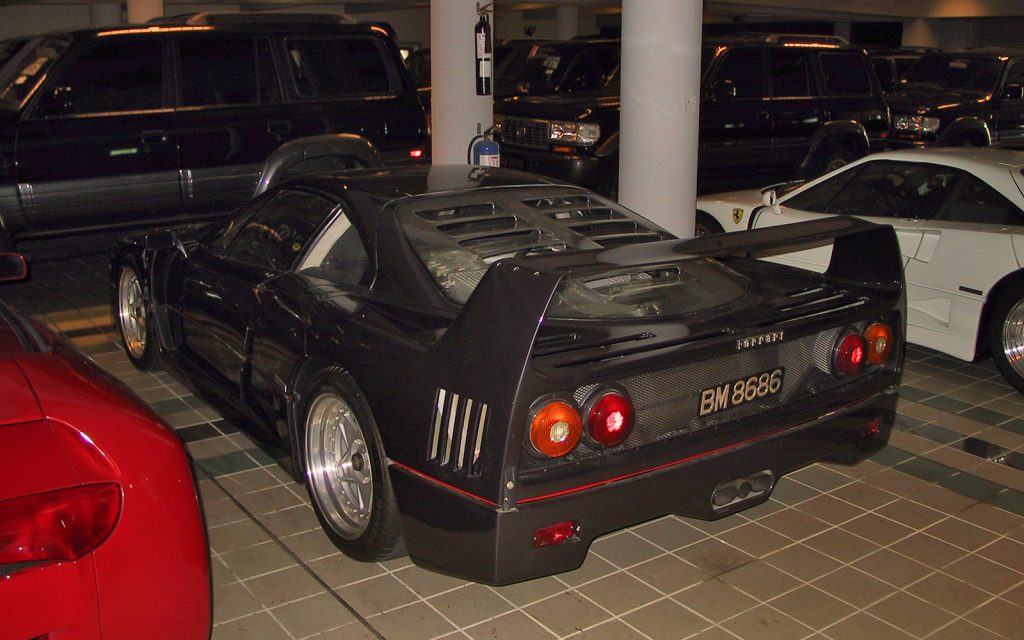
    F40 #7 – F40, Charcoal Grey / Black, LHD

    Specification: F40 Road Car
    VIN: Unknown
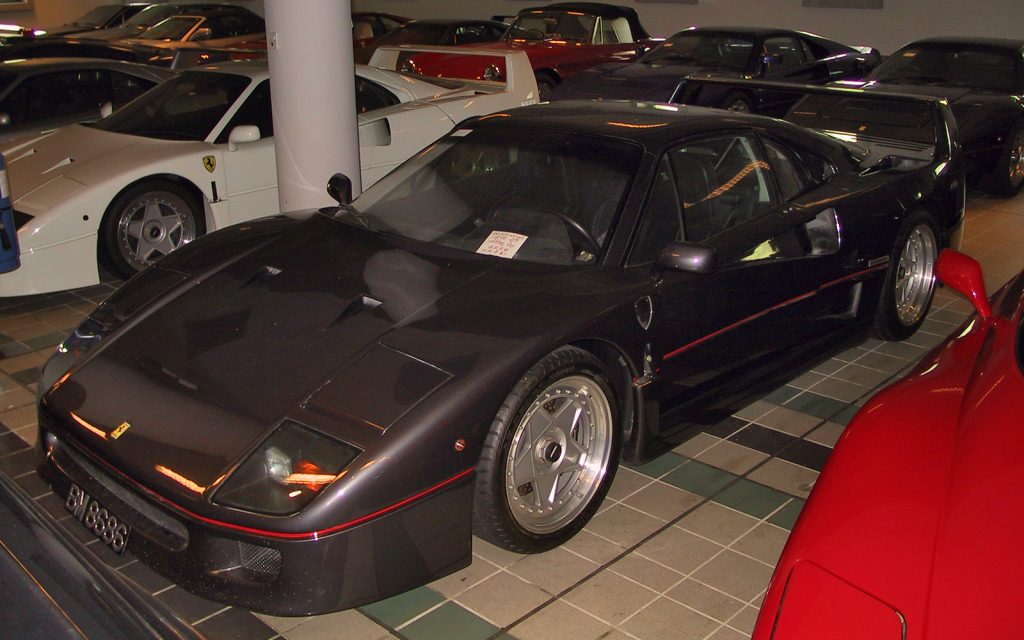
    Registration Plate: BM8686
    Color: Charcoal Grey Matt (Resprayed by Pininfarina, Paolo Garella Era)
    Modifications & History: Left-hand drive with red beltline stripe, Full leather interior with Testarossa comfort seats, power windows, and radio. This car is listed as
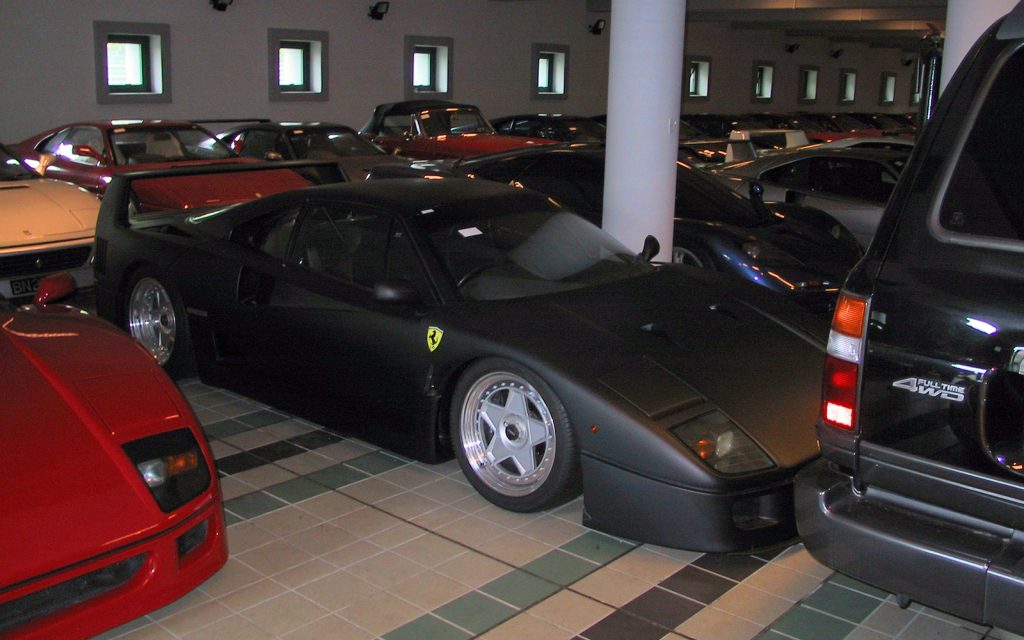
    F40 #8 – F40, Matt Black, RHD

    Specification: F40 Road Car
    VIN: Unknown
    Registration Plate: Unknown
    Color: Matt Black (Resprayed probably by Pininfarina)
    Modifications & History: Left-hand drive according to CarThrottle and right-hand drive according to RADwood post inventory and photos. Full leather interior with 512TR comfort seats, power windows, and radio.
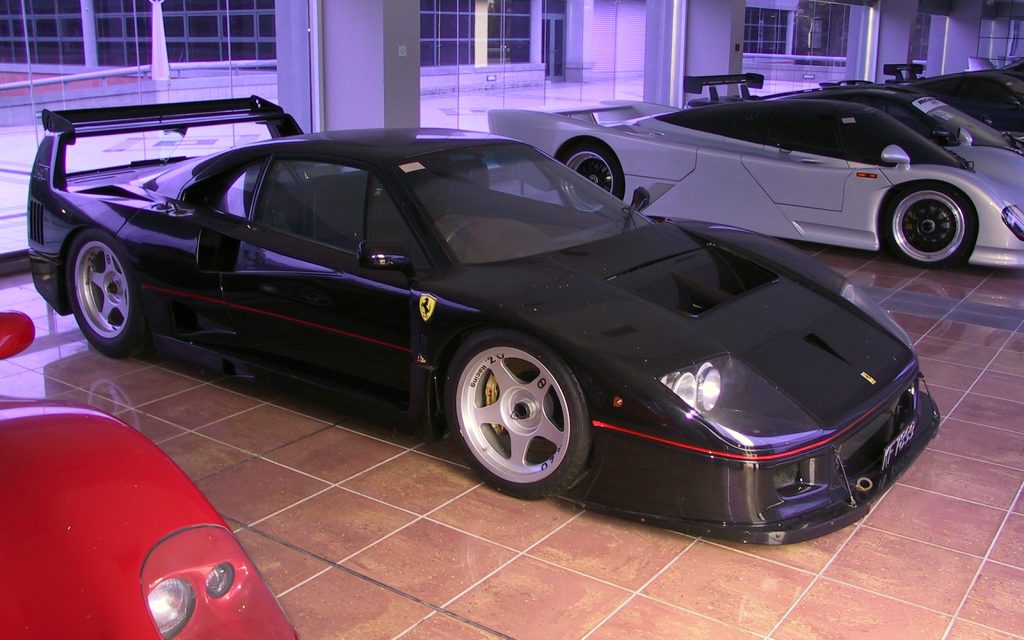
    F40 #9 – F40 LM, Gloss Black, RHD

    Specification: F40 LM
    VIN: 88523
    Registration Plate: KF7899
    Color: Black (Resprayed by Pininfarina)
    Modifications & History: Right-hand drive with leather interior including Tesstarossa-style comfort seats, radio, and power windows.

    F40 #10 – F40 LM, Rosso Corsa / Red Fabric, LHD

    Specification: F40 LM
    VIN: 92237
    Registration Plate:
    Color: Rosso Corsa (Original from Factory)
    Modifications & History: Largely remained original from factory. This car was reportedly acquired by UK Ferrari dealer John Collins who sourced it for the Brunei royal family but it never made it to Brunei and was resold. We have no photos of this car at this time.
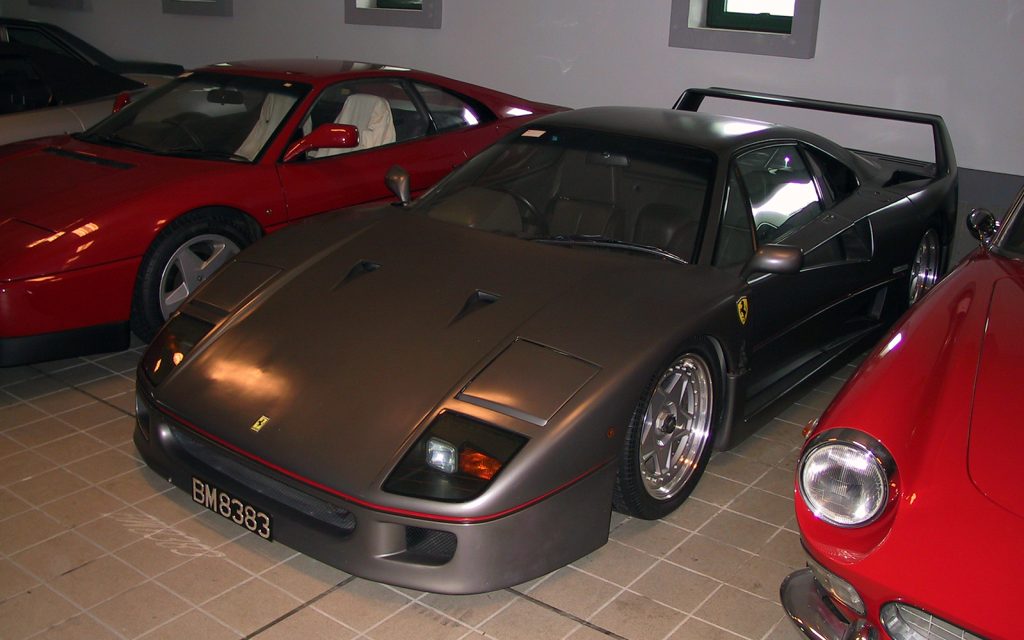
    F40 #11 – F40, Matt Grey, RHD

    Specification: F40 Road Car
    VIN: 91283
    Registration Plate: BM8383, (Unknown in UK)
    Color: Matt Grey (Resprayed by Pininfarina, Prior to Paolo Garella Era)
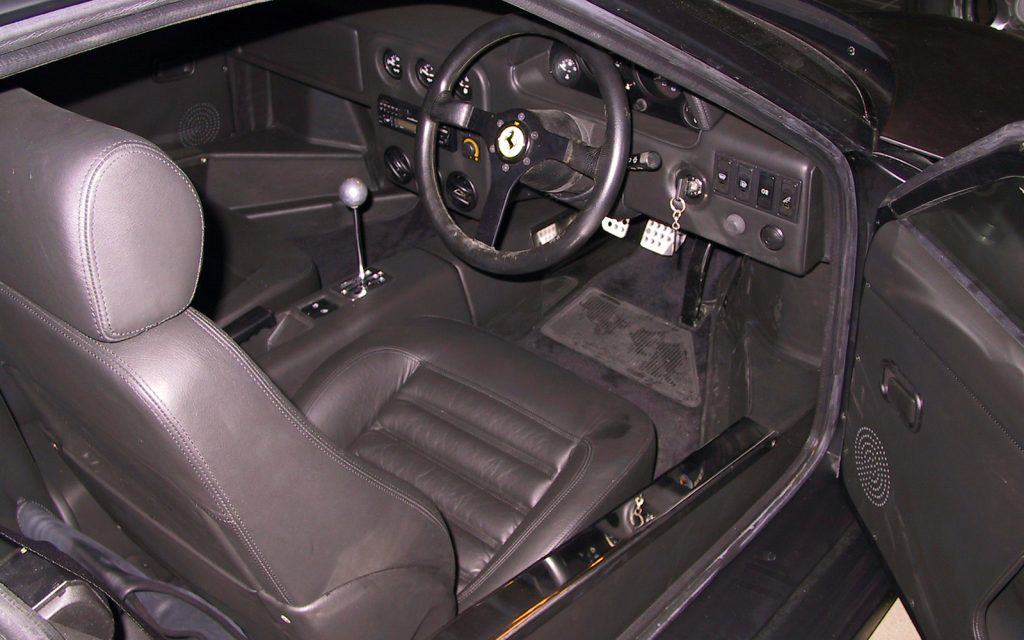
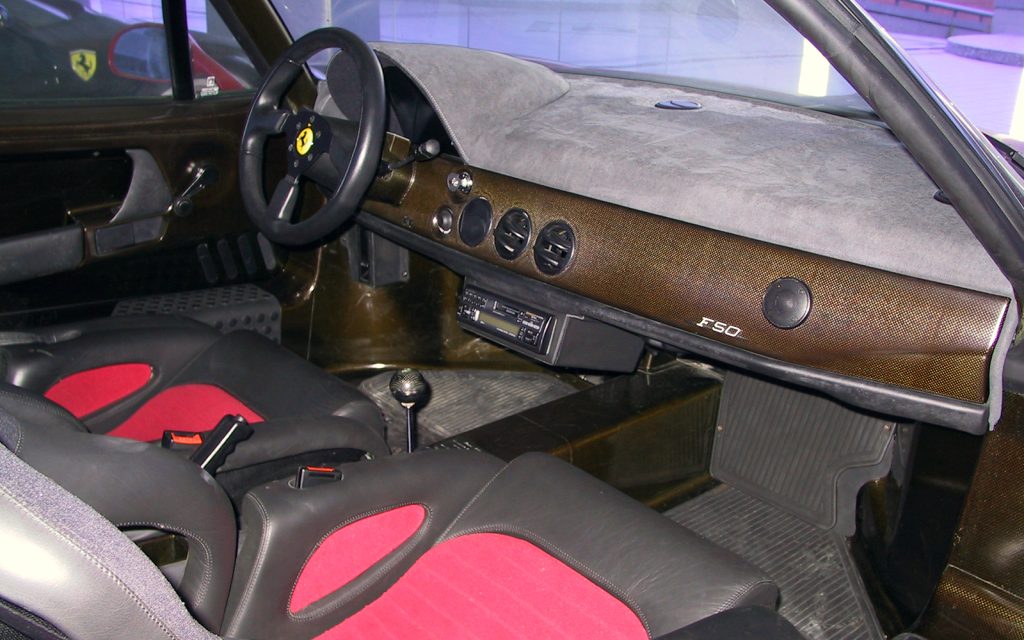
    Modifications & History: Right-hand drive with red beltline stripe, grey leather interior with Testarossa-style comfort seats. It has since been exported to the UK by Ferrari dealer John Collins. In the early 2000s it was painted back to Rosso Corsa and fitted with LM seats in red fabric, then in 2018 was painted back to matte grey by DK engineering and retained the red cloth interior.

    F40 #12 – F40, Yellow / Black, RHD

    Specification: F40 Road Car
    VIN: Unknown
    Registration Plate:
    Color: Yellow (Resprayed by Pininfarina, Prior to Paolo Garella Era)
    Modifications & History: Right-hand drive, Full leather interior with unconfirmed specification comfort seats, power windows, and radio. It was never shipped to Brunei and kept in the UK for the use of the Brunei royal family when in England. This car was also later resold by UK Ferrari dealer John Collins and was later changed back to Rosso Corsa and fitted with red cloth interior as it would have come from the factory. It remains right-hand drive. We have no photos of this car at this time.
  • Mint Green Ferrari F40 “Minty 40” Headed to Monterey Auction Block with RM

    Mint Green Ferrari F40 “Minty 40” Headed to Monterey Auction Block with RM

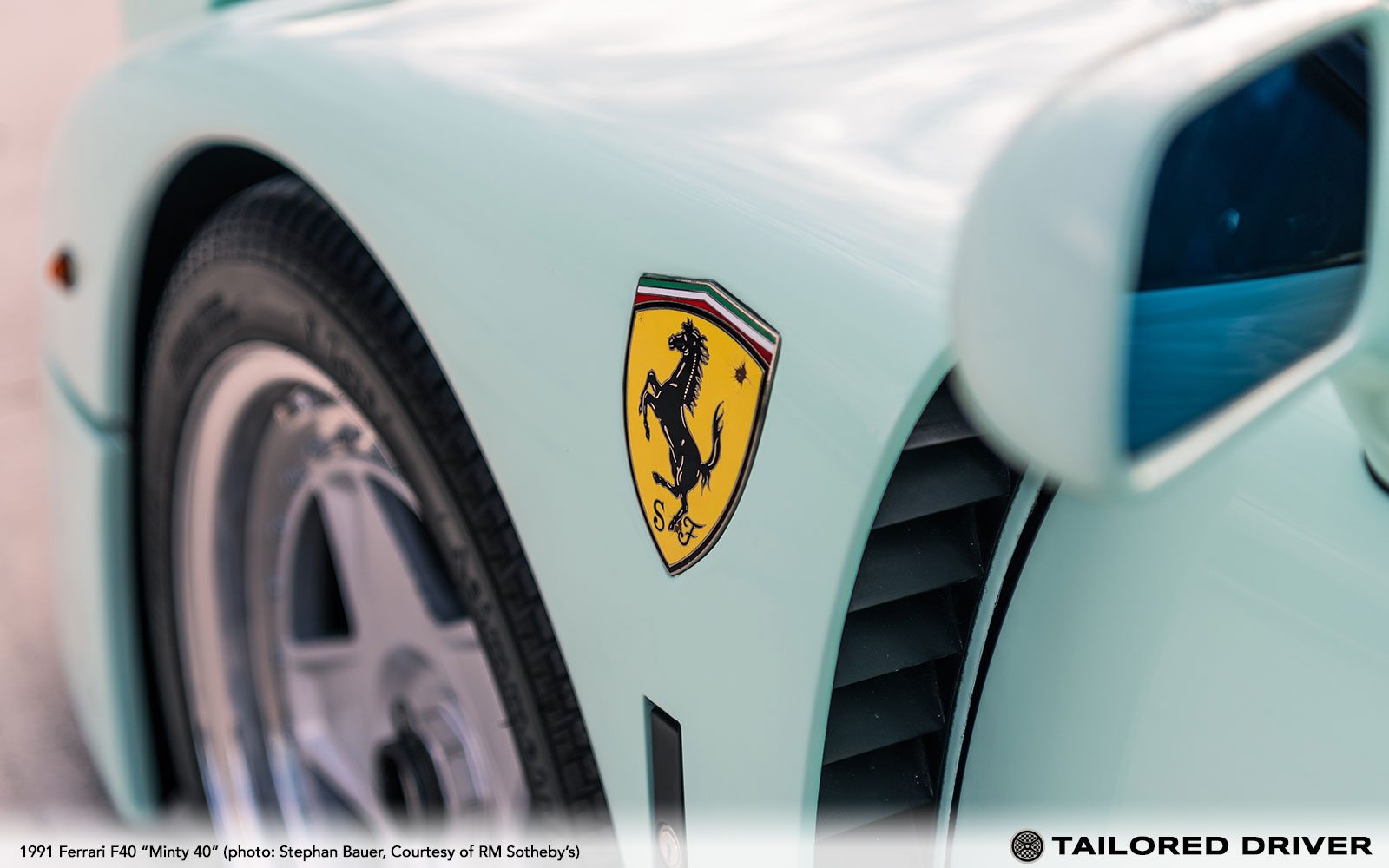
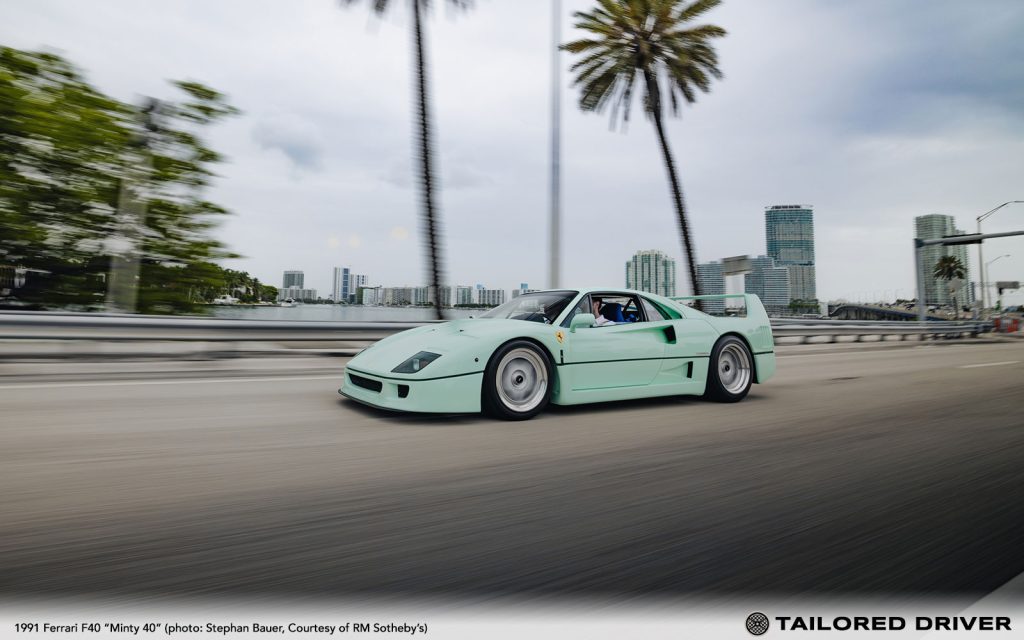
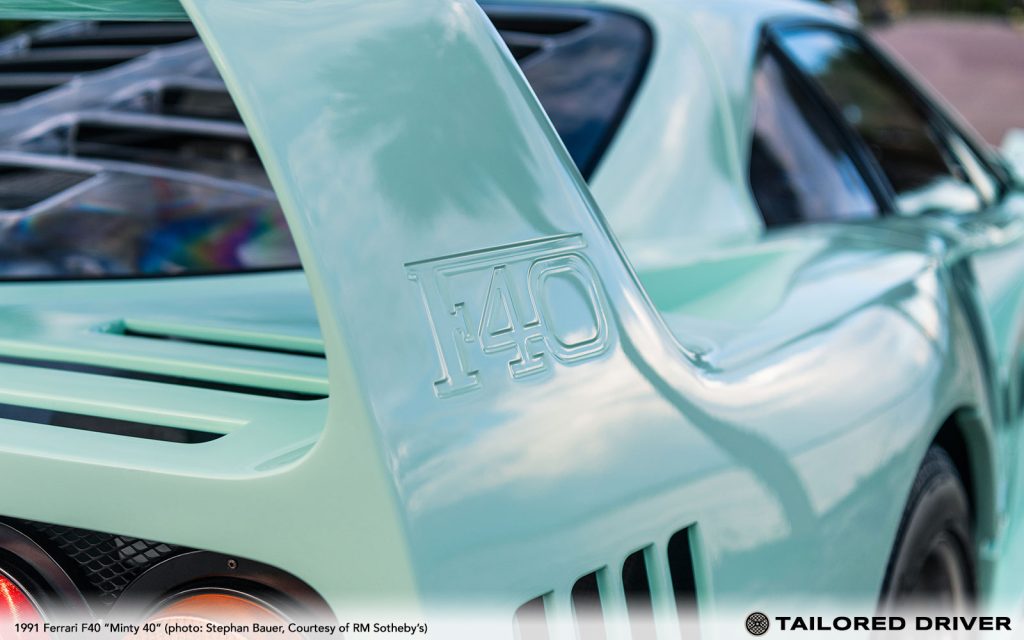
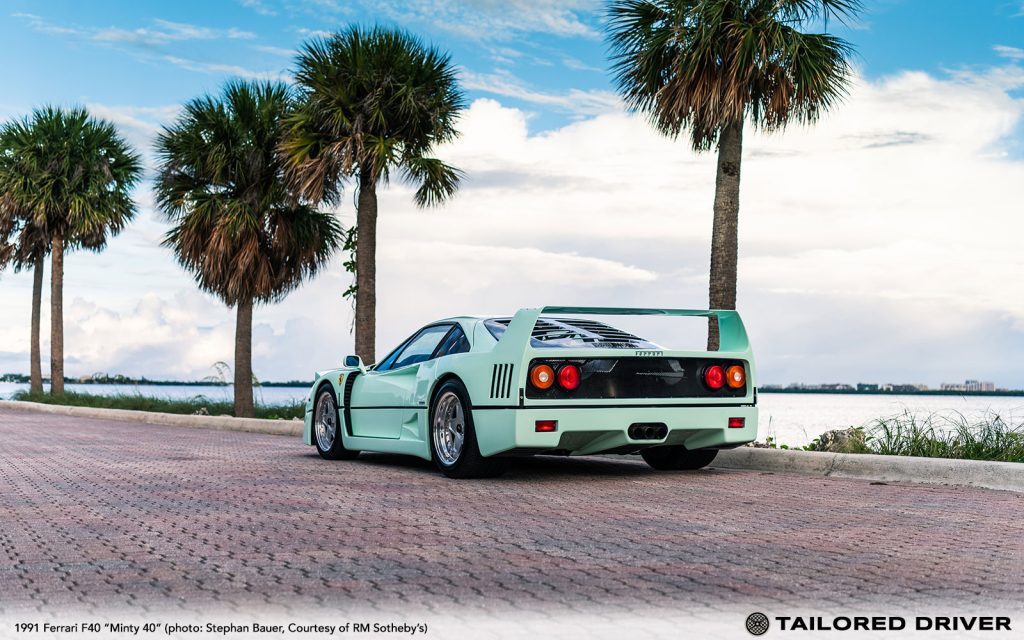
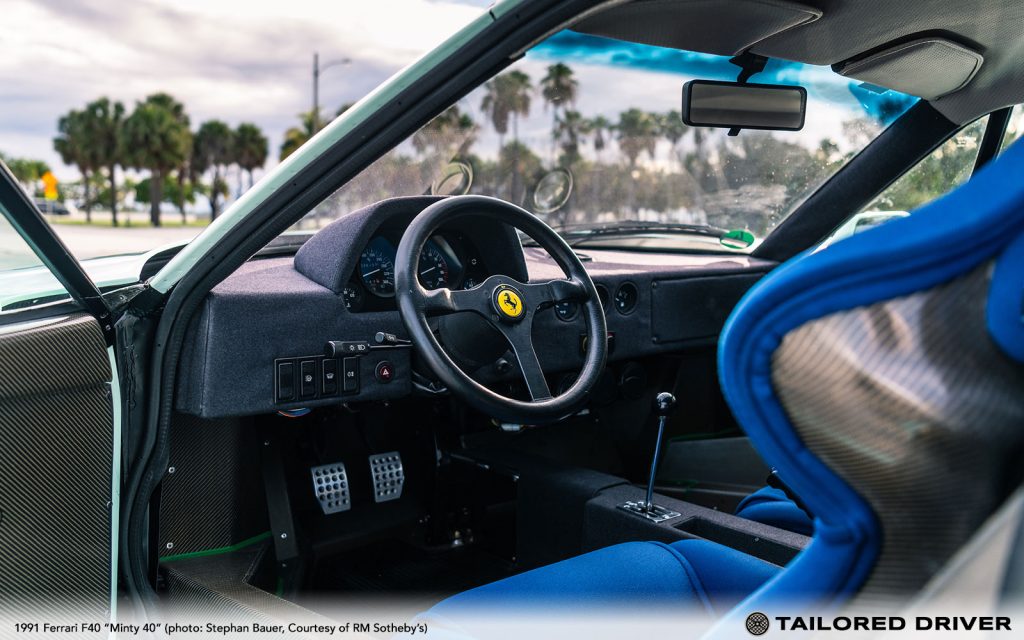
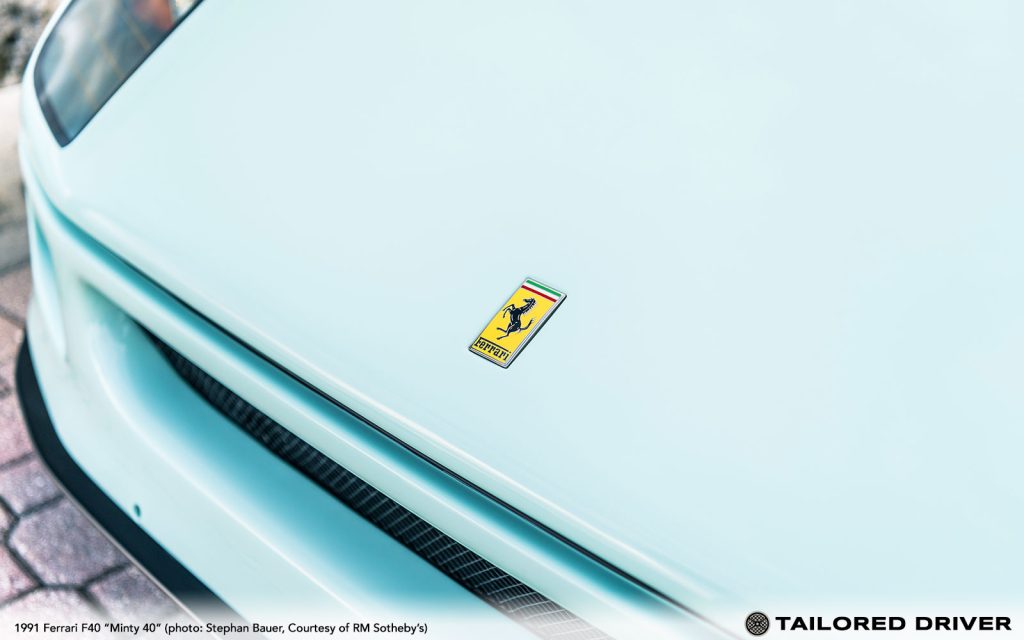
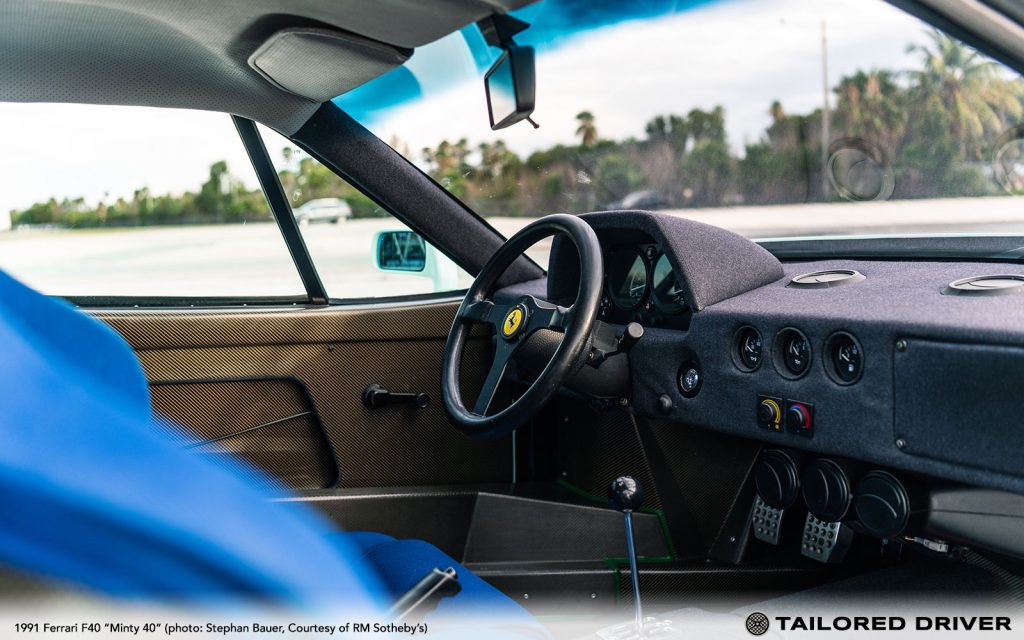
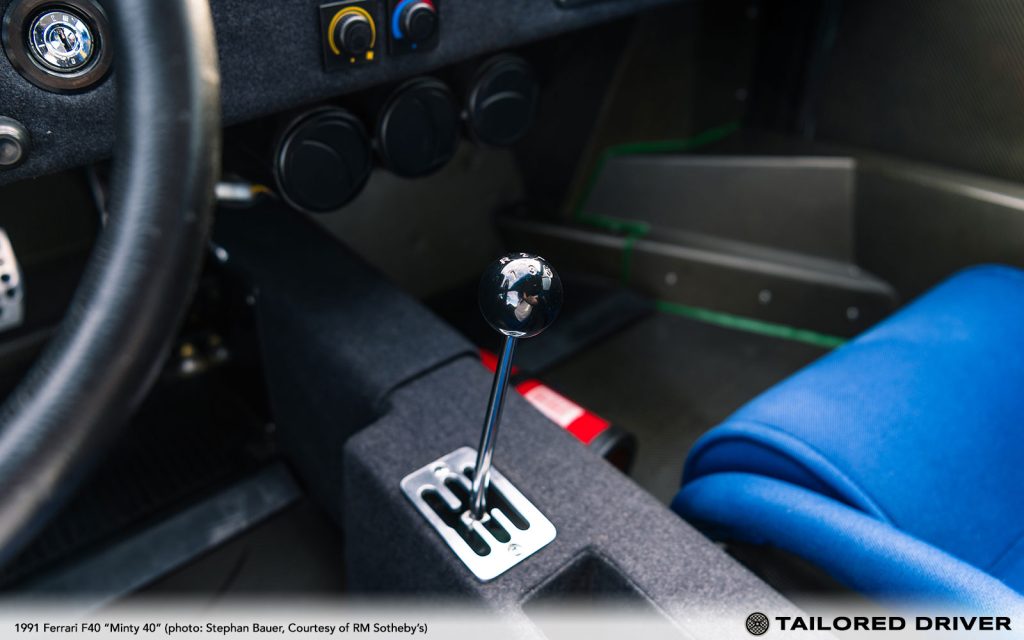
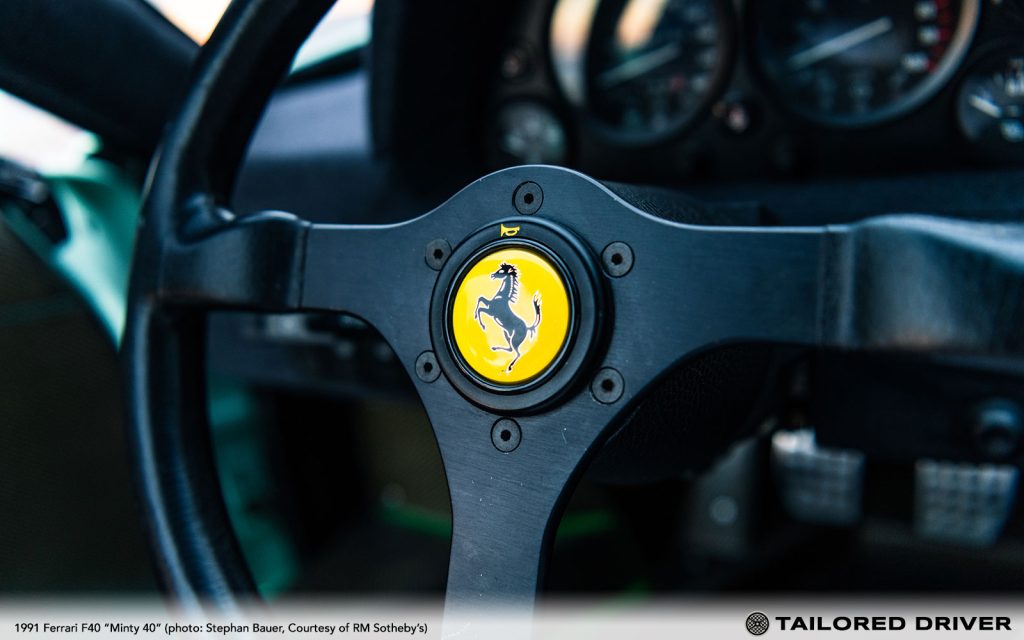
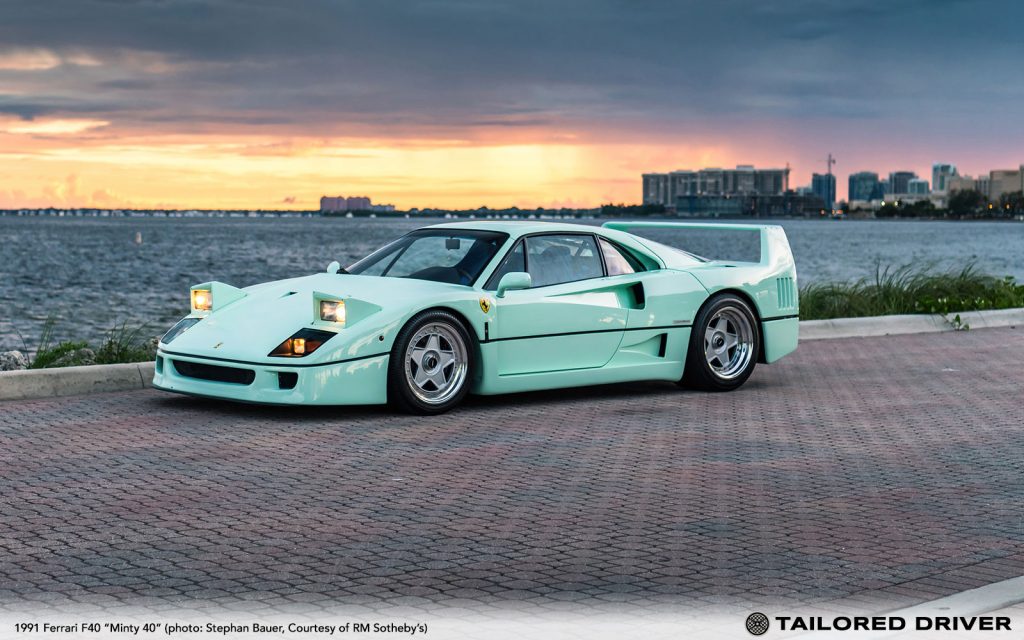
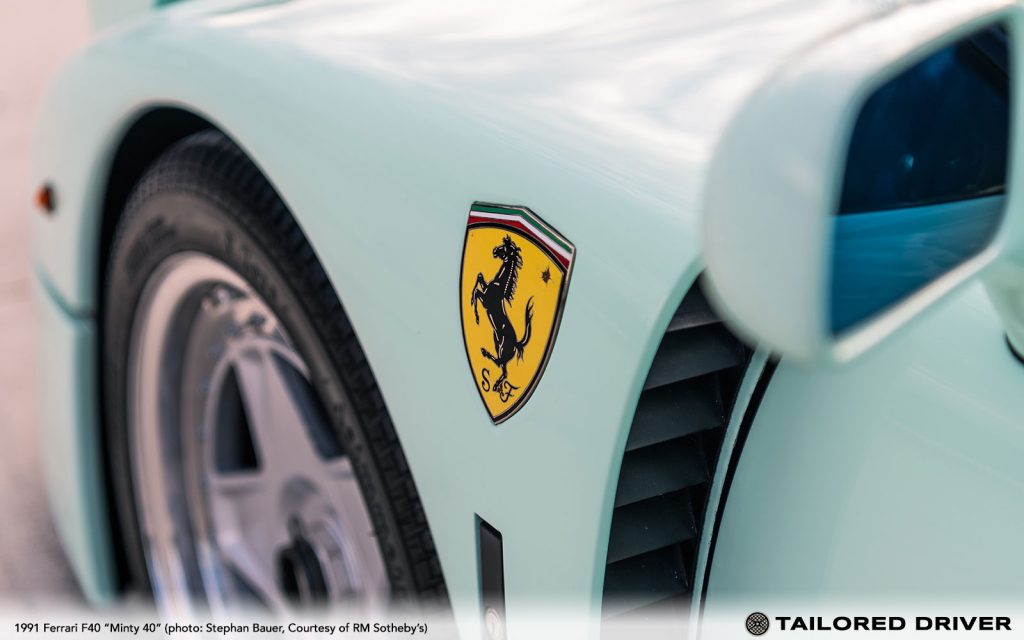
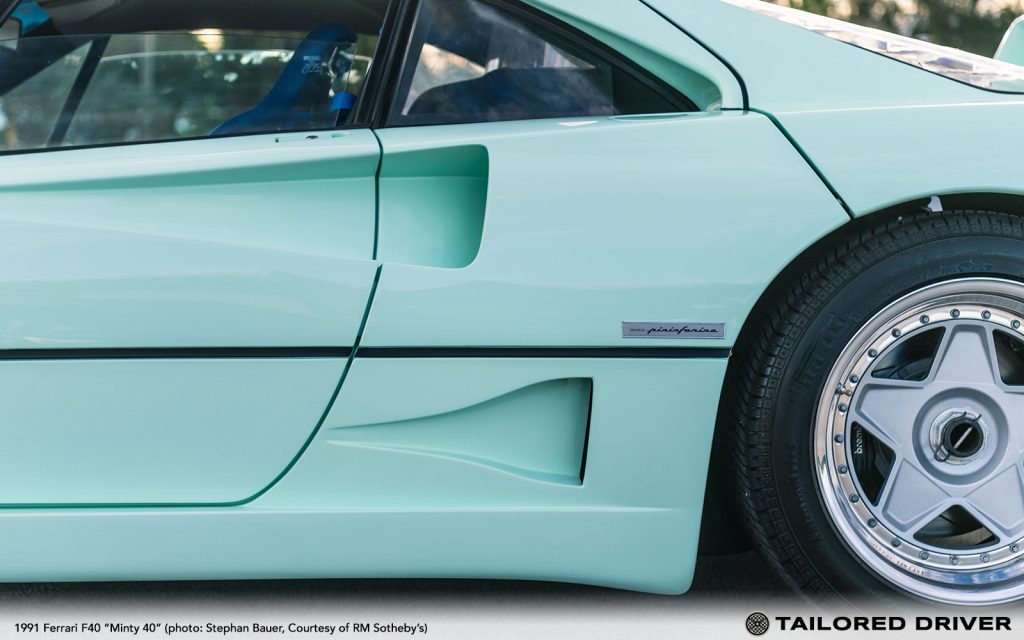
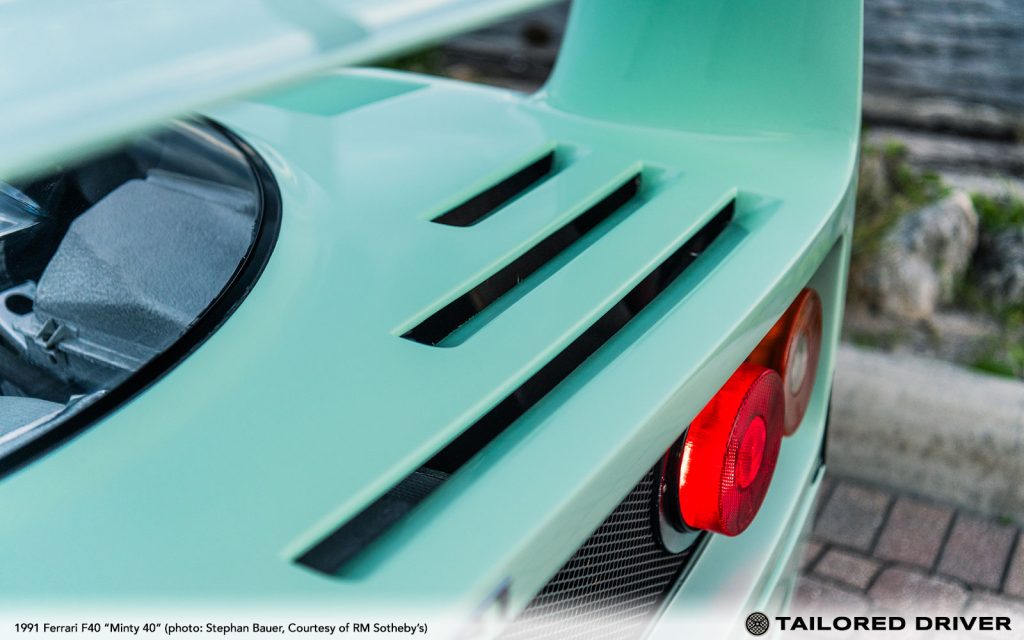
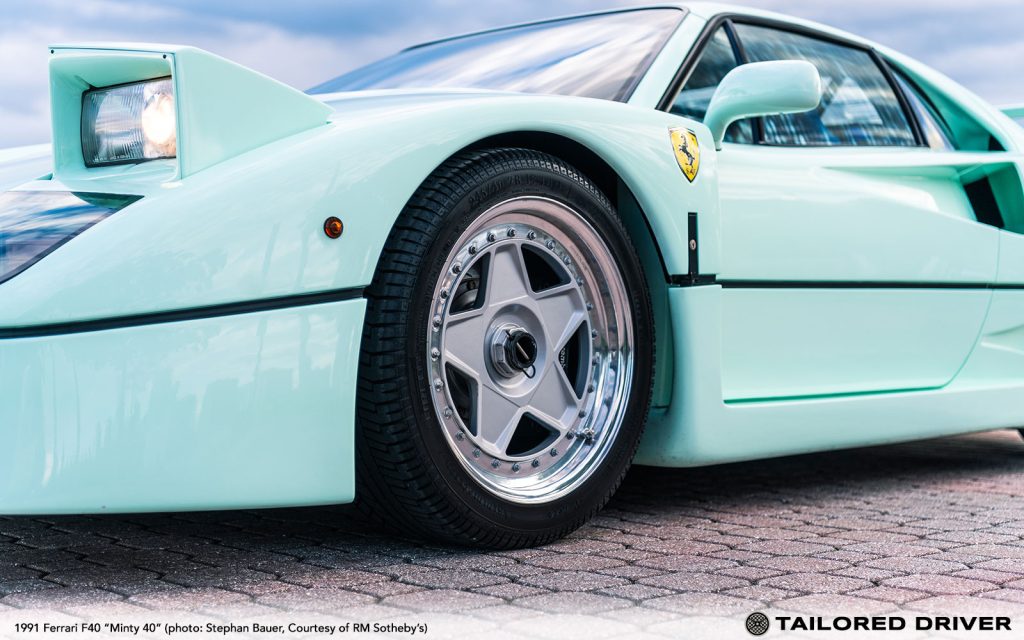
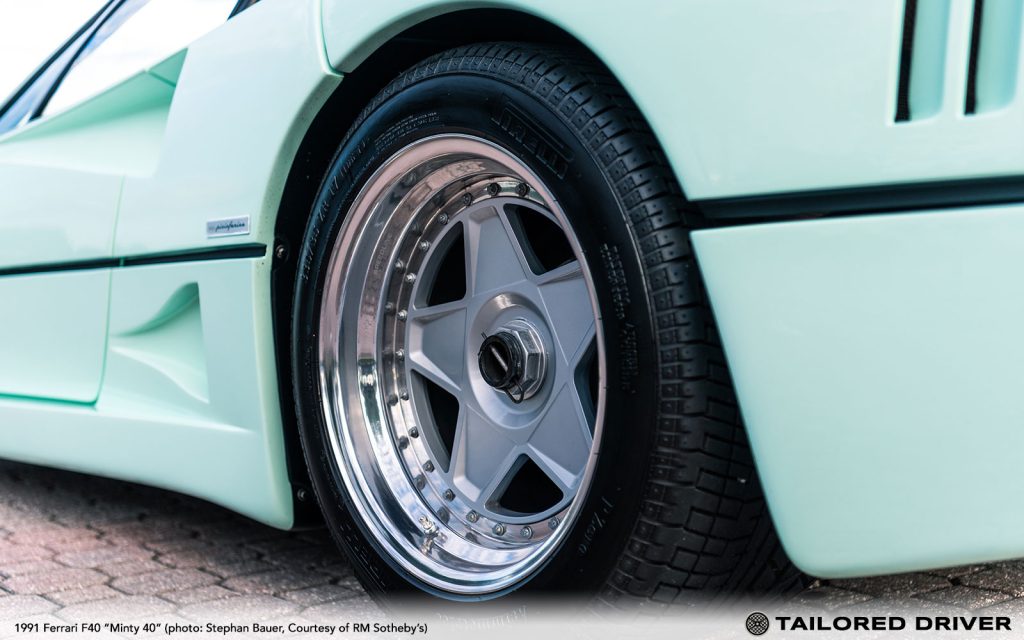
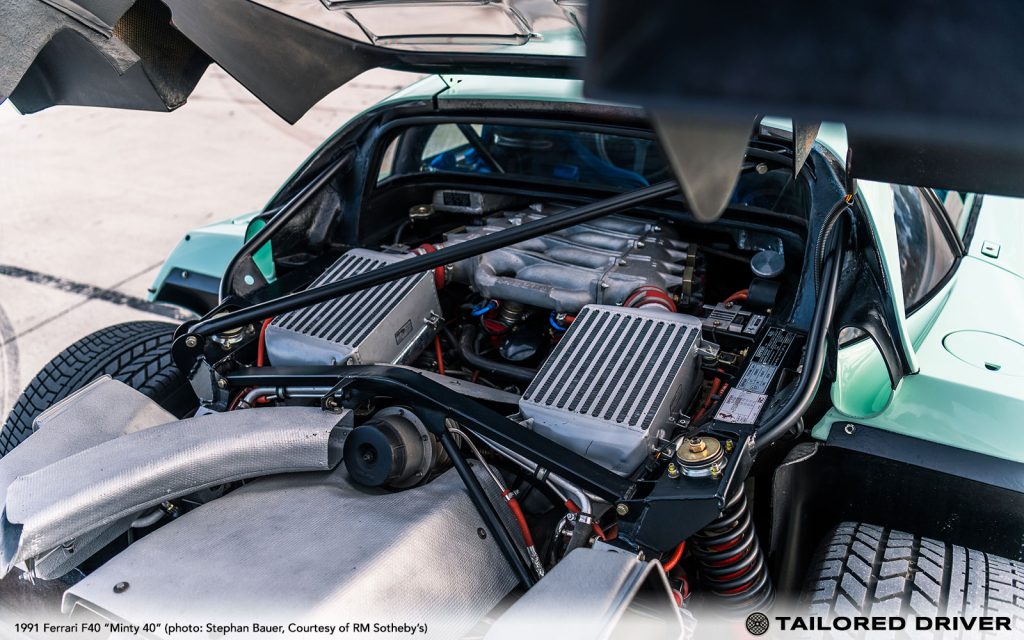
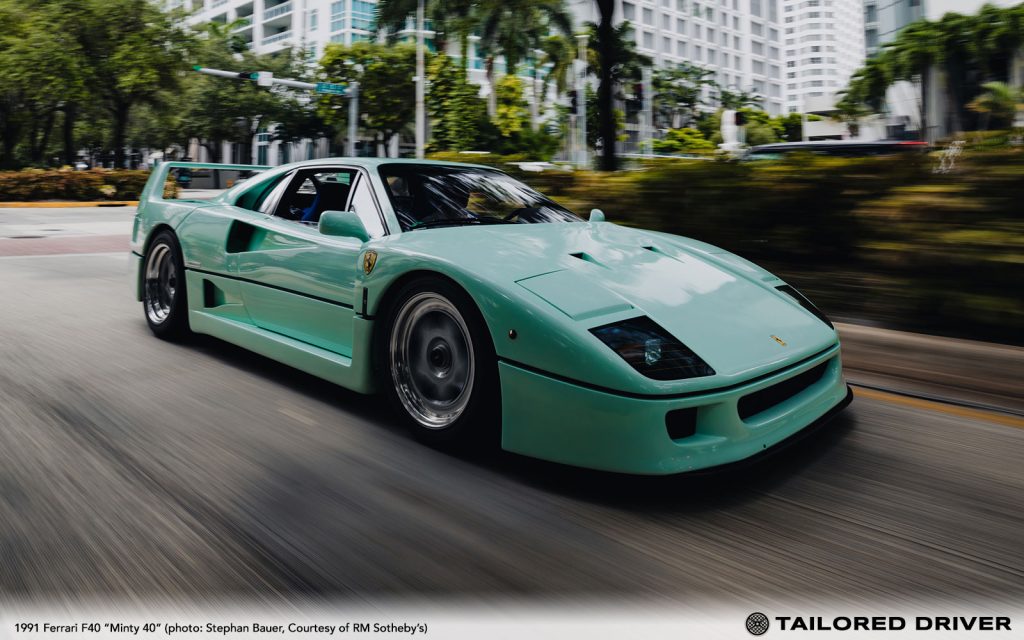
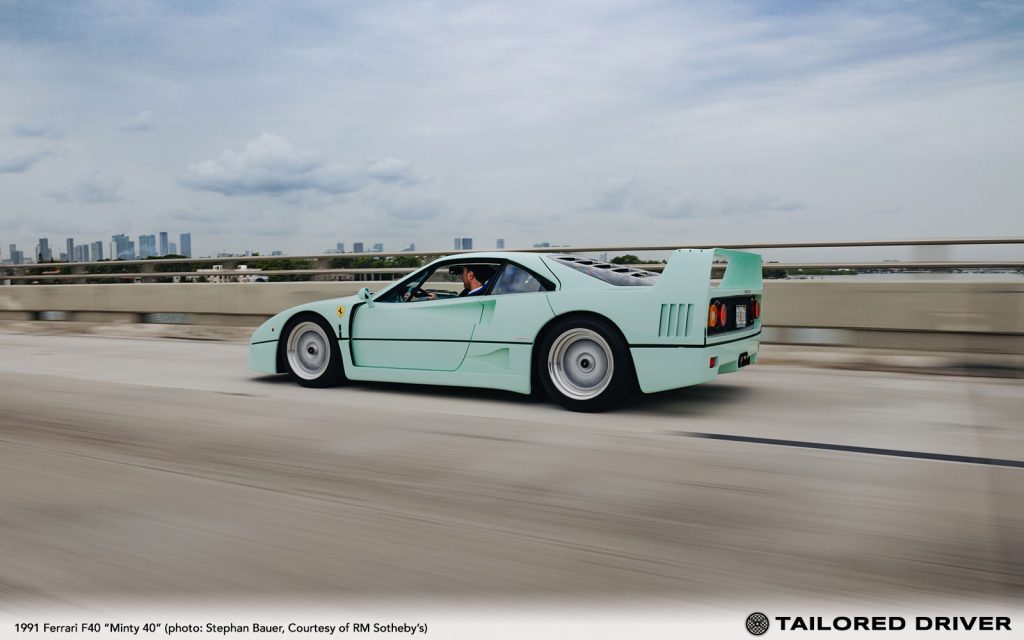
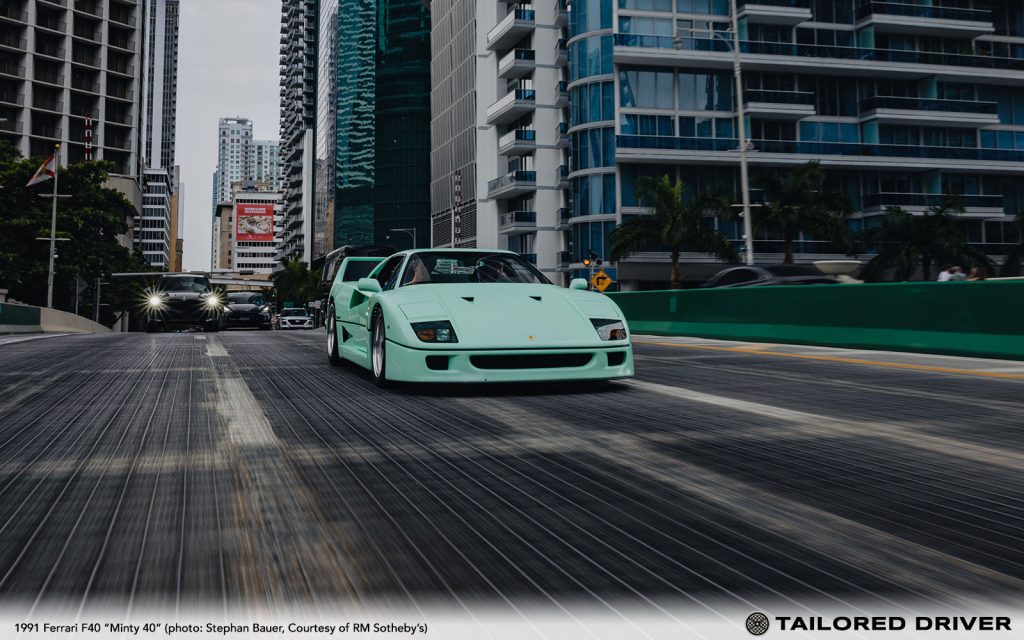
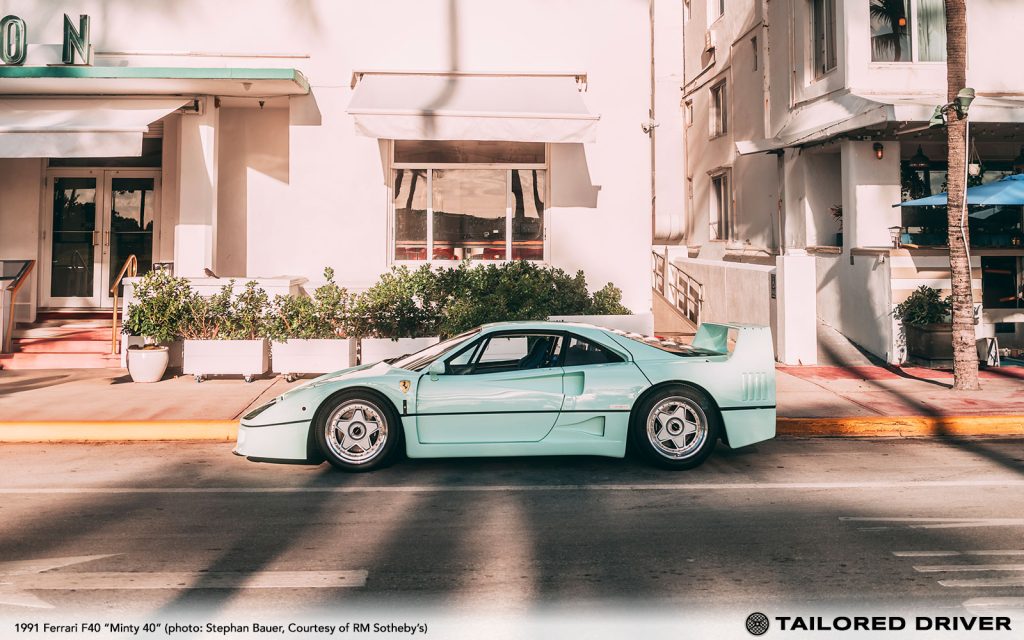
    If you’re headed to Monterey Car Week, one auction car you definitely shouldn’t miss is Lot #362 at RM Sotheby’s, one very unusual 1991 Ferrari F40. Dubbed “Minty 40” for obvious reasons, the color is Verde Pallido also famously sprayed on a Ferrari 250 GTO for Stirling Moss and raced in the 1962 24 Hours of Le Mans by Innes Ireland and Masten Gregory.

    Okay, so technically it’s a respray. Chassis number ZFFGJ34B000088538 was originally built in Rosso Cross over a red Staffa Vigogna interior. It was involved in an accident, requiring it to be repaired (which is detailed in the RM Sotheby’s synopsis below. Given it wasn’t in as-delivered condition any longer, its most recent owner decided to change things up into the car you see here. And now that this last owner is ready to move on, the car will be auctioned off later this week during Monterey Car Week.

    Check out more photos and details on the car via the RM Sotheby’s link HERE. We’ve also reprinted the RM Sotheby’s written description of the car below, and added a few photos. Even more photos and supporting documents are available via the RM Sotheby’s link.

    1991 Ferrari F40 ‘Minty 40’

    [source: RM Sotheby’s]

    • The “Minty Forty,” a spectacular, utterly unique interpretation of the iconic F40
    • Finished in homage to chassis 3505 GT, the Verde Pallido Ferrari 250 GTO famously built for Stirling Moss
    • European-market example retaining its matching-numbers engine and gearbox
    • Reproduced in exacting scale form by Amalgam; accompanied by an example of this limited-production model
    • A truly one-of-a-kind supercar, sure to cause a sensation wherever it goes

    Addendum: Please note that due to California emissions, this vehicle must be sold to a dealer or out-of-state resident.

    There is no such thing as an “ordinary” F40. A car with such a pedigree, with such outrageous design, such compelling performance, and of such rarity, could never be anything but spectacular.

    Notable for being the last supercar developed during Enzo Ferrari’s lifetime, the F40 was a pure distillation of everything Il Commendatore had poured into his company over the preceding four decades. Evolving from the cancelled Group B 288 GTO Evoluzione into a 40th anniversary road car, it did not lose its competition-inspired mission brief. The F40 featured a race-developed steel tube-frame chassis with four-wheel double-wishbone independent suspension, coil-over Koni shock absorbers, and four-caliper ventilated disc brakes. Pietro Camardella’s coachwork design, executed under the direction of Leonardo Fioravanti and aerodynamically perfected in Pininfarina’s wind tunnel, was built with paneling woven from Kevlar and carbon fiber, reducing curb weight while greatly increasing structural rigidity.

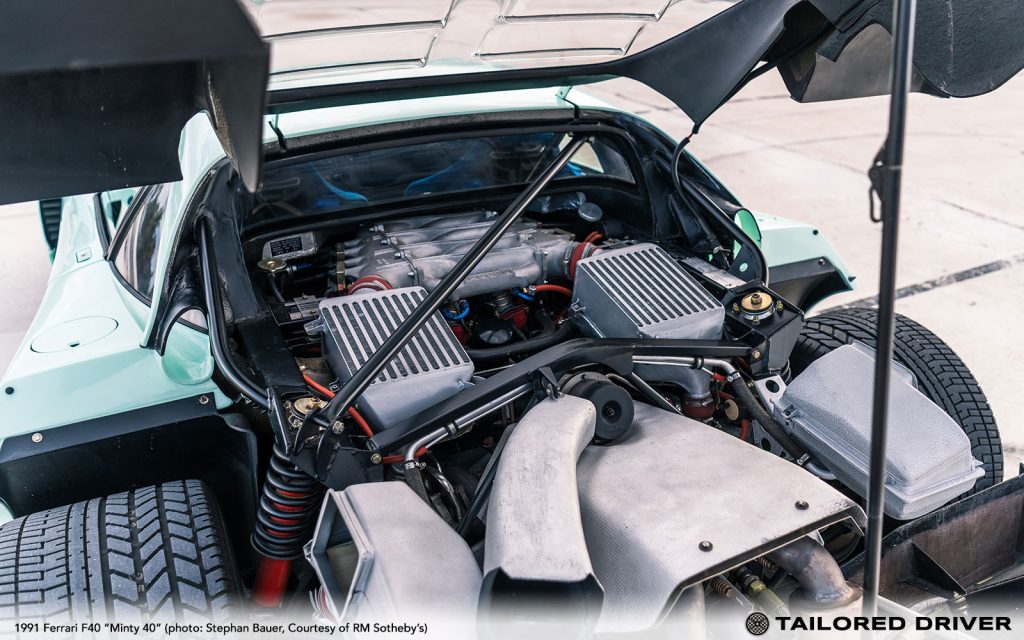
    Positioned behind the driver was a twin-turbocharged V-8 displacing 2.9 liters and fitted with IHI turbochargers and Behr intercoolers; this engine was married to a five-speed transaxle actuated by a gated shifter. The resulting performance was nothing short of astounding, as the type F120 040 engine developed 478 horsepower and 425 pound-feet of torque, capable of launching the F40 to 60 mph from standstill in just 3.8 seconds and achieving a top speed of 201 mph (thereby eclipsing the Porsche 959 and Lamborghini Countach).

    With aggressive looks and stupefying performance, each of the 1,235 Ferrari F40s built for worldwide sale remains a traffic-stopping mechanical masterpiece. Yet each of these 1,235 left the Ferrari factory in Maranello finished in one single color: Rosso Corsa.

    CHASSIS 88538

    The car offered here, chassis 88538, was no different—at first. Completed on 27 February 1991 in the F40’s signature Rosso Corsa over a red Stoffa Vigogna interior, it was distributed to Ferrari Deutschland GmbH and sold to its first owner, Dieter Wolf of Wölfersheim, Germany via Auto Becker of Düsseldorf that May. Mr. Wolf was obviously an active F40 owner; according to research on file by Ferrari historian Marcel Massini, he attended the F40 meeting in Mugello, Italy in 1992, as well as a Ferrari Club Deutschland gathering the following year.

    In 1994, chassis 88538 was acquired by the then German Ferrari Club president, and noted collector, Arnold Gardemann. During his care in around 1998 the car was involved in an accident and was sold to a Dutch owner, who commissioned noted specialists Forza Service in the Netherlands to repair the car to factory specifications. As part of these repairs the front clamshell was replaced; however, today body numbers are present on the on the door hinge, rear spoiler, and rear fender. During the recent respray, when the red paint was removed, a repair to one sill was noted. In 2008, after the repairs had long been completed, the car received its Ferrari Classiche Certification, confirming that it retains its matching numbers engine and gearbox, and attesting that the repairs were carried out to full original specifications and standards.

    After the completion of this work, chassis 88538 returned to the roads of Europe, appearing at the Ferrari Club Germany 25th Anniversary Meeting in Baden-Baden, Germany. In 2003, Forza Service replaced the odometer, confirming in writing that due to mechanical failure the car’s odometer (then displaying 11,442 kilometers) was replaced with an odometer that displayed 7,118 kilometers. More recently, it participated in the Ferrari Tribute to the Mille Miglia for three consecutive years, from 2010–2012.

    After changing hands at auction in 2014 and privately in 2017, it was acquired by its present owner in 2021. Initially he had planned to repaint the car red; however, with the car fully stripped, a new idea emerged. Even if chassis 88538 was preserved in as-delivered configuration, it would never be a true “in the wrapper” specimen.

    But could this actually be liberating? Could this F40 be driven, just as Enzo intended, making a bold statement in the process?

    THE ‘MINTY FORTY’ IS BORN

    One glance at chassis 88538 shows the path its owner took—and its head-turning new look was a key step in giving this F40 an identity all its own. Its paint is a clear homage to Ferrari chassis 3505 GT, the famous Verde Pallido 250 GTO built for Sir Stirling Moss and eventually raced at the 1962 24 Hours of Le Mans by Innes Ireland and Masten Gregory.

    The 250 GTO is, much like the F40, most often seen wearing classic Ferrari red; chassis 3505 GT’s unique livery sets it instantly apart from its distinguished peers, and the beautiful pale green shade has inspired paint colors on subsequent Ferrari models—though never, until now, on an F40. To complement the exterior color, the interior was expertly re-trimmed in blue by one of the most talented trimmers in the region, more used to refitting aircraft interiors than cars. His work is exceptional, and brings a new coherence to the “Minty” concept.

    Historical context aside, it one look is all it takes to see how this machine got its enduring nickname: the “Minty Forty.” Chassis 88538 has been in effect a one-car show since its debut in this form, turning heads and appearing in countless posts on social media. It has even been honored with an official Ferrari licensed product by being reproduced, in exacting 1:8 and 1:18 scale form, by renowned model-maker Amalgam (1:18 scale Amalgam model accompanies the sale). It is, simply, sensational—and making the already-incredible F40 into even more of a spectacle is no mean feat!

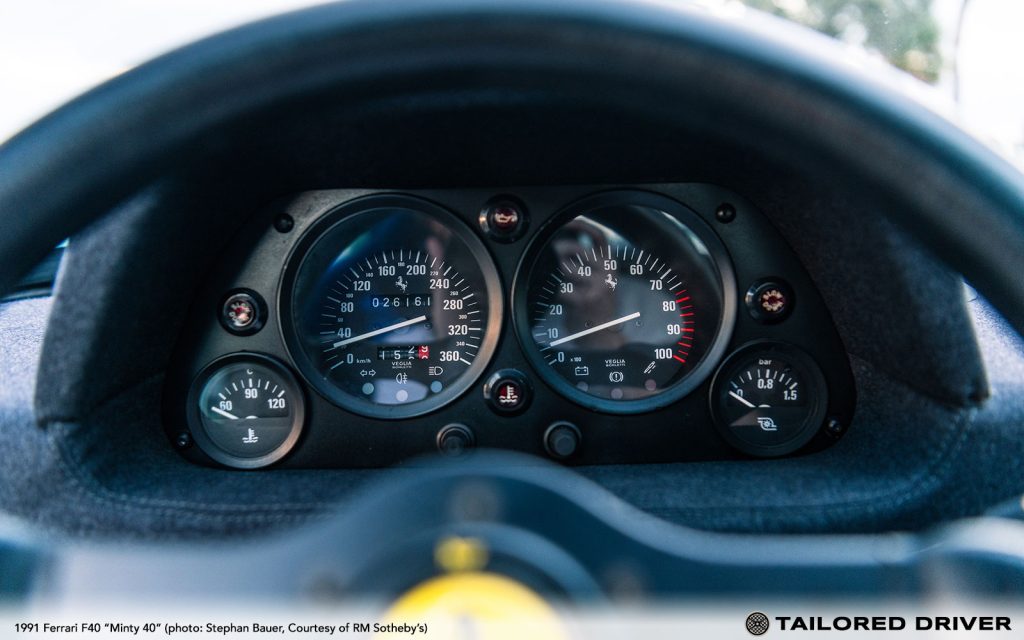
    Now ready for its next caretaker, chassis 88538 has been maintained by Schaltkulisse since 2022 as documented by invoices on file. Fuel tanks were replaced in 2022, alongside the major timing belt service, in total over €43,000 has been spent on the car in the last 18 months excluding the cost of painting the car in its new color, ensuring the car is as good as it looks. At time of cataloguing, it has been driven a little over 31,000 kilometers, or nearly 19,300 miles; a healthy amount for an F40, this is clearly just the beginning of its epic journey.

    Sure to make an impression wherever it ventures, the “Minty Forty” is an intensely charismatic machine that demands to roar down the open road, not sit parked in a garage. It is not for the faint of heart.

    Then again, no F40 ever was. 

  • Pininfarina To Premiere Client-Commissioned Coach-Built Masterpiece at Monterey Car Week

    Pininfarina To Premiere Client-Commissioned Coach-Built Masterpiece at Monterey Car Week

    • Automobili Pininfarina returns to the California festival for the fifth time with a unique coach-built masterpiece
    • A ‘one-of-one’ client commission for a renowned collector and existing Battista owner, it is a vision realised without compromise
    • Hand-crafted by the brand’s skilled artisans in Cambiano, Italy, as a celebration of timeless design
    • Battista Owners’ Parade being staged for the first time as part of Monterey Car Week.

    [source: Automobili Pininfarina]

    CAMBIANO, ITALY – The world premiere of an exquisite coach-built client masterpiece will mark the return of Automobili Pininfarina to Monterey Car Week later this month.

    A unique sculptural statement, the all-new ‘one-of-one’ vehicle is the ultimate future collectable combining design and engineering integrity with bespoke artisanal craftsmanship. The clearest illustration yet of Automobili Pininfarina’s guiding philosophy and brand promise, ‘Dream Cars, Made Real’, it is a vision realised without compromise.

    Developed through an intimate collaboration between Automobili Pininfarina’s design team and the client, before being hand-crafted by its skilled artisans in Cambiano, Italy, it is a celebration of purity and timeless design.

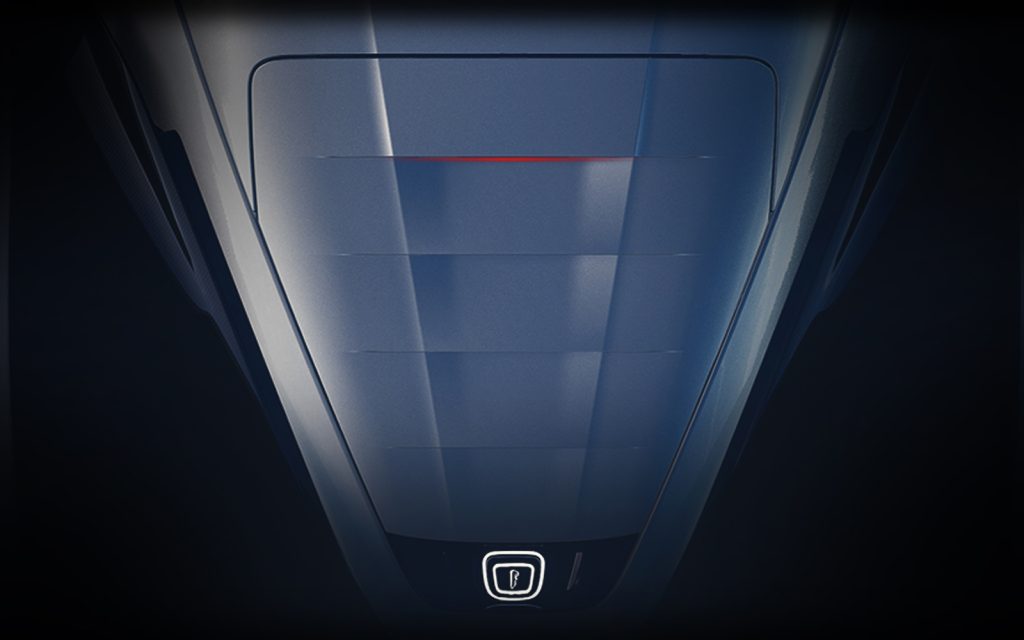
    Once displayed, this design masterpiece will be transported to its owner in North America. Full details of the car will be revealed in due course, though a subtle hint of its ultra-luxury design and highly personal specification has been revealed through a single image released today.

    Paolo Dellachà, Chief Executive Officer at Automobili Pininfarina, said: ”Delivering our first coach-built creation to a client is an exceptionally exciting milestone for the brand. With it, we are delivering on the promise we made in Monterey exactly 12 months ago as we unveiled the B95 Hyper Barchetta – that we have the design, engineering and artisan production skills in Cambiano, Italy to create bespoke, coach-built ‘one-of-one’ masterpieces for our clients. One year later, this amazing car gives us another chance to celebrate our ability to make their dreams come true.”

    Automobili Pininfarina will also be staging a Battista Owners’ Parade for the first time as part of Monterey Car Week. With up to 10 vehicles scheduled to take part, the event illustrates how the client ownership experience is constantly evolving.

    This year marks the fifth time that Automobili Pininfarina has exhibited at Monterey Car Week, testament to the venue’s prestige and quality as a showcase for the brand’s exceptional vehicles. Last year saw the debut of the B95 Hyper Barchetta, and the PURA Vision design concept, which previews the future design language of the marque.

    For 2024, Automobili Pininfarina’s design team worked with the client – a renowned collector of priceless vehicles, and existing Battista owner – to inspire and create an entirely new vehicle to ensure their car stands out as a design and technical statement.

    This is the latest example of the highly specialised coach-building that has been part of the brand’s proud heritage since 1930, and continues to be so, creating exquisite and priceless automotive works of art for discerning clients – the next Pininfarina icons of the future.

  • Monterey Preview: 1960 Ferrari 400 Superamerica SWB Cabriolet for Auction with RM

    Monterey Preview: 1960 Ferrari 400 Superamerica SWB Cabriolet for Auction with RM

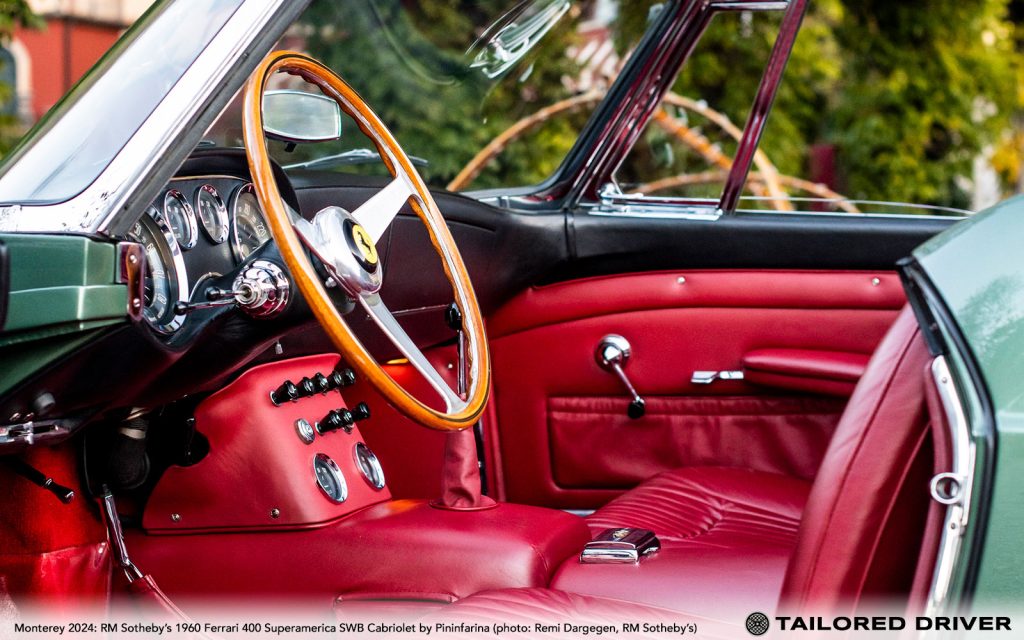
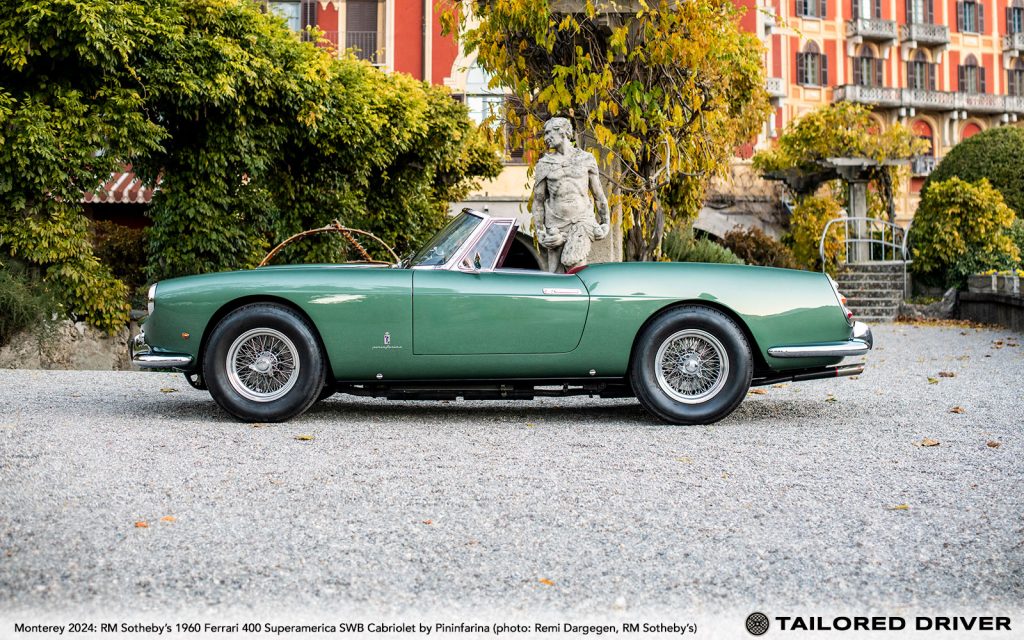
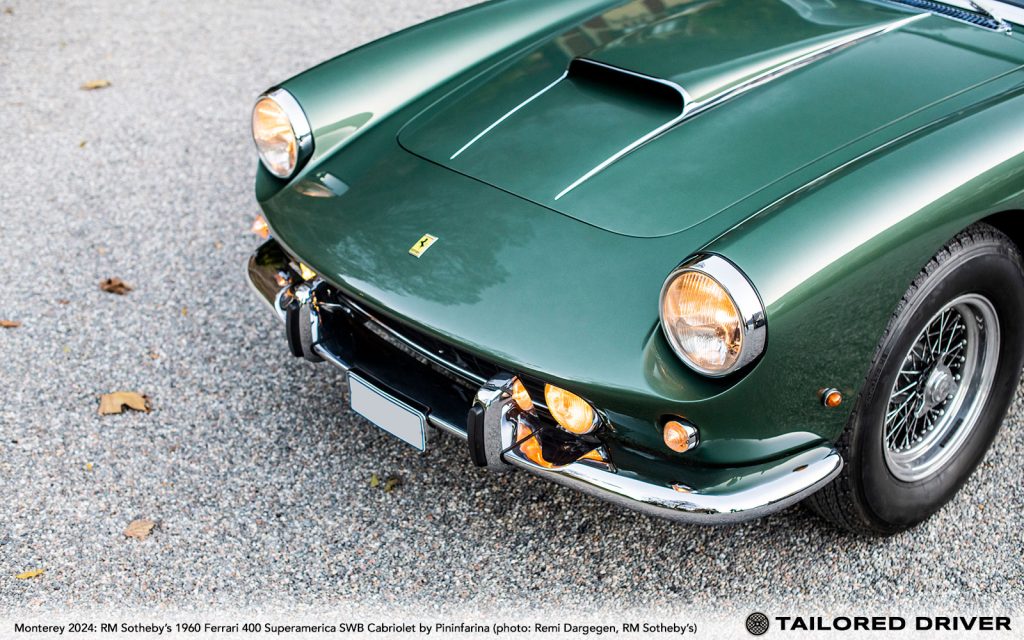
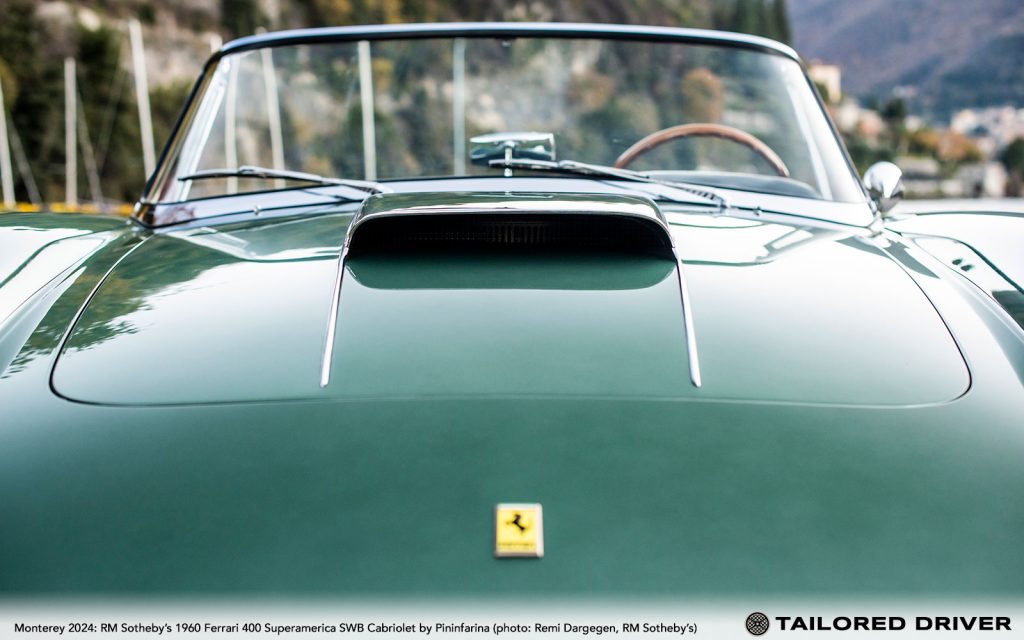
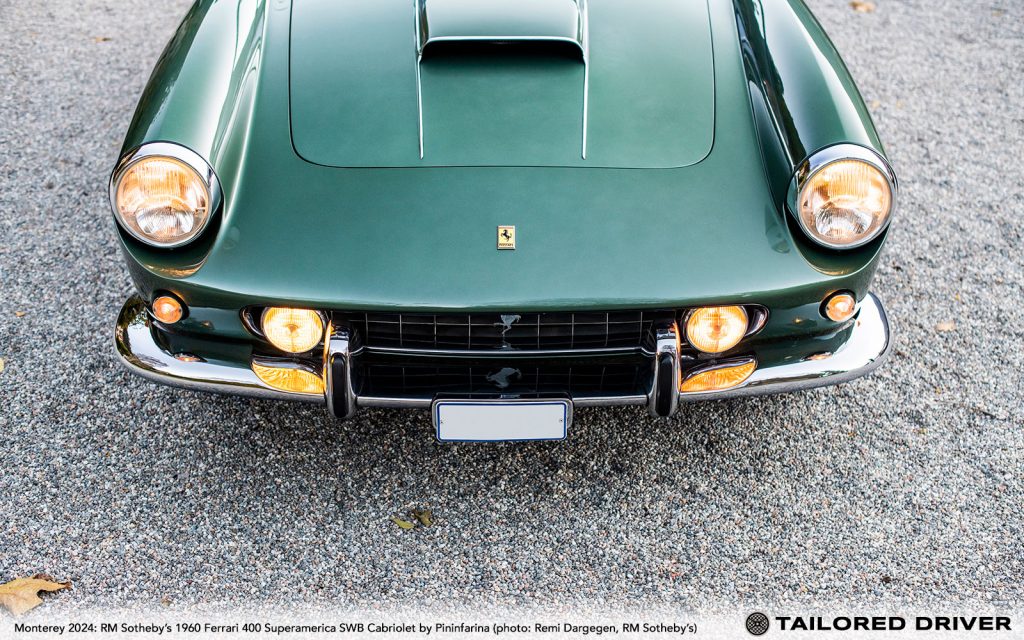
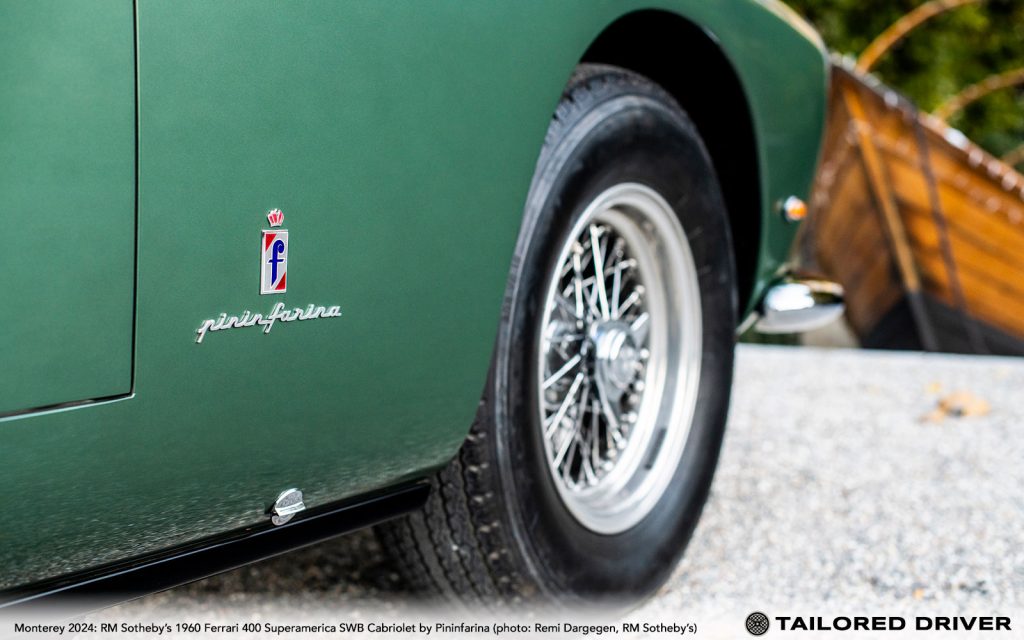
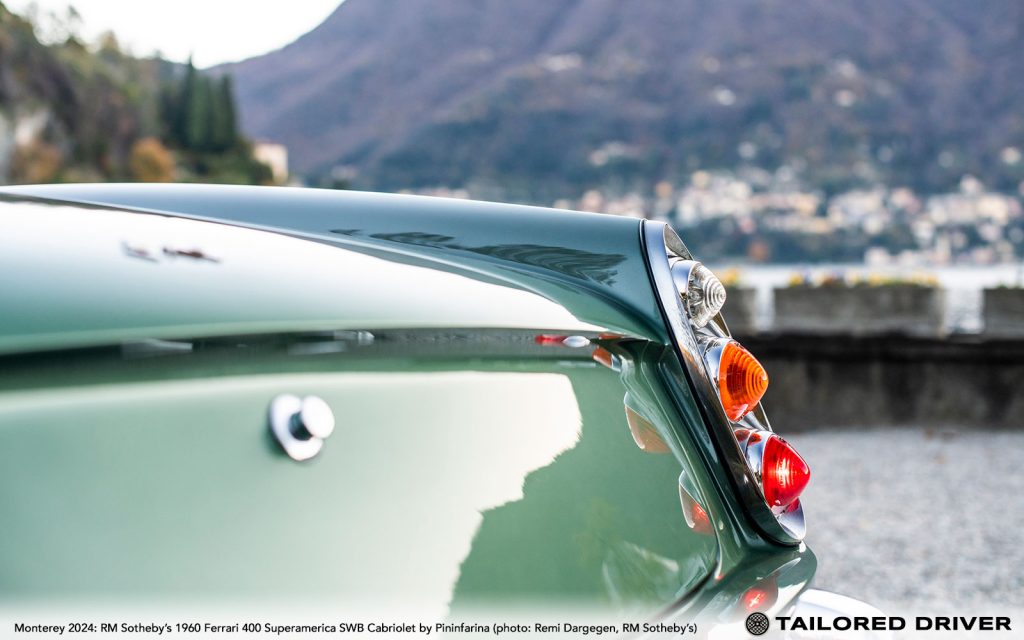
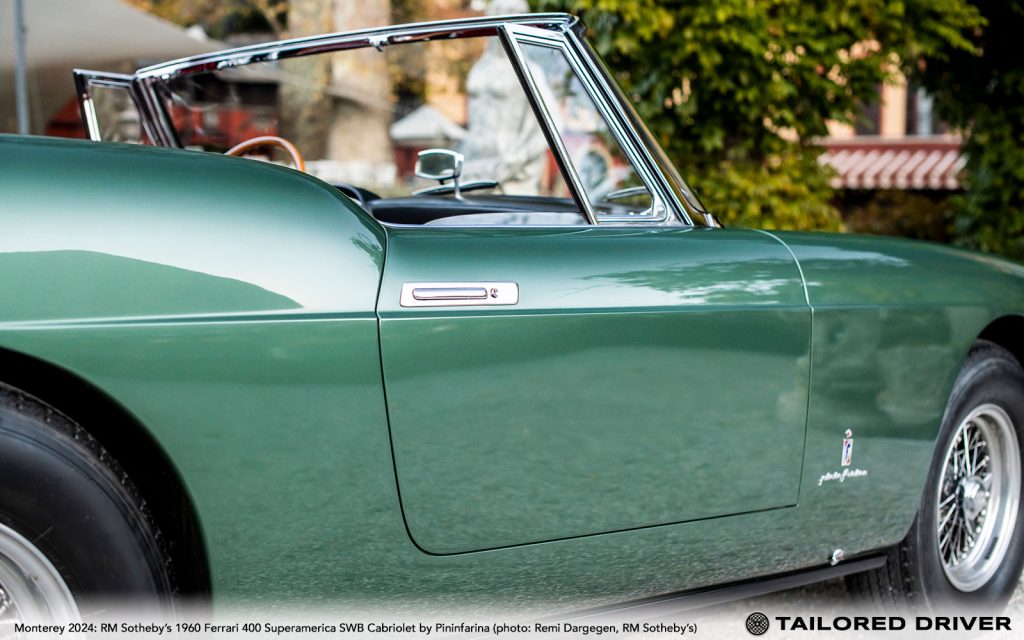
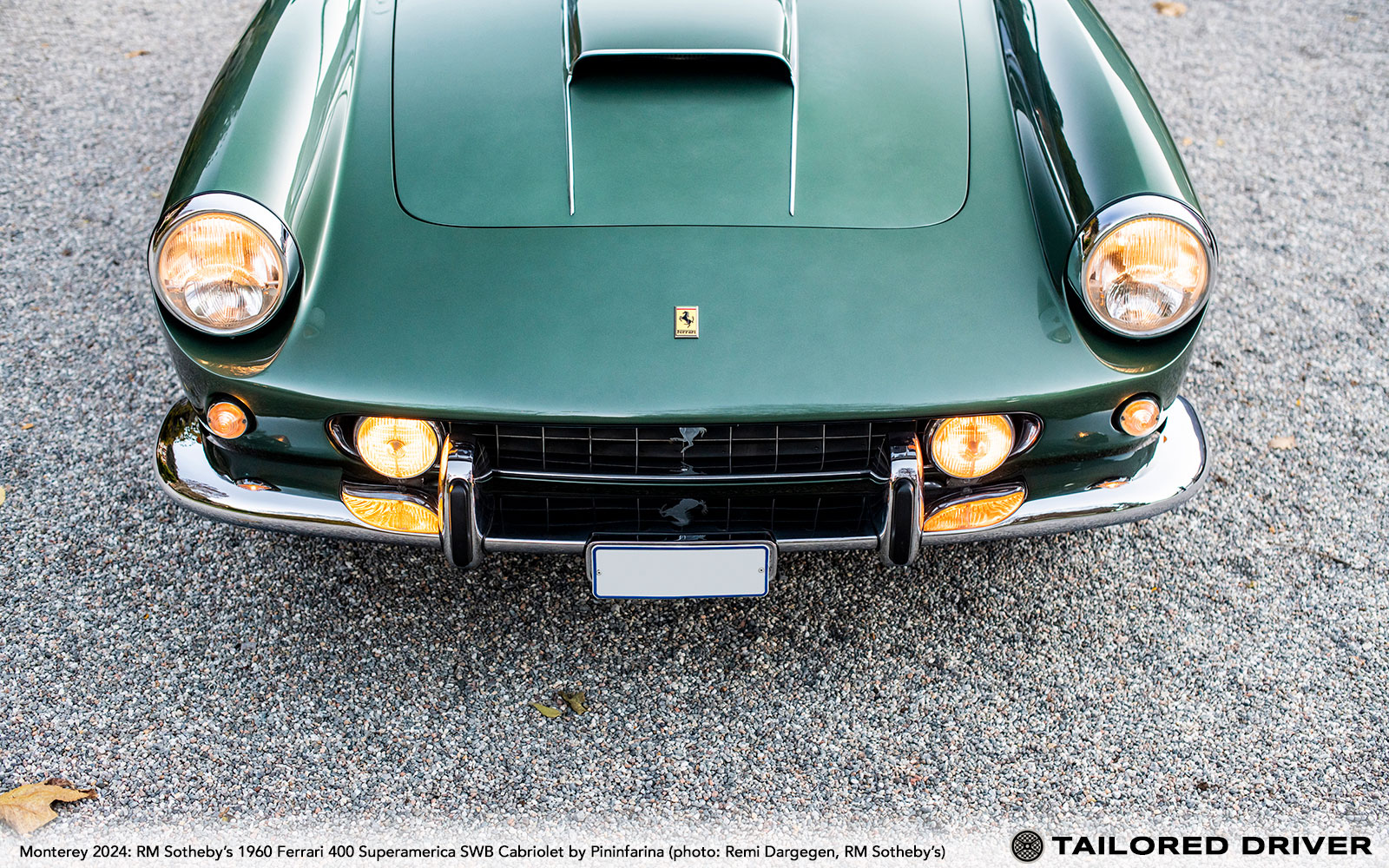
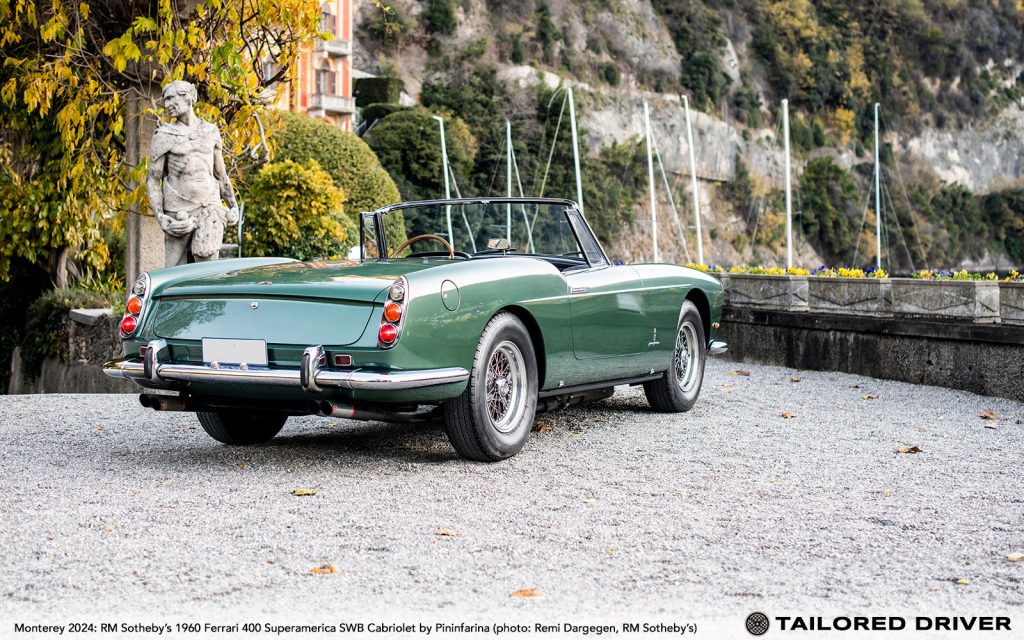
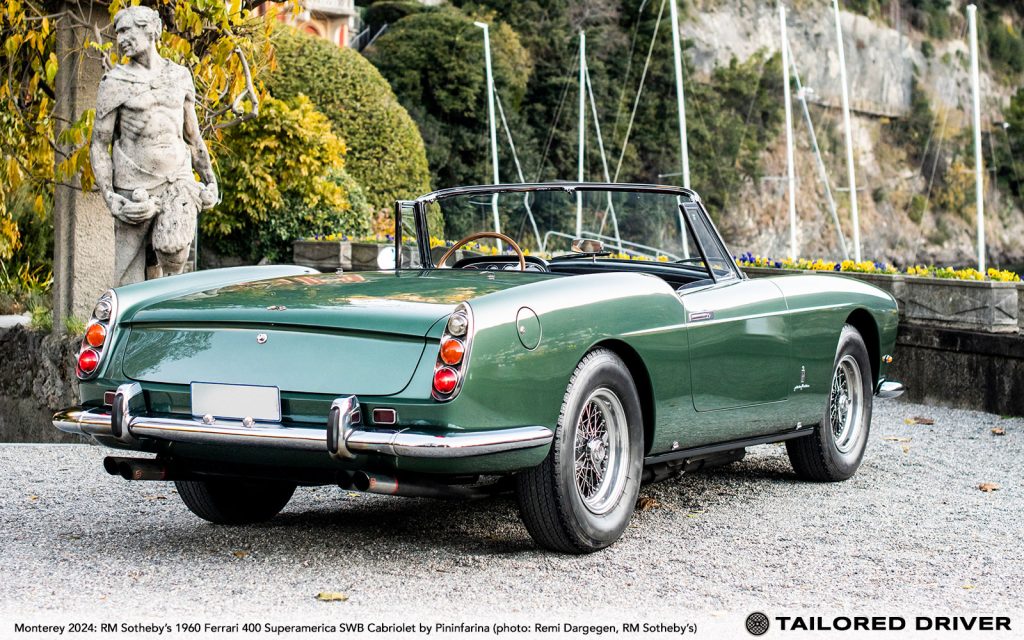
    Third of just Seven short-wheelbase Ferrari 400 Superamerica Cabriolets, there’s no doubt this fully restored specimen (chassis #: 1945 SA) will command a large price when it crosses RM Sothebys’ block at Monterey Car Week in August. And while it is exemplary of the car-as-art 1960s era at Ferrari, it’s this car’s unique factory correct green hue of Verde Bottiglia that grabs our attention the most.

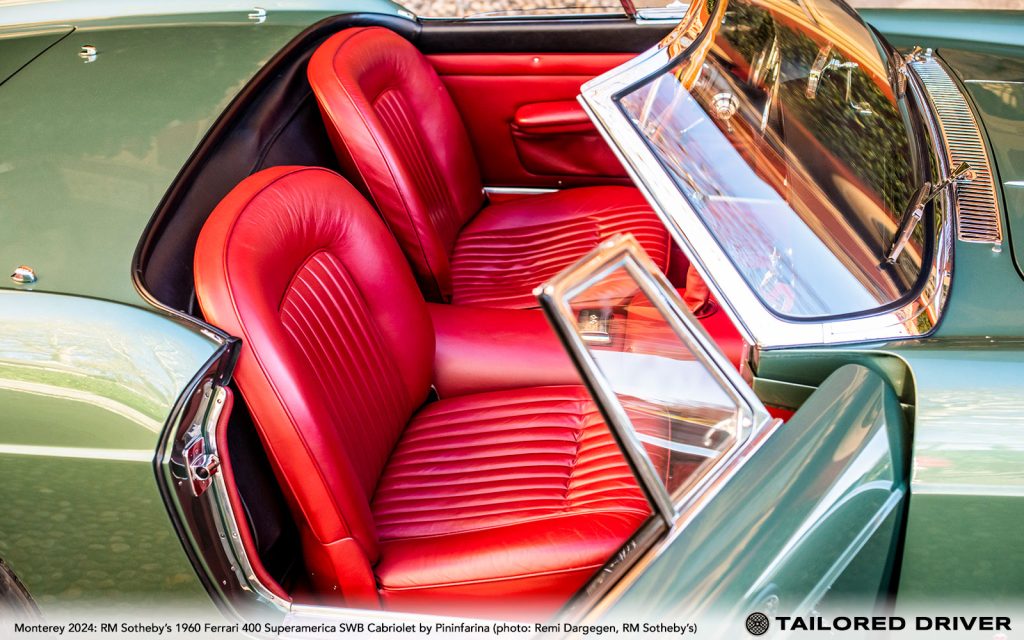
    The color combination, Verde Bottiglia exterior with Rosso (red) leather is also fascinating. The pairing makes the car one of one, but even more interesting to us is how well the two colors work together. Green and red can be a mixed bag in how the two colors play off of each other, though they seem to work well here. Then again, what color combination wouldn’t work well on a 1960 Ferrari 400 Superamerica SWB Cabriolet by Pininfarina?

    Check out the full description from RM below the photo gallery, and direct link to this Lot’s listing page HERE.

    • The third of seven short-wheelbase 400 Superamerica Cabriolets
    • Fully restored to concours standards by US-based Ferrari specialists Classic Coach and Greg Jones
    • Well-maintained by Autofficina Omega in its current ownership
    • Ferrari Classiche Red Book certified; finished in its striking, factory-correct, one-off combination of Verde Bottiglia over Rosso
    • Formerly of the Oscar Davis Collection
    • Seldom shown since its most recent restoration; an exciting concours opportunity

    [source: RM Sotheby’s]

    Addendum: Please note that an import duty of 2.5% of the purchase price is payable on this lot if the buyer is a resident of the United States.

    Ferrari’s Superamerica models of the late 1950s and early 1960s were truly the last word in sporting excellence. Offering the very best money could buy in terms of luxury and performance, it is no surprise that these cars often found their way into the garages of heads of state, barons of industry, and other well-to-do individuals.

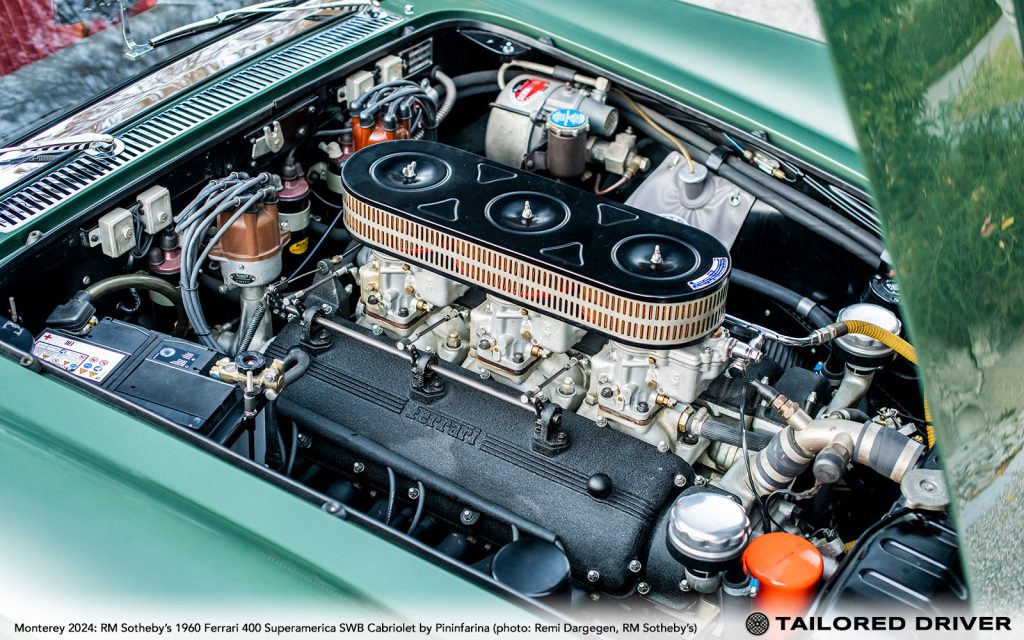
    Succeeding the 410 Superamerica, the 400 Superamerica offered numerous improvements over its predecessor. While the engine decreased in displacement from 5.0 liters to 4.0 liters, several other new features countered this. The 5.0-liter V-12 was a “long-block” Lampredi-designed unit, while the revised smaller engine was based on the Colombo single-overhead-camshaft powertrain that was first utilized in the 250 Europa GT. To increase the capacity from 3.0 liters, the bore was enlarged to 77 millimeters and the stroke was lengthened to 71 millimeters, providing a total capacity of 3,967 cubic centimeters. Furthermore, a twin-coil and distributor ignition system was used, along with triple Weber carburetors, granting the engine an improved 340 horsepower—but also an incredible 400 Nm (295 pound-feet) of torque from 2,000 rpm and a maximum torque or 450 Nm (331 pound-feet) at 6,000 rpm.

    As a result, these cars are considered today among the best-driving of 1960s Ferraris. Boasting 25% greater engine capacity than a 250 GT Berlinetta or California Spider, the 400 Superamerica produces far more horsepower and torque than either of its forebears. The 400 Superamerica was also fitted with an overdrive as standard—while no overdrive was available for the 250 GT models apart from the GTE—making it far more comfortable to drive over long distances. Finally, it is important to remember that the 400 Superamerica’s chassis and powertrain were so great that they provided the basis for the 330 LMB and 330 TRi racing cars, of which the 330 TRi LM won the 24 Hours of Le Mans in 1962.

    The 400 Superamerica production run can be divided into two groups, based on either long- or short-wheelbase chassis. The first batch of cars produced—which includes the car on offer here, chassis 1945 SA—boasted a 2,420-millimeter chassis, while the second batch boasts the longer 2,600-millimeter chassis. Of the short-wheelbase cars, just 25 examples were produced, with only seven bodied as cabriolets.

    THE THIRD OF SEVEN SHORT-WHEELBASE CABRIOLETS

    Chassis number 1945 SA was constructed in mid-1960 as the third of those seven short-wheelbase cabriolets, and it was built to left-hand-drive configuration with open headlamps. It was finished in a beautiful, one-off color combination of Verde Bottiglia (MM 16364) over Rosso (VM 3171). It was fitted from new with a set of three Weber 46 DCF carburetors, like on a 250 SWB “SEFAC Hot Rod,” and a pair of Bosch ignition distributors. The coachwork was completed by Pinin Farina in July of 1960 and was sold new to Helmut Horton, a German entrepreneur based in Croglio, Switzerland. In January of the following year, the car was registered in Milan under Horten Italiana S.r.l, and it remained in Italy for the following three years under Horton’s ownership.

    The Superamerica was officially exported out of Italy in spring of 1964 and was next known with a Mr. Warzits in Germany. By 1985, the car was acquired by Bernard Pfister of Geneva, Switzerland, now repainted white. Pfister repainted the car red in 1989 and it remained in Switzerland with him for the next few years, typically on display at Ferrari Suisse SA in Nyon.

    In June 1997, 1945 SA was listed for sale in Marseille, France and was purchased one month later by Scott Rosen of Bedford Hills, New York. Subsequently exported to the United States, the car remained in his ownership for two years before being purchased by the late noted sports car enthusiast Oscar Davis of Elizabeth, New Jersey.

    One year later, Davis sold the Superamerica to a Florida-based collector, yet the car would stay in northern New Jersey for the time being, as it was entrusted to Classic Coach for a full restoration. Founded in 1972 and well-known and regarded in Ferrari circles in the United States, Classic Coach was Ferrari’s first authorized bodywork repair facility in the US. Their owners would later open two authorized Ferrari dealerships in the US: Ferrari of Central Florida and Ferrari of Tampa Bay.

    It was decided that chassis 1945 SA would be returned to its original color combination of Verde Bottiglia over Rosso during this complete, frame-off restoration. No cost was spared to restore the Superamerica back to a spectacular standard. Following the completion of the restoration work, the car was shipped to noted Ferrari specialist Greg Jones of Stuart, Florida. Jones was entrusted with further dialing in the car mechanically, ensuring that every facet of the car worked perfectly. Receipts for the work completed by both Classic Coach and Greg Jones are in the car’s history file.

    Remaining with that owner until 2015, the car was sold via RM Sotheby’s to its current owner, a Monaco-based enthusiast—a discerning collector who happened to do business in the past with the first owner. With him, the car returned to Europe, and has been used and enjoyed as its manufacturer would have intended. Seen occasionally driving around the streets of Monaco, the car has been shown once at Elégance et Automobile à Monte-Carlo in 2019.

    Chassis 1945 SA was granted Ferrari Classiche certification in 2016, confirming that it retains its original body, chassis, transmission, and rear axle. Classiche documentation notes that the current engine, stamped 1945 SA, is a replacement engine that was installed by the Ferrari factory in November of 1963. With its current owner, the car has been very well maintained by Autofficina Omega of Corrado Patella, including further mechanical work to ensure it drives and performs as one would expect. Its most recent service work with them was the fitment of a new clutch in February 2020.

    Presenting in excellent condition throughout, this special 400 Superamerica SWB Cabriolet is sure to be welcomed with open arms at major concours events worldwide. Well-maintained and enjoyed with its current owner, it could easily be used on the road as a warm-weather weekend driver. Regardless of whether it is to be enjoyed on the open road or the concours lawn, it will certainly be a joy to own and will attract only the most favorable of compliments wherever it goes.

  • Monterey Preview: Ferrari 512 TR Spyder by Pininfarina for Auction by RM

    Monterey Preview: Ferrari 512 TR Spyder by Pininfarina for Auction by RM

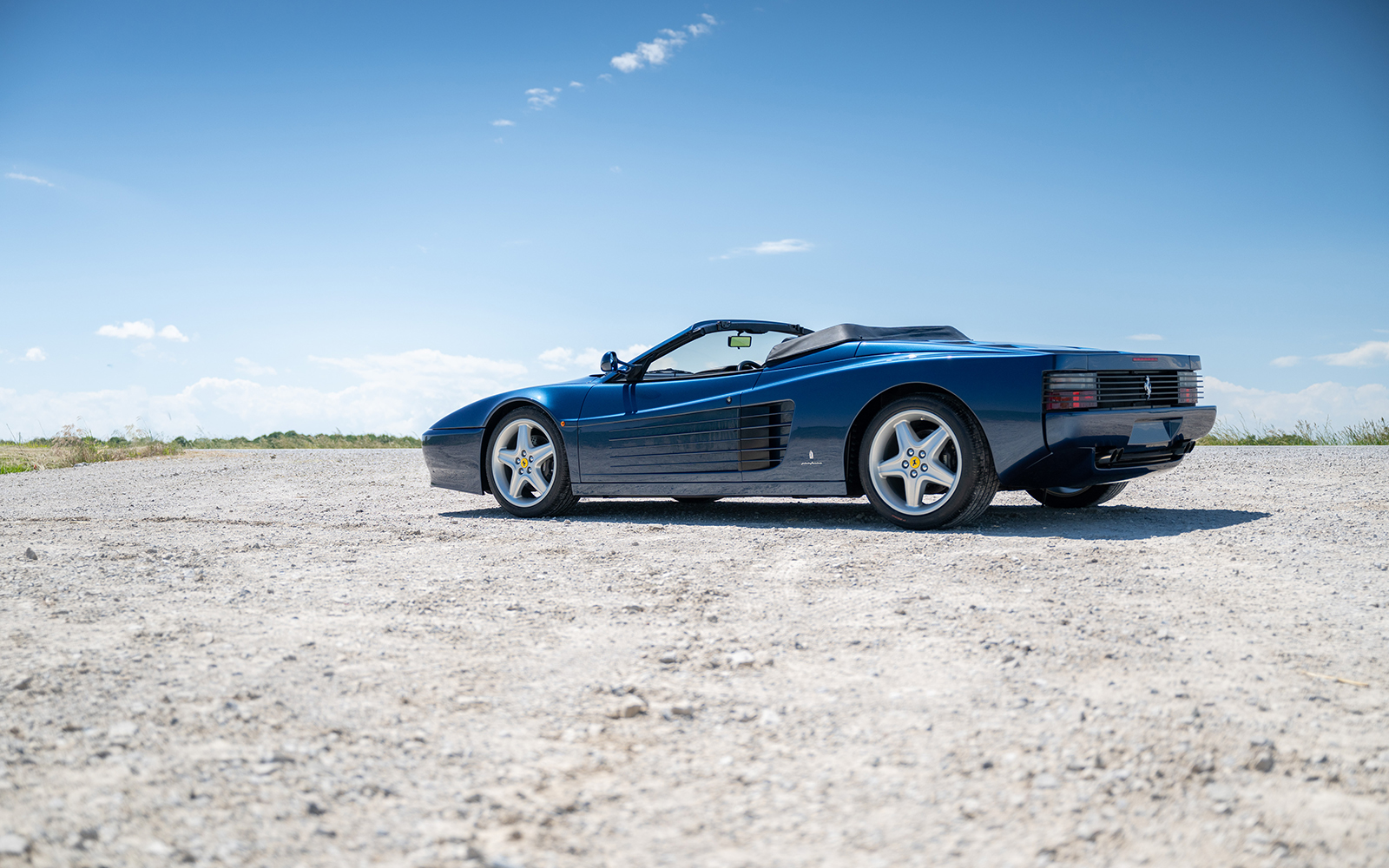
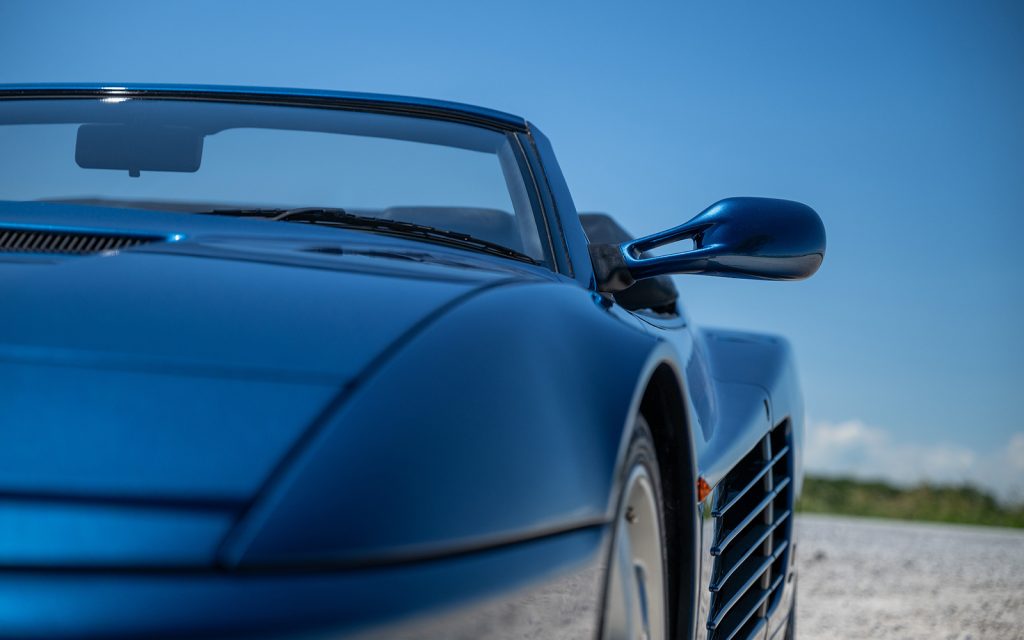
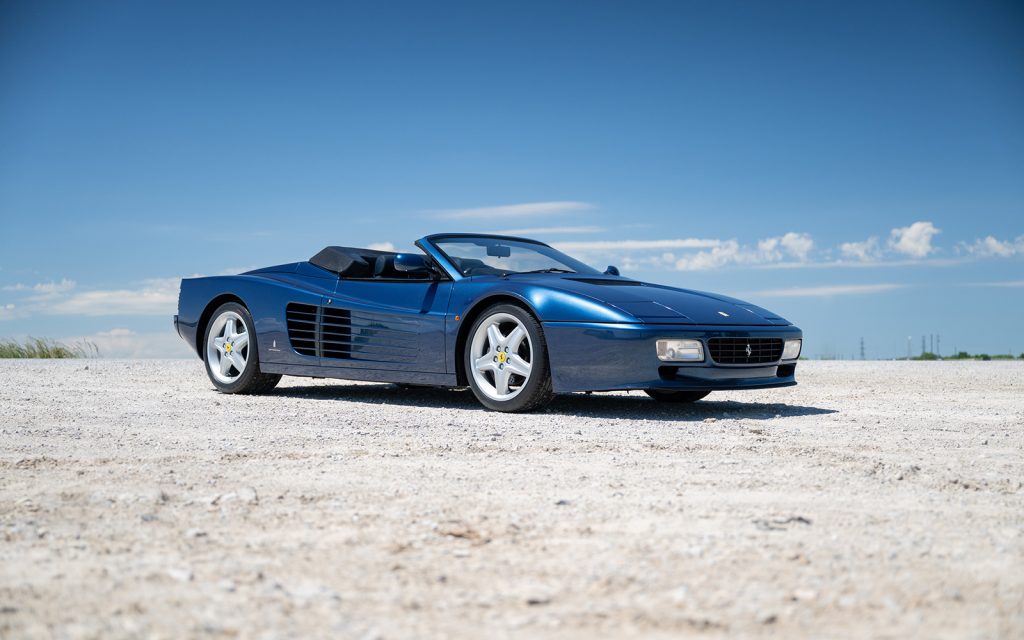
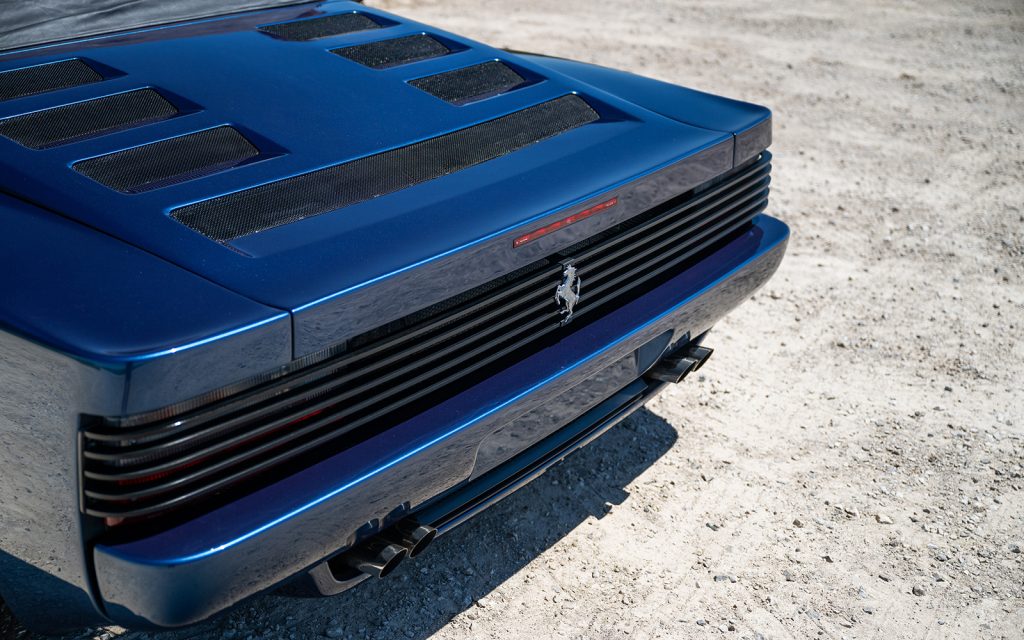
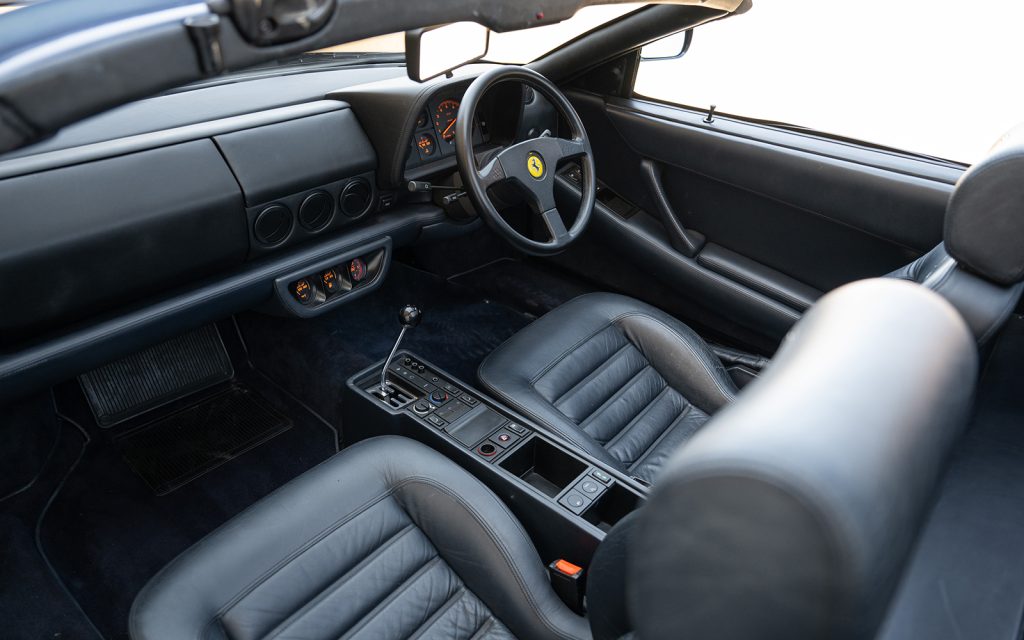
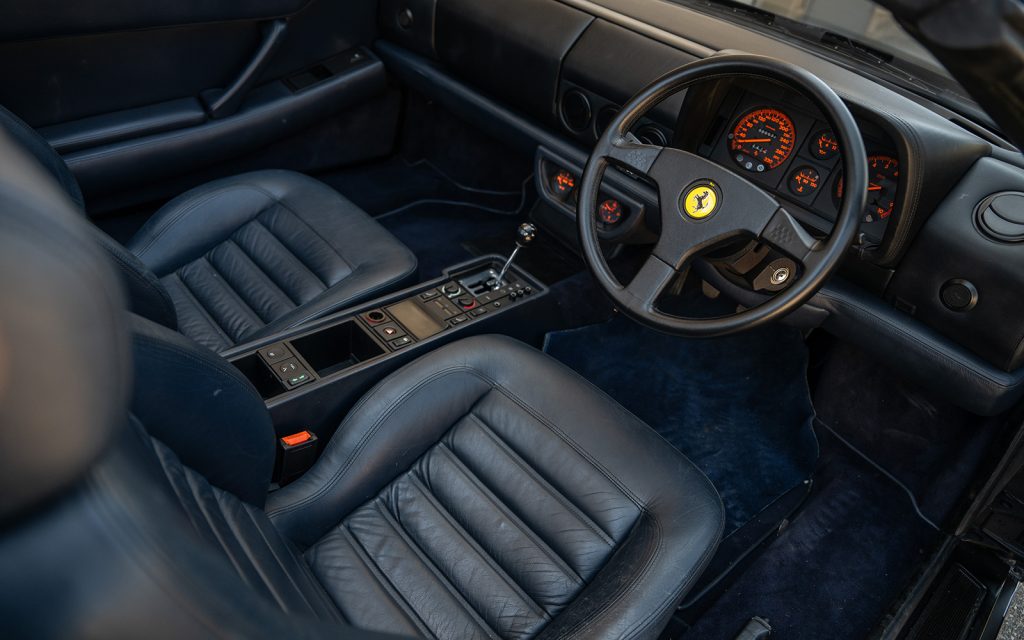
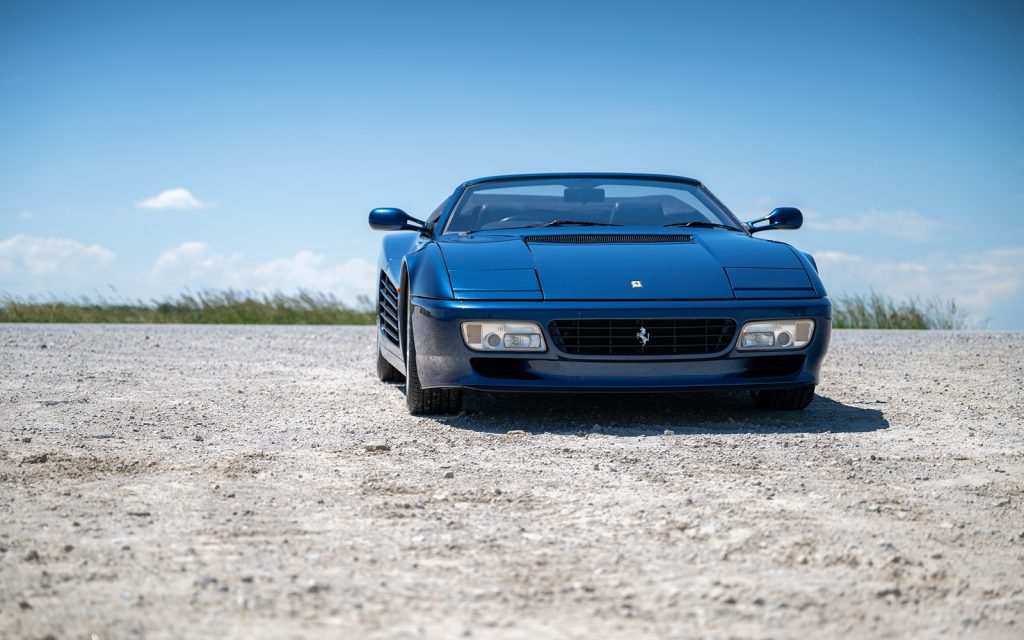
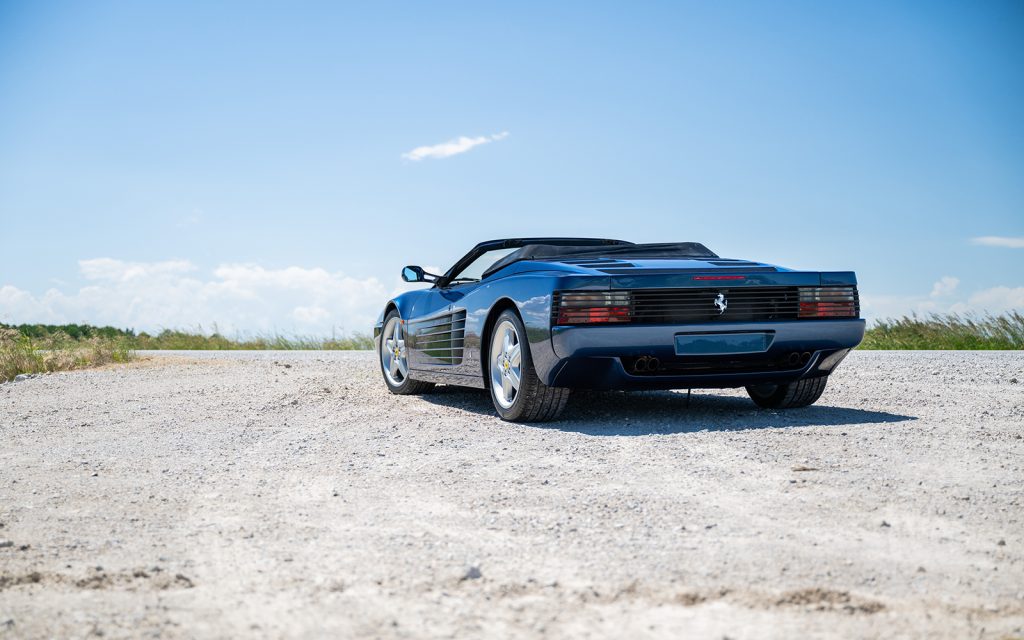
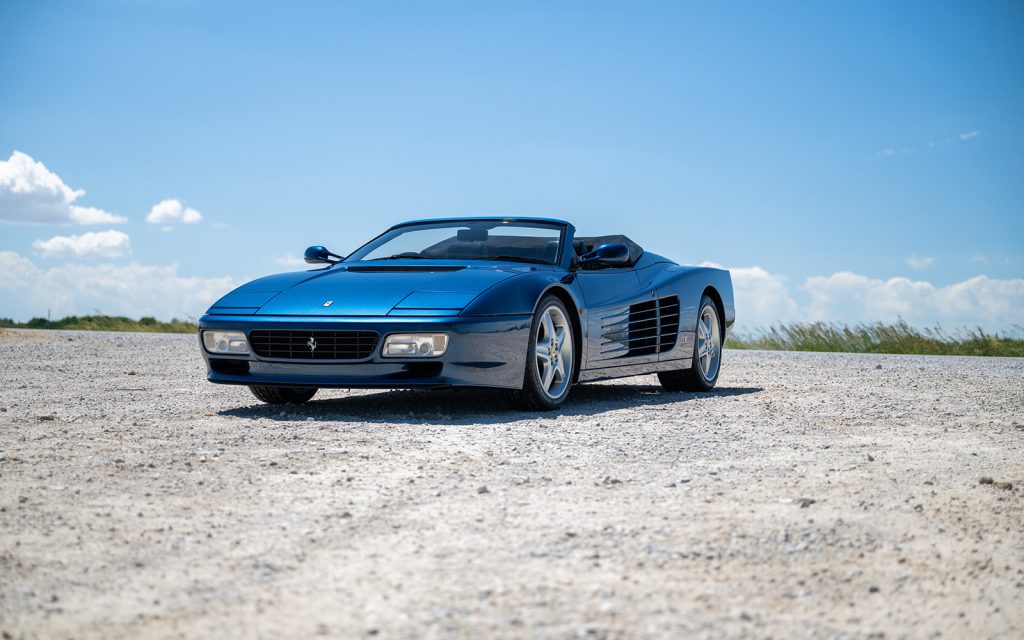
    One car amidst the gaggle of Monterey Car Week auctions must certainly be this 1993 Ferrari 512 TR, one of just two Spyder conversions produced by Pininfarina in period for the royal family of Brunei. Finished in triple blue (Blue Cobalto paint, Blue Scar Connolly leather and blue soft top), the car marks a highly unique specification for an even more unique car.

    We’ll post the full description from RM Sotheby’s below, while you can find more photos, documentation, details on the sale and more over on RM Sotheby’s website.

    Monterey 2024: 1993 Ferrari 512 TR Spyder by Pininfarina

    • One of only two 512 TR conversions commissioned from Pininfarina by Ferrari, intended for the Royal Family of Brunei
    • The sole example finished in this stunning “triple blue” color combination
    • Powered by its matching-numbers 4.9-liter flat-12 engine and five-speed gearbox
    • Currently indicates fewer than 575 km (~360 miles) at time of cataloguing
    • Recently treated to $65,000 of cosmetic recommissioning by the eight-time Pebble Beach Concours-winning team at RM Auto Restoration; refinished in its original color and fitted with a new convertible top

    Addendum: Please note that an import duty of 2.5% of the purchase price is payable on this lot if the buyer is a resident of the United States.

    If asked to close your eyes and conjure the image of an 1980s Maranello model, your mind is likely to produce a visage of side-straked majesty in the form of a Ferrari Testarossa. It is a model intrinsically wedded to the decade of its introduction. Everyone from teenagers lusting over bedroom-wall posters, to captains of industry catching a glimpse of their reflection in glass-fronted offices—none could help fawning over this most Ferrari of Ferraris.

    Arguably Ferrari’s hit car of the 1980s, the Testarossa was approaching its sixth year of production in 1990, and Maranello’s design team sought to update the iconic model for the coming decade. Returning to numeric nomenclature, its successor was dubbed the Ferrari 512 TR, with “5” representing the cubic capacity of the engine, “12” the number of cylinders, and “TR” standing for Testarossa. The 512 TR shared many similarities with its predecessor, but it was expertly tweaked by Ferrari both in terms of styling and engineering.

    The marketing power of its 1980s dream machine had not diminished just because the decade rolled over, either. The initial design simply needed a few minor nips and tucks to keep it cutting edge. The most recognizable 512 TR addition was its front bumper, while other styling changes included a revised set of rear lights and new 18-inch alloy wheels. Numerous interior updates were needed to pass over the 1980s aesthetic baton to the 1990s, but the 512 TR’s most significant improvements were carried out upon its chassis and mechanicals.

    The new model’s chassis was revised to allow both engine and transmission to sit 30 millimeters lower, improving the car’s center of gravity. While the displacement of the 512 TR’s inherited flat-12-cylinder engine remained the same as the Testarossa’s at 4,943 cubic centimeters, its power had been increased—due to a higher compression ratio, revised porting and inlets, bigger valves, as well as new Bosch Motronic M2.7 management—to a highly respectable 428 brake horsepower.

    But perhaps the most warmly received of the 512 TR’s updates were those of its transmission—a prolonged complaint about the Testarossa—which was eased with a new single-plate clutch, sliding ball bearings, and better angle for the gearshift knob.

    Yet despite all the improvements fitted to the iconic Testarossa model, some of Ferrari’s most discerning clients still required something more exclusive than the standard 512 TR.

    ‘APERTA, DUE POSTI, PER I REALI’

    Given the right level of status—and the resources to back it up—Ferrari has always been willing to execute one-off coachbuilt commissions exclusively for its most important clients. This proud tradition goes back to the marque’s earliest days partnering with some of Italy’s finest carrozzerie and continues today with the Portfolio Coachbuilding Program at Ferrari’s Design Center. Behind doors which even the most astute of collectors may struggle to unlock, unique models considered too wild for mainstream manufacture are created; bespoke Ferrari projects straight from the imagination are brought to life.

    But soaring high above even this rarified stratum of Ferrari VIPs exists the legendary domain of Brunei’s Royal Family, who commissioned not one or two custom Ferrari chassis, but multiple series of coachbuilt Ferrari models throughout the 1980s and 1990s. This outstanding 512 TR Spyder offered here is an exemplary specimen from one such series intended for Ferrari’s so-called “First Family.”

    Throughout the 1980s and early 1990s, Alfred Tan, the proprietor of Singapore’s Hong Seh Motors, handled orders and delivery of Ferraris for the Brunei Royal Family as the marque’s sole distributorship in Southeast Asia. Tan communicated specific orders directly to Maranello, and from Maranello to Grugliasco, where Pininfarina’s Special Projects Team turned dream into reality. According to Paolo Garella, the former Pininfarina Special Projects Manager, Pininfarina began taking orders from Brunei directly starting in 1994, making the 512 TR Spyder the last model commissioned through Hong Seh Motors.

    Having previously completed a series of Testarossa Spyders for Brunei, a new 512 TR-based series seemed only a natural progression. Correspondence between Tan and Ferrari’s Maurizio Parlato (on file) confirms as much, and while Ferrari produced a scant 88 right-hand drive 512 TRs between 1992 and 1994, just two of them were forwarded to Pininfarina during the same period for conversion to the coachbuilt “aperta” design of an open-topped Spyder. To this end, Garella notes that the orders for these two 512 TR Spyders were indeed placed through Ferrari by Alfred Tan, and Ferrari then sent reinforced chassis to Pininfarina’s Special Projects team to finish the aperta conversion. Once the body conversion had been completed, these two special Spyder conversions were then shipped back to Ferrari in Maranello to fit the mechanical parts and interior tailoring.

    An accompanying Ferrari Certificate of Origin and Production Data sheet confirms that this 512 Spyder was delivered new to Hong Seh Motors during June 1993 and clothed in the bespoke “triple blue” color combination of Blu Cobalto over Blu Scuro Connolly leather with matching carpets and power-operated soft top. It is the only such 512 TR Spyder executed in this color combination.

    Interestingly, neither right-hand drive 512 TR Spyder was ever delivered to Brunei’s famous garages for unknown reasons, with this example retained by Alfred Tan in Singapore for his personal collection. In January 1997, Tan exhibited this 512 TR Spyder at Ferrari’s 50th Anniversary celebrations in Rome, and at that time the Scuderia Ferrari driver Gianni Morbidelli joined Tan’s son, Edward, in the car during their parade through the city.

    Rarely displayed elsewhere during Tan’s 30 years of ownership, in November 2023 this special Pininfarina Spyder was purchased by the consignor and immediately submitted to more than $65,000 of cosmetic recommissioning by RM Auto Restorations. Invoices on file illustrate more than 500 man-hours were spent to bring this barely enjoyed coachbuilt Ferrari back to a perfect presentation. Notable line items include a full refinishing in its original Blu Cobalto paint, new Blu Scuro carpets, and new Blu Scuro power-operated soft top.

    As presented today, this 512 TR Spyder indicates fewer than 575 kilometers (~360 miles) at cataloguing time. Chassis 97310 arguably presents the only opportunity to own a special limited-production aperta variant of the Ferrari 512 TR, with only two ordered by the Ferrari factory and this car’s sister chassis not currently available.
    Long owned and cared-for by the man who helped create such a rare beauty, this coachbuilt Blu Cobalto example would be the centerpiece of any aficionado’s collection, sure to draw attention wherever it goes, be it concours lawns or open roads.

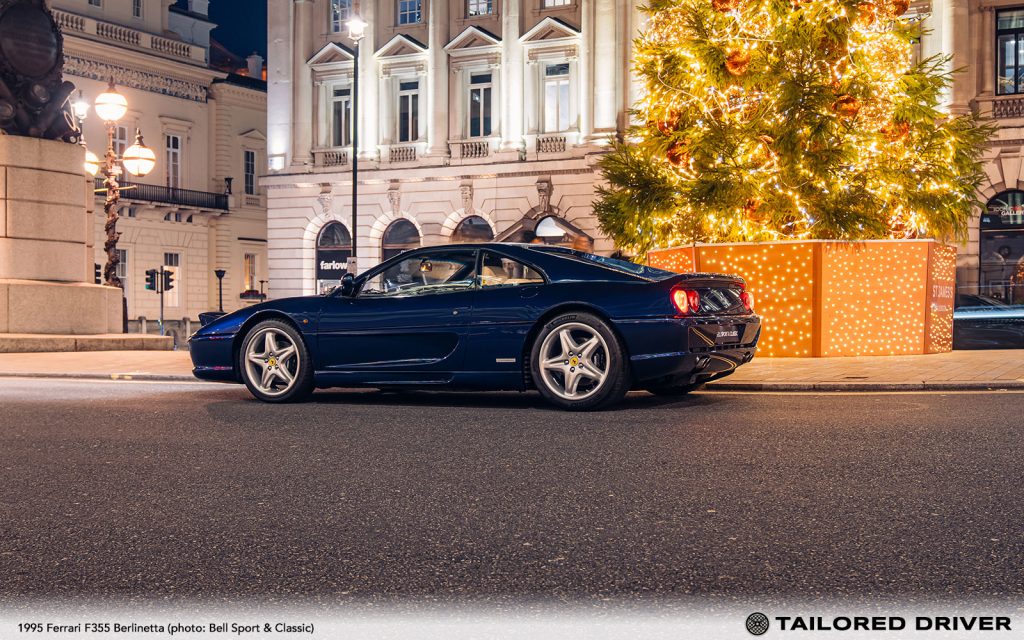
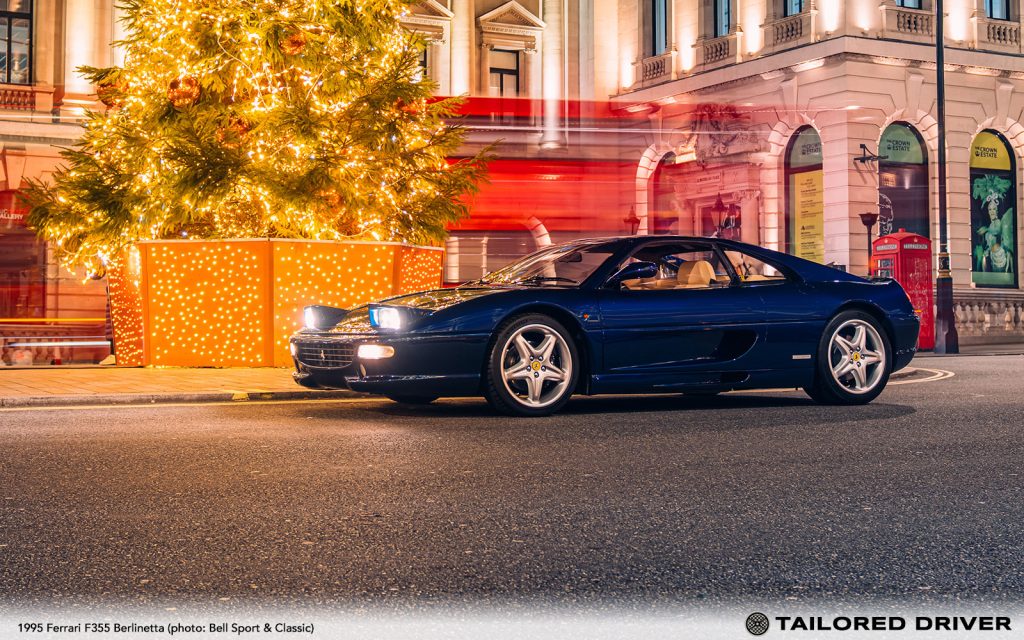
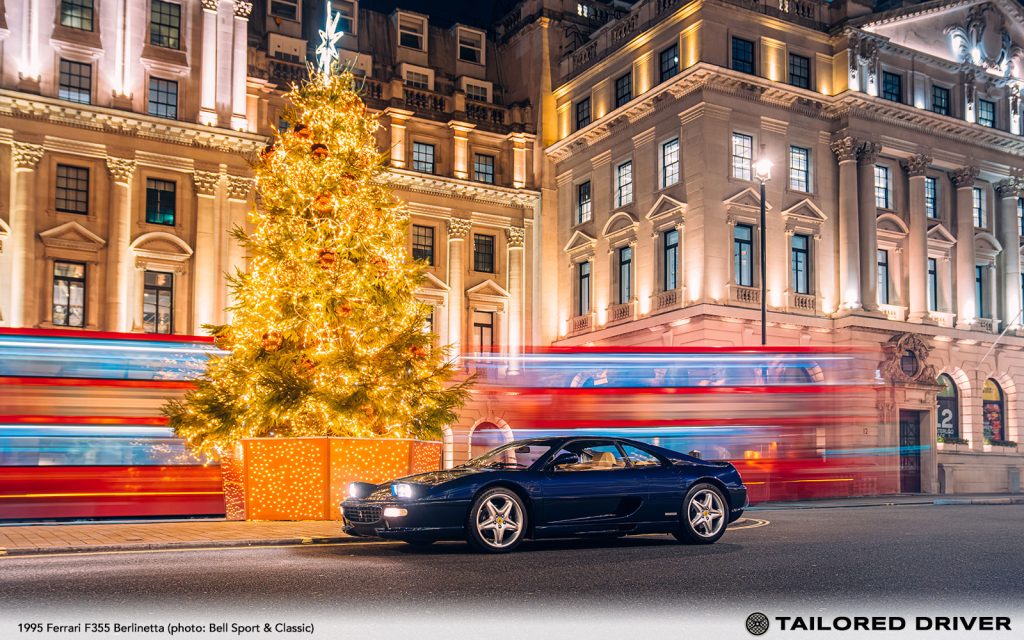
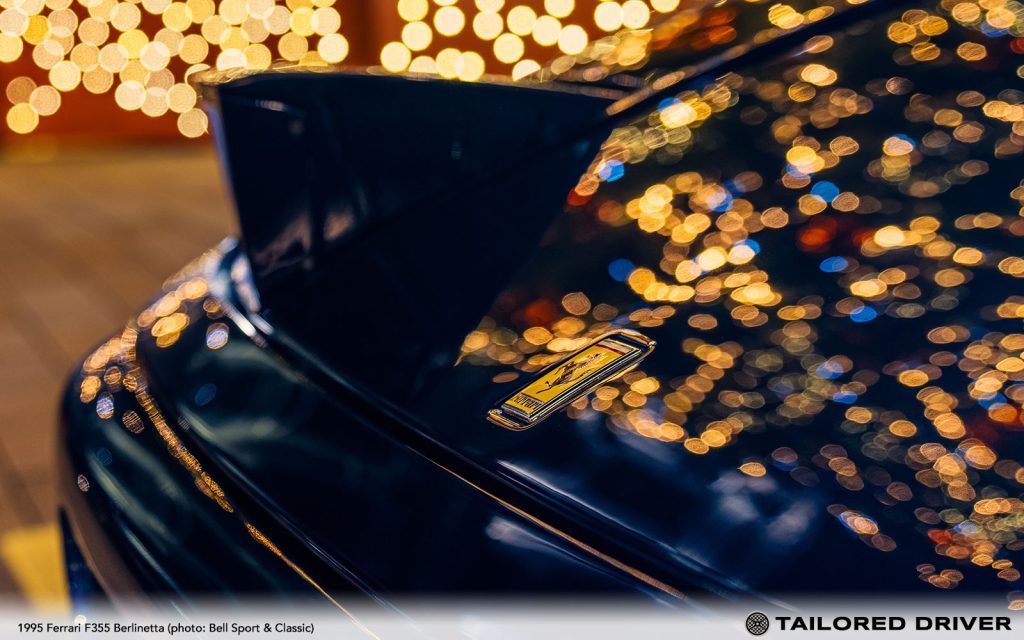
  • ‘Holy Grail’ Specification Ferrari F355 Now Available at Bell Sport & Classic

    ‘Holy Grail’ Specification Ferrari F355 Now Available at Bell Sport & Classic

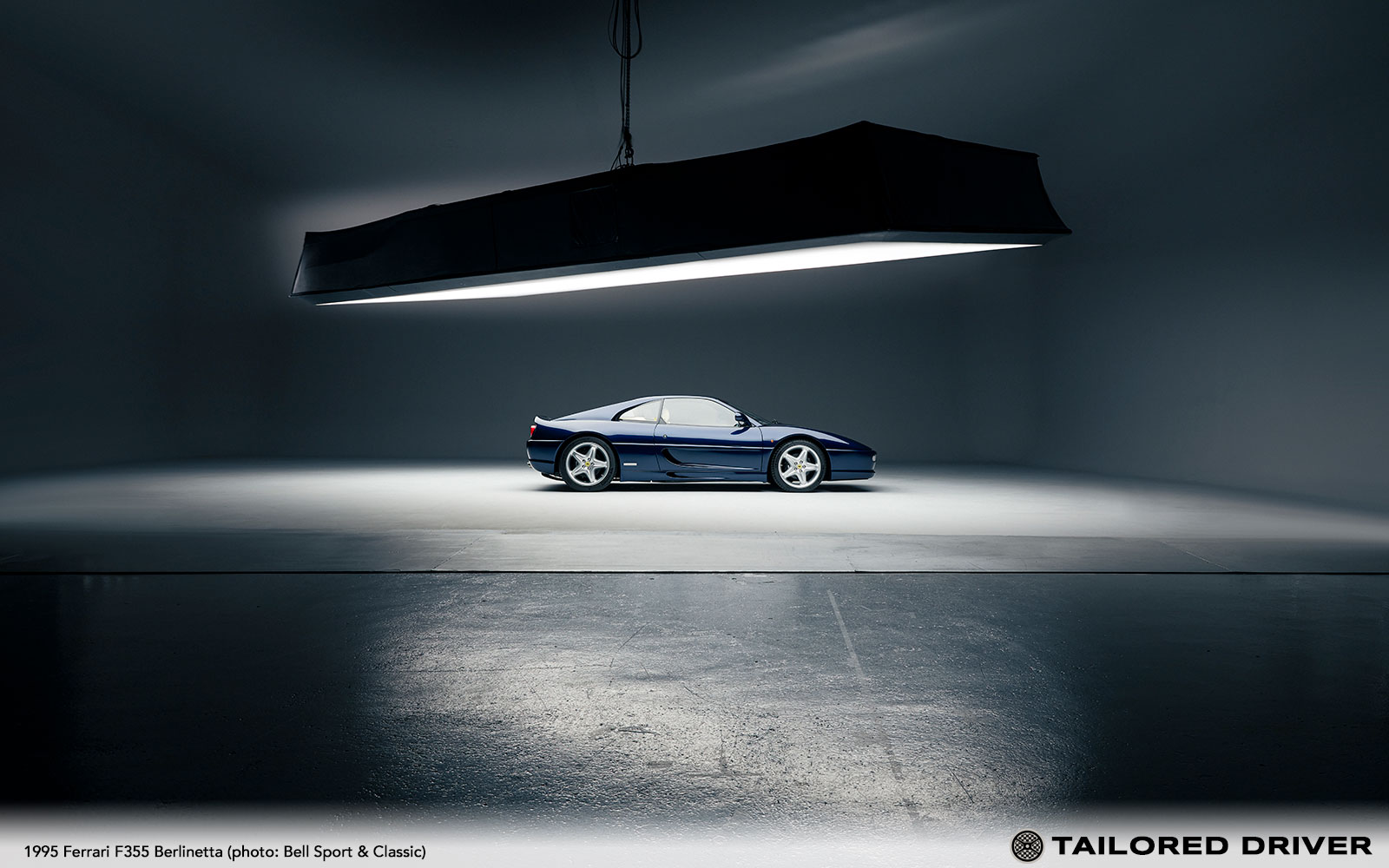
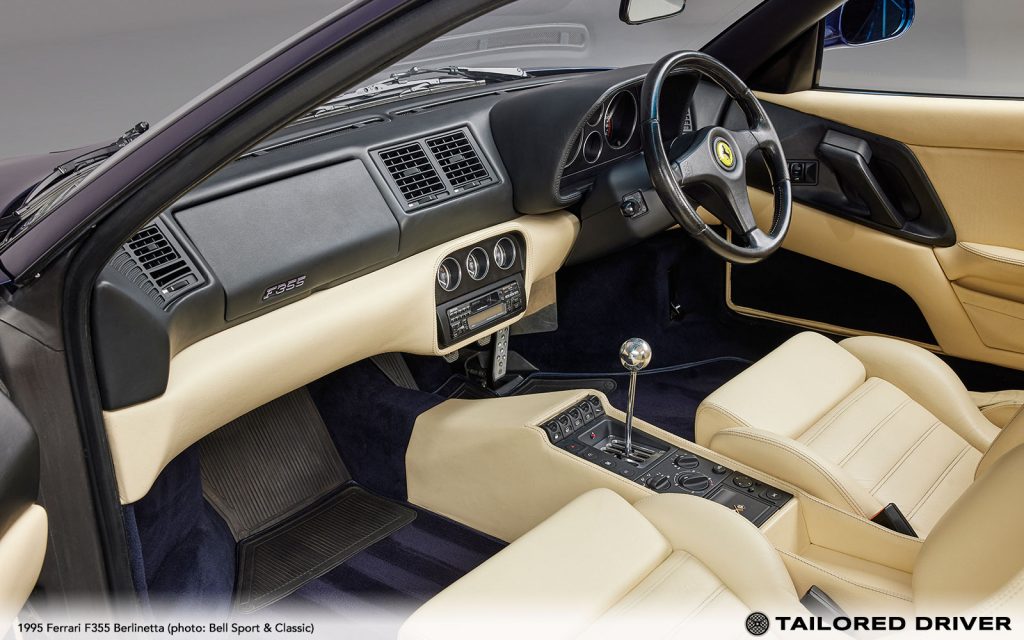
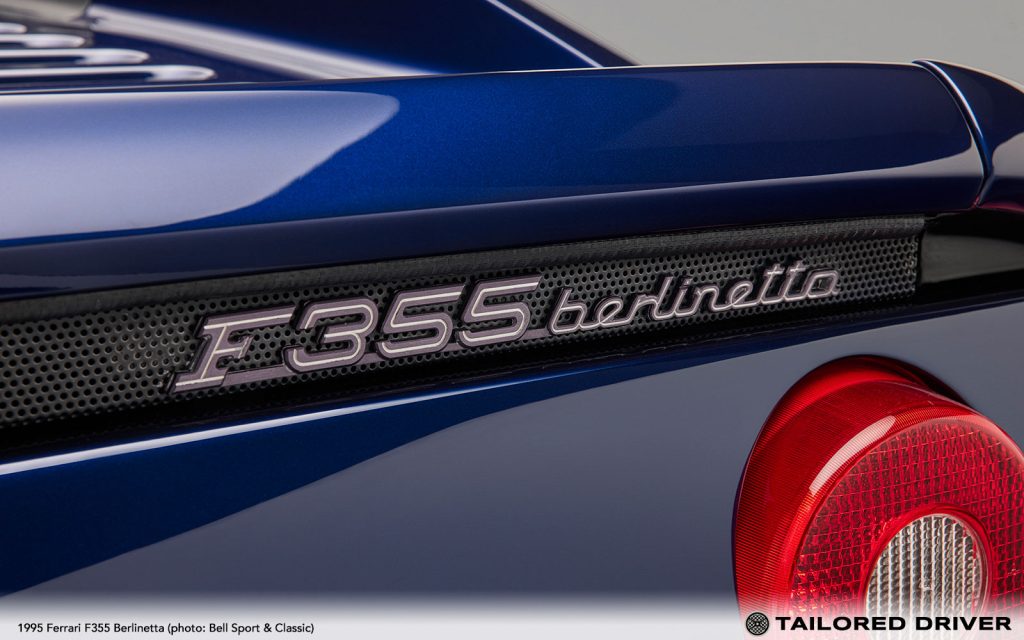
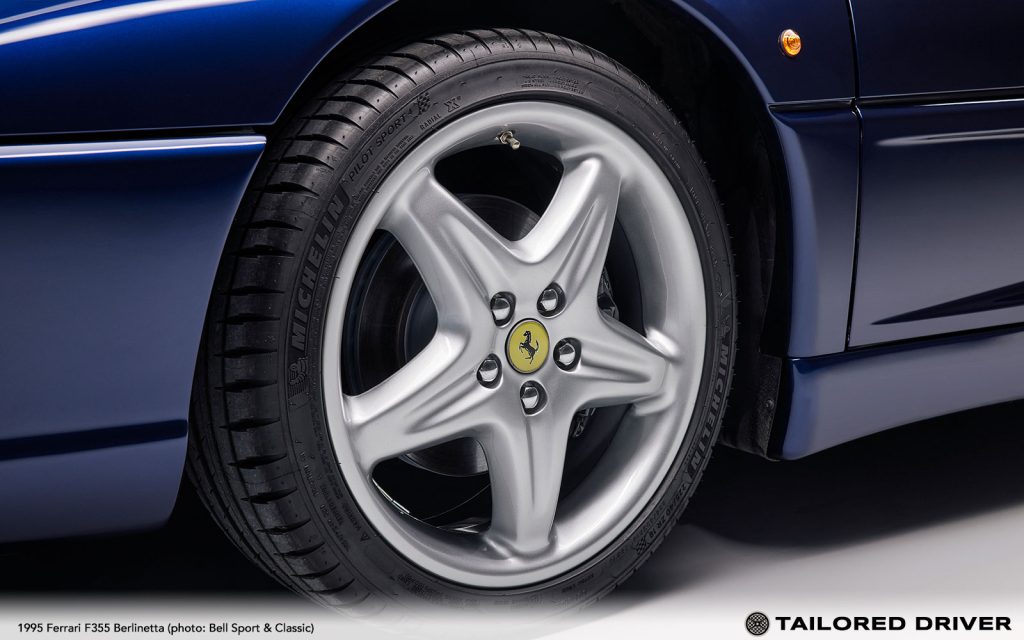
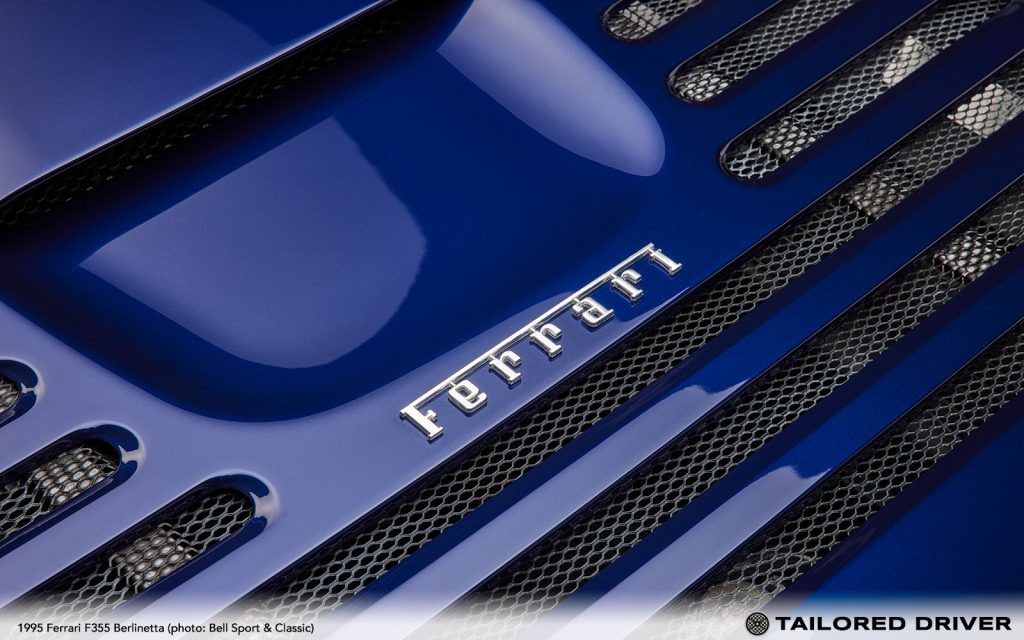
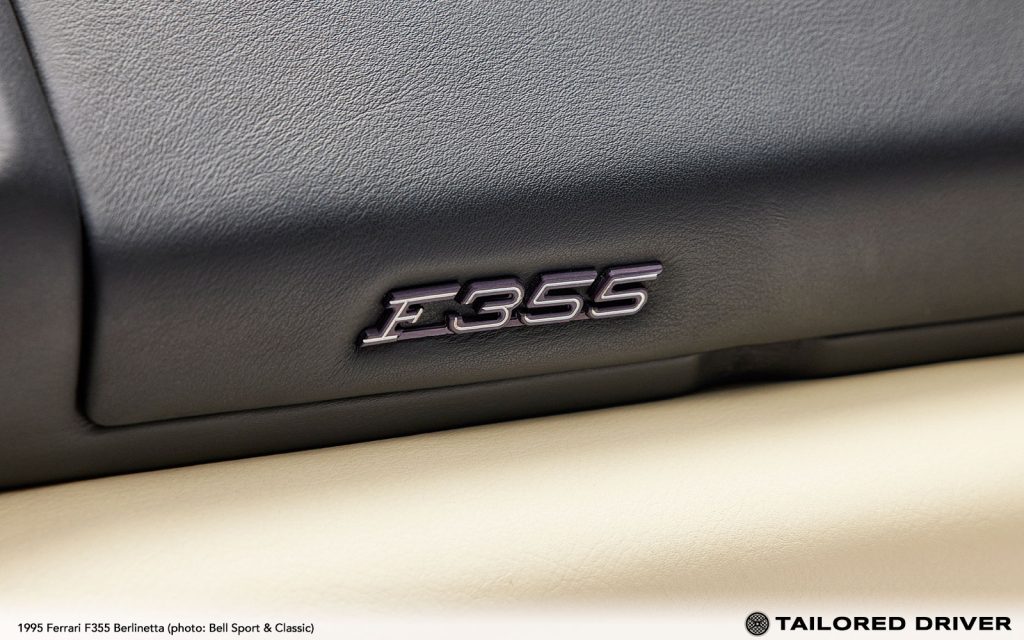
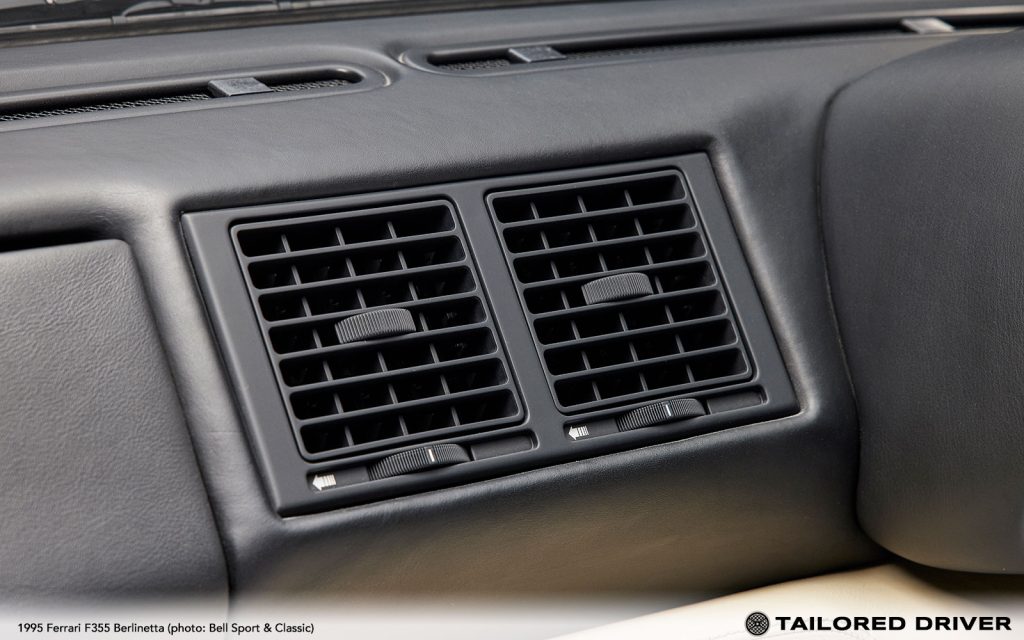
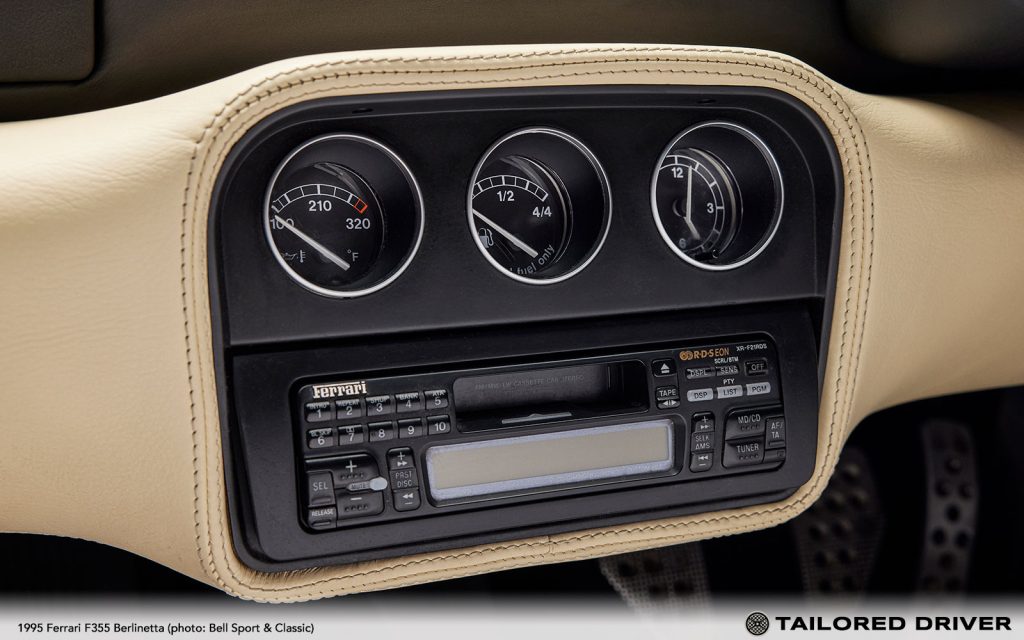
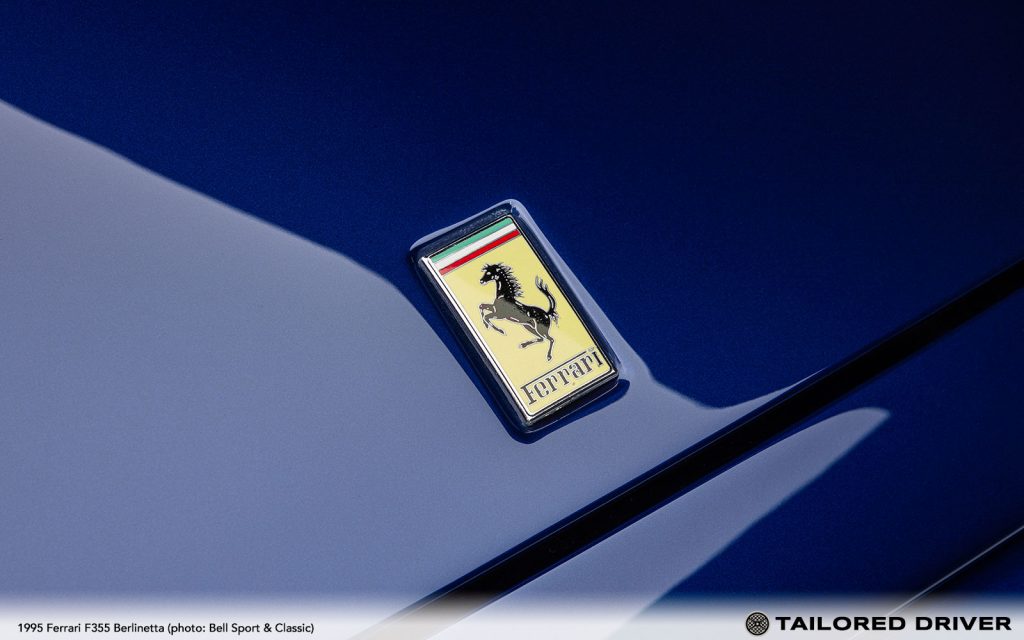
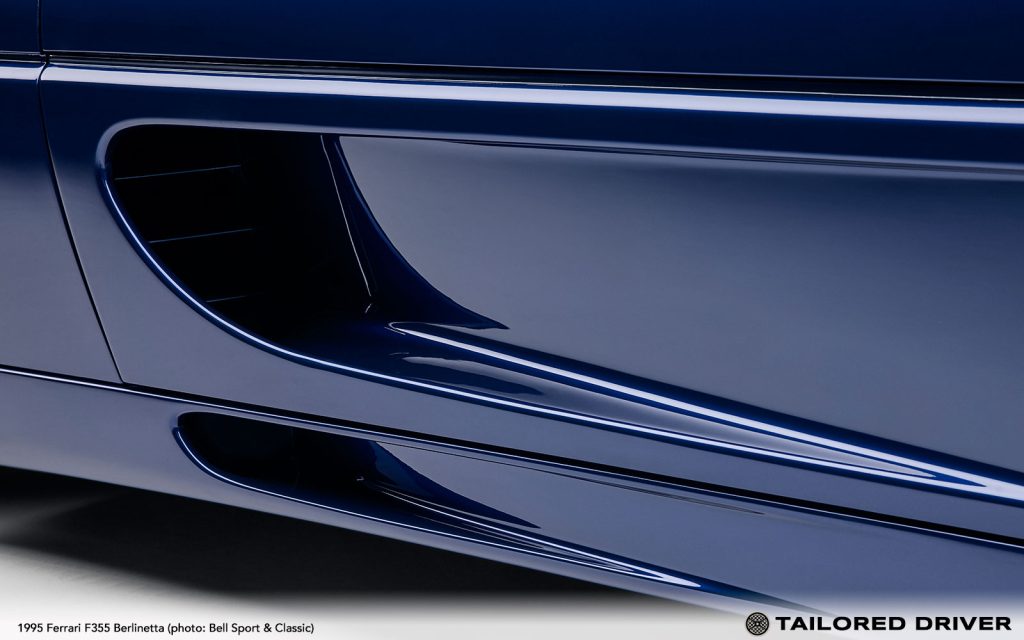
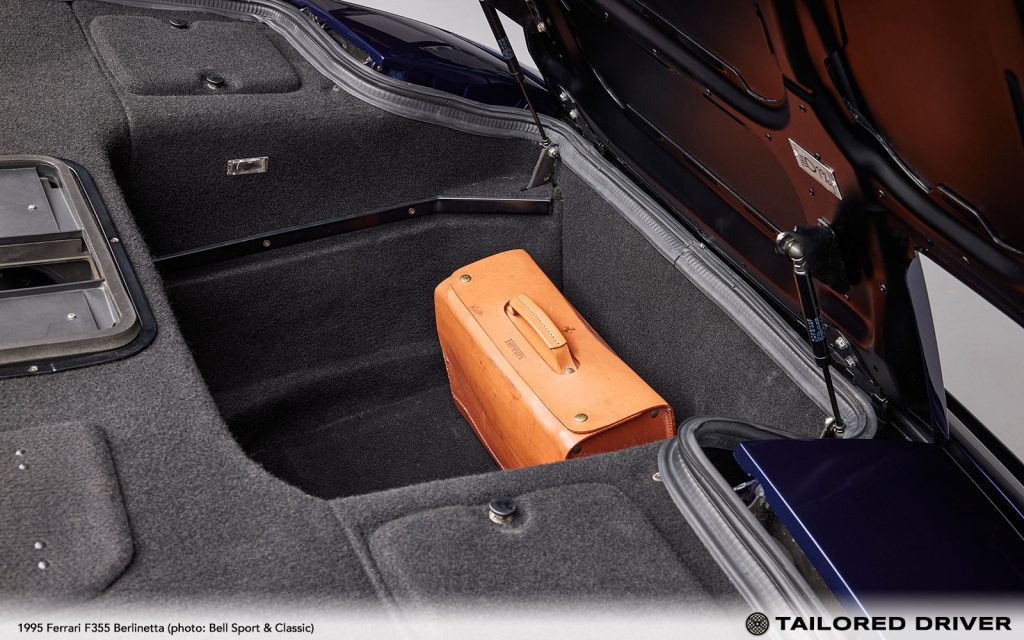
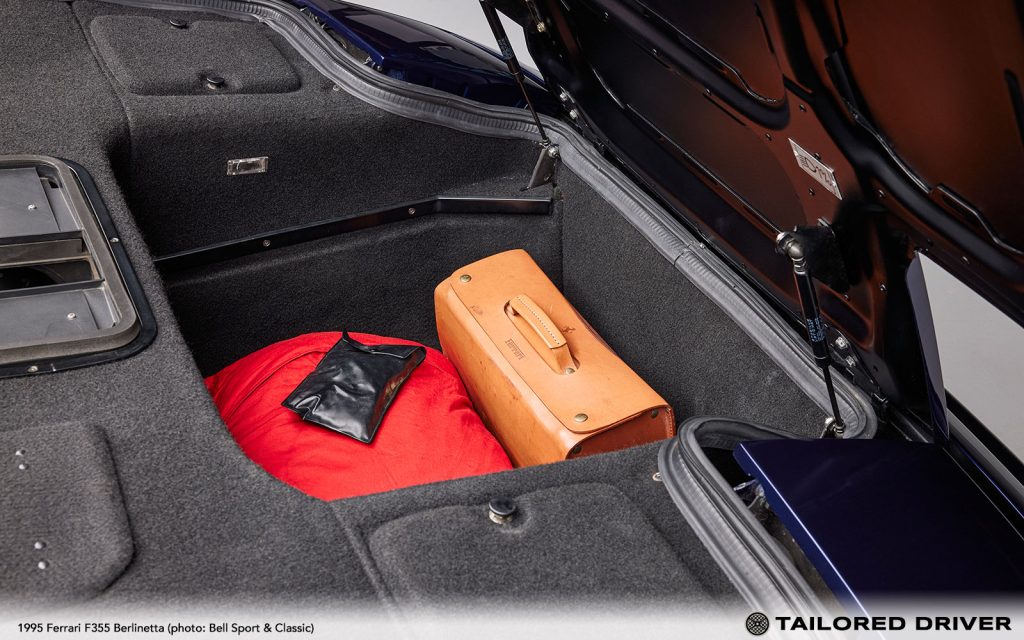
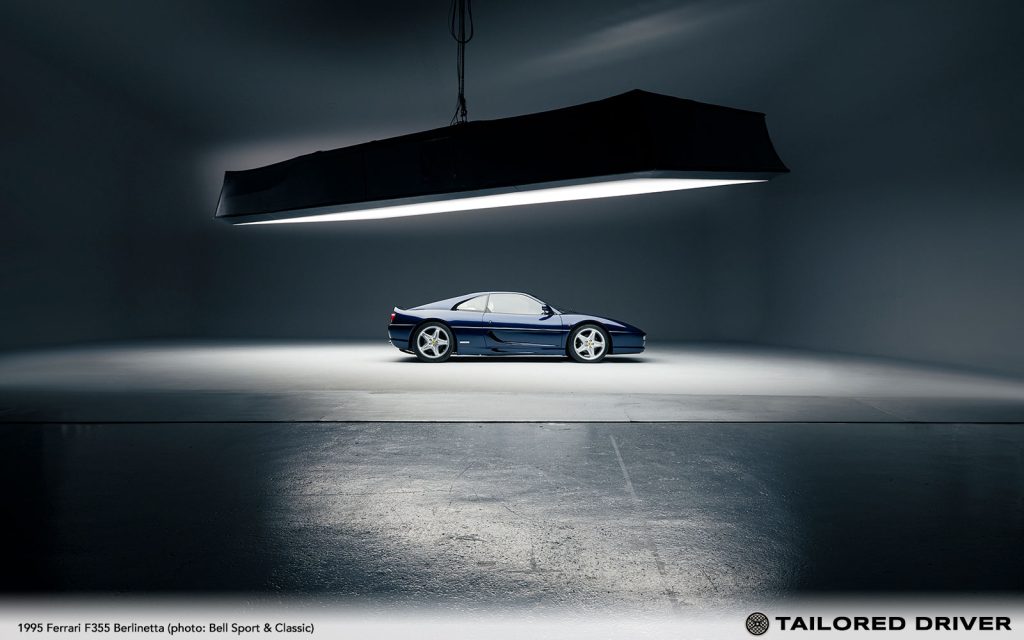
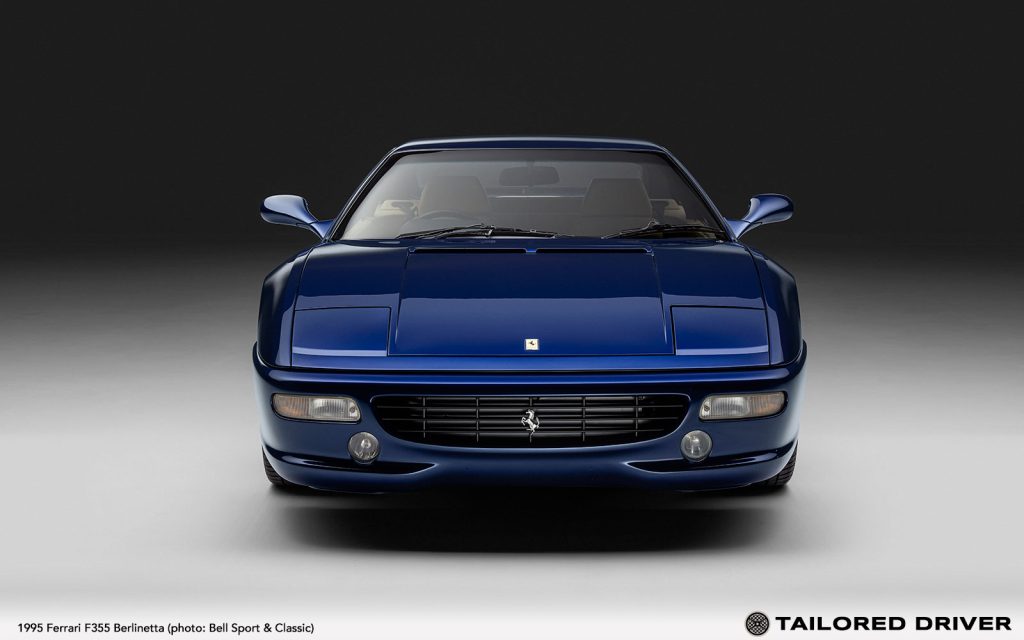
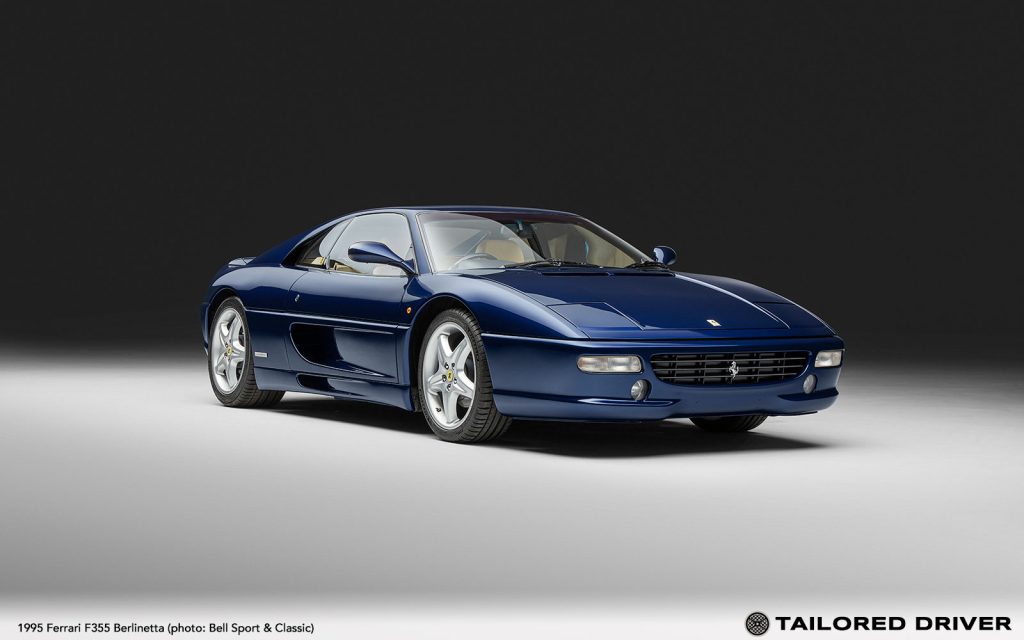
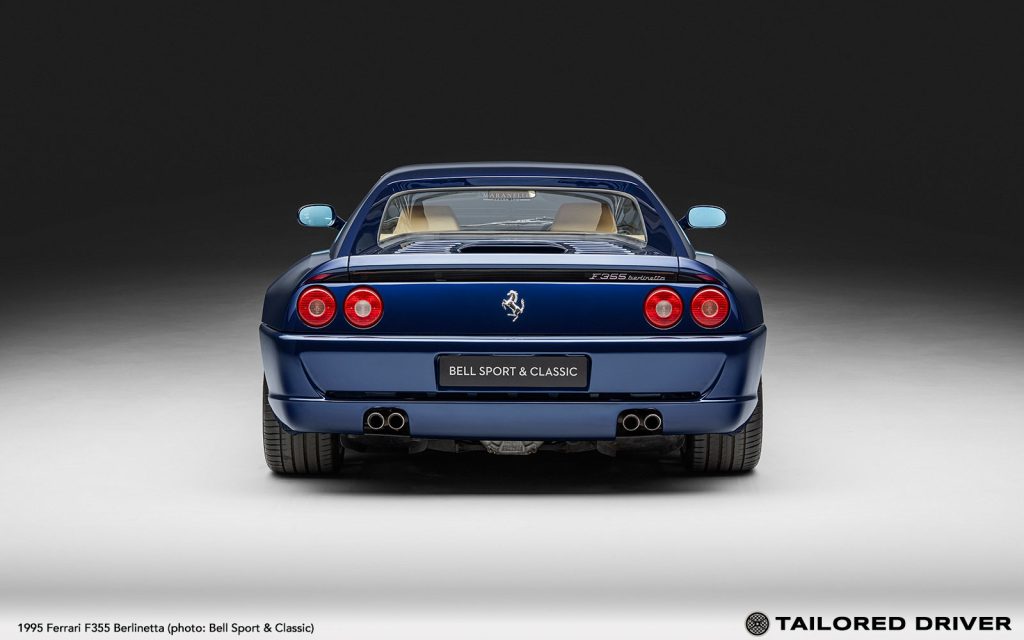
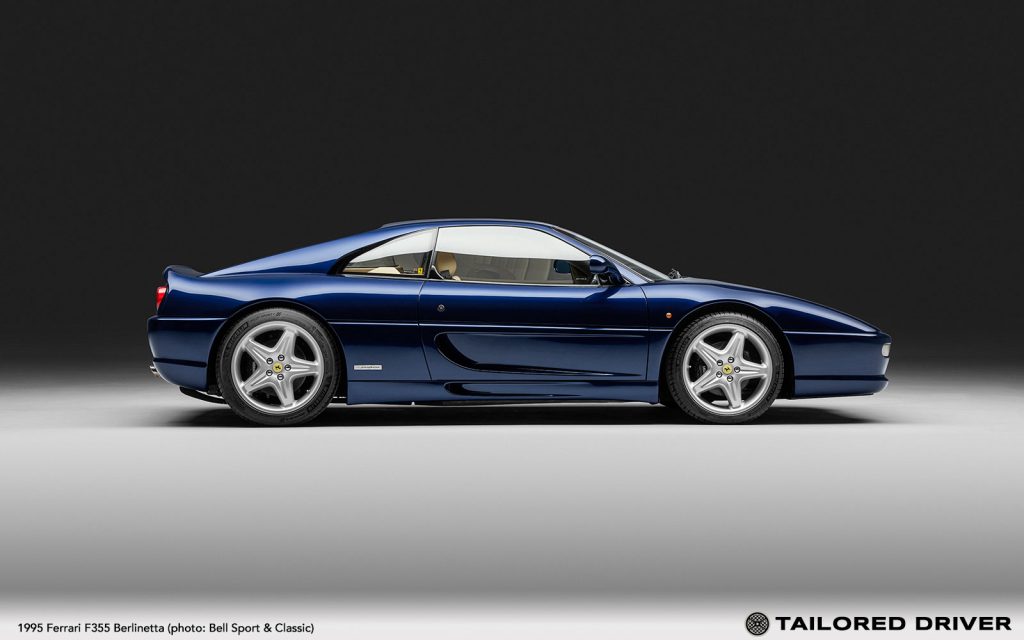
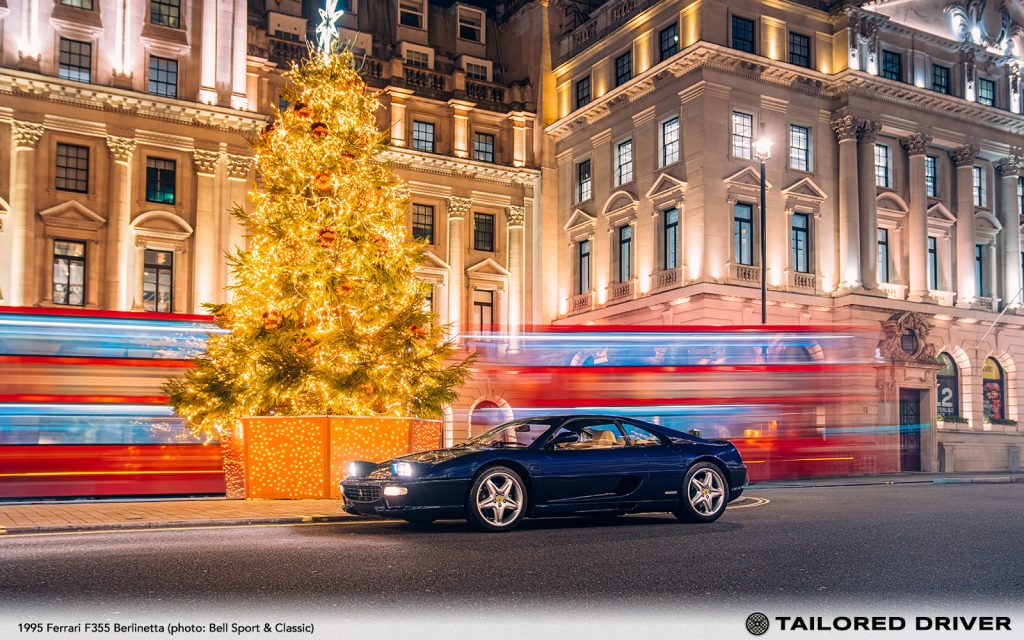
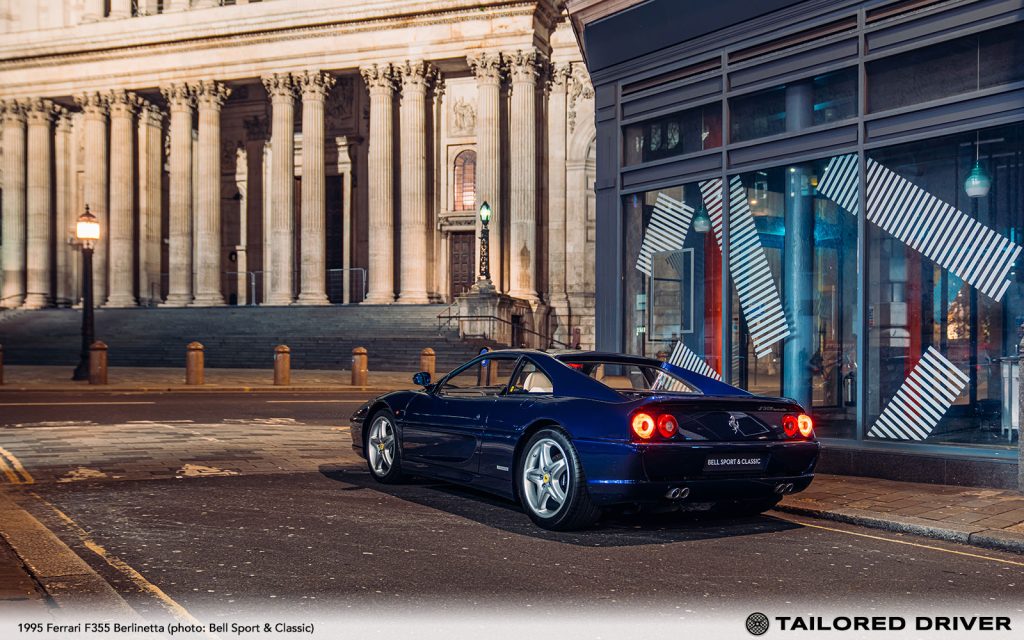
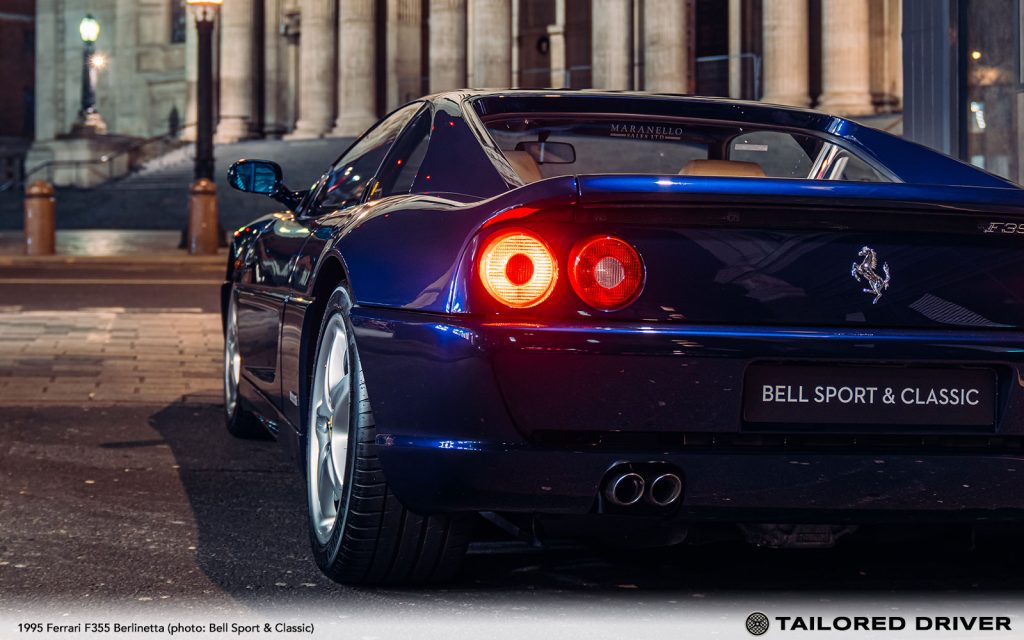
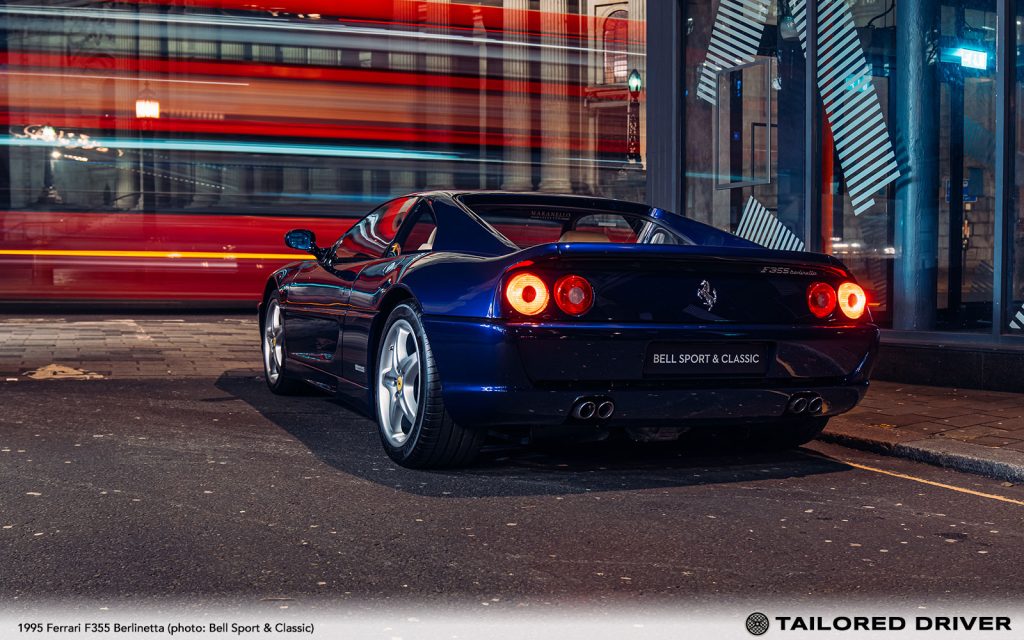
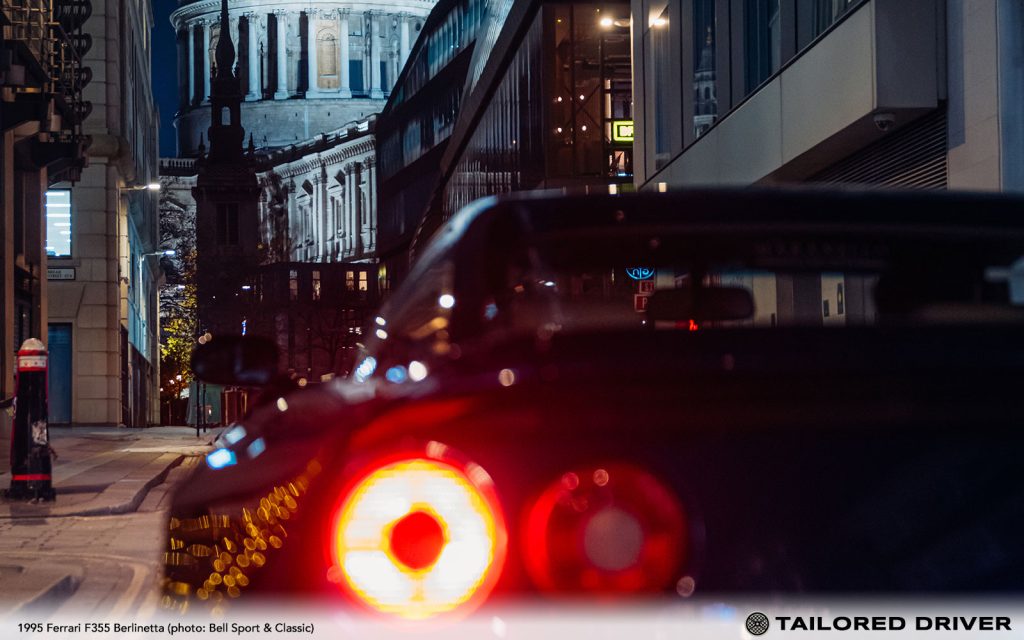
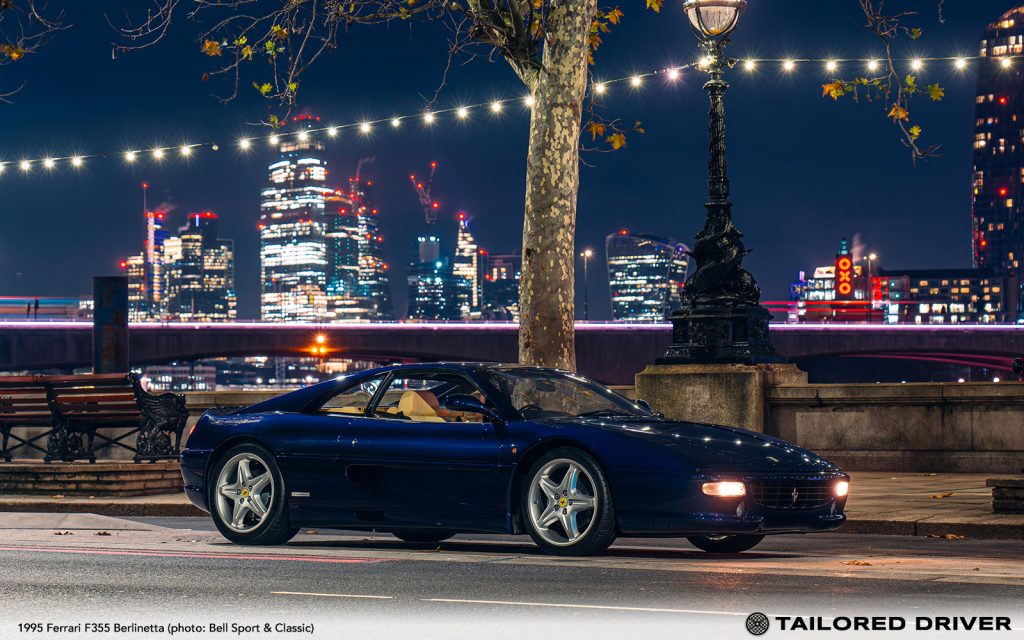
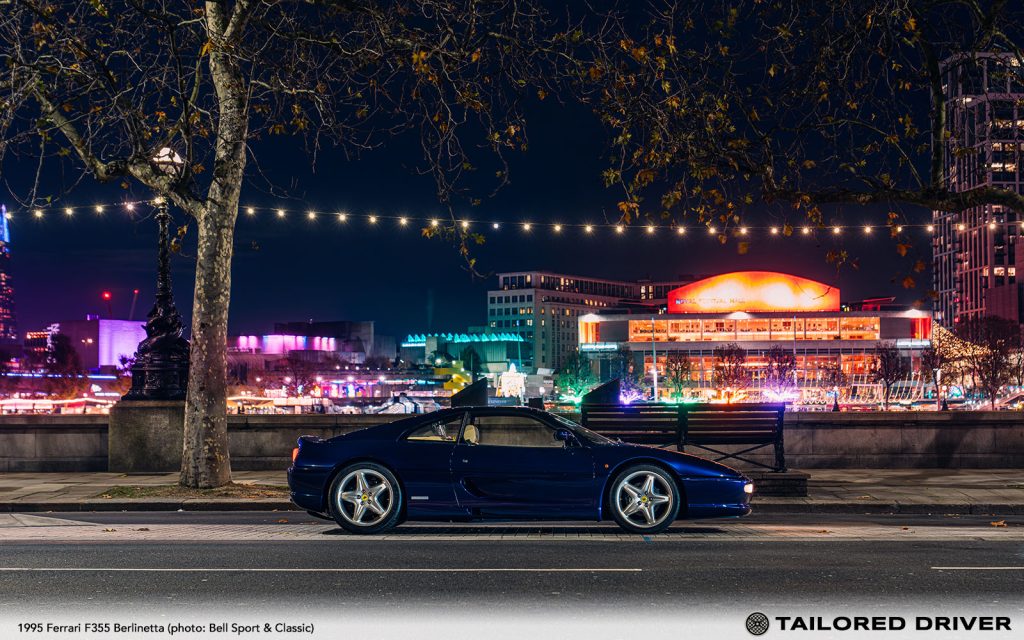
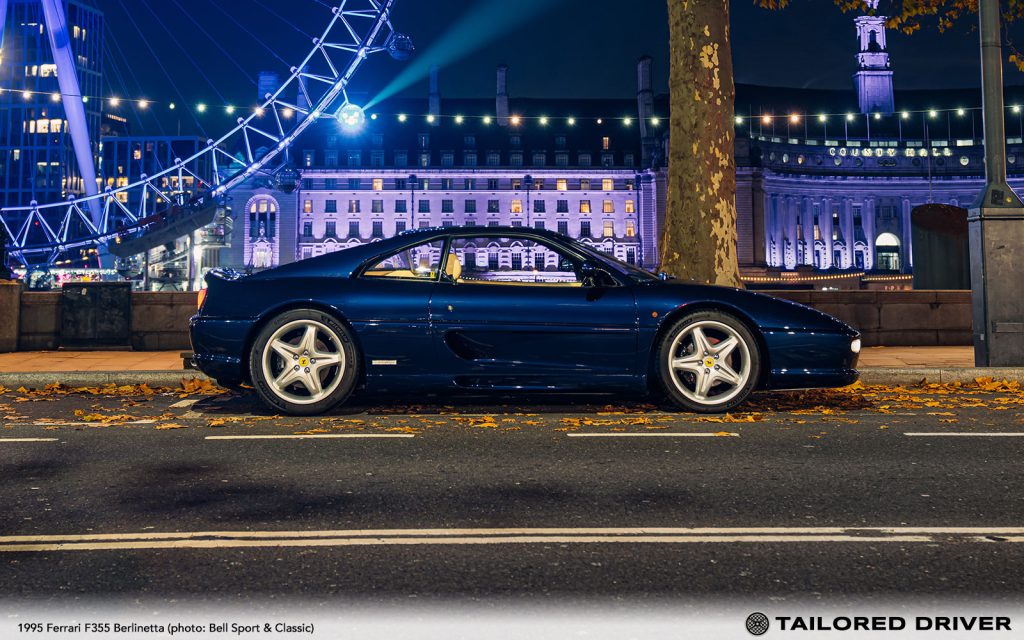
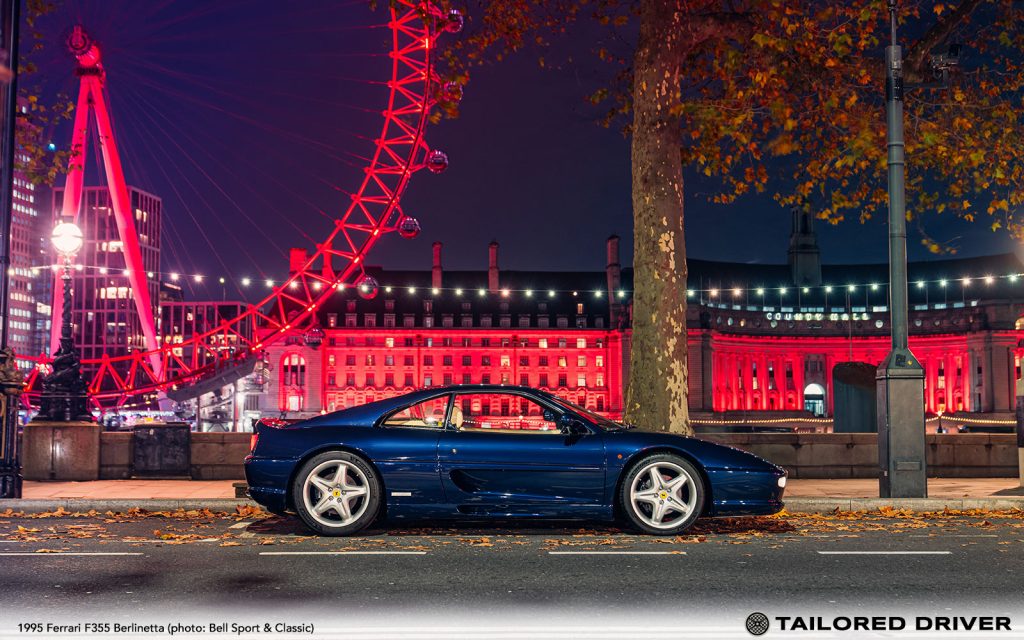
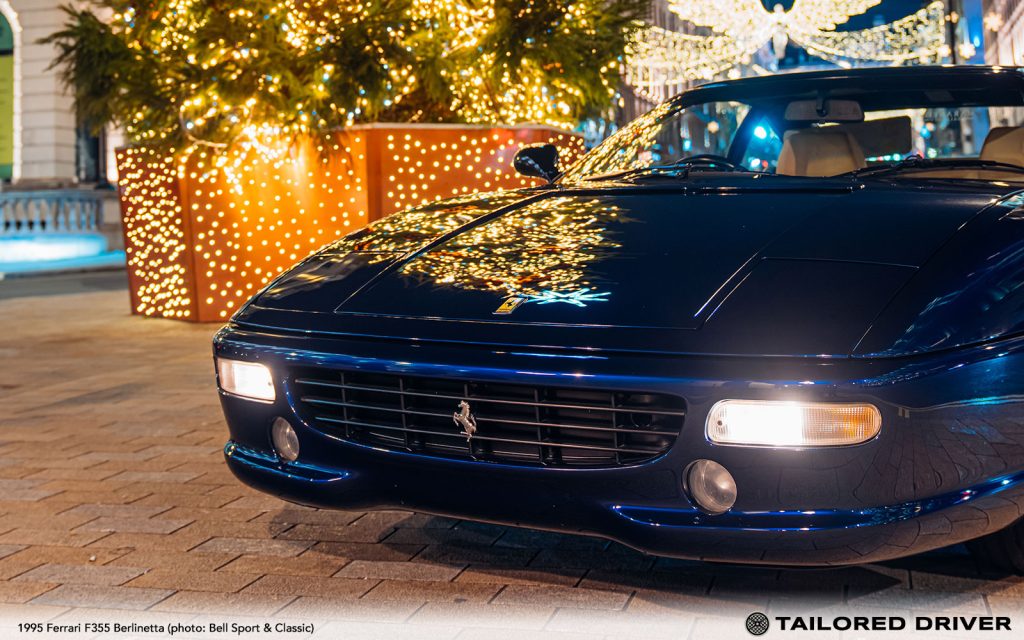
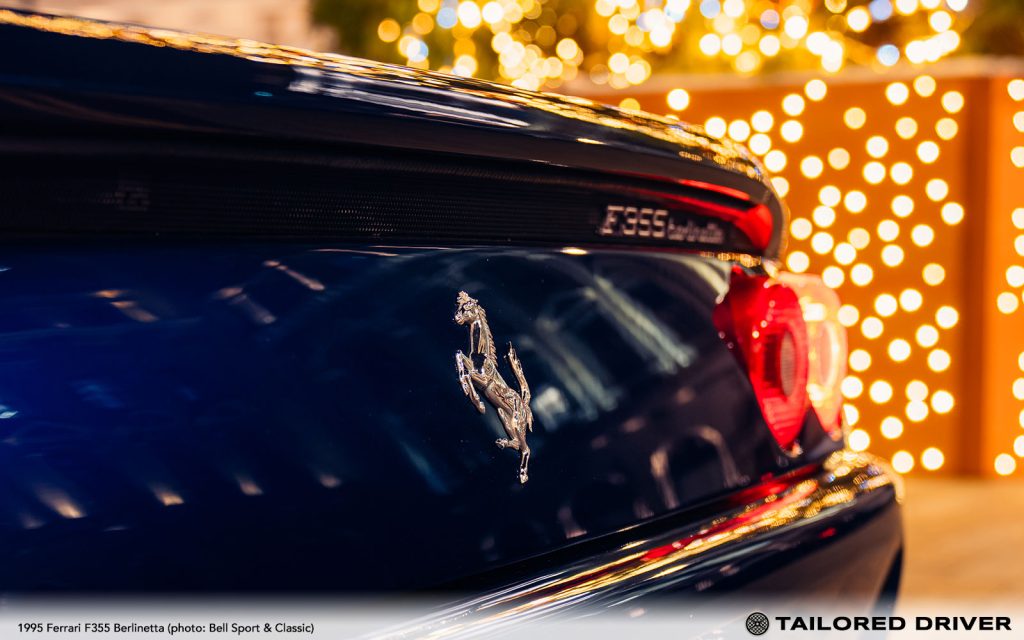
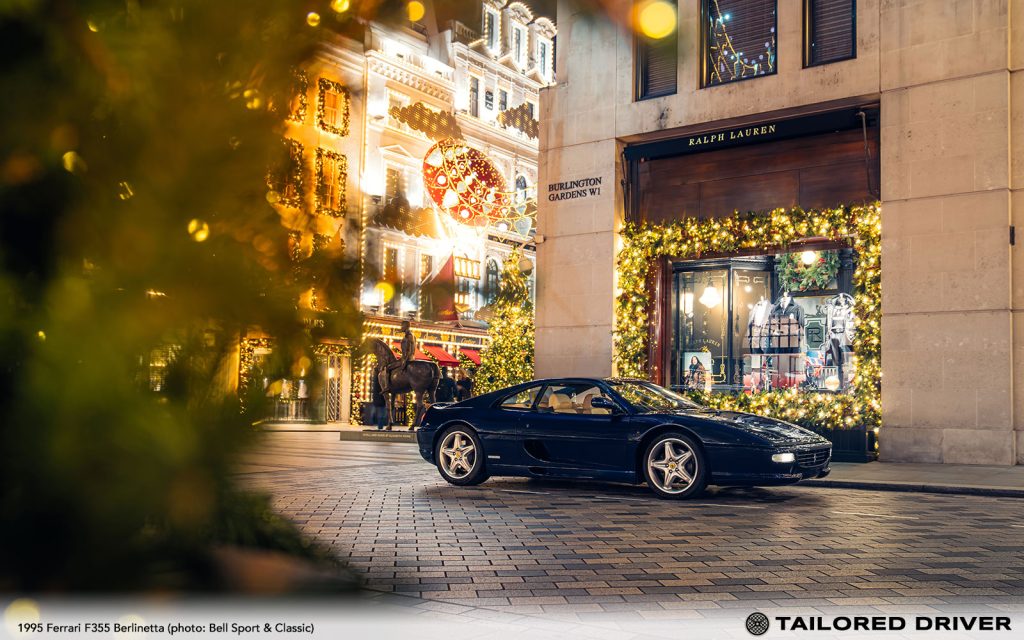
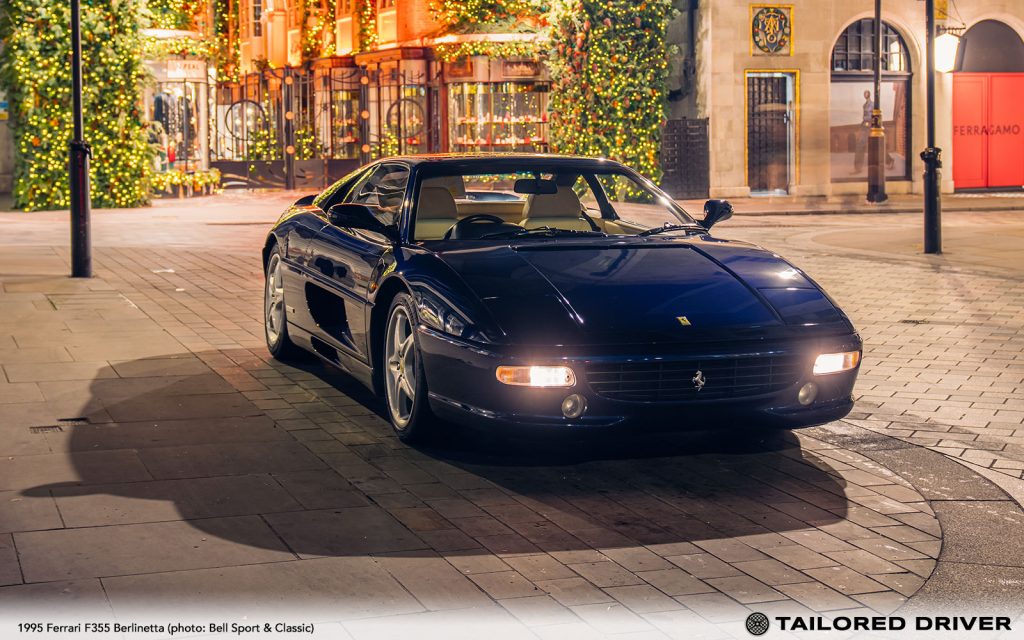
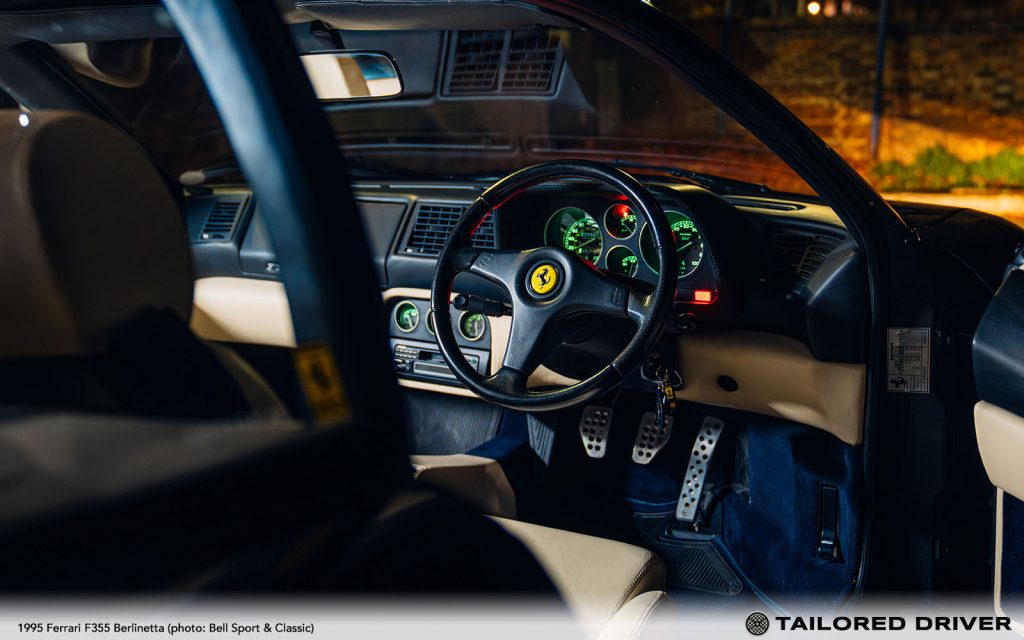
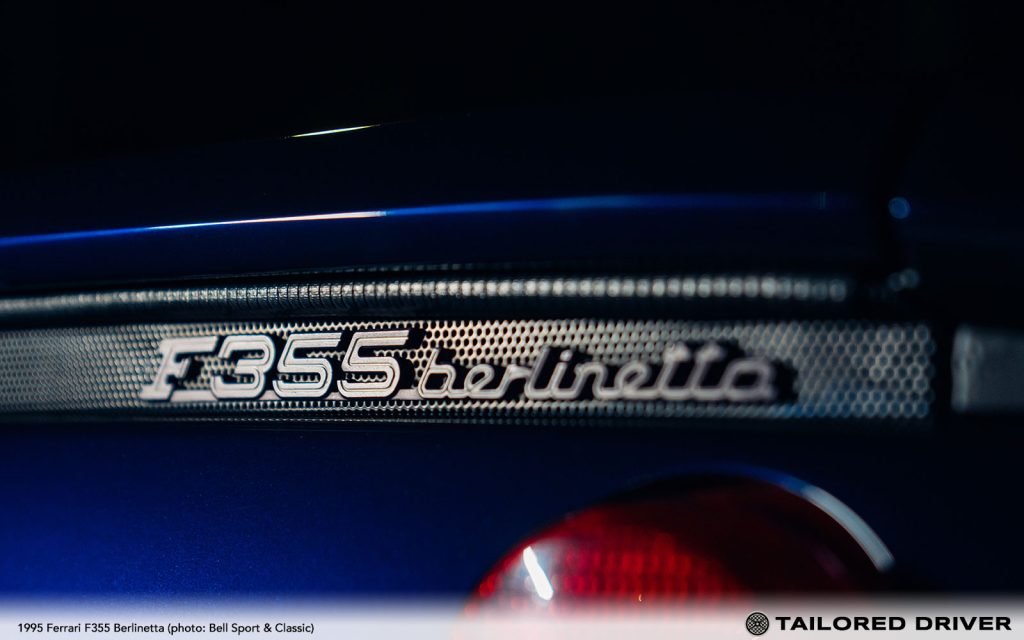
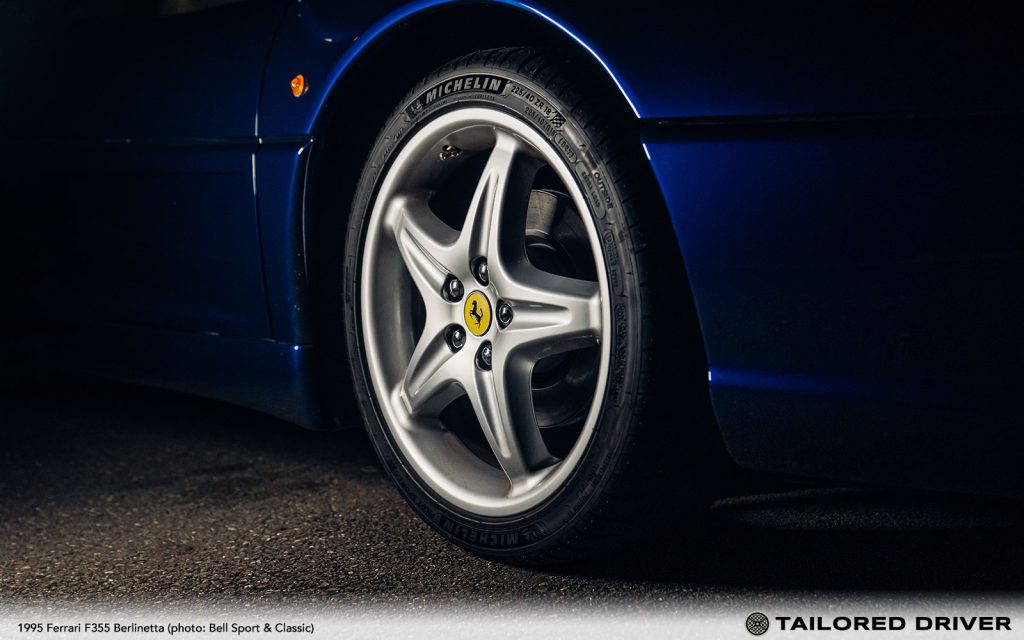
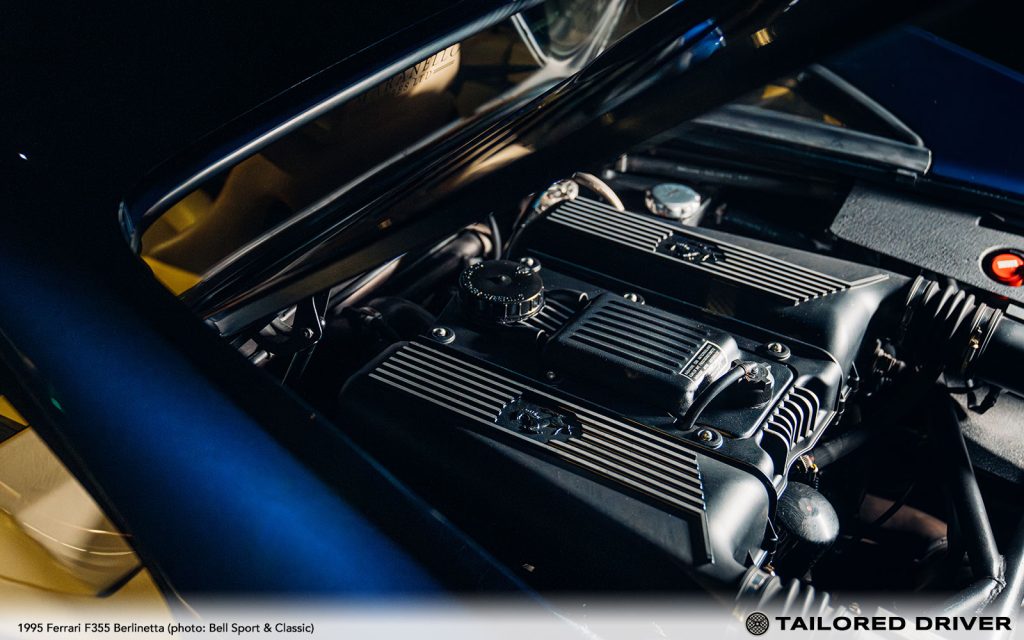
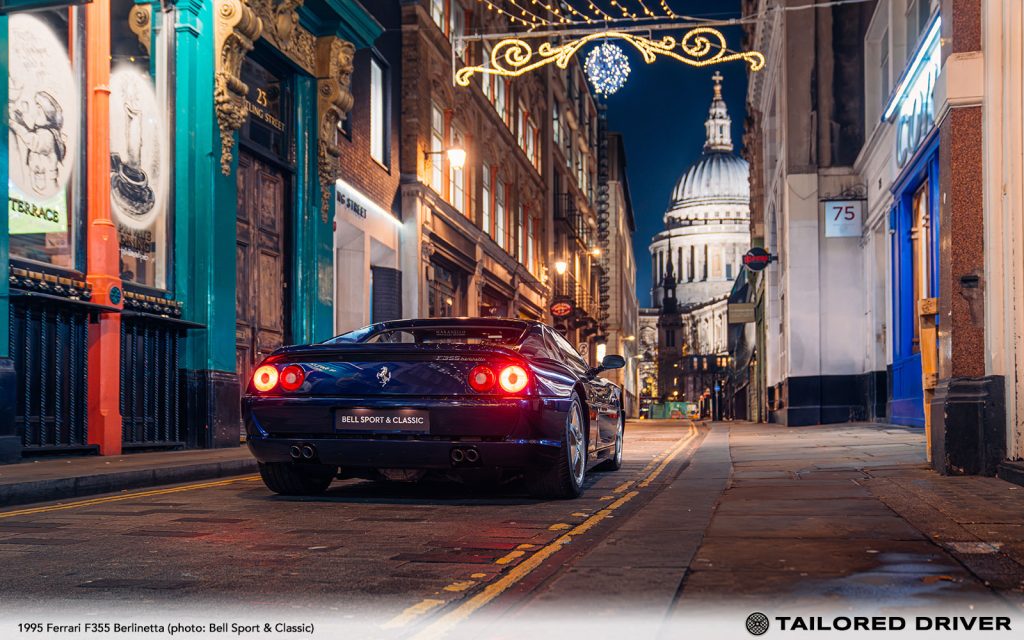
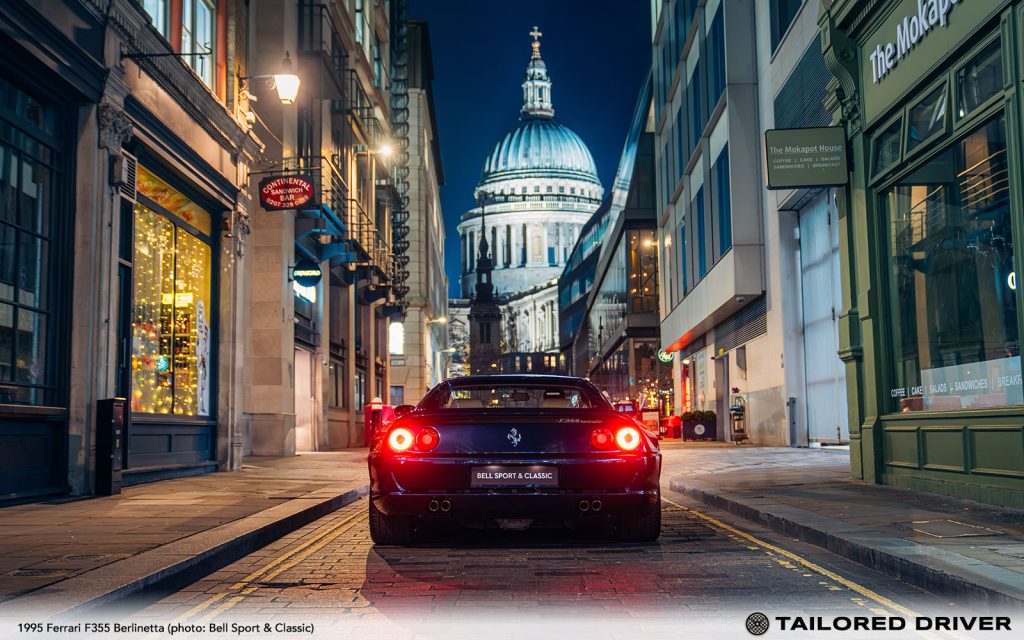
    • Outstanding 1995 Ferrari F355 Berlinetta, originally owned by acclaimed musician Chris Rea offered for sale by Ferrari marque experts, Bell Sport & Classic
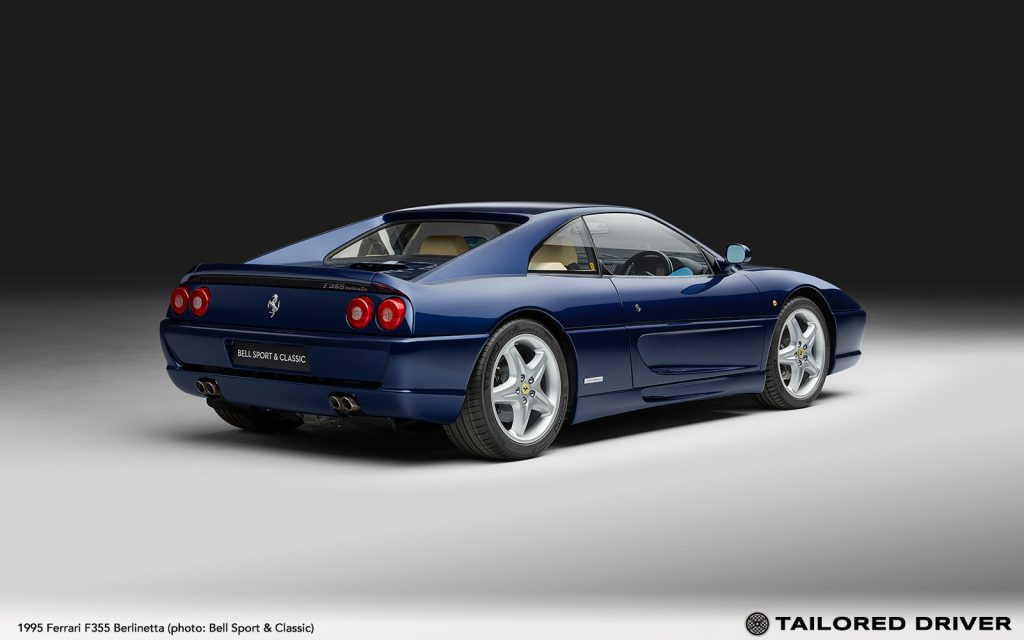
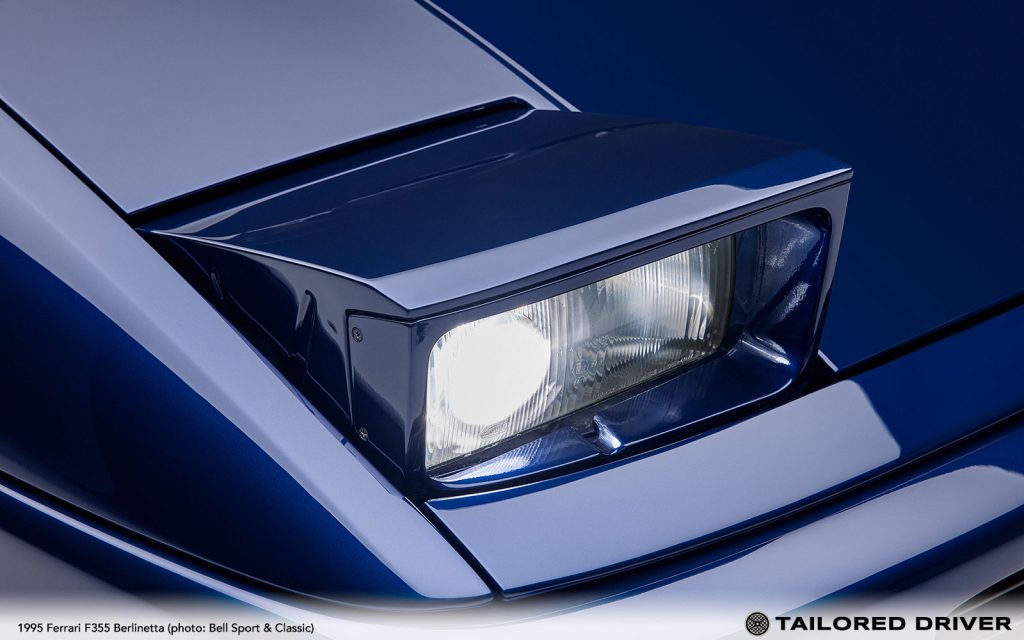
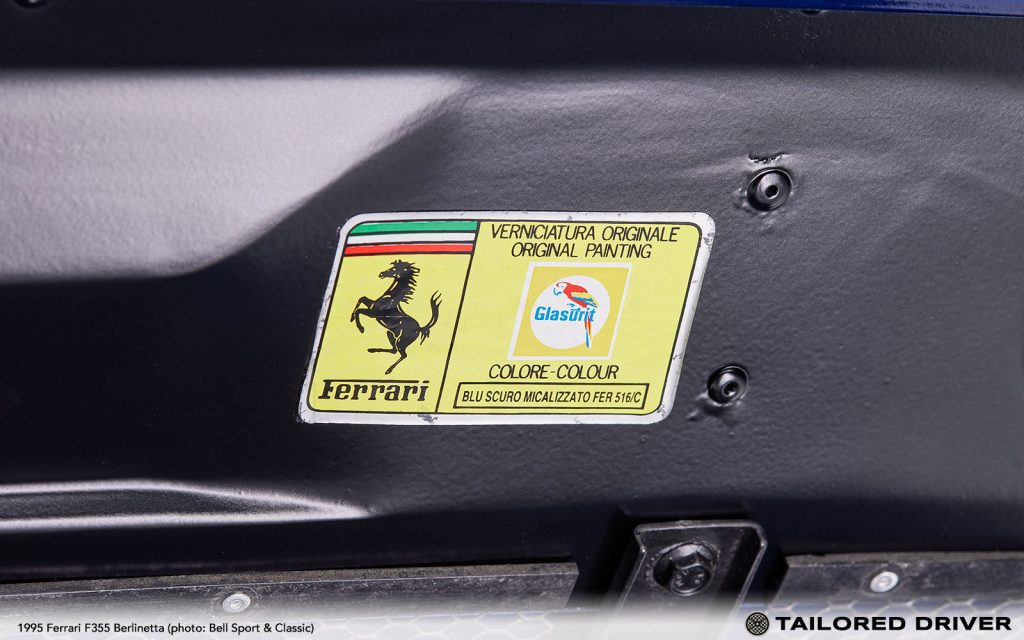
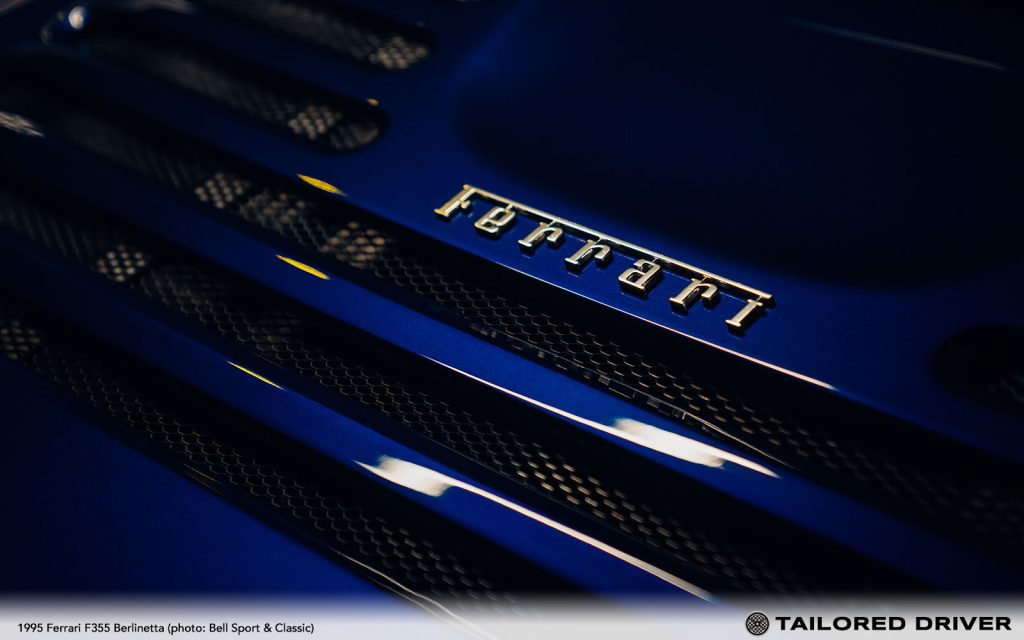
    • Understood to be a unique “1 of 1” car finished in Blu Scuro Micalizzato
    • Iconic model poised to turn 30 years old and achieve genuine classic Ferrari status
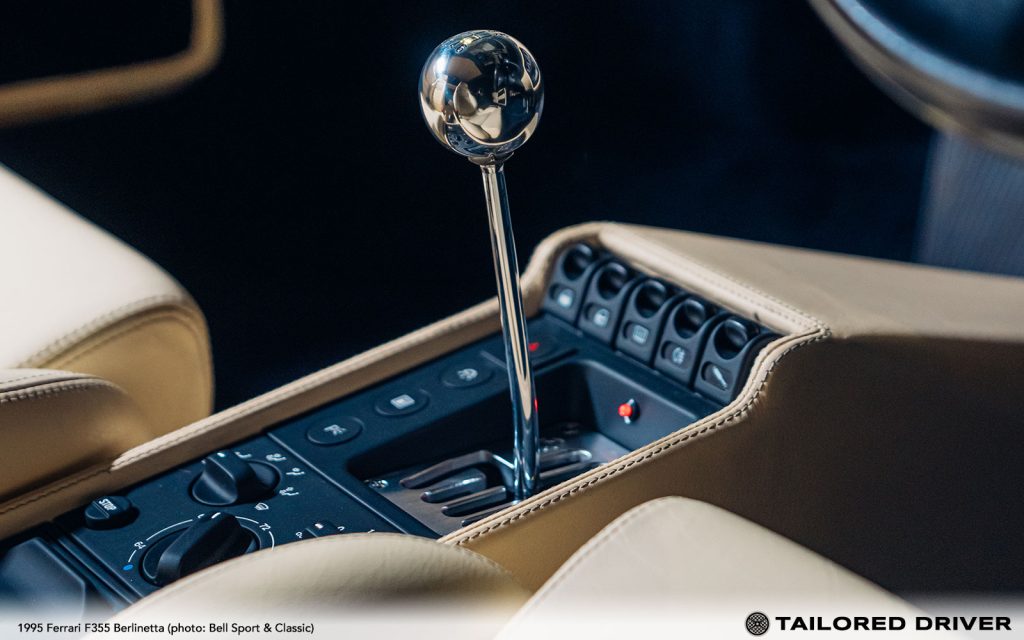
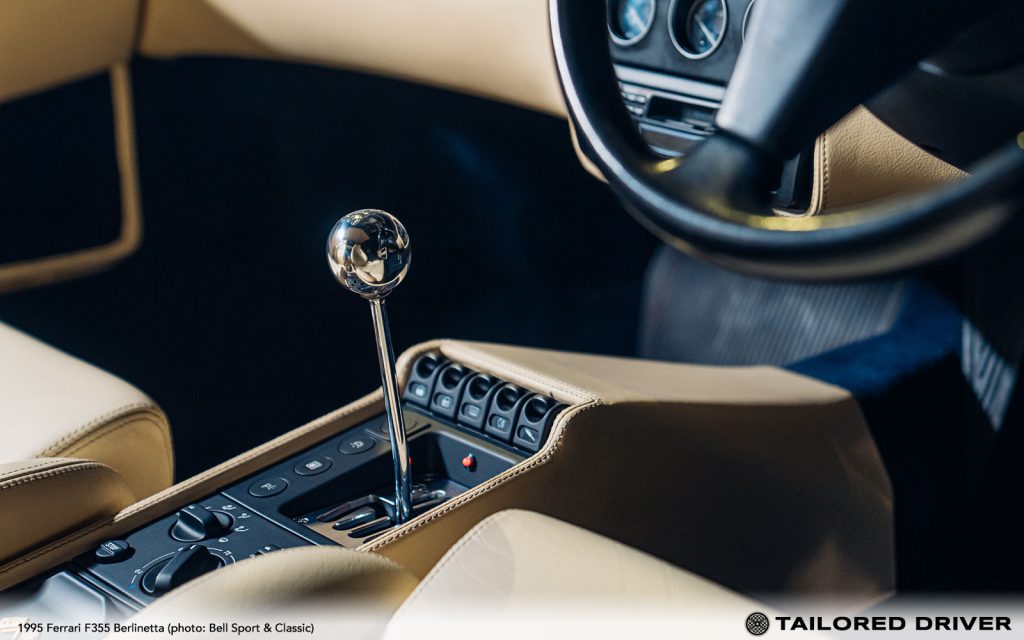
    • ‘Holy grail’ specification most sought-after by collectors: six-speed manual, early ‘2.7 Motronic’ Berlinetta, non-airbag, finished in Blu Scuro Micalizzato over Crema
    • Comprehensively refreshed by Bell Sport & Classic’s sector-leading technical team, led by former-Maranello personnel who worked on such cars in period
    • Reaffirms Bell Sport & Classic’s status as the leading destination for classic and modern Ferraris

    [source: Bell Sport & Classic]

    Markyate, Hertfordshire, UK – Bell Sport & Classic brings to market what is perhaps the world’s finest example of the iconic Ferrari F355 Berlinetta, presented in exceptional condition and ‘holy grail’ collector specification, previously owned by musician and Ferrari aficionado Chris Rea.

    The exceptional example is offered for sale by the world-leading Ferrari specialists, just as enthusiasts prepare to celebrate the 355’s 30th anniversary, with the model joining the rarefied ranks of bona fide Maranello classics.

    A highly collectable early-production run F355 Berlinetta, the car presents in superb condition after a comprehensive mechanical and cosmetic refresh by Bell Sport & Classic’s renowned specialist Ferrari technical team, which is led by former Maranello factory personnel.

    Tim Kearns, Managing Director, Bell Sport & Classic, said: “We’re proud to offer this ultra-desirable example of the Ferrari F355. This sale represents a rare opportunity to acquire the 355 everyone wants: an early right-hand drive, ‘2.7 Motronic’, non-airbag, manual Berlinetta in a timeless specification. The model also has a compelling backstory, purchased new by noted Ferrari collector, Chris Rea. 

    “This 355 represents the ‘holy grail’ for Ferrari collectors– a useable example of Maranello’s mid-engined masterpiece, in its purest, most intoxicating form. In terms of design, technical innovation, performance, and handling, the F355 easily eclipsed the competition when it was launched and still offers a beguiling and wholly immersive driving experience today. As the F355 reaches its 30th anniversary, it also represents an astute investment.”

    The F355 Backstory
    Introduced at the 1994 Geneva International Motor Show, the F355 made an immediate impact on media, Ferrari owners and the public alike. A replacement for the somewhat underwhelming 348, the F355 was a true game changer; a harder-hitting, more modern mid-engined Ferrari that was just as wonderful to drive as it was to look at.

    Kearns, comments: “As the F355 reaches this landmark anniversary, now is the perfect time to take stock of just what a significant car it was for Ferrari. The F355 holds a special place in the marque’s history, emerging at a crucial moment for the brand, signalling the return of Ferrari technical, design and sheer driver engagement dominance after a period, some would argue, of drift and mediocrity. 

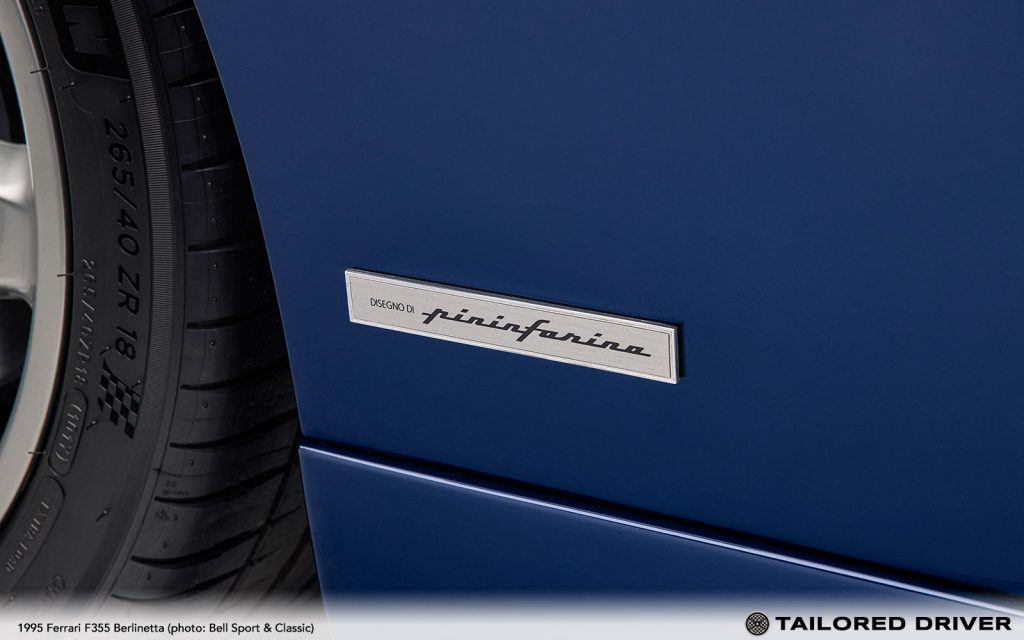
    “The F355 is highly significant: the car that the then new CEO Luca di Montezemolo delivered to bring the passion back to Ferrari, and the last of the truly hand-built V8 Ferraris. For many, the model represents a high-point for the marque – particularly in its early and purest form. It offers the perfect blend of old and new, combining contemporary performance with captivating analogue character – all wrapped up in a beautifully proportioned Pininfarina body. As a package, it really is hard to resist.”

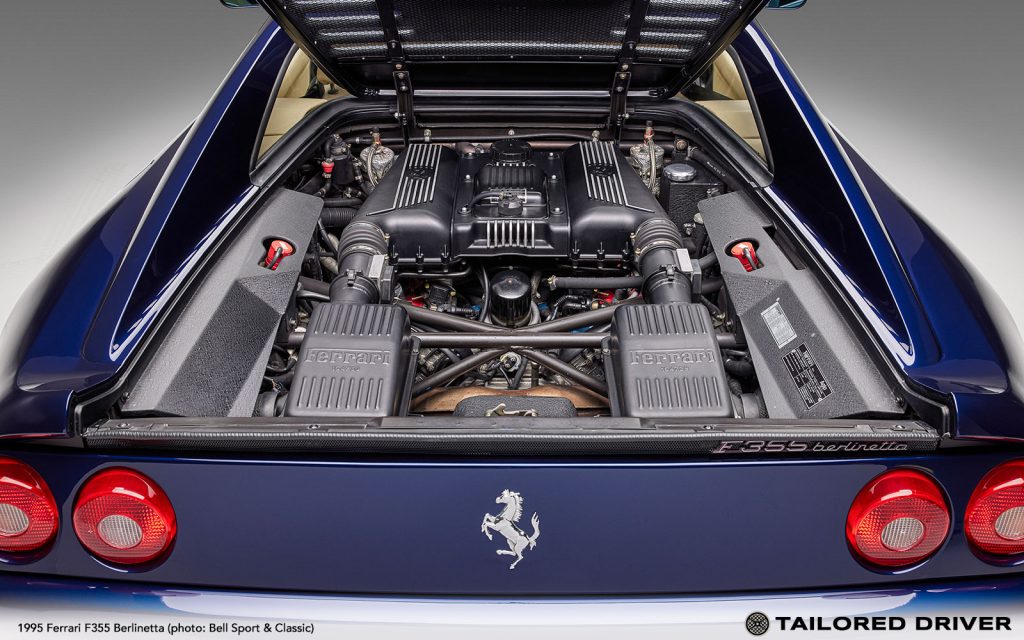
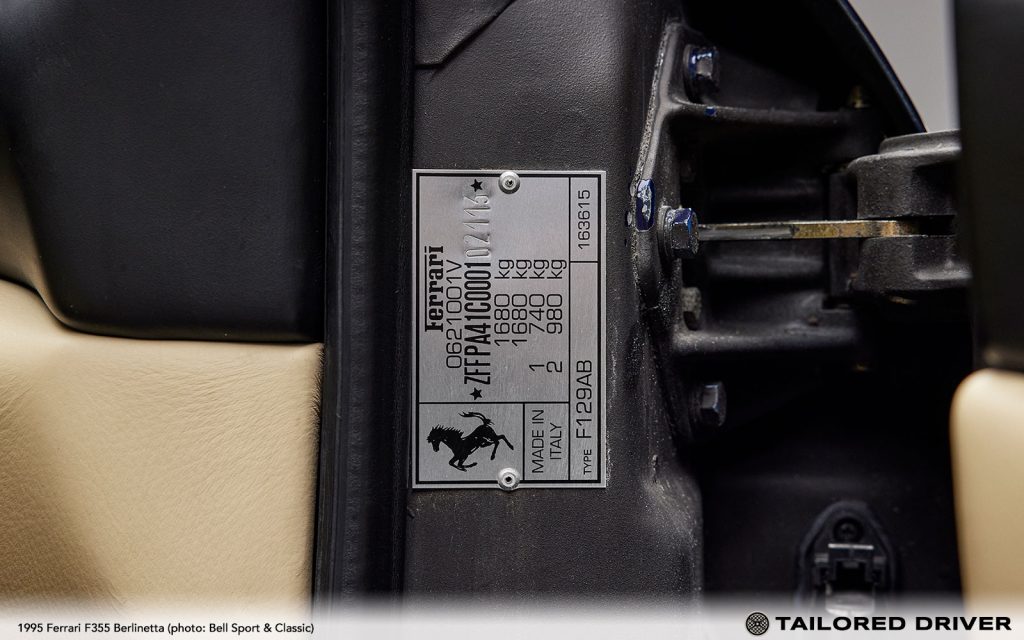
    At the F355’s heart as with all Ferraris, is the engine, a flat plane crank V8 masterpiece. An engineering tour de force which, at the time of the car’s debut, delivered the highest specific output of any road car (107bhp per litre) – eclipsing even the mighty BMW V12 of the McLaren F1. With titanium con-rods, and five valves per cylinder, hugely innovative technology inspired by Ferrari’s Formula One programme, the F129B engine produced 375bhp at a heady 8250rpm – all from just 3.5 litres of displacement. So proud was Ferrari of this F1-inspired engine that the F355 Berlinetta’s model name unusually comes from a combination displacement and the number of valves per cylinder – ‘3.5 5’.

    With the ability to surge to 62mph in a mere 4.7 seconds and reach a top speed of 184mph, the performance of the F355 was in a different league to not just that of the 312bhp 348 that preceded it, but also contemporary rivals such as the Honda NSX, Lotus Esprit and Porsche 911 993.

    The chassis of the Ferrari F355 was equally important to the car’s phenomenal performance, offering nimble mid-engined handling. Double wishbone suspension, electronically adjustable, two-stage dampers and hydraulic power steering lent a dash of modern sophistication to the classic Italian supercar recipe. Compared to its predecessor it was faster, safer, more comfortable, and genuinely a car that could be used daily, whether charging up the Col de Turini or commuting into the city.

    The F355 was, as Autocar concluded in its 1994 road test, “a landmark car”, while Jeremy Clarkson hailed the 355 as “The greatest car in the world, ever”. It’s a car that only looks more significant as the years go by.

    Kearns adds: “The F355 Berlinetta’s game changing technical innovations, higher production volumes and overall bandwidth paved the way for successive Ferrari models to be truly great cars. One could argue that it’s the most significant car in Ferrari’s history. With almost 30 years to reflect on the car’s impact, the 355 is ready to assume genuine classic status as it reaches this landmark anniversary.”

    The ex-Chris Rea F355
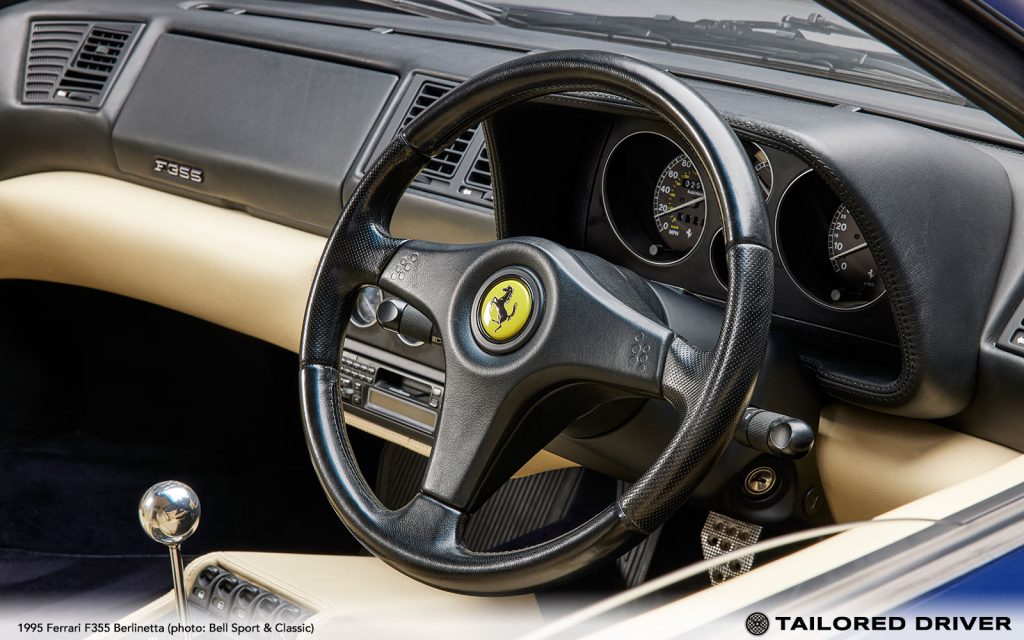
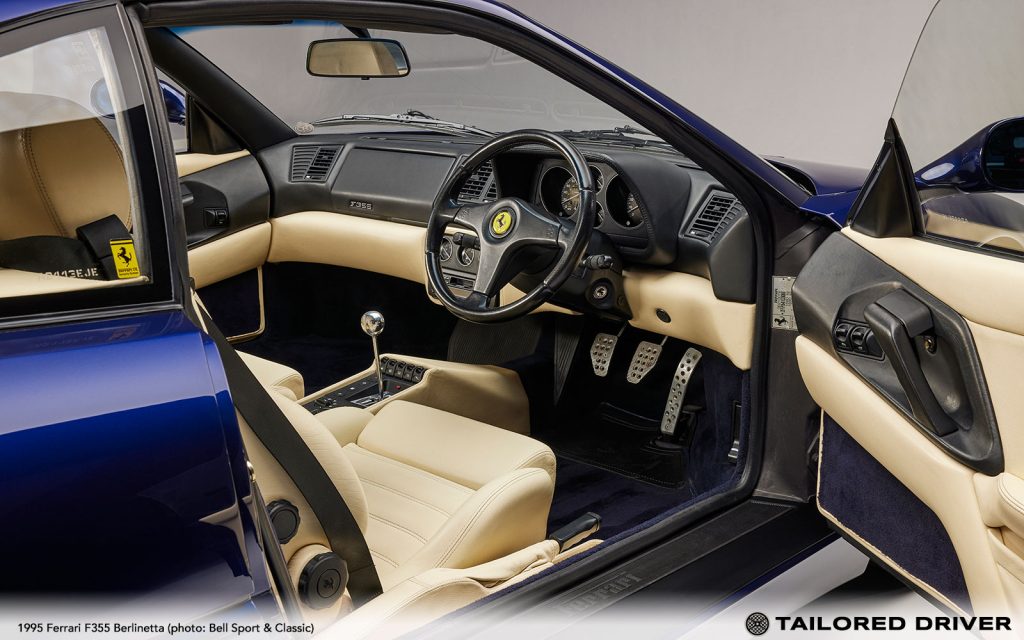
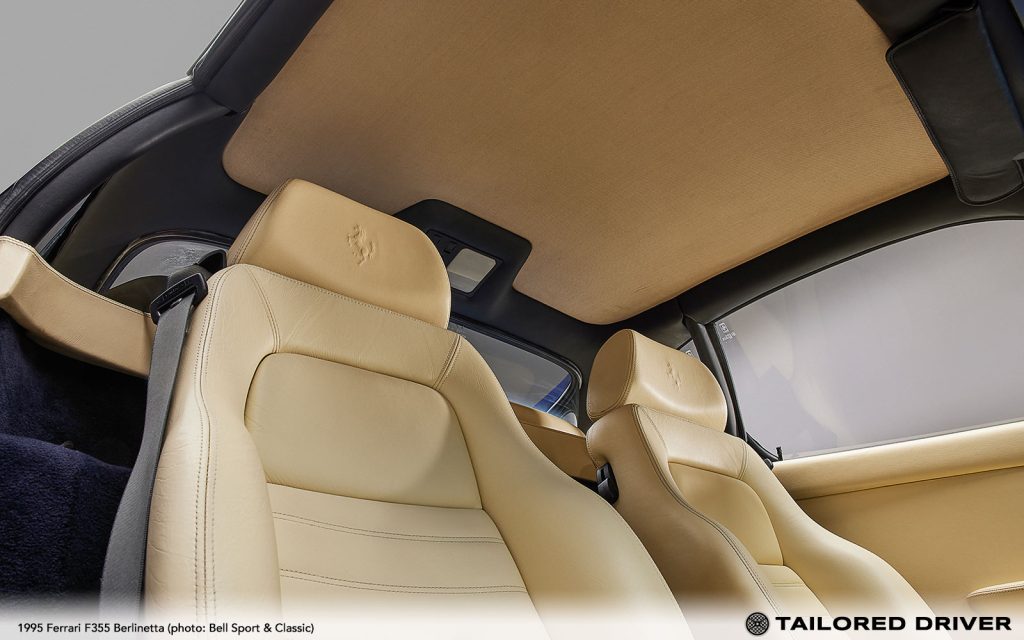
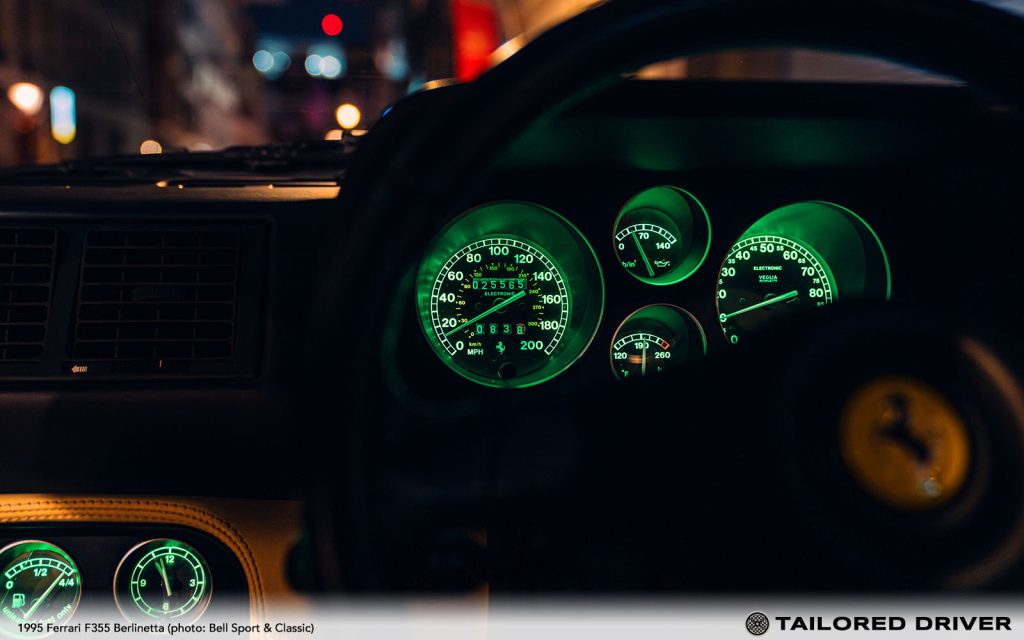
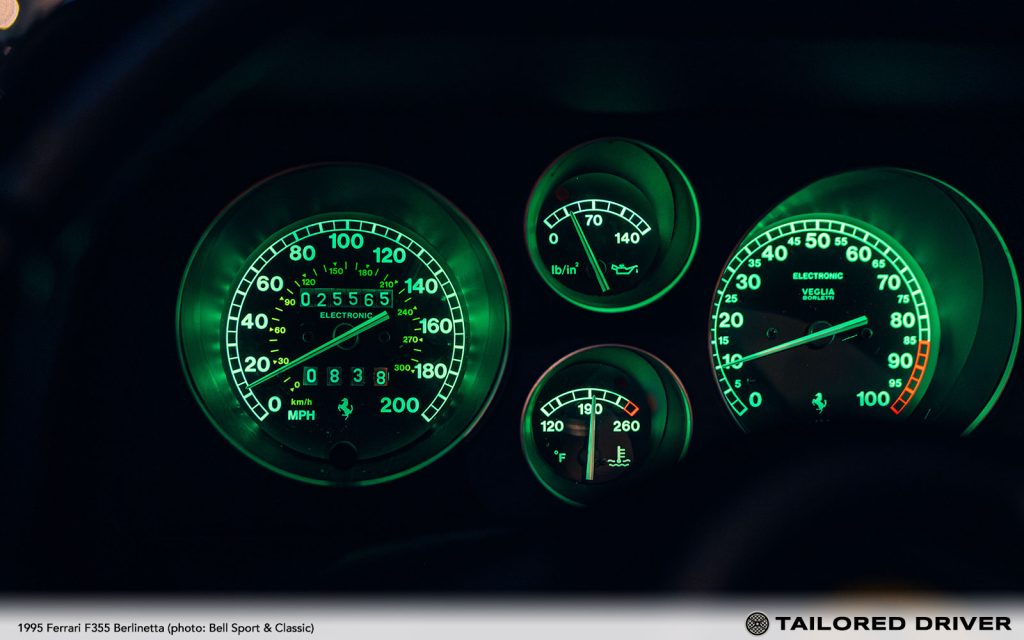
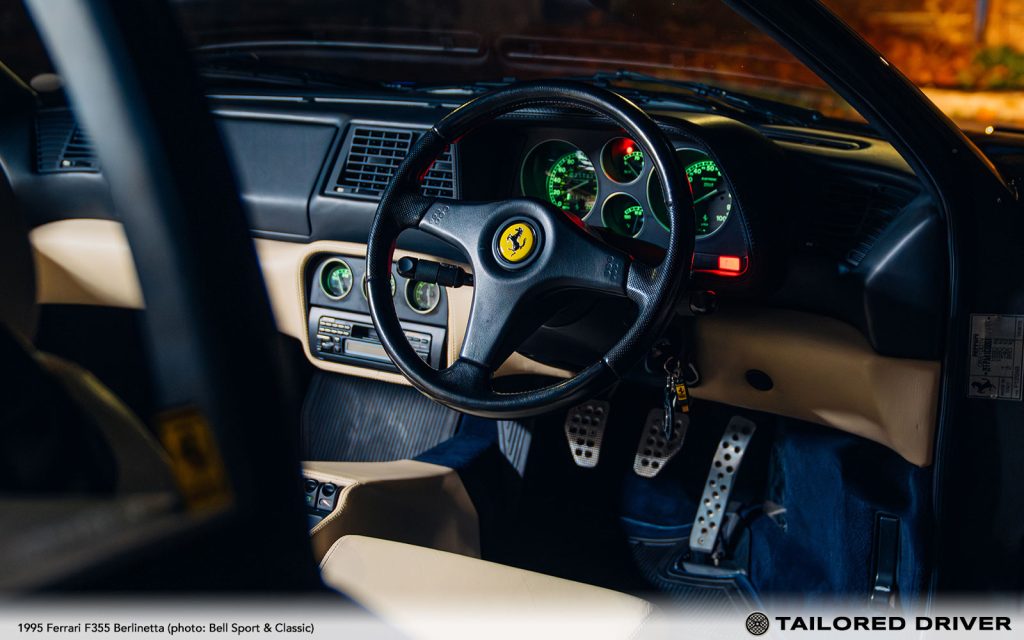
    This original, right-hand drive UK car offered by Bell Sport & Classic was ordered new by musician Chris Rea, a well-known and highly regarded Ferrari enthusiast, via Maranello Sales. An early 1995 example, it features the desirable Bosh ‘2.7 Motronic’ ECU system, which improved throttle response and was also rumoured to offer more power – as much as 30bhp, according to some experts. As a sought-after non-airbag car, this example also sports the more driver-focussed Momo steering wheel, lending the cabin a clean and timeless look.

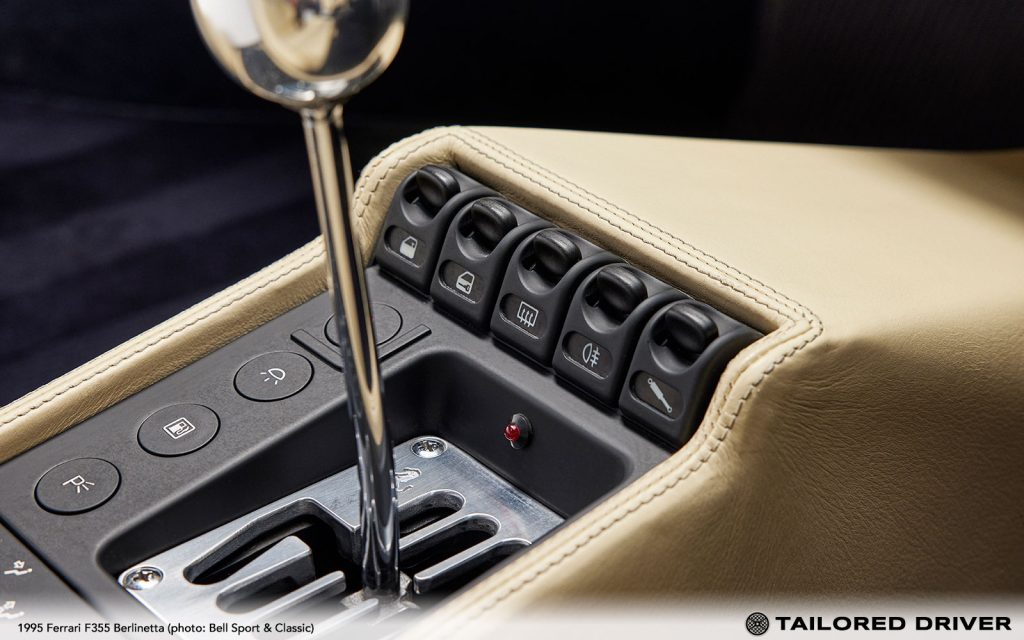
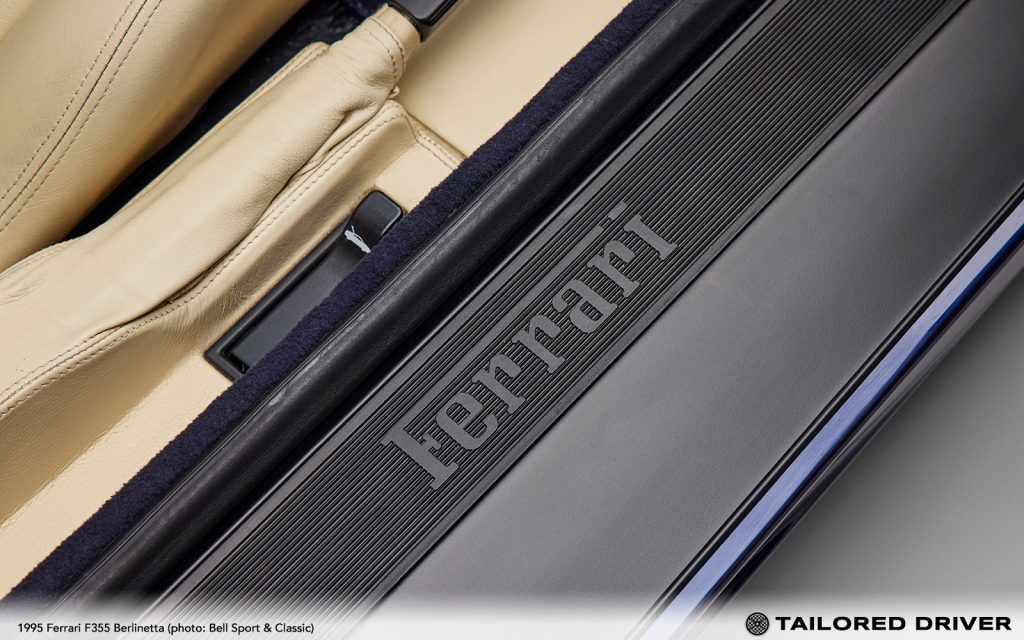
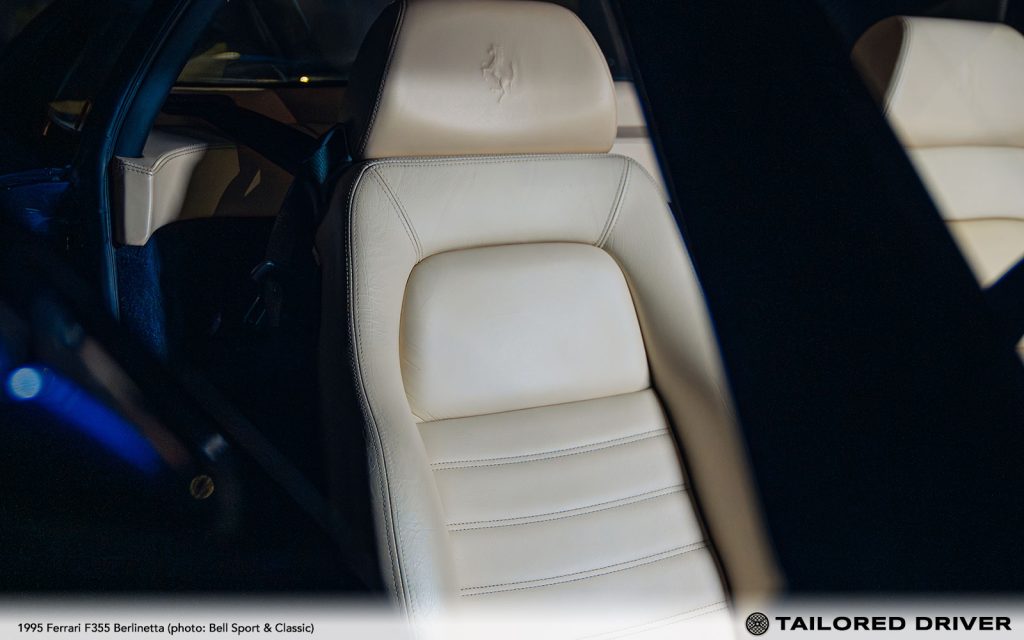
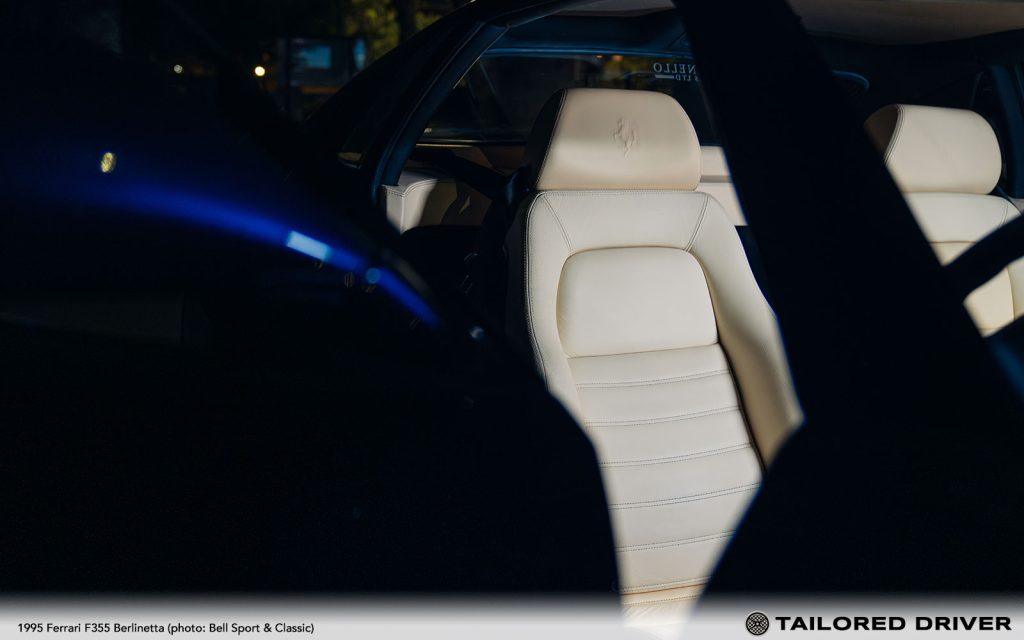
    Specified in the rare colour of Blu Scuro Micalizzato over Crema hide with Blu carpets, the car covered just 25,500 miles before being the subject of a comprehensive refresh by Bell’s team of sector-leading experts, at its state-of-the-art Hertfordshire facility. Bell Sport & Classic is renowned worldwide for its peerless restoration and refurbishment expertise, with a technical team of Ferrari trained experts, who worked on F355s in period. In recent years, the company has garnered international acclaim for numerous Ferrari projects including the sensational remastering of a 330 LMB, an extraordinary nut-and-bolt restoration of both an ultra-rare, L-Series 246 Dino GT and a Concours winning Ferrari 330 GTC.

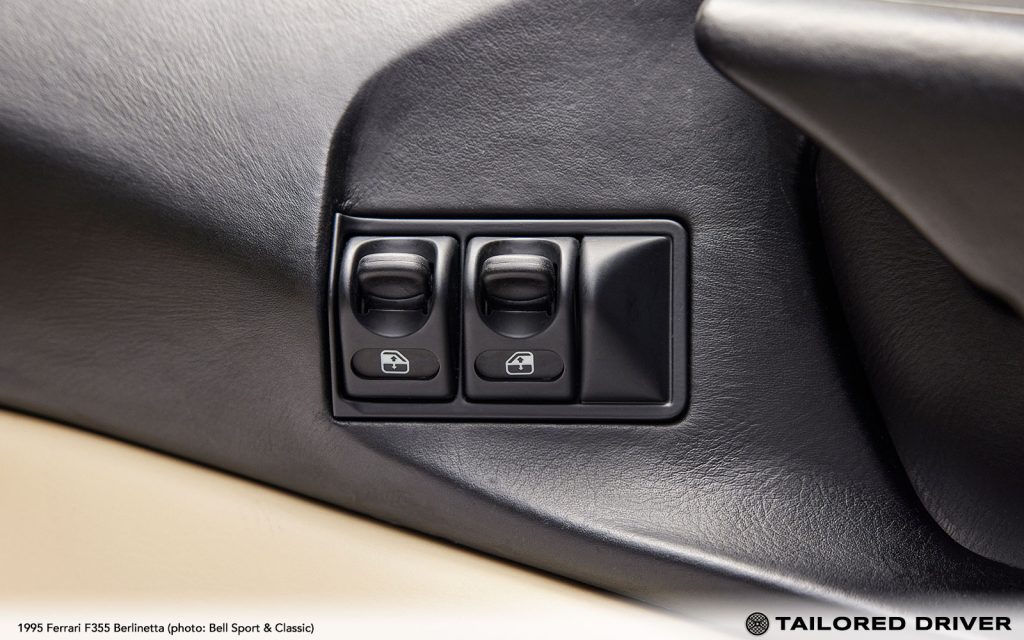
    As with all cars the company offers for sale, Bell Sport & Classic’s technicians have gone through this F355 from top to bottom. Their approach ensures that the car is in exceptional mechanical condition. The same care has been lavished on the F355 cosmetically, both inside and out, with paintwork brought up to the very highest standards in its original Ferrari factory colour, reconolisation of the beautiful cream leather interior, and the crucial refresh of all switchgear, so often the Achilles’ heel of cars from this era.

    Kearns concludes: “At Bell Sport and Classic we’re accustomed to handling and restoring the very finest Ferraris, from the ‘60s classics right up to the contemporary hypercars. This F355 ranks among the best we’ve encountered. The team has, as ever, put everything into the painstaking recommissioning process, and the results speak for themselves. This F355 is the perfect example of a truly great Ferrari, one that can hold its own in the world’s most exclusive collections. Now presenting in perfect condition, this unmodified example of an iconic model, in the ultimate specification with a compelling backstory, is ready to be enjoyed by its new owner.”

    About Bell Sport & Classic
    Bell Sport & Classic is a team of experts who have come together to provide customers unrivalled expertise across the sales, service and restoration of the world’s most revered classic and modern classic cars, specialising primarily in notable Ferraris.

    Authenticity, originality, and quality are the bedrocks of the business; Bell Sport & Classic prides itself on sourcing the ultimate in collector cars and bringing new standards to classic car restorations. Bell Sport & Classic stands apart in the classic car world as an innovator and leader in customer service.

  • Bell & Sport Classic Reveals 3-Year Restoration of Concours-Wining Ferrari 330 GTC

    Bell & Sport Classic Reveals 3-Year Restoration of Concours-Wining Ferrari 330 GTC

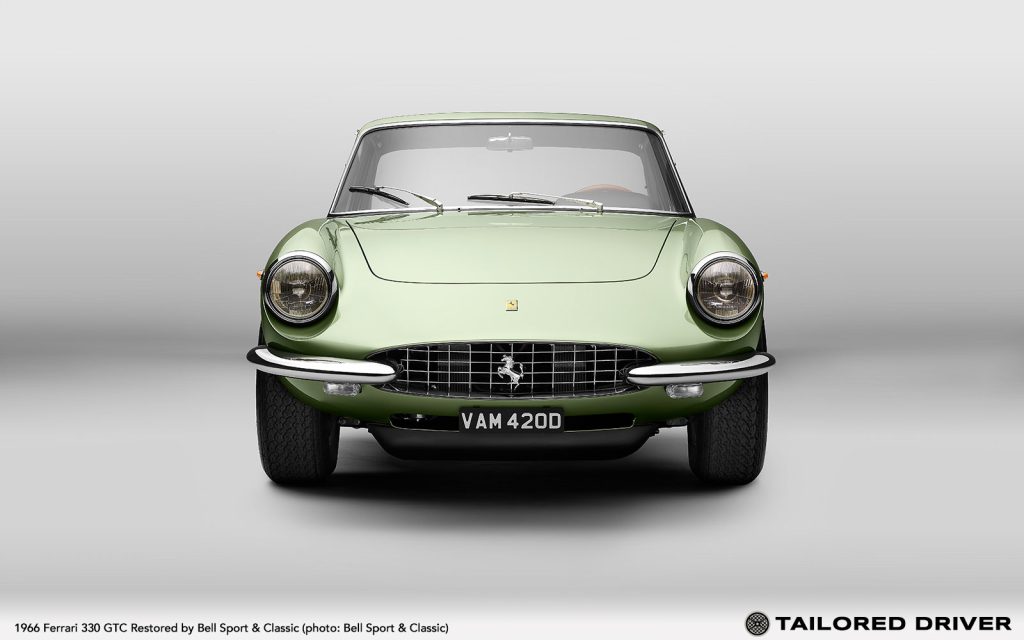
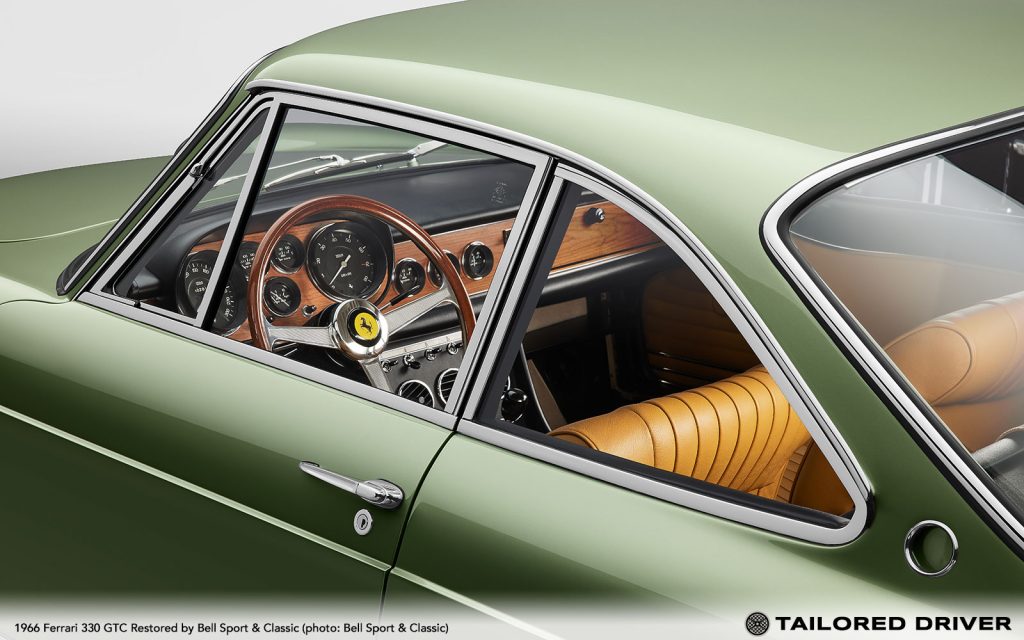
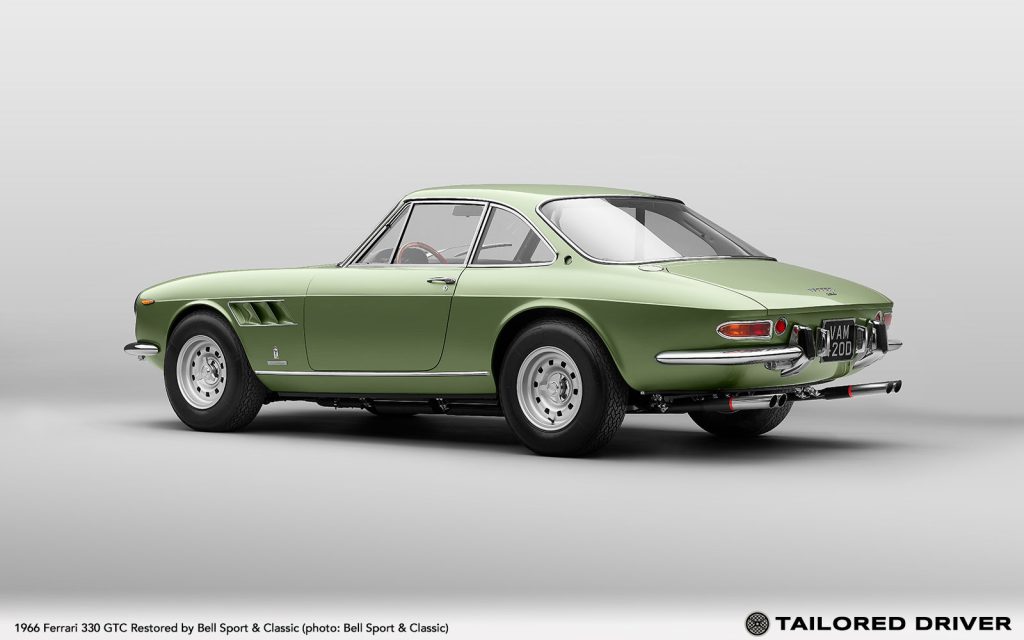
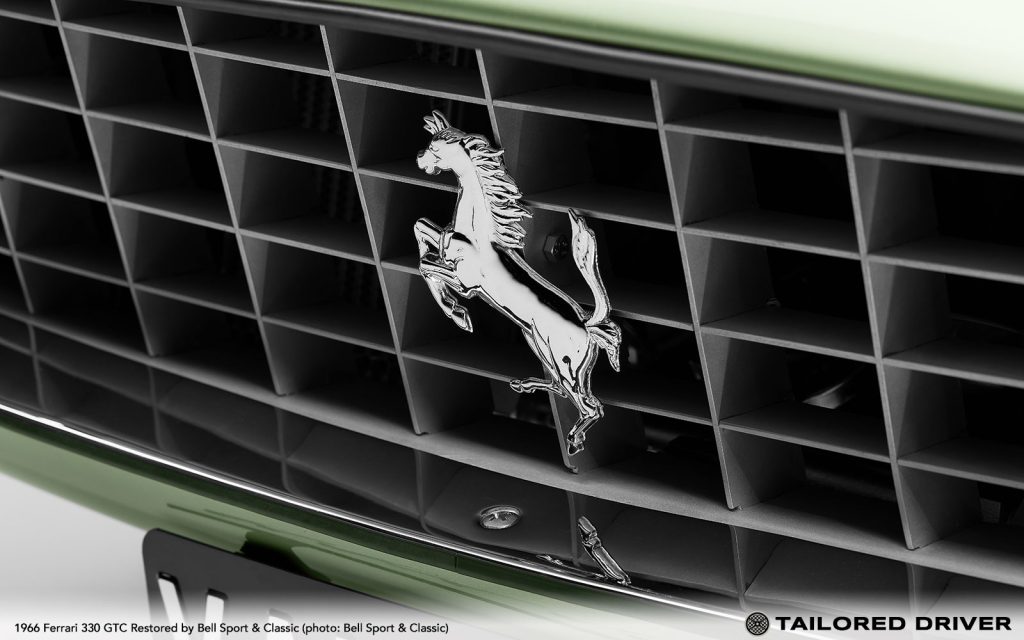
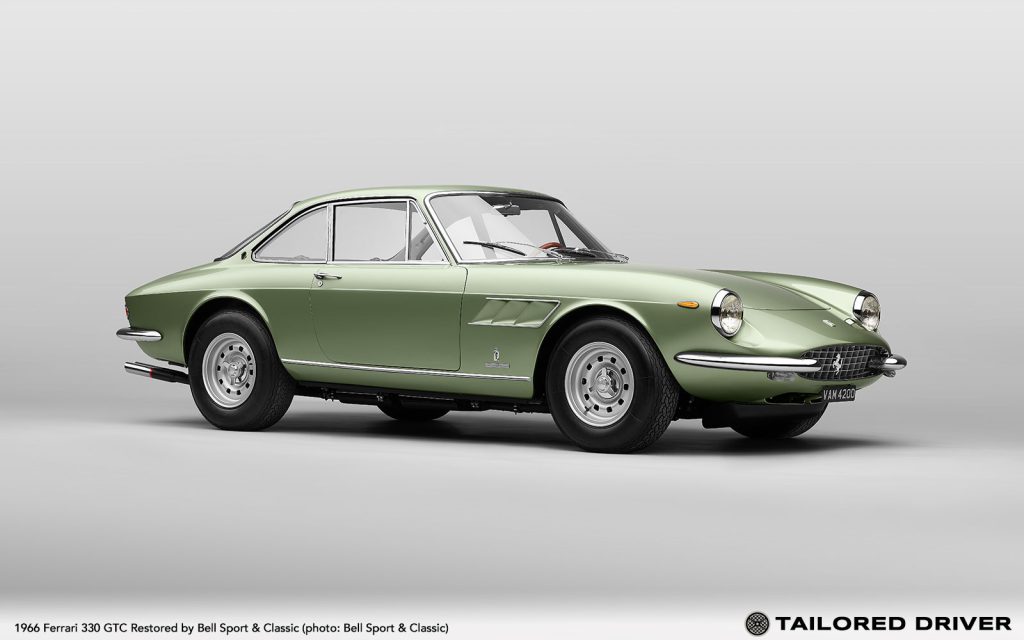
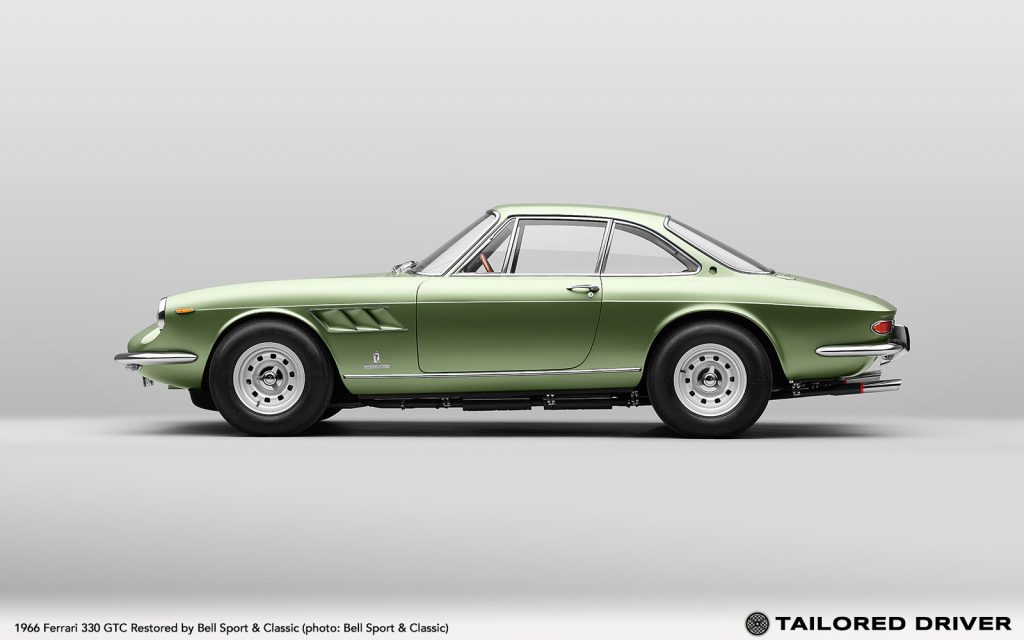
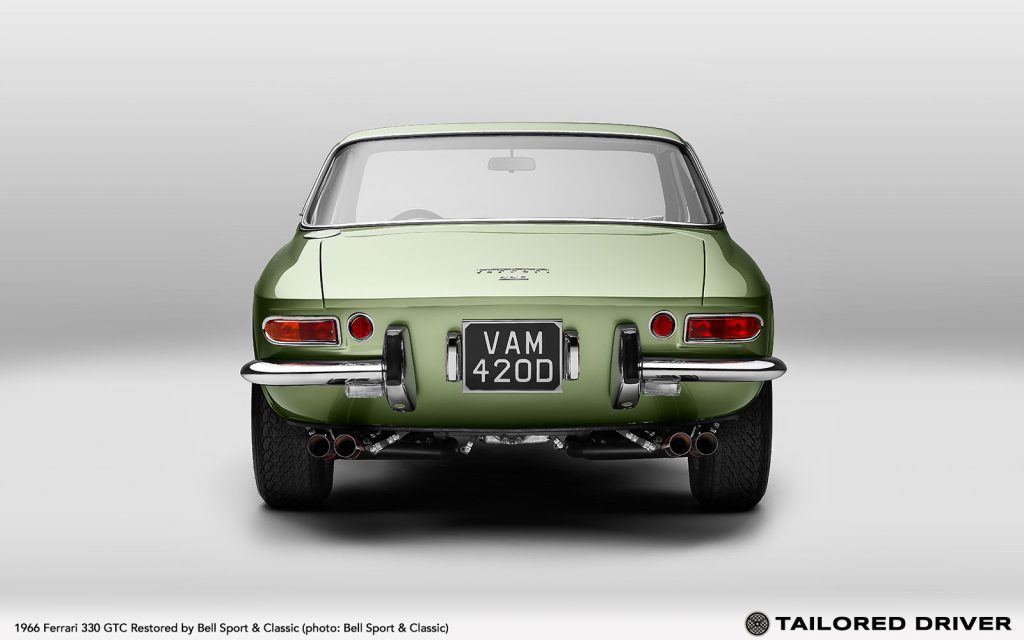
    • 1966 Ferrari 330 GTC restored by world-leading specialist Bell Sport & Classic
    • Concours-winning perfection further embodies the game-changing standards Bell Sport & Classic applies to every restoration
    • Beyond obsessive approach results in arguably the best 330 GTC on the planet and further underlines Bell Sport & Classic’s position on the global stage

    [source: Bell & Sport Classic]

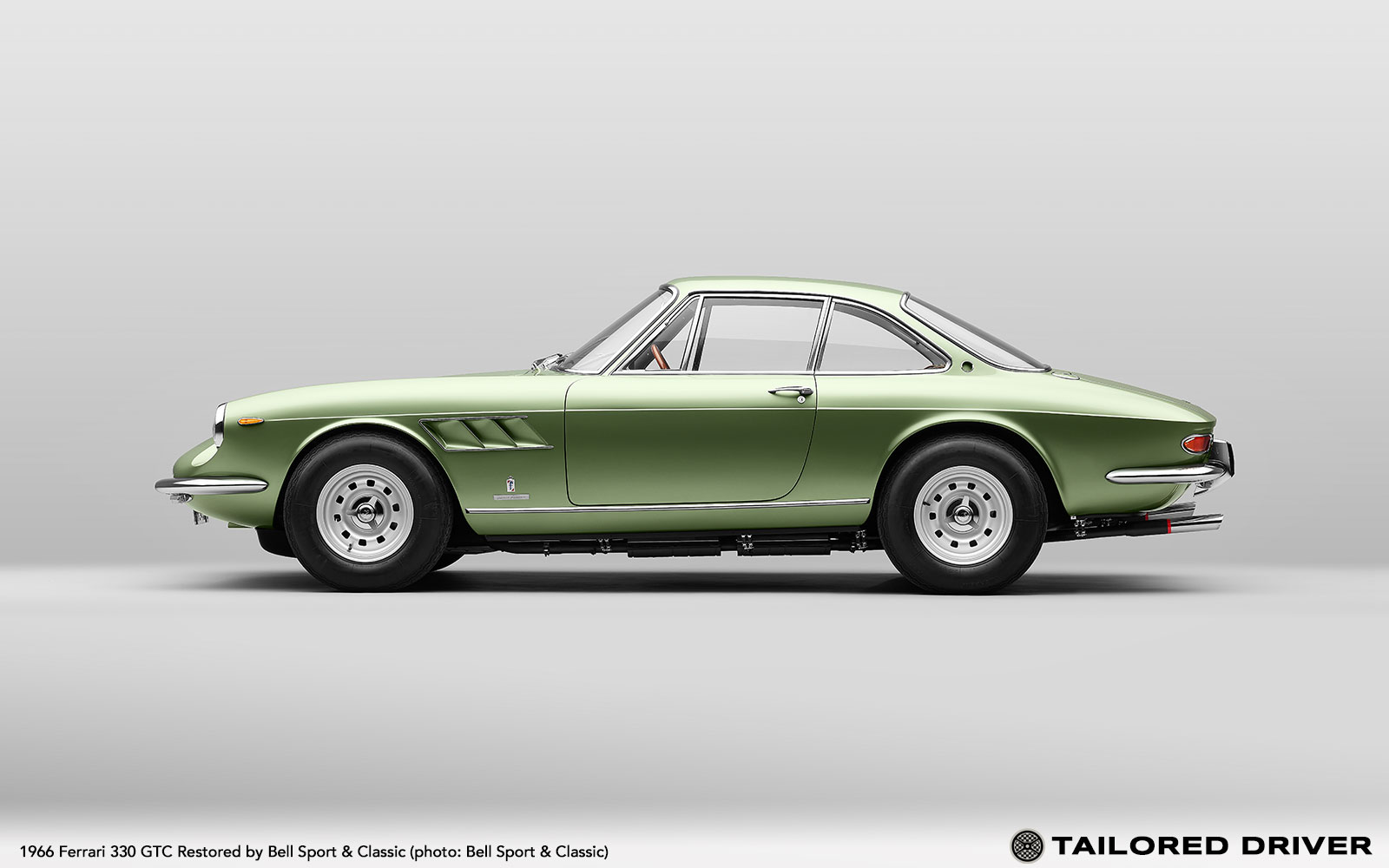
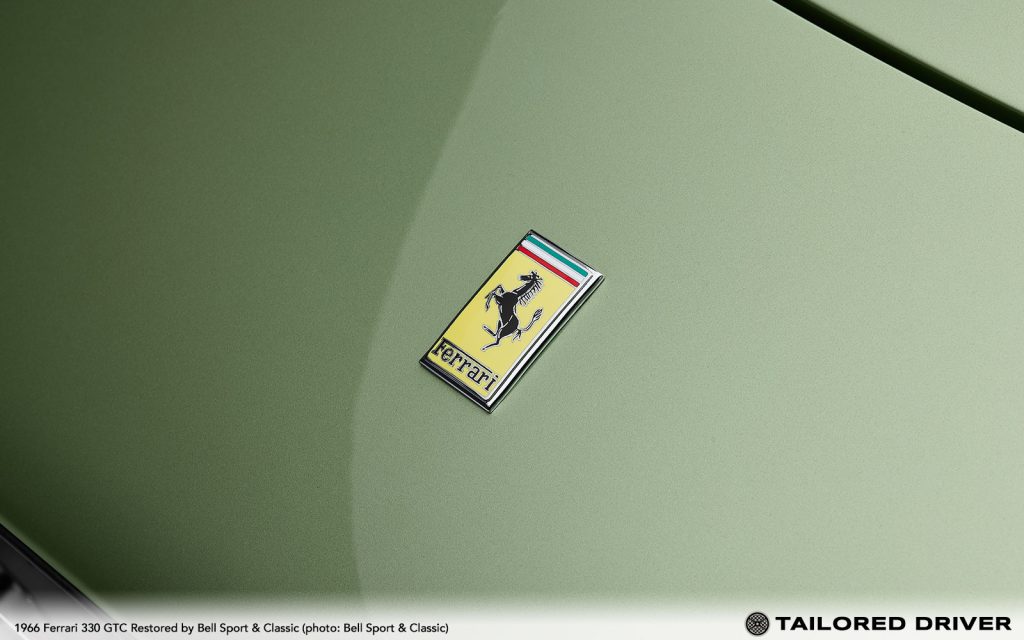
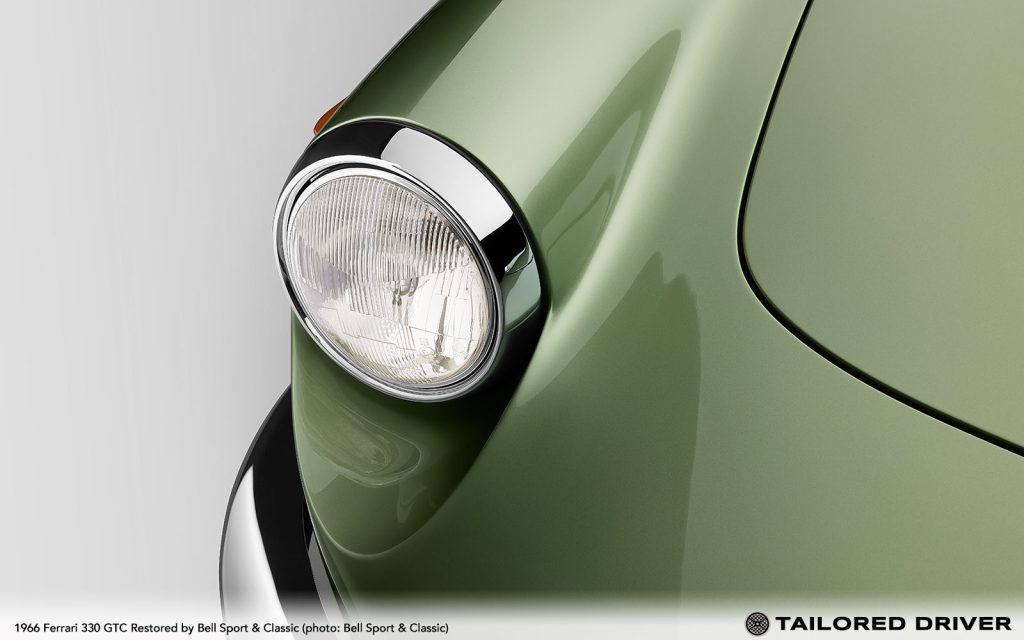
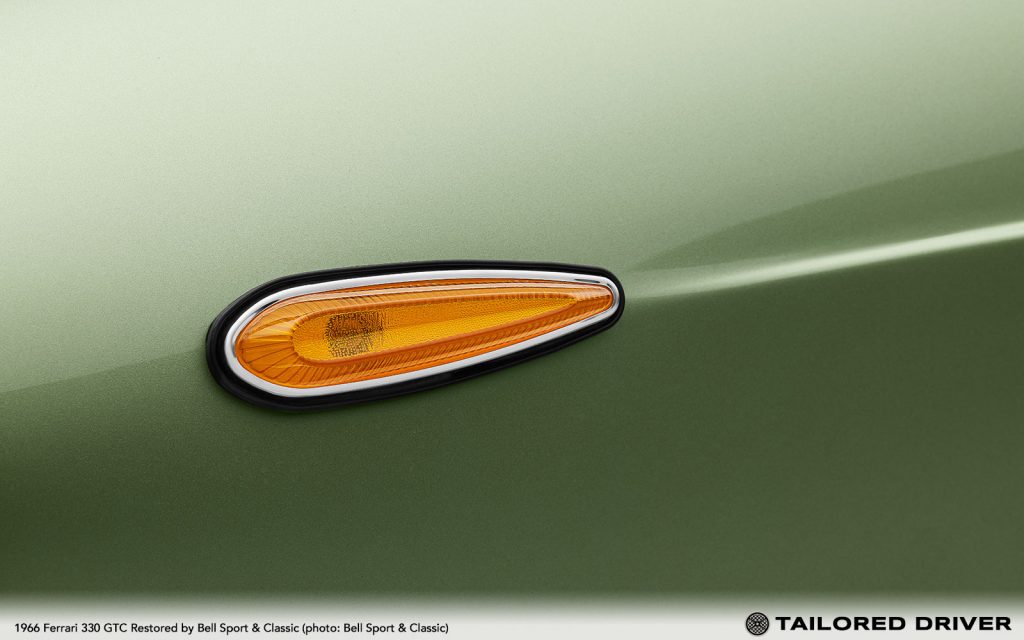
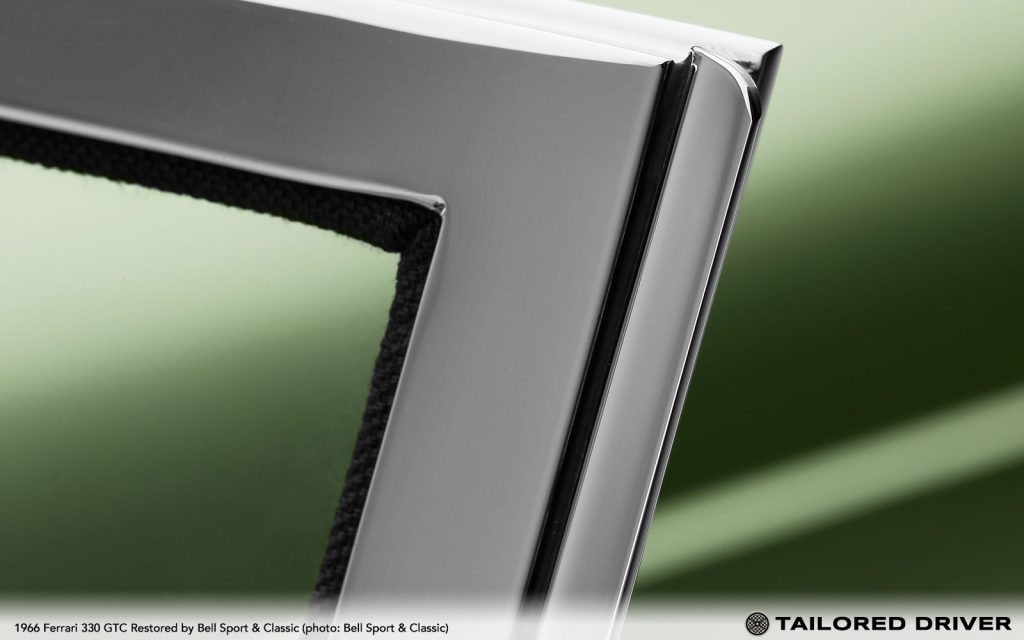
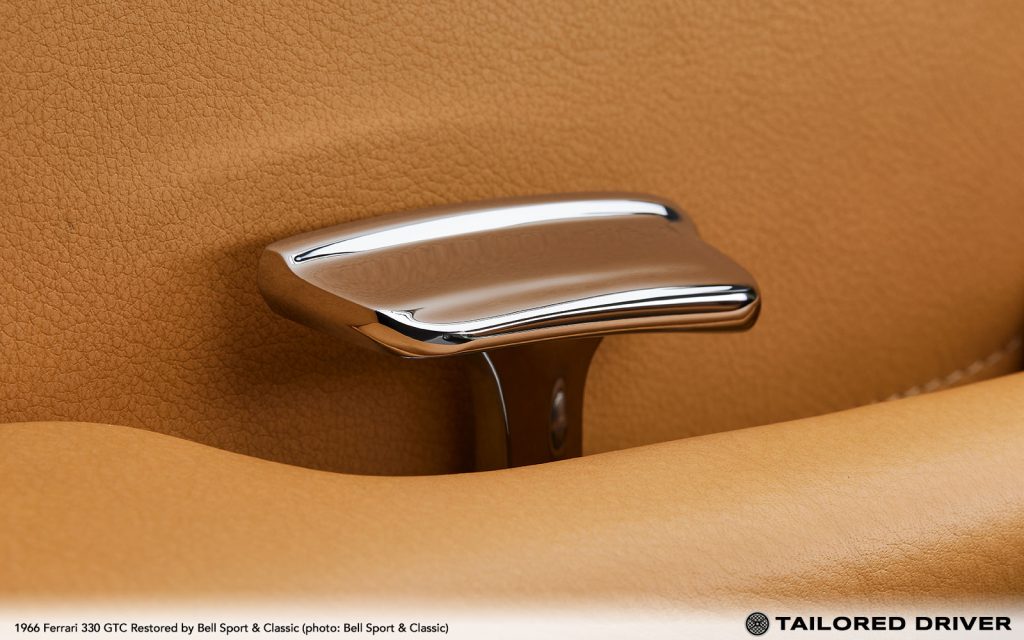
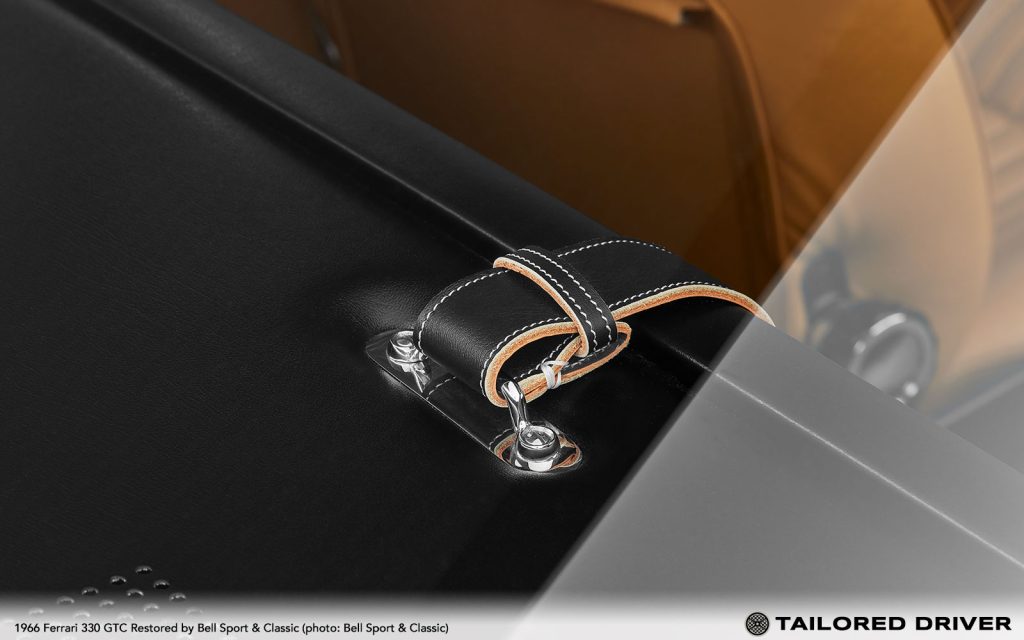
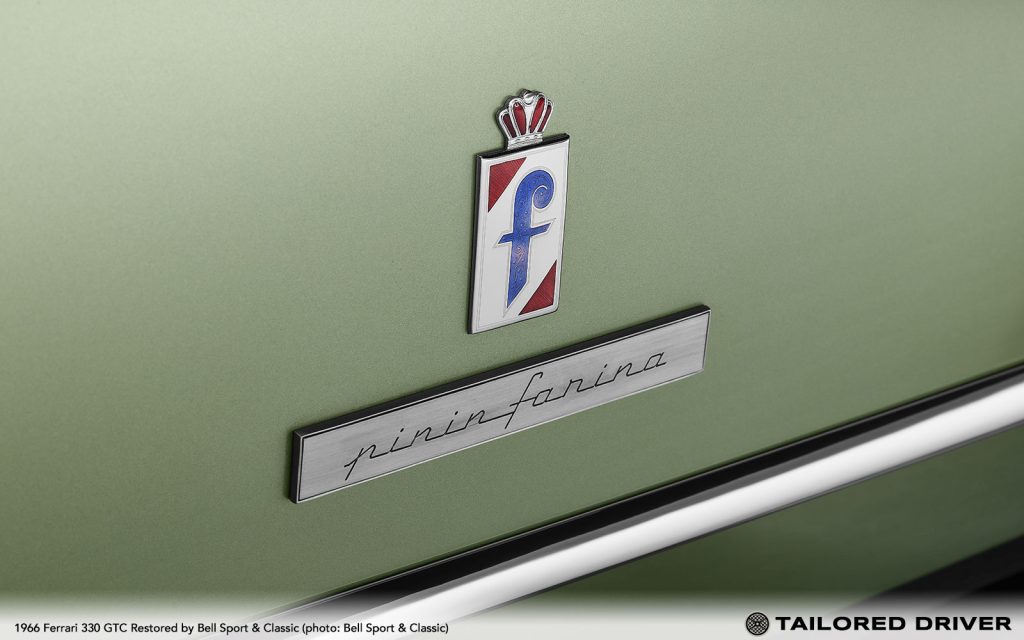
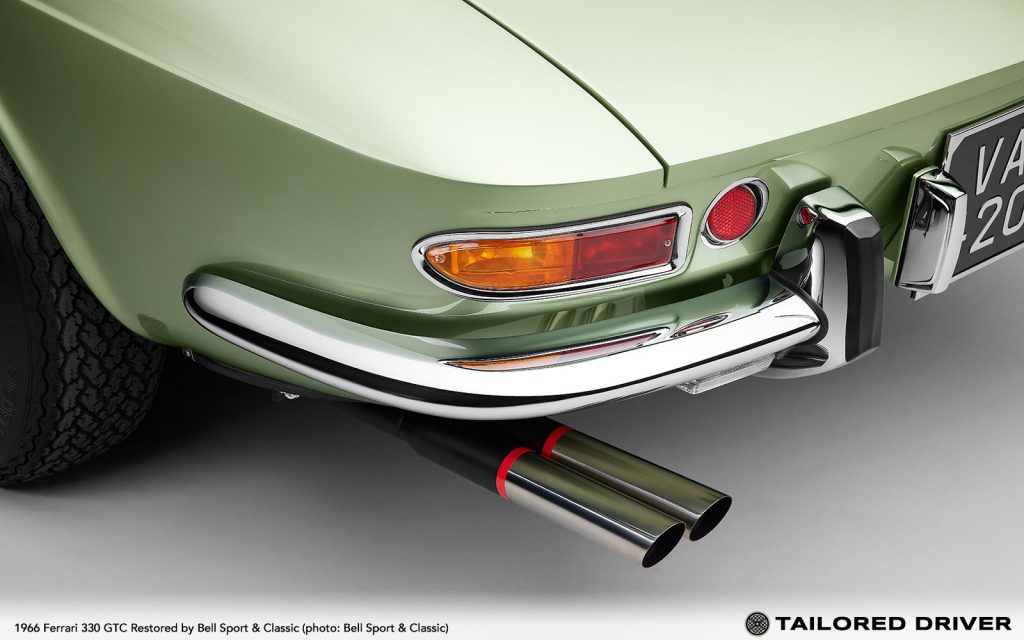
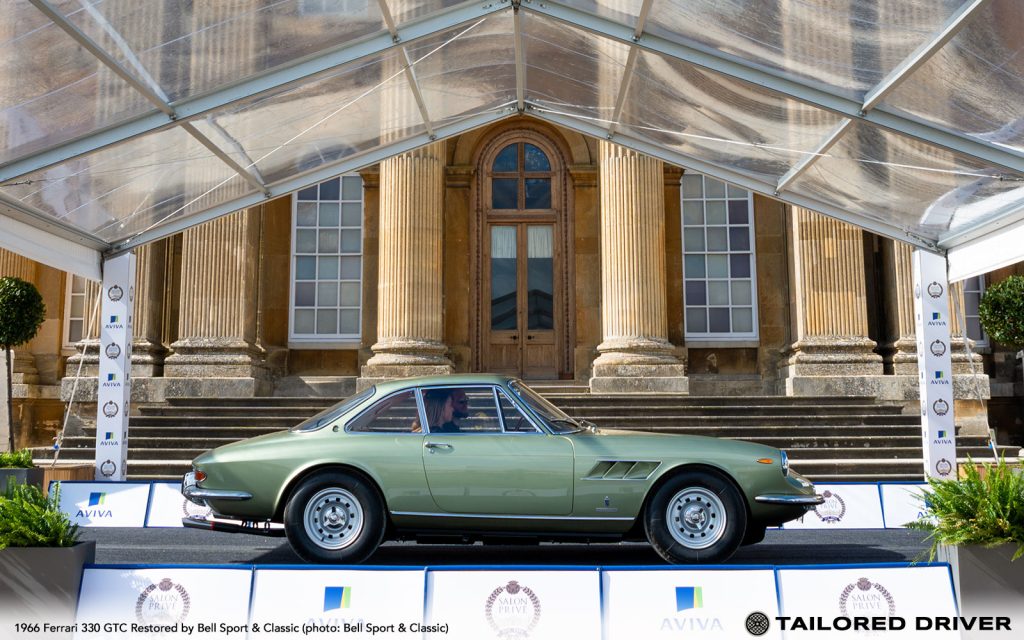
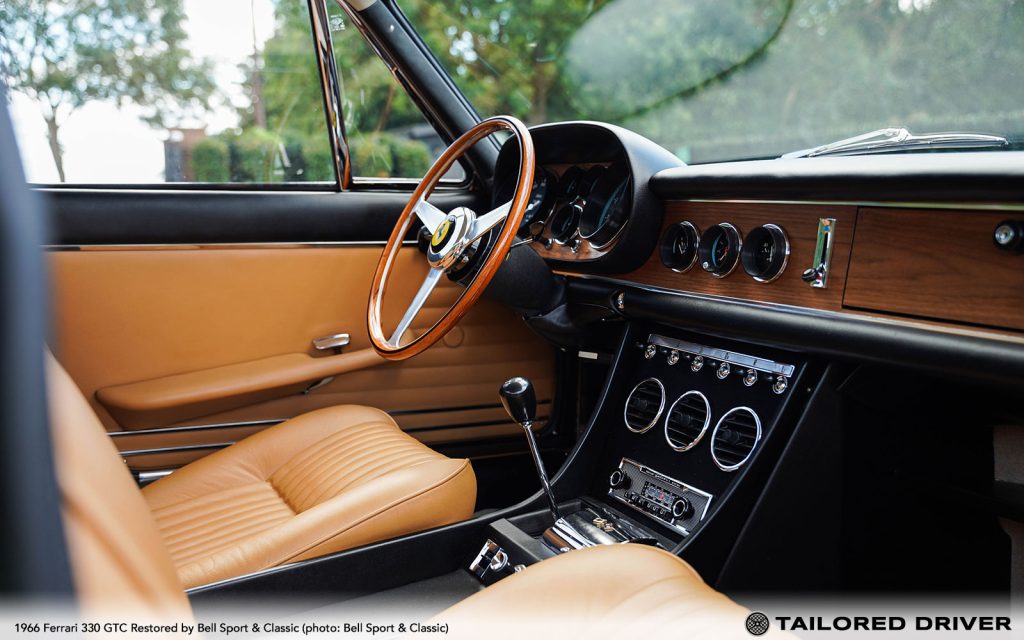
    Markyate, Hertfordshire, UK – Leading Ferrari specialist Bell Sport & Classic is proud to reveal full details of the benchmark-setting restoration of a 1966 Ferrari 330 GTC, which secured a convincing victory at the 2022 Salon Privé Concours d’Elégance in September against world-class opposition.

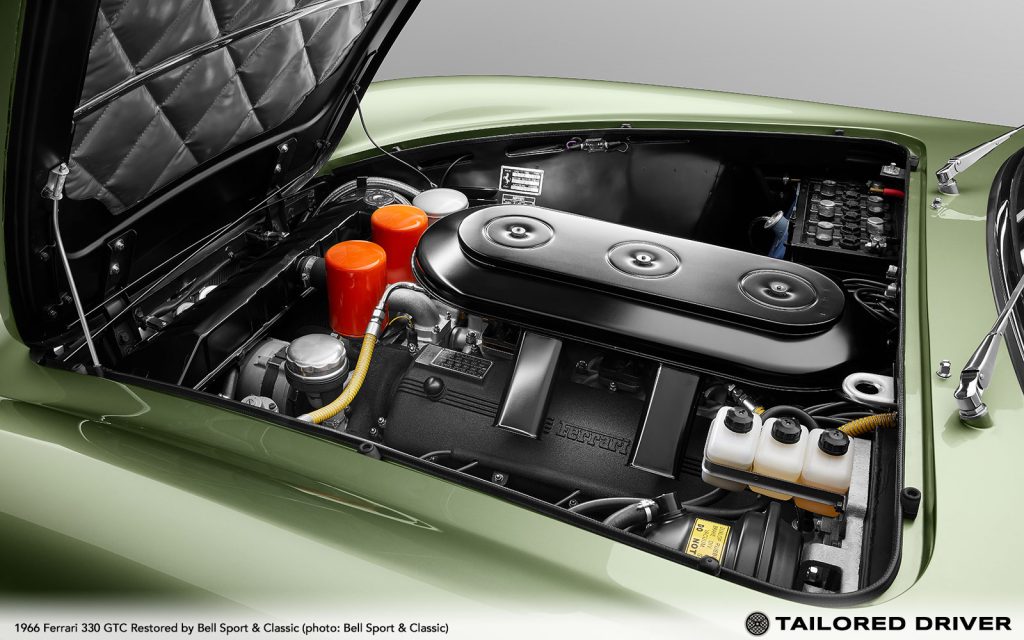
    The concours award and the car’s Ferrari Classiche Certificate stand testament to the intensive three-year-long restoration and rebuild at Bell Sport & Classic’s Hertfordshire headquarters. Led by the company’s expert team, who together have many decades of experience in Ferrari restoration, every component on the 330 GTC has either been restored, overhauled or reverse engineered, with the very latest restoration and engineering techniques employed.

    Like all Bell Sport & Classic’s restorations, a beyond obsessive approach was applied through an unmatched blend of experience and expertise, creating a car that is in every facet better than when it left the factory – and what is quite probably the finest Ferrari 330 GTC in existence. 

    The gentleman’s Ferrari 
    “Unveiled at the 1966 Geneva Motor Show the 330 GTC took its chassis from the 275 GTB Berlinetta and its 300hp four-litre V12 engine from the 330 2+2 Coupé. Cloaked in an achingly elegant Pininfarina body, it made an immediate impact and was very much a car for the more discerning driver. It’s the kind of Ferrari that you could imagine Enzo using as a daily driver,” explains Tim Kearns, Bell Sport & Classic’s Managing Director.

    “Maranello built 600 examples between 1966 and late 1968 and this example was built during the initial year of production,” adds Bell Sport & Classic’s Head of Acquisition & Sales, Peter Smith. “It first came to us six years ago having clearly had a good amount of use, the car initially sold into Switzerland had spent time in the US and was eventually found in Venezuela. Although the engine wasn’t running and it had been repainted blue, literally every nut and bolt was original, so it was a good example to start with – but we knew we could make it as close to perfect as possible.” 

    Two weeks were spent methodically removing all the Ferrari’s interior components before the restoration team, led by Elliot East, turned to the exterior trim and began carefully stripping parts, including the brightwork, bumpers, headlights, and glass. Only after that stage was completed was attention turned to the drivetrain and suspension components.

    Restored to factory-fresh specification 
    Bell Sport & Classic’s exacting approach means that the same effort is lavished on every element of the car – whether visible or not. The 330’s heavily kerbed and severely corroded original 14-inch cast magnesium wheels were restored and elevated to gleaming concours-winning condition; this same approach is applied throughout the car – even to components that will remain hidden from view, deep in the fabric of the machine.

    As Matt Wilton, who oversaw the project and has a lifetime of experience at the highest level of Classic Ferrari Restoration, explains: “Several of the imperfections were relatively minor, and would most likely never be seen by a customer, but for a Bell Sport & Classic restoration, everything matters. Yes, it’s highly time-consuming, but it gives our customers complete confidence that a car they receive from us is perfect in every detail.”

    A month was dedicated to stripping the suspension down, and the components sandblasted, before undergoing repainting and replating as required. The original shock absorbers, suspension arms and springs were all refurbished and retained.

    “The steering arm and every little bracket that had been nickel-plated originally, were replated,” continues Matt Wilton. “Other components, such as the anti-roll bar drop link, were restored to their original satin nickel finish. Absolutely everything on this car is in the same condition, or better, as the day it left the factory.”

    Walnut shells for that delicate touch 
    The process that would eventually ensure an exquisite exterior finish utterly devoid of even the slightest blemish began more than two years before painting was scheduled, and involved blasting the car’s body, not by sand, but by crushed walnut shells.

    “One of the disadvantages of using sandblasting on the delicate areas of the larger panels is that it can put heat into the steel and cause it to distort. However, that doesn’t happen with walnut-blasting,” continues Elliot East. “It’s a technique that’s always best for the potentially more fragile areas.”

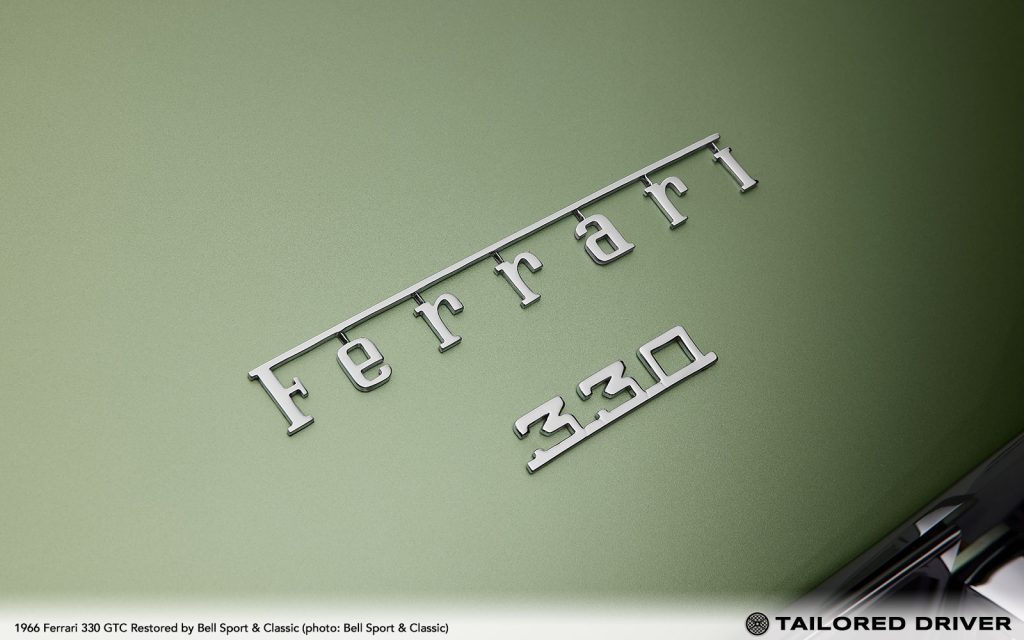
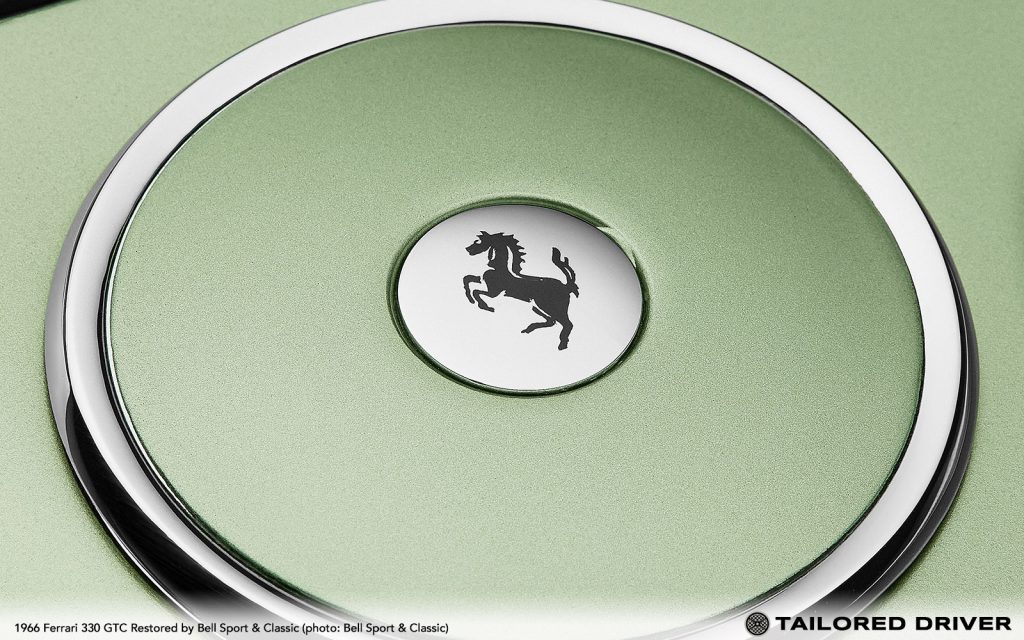
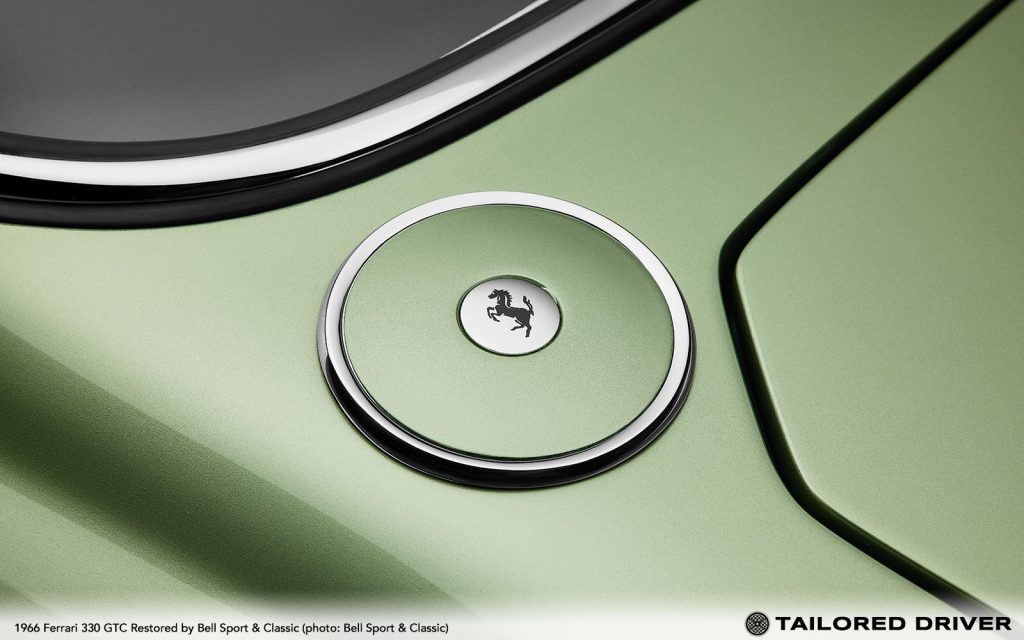
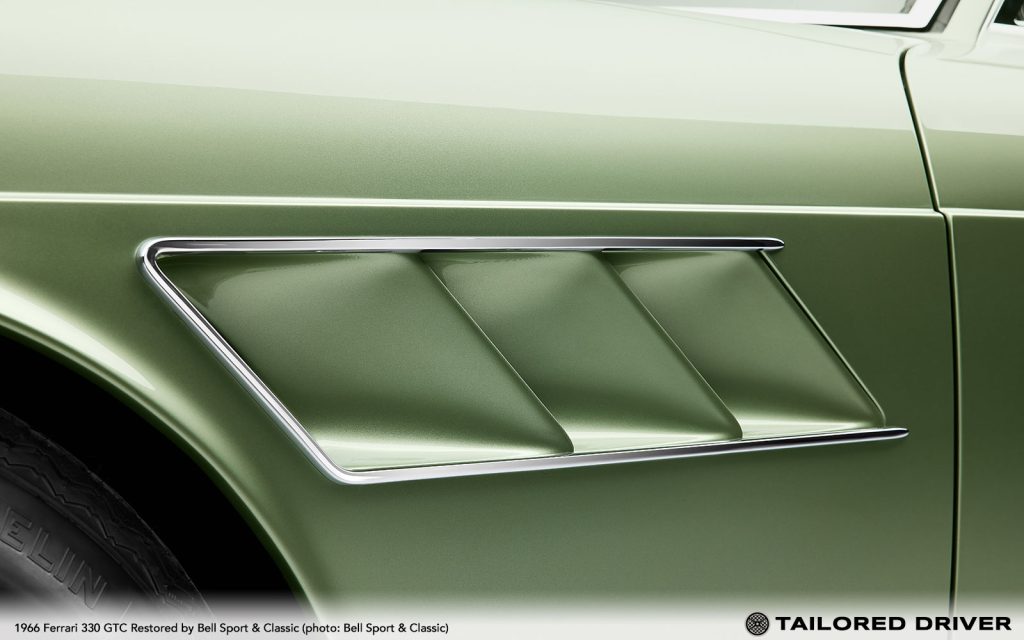
    When the car arrived at Bell Sport & Classic it was a pale blue and had clearly been painted several times over its life.  As part of the team’s restoration research process, the original factory build sheets were sourced confirmed that 330 GTC Chassis No. 9069 left Maranello a beautiful and unusual pale green.  Before the body was painted and the Ferrari returned to its stunning original light green metallic Verde Chiaro Metallizato, the team undertook a complete dry build. While this process of reassembling and then stripping back down again before painting takes time, it’s integral to every restoration project undertaken by Bell Sport & Classic.

    And again, despite the team’s accumulated decades of experience restoring historic Ferrari models, it ensures that nothing is taken for granted or left to chance. At this point, the bodywork is fully re-assembled, with components such as the glass, chrome wear, doors and all exterior fixtures fully incorporated. Every stage of the process is precisely measured, and triple checked. This painstaking attention to detail is critical to mitigating the effect of the additional thickness of the primer and paint.

    “If you have too much paint on the window frames, it could prevent the glass from fitting, or if there is too much in the guttering on the roof, it could prevent the door seal from fitting properly. We’re only talking points of a millimetre, but often that’s all it takes to make the difference,” explains Elliot East.

    No detail too small
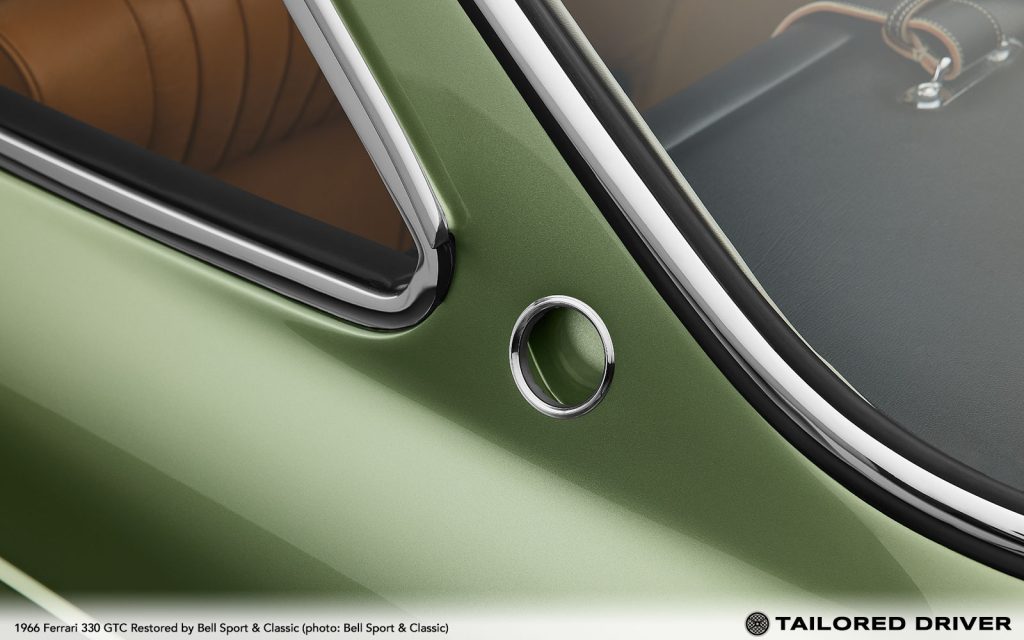
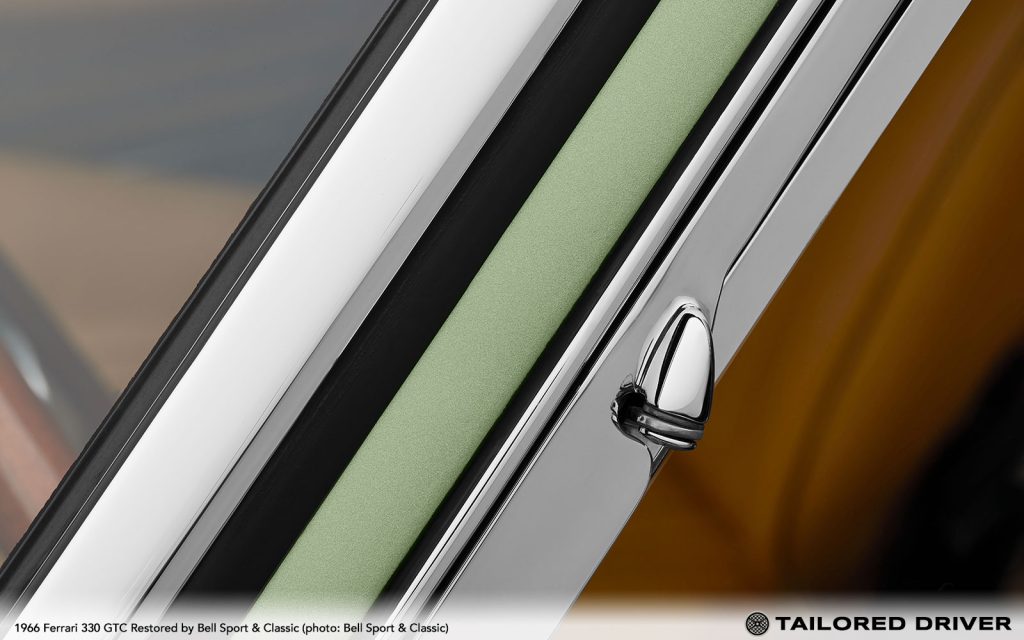
    As typified by the GTC’s chassis, Bell Sport and Classic poured as much time and effort into perfecting the paint finish on the details that can’t be seen. Even the quality of the paint finish inside the small circular demister vent in the C-pillar matches the outstanding finish of the paint on the body, a rare achievement on this model, a real ‘tell’ for those in the know.

    “As soon as we unveiled the car at Salon Privé, that was one of the areas that the judges and aficionados who really know this model went to straight away,” smiles Matt Wilton.

    “And it was the same with the satin black paint inside the wheel arches and engine bay. It took three attempts before we were certain we got exactly the correct and original degree of shine and tonality.”

    Even after the concours judges had peered into the C-pillar air vents, crawled underneath, and lifted the boot carpet, Bell Sport & Classic’s impeccable craftsmanship still stood up to the strictest scrutiny.

    Again, the pursuit of perfection continued to areas that aren’t even visible. “Despite having been painted black at some stage – as most have been – when the car was new, its twin fibreglass-coated fuel-tanks were painted a pale turquoise blue,” explains Elliot East. “It’s not an easy colour to match, and some might argue that it’s not that important as the carpet hides the tanks. But it’s important to us. And that’s why the fuel tanks are once again finished in period-perfect turquoise after we found and original area of paint inside one of the necks and colour matched it.”

    V12 beating heart
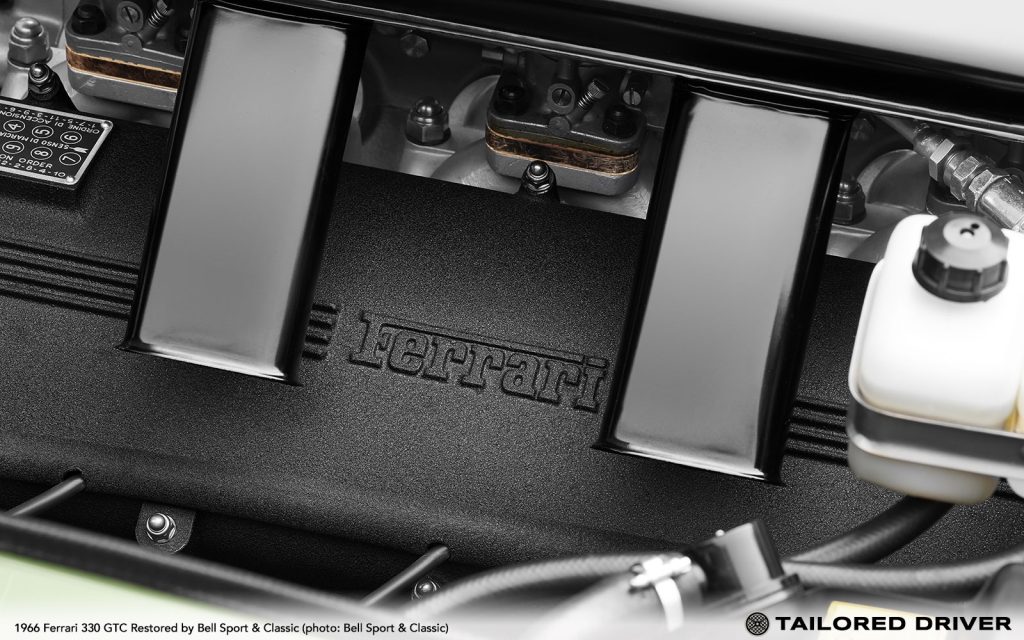
    Each phase of the strip-down, refurbishment, reassembly, and testing, of the 330 GTC’s Colombo V12 engine was completed at Bell Sport & Classic’s in-house engine workshop, under the lead of Attilio Romano, a former member of the Ferrari factory technical team in Maranello, who ran H.R. Owen’s Ferrari technical department for 22 years.

    It’s an obsessive approach, but it ensures perfection, with every single component, down to the smallest stud, stripped, vapour-blasted, refurbished and replated as required, regardless of time and expense. Once the V12 was reassembled, two days were spent on dyno-testing, assiduously checking for the most minor issues, such as potential minute oil leaks.

    Then, after the car was rebuilt and the engine placed back in situ, it was subjected to 500 miles of road testing. “We restore cars, not just to be sat on a concours lawn, but driven and enjoyed by their owners,” adds Peter Smith, himself an experienced racer and part of the project’s dynamic sign-off process. The fully rebuilt engine produces 300hp at 7000 rpm – precisely the same as in period.

    The gearbox was exposed to the same in-depth strip-down and rebuild process as the engine. And while every effort was made to maintain optimum originality, certain new parts were required to ensure a sublimely smooth driving experience. These included the selector forks, synchroniser hubs and synchroniser rings.

    In many ways, the four-pot calliper braking system proved the most challenging aspect of the drivetrain, as Elliot East explains. “We weren’t happy with the existing brake servo, which was challenging because finding an original replacement part in good condition was just about impossible.  But it’s like trying to ease off a seized nut – we never give up. And as we have contacts with parts suppliers and Ferrari enthusiasts all over the globe, we finally sourced an original.” 

    Creating a sublime interior
    Back in 1966, the 330 GTC left Maranello sporting a gorgeous black leather interior, but more than half a century of use had taken a very heavy toll upon it. Restoring the cabin of a historic Ferrari to its former glory represents a significant challenge that not many can truly perfect.

    Bell Sport & Classic entrusted the restoration of the car’s cabin to O’Rourke Coachtrimmers and Suppliers. Based in Rudgwick in West Sussex, the company has decades of experience in restoring Ferrari cabins to concours-winning, period-perfect condition. O’Rourke Coachtrimmers and Suppliers has built its world-leading reputation not just on the quality of its craftsmanship, but also by applying the same forensic approach and research-driven authenticity that Bell Sport & Classic exercises itself.

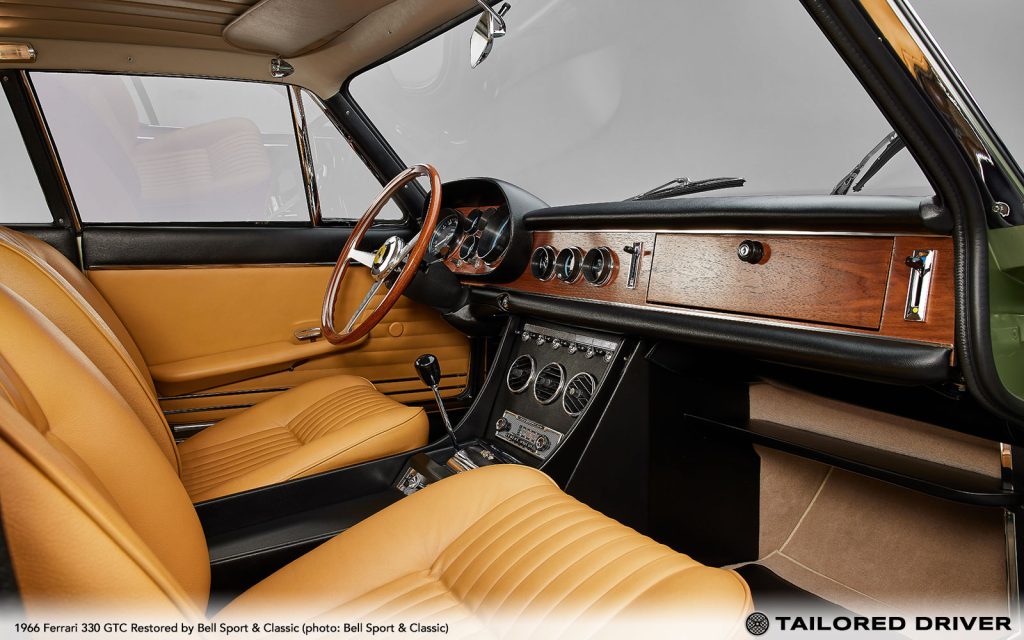
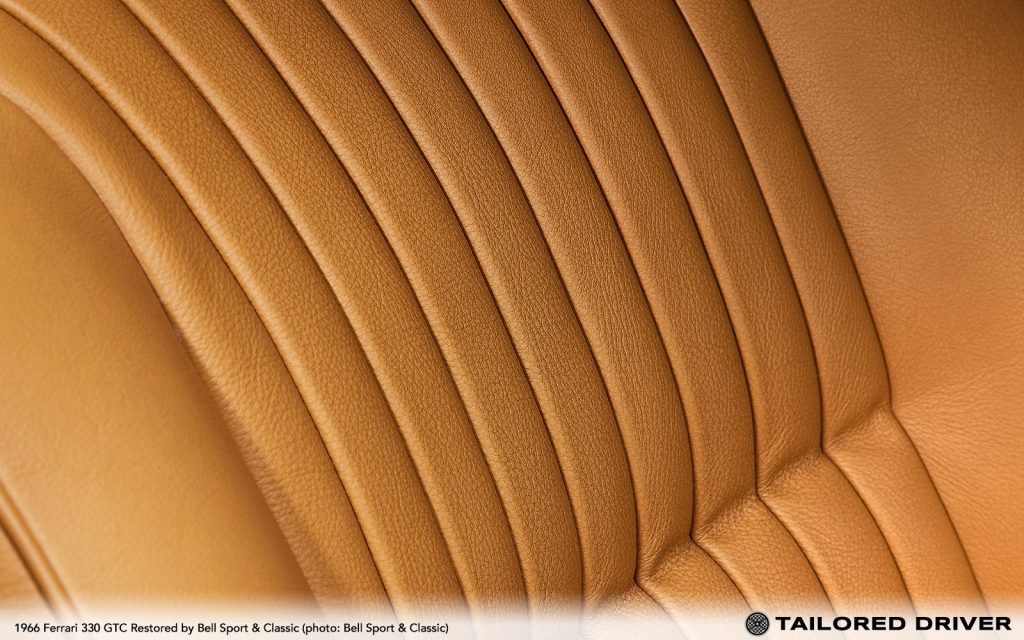
    So, when the customer wished to change the colour of the leather, it was a straightforward task for O’Rourke Coachtrimmers and Suppliers to outline the range of options offered by the factory more than half a century ago. As a result, the car’s new owner was able to select the precise Ferrari Conolly VM 218 fawn leather colour, which was matched with period-correct detailing, including the colour and weave of the carpets and the headlining, right down to the vinyl on the binding of the carpets, with all material sourced from Italy.

    Fortunately, the car’s original seat frames were in good condition and retained, although new foam inserts were fitted to ensure optimum comfort and support. New webbing was used for the belts, but all the fittings and buckles are original and have been restored, including the iconic Irvin badges.

    The Ferrari’s wooden veneer dashboard was in relatively good condition, apart from the fact that it had a mysterious hole in it. “All the original dials and controls were present and correct and accounted for, so the hole had presumably accommodated an additional aftermarket feature that had been fitted at some point and then removed again,” deduced Elliot East. Once again, vast reserves of skill, experience and patience were required to perfect this element of the restoration, with dozens of different wood stains tried and revised before the correct match was found.

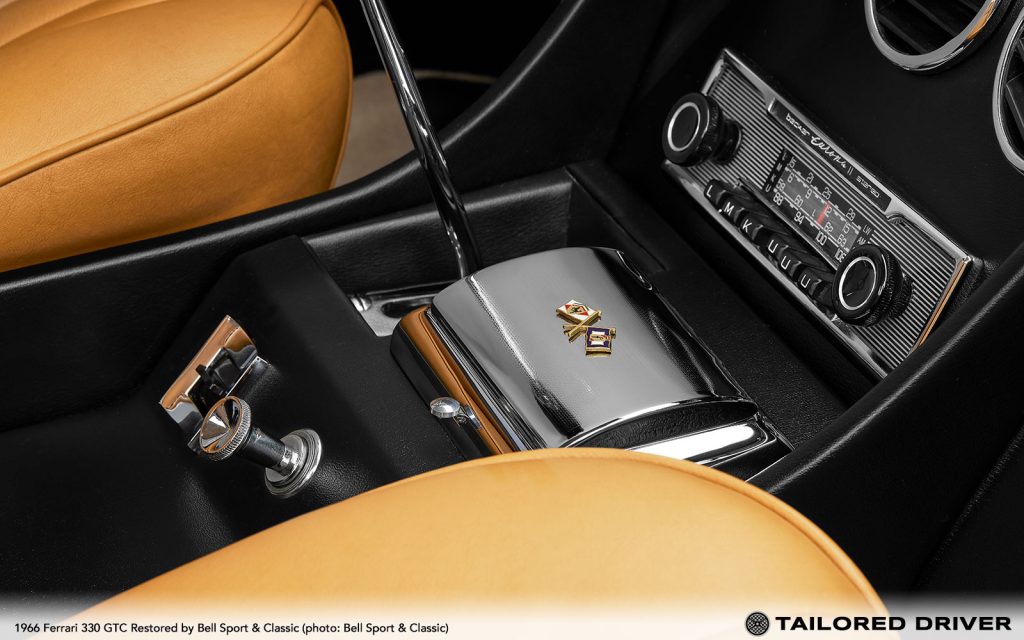
    At some point in the car’s history, a 1980s radio cassette had been fitted to the centre console.  Bell Sport & Classic removed the unit and fitted an original Beck Europa radio, of the precise type the car would have left the factory with. Restored and uprated by vintage car radio specialists, Chrome London, the period radio is equipped with modern internals and Bluetooth compatibility.

    Beauty that is much more than skin-deep 
    “With this Ferrari 330 GTC, we have created a car that looks perfect from first glance right down to the details you will never see,” adds Peter Smith. “We believe passionately that beauty is so much more than skin-deep. That’s why, if you took this car apart, every component would look new, even though it is fifty-six years old. Versus the more famous V12 Ferrari of the period, the 330 GTC hides its light under a relative bushel, but it is such a wonderful combination of style and performance that this is one Ferrari unlikely to remain underrated for much longer.” 

    Bell Sport & Classic Managing Director, Tim Kearns concludes: “It’s a fundamental part of our philosophy that we just don’t build a car to get maximum points from the judges in a concours, it’s got to drive beautifully, too. The 330 GTC was the only car in its class to take part in the Salon Privé tour in the lead up to the event. It was driven enthusiastically and enjoyed on the wonderful roads of the Cotswolds over two days, before arriving at Blenheim Palace, parking up on the Concours judging lawn, and then taking the top Ferrari prize. 

    “Every car we restore, while flawless visually, has got to perform at the highest possible level ­– it’s got to be a true driver’s car. And it has got to be capable of being used every day of the week even if it isn’t. We are confident that Bell Sport & Classic sets the standard for the restoration of historic Ferrari models. The plaudits this 330 GTC has achieved validate the beyond obsessional approach of our exceptionally talented, knowledgeable, and passionate team. It builds on the success of our other recent Ferrari restoration projects – which have been met with universal acclaim for their pursuit of perfection – and further underlines our objective to continually raise the bar. This is exactly what Bell Sport & Classic does. Watch this space for our next project.” 

    About Bell Sport & Classic 
    Bell Sport & Classic is a team of experts who have come together to provide customers unrivalled expertise across the sales, service, and restoration of the world’s most revered classic and modern classic cars, specialising primarily in notable Ferraris but also Aston Martin and Lamborghini and other leading marques.

    Authenticity, originality, and quality are the bedrocks of the business; Bell Sport & Classic prides itself on sourcing the ultimate in collector cars and bringing new standards to classic car restorations. Bell Sport & Classic stands apart in the classic car world as an innovator and leader in customer service.

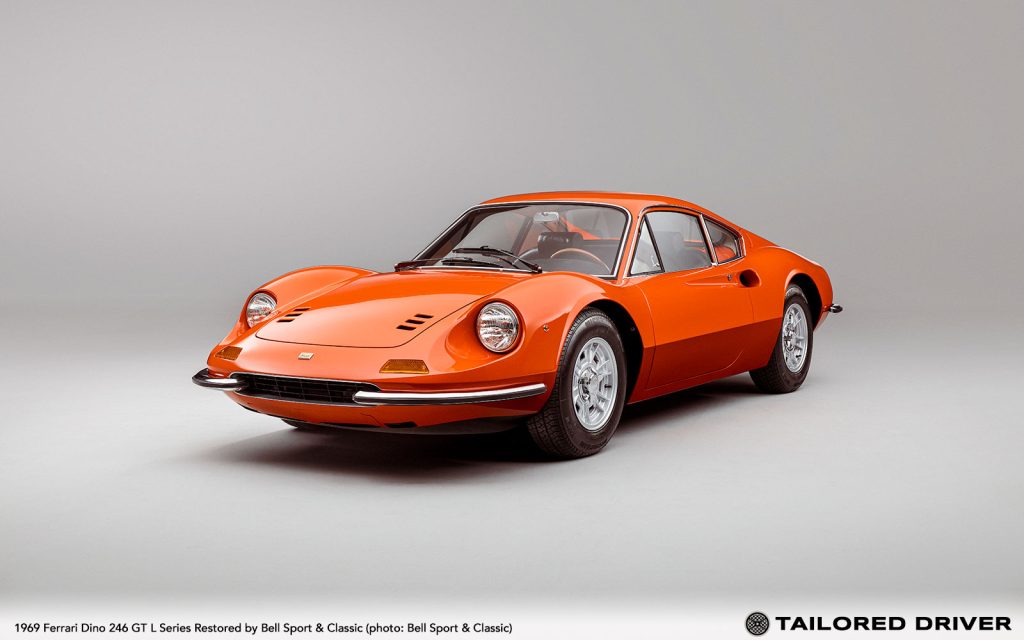
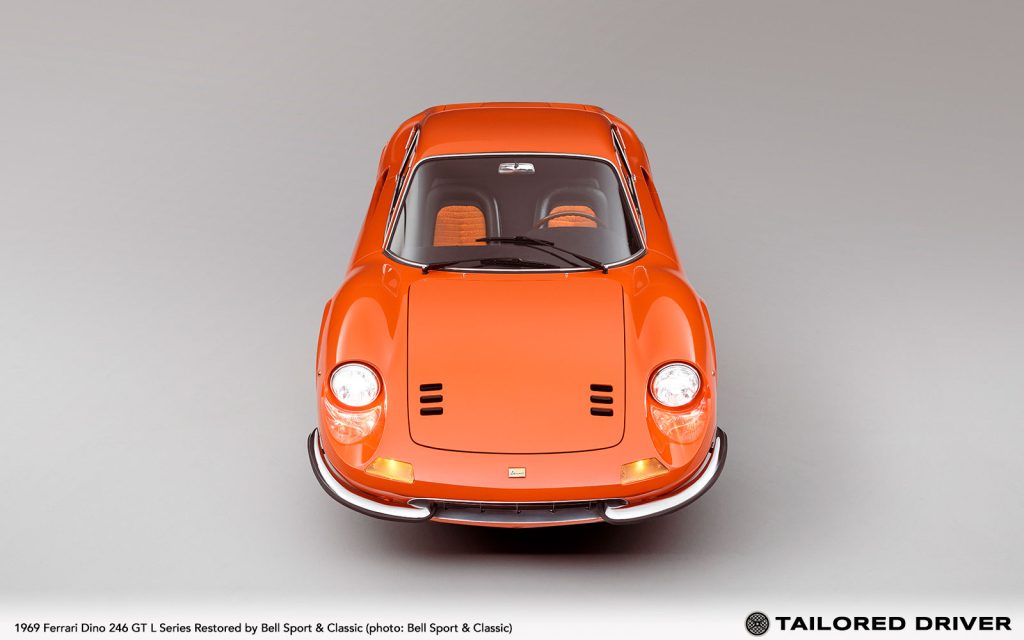
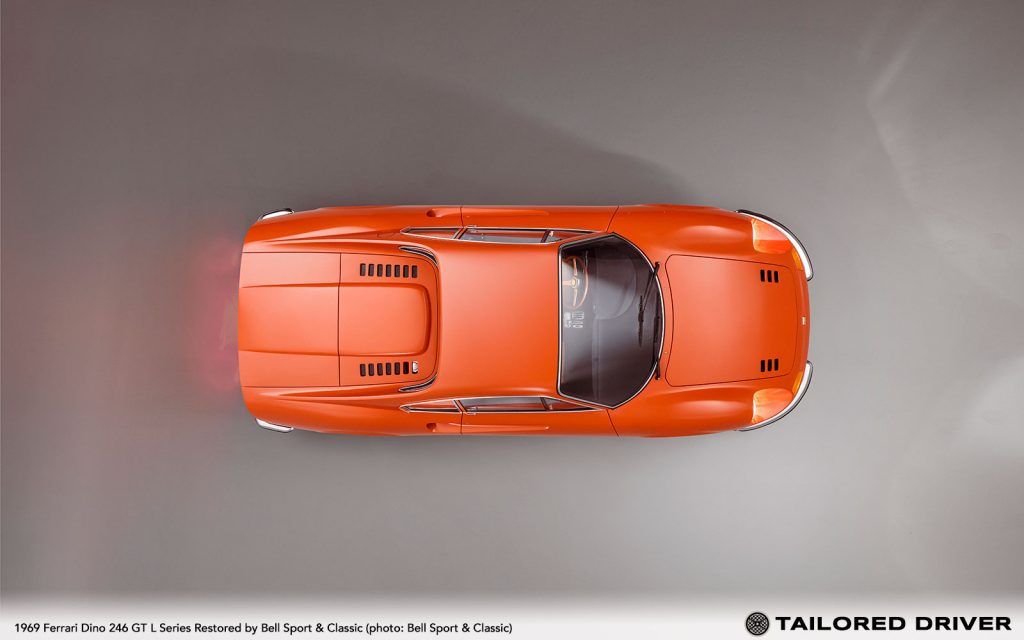
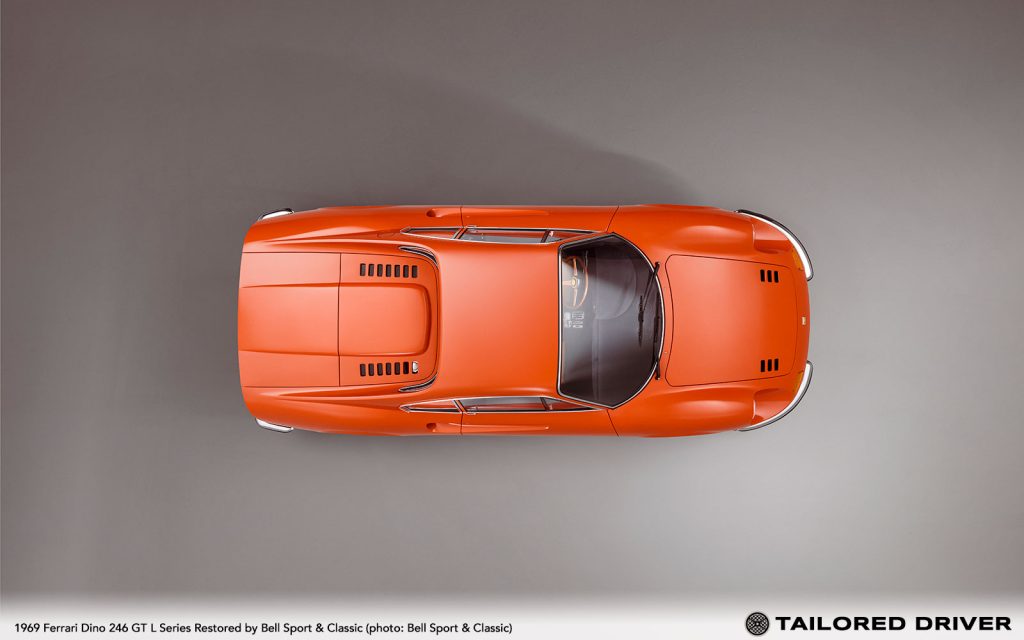
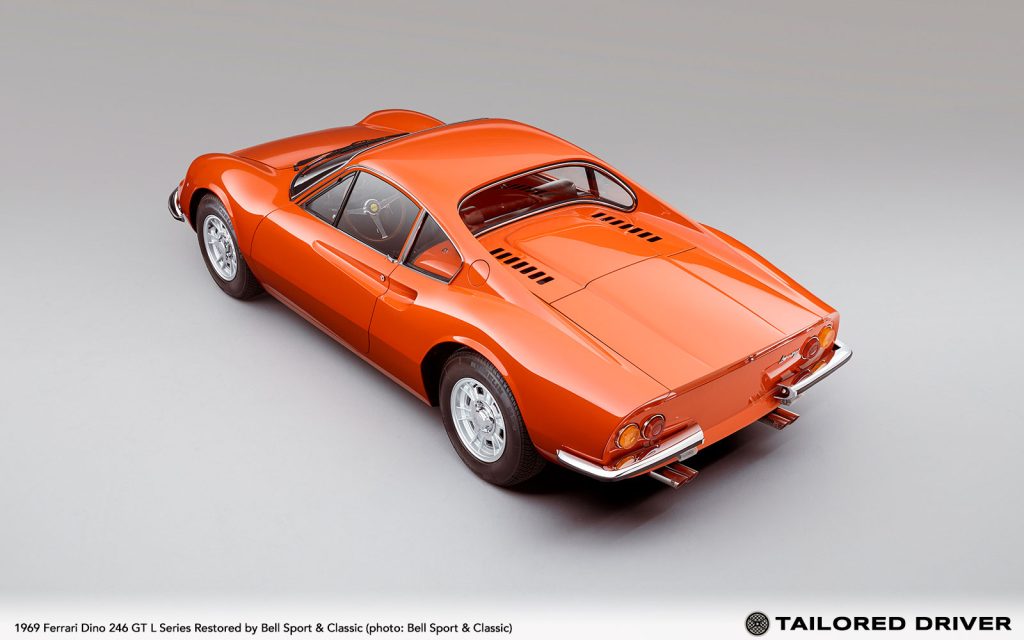
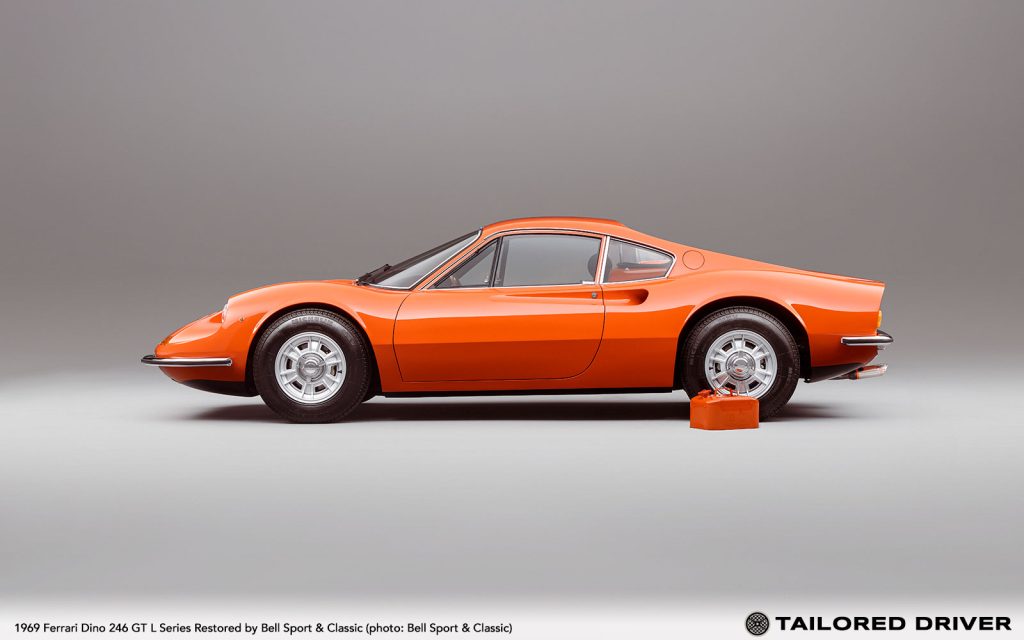
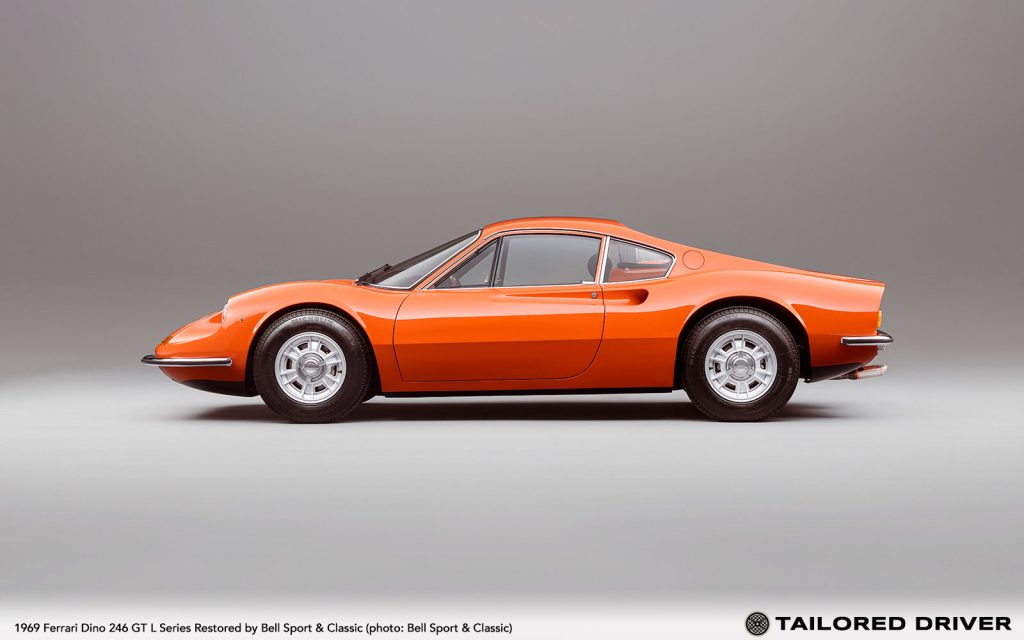
  • Bell Sport & Classic Completes Concours-Level Restoration of Rare Ferrari Dino 246 GT L Series

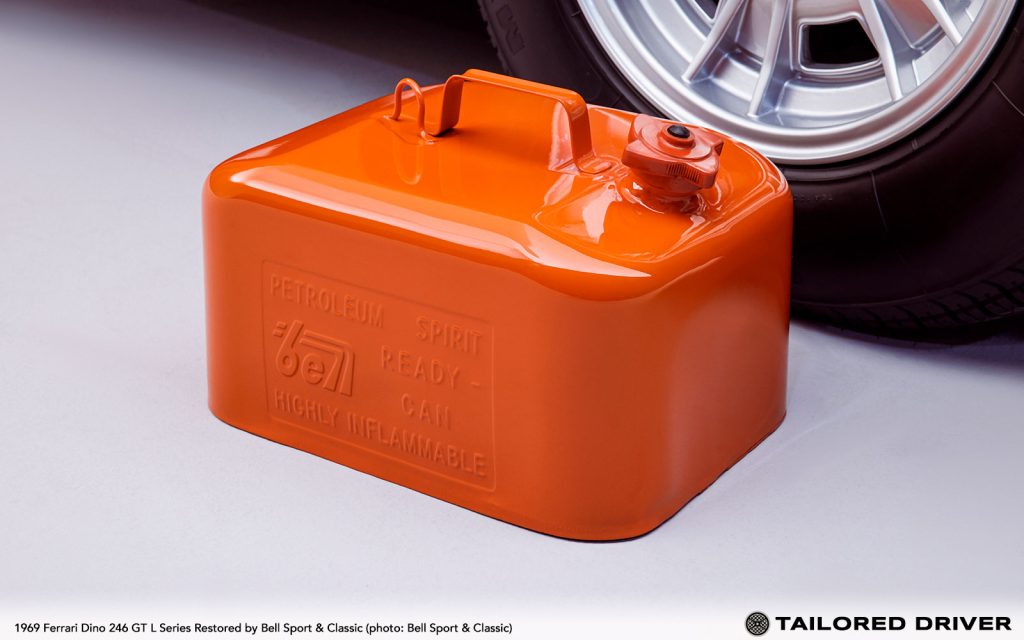
    Bell Sport & Classic Completes Concours-Level Restoration of Rare Ferrari Dino 246 GT L Series

    • Originally appearing on Ferrari’s stand at the 1969 Frankfurt Motor Show, this remarkable Dino 246 GT L Series has been meticulously restored to concours condition
    • Four year strip down and rebuild to Ferrari Classiche standard by Bell Sport & Classic restoration team
    • Iconic model represents seminal period in Ferrari history
    • Arguably now the best Dino in the world, it is the latest demonstration of the  benchmark-setting levels of finish Bell Sport & Classic applies to every restoration

    [source: Bell Sport & Classic]

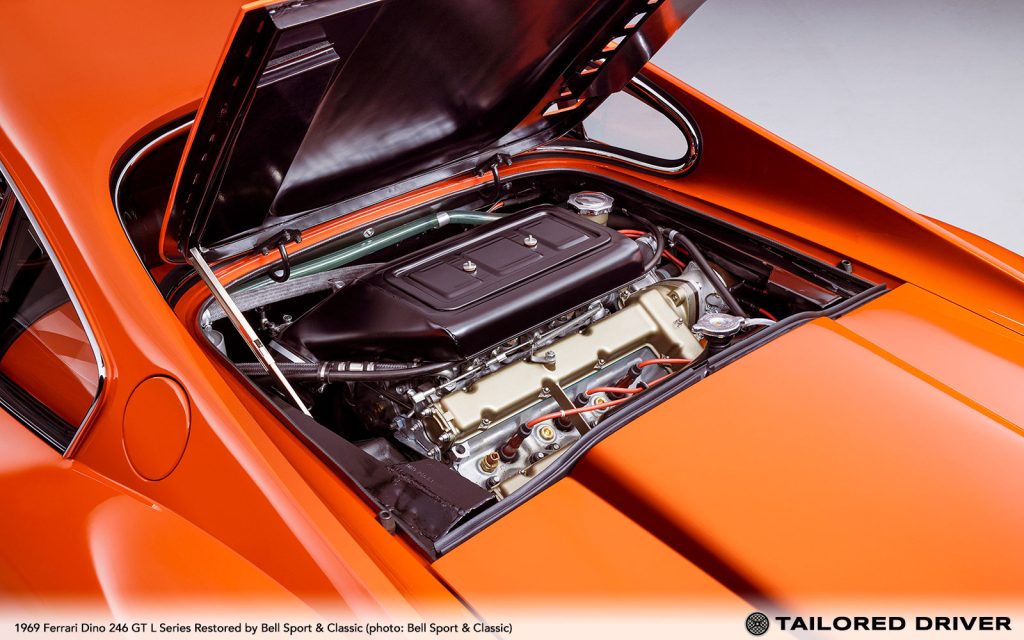
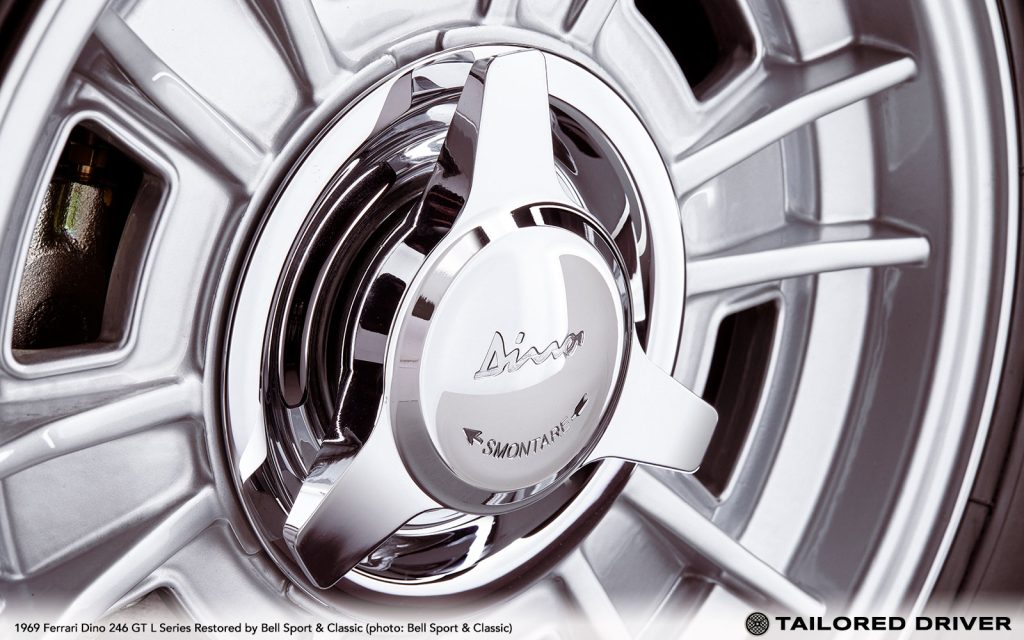
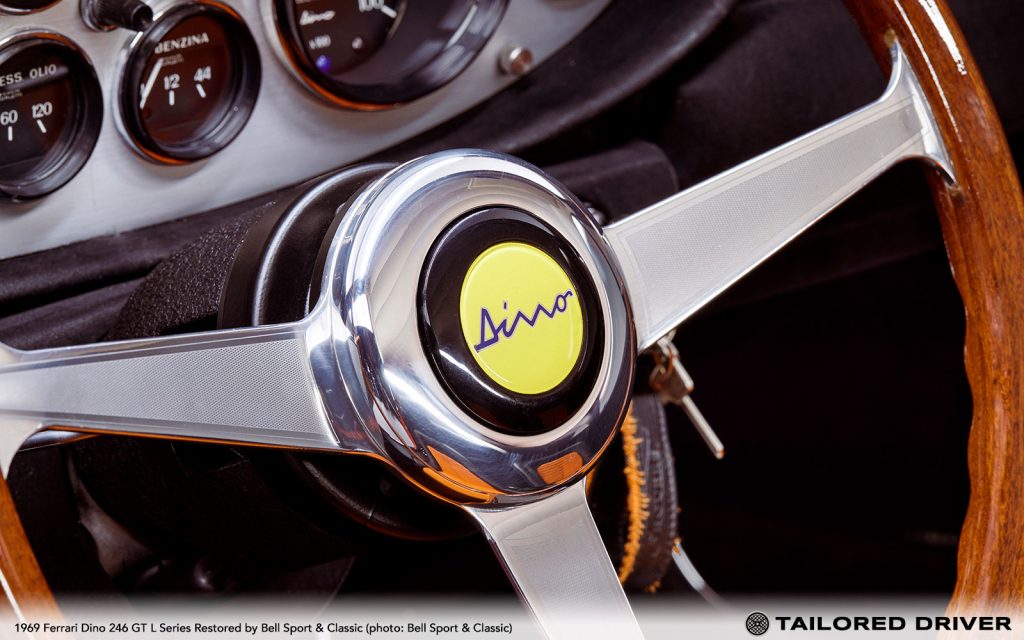
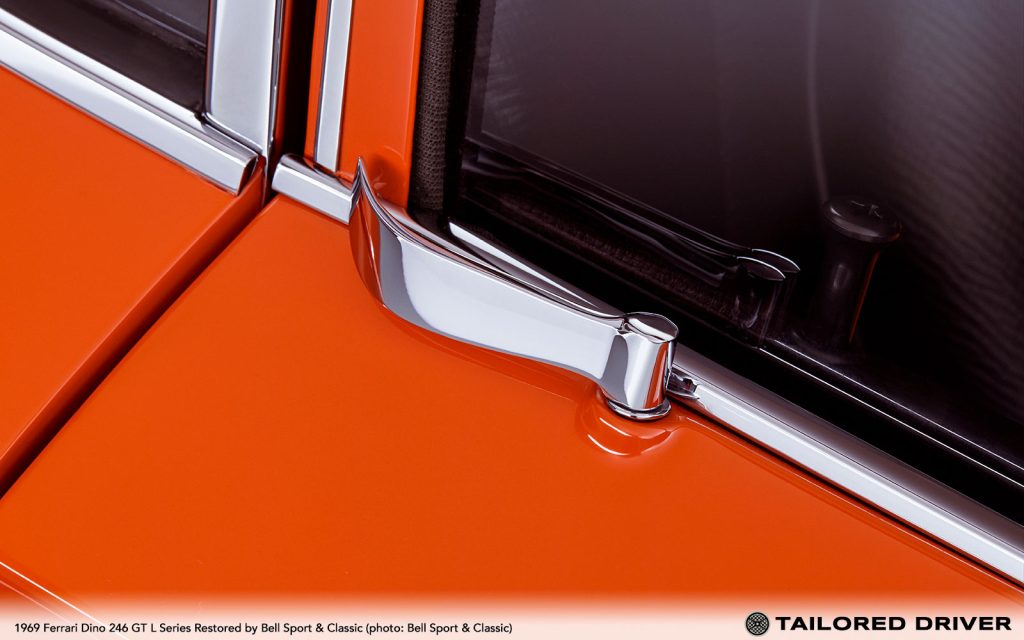
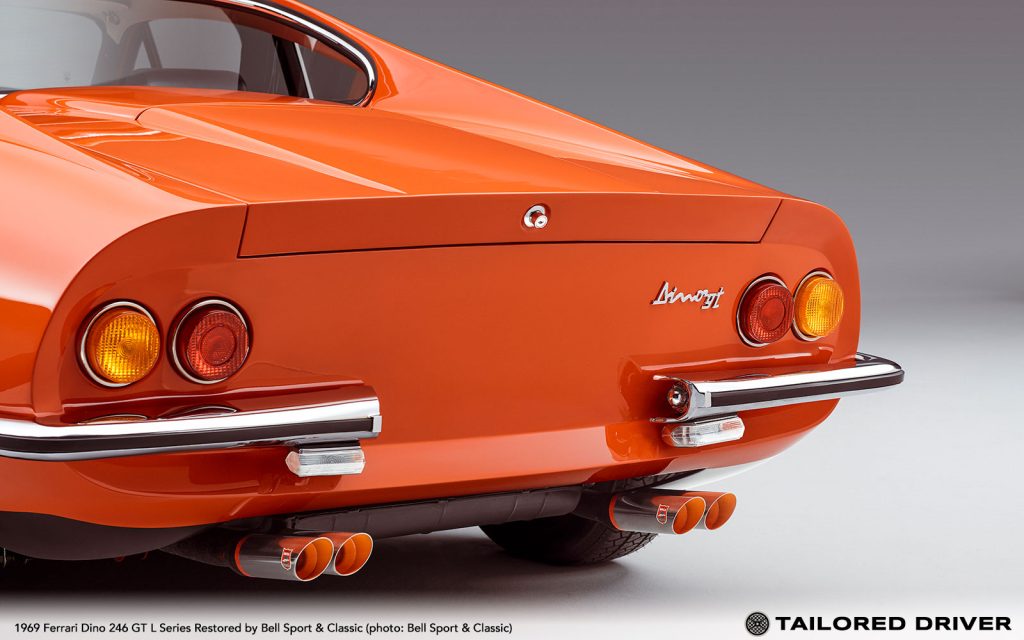
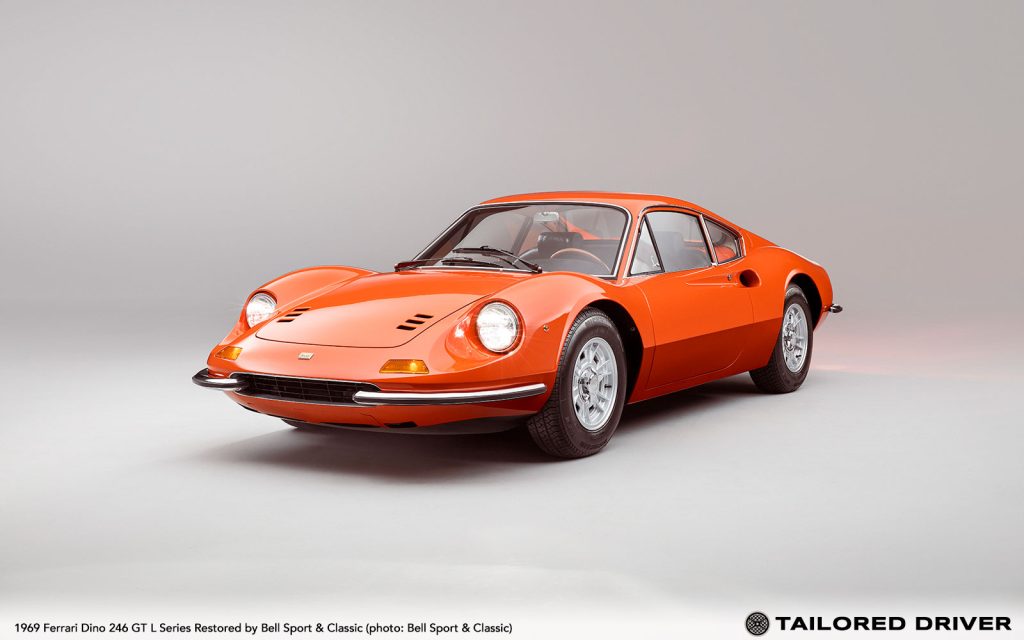
    Markyate, Hertfordshire, UK – Bell Sport & Classic is delighted to reveal the latest example of its exceptional in-house Ferrari restoration expertise: a complete, ground-up, concours-level restoration of the original 246 GT Dino L Series that debuted on Ferrari’s stand at the 1969 Frankfurt Motor Show.

    A seminal model from marque’s history, this significant car has been the subject of Bell Sport & Classic’s benchmark-setting standards, blending originality and the utmost attention to detail with the very latest restoration techniques to create arguably the best Dino on the planet.

    Leaving the Maranello factory in 1969 and exhibited at that year’s Frankfurt Motor Show before being delivered to a customer in West Germany, it was the first Dino to be sold in the country and the seventh L Series ever made by Ferrari. Today, this concours-condition, low-mileage, early left-hand drive car represents an exceptionally rare opportunity for an aficionado to add one of the most important models built by Ferrari to their collection.  

    Fitting tribute and lasting legacy
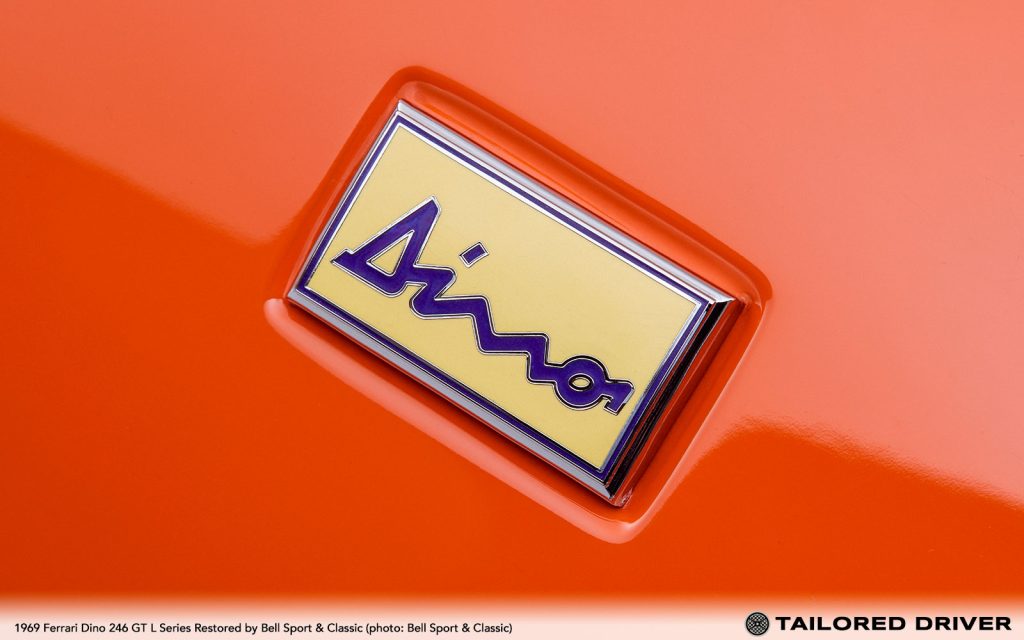
    “Enzo Ferrari first used the ‘Dino’ name to denote a range of V6 Formula 1 and Formula 2 racing engines as a tribute to his first son Alfredo ‘Dino’ Ferrari, helped develop the engines, but tragically succumbed to illness at the age of 24 in 1956,” recounts Tim Kearns, Managing Director of Bell Sport and Classic. “When Ferrari launched its first V6-powered, mid-engined road car in 1968, it did so under the ‘Dino’ brand. And instead of the traditional Cavallino Rampante or Prancing Horse Ferrari badge, the Pininfarina-designed cars carried the signature of Alfredo ‘Dino’ Ferrari.”

    The first Dino launched was the 206 GT variant, powered by a 2.0-litre V6 engine. A year later, this model was followed by the 246 GT L, which featured a 60mm longer wheelbase and boasted a more powerful 2.4-litre engine – as did the 246 GTS targa model. Maranello built just 357 examples of the L-series Dino, before following it up with the M and E-series variants, which were produced in greater numbers.

    In 1969, the highly respected motoring writer and racing driver Paul Frère summed up the Dino 246 GT L’s exceptional driving attributes: “The Dino is most fun to drive on roads with lots of bends and good visibility. I know of very few cars that offer as much driving enjoyment through this type of terrain as this one does.” 

    Frère was far from alone in his enthusiasm for the Dino. “Critics and customers alike loved the way the Dino looked, sounded and drove. The car soon became acknowledged as a ‘lifestyle’ icon, even achieving fame in the cult classic detective television series ‘The Persuaders’, in which Tony Curtis drove a 246 GT,” reveals Tim Kearns.

    “It’s remarkable to think that at the time the car made its debut, Enzo Ferrari was adamant that his road-going creations should only be fitted with V12 engines and launched the new V6-powered Dino as a sub-brand. Yet today, Ferrari has closed the circle and returned to the V6 engine format, albeit in turbocharged guise, with its new 296 GTB.”

    Improving standards, respecting authenticity
    Before arriving at Bell Sport & Classic’s extensive restoration facilities in 2017, the Dino 246 GT, which carries the chassis number 00436, confirming its status as the 7th of 357 examples built, had been moved around the globe, spending time with owners in Germany, France, Canada, and the US. Despite the car’s far-flung travels, it had accrued only 53,400 miles (86,000km) over a period of forty-eight years. But it was, however, in a very sorry state of disrepair.

    “To be honest, I doubt if many other proper restoration companies would have even considered taking this project on. The tired state the Dino was in, it just didn’t look economically viable to attempt to return it to its former glory,” recalls project leader Peter Ensor, who along with Marc Holden, Elliot East and technical director Attilio Romano formed the key team responsible for the Dino’s restoration.

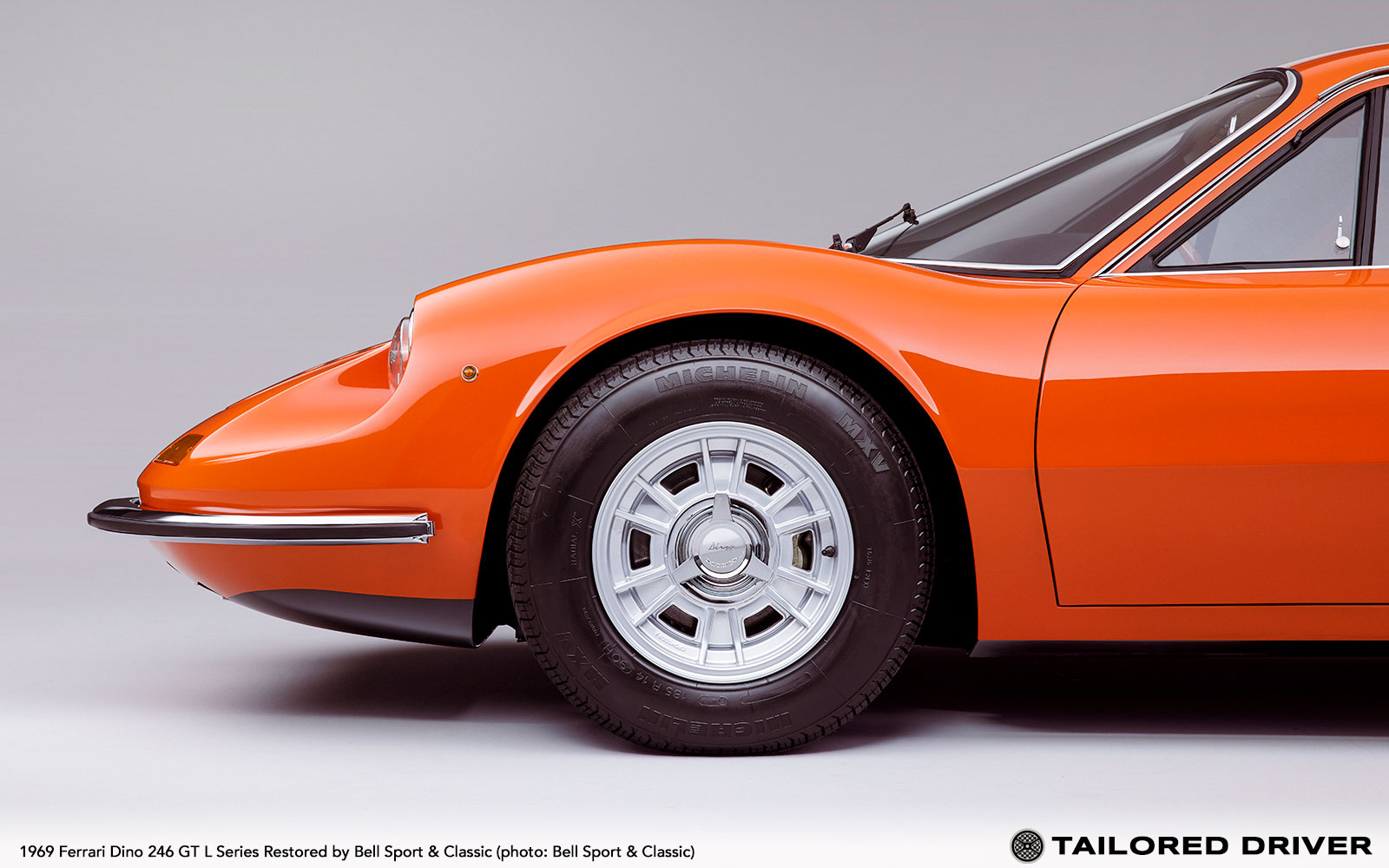
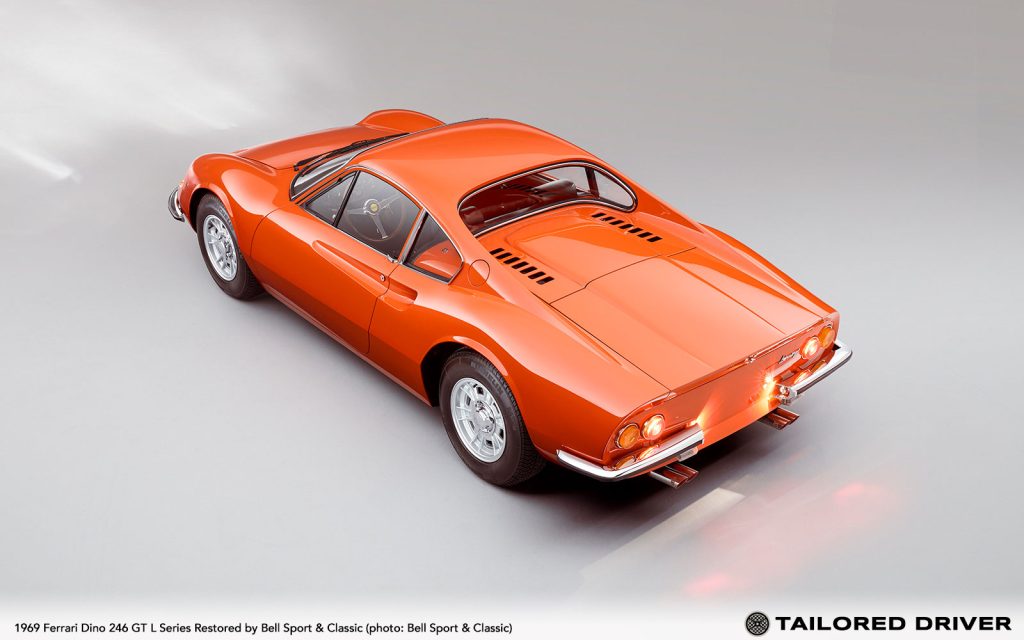
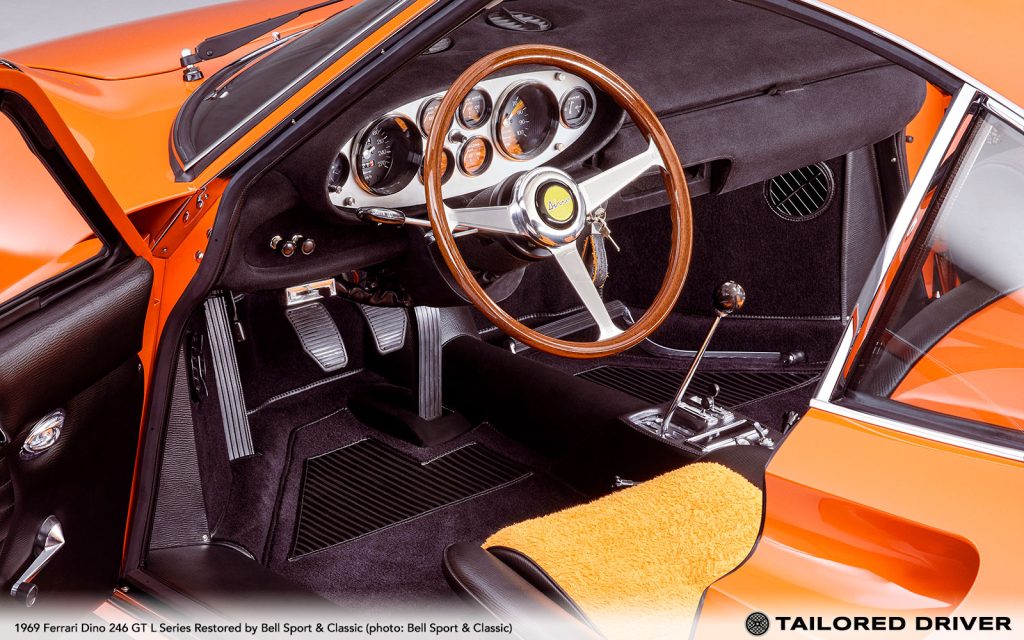
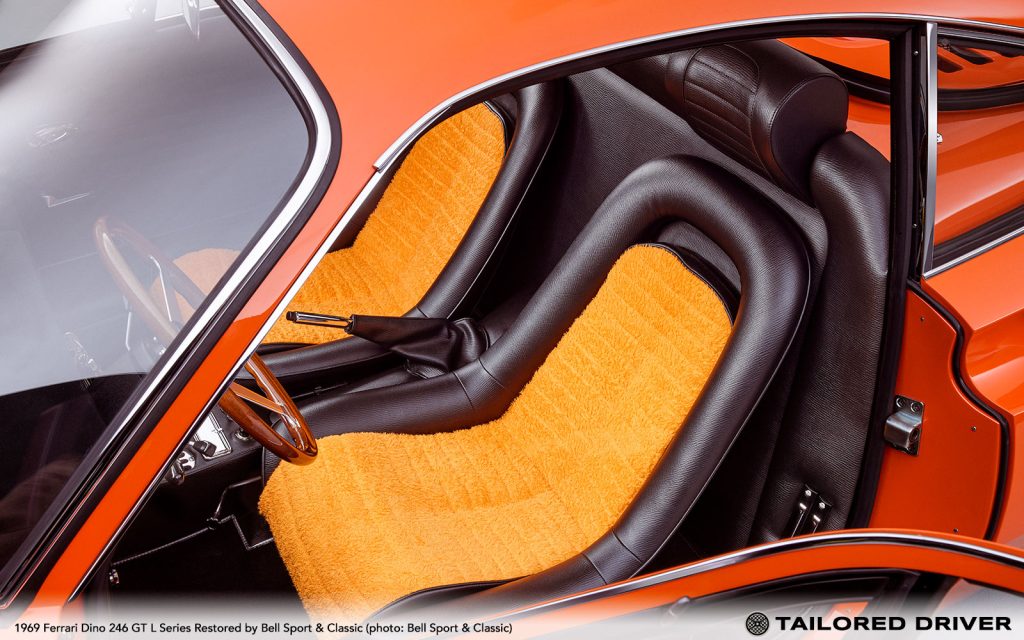
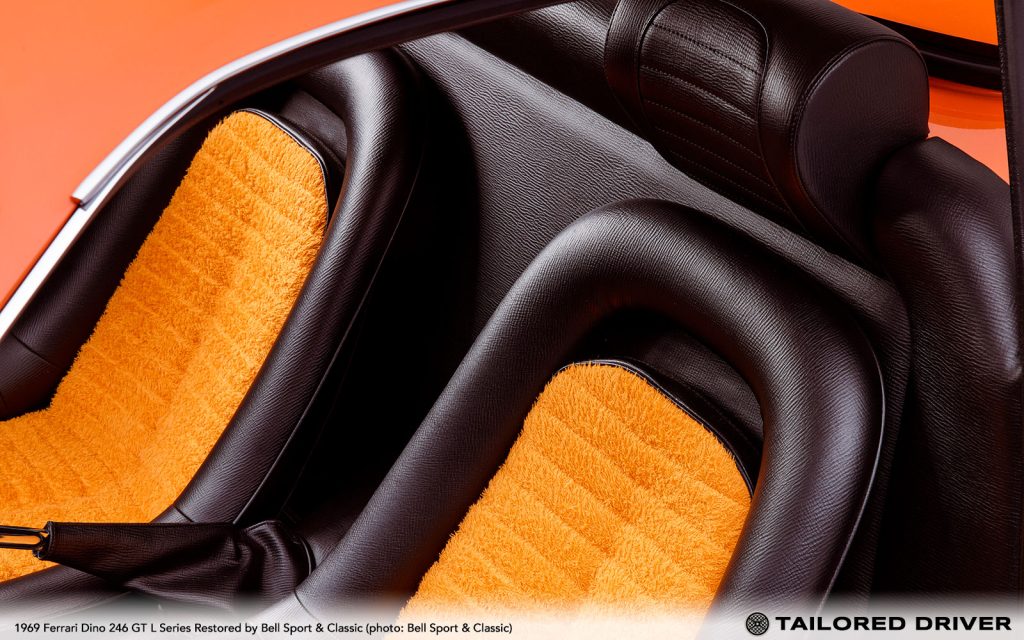
    “The car had been restored twice before in its life already, but lacked real care and precision. It was painted Rosso Corsa red instead of the original Rosso Dino, which has a more ‘orangey’ hue, the leather trim was incorrect too – it was black and red as opposed to the black with orange seat towelling interior fitted at the factory. And that was just for starters. When we delved deeper, we realised that there were plenty of other problems to address too.”

    Rust plagued the inner wings and the misshapen front and rear valances. The ‘scoops’ on the door panels did not align with those on the body, neither in terms of height nor angle, the wheel arch heights didn’t match from one side of the car to the other and the rear roofline was off-kilter. “And those were just the things we could see,” adds Elliot East wryly. “We also found that at some stage replacement front wing panels had been welded on top of the original items. The same ‘technique’ had been used on the sills and rocker panels, which meant the seam lines had been lost and rust had been locked in underneath.” 

    The full extent of the perilous state of the car was only revealed when Bell Sport & Classic completed a full strip-down to the steel monocoque. This process took several months, with the team carefully removing the aluminium panels, doors, glass and all mechanical components. Only then did it become apparent just how much effort, time, and skill – not to mention expense – would be required to restore the Dino. Yet, in some ways, the poor state of the car made it an ideal project for Bell Sport & Classic to exercise its renowned bodywork, mechanical and interior trim refurbishment expertise upon. The company prides itself in setting standards that are unmatched across the industry and deliver a level of finish significantly superior to that with which the vehicle would have left the factory in period, while fully respecting the car’s originality.

    Working to the very highest standards and having gained the coveted Ferrari Classiche certification for its impeccable work restoring previous Ferrari models, Bell Sport & Classic was eminently qualified to undertake the Dino project. But despite its exceptional knowledge and experience bank, the company left no stone unturned by seeking the expertise of Matthias Bartz, a highly respected author, and the world-leading authority on the Dino model. This enabled the vehicle’s authenticity to be determined beyond any doubt, and detailed information on the original factory specification to be obtained.

    Obsessive level of detail
    The team fully stripped the 2.4-litre V6 engine, triple Weber 40 DCF carburettors, five-speed gearbox, all-round disc brake system, front and rear coil spring, and double-wishbone suspension.

    Each component was painstakingly restored to original specification, with all worn parts refabricated or replaced as required. Once rebuilt at Bell Sport & Classic’s own specialist engine workshop, the V6 was tested on a dynamometer and bench-run for a day. After being reinstalled in the car, the engine was re-tested on a rolling road and fine-tuned to ensure it produced the precise 191bhp it left the factory with.

    Using the specialist information supplied by Bartz, the Bell Sport & Classic team went to extraordinary levels of meticulous detail to ensure they restored the Dino to the highest possible specification. “For example, there is a panel seal that runs along the sill underneath the doors. On sub-standard Dino restorations, it’s all too easy for this to fill up with paint, so the detail gets lost,” explains Ensor. “That might only be a minor thing to some people, but little things like that are everything to us. Call it obsession if you like, but on our Dino, there is not a single spec of paint on the panel seal, and the detailing is perfect.”

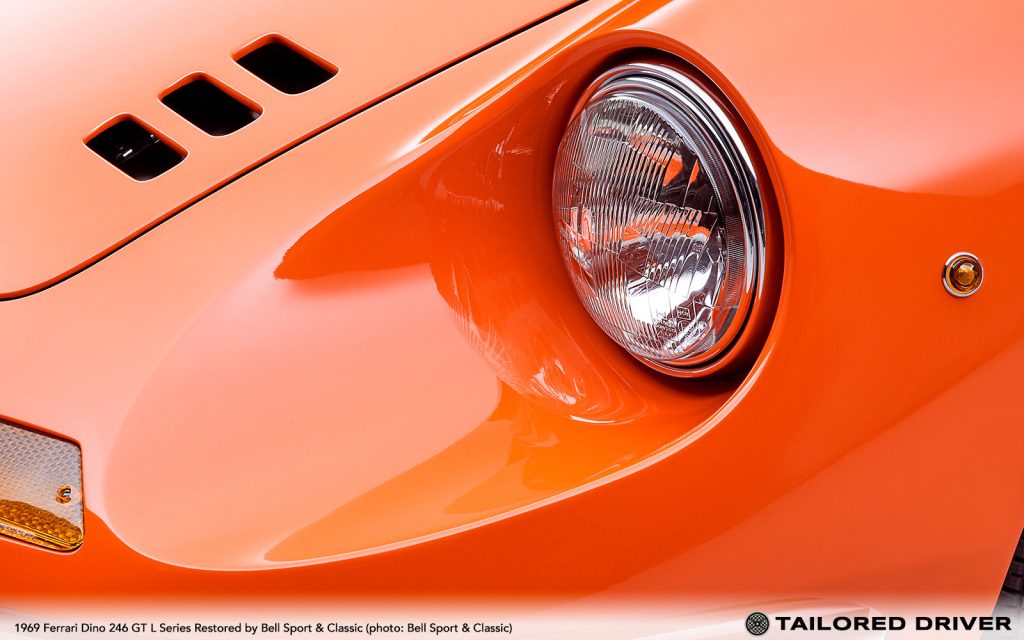
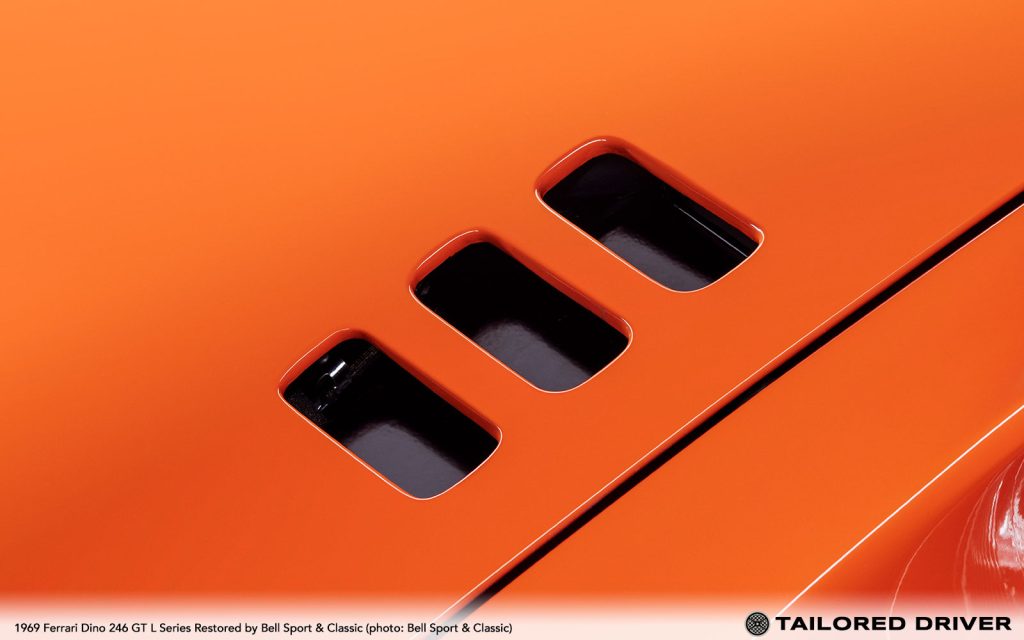
    The team took a similar fastidious approach to the Dino’s iconic air intake scoops, which cut elegantly into the doors and carry on along the rear panels to ensure the mid-mounted V6 engine has a plentiful supply of cool air. “Back in the 1960s, the people building these cars at Maranello did not have the technology at their disposal that we do today and so fit and finish were often not what they could have been,” continues Ensor. “When chassis number 00436 left Maranello in 1969, it did so with a slight mismatch on the position of the door scoops, a common enough problem at the time. We have spent hundreds of hours ensuring that the scoops are now correct.”
    Achieving symmetrical perfection required the wheel arches to be reformed and new sills to be fabricated and fitted. “Once we had the body panels perfect, we still had the issue of ensuring the scoops on the doors would align correctly with those on the body panels. That meant refabricating the doors and aluminium-welding the original scoops into the new skins,” reveals Ensor.

    Dry build for perfect finish
    Bell Sport and Classic is adamant that restoration is both a science and an art. It does not consider the process to be a matter of simply replacing damaged panels and worn-out parts. Even though doing this can save time and money, the team believes that the greater the number of new components fitted to a vehicle, the greater the risk its originality becomes depleted.

    Instead, the team uses its technical excellence, outstanding craftsmanship, and often its sheer patience in the passionate pursuit of perfection, carefully restoring and refurbishing every component to avoid needing new parts where possible. “Of course, lavishing attention to detail on every individual component makes the rebuild process even more challenging,” explains Ensor. “No car ever goes back together easily, and the more thorough the restoration, the more demanding the rebuild is because every single part of the car has been completely reengineered.” 
    The delicate and painstaking rebuild process is where the team’s skill and experience truly came to the fore, with near-constant minute adjustments of components such as body panels, window frames and sills required to ensure the perfect finish.

    “It took two weeks before we were completely satisfied that the doors opened and closed correctly and that the scoops on the doors aligned absolutely perfectly with those on the rear body panels. We spent a similar amount of time fitting the curved rear screen. That’s a very tricky job because the screen is actually bigger than the space it is going into. The only way to fit it is to put one side in first and then flex the screen ever so slightly to get the other end in,” recalls Ensor.

    More days and weeks ticked by with endless hours lavished on countless tasks such as repairing and polishing the front grille and ensuring the perfect positioning of the front sunken indicators. No component, no matter how small, escaped Bell Sport & Classic’s famous obsessive attention to detail. 

    Even the thin aluminium shell of the interior mirror had two days of polishing lavished upon it to attain perfection.

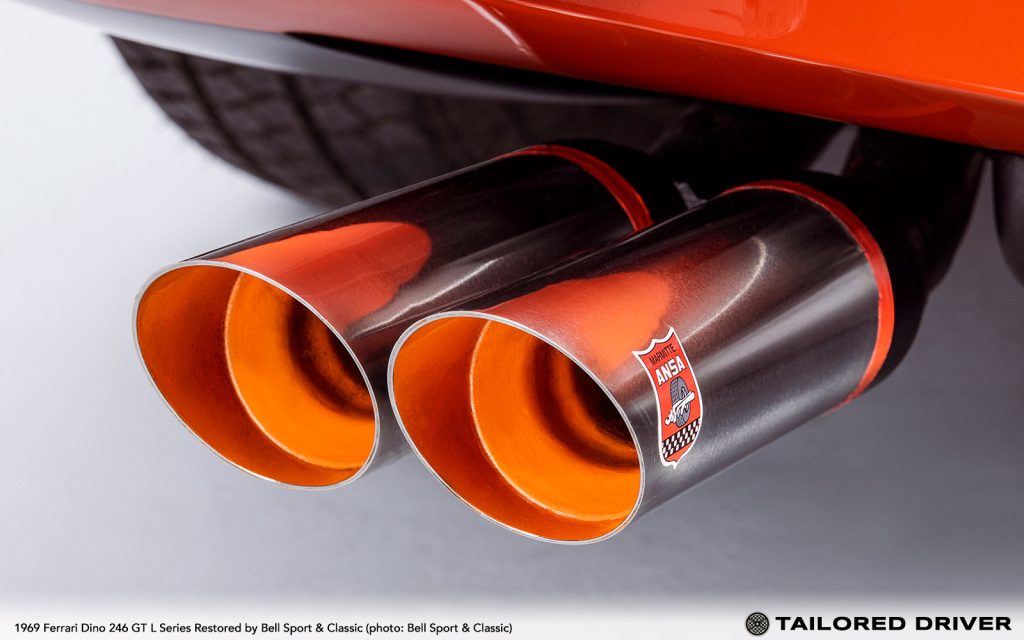
    The Dino 246 GT 00436 has been gloriously returned to its Rosso Dino (rosso dino; non-metallic Uni; 350; Ferrari) paint finish, which involved first applying the period-correct grey primer followed by a Rosso Corsa undercoat with Rosso Dino final coat. This painstaking, multi-tone process ensures the rare and desirable Rosso Dino is shown most effectively. The seats have been reupholstered in period-correct black leather complete with orange towelling inserts, and beautifully installed along with a newly built dashboard. Even the engine cam covers have been restored to their original bronze colour, ensuring the car is precisely as it left the factory in August 1969 – only better.

    Tim Kearns, Managing Director of Bell Sport and Classic, said: “Like every project we undertake, bringing the Dino 246 GT back to be life has been a true labour of love and most definitely not a clock-watching exercise. No amount of time, expense or attention to detail has been spared in ensuring the car is now in even better condition than when it left the factory. Along with its concours condition, the car’s low mileage adds to its considerable allure. With its mid-mounted V6 engine, the Dino differs from the Ferrari V12 GT models that preceded it. It represents a seminal point in the company’s history and stands as a fitting tribute to Alfredo ‘Dino’ Ferrari. There will always be an air of intrigue to this car too, as one cannot look at it without wondering what direction Ferrari may have taken if Alfredo had lived to take over the company’s reins from his father, Enzo. And that makes the Dino an exceptional car.”
    About Bell Sport & Classic 
    Bell Sport & Classic is a team of experts who have come together to provide customers unrivalled expertise across the sales, service and restoration of the world’s most revered classic and modern classic cars, specialising primarily in notable Ferraris but also Aston Martin and Lamborghini and other leading marques.

    Authenticity, originality and quality are the bedrocks of the business; Bell Sport & Classic prides itself on sourcing the ultimate in collector cars and bringing new standards to classic car restorations. Bell Sport & Classic stands apart in the classic car world as an innovator and leader in customer service.

  • First Ferrari Sergio Arrives in the UAE

    First Ferrari Sergio Arrives in the UAE

    Just six of this limited edition roadster are being build

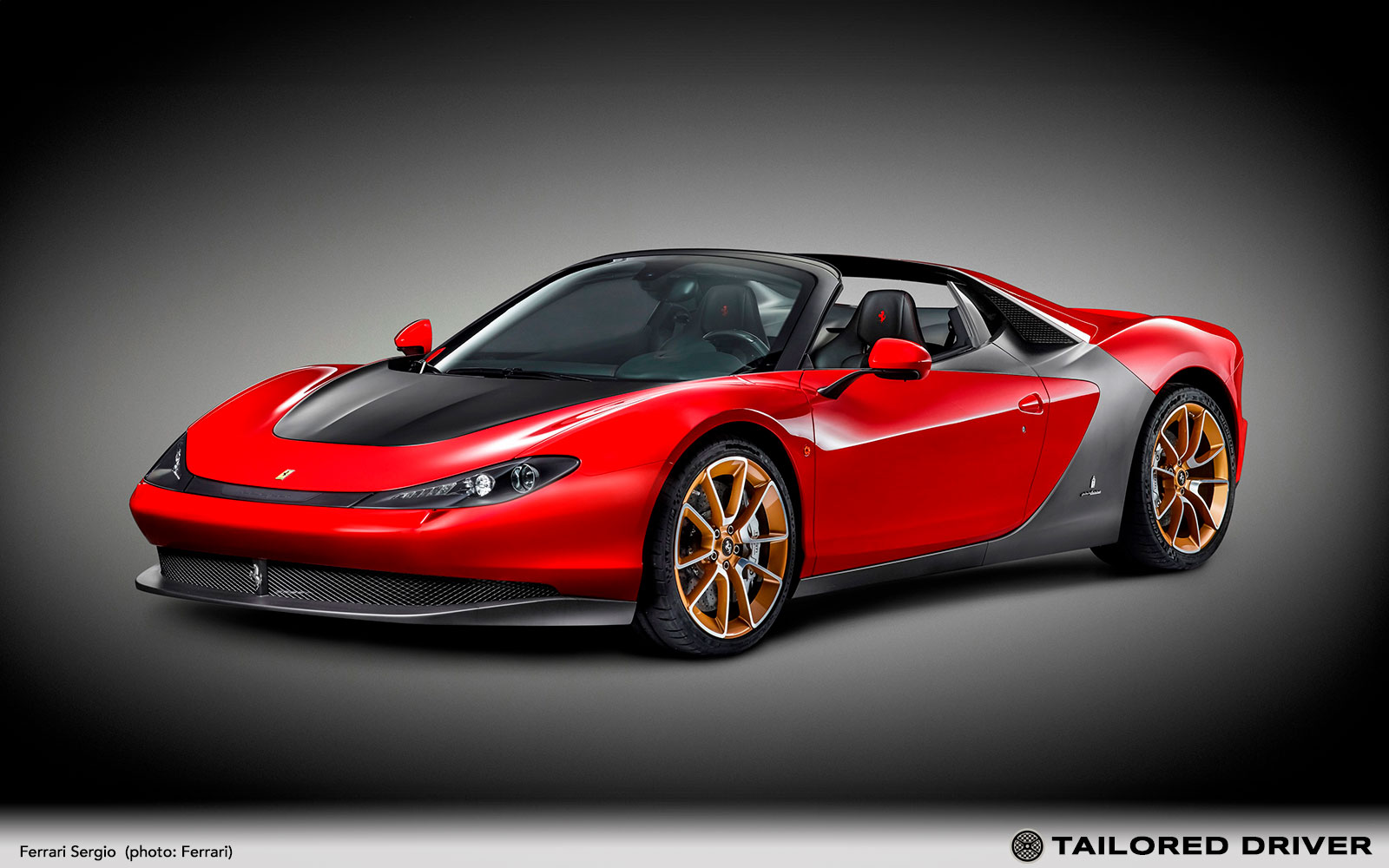
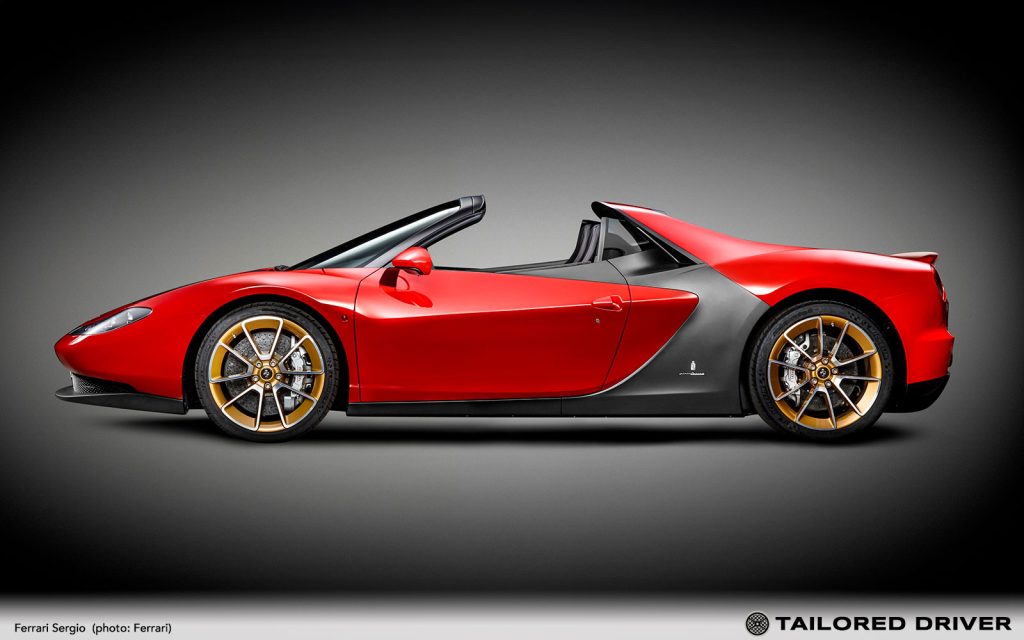
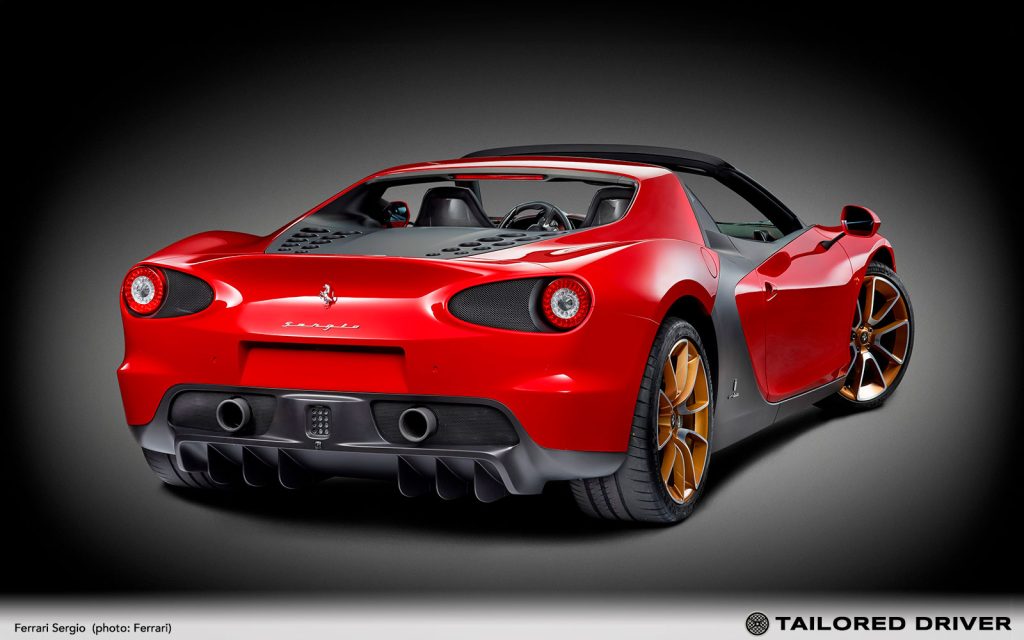
    Abu Dhabi – The first Ferrari Sergio has arrived in the United Arab Emirates. It has been delivered today to its new owner, the SBH Royal Auto Gallery in the UAE, at Abu Dhabi’s Yas Marina Circuit, where the Finali Mondiali Ferrari are being staged and which is home to the Ferrari World theme park. 

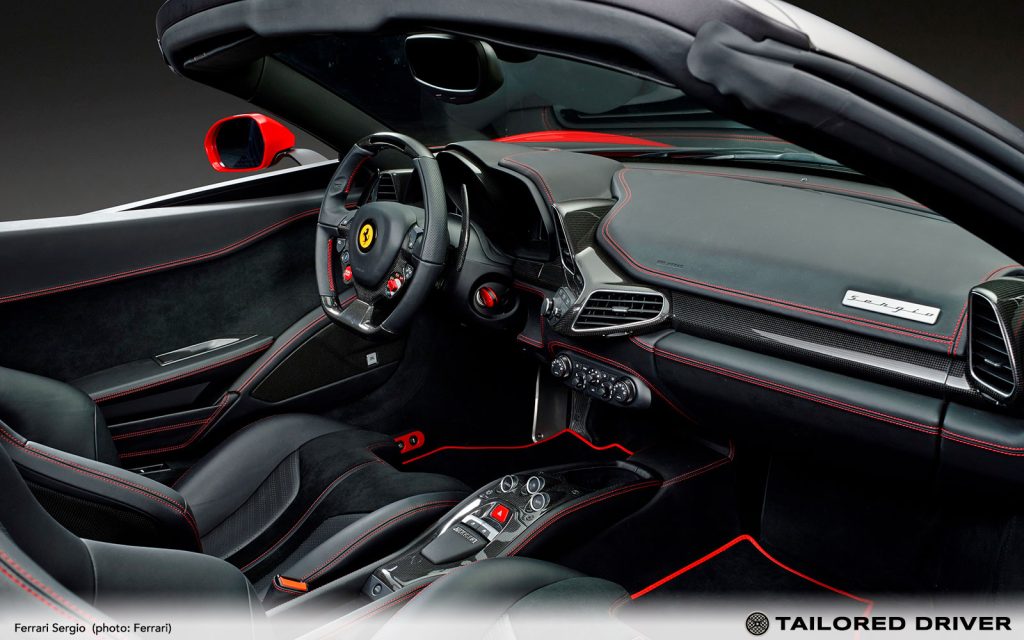
    Designed by Pininfarina, just six of this incredibly limited edition roadster are being built. The car was created to celebrate the spirit and core values of the historic Cambiano company in the 60th anniversary year of its collaboration with the Prancing Horse. Needless to say, Sergio was the only possible choice of name for the model, in homage to great Sergio Pininfarina, who sealed the unique, longstanding partnership with Ferrari. 

    The Ferrari Sergio is a genuinely radical car. It is both exclusive and spare in the sense that every single element aboard is focused entirely on performance. An authentic open-top, it explicitly references the track, underscoring and intensifying its sense of sportiness, fun behind the wheel and the pleasure of design at its purest. 

    The Ferrari Sergio’s performance and dynamics are excellent in the extreme too. It is based on the 458 Spider and retains the latter’s technological content as well as all of the functional aspects of its cockpit. It is powered by the latest 605 hp version of Ferrari’s naturally aspirated 4497 cc V8 which has won the International Engine of the Year award on three consecutive occasions. This power unit also guarantees the car sprints from 0 to 100 km/h in just 3 seconds. 

    The Ferrari Sergio has an extremely simple, clear style. Both its volumes and treatments of its surfaces reflect the spirt of Pininfarina’s 1960s and 70s creations for Ferrari. Its proportions have been pushed to the extreme with the front of the car seeming to penetrate the rear which itself projects forward. The result is an exceptionally sculptural, three-dimensional take on the classic roadster. The two bodyshell masses are melded together via a longitudinal black insert, the main styling cue of the design. The flank is also characterised by the same black longitudinal element which acts as both a dividing and unifying element between front and rear. The two sections of the car flow effortlessly into one another resulting in sublimely harmonious yet extremely muscular forms. 

    As with all Ferraris, the Sergio’s design was never an end in itself but is a marriage of function and aesthetics. The semi-floating development of the front spoiler beneath the bonnet balances downforce and optimises heat exchange. The roll-bar is a modern take on the classic Ferrari flying buttress and negative rear window. Integrated into the roll-bars are the air intakes for clutch and gearbox oil cooling. Lastly, the rear nolder and rear extractor generate downforce, adding an efficient finishing flourish to the car’s design. 

    At the front of the car, Pininfarina has integrated the headlights in a classic move, turning them into a single transparent transverse element, a signature of the car’s extreme formal purity. At the rear, the circular tail lights are another modern nod to Ferrari history. The two-tone theme continues on both the front bonnet and rear deck with the latter featuring the iconic circular air vents seen on other iconic Pininfarina creations from the past. 

    The cockpit is pared-back and functional in the extreme with the engine compartment actually hugging the backs of the seats. The example delivered to Abu Dhabi has three-layer red exterior paintwork and an extremely sporty cockpit with black leather upholstery with contrasting red stitching, Alcantara seat inserts, and extensive carbon dash and door well trim. It also features Sergio-specific forged wheels, in this instance gold in colour with a diamond finish. 

    Each one of the six Ferrari Sergios was configured by its owner in dedicated sessions at the Tailor Made atelier in Maranello where clients are invited to personalise their cars to their own individual tastes. The atelier offers enormous freedom of choice in terms of colours, materials and finishes. As a result, every detail is extremely exclusive, thereby continuing the Prancing Horse tradition begun in the 1950s and 60s of creating bespoke cars minutely tailored to each client’s wishes.